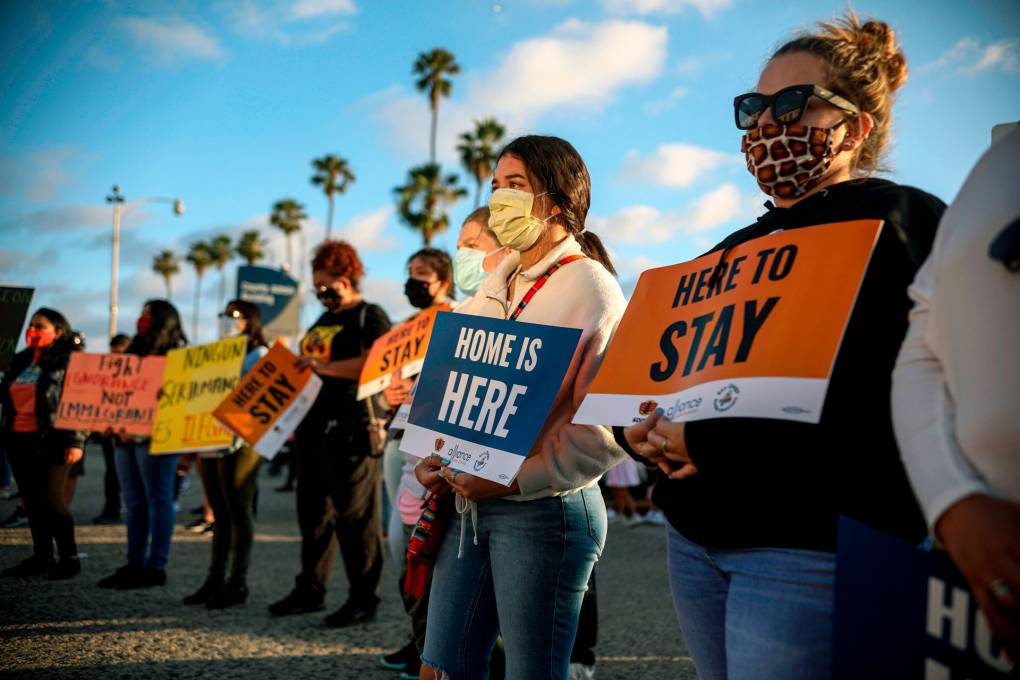
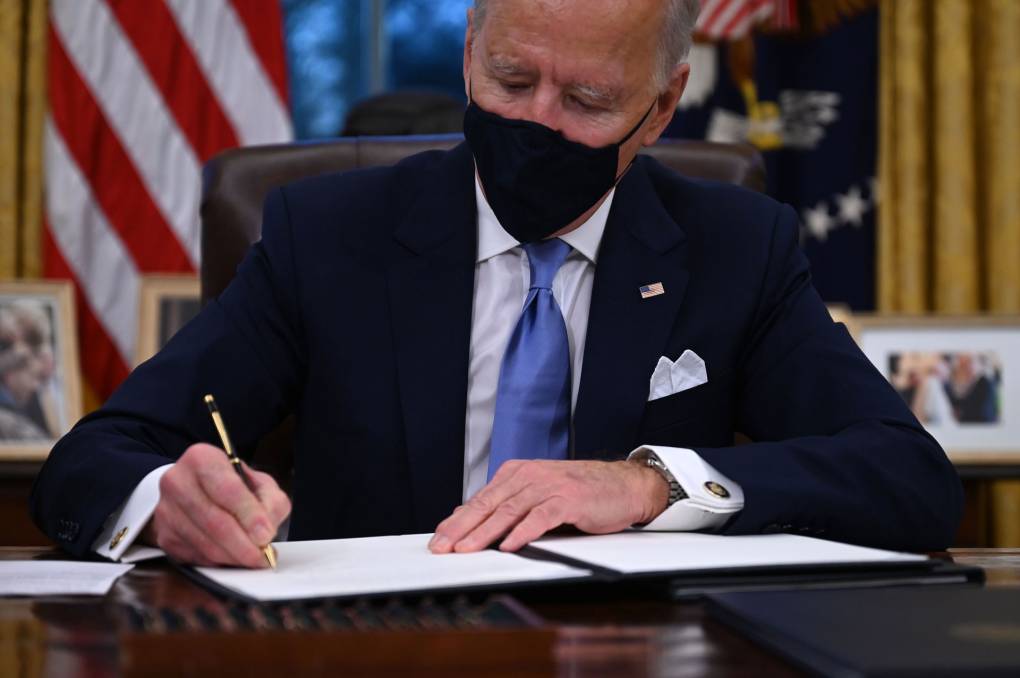
'The Moment for Action Is Now': Immigrant Advocates Rally Behind Biden's Path to Citizenship Bill
DOJ Rescinds Trump 'Zero Tolerance' Rule That Separated Thousands of Migrant Families
'They Didn't Listen to Us': ICE Detainee Who Waged Hunger Strikes for COVID-19 Protections Gets Virus
Biden's 'Day 1' Immigration Reform Plan Sparks Hope in California
Separan a los hermanos Christian Laporte y Vladímir Fardin en el aerouperto de San Francisco, envían al hermano menor de 6 años a un albergue de inmigrantes
Immigration Officials at SFO Separate Haitian Brothers, Send 9-Year-Old to Migrant Shelter
Judge Halts Trump-Issued Court Fee Hikes for Immigrants Facing Deportation
Justice Department Knew 2018 Border Policy Would Separate Children From Families
Immigration Court Fees Set to Jump Dramatically Unless Judge Intervenes
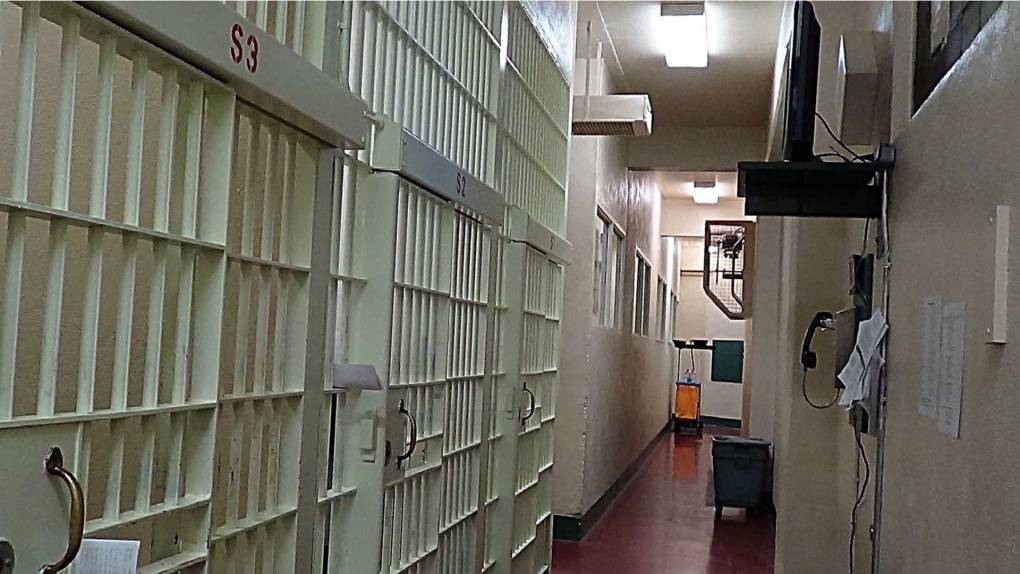
Immigrant Advocates Sound Alarm Over Escalating COVID-19 Outbreak in Yuba County Jail
‘Una mariposa con las alas rotas’: La búsqueda de una solicitante de asilo transgénera para llegar a California
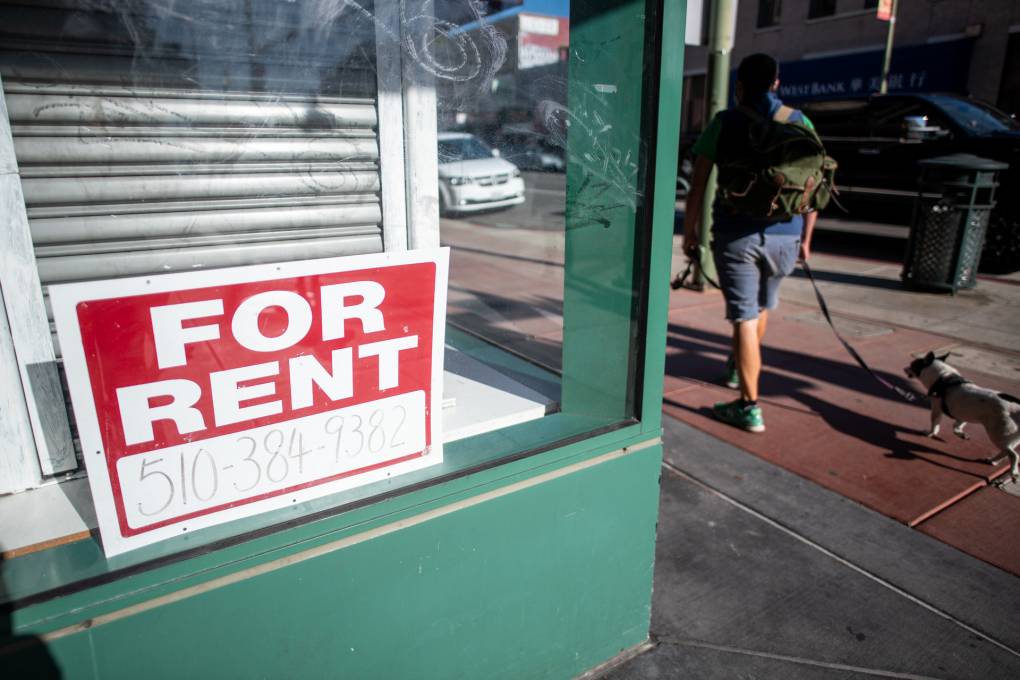
Small Business Owners Struggle to Stay Open in an Empty Oakland Chinatown
window.__IS_SSR__=true
window.__INITIAL_STATE__={
"attachmentsReducer": {
"audio_0": {
"type": "attachments",
"id": "audio_0",
"imgSizes": {
"kqedFullSize": {
"file": "https://ww2.kqed.org/news/wp-content/themes/KQED-unified/img/audio_bgs/background0.jpg"
}
}
},
"audio_1": {
"type": "attachments",
"id": "audio_1",
"imgSizes": {
"kqedFullSize": {
"file": "https://ww2.kqed.org/news/wp-content/themes/KQED-unified/img/audio_bgs/background1.jpg"
}
}
},
"audio_2": {
"type": "attachments",
"id": "audio_2",
"imgSizes": {
"kqedFullSize": {
"file": "https://ww2.kqed.org/news/wp-content/themes/KQED-unified/img/audio_bgs/background2.jpg"
}
}
},
"audio_3": {
"type": "attachments",
"id": "audio_3",
"imgSizes": {
"kqedFullSize": {
"file": "https://ww2.kqed.org/news/wp-content/themes/KQED-unified/img/audio_bgs/background3.jpg"
}
}
},
"audio_4": {
"type": "attachments",
"id": "audio_4",
"imgSizes": {
"kqedFullSize": {
"file": "https://ww2.kqed.org/news/wp-content/themes/KQED-unified/img/audio_bgs/background4.jpg"
}
}
},
"placeholder": {
"type": "attachments",
"id": "placeholder",
"imgSizes": {
"thumbnail": {
"file": "https://cdn.kqed.org/wp-content/uploads/2024/12/KQED-Default-Image-816638274-2000x1333-1-160x107.jpg",
"width": 160,
"height": 107,
"mimeType": "image/jpeg"
},
"medium": {
"file": "https://cdn.kqed.org/wp-content/uploads/2024/12/KQED-Default-Image-816638274-2000x1333-1-800x533.jpg",
"width": 800,
"height": 533,
"mimeType": "image/jpeg"
},
"medium_large": {
"file": "https://cdn.kqed.org/wp-content/uploads/2024/12/KQED-Default-Image-816638274-2000x1333-1-768x512.jpg",
"width": 768,
"height": 512,
"mimeType": "image/jpeg"
},
"large": {
"file": "https://cdn.kqed.org/wp-content/uploads/2024/12/KQED-Default-Image-816638274-2000x1333-1-1020x680.jpg",
"width": 1020,
"height": 680,
"mimeType": "image/jpeg"
},
"1536x1536": {
"file": "https://cdn.kqed.org/wp-content/uploads/2024/12/KQED-Default-Image-816638274-2000x1333-1-1536x1024.jpg",
"width": 1536,
"height": 1024,
"mimeType": "image/jpeg"
},
"fd-lrg": {
"file": "https://cdn.kqed.org/wp-content/uploads/2024/12/KQED-Default-Image-816638274-2000x1333-1-1536x1024.jpg",
"width": 1536,
"height": 1024,
"mimeType": "image/jpeg"
},
"fd-med": {
"file": "https://cdn.kqed.org/wp-content/uploads/2024/12/KQED-Default-Image-816638274-2000x1333-1-1020x680.jpg",
"width": 1020,
"height": 680,
"mimeType": "image/jpeg"
},
"fd-sm": {
"file": "https://cdn.kqed.org/wp-content/uploads/2024/12/KQED-Default-Image-816638274-2000x1333-1-800x533.jpg",
"width": 800,
"height": 533,
"mimeType": "image/jpeg"
},
"post-thumbnail": {
"file": "https://cdn.kqed.org/wp-content/uploads/2024/12/KQED-Default-Image-816638274-2000x1333-1-672x372.jpg",
"width": 672,
"height": 372,
"mimeType": "image/jpeg"
},
"twentyfourteen-full-width": {
"file": "https://cdn.kqed.org/wp-content/uploads/2024/12/KQED-Default-Image-816638274-2000x1333-1-1038x576.jpg",
"width": 1038,
"height": 576,
"mimeType": "image/jpeg"
},
"xxsmall": {
"file": "https://cdn.kqed.org/wp-content/uploads/2024/12/KQED-Default-Image-816638274-2000x1333-1-160x107.jpg",
"width": 160,
"height": 107,
"mimeType": "image/jpeg"
},
"xsmall": {
"file": "https://cdn.kqed.org/wp-content/uploads/2024/12/KQED-Default-Image-816638274-2000x1333-1-672x372.jpg",
"width": 672,
"height": 372,
"mimeType": "image/jpeg"
},
"small": {
"file": "https://cdn.kqed.org/wp-content/uploads/2024/12/KQED-Default-Image-816638274-2000x1333-1-672x372.jpg",
"width": 672,
"height": 372,
"mimeType": "image/jpeg"
},
"xlarge": {
"file": "https://cdn.kqed.org/wp-content/uploads/2024/12/KQED-Default-Image-816638274-2000x1333-1-1020x680.jpg",
"width": 1020,
"height": 680,
"mimeType": "image/jpeg"
},
"full-width": {
"file": "https://cdn.kqed.org/wp-content/uploads/2024/12/KQED-Default-Image-816638274-2000x1333-1-1920x1280.jpg",
"width": 1920,
"height": 1280,
"mimeType": "image/jpeg"
},
"guest-author-32": {
"file": "https://cdn.kqed.org/wp-content/uploads/2025/01/KQED-Default-Image-816638274-1333x1333-1-160x160.jpg",
"width": 32,
"height": 32,
"mimeType": "image/jpeg"
},
"guest-author-50": {
"file": "https://cdn.kqed.org/wp-content/uploads/2025/01/KQED-Default-Image-816638274-1333x1333-1-160x160.jpg",
"width": 50,
"height": 50,
"mimeType": "image/jpeg"
},
"guest-author-64": {
"file": "https://cdn.kqed.org/wp-content/uploads/2025/01/KQED-Default-Image-816638274-1333x1333-1-160x160.jpg",
"width": 64,
"height": 64,
"mimeType": "image/jpeg"
},
"guest-author-96": {
"file": "https://cdn.kqed.org/wp-content/uploads/2025/01/KQED-Default-Image-816638274-1333x1333-1-160x160.jpg",
"width": 96,
"height": 96,
"mimeType": "image/jpeg"
},
"guest-author-128": {
"file": "https://cdn.kqed.org/wp-content/uploads/2025/01/KQED-Default-Image-816638274-1333x1333-1-160x160.jpg",
"width": 128,
"height": 128,
"mimeType": "image/jpeg"
},
"detail": {
"file": "https://cdn.kqed.org/wp-content/uploads/2025/01/KQED-Default-Image-816638274-1333x1333-1-160x160.jpg",
"width": 160,
"height": 160,
"mimeType": "image/jpeg"
},
"kqedFullSize": {
"file": "https://cdn.kqed.org/wp-content/uploads/2024/12/KQED-Default-Image-816638274-2000x1333-1.jpg",
"width": 2000,
"height": 1333
}
}
},
"news_11857380": {
"type": "attachments",
"id": "news_11857380",
"meta": {
"index": "attachments_1716263798",
"site": "news",
"id": "11857380",
"found": true
},
"parent": 11857269,
"imgSizes": {
"apple_news_ca_landscape_5_5": {
"file": "https://ww2.kqed.org/app/uploads/sites/10/2021/01/DACA-rally-1044x783.jpg",
"width": 1044,
"mimeType": "image/jpeg",
"height": 783
},
"apple_news_ca_square_4_0": {
"file": "https://ww2.kqed.org/app/uploads/sites/10/2021/01/DACA-rally-470x470.jpg",
"width": 470,
"mimeType": "image/jpeg",
"height": 470
},
"twentyfourteen-full-width": {
"file": "https://ww2.kqed.org/app/uploads/sites/10/2021/01/DACA-rally-1038x576.jpg",
"width": 1038,
"mimeType": "image/jpeg",
"height": 576
},
"thumbnail": {
"file": "https://ww2.kqed.org/app/uploads/sites/10/2021/01/DACA-rally-160x107.jpg",
"width": 160,
"mimeType": "image/jpeg",
"height": 107
},
"post-thumbnail": {
"file": "https://ww2.kqed.org/app/uploads/sites/10/2021/01/DACA-rally-672x372.jpg",
"width": 672,
"mimeType": "image/jpeg",
"height": 372
},
"kqedFullSize": {
"file": "https://ww2.kqed.org/app/uploads/sites/10/2021/01/DACA-rally.jpg",
"width": 1920,
"height": 1280
},
"apple_news_ca_landscape_4_7": {
"file": "https://ww2.kqed.org/app/uploads/sites/10/2021/01/DACA-rally-632x474.jpg",
"width": 632,
"mimeType": "image/jpeg",
"height": 474
},
"large": {
"file": "https://ww2.kqed.org/app/uploads/sites/10/2021/01/DACA-rally-1020x680.jpg",
"width": 1020,
"mimeType": "image/jpeg",
"height": 680
},
"apple_news_ca_landscape_4_0": {
"file": "https://ww2.kqed.org/app/uploads/sites/10/2021/01/DACA-rally-536x402.jpg",
"width": 536,
"mimeType": "image/jpeg",
"height": 402
},
"apple_news_ca_portrait_12_9": {
"file": "https://ww2.kqed.org/app/uploads/sites/10/2021/01/DACA-rally-1122x1280.jpg",
"width": 1122,
"mimeType": "image/jpeg",
"height": 1280
},
"medium": {
"file": "https://ww2.kqed.org/app/uploads/sites/10/2021/01/DACA-rally-800x533.jpg",
"width": 800,
"mimeType": "image/jpeg",
"height": 533
},
"apple_news_ca_portrait_4_0": {
"file": "https://ww2.kqed.org/app/uploads/sites/10/2021/01/DACA-rally-354x472.jpg",
"width": 354,
"mimeType": "image/jpeg",
"height": 472
},
"apple_news_ca_portrait_9_7": {
"file": "https://ww2.kqed.org/app/uploads/sites/10/2021/01/DACA-rally-840x1120.jpg",
"width": 840,
"mimeType": "image/jpeg",
"height": 1120
},
"apple_news_ca_landscape_12_9": {
"file": "https://ww2.kqed.org/app/uploads/sites/10/2021/01/DACA-rally-1832x1280.jpg",
"width": 1832,
"mimeType": "image/jpeg",
"height": 1280
},
"apple_news_ca_square_9_7": {
"file": "https://ww2.kqed.org/app/uploads/sites/10/2021/01/DACA-rally-1104x1104.jpg",
"width": 1104,
"mimeType": "image/jpeg",
"height": 1104
},
"1536x1536": {
"file": "https://ww2.kqed.org/app/uploads/sites/10/2021/01/DACA-rally-1536x1024.jpg",
"width": 1536,
"mimeType": "image/jpeg",
"height": 1024
},
"apple_news_ca_portrait_4_7": {
"file": "https://ww2.kqed.org/app/uploads/sites/10/2021/01/DACA-rally-414x552.jpg",
"width": 414,
"mimeType": "image/jpeg",
"height": 552
},
"apple_news_ca_square_12_9": {
"file": "https://ww2.kqed.org/app/uploads/sites/10/2021/01/DACA-rally-1472x1280.jpg",
"width": 1472,
"mimeType": "image/jpeg",
"height": 1280
},
"apple_news_ca_portrait_5_5": {
"file": "https://ww2.kqed.org/app/uploads/sites/10/2021/01/DACA-rally-687x916.jpg",
"width": 687,
"mimeType": "image/jpeg",
"height": 916
},
"apple_news_ca_square_4_7": {
"file": "https://ww2.kqed.org/app/uploads/sites/10/2021/01/DACA-rally-550x550.jpg",
"width": 550,
"mimeType": "image/jpeg",
"height": 550
},
"apple_news_ca_landscape_9_7": {
"file": "https://ww2.kqed.org/app/uploads/sites/10/2021/01/DACA-rally-1376x1032.jpg",
"width": 1376,
"mimeType": "image/jpeg",
"height": 1032
},
"apple_news_ca_square_5_5": {
"file": "https://ww2.kqed.org/app/uploads/sites/10/2021/01/DACA-rally-912x912.jpg",
"width": 912,
"mimeType": "image/jpeg",
"height": 912
}
},
"publishDate": 1611783753,
"modified": 1611790357,
"caption": "Immigrant advocates rally in support of the Supreme Court's ruling in favor of the Deferred Action for Childhood Arrivals (DACA) program, in San Diego on June 18, 2020. ",
"description": "Immigrant advocates rally in support of the Supreme Court's ruling in favor of the Deferred Action for Childhood Arrivals (DACA) program, in San Diego on June 18, 2020. ",
"title": "DACA-rally",
"credit": "Sandy Huffaker/AFP via Getty Images",
"status": "inherit",
"altTag": null,
"isLoading": false,
"fetchFailed": false
},
"news_11857217": {
"type": "attachments",
"id": "news_11857217",
"meta": {
"index": "attachments_1716263798",
"site": "news",
"id": "11857217",
"found": true
},
"parent": 11857198,
"imgSizes": {
"apple_news_ca_landscape_5_5": {
"file": "https://ww2.kqed.org/app/uploads/sites/10/2021/01/Child-CBP-Agents-1044x783.jpg",
"width": 1044,
"mimeType": "image/jpeg",
"height": 783
},
"apple_news_ca_square_4_0": {
"file": "https://ww2.kqed.org/app/uploads/sites/10/2021/01/Child-CBP-Agents-470x470.jpg",
"width": 470,
"mimeType": "image/jpeg",
"height": 470
},
"twentyfourteen-full-width": {
"file": "https://ww2.kqed.org/app/uploads/sites/10/2021/01/Child-CBP-Agents-1038x576.jpg",
"width": 1038,
"mimeType": "image/jpeg",
"height": 576
},
"thumbnail": {
"file": "https://ww2.kqed.org/app/uploads/sites/10/2021/01/Child-CBP-Agents-160x107.jpg",
"width": 160,
"mimeType": "image/jpeg",
"height": 107
},
"post-thumbnail": {
"file": "https://ww2.kqed.org/app/uploads/sites/10/2021/01/Child-CBP-Agents-672x372.jpg",
"width": 672,
"mimeType": "image/jpeg",
"height": 372
},
"kqedFullSize": {
"file": "https://ww2.kqed.org/app/uploads/sites/10/2021/01/Child-CBP-Agents.jpg",
"width": 1920,
"height": 1278
},
"apple_news_ca_landscape_4_7": {
"file": "https://ww2.kqed.org/app/uploads/sites/10/2021/01/Child-CBP-Agents-632x474.jpg",
"width": 632,
"mimeType": "image/jpeg",
"height": 474
},
"large": {
"file": "https://ww2.kqed.org/app/uploads/sites/10/2021/01/Child-CBP-Agents-1020x679.jpg",
"width": 1020,
"mimeType": "image/jpeg",
"height": 679
},
"apple_news_ca_landscape_4_0": {
"file": "https://ww2.kqed.org/app/uploads/sites/10/2021/01/Child-CBP-Agents-536x402.jpg",
"width": 536,
"mimeType": "image/jpeg",
"height": 402
},
"apple_news_ca_portrait_12_9": {
"file": "https://ww2.kqed.org/app/uploads/sites/10/2021/01/Child-CBP-Agents-1122x1278.jpg",
"width": 1122,
"mimeType": "image/jpeg",
"height": 1278
},
"medium": {
"file": "https://ww2.kqed.org/app/uploads/sites/10/2021/01/Child-CBP-Agents-800x533.jpg",
"width": 800,
"mimeType": "image/jpeg",
"height": 533
},
"apple_news_ca_portrait_4_0": {
"file": "https://ww2.kqed.org/app/uploads/sites/10/2021/01/Child-CBP-Agents-354x472.jpg",
"width": 354,
"mimeType": "image/jpeg",
"height": 472
},
"apple_news_ca_portrait_9_7": {
"file": "https://ww2.kqed.org/app/uploads/sites/10/2021/01/Child-CBP-Agents-840x1120.jpg",
"width": 840,
"mimeType": "image/jpeg",
"height": 1120
},
"apple_news_ca_landscape_12_9": {
"file": "https://ww2.kqed.org/app/uploads/sites/10/2021/01/Child-CBP-Agents-1832x1278.jpg",
"width": 1832,
"mimeType": "image/jpeg",
"height": 1278
},
"apple_news_ca_square_9_7": {
"file": "https://ww2.kqed.org/app/uploads/sites/10/2021/01/Child-CBP-Agents-1104x1104.jpg",
"width": 1104,
"mimeType": "image/jpeg",
"height": 1104
},
"1536x1536": {
"file": "https://ww2.kqed.org/app/uploads/sites/10/2021/01/Child-CBP-Agents-1536x1022.jpg",
"width": 1536,
"mimeType": "image/jpeg",
"height": 1022
},
"apple_news_ca_portrait_4_7": {
"file": "https://ww2.kqed.org/app/uploads/sites/10/2021/01/Child-CBP-Agents-414x552.jpg",
"width": 414,
"mimeType": "image/jpeg",
"height": 552
},
"apple_news_ca_square_12_9": {
"file": "https://ww2.kqed.org/app/uploads/sites/10/2021/01/Child-CBP-Agents-1472x1278.jpg",
"width": 1472,
"mimeType": "image/jpeg",
"height": 1278
},
"apple_news_ca_portrait_5_5": {
"file": "https://ww2.kqed.org/app/uploads/sites/10/2021/01/Child-CBP-Agents-687x916.jpg",
"width": 687,
"mimeType": "image/jpeg",
"height": 916
},
"apple_news_ca_square_4_7": {
"file": "https://ww2.kqed.org/app/uploads/sites/10/2021/01/Child-CBP-Agents-550x550.jpg",
"width": 550,
"mimeType": "image/jpeg",
"height": 550
},
"apple_news_ca_landscape_9_7": {
"file": "https://ww2.kqed.org/app/uploads/sites/10/2021/01/Child-CBP-Agents-1376x1032.jpg",
"width": 1376,
"mimeType": "image/jpeg",
"height": 1032
},
"apple_news_ca_square_5_5": {
"file": "https://ww2.kqed.org/app/uploads/sites/10/2021/01/Child-CBP-Agents-912x912.jpg",
"width": 912,
"mimeType": "image/jpeg",
"height": 912
}
},
"publishDate": 1611706692,
"modified": 1611706819,
"caption": "Central American asylum seekers wait as U.S. Border Patrol agents take them into custody in 2018 near McAllen, Texas. The families were then sent to a U.S. Customs and Border Protection (CBP) processing center for possible separation as part of the Trump administration's 'zero tolerance' policy towards undocumented immigrants. ",
"description": "Central American asylum seekers wait as U.S. Border Patrol agents take them into custody in 2018 near McAllen, Texas. The families were then sent to a U.S. Customs and Border Protection (CBP) processing center for possible separation as part of the Trump administration's 'zero tolerance' policy towards undocumented immigrants. ",
"title": "Child-CBP-Agents",
"credit": "John Moore/Getty Images",
"status": "inherit",
"altTag": "child looks up at CBP agents",
"isLoading": false,
"fetchFailed": false
},
"news_11857116": {
"type": "attachments",
"id": "news_11857116",
"meta": {
"index": "attachments_1716263798",
"site": "news",
"id": "11857116",
"found": true
},
"parent": 11856995,
"imgSizes": {
"apple_news_ca_landscape_5_5": {
"file": "https://ww2.kqed.org/app/uploads/sites/10/2021/01/Herrera-1044x783.jpg",
"width": 1044,
"mimeType": "image/jpeg",
"height": 783
},
"apple_news_ca_square_4_0": {
"file": "https://ww2.kqed.org/app/uploads/sites/10/2021/01/Herrera-470x470.jpg",
"width": 470,
"mimeType": "image/jpeg",
"height": 470
},
"twentyfourteen-full-width": {
"file": "https://ww2.kqed.org/app/uploads/sites/10/2021/01/Herrera-1038x576.jpg",
"width": 1038,
"mimeType": "image/jpeg",
"height": 576
},
"thumbnail": {
"file": "https://ww2.kqed.org/app/uploads/sites/10/2021/01/Herrera-160x121.jpg",
"width": 160,
"mimeType": "image/jpeg",
"height": 121
},
"post-thumbnail": {
"file": "https://ww2.kqed.org/app/uploads/sites/10/2021/01/Herrera-672x372.jpg",
"width": 672,
"mimeType": "image/jpeg",
"height": 372
},
"kqedFullSize": {
"file": "https://ww2.kqed.org/app/uploads/sites/10/2021/01/Herrera.jpg",
"width": 1920,
"height": 1451
},
"apple_news_ca_landscape_4_7": {
"file": "https://ww2.kqed.org/app/uploads/sites/10/2021/01/Herrera-632x474.jpg",
"width": 632,
"mimeType": "image/jpeg",
"height": 474
},
"large": {
"file": "https://ww2.kqed.org/app/uploads/sites/10/2021/01/Herrera-1020x771.jpg",
"width": 1020,
"mimeType": "image/jpeg",
"height": 771
},
"apple_news_ca_landscape_4_0": {
"file": "https://ww2.kqed.org/app/uploads/sites/10/2021/01/Herrera-536x402.jpg",
"width": 536,
"mimeType": "image/jpeg",
"height": 402
},
"apple_news_ca_portrait_12_9": {
"file": "https://ww2.kqed.org/app/uploads/sites/10/2021/01/Herrera-1122x1451.jpg",
"width": 1122,
"mimeType": "image/jpeg",
"height": 1451
},
"medium": {
"file": "https://ww2.kqed.org/app/uploads/sites/10/2021/01/Herrera-800x605.jpg",
"width": 800,
"mimeType": "image/jpeg",
"height": 605
},
"apple_news_ca_portrait_4_0": {
"file": "https://ww2.kqed.org/app/uploads/sites/10/2021/01/Herrera-354x472.jpg",
"width": 354,
"mimeType": "image/jpeg",
"height": 472
},
"apple_news_ca_portrait_9_7": {
"file": "https://ww2.kqed.org/app/uploads/sites/10/2021/01/Herrera-840x1120.jpg",
"width": 840,
"mimeType": "image/jpeg",
"height": 1120
},
"apple_news_ca_landscape_12_9": {
"file": "https://ww2.kqed.org/app/uploads/sites/10/2021/01/Herrera-1832x1374.jpg",
"width": 1832,
"mimeType": "image/jpeg",
"height": 1374
},
"apple_news_ca_square_9_7": {
"file": "https://ww2.kqed.org/app/uploads/sites/10/2021/01/Herrera-1104x1104.jpg",
"width": 1104,
"mimeType": "image/jpeg",
"height": 1104
},
"1536x1536": {
"file": "https://ww2.kqed.org/app/uploads/sites/10/2021/01/Herrera-1536x1161.jpg",
"width": 1536,
"mimeType": "image/jpeg",
"height": 1161
},
"apple_news_ca_portrait_4_7": {
"file": "https://ww2.kqed.org/app/uploads/sites/10/2021/01/Herrera-414x552.jpg",
"width": 414,
"mimeType": "image/jpeg",
"height": 552
},
"apple_news_ca_square_12_9": {
"file": "https://ww2.kqed.org/app/uploads/sites/10/2021/01/Herrera-1472x1451.jpg",
"width": 1472,
"mimeType": "image/jpeg",
"height": 1451
},
"apple_news_ca_portrait_5_5": {
"file": "https://ww2.kqed.org/app/uploads/sites/10/2021/01/Herrera-687x916.jpg",
"width": 687,
"mimeType": "image/jpeg",
"height": 916
},
"apple_news_ca_square_4_7": {
"file": "https://ww2.kqed.org/app/uploads/sites/10/2021/01/Herrera-550x550.jpg",
"width": 550,
"mimeType": "image/jpeg",
"height": 550
},
"apple_news_ca_landscape_9_7": {
"file": "https://ww2.kqed.org/app/uploads/sites/10/2021/01/Herrera-1376x1032.jpg",
"width": 1376,
"mimeType": "image/jpeg",
"height": 1032
},
"apple_news_ca_square_5_5": {
"file": "https://ww2.kqed.org/app/uploads/sites/10/2021/01/Herrera-912x912.jpg",
"width": 912,
"mimeType": "image/jpeg",
"height": 912
}
},
"publishDate": 1611693380,
"modified": 1611700711,
"caption": "Juan Jose Erazo Herrera, photographed while in ICE custody shortly before he turned 19, in March 2019.",
"description": "Juan Jose Erazo Herrera, photographed while in ICE custody shortly before he turned 19, in March, 2019.",
"title": "Herrera",
"credit": "Courtesy of Juan Jose Erazo Herrera",
"status": "inherit",
"altTag": "Juan Jose Erazo Herrera speaks to a visitor on a ICE detention center phone",
"isLoading": false,
"fetchFailed": false
},
"news_11856485": {
"type": "attachments",
"id": "news_11856485",
"meta": {
"index": "attachments_1716263798",
"site": "news",
"id": "11856485",
"found": true
},
"parent": 11856440,
"imgSizes": {
"apple_news_ca_landscape_5_5": {
"file": "https://ww2.kqed.org/app/uploads/sites/10/2021/01/Biden-Signs-Orders-1044x783.jpg",
"width": 1044,
"mimeType": "image/jpeg",
"height": 783
},
"apple_news_ca_square_4_0": {
"file": "https://ww2.kqed.org/app/uploads/sites/10/2021/01/Biden-Signs-Orders-470x470.jpg",
"width": 470,
"mimeType": "image/jpeg",
"height": 470
},
"twentyfourteen-full-width": {
"file": "https://ww2.kqed.org/app/uploads/sites/10/2021/01/Biden-Signs-Orders-1038x576.jpg",
"width": 1038,
"mimeType": "image/jpeg",
"height": 576
},
"thumbnail": {
"file": "https://ww2.kqed.org/app/uploads/sites/10/2021/01/Biden-Signs-Orders-160x106.jpg",
"width": 160,
"mimeType": "image/jpeg",
"height": 106
},
"post-thumbnail": {
"file": "https://ww2.kqed.org/app/uploads/sites/10/2021/01/Biden-Signs-Orders-672x372.jpg",
"width": 672,
"mimeType": "image/jpeg",
"height": 372
},
"kqedFullSize": {
"file": "https://ww2.kqed.org/app/uploads/sites/10/2021/01/Biden-Signs-Orders.jpg",
"width": 1920,
"height": 1277
},
"apple_news_ca_landscape_4_7": {
"file": "https://ww2.kqed.org/app/uploads/sites/10/2021/01/Biden-Signs-Orders-632x474.jpg",
"width": 632,
"mimeType": "image/jpeg",
"height": 474
},
"large": {
"file": "https://ww2.kqed.org/app/uploads/sites/10/2021/01/Biden-Signs-Orders-1020x678.jpg",
"width": 1020,
"mimeType": "image/jpeg",
"height": 678
},
"apple_news_ca_landscape_4_0": {
"file": "https://ww2.kqed.org/app/uploads/sites/10/2021/01/Biden-Signs-Orders-536x402.jpg",
"width": 536,
"mimeType": "image/jpeg",
"height": 402
},
"apple_news_ca_portrait_12_9": {
"file": "https://ww2.kqed.org/app/uploads/sites/10/2021/01/Biden-Signs-Orders-1122x1277.jpg",
"width": 1122,
"mimeType": "image/jpeg",
"height": 1277
},
"medium": {
"file": "https://ww2.kqed.org/app/uploads/sites/10/2021/01/Biden-Signs-Orders-800x532.jpg",
"width": 800,
"mimeType": "image/jpeg",
"height": 532
},
"apple_news_ca_portrait_4_0": {
"file": "https://ww2.kqed.org/app/uploads/sites/10/2021/01/Biden-Signs-Orders-354x472.jpg",
"width": 354,
"mimeType": "image/jpeg",
"height": 472
},
"apple_news_ca_portrait_9_7": {
"file": "https://ww2.kqed.org/app/uploads/sites/10/2021/01/Biden-Signs-Orders-840x1120.jpg",
"width": 840,
"mimeType": "image/jpeg",
"height": 1120
},
"apple_news_ca_landscape_12_9": {
"file": "https://ww2.kqed.org/app/uploads/sites/10/2021/01/Biden-Signs-Orders-1832x1277.jpg",
"width": 1832,
"mimeType": "image/jpeg",
"height": 1277
},
"apple_news_ca_square_9_7": {
"file": "https://ww2.kqed.org/app/uploads/sites/10/2021/01/Biden-Signs-Orders-1104x1104.jpg",
"width": 1104,
"mimeType": "image/jpeg",
"height": 1104
},
"1536x1536": {
"file": "https://ww2.kqed.org/app/uploads/sites/10/2021/01/Biden-Signs-Orders-1536x1022.jpg",
"width": 1536,
"mimeType": "image/jpeg",
"height": 1022
},
"apple_news_ca_portrait_4_7": {
"file": "https://ww2.kqed.org/app/uploads/sites/10/2021/01/Biden-Signs-Orders-414x552.jpg",
"width": 414,
"mimeType": "image/jpeg",
"height": 552
},
"apple_news_ca_square_12_9": {
"file": "https://ww2.kqed.org/app/uploads/sites/10/2021/01/Biden-Signs-Orders-1472x1277.jpg",
"width": 1472,
"mimeType": "image/jpeg",
"height": 1277
},
"apple_news_ca_portrait_5_5": {
"file": "https://ww2.kqed.org/app/uploads/sites/10/2021/01/Biden-Signs-Orders-687x916.jpg",
"width": 687,
"mimeType": "image/jpeg",
"height": 916
},
"apple_news_ca_square_4_7": {
"file": "https://ww2.kqed.org/app/uploads/sites/10/2021/01/Biden-Signs-Orders-550x550.jpg",
"width": 550,
"mimeType": "image/jpeg",
"height": 550
},
"apple_news_ca_landscape_9_7": {
"file": "https://ww2.kqed.org/app/uploads/sites/10/2021/01/Biden-Signs-Orders-1376x1032.jpg",
"width": 1376,
"mimeType": "image/jpeg",
"height": 1032
},
"apple_news_ca_square_5_5": {
"file": "https://ww2.kqed.org/app/uploads/sites/10/2021/01/Biden-Signs-Orders-912x912.jpg",
"width": 912,
"mimeType": "image/jpeg",
"height": 912
}
},
"publishDate": 1611273388,
"modified": 1611277790,
"caption": "President Joe Biden signs a series of executive orders in the Oval Office after being sworn in at the U.S. Capitol on Jan. 20, 2021. The actions included halting construction of Trump's border wall and preserving protections for hundreds of thousands of DACA recipients.",
"description": "President Joe Biden signs a series of executive orders in the Oval Office after being sworn in at the US Capitol on Jan. 20, 2021. The actions included halting construction of Trump's border wall, and preserving protections for hundreds of thousands of DACA recipients.",
"title": "Biden-Signs-Orders",
"credit": "Jim Watson/AFP via Getty Images",
"status": "inherit",
"altTag": "Joe Biden signs orders at the resolute desk in the Oval Office",
"isLoading": false,
"fetchFailed": false
},
"news_11856360": {
"type": "attachments",
"id": "news_11856360",
"meta": {
"index": "attachments_1716263798",
"site": "news",
"id": "11856360",
"found": true
},
"parent": 11856355,
"imgSizes": {
"apple_news_ca_square_4_0": {
"file": "https://ww2.kqed.org/app/uploads/sites/10/2021/01/Haitian-Brothers-1-470x470.jpg",
"width": 470,
"mimeType": "image/jpeg",
"height": 470
},
"twentyfourteen-full-width": {
"file": "https://ww2.kqed.org/app/uploads/sites/10/2021/01/Haitian-Brothers-1-800x576.jpg",
"width": 800,
"mimeType": "image/jpeg",
"height": 576
},
"thumbnail": {
"file": "https://ww2.kqed.org/app/uploads/sites/10/2021/01/Haitian-Brothers-1-160x124.jpg",
"width": 160,
"mimeType": "image/jpeg",
"height": 124
},
"post-thumbnail": {
"file": "https://ww2.kqed.org/app/uploads/sites/10/2021/01/Haitian-Brothers-1-672x372.jpg",
"width": 672,
"mimeType": "image/jpeg",
"height": 372
},
"kqedFullSize": {
"file": "https://ww2.kqed.org/app/uploads/sites/10/2021/01/Haitian-Brothers-1.jpg",
"width": 800,
"height": 620
},
"apple_news_ca_landscape_4_7": {
"file": "https://ww2.kqed.org/app/uploads/sites/10/2021/01/Haitian-Brothers-1-632x474.jpg",
"width": 632,
"mimeType": "image/jpeg",
"height": 474
},
"apple_news_ca_portrait_4_7": {
"file": "https://ww2.kqed.org/app/uploads/sites/10/2021/01/Haitian-Brothers-1-414x552.jpg",
"width": 414,
"mimeType": "image/jpeg",
"height": 552
},
"apple_news_ca_portrait_5_5": {
"file": "https://ww2.kqed.org/app/uploads/sites/10/2021/01/Haitian-Brothers-1-687x620.jpg",
"width": 687,
"mimeType": "image/jpeg",
"height": 620
},
"apple_news_ca_square_4_7": {
"file": "https://ww2.kqed.org/app/uploads/sites/10/2021/01/Haitian-Brothers-1-550x550.jpg",
"width": 550,
"mimeType": "image/jpeg",
"height": 550
},
"apple_news_ca_landscape_4_0": {
"file": "https://ww2.kqed.org/app/uploads/sites/10/2021/01/Haitian-Brothers-1-536x402.jpg",
"width": 536,
"mimeType": "image/jpeg",
"height": 402
},
"apple_news_ca_portrait_4_0": {
"file": "https://ww2.kqed.org/app/uploads/sites/10/2021/01/Haitian-Brothers-1-354x472.jpg",
"width": 354,
"mimeType": "image/jpeg",
"height": 472
}
},
"publishDate": 1611251655,
"modified": 1611251905,
"caption": "Christian Laporte, de 19 años, juega con su hermano Vladímir Fardin, de 9 años. Los hermanos viajaban con una visa estadounidense cuando se les negó la entrada al país y luego fueron separados por funcionarios de inmigración en el aeropuerto internacional de San Francisco. Venían de regreso de Haití este pasado domingo en un vuelo con escala en México.",
"description": "Christian Laporte, de 19 años, juega con su hermano Vladímir Fardin, de 9 años. Los hermanos viajaban con una visa estadounidense cuando se les negó la entrada al país y luego fueron separados por funcionarios de inmigración en el aeropuerto internacional de San Francisco. Venían de regreso de Haití este pasado domingo en un vuelo con escala en México.",
"title": "Haitian-Brothers",
"credit": "Cortesía de la familia",
"status": "inherit",
"altTag": null,
"isLoading": false,
"fetchFailed": false
},
"news_11856288": {
"type": "attachments",
"id": "news_11856288",
"meta": {
"index": "attachments_1716263798",
"site": "news",
"id": "11856288",
"found": true
},
"parent": 11856263,
"imgSizes": {
"apple_news_ca_square_4_0": {
"file": "https://ww2.kqed.org/app/uploads/sites/10/2021/01/Haitian-Brothers-470x470.jpg",
"width": 470,
"mimeType": "image/jpeg",
"height": 470
},
"twentyfourteen-full-width": {
"file": "https://ww2.kqed.org/app/uploads/sites/10/2021/01/Haitian-Brothers-800x576.jpg",
"width": 800,
"mimeType": "image/jpeg",
"height": 576
},
"thumbnail": {
"file": "https://ww2.kqed.org/app/uploads/sites/10/2021/01/Haitian-Brothers-160x124.jpg",
"width": 160,
"mimeType": "image/jpeg",
"height": 124
},
"post-thumbnail": {
"file": "https://ww2.kqed.org/app/uploads/sites/10/2021/01/Haitian-Brothers-672x372.jpg",
"width": 672,
"mimeType": "image/jpeg",
"height": 372
},
"kqedFullSize": {
"file": "https://ww2.kqed.org/app/uploads/sites/10/2021/01/Haitian-Brothers.jpg",
"width": 800,
"height": 620
},
"apple_news_ca_landscape_4_7": {
"file": "https://ww2.kqed.org/app/uploads/sites/10/2021/01/Haitian-Brothers-632x474.jpg",
"width": 632,
"mimeType": "image/jpeg",
"height": 474
},
"apple_news_ca_portrait_4_7": {
"file": "https://ww2.kqed.org/app/uploads/sites/10/2021/01/Haitian-Brothers-414x552.jpg",
"width": 414,
"mimeType": "image/jpeg",
"height": 552
},
"apple_news_ca_portrait_5_5": {
"file": "https://ww2.kqed.org/app/uploads/sites/10/2021/01/Haitian-Brothers-687x620.jpg",
"width": 687,
"mimeType": "image/jpeg",
"height": 620
},
"apple_news_ca_square_4_7": {
"file": "https://ww2.kqed.org/app/uploads/sites/10/2021/01/Haitian-Brothers-550x550.jpg",
"width": 550,
"mimeType": "image/jpeg",
"height": 550
},
"apple_news_ca_landscape_4_0": {
"file": "https://ww2.kqed.org/app/uploads/sites/10/2021/01/Haitian-Brothers-536x402.jpg",
"width": 536,
"mimeType": "image/jpeg",
"height": 402
},
"apple_news_ca_portrait_4_0": {
"file": "https://ww2.kqed.org/app/uploads/sites/10/2021/01/Haitian-Brothers-354x472.jpg",
"width": 354,
"mimeType": "image/jpeg",
"height": 472
}
},
"publishDate": 1611187691,
"modified": 1611192197,
"caption": "Christian Laporte, 19, plays with his brother Vladimir Fardin, 9. The brothers, who were traveling with U.S.-issued visas, were denied entry to the U.S. and separated by immigration officials at SFO after arriving on a flight from Mexico on Sunday.",
"description": "Christian Laporte, 19, plays with his brother Vladimir Fardin, 9. The brothers, who were traveling with U.S.-issued visas, were denied entry to the U.S. and separated by immigration officials at SFO after arriving on a flight from Haiti via a flight from Mexico on Sunday.",
"title": "Haitian-Brothers",
"credit": "Courtesy of the Family",
"status": "inherit",
"altTag": null,
"isLoading": false,
"fetchFailed": false
},
"news_11856248": {
"type": "attachments",
"id": "news_11856248",
"meta": {
"index": "attachments_1716263798",
"site": "news",
"id": "11856248",
"found": true
},
"parent": 11856205,
"imgSizes": {
"apple_news_ca_landscape_5_5": {
"file": "https://ww2.kqed.org/app/uploads/sites/10/2021/01/RS10393_87524849-e1420653546900-1440x1189-1-1044x783.jpg",
"width": 1044,
"mimeType": "image/jpeg",
"height": 783
},
"apple_news_ca_square_4_0": {
"file": "https://ww2.kqed.org/app/uploads/sites/10/2021/01/RS10393_87524849-e1420653546900-1440x1189-1-470x470.jpg",
"width": 470,
"mimeType": "image/jpeg",
"height": 470
},
"twentyfourteen-full-width": {
"file": "https://ww2.kqed.org/app/uploads/sites/10/2021/01/RS10393_87524849-e1420653546900-1440x1189-1-1038x576.jpg",
"width": 1038,
"mimeType": "image/jpeg",
"height": 576
},
"thumbnail": {
"file": "https://ww2.kqed.org/app/uploads/sites/10/2021/01/RS10393_87524849-e1420653546900-1440x1189-1-160x112.jpg",
"width": 160,
"mimeType": "image/jpeg",
"height": 112
},
"post-thumbnail": {
"file": "https://ww2.kqed.org/app/uploads/sites/10/2021/01/RS10393_87524849-e1420653546900-1440x1189-1-672x372.jpg",
"width": 672,
"mimeType": "image/jpeg",
"height": 372
},
"kqedFullSize": {
"file": "https://ww2.kqed.org/app/uploads/sites/10/2021/01/RS10393_87524849-e1420653546900-1440x1189-1.jpg",
"width": 1440,
"height": 1004
},
"apple_news_ca_landscape_4_7": {
"file": "https://ww2.kqed.org/app/uploads/sites/10/2021/01/RS10393_87524849-e1420653546900-1440x1189-1-632x474.jpg",
"width": 632,
"mimeType": "image/jpeg",
"height": 474
},
"large": {
"file": "https://ww2.kqed.org/app/uploads/sites/10/2021/01/RS10393_87524849-e1420653546900-1440x1189-1-1020x711.jpg",
"width": 1020,
"mimeType": "image/jpeg",
"height": 711
},
"apple_news_ca_landscape_4_0": {
"file": "https://ww2.kqed.org/app/uploads/sites/10/2021/01/RS10393_87524849-e1420653546900-1440x1189-1-536x402.jpg",
"width": 536,
"mimeType": "image/jpeg",
"height": 402
},
"apple_news_ca_portrait_12_9": {
"file": "https://ww2.kqed.org/app/uploads/sites/10/2021/01/RS10393_87524849-e1420653546900-1440x1189-1-1122x1004.jpg",
"width": 1122,
"mimeType": "image/jpeg",
"height": 1004
},
"medium": {
"file": "https://ww2.kqed.org/app/uploads/sites/10/2021/01/RS10393_87524849-e1420653546900-1440x1189-1-800x558.jpg",
"width": 800,
"mimeType": "image/jpeg",
"height": 558
},
"apple_news_ca_portrait_4_0": {
"file": "https://ww2.kqed.org/app/uploads/sites/10/2021/01/RS10393_87524849-e1420653546900-1440x1189-1-354x472.jpg",
"width": 354,
"mimeType": "image/jpeg",
"height": 472
},
"apple_news_ca_portrait_9_7": {
"file": "https://ww2.kqed.org/app/uploads/sites/10/2021/01/RS10393_87524849-e1420653546900-1440x1189-1-840x1004.jpg",
"width": 840,
"mimeType": "image/jpeg",
"height": 1004
},
"apple_news_ca_square_9_7": {
"file": "https://ww2.kqed.org/app/uploads/sites/10/2021/01/RS10393_87524849-e1420653546900-1440x1189-1-1104x1004.jpg",
"width": 1104,
"mimeType": "image/jpeg",
"height": 1004
},
"apple_news_ca_portrait_4_7": {
"file": "https://ww2.kqed.org/app/uploads/sites/10/2021/01/RS10393_87524849-e1420653546900-1440x1189-1-414x552.jpg",
"width": 414,
"mimeType": "image/jpeg",
"height": 552
},
"apple_news_ca_portrait_5_5": {
"file": "https://ww2.kqed.org/app/uploads/sites/10/2021/01/RS10393_87524849-e1420653546900-1440x1189-1-687x916.jpg",
"width": 687,
"mimeType": "image/jpeg",
"height": 916
},
"apple_news_ca_square_4_7": {
"file": "https://ww2.kqed.org/app/uploads/sites/10/2021/01/RS10393_87524849-e1420653546900-1440x1189-1-550x550.jpg",
"width": 550,
"mimeType": "image/jpeg",
"height": 550
},
"apple_news_ca_landscape_9_7": {
"file": "https://ww2.kqed.org/app/uploads/sites/10/2021/01/RS10393_87524849-e1420653546900-1440x1189-1-1376x1004.jpg",
"width": 1376,
"mimeType": "image/jpeg",
"height": 1004
},
"apple_news_ca_square_5_5": {
"file": "https://ww2.kqed.org/app/uploads/sites/10/2021/01/RS10393_87524849-e1420653546900-1440x1189-1-912x912.jpg",
"width": 912,
"mimeType": "image/jpeg",
"height": 912
}
},
"publishDate": 1611182908,
"modified": 1611182947,
"caption": "The Trump administration rule would have increased some immigration court fees by hundreds of dollars.",
"description": null,
"title": "RS10393_87524849-e1420653546900-1440x1189",
"credit": "iStock",
"status": "inherit",
"altTag": null,
"isLoading": false,
"fetchFailed": false
},
"news_11855633": {
"type": "attachments",
"id": "news_11855633",
"meta": {
"index": "attachments_1716263798",
"site": "news",
"id": "11855633",
"found": true
},
"parent": 11855631,
"imgSizes": {
"apple_news_ca_landscape_5_5": {
"file": "https://ww2.kqed.org/app/uploads/sites/10/2021/01/gettyimages-978842164-fa21bbcf52538d3602e339e327be2979c09dcd46-1044x783.jpg",
"width": 1044,
"mimeType": "image/jpeg",
"height": 783
},
"apple_news_ca_square_4_0": {
"file": "https://ww2.kqed.org/app/uploads/sites/10/2021/01/gettyimages-978842164-fa21bbcf52538d3602e339e327be2979c09dcd46-470x470.jpg",
"width": 470,
"mimeType": "image/jpeg",
"height": 470
},
"twentyfourteen-full-width": {
"file": "https://ww2.kqed.org/app/uploads/sites/10/2021/01/gettyimages-978842164-fa21bbcf52538d3602e339e327be2979c09dcd46-1038x576.jpg",
"width": 1038,
"mimeType": "image/jpeg",
"height": 576
},
"thumbnail": {
"file": "https://ww2.kqed.org/app/uploads/sites/10/2021/01/gettyimages-978842164-fa21bbcf52538d3602e339e327be2979c09dcd46-160x120.jpg",
"width": 160,
"mimeType": "image/jpeg",
"height": 120
},
"post-thumbnail": {
"file": "https://ww2.kqed.org/app/uploads/sites/10/2021/01/gettyimages-978842164-fa21bbcf52538d3602e339e327be2979c09dcd46-672x372.jpg",
"width": 672,
"mimeType": "image/jpeg",
"height": 372
},
"kqedFullSize": {
"file": "https://ww2.kqed.org/app/uploads/sites/10/2021/01/gettyimages-978842164-fa21bbcf52538d3602e339e327be2979c09dcd46-scaled.jpg",
"width": 2560,
"height": 1920
},
"2048x2048": {
"file": "https://ww2.kqed.org/app/uploads/sites/10/2021/01/gettyimages-978842164-fa21bbcf52538d3602e339e327be2979c09dcd46-2048x1536.jpg",
"width": 2048,
"mimeType": "image/jpeg",
"height": 1536
},
"apple_news_ca_landscape_4_7": {
"file": "https://ww2.kqed.org/app/uploads/sites/10/2021/01/gettyimages-978842164-fa21bbcf52538d3602e339e327be2979c09dcd46-632x474.jpg",
"width": 632,
"mimeType": "image/jpeg",
"height": 474
},
"large": {
"file": "https://ww2.kqed.org/app/uploads/sites/10/2021/01/gettyimages-978842164-fa21bbcf52538d3602e339e327be2979c09dcd46-1020x765.jpg",
"width": 1020,
"mimeType": "image/jpeg",
"height": 765
},
"apple_news_ca_landscape_4_0": {
"file": "https://ww2.kqed.org/app/uploads/sites/10/2021/01/gettyimages-978842164-fa21bbcf52538d3602e339e327be2979c09dcd46-536x402.jpg",
"width": 536,
"mimeType": "image/jpeg",
"height": 402
},
"apple_news_ca_portrait_12_9": {
"file": "https://ww2.kqed.org/app/uploads/sites/10/2021/01/gettyimages-978842164-fa21bbcf52538d3602e339e327be2979c09dcd46-1122x1496.jpg",
"width": 1122,
"mimeType": "image/jpeg",
"height": 1496
},
"medium": {
"file": "https://ww2.kqed.org/app/uploads/sites/10/2021/01/gettyimages-978842164-fa21bbcf52538d3602e339e327be2979c09dcd46-800x600.jpg",
"width": 800,
"mimeType": "image/jpeg",
"height": 600
},
"apple_news_ca_portrait_4_0": {
"file": "https://ww2.kqed.org/app/uploads/sites/10/2021/01/gettyimages-978842164-fa21bbcf52538d3602e339e327be2979c09dcd46-354x472.jpg",
"width": 354,
"mimeType": "image/jpeg",
"height": 472
},
"apple_news_ca_portrait_9_7": {
"file": "https://ww2.kqed.org/app/uploads/sites/10/2021/01/gettyimages-978842164-fa21bbcf52538d3602e339e327be2979c09dcd46-840x1120.jpg",
"width": 840,
"mimeType": "image/jpeg",
"height": 1120
},
"apple_news_ca_landscape_12_9": {
"file": "https://ww2.kqed.org/app/uploads/sites/10/2021/01/gettyimages-978842164-fa21bbcf52538d3602e339e327be2979c09dcd46-1832x1374.jpg",
"width": 1832,
"mimeType": "image/jpeg",
"height": 1374
},
"apple_news_ca_square_9_7": {
"file": "https://ww2.kqed.org/app/uploads/sites/10/2021/01/gettyimages-978842164-fa21bbcf52538d3602e339e327be2979c09dcd46-1104x1104.jpg",
"width": 1104,
"mimeType": "image/jpeg",
"height": 1104
},
"1536x1536": {
"file": "https://ww2.kqed.org/app/uploads/sites/10/2021/01/gettyimages-978842164-fa21bbcf52538d3602e339e327be2979c09dcd46-1536x1152.jpg",
"width": 1536,
"mimeType": "image/jpeg",
"height": 1152
},
"apple_news_ca_portrait_4_7": {
"file": "https://ww2.kqed.org/app/uploads/sites/10/2021/01/gettyimages-978842164-fa21bbcf52538d3602e339e327be2979c09dcd46-414x552.jpg",
"width": 414,
"mimeType": "image/jpeg",
"height": 552
},
"apple_news_ca_square_12_9": {
"file": "https://ww2.kqed.org/app/uploads/sites/10/2021/01/gettyimages-978842164-fa21bbcf52538d3602e339e327be2979c09dcd46-1472x1472.jpg",
"width": 1472,
"mimeType": "image/jpeg",
"height": 1472
},
"apple_news_ca_portrait_5_5": {
"file": "https://ww2.kqed.org/app/uploads/sites/10/2021/01/gettyimages-978842164-fa21bbcf52538d3602e339e327be2979c09dcd46-687x916.jpg",
"width": 687,
"mimeType": "image/jpeg",
"height": 916
},
"full-width": {
"file": "https://ww2.kqed.org/app/uploads/sites/10/2021/01/gettyimages-978842164-fa21bbcf52538d3602e339e327be2979c09dcd46-1920x1440.jpg",
"width": 1920,
"mimeType": "image/jpeg",
"height": 1440
},
"apple_news_ca_square_4_7": {
"file": "https://ww2.kqed.org/app/uploads/sites/10/2021/01/gettyimages-978842164-fa21bbcf52538d3602e339e327be2979c09dcd46-550x550.jpg",
"width": 550,
"mimeType": "image/jpeg",
"height": 550
},
"apple_news_ca_landscape_9_7": {
"file": "https://ww2.kqed.org/app/uploads/sites/10/2021/01/gettyimages-978842164-fa21bbcf52538d3602e339e327be2979c09dcd46-1376x1032.jpg",
"width": 1376,
"mimeType": "image/jpeg",
"height": 1032
},
"apple_news_ca_square_5_5": {
"file": "https://ww2.kqed.org/app/uploads/sites/10/2021/01/gettyimages-978842164-fa21bbcf52538d3602e339e327be2979c09dcd46-912x912.jpg",
"width": 912,
"mimeType": "image/jpeg",
"height": 912
}
},
"publishDate": 1610745480,
"modified": 1610746242,
"caption": "A child cries as her mother is searched near the U.S.-Mexico border in June 2018. During the two and a half months the policy was in place, more than 3,000 children were separated from their families.",
"description": "A child cries as her mother is searched near the U.S.-Mexico border in June 2018. During the two and a half months the policy was in place, more than 3,000 children were separated from their families.",
"title": "A child cries as her mother is searched near the U.S.-Mexico border in June 2018. During the two and a half months the policy was in place, more than 3,000 children were separated from their families.",
"credit": "John Moore/Getty Images",
"status": "inherit",
"altTag": null,
"isLoading": false,
"fetchFailed": false
},
"news_11855359": {
"type": "attachments",
"id": "news_11855359",
"meta": {
"index": "attachments_1716263798",
"site": "news",
"id": "11855359",
"found": true
},
"parent": 11855277,
"imgSizes": {
"apple_news_ca_square_4_0": {
"file": "https://ww2.kqed.org/app/uploads/sites/10/2021/01/GettyImages-648876518-470x470.jpg",
"width": 470,
"mimeType": "image/jpeg",
"height": 470
},
"twentyfourteen-full-width": {
"file": "https://ww2.kqed.org/app/uploads/sites/10/2021/01/GettyImages-648876518-1024x576.jpg",
"width": 1024,
"mimeType": "image/jpeg",
"height": 576
},
"thumbnail": {
"file": "https://ww2.kqed.org/app/uploads/sites/10/2021/01/GettyImages-648876518-160x100.jpg",
"width": 160,
"mimeType": "image/jpeg",
"height": 100
},
"post-thumbnail": {
"file": "https://ww2.kqed.org/app/uploads/sites/10/2021/01/GettyImages-648876518-672x372.jpg",
"width": 672,
"mimeType": "image/jpeg",
"height": 372
},
"kqedFullSize": {
"file": "https://ww2.kqed.org/app/uploads/sites/10/2021/01/GettyImages-648876518.jpg",
"width": 1024,
"height": 640
},
"apple_news_ca_landscape_4_7": {
"file": "https://ww2.kqed.org/app/uploads/sites/10/2021/01/GettyImages-648876518-632x474.jpg",
"width": 632,
"mimeType": "image/jpeg",
"height": 474
},
"large": {
"file": "https://ww2.kqed.org/app/uploads/sites/10/2021/01/GettyImages-648876518-1020x638.jpg",
"width": 1020,
"mimeType": "image/jpeg",
"height": 638
},
"apple_news_ca_landscape_4_0": {
"file": "https://ww2.kqed.org/app/uploads/sites/10/2021/01/GettyImages-648876518-536x402.jpg",
"width": 536,
"mimeType": "image/jpeg",
"height": 402
},
"medium": {
"file": "https://ww2.kqed.org/app/uploads/sites/10/2021/01/GettyImages-648876518-800x500.jpg",
"width": 800,
"mimeType": "image/jpeg",
"height": 500
},
"apple_news_ca_portrait_4_0": {
"file": "https://ww2.kqed.org/app/uploads/sites/10/2021/01/GettyImages-648876518-354x472.jpg",
"width": 354,
"mimeType": "image/jpeg",
"height": 472
},
"apple_news_ca_portrait_9_7": {
"file": "https://ww2.kqed.org/app/uploads/sites/10/2021/01/GettyImages-648876518-840x640.jpg",
"width": 840,
"mimeType": "image/jpeg",
"height": 640
},
"apple_news_ca_portrait_4_7": {
"file": "https://ww2.kqed.org/app/uploads/sites/10/2021/01/GettyImages-648876518-414x552.jpg",
"width": 414,
"mimeType": "image/jpeg",
"height": 552
},
"apple_news_ca_portrait_5_5": {
"file": "https://ww2.kqed.org/app/uploads/sites/10/2021/01/GettyImages-648876518-687x640.jpg",
"width": 687,
"mimeType": "image/jpeg",
"height": 640
},
"apple_news_ca_square_4_7": {
"file": "https://ww2.kqed.org/app/uploads/sites/10/2021/01/GettyImages-648876518-550x550.jpg",
"width": 550,
"mimeType": "image/jpeg",
"height": 550
},
"apple_news_ca_square_5_5": {
"file": "https://ww2.kqed.org/app/uploads/sites/10/2021/01/GettyImages-648876518-912x640.jpg",
"width": 912,
"mimeType": "image/jpeg",
"height": 640
}
},
"publishDate": 1610652209,
"modified": 1610652442,
"caption": "Demonstrators gathered in front of the Los Angeles Immigration Court building on March 6, 2017, to protest the deportation of an undocumented person who had lived in the city for decades.",
"description": null,
"title": "US-POLITICS-IMMIGRATION-RALLY",
"credit": "Frederic J. Brown/AFP via Getty Images",
"status": "inherit",
"altTag": null,
"isLoading": false,
"fetchFailed": false
},
"news_11852767": {
"type": "attachments",
"id": "news_11852767",
"meta": {
"index": "attachments_1716263798",
"site": "news",
"id": "11852767",
"found": true
},
"parent": 11852574,
"imgSizes": {
"apple_news_ca_landscape_5_5": {
"file": "https://ww2.kqed.org/app/uploads/sites/10/2020/12/RS26115_S-wing-hallway-01-11-17-qut-1044x783.jpg",
"width": 1044,
"mimeType": "image/jpeg",
"height": 783
},
"apple_news_ca_square_4_0": {
"file": "https://ww2.kqed.org/app/uploads/sites/10/2020/12/RS26115_S-wing-hallway-01-11-17-qut-470x470.jpg",
"width": 470,
"mimeType": "image/jpeg",
"height": 470
},
"twentyfourteen-full-width": {
"file": "https://ww2.kqed.org/app/uploads/sites/10/2020/12/RS26115_S-wing-hallway-01-11-17-qut-1038x576.jpg",
"width": 1038,
"mimeType": "image/jpeg",
"height": 576
},
"thumbnail": {
"file": "https://ww2.kqed.org/app/uploads/sites/10/2020/12/RS26115_S-wing-hallway-01-11-17-qut-160x90.jpg",
"width": 160,
"mimeType": "image/jpeg",
"height": 90
},
"post-thumbnail": {
"file": "https://ww2.kqed.org/app/uploads/sites/10/2020/12/RS26115_S-wing-hallway-01-11-17-qut-672x372.jpg",
"width": 672,
"mimeType": "image/jpeg",
"height": 372
},
"kqedFullSize": {
"file": "https://ww2.kqed.org/app/uploads/sites/10/2020/12/RS26115_S-wing-hallway-01-11-17-qut.jpg",
"width": 1920,
"height": 1080
},
"apple_news_ca_landscape_4_7": {
"file": "https://ww2.kqed.org/app/uploads/sites/10/2020/12/RS26115_S-wing-hallway-01-11-17-qut-632x474.jpg",
"width": 632,
"mimeType": "image/jpeg",
"height": 474
},
"large": {
"file": "https://ww2.kqed.org/app/uploads/sites/10/2020/12/RS26115_S-wing-hallway-01-11-17-qut-1020x574.jpg",
"width": 1020,
"mimeType": "image/jpeg",
"height": 574
},
"apple_news_ca_landscape_4_0": {
"file": "https://ww2.kqed.org/app/uploads/sites/10/2020/12/RS26115_S-wing-hallway-01-11-17-qut-536x402.jpg",
"width": 536,
"mimeType": "image/jpeg",
"height": 402
},
"apple_news_ca_portrait_12_9": {
"file": "https://ww2.kqed.org/app/uploads/sites/10/2020/12/RS26115_S-wing-hallway-01-11-17-qut-1122x1080.jpg",
"width": 1122,
"mimeType": "image/jpeg",
"height": 1080
},
"medium": {
"file": "https://ww2.kqed.org/app/uploads/sites/10/2020/12/RS26115_S-wing-hallway-01-11-17-qut-800x450.jpg",
"width": 800,
"mimeType": "image/jpeg",
"height": 450
},
"apple_news_ca_portrait_4_0": {
"file": "https://ww2.kqed.org/app/uploads/sites/10/2020/12/RS26115_S-wing-hallway-01-11-17-qut-354x472.jpg",
"width": 354,
"mimeType": "image/jpeg",
"height": 472
},
"apple_news_ca_portrait_9_7": {
"file": "https://ww2.kqed.org/app/uploads/sites/10/2020/12/RS26115_S-wing-hallway-01-11-17-qut-840x1080.jpg",
"width": 840,
"mimeType": "image/jpeg",
"height": 1080
},
"apple_news_ca_landscape_12_9": {
"file": "https://ww2.kqed.org/app/uploads/sites/10/2020/12/RS26115_S-wing-hallway-01-11-17-qut-1832x1080.jpg",
"width": 1832,
"mimeType": "image/jpeg",
"height": 1080
},
"apple_news_ca_square_9_7": {
"file": "https://ww2.kqed.org/app/uploads/sites/10/2020/12/RS26115_S-wing-hallway-01-11-17-qut-1104x1080.jpg",
"width": 1104,
"mimeType": "image/jpeg",
"height": 1080
},
"1536x1536": {
"file": "https://ww2.kqed.org/app/uploads/sites/10/2020/12/RS26115_S-wing-hallway-01-11-17-qut-1536x864.jpg",
"width": 1536,
"mimeType": "image/jpeg",
"height": 864
},
"apple_news_ca_portrait_4_7": {
"file": "https://ww2.kqed.org/app/uploads/sites/10/2020/12/RS26115_S-wing-hallway-01-11-17-qut-414x552.jpg",
"width": 414,
"mimeType": "image/jpeg",
"height": 552
},
"apple_news_ca_square_12_9": {
"file": "https://ww2.kqed.org/app/uploads/sites/10/2020/12/RS26115_S-wing-hallway-01-11-17-qut-1472x1080.jpg",
"width": 1472,
"mimeType": "image/jpeg",
"height": 1080
},
"apple_news_ca_portrait_5_5": {
"file": "https://ww2.kqed.org/app/uploads/sites/10/2020/12/RS26115_S-wing-hallway-01-11-17-qut-687x916.jpg",
"width": 687,
"mimeType": "image/jpeg",
"height": 916
},
"apple_news_ca_square_4_7": {
"file": "https://ww2.kqed.org/app/uploads/sites/10/2020/12/RS26115_S-wing-hallway-01-11-17-qut-550x550.jpg",
"width": 550,
"mimeType": "image/jpeg",
"height": 550
},
"apple_news_ca_landscape_9_7": {
"file": "https://ww2.kqed.org/app/uploads/sites/10/2020/12/RS26115_S-wing-hallway-01-11-17-qut-1376x1032.jpg",
"width": 1376,
"mimeType": "image/jpeg",
"height": 1032
},
"apple_news_ca_square_5_5": {
"file": "https://ww2.kqed.org/app/uploads/sites/10/2020/12/RS26115_S-wing-hallway-01-11-17-qut-912x912.jpg",
"width": 912,
"mimeType": "image/jpeg",
"height": 912
}
},
"publishDate": 1608774516,
"modified": 1608774622,
"caption": "A hallway in the S-Wing of the Yuba County Jail, taken in 2017. Immigrant advocates have raised the alarm about a COVID-19 outbreak in the facility.",
"description": null,
"title": "RS26115_S-wing-hallway-01-11-17-qut",
"credit": "Courtesy Rosen Bien Galvan & Grunfeld LLP",
"status": "inherit",
"altTag": "\"\"",
"isLoading": false,
"fetchFailed": false
},
"news_11846826": {
"type": "attachments",
"id": "news_11846826",
"meta": {
"index": "attachments_1716263798",
"site": "news",
"id": "11846826",
"found": true
},
"parent": 11844742,
"imgSizes": {
"apple_news_ca_landscape_5_5": {
"file": "https://ww2.kqed.org/app/uploads/sites/10/2020/11/LUNA-featured-edit-1044x783.jpg",
"width": 1044,
"mimeType": "image/jpeg",
"height": 783
},
"apple_news_ca_square_4_0": {
"file": "https://ww2.kqed.org/app/uploads/sites/10/2020/11/LUNA-featured-edit-470x470.jpg",
"width": 470,
"mimeType": "image/jpeg",
"height": 470
},
"twentyfourteen-full-width": {
"file": "https://ww2.kqed.org/app/uploads/sites/10/2020/11/LUNA-featured-edit-1038x576.jpg",
"width": 1038,
"mimeType": "image/jpeg",
"height": 576
},
"thumbnail": {
"file": "https://ww2.kqed.org/app/uploads/sites/10/2020/11/LUNA-featured-edit-160x90.jpg",
"width": 160,
"mimeType": "image/jpeg",
"height": 90
},
"post-thumbnail": {
"file": "https://ww2.kqed.org/app/uploads/sites/10/2020/11/LUNA-featured-edit-672x372.jpg",
"width": 672,
"mimeType": "image/jpeg",
"height": 372
},
"kqedFullSize": {
"file": "https://ww2.kqed.org/app/uploads/sites/10/2020/11/LUNA-featured-edit.jpg",
"width": 1920,
"height": 1080
},
"apple_news_ca_landscape_4_7": {
"file": "https://ww2.kqed.org/app/uploads/sites/10/2020/11/LUNA-featured-edit-632x474.jpg",
"width": 632,
"mimeType": "image/jpeg",
"height": 474
},
"large": {
"file": "https://ww2.kqed.org/app/uploads/sites/10/2020/11/LUNA-featured-edit-1020x574.jpg",
"width": 1020,
"mimeType": "image/jpeg",
"height": 574
},
"apple_news_ca_landscape_4_0": {
"file": "https://ww2.kqed.org/app/uploads/sites/10/2020/11/LUNA-featured-edit-536x402.jpg",
"width": 536,
"mimeType": "image/jpeg",
"height": 402
},
"apple_news_ca_portrait_12_9": {
"file": "https://ww2.kqed.org/app/uploads/sites/10/2020/11/LUNA-featured-edit-1122x1080.jpg",
"width": 1122,
"mimeType": "image/jpeg",
"height": 1080
},
"medium": {
"file": "https://ww2.kqed.org/app/uploads/sites/10/2020/11/LUNA-featured-edit-800x450.jpg",
"width": 800,
"mimeType": "image/jpeg",
"height": 450
},
"apple_news_ca_portrait_4_0": {
"file": "https://ww2.kqed.org/app/uploads/sites/10/2020/11/LUNA-featured-edit-354x472.jpg",
"width": 354,
"mimeType": "image/jpeg",
"height": 472
},
"apple_news_ca_portrait_9_7": {
"file": "https://ww2.kqed.org/app/uploads/sites/10/2020/11/LUNA-featured-edit-840x1080.jpg",
"width": 840,
"mimeType": "image/jpeg",
"height": 1080
},
"apple_news_ca_landscape_12_9": {
"file": "https://ww2.kqed.org/app/uploads/sites/10/2020/11/LUNA-featured-edit-1832x1080.jpg",
"width": 1832,
"mimeType": "image/jpeg",
"height": 1080
},
"apple_news_ca_square_9_7": {
"file": "https://ww2.kqed.org/app/uploads/sites/10/2020/11/LUNA-featured-edit-1104x1080.jpg",
"width": 1104,
"mimeType": "image/jpeg",
"height": 1080
},
"1536x1536": {
"file": "https://ww2.kqed.org/app/uploads/sites/10/2020/11/LUNA-featured-edit-1536x864.jpg",
"width": 1536,
"mimeType": "image/jpeg",
"height": 864
},
"apple_news_ca_portrait_4_7": {
"file": "https://ww2.kqed.org/app/uploads/sites/10/2020/11/LUNA-featured-edit-414x552.jpg",
"width": 414,
"mimeType": "image/jpeg",
"height": 552
},
"apple_news_ca_square_12_9": {
"file": "https://ww2.kqed.org/app/uploads/sites/10/2020/11/LUNA-featured-edit-1472x1080.jpg",
"width": 1472,
"mimeType": "image/jpeg",
"height": 1080
},
"apple_news_ca_portrait_5_5": {
"file": "https://ww2.kqed.org/app/uploads/sites/10/2020/11/LUNA-featured-edit-687x916.jpg",
"width": 687,
"mimeType": "image/jpeg",
"height": 916
},
"apple_news_ca_square_4_7": {
"file": "https://ww2.kqed.org/app/uploads/sites/10/2020/11/LUNA-featured-edit-550x550.jpg",
"width": 550,
"mimeType": "image/jpeg",
"height": 550
},
"apple_news_ca_landscape_9_7": {
"file": "https://ww2.kqed.org/app/uploads/sites/10/2020/11/LUNA-featured-edit-1376x1032.jpg",
"width": 1376,
"mimeType": "image/jpeg",
"height": 1032
},
"apple_news_ca_square_5_5": {
"file": "https://ww2.kqed.org/app/uploads/sites/10/2020/11/LUNA-featured-edit-912x912.jpg",
"width": 912,
"mimeType": "image/jpeg",
"height": 912
}
},
"publishDate": 1605033795,
"modified": 1608596556,
"caption": "Luna Guzmán se fue de Guatemala hace cuatro años para intentar llegar a California. Sufrió acoso sexual y violencia durante su estancia en un centro de detención de migrantes cerca de San Diego y luego contrajó COVID-19 mientras esperaba en Tijuana.",
"description": "Luna Guzmán se fue de Guatemala hace cuatro años para intentar llegar a California. Sufrió acoso sexual y violencia durante su estancia en un centro de detención de migrantes cerca de San Diego y luego contrajó COVID-19 mientras esperaba en Tijuana.",
"title": "LUNA-featured-edit",
"credit": "Cortesía de Luna Guzmán",
"status": "inherit",
"altTag": "\"\"",
"isLoading": false,
"fetchFailed": false
},
"news_11852252": {
"type": "attachments",
"id": "news_11852252",
"meta": {
"index": "attachments_1716263798",
"site": "news",
"id": "11852252",
"found": true
},
"parent": 11851735,
"imgSizes": {
"apple_news_ca_landscape_5_5": {
"file": "https://ww2.kqed.org/app/uploads/sites/10/2020/12/RS46439_001_KQED_Oakland_Chinatown_12182020-qut-1044x783.jpg",
"width": 1044,
"mimeType": "image/jpeg",
"height": 783
},
"apple_news_ca_square_4_0": {
"file": "https://ww2.kqed.org/app/uploads/sites/10/2020/12/RS46439_001_KQED_Oakland_Chinatown_12182020-qut-470x470.jpg",
"width": 470,
"mimeType": "image/jpeg",
"height": 470
},
"twentyfourteen-full-width": {
"file": "https://ww2.kqed.org/app/uploads/sites/10/2020/12/RS46439_001_KQED_Oakland_Chinatown_12182020-qut-1038x576.jpg",
"width": 1038,
"mimeType": "image/jpeg",
"height": 576
},
"thumbnail": {
"file": "https://ww2.kqed.org/app/uploads/sites/10/2020/12/RS46439_001_KQED_Oakland_Chinatown_12182020-qut-160x107.jpg",
"width": 160,
"mimeType": "image/jpeg",
"height": 107
},
"post-thumbnail": {
"file": "https://ww2.kqed.org/app/uploads/sites/10/2020/12/RS46439_001_KQED_Oakland_Chinatown_12182020-qut-672x372.jpg",
"width": 672,
"mimeType": "image/jpeg",
"height": 372
},
"kqedFullSize": {
"file": "https://ww2.kqed.org/app/uploads/sites/10/2020/12/RS46439_001_KQED_Oakland_Chinatown_12182020-qut.jpg",
"width": 1920,
"height": 1280
},
"apple_news_ca_landscape_4_7": {
"file": "https://ww2.kqed.org/app/uploads/sites/10/2020/12/RS46439_001_KQED_Oakland_Chinatown_12182020-qut-632x474.jpg",
"width": 632,
"mimeType": "image/jpeg",
"height": 474
},
"large": {
"file": "https://ww2.kqed.org/app/uploads/sites/10/2020/12/RS46439_001_KQED_Oakland_Chinatown_12182020-qut-1020x680.jpg",
"width": 1020,
"mimeType": "image/jpeg",
"height": 680
},
"apple_news_ca_landscape_4_0": {
"file": "https://ww2.kqed.org/app/uploads/sites/10/2020/12/RS46439_001_KQED_Oakland_Chinatown_12182020-qut-536x402.jpg",
"width": 536,
"mimeType": "image/jpeg",
"height": 402
},
"apple_news_ca_portrait_12_9": {
"file": "https://ww2.kqed.org/app/uploads/sites/10/2020/12/RS46439_001_KQED_Oakland_Chinatown_12182020-qut-1122x1280.jpg",
"width": 1122,
"mimeType": "image/jpeg",
"height": 1280
},
"medium": {
"file": "https://ww2.kqed.org/app/uploads/sites/10/2020/12/RS46439_001_KQED_Oakland_Chinatown_12182020-qut-800x533.jpg",
"width": 800,
"mimeType": "image/jpeg",
"height": 533
},
"apple_news_ca_portrait_4_0": {
"file": "https://ww2.kqed.org/app/uploads/sites/10/2020/12/RS46439_001_KQED_Oakland_Chinatown_12182020-qut-354x472.jpg",
"width": 354,
"mimeType": "image/jpeg",
"height": 472
},
"apple_news_ca_portrait_9_7": {
"file": "https://ww2.kqed.org/app/uploads/sites/10/2020/12/RS46439_001_KQED_Oakland_Chinatown_12182020-qut-840x1120.jpg",
"width": 840,
"mimeType": "image/jpeg",
"height": 1120
},
"apple_news_ca_landscape_12_9": {
"file": "https://ww2.kqed.org/app/uploads/sites/10/2020/12/RS46439_001_KQED_Oakland_Chinatown_12182020-qut-1832x1280.jpg",
"width": 1832,
"mimeType": "image/jpeg",
"height": 1280
},
"apple_news_ca_square_9_7": {
"file": "https://ww2.kqed.org/app/uploads/sites/10/2020/12/RS46439_001_KQED_Oakland_Chinatown_12182020-qut-1104x1104.jpg",
"width": 1104,
"mimeType": "image/jpeg",
"height": 1104
},
"1536x1536": {
"file": "https://ww2.kqed.org/app/uploads/sites/10/2020/12/RS46439_001_KQED_Oakland_Chinatown_12182020-qut-1536x1024.jpg",
"width": 1536,
"mimeType": "image/jpeg",
"height": 1024
},
"apple_news_ca_portrait_4_7": {
"file": "https://ww2.kqed.org/app/uploads/sites/10/2020/12/RS46439_001_KQED_Oakland_Chinatown_12182020-qut-414x552.jpg",
"width": 414,
"mimeType": "image/jpeg",
"height": 552
},
"apple_news_ca_square_12_9": {
"file": "https://ww2.kqed.org/app/uploads/sites/10/2020/12/RS46439_001_KQED_Oakland_Chinatown_12182020-qut-1472x1280.jpg",
"width": 1472,
"mimeType": "image/jpeg",
"height": 1280
},
"apple_news_ca_portrait_5_5": {
"file": "https://ww2.kqed.org/app/uploads/sites/10/2020/12/RS46439_001_KQED_Oakland_Chinatown_12182020-qut-687x916.jpg",
"width": 687,
"mimeType": "image/jpeg",
"height": 916
},
"apple_news_ca_square_4_7": {
"file": "https://ww2.kqed.org/app/uploads/sites/10/2020/12/RS46439_001_KQED_Oakland_Chinatown_12182020-qut-550x550.jpg",
"width": 550,
"mimeType": "image/jpeg",
"height": 550
},
"apple_news_ca_landscape_9_7": {
"file": "https://ww2.kqed.org/app/uploads/sites/10/2020/12/RS46439_001_KQED_Oakland_Chinatown_12182020-qut-1376x1032.jpg",
"width": 1376,
"mimeType": "image/jpeg",
"height": 1032
},
"apple_news_ca_square_5_5": {
"file": "https://ww2.kqed.org/app/uploads/sites/10/2020/12/RS46439_001_KQED_Oakland_Chinatown_12182020-qut-912x912.jpg",
"width": 912,
"mimeType": "image/jpeg",
"height": 912
}
},
"publishDate": 1608575861,
"modified": 1608576056,
"caption": "A 'For Rent' sign on a shop in Oakland's Chinatown on Dec. 18, 2020.",
"description": "A 'For Rent' sign on a shop in Oakland's Chinatown on Dec. 18, 2020.",
"title": "A 'For Rent' sign on a shop in Oakland's Chinatown on Dec. 18, 2020.",
"credit": "Beth LaBerge/KQED",
"status": "inherit",
"altTag": "\"\"",
"isLoading": false,
"fetchFailed": false
}
},
"audioPlayerReducer": {
"postId": "stream_live",
"isPaused": true,
"isPlaying": false,
"pfsActive": false,
"pledgeModalIsOpen": true,
"playerDrawerIsOpen": false,
"liveAudioPlayStartedAt": 0,
"liveAudioPlayContext": ""
},
"authorsReducer": {
"byline_news_11857198": {
"type": "authors",
"id": "byline_news_11857198",
"meta": {
"override": true
},
"slug": "byline_news_11857198",
"name": "Michael Balsamo and Colleen Long \u003cbr> The Associated Press",
"isLoading": false
},
"byline_news_11855631": {
"type": "authors",
"id": "byline_news_11855631",
"meta": {
"override": true
},
"slug": "byline_news_11855631",
"name": "Dustin Jones",
"isLoading": false
},
"byline_news_11852044": {
"type": "authors",
"id": "byline_news_11852044",
"meta": {
"override": true
},
"slug": "byline_news_11852044",
"name": "\u003ca href=\"https://www.kqed.org/author/sasha-khokha\">Sasha Khokha\u003c/a> and \u003ca href=\"http://erin-mcintyre.com/\">Erin Siegal McIntyre\u003c/a>",
"isLoading": false
},
"tychehendricks": {
"type": "authors",
"id": "259",
"meta": {
"index": "authors_1716337520",
"id": "259",
"found": true
},
"name": "Tyche Hendricks",
"firstName": "Tyche",
"lastName": "Hendricks",
"slug": "tychehendricks",
"email": "thendricks@kqed.org",
"display_author_email": true,
"staff_mastheads": [
"news"
],
"title": "KQED Senior Editor, Immigration",
"bio": "\u003cspan style=\"font-weight: 400;\">Tyche Hendricks is KQED’s senior editor for immigration, leading coverage of the policy and politics that affect California’s immigrant communities. Her work for KQED’s radio and online audiences is also carried on NPR and other national outlets. She has been recognized with awards from the Radio and Television News Directors Association, the Society for Professional Journalists; the Education Writers Association; the Best of the West and the National Federation of Community Broadcasters. Before joining KQED in 2010, Tyche spent more than a dozen years as a newspaper reporter, notably at the \u003c/span>\u003ci>\u003cspan style=\"font-weight: 400;\">San Francisco Chronicle\u003c/span>\u003c/i>\u003cspan style=\"font-weight: 400;\">. At different times she has covered criminal justice, government and politics and urban planning. Tyche has taught in the MFA Creative Writing program at the University of San Francisco and at UC Berkeley’s Graduate School of Journalism, where she was co-director of a national immigration symposium for professional journalists. She is the author of \u003c/span>\u003ci>\u003cspan style=\"font-weight: 400;\">The Wind Doesn't Need a Passport: Stories from the U.S.-Mexico Borderlands\u003c/span>\u003c/i>\u003cspan style=\"font-weight: 400;\"> (University of California Press). \u003c/span>",
"avatar": "https://secure.gravatar.com/avatar/b8ee458e2731c2d43df86882ce17267e?s=600&d=blank&r=g",
"twitter": "tychehendricks",
"facebook": null,
"instagram": null,
"linkedin": null,
"sites": [
{
"site": "news",
"roles": [
"editor"
]
},
{
"site": "stateofhealth",
"roles": [
"editor"
]
}
],
"headData": {
"title": "Tyche Hendricks | KQED",
"description": "KQED Senior Editor, Immigration",
"ogImgSrc": "https://secure.gravatar.com/avatar/b8ee458e2731c2d43df86882ce17267e?s=600&d=blank&r=g",
"twImgSrc": "https://secure.gravatar.com/avatar/b8ee458e2731c2d43df86882ce17267e?s=600&d=blank&r=g"
},
"isLoading": false,
"link": "/author/tychehendricks"
},
"fjhabvala": {
"type": "authors",
"id": "8659",
"meta": {
"index": "authors_1716337520",
"id": "8659",
"found": true
},
"name": "Farida Jhabvala Romero",
"firstName": "Farida",
"lastName": "Jhabvala Romero",
"slug": "fjhabvala",
"email": "fjhabvala@kqed.org",
"display_author_email": true,
"staff_mastheads": [
"news"
],
"title": "KQED Contributor",
"bio": "\u003cspan style=\"font-weight: 400;\">Farida Jhabvala Romero is a Labor Correspondent for KQED. She previously covered immigration. Farida was \u003ca href=\"https://www.ccnma.org/2022-most-influential-latina-journalists\">named\u003c/a> one of the 10 Most Influential Latina Journalists in California in 2022 by the California Chicano News Media Association. Her work has won awards from the Society of Professional Journalists (Northern California), as well as a national and regional Edward M. Murrow Award for the collaborative reporting projects “Dangerous Air” and “Graying California.” \u003c/span>\u003cspan style=\"font-weight: 400;\">Before joining KQED, Farida worked as a producer at Radio Bilingüe, a national public radio network. Farida earned her master’s degree in journalism from Stanford University.\u003c/span>",
"avatar": "https://secure.gravatar.com/avatar/c3ab27c5554b67b478f80971e515aa02?s=600&d=blank&r=g",
"twitter": "FaridaJhabvala",
"facebook": null,
"instagram": null,
"linkedin": "https://www.linkedin.com/in/faridajhabvala/",
"sites": [
{
"site": "news",
"roles": [
"editor"
]
},
{
"site": "stateofhealth",
"roles": [
"author"
]
}
],
"headData": {
"title": "Farida Jhabvala Romero | KQED",
"description": "KQED Contributor",
"ogImgSrc": "https://secure.gravatar.com/avatar/c3ab27c5554b67b478f80971e515aa02?s=600&d=blank&r=g",
"twImgSrc": "https://secure.gravatar.com/avatar/c3ab27c5554b67b478f80971e515aa02?s=600&d=blank&r=g"
},
"isLoading": false,
"link": "/author/fjhabvala"
},
"mwiley": {
"type": "authors",
"id": "11526",
"meta": {
"index": "authors_1716337520",
"id": "11526",
"found": true
},
"name": "Michelle Wiley",
"firstName": "Michelle",
"lastName": "Wiley",
"slug": "mwiley",
"email": "mwiley@KQED.org",
"display_author_email": true,
"staff_mastheads": [],
"title": null,
"bio": "Michelle Wiley was the senior editor of weekends.",
"avatar": "https://secure.gravatar.com/avatar/3b897d82a09e8587e8e73fa69fbcc635?s=600&d=blank&r=g",
"twitter": "michelleewiley",
"facebook": null,
"instagram": null,
"linkedin": null,
"sites": [
{
"site": "",
"roles": [
"editor"
]
},
{
"site": "arts",
"roles": [
"editor"
]
},
{
"site": "news",
"roles": [
"subscriber"
]
},
{
"site": "lowdown",
"roles": [
"editor"
]
},
{
"site": "science",
"roles": [
"editor"
]
},
{
"site": "podcasts",
"roles": [
"editor"
]
}
],
"headData": {
"title": "Michelle Wiley | KQED",
"description": null,
"ogImgSrc": "https://secure.gravatar.com/avatar/3b897d82a09e8587e8e73fa69fbcc635?s=600&d=blank&r=g",
"twImgSrc": "https://secure.gravatar.com/avatar/3b897d82a09e8587e8e73fa69fbcc635?s=600&d=blank&r=g"
},
"isLoading": false,
"link": "/author/mwiley"
}
},
"pagesReducer": {
"news_tag_immigration": {
"type": "terms",
"id": "news_20202",
"meta": {
"index": "terms_1716263798",
"site": "news",
"id": "20202",
"score": 6.9038835
},
"featImg": null,
"name": "immigration",
"description": null,
"taxonomy": "tag",
"headData": {
"twImgId": null,
"twTitle": null,
"ogTitle": null,
"ogImgId": null,
"twDescription": null,
"description": null,
"title": "immigration Archives | KQED News",
"ogDescription": null
},
"ttid": 20219,
"slug": "immigration",
"isLoading": false,
"title": "immigration",
"pageMeta": {
"site": "news",
"WpPageTemplate": "page-topic-editorial",
"currentPage": 58
},
"blocks": [
{
"blockName": "kqed/post-list",
"attrs": {
"layout": "cardArticle2",
"query": "posts/news?tag=immigration",
"seeMore": false,
"paginated": true,
"page": 58
}
},
{
"blockName": "kqed/ad"
}
]
}
},
"pfsSessionReducer": {},
"postsReducer": {
"stream_live": {
"type": "live",
"id": "stream_live",
"audioUrl": "https://streams.kqed.org/kqedradio",
"title": "Live Stream",
"excerpt": "Live Stream information currently unavailable.",
"link": "/radio",
"featImg": "",
"label": {
"name": "KQED Live",
"link": "/"
}
},
"stream_kqedNewscast": {
"type": "posts",
"id": "stream_kqedNewscast",
"audioUrl": "https://www.kqed.org/.stream/anon/radio/RDnews/newscast.mp3?_=1",
"title": "KQED Newscast",
"featImg": "",
"label": {
"name": "88.5 FM",
"link": "/"
}
},
"news_11857269": {
"type": "posts",
"id": "news_11857269",
"meta": {
"index": "posts_1716263798",
"site": "news",
"id": "11857269",
"score": null,
"sort": [
1611787561000
]
},
"parent": 0,
"labelTerm": {
"site": "news"
},
"blocks": [],
"publishDate": 1611787561,
"format": "standard",
"disqusTitle": "'The Moment for Action Is Now': Immigrant Advocates Rally Behind Biden's Path to Citizenship Bill",
"title": "'The Moment for Action Is Now': Immigrant Advocates Rally Behind Biden's Path to Citizenship Bill",
"headTitle": "KQED News",
"content": "\u003cp>California immigrant advocacy groups, along with newly appointed Sen. Alex Padilla, are gearing up to try and push President Biden’s sweeping immigration reform bill through Congress – but the effort will face a tough road in the Senate, where power is evenly divided between Democrats and Republicans.\u003c/p>\n\u003cp>On his first day in office, Biden announced the \u003ca href=\"https://cdn.vox-cdn.com/uploads/chorus_asset/file/22246670/Fact_Sheet__America_s_Citizenship_Act_of_2021.pdf\">outlines of a bill\u003c/a> that would provide an accelerated path to citizenship for the nearly 11 million unauthorized immigrants in the country, a goal long held by immigrant rights advocates.\u003c/p>\n\u003cp>This week, a coalition of those groups, including several based in California, launched a major campaign to hold Biden’s feet to the fire and persuade Congress to pass broad-based legalization and refashion the nation’s immigration system to be more humane and welcoming. The \u003ca href=\"https://unitedwedream.org/2021/01/leading-organizations-join-forces-launch-nationwide-campaign-for-immigrant-justice/\">We Are Home coalition\u003c/a> announced a plan to spend upwards of $10 million on media and grassroots organizing in pursuit of those goals.\u003c/p>\n\u003cp>[pullquote size=\"medium\" align=\"right\" citation=\"Sen. Alex Padilla\"]'No state has more at stake in these reforms than the state of California.'[/pullquote]\u003c/p>\n\u003cp>The groups represent farmworkers, domestic workers, Dreamers – young undocumented immigrants who grew up in the U.S. – and others. They are also pushing for the swift reversal of hundreds of former President Donald Trump’s restrictive policies, which they say fed a poisonous climate of hostility toward immigrants and their families, regardless of legal status. Within hours of being sworn in, Biden began issuing \u003ca href=\"https://www.kqed.org/news/11856440/bidens-day-1-immigration-reform-plan-sparks-hope-in-california\">executive orders to revoke some of those measures\u003c/a>.\u003c/p>\n\u003cp>“After four years of one attack on immigrants after another, to see the immediate action taken by the Biden-Harris administration ... is a really good starting point,” said Kamal Essaheb, deputy director of the National Immigration Law Center, a nonprofit based in Los Angeles and Washington, D.C., that’s a member of the coalition. “Now is the time to start turning the corner and projecting our values as a country.”\u003c/p>\n\u003cp>[ad fullwidth]\u003c/p>\n\u003cp>In addition to allowing unauthorized immigrants who pay taxes and pass criminal background checks to become citizens in eight years or less, Biden’s bill would also:\u003c/p>\n\u003cul>\n\u003cli>Reduce backlogs for legal immigration by ending per-country visa caps\u003c/li>\n\u003cli>Eliminate the \"\u003ca href=\"https://www.uscis.gov/laws-and-policy/other-resources/unlawful-presence-and-bars-to-admissibility\">3- and 10-year bars\u003c/a>\" that block people who've lived in the U.S. illegally from reentering to become legal residents\u003c/li>\n\u003cli>Prioritize visas for foreign STEM graduates of U.S. universities\u003c/li>\n\u003cli>Target border enforcement on criminal organizations\u003c/li>\n\u003cli>Increase technology at the border and ports of entry\u003c/li>\n\u003cli>Restore discretion to immigration judges to reduce court backlogs\u003c/li>\n\u003cli>Address the roots of migration from Central America by investing in economic development and anti-corruption efforts there\u003c/li>\n\u003c/ul>\n\u003cp>The plan has special resonance in California, which is home to 1 in 4 of all the immigrants in the country, including roughly 2 million unauthorized immigrants.\u003c/p>\n\u003cp>That’s not lost on Padilla, a Democrat who was sworn in last Wednesday to fill the Senate seat vacated by Vice President Harris. Padilla often talks about his own parents, who came to California from Mexico in the 1960s in search of opportunity, but who often faced discrimination.\u003c/p>\n\u003cp>“No state has more at stake in these reforms than the state of California, just by the numbers,” he said recently. “We’re home to more immigrants, documented and undocumented, than any state in the nation.”\u003c/p>\n\u003cfigure id=\"attachment_11857401\" class=\"wp-caption aligncenter\" style=\"max-width: 1920px\">\u003cimg src=\"https://ww2.kqed.org/app/uploads/sites/10/2021/01/Padilla-Zoom.jpg\" alt=\"\" width=\"1920\" height=\"1080\" class=\"size-full wp-image-11857401\" srcset=\"https://ww2.kqed.org/app/uploads/sites/10/2021/01/Padilla-Zoom.jpg 1920w, https://ww2.kqed.org/app/uploads/sites/10/2021/01/Padilla-Zoom-800x450.jpg 800w, https://ww2.kqed.org/app/uploads/sites/10/2021/01/Padilla-Zoom-1020x574.jpg 1020w, https://ww2.kqed.org/app/uploads/sites/10/2021/01/Padilla-Zoom-160x90.jpg 160w, https://ww2.kqed.org/app/uploads/sites/10/2021/01/Padilla-Zoom-1536x864.jpg 1536w\" sizes=\"(max-width: 1920px) 100vw, 1920px\">\u003cfigcaption class=\"wp-caption-text\">California Sen. Alex Padilla speaks during the Latino Inaugural 2021: Inheritance, Resilience and Promise event hosted by the Biden Inaugural Committee on Jan. 19, 2021. \u003ccite>(Getty Images)\u003c/cite>\u003c/figcaption>\u003c/figure>\n\u003cp>Early in January, shortly after Gov. Gavin Newsom tapped him for the Senate vacancy, Padilla reached out to California immigrant rights leaders for an early talk about how to roll back Trump’s punitive policies and offer unauthorized people the security of legal status and the chance to become full Americans.\u003c/p>\n\u003cp>The average undocumented immigrant has \u003ca href=\"https://www.pewresearch.org/hispanic/2018/11/27/unauthorized-immigrants-are-more-likely-to-be-long-term-residents/\">lived in the U.S. for 15 years\u003c/a>, usually with no way to become a legal resident, according to estimates from the Pew Research Center. And advocates have been pushing for two decades to give them a path to citizenship.\u003c/p>\n\u003cp>Major immigration reform bills have been advanced repeatedly over the past 15 years, most with bipartisan support, and none have reached a president’s desk.\u003c/p>\n\u003cp>Those so-called comprehensive immigration reform bills combined a path to citizenship and an overhaul of the immigration system with steep increases in immigration enforcement, both at the borders and inside the country, something Republicans sought.\u003c/p>\n\u003cp>After four years in which Trump focused exclusively on enforcement, there's almost none of that in Biden's proposal. Some Republicans in the Senate are calling it a “mass amnesty.” And Sen. Robert Menendez, D-New Jersey, who will introduce the bill, acknowledges it is a starting point for negotiation.\u003c/p>\n\u003cp>But today, Congress is more polarized than ever. Though the House of Representatives is in Democratic control and has approved recent liberal immigration bills, in the Senate, the bill’s backers must overcome the \u003ca href=\"https://www.brookings.edu/policy2020/votervital/what-is-the-senate-filibuster-and-what-would-it-take-to-eliminate-it/\">filibuster rule\u003c/a>, which would require 60 senators to bring the issue to a vote. Democrats have just 50 seats, plus a tie-breaking vote from Vice President Harris.\u003c/p>\n\u003cp>That’s leading Democrats and many immigrant advocates to strategize about other approaches. \u003c/p>\n\u003ch3>A Path to Citizenship as Part of COVID-19 Relief?\u003c/h3>\n\u003cp>Rather than invest everything in one big bill, some suggest breaking efforts toward a path to citizenship into smaller chunks, through bills like the American Dream and Promise Act for undocumented youth and people with temporary protected status, or a farmworker bill, both of which have already passed the House with bipartisan support.\u003c/p>\n\u003cp>[pullquote size=\"medium\" align=\"right\" citation=\"Angelica Salas, executive director of the Coalition for Humane Immigrant Rights\"]'You can't battle the pandemic and provide relief if essential immigrant undocumented workers are left out.'[/pullquote]Padilla and others are turning their focus to undocumented immigrants working in essential industries – including food production and health care – during the pandemic. They’re calling on the Biden administration to include a path to citizenship for some 5 million essential workers as part of the president’s $1.9 trillion COVID-19 relief package.\u003c/p>\n\u003cp>“We have deemed so many of them as essential and we have an obligation to treat them as essential,” said Padilla. “It's not an 'either or.' We are pushing for the whole 11 million, but with the urgency of COVID-19 relief, it seems that there is a quick, easy way to get a good number of these folks covered and protected sooner rather than later.”\u003c/p>\n\u003cp>He added: \"We have deemed so many of them essential and we have an obligation to treat them as essential ... History will remember them as American heroes.\"\u003c/p>\n\u003cp>The coronavirus relief bill, which could be debated as early as next week, is a golden opportunity, said Angelica Salas, executive director of the Coalition for Humane Immigrant Rights in Los Angeles.\u003c/p>\n\u003cp>“What we want to make sure that everybody understands is, you can't battle the pandemic and provide relief if essential immigrant undocumented workers are left out,\" she said. \"So we want immediately for them to be included and legalized through this process.\"\u003c/p>\n\u003cp>[aside label='Related Coverage' tag='immigration']Including legalization in the COVID-19 relief bill is significant because Senate Democrats are already taking steps to use an arcane process called \u003ca href=\"https://budget.house.gov/publications/fact-sheet/budget-reconciliation-basics\">budget reconciliation\u003c/a> that would allow them to pass the relief package with a simple majority.\u003c/p>\n\u003cp>Tom Jawetz, vice president for immigration policy at the Center for American Progress, a liberal Washington, D.C., think tank, believes the reconciliation process will be key.\u003c/p>\n\u003cp>“While we know for a fact the president does not approach these negotiations from the perspective of relying upon only Democratic votes to get relief to the public that they need, it is an important tool at the president's disposal,” Jawetz said. “It’s a technique that can be used to get big legislation done when it needs to get done.”\u003c/p>\n\u003cp>Jawetz said he and others have been consulting former Senate parliamentarians to understand how to include a tailored legalization program for essential workers in the COVID-19 bill in a way that would pass muster in the reconciliation process.\u003c/p>\n\u003cp>“We think there's a strong case to be made that it would comply with the rules,” he said. “The moment for decisive action is now. This is when we can make a really big impact.”\u003c/p>\n\u003cp>One factor that’s working in favor of Congress passing immigration reform: Polling shows \u003ca href=\"https://www.realclearpolitics.com/articles/2021/01/22/bidens_immigration_plans_face_a_warming_public_reception_145089.html\">68% of Americans\u003c/a> – including majorities of Republicans as well as Democrats – favor legalizing undocumented immigrants, and that support has grown markedly since Trump took office four years ago.\u003c/p>\n\u003cp>[ad floatright]\u003c/p>\n",
"disqusIdentifier": "11857269 https://ww2.kqed.org/news/?p=11857269",
"disqusUrl": "https://ww2.kqed.org/news/2021/01/27/the-moment-for-action-is-now-immigrant-advocates-rally-behind-bidens-path-to-citizenship-bill/",
"stats": {
"hasVideo": false,
"hasChartOrMap": false,
"hasAudio": false,
"hasPolis": false,
"wordCount": 1481,
"hasGoogleForm": false,
"hasGallery": false,
"hasHearkenModule": false,
"iframeSrcs": [],
"paragraphCount": 31
},
"modified": 1611791038,
"excerpt": "Seeing an uphill battle for comprehensive legalization, California Sen. Alex Padilla wants to start with undocumented immigrants deemed essential workers in the pandemic.",
"headData": {
"twImgId": "",
"twTitle": "",
"ogTitle": "",
"ogImgId": "",
"twDescription": "",
"description": "Seeing an uphill battle for comprehensive legalization, California Sen. Alex Padilla wants to start with undocumented immigrants deemed essential workers in the pandemic.",
"title": "'The Moment for Action Is Now': Immigrant Advocates Rally Behind Biden's Path to Citizenship Bill | KQED",
"ogDescription": "",
"schema": {
"@context": "https://schema.org",
"@type": "NewsArticle",
"headline": "'The Moment for Action Is Now': Immigrant Advocates Rally Behind Biden's Path to Citizenship Bill",
"datePublished": "2021-01-27T14:46:01-08:00",
"dateModified": "2021-01-27T15:43:58-08:00",
"image": "https://cdn.kqed.org/wp-content/uploads/2020/02/KQED-OG-Image@1x.png",
"isAccessibleForFree": "True",
"publisher": {
"@type": "NewsMediaOrganization",
"@id": "https://www.kqed.org/#organization",
"name": "KQED",
"logo": "https://cdn.kqed.org/wp-content/uploads/2020/02/KQED-OG-Image@1x.png",
"url": "https://www.kqed.org",
"sameAs": [
"https://www.facebook.com/KQED",
"https://twitter.com/KQED",
"https://www.instagram.com/kqed/",
"https://www.tiktok.com/@kqedofficial",
"https://www.linkedin.com/company/kqed",
"https://www.youtube.com/channel/UCeC0IOo7i1P_61zVUWbJ4nw"
]
}
}
},
"guestAuthors": [],
"slug": "the-moment-for-action-is-now-immigrant-advocates-rally-behind-bidens-path-to-citizenship-bill",
"status": "publish",
"audioUrl": "https://traffic.omny.fm/d/clips/0af137ef-751e-4b19-a055-aaef00d2d578/ffca7e9f-6831-4[…]f-aaef00f5a073/c6690bf0-7506-4266-8c68-acbb012ac1e6/audio.mp3",
"path": "/news/11857269/the-moment-for-action-is-now-immigrant-advocates-rally-behind-bidens-path-to-citizenship-bill",
"audioTrackLength": null,
"parsedContent": [
{
"type": "contentString",
"content": "\u003cdiv class=\"post-body\">\u003cp>\u003cp>California immigrant advocacy groups, along with newly appointed Sen. Alex Padilla, are gearing up to try and push President Biden’s sweeping immigration reform bill through Congress – but the effort will face a tough road in the Senate, where power is evenly divided between Democrats and Republicans.\u003c/p>\n\u003cp>On his first day in office, Biden announced the \u003ca href=\"https://cdn.vox-cdn.com/uploads/chorus_asset/file/22246670/Fact_Sheet__America_s_Citizenship_Act_of_2021.pdf\">outlines of a bill\u003c/a> that would provide an accelerated path to citizenship for the nearly 11 million unauthorized immigrants in the country, a goal long held by immigrant rights advocates.\u003c/p>\n\u003cp>This week, a coalition of those groups, including several based in California, launched a major campaign to hold Biden’s feet to the fire and persuade Congress to pass broad-based legalization and refashion the nation’s immigration system to be more humane and welcoming. The \u003ca href=\"https://unitedwedream.org/2021/01/leading-organizations-join-forces-launch-nationwide-campaign-for-immigrant-justice/\">We Are Home coalition\u003c/a> announced a plan to spend upwards of $10 million on media and grassroots organizing in pursuit of those goals.\u003c/p>\n\u003cp>\u003c/p>\u003c/div>",
"attributes": {
"named": {},
"numeric": []
}
},
{
"type": "component",
"content": "'No state has more at stake in these reforms than the state of California.'",
"name": "pullquote",
"attributes": {
"named": {
"size": "medium",
"align": "right",
"citation": "Sen. Alex Padilla",
"label": ""
},
"numeric": []
}
},
{
"type": "contentString",
"content": "\u003cdiv class=\"post-body\">\u003cp>\u003c/p>\n\u003cp>The groups represent farmworkers, domestic workers, Dreamers – young undocumented immigrants who grew up in the U.S. – and others. They are also pushing for the swift reversal of hundreds of former President Donald Trump’s restrictive policies, which they say fed a poisonous climate of hostility toward immigrants and their families, regardless of legal status. Within hours of being sworn in, Biden began issuing \u003ca href=\"https://www.kqed.org/news/11856440/bidens-day-1-immigration-reform-plan-sparks-hope-in-california\">executive orders to revoke some of those measures\u003c/a>.\u003c/p>\n\u003cp>“After four years of one attack on immigrants after another, to see the immediate action taken by the Biden-Harris administration ... is a really good starting point,” said Kamal Essaheb, deputy director of the National Immigration Law Center, a nonprofit based in Los Angeles and Washington, D.C., that’s a member of the coalition. “Now is the time to start turning the corner and projecting our values as a country.”\u003c/p>\n\u003cp>\u003c/p>\u003c/div>",
"attributes": {
"named": {},
"numeric": []
}
},
{
"type": "component",
"content": "",
"name": "ad",
"attributes": {
"named": {
"label": "fullwidth"
},
"numeric": [
"fullwidth"
]
}
},
{
"type": "contentString",
"content": "\u003cdiv class=\"post-body\">\u003cp>\u003c/p>\n\u003cp>In addition to allowing unauthorized immigrants who pay taxes and pass criminal background checks to become citizens in eight years or less, Biden’s bill would also:\u003c/p>\n\u003cul>\n\u003cli>Reduce backlogs for legal immigration by ending per-country visa caps\u003c/li>\n\u003cli>Eliminate the \"\u003ca href=\"https://www.uscis.gov/laws-and-policy/other-resources/unlawful-presence-and-bars-to-admissibility\">3- and 10-year bars\u003c/a>\" that block people who've lived in the U.S. illegally from reentering to become legal residents\u003c/li>\n\u003cli>Prioritize visas for foreign STEM graduates of U.S. universities\u003c/li>\n\u003cli>Target border enforcement on criminal organizations\u003c/li>\n\u003cli>Increase technology at the border and ports of entry\u003c/li>\n\u003cli>Restore discretion to immigration judges to reduce court backlogs\u003c/li>\n\u003cli>Address the roots of migration from Central America by investing in economic development and anti-corruption efforts there\u003c/li>\n\u003c/ul>\n\u003cp>The plan has special resonance in California, which is home to 1 in 4 of all the immigrants in the country, including roughly 2 million unauthorized immigrants.\u003c/p>\n\u003cp>That’s not lost on Padilla, a Democrat who was sworn in last Wednesday to fill the Senate seat vacated by Vice President Harris. Padilla often talks about his own parents, who came to California from Mexico in the 1960s in search of opportunity, but who often faced discrimination.\u003c/p>\n\u003cp>“No state has more at stake in these reforms than the state of California, just by the numbers,” he said recently. “We’re home to more immigrants, documented and undocumented, than any state in the nation.”\u003c/p>\n\u003cfigure id=\"attachment_11857401\" class=\"wp-caption aligncenter\" style=\"max-width: 1920px\">\u003cimg src=\"https://ww2.kqed.org/app/uploads/sites/10/2021/01/Padilla-Zoom.jpg\" alt=\"\" width=\"1920\" height=\"1080\" class=\"size-full wp-image-11857401\" srcset=\"https://ww2.kqed.org/app/uploads/sites/10/2021/01/Padilla-Zoom.jpg 1920w, https://ww2.kqed.org/app/uploads/sites/10/2021/01/Padilla-Zoom-800x450.jpg 800w, https://ww2.kqed.org/app/uploads/sites/10/2021/01/Padilla-Zoom-1020x574.jpg 1020w, https://ww2.kqed.org/app/uploads/sites/10/2021/01/Padilla-Zoom-160x90.jpg 160w, https://ww2.kqed.org/app/uploads/sites/10/2021/01/Padilla-Zoom-1536x864.jpg 1536w\" sizes=\"(max-width: 1920px) 100vw, 1920px\">\u003cfigcaption class=\"wp-caption-text\">California Sen. Alex Padilla speaks during the Latino Inaugural 2021: Inheritance, Resilience and Promise event hosted by the Biden Inaugural Committee on Jan. 19, 2021. \u003ccite>(Getty Images)\u003c/cite>\u003c/figcaption>\u003c/figure>\n\u003cp>Early in January, shortly after Gov. Gavin Newsom tapped him for the Senate vacancy, Padilla reached out to California immigrant rights leaders for an early talk about how to roll back Trump’s punitive policies and offer unauthorized people the security of legal status and the chance to become full Americans.\u003c/p>\n\u003cp>The average undocumented immigrant has \u003ca href=\"https://www.pewresearch.org/hispanic/2018/11/27/unauthorized-immigrants-are-more-likely-to-be-long-term-residents/\">lived in the U.S. for 15 years\u003c/a>, usually with no way to become a legal resident, according to estimates from the Pew Research Center. And advocates have been pushing for two decades to give them a path to citizenship.\u003c/p>\n\u003cp>Major immigration reform bills have been advanced repeatedly over the past 15 years, most with bipartisan support, and none have reached a president’s desk.\u003c/p>\n\u003cp>Those so-called comprehensive immigration reform bills combined a path to citizenship and an overhaul of the immigration system with steep increases in immigration enforcement, both at the borders and inside the country, something Republicans sought.\u003c/p>\n\u003cp>After four years in which Trump focused exclusively on enforcement, there's almost none of that in Biden's proposal. Some Republicans in the Senate are calling it a “mass amnesty.” And Sen. Robert Menendez, D-New Jersey, who will introduce the bill, acknowledges it is a starting point for negotiation.\u003c/p>\n\u003cp>But today, Congress is more polarized than ever. Though the House of Representatives is in Democratic control and has approved recent liberal immigration bills, in the Senate, the bill’s backers must overcome the \u003ca href=\"https://www.brookings.edu/policy2020/votervital/what-is-the-senate-filibuster-and-what-would-it-take-to-eliminate-it/\">filibuster rule\u003c/a>, which would require 60 senators to bring the issue to a vote. Democrats have just 50 seats, plus a tie-breaking vote from Vice President Harris.\u003c/p>\n\u003cp>That’s leading Democrats and many immigrant advocates to strategize about other approaches. \u003c/p>\n\u003ch3>A Path to Citizenship as Part of COVID-19 Relief?\u003c/h3>\n\u003cp>Rather than invest everything in one big bill, some suggest breaking efforts toward a path to citizenship into smaller chunks, through bills like the American Dream and Promise Act for undocumented youth and people with temporary protected status, or a farmworker bill, both of which have already passed the House with bipartisan support.\u003c/p>\n\u003cp>\u003c/p>\u003c/div>",
"attributes": {
"named": {},
"numeric": []
}
},
{
"type": "component",
"content": "'You can't battle the pandemic and provide relief if essential immigrant undocumented workers are left out.'",
"name": "pullquote",
"attributes": {
"named": {
"size": "medium",
"align": "right",
"citation": "Angelica Salas, executive director of the Coalition for Humane Immigrant Rights",
"label": ""
},
"numeric": []
}
},
{
"type": "contentString",
"content": "\u003cdiv class=\"post-body\">\u003cp>Padilla and others are turning their focus to undocumented immigrants working in essential industries – including food production and health care – during the pandemic. They’re calling on the Biden administration to include a path to citizenship for some 5 million essential workers as part of the president’s $1.9 trillion COVID-19 relief package.\u003c/p>\n\u003cp>“We have deemed so many of them as essential and we have an obligation to treat them as essential,” said Padilla. “It's not an 'either or.' We are pushing for the whole 11 million, but with the urgency of COVID-19 relief, it seems that there is a quick, easy way to get a good number of these folks covered and protected sooner rather than later.”\u003c/p>\n\u003cp>He added: \"We have deemed so many of them essential and we have an obligation to treat them as essential ... History will remember them as American heroes.\"\u003c/p>\n\u003cp>The coronavirus relief bill, which could be debated as early as next week, is a golden opportunity, said Angelica Salas, executive director of the Coalition for Humane Immigrant Rights in Los Angeles.\u003c/p>\n\u003cp>“What we want to make sure that everybody understands is, you can't battle the pandemic and provide relief if essential immigrant undocumented workers are left out,\" she said. \"So we want immediately for them to be included and legalized through this process.\"\u003c/p>\n\u003cp>\u003c/p>\u003c/div>",
"attributes": {
"named": {},
"numeric": []
}
},
{
"type": "component",
"content": "",
"name": "aside",
"attributes": {
"named": {
"label": "Related Coverage ",
"tag": "immigration"
},
"numeric": []
}
},
{
"type": "contentString",
"content": "\u003cdiv class=\"post-body\">\u003cp>Including legalization in the COVID-19 relief bill is significant because Senate Democrats are already taking steps to use an arcane process called \u003ca href=\"https://budget.house.gov/publications/fact-sheet/budget-reconciliation-basics\">budget reconciliation\u003c/a> that would allow them to pass the relief package with a simple majority.\u003c/p>\n\u003cp>Tom Jawetz, vice president for immigration policy at the Center for American Progress, a liberal Washington, D.C., think tank, believes the reconciliation process will be key.\u003c/p>\n\u003cp>“While we know for a fact the president does not approach these negotiations from the perspective of relying upon only Democratic votes to get relief to the public that they need, it is an important tool at the president's disposal,” Jawetz said. “It’s a technique that can be used to get big legislation done when it needs to get done.”\u003c/p>\n\u003cp>Jawetz said he and others have been consulting former Senate parliamentarians to understand how to include a tailored legalization program for essential workers in the COVID-19 bill in a way that would pass muster in the reconciliation process.\u003c/p>\n\u003cp>“We think there's a strong case to be made that it would comply with the rules,” he said. “The moment for decisive action is now. This is when we can make a really big impact.”\u003c/p>\n\u003cp>One factor that’s working in favor of Congress passing immigration reform: Polling shows \u003ca href=\"https://www.realclearpolitics.com/articles/2021/01/22/bidens_immigration_plans_face_a_warming_public_reception_145089.html\">68% of Americans\u003c/a> – including majorities of Republicans as well as Democrats – favor legalizing undocumented immigrants, and that support has grown markedly since Trump took office four years ago.\u003c/p>\n\u003cp>\u003c/p>\u003c/div>",
"attributes": {
"named": {},
"numeric": []
}
},
{
"type": "component",
"content": "",
"name": "ad",
"attributes": {
"named": {
"label": "floatright"
},
"numeric": [
"floatright"
]
}
},
{
"type": "contentString",
"content": "\u003cdiv class=\"post-body\">\u003cp>\u003c/p>\n\u003c/div>\u003c/p>",
"attributes": {
"named": {},
"numeric": []
}
}
],
"link": "/news/11857269/the-moment-for-action-is-now-immigrant-advocates-rally-behind-bidens-path-to-citizenship-bill",
"authors": [
"259"
],
"categories": [
"news_1169",
"news_8",
"news_13"
],
"tags": [
"news_19112",
"news_18538",
"news_22883",
"news_27504",
"news_27698",
"news_20579",
"news_20202",
"news_717",
"news_27660",
"news_17968",
"news_17628",
"news_244"
],
"featImg": "news_11857380",
"label": "news"
},
"news_11857198": {
"type": "posts",
"id": "news_11857198",
"meta": {
"index": "posts_1716263798",
"site": "news",
"id": "11857198",
"score": null,
"sort": [
1611707335000
]
},
"guestAuthors": [],
"slug": "doj-rescinds-trump-zero-tolerance-rule-that-separated-thousands-of-migrant-families",
"title": "DOJ Rescinds Trump 'Zero Tolerance' Rule That Separated Thousands of Migrant Families",
"publishDate": 1611707335,
"format": "standard",
"headTitle": "DOJ Rescinds Trump ‘Zero Tolerance’ Rule That Separated Thousands of Migrant Families | KQED",
"labelTerm": {
"site": "news"
},
"content": "\u003cp>The Justice Department on Tuesday rescinded a Trump-era memo that established a “zero tolerance” enforcement policy for migrants crossing the U.S.-Mexico border illegally, which resulted in thousands of family separations. \u003c/p>\n\u003cp>Acting Attorney General Monty Wilkinson issued the new memo to federal prosecutors across the nation, saying the department would return to its longstanding previous policy and instructing prosecutors to act on the merits of individual cases.\u003c/p>\n\u003cp>“Consistent with this longstanding principle of making individualized assessments in criminal cases, I am rescinding — effective immediately — the policy directive,” Wilkinson wrote. \u003c/p>\n\u003cp>Wilkinson said the department’s principles have “long emphasized that decisions about bringing criminal charges should involve not only a determination that a federal offense has been committed and that the admissible evidence will probably be sufficient to obtain and sustain a conviction, but should also take into account other individualized factors, including personal circumstances and criminal history, the seriousness of the offense, and the probable sentence or other consequences that would result from a conviction.” \u003c/p>\n\u003cp>The “zero tolerance” policy meant that any adult caught crossing the border illegally would be prosecuted for illegal entry. Because children cannot be jailed with their family members, families were separated and children were taken into custody by the U.S. Department of Health and Human Services, which manages unaccompanied children at the border. \u003c/p>\n\u003cp>[aside postID=news_11843880 hero='https://ww2.kqed.org/app/uploads/sites/10/2020/10/CBPAgent-1020x680.jpg']While the rescinding of “zero tolerance” is in part symbolic, it undoes the Trump administration’s massively unpopular policy responsible for the \u003ca href=\"https://www.kqed.org/news/tag/family-separation/\">separation of more than 5,500 children from their parents\u003c/a> at the U.S-Mexico border. \u003c/p>\n\u003cp>Most families have not been prosecuted under zero tolerance since 2018, when the separations were halted, though separations have continued on a smaller scale. Practically, the ending of the policy will affect mostly single men who have entered the country illegally. Prosecutions had dropped sharply after the Trump administration declared a pandemic-related health emergency that allows them to immediately expel Mexicans and many Central Americans without applying immigration laws. \u003c/p>\n\u003cp>“While policies may change, our mission always remains the same: to seek justice under the law,” Wilkinson wrote in the memo, which was obtained by The Associated Press. \u003c/p>\n\u003cp>[ad fullwidth]\u003c/p>\n\u003cp>President Biden has issued an executive order to undo some of Trump’s restrictive policies, but the previous administration has so altered the immigration landscape that it will take quite a while to untangle all the major changes. Some of the parents separated from their children were deported. Advocates for the families have called on Biden to allow those families to reunite in the United States. \u003c/p>\n\u003cp>[aside label='Related Coverage' tag='family-separation']Then-Attorney General Jeff Sessions, along with Trump and other top leaders in his administration, were bent on curbing immigration. The “zero tolerance” policy was one of several increasingly restrictive policies aimed at discouraging migrants from coming to the Southern border. Trump’s administration also vastly reduced the number of refugees allowed into the U.S. and all but halted asylum at the border, through a combination of executive orders and regulation changes.\u003c/p>\n\u003cp>The policy was a disaster. There was no system created to reunite children with their families. A report from the Justice Department’s inspector general, released earlier this month, found that the policy led to a $227 million funding shortfall. Children suffered lasting emotional damage from the separations, and the policy was criticized as grossly inhumane by world leaders.\u003c/p>\n\u003cp>The policy began April 6, 2018, under an executive order that was issued without warning to other federal agencies that would have to manage the policy, including the U.S. Marshals Service and Health and Human Services. It was halted June 20, 2018. A federal judge ordered the families to be reunited.\u003c/p>\n\u003cp>The watchdog report also found that Sessions and other top officials knew the children would be separated under the policy and encouraged it. Justice officials ignored concerns from staff about the rollout and did not bother to set up a system to track families in order to reunite them. Some children are still separated.\u003c/p>\n\u003cp>\u003c/p>\n",
"blocks": [],
"excerpt": "While rescinding 'zero tolerance' is in part symbolic, it undoes the Trump administration's policy responsible for the separation of more than 5,500 children from their parents at the U.S-Mexico border.",
"status": "publish",
"parent": 0,
"modified": 1739475078,
"stats": {
"hasAudio": false,
"hasVideo": false,
"hasChartOrMap": false,
"iframeSrcs": [],
"hasGoogleForm": false,
"hasGallery": false,
"hasHearkenModule": false,
"hasPolis": false,
"paragraphCount": 15,
"wordCount": 708
},
"headData": {
"title": "DOJ Rescinds Trump 'Zero Tolerance' Rule That Separated Thousands of Migrant Families | KQED",
"description": "While rescinding 'zero tolerance' is in part symbolic, it undoes the Trump administration's policy responsible for the separation of more than 5,500 children from their parents at the U.S-Mexico border.",
"ogTitle": "",
"ogDescription": "",
"ogImgId": "",
"twTitle": "",
"twDescription": "",
"twImgId": "",
"schema": {
"@context": "https://schema.org",
"@type": "NewsArticle",
"headline": "DOJ Rescinds Trump 'Zero Tolerance' Rule That Separated Thousands of Migrant Families",
"datePublished": "2021-01-26T16:28:55-08:00",
"dateModified": "2025-02-13T11:31:18-08:00",
"image": "https://cdn.kqed.org/wp-content/uploads/2020/02/KQED-OG-Image@1x.png",
"isAccessibleForFree": "True",
"publisher": {
"@type": "NewsMediaOrganization",
"@id": "https://www.kqed.org/#organization",
"name": "KQED",
"logo": "https://cdn.kqed.org/wp-content/uploads/2020/02/KQED-OG-Image@1x.png",
"url": "https://www.kqed.org",
"sameAs": [
"https://www.facebook.com/KQED",
"https://twitter.com/KQED",
"https://www.instagram.com/kqed/",
"https://www.tiktok.com/@kqedofficial",
"https://www.linkedin.com/company/kqed",
"https://www.youtube.com/channel/UCeC0IOo7i1P_61zVUWbJ4nw"
]
}
}
},
"sticky": false,
"nprByline": "Michael Balsamo and Colleen Long \u003cbr> The Associated Press",
"path": "/news/11857198/doj-rescinds-trump-zero-tolerance-rule-that-separated-thousands-of-migrant-families",
"audioTrackLength": null,
"parsedContent": [
{
"type": "contentString",
"content": "\u003cdiv class=\"post-body\">\u003cp>\u003cp>The Justice Department on Tuesday rescinded a Trump-era memo that established a “zero tolerance” enforcement policy for migrants crossing the U.S.-Mexico border illegally, which resulted in thousands of family separations. \u003c/p>\n\u003cp>Acting Attorney General Monty Wilkinson issued the new memo to federal prosecutors across the nation, saying the department would return to its longstanding previous policy and instructing prosecutors to act on the merits of individual cases.\u003c/p>\n\u003cp>“Consistent with this longstanding principle of making individualized assessments in criminal cases, I am rescinding — effective immediately — the policy directive,” Wilkinson wrote. \u003c/p>\n\u003cp>Wilkinson said the department’s principles have “long emphasized that decisions about bringing criminal charges should involve not only a determination that a federal offense has been committed and that the admissible evidence will probably be sufficient to obtain and sustain a conviction, but should also take into account other individualized factors, including personal circumstances and criminal history, the seriousness of the offense, and the probable sentence or other consequences that would result from a conviction.” \u003c/p>\n\u003cp>The “zero tolerance” policy meant that any adult caught crossing the border illegally would be prosecuted for illegal entry. Because children cannot be jailed with their family members, families were separated and children were taken into custody by the U.S. Department of Health and Human Services, which manages unaccompanied children at the border. \u003c/p>\n\u003cp>\u003c/p>\u003c/div>",
"attributes": {
"named": {},
"numeric": []
}
},
{
"type": "component",
"content": "",
"name": "aside",
"attributes": {
"named": {
"postid": "news_11843880",
"hero": "https://ww2.kqed.org/app/uploads/sites/10/2020/10/CBPAgent-1020x680.jpg",
"label": ""
},
"numeric": []
}
},
{
"type": "contentString",
"content": "\u003cdiv class=\"post-body\">\u003cp>While the rescinding of “zero tolerance” is in part symbolic, it undoes the Trump administration’s massively unpopular policy responsible for the \u003ca href=\"https://www.kqed.org/news/tag/family-separation/\">separation of more than 5,500 children from their parents\u003c/a> at the U.S-Mexico border. \u003c/p>\n\u003cp>Most families have not been prosecuted under zero tolerance since 2018, when the separations were halted, though separations have continued on a smaller scale. Practically, the ending of the policy will affect mostly single men who have entered the country illegally. Prosecutions had dropped sharply after the Trump administration declared a pandemic-related health emergency that allows them to immediately expel Mexicans and many Central Americans without applying immigration laws. \u003c/p>\n\u003cp>“While policies may change, our mission always remains the same: to seek justice under the law,” Wilkinson wrote in the memo, which was obtained by The Associated Press. \u003c/p>\n\u003cp>\u003c/p>\u003c/div>",
"attributes": {
"named": {},
"numeric": []
}
},
{
"type": "component",
"content": "",
"name": "ad",
"attributes": {
"named": {
"label": "fullwidth"
},
"numeric": [
"fullwidth"
]
}
},
{
"type": "contentString",
"content": "\u003cdiv class=\"post-body\">\u003cp>\u003c/p>\n\u003cp>President Biden has issued an executive order to undo some of Trump’s restrictive policies, but the previous administration has so altered the immigration landscape that it will take quite a while to untangle all the major changes. Some of the parents separated from their children were deported. Advocates for the families have called on Biden to allow those families to reunite in the United States. \u003c/p>\n\u003cp>\u003c/p>\u003c/div>",
"attributes": {
"named": {},
"numeric": []
}
},
{
"type": "component",
"content": "",
"name": "aside",
"attributes": {
"named": {
"label": "Related Coverage ",
"tag": "family-separation"
},
"numeric": []
}
},
{
"type": "contentString",
"content": "\u003cdiv class=\"post-body\">\u003cp>Then-Attorney General Jeff Sessions, along with Trump and other top leaders in his administration, were bent on curbing immigration. The “zero tolerance” policy was one of several increasingly restrictive policies aimed at discouraging migrants from coming to the Southern border. Trump’s administration also vastly reduced the number of refugees allowed into the U.S. and all but halted asylum at the border, through a combination of executive orders and regulation changes.\u003c/p>\n\u003cp>The policy was a disaster. There was no system created to reunite children with their families. A report from the Justice Department’s inspector general, released earlier this month, found that the policy led to a $227 million funding shortfall. Children suffered lasting emotional damage from the separations, and the policy was criticized as grossly inhumane by world leaders.\u003c/p>\n\u003cp>The policy began April 6, 2018, under an executive order that was issued without warning to other federal agencies that would have to manage the policy, including the U.S. Marshals Service and Health and Human Services. It was halted June 20, 2018. A federal judge ordered the families to be reunited.\u003c/p>\n\u003cp>The watchdog report also found that Sessions and other top officials knew the children would be separated under the policy and encouraged it. Justice officials ignored concerns from staff about the rollout and did not bother to set up a system to track families in order to reunite them. Some children are still separated.\u003c/p>\n\u003cp>\u003c/p>\n\u003c/div>\u003c/p>",
"attributes": {
"named": {},
"numeric": []
}
}
],
"link": "/news/11857198/doj-rescinds-trump-zero-tolerance-rule-that-separated-thousands-of-migrant-families",
"authors": [
"byline_news_11857198"
],
"categories": [
"news_1169",
"news_6188",
"news_8",
"news_13"
],
"tags": [
"news_18538",
"news_23456",
"news_20202",
"news_717",
"news_17968",
"news_23457"
],
"featImg": "news_11857217",
"label": "news"
},
"news_11856995": {
"type": "posts",
"id": "news_11856995",
"meta": {
"index": "posts_1716263798",
"site": "news",
"id": "11856995",
"score": null,
"sort": [
1611697730000
]
},
"parent": 0,
"labelTerm": {
"site": "news",
"term": 72
},
"blocks": [],
"publishDate": 1611697730,
"format": "audio",
"disqusTitle": "'They Didn't Listen to Us': ICE Detainee Who Waged Hunger Strikes for COVID-19 Protections Gets Virus",
"title": "'They Didn't Listen to Us': ICE Detainee Who Waged Hunger Strikes for COVID-19 Protections Gets Virus",
"headTitle": "The California Report | KQED News",
"content": "\u003cp>\u003ca href=\"https://www.kqed.org/news/11858607/no-nos-escucharon-se-contagia-de-covid-19-el-inmigrante-detenido-por-ice-que-realizo-una-huelga-de-hambre-en-favor-de-mas-protecciones-contra-la-pandemia\">\u003cem>Leer en español\u003c/em>\u003c/a>\u003c/p>\n\u003cp>At the beginning of January, Juan Jose Erazo Herrera found himself coughing up blood and having difficulty breathing. The 20-year-old asylum seeker, held by immigration authorities at a jail north of Sacramento, tested positive for COVID-19 on Jan. 7, a few days after his symptoms began.\u003c/p>\n\u003cp>The diagnosis felt particularly stinging to Erazo Herrera. He had repeatedly called on officials with U.S. Immigration and Customs Enforcement and the Yuba County Jail to do more to prevent a coronavirus outbreak at the facility, including \u003ca href=\"https://www.kqed.org/news/11835611/ice-detainees-at-yuba-jail-press-for-covid-19-protections\">waging hunger strikes\u003c/a> last year to protest what he believed were unsafe conditions.\u003c/p>\n\u003cp>[pullquote size=\"medium\" align=\"right\" citation=\"Juan Jose Erazo Herrera, ICE detainee at Yuba County Jail\"]'It’s not our fault we get sick when we can’t protect ourselves.'[/pullquote]“They didn’t listen to us,” Erazo Herrera said in Spanish. “And it’s really unfair. It’s not our fault we get sick when we can’t protect ourselves.”\u003c/p>\n\u003cp>The coronavirus has spread rapidly at the Yuba County Jail, infecting about half of all the people currently locked up there. More than 120 county inmates and nine ICE detainees at the facility have tested positive for COVID-19 since last month.\u003c/p>\n\u003cp>Guards isolated Erazo Herrera in a small, concrete cell with no windows for 12 days, he said. When he was first placed there, he said the conditions were squalid, with a filthy toilet, moldy walls and a bed covered in dust and other people’s hair.\u003c/p>\n\u003cp>“I’m not going to lie, when I first saw the cell, I started crying,” said Erazo Herrera, who is originally from El Salvador. “I tried to protest. It made me so sad to see how dirty it was.”\u003c/p>\n\u003cp>[ad fullwidth]\u003c/p>\n\u003cp>Guards told him the unit was the only one available for quarantine, he said. He asked for cleaning products and wiped it down himself despite having a severe headache and shortness of breath.\u003c/p>\n\u003cp>During the pandemic, a federal judge in San Francisco has been monitoring conditions at the jail, located in Marysville, and on Dec. 23 he ordered ICE take steps to protect detainees, including testing them at least weekly for the coronavirus, and ensuring cells are cleaned and disinfected.\u003c/p>\n\u003cp>U.S. District Judge Vince Chhabria intervened after immigrants held at Yuba County Jail and another facility in Bakersfield \u003ca href=\"https://www.kqed.org/news/11832472/people-are-terrified-sf-judge-orders-covid-19-testing-at-ice-facility\">sued to force ICE to release detainees\u003c/a> in an effort to reduce the detained population and allow for social distancing.\u003c/p>\n\u003cp>But the cleaning requirement at Yuba County Jail isn’t being met, said Kelly Wells, an attorney with the San Francisco Public Defender’s immigration unit, who represents Erazo Herrera.\u003c/p>\n\u003cp>“We've heard consistently from every single detainee who has been moved since the order that they have arrived to filthy cells that clearly hadn't even been cleaned, much less disinfected,” she said.\u003c/p>\n\u003cfigure id=\"attachment_11857142\" class=\"wp-caption aligncenter\" style=\"max-width: 800px\">\u003cimg class=\"size-full wp-image-11857142\" src=\"https://ww2.kqed.org/app/uploads/sites/10/2021/01/Yuba-County-Jail-Cells.jpg\" alt=\"Exterior doors of isolation cells at Yuba County Jail\" width=\"800\" height=\"577\" srcset=\"https://ww2.kqed.org/app/uploads/sites/10/2021/01/Yuba-County-Jail-Cells.jpg 800w, https://ww2.kqed.org/app/uploads/sites/10/2021/01/Yuba-County-Jail-Cells-160x115.jpg 160w\" sizes=\"(max-width: 800px) 100vw, 800px\">\u003cfigcaption class=\"wp-caption-text\">ICE detainees and other people incarcerated at Yuba County Jail can be placed in isolation in windowless 'safety cells' for days at a time. \u003ccite>(Courtesy Rosen Bien Galvan & Grunfeld LLP)\u003c/cite>\u003c/figcaption>\u003c/figure>\n\u003cp>A spokeswoman with the Yuba County Sheriff’s Office, which oversees the jail, referred questions to ICE. The immigration agency also declined to comment about the conditions of Erazo Herrera’s medical segregation.\u003c/p>\n\u003cp>“U.S. Immigration and Customs Enforcement cannot comment due to pending litigation,” said ICE spokesman Jonathan Moor in a statement. “However, a lack of comment should not be construed as an agreement with or stipulation to any allegations.”\u003c/p>\n\u003cp>Nearly 9,000 people have tested positive for COVID-19 while in ICE detention, according to agency \u003ca href=\"https://www.ice.gov/coronavirus#detStat\">figures\u003c/a>.\u003c/p>\n\u003cp>ICE detention centers must ensure that medical isolation is “operationally distinct” from any punitive form of housing, according to the agency’s \u003ca href=\"https://www.ice.gov/doclib/coronavirus/eroCOVID19responseReqsCleanFacilities.pdf\">pandemic response requirements\u003c/a>. For instance, facilities must provide detainees with access to TV, recreation and books to the fullest extent possible.\u003c/p>\n\u003cp>But immigrants held at various detention centers, including private prisons and county jails, have reported that ICE is \u003ca href=\"https://www.kqed.org/news/11841120/ice-misusing-solitary-confinement-for-covid-19-quarantine-detainees-say\">misusing solitary confinement\u003c/a> for COVID-19 quarantine. Erazo Herrera said the 12-day quarantine he experienced felt like a punishment, and his mental health deteriorated.\u003c/p>\n\u003cp>[aside label='Related Coverage' tag='immigration']He was kept in the cell alone, 22 hours per day, he said. For days, there was nothing for him to do to pass the time. The jail eventually allowed him to have books friends outside the jail sent him, he said.\u003c/p>\n\u003cp>“That cell is not for a human being, it’s like for keeping a dangerous animal locked up. There’s no TV, there’s nothing,” said Erazo Herrera. “You start feeling so depressed that you think about killing yourself. You wonder what you’ve done to deserve to be treated this way.”\u003c/p>\n\u003cp>He was released from medical segregation last week and said he no longer feels severe COVID-19 symptoms.\u003c/p>\n\u003cp>Since April, the ICE detainee population at Yuba County Jail has decreased from 144 to 16 people. Judge Chhabria ordered the agency to release more than 50 immigrants from the facility. Others were transferred, deported or released by ICE, which can free individuals after assessing their public safety and flight risk.\u003c/p>\n\u003cp>Attorney Wells said conditions are so miserable that some immigrants held at Yuba County Jail have given up and agreed to be deported after just one month in detention. But Erazo Herrera has endured three years at the jail as he waits for his asylum case to be decided.\u003c/p>\n\u003cp>“Juan Jose has not agreed to deportation because he really is in a dire situation,” said Wells. “In addition to the abuse that he suffered by his mother, he was also repeatedly beaten by gang members and threatened with death.”\u003c/p>\n\u003cp>Erazo Herrera fled El Salvador and crossed the U.S. border without a parent when he was 16. Officials with the Office of Refugee Resettlement, the agency responsible for caring for unaccompanied migrant minors, took him into custody and subsequently released him to an older brother in New York, said Wells.\u003c/p>\n\u003cp>But Erazo Herrera was involved in a robbery, for which he served time at a juvenile facility. When he turned 18, ICE detained him and sent him to the Yuba jail.\u003c/p>\n\u003cfigure id=\"attachment_11857138\" class=\"wp-caption aligncenter\" style=\"max-width: 1200px\">\u003cimg class=\"size-full wp-image-11857138\" src=\"https://ww2.kqed.org/app/uploads/sites/10/2021/01/Herrera-Snow.jpg\" alt=\"\" width=\"1200\" height=\"821\" srcset=\"https://ww2.kqed.org/app/uploads/sites/10/2021/01/Herrera-Snow.jpg 1200w, https://ww2.kqed.org/app/uploads/sites/10/2021/01/Herrera-Snow-800x547.jpg 800w, https://ww2.kqed.org/app/uploads/sites/10/2021/01/Herrera-Snow-1020x698.jpg 1020w, https://ww2.kqed.org/app/uploads/sites/10/2021/01/Herrera-Snow-160x109.jpg 160w\" sizes=\"(max-width: 1200px) 100vw, 1200px\">\u003cfigcaption class=\"wp-caption-text\">Juan Jose Erazo Herrera plays in the snow in New York, where he lived with his brother before his involvement in a robbery led him to be detained by ICE. \u003ccite>(Courtesy of Juan Jose Erazo Herrera)\u003c/cite>\u003c/figcaption>\u003c/figure>\n\u003cp>The crime wass a mistake Erazo Herrera said he frequently regrets.\u003c/p>\n\u003cp>“I’ve paid for it. I haven’t been free since I was 16,” he said. “I just want an opportunity to show that I am different, that I’ve learned a lot while locked up here. I’m not the same kid I was then.”\u003c/p>\n\u003cp>Recently, a judge in Yuba County Superior Court granted Erazo Herrera special immigrant juvenile status, reserved for undocumented immigrants under age 21 who were abused by a parent, and for whom returning to their home country is not in their best interest.\u003c/p>\n\u003cp>The classification is not enough for ICE to release him from detention, said Wells, but it opens the door for him to apply for a green card. Still, that may take years.\u003c/p>\n\u003cp>Erazo Herrera hopes that when he can eventually leave the detention center, he’ll have a chance go to school, work, and one day start an organization that supports young undocumented migrants.\u003c/p>\n\u003cp>“I’d like to help other kids who’ve gone through similar circumstances as me,” he said.\u003c/p>\n\u003cp>[ad floatright]\u003c/p>\n",
"disqusIdentifier": "11856995 https://ww2.kqed.org/news/?p=11856995",
"disqusUrl": "https://ww2.kqed.org/news/2021/01/26/they-didnt-listen-to-us-ice-detainee-who-waged-hunger-strikes-for-covid-19-protections-gets-virus/",
"stats": {
"hasVideo": false,
"hasChartOrMap": false,
"hasAudio": false,
"hasPolis": false,
"wordCount": 1296,
"hasGoogleForm": false,
"hasGallery": false,
"hasHearkenModule": false,
"iframeSrcs": [],
"paragraphCount": 33
},
"modified": 1612546238,
"excerpt": "The 20-year-old asylum seeker called on officials to do more to prevent an outbreak at Yuba County Jail. Then, after getting COVID-19 himself, he said he was isolated in a filthy cell.",
"headData": {
"twImgId": "",
"twTitle": "",
"ogTitle": "",
"ogImgId": "",
"twDescription": "",
"description": "The 20-year-old asylum seeker called on officials to do more to prevent an outbreak at Yuba County Jail. Then, after getting COVID-19 himself, he said he was isolated in a filthy cell.",
"title": "'They Didn't Listen to Us': ICE Detainee Who Waged Hunger Strikes for COVID-19 Protections Gets Virus | KQED",
"ogDescription": "",
"schema": {
"@context": "https://schema.org",
"@type": "NewsArticle",
"headline": "'They Didn't Listen to Us': ICE Detainee Who Waged Hunger Strikes for COVID-19 Protections Gets Virus",
"datePublished": "2021-01-26T13:48:50-08:00",
"dateModified": "2021-02-05T09:30:38-08:00",
"image": "https://cdn.kqed.org/wp-content/uploads/2020/02/KQED-OG-Image@1x.png",
"isAccessibleForFree": "True",
"publisher": {
"@type": "NewsMediaOrganization",
"@id": "https://www.kqed.org/#organization",
"name": "KQED",
"logo": "https://cdn.kqed.org/wp-content/uploads/2020/02/KQED-OG-Image@1x.png",
"url": "https://www.kqed.org",
"sameAs": [
"https://www.facebook.com/KQED",
"https://twitter.com/KQED",
"https://www.instagram.com/kqed/",
"https://www.tiktok.com/@kqedofficial",
"https://www.linkedin.com/company/kqed",
"https://www.youtube.com/channel/UCeC0IOo7i1P_61zVUWbJ4nw"
]
}
}
},
"guestAuthors": [],
"slug": "they-didnt-listen-to-us-ice-detainee-who-waged-hunger-strikes-for-covid-19-protections-gets-virus",
"status": "publish",
"audioUrl": "https://www.kqed.org/.stream/anon/radio/tcrmag/2021/01/RomeroYubaImmigrantCovidMAG.mp3",
"path": "/news/11856995/they-didnt-listen-to-us-ice-detainee-who-waged-hunger-strikes-for-covid-19-protections-gets-virus",
"audioDuration": 380000,
"audioTrackLength": null,
"parsedContent": [
{
"type": "contentString",
"content": "\u003cdiv class=\"post-body\">\u003cp>\u003cp>\u003ca href=\"https://www.kqed.org/news/11858607/no-nos-escucharon-se-contagia-de-covid-19-el-inmigrante-detenido-por-ice-que-realizo-una-huelga-de-hambre-en-favor-de-mas-protecciones-contra-la-pandemia\">\u003cem>Leer en español\u003c/em>\u003c/a>\u003c/p>\n\u003cp>At the beginning of January, Juan Jose Erazo Herrera found himself coughing up blood and having difficulty breathing. The 20-year-old asylum seeker, held by immigration authorities at a jail north of Sacramento, tested positive for COVID-19 on Jan. 7, a few days after his symptoms began.\u003c/p>\n\u003cp>The diagnosis felt particularly stinging to Erazo Herrera. He had repeatedly called on officials with U.S. Immigration and Customs Enforcement and the Yuba County Jail to do more to prevent a coronavirus outbreak at the facility, including \u003ca href=\"https://www.kqed.org/news/11835611/ice-detainees-at-yuba-jail-press-for-covid-19-protections\">waging hunger strikes\u003c/a> last year to protest what he believed were unsafe conditions.\u003c/p>\n\u003cp>\u003c/p>\u003c/div>",
"attributes": {
"named": {},
"numeric": []
}
},
{
"type": "component",
"content": "'It’s not our fault we get sick when we can’t protect ourselves.'",
"name": "pullquote",
"attributes": {
"named": {
"size": "medium",
"align": "right",
"citation": "Juan Jose Erazo Herrera, ICE detainee at Yuba County Jail",
"label": ""
},
"numeric": []
}
},
{
"type": "contentString",
"content": "\u003cdiv class=\"post-body\">\u003cp>“They didn’t listen to us,” Erazo Herrera said in Spanish. “And it’s really unfair. It’s not our fault we get sick when we can’t protect ourselves.”\u003c/p>\n\u003cp>The coronavirus has spread rapidly at the Yuba County Jail, infecting about half of all the people currently locked up there. More than 120 county inmates and nine ICE detainees at the facility have tested positive for COVID-19 since last month.\u003c/p>\n\u003cp>Guards isolated Erazo Herrera in a small, concrete cell with no windows for 12 days, he said. When he was first placed there, he said the conditions were squalid, with a filthy toilet, moldy walls and a bed covered in dust and other people’s hair.\u003c/p>\n\u003cp>“I’m not going to lie, when I first saw the cell, I started crying,” said Erazo Herrera, who is originally from El Salvador. “I tried to protest. It made me so sad to see how dirty it was.”\u003c/p>\n\u003cp>\u003c/p>\u003c/div>",
"attributes": {
"named": {},
"numeric": []
}
},
{
"type": "component",
"content": "",
"name": "ad",
"attributes": {
"named": {
"label": "fullwidth"
},
"numeric": [
"fullwidth"
]
}
},
{
"type": "contentString",
"content": "\u003cdiv class=\"post-body\">\u003cp>\u003c/p>\n\u003cp>Guards told him the unit was the only one available for quarantine, he said. He asked for cleaning products and wiped it down himself despite having a severe headache and shortness of breath.\u003c/p>\n\u003cp>During the pandemic, a federal judge in San Francisco has been monitoring conditions at the jail, located in Marysville, and on Dec. 23 he ordered ICE take steps to protect detainees, including testing them at least weekly for the coronavirus, and ensuring cells are cleaned and disinfected.\u003c/p>\n\u003cp>U.S. District Judge Vince Chhabria intervened after immigrants held at Yuba County Jail and another facility in Bakersfield \u003ca href=\"https://www.kqed.org/news/11832472/people-are-terrified-sf-judge-orders-covid-19-testing-at-ice-facility\">sued to force ICE to release detainees\u003c/a> in an effort to reduce the detained population and allow for social distancing.\u003c/p>\n\u003cp>But the cleaning requirement at Yuba County Jail isn’t being met, said Kelly Wells, an attorney with the San Francisco Public Defender’s immigration unit, who represents Erazo Herrera.\u003c/p>\n\u003cp>“We've heard consistently from every single detainee who has been moved since the order that they have arrived to filthy cells that clearly hadn't even been cleaned, much less disinfected,” she said.\u003c/p>\n\u003cfigure id=\"attachment_11857142\" class=\"wp-caption aligncenter\" style=\"max-width: 800px\">\u003cimg class=\"size-full wp-image-11857142\" src=\"https://ww2.kqed.org/app/uploads/sites/10/2021/01/Yuba-County-Jail-Cells.jpg\" alt=\"Exterior doors of isolation cells at Yuba County Jail\" width=\"800\" height=\"577\" srcset=\"https://ww2.kqed.org/app/uploads/sites/10/2021/01/Yuba-County-Jail-Cells.jpg 800w, https://ww2.kqed.org/app/uploads/sites/10/2021/01/Yuba-County-Jail-Cells-160x115.jpg 160w\" sizes=\"(max-width: 800px) 100vw, 800px\">\u003cfigcaption class=\"wp-caption-text\">ICE detainees and other people incarcerated at Yuba County Jail can be placed in isolation in windowless 'safety cells' for days at a time. \u003ccite>(Courtesy Rosen Bien Galvan & Grunfeld LLP)\u003c/cite>\u003c/figcaption>\u003c/figure>\n\u003cp>A spokeswoman with the Yuba County Sheriff’s Office, which oversees the jail, referred questions to ICE. The immigration agency also declined to comment about the conditions of Erazo Herrera’s medical segregation.\u003c/p>\n\u003cp>“U.S. Immigration and Customs Enforcement cannot comment due to pending litigation,” said ICE spokesman Jonathan Moor in a statement. “However, a lack of comment should not be construed as an agreement with or stipulation to any allegations.”\u003c/p>\n\u003cp>Nearly 9,000 people have tested positive for COVID-19 while in ICE detention, according to agency \u003ca href=\"https://www.ice.gov/coronavirus#detStat\">figures\u003c/a>.\u003c/p>\n\u003cp>ICE detention centers must ensure that medical isolation is “operationally distinct” from any punitive form of housing, according to the agency’s \u003ca href=\"https://www.ice.gov/doclib/coronavirus/eroCOVID19responseReqsCleanFacilities.pdf\">pandemic response requirements\u003c/a>. For instance, facilities must provide detainees with access to TV, recreation and books to the fullest extent possible.\u003c/p>\n\u003cp>But immigrants held at various detention centers, including private prisons and county jails, have reported that ICE is \u003ca href=\"https://www.kqed.org/news/11841120/ice-misusing-solitary-confinement-for-covid-19-quarantine-detainees-say\">misusing solitary confinement\u003c/a> for COVID-19 quarantine. Erazo Herrera said the 12-day quarantine he experienced felt like a punishment, and his mental health deteriorated.\u003c/p>\n\u003cp>\u003c/p>\u003c/div>",
"attributes": {
"named": {},
"numeric": []
}
},
{
"type": "component",
"content": "",
"name": "aside",
"attributes": {
"named": {
"label": "Related Coverage ",
"tag": "immigration"
},
"numeric": []
}
},
{
"type": "contentString",
"content": "\u003cdiv class=\"post-body\">\u003cp>He was kept in the cell alone, 22 hours per day, he said. For days, there was nothing for him to do to pass the time. The jail eventually allowed him to have books friends outside the jail sent him, he said.\u003c/p>\n\u003cp>“That cell is not for a human being, it’s like for keeping a dangerous animal locked up. There’s no TV, there’s nothing,” said Erazo Herrera. “You start feeling so depressed that you think about killing yourself. You wonder what you’ve done to deserve to be treated this way.”\u003c/p>\n\u003cp>He was released from medical segregation last week and said he no longer feels severe COVID-19 symptoms.\u003c/p>\n\u003cp>Since April, the ICE detainee population at Yuba County Jail has decreased from 144 to 16 people. Judge Chhabria ordered the agency to release more than 50 immigrants from the facility. Others were transferred, deported or released by ICE, which can free individuals after assessing their public safety and flight risk.\u003c/p>\n\u003cp>Attorney Wells said conditions are so miserable that some immigrants held at Yuba County Jail have given up and agreed to be deported after just one month in detention. But Erazo Herrera has endured three years at the jail as he waits for his asylum case to be decided.\u003c/p>\n\u003cp>“Juan Jose has not agreed to deportation because he really is in a dire situation,” said Wells. “In addition to the abuse that he suffered by his mother, he was also repeatedly beaten by gang members and threatened with death.”\u003c/p>\n\u003cp>Erazo Herrera fled El Salvador and crossed the U.S. border without a parent when he was 16. Officials with the Office of Refugee Resettlement, the agency responsible for caring for unaccompanied migrant minors, took him into custody and subsequently released him to an older brother in New York, said Wells.\u003c/p>\n\u003cp>But Erazo Herrera was involved in a robbery, for which he served time at a juvenile facility. When he turned 18, ICE detained him and sent him to the Yuba jail.\u003c/p>\n\u003cfigure id=\"attachment_11857138\" class=\"wp-caption aligncenter\" style=\"max-width: 1200px\">\u003cimg class=\"size-full wp-image-11857138\" src=\"https://ww2.kqed.org/app/uploads/sites/10/2021/01/Herrera-Snow.jpg\" alt=\"\" width=\"1200\" height=\"821\" srcset=\"https://ww2.kqed.org/app/uploads/sites/10/2021/01/Herrera-Snow.jpg 1200w, https://ww2.kqed.org/app/uploads/sites/10/2021/01/Herrera-Snow-800x547.jpg 800w, https://ww2.kqed.org/app/uploads/sites/10/2021/01/Herrera-Snow-1020x698.jpg 1020w, https://ww2.kqed.org/app/uploads/sites/10/2021/01/Herrera-Snow-160x109.jpg 160w\" sizes=\"(max-width: 1200px) 100vw, 1200px\">\u003cfigcaption class=\"wp-caption-text\">Juan Jose Erazo Herrera plays in the snow in New York, where he lived with his brother before his involvement in a robbery led him to be detained by ICE. \u003ccite>(Courtesy of Juan Jose Erazo Herrera)\u003c/cite>\u003c/figcaption>\u003c/figure>\n\u003cp>The crime wass a mistake Erazo Herrera said he frequently regrets.\u003c/p>\n\u003cp>“I’ve paid for it. I haven’t been free since I was 16,” he said. “I just want an opportunity to show that I am different, that I’ve learned a lot while locked up here. I’m not the same kid I was then.”\u003c/p>\n\u003cp>Recently, a judge in Yuba County Superior Court granted Erazo Herrera special immigrant juvenile status, reserved for undocumented immigrants under age 21 who were abused by a parent, and for whom returning to their home country is not in their best interest.\u003c/p>\n\u003cp>The classification is not enough for ICE to release him from detention, said Wells, but it opens the door for him to apply for a green card. Still, that may take years.\u003c/p>\n\u003cp>Erazo Herrera hopes that when he can eventually leave the detention center, he’ll have a chance go to school, work, and one day start an organization that supports young undocumented migrants.\u003c/p>\n\u003cp>“I’d like to help other kids who’ve gone through similar circumstances as me,” he said.\u003c/p>\n\u003cp>\u003c/p>\u003c/div>",
"attributes": {
"named": {},
"numeric": []
}
},
{
"type": "component",
"content": "",
"name": "ad",
"attributes": {
"named": {
"label": "floatright"
},
"numeric": [
"floatright"
]
}
},
{
"type": "contentString",
"content": "\u003cdiv class=\"post-body\">\u003cp>\u003c/p>\n\u003c/div>\u003c/p>",
"attributes": {
"named": {},
"numeric": []
}
}
],
"link": "/news/11856995/they-didnt-listen-to-us-ice-detainee-who-waged-hunger-strikes-for-covid-19-protections-gets-virus",
"authors": [
"8659"
],
"programs": [
"news_72"
],
"categories": [
"news_457",
"news_1169",
"news_8"
],
"tags": [
"news_18538",
"news_27350",
"news_27504",
"news_27240",
"news_21027",
"news_20202",
"news_20529",
"news_25025"
],
"featImg": "news_11857116",
"label": "news_72"
},
"news_11856440": {
"type": "posts",
"id": "news_11856440",
"meta": {
"index": "posts_1716263798",
"site": "news",
"id": "11856440",
"score": null,
"sort": [
1611275501000
]
},
"guestAuthors": [],
"slug": "bidens-day-1-immigration-reform-plan-sparks-hope-in-california",
"title": "Biden's 'Day 1' Immigration Reform Plan Sparks Hope in California",
"publishDate": 1611275501,
"format": "audio",
"headTitle": "Biden’s ‘Day 1’ Immigration Reform Plan Sparks Hope in California | KQED",
"labelTerm": {
"term": 72,
"site": "news"
},
"content": "\u003cp>The newly minted Biden White House unveiled on Wednesday the contours of an ambitious immigration reform bill that would offer most undocumented people living in the United States a shot at becoming citizens.\u003c/p>\n\u003cp>This step, and a string of executive actions signed by President Joe Biden just hours after his inauguration, signaled a decisive sea change in American immigration policy that many in California celebrated.\u003c/p>\n\u003cp>“We celebrate because it represents the affirmation of our human dignity, as immigrants,” said Angelica Salas, a prominent immigrant advocate who grew up undocumented and saw her mother get deported. “It affirms our need to be able to live in this country free.”\u003c/p>\n\u003cp>“And we’ve gotten to this day because of our hard work and persistence,” added Salas, who directs the Coalition for Humane Immigrant Rights in Los Angeles.\u003c/p>\n\u003cp>[pullquote size=\"medium\" align=\"right\" citation=\"Geronimo, Coachella Valley farmworker\"]‘I feel grateful that our President Joe Biden is trying to offer us a new reform, so that when we leave home to work, we know we are safe from deportation.’[/pullquote]\u003c/p>\n\u003cp>The centerpiece of Biden’s reform plan – the \u003ca href=\"https://cdn.vox-cdn.com/uploads/chorus_asset/file/22246670/Fact_Sheet__America_s_Citizenship_Act_of_2021.pdf\">U.S. Citizenship Act of 2021\u003c/a> – would allow the country’s estimated 11 million undocumented immigrants who pass background checks and pay taxes to apply for legal status and, after eight years, for U.S. citizenship.\u003c/p>\n\u003cp>But that pathway would be much faster – only three years – for young people brought to the U.S. as children, the so-called Dreamers who are enrolled in the Deferred Action for Childhood Arrivals program. The faster three-year period would also apply to immigrants with humanitarian protections, known as temporary protected status, and farmworkers.\u003c/p>\n\u003cp>“I feel grateful that our President Joe Biden is trying to offer us a new reform, so that when we leave home to work, we know we are safe from deportation,” said Geronimo, a farmworker in the Coachella Valley who declined to give his last name because of his immigration status.\u003c/p>\n\u003cp>The Mexican immigrant said he has lived in California for 30 years, and that he hoped the relief would materialize for all undocumented people.\u003c/p>\n\u003cp>“This is still a country of dreams and opportunity,” he said.\u003c/p>\n\u003cp>[ad fullwidth]\u003c/p>\n\u003cp>The new president also used his first day in office to sign a string of executive orders that reversed some of the previous administration’s most controversial and restrictive policies.\u003c/p>\n\u003cp>With the stroke of a pen, Biden halted the construction of Trump’s border wall, preserved protections for more than 600,000 immigrants brought to the U.S. as children who are enrolled in DACA, and prompted immigration authorities to \u003ca href=\"https://www.dhs.gov/news/2021/01/20/acting-secretary-dhs-directs-review-immigration-enforcement-practices-and-policies\">halt deportations for 100 days\u003c/a> while they review their enforcement priorities.\u003c/p>\n\u003cp>Other executive orders revoked a Trump administration plan to exclude undocumented immigrants from the 2020 census, and – as promised on the campaign trail – the new president ended Trump’s \u003ca href=\"https://www.kqed.org/news/11847545/huge-relief-california-immigrants-counting-on-biden-to-end-travel-ban\">travel ban\u003c/a> on mostly Muslim-majority and African nations.\u003c/p>\n\u003cp>Tens of thousands of impacted individuals will now have the opportunity to reunite in the U.S. with family members abroad, said Zahra Billoo, executive director at the Council on American-Islamic Relations in San Francisco.\u003c/p>\n\u003cp>“For millions more, the message that Islamophobic immigration policies will not be tolerated will resonate deeply,” said Billoo in a statement. “While we know our work is far from over … we celebrate the heroic efforts undertaken by so many over the last several years in our effort to repeal the Muslim and African bans.”\u003c/p>\n\u003cp>[aside label='Related Coverage' tag='immigration']With its goal of legalizing the vast majority of undocumented people, Biden’s immigration reform plan is much more ambitious than proposals from recent past administrations, said Deep Gulasekaram, a law professor at Santa Clara University.\u003c/p>\n\u003cp>“Looks a lot closer to what the Reagan administration did 34 years ago with the last major amnesty, your last major legalization program that Congress enacted, than it does to some of the more tepid proposals of the last 10 to 15 years,” he said.\u003c/p>\n\u003cp>Biden’s plan includes measures to clear the massive backlog of cases in immigration courts, and for family-sponsored visa applications. The bill would also increase funding for improved screening technology at the border, and offer financial assistance to El Salvador, Guatemala and Honduras to tackle the extreme poverty and violence that push asylum seekers to flee to the U.S. in the first place.\u003c/p>\n\u003cp>But Gulasekaram and others cautioned that Biden’s bill may significantly change during upcoming negotiations, as Democrats need Republican support in the Senate to pass comprehensive immigration reform.\u003c/p>\n\u003cp>“I think that one can take this as an initial negotiating position,” he said. “There’s likely going to have to be some compromise here.”\u003c/p>\n\u003cp>Prominent GOP senators, such as Charles Grassley from Iowa, blasted the plan as a “nonstarter,” as reported by \u003ca href=\"https://www.rollcall.com/2021/01/19/bidens-immigration-bill-faces-difficult-path-in-senate/\">Roll Call\u003c/a>.\u003c/p>\n\u003cp>“A mass amnesty with no safeguards and no strings attached is a nonstarter,” Grassley said in a statement. “As we’ve seen before, that approach only encourages further violations of our immigration laws.”\u003c/p>\n\u003cp>\u003c/p>\n",
"blocks": [],
"excerpt": "A string of executive actions on President Biden's first day in office and his ambitious immigration reform bill signaled a decisive sea change in American immigration policy.",
"status": "publish",
"parent": 0,
"modified": 1739493754,
"stats": {
"hasAudio": false,
"hasVideo": false,
"hasChartOrMap": false,
"iframeSrcs": [],
"hasGoogleForm": false,
"hasGallery": false,
"hasHearkenModule": false,
"hasPolis": false,
"paragraphCount": 24,
"wordCount": 879
},
"headData": {
"title": "Biden's 'Day 1' Immigration Reform Plan Sparks Hope in California | KQED",
"description": "A string of executive actions on President Biden's first day in office and his ambitious immigration reform bill signaled a decisive sea change in American immigration policy.",
"ogTitle": "",
"ogDescription": "",
"ogImgId": "",
"twTitle": "",
"twDescription": "",
"twImgId": "",
"schema": {
"@context": "https://schema.org",
"@type": "NewsArticle",
"headline": "Biden's 'Day 1' Immigration Reform Plan Sparks Hope in California",
"datePublished": "2021-01-21T16:31:41-08:00",
"dateModified": "2025-02-13T16:42:34-08:00",
"image": "https://cdn.kqed.org/wp-content/uploads/2020/02/KQED-OG-Image@1x.png",
"isAccessibleForFree": "True",
"publisher": {
"@type": "NewsMediaOrganization",
"@id": "https://www.kqed.org/#organization",
"name": "KQED",
"logo": "https://cdn.kqed.org/wp-content/uploads/2020/02/KQED-OG-Image@1x.png",
"url": "https://www.kqed.org",
"sameAs": [
"https://www.facebook.com/KQED",
"https://twitter.com/KQED",
"https://www.instagram.com/kqed/",
"https://www.tiktok.com/@kqedofficial",
"https://www.linkedin.com/company/kqed",
"https://www.youtube.com/channel/UCeC0IOo7i1P_61zVUWbJ4nw"
]
}
}
},
"audioUrl": "https://traffic.omny.fm/d/clips/0af137ef-751e-4b19-a055-aaef00d2d578/ffca7e9f-6831-41c5-bcaf-aaef00f5a073/ed036b78-36de-4a80-979f-acb7011fe4c4/audio.mp3",
"sticky": false,
"path": "/news/11856440/bidens-day-1-immigration-reform-plan-sparks-hope-in-california",
"audioDuration": 96000,
"audioTrackLength": null,
"parsedContent": [
{
"type": "contentString",
"content": "\u003cdiv class=\"post-body\">\u003cp>\u003cp>The newly minted Biden White House unveiled on Wednesday the contours of an ambitious immigration reform bill that would offer most undocumented people living in the United States a shot at becoming citizens.\u003c/p>\n\u003cp>This step, and a string of executive actions signed by President Joe Biden just hours after his inauguration, signaled a decisive sea change in American immigration policy that many in California celebrated.\u003c/p>\n\u003cp>“We celebrate because it represents the affirmation of our human dignity, as immigrants,” said Angelica Salas, a prominent immigrant advocate who grew up undocumented and saw her mother get deported. “It affirms our need to be able to live in this country free.”\u003c/p>\n\u003cp>“And we’ve gotten to this day because of our hard work and persistence,” added Salas, who directs the Coalition for Humane Immigrant Rights in Los Angeles.\u003c/p>\n\u003cp>\u003c/p>\u003c/div>",
"attributes": {
"named": {},
"numeric": []
}
},
{
"type": "component",
"content": "‘I feel grateful that our President Joe Biden is trying to offer us a new reform, so that when we leave home to work, we know we are safe from deportation.’",
"name": "pullquote",
"attributes": {
"named": {
"size": "medium",
"align": "right",
"citation": "Geronimo, Coachella Valley farmworker",
"label": ""
},
"numeric": []
}
},
{
"type": "contentString",
"content": "\u003cdiv class=\"post-body\">\u003cp>\u003c/p>\n\u003cp>The centerpiece of Biden’s reform plan – the \u003ca href=\"https://cdn.vox-cdn.com/uploads/chorus_asset/file/22246670/Fact_Sheet__America_s_Citizenship_Act_of_2021.pdf\">U.S. Citizenship Act of 2021\u003c/a> – would allow the country’s estimated 11 million undocumented immigrants who pass background checks and pay taxes to apply for legal status and, after eight years, for U.S. citizenship.\u003c/p>\n\u003cp>But that pathway would be much faster – only three years – for young people brought to the U.S. as children, the so-called Dreamers who are enrolled in the Deferred Action for Childhood Arrivals program. The faster three-year period would also apply to immigrants with humanitarian protections, known as temporary protected status, and farmworkers.\u003c/p>\n\u003cp>“I feel grateful that our President Joe Biden is trying to offer us a new reform, so that when we leave home to work, we know we are safe from deportation,” said Geronimo, a farmworker in the Coachella Valley who declined to give his last name because of his immigration status.\u003c/p>\n\u003cp>The Mexican immigrant said he has lived in California for 30 years, and that he hoped the relief would materialize for all undocumented people.\u003c/p>\n\u003cp>“This is still a country of dreams and opportunity,” he said.\u003c/p>\n\u003cp>\u003c/p>\u003c/div>",
"attributes": {
"named": {},
"numeric": []
}
},
{
"type": "component",
"content": "",
"name": "ad",
"attributes": {
"named": {
"label": "fullwidth"
},
"numeric": [
"fullwidth"
]
}
},
{
"type": "contentString",
"content": "\u003cdiv class=\"post-body\">\u003cp>\u003c/p>\n\u003cp>The new president also used his first day in office to sign a string of executive orders that reversed some of the previous administration’s most controversial and restrictive policies.\u003c/p>\n\u003cp>With the stroke of a pen, Biden halted the construction of Trump’s border wall, preserved protections for more than 600,000 immigrants brought to the U.S. as children who are enrolled in DACA, and prompted immigration authorities to \u003ca href=\"https://www.dhs.gov/news/2021/01/20/acting-secretary-dhs-directs-review-immigration-enforcement-practices-and-policies\">halt deportations for 100 days\u003c/a> while they review their enforcement priorities.\u003c/p>\n\u003cp>Other executive orders revoked a Trump administration plan to exclude undocumented immigrants from the 2020 census, and – as promised on the campaign trail – the new president ended Trump’s \u003ca href=\"https://www.kqed.org/news/11847545/huge-relief-california-immigrants-counting-on-biden-to-end-travel-ban\">travel ban\u003c/a> on mostly Muslim-majority and African nations.\u003c/p>\n\u003cp>Tens of thousands of impacted individuals will now have the opportunity to reunite in the U.S. with family members abroad, said Zahra Billoo, executive director at the Council on American-Islamic Relations in San Francisco.\u003c/p>\n\u003cp>“For millions more, the message that Islamophobic immigration policies will not be tolerated will resonate deeply,” said Billoo in a statement. “While we know our work is far from over … we celebrate the heroic efforts undertaken by so many over the last several years in our effort to repeal the Muslim and African bans.”\u003c/p>\n\u003cp>\u003c/p>\u003c/div>",
"attributes": {
"named": {},
"numeric": []
}
},
{
"type": "component",
"content": "",
"name": "aside",
"attributes": {
"named": {
"label": "Related Coverage ",
"tag": "immigration"
},
"numeric": []
}
},
{
"type": "contentString",
"content": "\u003cdiv class=\"post-body\">\u003cp>With its goal of legalizing the vast majority of undocumented people, Biden’s immigration reform plan is much more ambitious than proposals from recent past administrations, said Deep Gulasekaram, a law professor at Santa Clara University.\u003c/p>\n\u003cp>“Looks a lot closer to what the Reagan administration did 34 years ago with the last major amnesty, your last major legalization program that Congress enacted, than it does to some of the more tepid proposals of the last 10 to 15 years,” he said.\u003c/p>\n\u003cp>Biden’s plan includes measures to clear the massive backlog of cases in immigration courts, and for family-sponsored visa applications. The bill would also increase funding for improved screening technology at the border, and offer financial assistance to El Salvador, Guatemala and Honduras to tackle the extreme poverty and violence that push asylum seekers to flee to the U.S. in the first place.\u003c/p>\n\u003cp>But Gulasekaram and others cautioned that Biden’s bill may significantly change during upcoming negotiations, as Democrats need Republican support in the Senate to pass comprehensive immigration reform.\u003c/p>\n\u003cp>“I think that one can take this as an initial negotiating position,” he said. “There’s likely going to have to be some compromise here.”\u003c/p>\n\u003cp>Prominent GOP senators, such as Charles Grassley from Iowa, blasted the plan as a “nonstarter,” as reported by \u003ca href=\"https://www.rollcall.com/2021/01/19/bidens-immigration-bill-faces-difficult-path-in-senate/\">Roll Call\u003c/a>.\u003c/p>\n\u003cp>“A mass amnesty with no safeguards and no strings attached is a nonstarter,” Grassley said in a statement. “As we’ve seen before, that approach only encourages further violations of our immigration laws.”\u003c/p>\n\u003cp>\u003c/p>\n\u003c/div>\u003c/p>",
"attributes": {
"named": {},
"numeric": []
}
}
],
"link": "/news/11856440/bidens-day-1-immigration-reform-plan-sparks-hope-in-california",
"authors": [
"8659"
],
"programs": [
"news_72"
],
"categories": [
"news_1169",
"news_8",
"news_33520",
"news_13"
],
"tags": [
"news_18538",
"news_20202",
"news_22361",
"news_717",
"news_17968",
"news_244"
],
"featImg": "news_11856485",
"label": "news_72"
},
"news_11856355": {
"type": "posts",
"id": "news_11856355",
"meta": {
"index": "posts_1716263798",
"site": "news",
"id": "11856355",
"score": null,
"sort": [
1611258741000
]
},
"guestAuthors": [],
"slug": "separan-a-los-hermanos-christian-laporte-y-vladimir-fardin-en-el-aerouperto-de-san-francisco-envian-al-hermano-menor-de-6-anos-a-un-albergue-de-inmigrantes",
"title": "Separan a los hermanos Christian Laporte y Vladímir Fardin en el aerouperto de San Francisco, envían al hermano menor de 6 años a un albergue de inmigrantes",
"publishDate": 1611258741,
"format": "standard",
"headTitle": "Separan a los hermanos Christian Laporte y Vladímir Fardin en el aerouperto de San Francisco, envían al hermano menor de 6 años a un albergue de inmigrantes | KQED",
"labelTerm": {},
"content": "\u003cp>\u003ca href=\"https://www.kqed.org/news/11856263/immigration-officials-at-sfo-separate-haitian-brothers-send-9-year-old-to-migrant-shelter\">\u003cem>Read in English\u003c/em>\u003c/a>\u003c/p>\n\u003cp>Las autoridades migratorias en el aeropuerto internacional de San Francisco (mejor conocido como SFO) separaron a un niño haitano de 9 años de su hermano, un estudiante universitario del este de la Bahía, y luego mandaron al pequeño a un albergue para jóvenes migrantes no acompañados ubicado en el sur de California.\u003c/p>\n\u003cp>La separación ocurrió durante las últimas horas del gobierno de Donald Trump, el cual ha sido duramente criticado por \u003ca href=\"https://www.kqed.org/news/tag/family-separation/\">separar a miles de familias migrantes\u003c/a>.\u003c/p>\n\u003cp>Ambos hermanos viajaban con visas válidas otorgadas por Estados Unidos. Christian Laporte de 19 años regresaba al país para asistir a sus clases en la universidad Diablo Valley en Pleasant Hill, luego de pasar las vacaciones en Haití, afirma Milli Atkinson, la abogada de los hermanos.\u003c/p>\n\u003cp>Atkinson agrega que el hermano menor, Vladímir Fardin, acompañaba a Laporte para visitarlo y contaba con una visa de turista.\u003c/p>\n\u003cp>Cuando llegaron a SFO la tarde del domingo pasado de un viaje originario de México, oficiales migratorios le negaron la entrada al país a los hermanos a causa de problemas con sus visas, esto según un vocero de la Oficina de Aduanas y Protección Fronteriza (o CBP por sus siglas en inglés).\u003c/p>\n\u003cp>Atkinson dice que los hermanos fueron detenidos en el aeropuerto por un período de 24 horas. Los oficiales de inmigración tomaron sus visas y no permitieron que ningún hermano contactara a Atkinson ni a sus familiares.\u003c/p>\n\u003cp>[pullquote size=\"medium\" align=\"right\" citation=\"Milli Atkinson, directora legal de 'Immigrant Legal Defense Collaborative' en San Francisco\"]‘En cada momento del proceso, ellos [los funcionarios] tenían mucha discreción y en cada momento usaron esa discreción para separar a estos niños e impedir que el niño de 9 años regresara con su familia de una manera segura.’[/pullquote]\u003c/p>\n\u003cp>Atkinson, quien es la directora legal del grupo pro inmigrante ‘Immigrant Legal Defense Collaborative’ del Colegio de Abogados de San Francisco, calificó la falta de comunicación durante una situación que involucra a un menor como “un aspecto aterrador de nuestro sistema migratorio”.\u003c/p>\n\u003cp>La noche del lunes, las autoridades llevaron a Fardin a un albergue, dijo Atkinson. Ella sostiene que en ese momento no fue informada a dónde lo llevaban. Después de llegar a un plantel en San Diego operado por la Oficina de reasentamiento de refugiados (o ORR por sus siglas), el joven finalmente pudo llamar a su madre, dijo Atkinson.\u003c/p>\n\u003cp>Clasificar a Fardin como un menor no acompañado fue algo innecesario y podría resultar en una separación larga y dolorosa, agrega la abogada.\u003c/p>\n\u003cp>“Este sistema fue diseñado para proteger a los niños de las redes del tráfico de personas. Sin embargo, era claro desde el momento que él llegó que esta situación no era un caso de tráfico de personas”, dijo Atkinson. “Es un largo proceso burocrático y posiblemente podría tardar meses hasta que él vea a su familia de nuevo”, señaló.\u003c/p>\n\u003cp>La mañana del día siguiente, se le ordenó a Laporte que tomara un vuelo a la República Dominicana con escala en México. Sin embargo, Laporte no es dominicano, aclara Atkinson. La abogada también afirma que los funcionarios migratorios se rehusaron a darle el número de vuelo, pero la madre del joven logró viajar de Haití al aeropuerto domincano para encontrar a su hijo.\u003c/p>\n\u003cp>“Su madre está devastada”, dijo Atkinson. “Se le partió el corazón por lo que le sucedió a Christian…y está muy angustiada, con mucha razón, por la seguridad y bienestar de Vladímir”.\u003cbr>\n[ad fullwidth]\u003c/p>\n\u003ch3>Luego de la detención de un niño, el miedo\u003c/h3>\n\u003cp>Linsay Etienne, una amiga de la familia que vive en Oakley en el Condado de Contra Costa, dijo que durante el semestre pasado, Laporte vivió con ella y asistió a la universidad. Ella también se estaba preparando para recibir a Fardin. Etienne describe como muy profunda la relación entre los dos hermanos y teme que la separación forzada podría ser devastador para los dos.\u003c/p>\n\u003cp>“Sabemos que al ser detenidos, las condiciones para los niños no son las mejores, no son buenas”, dijo Etienne. “Hay niños que han perdido la vida. Salen marcados de por vida. Son traumatizados. Muchas cosas horribles pasan con los niños cuando son detenidos…y no creemos que las cosas sean distintas para Vladímir”.\u003c/p>\n\u003cfigure id=\"attachment_11856365\" class=\"wp-caption alignright\" style=\"max-width: 800px\">\u003cimg loading=\"lazy\" decoding=\"async\" class=\"size-full wp-image-11856365\" src=\"https://ww2.kqed.org/app/uploads/sites/10/2021/01/Haitian-Brothers-Christmas-1.jpg\" alt=\"\" width=\"800\" height=\"1152\" srcset=\"https://cdn.kqed.org/wp-content/uploads/sites/10/2021/01/Haitian-Brothers-Christmas-1.jpg 800w, https://cdn.kqed.org/wp-content/uploads/sites/10/2021/01/Haitian-Brothers-Christmas-1-160x230.jpg 160w\" sizes=\"(max-width: 800px) 100vw, 800px\">\u003cfigcaption class=\"wp-caption-text\">Christian Laporte, de 19 años, y su hermano Vladímir Fardin, de 9 años. Luego de separar a los hermanos, los agentes federales de inmigración en el aeropuerto de San Francisco, enviaron a Fardin a un albergue de jóvenes inmigrantes no acompañados. A Laporte lo mandaron a República Dominicana aunque el joven no es dominicano. \u003ccite>(Cortesía de la familia)\u003c/cite>\u003c/figcaption>\u003c/figure>\n\u003cp>Etienne dijo que por varios años los hermanos han viajado entre Haití y EE.UU., siempre de manera legal. Durante los últimos dos años, Laporte estudió en un bachillerato en el noreste del país, con una visa de estudiante. Al graduarse, decidió ir a California para hacer sus estudios universitarios.\u003c/p>\n\u003cp>“Está interesado en estudiar algo con la ciencia…y siempre estamos platicando que California tiene algunos de los mejores programas para estudiar la ciencia”, explicó Etienne. “Entonces él vino aquí para estudiar”.\u003c/p>\n\u003cp>La universidad Diablo Valley confirmó que Laporte estudió allí durante el semestre pasado y ya está matriculado para el semestre de primavera, pero aclararon que Laporte aplicó como un estudiante doméstico.\u003c/p>\n\u003cp>Funcionarios de CBP dijeron que Laporte presentó una visa estudiantil F-1 al llegar a SFO pero insisten que él no pudo proveer “otro documento requerido de admisión” y que después acordó retirar su aplicación para ingresar al país.\u003c/p>\n\u003cp>Etienne y Atkinson dijeron que a lo largo del fin de semana intentaron frenéticamente entrar en contacto con la universidad para aclarar el papeleo que se requería pero no lograron a causa de que era un fin de semana feriado.\u003c/p>\n\u003cp>Por su parte, agentes de CBP concluyeron que Fardin era “inadmisible” durante una entrevista en el aeropuerto.\u003c/p>\n\u003cp>“Se determinó que el menor de edad había asistido a una escuela primaria en California mientras contaba con una visa de turista B-1, lo que infringe las reglas de esa visa, y planeaba reanudar su educación al regresar al país, lo que también iba en contra de lo la visa permite”, expresó CBP a través de un comunicado.\u003c/p>\n\u003cp>El comunicado además declaró que “los oficiales de CBP actuaron de una manera profesional, que demostró integridad y de acuerdo con las leyes y regulaciones federales”.\u003c/p>\n\u003ch3>La discreción otorgada a los agentes migratorios\u003c/h3>\n\u003cp>Atkinson sostiene que los funcionarios hicieron mal en interrogar separadamente a Fardin, un menor de edad de 9 años. También dice que el pequeño nunca ha excedido el límite de tiempo de su visa y si alguna vez asistió a la escuela, fue un malentendido sobre los términos de la visa.[aside label ='Historias Relacionadas' tag='kqed-en-espanol']\u003c/p>\n\u003cp>Agregó que los funcionarios tienen mucha flexibilidad en la manera en cómo manejan las irregularidades de visas en las puertas de entrada al país y que hubieran podido avisar a la familia sobre los términos y reglas de las visas de turistas.\u003c/p>\n\u003cp>La abogado señala que una alternativa hubiera sido permitir a los hermanos ingresar al país de manera condicional para que Laporte tuvieraa la oportunidad de resolver la cuestión de su visa estudiantil.\u003c/p>\n\u003cp>“En cada momento del proceso, ellos [los funcionarios] tenían mucha discreción y en cada momento usaron esa discreción para separar a estos niños e impedir que el niño de 9 años regresara con su familia de una manera segura”, dijo Atkinson.\u003c/p>\n\u003cp>Mencionó que desde que salió a la luz la experiencia de los hermanos, otros abogados de inmigración han compartido las experiencias de inmigrantes haitianos y africanos que no han podido ingresar al país, aunque cuenten con visas estadounidenses.\u003c/p>\n\u003cp>“Ambos son negros y provenientes de Haití”, dijo Atkinson, aludiendo a los comentarios hechos en 2018 por el ahora expresidente Donald Trump, quien calificó a Haití, El Salvador y varias naciones africanas como “países de mierda” y declaró que sería mejor que Estados Unidos recibiera más inmigrantes de Noruega.\u003c/p>\n\u003cp>“Sabes, hay que cuestionar si lo mismo hubiera pasado si fueran dos niños de Suecia que regresaban al país para continuar con sus estudios”, dijo Atkinson.\u003c/p>\n\u003cp>La familia pide la liberación inmediata de Fardin, dijo la abogada.\u003c/p>\n\u003cp> \u003c/p>\n\u003cp>\u003cem>Este artículo fue traducido por el periodista, \u003ca href=\"https://www.kqed.org/author/ccabreralomeli\">Carlos Cabrera-Lomelí\u003c/a>.\u003c/em>\u003c/p>\n\u003cp>[ad floatright]\u003c/p>\n",
"blocks": [],
"excerpt": "Los hermanos, Christian Laporte y Vladímir Fardin, regresaban al país luego de visitar Haití. Se les negó la entrada aunque tenían visas estadounidenses y luego fueron separados. Las autoridades migratorias mandaron a Laporte a República Dominicana aunque no es dominicano y a Fardin a un albergue.",
"status": "publish",
"parent": 0,
"modified": 1721128442,
"stats": {
"hasAudio": false,
"hasVideo": false,
"hasChartOrMap": false,
"iframeSrcs": [],
"hasGoogleForm": false,
"hasGallery": false,
"hasHearkenModule": false,
"hasPolis": false,
"paragraphCount": 34,
"wordCount": 1677
},
"headData": {
"title": "Separan a los hermanos Christian Laporte y Vladímir Fardin en el aerouperto de San Francisco, envían al hermano menor de 6 años a un albergue de inmigrantes | KQED",
"description": "Los hermanos, Christian Laporte y Vladímir Fardin, regresaban al país luego de visitar Haití. Se les negó la entrada aunque tenían visas estadounidenses y luego fueron separados. Las autoridades migratorias mandaron a Laporte a República Dominicana aunque no es dominicano y a Fardin a un albergue.",
"ogTitle": "",
"ogDescription": "",
"ogImgId": "",
"twTitle": "",
"twDescription": "",
"twImgId": "",
"schema": {
"@context": "https://schema.org",
"@type": "NewsArticle",
"headline": "Separan a los hermanos Christian Laporte y Vladímir Fardin en el aerouperto de San Francisco, envían al hermano menor de 6 años a un albergue de inmigrantes",
"datePublished": "2021-01-21T11:52:21-08:00",
"dateModified": "2024-07-16T04:14:02-07:00",
"image": "https://cdn.kqed.org/wp-content/uploads/2020/02/KQED-OG-Image@1x.png",
"isAccessibleForFree": "True",
"publisher": {
"@type": "NewsMediaOrganization",
"@id": "https://www.kqed.org/#organization",
"name": "KQED",
"logo": "https://cdn.kqed.org/wp-content/uploads/2020/02/KQED-OG-Image@1x.png",
"url": "https://www.kqed.org",
"sameAs": [
"https://www.facebook.com/KQED",
"https://twitter.com/KQED",
"https://www.instagram.com/kqed/",
"https://www.tiktok.com/@kqedofficial",
"https://www.linkedin.com/company/kqed",
"https://www.youtube.com/channel/UCeC0IOo7i1P_61zVUWbJ4nw"
]
}
}
},
"source": "KQED en Español",
"sourceUrl": "https://www.kqed.org/kqedenespanol",
"sticky": false,
"path": "/news/11856355/separan-a-los-hermanos-christian-laporte-y-vladimir-fardin-en-el-aerouperto-de-san-francisco-envian-al-hermano-menor-de-6-anos-a-un-albergue-de-inmigrantes",
"audioTrackLength": null,
"parsedContent": [
{
"type": "contentString",
"content": "\u003cdiv class=\"post-body\">\u003cp>\u003cp>\u003ca href=\"https://www.kqed.org/news/11856263/immigration-officials-at-sfo-separate-haitian-brothers-send-9-year-old-to-migrant-shelter\">\u003cem>Read in English\u003c/em>\u003c/a>\u003c/p>\n\u003cp>Las autoridades migratorias en el aeropuerto internacional de San Francisco (mejor conocido como SFO) separaron a un niño haitano de 9 años de su hermano, un estudiante universitario del este de la Bahía, y luego mandaron al pequeño a un albergue para jóvenes migrantes no acompañados ubicado en el sur de California.\u003c/p>\n\u003cp>La separación ocurrió durante las últimas horas del gobierno de Donald Trump, el cual ha sido duramente criticado por \u003ca href=\"https://www.kqed.org/news/tag/family-separation/\">separar a miles de familias migrantes\u003c/a>.\u003c/p>\n\u003cp>Ambos hermanos viajaban con visas válidas otorgadas por Estados Unidos. Christian Laporte de 19 años regresaba al país para asistir a sus clases en la universidad Diablo Valley en Pleasant Hill, luego de pasar las vacaciones en Haití, afirma Milli Atkinson, la abogada de los hermanos.\u003c/p>\n\u003cp>Atkinson agrega que el hermano menor, Vladímir Fardin, acompañaba a Laporte para visitarlo y contaba con una visa de turista.\u003c/p>\n\u003cp>Cuando llegaron a SFO la tarde del domingo pasado de un viaje originario de México, oficiales migratorios le negaron la entrada al país a los hermanos a causa de problemas con sus visas, esto según un vocero de la Oficina de Aduanas y Protección Fronteriza (o CBP por sus siglas en inglés).\u003c/p>\n\u003cp>Atkinson dice que los hermanos fueron detenidos en el aeropuerto por un período de 24 horas. Los oficiales de inmigración tomaron sus visas y no permitieron que ningún hermano contactara a Atkinson ni a sus familiares.\u003c/p>\n\u003cp>\u003c/p>\u003c/div>",
"attributes": {
"named": {},
"numeric": []
}
},
{
"type": "component",
"content": "‘En cada momento del proceso, ellos [los funcionarios] tenían mucha discreción y en cada momento usaron esa discreción para separar a estos niños e impedir que el niño de 9 años regresara con su familia de una manera segura.’",
"name": "pullquote",
"attributes": {
"named": {
"size": "medium",
"align": "right",
"citation": "Milli Atkinson, directora legal de 'Immigrant Legal Defense Collaborative' en San Francisco",
"label": ""
},
"numeric": []
}
},
{
"type": "contentString",
"content": "\u003cdiv class=\"post-body\">\u003cp>\u003c/p>\n\u003cp>Atkinson, quien es la directora legal del grupo pro inmigrante ‘Immigrant Legal Defense Collaborative’ del Colegio de Abogados de San Francisco, calificó la falta de comunicación durante una situación que involucra a un menor como “un aspecto aterrador de nuestro sistema migratorio”.\u003c/p>\n\u003cp>La noche del lunes, las autoridades llevaron a Fardin a un albergue, dijo Atkinson. Ella sostiene que en ese momento no fue informada a dónde lo llevaban. Después de llegar a un plantel en San Diego operado por la Oficina de reasentamiento de refugiados (o ORR por sus siglas), el joven finalmente pudo llamar a su madre, dijo Atkinson.\u003c/p>\n\u003cp>Clasificar a Fardin como un menor no acompañado fue algo innecesario y podría resultar en una separación larga y dolorosa, agrega la abogada.\u003c/p>\n\u003cp>“Este sistema fue diseñado para proteger a los niños de las redes del tráfico de personas. Sin embargo, era claro desde el momento que él llegó que esta situación no era un caso de tráfico de personas”, dijo Atkinson. “Es un largo proceso burocrático y posiblemente podría tardar meses hasta que él vea a su familia de nuevo”, señaló.\u003c/p>\n\u003cp>La mañana del día siguiente, se le ordenó a Laporte que tomara un vuelo a la República Dominicana con escala en México. Sin embargo, Laporte no es dominicano, aclara Atkinson. La abogada también afirma que los funcionarios migratorios se rehusaron a darle el número de vuelo, pero la madre del joven logró viajar de Haití al aeropuerto domincano para encontrar a su hijo.\u003c/p>\n\u003cp>“Su madre está devastada”, dijo Atkinson. “Se le partió el corazón por lo que le sucedió a Christian…y está muy angustiada, con mucha razón, por la seguridad y bienestar de Vladímir”.\u003cbr>\n\u003c/p>\u003c/div>",
"attributes": {
"named": {},
"numeric": []
}
},
{
"type": "component",
"content": "",
"name": "ad",
"attributes": {
"named": {
"label": "fullwidth"
},
"numeric": [
"fullwidth"
]
}
},
{
"type": "contentString",
"content": "\u003cdiv class=\"post-body\">\u003cp>\u003c/p>\n\u003ch3>Luego de la detención de un niño, el miedo\u003c/h3>\n\u003cp>Linsay Etienne, una amiga de la familia que vive en Oakley en el Condado de Contra Costa, dijo que durante el semestre pasado, Laporte vivió con ella y asistió a la universidad. Ella también se estaba preparando para recibir a Fardin. Etienne describe como muy profunda la relación entre los dos hermanos y teme que la separación forzada podría ser devastador para los dos.\u003c/p>\n\u003cp>“Sabemos que al ser detenidos, las condiciones para los niños no son las mejores, no son buenas”, dijo Etienne. “Hay niños que han perdido la vida. Salen marcados de por vida. Son traumatizados. Muchas cosas horribles pasan con los niños cuando son detenidos…y no creemos que las cosas sean distintas para Vladímir”.\u003c/p>\n\u003cfigure id=\"attachment_11856365\" class=\"wp-caption alignright\" style=\"max-width: 800px\">\u003cimg loading=\"lazy\" decoding=\"async\" class=\"size-full wp-image-11856365\" src=\"https://ww2.kqed.org/app/uploads/sites/10/2021/01/Haitian-Brothers-Christmas-1.jpg\" alt=\"\" width=\"800\" height=\"1152\" srcset=\"https://cdn.kqed.org/wp-content/uploads/sites/10/2021/01/Haitian-Brothers-Christmas-1.jpg 800w, https://cdn.kqed.org/wp-content/uploads/sites/10/2021/01/Haitian-Brothers-Christmas-1-160x230.jpg 160w\" sizes=\"(max-width: 800px) 100vw, 800px\">\u003cfigcaption class=\"wp-caption-text\">Christian Laporte, de 19 años, y su hermano Vladímir Fardin, de 9 años. Luego de separar a los hermanos, los agentes federales de inmigración en el aeropuerto de San Francisco, enviaron a Fardin a un albergue de jóvenes inmigrantes no acompañados. A Laporte lo mandaron a República Dominicana aunque el joven no es dominicano. \u003ccite>(Cortesía de la familia)\u003c/cite>\u003c/figcaption>\u003c/figure>\n\u003cp>Etienne dijo que por varios años los hermanos han viajado entre Haití y EE.UU., siempre de manera legal. Durante los últimos dos años, Laporte estudió en un bachillerato en el noreste del país, con una visa de estudiante. Al graduarse, decidió ir a California para hacer sus estudios universitarios.\u003c/p>\n\u003cp>“Está interesado en estudiar algo con la ciencia…y siempre estamos platicando que California tiene algunos de los mejores programas para estudiar la ciencia”, explicó Etienne. “Entonces él vino aquí para estudiar”.\u003c/p>\n\u003cp>La universidad Diablo Valley confirmó que Laporte estudió allí durante el semestre pasado y ya está matriculado para el semestre de primavera, pero aclararon que Laporte aplicó como un estudiante doméstico.\u003c/p>\n\u003cp>Funcionarios de CBP dijeron que Laporte presentó una visa estudiantil F-1 al llegar a SFO pero insisten que él no pudo proveer “otro documento requerido de admisión” y que después acordó retirar su aplicación para ingresar al país.\u003c/p>\n\u003cp>Etienne y Atkinson dijeron que a lo largo del fin de semana intentaron frenéticamente entrar en contacto con la universidad para aclarar el papeleo que se requería pero no lograron a causa de que era un fin de semana feriado.\u003c/p>\n\u003cp>Por su parte, agentes de CBP concluyeron que Fardin era “inadmisible” durante una entrevista en el aeropuerto.\u003c/p>\n\u003cp>“Se determinó que el menor de edad había asistido a una escuela primaria en California mientras contaba con una visa de turista B-1, lo que infringe las reglas de esa visa, y planeaba reanudar su educación al regresar al país, lo que también iba en contra de lo la visa permite”, expresó CBP a través de un comunicado.\u003c/p>\n\u003cp>El comunicado además declaró que “los oficiales de CBP actuaron de una manera profesional, que demostró integridad y de acuerdo con las leyes y regulaciones federales”.\u003c/p>\n\u003ch3>La discreción otorgada a los agentes migratorios\u003c/h3>\n\u003cp>Atkinson sostiene que los funcionarios hicieron mal en interrogar separadamente a Fardin, un menor de edad de 9 años. También dice que el pequeño nunca ha excedido el límite de tiempo de su visa y si alguna vez asistió a la escuela, fue un malentendido sobre los términos de la visa.\u003c/p>\u003c/div>",
"attributes": {
"named": {},
"numeric": []
}
},
{
"type": "component",
"content": "",
"name": "aside",
"attributes": {
"named": {
"label": "Historias Relacionadas ",
"tag": "kqed-en-espanol"
},
"numeric": []
}
},
{
"type": "contentString",
"content": "\u003cdiv class=\"post-body\">\u003cp>\u003c/p>\n\u003cp>Agregó que los funcionarios tienen mucha flexibilidad en la manera en cómo manejan las irregularidades de visas en las puertas de entrada al país y que hubieran podido avisar a la familia sobre los términos y reglas de las visas de turistas.\u003c/p>\n\u003cp>La abogado señala que una alternativa hubiera sido permitir a los hermanos ingresar al país de manera condicional para que Laporte tuvieraa la oportunidad de resolver la cuestión de su visa estudiantil.\u003c/p>\n\u003cp>“En cada momento del proceso, ellos [los funcionarios] tenían mucha discreción y en cada momento usaron esa discreción para separar a estos niños e impedir que el niño de 9 años regresara con su familia de una manera segura”, dijo Atkinson.\u003c/p>\n\u003cp>Mencionó que desde que salió a la luz la experiencia de los hermanos, otros abogados de inmigración han compartido las experiencias de inmigrantes haitianos y africanos que no han podido ingresar al país, aunque cuenten con visas estadounidenses.\u003c/p>\n\u003cp>“Ambos son negros y provenientes de Haití”, dijo Atkinson, aludiendo a los comentarios hechos en 2018 por el ahora expresidente Donald Trump, quien calificó a Haití, El Salvador y varias naciones africanas como “países de mierda” y declaró que sería mejor que Estados Unidos recibiera más inmigrantes de Noruega.\u003c/p>\n\u003cp>“Sabes, hay que cuestionar si lo mismo hubiera pasado si fueran dos niños de Suecia que regresaban al país para continuar con sus estudios”, dijo Atkinson.\u003c/p>\n\u003cp>La familia pide la liberación inmediata de Fardin, dijo la abogada.\u003c/p>\n\u003cp> \u003c/p>\n\u003cp>\u003cem>Este artículo fue traducido por el periodista, \u003ca href=\"https://www.kqed.org/author/ccabreralomeli\">Carlos Cabrera-Lomelí\u003c/a>.\u003c/em>\u003c/p>\n\u003cp>\u003c/p>\u003c/div>",
"attributes": {
"named": {},
"numeric": []
}
},
{
"type": "component",
"content": "",
"name": "ad",
"attributes": {
"named": {
"label": "floatright"
},
"numeric": [
"floatright"
]
}
},
{
"type": "contentString",
"content": "\u003cdiv class=\"post-body\">\u003cp>\u003c/p>\n\u003c/div>\u003c/p>",
"attributes": {
"named": {},
"numeric": []
}
}
],
"link": "/news/11856355/separan-a-los-hermanos-christian-laporte-y-vladimir-fardin-en-el-aerouperto-de-san-francisco-envian-al-hermano-menor-de-6-anos-a-un-albergue-de-inmigrantes",
"authors": [
"259"
],
"categories": [
"news_28523"
],
"tags": [
"news_28586",
"news_20202",
"news_28535",
"news_27775",
"news_28444",
"news_508"
],
"featImg": "news_11856360",
"label": "source_news_11856355"
},
"news_11856263": {
"type": "posts",
"id": "news_11856263",
"meta": {
"index": "posts_1716263798",
"site": "news",
"id": "11856263",
"score": null,
"sort": [
1611189951000
]
},
"guestAuthors": [],
"slug": "immigration-officials-at-sfo-separate-haitian-brothers-send-9-year-old-to-migrant-shelter",
"title": "Immigration Officials at SFO Separate Haitian Brothers, Send 9-Year-Old to Migrant Shelter",
"publishDate": 1611189951,
"format": "audio",
"headTitle": "Immigration Officials at SFO Separate Haitian Brothers, Send 9-Year-Old to Migrant Shelter | KQED",
"labelTerm": {
"site": "news"
},
"content": "\u003cp>\u003ca href=\"https://www.kqed.org/news/11856355/separan-a-los-hermanos-christian-laporte-y-vladimir-fardin-en-el-aerouperto-de-san-francisco-envian-al-hermano-menor-de-6-anos-a-un-albergue-de-inmigrantes\">\u003cem>Leer en español\u003c/em>\u003c/a>\u003c/p>\n\u003cp>Immigration authorities at San Francisco International Airport have taken a 9-year-old Haitian boy away from his brother, an East Bay college student, and sent him to a shelter for unaccompanied migrant children in Southern California.\u003c/p>\n\u003cp>The move came in the final hours of the Trump administration, which has been widely condemned for \u003ca href=\"https://www.kqed.org/news/tag/family-separation/\">separating thousands of immigrant families\u003c/a> over several years.\u003c/p>\n\u003cp>Both brothers were traveling with U.S.-issued visas. Christian Laporte, 19, was returning to attend classes at Diablo Valley College in Pleasant Hill, after spending the Christmas holidays in Haiti with his family, according to attorney Milli Atkinson, who is representing the brothers. She said Laporte’s younger half-brother, Vladimir Fardin, was accompanying him for a visit and had a tourist visa.\u003c/p>\n\u003cp>When they arrived at SFO Sunday afternoon from Haiti via a flight from Mexico, immigration officials refused to let the brothers enter the U.S. due to visa problems, according to a spokesman for U.S. Customs and Border Protection.\u003c/p>\n\u003cp>Atkinson said the pair was held at the airport for more than 24 hours, their visas were taken away and they were not permitted to speak to her or to family members.\u003c/p>\n\u003cp>[pullquote size=\"medium\" align=\"right\" citation=\"Milli Atkinson, legal director, S. F. Immigrant Legal Defense Collaborative\"]‘Every step of the way they had a great deal of discretion and in every instance they used that discretion to separate these children and prevent the 9-year-old from returning to his family in a safe way.’[/pullquote]\u003c/p>\n\u003cp>Atkinson, who is legal director for the San Francisco Immigrant Legal Defense Collaborative, called the lack of communication, especially with a child, “a frightening aspect of our immigration system.”\u003c/p>\n\u003cp>On Monday night, authorities took Fardin to a shelter, Atkinson said, but they would not tell her where he was going. He was eventually able to speak to his mother, after arriving at a facility in San Diego run by the Office of Refugee Resettlement, part of the U.S. Department of Health and Human Services, she said.\u003c/p>\n\u003cp>Designating Fardin an unaccompanied minor was unnecessary and could lead to a long and damaging separation, said Atkinson.\u003c/p>\n\u003cp>“This system is designed to protect children from trafficking. But it was clear from the moment he entered that this was not a trafficking situation,” she said. “It’s a long bureaucratic process and it could possibly be months before he can see his family again.”\u003c/p>\n\u003cp>[ad fullwidth]\u003c/p>\n\u003cp>Tuesday morning, Laporte was put on a flight to the Dominican Republic via Mexico, although he is not Dominican, said Atkinson. She added that officials would not give her the flight number, but said his mother was able to travel from Haiti to the Dominican airport to find him.\u003c/p>\n\u003cp>“Their mother is devastated,” Atkinson said. “She is heartbroken for Christian … and she is justifiably worried about Vladimir’s safety and well-being.”\u003c/p>\n\u003ch3>Fear for a Child in Detention\u003c/h3>\n\u003cp>Linsay Etienne, a family friend in Oakley, said Laporte had spent the fall semester attending school and living with her, and she was preparing to host Fardin as well. She said the boys have a deep bond and the forcible separation could be crushing.\u003c/p>\n\u003cp>“We know the conditions for children in detention are not the best, they are not good,” said Etienne. “Children have died. They are left scarred. They are traumatized. A lot of things are happening that are horrible with children in detention. … And we don’t see that being any different for Vladimir.”\u003c/p>\n\u003cfigure id=\"attachment_11856297\" class=\"wp-caption alignright\" style=\"max-width: 800px\">\u003cimg loading=\"lazy\" decoding=\"async\" class=\"size-full wp-image-11856297\" src=\"https://ww2.kqed.org/app/uploads/sites/10/2021/01/Haitian-Brothers-Christmas.jpg\" alt=\"\" width=\"800\" height=\"1152\" srcset=\"https://cdn.kqed.org/wp-content/uploads/sites/10/2021/01/Haitian-Brothers-Christmas.jpg 800w, https://cdn.kqed.org/wp-content/uploads/sites/10/2021/01/Haitian-Brothers-Christmas-160x230.jpg 160w\" sizes=\"(max-width: 800px) 100vw, 800px\">\u003cfigcaption class=\"wp-caption-text\">Christian Laporte, 19, and his brother Vladimir Fardin, 9. The brothers, who were traveling with U.S.-issued visas, were denied entry to the U.S. and separated by immigration officials at SFO after arriving on a flight Haiti via a flight from Mexico on Sunday. Fardin was sent to a migrant shelter by himself. \u003ccite>(Courtesy of the Family)\u003c/cite>\u003c/figcaption>\u003c/figure>\n\u003cp>Etienne said the brothers have traveled between Haiti and the U.S. repeatedly over the years, always legally. Laporte had spent his last two years of high school at a boarding school in New England on a student visa, then decided on California for college.\u003c/p>\n\u003cp>“He’s interested in doing something in the sciences … and we’re always saying that California has some of the best science programs,” she said. “So he came here for school.”\u003c/p>\n\u003cp>Diablo Valley College confirmed that Laporte was a student last fall and is enrolled for this spring semester, but said he had applied as a domestic student.\u003c/p>\n\u003cp>CBP officials say Laporte presented an F-1 student visa at SFO, but said he was missing “other required admissibility documentation” and agreed to withdraw his application to enter the country.\u003c/p>\n\u003cp>Etienne and Atkinson say they tried frantically to contact the college to straighten out the paperwork but did not succeed, due to the long holiday weekend.\u003c/p>\n\u003cp>CBP officials said they found Fardin was found “inadmissible” during an interview at the airport.\u003c/p>\n\u003cp>“It was determined the minor had previously been attending elementary school in California on a B-1 tourist visa, violating the terms of that visa, and was intending to resume his schooling, again in violation of his visa,” according to the CBP statement.\u003c/p>\n\u003cp>The statement went on: “CBP officers acted with professionalism, integrity and in accordance with federal laws and regulations.”\u003c/p>\n\u003ch3>Using Discretion to Separate a Family\u003c/h3>\n\u003cp>Atkinson said it was wrong for officials to separately interrogate a 9-year-old child. She said Fardin had never overstayed a visa and if he had attended school at some point, it was an honest misunderstanding of the terms of the visa.\u003c/p>\n\u003cp>[aside label='Related Coverage' tag='family-separation']She added that immigration officials have a lot of leeway in how they handle visa irregularities at ports of entry, and could have warned the family about tourist visa rules and allowed the brothers into the country conditionally while Laporte sorted out his student visa paperwork.\u003c/p>\n\u003cp>“Every step of the way they had a great deal of discretion and in every instance they used that discretion to separate these children and prevent the 9-year-old from returning to his family in a safe way,” said Atkinson.\u003c/p>\n\u003cp>She added that since the brothers’ experience came to light, other immigration attorneys are sharing stories of Haitian and African immigrants traveling with visas being denied entry.\u003c/p>\n\u003cp>“They’re both Black and they’re from Haiti,” Atkinson said, making reference to then-President Donald Trump’s widely reported 2018 remark that Haitians, Salvadorans and Africans are from “shithole countries” and that the U.S. would be better served with more immigrants from Norway.\u003c/p>\n\u003cp>“You know, we have to question whether or not this would have happened to two children from Sweden coming to return to school,” Atkinson said.\u003c/p>\n\u003cp>The family is urgently seeking Fardin’s release, she said.\u003c/p>\n\u003cp>[ad floatright]\u003c/p>\n",
"blocks": [],
"excerpt": "The brothers, returning from a holiday visit to Haiti with U.S.-issued visas, were denied entry and separated by immigration officials at SFO after arriving on Sunday.",
"status": "publish",
"parent": 0,
"modified": 1721153445,
"stats": {
"hasAudio": false,
"hasVideo": false,
"hasChartOrMap": false,
"iframeSrcs": [],
"hasGoogleForm": false,
"hasGallery": false,
"hasHearkenModule": false,
"hasPolis": false,
"paragraphCount": 32,
"wordCount": 1184
},
"headData": {
"title": "Immigration Officials at SFO Separate Haitian Brothers, Send 9-Year-Old to Migrant Shelter | KQED",
"description": "The brothers, returning from a holiday visit to Haiti with U.S.-issued visas, were denied entry and separated by immigration officials at SFO after arriving on Sunday.",
"ogTitle": "",
"ogDescription": "",
"ogImgId": "",
"twTitle": "",
"twDescription": "",
"twImgId": "",
"schema": {
"@context": "https://schema.org",
"@type": "NewsArticle",
"headline": "Immigration Officials at SFO Separate Haitian Brothers, Send 9-Year-Old to Migrant Shelter",
"datePublished": "2021-01-20T16:45:51-08:00",
"dateModified": "2024-07-16T11:10:45-07:00",
"image": "https://cdn.kqed.org/wp-content/uploads/2020/02/KQED-OG-Image@1x.png",
"isAccessibleForFree": "True",
"publisher": {
"@type": "NewsMediaOrganization",
"@id": "https://www.kqed.org/#organization",
"name": "KQED",
"logo": "https://cdn.kqed.org/wp-content/uploads/2020/02/KQED-OG-Image@1x.png",
"url": "https://www.kqed.org",
"sameAs": [
"https://www.facebook.com/KQED",
"https://twitter.com/KQED",
"https://www.instagram.com/kqed/",
"https://www.tiktok.com/@kqedofficial",
"https://www.linkedin.com/company/kqed",
"https://www.youtube.com/channel/UCeC0IOo7i1P_61zVUWbJ4nw"
]
}
}
},
"audioUrl": "https://www.kqed.org/.stream/anon/radio/RDnews/2021/01/HendricksSeparatedBrothers.mp3",
"sticky": false,
"path": "/news/11856263/immigration-officials-at-sfo-separate-haitian-brothers-send-9-year-old-to-migrant-shelter",
"audioTrackLength": null,
"parsedContent": [
{
"type": "contentString",
"content": "\u003cdiv class=\"post-body\">\u003cp>\u003cp>\u003ca href=\"https://www.kqed.org/news/11856355/separan-a-los-hermanos-christian-laporte-y-vladimir-fardin-en-el-aerouperto-de-san-francisco-envian-al-hermano-menor-de-6-anos-a-un-albergue-de-inmigrantes\">\u003cem>Leer en español\u003c/em>\u003c/a>\u003c/p>\n\u003cp>Immigration authorities at San Francisco International Airport have taken a 9-year-old Haitian boy away from his brother, an East Bay college student, and sent him to a shelter for unaccompanied migrant children in Southern California.\u003c/p>\n\u003cp>The move came in the final hours of the Trump administration, which has been widely condemned for \u003ca href=\"https://www.kqed.org/news/tag/family-separation/\">separating thousands of immigrant families\u003c/a> over several years.\u003c/p>\n\u003cp>Both brothers were traveling with U.S.-issued visas. Christian Laporte, 19, was returning to attend classes at Diablo Valley College in Pleasant Hill, after spending the Christmas holidays in Haiti with his family, according to attorney Milli Atkinson, who is representing the brothers. She said Laporte’s younger half-brother, Vladimir Fardin, was accompanying him for a visit and had a tourist visa.\u003c/p>\n\u003cp>When they arrived at SFO Sunday afternoon from Haiti via a flight from Mexico, immigration officials refused to let the brothers enter the U.S. due to visa problems, according to a spokesman for U.S. Customs and Border Protection.\u003c/p>\n\u003cp>Atkinson said the pair was held at the airport for more than 24 hours, their visas were taken away and they were not permitted to speak to her or to family members.\u003c/p>\n\u003cp>\u003c/p>\u003c/div>",
"attributes": {
"named": {},
"numeric": []
}
},
{
"type": "component",
"content": "‘Every step of the way they had a great deal of discretion and in every instance they used that discretion to separate these children and prevent the 9-year-old from returning to his family in a safe way.’",
"name": "pullquote",
"attributes": {
"named": {
"size": "medium",
"align": "right",
"citation": "Milli Atkinson, legal director, S. F. Immigrant Legal Defense Collaborative",
"label": ""
},
"numeric": []
}
},
{
"type": "contentString",
"content": "\u003cdiv class=\"post-body\">\u003cp>\u003c/p>\n\u003cp>Atkinson, who is legal director for the San Francisco Immigrant Legal Defense Collaborative, called the lack of communication, especially with a child, “a frightening aspect of our immigration system.”\u003c/p>\n\u003cp>On Monday night, authorities took Fardin to a shelter, Atkinson said, but they would not tell her where he was going. He was eventually able to speak to his mother, after arriving at a facility in San Diego run by the Office of Refugee Resettlement, part of the U.S. Department of Health and Human Services, she said.\u003c/p>\n\u003cp>Designating Fardin an unaccompanied minor was unnecessary and could lead to a long and damaging separation, said Atkinson.\u003c/p>\n\u003cp>“This system is designed to protect children from trafficking. But it was clear from the moment he entered that this was not a trafficking situation,” she said. “It’s a long bureaucratic process and it could possibly be months before he can see his family again.”\u003c/p>\n\u003cp>\u003c/p>\u003c/div>",
"attributes": {
"named": {},
"numeric": []
}
},
{
"type": "component",
"content": "",
"name": "ad",
"attributes": {
"named": {
"label": "fullwidth"
},
"numeric": [
"fullwidth"
]
}
},
{
"type": "contentString",
"content": "\u003cdiv class=\"post-body\">\u003cp>\u003c/p>\n\u003cp>Tuesday morning, Laporte was put on a flight to the Dominican Republic via Mexico, although he is not Dominican, said Atkinson. She added that officials would not give her the flight number, but said his mother was able to travel from Haiti to the Dominican airport to find him.\u003c/p>\n\u003cp>“Their mother is devastated,” Atkinson said. “She is heartbroken for Christian … and she is justifiably worried about Vladimir’s safety and well-being.”\u003c/p>\n\u003ch3>Fear for a Child in Detention\u003c/h3>\n\u003cp>Linsay Etienne, a family friend in Oakley, said Laporte had spent the fall semester attending school and living with her, and she was preparing to host Fardin as well. She said the boys have a deep bond and the forcible separation could be crushing.\u003c/p>\n\u003cp>“We know the conditions for children in detention are not the best, they are not good,” said Etienne. “Children have died. They are left scarred. They are traumatized. A lot of things are happening that are horrible with children in detention. … And we don’t see that being any different for Vladimir.”\u003c/p>\n\u003cfigure id=\"attachment_11856297\" class=\"wp-caption alignright\" style=\"max-width: 800px\">\u003cimg loading=\"lazy\" decoding=\"async\" class=\"size-full wp-image-11856297\" src=\"https://ww2.kqed.org/app/uploads/sites/10/2021/01/Haitian-Brothers-Christmas.jpg\" alt=\"\" width=\"800\" height=\"1152\" srcset=\"https://cdn.kqed.org/wp-content/uploads/sites/10/2021/01/Haitian-Brothers-Christmas.jpg 800w, https://cdn.kqed.org/wp-content/uploads/sites/10/2021/01/Haitian-Brothers-Christmas-160x230.jpg 160w\" sizes=\"(max-width: 800px) 100vw, 800px\">\u003cfigcaption class=\"wp-caption-text\">Christian Laporte, 19, and his brother Vladimir Fardin, 9. The brothers, who were traveling with U.S.-issued visas, were denied entry to the U.S. and separated by immigration officials at SFO after arriving on a flight Haiti via a flight from Mexico on Sunday. Fardin was sent to a migrant shelter by himself. \u003ccite>(Courtesy of the Family)\u003c/cite>\u003c/figcaption>\u003c/figure>\n\u003cp>Etienne said the brothers have traveled between Haiti and the U.S. repeatedly over the years, always legally. Laporte had spent his last two years of high school at a boarding school in New England on a student visa, then decided on California for college.\u003c/p>\n\u003cp>“He’s interested in doing something in the sciences … and we’re always saying that California has some of the best science programs,” she said. “So he came here for school.”\u003c/p>\n\u003cp>Diablo Valley College confirmed that Laporte was a student last fall and is enrolled for this spring semester, but said he had applied as a domestic student.\u003c/p>\n\u003cp>CBP officials say Laporte presented an F-1 student visa at SFO, but said he was missing “other required admissibility documentation” and agreed to withdraw his application to enter the country.\u003c/p>\n\u003cp>Etienne and Atkinson say they tried frantically to contact the college to straighten out the paperwork but did not succeed, due to the long holiday weekend.\u003c/p>\n\u003cp>CBP officials said they found Fardin was found “inadmissible” during an interview at the airport.\u003c/p>\n\u003cp>“It was determined the minor had previously been attending elementary school in California on a B-1 tourist visa, violating the terms of that visa, and was intending to resume his schooling, again in violation of his visa,” according to the CBP statement.\u003c/p>\n\u003cp>The statement went on: “CBP officers acted with professionalism, integrity and in accordance with federal laws and regulations.”\u003c/p>\n\u003ch3>Using Discretion to Separate a Family\u003c/h3>\n\u003cp>Atkinson said it was wrong for officials to separately interrogate a 9-year-old child. She said Fardin had never overstayed a visa and if he had attended school at some point, it was an honest misunderstanding of the terms of the visa.\u003c/p>\n\u003cp>\u003c/p>\u003c/div>",
"attributes": {
"named": {},
"numeric": []
}
},
{
"type": "component",
"content": "",
"name": "aside",
"attributes": {
"named": {
"label": "Related Coverage ",
"tag": "family-separation"
},
"numeric": []
}
},
{
"type": "contentString",
"content": "\u003cdiv class=\"post-body\">\u003cp>She added that immigration officials have a lot of leeway in how they handle visa irregularities at ports of entry, and could have warned the family about tourist visa rules and allowed the brothers into the country conditionally while Laporte sorted out his student visa paperwork.\u003c/p>\n\u003cp>“Every step of the way they had a great deal of discretion and in every instance they used that discretion to separate these children and prevent the 9-year-old from returning to his family in a safe way,” said Atkinson.\u003c/p>\n\u003cp>She added that since the brothers’ experience came to light, other immigration attorneys are sharing stories of Haitian and African immigrants traveling with visas being denied entry.\u003c/p>\n\u003cp>“They’re both Black and they’re from Haiti,” Atkinson said, making reference to then-President Donald Trump’s widely reported 2018 remark that Haitians, Salvadorans and Africans are from “shithole countries” and that the U.S. would be better served with more immigrants from Norway.\u003c/p>\n\u003cp>“You know, we have to question whether or not this would have happened to two children from Sweden coming to return to school,” Atkinson said.\u003c/p>\n\u003cp>The family is urgently seeking Fardin’s release, she said.\u003c/p>\n\u003cp>\u003c/p>\u003c/div>",
"attributes": {
"named": {},
"numeric": []
}
},
{
"type": "component",
"content": "",
"name": "ad",
"attributes": {
"named": {
"label": "floatright"
},
"numeric": [
"floatright"
]
}
},
{
"type": "contentString",
"content": "\u003cdiv class=\"post-body\">\u003cp>\u003c/p>\n\u003c/div>\u003c/p>",
"attributes": {
"named": {},
"numeric": []
}
}
],
"link": "/news/11856263/immigration-officials-at-sfo-separate-haitian-brothers-send-9-year-old-to-migrant-shelter",
"authors": [
"259"
],
"categories": [
"news_1169",
"news_6188",
"news_8"
],
"tags": [
"news_18538",
"news_24736",
"news_20202",
"news_24712",
"news_451",
"news_6886"
],
"featImg": "news_11856288",
"label": "news"
},
"news_11856205": {
"type": "posts",
"id": "news_11856205",
"meta": {
"index": "posts_1716263798",
"site": "news",
"id": "11856205",
"score": null,
"sort": [
1611185931000
]
},
"guestAuthors": [],
"slug": "judge-halts-trump-issued-court-fee-hikes-for-immigrants-facing-deportation",
"title": "Judge Halts Trump-Issued Court Fee Hikes for Immigrants Facing Deportation",
"publishDate": 1611185931,
"format": "standard",
"headTitle": "Judge Halts Trump-Issued Court Fee Hikes for Immigrants Facing Deportation | KQED",
"labelTerm": {
"site": "news"
},
"content": "\u003cp>A federal judge this week temporarily blocked several substantial court fee increases for asylum seekers and other immigrants fighting deportation.\u003c/p>\n\u003cp>The changes, first proposed by the Trump administration last year, were set to go into effect Tuesday, the day before President-elect Joe Biden took office. They would have increased the cost of various immigration court filing fees by hundreds of dollars.\u003c/p>\n\u003cp>Appealing an immigration judge’s decision, for example, would have risen from $110 to $975 — the biggest of the planned increases under the \u003ca href=\"https://www.kqed.org/news/11855277/immigration-court-fees-set-to-jump-dramatically-unless-judge-intervenes\">new rule\u003c/a> by the Department of Justice’s Executive Office for Immigration Review, which runs immigration courts.\u003c/p>\n\u003cp>But U.S. District Judge Amit P. Mehta, in Washington, D.C., halted that and most other new fees from being implemented in a preliminary injunction. Mehta said the changes likely violated a federal rule-making law and would cause plaintiffs irreparable harm.\u003c/p>\n\u003cp>“The court holds that EOIR acted arbitrarily and capriciously by disregarding the Final Rule’s impact on legal service providers and their capacity to provide legal services to persons subject to removal proceedings,” Mehta wrote \u003ca href=\"https://ww2.kqed.org/app/uploads/sites/10/2021/01/Judge-blocks-court-fees-1-18-21.pdf\">in his ruling\u003c/a> on Monday.\u003c/p>\n\u003cp>[ad fullwidth]\u003c/p>\n\u003cp>Four legal aid organizations in California and elsewhere challenged the fee hikes last month, arguing it would leave less funding for them to cover deportation defense for indigent clients and diminish their capacity to take on new cases.\u003c/p>\n\u003cp>The plaintiffs also claimed EOIR failed to adequately consider that low-income immigrants would not be able to afford the higher fees to defend themselves in removal proceedings initiated by the U.S. government.\u003c/p>\n\u003cp>“We are thrilled to learn that a federal judge has put a halt on the Trump administration’s drastic fee increases for immigrants facing deportation,” said Cristina dos Santos, immigration program director at Community Legal Services in East Palo Alto, one of the plaintiffs.\u003c/p>\n\u003cp>[aside label=\"related coverage\" tag=\"immigration\"]“Our immigrant clients are long-time residents of our community and people whose lives are in danger in their home countries. These fee increases would have priced them out of a fair day in court,” she added.\u003c/p>\n\u003cp>Other nonprofits opposing the new fee rule — which could still ultimately be implemented — called on the incoming Biden administration to take steps to reverse it.\u003c/p>\n\u003cp>In his ruling, Mehta ordered the government to retain the current fee amounts — of up to $110 — for six types of filings, including forms to apply for cancellation of removal and for appealing a Department of Homeland Security officer’s decision. The judge, however, allowed two other fee increases to go into effect — pertaining to certain appeals and motions to reopen cases — concluding they did not cause irreparable harm to plaintiffs.\u003c/p>\n\u003cp>EOIR did not immediately return a request for comment on the judge’s ruling.\u003c/p>\n\u003cp>The agency previously stated it had not conducted a thorough review of its fees for more than 30 years, and that the new fee structure better reflects the actual costs of processing those applications.\u003c/p>\n\u003cp>EOIR Director James McHenry said the fee hikes aimed to save taxpayers nearly $45 million per year.\u003c/p>\n\u003cp>\u003c/p>\n\u003cp>Last fall, a federal judge for the Northern District of California halted another Trump administration rule that would have sharply increased the cost of applying for immigration benefits such as work permits and naturalization.\u003c/p>\n\n",
"blocks": [],
"excerpt": "The changes, first proposed by the Trump administration last year and set to go into effect Tuesday, would have increased the cost of various immigration court filing fees by hundreds of dollars.",
"status": "publish",
"parent": 0,
"modified": 1738179995,
"stats": {
"hasAudio": false,
"hasVideo": false,
"hasChartOrMap": false,
"iframeSrcs": [],
"hasGoogleForm": false,
"hasGallery": false,
"hasHearkenModule": false,
"hasPolis": false,
"paragraphCount": 17,
"wordCount": 560
},
"headData": {
"title": "Judge Halts Trump-Issued Court Fee Hikes for Immigrants Facing Deportation | KQED",
"description": "The changes, first proposed by the Trump administration last year and set to go into effect Tuesday, would have increased the cost of various immigration court filing fees by hundreds of dollars.",
"ogTitle": "",
"ogDescription": "",
"ogImgId": "",
"twTitle": "",
"twDescription": "",
"twImgId": "",
"schema": {
"@context": "https://schema.org",
"@type": "NewsArticle",
"headline": "Judge Halts Trump-Issued Court Fee Hikes for Immigrants Facing Deportation",
"datePublished": "2021-01-20T15:38:51-08:00",
"dateModified": "2025-01-29T11:46:35-08:00",
"image": "https://cdn.kqed.org/wp-content/uploads/2020/02/KQED-OG-Image@1x.png",
"isAccessibleForFree": "True",
"publisher": {
"@type": "NewsMediaOrganization",
"@id": "https://www.kqed.org/#organization",
"name": "KQED",
"logo": "https://cdn.kqed.org/wp-content/uploads/2020/02/KQED-OG-Image@1x.png",
"url": "https://www.kqed.org",
"sameAs": [
"https://www.facebook.com/KQED",
"https://twitter.com/KQED",
"https://www.instagram.com/kqed/",
"https://www.tiktok.com/@kqedofficial",
"https://www.linkedin.com/company/kqed",
"https://www.youtube.com/channel/UCeC0IOo7i1P_61zVUWbJ4nw"
]
}
}
},
"sticky": false,
"path": "/news/11856205/judge-halts-trump-issued-court-fee-hikes-for-immigrants-facing-deportation",
"audioTrackLength": null,
"parsedContent": [
{
"type": "contentString",
"content": "\u003cdiv class=\"post-body\">\u003cp>\u003cp>A federal judge this week temporarily blocked several substantial court fee increases for asylum seekers and other immigrants fighting deportation.\u003c/p>\n\u003cp>The changes, first proposed by the Trump administration last year, were set to go into effect Tuesday, the day before President-elect Joe Biden took office. They would have increased the cost of various immigration court filing fees by hundreds of dollars.\u003c/p>\n\u003cp>Appealing an immigration judge’s decision, for example, would have risen from $110 to $975 — the biggest of the planned increases under the \u003ca href=\"https://www.kqed.org/news/11855277/immigration-court-fees-set-to-jump-dramatically-unless-judge-intervenes\">new rule\u003c/a> by the Department of Justice’s Executive Office for Immigration Review, which runs immigration courts.\u003c/p>\n\u003cp>But U.S. District Judge Amit P. Mehta, in Washington, D.C., halted that and most other new fees from being implemented in a preliminary injunction. Mehta said the changes likely violated a federal rule-making law and would cause plaintiffs irreparable harm.\u003c/p>\n\u003cp>“The court holds that EOIR acted arbitrarily and capriciously by disregarding the Final Rule’s impact on legal service providers and their capacity to provide legal services to persons subject to removal proceedings,” Mehta wrote \u003ca href=\"https://ww2.kqed.org/app/uploads/sites/10/2021/01/Judge-blocks-court-fees-1-18-21.pdf\">in his ruling\u003c/a> on Monday.\u003c/p>\n\u003cp>\u003c/p>\u003c/div>",
"attributes": {
"named": {},
"numeric": []
}
},
{
"type": "component",
"content": "",
"name": "ad",
"attributes": {
"named": {
"label": "fullwidth"
},
"numeric": [
"fullwidth"
]
}
},
{
"type": "contentString",
"content": "\u003cdiv class=\"post-body\">\u003cp>\u003c/p>\n\u003cp>Four legal aid organizations in California and elsewhere challenged the fee hikes last month, arguing it would leave less funding for them to cover deportation defense for indigent clients and diminish their capacity to take on new cases.\u003c/p>\n\u003cp>The plaintiffs also claimed EOIR failed to adequately consider that low-income immigrants would not be able to afford the higher fees to defend themselves in removal proceedings initiated by the U.S. government.\u003c/p>\n\u003cp>“We are thrilled to learn that a federal judge has put a halt on the Trump administration’s drastic fee increases for immigrants facing deportation,” said Cristina dos Santos, immigration program director at Community Legal Services in East Palo Alto, one of the plaintiffs.\u003c/p>\n\u003cp>\u003c/p>\u003c/div>",
"attributes": {
"named": {},
"numeric": []
}
},
{
"type": "component",
"content": "",
"name": "aside",
"attributes": {
"named": {
"label": "related coverage ",
"tag": "immigration"
},
"numeric": []
}
},
{
"type": "contentString",
"content": "\u003cdiv class=\"post-body\">\u003cp>“Our immigrant clients are long-time residents of our community and people whose lives are in danger in their home countries. These fee increases would have priced them out of a fair day in court,” she added.\u003c/p>\n\u003cp>Other nonprofits opposing the new fee rule — which could still ultimately be implemented — called on the incoming Biden administration to take steps to reverse it.\u003c/p>\n\u003cp>In his ruling, Mehta ordered the government to retain the current fee amounts — of up to $110 — for six types of filings, including forms to apply for cancellation of removal and for appealing a Department of Homeland Security officer’s decision. The judge, however, allowed two other fee increases to go into effect — pertaining to certain appeals and motions to reopen cases — concluding they did not cause irreparable harm to plaintiffs.\u003c/p>\n\u003cp>EOIR did not immediately return a request for comment on the judge’s ruling.\u003c/p>\n\u003cp>The agency previously stated it had not conducted a thorough review of its fees for more than 30 years, and that the new fee structure better reflects the actual costs of processing those applications.\u003c/p>\n\u003cp>EOIR Director James McHenry said the fee hikes aimed to save taxpayers nearly $45 million per year.\u003c/p>\n\u003cp>\u003c/p>\n\u003cp>Last fall, a federal judge for the Northern District of California halted another Trump administration rule that would have sharply increased the cost of applying for immigration benefits such as work permits and naturalization.\u003c/p>\n\n\u003c/div>\u003c/p>",
"attributes": {
"named": {},
"numeric": []
}
}
],
"link": "/news/11856205/judge-halts-trump-issued-court-fee-hikes-for-immigrants-facing-deportation",
"authors": [
"8659"
],
"categories": [
"news_1169",
"news_8"
],
"tags": [
"news_1323",
"news_20202",
"news_244"
],
"featImg": "news_11856248",
"label": "news"
},
"news_11855631": {
"type": "posts",
"id": "news_11855631",
"meta": {
"index": "posts_1716263798",
"site": "news",
"id": "11855631",
"score": null,
"sort": [
1610746345000
]
},
"guestAuthors": [],
"slug": "justice-department-knew-2018-border-policy-would-separate-children-from-families",
"title": "Justice Department Knew 2018 Border Policy Would Separate Children From Families",
"publishDate": 1610746345,
"format": "standard",
"headTitle": "Justice Department Knew 2018 Border Policy Would Separate Children From Families | KQED",
"labelTerm": {},
"content": "\u003cp>Former U.S. Attorney General Jeff Sessions knew his “zero tolerance” policy on illegal entry along the Southwest border in 2018 would separate children from their parents, a watchdog office reported on Thursday. \u003c/p>\n\u003cp>Despite warnings that the government couldn’t care for the children, he pushed forward with the policy. As a result, more than 3,000 children were separated from their families.\u003c/p>\n\u003cp>Department of Justice Inspector General Michael Horowitz \u003ca href=\"https://oig.justice.gov/sites/default/files/2021-01/2021-01-14.pdf\">released a critical review\u003c/a> which found the department “failed to effectively prepare for and manage the policy’s implementation.”\u003c/p>\n\u003cp>[pullquote size=\"medium\" align=\"right\" citation=\"Denise Bell, Amnesty International USA\"]‘This report reinforces what we already knew: The cruelty was the point, and the government ripped families apart intentionally to keep families from seeking safety here.’[/pullquote]\u003c/p>\n\u003cp>Trump administration officials “significantly underestimated [the policy’s] complexities and demonstrated a deficient understanding of the legal requirements related to the care and custody of separated children.” \u003c/p>\n\u003cp>The review concludes that the Justice Department’s “single-minded focus on increasing immigration prosecutions came at the expense of careful and appropriate consideration of the impact of family unit prosecutions and child separations.”\u003c/p>\n\u003cp>The administration had told federal prosecutors in 2017 to prioritize immigration prosecutions. Throughout the year, the DOJ and the Department of Homeland Security discussed possible policy changes, including criminally prosecuting “family unit adults” and separating them from their children, the report said.\u003c/p>\n\u003cp>[ad fullwidth]\u003c/p>\n\u003cp>At the same time, the Western District of Texas U.S. Attorney’s Office had begun prosecuting adults in certain instances, even if it resulted in separation from their children. It was referred to as the El Paso Initiative. Prosecutors and judges noted concerns about the whereabouts of the children of approximately 280 broken families.\u003c/p>\n\u003cp>Following the perceived success of the El Paso Initiative, \u003ca href=\"https://www.npr.org/sections/thetwo-way/2018/05/07/609225537/sessions-says-zero-tolerance-for-illegal-border-crossers-vows-to-divide-families\">Sessions’ policy\u003c/a> went into effect on April 6, 2018.\u003c/p>\n\u003cp>“I have put in place a ‘zero tolerance’ policy for illegal entry on our Southwest border,” \u003ca href=\"https://www.justice.gov/opa/speech/attorney-general-sessions-delivers-remarks-discussing-immigration-enforcement-actions\">Sessions said\u003c/a> one month later in San Diego. “If you cross this border unlawfully, then we will prosecute you. It’s that simple. If you are smuggling a child, then we will prosecute you and that child will be separated from you as required by law.”\u003c/p>\n\u003cp>[aside label='Related Coverage' tag='family-separation']Days after his speech in San Diego, U.S. attorneys along the border raised concerns about family separations as well as the whereabouts of children, the review notes. Sessions promised additional resources, but instructed them to stay the course.\u003c/p>\n\u003cp>The review says Sessions had grossly underestimated the legal and logistical challenges accompanying his policy. His department also failed to effectively coordinate with other agencies, including the U.S. Marshals Service, who were given no advanced notice, the review said. The USMS told the DOJ there would be resource shortages, which would impact the safety of the public, courthouses, detention facilities and staff.\u003c/p>\n\u003cp>Federal judges and other stakeholders along the border grew concerned as the courts became burdened with cases. On June 20, 2018, President Trump issued an executive order that curtailed the policy, replacing it with a similar one that kept families together. The damage had already been done.\u003c/p>\n\u003cp>Denise Bell, researcher for refugee and migrant rights at \u003ca href=\"https://www.amnestyusa.org/press-releases/government-report-reinforces-that-cruelty-drove-family-separations/\">Amnesty International USA\u003c/a>, called on the incoming Biden administration to make families whole and provide pathways for them to obtain legal status.\u003c/p>\n\u003cp>“This report reinforces what we already knew: The cruelty was the point and the government ripped families apart intentionally to keep families from seeking safety here,” Bell said in a statement. “This utter disregard for people’s lives caused irreparable harm.” \u003c/p>\n\u003cdiv class=\"fullattribution\">Copyright 2021 NPR. To see more, visit \u003ca href=\"https://www.npr.org\">NPR.org\u003c/a>.\u003cimg decoding=\"async\" src=\"https://www.google-analytics.com/__utm.gif?utmac=UA-5828686-4&utmdt=Justice+Department+Knew+2018+Border+Policy+Would+Separate+Children+From+Families&utme=8(APIKey)9(MDAxOTAwOTE4MDEyMTkxMDAzNjczZDljZA004)\">\u003c/div>\n\u003cp>\u003c/p>\n",
"blocks": [],
"excerpt": "Inspector General Michael Horowitz released a review Thursday confirming Trump administration officials knew its policy would separate children from their families at the Southwest border.",
"status": "publish",
"parent": 0,
"modified": 1739475084,
"stats": {
"hasAudio": false,
"hasVideo": false,
"hasChartOrMap": false,
"iframeSrcs": [],
"hasGoogleForm": false,
"hasGallery": false,
"hasHearkenModule": false,
"hasPolis": false,
"paragraphCount": 17,
"wordCount": 634
},
"headData": {
"title": "Justice Department Knew 2018 Border Policy Would Separate Children From Families | KQED",
"description": "Inspector General Michael Horowitz released a review Thursday confirming Trump administration officials knew its policy would separate children from their families at the Southwest border.",
"ogTitle": "",
"ogDescription": "",
"ogImgId": "",
"twTitle": "",
"twDescription": "",
"twImgId": "",
"schema": {
"@context": "https://schema.org",
"@type": "NewsArticle",
"headline": "Justice Department Knew 2018 Border Policy Would Separate Children From Families",
"datePublished": "2021-01-15T13:32:25-08:00",
"dateModified": "2025-02-13T11:31:24-08:00",
"image": "https://cdn.kqed.org/wp-content/uploads/2020/02/KQED-OG-Image@1x.png",
"isAccessibleForFree": "True",
"publisher": {
"@type": "NewsMediaOrganization",
"@id": "https://www.kqed.org/#organization",
"name": "KQED",
"logo": "https://cdn.kqed.org/wp-content/uploads/2020/02/KQED-OG-Image@1x.png",
"url": "https://www.kqed.org",
"sameAs": [
"https://www.facebook.com/KQED",
"https://twitter.com/KQED",
"https://www.instagram.com/kqed/",
"https://www.tiktok.com/@kqedofficial",
"https://www.linkedin.com/company/kqed",
"https://www.youtube.com/channel/UCeC0IOo7i1P_61zVUWbJ4nw"
]
}
}
},
"source": "NPR",
"sourceUrl": "https://www.npr.org/",
"sticky": false,
"nprImageCredit": "Sandy Huffaker",
"nprByline": "Dustin Jones",
"nprImageAgency": "Getty Images",
"nprStoryId": "957011268",
"nprApiLink": "http://api.npr.org/query?id=957011268&apiKey=MDAxOTAwOTE4MDEyMTkxMDAzNjczZDljZA004",
"nprHtmlLink": "https://www.npr.org/2021/01/14/957011268/justice-department-knew-2018-border-policy-would-separate-families?ft=nprml&f=957011268",
"nprRetrievedStory": "1",
"nprPubDate": "Fri, 15 Jan 2021 09:20:00 -0500",
"nprStoryDate": "Thu, 14 Jan 2021 19:49:47 -0500",
"nprLastModifiedDate": "Fri, 15 Jan 2021 09:20:19 -0500",
"path": "/news/11855631/justice-department-knew-2018-border-policy-would-separate-children-from-families",
"audioTrackLength": null,
"parsedContent": [
{
"type": "contentString",
"content": "\u003cdiv class=\"post-body\">\u003cp>\u003cp>Former U.S. Attorney General Jeff Sessions knew his “zero tolerance” policy on illegal entry along the Southwest border in 2018 would separate children from their parents, a watchdog office reported on Thursday. \u003c/p>\n\u003cp>Despite warnings that the government couldn’t care for the children, he pushed forward with the policy. As a result, more than 3,000 children were separated from their families.\u003c/p>\n\u003cp>Department of Justice Inspector General Michael Horowitz \u003ca href=\"https://oig.justice.gov/sites/default/files/2021-01/2021-01-14.pdf\">released a critical review\u003c/a> which found the department “failed to effectively prepare for and manage the policy’s implementation.”\u003c/p>\n\u003cp>\u003c/p>\u003c/div>",
"attributes": {
"named": {},
"numeric": []
}
},
{
"type": "component",
"content": "‘This report reinforces what we already knew: The cruelty was the point, and the government ripped families apart intentionally to keep families from seeking safety here.’",
"name": "pullquote",
"attributes": {
"named": {
"size": "medium",
"align": "right",
"citation": "Denise Bell, Amnesty International USA",
"label": ""
},
"numeric": []
}
},
{
"type": "contentString",
"content": "\u003cdiv class=\"post-body\">\u003cp>\u003c/p>\n\u003cp>Trump administration officials “significantly underestimated [the policy’s] complexities and demonstrated a deficient understanding of the legal requirements related to the care and custody of separated children.” \u003c/p>\n\u003cp>The review concludes that the Justice Department’s “single-minded focus on increasing immigration prosecutions came at the expense of careful and appropriate consideration of the impact of family unit prosecutions and child separations.”\u003c/p>\n\u003cp>The administration had told federal prosecutors in 2017 to prioritize immigration prosecutions. Throughout the year, the DOJ and the Department of Homeland Security discussed possible policy changes, including criminally prosecuting “family unit adults” and separating them from their children, the report said.\u003c/p>\n\u003cp>\u003c/p>\u003c/div>",
"attributes": {
"named": {},
"numeric": []
}
},
{
"type": "component",
"content": "",
"name": "ad",
"attributes": {
"named": {
"label": "fullwidth"
},
"numeric": [
"fullwidth"
]
}
},
{
"type": "contentString",
"content": "\u003cdiv class=\"post-body\">\u003cp>\u003c/p>\n\u003cp>At the same time, the Western District of Texas U.S. Attorney’s Office had begun prosecuting adults in certain instances, even if it resulted in separation from their children. It was referred to as the El Paso Initiative. Prosecutors and judges noted concerns about the whereabouts of the children of approximately 280 broken families.\u003c/p>\n\u003cp>Following the perceived success of the El Paso Initiative, \u003ca href=\"https://www.npr.org/sections/thetwo-way/2018/05/07/609225537/sessions-says-zero-tolerance-for-illegal-border-crossers-vows-to-divide-families\">Sessions’ policy\u003c/a> went into effect on April 6, 2018.\u003c/p>\n\u003cp>“I have put in place a ‘zero tolerance’ policy for illegal entry on our Southwest border,” \u003ca href=\"https://www.justice.gov/opa/speech/attorney-general-sessions-delivers-remarks-discussing-immigration-enforcement-actions\">Sessions said\u003c/a> one month later in San Diego. “If you cross this border unlawfully, then we will prosecute you. It’s that simple. If you are smuggling a child, then we will prosecute you and that child will be separated from you as required by law.”\u003c/p>\n\u003cp>\u003c/p>\u003c/div>",
"attributes": {
"named": {},
"numeric": []
}
},
{
"type": "component",
"content": "",
"name": "aside",
"attributes": {
"named": {
"label": "Related Coverage ",
"tag": "family-separation"
},
"numeric": []
}
},
{
"type": "contentString",
"content": "\u003cdiv class=\"post-body\">\u003cp>Days after his speech in San Diego, U.S. attorneys along the border raised concerns about family separations as well as the whereabouts of children, the review notes. Sessions promised additional resources, but instructed them to stay the course.\u003c/p>\n\u003cp>The review says Sessions had grossly underestimated the legal and logistical challenges accompanying his policy. His department also failed to effectively coordinate with other agencies, including the U.S. Marshals Service, who were given no advanced notice, the review said. The USMS told the DOJ there would be resource shortages, which would impact the safety of the public, courthouses, detention facilities and staff.\u003c/p>\n\u003cp>Federal judges and other stakeholders along the border grew concerned as the courts became burdened with cases. On June 20, 2018, President Trump issued an executive order that curtailed the policy, replacing it with a similar one that kept families together. The damage had already been done.\u003c/p>\n\u003cp>Denise Bell, researcher for refugee and migrant rights at \u003ca href=\"https://www.amnestyusa.org/press-releases/government-report-reinforces-that-cruelty-drove-family-separations/\">Amnesty International USA\u003c/a>, called on the incoming Biden administration to make families whole and provide pathways for them to obtain legal status.\u003c/p>\n\u003cp>“This report reinforces what we already knew: The cruelty was the point and the government ripped families apart intentionally to keep families from seeking safety here,” Bell said in a statement. “This utter disregard for people’s lives caused irreparable harm.” \u003c/p>\n\u003cdiv class=\"fullattribution\">Copyright 2021 NPR. To see more, visit \u003ca href=\"https://www.npr.org\">NPR.org\u003c/a>.\u003cimg decoding=\"async\" src=\"https://www.google-analytics.com/__utm.gif?utmac=UA-5828686-4&utmdt=Justice+Department+Knew+2018+Border+Policy+Would+Separate+Children+From+Families&utme=8(APIKey)9(MDAxOTAwOTE4MDEyMTkxMDAzNjczZDljZA004)\">\u003c/div>\n\u003cp>\u003c/p>\n\u003c/div>\u003c/p>",
"attributes": {
"named": {},
"numeric": []
}
}
],
"link": "/news/11855631/justice-department-knew-2018-border-policy-would-separate-children-from-families",
"authors": [
"byline_news_11855631"
],
"categories": [
"news_1169",
"news_6188",
"news_8",
"news_13"
],
"tags": [
"news_18538",
"news_24082",
"news_1323",
"news_23456",
"news_6904",
"news_20202",
"news_20377"
],
"featImg": "news_11855633",
"label": "source_news_11855631"
},
"news_11855277": {
"type": "posts",
"id": "news_11855277",
"meta": {
"index": "posts_1716263798",
"site": "news",
"id": "11855277",
"score": null,
"sort": [
1610653657000
]
},
"parent": 0,
"labelTerm": {
"site": "news"
},
"blocks": [],
"publishDate": 1610653657,
"format": "standard",
"disqusTitle": "Immigration Court Fees Set to Jump Dramatically Unless Judge Intervenes",
"title": "Immigration Court Fees Set to Jump Dramatically Unless Judge Intervenes",
"headTitle": "KQED News",
"content": "\u003cp>Unless a federal judge intervenes after a hearing Thursday, a new Trump administration rule will dramatically increase the court fees asylum seekers and other immigrants must pay to defend themselves from deportation.\u003c/p>\n\u003cp>Four nonprofit legal service providers, in California and elsewhere, sued last month to block the \u003ca href=\"https://www.federalregister.gov/documents/2020/12/18/2020-27506/executive-office-for-immigration-review-fee-review\">new rule\u003c/a> by the U.S. Department of Justice's Executive Office for Immigration Review (EOIR), which houses immigration courts.\u003c/p>\n\u003cp>[pullquote align=\"right\" size=\"medium\" citation=\"Cristina dos Santos, immigration rights attorney\"]'We have clients who struggle even to pay the bus fare that it would take to get to our offices to receive our services.'[/pullquote]\u003c/p>\n\u003cp>The changes, scheduled to take effect the day before President-elect Joe Biden takes office, would triple the filing costs for some forms and motions in deportation — also known as “removal” — proceedings. Other types of forms could be even seven or eight times as expensive.\u003c/p>\n\u003cp>The fee for green card holders and other immigrants to apply to immigration courts for cancellation of removal, for example, would rise from $100 to $305 if the changes are implemented. But the biggest fee hike would be for appealing an immigration judge’s ruling, which would jump from $110 to $975.\u003c/p>\n\u003cp>If the fee hikes are adopted, low-income immigrants will be priced out of a fair day in court, said Cristina dos Santos, who directs the immigration program at Community Legal Services in East Palo Alto, one of the organizations that sued to block the new rule.\u003c/p>\n\u003cp>“We have clients who struggle even to pay the bus fare that it would take to get to our offices to receive our services,” said dos Santos. “We are really concerned about our clients not being able to meet the fee, and even worse, not being able to access the rights that are in our laws.”\u003c/p>\n\u003cp>The rule would also introduce a new $50 fee to apply for asylum in immigration court, according to the \u003ca href=\"https://www.americanimmigrationcouncil.org/sites/default/files/litigation_documents/challenging_drastic_immigration_court_fee_increases_that_limit_access_to_justice.pdf\">complaint\u003c/a>.\u003c/p>\n\u003cp>Plaintiffs argue EOIR’s new rule is “arbitrary and capricious,” and fails to adequately consider the impacts on immigrants fighting deportation, particularly those who are indigent.\u003c/p>\n\u003cp>[ad fullwidth]The agency defended the changes, saying it had not conducted a thorough review of its fees for more than 30 years, and that the new prices better reflect the actual costs of processing those applications.\u003c/p>\n\u003cp>EOIR Director James McHenry said the agency aims to save taxpayers nearly $45 million per year.\u003c/p>\n\u003cp>“The proposed fee increases are marginal in terms of inflation-adjusted dollars and would mitigate the significant taxpayer subsidization of these forms and motions,” said McHenry in a \u003ca href=\"https://www.justice.gov/eoir/pr/executive-office-immigration-review-proposes-rule-fees#:~:text=Increase%20the%20fee%20for%20Form%20EOIR%2D42B%20from%20%24100%20to,BIA%20from%20%24110%20to%20%24895.\">statement\u003c/a> when the agency first proposed the changes last year. “EOIR is long past due for a review of its fee-based filings, especially as its caseload and costs have increased substantially since 1986.”\u003c/p>\n\u003cp>But Robin Goldfaden, a San Francisco-based attorney with the National Immigration Law Center, who is representing plaintiffs, said EOIR does not need to increase the fees because its budget is primarily funded by Congress.\u003c/p>\n\u003cp>“This is not a fee-based agency. This is not a services agency where one comes forward and says, ‘I would like to apply for this benefit,’ ” said Goldfaden, noting that all individuals in immigration court are fighting removal proceedings that the federal government initiated.\u003c/p>\n\u003cp>[aside label=\"related coverage\" tag=\"immigration\"]“This is essentially a judicial body and it serves a public interest and it is funded with hundreds of millions of dollars of congressional appropriation,” she said.\u003c/p>\n\u003cp>Immigrants will still be able to apply for fee waivers under the new rule. But Goldfaden and other attorneys said seeking a waiver can be risky. In some cases a court's decision on whether to waive a fee comes too late — after the deadline to file the associated form has passed, she said.\u003c/p>\n\u003cp>There are no clear standards for who is eligible for a waiver, added dos Santos, and approvals can vary widely from court to court.\u003c/p>\n\u003cp>U.S. District Court Judge Amit P. Mehta will hear the case Thursday afternoon in Washington, D.C.\u003c/p>\n\u003cp>Last fall, a federal judge for the Northern District of California blocked another Trump rule that would have nearly doubled the fee to become a U.S. citizen and would have sharply increased the cost of other immigration benefits, such as work permits.\u003c/p>\n\u003cp>Immigration courts in California received more than 71,000 new deportation cases in fiscal year 2018, with an additional 73,000 cases pending, according to \u003ca href=\"https://www.justice.gov/eoir/file/1198896/download\">the most recent available EOIR figures\u003c/a>.\u003c/p>\n\u003cp>\u003c/p>\n",
"disqusIdentifier": "11855277 https://ww2.kqed.org/news/?p=11855277",
"disqusUrl": "https://ww2.kqed.org/news/2021/01/14/immigration-court-fees-set-to-jump-dramatically-unless-judge-intervenes/",
"stats": {
"hasVideo": false,
"hasChartOrMap": false,
"hasAudio": false,
"hasPolis": false,
"wordCount": 771,
"hasGoogleForm": false,
"hasGallery": false,
"hasHearkenModule": false,
"iframeSrcs": [],
"paragraphCount": 21
},
"modified": 1610667046,
"excerpt": "Under a new Trump administration rule, the court fees asylum seekers and other immigrants must pay to defend themselves from deportation would increase by hundreds of dollars, including the fee to appeal an immigration judge's decision, which would jump from $110 to $975.",
"headData": {
"twImgId": "",
"twTitle": "",
"ogTitle": "",
"ogImgId": "",
"twDescription": "",
"description": "Under a new Trump administration rule, the court fees asylum seekers and other immigrants must pay to defend themselves from deportation would increase by hundreds of dollars, including the fee to appeal an immigration judge's decision, which would jump from $110 to $975.",
"title": "Immigration Court Fees Set to Jump Dramatically Unless Judge Intervenes | KQED",
"ogDescription": "",
"schema": {
"@context": "https://schema.org",
"@type": "NewsArticle",
"headline": "Immigration Court Fees Set to Jump Dramatically Unless Judge Intervenes",
"datePublished": "2021-01-14T11:47:37-08:00",
"dateModified": "2021-01-14T15:30:46-08:00",
"image": "https://cdn.kqed.org/wp-content/uploads/2020/02/KQED-OG-Image@1x.png",
"isAccessibleForFree": "True",
"publisher": {
"@type": "NewsMediaOrganization",
"@id": "https://www.kqed.org/#organization",
"name": "KQED",
"logo": "https://cdn.kqed.org/wp-content/uploads/2020/02/KQED-OG-Image@1x.png",
"url": "https://www.kqed.org",
"sameAs": [
"https://www.facebook.com/KQED",
"https://twitter.com/KQED",
"https://www.instagram.com/kqed/",
"https://www.tiktok.com/@kqedofficial",
"https://www.linkedin.com/company/kqed",
"https://www.youtube.com/channel/UCeC0IOo7i1P_61zVUWbJ4nw"
]
}
}
},
"guestAuthors": [],
"slug": "immigration-court-fees-set-to-jump-dramatically-unless-judge-intervenes",
"status": "publish",
"audioUrl": "https://traffic.omny.fm/d/clips/0af137ef-751e-4b19-a055-aaef00d2d578/ffca7e9f-6831-4[…]f-aaef00f5a073/dc368838-fb67-41ec-810c-acaf011f8a3a/audio.mp3",
"path": "/news/11855277/immigration-court-fees-set-to-jump-dramatically-unless-judge-intervenes",
"audioTrackLength": null,
"parsedContent": [
{
"type": "contentString",
"content": "\u003cdiv class=\"post-body\">\u003cp>\u003cp>Unless a federal judge intervenes after a hearing Thursday, a new Trump administration rule will dramatically increase the court fees asylum seekers and other immigrants must pay to defend themselves from deportation.\u003c/p>\n\u003cp>Four nonprofit legal service providers, in California and elsewhere, sued last month to block the \u003ca href=\"https://www.federalregister.gov/documents/2020/12/18/2020-27506/executive-office-for-immigration-review-fee-review\">new rule\u003c/a> by the U.S. Department of Justice's Executive Office for Immigration Review (EOIR), which houses immigration courts.\u003c/p>\n\u003cp>\u003c/p>\u003c/div>",
"attributes": {
"named": {},
"numeric": []
}
},
{
"type": "component",
"content": "'We have clients who struggle even to pay the bus fare that it would take to get to our offices to receive our services.'",
"name": "pullquote",
"attributes": {
"named": {
"align": "right",
"size": "medium",
"citation": "Cristina dos Santos, immigration rights attorney",
"label": ""
},
"numeric": []
}
},
{
"type": "contentString",
"content": "\u003cdiv class=\"post-body\">\u003cp>\u003c/p>\n\u003cp>The changes, scheduled to take effect the day before President-elect Joe Biden takes office, would triple the filing costs for some forms and motions in deportation — also known as “removal” — proceedings. Other types of forms could be even seven or eight times as expensive.\u003c/p>\n\u003cp>The fee for green card holders and other immigrants to apply to immigration courts for cancellation of removal, for example, would rise from $100 to $305 if the changes are implemented. But the biggest fee hike would be for appealing an immigration judge’s ruling, which would jump from $110 to $975.\u003c/p>\n\u003cp>If the fee hikes are adopted, low-income immigrants will be priced out of a fair day in court, said Cristina dos Santos, who directs the immigration program at Community Legal Services in East Palo Alto, one of the organizations that sued to block the new rule.\u003c/p>\n\u003cp>“We have clients who struggle even to pay the bus fare that it would take to get to our offices to receive our services,” said dos Santos. “We are really concerned about our clients not being able to meet the fee, and even worse, not being able to access the rights that are in our laws.”\u003c/p>\n\u003cp>The rule would also introduce a new $50 fee to apply for asylum in immigration court, according to the \u003ca href=\"https://www.americanimmigrationcouncil.org/sites/default/files/litigation_documents/challenging_drastic_immigration_court_fee_increases_that_limit_access_to_justice.pdf\">complaint\u003c/a>.\u003c/p>\n\u003cp>Plaintiffs argue EOIR’s new rule is “arbitrary and capricious,” and fails to adequately consider the impacts on immigrants fighting deportation, particularly those who are indigent.\u003c/p>\n\u003cp>\u003c/p>\u003c/div>",
"attributes": {
"named": {},
"numeric": []
}
},
{
"type": "component",
"content": "",
"name": "ad",
"attributes": {
"named": {
"label": "fullwidth"
},
"numeric": [
"fullwidth"
]
}
},
{
"type": "contentString",
"content": "\u003cdiv class=\"post-body\">\u003cp>The agency defended the changes, saying it had not conducted a thorough review of its fees for more than 30 years, and that the new prices better reflect the actual costs of processing those applications.\u003c/p>\n\u003cp>EOIR Director James McHenry said the agency aims to save taxpayers nearly $45 million per year.\u003c/p>\n\u003cp>“The proposed fee increases are marginal in terms of inflation-adjusted dollars and would mitigate the significant taxpayer subsidization of these forms and motions,” said McHenry in a \u003ca href=\"https://www.justice.gov/eoir/pr/executive-office-immigration-review-proposes-rule-fees#:~:text=Increase%20the%20fee%20for%20Form%20EOIR%2D42B%20from%20%24100%20to,BIA%20from%20%24110%20to%20%24895.\">statement\u003c/a> when the agency first proposed the changes last year. “EOIR is long past due for a review of its fee-based filings, especially as its caseload and costs have increased substantially since 1986.”\u003c/p>\n\u003cp>But Robin Goldfaden, a San Francisco-based attorney with the National Immigration Law Center, who is representing plaintiffs, said EOIR does not need to increase the fees because its budget is primarily funded by Congress.\u003c/p>\n\u003cp>“This is not a fee-based agency. This is not a services agency where one comes forward and says, ‘I would like to apply for this benefit,’ ” said Goldfaden, noting that all individuals in immigration court are fighting removal proceedings that the federal government initiated.\u003c/p>\n\u003cp>\u003c/p>\u003c/div>",
"attributes": {
"named": {},
"numeric": []
}
},
{
"type": "component",
"content": "",
"name": "aside",
"attributes": {
"named": {
"label": "related coverage ",
"tag": "immigration"
},
"numeric": []
}
},
{
"type": "contentString",
"content": "\u003cdiv class=\"post-body\">\u003cp>“This is essentially a judicial body and it serves a public interest and it is funded with hundreds of millions of dollars of congressional appropriation,” she said.\u003c/p>\n\u003cp>Immigrants will still be able to apply for fee waivers under the new rule. But Goldfaden and other attorneys said seeking a waiver can be risky. In some cases a court's decision on whether to waive a fee comes too late — after the deadline to file the associated form has passed, she said.\u003c/p>\n\u003cp>There are no clear standards for who is eligible for a waiver, added dos Santos, and approvals can vary widely from court to court.\u003c/p>\n\u003cp>U.S. District Court Judge Amit P. Mehta will hear the case Thursday afternoon in Washington, D.C.\u003c/p>\n\u003cp>Last fall, a federal judge for the Northern District of California blocked another Trump rule that would have nearly doubled the fee to become a U.S. citizen and would have sharply increased the cost of other immigration benefits, such as work permits.\u003c/p>\n\u003cp>Immigration courts in California received more than 71,000 new deportation cases in fiscal year 2018, with an additional 73,000 cases pending, according to \u003ca href=\"https://www.justice.gov/eoir/file/1198896/download\">the most recent available EOIR figures\u003c/a>.\u003c/p>\n\u003cp>\u003c/p>\n\u003c/div>\u003c/p>",
"attributes": {
"named": {},
"numeric": []
}
}
],
"link": "/news/11855277/immigration-court-fees-set-to-jump-dramatically-unless-judge-intervenes",
"authors": [
"8659"
],
"categories": [
"news_1169",
"news_8"
],
"tags": [
"news_4016",
"news_18123",
"news_20202",
"news_6883"
],
"featImg": "news_11855359",
"label": "news"
},
"news_11852574": {
"type": "posts",
"id": "news_11852574",
"meta": {
"index": "posts_1716263798",
"site": "news",
"id": "11852574",
"score": null,
"sort": [
1608777139000
]
},
"parent": 0,
"labelTerm": {
"site": "news"
},
"blocks": [],
"publishDate": 1608777139,
"format": "standard",
"disqusTitle": "Immigrant Advocates Sound Alarm Over Escalating COVID-19 Outbreak in Yuba County Jail",
"title": "Immigrant Advocates Sound Alarm Over Escalating COVID-19 Outbreak in Yuba County Jail",
"headTitle": "KQED News",
"content": "\u003cp>Immigrant advocates say a growing outbreak of COVID-19 at the Yuba County Jail is putting the people held there at risk, including some who are medically vulnerable.\u003c/p>\n\u003cp>On Dec. 16,\u003ca href=\"https://sheriff.co.yuba.ca.us/Documents/Jail/20201216%20COVID19%20Cases%20at%20Yuba%20County%20Jail.pdf\"> Yuba County Jail officials\u003c/a> closed the facility to visits after they identified seven confirmed cases. Since then, according to attorneys, the number of people infected has increased to 78, which is more than 30% of the total jail population.\u003c/p>\n\u003cp>While the majority of people housed at the Yuba County Jail are in county custody, U.S. Immigration and Customs Enforcement detainees are held there as well. In April, the San Francisco Public Defender's office filed a class-action lawsuit on behalf of ICE detainees at the Yuba jail and the Mesa Verde detention facility in Bakersfield, citing dangerous conditions.\u003c/p>\n\u003cp>[aside tag=\"immigration\" label=\"more coverage\"]\u003c/p>\n\u003cp>Katie Kavanagh, a senior attorney for the San Francisco-based California Collaborative for Immigrant Justice, says she spoke with two detainees who have tested positive for COVID-19. Kavanagh says they described \"disgusting conditions,\" including \"trash, gum, fingernails and excrement,\" and reported using a bathroom shared by those with and without COVID-19 that is \"not cleaned between uses.\"\u003c/p>\n\u003cp>Over the summer, ICE detainees inside the facility \u003ca href=\"https://www.kqed.org/news/11835611/ice-detainees-at-yuba-jail-press-for-covid-19-protections\">went on a hunger strike\u003c/a> for five days to draw attention to the situation.\u003c/p>\n\u003cp>U.S. District Judge Vince Chhabria, who's presiding over the case, ruled that lawyers could apply for the release of ICE detainees on a case-by-case basis. He also ordered in June that ICE and the jail take precautions such as keeping detainees out of the older, more crowded side of the jail and isolating COVID-19 symptomatic people.\u003c/p>\n\u003cp>But immigrant advocates say those protections have begun to erode.\u003c/p>\n\u003cp>\"We saw detainees starting to be moved back into the old side of the jail, and later on [housed] two to a cell,\" said Kelly Engel Wells, a San Francisco deputy public defender. \"We received reports of symptomatic individuals who were not being isolated and tested as the protocol required. And that just set up the perfect storm for the first positive case that happened about two weeks ago.\"\u003c/p>\n\u003cp>[pullquote size='medium' align='right' citation='Kelly Engel Wells, SF deputy public defender']'We received reports of symptomatic individuals who were not being isolated and tested as the protocol required. And that just set up the perfect storm for the first positive case that happened about two weeks ago.'[/pullquote]\u003c/p>\n\u003cp>Kavanagh estimates the jail currently houses around 20 ICE detainees out of the total 235 people held there.\u003c/p>\n\u003cp>One is her client Ruperto Robles, 59, who's been detained in the facility since November 2019. Originally from Mexico, he has lived in the United States with a green card for 30 years, Kavanagh said, but was transferred to ICE for deportation after some contact with law enforcement. Robles contracted COVID-19 at Yuba, and is \u003ca href=\"https://www.cdc.gov/coronavirus/2019-ncov/need-extra-precautions/people-with-medical-conditions.html\">considered medically vulnerable\u003c/a> due to a history of diabetes, hypertension, hyperlipidemia and obesity.\u003c/p>\n\u003cp>\"He was considered so high risk in terms of COVID that he has been held in isolation for most of the pandemic, which has been really harmful to his mental health,\" Kavanagh said. \"And despite claiming that they were isolating him to protect him, he was moved within the jail to four different locations within the past two weeks, including into locations where people were later testing positive for COVID and removed out.\"\u003c/p>\n\u003cfigure id=\"attachment_11852766\" class=\"wp-caption aligncenter\" style=\"max-width: 1920px\">\u003cimg class=\"wp-image-11852766 size-full\" src=\"https://ww2.kqed.org/app/uploads/sites/10/2020/12/IMG_0038-e1608774224969.jpg\" alt='\"\"' width=\"1920\" height=\"1377\" srcset=\"https://ww2.kqed.org/app/uploads/sites/10/2020/12/IMG_0038-e1608774224969.jpg 1920w, https://ww2.kqed.org/app/uploads/sites/10/2020/12/IMG_0038-e1608774224969-800x574.jpg 800w, https://ww2.kqed.org/app/uploads/sites/10/2020/12/IMG_0038-e1608774224969-1020x732.jpg 1020w, https://ww2.kqed.org/app/uploads/sites/10/2020/12/IMG_0038-e1608774224969-160x115.jpg 160w, https://ww2.kqed.org/app/uploads/sites/10/2020/12/IMG_0038-e1608774224969-1536x1102.jpg 1536w\" sizes=\"(max-width: 1920px) 100vw, 1920px\">\u003cfigcaption class=\"wp-caption-text\">Ruperto Robles, pictured here in an old family photo. Robles is asking to be released from ICE custody while he recovers from COVID-19. \u003ccite>(Courtesy of Katie Kavanagh)\u003c/cite>\u003c/figcaption>\u003c/figure>\n\u003cp>Speaking through an interpreter, Robles told KQED he had been feeling healthy until he was transferred around the facility.\u003c/p>\n\u003cp>Kavanagh also said she and Robles received conflicting information about whether or not he had COVID-19, something that only came to light as part of the class-action lawsuit.\u003c/p>\n\u003cp>\"Two days ago, at night, they told class counsel that Ruperto was positive for COVID. In the morning, they said, 'Never mind, he's not positive.' And then two hours later, on the status conference, they said, 'oops, never mind. He is positive,'\" she said. \"So what we're seeing is just a very high level of incompetence and disregard for human life.\"\u003c/p>\n\u003cp>Kavanagh has filed a request for Robles to be released to a hotel room where he can recover from the virus and isolate while his case is decided by the Ninth Circuit Court of Appeals. An immigrant rights group, NorCal Resist, has committed to pay for the hotel room and provide Robles with post-release support.\u003c/p>\n\u003cp>Robles said he would feel safer in a hotel room, and his health would more likely improve if he was removed from the jail outbreak. [ad fullwidth]\u003c/p>\n\u003cp>As part of the lawsuit, the San Francisco Public Defender's Office filed a new motion for a temporary restraining order Wednesday, asking that Chhabria mandate additional safety protocols inside the facility, including providing weekly testing, individually isolating all symptomatic individuals and releasing people from custody, especially those who are medically vulnerable.\u003c/p>\n\u003cp>\"We're now 10 months in and we have the first positive case — which actually is quite lucky that this has taken this long — and yet it still seems to have caught Yuba County officials by surprise. They seem to have had absolutely no plan,\" Wells said. \"That's one of the most frustrating things, is that all of this could really have been avoided if basic precautions had been in place.\"\u003c/p>\n\u003cp>Yuba County Jail officials did not respond to a request for comment.\u003c/p>\n\u003cp>A spokesman for ICE said he could not comment on the outbreak at Yuba due to pending litigation.\u003c/p>\n\u003cp>Read the full filing here.\u003c/p>\n\u003cp>\u003c!-- iframe plugin v.4.3 wordpress.org/plugins/iframe/ -->\u003cbr>\n\u003ciframe src=\"https://embed.documentcloud.org/documents/20437241-911-motion-for-tro/?embed=1&title=1\" title=\"911 Motion for TRO (Hosted by DocumentCloud)\" width=\"700\" height=\"905\" style=\"border: 1px solid #aaa;\" sandbox=\"allow-scripts allow-same-origin allow-popups allow-forms\" scrolling=\"yes\" class=\"iframe-class\" frameborder=\"0\">\u003c/iframe>\u003c/p>\n\u003cp>\u003c/p>\n",
"disqusIdentifier": "11852574 https://ww2.kqed.org/news/?p=11852574",
"disqusUrl": "https://ww2.kqed.org/news/2020/12/23/immigrant-advocates-sound-alarm-over-escalating-covid-19-outbreak-in-yuba-county-jail/",
"stats": {
"hasVideo": false,
"hasChartOrMap": true,
"hasAudio": false,
"hasPolis": false,
"wordCount": 961,
"hasGoogleForm": false,
"hasGallery": false,
"hasHearkenModule": false,
"iframeSrcs": [
"https://embed.documentcloud.org/documents/20437241-911-motion-for-tro/"
],
"paragraphCount": 25
},
"modified": 1608781213,
"excerpt": "On Dec. 16, Yuba County Jail officials closed the facility to visitation after they identified seven confirmed cases. Since then, according to attorneys, the number of people infected has increased to 78.",
"headData": {
"twImgId": "",
"twTitle": "",
"ogTitle": "",
"ogImgId": "",
"twDescription": "",
"description": "On Dec. 16, Yuba County Jail officials closed the facility to visitation after they identified seven confirmed cases. Since then, according to attorneys, the number of people infected has increased to 78.",
"title": "Immigrant Advocates Sound Alarm Over Escalating COVID-19 Outbreak in Yuba County Jail | KQED",
"ogDescription": "",
"schema": {
"@context": "https://schema.org",
"@type": "NewsArticle",
"headline": "Immigrant Advocates Sound Alarm Over Escalating COVID-19 Outbreak in Yuba County Jail",
"datePublished": "2020-12-23T18:32:19-08:00",
"dateModified": "2020-12-23T19:40:13-08:00",
"image": "https://cdn.kqed.org/wp-content/uploads/2020/02/KQED-OG-Image@1x.png",
"isAccessibleForFree": "True",
"publisher": {
"@type": "NewsMediaOrganization",
"@id": "https://www.kqed.org/#organization",
"name": "KQED",
"logo": "https://cdn.kqed.org/wp-content/uploads/2020/02/KQED-OG-Image@1x.png",
"url": "https://www.kqed.org",
"sameAs": [
"https://www.facebook.com/KQED",
"https://twitter.com/KQED",
"https://www.instagram.com/kqed/",
"https://www.tiktok.com/@kqedofficial",
"https://www.linkedin.com/company/kqed",
"https://www.youtube.com/channel/UCeC0IOo7i1P_61zVUWbJ4nw"
]
}
}
},
"guestAuthors": [],
"slug": "immigrant-advocates-sound-alarm-over-escalating-covid-19-outbreak-in-yuba-county-jail",
"status": "publish",
"path": "/news/11852574/immigrant-advocates-sound-alarm-over-escalating-covid-19-outbreak-in-yuba-county-jail",
"audioTrackLength": null,
"parsedContent": [
{
"type": "contentString",
"content": "\u003cdiv class=\"post-body\">\u003cp>\u003cp>Immigrant advocates say a growing outbreak of COVID-19 at the Yuba County Jail is putting the people held there at risk, including some who are medically vulnerable.\u003c/p>\n\u003cp>On Dec. 16,\u003ca href=\"https://sheriff.co.yuba.ca.us/Documents/Jail/20201216%20COVID19%20Cases%20at%20Yuba%20County%20Jail.pdf\"> Yuba County Jail officials\u003c/a> closed the facility to visits after they identified seven confirmed cases. Since then, according to attorneys, the number of people infected has increased to 78, which is more than 30% of the total jail population.\u003c/p>\n\u003cp>While the majority of people housed at the Yuba County Jail are in county custody, U.S. Immigration and Customs Enforcement detainees are held there as well. In April, the San Francisco Public Defender's office filed a class-action lawsuit on behalf of ICE detainees at the Yuba jail and the Mesa Verde detention facility in Bakersfield, citing dangerous conditions.\u003c/p>\n\u003cp>\u003c/p>\u003c/div>",
"attributes": {
"named": {},
"numeric": []
}
},
{
"type": "component",
"content": "",
"name": "aside",
"attributes": {
"named": {
"tag": "immigration",
"label": "more coverage "
},
"numeric": []
}
},
{
"type": "contentString",
"content": "\u003cdiv class=\"post-body\">\u003cp>\u003c/p>\n\u003cp>Katie Kavanagh, a senior attorney for the San Francisco-based California Collaborative for Immigrant Justice, says she spoke with two detainees who have tested positive for COVID-19. Kavanagh says they described \"disgusting conditions,\" including \"trash, gum, fingernails and excrement,\" and reported using a bathroom shared by those with and without COVID-19 that is \"not cleaned between uses.\"\u003c/p>\n\u003cp>Over the summer, ICE detainees inside the facility \u003ca href=\"https://www.kqed.org/news/11835611/ice-detainees-at-yuba-jail-press-for-covid-19-protections\">went on a hunger strike\u003c/a> for five days to draw attention to the situation.\u003c/p>\n\u003cp>U.S. District Judge Vince Chhabria, who's presiding over the case, ruled that lawyers could apply for the release of ICE detainees on a case-by-case basis. He also ordered in June that ICE and the jail take precautions such as keeping detainees out of the older, more crowded side of the jail and isolating COVID-19 symptomatic people.\u003c/p>\n\u003cp>But immigrant advocates say those protections have begun to erode.\u003c/p>\n\u003cp>\"We saw detainees starting to be moved back into the old side of the jail, and later on [housed] two to a cell,\" said Kelly Engel Wells, a San Francisco deputy public defender. \"We received reports of symptomatic individuals who were not being isolated and tested as the protocol required. And that just set up the perfect storm for the first positive case that happened about two weeks ago.\"\u003c/p>\n\u003cp>\u003c/p>\u003c/div>",
"attributes": {
"named": {},
"numeric": []
}
},
{
"type": "component",
"content": "'We received reports of symptomatic individuals who were not being isolated and tested as the protocol required. And that just set up the perfect storm for the first positive case that happened about two weeks ago.'",
"name": "pullquote",
"attributes": {
"named": {
"size": "medium",
"align": "right",
"citation": "Kelly Engel Wells, SF deputy public defender",
"label": ""
},
"numeric": []
}
},
{
"type": "contentString",
"content": "\u003cdiv class=\"post-body\">\u003cp>\u003c/p>\n\u003cp>Kavanagh estimates the jail currently houses around 20 ICE detainees out of the total 235 people held there.\u003c/p>\n\u003cp>One is her client Ruperto Robles, 59, who's been detained in the facility since November 2019. Originally from Mexico, he has lived in the United States with a green card for 30 years, Kavanagh said, but was transferred to ICE for deportation after some contact with law enforcement. Robles contracted COVID-19 at Yuba, and is \u003ca href=\"https://www.cdc.gov/coronavirus/2019-ncov/need-extra-precautions/people-with-medical-conditions.html\">considered medically vulnerable\u003c/a> due to a history of diabetes, hypertension, hyperlipidemia and obesity.\u003c/p>\n\u003cp>\"He was considered so high risk in terms of COVID that he has been held in isolation for most of the pandemic, which has been really harmful to his mental health,\" Kavanagh said. \"And despite claiming that they were isolating him to protect him, he was moved within the jail to four different locations within the past two weeks, including into locations where people were later testing positive for COVID and removed out.\"\u003c/p>\n\u003cfigure id=\"attachment_11852766\" class=\"wp-caption aligncenter\" style=\"max-width: 1920px\">\u003cimg class=\"wp-image-11852766 size-full\" src=\"https://ww2.kqed.org/app/uploads/sites/10/2020/12/IMG_0038-e1608774224969.jpg\" alt='\"\"' width=\"1920\" height=\"1377\" srcset=\"https://ww2.kqed.org/app/uploads/sites/10/2020/12/IMG_0038-e1608774224969.jpg 1920w, https://ww2.kqed.org/app/uploads/sites/10/2020/12/IMG_0038-e1608774224969-800x574.jpg 800w, https://ww2.kqed.org/app/uploads/sites/10/2020/12/IMG_0038-e1608774224969-1020x732.jpg 1020w, https://ww2.kqed.org/app/uploads/sites/10/2020/12/IMG_0038-e1608774224969-160x115.jpg 160w, https://ww2.kqed.org/app/uploads/sites/10/2020/12/IMG_0038-e1608774224969-1536x1102.jpg 1536w\" sizes=\"(max-width: 1920px) 100vw, 1920px\">\u003cfigcaption class=\"wp-caption-text\">Ruperto Robles, pictured here in an old family photo. Robles is asking to be released from ICE custody while he recovers from COVID-19. \u003ccite>(Courtesy of Katie Kavanagh)\u003c/cite>\u003c/figcaption>\u003c/figure>\n\u003cp>Speaking through an interpreter, Robles told KQED he had been feeling healthy until he was transferred around the facility.\u003c/p>\n\u003cp>Kavanagh also said she and Robles received conflicting information about whether or not he had COVID-19, something that only came to light as part of the class-action lawsuit.\u003c/p>\n\u003cp>\"Two days ago, at night, they told class counsel that Ruperto was positive for COVID. In the morning, they said, 'Never mind, he's not positive.' And then two hours later, on the status conference, they said, 'oops, never mind. He is positive,'\" she said. \"So what we're seeing is just a very high level of incompetence and disregard for human life.\"\u003c/p>\n\u003cp>Kavanagh has filed a request for Robles to be released to a hotel room where he can recover from the virus and isolate while his case is decided by the Ninth Circuit Court of Appeals. An immigrant rights group, NorCal Resist, has committed to pay for the hotel room and provide Robles with post-release support.\u003c/p>\n\u003cp>Robles said he would feel safer in a hotel room, and his health would more likely improve if he was removed from the jail outbreak. \u003c/p>\u003c/div>",
"attributes": {
"named": {},
"numeric": []
}
},
{
"type": "component",
"content": "",
"name": "ad",
"attributes": {
"named": {
"label": "fullwidth"
},
"numeric": [
"fullwidth"
]
}
},
{
"type": "contentString",
"content": "\u003cdiv class=\"post-body\">\u003cp>\u003c/p>\n\u003cp>As part of the lawsuit, the San Francisco Public Defender's Office filed a new motion for a temporary restraining order Wednesday, asking that Chhabria mandate additional safety protocols inside the facility, including providing weekly testing, individually isolating all symptomatic individuals and releasing people from custody, especially those who are medically vulnerable.\u003c/p>\n\u003cp>\"We're now 10 months in and we have the first positive case — which actually is quite lucky that this has taken this long — and yet it still seems to have caught Yuba County officials by surprise. They seem to have had absolutely no plan,\" Wells said. \"That's one of the most frustrating things, is that all of this could really have been avoided if basic precautions had been in place.\"\u003c/p>\n\u003cp>Yuba County Jail officials did not respond to a request for comment.\u003c/p>\n\u003cp>A spokesman for ICE said he could not comment on the outbreak at Yuba due to pending litigation.\u003c/p>\n\u003cp>Read the full filing here.\u003c/p>\n\u003cp>\u003c!-- iframe plugin v.4.3 wordpress.org/plugins/iframe/ -->\u003cbr>\n\u003ciframe src=\"https://embed.documentcloud.org/documents/20437241-911-motion-for-tro/?embed=1&title=1\" title=\"911 Motion for TRO (Hosted by DocumentCloud)\" width=\"700\" height=\"905\" style=\"border: 1px solid #aaa;\" sandbox=\"allow-scripts allow-same-origin allow-popups allow-forms\" scrolling=\"yes\" class=\"iframe-class\" frameborder=\"0\">\u003c/iframe>\u003c/p>\n\u003cp>\u003c/p>\n\u003c/div>\u003c/p>",
"attributes": {
"named": {},
"numeric": []
}
}
],
"link": "/news/11852574/immigrant-advocates-sound-alarm-over-escalating-covid-19-outbreak-in-yuba-county-jail",
"authors": [
"11526"
],
"categories": [
"news_457",
"news_1169",
"news_8"
],
"tags": [
"news_27350",
"news_27504",
"news_21027",
"news_20202",
"news_20529",
"news_25025"
],
"featImg": "news_11852767",
"label": "news"
},
"news_11852044": {
"type": "posts",
"id": "news_11852044",
"meta": {
"index": "posts_1716263798",
"site": "news",
"id": "11852044",
"score": null,
"sort": [
1608596765000
]
},
"guestAuthors": [],
"slug": "una-mariposa-con-las-alas-rotas-la-busqueda-de-una-solicitante-de-asilo-transgenera-para-llegar-a-california",
"title": "‘Una mariposa con las alas rotas’: La búsqueda de una solicitante de asilo transgénera para llegar a California",
"publishDate": 1608596765,
"format": "audio",
"headTitle": "‘Una mariposa con las alas rotas’: La búsqueda de una solicitante de asilo transgénera para llegar a California | KQED",
"labelTerm": {
"site": "news"
},
"content": "\u003cp>\u003ca href=\"https://www.kqed.org/news/11844742/a-butterfly-with-my-wings-cut-off-a-transgender-asylum-seekers-quest-to-come-to-california\">\u003cem>Read in English\u003c/em>\u003c/a>\u003c/p>\n\u003cp>\u003cem>Nota de editorx: Pese a que la Real Academia Española (RAE) específica el uso del término transgénero para describir y abarcar todas las experiencias trans dentro del arco de la identidad de género, hemos decidido utilizar la palabra transgénera con la intención de usar un término que mejor corresponda a las experiencias e identidad de Luna.\u003c/em>\u003c/p>\n\u003cp>Cuando cumplió 15 años, como tantas chicas en su pueblo en Guatemala, Luna Guzmán celebró con una quinceañera.\u003c/p>\n\u003cp>“Me prestaron el vestido de una compañera porque yo lloraba. Cada vez que íbamos a la escuela teníamos que pasar en frente de una tienda donde habían vestidos de novia y de quinceañera”, dijo Luna. “Yo siempre me quedaba viendo, hasta tocaba el vidrio”.\u003c/p>\n\u003cp>El vestido que pidió prestado era de color turquesa, con una falda larga. Se quitó sus zapatos tenis, se puso los tacones y una tiara y empezó a bailar con sus amigos.\u003c/p>\n\u003cp>Había un pastel, botellas de champán y chambelanes, chicos que se vistieron en trajes para acompañarla a la fiesta secreta en casa de un amigo. Ninguno de sus parientes estaba allí porque no podían imaginar a Luna como una niña transgénera.\u003c/p>\n\u003cp>[pullquote size=\"medium\" align=\"right\" citation=\"Luna Guzmán\"]‘La maestra siempre hablaba con mi mamá. Le decía, ‘¿Oye por qué no puedes cambiar a tu hijo? ¿No los puedes llevar con un psicólogo? ¿No lo puedes llevar con un psiquiatra? Hace ver mal a mi escuela’[/pullquote]\u003c/p>\n\u003cp>Instantes de esa fiesta de cumpleaños perduran en la memoria de Luna como un tiempo en su vida en el cual sintió verdaderamente el placer y la libertad. Era algo para saborear una y otra vez conforme iniciaba la década siguiente, cuando vestía camisetas de fútbol y trataba de parecerse al chico que sabía no llevaba por dentro. Mientras lidiaba con una violencia brutal, decidió tomar el tremendo riesgo de dejar atrás todo en Guatemala y tratar de encontrar una nueva vida en California. Las memorias eran un lugar en donde ella podía imaginarse a salvo, siendo ella misma.\u003c/p>\n\u003cp>Conocimos a Luna en un refugio para migrantes en Tijuana dos años atrás y desde entonces nos hemos mantenido en contacto con ella, durante su viaje por la frontera, donde pasó meses detenida por el Servicio de Inmigración y Control de Aduanas (ICE por sus siglas en inglés), y su búsqueda por el amparo en México. Pasamos semanas tratando desesperadamente de localizarla en una unidad de cuidados intensivos después de que ella dejara un mensaje de voz en el que había sido diagnosticada con un caso severo de COVID-19. “Gracias por contar mi historia”, dijo con voz ronca y entrecortada, apenas se reconocía su voz . “Gracias por todo. Por contar mi historia. Si muero, ojalá que la gente un día se acuerde de mí”.\u003c/p>\n\u003cp>https://www.youtube.com/watch?v=8-aYksXNNUA\u003c/p>\n\u003ch3>‘¿No puedes cambiar a tu hijo?’\u003c/h3>\n\u003cp>Luna creció en las afueras de una pequeña ciudad en el área central de Guatemala, en una casa construida por palos y periódicos. Su madre vendía papas fritas en un carrito de comida y Luna ayudó a cuidar a sus tres hermanos, uno de ellos con discapacidades del desarrollo. Su padre no formó parte de su vida.\u003c/p>\n\u003cp>Luna contó que era una voraz lectora, pasando horas en la biblioteca de su ciudad. En la escuela jugaba a disfrazarse con otras chicas. Luna se transformaba en una mariposa, sus alas estaban hechas de pedazos de cartón que encontraba en las calles.\u003c/p>\n\u003cp>“La maestra siempre hablaba con mi mamá. Le decía, ‘¿Oye por qué no puedes cambiar a tu hijo? ¿No lo puedes llevar con un psicólogo? ¿No lo puedes llevar con un psiquiatra? Hace ver mal a mi escuela”.\u003c/p>\n\u003cp>Luna dijo que su madre la defendió al principio. Cuando confesó ser gay a los 14 años, su mamá brindó con una copa de agua de jamaica. Pero a medida que Luna crecía, su madre desaprobaba los vestidos y los tacones. Su hijo, ¿vistiéndose como una mujer? Para ella, eso iba en contra de la naturaleza. Entonces Luna volvió a vestir con camisetas de fútbol y pantalones cortos.\u003c/p>\n\u003cp>“Esos desprecios ahora los entiendo”, dijo Luna. “Ella tal vez quería protegerme”.\u003c/p>\n\u003cfigure id=\"attachment_11849344\" class=\"wp-caption alignnone\" style=\"max-width: 800px\">\u003cimg loading=\"lazy\" decoding=\"async\" class=\"wp-image-11849344 size-medium\" src=\"https://ww2.kqed.org/app/uploads/sites/10/2020/12/RS45761__MG_2008_crop-qut_v2-800x613.jpg\" alt=\"A lo largo de su vida, Luna Guzmán ha luchado para ser aceptada como mujer transgénera. Ella ha dicho que ha sido víctima de violencia brutal cuando demuestra su verdadera identidad de género como mujer.\" width=\"800\" height=\"613\" srcset=\"https://cdn.kqed.org/wp-content/uploads/sites/10/2020/12/RS45761__MG_2008_crop-qut_v2-800x613.jpg 800w, https://cdn.kqed.org/wp-content/uploads/sites/10/2020/12/RS45761__MG_2008_crop-qut_v2-1020x781.jpg 1020w, https://cdn.kqed.org/wp-content/uploads/sites/10/2020/12/RS45761__MG_2008_crop-qut_v2-160x123.jpg 160w, https://cdn.kqed.org/wp-content/uploads/sites/10/2020/12/RS45761__MG_2008_crop-qut_v2-1536x1177.jpg 1536w, https://cdn.kqed.org/wp-content/uploads/sites/10/2020/12/RS45761__MG_2008_crop-qut_v2.jpg 1856w\" sizes=\"auto, (max-width: 800px) 100vw, 800px\">\u003cfigcaption class=\"wp-caption-text\">A lo largo de su vida, Luna Guzmán ha luchado para ser aceptada como mujer transgénera. Ella ha dicho que ha sido víctima de violencia brutal cuando demuestra su verdadera identidad de género como mujer. \u003ccite>(Erin Siegal McIntyre)\u003c/cite>\u003c/figcaption>\u003c/figure>\n\u003cp>\u003cstrong>Octubre de 2007\u003c/strong>\u003c/p>\n\u003cp>A los 13 años, justo en la cúspide de su adolescencia, Luna fue violada por un hombre mayor que era su vecino.\u003c/p>\n\u003cp>“En un principio decía ¿por qué a mí? Explícame ¿por qué a mí? Si hay alguien ahí arriba por qué no me explicas”, suspiró Luna. “Pero nunca obtuve esa respuesta. Nunca la obtuve. Hasta hoy en día nunca la he tenido.”\u003c/p>\n\u003cp>Luna contó que poco después fue forzada a integrar una red de tráfico de personas y labor sexual. Algunos hombres de mucho poder en su pueblo la obligaron a entrar a una red de tráfico de personas. ¿Los clientes? Hombres mayores que pagaban cientos de dólares estadounidenses para dormir con niños pequeños y niñas transgénera.\u003c/p>\n\u003cp>El tráfico de personas y la explotación sexual están desenfrenados en Guatemala, y la Organización de las Naciones Unidas ha denunciado el alarmante número de menores de edad forzados a ingresar a redes de tráfico debido a la pobreza.\u003c/p>\n\u003cp>Pero no había nadie que la ayudara. Los proxenetas, según Luna, tenían vínculos con la policía y los principales funcionarios públicos de la ciudad. “Si alguien intentaba denunciarlos o presentar una denuncia, lo tiraban a la basura”, dijo Luna.\u003c/p>\n\u003cp>Muchos menores de edad en la red de tráfico de personas estaban infectados con enfermedades de transmisión sexual. Cuando tenía 16 años, Luna descubrió que era portadora del virus de inmunodeficiencia humana, conocido también como VIH. El acoso de la gente se intensificó en una ciudad donde ya se le había arrojado piedras y manifestado que se mantuviera alejada de los niños. Luna recuerda que, una vez, algunas personas la golpearon con tanta fuerza que le rompieron la clavícula y le dijeron que se comportara como un “hombre de verdad”.\u003c/p>\n\u003cp>“Mi pueblo es tan pequeño. No hay información sobre orientación sexual, sobre VIH”, dijo Luna. “No hay información de nada. Es muy cerrado (de mente)”.\u003c/p>\n\u003cp>Cuando cumplío 19 años, Luna cuenta que todavía la obligaban ocasionalmente a trabajar en la red de tráfico sexual. Al llegar a la edad adulta, comenzó a dar algunos pasos para recuperar el control de su vida. Se inscribió en un curso para convertirse en una bombero voluntaria.\u003c/p>\n\u003cfigure id=\"attachment_11849342\" class=\"wp-caption alignnone\" style=\"max-width: 800px\">\u003cimg loading=\"lazy\" decoding=\"async\" class=\"wp-image-11849342 size-medium\" src=\"https://ww2.kqed.org/app/uploads/sites/10/2020/12/IMG_0768_v3-800x450.jpg\" alt=\"Luna Guzmán worked as a fire fighter in her home town. She said she left the department after experiencing harassment and homophobic threats.\" width=\"800\" height=\"450\" srcset=\"https://cdn.kqed.org/wp-content/uploads/sites/10/2020/12/IMG_0768_v3-800x450.jpg 800w, https://cdn.kqed.org/wp-content/uploads/sites/10/2020/12/IMG_0768_v3-1020x574.jpg 1020w, https://cdn.kqed.org/wp-content/uploads/sites/10/2020/12/IMG_0768_v3-160x90.jpg 160w, https://cdn.kqed.org/wp-content/uploads/sites/10/2020/12/IMG_0768_v3.jpg 1500w\" sizes=\"auto, (max-width: 800px) 100vw, 800px\">\u003cfigcaption class=\"wp-caption-text\">Luna Guzmán trabajó como bombera en su pueblo natal. Ella dice que abandonó la cuadrilla luego de sufrir acoso y amenazas homofóbicas. \u003ccite>(Cortesía de Luna Guzmán )\u003c/cite>\u003c/figcaption>\u003c/figure>\n\u003cp>\u003cstrong>Noviembre de 2014\u003c/strong>\u003c/p>\n\u003cp>Luna se graduó del programa de bomberos. Se sentía valerosa al rescatar personas de accidentes automovilísticos y apagar edificios en llamas. Pero luego, los otros bomberos descubrieron que era portadora del VIH y comenzaron a burlarse de ella con insultos homofóbicos.\u003c/p>\n\u003cp>Soñó entonces con una salida y puso su mirada en California. Había visto vídeos del enorme desfile del orgullo LGBTQ en San Francisco. Sabía que en California no podría ser despedida o desalojada por ser transgénera, tendría derecho a obtener una identificación con el nombre que deseaba y a usar el baño que coincida con su género. También esperaba poder ganar lo suficiente dinero para pagar su transición.\u003c/p>\n\u003cp>[ad fullwidth]\u003c/p>\n\u003cp>\u003cstrong>Enero de 2017\u003c/strong>\u003c/p>\n\u003cp>Luna dejó a su familia, el departamento de bomberos, los vecinos y los proxenetas. Tenía 22 años.\u003c/p>\n\u003cp>Se subió al famoso tren que los migrantes llaman La Bestia, que viaja de la frontera sur a la frontera norte de México. No usó vestidos en el viaje. Como ha hecho durante la mayor parte de su vida, mantuvo su cabello corto y usó camisetas y pantalones cortos de hombre por seguridad.\u003c/p>\n\u003cfigure id=\"attachment_11849343\" class=\"wp-caption alignnone\" style=\"max-width: 694px\">\u003cimg loading=\"lazy\" decoding=\"async\" class=\"wp-image-11849343 size-full\" src=\"https://ww2.kqed.org/app/uploads/sites/10/2020/12/LUNA-TRAIN-2019-03-30-12-57-30_cropped_v2.jpg\" alt=\"Luna Guzmán rides a train heading from Guatemala through Mexico in 2017. She travelled with several other LGBTQ migrants and said that at one point they were attacked by men armed with machetes.\" width=\"694\" height=\"390\" srcset=\"https://cdn.kqed.org/wp-content/uploads/sites/10/2020/12/LUNA-TRAIN-2019-03-30-12-57-30_cropped_v2.jpg 694w, https://cdn.kqed.org/wp-content/uploads/sites/10/2020/12/LUNA-TRAIN-2019-03-30-12-57-30_cropped_v2-160x90.jpg 160w\" sizes=\"auto, (max-width: 694px) 100vw, 694px\">\u003cfigcaption class=\"wp-caption-text\">Luna Guzmán montada en un tren, el cual la llevaría de Guatemala a México en 2017. Viajó con otros migrantes LGBTQ y dijo que una vez fueron atacados por hombres armados con machetes. \u003ccite>(Cortesía de Luna Guzmán)\u003c/cite>\u003c/figcaption>\u003c/figure>\n\u003ch3>Cruzando la Frontera Sin Un Respaldo Seguro\u003c/h3>\n\u003cp>\u003cstrong>Agosto de 2017\u003c/strong>\u003c/p>\n\u003cp>Cuando Luna llegó al cruce fronterizo entre Estados Unidos y México en Otay Mesa, cerca de San Diego, le dijo a un oficial que estaba huyendo de la violencia homofóbica en Guatemala y que estaba pidiendo asilo. Sin embargo, sus esperanzas de sentirse protegida se desvanecieron al cruzar a Estados Unidos.\u003c/p>\n\u003cp>“Me entraron a unas oficinas. Y como a los 30 minutos me arrestaron en unas cadenas en las manos, en los pies, en la cintura”, dijo Luna. “Aquí te tratan como un criminal, solamente por eso. Se siente bien feo, te sientes como un zero a la izquierda”.\u003c/p>\n\u003cp>Los agentes fronterizos no determinan las solicitudes de asilo—eso sucede más tarde—pero son responsables de la transferencia de los detenidos en custodia de ICE, donde eventualmente hablan con un oficial encargado de procesar una petición de asilo. Sin embargo, los funcionarios fronterizos no marcaron la casilla en el formulario de admisión de Luna que indica que se identificó como LGBTQ, ni la casilla que indica que podría correr un mayor riesgo de abuso sexual durante su detención.\u003c/p>\n\u003cfigure id=\"attachment_11846822\" class=\"wp-caption alignnone\" style=\"max-width: 800px\">\u003cimg loading=\"lazy\" decoding=\"async\" class=\"wp-image-11846822 size-medium\" src=\"https://ww2.kqed.org/app/uploads/sites/10/2020/11/Detainee-Assess-Form-screen-shot-800x490.png\" alt=\"U.S. Customs and Border Patrol “Detainee Assessment” form dated 8/9/2017. Although Luna Guzmán clearly told officials she feared homophobic violence, they did not check the box noting that she identified as LGBTQ.\" width=\"800\" height=\"490\" srcset=\"https://cdn.kqed.org/wp-content/uploads/sites/10/2020/11/Detainee-Assess-Form-screen-shot-800x490.png 800w, https://cdn.kqed.org/wp-content/uploads/sites/10/2020/11/Detainee-Assess-Form-screen-shot-1020x624.png 1020w, https://cdn.kqed.org/wp-content/uploads/sites/10/2020/11/Detainee-Assess-Form-screen-shot-160x98.png 160w, https://cdn.kqed.org/wp-content/uploads/sites/10/2020/11/Detainee-Assess-Form-screen-shot.png 1428w\" sizes=\"auto, (max-width: 800px) 100vw, 800px\">\u003cfigcaption class=\"wp-caption-text\">Un formulario titulado ‘Evaluación del detenido’ de la Oficina de Aduanas y Protección Fronteriza, con la fecha 9 de agosto, de 2017. Pese a que Luna Guzmán claramente le explicó a los oficiales que ella había sido un blanco de violencia homofóbica, ellos no marcaron la casilla para identificar a Luna como alguien LGBTQ. \u003ccite>(Solicitud de información bajo la Ley por la Libertad de la Información)\u003c/cite>\u003c/figcaption>\u003c/figure>\n\u003cp>Fue entonces cuando las cosas empezaron a complicarse. ICE finalmente le asignó a Luna una cama en la unidad de hombres s en el centro de detención de Otay Mesa.\u003c/p>\n\u003cp>Diez días después de que llegó a la frontera pidiendo ayuda, un oficial del Servicio y Ciudadanía de los Estados Unidos realizó una entrevista de “miedo creíble”. Fue entonces cuando Luna dijo que a veces también se vestía como mujer. El oficial denominó su historia como verídica.\u003c/p>\n\u003cp>Semanas más tarde, una organización latina que apoya a las personas trangénero con sede cerca de Los Ángeles llamada Las Crisantemas envió una carta de apoyo a la corte de inmigración reconociendo a Luna como una mujer trans.\u003c/p>\n\u003cp>Sin embargo, Luna nunca fue trasladada a una unidad de detención para mujeres transgénera, a pesar de que en 2015 ICE había acordado mejorar los estándares para las detenidas transgénera, incluido el acceso a unidades separadas de la población en general.\u003c/p>\n\u003cp>[pullquote size=\"medium\" align=\"right\" citation=\"Luna Guzmán\"]‘Aquí te tratan como un criminal, solamente por eso. Se siente bien feo, te sientes como un zero a la izquierda’[/pullquote]\u003c/p>\n\u003cp>“No la pusieron bajo la custodia protectora que requieren sus propios estándares”, dijo Allegra Love, abogada del Santa Fe Dreamers Project, quien ha representado a cientos de mujeres transgénera detenidas en los últimos años. Ella nunca fue la abogada de Luna, pero le pedimos que revisara su caso luego de que KQED demandó a ICE para obtener sus registros de inmigración.\u003c/p>\n\u003cp>“Si alguien les dice: ‘oye, mira, soy trans, tengo disforia de género. No soy del género que crees que soy’, entonces el gobierno tiene esta responsabilidad consentida por su propia mano de tomar eso en serio y proteger a las personas de un mayor peligro”, dijo Love.\u003c/p>\n\u003cp>Luna pasó meses en la unidad de hombres antes de que su caso de asilo pudiera ser escuchado por completo, meses en los que dijo que los otros detenidos la acosaban y menospreciaban repetidamente.\u003c/p>\n\u003cfigure id=\"attachment_11846829\" class=\"wp-caption alignnone\" style=\"max-width: 800px\">\u003cimg loading=\"lazy\" decoding=\"async\" class=\"wp-image-11846829 size-medium\" src=\"https://ww2.kqed.org/app/uploads/sites/10/2020/11/RS45759__MG_0162-qut-800x533.jpg\" alt=\"Varias rejas de seguridad rodean el centro de detención de migrantes Otay Mesa, ubicado al este de San Diego, donde Luna Guzmán fue detenida por ocho meses mientras esperaba presentar su solicitud para recibir asilo.\" width=\"800\" height=\"533\" srcset=\"https://cdn.kqed.org/wp-content/uploads/sites/10/2020/11/RS45759__MG_0162-qut-800x533.jpg 800w, https://cdn.kqed.org/wp-content/uploads/sites/10/2020/11/RS45759__MG_0162-qut-1020x680.jpg 1020w, https://cdn.kqed.org/wp-content/uploads/sites/10/2020/11/RS45759__MG_0162-qut-160x107.jpg 160w, https://cdn.kqed.org/wp-content/uploads/sites/10/2020/11/RS45759__MG_0162-qut-1536x1024.jpg 1536w, https://cdn.kqed.org/wp-content/uploads/sites/10/2020/11/RS45759__MG_0162-qut.jpg 1920w\" sizes=\"auto, (max-width: 800px) 100vw, 800px\">\u003cfigcaption class=\"wp-caption-text\">Varias rejas de seguridad rodean el centro de detención de migrantes Otay Mesa, ubicado al este de San Diego, donde Luna Guzmán fue detenida por ocho meses mientras esperaba presentar su solicitud para recibir asilo. \u003ccite>(Erin Siegal McIntyre)\u003c/cite>\u003c/figcaption>\u003c/figure>\n\u003ch3>Tribunal de inmigración aplazado, largos meses detenida\u003c/h3>\n\u003cp>\u003cstrong>Noviembre de 2017\u003c/strong>\u003c/p>\n\u003cp>Luna compareció ante la jueza de inmigración Olga Attia, asignada para la corte de inmgiración en 2017 por el entonces fiscal general Jeff Sessions. A Luna se le asignó un intérprete, pero ningún abogado. Si hubiera querido uno, habría tenido que encontrarlo y pagarlo por su propia cuenta.\u003c/p>\n\u003cp>En las grabaciones de audio de las audiencias en la corte de inmigración, Luna le dijo a la jueza que estaba preocupada de estar detenida durante tanto tiempo.\u003c/p>\n\u003cp>“Es que no siempre me dan la medicina que necesito para la enfermedad crónica que yo sufro”, dijo Luna.\u003c/p>\n\u003cp>“Desafortunadamente, no tengo jurisdicción sobre tales asuntos,” le dijo Attia. “Debe informar a los oficiales de detención de esto”.\u003c/p>\n\u003cp>\u003cstrong>Enero de 2018\u003c/strong>\u003c/p>\n\u003cp>Luna estuvo detenida durante cinco meses antes de poder presentar oficialmente su solicitud de asilo a la jueza Attia. Luego, la jueza le informó que no había citas disponibles para conocer la profundidad de su caso hasta otros cinco meses más.\u003c/p>\n\u003cp>\u003cstrong>Febrero de 2018\u003c/strong>\u003c/p>\n\u003cp>Después de seis meses detenida, Luna era elegible para salir bajo fianza. Los abogados de ICE no se opusieron puesto que ella no tenía antecedentes penales. La jueza fijó la fianza en 4,500 dólares, sin embargo, como muchos solicitantes de asilo, Luna no tenía forma de pagar esa cantidad de dinero.\u003c/p>\n\u003cp>“A mí me hace daño psicológicamente. Yo nunca he estado detenida, su señoría”, dijo Luna.\u003c/p>\n\u003cp>\u003cstrong>Marzo de 2018\u003c/strong>\u003c/p>\n\u003cp>Incapaz de tolerar su detención en una unidad de hombres, Luna realizó algo que jamás pensó que podría. Renunció a su caso de asilo y pidió ser deportada de inmediato.\u003c/p>\n\u003cp>“Voy a cumplir 8 meses de estar detenida en el centro de detención”, dijo Luna a través de un intérprete. “Me siento sola. No tengo palabras para explicarle, su señoría”.\u003c/p>\n\u003cp>Incluso cuando Attia aceptó el retiro de la solicitud de asilo, no estaba claro que la jueza entendía que Luna era transgénera. Después de que el intérprete explicó que Luna se refería a sí misma con el pronombre femenino, Attia siguió llamando a Luna “señor”.\u003c/p>\n\u003cp>“Sólo puedo imaginar la pérdida de esperanza que alguien experimenta cuando huye de un país donde la razón por la que su vida está en peligro es porque sus instituciones se niegan a reconocer quiénes son”, dijo Love, la abogada que ha representado a decenas de personas trans detenidas provenientes de Centroamérica. “Luego llegar con un sentimiento de esperanza a un lugar donde creen que van a recibir un trato diferente, y luego que los agentes del orden y los jueces, oficiales de la corte, los rechacen inmediatamente también”.\u003c/p>\n\u003cp>Si Luna hubiera decidido permanecer detenida y continuar con su solicitud de asilo, las probabilidades estaban en su contra especialmente sin un abogado. Durante el último año de la administración de Barack Obama, se denegó el 55 por ciento de todas las peticiones de asilo. Bajo la administración de Donald Trump, esas cifras subieron a un récord del 72 por ciento en 2020, según datos del proyecto TRAC de la Universidad de Syracuse.\u003c/p>\n\u003cp>Para los solicitantes de asilo de Guatemala, la tasa es aún mayor: el 85.8 por ciento de esas solicitudes son rechazadas.\u003c/p>\n\u003cp>\u003cstrong>Abril de 2018\u003c/strong>\u003c/p>\n\u003cp>En el avión chárter de ICE para transportar a Luna y otros detenidos de regreso a Guatemala, ella recuerda que tuvo un ataque de pánico, temblaba tanto que apenas podía caminar sobre la pista cuando aterrizó en Ciudad de Guatemala.\u003c/p>\n\u003cp>Luna dijo también que fue a quedarse con su hermana, quien se había casado con un cristiano evangélico. Sin embargo, después de unos días, su hermana le dio algo de dinero y le pidió que se marchara.\u003c/p>\n\u003cp>“No tienes un hogar conmigo como una hermana”, recordó Luna que su hermana le dijo. “Solo como un hermano”.\u003c/p>\n\u003cp>\u003cstrong>Noviembre de 2018\u003c/strong>\u003c/p>\n\u003cp>Luna se fue de Guatemala y poco a poco regresó a la frontera entre Estados Unidos y México, con la esperanza de encontrar un camino de regreso a California. Conocimos a Luna mientras se hospedaba en Casa del Migrante, un refugio para migrantes en Tijuana.\u003c/p>\n\u003cp>[pullquote size=\"medium\" align=\"right\" citation=\"Luna Guzmán\"]“Soy una mujer transgénera, pero no toda mi vida voy a vivir vestido como un niño. Yo quiero que el día de mañana todas las personas que me conocen digan , ‘Luna. Triunfó. Luna luchó por sus sueños y los alcanzó”.[/pullquote]\u003c/p>\n\u003cp>Luna dijo que estaba tratando de seguir adelante como lavaplatos en un restaurante donde el dueño hacía comentarios homofóbicos. También luchaba por encontrar una clínica donde obtener su medicamento contra el VIH sin una identificación mexicana.\u003c/p>\n\u003cp>Las suelas de sus zapatos se estaban desgastando y vestía una camiseta de fútbol, su cabello era muy corto.\u003c/p>\n\u003cp>“Soy una mujer transgénera, pero no toda mi vida voy a vivir vestido como un niño. Yo quiero que el día de mañana todas las personas que me conocen digan , ‘Luna. Triunfo. Luna luchó por sus sueños y los alcanzó”.\u003c/p>\n\u003cfigure id=\"attachment_11846832\" class=\"wp-caption alignnone\" style=\"max-width: 800px\">\u003cimg loading=\"lazy\" decoding=\"async\" class=\"wp-image-11846832 size-medium\" src=\"https://ww2.kqed.org/app/uploads/sites/10/2020/11/RS45762__MG_2087-qut-800x533.jpg\" alt='Luna Guzmán posa enfrente de un mural en Tijuana. Cuando era pequeña, ella se disfrazaba como una mariposa. Mientras estaba detenida, dijo que se sentía como \"una mariposa con las alas rotas\".' width=\"800\" height=\"533\" srcset=\"https://cdn.kqed.org/wp-content/uploads/sites/10/2020/11/RS45762__MG_2087-qut-800x533.jpg 800w, https://cdn.kqed.org/wp-content/uploads/sites/10/2020/11/RS45762__MG_2087-qut-1020x680.jpg 1020w, https://cdn.kqed.org/wp-content/uploads/sites/10/2020/11/RS45762__MG_2087-qut-160x107.jpg 160w, https://cdn.kqed.org/wp-content/uploads/sites/10/2020/11/RS45762__MG_2087-qut-1536x1024.jpg 1536w, https://cdn.kqed.org/wp-content/uploads/sites/10/2020/11/RS45762__MG_2087-qut.jpg 1920w\" sizes=\"auto, (max-width: 800px) 100vw, 800px\">\u003cfigcaption class=\"wp-caption-text\">Luna Guzmán posa enfrente de un mural en Tijuana. Cuando era pequeña, ella se disfrazaba como una mariposa. Mientras estaba detenida, dijo que se sentía como “una mariposa con las alas rotas”. \u003ccite>(Erin Siegal McIntyre)\u003c/cite>\u003c/figcaption>\u003c/figure>\n\u003cp>\u003cstrong>Enero de 2019\u003c/strong>\u003c/p>\n\u003cp>Un mes después, Luna mandó un mensaje vía WhatsApp para decir que sabía que su sueño de venir a California probablemente terminó porque había renunciado a su solicitud de asilo el año anterior.\u003c/p>\n\u003cp>Pero luego, unas semanas más tarde, envió un vídeo suyo, de pie, en un lugar con mucho viento, y con el muro fronterizo detrás de ella.\u003c/p>\n\u003cp>“¡Mira!” exclamó Luna. “¡Crucé! Te veré en San Francisco, junto al puente Golden Gate para tomar un café”.\u003c/p>\n\u003cp>WhatsApp se mantuvo en silencio durante semanas.\u003c/p>\n\u003cp>\u003cstrong>Febrero de 2019\u003c/strong>\u003c/p>\n\u003cp>Recibimos finalmente una llamada que debimos pagar del centro de detención de Otay Mesa. Luna dijo a través de la línea telefónica desafinada que estaba en la misma celda y en la misma cama en la que se había quedado el año pasado.\u003c/p>\n\u003cp>“Le quita las alas a una mariposa, así me siento yo ahora”, dijo Luna. “He sido una prisionera en mi propio cuerpo, ahora soy una prisionera aquí”.\u003c/p>\n\u003cp>\u003cstrong>12 de marzo de 2019\u003c/strong>\u003c/p>\n\u003cp>Después de que Luna estuvo detenida durante unas seis semanas, ICE nos concedió permiso para entrevistarla en persona en Otay Mesa.\u003c/p>\n\u003cp>Seguimos a un guardia a una sala de espera con otras familias. Un letrero sobre el escritorio de metal gris de un guardia decía: “la esperanza es el ancla del alma. Sé agradecido”.\u003c/p>\n\u003cp>Cuando llamaron nuestros nombres, pasamos por una puerta pesada hasta donde Luna estaba sentada en una pequeña habitación. Vestía sandalias Crocs azules, calcetines marrones y un uniforme azul con la palabra “detenida” estampada en la espalda con letras blancas.\u003c/p>\n\u003cfigure id=\"attachment_11846827\" class=\"wp-caption alignnone\" style=\"max-width: 800px\">\u003cimg loading=\"lazy\" decoding=\"async\" class=\"wp-image-11846827 size-medium\" src=\"https://ww2.kqed.org/app/uploads/sites/10/2020/11/RS45757__MG_0143-qut-800x533.jpg\" alt=\"Sasha Khokha de The California Report entrevistó a Luna Guzmán dentro del centro de detención de migrantes Otay Mesa en marzo de 2019.\" width=\"800\" height=\"533\" srcset=\"https://cdn.kqed.org/wp-content/uploads/sites/10/2020/11/RS45757__MG_0143-qut-800x533.jpg 800w, https://cdn.kqed.org/wp-content/uploads/sites/10/2020/11/RS45757__MG_0143-qut-1020x680.jpg 1020w, https://cdn.kqed.org/wp-content/uploads/sites/10/2020/11/RS45757__MG_0143-qut-160x107.jpg 160w, https://cdn.kqed.org/wp-content/uploads/sites/10/2020/11/RS45757__MG_0143-qut-1536x1024.jpg 1536w, https://cdn.kqed.org/wp-content/uploads/sites/10/2020/11/RS45757__MG_0143-qut.jpg 1920w\" sizes=\"auto, (max-width: 800px) 100vw, 800px\">\u003cfigcaption class=\"wp-caption-text\">Sasha Khokha de The California Report entrevistó a Luna Guzmán dentro del centro de detención de migrantes Otay Mesa en marzo de 2019. \u003ccite>(Erin Siegal McIntyre.)\u003c/cite>\u003c/figcaption>\u003c/figure>\n\u003cp>Se veía demacrada y exhausta, pero sus ojos aún brillaban. Su cabello era muy corto. Luna dijo que tuvo que cortárselo todo después de que un hombre le quitara un trozo de cabello con una navaja.\u003c/p>\n\u003cp>“Me dijo que no toleraba a los homosexuales y me cortó con la navaja”, dijo Luna. “De un rastrillo de una rasuradora me cortó mi cabello. Fue muy duro para mí porque me dijo que si yo me quejaba con los oficiales me iba a ir peor”.\u003c/p>\n\u003cp>Luna dijo además que eso sucedió en el Centro Correccional Metropolitano, una cárcel federal en San Diego, donde estuvo detenida durante aproximadamente una semana después de que los agentes de la patrulla fronteriza la recogieran. Fue acusada allí del delito federal de reingreso ilegal a Estados Unidos, luego de que el presidente Trump intensificara los enjuiciamientos bajo una política de “cero tolerancia”.\u003c/p>\n\u003cp>Pero el acoso sexual en el centro de detención de ICE fue aún peor, agregó Luna.\u003c/p>\n\u003cp>“Aquí hay personas que nos tocan el trasero, que nos tocan las bubis que nos miran cuando nos estamos bañando”, dijo Luna. “ Quieren que nos enseñen sus partes. Yo no quiero estar más tiempo acá. Yo sé que si yo me meto una queja, no me van a hacer caso. Yo se que no me van a hacer caso”.\u003c/p>\n\u003cp>Además, Luna dijo que no le alcanzaba el dinero para comprarse champú o bocadillos en la tienda del centro de detención. Agregó que otros presos se ofrecieron a comprárselos a cambio de favores sexuales.\u003c/p>\n\u003cp>“Yo no voy a hacer algo que no me guste por una sopa que vale 60 centavos de dólar”, dijo Luna. Yo no voy a estar haciendo cosas malas, tener sexo con nadie acá. Toda la discriminación que vivimos allá afuera, acá es peor porque acá es otro mundo. Acá es un mundo de la discriminación y la homofobia y el acoso es súper grandísimo. Es peor que allá afuera. Porque acá no tienes para dónde ir, acá está todo cerrado”.\u003c/p>\n\u003cp>Un estudio en 2018 encontró que los inmigrantes LGBTQ tienen casi 100 veces más probabilidades de ser acosados o agredidos sexualmente durante una detención de ICE.\u003c/p>\n\u003cp>“He sido prisionera en mi propio cuerpo, ahora soy una prisionera aquí”, dijo Luna.\u003c/p>\n\u003cp>Luna dijo que no quería llorar delante de nosotros. Quería ser la persona fuerte que nos había impresionado con su coraje y tenacidad cuando la conocimos en Tijuana cuatro meses atrás.\u003c/p>\n\u003cp>Pero después de nuestra entrevista nos asomamos por una ventana de la pequeña habitación. Tenía la cabeza sobre la mesa y sollozaba.\u003c/p>\n\u003cfigure id=\"attachment_11846828\" class=\"wp-caption alignnone\" style=\"max-width: 800px\">\u003cimg loading=\"lazy\" decoding=\"async\" class=\"wp-image-11846828 size-medium\" src=\"https://ww2.kqed.org/app/uploads/sites/10/2020/11/RS45758__MG_0156-qut-800x533.jpg\" alt=\"Luna Guzmán llora cabizbaja después de su entrevista con las reporteras Sasha Khokha y Erin Siegal McIntyre.\" width=\"800\" height=\"533\" srcset=\"https://cdn.kqed.org/wp-content/uploads/sites/10/2020/11/RS45758__MG_0156-qut-800x533.jpg 800w, https://cdn.kqed.org/wp-content/uploads/sites/10/2020/11/RS45758__MG_0156-qut-1020x680.jpg 1020w, https://cdn.kqed.org/wp-content/uploads/sites/10/2020/11/RS45758__MG_0156-qut-160x107.jpg 160w, https://cdn.kqed.org/wp-content/uploads/sites/10/2020/11/RS45758__MG_0156-qut-1536x1024.jpg 1536w, https://cdn.kqed.org/wp-content/uploads/sites/10/2020/11/RS45758__MG_0156-qut.jpg 1920w\" sizes=\"auto, (max-width: 800px) 100vw, 800px\">\u003cfigcaption class=\"wp-caption-text\">Luna Guzmán llora cabizbaja después de su entrevista con las reporteras Sasha Khokha y Erin Siegal McIntyre. \u003ccite>(Erin Siegal McIntyre. )\u003c/cite>\u003c/figcaption>\u003c/figure>\n\u003cp>El segundo período de detención de Luna solo duró un par de meses. ICE trató de deportarla lo antes posible: había reingresado a Estados Unidos escalando la valla fronteriza y violó la prohibición de cinco años de reingreso que se le impuso cuando fue deportada por primera vez. Ahora se le prohibió regresar al país en 20 años.\u003c/p>\n\u003cp>Esta era la segunda vez que estaba detenida y todavía no tenía abogado. Nadie que le ofrezca una alternativa al asilo, algo llamado “Retención de la Expulsión”, que ha permitido que algunas mujeres trans de Centroamérica se queden en Estados Unidos.\u003c/p>\n\u003cp>“Si ella se hubiera asociado con un buen abogado de asilo, ahora mismo estaríamos teniendo una conversación realmente diferente sobre ella”, dijo Love. “Podríamos estar hablando de ella ahora en 2020, inscribiéndose en una universidad comunitaria o, ya sabes, consiguiendo su primer apartamento o, de hecho, obteniendo su residencia legal permanente en Estados Unidos y una green card o permiso de residencia. Pero en cambio, no se le proporcionó el proceso que se merecía”.\u003c/p>\n\u003ch3>“No es seguro que te quedes en Guatemala”\u003c/h3>\n\u003cp>\u003cstrong>Marzo 27 de 2019\u003c/strong>\u003c/p>\n\u003cp>Luna fue deportada por segunda vez a la Ciudad de Guatemala. KQED contrató a un equipo de filmación para encontrarse con ella cuando bajara del avión.\u003c/p>\n\u003cp>Contó cuatro dólares estadounidense de una bolsa de plástico marcada como “propiedad personal”, dinero ganado trabajando en la lavandería del centro de detención. Se pasó la mano por la cara, como queriendo que todo desapareciera.\u003c/p>\n\u003cp>Luego se dirigió a la Asociación Lambda, una organización LGBTQ en la Ciudad de Guatemala que ayuda a los deportados, que después de escuchar su historia, un empleado de admisión le dijo a Luna que no era seguro quedarse en Guatemala.\u003c/p>\n\u003cp>“Su perfil es de alto riesgo”, dijo.\u003c/p>\n\u003cp>No necesitaba recordarle sobre las mujeres trans que fueron asesinadas recientemente después de haber sido deportadas a Centroamérica. El empleado de admisión dijo también que le preocupaba que los proxenetas en su ciudad natal pudieran tener conexiones en la Ciudad de Guatemala y rastrearla.\u003c/p>\n\u003cp>Consiguió una casa segura en un lugar secreto, pero Luna decidió irse después de pasar una noche allí. Se negó a sentirse encerrada de nuevo.\u003c/p>\n\u003cp>A estas alturas llevábamos cinco meses informando sobre la historia de Luna. Algunos oyentes transgéneros de California Report en Modesto que escucharon una de las historias, la contactaron y le enviaron 80 dólares, dinero que la ayudó a salir de Guatemala nuevamente y emprender otro viaje de regreso a la frontera. También organizaron un \u003cem>drag show\u003c/em> dedicado a Luna.\u003c/p>\n\u003cp>https://www.youtube.com/embed/XkR9vHtM9T8\u003c/p>\n\u003cp>\u003cstrong>Abril y julio de 2019\u003c/strong>\u003c/p>\n\u003cp>Después de unos meses más, Luna encontró la manera de salir de Guatemala y regresar a México. Solicitó una visa humanitaria para quedarse temporalmente y encontró trabajo haciendo tortillas en un restaurante de Tapachula. Conoció a algunos nuevos amigos, otros migrantes transgéneros.\u003c/p>\n\u003cp>Pronto, llena de valor por sus nuevos amigos, decidió vestirse de mujer nuevamente para cenar con ellos en un café local.\u003c/p>\n\u003cp>La mañana siguiente, a las 6 a.m. llamó llorando. Dijo que había sido violada por cinco hombres armados, que la secuestraron mientras esperaba un taxi después de cenar. Dijo que la golpearon y la patearon en los riñones, donde se estaba recuperando de una reciente infección.\u003c/p>\n\u003cp>“¿Por qué tengo que sufrir tanto? ¿Por qué la vida es injusta conmigo?”, sollozó Luna. “¿Por qué cuando demuestro la persona que soy, siempre me va mal, eso es lo que no entiendo”.\u003c/p>\n\u003cp>Luna dijo que tenía demasiado miedo de presentar una demanda ante la policía mexicana, porque probablemente no harían más que reírse de ella y decir cosas homofóbicas. Me envió una publicación en Facebook sobre la muerte de un activista gay, Juan Ruiz Nicolás, quien fue asesinado en Tapachula, el pueblo donde se hospedaba cerca de la frontera con Guatemala.\u003c/p>\n\u003cp>[pullquote size=\"small\" align=\"right\" citation=\"Allegra Love, abogada con Santa Fe Dreamers Project\"]‘Si ella se hubiera asociado con un buen abogado de asilo, ahora mismo estaríamos teniendo una conversación realmente diferente sobre ella. Podríamos estar hablando de ella ahora en 2020, inscribirse en un colegio comunitario o, ya sabes, conseguir su primer apartamento o, de hecho, conseguir su residencia legal permanente en Estados Unidos’.[/pullquote]\u003c/p>\n\u003cp>Como no reportó la violación a nadie, es difícil confirmar que Luna fue agredida. Esto es parte de la paradoja de los solicitantes de asilo. Se espera que documenten y prueben las cosas horribles que les han sucedido, pero con demasiada frecuencia, el acto de demandar estos abusos podría ponerlos en mayor peligro.\u003c/p>\n\u003cp>Por supuesto, como periodistas, hemos hecho todo lo posible para examinar su historia. KQED incluso demandó al Departamento de Seguridad Nacional para obtener los registros de Luna. Pero cuando se trata de lo que sucedió a Luna en Guatemala o México, no hay forma de probar el tráfico y la violencia. Llevaba tanto tiempo en tránsito, viviendo en la calle y en refugios, que tiene poca documentación de su vida. Aún así, la historia de Luna es consistente con lo que han encontrado los defensores y las investigaciones sobre el trato de los detenidos inmigrantes transgéneros y portadores de VIH. Mucho de esto también se refleja en su solicitud de asilo y en sus registros médicos.\u003c/p>\n\u003cp>Luna finalmente recibió una visa humanitaria temporal y una tarjeta de identificación mexicana, válida por un año. El gobierno mexicano la envió de regreso a Tijuana, a una casa segura para refugiados LGBTQ llamada Casa Arcoíris.\u003c/p>\n\u003cfigure id=\"attachment_11846833\" class=\"wp-caption alignnone\" style=\"max-width: 800px\">\u003cimg loading=\"lazy\" decoding=\"async\" class=\"wp-image-11846833 size-medium\" src=\"https://ww2.kqed.org/app/uploads/sites/10/2020/11/RS45763__MG_2127-qut-800x533.jpg\" alt=\"Luna Guzmán camina por las calles de Tijuana con sus amistades de Casa Arcoíris, un albergue para refugiados LGBTQ provenientes de todo el mundo que esperan en México para recibir asilo en los Estados Unidos.\" width=\"800\" height=\"533\" srcset=\"https://cdn.kqed.org/wp-content/uploads/sites/10/2020/11/RS45763__MG_2127-qut-800x533.jpg 800w, https://cdn.kqed.org/wp-content/uploads/sites/10/2020/11/RS45763__MG_2127-qut-1020x680.jpg 1020w, https://cdn.kqed.org/wp-content/uploads/sites/10/2020/11/RS45763__MG_2127-qut-160x107.jpg 160w, https://cdn.kqed.org/wp-content/uploads/sites/10/2020/11/RS45763__MG_2127-qut-1536x1024.jpg 1536w, https://cdn.kqed.org/wp-content/uploads/sites/10/2020/11/RS45763__MG_2127-qut.jpg 1920w\" sizes=\"auto, (max-width: 800px) 100vw, 800px\">\u003cfigcaption class=\"wp-caption-text\">Luna Guzmán camina por las calles de Tijuana con sus amistades de Casa Arcoíris, un albergue para refugiados LGBTQ provenientes de todo el mundo que esperan en México para recibir asilo en los Estados Unidos. \u003ccite>(Erin Siegal McIntyre)\u003c/cite>\u003c/figcaption>\u003c/figure>\n\u003cp>\u003cstrong>Octubre de 2019\u003c/strong>\u003c/p>\n\u003cp>En octubre decidimos volver a visitarla en Tijuana para saber cómo estaba. Pero no pudimos encontrarnos con ella en la casa donde se quedaba porque querían mantener la ubicación en secreto.\u003c/p>\n\u003cp>Nos encontramos con Luna y uno de sus nuevos compañeros refugiados en un enorme supermercado donde compraban frijoles secos, zanahorias y repollo. Cada uno de ellos se turnaron para cocinar un platillo de su país de origen para los otros habitantes.\u003c/p>\n\u003cp>Une amige no binario de Honduras, que no quiso dar su nombre por seguridad, dijo que Luna es bien querida en la casa.\u003c/p>\n\u003cp>“Se ha encariñado con todo el mundo. Todo el mundo la aprecia mucho”, dijo une compañere refugiados de Luna. \u003cspan style=\"color: #ff0000\"> \u003c/span>“Ha compartido su historia. La comunidad LGBT nos hace una conexión como familia”.\u003c/p>\n\u003cp>Esa comunidad, esa estabilidad, cambiaron las cosas para Luna. Llevaba vestido y lápiz labial con más frecuencia, se reía más con sus nuevos amigos.\u003c/p>\n\u003cfigure id=\"attachment_11846825\" class=\"wp-caption alignnone\" style=\"max-width: 800px\">\u003cimg loading=\"lazy\" decoding=\"async\" class=\"wp-image-11846825 size-medium\" src=\"https://ww2.kqed.org/app/uploads/sites/10/2020/11/Luna_diptych-800x632.jpg\" alt=\"En Tijuana, Luna Guzmán ha logrado expresar y explorar su identidad de género con más libertad.\" width=\"800\" height=\"632\" srcset=\"https://cdn.kqed.org/wp-content/uploads/sites/10/2020/11/Luna_diptych-800x632.jpg 800w, https://cdn.kqed.org/wp-content/uploads/sites/10/2020/11/Luna_diptych-1020x805.jpg 1020w, https://cdn.kqed.org/wp-content/uploads/sites/10/2020/11/Luna_diptych-160x126.jpg 160w, https://cdn.kqed.org/wp-content/uploads/sites/10/2020/11/Luna_diptych.jpg 1368w\" sizes=\"auto, (max-width: 800px) 100vw, 800px\">\u003cfigcaption class=\"wp-caption-text\">En Tijuana, Luna Guzmán ha logrado expresar y explorar su identidad de género con más libertad. \u003ccite>(Courtesy of Luna Guzmán)\u003c/cite>\u003c/figcaption>\u003c/figure>\n\u003cp>Pero su semblante cambió cuando nos llevó a ver la sección de la valla fronteriza por donde cruzó la última vez que vino a California. Señaló ardillas y libélulas que volaban entre los listones de la cerca, entre países, sin siquiera saberlo.\u003c/p>\n\u003cp>“Es algo que los humanos se nos limita a veces, verdad, que no tenemos esa libertad”, dijo Luna.\u003c/p>\n\u003cp>Le preguntamos qué pensaba mientras miraba a través de los barrotes de la cerca hacia California.\u003c/p>\n\u003cp>“Es un muro que mata sueños, que quita todo”, dijo Luna “Yo dije de este muro para acá, voy a dejar todo mi pasado. No a voltear ni a ver. Aquí es el nuevo inicio, aquí volví a nacer. Eso es California, y no se va a ir. Algún día yo voy a ir ahí. No sé si hasta cuando sea el 2050 o 2100 pero voy a ir ahí algún día”.\u003c/p>\n\u003cfigure id=\"attachment_11846830\" class=\"wp-caption alignnone\" style=\"max-width: 800px\">\u003cimg loading=\"lazy\" decoding=\"async\" class=\"wp-image-11846830 size-medium\" src=\"https://ww2.kqed.org/app/uploads/sites/10/2020/11/RS45760__MG_1096-qut-800x533.jpg\" alt=\"Luna Guzmán mira a través de la valla fronteriza en Tijuana, desde el mismo sitio en donde cruzó la frontera en enero de 2019 cuando intentaba entrar a California por segunda vez. Había sido deportada anteriormente luego de que abandonó su solicitud de asilo ya que no podía aguantar más meses largos de sufrir acosos y abusos en el centro de detención.\" width=\"800\" height=\"533\" srcset=\"https://cdn.kqed.org/wp-content/uploads/sites/10/2020/11/RS45760__MG_1096-qut-800x533.jpg 800w, https://cdn.kqed.org/wp-content/uploads/sites/10/2020/11/RS45760__MG_1096-qut-1020x680.jpg 1020w, https://cdn.kqed.org/wp-content/uploads/sites/10/2020/11/RS45760__MG_1096-qut-160x107.jpg 160w, https://cdn.kqed.org/wp-content/uploads/sites/10/2020/11/RS45760__MG_1096-qut-1536x1024.jpg 1536w, https://cdn.kqed.org/wp-content/uploads/sites/10/2020/11/RS45760__MG_1096-qut.jpg 1920w\" sizes=\"auto, (max-width: 800px) 100vw, 800px\">\u003cfigcaption class=\"wp-caption-text\">Luna Guzmán mira a través de la valla fronteriza en Tijuana, desde el mismo sitio en donde cruzó la frontera en enero de 2019 cuando intentaba entrar a California por segunda vez. Había sido deportada anteriormente luego de que abandonó su solicitud de asilo ya que no podía aguantar más meses largos de sufrir acosos y abusos en el centro de detención. \u003ccite>(Erin Siegal McIntyre)\u003c/cite>\u003c/figcaption>\u003c/figure>\n\u003ch3>“Gracias por contar mi historia”\u003c/h3>\n\u003cp>\u003cstrong>Marzo de 2020\u003c/strong>\u003c/p>\n\u003cp>Cuando el brote de COVID-19 llegó a México, Luna nos dejó un mensaje de voz. Planeaba quedarse en un albergue con una amiga en las afueras de Ensenada.\u003c/p>\n\u003cp>Hablamos sobre su alivio por estar lejos del centro de detención de Otay Mesa que resultó tener uno de los mayores brotes de COVID-19. Irónicamente, ser deportada pudo haberle salvado la vida.\u003c/p>\n\u003cp>Por otro lado, si todavía estuviera detenida, podría haber sido entregada a un patrocinador en EE.UU., como lo han estado algunos otros detenidos transgénera, para evitar el riesgo de contraer coronavirus.\u003c/p>\n\u003cp>Pero un mes después, en abril, Luna dejó una mensaje de voz. Su respiración era tan pesada y astrosa que era difícil de entender. Dijo que estaba en una unidad de cuidados intensivos del hospital público de Tijuana, enferma de COVID-19. Estaban a punto de ponerle un respirador.\u003c/p>\n\u003cp>“Gracias por todo”, dijo Luna con voz ronca. “Por querer contar mi historia. Ojalá la gente recuerde un poco de mí”.\u003c/p>\n\u003cp>Luego, como ha sucedido tantas veces en los últimos dos años, la conversación con Luna en WhatsApp se quedó en silencio durante semanas.\u003c/p>\n\u003cp>Finalmente, luego de varias semanas en el hospital, Luna dejó otro mensaje desde su cama de hospital. La habían desconectado del ventilador.\u003c/p>\n\u003cp>“Ay, Dios, yo pensé que iba a morir”, suspiró. “Pero no, aquí la pinche Luna está todavía aquí. Aquí está todavía resistiendo todo esto. Tengo mucho que vivir, mucho que expresar todavía. Soy una mujer fuerte. He sobrevivido todo, puedo sobrevivir esto.”\u003c/p>\n\u003cp>[aside label ='Historias Relacionadas' tag='kqed-en-espanol']\u003cbr>\n\u003cstrong>Noviembre de 2020\u003c/strong>\u003c/p>\n\u003cp>Luna nos dejó un mensaje de voz diciendo que el gobierno mexicano acaba de extender su visa humanitaria por un año más. Para ella era complicado trabajar y pagar alquiler en Tijuana. Tiene síntomas persistentes de coronavirus que incluyen fatiga, dificultad para respirar y dolor en las cuerdas vocales. Su sistema inmunológico también estaba luchando para combatir el VIH. Le preocupa que su cuerpo no sea lo suficientemente fuerte para combatir otro virus, por lo que se queda en casa lo más posible para evitar volver a infectarse con COVID-19.\u003c/p>\n\u003cp>Luna dijo también que ella y otros migrantes están celebrando la victoria de Joe Biden y esperan que él cumpla su promesa de campaña de “poner fin a las políticas de asilo perjudiciales del presidente Trump”, que incluían dificultar la búsqueda de protección para los migrantes LGBTQ.\u003c/p>\n\u003cp>Luna dijo que está lista para solicitar asilo en Estados Unidos nuevamente si las cosas cambian bajo el nuevo gobierno.\u003c/p>\n\u003cp>“Aquí estamos echándole ganas a la vida. Somos guerrilleras y hemos pasado por momentos difíciles. Tenemos esperanzas siempre, siempre sonriendole a la vida”, dijo Luna.\u003c/p>\n\u003chr>\n\u003cp>\u003cem>Este reporte fue traducido por el periodista Kervy Robles y editado por la periodista \u003ca href=\"https://www.kqed.org/author/amorga\" target=\"_blank\" rel=\"noopener noreferrer\">Adriana Morga\u003c/a>. \u003ca href=\"https://www.kqed.org/author/ccabreralomeli\" target=\"_blank\" rel=\"noopener noreferrer\">Carlos Cabrera-Lomelí\u003c/a> y \u003ca href=\"https://www.kqed.org/author/lblanco\" target=\"_blank\" rel=\"noopener noreferrer\">Lina Blanco\u003c/a> también contribuyeron a esta versión en español. \u003c/em>\u003c/p>\n\u003cp>\u003cem>Este proyecto contó con el apoyo de una subvención de la fundación \u003ca href=\"https://www.iwmf.org/\">International Women’s Media\u003c/a>. Su programa de Subvenciones para reportar las historias de las mujeres recibe fondos de la organización Secular Society. \u003ca href=\"https://www.imdb.com/name/nm10656367/\">Zoey Luna\u003c/a>, actriz transgénero vanguardista, dio su voz para el doblaje de Luna Guzmán en el audio \u003c/em>\u003cem>documental.\u003c/em>\u003cbr>\n[ad fullwidth]\u003c/p>\n\u003cp>[ad floatright]\u003c/p>\n",
"blocks": [],
"excerpt": "Hemos seguido la historia de Luna Guzmán por dos años, desde que llegó a Tijuana luego de haber abandonado su vieja vida en Guatemala con el sueño de llegar a California.",
"status": "publish",
"parent": 0,
"modified": 1739493761,
"stats": {
"hasAudio": false,
"hasVideo": true,
"hasChartOrMap": false,
"iframeSrcs": [],
"hasGoogleForm": false,
"hasGallery": false,
"hasHearkenModule": false,
"hasPolis": false,
"paragraphCount": 140,
"wordCount": 6672
},
"headData": {
"title": "‘Una mariposa con las alas rotas’: La búsqueda de una solicitante de asilo transgénera para llegar a California | KQED",
"description": "Hemos seguido la historia de Luna Guzmán por dos años, desde que llegó a Tijuana luego de haber abandonado su vieja vida en Guatemala con el sueño de llegar a California.",
"ogTitle": "",
"ogDescription": "",
"ogImgId": "",
"twTitle": "",
"twDescription": "",
"twImgId": "",
"schema": {
"@context": "https://schema.org",
"@type": "NewsArticle",
"headline": "‘Una mariposa con las alas rotas’: La búsqueda de una solicitante de asilo transgénera para llegar a California",
"datePublished": "2020-12-21T16:26:05-08:00",
"dateModified": "2025-02-13T16:42:41-08:00",
"image": "https://cdn.kqed.org/wp-content/uploads/2020/02/KQED-OG-Image@1x.png",
"isAccessibleForFree": "True",
"publisher": {
"@type": "NewsMediaOrganization",
"@id": "https://www.kqed.org/#organization",
"name": "KQED",
"logo": "https://cdn.kqed.org/wp-content/uploads/2020/02/KQED-OG-Image@1x.png",
"url": "https://www.kqed.org",
"sameAs": [
"https://www.facebook.com/KQED",
"https://twitter.com/KQED",
"https://www.instagram.com/kqed/",
"https://www.tiktok.com/@kqedofficial",
"https://www.linkedin.com/company/kqed",
"https://www.youtube.com/channel/UCeC0IOo7i1P_61zVUWbJ4nw"
]
}
}
},
"audioUrl": "https://www.podtrac.com/pts/redirect.mp3/traffic.megaphone.fm/KQINC2614661071.mp3",
"sticky": false,
"nprByline": "\u003ca href=\"https://www.kqed.org/author/sasha-khokha\">Sasha Khokha\u003c/a> and \u003ca href=\"http://erin-mcintyre.com/\">Erin Siegal McIntyre\u003c/a>",
"path": "/news/11852044/una-mariposa-con-las-alas-rotas-la-busqueda-de-una-solicitante-de-asilo-transgenera-para-llegar-a-california",
"audioTrackLength": null,
"parsedContent": [
{
"type": "contentString",
"content": "\u003cdiv class=\"post-body\">\u003cp>\u003cp>\u003ca href=\"https://www.kqed.org/news/11844742/a-butterfly-with-my-wings-cut-off-a-transgender-asylum-seekers-quest-to-come-to-california\">\u003cem>Read in English\u003c/em>\u003c/a>\u003c/p>\n\u003cp>\u003cem>Nota de editorx: Pese a que la Real Academia Española (RAE) específica el uso del término transgénero para describir y abarcar todas las experiencias trans dentro del arco de la identidad de género, hemos decidido utilizar la palabra transgénera con la intención de usar un término que mejor corresponda a las experiencias e identidad de Luna.\u003c/em>\u003c/p>\n\u003cp>Cuando cumplió 15 años, como tantas chicas en su pueblo en Guatemala, Luna Guzmán celebró con una quinceañera.\u003c/p>\n\u003cp>“Me prestaron el vestido de una compañera porque yo lloraba. Cada vez que íbamos a la escuela teníamos que pasar en frente de una tienda donde habían vestidos de novia y de quinceañera”, dijo Luna. “Yo siempre me quedaba viendo, hasta tocaba el vidrio”.\u003c/p>\n\u003cp>El vestido que pidió prestado era de color turquesa, con una falda larga. Se quitó sus zapatos tenis, se puso los tacones y una tiara y empezó a bailar con sus amigos.\u003c/p>\n\u003cp>Había un pastel, botellas de champán y chambelanes, chicos que se vistieron en trajes para acompañarla a la fiesta secreta en casa de un amigo. Ninguno de sus parientes estaba allí porque no podían imaginar a Luna como una niña transgénera.\u003c/p>\n\u003cp>\u003c/p>\u003c/div>",
"attributes": {
"named": {},
"numeric": []
}
},
{
"type": "component",
"content": "‘La maestra siempre hablaba con mi mamá. Le decía, ‘¿Oye por qué no puedes cambiar a tu hijo? ¿No los puedes llevar con un psicólogo? ¿No lo puedes llevar con un psiquiatra? Hace ver mal a mi escuela’",
"name": "pullquote",
"attributes": {
"named": {
"size": "medium",
"align": "right",
"citation": "Luna Guzmán",
"label": ""
},
"numeric": []
}
},
{
"type": "contentString",
"content": "\u003cdiv class=\"post-body\">\u003cp>\u003c/p>\n\u003cp>Instantes de esa fiesta de cumpleaños perduran en la memoria de Luna como un tiempo en su vida en el cual sintió verdaderamente el placer y la libertad. Era algo para saborear una y otra vez conforme iniciaba la década siguiente, cuando vestía camisetas de fútbol y trataba de parecerse al chico que sabía no llevaba por dentro. Mientras lidiaba con una violencia brutal, decidió tomar el tremendo riesgo de dejar atrás todo en Guatemala y tratar de encontrar una nueva vida en California. Las memorias eran un lugar en donde ella podía imaginarse a salvo, siendo ella misma.\u003c/p>\n\u003cp>Conocimos a Luna en un refugio para migrantes en Tijuana dos años atrás y desde entonces nos hemos mantenido en contacto con ella, durante su viaje por la frontera, donde pasó meses detenida por el Servicio de Inmigración y Control de Aduanas (ICE por sus siglas en inglés), y su búsqueda por el amparo en México. Pasamos semanas tratando desesperadamente de localizarla en una unidad de cuidados intensivos después de que ella dejara un mensaje de voz en el que había sido diagnosticada con un caso severo de COVID-19. “Gracias por contar mi historia”, dijo con voz ronca y entrecortada, apenas se reconocía su voz . “Gracias por todo. Por contar mi historia. Si muero, ojalá que la gente un día se acuerde de mí”.\u003c/p>\u003c/p>\u003cp>\u003cspan class='utils-parseShortcode-shortcodes-__youtubeShortcode__embedYoutube'>\n \u003cspan class='utils-parseShortcode-shortcodes-__youtubeShortcode__embedYoutubeInside'>\n \u003ciframe\n loading='lazy'\n class='utils-parseShortcode-shortcodes-__youtubeShortcode__youtubePlayer'\n type='text/html'\n src='//www.youtube.com/embed/8-aYksXNNUA'\n title='//www.youtube.com/embed/8-aYksXNNUA'\n allowfullscreen='true'\n style='border:0;'>\u003c/iframe>\n \u003c/span>\n \u003c/span>\u003c/p>\u003cp>\u003ch3>‘¿No puedes cambiar a tu hijo?’\u003c/h3>\n\u003cp>Luna creció en las afueras de una pequeña ciudad en el área central de Guatemala, en una casa construida por palos y periódicos. Su madre vendía papas fritas en un carrito de comida y Luna ayudó a cuidar a sus tres hermanos, uno de ellos con discapacidades del desarrollo. Su padre no formó parte de su vida.\u003c/p>\n\u003cp>Luna contó que era una voraz lectora, pasando horas en la biblioteca de su ciudad. En la escuela jugaba a disfrazarse con otras chicas. Luna se transformaba en una mariposa, sus alas estaban hechas de pedazos de cartón que encontraba en las calles.\u003c/p>\n\u003cp>“La maestra siempre hablaba con mi mamá. Le decía, ‘¿Oye por qué no puedes cambiar a tu hijo? ¿No lo puedes llevar con un psicólogo? ¿No lo puedes llevar con un psiquiatra? Hace ver mal a mi escuela”.\u003c/p>\n\u003cp>Luna dijo que su madre la defendió al principio. Cuando confesó ser gay a los 14 años, su mamá brindó con una copa de agua de jamaica. Pero a medida que Luna crecía, su madre desaprobaba los vestidos y los tacones. Su hijo, ¿vistiéndose como una mujer? Para ella, eso iba en contra de la naturaleza. Entonces Luna volvió a vestir con camisetas de fútbol y pantalones cortos.\u003c/p>\n\u003cp>“Esos desprecios ahora los entiendo”, dijo Luna. “Ella tal vez quería protegerme”.\u003c/p>\n\u003cfigure id=\"attachment_11849344\" class=\"wp-caption alignnone\" style=\"max-width: 800px\">\u003cimg loading=\"lazy\" decoding=\"async\" class=\"wp-image-11849344 size-medium\" src=\"https://ww2.kqed.org/app/uploads/sites/10/2020/12/RS45761__MG_2008_crop-qut_v2-800x613.jpg\" alt=\"A lo largo de su vida, Luna Guzmán ha luchado para ser aceptada como mujer transgénera. Ella ha dicho que ha sido víctima de violencia brutal cuando demuestra su verdadera identidad de género como mujer.\" width=\"800\" height=\"613\" srcset=\"https://cdn.kqed.org/wp-content/uploads/sites/10/2020/12/RS45761__MG_2008_crop-qut_v2-800x613.jpg 800w, https://cdn.kqed.org/wp-content/uploads/sites/10/2020/12/RS45761__MG_2008_crop-qut_v2-1020x781.jpg 1020w, https://cdn.kqed.org/wp-content/uploads/sites/10/2020/12/RS45761__MG_2008_crop-qut_v2-160x123.jpg 160w, https://cdn.kqed.org/wp-content/uploads/sites/10/2020/12/RS45761__MG_2008_crop-qut_v2-1536x1177.jpg 1536w, https://cdn.kqed.org/wp-content/uploads/sites/10/2020/12/RS45761__MG_2008_crop-qut_v2.jpg 1856w\" sizes=\"auto, (max-width: 800px) 100vw, 800px\">\u003cfigcaption class=\"wp-caption-text\">A lo largo de su vida, Luna Guzmán ha luchado para ser aceptada como mujer transgénera. Ella ha dicho que ha sido víctima de violencia brutal cuando demuestra su verdadera identidad de género como mujer. \u003ccite>(Erin Siegal McIntyre)\u003c/cite>\u003c/figcaption>\u003c/figure>\n\u003cp>\u003cstrong>Octubre de 2007\u003c/strong>\u003c/p>\n\u003cp>A los 13 años, justo en la cúspide de su adolescencia, Luna fue violada por un hombre mayor que era su vecino.\u003c/p>\n\u003cp>“En un principio decía ¿por qué a mí? Explícame ¿por qué a mí? Si hay alguien ahí arriba por qué no me explicas”, suspiró Luna. “Pero nunca obtuve esa respuesta. Nunca la obtuve. Hasta hoy en día nunca la he tenido.”\u003c/p>\n\u003cp>Luna contó que poco después fue forzada a integrar una red de tráfico de personas y labor sexual. Algunos hombres de mucho poder en su pueblo la obligaron a entrar a una red de tráfico de personas. ¿Los clientes? Hombres mayores que pagaban cientos de dólares estadounidenses para dormir con niños pequeños y niñas transgénera.\u003c/p>\n\u003cp>El tráfico de personas y la explotación sexual están desenfrenados en Guatemala, y la Organización de las Naciones Unidas ha denunciado el alarmante número de menores de edad forzados a ingresar a redes de tráfico debido a la pobreza.\u003c/p>\n\u003cp>Pero no había nadie que la ayudara. Los proxenetas, según Luna, tenían vínculos con la policía y los principales funcionarios públicos de la ciudad. “Si alguien intentaba denunciarlos o presentar una denuncia, lo tiraban a la basura”, dijo Luna.\u003c/p>\n\u003cp>Muchos menores de edad en la red de tráfico de personas estaban infectados con enfermedades de transmisión sexual. Cuando tenía 16 años, Luna descubrió que era portadora del virus de inmunodeficiencia humana, conocido también como VIH. El acoso de la gente se intensificó en una ciudad donde ya se le había arrojado piedras y manifestado que se mantuviera alejada de los niños. Luna recuerda que, una vez, algunas personas la golpearon con tanta fuerza que le rompieron la clavícula y le dijeron que se comportara como un “hombre de verdad”.\u003c/p>\n\u003cp>“Mi pueblo es tan pequeño. No hay información sobre orientación sexual, sobre VIH”, dijo Luna. “No hay información de nada. Es muy cerrado (de mente)”.\u003c/p>\n\u003cp>Cuando cumplío 19 años, Luna cuenta que todavía la obligaban ocasionalmente a trabajar en la red de tráfico sexual. Al llegar a la edad adulta, comenzó a dar algunos pasos para recuperar el control de su vida. Se inscribió en un curso para convertirse en una bombero voluntaria.\u003c/p>\n\u003cfigure id=\"attachment_11849342\" class=\"wp-caption alignnone\" style=\"max-width: 800px\">\u003cimg loading=\"lazy\" decoding=\"async\" class=\"wp-image-11849342 size-medium\" src=\"https://ww2.kqed.org/app/uploads/sites/10/2020/12/IMG_0768_v3-800x450.jpg\" alt=\"Luna Guzmán worked as a fire fighter in her home town. She said she left the department after experiencing harassment and homophobic threats.\" width=\"800\" height=\"450\" srcset=\"https://cdn.kqed.org/wp-content/uploads/sites/10/2020/12/IMG_0768_v3-800x450.jpg 800w, https://cdn.kqed.org/wp-content/uploads/sites/10/2020/12/IMG_0768_v3-1020x574.jpg 1020w, https://cdn.kqed.org/wp-content/uploads/sites/10/2020/12/IMG_0768_v3-160x90.jpg 160w, https://cdn.kqed.org/wp-content/uploads/sites/10/2020/12/IMG_0768_v3.jpg 1500w\" sizes=\"auto, (max-width: 800px) 100vw, 800px\">\u003cfigcaption class=\"wp-caption-text\">Luna Guzmán trabajó como bombera en su pueblo natal. Ella dice que abandonó la cuadrilla luego de sufrir acoso y amenazas homofóbicas. \u003ccite>(Cortesía de Luna Guzmán )\u003c/cite>\u003c/figcaption>\u003c/figure>\n\u003cp>\u003cstrong>Noviembre de 2014\u003c/strong>\u003c/p>\n\u003cp>Luna se graduó del programa de bomberos. Se sentía valerosa al rescatar personas de accidentes automovilísticos y apagar edificios en llamas. Pero luego, los otros bomberos descubrieron que era portadora del VIH y comenzaron a burlarse de ella con insultos homofóbicos.\u003c/p>\n\u003cp>Soñó entonces con una salida y puso su mirada en California. Había visto vídeos del enorme desfile del orgullo LGBTQ en San Francisco. Sabía que en California no podría ser despedida o desalojada por ser transgénera, tendría derecho a obtener una identificación con el nombre que deseaba y a usar el baño que coincida con su género. También esperaba poder ganar lo suficiente dinero para pagar su transición.\u003c/p>\n\u003cp>\u003c/p>\u003c/div>",
"attributes": {
"named": {},
"numeric": []
}
},
{
"type": "component",
"content": "",
"name": "ad",
"attributes": {
"named": {
"label": "fullwidth"
},
"numeric": [
"fullwidth"
]
}
},
{
"type": "contentString",
"content": "\u003cdiv class=\"post-body\">\u003cp>\u003c/p>\n\u003cp>\u003cstrong>Enero de 2017\u003c/strong>\u003c/p>\n\u003cp>Luna dejó a su familia, el departamento de bomberos, los vecinos y los proxenetas. Tenía 22 años.\u003c/p>\n\u003cp>Se subió al famoso tren que los migrantes llaman La Bestia, que viaja de la frontera sur a la frontera norte de México. No usó vestidos en el viaje. Como ha hecho durante la mayor parte de su vida, mantuvo su cabello corto y usó camisetas y pantalones cortos de hombre por seguridad.\u003c/p>\n\u003cfigure id=\"attachment_11849343\" class=\"wp-caption alignnone\" style=\"max-width: 694px\">\u003cimg loading=\"lazy\" decoding=\"async\" class=\"wp-image-11849343 size-full\" src=\"https://ww2.kqed.org/app/uploads/sites/10/2020/12/LUNA-TRAIN-2019-03-30-12-57-30_cropped_v2.jpg\" alt=\"Luna Guzmán rides a train heading from Guatemala through Mexico in 2017. She travelled with several other LGBTQ migrants and said that at one point they were attacked by men armed with machetes.\" width=\"694\" height=\"390\" srcset=\"https://cdn.kqed.org/wp-content/uploads/sites/10/2020/12/LUNA-TRAIN-2019-03-30-12-57-30_cropped_v2.jpg 694w, https://cdn.kqed.org/wp-content/uploads/sites/10/2020/12/LUNA-TRAIN-2019-03-30-12-57-30_cropped_v2-160x90.jpg 160w\" sizes=\"auto, (max-width: 694px) 100vw, 694px\">\u003cfigcaption class=\"wp-caption-text\">Luna Guzmán montada en un tren, el cual la llevaría de Guatemala a México en 2017. Viajó con otros migrantes LGBTQ y dijo que una vez fueron atacados por hombres armados con machetes. \u003ccite>(Cortesía de Luna Guzmán)\u003c/cite>\u003c/figcaption>\u003c/figure>\n\u003ch3>Cruzando la Frontera Sin Un Respaldo Seguro\u003c/h3>\n\u003cp>\u003cstrong>Agosto de 2017\u003c/strong>\u003c/p>\n\u003cp>Cuando Luna llegó al cruce fronterizo entre Estados Unidos y México en Otay Mesa, cerca de San Diego, le dijo a un oficial que estaba huyendo de la violencia homofóbica en Guatemala y que estaba pidiendo asilo. Sin embargo, sus esperanzas de sentirse protegida se desvanecieron al cruzar a Estados Unidos.\u003c/p>\n\u003cp>“Me entraron a unas oficinas. Y como a los 30 minutos me arrestaron en unas cadenas en las manos, en los pies, en la cintura”, dijo Luna. “Aquí te tratan como un criminal, solamente por eso. Se siente bien feo, te sientes como un zero a la izquierda”.\u003c/p>\n\u003cp>Los agentes fronterizos no determinan las solicitudes de asilo—eso sucede más tarde—pero son responsables de la transferencia de los detenidos en custodia de ICE, donde eventualmente hablan con un oficial encargado de procesar una petición de asilo. Sin embargo, los funcionarios fronterizos no marcaron la casilla en el formulario de admisión de Luna que indica que se identificó como LGBTQ, ni la casilla que indica que podría correr un mayor riesgo de abuso sexual durante su detención.\u003c/p>\n\u003cfigure id=\"attachment_11846822\" class=\"wp-caption alignnone\" style=\"max-width: 800px\">\u003cimg loading=\"lazy\" decoding=\"async\" class=\"wp-image-11846822 size-medium\" src=\"https://ww2.kqed.org/app/uploads/sites/10/2020/11/Detainee-Assess-Form-screen-shot-800x490.png\" alt=\"U.S. Customs and Border Patrol “Detainee Assessment” form dated 8/9/2017. Although Luna Guzmán clearly told officials she feared homophobic violence, they did not check the box noting that she identified as LGBTQ.\" width=\"800\" height=\"490\" srcset=\"https://cdn.kqed.org/wp-content/uploads/sites/10/2020/11/Detainee-Assess-Form-screen-shot-800x490.png 800w, https://cdn.kqed.org/wp-content/uploads/sites/10/2020/11/Detainee-Assess-Form-screen-shot-1020x624.png 1020w, https://cdn.kqed.org/wp-content/uploads/sites/10/2020/11/Detainee-Assess-Form-screen-shot-160x98.png 160w, https://cdn.kqed.org/wp-content/uploads/sites/10/2020/11/Detainee-Assess-Form-screen-shot.png 1428w\" sizes=\"auto, (max-width: 800px) 100vw, 800px\">\u003cfigcaption class=\"wp-caption-text\">Un formulario titulado ‘Evaluación del detenido’ de la Oficina de Aduanas y Protección Fronteriza, con la fecha 9 de agosto, de 2017. Pese a que Luna Guzmán claramente le explicó a los oficiales que ella había sido un blanco de violencia homofóbica, ellos no marcaron la casilla para identificar a Luna como alguien LGBTQ. \u003ccite>(Solicitud de información bajo la Ley por la Libertad de la Información)\u003c/cite>\u003c/figcaption>\u003c/figure>\n\u003cp>Fue entonces cuando las cosas empezaron a complicarse. ICE finalmente le asignó a Luna una cama en la unidad de hombres s en el centro de detención de Otay Mesa.\u003c/p>\n\u003cp>Diez días después de que llegó a la frontera pidiendo ayuda, un oficial del Servicio y Ciudadanía de los Estados Unidos realizó una entrevista de “miedo creíble”. Fue entonces cuando Luna dijo que a veces también se vestía como mujer. El oficial denominó su historia como verídica.\u003c/p>\n\u003cp>Semanas más tarde, una organización latina que apoya a las personas trangénero con sede cerca de Los Ángeles llamada Las Crisantemas envió una carta de apoyo a la corte de inmigración reconociendo a Luna como una mujer trans.\u003c/p>\n\u003cp>Sin embargo, Luna nunca fue trasladada a una unidad de detención para mujeres transgénera, a pesar de que en 2015 ICE había acordado mejorar los estándares para las detenidas transgénera, incluido el acceso a unidades separadas de la población en general.\u003c/p>\n\u003cp>\u003c/p>\u003c/div>",
"attributes": {
"named": {},
"numeric": []
}
},
{
"type": "component",
"content": "‘Aquí te tratan como un criminal, solamente por eso. Se siente bien feo, te sientes como un zero a la izquierda’",
"name": "pullquote",
"attributes": {
"named": {
"size": "medium",
"align": "right",
"citation": "Luna Guzmán",
"label": ""
},
"numeric": []
}
},
{
"type": "contentString",
"content": "\u003cdiv class=\"post-body\">\u003cp>\u003c/p>\n\u003cp>“No la pusieron bajo la custodia protectora que requieren sus propios estándares”, dijo Allegra Love, abogada del Santa Fe Dreamers Project, quien ha representado a cientos de mujeres transgénera detenidas en los últimos años. Ella nunca fue la abogada de Luna, pero le pedimos que revisara su caso luego de que KQED demandó a ICE para obtener sus registros de inmigración.\u003c/p>\n\u003cp>“Si alguien les dice: ‘oye, mira, soy trans, tengo disforia de género. No soy del género que crees que soy’, entonces el gobierno tiene esta responsabilidad consentida por su propia mano de tomar eso en serio y proteger a las personas de un mayor peligro”, dijo Love.\u003c/p>\n\u003cp>Luna pasó meses en la unidad de hombres antes de que su caso de asilo pudiera ser escuchado por completo, meses en los que dijo que los otros detenidos la acosaban y menospreciaban repetidamente.\u003c/p>\n\u003cfigure id=\"attachment_11846829\" class=\"wp-caption alignnone\" style=\"max-width: 800px\">\u003cimg loading=\"lazy\" decoding=\"async\" class=\"wp-image-11846829 size-medium\" src=\"https://ww2.kqed.org/app/uploads/sites/10/2020/11/RS45759__MG_0162-qut-800x533.jpg\" alt=\"Varias rejas de seguridad rodean el centro de detención de migrantes Otay Mesa, ubicado al este de San Diego, donde Luna Guzmán fue detenida por ocho meses mientras esperaba presentar su solicitud para recibir asilo.\" width=\"800\" height=\"533\" srcset=\"https://cdn.kqed.org/wp-content/uploads/sites/10/2020/11/RS45759__MG_0162-qut-800x533.jpg 800w, https://cdn.kqed.org/wp-content/uploads/sites/10/2020/11/RS45759__MG_0162-qut-1020x680.jpg 1020w, https://cdn.kqed.org/wp-content/uploads/sites/10/2020/11/RS45759__MG_0162-qut-160x107.jpg 160w, https://cdn.kqed.org/wp-content/uploads/sites/10/2020/11/RS45759__MG_0162-qut-1536x1024.jpg 1536w, https://cdn.kqed.org/wp-content/uploads/sites/10/2020/11/RS45759__MG_0162-qut.jpg 1920w\" sizes=\"auto, (max-width: 800px) 100vw, 800px\">\u003cfigcaption class=\"wp-caption-text\">Varias rejas de seguridad rodean el centro de detención de migrantes Otay Mesa, ubicado al este de San Diego, donde Luna Guzmán fue detenida por ocho meses mientras esperaba presentar su solicitud para recibir asilo. \u003ccite>(Erin Siegal McIntyre)\u003c/cite>\u003c/figcaption>\u003c/figure>\n\u003ch3>Tribunal de inmigración aplazado, largos meses detenida\u003c/h3>\n\u003cp>\u003cstrong>Noviembre de 2017\u003c/strong>\u003c/p>\n\u003cp>Luna compareció ante la jueza de inmigración Olga Attia, asignada para la corte de inmgiración en 2017 por el entonces fiscal general Jeff Sessions. A Luna se le asignó un intérprete, pero ningún abogado. Si hubiera querido uno, habría tenido que encontrarlo y pagarlo por su propia cuenta.\u003c/p>\n\u003cp>En las grabaciones de audio de las audiencias en la corte de inmigración, Luna le dijo a la jueza que estaba preocupada de estar detenida durante tanto tiempo.\u003c/p>\n\u003cp>“Es que no siempre me dan la medicina que necesito para la enfermedad crónica que yo sufro”, dijo Luna.\u003c/p>\n\u003cp>“Desafortunadamente, no tengo jurisdicción sobre tales asuntos,” le dijo Attia. “Debe informar a los oficiales de detención de esto”.\u003c/p>\n\u003cp>\u003cstrong>Enero de 2018\u003c/strong>\u003c/p>\n\u003cp>Luna estuvo detenida durante cinco meses antes de poder presentar oficialmente su solicitud de asilo a la jueza Attia. Luego, la jueza le informó que no había citas disponibles para conocer la profundidad de su caso hasta otros cinco meses más.\u003c/p>\n\u003cp>\u003cstrong>Febrero de 2018\u003c/strong>\u003c/p>\n\u003cp>Después de seis meses detenida, Luna era elegible para salir bajo fianza. Los abogados de ICE no se opusieron puesto que ella no tenía antecedentes penales. La jueza fijó la fianza en 4,500 dólares, sin embargo, como muchos solicitantes de asilo, Luna no tenía forma de pagar esa cantidad de dinero.\u003c/p>\n\u003cp>“A mí me hace daño psicológicamente. Yo nunca he estado detenida, su señoría”, dijo Luna.\u003c/p>\n\u003cp>\u003cstrong>Marzo de 2018\u003c/strong>\u003c/p>\n\u003cp>Incapaz de tolerar su detención en una unidad de hombres, Luna realizó algo que jamás pensó que podría. Renunció a su caso de asilo y pidió ser deportada de inmediato.\u003c/p>\n\u003cp>“Voy a cumplir 8 meses de estar detenida en el centro de detención”, dijo Luna a través de un intérprete. “Me siento sola. No tengo palabras para explicarle, su señoría”.\u003c/p>\n\u003cp>Incluso cuando Attia aceptó el retiro de la solicitud de asilo, no estaba claro que la jueza entendía que Luna era transgénera. Después de que el intérprete explicó que Luna se refería a sí misma con el pronombre femenino, Attia siguió llamando a Luna “señor”.\u003c/p>\n\u003cp>“Sólo puedo imaginar la pérdida de esperanza que alguien experimenta cuando huye de un país donde la razón por la que su vida está en peligro es porque sus instituciones se niegan a reconocer quiénes son”, dijo Love, la abogada que ha representado a decenas de personas trans detenidas provenientes de Centroamérica. “Luego llegar con un sentimiento de esperanza a un lugar donde creen que van a recibir un trato diferente, y luego que los agentes del orden y los jueces, oficiales de la corte, los rechacen inmediatamente también”.\u003c/p>\n\u003cp>Si Luna hubiera decidido permanecer detenida y continuar con su solicitud de asilo, las probabilidades estaban en su contra especialmente sin un abogado. Durante el último año de la administración de Barack Obama, se denegó el 55 por ciento de todas las peticiones de asilo. Bajo la administración de Donald Trump, esas cifras subieron a un récord del 72 por ciento en 2020, según datos del proyecto TRAC de la Universidad de Syracuse.\u003c/p>\n\u003cp>Para los solicitantes de asilo de Guatemala, la tasa es aún mayor: el 85.8 por ciento de esas solicitudes son rechazadas.\u003c/p>\n\u003cp>\u003cstrong>Abril de 2018\u003c/strong>\u003c/p>\n\u003cp>En el avión chárter de ICE para transportar a Luna y otros detenidos de regreso a Guatemala, ella recuerda que tuvo un ataque de pánico, temblaba tanto que apenas podía caminar sobre la pista cuando aterrizó en Ciudad de Guatemala.\u003c/p>\n\u003cp>Luna dijo también que fue a quedarse con su hermana, quien se había casado con un cristiano evangélico. Sin embargo, después de unos días, su hermana le dio algo de dinero y le pidió que se marchara.\u003c/p>\n\u003cp>“No tienes un hogar conmigo como una hermana”, recordó Luna que su hermana le dijo. “Solo como un hermano”.\u003c/p>\n\u003cp>\u003cstrong>Noviembre de 2018\u003c/strong>\u003c/p>\n\u003cp>Luna se fue de Guatemala y poco a poco regresó a la frontera entre Estados Unidos y México, con la esperanza de encontrar un camino de regreso a California. Conocimos a Luna mientras se hospedaba en Casa del Migrante, un refugio para migrantes en Tijuana.\u003c/p>\n\u003cp>\u003c/p>\u003c/div>",
"attributes": {
"named": {},
"numeric": []
}
},
{
"type": "component",
"content": "“Soy una mujer transgénera, pero no toda mi vida voy a vivir vestido como un niño. Yo quiero que el día de mañana todas las personas que me conocen digan , ‘Luna. Triunfó. Luna luchó por sus sueños y los alcanzó”.",
"name": "pullquote",
"attributes": {
"named": {
"size": "medium",
"align": "right",
"citation": "Luna Guzmán",
"label": ""
},
"numeric": []
}
},
{
"type": "contentString",
"content": "\u003cdiv class=\"post-body\">\u003cp>\u003c/p>\n\u003cp>Luna dijo que estaba tratando de seguir adelante como lavaplatos en un restaurante donde el dueño hacía comentarios homofóbicos. También luchaba por encontrar una clínica donde obtener su medicamento contra el VIH sin una identificación mexicana.\u003c/p>\n\u003cp>Las suelas de sus zapatos se estaban desgastando y vestía una camiseta de fútbol, su cabello era muy corto.\u003c/p>\n\u003cp>“Soy una mujer transgénera, pero no toda mi vida voy a vivir vestido como un niño. Yo quiero que el día de mañana todas las personas que me conocen digan , ‘Luna. Triunfo. Luna luchó por sus sueños y los alcanzó”.\u003c/p>\n\u003cfigure id=\"attachment_11846832\" class=\"wp-caption alignnone\" style=\"max-width: 800px\">\u003cimg loading=\"lazy\" decoding=\"async\" class=\"wp-image-11846832 size-medium\" src=\"https://ww2.kqed.org/app/uploads/sites/10/2020/11/RS45762__MG_2087-qut-800x533.jpg\" alt='Luna Guzmán posa enfrente de un mural en Tijuana. Cuando era pequeña, ella se disfrazaba como una mariposa. Mientras estaba detenida, dijo que se sentía como \"una mariposa con las alas rotas\".' width=\"800\" height=\"533\" srcset=\"https://cdn.kqed.org/wp-content/uploads/sites/10/2020/11/RS45762__MG_2087-qut-800x533.jpg 800w, https://cdn.kqed.org/wp-content/uploads/sites/10/2020/11/RS45762__MG_2087-qut-1020x680.jpg 1020w, https://cdn.kqed.org/wp-content/uploads/sites/10/2020/11/RS45762__MG_2087-qut-160x107.jpg 160w, https://cdn.kqed.org/wp-content/uploads/sites/10/2020/11/RS45762__MG_2087-qut-1536x1024.jpg 1536w, https://cdn.kqed.org/wp-content/uploads/sites/10/2020/11/RS45762__MG_2087-qut.jpg 1920w\" sizes=\"auto, (max-width: 800px) 100vw, 800px\">\u003cfigcaption class=\"wp-caption-text\">Luna Guzmán posa enfrente de un mural en Tijuana. Cuando era pequeña, ella se disfrazaba como una mariposa. Mientras estaba detenida, dijo que se sentía como “una mariposa con las alas rotas”. \u003ccite>(Erin Siegal McIntyre)\u003c/cite>\u003c/figcaption>\u003c/figure>\n\u003cp>\u003cstrong>Enero de 2019\u003c/strong>\u003c/p>\n\u003cp>Un mes después, Luna mandó un mensaje vía WhatsApp para decir que sabía que su sueño de venir a California probablemente terminó porque había renunciado a su solicitud de asilo el año anterior.\u003c/p>\n\u003cp>Pero luego, unas semanas más tarde, envió un vídeo suyo, de pie, en un lugar con mucho viento, y con el muro fronterizo detrás de ella.\u003c/p>\n\u003cp>“¡Mira!” exclamó Luna. “¡Crucé! Te veré en San Francisco, junto al puente Golden Gate para tomar un café”.\u003c/p>\n\u003cp>WhatsApp se mantuvo en silencio durante semanas.\u003c/p>\n\u003cp>\u003cstrong>Febrero de 2019\u003c/strong>\u003c/p>\n\u003cp>Recibimos finalmente una llamada que debimos pagar del centro de detención de Otay Mesa. Luna dijo a través de la línea telefónica desafinada que estaba en la misma celda y en la misma cama en la que se había quedado el año pasado.\u003c/p>\n\u003cp>“Le quita las alas a una mariposa, así me siento yo ahora”, dijo Luna. “He sido una prisionera en mi propio cuerpo, ahora soy una prisionera aquí”.\u003c/p>\n\u003cp>\u003cstrong>12 de marzo de 2019\u003c/strong>\u003c/p>\n\u003cp>Después de que Luna estuvo detenida durante unas seis semanas, ICE nos concedió permiso para entrevistarla en persona en Otay Mesa.\u003c/p>\n\u003cp>Seguimos a un guardia a una sala de espera con otras familias. Un letrero sobre el escritorio de metal gris de un guardia decía: “la esperanza es el ancla del alma. Sé agradecido”.\u003c/p>\n\u003cp>Cuando llamaron nuestros nombres, pasamos por una puerta pesada hasta donde Luna estaba sentada en una pequeña habitación. Vestía sandalias Crocs azules, calcetines marrones y un uniforme azul con la palabra “detenida” estampada en la espalda con letras blancas.\u003c/p>\n\u003cfigure id=\"attachment_11846827\" class=\"wp-caption alignnone\" style=\"max-width: 800px\">\u003cimg loading=\"lazy\" decoding=\"async\" class=\"wp-image-11846827 size-medium\" src=\"https://ww2.kqed.org/app/uploads/sites/10/2020/11/RS45757__MG_0143-qut-800x533.jpg\" alt=\"Sasha Khokha de The California Report entrevistó a Luna Guzmán dentro del centro de detención de migrantes Otay Mesa en marzo de 2019.\" width=\"800\" height=\"533\" srcset=\"https://cdn.kqed.org/wp-content/uploads/sites/10/2020/11/RS45757__MG_0143-qut-800x533.jpg 800w, https://cdn.kqed.org/wp-content/uploads/sites/10/2020/11/RS45757__MG_0143-qut-1020x680.jpg 1020w, https://cdn.kqed.org/wp-content/uploads/sites/10/2020/11/RS45757__MG_0143-qut-160x107.jpg 160w, https://cdn.kqed.org/wp-content/uploads/sites/10/2020/11/RS45757__MG_0143-qut-1536x1024.jpg 1536w, https://cdn.kqed.org/wp-content/uploads/sites/10/2020/11/RS45757__MG_0143-qut.jpg 1920w\" sizes=\"auto, (max-width: 800px) 100vw, 800px\">\u003cfigcaption class=\"wp-caption-text\">Sasha Khokha de The California Report entrevistó a Luna Guzmán dentro del centro de detención de migrantes Otay Mesa en marzo de 2019. \u003ccite>(Erin Siegal McIntyre.)\u003c/cite>\u003c/figcaption>\u003c/figure>\n\u003cp>Se veía demacrada y exhausta, pero sus ojos aún brillaban. Su cabello era muy corto. Luna dijo que tuvo que cortárselo todo después de que un hombre le quitara un trozo de cabello con una navaja.\u003c/p>\n\u003cp>“Me dijo que no toleraba a los homosexuales y me cortó con la navaja”, dijo Luna. “De un rastrillo de una rasuradora me cortó mi cabello. Fue muy duro para mí porque me dijo que si yo me quejaba con los oficiales me iba a ir peor”.\u003c/p>\n\u003cp>Luna dijo además que eso sucedió en el Centro Correccional Metropolitano, una cárcel federal en San Diego, donde estuvo detenida durante aproximadamente una semana después de que los agentes de la patrulla fronteriza la recogieran. Fue acusada allí del delito federal de reingreso ilegal a Estados Unidos, luego de que el presidente Trump intensificara los enjuiciamientos bajo una política de “cero tolerancia”.\u003c/p>\n\u003cp>Pero el acoso sexual en el centro de detención de ICE fue aún peor, agregó Luna.\u003c/p>\n\u003cp>“Aquí hay personas que nos tocan el trasero, que nos tocan las bubis que nos miran cuando nos estamos bañando”, dijo Luna. “ Quieren que nos enseñen sus partes. Yo no quiero estar más tiempo acá. Yo sé que si yo me meto una queja, no me van a hacer caso. Yo se que no me van a hacer caso”.\u003c/p>\n\u003cp>Además, Luna dijo que no le alcanzaba el dinero para comprarse champú o bocadillos en la tienda del centro de detención. Agregó que otros presos se ofrecieron a comprárselos a cambio de favores sexuales.\u003c/p>\n\u003cp>“Yo no voy a hacer algo que no me guste por una sopa que vale 60 centavos de dólar”, dijo Luna. Yo no voy a estar haciendo cosas malas, tener sexo con nadie acá. Toda la discriminación que vivimos allá afuera, acá es peor porque acá es otro mundo. Acá es un mundo de la discriminación y la homofobia y el acoso es súper grandísimo. Es peor que allá afuera. Porque acá no tienes para dónde ir, acá está todo cerrado”.\u003c/p>\n\u003cp>Un estudio en 2018 encontró que los inmigrantes LGBTQ tienen casi 100 veces más probabilidades de ser acosados o agredidos sexualmente durante una detención de ICE.\u003c/p>\n\u003cp>“He sido prisionera en mi propio cuerpo, ahora soy una prisionera aquí”, dijo Luna.\u003c/p>\n\u003cp>Luna dijo que no quería llorar delante de nosotros. Quería ser la persona fuerte que nos había impresionado con su coraje y tenacidad cuando la conocimos en Tijuana cuatro meses atrás.\u003c/p>\n\u003cp>Pero después de nuestra entrevista nos asomamos por una ventana de la pequeña habitación. Tenía la cabeza sobre la mesa y sollozaba.\u003c/p>\n\u003cfigure id=\"attachment_11846828\" class=\"wp-caption alignnone\" style=\"max-width: 800px\">\u003cimg loading=\"lazy\" decoding=\"async\" class=\"wp-image-11846828 size-medium\" src=\"https://ww2.kqed.org/app/uploads/sites/10/2020/11/RS45758__MG_0156-qut-800x533.jpg\" alt=\"Luna Guzmán llora cabizbaja después de su entrevista con las reporteras Sasha Khokha y Erin Siegal McIntyre.\" width=\"800\" height=\"533\" srcset=\"https://cdn.kqed.org/wp-content/uploads/sites/10/2020/11/RS45758__MG_0156-qut-800x533.jpg 800w, https://cdn.kqed.org/wp-content/uploads/sites/10/2020/11/RS45758__MG_0156-qut-1020x680.jpg 1020w, https://cdn.kqed.org/wp-content/uploads/sites/10/2020/11/RS45758__MG_0156-qut-160x107.jpg 160w, https://cdn.kqed.org/wp-content/uploads/sites/10/2020/11/RS45758__MG_0156-qut-1536x1024.jpg 1536w, https://cdn.kqed.org/wp-content/uploads/sites/10/2020/11/RS45758__MG_0156-qut.jpg 1920w\" sizes=\"auto, (max-width: 800px) 100vw, 800px\">\u003cfigcaption class=\"wp-caption-text\">Luna Guzmán llora cabizbaja después de su entrevista con las reporteras Sasha Khokha y Erin Siegal McIntyre. \u003ccite>(Erin Siegal McIntyre. )\u003c/cite>\u003c/figcaption>\u003c/figure>\n\u003cp>El segundo período de detención de Luna solo duró un par de meses. ICE trató de deportarla lo antes posible: había reingresado a Estados Unidos escalando la valla fronteriza y violó la prohibición de cinco años de reingreso que se le impuso cuando fue deportada por primera vez. Ahora se le prohibió regresar al país en 20 años.\u003c/p>\n\u003cp>Esta era la segunda vez que estaba detenida y todavía no tenía abogado. Nadie que le ofrezca una alternativa al asilo, algo llamado “Retención de la Expulsión”, que ha permitido que algunas mujeres trans de Centroamérica se queden en Estados Unidos.\u003c/p>\n\u003cp>“Si ella se hubiera asociado con un buen abogado de asilo, ahora mismo estaríamos teniendo una conversación realmente diferente sobre ella”, dijo Love. “Podríamos estar hablando de ella ahora en 2020, inscribiéndose en una universidad comunitaria o, ya sabes, consiguiendo su primer apartamento o, de hecho, obteniendo su residencia legal permanente en Estados Unidos y una green card o permiso de residencia. Pero en cambio, no se le proporcionó el proceso que se merecía”.\u003c/p>\n\u003ch3>“No es seguro que te quedes en Guatemala”\u003c/h3>\n\u003cp>\u003cstrong>Marzo 27 de 2019\u003c/strong>\u003c/p>\n\u003cp>Luna fue deportada por segunda vez a la Ciudad de Guatemala. KQED contrató a un equipo de filmación para encontrarse con ella cuando bajara del avión.\u003c/p>\n\u003cp>Contó cuatro dólares estadounidense de una bolsa de plástico marcada como “propiedad personal”, dinero ganado trabajando en la lavandería del centro de detención. Se pasó la mano por la cara, como queriendo que todo desapareciera.\u003c/p>\n\u003cp>Luego se dirigió a la Asociación Lambda, una organización LGBTQ en la Ciudad de Guatemala que ayuda a los deportados, que después de escuchar su historia, un empleado de admisión le dijo a Luna que no era seguro quedarse en Guatemala.\u003c/p>\n\u003cp>“Su perfil es de alto riesgo”, dijo.\u003c/p>\n\u003cp>No necesitaba recordarle sobre las mujeres trans que fueron asesinadas recientemente después de haber sido deportadas a Centroamérica. El empleado de admisión dijo también que le preocupaba que los proxenetas en su ciudad natal pudieran tener conexiones en la Ciudad de Guatemala y rastrearla.\u003c/p>\n\u003cp>Consiguió una casa segura en un lugar secreto, pero Luna decidió irse después de pasar una noche allí. Se negó a sentirse encerrada de nuevo.\u003c/p>\n\u003cp>A estas alturas llevábamos cinco meses informando sobre la historia de Luna. Algunos oyentes transgéneros de California Report en Modesto que escucharon una de las historias, la contactaron y le enviaron 80 dólares, dinero que la ayudó a salir de Guatemala nuevamente y emprender otro viaje de regreso a la frontera. También organizaron un \u003cem>drag show\u003c/em> dedicado a Luna.\u003c/p>\u003c/p>\u003cp>\u003cspan class='utils-parseShortcode-shortcodes-__youtubeShortcode__embedYoutube'>\n \u003cspan class='utils-parseShortcode-shortcodes-__youtubeShortcode__embedYoutubeInside'>\n \u003ciframe\n loading='lazy'\n class='utils-parseShortcode-shortcodes-__youtubeShortcode__youtubePlayer'\n type='text/html'\n src='//www.youtube.com/embed/XkR9vHtM9T8'\n title='//www.youtube.com/embed/XkR9vHtM9T8'\n allowfullscreen='true'\n style='border:0;'>\u003c/iframe>\n \u003c/span>\n \u003c/span>\u003c/p>\u003cp>\u003cp>\u003cstrong>Abril y julio de 2019\u003c/strong>\u003c/p>\n\u003cp>Después de unos meses más, Luna encontró la manera de salir de Guatemala y regresar a México. Solicitó una visa humanitaria para quedarse temporalmente y encontró trabajo haciendo tortillas en un restaurante de Tapachula. Conoció a algunos nuevos amigos, otros migrantes transgéneros.\u003c/p>\n\u003cp>Pronto, llena de valor por sus nuevos amigos, decidió vestirse de mujer nuevamente para cenar con ellos en un café local.\u003c/p>\n\u003cp>La mañana siguiente, a las 6 a.m. llamó llorando. Dijo que había sido violada por cinco hombres armados, que la secuestraron mientras esperaba un taxi después de cenar. Dijo que la golpearon y la patearon en los riñones, donde se estaba recuperando de una reciente infección.\u003c/p>\n\u003cp>“¿Por qué tengo que sufrir tanto? ¿Por qué la vida es injusta conmigo?”, sollozó Luna. “¿Por qué cuando demuestro la persona que soy, siempre me va mal, eso es lo que no entiendo”.\u003c/p>\n\u003cp>Luna dijo que tenía demasiado miedo de presentar una demanda ante la policía mexicana, porque probablemente no harían más que reírse de ella y decir cosas homofóbicas. Me envió una publicación en Facebook sobre la muerte de un activista gay, Juan Ruiz Nicolás, quien fue asesinado en Tapachula, el pueblo donde se hospedaba cerca de la frontera con Guatemala.\u003c/p>\n\u003cp>\u003c/p>\u003c/div>",
"attributes": {
"named": {},
"numeric": []
}
},
{
"type": "component",
"content": "‘Si ella se hubiera asociado con un buen abogado de asilo, ahora mismo estaríamos teniendo una conversación realmente diferente sobre ella. Podríamos estar hablando de ella ahora en 2020, inscribirse en un colegio comunitario o, ya sabes, conseguir su primer apartamento o, de hecho, conseguir su residencia legal permanente en Estados Unidos’.",
"name": "pullquote",
"attributes": {
"named": {
"size": "small",
"align": "right",
"citation": "Allegra Love, abogada con Santa Fe Dreamers Project",
"label": ""
},
"numeric": []
}
},
{
"type": "contentString",
"content": "\u003cdiv class=\"post-body\">\u003cp>\u003c/p>\n\u003cp>Como no reportó la violación a nadie, es difícil confirmar que Luna fue agredida. Esto es parte de la paradoja de los solicitantes de asilo. Se espera que documenten y prueben las cosas horribles que les han sucedido, pero con demasiada frecuencia, el acto de demandar estos abusos podría ponerlos en mayor peligro.\u003c/p>\n\u003cp>Por supuesto, como periodistas, hemos hecho todo lo posible para examinar su historia. KQED incluso demandó al Departamento de Seguridad Nacional para obtener los registros de Luna. Pero cuando se trata de lo que sucedió a Luna en Guatemala o México, no hay forma de probar el tráfico y la violencia. Llevaba tanto tiempo en tránsito, viviendo en la calle y en refugios, que tiene poca documentación de su vida. Aún así, la historia de Luna es consistente con lo que han encontrado los defensores y las investigaciones sobre el trato de los detenidos inmigrantes transgéneros y portadores de VIH. Mucho de esto también se refleja en su solicitud de asilo y en sus registros médicos.\u003c/p>\n\u003cp>Luna finalmente recibió una visa humanitaria temporal y una tarjeta de identificación mexicana, válida por un año. El gobierno mexicano la envió de regreso a Tijuana, a una casa segura para refugiados LGBTQ llamada Casa Arcoíris.\u003c/p>\n\u003cfigure id=\"attachment_11846833\" class=\"wp-caption alignnone\" style=\"max-width: 800px\">\u003cimg loading=\"lazy\" decoding=\"async\" class=\"wp-image-11846833 size-medium\" src=\"https://ww2.kqed.org/app/uploads/sites/10/2020/11/RS45763__MG_2127-qut-800x533.jpg\" alt=\"Luna Guzmán camina por las calles de Tijuana con sus amistades de Casa Arcoíris, un albergue para refugiados LGBTQ provenientes de todo el mundo que esperan en México para recibir asilo en los Estados Unidos.\" width=\"800\" height=\"533\" srcset=\"https://cdn.kqed.org/wp-content/uploads/sites/10/2020/11/RS45763__MG_2127-qut-800x533.jpg 800w, https://cdn.kqed.org/wp-content/uploads/sites/10/2020/11/RS45763__MG_2127-qut-1020x680.jpg 1020w, https://cdn.kqed.org/wp-content/uploads/sites/10/2020/11/RS45763__MG_2127-qut-160x107.jpg 160w, https://cdn.kqed.org/wp-content/uploads/sites/10/2020/11/RS45763__MG_2127-qut-1536x1024.jpg 1536w, https://cdn.kqed.org/wp-content/uploads/sites/10/2020/11/RS45763__MG_2127-qut.jpg 1920w\" sizes=\"auto, (max-width: 800px) 100vw, 800px\">\u003cfigcaption class=\"wp-caption-text\">Luna Guzmán camina por las calles de Tijuana con sus amistades de Casa Arcoíris, un albergue para refugiados LGBTQ provenientes de todo el mundo que esperan en México para recibir asilo en los Estados Unidos. \u003ccite>(Erin Siegal McIntyre)\u003c/cite>\u003c/figcaption>\u003c/figure>\n\u003cp>\u003cstrong>Octubre de 2019\u003c/strong>\u003c/p>\n\u003cp>En octubre decidimos volver a visitarla en Tijuana para saber cómo estaba. Pero no pudimos encontrarnos con ella en la casa donde se quedaba porque querían mantener la ubicación en secreto.\u003c/p>\n\u003cp>Nos encontramos con Luna y uno de sus nuevos compañeros refugiados en un enorme supermercado donde compraban frijoles secos, zanahorias y repollo. Cada uno de ellos se turnaron para cocinar un platillo de su país de origen para los otros habitantes.\u003c/p>\n\u003cp>Une amige no binario de Honduras, que no quiso dar su nombre por seguridad, dijo que Luna es bien querida en la casa.\u003c/p>\n\u003cp>“Se ha encariñado con todo el mundo. Todo el mundo la aprecia mucho”, dijo une compañere refugiados de Luna. \u003cspan style=\"color: #ff0000\"> \u003c/span>“Ha compartido su historia. La comunidad LGBT nos hace una conexión como familia”.\u003c/p>\n\u003cp>Esa comunidad, esa estabilidad, cambiaron las cosas para Luna. Llevaba vestido y lápiz labial con más frecuencia, se reía más con sus nuevos amigos.\u003c/p>\n\u003cfigure id=\"attachment_11846825\" class=\"wp-caption alignnone\" style=\"max-width: 800px\">\u003cimg loading=\"lazy\" decoding=\"async\" class=\"wp-image-11846825 size-medium\" src=\"https://ww2.kqed.org/app/uploads/sites/10/2020/11/Luna_diptych-800x632.jpg\" alt=\"En Tijuana, Luna Guzmán ha logrado expresar y explorar su identidad de género con más libertad.\" width=\"800\" height=\"632\" srcset=\"https://cdn.kqed.org/wp-content/uploads/sites/10/2020/11/Luna_diptych-800x632.jpg 800w, https://cdn.kqed.org/wp-content/uploads/sites/10/2020/11/Luna_diptych-1020x805.jpg 1020w, https://cdn.kqed.org/wp-content/uploads/sites/10/2020/11/Luna_diptych-160x126.jpg 160w, https://cdn.kqed.org/wp-content/uploads/sites/10/2020/11/Luna_diptych.jpg 1368w\" sizes=\"auto, (max-width: 800px) 100vw, 800px\">\u003cfigcaption class=\"wp-caption-text\">En Tijuana, Luna Guzmán ha logrado expresar y explorar su identidad de género con más libertad. \u003ccite>(Courtesy of Luna Guzmán)\u003c/cite>\u003c/figcaption>\u003c/figure>\n\u003cp>Pero su semblante cambió cuando nos llevó a ver la sección de la valla fronteriza por donde cruzó la última vez que vino a California. Señaló ardillas y libélulas que volaban entre los listones de la cerca, entre países, sin siquiera saberlo.\u003c/p>\n\u003cp>“Es algo que los humanos se nos limita a veces, verdad, que no tenemos esa libertad”, dijo Luna.\u003c/p>\n\u003cp>Le preguntamos qué pensaba mientras miraba a través de los barrotes de la cerca hacia California.\u003c/p>\n\u003cp>“Es un muro que mata sueños, que quita todo”, dijo Luna “Yo dije de este muro para acá, voy a dejar todo mi pasado. No a voltear ni a ver. Aquí es el nuevo inicio, aquí volví a nacer. Eso es California, y no se va a ir. Algún día yo voy a ir ahí. No sé si hasta cuando sea el 2050 o 2100 pero voy a ir ahí algún día”.\u003c/p>\n\u003cfigure id=\"attachment_11846830\" class=\"wp-caption alignnone\" style=\"max-width: 800px\">\u003cimg loading=\"lazy\" decoding=\"async\" class=\"wp-image-11846830 size-medium\" src=\"https://ww2.kqed.org/app/uploads/sites/10/2020/11/RS45760__MG_1096-qut-800x533.jpg\" alt=\"Luna Guzmán mira a través de la valla fronteriza en Tijuana, desde el mismo sitio en donde cruzó la frontera en enero de 2019 cuando intentaba entrar a California por segunda vez. Había sido deportada anteriormente luego de que abandonó su solicitud de asilo ya que no podía aguantar más meses largos de sufrir acosos y abusos en el centro de detención.\" width=\"800\" height=\"533\" srcset=\"https://cdn.kqed.org/wp-content/uploads/sites/10/2020/11/RS45760__MG_1096-qut-800x533.jpg 800w, https://cdn.kqed.org/wp-content/uploads/sites/10/2020/11/RS45760__MG_1096-qut-1020x680.jpg 1020w, https://cdn.kqed.org/wp-content/uploads/sites/10/2020/11/RS45760__MG_1096-qut-160x107.jpg 160w, https://cdn.kqed.org/wp-content/uploads/sites/10/2020/11/RS45760__MG_1096-qut-1536x1024.jpg 1536w, https://cdn.kqed.org/wp-content/uploads/sites/10/2020/11/RS45760__MG_1096-qut.jpg 1920w\" sizes=\"auto, (max-width: 800px) 100vw, 800px\">\u003cfigcaption class=\"wp-caption-text\">Luna Guzmán mira a través de la valla fronteriza en Tijuana, desde el mismo sitio en donde cruzó la frontera en enero de 2019 cuando intentaba entrar a California por segunda vez. Había sido deportada anteriormente luego de que abandonó su solicitud de asilo ya que no podía aguantar más meses largos de sufrir acosos y abusos en el centro de detención. \u003ccite>(Erin Siegal McIntyre)\u003c/cite>\u003c/figcaption>\u003c/figure>\n\u003ch3>“Gracias por contar mi historia”\u003c/h3>\n\u003cp>\u003cstrong>Marzo de 2020\u003c/strong>\u003c/p>\n\u003cp>Cuando el brote de COVID-19 llegó a México, Luna nos dejó un mensaje de voz. Planeaba quedarse en un albergue con una amiga en las afueras de Ensenada.\u003c/p>\n\u003cp>Hablamos sobre su alivio por estar lejos del centro de detención de Otay Mesa que resultó tener uno de los mayores brotes de COVID-19. Irónicamente, ser deportada pudo haberle salvado la vida.\u003c/p>\n\u003cp>Por otro lado, si todavía estuviera detenida, podría haber sido entregada a un patrocinador en EE.UU., como lo han estado algunos otros detenidos transgénera, para evitar el riesgo de contraer coronavirus.\u003c/p>\n\u003cp>Pero un mes después, en abril, Luna dejó una mensaje de voz. Su respiración era tan pesada y astrosa que era difícil de entender. Dijo que estaba en una unidad de cuidados intensivos del hospital público de Tijuana, enferma de COVID-19. Estaban a punto de ponerle un respirador.\u003c/p>\n\u003cp>“Gracias por todo”, dijo Luna con voz ronca. “Por querer contar mi historia. Ojalá la gente recuerde un poco de mí”.\u003c/p>\n\u003cp>Luego, como ha sucedido tantas veces en los últimos dos años, la conversación con Luna en WhatsApp se quedó en silencio durante semanas.\u003c/p>\n\u003cp>Finalmente, luego de varias semanas en el hospital, Luna dejó otro mensaje desde su cama de hospital. La habían desconectado del ventilador.\u003c/p>\n\u003cp>“Ay, Dios, yo pensé que iba a morir”, suspiró. “Pero no, aquí la pinche Luna está todavía aquí. Aquí está todavía resistiendo todo esto. Tengo mucho que vivir, mucho que expresar todavía. Soy una mujer fuerte. He sobrevivido todo, puedo sobrevivir esto.”\u003c/p>\n\u003cp>\u003c/p>\u003c/div>",
"attributes": {
"named": {},
"numeric": []
}
},
{
"type": "component",
"content": "",
"name": "aside",
"attributes": {
"named": {
"label": "Historias Relacionadas ",
"tag": "kqed-en-espanol"
},
"numeric": []
}
},
{
"type": "contentString",
"content": "\u003cdiv class=\"post-body\">\u003cp>\u003cbr>\n\u003cstrong>Noviembre de 2020\u003c/strong>\u003c/p>\n\u003cp>Luna nos dejó un mensaje de voz diciendo que el gobierno mexicano acaba de extender su visa humanitaria por un año más. Para ella era complicado trabajar y pagar alquiler en Tijuana. Tiene síntomas persistentes de coronavirus que incluyen fatiga, dificultad para respirar y dolor en las cuerdas vocales. Su sistema inmunológico también estaba luchando para combatir el VIH. Le preocupa que su cuerpo no sea lo suficientemente fuerte para combatir otro virus, por lo que se queda en casa lo más posible para evitar volver a infectarse con COVID-19.\u003c/p>\n\u003cp>Luna dijo también que ella y otros migrantes están celebrando la victoria de Joe Biden y esperan que él cumpla su promesa de campaña de “poner fin a las políticas de asilo perjudiciales del presidente Trump”, que incluían dificultar la búsqueda de protección para los migrantes LGBTQ.\u003c/p>\n\u003cp>Luna dijo que está lista para solicitar asilo en Estados Unidos nuevamente si las cosas cambian bajo el nuevo gobierno.\u003c/p>\n\u003cp>“Aquí estamos echándole ganas a la vida. Somos guerrilleras y hemos pasado por momentos difíciles. Tenemos esperanzas siempre, siempre sonriendole a la vida”, dijo Luna.\u003c/p>\n\u003chr>\n\u003cp>\u003cem>Este reporte fue traducido por el periodista Kervy Robles y editado por la periodista \u003ca href=\"https://www.kqed.org/author/amorga\" target=\"_blank\" rel=\"noopener noreferrer\">Adriana Morga\u003c/a>. \u003ca href=\"https://www.kqed.org/author/ccabreralomeli\" target=\"_blank\" rel=\"noopener noreferrer\">Carlos Cabrera-Lomelí\u003c/a> y \u003ca href=\"https://www.kqed.org/author/lblanco\" target=\"_blank\" rel=\"noopener noreferrer\">Lina Blanco\u003c/a> también contribuyeron a esta versión en español. \u003c/em>\u003c/p>\n\u003cp>\u003cem>Este proyecto contó con el apoyo de una subvención de la fundación \u003ca href=\"https://www.iwmf.org/\">International Women’s Media\u003c/a>. Su programa de Subvenciones para reportar las historias de las mujeres recibe fondos de la organización Secular Society. \u003ca href=\"https://www.imdb.com/name/nm10656367/\">Zoey Luna\u003c/a>, actriz transgénero vanguardista, dio su voz para el doblaje de Luna Guzmán en el audio \u003c/em>\u003cem>documental.\u003c/em>\u003cbr>\n\u003c/p>\u003c/div>",
"attributes": {
"named": {},
"numeric": []
}
},
{
"type": "component",
"content": "",
"name": "ad",
"attributes": {
"named": {
"label": "fullwidth"
},
"numeric": [
"fullwidth"
]
}
},
{
"type": "contentString",
"content": "\u003cdiv class=\"post-body\">\u003cp>\u003c/p>\n\u003cp>\u003c/p>\u003c/div>",
"attributes": {
"named": {},
"numeric": []
}
},
{
"type": "component",
"content": "",
"name": "ad",
"attributes": {
"named": {
"label": "floatright"
},
"numeric": [
"floatright"
]
}
},
{
"type": "contentString",
"content": "\u003cdiv class=\"post-body\">\u003cp>\u003c/p>\n\u003c/div>\u003c/p>",
"attributes": {
"named": {},
"numeric": []
}
}
],
"link": "/news/11852044/una-mariposa-con-las-alas-rotas-la-busqueda-de-una-solicitante-de-asilo-transgenera-para-llegar-a-california",
"authors": [
"byline_news_11852044"
],
"categories": [
"news_1169",
"news_28523"
],
"tags": [
"news_23087",
"news_20458",
"news_20575",
"news_24253",
"news_28586",
"news_21691",
"news_21027",
"news_20202",
"news_28535",
"news_27775",
"news_28444",
"news_1435",
"news_23797",
"news_24942",
"news_2486",
"news_244"
],
"featImg": "news_11846826",
"label": "news"
},
"news_11851735": {
"type": "posts",
"id": "news_11851735",
"meta": {
"index": "posts_1716263798",
"site": "news",
"id": "11851735",
"score": null,
"sort": [
1608590026000
]
},
"parent": 0,
"labelTerm": {
"site": "news"
},
"blocks": [],
"publishDate": 1608590026,
"format": "image",
"disqusTitle": "Small Business Owners Struggle to Stay Open in an Empty Oakland Chinatown",
"title": "Small Business Owners Struggle to Stay Open in an Empty Oakland Chinatown",
"headTitle": "KQED News",
"content": "\u003cp>Before the pandemic, dozens of shoppers streamed through 9th and Webster, a busy intersection in Oakland. But on a recent afternoon, Carl Chan marveled at the sight of nearly empty streets. Only two pedestrians lingered on a corner, waiting for the green light to cross.\u003c/p>\n\u003cp>“Oh my God, this is Chinatown?” said Chan, president of the \u003ca href=\"https://www.oaklandchinatownchamber.org\" target=\"_blank\" rel=\"noopener noreferrer\">Oakland Chinatown Chamber of Commerce\u003c/a>.\u003c/p>\n\u003cp>Restaurants in the neighborhood were some of the first hit by the pandemic, Chan said. As early as January, Bay Area residents with Asian roots were getting word of the deadly toll of COVID-19 in China and canceled large banquets booked months in advance. Instead of shopping and gathering to celebrate the Chinese New Year, many opted to stay home.\u003c/p>\n\u003cp>“So even before the shelter in place, we had quite a few businesses already closed,” Chan said, standing near shuttered shops and ‘For Rent’ signs. “The impact has been huge.”\u003c/p>\n\u003cfigure id=\"attachment_11852247\" class=\"wp-caption aligncenter\" style=\"max-width: 1920px\">\u003cimg class=\"size-full wp-image-11852247\" src=\"https://ww2.kqed.org/app/uploads/sites/10/2020/12/RS46444_007_KQED_Oakland_Chinatown_12182020-qut.jpg\" alt='\"\"' width=\"1920\" height=\"1280\" srcset=\"https://ww2.kqed.org/app/uploads/sites/10/2020/12/RS46444_007_KQED_Oakland_Chinatown_12182020-qut.jpg 1920w, https://ww2.kqed.org/app/uploads/sites/10/2020/12/RS46444_007_KQED_Oakland_Chinatown_12182020-qut-800x533.jpg 800w, https://ww2.kqed.org/app/uploads/sites/10/2020/12/RS46444_007_KQED_Oakland_Chinatown_12182020-qut-1020x680.jpg 1020w, https://ww2.kqed.org/app/uploads/sites/10/2020/12/RS46444_007_KQED_Oakland_Chinatown_12182020-qut-160x107.jpg 160w, https://ww2.kqed.org/app/uploads/sites/10/2020/12/RS46444_007_KQED_Oakland_Chinatown_12182020-qut-1536x1024.jpg 1536w\" sizes=\"(max-width: 1920px) 100vw, 1920px\">\u003cfigcaption class=\"wp-caption-text\">Carl Chan, president of Chinatown Chamber of Commerce, poses for a portrait in Oakland's Chinatown on Dec. 18, 2020. \u003ccite>(Beth LaBerge/KQED)\u003c/cite>\u003c/figcaption>\u003c/figure>\n\u003cp>While exact figures are hard to come by, Chan says he believes more than 30% of businesses in the neighborhood have closed their doors temporarily, or for good. According to the \u003ca href=\"https://eastbayeda.org/covid-business-impacts/\">East Bay Economic Development Alliance\u003c/a>, close to 900 businesses in Oakland discontinued operations in the first six months of shelter-in-place restrictions.\u003c/p>\n\u003cp>Businesses in Chinatown have also had to contend with a drop in customers due to \u003ca href=\"https://www.hrw.org/news/2020/05/12/covid-19-fueling-anti-asian-racism-and-xenophobia-worldwide\">anti-Asian sentiment\u003c/a> mistakenly connecting COVID-19 with all Asian people.\u003c/p>\n\u003cp>“It’s so hurtful,” said Chan, who has frequented the neighborhood since moving to the U.S. from Hong Kong as a teenager, and often waves to acquaintances passing by on the street. “I'm seeing so many people not only losing the business they worked so hard to build, but also, I'm seeing so many people are losing their jobs.”\u003c/p>\n\u003cp>For most of the pandemic, county public health orders have required Anna Bui to close Diva Nails, the nail salon she’s owned in Chinatown for 18 years. Still, she has been on the hook for $2,250 per month in commercial rent.\u003c/p>\n\u003cfigure id=\"attachment_11852253\" class=\"wp-caption aligncenter\" style=\"max-width: 1920px\">\u003cimg class=\"size-full wp-image-11852253\" src=\"https://ww2.kqed.org/app/uploads/sites/10/2020/12/RS46449_012_KQED_Oakland_Chinatown_12182020-qut.jpg\" alt=\"\" width=\"1920\" height=\"1280\" srcset=\"https://ww2.kqed.org/app/uploads/sites/10/2020/12/RS46449_012_KQED_Oakland_Chinatown_12182020-qut.jpg 1920w, https://ww2.kqed.org/app/uploads/sites/10/2020/12/RS46449_012_KQED_Oakland_Chinatown_12182020-qut-800x533.jpg 800w, https://ww2.kqed.org/app/uploads/sites/10/2020/12/RS46449_012_KQED_Oakland_Chinatown_12182020-qut-1020x680.jpg 1020w, https://ww2.kqed.org/app/uploads/sites/10/2020/12/RS46449_012_KQED_Oakland_Chinatown_12182020-qut-160x107.jpg 160w, https://ww2.kqed.org/app/uploads/sites/10/2020/12/RS46449_012_KQED_Oakland_Chinatown_12182020-qut-1536x1024.jpg 1536w\" sizes=\"(max-width: 1920px) 100vw, 1920px\">\u003cfigcaption class=\"wp-caption-text\">Diva Nails in Oakland on Dec. 18, 2020. \u003ccite>(Beth LaBerge/KQED)\u003c/cite>\u003c/figcaption>\u003c/figure>\n\u003cp>After April, Bui tried negotiating with the landlord to reduce her payments, but he he faced a mortgage bill of his own for the property, and threatened to sue her. “I’m very stressed, and often up all night worrying about what I’m going to do with my salon and my family,” said Bui, 46.\u003c/p>\n\u003cp>Finally, in November, Bui’s landlord agreed to offer a discount on her burgeoning debt with him, but she still owes $11,000 in back rent.\u003c/p>\n\u003cp>Other landlords in the neighborhood said they are working with tenants who are missing rent payments. At Pacific Renaissance Plaza, which includes 90,000 square feet of commercial space in the heart of Chinatown, several tenants have paid partial or no rent since April and May, according to Rick da Silva, principal with Loh Realty and Wellington Property, which owns and manages the property.\u003c/p>\n\u003cp>“When this started, we actually told our tenants here and in other locations, ‘Pay what you can. We will work all of this out,' ” da Silva said. “We view our tenants as our partners. I mean, we would not want to push anybody out.”\u003c/p>\n\u003cfigure id=\"attachment_11852269\" class=\"wp-caption aligncenter\" style=\"max-width: 1920px\">\u003cimg class=\"size-full wp-image-11852269\" src=\"https://ww2.kqed.org/app/uploads/sites/10/2020/12/RS46447_010_KQED_Oakland_Chinatown_12182020-qut.jpg\" alt=\"A person wearing a mask takes a to-go order while standing outside a restaurant in Oakland's Chinatown\" width=\"1920\" height=\"1280\" srcset=\"https://ww2.kqed.org/app/uploads/sites/10/2020/12/RS46447_010_KQED_Oakland_Chinatown_12182020-qut.jpg 1920w, https://ww2.kqed.org/app/uploads/sites/10/2020/12/RS46447_010_KQED_Oakland_Chinatown_12182020-qut-800x533.jpg 800w, https://ww2.kqed.org/app/uploads/sites/10/2020/12/RS46447_010_KQED_Oakland_Chinatown_12182020-qut-1020x680.jpg 1020w, https://ww2.kqed.org/app/uploads/sites/10/2020/12/RS46447_010_KQED_Oakland_Chinatown_12182020-qut-160x107.jpg 160w, https://ww2.kqed.org/app/uploads/sites/10/2020/12/RS46447_010_KQED_Oakland_Chinatown_12182020-qut-1536x1024.jpg 1536w\" sizes=\"(max-width: 1920px) 100vw, 1920px\">\u003cfigcaption class=\"wp-caption-text\">May Zhong, owner of Ying Kee Restaurant, takes a to-go order for local resident Caxton Fung in Oakland on Dec. 18, 2020. \u003ccite>(Beth LaBerge/KQED)\u003c/cite>\u003c/figcaption>\u003c/figure>\n\u003cp>But not all landlords are as understanding, and demand for help to renegotiate commercial lease terms has shot up, said Tobias Damm-Luhr with the San Francisco-based \u003ca href=\"https://lawyerscommittee.org\" target=\"_blank\" rel=\"noopener noreferrer\">Lawyers' Committee for Civil Rights\u003c/a>. The organization provides free legal counseling to people of color and \u003ca href=\"https://lccrsf.org/legal-services-for-oakland-small-businesses/\">webinars on lease negotiation\u003c/a> in Vietnamese, Cantonese and other languages.\u003c/p>\n\u003cp>“The number one tip that we give people as part of these webinars is to remember that you have the upper hand as a small business tenant in these negotiations, because the market for commercial space right now is a renter's market,” Damm-Luhr said. [ad fullwidth]\u003c/p>\n\u003cp>Immigrant business owners in particular may struggle with language issues to communicate effectively with their landlords and understand the contents of their lease agreements in English, he said.\u003c/p>\n\u003cp>The city of Oakland recently allocated \u003ca href=\"https://www.oaklandca.gov/news/2020/city-lawyers-committee-for-civil-rights-of-the-sf-bay-area-to-provide-webinars-consultations-to-assist-oakland-small-businesses-with-lease-negotiations\">$150,000\u003c/a> to the civil rights nonprofit to help local businesses impacted by COVID-19 negotiate their leases, and try to avoid eviction or closure. But local business tenants must sign up for the assistance before Dec. 21, Damm-Luhr said.\u003c/p>\n\u003cfigure id=\"attachment_11851757\" class=\"wp-caption aligncenter\" style=\"max-width: 1920px\">\u003cimg class=\"size-full wp-image-11851757\" src=\"https://ww2.kqed.org/app/uploads/sites/10/2020/12/RS46431_IMG_3075-qut.jpg\" alt=\"\" width=\"1920\" height=\"1440\" srcset=\"https://ww2.kqed.org/app/uploads/sites/10/2020/12/RS46431_IMG_3075-qut.jpg 1920w, https://ww2.kqed.org/app/uploads/sites/10/2020/12/RS46431_IMG_3075-qut-800x600.jpg 800w, https://ww2.kqed.org/app/uploads/sites/10/2020/12/RS46431_IMG_3075-qut-1020x765.jpg 1020w, https://ww2.kqed.org/app/uploads/sites/10/2020/12/RS46431_IMG_3075-qut-160x120.jpg 160w, https://ww2.kqed.org/app/uploads/sites/10/2020/12/RS46431_IMG_3075-qut-1536x1152.jpg 1536w, https://ww2.kqed.org/app/uploads/sites/10/2020/12/RS46431_IMG_3075-qut-1832x1374.jpg 1832w, https://ww2.kqed.org/app/uploads/sites/10/2020/12/RS46431_IMG_3075-qut-1376x1032.jpg 1376w, https://ww2.kqed.org/app/uploads/sites/10/2020/12/RS46431_IMG_3075-qut-1044x783.jpg 1044w, https://ww2.kqed.org/app/uploads/sites/10/2020/12/RS46431_IMG_3075-qut-632x474.jpg 632w, https://ww2.kqed.org/app/uploads/sites/10/2020/12/RS46431_IMG_3075-qut-536x402.jpg 536w\" sizes=\"(max-width: 1920px) 100vw, 1920px\">\u003cfigcaption class=\"wp-caption-text\">A jewelry store is shuttered in Oakland's Chinatown on Dec. 15, 2020. The local chamber of commerce said the business may be closed permanently. \u003ccite>(Farida Jhabvala Romero/KQED)\u003c/cite>\u003c/figcaption>\u003c/figure>\n\u003cp>Oakland’s current \u003ca href=\"https://www.oaklandca.gov/resources/oaklands-moratorium-on-residential-and-commercial-evictions\" target=\"_blank\" rel=\"noopener noreferrer\">moratorium\u003c/a> on commercial and residential evictions ends on March 31. But after, the city’s business tenants will be responsible for all the back rent they owe. Damm-Luhr worries that without substantial federal aid for small businesses, as well as more resources for legal assistance, there could be a huge wave of evictions in 2021.\u003c/p>\n\u003cp>“Displacement of small business tenants has been an issue way before the pandemic even started,” he said, pointing to high rents. “But it was just exacerbated by the COVID-19 pandemic, especially in low-income communities and communities of color in the Bay Area.”\u003c/p>\n\u003cp>\u003c/p>\n",
"disqusIdentifier": "11851735 https://ww2.kqed.org/news/?p=11851735",
"disqusUrl": "https://ww2.kqed.org/news/2020/12/21/small-business-owners-struggle-to-stay-open-in-an-empty-oakland-chinatown/",
"stats": {
"hasVideo": false,
"hasChartOrMap": false,
"hasAudio": false,
"hasPolis": false,
"wordCount": 929,
"hasGoogleForm": false,
"hasGallery": false,
"hasHearkenModule": false,
"iframeSrcs": [],
"paragraphCount": 19
},
"modified": 1613171581,
"excerpt": "Oakland’s current moratorium on commercial and residential evictions ends on March 31. ",
"headData": {
"twImgId": "",
"twTitle": "",
"ogTitle": "",
"ogImgId": "",
"twDescription": "",
"description": "Oakland’s current moratorium on commercial and residential evictions ends on March 31. ",
"title": "Small Business Owners Struggle to Stay Open in an Empty Oakland Chinatown | KQED",
"ogDescription": "",
"schema": {
"@context": "https://schema.org",
"@type": "NewsArticle",
"headline": "Small Business Owners Struggle to Stay Open in an Empty Oakland Chinatown",
"datePublished": "2020-12-21T14:33:46-08:00",
"dateModified": "2021-02-12T15:13:01-08:00",
"image": "https://cdn.kqed.org/wp-content/uploads/2020/02/KQED-OG-Image@1x.png",
"isAccessibleForFree": "True",
"publisher": {
"@type": "NewsMediaOrganization",
"@id": "https://www.kqed.org/#organization",
"name": "KQED",
"logo": "https://cdn.kqed.org/wp-content/uploads/2020/02/KQED-OG-Image@1x.png",
"url": "https://www.kqed.org",
"sameAs": [
"https://www.facebook.com/KQED",
"https://twitter.com/KQED",
"https://www.instagram.com/kqed/",
"https://www.tiktok.com/@kqedofficial",
"https://www.linkedin.com/company/kqed",
"https://www.youtube.com/channel/UCeC0IOo7i1P_61zVUWbJ4nw"
]
}
}
},
"guestAuthors": [],
"slug": "small-business-owners-struggle-to-stay-open-in-an-empty-oakland-chinatown",
"status": "publish",
"audioUrl": "https://traffic.omny.fm/d/clips/0af137ef-751e-4b19-a055-aaef00d2d578/ffca7e9f-6831-4[…]f-aaef00f5a073/b4c3b5cb-827f-4711-8084-ac95012aaf2d/audio.mp3",
"path": "/news/11851735/small-business-owners-struggle-to-stay-open-in-an-empty-oakland-chinatown",
"audioTrackLength": null,
"parsedContent": [
{
"type": "contentString",
"content": "\u003cdiv class=\"post-body\">\u003cp>\u003cp>Before the pandemic, dozens of shoppers streamed through 9th and Webster, a busy intersection in Oakland. But on a recent afternoon, Carl Chan marveled at the sight of nearly empty streets. Only two pedestrians lingered on a corner, waiting for the green light to cross.\u003c/p>\n\u003cp>“Oh my God, this is Chinatown?” said Chan, president of the \u003ca href=\"https://www.oaklandchinatownchamber.org\" target=\"_blank\" rel=\"noopener noreferrer\">Oakland Chinatown Chamber of Commerce\u003c/a>.\u003c/p>\n\u003cp>Restaurants in the neighborhood were some of the first hit by the pandemic, Chan said. As early as January, Bay Area residents with Asian roots were getting word of the deadly toll of COVID-19 in China and canceled large banquets booked months in advance. Instead of shopping and gathering to celebrate the Chinese New Year, many opted to stay home.\u003c/p>\n\u003cp>“So even before the shelter in place, we had quite a few businesses already closed,” Chan said, standing near shuttered shops and ‘For Rent’ signs. “The impact has been huge.”\u003c/p>\n\u003cfigure id=\"attachment_11852247\" class=\"wp-caption aligncenter\" style=\"max-width: 1920px\">\u003cimg class=\"size-full wp-image-11852247\" src=\"https://ww2.kqed.org/app/uploads/sites/10/2020/12/RS46444_007_KQED_Oakland_Chinatown_12182020-qut.jpg\" alt='\"\"' width=\"1920\" height=\"1280\" srcset=\"https://ww2.kqed.org/app/uploads/sites/10/2020/12/RS46444_007_KQED_Oakland_Chinatown_12182020-qut.jpg 1920w, https://ww2.kqed.org/app/uploads/sites/10/2020/12/RS46444_007_KQED_Oakland_Chinatown_12182020-qut-800x533.jpg 800w, https://ww2.kqed.org/app/uploads/sites/10/2020/12/RS46444_007_KQED_Oakland_Chinatown_12182020-qut-1020x680.jpg 1020w, https://ww2.kqed.org/app/uploads/sites/10/2020/12/RS46444_007_KQED_Oakland_Chinatown_12182020-qut-160x107.jpg 160w, https://ww2.kqed.org/app/uploads/sites/10/2020/12/RS46444_007_KQED_Oakland_Chinatown_12182020-qut-1536x1024.jpg 1536w\" sizes=\"(max-width: 1920px) 100vw, 1920px\">\u003cfigcaption class=\"wp-caption-text\">Carl Chan, president of Chinatown Chamber of Commerce, poses for a portrait in Oakland's Chinatown on Dec. 18, 2020. \u003ccite>(Beth LaBerge/KQED)\u003c/cite>\u003c/figcaption>\u003c/figure>\n\u003cp>While exact figures are hard to come by, Chan says he believes more than 30% of businesses in the neighborhood have closed their doors temporarily, or for good. According to the \u003ca href=\"https://eastbayeda.org/covid-business-impacts/\">East Bay Economic Development Alliance\u003c/a>, close to 900 businesses in Oakland discontinued operations in the first six months of shelter-in-place restrictions.\u003c/p>\n\u003cp>Businesses in Chinatown have also had to contend with a drop in customers due to \u003ca href=\"https://www.hrw.org/news/2020/05/12/covid-19-fueling-anti-asian-racism-and-xenophobia-worldwide\">anti-Asian sentiment\u003c/a> mistakenly connecting COVID-19 with all Asian people.\u003c/p>\n\u003cp>“It’s so hurtful,” said Chan, who has frequented the neighborhood since moving to the U.S. from Hong Kong as a teenager, and often waves to acquaintances passing by on the street. “I'm seeing so many people not only losing the business they worked so hard to build, but also, I'm seeing so many people are losing their jobs.”\u003c/p>\n\u003cp>For most of the pandemic, county public health orders have required Anna Bui to close Diva Nails, the nail salon she’s owned in Chinatown for 18 years. Still, she has been on the hook for $2,250 per month in commercial rent.\u003c/p>\n\u003cfigure id=\"attachment_11852253\" class=\"wp-caption aligncenter\" style=\"max-width: 1920px\">\u003cimg class=\"size-full wp-image-11852253\" src=\"https://ww2.kqed.org/app/uploads/sites/10/2020/12/RS46449_012_KQED_Oakland_Chinatown_12182020-qut.jpg\" alt=\"\" width=\"1920\" height=\"1280\" srcset=\"https://ww2.kqed.org/app/uploads/sites/10/2020/12/RS46449_012_KQED_Oakland_Chinatown_12182020-qut.jpg 1920w, https://ww2.kqed.org/app/uploads/sites/10/2020/12/RS46449_012_KQED_Oakland_Chinatown_12182020-qut-800x533.jpg 800w, https://ww2.kqed.org/app/uploads/sites/10/2020/12/RS46449_012_KQED_Oakland_Chinatown_12182020-qut-1020x680.jpg 1020w, https://ww2.kqed.org/app/uploads/sites/10/2020/12/RS46449_012_KQED_Oakland_Chinatown_12182020-qut-160x107.jpg 160w, https://ww2.kqed.org/app/uploads/sites/10/2020/12/RS46449_012_KQED_Oakland_Chinatown_12182020-qut-1536x1024.jpg 1536w\" sizes=\"(max-width: 1920px) 100vw, 1920px\">\u003cfigcaption class=\"wp-caption-text\">Diva Nails in Oakland on Dec. 18, 2020. \u003ccite>(Beth LaBerge/KQED)\u003c/cite>\u003c/figcaption>\u003c/figure>\n\u003cp>After April, Bui tried negotiating with the landlord to reduce her payments, but he he faced a mortgage bill of his own for the property, and threatened to sue her. “I’m very stressed, and often up all night worrying about what I’m going to do with my salon and my family,” said Bui, 46.\u003c/p>\n\u003cp>Finally, in November, Bui’s landlord agreed to offer a discount on her burgeoning debt with him, but she still owes $11,000 in back rent.\u003c/p>\n\u003cp>Other landlords in the neighborhood said they are working with tenants who are missing rent payments. At Pacific Renaissance Plaza, which includes 90,000 square feet of commercial space in the heart of Chinatown, several tenants have paid partial or no rent since April and May, according to Rick da Silva, principal with Loh Realty and Wellington Property, which owns and manages the property.\u003c/p>\n\u003cp>“When this started, we actually told our tenants here and in other locations, ‘Pay what you can. We will work all of this out,' ” da Silva said. “We view our tenants as our partners. I mean, we would not want to push anybody out.”\u003c/p>\n\u003cfigure id=\"attachment_11852269\" class=\"wp-caption aligncenter\" style=\"max-width: 1920px\">\u003cimg class=\"size-full wp-image-11852269\" src=\"https://ww2.kqed.org/app/uploads/sites/10/2020/12/RS46447_010_KQED_Oakland_Chinatown_12182020-qut.jpg\" alt=\"A person wearing a mask takes a to-go order while standing outside a restaurant in Oakland's Chinatown\" width=\"1920\" height=\"1280\" srcset=\"https://ww2.kqed.org/app/uploads/sites/10/2020/12/RS46447_010_KQED_Oakland_Chinatown_12182020-qut.jpg 1920w, https://ww2.kqed.org/app/uploads/sites/10/2020/12/RS46447_010_KQED_Oakland_Chinatown_12182020-qut-800x533.jpg 800w, https://ww2.kqed.org/app/uploads/sites/10/2020/12/RS46447_010_KQED_Oakland_Chinatown_12182020-qut-1020x680.jpg 1020w, https://ww2.kqed.org/app/uploads/sites/10/2020/12/RS46447_010_KQED_Oakland_Chinatown_12182020-qut-160x107.jpg 160w, https://ww2.kqed.org/app/uploads/sites/10/2020/12/RS46447_010_KQED_Oakland_Chinatown_12182020-qut-1536x1024.jpg 1536w\" sizes=\"(max-width: 1920px) 100vw, 1920px\">\u003cfigcaption class=\"wp-caption-text\">May Zhong, owner of Ying Kee Restaurant, takes a to-go order for local resident Caxton Fung in Oakland on Dec. 18, 2020. \u003ccite>(Beth LaBerge/KQED)\u003c/cite>\u003c/figcaption>\u003c/figure>\n\u003cp>But not all landlords are as understanding, and demand for help to renegotiate commercial lease terms has shot up, said Tobias Damm-Luhr with the San Francisco-based \u003ca href=\"https://lawyerscommittee.org\" target=\"_blank\" rel=\"noopener noreferrer\">Lawyers' Committee for Civil Rights\u003c/a>. The organization provides free legal counseling to people of color and \u003ca href=\"https://lccrsf.org/legal-services-for-oakland-small-businesses/\">webinars on lease negotiation\u003c/a> in Vietnamese, Cantonese and other languages.\u003c/p>\n\u003cp>“The number one tip that we give people as part of these webinars is to remember that you have the upper hand as a small business tenant in these negotiations, because the market for commercial space right now is a renter's market,” Damm-Luhr said. \u003c/p>\u003c/div>",
"attributes": {
"named": {},
"numeric": []
}
},
{
"type": "component",
"content": "",
"name": "ad",
"attributes": {
"named": {
"label": "fullwidth"
},
"numeric": [
"fullwidth"
]
}
},
{
"type": "contentString",
"content": "\u003cdiv class=\"post-body\">\u003cp>\u003c/p>\n\u003cp>Immigrant business owners in particular may struggle with language issues to communicate effectively with their landlords and understand the contents of their lease agreements in English, he said.\u003c/p>\n\u003cp>The city of Oakland recently allocated \u003ca href=\"https://www.oaklandca.gov/news/2020/city-lawyers-committee-for-civil-rights-of-the-sf-bay-area-to-provide-webinars-consultations-to-assist-oakland-small-businesses-with-lease-negotiations\">$150,000\u003c/a> to the civil rights nonprofit to help local businesses impacted by COVID-19 negotiate their leases, and try to avoid eviction or closure. But local business tenants must sign up for the assistance before Dec. 21, Damm-Luhr said.\u003c/p>\n\u003cfigure id=\"attachment_11851757\" class=\"wp-caption aligncenter\" style=\"max-width: 1920px\">\u003cimg class=\"size-full wp-image-11851757\" src=\"https://ww2.kqed.org/app/uploads/sites/10/2020/12/RS46431_IMG_3075-qut.jpg\" alt=\"\" width=\"1920\" height=\"1440\" srcset=\"https://ww2.kqed.org/app/uploads/sites/10/2020/12/RS46431_IMG_3075-qut.jpg 1920w, https://ww2.kqed.org/app/uploads/sites/10/2020/12/RS46431_IMG_3075-qut-800x600.jpg 800w, https://ww2.kqed.org/app/uploads/sites/10/2020/12/RS46431_IMG_3075-qut-1020x765.jpg 1020w, https://ww2.kqed.org/app/uploads/sites/10/2020/12/RS46431_IMG_3075-qut-160x120.jpg 160w, https://ww2.kqed.org/app/uploads/sites/10/2020/12/RS46431_IMG_3075-qut-1536x1152.jpg 1536w, https://ww2.kqed.org/app/uploads/sites/10/2020/12/RS46431_IMG_3075-qut-1832x1374.jpg 1832w, https://ww2.kqed.org/app/uploads/sites/10/2020/12/RS46431_IMG_3075-qut-1376x1032.jpg 1376w, https://ww2.kqed.org/app/uploads/sites/10/2020/12/RS46431_IMG_3075-qut-1044x783.jpg 1044w, https://ww2.kqed.org/app/uploads/sites/10/2020/12/RS46431_IMG_3075-qut-632x474.jpg 632w, https://ww2.kqed.org/app/uploads/sites/10/2020/12/RS46431_IMG_3075-qut-536x402.jpg 536w\" sizes=\"(max-width: 1920px) 100vw, 1920px\">\u003cfigcaption class=\"wp-caption-text\">A jewelry store is shuttered in Oakland's Chinatown on Dec. 15, 2020. The local chamber of commerce said the business may be closed permanently. \u003ccite>(Farida Jhabvala Romero/KQED)\u003c/cite>\u003c/figcaption>\u003c/figure>\n\u003cp>Oakland’s current \u003ca href=\"https://www.oaklandca.gov/resources/oaklands-moratorium-on-residential-and-commercial-evictions\" target=\"_blank\" rel=\"noopener noreferrer\">moratorium\u003c/a> on commercial and residential evictions ends on March 31. But after, the city’s business tenants will be responsible for all the back rent they owe. Damm-Luhr worries that without substantial federal aid for small businesses, as well as more resources for legal assistance, there could be a huge wave of evictions in 2021.\u003c/p>\n\u003cp>“Displacement of small business tenants has been an issue way before the pandemic even started,” he said, pointing to high rents. “But it was just exacerbated by the COVID-19 pandemic, especially in low-income communities and communities of color in the Bay Area.”\u003c/p>\n\u003cp>\u003c/p>\n\u003c/div>\u003c/p>",
"attributes": {
"named": {},
"numeric": []
}
}
],
"link": "/news/11851735/small-business-owners-struggle-to-stay-open-in-an-empty-oakland-chinatown",
"authors": [
"8659"
],
"categories": [
"news_1758",
"news_1169",
"news_8"
],
"tags": [
"news_17611",
"news_393",
"news_23078",
"news_27504",
"news_21883",
"news_24256",
"news_20202",
"news_18",
"news_29160",
"news_20043"
],
"featImg": "news_11852252",
"label": "news"
}
},
"podcastsReducer": {
"isFetching": false,
"fetchFailed": false,
"hasFetched": false,
"podcasts": {}
},
"radioProgramsReducer": {
"isFetching": false,
"fetchFailed": false,
"hasFetched": false,
"radioPrograms": {}
},
"programsReducer": {
"all-things-considered": {
"id": "all-things-considered",
"title": "All Things Considered",
"info": "Every weekday, \u003cem>All Things Considered\u003c/em> hosts Robert Siegel, Audie Cornish, Ari Shapiro, and Kelly McEvers present the program's trademark mix of news, interviews, commentaries, reviews, and offbeat features. Michel Martin hosts on the weekends.",
"airtime": "MON-FRI 1pm-2pm, 4:30pm-6:30pm\u003cbr />SAT-SUN 5pm-6pm",
"imageSrc": "https://cdn.kqed.org/wp-content/uploads/2024/04/All-Things-Considered-Podcast-Tile-360x360-1.jpg",
"officialWebsiteLink": "https://www.npr.org/programs/all-things-considered/",
"meta": {
"site": "news",
"source": "npr"
},
"link": "/radio/program/all-things-considered"
},
"american-suburb-podcast": {
"id": "american-suburb-podcast",
"title": "American Suburb: The Podcast",
"tagline": "The flip side of gentrification, told through one town",
"info": "Gentrification is changing cities across America, forcing people from neighborhoods they have long called home. Call them the displaced. Now those priced out of the Bay Area are looking for a better life in an unlikely place. American Suburb follows this migration to one California town along the Delta, 45 miles from San Francisco. But is this once sleepy suburb ready for them?",
"imageSrc": "https://cdn.kqed.org/wp-content/uploads/2024/04/American-Suburb-Podcast-Tile-703x703-1.jpg",
"officialWebsiteLink": "/news/series/american-suburb-podcast",
"meta": {
"site": "news",
"source": "kqed",
"order": 19
},
"link": "/news/series/american-suburb-podcast/",
"subscribe": {
"npr": "https://rpb3r.app.goo.gl/RBrW",
"apple": "https://itunes.apple.com/WebObjects/MZStore.woa/wa/viewPodcast?mt=2&id=1287748328",
"tuneIn": "https://tunein.com/radio/American-Suburb-p1086805/",
"rss": "https://ww2.kqed.org/news/series/american-suburb-podcast/feed/podcast",
"google": "https://podcasts.google.com/feed/aHR0cHM6Ly9mZWVkcy5tZWdhcGhvbmUuZm0vS1FJTkMzMDExODgxNjA5"
}
},
"baycurious": {
"id": "baycurious",
"title": "Bay Curious",
"tagline": "Exploring the Bay Area, one question at a time",
"info": "KQED’s new podcast, Bay Curious, gets to the bottom of the mysteries — both profound and peculiar — that give the Bay Area its unique identity. And we’ll do it with your help! You ask the questions. You decide what Bay Curious investigates. And you join us on the journey to find the answers.",
"imageSrc": "https://cdn.kqed.org/wp-content/uploads/2024/04/Bay-Curious-Podcast-Tile-703x703-1.jpg",
"imageAlt": "KQED Bay Curious",
"officialWebsiteLink": "/news/series/baycurious",
"meta": {
"site": "news",
"source": "kqed",
"order": 3
},
"link": "/podcasts/baycurious",
"subscribe": {
"apple": "https://podcasts.apple.com/us/podcast/bay-curious/id1172473406",
"npr": "https://www.npr.org/podcasts/500557090/bay-curious",
"rss": "https://ww2.kqed.org/news/category/bay-curious-podcast/feed/podcast",
"amazon": "https://music.amazon.com/podcasts/9a90d476-aa04-455d-9a4c-0871ed6216d4/bay-curious",
"stitcher": "https://www.stitcher.com/podcast/kqed/bay-curious",
"spotify": "https://open.spotify.com/show/6O76IdmhixfijmhTZLIJ8k"
}
},
"bbc-world-service": {
"id": "bbc-world-service",
"title": "BBC World Service",
"info": "The day's top stories from BBC News compiled twice daily in the week, once at weekends.",
"airtime": "MON-FRI 9pm-10pm, TUE-FRI 1am-2am",
"imageSrc": "https://cdn.kqed.org/wp-content/uploads/2024/04/BBC-World-Service-Podcast-Tile-360x360-1.jpg",
"officialWebsiteLink": "https://www.bbc.co.uk/sounds/play/live:bbc_world_service",
"meta": {
"site": "news",
"source": "BBC World Service"
},
"link": "/radio/program/bbc-world-service",
"subscribe": {
"apple": "https://itunes.apple.com/us/podcast/global-news-podcast/id135067274?mt=2",
"tuneIn": "https://tunein.com/radio/BBC-World-Service-p455581/",
"rss": "https://podcasts.files.bbci.co.uk/p02nq0gn.rss"
}
},
"californiareport": {
"id": "californiareport",
"title": "The California Report",
"tagline": "California, day by day",
"info": "KQED’s statewide radio news program providing daily coverage of issues, trends and public policy decisions.",
"imageSrc": "https://cdn.kqed.org/wp-content/uploads/2024/04/The-California-Report-Podcast-Tile-703x703-1.jpg",
"imageAlt": "KQED The California Report",
"officialWebsiteLink": "/californiareport",
"meta": {
"site": "news",
"source": "kqed",
"order": 8
},
"link": "/californiareport",
"subscribe": {
"apple": "https://podcasts.apple.com/us/podcast/kqeds-the-california-report/id79681292",
"amazon": "https://music.amazon.com/podcasts/26099305-72af-4542-9dde-ac1807fe36d5/kqed-s-the-california-report",
"npr": "https://www.npr.org/podcasts/432285393/the-california-report",
"stitcher": "https://www.stitcher.com/podcast/kqedfm-kqeds-the-california-report-podcast-8838",
"rss": "https://ww2.kqed.org/news/tag/tcram/feed/podcast"
}
},
"californiareportmagazine": {
"id": "californiareportmagazine",
"title": "The California Report Magazine",
"tagline": "Your state, your stories",
"info": "Every week, The California Report Magazine takes you on a road trip for the ears: to visit the places and meet the people who make California unique. The in-depth storytelling podcast from the California Report.",
"airtime": "FRI 4:30pm-5pm, 6:30pm-7pm, 11pm-11:30pm",
"imageSrc": "https://cdn.kqed.org/wp-content/uploads/2024/04/The-California-Report-Magazine-Podcast-Tile-703x703-1.jpg",
"imageAlt": "KQED The California Report Magazine",
"officialWebsiteLink": "/californiareportmagazine",
"meta": {
"site": "news",
"source": "kqed",
"order": 10
},
"link": "/californiareportmagazine",
"subscribe": {
"apple": "https://podcasts.apple.com/us/podcast/the-california-report-magazine/id1314750545",
"google": "https://podcasts.google.com/feed/aHR0cHM6Ly9mZWVkcy5tZWdhcGhvbmUuZm0vS1FJTkM3NjkwNjk1OTAz",
"npr": "https://www.npr.org/podcasts/564733126/the-california-report-magazine",
"stitcher": "https://www.stitcher.com/podcast/kqed/the-california-report-magazine",
"rss": "https://ww2.kqed.org/news/tag/tcrmag/feed/podcast"
}
},
"city-arts": {
"id": "city-arts",
"title": "City Arts & Lectures",
"info": "A one-hour radio program to hear celebrated writers, artists and thinkers address contemporary ideas and values, often discussing the creative process. Please note: tapes or transcripts are not available",
"imageSrc": "https://ww2.kqed.org/radio/wp-content/uploads/sites/50/2018/05/cityartsandlecture-300x300.jpg",
"officialWebsiteLink": "https://www.cityarts.net/",
"airtime": "SUN 1pm-2pm, TUE 10pm, WED 1am",
"meta": {
"site": "news",
"source": "City Arts & Lectures"
},
"link": "https://www.cityarts.net",
"subscribe": {
"tuneIn": "https://tunein.com/radio/City-Arts-and-Lectures-p692/",
"rss": "https://www.cityarts.net/feed/"
}
},
"closealltabs": {
"id": "closealltabs",
"title": "Close All Tabs",
"tagline": "Your irreverent guide to the trends redefining our world",
"info": "Close All Tabs breaks down how digital culture shapes our world through thoughtful insights and irreverent humor.",
"imageSrc": "https://cdn.kqed.org/wp-content/uploads/2025/02/CAT_2_Tile-scaled.jpg",
"imageAlt": "KQED Close All Tabs",
"officialWebsiteLink": "/podcasts/closealltabs",
"meta": {
"site": "news",
"source": "kqed",
"order": 1
},
"link": "/podcasts/closealltabs",
"subscribe": {
"apple": "https://podcasts.apple.com/us/podcast/close-all-tabs/id214663465",
"rss": "https://feeds.megaphone.fm/KQINC6993880386",
"amazon": "https://music.amazon.com/podcasts/92d9d4ac-67a3-4eed-b10a-fb45d45b1ef2/close-all-tabs",
"spotify": "https://open.spotify.com/show/6LAJFHnGK1pYXYzv6SIol6?si=deb0cae19813417c"
}
},
"code-switch-life-kit": {
"id": "code-switch-life-kit",
"title": "Code Switch / Life Kit",
"info": "\u003cem>Code Switch\u003c/em>, which listeners will hear in the first part of the hour, has fearless and much-needed conversations about race. Hosted by journalists of color, the show tackles the subject of race head-on, exploring how it impacts every part of society — from politics and pop culture to history, sports and more.\u003cbr />\u003cbr />\u003cem>Life Kit\u003c/em>, which will be in the second part of the hour, guides you through spaces and feelings no one prepares you for — from finances to mental health, from workplace microaggressions to imposter syndrome, from relationships to parenting. The show features experts with real world experience and shares their knowledge. Because everyone needs a little help being human.\u003cbr />\u003cbr />\u003ca href=\"https://www.npr.org/podcasts/510312/codeswitch\">\u003cem>Code Switch\u003c/em> offical site and podcast\u003c/a>\u003cbr />\u003ca href=\"https://www.npr.org/lifekit\">\u003cem>Life Kit\u003c/em> offical site and podcast\u003c/a>\u003cbr />",
"airtime": "SUN 9pm-10pm",
"imageSrc": "https://cdn.kqed.org/wp-content/uploads/2024/04/Code-Switch-Life-Kit-Podcast-Tile-360x360-1.jpg",
"meta": {
"site": "radio",
"source": "npr"
},
"link": "/radio/program/code-switch-life-kit",
"subscribe": {
"apple": "https://podcasts.apple.com/podcast/1112190608?mt=2&at=11l79Y&ct=nprdirectory",
"google": "https://podcasts.google.com/feed/aHR0cHM6Ly93d3cubnByLm9yZy9yc3MvcG9kY2FzdC5waHA_aWQ9NTEwMzEy",
"spotify": "https://open.spotify.com/show/3bExJ9JQpkwNhoHvaIIuyV",
"rss": "https://feeds.npr.org/510312/podcast.xml"
}
},
"commonwealth-club": {
"id": "commonwealth-club",
"title": "Commonwealth Club of California Podcast",
"info": "The Commonwealth Club of California is the nation's oldest and largest public affairs forum. As a non-partisan forum, The Club brings to the public airwaves diverse viewpoints on important topics. The Club's weekly radio broadcast - the oldest in the U.S., dating back to 1924 - is carried across the nation on public radio stations and is now podcasting. Our website archive features audio of our recent programs, as well as selected speeches from our long and distinguished history. This podcast feed is usually updated twice a week and is always un-edited.",
"airtime": "THU 10pm, FRI 1am",
"imageSrc": "https://cdn.kqed.org/wp-content/uploads/2024/04/Commonwealth-Club-Podcast-Tile-360x360-1.jpg",
"officialWebsiteLink": "https://www.commonwealthclub.org/podcasts",
"meta": {
"site": "news",
"source": "Commonwealth Club of California"
},
"link": "/radio/program/commonwealth-club",
"subscribe": {
"apple": "https://itunes.apple.com/us/podcast/commonwealth-club-of-california-podcast/id976334034?mt=2",
"google": "https://podcasts.google.com/feed/aHR0cDovL3d3dy5jb21tb253ZWFsdGhjbHViLm9yZy9hdWRpby9wb2RjYXN0L3dlZWtseS54bWw",
"tuneIn": "https://tunein.com/radio/Commonwealth-Club-of-California-p1060/"
}
},
"forum": {
"id": "forum",
"title": "Forum",
"tagline": "The conversation starts here",
"info": "KQED’s live call-in program discussing local, state, national and international issues, as well as in-depth interviews.",
"airtime": "MON-FRI 9am-11am, 10pm-11pm",
"imageSrc": "https://cdn.kqed.org/wp-content/uploads/2024/04/Forum-Podcast-Tile-703x703-1.jpg",
"imageAlt": "KQED Forum with Mina Kim and Alexis Madrigal",
"officialWebsiteLink": "/forum",
"meta": {
"site": "news",
"source": "kqed",
"order": 9
},
"link": "/forum",
"subscribe": {
"apple": "https://podcasts.apple.com/us/podcast/kqeds-forum/id73329719",
"google": "https://podcasts.google.com/feed/aHR0cHM6Ly9mZWVkcy5tZWdhcGhvbmUuZm0vS1FJTkM5NTU3MzgxNjMz",
"npr": "https://www.npr.org/podcasts/432307980/forum",
"stitcher": "https://www.stitcher.com/podcast/kqedfm-kqeds-forum-podcast",
"rss": "https://feeds.megaphone.fm/KQINC9557381633"
}
},
"freakonomics-radio": {
"id": "freakonomics-radio",
"title": "Freakonomics Radio",
"info": "Freakonomics Radio is a one-hour award-winning podcast and public-radio project hosted by Stephen Dubner, with co-author Steve Levitt as a regular guest. It is produced in partnership with WNYC.",
"imageSrc": "https://ww2.kqed.org/news/wp-content/uploads/sites/10/2018/05/freakonomicsRadio.png",
"officialWebsiteLink": "http://freakonomics.com/",
"airtime": "SUN 1am-2am, SAT 3pm-4pm",
"meta": {
"site": "radio",
"source": "WNYC"
},
"link": "/radio/program/freakonomics-radio",
"subscribe": {
"npr": "https://rpb3r.app.goo.gl/4s8b",
"apple": "https://itunes.apple.com/us/podcast/freakonomics-radio/id354668519",
"tuneIn": "https://tunein.com/podcasts/WNYC-Podcasts/Freakonomics-Radio-p272293/",
"rss": "https://feeds.feedburner.com/freakonomicsradio"
}
},
"fresh-air": {
"id": "fresh-air",
"title": "Fresh Air",
"info": "Hosted by Terry Gross, \u003cem>Fresh Air from WHYY\u003c/em> is the Peabody Award-winning weekday magazine of contemporary arts and issues. One of public radio's most popular programs, Fresh Air features intimate conversations with today's biggest luminaries.",
"airtime": "MON-FRI 7pm-8pm",
"imageSrc": "https://cdn.kqed.org/wp-content/uploads/2024/04/Fresh-Air-Podcast-Tile-360x360-1.jpg",
"officialWebsiteLink": "https://www.npr.org/programs/fresh-air/",
"meta": {
"site": "radio",
"source": "npr"
},
"link": "/radio/program/fresh-air",
"subscribe": {
"npr": "https://rpb3r.app.goo.gl/4s8b",
"apple": "https://itunes.apple.com/WebObjects/MZStore.woa/wa/viewPodcast?s=143441&mt=2&id=214089682&at=11l79Y&ct=nprdirectory",
"tuneIn": "https://tunein.com/radio/Fresh-Air-p17/",
"rss": "https://feeds.npr.org/381444908/podcast.xml"
}
},
"here-and-now": {
"id": "here-and-now",
"title": "Here & Now",
"info": "A live production of NPR and WBUR Boston, in collaboration with stations across the country, Here & Now reflects the fluid world of news as it's happening in the middle of the day, with timely, in-depth news, interviews and conversation. Hosted by Robin Young, Jeremy Hobson and Tonya Mosley.",
"airtime": "MON-THU 11am-12pm",
"imageSrc": "https://cdn.kqed.org/wp-content/uploads/2024/04/Here-And-Now-Podcast-Tile-360x360-1.jpg",
"officialWebsiteLink": "http://www.wbur.org/hereandnow",
"meta": {
"site": "news",
"source": "npr"
},
"link": "/radio/program/here-and-now",
"subsdcribe": {
"apple": "https://itunes.apple.com/WebObjects/MZStore.woa/wa/viewPodcast?mt=2&id=426698661",
"tuneIn": "https://tunein.com/radio/Here--Now-p211/",
"rss": "https://feeds.npr.org/510051/podcast.xml"
}
},
"hidden-brain": {
"id": "hidden-brain",
"title": "Hidden Brain",
"info": "Shankar Vedantam uses science and storytelling to reveal the unconscious patterns that drive human behavior, shape our choices and direct our relationships.",
"imageSrc": "https://ww2.kqed.org/radio/wp-content/uploads/sites/50/2018/05/hiddenbrain.jpg",
"officialWebsiteLink": "https://www.npr.org/series/423302056/hidden-brain",
"airtime": "SUN 7pm-8pm",
"meta": {
"site": "news",
"source": "NPR"
},
"link": "/radio/program/hidden-brain",
"subscribe": {
"apple": "https://itunes.apple.com/us/podcast/hidden-brain/id1028908750?mt=2",
"tuneIn": "https://tunein.com/podcasts/Science-Podcasts/Hidden-Brain-p787503/",
"rss": "https://feeds.npr.org/510308/podcast.xml"
}
},
"how-i-built-this": {
"id": "how-i-built-this",
"title": "How I Built This with Guy Raz",
"info": "Guy Raz dives into the stories behind some of the world's best known companies. How I Built This weaves a narrative journey about innovators, entrepreneurs and idealists—and the movements they built.",
"imageSrc": "https://ww2.kqed.org/news/wp-content/uploads/sites/10/2018/05/howIBuiltThis.png",
"officialWebsiteLink": "https://www.npr.org/podcasts/510313/how-i-built-this",
"airtime": "SUN 7:30pm-8pm",
"meta": {
"site": "news",
"source": "npr"
},
"link": "/radio/program/how-i-built-this",
"subscribe": {
"npr": "https://rpb3r.app.goo.gl/3zxy",
"apple": "https://itunes.apple.com/us/podcast/how-i-built-this-with-guy-raz/id1150510297?mt=2",
"tuneIn": "https://tunein.com/podcasts/Arts--Culture-Podcasts/How-I-Built-This-p910896/",
"rss": "https://feeds.npr.org/510313/podcast.xml"
}
},
"hyphenacion": {
"id": "hyphenacion",
"title": "Hyphenación",
"tagline": "Where conversation and cultura meet",
"info": "What kind of no sabo word is Hyphenación? For us, it’s about living within a hyphenation. Like being a third-gen Mexican-American from the Texas border now living that Bay Area Chicano life. Like Xorje! Each week we bring together a couple of hyphenated Latinos to talk all about personal life choices: family, careers, relationships, belonging … everything is on the table. ",
"imageSrc": "https://cdn.kqed.org/wp-content/uploads/2025/03/Hyphenacion_FinalAssets_PodcastTile.png",
"imageAlt": "KQED Hyphenación",
"officialWebsiteLink": "/podcasts/hyphenacion",
"meta": {
"site": "news",
"source": "kqed",
"order": 15
},
"link": "/podcasts/hyphenacion",
"subscribe": {
"apple": "https://podcasts.apple.com/us/podcast/hyphenaci%C3%B3n/id1191591838",
"spotify": "https://open.spotify.com/show/2p3Fifq96nw9BPcmFdIq0o?si=39209f7b25774f38",
"youtube": "https://www.youtube.com/c/kqedarts",
"amazon": "https://music.amazon.com/podcasts/6c3dd23c-93fb-4aab-97ba-1725fa6315f1/hyphenaci%C3%B3n",
"rss": "https://feeds.megaphone.fm/KQINC2275451163"
}
},
"jerrybrown": {
"id": "jerrybrown",
"title": "The Political Mind of Jerry Brown",
"tagline": "Lessons from a lifetime in politics",
"info": "The Political Mind of Jerry Brown brings listeners the wisdom of the former Governor, Mayor, and presidential candidate. Scott Shafer interviewed Brown for more than 40 hours, covering the former governor's life and half-century in the political game – and Brown has some lessons he'd like to share. ",
"imageSrc": "https://cdn.kqed.org/wp-content/uploads/2024/04/The-Political-Mind-of-Jerry-Brown-Podcast-Tile-703x703-1.jpg",
"imageAlt": "KQED The Political Mind of Jerry Brown",
"officialWebsiteLink": "/podcasts/jerrybrown",
"meta": {
"site": "news",
"source": "kqed",
"order": 18
},
"link": "/podcasts/jerrybrown",
"subscribe": {
"npr": "https://www.npr.org/podcasts/790253322/the-political-mind-of-jerry-brown",
"apple": "https://itunes.apple.com/us/podcast/id1492194549",
"rss": "https://ww2.kqed.org/news/series/jerrybrown/feed/podcast/",
"tuneIn": "http://tun.in/pjGcK",
"stitcher": "https://www.stitcher.com/podcast/kqed/the-political-mind-of-jerry-brown",
"spotify": "https://open.spotify.com/show/54C1dmuyFyKMFttY6X2j6r?si=K8SgRCoISNK6ZbjpXrX5-w",
"amazon": "https://music.amazon.com/podcasts/44420f75-3b0e-4301-ab3b-16da6b09e543/the-political-mind-of-jerry-brown"
}
},
"latino-usa": {
"id": "latino-usa",
"title": "Latino USA",
"airtime": "MON 1am-2am, SUN 6pm-7pm",
"info": "Latino USA, the radio journal of news and culture, is the only national, English-language radio program produced from a Latino perspective.",
"imageSrc": "https://ww2.kqed.org/radio/wp-content/uploads/sites/50/2018/04/latinoUsa.jpg",
"officialWebsiteLink": "http://latinousa.org/",
"meta": {
"site": "news",
"source": "npr"
},
"link": "/radio/program/latino-usa",
"subscribe": {
"npr": "https://rpb3r.app.goo.gl/xtTd",
"apple": "https://itunes.apple.com/WebObjects/MZStore.woa/wa/viewPodcast?s=143441&mt=2&id=79681317&at=11l79Y&ct=nprdirectory",
"tuneIn": "https://tunein.com/radio/Latino-USA-p621/",
"rss": "https://feeds.npr.org/510016/podcast.xml"
}
},
"marketplace": {
"id": "marketplace",
"title": "Marketplace",
"info": "Our flagship program, helmed by Kai Ryssdal, examines what the day in money delivered, through stories, conversations, newsworthy numbers and more. Updated Monday through Friday at about 3:30 p.m. PT.",
"airtime": "MON-FRI 4pm-4:30pm, MON-WED 6:30pm-7pm",
"imageSrc": "https://cdn.kqed.org/wp-content/uploads/2024/04/Marketplace-Podcast-Tile-360x360-1.jpg",
"officialWebsiteLink": "https://www.marketplace.org/",
"meta": {
"site": "news",
"source": "American Public Media"
},
"link": "/radio/program/marketplace",
"subscribe": {
"apple": "https://itunes.apple.com/WebObjects/MZStore.woa/wa/viewPodcast?s=143441&mt=2&id=201853034&at=11l79Y&ct=nprdirectory",
"tuneIn": "https://tunein.com/radio/APM-Marketplace-p88/",
"rss": "https://feeds.publicradio.org/public_feeds/marketplace-pm/rss/rss"
}
},
"masters-of-scale": {
"id": "masters-of-scale",
"title": "Masters of Scale",
"info": "Masters of Scale is an original podcast in which LinkedIn co-founder and Greylock Partner Reid Hoffman sets out to describe and prove theories that explain how great entrepreneurs take their companies from zero to a gazillion in ingenious fashion.",
"airtime": "Every other Wednesday June 12 through October 16 at 8pm (repeats Thursdays at 2am)",
"imageSrc": "https://cdn.kqed.org/wp-content/uploads/2024/04/Masters-of-Scale-Podcast-Tile-360x360-1.jpg",
"officialWebsiteLink": "https://mastersofscale.com/",
"meta": {
"site": "radio",
"source": "WaitWhat"
},
"link": "/radio/program/masters-of-scale",
"subscribe": {
"apple": "http://mastersofscale.app.link/",
"rss": "https://rss.art19.com/masters-of-scale"
}
},
"mindshift": {
"id": "mindshift",
"title": "MindShift",
"tagline": "A podcast about the future of learning and how we raise our kids",
"info": "The MindShift podcast explores the innovations in education that are shaping how kids learn. Hosts Ki Sung and Katrina Schwartz introduce listeners to educators, researchers, parents and students who are developing effective ways to improve how kids learn. We cover topics like how fed-up administrators are developing surprising tactics to deal with classroom disruptions; how listening to podcasts are helping kids develop reading skills; the consequences of overparenting; and why interdisciplinary learning can engage students on all ends of the traditional achievement spectrum. This podcast is part of the MindShift education site, a division of KQED News. KQED is an NPR/PBS member station based in San Francisco. You can also visit the MindShift website for episodes and supplemental blog posts or tweet us \u003ca href=\"https://twitter.com/MindShiftKQED\">@MindShiftKQED\u003c/a> or visit us at \u003ca href=\"/mindshift\">MindShift.KQED.org\u003c/a>",
"imageSrc": "https://cdn.kqed.org/wp-content/uploads/2024/04/Mindshift-Podcast-Tile-703x703-1.jpg",
"imageAlt": "KQED MindShift: How We Will Learn",
"officialWebsiteLink": "/mindshift/",
"meta": {
"site": "news",
"source": "kqed",
"order": 12
},
"link": "/podcasts/mindshift",
"subscribe": {
"apple": "https://podcasts.apple.com/us/podcast/mindshift-podcast/id1078765985",
"google": "https://podcasts.google.com/feed/aHR0cHM6Ly9mZWVkcy5tZWdhcGhvbmUuZm0vS1FJTkM1NzY0NjAwNDI5",
"npr": "https://www.npr.org/podcasts/464615685/mind-shift-podcast",
"stitcher": "https://www.stitcher.com/podcast/kqed/stories-teachers-share",
"spotify": "https://open.spotify.com/show/0MxSpNYZKNprFLCl7eEtyx"
}
},
"morning-edition": {
"id": "morning-edition",
"title": "Morning Edition",
"info": "\u003cem>Morning Edition\u003c/em> takes listeners around the country and the world with multi-faceted stories and commentaries every weekday. Hosts Steve Inskeep, David Greene and Rachel Martin bring you the latest breaking news and features to prepare you for the day.",
"airtime": "MON-FRI 3am-9am",
"imageSrc": "https://cdn.kqed.org/wp-content/uploads/2024/04/Morning-Edition-Podcast-Tile-360x360-1.jpg",
"officialWebsiteLink": "https://www.npr.org/programs/morning-edition/",
"meta": {
"site": "news",
"source": "npr"
},
"link": "/radio/program/morning-edition"
},
"onourwatch": {
"id": "onourwatch",
"title": "On Our Watch",
"tagline": "Deeply-reported investigative journalism",
"info": "For decades, the process for how police police themselves has been inconsistent – if not opaque. In some states, like California, these proceedings were completely hidden. After a new police transparency law unsealed scores of internal affairs files, our reporters set out to examine these cases and the shadow world of police discipline. On Our Watch brings listeners into the rooms where officers are questioned and witnesses are interrogated to find out who this system is really protecting. Is it the officers, or the public they've sworn to serve?",
"imageSrc": "https://cdn.kqed.org/wp-content/uploads/2024/04/On-Our-Watch-Podcast-Tile-703x703-1.jpg",
"imageAlt": "On Our Watch from NPR and KQED",
"officialWebsiteLink": "/podcasts/onourwatch",
"meta": {
"site": "news",
"source": "kqed",
"order": 11
},
"link": "/podcasts/onourwatch",
"subscribe": {
"apple": "https://podcasts.apple.com/podcast/id1567098962",
"google": "https://podcasts.google.com/feed/aHR0cHM6Ly9mZWVkcy5ucHIub3JnLzUxMDM2MC9wb2RjYXN0LnhtbD9zYz1nb29nbGVwb2RjYXN0cw",
"npr": "https://rpb3r.app.goo.gl/onourwatch",
"spotify": "https://open.spotify.com/show/0OLWoyizopu6tY1XiuX70x",
"tuneIn": "https://tunein.com/radio/On-Our-Watch-p1436229/",
"stitcher": "https://www.stitcher.com/show/on-our-watch",
"rss": "https://feeds.npr.org/510360/podcast.xml"
}
},
"on-the-media": {
"id": "on-the-media",
"title": "On The Media",
"info": "Our weekly podcast explores how the media 'sausage' is made, casts an incisive eye on fluctuations in the marketplace of ideas, and examines threats to the freedom of information and expression in America and abroad. For one hour a week, the show tries to lift the veil from the process of \"making media,\" especially news media, because it's through that lens that we see the world and the world sees us",
"airtime": "SUN 2pm-3pm, MON 12am-1am",
"imageSrc": "https://ww2.kqed.org/radio/wp-content/uploads/sites/50/2018/04/onTheMedia.png",
"officialWebsiteLink": "https://www.wnycstudios.org/shows/otm",
"meta": {
"site": "news",
"source": "wnyc"
},
"link": "/radio/program/on-the-media",
"subscribe": {
"apple": "https://itunes.apple.com/us/podcast/on-the-media/id73330715?mt=2",
"tuneIn": "https://tunein.com/radio/On-the-Media-p69/",
"rss": "http://feeds.wnyc.org/onthemedia"
}
},
"pbs-newshour": {
"id": "pbs-newshour",
"title": "PBS NewsHour",
"info": "Analysis, background reports and updates from the PBS NewsHour putting today's news in context.",
"airtime": "MON-FRI 3pm-4pm",
"imageSrc": "https://cdn.kqed.org/wp-content/uploads/2024/04/PBS-News-Hour-Podcast-Tile-360x360-1.jpg",
"officialWebsiteLink": "https://www.pbs.org/newshour/",
"meta": {
"site": "news",
"source": "pbs"
},
"link": "/radio/program/pbs-newshour",
"subscribe": {
"apple": "https://itunes.apple.com/us/podcast/pbs-newshour-full-show/id394432287?mt=2",
"tuneIn": "https://tunein.com/radio/PBS-NewsHour---Full-Show-p425698/",
"rss": "https://www.pbs.org/newshour/feeds/rss/podcasts/show"
}
},
"perspectives": {
"id": "perspectives",
"title": "Perspectives",
"tagline": "KQED's series of daily listener commentaries since 1991",
"info": "KQED's series of daily listener commentaries since 1991.",
"imageSrc": "https://cdn.kqed.org/wp-content/uploads/2025/01/Perspectives_Tile_Final.jpg",
"imageAlt": "KQED Perspectives",
"officialWebsiteLink": "/perspectives/",
"meta": {
"site": "radio",
"source": "kqed",
"order": 14
},
"link": "/perspectives",
"subscribe": {
"apple": "https://podcasts.apple.com/us/podcast/id73801135",
"npr": "https://www.npr.org/podcasts/432309616/perspectives",
"rss": "https://ww2.kqed.org/perspectives/category/perspectives/feed/",
"google": "https://podcasts.google.com/feed/aHR0cHM6Ly93dzIua3FlZC5vcmcvcGVyc3BlY3RpdmVzL2NhdGVnb3J5L3BlcnNwZWN0aXZlcy9mZWVkLw"
}
},
"planet-money": {
"id": "planet-money",
"title": "Planet Money",
"info": "The economy explained. Imagine you could call up a friend and say, Meet me at the bar and tell me what's going on with the economy. Now imagine that's actually a fun evening.",
"airtime": "SUN 3pm-4pm",
"imageSrc": "https://ww2.kqed.org/radio/wp-content/uploads/sites/50/2018/04/planetmoney.jpg",
"officialWebsiteLink": "https://www.npr.org/sections/money/",
"meta": {
"site": "news",
"source": "npr"
},
"link": "/radio/program/planet-money",
"subscribe": {
"npr": "https://rpb3r.app.goo.gl/M4f5",
"apple": "https://itunes.apple.com/us/podcast/planet-money/id290783428?mt=2",
"tuneIn": "https://tunein.com/podcasts/Business--Economics-Podcasts/Planet-Money-p164680/",
"rss": "https://feeds.npr.org/510289/podcast.xml"
}
},
"politicalbreakdown": {
"id": "politicalbreakdown",
"title": "Political Breakdown",
"tagline": "Politics from a personal perspective",
"info": "Political Breakdown is a new series that explores the political intersection of California and the nation. Each week hosts Scott Shafer and Marisa Lagos are joined with a new special guest to unpack politics -- with personality — and offer an insider’s glimpse at how politics happens.",
"airtime": "THU 6:30pm-7pm",
"imageSrc": "https://cdn.kqed.org/wp-content/uploads/2024/04/Political-Breakdown-2024-Podcast-Tile-703x703-1.jpg",
"imageAlt": "KQED Political Breakdown",
"officialWebsiteLink": "/podcasts/politicalbreakdown",
"meta": {
"site": "radio",
"source": "kqed",
"order": 5
},
"link": "/podcasts/politicalbreakdown",
"subscribe": {
"apple": "https://podcasts.apple.com/us/podcast/political-breakdown/id1327641087",
"amazon": "https://music.amazon.com/podcasts/e0c2d153-ad36-4c8d-901d-f1da6a724824/political-breakdown",
"npr": "https://www.npr.org/podcasts/572155894/political-breakdown",
"stitcher": "https://www.stitcher.com/podcast/kqed/political-breakdown",
"spotify": "https://open.spotify.com/show/07RVyIjIdk2WDuVehvBMoN",
"rss": "https://ww2.kqed.org/news/tag/political-breakdown/feed/podcast"
}
},
"possible": {
"id": "possible",
"title": "Possible",
"info": "Possible is hosted by entrepreneur Reid Hoffman and writer Aria Finger. Together in Possible, Hoffman and Finger lead enlightening discussions about building a brighter collective future. The show features interviews with visionary guests like Trevor Noah, Sam Altman and Janette Sadik-Khan. Possible paints an optimistic portrait of the world we can create through science, policy, business, art and our shared humanity. It asks: What if everything goes right for once? How can we get there? Each episode also includes a short fiction story generated by advanced AI GPT-4, serving as a thought-provoking springboard to speculate how humanity could leverage technology for good.",
"airtime": "SUN 2pm",
"imageSrc": "https://cdn.kqed.org/wp-content/uploads/2024/04/Possible-Podcast-Tile-360x360-1.jpg",
"officialWebsiteLink": "https://www.possible.fm/",
"meta": {
"site": "news",
"source": "Possible"
},
"link": "/radio/program/possible",
"subscribe": {
"apple": "https://podcasts.apple.com/us/podcast/possible/id1677184070",
"spotify": "https://open.spotify.com/show/730YpdUSNlMyPQwNnyjp4k"
}
},
"pri-the-world": {
"id": "pri-the-world",
"title": "PRI's The World: Latest Edition",
"info": "Each weekday, host Marco Werman and his team of producers bring you the world's most interesting stories in an hour of radio that reminds us just how small our planet really is.",
"airtime": "MON-FRI 2pm-3pm",
"imageSrc": "https://cdn.kqed.org/wp-content/uploads/2024/04/The-World-Podcast-Tile-360x360-1.jpg",
"officialWebsiteLink": "https://www.pri.org/programs/the-world",
"meta": {
"site": "news",
"source": "PRI"
},
"link": "/radio/program/pri-the-world",
"subscribe": {
"apple": "https://itunes.apple.com/us/podcast/pris-the-world-latest-edition/id278196007?mt=2",
"tuneIn": "https://tunein.com/podcasts/News--Politics-Podcasts/PRIs-The-World-p24/",
"rss": "http://feeds.feedburner.com/pri/theworld"
}
},
"radiolab": {
"id": "radiolab",
"title": "Radiolab",
"info": "A two-time Peabody Award-winner, Radiolab is an investigation told through sounds and stories, and centered around one big idea. In the Radiolab world, information sounds like music and science and culture collide. Hosted by Jad Abumrad and Robert Krulwich, the show is designed for listeners who demand skepticism, but appreciate wonder. WNYC Studios is the producer of other leading podcasts including Freakonomics Radio, Death, Sex & Money, On the Media and many more.",
"airtime": "SUN 12am-1am, SAT 2pm-3pm",
"imageSrc": "https://ww2.kqed.org/radio/wp-content/uploads/sites/50/2018/04/radiolab1400.png",
"officialWebsiteLink": "https://www.wnycstudios.org/shows/radiolab/",
"meta": {
"site": "science",
"source": "WNYC"
},
"link": "/radio/program/radiolab",
"subscribe": {
"apple": "https://itunes.apple.com/us/podcast/radiolab/id152249110?mt=2",
"tuneIn": "https://tunein.com/radio/RadioLab-p68032/",
"rss": "https://feeds.wnyc.org/radiolab"
}
},
"reveal": {
"id": "reveal",
"title": "Reveal",
"info": "Created by The Center for Investigative Reporting and PRX, Reveal is public radios first one-hour weekly radio show and podcast dedicated to investigative reporting. Credible, fact based and without a partisan agenda, Reveal combines the power and artistry of driveway moment storytelling with data-rich reporting on critically important issues. The result is stories that inform and inspire, arming our listeners with information to right injustices, hold the powerful accountable and improve lives.Reveal is hosted by Al Letson and showcases the award-winning work of CIR and newsrooms large and small across the nation. In a radio and podcast market crowded with choices, Reveal focuses on important and often surprising stories that illuminate the world for our listeners.",
"airtime": "SAT 4pm-5pm",
"imageSrc": "https://ww2.kqed.org/radio/wp-content/uploads/sites/50/2018/04/reveal300px.png",
"officialWebsiteLink": "https://www.revealnews.org/episodes/",
"meta": {
"site": "news",
"source": "npr"
},
"link": "/radio/program/reveal",
"subscribe": {
"apple": "https://itunes.apple.com/us/podcast/reveal/id886009669",
"tuneIn": "https://tunein.com/radio/Reveal-p679597/",
"rss": "http://feeds.revealradio.org/revealpodcast"
}
},
"rightnowish": {
"id": "rightnowish",
"title": "Rightnowish",
"tagline": "Art is where you find it",
"info": "Rightnowish digs into life in the Bay Area right now… ish. Journalist Pendarvis Harshaw takes us to galleries painted on the sides of liquor stores in West Oakland. We'll dance in warehouses in the Bayview, make smoothies with kids in South Berkeley, and listen to classical music in a 1984 Cutlass Supreme in Richmond. Every week, Pen talks to movers and shakers about how the Bay Area shapes what they create, and how they shape the place we call home.",
"imageSrc": "https://cdn.kqed.org/wp-content/uploads/2024/04/Rightnowish-Podcast-Tile-500x500-1.jpg",
"imageAlt": "KQED Rightnowish with Pendarvis Harshaw",
"officialWebsiteLink": "/podcasts/rightnowish",
"meta": {
"site": "arts",
"source": "kqed",
"order": 16
},
"link": "/podcasts/rightnowish",
"subscribe": {
"npr": "https://www.npr.org/podcasts/721590300/rightnowish",
"rss": "https://ww2.kqed.org/arts/programs/rightnowish/feed/podcast",
"apple": "https://podcasts.apple.com/us/podcast/rightnowish/id1482187648",
"stitcher": "https://www.stitcher.com/podcast/kqed/rightnowish",
"google": "https://podcasts.google.com/feed/aHR0cHM6Ly9mZWVkcy5tZWdhcGhvbmUuZm0vS1FJTkMxMjU5MTY3NDc4",
"spotify": "https://open.spotify.com/show/7kEJuafTzTVan7B78ttz1I"
}
},
"science-friday": {
"id": "science-friday",
"title": "Science Friday",
"info": "Science Friday is a weekly science talk show, broadcast live over public radio stations nationwide. Each week, the show focuses on science topics that are in the news and tries to bring an educated, balanced discussion to bear on the scientific issues at hand. Panels of expert guests join host Ira Flatow, a veteran science journalist, to discuss science and to take questions from listeners during the call-in portion of the program.",
"airtime": "FRI 11am-1pm",
"imageSrc": "https://cdn.kqed.org/wp-content/uploads/2024/04/Science-Friday-Podcast-Tile-360x360-1.jpg",
"officialWebsiteLink": "https://www.wnycstudios.org/shows/science-friday",
"meta": {
"site": "news",
"source": "npr"
},
"link": "/radio/program/science-friday",
"subscribe": {
"apple": "https://itunes.apple.com/WebObjects/MZStore.woa/wa/viewPodcast?s=143441&mt=2&id=73329284&at=11l79Y&ct=nprdirectory",
"tuneIn": "https://tunein.com/radio/Science-Friday-p394/",
"rss": "http://feeds.wnyc.org/science-friday"
}
},
"snap-judgment": {
"id": "snap-judgment",
"title": "Snap Judgment",
"tagline": "Real stories with killer beats",
"info": "The Snap Judgment radio show and podcast mixes real stories with killer beats to produce cinematic, dramatic radio. Snap's musical brand of storytelling dares listeners to see the world through the eyes of another. This is storytelling... with a BEAT!! Snap first aired on public radio stations nationwide in July 2010. Today, Snap Judgment airs on over 450 public radio stations and is brought to the airwaves by KQED & PRX.",
"airtime": "SAT 1pm-2pm, 9pm-10pm",
"imageSrc": "https://cdn.kqed.org/wp-content/uploads/2024/05/Snap-Judgment-Podcast-Tile-703x703-1.jpg",
"imageAlt": "KQED Snap Judgment",
"officialWebsiteLink": "https://snapjudgment.org",
"meta": {
"site": "arts",
"source": "kqed",
"order": 4
},
"link": "https://snapjudgment.org",
"subscribe": {
"apple": "https://podcasts.apple.com/us/podcast/snap-judgment/id283657561",
"npr": "https://www.npr.org/podcasts/449018144/snap-judgment",
"stitcher": "https://www.pandora.com/podcast/snap-judgment/PC:241?source=stitcher-sunset",
"spotify": "https://open.spotify.com/show/3Cct7ZWmxHNAtLgBTqjC5v",
"rss": "https://snap.feed.snapjudgment.org/"
}
},
"soldout": {
"id": "soldout",
"title": "SOLD OUT: Rethinking Housing in America",
"tagline": "A new future for housing",
"info": "Sold Out: Rethinking Housing in America",
"imageSrc": "https://cdn.kqed.org/wp-content/uploads/2024/04/Sold-Out-Podcast-Tile-703x703-1.jpg",
"imageAlt": "KQED Sold Out: Rethinking Housing in America",
"officialWebsiteLink": "/podcasts/soldout",
"meta": {
"site": "news",
"source": "kqed",
"order": 13
},
"link": "/podcasts/soldout",
"subscribe": {
"npr": "https://www.npr.org/podcasts/911586047/s-o-l-d-o-u-t-a-new-future-for-housing",
"apple": "https://podcasts.apple.com/us/podcast/introducing-sold-out-rethinking-housing-in-america/id1531354937",
"rss": "https://feeds.megaphone.fm/soldout",
"spotify": "https://open.spotify.com/show/38dTBSk2ISFoPiyYNoKn1X",
"stitcher": "https://www.stitcher.com/podcast/kqed/sold-out-rethinking-housing-in-america",
"tunein": "https://tunein.com/radio/SOLD-OUT-Rethinking-Housing-in-America-p1365871/"
}
},
"spooked": {
"id": "spooked",
"title": "Spooked",
"tagline": "True-life supernatural stories",
"info": "",
"imageSrc": "https://cdn.kqed.org/wp-content/uploads/2024/10/Spooked-Podcast-Tile-703x703-1.jpg",
"imageAlt": "KQED Spooked",
"officialWebsiteLink": "https://spookedpodcast.org/",
"meta": {
"site": "news",
"source": "kqed",
"order": 7
},
"link": "https://spookedpodcast.org/",
"subscribe": {
"apple": "https://podcasts.apple.com/us/podcast/spooked/id1279361017",
"npr": "https://www.npr.org/podcasts/549547848/snap-judgment-presents-spooked",
"spotify": "https://open.spotify.com/show/76571Rfl3m7PLJQZKQIGCT",
"rss": "https://feeds.simplecast.com/TBotaapn"
}
},
"tech-nation": {
"id": "tech-nation",
"title": "Tech Nation Radio Podcast",
"info": "Tech Nation is a weekly public radio program, hosted by Dr. Moira Gunn. Founded in 1993, it has grown from a simple interview show to a multi-faceted production, featuring conversations with noted technology and science leaders, and a weekly science and technology-related commentary.",
"airtime": "FRI 10pm",
"imageSrc": "https://cdn.kqed.org/wp-content/uploads/2024/04/Tech-Nation-Radio-Podcast-Tile-360x360-1.jpg",
"officialWebsiteLink": "http://technation.podomatic.com/",
"meta": {
"site": "science",
"source": "Tech Nation Media"
},
"link": "/radio/program/tech-nation",
"subscribe": {
"rss": "https://technation.podomatic.com/rss2.xml"
}
},
"ted-radio-hour": {
"id": "ted-radio-hour",
"title": "TED Radio Hour",
"info": "The TED Radio Hour is a journey through fascinating ideas, astonishing inventions, fresh approaches to old problems, and new ways to think and create.",
"airtime": "SUN 3pm-4pm, SAT 10pm-11pm",
"imageSrc": "https://ww2.kqed.org/radio/wp-content/uploads/sites/50/2018/04/tedRadioHour.jpg",
"officialWebsiteLink": "https://www.npr.org/programs/ted-radio-hour/?showDate=2018-06-22",
"meta": {
"site": "news",
"source": "npr"
},
"link": "/radio/program/ted-radio-hour",
"subscribe": {
"npr": "https://rpb3r.app.goo.gl/8vsS",
"apple": "https://itunes.apple.com/WebObjects/MZStore.woa/wa/viewPodcast?s=143441&mt=2&id=523121474&at=11l79Y&ct=nprdirectory",
"tuneIn": "https://tunein.com/radio/TED-Radio-Hour-p418021/",
"rss": "https://feeds.npr.org/510298/podcast.xml"
}
},
"thebay": {
"id": "thebay",
"title": "The Bay",
"tagline": "Local news to keep you rooted",
"info": "Host Devin Katayama walks you through the biggest story of the day with reporters and newsmakers.",
"imageSrc": "https://cdn.kqed.org/wp-content/uploads/2024/04/The-Bay-Podcast-Tile-703x703-1.jpg",
"imageAlt": "KQED The Bay",
"officialWebsiteLink": "/podcasts/thebay",
"meta": {
"site": "radio",
"source": "kqed",
"order": 2
},
"link": "/podcasts/thebay",
"subscribe": {
"apple": "https://podcasts.apple.com/us/podcast/the-bay/id1350043452",
"amazon": "https://music.amazon.com/podcasts/d800ea4c-7a2c-42f2-b861-edaf78a5db0b/the-bay",
"npr": "https://www.npr.org/podcasts/586725995/the-bay",
"stitcher": "https://www.stitcher.com/podcast/kqed/the-bay",
"spotify": "https://open.spotify.com/show/4BIKBKIujizLHlIlBNaAqQ",
"rss": "https://feeds.megaphone.fm/KQINC8259786327"
}
},
"thelatest": {
"id": "thelatest",
"title": "The Latest",
"tagline": "Trusted local news in real time",
"info": "",
"imageSrc": "https://cdn.kqed.org/wp-content/uploads/2025/05/The-Latest-2025-Podcast-Tile-703x703-1.jpg",
"imageAlt": "KQED The Latest",
"officialWebsiteLink": "/thelatest",
"meta": {
"site": "news",
"source": "kqed",
"order": 6
},
"link": "/thelatest",
"subscribe": {
"apple": "https://podcasts.apple.com/us/podcast/the-latest-from-kqed/id1197721799",
"npr": "https://www.npr.org/podcasts/1257949365/the-latest-from-k-q-e-d",
"spotify": "https://open.spotify.com/show/5KIIXMgM9GTi5AepwOYvIZ?si=bd3053fec7244dba",
"rss": "https://feeds.megaphone.fm/KQINC9137121918"
}
},
"theleap": {
"id": "theleap",
"title": "The Leap",
"tagline": "What if you closed your eyes, and jumped?",
"info": "Stories about people making dramatic, risky changes, told by award-winning public radio reporter Judy Campbell.",
"imageSrc": "https://cdn.kqed.org/wp-content/uploads/2024/04/The-Leap-Podcast-Tile-703x703-1.jpg",
"imageAlt": "KQED The Leap",
"officialWebsiteLink": "/podcasts/theleap",
"meta": {
"site": "news",
"source": "kqed",
"order": 17
},
"link": "/podcasts/theleap",
"subscribe": {
"apple": "https://podcasts.apple.com/us/podcast/the-leap/id1046668171",
"npr": "https://www.npr.org/podcasts/447248267/the-leap",
"stitcher": "https://www.stitcher.com/podcast/kqed/the-leap",
"spotify": "https://open.spotify.com/show/3sSlVHHzU0ytLwuGs1SD1U",
"rss": "https://ww2.kqed.org/news/programs/the-leap/feed/podcast"
}
},
"the-moth-radio-hour": {
"id": "the-moth-radio-hour",
"title": "The Moth Radio Hour",
"info": "Since its launch in 1997, The Moth has presented thousands of true stories, told live and without notes, to standing-room-only crowds worldwide. Moth storytellers stand alone, under a spotlight, with only a microphone and a roomful of strangers. The storyteller and the audience embark on a high-wire act of shared experience which is both terrifying and exhilarating. Since 2008, The Moth podcast has featured many of our favorite stories told live on Moth stages around the country. For information on all of our programs and live events, visit themoth.org.",
"airtime": "SAT 8pm-9pm and SUN 11am-12pm",
"imageSrc": "https://ww2.kqed.org/radio/wp-content/uploads/sites/50/2018/04/theMoth.jpg",
"officialWebsiteLink": "https://themoth.org/",
"meta": {
"site": "arts",
"source": "prx"
},
"link": "/radio/program/the-moth-radio-hour",
"subscribe": {
"apple": "https://itunes.apple.com/us/podcast/the-moth-podcast/id275699983?mt=2",
"tuneIn": "https://tunein.com/radio/The-Moth-p273888/",
"rss": "http://feeds.themoth.org/themothpodcast"
}
},
"the-new-yorker-radio-hour": {
"id": "the-new-yorker-radio-hour",
"title": "The New Yorker Radio Hour",
"info": "The New Yorker Radio Hour is a weekly program presented by the magazine's editor, David Remnick, and produced by WNYC Studios and The New Yorker. Each episode features a diverse mix of interviews, profiles, storytelling, and an occasional burst of humor inspired by the magazine, and shaped by its writers, artists, and editors. This isn't a radio version of a magazine, but something all its own, reflecting the rich possibilities of audio storytelling and conversation. Theme music for the show was composed and performed by Merrill Garbus of tUnE-YArDs.",
"airtime": "SAT 10am-11am",
"imageSrc": "https://cdn.kqed.org/wp-content/uploads/2024/04/The-New-Yorker-Podcast-Tile-360x360-1.jpg",
"officialWebsiteLink": "https://www.wnycstudios.org/shows/tnyradiohour",
"meta": {
"site": "arts",
"source": "WNYC"
},
"link": "/radio/program/the-new-yorker-radio-hour",
"subscribe": {
"apple": "https://itunes.apple.com/us/podcast/id1050430296",
"tuneIn": "https://tunein.com/podcasts/WNYC-Podcasts/New-Yorker-Radio-Hour-p803804/",
"rss": "https://feeds.feedburner.com/newyorkerradiohour"
}
},
"the-sam-sanders-show": {
"id": "the-sam-sanders-show",
"title": "The Sam Sanders Show",
"info": "One of public radio's most dynamic voices, Sam Sanders helped launch The NPR Politics Podcast and hosted NPR's hit show It's Been A Minute. Now, the award-winning host returns with something brand new, The Sam Sanders Show. Every week, Sam Sanders and friends dig into the culture that shapes our lives: what's driving the biggest trends, how artists really think, and even the memes you can't stop scrolling past. Sam is beloved for his way of unpacking the world and bringing you up close to fresh currents and engaging conversations. The Sam Sanders Show is smart, funny and always a good time.",
"airtime": "FRI 12-1pm AND SAT 11am-12pm",
"imageSrc": "https://cdn.kqed.org/wp-content/uploads/2025/11/The-Sam-Sanders-Show-Podcast-Tile-400x400-1.jpg",
"officialWebsiteLink": "https://www.kcrw.com/shows/the-sam-sanders-show/latest",
"meta": {
"site": "arts",
"source": "KCRW"
},
"link": "https://www.kcrw.com/shows/the-sam-sanders-show/latest",
"subscribe": {
"rss": "https://feed.cdnstream1.com/zjb/feed/download/ac/28/59/ac28594c-e1d0-4231-8728-61865cdc80e8.xml"
}
},
"the-splendid-table": {
"id": "the-splendid-table",
"title": "The Splendid Table",
"info": "\u003cem>The Splendid Table\u003c/em> hosts our nation's conversations about cooking, sustainability and food culture.",
"imageSrc": "https://cdn.kqed.org/wp-content/uploads/2024/04/The-Splendid-Table-Podcast-Tile-360x360-1.jpg",
"officialWebsiteLink": "https://www.splendidtable.org/",
"airtime": "SUN 10-11 pm",
"meta": {
"site": "radio",
"source": "npr"
},
"link": "/radio/program/the-splendid-table"
},
"this-american-life": {
"id": "this-american-life",
"title": "This American Life",
"info": "This American Life is a weekly public radio show, heard by 2.2 million people on more than 500 stations. Another 2.5 million people download the weekly podcast. It is hosted by Ira Glass, produced in collaboration with Chicago Public Media, delivered to stations by PRX The Public Radio Exchange, and has won all of the major broadcasting awards.",
"airtime": "SAT 12pm-1pm, 7pm-8pm",
"imageSrc": "https://ww2.kqed.org/radio/wp-content/uploads/sites/50/2018/04/thisAmericanLife.png",
"officialWebsiteLink": "https://www.thisamericanlife.org/",
"meta": {
"site": "news",
"source": "wbez"
},
"link": "/radio/program/this-american-life",
"subscribe": {
"apple": "https://itunes.apple.com/WebObjects/MZStore.woa/wa/viewPodcast?s=143441&mt=2&id=201671138&at=11l79Y&ct=nprdirectory",
"rss": "https://www.thisamericanlife.org/podcast/rss.xml"
}
},
"tinydeskradio": {
"id": "tinydeskradio",
"title": "Tiny Desk Radio",
"info": "We're bringing the best of Tiny Desk to the airwaves, only on public radio.",
"airtime": "SUN 8pm and SAT 9pm",
"imageSrc": "https://cdn.kqed.org/wp-content/uploads/2025/04/300x300-For-Member-Station-Logo-Tiny-Desk-Radio-@2x.png",
"officialWebsiteLink": "https://www.npr.org/series/g-s1-52030/tiny-desk-radio",
"meta": {
"site": "news",
"source": "npr"
},
"link": "/radio/program/tinydeskradio",
"subscribe": {
"rss": "https://feeds.npr.org/g-s1-52030/rss.xml"
}
},
"wait-wait-dont-tell-me": {
"id": "wait-wait-dont-tell-me",
"title": "Wait Wait... Don't Tell Me!",
"info": "Peter Sagal and Bill Kurtis host the weekly NPR News quiz show alongside some of the best and brightest news and entertainment personalities.",
"airtime": "SUN 10am-11am, SAT 11am-12pm, SAT 6pm-7pm",
"imageSrc": "https://cdn.kqed.org/wp-content/uploads/2024/04/Wait-Wait-Podcast-Tile-300x300-1.jpg",
"officialWebsiteLink": "https://www.npr.org/programs/wait-wait-dont-tell-me/",
"meta": {
"site": "news",
"source": "npr"
},
"link": "/radio/program/wait-wait-dont-tell-me",
"subscribe": {
"npr": "https://rpb3r.app.goo.gl/Xogv",
"apple": "https://itunes.apple.com/WebObjects/MZStore.woa/wa/viewPodcast?s=143441&mt=2&id=121493804&at=11l79Y&ct=nprdirectory",
"tuneIn": "https://tunein.com/radio/Wait-Wait-Dont-Tell-Me-p46/",
"rss": "https://feeds.npr.org/344098539/podcast.xml"
}
},
"weekend-edition-saturday": {
"id": "weekend-edition-saturday",
"title": "Weekend Edition Saturday",
"info": "Weekend Edition Saturday wraps up the week's news and offers a mix of analysis and features on a wide range of topics, including arts, sports, entertainment, and human interest stories. The two-hour program is hosted by NPR's Peabody Award-winning Scott Simon.",
"airtime": "SAT 5am-10am",
"imageSrc": "https://cdn.kqed.org/wp-content/uploads/2024/04/Weekend-Edition-Podcast-Tile-360x360-1.jpg",
"officialWebsiteLink": "https://www.npr.org/programs/weekend-edition-saturday/",
"meta": {
"site": "news",
"source": "npr"
},
"link": "/radio/program/weekend-edition-saturday"
},
"weekend-edition-sunday": {
"id": "weekend-edition-sunday",
"title": "Weekend Edition Sunday",
"info": "Weekend Edition Sunday features interviews with newsmakers, artists, scientists, politicians, musicians, writers, theologians and historians. The program has covered news events from Nelson Mandela's 1990 release from a South African prison to the capture of Saddam Hussein.",
"airtime": "SUN 5am-10am",
"imageSrc": "https://cdn.kqed.org/wp-content/uploads/2024/04/Weekend-Edition-Podcast-Tile-360x360-1.jpg",
"officialWebsiteLink": "https://www.npr.org/programs/weekend-edition-sunday/",
"meta": {
"site": "news",
"source": "npr"
},
"link": "/radio/program/weekend-edition-sunday"
}
},
"racesReducer": {},
"racesGenElectionReducer": {},
"racesGenElection2026Reducer": {},
"radioSchedulesReducer": {},
"listsReducer": {
"posts/news?tag=immigration": {
"isFetching": false,
"latestQuery": {
"from": 684,
"size": 12
},
"vitalsOnly": false,
"totalRequested": 12,
"isLoading": false,
"isLoadingMore": true,
"total": {
"value": 1098,
"relation": "eq"
},
"items": [
"news_11857269",
"news_11857198",
"news_11856995",
"news_11856440",
"news_11856355",
"news_11856263",
"news_11856205",
"news_11855631",
"news_11855277",
"news_11852574",
"news_11852044",
"news_11851735"
],
"complete": true
}
},
"recallGuideReducer": {
"intros": {},
"policy": {},
"candidates": {}
},
"savedArticleReducer": {
"articles": [],
"status": {}
},
"newslettersReducer": {
"isFetching": false,
"fetchFailed": false,
"hasFetched": false,
"newsletters": {},
"isSubscribing": false,
"isUnsubscribing": false,
"subscribedNewsletters": {}
},
"termsReducer": {
"about": {
"name": "About",
"type": "terms",
"id": "about",
"slug": "about",
"link": "/about",
"taxonomy": "site"
},
"arts": {
"name": "Arts & Culture",
"grouping": [
"arts",
"pop",
"trulyca"
],
"description": "KQED Arts provides daily in-depth coverage of the Bay Area's music, art, film, performing arts, literature and arts news, as well as cultural commentary and criticism.",
"type": "terms",
"id": "arts",
"slug": "arts",
"link": "/arts",
"taxonomy": "site"
},
"artschool": {
"name": "Art School",
"parent": "arts",
"type": "terms",
"id": "artschool",
"slug": "artschool",
"link": "/artschool",
"taxonomy": "site"
},
"bayareabites": {
"name": "KQED food",
"grouping": [
"food",
"bayareabites",
"checkplease"
],
"parent": "food",
"type": "terms",
"id": "bayareabites",
"slug": "bayareabites",
"link": "/food",
"taxonomy": "site"
},
"bayareahiphop": {
"name": "Bay Area Hiphop",
"type": "terms",
"id": "bayareahiphop",
"slug": "bayareahiphop",
"link": "/bayareahiphop",
"taxonomy": "site"
},
"campaign21": {
"name": "Campaign 21",
"type": "terms",
"id": "campaign21",
"slug": "campaign21",
"link": "/campaign21",
"taxonomy": "site"
},
"careers": {
"name": "Careers",
"type": "terms",
"id": "careers",
"slug": "careers",
"link": "/careers",
"taxonomy": "site"
},
"checkplease": {
"name": "KQED food",
"grouping": [
"food",
"bayareabites",
"checkplease"
],
"parent": "food",
"type": "terms",
"id": "checkplease",
"slug": "checkplease",
"link": "/food",
"taxonomy": "site"
},
"education": {
"name": "Education",
"grouping": [
"education"
],
"type": "terms",
"id": "education",
"slug": "education",
"link": "/education",
"taxonomy": "site"
},
"elections": {
"name": "Elections",
"type": "terms",
"id": "elections",
"slug": "elections",
"link": "/elections",
"taxonomy": "site"
},
"events": {
"name": "Events",
"type": "terms",
"id": "events",
"slug": "events",
"link": "/events",
"taxonomy": "site"
},
"event": {
"name": "Event",
"alias": "events",
"type": "terms",
"id": "event",
"slug": "event",
"link": "/event",
"taxonomy": "site"
},
"filmschoolshorts": {
"name": "Film School Shorts",
"type": "terms",
"id": "filmschoolshorts",
"slug": "filmschoolshorts",
"link": "/filmschoolshorts",
"taxonomy": "site"
},
"food": {
"name": "KQED food",
"grouping": [
"food",
"bayareabites",
"checkplease"
],
"type": "terms",
"id": "food",
"slug": "food",
"link": "/food",
"taxonomy": "site"
},
"forum": {
"name": "Forum",
"relatedContentQuery": "posts/forum?",
"parent": "news",
"type": "terms",
"id": "forum",
"slug": "forum",
"link": "/forum",
"taxonomy": "site"
},
"futureofyou": {
"name": "Future of You",
"grouping": [
"science",
"futureofyou"
],
"parent": "science",
"type": "terms",
"id": "futureofyou",
"slug": "futureofyou",
"link": "/futureofyou",
"taxonomy": "site"
},
"jpepinheart": {
"name": "KQED food",
"relatedContentQuery": "posts/food,bayareabites,checkplease",
"parent": "food",
"type": "terms",
"id": "jpepinheart",
"slug": "jpepinheart",
"link": "/food",
"taxonomy": "site"
},
"liveblog": {
"name": "Live Blog",
"type": "terms",
"id": "liveblog",
"slug": "liveblog",
"link": "/liveblog",
"taxonomy": "site"
},
"livetv": {
"name": "Live TV",
"parent": "tv",
"type": "terms",
"id": "livetv",
"slug": "livetv",
"link": "/livetv",
"taxonomy": "site"
},
"lowdown": {
"name": "The Lowdown",
"relatedContentQuery": "posts/lowdown?",
"parent": "news",
"type": "terms",
"id": "lowdown",
"slug": "lowdown",
"link": "/lowdown",
"taxonomy": "site"
},
"mindshift": {
"name": "Mindshift",
"parent": "news",
"description": "MindShift explores the future of education by highlighting the innovative – and sometimes counterintuitive – ways educators and parents are helping all children succeed.",
"type": "terms",
"id": "mindshift",
"slug": "mindshift",
"link": "/mindshift",
"taxonomy": "site"
},
"news": {
"name": "News",
"grouping": [
"news",
"forum"
],
"type": "terms",
"id": "news",
"slug": "news",
"link": "/news",
"taxonomy": "site"
},
"newsletters": {
"name": "newsletters",
"type": "terms",
"id": "newsletters",
"slug": "newsletters",
"link": "/newsletters",
"taxonomy": "site"
},
"perspectives": {
"name": "Perspectives",
"parent": "radio",
"type": "terms",
"id": "perspectives",
"slug": "perspectives",
"link": "/perspectives",
"taxonomy": "site"
},
"podcasts": {
"name": "Podcasts",
"type": "terms",
"id": "podcasts",
"slug": "podcasts",
"link": "/podcasts",
"taxonomy": "site"
},
"pop": {
"name": "Pop",
"parent": "arts",
"type": "terms",
"id": "pop",
"slug": "pop",
"link": "/pop",
"taxonomy": "site"
},
"pressroom": {
"name": "Pressroom",
"type": "terms",
"id": "pressroom",
"slug": "pressroom",
"link": "/pressroom",
"taxonomy": "site"
},
"quest": {
"name": "Quest",
"parent": "science",
"type": "terms",
"id": "quest",
"slug": "quest",
"link": "/quest",
"taxonomy": "site"
},
"radio": {
"name": "Radio",
"grouping": [
"forum",
"perspectives"
],
"description": "Listen to KQED Public Radio – home of Forum and The California Report – on 88.5 FM in San Francisco, 89.3 FM in Sacramento, 88.3 FM in Santa Rosa and 88.1 FM in Martinez.",
"type": "terms",
"id": "radio",
"slug": "radio",
"link": "/radio",
"taxonomy": "site"
},
"root": {
"name": "KQED",
"image": "https://ww2.kqed.org/app/uploads/2020/02/KQED-OG-Image@1x.png",
"imageWidth": 1200,
"imageHeight": 630,
"headData": {
"title": "KQED | News, Radio, Podcasts, TV | Public Media for Northern California",
"description": "KQED provides public radio, television, and independent reporting on issues that matter to the Bay Area. We’re the NPR and PBS member station for Northern California."
},
"type": "terms",
"id": "root",
"slug": "root",
"link": "/root",
"taxonomy": "site"
},
"science": {
"name": "Science",
"grouping": [
"science",
"futureofyou"
],
"description": "KQED Science brings you award-winning science and environment coverage from the Bay Area and beyond.",
"type": "terms",
"id": "science",
"slug": "science",
"link": "/science",
"taxonomy": "site"
},
"stateofhealth": {
"name": "State of Health",
"parent": "science",
"type": "terms",
"id": "stateofhealth",
"slug": "stateofhealth",
"link": "/stateofhealth",
"taxonomy": "site"
},
"support": {
"name": "Support",
"type": "terms",
"id": "support",
"slug": "support",
"link": "/support",
"taxonomy": "site"
},
"thedolist": {
"name": "The Do List",
"parent": "arts",
"type": "terms",
"id": "thedolist",
"slug": "thedolist",
"link": "/thedolist",
"taxonomy": "site"
},
"trulyca": {
"name": "Truly CA",
"grouping": [
"arts",
"pop",
"trulyca"
],
"parent": "arts",
"type": "terms",
"id": "trulyca",
"slug": "trulyca",
"link": "/trulyca",
"taxonomy": "site"
},
"tv": {
"name": "TV",
"type": "terms",
"id": "tv",
"slug": "tv",
"link": "/tv",
"taxonomy": "site"
},
"voterguide": {
"name": "Voter Guide",
"parent": "elections",
"alias": "elections",
"type": "terms",
"id": "voterguide",
"slug": "voterguide",
"link": "/voterguide",
"taxonomy": "site"
},
"guiaelectoral": {
"name": "Guia Electoral",
"parent": "elections",
"alias": "elections",
"type": "terms",
"id": "guiaelectoral",
"slug": "guiaelectoral",
"link": "/guiaelectoral",
"taxonomy": "site"
},
"news_tag_immigration": {
"isLoading": true
},
"news_20202": {
"type": "terms",
"id": "news_20202",
"meta": {
"index": "terms_1716263798",
"site": "news",
"id": "20202",
"found": true
},
"relationships": {},
"featImg": null,
"name": "immigration",
"description": null,
"taxonomy": "tag",
"headData": {
"twImgId": null,
"twTitle": null,
"ogTitle": null,
"ogImgId": null,
"twDescription": null,
"description": null,
"title": "immigration Archives | KQED News",
"ogDescription": null
},
"ttid": 20219,
"slug": "immigration",
"isLoading": false,
"link": "/news/tag/immigration"
},
"source_news_11856355": {
"type": "terms",
"id": "source_news_11856355",
"meta": {
"override": true
},
"name": "KQED en Español",
"link": "https://www.kqed.org/kqedenespanol",
"isLoading": false
},
"source_news_11855631": {
"type": "terms",
"id": "source_news_11855631",
"meta": {
"override": true
},
"name": "NPR",
"link": "https://www.npr.org/",
"isLoading": false
},
"news_1169": {
"type": "terms",
"id": "news_1169",
"meta": {
"index": "terms_1716263798",
"site": "news",
"id": "1169",
"found": true
},
"relationships": {},
"featImg": null,
"name": "Immigration",
"description": null,
"taxonomy": "category",
"headData": {
"twImgId": null,
"twTitle": null,
"ogTitle": null,
"ogImgId": null,
"twDescription": null,
"description": null,
"title": "Immigration Archives | KQED News",
"ogDescription": null
},
"ttid": 1180,
"slug": "immigration",
"isLoading": false,
"link": "/news/category/immigration"
},
"news_8": {
"type": "terms",
"id": "news_8",
"meta": {
"index": "terms_1716263798",
"site": "news",
"id": "8",
"found": true
},
"relationships": {},
"featImg": null,
"name": "News",
"description": null,
"taxonomy": "category",
"headData": {
"twImgId": null,
"twTitle": null,
"ogTitle": null,
"ogImgId": null,
"twDescription": null,
"description": null,
"title": "News Archives | KQED News",
"ogDescription": null
},
"ttid": 8,
"slug": "news",
"isLoading": false,
"link": "/news/category/news"
},
"news_13": {
"type": "terms",
"id": "news_13",
"meta": {
"index": "terms_1716263798",
"site": "news",
"id": "13",
"found": true
},
"relationships": {},
"name": "Politics",
"slug": "politics",
"taxonomy": "category",
"description": null,
"featImg": null,
"headData": {
"title": "Politics | KQED News",
"description": null,
"ogTitle": null,
"ogDescription": null,
"ogImgId": null,
"twTitle": null,
"twDescription": null,
"twImgId": null
},
"ttid": 13,
"isLoading": false,
"link": "/news/category/politics"
},
"news_19112": {
"type": "terms",
"id": "news_19112",
"meta": {
"index": "terms_1716263798",
"site": "news",
"id": "19112",
"found": true
},
"relationships": {},
"featImg": null,
"name": "Alex Padilla",
"description": null,
"taxonomy": "tag",
"headData": {
"twImgId": null,
"twTitle": null,
"ogTitle": null,
"ogImgId": null,
"twDescription": null,
"description": null,
"title": "Alex Padilla Archives | KQED News",
"ogDescription": null
},
"ttid": 19129,
"slug": "alex-padilla",
"isLoading": false,
"link": "/news/tag/alex-padilla"
},
"news_18538": {
"type": "terms",
"id": "news_18538",
"meta": {
"index": "terms_1716263798",
"site": "news",
"id": "18538",
"found": true
},
"relationships": {},
"featImg": null,
"name": "California",
"description": null,
"taxonomy": "tag",
"headData": {
"twImgId": null,
"twTitle": null,
"ogTitle": null,
"ogImgId": null,
"twDescription": null,
"description": null,
"title": "California Archives | KQED News",
"ogDescription": null
},
"ttid": 31,
"slug": "california",
"isLoading": false,
"link": "/news/tag/california"
},
"news_22883": {
"type": "terms",
"id": "news_22883",
"meta": {
"index": "terms_1716263798",
"site": "news",
"id": "22883",
"found": true
},
"relationships": {},
"featImg": null,
"name": "citizenship",
"description": null,
"taxonomy": "tag",
"headData": {
"twImgId": null,
"twTitle": null,
"ogTitle": null,
"ogImgId": null,
"twDescription": null,
"description": null,
"title": "citizenship Archives | KQED News",
"ogDescription": null
},
"ttid": 22900,
"slug": "citizenship",
"isLoading": false,
"link": "/news/tag/citizenship"
},
"news_27504": {
"type": "terms",
"id": "news_27504",
"meta": {
"index": "terms_1716263798",
"site": "news",
"id": "27504",
"found": true
},
"relationships": {},
"featImg": null,
"name": "covid-19",
"description": null,
"taxonomy": "tag",
"headData": {
"twImgId": null,
"twTitle": null,
"ogTitle": null,
"ogImgId": null,
"twDescription": null,
"description": null,
"title": "covid-19 Archives | KQED News",
"ogDescription": null
},
"ttid": 27521,
"slug": "covid-19",
"isLoading": false,
"link": "/news/tag/covid-19"
},
"news_27698": {
"type": "terms",
"id": "news_27698",
"meta": {
"index": "terms_1716263798",
"site": "news",
"id": "27698",
"found": true
},
"relationships": {},
"featImg": null,
"name": "essential workers",
"description": null,
"taxonomy": "tag",
"headData": {
"twImgId": null,
"twTitle": null,
"ogTitle": null,
"ogImgId": null,
"twDescription": null,
"description": null,
"title": "essential workers Archives | KQED News",
"ogDescription": null
},
"ttid": 27715,
"slug": "essential-workers",
"isLoading": false,
"link": "/news/tag/essential-workers"
},
"news_20579": {
"type": "terms",
"id": "news_20579",
"meta": {
"index": "terms_1716263798",
"site": "news",
"id": "20579",
"found": true
},
"relationships": {},
"featImg": null,
"name": "immigrant rights",
"description": null,
"taxonomy": "tag",
"headData": {
"twImgId": null,
"twTitle": null,
"ogTitle": null,
"ogImgId": null,
"twDescription": null,
"description": null,
"title": "immigrant rights Archives | KQED News",
"ogDescription": null
},
"ttid": 20596,
"slug": "immigrant-rights",
"isLoading": false,
"link": "/news/tag/immigrant-rights"
},
"news_717": {
"type": "terms",
"id": "news_717",
"meta": {
"index": "terms_1716263798",
"site": "news",
"id": "717",
"found": true
},
"relationships": {},
"featImg": null,
"name": "Joe Biden",
"description": null,
"taxonomy": "tag",
"headData": {
"twImgId": null,
"twTitle": null,
"ogTitle": null,
"ogImgId": null,
"twDescription": null,
"description": null,
"title": "Joe Biden Archives | KQED News",
"ogDescription": null
},
"ttid": 726,
"slug": "joe-biden",
"isLoading": false,
"link": "/news/tag/joe-biden"
},
"news_27660": {
"type": "terms",
"id": "news_27660",
"meta": {
"index": "terms_1716263798",
"site": "news",
"id": "27660",
"found": true
},
"relationships": {},
"featImg": null,
"name": "pandemic",
"description": null,
"taxonomy": "tag",
"headData": {
"twImgId": null,
"twTitle": null,
"ogTitle": null,
"ogImgId": null,
"twDescription": null,
"description": null,
"title": "pandemic Archives | KQED News",
"ogDescription": null
},
"ttid": 27677,
"slug": "pandemic",
"isLoading": false,
"link": "/news/tag/pandemic"
},
"news_17968": {
"type": "terms",
"id": "news_17968",
"meta": {
"index": "terms_1716263798",
"site": "news",
"id": "17968",
"found": true
},
"relationships": {},
"name": "Politics",
"slug": "politics",
"taxonomy": "tag",
"description": null,
"featImg": null,
"headData": {
"title": "Politics | KQED News",
"description": null,
"ogTitle": null,
"ogDescription": null,
"ogImgId": null,
"twTitle": null,
"twDescription": null,
"twImgId": null
},
"ttid": 18002,
"isLoading": false,
"link": "/news/tag/politics"
},
"news_17628": {
"type": "terms",
"id": "news_17628",
"meta": {
"index": "terms_1716263798",
"site": "news",
"id": "17628",
"found": true
},
"relationships": {},
"featImg": null,
"name": "U.S. Senate",
"description": null,
"taxonomy": "tag",
"headData": {
"twImgId": null,
"twTitle": null,
"ogTitle": null,
"ogImgId": null,
"twDescription": null,
"description": null,
"title": "U.S. Senate Archives | KQED News",
"ogDescription": null
},
"ttid": 17662,
"slug": "u-s-senate",
"isLoading": false,
"link": "/news/tag/u-s-senate"
},
"news_244": {
"type": "terms",
"id": "news_244",
"meta": {
"index": "terms_1716263798",
"site": "news",
"id": "244",
"found": true
},
"relationships": {},
"featImg": null,
"name": "undocumented immigrants",
"description": null,
"taxonomy": "tag",
"headData": {
"twImgId": null,
"twTitle": null,
"ogTitle": null,
"ogImgId": null,
"twDescription": null,
"description": null,
"title": "undocumented immigrants Archives | KQED News",
"ogDescription": null
},
"ttid": 252,
"slug": "undocumented-immigrants",
"isLoading": false,
"link": "/news/tag/undocumented-immigrants"
},
"news_6188": {
"type": "terms",
"id": "news_6188",
"meta": {
"index": "terms_1716263798",
"site": "news",
"id": "6188",
"found": true
},
"relationships": {},
"featImg": null,
"name": "Law and Justice",
"description": null,
"taxonomy": "category",
"headData": {
"twImgId": null,
"twTitle": null,
"ogTitle": null,
"ogImgId": null,
"twDescription": null,
"description": null,
"title": "Law and Justice Archives | KQED News",
"ogDescription": null
},
"ttid": 6212,
"slug": "law-and-justice",
"isLoading": false,
"link": "/news/category/law-and-justice"
},
"news_23456": {
"type": "terms",
"id": "news_23456",
"meta": {
"index": "terms_1716263798",
"site": "news",
"id": "23456",
"found": true
},
"relationships": {},
"featImg": null,
"name": "family separation",
"description": null,
"taxonomy": "tag",
"headData": {
"twImgId": null,
"twTitle": null,
"ogTitle": null,
"ogImgId": null,
"twDescription": null,
"description": null,
"title": "family separation Archives | KQED News",
"ogDescription": null
},
"ttid": 23473,
"slug": "family-separation",
"isLoading": false,
"link": "/news/tag/family-separation"
},
"news_23457": {
"type": "terms",
"id": "news_23457",
"meta": {
"index": "terms_1716263798",
"site": "news",
"id": "23457",
"found": true
},
"relationships": {},
"featImg": null,
"name": "zero tolerance",
"description": null,
"taxonomy": "tag",
"headData": {
"twImgId": null,
"twTitle": null,
"ogTitle": null,
"ogImgId": null,
"twDescription": null,
"description": null,
"title": "zero tolerance Archives | KQED News",
"ogDescription": null
},
"ttid": 23474,
"slug": "zero-tolerance",
"isLoading": false,
"link": "/news/tag/zero-tolerance"
},
"news_72": {
"type": "terms",
"id": "news_72",
"meta": {
"index": "terms_1716263798",
"site": "news",
"id": "72",
"found": true
},
"relationships": {},
"featImg": "https://ww2.kqed.org/app/uploads/sites/10/2014/10/TCR-2-Logo-Web-Banners-03.png",
"name": "The California Report",
"description": null,
"taxonomy": "program",
"headData": {
"twImgId": null,
"twTitle": null,
"ogTitle": null,
"ogImgId": null,
"twDescription": null,
"description": null,
"title": "The California Report Archives | KQED News",
"ogDescription": null
},
"ttid": 6969,
"slug": "the-california-report",
"isLoading": false,
"link": "/news/program/the-california-report"
},
"news_457": {
"type": "terms",
"id": "news_457",
"meta": {
"index": "terms_1716263798",
"site": "news",
"id": "457",
"found": true
},
"relationships": {},
"featImg": null,
"name": "Health",
"description": null,
"taxonomy": "category",
"headData": {
"twImgId": null,
"twTitle": null,
"ogTitle": null,
"ogImgId": null,
"twDescription": null,
"description": null,
"title": "Health Archives | KQED News",
"ogDescription": null
},
"ttid": 16998,
"slug": "health",
"isLoading": false,
"link": "/news/category/health"
},
"news_27350": {
"type": "terms",
"id": "news_27350",
"meta": {
"index": "terms_1716263798",
"site": "news",
"id": "27350",
"found": true
},
"relationships": {},
"featImg": null,
"name": "coronavirus",
"description": null,
"taxonomy": "tag",
"headData": {
"twImgId": null,
"twTitle": null,
"ogTitle": null,
"ogImgId": null,
"twDescription": null,
"description": null,
"title": "coronavirus Archives | KQED News",
"ogDescription": null
},
"ttid": 27367,
"slug": "coronavirus",
"isLoading": false,
"link": "/news/tag/coronavirus"
},
"news_27240": {
"type": "terms",
"id": "news_27240",
"meta": {
"index": "terms_1716263798",
"site": "news",
"id": "27240",
"found": true
},
"relationships": {},
"featImg": null,
"name": "detention centers",
"description": null,
"taxonomy": "tag",
"headData": {
"twImgId": null,
"twTitle": null,
"ogTitle": null,
"ogImgId": null,
"twDescription": null,
"description": null,
"title": "detention centers Archives | KQED News",
"ogDescription": null
},
"ttid": 27257,
"slug": "detention-centers",
"isLoading": false,
"link": "/news/tag/detention-centers"
},
"news_21027": {
"type": "terms",
"id": "news_21027",
"meta": {
"index": "terms_1716263798",
"site": "news",
"id": "21027",
"found": true
},
"relationships": {},
"featImg": null,
"name": "ICE",
"description": null,
"taxonomy": "tag",
"headData": {
"twImgId": null,
"twTitle": null,
"ogTitle": null,
"ogImgId": null,
"twDescription": null,
"description": null,
"title": "ICE Archives | KQED News",
"ogDescription": null
},
"ttid": 21044,
"slug": "ice",
"isLoading": false,
"link": "/news/tag/ice"
},
"news_20529": {
"type": "terms",
"id": "news_20529",
"meta": {
"index": "terms_1716263798",
"site": "news",
"id": "20529",
"found": true
},
"relationships": {},
"featImg": null,
"name": "U.S. Immigration and Customs Enforcement",
"description": null,
"taxonomy": "tag",
"headData": {
"twImgId": null,
"twTitle": null,
"ogTitle": null,
"ogImgId": null,
"twDescription": null,
"description": null,
"title": "U.S. Immigration and Customs Enforcement Archives | KQED News",
"ogDescription": null
},
"ttid": 20546,
"slug": "u-s-immigration-and-customs-enforcement",
"isLoading": false,
"link": "/news/tag/u-s-immigration-and-customs-enforcement"
},
"news_25025": {
"type": "terms",
"id": "news_25025",
"meta": {
"index": "terms_1716263798",
"site": "news",
"id": "25025",
"found": true
},
"relationships": {},
"featImg": null,
"name": "Yuba County Jail",
"description": null,
"taxonomy": "tag",
"headData": {
"twImgId": null,
"twTitle": null,
"ogTitle": null,
"ogImgId": null,
"twDescription": null,
"description": null,
"title": "Yuba County Jail Archives | KQED News",
"ogDescription": null
},
"ttid": 25042,
"slug": "yuba-county-jail",
"isLoading": false,
"link": "/news/tag/yuba-county-jail"
},
"news_33520": {
"type": "terms",
"id": "news_33520",
"meta": {
"index": "terms_1716263798",
"site": "news",
"id": "33520",
"found": true
},
"relationships": {},
"featImg": null,
"name": "Podcast",
"description": null,
"taxonomy": "category",
"headData": {
"twImgId": null,
"twTitle": null,
"ogTitle": null,
"ogImgId": null,
"twDescription": null,
"description": null,
"title": "Podcast Archives | KQED News",
"ogDescription": null
},
"ttid": 33537,
"slug": "podcast",
"isLoading": false,
"link": "/news/category/podcast"
},
"news_22361": {
"type": "terms",
"id": "news_22361",
"meta": {
"index": "terms_1716263798",
"site": "news",
"id": "22361",
"found": true
},
"relationships": {},
"featImg": null,
"name": "Immigration reform",
"description": null,
"taxonomy": "tag",
"headData": {
"twImgId": null,
"twTitle": null,
"ogTitle": null,
"ogImgId": null,
"twDescription": null,
"description": null,
"title": "Immigration reform Archives | KQED News",
"ogDescription": null
},
"ttid": 22378,
"slug": "immigration-reform",
"isLoading": false,
"link": "/news/tag/immigration-reform"
},
"news_28523": {
"type": "terms",
"id": "news_28523",
"meta": {
"index": "terms_1716263798",
"site": "news",
"id": "28523",
"found": true
},
"relationships": {},
"featImg": null,
"name": "KQED en Español",
"description": null,
"taxonomy": "category",
"headData": {
"twImgId": null,
"twTitle": null,
"ogTitle": null,
"ogImgId": null,
"twDescription": null,
"description": null,
"title": "KQED en Español Archives | KQED News",
"ogDescription": null
},
"ttid": 28540,
"slug": "kqed-en-espanol",
"isLoading": false,
"link": "/news/category/kqed-en-espanol"
},
"news_28586": {
"type": "terms",
"id": "news_28586",
"meta": {
"index": "terms_1716263798",
"site": "news",
"id": "28586",
"found": true
},
"relationships": {},
"featImg": null,
"name": "en español",
"description": null,
"taxonomy": "tag",
"headData": {
"twImgId": null,
"twTitle": null,
"ogTitle": null,
"ogImgId": null,
"twDescription": null,
"description": null,
"title": "en español Archives | KQED News",
"ogDescription": null
},
"ttid": 28603,
"slug": "en-espanol",
"isLoading": false,
"link": "/news/tag/en-espanol"
},
"news_28535": {
"type": "terms",
"id": "news_28535",
"meta": {
"index": "terms_1716263798",
"site": "news",
"id": "28535",
"found": true
},
"relationships": {},
"featImg": null,
"name": "inmigración",
"description": null,
"taxonomy": "tag",
"headData": {
"twImgId": null,
"twTitle": null,
"ogTitle": null,
"ogImgId": null,
"twDescription": null,
"description": null,
"title": "inmigración Archives | KQED News",
"ogDescription": null
},
"ttid": 28552,
"slug": "inmigracion",
"isLoading": false,
"link": "/news/tag/inmigracion"
},
"news_27775": {
"type": "terms",
"id": "news_27775",
"meta": {
"index": "terms_1716263798",
"site": "news",
"id": "27775",
"found": true
},
"relationships": {},
"featImg": null,
"name": "kqed en español",
"description": null,
"taxonomy": "tag",
"headData": {
"twImgId": null,
"twTitle": null,
"ogTitle": null,
"ogImgId": null,
"twDescription": null,
"description": null,
"title": "kqed en español Archives | KQED News",
"ogDescription": null
},
"ttid": 27792,
"slug": "kqed-en-espanol",
"isLoading": false,
"link": "/news/tag/kqed-en-espanol"
},
"news_28444": {
"type": "terms",
"id": "news_28444",
"meta": {
"index": "terms_1716263798",
"site": "news",
"id": "28444",
"found": true
},
"relationships": {},
"featImg": null,
"name": "kqedenespanol",
"description": null,
"taxonomy": "tag",
"headData": {
"twImgId": null,
"twTitle": null,
"ogTitle": null,
"ogImgId": null,
"twDescription": null,
"description": null,
"title": "kqedenespanol Archives | KQED News",
"ogDescription": null
},
"ttid": 28461,
"slug": "kqedenespanol",
"isLoading": false,
"link": "/news/tag/kqedenespanol"
},
"news_508": {
"type": "terms",
"id": "news_508",
"meta": {
"index": "terms_1716263798",
"site": "news",
"id": "508",
"found": true
},
"relationships": {},
"featImg": null,
"name": "San Francisco Airport",
"description": null,
"taxonomy": "tag",
"headData": {
"twImgId": null,
"twTitle": null,
"ogTitle": null,
"ogImgId": null,
"twDescription": null,
"description": null,
"title": "San Francisco Airport Archives | KQED News",
"ogDescription": null
},
"ttid": 517,
"slug": "san-francisco-airport",
"isLoading": false,
"link": "/news/tag/san-francisco-airport"
},
"news_24736": {
"type": "terms",
"id": "news_24736",
"meta": {
"index": "terms_1716263798",
"site": "news",
"id": "24736",
"found": true
},
"relationships": {},
"featImg": null,
"name": "CBP",
"description": null,
"taxonomy": "tag",
"headData": {
"twImgId": null,
"twTitle": null,
"ogTitle": null,
"ogImgId": null,
"twDescription": null,
"description": null,
"title": "CBP Archives | KQED News",
"ogDescription": null
},
"ttid": 24753,
"slug": "cbp",
"isLoading": false,
"link": "/news/tag/cbp"
},
"news_24712": {
"type": "terms",
"id": "news_24712",
"meta": {
"index": "terms_1716263798",
"site": "news",
"id": "24712",
"found": true
},
"relationships": {},
"featImg": null,
"name": "Office of Refugee Resettlement",
"description": null,
"taxonomy": "tag",
"headData": {
"twImgId": null,
"twTitle": null,
"ogTitle": null,
"ogImgId": null,
"twDescription": null,
"description": null,
"title": "Office of Refugee Resettlement Archives | KQED News",
"ogDescription": null
},
"ttid": 24729,
"slug": "office-of-refugee-resettlement",
"isLoading": false,
"link": "/news/tag/office-of-refugee-resettlement"
},
"news_451": {
"type": "terms",
"id": "news_451",
"meta": {
"index": "terms_1716263798",
"site": "news",
"id": "451",
"found": true
},
"relationships": {},
"featImg": null,
"name": "SFO",
"description": null,
"taxonomy": "tag",
"headData": {
"twImgId": null,
"twTitle": null,
"ogTitle": null,
"ogImgId": null,
"twDescription": null,
"description": null,
"title": "SFO Archives | KQED News",
"ogDescription": null
},
"ttid": 460,
"slug": "sfo",
"isLoading": false,
"link": "/news/tag/sfo"
},
"news_6886": {
"type": "terms",
"id": "news_6886",
"meta": {
"index": "terms_1716263798",
"site": "news",
"id": "6886",
"found": true
},
"relationships": {},
"featImg": null,
"name": "unaccompanied minors",
"description": null,
"taxonomy": "tag",
"headData": {
"twImgId": null,
"twTitle": null,
"ogTitle": null,
"ogImgId": null,
"twDescription": null,
"description": null,
"title": "unaccompanied minors Archives | KQED News",
"ogDescription": null
},
"ttid": 6910,
"slug": "unaccompanied-minors",
"isLoading": false,
"link": "/news/tag/unaccompanied-minors"
},
"news_1323": {
"type": "terms",
"id": "news_1323",
"meta": {
"index": "terms_1716263798",
"site": "news",
"id": "1323",
"found": true
},
"relationships": {},
"featImg": null,
"name": "Donald Trump",
"description": null,
"taxonomy": "tag",
"headData": {
"twImgId": null,
"twTitle": null,
"ogTitle": null,
"ogImgId": null,
"twDescription": null,
"description": null,
"title": "Donald Trump Archives | KQED News",
"ogDescription": null
},
"ttid": 1335,
"slug": "donald-trump",
"isLoading": false,
"link": "/news/tag/donald-trump"
},
"news_24082": {
"type": "terms",
"id": "news_24082",
"meta": {
"index": "terms_1716263798",
"site": "news",
"id": "24082",
"found": true
},
"relationships": {},
"featImg": null,
"name": "child migrants",
"description": null,
"taxonomy": "tag",
"headData": {
"twImgId": null,
"twTitle": null,
"ogTitle": null,
"ogImgId": null,
"twDescription": null,
"description": null,
"title": "child migrants Archives | KQED News",
"ogDescription": null
},
"ttid": 24099,
"slug": "child-migrants",
"isLoading": false,
"link": "/news/tag/child-migrants"
},
"news_6904": {
"type": "terms",
"id": "news_6904",
"meta": {
"index": "terms_1716263798",
"site": "news",
"id": "6904",
"found": true
},
"relationships": {},
"featImg": null,
"name": "immigrant children",
"description": null,
"taxonomy": "tag",
"headData": {
"twImgId": null,
"twTitle": null,
"ogTitle": null,
"ogImgId": null,
"twDescription": null,
"description": null,
"title": "immigrant children Archives | KQED News",
"ogDescription": null
},
"ttid": 6928,
"slug": "immigrant-children",
"isLoading": false,
"link": "/news/tag/immigrant-children"
},
"news_20377": {
"type": "terms",
"id": "news_20377",
"meta": {
"index": "terms_1716263798",
"site": "news",
"id": "20377",
"found": true
},
"relationships": {},
"featImg": null,
"name": "jeff sessions",
"description": null,
"taxonomy": "tag",
"headData": {
"twImgId": null,
"twTitle": null,
"ogTitle": null,
"ogImgId": null,
"twDescription": null,
"description": null,
"title": "jeff sessions Archives | KQED News",
"ogDescription": null
},
"ttid": 20394,
"slug": "jeff-sessions",
"isLoading": false,
"link": "/news/tag/jeff-sessions"
},
"news_4016": {
"type": "terms",
"id": "news_4016",
"meta": {
"index": "terms_1716263798",
"site": "news",
"id": "4016",
"found": true
},
"relationships": {},
"featImg": null,
"name": "Department of Justice",
"description": null,
"taxonomy": "tag",
"headData": {
"twImgId": null,
"twTitle": null,
"ogTitle": null,
"ogImgId": null,
"twDescription": null,
"description": null,
"title": "Department of Justice Archives | KQED News",
"ogDescription": null
},
"ttid": 4035,
"slug": "department-of-justice",
"isLoading": false,
"link": "/news/tag/department-of-justice"
},
"news_18123": {
"type": "terms",
"id": "news_18123",
"meta": {
"index": "terms_1716263798",
"site": "news",
"id": "18123",
"found": true
},
"relationships": {},
"featImg": null,
"name": "deportation",
"description": null,
"taxonomy": "tag",
"headData": {
"twImgId": null,
"twTitle": null,
"ogTitle": null,
"ogImgId": null,
"twDescription": null,
"description": null,
"title": "deportation Archives | KQED News",
"ogDescription": null
},
"ttid": 18157,
"slug": "deportation",
"isLoading": false,
"link": "/news/tag/deportation"
},
"news_6883": {
"type": "terms",
"id": "news_6883",
"meta": {
"index": "terms_1716263798",
"site": "news",
"id": "6883",
"found": true
},
"relationships": {},
"featImg": null,
"name": "immigration courts",
"description": null,
"taxonomy": "tag",
"headData": {
"twImgId": null,
"twTitle": null,
"ogTitle": null,
"ogImgId": null,
"twDescription": null,
"description": null,
"title": "immigration courts Archives | KQED News",
"ogDescription": null
},
"ttid": 6907,
"slug": "immigration-courts",
"isLoading": false,
"link": "/news/tag/immigration-courts"
},
"news_23087": {
"type": "terms",
"id": "news_23087",
"meta": {
"index": "terms_1716263798",
"site": "news",
"id": "23087",
"found": true
},
"relationships": {},
"featImg": null,
"name": "Asylum",
"description": null,
"taxonomy": "tag",
"headData": {
"twImgId": null,
"twTitle": null,
"ogTitle": null,
"ogImgId": null,
"twDescription": null,
"description": null,
"title": "Asylum Archives | KQED News",
"ogDescription": null
},
"ttid": 23104,
"slug": "asylum",
"isLoading": false,
"link": "/news/tag/asylum"
},
"news_20458": {
"type": "terms",
"id": "news_20458",
"meta": {
"index": "terms_1716263798",
"site": "news",
"id": "20458",
"found": true
},
"relationships": {},
"featImg": null,
"name": "border",
"description": null,
"taxonomy": "tag",
"headData": {
"twImgId": null,
"twTitle": null,
"ogTitle": null,
"ogImgId": null,
"twDescription": null,
"description": null,
"title": "border Archives | KQED News",
"ogDescription": null
},
"ttid": 20475,
"slug": "border",
"isLoading": false,
"link": "/news/tag/border"
},
"news_20575": {
"type": "terms",
"id": "news_20575",
"meta": {
"index": "terms_1716263798",
"site": "news",
"id": "20575",
"found": true
},
"relationships": {},
"featImg": null,
"name": "Central America",
"description": null,
"taxonomy": "tag",
"headData": {
"twImgId": null,
"twTitle": null,
"ogTitle": null,
"ogImgId": null,
"twDescription": null,
"description": null,
"title": "Central America Archives | KQED News",
"ogDescription": null
},
"ttid": 20592,
"slug": "central-america",
"isLoading": false,
"link": "/news/tag/central-america"
},
"news_24253": {
"type": "terms",
"id": "news_24253",
"meta": {
"index": "terms_1716263798",
"site": "news",
"id": "24253",
"found": true
},
"relationships": {},
"featImg": null,
"name": "detention",
"description": null,
"taxonomy": "tag",
"headData": {
"twImgId": null,
"twTitle": null,
"ogTitle": null,
"ogImgId": null,
"twDescription": null,
"description": null,
"title": "detention Archives | KQED News",
"ogDescription": null
},
"ttid": 24270,
"slug": "detention",
"isLoading": false,
"link": "/news/tag/detention"
},
"news_21691": {
"type": "terms",
"id": "news_21691",
"meta": {
"index": "terms_1716263798",
"site": "news",
"id": "21691",
"found": true
},
"relationships": {},
"featImg": null,
"name": "Guatemala",
"description": null,
"taxonomy": "tag",
"headData": {
"twImgId": null,
"twTitle": null,
"ogTitle": null,
"ogImgId": null,
"twDescription": null,
"description": null,
"title": "Guatemala Archives | KQED News",
"ogDescription": null
},
"ttid": 21708,
"slug": "guatemala",
"isLoading": false,
"link": "/news/tag/guatemala"
},
"news_1435": {
"type": "terms",
"id": "news_1435",
"meta": {
"index": "terms_1716263798",
"site": "news",
"id": "1435",
"found": true
},
"relationships": {},
"featImg": null,
"name": "Modesto",
"description": null,
"taxonomy": "tag",
"headData": {
"twImgId": null,
"twTitle": null,
"ogTitle": null,
"ogImgId": null,
"twDescription": null,
"description": null,
"title": "Modesto Archives | KQED News",
"ogDescription": null
},
"ttid": 1447,
"slug": "modesto",
"isLoading": false,
"link": "/news/tag/modesto"
},
"news_23797": {
"type": "terms",
"id": "news_23797",
"meta": {
"index": "terms_1716263798",
"site": "news",
"id": "23797",
"found": true
},
"relationships": {},
"featImg": null,
"name": "Otay Mesa",
"description": null,
"taxonomy": "tag",
"headData": {
"twImgId": null,
"twTitle": null,
"ogTitle": null,
"ogImgId": null,
"twDescription": null,
"description": null,
"title": "Otay Mesa Archives | KQED News",
"ogDescription": null
},
"ttid": 23814,
"slug": "otay-mesa",
"isLoading": false,
"link": "/news/tag/otay-mesa"
},
"news_24942": {
"type": "terms",
"id": "news_24942",
"meta": {
"index": "terms_1716263798",
"site": "news",
"id": "24942",
"found": true
},
"relationships": {},
"featImg": null,
"name": "San Diego-Tijuana Border",
"description": null,
"taxonomy": "tag",
"headData": {
"twImgId": null,
"twTitle": null,
"ogTitle": null,
"ogImgId": null,
"twDescription": null,
"description": null,
"title": "San Diego-Tijuana Border Archives | KQED News",
"ogDescription": null
},
"ttid": 24959,
"slug": "san-diego-tijuana-border",
"isLoading": false,
"link": "/news/tag/san-diego-tijuana-border"
},
"news_2486": {
"type": "terms",
"id": "news_2486",
"meta": {
"index": "terms_1716263798",
"site": "news",
"id": "2486",
"found": true
},
"relationships": {},
"featImg": null,
"name": "transgender",
"description": null,
"taxonomy": "tag",
"headData": {
"twImgId": null,
"twTitle": null,
"ogTitle": null,
"ogImgId": null,
"twDescription": null,
"description": null,
"title": "transgender Archives | KQED News",
"ogDescription": null
},
"ttid": 2501,
"slug": "transgender",
"isLoading": false,
"link": "/news/tag/transgender"
},
"news_1758": {
"type": "terms",
"id": "news_1758",
"meta": {
"index": "terms_1716263798",
"site": "news",
"id": "1758",
"found": true
},
"relationships": {},
"featImg": null,
"name": "Economy",
"description": null,
"taxonomy": "category",
"headData": {
"twImgId": null,
"twTitle": null,
"ogTitle": null,
"ogImgId": null,
"twDescription": null,
"description": "Full coverage of the economy",
"title": "Economy Archives | KQED News",
"ogDescription": null
},
"ttid": 2648,
"slug": "economy",
"isLoading": false,
"link": "/news/category/economy"
},
"news_17611": {
"type": "terms",
"id": "news_17611",
"meta": {
"index": "terms_1716263798",
"site": "news",
"id": "17611",
"found": true
},
"relationships": {},
"featImg": null,
"name": "business",
"description": null,
"taxonomy": "tag",
"headData": {
"twImgId": null,
"twTitle": null,
"ogTitle": null,
"ogImgId": null,
"twDescription": null,
"description": null,
"title": "business Archives | KQED News",
"ogDescription": null
},
"ttid": 17645,
"slug": "business",
"isLoading": false,
"link": "/news/tag/business"
},
"news_393": {
"type": "terms",
"id": "news_393",
"meta": {
"index": "terms_1716263798",
"site": "news",
"id": "393",
"found": true
},
"relationships": {},
"featImg": null,
"name": "Chinatown",
"description": null,
"taxonomy": "tag",
"headData": {
"twImgId": null,
"twTitle": null,
"ogTitle": null,
"ogImgId": null,
"twDescription": null,
"description": null,
"title": "Chinatown Archives | KQED News",
"ogDescription": null
},
"ttid": 401,
"slug": "chinatown",
"isLoading": false,
"link": "/news/tag/chinatown"
},
"news_23078": {
"type": "terms",
"id": "news_23078",
"meta": {
"index": "terms_1716263798",
"site": "news",
"id": "23078",
"found": true
},
"relationships": {},
"featImg": null,
"name": "Chinese Americans",
"description": null,
"taxonomy": "tag",
"headData": {
"twImgId": null,
"twTitle": null,
"ogTitle": null,
"ogImgId": null,
"twDescription": null,
"description": null,
"title": "Chinese Americans Archives | KQED News",
"ogDescription": null
},
"ttid": 23095,
"slug": "chinese-americans",
"isLoading": false,
"link": "/news/tag/chinese-americans"
},
"news_21883": {
"type": "terms",
"id": "news_21883",
"meta": {
"index": "terms_1716263798",
"site": "news",
"id": "21883",
"found": true
},
"relationships": {},
"featImg": null,
"name": "eviction",
"description": null,
"taxonomy": "tag",
"headData": {
"twImgId": null,
"twTitle": null,
"ogTitle": null,
"ogImgId": null,
"twDescription": null,
"description": null,
"title": "eviction Archives | KQED News",
"ogDescription": null
},
"ttid": 21900,
"slug": "eviction",
"isLoading": false,
"link": "/news/tag/eviction"
},
"news_24256": {
"type": "terms",
"id": "news_24256",
"meta": {
"index": "terms_1716263798",
"site": "news",
"id": "24256",
"found": true
},
"relationships": {},
"name": "farida jhabvala romero",
"slug": "farida-jhabvala-romero",
"taxonomy": "tag",
"description": null,
"featImg": null,
"headData": {
"title": "farida jhabvala romero | KQED News",
"description": null,
"ogTitle": null,
"ogDescription": null,
"ogImgId": null,
"twTitle": null,
"twDescription": null,
"twImgId": null,
"metaRobotsNoIndex": "noindex"
},
"ttid": 24273,
"isLoading": false,
"link": "/news/tag/farida-jhabvala-romero"
},
"news_29160": {
"type": "terms",
"id": "news_29160",
"meta": {
"index": "terms_1716263798",
"site": "news",
"id": "29160",
"found": true
},
"relationships": {},
"featImg": null,
"name": "Oakland Chinatown",
"description": null,
"taxonomy": "tag",
"headData": {
"twImgId": null,
"twTitle": null,
"ogTitle": null,
"ogImgId": null,
"twDescription": null,
"description": null,
"title": "Oakland Chinatown Archives | KQED News",
"ogDescription": null
},
"ttid": 29177,
"slug": "oakland-chinatown",
"isLoading": false,
"link": "/news/tag/oakland-chinatown"
},
"news_20043": {
"type": "terms",
"id": "news_20043",
"meta": {
"index": "terms_1716263798",
"site": "news",
"id": "20043",
"found": true
},
"relationships": {},
"featImg": null,
"name": "Vietnamese-Americans",
"description": null,
"taxonomy": "tag",
"headData": {
"twImgId": null,
"twTitle": null,
"ogTitle": null,
"ogImgId": null,
"twDescription": null,
"description": null,
"title": "Vietnamese-Americans Archives | KQED News",
"ogDescription": null
},
"ttid": 20060,
"slug": "vietnamese-americans",
"isLoading": false,
"link": "/news/tag/vietnamese-americans"
}
},
"userPermissionsReducer": {
"wpLoggedIn": false
},
"eventsReducer": {},
"fssReducer": {},
"tvDailyScheduleReducer": {},
"tvWeeklyScheduleReducer": {},
"tvPrimetimeScheduleReducer": {},
"tvMonthlyScheduleReducer": {},
"userAccountReducer": {
"user": {
"email": null,
"emailStatus": "EMAIL_UNVALIDATED",
"loggedStatus": "LOGGED_OUT",
"loggingChecked": false,
"articles": [],
"firstName": null,
"lastName": null,
"phoneNumber": null,
"fetchingMembership": false,
"membershipError": false,
"memberships": [
{
"id": null,
"startDate": null,
"firstName": null,
"lastName": null,
"familyNumber": null,
"memberNumber": null,
"memberSince": null,
"expirationDate": null,
"pfsEligible": false,
"isSustaining": false,
"membershipLevel": "Prospect",
"membershipStatus": "Non Member",
"lastGiftDate": null,
"renewalDate": null,
"lastDonationAmount": null
}
]
},
"authModal": {
"isOpen": false,
"view": "LANDING_VIEW"
},
"error": null
},
"youthMediaReducer": {},
"checkPleaseReducer": {
"filterData": {
"region": {
"key": "Restaurant Region",
"filters": [
"Any Region"
]
},
"cuisine": {
"key": "Restaurant Cuisine",
"filters": [
"Any Cuisine"
]
}
},
"restaurantDataById": {},
"restaurantIdsSorted": [],
"error": null
},
"userAgentReducer": {
"userAgent": "Mozilla/5.0 AppleWebKit/537.36 (KHTML, like Gecko; compatible; ClaudeBot/1.0; +claudebot@anthropic.com)",
"isBot": true
}
}