window.__IS_SSR__=true
window.__INITIAL_STATE__={
"attachmentsReducer": {
"audio_0": {
"type": "attachments",
"id": "audio_0",
"imgSizes": {
"kqedFullSize": {
"file": "https://ww2.kqed.org/news/wp-content/themes/KQED-unified/img/audio_bgs/background0.jpg"
}
}
},
"audio_1": {
"type": "attachments",
"id": "audio_1",
"imgSizes": {
"kqedFullSize": {
"file": "https://ww2.kqed.org/news/wp-content/themes/KQED-unified/img/audio_bgs/background1.jpg"
}
}
},
"audio_2": {
"type": "attachments",
"id": "audio_2",
"imgSizes": {
"kqedFullSize": {
"file": "https://ww2.kqed.org/news/wp-content/themes/KQED-unified/img/audio_bgs/background2.jpg"
}
}
},
"audio_3": {
"type": "attachments",
"id": "audio_3",
"imgSizes": {
"kqedFullSize": {
"file": "https://ww2.kqed.org/news/wp-content/themes/KQED-unified/img/audio_bgs/background3.jpg"
}
}
},
"audio_4": {
"type": "attachments",
"id": "audio_4",
"imgSizes": {
"kqedFullSize": {
"file": "https://ww2.kqed.org/news/wp-content/themes/KQED-unified/img/audio_bgs/background4.jpg"
}
}
},
"placeholder": {
"type": "attachments",
"id": "placeholder",
"imgSizes": {
"thumbnail": {
"file": "https://cdn.kqed.org/wp-content/uploads/2024/12/KQED-Default-Image-816638274-2000x1333-1-160x107.jpg",
"width": 160,
"height": 107,
"mimeType": "image/jpeg"
},
"medium": {
"file": "https://cdn.kqed.org/wp-content/uploads/2024/12/KQED-Default-Image-816638274-2000x1333-1-800x533.jpg",
"width": 800,
"height": 533,
"mimeType": "image/jpeg"
},
"medium_large": {
"file": "https://cdn.kqed.org/wp-content/uploads/2024/12/KQED-Default-Image-816638274-2000x1333-1-768x512.jpg",
"width": 768,
"height": 512,
"mimeType": "image/jpeg"
},
"large": {
"file": "https://cdn.kqed.org/wp-content/uploads/2024/12/KQED-Default-Image-816638274-2000x1333-1-1020x680.jpg",
"width": 1020,
"height": 680,
"mimeType": "image/jpeg"
},
"1536x1536": {
"file": "https://cdn.kqed.org/wp-content/uploads/2024/12/KQED-Default-Image-816638274-2000x1333-1-1536x1024.jpg",
"width": 1536,
"height": 1024,
"mimeType": "image/jpeg"
},
"fd-lrg": {
"file": "https://cdn.kqed.org/wp-content/uploads/2024/12/KQED-Default-Image-816638274-2000x1333-1-1536x1024.jpg",
"width": 1536,
"height": 1024,
"mimeType": "image/jpeg"
},
"fd-med": {
"file": "https://cdn.kqed.org/wp-content/uploads/2024/12/KQED-Default-Image-816638274-2000x1333-1-1020x680.jpg",
"width": 1020,
"height": 680,
"mimeType": "image/jpeg"
},
"fd-sm": {
"file": "https://cdn.kqed.org/wp-content/uploads/2024/12/KQED-Default-Image-816638274-2000x1333-1-800x533.jpg",
"width": 800,
"height": 533,
"mimeType": "image/jpeg"
},
"post-thumbnail": {
"file": "https://cdn.kqed.org/wp-content/uploads/2024/12/KQED-Default-Image-816638274-2000x1333-1-672x372.jpg",
"width": 672,
"height": 372,
"mimeType": "image/jpeg"
},
"twentyfourteen-full-width": {
"file": "https://cdn.kqed.org/wp-content/uploads/2024/12/KQED-Default-Image-816638274-2000x1333-1-1038x576.jpg",
"width": 1038,
"height": 576,
"mimeType": "image/jpeg"
},
"xxsmall": {
"file": "https://cdn.kqed.org/wp-content/uploads/2024/12/KQED-Default-Image-816638274-2000x1333-1-160x107.jpg",
"width": 160,
"height": 107,
"mimeType": "image/jpeg"
},
"xsmall": {
"file": "https://cdn.kqed.org/wp-content/uploads/2024/12/KQED-Default-Image-816638274-2000x1333-1-672x372.jpg",
"width": 672,
"height": 372,
"mimeType": "image/jpeg"
},
"small": {
"file": "https://cdn.kqed.org/wp-content/uploads/2024/12/KQED-Default-Image-816638274-2000x1333-1-672x372.jpg",
"width": 672,
"height": 372,
"mimeType": "image/jpeg"
},
"xlarge": {
"file": "https://cdn.kqed.org/wp-content/uploads/2024/12/KQED-Default-Image-816638274-2000x1333-1-1020x680.jpg",
"width": 1020,
"height": 680,
"mimeType": "image/jpeg"
},
"full-width": {
"file": "https://cdn.kqed.org/wp-content/uploads/2024/12/KQED-Default-Image-816638274-2000x1333-1-1920x1280.jpg",
"width": 1920,
"height": 1280,
"mimeType": "image/jpeg"
},
"guest-author-32": {
"file": "https://cdn.kqed.org/wp-content/uploads/2025/01/KQED-Default-Image-816638274-1333x1333-1-160x160.jpg",
"width": 32,
"height": 32,
"mimeType": "image/jpeg"
},
"guest-author-50": {
"file": "https://cdn.kqed.org/wp-content/uploads/2025/01/KQED-Default-Image-816638274-1333x1333-1-160x160.jpg",
"width": 50,
"height": 50,
"mimeType": "image/jpeg"
},
"guest-author-64": {
"file": "https://cdn.kqed.org/wp-content/uploads/2025/01/KQED-Default-Image-816638274-1333x1333-1-160x160.jpg",
"width": 64,
"height": 64,
"mimeType": "image/jpeg"
},
"guest-author-96": {
"file": "https://cdn.kqed.org/wp-content/uploads/2025/01/KQED-Default-Image-816638274-1333x1333-1-160x160.jpg",
"width": 96,
"height": 96,
"mimeType": "image/jpeg"
},
"guest-author-128": {
"file": "https://cdn.kqed.org/wp-content/uploads/2025/01/KQED-Default-Image-816638274-1333x1333-1-160x160.jpg",
"width": 128,
"height": 128,
"mimeType": "image/jpeg"
},
"detail": {
"file": "https://cdn.kqed.org/wp-content/uploads/2025/01/KQED-Default-Image-816638274-1333x1333-1-160x160.jpg",
"width": 160,
"height": 160,
"mimeType": "image/jpeg"
},
"kqedFullSize": {
"file": "https://cdn.kqed.org/wp-content/uploads/2024/12/KQED-Default-Image-816638274-2000x1333-1.jpg",
"width": 2000,
"height": 1333
}
}
},
"news_11868476": {
"type": "attachments",
"id": "news_11868476",
"meta": {
"index": "attachments_1716263798",
"site": "news",
"id": "11868476",
"found": true
},
"parent": 11868475,
"imgSizes": {
"twentyfourteen-full-width": {
"file": "https://ww2.kqed.org/app/uploads/sites/10/2021/04/ap_19276669107972-768175ba15960fafa81b51575f1b0122fd513bf8-1038x576.jpg",
"width": 1038,
"mimeType": "image/jpeg",
"height": 576
},
"thumbnail": {
"file": "https://ww2.kqed.org/app/uploads/sites/10/2021/04/ap_19276669107972-768175ba15960fafa81b51575f1b0122fd513bf8-160x120.jpg",
"width": 160,
"mimeType": "image/jpeg",
"height": 120
},
"post-thumbnail": {
"file": "https://ww2.kqed.org/app/uploads/sites/10/2021/04/ap_19276669107972-768175ba15960fafa81b51575f1b0122fd513bf8-672x372.jpg",
"width": 672,
"mimeType": "image/jpeg",
"height": 372
},
"kqedFullSize": {
"file": "https://ww2.kqed.org/app/uploads/sites/10/2021/04/ap_19276669107972-768175ba15960fafa81b51575f1b0122fd513bf8-e1617831728798.jpg",
"width": 1920,
"height": 1438
},
"2048x2048": {
"file": "https://ww2.kqed.org/app/uploads/sites/10/2021/04/ap_19276669107972-768175ba15960fafa81b51575f1b0122fd513bf8-2048x1533.jpg",
"width": 2048,
"mimeType": "image/jpeg",
"height": 1533
},
"large": {
"file": "https://ww2.kqed.org/app/uploads/sites/10/2021/04/ap_19276669107972-768175ba15960fafa81b51575f1b0122fd513bf8-1020x764.jpg",
"width": 1020,
"mimeType": "image/jpeg",
"height": 764
},
"1536x1536": {
"file": "https://ww2.kqed.org/app/uploads/sites/10/2021/04/ap_19276669107972-768175ba15960fafa81b51575f1b0122fd513bf8-1536x1150.jpg",
"width": 1536,
"mimeType": "image/jpeg",
"height": 1150
},
"full-width": {
"file": "https://ww2.kqed.org/app/uploads/sites/10/2021/04/ap_19276669107972-768175ba15960fafa81b51575f1b0122fd513bf8-1920x1438.jpg",
"width": 1920,
"mimeType": "image/jpeg",
"height": 1438
},
"medium": {
"file": "https://ww2.kqed.org/app/uploads/sites/10/2021/04/ap_19276669107972-768175ba15960fafa81b51575f1b0122fd513bf8-800x599.jpg",
"width": 800,
"mimeType": "image/jpeg",
"height": 599
}
},
"publishDate": 1617831342,
"modified": 1617840281,
"caption": "Children line up in February 2018 to enter a tent at the Homestead Temporary Shelter for Unaccompanied Children in Homestead, Florida. Many of these kids were taken from their parents after crossing the border illegally.",
"description": "Children line up in February 2018 to enter a tent at the Homestead Temporary Shelter for Unaccompanied Children in Homestead, Fla. Many of these kids were taken from their parents after crossing the border illegally.",
"title": "Children line up in February 2018 to enter a tent at the Homestead Temporary Shelter for Unaccompanied Children in Homestead, Fla. Many of these kids were taken from their parents after crossing the border illegally.",
"credit": "Wilfredo Lee/AP",
"status": "inherit",
"altTag": null,
"isLoading": false,
"fetchFailed": false
},
"news_11866837": {
"type": "attachments",
"id": "news_11866837",
"meta": {
"index": "attachments_1716263798",
"site": "news",
"id": "11866837",
"found": true
},
"parent": 11866831,
"imgSizes": {
"twentyfourteen-full-width": {
"file": "https://ww2.kqed.org/app/uploads/sites/10/2021/03/RS48140_019_SanFrancisco_RiseUpRally_03262021-qut-1038x576.jpg",
"width": 1038,
"mimeType": "image/jpeg",
"height": 576
},
"thumbnail": {
"file": "https://ww2.kqed.org/app/uploads/sites/10/2021/03/RS48140_019_SanFrancisco_RiseUpRally_03262021-qut-160x107.jpg",
"width": 160,
"mimeType": "image/jpeg",
"height": 107
},
"post-thumbnail": {
"file": "https://ww2.kqed.org/app/uploads/sites/10/2021/03/RS48140_019_SanFrancisco_RiseUpRally_03262021-qut-672x372.jpg",
"width": 672,
"mimeType": "image/jpeg",
"height": 372
},
"kqedFullSize": {
"file": "https://ww2.kqed.org/app/uploads/sites/10/2021/03/RS48140_019_SanFrancisco_RiseUpRally_03262021-qut.jpg",
"width": 1920,
"height": 1280
},
"large": {
"file": "https://ww2.kqed.org/app/uploads/sites/10/2021/03/RS48140_019_SanFrancisco_RiseUpRally_03262021-qut-1020x680.jpg",
"width": 1020,
"mimeType": "image/jpeg",
"height": 680
},
"1536x1536": {
"file": "https://ww2.kqed.org/app/uploads/sites/10/2021/03/RS48140_019_SanFrancisco_RiseUpRally_03262021-qut-1536x1024.jpg",
"width": 1536,
"mimeType": "image/jpeg",
"height": 1024
},
"medium": {
"file": "https://ww2.kqed.org/app/uploads/sites/10/2021/03/RS48140_019_SanFrancisco_RiseUpRally_03262021-qut-800x533.jpg",
"width": 800,
"mimeType": "image/jpeg",
"height": 533
}
},
"publishDate": 1616882918,
"modified": 1617655552,
"caption": "The family of Angelo Quinto march from Union Square to the Embarcadero Plaza followed by hundreds of demonstrators during a student-led rally in San Francisco on March 26, 2021, to bring awareness to Quinto's death and to show solidarity with the Asian American community.",
"description": "The family of Angelo Quinto march from Union Square to the Embarcadero Plaza followed by hundreds of demonstrators during a student-led rally in San Francisco on March 26, 2021, to bring awareness to Quinto's death and to show solidarity with the Asian American community.",
"title": "RS48140_019_SanFrancisco_RiseUpRally_03262021-qut",
"credit": "Beth LaBerge/KQED",
"status": "inherit",
"altTag": null,
"isLoading": false,
"fetchFailed": false
},
"news_11867414": {
"type": "attachments",
"id": "news_11867414",
"meta": {
"index": "attachments_1716263798",
"site": "news",
"id": "11867414",
"found": true
},
"parent": 11864811,
"imgSizes": {
"twentyfourteen-full-width": {
"file": "https://ww2.kqed.org/app/uploads/sites/10/2021/03/RS37211_GettyImages-461907958-1-qut-1038x576.jpg",
"width": 1038,
"mimeType": "image/jpeg",
"height": 576
},
"thumbnail": {
"file": "https://ww2.kqed.org/app/uploads/sites/10/2021/03/RS37211_GettyImages-461907958-1-qut-160x107.jpg",
"width": 160,
"mimeType": "image/jpeg",
"height": 107
},
"post-thumbnail": {
"file": "https://ww2.kqed.org/app/uploads/sites/10/2021/03/RS37211_GettyImages-461907958-1-qut-672x372.jpg",
"width": 672,
"mimeType": "image/jpeg",
"height": 372
},
"kqedFullSize": {
"file": "https://ww2.kqed.org/app/uploads/sites/10/2021/03/RS37211_GettyImages-461907958-1-qut.jpg",
"width": 1920,
"height": 1281
},
"large": {
"file": "https://ww2.kqed.org/app/uploads/sites/10/2021/03/RS37211_GettyImages-461907958-1-qut-1020x681.jpg",
"width": 1020,
"mimeType": "image/jpeg",
"height": 681
},
"1536x1536": {
"file": "https://ww2.kqed.org/app/uploads/sites/10/2021/03/RS37211_GettyImages-461907958-1-qut-1536x1025.jpg",
"width": 1536,
"mimeType": "image/jpeg",
"height": 1025
},
"medium": {
"file": "https://ww2.kqed.org/app/uploads/sites/10/2021/03/RS37211_GettyImages-461907958-1-qut-800x534.jpg",
"width": 800,
"mimeType": "image/jpeg",
"height": 534
}
},
"publishDate": 1617227402,
"modified": 1617227622,
"caption": "A construction worker carries lumber as he builds a new home in Petaluma in 2015. A new state Senate bill would close a loophole that has allowed thousands of contractors to avoid buying insurance to cover workers injured or killed on the job.",
"description": "A construction worker carries lumber as he builds a new home in Petaluma in 2015. A new state Senate bill would close a loophole that has allowed thousands of contractors to avoid buying insurance to cover workers injured or killed on the job.",
"title": "Increase In Housing Starts At End Of Year Signals Housing Market Recovery",
"credit": "Justin Sullivan/Getty Images",
"status": "inherit",
"altTag": "worker carrying lumber precariously on roof of building under construction",
"isLoading": false,
"fetchFailed": false
},
"news_11867127": {
"type": "attachments",
"id": "news_11867127",
"meta": {
"index": "attachments_1716263798",
"site": "news",
"id": "11867127",
"found": true
},
"parent": 11867074,
"imgSizes": {
"twentyfourteen-full-width": {
"file": "https://ww2.kqed.org/app/uploads/sites/10/2021/03/RS48076_020_SanFrancisco_NewsomBontaPressConference_03242021-qut-1038x576.jpg",
"width": 1038,
"mimeType": "image/jpeg",
"height": 576
},
"thumbnail": {
"file": "https://ww2.kqed.org/app/uploads/sites/10/2021/03/RS48076_020_SanFrancisco_NewsomBontaPressConference_03242021-qut-160x107.jpg",
"width": 160,
"mimeType": "image/jpeg",
"height": 107
},
"post-thumbnail": {
"file": "https://ww2.kqed.org/app/uploads/sites/10/2021/03/RS48076_020_SanFrancisco_NewsomBontaPressConference_03242021-qut-672x372.jpg",
"width": 672,
"mimeType": "image/jpeg",
"height": 372
},
"kqedFullSize": {
"file": "https://ww2.kqed.org/app/uploads/sites/10/2021/03/RS48076_020_SanFrancisco_NewsomBontaPressConference_03242021-qut.jpg",
"width": 1920,
"height": 1278
},
"large": {
"file": "https://ww2.kqed.org/app/uploads/sites/10/2021/03/RS48076_020_SanFrancisco_NewsomBontaPressConference_03242021-qut-1020x679.jpg",
"width": 1020,
"mimeType": "image/jpeg",
"height": 679
},
"1536x1536": {
"file": "https://ww2.kqed.org/app/uploads/sites/10/2021/03/RS48076_020_SanFrancisco_NewsomBontaPressConference_03242021-qut-1536x1022.jpg",
"width": 1536,
"mimeType": "image/jpeg",
"height": 1022
},
"medium": {
"file": "https://ww2.kqed.org/app/uploads/sites/10/2021/03/RS48076_020_SanFrancisco_NewsomBontaPressConference_03242021-qut-800x533.jpg",
"width": 800,
"mimeType": "image/jpeg",
"height": 533
}
},
"publishDate": 1617137214,
"modified": 1617212146,
"caption": "Gov. Gavin Newsom speaks at a press conference to introduce his nominee for California attorney general, Assemblyman Rob Bonta, at the International Hotel Manilatown Center in San Francisco on March 24, 2021.",
"description": null,
"title": "RS48076_020_SanFrancisco_NewsomBontaPressConference_03242021-qut",
"credit": "Beth LaBerge/KQED",
"status": "inherit",
"altTag": null,
"isLoading": false,
"fetchFailed": false
},
"news_11867225": {
"type": "attachments",
"id": "news_11867225",
"meta": {
"index": "attachments_1716263798",
"site": "news",
"id": "11867225",
"found": true
},
"parent": 11867087,
"imgSizes": {
"twentyfourteen-full-width": {
"file": "https://ww2.kqed.org/app/uploads/sites/10/2021/03/pexels-cottonbro-5054213-1038x576.jpg",
"width": 1038,
"mimeType": "image/jpeg",
"height": 576
},
"thumbnail": {
"file": "https://ww2.kqed.org/app/uploads/sites/10/2021/03/pexels-cottonbro-5054213-160x107.jpg",
"width": 160,
"mimeType": "image/jpeg",
"height": 107
},
"post-thumbnail": {
"file": "https://ww2.kqed.org/app/uploads/sites/10/2021/03/pexels-cottonbro-5054213-672x372.jpg",
"width": 672,
"mimeType": "image/jpeg",
"height": 372
},
"kqedFullSize": {
"file": "https://ww2.kqed.org/app/uploads/sites/10/2021/03/pexels-cottonbro-5054213-scaled-e1617913983516.jpg",
"width": 1920,
"height": 1280
},
"2048x2048": {
"file": "https://ww2.kqed.org/app/uploads/sites/10/2021/03/pexels-cottonbro-5054213-2048x1365.jpg",
"width": 2048,
"mimeType": "image/jpeg",
"height": 1365
},
"large": {
"file": "https://ww2.kqed.org/app/uploads/sites/10/2021/03/pexels-cottonbro-5054213-1020x680.jpg",
"width": 1020,
"mimeType": "image/jpeg",
"height": 680
},
"1536x1536": {
"file": "https://ww2.kqed.org/app/uploads/sites/10/2021/03/pexels-cottonbro-5054213-1536x1024.jpg",
"width": 1536,
"mimeType": "image/jpeg",
"height": 1024
},
"full-width": {
"file": "https://ww2.kqed.org/app/uploads/sites/10/2021/03/pexels-cottonbro-5054213-1920x1280.jpg",
"width": 1920,
"mimeType": "image/jpeg",
"height": 1280
},
"medium": {
"file": "https://ww2.kqed.org/app/uploads/sites/10/2021/03/pexels-cottonbro-5054213-800x533.jpg",
"width": 800,
"mimeType": "image/jpeg",
"height": 533
}
},
"publishDate": 1617149056,
"modified": 1631837557,
"caption": "What should you do if your pandemic unemployment benefits have stopped?",
"description": null,
"title": "pexels-cottonbro-5054213",
"credit": "Cottonbro/Pexels",
"status": "inherit",
"altTag": "Two hands type on a laptop in front of a window.",
"isLoading": false,
"fetchFailed": false
},
"news_11865987": {
"type": "attachments",
"id": "news_11865987",
"meta": {
"index": "attachments_1716263798",
"site": "news",
"id": "11865987",
"found": true
},
"parent": 11865975,
"imgSizes": {
"twentyfourteen-full-width": {
"file": "https://ww2.kqed.org/app/uploads/sites/10/2021/03/012321_NursingStudent_AB_01-1038x576.jpg",
"width": 1038,
"mimeType": "image/jpeg",
"height": 576
},
"thumbnail": {
"file": "https://ww2.kqed.org/app/uploads/sites/10/2021/03/012321_NursingStudent_AB_01-160x107.jpg",
"width": 160,
"mimeType": "image/jpeg",
"height": 107
},
"post-thumbnail": {
"file": "https://ww2.kqed.org/app/uploads/sites/10/2021/03/012321_NursingStudent_AB_01-672x372.jpg",
"width": 672,
"mimeType": "image/jpeg",
"height": 372
},
"kqedFullSize": {
"file": "https://ww2.kqed.org/app/uploads/sites/10/2021/03/012321_NursingStudent_AB_01.jpg",
"width": 1536,
"height": 1024
},
"large": {
"file": "https://ww2.kqed.org/app/uploads/sites/10/2021/03/012321_NursingStudent_AB_01-1020x680.jpg",
"width": 1020,
"mimeType": "image/jpeg",
"height": 680
},
"medium": {
"file": "https://ww2.kqed.org/app/uploads/sites/10/2021/03/012321_NursingStudent_AB_01-800x533.jpg",
"width": 800,
"mimeType": "image/jpeg",
"height": 533
}
},
"publishDate": 1616523397,
"modified": 1616523546,
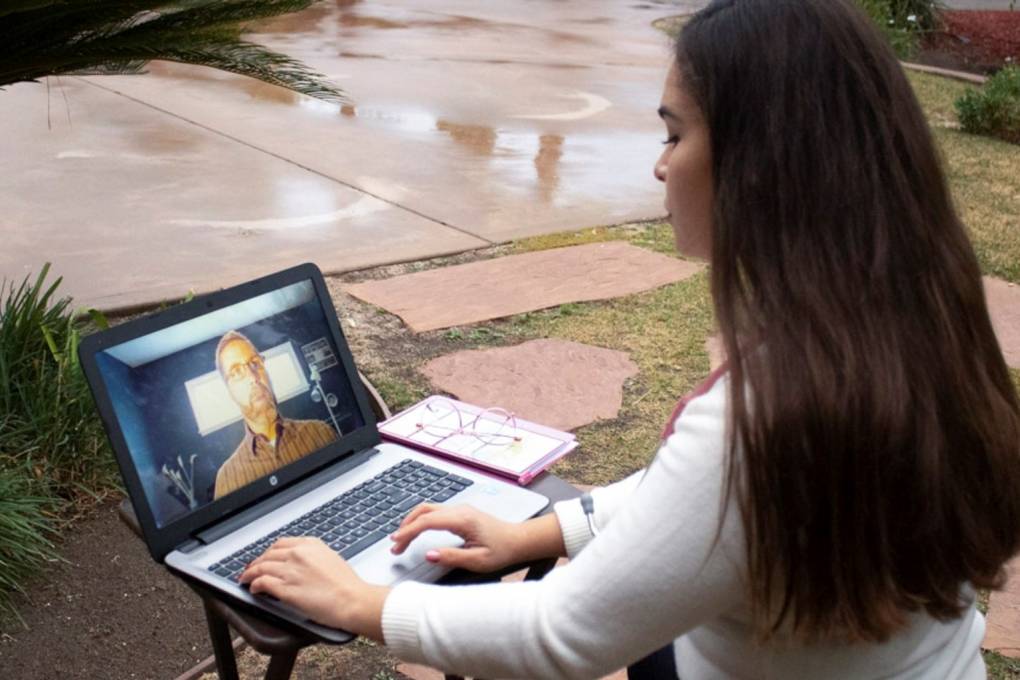
"caption": "Alexis Hawkins, a nursing student at Grossmont College in El Cajon, views an instructional video in the front yard of her home. Hawkins has been practicing her skills on family members while learning from home.",
"description": "A photo of Alexis Hawkins. Hawkins, a nursing student at Grossmont College in El Cajon, views an instructional video in the front yard of her home. Hawkins has been practicing her skills on family members while learning from home.",
"title": "012321_NursingStudent_AB_01",
"credit": "Arlene Banuelos for CalMatters",
"status": "inherit",
"altTag": null,
"isLoading": false,
"fetchFailed": false
},
"news_11865281": {
"type": "attachments",
"id": "news_11865281",
"meta": {
"index": "attachments_1716263798",
"site": "news",
"id": "11865281",
"found": true
},
"parent": 11865171,
"imgSizes": {
"twentyfourteen-full-width": {
"file": "https://ww2.kqed.org/app/uploads/sites/10/2021/03/RS47867_GettyImages-1231773402-qut-1038x576.jpg",
"width": 1038,
"mimeType": "image/jpeg",
"height": 576
},
"thumbnail": {
"file": "https://ww2.kqed.org/app/uploads/sites/10/2021/03/RS47867_GettyImages-1231773402-qut-160x107.jpg",
"width": 160,
"mimeType": "image/jpeg",
"height": 107
},
"post-thumbnail": {
"file": "https://ww2.kqed.org/app/uploads/sites/10/2021/03/RS47867_GettyImages-1231773402-qut-672x372.jpg",
"width": 672,
"mimeType": "image/jpeg",
"height": 372
},
"kqedFullSize": {
"file": "https://ww2.kqed.org/app/uploads/sites/10/2021/03/RS47867_GettyImages-1231773402-qut.jpg",
"width": 1920,
"height": 1280
},
"large": {
"file": "https://ww2.kqed.org/app/uploads/sites/10/2021/03/RS47867_GettyImages-1231773402-qut-1020x680.jpg",
"width": 1020,
"mimeType": "image/jpeg",
"height": 680
},
"1536x1536": {
"file": "https://ww2.kqed.org/app/uploads/sites/10/2021/03/RS47867_GettyImages-1231773402-qut-1536x1024.jpg",
"width": 1536,
"mimeType": "image/jpeg",
"height": 1024
},
"medium": {
"file": "https://ww2.kqed.org/app/uploads/sites/10/2021/03/RS47867_GettyImages-1231773402-qut-800x533.jpg",
"width": 800,
"mimeType": "image/jpeg",
"height": 533
}
},
"publishDate": 1616024264,
"modified": 1647436492,
"caption": null,
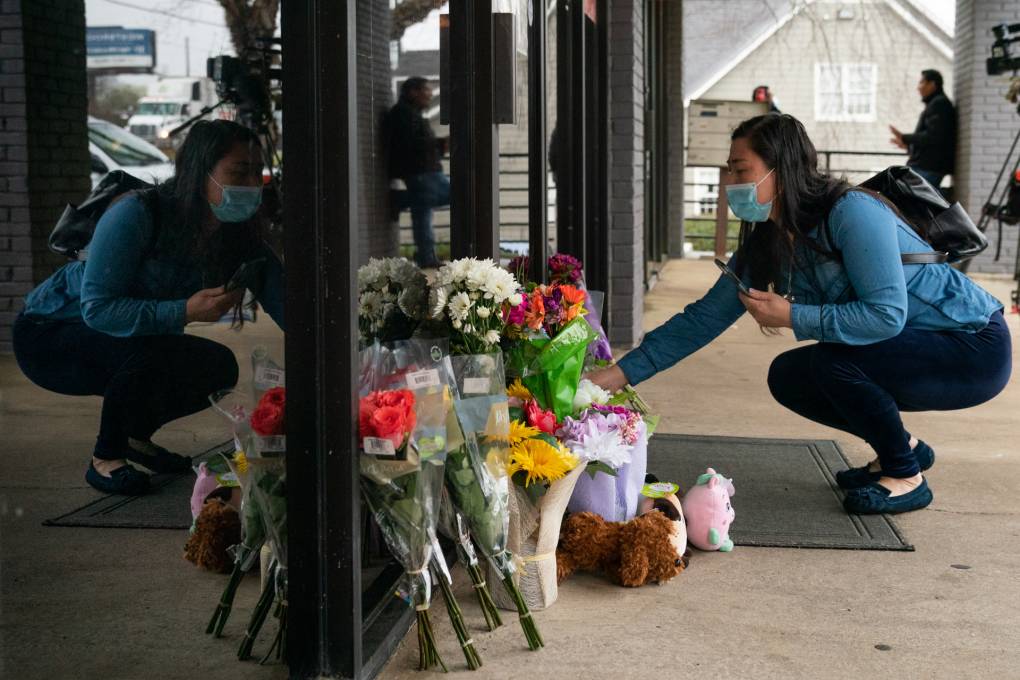
"description": "Lijing Zhao, owner of Jo Jos Massage, lays a bouquet of flowers outside the spa where four people were shot and killed on March 17, 2021 in Acworth, Georgia.",
"title": "Eight Dead After Shootings At Three Atlanta-Area Spas",
"credit": "Elijah Nouvelage/Getty Images",
"status": "inherit",
"altTag": null,
"isLoading": false,
"fetchFailed": false
},
"news_11864607": {
"type": "attachments",
"id": "news_11864607",
"meta": {
"index": "attachments_1716263798",
"site": "news",
"id": "11864607",
"found": true
},
"parent": 11864559,
"imgSizes": {
"twentyfourteen-full-width": {
"file": "https://ww2.kqed.org/app/uploads/sites/10/2021/03/Childonlaptop-1038x576.jpg",
"width": 1038,
"mimeType": "image/jpeg",
"height": 576
},
"thumbnail": {
"file": "https://ww2.kqed.org/app/uploads/sites/10/2021/03/Childonlaptop-160x116.jpg",
"width": 160,
"mimeType": "image/jpeg",
"height": 116
},
"post-thumbnail": {
"file": "https://ww2.kqed.org/app/uploads/sites/10/2021/03/Childonlaptop-672x372.jpg",
"width": 672,
"mimeType": "image/jpeg",
"height": 372
},
"kqedFullSize": {
"file": "https://ww2.kqed.org/app/uploads/sites/10/2021/03/Childonlaptop.jpg",
"width": 1920,
"height": 1394
},
"large": {
"file": "https://ww2.kqed.org/app/uploads/sites/10/2021/03/Childonlaptop-1020x741.jpg",
"width": 1020,
"mimeType": "image/jpeg",
"height": 741
},
"1536x1536": {
"file": "https://ww2.kqed.org/app/uploads/sites/10/2021/03/Childonlaptop-1536x1115.jpg",
"width": 1536,
"mimeType": "image/jpeg",
"height": 1115
},
"medium": {
"file": "https://ww2.kqed.org/app/uploads/sites/10/2021/03/Childonlaptop-800x581.jpg",
"width": 800,
"mimeType": "image/jpeg",
"height": 581
}
},
"publishDate": 1615597495,
"modified": 1615602771,
"caption": "From teachers struggling to remotely ascertain whether a child is being abused, to shuttered courts prolonging cases, the coronavirus pandemic has had a big impact on LA's child welfare system.",
"description": "From teachers struggling to remotely ascertain whether a child is being abused to shuttered courts prolonging cases, the coronavirus pandemic has had a big impact on L.A.'s child welfare system.",
"title": "Childonlaptop",
"credit": "Getty Images",
"status": "inherit",
"altTag": null,
"isLoading": false,
"fetchFailed": false
},
"news_11858663": {
"type": "attachments",
"id": "news_11858663",
"meta": {
"index": "attachments_1716263798",
"site": "news",
"id": "11858663",
"found": true
},
"parent": 11858627,
"imgSizes": {
"apple_news_ca_landscape_5_5": {
"file": "https://ww2.kqed.org/app/uploads/sites/10/2021/02/Honduras-Road-Main-1044x783.jpg",
"width": 1044,
"mimeType": "image/jpeg",
"height": 783
},
"apple_news_ca_square_4_0": {
"file": "https://ww2.kqed.org/app/uploads/sites/10/2021/02/Honduras-Road-Main-470x470.jpg",
"width": 470,
"mimeType": "image/jpeg",
"height": 470
},
"twentyfourteen-full-width": {
"file": "https://ww2.kqed.org/app/uploads/sites/10/2021/02/Honduras-Road-Main-1038x576.jpg",
"width": 1038,
"mimeType": "image/jpeg",
"height": 576
},
"thumbnail": {
"file": "https://ww2.kqed.org/app/uploads/sites/10/2021/02/Honduras-Road-Main-160x91.jpg",
"width": 160,
"mimeType": "image/jpeg",
"height": 91
},
"post-thumbnail": {
"file": "https://ww2.kqed.org/app/uploads/sites/10/2021/02/Honduras-Road-Main-672x372.jpg",
"width": 672,
"mimeType": "image/jpeg",
"height": 372
},
"kqedFullSize": {
"file": "https://ww2.kqed.org/app/uploads/sites/10/2021/02/Honduras-Road-Main.jpg",
"width": 1920,
"height": 1094
},
"apple_news_ca_landscape_4_7": {
"file": "https://ww2.kqed.org/app/uploads/sites/10/2021/02/Honduras-Road-Main-632x474.jpg",
"width": 632,
"mimeType": "image/jpeg",
"height": 474
},
"large": {
"file": "https://ww2.kqed.org/app/uploads/sites/10/2021/02/Honduras-Road-Main-1020x581.jpg",
"width": 1020,
"mimeType": "image/jpeg",
"height": 581
},
"apple_news_ca_landscape_4_0": {
"file": "https://ww2.kqed.org/app/uploads/sites/10/2021/02/Honduras-Road-Main-536x402.jpg",
"width": 536,
"mimeType": "image/jpeg",
"height": 402
},
"apple_news_ca_portrait_12_9": {
"file": "https://ww2.kqed.org/app/uploads/sites/10/2021/02/Honduras-Road-Main-1122x1094.jpg",
"width": 1122,
"mimeType": "image/jpeg",
"height": 1094
},
"medium": {
"file": "https://ww2.kqed.org/app/uploads/sites/10/2021/02/Honduras-Road-Main-800x456.jpg",
"width": 800,
"mimeType": "image/jpeg",
"height": 456
},
"apple_news_ca_portrait_4_0": {
"file": "https://ww2.kqed.org/app/uploads/sites/10/2021/02/Honduras-Road-Main-354x472.jpg",
"width": 354,
"mimeType": "image/jpeg",
"height": 472
},
"apple_news_ca_portrait_9_7": {
"file": "https://ww2.kqed.org/app/uploads/sites/10/2021/02/Honduras-Road-Main-840x1094.jpg",
"width": 840,
"mimeType": "image/jpeg",
"height": 1094
},
"apple_news_ca_landscape_12_9": {
"file": "https://ww2.kqed.org/app/uploads/sites/10/2021/02/Honduras-Road-Main-1832x1094.jpg",
"width": 1832,
"mimeType": "image/jpeg",
"height": 1094
},
"apple_news_ca_square_9_7": {
"file": "https://ww2.kqed.org/app/uploads/sites/10/2021/02/Honduras-Road-Main-1104x1094.jpg",
"width": 1104,
"mimeType": "image/jpeg",
"height": 1094
},
"1536x1536": {
"file": "https://ww2.kqed.org/app/uploads/sites/10/2021/02/Honduras-Road-Main-1536x875.jpg",
"width": 1536,
"mimeType": "image/jpeg",
"height": 875
},
"apple_news_ca_portrait_4_7": {
"file": "https://ww2.kqed.org/app/uploads/sites/10/2021/02/Honduras-Road-Main-414x552.jpg",
"width": 414,
"mimeType": "image/jpeg",
"height": 552
},
"apple_news_ca_square_12_9": {
"file": "https://ww2.kqed.org/app/uploads/sites/10/2021/02/Honduras-Road-Main-1472x1094.jpg",
"width": 1472,
"mimeType": "image/jpeg",
"height": 1094
},
"apple_news_ca_portrait_5_5": {
"file": "https://ww2.kqed.org/app/uploads/sites/10/2021/02/Honduras-Road-Main-687x916.jpg",
"width": 687,
"mimeType": "image/jpeg",
"height": 916
},
"apple_news_ca_square_4_7": {
"file": "https://ww2.kqed.org/app/uploads/sites/10/2021/02/Honduras-Road-Main-550x550.jpg",
"width": 550,
"mimeType": "image/jpeg",
"height": 550
},
"apple_news_ca_landscape_9_7": {
"file": "https://ww2.kqed.org/app/uploads/sites/10/2021/02/Honduras-Road-Main-1376x1032.jpg",
"width": 1376,
"mimeType": "image/jpeg",
"height": 1032
},
"apple_news_ca_square_5_5": {
"file": "https://ww2.kqed.org/app/uploads/sites/10/2021/02/Honduras-Road-Main-912x912.jpg",
"width": 912,
"mimeType": "image/jpeg",
"height": 912
}
},
"publishDate": 1612467240,
"modified": 1612467277,
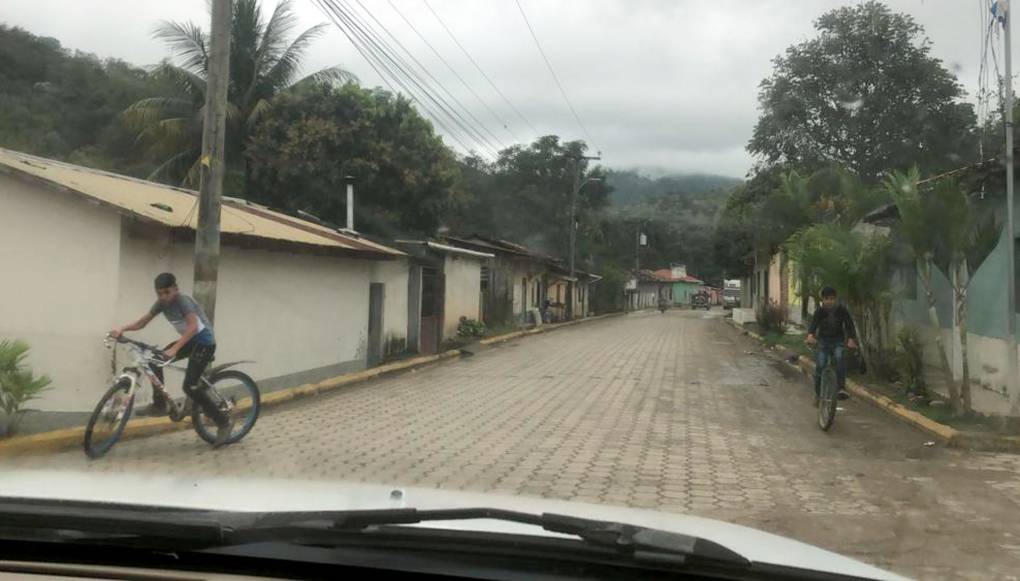
"caption": "Attorney Dora Melara drives through a small town in Honduras, looking for a father who was separated from his teenage son at the U.S.-Mexico border in 2018. ",
"description": "Attorney Dora Melara drives through a small town in Honduras, looking for a father who was separated from his teenage son at the U.S.-Mexico border in 2018. ",
"title": "Honduras-Road-Main",
"credit": "Courtesy of Dora Melara",
"status": "inherit",
"altTag": "Small town in Honduras, view from car windshield",
"isLoading": false,
"fetchFailed": false
},
"news_11864233": {
"type": "attachments",
"id": "news_11864233",
"meta": {
"index": "attachments_1716263798",
"site": "news",
"id": "11864233",
"found": true
},
"parent": 11864223,
"imgSizes": {
"twentyfourteen-full-width": {
"file": "https://ww2.kqed.org/app/uploads/sites/10/2021/03/RS47629_GettyImages-1304962043-qut-1038x576.jpg",
"width": 1038,
"mimeType": "image/jpeg",
"height": 576
},
"thumbnail": {
"file": "https://ww2.kqed.org/app/uploads/sites/10/2021/03/RS47629_GettyImages-1304962043-qut-160x112.jpg",
"width": 160,
"mimeType": "image/jpeg",
"height": 112
},
"post-thumbnail": {
"file": "https://ww2.kqed.org/app/uploads/sites/10/2021/03/RS47629_GettyImages-1304962043-qut-672x372.jpg",
"width": 672,
"mimeType": "image/jpeg",
"height": 372
},
"kqedFullSize": {
"file": "https://ww2.kqed.org/app/uploads/sites/10/2021/03/RS47629_GettyImages-1304962043-qut.jpg",
"width": 1920,
"height": 1341
},
"large": {
"file": "https://ww2.kqed.org/app/uploads/sites/10/2021/03/RS47629_GettyImages-1304962043-qut-1020x712.jpg",
"width": 1020,
"mimeType": "image/jpeg",
"height": 712
},
"1536x1536": {
"file": "https://ww2.kqed.org/app/uploads/sites/10/2021/03/RS47629_GettyImages-1304962043-qut-1536x1073.jpg",
"width": 1536,
"mimeType": "image/jpeg",
"height": 1073
},
"medium": {
"file": "https://ww2.kqed.org/app/uploads/sites/10/2021/03/RS47629_GettyImages-1304962043-qut-800x559.jpg",
"width": 800,
"mimeType": "image/jpeg",
"height": 559
}
},
"publishDate": 1615486632,
"modified": 1615486722,
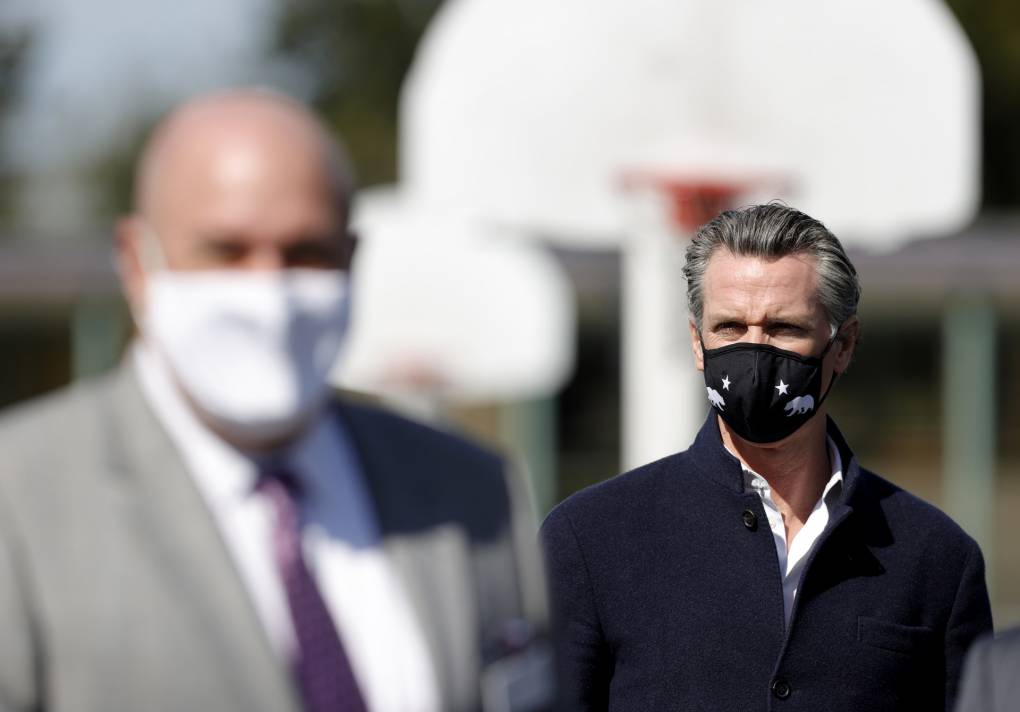
"caption": "Gov. Gavin Newsom looks on during a news conference after touring Barron Park Elementary School on March 2, 2021 in Palo Alto. About $15.9 billion from the federal coronavirus relief bill will go to public and private schools in California.",
"description": "Gov. Gavin Newsom looks on during a news conference after touring Barron Park Elementary School on March 2, 2021 in Palo Alto. About $15.9 billion from the federal coronavirus relief bill will go to public and private schools in California.",
"title": "California Governor Gavin Newsom Visits Reopened Elementary In Palo Alto",
"credit": "Justin Sullivan/Getty Images",
"status": "inherit",
"altTag": "Gavin Newsom with mask on school's basketball court",
"isLoading": false,
"fetchFailed": false
},
"news_11864066": {
"type": "attachments",
"id": "news_11864066",
"meta": {
"index": "attachments_1716263798",
"site": "news",
"id": "11864066",
"found": true
},
"parent": 11864034,
"imgSizes": {
"twentyfourteen-full-width": {
"file": "https://ww2.kqed.org/app/uploads/sites/10/2021/03/GettyImages-1231619984-1-1038x576.jpg",
"width": 1038,
"mimeType": "image/jpeg",
"height": 576
},
"thumbnail": {
"file": "https://ww2.kqed.org/app/uploads/sites/10/2021/03/GettyImages-1231619984-1-160x107.jpg",
"width": 160,
"mimeType": "image/jpeg",
"height": 107
},
"post-thumbnail": {
"file": "https://ww2.kqed.org/app/uploads/sites/10/2021/03/GettyImages-1231619984-1-672x372.jpg",
"width": 672,
"mimeType": "image/jpeg",
"height": 372
},
"kqedFullSize": {
"file": "https://ww2.kqed.org/app/uploads/sites/10/2021/03/GettyImages-1231619984-1.jpg",
"width": 1920,
"height": 1280
},
"large": {
"file": "https://ww2.kqed.org/app/uploads/sites/10/2021/03/GettyImages-1231619984-1-1020x680.jpg",
"width": 1020,
"mimeType": "image/jpeg",
"height": 680
},
"1536x1536": {
"file": "https://ww2.kqed.org/app/uploads/sites/10/2021/03/GettyImages-1231619984-1-1536x1024.jpg",
"width": 1536,
"mimeType": "image/jpeg",
"height": 1024
},
"medium": {
"file": "https://ww2.kqed.org/app/uploads/sites/10/2021/03/GettyImages-1231619984-1-800x533.jpg",
"width": 800,
"mimeType": "image/jpeg",
"height": 533
}
},
"publishDate": 1615345168,
"modified": 1615400575,
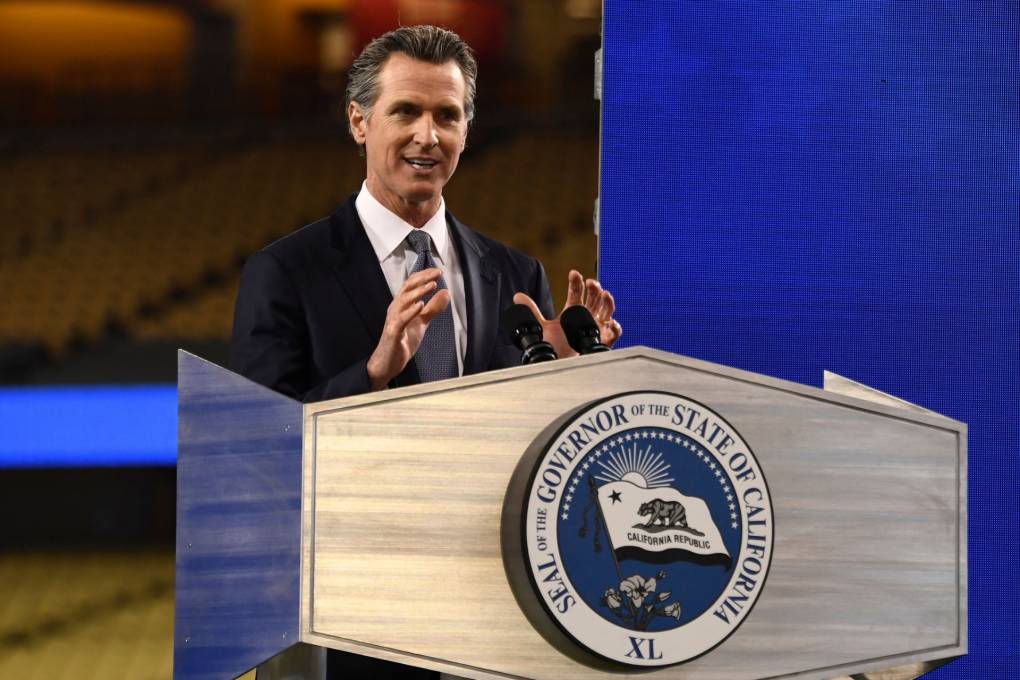
"caption": "California Gov. Gavin Newsom delivers the State of the State address at Dodger Stadium in Los Angeles on March 9, 2021.",
"description": "California Governor Gavin Newsom delivers the State of the State address at Dodger Stadium in Los Angeles, California, on March 9, 2021. ",
"title": "GettyImages-1231619984 (1)",
"credit": "Patrick T. Fallon/AFP via Getty Images",
"status": "inherit",
"altTag": null,
"isLoading": false,
"fetchFailed": false
},
"news_11863931": {
"type": "attachments",
"id": "news_11863931",
"meta": {
"index": "attachments_1716263798",
"site": "news",
"id": "11863931",
"found": true
},
"parent": 11863930,
"imgSizes": {
"apple_news_ca_landscape_5_5": {
"file": "https://ww2.kqed.org/app/uploads/sites/10/2021/03/img_3954-992c81bb1fe5b27c0ed0e7881272117c39c98d06-1044x783.jpg",
"width": 1044,
"mimeType": "image/jpeg",
"height": 783
},
"apple_news_ca_square_4_0": {
"file": "https://ww2.kqed.org/app/uploads/sites/10/2021/03/img_3954-992c81bb1fe5b27c0ed0e7881272117c39c98d06-470x470.jpg",
"width": 470,
"mimeType": "image/jpeg",
"height": 470
},
"twentyfourteen-full-width": {
"file": "https://ww2.kqed.org/app/uploads/sites/10/2021/03/img_3954-992c81bb1fe5b27c0ed0e7881272117c39c98d06-1038x576.jpg",
"width": 1038,
"mimeType": "image/jpeg",
"height": 576
},
"thumbnail": {
"file": "https://ww2.kqed.org/app/uploads/sites/10/2021/03/img_3954-992c81bb1fe5b27c0ed0e7881272117c39c98d06-160x120.jpg",
"width": 160,
"mimeType": "image/jpeg",
"height": 120
},
"post-thumbnail": {
"file": "https://ww2.kqed.org/app/uploads/sites/10/2021/03/img_3954-992c81bb1fe5b27c0ed0e7881272117c39c98d06-672x372.jpg",
"width": 672,
"mimeType": "image/jpeg",
"height": 372
},
"kqedFullSize": {
"file": "https://ww2.kqed.org/app/uploads/sites/10/2021/03/img_3954-992c81bb1fe5b27c0ed0e7881272117c39c98d06-scaled.jpg",
"width": 2560,
"height": 1920
},
"2048x2048": {
"file": "https://ww2.kqed.org/app/uploads/sites/10/2021/03/img_3954-992c81bb1fe5b27c0ed0e7881272117c39c98d06-2048x1536.jpg",
"width": 2048,
"mimeType": "image/jpeg",
"height": 1536
},
"apple_news_ca_landscape_4_7": {
"file": "https://ww2.kqed.org/app/uploads/sites/10/2021/03/img_3954-992c81bb1fe5b27c0ed0e7881272117c39c98d06-632x474.jpg",
"width": 632,
"mimeType": "image/jpeg",
"height": 474
},
"large": {
"file": "https://ww2.kqed.org/app/uploads/sites/10/2021/03/img_3954-992c81bb1fe5b27c0ed0e7881272117c39c98d06-1020x765.jpg",
"width": 1020,
"mimeType": "image/jpeg",
"height": 765
},
"apple_news_ca_landscape_4_0": {
"file": "https://ww2.kqed.org/app/uploads/sites/10/2021/03/img_3954-992c81bb1fe5b27c0ed0e7881272117c39c98d06-536x402.jpg",
"width": 536,
"mimeType": "image/jpeg",
"height": 402
},
"apple_news_ca_portrait_12_9": {
"file": "https://ww2.kqed.org/app/uploads/sites/10/2021/03/img_3954-992c81bb1fe5b27c0ed0e7881272117c39c98d06-1122x1496.jpg",
"width": 1122,
"mimeType": "image/jpeg",
"height": 1496
},
"medium": {
"file": "https://ww2.kqed.org/app/uploads/sites/10/2021/03/img_3954-992c81bb1fe5b27c0ed0e7881272117c39c98d06-800x600.jpg",
"width": 800,
"mimeType": "image/jpeg",
"height": 600
},
"apple_news_ca_portrait_4_0": {
"file": "https://ww2.kqed.org/app/uploads/sites/10/2021/03/img_3954-992c81bb1fe5b27c0ed0e7881272117c39c98d06-354x472.jpg",
"width": 354,
"mimeType": "image/jpeg",
"height": 472
},
"apple_news_ca_portrait_9_7": {
"file": "https://ww2.kqed.org/app/uploads/sites/10/2021/03/img_3954-992c81bb1fe5b27c0ed0e7881272117c39c98d06-840x1120.jpg",
"width": 840,
"mimeType": "image/jpeg",
"height": 1120
},
"apple_news_ca_landscape_12_9": {
"file": "https://ww2.kqed.org/app/uploads/sites/10/2021/03/img_3954-992c81bb1fe5b27c0ed0e7881272117c39c98d06-1832x1374.jpg",
"width": 1832,
"mimeType": "image/jpeg",
"height": 1374
},
"apple_news_ca_square_9_7": {
"file": "https://ww2.kqed.org/app/uploads/sites/10/2021/03/img_3954-992c81bb1fe5b27c0ed0e7881272117c39c98d06-1104x1104.jpg",
"width": 1104,
"mimeType": "image/jpeg",
"height": 1104
},
"1536x1536": {
"file": "https://ww2.kqed.org/app/uploads/sites/10/2021/03/img_3954-992c81bb1fe5b27c0ed0e7881272117c39c98d06-1536x1152.jpg",
"width": 1536,
"mimeType": "image/jpeg",
"height": 1152
},
"apple_news_ca_portrait_4_7": {
"file": "https://ww2.kqed.org/app/uploads/sites/10/2021/03/img_3954-992c81bb1fe5b27c0ed0e7881272117c39c98d06-414x552.jpg",
"width": 414,
"mimeType": "image/jpeg",
"height": 552
},
"apple_news_ca_square_12_9": {
"file": "https://ww2.kqed.org/app/uploads/sites/10/2021/03/img_3954-992c81bb1fe5b27c0ed0e7881272117c39c98d06-1472x1472.jpg",
"width": 1472,
"mimeType": "image/jpeg",
"height": 1472
},
"apple_news_ca_portrait_5_5": {
"file": "https://ww2.kqed.org/app/uploads/sites/10/2021/03/img_3954-992c81bb1fe5b27c0ed0e7881272117c39c98d06-687x916.jpg",
"width": 687,
"mimeType": "image/jpeg",
"height": 916
},
"full-width": {
"file": "https://ww2.kqed.org/app/uploads/sites/10/2021/03/img_3954-992c81bb1fe5b27c0ed0e7881272117c39c98d06-1920x1440.jpg",
"width": 1920,
"mimeType": "image/jpeg",
"height": 1440
},
"apple_news_ca_square_4_7": {
"file": "https://ww2.kqed.org/app/uploads/sites/10/2021/03/img_3954-992c81bb1fe5b27c0ed0e7881272117c39c98d06-550x550.jpg",
"width": 550,
"mimeType": "image/jpeg",
"height": 550
},
"apple_news_ca_landscape_9_7": {
"file": "https://ww2.kqed.org/app/uploads/sites/10/2021/03/img_3954-992c81bb1fe5b27c0ed0e7881272117c39c98d06-1376x1032.jpg",
"width": 1376,
"mimeType": "image/jpeg",
"height": 1032
},
"apple_news_ca_square_5_5": {
"file": "https://ww2.kqed.org/app/uploads/sites/10/2021/03/img_3954-992c81bb1fe5b27c0ed0e7881272117c39c98d06-912x912.jpg",
"width": 912,
"mimeType": "image/jpeg",
"height": 912
}
},
"publishDate": 1615323819,
"modified": 1615324454,
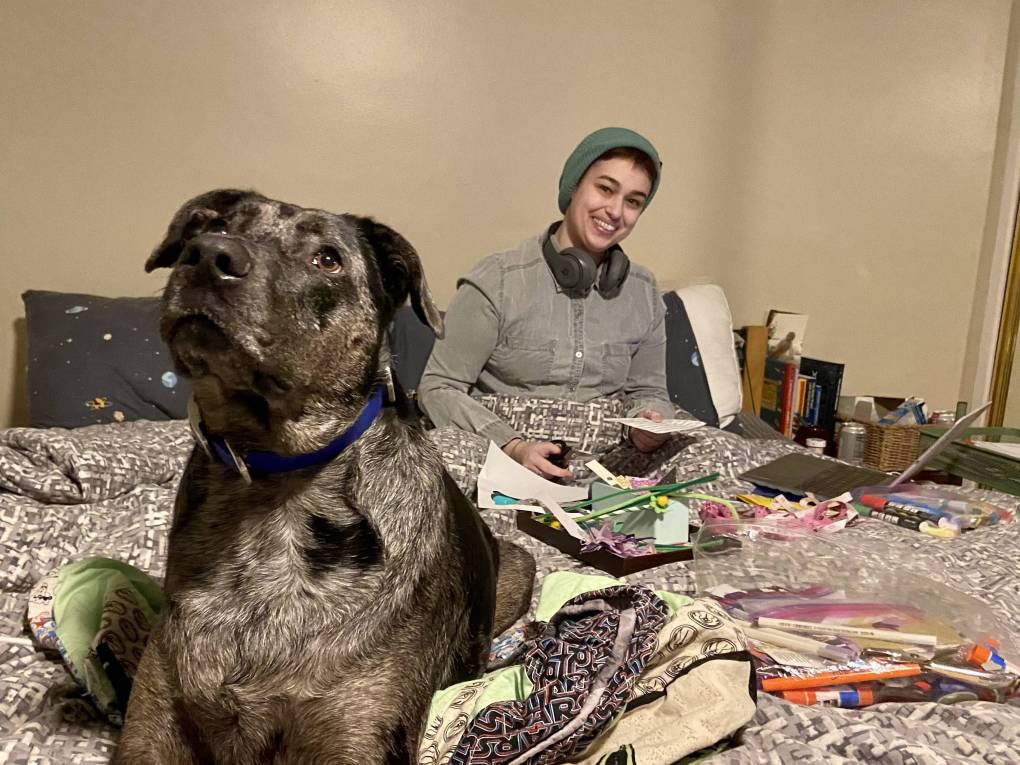
"caption": "Mimi Newman, pictured with her dog Miller, has lived in isolation for a year to avoid COVID-19. She says California's vaccine distribution strategy should have prioritized people with disabilities.",
"description": "Mimi Newman, pictured with her dog Miller, has lived in isolation for a year to avoid COVID-19. She says California's vaccine distribution strategy should have prioritized people with disabilities.",
"title": "Mimi Newman, pictured with her dog Miller, has lived in isolation for a year to avoid COVID-19. She says California's vaccine distribution strategy should have prioritized people with disabilities.",
"credit": "Courtesy of Megan Newman",
"status": "inherit",
"altTag": "young woman sits on her bed with her dog",
"isLoading": false,
"fetchFailed": false
}
},
"audioPlayerReducer": {
"postId": "stream_live",
"isPaused": true,
"isPlaying": false,
"pfsActive": false,
"pledgeModalIsOpen": true,
"playerDrawerIsOpen": false,
"liveAudioPlayStartedAt": 0,
"liveAudioPlayContext": ""
},
"authorsReducer": {
"byline_news_11868475": {
"type": "authors",
"id": "byline_news_11868475",
"meta": {
"override": true
},
"slug": "byline_news_11868475",
"name": "\u003ca href=\"https://www.npr.org/people/729411445/franco-ordonez\">Franco Ordoñez\u003c/a>",
"isLoading": false
},
"byline_news_11868075": {
"type": "authors",
"id": "byline_news_11868075",
"meta": {
"override": true
},
"slug": "byline_news_11868075",
"name": "Farnoush Amiri \u003cbr> Associated Press",
"isLoading": false
},
"byline_news_11865975": {
"type": "authors",
"id": "byline_news_11865975",
"meta": {
"override": true
},
"slug": "byline_news_11865975",
"name": "\u003ca href=\"https://calmatters.org/author/shehreen-karim/\">Shehreen Karim\u003c/a>",
"isLoading": false
},
"byline_news_11864559": {
"type": "authors",
"id": "byline_news_11864559",
"meta": {
"override": true
},
"slug": "byline_news_11864559",
"name": "\u003ca href=\"https://twitter.com/deepafern?lang=en\">Deepa Fernandes\u003c/a>",
"isLoading": false
},
"byline_news_11864223": {
"type": "authors",
"id": "byline_news_11864223",
"meta": {
"override": true
},
"slug": "byline_news_11864223",
"name": "Adam Beam \u003cbr> The Associated Press",
"isLoading": false
},
"byline_news_11863930": {
"type": "authors",
"id": "byline_news_11863930",
"meta": {
"override": true
},
"slug": "byline_news_11863930",
"name": "Adwoa Gyimah-Brempong ",
"isLoading": false
},
"gmarzorati": {
"type": "authors",
"id": "227",
"meta": {
"index": "authors_1716337520",
"id": "227",
"found": true
},
"name": "Guy Marzorati",
"firstName": "Guy",
"lastName": "Marzorati",
"slug": "gmarzorati",
"email": "gmarzorati@KQED.org",
"display_author_email": true,
"staff_mastheads": [
"news"
],
"title": "Correspondent",
"bio": "Guy Marzorati is a correspondent on KQED's California Politics and Government Desk, based in San Jose. A graduate of Santa Clara University, Guy joined KQED in 2013. He reports on state and local politics and produces KQED's digital voter guide.",
"avatar": "https://secure.gravatar.com/avatar/e7038b8dbfd55b104369b76b1cd0b9de?s=600&d=blank&r=g",
"twitter": "guymarzorati",
"facebook": null,
"instagram": null,
"linkedin": null,
"sites": [
{
"site": "",
"roles": [
"editor"
]
},
{
"site": "news",
"roles": [
"editor"
]
},
{
"site": "science",
"roles": [
"editor"
]
},
{
"site": "forum",
"roles": [
"editor"
]
},
{
"site": "elections",
"roles": [
"editor"
]
},
{
"site": "liveblog",
"roles": [
"editor"
]
}
],
"headData": {
"title": "Guy Marzorati | KQED",
"description": "Correspondent",
"ogImgSrc": "https://secure.gravatar.com/avatar/e7038b8dbfd55b104369b76b1cd0b9de?s=600&d=blank&r=g",
"twImgSrc": "https://secure.gravatar.com/avatar/e7038b8dbfd55b104369b76b1cd0b9de?s=600&d=blank&r=g"
},
"isLoading": false,
"link": "/author/gmarzorati"
},
"tgoldberg": {
"type": "authors",
"id": "258",
"meta": {
"index": "authors_1716337520",
"id": "258",
"found": true
},
"name": "Ted Goldberg",
"firstName": "Ted",
"lastName": "Goldberg",
"slug": "tgoldberg",
"email": "tgoldberg@kqed.org",
"display_author_email": true,
"staff_mastheads": [
"news"
],
"title": "KQED Managing Editor, News and Newscasts",
"bio": "Ted Goldberg is Managing Editor of News and Newscasts at KQED. His main reporting beat is the Bay Area's oil refining industry.\r\n\r\nPrior to joining KQED in 2014, Ted worked at CBS News and WCBS AM in New York and Bay City News and KCBS Radio in San Francisco. He graduated from Oberlin College in Ohio in 1998.",
"avatar": "https://secure.gravatar.com/avatar/30ce2e4fe89135e104f89be2394d16225b9d36c121b5b3cb7651ce642978b96f?s=600&d=blank&r=g",
"twitter": "TedrickG",
"bluesky": null,
"facebook": null,
"instagram": null,
"linkedin": null,
"sites": [
{
"site": "news",
"roles": [
"editor"
]
},
{
"site": "science",
"roles": [
"editor"
]
}
],
"headData": {
"title": "Ted Goldberg | KQED",
"description": "KQED Managing Editor, News and Newscasts",
"ogImgSrc": "https://secure.gravatar.com/avatar/30ce2e4fe89135e104f89be2394d16225b9d36c121b5b3cb7651ce642978b96f?s=600&d=blank&r=g",
"twImgSrc": "https://secure.gravatar.com/avatar/30ce2e4fe89135e104f89be2394d16225b9d36c121b5b3cb7651ce642978b96f?s=600&d=blank&r=g"
},
"isLoading": false,
"link": "/author/tgoldberg"
},
"mwiley": {
"type": "authors",
"id": "11526",
"meta": {
"index": "authors_1716337520",
"id": "11526",
"found": true
},
"name": "Michelle Wiley",
"firstName": "Michelle",
"lastName": "Wiley",
"slug": "mwiley",
"email": "mwiley@KQED.org",
"display_author_email": true,
"staff_mastheads": [],
"title": null,
"bio": "Michelle Wiley was the senior editor of weekends.",
"avatar": "https://secure.gravatar.com/avatar/3b897d82a09e8587e8e73fa69fbcc635?s=600&d=blank&r=g",
"twitter": "michelleewiley",
"facebook": null,
"instagram": null,
"linkedin": null,
"sites": [
{
"site": "",
"roles": [
"editor"
]
},
{
"site": "arts",
"roles": [
"editor"
]
},
{
"site": "news",
"roles": [
"subscriber"
]
},
{
"site": "lowdown",
"roles": [
"editor"
]
},
{
"site": "science",
"roles": [
"editor"
]
},
{
"site": "podcasts",
"roles": [
"editor"
]
}
],
"headData": {
"title": "Michelle Wiley | KQED",
"description": null,
"ogImgSrc": "https://secure.gravatar.com/avatar/3b897d82a09e8587e8e73fa69fbcc635?s=600&d=blank&r=g",
"twImgSrc": "https://secure.gravatar.com/avatar/3b897d82a09e8587e8e73fa69fbcc635?s=600&d=blank&r=g"
},
"isLoading": false,
"link": "/author/mwiley"
},
"mfharvin": {
"type": "authors",
"id": "11583",
"meta": {
"index": "authors_1716337520",
"id": "11583",
"found": true
},
"name": "Mary Franklin Harvin",
"firstName": "Mary Franklin",
"lastName": "Harvin",
"slug": "mfharvin",
"email": "mfharvin@KQED.org",
"display_author_email": false,
"staff_mastheads": [
"news"
],
"title": "KQED Contributor",
"bio": null,
"avatar": "https://secure.gravatar.com/avatar/0e53510a7d48cfbdebfc9b11357d845f?s=600&d=blank&r=g",
"twitter": "EmEffHarvin",
"facebook": null,
"instagram": null,
"linkedin": null,
"sites": [
{
"site": "news",
"roles": [
"author",
"edit_others_posts"
]
},
{
"site": "science",
"roles": [
"editor"
]
}
],
"headData": {
"title": "Mary Franklin Harvin | KQED",
"description": "KQED Contributor",
"ogImgSrc": "https://secure.gravatar.com/avatar/0e53510a7d48cfbdebfc9b11357d845f?s=600&d=blank&r=g",
"twImgSrc": "https://secure.gravatar.com/avatar/0e53510a7d48cfbdebfc9b11357d845f?s=600&d=blank&r=g"
},
"isLoading": false,
"link": "/author/mfharvin"
},
"jrodriguez": {
"type": "authors",
"id": "11690",
"meta": {
"index": "authors_1716337520",
"id": "11690",
"found": true
},
"name": "Joe Fitzgerald Rodriguez",
"firstName": "Joe",
"lastName": "Fitzgerald Rodriguez",
"slug": "jrodriguez",
"email": "jrodriguez@kqed.org",
"display_author_email": true,
"staff_mastheads": [
"news"
],
"title": "Reporter and Producer",
"bio": "Joe Fitzgerald Rodriguez is a reporter and digital producer for KQED covering politics. Joe most recently wrote for the \u003cem>San Francisco Examiner\u003c/em> as a political columnist covering The City. He was raised in San Francisco and has spent his reporting career in his beloved, foggy, city by the bay. Joe was 12-years-old when he conducted his first interview in journalism, grilling former San Francisco Mayor Willie Brown for the Marina Middle School newspaper, \u003cem>The Penguin Press, \u003c/em>and he continues to report on the San Francisco Bay Area to this day.",
"avatar": "https://secure.gravatar.com/avatar/2247beb0564c1e9c62228d5649d2edac?s=600&d=blank&r=g",
"twitter": "FitztheReporter",
"facebook": null,
"instagram": "https://www.instagram.com/fitzthereporter/",
"linkedin": null,
"sites": [
{
"site": "",
"roles": [
"editor"
]
},
{
"site": "arts",
"roles": [
"editor"
]
},
{
"site": "news",
"roles": [
"editor"
]
},
{
"site": "science",
"roles": [
"editor"
]
},
{
"site": "elections",
"roles": [
"editor"
]
},
{
"site": "liveblog",
"roles": [
"editor"
]
}
],
"headData": {
"title": "Joe Fitzgerald Rodriguez | KQED",
"description": "Reporter and Producer",
"ogImgSrc": "https://secure.gravatar.com/avatar/2247beb0564c1e9c62228d5649d2edac?s=600&d=blank&r=g",
"twImgSrc": "https://secure.gravatar.com/avatar/2247beb0564c1e9c62228d5649d2edac?s=600&d=blank&r=g"
},
"isLoading": false,
"link": "/author/jrodriguez"
}
},
"pagesReducer": {
"news_tag_california": {
"type": "terms",
"id": "news_18538",
"meta": {
"index": "terms_1716263798",
"site": "news",
"id": "18538",
"score": 6.8456693
},
"featImg": null,
"name": "California",
"description": null,
"taxonomy": "tag",
"headData": {
"twImgId": null,
"twTitle": null,
"ogTitle": null,
"ogImgId": null,
"twDescription": null,
"description": null,
"title": "California Archives | KQED News",
"ogDescription": null
},
"ttid": 31,
"slug": "california",
"isLoading": false,
"title": "California",
"pageMeta": {
"site": "news",
"WpPageTemplate": "page-topic-editorial",
"currentPage": 183
},
"blocks": [
{
"blockName": "kqed/post-list",
"attrs": {
"layout": "cardArticle2",
"query": "posts/news?tag=california",
"seeMore": false,
"paginated": true,
"page": 183
}
},
{
"blockName": "kqed/ad"
}
]
}
},
"pfsSessionReducer": {},
"postsReducer": {
"stream_live": {
"type": "live",
"id": "stream_live",
"audioUrl": "https://streams.kqed.org/kqedradio",
"title": "Live Stream",
"excerpt": "Live Stream information currently unavailable.",
"link": "/radio",
"featImg": "",
"label": {
"name": "KQED Live",
"link": "/"
}
},
"stream_kqedNewscast": {
"type": "posts",
"id": "stream_kqedNewscast",
"audioUrl": "https://www.kqed.org/.stream/anon/radio/RDnews/newscast.mp3?_=1",
"title": "KQED Newscast",
"featImg": "",
"label": {
"name": "88.5 FM",
"link": "/"
}
},
"news_11868475": {
"type": "posts",
"id": "news_11868475",
"meta": {
"index": "posts_1716263798",
"site": "news",
"id": "11868475",
"score": null,
"sort": [
1617832034000
]
},
"guestAuthors": [],
"slug": "task-force-investigates-whether-trump-separated-families-earlier-than-known",
"title": "Task Force Investigates Whether Trump Separated Families Earlier Than Known",
"publishDate": 1617832034,
"format": "standard",
"headTitle": "Task Force Investigates Whether Trump Separated Families Earlier Than Known | KQED",
"labelTerm": {},
"content": "\u003cp>President Biden’s family separation task force is scouring through thousands of unreviewed files to determine whether the Trump administration began separating families within the first six months of coming into office. \u003c/p>\n\u003cp>The task force uncovered 5,600 files from the Department of Health and Human Services’ Office of Refugee Resettlement from Jan. 20, 2017, the day Donald Trump was sworn in as president, to July 2017. A DHS official acknowledged the task force has yet to reunite families but noted it remains committed to that goal.\u003c/p>\n\u003cp>“We’ve begun a process for reviewing and cross-checking those files,” said the DHS official, who spoke to reporters on condition of anonymity. “This is a manual process, manually going through each file, looking for clues. And it’s our hope and expectation that this process will review only a few additional families. But it’s important to look through them and make sure.” \u003c/p>\n\u003cp>Concerns that the Trump administration started separating families within the first months of taking office have grown since the Justice Department’s Office of the Inspector General found that children had been separated from their parents during a pilot program before the Trump administration’s “zero tolerance” policy, which was first implemented in mid-2018. \u003c/p>\n\u003cp>[ad fullwidth]\u003c/p>\n\u003cp>Lee Gelernt, deputy director of the American Civil Liberties Union’s Immigrants’ Rights Project, pointed to the OIG report and reports by lawyers that there may have been separations “in significant numbers” during the first few months of the Trump administration. \u003c/p>\n\u003cp>“Given the magnitude of the Trump administration’s family separation practice, I am not going to be shocked if there were dozens or possibly hundreds of separations in the first six months,” said Gelernt, who is the lead attorney in the ACLU lawsuit.\u003c/p>\n\u003cp>[aside label='Related Coverage' tag='family-separation']The Trump administration separated as many as 5,500 children from their parents. More than 1,400 parents were ultimately without their children, according to immigrant advocates. \u003c/p>\n\u003cp>The total number that remain separated is unclear, but immigration advocates estimate at least 500 children still remain separated from their parents. \u003c/p>\n\u003cp>Last month, the Biden administration \u003ca href=\"https://www.kqed.org/news/11858316/biden-signs-immigration-executive-orders-establishes-task-force-to-reunite-separated-families\">formed a multi-agency task force\u003c/a> to help reunite parents and children who remain separated. The DHS official said the task force has yet to reunite any of those families but is committed to the goal. \u003c/p>\n\u003cp>“We have been working every day to address the tragedy that occurred when the previous administration intentionally separated families,” the official said. \u003c/p>\n\u003cp>Gelernt said the slow start is concerning but noted there has been progress. \u003c/p>\n\u003cp>“We would hope that the task force would be up and running immediately and the families would have already been reunited,” he said. “But we are pleased that there has been progress in the past week. It’s going to be essential that that progress continue.” \u003c/p>\n\u003cdiv class=\"fullattribution\">Copyright 2021 NPR. To see more, visit \u003ca href=\"https://www.npr.org\">NPR.org\u003c/a>.\u003cimg decoding=\"async\" src=\"https://www.google-analytics.com/__utm.gif?utmac=UA-5828686-4&utmdt=Task+Force+Investigates+Whether+Trump+Separated+Families+Earlier+Than+Known&utme=8(APIKey)9(MDAxOTAwOTE4MDEyMTkxMDAzNjczZDljZA004)\">\u003c/div>\n\u003cp>\u003c/p>\n",
"blocks": [],
"excerpt": "The Biden task force is examining whether the Trump administration began separating migrant families at the border in the early days of Donald Trump's term.",
"status": "publish",
"parent": 0,
"modified": 1739475356,
"stats": {
"hasAudio": false,
"hasVideo": false,
"hasChartOrMap": false,
"iframeSrcs": [],
"hasGoogleForm": false,
"hasGallery": false,
"hasHearkenModule": false,
"hasPolis": false,
"paragraphCount": 14,
"wordCount": 507
},
"headData": {
"title": "Task Force Investigates Whether Trump Separated Families Earlier Than Known | KQED",
"description": "The Biden task force is examining whether the Trump administration began separating migrant families at the border in the early days of Donald Trump's term.",
"ogTitle": "",
"ogDescription": "",
"ogImgId": "",
"twTitle": "",
"twDescription": "",
"twImgId": "",
"schema": {
"@context": "https://schema.org",
"@type": "NewsArticle",
"headline": "Task Force Investigates Whether Trump Separated Families Earlier Than Known",
"datePublished": "2021-04-07T14:47:14-07:00",
"dateModified": "2025-02-13T11:35:56-08:00",
"image": "https://cdn.kqed.org/wp-content/uploads/2020/02/KQED-OG-Image@1x.png",
"isAccessibleForFree": "True",
"publisher": {
"@type": "NewsMediaOrganization",
"@id": "https://www.kqed.org/#organization",
"name": "KQED",
"logo": "https://cdn.kqed.org/wp-content/uploads/2020/02/KQED-OG-Image@1x.png",
"url": "https://www.kqed.org",
"sameAs": [
"https://www.facebook.com/KQED",
"https://twitter.com/KQED",
"https://www.instagram.com/kqed/",
"https://www.tiktok.com/@kqedofficial",
"https://www.linkedin.com/company/kqed",
"https://www.youtube.com/channel/UCeC0IOo7i1P_61zVUWbJ4nw"
]
}
}
},
"source": "NPR",
"sourceUrl": "https://www.npr.org/",
"sticky": false,
"nprImageCredit": "Wilfredo Lee",
"nprByline": "\u003ca href=\"https://www.npr.org/people/729411445/franco-ordonez\">Franco Ordoñez\u003c/a>",
"nprImageAgency": "AP",
"nprStoryId": "985105660",
"nprApiLink": "http://api.npr.org/query?id=985105660&apiKey=MDAxOTAwOTE4MDEyMTkxMDAzNjczZDljZA004",
"nprHtmlLink": "https://www.npr.org/2021/04/07/985105660/task-force-investigates-whether-trump-separated-families-earlier-than-known?ft=nprml&f=985105660",
"nprRetrievedStory": "1",
"nprPubDate": "Wed, 07 Apr 2021 17:08:00 -0400",
"nprStoryDate": "Wed, 07 Apr 2021 15:38:06 -0400",
"nprLastModifiedDate": "Wed, 07 Apr 2021 17:08:42 -0400",
"path": "/news/11868475/task-force-investigates-whether-trump-separated-families-earlier-than-known",
"audioTrackLength": null,
"parsedContent": [
{
"type": "contentString",
"content": "\u003cdiv class=\"post-body\">\u003cp>\u003cp>President Biden’s family separation task force is scouring through thousands of unreviewed files to determine whether the Trump administration began separating families within the first six months of coming into office. \u003c/p>\n\u003cp>The task force uncovered 5,600 files from the Department of Health and Human Services’ Office of Refugee Resettlement from Jan. 20, 2017, the day Donald Trump was sworn in as president, to July 2017. A DHS official acknowledged the task force has yet to reunite families but noted it remains committed to that goal.\u003c/p>\n\u003cp>“We’ve begun a process for reviewing and cross-checking those files,” said the DHS official, who spoke to reporters on condition of anonymity. “This is a manual process, manually going through each file, looking for clues. And it’s our hope and expectation that this process will review only a few additional families. But it’s important to look through them and make sure.” \u003c/p>\n\u003cp>Concerns that the Trump administration started separating families within the first months of taking office have grown since the Justice Department’s Office of the Inspector General found that children had been separated from their parents during a pilot program before the Trump administration’s “zero tolerance” policy, which was first implemented in mid-2018. \u003c/p>\n\u003cp>\u003c/p>\u003c/div>",
"attributes": {
"named": {},
"numeric": []
}
},
{
"type": "component",
"content": "",
"name": "ad",
"attributes": {
"named": {
"label": "fullwidth"
},
"numeric": [
"fullwidth"
]
}
},
{
"type": "contentString",
"content": "\u003cdiv class=\"post-body\">\u003cp>\u003c/p>\n\u003cp>Lee Gelernt, deputy director of the American Civil Liberties Union’s Immigrants’ Rights Project, pointed to the OIG report and reports by lawyers that there may have been separations “in significant numbers” during the first few months of the Trump administration. \u003c/p>\n\u003cp>“Given the magnitude of the Trump administration’s family separation practice, I am not going to be shocked if there were dozens or possibly hundreds of separations in the first six months,” said Gelernt, who is the lead attorney in the ACLU lawsuit.\u003c/p>\n\u003cp>\u003c/p>\u003c/div>",
"attributes": {
"named": {},
"numeric": []
}
},
{
"type": "component",
"content": "",
"name": "aside",
"attributes": {
"named": {
"label": "Related Coverage ",
"tag": "family-separation"
},
"numeric": []
}
},
{
"type": "contentString",
"content": "\u003cdiv class=\"post-body\">\u003cp>The Trump administration separated as many as 5,500 children from their parents. More than 1,400 parents were ultimately without their children, according to immigrant advocates. \u003c/p>\n\u003cp>The total number that remain separated is unclear, but immigration advocates estimate at least 500 children still remain separated from their parents. \u003c/p>\n\u003cp>Last month, the Biden administration \u003ca href=\"https://www.kqed.org/news/11858316/biden-signs-immigration-executive-orders-establishes-task-force-to-reunite-separated-families\">formed a multi-agency task force\u003c/a> to help reunite parents and children who remain separated. The DHS official said the task force has yet to reunite any of those families but is committed to the goal. \u003c/p>\n\u003cp>“We have been working every day to address the tragedy that occurred when the previous administration intentionally separated families,” the official said. \u003c/p>\n\u003cp>Gelernt said the slow start is concerning but noted there has been progress. \u003c/p>\n\u003cp>“We would hope that the task force would be up and running immediately and the families would have already been reunited,” he said. “But we are pleased that there has been progress in the past week. It’s going to be essential that that progress continue.” \u003c/p>\n\u003cdiv class=\"fullattribution\">Copyright 2021 NPR. To see more, visit \u003ca href=\"https://www.npr.org\">NPR.org\u003c/a>.\u003cimg decoding=\"async\" src=\"https://www.google-analytics.com/__utm.gif?utmac=UA-5828686-4&utmdt=Task+Force+Investigates+Whether+Trump+Separated+Families+Earlier+Than+Known&utme=8(APIKey)9(MDAxOTAwOTE4MDEyMTkxMDAzNjczZDljZA004)\">\u003c/div>\n\u003cp>\u003c/p>\n\u003c/div>\u003c/p>",
"attributes": {
"named": {},
"numeric": []
}
}
],
"link": "/news/11868475/task-force-investigates-whether-trump-separated-families-earlier-than-known",
"authors": [
"byline_news_11868475"
],
"categories": [
"news_1169",
"news_6188",
"news_8",
"news_13"
],
"tags": [
"news_18538",
"news_1323",
"news_23456",
"news_20202",
"news_717"
],
"featImg": "news_11868476",
"label": "source_news_11868475"
},
"news_11868075": {
"type": "posts",
"id": "news_11868075",
"meta": {
"index": "posts_1716263798",
"site": "news",
"id": "11868075",
"score": null,
"sort": [
1617659441000
]
},
"parent": 0,
"labelTerm": {
"site": "news"
},
"blocks": [],
"publishDate": 1617659441,
"format": "standard",
"disqusTitle": "After Angelo Quinto's Death, Momentum Builds to Add Mental Health Curriculum in Police Training",
"title": "After Angelo Quinto's Death, Momentum Builds to Add Mental Health Curriculum in Police Training",
"headTitle": "KQED News",
"content": "\u003cp>The officer who Cassandra Quinto-Collins says knelt on her son’s neck for over four minutes assured her it was standard protocol for sedating a person experiencing a mental breakdown.\u003c/p>\n\u003cp>“I was there watching it the whole time,” Quinto-Collins told The Associated Press. “I just trusted that they knew what they were doing.”\u003c/p>\n\u003cp>Angelo Quinto’s sister had called 911 for help calming him down during an episode of paranoia on Dec. 23. His family, who live in Antioch, says Quinto didn’t resist the officers — one who pushed his knee on the back of his neck, and another who restrained his legs — and the only noise he made was when he twice cried out, “Please don’t kill me.”\u003c/p>\n\u003cfigure id=\"attachment_11863516\" class=\"wp-caption alignnone\" style=\"max-width: 1119px\">\u003cimg class=\"size-full wp-image-11863516\" src=\"https://ww2.kqed.org/app/uploads/sites/10/2021/03/quinto-pic.jpg\" alt=\"\" width=\"1119\" height=\"500\" srcset=\"https://ww2.kqed.org/app/uploads/sites/10/2021/03/quinto-pic.jpg 1119w, https://ww2.kqed.org/app/uploads/sites/10/2021/03/quinto-pic-800x357.jpg 800w, https://ww2.kqed.org/app/uploads/sites/10/2021/03/quinto-pic-1020x456.jpg 1020w, https://ww2.kqed.org/app/uploads/sites/10/2021/03/quinto-pic-160x71.jpg 160w\" sizes=\"(max-width: 1119px) 100vw, 1119px\">\u003cfigcaption class=\"wp-caption-text\">The family of Angelo Quinto shared these three photographs with KQED's The Bay team earlier this year. \u003ccite>(Courtesy of the Quinto family)\u003c/cite>\u003c/figcaption>\u003c/figure>\n\u003cp>The officers replied, “We’re not going to kill you,” the family said. Police deny putting pressure on his neck. Three days later, the 30-year-old Navy veteran and Filipino immigrant died at a hospital.\u003c/p>\n\u003cp>[aside label ='Related Coverage' tag='police-reform']It is the latest stark example of the perils of policing people with mental health issues. In response to several high-profile deaths of people with mental health issues in police custody, lawmakers in at least eight states are introducing legislation to change how law enforcement agencies respond to those in crisis.\u003c/p>\n\u003cp>The proposals lean heavily on additional training for officers on how to interact with people with mental health problems. It’s a common response when lawmakers face widespread outcry over police brutality like the U.S. saw last year following the \u003ca href=\"https://www.kqed.org/news/tag/george-floyd\">death of George Floyd\u003c/a> in Minneapolis.\u003c/p>\n\u003cp>But none of the proposals appear to address the root question: Should police be the ones responding when someone is mentally ill?\u003c/p>\n\u003cp>In California, lawmakers introduced legislation on Feb. 11 that, among other things, would require prospective officers to complete college courses that address mental health, social services and psychology, without requiring a degree.\u003c/p>\n\u003cp>In New York, lawmakers in January proposed an effort to require law enforcement to complete a minimum of 32 credit hours of training that would include techniques on de-escalation and interacting with people who have mental health issues.\u003c/p>\n\u003cp>The proposal came nearly a year after Rochester, New York, officers put a spit hood over Daniel Prude’s head and pressed his naked body against the street until he stopped breathing. The victim’s family, like Quinto’s, said they had called 911 for help after Prude, who is Black, began having a mental health episode.\u003c/p>\n\u003cfigure id=\"attachment_11866839\" class=\"wp-caption alignnone\" style=\"max-width: 1920px\">\u003cimg class=\"size-full wp-image-11866839\" src=\"https://ww2.kqed.org/app/uploads/sites/10/2021/03/RS48159_039_SanFrancisco_RiseUpRally_03262021-qut.jpg\" alt=\"\" width=\"1920\" height=\"1278\" srcset=\"https://ww2.kqed.org/app/uploads/sites/10/2021/03/RS48159_039_SanFrancisco_RiseUpRally_03262021-qut.jpg 1920w, https://ww2.kqed.org/app/uploads/sites/10/2021/03/RS48159_039_SanFrancisco_RiseUpRally_03262021-qut-800x533.jpg 800w, https://ww2.kqed.org/app/uploads/sites/10/2021/03/RS48159_039_SanFrancisco_RiseUpRally_03262021-qut-1020x679.jpg 1020w, https://ww2.kqed.org/app/uploads/sites/10/2021/03/RS48159_039_SanFrancisco_RiseUpRally_03262021-qut-160x107.jpg 160w, https://ww2.kqed.org/app/uploads/sites/10/2021/03/RS48159_039_SanFrancisco_RiseUpRally_03262021-qut-1536x1022.jpg 1536w\" sizes=\"(max-width: 1920px) 100vw, 1920px\">\u003cfigcaption class=\"wp-caption-text\">Bella Collins, the sister of Angelo Quinto, speaks about the death of her brother while surrounded by family at the Embarcadero Plaza during a student-led rally to bring awareness to his death and show solidarity with the Asian American community, in San Francisco on March 26, 2021. \u003ccite>(Beth LaBerge/KQED)\u003c/cite>\u003c/figcaption>\u003c/figure>\n\u003cp>Similarly, in Utah, the mother of 13-year-old Linden Cameron called 911 in September because he was having a breakdown and she needed help from a crisis intervention officer. Salt Lake City police ended up shooting him multiple times as he ran away because they believed he made threats involving a weapon.\u003c/p>\n\u003cp>He was hospitalized, and no weapon was found. The officers were not crisis intervention specialists but had some mental health training.\u003c/p>\n\u003cp>Last month, Utah Gov. Spencer Cox signed legislation that will create a council to standardize training for police crisis intervention teams statewide.\u003c/p>\n\u003cp>At least 34 states already require officers to have training or other education on interacting with people who have physical or mental health conditions. But law enforcement experts say updated training is needed and agencies are far behind.\u003c/p>\n\u003cp>[pullquote align=\"right\" size=\"medium\" citation=\"Chuck Wexler, executive director of the Police Executive Research Forum\"]'The last thing a mother wants when they call the police is for an officer to use force. Especially in a situation that didn’t call for it because the officers weren’t trained in how to recognize a crisis.'[/pullquote]“The training that police have received for the past I’d say 25 years has not changed significantly, and it’s out of date, and it doesn’t meet today’s realities,” said Chuck Wexler, executive director of the Police Executive Research Forum, a Washington, D.C.-based think tank. “I mean the last thing a mother wants when they call the police is for an officer to use force. Especially in a situation that didn’t call for it because the officers weren’t trained in how to recognize a crisis.”\u003c/p>\n\u003cp>Some of the new legislation looks to strengthen or improve standards. But because mental health training is a mandate in a majority of states, some advocates and experts believe it may never fully prepare officers on how to respond.\u003c/p>\n\u003cp>The Treatment Advocacy Center, a nonprofit dedicated to getting treatment for the mentally ill, concluded in a 2015 report those with untreated mental illness are 16 times more likely to be killed during a police encounter than others.\u003c/p>\n\u003cp>“The solution that would have the most impact on the problem is to prevent people with mental illness from encountering law enforcement in the first place,” said Elizabeth Sinclair Hancq, co-author of the report.\u003c/p>\n\u003cp>Since that is not always possible, she said, another solution is to create co-responder programs where a social worker or other mental health professional assists officers on such calls.\u003c/p>\n\u003cp>[aside postID=\"news_11840071\" hero=\"https://ww2.kqed.org/app/uploads/sites/10/2020/10/RS43756_035_KQED_Oakland_Juneteenth_06192020-qut-1020x679.jpg\"]That is what Philadelphia introduced in October, weeks before officers fatally shot Walter Wallace Jr., a Black man, within a minute of arriving at his address for the third time in a day while he was having a mental health crisis. Police said Wallace ignored commands to drop a knife.\u003c/p>\n\u003cp>Other cities, including \u003ca href=\"https://www.kqed.org/news/tag/los-angeles\">Los Angeles\u003c/a>, \u003ca href=\"https://www.kqed.org/forum/2010101880391/in-major-police-reform-sfpd-will-no-longer-handle-most-psychiatric-and-behavioral-crisis-calls\">San Francisco\u003c/a> and Portland, Oregon, have similar programs.\u003c/p>\n\u003cp>For families of victims, who now say they regret calling 911 for help, required training and legislative reform are long overdue.\u003c/p>\n\u003cp>“In retrospect, it wasn’t the smartest idea to call the police,” said Isabella Collins, the 18-year-old sister of Quinto, who died in California. “But I just wanted him to be able to calm down, and I thought that they could help with that.”\u003c/p>\n\u003cp>Antioch police didn’t release details of Quinto’s death for more than a month. Antioch Police Chief Tammany Brooks has denied that officers used a knee or anything else to put pressure on Quinto’s head, neck or throat. An investigation and autopsy are underway.\u003c/p>\n\u003cp>The department didn’t respond to a request for comment.\u003c/p>\n\u003cp>Quinto’s family filed a wrongful-death claim against the city in February, claiming he “died as a direct consequence of the unreasonable force used against him.”\u003c/p>\n\u003cp>“I guess it was really naive of me to think that he wouldn’t get hurt,” Collins said.\u003cbr>\n[ad fullwidth]\u003c/p>\n\u003cp>[ad floatright]\u003c/p>\n",
"disqusIdentifier": "11868075 https://ww2.kqed.org/news/?p=11868075",
"disqusUrl": "https://ww2.kqed.org/news/2021/04/05/after-angelo-quintos-death-momentum-builds-to-add-mental-health-curriculum-in-police-training/",
"stats": {
"hasVideo": false,
"hasChartOrMap": false,
"hasAudio": false,
"hasPolis": false,
"wordCount": 1214,
"hasGoogleForm": false,
"hasGallery": false,
"hasHearkenModule": false,
"iframeSrcs": [],
"paragraphCount": 28
},
"modified": 1617663074,
"excerpt": "Legislation to include mental health training in police education programs is expanding across the country, following recent cases where officers killed individuals with mental health conditions.",
"headData": {
"twImgId": "",
"twTitle": "",
"ogTitle": "",
"ogImgId": "",
"twDescription": "",
"description": "Legislation to include mental health training in police education programs is expanding across the country, following recent cases where officers killed individuals with mental health conditions.",
"title": "After Angelo Quinto's Death, Momentum Builds to Add Mental Health Curriculum in Police Training | KQED",
"ogDescription": "",
"schema": {
"@context": "https://schema.org",
"@type": "NewsArticle",
"headline": "After Angelo Quinto's Death, Momentum Builds to Add Mental Health Curriculum in Police Training",
"datePublished": "2021-04-05T14:50:41-07:00",
"dateModified": "2021-04-05T15:51:14-07:00",
"image": "https://cdn.kqed.org/wp-content/uploads/2020/02/KQED-OG-Image@1x.png",
"isAccessibleForFree": "True",
"publisher": {
"@type": "NewsMediaOrganization",
"@id": "https://www.kqed.org/#organization",
"name": "KQED",
"logo": "https://cdn.kqed.org/wp-content/uploads/2020/02/KQED-OG-Image@1x.png",
"url": "https://www.kqed.org",
"sameAs": [
"https://www.facebook.com/KQED",
"https://twitter.com/KQED",
"https://www.instagram.com/kqed/",
"https://www.tiktok.com/@kqedofficial",
"https://www.linkedin.com/company/kqed",
"https://www.youtube.com/channel/UCeC0IOo7i1P_61zVUWbJ4nw"
]
}
}
},
"guestAuthors": [],
"slug": "after-angelo-quintos-death-momentum-builds-to-add-mental-health-curriculum-in-police-training",
"status": "publish",
"nprByline": "Farnoush Amiri \u003cbr> Associated Press",
"path": "/news/11868075/after-angelo-quintos-death-momentum-builds-to-add-mental-health-curriculum-in-police-training",
"audioTrackLength": null,
"parsedContent": [
{
"type": "contentString",
"content": "\u003cdiv class=\"post-body\">\u003cp>\u003cp>The officer who Cassandra Quinto-Collins says knelt on her son’s neck for over four minutes assured her it was standard protocol for sedating a person experiencing a mental breakdown.\u003c/p>\n\u003cp>“I was there watching it the whole time,” Quinto-Collins told The Associated Press. “I just trusted that they knew what they were doing.”\u003c/p>\n\u003cp>Angelo Quinto’s sister had called 911 for help calming him down during an episode of paranoia on Dec. 23. His family, who live in Antioch, says Quinto didn’t resist the officers — one who pushed his knee on the back of his neck, and another who restrained his legs — and the only noise he made was when he twice cried out, “Please don’t kill me.”\u003c/p>\n\u003cfigure id=\"attachment_11863516\" class=\"wp-caption alignnone\" style=\"max-width: 1119px\">\u003cimg class=\"size-full wp-image-11863516\" src=\"https://ww2.kqed.org/app/uploads/sites/10/2021/03/quinto-pic.jpg\" alt=\"\" width=\"1119\" height=\"500\" srcset=\"https://ww2.kqed.org/app/uploads/sites/10/2021/03/quinto-pic.jpg 1119w, https://ww2.kqed.org/app/uploads/sites/10/2021/03/quinto-pic-800x357.jpg 800w, https://ww2.kqed.org/app/uploads/sites/10/2021/03/quinto-pic-1020x456.jpg 1020w, https://ww2.kqed.org/app/uploads/sites/10/2021/03/quinto-pic-160x71.jpg 160w\" sizes=\"(max-width: 1119px) 100vw, 1119px\">\u003cfigcaption class=\"wp-caption-text\">The family of Angelo Quinto shared these three photographs with KQED's The Bay team earlier this year. \u003ccite>(Courtesy of the Quinto family)\u003c/cite>\u003c/figcaption>\u003c/figure>\n\u003cp>The officers replied, “We’re not going to kill you,” the family said. Police deny putting pressure on his neck. Three days later, the 30-year-old Navy veteran and Filipino immigrant died at a hospital.\u003c/p>\n\u003cp>\u003c/p>\u003c/div>",
"attributes": {
"named": {},
"numeric": []
}
},
{
"type": "component",
"content": "",
"name": "aside",
"attributes": {
"named": {
"label": "Related Coverage ",
"tag": "police-reform"
},
"numeric": []
}
},
{
"type": "contentString",
"content": "\u003cdiv class=\"post-body\">\u003cp>It is the latest stark example of the perils of policing people with mental health issues. In response to several high-profile deaths of people with mental health issues in police custody, lawmakers in at least eight states are introducing legislation to change how law enforcement agencies respond to those in crisis.\u003c/p>\n\u003cp>The proposals lean heavily on additional training for officers on how to interact with people with mental health problems. It’s a common response when lawmakers face widespread outcry over police brutality like the U.S. saw last year following the \u003ca href=\"https://www.kqed.org/news/tag/george-floyd\">death of George Floyd\u003c/a> in Minneapolis.\u003c/p>\n\u003cp>But none of the proposals appear to address the root question: Should police be the ones responding when someone is mentally ill?\u003c/p>\n\u003cp>In California, lawmakers introduced legislation on Feb. 11 that, among other things, would require prospective officers to complete college courses that address mental health, social services and psychology, without requiring a degree.\u003c/p>\n\u003cp>In New York, lawmakers in January proposed an effort to require law enforcement to complete a minimum of 32 credit hours of training that would include techniques on de-escalation and interacting with people who have mental health issues.\u003c/p>\n\u003cp>The proposal came nearly a year after Rochester, New York, officers put a spit hood over Daniel Prude’s head and pressed his naked body against the street until he stopped breathing. The victim’s family, like Quinto’s, said they had called 911 for help after Prude, who is Black, began having a mental health episode.\u003c/p>\n\u003cfigure id=\"attachment_11866839\" class=\"wp-caption alignnone\" style=\"max-width: 1920px\">\u003cimg class=\"size-full wp-image-11866839\" src=\"https://ww2.kqed.org/app/uploads/sites/10/2021/03/RS48159_039_SanFrancisco_RiseUpRally_03262021-qut.jpg\" alt=\"\" width=\"1920\" height=\"1278\" srcset=\"https://ww2.kqed.org/app/uploads/sites/10/2021/03/RS48159_039_SanFrancisco_RiseUpRally_03262021-qut.jpg 1920w, https://ww2.kqed.org/app/uploads/sites/10/2021/03/RS48159_039_SanFrancisco_RiseUpRally_03262021-qut-800x533.jpg 800w, https://ww2.kqed.org/app/uploads/sites/10/2021/03/RS48159_039_SanFrancisco_RiseUpRally_03262021-qut-1020x679.jpg 1020w, https://ww2.kqed.org/app/uploads/sites/10/2021/03/RS48159_039_SanFrancisco_RiseUpRally_03262021-qut-160x107.jpg 160w, https://ww2.kqed.org/app/uploads/sites/10/2021/03/RS48159_039_SanFrancisco_RiseUpRally_03262021-qut-1536x1022.jpg 1536w\" sizes=\"(max-width: 1920px) 100vw, 1920px\">\u003cfigcaption class=\"wp-caption-text\">Bella Collins, the sister of Angelo Quinto, speaks about the death of her brother while surrounded by family at the Embarcadero Plaza during a student-led rally to bring awareness to his death and show solidarity with the Asian American community, in San Francisco on March 26, 2021. \u003ccite>(Beth LaBerge/KQED)\u003c/cite>\u003c/figcaption>\u003c/figure>\n\u003cp>Similarly, in Utah, the mother of 13-year-old Linden Cameron called 911 in September because he was having a breakdown and she needed help from a crisis intervention officer. Salt Lake City police ended up shooting him multiple times as he ran away because they believed he made threats involving a weapon.\u003c/p>\n\u003cp>He was hospitalized, and no weapon was found. The officers were not crisis intervention specialists but had some mental health training.\u003c/p>\n\u003cp>Last month, Utah Gov. Spencer Cox signed legislation that will create a council to standardize training for police crisis intervention teams statewide.\u003c/p>\n\u003cp>At least 34 states already require officers to have training or other education on interacting with people who have physical or mental health conditions. But law enforcement experts say updated training is needed and agencies are far behind.\u003c/p>\n\u003cp>\u003c/p>\u003c/div>",
"attributes": {
"named": {},
"numeric": []
}
},
{
"type": "component",
"content": "'The last thing a mother wants when they call the police is for an officer to use force. Especially in a situation that didn’t call for it because the officers weren’t trained in how to recognize a crisis.'",
"name": "pullquote",
"attributes": {
"named": {
"align": "right",
"size": "medium",
"citation": "Chuck Wexler, executive director of the Police Executive Research Forum",
"label": ""
},
"numeric": []
}
},
{
"type": "contentString",
"content": "\u003cdiv class=\"post-body\">\u003cp>“The training that police have received for the past I’d say 25 years has not changed significantly, and it’s out of date, and it doesn’t meet today’s realities,” said Chuck Wexler, executive director of the Police Executive Research Forum, a Washington, D.C.-based think tank. “I mean the last thing a mother wants when they call the police is for an officer to use force. Especially in a situation that didn’t call for it because the officers weren’t trained in how to recognize a crisis.”\u003c/p>\n\u003cp>Some of the new legislation looks to strengthen or improve standards. But because mental health training is a mandate in a majority of states, some advocates and experts believe it may never fully prepare officers on how to respond.\u003c/p>\n\u003cp>The Treatment Advocacy Center, a nonprofit dedicated to getting treatment for the mentally ill, concluded in a 2015 report those with untreated mental illness are 16 times more likely to be killed during a police encounter than others.\u003c/p>\n\u003cp>“The solution that would have the most impact on the problem is to prevent people with mental illness from encountering law enforcement in the first place,” said Elizabeth Sinclair Hancq, co-author of the report.\u003c/p>\n\u003cp>Since that is not always possible, she said, another solution is to create co-responder programs where a social worker or other mental health professional assists officers on such calls.\u003c/p>\n\u003cp>\u003c/p>\u003c/div>",
"attributes": {
"named": {},
"numeric": []
}
},
{
"type": "component",
"content": "",
"name": "aside",
"attributes": {
"named": {
"postid": "news_11840071",
"hero": "https://ww2.kqed.org/app/uploads/sites/10/2020/10/RS43756_035_KQED_Oakland_Juneteenth_06192020-qut-1020x679.jpg",
"label": ""
},
"numeric": []
}
},
{
"type": "contentString",
"content": "\u003cdiv class=\"post-body\">\u003cp>That is what Philadelphia introduced in October, weeks before officers fatally shot Walter Wallace Jr., a Black man, within a minute of arriving at his address for the third time in a day while he was having a mental health crisis. Police said Wallace ignored commands to drop a knife.\u003c/p>\n\u003cp>Other cities, including \u003ca href=\"https://www.kqed.org/news/tag/los-angeles\">Los Angeles\u003c/a>, \u003ca href=\"https://www.kqed.org/forum/2010101880391/in-major-police-reform-sfpd-will-no-longer-handle-most-psychiatric-and-behavioral-crisis-calls\">San Francisco\u003c/a> and Portland, Oregon, have similar programs.\u003c/p>\n\u003cp>For families of victims, who now say they regret calling 911 for help, required training and legislative reform are long overdue.\u003c/p>\n\u003cp>“In retrospect, it wasn’t the smartest idea to call the police,” said Isabella Collins, the 18-year-old sister of Quinto, who died in California. “But I just wanted him to be able to calm down, and I thought that they could help with that.”\u003c/p>\n\u003cp>Antioch police didn’t release details of Quinto’s death for more than a month. Antioch Police Chief Tammany Brooks has denied that officers used a knee or anything else to put pressure on Quinto’s head, neck or throat. An investigation and autopsy are underway.\u003c/p>\n\u003cp>The department didn’t respond to a request for comment.\u003c/p>\n\u003cp>Quinto’s family filed a wrongful-death claim against the city in February, claiming he “died as a direct consequence of the unreasonable force used against him.”\u003c/p>\n\u003cp>“I guess it was really naive of me to think that he wouldn’t get hurt,” Collins said.\u003cbr>\n\u003c/p>\u003c/div>",
"attributes": {
"named": {},
"numeric": []
}
},
{
"type": "component",
"content": "",
"name": "ad",
"attributes": {
"named": {
"label": "fullwidth"
},
"numeric": [
"fullwidth"
]
}
},
{
"type": "contentString",
"content": "\u003cdiv class=\"post-body\">\u003cp>\u003c/p>\n\u003cp>\u003c/p>\u003c/div>",
"attributes": {
"named": {},
"numeric": []
}
},
{
"type": "component",
"content": "",
"name": "ad",
"attributes": {
"named": {
"label": "floatright"
},
"numeric": [
"floatright"
]
}
},
{
"type": "contentString",
"content": "\u003cdiv class=\"post-body\">\u003cp>\u003c/p>\n\u003c/div>\u003c/p>",
"attributes": {
"named": {},
"numeric": []
}
}
],
"link": "/news/11868075/after-angelo-quintos-death-momentum-builds-to-add-mental-health-curriculum-in-police-training",
"authors": [
"byline_news_11868075"
],
"categories": [
"news_8"
],
"tags": [
"news_29221",
"news_19122",
"news_18538",
"news_2109",
"news_116",
"news_28780",
"news_22050",
"news_20081"
],
"featImg": "news_11866837",
"label": "news"
},
"news_11864811": {
"type": "posts",
"id": "news_11864811",
"meta": {
"index": "posts_1716263798",
"site": "news",
"id": "11864811",
"score": null,
"sort": [
1617264026000
]
},
"parent": 0,
"labelTerm": {
"site": "news"
},
"blocks": [],
"publishDate": 1617264026,
"format": "standard",
"disqusTitle": "California Contractors Are Abusing Workers' Comp Rules. A New Bill Would Change That",
"title": "California Contractors Are Abusing Workers' Comp Rules. A New Bill Would Change That",
"headTitle": "KQED News",
"content": "\u003cp>A state Senate bill that would require all of California's quarter million contractors to carry workers' compensation insurance is moving ahead with strong support from both parties — and backing from regulators, industry and workers groups.\u003c/p>\n\u003cp>State officials and industry leaders say the bill is aimed at closing a loophole in state law. They say thousands of companies lie to regulators by telling them they do not employ anyone when they actually do. That allows them to avoid buying insurance that's crucial to helping workers who get injured on the job.\u003c/p>\n\u003cp>\"The bill will greatly curb the underground economy,\" Skip Daum, a lobbyist for the the American Subcontractors Association of California, told lawmakers this month.\u003c/p>\n\u003cp>Currently, there are more than 230,000 contractors with active licenses in California, according to the agency that regulates the state's construction industry. The Contractors State License Board says more than half of those firms — 53% — say they are exempt from carrying insurance because they have no employees.\u003c/p>\n\u003cp>\"Many contractors are falsely making that claim,\" state Sen. Bill Dodd, D-Napa, the bill's author, said at a committee hearing in early March.\u003c/p>\n\u003cp>Many contractors who claim to be exempt actually have employees, state regulators say. When those workers are injured or killed on the job, that exemption leaves them and their families unprotected.\u003c/p>\n\u003cp>\"This drives up the cost of workers' compensation insurance for the good actors and puts workers at risk,\" Dodd said.\u003c/p>\n\u003cp>[ad fullwidth]\u003c/p>\n\u003cp>Those abuses are at the heart of a series of \u003ca href=\"https://www.kqed.org/news/11780384/employer-in-key-wildfire-gig-economy-trial-from-soberanes-blaze-found-guilty\" target=\"_blank\" rel=\"noopener noreferrer\">KQED stories\u003c/a> on the deaths of bulldozer operators and water tender drivers employed by contractors hired by Cal Fire to help fight wildfires.\u003c/p>\n\u003cp>Among those cases were the deaths of three heavy equipment operators killed during wildfires in 2016, 2017 and 2018. After their deaths, state officials learned that the contractors who sent them to fight the fires lacked workers' comp insurance.\u003c/p>\n\u003cp>[pullquote size=\"medium\" align=\"right\" citation=\"Veena Dubal, professor, UC Hastings College of the Law\"]'Failure to carry workers' compensation has had devastating impacts for workers (and their families) who are injured on the job.'[/pullquote]Every year the Contractors State License Board issues hundreds of stop-work orders to companies that are found to have employees and an workers' compensation exemption on file with the agency, according to Mike Jamnetski, the board's chief of legislation.\u003c/p>\n\u003cp>But that disciplinary action \"has not moved the proverbial needle,\" Jamnetski said at the March 8 hearing before the Senate Business, Professions and Economic Development Committee.\u003c/p>\n\u003cp>The contractors board does not have enough staff to audit the 123,000 contractors who claim they do not employ people, Jamnetski said.\u003c/p>\n\u003cp>Dodd's proposal, \u003ca href=\"https://leginfo.legislature.ca.gov/faces/billNavClient.xhtml?bill_id=202120220SB216\" target=\"_blank\" rel=\"noopener noreferrer\">Senate Bill 216\u003c/a>, is sponsored by the state contractors board. It would require all concrete, heating, air conditioning and tree service contractors to buy workers' comp right away. By 2025, all licensed contractors in California would be required to purchase coverage.\u003c/p>\n\u003cp>The bill faces no apparent opposition in the Legislature.\u003c/p>\n\u003cp>The committee passed the bill in a 14-0 vote after members of nine associations representing contractor groups, unions and lawyers who handle workers' comp cases voiced support.\u003c/p>\n\u003cp>[aside postID=news_11780384,news_11405049,news_11367902 label='Related Coverage']Daum, the lobbyist with the subcontractors association, said contractors who try to hide the fact they have employees and neglect their responsibility to get workers' comp have an unfair advantage over those who follow the rules: Without paying for insurance, their costs are lower, allowing them to make lower bids on project contracts.\u003c/p>\n\u003cp>The bill does not require a set level of workers' comp coverage. Currently, about half of California's construction companies that have the benefit have chosen what are called minimum policies.\u003c/p>\n\u003cp>Many contractors who have not claimed employees in the past are expected to choose such plans, which range from $500 to $5,000 a year, according to the State Compensation Insurance Fund, one of California's leading providers of the benefit.\u003c/p>\n\u003cp>The cost range depends on the industry in which the contractor works, how many people they employ and their claims history, the fund's chief risk officer, Ken Van Laar, said in an email.\u003c/p>\n\u003cp>\"As we've seen, failure to carry workers' compensation has had devastating impacts for workers (and their families) who are injured on the job,\" said Veena Dubal, a UC Hastings College of the Law professor specializing in employment law.\u003c/p>\n\u003cp>If the bill passes and contractors do not get workers' comp, the state could suspend their license and they could be charged with a misdemeanor.\u003c/p>\n\u003cp>Dubal raised concerns that not complying with the potential new rules could lead to criminal prosecution.\u003c/p>\n\u003cp>\"I think it's really troubling,\" Dubal said. \"Addressing workplace violations through criminal law is a trend that, I'm afraid, will be used to disproportionately impact small business, racial minorities and immigrant contractors.\"\u003c/p>\n\u003cp>In response to Dubal's concerns, Natalie Watmore, a CSLB representative, noted that the bill does not change the existing criminal penalties for contractors who lack workers' comp. It just expands the existing regulations to more industries and cuts out exemptions for companies that do not claim employees.\u003c/p>\n\u003cp>Watmore said the agency does not expect to refer a significant number of cases for criminal enforcement. She emphasized that the proposed regulations apply to all contractors regardless of their background.\u003c/p>\n\u003cp>SB 216 was recently placed in the Senate Committee on Appropriations' suspense file and is expected to face its next hearing in late May.\u003c/p>\n\u003cp>If it passes, state officials say they plan to make sure contractors are aware of the new rules by posting them on a CSLB \u003ca href=\"https://www.cslb.ca.gov/Resources/Newsletters/winter-2021-CLC.pdf\" target=\"_blank\" rel=\"noopener noreferrer\">newsletter\u003c/a>, industry \u003ca href=\"https://www.cslb.ca.gov/media_room/industry_bulletins/\" target=\"_blank\" rel=\"noopener noreferrer\">bulletins\u003c/a>, social media posts and \u003ca href=\"https://www.cslb.ca.gov/Media_Room/consumer_education/licensing_workshops.aspx\" target=\"_blank\" rel=\"noopener noreferrer\">workshops\u003c/a> for firms to get contractors' licenses.\u003c/p>\n\u003cp>\u003c/p>\n",
"disqusIdentifier": "11864811 https://ww2.kqed.org/news/?p=11864811",
"disqusUrl": "https://ww2.kqed.org/news/2021/04/01/california-contractors-are-abusing-workers-comp-rules-a-new-bill-would-change-that/",
"stats": {
"hasVideo": false,
"hasChartOrMap": false,
"hasAudio": false,
"hasPolis": false,
"wordCount": 948,
"hasGoogleForm": false,
"hasGallery": false,
"hasHearkenModule": false,
"iframeSrcs": [],
"paragraphCount": 29
},
"modified": 1617297894,
"excerpt": "A new state Senate bill would close a loophole that has allowed thousands of contractors to avoid buying insurance to cover workers injured or killed on the job.",
"headData": {
"twImgId": "",
"twTitle": "",
"ogTitle": "",
"ogImgId": "",
"twDescription": "",
"description": "A new state Senate bill would close a loophole that has allowed thousands of contractors to avoid buying insurance to cover workers injured or killed on the job.",
"title": "California Contractors Are Abusing Workers' Comp Rules. A New Bill Would Change That | KQED",
"ogDescription": "",
"schema": {
"@context": "https://schema.org",
"@type": "NewsArticle",
"headline": "California Contractors Are Abusing Workers' Comp Rules. A New Bill Would Change That",
"datePublished": "2021-04-01T01:00:26-07:00",
"dateModified": "2021-04-01T10:24:54-07:00",
"image": "https://cdn.kqed.org/wp-content/uploads/2020/02/KQED-OG-Image@1x.png",
"isAccessibleForFree": "True",
"publisher": {
"@type": "NewsMediaOrganization",
"@id": "https://www.kqed.org/#organization",
"name": "KQED",
"logo": "https://cdn.kqed.org/wp-content/uploads/2020/02/KQED-OG-Image@1x.png",
"url": "https://www.kqed.org",
"sameAs": [
"https://www.facebook.com/KQED",
"https://twitter.com/KQED",
"https://www.instagram.com/kqed/",
"https://www.tiktok.com/@kqedofficial",
"https://www.linkedin.com/company/kqed",
"https://www.youtube.com/channel/UCeC0IOo7i1P_61zVUWbJ4nw"
]
}
}
},
"guestAuthors": [],
"slug": "california-contractors-are-abusing-workers-comp-rules-a-new-bill-would-change-that",
"status": "publish",
"path": "/news/11864811/california-contractors-are-abusing-workers-comp-rules-a-new-bill-would-change-that",
"audioTrackLength": null,
"parsedContent": [
{
"type": "contentString",
"content": "\u003cdiv class=\"post-body\">\u003cp>\u003cp>A state Senate bill that would require all of California's quarter million contractors to carry workers' compensation insurance is moving ahead with strong support from both parties — and backing from regulators, industry and workers groups.\u003c/p>\n\u003cp>State officials and industry leaders say the bill is aimed at closing a loophole in state law. They say thousands of companies lie to regulators by telling them they do not employ anyone when they actually do. That allows them to avoid buying insurance that's crucial to helping workers who get injured on the job.\u003c/p>\n\u003cp>\"The bill will greatly curb the underground economy,\" Skip Daum, a lobbyist for the the American Subcontractors Association of California, told lawmakers this month.\u003c/p>\n\u003cp>Currently, there are more than 230,000 contractors with active licenses in California, according to the agency that regulates the state's construction industry. The Contractors State License Board says more than half of those firms — 53% — say they are exempt from carrying insurance because they have no employees.\u003c/p>\n\u003cp>\"Many contractors are falsely making that claim,\" state Sen. Bill Dodd, D-Napa, the bill's author, said at a committee hearing in early March.\u003c/p>\n\u003cp>Many contractors who claim to be exempt actually have employees, state regulators say. When those workers are injured or killed on the job, that exemption leaves them and their families unprotected.\u003c/p>\n\u003cp>\"This drives up the cost of workers' compensation insurance for the good actors and puts workers at risk,\" Dodd said.\u003c/p>\n\u003cp>\u003c/p>\u003c/div>",
"attributes": {
"named": {},
"numeric": []
}
},
{
"type": "component",
"content": "",
"name": "ad",
"attributes": {
"named": {
"label": "fullwidth"
},
"numeric": [
"fullwidth"
]
}
},
{
"type": "contentString",
"content": "\u003cdiv class=\"post-body\">\u003cp>\u003c/p>\n\u003cp>Those abuses are at the heart of a series of \u003ca href=\"https://www.kqed.org/news/11780384/employer-in-key-wildfire-gig-economy-trial-from-soberanes-blaze-found-guilty\" target=\"_blank\" rel=\"noopener noreferrer\">KQED stories\u003c/a> on the deaths of bulldozer operators and water tender drivers employed by contractors hired by Cal Fire to help fight wildfires.\u003c/p>\n\u003cp>Among those cases were the deaths of three heavy equipment operators killed during wildfires in 2016, 2017 and 2018. After their deaths, state officials learned that the contractors who sent them to fight the fires lacked workers' comp insurance.\u003c/p>\n\u003cp>\u003c/p>\u003c/div>",
"attributes": {
"named": {},
"numeric": []
}
},
{
"type": "component",
"content": "'Failure to carry workers' compensation has had devastating impacts for workers (and their families) who are injured on the job.'",
"name": "pullquote",
"attributes": {
"named": {
"size": "medium",
"align": "right",
"citation": "Veena Dubal, professor, UC Hastings College of the Law",
"label": ""
},
"numeric": []
}
},
{
"type": "contentString",
"content": "\u003cdiv class=\"post-body\">\u003cp>Every year the Contractors State License Board issues hundreds of stop-work orders to companies that are found to have employees and an workers' compensation exemption on file with the agency, according to Mike Jamnetski, the board's chief of legislation.\u003c/p>\n\u003cp>But that disciplinary action \"has not moved the proverbial needle,\" Jamnetski said at the March 8 hearing before the Senate Business, Professions and Economic Development Committee.\u003c/p>\n\u003cp>The contractors board does not have enough staff to audit the 123,000 contractors who claim they do not employ people, Jamnetski said.\u003c/p>\n\u003cp>Dodd's proposal, \u003ca href=\"https://leginfo.legislature.ca.gov/faces/billNavClient.xhtml?bill_id=202120220SB216\" target=\"_blank\" rel=\"noopener noreferrer\">Senate Bill 216\u003c/a>, is sponsored by the state contractors board. It would require all concrete, heating, air conditioning and tree service contractors to buy workers' comp right away. By 2025, all licensed contractors in California would be required to purchase coverage.\u003c/p>\n\u003cp>The bill faces no apparent opposition in the Legislature.\u003c/p>\n\u003cp>The committee passed the bill in a 14-0 vote after members of nine associations representing contractor groups, unions and lawyers who handle workers' comp cases voiced support.\u003c/p>\n\u003cp>\u003c/p>\u003c/div>",
"attributes": {
"named": {},
"numeric": []
}
},
{
"type": "component",
"content": "",
"name": "aside",
"attributes": {
"named": {
"postid": "news_11780384,news_11405049,news_11367902",
"label": "Related Coverage "
},
"numeric": []
}
},
{
"type": "contentString",
"content": "\u003cdiv class=\"post-body\">\u003cp>Daum, the lobbyist with the subcontractors association, said contractors who try to hide the fact they have employees and neglect their responsibility to get workers' comp have an unfair advantage over those who follow the rules: Without paying for insurance, their costs are lower, allowing them to make lower bids on project contracts.\u003c/p>\n\u003cp>The bill does not require a set level of workers' comp coverage. Currently, about half of California's construction companies that have the benefit have chosen what are called minimum policies.\u003c/p>\n\u003cp>Many contractors who have not claimed employees in the past are expected to choose such plans, which range from $500 to $5,000 a year, according to the State Compensation Insurance Fund, one of California's leading providers of the benefit.\u003c/p>\n\u003cp>The cost range depends on the industry in which the contractor works, how many people they employ and their claims history, the fund's chief risk officer, Ken Van Laar, said in an email.\u003c/p>\n\u003cp>\"As we've seen, failure to carry workers' compensation has had devastating impacts for workers (and their families) who are injured on the job,\" said Veena Dubal, a UC Hastings College of the Law professor specializing in employment law.\u003c/p>\n\u003cp>If the bill passes and contractors do not get workers' comp, the state could suspend their license and they could be charged with a misdemeanor.\u003c/p>\n\u003cp>Dubal raised concerns that not complying with the potential new rules could lead to criminal prosecution.\u003c/p>\n\u003cp>\"I think it's really troubling,\" Dubal said. \"Addressing workplace violations through criminal law is a trend that, I'm afraid, will be used to disproportionately impact small business, racial minorities and immigrant contractors.\"\u003c/p>\n\u003cp>In response to Dubal's concerns, Natalie Watmore, a CSLB representative, noted that the bill does not change the existing criminal penalties for contractors who lack workers' comp. It just expands the existing regulations to more industries and cuts out exemptions for companies that do not claim employees.\u003c/p>\n\u003cp>Watmore said the agency does not expect to refer a significant number of cases for criminal enforcement. She emphasized that the proposed regulations apply to all contractors regardless of their background.\u003c/p>\n\u003cp>SB 216 was recently placed in the Senate Committee on Appropriations' suspense file and is expected to face its next hearing in late May.\u003c/p>\n\u003cp>If it passes, state officials say they plan to make sure contractors are aware of the new rules by posting them on a CSLB \u003ca href=\"https://www.cslb.ca.gov/Resources/Newsletters/winter-2021-CLC.pdf\" target=\"_blank\" rel=\"noopener noreferrer\">newsletter\u003c/a>, industry \u003ca href=\"https://www.cslb.ca.gov/media_room/industry_bulletins/\" target=\"_blank\" rel=\"noopener noreferrer\">bulletins\u003c/a>, social media posts and \u003ca href=\"https://www.cslb.ca.gov/Media_Room/consumer_education/licensing_workshops.aspx\" target=\"_blank\" rel=\"noopener noreferrer\">workshops\u003c/a> for firms to get contractors' licenses.\u003c/p>\n\u003cp>\u003c/p>\n\u003c/div>\u003c/p>",
"attributes": {
"named": {},
"numeric": []
}
}
],
"link": "/news/11864811/california-contractors-are-abusing-workers-comp-rules-a-new-bill-would-change-that",
"authors": [
"258"
],
"categories": [
"news_1758",
"news_457",
"news_6266",
"news_6188",
"news_28250",
"news_8",
"news_13"
],
"tags": [
"news_21595",
"news_18538",
"news_18159",
"news_19904",
"news_17968",
"news_23007",
"news_19377"
],
"featImg": "news_11867414",
"label": "news"
},
"news_11867074": {
"type": "posts",
"id": "news_11867074",
"meta": {
"index": "posts_1716263798",
"site": "news",
"id": "11867074",
"score": null,
"sort": [
1617163258000
]
},
"parent": 0,
"labelTerm": {
"site": "news",
"term": 72
},
"blocks": [],
"publishDate": 1617163258,
"format": "audio",
"disqusTitle": "Campaign to Recall Newsom Faces Uphill Climb With Voters, Survey Shows",
"title": "Campaign to Recall Newsom Faces Uphill Climb With Voters, Survey Shows",
"headTitle": "The California Report | KQED News",
"content": "\u003cp>The campaign to recall Gov. Gavin Newsom from office faces early opposition from the state's electorate, according to a \u003ca href=\"https://www.ppic.org/publication/ppic-statewide-survey-californians-and-their-government-march-2021/?utm_source=ppic&utm_medium=email&utm_campaign=epub\">survey released Tuesday by the Public Policy Institute of California\u003c/a>.\u003c/p>\n\u003cp>As election officials around the state review the voter signatures required to force a recall election, 56% of likely voters told the PPIC that they would vote against recalling Newsom, while 40% would vote to replace him.\u003c/p>\n\u003cp>Leaders of the recall campaign have expressed confidence that they have submitted far more than the 1,495,709 valid voter signatures that were required by March 17 to qualify an election. County officials are checking the signatures – an announcement on whether the recall has qualified could come in April.\u003c/p>\n\u003cp>But despite voter anxiety over the COVID-19 pandemic and California's economy, Newsom's admitted missteps and the increasing likelihood of a historic recall election, the poll exposes the static nature of voter opinions toward the governor.\u003c/p>\n\u003cp>After all, the 40% of likely voters willing to toss Newsom from office this year is about the same as the 38% who voted against him in 2018. And the 53% of likely voters who approve of his job performance in this survey is nearly identical to his pre-pandemic level of approval, measured at 52% of likely voters in February 2020.\u003c/p>\n\u003cp>And while backers of the bid to replace Newsom have \u003ca href=\"https://www.kqed.org/news/11866630/randy-economy-on-the-campaign-to-recall-governor-gavin-newsom\" target=\"_blank\" rel=\"noopener noreferrer\">touted the bipartisan bona fides\u003c/a> of their effort, the PPIC survey shows a stark divide in the feelings of California Democrats and Republicans.\u003c/p>\n\u003cp>\"Most importantly, Gov. Newsom enjoys overwhelming support among Democratic likely voters, and that's something that he has maintained in the last year,\" said Mark Baldassare, president and CEO of the PPIC. \"That is really his base and they've remained consistently with him.\"\u003c/p>\n\u003cp>[ad fullwidth]\u003c/p>\n\u003cp>Just 15% of likely Democratic voters support the recall, compared with 79% of Republicans. And only 4% of voters who approve of Newsom's performance (and 11% of voters who approve of President Biden) would vote to remove Newsom.\u003c/p>\n\u003cp>\"California voters are very divided politically and they very strongly take sides based on their partisanship,\" Baldassare added. \"For Newsom, the strong support that he has among Democrats today means a lot to his political survival this year.\"\u003c/p>\n\u003cp>The survey, conducted between March 14 and 23, presents a very different political landscape than former Gov. Gray Davis faced at the onset of the successful campaign to recall him from office in 2003.\u003c/p>\n\u003cp>[aside label='Politics Coverage' tag='politics']PPIC surveys released throughout that year showed a consistent majority of voters supporting the recall, while disapproval of Davis' performance hovered around 75%.\u003c/p>\n\u003cp>Davis and Newsom are \"worlds apart\" at this stage of the recall campaign, Baldassare said.\u003c/p>\n\u003cp>\"The biggest difference is among Democrats,\" he said. \"There were more Democrats who were willing to go along with the recall election because they disapproved [of Davis], and Newsom does not have those circumstances.\"\u003c/p>\n\u003cp>Baldassare said that the Newsom administration's response to the COVID-19 pandemic will continue to influence how voters view the governor.\u003c/p>\n\u003cp>Coronavirus response was the top issue for the electorate in the PPIC's January survey, and now 79% of likely voters responded that \"the worst is behind us\" in the pandemic.\u003c/p>\n\u003cp>And after a rocky rollout of vaccinations in California, voter perceptions have improved: While fewer than half of likely voters (45%), say the state is doing an excellent or good job with distribution, that number is up from the 28% who gave Newsom and his administration high marks in January.\u003c/p>\n\u003cp>\u003c/p>\n",
"disqusIdentifier": "11867074 https://ww2.kqed.org/news/?p=11867074",
"disqusUrl": "https://ww2.kqed.org/news/2021/03/30/campaign-to-recall-newsom-faces-uphill-climb-with-voters-survey-shows/",
"stats": {
"hasVideo": false,
"hasChartOrMap": false,
"hasAudio": false,
"hasPolis": false,
"wordCount": 591,
"hasGoogleForm": false,
"hasGallery": false,
"hasHearkenModule": false,
"iframeSrcs": [],
"paragraphCount": 18
},
"modified": 1617213135,
"excerpt": "Gov. Gavin Newsom is 'worlds apart' from former Gov. Gray Davis at this stage of the recall, according to the Public Policy Institute of California.",
"headData": {
"twImgId": "",
"twTitle": "",
"ogTitle": "",
"ogImgId": "",
"twDescription": "",
"description": "Gov. Gavin Newsom is 'worlds apart' from former Gov. Gray Davis at this stage of the recall, according to the Public Policy Institute of California.",
"title": "Campaign to Recall Newsom Faces Uphill Climb With Voters, Survey Shows | KQED",
"ogDescription": "",
"schema": {
"@context": "https://schema.org",
"@type": "NewsArticle",
"headline": "Campaign to Recall Newsom Faces Uphill Climb With Voters, Survey Shows",
"datePublished": "2021-03-30T21:00:58-07:00",
"dateModified": "2021-03-31T10:52:15-07:00",
"image": "https://cdn.kqed.org/wp-content/uploads/2020/02/KQED-OG-Image@1x.png",
"isAccessibleForFree": "True",
"publisher": {
"@type": "NewsMediaOrganization",
"@id": "https://www.kqed.org/#organization",
"name": "KQED",
"logo": "https://cdn.kqed.org/wp-content/uploads/2020/02/KQED-OG-Image@1x.png",
"url": "https://www.kqed.org",
"sameAs": [
"https://www.facebook.com/KQED",
"https://twitter.com/KQED",
"https://www.instagram.com/kqed/",
"https://www.tiktok.com/@kqedofficial",
"https://www.linkedin.com/company/kqed",
"https://www.youtube.com/channel/UCeC0IOo7i1P_61zVUWbJ4nw"
]
}
}
},
"guestAuthors": [],
"slug": "campaign-to-recall-newsom-faces-uphill-climb-with-voters-survey-shows",
"status": "publish",
"audioUrl": "https://traffic.omny.fm/d/clips/0af137ef-751e-4b19-a055-aaef00d2d578/ffca7e9f-6831-41c5-bcaf-aaef00f5a073/426cd8a8-89ac-4598-a586-acfc010380c8/audio.mp3",
"path": "/news/11867074/campaign-to-recall-newsom-faces-uphill-climb-with-voters-survey-shows",
"audioDuration": 59000,
"audioTrackLength": null,
"parsedContent": [
{
"type": "contentString",
"content": "\u003cdiv class=\"post-body\">\u003cp>\u003cp>The campaign to recall Gov. Gavin Newsom from office faces early opposition from the state's electorate, according to a \u003ca href=\"https://www.ppic.org/publication/ppic-statewide-survey-californians-and-their-government-march-2021/?utm_source=ppic&utm_medium=email&utm_campaign=epub\">survey released Tuesday by the Public Policy Institute of California\u003c/a>.\u003c/p>\n\u003cp>As election officials around the state review the voter signatures required to force a recall election, 56% of likely voters told the PPIC that they would vote against recalling Newsom, while 40% would vote to replace him.\u003c/p>\n\u003cp>Leaders of the recall campaign have expressed confidence that they have submitted far more than the 1,495,709 valid voter signatures that were required by March 17 to qualify an election. County officials are checking the signatures – an announcement on whether the recall has qualified could come in April.\u003c/p>\n\u003cp>But despite voter anxiety over the COVID-19 pandemic and California's economy, Newsom's admitted missteps and the increasing likelihood of a historic recall election, the poll exposes the static nature of voter opinions toward the governor.\u003c/p>\n\u003cp>After all, the 40% of likely voters willing to toss Newsom from office this year is about the same as the 38% who voted against him in 2018. And the 53% of likely voters who approve of his job performance in this survey is nearly identical to his pre-pandemic level of approval, measured at 52% of likely voters in February 2020.\u003c/p>\n\u003cp>And while backers of the bid to replace Newsom have \u003ca href=\"https://www.kqed.org/news/11866630/randy-economy-on-the-campaign-to-recall-governor-gavin-newsom\" target=\"_blank\" rel=\"noopener noreferrer\">touted the bipartisan bona fides\u003c/a> of their effort, the PPIC survey shows a stark divide in the feelings of California Democrats and Republicans.\u003c/p>\n\u003cp>\"Most importantly, Gov. Newsom enjoys overwhelming support among Democratic likely voters, and that's something that he has maintained in the last year,\" said Mark Baldassare, president and CEO of the PPIC. \"That is really his base and they've remained consistently with him.\"\u003c/p>\n\u003cp>\u003c/p>\u003c/div>",
"attributes": {
"named": {},
"numeric": []
}
},
{
"type": "component",
"content": "",
"name": "ad",
"attributes": {
"named": {
"label": "fullwidth"
},
"numeric": [
"fullwidth"
]
}
},
{
"type": "contentString",
"content": "\u003cdiv class=\"post-body\">\u003cp>\u003c/p>\n\u003cp>Just 15% of likely Democratic voters support the recall, compared with 79% of Republicans. And only 4% of voters who approve of Newsom's performance (and 11% of voters who approve of President Biden) would vote to remove Newsom.\u003c/p>\n\u003cp>\"California voters are very divided politically and they very strongly take sides based on their partisanship,\" Baldassare added. \"For Newsom, the strong support that he has among Democrats today means a lot to his political survival this year.\"\u003c/p>\n\u003cp>The survey, conducted between March 14 and 23, presents a very different political landscape than former Gov. Gray Davis faced at the onset of the successful campaign to recall him from office in 2003.\u003c/p>\n\u003cp>\u003c/p>\u003c/div>",
"attributes": {
"named": {},
"numeric": []
}
},
{
"type": "component",
"content": "",
"name": "aside",
"attributes": {
"named": {
"label": "Politics Coverage ",
"tag": "politics"
},
"numeric": []
}
},
{
"type": "contentString",
"content": "\u003cdiv class=\"post-body\">\u003cp>PPIC surveys released throughout that year showed a consistent majority of voters supporting the recall, while disapproval of Davis' performance hovered around 75%.\u003c/p>\n\u003cp>Davis and Newsom are \"worlds apart\" at this stage of the recall campaign, Baldassare said.\u003c/p>\n\u003cp>\"The biggest difference is among Democrats,\" he said. \"There were more Democrats who were willing to go along with the recall election because they disapproved [of Davis], and Newsom does not have those circumstances.\"\u003c/p>\n\u003cp>Baldassare said that the Newsom administration's response to the COVID-19 pandemic will continue to influence how voters view the governor.\u003c/p>\n\u003cp>Coronavirus response was the top issue for the electorate in the PPIC's January survey, and now 79% of likely voters responded that \"the worst is behind us\" in the pandemic.\u003c/p>\n\u003cp>And after a rocky rollout of vaccinations in California, voter perceptions have improved: While fewer than half of likely voters (45%), say the state is doing an excellent or good job with distribution, that number is up from the 28% who gave Newsom and his administration high marks in January.\u003c/p>\n\u003cp>\u003c/p>\n\u003c/div>\u003c/p>",
"attributes": {
"named": {},
"numeric": []
}
}
],
"link": "/news/11867074/campaign-to-recall-newsom-faces-uphill-climb-with-voters-survey-shows",
"authors": [
"227"
],
"programs": [
"news_72"
],
"categories": [
"news_8",
"news_13"
],
"tags": [
"news_18538",
"news_16",
"news_28988",
"news_17968",
"news_347",
"news_22362",
"news_21509"
],
"featImg": "news_11867127",
"label": "news_72"
},
"news_11867087": {
"type": "posts",
"id": "news_11867087",
"meta": {
"index": "posts_1716263798",
"site": "news",
"id": "11867087",
"score": null,
"sort": [
1617149937000
]
},
"guestAuthors": [],
"slug": "claiming-unemployment-in-california-what-to-know-about-edd-and-pandemic-federal-benefits",
"title": "Claiming Unemployment in California? What to Know About EDD and Pandemic Federal Benefits",
"publishDate": 1617149937,
"format": "image",
"headTitle": "Claiming Unemployment in California? What to Know About EDD and Pandemic Federal Benefits | KQED",
"labelTerm": {
"site": "news"
},
"content": "\u003cp>\u003cem>This story has been updated.\u003c/em>\u003c/p>\n\u003cp>\u003cstrong>Skip straight to:\u003c/strong>\u003c/p>\n\u003cul>\n\u003cli>\u003ca href=\"#automatic\">The federal benefits you may receive automatically\u003c/a>\u003c/li>\n\u003cli>\u003cstrong>\u003ca href=\"#applying\">What to know about reapplying for benefits\u003c/a>\u003c/strong>\u003c/li>\n\u003cli>\u003ca href=\"#noui\">Options for people not on regular unemployment\u003c/a>\u003c/li>\n\u003cli>\u003cstrong>\u003ca href=\"#reopening\">Reopening a claim vs. filing a new one\u003c/a>\u003c/strong>\u003c/li>\n\u003c/ul>\n\u003cp>We’re over a year into \u003ca href=\"https://edd.ca.gov/Newsroom/facts-and-stats/dashboard.htm#TotalUnemploymentClaims\">a deadly pandemic that has cost hundreds of thousands of Californians their jobs\u003c/a>, and caused claims for unemployment benefits to soar into the millions.\u003c/p>\n\u003cp>President Biden signed the \u003ca href=\"https://www.whitehouse.gov/american-rescue-plan/\">American Rescue Plan\u003c/a> into law in March 2021 to get more direct relief to people hit hardest by the pandemic and to help the economy. In addition to direct stimulus payments, the bill also extends federal unemployment support.\u003c/p>\n\u003cp>If you’re claiming unemployment insurance through the \u003ca href=\"https://edd.ca.gov/\">Employment Development Department\u003c/a> (EDD), the passing of this one-year milestone might mean you need to take action on your claim. But how do these pandemic federal benefits affect your California unemployment claims? And how can you make sure you’re getting the support you’re entitled to?\u003c/p>\n\u003cp>The most recent change: EDD has announced that starting June 5, some applicants who have passed the one-year mark on their claim who previously needed to refile now may no longer have to. \u003ca href=\"#applying\">Read more about this change.\u003c/a>\u003c/p>\n\u003cp>Please note that \u003ca href=\"https://www.kqed.org/news/11866438/after-a-string-of-bungled-tech-upgrades-california-tries-a-new-approach\">the EDD website has regularly been prone to glitches\u003c/a> for people trying to certify their claims for several months now. In addition, wait times for EDD’s \u003ca href=\"https://www.id.me/\">ID.me\u003c/a> identity verification platform can still be considerable. What’s more, the backlog of unemployment claims waiting on action from EDD continues to grow. These issues can mean that even if you do everything right, it still might be hard work to get your benefits.\u003cspan style=\"font-weight: 400;\">[aside postID=\"news_11870566\"]\u003c/span>\u003c/p>\n\u003cp>You’ll find \u003ca href=\"https://edd.ca.gov/about_edd/contact_edd.htm#:~:text=English%3A%201%2D800%2D480,480%2D3287)%20to%20the%20operator\">phone numbers to speak to EDD representatives here on their site.\u003c/a> But if you’re really struggling, you may find that contacting your legislator or a workers’ advocate group like the \u003ca href=\"https://www.rightscenter.org/\">Center for Workers’ Rights\u003c/a> could be a better bet than trying to call EDD customer service and waiting on the phone. We also have a list of \u003ca href=\"https://www.kqed.org/news/11860924/how-barriers-at-edd-keep-already-vulnerable-californians-from-their-benefits#resources\">multilingual resources for unemployment claimants.\u003c/a>\u003c/p>\n\u003cul>\n\u003cli>\u003cstrong>\u003ca href=\"https://www.edd.ca.gov/unemployment/pdf/benefit-flowchart.pdf\">Consult EDD’s California Unemployment Benefits Flowchart to See Your Eligibility\u003c/a> \u003c/strong>\u003c/li>\n\u003c/ul>\n\u003ch3>What Unemployment Benefits Are You Entitled to?\u003c/h3>\n\u003cp>\u003cstrong>\u003ca href=\"https://edd.ca.gov/unemployment/\">Unemployment Insurance\u003c/a>, or “Regular UI”:\u003c/strong> The state program that supports Californians with W-2 income who are fully or partially unemployed because of no fault of their own (including COVID-19, school closures or an expired unemployment claim).\u003c/p>\n\u003cp>\u003cstrong>\u003ca href=\"https://edd.ca.gov/about_edd/coronavirus-2019/pandemic-unemployment-assistance.htm\">Pandemic Unemployment Assistance\u003c/a>, or PUA:\u003c/strong> The federal program that supports business owners, independent contractors and self-employed workers. (If you only got a 1099 tax form, this is likely the program you’re on).\u003c/p>\n\u003cp>\u003cstrong>\u003ca href=\"https://www.edd.ca.gov/about_edd/coronavirus-2019/cares-act.htm#PEUC\">Pandemic Emergency Unemployment Compensation,\u003c/a> or PEUC:\u003c/strong> The federal program for people who were on regular unemployment but exhausted those funds. You can be put on PEUC more than once — but to qualify for a PEUC extension, your regular UI claim must have started on July 8, 2018 or after. Depending on when you filed your unemployment claim and if it has expired, you may need to reapply for unemployment.\u003cspan style=\"font-weight: 400;\">[aside postID=\"news_11862122\"]\u003c/span>\u003c/p>\n\u003cp>\u003cstrong>\u003ca href=\"https://www.edd.ca.gov/about_edd/coronavirus-2019/fed-ed.htm\">Federal-State Extended Duration\u003c/a>, or FED-ED:\u003c/strong> The federal program for people who’ve exhausted both regular UI and PEUC funds.\u003c/p>\n\u003cp>President Biden’s American Rescue Plan does the following:\u003c/p>\n\u003cul>\n\u003cli>Continues the federal increase for all unemployment benefits, which adds $300 to each week of benefits through Sept. 4, 2021.\u003c/li>\n\u003cli>Extends Pandemic Unemployment Assistance (PUA) and Pandemic Emergency Unemployment Compensation (PEUC) up to 29 weeks, through Sept. 4, 2021.\u003c/li>\n\u003cli>Continues the federally funded FED-ED through Sept. 11, 2021, providing up to 20 weeks of benefits.\u003c/li>\n\u003c/ul>\n\u003ch3>\u003ca id=\"automatic\">\u003c/a>Will I Get Any Federal Benefits Automatically?\u003c/h3>\n\u003cp>You might. For all applicants, for weeks of unemployment between Dec. 27, 2020 and Sept. 4, 2021, EDD will add $300 of federal Pandemic Additional Compensation (PAC) to benefit weeks, on top of the other benefits you certify for.\u003c/p>\n\u003cp>This money should come through automatically; applicants shouldn’t need to make any adjustments on their claims to get it.\u003c/p>\n\u003ch3>\u003ca id=\"applying\">\u003c/a>How Do I Know If I Need to Reapply For Benefits?\u003c/h3>\n\u003cp>\u003ca href=\"https://www.edd.ca.gov/about_edd/coronavirus-2019/benefit-year-end.htm\">Your benefits year ends 12 months after you first filed your claim. \u003c/a>Refiling usually means EDD can assess whether you are eligible for a new UI claim and, if you aren’t, decide which program makes most sense for you.\u003c/p>\n\u003cp>But starting June 5, some applicants who have passed the one-year mark on their claim who previously needed to refile now may no longer have to:\u003c/p>\n\u003cp>https://twitter.com/CA_EDD/status/1398763594788085760\u003c/p>\n\u003cp>If you haven’t made enough money in the last 18 months to warrant filing a new claim, \u003ca href=\"https://edd.ca.gov/About_EDD/pdf/news-21-34.pdf\">EDD now says it will process benefits, add a federal extension to an expired claim or continue an existing extension\u003c/a>. This system will apply to regular UI, federal extensions and PUA applications.\u003cspan style=\"font-weight: 400;\">[aside postID=\"news_11866438\"]\u003c/span>\u003c/p>\n\u003cp>EDD says this update to the reapplication process is in the name of “streamlining.” But Daniela Urban, executive director of the Center for Workers’ Rights, said she and other advocates are perplexed by this latest change, especially given that EDD had so recently released a video tutorial on how to reapply for unemployment.\u003c/p>\n\u003cp>Urban also warned unemployed Californians to be prepared for more updates from EDD in the wake of this transition.\u003c/p>\n\u003ch3>How Do I Know If I’m Eligible for a New Claim?\u003c/h3>\n\u003cp>According to Urban, in order to qualify for a new claim you have to have earned at least $1,300 in your \u003ca href=\"https://www.edd.ca.gov/pdf_pub_ctr/de8714ab.pdf\">base period\u003c/a> and made at least $1,250 since your last unemployment application. This figure, says Urban, represents “what’s considered ‘reattaching to the workforce.’ ”\u003c/p>\n\u003cp>If you have earned enough in the last 18 months to warrant a new claim, you do need to refile, even if you are on an extension. Once you do, EDD says it will establish a new regular UI claim or a federal extension for you. EDD says you will be notified by email, text and on UI Online if you need to reapply.\u003c/p>\n\u003cp>To figure out if you’ve made enough money that you’ll be required to reapply, log into UI Online and try to file a new claim. According to EDD, the new application process will only go forward if you need to refile.\u003c/p>\n\u003cp>If you haven’t worked at all throughout the pandemic, \u003ca href=\"https://www.edd.ca.gov/unemployment/pdf/benefit-flowchart.pdf\">EDD should automatically file a PEUC extension on your prior UI claim\u003c/a>, and you should be notified the agency has done this.\u003c/p>\n\u003cp>Though EDD suspended its work search requirement in March 2020 because of the COVID-19 pandemic, from July 2021 \u003ca href=\"https://www.kqed.org/coronavirusliveupdates/news/11878764/new-edd-requirement-may-clog-unemployment-claims-process-even-further-advocates-worry\">most unemployed Californians will need to show they are actively looking for work\u003c/a> to stay eligible for benefits.\u003c/p>\n\u003cp>https://twitter.com/CA_EDD/status/1407112356421947401\u003c/p>\n\u003cp>This means applicants will need to answer “Yes” on the \u003ca href=\"https://edd.ca.gov/Unemployment/Understanding_the_Continued_Claim_Certification_Questions.htm\">bi-weekly certification question\u003c/a> asking if they are looking for work. As one Twitter user succinctly put it, \u003ca href=\"https://twitter.com/HetJayfield/status/1405649751022870533\">“Just put ‘yes’ for number three and that’s it.”\u003c/a>\u003c/p>\n\u003cp>EDD spokesperson Loree Levy confirmed that applicants should start looking for work no later than July 11, and be prepared to declare that they are looking for work on their certification form starting July 18.\u003c/p>\n\u003cp>https://twitter.com/EmEffHarvin/status/1408506689125425154\u003c/p>\n\u003cp>What qualifies as “searching for work” will vary for those on regular unemployment or extensions versus those on Pandemic Unemployment Assistance (PUA.) That’s because PUA applicants are often self-employed and contract workers.\u003c/p>\n\u003cp>EDD says it will be sending notices to inform applicants what this reinstatement means for them, but \u003ca class=\"c-link\" href=\"https://edd.ca.gov/unemployment/return-to-work.htm\" target=\"_blank\" rel=\"noopener noreferrer\" data-stringify-link=\"https://edd.ca.gov/unemployment/return-to-work.htm\" data-sk=\"tooltip_parent\">a brief rundown can also be found on the agency’s website\u003c/a>.\u003c/p>\n\u003ch3>\u003ca id=\"noui\">\u003c/a>I’m Not on Regular UI. What Federal Support Does My Program Qualify Me for, and What Do I Need to Do to Get It?\u003c/h3>\n\u003cp>\u003cstrong>1. Existing and Exhausted PUA Claims \u003c/strong>\u003c/p>\n\u003cul>\n\u003cli>If you still had a balance remaining on your PUA claim on March 14, EDD says you should continue to get benefits without delays. EDD says around 95% of PUA recipients should be able to keep certifying without a break.\u003c/li>\n\u003cli>On a media call on March 26, EDD said everyone on existing PUA claims should have been able to start certifying for these benefits on Sunday, March 28.\u003c/li>\n\u003cli>For the around 5% of PUA recipients who exhausted all PUA benefits, EDD says you should be getting texts, UI Online notifications or mailed notices by April 10, 2021 — if not sooner — about when to certify for other benefits.\u003c/li>\n\u003c/ul>\n\u003cp>\u003cspan style=\"font-weight: 400;\">[aside postID=\"news_11860924\"]\u003c/span>\u003c/p>\n\u003cp>\u003cstrong>2. Existing and Exhausted PEUC claims\u003c/strong>\u003c/p>\n\u003cul>\n\u003cli>Still had a balance remaining on your PEUC claim on March 14? EDD says you should also continue to get benefits without delays. Around half of people with existing PEUC claims should be able to keep certifying without a break, says EDD.\u003c/li>\n\u003cli>For the other half of applicants who’ve exhausted all PEUC extensions, you could be eligible for another 20 weeks of benefits under FED-ED Extension. If you are, EDD will automatically file a FED-ED extension on your claim. EDD says it will phase in these benefits between April 10 and April 30, and will notify you in your UI online account when it does. Not everyone is eligible, though, so take a look at \u003ca href=\"https://www.edd.ca.gov/unemployment/pdf/benefit-flowchart.pdf\">EDD’s Unemployment Benefit Programs flowchart\u003c/a> to work out if you are.\u003c/li>\n\u003c/ul>\n\u003cp>\u003cstrong>3. Regular UI and Existing FED-ED claims\u003c/strong>\u003c/p>\n\u003cul>\n\u003cli>If you have \u003cem>not\u003c/em> reached the end of your benefits year, you should continue to be able to continue to certify, in addition to receiving the $300 federal PAC bump without interruption.\u003c/li>\n\u003c/ul>\n\u003cp>\u003cstrong>4. New PUA Claims\u003c/strong>\u003c/p>\n\u003cul>\n\u003cli>Need to file a new PUA claim? You should be able to do so, but you will currently only be paid at the minimum level of $167 per week, plus the extra $300 federal payment.\u003c/li>\n\u003cli>By April 10, applicants may become eligible for a higher weekly benefit amount based on income information reported on their application, and any shift in benefit amount will be applied retroactively.\u003c/li>\n\u003c/ul>\n\u003ch3>How Many Weeks Will These New Benefits Carry Me Over for?\u003c/h3>\n\u003cp>EDD has a breakdown of how long these federal benefits will extend your support for, and how many weeks of benefits you can ultimately receive. \u003ca href=\"https://www.edd.ca.gov/unemployment/pdf/unemployment-benefits-chart.pdf\">See the breakdown of benefit lengths\u003c/a>.\u003c/p>\n\u003cp>[ad fullwidth]\u003c/p>\n\u003ch3>\u003ca id=\"reopening\">\u003c/a>Reopening a Claim vs. Filing a New One\u003c/h3>\n\u003cp>According to Daniela Urban, applicants should be on the lookout on their own for the ability to file a new claim, even if their old claim is allowing them to recertify. Some peoples’ accounts just say pending for a long time, when really, it’s time for \u003cem>them\u003c/em> to refile. Even though that option may have already popped up on their account, they may be overlooking it.\u003c/p>\n\u003cp>The option to “Reopen Claim” online is supposed to appear if it’s been more than 30 days since you last certified for benefits. If your benefit year hasn’t expired, EDD will put your account into a semi-dormant mode, instead of closing out your account. (Think of it like your computer going into sleep mode, instead of shutting down.)\u003c/p>\n\u003cp>https://twitter.com/CA_EDD/status/1366909465040220160\u003c/p>\n\u003cp>That said, there \u003cem>have\u003c/em> been glitches in the past and people have gotten this notification when they shouldn’t have. So if you get this “Reopen Claim” notice, but you have been certifying regularly, don’t click on that option until you’ve gotten more information about why you’re getting this notice.\u003c/p>\n\u003cp>https://twitter.com/CA_EDD/status/1350208664699891715\u003c/p>\n\u003cp>If you \u003cem>do\u003c/em> actually need to reopen your claim, \u003ca href=\"https://www.youtube.com/watch?v=3XbPUBshbyI\">EDD has a step-by-step video guide\u003c/a>:\u003c/p>\n\u003cp>https://www.youtube.com/watch?v=3XbPUBshbyI\u003c/p>\n\u003cp>[ad floatright]\u003c/p>\n",
"blocks": [],
"excerpt": "If you're claiming unemployment benefits in California, what federal programs/support are you eligible for through EDD?",
"status": "publish",
"parent": 0,
"modified": 1721128782,
"stats": {
"hasAudio": false,
"hasVideo": true,
"hasChartOrMap": false,
"iframeSrcs": [],
"hasGoogleForm": false,
"hasGallery": false,
"hasHearkenModule": false,
"hasPolis": false,
"paragraphCount": 41,
"wordCount": 1981
},
"headData": {
"title": "Claiming Unemployment in California? What to Know About EDD and Pandemic Federal Benefits | KQED",
"description": "If you're claiming unemployment benefits in California, what federal programs/support are you eligible for through EDD?",
"ogTitle": "",
"ogDescription": "",
"ogImgId": "",
"twTitle": "",
"twDescription": "",
"twImgId": "",
"schema": {
"@context": "https://schema.org",
"@type": "NewsArticle",
"headline": "Claiming Unemployment in California? What to Know About EDD and Pandemic Federal Benefits",
"datePublished": "2021-03-30T17:18:57-07:00",
"dateModified": "2024-07-16T04:19:42-07:00",
"image": "https://cdn.kqed.org/wp-content/uploads/2020/02/KQED-OG-Image@1x.png",
"isAccessibleForFree": "True",
"publisher": {
"@type": "NewsMediaOrganization",
"@id": "https://www.kqed.org/#organization",
"name": "KQED",
"logo": "https://cdn.kqed.org/wp-content/uploads/2020/02/KQED-OG-Image@1x.png",
"url": "https://www.kqed.org",
"sameAs": [
"https://www.facebook.com/KQED",
"https://twitter.com/KQED",
"https://www.instagram.com/kqed/",
"https://www.tiktok.com/@kqedofficial",
"https://www.linkedin.com/company/kqed",
"https://www.youtube.com/channel/UCeC0IOo7i1P_61zVUWbJ4nw"
]
}
}
},
"sticky": false,
"path": "/news/11867087/claiming-unemployment-in-california-what-to-know-about-edd-and-pandemic-federal-benefits",
"audioTrackLength": null,
"parsedContent": [
{
"type": "contentString",
"content": "\u003cdiv class=\"post-body\">\u003cp>\u003cp>\u003cem>This story has been updated.\u003c/em>\u003c/p>\n\u003cp>\u003cstrong>Skip straight to:\u003c/strong>\u003c/p>\n\u003cul>\n\u003cli>\u003ca href=\"#automatic\">The federal benefits you may receive automatically\u003c/a>\u003c/li>\n\u003cli>\u003cstrong>\u003ca href=\"#applying\">What to know about reapplying for benefits\u003c/a>\u003c/strong>\u003c/li>\n\u003cli>\u003ca href=\"#noui\">Options for people not on regular unemployment\u003c/a>\u003c/li>\n\u003cli>\u003cstrong>\u003ca href=\"#reopening\">Reopening a claim vs. filing a new one\u003c/a>\u003c/strong>\u003c/li>\n\u003c/ul>\n\u003cp>We’re over a year into \u003ca href=\"https://edd.ca.gov/Newsroom/facts-and-stats/dashboard.htm#TotalUnemploymentClaims\">a deadly pandemic that has cost hundreds of thousands of Californians their jobs\u003c/a>, and caused claims for unemployment benefits to soar into the millions.\u003c/p>\n\u003cp>President Biden signed the \u003ca href=\"https://www.whitehouse.gov/american-rescue-plan/\">American Rescue Plan\u003c/a> into law in March 2021 to get more direct relief to people hit hardest by the pandemic and to help the economy. In addition to direct stimulus payments, the bill also extends federal unemployment support.\u003c/p>\n\u003cp>If you’re claiming unemployment insurance through the \u003ca href=\"https://edd.ca.gov/\">Employment Development Department\u003c/a> (EDD), the passing of this one-year milestone might mean you need to take action on your claim. But how do these pandemic federal benefits affect your California unemployment claims? And how can you make sure you’re getting the support you’re entitled to?\u003c/p>\n\u003cp>The most recent change: EDD has announced that starting June 5, some applicants who have passed the one-year mark on their claim who previously needed to refile now may no longer have to. \u003ca href=\"#applying\">Read more about this change.\u003c/a>\u003c/p>\n\u003cp>Please note that \u003ca href=\"https://www.kqed.org/news/11866438/after-a-string-of-bungled-tech-upgrades-california-tries-a-new-approach\">the EDD website has regularly been prone to glitches\u003c/a> for people trying to certify their claims for several months now. In addition, wait times for EDD’s \u003ca href=\"https://www.id.me/\">ID.me\u003c/a> identity verification platform can still be considerable. What’s more, the backlog of unemployment claims waiting on action from EDD continues to grow. These issues can mean that even if you do everything right, it still might be hard work to get your benefits.\u003cspan style=\"font-weight: 400;\">\u003c/p>\u003c/div>",
"attributes": {
"named": {},
"numeric": []
}
},
{
"type": "component",
"content": "",
"name": "aside",
"attributes": {
"named": {
"postid": "news_11870566",
"label": ""
},
"numeric": []
}
},
{
"type": "contentString",
"content": "\u003cdiv class=\"post-body\">\u003cp>\u003c/span>\u003c/p>\n\u003cp>You’ll find \u003ca href=\"https://edd.ca.gov/about_edd/contact_edd.htm#:~:text=English%3A%201%2D800%2D480,480%2D3287)%20to%20the%20operator\">phone numbers to speak to EDD representatives here on their site.\u003c/a> But if you’re really struggling, you may find that contacting your legislator or a workers’ advocate group like the \u003ca href=\"https://www.rightscenter.org/\">Center for Workers’ Rights\u003c/a> could be a better bet than trying to call EDD customer service and waiting on the phone. We also have a list of \u003ca href=\"https://www.kqed.org/news/11860924/how-barriers-at-edd-keep-already-vulnerable-californians-from-their-benefits#resources\">multilingual resources for unemployment claimants.\u003c/a>\u003c/p>\n\u003cul>\n\u003cli>\u003cstrong>\u003ca href=\"https://www.edd.ca.gov/unemployment/pdf/benefit-flowchart.pdf\">Consult EDD’s California Unemployment Benefits Flowchart to See Your Eligibility\u003c/a> \u003c/strong>\u003c/li>\n\u003c/ul>\n\u003ch3>What Unemployment Benefits Are You Entitled to?\u003c/h3>\n\u003cp>\u003cstrong>\u003ca href=\"https://edd.ca.gov/unemployment/\">Unemployment Insurance\u003c/a>, or “Regular UI”:\u003c/strong> The state program that supports Californians with W-2 income who are fully or partially unemployed because of no fault of their own (including COVID-19, school closures or an expired unemployment claim).\u003c/p>\n\u003cp>\u003cstrong>\u003ca href=\"https://edd.ca.gov/about_edd/coronavirus-2019/pandemic-unemployment-assistance.htm\">Pandemic Unemployment Assistance\u003c/a>, or PUA:\u003c/strong> The federal program that supports business owners, independent contractors and self-employed workers. (If you only got a 1099 tax form, this is likely the program you’re on).\u003c/p>\n\u003cp>\u003cstrong>\u003ca href=\"https://www.edd.ca.gov/about_edd/coronavirus-2019/cares-act.htm#PEUC\">Pandemic Emergency Unemployment Compensation,\u003c/a> or PEUC:\u003c/strong> The federal program for people who were on regular unemployment but exhausted those funds. You can be put on PEUC more than once — but to qualify for a PEUC extension, your regular UI claim must have started on July 8, 2018 or after. Depending on when you filed your unemployment claim and if it has expired, you may need to reapply for unemployment.\u003cspan style=\"font-weight: 400;\">\u003c/p>\u003c/div>",
"attributes": {
"named": {},
"numeric": []
}
},
{
"type": "component",
"content": "",
"name": "aside",
"attributes": {
"named": {
"postid": "news_11862122",
"label": ""
},
"numeric": []
}
},
{
"type": "contentString",
"content": "\u003cdiv class=\"post-body\">\u003cp>\u003c/span>\u003c/p>\n\u003cp>\u003cstrong>\u003ca href=\"https://www.edd.ca.gov/about_edd/coronavirus-2019/fed-ed.htm\">Federal-State Extended Duration\u003c/a>, or FED-ED:\u003c/strong> The federal program for people who’ve exhausted both regular UI and PEUC funds.\u003c/p>\n\u003cp>President Biden’s American Rescue Plan does the following:\u003c/p>\n\u003cul>\n\u003cli>Continues the federal increase for all unemployment benefits, which adds $300 to each week of benefits through Sept. 4, 2021.\u003c/li>\n\u003cli>Extends Pandemic Unemployment Assistance (PUA) and Pandemic Emergency Unemployment Compensation (PEUC) up to 29 weeks, through Sept. 4, 2021.\u003c/li>\n\u003cli>Continues the federally funded FED-ED through Sept. 11, 2021, providing up to 20 weeks of benefits.\u003c/li>\n\u003c/ul>\n\u003ch3>\u003ca id=\"automatic\">\u003c/a>Will I Get Any Federal Benefits Automatically?\u003c/h3>\n\u003cp>You might. For all applicants, for weeks of unemployment between Dec. 27, 2020 and Sept. 4, 2021, EDD will add $300 of federal Pandemic Additional Compensation (PAC) to benefit weeks, on top of the other benefits you certify for.\u003c/p>\n\u003cp>This money should come through automatically; applicants shouldn’t need to make any adjustments on their claims to get it.\u003c/p>\n\u003ch3>\u003ca id=\"applying\">\u003c/a>How Do I Know If I Need to Reapply For Benefits?\u003c/h3>\n\u003cp>\u003ca href=\"https://www.edd.ca.gov/about_edd/coronavirus-2019/benefit-year-end.htm\">Your benefits year ends 12 months after you first filed your claim. \u003c/a>Refiling usually means EDD can assess whether you are eligible for a new UI claim and, if you aren’t, decide which program makes most sense for you.\u003c/p>\n\u003cp>But starting June 5, some applicants who have passed the one-year mark on their claim who previously needed to refile now may no longer have to:\u003c/p>\u003c/p>\u003c/div>",
"attributes": {
"named": {},
"numeric": []
}
},
{
"type": "component",
"content": "",
"name": "singleTwitterStatus",
"attributes": {
"named": {
"id": "1398763594788085760"
},
"numeric": []
}
},
{
"type": "contentString",
"content": "\u003cdiv class=\"post-body\">\u003cp>\n\u003cp>If you haven’t made enough money in the last 18 months to warrant filing a new claim, \u003ca href=\"https://edd.ca.gov/About_EDD/pdf/news-21-34.pdf\">EDD now says it will process benefits, add a federal extension to an expired claim or continue an existing extension\u003c/a>. This system will apply to regular UI, federal extensions and PUA applications.\u003cspan style=\"font-weight: 400;\">\u003c/p>\u003c/div>",
"attributes": {
"named": {},
"numeric": []
}
},
{
"type": "component",
"content": "",
"name": "aside",
"attributes": {
"named": {
"postid": "news_11866438",
"label": ""
},
"numeric": []
}
},
{
"type": "contentString",
"content": "\u003cdiv class=\"post-body\">\u003cp>\u003c/span>\u003c/p>\n\u003cp>EDD says this update to the reapplication process is in the name of “streamlining.” But Daniela Urban, executive director of the Center for Workers’ Rights, said she and other advocates are perplexed by this latest change, especially given that EDD had so recently released a video tutorial on how to reapply for unemployment.\u003c/p>\n\u003cp>Urban also warned unemployed Californians to be prepared for more updates from EDD in the wake of this transition.\u003c/p>\n\u003ch3>How Do I Know If I’m Eligible for a New Claim?\u003c/h3>\n\u003cp>According to Urban, in order to qualify for a new claim you have to have earned at least $1,300 in your \u003ca href=\"https://www.edd.ca.gov/pdf_pub_ctr/de8714ab.pdf\">base period\u003c/a> and made at least $1,250 since your last unemployment application. This figure, says Urban, represents “what’s considered ‘reattaching to the workforce.’ ”\u003c/p>\n\u003cp>If you have earned enough in the last 18 months to warrant a new claim, you do need to refile, even if you are on an extension. Once you do, EDD says it will establish a new regular UI claim or a federal extension for you. EDD says you will be notified by email, text and on UI Online if you need to reapply.\u003c/p>\n\u003cp>To figure out if you’ve made enough money that you’ll be required to reapply, log into UI Online and try to file a new claim. According to EDD, the new application process will only go forward if you need to refile.\u003c/p>\n\u003cp>If you haven’t worked at all throughout the pandemic, \u003ca href=\"https://www.edd.ca.gov/unemployment/pdf/benefit-flowchart.pdf\">EDD should automatically file a PEUC extension on your prior UI claim\u003c/a>, and you should be notified the agency has done this.\u003c/p>\n\u003cp>Though EDD suspended its work search requirement in March 2020 because of the COVID-19 pandemic, from July 2021 \u003ca href=\"https://www.kqed.org/coronavirusliveupdates/news/11878764/new-edd-requirement-may-clog-unemployment-claims-process-even-further-advocates-worry\">most unemployed Californians will need to show they are actively looking for work\u003c/a> to stay eligible for benefits.\u003c/p>\u003c/p>\u003c/div>",
"attributes": {
"named": {},
"numeric": []
}
},
{
"type": "component",
"content": "",
"name": "singleTwitterStatus",
"attributes": {
"named": {
"id": "1407112356421947401"
},
"numeric": []
}
},
{
"type": "contentString",
"content": "\u003cdiv class=\"post-body\">\u003cp>\n\u003cp>This means applicants will need to answer “Yes” on the \u003ca href=\"https://edd.ca.gov/Unemployment/Understanding_the_Continued_Claim_Certification_Questions.htm\">bi-weekly certification question\u003c/a> asking if they are looking for work. As one Twitter user succinctly put it, \u003ca href=\"https://twitter.com/HetJayfield/status/1405649751022870533\">“Just put ‘yes’ for number three and that’s it.”\u003c/a>\u003c/p>\n\u003cp>EDD spokesperson Loree Levy confirmed that applicants should start looking for work no later than July 11, and be prepared to declare that they are looking for work on their certification form starting July 18.\u003c/p>\u003c/p>\u003c/div>",
"attributes": {
"named": {},
"numeric": []
}
},
{
"type": "component",
"content": "",
"name": "singleTwitterStatus",
"attributes": {
"named": {
"id": "1408506689125425154"
},
"numeric": []
}
},
{
"type": "contentString",
"content": "\u003cdiv class=\"post-body\">\u003cp>\n\u003cp>What qualifies as “searching for work” will vary for those on regular unemployment or extensions versus those on Pandemic Unemployment Assistance (PUA.) That’s because PUA applicants are often self-employed and contract workers.\u003c/p>\n\u003cp>EDD says it will be sending notices to inform applicants what this reinstatement means for them, but \u003ca class=\"c-link\" href=\"https://edd.ca.gov/unemployment/return-to-work.htm\" target=\"_blank\" rel=\"noopener noreferrer\" data-stringify-link=\"https://edd.ca.gov/unemployment/return-to-work.htm\" data-sk=\"tooltip_parent\">a brief rundown can also be found on the agency’s website\u003c/a>.\u003c/p>\n\u003ch3>\u003ca id=\"noui\">\u003c/a>I’m Not on Regular UI. What Federal Support Does My Program Qualify Me for, and What Do I Need to Do to Get It?\u003c/h3>\n\u003cp>\u003cstrong>1. Existing and Exhausted PUA Claims \u003c/strong>\u003c/p>\n\u003cul>\n\u003cli>If you still had a balance remaining on your PUA claim on March 14, EDD says you should continue to get benefits without delays. EDD says around 95% of PUA recipients should be able to keep certifying without a break.\u003c/li>\n\u003cli>On a media call on March 26, EDD said everyone on existing PUA claims should have been able to start certifying for these benefits on Sunday, March 28.\u003c/li>\n\u003cli>For the around 5% of PUA recipients who exhausted all PUA benefits, EDD says you should be getting texts, UI Online notifications or mailed notices by April 10, 2021 — if not sooner — about when to certify for other benefits.\u003c/li>\n\u003c/ul>\n\u003cp>\u003cspan style=\"font-weight: 400;\">\u003c/p>\u003c/div>",
"attributes": {
"named": {},
"numeric": []
}
},
{
"type": "component",
"content": "",
"name": "aside",
"attributes": {
"named": {
"postid": "news_11860924",
"label": ""
},
"numeric": []
}
},
{
"type": "contentString",
"content": "\u003cdiv class=\"post-body\">\u003cp>\u003c/span>\u003c/p>\n\u003cp>\u003cstrong>2. Existing and Exhausted PEUC claims\u003c/strong>\u003c/p>\n\u003cul>\n\u003cli>Still had a balance remaining on your PEUC claim on March 14? EDD says you should also continue to get benefits without delays. Around half of people with existing PEUC claims should be able to keep certifying without a break, says EDD.\u003c/li>\n\u003cli>For the other half of applicants who’ve exhausted all PEUC extensions, you could be eligible for another 20 weeks of benefits under FED-ED Extension. If you are, EDD will automatically file a FED-ED extension on your claim. EDD says it will phase in these benefits between April 10 and April 30, and will notify you in your UI online account when it does. Not everyone is eligible, though, so take a look at \u003ca href=\"https://www.edd.ca.gov/unemployment/pdf/benefit-flowchart.pdf\">EDD’s Unemployment Benefit Programs flowchart\u003c/a> to work out if you are.\u003c/li>\n\u003c/ul>\n\u003cp>\u003cstrong>3. Regular UI and Existing FED-ED claims\u003c/strong>\u003c/p>\n\u003cul>\n\u003cli>If you have \u003cem>not\u003c/em> reached the end of your benefits year, you should continue to be able to continue to certify, in addition to receiving the $300 federal PAC bump without interruption.\u003c/li>\n\u003c/ul>\n\u003cp>\u003cstrong>4. New PUA Claims\u003c/strong>\u003c/p>\n\u003cul>\n\u003cli>Need to file a new PUA claim? You should be able to do so, but you will currently only be paid at the minimum level of $167 per week, plus the extra $300 federal payment.\u003c/li>\n\u003cli>By April 10, applicants may become eligible for a higher weekly benefit amount based on income information reported on their application, and any shift in benefit amount will be applied retroactively.\u003c/li>\n\u003c/ul>\n\u003ch3>How Many Weeks Will These New Benefits Carry Me Over for?\u003c/h3>\n\u003cp>EDD has a breakdown of how long these federal benefits will extend your support for, and how many weeks of benefits you can ultimately receive. \u003ca href=\"https://www.edd.ca.gov/unemployment/pdf/unemployment-benefits-chart.pdf\">See the breakdown of benefit lengths\u003c/a>.\u003c/p>\n\u003cp>\u003c/p>\u003c/div>",
"attributes": {
"named": {},
"numeric": []
}
},
{
"type": "component",
"content": "",
"name": "ad",
"attributes": {
"named": {
"label": "fullwidth"
},
"numeric": [
"fullwidth"
]
}
},
{
"type": "contentString",
"content": "\u003cdiv class=\"post-body\">\u003cp>\u003c/p>\n\u003ch3>\u003ca id=\"reopening\">\u003c/a>Reopening a Claim vs. Filing a New One\u003c/h3>\n\u003cp>According to Daniela Urban, applicants should be on the lookout on their own for the ability to file a new claim, even if their old claim is allowing them to recertify. Some peoples’ accounts just say pending for a long time, when really, it’s time for \u003cem>them\u003c/em> to refile. Even though that option may have already popped up on their account, they may be overlooking it.\u003c/p>\n\u003cp>The option to “Reopen Claim” online is supposed to appear if it’s been more than 30 days since you last certified for benefits. If your benefit year hasn’t expired, EDD will put your account into a semi-dormant mode, instead of closing out your account. (Think of it like your computer going into sleep mode, instead of shutting down.)\u003c/p>\u003c/p>\u003c/div>",
"attributes": {
"named": {},
"numeric": []
}
},
{
"type": "component",
"content": "",
"name": "singleTwitterStatus",
"attributes": {
"named": {
"id": "1366909465040220160"
},
"numeric": []
}
},
{
"type": "contentString",
"content": "\u003cdiv class=\"post-body\">\u003cp>\n\u003cp>That said, there \u003cem>have\u003c/em> been glitches in the past and people have gotten this notification when they shouldn’t have. So if you get this “Reopen Claim” notice, but you have been certifying regularly, don’t click on that option until you’ve gotten more information about why you’re getting this notice.\u003c/p>\u003c/p>\u003c/div>",
"attributes": {
"named": {},
"numeric": []
}
},
{
"type": "component",
"content": "",
"name": "singleTwitterStatus",
"attributes": {
"named": {
"id": "1350208664699891715"
},
"numeric": []
}
},
{
"type": "contentString",
"content": "\u003cdiv class=\"post-body\">\u003cp>\n\u003cp>If you \u003cem>do\u003c/em> actually need to reopen your claim, \u003ca href=\"https://www.youtube.com/watch?v=3XbPUBshbyI\">EDD has a step-by-step video guide\u003c/a>:\u003c/p>\u003c/p>\u003cp>\u003cspan class='utils-parseShortcode-shortcodes-__youtubeShortcode__embedYoutube'>\n \u003cspan class='utils-parseShortcode-shortcodes-__youtubeShortcode__embedYoutubeInside'>\n \u003ciframe\n loading='lazy'\n class='utils-parseShortcode-shortcodes-__youtubeShortcode__youtubePlayer'\n type='text/html'\n src='//www.youtube.com/embed/3XbPUBshbyI'\n title='//www.youtube.com/embed/3XbPUBshbyI'\n allowfullscreen='true'\n style='border:0;'>\u003c/iframe>\n \u003c/span>\n \u003c/span>\u003c/p>\u003cp>\u003cp>\u003c/p>\u003c/div>",
"attributes": {
"named": {},
"numeric": []
}
},
{
"type": "component",
"content": "",
"name": "ad",
"attributes": {
"named": {
"label": "floatright"
},
"numeric": [
"floatright"
]
}
},
{
"type": "contentString",
"content": "\u003cdiv class=\"post-body\">\u003cp>\u003c/p>\n\u003c/div>\u003c/p>",
"attributes": {
"named": {},
"numeric": []
}
}
],
"link": "/news/11867087/claiming-unemployment-in-california-what-to-know-about-edd-and-pandemic-federal-benefits",
"authors": [
"11583"
],
"categories": [
"news_1758",
"news_8"
],
"tags": [
"news_29216",
"news_18538",
"news_27350",
"news_29029",
"news_29028",
"news_28339",
"news_28340",
"news_27626",
"news_18543",
"news_3530",
"news_631"
],
"featImg": "news_11867225",
"label": "news"
},
"news_11865975": {
"type": "posts",
"id": "news_11865975",
"meta": {
"index": "posts_1716263798",
"site": "news",
"id": "11865975",
"score": null,
"sort": [
1616528992000
]
},
"guestAuthors": [],
"slug": "nursing-schools-turned-to-computer-simulations-during-the-pandemic-are-students-learning",
"title": "Nursing Schools Turned to Computer Simulations During the Pandemic. Are Students Learning?",
"publishDate": 1616528992,
"format": "audio",
"headTitle": "Nursing Schools Turned to Computer Simulations During the Pandemic. Are Students Learning? | KQED",
"labelTerm": {},
"content": "\u003cp>Dressed in a white gown and hooked to an IV pump, Tina Jones was sitting on a hospital bed when nursing student Erin Abille greeted her.\u003c/p>\n\u003cp>Glancing at Jones’ chart, Abille saw that the patient came into the hospital for a foot infection and had a penicillin allergy.\u003c/p>\n\u003cp>“Are you in any pain?” Abille asked.\u003c/p>\n\u003cp>“Oh, OK,” Jones responded.\u003c/p>\n\u003cp>The bizarre response wasn’t the only unusual thing, Abille noted. The patient also had stilted facial and hand movements.\u003c/p>\n\u003cp>But those symptoms weren’t due to a medical condition — they were because Jones is not a real patient but a computer avatar in Shadow Health, a virtual simulation that has been widely adopted by nursing education programs across California since the start of the coronavirus pandemic.\u003c/p>\n\u003cp>The pandemic has restricted the number of clinical placements available to nursing students in hospitals, forcing them to practice their skills instead on mannequins, virtual patients like Jones, or at home with relatives and even stuffed animals.\u003c/p>\n\u003cp>California has relaxed regulations to allow for more virtual education, but some nursing students say they feel less confident in their skills, and others have had their graduation delayed, at a time when the state arguably needs nurses more than ever.\u003c/p>\n\u003cp>Hospitals have been reluctant to place nursing students at risk by having them enter a workplace filled with COVID patients, and more experienced nurses have been too busy with patient care to supervise them, said Loretta Melby, president of the California Board of Registered Nursing, a state agency that regulates nursing education.\u003c/p>\n\u003cp>“It was really difficult for all of our students when the facilities that they’ve relied on for years to do their clinical practice said, ‘We can’t have you here anymore,’ ” she said.\u003c/p>\n\u003ch3>What Practicing at Home Means\u003c/h3>\n\u003cfigure id=\"attachment_11866000\" class=\"wp-caption alignright\" style=\"max-width: 768px\">\u003cimg loading=\"lazy\" decoding=\"async\" class=\"size-full wp-image-11866000\" src=\"https://ww2.kqed.org/app/uploads/sites/10/2021/03/012321_NursingStudent_AB_10.jpg\" alt=\"\" width=\"768\" height=\"1152\" srcset=\"https://cdn.kqed.org/wp-content/uploads/sites/10/2021/03/012321_NursingStudent_AB_10.jpg 768w, https://cdn.kqed.org/wp-content/uploads/sites/10/2021/03/012321_NursingStudent_AB_10-160x240.jpg 160w\" sizes=\"(max-width: 768px) 100vw, 768px\">\u003cfigcaption class=\"wp-caption-text\">Nursing student Erin Abille finds new ways to learn medicine by practicing techniques on a stuffed animal in Mulberry Park in Chula Vista on Jan. 23, 2021. \u003ccite>(Arlene Banuelos for CalMatters)\u003c/cite>\u003c/figcaption>\u003c/figure>\n\u003cp>Prior to the pandemic, nursing students were required to spend at least 75% of their clinical time providing direct care to patients in hospitals. The Board of Registered Nursing \u003ca href=\"https://edsource.org/2020/new-california-nursing-waiver-will-allow-some-students-to-complete-training-but-leaves-others-out/628170\">relaxed its regulations\u003c/a> in April 2020 to allow students to fulfill half of their clinical hours in simulated scenarios, but said it will reverse that decision when the pandemic is over.\u003c/p>\n\u003cp>For Abille, that means that instead of checking her patients’ vital signs with her stethoscope and thermometer, she now relies on the electronic health records shown at the bottom of her laptop screen.\u003c/p>\n\u003cp>Caring for faux-patient Jones, she said, is a stark contrast to the close relationships she developed with patients when working as a certified nursing assistant at a skilled nursing facility. There, she had emotional conversations with elderly patients on the geriatrics floor, many of whom were reflecting on the choices they’d made in life as they neared its end.\u003c/p>\n\u003cp>Abille wasn’t able to do that with Jones. “I couldn’t pry into her personal life, I couldn’t pry into her worries, I couldn’t pry even into her pain,” she said.\u003c/p>\n\u003cp>Before the pandemic, Abille would have received one-on-one mentorship from a senior nurse on how to do sensitive procedures, such as inserting a catheter into a patient’s urethra. Now, with her college’s skills lab closed and even mannequins unavailable, she practices at home. A unicorn Pillow Pet stands in as her patient and she uses a water bottle to replicate the urethra.\u003c/p>\n\u003cp>Abille said she worries that she might accidentally reinforce mistakes because she doesn’t have her instructor to immediately correct her. Having a catheter inserted is a scary procedure for many patients, who often wonder whether the procedure will hurt. That’s not a conversation she can have with her unicorn.\u003c/p>\n\u003cp>In person, nursing students can use all of their senses when caring for patients, but with simulations, they miss out on the physical cues that patients give to signify pain or discomfort, said Melby of the BRN.\u003c/p>\n\u003cp>“When I worked in the ICU, I could smell various things like a gastrointestinal bleed,” she said. In a simulation, “you’re not getting that kind of input. Your mannequin can’t grimace.”\u003c/p>\n\u003cfigure id=\"attachment_11866001\" class=\"wp-caption alignnone\" style=\"max-width: 1024px\">\u003cimg loading=\"lazy\" decoding=\"async\" class=\"wp-image-11866001 size-full\" src=\"https://ww2.kqed.org/app/uploads/sites/10/2021/03/TINA-JONES.png\" alt=\"\" width=\"1024\" height=\"581\" srcset=\"https://cdn.kqed.org/wp-content/uploads/sites/10/2021/03/TINA-JONES.png 1024w, https://cdn.kqed.org/wp-content/uploads/sites/10/2021/03/TINA-JONES-800x454.png 800w, https://cdn.kqed.org/wp-content/uploads/sites/10/2021/03/TINA-JONES-1020x579.png 1020w, https://cdn.kqed.org/wp-content/uploads/sites/10/2021/03/TINA-JONES-160x91.png 160w\" sizes=\"(max-width: 1024px) 100vw, 1024px\">\u003cfigcaption class=\"wp-caption-text\">A screenshot from a simulated patient interaction in Shadow Health, a computer program that colleges are using to train nurses during the pandemic. \u003ccite>(CalMatters)\u003c/cite>\u003c/figcaption>\u003c/figure>\n\u003ch3>‘A Real-Life Situation in a Non-Threatening Environment’\u003c/h3>\n\u003cp>Despite the drawbacks, virtual simulations do have some upsides, said KT Waxman, director of the California Simulation Alliance at HealthImpact, a nonprofit focused on health workforce development.\u003c/p>\n\u003cp>Students can still develop their critical thinking and clinical judgement. When instructors create clinical scenarios over Zoom or show a video of a heart failure, debriefing allows students to grow more confident in their ability to handle those situations, Waxman said.\u003c/p>\n\u003cp>“You expose the students to a real-life situation in a non-threatening environment, where students know if they make a mistake that the life of the patient is not at stake,” said Salima Allahbachayo, director of the nursing program at Citrus College, which has relied on computer simulation to continue teaching during the pandemic.\u003c/p>\n\u003cp>She says her students were able to learn more through Zoom scenarios because repetition allows them to correct their mistakes.\u003c/p>\n\u003cp>Besides spurring a move toward more simulation, the pandemic has shrunk the number of available slots in colleges’ nursing programs, said Joanne Spetz, director of the Philip R. Lee Institute for Health Policy Studies at UCSF.\u003c/p>\n\u003cp>Some nursing programs in California didn’t admit any new students this year, at a time when the state is projected to have \u003ca href=\"https://bhw.hrsa.gov/sites/default/files/bureau-health-workforce/data-research/nchwa-hrsa-nursing-report.pdf\">a shortage of 44,500 full-time registered nurses by 2030\u003c/a>, according to the National Center for Health Workforce Analysis. And around one in 10 nursing programs in California has suspended admissions for 2021-2022, according to preliminary data from a survey Spetz is conducting.\u003c/p>\n\u003cp>“For those students, that’s another semester or quarter where they’re not able to get started,” said Spetz. “It slows down their graduation, and overall slows down the supply of nurses into our workforce.”\u003c/p>\n\u003cp>[ad fullwidth]\u003c/p>\n\u003ch3>A Growing Demand for Nurses\u003c/h3>\n\u003cp>Alexis Hawkins, a nursing student at Grossmont College in El Cajon, said her nursing program paused classes halfway through the spring 2020 semester. She had to redo the entire first semester online and missed out on learning how to give IV injections, a skill that’s only taught in person and that she should have learned her first year.\u003c/p>\n\u003cp>[pullquote align=\"right\" size=\"medium\" citation=\"Joanne Spetz, director of Philip R. Lee Institute for Health Policy Studies at UCSF\"]‘If we end up losing a bunch of nurses who are in their 30s, those are nurses who had another 20 or 30 years of working life available for us and that’s a much bigger loss for the workforce.’[/pullquote]Coming back for her second semester, she said, was like trying to keep up with a moving conveyor belt; she was expected to perform as if she’d had clinical rotations her first semester, and ended up quitting her job to study harder.\u003c/p>\n\u003cp>“I do feel that my education is compromised,” Hawkins said. “I’m not getting the best education that I think I would be getting if we were in person.”\u003c/p>\n\u003cp>Even before the pandemic, nursing programs were \u003ca href=\"https://hechingerreport.org/when-nurses-are-needed-most-nursing-programs-arent-keeping-up-with-demand/\">reporting record numbers of applicants\u003c/a> but struggling to accommodate more students.\u003c/p>\n\u003cp>“Nursing is a particularly resource-heavy field,” said Rehman Attar, director of health care workforce development at California State University. Colleges need to find space for labs, attract faculty away from other well-paying jobs and compete with other schools for limited clinical placements, Attar said.\u003c/p>\n\u003cp>At the same time, the last year on the front lines of COVID-19 has led many older nurses to retire early and younger nurses to quit. Spetz said hospital leaders are concerned that senior nurses currently in the workforce will burn out before new graduates can be hired.\u003c/p>\n\u003cp>“Hospitals are losing nurses close to retirement a few years early … but we knew that they were going to retire,” Spetz said. “But if we end up losing a bunch of nurses who are in their 30s, those are nurses who had another 20 or 30 years of working life available for us and that’s a much bigger loss for the workforce.”\u003c/p>\n\u003cp>The situation is more acute in high-demand areas such as the emergency room and intensive care unit, Spetz said. Those departments have been off-limits to nursing students during the pandemic — and that’s experience that can’t be replicated in a virtual scenario.\u003c/p>\n\u003ch3>‘You Cannot Simulate the Fear and Dread of Some People’\u003c/h3>\n\u003cp>Even with clinical experience, the transition from being a nursing student to being a nurse working in a hospital can be jarring, said Gerard Brogan, the director of nursing practice at the California Nurses Association, a labor union that represents registered nurses.\u003c/p>\n\u003cp>[aside label ='Related Coverage' tag='nurses']“Lack of access to these specialty units, and this more generic simulation-based education, is not going to prepare these nurses on their own for a major shock,” Brogan said. He likened it to soldiers learning warfare on simulators, which has been linked to significant increases in post-traumatic stress disorder.\u003c/p>\n\u003cp>Union members are also concerned that colleges will rely heavily on virtual simulations even after the pandemic because software is cheaper than staff, Brogan said. Instruction that doesn’t prepare students to connect with patients on a human level, he said, threatens to compromise safety.\u003c/p>\n\u003cp>“You cannot simulate the fear and dread of some people,” Brogan said. “And frankly, we’re worried about the attempt to do so.”\u003c/p>\n\u003cp>Experts say the availability of clinical placements has recently begun to increase in California as \u003ca href=\"https://calmatters.org/health/coronavirus/2021/03/california-milestone-reopening-today/\">more vaccines are distributed\u003c/a> and coronavirus cases decline.\u003c/p>\n\u003cp>But Waxman, of the nonprofit California Simulation Alliance, agreed that the state is likely to see an expanded use of technology in nurse training post-pandemic, including a wider adoption of virtual reality that will replace some clinical experience.\u003c/p>\n\u003cp>Though cost has limited the use of virtual reality in nursing programs — each headset costs around $300, not including the price of the software — it overcomes some of the shortcomings of the 2D virtual simulations that colleges currently use, Waxman said, because it is immersive and students can use their sense of touch when practicing physical assessments and hands-on skills such as immunization.\u003c/p>\n\u003cp>“Once the pandemic is over, I believe that students will need to get back into the hands-on skills lab. I don’t think that will go away,” Waxman said. “But education is going to change dramatically.”\u003c/p>\n\u003chr>\n\u003cp>\u003cem>\u003ca href=\"https://calmatters.org/author/shehreen-karim/\">Shehreen Karim\u003c/a> is a fellow with the \u003ca href=\"https://calmatters.org/projects/college-journalism-network/\">CalMatters College Journalism Network\u003c/a>, a collaboration between CalMatters and student journalists from across California. \u003ca href=\"https://calmatters.org/author/charlotte-west/\">Charlotte West\u003c/a> contributed reporting. This story and other higher education coverage are supported by the College Futures Foundation.\u003c/em>\u003cbr>\n[ad fullwidth]\u003c/p>\n\u003cp>[ad floatright]\u003c/p>\n",
"blocks": [],
"excerpt": "Nursing schools have turned to virtual simulations during the coronavirus pandemic to keep teaching. But students say this type of distance learning lacks many real-world elements.",
"status": "publish",
"parent": 0,
"modified": 1721124407,
"stats": {
"hasAudio": false,
"hasVideo": false,
"hasChartOrMap": false,
"iframeSrcs": [],
"hasGoogleForm": false,
"hasGallery": false,
"hasHearkenModule": false,
"hasPolis": false,
"paragraphCount": 44,
"wordCount": 1901
},
"headData": {
"title": "Nursing Schools Turned to Computer Simulations During the Pandemic. Are Students Learning? | KQED",
"description": "Nursing schools have turned to virtual simulations during the coronavirus pandemic to keep teaching. But students say this type of distance learning lacks many real-world elements.",
"ogTitle": "",
"ogDescription": "",
"ogImgId": "",
"twTitle": "",
"twDescription": "",
"twImgId": "",
"schema": {
"@context": "https://schema.org",
"@type": "NewsArticle",
"headline": "Nursing Schools Turned to Computer Simulations During the Pandemic. Are Students Learning?",
"datePublished": "2021-03-23T12:49:52-07:00",
"dateModified": "2024-07-16T03:06:47-07:00",
"image": "https://cdn.kqed.org/wp-content/uploads/2020/02/KQED-OG-Image@1x.png",
"isAccessibleForFree": "True",
"publisher": {
"@type": "NewsMediaOrganization",
"@id": "https://www.kqed.org/#organization",
"name": "KQED",
"logo": "https://cdn.kqed.org/wp-content/uploads/2020/02/KQED-OG-Image@1x.png",
"url": "https://www.kqed.org",
"sameAs": [
"https://www.facebook.com/KQED",
"https://twitter.com/KQED",
"https://www.instagram.com/kqed/",
"https://www.tiktok.com/@kqedofficial",
"https://www.linkedin.com/company/kqed",
"https://www.youtube.com/channel/UCeC0IOo7i1P_61zVUWbJ4nw"
]
}
}
},
"source": "CalMatters",
"sourceUrl": "https://calmatters.org/",
"audioUrl": "https://www.kqed.org/.stream/anon/radio//2021/03/ShehreenKarimNursingStudents.mp3",
"sticky": false,
"nprByline": "\u003ca href=\"https://calmatters.org/author/shehreen-karim/\">Shehreen Karim\u003c/a>",
"path": "/news/11865975/nursing-schools-turned-to-computer-simulations-during-the-pandemic-are-students-learning",
"audioTrackLength": null,
"parsedContent": [
{
"type": "contentString",
"content": "\u003cdiv class=\"post-body\">\u003cp>\u003cp>Dressed in a white gown and hooked to an IV pump, Tina Jones was sitting on a hospital bed when nursing student Erin Abille greeted her.\u003c/p>\n\u003cp>Glancing at Jones’ chart, Abille saw that the patient came into the hospital for a foot infection and had a penicillin allergy.\u003c/p>\n\u003cp>“Are you in any pain?” Abille asked.\u003c/p>\n\u003cp>“Oh, OK,” Jones responded.\u003c/p>\n\u003cp>The bizarre response wasn’t the only unusual thing, Abille noted. The patient also had stilted facial and hand movements.\u003c/p>\n\u003cp>But those symptoms weren’t due to a medical condition — they were because Jones is not a real patient but a computer avatar in Shadow Health, a virtual simulation that has been widely adopted by nursing education programs across California since the start of the coronavirus pandemic.\u003c/p>\n\u003cp>The pandemic has restricted the number of clinical placements available to nursing students in hospitals, forcing them to practice their skills instead on mannequins, virtual patients like Jones, or at home with relatives and even stuffed animals.\u003c/p>\n\u003cp>California has relaxed regulations to allow for more virtual education, but some nursing students say they feel less confident in their skills, and others have had their graduation delayed, at a time when the state arguably needs nurses more than ever.\u003c/p>\n\u003cp>Hospitals have been reluctant to place nursing students at risk by having them enter a workplace filled with COVID patients, and more experienced nurses have been too busy with patient care to supervise them, said Loretta Melby, president of the California Board of Registered Nursing, a state agency that regulates nursing education.\u003c/p>\n\u003cp>“It was really difficult for all of our students when the facilities that they’ve relied on for years to do their clinical practice said, ‘We can’t have you here anymore,’ ” she said.\u003c/p>\n\u003ch3>What Practicing at Home Means\u003c/h3>\n\u003cfigure id=\"attachment_11866000\" class=\"wp-caption alignright\" style=\"max-width: 768px\">\u003cimg loading=\"lazy\" decoding=\"async\" class=\"size-full wp-image-11866000\" src=\"https://ww2.kqed.org/app/uploads/sites/10/2021/03/012321_NursingStudent_AB_10.jpg\" alt=\"\" width=\"768\" height=\"1152\" srcset=\"https://cdn.kqed.org/wp-content/uploads/sites/10/2021/03/012321_NursingStudent_AB_10.jpg 768w, https://cdn.kqed.org/wp-content/uploads/sites/10/2021/03/012321_NursingStudent_AB_10-160x240.jpg 160w\" sizes=\"(max-width: 768px) 100vw, 768px\">\u003cfigcaption class=\"wp-caption-text\">Nursing student Erin Abille finds new ways to learn medicine by practicing techniques on a stuffed animal in Mulberry Park in Chula Vista on Jan. 23, 2021. \u003ccite>(Arlene Banuelos for CalMatters)\u003c/cite>\u003c/figcaption>\u003c/figure>\n\u003cp>Prior to the pandemic, nursing students were required to spend at least 75% of their clinical time providing direct care to patients in hospitals. The Board of Registered Nursing \u003ca href=\"https://edsource.org/2020/new-california-nursing-waiver-will-allow-some-students-to-complete-training-but-leaves-others-out/628170\">relaxed its regulations\u003c/a> in April 2020 to allow students to fulfill half of their clinical hours in simulated scenarios, but said it will reverse that decision when the pandemic is over.\u003c/p>\n\u003cp>For Abille, that means that instead of checking her patients’ vital signs with her stethoscope and thermometer, she now relies on the electronic health records shown at the bottom of her laptop screen.\u003c/p>\n\u003cp>Caring for faux-patient Jones, she said, is a stark contrast to the close relationships she developed with patients when working as a certified nursing assistant at a skilled nursing facility. There, she had emotional conversations with elderly patients on the geriatrics floor, many of whom were reflecting on the choices they’d made in life as they neared its end.\u003c/p>\n\u003cp>Abille wasn’t able to do that with Jones. “I couldn’t pry into her personal life, I couldn’t pry into her worries, I couldn’t pry even into her pain,” she said.\u003c/p>\n\u003cp>Before the pandemic, Abille would have received one-on-one mentorship from a senior nurse on how to do sensitive procedures, such as inserting a catheter into a patient’s urethra. Now, with her college’s skills lab closed and even mannequins unavailable, she practices at home. A unicorn Pillow Pet stands in as her patient and she uses a water bottle to replicate the urethra.\u003c/p>\n\u003cp>Abille said she worries that she might accidentally reinforce mistakes because she doesn’t have her instructor to immediately correct her. Having a catheter inserted is a scary procedure for many patients, who often wonder whether the procedure will hurt. That’s not a conversation she can have with her unicorn.\u003c/p>\n\u003cp>In person, nursing students can use all of their senses when caring for patients, but with simulations, they miss out on the physical cues that patients give to signify pain or discomfort, said Melby of the BRN.\u003c/p>\n\u003cp>“When I worked in the ICU, I could smell various things like a gastrointestinal bleed,” she said. In a simulation, “you’re not getting that kind of input. Your mannequin can’t grimace.”\u003c/p>\n\u003cfigure id=\"attachment_11866001\" class=\"wp-caption alignnone\" style=\"max-width: 1024px\">\u003cimg loading=\"lazy\" decoding=\"async\" class=\"wp-image-11866001 size-full\" src=\"https://ww2.kqed.org/app/uploads/sites/10/2021/03/TINA-JONES.png\" alt=\"\" width=\"1024\" height=\"581\" srcset=\"https://cdn.kqed.org/wp-content/uploads/sites/10/2021/03/TINA-JONES.png 1024w, https://cdn.kqed.org/wp-content/uploads/sites/10/2021/03/TINA-JONES-800x454.png 800w, https://cdn.kqed.org/wp-content/uploads/sites/10/2021/03/TINA-JONES-1020x579.png 1020w, https://cdn.kqed.org/wp-content/uploads/sites/10/2021/03/TINA-JONES-160x91.png 160w\" sizes=\"(max-width: 1024px) 100vw, 1024px\">\u003cfigcaption class=\"wp-caption-text\">A screenshot from a simulated patient interaction in Shadow Health, a computer program that colleges are using to train nurses during the pandemic. \u003ccite>(CalMatters)\u003c/cite>\u003c/figcaption>\u003c/figure>\n\u003ch3>‘A Real-Life Situation in a Non-Threatening Environment’\u003c/h3>\n\u003cp>Despite the drawbacks, virtual simulations do have some upsides, said KT Waxman, director of the California Simulation Alliance at HealthImpact, a nonprofit focused on health workforce development.\u003c/p>\n\u003cp>Students can still develop their critical thinking and clinical judgement. When instructors create clinical scenarios over Zoom or show a video of a heart failure, debriefing allows students to grow more confident in their ability to handle those situations, Waxman said.\u003c/p>\n\u003cp>“You expose the students to a real-life situation in a non-threatening environment, where students know if they make a mistake that the life of the patient is not at stake,” said Salima Allahbachayo, director of the nursing program at Citrus College, which has relied on computer simulation to continue teaching during the pandemic.\u003c/p>\n\u003cp>She says her students were able to learn more through Zoom scenarios because repetition allows them to correct their mistakes.\u003c/p>\n\u003cp>Besides spurring a move toward more simulation, the pandemic has shrunk the number of available slots in colleges’ nursing programs, said Joanne Spetz, director of the Philip R. Lee Institute for Health Policy Studies at UCSF.\u003c/p>\n\u003cp>Some nursing programs in California didn’t admit any new students this year, at a time when the state is projected to have \u003ca href=\"https://bhw.hrsa.gov/sites/default/files/bureau-health-workforce/data-research/nchwa-hrsa-nursing-report.pdf\">a shortage of 44,500 full-time registered nurses by 2030\u003c/a>, according to the National Center for Health Workforce Analysis. And around one in 10 nursing programs in California has suspended admissions for 2021-2022, according to preliminary data from a survey Spetz is conducting.\u003c/p>\n\u003cp>“For those students, that’s another semester or quarter where they’re not able to get started,” said Spetz. “It slows down their graduation, and overall slows down the supply of nurses into our workforce.”\u003c/p>\n\u003cp>\u003c/p>\u003c/div>",
"attributes": {
"named": {},
"numeric": []
}
},
{
"type": "component",
"content": "",
"name": "ad",
"attributes": {
"named": {
"label": "fullwidth"
},
"numeric": [
"fullwidth"
]
}
},
{
"type": "contentString",
"content": "\u003cdiv class=\"post-body\">\u003cp>\u003c/p>\n\u003ch3>A Growing Demand for Nurses\u003c/h3>\n\u003cp>Alexis Hawkins, a nursing student at Grossmont College in El Cajon, said her nursing program paused classes halfway through the spring 2020 semester. She had to redo the entire first semester online and missed out on learning how to give IV injections, a skill that’s only taught in person and that she should have learned her first year.\u003c/p>\n\u003cp>\u003c/p>\u003c/div>",
"attributes": {
"named": {},
"numeric": []
}
},
{
"type": "component",
"content": "‘If we end up losing a bunch of nurses who are in their 30s, those are nurses who had another 20 or 30 years of working life available for us and that’s a much bigger loss for the workforce.’",
"name": "pullquote",
"attributes": {
"named": {
"align": "right",
"size": "medium",
"citation": "Joanne Spetz, director of Philip R. Lee Institute for Health Policy Studies at UCSF",
"label": ""
},
"numeric": []
}
},
{
"type": "contentString",
"content": "\u003cdiv class=\"post-body\">\u003cp>Coming back for her second semester, she said, was like trying to keep up with a moving conveyor belt; she was expected to perform as if she’d had clinical rotations her first semester, and ended up quitting her job to study harder.\u003c/p>\n\u003cp>“I do feel that my education is compromised,” Hawkins said. “I’m not getting the best education that I think I would be getting if we were in person.”\u003c/p>\n\u003cp>Even before the pandemic, nursing programs were \u003ca href=\"https://hechingerreport.org/when-nurses-are-needed-most-nursing-programs-arent-keeping-up-with-demand/\">reporting record numbers of applicants\u003c/a> but struggling to accommodate more students.\u003c/p>\n\u003cp>“Nursing is a particularly resource-heavy field,” said Rehman Attar, director of health care workforce development at California State University. Colleges need to find space for labs, attract faculty away from other well-paying jobs and compete with other schools for limited clinical placements, Attar said.\u003c/p>\n\u003cp>At the same time, the last year on the front lines of COVID-19 has led many older nurses to retire early and younger nurses to quit. Spetz said hospital leaders are concerned that senior nurses currently in the workforce will burn out before new graduates can be hired.\u003c/p>\n\u003cp>“Hospitals are losing nurses close to retirement a few years early … but we knew that they were going to retire,” Spetz said. “But if we end up losing a bunch of nurses who are in their 30s, those are nurses who had another 20 or 30 years of working life available for us and that’s a much bigger loss for the workforce.”\u003c/p>\n\u003cp>The situation is more acute in high-demand areas such as the emergency room and intensive care unit, Spetz said. Those departments have been off-limits to nursing students during the pandemic — and that’s experience that can’t be replicated in a virtual scenario.\u003c/p>\n\u003ch3>‘You Cannot Simulate the Fear and Dread of Some People’\u003c/h3>\n\u003cp>Even with clinical experience, the transition from being a nursing student to being a nurse working in a hospital can be jarring, said Gerard Brogan, the director of nursing practice at the California Nurses Association, a labor union that represents registered nurses.\u003c/p>\n\u003cp>\u003c/p>\u003c/div>",
"attributes": {
"named": {},
"numeric": []
}
},
{
"type": "component",
"content": "",
"name": "aside",
"attributes": {
"named": {
"label": "Related Coverage ",
"tag": "nurses"
},
"numeric": []
}
},
{
"type": "contentString",
"content": "\u003cdiv class=\"post-body\">\u003cp>“Lack of access to these specialty units, and this more generic simulation-based education, is not going to prepare these nurses on their own for a major shock,” Brogan said. He likened it to soldiers learning warfare on simulators, which has been linked to significant increases in post-traumatic stress disorder.\u003c/p>\n\u003cp>Union members are also concerned that colleges will rely heavily on virtual simulations even after the pandemic because software is cheaper than staff, Brogan said. Instruction that doesn’t prepare students to connect with patients on a human level, he said, threatens to compromise safety.\u003c/p>\n\u003cp>“You cannot simulate the fear and dread of some people,” Brogan said. “And frankly, we’re worried about the attempt to do so.”\u003c/p>\n\u003cp>Experts say the availability of clinical placements has recently begun to increase in California as \u003ca href=\"https://calmatters.org/health/coronavirus/2021/03/california-milestone-reopening-today/\">more vaccines are distributed\u003c/a> and coronavirus cases decline.\u003c/p>\n\u003cp>But Waxman, of the nonprofit California Simulation Alliance, agreed that the state is likely to see an expanded use of technology in nurse training post-pandemic, including a wider adoption of virtual reality that will replace some clinical experience.\u003c/p>\n\u003cp>Though cost has limited the use of virtual reality in nursing programs — each headset costs around $300, not including the price of the software — it overcomes some of the shortcomings of the 2D virtual simulations that colleges currently use, Waxman said, because it is immersive and students can use their sense of touch when practicing physical assessments and hands-on skills such as immunization.\u003c/p>\n\u003cp>“Once the pandemic is over, I believe that students will need to get back into the hands-on skills lab. I don’t think that will go away,” Waxman said. “But education is going to change dramatically.”\u003c/p>\n\u003chr>\n\u003cp>\u003cem>\u003ca href=\"https://calmatters.org/author/shehreen-karim/\">Shehreen Karim\u003c/a> is a fellow with the \u003ca href=\"https://calmatters.org/projects/college-journalism-network/\">CalMatters College Journalism Network\u003c/a>, a collaboration between CalMatters and student journalists from across California. \u003ca href=\"https://calmatters.org/author/charlotte-west/\">Charlotte West\u003c/a> contributed reporting. This story and other higher education coverage are supported by the College Futures Foundation.\u003c/em>\u003cbr>\n\u003c/p>\u003c/div>",
"attributes": {
"named": {},
"numeric": []
}
},
{
"type": "component",
"content": "",
"name": "ad",
"attributes": {
"named": {
"label": "fullwidth"
},
"numeric": [
"fullwidth"
]
}
},
{
"type": "contentString",
"content": "\u003cdiv class=\"post-body\">\u003cp>\u003c/p>\n\u003cp>\u003c/p>\u003c/div>",
"attributes": {
"named": {},
"numeric": []
}
},
{
"type": "component",
"content": "",
"name": "ad",
"attributes": {
"named": {
"label": "floatright"
},
"numeric": [
"floatright"
]
}
},
{
"type": "contentString",
"content": "\u003cdiv class=\"post-body\">\u003cp>\u003c/p>\n\u003c/div>\u003c/p>",
"attributes": {
"named": {},
"numeric": []
}
}
],
"link": "/news/11865975/nursing-schools-turned-to-computer-simulations-during-the-pandemic-are-students-learning",
"authors": [
"byline_news_11865975"
],
"programs": [
"news_72"
],
"categories": [
"news_18540",
"news_457",
"news_8"
],
"tags": [
"news_18538",
"news_27350",
"news_27666",
"news_18543",
"news_19904",
"news_21789"
],
"affiliates": [
"news_18481"
],
"featImg": "news_11865987",
"label": "source_news_11865975"
},
"news_11865171": {
"type": "posts",
"id": "news_11865171",
"meta": {
"index": "posts_1716263798",
"site": "news",
"id": "11865171",
"score": null,
"sort": [
1616024535000
]
},
"parent": 0,
"labelTerm": {
"site": "news"
},
"blocks": [],
"publishDate": 1616024535,
"format": "standard",
"disqusTitle": "‘Enough Is Enough’: Asian American Community Leaders and Bay Area Officials React to Atlanta Shootings",
"title": "‘Enough Is Enough’: Asian American Community Leaders and Bay Area Officials React to Atlanta Shootings",
"headTitle": "KQED News",
"content": "\u003cp>Following \u003ca href=\"https://www.npr.org/2021/03/16/978024380/8-women-shot-to-death-at-atlanta-massage-parlors-man-arrested\">the shooting deaths of eight people Tuesday at spas in and near Atlanta, Georgia\u003c/a> – six of whom were women of Asian descent – Bay Area public officials and Asian American community leaders expressed feelings of heartbreak and outrage.\u003c/p>\n\u003cp>\"When I saw it last night, it broke my heart. It just simply broke my heart,\" said Malcolm Yeung, executive director of the Chinese Community Development Center, which owns and operates low-income housing in San Francisco's Chinatown.\u003c/p>\n\u003cp>\"I am horrified by the murder of API women in Georgia,\" said Assemblymember David Chiu, D-San Francisco, \u003ca href=\"https://twitter.com/DavidChiu/status/1372213199764779008?s=20\">on Twitter\u003c/a>. \"Make no mistake — this crime was driven by hate, fueled by racism that has festered during this pandemic. ... This must be an inflection point. Enough is enough.\"\u003c/p>\n\u003cp>[pullquote size=\"medium\" align=\"right\" citation=\"Sheng Thao, Oakland councilmember\"]'For far too long our culture has belittled, fetishized, and dehumanized API women, especially poorer, southeast Asian women. This was not only a hate act directed at the API community but at women everywhere who constantly face sexual violence in our country.'[/pullquote]In the wake of the Atlanta killings and \u003ca href=\"https://www.kqed.org/news/11859965/700-anti-asian-hate-incidents-reported-in-bay-area-during-pandemic-true-figures-might-be-even-worse\">numerous other attacks\u003c/a> against AAPI community members in the Bay Area and across the nation, Chiu, alongside California State Treasurer Fiona Ma, state Sen. Richard Pan, D-Sacramento, and other politicians, called on Gov. Gavin Newsom to appoint a state attorney general who will make stopping anti-AAPI hate \"a top priority\" in a press conference on Wednesday. Ma pointed to Assemblymember Rob Bonta, D-Oakland, as a voice for the AAPI community.\u003c/p>\n\u003cp>According to a \u003ca href=\"https://secureservercdn.net/104.238.69.231/a1w.90d.myftpupload.com/wp-content/uploads/2021/03/210312-Stop-AAPI-Hate-National-Report-.pdf\">report\u003c/a> released Tuesday by \u003ca href=\"https://stopaapihate.org/\">Stop AAPI Hate\u003c/a> – a project based out of San Francisco State University that asks members of Asian American and Pacific Islander communities to self-report acts of hate and discrimination – between March 19, 2020 and Feb. 28, 2021, there were at least 3,795 incidents of anti-Asian hate across the nation, ranging from physical assault and verbal harassment to various civil rights violations.\u003c/p>\n\u003cp>More than 700 of those incidents occurred in the Bay Area, \u003ca href=\"https://www.kqed.org/news/11859965/700-anti-asian-hate-incidents-reported-in-bay-area-during-pandemic-true-figures-might-be-even-worse\">according to an earlier Stop AAPI Hate report\u003c/a> last month.\u003c/p>\n\u003cp>Dr. Jian Zhang, CEO of Chinese Hospital, which first opened its doors in San Francisco in 1925, said many in her community are \"afraid to go out. It's terrible.\"\u003c/p>\n\u003cp>\"The hate crimes against Chinese and Asians need to stop,\" she said.\u003c/p>\n\u003cp>[ad fullwidth]\u003c/p>\n\u003cp>In Oakland, Councilmember Sheng Thao said in a statement, \"For far too long our culture has belittled, fetishized, and dehumanized API women, especially poorer, southeast Asian women. This was not only a hate act directed at the API community but at women everywhere who constantly face sexual violence in our country.\"\u003c/p>\n\u003cp>On the state level, Superintendent of Public Instruction Tony Thurmond said the California Department of Education would double down on its effort to address bias and acts of hate. The state’s “Education to End Hate” Initiative that began last year has provided grants to schools for anti-racism and bias training for educators, Thurmond said. The department will host roundtables in the upcoming months to discuss solutions with the community.\u003c/p>\n\u003cp>\"I just have to reiterate our sadness at seeing these deplorable acts being carried out. And we want to offer as much support as we can to our schools and work with them,\" Thurmond said Wednesday.\u003c/p>\n\u003cp>Nationally, House Speaker Nancy Pelosi said she will work with the Congressional Asian Pacific American Caucus to \"continue our work\" to end violence and bigotry across the U.S.\u003c/p>\n\u003cp>“These shootings are a vicious and vile act that compounds the fear and pain that Asian-Americans face each day. It is a profound and cruel injustice that, amid the coronavirus pandemic and economic crisis, the AAPI community also faces the surging threat of violent and deadly attack,\" Pelosi said in a statement.\u003c/p>\n\u003cp>Speaking to host Mina Kim on KQED's Forum on Wednesday, Cynthia Choi, co-director of Chinese for Affirmative Action and co-founder of Stop AAPI Hate, put the Atlanta shootings into personal terms.\u003c/p>\n\u003cp>\"It has been a difficult evening and today has been especially hard learning about more of the facts around the case and connecting with community leaders across the country,\" Choi said. \"The days ahead, I think, are going to continue to be really difficult for our community.\"\u003c/p>\n\u003ch3>'There Is a Pattern ... And We Can't Ignore That'\u003c/h3>\n\u003cp>While Georgia police said the Atlanta shooter \u003ca href=\"https://www.npr.org/2021/03/17/978141138/atlanta-shooting-suspect-is-believed-to-have-visited-spas-he-targeted\">denied\u003c/a> his crimes were racially motivated, AAPI community members have responded, in myriad ways, that it remains impossible to separate his actions from the current rise of anti-Asian hate and increased attacks in the United States.\u003c/p>\n\u003cp>\"While anti-Asian violence is woven throughout our nation's history, the Trump administration's relentless scapegoating of Asians for the ongoing COVID-19 pandemic has increased [those incidents],\" said the advocacy group Asian Americans Advancing Justice-Atlanta in a statement on Wednesday. \"We're calling on our allies across communities of color to stand with us in grief and solidarity against racist violence in all its forms,\" said Stephanie Cho, the Atlanta group's executive director.\u003c/p>\n\u003cp>\u003ca href=\"https://www.kqed.org/forum/2010101882555/after-murder-of-eight-asian-americans-in-georgia-fears-of-anti-asian-racism-and-violence-intensify\">On KQED's Forum Wednesday\u003c/a>, sociologist and author Nancy Wang Yuen told Mina Kim that hate crimes are often multilayered when it comes to women of color.\u003c/p>\n\u003cp>\"They're not saying 'I'm a racist' or 'I'm only targeting Asians,' but they want to limit it to the gender or the roles of all the jobs,\" she said. \"But, of course, we know that six Asian women are dead. And these are from three different businesses. So there is a targeting. There is a pattern. And we can't ignore that.\"\u003c/p>\n\u003cp>[aside postID=news_11860549 hero='https://ww2.kqed.org/app/uploads/sites/10/2021/02/AAPI-1038x576.jpg']Yeung, the head of the Chinatown Community Development Center, said that while the shooter \u003ca href=\"https://www.npr.org/2021/03/17/978141138/atlanta-shooting-suspect-is-believed-to-have-visited-spas-he-targeted\">connected his actions to sex addiction\u003c/a>, there are many other places to find similar activities, instead of targeting spas where Asian women were working.\u003c/p>\n\u003cp>\"What brought that about, versus any number of areas in and around the sex trade? You've got to wonder what context was created by the anti-Asian sentiment catalyzed by Trump. You've got to wonder what that causes people to think and feel,\" Yeung said. \"I can't get away from that.\"\u003c/p>\n\u003cp>That \u003ca href=\"https://www.kqed.org/news/11860549/tip-of-the-iceberg-how-effects-of-anti-asian-attacks-run-deep\">climate of anti-AAPI sentiment has clouded San Francisco's Chinese community with fear\u003c/a>, said Zhang, CEO of Chinese Hospital.\u003c/p>\n\u003cp>\"When we have late meetings, I wouldn't let [my staff] take a bus home. I would drop them off myself,\" Zhang said. \"After the attack, it takes people a long time to recover. They're scared. The impact is huge. Also for the family, too, not just the victims. And the community.\"\u003c/p>\n\u003cp>\"This is so tragic and horrifying to the community,\" said Rev. Norman Fong, the former director of the Chinatown Community Development Center and a community leader in his own right.\u003c/p>\n\u003cp>Fong likened the shooting to the \u003ca href=\"https://www.nbcnews.com/news/asian-america/who-vincent-chin-history-relevance-1982-killing-n771291\">1982 beating death of Vincent Chin\u003c/a> in Detroit, an act of hate by white autoworkers who were angry at joblessness they blamed on Japanese Americans (though Chin was Chinese). Fong recalled the solidarity from Rev. Jesse Jackson and other members of the Black community who joined hands with the AAPI community across the country in the wake of that hateful act.\u003c/p>\n\u003cfigure id=\"attachment_11865265\" class=\"wp-caption alignnone\" style=\"max-width: 1920px\">\u003cimg class=\"size-full wp-image-11865265\" src=\"https://ww2.kqed.org/app/uploads/sites/10/2021/03/GettyImages-1231773498-1.jpg\" alt=\"\" width=\"1920\" height=\"1280\" srcset=\"https://ww2.kqed.org/app/uploads/sites/10/2021/03/GettyImages-1231773498-1.jpg 1920w, https://ww2.kqed.org/app/uploads/sites/10/2021/03/GettyImages-1231773498-1-800x533.jpg 800w, https://ww2.kqed.org/app/uploads/sites/10/2021/03/GettyImages-1231773498-1-1020x680.jpg 1020w, https://ww2.kqed.org/app/uploads/sites/10/2021/03/GettyImages-1231773498-1-160x107.jpg 160w, https://ww2.kqed.org/app/uploads/sites/10/2021/03/GettyImages-1231773498-1-1536x1024.jpg 1536w\" sizes=\"(max-width: 1920px) 100vw, 1920px\">\u003cfigcaption class=\"wp-caption-text\">A mourner with a sign reading 'Black and Asian Solidarity #StopAsianHate' stands at the site of two shootings that occurred yesterday at spas across the street from one another, in memorial for the lives lost, on March 17, 2021 in Atlanta, Georgia. Suspect Robert Aaron Long, 21, was arrested after a series of shootings at three Atlanta-area spas left eight people dead on Tuesday night, including six Asian women. \u003ccite>(Megan Varner/Getty Images)\u003c/cite>\u003c/figcaption>\u003c/figure>\n\u003cp>\"We all need to pull together to overcome this anti-Asian hate,\" Fong said. \"We also need to educate ourselves on each other's history otherwise it's too easy to scapegoat and hate.\"\u003c/p>\n\u003cp>Again on KQED's Forum, Choi of Stop AAPI Hate noted that impacted communities have a second layer of mental health crises ongoing right now: first, with the pandemic, and secondly, with rising racist hate, which compounds other trauma.\u003c/p>\n\u003cp>When violence against the AAPI community emerges, \"what we're experiencing is re-traumatizing,\" Choi said.\u003c/p>\n\u003cp>Wang Yuen suggested taking a break from social media to ease that mental health crisis, and for Asian women in particular to seek safe spaces where they can share their traumatic experiences to heal.\u003c/p>\n\u003ch3>Making a Safer Community for All\u003c/h3>\n\u003cp>As attacks against the Asian American community garner more attention, a split has emerged from different voices calling for two approaches: more police and prosecution, or alternatives to policing that can bring safety.\u003c/p>\n\u003cp>Already in San Francisco, Mayor London Breed has asked the police to increase patrols in “areas with a high number of Asian residents, visitors, and businesses immediately,” she announced on Twitter Wednesday.\u003c/p>\n\u003cp>“More long-term efforts will also be announced shortly. No one should have to live in fear that their race or ethnicity could make them a victim,” Breed said.\u003c/p>\n\u003cp>Rev. Fong noted that some people want to defund police over issues of brutality, but said “we have to be practical, too.”\u003c/p>\n\u003cp>“I love community cops that walk the beat,” Fong said. “I may not be popular for saying that, but I think the brutality and the training definitely we have to address. But practically for the seniors, what they would say was they would like more foot cops, but more Chinese-speaking. That's the problem. There aren’t that many.”\u003c/p>\n\u003cp>Though, Fong added, “I’m from a different generation.”\u003c/p>\n\u003cp>Calls for enforcement were also echoed by Ma, the state treasurer, in arguing for Bonta to become the state’s next attorney general. On Wednesday, Ma argued for an attorney general who will “put resources to these crimes” and “to convict those people perpetrating crimes against the community.”\u003c/p>\n\u003cp>Yeung, the executive director of Chinatown CCDC, said he’s seen police become part of the Chinatown community. A few years back, police were assigned to public housing that his organization operates, which Yeung was grateful for. He called it “transformative” for people living there.\u003c/p>\n\u003cp>On some occasions, officers were so embedded in the community of people living there, that one officer once noticed when a Chinatown family was missing from a community barbeque, and called them up themselves to invite them to eat.\u003c/p>\n\u003cp>That level of intimacy with people living there made them feel safe, Yeung said.\u003c/p>\n\u003cp>“It moved me in a way that’s hard to describe,” he said.\u003c/p>\n\u003cp>https://twitter.com/LondonBreed/status/1372232626237370368\u003c/p>\n\u003cp>Meanwhile, some in the AAPI community are calling for unity with the Black community in not demanding more policing, fearing conflict and death that have come in those interactions. From George Floyd to Oscar Grant, there is a fear that the Black community may see a rising risk from increased police enforcement.\u003c/p>\n\u003cp>In February, in response to deadly attacks in the Bay Area, dozens of Asian American organizations from the Bay Area banded together to issue a joint statement calling for a non-police response, like patrols by volunteers, tailored support for victims and mental health resources.\u003c/p>\n\u003cp>On KQED’s Forum, Choi told Mina Kim that policing wasn’t necessarily the answer.\u003c/p>\n\u003cp>“We are pushing for more community-based and community-led safety initiatives that really get at the different forms of violence and assaults,” Choi said. “And so this has been a time for our community to look at all forms of violence that we have been subjected to. And that includes working with other communities who are also affected by systemic racism. And there has been a movement to move away from an overreliance on law enforcement approaches, given the conversations that we're having today about abusive policing.”\u003c/p>\n\u003cp>That sentiment was also echoed by groups in the East Bay \u003ca href=\"https://www.kqed.org/arts/13892437/oaklanders-combat-chinatown-attacks-with-volunteering-mutual-aid\">in February\u003c/a>.\u003c/p>\n\u003cp>“In this current moment and historically — I’m just going to be explicit — policing has not meant safety for communities of color or young people,” said Stanley Pun, co-director of AYPAL, a youth nonprofit based in Oakland Chinatown that works with low-income Asian and Pacific Islander families. “We need to work together from a space of compassion, empathy and understanding to seek justice, not vengeance.\"\u003c/p>\n\u003cp>While there may be nuanced disagreements on approaches to policing, for Yeung there is unanimity that communities of color need to nurture their relationships.\u003c/p>\n\u003cp>\"I think we've all fallen down on that,\" Yeung said. \"It's not just something we do in a moment of crisis.\"\u003c/p>\n\u003cp>\u003cem>KQED reporters MJ Johnson, Nastia Voynovskaya and Forum host Mina Kim contributed to this report. NPR reporters Jaclyn Diaz and Vanessa Romo contributed to this report. \u003c/em>\u003c/p>\n\u003cp>[ad floatright]\u003c/p>\n",
"disqusIdentifier": "11865171 https://ww2.kqed.org/news/?p=11865171",
"disqusUrl": "https://ww2.kqed.org/news/2021/03/17/enough-is-enough-asian-american-community-leaders-and-bay-area-officials-react-to-atlanta-shootings/",
"stats": {
"hasVideo": false,
"hasChartOrMap": false,
"hasAudio": false,
"hasPolis": false,
"wordCount": 2175,
"hasGoogleForm": false,
"hasGallery": false,
"hasHearkenModule": false,
"iframeSrcs": [],
"paragraphCount": 51
},
"modified": 1616037674,
"excerpt": "Since the start of the pandemic, there have been at least 3,795 incidents of anti-Asian hate across the nation, ranging from physical assault and verbal harassment to various civil rights violations, according to the group Stop AAPI Hate.",
"headData": {
"twImgId": "",
"twTitle": "",
"ogTitle": "",
"ogImgId": "",
"twDescription": "",
"description": "Since the start of the pandemic, there have been at least 3,795 incidents of anti-Asian hate across the nation, ranging from physical assault and verbal harassment to various civil rights violations, according to the group Stop AAPI Hate.",
"title": "‘Enough Is Enough’: Asian American Community Leaders and Bay Area Officials React to Atlanta Shootings | KQED",
"ogDescription": "",
"schema": {
"@context": "https://schema.org",
"@type": "NewsArticle",
"headline": "‘Enough Is Enough’: Asian American Community Leaders and Bay Area Officials React to Atlanta Shootings",
"datePublished": "2021-03-17T16:42:15-07:00",
"dateModified": "2021-03-17T20:21:14-07:00",
"image": "https://cdn.kqed.org/wp-content/uploads/2020/02/KQED-OG-Image@1x.png",
"isAccessibleForFree": "True",
"publisher": {
"@type": "NewsMediaOrganization",
"@id": "https://www.kqed.org/#organization",
"name": "KQED",
"logo": "https://cdn.kqed.org/wp-content/uploads/2020/02/KQED-OG-Image@1x.png",
"url": "https://www.kqed.org",
"sameAs": [
"https://www.facebook.com/KQED",
"https://twitter.com/KQED",
"https://www.instagram.com/kqed/",
"https://www.tiktok.com/@kqedofficial",
"https://www.linkedin.com/company/kqed",
"https://www.youtube.com/channel/UCeC0IOo7i1P_61zVUWbJ4nw"
]
}
}
},
"guestAuthors": [],
"slug": "enough-is-enough-asian-american-community-leaders-and-bay-area-officials-react-to-atlanta-shootings",
"status": "publish",
"path": "/news/11865171/enough-is-enough-asian-american-community-leaders-and-bay-area-officials-react-to-atlanta-shootings",
"audioTrackLength": null,
"parsedContent": [
{
"type": "contentString",
"content": "\u003cdiv class=\"post-body\">\u003cp>\u003cp>Following \u003ca href=\"https://www.npr.org/2021/03/16/978024380/8-women-shot-to-death-at-atlanta-massage-parlors-man-arrested\">the shooting deaths of eight people Tuesday at spas in and near Atlanta, Georgia\u003c/a> – six of whom were women of Asian descent – Bay Area public officials and Asian American community leaders expressed feelings of heartbreak and outrage.\u003c/p>\n\u003cp>\"When I saw it last night, it broke my heart. It just simply broke my heart,\" said Malcolm Yeung, executive director of the Chinese Community Development Center, which owns and operates low-income housing in San Francisco's Chinatown.\u003c/p>\n\u003cp>\"I am horrified by the murder of API women in Georgia,\" said Assemblymember David Chiu, D-San Francisco, \u003ca href=\"https://twitter.com/DavidChiu/status/1372213199764779008?s=20\">on Twitter\u003c/a>. \"Make no mistake — this crime was driven by hate, fueled by racism that has festered during this pandemic. ... This must be an inflection point. Enough is enough.\"\u003c/p>\n\u003cp>\u003c/p>\u003c/div>",
"attributes": {
"named": {},
"numeric": []
}
},
{
"type": "component",
"content": "'For far too long our culture has belittled, fetishized, and dehumanized API women, especially poorer, southeast Asian women. This was not only a hate act directed at the API community but at women everywhere who constantly face sexual violence in our country.'",
"name": "pullquote",
"attributes": {
"named": {
"size": "medium",
"align": "right",
"citation": "Sheng Thao, Oakland councilmember",
"label": ""
},
"numeric": []
}
},
{
"type": "contentString",
"content": "\u003cdiv class=\"post-body\">\u003cp>In the wake of the Atlanta killings and \u003ca href=\"https://www.kqed.org/news/11859965/700-anti-asian-hate-incidents-reported-in-bay-area-during-pandemic-true-figures-might-be-even-worse\">numerous other attacks\u003c/a> against AAPI community members in the Bay Area and across the nation, Chiu, alongside California State Treasurer Fiona Ma, state Sen. Richard Pan, D-Sacramento, and other politicians, called on Gov. Gavin Newsom to appoint a state attorney general who will make stopping anti-AAPI hate \"a top priority\" in a press conference on Wednesday. Ma pointed to Assemblymember Rob Bonta, D-Oakland, as a voice for the AAPI community.\u003c/p>\n\u003cp>According to a \u003ca href=\"https://secureservercdn.net/104.238.69.231/a1w.90d.myftpupload.com/wp-content/uploads/2021/03/210312-Stop-AAPI-Hate-National-Report-.pdf\">report\u003c/a> released Tuesday by \u003ca href=\"https://stopaapihate.org/\">Stop AAPI Hate\u003c/a> – a project based out of San Francisco State University that asks members of Asian American and Pacific Islander communities to self-report acts of hate and discrimination – between March 19, 2020 and Feb. 28, 2021, there were at least 3,795 incidents of anti-Asian hate across the nation, ranging from physical assault and verbal harassment to various civil rights violations.\u003c/p>\n\u003cp>More than 700 of those incidents occurred in the Bay Area, \u003ca href=\"https://www.kqed.org/news/11859965/700-anti-asian-hate-incidents-reported-in-bay-area-during-pandemic-true-figures-might-be-even-worse\">according to an earlier Stop AAPI Hate report\u003c/a> last month.\u003c/p>\n\u003cp>Dr. Jian Zhang, CEO of Chinese Hospital, which first opened its doors in San Francisco in 1925, said many in her community are \"afraid to go out. It's terrible.\"\u003c/p>\n\u003cp>\"The hate crimes against Chinese and Asians need to stop,\" she said.\u003c/p>\n\u003cp>\u003c/p>\u003c/div>",
"attributes": {
"named": {},
"numeric": []
}
},
{
"type": "component",
"content": "",
"name": "ad",
"attributes": {
"named": {
"label": "fullwidth"
},
"numeric": [
"fullwidth"
]
}
},
{
"type": "contentString",
"content": "\u003cdiv class=\"post-body\">\u003cp>\u003c/p>\n\u003cp>In Oakland, Councilmember Sheng Thao said in a statement, \"For far too long our culture has belittled, fetishized, and dehumanized API women, especially poorer, southeast Asian women. This was not only a hate act directed at the API community but at women everywhere who constantly face sexual violence in our country.\"\u003c/p>\n\u003cp>On the state level, Superintendent of Public Instruction Tony Thurmond said the California Department of Education would double down on its effort to address bias and acts of hate. The state’s “Education to End Hate” Initiative that began last year has provided grants to schools for anti-racism and bias training for educators, Thurmond said. The department will host roundtables in the upcoming months to discuss solutions with the community.\u003c/p>\n\u003cp>\"I just have to reiterate our sadness at seeing these deplorable acts being carried out. And we want to offer as much support as we can to our schools and work with them,\" Thurmond said Wednesday.\u003c/p>\n\u003cp>Nationally, House Speaker Nancy Pelosi said she will work with the Congressional Asian Pacific American Caucus to \"continue our work\" to end violence and bigotry across the U.S.\u003c/p>\n\u003cp>“These shootings are a vicious and vile act that compounds the fear and pain that Asian-Americans face each day. It is a profound and cruel injustice that, amid the coronavirus pandemic and economic crisis, the AAPI community also faces the surging threat of violent and deadly attack,\" Pelosi said in a statement.\u003c/p>\n\u003cp>Speaking to host Mina Kim on KQED's Forum on Wednesday, Cynthia Choi, co-director of Chinese for Affirmative Action and co-founder of Stop AAPI Hate, put the Atlanta shootings into personal terms.\u003c/p>\n\u003cp>\"It has been a difficult evening and today has been especially hard learning about more of the facts around the case and connecting with community leaders across the country,\" Choi said. \"The days ahead, I think, are going to continue to be really difficult for our community.\"\u003c/p>\n\u003ch3>'There Is a Pattern ... And We Can't Ignore That'\u003c/h3>\n\u003cp>While Georgia police said the Atlanta shooter \u003ca href=\"https://www.npr.org/2021/03/17/978141138/atlanta-shooting-suspect-is-believed-to-have-visited-spas-he-targeted\">denied\u003c/a> his crimes were racially motivated, AAPI community members have responded, in myriad ways, that it remains impossible to separate his actions from the current rise of anti-Asian hate and increased attacks in the United States.\u003c/p>\n\u003cp>\"While anti-Asian violence is woven throughout our nation's history, the Trump administration's relentless scapegoating of Asians for the ongoing COVID-19 pandemic has increased [those incidents],\" said the advocacy group Asian Americans Advancing Justice-Atlanta in a statement on Wednesday. \"We're calling on our allies across communities of color to stand with us in grief and solidarity against racist violence in all its forms,\" said Stephanie Cho, the Atlanta group's executive director.\u003c/p>\n\u003cp>\u003ca href=\"https://www.kqed.org/forum/2010101882555/after-murder-of-eight-asian-americans-in-georgia-fears-of-anti-asian-racism-and-violence-intensify\">On KQED's Forum Wednesday\u003c/a>, sociologist and author Nancy Wang Yuen told Mina Kim that hate crimes are often multilayered when it comes to women of color.\u003c/p>\n\u003cp>\"They're not saying 'I'm a racist' or 'I'm only targeting Asians,' but they want to limit it to the gender or the roles of all the jobs,\" she said. \"But, of course, we know that six Asian women are dead. And these are from three different businesses. So there is a targeting. There is a pattern. And we can't ignore that.\"\u003c/p>\n\u003cp>\u003c/p>\u003c/div>",
"attributes": {
"named": {},
"numeric": []
}
},
{
"type": "component",
"content": "",
"name": "aside",
"attributes": {
"named": {
"postid": "news_11860549",
"hero": "https://ww2.kqed.org/app/uploads/sites/10/2021/02/AAPI-1038x576.jpg",
"label": ""
},
"numeric": []
}
},
{
"type": "contentString",
"content": "\u003cdiv class=\"post-body\">\u003cp>Yeung, the head of the Chinatown Community Development Center, said that while the shooter \u003ca href=\"https://www.npr.org/2021/03/17/978141138/atlanta-shooting-suspect-is-believed-to-have-visited-spas-he-targeted\">connected his actions to sex addiction\u003c/a>, there are many other places to find similar activities, instead of targeting spas where Asian women were working.\u003c/p>\n\u003cp>\"What brought that about, versus any number of areas in and around the sex trade? You've got to wonder what context was created by the anti-Asian sentiment catalyzed by Trump. You've got to wonder what that causes people to think and feel,\" Yeung said. \"I can't get away from that.\"\u003c/p>\n\u003cp>That \u003ca href=\"https://www.kqed.org/news/11860549/tip-of-the-iceberg-how-effects-of-anti-asian-attacks-run-deep\">climate of anti-AAPI sentiment has clouded San Francisco's Chinese community with fear\u003c/a>, said Zhang, CEO of Chinese Hospital.\u003c/p>\n\u003cp>\"When we have late meetings, I wouldn't let [my staff] take a bus home. I would drop them off myself,\" Zhang said. \"After the attack, it takes people a long time to recover. They're scared. The impact is huge. Also for the family, too, not just the victims. And the community.\"\u003c/p>\n\u003cp>\"This is so tragic and horrifying to the community,\" said Rev. Norman Fong, the former director of the Chinatown Community Development Center and a community leader in his own right.\u003c/p>\n\u003cp>Fong likened the shooting to the \u003ca href=\"https://www.nbcnews.com/news/asian-america/who-vincent-chin-history-relevance-1982-killing-n771291\">1982 beating death of Vincent Chin\u003c/a> in Detroit, an act of hate by white autoworkers who were angry at joblessness they blamed on Japanese Americans (though Chin was Chinese). Fong recalled the solidarity from Rev. Jesse Jackson and other members of the Black community who joined hands with the AAPI community across the country in the wake of that hateful act.\u003c/p>\n\u003cfigure id=\"attachment_11865265\" class=\"wp-caption alignnone\" style=\"max-width: 1920px\">\u003cimg class=\"size-full wp-image-11865265\" src=\"https://ww2.kqed.org/app/uploads/sites/10/2021/03/GettyImages-1231773498-1.jpg\" alt=\"\" width=\"1920\" height=\"1280\" srcset=\"https://ww2.kqed.org/app/uploads/sites/10/2021/03/GettyImages-1231773498-1.jpg 1920w, https://ww2.kqed.org/app/uploads/sites/10/2021/03/GettyImages-1231773498-1-800x533.jpg 800w, https://ww2.kqed.org/app/uploads/sites/10/2021/03/GettyImages-1231773498-1-1020x680.jpg 1020w, https://ww2.kqed.org/app/uploads/sites/10/2021/03/GettyImages-1231773498-1-160x107.jpg 160w, https://ww2.kqed.org/app/uploads/sites/10/2021/03/GettyImages-1231773498-1-1536x1024.jpg 1536w\" sizes=\"(max-width: 1920px) 100vw, 1920px\">\u003cfigcaption class=\"wp-caption-text\">A mourner with a sign reading 'Black and Asian Solidarity #StopAsianHate' stands at the site of two shootings that occurred yesterday at spas across the street from one another, in memorial for the lives lost, on March 17, 2021 in Atlanta, Georgia. Suspect Robert Aaron Long, 21, was arrested after a series of shootings at three Atlanta-area spas left eight people dead on Tuesday night, including six Asian women. \u003ccite>(Megan Varner/Getty Images)\u003c/cite>\u003c/figcaption>\u003c/figure>\n\u003cp>\"We all need to pull together to overcome this anti-Asian hate,\" Fong said. \"We also need to educate ourselves on each other's history otherwise it's too easy to scapegoat and hate.\"\u003c/p>\n\u003cp>Again on KQED's Forum, Choi of Stop AAPI Hate noted that impacted communities have a second layer of mental health crises ongoing right now: first, with the pandemic, and secondly, with rising racist hate, which compounds other trauma.\u003c/p>\n\u003cp>When violence against the AAPI community emerges, \"what we're experiencing is re-traumatizing,\" Choi said.\u003c/p>\n\u003cp>Wang Yuen suggested taking a break from social media to ease that mental health crisis, and for Asian women in particular to seek safe spaces where they can share their traumatic experiences to heal.\u003c/p>\n\u003ch3>Making a Safer Community for All\u003c/h3>\n\u003cp>As attacks against the Asian American community garner more attention, a split has emerged from different voices calling for two approaches: more police and prosecution, or alternatives to policing that can bring safety.\u003c/p>\n\u003cp>Already in San Francisco, Mayor London Breed has asked the police to increase patrols in “areas with a high number of Asian residents, visitors, and businesses immediately,” she announced on Twitter Wednesday.\u003c/p>\n\u003cp>“More long-term efforts will also be announced shortly. No one should have to live in fear that their race or ethnicity could make them a victim,” Breed said.\u003c/p>\n\u003cp>Rev. Fong noted that some people want to defund police over issues of brutality, but said “we have to be practical, too.”\u003c/p>\n\u003cp>“I love community cops that walk the beat,” Fong said. “I may not be popular for saying that, but I think the brutality and the training definitely we have to address. But practically for the seniors, what they would say was they would like more foot cops, but more Chinese-speaking. That's the problem. There aren’t that many.”\u003c/p>\n\u003cp>Though, Fong added, “I’m from a different generation.”\u003c/p>\n\u003cp>Calls for enforcement were also echoed by Ma, the state treasurer, in arguing for Bonta to become the state’s next attorney general. On Wednesday, Ma argued for an attorney general who will “put resources to these crimes” and “to convict those people perpetrating crimes against the community.”\u003c/p>\n\u003cp>Yeung, the executive director of Chinatown CCDC, said he’s seen police become part of the Chinatown community. A few years back, police were assigned to public housing that his organization operates, which Yeung was grateful for. He called it “transformative” for people living there.\u003c/p>\n\u003cp>On some occasions, officers were so embedded in the community of people living there, that one officer once noticed when a Chinatown family was missing from a community barbeque, and called them up themselves to invite them to eat.\u003c/p>\n\u003cp>That level of intimacy with people living there made them feel safe, Yeung said.\u003c/p>\n\u003cp>“It moved me in a way that’s hard to describe,” he said.\u003c/p>\u003c/p>\u003c/div>",
"attributes": {
"named": {},
"numeric": []
}
},
{
"type": "component",
"content": "",
"name": "singleTwitterStatus",
"attributes": {
"named": {
"id": "1372232626237370368"
},
"numeric": []
}
},
{
"type": "contentString",
"content": "\u003cdiv class=\"post-body\">\u003cp>\n\u003cp>Meanwhile, some in the AAPI community are calling for unity with the Black community in not demanding more policing, fearing conflict and death that have come in those interactions. From George Floyd to Oscar Grant, there is a fear that the Black community may see a rising risk from increased police enforcement.\u003c/p>\n\u003cp>In February, in response to deadly attacks in the Bay Area, dozens of Asian American organizations from the Bay Area banded together to issue a joint statement calling for a non-police response, like patrols by volunteers, tailored support for victims and mental health resources.\u003c/p>\n\u003cp>On KQED’s Forum, Choi told Mina Kim that policing wasn’t necessarily the answer.\u003c/p>\n\u003cp>“We are pushing for more community-based and community-led safety initiatives that really get at the different forms of violence and assaults,” Choi said. “And so this has been a time for our community to look at all forms of violence that we have been subjected to. And that includes working with other communities who are also affected by systemic racism. And there has been a movement to move away from an overreliance on law enforcement approaches, given the conversations that we're having today about abusive policing.”\u003c/p>\n\u003cp>That sentiment was also echoed by groups in the East Bay \u003ca href=\"https://www.kqed.org/arts/13892437/oaklanders-combat-chinatown-attacks-with-volunteering-mutual-aid\">in February\u003c/a>.\u003c/p>\n\u003cp>“In this current moment and historically — I’m just going to be explicit — policing has not meant safety for communities of color or young people,” said Stanley Pun, co-director of AYPAL, a youth nonprofit based in Oakland Chinatown that works with low-income Asian and Pacific Islander families. “We need to work together from a space of compassion, empathy and understanding to seek justice, not vengeance.\"\u003c/p>\n\u003cp>While there may be nuanced disagreements on approaches to policing, for Yeung there is unanimity that communities of color need to nurture their relationships.\u003c/p>\n\u003cp>\"I think we've all fallen down on that,\" Yeung said. \"It's not just something we do in a moment of crisis.\"\u003c/p>\n\u003cp>\u003cem>KQED reporters MJ Johnson, Nastia Voynovskaya and Forum host Mina Kim contributed to this report. NPR reporters Jaclyn Diaz and Vanessa Romo contributed to this report. \u003c/em>\u003c/p>\n\u003cp>\u003c/p>\u003c/div>",
"attributes": {
"named": {},
"numeric": []
}
},
{
"type": "component",
"content": "",
"name": "ad",
"attributes": {
"named": {
"label": "floatright"
},
"numeric": [
"floatright"
]
}
},
{
"type": "contentString",
"content": "\u003cdiv class=\"post-body\">\u003cp>\u003c/p>\n\u003c/div>\u003c/p>",
"attributes": {
"named": {},
"numeric": []
}
}
],
"link": "/news/11865171/enough-is-enough-asian-american-community-leaders-and-bay-area-officials-react-to-atlanta-shootings",
"authors": [
"11690"
],
"categories": [
"news_6188",
"news_8"
],
"tags": [
"news_29173",
"news_18538",
"news_27626",
"news_4273",
"news_29159"
],
"featImg": "news_11865281",
"label": "news"
},
"news_11864559": {
"type": "posts",
"id": "news_11864559",
"meta": {
"index": "posts_1716263798",
"site": "news",
"id": "11864559",
"score": null,
"sort": [
1615644117000
]
},
"guestAuthors": [],
"slug": "what-covid-19-has-to-do-with-the-rising-number-of-kids-in-las-child-welfare-system",
"title": "What COVID-19 Has to Do With the Rising Number of Kids in LA's Child Welfare System",
"publishDate": 1615644117,
"format": "audio",
"headTitle": "What COVID-19 Has to Do With the Rising Number of Kids in LA’s Child Welfare System | KQED",
"labelTerm": {
"term": 72,
"site": "news"
},
"content": "\u003cp>In Los Angeles County, the impact of the coronavirus pandemic has trickled down to some of the most vulnerable residents: kids in the child welfare system. The number of kids in the system rose dramatically during 2020, according to \u003ca href=\"https://dcfs.lacounty.gov/wp-content/uploads/2021/02/Factsheet-CY-2020.pdf\">data\u003c/a> released by the county’s Department of Children and Family Services. At the end of 2020, there were 3,535 more children in the system \u003ca href=\"https://dcfs.lacounty.gov/wp-content/uploads/2020/02/Factsheet-CY-2019.pdf\">than in 2019\u003c/a>, a spike of 10% over the previous year.\u003c/p>\n\u003cp>To put that increase in context, consider the numbers from the past five years: In 2015 there were 34,881 children in the system. That number crept upward most years, but never by more than a few hundred kids per year. An increase of 3,535 children for just a single year is significant.\u003c/p>\n\u003cp>DCFS officials were careful to say that spike in the number of kids in the system doesn’t necessarily mean there has been a corresponding increase in child abuse or neglect over the last year. Instead they attribute the increase to many cases not closing due to the \u003ca href=\"https://www.kqed.org/news/11807392/what-happens-when-courthouses-where-abuse-cases-are-heard-shut-down\">pandemic shuttering the courts\u003c/a>, which led to an overall slowdown in the processing of cases.\u003c/p>\n\u003cp>[pullquote size=\"medium\" align=\"right\" citation=\"Leslie Heimov, executive director, Children’s Law Center of California\"]‘We know that there’s been a significant increase in mental health distress … So a parent who’s already fragile or a child who’s already fragile who has an interruption in their services or an interruption in their mental health treatment, that’s compounded by the stress of the pandemic and by the separation.’[/pullquote]Still, ascertaining if a child is being abused got infinitely harder after the COVID-19 pandemic hit.\u003c/p>\n\u003cp>On a recent afternoon, a teacher who called the department’s Child Protection Hotline told social worker Katherine Rossi that during a Zoom class, she noticed one of her first graders had a black eye.\u003c/p>\n\u003cp>“Is this the first time you see something like this, or do you think it might be the way it looks on the screen?” Rossi asked the teacher. “Did [the child] share anything that may help in regards to figuring out if he did have a black eye or not?”\u003c/p>\n\u003cp>Rossi determined that the teacher should do more follow up with the child and his parents — there was just too little to go on from what the teacher reported. She then walked the teacher through how to follow up, also a tricky process in the virtual world.\u003c/p>\n\u003cp>DCFS Director Bobby Cagle said a teacher’s job of probing into the circumstances of a bruise is much harder over Zoom than simply being able to have a conversation with a child in the classroom. Over Zoom, teachers and social workers are “limited in what [they] can do because the child is at home … And you never know who is just off-screen,” Cagle said.\u003c/p>\n\u003cp>[ad fullwidth]\u003c/p>\n\u003cp>When shelter-in-place orders sent everyone home, calls to the hotline dropped dramatically. But as the year went on they crept back up, according to Carlos Torres, division chief of the Child Protection Hotline.\u003c/p>\n\u003cp>“Right now we’re getting 600 calls and online reports a day. Whereas if it was not COVID, we probably would be getting between 750 and 850 a day,” Torres said.\u003c/p>\n\u003cp>Cagle also said the number of children removed from their parent(s) or guardian during 2020 due to suspected abuse or neglect showed a minimal increase from the year prior. “The removals actually did go up a little bit, but if you’re looking at it percentage wise, we remained relatively constant,” Cagle said.\u003c/p>\n\u003cp>But shuttered courts have meant fewer open cases were closed and fewer adoptions were finalized in 2020. The net result was that many children who would have had their cases closed did not — and they remain in an already overburdened system.\u003c/p>\n\u003ch3>Isolation for Kids and Parents — Swelling Caseloads for Lawyers\u003c/h3>\n\u003cp>“The impact on the children has been significant,” said Leslie Heimov, executive director of the Children’s Law Center of California, which provides an attorney to every child who is removed from their parents due to issues of abuse or neglect. When the pandemic hit, in-person, supervised visits between those children and their parents were mostly stopped.\u003c/p>\n\u003cp>“There’s been a significant decline in the amount of face-to-face contact that children are having with their parents, with their siblings, with their extended family,” Heimov said. “Ironically, a foster parent could make a decision to bring their foster child with them when they went to visit their own sister or their next-door neighbor, but the child and their own parents might have been prohibited from seeing each other.”\u003c/p>\n\u003cp>Even well-intentioned changes – like case extensions to help parents comply with court orders – have caused hardship, Heimov added.\u003c/p>\n\u003cp>“Giving a family an extra six months, a year down the road to reunify doesn’t undo the damage that was perpetrated when they were physically separated from each other for three months, six months, nine months, however long it was that they weren’t able to have that incredibly important face-to-face contact.”\u003c/p>\n\u003cp>Heimov also worries that the slowdown in the processing of cases may end up having a negative impact on some parents’ ability to reunite with their children at all.\u003c/p>\n\u003cp>“We know that there’s been a significant increase in mental health distress throughout the whole country, so a parent who’s already fragile or a child who’s already fragile who has an interruption in their services or an interruption in their mental health treatment, that’s compounded by the stress of the pandemic and by the separation,” she said. “Then we may lose some parents who should have reunified and who were doing well, but this was just the straw that broke the camel’s back.”\u003c/p>\n\u003cp>[aside label='A Year of COVID' tag='a-year-of-covid']The spike in children in the system has also caused swelling caseloads for the children’s attorneys. “In January of 2020 we had 177 clients per attorney,” Heimov said. “We’ve gone from 177 children per lawyer to a high of 215… Having more clients reduces the amount of time that one can spend with each client.”\u003c/p>\n\u003cp>An already overburdened system is now even more taxed, said Dennis Smeal, executive director of Los Angeles Dependency Lawyers, a nonprofit organization of five law firms that represent most of the parents.\u003c/p>\n\u003cp>“Before COVID we had 22,000 parents that we represented,” Smeal said. “By Dec. 31, we had 27,000, and that means that caseloads went up in some cases by 40%.”\u003c/p>\n\u003cp>“The lawyers are suffering,” he said, adding that his staff have been working extraordinary hours to meet the need.\u003c/p>\n\u003cp>Smeal does see some pandemic silver linings for families working to get their children back. He cites the new practice of filing paperwork electronically and the use of video conferencing to appear in court.\u003c/p>\n\u003cp>“It used to be if you were a long-haul truck driver you had to make the choice between losing income or appearing at your court hearings,” Smeal said. “Now we have remote hearings that I hope we’ll be able to use whenever parents can’t appear personally.”\u003c/p>\n\u003cp>As social workers, court staff and attorneys are starting to get vaccinated, there may be more cases processed in the near future.\u003c/p>\n\u003cp>“There’s going to be a big push to close as many cases as possible,” Smeal said. But until that happens, many children nearing reunification with their family will remain in foster care, a system at the brink.\u003c/p>\n\u003cp>\u003cem>Deepa Fernandes is an early childhood reporting fellow at Pacific Oaks College, which is funded in part by First 5 LA. \u003c/em>\u003c/p>\n\u003cp>[ad floatright]\u003c/p>\n",
"blocks": [],
"excerpt": "From teachers struggling to remotely ascertain whether a child is being abused to shuttered courts prolonging cases, the pandemic has had a big impact on LA's child welfare system.",
"status": "publish",
"parent": 0,
"modified": 1721123871,
"stats": {
"hasAudio": false,
"hasVideo": false,
"hasChartOrMap": false,
"iframeSrcs": [],
"hasGoogleForm": false,
"hasGallery": false,
"hasHearkenModule": false,
"hasPolis": false,
"paragraphCount": 29,
"wordCount": 1365
},
"headData": {
"title": "What COVID-19 Has to Do With the Rising Number of Kids in LA's Child Welfare System | KQED",
"description": "From teachers struggling to remotely ascertain whether a child is being abused to shuttered courts prolonging cases, the pandemic has had a big impact on LA's child welfare system.",
"ogTitle": "",
"ogDescription": "",
"ogImgId": "",
"twTitle": "",
"twDescription": "",
"twImgId": "",
"schema": {
"@context": "https://schema.org",
"@type": "NewsArticle",
"headline": "What COVID-19 Has to Do With the Rising Number of Kids in LA's Child Welfare System",
"datePublished": "2021-03-13T06:01:57-08:00",
"dateModified": "2024-07-16T02:57:51-07:00",
"image": "https://cdn.kqed.org/wp-content/uploads/2020/02/KQED-OG-Image@1x.png",
"isAccessibleForFree": "True",
"publisher": {
"@type": "NewsMediaOrganization",
"@id": "https://www.kqed.org/#organization",
"name": "KQED",
"logo": "https://cdn.kqed.org/wp-content/uploads/2020/02/KQED-OG-Image@1x.png",
"url": "https://www.kqed.org",
"sameAs": [
"https://www.facebook.com/KQED",
"https://twitter.com/KQED",
"https://www.instagram.com/kqed/",
"https://www.tiktok.com/@kqedofficial",
"https://www.linkedin.com/company/kqed",
"https://www.youtube.com/channel/UCeC0IOo7i1P_61zVUWbJ4nw"
]
}
}
},
"audioUrl": "https://traffic.omny.fm/d/clips/0af137ef-751e-4b19-a055-aaef00d2d578/ffca7e9f-6831-41c5-bcaf-aaef00f5a073/0d377fc1-72ac-45f6-8242-ace900fcfa0d/audio.mp3",
"sticky": false,
"nprByline": "\u003ca href=\"https://twitter.com/deepafern?lang=en\">Deepa Fernandes\u003c/a>",
"path": "/news/11864559/what-covid-19-has-to-do-with-the-rising-number-of-kids-in-las-child-welfare-system",
"audioDuration": 239000,
"audioTrackLength": null,
"parsedContent": [
{
"type": "contentString",
"content": "\u003cdiv class=\"post-body\">\u003cp>\u003cp>In Los Angeles County, the impact of the coronavirus pandemic has trickled down to some of the most vulnerable residents: kids in the child welfare system. The number of kids in the system rose dramatically during 2020, according to \u003ca href=\"https://dcfs.lacounty.gov/wp-content/uploads/2021/02/Factsheet-CY-2020.pdf\">data\u003c/a> released by the county’s Department of Children and Family Services. At the end of 2020, there were 3,535 more children in the system \u003ca href=\"https://dcfs.lacounty.gov/wp-content/uploads/2020/02/Factsheet-CY-2019.pdf\">than in 2019\u003c/a>, a spike of 10% over the previous year.\u003c/p>\n\u003cp>To put that increase in context, consider the numbers from the past five years: In 2015 there were 34,881 children in the system. That number crept upward most years, but never by more than a few hundred kids per year. An increase of 3,535 children for just a single year is significant.\u003c/p>\n\u003cp>DCFS officials were careful to say that spike in the number of kids in the system doesn’t necessarily mean there has been a corresponding increase in child abuse or neglect over the last year. Instead they attribute the increase to many cases not closing due to the \u003ca href=\"https://www.kqed.org/news/11807392/what-happens-when-courthouses-where-abuse-cases-are-heard-shut-down\">pandemic shuttering the courts\u003c/a>, which led to an overall slowdown in the processing of cases.\u003c/p>\n\u003cp>\u003c/p>\u003c/div>",
"attributes": {
"named": {},
"numeric": []
}
},
{
"type": "component",
"content": "‘We know that there’s been a significant increase in mental health distress … So a parent who’s already fragile or a child who’s already fragile who has an interruption in their services or an interruption in their mental health treatment, that’s compounded by the stress of the pandemic and by the separation.’",
"name": "pullquote",
"attributes": {
"named": {
"size": "medium",
"align": "right",
"citation": "Leslie Heimov, executive director, Children’s Law Center of California",
"label": ""
},
"numeric": []
}
},
{
"type": "contentString",
"content": "\u003cdiv class=\"post-body\">\u003cp>Still, ascertaining if a child is being abused got infinitely harder after the COVID-19 pandemic hit.\u003c/p>\n\u003cp>On a recent afternoon, a teacher who called the department’s Child Protection Hotline told social worker Katherine Rossi that during a Zoom class, she noticed one of her first graders had a black eye.\u003c/p>\n\u003cp>“Is this the first time you see something like this, or do you think it might be the way it looks on the screen?” Rossi asked the teacher. “Did [the child] share anything that may help in regards to figuring out if he did have a black eye or not?”\u003c/p>\n\u003cp>Rossi determined that the teacher should do more follow up with the child and his parents — there was just too little to go on from what the teacher reported. She then walked the teacher through how to follow up, also a tricky process in the virtual world.\u003c/p>\n\u003cp>DCFS Director Bobby Cagle said a teacher’s job of probing into the circumstances of a bruise is much harder over Zoom than simply being able to have a conversation with a child in the classroom. Over Zoom, teachers and social workers are “limited in what [they] can do because the child is at home … And you never know who is just off-screen,” Cagle said.\u003c/p>\n\u003cp>\u003c/p>\u003c/div>",
"attributes": {
"named": {},
"numeric": []
}
},
{
"type": "component",
"content": "",
"name": "ad",
"attributes": {
"named": {
"label": "fullwidth"
},
"numeric": [
"fullwidth"
]
}
},
{
"type": "contentString",
"content": "\u003cdiv class=\"post-body\">\u003cp>\u003c/p>\n\u003cp>When shelter-in-place orders sent everyone home, calls to the hotline dropped dramatically. But as the year went on they crept back up, according to Carlos Torres, division chief of the Child Protection Hotline.\u003c/p>\n\u003cp>“Right now we’re getting 600 calls and online reports a day. Whereas if it was not COVID, we probably would be getting between 750 and 850 a day,” Torres said.\u003c/p>\n\u003cp>Cagle also said the number of children removed from their parent(s) or guardian during 2020 due to suspected abuse or neglect showed a minimal increase from the year prior. “The removals actually did go up a little bit, but if you’re looking at it percentage wise, we remained relatively constant,” Cagle said.\u003c/p>\n\u003cp>But shuttered courts have meant fewer open cases were closed and fewer adoptions were finalized in 2020. The net result was that many children who would have had their cases closed did not — and they remain in an already overburdened system.\u003c/p>\n\u003ch3>Isolation for Kids and Parents — Swelling Caseloads for Lawyers\u003c/h3>\n\u003cp>“The impact on the children has been significant,” said Leslie Heimov, executive director of the Children’s Law Center of California, which provides an attorney to every child who is removed from their parents due to issues of abuse or neglect. When the pandemic hit, in-person, supervised visits between those children and their parents were mostly stopped.\u003c/p>\n\u003cp>“There’s been a significant decline in the amount of face-to-face contact that children are having with their parents, with their siblings, with their extended family,” Heimov said. “Ironically, a foster parent could make a decision to bring their foster child with them when they went to visit their own sister or their next-door neighbor, but the child and their own parents might have been prohibited from seeing each other.”\u003c/p>\n\u003cp>Even well-intentioned changes – like case extensions to help parents comply with court orders – have caused hardship, Heimov added.\u003c/p>\n\u003cp>“Giving a family an extra six months, a year down the road to reunify doesn’t undo the damage that was perpetrated when they were physically separated from each other for three months, six months, nine months, however long it was that they weren’t able to have that incredibly important face-to-face contact.”\u003c/p>\n\u003cp>Heimov also worries that the slowdown in the processing of cases may end up having a negative impact on some parents’ ability to reunite with their children at all.\u003c/p>\n\u003cp>“We know that there’s been a significant increase in mental health distress throughout the whole country, so a parent who’s already fragile or a child who’s already fragile who has an interruption in their services or an interruption in their mental health treatment, that’s compounded by the stress of the pandemic and by the separation,” she said. “Then we may lose some parents who should have reunified and who were doing well, but this was just the straw that broke the camel’s back.”\u003c/p>\n\u003cp>\u003c/p>\u003c/div>",
"attributes": {
"named": {},
"numeric": []
}
},
{
"type": "component",
"content": "",
"name": "aside",
"attributes": {
"named": {
"label": "A Year of COVID ",
"tag": "a-year-of-covid"
},
"numeric": []
}
},
{
"type": "contentString",
"content": "\u003cdiv class=\"post-body\">\u003cp>The spike in children in the system has also caused swelling caseloads for the children’s attorneys. “In January of 2020 we had 177 clients per attorney,” Heimov said. “We’ve gone from 177 children per lawyer to a high of 215… Having more clients reduces the amount of time that one can spend with each client.”\u003c/p>\n\u003cp>An already overburdened system is now even more taxed, said Dennis Smeal, executive director of Los Angeles Dependency Lawyers, a nonprofit organization of five law firms that represent most of the parents.\u003c/p>\n\u003cp>“Before COVID we had 22,000 parents that we represented,” Smeal said. “By Dec. 31, we had 27,000, and that means that caseloads went up in some cases by 40%.”\u003c/p>\n\u003cp>“The lawyers are suffering,” he said, adding that his staff have been working extraordinary hours to meet the need.\u003c/p>\n\u003cp>Smeal does see some pandemic silver linings for families working to get their children back. He cites the new practice of filing paperwork electronically and the use of video conferencing to appear in court.\u003c/p>\n\u003cp>“It used to be if you were a long-haul truck driver you had to make the choice between losing income or appearing at your court hearings,” Smeal said. “Now we have remote hearings that I hope we’ll be able to use whenever parents can’t appear personally.”\u003c/p>\n\u003cp>As social workers, court staff and attorneys are starting to get vaccinated, there may be more cases processed in the near future.\u003c/p>\n\u003cp>“There’s going to be a big push to close as many cases as possible,” Smeal said. But until that happens, many children nearing reunification with their family will remain in foster care, a system at the brink.\u003c/p>\n\u003cp>\u003cem>Deepa Fernandes is an early childhood reporting fellow at Pacific Oaks College, which is funded in part by First 5 LA. \u003c/em>\u003c/p>\n\u003cp>\u003c/p>\u003c/div>",
"attributes": {
"named": {},
"numeric": []
}
},
{
"type": "component",
"content": "",
"name": "ad",
"attributes": {
"named": {
"label": "floatright"
},
"numeric": [
"floatright"
]
}
},
{
"type": "contentString",
"content": "\u003cdiv class=\"post-body\">\u003cp>\u003c/p>\n\u003c/div>\u003c/p>",
"attributes": {
"named": {},
"numeric": []
}
}
],
"link": "/news/11864559/what-covid-19-has-to-do-with-the-rising-number-of-kids-in-las-child-welfare-system",
"authors": [
"byline_news_11864559"
],
"programs": [
"news_72"
],
"categories": [
"news_457",
"news_8"
],
"tags": [
"news_18538",
"news_2043",
"news_27350",
"news_27504",
"news_21405",
"news_21238",
"news_18176"
],
"featImg": "news_11864607",
"label": "news_72"
},
"news_11858627": {
"type": "posts",
"id": "news_11858627",
"meta": {
"index": "posts_1716263798",
"site": "news",
"id": "11858627",
"score": null,
"sort": [
1615590026000
]
},
"guestAuthors": [],
"slug": "the-winding-journey-to-reunite-families-separated-at-the-u-s-border",
"title": "In Honduras, a Lawyer's Winding Journey to Reunite Families Separated at the US Border",
"publishDate": 1615590026,
"format": "image",
"headTitle": "In Honduras, a Lawyer’s Winding Journey to Reunite Families Separated at the US Border | KQED",
"labelTerm": {
"term": 26731,
"site": "news"
},
"content": "\u003cp>\u003ca href=\"https://www.kqed.org/news/11859436/el-arduo-camino-de-una-abogada-hondurena-para-reunir-a-las-familias-separadas-en-la-frontera-sur-de-los-ee-uu\">\u003cem>Leer en español\u003c/em>\u003c/a>\u003c/p>\n\u003cp>It’s 10 p.m. Sunday, Jan. 17, in San Pedro Sula, Honduras, and 42-year-old Dora Melara is packing a bag. She grabs some clothes and important documents, and then makes some sandwiches.\u003c/p>\n\u003cp>In the morning, she will begin her search for a Honduran father who was separated from his teenage son at the U.S.-Mexico border in 2018. Their names are being withheld because the case is sensitive and still in legal limbo.\u003c/p>\n\u003cp>It’s unclear how long Melara may be away from home — one night, perhaps more. She has learned that this work is unpredictable.\u003c/p>\n\u003cp>\u003ca href=\"https://www.kqed.org/news/11831289/how-covid-19-has-impacted-the-search-for-separated-families\">Melara\u003c/a> is an attorney working for \u003ca href=\"https://www.guidestar.org/profile/72-1597864\">Justice in Motion\u003c/a>, a U.S.-based nonprofit that has been tasked with trying to find and reunify families. They work in tandem with the American Civil Liberties Union and other immigrant advocacy organizations as part of a \u003ca href=\"https://www.aclu.org/legal-document/ms-l-v-ice-complaint\">class-action lawsuit\u003c/a> filed against the federal government in response to the Trump administration’s family separation policy. This week, the ACLU and the Biden administration agreed to \u003ca href=\"https://www.kqed.org/news/11864249/family-separations-lawsuit-u-s-and-aclu-start-settlement-talks\">enter settlement negotiations\u003c/a> in the lawsuit.\u003c/p>\n\u003cp>[ad fullwidth]\u003c/p>\n\u003cp>So far, much of the burden of finding the parents of separated children has been on nonprofits and lawyers coordinating across borders, particularly in Honduras and Guatemala, the home countries of many of the families.\u003c/p>\n\u003cp>In January, President Biden signed an executive order to \u003ca href=\"https://www.kqed.org/news/11858316/biden-signs-immigration-executive-orders-establishes-task-force-to-reunite-separated-families\">establish a task force\u003c/a> focused on reunifying families separated by the Trump administration. But the details are still being worked out.\u003c/p>\n\u003cp>At a press briefing on March 1, Homeland Security Secretary Alejandro Mayorkas said that parents may be able to choose to reunite with their children either in their country of origin or in the United States.\u003c/p>\n\u003cp>“If in fact, they seek to reunite here in the United States, we will explore lawful pathways for them to remain in the United States and to address the family needs,” he said.\u003c/p>\n\u003cp>But so far, federal officials have not laid out concrete policy changes.\u003c/p>\n\u003cp>Until they act, it’s up to people like Melara to make these trips, looking for people who were separated from their children and then deported by the U.S. government. Melara focuses on cases close to home, in Honduras.\u003c/p>\n\u003ch3>Day One\u003c/h3>\n\u003cp>It’s 5 a.m. Monday, and Melara and a colleague who usually accompanies her on these searches head out. Their destination is a mountain town near the border with Guatemala. The drive should take four hours, on a good day. But today, it’s rainy and cold, and the traffic is piling up with everyone heading to work. It’s slowing things down.\u003c/p>\n\u003cp>This is Melara’s second time making this trip in the past four months. Since 2019, she has performed more than three dozen searches, many of them successful. She said the harm done to people who sought asylum in the U.S. motivates her to do this work.\u003c/p>\n\u003cfigure id=\"attachment_11858652\" class=\"wp-caption alignright\" style=\"max-width: 720px\">\u003cimg loading=\"lazy\" decoding=\"async\" class=\"size-full wp-image-11858652\" src=\"https://ww2.kqed.org/app/uploads/sites/10/2021/02/Photo-5.jpeg\" alt=\"\" width=\"720\" height=\"1280\" srcset=\"https://cdn.kqed.org/wp-content/uploads/sites/10/2021/02/Photo-5.jpeg 720w, https://cdn.kqed.org/wp-content/uploads/sites/10/2021/02/Photo-5-160x284.jpeg 160w\" sizes=\"auto, (max-width: 720px) 100vw, 720px\">\u003cfigcaption class=\"wp-caption-text\">Dora Melara stops to get gas during her trip. \u003ccite>(Courtesy of Dora Melara)\u003c/cite>\u003c/figcaption>\u003c/figure>\n\u003cp>“There were people who were humiliated, who had their rights violated,” Melara said. “They have the opportunity to know that they can have justice for everything they’ve lived through.”\u003c/p>\n\u003cp>She’s also a parent herself. The work can be personal.\u003c/p>\n\u003cp>“Every interview and story I hear from the parents is sad, and it moves me,” she said. “As parents, we want to protect [our children].”\u003c/p>\n\u003cp>The Trump administration \u003ca href=\"https://www.washingtonpost.com/world/the_americas/family-separations-biden-trump-honduras/2021/01/31/f6b815cc-6198-11eb-9430-e7c77b5b0297_story.html\">separated more than 5,500 children from their parents\u003c/a>. And while a majority of families have been reunited, hundreds of parents are still unaccounted for. That’s in part because the administration did not keep track of where the parents went. And contact information for them is often outdated or incomplete.\u003c/p>\n\u003cp>When Melara begins these searches, she usually has very little information — a name, maybe a location. Often, she finds that families have moved, or the information was inaccurate, and searching through government documents and online can only take her so far.\u003c/p>\n\u003cp>She has to rely on the kindness of strangers — family members of the parent, or their neighbors — to point her in the right direction. But getting this information requires building trust, in person.\u003c/p>\n\u003cp>That’s why she drives long distances for even the slimmest chance of finding parents, despite any challenges — and there have been many. She has performed searches during the coronavirus pandemic. Later, government-enforced curfews prevented her from traveling. It was only in August that she was able to restart the searches in person, but fears of contracting the coronavirus have made building trust more challenging.\u003c/p>\n\u003cp>Then, in November, two deadly hurricanes — Eta and Iota — swept through Honduras, \u003ca href=\"https://www.nytimes.com/2020/12/04/world/americas/guatemala-hurricanes-mudslide-migration.html\">leaving more than 150,000 people displaced and hundreds dead\u003c/a>.\u003c/p>\n\u003cp>The damage from the hurricanes has touched Melara directly. Her home in San Pedro Sula was hit by heavy floods, and while it wasn’t destroyed, nearly everything inside of it was.\u003c/p>\n\u003cp>“The house can’t be entered right now — it’s filled with mud,” she said.\u003c/p>\n\u003cp>Since then, she has stayed with relatives.\u003c/p>\n\u003cp>Just two hours into her drive, Melara has already counted four rockslides.\u003c/p>\n\u003cp>“There are warnings on the road that the roads are damaged and that we must drive with caution,” she said. “There are homemade signs that people have put up themselves.”\u003c/p>\n\u003cp>They brake often to avoid large potholes.\u003c/p>\n\u003cfigure id=\"attachment_11858654\" class=\"wp-caption aligncenter\" style=\"max-width: 1280px\">\u003cimg loading=\"lazy\" decoding=\"async\" class=\"size-full wp-image-11858654\" src=\"https://ww2.kqed.org/app/uploads/sites/10/2021/02/Photo-6.jpeg\" alt=\"\" width=\"1280\" height=\"720\" srcset=\"https://cdn.kqed.org/wp-content/uploads/sites/10/2021/02/Photo-6.jpeg 1280w, https://cdn.kqed.org/wp-content/uploads/sites/10/2021/02/Photo-6-800x450.jpeg 800w, https://cdn.kqed.org/wp-content/uploads/sites/10/2021/02/Photo-6-1020x574.jpeg 1020w, https://cdn.kqed.org/wp-content/uploads/sites/10/2021/02/Photo-6-160x90.jpeg 160w\" sizes=\"auto, (max-width: 1280px) 100vw, 1280px\">\u003cfigcaption class=\"wp-caption-text\">One of the numerous rockslides Melara has to navigate around on her journey. They were caused in part by hurricanes that devastated parts of Honduras in 2020. \u003ccite>(Courtesy of Dora Melara)\u003c/cite>\u003c/figcaption>\u003c/figure>\n\u003cp>Around noon, she finally arrives at the first town. With the bad weather and damaged roads, Melara’s trying to make this trip go quickly since driving can be dangerous after dark.\u003c/p>\n\u003cp>A \u003ca href=\"https://www.hrw.org/world-report/2021/country-chapters/honduras#34b6ed\">2021 report from Human Rights Watch\u003c/a> found that “violent organized crime continues to disrupt Honduran society,” and has pushed many to attempt to leave the country. According to a \u003ca href=\"https://documents-dds-ny.un.org/doc/UNDOC/GEN/G19/005/53/PDF/G1900553.pdf?OpenElement\">2018 report\u003c/a> from a United Nations special rapporteur, human rights defenders and lawyers are some of the most at-risk of that violence, with the vast majority “unable to work in a safe, supportive environment.”\u003c/p>\n\u003cp>Mindful that night will fall soon, she meets with local community leaders. She tells them the father’s name and explains why she is looking for him. They say the only people they know with that surname are in another town, about 40 minutes away.\u003c/p>\n\u003cp>Yet she has no address or contact there. So, once she arrives at the next town, she tracks down local leaders, once again. They tell her to go check yet another town, two hours away.\u003c/p>\n\u003cp>But now, the sun is getting low and the weather is bad.\u003c/p>\n\u003cp>“We’re going to need to stay the night here,” she said. “The rain won’t stop, and the fog is thick. The road isn’t good right now, parts of it have washed away because of the hurricanes.”\u003c/p>\n\u003cp>There’s nothing left to do but sleep and hope for more luck in the morning..\u003c/p>\n\u003ch3>Day Two\u003c/h3>\n\u003cp>Melara wakes up early, checks out of the hotel and hits the road.\u003c/p>\n\u003cp>When she gets to the new town — the third in two days — she, again, meets with local officials to explain her mission.\u003c/p>\n\u003cp>But this time, she’s in luck: Someone knows the area the father is living in.\u003c/p>\n\u003cp>“We have an address!” Melara said.\u003c/p>\n\u003cp>But the final road is steep and covered with mud. Eventually, Melara has to ditch her car and continue by foot.\u003c/p>\n\u003cp>When she gets to the top of the hill, there’s a cluster of small homes. A young boy runs up to greet her. He’s curious about why she’s there, and Melara explains.\u003c/p>\n\u003cp>Then, finally — after two days of searching — a man steps out of one of the homes. It’s the father.\u003c/p>\n\u003cfigure id=\"attachment_11858659\" class=\"wp-caption aligncenter\" style=\"max-width: 1280px\">\u003cimg loading=\"lazy\" decoding=\"async\" class=\"size-full wp-image-11858659\" src=\"https://ww2.kqed.org/app/uploads/sites/10/2021/02/Photo-10.jpeg\" alt=\"\" width=\"1280\" height=\"720\" srcset=\"https://cdn.kqed.org/wp-content/uploads/sites/10/2021/02/Photo-10.jpeg 1280w, https://cdn.kqed.org/wp-content/uploads/sites/10/2021/02/Photo-10-800x450.jpeg 800w, https://cdn.kqed.org/wp-content/uploads/sites/10/2021/02/Photo-10-1020x574.jpeg 1020w, https://cdn.kqed.org/wp-content/uploads/sites/10/2021/02/Photo-10-160x90.jpeg 160w\" sizes=\"auto, (max-width: 1280px) 100vw, 1280px\">\u003cfigcaption class=\"wp-caption-text\">The weather is bad on her trip, with dense fog and rain. Making the drive even more dangerous. \u003ccite>(Courtesy of Dora Melara)\u003c/cite>\u003c/figcaption>\u003c/figure>\n\u003ch3>Lost and Found\u003c/h3>\n\u003cp>At first, when she meets the father, he’s surprised to see her.\u003c/p>\n\u003cp>“He was completely unaware that we were looking for him,” Melara said.\u003c/p>\n\u003cp>[pullquote size=\"medium\" align=\"right\" citation=\"Dora Melara\"]‘There are parents who’ve told me, ‘I felt the desire to die. I felt a desire not to return to my land. I was ashamed to see my wife and know that I took my son and returned without him.”[/pullquote]After a while, and some explanation, he relaxes and invites her to sit. She asks if he knows where his son is and if he has any contact with him.\u003c/p>\n\u003cp>“He has an idea of where his son is, but he is not in contact with him,” she said.\u003c/p>\n\u003cp>According to Melara, that’s not uncommon. Parents might not have a phone, or have to walk long distances to get a cell signal.\u003c/p>\n\u003cp>In the end, Melara and the father talk for more than an hour. She listens to his story, they talk about his son and exchange information. She hopes they will remain in touch.\u003c/p>\n\u003cp>A few days later, Melara reflects on what parents have told her about being turned back at the U.S.-Mexico border without their kids. She says some parents feel shame. Some don’t want to go home at all to face their spouses without their children.\u003c/p>\n\u003cp>“There are parents who’ve told me, ‘I felt the desire to die. I felt a desire not to return to my land. I was ashamed to see my wife and know that I took my son and returned without him. What will my wife think of me?’ ” she said.\u003c/p>\n\u003cp>Even if she cannot change anything right away, Melara said that meeting the parents, listening to them, can be meaningful. When they talk, she said, parents know that someone cares about their family, perhaps brings them some hope — and acknowledgment — of what happened to them.\u003c/p>\n\u003cp>“They don’t feel so alone,” she said.\u003c/p>\n\u003cfigure id=\"attachment_11858657\" class=\"wp-caption aligncenter\" style=\"max-width: 1280px\">\u003cimg loading=\"lazy\" decoding=\"async\" class=\"size-full wp-image-11858657\" src=\"https://ww2.kqed.org/app/uploads/sites/10/2021/02/Photo-8.jpeg\" alt=\"\" width=\"1280\" height=\"958\" srcset=\"https://cdn.kqed.org/wp-content/uploads/sites/10/2021/02/Photo-8.jpeg 1280w, https://cdn.kqed.org/wp-content/uploads/sites/10/2021/02/Photo-8-800x599.jpeg 800w, https://cdn.kqed.org/wp-content/uploads/sites/10/2021/02/Photo-8-1020x763.jpeg 1020w, https://cdn.kqed.org/wp-content/uploads/sites/10/2021/02/Photo-8-160x120.jpeg 160w, https://cdn.kqed.org/wp-content/uploads/sites/10/2021/02/Photo-8-632x474.jpeg 632w, https://cdn.kqed.org/wp-content/uploads/sites/10/2021/02/Photo-8-536x402.jpeg 536w\" sizes=\"auto, (max-width: 1280px) 100vw, 1280px\">\u003cfigcaption class=\"wp-caption-text\">A church stands in one of the areas that Dora Melara searched for the father. \u003ccite>(Courtesy of Dora Melara)\u003c/cite>\u003c/figcaption>\u003c/figure>\n\u003ch3>‘He Needs Me With Him’\u003c/h3>\n\u003cp>One father said that when lawyers from Justice in Motion found him, it came as a surprise.\u003c/p>\n\u003cp>The man, whose name we’re not using due to threats against this life, fled to the United States in April 2018, seeking asylum with his 5-year-old son. Gangs in the area had recently killed someone close to him and were targeting him.\u003c/p>\n\u003cp>“[I fled] because of fear,” he said through a translator. “I was very scared because they had killed my cousin, he was like my brother, and my friend. So, I didn’t want that to happen to us.”\u003c/p>\n\u003cp>When he crossed over into the U.S., border agents took him and his son to the hielera, a cold room where people seeking asylum were often held. The man said immigration officials told him they would take him to court and that he would likely be deported, but his son would be staying behind.\u003c/p>\n\u003cp>“I asked him, ‘Please, deport me with my child.’ The officer said, ‘No, your child will stay here in this country and you’ll be deported,’ ” he said.\u003c/p>\n\u003cp>The officer told the man that his son would make it to his sister’s, where the two intended to stay, but that he would not be able to join him.\u003c/p>\n\u003cp>His son was taken from him while he appeared in court. The father said he never got a chance to say goodbye. It was 20 days before he knew where his son was, and it wasn’t until he was deported back to Central America that he was able to make contact with him.\u003c/p>\n\u003cp>Attorneys said that when the boy’s mother found out he had been taken from his father, she was so desperate to get him back that she journeyed to the border and crossed into the U.S. herself, to be with her child.\u003c/p>\n\u003cp>The boy is now 7 years old and living with his mother and an aunt. The father said when they talk on the phone, his son often asks why he isn’t there with him.\u003c/p>\n\u003cp>“He misses me a lot,” he said. “He talks to me, and he is always asking me when I’m going to get there, and he has told me that I’m a bad father because I abandoned him in the U.S.”\u003c/p>\n\u003cp>And sometimes, the father thinks so, too.\u003c/p>\n\u003cp>[aside postID=news_11831289 hero='https://ww2.kqed.org/app/uploads/sites/10/2020/09/child-separations4-1038x576.jpg']Despite the fact that the U.S. government is responsible for the conditions of their separation, and that he did everything he could to prevent it, the man still feels like it’s his fault.\u003c/p>\n\u003cp>“To be honest, I felt and I still feel sometimes like I failed as a father,” he said.\u003c/p>\n\u003cp>He tried to adjust to this new life, with the pain of loss in the backdrop.\u003c/p>\n\u003cp>Then, a little more than a year ago, an attorney called.\u003c/p>\n\u003cp>“I was not expecting anything. I really did not know what was happening,” he said.\u003c/p>\n\u003cp>The attorney explained who they were working with and his possible options. They helped put him in touch with Justice in Motion and Melara who has been working on his case.\u003c/p>\n\u003cp>“It was very, very great to hear from her because it’s only, really, a few people helping and I am still very thankful to her,” he said.\u003c/p>\n\u003cp>It was because of this meeting that the man eventually got connected to \u003ca href=\"https://www.immigrationadvocates.org/nonprofit/jobs/item.9742-Staff_Attorney_Al_Otro_Lado#:~:text=Al%20Otro%20Lado%20is%20a,violate%20the%20rights%20of%20migrants.&text=Current%20litigation%20includes%20Al%20Otro%20Lado%20v.\">Al Otro Lado,\u003c/a> a California-based binational advocacy and legal organization that is currently helping him pursue asylum. While he waits, he is in hiding in Central America.\u003c/p>\n\u003cp>Biden’s \u003ca href=\"https://www.whitehouse.gov/briefing-room/presidential-actions/2021/02/02/executive-order-the-establishment-of-interagency-task-force-on-the-reunification-of-families/\">executive order aims\u003c/a> to address some of the harm caused by separating families.\u003c/p>\n\u003cp>[aside label='Related Coverage' tag='family-separation']But advocates say the order \u003ca href=\"https://www.nbcnews.com/politics/immigration/biden-effort-reunite-migrant-families-separated-under-trump-not-enough-n1256495\">doesn’t go far enough\u003c/a>. The order focuses mainly on reunifying families who are still separated. It doesn’t specifically address remedies for parents who were pressured to accept deportation with their child rather than being separated.\u003c/p>\n\u003cp>And, they say, some families may be wary of interacting again with the U.S. government.\u003c/p>\n\u003cp>“They don’t have any reason to believe the U.S. government is going to do anything to help them. Why should they, right?” said Cathleen Caron, founder and executive director of Justice in Motion. She says the government should rely on people like Melara, who’ve already established connections and trust in the communities, and make sure they take the family’s preferences into account.\u003c/p>\n\u003cp>Biden’s order also does not guarantee any legal immigration status for those affected or ensure social services will be provided, though it does recommend the task force look into these issues.\u003c/p>\n\u003cp>When it comes to the father’s case that Melara is working on — the issue of legal status is especially pressing.\u003c/p>\n\u003cp>Melissa Flores, communications manager at Al Otro Lado, said that without a guarantee of protection, the father could risk applying for asylum and being turned away again, “resulting in a doubly traumatic re-separation from his child.”\u003c/p>\n\u003cp>Still, the father said — with the help he now has from Al Otro Lado and others — he can imagine a future where his family is together again.\u003c/p>\n\u003cp>“I hope to be able to reunify with my son because he’s so little, and he needs me with him,” he said.\u003c/p>\n\u003cp>\u003cem>The World’s Monica Campbell contributed to this story.\u003c/em>\u003c/p>\n\u003cp>[ad floatright]\u003c/p>\n\u003cp>\u003cem>This story was updated March 12. It was originally published on Feb. 4, 2021.\u003c/em>\u003c/p>\n\n",
"blocks": [],
"excerpt": "Much of the burden of finding families outside the U.S. has fallen on nonprofits and lawyers like Dora Melara, who often starts with scant information and must rely on the kindness of strangers to track people down.",
"status": "publish",
"parent": 0,
"modified": 1739475058,
"stats": {
"hasAudio": false,
"hasVideo": false,
"hasChartOrMap": false,
"iframeSrcs": [],
"hasGoogleForm": false,
"hasGallery": false,
"hasHearkenModule": false,
"hasPolis": false,
"paragraphCount": 83,
"wordCount": 2731
},
"headData": {
"title": "In Honduras, a Lawyer's Winding Journey to Reunite Families Separated at the US Border | KQED",
"description": "Much of the burden of finding families outside the U.S. has fallen on nonprofits and lawyers like Dora Melara, who often starts with scant information and must rely on the kindness of strangers to track people down.",
"ogTitle": "",
"ogDescription": "",
"ogImgId": "",
"twTitle": "",
"twDescription": "",
"twImgId": "",
"schema": {
"@context": "https://schema.org",
"@type": "NewsArticle",
"headline": "In Honduras, a Lawyer's Winding Journey to Reunite Families Separated at the US Border",
"datePublished": "2021-03-12T15:00:26-08:00",
"dateModified": "2025-02-13T11:30:58-08:00",
"image": "https://cdn.kqed.org/wp-content/uploads/2020/02/KQED-OG-Image@1x.png",
"isAccessibleForFree": "True",
"publisher": {
"@type": "NewsMediaOrganization",
"@id": "https://www.kqed.org/#organization",
"name": "KQED",
"logo": "https://cdn.kqed.org/wp-content/uploads/2020/02/KQED-OG-Image@1x.png",
"url": "https://www.kqed.org",
"sameAs": [
"https://www.facebook.com/KQED",
"https://twitter.com/KQED",
"https://www.instagram.com/kqed/",
"https://www.tiktok.com/@kqedofficial",
"https://www.linkedin.com/company/kqed",
"https://www.youtube.com/channel/UCeC0IOo7i1P_61zVUWbJ4nw"
]
}
}
},
"audioUrl": "https://www.podtrac.com/pts/redirect.mp3/traffic.megaphone.fm/KQINC4768124517.mp3",
"sticky": false,
"path": "/news/11858627/the-winding-journey-to-reunite-families-separated-at-the-u-s-border",
"audioTrackLength": null,
"parsedContent": [
{
"type": "contentString",
"content": "\u003cdiv class=\"post-body\">\u003cp>\u003cp>\u003ca href=\"https://www.kqed.org/news/11859436/el-arduo-camino-de-una-abogada-hondurena-para-reunir-a-las-familias-separadas-en-la-frontera-sur-de-los-ee-uu\">\u003cem>Leer en español\u003c/em>\u003c/a>\u003c/p>\n\u003cp>It’s 10 p.m. Sunday, Jan. 17, in San Pedro Sula, Honduras, and 42-year-old Dora Melara is packing a bag. She grabs some clothes and important documents, and then makes some sandwiches.\u003c/p>\n\u003cp>In the morning, she will begin her search for a Honduran father who was separated from his teenage son at the U.S.-Mexico border in 2018. Their names are being withheld because the case is sensitive and still in legal limbo.\u003c/p>\n\u003cp>It’s unclear how long Melara may be away from home — one night, perhaps more. She has learned that this work is unpredictable.\u003c/p>\n\u003cp>\u003ca href=\"https://www.kqed.org/news/11831289/how-covid-19-has-impacted-the-search-for-separated-families\">Melara\u003c/a> is an attorney working for \u003ca href=\"https://www.guidestar.org/profile/72-1597864\">Justice in Motion\u003c/a>, a U.S.-based nonprofit that has been tasked with trying to find and reunify families. They work in tandem with the American Civil Liberties Union and other immigrant advocacy organizations as part of a \u003ca href=\"https://www.aclu.org/legal-document/ms-l-v-ice-complaint\">class-action lawsuit\u003c/a> filed against the federal government in response to the Trump administration’s family separation policy. This week, the ACLU and the Biden administration agreed to \u003ca href=\"https://www.kqed.org/news/11864249/family-separations-lawsuit-u-s-and-aclu-start-settlement-talks\">enter settlement negotiations\u003c/a> in the lawsuit.\u003c/p>\n\u003cp>\u003c/p>\u003c/div>",
"attributes": {
"named": {},
"numeric": []
}
},
{
"type": "component",
"content": "",
"name": "ad",
"attributes": {
"named": {
"label": "fullwidth"
},
"numeric": [
"fullwidth"
]
}
},
{
"type": "contentString",
"content": "\u003cdiv class=\"post-body\">\u003cp>\u003c/p>\n\u003cp>So far, much of the burden of finding the parents of separated children has been on nonprofits and lawyers coordinating across borders, particularly in Honduras and Guatemala, the home countries of many of the families.\u003c/p>\n\u003cp>In January, President Biden signed an executive order to \u003ca href=\"https://www.kqed.org/news/11858316/biden-signs-immigration-executive-orders-establishes-task-force-to-reunite-separated-families\">establish a task force\u003c/a> focused on reunifying families separated by the Trump administration. But the details are still being worked out.\u003c/p>\n\u003cp>At a press briefing on March 1, Homeland Security Secretary Alejandro Mayorkas said that parents may be able to choose to reunite with their children either in their country of origin or in the United States.\u003c/p>\n\u003cp>“If in fact, they seek to reunite here in the United States, we will explore lawful pathways for them to remain in the United States and to address the family needs,” he said.\u003c/p>\n\u003cp>But so far, federal officials have not laid out concrete policy changes.\u003c/p>\n\u003cp>Until they act, it’s up to people like Melara to make these trips, looking for people who were separated from their children and then deported by the U.S. government. Melara focuses on cases close to home, in Honduras.\u003c/p>\n\u003ch3>Day One\u003c/h3>\n\u003cp>It’s 5 a.m. Monday, and Melara and a colleague who usually accompanies her on these searches head out. Their destination is a mountain town near the border with Guatemala. The drive should take four hours, on a good day. But today, it’s rainy and cold, and the traffic is piling up with everyone heading to work. It’s slowing things down.\u003c/p>\n\u003cp>This is Melara’s second time making this trip in the past four months. Since 2019, she has performed more than three dozen searches, many of them successful. She said the harm done to people who sought asylum in the U.S. motivates her to do this work.\u003c/p>\n\u003cfigure id=\"attachment_11858652\" class=\"wp-caption alignright\" style=\"max-width: 720px\">\u003cimg loading=\"lazy\" decoding=\"async\" class=\"size-full wp-image-11858652\" src=\"https://ww2.kqed.org/app/uploads/sites/10/2021/02/Photo-5.jpeg\" alt=\"\" width=\"720\" height=\"1280\" srcset=\"https://cdn.kqed.org/wp-content/uploads/sites/10/2021/02/Photo-5.jpeg 720w, https://cdn.kqed.org/wp-content/uploads/sites/10/2021/02/Photo-5-160x284.jpeg 160w\" sizes=\"auto, (max-width: 720px) 100vw, 720px\">\u003cfigcaption class=\"wp-caption-text\">Dora Melara stops to get gas during her trip. \u003ccite>(Courtesy of Dora Melara)\u003c/cite>\u003c/figcaption>\u003c/figure>\n\u003cp>“There were people who were humiliated, who had their rights violated,” Melara said. “They have the opportunity to know that they can have justice for everything they’ve lived through.”\u003c/p>\n\u003cp>She’s also a parent herself. The work can be personal.\u003c/p>\n\u003cp>“Every interview and story I hear from the parents is sad, and it moves me,” she said. “As parents, we want to protect [our children].”\u003c/p>\n\u003cp>The Trump administration \u003ca href=\"https://www.washingtonpost.com/world/the_americas/family-separations-biden-trump-honduras/2021/01/31/f6b815cc-6198-11eb-9430-e7c77b5b0297_story.html\">separated more than 5,500 children from their parents\u003c/a>. And while a majority of families have been reunited, hundreds of parents are still unaccounted for. That’s in part because the administration did not keep track of where the parents went. And contact information for them is often outdated or incomplete.\u003c/p>\n\u003cp>When Melara begins these searches, she usually has very little information — a name, maybe a location. Often, she finds that families have moved, or the information was inaccurate, and searching through government documents and online can only take her so far.\u003c/p>\n\u003cp>She has to rely on the kindness of strangers — family members of the parent, or their neighbors — to point her in the right direction. But getting this information requires building trust, in person.\u003c/p>\n\u003cp>That’s why she drives long distances for even the slimmest chance of finding parents, despite any challenges — and there have been many. She has performed searches during the coronavirus pandemic. Later, government-enforced curfews prevented her from traveling. It was only in August that she was able to restart the searches in person, but fears of contracting the coronavirus have made building trust more challenging.\u003c/p>\n\u003cp>Then, in November, two deadly hurricanes — Eta and Iota — swept through Honduras, \u003ca href=\"https://www.nytimes.com/2020/12/04/world/americas/guatemala-hurricanes-mudslide-migration.html\">leaving more than 150,000 people displaced and hundreds dead\u003c/a>.\u003c/p>\n\u003cp>The damage from the hurricanes has touched Melara directly. Her home in San Pedro Sula was hit by heavy floods, and while it wasn’t destroyed, nearly everything inside of it was.\u003c/p>\n\u003cp>“The house can’t be entered right now — it’s filled with mud,” she said.\u003c/p>\n\u003cp>Since then, she has stayed with relatives.\u003c/p>\n\u003cp>Just two hours into her drive, Melara has already counted four rockslides.\u003c/p>\n\u003cp>“There are warnings on the road that the roads are damaged and that we must drive with caution,” she said. “There are homemade signs that people have put up themselves.”\u003c/p>\n\u003cp>They brake often to avoid large potholes.\u003c/p>\n\u003cfigure id=\"attachment_11858654\" class=\"wp-caption aligncenter\" style=\"max-width: 1280px\">\u003cimg loading=\"lazy\" decoding=\"async\" class=\"size-full wp-image-11858654\" src=\"https://ww2.kqed.org/app/uploads/sites/10/2021/02/Photo-6.jpeg\" alt=\"\" width=\"1280\" height=\"720\" srcset=\"https://cdn.kqed.org/wp-content/uploads/sites/10/2021/02/Photo-6.jpeg 1280w, https://cdn.kqed.org/wp-content/uploads/sites/10/2021/02/Photo-6-800x450.jpeg 800w, https://cdn.kqed.org/wp-content/uploads/sites/10/2021/02/Photo-6-1020x574.jpeg 1020w, https://cdn.kqed.org/wp-content/uploads/sites/10/2021/02/Photo-6-160x90.jpeg 160w\" sizes=\"auto, (max-width: 1280px) 100vw, 1280px\">\u003cfigcaption class=\"wp-caption-text\">One of the numerous rockslides Melara has to navigate around on her journey. They were caused in part by hurricanes that devastated parts of Honduras in 2020. \u003ccite>(Courtesy of Dora Melara)\u003c/cite>\u003c/figcaption>\u003c/figure>\n\u003cp>Around noon, she finally arrives at the first town. With the bad weather and damaged roads, Melara’s trying to make this trip go quickly since driving can be dangerous after dark.\u003c/p>\n\u003cp>A \u003ca href=\"https://www.hrw.org/world-report/2021/country-chapters/honduras#34b6ed\">2021 report from Human Rights Watch\u003c/a> found that “violent organized crime continues to disrupt Honduran society,” and has pushed many to attempt to leave the country. According to a \u003ca href=\"https://documents-dds-ny.un.org/doc/UNDOC/GEN/G19/005/53/PDF/G1900553.pdf?OpenElement\">2018 report\u003c/a> from a United Nations special rapporteur, human rights defenders and lawyers are some of the most at-risk of that violence, with the vast majority “unable to work in a safe, supportive environment.”\u003c/p>\n\u003cp>Mindful that night will fall soon, she meets with local community leaders. She tells them the father’s name and explains why she is looking for him. They say the only people they know with that surname are in another town, about 40 minutes away.\u003c/p>\n\u003cp>Yet she has no address or contact there. So, once she arrives at the next town, she tracks down local leaders, once again. They tell her to go check yet another town, two hours away.\u003c/p>\n\u003cp>But now, the sun is getting low and the weather is bad.\u003c/p>\n\u003cp>“We’re going to need to stay the night here,” she said. “The rain won’t stop, and the fog is thick. The road isn’t good right now, parts of it have washed away because of the hurricanes.”\u003c/p>\n\u003cp>There’s nothing left to do but sleep and hope for more luck in the morning..\u003c/p>\n\u003ch3>Day Two\u003c/h3>\n\u003cp>Melara wakes up early, checks out of the hotel and hits the road.\u003c/p>\n\u003cp>When she gets to the new town — the third in two days — she, again, meets with local officials to explain her mission.\u003c/p>\n\u003cp>But this time, she’s in luck: Someone knows the area the father is living in.\u003c/p>\n\u003cp>“We have an address!” Melara said.\u003c/p>\n\u003cp>But the final road is steep and covered with mud. Eventually, Melara has to ditch her car and continue by foot.\u003c/p>\n\u003cp>When she gets to the top of the hill, there’s a cluster of small homes. A young boy runs up to greet her. He’s curious about why she’s there, and Melara explains.\u003c/p>\n\u003cp>Then, finally — after two days of searching — a man steps out of one of the homes. It’s the father.\u003c/p>\n\u003cfigure id=\"attachment_11858659\" class=\"wp-caption aligncenter\" style=\"max-width: 1280px\">\u003cimg loading=\"lazy\" decoding=\"async\" class=\"size-full wp-image-11858659\" src=\"https://ww2.kqed.org/app/uploads/sites/10/2021/02/Photo-10.jpeg\" alt=\"\" width=\"1280\" height=\"720\" srcset=\"https://cdn.kqed.org/wp-content/uploads/sites/10/2021/02/Photo-10.jpeg 1280w, https://cdn.kqed.org/wp-content/uploads/sites/10/2021/02/Photo-10-800x450.jpeg 800w, https://cdn.kqed.org/wp-content/uploads/sites/10/2021/02/Photo-10-1020x574.jpeg 1020w, https://cdn.kqed.org/wp-content/uploads/sites/10/2021/02/Photo-10-160x90.jpeg 160w\" sizes=\"auto, (max-width: 1280px) 100vw, 1280px\">\u003cfigcaption class=\"wp-caption-text\">The weather is bad on her trip, with dense fog and rain. Making the drive even more dangerous. \u003ccite>(Courtesy of Dora Melara)\u003c/cite>\u003c/figcaption>\u003c/figure>\n\u003ch3>Lost and Found\u003c/h3>\n\u003cp>At first, when she meets the father, he’s surprised to see her.\u003c/p>\n\u003cp>“He was completely unaware that we were looking for him,” Melara said.\u003c/p>\n\u003cp>\u003c/p>\u003c/div>",
"attributes": {
"named": {},
"numeric": []
}
},
{
"type": "component",
"content": "‘There are parents who’ve told me, ‘I felt the desire to die. I felt a desire not to return to my land. I was ashamed to see my wife and know that I took my son and returned without him.”",
"name": "pullquote",
"attributes": {
"named": {
"size": "medium",
"align": "right",
"citation": "Dora Melara",
"label": ""
},
"numeric": []
}
},
{
"type": "contentString",
"content": "\u003cdiv class=\"post-body\">\u003cp>After a while, and some explanation, he relaxes and invites her to sit. She asks if he knows where his son is and if he has any contact with him.\u003c/p>\n\u003cp>“He has an idea of where his son is, but he is not in contact with him,” she said.\u003c/p>\n\u003cp>According to Melara, that’s not uncommon. Parents might not have a phone, or have to walk long distances to get a cell signal.\u003c/p>\n\u003cp>In the end, Melara and the father talk for more than an hour. She listens to his story, they talk about his son and exchange information. She hopes they will remain in touch.\u003c/p>\n\u003cp>A few days later, Melara reflects on what parents have told her about being turned back at the U.S.-Mexico border without their kids. She says some parents feel shame. Some don’t want to go home at all to face their spouses without their children.\u003c/p>\n\u003cp>“There are parents who’ve told me, ‘I felt the desire to die. I felt a desire not to return to my land. I was ashamed to see my wife and know that I took my son and returned without him. What will my wife think of me?’ ” she said.\u003c/p>\n\u003cp>Even if she cannot change anything right away, Melara said that meeting the parents, listening to them, can be meaningful. When they talk, she said, parents know that someone cares about their family, perhaps brings them some hope — and acknowledgment — of what happened to them.\u003c/p>\n\u003cp>“They don’t feel so alone,” she said.\u003c/p>\n\u003cfigure id=\"attachment_11858657\" class=\"wp-caption aligncenter\" style=\"max-width: 1280px\">\u003cimg loading=\"lazy\" decoding=\"async\" class=\"size-full wp-image-11858657\" src=\"https://ww2.kqed.org/app/uploads/sites/10/2021/02/Photo-8.jpeg\" alt=\"\" width=\"1280\" height=\"958\" srcset=\"https://cdn.kqed.org/wp-content/uploads/sites/10/2021/02/Photo-8.jpeg 1280w, https://cdn.kqed.org/wp-content/uploads/sites/10/2021/02/Photo-8-800x599.jpeg 800w, https://cdn.kqed.org/wp-content/uploads/sites/10/2021/02/Photo-8-1020x763.jpeg 1020w, https://cdn.kqed.org/wp-content/uploads/sites/10/2021/02/Photo-8-160x120.jpeg 160w, https://cdn.kqed.org/wp-content/uploads/sites/10/2021/02/Photo-8-632x474.jpeg 632w, https://cdn.kqed.org/wp-content/uploads/sites/10/2021/02/Photo-8-536x402.jpeg 536w\" sizes=\"auto, (max-width: 1280px) 100vw, 1280px\">\u003cfigcaption class=\"wp-caption-text\">A church stands in one of the areas that Dora Melara searched for the father. \u003ccite>(Courtesy of Dora Melara)\u003c/cite>\u003c/figcaption>\u003c/figure>\n\u003ch3>‘He Needs Me With Him’\u003c/h3>\n\u003cp>One father said that when lawyers from Justice in Motion found him, it came as a surprise.\u003c/p>\n\u003cp>The man, whose name we’re not using due to threats against this life, fled to the United States in April 2018, seeking asylum with his 5-year-old son. Gangs in the area had recently killed someone close to him and were targeting him.\u003c/p>\n\u003cp>“[I fled] because of fear,” he said through a translator. “I was very scared because they had killed my cousin, he was like my brother, and my friend. So, I didn’t want that to happen to us.”\u003c/p>\n\u003cp>When he crossed over into the U.S., border agents took him and his son to the hielera, a cold room where people seeking asylum were often held. The man said immigration officials told him they would take him to court and that he would likely be deported, but his son would be staying behind.\u003c/p>\n\u003cp>“I asked him, ‘Please, deport me with my child.’ The officer said, ‘No, your child will stay here in this country and you’ll be deported,’ ” he said.\u003c/p>\n\u003cp>The officer told the man that his son would make it to his sister’s, where the two intended to stay, but that he would not be able to join him.\u003c/p>\n\u003cp>His son was taken from him while he appeared in court. The father said he never got a chance to say goodbye. It was 20 days before he knew where his son was, and it wasn’t until he was deported back to Central America that he was able to make contact with him.\u003c/p>\n\u003cp>Attorneys said that when the boy’s mother found out he had been taken from his father, she was so desperate to get him back that she journeyed to the border and crossed into the U.S. herself, to be with her child.\u003c/p>\n\u003cp>The boy is now 7 years old and living with his mother and an aunt. The father said when they talk on the phone, his son often asks why he isn’t there with him.\u003c/p>\n\u003cp>“He misses me a lot,” he said. “He talks to me, and he is always asking me when I’m going to get there, and he has told me that I’m a bad father because I abandoned him in the U.S.”\u003c/p>\n\u003cp>And sometimes, the father thinks so, too.\u003c/p>\n\u003cp>\u003c/p>\u003c/div>",
"attributes": {
"named": {},
"numeric": []
}
},
{
"type": "component",
"content": "",
"name": "aside",
"attributes": {
"named": {
"postid": "news_11831289",
"hero": "https://ww2.kqed.org/app/uploads/sites/10/2020/09/child-separations4-1038x576.jpg",
"label": ""
},
"numeric": []
}
},
{
"type": "contentString",
"content": "\u003cdiv class=\"post-body\">\u003cp>Despite the fact that the U.S. government is responsible for the conditions of their separation, and that he did everything he could to prevent it, the man still feels like it’s his fault.\u003c/p>\n\u003cp>“To be honest, I felt and I still feel sometimes like I failed as a father,” he said.\u003c/p>\n\u003cp>He tried to adjust to this new life, with the pain of loss in the backdrop.\u003c/p>\n\u003cp>Then, a little more than a year ago, an attorney called.\u003c/p>\n\u003cp>“I was not expecting anything. I really did not know what was happening,” he said.\u003c/p>\n\u003cp>The attorney explained who they were working with and his possible options. They helped put him in touch with Justice in Motion and Melara who has been working on his case.\u003c/p>\n\u003cp>“It was very, very great to hear from her because it’s only, really, a few people helping and I am still very thankful to her,” he said.\u003c/p>\n\u003cp>It was because of this meeting that the man eventually got connected to \u003ca href=\"https://www.immigrationadvocates.org/nonprofit/jobs/item.9742-Staff_Attorney_Al_Otro_Lado#:~:text=Al%20Otro%20Lado%20is%20a,violate%20the%20rights%20of%20migrants.&text=Current%20litigation%20includes%20Al%20Otro%20Lado%20v.\">Al Otro Lado,\u003c/a> a California-based binational advocacy and legal organization that is currently helping him pursue asylum. While he waits, he is in hiding in Central America.\u003c/p>\n\u003cp>Biden’s \u003ca href=\"https://www.whitehouse.gov/briefing-room/presidential-actions/2021/02/02/executive-order-the-establishment-of-interagency-task-force-on-the-reunification-of-families/\">executive order aims\u003c/a> to address some of the harm caused by separating families.\u003c/p>\n\u003cp>\u003c/p>\u003c/div>",
"attributes": {
"named": {},
"numeric": []
}
},
{
"type": "component",
"content": "",
"name": "aside",
"attributes": {
"named": {
"label": "Related Coverage ",
"tag": "family-separation"
},
"numeric": []
}
},
{
"type": "contentString",
"content": "\u003cdiv class=\"post-body\">\u003cp>But advocates say the order \u003ca href=\"https://www.nbcnews.com/politics/immigration/biden-effort-reunite-migrant-families-separated-under-trump-not-enough-n1256495\">doesn’t go far enough\u003c/a>. The order focuses mainly on reunifying families who are still separated. It doesn’t specifically address remedies for parents who were pressured to accept deportation with their child rather than being separated.\u003c/p>\n\u003cp>And, they say, some families may be wary of interacting again with the U.S. government.\u003c/p>\n\u003cp>“They don’t have any reason to believe the U.S. government is going to do anything to help them. Why should they, right?” said Cathleen Caron, founder and executive director of Justice in Motion. She says the government should rely on people like Melara, who’ve already established connections and trust in the communities, and make sure they take the family’s preferences into account.\u003c/p>\n\u003cp>Biden’s order also does not guarantee any legal immigration status for those affected or ensure social services will be provided, though it does recommend the task force look into these issues.\u003c/p>\n\u003cp>When it comes to the father’s case that Melara is working on — the issue of legal status is especially pressing.\u003c/p>\n\u003cp>Melissa Flores, communications manager at Al Otro Lado, said that without a guarantee of protection, the father could risk applying for asylum and being turned away again, “resulting in a doubly traumatic re-separation from his child.”\u003c/p>\n\u003cp>Still, the father said — with the help he now has from Al Otro Lado and others — he can imagine a future where his family is together again.\u003c/p>\n\u003cp>“I hope to be able to reunify with my son because he’s so little, and he needs me with him,” he said.\u003c/p>\n\u003cp>\u003cem>The World’s Monica Campbell contributed to this story.\u003c/em>\u003c/p>\n\u003cp>\u003c/p>\u003c/div>",
"attributes": {
"named": {},
"numeric": []
}
},
{
"type": "component",
"content": "",
"name": "ad",
"attributes": {
"named": {
"label": "floatright"
},
"numeric": [
"floatright"
]
}
},
{
"type": "contentString",
"content": "\u003cdiv class=\"post-body\">\u003cp>\u003c/p>\n\u003cp>\u003cem>This story was updated March 12. It was originally published on Feb. 4, 2021.\u003c/em>\u003c/p>\n\n\u003c/div>\u003c/p>",
"attributes": {
"named": {},
"numeric": []
}
}
],
"link": "/news/11858627/the-winding-journey-to-reunite-families-separated-at-the-u-s-border",
"authors": [
"11526"
],
"programs": [
"news_72",
"news_26731"
],
"categories": [
"news_1169",
"news_8",
"news_33520"
],
"tags": [
"news_18538",
"news_23456",
"news_27626",
"news_20202"
],
"featImg": "news_11858663",
"label": "news_26731"
},
"news_11864223": {
"type": "posts",
"id": "news_11864223",
"meta": {
"index": "posts_1716263798",
"site": "news",
"id": "11864223",
"score": null,
"sort": [
1615486786000
]
},
"parent": 0,
"labelTerm": {
"site": "news"
},
"blocks": [],
"publishDate": 1615486786,
"format": "standard",
"disqusTitle": "California Could Get $150 Billion From Federal COVID-19 Relief Bill",
"title": "California Could Get $150 Billion From Federal COVID-19 Relief Bill",
"headTitle": "KQED News",
"content": "\u003cp>The massive COVID-19 relief bill Congress \u003ca href=\"https://www.kqed.org/news/11864120/bay-area-leaders-applaud-passage-of-1-9-trillion-covid-relief-package-heres-whats-in-it\">approved Wednesday\u003c/a> will pump more than $150 billion into California's economy, Gov. Gavin Newsom's administration said Wednesday, including a $26 billion windfall for the state's already burgeoning budget surplus.\u003c/p>\n\u003cp>Nearly half of the money will go to Californians directly in the form of $1,400 checks and expanded unemployment benefits. \u003c/p>\n\u003cp>Another $15.9 billion will go to public and private schools while $3.6 billion will boost the state's vaccination, testing and contact tracing efforts. There's also money for public transit agencies, airports and child care. \u003c/p>\n\u003cp>About $16 billion will go to local governments and will be split between cities and counties. And $26 billion will go directly to state government for services impacted by the pandemic. \u003c/p>\n\u003cp>Toni Atkins, Democratic president pro tempore of the California Senate, called it the state's \"fair share.\"\u003c/p>\n\u003cp>\"California has been a 'donor state' for decades, paying more to the federal government than we receive in federal services and investments,\" said Atkins, who represents the San Diego area. \"We're fortunate that our budget is healthy and balanced, but it's because we prioritized responsible fiscal planning.\"\u003c/p>\n\u003cp>[aside postID=news_11864120 hero='https://ww2.kqed.org/app/uploads/sites/10/2021/03/GettyImages-1231635017-1-1020x761.jpg']Like most states, California budget forecasters predicted a steep drop-off in revenue during the pandemic as businesses were forced to close and millions of people lost their jobs. \u003c/p>\n\u003cp>Newsom and the Legislature reacted quickly by raising taxes, cutting spending and pulling from the state's savings accounts to cover what they expected to be a $54.3 billion shortfall.\u003c/p>\n\u003cp>Instead, California's revenues went up, buoyed by taxes paid by a wealthy population that made a lot of money from the surging stock market. \u003c/p>\n\u003cp>In January, Newsom announced the state had a $15 billion one-time surplus. The state has already spent $7.6 billion of that via a state stimulus package that will, among other things, send $600 payments to millions of low- to moderate-income Californians. \u003c/p>\n\u003cp>State lawmakers also set aside $6.6 billion to help schools return students to classrooms. And they are preparing another bill that would give $2.3 billion in tax breaks to businesses, bringing the state's total aid package to more than $16 billion. Despite that, Atkins said \"the need is still much greater than the resources we have.\"\u003c/p>\n\u003cp>[ad fullwidth]\u003c/p>\n\u003cp>Now, state leaders are preparing for $26 billion in aid from the federal government with few limits on how they can spend it. State Department of Finance spokesman H.D. Palmer said Newsom will announce his plans for the money in May when the state updates its budget projections.\u003c/p>\n\u003cp>The Democrat-dominated Legislature will have to approve whatever Newsom proposes. Assembly Speaker Anthony Rendon, D-Lakewood, said lawmakers are interested in using the federal money to continue direct relief to families and small businesses.\u003c/p>\n\u003cp>[aside postID=news_11862122 hero='https://ww2.kqed.org/app/uploads/sites/10/2021/03/RS47577_iStock-915488206-qut-1020x538.jpg']He also suggested using some of the money to increase access to high-speed internet and to make up shortfalls in the state's cap and trade program that requires big polluters to purchase credits to let them pollute. The state uses that money to pay for various climate-related programs, including wildfire prevention and drinking water. \u003c/p>\n\u003cp>Democratic Assemblyman Phil Ting of San Francisco, chair of the Assembly Budget Committee, said priorities include restoring previous spending cuts and doing more to help small businesses and the unemployed. \u003c/p>\n\u003cp>He also said the state could spend the money on construction projects that include expanding high-speed internet access and creating jobs that last for years.\u003c/p>\n\u003cp>In January, state lawmakers agreed to use $2.6 billion in prior federal relief funding to pay off up to 80% of some tenants unpaid rent. Ting said he'd like the state to also help pay off unpaid commercial rents to prevent small business evictions.\u003c/p>\n\u003cp>\"The one thing we've learned about this year is the environment constantly shifts, the virus kind of moves and the impact constantly changes every day,\" Ting said. \"We have to keep monitoring how Californians and all the different small businesses are doing.\" \u003c/p>\n\u003cp>President Biden is expected to sign the bill into law on Friday. \u003c/p>\n\u003cp>The U.S. Treasury Department has told state governments they can't cut taxes and use the federal money to make up the money. \u003c/p>\n\u003cp>But they can use the money to respond to the public health emergency, provide government services or invest in water, sewer or broadband infrastructure.\u003c/p>\n\u003cp>\u003c/p>\n",
"disqusIdentifier": "11864223 https://ww2.kqed.org/news/?p=11864223",
"disqusUrl": "https://ww2.kqed.org/news/2021/03/11/california-could-get-150-billion-from-federal-covid-19-relief-bill/",
"stats": {
"hasVideo": false,
"hasChartOrMap": false,
"hasAudio": false,
"hasPolis": false,
"wordCount": 769,
"hasGoogleForm": false,
"hasGallery": false,
"hasHearkenModule": false,
"iframeSrcs": [],
"paragraphCount": 23
},
"modified": 1615490347,
"excerpt": "Nearly half of that money will go to Californians directly in the form of $1,400 checks and expanded unemployment benefits. Another $26 billion will go to the state government. ",
"headData": {
"twImgId": "",
"twTitle": "",
"ogTitle": "",
"ogImgId": "",
"twDescription": "",
"description": "Nearly half of that money will go to Californians directly in the form of $1,400 checks and expanded unemployment benefits. Another $26 billion will go to the state government. ",
"title": "California Could Get $150 Billion From Federal COVID-19 Relief Bill | KQED",
"ogDescription": "",
"schema": {
"@context": "https://schema.org",
"@type": "NewsArticle",
"headline": "California Could Get $150 Billion From Federal COVID-19 Relief Bill",
"datePublished": "2021-03-11T10:19:46-08:00",
"dateModified": "2021-03-11T11:19:07-08:00",
"image": "https://cdn.kqed.org/wp-content/uploads/2020/02/KQED-OG-Image@1x.png",
"isAccessibleForFree": "True",
"publisher": {
"@type": "NewsMediaOrganization",
"@id": "https://www.kqed.org/#organization",
"name": "KQED",
"logo": "https://cdn.kqed.org/wp-content/uploads/2020/02/KQED-OG-Image@1x.png",
"url": "https://www.kqed.org",
"sameAs": [
"https://www.facebook.com/KQED",
"https://twitter.com/KQED",
"https://www.instagram.com/kqed/",
"https://www.tiktok.com/@kqedofficial",
"https://www.linkedin.com/company/kqed",
"https://www.youtube.com/channel/UCeC0IOo7i1P_61zVUWbJ4nw"
]
}
}
},
"guestAuthors": [],
"slug": "california-could-get-150-billion-from-federal-covid-19-relief-bill",
"status": "publish",
"nprByline": "Adam Beam \u003cbr> The Associated Press",
"path": "/news/11864223/california-could-get-150-billion-from-federal-covid-19-relief-bill",
"audioTrackLength": null,
"parsedContent": [
{
"type": "contentString",
"content": "\u003cdiv class=\"post-body\">\u003cp>\u003cp>The massive COVID-19 relief bill Congress \u003ca href=\"https://www.kqed.org/news/11864120/bay-area-leaders-applaud-passage-of-1-9-trillion-covid-relief-package-heres-whats-in-it\">approved Wednesday\u003c/a> will pump more than $150 billion into California's economy, Gov. Gavin Newsom's administration said Wednesday, including a $26 billion windfall for the state's already burgeoning budget surplus.\u003c/p>\n\u003cp>Nearly half of the money will go to Californians directly in the form of $1,400 checks and expanded unemployment benefits. \u003c/p>\n\u003cp>Another $15.9 billion will go to public and private schools while $3.6 billion will boost the state's vaccination, testing and contact tracing efforts. There's also money for public transit agencies, airports and child care. \u003c/p>\n\u003cp>About $16 billion will go to local governments and will be split between cities and counties. And $26 billion will go directly to state government for services impacted by the pandemic. \u003c/p>\n\u003cp>Toni Atkins, Democratic president pro tempore of the California Senate, called it the state's \"fair share.\"\u003c/p>\n\u003cp>\"California has been a 'donor state' for decades, paying more to the federal government than we receive in federal services and investments,\" said Atkins, who represents the San Diego area. \"We're fortunate that our budget is healthy and balanced, but it's because we prioritized responsible fiscal planning.\"\u003c/p>\n\u003cp>\u003c/p>\u003c/div>",
"attributes": {
"named": {},
"numeric": []
}
},
{
"type": "component",
"content": "",
"name": "aside",
"attributes": {
"named": {
"postid": "news_11864120",
"hero": "https://ww2.kqed.org/app/uploads/sites/10/2021/03/GettyImages-1231635017-1-1020x761.jpg",
"label": ""
},
"numeric": []
}
},
{
"type": "contentString",
"content": "\u003cdiv class=\"post-body\">\u003cp>Like most states, California budget forecasters predicted a steep drop-off in revenue during the pandemic as businesses were forced to close and millions of people lost their jobs. \u003c/p>\n\u003cp>Newsom and the Legislature reacted quickly by raising taxes, cutting spending and pulling from the state's savings accounts to cover what they expected to be a $54.3 billion shortfall.\u003c/p>\n\u003cp>Instead, California's revenues went up, buoyed by taxes paid by a wealthy population that made a lot of money from the surging stock market. \u003c/p>\n\u003cp>In January, Newsom announced the state had a $15 billion one-time surplus. The state has already spent $7.6 billion of that via a state stimulus package that will, among other things, send $600 payments to millions of low- to moderate-income Californians. \u003c/p>\n\u003cp>State lawmakers also set aside $6.6 billion to help schools return students to classrooms. And they are preparing another bill that would give $2.3 billion in tax breaks to businesses, bringing the state's total aid package to more than $16 billion. Despite that, Atkins said \"the need is still much greater than the resources we have.\"\u003c/p>\n\u003cp>\u003c/p>\u003c/div>",
"attributes": {
"named": {},
"numeric": []
}
},
{
"type": "component",
"content": "",
"name": "ad",
"attributes": {
"named": {
"label": "fullwidth"
},
"numeric": [
"fullwidth"
]
}
},
{
"type": "contentString",
"content": "\u003cdiv class=\"post-body\">\u003cp>\u003c/p>\n\u003cp>Now, state leaders are preparing for $26 billion in aid from the federal government with few limits on how they can spend it. State Department of Finance spokesman H.D. Palmer said Newsom will announce his plans for the money in May when the state updates its budget projections.\u003c/p>\n\u003cp>The Democrat-dominated Legislature will have to approve whatever Newsom proposes. Assembly Speaker Anthony Rendon, D-Lakewood, said lawmakers are interested in using the federal money to continue direct relief to families and small businesses.\u003c/p>\n\u003cp>\u003c/p>\u003c/div>",
"attributes": {
"named": {},
"numeric": []
}
},
{
"type": "component",
"content": "",
"name": "aside",
"attributes": {
"named": {
"postid": "news_11862122",
"hero": "https://ww2.kqed.org/app/uploads/sites/10/2021/03/RS47577_iStock-915488206-qut-1020x538.jpg",
"label": ""
},
"numeric": []
}
},
{
"type": "contentString",
"content": "\u003cdiv class=\"post-body\">\u003cp>He also suggested using some of the money to increase access to high-speed internet and to make up shortfalls in the state's cap and trade program that requires big polluters to purchase credits to let them pollute. The state uses that money to pay for various climate-related programs, including wildfire prevention and drinking water. \u003c/p>\n\u003cp>Democratic Assemblyman Phil Ting of San Francisco, chair of the Assembly Budget Committee, said priorities include restoring previous spending cuts and doing more to help small businesses and the unemployed. \u003c/p>\n\u003cp>He also said the state could spend the money on construction projects that include expanding high-speed internet access and creating jobs that last for years.\u003c/p>\n\u003cp>In January, state lawmakers agreed to use $2.6 billion in prior federal relief funding to pay off up to 80% of some tenants unpaid rent. Ting said he'd like the state to also help pay off unpaid commercial rents to prevent small business evictions.\u003c/p>\n\u003cp>\"The one thing we've learned about this year is the environment constantly shifts, the virus kind of moves and the impact constantly changes every day,\" Ting said. \"We have to keep monitoring how Californians and all the different small businesses are doing.\" \u003c/p>\n\u003cp>President Biden is expected to sign the bill into law on Friday. \u003c/p>\n\u003cp>The U.S. Treasury Department has told state governments they can't cut taxes and use the federal money to make up the money. \u003c/p>\n\u003cp>But they can use the money to respond to the public health emergency, provide government services or invest in water, sewer or broadband infrastructure.\u003c/p>\n\u003cp>\u003c/p>\n\u003c/div>\u003c/p>",
"attributes": {
"named": {},
"numeric": []
}
}
],
"link": "/news/11864223/california-could-get-150-billion-from-federal-covid-19-relief-bill",
"authors": [
"byline_news_11864223"
],
"categories": [
"news_1758",
"news_457",
"news_8",
"news_13"
],
"tags": [
"news_18538",
"news_27350",
"news_27504",
"news_16",
"news_717",
"news_17968",
"news_397"
],
"featImg": "news_11864233",
"label": "news"
},
"news_11864034": {
"type": "posts",
"id": "news_11864034",
"meta": {
"index": "posts_1716263798",
"site": "news",
"id": "11864034",
"score": null,
"sort": [
1615345500000
]
},
"parent": 0,
"labelTerm": {
"site": "news"
},
"blocks": [],
"publishDate": 1615345500,
"format": "audio",
"disqusTitle": "Newsom Aims for 'Brighter Days Ahead' in State of the State Address",
"title": "Newsom Aims for 'Brighter Days Ahead' in State of the State Address",
"headTitle": "KQED News",
"content": "\u003cp>Gov. Gavin Newsom delivered his annual State of the State address on Tuesday, speaking of “brighter days ahead” for the state, after a pandemic year that reshaped life for millions of Californians — and left the governor on shaky political footing.\u003c/p>\n\u003cp>In his speech, Newsom made plain his priorities for the year ahead: “Getting kids back to school, getting shots in arms and getting the economy back on its feet.”\u003c/p>\n\u003cp>Those three goals will go a long way in determining whether the governor can rebound from a dip in public approval and survive a potential recall election.\u003c/p>\n\u003cp>[ad fullwidth]\u003c/p>\n\u003cp>Newsom’s address, delivered in prime time from a nearly empty Dodger Stadium in Los Angeles, broke format with the traditional remarks made to a crowded chamber of legislators in the state Assembly.\u003c/p>\n\u003cp>The choice of venue was as much about symbolism as safety: The state’s death toll from COVID-19 nearly matches the ballpark’s capacity.\u003c/p>\n\u003cp>“54,395 Californians we now mourn with broken hearts,” Newsom said. “That’s almost the same number of empty seats behind me, marking a silent tribute to loved ones who live forever in our memories.”\u003c/p>\n\u003cfigure id=\"attachment_11864065\" class=\"wp-caption alignnone\" style=\"max-width: 1920px\">\u003cimg class=\"size-full wp-image-11864065\" src=\"https://ww2.kqed.org/app/uploads/sites/10/2021/03/GettyImages-1231619854-1.jpg\" alt=\"\" width=\"1920\" height=\"1080\" srcset=\"https://ww2.kqed.org/app/uploads/sites/10/2021/03/GettyImages-1231619854-1.jpg 1920w, https://ww2.kqed.org/app/uploads/sites/10/2021/03/GettyImages-1231619854-1-800x450.jpg 800w, https://ww2.kqed.org/app/uploads/sites/10/2021/03/GettyImages-1231619854-1-1020x574.jpg 1020w, https://ww2.kqed.org/app/uploads/sites/10/2021/03/GettyImages-1231619854-1-160x90.jpg 160w, https://ww2.kqed.org/app/uploads/sites/10/2021/03/GettyImages-1231619854-1-1536x864.jpg 1536w\" sizes=\"(max-width: 1920px) 100vw, 1920px\">\u003cfigcaption class=\"wp-caption-text\">California Gov. Gavin Newsom delivers the State of the State address at Dodger Stadium in Los Angeles on March 9, 2021. \u003ccite>(Patrick T. Fallon/AFP via Getty Images)\u003c/cite>\u003c/figcaption>\u003c/figure>\n\u003cp>As one of the state’s mass vaccination centers, Dodger Stadium also represents the pathway for California to emerge from the pandemic.\u003c/p>\n\u003cp>More than 10 million doses have been administered in California, the most of any state, leading Newsom to boast in his speech of “the most robust vaccination program in America.”\u003c/p>\n\u003cp>But \u003ca href=\"https://www.kqed.org/news/11856356/california-considers-prioritizing-speed-over-equity-in-vaccine-distribution-plan\" target=\"_blank\" rel=\"noopener noreferrer\">after a rocky start\u003c/a> to the state’s vaccine rollout, California \u003ca href=\"https://www.npr.org/sections/health-shots/2021/01/28/960901166/how-is-the-covid-19-vaccination-campaign-going-in-your-state\" target=\"_blank\" rel=\"noopener noreferrer\">still only ranks 34th out of 50 states\u003c/a> in the percentage of its supply that has been administered.\u003c/p>\n\u003cp>Newsom began his address by reflecting on the toll the pandemic has taken on Californians in the last year.\u003c/p>\n\u003cp>“COVID was no one’s fault — but it quickly became everyone’s burden,” Newsom said. “It magnified daily worries about feeding your kids, paying rent and keeping loved ones safe.”\u003c/p>\n\u003cp>In mid-March of 2020, Newsom imposed the nation’s first statewide stay-at-home order, shuttering schools, restaurants and small businesses as the rate of infections rose.\u003c/p>\n\u003cp>https://twitter.com/Kevin_Faulconer/status/1369451556471517187\u003c/p>\n\u003cp>On Tuesday, he vowed to “fight” for the “millions of Californians pushed out of the workforce and essential workers with no choice but to keep showing up.”\u003c/p>\n\u003cp>That job will be made easier with California’s surprising, rosy budget outlook. Despite a recession and a 5% jump in the state’s unemployment rate, the rising wealth of the state’s top earners has resulted in billions of dollars in unexpected revenue.\u003c/p>\n\u003cp>Newsom touted the two massive spending bills he has already enacted this year with the Legislature to revive the state’s economy and reopen public schools.\u003c/p>\n\u003cp>A \u003ca href=\"https://www.kqed.org/news/11861667/gov-newsom-signs-7-6-billion-stimulus-package\" target=\"_blank\" rel=\"noopener noreferrer\">$7.6 billion plan\u003c/a> dubbed the Golden State Stimulus will send $600 checks to millions of residents and dole out grants to small businesses.\u003c/p>\n\u003cp>And just last week, Newsom signed Assembly Bill 86, \u003ca href=\"https://www.kqed.org/news/11863208/california-legislature-approves-plan-to-reopen-schools\" target=\"_blank\" rel=\"noopener noreferrer\">sending $6.6 billion to California school districts\u003c/a> if they reopen classrooms for the state’s youngest students.\u003c/p>\n\u003cp>But neither initiative has quelled criticism of the governor, particularly among California Republicans, who have united behind an effort to remove Newsom from office through a recall election.\u003c/p>\n\u003cp>Newsom made only passing reference to what he labeled “a partisan power grab,” but the recall campaign says it will soon submit enough signatures to force an election later this year.\u003c/p>\n\u003cp>[pullquote size=\"medium\" align=\"right\" citation=\"Gov. Gavin Newsom\"]'I know our progress hasn’t always felt fast enough ... And look, we’ve made mistakes. I’ve made mistakes. But we own them, learn from them and never stop trying.'[/pullquote]The campaign gained momentum in November after Newsom was spotted eating dinner at the fancy French Laundry restaurant in Napa Valley while urging Californians to limit gatherings.\u003c/p>\n\u003cp>Weeks later, COVID-19 infections surged in the state, leading to another round of business closures. Fraud at the state’s Employment Development Department — \u003ca href=\"https://www.kqed.org/news/11858814/edd-and-bank-of-america-make-millions-on-california-unemployment\">which may total $31 billion\u003c/a> — along with prolonged school closures and a slow start to the state’s inoculation program contributed to \u003ca href=\"https://www.kqed.org/news/11858273/another-poll-finds-better-news-for-governor-gavin-newsom\" target=\"_blank\" rel=\"noopener noreferrer\">dragging down\u003c/a> Newsom’s previously sky-high approval rating.\u003c/p>\n\u003cp>“I know our progress hasn’t always felt fast enough,” Newsom said. “And look, we’ve made mistakes. I’ve made mistakes. But we own them, learn from them and never stop trying.”\u003c/p>\n\u003cp>In a videotaped address released on Tuesday afternoon, former San Diego Mayor Kevin Faulconer, a Republican aiming to replace Newsom in the recall election, said Newsom has cleared “a high bar for a recall ... several times over.”\u003c/p>\n\u003cp>https://twitter.com/GuyMarzorati/status/1369473283515584513\u003c/p>\n\u003cp>“Californians are being held back by the pandemic and a state government response that makes it clear that this crisis exceeds the current governor’s ability to deal with it,” Faulconer said.\u003c/p>\n\u003cp>In a speech delivered a political lifetime ago, Newsom’s last State of the State address in February 2020 focused exclusively on the state’s homelessness crisis.\u003c/p>\n\u003cp>On Tuesday, he touted his administration’s \u003ca href=\"https://www.kqed.org/news/11838323/heres-how-california-is-turning-hotels-into-housing-for-formerly-homeless-people\" target=\"_blank\" rel=\"noopener noreferrer\">Project Homekey\u003c/a> — which used federal funds to convert motels into supportive housing — along with \u003ca href=\"https://www.kqed.org/news/11857659/newsom-signs-bills-to-extend-statewide-eviction-protections-use-2-6-billion-to-cover-unpaid-rent\" target=\"_blank\" rel=\"noopener noreferrer\">legislation to prevent evictions\u003c/a> he signed earlier this year.\u003c/p>\n\u003cp>But that progress is unlikely to shield Newsom from criticism that the state’s cost of living still puts the California dream out of reach for too many residents.\u003c/p>\n\u003cp>[aside label=\"Related Stories\" postID=\"news_11859941,news_11858051,forum_2010101881866\"]“Gavin Newsom’s vision problems didn’t begin with the pandemic,” said John Cox, another Republican gubernatorial hopeful who Newsom defeated in the 2018 election. “Prior to the pandemic, despite Newsom’s bold campaign promises, California built fewer homes and the cost of living has kept going up, way up.\"\u003c/p>\n\u003cp>Other Republicans blasted Newsom for failing to bring up \u003ca href=\"https://www.kqed.org/forum/2010101881829/edd-spokesperson-loree-levy-responds-to-state-audits\" target=\"_blank\" rel=\"noopener noreferrer\">mismanagement and fraud at EDD\u003c/a> during his address.\u003c/p>\n\u003cp>“The governor didn’t mention the EDD and the hundreds of thousands of Californians that are trapped in red tape and bureaucracy. I didn’t see any details of how he was going to fix a state department under his watch,\" said Assemblyman Vince Fong, R-Bakersfield, on a statewide KQED/\u003ca href=\"https://www.capradio.org/\">CapRadio\u003c/a> broadcast after the speech.\u003c/p>\n\u003cp>\"Californians are so fed up that they are like, 'We want the option for a change,' \" Fong said.\u003c/p>\n\u003cp>Despite the acrimony from Republicans looking to unseat Newsom, the governor's Democratic allies voiced praise for his speech Tuesday, including Assemblymember David Chiu, D-San Francisco.\u003c/p>\n\u003cp>\"I think he struck exactly a right tone for how incredibly challenging this period has been,\" Chiu said on the broadcast. \"I would submit he has made the right decisions in so many instances to save lives, to shut down when we needed to, and to reopen when we had to.\"\u003c/p>\n\u003cp>[ad floatright]\u003c/p>\n",
"disqusIdentifier": "11864034 https://ww2.kqed.org/news/?p=11864034",
"disqusUrl": "https://ww2.kqed.org/news/2021/03/09/newsom-resolves-for-brighter-days-ahead-in-state-of-state-address/",
"stats": {
"hasVideo": false,
"hasChartOrMap": false,
"hasAudio": false,
"hasPolis": false,
"wordCount": 1210,
"hasGoogleForm": false,
"hasGallery": false,
"hasHearkenModule": false,
"iframeSrcs": [],
"paragraphCount": 35
},
"modified": 1615567932,
"excerpt": "Gov. Gavin Newsom, in his annual State of the State address, said COVID-19 forced \"hard-working Californians into impossible choices\"— going to work to risk infection or staying home and losing a job. ",
"headData": {
"twImgId": "",
"twTitle": "",
"ogTitle": "",
"ogImgId": "",
"twDescription": "",
"description": "Gov. Gavin Newsom, in his annual State of the State address, said COVID-19 forced "hard-working Californians into impossible choices"— going to work to risk infection or staying home and losing a job. ",
"title": "Newsom Aims for 'Brighter Days Ahead' in State of the State Address | KQED",
"ogDescription": "",
"schema": {
"@context": "https://schema.org",
"@type": "NewsArticle",
"headline": "Newsom Aims for 'Brighter Days Ahead' in State of the State Address",
"datePublished": "2021-03-09T19:05:00-08:00",
"dateModified": "2021-03-12T08:52:12-08:00",
"image": "https://cdn.kqed.org/wp-content/uploads/2020/02/KQED-OG-Image@1x.png",
"isAccessibleForFree": "True",
"publisher": {
"@type": "NewsMediaOrganization",
"@id": "https://www.kqed.org/#organization",
"name": "KQED",
"logo": "https://cdn.kqed.org/wp-content/uploads/2020/02/KQED-OG-Image@1x.png",
"url": "https://www.kqed.org",
"sameAs": [
"https://www.facebook.com/KQED",
"https://twitter.com/KQED",
"https://www.instagram.com/kqed/",
"https://www.tiktok.com/@kqedofficial",
"https://www.linkedin.com/company/kqed",
"https://www.youtube.com/channel/UCeC0IOo7i1P_61zVUWbJ4nw"
]
}
}
},
"guestAuthors": [],
"slug": "newsom-resolves-for-brighter-days-ahead-in-state-of-state-address",
"status": "publish",
"audioUrl": "https://traffic.omny.fm/d/clips/0af137ef-751e-4b19-a055-aaef00d2d578/ffca7e9f-6831-41c5-bcaf-aaef00f5a073/e1db49b3-a2a2-489c-b32a-ace70118f004/audio.mp3",
"path": "/news/11864034/newsom-resolves-for-brighter-days-ahead-in-state-of-state-address",
"audioDuration": 126000,
"audioTrackLength": null,
"parsedContent": [
{
"type": "contentString",
"content": "\u003cdiv class=\"post-body\">\u003cp>\u003cp>Gov. Gavin Newsom delivered his annual State of the State address on Tuesday, speaking of “brighter days ahead” for the state, after a pandemic year that reshaped life for millions of Californians — and left the governor on shaky political footing.\u003c/p>\n\u003cp>In his speech, Newsom made plain his priorities for the year ahead: “Getting kids back to school, getting shots in arms and getting the economy back on its feet.”\u003c/p>\n\u003cp>Those three goals will go a long way in determining whether the governor can rebound from a dip in public approval and survive a potential recall election.\u003c/p>\n\u003cp>\u003c/p>\u003c/div>",
"attributes": {
"named": {},
"numeric": []
}
},
{
"type": "component",
"content": "",
"name": "ad",
"attributes": {
"named": {
"label": "fullwidth"
},
"numeric": [
"fullwidth"
]
}
},
{
"type": "contentString",
"content": "\u003cdiv class=\"post-body\">\u003cp>\u003c/p>\n\u003cp>Newsom’s address, delivered in prime time from a nearly empty Dodger Stadium in Los Angeles, broke format with the traditional remarks made to a crowded chamber of legislators in the state Assembly.\u003c/p>\n\u003cp>The choice of venue was as much about symbolism as safety: The state’s death toll from COVID-19 nearly matches the ballpark’s capacity.\u003c/p>\n\u003cp>“54,395 Californians we now mourn with broken hearts,” Newsom said. “That’s almost the same number of empty seats behind me, marking a silent tribute to loved ones who live forever in our memories.”\u003c/p>\n\u003cfigure id=\"attachment_11864065\" class=\"wp-caption alignnone\" style=\"max-width: 1920px\">\u003cimg class=\"size-full wp-image-11864065\" src=\"https://ww2.kqed.org/app/uploads/sites/10/2021/03/GettyImages-1231619854-1.jpg\" alt=\"\" width=\"1920\" height=\"1080\" srcset=\"https://ww2.kqed.org/app/uploads/sites/10/2021/03/GettyImages-1231619854-1.jpg 1920w, https://ww2.kqed.org/app/uploads/sites/10/2021/03/GettyImages-1231619854-1-800x450.jpg 800w, https://ww2.kqed.org/app/uploads/sites/10/2021/03/GettyImages-1231619854-1-1020x574.jpg 1020w, https://ww2.kqed.org/app/uploads/sites/10/2021/03/GettyImages-1231619854-1-160x90.jpg 160w, https://ww2.kqed.org/app/uploads/sites/10/2021/03/GettyImages-1231619854-1-1536x864.jpg 1536w\" sizes=\"(max-width: 1920px) 100vw, 1920px\">\u003cfigcaption class=\"wp-caption-text\">California Gov. Gavin Newsom delivers the State of the State address at Dodger Stadium in Los Angeles on March 9, 2021. \u003ccite>(Patrick T. Fallon/AFP via Getty Images)\u003c/cite>\u003c/figcaption>\u003c/figure>\n\u003cp>As one of the state’s mass vaccination centers, Dodger Stadium also represents the pathway for California to emerge from the pandemic.\u003c/p>\n\u003cp>More than 10 million doses have been administered in California, the most of any state, leading Newsom to boast in his speech of “the most robust vaccination program in America.”\u003c/p>\n\u003cp>But \u003ca href=\"https://www.kqed.org/news/11856356/california-considers-prioritizing-speed-over-equity-in-vaccine-distribution-plan\" target=\"_blank\" rel=\"noopener noreferrer\">after a rocky start\u003c/a> to the state’s vaccine rollout, California \u003ca href=\"https://www.npr.org/sections/health-shots/2021/01/28/960901166/how-is-the-covid-19-vaccination-campaign-going-in-your-state\" target=\"_blank\" rel=\"noopener noreferrer\">still only ranks 34th out of 50 states\u003c/a> in the percentage of its supply that has been administered.\u003c/p>\n\u003cp>Newsom began his address by reflecting on the toll the pandemic has taken on Californians in the last year.\u003c/p>\n\u003cp>“COVID was no one’s fault — but it quickly became everyone’s burden,” Newsom said. “It magnified daily worries about feeding your kids, paying rent and keeping loved ones safe.”\u003c/p>\n\u003cp>In mid-March of 2020, Newsom imposed the nation’s first statewide stay-at-home order, shuttering schools, restaurants and small businesses as the rate of infections rose.\u003c/p>\u003c/p>\u003c/div>",
"attributes": {
"named": {},
"numeric": []
}
},
{
"type": "component",
"content": "",
"name": "singleTwitterStatus",
"attributes": {
"named": {
"id": "1369451556471517187"
},
"numeric": []
}
},
{
"type": "contentString",
"content": "\u003cdiv class=\"post-body\">\u003cp>\n\u003cp>On Tuesday, he vowed to “fight” for the “millions of Californians pushed out of the workforce and essential workers with no choice but to keep showing up.”\u003c/p>\n\u003cp>That job will be made easier with California’s surprising, rosy budget outlook. Despite a recession and a 5% jump in the state’s unemployment rate, the rising wealth of the state’s top earners has resulted in billions of dollars in unexpected revenue.\u003c/p>\n\u003cp>Newsom touted the two massive spending bills he has already enacted this year with the Legislature to revive the state’s economy and reopen public schools.\u003c/p>\n\u003cp>A \u003ca href=\"https://www.kqed.org/news/11861667/gov-newsom-signs-7-6-billion-stimulus-package\" target=\"_blank\" rel=\"noopener noreferrer\">$7.6 billion plan\u003c/a> dubbed the Golden State Stimulus will send $600 checks to millions of residents and dole out grants to small businesses.\u003c/p>\n\u003cp>And just last week, Newsom signed Assembly Bill 86, \u003ca href=\"https://www.kqed.org/news/11863208/california-legislature-approves-plan-to-reopen-schools\" target=\"_blank\" rel=\"noopener noreferrer\">sending $6.6 billion to California school districts\u003c/a> if they reopen classrooms for the state’s youngest students.\u003c/p>\n\u003cp>But neither initiative has quelled criticism of the governor, particularly among California Republicans, who have united behind an effort to remove Newsom from office through a recall election.\u003c/p>\n\u003cp>Newsom made only passing reference to what he labeled “a partisan power grab,” but the recall campaign says it will soon submit enough signatures to force an election later this year.\u003c/p>\n\u003cp>\u003c/p>\u003c/div>",
"attributes": {
"named": {},
"numeric": []
}
},
{
"type": "component",
"content": "'I know our progress hasn’t always felt fast enough ... And look, we’ve made mistakes. I’ve made mistakes. But we own them, learn from them and never stop trying.'",
"name": "pullquote",
"attributes": {
"named": {
"size": "medium",
"align": "right",
"citation": "Gov. Gavin Newsom",
"label": ""
},
"numeric": []
}
},
{
"type": "contentString",
"content": "\u003cdiv class=\"post-body\">\u003cp>The campaign gained momentum in November after Newsom was spotted eating dinner at the fancy French Laundry restaurant in Napa Valley while urging Californians to limit gatherings.\u003c/p>\n\u003cp>Weeks later, COVID-19 infections surged in the state, leading to another round of business closures. Fraud at the state’s Employment Development Department — \u003ca href=\"https://www.kqed.org/news/11858814/edd-and-bank-of-america-make-millions-on-california-unemployment\">which may total $31 billion\u003c/a> — along with prolonged school closures and a slow start to the state’s inoculation program contributed to \u003ca href=\"https://www.kqed.org/news/11858273/another-poll-finds-better-news-for-governor-gavin-newsom\" target=\"_blank\" rel=\"noopener noreferrer\">dragging down\u003c/a> Newsom’s previously sky-high approval rating.\u003c/p>\n\u003cp>“I know our progress hasn’t always felt fast enough,” Newsom said. “And look, we’ve made mistakes. I’ve made mistakes. But we own them, learn from them and never stop trying.”\u003c/p>\n\u003cp>In a videotaped address released on Tuesday afternoon, former San Diego Mayor Kevin Faulconer, a Republican aiming to replace Newsom in the recall election, said Newsom has cleared “a high bar for a recall ... several times over.”\u003c/p>\u003c/p>\u003c/div>",
"attributes": {
"named": {},
"numeric": []
}
},
{
"type": "component",
"content": "",
"name": "singleTwitterStatus",
"attributes": {
"named": {
"id": "1369473283515584513"
},
"numeric": []
}
},
{
"type": "contentString",
"content": "\u003cdiv class=\"post-body\">\u003cp>\n\u003cp>“Californians are being held back by the pandemic and a state government response that makes it clear that this crisis exceeds the current governor’s ability to deal with it,” Faulconer said.\u003c/p>\n\u003cp>In a speech delivered a political lifetime ago, Newsom’s last State of the State address in February 2020 focused exclusively on the state’s homelessness crisis.\u003c/p>\n\u003cp>On Tuesday, he touted his administration’s \u003ca href=\"https://www.kqed.org/news/11838323/heres-how-california-is-turning-hotels-into-housing-for-formerly-homeless-people\" target=\"_blank\" rel=\"noopener noreferrer\">Project Homekey\u003c/a> — which used federal funds to convert motels into supportive housing — along with \u003ca href=\"https://www.kqed.org/news/11857659/newsom-signs-bills-to-extend-statewide-eviction-protections-use-2-6-billion-to-cover-unpaid-rent\" target=\"_blank\" rel=\"noopener noreferrer\">legislation to prevent evictions\u003c/a> he signed earlier this year.\u003c/p>\n\u003cp>But that progress is unlikely to shield Newsom from criticism that the state’s cost of living still puts the California dream out of reach for too many residents.\u003c/p>\n\u003cp>\u003c/p>\u003c/div>",
"attributes": {
"named": {},
"numeric": []
}
},
{
"type": "component",
"content": "",
"name": "aside",
"attributes": {
"named": {
"label": "Related Stories ",
"postid": "news_11859941,news_11858051,forum_2010101881866"
},
"numeric": []
}
},
{
"type": "contentString",
"content": "\u003cdiv class=\"post-body\">\u003cp>“Gavin Newsom’s vision problems didn’t begin with the pandemic,” said John Cox, another Republican gubernatorial hopeful who Newsom defeated in the 2018 election. “Prior to the pandemic, despite Newsom’s bold campaign promises, California built fewer homes and the cost of living has kept going up, way up.\"\u003c/p>\n\u003cp>Other Republicans blasted Newsom for failing to bring up \u003ca href=\"https://www.kqed.org/forum/2010101881829/edd-spokesperson-loree-levy-responds-to-state-audits\" target=\"_blank\" rel=\"noopener noreferrer\">mismanagement and fraud at EDD\u003c/a> during his address.\u003c/p>\n\u003cp>“The governor didn’t mention the EDD and the hundreds of thousands of Californians that are trapped in red tape and bureaucracy. I didn’t see any details of how he was going to fix a state department under his watch,\" said Assemblyman Vince Fong, R-Bakersfield, on a statewide KQED/\u003ca href=\"https://www.capradio.org/\">CapRadio\u003c/a> broadcast after the speech.\u003c/p>\n\u003cp>\"Californians are so fed up that they are like, 'We want the option for a change,' \" Fong said.\u003c/p>\n\u003cp>Despite the acrimony from Republicans looking to unseat Newsom, the governor's Democratic allies voiced praise for his speech Tuesday, including Assemblymember David Chiu, D-San Francisco.\u003c/p>\n\u003cp>\"I think he struck exactly a right tone for how incredibly challenging this period has been,\" Chiu said on the broadcast. \"I would submit he has made the right decisions in so many instances to save lives, to shut down when we needed to, and to reopen when we had to.\"\u003c/p>\n\u003cp>\u003c/p>\u003c/div>",
"attributes": {
"named": {},
"numeric": []
}
},
{
"type": "component",
"content": "",
"name": "ad",
"attributes": {
"named": {
"label": "floatright"
},
"numeric": [
"floatright"
]
}
},
{
"type": "contentString",
"content": "\u003cdiv class=\"post-body\">\u003cp>\u003c/p>\n\u003c/div>\u003c/p>",
"attributes": {
"named": {},
"numeric": []
}
}
],
"link": "/news/11864034/newsom-resolves-for-brighter-days-ahead-in-state-of-state-address",
"authors": [
"227"
],
"categories": [
"news_8",
"news_13"
],
"tags": [
"news_18538",
"news_27350",
"news_16",
"news_17968",
"news_21509",
"news_29229",
"news_720",
"news_981"
],
"featImg": "news_11864066",
"label": "news"
},
"news_11863930": {
"type": "posts",
"id": "news_11863930",
"meta": {
"index": "posts_1716263798",
"site": "news",
"id": "11863930",
"score": null,
"sort": [
1615325331000
]
},
"guestAuthors": [],
"slug": "people-with-high-risk-disabilities-feel-left-out-by-californias-vaccine-system",
"title": "People With High-Risk Disabilities Feel Left Out by California's Vaccine System",
"publishDate": 1615325331,
"format": "standard",
"headTitle": "People With High-Risk Disabilities Feel Left Out by California’s Vaccine System | KQED",
"labelTerm": {},
"content": "\u003cp>On a blustery day in Los Angeles, Mimi Newman unlocks her front door to take the dogs outside. For Newman, “outside” is a relative term — she’s been in strict quarantine since March 6, 2020. She’s only gone past her front gate three times.\u003c/p>\n\u003cp>Newman is severely immunocompromised. To a small degree, her medical history prepared her for the pandemic.\u003c/p>\n\u003cp>“I have had periods of my life — years and years and years — where I had to be either in bed the whole time, or just not able to leave the house ’cause I had been so sick,” she says. “But it’s so different when anyone that could walk through the door could essentially kill you with their breath.”\u003c/p>\n\u003cp>So for the past year she’s been nannying a 9-year-old over Zoom, supervising cake baking and attending Morning Sing from bed. “We have done sewing. We have done making paper flowers out of tissue paper. You name it, I’ve crafted it,” she says. “I even bedazzle.”\u003c/p>\n\u003cp>Californians with \u003ca href=\"https://www.cdph.ca.gov/Programs/CID/DCDC/Pages/COVID-19/Provider-Bulletin-2-12-21.aspx\">high-risk disabilities\u003c/a>, such as heart failure and chronic pulmonary disease, had been eligible for the COVID-19 vaccine in the state’s tier 1C. But in January, after opening tiers 1A and 1B, California joined states like Connecticut and Indiana in pivoting from a risk-based strategy to an age-based one.\u003c/p>\n\u003cp>After an\u003ca href=\"https://www.kqed.org/news/11857538/so-angry-so-sad-so-scared-disability-advocates-say-states-new-vaccine-rollout-plan-leaves-them-behind\"> outcry from disability advocates\u003c/a>, in February California then announced that people ages 16-64 who are disabled or have health conditions that put them at high risk from the coronavirus \u003ca href=\"https://www.kqed.org/coronavirusliveupdates/news/11860281/california-to-expand-vaccine-eligibility-to-people-with-disabilities-high-risk-health-conditions\">\u003cem>would\u003c/em> be eligible for slightly earlier vaccinations\u003c/a> after all — but not until March 15.\u003c/p>\n\u003cp>Which meant Newman, who’s 31, would still have to wait.\u003c/p>\n\u003cp>[aside postID=news_11857538 hero='https://ww2.kqed.org/app/uploads/sites/10/2021/02/RS43258_HEADSHOT-3-aw-qut-1020x1020-2.jpg']Many states are rolling out the vaccine in tiers that prioritize people using a variety of factors, including age, occupation and risk factors such as preexisting conditions.\u003c/p>\n\u003cp>The state’s plan has led to some odd loopholes. Landscapers and massage therapists became eligible for vaccines in early February, as did Newman’s wife Megan, her primary caretaker.\u003c/p>\n\u003cp>“It seems particularly fitting that they decided to categorize my wife as more eligible for vaccination than me,” says Newman. “It’s literally saying, ‘We are going to keep her safe instead of you.’ ”\u003c/p>\n\u003cp>Age-based vaccine systems are the norm: Think of the shots needed for school. But things change in a pandemic, when everyone needs a shot at the same time. There is widespread agreement that health care workers should take priority. But almost immediately after that, things get messy.\u003c/p>\n\u003cp>“As we go down the ladder, it gets more and more complicated,” says bioethicist Jen James. “How do we weigh teachers against people with disabilities or chronic illnesses? Those questions of individual value, of who quote unquote deserves a vaccine more or needs a vaccine more, are directly butting heads with: Who do we need to be vaccinated for the good of our society?”\u003c/p>\n\u003cp>[ad fullwidth]\u003c/p>\n\u003cp>There’s also the basic difficulty of getting shots into arms.\u003c/p>\n\u003cp>“The infrastructure limitations are huge in California,” says infectious disease specialist Dr. Peter Chin-Hong. “California is not only the most populous state, but a huge landmass with a lot of rural areas.”\u003c/p>\n\u003cp>With that in mind, an age-based system has two clear advantages. “Every decade above the age of 50 results in an increase in mortality from COVID-19,” says Chin-Hong. “The other aspect is one of logistics: It’s easily possible to adjudicate what somebody’s age is.”\u003c/p>\n\u003cp>[aside label='Coronavirus Coverage' tag='coronavirus']Dr. Louise Aronson is a member of the California Department of Public Health’s Priority Population Workgroup, which helped set the vaccine tiers. “We looked at socio-demographic groups, we looked at illness categories, we looked at combinations of illness,” she says. “If you look at people who have three or more chronic conditions, that is another thing where the risk for serious illness and death goes way, way up.”\u003c/p>\n\u003cp>But sometimes that risk is obscured by a lack of data.\u003c/p>\n\u003cp>“There are rare conditions that probably put people at really high risk, but they’re rare, so they don’t get quantitated,” says Aronson. And in a state as large as California, going by the numbers is both necessary for an effective rollout and bound to exclude people like Mimi Newman.\u003c/p>\n\u003cp>So much of the human toll of this pandemic is hidden away from view, from solitary deaths in ICUs to people with high-risk disabilities in tight lockdown.\u003c/p>\n\u003cp>“Seeing people sitting in Beverly Hills, eating outside with no masks on: It’s those kind of tiny pickaxes that eat away at me,” says Newman. “It hurts to know that there are the people who think, ‘Oh, just this once. Just this once isn’t bad.’ I don’t know any other world than the one that is people who are staying inside and dying.”\u003c/p>\n\u003cp>On March 15, Newman will join up to 6 million other Californians newly eligible for the COVID-19 vaccine. In the meantime, she’s entering the second year of the pandemic exactly where she started the first: inside, waiting.\u003c/p>\n\u003cdiv class=\"fullattribution\">Copyright 2021 NPR. To see more, visit \u003ca href=\"https://www.npr.org\">NPR.org\u003c/a>.\u003cimg decoding=\"async\" src=\"https://www.google-analytics.com/__utm.gif?utmac=UA-5828686-4&utmdt=People+With+High-Risk+Disabilities+Feel+Left+Out+By+California%27s+Vaccine+System&utme=8(APIKey)9(MDAxOTAwOTE4MDEyMTkxMDAzNjczZDljZA004)\">\u003c/div>\n\u003cp>\u003c/p>\n",
"blocks": [],
"excerpt": "California moved from a risk-based to an age-based system for the COVID-19 vaccine in January. People with disabilities say that pivot cast them aside and they should have been prioritized.",
"status": "publish",
"parent": 0,
"modified": 1721128503,
"stats": {
"hasAudio": false,
"hasVideo": false,
"hasChartOrMap": false,
"iframeSrcs": [],
"hasGoogleForm": false,
"hasGallery": false,
"hasHearkenModule": false,
"hasPolis": false,
"paragraphCount": 23,
"wordCount": 947
},
"headData": {
"title": "People With High-Risk Disabilities Feel Left Out by California's Vaccine System | KQED",
"description": "California moved from a risk-based to an age-based system for the COVID-19 vaccine in January. People with disabilities say that pivot cast them aside and they should have been prioritized.",
"ogTitle": "",
"ogDescription": "",
"ogImgId": "",
"twTitle": "",
"twDescription": "",
"twImgId": "",
"schema": {
"@context": "https://schema.org",
"@type": "NewsArticle",
"headline": "People With High-Risk Disabilities Feel Left Out by California's Vaccine System",
"datePublished": "2021-03-09T13:28:51-08:00",
"dateModified": "2024-07-16T04:15:03-07:00",
"image": "https://cdn.kqed.org/wp-content/uploads/2020/02/KQED-OG-Image@1x.png",
"isAccessibleForFree": "True",
"publisher": {
"@type": "NewsMediaOrganization",
"@id": "https://www.kqed.org/#organization",
"name": "KQED",
"logo": "https://cdn.kqed.org/wp-content/uploads/2020/02/KQED-OG-Image@1x.png",
"url": "https://www.kqed.org",
"sameAs": [
"https://www.facebook.com/KQED",
"https://twitter.com/KQED",
"https://www.instagram.com/kqed/",
"https://www.tiktok.com/@kqedofficial",
"https://www.linkedin.com/company/kqed",
"https://www.youtube.com/channel/UCeC0IOo7i1P_61zVUWbJ4nw"
]
}
}
},
"source": "NPR",
"sourceUrl": "https://www.npr.org/",
"sticky": false,
"nprByline": "Adwoa Gyimah-Brempong ",
"nprImageAgency": "Courtesy of Megan Newman",
"nprStoryId": "975216805",
"nprApiLink": "http://api.npr.org/query?id=975216805&apiKey=MDAxOTAwOTE4MDEyMTkxMDAzNjczZDljZA004",
"nprHtmlLink": "https://www.npr.org/2021/03/09/975216805/people-with-high-risk-disabilities-feel-left-out-by-californias-vaccine-system?ft=nprml&f=975216805",
"nprRetrievedStory": "1",
"nprPubDate": "Tue, 09 Mar 2021 14:59:00 -0500",
"nprStoryDate": "Tue, 09 Mar 2021 14:59:02 -0500",
"nprLastModifiedDate": "Tue, 09 Mar 2021 14:59:32 -0500",
"path": "/news/11863930/people-with-high-risk-disabilities-feel-left-out-by-californias-vaccine-system",
"audioTrackLength": null,
"parsedContent": [
{
"type": "contentString",
"content": "\u003cdiv class=\"post-body\">\u003cp>\u003cp>On a blustery day in Los Angeles, Mimi Newman unlocks her front door to take the dogs outside. For Newman, “outside” is a relative term — she’s been in strict quarantine since March 6, 2020. She’s only gone past her front gate three times.\u003c/p>\n\u003cp>Newman is severely immunocompromised. To a small degree, her medical history prepared her for the pandemic.\u003c/p>\n\u003cp>“I have had periods of my life — years and years and years — where I had to be either in bed the whole time, or just not able to leave the house ’cause I had been so sick,” she says. “But it’s so different when anyone that could walk through the door could essentially kill you with their breath.”\u003c/p>\n\u003cp>So for the past year she’s been nannying a 9-year-old over Zoom, supervising cake baking and attending Morning Sing from bed. “We have done sewing. We have done making paper flowers out of tissue paper. You name it, I’ve crafted it,” she says. “I even bedazzle.”\u003c/p>\n\u003cp>Californians with \u003ca href=\"https://www.cdph.ca.gov/Programs/CID/DCDC/Pages/COVID-19/Provider-Bulletin-2-12-21.aspx\">high-risk disabilities\u003c/a>, such as heart failure and chronic pulmonary disease, had been eligible for the COVID-19 vaccine in the state’s tier 1C. But in January, after opening tiers 1A and 1B, California joined states like Connecticut and Indiana in pivoting from a risk-based strategy to an age-based one.\u003c/p>\n\u003cp>After an\u003ca href=\"https://www.kqed.org/news/11857538/so-angry-so-sad-so-scared-disability-advocates-say-states-new-vaccine-rollout-plan-leaves-them-behind\"> outcry from disability advocates\u003c/a>, in February California then announced that people ages 16-64 who are disabled or have health conditions that put them at high risk from the coronavirus \u003ca href=\"https://www.kqed.org/coronavirusliveupdates/news/11860281/california-to-expand-vaccine-eligibility-to-people-with-disabilities-high-risk-health-conditions\">\u003cem>would\u003c/em> be eligible for slightly earlier vaccinations\u003c/a> after all — but not until March 15.\u003c/p>\n\u003cp>Which meant Newman, who’s 31, would still have to wait.\u003c/p>\n\u003cp>\u003c/p>\u003c/div>",
"attributes": {
"named": {},
"numeric": []
}
},
{
"type": "component",
"content": "",
"name": "aside",
"attributes": {
"named": {
"postid": "news_11857538",
"hero": "https://ww2.kqed.org/app/uploads/sites/10/2021/02/RS43258_HEADSHOT-3-aw-qut-1020x1020-2.jpg",
"label": ""
},
"numeric": []
}
},
{
"type": "contentString",
"content": "\u003cdiv class=\"post-body\">\u003cp>Many states are rolling out the vaccine in tiers that prioritize people using a variety of factors, including age, occupation and risk factors such as preexisting conditions.\u003c/p>\n\u003cp>The state’s plan has led to some odd loopholes. Landscapers and massage therapists became eligible for vaccines in early February, as did Newman’s wife Megan, her primary caretaker.\u003c/p>\n\u003cp>“It seems particularly fitting that they decided to categorize my wife as more eligible for vaccination than me,” says Newman. “It’s literally saying, ‘We are going to keep her safe instead of you.’ ”\u003c/p>\n\u003cp>Age-based vaccine systems are the norm: Think of the shots needed for school. But things change in a pandemic, when everyone needs a shot at the same time. There is widespread agreement that health care workers should take priority. But almost immediately after that, things get messy.\u003c/p>\n\u003cp>“As we go down the ladder, it gets more and more complicated,” says bioethicist Jen James. “How do we weigh teachers against people with disabilities or chronic illnesses? Those questions of individual value, of who quote unquote deserves a vaccine more or needs a vaccine more, are directly butting heads with: Who do we need to be vaccinated for the good of our society?”\u003c/p>\n\u003cp>\u003c/p>\u003c/div>",
"attributes": {
"named": {},
"numeric": []
}
},
{
"type": "component",
"content": "",
"name": "ad",
"attributes": {
"named": {
"label": "fullwidth"
},
"numeric": [
"fullwidth"
]
}
},
{
"type": "contentString",
"content": "\u003cdiv class=\"post-body\">\u003cp>\u003c/p>\n\u003cp>There’s also the basic difficulty of getting shots into arms.\u003c/p>\n\u003cp>“The infrastructure limitations are huge in California,” says infectious disease specialist Dr. Peter Chin-Hong. “California is not only the most populous state, but a huge landmass with a lot of rural areas.”\u003c/p>\n\u003cp>With that in mind, an age-based system has two clear advantages. “Every decade above the age of 50 results in an increase in mortality from COVID-19,” says Chin-Hong. “The other aspect is one of logistics: It’s easily possible to adjudicate what somebody’s age is.”\u003c/p>\n\u003cp>\u003c/p>\u003c/div>",
"attributes": {
"named": {},
"numeric": []
}
},
{
"type": "component",
"content": "",
"name": "aside",
"attributes": {
"named": {
"label": "Coronavirus Coverage ",
"tag": "coronavirus"
},
"numeric": []
}
},
{
"type": "contentString",
"content": "\u003cdiv class=\"post-body\">\u003cp>Dr. Louise Aronson is a member of the California Department of Public Health’s Priority Population Workgroup, which helped set the vaccine tiers. “We looked at socio-demographic groups, we looked at illness categories, we looked at combinations of illness,” she says. “If you look at people who have three or more chronic conditions, that is another thing where the risk for serious illness and death goes way, way up.”\u003c/p>\n\u003cp>But sometimes that risk is obscured by a lack of data.\u003c/p>\n\u003cp>“There are rare conditions that probably put people at really high risk, but they’re rare, so they don’t get quantitated,” says Aronson. And in a state as large as California, going by the numbers is both necessary for an effective rollout and bound to exclude people like Mimi Newman.\u003c/p>\n\u003cp>So much of the human toll of this pandemic is hidden away from view, from solitary deaths in ICUs to people with high-risk disabilities in tight lockdown.\u003c/p>\n\u003cp>“Seeing people sitting in Beverly Hills, eating outside with no masks on: It’s those kind of tiny pickaxes that eat away at me,” says Newman. “It hurts to know that there are the people who think, ‘Oh, just this once. Just this once isn’t bad.’ I don’t know any other world than the one that is people who are staying inside and dying.”\u003c/p>\n\u003cp>On March 15, Newman will join up to 6 million other Californians newly eligible for the COVID-19 vaccine. In the meantime, she’s entering the second year of the pandemic exactly where she started the first: inside, waiting.\u003c/p>\n\u003cdiv class=\"fullattribution\">Copyright 2021 NPR. To see more, visit \u003ca href=\"https://www.npr.org\">NPR.org\u003c/a>.\u003cimg decoding=\"async\" src=\"https://www.google-analytics.com/__utm.gif?utmac=UA-5828686-4&utmdt=People+With+High-Risk+Disabilities+Feel+Left+Out+By+California%27s+Vaccine+System&utme=8(APIKey)9(MDAxOTAwOTE4MDEyMTkxMDAzNjczZDljZA004)\">\u003c/div>\n\u003cp>\u003c/p>\n\u003c/div>\u003c/p>",
"attributes": {
"named": {},
"numeric": []
}
}
],
"link": "/news/11863930/people-with-high-risk-disabilities-feel-left-out-by-californias-vaccine-system",
"authors": [
"byline_news_11863930"
],
"categories": [
"news_457",
"news_8"
],
"tags": [
"news_18538",
"news_27350",
"news_27504",
"news_21845",
"news_29228",
"news_25262"
],
"featImg": "news_11863931",
"label": "source_news_11863930"
}
},
"podcastsReducer": {
"isFetching": false,
"fetchFailed": false,
"hasFetched": false,
"podcasts": {}
},
"radioProgramsReducer": {
"isFetching": false,
"fetchFailed": false,
"hasFetched": false,
"radioPrograms": {}
},
"programsReducer": {
"all-things-considered": {
"id": "all-things-considered",
"title": "All Things Considered",
"info": "Every weekday, \u003cem>All Things Considered\u003c/em> hosts Robert Siegel, Audie Cornish, Ari Shapiro, and Kelly McEvers present the program's trademark mix of news, interviews, commentaries, reviews, and offbeat features. Michel Martin hosts on the weekends.",
"airtime": "MON-FRI 1pm-2pm, 4:30pm-6:30pm\u003cbr />SAT-SUN 5pm-6pm",
"imageSrc": "https://cdn.kqed.org/wp-content/uploads/2024/04/All-Things-Considered-Podcast-Tile-360x360-1.jpg",
"officialWebsiteLink": "https://www.npr.org/programs/all-things-considered/",
"meta": {
"site": "news",
"source": "npr"
},
"link": "/radio/program/all-things-considered"
},
"american-suburb-podcast": {
"id": "american-suburb-podcast",
"title": "American Suburb: The Podcast",
"tagline": "The flip side of gentrification, told through one town",
"info": "Gentrification is changing cities across America, forcing people from neighborhoods they have long called home. Call them the displaced. Now those priced out of the Bay Area are looking for a better life in an unlikely place. American Suburb follows this migration to one California town along the Delta, 45 miles from San Francisco. But is this once sleepy suburb ready for them?",
"imageSrc": "https://cdn.kqed.org/wp-content/uploads/2024/04/American-Suburb-Podcast-Tile-703x703-1.jpg",
"officialWebsiteLink": "/news/series/american-suburb-podcast",
"meta": {
"site": "news",
"source": "kqed",
"order": 19
},
"link": "/news/series/american-suburb-podcast/",
"subscribe": {
"npr": "https://rpb3r.app.goo.gl/RBrW",
"apple": "https://itunes.apple.com/WebObjects/MZStore.woa/wa/viewPodcast?mt=2&id=1287748328",
"tuneIn": "https://tunein.com/radio/American-Suburb-p1086805/",
"rss": "https://ww2.kqed.org/news/series/american-suburb-podcast/feed/podcast",
"google": "https://podcasts.google.com/feed/aHR0cHM6Ly9mZWVkcy5tZWdhcGhvbmUuZm0vS1FJTkMzMDExODgxNjA5"
}
},
"baycurious": {
"id": "baycurious",
"title": "Bay Curious",
"tagline": "Exploring the Bay Area, one question at a time",
"info": "KQED’s new podcast, Bay Curious, gets to the bottom of the mysteries — both profound and peculiar — that give the Bay Area its unique identity. And we’ll do it with your help! You ask the questions. You decide what Bay Curious investigates. And you join us on the journey to find the answers.",
"imageSrc": "https://cdn.kqed.org/wp-content/uploads/2024/04/Bay-Curious-Podcast-Tile-703x703-1.jpg",
"imageAlt": "KQED Bay Curious",
"officialWebsiteLink": "/news/series/baycurious",
"meta": {
"site": "news",
"source": "kqed",
"order": 3
},
"link": "/podcasts/baycurious",
"subscribe": {
"apple": "https://podcasts.apple.com/us/podcast/bay-curious/id1172473406",
"npr": "https://www.npr.org/podcasts/500557090/bay-curious",
"rss": "https://ww2.kqed.org/news/category/bay-curious-podcast/feed/podcast",
"amazon": "https://music.amazon.com/podcasts/9a90d476-aa04-455d-9a4c-0871ed6216d4/bay-curious",
"stitcher": "https://www.stitcher.com/podcast/kqed/bay-curious",
"spotify": "https://open.spotify.com/show/6O76IdmhixfijmhTZLIJ8k"
}
},
"bbc-world-service": {
"id": "bbc-world-service",
"title": "BBC World Service",
"info": "The day's top stories from BBC News compiled twice daily in the week, once at weekends.",
"airtime": "MON-FRI 9pm-10pm, TUE-FRI 1am-2am",
"imageSrc": "https://cdn.kqed.org/wp-content/uploads/2024/04/BBC-World-Service-Podcast-Tile-360x360-1.jpg",
"officialWebsiteLink": "https://www.bbc.co.uk/sounds/play/live:bbc_world_service",
"meta": {
"site": "news",
"source": "BBC World Service"
},
"link": "/radio/program/bbc-world-service",
"subscribe": {
"apple": "https://itunes.apple.com/us/podcast/global-news-podcast/id135067274?mt=2",
"tuneIn": "https://tunein.com/radio/BBC-World-Service-p455581/",
"rss": "https://podcasts.files.bbci.co.uk/p02nq0gn.rss"
}
},
"californiareport": {
"id": "californiareport",
"title": "The California Report",
"tagline": "California, day by day",
"info": "KQED’s statewide radio news program providing daily coverage of issues, trends and public policy decisions.",
"imageSrc": "https://cdn.kqed.org/wp-content/uploads/2024/04/The-California-Report-Podcast-Tile-703x703-1.jpg",
"imageAlt": "KQED The California Report",
"officialWebsiteLink": "/californiareport",
"meta": {
"site": "news",
"source": "kqed",
"order": 8
},
"link": "/californiareport",
"subscribe": {
"apple": "https://podcasts.apple.com/us/podcast/kqeds-the-california-report/id79681292",
"amazon": "https://music.amazon.com/podcasts/26099305-72af-4542-9dde-ac1807fe36d5/kqed-s-the-california-report",
"npr": "https://www.npr.org/podcasts/432285393/the-california-report",
"stitcher": "https://www.stitcher.com/podcast/kqedfm-kqeds-the-california-report-podcast-8838",
"rss": "https://ww2.kqed.org/news/tag/tcram/feed/podcast"
}
},
"californiareportmagazine": {
"id": "californiareportmagazine",
"title": "The California Report Magazine",
"tagline": "Your state, your stories",
"info": "Every week, The California Report Magazine takes you on a road trip for the ears: to visit the places and meet the people who make California unique. The in-depth storytelling podcast from the California Report.",
"airtime": "FRI 4:30pm-5pm, 6:30pm-7pm, 11pm-11:30pm",
"imageSrc": "https://cdn.kqed.org/wp-content/uploads/2024/04/The-California-Report-Magazine-Podcast-Tile-703x703-1.jpg",
"imageAlt": "KQED The California Report Magazine",
"officialWebsiteLink": "/californiareportmagazine",
"meta": {
"site": "news",
"source": "kqed",
"order": 10
},
"link": "/californiareportmagazine",
"subscribe": {
"apple": "https://podcasts.apple.com/us/podcast/the-california-report-magazine/id1314750545",
"google": "https://podcasts.google.com/feed/aHR0cHM6Ly9mZWVkcy5tZWdhcGhvbmUuZm0vS1FJTkM3NjkwNjk1OTAz",
"npr": "https://www.npr.org/podcasts/564733126/the-california-report-magazine",
"stitcher": "https://www.stitcher.com/podcast/kqed/the-california-report-magazine",
"rss": "https://ww2.kqed.org/news/tag/tcrmag/feed/podcast"
}
},
"city-arts": {
"id": "city-arts",
"title": "City Arts & Lectures",
"info": "A one-hour radio program to hear celebrated writers, artists and thinkers address contemporary ideas and values, often discussing the creative process. Please note: tapes or transcripts are not available",
"imageSrc": "https://ww2.kqed.org/radio/wp-content/uploads/sites/50/2018/05/cityartsandlecture-300x300.jpg",
"officialWebsiteLink": "https://www.cityarts.net/",
"airtime": "SUN 1pm-2pm, TUE 10pm, WED 1am",
"meta": {
"site": "news",
"source": "City Arts & Lectures"
},
"link": "https://www.cityarts.net",
"subscribe": {
"tuneIn": "https://tunein.com/radio/City-Arts-and-Lectures-p692/",
"rss": "https://www.cityarts.net/feed/"
}
},
"closealltabs": {
"id": "closealltabs",
"title": "Close All Tabs",
"tagline": "Your irreverent guide to the trends redefining our world",
"info": "Close All Tabs breaks down how digital culture shapes our world through thoughtful insights and irreverent humor.",
"imageSrc": "https://cdn.kqed.org/wp-content/uploads/2025/02/CAT_2_Tile-scaled.jpg",
"imageAlt": "KQED Close All Tabs",
"officialWebsiteLink": "/podcasts/closealltabs",
"meta": {
"site": "news",
"source": "kqed",
"order": 1
},
"link": "/podcasts/closealltabs",
"subscribe": {
"apple": "https://podcasts.apple.com/us/podcast/close-all-tabs/id214663465",
"rss": "https://feeds.megaphone.fm/KQINC6993880386",
"amazon": "https://music.amazon.com/podcasts/92d9d4ac-67a3-4eed-b10a-fb45d45b1ef2/close-all-tabs",
"spotify": "https://open.spotify.com/show/6LAJFHnGK1pYXYzv6SIol6?si=deb0cae19813417c"
}
},
"code-switch-life-kit": {
"id": "code-switch-life-kit",
"title": "Code Switch / Life Kit",
"info": "\u003cem>Code Switch\u003c/em>, which listeners will hear in the first part of the hour, has fearless and much-needed conversations about race. Hosted by journalists of color, the show tackles the subject of race head-on, exploring how it impacts every part of society — from politics and pop culture to history, sports and more.\u003cbr />\u003cbr />\u003cem>Life Kit\u003c/em>, which will be in the second part of the hour, guides you through spaces and feelings no one prepares you for — from finances to mental health, from workplace microaggressions to imposter syndrome, from relationships to parenting. The show features experts with real world experience and shares their knowledge. Because everyone needs a little help being human.\u003cbr />\u003cbr />\u003ca href=\"https://www.npr.org/podcasts/510312/codeswitch\">\u003cem>Code Switch\u003c/em> offical site and podcast\u003c/a>\u003cbr />\u003ca href=\"https://www.npr.org/lifekit\">\u003cem>Life Kit\u003c/em> offical site and podcast\u003c/a>\u003cbr />",
"airtime": "SUN 9pm-10pm",
"imageSrc": "https://cdn.kqed.org/wp-content/uploads/2024/04/Code-Switch-Life-Kit-Podcast-Tile-360x360-1.jpg",
"meta": {
"site": "radio",
"source": "npr"
},
"link": "/radio/program/code-switch-life-kit",
"subscribe": {
"apple": "https://podcasts.apple.com/podcast/1112190608?mt=2&at=11l79Y&ct=nprdirectory",
"google": "https://podcasts.google.com/feed/aHR0cHM6Ly93d3cubnByLm9yZy9yc3MvcG9kY2FzdC5waHA_aWQ9NTEwMzEy",
"spotify": "https://open.spotify.com/show/3bExJ9JQpkwNhoHvaIIuyV",
"rss": "https://feeds.npr.org/510312/podcast.xml"
}
},
"commonwealth-club": {
"id": "commonwealth-club",
"title": "Commonwealth Club of California Podcast",
"info": "The Commonwealth Club of California is the nation's oldest and largest public affairs forum. As a non-partisan forum, The Club brings to the public airwaves diverse viewpoints on important topics. The Club's weekly radio broadcast - the oldest in the U.S., dating back to 1924 - is carried across the nation on public radio stations and is now podcasting. Our website archive features audio of our recent programs, as well as selected speeches from our long and distinguished history. This podcast feed is usually updated twice a week and is always un-edited.",
"airtime": "THU 10pm, FRI 1am",
"imageSrc": "https://cdn.kqed.org/wp-content/uploads/2024/04/Commonwealth-Club-Podcast-Tile-360x360-1.jpg",
"officialWebsiteLink": "https://www.commonwealthclub.org/podcasts",
"meta": {
"site": "news",
"source": "Commonwealth Club of California"
},
"link": "/radio/program/commonwealth-club",
"subscribe": {
"apple": "https://itunes.apple.com/us/podcast/commonwealth-club-of-california-podcast/id976334034?mt=2",
"google": "https://podcasts.google.com/feed/aHR0cDovL3d3dy5jb21tb253ZWFsdGhjbHViLm9yZy9hdWRpby9wb2RjYXN0L3dlZWtseS54bWw",
"tuneIn": "https://tunein.com/radio/Commonwealth-Club-of-California-p1060/"
}
},
"forum": {
"id": "forum",
"title": "Forum",
"tagline": "The conversation starts here",
"info": "KQED’s live call-in program discussing local, state, national and international issues, as well as in-depth interviews.",
"airtime": "MON-FRI 9am-11am, 10pm-11pm",
"imageSrc": "https://cdn.kqed.org/wp-content/uploads/2024/04/Forum-Podcast-Tile-703x703-1.jpg",
"imageAlt": "KQED Forum with Mina Kim and Alexis Madrigal",
"officialWebsiteLink": "/forum",
"meta": {
"site": "news",
"source": "kqed",
"order": 9
},
"link": "/forum",
"subscribe": {
"apple": "https://podcasts.apple.com/us/podcast/kqeds-forum/id73329719",
"google": "https://podcasts.google.com/feed/aHR0cHM6Ly9mZWVkcy5tZWdhcGhvbmUuZm0vS1FJTkM5NTU3MzgxNjMz",
"npr": "https://www.npr.org/podcasts/432307980/forum",
"stitcher": "https://www.stitcher.com/podcast/kqedfm-kqeds-forum-podcast",
"rss": "https://feeds.megaphone.fm/KQINC9557381633"
}
},
"freakonomics-radio": {
"id": "freakonomics-radio",
"title": "Freakonomics Radio",
"info": "Freakonomics Radio is a one-hour award-winning podcast and public-radio project hosted by Stephen Dubner, with co-author Steve Levitt as a regular guest. It is produced in partnership with WNYC.",
"imageSrc": "https://ww2.kqed.org/news/wp-content/uploads/sites/10/2018/05/freakonomicsRadio.png",
"officialWebsiteLink": "http://freakonomics.com/",
"airtime": "SUN 1am-2am, SAT 3pm-4pm",
"meta": {
"site": "radio",
"source": "WNYC"
},
"link": "/radio/program/freakonomics-radio",
"subscribe": {
"npr": "https://rpb3r.app.goo.gl/4s8b",
"apple": "https://itunes.apple.com/us/podcast/freakonomics-radio/id354668519",
"tuneIn": "https://tunein.com/podcasts/WNYC-Podcasts/Freakonomics-Radio-p272293/",
"rss": "https://feeds.feedburner.com/freakonomicsradio"
}
},
"fresh-air": {
"id": "fresh-air",
"title": "Fresh Air",
"info": "Hosted by Terry Gross, \u003cem>Fresh Air from WHYY\u003c/em> is the Peabody Award-winning weekday magazine of contemporary arts and issues. One of public radio's most popular programs, Fresh Air features intimate conversations with today's biggest luminaries.",
"airtime": "MON-FRI 7pm-8pm",
"imageSrc": "https://cdn.kqed.org/wp-content/uploads/2024/04/Fresh-Air-Podcast-Tile-360x360-1.jpg",
"officialWebsiteLink": "https://www.npr.org/programs/fresh-air/",
"meta": {
"site": "radio",
"source": "npr"
},
"link": "/radio/program/fresh-air",
"subscribe": {
"npr": "https://rpb3r.app.goo.gl/4s8b",
"apple": "https://itunes.apple.com/WebObjects/MZStore.woa/wa/viewPodcast?s=143441&mt=2&id=214089682&at=11l79Y&ct=nprdirectory",
"tuneIn": "https://tunein.com/radio/Fresh-Air-p17/",
"rss": "https://feeds.npr.org/381444908/podcast.xml"
}
},
"here-and-now": {
"id": "here-and-now",
"title": "Here & Now",
"info": "A live production of NPR and WBUR Boston, in collaboration with stations across the country, Here & Now reflects the fluid world of news as it's happening in the middle of the day, with timely, in-depth news, interviews and conversation. Hosted by Robin Young, Jeremy Hobson and Tonya Mosley.",
"airtime": "MON-THU 11am-12pm",
"imageSrc": "https://cdn.kqed.org/wp-content/uploads/2024/04/Here-And-Now-Podcast-Tile-360x360-1.jpg",
"officialWebsiteLink": "http://www.wbur.org/hereandnow",
"meta": {
"site": "news",
"source": "npr"
},
"link": "/radio/program/here-and-now",
"subsdcribe": {
"apple": "https://itunes.apple.com/WebObjects/MZStore.woa/wa/viewPodcast?mt=2&id=426698661",
"tuneIn": "https://tunein.com/radio/Here--Now-p211/",
"rss": "https://feeds.npr.org/510051/podcast.xml"
}
},
"hidden-brain": {
"id": "hidden-brain",
"title": "Hidden Brain",
"info": "Shankar Vedantam uses science and storytelling to reveal the unconscious patterns that drive human behavior, shape our choices and direct our relationships.",
"imageSrc": "https://ww2.kqed.org/radio/wp-content/uploads/sites/50/2018/05/hiddenbrain.jpg",
"officialWebsiteLink": "https://www.npr.org/series/423302056/hidden-brain",
"airtime": "SUN 7pm-8pm",
"meta": {
"site": "news",
"source": "NPR"
},
"link": "/radio/program/hidden-brain",
"subscribe": {
"apple": "https://itunes.apple.com/us/podcast/hidden-brain/id1028908750?mt=2",
"tuneIn": "https://tunein.com/podcasts/Science-Podcasts/Hidden-Brain-p787503/",
"rss": "https://feeds.npr.org/510308/podcast.xml"
}
},
"how-i-built-this": {
"id": "how-i-built-this",
"title": "How I Built This with Guy Raz",
"info": "Guy Raz dives into the stories behind some of the world's best known companies. How I Built This weaves a narrative journey about innovators, entrepreneurs and idealists—and the movements they built.",
"imageSrc": "https://ww2.kqed.org/news/wp-content/uploads/sites/10/2018/05/howIBuiltThis.png",
"officialWebsiteLink": "https://www.npr.org/podcasts/510313/how-i-built-this",
"airtime": "SUN 7:30pm-8pm",
"meta": {
"site": "news",
"source": "npr"
},
"link": "/radio/program/how-i-built-this",
"subscribe": {
"npr": "https://rpb3r.app.goo.gl/3zxy",
"apple": "https://itunes.apple.com/us/podcast/how-i-built-this-with-guy-raz/id1150510297?mt=2",
"tuneIn": "https://tunein.com/podcasts/Arts--Culture-Podcasts/How-I-Built-This-p910896/",
"rss": "https://feeds.npr.org/510313/podcast.xml"
}
},
"hyphenacion": {
"id": "hyphenacion",
"title": "Hyphenación",
"tagline": "Where conversation and cultura meet",
"info": "What kind of no sabo word is Hyphenación? For us, it’s about living within a hyphenation. Like being a third-gen Mexican-American from the Texas border now living that Bay Area Chicano life. Like Xorje! Each week we bring together a couple of hyphenated Latinos to talk all about personal life choices: family, careers, relationships, belonging … everything is on the table. ",
"imageSrc": "https://cdn.kqed.org/wp-content/uploads/2025/03/Hyphenacion_FinalAssets_PodcastTile.png",
"imageAlt": "KQED Hyphenación",
"officialWebsiteLink": "/podcasts/hyphenacion",
"meta": {
"site": "news",
"source": "kqed",
"order": 15
},
"link": "/podcasts/hyphenacion",
"subscribe": {
"apple": "https://podcasts.apple.com/us/podcast/hyphenaci%C3%B3n/id1191591838",
"spotify": "https://open.spotify.com/show/2p3Fifq96nw9BPcmFdIq0o?si=39209f7b25774f38",
"youtube": "https://www.youtube.com/c/kqedarts",
"amazon": "https://music.amazon.com/podcasts/6c3dd23c-93fb-4aab-97ba-1725fa6315f1/hyphenaci%C3%B3n",
"rss": "https://feeds.megaphone.fm/KQINC2275451163"
}
},
"jerrybrown": {
"id": "jerrybrown",
"title": "The Political Mind of Jerry Brown",
"tagline": "Lessons from a lifetime in politics",
"info": "The Political Mind of Jerry Brown brings listeners the wisdom of the former Governor, Mayor, and presidential candidate. Scott Shafer interviewed Brown for more than 40 hours, covering the former governor's life and half-century in the political game – and Brown has some lessons he'd like to share. ",
"imageSrc": "https://cdn.kqed.org/wp-content/uploads/2024/04/The-Political-Mind-of-Jerry-Brown-Podcast-Tile-703x703-1.jpg",
"imageAlt": "KQED The Political Mind of Jerry Brown",
"officialWebsiteLink": "/podcasts/jerrybrown",
"meta": {
"site": "news",
"source": "kqed",
"order": 18
},
"link": "/podcasts/jerrybrown",
"subscribe": {
"npr": "https://www.npr.org/podcasts/790253322/the-political-mind-of-jerry-brown",
"apple": "https://itunes.apple.com/us/podcast/id1492194549",
"rss": "https://ww2.kqed.org/news/series/jerrybrown/feed/podcast/",
"tuneIn": "http://tun.in/pjGcK",
"stitcher": "https://www.stitcher.com/podcast/kqed/the-political-mind-of-jerry-brown",
"spotify": "https://open.spotify.com/show/54C1dmuyFyKMFttY6X2j6r?si=K8SgRCoISNK6ZbjpXrX5-w",
"amazon": "https://music.amazon.com/podcasts/44420f75-3b0e-4301-ab3b-16da6b09e543/the-political-mind-of-jerry-brown"
}
},
"latino-usa": {
"id": "latino-usa",
"title": "Latino USA",
"airtime": "MON 1am-2am, SUN 6pm-7pm",
"info": "Latino USA, the radio journal of news and culture, is the only national, English-language radio program produced from a Latino perspective.",
"imageSrc": "https://ww2.kqed.org/radio/wp-content/uploads/sites/50/2018/04/latinoUsa.jpg",
"officialWebsiteLink": "http://latinousa.org/",
"meta": {
"site": "news",
"source": "npr"
},
"link": "/radio/program/latino-usa",
"subscribe": {
"npr": "https://rpb3r.app.goo.gl/xtTd",
"apple": "https://itunes.apple.com/WebObjects/MZStore.woa/wa/viewPodcast?s=143441&mt=2&id=79681317&at=11l79Y&ct=nprdirectory",
"tuneIn": "https://tunein.com/radio/Latino-USA-p621/",
"rss": "https://feeds.npr.org/510016/podcast.xml"
}
},
"marketplace": {
"id": "marketplace",
"title": "Marketplace",
"info": "Our flagship program, helmed by Kai Ryssdal, examines what the day in money delivered, through stories, conversations, newsworthy numbers and more. Updated Monday through Friday at about 3:30 p.m. PT.",
"airtime": "MON-FRI 4pm-4:30pm, MON-WED 6:30pm-7pm",
"imageSrc": "https://cdn.kqed.org/wp-content/uploads/2024/04/Marketplace-Podcast-Tile-360x360-1.jpg",
"officialWebsiteLink": "https://www.marketplace.org/",
"meta": {
"site": "news",
"source": "American Public Media"
},
"link": "/radio/program/marketplace",
"subscribe": {
"apple": "https://itunes.apple.com/WebObjects/MZStore.woa/wa/viewPodcast?s=143441&mt=2&id=201853034&at=11l79Y&ct=nprdirectory",
"tuneIn": "https://tunein.com/radio/APM-Marketplace-p88/",
"rss": "https://feeds.publicradio.org/public_feeds/marketplace-pm/rss/rss"
}
},
"masters-of-scale": {
"id": "masters-of-scale",
"title": "Masters of Scale",
"info": "Masters of Scale is an original podcast in which LinkedIn co-founder and Greylock Partner Reid Hoffman sets out to describe and prove theories that explain how great entrepreneurs take their companies from zero to a gazillion in ingenious fashion.",
"airtime": "Every other Wednesday June 12 through October 16 at 8pm (repeats Thursdays at 2am)",
"imageSrc": "https://cdn.kqed.org/wp-content/uploads/2024/04/Masters-of-Scale-Podcast-Tile-360x360-1.jpg",
"officialWebsiteLink": "https://mastersofscale.com/",
"meta": {
"site": "radio",
"source": "WaitWhat"
},
"link": "/radio/program/masters-of-scale",
"subscribe": {
"apple": "http://mastersofscale.app.link/",
"rss": "https://rss.art19.com/masters-of-scale"
}
},
"mindshift": {
"id": "mindshift",
"title": "MindShift",
"tagline": "A podcast about the future of learning and how we raise our kids",
"info": "The MindShift podcast explores the innovations in education that are shaping how kids learn. Hosts Ki Sung and Katrina Schwartz introduce listeners to educators, researchers, parents and students who are developing effective ways to improve how kids learn. We cover topics like how fed-up administrators are developing surprising tactics to deal with classroom disruptions; how listening to podcasts are helping kids develop reading skills; the consequences of overparenting; and why interdisciplinary learning can engage students on all ends of the traditional achievement spectrum. This podcast is part of the MindShift education site, a division of KQED News. KQED is an NPR/PBS member station based in San Francisco. You can also visit the MindShift website for episodes and supplemental blog posts or tweet us \u003ca href=\"https://twitter.com/MindShiftKQED\">@MindShiftKQED\u003c/a> or visit us at \u003ca href=\"/mindshift\">MindShift.KQED.org\u003c/a>",
"imageSrc": "https://cdn.kqed.org/wp-content/uploads/2024/04/Mindshift-Podcast-Tile-703x703-1.jpg",
"imageAlt": "KQED MindShift: How We Will Learn",
"officialWebsiteLink": "/mindshift/",
"meta": {
"site": "news",
"source": "kqed",
"order": 12
},
"link": "/podcasts/mindshift",
"subscribe": {
"apple": "https://podcasts.apple.com/us/podcast/mindshift-podcast/id1078765985",
"google": "https://podcasts.google.com/feed/aHR0cHM6Ly9mZWVkcy5tZWdhcGhvbmUuZm0vS1FJTkM1NzY0NjAwNDI5",
"npr": "https://www.npr.org/podcasts/464615685/mind-shift-podcast",
"stitcher": "https://www.stitcher.com/podcast/kqed/stories-teachers-share",
"spotify": "https://open.spotify.com/show/0MxSpNYZKNprFLCl7eEtyx"
}
},
"morning-edition": {
"id": "morning-edition",
"title": "Morning Edition",
"info": "\u003cem>Morning Edition\u003c/em> takes listeners around the country and the world with multi-faceted stories and commentaries every weekday. Hosts Steve Inskeep, David Greene and Rachel Martin bring you the latest breaking news and features to prepare you for the day.",
"airtime": "MON-FRI 3am-9am",
"imageSrc": "https://cdn.kqed.org/wp-content/uploads/2024/04/Morning-Edition-Podcast-Tile-360x360-1.jpg",
"officialWebsiteLink": "https://www.npr.org/programs/morning-edition/",
"meta": {
"site": "news",
"source": "npr"
},
"link": "/radio/program/morning-edition"
},
"onourwatch": {
"id": "onourwatch",
"title": "On Our Watch",
"tagline": "Deeply-reported investigative journalism",
"info": "For decades, the process for how police police themselves has been inconsistent – if not opaque. In some states, like California, these proceedings were completely hidden. After a new police transparency law unsealed scores of internal affairs files, our reporters set out to examine these cases and the shadow world of police discipline. On Our Watch brings listeners into the rooms where officers are questioned and witnesses are interrogated to find out who this system is really protecting. Is it the officers, or the public they've sworn to serve?",
"imageSrc": "https://cdn.kqed.org/wp-content/uploads/2024/04/On-Our-Watch-Podcast-Tile-703x703-1.jpg",
"imageAlt": "On Our Watch from NPR and KQED",
"officialWebsiteLink": "/podcasts/onourwatch",
"meta": {
"site": "news",
"source": "kqed",
"order": 11
},
"link": "/podcasts/onourwatch",
"subscribe": {
"apple": "https://podcasts.apple.com/podcast/id1567098962",
"google": "https://podcasts.google.com/feed/aHR0cHM6Ly9mZWVkcy5ucHIub3JnLzUxMDM2MC9wb2RjYXN0LnhtbD9zYz1nb29nbGVwb2RjYXN0cw",
"npr": "https://rpb3r.app.goo.gl/onourwatch",
"spotify": "https://open.spotify.com/show/0OLWoyizopu6tY1XiuX70x",
"tuneIn": "https://tunein.com/radio/On-Our-Watch-p1436229/",
"stitcher": "https://www.stitcher.com/show/on-our-watch",
"rss": "https://feeds.npr.org/510360/podcast.xml"
}
},
"on-the-media": {
"id": "on-the-media",
"title": "On The Media",
"info": "Our weekly podcast explores how the media 'sausage' is made, casts an incisive eye on fluctuations in the marketplace of ideas, and examines threats to the freedom of information and expression in America and abroad. For one hour a week, the show tries to lift the veil from the process of \"making media,\" especially news media, because it's through that lens that we see the world and the world sees us",
"airtime": "SUN 2pm-3pm, MON 12am-1am",
"imageSrc": "https://ww2.kqed.org/radio/wp-content/uploads/sites/50/2018/04/onTheMedia.png",
"officialWebsiteLink": "https://www.wnycstudios.org/shows/otm",
"meta": {
"site": "news",
"source": "wnyc"
},
"link": "/radio/program/on-the-media",
"subscribe": {
"apple": "https://itunes.apple.com/us/podcast/on-the-media/id73330715?mt=2",
"tuneIn": "https://tunein.com/radio/On-the-Media-p69/",
"rss": "http://feeds.wnyc.org/onthemedia"
}
},
"pbs-newshour": {
"id": "pbs-newshour",
"title": "PBS NewsHour",
"info": "Analysis, background reports and updates from the PBS NewsHour putting today's news in context.",
"airtime": "MON-FRI 3pm-4pm",
"imageSrc": "https://cdn.kqed.org/wp-content/uploads/2024/04/PBS-News-Hour-Podcast-Tile-360x360-1.jpg",
"officialWebsiteLink": "https://www.pbs.org/newshour/",
"meta": {
"site": "news",
"source": "pbs"
},
"link": "/radio/program/pbs-newshour",
"subscribe": {
"apple": "https://itunes.apple.com/us/podcast/pbs-newshour-full-show/id394432287?mt=2",
"tuneIn": "https://tunein.com/radio/PBS-NewsHour---Full-Show-p425698/",
"rss": "https://www.pbs.org/newshour/feeds/rss/podcasts/show"
}
},
"perspectives": {
"id": "perspectives",
"title": "Perspectives",
"tagline": "KQED's series of daily listener commentaries since 1991",
"info": "KQED's series of daily listener commentaries since 1991.",
"imageSrc": "https://cdn.kqed.org/wp-content/uploads/2025/01/Perspectives_Tile_Final.jpg",
"imageAlt": "KQED Perspectives",
"officialWebsiteLink": "/perspectives/",
"meta": {
"site": "radio",
"source": "kqed",
"order": 14
},
"link": "/perspectives",
"subscribe": {
"apple": "https://podcasts.apple.com/us/podcast/id73801135",
"npr": "https://www.npr.org/podcasts/432309616/perspectives",
"rss": "https://ww2.kqed.org/perspectives/category/perspectives/feed/",
"google": "https://podcasts.google.com/feed/aHR0cHM6Ly93dzIua3FlZC5vcmcvcGVyc3BlY3RpdmVzL2NhdGVnb3J5L3BlcnNwZWN0aXZlcy9mZWVkLw"
}
},
"planet-money": {
"id": "planet-money",
"title": "Planet Money",
"info": "The economy explained. Imagine you could call up a friend and say, Meet me at the bar and tell me what's going on with the economy. Now imagine that's actually a fun evening.",
"airtime": "SUN 3pm-4pm",
"imageSrc": "https://ww2.kqed.org/radio/wp-content/uploads/sites/50/2018/04/planetmoney.jpg",
"officialWebsiteLink": "https://www.npr.org/sections/money/",
"meta": {
"site": "news",
"source": "npr"
},
"link": "/radio/program/planet-money",
"subscribe": {
"npr": "https://rpb3r.app.goo.gl/M4f5",
"apple": "https://itunes.apple.com/us/podcast/planet-money/id290783428?mt=2",
"tuneIn": "https://tunein.com/podcasts/Business--Economics-Podcasts/Planet-Money-p164680/",
"rss": "https://feeds.npr.org/510289/podcast.xml"
}
},
"politicalbreakdown": {
"id": "politicalbreakdown",
"title": "Political Breakdown",
"tagline": "Politics from a personal perspective",
"info": "Political Breakdown is a new series that explores the political intersection of California and the nation. Each week hosts Scott Shafer and Marisa Lagos are joined with a new special guest to unpack politics -- with personality — and offer an insider’s glimpse at how politics happens.",
"airtime": "THU 6:30pm-7pm",
"imageSrc": "https://cdn.kqed.org/wp-content/uploads/2024/04/Political-Breakdown-2024-Podcast-Tile-703x703-1.jpg",
"imageAlt": "KQED Political Breakdown",
"officialWebsiteLink": "/podcasts/politicalbreakdown",
"meta": {
"site": "radio",
"source": "kqed",
"order": 5
},
"link": "/podcasts/politicalbreakdown",
"subscribe": {
"apple": "https://podcasts.apple.com/us/podcast/political-breakdown/id1327641087",
"amazon": "https://music.amazon.com/podcasts/e0c2d153-ad36-4c8d-901d-f1da6a724824/political-breakdown",
"npr": "https://www.npr.org/podcasts/572155894/political-breakdown",
"stitcher": "https://www.stitcher.com/podcast/kqed/political-breakdown",
"spotify": "https://open.spotify.com/show/07RVyIjIdk2WDuVehvBMoN",
"rss": "https://ww2.kqed.org/news/tag/political-breakdown/feed/podcast"
}
},
"possible": {
"id": "possible",
"title": "Possible",
"info": "Possible is hosted by entrepreneur Reid Hoffman and writer Aria Finger. Together in Possible, Hoffman and Finger lead enlightening discussions about building a brighter collective future. The show features interviews with visionary guests like Trevor Noah, Sam Altman and Janette Sadik-Khan. Possible paints an optimistic portrait of the world we can create through science, policy, business, art and our shared humanity. It asks: What if everything goes right for once? How can we get there? Each episode also includes a short fiction story generated by advanced AI GPT-4, serving as a thought-provoking springboard to speculate how humanity could leverage technology for good.",
"airtime": "SUN 2pm",
"imageSrc": "https://cdn.kqed.org/wp-content/uploads/2024/04/Possible-Podcast-Tile-360x360-1.jpg",
"officialWebsiteLink": "https://www.possible.fm/",
"meta": {
"site": "news",
"source": "Possible"
},
"link": "/radio/program/possible",
"subscribe": {
"apple": "https://podcasts.apple.com/us/podcast/possible/id1677184070",
"spotify": "https://open.spotify.com/show/730YpdUSNlMyPQwNnyjp4k"
}
},
"pri-the-world": {
"id": "pri-the-world",
"title": "PRI's The World: Latest Edition",
"info": "Each weekday, host Marco Werman and his team of producers bring you the world's most interesting stories in an hour of radio that reminds us just how small our planet really is.",
"airtime": "MON-FRI 2pm-3pm",
"imageSrc": "https://cdn.kqed.org/wp-content/uploads/2024/04/The-World-Podcast-Tile-360x360-1.jpg",
"officialWebsiteLink": "https://www.pri.org/programs/the-world",
"meta": {
"site": "news",
"source": "PRI"
},
"link": "/radio/program/pri-the-world",
"subscribe": {
"apple": "https://itunes.apple.com/us/podcast/pris-the-world-latest-edition/id278196007?mt=2",
"tuneIn": "https://tunein.com/podcasts/News--Politics-Podcasts/PRIs-The-World-p24/",
"rss": "http://feeds.feedburner.com/pri/theworld"
}
},
"radiolab": {
"id": "radiolab",
"title": "Radiolab",
"info": "A two-time Peabody Award-winner, Radiolab is an investigation told through sounds and stories, and centered around one big idea. In the Radiolab world, information sounds like music and science and culture collide. Hosted by Jad Abumrad and Robert Krulwich, the show is designed for listeners who demand skepticism, but appreciate wonder. WNYC Studios is the producer of other leading podcasts including Freakonomics Radio, Death, Sex & Money, On the Media and many more.",
"airtime": "SUN 12am-1am, SAT 2pm-3pm",
"imageSrc": "https://ww2.kqed.org/radio/wp-content/uploads/sites/50/2018/04/radiolab1400.png",
"officialWebsiteLink": "https://www.wnycstudios.org/shows/radiolab/",
"meta": {
"site": "science",
"source": "WNYC"
},
"link": "/radio/program/radiolab",
"subscribe": {
"apple": "https://itunes.apple.com/us/podcast/radiolab/id152249110?mt=2",
"tuneIn": "https://tunein.com/radio/RadioLab-p68032/",
"rss": "https://feeds.wnyc.org/radiolab"
}
},
"reveal": {
"id": "reveal",
"title": "Reveal",
"info": "Created by The Center for Investigative Reporting and PRX, Reveal is public radios first one-hour weekly radio show and podcast dedicated to investigative reporting. Credible, fact based and without a partisan agenda, Reveal combines the power and artistry of driveway moment storytelling with data-rich reporting on critically important issues. The result is stories that inform and inspire, arming our listeners with information to right injustices, hold the powerful accountable and improve lives.Reveal is hosted by Al Letson and showcases the award-winning work of CIR and newsrooms large and small across the nation. In a radio and podcast market crowded with choices, Reveal focuses on important and often surprising stories that illuminate the world for our listeners.",
"airtime": "SAT 4pm-5pm",
"imageSrc": "https://ww2.kqed.org/radio/wp-content/uploads/sites/50/2018/04/reveal300px.png",
"officialWebsiteLink": "https://www.revealnews.org/episodes/",
"meta": {
"site": "news",
"source": "npr"
},
"link": "/radio/program/reveal",
"subscribe": {
"apple": "https://itunes.apple.com/us/podcast/reveal/id886009669",
"tuneIn": "https://tunein.com/radio/Reveal-p679597/",
"rss": "http://feeds.revealradio.org/revealpodcast"
}
},
"rightnowish": {
"id": "rightnowish",
"title": "Rightnowish",
"tagline": "Art is where you find it",
"info": "Rightnowish digs into life in the Bay Area right now… ish. Journalist Pendarvis Harshaw takes us to galleries painted on the sides of liquor stores in West Oakland. We'll dance in warehouses in the Bayview, make smoothies with kids in South Berkeley, and listen to classical music in a 1984 Cutlass Supreme in Richmond. Every week, Pen talks to movers and shakers about how the Bay Area shapes what they create, and how they shape the place we call home.",
"imageSrc": "https://cdn.kqed.org/wp-content/uploads/2024/04/Rightnowish-Podcast-Tile-500x500-1.jpg",
"imageAlt": "KQED Rightnowish with Pendarvis Harshaw",
"officialWebsiteLink": "/podcasts/rightnowish",
"meta": {
"site": "arts",
"source": "kqed",
"order": 16
},
"link": "/podcasts/rightnowish",
"subscribe": {
"npr": "https://www.npr.org/podcasts/721590300/rightnowish",
"rss": "https://ww2.kqed.org/arts/programs/rightnowish/feed/podcast",
"apple": "https://podcasts.apple.com/us/podcast/rightnowish/id1482187648",
"stitcher": "https://www.stitcher.com/podcast/kqed/rightnowish",
"google": "https://podcasts.google.com/feed/aHR0cHM6Ly9mZWVkcy5tZWdhcGhvbmUuZm0vS1FJTkMxMjU5MTY3NDc4",
"spotify": "https://open.spotify.com/show/7kEJuafTzTVan7B78ttz1I"
}
},
"science-friday": {
"id": "science-friday",
"title": "Science Friday",
"info": "Science Friday is a weekly science talk show, broadcast live over public radio stations nationwide. Each week, the show focuses on science topics that are in the news and tries to bring an educated, balanced discussion to bear on the scientific issues at hand. Panels of expert guests join host Ira Flatow, a veteran science journalist, to discuss science and to take questions from listeners during the call-in portion of the program.",
"airtime": "FRI 11am-1pm",
"imageSrc": "https://cdn.kqed.org/wp-content/uploads/2024/04/Science-Friday-Podcast-Tile-360x360-1.jpg",
"officialWebsiteLink": "https://www.wnycstudios.org/shows/science-friday",
"meta": {
"site": "news",
"source": "npr"
},
"link": "/radio/program/science-friday",
"subscribe": {
"apple": "https://itunes.apple.com/WebObjects/MZStore.woa/wa/viewPodcast?s=143441&mt=2&id=73329284&at=11l79Y&ct=nprdirectory",
"tuneIn": "https://tunein.com/radio/Science-Friday-p394/",
"rss": "http://feeds.wnyc.org/science-friday"
}
},
"snap-judgment": {
"id": "snap-judgment",
"title": "Snap Judgment",
"tagline": "Real stories with killer beats",
"info": "The Snap Judgment radio show and podcast mixes real stories with killer beats to produce cinematic, dramatic radio. Snap's musical brand of storytelling dares listeners to see the world through the eyes of another. This is storytelling... with a BEAT!! Snap first aired on public radio stations nationwide in July 2010. Today, Snap Judgment airs on over 450 public radio stations and is brought to the airwaves by KQED & PRX.",
"airtime": "SAT 1pm-2pm, 9pm-10pm",
"imageSrc": "https://cdn.kqed.org/wp-content/uploads/2024/05/Snap-Judgment-Podcast-Tile-703x703-1.jpg",
"imageAlt": "KQED Snap Judgment",
"officialWebsiteLink": "https://snapjudgment.org",
"meta": {
"site": "arts",
"source": "kqed",
"order": 4
},
"link": "https://snapjudgment.org",
"subscribe": {
"apple": "https://podcasts.apple.com/us/podcast/snap-judgment/id283657561",
"npr": "https://www.npr.org/podcasts/449018144/snap-judgment",
"stitcher": "https://www.pandora.com/podcast/snap-judgment/PC:241?source=stitcher-sunset",
"spotify": "https://open.spotify.com/show/3Cct7ZWmxHNAtLgBTqjC5v",
"rss": "https://snap.feed.snapjudgment.org/"
}
},
"soldout": {
"id": "soldout",
"title": "SOLD OUT: Rethinking Housing in America",
"tagline": "A new future for housing",
"info": "Sold Out: Rethinking Housing in America",
"imageSrc": "https://cdn.kqed.org/wp-content/uploads/2024/04/Sold-Out-Podcast-Tile-703x703-1.jpg",
"imageAlt": "KQED Sold Out: Rethinking Housing in America",
"officialWebsiteLink": "/podcasts/soldout",
"meta": {
"site": "news",
"source": "kqed",
"order": 13
},
"link": "/podcasts/soldout",
"subscribe": {
"npr": "https://www.npr.org/podcasts/911586047/s-o-l-d-o-u-t-a-new-future-for-housing",
"apple": "https://podcasts.apple.com/us/podcast/introducing-sold-out-rethinking-housing-in-america/id1531354937",
"rss": "https://feeds.megaphone.fm/soldout",
"spotify": "https://open.spotify.com/show/38dTBSk2ISFoPiyYNoKn1X",
"stitcher": "https://www.stitcher.com/podcast/kqed/sold-out-rethinking-housing-in-america",
"tunein": "https://tunein.com/radio/SOLD-OUT-Rethinking-Housing-in-America-p1365871/"
}
},
"spooked": {
"id": "spooked",
"title": "Spooked",
"tagline": "True-life supernatural stories",
"info": "",
"imageSrc": "https://cdn.kqed.org/wp-content/uploads/2024/10/Spooked-Podcast-Tile-703x703-1.jpg",
"imageAlt": "KQED Spooked",
"officialWebsiteLink": "https://spookedpodcast.org/",
"meta": {
"site": "news",
"source": "kqed",
"order": 7
},
"link": "https://spookedpodcast.org/",
"subscribe": {
"apple": "https://podcasts.apple.com/us/podcast/spooked/id1279361017",
"npr": "https://www.npr.org/podcasts/549547848/snap-judgment-presents-spooked",
"spotify": "https://open.spotify.com/show/76571Rfl3m7PLJQZKQIGCT",
"rss": "https://feeds.simplecast.com/TBotaapn"
}
},
"tech-nation": {
"id": "tech-nation",
"title": "Tech Nation Radio Podcast",
"info": "Tech Nation is a weekly public radio program, hosted by Dr. Moira Gunn. Founded in 1993, it has grown from a simple interview show to a multi-faceted production, featuring conversations with noted technology and science leaders, and a weekly science and technology-related commentary.",
"airtime": "FRI 10pm",
"imageSrc": "https://cdn.kqed.org/wp-content/uploads/2024/04/Tech-Nation-Radio-Podcast-Tile-360x360-1.jpg",
"officialWebsiteLink": "http://technation.podomatic.com/",
"meta": {
"site": "science",
"source": "Tech Nation Media"
},
"link": "/radio/program/tech-nation",
"subscribe": {
"rss": "https://technation.podomatic.com/rss2.xml"
}
},
"ted-radio-hour": {
"id": "ted-radio-hour",
"title": "TED Radio Hour",
"info": "The TED Radio Hour is a journey through fascinating ideas, astonishing inventions, fresh approaches to old problems, and new ways to think and create.",
"airtime": "SUN 3pm-4pm, SAT 10pm-11pm",
"imageSrc": "https://ww2.kqed.org/radio/wp-content/uploads/sites/50/2018/04/tedRadioHour.jpg",
"officialWebsiteLink": "https://www.npr.org/programs/ted-radio-hour/?showDate=2018-06-22",
"meta": {
"site": "news",
"source": "npr"
},
"link": "/radio/program/ted-radio-hour",
"subscribe": {
"npr": "https://rpb3r.app.goo.gl/8vsS",
"apple": "https://itunes.apple.com/WebObjects/MZStore.woa/wa/viewPodcast?s=143441&mt=2&id=523121474&at=11l79Y&ct=nprdirectory",
"tuneIn": "https://tunein.com/radio/TED-Radio-Hour-p418021/",
"rss": "https://feeds.npr.org/510298/podcast.xml"
}
},
"thebay": {
"id": "thebay",
"title": "The Bay",
"tagline": "Local news to keep you rooted",
"info": "Host Devin Katayama walks you through the biggest story of the day with reporters and newsmakers.",
"imageSrc": "https://cdn.kqed.org/wp-content/uploads/2024/04/The-Bay-Podcast-Tile-703x703-1.jpg",
"imageAlt": "KQED The Bay",
"officialWebsiteLink": "/podcasts/thebay",
"meta": {
"site": "radio",
"source": "kqed",
"order": 2
},
"link": "/podcasts/thebay",
"subscribe": {
"apple": "https://podcasts.apple.com/us/podcast/the-bay/id1350043452",
"amazon": "https://music.amazon.com/podcasts/d800ea4c-7a2c-42f2-b861-edaf78a5db0b/the-bay",
"npr": "https://www.npr.org/podcasts/586725995/the-bay",
"stitcher": "https://www.stitcher.com/podcast/kqed/the-bay",
"spotify": "https://open.spotify.com/show/4BIKBKIujizLHlIlBNaAqQ",
"rss": "https://feeds.megaphone.fm/KQINC8259786327"
}
},
"thelatest": {
"id": "thelatest",
"title": "The Latest",
"tagline": "Trusted local news in real time",
"info": "",
"imageSrc": "https://cdn.kqed.org/wp-content/uploads/2025/05/The-Latest-2025-Podcast-Tile-703x703-1.jpg",
"imageAlt": "KQED The Latest",
"officialWebsiteLink": "/thelatest",
"meta": {
"site": "news",
"source": "kqed",
"order": 6
},
"link": "/thelatest",
"subscribe": {
"apple": "https://podcasts.apple.com/us/podcast/the-latest-from-kqed/id1197721799",
"npr": "https://www.npr.org/podcasts/1257949365/the-latest-from-k-q-e-d",
"spotify": "https://open.spotify.com/show/5KIIXMgM9GTi5AepwOYvIZ?si=bd3053fec7244dba",
"rss": "https://feeds.megaphone.fm/KQINC9137121918"
}
},
"theleap": {
"id": "theleap",
"title": "The Leap",
"tagline": "What if you closed your eyes, and jumped?",
"info": "Stories about people making dramatic, risky changes, told by award-winning public radio reporter Judy Campbell.",
"imageSrc": "https://cdn.kqed.org/wp-content/uploads/2024/04/The-Leap-Podcast-Tile-703x703-1.jpg",
"imageAlt": "KQED The Leap",
"officialWebsiteLink": "/podcasts/theleap",
"meta": {
"site": "news",
"source": "kqed",
"order": 17
},
"link": "/podcasts/theleap",
"subscribe": {
"apple": "https://podcasts.apple.com/us/podcast/the-leap/id1046668171",
"npr": "https://www.npr.org/podcasts/447248267/the-leap",
"stitcher": "https://www.stitcher.com/podcast/kqed/the-leap",
"spotify": "https://open.spotify.com/show/3sSlVHHzU0ytLwuGs1SD1U",
"rss": "https://ww2.kqed.org/news/programs/the-leap/feed/podcast"
}
},
"the-moth-radio-hour": {
"id": "the-moth-radio-hour",
"title": "The Moth Radio Hour",
"info": "Since its launch in 1997, The Moth has presented thousands of true stories, told live and without notes, to standing-room-only crowds worldwide. Moth storytellers stand alone, under a spotlight, with only a microphone and a roomful of strangers. The storyteller and the audience embark on a high-wire act of shared experience which is both terrifying and exhilarating. Since 2008, The Moth podcast has featured many of our favorite stories told live on Moth stages around the country. For information on all of our programs and live events, visit themoth.org.",
"airtime": "SAT 8pm-9pm and SUN 11am-12pm",
"imageSrc": "https://ww2.kqed.org/radio/wp-content/uploads/sites/50/2018/04/theMoth.jpg",
"officialWebsiteLink": "https://themoth.org/",
"meta": {
"site": "arts",
"source": "prx"
},
"link": "/radio/program/the-moth-radio-hour",
"subscribe": {
"apple": "https://itunes.apple.com/us/podcast/the-moth-podcast/id275699983?mt=2",
"tuneIn": "https://tunein.com/radio/The-Moth-p273888/",
"rss": "http://feeds.themoth.org/themothpodcast"
}
},
"the-new-yorker-radio-hour": {
"id": "the-new-yorker-radio-hour",
"title": "The New Yorker Radio Hour",
"info": "The New Yorker Radio Hour is a weekly program presented by the magazine's editor, David Remnick, and produced by WNYC Studios and The New Yorker. Each episode features a diverse mix of interviews, profiles, storytelling, and an occasional burst of humor inspired by the magazine, and shaped by its writers, artists, and editors. This isn't a radio version of a magazine, but something all its own, reflecting the rich possibilities of audio storytelling and conversation. Theme music for the show was composed and performed by Merrill Garbus of tUnE-YArDs.",
"airtime": "SAT 10am-11am",
"imageSrc": "https://cdn.kqed.org/wp-content/uploads/2024/04/The-New-Yorker-Podcast-Tile-360x360-1.jpg",
"officialWebsiteLink": "https://www.wnycstudios.org/shows/tnyradiohour",
"meta": {
"site": "arts",
"source": "WNYC"
},
"link": "/radio/program/the-new-yorker-radio-hour",
"subscribe": {
"apple": "https://itunes.apple.com/us/podcast/id1050430296",
"tuneIn": "https://tunein.com/podcasts/WNYC-Podcasts/New-Yorker-Radio-Hour-p803804/",
"rss": "https://feeds.feedburner.com/newyorkerradiohour"
}
},
"the-sam-sanders-show": {
"id": "the-sam-sanders-show",
"title": "The Sam Sanders Show",
"info": "One of public radio's most dynamic voices, Sam Sanders helped launch The NPR Politics Podcast and hosted NPR's hit show It's Been A Minute. Now, the award-winning host returns with something brand new, The Sam Sanders Show. Every week, Sam Sanders and friends dig into the culture that shapes our lives: what's driving the biggest trends, how artists really think, and even the memes you can't stop scrolling past. Sam is beloved for his way of unpacking the world and bringing you up close to fresh currents and engaging conversations. The Sam Sanders Show is smart, funny and always a good time.",
"airtime": "FRI 12-1pm AND SAT 11am-12pm",
"imageSrc": "https://cdn.kqed.org/wp-content/uploads/2025/11/The-Sam-Sanders-Show-Podcast-Tile-400x400-1.jpg",
"officialWebsiteLink": "https://www.kcrw.com/shows/the-sam-sanders-show/latest",
"meta": {
"site": "arts",
"source": "KCRW"
},
"link": "https://www.kcrw.com/shows/the-sam-sanders-show/latest",
"subscribe": {
"rss": "https://feed.cdnstream1.com/zjb/feed/download/ac/28/59/ac28594c-e1d0-4231-8728-61865cdc80e8.xml"
}
},
"the-splendid-table": {
"id": "the-splendid-table",
"title": "The Splendid Table",
"info": "\u003cem>The Splendid Table\u003c/em> hosts our nation's conversations about cooking, sustainability and food culture.",
"imageSrc": "https://cdn.kqed.org/wp-content/uploads/2024/04/The-Splendid-Table-Podcast-Tile-360x360-1.jpg",
"officialWebsiteLink": "https://www.splendidtable.org/",
"airtime": "SUN 10-11 pm",
"meta": {
"site": "radio",
"source": "npr"
},
"link": "/radio/program/the-splendid-table"
},
"this-american-life": {
"id": "this-american-life",
"title": "This American Life",
"info": "This American Life is a weekly public radio show, heard by 2.2 million people on more than 500 stations. Another 2.5 million people download the weekly podcast. It is hosted by Ira Glass, produced in collaboration with Chicago Public Media, delivered to stations by PRX The Public Radio Exchange, and has won all of the major broadcasting awards.",
"airtime": "SAT 12pm-1pm, 7pm-8pm",
"imageSrc": "https://ww2.kqed.org/radio/wp-content/uploads/sites/50/2018/04/thisAmericanLife.png",
"officialWebsiteLink": "https://www.thisamericanlife.org/",
"meta": {
"site": "news",
"source": "wbez"
},
"link": "/radio/program/this-american-life",
"subscribe": {
"apple": "https://itunes.apple.com/WebObjects/MZStore.woa/wa/viewPodcast?s=143441&mt=2&id=201671138&at=11l79Y&ct=nprdirectory",
"rss": "https://www.thisamericanlife.org/podcast/rss.xml"
}
},
"tinydeskradio": {
"id": "tinydeskradio",
"title": "Tiny Desk Radio",
"info": "We're bringing the best of Tiny Desk to the airwaves, only on public radio.",
"airtime": "SUN 8pm and SAT 9pm",
"imageSrc": "https://cdn.kqed.org/wp-content/uploads/2025/04/300x300-For-Member-Station-Logo-Tiny-Desk-Radio-@2x.png",
"officialWebsiteLink": "https://www.npr.org/series/g-s1-52030/tiny-desk-radio",
"meta": {
"site": "news",
"source": "npr"
},
"link": "/radio/program/tinydeskradio",
"subscribe": {
"rss": "https://feeds.npr.org/g-s1-52030/rss.xml"
}
},
"wait-wait-dont-tell-me": {
"id": "wait-wait-dont-tell-me",
"title": "Wait Wait... Don't Tell Me!",
"info": "Peter Sagal and Bill Kurtis host the weekly NPR News quiz show alongside some of the best and brightest news and entertainment personalities.",
"airtime": "SUN 10am-11am, SAT 11am-12pm, SAT 6pm-7pm",
"imageSrc": "https://cdn.kqed.org/wp-content/uploads/2024/04/Wait-Wait-Podcast-Tile-300x300-1.jpg",
"officialWebsiteLink": "https://www.npr.org/programs/wait-wait-dont-tell-me/",
"meta": {
"site": "news",
"source": "npr"
},
"link": "/radio/program/wait-wait-dont-tell-me",
"subscribe": {
"npr": "https://rpb3r.app.goo.gl/Xogv",
"apple": "https://itunes.apple.com/WebObjects/MZStore.woa/wa/viewPodcast?s=143441&mt=2&id=121493804&at=11l79Y&ct=nprdirectory",
"tuneIn": "https://tunein.com/radio/Wait-Wait-Dont-Tell-Me-p46/",
"rss": "https://feeds.npr.org/344098539/podcast.xml"
}
},
"weekend-edition-saturday": {
"id": "weekend-edition-saturday",
"title": "Weekend Edition Saturday",
"info": "Weekend Edition Saturday wraps up the week's news and offers a mix of analysis and features on a wide range of topics, including arts, sports, entertainment, and human interest stories. The two-hour program is hosted by NPR's Peabody Award-winning Scott Simon.",
"airtime": "SAT 5am-10am",
"imageSrc": "https://cdn.kqed.org/wp-content/uploads/2024/04/Weekend-Edition-Podcast-Tile-360x360-1.jpg",
"officialWebsiteLink": "https://www.npr.org/programs/weekend-edition-saturday/",
"meta": {
"site": "news",
"source": "npr"
},
"link": "/radio/program/weekend-edition-saturday"
},
"weekend-edition-sunday": {
"id": "weekend-edition-sunday",
"title": "Weekend Edition Sunday",
"info": "Weekend Edition Sunday features interviews with newsmakers, artists, scientists, politicians, musicians, writers, theologians and historians. The program has covered news events from Nelson Mandela's 1990 release from a South African prison to the capture of Saddam Hussein.",
"airtime": "SUN 5am-10am",
"imageSrc": "https://cdn.kqed.org/wp-content/uploads/2024/04/Weekend-Edition-Podcast-Tile-360x360-1.jpg",
"officialWebsiteLink": "https://www.npr.org/programs/weekend-edition-sunday/",
"meta": {
"site": "news",
"source": "npr"
},
"link": "/radio/program/weekend-edition-sunday"
}
},
"racesReducer": {},
"racesGenElectionReducer": {},
"racesGenElection2026Reducer": {},
"radioSchedulesReducer": {},
"listsReducer": {
"posts/news?tag=california": {
"isFetching": false,
"latestQuery": {
"from": 2184,
"size": 12
},
"vitalsOnly": false,
"totalRequested": 12,
"isLoading": false,
"isLoadingMore": true,
"total": {
"value": 2769,
"relation": "eq"
},
"items": [
"news_11868475",
"news_11868075",
"news_11864811",
"news_11867074",
"news_11867087",
"news_11865975",
"news_11865171",
"news_11864559",
"news_11858627",
"news_11864223",
"news_11864034",
"news_11863930"
],
"complete": true
}
},
"recallGuideReducer": {
"intros": {},
"policy": {},
"candidates": {}
},
"savedArticleReducer": {
"articles": [],
"status": {}
},
"newslettersReducer": {
"isFetching": false,
"fetchFailed": false,
"hasFetched": false,
"newsletters": {},
"isSubscribing": false,
"isUnsubscribing": false,
"subscribedNewsletters": {}
},
"termsReducer": {
"about": {
"name": "About",
"type": "terms",
"id": "about",
"slug": "about",
"link": "/about",
"taxonomy": "site"
},
"arts": {
"name": "Arts & Culture",
"grouping": [
"arts",
"pop",
"trulyca"
],
"description": "KQED Arts provides daily in-depth coverage of the Bay Area's music, art, film, performing arts, literature and arts news, as well as cultural commentary and criticism.",
"type": "terms",
"id": "arts",
"slug": "arts",
"link": "/arts",
"taxonomy": "site"
},
"artschool": {
"name": "Art School",
"parent": "arts",
"type": "terms",
"id": "artschool",
"slug": "artschool",
"link": "/artschool",
"taxonomy": "site"
},
"bayareabites": {
"name": "KQED food",
"grouping": [
"food",
"bayareabites",
"checkplease"
],
"parent": "food",
"type": "terms",
"id": "bayareabites",
"slug": "bayareabites",
"link": "/food",
"taxonomy": "site"
},
"bayareahiphop": {
"name": "Bay Area Hiphop",
"type": "terms",
"id": "bayareahiphop",
"slug": "bayareahiphop",
"link": "/bayareahiphop",
"taxonomy": "site"
},
"campaign21": {
"name": "Campaign 21",
"type": "terms",
"id": "campaign21",
"slug": "campaign21",
"link": "/campaign21",
"taxonomy": "site"
},
"careers": {
"name": "Careers",
"type": "terms",
"id": "careers",
"slug": "careers",
"link": "/careers",
"taxonomy": "site"
},
"checkplease": {
"name": "KQED food",
"grouping": [
"food",
"bayareabites",
"checkplease"
],
"parent": "food",
"type": "terms",
"id": "checkplease",
"slug": "checkplease",
"link": "/food",
"taxonomy": "site"
},
"education": {
"name": "Education",
"grouping": [
"education"
],
"type": "terms",
"id": "education",
"slug": "education",
"link": "/education",
"taxonomy": "site"
},
"elections": {
"name": "Elections",
"type": "terms",
"id": "elections",
"slug": "elections",
"link": "/elections",
"taxonomy": "site"
},
"events": {
"name": "Events",
"type": "terms",
"id": "events",
"slug": "events",
"link": "/events",
"taxonomy": "site"
},
"event": {
"name": "Event",
"alias": "events",
"type": "terms",
"id": "event",
"slug": "event",
"link": "/event",
"taxonomy": "site"
},
"filmschoolshorts": {
"name": "Film School Shorts",
"type": "terms",
"id": "filmschoolshorts",
"slug": "filmschoolshorts",
"link": "/filmschoolshorts",
"taxonomy": "site"
},
"food": {
"name": "KQED food",
"grouping": [
"food",
"bayareabites",
"checkplease"
],
"type": "terms",
"id": "food",
"slug": "food",
"link": "/food",
"taxonomy": "site"
},
"forum": {
"name": "Forum",
"relatedContentQuery": "posts/forum?",
"parent": "news",
"type": "terms",
"id": "forum",
"slug": "forum",
"link": "/forum",
"taxonomy": "site"
},
"futureofyou": {
"name": "Future of You",
"grouping": [
"science",
"futureofyou"
],
"parent": "science",
"type": "terms",
"id": "futureofyou",
"slug": "futureofyou",
"link": "/futureofyou",
"taxonomy": "site"
},
"jpepinheart": {
"name": "KQED food",
"relatedContentQuery": "posts/food,bayareabites,checkplease",
"parent": "food",
"type": "terms",
"id": "jpepinheart",
"slug": "jpepinheart",
"link": "/food",
"taxonomy": "site"
},
"liveblog": {
"name": "Live Blog",
"type": "terms",
"id": "liveblog",
"slug": "liveblog",
"link": "/liveblog",
"taxonomy": "site"
},
"livetv": {
"name": "Live TV",
"parent": "tv",
"type": "terms",
"id": "livetv",
"slug": "livetv",
"link": "/livetv",
"taxonomy": "site"
},
"lowdown": {
"name": "The Lowdown",
"relatedContentQuery": "posts/lowdown?",
"parent": "news",
"type": "terms",
"id": "lowdown",
"slug": "lowdown",
"link": "/lowdown",
"taxonomy": "site"
},
"mindshift": {
"name": "Mindshift",
"parent": "news",
"description": "MindShift explores the future of education by highlighting the innovative – and sometimes counterintuitive – ways educators and parents are helping all children succeed.",
"type": "terms",
"id": "mindshift",
"slug": "mindshift",
"link": "/mindshift",
"taxonomy": "site"
},
"news": {
"name": "News",
"grouping": [
"news",
"forum"
],
"type": "terms",
"id": "news",
"slug": "news",
"link": "/news",
"taxonomy": "site"
},
"newsletters": {
"name": "newsletters",
"type": "terms",
"id": "newsletters",
"slug": "newsletters",
"link": "/newsletters",
"taxonomy": "site"
},
"perspectives": {
"name": "Perspectives",
"parent": "radio",
"type": "terms",
"id": "perspectives",
"slug": "perspectives",
"link": "/perspectives",
"taxonomy": "site"
},
"podcasts": {
"name": "Podcasts",
"type": "terms",
"id": "podcasts",
"slug": "podcasts",
"link": "/podcasts",
"taxonomy": "site"
},
"pop": {
"name": "Pop",
"parent": "arts",
"type": "terms",
"id": "pop",
"slug": "pop",
"link": "/pop",
"taxonomy": "site"
},
"pressroom": {
"name": "Pressroom",
"type": "terms",
"id": "pressroom",
"slug": "pressroom",
"link": "/pressroom",
"taxonomy": "site"
},
"quest": {
"name": "Quest",
"parent": "science",
"type": "terms",
"id": "quest",
"slug": "quest",
"link": "/quest",
"taxonomy": "site"
},
"radio": {
"name": "Radio",
"grouping": [
"forum",
"perspectives"
],
"description": "Listen to KQED Public Radio – home of Forum and The California Report – on 88.5 FM in San Francisco, 89.3 FM in Sacramento, 88.3 FM in Santa Rosa and 88.1 FM in Martinez.",
"type": "terms",
"id": "radio",
"slug": "radio",
"link": "/radio",
"taxonomy": "site"
},
"root": {
"name": "KQED",
"image": "https://ww2.kqed.org/app/uploads/2020/02/KQED-OG-Image@1x.png",
"imageWidth": 1200,
"imageHeight": 630,
"headData": {
"title": "KQED | News, Radio, Podcasts, TV | Public Media for Northern California",
"description": "KQED provides public radio, television, and independent reporting on issues that matter to the Bay Area. We’re the NPR and PBS member station for Northern California."
},
"type": "terms",
"id": "root",
"slug": "root",
"link": "/root",
"taxonomy": "site"
},
"science": {
"name": "Science",
"grouping": [
"science",
"futureofyou"
],
"description": "KQED Science brings you award-winning science and environment coverage from the Bay Area and beyond.",
"type": "terms",
"id": "science",
"slug": "science",
"link": "/science",
"taxonomy": "site"
},
"stateofhealth": {
"name": "State of Health",
"parent": "science",
"type": "terms",
"id": "stateofhealth",
"slug": "stateofhealth",
"link": "/stateofhealth",
"taxonomy": "site"
},
"support": {
"name": "Support",
"type": "terms",
"id": "support",
"slug": "support",
"link": "/support",
"taxonomy": "site"
},
"thedolist": {
"name": "The Do List",
"parent": "arts",
"type": "terms",
"id": "thedolist",
"slug": "thedolist",
"link": "/thedolist",
"taxonomy": "site"
},
"trulyca": {
"name": "Truly CA",
"grouping": [
"arts",
"pop",
"trulyca"
],
"parent": "arts",
"type": "terms",
"id": "trulyca",
"slug": "trulyca",
"link": "/trulyca",
"taxonomy": "site"
},
"tv": {
"name": "TV",
"type": "terms",
"id": "tv",
"slug": "tv",
"link": "/tv",
"taxonomy": "site"
},
"voterguide": {
"name": "Voter Guide",
"parent": "elections",
"alias": "elections",
"type": "terms",
"id": "voterguide",
"slug": "voterguide",
"link": "/voterguide",
"taxonomy": "site"
},
"guiaelectoral": {
"name": "Guia Electoral",
"parent": "elections",
"alias": "elections",
"type": "terms",
"id": "guiaelectoral",
"slug": "guiaelectoral",
"link": "/guiaelectoral",
"taxonomy": "site"
},
"news_tag_california": {
"isLoading": true
},
"news_18538": {
"type": "terms",
"id": "news_18538",
"meta": {
"index": "terms_1716263798",
"site": "news",
"id": "18538",
"found": true
},
"relationships": {},
"featImg": null,
"name": "California",
"description": null,
"taxonomy": "tag",
"headData": {
"twImgId": null,
"twTitle": null,
"ogTitle": null,
"ogImgId": null,
"twDescription": null,
"description": null,
"title": "California Archives | KQED News",
"ogDescription": null
},
"ttid": 31,
"slug": "california",
"isLoading": false,
"link": "/news/tag/california"
},
"source_news_11868475": {
"type": "terms",
"id": "source_news_11868475",
"meta": {
"override": true
},
"name": "NPR",
"link": "https://www.npr.org/",
"isLoading": false
},
"source_news_11865975": {
"type": "terms",
"id": "source_news_11865975",
"meta": {
"override": true
},
"name": "CalMatters",
"link": "https://calmatters.org/",
"isLoading": false
},
"source_news_11863930": {
"type": "terms",
"id": "source_news_11863930",
"meta": {
"override": true
},
"name": "NPR",
"link": "https://www.npr.org/",
"isLoading": false
},
"news_1169": {
"type": "terms",
"id": "news_1169",
"meta": {
"index": "terms_1716263798",
"site": "news",
"id": "1169",
"found": true
},
"relationships": {},
"featImg": null,
"name": "Immigration",
"description": null,
"taxonomy": "category",
"headData": {
"twImgId": null,
"twTitle": null,
"ogTitle": null,
"ogImgId": null,
"twDescription": null,
"description": null,
"title": "Immigration Archives | KQED News",
"ogDescription": null
},
"ttid": 1180,
"slug": "immigration",
"isLoading": false,
"link": "/news/category/immigration"
},
"news_6188": {
"type": "terms",
"id": "news_6188",
"meta": {
"index": "terms_1716263798",
"site": "news",
"id": "6188",
"found": true
},
"relationships": {},
"featImg": null,
"name": "Law and Justice",
"description": null,
"taxonomy": "category",
"headData": {
"twImgId": null,
"twTitle": null,
"ogTitle": null,
"ogImgId": null,
"twDescription": null,
"description": null,
"title": "Law and Justice Archives | KQED News",
"ogDescription": null
},
"ttid": 6212,
"slug": "law-and-justice",
"isLoading": false,
"link": "/news/category/law-and-justice"
},
"news_8": {
"type": "terms",
"id": "news_8",
"meta": {
"index": "terms_1716263798",
"site": "news",
"id": "8",
"found": true
},
"relationships": {},
"featImg": null,
"name": "News",
"description": null,
"taxonomy": "category",
"headData": {
"twImgId": null,
"twTitle": null,
"ogTitle": null,
"ogImgId": null,
"twDescription": null,
"description": null,
"title": "News Archives | KQED News",
"ogDescription": null
},
"ttid": 8,
"slug": "news",
"isLoading": false,
"link": "/news/category/news"
},
"news_13": {
"type": "terms",
"id": "news_13",
"meta": {
"index": "terms_1716263798",
"site": "news",
"id": "13",
"found": true
},
"relationships": {},
"name": "Politics",
"slug": "politics",
"taxonomy": "category",
"description": null,
"featImg": null,
"headData": {
"title": "Politics | KQED News",
"description": null,
"ogTitle": null,
"ogDescription": null,
"ogImgId": null,
"twTitle": null,
"twDescription": null,
"twImgId": null
},
"ttid": 13,
"isLoading": false,
"link": "/news/category/politics"
},
"news_1323": {
"type": "terms",
"id": "news_1323",
"meta": {
"index": "terms_1716263798",
"site": "news",
"id": "1323",
"found": true
},
"relationships": {},
"featImg": null,
"name": "Donald Trump",
"description": null,
"taxonomy": "tag",
"headData": {
"twImgId": null,
"twTitle": null,
"ogTitle": null,
"ogImgId": null,
"twDescription": null,
"description": null,
"title": "Donald Trump Archives | KQED News",
"ogDescription": null
},
"ttid": 1335,
"slug": "donald-trump",
"isLoading": false,
"link": "/news/tag/donald-trump"
},
"news_23456": {
"type": "terms",
"id": "news_23456",
"meta": {
"index": "terms_1716263798",
"site": "news",
"id": "23456",
"found": true
},
"relationships": {},
"featImg": null,
"name": "family separation",
"description": null,
"taxonomy": "tag",
"headData": {
"twImgId": null,
"twTitle": null,
"ogTitle": null,
"ogImgId": null,
"twDescription": null,
"description": null,
"title": "family separation Archives | KQED News",
"ogDescription": null
},
"ttid": 23473,
"slug": "family-separation",
"isLoading": false,
"link": "/news/tag/family-separation"
},
"news_20202": {
"type": "terms",
"id": "news_20202",
"meta": {
"index": "terms_1716263798",
"site": "news",
"id": "20202",
"found": true
},
"relationships": {},
"featImg": null,
"name": "immigration",
"description": null,
"taxonomy": "tag",
"headData": {
"twImgId": null,
"twTitle": null,
"ogTitle": null,
"ogImgId": null,
"twDescription": null,
"description": null,
"title": "immigration Archives | KQED News",
"ogDescription": null
},
"ttid": 20219,
"slug": "immigration",
"isLoading": false,
"link": "/news/tag/immigration"
},
"news_717": {
"type": "terms",
"id": "news_717",
"meta": {
"index": "terms_1716263798",
"site": "news",
"id": "717",
"found": true
},
"relationships": {},
"featImg": null,
"name": "Joe Biden",
"description": null,
"taxonomy": "tag",
"headData": {
"twImgId": null,
"twTitle": null,
"ogTitle": null,
"ogImgId": null,
"twDescription": null,
"description": null,
"title": "Joe Biden Archives | KQED News",
"ogDescription": null
},
"ttid": 726,
"slug": "joe-biden",
"isLoading": false,
"link": "/news/tag/joe-biden"
},
"news_29221": {
"type": "terms",
"id": "news_29221",
"meta": {
"index": "terms_1716263798",
"site": "news",
"id": "29221",
"found": true
},
"relationships": {},
"featImg": null,
"name": "Angelo Quinto",
"description": null,
"taxonomy": "tag",
"headData": {
"twImgId": null,
"twTitle": null,
"ogTitle": null,
"ogImgId": null,
"twDescription": null,
"description": null,
"title": "Angelo Quinto Archives | KQED News",
"ogDescription": null
},
"ttid": 29238,
"slug": "angelo-quinto",
"isLoading": false,
"link": "/news/tag/angelo-quinto"
},
"news_19122": {
"type": "terms",
"id": "news_19122",
"meta": {
"index": "terms_1716263798",
"site": "news",
"id": "19122",
"found": true
},
"relationships": {},
"featImg": null,
"name": "Antioch",
"description": null,
"taxonomy": "tag",
"headData": {
"twImgId": null,
"twTitle": null,
"ogTitle": null,
"ogImgId": null,
"twDescription": null,
"description": null,
"title": "Antioch Archives | KQED News",
"ogDescription": null
},
"ttid": 19139,
"slug": "antioch",
"isLoading": false,
"link": "/news/tag/antioch"
},
"news_2109": {
"type": "terms",
"id": "news_2109",
"meta": {
"index": "terms_1716263798",
"site": "news",
"id": "2109",
"found": true
},
"relationships": {},
"featImg": null,
"name": "mental health",
"description": null,
"taxonomy": "tag",
"headData": {
"twImgId": null,
"twTitle": null,
"ogTitle": null,
"ogImgId": null,
"twDescription": null,
"description": null,
"title": "mental health Archives | KQED News",
"ogDescription": null
},
"ttid": 2124,
"slug": "mental-health",
"isLoading": false,
"link": "/news/tag/mental-health"
},
"news_116": {
"type": "terms",
"id": "news_116",
"meta": {
"index": "terms_1716263798",
"site": "news",
"id": "116",
"found": true
},
"relationships": {},
"featImg": null,
"name": "police",
"description": null,
"taxonomy": "tag",
"headData": {
"twImgId": null,
"twTitle": null,
"ogTitle": null,
"ogImgId": null,
"twDescription": null,
"description": null,
"title": "police Archives | KQED News",
"ogDescription": null
},
"ttid": 120,
"slug": "police",
"isLoading": false,
"link": "/news/tag/police"
},
"news_28780": {
"type": "terms",
"id": "news_28780",
"meta": {
"index": "terms_1716263798",
"site": "news",
"id": "28780",
"found": true
},
"relationships": {},
"featImg": null,
"name": "police accountability",
"description": null,
"taxonomy": "tag",
"headData": {
"twImgId": null,
"twTitle": null,
"ogTitle": null,
"ogImgId": null,
"twDescription": null,
"description": null,
"title": "police accountability Archives | KQED News",
"ogDescription": null
},
"ttid": 28797,
"slug": "police-accountability",
"isLoading": false,
"link": "/news/tag/police-accountability"
},
"news_22050": {
"type": "terms",
"id": "news_22050",
"meta": {
"index": "terms_1716263798",
"site": "news",
"id": "22050",
"found": true
},
"relationships": {},
"featImg": null,
"name": "police brutality",
"description": null,
"taxonomy": "tag",
"headData": {
"twImgId": null,
"twTitle": null,
"ogTitle": null,
"ogImgId": null,
"twDescription": null,
"description": null,
"title": "police brutality Archives | KQED News",
"ogDescription": null
},
"ttid": 22067,
"slug": "police-brutality",
"isLoading": false,
"link": "/news/tag/police-brutality"
},
"news_20081": {
"type": "terms",
"id": "news_20081",
"meta": {
"index": "terms_1716263798",
"site": "news",
"id": "20081",
"found": true
},
"relationships": {},
"featImg": null,
"name": "police reform",
"description": null,
"taxonomy": "tag",
"headData": {
"twImgId": null,
"twTitle": null,
"ogTitle": null,
"ogImgId": null,
"twDescription": null,
"description": null,
"title": "police reform Archives | KQED News",
"ogDescription": null
},
"ttid": 20098,
"slug": "police-reform",
"isLoading": false,
"link": "/news/tag/police-reform"
},
"news_1758": {
"type": "terms",
"id": "news_1758",
"meta": {
"index": "terms_1716263798",
"site": "news",
"id": "1758",
"found": true
},
"relationships": {},
"featImg": null,
"name": "Economy",
"description": null,
"taxonomy": "category",
"headData": {
"twImgId": null,
"twTitle": null,
"ogTitle": null,
"ogImgId": null,
"twDescription": null,
"description": "Full coverage of the economy",
"title": "Economy Archives | KQED News",
"ogDescription": null
},
"ttid": 2648,
"slug": "economy",
"isLoading": false,
"link": "/news/category/economy"
},
"news_457": {
"type": "terms",
"id": "news_457",
"meta": {
"index": "terms_1716263798",
"site": "news",
"id": "457",
"found": true
},
"relationships": {},
"featImg": null,
"name": "Health",
"description": null,
"taxonomy": "category",
"headData": {
"twImgId": null,
"twTitle": null,
"ogTitle": null,
"ogImgId": null,
"twDescription": null,
"description": null,
"title": "Health Archives | KQED News",
"ogDescription": null
},
"ttid": 16998,
"slug": "health",
"isLoading": false,
"link": "/news/category/health"
},
"news_6266": {
"type": "terms",
"id": "news_6266",
"meta": {
"index": "terms_1716263798",
"site": "news",
"id": "6266",
"found": true
},
"relationships": {},
"featImg": null,
"name": "Housing",
"description": null,
"taxonomy": "category",
"headData": {
"twImgId": null,
"twTitle": null,
"ogTitle": null,
"ogImgId": null,
"twDescription": null,
"description": null,
"title": "Housing Archives | KQED News",
"ogDescription": null
},
"ttid": 6290,
"slug": "housing",
"isLoading": false,
"link": "/news/category/housing"
},
"news_28250": {
"type": "terms",
"id": "news_28250",
"meta": {
"index": "terms_1716263798",
"site": "news",
"id": "28250",
"found": true
},
"relationships": {},
"featImg": null,
"name": "Local",
"description": null,
"taxonomy": "category",
"headData": {
"twImgId": null,
"twTitle": null,
"ogTitle": null,
"ogImgId": null,
"twDescription": null,
"description": null,
"title": "Local Archives | KQED News",
"ogDescription": null
},
"ttid": 28267,
"slug": "local",
"isLoading": false,
"link": "/news/category/local"
},
"news_21595": {
"type": "terms",
"id": "news_21595",
"meta": {
"index": "terms_1716263798",
"site": "news",
"id": "21595",
"found": true
},
"relationships": {},
"featImg": null,
"name": "Bill Dodd",
"description": null,
"taxonomy": "tag",
"headData": {
"twImgId": null,
"twTitle": null,
"ogTitle": null,
"ogImgId": null,
"twDescription": null,
"description": null,
"title": "Bill Dodd Archives | KQED News",
"ogDescription": null
},
"ttid": 21612,
"slug": "bill-dodd",
"isLoading": false,
"link": "/news/tag/bill-dodd"
},
"news_18159": {
"type": "terms",
"id": "news_18159",
"meta": {
"index": "terms_1716263798",
"site": "news",
"id": "18159",
"found": true
},
"relationships": {},
"featImg": null,
"name": "insurance",
"description": null,
"taxonomy": "tag",
"headData": {
"twImgId": null,
"twTitle": null,
"ogTitle": null,
"ogImgId": null,
"twDescription": null,
"description": null,
"title": "insurance Archives | KQED News",
"ogDescription": null
},
"ttid": 18193,
"slug": "insurance",
"isLoading": false,
"link": "/news/tag/insurance"
},
"news_19904": {
"type": "terms",
"id": "news_19904",
"meta": {
"index": "terms_1716263798",
"site": "news",
"id": "19904",
"found": true
},
"relationships": {},
"name": "Labor",
"slug": "labor",
"taxonomy": "tag",
"description": null,
"featImg": null,
"headData": {
"title": "Labor | KQED News",
"description": null,
"ogTitle": null,
"ogDescription": null,
"ogImgId": null,
"twTitle": null,
"twDescription": null,
"twImgId": null
},
"ttid": 19921,
"isLoading": false,
"link": "/news/tag/labor"
},
"news_17968": {
"type": "terms",
"id": "news_17968",
"meta": {
"index": "terms_1716263798",
"site": "news",
"id": "17968",
"found": true
},
"relationships": {},
"name": "Politics",
"slug": "politics",
"taxonomy": "tag",
"description": null,
"featImg": null,
"headData": {
"title": "Politics | KQED News",
"description": null,
"ogTitle": null,
"ogDescription": null,
"ogImgId": null,
"twTitle": null,
"twDescription": null,
"twImgId": null
},
"ttid": 18002,
"isLoading": false,
"link": "/news/tag/politics"
},
"news_23007": {
"type": "terms",
"id": "news_23007",
"meta": {
"index": "terms_1716263798",
"site": "news",
"id": "23007",
"found": true
},
"relationships": {},
"featImg": null,
"name": "worker safety",
"description": null,
"taxonomy": "tag",
"headData": {
"twImgId": null,
"twTitle": null,
"ogTitle": null,
"ogImgId": null,
"twDescription": null,
"description": null,
"title": "worker safety Archives | KQED News",
"ogDescription": null
},
"ttid": 23024,
"slug": "worker-safety",
"isLoading": false,
"link": "/news/tag/worker-safety"
},
"news_19377": {
"type": "terms",
"id": "news_19377",
"meta": {
"index": "terms_1716263798",
"site": "news",
"id": "19377",
"found": true
},
"relationships": {},
"featImg": null,
"name": "workers comp",
"description": null,
"taxonomy": "tag",
"headData": {
"twImgId": null,
"twTitle": null,
"ogTitle": null,
"ogImgId": null,
"twDescription": null,
"description": null,
"title": "workers comp Archives | KQED News",
"ogDescription": null
},
"ttid": 19394,
"slug": "workers-comp",
"isLoading": false,
"link": "/news/tag/workers-comp"
},
"news_72": {
"type": "terms",
"id": "news_72",
"meta": {
"index": "terms_1716263798",
"site": "news",
"id": "72",
"found": true
},
"relationships": {},
"featImg": "https://ww2.kqed.org/app/uploads/sites/10/2014/10/TCR-2-Logo-Web-Banners-03.png",
"name": "The California Report",
"description": null,
"taxonomy": "program",
"headData": {
"twImgId": null,
"twTitle": null,
"ogTitle": null,
"ogImgId": null,
"twDescription": null,
"description": null,
"title": "The California Report Archives | KQED News",
"ogDescription": null
},
"ttid": 6969,
"slug": "the-california-report",
"isLoading": false,
"link": "/news/program/the-california-report"
},
"news_16": {
"type": "terms",
"id": "news_16",
"meta": {
"index": "terms_1716263798",
"site": "news",
"id": "16",
"found": true
},
"relationships": {},
"featImg": null,
"name": "Gavin Newsom",
"description": null,
"taxonomy": "tag",
"headData": {
"twImgId": null,
"twTitle": null,
"ogTitle": null,
"ogImgId": null,
"twDescription": null,
"description": null,
"title": "Gavin Newsom Archives | KQED News",
"ogDescription": null
},
"ttid": 16,
"slug": "gavin-newsom",
"isLoading": false,
"link": "/news/tag/gavin-newsom"
},
"news_28988": {
"type": "terms",
"id": "news_28988",
"meta": {
"index": "terms_1716263798",
"site": "news",
"id": "28988",
"found": true
},
"relationships": {},
"featImg": null,
"name": "Newsom Recall",
"description": "KQED's coverage of the 2021 recall election.",
"taxonomy": "tag",
"headData": {
"twImgId": null,
"twTitle": null,
"ogTitle": null,
"ogImgId": null,
"twDescription": null,
"description": "KQED's coverage of the 2021 recall election.",
"title": "Newsom Recall Archives | KQED News",
"ogDescription": null
},
"ttid": 29005,
"slug": "newsom-recall",
"isLoading": false,
"link": "/news/tag/newsom-recall"
},
"news_347": {
"type": "terms",
"id": "news_347",
"meta": {
"index": "terms_1716263798",
"site": "news",
"id": "347",
"found": true
},
"relationships": {},
"featImg": null,
"name": "PPIC",
"description": null,
"taxonomy": "tag",
"headData": {
"twImgId": null,
"twTitle": null,
"ogTitle": null,
"ogImgId": null,
"twDescription": null,
"description": null,
"title": "PPIC Archives | KQED News",
"ogDescription": null
},
"ttid": 355,
"slug": "ppic",
"isLoading": false,
"link": "/news/tag/ppic"
},
"news_22362": {
"type": "terms",
"id": "news_22362",
"meta": {
"index": "terms_1716263798",
"site": "news",
"id": "22362",
"found": true
},
"relationships": {},
"featImg": null,
"name": "Public Policy Institute of California",
"description": null,
"taxonomy": "tag",
"headData": {
"twImgId": null,
"twTitle": null,
"ogTitle": null,
"ogImgId": null,
"twDescription": null,
"description": null,
"title": "Public Policy Institute of California Archives | KQED News",
"ogDescription": null
},
"ttid": 22379,
"slug": "public-policy-institute-of-california",
"isLoading": false,
"link": "/news/tag/public-policy-institute-of-california"
},
"news_21509": {
"type": "terms",
"id": "news_21509",
"meta": {
"index": "terms_1716263798",
"site": "news",
"id": "21509",
"found": true
},
"relationships": {},
"featImg": null,
"name": "recall",
"description": null,
"taxonomy": "tag",
"headData": {
"twImgId": null,
"twTitle": null,
"ogTitle": null,
"ogImgId": null,
"twDescription": null,
"description": null,
"title": "recall Archives | KQED News",
"ogDescription": null
},
"ttid": 21526,
"slug": "recall",
"isLoading": false,
"link": "/news/tag/recall"
},
"news_29216": {
"type": "terms",
"id": "news_29216",
"meta": {
"index": "terms_1716263798",
"site": "news",
"id": "29216",
"found": true
},
"relationships": {},
"name": "A Year of COVID",
"slug": "a-year-of-covid",
"taxonomy": "tag",
"description": null,
"featImg": null,
"headData": {
"title": "A Year of COVID | KQED News",
"description": null,
"ogTitle": null,
"ogDescription": null,
"ogImgId": null,
"twTitle": null,
"twDescription": null,
"twImgId": null,
"metaRobotsNoIndex": "noindex"
},
"ttid": 29233,
"isLoading": false,
"link": "/news/tag/a-year-of-covid"
},
"news_27350": {
"type": "terms",
"id": "news_27350",
"meta": {
"index": "terms_1716263798",
"site": "news",
"id": "27350",
"found": true
},
"relationships": {},
"featImg": null,
"name": "coronavirus",
"description": null,
"taxonomy": "tag",
"headData": {
"twImgId": null,
"twTitle": null,
"ogTitle": null,
"ogImgId": null,
"twDescription": null,
"description": null,
"title": "coronavirus Archives | KQED News",
"ogDescription": null
},
"ttid": 27367,
"slug": "coronavirus",
"isLoading": false,
"link": "/news/tag/coronavirus"
},
"news_29029": {
"type": "terms",
"id": "news_29029",
"meta": {
"index": "terms_1716263798",
"site": "news",
"id": "29029",
"found": true
},
"relationships": {},
"featImg": null,
"name": "Coronavirus Resources and Explainers",
"description": null,
"taxonomy": "tag",
"headData": {
"twImgId": null,
"twTitle": null,
"ogTitle": null,
"ogImgId": null,
"twDescription": null,
"description": null,
"title": "Coronavirus Resources and Explainers Archives | KQED News",
"ogDescription": null
},
"ttid": 29046,
"slug": "coronavirus-resources-and-explainers",
"isLoading": false,
"link": "/news/tag/coronavirus-resources-and-explainers"
},
"news_29028": {
"type": "terms",
"id": "news_29028",
"meta": {
"index": "terms_1716263798",
"site": "news",
"id": "29028",
"found": true
},
"relationships": {},
"featImg": null,
"name": "Coronavirus-Explainers-and-Resources",
"description": null,
"taxonomy": "tag",
"headData": {
"twImgId": null,
"twTitle": null,
"ogTitle": null,
"ogImgId": null,
"twDescription": null,
"description": null,
"title": "Coronavirus-Explainers-and-Resources Archives | KQED News",
"ogDescription": null
},
"ttid": 29045,
"slug": "coronavirus-explainers-and-resources",
"isLoading": false,
"link": "/news/tag/coronavirus-explainers-and-resources"
},
"news_28339": {
"type": "terms",
"id": "news_28339",
"meta": {
"index": "terms_1716263798",
"site": "news",
"id": "28339",
"found": true
},
"relationships": {},
"featImg": null,
"name": "EDD",
"description": null,
"taxonomy": "tag",
"headData": {
"twImgId": null,
"twTitle": null,
"ogTitle": null,
"ogImgId": null,
"twDescription": null,
"description": null,
"title": "EDD Archives | KQED News",
"ogDescription": null
},
"ttid": 28356,
"slug": "edd",
"isLoading": false,
"link": "/news/tag/edd"
},
"news_28340": {
"type": "terms",
"id": "news_28340",
"meta": {
"index": "terms_1716263798",
"site": "news",
"id": "28340",
"found": true
},
"relationships": {},
"featImg": null,
"name": "Employment Development Department",
"description": null,
"taxonomy": "tag",
"headData": {
"twImgId": null,
"twTitle": null,
"ogTitle": null,
"ogImgId": null,
"twDescription": null,
"description": null,
"title": "Employment Development Department Archives | KQED News",
"ogDescription": null
},
"ttid": 28357,
"slug": "employment-development-department",
"isLoading": false,
"link": "/news/tag/employment-development-department"
},
"news_27626": {
"type": "terms",
"id": "news_27626",
"meta": {
"index": "terms_1716263798",
"site": "news",
"id": "27626",
"found": true
},
"relationships": {},
"featImg": null,
"name": "featured-news",
"description": null,
"taxonomy": "tag",
"headData": {
"twImgId": null,
"twTitle": null,
"ogTitle": null,
"ogImgId": null,
"twDescription": null,
"description": null,
"title": "featured-news Archives | KQED News",
"ogDescription": null
},
"ttid": 27643,
"slug": "featured-news",
"isLoading": false,
"link": "/news/tag/featured-news"
},
"news_18543": {
"type": "terms",
"id": "news_18543",
"meta": {
"index": "terms_1716263798",
"site": "news",
"id": "18543",
"found": true
},
"relationships": {},
"featImg": null,
"name": "Health",
"description": null,
"taxonomy": "tag",
"headData": {
"twImgId": null,
"twTitle": null,
"ogTitle": null,
"ogImgId": null,
"twDescription": null,
"description": null,
"title": "Health Archives | KQED News",
"ogDescription": null
},
"ttid": 466,
"slug": "health",
"isLoading": false,
"link": "/news/tag/health"
},
"news_3530": {
"type": "terms",
"id": "news_3530",
"meta": {
"index": "terms_1716263798",
"site": "news",
"id": "3530",
"found": true
},
"relationships": {},
"featImg": null,
"name": "jobless benefits",
"description": null,
"taxonomy": "tag",
"headData": {
"twImgId": null,
"twTitle": null,
"ogTitle": null,
"ogImgId": null,
"twDescription": null,
"description": null,
"title": "jobless benefits Archives | KQED News",
"ogDescription": null
},
"ttid": 3548,
"slug": "jobless-benefits",
"isLoading": false,
"link": "/news/tag/jobless-benefits"
},
"news_631": {
"type": "terms",
"id": "news_631",
"meta": {
"index": "terms_1716263798",
"site": "news",
"id": "631",
"found": true
},
"relationships": {},
"featImg": null,
"name": "unemployment",
"description": null,
"taxonomy": "tag",
"headData": {
"twImgId": null,
"twTitle": null,
"ogTitle": null,
"ogImgId": null,
"twDescription": null,
"description": null,
"title": "unemployment Archives | KQED News",
"ogDescription": null
},
"ttid": 640,
"slug": "unemployment",
"isLoading": false,
"link": "/news/tag/unemployment"
},
"news_18540": {
"type": "terms",
"id": "news_18540",
"meta": {
"index": "terms_1716263798",
"site": "news",
"id": "18540",
"found": true
},
"relationships": {},
"featImg": null,
"name": "Education",
"description": null,
"taxonomy": "category",
"headData": {
"twImgId": null,
"twTitle": null,
"ogTitle": null,
"ogImgId": null,
"twDescription": null,
"description": null,
"title": "Education Archives | KQED News",
"ogDescription": null
},
"ttid": 2595,
"slug": "education",
"isLoading": false,
"link": "/news/category/education"
},
"news_27666": {
"type": "terms",
"id": "news_27666",
"meta": {
"index": "terms_1716263798",
"site": "news",
"id": "27666",
"found": true
},
"relationships": {},
"featImg": null,
"name": "distance learning",
"description": null,
"taxonomy": "tag",
"headData": {
"twImgId": null,
"twTitle": null,
"ogTitle": null,
"ogImgId": null,
"twDescription": null,
"description": null,
"title": "distance learning Archives | KQED News",
"ogDescription": null
},
"ttid": 27683,
"slug": "distance-learning",
"isLoading": false,
"link": "/news/tag/distance-learning"
},
"news_21789": {
"type": "terms",
"id": "news_21789",
"meta": {
"index": "terms_1716263798",
"site": "news",
"id": "21789",
"found": true
},
"relationships": {},
"featImg": null,
"name": "nurses",
"description": null,
"taxonomy": "tag",
"headData": {
"twImgId": null,
"twTitle": null,
"ogTitle": null,
"ogImgId": null,
"twDescription": null,
"description": null,
"title": "nurses Archives | KQED News",
"ogDescription": null
},
"ttid": 21806,
"slug": "nurses",
"isLoading": false,
"link": "/news/tag/nurses"
},
"news_18481": {
"type": "terms",
"id": "news_18481",
"meta": {
"index": "terms_1716263798",
"site": "news",
"id": "18481",
"found": true
},
"relationships": {},
"featImg": null,
"name": "CALmatters",
"description": null,
"taxonomy": "affiliate",
"headData": {
"twImgId": null,
"twTitle": null,
"ogTitle": null,
"ogImgId": null,
"twDescription": null,
"description": null,
"title": "CALmatters Archives | KQED Arts",
"ogDescription": null
},
"ttid": 18515,
"slug": "calmatters",
"isLoading": false,
"link": "/news/affiliate/calmatters"
},
"news_29173": {
"type": "terms",
"id": "news_29173",
"meta": {
"index": "terms_1716263798",
"site": "news",
"id": "29173",
"found": true
},
"relationships": {},
"featImg": null,
"name": "anti-Asian attacks",
"description": null,
"taxonomy": "tag",
"headData": {
"twImgId": null,
"twTitle": null,
"ogTitle": null,
"ogImgId": null,
"twDescription": null,
"description": null,
"title": "anti-Asian attacks Archives | KQED News",
"ogDescription": null
},
"ttid": 29190,
"slug": "anti-asian-attacks",
"isLoading": false,
"link": "/news/tag/anti-asian-attacks"
},
"news_4273": {
"type": "terms",
"id": "news_4273",
"meta": {
"index": "terms_1716263798",
"site": "news",
"id": "4273",
"found": true
},
"relationships": {},
"featImg": null,
"name": "hate crimes",
"description": null,
"taxonomy": "tag",
"headData": {
"twImgId": null,
"twTitle": null,
"ogTitle": null,
"ogImgId": null,
"twDescription": null,
"description": null,
"title": "hate crimes Archives | KQED News",
"ogDescription": null
},
"ttid": 4292,
"slug": "hate-crimes",
"isLoading": false,
"link": "/news/tag/hate-crimes"
},
"news_29159": {
"type": "terms",
"id": "news_29159",
"meta": {
"index": "terms_1716263798",
"site": "news",
"id": "29159",
"found": true
},
"relationships": {},
"featImg": null,
"name": "stop aapi hate",
"description": null,
"taxonomy": "tag",
"headData": {
"twImgId": null,
"twTitle": null,
"ogTitle": null,
"ogImgId": null,
"twDescription": null,
"description": null,
"title": "stop aapi hate Archives | KQED News",
"ogDescription": null
},
"ttid": 29176,
"slug": "stop-aapi-hate",
"isLoading": false,
"link": "/news/tag/stop-aapi-hate"
},
"news_2043": {
"type": "terms",
"id": "news_2043",
"meta": {
"index": "terms_1716263798",
"site": "news",
"id": "2043",
"found": true
},
"relationships": {},
"featImg": null,
"name": "children",
"description": null,
"taxonomy": "tag",
"headData": {
"twImgId": null,
"twTitle": null,
"ogTitle": null,
"ogImgId": null,
"twDescription": null,
"description": null,
"title": "children Archives | KQED News",
"ogDescription": null
},
"ttid": 2058,
"slug": "children",
"isLoading": false,
"link": "/news/tag/children"
},
"news_27504": {
"type": "terms",
"id": "news_27504",
"meta": {
"index": "terms_1716263798",
"site": "news",
"id": "27504",
"found": true
},
"relationships": {},
"featImg": null,
"name": "covid-19",
"description": null,
"taxonomy": "tag",
"headData": {
"twImgId": null,
"twTitle": null,
"ogTitle": null,
"ogImgId": null,
"twDescription": null,
"description": null,
"title": "covid-19 Archives | KQED News",
"ogDescription": null
},
"ttid": 27521,
"slug": "covid-19",
"isLoading": false,
"link": "/news/tag/covid-19"
},
"news_21405": {
"type": "terms",
"id": "news_21405",
"meta": {
"index": "terms_1716263798",
"site": "news",
"id": "21405",
"found": true
},
"relationships": {},
"featImg": null,
"name": "equity",
"description": null,
"taxonomy": "tag",
"headData": {
"twImgId": null,
"twTitle": null,
"ogTitle": null,
"ogImgId": null,
"twDescription": null,
"description": null,
"title": "equity Archives | KQED News",
"ogDescription": null
},
"ttid": 21422,
"slug": "equity",
"isLoading": false,
"link": "/news/tag/equity"
},
"news_21238": {
"type": "terms",
"id": "news_21238",
"meta": {
"index": "terms_1716263798",
"site": "news",
"id": "21238",
"found": true
},
"relationships": {},
"featImg": null,
"name": "Los Angeles County",
"description": null,
"taxonomy": "tag",
"headData": {
"twImgId": null,
"twTitle": null,
"ogTitle": null,
"ogImgId": null,
"twDescription": null,
"description": null,
"title": "Los Angeles County Archives | KQED News",
"ogDescription": null
},
"ttid": 21255,
"slug": "los-angeles-county",
"isLoading": false,
"link": "/news/tag/los-angeles-county"
},
"news_18176": {
"type": "terms",
"id": "news_18176",
"meta": {
"index": "terms_1716263798",
"site": "news",
"id": "18176",
"found": true
},
"relationships": {},
"featImg": null,
"name": "welfare",
"description": null,
"taxonomy": "tag",
"headData": {
"twImgId": null,
"twTitle": null,
"ogTitle": null,
"ogImgId": null,
"twDescription": null,
"description": null,
"title": "welfare Archives | KQED News",
"ogDescription": null
},
"ttid": 18210,
"slug": "welfare",
"isLoading": false,
"link": "/news/tag/welfare"
},
"news_26731": {
"type": "terms",
"id": "news_26731",
"meta": {
"index": "terms_1716263798",
"site": "news",
"id": "26731",
"found": true
},
"relationships": {},
"featImg": null,
"name": "The California Report Magazine",
"description": null,
"taxonomy": "program",
"headData": {
"twImgId": null,
"twTitle": null,
"ogTitle": null,
"ogImgId": null,
"twDescription": null,
"description": null,
"title": "The California Report Magazine Archives | KQED News",
"ogDescription": null
},
"ttid": 26748,
"slug": "the-california-report-magazine",
"isLoading": false,
"link": "/news/program/the-california-report-magazine"
},
"news_33520": {
"type": "terms",
"id": "news_33520",
"meta": {
"index": "terms_1716263798",
"site": "news",
"id": "33520",
"found": true
},
"relationships": {},
"featImg": null,
"name": "Podcast",
"description": null,
"taxonomy": "category",
"headData": {
"twImgId": null,
"twTitle": null,
"ogTitle": null,
"ogImgId": null,
"twDescription": null,
"description": null,
"title": "Podcast Archives | KQED News",
"ogDescription": null
},
"ttid": 33537,
"slug": "podcast",
"isLoading": false,
"link": "/news/category/podcast"
},
"news_397": {
"type": "terms",
"id": "news_397",
"meta": {
"index": "terms_1716263798",
"site": "news",
"id": "397",
"found": true
},
"relationships": {},
"featImg": null,
"name": "stimulus",
"description": null,
"taxonomy": "tag",
"headData": {
"twImgId": null,
"twTitle": null,
"ogTitle": null,
"ogImgId": null,
"twDescription": null,
"description": null,
"title": "stimulus Archives | KQED News",
"ogDescription": null
},
"ttid": 405,
"slug": "stimulus",
"isLoading": false,
"link": "/news/tag/stimulus"
},
"news_29229": {
"type": "terms",
"id": "news_29229",
"meta": {
"index": "terms_1716263798",
"site": "news",
"id": "29229",
"found": true
},
"relationships": {},
"featImg": null,
"name": "school reopenings",
"description": null,
"taxonomy": "tag",
"headData": {
"twImgId": null,
"twTitle": null,
"ogTitle": null,
"ogImgId": null,
"twDescription": null,
"description": null,
"title": "school reopenings Archives | KQED News",
"ogDescription": null
},
"ttid": 29246,
"slug": "school-reopenings",
"isLoading": false,
"link": "/news/tag/school-reopenings"
},
"news_720": {
"type": "terms",
"id": "news_720",
"meta": {
"index": "terms_1716263798",
"site": "news",
"id": "720",
"found": true
},
"relationships": {},
"featImg": null,
"name": "State of the State",
"description": null,
"taxonomy": "tag",
"headData": {
"twImgId": null,
"twTitle": null,
"ogTitle": null,
"ogImgId": null,
"twDescription": null,
"description": null,
"title": "State of the State Archives | KQED News",
"ogDescription": null
},
"ttid": 729,
"slug": "state-of-the-state",
"isLoading": false,
"link": "/news/tag/state-of-the-state"
},
"news_981": {
"type": "terms",
"id": "news_981",
"meta": {
"index": "terms_1716263798",
"site": "news",
"id": "981",
"found": true
},
"relationships": {},
"name": "Vaccines",
"slug": "vaccines",
"taxonomy": "tag",
"description": null,
"featImg": null,
"headData": {
"title": "Vaccines | KQED News",
"description": null,
"ogTitle": null,
"ogDescription": null,
"ogImgId": null,
"twTitle": null,
"twDescription": null,
"twImgId": null
},
"ttid": 991,
"isLoading": false,
"link": "/news/tag/vaccines"
},
"news_21845": {
"type": "terms",
"id": "news_21845",
"meta": {
"index": "terms_1716263798",
"site": "news",
"id": "21845",
"found": true
},
"relationships": {},
"featImg": null,
"name": "disability",
"description": null,
"taxonomy": "tag",
"headData": {
"twImgId": null,
"twTitle": null,
"ogTitle": null,
"ogImgId": null,
"twDescription": null,
"description": null,
"title": "disability Archives | KQED News",
"ogDescription": null
},
"ttid": 21862,
"slug": "disability",
"isLoading": false,
"link": "/news/tag/disability"
},
"news_29228": {
"type": "terms",
"id": "news_29228",
"meta": {
"index": "terms_1716263798",
"site": "news",
"id": "29228",
"found": true
},
"relationships": {},
"featImg": null,
"name": "disability community",
"description": null,
"taxonomy": "tag",
"headData": {
"twImgId": null,
"twTitle": null,
"ogTitle": null,
"ogImgId": null,
"twDescription": null,
"description": null,
"title": "disability community Archives | KQED News",
"ogDescription": null
},
"ttid": 29245,
"slug": "disability-community",
"isLoading": false,
"link": "/news/tag/disability-community"
},
"news_25262": {
"type": "terms",
"id": "news_25262",
"meta": {
"index": "terms_1716263798",
"site": "news",
"id": "25262",
"found": true
},
"relationships": {},
"featImg": null,
"name": "disability rights",
"description": null,
"taxonomy": "tag",
"headData": {
"twImgId": null,
"twTitle": null,
"ogTitle": null,
"ogImgId": null,
"twDescription": null,
"description": null,
"title": "disability rights Archives | KQED News",
"ogDescription": null
},
"ttid": 25279,
"slug": "disability-rights",
"isLoading": false,
"link": "/news/tag/disability-rights"
}
},
"userPermissionsReducer": {
"wpLoggedIn": false
},
"eventsReducer": {},
"fssReducer": {},
"tvDailyScheduleReducer": {},
"tvWeeklyScheduleReducer": {},
"tvPrimetimeScheduleReducer": {},
"tvMonthlyScheduleReducer": {},
"userAccountReducer": {
"user": {
"email": null,
"emailStatus": "EMAIL_UNVALIDATED",
"loggedStatus": "LOGGED_OUT",
"loggingChecked": false,
"articles": [],
"firstName": null,
"lastName": null,
"phoneNumber": null,
"fetchingMembership": false,
"membershipError": false,
"memberships": [
{
"id": null,
"startDate": null,
"firstName": null,
"lastName": null,
"familyNumber": null,
"memberNumber": null,
"memberSince": null,
"expirationDate": null,
"pfsEligible": false,
"isSustaining": false,
"membershipLevel": "Prospect",
"membershipStatus": "Non Member",
"lastGiftDate": null,
"renewalDate": null,
"lastDonationAmount": null
}
]
},
"authModal": {
"isOpen": false,
"view": "LANDING_VIEW"
},
"error": null
},
"youthMediaReducer": {},
"checkPleaseReducer": {
"filterData": {
"region": {
"key": "Restaurant Region",
"filters": [
"Any Region"
]
},
"cuisine": {
"key": "Restaurant Cuisine",
"filters": [
"Any Cuisine"
]
}
},
"restaurantDataById": {},
"restaurantIdsSorted": [],
"error": null
},
"userAgentReducer": {
"userAgent": "Mozilla/5.0 AppleWebKit/537.36 (KHTML, like Gecko; compatible; ClaudeBot/1.0; +claudebot@anthropic.com)",
"isBot": true
}
}