window.__IS_SSR__=true
window.__INITIAL_STATE__={
"attachmentsReducer": {
"audio_0": {
"type": "attachments",
"id": "audio_0",
"imgSizes": {
"kqedFullSize": {
"file": "https://ww2.kqed.org/news/wp-content/themes/KQED-unified/img/audio_bgs/background0.jpg"
}
}
},
"audio_1": {
"type": "attachments",
"id": "audio_1",
"imgSizes": {
"kqedFullSize": {
"file": "https://ww2.kqed.org/news/wp-content/themes/KQED-unified/img/audio_bgs/background1.jpg"
}
}
},
"audio_2": {
"type": "attachments",
"id": "audio_2",
"imgSizes": {
"kqedFullSize": {
"file": "https://ww2.kqed.org/news/wp-content/themes/KQED-unified/img/audio_bgs/background2.jpg"
}
}
},
"audio_3": {
"type": "attachments",
"id": "audio_3",
"imgSizes": {
"kqedFullSize": {
"file": "https://ww2.kqed.org/news/wp-content/themes/KQED-unified/img/audio_bgs/background3.jpg"
}
}
},
"audio_4": {
"type": "attachments",
"id": "audio_4",
"imgSizes": {
"kqedFullSize": {
"file": "https://ww2.kqed.org/news/wp-content/themes/KQED-unified/img/audio_bgs/background4.jpg"
}
}
},
"placeholder": {
"type": "attachments",
"id": "placeholder",
"imgSizes": {
"thumbnail": {
"file": "https://cdn.kqed.org/wp-content/uploads/2024/12/KQED-Default-Image-816638274-2000x1333-1-160x107.jpg",
"width": 160,
"height": 107,
"mimeType": "image/jpeg"
},
"medium": {
"file": "https://cdn.kqed.org/wp-content/uploads/2024/12/KQED-Default-Image-816638274-2000x1333-1-800x533.jpg",
"width": 800,
"height": 533,
"mimeType": "image/jpeg"
},
"medium_large": {
"file": "https://cdn.kqed.org/wp-content/uploads/2024/12/KQED-Default-Image-816638274-2000x1333-1-768x512.jpg",
"width": 768,
"height": 512,
"mimeType": "image/jpeg"
},
"large": {
"file": "https://cdn.kqed.org/wp-content/uploads/2024/12/KQED-Default-Image-816638274-2000x1333-1-1020x680.jpg",
"width": 1020,
"height": 680,
"mimeType": "image/jpeg"
},
"1536x1536": {
"file": "https://cdn.kqed.org/wp-content/uploads/2024/12/KQED-Default-Image-816638274-2000x1333-1-1536x1024.jpg",
"width": 1536,
"height": 1024,
"mimeType": "image/jpeg"
},
"fd-lrg": {
"file": "https://cdn.kqed.org/wp-content/uploads/2024/12/KQED-Default-Image-816638274-2000x1333-1-1536x1024.jpg",
"width": 1536,
"height": 1024,
"mimeType": "image/jpeg"
},
"fd-med": {
"file": "https://cdn.kqed.org/wp-content/uploads/2024/12/KQED-Default-Image-816638274-2000x1333-1-1020x680.jpg",
"width": 1020,
"height": 680,
"mimeType": "image/jpeg"
},
"fd-sm": {
"file": "https://cdn.kqed.org/wp-content/uploads/2024/12/KQED-Default-Image-816638274-2000x1333-1-800x533.jpg",
"width": 800,
"height": 533,
"mimeType": "image/jpeg"
},
"post-thumbnail": {
"file": "https://cdn.kqed.org/wp-content/uploads/2024/12/KQED-Default-Image-816638274-2000x1333-1-672x372.jpg",
"width": 672,
"height": 372,
"mimeType": "image/jpeg"
},
"twentyfourteen-full-width": {
"file": "https://cdn.kqed.org/wp-content/uploads/2024/12/KQED-Default-Image-816638274-2000x1333-1-1038x576.jpg",
"width": 1038,
"height": 576,
"mimeType": "image/jpeg"
},
"xxsmall": {
"file": "https://cdn.kqed.org/wp-content/uploads/2024/12/KQED-Default-Image-816638274-2000x1333-1-160x107.jpg",
"width": 160,
"height": 107,
"mimeType": "image/jpeg"
},
"xsmall": {
"file": "https://cdn.kqed.org/wp-content/uploads/2024/12/KQED-Default-Image-816638274-2000x1333-1-672x372.jpg",
"width": 672,
"height": 372,
"mimeType": "image/jpeg"
},
"small": {
"file": "https://cdn.kqed.org/wp-content/uploads/2024/12/KQED-Default-Image-816638274-2000x1333-1-672x372.jpg",
"width": 672,
"height": 372,
"mimeType": "image/jpeg"
},
"xlarge": {
"file": "https://cdn.kqed.org/wp-content/uploads/2024/12/KQED-Default-Image-816638274-2000x1333-1-1020x680.jpg",
"width": 1020,
"height": 680,
"mimeType": "image/jpeg"
},
"full-width": {
"file": "https://cdn.kqed.org/wp-content/uploads/2024/12/KQED-Default-Image-816638274-2000x1333-1-1920x1280.jpg",
"width": 1920,
"height": 1280,
"mimeType": "image/jpeg"
},
"guest-author-32": {
"file": "https://cdn.kqed.org/wp-content/uploads/2025/01/KQED-Default-Image-816638274-1333x1333-1-160x160.jpg",
"width": 32,
"height": 32,
"mimeType": "image/jpeg"
},
"guest-author-50": {
"file": "https://cdn.kqed.org/wp-content/uploads/2025/01/KQED-Default-Image-816638274-1333x1333-1-160x160.jpg",
"width": 50,
"height": 50,
"mimeType": "image/jpeg"
},
"guest-author-64": {
"file": "https://cdn.kqed.org/wp-content/uploads/2025/01/KQED-Default-Image-816638274-1333x1333-1-160x160.jpg",
"width": 64,
"height": 64,
"mimeType": "image/jpeg"
},
"guest-author-96": {
"file": "https://cdn.kqed.org/wp-content/uploads/2025/01/KQED-Default-Image-816638274-1333x1333-1-160x160.jpg",
"width": 96,
"height": 96,
"mimeType": "image/jpeg"
},
"guest-author-128": {
"file": "https://cdn.kqed.org/wp-content/uploads/2025/01/KQED-Default-Image-816638274-1333x1333-1-160x160.jpg",
"width": 128,
"height": 128,
"mimeType": "image/jpeg"
},
"detail": {
"file": "https://cdn.kqed.org/wp-content/uploads/2025/01/KQED-Default-Image-816638274-1333x1333-1-160x160.jpg",
"width": 160,
"height": 160,
"mimeType": "image/jpeg"
},
"kqedFullSize": {
"file": "https://cdn.kqed.org/wp-content/uploads/2024/12/KQED-Default-Image-816638274-2000x1333-1.jpg",
"width": 2000,
"height": 1333
}
}
},
"news_11863819": {
"type": "attachments",
"id": "news_11863819",
"meta": {
"index": "attachments_1716263798",
"site": "news",
"id": "11863819",
"found": true
},
"parent": 11863474,
"imgSizes": {
"apple_news_ca_square_4_0": {
"file": "https://ww2.kqed.org/app/uploads/sites/10/2021/03/GettyImages-1231186926-470x470.jpg",
"width": 470,
"mimeType": "image/jpeg",
"height": 470
},
"thumbnail": {
"file": "https://ww2.kqed.org/app/uploads/sites/10/2021/03/GettyImages-1231186926-160x90.jpg",
"width": 160,
"mimeType": "image/jpeg",
"height": 90
},
"post-thumbnail": {
"file": "https://ww2.kqed.org/app/uploads/sites/10/2021/03/GettyImages-1231186926-672x372.jpg",
"width": 672,
"mimeType": "image/jpeg",
"height": 372
},
"kqedFullSize": {
"file": "https://ww2.kqed.org/app/uploads/sites/10/2021/03/GettyImages-1231186926.jpg",
"width": 1024,
"height": 577
},
"apple_news_ca_landscape_4_7": {
"file": "https://ww2.kqed.org/app/uploads/sites/10/2021/03/GettyImages-1231186926-632x474.jpg",
"width": 632,
"mimeType": "image/jpeg",
"height": 474
},
"large": {
"file": "https://ww2.kqed.org/app/uploads/sites/10/2021/03/GettyImages-1231186926-1020x575.jpg",
"width": 1020,
"mimeType": "image/jpeg",
"height": 575
},
"apple_news_ca_landscape_4_0": {
"file": "https://ww2.kqed.org/app/uploads/sites/10/2021/03/GettyImages-1231186926-536x402.jpg",
"width": 536,
"mimeType": "image/jpeg",
"height": 402
},
"medium": {
"file": "https://ww2.kqed.org/app/uploads/sites/10/2021/03/GettyImages-1231186926-800x451.jpg",
"width": 800,
"mimeType": "image/jpeg",
"height": 451
},
"apple_news_ca_portrait_4_0": {
"file": "https://ww2.kqed.org/app/uploads/sites/10/2021/03/GettyImages-1231186926-354x472.jpg",
"width": 354,
"mimeType": "image/jpeg",
"height": 472
},
"apple_news_ca_portrait_9_7": {
"file": "https://ww2.kqed.org/app/uploads/sites/10/2021/03/GettyImages-1231186926-840x577.jpg",
"width": 840,
"mimeType": "image/jpeg",
"height": 577
},
"apple_news_ca_portrait_4_7": {
"file": "https://ww2.kqed.org/app/uploads/sites/10/2021/03/GettyImages-1231186926-414x552.jpg",
"width": 414,
"mimeType": "image/jpeg",
"height": 552
},
"apple_news_ca_portrait_5_5": {
"file": "https://ww2.kqed.org/app/uploads/sites/10/2021/03/GettyImages-1231186926-687x577.jpg",
"width": 687,
"mimeType": "image/jpeg",
"height": 577
},
"apple_news_ca_square_4_7": {
"file": "https://ww2.kqed.org/app/uploads/sites/10/2021/03/GettyImages-1231186926-550x550.jpg",
"width": 550,
"mimeType": "image/jpeg",
"height": 550
},
"apple_news_ca_square_5_5": {
"file": "https://ww2.kqed.org/app/uploads/sites/10/2021/03/GettyImages-1231186926-912x577.jpg",
"width": 912,
"mimeType": "image/jpeg",
"height": 577
}
},
"publishDate": 1615250841,
"modified": 1615253088,
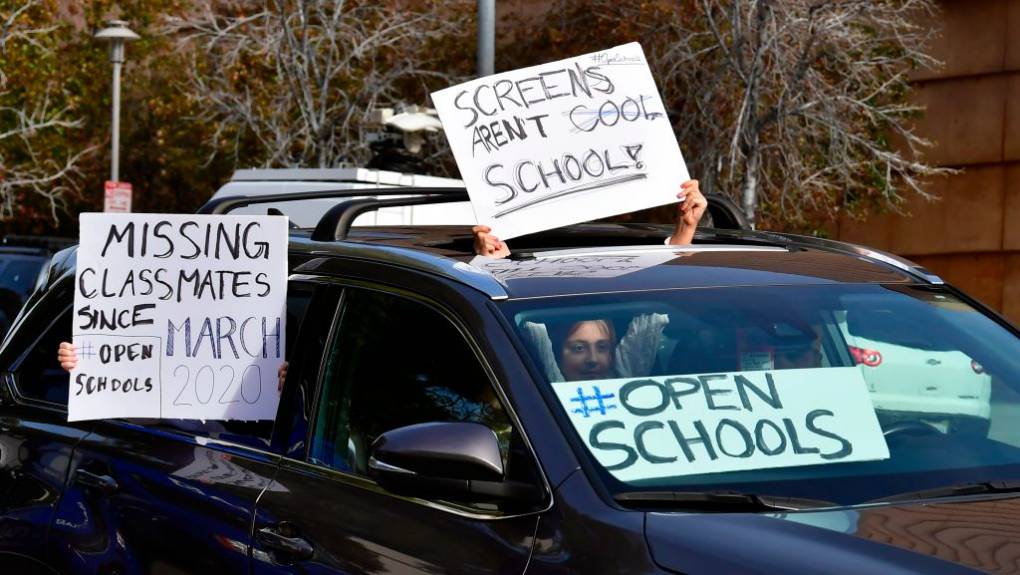
"caption": "Demonstrators in a car caravan during an 'Open Schools Now' rally on Feb. 15, 2021 in Los Angeles.",
"description": null,
"title": "US-HEALTH-VIRUS-EDUCATION",
"credit": "Frederic J. Brown/AFP via Getty Images",
"status": "inherit",
"altTag": null,
"isLoading": false,
"fetchFailed": false
},
"news_11863744": {
"type": "attachments",
"id": "news_11863744",
"meta": {
"index": "attachments_1716263798",
"site": "news",
"id": "11863744",
"found": true
},
"parent": 11863739,
"imgSizes": {
"apple_news_ca_landscape_5_5": {
"file": "https://ww2.kqed.org/app/uploads/sites/10/2021/03/022821_UFWvaccine_AI_03-1044x783.jpg",
"width": 1044,
"mimeType": "image/jpeg",
"height": 783
},
"apple_news_ca_square_4_0": {
"file": "https://ww2.kqed.org/app/uploads/sites/10/2021/03/022821_UFWvaccine_AI_03-470x470.jpg",
"width": 470,
"mimeType": "image/jpeg",
"height": 470
},
"twentyfourteen-full-width": {
"file": "https://ww2.kqed.org/app/uploads/sites/10/2021/03/022821_UFWvaccine_AI_03-1038x576.jpg",
"width": 1038,
"mimeType": "image/jpeg",
"height": 576
},
"thumbnail": {
"file": "https://ww2.kqed.org/app/uploads/sites/10/2021/03/022821_UFWvaccine_AI_03-160x120.jpg",
"width": 160,
"mimeType": "image/jpeg",
"height": 120
},
"post-thumbnail": {
"file": "https://ww2.kqed.org/app/uploads/sites/10/2021/03/022821_UFWvaccine_AI_03-672x372.jpg",
"width": 672,
"mimeType": "image/jpeg",
"height": 372
},
"kqedFullSize": {
"file": "https://ww2.kqed.org/app/uploads/sites/10/2021/03/022821_UFWvaccine_AI_03-e1615233334285.jpg",
"width": 1920,
"height": 1440
},
"apple_news_ca_landscape_4_7": {
"file": "https://ww2.kqed.org/app/uploads/sites/10/2021/03/022821_UFWvaccine_AI_03-632x474.jpg",
"width": 632,
"mimeType": "image/jpeg",
"height": 474
},
"large": {
"file": "https://ww2.kqed.org/app/uploads/sites/10/2021/03/022821_UFWvaccine_AI_03-1020x765.jpg",
"width": 1020,
"mimeType": "image/jpeg",
"height": 765
},
"apple_news_ca_landscape_4_0": {
"file": "https://ww2.kqed.org/app/uploads/sites/10/2021/03/022821_UFWvaccine_AI_03-536x402.jpg",
"width": 536,
"mimeType": "image/jpeg",
"height": 402
},
"apple_news_ca_portrait_12_9": {
"file": "https://ww2.kqed.org/app/uploads/sites/10/2021/03/022821_UFWvaccine_AI_03-1122x1496.jpg",
"width": 1122,
"mimeType": "image/jpeg",
"height": 1496
},
"medium": {
"file": "https://ww2.kqed.org/app/uploads/sites/10/2021/03/022821_UFWvaccine_AI_03-800x600.jpg",
"width": 800,
"mimeType": "image/jpeg",
"height": 600
},
"apple_news_ca_portrait_4_0": {
"file": "https://ww2.kqed.org/app/uploads/sites/10/2021/03/022821_UFWvaccine_AI_03-354x472.jpg",
"width": 354,
"mimeType": "image/jpeg",
"height": 472
},
"apple_news_ca_portrait_9_7": {
"file": "https://ww2.kqed.org/app/uploads/sites/10/2021/03/022821_UFWvaccine_AI_03-840x1120.jpg",
"width": 840,
"mimeType": "image/jpeg",
"height": 1120
},
"apple_news_ca_landscape_12_9": {
"file": "https://ww2.kqed.org/app/uploads/sites/10/2021/03/022821_UFWvaccine_AI_03-1832x1374.jpg",
"width": 1832,
"mimeType": "image/jpeg",
"height": 1374
},
"apple_news_ca_square_9_7": {
"file": "https://ww2.kqed.org/app/uploads/sites/10/2021/03/022821_UFWvaccine_AI_03-1104x1104.jpg",
"width": 1104,
"mimeType": "image/jpeg",
"height": 1104
},
"1536x1536": {
"file": "https://ww2.kqed.org/app/uploads/sites/10/2021/03/022821_UFWvaccine_AI_03-1536x1152.jpg",
"width": 1536,
"mimeType": "image/jpeg",
"height": 1152
},
"apple_news_ca_portrait_4_7": {
"file": "https://ww2.kqed.org/app/uploads/sites/10/2021/03/022821_UFWvaccine_AI_03-414x552.jpg",
"width": 414,
"mimeType": "image/jpeg",
"height": 552
},
"apple_news_ca_square_12_9": {
"file": "https://ww2.kqed.org/app/uploads/sites/10/2021/03/022821_UFWvaccine_AI_03-1472x1472.jpg",
"width": 1472,
"mimeType": "image/jpeg",
"height": 1472
},
"apple_news_ca_portrait_5_5": {
"file": "https://ww2.kqed.org/app/uploads/sites/10/2021/03/022821_UFWvaccine_AI_03-687x916.jpg",
"width": 687,
"mimeType": "image/jpeg",
"height": 916
},
"full-width": {
"file": "https://ww2.kqed.org/app/uploads/sites/10/2021/03/022821_UFWvaccine_AI_03-1920x1440.jpg",
"width": 1920,
"mimeType": "image/jpeg",
"height": 1440
},
"apple_news_ca_square_4_7": {
"file": "https://ww2.kqed.org/app/uploads/sites/10/2021/03/022821_UFWvaccine_AI_03-550x550.jpg",
"width": 550,
"mimeType": "image/jpeg",
"height": 550
},
"apple_news_ca_landscape_9_7": {
"file": "https://ww2.kqed.org/app/uploads/sites/10/2021/03/022821_UFWvaccine_AI_03-1376x1032.jpg",
"width": 1376,
"mimeType": "image/jpeg",
"height": 1032
},
"apple_news_ca_square_5_5": {
"file": "https://ww2.kqed.org/app/uploads/sites/10/2021/03/022821_UFWvaccine_AI_03-912x912.jpg",
"width": 912,
"mimeType": "image/jpeg",
"height": 912
}
},
"publishDate": 1615233259,
"modified": 1616791266,
"caption": "Mauricio Chavez of Hollister gets a COVID-19 vaccine at Monterey Mushrooms in Morgan Hill on Feb. 28, 2021.",
"description": "Mauricio Chavez of Hollister gets a COVID-19 vaccine at Monterey Mushrooms in Morgan Hill on Feb. 28, 2021. He works at a neighboring mushroom farm. Many California farmworkers still face obstacles getting the vaccine.",
"title": "022821_UFWvaccine_AI_03",
"credit": "Ana Ibarra/CalMatters",
"status": "inherit",
"altTag": "farmworker gets vaccine shot",
"isLoading": false,
"fetchFailed": false
},
"news_11863103": {
"type": "attachments",
"id": "news_11863103",
"meta": {
"index": "attachments_1716263798",
"site": "news",
"id": "11863103",
"found": true
},
"parent": 11863098,
"imgSizes": {
"apple_news_ca_landscape_5_5": {
"file": "https://ww2.kqed.org/app/uploads/sites/10/2021/03/RS47040_008_SanJose_COVIDTesting_02032021-qut-1044x783.jpg",
"width": 1044,
"mimeType": "image/jpeg",
"height": 783
},
"apple_news_ca_square_4_0": {
"file": "https://ww2.kqed.org/app/uploads/sites/10/2021/03/RS47040_008_SanJose_COVIDTesting_02032021-qut-470x470.jpg",
"width": 470,
"mimeType": "image/jpeg",
"height": 470
},
"twentyfourteen-full-width": {
"file": "https://ww2.kqed.org/app/uploads/sites/10/2021/03/RS47040_008_SanJose_COVIDTesting_02032021-qut-1038x576.jpg",
"width": 1038,
"mimeType": "image/jpeg",
"height": 576
},
"thumbnail": {
"file": "https://ww2.kqed.org/app/uploads/sites/10/2021/03/RS47040_008_SanJose_COVIDTesting_02032021-qut-160x107.jpg",
"width": 160,
"mimeType": "image/jpeg",
"height": 107
},
"post-thumbnail": {
"file": "https://ww2.kqed.org/app/uploads/sites/10/2021/03/RS47040_008_SanJose_COVIDTesting_02032021-qut-672x372.jpg",
"width": 672,
"mimeType": "image/jpeg",
"height": 372
},
"kqedFullSize": {
"file": "https://ww2.kqed.org/app/uploads/sites/10/2021/03/RS47040_008_SanJose_COVIDTesting_02032021-qut.jpg",
"width": 1920,
"height": 1280
},
"apple_news_ca_landscape_4_7": {
"file": "https://ww2.kqed.org/app/uploads/sites/10/2021/03/RS47040_008_SanJose_COVIDTesting_02032021-qut-632x474.jpg",
"width": 632,
"mimeType": "image/jpeg",
"height": 474
},
"large": {
"file": "https://ww2.kqed.org/app/uploads/sites/10/2021/03/RS47040_008_SanJose_COVIDTesting_02032021-qut-1020x680.jpg",
"width": 1020,
"mimeType": "image/jpeg",
"height": 680
},
"apple_news_ca_landscape_4_0": {
"file": "https://ww2.kqed.org/app/uploads/sites/10/2021/03/RS47040_008_SanJose_COVIDTesting_02032021-qut-536x402.jpg",
"width": 536,
"mimeType": "image/jpeg",
"height": 402
},
"apple_news_ca_portrait_12_9": {
"file": "https://ww2.kqed.org/app/uploads/sites/10/2021/03/RS47040_008_SanJose_COVIDTesting_02032021-qut-1122x1280.jpg",
"width": 1122,
"mimeType": "image/jpeg",
"height": 1280
},
"medium": {
"file": "https://ww2.kqed.org/app/uploads/sites/10/2021/03/RS47040_008_SanJose_COVIDTesting_02032021-qut-800x533.jpg",
"width": 800,
"mimeType": "image/jpeg",
"height": 533
},
"apple_news_ca_portrait_4_0": {
"file": "https://ww2.kqed.org/app/uploads/sites/10/2021/03/RS47040_008_SanJose_COVIDTesting_02032021-qut-354x472.jpg",
"width": 354,
"mimeType": "image/jpeg",
"height": 472
},
"apple_news_ca_portrait_9_7": {
"file": "https://ww2.kqed.org/app/uploads/sites/10/2021/03/RS47040_008_SanJose_COVIDTesting_02032021-qut-840x1120.jpg",
"width": 840,
"mimeType": "image/jpeg",
"height": 1120
},
"apple_news_ca_landscape_12_9": {
"file": "https://ww2.kqed.org/app/uploads/sites/10/2021/03/RS47040_008_SanJose_COVIDTesting_02032021-qut-1832x1280.jpg",
"width": 1832,
"mimeType": "image/jpeg",
"height": 1280
},
"apple_news_ca_square_9_7": {
"file": "https://ww2.kqed.org/app/uploads/sites/10/2021/03/RS47040_008_SanJose_COVIDTesting_02032021-qut-1104x1104.jpg",
"width": 1104,
"mimeType": "image/jpeg",
"height": 1104
},
"1536x1536": {
"file": "https://ww2.kqed.org/app/uploads/sites/10/2021/03/RS47040_008_SanJose_COVIDTesting_02032021-qut-1536x1024.jpg",
"width": 1536,
"mimeType": "image/jpeg",
"height": 1024
},
"apple_news_ca_portrait_4_7": {
"file": "https://ww2.kqed.org/app/uploads/sites/10/2021/03/RS47040_008_SanJose_COVIDTesting_02032021-qut-414x552.jpg",
"width": 414,
"mimeType": "image/jpeg",
"height": 552
},
"apple_news_ca_square_12_9": {
"file": "https://ww2.kqed.org/app/uploads/sites/10/2021/03/RS47040_008_SanJose_COVIDTesting_02032021-qut-1472x1280.jpg",
"width": 1472,
"mimeType": "image/jpeg",
"height": 1280
},
"apple_news_ca_portrait_5_5": {
"file": "https://ww2.kqed.org/app/uploads/sites/10/2021/03/RS47040_008_SanJose_COVIDTesting_02032021-qut-687x916.jpg",
"width": 687,
"mimeType": "image/jpeg",
"height": 916
},
"apple_news_ca_square_4_7": {
"file": "https://ww2.kqed.org/app/uploads/sites/10/2021/03/RS47040_008_SanJose_COVIDTesting_02032021-qut-550x550.jpg",
"width": 550,
"mimeType": "image/jpeg",
"height": 550
},
"apple_news_ca_landscape_9_7": {
"file": "https://ww2.kqed.org/app/uploads/sites/10/2021/03/RS47040_008_SanJose_COVIDTesting_02032021-qut-1376x1032.jpg",
"width": 1376,
"mimeType": "image/jpeg",
"height": 1032
},
"apple_news_ca_square_5_5": {
"file": "https://ww2.kqed.org/app/uploads/sites/10/2021/03/RS47040_008_SanJose_COVIDTesting_02032021-qut-912x912.jpg",
"width": 912,
"mimeType": "image/jpeg",
"height": 912
}
},
"publishDate": 1614815331,
"modified": 1614815453,
"caption": "La familia Orona Franco recibe una visita de los trabajadores de salud del condado de Santa Clara en San José el 3 de febrero de 2021. El condado se ha asociado con un grupo de promotoras de META, una organización sin fines de lucro con sede en el este de San José, para ofrecer pruebas en casa e información sobre la vacuna contra el coronavirus en una de las áreas más afectadas del condado.",
"description": null,
"title": "RS47040_008_SanJose_COVIDTesting_02032021-qut",
"credit": "Beth LaBerge/KQED",
"status": "inherit",
"altTag": null,
"isLoading": false,
"fetchFailed": false
},
"news_11860901": {
"type": "attachments",
"id": "news_11860901",
"meta": {
"index": "attachments_1716263798",
"site": "news",
"id": "11860901",
"found": true
},
"parent": 11860883,
"imgSizes": {
"apple_news_ca_landscape_5_5": {
"file": "https://ww2.kqed.org/app/uploads/sites/10/2021/02/RS47036_004_SanJose_COVIDTesting_02032021-qut-1044x783.jpg",
"width": 1044,
"mimeType": "image/jpeg",
"height": 783
},
"apple_news_ca_square_4_0": {
"file": "https://ww2.kqed.org/app/uploads/sites/10/2021/02/RS47036_004_SanJose_COVIDTesting_02032021-qut-470x470.jpg",
"width": 470,
"mimeType": "image/jpeg",
"height": 470
},
"twentyfourteen-full-width": {
"file": "https://ww2.kqed.org/app/uploads/sites/10/2021/02/RS47036_004_SanJose_COVIDTesting_02032021-qut-1038x576.jpg",
"width": 1038,
"mimeType": "image/jpeg",
"height": 576
},
"thumbnail": {
"file": "https://ww2.kqed.org/app/uploads/sites/10/2021/02/RS47036_004_SanJose_COVIDTesting_02032021-qut-160x107.jpg",
"width": 160,
"mimeType": "image/jpeg",
"height": 107
},
"post-thumbnail": {
"file": "https://ww2.kqed.org/app/uploads/sites/10/2021/02/RS47036_004_SanJose_COVIDTesting_02032021-qut-672x372.jpg",
"width": 672,
"mimeType": "image/jpeg",
"height": 372
},
"kqedFullSize": {
"file": "https://ww2.kqed.org/app/uploads/sites/10/2021/02/RS47036_004_SanJose_COVIDTesting_02032021-qut.jpg",
"width": 1920,
"height": 1280
},
"apple_news_ca_landscape_4_7": {
"file": "https://ww2.kqed.org/app/uploads/sites/10/2021/02/RS47036_004_SanJose_COVIDTesting_02032021-qut-632x474.jpg",
"width": 632,
"mimeType": "image/jpeg",
"height": 474
},
"large": {
"file": "https://ww2.kqed.org/app/uploads/sites/10/2021/02/RS47036_004_SanJose_COVIDTesting_02032021-qut-1020x680.jpg",
"width": 1020,
"mimeType": "image/jpeg",
"height": 680
},
"apple_news_ca_landscape_4_0": {
"file": "https://ww2.kqed.org/app/uploads/sites/10/2021/02/RS47036_004_SanJose_COVIDTesting_02032021-qut-536x402.jpg",
"width": 536,
"mimeType": "image/jpeg",
"height": 402
},
"apple_news_ca_portrait_12_9": {
"file": "https://ww2.kqed.org/app/uploads/sites/10/2021/02/RS47036_004_SanJose_COVIDTesting_02032021-qut-1122x1280.jpg",
"width": 1122,
"mimeType": "image/jpeg",
"height": 1280
},
"medium": {
"file": "https://ww2.kqed.org/app/uploads/sites/10/2021/02/RS47036_004_SanJose_COVIDTesting_02032021-qut-800x533.jpg",
"width": 800,
"mimeType": "image/jpeg",
"height": 533
},
"apple_news_ca_portrait_4_0": {
"file": "https://ww2.kqed.org/app/uploads/sites/10/2021/02/RS47036_004_SanJose_COVIDTesting_02032021-qut-354x472.jpg",
"width": 354,
"mimeType": "image/jpeg",
"height": 472
},
"apple_news_ca_portrait_9_7": {
"file": "https://ww2.kqed.org/app/uploads/sites/10/2021/02/RS47036_004_SanJose_COVIDTesting_02032021-qut-840x1120.jpg",
"width": 840,
"mimeType": "image/jpeg",
"height": 1120
},
"apple_news_ca_landscape_12_9": {
"file": "https://ww2.kqed.org/app/uploads/sites/10/2021/02/RS47036_004_SanJose_COVIDTesting_02032021-qut-1832x1280.jpg",
"width": 1832,
"mimeType": "image/jpeg",
"height": 1280
},
"apple_news_ca_square_9_7": {
"file": "https://ww2.kqed.org/app/uploads/sites/10/2021/02/RS47036_004_SanJose_COVIDTesting_02032021-qut-1104x1104.jpg",
"width": 1104,
"mimeType": "image/jpeg",
"height": 1104
},
"1536x1536": {
"file": "https://ww2.kqed.org/app/uploads/sites/10/2021/02/RS47036_004_SanJose_COVIDTesting_02032021-qut-1536x1024.jpg",
"width": 1536,
"mimeType": "image/jpeg",
"height": 1024
},
"apple_news_ca_portrait_4_7": {
"file": "https://ww2.kqed.org/app/uploads/sites/10/2021/02/RS47036_004_SanJose_COVIDTesting_02032021-qut-414x552.jpg",
"width": 414,
"mimeType": "image/jpeg",
"height": 552
},
"apple_news_ca_square_12_9": {
"file": "https://ww2.kqed.org/app/uploads/sites/10/2021/02/RS47036_004_SanJose_COVIDTesting_02032021-qut-1472x1280.jpg",
"width": 1472,
"mimeType": "image/jpeg",
"height": 1280
},
"apple_news_ca_portrait_5_5": {
"file": "https://ww2.kqed.org/app/uploads/sites/10/2021/02/RS47036_004_SanJose_COVIDTesting_02032021-qut-687x916.jpg",
"width": 687,
"mimeType": "image/jpeg",
"height": 916
},
"apple_news_ca_square_4_7": {
"file": "https://ww2.kqed.org/app/uploads/sites/10/2021/02/RS47036_004_SanJose_COVIDTesting_02032021-qut-550x550.jpg",
"width": 550,
"mimeType": "image/jpeg",
"height": 550
},
"apple_news_ca_landscape_9_7": {
"file": "https://ww2.kqed.org/app/uploads/sites/10/2021/02/RS47036_004_SanJose_COVIDTesting_02032021-qut-1376x1032.jpg",
"width": 1376,
"mimeType": "image/jpeg",
"height": 1032
},
"apple_news_ca_square_5_5": {
"file": "https://ww2.kqed.org/app/uploads/sites/10/2021/02/RS47036_004_SanJose_COVIDTesting_02032021-qut-912x912.jpg",
"width": 912,
"mimeType": "image/jpeg",
"height": 912
}
},
"publishDate": 1613671497,
"modified": 1613760689,
"caption": "The Orona Franco family receives a COVID-19 home testing visit by Santa Clara County Public Health workers in San Jose on Feb. 3, 2021. Santa Clara County has partnered up with a group of promotoras from META, a community nonprofit based in East San Jose, to offer home testing and information about the coronavirus vaccine in one of the county's worst affected areas.",
"description": "The Orona Franco family receives a COVID-19 home testing visit by Santa Clara County Public Health workers in San Jose on Feb. 3, 2021. Santa Clara County has partnered up with a group of promotoras from META, a community nonprofit based in East San Jose, to offer home testing and information about the coronavirus vaccine in one of the county's worst affected areas.",
"title": "RS47036_004_SanJose_COVIDTesting_02032021-qut",
"credit": "Beth LaBerge/KQED",
"status": "inherit",
"altTag": null,
"isLoading": false,
"fetchFailed": false
},
"news_11862735": {
"type": "attachments",
"id": "news_11862735",
"meta": {
"index": "attachments_1716263798",
"site": "news",
"id": "11862735",
"found": true
},
"parent": 11862532,
"imgSizes": {
"apple_news_ca_landscape_5_5": {
"file": "https://ww2.kqed.org/app/uploads/sites/10/2021/03/GettyImages-1186656408-1044x783.jpg",
"width": 1044,
"mimeType": "image/jpeg",
"height": 783
},
"apple_news_ca_square_4_0": {
"file": "https://ww2.kqed.org/app/uploads/sites/10/2021/03/GettyImages-1186656408-470x470.jpg",
"width": 470,
"mimeType": "image/jpeg",
"height": 470
},
"twentyfourteen-full-width": {
"file": "https://ww2.kqed.org/app/uploads/sites/10/2021/03/GettyImages-1186656408-1038x576.jpg",
"width": 1038,
"mimeType": "image/jpeg",
"height": 576
},
"thumbnail": {
"file": "https://ww2.kqed.org/app/uploads/sites/10/2021/03/GettyImages-1186656408-160x135.jpg",
"width": 160,
"mimeType": "image/jpeg",
"height": 135
},
"post-thumbnail": {
"file": "https://ww2.kqed.org/app/uploads/sites/10/2021/03/GettyImages-1186656408-672x372.jpg",
"width": 672,
"mimeType": "image/jpeg",
"height": 372
},
"kqedFullSize": {
"file": "https://ww2.kqed.org/app/uploads/sites/10/2021/03/GettyImages-1186656408.jpg",
"width": 1920,
"height": 1617
},
"apple_news_ca_landscape_4_7": {
"file": "https://ww2.kqed.org/app/uploads/sites/10/2021/03/GettyImages-1186656408-632x474.jpg",
"width": 632,
"mimeType": "image/jpeg",
"height": 474
},
"large": {
"file": "https://ww2.kqed.org/app/uploads/sites/10/2021/03/GettyImages-1186656408-1020x859.jpg",
"width": 1020,
"mimeType": "image/jpeg",
"height": 859
},
"apple_news_ca_landscape_4_0": {
"file": "https://ww2.kqed.org/app/uploads/sites/10/2021/03/GettyImages-1186656408-536x402.jpg",
"width": 536,
"mimeType": "image/jpeg",
"height": 402
},
"apple_news_ca_portrait_12_9": {
"file": "https://ww2.kqed.org/app/uploads/sites/10/2021/03/GettyImages-1186656408-1122x1496.jpg",
"width": 1122,
"mimeType": "image/jpeg",
"height": 1496
},
"medium": {
"file": "https://ww2.kqed.org/app/uploads/sites/10/2021/03/GettyImages-1186656408-800x674.jpg",
"width": 800,
"mimeType": "image/jpeg",
"height": 674
},
"apple_news_ca_portrait_4_0": {
"file": "https://ww2.kqed.org/app/uploads/sites/10/2021/03/GettyImages-1186656408-354x472.jpg",
"width": 354,
"mimeType": "image/jpeg",
"height": 472
},
"apple_news_ca_portrait_9_7": {
"file": "https://ww2.kqed.org/app/uploads/sites/10/2021/03/GettyImages-1186656408-840x1120.jpg",
"width": 840,
"mimeType": "image/jpeg",
"height": 1120
},
"apple_news_ca_landscape_12_9": {
"file": "https://ww2.kqed.org/app/uploads/sites/10/2021/03/GettyImages-1186656408-1832x1374.jpg",
"width": 1832,
"mimeType": "image/jpeg",
"height": 1374
},
"apple_news_ca_square_9_7": {
"file": "https://ww2.kqed.org/app/uploads/sites/10/2021/03/GettyImages-1186656408-1104x1104.jpg",
"width": 1104,
"mimeType": "image/jpeg",
"height": 1104
},
"1536x1536": {
"file": "https://ww2.kqed.org/app/uploads/sites/10/2021/03/GettyImages-1186656408-1536x1294.jpg",
"width": 1536,
"mimeType": "image/jpeg",
"height": 1294
},
"apple_news_ca_portrait_4_7": {
"file": "https://ww2.kqed.org/app/uploads/sites/10/2021/03/GettyImages-1186656408-414x552.jpg",
"width": 414,
"mimeType": "image/jpeg",
"height": 552
},
"apple_news_ca_square_12_9": {
"file": "https://ww2.kqed.org/app/uploads/sites/10/2021/03/GettyImages-1186656408-1472x1472.jpg",
"width": 1472,
"mimeType": "image/jpeg",
"height": 1472
},
"apple_news_ca_portrait_5_5": {
"file": "https://ww2.kqed.org/app/uploads/sites/10/2021/03/GettyImages-1186656408-687x916.jpg",
"width": 687,
"mimeType": "image/jpeg",
"height": 916
},
"apple_news_ca_square_4_7": {
"file": "https://ww2.kqed.org/app/uploads/sites/10/2021/03/GettyImages-1186656408-550x550.jpg",
"width": 550,
"mimeType": "image/jpeg",
"height": 550
},
"apple_news_ca_landscape_9_7": {
"file": "https://ww2.kqed.org/app/uploads/sites/10/2021/03/GettyImages-1186656408-1376x1032.jpg",
"width": 1376,
"mimeType": "image/jpeg",
"height": 1032
},
"apple_news_ca_square_5_5": {
"file": "https://ww2.kqed.org/app/uploads/sites/10/2021/03/GettyImages-1186656408-912x912.jpg",
"width": 912,
"mimeType": "image/jpeg",
"height": 912
}
},
"publishDate": 1614663488,
"modified": 1614663633,
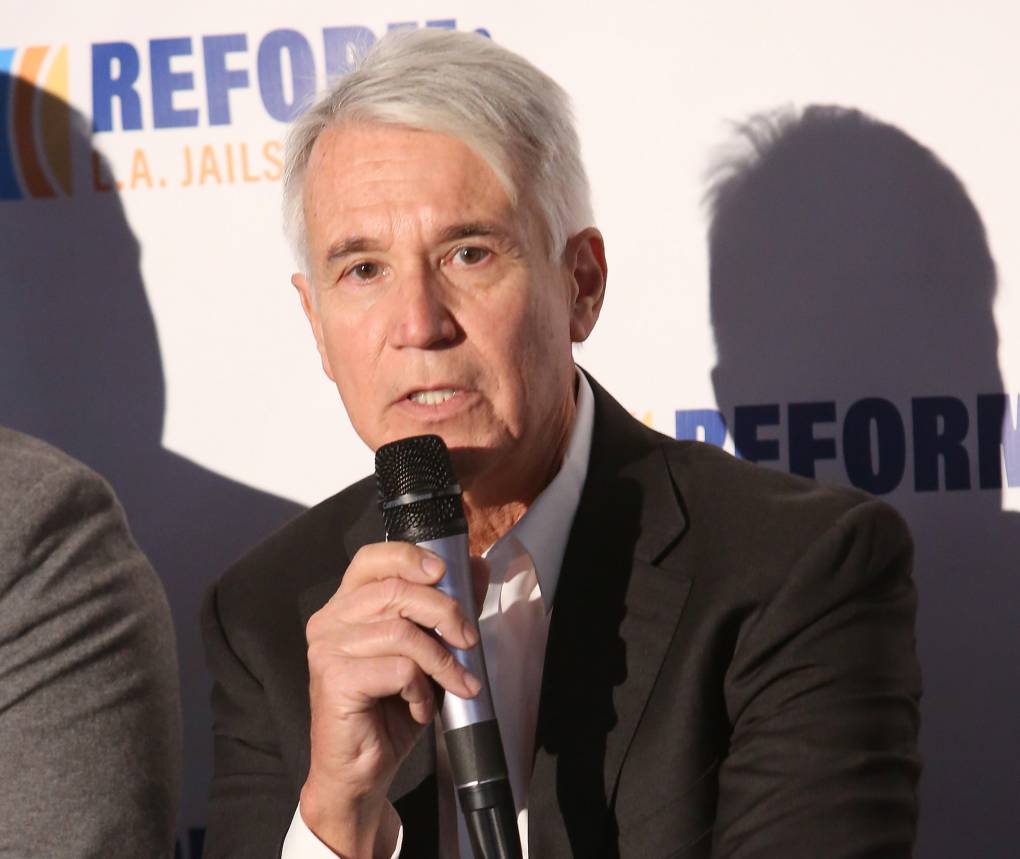
"caption": "George Gascón speaks at the Reform LA Jails Summit on Nov. 9, 2019 in Pasadena.",
"description": null,
"title": "Reform L.A. Jails Summit + Day Party: Mental Health Matters",
"credit": "Jesse Grant/Getty Images",
"status": "inherit",
"altTag": null,
"isLoading": false,
"fetchFailed": false
},
"news_11862602": {
"type": "attachments",
"id": "news_11862602",
"meta": {
"index": "attachments_1716263798",
"site": "news",
"id": "11862602",
"found": true
},
"parent": 11877048,
"imgSizes": {
"apple_news_ca_landscape_5_5": {
"file": "https://ww2.kqed.org/app/uploads/sites/10/2021/03/GettyImages-1231222911-1044x783.jpg",
"width": 1044,
"mimeType": "image/jpeg",
"height": 783
},
"apple_news_ca_square_4_0": {
"file": "https://ww2.kqed.org/app/uploads/sites/10/2021/03/GettyImages-1231222911-470x470.jpg",
"width": 470,
"mimeType": "image/jpeg",
"height": 470
},
"twentyfourteen-full-width": {
"file": "https://ww2.kqed.org/app/uploads/sites/10/2021/03/GettyImages-1231222911-1038x576.jpg",
"width": 1038,
"mimeType": "image/jpeg",
"height": 576
},
"thumbnail": {
"file": "https://ww2.kqed.org/app/uploads/sites/10/2021/03/GettyImages-1231222911-160x107.jpg",
"width": 160,
"mimeType": "image/jpeg",
"height": 107
},
"post-thumbnail": {
"file": "https://ww2.kqed.org/app/uploads/sites/10/2021/03/GettyImages-1231222911-672x372.jpg",
"width": 672,
"mimeType": "image/jpeg",
"height": 372
},
"kqedFullSize": {
"file": "https://ww2.kqed.org/app/uploads/sites/10/2021/03/GettyImages-1231222911-scaled.jpg",
"width": 2560,
"height": 1707
},
"2048x2048": {
"file": "https://ww2.kqed.org/app/uploads/sites/10/2021/03/GettyImages-1231222911-2048x1365.jpg",
"width": 2048,
"mimeType": "image/jpeg",
"height": 1365
},
"apple_news_ca_landscape_4_7": {
"file": "https://ww2.kqed.org/app/uploads/sites/10/2021/03/GettyImages-1231222911-632x474.jpg",
"width": 632,
"mimeType": "image/jpeg",
"height": 474
},
"large": {
"file": "https://ww2.kqed.org/app/uploads/sites/10/2021/03/GettyImages-1231222911-1020x680.jpg",
"width": 1020,
"mimeType": "image/jpeg",
"height": 680
},
"apple_news_ca_landscape_4_0": {
"file": "https://ww2.kqed.org/app/uploads/sites/10/2021/03/GettyImages-1231222911-536x402.jpg",
"width": 536,
"mimeType": "image/jpeg",
"height": 402
},
"apple_news_ca_portrait_12_9": {
"file": "https://ww2.kqed.org/app/uploads/sites/10/2021/03/GettyImages-1231222911-1122x1496.jpg",
"width": 1122,
"mimeType": "image/jpeg",
"height": 1496
},
"medium": {
"file": "https://ww2.kqed.org/app/uploads/sites/10/2021/03/GettyImages-1231222911-800x533.jpg",
"width": 800,
"mimeType": "image/jpeg",
"height": 533
},
"apple_news_ca_portrait_4_0": {
"file": "https://ww2.kqed.org/app/uploads/sites/10/2021/03/GettyImages-1231222911-354x472.jpg",
"width": 354,
"mimeType": "image/jpeg",
"height": 472
},
"apple_news_ca_portrait_9_7": {
"file": "https://ww2.kqed.org/app/uploads/sites/10/2021/03/GettyImages-1231222911-840x1120.jpg",
"width": 840,
"mimeType": "image/jpeg",
"height": 1120
},
"apple_news_ca_landscape_12_9": {
"file": "https://ww2.kqed.org/app/uploads/sites/10/2021/03/GettyImages-1231222911-1832x1374.jpg",
"width": 1832,
"mimeType": "image/jpeg",
"height": 1374
},
"apple_news_ca_square_9_7": {
"file": "https://ww2.kqed.org/app/uploads/sites/10/2021/03/GettyImages-1231222911-1104x1104.jpg",
"width": 1104,
"mimeType": "image/jpeg",
"height": 1104
},
"1536x1536": {
"file": "https://ww2.kqed.org/app/uploads/sites/10/2021/03/GettyImages-1231222911-1536x1024.jpg",
"width": 1536,
"mimeType": "image/jpeg",
"height": 1024
},
"apple_news_ca_portrait_4_7": {
"file": "https://ww2.kqed.org/app/uploads/sites/10/2021/03/GettyImages-1231222911-414x552.jpg",
"width": 414,
"mimeType": "image/jpeg",
"height": 552
},
"apple_news_ca_square_12_9": {
"file": "https://ww2.kqed.org/app/uploads/sites/10/2021/03/GettyImages-1231222911-1472x1472.jpg",
"width": 1472,
"mimeType": "image/jpeg",
"height": 1472
},
"apple_news_ca_portrait_5_5": {
"file": "https://ww2.kqed.org/app/uploads/sites/10/2021/03/GettyImages-1231222911-687x916.jpg",
"width": 687,
"mimeType": "image/jpeg",
"height": 916
},
"full-width": {
"file": "https://ww2.kqed.org/app/uploads/sites/10/2021/03/GettyImages-1231222911-1920x1280.jpg",
"width": 1920,
"mimeType": "image/jpeg",
"height": 1280
},
"apple_news_ca_square_4_7": {
"file": "https://ww2.kqed.org/app/uploads/sites/10/2021/03/GettyImages-1231222911-550x550.jpg",
"width": 550,
"mimeType": "image/jpeg",
"height": 550
},
"apple_news_ca_landscape_9_7": {
"file": "https://ww2.kqed.org/app/uploads/sites/10/2021/03/GettyImages-1231222911-1376x1032.jpg",
"width": 1376,
"mimeType": "image/jpeg",
"height": 1032
},
"apple_news_ca_square_5_5": {
"file": "https://ww2.kqed.org/app/uploads/sites/10/2021/03/GettyImages-1231222911-912x912.jpg",
"width": 912,
"mimeType": "image/jpeg",
"height": 912
}
},
"publishDate": 1614630924,
"modified": 1623255773,
"caption": "Children attend online classes at a learning hub inside the Crenshaw Family YMCA on Feb. 17, 2021 in Los Angeles.",
"description": null,
"title": "US-HEALTH-VIRUS-SCHOOLS",
"credit": "Patrick T. Fallon/AFP via Getty Images",
"status": "inherit",
"altTag": null,
"isLoading": false,
"fetchFailed": false
},
"news_11862588": {
"type": "attachments",
"id": "news_11862588",
"meta": {
"index": "attachments_1716263798",
"site": "news",
"id": "11862588",
"found": true
},
"parent": 11862584,
"imgSizes": {
"apple_news_ca_landscape_5_5": {
"file": "https://ww2.kqed.org/app/uploads/sites/10/2021/03/or93-1044x783.jpg",
"width": 1044,
"mimeType": "image/jpeg",
"height": 783
},
"apple_news_ca_square_4_0": {
"file": "https://ww2.kqed.org/app/uploads/sites/10/2021/03/or93-470x470.jpg",
"width": 470,
"mimeType": "image/jpeg",
"height": 470
},
"twentyfourteen-full-width": {
"file": "https://ww2.kqed.org/app/uploads/sites/10/2021/03/or93-1038x576.jpg",
"width": 1038,
"mimeType": "image/jpeg",
"height": 576
},
"thumbnail": {
"file": "https://ww2.kqed.org/app/uploads/sites/10/2021/03/or93-160x107.jpg",
"width": 160,
"mimeType": "image/jpeg",
"height": 107
},
"post-thumbnail": {
"file": "https://ww2.kqed.org/app/uploads/sites/10/2021/03/or93-672x372.jpg",
"width": 672,
"mimeType": "image/jpeg",
"height": 372
},
"kqedFullSize": {
"file": "https://ww2.kqed.org/app/uploads/sites/10/2021/03/or93.jpg",
"width": 1920,
"height": 1280
},
"apple_news_ca_landscape_4_7": {
"file": "https://ww2.kqed.org/app/uploads/sites/10/2021/03/or93-632x474.jpg",
"width": 632,
"mimeType": "image/jpeg",
"height": 474
},
"large": {
"file": "https://ww2.kqed.org/app/uploads/sites/10/2021/03/or93-1020x680.jpg",
"width": 1020,
"mimeType": "image/jpeg",
"height": 680
},
"apple_news_ca_landscape_4_0": {
"file": "https://ww2.kqed.org/app/uploads/sites/10/2021/03/or93-536x402.jpg",
"width": 536,
"mimeType": "image/jpeg",
"height": 402
},
"apple_news_ca_portrait_12_9": {
"file": "https://ww2.kqed.org/app/uploads/sites/10/2021/03/or93-1122x1280.jpg",
"width": 1122,
"mimeType": "image/jpeg",
"height": 1280
},
"medium": {
"file": "https://ww2.kqed.org/app/uploads/sites/10/2021/03/or93-800x533.jpg",
"width": 800,
"mimeType": "image/jpeg",
"height": 533
},
"apple_news_ca_portrait_4_0": {
"file": "https://ww2.kqed.org/app/uploads/sites/10/2021/03/or93-354x472.jpg",
"width": 354,
"mimeType": "image/jpeg",
"height": 472
},
"apple_news_ca_portrait_9_7": {
"file": "https://ww2.kqed.org/app/uploads/sites/10/2021/03/or93-840x1120.jpg",
"width": 840,
"mimeType": "image/jpeg",
"height": 1120
},
"apple_news_ca_landscape_12_9": {
"file": "https://ww2.kqed.org/app/uploads/sites/10/2021/03/or93-1832x1280.jpg",
"width": 1832,
"mimeType": "image/jpeg",
"height": 1280
},
"apple_news_ca_square_9_7": {
"file": "https://ww2.kqed.org/app/uploads/sites/10/2021/03/or93-1104x1104.jpg",
"width": 1104,
"mimeType": "image/jpeg",
"height": 1104
},
"1536x1536": {
"file": "https://ww2.kqed.org/app/uploads/sites/10/2021/03/or93-1536x1024.jpg",
"width": 1536,
"mimeType": "image/jpeg",
"height": 1024
},
"apple_news_ca_portrait_4_7": {
"file": "https://ww2.kqed.org/app/uploads/sites/10/2021/03/or93-414x552.jpg",
"width": 414,
"mimeType": "image/jpeg",
"height": 552
},
"apple_news_ca_square_12_9": {
"file": "https://ww2.kqed.org/app/uploads/sites/10/2021/03/or93-1472x1280.jpg",
"width": 1472,
"mimeType": "image/jpeg",
"height": 1280
},
"apple_news_ca_portrait_5_5": {
"file": "https://ww2.kqed.org/app/uploads/sites/10/2021/03/or93-687x916.jpg",
"width": 687,
"mimeType": "image/jpeg",
"height": 916
},
"apple_news_ca_square_4_7": {
"file": "https://ww2.kqed.org/app/uploads/sites/10/2021/03/or93-550x550.jpg",
"width": 550,
"mimeType": "image/jpeg",
"height": 550
},
"apple_news_ca_landscape_9_7": {
"file": "https://ww2.kqed.org/app/uploads/sites/10/2021/03/or93-1376x1032.jpg",
"width": 1376,
"mimeType": "image/jpeg",
"height": 1032
},
"apple_news_ca_square_5_5": {
"file": "https://ww2.kqed.org/app/uploads/sites/10/2021/03/or93-912x912.jpg",
"width": 912,
"mimeType": "image/jpeg",
"height": 912
}
},
"publishDate": 1614628283,
"modified": 1614632977,
"caption": "A young male gray wolf, dubbed OR-93, shown in a file photo released by the California Department of Fish and Wildlife.",
"description": "A young male gray wolf, dubbed OR-93, shown in a file photo released by the California Dept. of Fish and Wildlife.",
"title": "or93",
"credit": "Austin Smith Jr./Confederated Tribes of Warm Springs/California Department of Fish and Wildlife",
"status": "inherit",
"altTag": "Gray wolf or-93 laying in the woods",
"isLoading": false,
"fetchFailed": false
},
"news_11726147": {
"type": "attachments",
"id": "news_11726147",
"meta": {
"index": "attachments_1716263798",
"site": "news",
"id": "11726147",
"found": true
},
"parent": 11726127,
"imgSizes": {
"twentyfourteen-full-width": {
"file": "https://ww2.kqed.org/app/uploads/sites/10/2019/02/RS35264_IMG_2974-qut-1038x576.jpg",
"width": 1038,
"mimeType": "image/jpeg",
"height": 576
},
"thumbnail": {
"file": "https://ww2.kqed.org/app/uploads/sites/10/2019/02/RS35264_IMG_2974-qut-160x107.jpg",
"width": 160,
"mimeType": "image/jpeg",
"height": 107
},
"post-thumbnail": {
"file": "https://ww2.kqed.org/app/uploads/sites/10/2019/02/RS35264_IMG_2974-qut-672x372.jpg",
"width": 672,
"mimeType": "image/jpeg",
"height": 372
},
"kqedFullSize": {
"file": "https://ww2.kqed.org/app/uploads/sites/10/2019/02/RS35264_IMG_2974-qut.jpg",
"width": 1920,
"height": 1280
},
"large": {
"file": "https://ww2.kqed.org/app/uploads/sites/10/2019/02/RS35264_IMG_2974-qut-1020x680.jpg",
"width": 1020,
"mimeType": "image/jpeg",
"height": 680
},
"complete_open_graph": {
"file": "https://ww2.kqed.org/app/uploads/sites/10/2019/02/RS35264_IMG_2974-qut-1200x800.jpg",
"width": 1200,
"mimeType": "image/jpeg",
"height": 800
},
"guest-author-50": {
"file": "https://ww2.kqed.org/app/uploads/sites/10/2019/02/RS35264_IMG_2974-qut-50x50.jpg",
"width": 50,
"mimeType": "image/jpeg",
"height": 50
},
"guest-author-96": {
"file": "https://ww2.kqed.org/app/uploads/sites/10/2019/02/RS35264_IMG_2974-qut-96x96.jpg",
"width": 96,
"mimeType": "image/jpeg",
"height": 96
},
"medium": {
"file": "https://ww2.kqed.org/app/uploads/sites/10/2019/02/RS35264_IMG_2974-qut-800x533.jpg",
"width": 800,
"mimeType": "image/jpeg",
"height": 533
},
"guest-author-64": {
"file": "https://ww2.kqed.org/app/uploads/sites/10/2019/02/RS35264_IMG_2974-qut-64x64.jpg",
"width": 64,
"mimeType": "image/jpeg",
"height": 64
},
"guest-author-32": {
"file": "https://ww2.kqed.org/app/uploads/sites/10/2019/02/RS35264_IMG_2974-qut-32x32.jpg",
"width": 32,
"mimeType": "image/jpeg",
"height": 32
},
"full-width": {
"file": "https://ww2.kqed.org/app/uploads/sites/10/2019/02/RS35264_IMG_2974-qut-1920x1280.jpg",
"width": 1920,
"mimeType": "image/jpeg",
"height": 1280
},
"detail": {
"file": "https://ww2.kqed.org/app/uploads/sites/10/2019/02/RS35264_IMG_2974-qut-150x150.jpg",
"width": 150,
"mimeType": "image/jpeg",
"height": 150
},
"guest-author-128": {
"file": "https://ww2.kqed.org/app/uploads/sites/10/2019/02/RS35264_IMG_2974-qut-128x128.jpg",
"width": 128,
"mimeType": "image/jpeg",
"height": 128
}
},
"publishDate": 1550111310,
"modified": 1614626179,
"caption": "Maria Paramo says her supervisor harassed her repeatedly and eventually assaulted her on the job. ",
"description": null,
"title": "RS35264_IMG_2974-qut",
"credit": "Alex Hall/KQED",
"status": "inherit",
"altTag": null,
"isLoading": false,
"fetchFailed": false
},
"news_11862462": {
"type": "attachments",
"id": "news_11862462",
"meta": {
"index": "attachments_1716263798",
"site": "news",
"id": "11862462",
"found": true
},
"parent": 11862460,
"imgSizes": {
"apple_news_ca_landscape_5_5": {
"file": "https://ww2.kqed.org/app/uploads/sites/10/2021/02/GettyImages-1231051262-1044x783.jpg",
"width": 1044,
"mimeType": "image/jpeg",
"height": 783
},
"apple_news_ca_square_4_0": {
"file": "https://ww2.kqed.org/app/uploads/sites/10/2021/02/GettyImages-1231051262-470x470.jpg",
"width": 470,
"mimeType": "image/jpeg",
"height": 470
},
"twentyfourteen-full-width": {
"file": "https://ww2.kqed.org/app/uploads/sites/10/2021/02/GettyImages-1231051262-1038x576.jpg",
"width": 1038,
"mimeType": "image/jpeg",
"height": 576
},
"thumbnail": {
"file": "https://ww2.kqed.org/app/uploads/sites/10/2021/02/GettyImages-1231051262-160x107.jpg",
"width": 160,
"mimeType": "image/jpeg",
"height": 107
},
"post-thumbnail": {
"file": "https://ww2.kqed.org/app/uploads/sites/10/2021/02/GettyImages-1231051262-672x372.jpg",
"width": 672,
"mimeType": "image/jpeg",
"height": 372
},
"kqedFullSize": {
"file": "https://ww2.kqed.org/app/uploads/sites/10/2021/02/GettyImages-1231051262-scaled.jpg",
"width": 2560,
"height": 1706
},
"2048x2048": {
"file": "https://ww2.kqed.org/app/uploads/sites/10/2021/02/GettyImages-1231051262-2048x1365.jpg",
"width": 2048,
"mimeType": "image/jpeg",
"height": 1365
},
"apple_news_ca_landscape_4_7": {
"file": "https://ww2.kqed.org/app/uploads/sites/10/2021/02/GettyImages-1231051262-632x474.jpg",
"width": 632,
"mimeType": "image/jpeg",
"height": 474
},
"large": {
"file": "https://ww2.kqed.org/app/uploads/sites/10/2021/02/GettyImages-1231051262-1020x680.jpg",
"width": 1020,
"mimeType": "image/jpeg",
"height": 680
},
"apple_news_ca_landscape_4_0": {
"file": "https://ww2.kqed.org/app/uploads/sites/10/2021/02/GettyImages-1231051262-536x402.jpg",
"width": 536,
"mimeType": "image/jpeg",
"height": 402
},
"apple_news_ca_portrait_12_9": {
"file": "https://ww2.kqed.org/app/uploads/sites/10/2021/02/GettyImages-1231051262-1122x1496.jpg",
"width": 1122,
"mimeType": "image/jpeg",
"height": 1496
},
"medium": {
"file": "https://ww2.kqed.org/app/uploads/sites/10/2021/02/GettyImages-1231051262-800x533.jpg",
"width": 800,
"mimeType": "image/jpeg",
"height": 533
},
"apple_news_ca_portrait_4_0": {
"file": "https://ww2.kqed.org/app/uploads/sites/10/2021/02/GettyImages-1231051262-354x472.jpg",
"width": 354,
"mimeType": "image/jpeg",
"height": 472
},
"apple_news_ca_portrait_9_7": {
"file": "https://ww2.kqed.org/app/uploads/sites/10/2021/02/GettyImages-1231051262-840x1120.jpg",
"width": 840,
"mimeType": "image/jpeg",
"height": 1120
},
"apple_news_ca_landscape_12_9": {
"file": "https://ww2.kqed.org/app/uploads/sites/10/2021/02/GettyImages-1231051262-1832x1374.jpg",
"width": 1832,
"mimeType": "image/jpeg",
"height": 1374
},
"apple_news_ca_square_9_7": {
"file": "https://ww2.kqed.org/app/uploads/sites/10/2021/02/GettyImages-1231051262-1104x1104.jpg",
"width": 1104,
"mimeType": "image/jpeg",
"height": 1104
},
"1536x1536": {
"file": "https://ww2.kqed.org/app/uploads/sites/10/2021/02/GettyImages-1231051262-1536x1024.jpg",
"width": 1536,
"mimeType": "image/jpeg",
"height": 1024
},
"apple_news_ca_portrait_4_7": {
"file": "https://ww2.kqed.org/app/uploads/sites/10/2021/02/GettyImages-1231051262-414x552.jpg",
"width": 414,
"mimeType": "image/jpeg",
"height": 552
},
"apple_news_ca_square_12_9": {
"file": "https://ww2.kqed.org/app/uploads/sites/10/2021/02/GettyImages-1231051262-1472x1472.jpg",
"width": 1472,
"mimeType": "image/jpeg",
"height": 1472
},
"apple_news_ca_portrait_5_5": {
"file": "https://ww2.kqed.org/app/uploads/sites/10/2021/02/GettyImages-1231051262-687x916.jpg",
"width": 687,
"mimeType": "image/jpeg",
"height": 916
},
"full-width": {
"file": "https://ww2.kqed.org/app/uploads/sites/10/2021/02/GettyImages-1231051262-1920x1280.jpg",
"width": 1920,
"mimeType": "image/jpeg",
"height": 1280
},
"apple_news_ca_square_4_7": {
"file": "https://ww2.kqed.org/app/uploads/sites/10/2021/02/GettyImages-1231051262-550x550.jpg",
"width": 550,
"mimeType": "image/jpeg",
"height": 550
},
"apple_news_ca_landscape_9_7": {
"file": "https://ww2.kqed.org/app/uploads/sites/10/2021/02/GettyImages-1231051262-1376x1032.jpg",
"width": 1376,
"mimeType": "image/jpeg",
"height": 1032
},
"apple_news_ca_square_5_5": {
"file": "https://ww2.kqed.org/app/uploads/sites/10/2021/02/GettyImages-1231051262-912x912.jpg",
"width": 912,
"mimeType": "image/jpeg",
"height": 912
}
},
"publishDate": 1614535111,
"modified": 1614623735,
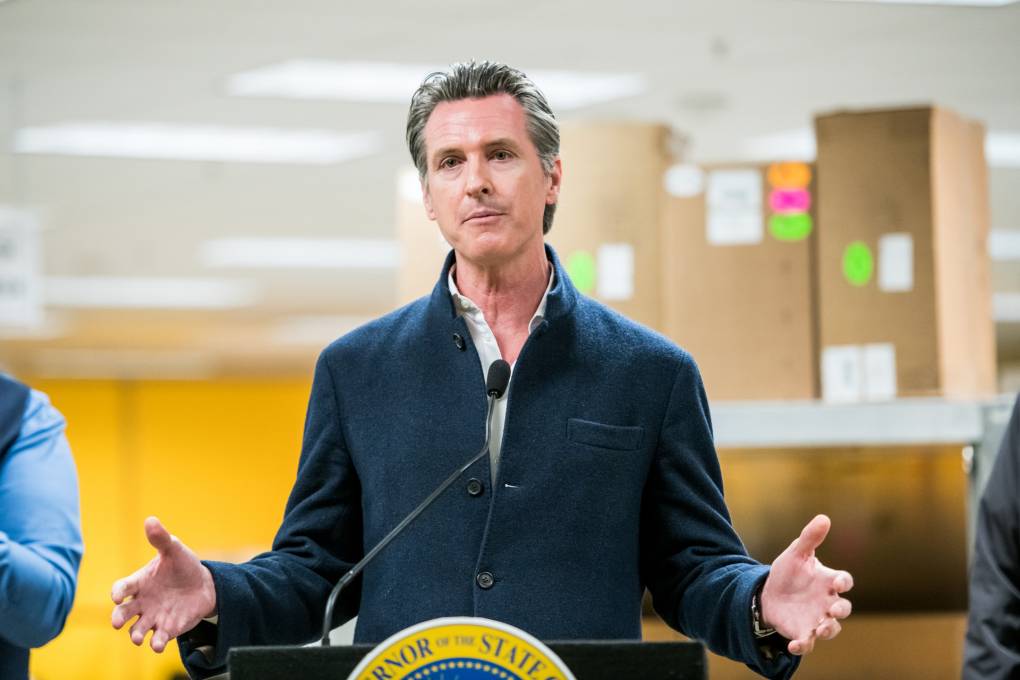
"caption": "Gov. Gavin Newsom speaks to the the media during a press conference at a super vaccination site at San Diego's Petco Park on February 8, 2021. The Newsom administration projects Californians will earn $185 billion from capital gains, resulting in $18.5 billion in tax revenue for the state.",
"description": "A photo of California Gov. Gavin Newsom as he speaks to members of the media during a press conference at Petco Park on Feb. 8, 2021 in San Diego during a visit to the Petco Park Vaccination Supersite.",
"title": "US-HEALTH-VIRUS-VACCINE",
"credit": "Sandy Huffaker/Pool/AFP via Getty Images",
"status": "inherit",
"altTag": null,
"isLoading": false,
"fetchFailed": false
},
"news_11874922": {
"type": "attachments",
"id": "news_11874922",
"meta": {
"index": "attachments_1716263798",
"site": "news",
"id": "11874922",
"found": true
},
"parent": 11861500,
"imgSizes": {
"thumbnail": {
"file": "https://ww2.kqed.org/app/uploads/sites/10/2021/02/soldout-tunein-656x336-2021-160x82.jpg",
"width": 160,
"mimeType": "image/jpeg",
"height": 82
},
"kqedFullSize": {
"file": "https://ww2.kqed.org/app/uploads/sites/10/2021/02/soldout-tunein-656x336-2021.jpg",
"width": 656,
"height": 336
}
},
"publishDate": 1621728496,
"modified": 1621728502,
"caption": null,
"description": null,
"title": "soldout-tunein-656x336-2021",
"credit": null,
"status": "inherit",
"altTag": "Sold Out: Rethinking Housing in America Logo with illustration of houses and tent encampment",
"isLoading": false,
"fetchFailed": false
},
"news_11861693": {
"type": "attachments",
"id": "news_11861693",
"meta": {
"index": "attachments_1716263798",
"site": "news",
"id": "11861693",
"found": true
},
"parent": 11861676,
"imgSizes": {
"apple_news_ca_landscape_5_5": {
"file": "https://ww2.kqed.org/app/uploads/sites/10/2021/02/RS47372_GettyImages-1231340817-qut-1044x783.jpg",
"width": 1044,
"mimeType": "image/jpeg",
"height": 783
},
"apple_news_ca_square_4_0": {
"file": "https://ww2.kqed.org/app/uploads/sites/10/2021/02/RS47372_GettyImages-1231340817-qut-470x470.jpg",
"width": 470,
"mimeType": "image/jpeg",
"height": 470
},
"twentyfourteen-full-width": {
"file": "https://ww2.kqed.org/app/uploads/sites/10/2021/02/RS47372_GettyImages-1231340817-qut-1038x576.jpg",
"width": 1038,
"mimeType": "image/jpeg",
"height": 576
},
"thumbnail": {
"file": "https://ww2.kqed.org/app/uploads/sites/10/2021/02/RS47372_GettyImages-1231340817-qut-160x107.jpg",
"width": 160,
"mimeType": "image/jpeg",
"height": 107
},
"post-thumbnail": {
"file": "https://ww2.kqed.org/app/uploads/sites/10/2021/02/RS47372_GettyImages-1231340817-qut-672x372.jpg",
"width": 672,
"mimeType": "image/jpeg",
"height": 372
},
"kqedFullSize": {
"file": "https://ww2.kqed.org/app/uploads/sites/10/2021/02/RS47372_GettyImages-1231340817-qut.jpg",
"width": 1920,
"height": 1280
},
"apple_news_ca_landscape_4_7": {
"file": "https://ww2.kqed.org/app/uploads/sites/10/2021/02/RS47372_GettyImages-1231340817-qut-632x474.jpg",
"width": 632,
"mimeType": "image/jpeg",
"height": 474
},
"large": {
"file": "https://ww2.kqed.org/app/uploads/sites/10/2021/02/RS47372_GettyImages-1231340817-qut-1020x680.jpg",
"width": 1020,
"mimeType": "image/jpeg",
"height": 680
},
"apple_news_ca_landscape_4_0": {
"file": "https://ww2.kqed.org/app/uploads/sites/10/2021/02/RS47372_GettyImages-1231340817-qut-536x402.jpg",
"width": 536,
"mimeType": "image/jpeg",
"height": 402
},
"apple_news_ca_portrait_12_9": {
"file": "https://ww2.kqed.org/app/uploads/sites/10/2021/02/RS47372_GettyImages-1231340817-qut-1122x1280.jpg",
"width": 1122,
"mimeType": "image/jpeg",
"height": 1280
},
"medium": {
"file": "https://ww2.kqed.org/app/uploads/sites/10/2021/02/RS47372_GettyImages-1231340817-qut-800x533.jpg",
"width": 800,
"mimeType": "image/jpeg",
"height": 533
},
"apple_news_ca_portrait_4_0": {
"file": "https://ww2.kqed.org/app/uploads/sites/10/2021/02/RS47372_GettyImages-1231340817-qut-354x472.jpg",
"width": 354,
"mimeType": "image/jpeg",
"height": 472
},
"apple_news_ca_portrait_9_7": {
"file": "https://ww2.kqed.org/app/uploads/sites/10/2021/02/RS47372_GettyImages-1231340817-qut-840x1120.jpg",
"width": 840,
"mimeType": "image/jpeg",
"height": 1120
},
"apple_news_ca_landscape_12_9": {
"file": "https://ww2.kqed.org/app/uploads/sites/10/2021/02/RS47372_GettyImages-1231340817-qut-1832x1280.jpg",
"width": 1832,
"mimeType": "image/jpeg",
"height": 1280
},
"apple_news_ca_square_9_7": {
"file": "https://ww2.kqed.org/app/uploads/sites/10/2021/02/RS47372_GettyImages-1231340817-qut-1104x1104.jpg",
"width": 1104,
"mimeType": "image/jpeg",
"height": 1104
},
"1536x1536": {
"file": "https://ww2.kqed.org/app/uploads/sites/10/2021/02/RS47372_GettyImages-1231340817-qut-1536x1024.jpg",
"width": 1536,
"mimeType": "image/jpeg",
"height": 1024
},
"apple_news_ca_portrait_4_7": {
"file": "https://ww2.kqed.org/app/uploads/sites/10/2021/02/RS47372_GettyImages-1231340817-qut-414x552.jpg",
"width": 414,
"mimeType": "image/jpeg",
"height": 552
},
"apple_news_ca_square_12_9": {
"file": "https://ww2.kqed.org/app/uploads/sites/10/2021/02/RS47372_GettyImages-1231340817-qut-1472x1280.jpg",
"width": 1472,
"mimeType": "image/jpeg",
"height": 1280
},
"apple_news_ca_portrait_5_5": {
"file": "https://ww2.kqed.org/app/uploads/sites/10/2021/02/RS47372_GettyImages-1231340817-qut-687x916.jpg",
"width": 687,
"mimeType": "image/jpeg",
"height": 916
},
"apple_news_ca_square_4_7": {
"file": "https://ww2.kqed.org/app/uploads/sites/10/2021/02/RS47372_GettyImages-1231340817-qut-550x550.jpg",
"width": 550,
"mimeType": "image/jpeg",
"height": 550
},
"apple_news_ca_landscape_9_7": {
"file": "https://ww2.kqed.org/app/uploads/sites/10/2021/02/RS47372_GettyImages-1231340817-qut-1376x1032.jpg",
"width": 1376,
"mimeType": "image/jpeg",
"height": 1032
},
"apple_news_ca_square_5_5": {
"file": "https://ww2.kqed.org/app/uploads/sites/10/2021/02/RS47372_GettyImages-1231340817-qut-912x912.jpg",
"width": 912,
"mimeType": "image/jpeg",
"height": 912
}
},
"publishDate": 1614110355,
"modified": 1614114731,
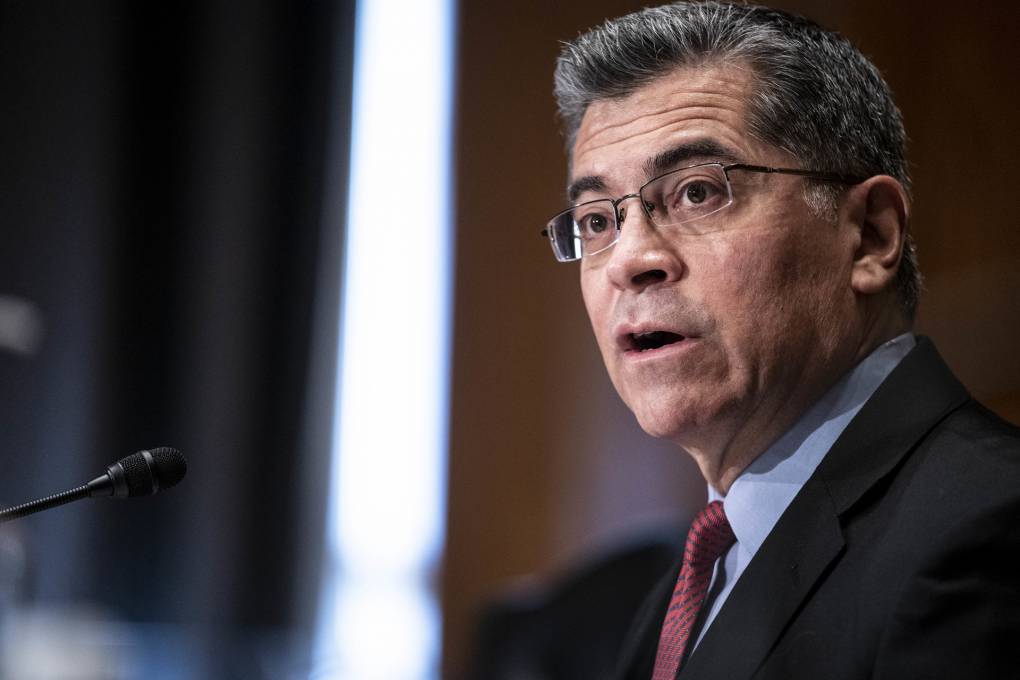
"caption": "California Attorney General Xavier Becerra, President Joe Biden's nominee for Secretary of Health and Human Services, testifies during his first Senate confirmation hearing on Feb. 23, 2021.",
"description": "California Attorney General Xavier Becerra, President Biden's nominee for Secretary of Health and Human Services, testifies during his first Senate confirmation hearing on Feb. 23, 2021.",
"title": "US-POLITICS-HEARING-HEALTH",
"credit": "Sarah Silbiger/POOL/AFP via Getty Images",
"status": "inherit",
"altTag": null,
"isLoading": false,
"fetchFailed": false
},
"news_11854196": {
"type": "attachments",
"id": "news_11854196",
"meta": {
"index": "attachments_1716263798",
"site": "news",
"id": "11854196",
"found": true
},
"parent": 11854170,
"imgSizes": {
"apple_news_ca_landscape_5_5": {
"file": "https://ww2.kqed.org/app/uploads/sites/10/2021/01/RS42402_047_KQED_BethLaBerge_BloomEnergy_Newsom_03282020-qut-1044x783.jpg",
"width": 1044,
"mimeType": "image/jpeg",
"height": 783
},
"apple_news_ca_square_4_0": {
"file": "https://ww2.kqed.org/app/uploads/sites/10/2021/01/RS42402_047_KQED_BethLaBerge_BloomEnergy_Newsom_03282020-qut-470x470.jpg",
"width": 470,
"mimeType": "image/jpeg",
"height": 470
},
"twentyfourteen-full-width": {
"file": "https://ww2.kqed.org/app/uploads/sites/10/2021/01/RS42402_047_KQED_BethLaBerge_BloomEnergy_Newsom_03282020-qut-1038x576.jpg",
"width": 1038,
"mimeType": "image/jpeg",
"height": 576
},
"thumbnail": {
"file": "https://ww2.kqed.org/app/uploads/sites/10/2021/01/RS42402_047_KQED_BethLaBerge_BloomEnergy_Newsom_03282020-qut-160x107.jpg",
"width": 160,
"mimeType": "image/jpeg",
"height": 107
},
"post-thumbnail": {
"file": "https://ww2.kqed.org/app/uploads/sites/10/2021/01/RS42402_047_KQED_BethLaBerge_BloomEnergy_Newsom_03282020-qut-672x372.jpg",
"width": 672,
"mimeType": "image/jpeg",
"height": 372
},
"kqedFullSize": {
"file": "https://ww2.kqed.org/app/uploads/sites/10/2021/01/RS42402_047_KQED_BethLaBerge_BloomEnergy_Newsom_03282020-qut.jpg",
"width": 1920,
"height": 1280
},
"apple_news_ca_landscape_4_7": {
"file": "https://ww2.kqed.org/app/uploads/sites/10/2021/01/RS42402_047_KQED_BethLaBerge_BloomEnergy_Newsom_03282020-qut-632x474.jpg",
"width": 632,
"mimeType": "image/jpeg",
"height": 474
},
"large": {
"file": "https://ww2.kqed.org/app/uploads/sites/10/2021/01/RS42402_047_KQED_BethLaBerge_BloomEnergy_Newsom_03282020-qut-1020x680.jpg",
"width": 1020,
"mimeType": "image/jpeg",
"height": 680
},
"apple_news_ca_landscape_4_0": {
"file": "https://ww2.kqed.org/app/uploads/sites/10/2021/01/RS42402_047_KQED_BethLaBerge_BloomEnergy_Newsom_03282020-qut-536x402.jpg",
"width": 536,
"mimeType": "image/jpeg",
"height": 402
},
"apple_news_ca_portrait_12_9": {
"file": "https://ww2.kqed.org/app/uploads/sites/10/2021/01/RS42402_047_KQED_BethLaBerge_BloomEnergy_Newsom_03282020-qut-1122x1280.jpg",
"width": 1122,
"mimeType": "image/jpeg",
"height": 1280
},
"medium": {
"file": "https://ww2.kqed.org/app/uploads/sites/10/2021/01/RS42402_047_KQED_BethLaBerge_BloomEnergy_Newsom_03282020-qut-800x533.jpg",
"width": 800,
"mimeType": "image/jpeg",
"height": 533
},
"apple_news_ca_portrait_4_0": {
"file": "https://ww2.kqed.org/app/uploads/sites/10/2021/01/RS42402_047_KQED_BethLaBerge_BloomEnergy_Newsom_03282020-qut-354x472.jpg",
"width": 354,
"mimeType": "image/jpeg",
"height": 472
},
"apple_news_ca_portrait_9_7": {
"file": "https://ww2.kqed.org/app/uploads/sites/10/2021/01/RS42402_047_KQED_BethLaBerge_BloomEnergy_Newsom_03282020-qut-840x1120.jpg",
"width": 840,
"mimeType": "image/jpeg",
"height": 1120
},
"apple_news_ca_landscape_12_9": {
"file": "https://ww2.kqed.org/app/uploads/sites/10/2021/01/RS42402_047_KQED_BethLaBerge_BloomEnergy_Newsom_03282020-qut-1832x1280.jpg",
"width": 1832,
"mimeType": "image/jpeg",
"height": 1280
},
"apple_news_ca_square_9_7": {
"file": "https://ww2.kqed.org/app/uploads/sites/10/2021/01/RS42402_047_KQED_BethLaBerge_BloomEnergy_Newsom_03282020-qut-1104x1104.jpg",
"width": 1104,
"mimeType": "image/jpeg",
"height": 1104
},
"1536x1536": {
"file": "https://ww2.kqed.org/app/uploads/sites/10/2021/01/RS42402_047_KQED_BethLaBerge_BloomEnergy_Newsom_03282020-qut-1536x1024.jpg",
"width": 1536,
"mimeType": "image/jpeg",
"height": 1024
},
"apple_news_ca_portrait_4_7": {
"file": "https://ww2.kqed.org/app/uploads/sites/10/2021/01/RS42402_047_KQED_BethLaBerge_BloomEnergy_Newsom_03282020-qut-414x552.jpg",
"width": 414,
"mimeType": "image/jpeg",
"height": 552
},
"apple_news_ca_square_12_9": {
"file": "https://ww2.kqed.org/app/uploads/sites/10/2021/01/RS42402_047_KQED_BethLaBerge_BloomEnergy_Newsom_03282020-qut-1472x1280.jpg",
"width": 1472,
"mimeType": "image/jpeg",
"height": 1280
},
"apple_news_ca_portrait_5_5": {
"file": "https://ww2.kqed.org/app/uploads/sites/10/2021/01/RS42402_047_KQED_BethLaBerge_BloomEnergy_Newsom_03282020-qut-687x916.jpg",
"width": 687,
"mimeType": "image/jpeg",
"height": 916
},
"apple_news_ca_square_4_7": {
"file": "https://ww2.kqed.org/app/uploads/sites/10/2021/01/RS42402_047_KQED_BethLaBerge_BloomEnergy_Newsom_03282020-qut-550x550.jpg",
"width": 550,
"mimeType": "image/jpeg",
"height": 550
},
"apple_news_ca_landscape_9_7": {
"file": "https://ww2.kqed.org/app/uploads/sites/10/2021/01/RS42402_047_KQED_BethLaBerge_BloomEnergy_Newsom_03282020-qut-1376x1032.jpg",
"width": 1376,
"mimeType": "image/jpeg",
"height": 1032
},
"apple_news_ca_square_5_5": {
"file": "https://ww2.kqed.org/app/uploads/sites/10/2021/01/RS42402_047_KQED_BethLaBerge_BloomEnergy_Newsom_03282020-qut-912x912.jpg",
"width": 912,
"mimeType": "image/jpeg",
"height": 912
}
},
"publishDate": 1610051607,
"modified": 1610060366,
"caption": "California Gov. Gavin Newsom speaks during a press conference at the Bloom Energy Sunnyvale campus on March 28, 2020.",
"description": null,
"title": "RS42402_047_KQED_BethLaBerge_BloomEnergy_Newsom_03282020-qut",
"credit": "Beth LaBerge/KQED",
"status": "inherit",
"altTag": "Gavin Newsom speaking",
"isLoading": false,
"fetchFailed": false
},
"news_11861173": {
"type": "attachments",
"id": "news_11861173",
"meta": {
"index": "attachments_1716263798",
"site": "news",
"id": "11861173",
"found": true
},
"parent": 11861149,
"imgSizes": {
"apple_news_ca_landscape_5_5": {
"file": "https://ww2.kqed.org/app/uploads/sites/10/2021/02/RS37617_Image-from-iOS-49-qut-1044x783.jpg",
"width": 1044,
"mimeType": "image/jpeg",
"height": 783
},
"apple_news_ca_square_4_0": {
"file": "https://ww2.kqed.org/app/uploads/sites/10/2021/02/RS37617_Image-from-iOS-49-qut-470x470.jpg",
"width": 470,
"mimeType": "image/jpeg",
"height": 470
},
"twentyfourteen-full-width": {
"file": "https://ww2.kqed.org/app/uploads/sites/10/2021/02/RS37617_Image-from-iOS-49-qut-1038x576.jpg",
"width": 1038,
"mimeType": "image/jpeg",
"height": 576
},
"thumbnail": {
"file": "https://ww2.kqed.org/app/uploads/sites/10/2021/02/RS37617_Image-from-iOS-49-qut-160x120.jpg",
"width": 160,
"mimeType": "image/jpeg",
"height": 120
},
"post-thumbnail": {
"file": "https://ww2.kqed.org/app/uploads/sites/10/2021/02/RS37617_Image-from-iOS-49-qut-672x372.jpg",
"width": 672,
"mimeType": "image/jpeg",
"height": 372
},
"kqedFullSize": {
"file": "https://ww2.kqed.org/app/uploads/sites/10/2021/02/RS37617_Image-from-iOS-49-qut.jpg",
"width": 1920,
"height": 1440
},
"apple_news_ca_landscape_4_7": {
"file": "https://ww2.kqed.org/app/uploads/sites/10/2021/02/RS37617_Image-from-iOS-49-qut-632x474.jpg",
"width": 632,
"mimeType": "image/jpeg",
"height": 474
},
"large": {
"file": "https://ww2.kqed.org/app/uploads/sites/10/2021/02/RS37617_Image-from-iOS-49-qut-1020x765.jpg",
"width": 1020,
"mimeType": "image/jpeg",
"height": 765
},
"apple_news_ca_landscape_4_0": {
"file": "https://ww2.kqed.org/app/uploads/sites/10/2021/02/RS37617_Image-from-iOS-49-qut-536x402.jpg",
"width": 536,
"mimeType": "image/jpeg",
"height": 402
},
"apple_news_ca_portrait_12_9": {
"file": "https://ww2.kqed.org/app/uploads/sites/10/2021/02/RS37617_Image-from-iOS-49-qut-1122x1440.jpg",
"width": 1122,
"mimeType": "image/jpeg",
"height": 1440
},
"medium": {
"file": "https://ww2.kqed.org/app/uploads/sites/10/2021/02/RS37617_Image-from-iOS-49-qut-800x600.jpg",
"width": 800,
"mimeType": "image/jpeg",
"height": 600
},
"apple_news_ca_portrait_4_0": {
"file": "https://ww2.kqed.org/app/uploads/sites/10/2021/02/RS37617_Image-from-iOS-49-qut-354x472.jpg",
"width": 354,
"mimeType": "image/jpeg",
"height": 472
},
"apple_news_ca_portrait_9_7": {
"file": "https://ww2.kqed.org/app/uploads/sites/10/2021/02/RS37617_Image-from-iOS-49-qut-840x1120.jpg",
"width": 840,
"mimeType": "image/jpeg",
"height": 1120
},
"apple_news_ca_landscape_12_9": {
"file": "https://ww2.kqed.org/app/uploads/sites/10/2021/02/RS37617_Image-from-iOS-49-qut-1832x1374.jpg",
"width": 1832,
"mimeType": "image/jpeg",
"height": 1374
},
"apple_news_ca_square_9_7": {
"file": "https://ww2.kqed.org/app/uploads/sites/10/2021/02/RS37617_Image-from-iOS-49-qut-1104x1104.jpg",
"width": 1104,
"mimeType": "image/jpeg",
"height": 1104
},
"1536x1536": {
"file": "https://ww2.kqed.org/app/uploads/sites/10/2021/02/RS37617_Image-from-iOS-49-qut-1536x1152.jpg",
"width": 1536,
"mimeType": "image/jpeg",
"height": 1152
},
"apple_news_ca_portrait_4_7": {
"file": "https://ww2.kqed.org/app/uploads/sites/10/2021/02/RS37617_Image-from-iOS-49-qut-414x552.jpg",
"width": 414,
"mimeType": "image/jpeg",
"height": 552
},
"apple_news_ca_square_12_9": {
"file": "https://ww2.kqed.org/app/uploads/sites/10/2021/02/RS37617_Image-from-iOS-49-qut-1472x1440.jpg",
"width": 1472,
"mimeType": "image/jpeg",
"height": 1440
},
"apple_news_ca_portrait_5_5": {
"file": "https://ww2.kqed.org/app/uploads/sites/10/2021/02/RS37617_Image-from-iOS-49-qut-687x916.jpg",
"width": 687,
"mimeType": "image/jpeg",
"height": 916
},
"apple_news_ca_square_4_7": {
"file": "https://ww2.kqed.org/app/uploads/sites/10/2021/02/RS37617_Image-from-iOS-49-qut-550x550.jpg",
"width": 550,
"mimeType": "image/jpeg",
"height": 550
},
"apple_news_ca_landscape_9_7": {
"file": "https://ww2.kqed.org/app/uploads/sites/10/2021/02/RS37617_Image-from-iOS-49-qut-1376x1032.jpg",
"width": 1376,
"mimeType": "image/jpeg",
"height": 1032
},
"apple_news_ca_square_5_5": {
"file": "https://ww2.kqed.org/app/uploads/sites/10/2021/02/RS37617_Image-from-iOS-49-qut-912x912.jpg",
"width": 912,
"mimeType": "image/jpeg",
"height": 912
}
},
"publishDate": 1613761645,
"modified": 1613761806,
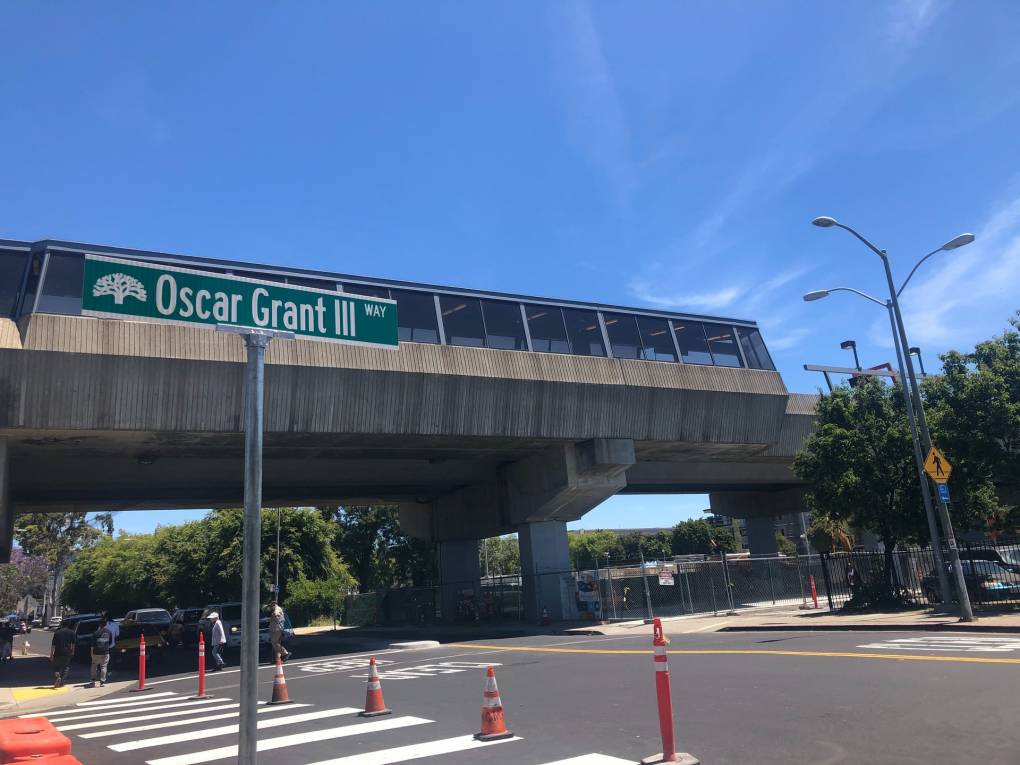
"caption": "BART named a short street near Fruitvale Station after Oscar Grant in 2019.",
"description": "BART named a short street near Fruitvale Station after Oscar Grant in 2019.",
"title": "RS37617_Image from iOS (49)-qut",
"credit": "Sonja Hutson/KQED",
"status": "inherit",
"altTag": null,
"isLoading": false,
"fetchFailed": false
}
},
"audioPlayerReducer": {
"postId": "stream_live",
"isPaused": true,
"isPlaying": false,
"pfsActive": false,
"pledgeModalIsOpen": true,
"playerDrawerIsOpen": false,
"liveAudioPlayStartedAt": 0,
"liveAudioPlayContext": ""
},
"authorsReducer": {
"byline_news_11863739": {
"type": "authors",
"id": "byline_news_11863739",
"meta": {
"override": true
},
"slug": "byline_news_11863739",
"name": "\u003ca href=\"https://calmatters.org/author/anaibarra/\">Ana B. Ibarra\u003c/a>",
"isLoading": false
},
"byline_news_11862584": {
"type": "authors",
"id": "byline_news_11862584",
"meta": {
"override": true
},
"slug": "byline_news_11862584",
"name": "The Associated Press",
"isLoading": false
},
"byline_news_11862460": {
"type": "authors",
"id": "byline_news_11862460",
"meta": {
"override": true
},
"slug": "byline_news_11862460",
"name": "Adam Beam \u003cbr> The Associated Press",
"isLoading": false
},
"byline_news_11861676": {
"type": "authors",
"id": "byline_news_11861676",
"meta": {
"override": true
},
"slug": "byline_news_11861676",
"name": "Ricardo Alonso-Zaldivar \u003cbr> Associated Press",
"isLoading": false
},
"byline_news_11861667": {
"type": "authors",
"id": "byline_news_11861667",
"meta": {
"override": true
},
"slug": "byline_news_11861667",
"name": "Adam Beam \u003cbr> The Associated Press",
"isLoading": false
},
"gmarzorati": {
"type": "authors",
"id": "227",
"meta": {
"index": "authors_1716337520",
"id": "227",
"found": true
},
"name": "Guy Marzorati",
"firstName": "Guy",
"lastName": "Marzorati",
"slug": "gmarzorati",
"email": "gmarzorati@KQED.org",
"display_author_email": true,
"staff_mastheads": [
"news"
],
"title": "Correspondent",
"bio": "Guy Marzorati is a correspondent on KQED's California Politics and Government Desk, based in San Jose. A graduate of Santa Clara University, Guy joined KQED in 2013. He reports on state and local politics and produces KQED's digital voter guide.",
"avatar": "https://secure.gravatar.com/avatar/e7038b8dbfd55b104369b76b1cd0b9de?s=600&d=blank&r=g",
"twitter": "guymarzorati",
"facebook": null,
"instagram": null,
"linkedin": null,
"sites": [
{
"site": "",
"roles": [
"editor"
]
},
{
"site": "news",
"roles": [
"editor"
]
},
{
"site": "science",
"roles": [
"editor"
]
},
{
"site": "forum",
"roles": [
"editor"
]
},
{
"site": "elections",
"roles": [
"editor"
]
},
{
"site": "liveblog",
"roles": [
"editor"
]
}
],
"headData": {
"title": "Guy Marzorati | KQED",
"description": "Correspondent",
"ogImgSrc": "https://secure.gravatar.com/avatar/e7038b8dbfd55b104369b76b1cd0b9de?s=600&d=blank&r=g",
"twImgSrc": "https://secure.gravatar.com/avatar/e7038b8dbfd55b104369b76b1cd0b9de?s=600&d=blank&r=g"
},
"isLoading": false,
"link": "/author/gmarzorati"
},
"sasha-khokha": {
"type": "authors",
"id": "254",
"meta": {
"index": "authors_1716337520",
"id": "254",
"found": true
},
"name": "Sasha Khokha",
"firstName": "Sasha",
"lastName": "Khokha",
"slug": "sasha-khokha",
"email": "skhokha@kqed.org",
"display_author_email": true,
"staff_mastheads": [
"news"
],
"title": "Host, The California Report Magazine",
"bio": "Sasha Khokha is the host of \u003cem>The California Report's \u003c/em> weekly magazine program, which takes listeners on sound-rich excursions to meet the people that make the Golden State unique -- through audio documentaries and long-form stories. As \u003cem>The California Report's\u003c/em> Central Valley Bureau Chief based in Fresno for nearly a dozen years, Sasha brought the lives and concerns of rural Californians to listeners around the state. Her reporting helped expose the hidden price immigrant women janitors and farmworkers may pay to keep their jobs: sexual assault at work. It inspired two new California laws to protect them from sexual harassment. She was a key member of the reporting team for the Frontline film \u003cem>Rape on the Night Shift, \u003c/em>which was nominated for two national Emmys. Sasha has also won a national Edward R. Murrow and a national PRNDI award for investigative reporting, as well as multiple prizes from the Society for Professional Journalists. Sasha is a proud alum of the UC Berkeley Graduate School of Journalism and Brown University and a member of the South Asian Journalists Association.",
"avatar": "https://secure.gravatar.com/avatar/e4b5e1541aaeea2aa356aa1fb2a68950?s=600&d=blank&r=g",
"twitter": "KQEDSashaKhokha",
"facebook": null,
"instagram": null,
"linkedin": null,
"sites": [
{
"site": "news",
"roles": [
"editor"
]
},
{
"site": "stateofhealth",
"roles": [
"author"
]
},
{
"site": "science",
"roles": [
"author"
]
},
{
"site": "quest",
"roles": [
"subscriber"
]
}
],
"headData": {
"title": "Sasha Khokha | KQED",
"description": "Host, The California Report Magazine",
"ogImgSrc": "https://secure.gravatar.com/avatar/e4b5e1541aaeea2aa356aa1fb2a68950?s=600&d=blank&r=g",
"twImgSrc": "https://secure.gravatar.com/avatar/e4b5e1541aaeea2aa356aa1fb2a68950?s=600&d=blank&r=g"
},
"isLoading": false,
"link": "/author/sasha-khokha"
},
"aemslie": {
"type": "authors",
"id": "3206",
"meta": {
"index": "authors_1716337520",
"id": "3206",
"found": true
},
"name": "Alex Emslie",
"firstName": "Alex",
"lastName": "Emslie",
"slug": "aemslie",
"email": "aemslie@kqed.org",
"display_author_email": true,
"staff_mastheads": [
"news"
],
"title": "KQED Senior Editor",
"bio": "Alex Emslie is senior editor of talent and development at KQED, where he manages dozens of early career journalists and oversees news department internships.\r\n\r\nHe is a former carpenter and proud graduate of City College of San Francisco and San Francisco State University, where he studied journalism and criminal justice before joining KQED in 2013.\r\n\r\nAlex produced investigative journalism focused on \u003ca href=\"https://www.kqed.org/news/11667594/the-trials-of-marvin-mutch-video\">criminal justice\u003c/a> and policing for most of a decade. He has broken major stories about \u003ca href=\"https://www.kqed.org/news/135682/amid-a-series-of-vallejo-police-shootings-one-officers-name-stands-out\">police use of deadly force\u003c/a>, \u003ca href=\"https://www.kqed.org/news/10454955/racist-texts-prompt-sfpd-internal-investigation\">officer misconduct\u003c/a> and \u003ca href=\"https://www.kqed.org/news/11712239/terrorist-or-troll-judge-to-weigh-whether-oakland-man-really-intended-to-attack-bay-area\">other\u003c/a> \u003ca href=\"https://www.kqed.org/news/11221414/hayward-paid-159000-to-husband-of-retired-police-chief-documents-show\">high\u003c/a>-\u003ca href=\"https://www.kqed.org/news/10622762/the-forgotten-tracking-two-homicides-in-san-francisco-public-housing\">profile\u003c/a> \u003ca href=\"https://www.kqed.org/news/11624516/federal-agency-promoted-ranger-just-months-after-his-gun-was-stolen-and-used-in-steinle-killing\">cases\u003c/a>. He co-founded the \u003ca href=\"https://projects.scpr.org/california-reporting-project/\">California Reporting Project\u003c/a> in 2019 to obtain and report on previously confidential police internal investigations. The effort produced well over 100 original stories and changed the course of multiple criminal cases.\r\n\r\nHis work has been recognized with numerous journalism awards, including a national Edward R. Murrow award for several years of \u003ca href=\"https://www.kqed.org/news/11688481/sfpd-officers-in-mario-woods-case-recount-shooting-in-newly-filed-depositions\">reporting\u003c/a> on the San Francisco Police shooting of Mario Woods. His \u003ca href=\"https://www.kqed.org/news/147854/half-of-those-killed-by-san-francisco-police-are-mentally-ill\">reporting\u003c/a> on police killings of people in psychiatric crisis was cited in amicus briefs before the U.S. Supreme Court.\r\n\r\nAlex now enjoys mentoring the next generation of journalists at KQED.",
"avatar": "https://secure.gravatar.com/avatar/e691e65209f20e9da202bd730ead5663?s=600&d=blank&r=g",
"twitter": "SFNewsReporter",
"facebook": null,
"instagram": null,
"linkedin": null,
"sites": [
{
"site": "arts",
"roles": [
"editor"
]
},
{
"site": "news",
"roles": [
"editor"
]
},
{
"site": "mindshift",
"roles": [
"editor"
]
},
{
"site": "stateofhealth",
"roles": [
"editor"
]
},
{
"site": "science",
"roles": [
"administrator"
]
}
],
"headData": {
"title": "Alex Emslie | KQED",
"description": "KQED Senior Editor",
"ogImgSrc": "https://secure.gravatar.com/avatar/e691e65209f20e9da202bd730ead5663?s=600&d=blank&r=g",
"twImgSrc": "https://secure.gravatar.com/avatar/e691e65209f20e9da202bd730ead5663?s=600&d=blank&r=g"
},
"isLoading": false,
"link": "/author/aemslie"
},
"mlagos": {
"type": "authors",
"id": "3239",
"meta": {
"index": "authors_1716337520",
"id": "3239",
"found": true
},
"name": "Marisa Lagos",
"firstName": "Marisa",
"lastName": "Lagos",
"slug": "mlagos",
"email": "mlagos@kqed.org",
"display_author_email": false,
"staff_mastheads": [
"news"
],
"title": "KQED Contributor",
"bio": "Marisa Lagos is a correspondent for KQED’s California Politics and Government Desk and co-hosts the award-winning show and podcast, Political Breakdown. At KQED, Lagos also conducts reporting, analysis and investigations into state, local and national politics for radio, TV, online and onstage. In 2022, she and co-host, Scott Shafer, moderated the only gubernatorial debate in California. In 2020, the \u003ci>Washington Post\u003c/i> named her one of the top political journalists in California; she was nominated for a Peabody and won several other awards for her work investigating the 2017 California wildfires. She has worked at the \u003ci>San Francisco Chronicle\u003c/i>, \u003ci>San Francisco Examiner\u003c/i> and \u003ci>Los Angeles Times\u003c/i>. A UC Santa Barbara graduate, she lives in San Francisco with her two sons and husband.",
"avatar": "https://secure.gravatar.com/avatar/a261a0d3696fc066871ef96b85b5e7d2?s=600&d=blank&r=g",
"twitter": "@mlagos",
"facebook": null,
"instagram": null,
"linkedin": null,
"sites": [
{
"site": "arts",
"roles": [
"author"
]
},
{
"site": "news",
"roles": [
"editor"
]
},
{
"site": "science",
"roles": [
"editor"
]
},
{
"site": "forum",
"roles": [
"author"
]
},
{
"site": "liveblog",
"roles": [
"author"
]
}
],
"headData": {
"title": "Marisa Lagos | KQED",
"description": "KQED Contributor",
"ogImgSrc": "https://secure.gravatar.com/avatar/a261a0d3696fc066871ef96b85b5e7d2?s=600&d=blank&r=g",
"twImgSrc": "https://secure.gravatar.com/avatar/a261a0d3696fc066871ef96b85b5e7d2?s=600&d=blank&r=g"
},
"isLoading": false,
"link": "/author/mlagos"
},
"slewis": {
"type": "authors",
"id": "8676",
"meta": {
"index": "authors_1716337520",
"id": "8676",
"found": true
},
"name": "Sukey Lewis",
"firstName": "Sukey",
"lastName": "Lewis",
"slug": "slewis",
"email": "slewis@kqed.org",
"display_author_email": true,
"staff_mastheads": [
"news"
],
"title": "KQED Contributor",
"bio": "Sukey Lewis is a criminal justice reporter and host of \u003cem>On Our Watch\u003c/em>, a new podcast from NPR and KQED about the shadow world of police discipline. In 2018, she co-founded the California Reporting Project, a coalition of newsrooms across the state focused on obtaining previously sealed internal affairs records from law enforcement. In addition to her reporting on police accountability, Sukey has investigated the bail bonds industry, California's wildfires and the high cost of prison phone calls. Sukey earned a master's degree in journalism from the University of California at Berkeley. Send news tips to slewis@kqed.org.",
"avatar": "https://secure.gravatar.com/avatar/03fd6b21024f99d8b0a1966654586de7?s=600&d=blank&r=g",
"twitter": "SukeyLewis",
"facebook": null,
"instagram": null,
"linkedin": null,
"sites": [
{
"site": "news",
"roles": [
"author",
"edit_others_posts"
]
}
],
"headData": {
"title": "Sukey Lewis | KQED",
"description": "KQED Contributor",
"ogImgSrc": "https://secure.gravatar.com/avatar/03fd6b21024f99d8b0a1966654586de7?s=600&d=blank&r=g",
"twImgSrc": "https://secure.gravatar.com/avatar/03fd6b21024f99d8b0a1966654586de7?s=600&d=blank&r=g"
},
"isLoading": false,
"link": "/author/slewis"
},
"msolomon": {
"type": "authors",
"id": "11651",
"meta": {
"index": "authors_1716337520",
"id": "11651",
"found": true
},
"name": "Molly Solomon",
"firstName": "Molly",
"lastName": "Solomon",
"slug": "msolomon",
"email": "msolomon@KQED.org",
"display_author_email": false,
"staff_mastheads": [
"news"
],
"title": "Senior Editor",
"bio": "Molly Solomon is the senior editor of KQED's California Politics and Government Desk. Previously, she was the station's editor-at-large, with a focus on editing early childhood education, politics, and criminal justice. Before that, she managed and edited statewide election coverage for The California Newsroom, a collaboration of local public radio stations, CalMatters and NPR. Molly joined KQED in 2019 to launch the station’s housing affordability desk, where she reported on homelessness, evictions and is the co-host of KQED’s housing podcast, SOLD OUT: Rethinking Housing in America. Before that, she was the Southwest Washington Bureau Chief for Oregon Public Broadcasting and a reporter at Hawaii Public Radio. Her stories have aired on NPR’s \u003cem>Morning Edition\u003c/em>, \u003cem>All Things Considered\u003c/em>, \u003cem>Here & Now\u003c/em>, \u003cem>Science Friday\u003c/em> and \u003cem>Marketplace\u003c/em>. Molly's award-winning reporting has been honored by the Best of the West, Edward R. Murrow awards, Society of Professional Journalists, National Headliner Awards, and the Asian American Journalists Association. Born and raised in Berkeley, Molly is a big fan of burritos and her scruffy terrier, Ollie.",
"avatar": "https://secure.gravatar.com/avatar/9ad9794616923d81c9a79897161545bd?s=600&d=blank&r=g",
"twitter": "solomonout",
"facebook": null,
"instagram": null,
"linkedin": null,
"sites": [
{
"site": "news",
"roles": [
"editor"
]
},
{
"site": "science",
"roles": [
"editor"
]
}
],
"headData": {
"title": "Molly Solomon | KQED",
"description": "Senior Editor",
"ogImgSrc": "https://secure.gravatar.com/avatar/9ad9794616923d81c9a79897161545bd?s=600&d=blank&r=g",
"twImgSrc": "https://secure.gravatar.com/avatar/9ad9794616923d81c9a79897161545bd?s=600&d=blank&r=g"
},
"isLoading": false,
"link": "/author/msolomon"
},
"ebaldassari": {
"type": "authors",
"id": "11652",
"meta": {
"index": "authors_1716337520",
"id": "11652",
"found": true
},
"name": "Erin Baldassari",
"firstName": "Erin",
"lastName": "Baldassari",
"slug": "ebaldassari",
"email": "ebaldassari@KQED.org",
"display_author_email": true,
"staff_mastheads": [
"news"
],
"title": "Staff Writer",
"bio": "Erin Baldassari covers housing for KQED. She's a former print journalist and most recently worked as the transportation reporter for the \u003cem>Mercury News\u003c/em> and \u003cem>East Bay Times. \u003c/em>There, she focused on how the Bay Area’s housing shortage has changed the way people move around the region. She also served on the \u003cem>East Bay Times\u003c/em>’ 2017 Pulitzer Prize-winning team for coverage of the Ghost Ship Fire in Oakland. Prior to that, Erin worked as a breaking news and general assignment reporter for a variety of outlets in the Bay Area and the greater Boston area. A Tufts University alumna, Erin grew up in the foothills of the Sierra Nevada mountains and in Sonoma County. She is a life-long KQED listener.",
"avatar": "https://secure.gravatar.com/avatar/660ce35d088ca54ad606d7e941abc652?s=600&d=mm&r=g",
"twitter": "e_baldi",
"facebook": null,
"instagram": null,
"linkedin": null,
"sites": [
{
"site": "news",
"roles": [
"edit_others_posts",
"editor"
]
},
{
"site": "science",
"roles": [
"editor"
]
},
{
"site": "liveblog",
"roles": [
"editor"
]
}
],
"headData": {
"title": "Erin Baldassari | KQED",
"description": "Staff Writer",
"ogImgSrc": "https://secure.gravatar.com/avatar/660ce35d088ca54ad606d7e941abc652?s=600&d=mm&r=g",
"twImgSrc": "https://secure.gravatar.com/avatar/660ce35d088ca54ad606d7e941abc652?s=600&d=mm&r=g"
},
"isLoading": false,
"link": "/author/ebaldassari"
},
"ccabreralomeli": {
"type": "authors",
"id": "11708",
"meta": {
"index": "authors_1716337520",
"id": "11708",
"found": true
},
"name": "Carlos Cabrera-Lomelí",
"firstName": "Carlos",
"lastName": "Cabrera-Lomelí",
"slug": "ccabreralomeli",
"email": "ccabreralomeli@KQED.org",
"display_author_email": true,
"staff_mastheads": [
"news"
],
"title": "Community Reporter",
"bio": "Carlos Cabrera-Lomelí is a community reporter with KQED's digital engagement team. He also reports and co-produces for KQED's bilingual news hub KQED en Español. He grew up in San Francisco's Mission District and has previously worked with Univision, 48 Hills and REFORMA in Mexico City.",
"avatar": "https://secure.gravatar.com/avatar/c309be9665e484f887b818c89e273ecc673004f426f36b24d00a4d813a2e0518?s=600&d=blank&r=g",
"twitter": "@LomeliCabrera",
"bluesky": null,
"facebook": null,
"instagram": null,
"linkedin": null,
"sites": [
{
"site": "arts",
"roles": [
"editor"
]
},
{
"site": "news",
"roles": [
"editor"
]
},
{
"site": "about",
"roles": [
"editor"
]
},
{
"site": "science",
"roles": [
"editor"
]
},
{
"site": "perspectives",
"roles": [
"editor"
]
},
{
"site": "elections",
"roles": [
"editor"
]
},
{
"site": "liveblog",
"roles": [
"contributor"
]
}
],
"headData": {
"title": "Carlos Cabrera-Lomelí | KQED",
"description": "Community Reporter",
"ogImgSrc": "https://secure.gravatar.com/avatar/c309be9665e484f887b818c89e273ecc673004f426f36b24d00a4d813a2e0518?s=600&d=blank&r=g",
"twImgSrc": "https://secure.gravatar.com/avatar/c309be9665e484f887b818c89e273ecc673004f426f36b24d00a4d813a2e0518?s=600&d=blank&r=g"
},
"isLoading": false,
"link": "/author/ccabreralomeli"
}
},
"pagesReducer": {
"news_tag_california": {
"type": "terms",
"id": "news_18538",
"meta": {
"index": "terms_1716263798",
"site": "news",
"id": "18538",
"score": 6.8450828
},
"featImg": null,
"name": "California",
"description": null,
"taxonomy": "tag",
"headData": {
"twImgId": null,
"twTitle": null,
"ogTitle": null,
"ogImgId": null,
"twDescription": null,
"description": null,
"title": "California Archives | KQED News",
"ogDescription": null
},
"ttid": 31,
"slug": "california",
"isLoading": false,
"title": "California",
"pageMeta": {
"site": "news",
"WpPageTemplate": "page-topic-editorial",
"currentPage": 184
},
"blocks": [
{
"blockName": "kqed/post-list",
"attrs": {
"layout": "cardArticle2",
"query": "posts/news?tag=california",
"seeMore": false,
"paginated": true,
"page": 184
}
},
{
"blockName": "kqed/ad"
}
]
}
},
"pfsSessionReducer": {},
"postsReducer": {
"stream_live": {
"type": "live",
"id": "stream_live",
"audioUrl": "https://streams.kqed.org/kqedradio",
"title": "Live Stream",
"excerpt": "Live Stream information currently unavailable.",
"link": "/radio",
"featImg": "",
"label": {
"name": "KQED Live",
"link": "/"
}
},
"stream_kqedNewscast": {
"type": "posts",
"id": "stream_kqedNewscast",
"audioUrl": "https://www.kqed.org/.stream/anon/radio/RDnews/newscast.mp3?_=1",
"title": "KQED Newscast",
"featImg": "",
"label": {
"name": "88.5 FM",
"link": "/"
}
},
"news_11863474": {
"type": "posts",
"id": "news_11863474",
"meta": {
"index": "posts_1716263798",
"site": "news",
"id": "11863474",
"score": null,
"sort": [
1615251316000
]
},
"guestAuthors": [],
"slug": "local-control-in-reopening-debate-puts-scrutiny-on-elected-school-boards",
"title": "'Local Control' in Reopening Debate Puts Scrutiny on Elected School Boards",
"publishDate": 1615251316,
"format": "audio",
"headTitle": "‘Local Control’ in Reopening Debate Puts Scrutiny on Elected School Boards | KQED",
"labelTerm": {
"term": 72,
"site": "news"
},
"content": "\u003cp>When Gov. Gavin Newsom signed Assembly Bill 86 into law on Friday, he marshaled the state’s mighty resources to facilitate a return to classroom learning in thousands of public schools.\u003c/p>\n\u003cp>His signature also ends, for now, the state government’s direct involvement in California’s clamorous school reopening dispute — the latest skirmish in a decades-long debate over whether school policy in California should be driven by state or local officials.\u003c/p>\n\u003cp>\u003ca href=\"https://www.kqed.org/news/11863208/california-legislature-approves-plan-to-reopen-schools\">Under the legislation\u003c/a>, the state is paying for improved school ventilation, cleaning, tutoring and counseling needed to bring the state’s youngest kids back to class in the next month.\u003c/p>\n\u003cp>But the bill does \u003cem>not\u003c/em> force districts to bring back in-person education, thus leaving the most important details for many parents and students (reopening dates, school-day length, classroom setup) in the hands of locally elected school boards.[pullquote align=\"right\" size=\"medium\" citation=\"Pat Reilly, Democratic political consultant\"]‘Having individual school districts try to negotiate with their labor partners in the thousand-plus school districts in California, from my perspective, is like setting off a bunch of brush fires across the state.’[/pullquote]Legislators of both parties hailed AB 86 as a victory for local control, the concept of leaving decision-making power to officials closest to the voters.\u003c/p>\n\u003cp>“Everybody loves to talk about local control, it’s kind of like something sacred, like motherhood and apple pie,” said Gloria Romero, the former Democratic chair of the state Senate Education Committee.\u003c/p>\n\u003cp>But critics of the approach believe many school boards are proving ineffectual\u003ca href=\"https://www.kqed.org/news/11861466/sfusd-isnt-alone-escalating-pressures-facing-lawmakers-in-school-reopening-debate-across-bay-area\" target=\"_blank\" rel=\"noopener noreferrer\"> in the face of competing local pressures\u003c/a>. In San Francisco, parent groups want to change how school boards are constructed, arguing that a switch to mayoral appointments may produce more competent boards.\u003c/p>\n\u003cp>Others think that the decision to reopen schools is simply too important to delegate to an entanglement of forces working between the Capitol building and California classrooms — what Romero calls the “Byzantine labyrinth” that includes elected school boards, powerful teachers unions, county and state offices of education and the independently elected superintendent of public instruction.\u003c/p>\n\u003cp>“We’re finding out that local control … there are so many fingers in the pot stirring it, blocking it, adding in poison pills,” said Romero, a longtime charter school advocate. “Despite how convoluted that is, the governor has the bully pulpit.”\u003c/p>\n\u003ch3>\u003cstrong>Fear of Local ‘Brush Fires’\u003c/strong>\u003c/h3>\n\u003cp>Critics of Newsom have for months called on him to use executive authority to force teachers back into the classroom — potentially by \u003ca href=\"https://edsource.org/2021/to-help-get-kids-back-in-school-california-should-temporarily-suspend-local-collective-bargaining/646857\" target=\"_blank\" rel=\"noopener noreferrer\">suspending collective bargaining\u003c/a> at the local level.\u003c/p>\n\u003cp>“He should have shown leadership,” said Romero. “He was just, I think, embarrassingly weak and without a backbone.”\u003c/p>\n\u003cp>Now, the fate of reopening will likely be decided through the contentious negotiations taking place between school districts and unions representing teachers, bus drivers, custodians and administrators. Many large districts, including Los Angeles, San Diego and San Francisco, are unlikely to reopen by April 1, after which, the amount of grant funding in AB 86 starts to decline.\u003c/p>\n\u003cp>“Having individual school districts try to negotiate with their labor partners in the thousand-plus school districts in California, from my perspective, is like setting off a bunch of brush fires across the state,” said Pat Reilly, a Democratic political consultant and advocate with the group \u003ca href=\"https://www.openschoolsca.com/\">OpenSchoolsCA\u003c/a>.\u003c/p>\n\u003cp>After months of distance learning, legislative leaders grew impatient with the progress of local reopening talks. Some appeared flummoxed that districts hadn’t done more to resume in-person schooling when infection rates ebbed in September and October.\u003c/p>\n\u003cp>“I am normally a huge proponent of local control, but this year, local control has been a complete failure,” said state Assembly Budget Chair Phil Ting, D-San Francisco, in a hearing last month on the school reopening plan.\u003c/p>\n\u003ch3>\u003cstrong>‘A First Step’\u003c/strong>\u003c/h3>\n\u003cp>In the end, however, local control carried the day. Lawmakers hailed AB 86 for setting a uniform standard of “flexibility.”\u003c/p>\n\u003cp>[aside label=\"related coverage\" tag=\"school-reopening\"]But without a mandate, the bill might not move the needle in the most stubborn negotiations. And the legislation has no effect at all on the vast majority of middle and high school students. The plan only provides grants to bring back elementary school grades, along with one grade of middle or high school.\u003c/p>\n\u003cp>At Friday’s virtual bill-signing ceremony, Ting was left to describe the bill he authored as “a first step.”\u003c/p>\n\u003cp>“We’re going to go home to all our districts and beg all our districts to open up, use this money,” he added.\u003c/p>\n\u003cp>To be sure, the deference that Newsom and the Legislature have given to local decision-making is borne of the vast differences in public schools throughout the state.\u003c/p>\n\u003cp>“When you look at 58 counties, a thousand-plus school districts, this truly is a challenge at scale that no other state in the country is faced with,” Newsom said as he signed the legislation.\u003c/p>\n\u003cp>By comparison, former Rhode Island Gov. Gina Raimondo, a Democrat who \u003ca href=\"https://www.nytimes.com/2021/02/10/magazine/school-reopenings-rhode-island.html\" target=\"_blank\" rel=\"noopener noreferrer\">gained national recognition\u003c/a> for her work in reopening schools last year, dealt with roughly 60 districts — and the state already had control over its largest school district, in Providence.\u003c/p>\n\u003cp>California’s new legislation ensures the state will not be a hurdle for districts keen on opening their doors: There are no mandates to vaccinate teachers or reach collective bargaining agreements with unions — and districts located in counties outside of California’s purple COVID-19 tier will not be required to test students and staff for the virus.\u003c/p>\n\u003cp>Ultimately, the bill’s guarantee that 10% of the state’s vaccine doses be set aside for school employees (codifying an earlier promise made by Newsom) may be the most important provision in nudging teachers back into the classroom. In just the last week, an increasing vaccine supply and the hope of a continued decline in infections has accelerated the progress of reopening schools in large districts like \u003ca href=\"https://www.kqed.org/news/11863665/questions-linger-as-san-francisco-schools-aim-to-reopen-next-month\" target=\"_blank\" rel=\"noopener noreferrer\">San Francisco\u003c/a> and \u003ca href=\"https://www.fresnobee.com/news/local/education-lab/article249615263.html\" target=\"_blank\" rel=\"noopener noreferrer\">Fresno\u003c/a>.\u003c/p>\n\u003cp>Republicans are generally supportive of handing authority to local governments; the leading Republicans seeking to challenge Newsom in a potential recall election this year said they would also not have suspended collective bargaining rights to force reopenings. Just four GOP legislators in the state Senate and Assembly voted against the plan.\u003c/p>\n\u003cp>State Sen. Rosilicie Ochoa Bogh, R-Yucaipa, argued that “it is essential that we have local control.”\u003c/p>\n\u003cp>She recalled a recent meeting with constituents, when a frustrated audience member asked her who bears responsibility for the decisions being made at his local school.\u003c/p>\n\u003cp>“I said, ‘You are, you are ultimately in control of your local schools,’ ” said Ochoa Bogh, who served on the Yucaipa-Calimesa Joint Unified School District before her election to the Senate last year.\u003c/p>\n\u003cp>“If you’re not happy then, lo and behold, go ahead and find candidates that reflect your values and your vision of education and get them elected,” she said.\u003c/p>\n\u003ch3>\u003cstrong>Attention on School Boards \u003c/strong>\u003c/h3>\n\u003cp>In a number of cities across the state, many parents aren’t waiting for the next election to decide the fate of their school boards. Recall campaigns against individual board members have been launched in Benicia, La Mesa and San Ramon. And in San Francisco, critics of the board are pursuing a recall and a wholesale change in how members are selected.\u003c/p>\n\u003cp>Facing both impatient Sacramento lawmakers and exasperated parents, “school boards have really been stuck in the middle,” said Troy Flint, senior director of communications for the California School Boards Association.\u003c/p>\n\u003cp>“They’re dealing with parent communities which are often rife with division on this issue,” he said. “And they don’t really have the framework needed to effectively pursue negotiations on reopening, because there hasn’t until now been the standard for the state on what acceptable measures of safety are to reopen.”\u003cbr>\n[ad fullwidth]\u003cbr>\nBy and large, parents furious with the lack of progress on reopenings argue their elected boards are too aligned with local teachers unions — and thus more likely to prioritize the safety of educators over the education and \u003ca href=\"https://www.npr.org/sections/health-shots/2021/01/18/953581851/ive-tried-everything-pandemic-has-cut-options-for-kids-with-mental-illness\" target=\"_blank\" rel=\"noopener noreferrer\">mental well-being\u003c/a> of students, which have \u003ca href=\"https://www.ppic.org/publication/who-is-losing-ground-with-distance-learning-in-california/\" target=\"_blank\" rel=\"noopener noreferrer\">suffered greatly\u003c/a> during the pandemic.\u003c/p>\n\u003cp>That perceived imbalance is likely a result of shifts in education decision-making over the last half century, said Gary Hart, the former state secretary of education under Gov. Gray Davis.\u003c/p>\n\u003cp>Until the 1970s, school boards had greater control over decisions to tax and spend on local schools. That provided an incentive for business-minded community members to run for seats on the board to provide a check on members more sympathetic to teachers.\u003c/p>\n\u003cp>That began to change in 1971, when the California Supreme Court ruled that the state’s education funding scheme \u003ca href=\"https://scocal.stanford.edu/opinion/serrano-v-priest-27628\" target=\"_blank\" rel=\"noopener noreferrer\">disadvantaged students in low-income neighborhoods\u003c/a> where fewer local taxes could be raised to pay for schools. Then, in 1978, voters overwhelmingly approved Proposition 13, the landmark initiative that dramatically shrunk the amount of local property tax revenue that schools had traditionally relied on, forcing districts to feed from the trough of state revenue controlled by the Legislature and governor.\u003c/p>\n\u003cp>“School boards no longer had much overall control of their school budgets, particularly as it related to increases in spending,” Hart said. “So as a result of that, I think there was a diminishment of civic leaders serving on school boards.”\u003c/p>\n\u003cp>In their place, he said, emerged increasingly diverse school board candidates who were more aligned with the California Teachers Association.\u003c/p>\n\u003ch3>\u003cstrong>Mayoral Involvement\u003c/strong>\u003c/h3>\n\u003cp>Beyond recall campaigns, parent advocates and some supervisors in San Francisco say the answer is to \u003ca href=\"https://www.kqed.org/coronavirusliveupdates/news/11861151/new-pac-targets-san-francisco-school-board-over-reopening\" target=\"_blank\" rel=\"noopener noreferrer\">move away from a citywide election of school board members\u003c/a> — either by splitting the election into districts, or by \u003ca href=\"https://www.sfchronicle.com/local/heatherknight/article/Should-S-F-City-Hall-control-the-school-board-16005019.php\" target=\"_blank\" rel=\"noopener noreferrer\">giving the mayor direct power\u003c/a> to appoint the board.\u003c/p>\n\u003cp>“I think that there needs to be some change, what that change is, is yet to be determined,” San Francisco Mayor London Breed said in a \u003ca href=\"https://www.kqed.org/forum/2010101882236/2010101882236\" target=\"_blank\" rel=\"noopener noreferrer\">recent interview on KQED Forum\u003c/a>, when asked about the possibility of appointing the board. “I know that folks who don’t even have kids in the school district are paying very close attention to the fact that the leaders of our school district are not up for the task of doing what’s necessary to get our kids back in school.”\u003c/p>\n\u003cp>Oakland Mayor Libby Schaaf, who has joined parents at recent rallies to support reopening, was reluctant to endorse more mayoral control over schools. She told KQED she believes “shared governance in our city is the best model right now.”\u003c/p>\n\u003cp>[pullquote align=\"right\" size=\"medium\" citation=\"San Francisco Mayor London Breed\"]‘I think that there needs to be some change, what that change is, is yet to be determined.’[/pullquote]Mayors in cities such as Chicago and New York (where schools have opened) appoint a controlling share of their local school boards. But in California, efforts by mayors to play a larger role in school policy have largely fallen flat.\u003c/p>\n\u003cp>In 2000, then-Oakland Mayor Jerry Brown \u003ca href=\"https://www.kqed.org/news/11795095/direct-action\" target=\"_blank\" rel=\"noopener noreferrer\">convinced voters to pass Measure D\u003c/a>, giving him three appointments to the school board. But still lacking a majority, Brown wrestled with the board for the next few years before turning his attention to creating his own charter schools.\u003c/p>\n\u003cp>And in Los Angeles, former Mayor Antonio Villaraigosa, an adamant proponent of charter schools, received permission from the Legislature to take control of individual schools and hire the district’s superintendent. But months after those changes were enacted, \u003ca href=\"https://www.npr.org/templates/story/story.php?storyId=6663370\" target=\"_blank\" rel=\"noopener noreferrer\">they were ruled unconstitutional \u003c/a>by a Superior Court judge.\u003c/p>\n\u003cp>In recent years, school boards have trended toward even greater localized control — with hundreds of districts \u003ca href=\"https://edsource.org/2019/california-school-district-latest-to-change-board-elections-to-better-reflect-diversity-of-community/609854\" target=\"_blank\" rel=\"noopener noreferrer\">switching to electing members\u003c/a> from individual geographic districts, rather than through citywide elections. Most recently, voters in San Diego (who rejected the idea of appointed school board members in 2010), \u003ca href=\"https://www.kpbs.org/news/2020/nov/03/election-2020-san-diego-measures-c-d/\" target=\"_blank\" rel=\"noopener noreferrer\">opted to move away\u003c/a> from at-large elections altogether.\u003c/p>\n\u003cp>The debate over reopening schools brings to a head the conflicting feelings of voters, said Larry Tramutola, a political strategist known for his work in school campaigns.\u003c/p>\n\u003cp>“People would like to have school boards to be more competent and represent all people,” he said. “But on the other hand, they want district elections, where school board members are elected by basically small neighborhoods, so it’s often difficult to find quality people — experienced, knowledgeable — to run for these seats.”\u003c/p>\n\u003cp>Those school board seats often become launching pads for elected officials aspiring to reach higher office — though the reopening debate is certain to test the veracity of that narrative.\u003c/p>\n\u003cp>“They can be a stepping stone,” Tramutola said. “But it can be a step into quicksand, too.”\u003c/p>\n\u003cp>\u003cem>KQED’s Sara Hossaini contributed to this report. \u003c/em>\u003c/p>\n\u003cp>[ad floatright]\u003c/p>\n",
"blocks": [],
"excerpt": "Critics say local school boards aren't up to the task, and in San Francisco, parents are aiming to change how board members are picked. ",
"status": "publish",
"parent": 0,
"modified": 1721128826,
"stats": {
"hasAudio": false,
"hasVideo": false,
"hasChartOrMap": false,
"iframeSrcs": [],
"hasGoogleForm": false,
"hasGallery": false,
"hasHearkenModule": false,
"hasPolis": false,
"paragraphCount": 49,
"wordCount": 2177
},
"headData": {
"title": "'Local Control' in Reopening Debate Puts Scrutiny on Elected School Boards | KQED",
"description": "Critics say local school boards aren't up to the task, and in San Francisco, parents are aiming to change how board members are picked. ",
"ogTitle": "",
"ogDescription": "",
"ogImgId": "",
"twTitle": "",
"twDescription": "",
"twImgId": "",
"schema": {
"@context": "https://schema.org",
"@type": "NewsArticle",
"headline": "'Local Control' in Reopening Debate Puts Scrutiny on Elected School Boards",
"datePublished": "2021-03-08T16:55:16-08:00",
"dateModified": "2024-07-16T04:20:26-07:00",
"image": "https://cdn.kqed.org/wp-content/uploads/2020/02/KQED-OG-Image@1x.png",
"isAccessibleForFree": "True",
"publisher": {
"@type": "NewsMediaOrganization",
"@id": "https://www.kqed.org/#organization",
"name": "KQED",
"logo": "https://cdn.kqed.org/wp-content/uploads/2020/02/KQED-OG-Image@1x.png",
"url": "https://www.kqed.org",
"sameAs": [
"https://www.facebook.com/KQED",
"https://twitter.com/KQED",
"https://www.instagram.com/kqed/",
"https://www.tiktok.com/@kqedofficial",
"https://www.linkedin.com/company/kqed",
"https://www.youtube.com/channel/UCeC0IOo7i1P_61zVUWbJ4nw"
]
}
}
},
"audioUrl": "https://traffic.omny.fm/d/clips/0af137ef-751e-4b19-a055-aaef00d2d578/ffca7e9f-6831-41c5-bcaf-aaef00f5a073/7ee6ecee-38b0-49a6-837b-ace60117f13b/audio.mp3",
"sticky": false,
"path": "/news/11863474/local-control-in-reopening-debate-puts-scrutiny-on-elected-school-boards",
"audioDuration": 199000,
"audioTrackLength": null,
"parsedContent": [
{
"type": "contentString",
"content": "\u003cdiv class=\"post-body\">\u003cp>\u003cp>When Gov. Gavin Newsom signed Assembly Bill 86 into law on Friday, he marshaled the state’s mighty resources to facilitate a return to classroom learning in thousands of public schools.\u003c/p>\n\u003cp>His signature also ends, for now, the state government’s direct involvement in California’s clamorous school reopening dispute — the latest skirmish in a decades-long debate over whether school policy in California should be driven by state or local officials.\u003c/p>\n\u003cp>\u003ca href=\"https://www.kqed.org/news/11863208/california-legislature-approves-plan-to-reopen-schools\">Under the legislation\u003c/a>, the state is paying for improved school ventilation, cleaning, tutoring and counseling needed to bring the state’s youngest kids back to class in the next month.\u003c/p>\n\u003cp>But the bill does \u003cem>not\u003c/em> force districts to bring back in-person education, thus leaving the most important details for many parents and students (reopening dates, school-day length, classroom setup) in the hands of locally elected school boards.\u003c/p>\u003c/div>",
"attributes": {
"named": {},
"numeric": []
}
},
{
"type": "component",
"content": "‘Having individual school districts try to negotiate with their labor partners in the thousand-plus school districts in California, from my perspective, is like setting off a bunch of brush fires across the state.’",
"name": "pullquote",
"attributes": {
"named": {
"align": "right",
"size": "medium",
"citation": "Pat Reilly, Democratic political consultant",
"label": ""
},
"numeric": []
}
},
{
"type": "contentString",
"content": "\u003cdiv class=\"post-body\">\u003cp>Legislators of both parties hailed AB 86 as a victory for local control, the concept of leaving decision-making power to officials closest to the voters.\u003c/p>\n\u003cp>“Everybody loves to talk about local control, it’s kind of like something sacred, like motherhood and apple pie,” said Gloria Romero, the former Democratic chair of the state Senate Education Committee.\u003c/p>\n\u003cp>But critics of the approach believe many school boards are proving ineffectual\u003ca href=\"https://www.kqed.org/news/11861466/sfusd-isnt-alone-escalating-pressures-facing-lawmakers-in-school-reopening-debate-across-bay-area\" target=\"_blank\" rel=\"noopener noreferrer\"> in the face of competing local pressures\u003c/a>. In San Francisco, parent groups want to change how school boards are constructed, arguing that a switch to mayoral appointments may produce more competent boards.\u003c/p>\n\u003cp>Others think that the decision to reopen schools is simply too important to delegate to an entanglement of forces working between the Capitol building and California classrooms — what Romero calls the “Byzantine labyrinth” that includes elected school boards, powerful teachers unions, county and state offices of education and the independently elected superintendent of public instruction.\u003c/p>\n\u003cp>“We’re finding out that local control … there are so many fingers in the pot stirring it, blocking it, adding in poison pills,” said Romero, a longtime charter school advocate. “Despite how convoluted that is, the governor has the bully pulpit.”\u003c/p>\n\u003ch3>\u003cstrong>Fear of Local ‘Brush Fires’\u003c/strong>\u003c/h3>\n\u003cp>Critics of Newsom have for months called on him to use executive authority to force teachers back into the classroom — potentially by \u003ca href=\"https://edsource.org/2021/to-help-get-kids-back-in-school-california-should-temporarily-suspend-local-collective-bargaining/646857\" target=\"_blank\" rel=\"noopener noreferrer\">suspending collective bargaining\u003c/a> at the local level.\u003c/p>\n\u003cp>“He should have shown leadership,” said Romero. “He was just, I think, embarrassingly weak and without a backbone.”\u003c/p>\n\u003cp>Now, the fate of reopening will likely be decided through the contentious negotiations taking place between school districts and unions representing teachers, bus drivers, custodians and administrators. Many large districts, including Los Angeles, San Diego and San Francisco, are unlikely to reopen by April 1, after which, the amount of grant funding in AB 86 starts to decline.\u003c/p>\n\u003cp>“Having individual school districts try to negotiate with their labor partners in the thousand-plus school districts in California, from my perspective, is like setting off a bunch of brush fires across the state,” said Pat Reilly, a Democratic political consultant and advocate with the group \u003ca href=\"https://www.openschoolsca.com/\">OpenSchoolsCA\u003c/a>.\u003c/p>\n\u003cp>After months of distance learning, legislative leaders grew impatient with the progress of local reopening talks. Some appeared flummoxed that districts hadn’t done more to resume in-person schooling when infection rates ebbed in September and October.\u003c/p>\n\u003cp>“I am normally a huge proponent of local control, but this year, local control has been a complete failure,” said state Assembly Budget Chair Phil Ting, D-San Francisco, in a hearing last month on the school reopening plan.\u003c/p>\n\u003ch3>\u003cstrong>‘A First Step’\u003c/strong>\u003c/h3>\n\u003cp>In the end, however, local control carried the day. Lawmakers hailed AB 86 for setting a uniform standard of “flexibility.”\u003c/p>\n\u003cp>\u003c/p>\u003c/div>",
"attributes": {
"named": {},
"numeric": []
}
},
{
"type": "component",
"content": "",
"name": "aside",
"attributes": {
"named": {
"label": "related coverage ",
"tag": "school-reopening"
},
"numeric": []
}
},
{
"type": "contentString",
"content": "\u003cdiv class=\"post-body\">\u003cp>But without a mandate, the bill might not move the needle in the most stubborn negotiations. And the legislation has no effect at all on the vast majority of middle and high school students. The plan only provides grants to bring back elementary school grades, along with one grade of middle or high school.\u003c/p>\n\u003cp>At Friday’s virtual bill-signing ceremony, Ting was left to describe the bill he authored as “a first step.”\u003c/p>\n\u003cp>“We’re going to go home to all our districts and beg all our districts to open up, use this money,” he added.\u003c/p>\n\u003cp>To be sure, the deference that Newsom and the Legislature have given to local decision-making is borne of the vast differences in public schools throughout the state.\u003c/p>\n\u003cp>“When you look at 58 counties, a thousand-plus school districts, this truly is a challenge at scale that no other state in the country is faced with,” Newsom said as he signed the legislation.\u003c/p>\n\u003cp>By comparison, former Rhode Island Gov. Gina Raimondo, a Democrat who \u003ca href=\"https://www.nytimes.com/2021/02/10/magazine/school-reopenings-rhode-island.html\" target=\"_blank\" rel=\"noopener noreferrer\">gained national recognition\u003c/a> for her work in reopening schools last year, dealt with roughly 60 districts — and the state already had control over its largest school district, in Providence.\u003c/p>\n\u003cp>California’s new legislation ensures the state will not be a hurdle for districts keen on opening their doors: There are no mandates to vaccinate teachers or reach collective bargaining agreements with unions — and districts located in counties outside of California’s purple COVID-19 tier will not be required to test students and staff for the virus.\u003c/p>\n\u003cp>Ultimately, the bill’s guarantee that 10% of the state’s vaccine doses be set aside for school employees (codifying an earlier promise made by Newsom) may be the most important provision in nudging teachers back into the classroom. In just the last week, an increasing vaccine supply and the hope of a continued decline in infections has accelerated the progress of reopening schools in large districts like \u003ca href=\"https://www.kqed.org/news/11863665/questions-linger-as-san-francisco-schools-aim-to-reopen-next-month\" target=\"_blank\" rel=\"noopener noreferrer\">San Francisco\u003c/a> and \u003ca href=\"https://www.fresnobee.com/news/local/education-lab/article249615263.html\" target=\"_blank\" rel=\"noopener noreferrer\">Fresno\u003c/a>.\u003c/p>\n\u003cp>Republicans are generally supportive of handing authority to local governments; the leading Republicans seeking to challenge Newsom in a potential recall election this year said they would also not have suspended collective bargaining rights to force reopenings. Just four GOP legislators in the state Senate and Assembly voted against the plan.\u003c/p>\n\u003cp>State Sen. Rosilicie Ochoa Bogh, R-Yucaipa, argued that “it is essential that we have local control.”\u003c/p>\n\u003cp>She recalled a recent meeting with constituents, when a frustrated audience member asked her who bears responsibility for the decisions being made at his local school.\u003c/p>\n\u003cp>“I said, ‘You are, you are ultimately in control of your local schools,’ ” said Ochoa Bogh, who served on the Yucaipa-Calimesa Joint Unified School District before her election to the Senate last year.\u003c/p>\n\u003cp>“If you’re not happy then, lo and behold, go ahead and find candidates that reflect your values and your vision of education and get them elected,” she said.\u003c/p>\n\u003ch3>\u003cstrong>Attention on School Boards \u003c/strong>\u003c/h3>\n\u003cp>In a number of cities across the state, many parents aren’t waiting for the next election to decide the fate of their school boards. Recall campaigns against individual board members have been launched in Benicia, La Mesa and San Ramon. And in San Francisco, critics of the board are pursuing a recall and a wholesale change in how members are selected.\u003c/p>\n\u003cp>Facing both impatient Sacramento lawmakers and exasperated parents, “school boards have really been stuck in the middle,” said Troy Flint, senior director of communications for the California School Boards Association.\u003c/p>\n\u003cp>“They’re dealing with parent communities which are often rife with division on this issue,” he said. “And they don’t really have the framework needed to effectively pursue negotiations on reopening, because there hasn’t until now been the standard for the state on what acceptable measures of safety are to reopen.”\u003cbr>\n\u003c/p>\u003c/div>",
"attributes": {
"named": {},
"numeric": []
}
},
{
"type": "component",
"content": "",
"name": "ad",
"attributes": {
"named": {
"label": "fullwidth"
},
"numeric": [
"fullwidth"
]
}
},
{
"type": "contentString",
"content": "\u003cdiv class=\"post-body\">\u003cp>\u003cbr>\nBy and large, parents furious with the lack of progress on reopenings argue their elected boards are too aligned with local teachers unions — and thus more likely to prioritize the safety of educators over the education and \u003ca href=\"https://www.npr.org/sections/health-shots/2021/01/18/953581851/ive-tried-everything-pandemic-has-cut-options-for-kids-with-mental-illness\" target=\"_blank\" rel=\"noopener noreferrer\">mental well-being\u003c/a> of students, which have \u003ca href=\"https://www.ppic.org/publication/who-is-losing-ground-with-distance-learning-in-california/\" target=\"_blank\" rel=\"noopener noreferrer\">suffered greatly\u003c/a> during the pandemic.\u003c/p>\n\u003cp>That perceived imbalance is likely a result of shifts in education decision-making over the last half century, said Gary Hart, the former state secretary of education under Gov. Gray Davis.\u003c/p>\n\u003cp>Until the 1970s, school boards had greater control over decisions to tax and spend on local schools. That provided an incentive for business-minded community members to run for seats on the board to provide a check on members more sympathetic to teachers.\u003c/p>\n\u003cp>That began to change in 1971, when the California Supreme Court ruled that the state’s education funding scheme \u003ca href=\"https://scocal.stanford.edu/opinion/serrano-v-priest-27628\" target=\"_blank\" rel=\"noopener noreferrer\">disadvantaged students in low-income neighborhoods\u003c/a> where fewer local taxes could be raised to pay for schools. Then, in 1978, voters overwhelmingly approved Proposition 13, the landmark initiative that dramatically shrunk the amount of local property tax revenue that schools had traditionally relied on, forcing districts to feed from the trough of state revenue controlled by the Legislature and governor.\u003c/p>\n\u003cp>“School boards no longer had much overall control of their school budgets, particularly as it related to increases in spending,” Hart said. “So as a result of that, I think there was a diminishment of civic leaders serving on school boards.”\u003c/p>\n\u003cp>In their place, he said, emerged increasingly diverse school board candidates who were more aligned with the California Teachers Association.\u003c/p>\n\u003ch3>\u003cstrong>Mayoral Involvement\u003c/strong>\u003c/h3>\n\u003cp>Beyond recall campaigns, parent advocates and some supervisors in San Francisco say the answer is to \u003ca href=\"https://www.kqed.org/coronavirusliveupdates/news/11861151/new-pac-targets-san-francisco-school-board-over-reopening\" target=\"_blank\" rel=\"noopener noreferrer\">move away from a citywide election of school board members\u003c/a> — either by splitting the election into districts, or by \u003ca href=\"https://www.sfchronicle.com/local/heatherknight/article/Should-S-F-City-Hall-control-the-school-board-16005019.php\" target=\"_blank\" rel=\"noopener noreferrer\">giving the mayor direct power\u003c/a> to appoint the board.\u003c/p>\n\u003cp>“I think that there needs to be some change, what that change is, is yet to be determined,” San Francisco Mayor London Breed said in a \u003ca href=\"https://www.kqed.org/forum/2010101882236/2010101882236\" target=\"_blank\" rel=\"noopener noreferrer\">recent interview on KQED Forum\u003c/a>, when asked about the possibility of appointing the board. “I know that folks who don’t even have kids in the school district are paying very close attention to the fact that the leaders of our school district are not up for the task of doing what’s necessary to get our kids back in school.”\u003c/p>\n\u003cp>Oakland Mayor Libby Schaaf, who has joined parents at recent rallies to support reopening, was reluctant to endorse more mayoral control over schools. She told KQED she believes “shared governance in our city is the best model right now.”\u003c/p>\n\u003cp>\u003c/p>\u003c/div>",
"attributes": {
"named": {},
"numeric": []
}
},
{
"type": "component",
"content": "‘I think that there needs to be some change, what that change is, is yet to be determined.’",
"name": "pullquote",
"attributes": {
"named": {
"align": "right",
"size": "medium",
"citation": "San Francisco Mayor London Breed",
"label": ""
},
"numeric": []
}
},
{
"type": "contentString",
"content": "\u003cdiv class=\"post-body\">\u003cp>Mayors in cities such as Chicago and New York (where schools have opened) appoint a controlling share of their local school boards. But in California, efforts by mayors to play a larger role in school policy have largely fallen flat.\u003c/p>\n\u003cp>In 2000, then-Oakland Mayor Jerry Brown \u003ca href=\"https://www.kqed.org/news/11795095/direct-action\" target=\"_blank\" rel=\"noopener noreferrer\">convinced voters to pass Measure D\u003c/a>, giving him three appointments to the school board. But still lacking a majority, Brown wrestled with the board for the next few years before turning his attention to creating his own charter schools.\u003c/p>\n\u003cp>And in Los Angeles, former Mayor Antonio Villaraigosa, an adamant proponent of charter schools, received permission from the Legislature to take control of individual schools and hire the district’s superintendent. But months after those changes were enacted, \u003ca href=\"https://www.npr.org/templates/story/story.php?storyId=6663370\" target=\"_blank\" rel=\"noopener noreferrer\">they were ruled unconstitutional \u003c/a>by a Superior Court judge.\u003c/p>\n\u003cp>In recent years, school boards have trended toward even greater localized control — with hundreds of districts \u003ca href=\"https://edsource.org/2019/california-school-district-latest-to-change-board-elections-to-better-reflect-diversity-of-community/609854\" target=\"_blank\" rel=\"noopener noreferrer\">switching to electing members\u003c/a> from individual geographic districts, rather than through citywide elections. Most recently, voters in San Diego (who rejected the idea of appointed school board members in 2010), \u003ca href=\"https://www.kpbs.org/news/2020/nov/03/election-2020-san-diego-measures-c-d/\" target=\"_blank\" rel=\"noopener noreferrer\">opted to move away\u003c/a> from at-large elections altogether.\u003c/p>\n\u003cp>The debate over reopening schools brings to a head the conflicting feelings of voters, said Larry Tramutola, a political strategist known for his work in school campaigns.\u003c/p>\n\u003cp>“People would like to have school boards to be more competent and represent all people,” he said. “But on the other hand, they want district elections, where school board members are elected by basically small neighborhoods, so it’s often difficult to find quality people — experienced, knowledgeable — to run for these seats.”\u003c/p>\n\u003cp>Those school board seats often become launching pads for elected officials aspiring to reach higher office — though the reopening debate is certain to test the veracity of that narrative.\u003c/p>\n\u003cp>“They can be a stepping stone,” Tramutola said. “But it can be a step into quicksand, too.”\u003c/p>\n\u003cp>\u003cem>KQED’s Sara Hossaini contributed to this report. \u003c/em>\u003c/p>\n\u003cp>\u003c/p>\u003c/div>",
"attributes": {
"named": {},
"numeric": []
}
},
{
"type": "component",
"content": "",
"name": "ad",
"attributes": {
"named": {
"label": "floatright"
},
"numeric": [
"floatright"
]
}
},
{
"type": "contentString",
"content": "\u003cdiv class=\"post-body\">\u003cp>\u003c/p>\n\u003c/div>\u003c/p>",
"attributes": {
"named": {},
"numeric": []
}
}
],
"link": "/news/11863474/local-control-in-reopening-debate-puts-scrutiny-on-elected-school-boards",
"authors": [
"227"
],
"programs": [
"news_72"
],
"categories": [
"news_18540",
"news_8",
"news_13"
],
"tags": [
"news_18538",
"news_2704",
"news_20013",
"news_27626",
"news_16",
"news_17968",
"news_123",
"news_28267"
],
"featImg": "news_11863819",
"label": "news_72"
},
"news_11863739": {
"type": "posts",
"id": "news_11863739",
"meta": {
"index": "posts_1716263798",
"site": "news",
"id": "11863739",
"score": null,
"sort": [
1615234659000
]
},
"guestAuthors": [],
"slug": "eager-to-be-vaccinated-california-farmworkers-still-face-obstacles",
"title": "Eager to Be Vaccinated, California Farmworkers Still Face Obstacles",
"publishDate": 1615234659,
"format": "standard",
"headTitle": "Eager to Be Vaccinated, California Farmworkers Still Face Obstacles | KQED",
"labelTerm": {},
"content": "\u003cp>There was a day in early December when Maria Cruz thought she might not make it.\u003c/p>\n\u003cp>“One morning my chest was in so much pain, I began to cry because honestly I panicked,” she said, recalling the cough, body aches and shivers during the grueling weeks she spent with COVID-19.\u003c/p>\n\u003cp>So when her employer, Monterey Mushrooms in Morgan Hill, offered its employees vaccines allotted by Santa Clara County, she drowned out anything negative she’d heard about the shots and signed up.\u003c/p>\n\u003cp>The process was easy enough: During a Sunday shift in late February, she walked from her workstation to an outdoor vaccine line. The whole process took less than 30 minutes, including the 15 minutes she sat in observation after her shot.\u003c/p>\n\u003cp>California has more than \u003ca href=\"https://farmworkerfamily.org/information\">half a million farmworkers\u003c/a> – and they appear to be eager to get vaccinated. Counties only recently started offering vaccinations to this hard-hit workforce, but agricultural workers are so far accepting the vaccine at high rates.\u003c/p>\n\u003cp>[pullquote size=\"medium\" align=\"right\" citation=\"Diana Tellefson Torres, executive director, United Farm Workers Foundation\"]‘We want to make sure the process is accessible. Just having something on a website isn’t going to get farmworkers somewhere because there is limited digital literacy and that limitation has been a huge barrier.’[/pullquote]Large employers like Foster Farms, Pom Wonderful and Terranova Ranch reported about a 90% vaccination rate in recent, on-site worker vaccination clinics, according to the Fresno County Department of Public Health.\u003c/p>\n\u003cp>“A big part is seeing how much growers really want it,” said Irene de Barraicua with \u003ca href=\"http://www.liderescampesinas.org/\">Lideres Campesinas\u003c/a>, a nonprofit network of women farmworkers based in Oxnard. “Some (growers) weren’t crazy about getting workers tested or bringing doctors to the fields, but vaccines are different.”\u003c/p>\n\u003cp>Gov. Gavin Newsom has visited farmworker vaccine events in the Central Valley, touting the state’s commitment to the workers who feed America and promising them more vaccines.\u003c/p>\n\u003cp>But workplace vaccination events are still few and far between in California, so farmworkers face many obstacles getting the vaccine, advocates say. The clinics are sometimes only open to workers of certain companies, and they are reliant on how many doses a county sets aside for them.\u003c/p>\n\u003cp>United Farm Workers Foundation Executive Director Diana Tellefson Torres said targeting farmworkers at their work sites is the best way to make the vaccine easy for them to get. But success will take more available doses, and also more coordination and ingenuity to ensure that vaccines are available where the workers are.\u003c/p>\n\u003cp>“We want to make sure the process is accessible. Just having something on a website isn’t going to get farmworkers somewhere because there is limited digital literacy and that limitation has been a huge barrier,” she said.\u003c/p>\n\u003cp>[ad fullwidth]\u003c/p>\n\u003cp>Some counties like Riverside have sent mobile clinics to agricultural worksites. Tulare County has opened its large \u003ca href=\"https://www.internationalagricenter.com/\">International Agri-Center\u003c/a>, well known in its farming community, where growers can send their employees for vaccinations.\u003c/p>\n\u003cp>Farmworkers, like other essential employees, can also get vaccinated at other distribution sites, like pharmacies, but that often requires taking time off work, navigating a county or pharmacy website or the My Turn online form and getting lucky finding an appointment.\u003c/p>\n\u003cp>In a nationwide United Farm Workers Foundation survey of 10,149 farmworkers – the vast majority of them in California – 73% said they would get the vaccine as soon as possible while only 5% said they would not. Twenty-two percent said they were neutral. That’s slightly more pro-vaccine than the 69% of all Americans who say they have been or will be vaccinated and the 30% who say they would not, according to a new \u003ca href=\"https://www.pewresearch.org/science/2021/03/05/growing-share-of-americans-say-they-plan-to-get-a-covid-19-vaccine--or-already-have/\">Pew Research Center survey\u003c/a>.\u003c/p>\n\u003ch3>Higher Infection Rates\u003c/h3>\n\u003cp>About \u003ca href=\"https://ag.purdue.edu/agecon/Pages/FoodandAgVulnerabilityIndex.aspx?_ga=2.152868540.4695762.1607534115-582371292.1607534115\">46,000\u003c/a> agricultural workers in California have been infected with COVID-19, according to estimates from Purdue University researchers. Their infection rates tend to run higher than the general population – 13% of farmworkers recruited for a study in the Salinas Valley tested positive for COVID-19 between July and November, compared to 5% of the general population, according to a \u003ca href=\"https://news.berkeley.edu/2020/12/02/california-farmworkers-hit-hard-by-covid-19-study-finds/\">UC Berkeley study\u003c/a> published in December.\u003c/p>\n\u003cp>Like Cruz, Mauricio Chavez of Hollister got his COVID-19 shot at Monterey Mushrooms. Although he works at a different, neighboring mushroom farm, its workers were invited to the vaccine clinic.\u003c/p>\n\u003cp>“At work they told us this wasn’t mandatory, it was voluntary,” he said. But he didn’t think twice about it. “I haven’t seen my parents in a year, they’re 80 and 82 … that’s a year we don’t get back.” Because his parents were also recently immunized, “this opens up the opportunity for me to see them again soon,” he said.\u003c/p>\n\u003cp>[aside postID=news_11860883 hero='https://ww2.kqed.org/app/uploads/sites/10/2021/02/SanJose_COVIDTesting-1038x576.jpg']Chavez said agricultural workers may be more inclined to get the vaccine because so many have either been infected or know someone who was. He has coworkers who have fallen ill, although not necessarily at work, but likely at home because they live in crowded housing.\u003c/p>\n\u003cp>“You have 10 or 15 people living in one house, and all you need is one person to get infected,” he said.\u003c/p>\n\u003cp>About four in 10 Californians who live with an agricultural or food processing worker live in an overcrowded home – defined as having more people than rooms, according to a CalMatters \u003ca href=\"https://calmatters.org/california-divide/2020/08/guest-worker-covid-outbreak-california/\">analysis\u003c/a> of census data.\u003c/p>\n\u003ch3>Rumors and Misinformation\u003c/h3>\n\u003cp>Despite some concerns about vaccine misinformation and hesitancy among farmworkers, if there is education and access, farmworkers will generally accept the vaccine, de Barraicua said.\u003c/p>\n\u003cp>Still, rumors and misinformation are common. Cruz said she’s heard that the vaccine is a government ploy to track them, or an attempt to make people sick and reduce the population. Cruz brushes the rumors aside, but knows this type of gossip could discourage some of her peers.\u003c/p>\n\u003cp>Other concerns are more technical. Some workers think they can’t be vaccinated because they don’t have health insurance, even though shots are free. According to a second UFW Foundation survey of nearly 15,000 farmworkers, 78% of respondents said they did not have health insurance, and 34% had medical conditions that put them at high risk for severe illness from COVID-19.\u003c/p>\n\u003cp>[aside label='Related Coverage' tag='farmworkers']There is also a fear about sharing any type of personal information because of their immigration status, de Barraicua said.\u003c/p>\n\u003cp>She said she’s attended events where some farmworkers said they didn’t get any advanced notice about the vaccination events, giving them little time to ask questions and ease their doubts.\u003c/p>\n\u003cp>Organizations like the UFW Foundation and Lideres Campesinas have been working with health officials across the state to provide vaccine education to workers in the fields.\u003c/p>\n\u003cp>Most of the worksite vaccination clinics are a partnership between a county and employers. Tulare County Supervisor Pete Vander Poel said he is concerned that switching to the \u003ca href=\"https://calmatters.org/health/coronavirus/2021/02/california-new-covid-vaccine-system/\">new vaccine distribution system\u003c/a>, led by Blue Shield, could limit how many of these events counties can schedule.\u003c/p>\n\u003cp>Tulare County recently started receiving double the doses of previous weeks, increasing from 3,800 doses a week to 7,600 doses per week.\u003c/p>\n\u003cp>But that’s for all eligible residents. \u003c/p>\n\u003cp>“And we have about 42,000 [agricultural] employees ready to be vaccinated,” Vander Poel said. “So that shows you the magnitude we’re dealing with.”\u003c/p>\n\u003cp>[ad floatright]\u003c/p>\n",
"blocks": [],
"excerpt": "About 73% of farmworkers said they would get the COVID-19 vaccine as soon as possible, but vaccination clinics at farm worksites are still infrequent and reliant on scarce supply.",
"status": "publish",
"parent": 0,
"modified": 1740614483,
"stats": {
"hasAudio": false,
"hasVideo": false,
"hasChartOrMap": false,
"iframeSrcs": [],
"hasGoogleForm": false,
"hasGallery": false,
"hasHearkenModule": false,
"hasPolis": false,
"paragraphCount": 32,
"wordCount": 1290
},
"headData": {
"title": "Eager to Be Vaccinated, California Farmworkers Still Face Obstacles | KQED",
"description": "About 73% of farmworkers said they would get the COVID-19 vaccine as soon as possible, but vaccination clinics at farm worksites are still infrequent and reliant on scarce supply.",
"ogTitle": "",
"ogDescription": "",
"ogImgId": "",
"twTitle": "",
"twDescription": "",
"twImgId": "",
"canonicalUrl": "https://calmatters.org/health/coronavirus/2021/03/california-farmworkers-vaccine-obstacles/",
"schema": {
"@context": "https://schema.org",
"@type": "NewsArticle",
"headline": "Eager to Be Vaccinated, California Farmworkers Still Face Obstacles",
"datePublished": "2021-03-08T12:17:39-08:00",
"dateModified": "2025-02-26T16:01:23-08:00",
"image": "https://cdn.kqed.org/wp-content/uploads/2020/02/KQED-OG-Image@1x.png",
"isAccessibleForFree": "True",
"publisher": {
"@type": "NewsMediaOrganization",
"@id": "https://www.kqed.org/#organization",
"name": "KQED",
"logo": "https://cdn.kqed.org/wp-content/uploads/2020/02/KQED-OG-Image@1x.png",
"url": "https://www.kqed.org",
"sameAs": [
"https://www.facebook.com/KQED",
"https://twitter.com/KQED",
"https://www.instagram.com/kqed/",
"https://www.tiktok.com/@kqedofficial",
"https://www.linkedin.com/company/kqed",
"https://www.youtube.com/channel/UCeC0IOo7i1P_61zVUWbJ4nw"
]
}
}
},
"source": "CalMatters",
"sourceUrl": "https://calmatters.org/",
"sticky": false,
"nprByline": "\u003ca href=\"https://calmatters.org/author/anaibarra/\">Ana B. Ibarra\u003c/a>",
"path": "https://calmatters.org/health/coronavirus/2021/03/california-farmworkers-vaccine-obstacles/",
"redirect": {
"type": "external",
"url": "https://calmatters.org/health/coronavirus/2021/03/california-farmworkers-vaccine-obstacles/"
},
"audioTrackLength": null,
"parsedContent": [
{
"type": "contentString",
"content": "\u003cdiv class=\"post-body\">\u003cp>\u003cp>There was a day in early December when Maria Cruz thought she might not make it.\u003c/p>\n\u003cp>“One morning my chest was in so much pain, I began to cry because honestly I panicked,” she said, recalling the cough, body aches and shivers during the grueling weeks she spent with COVID-19.\u003c/p>\n\u003cp>So when her employer, Monterey Mushrooms in Morgan Hill, offered its employees vaccines allotted by Santa Clara County, she drowned out anything negative she’d heard about the shots and signed up.\u003c/p>\n\u003cp>The process was easy enough: During a Sunday shift in late February, she walked from her workstation to an outdoor vaccine line. The whole process took less than 30 minutes, including the 15 minutes she sat in observation after her shot.\u003c/p>\n\u003cp>California has more than \u003ca href=\"https://farmworkerfamily.org/information\">half a million farmworkers\u003c/a> – and they appear to be eager to get vaccinated. Counties only recently started offering vaccinations to this hard-hit workforce, but agricultural workers are so far accepting the vaccine at high rates.\u003c/p>\n\u003cp>\u003c/p>\u003c/div>",
"attributes": {
"named": {},
"numeric": []
}
},
{
"type": "component",
"content": "‘We want to make sure the process is accessible. Just having something on a website isn’t going to get farmworkers somewhere because there is limited digital literacy and that limitation has been a huge barrier.’",
"name": "pullquote",
"attributes": {
"named": {
"size": "medium",
"align": "right",
"citation": "Diana Tellefson Torres, executive director, United Farm Workers Foundation",
"label": ""
},
"numeric": []
}
},
{
"type": "contentString",
"content": "\u003cdiv class=\"post-body\">\u003cp>Large employers like Foster Farms, Pom Wonderful and Terranova Ranch reported about a 90% vaccination rate in recent, on-site worker vaccination clinics, according to the Fresno County Department of Public Health.\u003c/p>\n\u003cp>“A big part is seeing how much growers really want it,” said Irene de Barraicua with \u003ca href=\"http://www.liderescampesinas.org/\">Lideres Campesinas\u003c/a>, a nonprofit network of women farmworkers based in Oxnard. “Some (growers) weren’t crazy about getting workers tested or bringing doctors to the fields, but vaccines are different.”\u003c/p>\n\u003cp>Gov. Gavin Newsom has visited farmworker vaccine events in the Central Valley, touting the state’s commitment to the workers who feed America and promising them more vaccines.\u003c/p>\n\u003cp>But workplace vaccination events are still few and far between in California, so farmworkers face many obstacles getting the vaccine, advocates say. The clinics are sometimes only open to workers of certain companies, and they are reliant on how many doses a county sets aside for them.\u003c/p>\n\u003cp>United Farm Workers Foundation Executive Director Diana Tellefson Torres said targeting farmworkers at their work sites is the best way to make the vaccine easy for them to get. But success will take more available doses, and also more coordination and ingenuity to ensure that vaccines are available where the workers are.\u003c/p>\n\u003cp>“We want to make sure the process is accessible. Just having something on a website isn’t going to get farmworkers somewhere because there is limited digital literacy and that limitation has been a huge barrier,” she said.\u003c/p>\n\u003cp>\u003c/p>\u003c/div>",
"attributes": {
"named": {},
"numeric": []
}
},
{
"type": "component",
"content": "",
"name": "ad",
"attributes": {
"named": {
"label": "fullwidth"
},
"numeric": [
"fullwidth"
]
}
},
{
"type": "contentString",
"content": "\u003cdiv class=\"post-body\">\u003cp>\u003c/p>\n\u003cp>Some counties like Riverside have sent mobile clinics to agricultural worksites. Tulare County has opened its large \u003ca href=\"https://www.internationalagricenter.com/\">International Agri-Center\u003c/a>, well known in its farming community, where growers can send their employees for vaccinations.\u003c/p>\n\u003cp>Farmworkers, like other essential employees, can also get vaccinated at other distribution sites, like pharmacies, but that often requires taking time off work, navigating a county or pharmacy website or the My Turn online form and getting lucky finding an appointment.\u003c/p>\n\u003cp>In a nationwide United Farm Workers Foundation survey of 10,149 farmworkers – the vast majority of them in California – 73% said they would get the vaccine as soon as possible while only 5% said they would not. Twenty-two percent said they were neutral. That’s slightly more pro-vaccine than the 69% of all Americans who say they have been or will be vaccinated and the 30% who say they would not, according to a new \u003ca href=\"https://www.pewresearch.org/science/2021/03/05/growing-share-of-americans-say-they-plan-to-get-a-covid-19-vaccine--or-already-have/\">Pew Research Center survey\u003c/a>.\u003c/p>\n\u003ch3>Higher Infection Rates\u003c/h3>\n\u003cp>About \u003ca href=\"https://ag.purdue.edu/agecon/Pages/FoodandAgVulnerabilityIndex.aspx?_ga=2.152868540.4695762.1607534115-582371292.1607534115\">46,000\u003c/a> agricultural workers in California have been infected with COVID-19, according to estimates from Purdue University researchers. Their infection rates tend to run higher than the general population – 13% of farmworkers recruited for a study in the Salinas Valley tested positive for COVID-19 between July and November, compared to 5% of the general population, according to a \u003ca href=\"https://news.berkeley.edu/2020/12/02/california-farmworkers-hit-hard-by-covid-19-study-finds/\">UC Berkeley study\u003c/a> published in December.\u003c/p>\n\u003cp>Like Cruz, Mauricio Chavez of Hollister got his COVID-19 shot at Monterey Mushrooms. Although he works at a different, neighboring mushroom farm, its workers were invited to the vaccine clinic.\u003c/p>\n\u003cp>“At work they told us this wasn’t mandatory, it was voluntary,” he said. But he didn’t think twice about it. “I haven’t seen my parents in a year, they’re 80 and 82 … that’s a year we don’t get back.” Because his parents were also recently immunized, “this opens up the opportunity for me to see them again soon,” he said.\u003c/p>\n\u003cp>\u003c/p>\u003c/div>",
"attributes": {
"named": {},
"numeric": []
}
},
{
"type": "component",
"content": "",
"name": "aside",
"attributes": {
"named": {
"postid": "news_11860883",
"hero": "https://ww2.kqed.org/app/uploads/sites/10/2021/02/SanJose_COVIDTesting-1038x576.jpg",
"label": ""
},
"numeric": []
}
},
{
"type": "contentString",
"content": "\u003cdiv class=\"post-body\">\u003cp>Chavez said agricultural workers may be more inclined to get the vaccine because so many have either been infected or know someone who was. He has coworkers who have fallen ill, although not necessarily at work, but likely at home because they live in crowded housing.\u003c/p>\n\u003cp>“You have 10 or 15 people living in one house, and all you need is one person to get infected,” he said.\u003c/p>\n\u003cp>About four in 10 Californians who live with an agricultural or food processing worker live in an overcrowded home – defined as having more people than rooms, according to a CalMatters \u003ca href=\"https://calmatters.org/california-divide/2020/08/guest-worker-covid-outbreak-california/\">analysis\u003c/a> of census data.\u003c/p>\n\u003ch3>Rumors and Misinformation\u003c/h3>\n\u003cp>Despite some concerns about vaccine misinformation and hesitancy among farmworkers, if there is education and access, farmworkers will generally accept the vaccine, de Barraicua said.\u003c/p>\n\u003cp>Still, rumors and misinformation are common. Cruz said she’s heard that the vaccine is a government ploy to track them, or an attempt to make people sick and reduce the population. Cruz brushes the rumors aside, but knows this type of gossip could discourage some of her peers.\u003c/p>\n\u003cp>Other concerns are more technical. Some workers think they can’t be vaccinated because they don’t have health insurance, even though shots are free. According to a second UFW Foundation survey of nearly 15,000 farmworkers, 78% of respondents said they did not have health insurance, and 34% had medical conditions that put them at high risk for severe illness from COVID-19.\u003c/p>\n\u003cp>\u003c/p>\u003c/div>",
"attributes": {
"named": {},
"numeric": []
}
},
{
"type": "component",
"content": "",
"name": "aside",
"attributes": {
"named": {
"label": "Related Coverage ",
"tag": "farmworkers"
},
"numeric": []
}
},
{
"type": "contentString",
"content": "\u003cdiv class=\"post-body\">\u003cp>There is also a fear about sharing any type of personal information because of their immigration status, de Barraicua said.\u003c/p>\n\u003cp>She said she’s attended events where some farmworkers said they didn’t get any advanced notice about the vaccination events, giving them little time to ask questions and ease their doubts.\u003c/p>\n\u003cp>Organizations like the UFW Foundation and Lideres Campesinas have been working with health officials across the state to provide vaccine education to workers in the fields.\u003c/p>\n\u003cp>Most of the worksite vaccination clinics are a partnership between a county and employers. Tulare County Supervisor Pete Vander Poel said he is concerned that switching to the \u003ca href=\"https://calmatters.org/health/coronavirus/2021/02/california-new-covid-vaccine-system/\">new vaccine distribution system\u003c/a>, led by Blue Shield, could limit how many of these events counties can schedule.\u003c/p>\n\u003cp>Tulare County recently started receiving double the doses of previous weeks, increasing from 3,800 doses a week to 7,600 doses per week.\u003c/p>\n\u003cp>But that’s for all eligible residents. \u003c/p>\n\u003cp>“And we have about 42,000 [agricultural] employees ready to be vaccinated,” Vander Poel said. “So that shows you the magnitude we’re dealing with.”\u003c/p>\n\u003cp>\u003c/p>\u003c/div>",
"attributes": {
"named": {},
"numeric": []
}
},
{
"type": "component",
"content": "",
"name": "ad",
"attributes": {
"named": {
"label": "floatright"
},
"numeric": [
"floatright"
]
}
},
{
"type": "contentString",
"content": "\u003cdiv class=\"post-body\">\u003cp>\u003c/p>\n\u003c/div>\u003c/p>",
"attributes": {
"named": {},
"numeric": []
}
}
],
"link": "https://calmatters.org/health/coronavirus/2021/03/california-farmworkers-vaccine-obstacles/",
"authors": [
"byline_news_11863739"
],
"categories": [
"news_457",
"news_1169",
"news_34551",
"news_8"
],
"tags": [
"news_18538",
"news_27350",
"news_28801",
"news_27504",
"news_18269",
"news_19904",
"news_17615"
],
"affiliates": [
"news_18481"
],
"featImg": "news_11863744",
"label": "source_news_11863739"
},
"news_11863146": {
"type": "posts",
"id": "news_11863146",
"meta": {
"index": "posts_1716263798",
"site": "news",
"id": "11863146",
"score": null,
"sort": [
1614822899000
]
},
"guestAuthors": [],
"slug": "puerta-por-puerta-como-lideres-de-la-comunidad-afroamericana-y-latina-luchan-contra-la-desconfianza-por-la-vacuna-del-coronavirus",
"title": "Puerta por puerta: Cómo líderes de la comunidad afroamericana y latina luchan contra la desconfianza por la vacuna del coronavirus",
"publishDate": 1614822899,
"format": "image",
"headTitle": "Puerta por puerta: Cómo líderes de la comunidad afroamericana y latina luchan contra la desconfianza por la vacuna del coronavirus | KQED",
"labelTerm": {},
"content": "\u003cp>\u003ca href=\"https://www.kqed.org/news/11860883/trusted-leaders-are-fighting-covid-19-vaccine-fears-in-black-and-latino-communities\">\u003cem>Read in English\u003c/em>\u003c/a>\u003c/p>\n\u003cp>[dropcap]L[/dropcap]uz María Abonce llegó a San José hace más de 15 años. A lo largo del tiempo, ha asistido a graduaciones, quinceañeras y talleres, formando nuevas amistades por todo el este de la ciudad. Ahora, durante la pandemia, puede ver de nuevo a muchas de estas amistades, cuando ella toca sus puertas.\u003c/p>\n\u003cp>“Salimos a tocar las puertas con muchas ganas, tocamos, a veces nos abren, a veces no nos abren, pero allí estamos ofreciendo nuestros servicios los cuales son las pruebas de COVID-19”, dijo Abonce.\u003c/p>\n\u003cp>Ella es una promotora, una trabajadora de salud comunitaria que trabaja con META (Mujeres Emprendedoras Tomando Acción) y \u003ca href=\"https://www.somosmayfair.org/\">SOMOS Mayfair\u003c/a>, dos organizaciones sin fines de lucro que colaboran con el departamento de salud pública del condado de Santa Clara.\u003c/p>\n\u003cp>“Las promotoras son líderes confiables en la comunidad”, afirmó Analilia García, gerente de equidad racial y de salud del condado de Santa Clara. “Ellos tienen la confianza y las conexiones que nosotros como condado no tenemos”, dijo.\u003c/p>\n\u003cp>[pullquote align=\"right\" size=\"medium\" citation=\"Janet Franco Orona, residente de San José\"]‘Cuando la comunidad une todos sus esfuerzos, siempre vamos a abrir la puerta a uno de los nuestros.’[/pullquote]Los latinos representan el \u003ca href=\"https://www.sccgov.org/sites/covid19/Pages/dashboard-demographics-of-cases-and-deaths-es.aspx\">51% de los casos de coronavirus\u003c/a> en el condado de Santa Clara, pese a que tan sólo forman el 25.8% de la población de esa región. Algunos de los códigos postales que \u003ca href=\"https://www.sccgov.org/sites/covid19/Pages/dashboard-cases-by-zip-code-and-city.aspx\">reportan los índices de infecciones más altos\u003c/a> en el condado se encuentran en el este de San José y Gilroy, zonas mayormente latinas.\u003c/p>\n\u003cp>Según \u003ca href=\"https://www.sccgov.org/sites/covid19/Pages/dashboard-vaccine-CAIR2.aspx?mc_cid=fe1c613fca&mc_eid=555c140dcd\">datos del condado\u003c/a> publicados el 19 de febrero, 249 mil 442 residentes del condado de Santa Clara han recibido al menos una dosis de la vacuna. Alrededor del 20% de este grupo son latinos, una cifra por debajo del porcentaje de latinos que han sido contagiados o han muerto a causa de complicaciones relacionadas al COVID-19.\u003c/p>\n\u003cp>Las \u003ca href=\"https://www.sccgov.org/sites/covid19/Pages/press-release-2-11-2021-SCC-launches-drop-in-vaccine-clinic-expand-in-areas-hardest-hit.aspx\">autoridades de salud han expandido\u003c/a> los centros de pruebas y sitios de vacunaciones en estas áreas, cerca de lugares del vecindario muy conocidos como La Placita Tropicana y la Plaza de la herencia mexicana en el este de San José y el centro para adultos mayores en Gilroy.\u003c/p>\n\u003cp>Pero el condado reconoce que la apertura de un nuevo plantel no siempre resulta en que más residentes de ese vecindario se puedan vacunar o hacer la prueba de COVID-19.\u003c/p>\n\u003cp>“Para algunos, puede ser una brecha digital. Para otros, puede ser una cuestión de tiempo por los horarios del trabajo o quizás no se sientan cómodos al ir al sitio”, explicó García.\u003c/p>\n\u003cp>El programa de las promotoras cierra esa brecha, algo que métodos más tradicionales de salud pública no pueden hacer.\u003c/p>\n\u003cfigure id=\"attachment_11863110\" class=\"wp-caption alignnone\" style=\"max-width: 1920px\">\u003cimg loading=\"lazy\" decoding=\"async\" class=\"size-full wp-image-11863110\" src=\"https://ww2.kqed.org/app/uploads/sites/10/2021/03/RS47059_027_SanJose_COVIDTesting_02032021-qut.jpg\" alt=\"\" width=\"1920\" height=\"1280\" srcset=\"https://cdn.kqed.org/wp-content/uploads/sites/10/2021/03/RS47059_027_SanJose_COVIDTesting_02032021-qut.jpg 1920w, https://cdn.kqed.org/wp-content/uploads/sites/10/2021/03/RS47059_027_SanJose_COVIDTesting_02032021-qut-800x533.jpg 800w, https://cdn.kqed.org/wp-content/uploads/sites/10/2021/03/RS47059_027_SanJose_COVIDTesting_02032021-qut-1020x680.jpg 1020w, https://cdn.kqed.org/wp-content/uploads/sites/10/2021/03/RS47059_027_SanJose_COVIDTesting_02032021-qut-160x107.jpg 160w, https://cdn.kqed.org/wp-content/uploads/sites/10/2021/03/RS47059_027_SanJose_COVIDTesting_02032021-qut-1536x1024.jpg 1536w\" sizes=\"(max-width: 1920px) 100vw, 1920px\">\u003cfigcaption class=\"wp-caption-text\">La trabajadora de salud pública del condado de Santa Clara, Rocío Ramos, prepara un hisopo nasal para Antonio Orona para una prueba de COVID-19 autoadministrada en su casa en San José el 3 de febrero de 2021. El condado espera que a través de estos intercambios puerta por puerta, se formen relaciones personales que pueden limitar el impacto de la desinformación sobre el virus y la vacuna. \u003ccite>(Beth LaBerge/KQED)\u003c/cite>\u003c/figcaption>\u003c/figure>\n\u003cp>García señala que las promotoras forman conexiones profundas con las familias que conocen, algo que en cambio no siempre ocurre en el portal electrónico para agendar una prueba de coronavirus. A menudo, las promotoras logran convencer a familias enteras que se hagan la prueba. Una de esas familias era la de Janet Franco Orona, residente del este de San José. Ella vive con su marido, suegra e hijo de 1 año.\u003c/p>\n\u003cp>Aunque ya se ha hecho la prueba antes, Franco Orona se siente un poco nerviosa de llevar a su suegra, quien es una persona de la tercera edad, a uno de los centros de pruebas públicos. “¿Habrá mucha gente contagiada? ¿Nos van a cobrar? Todo esto nos preocupa cuando estamos planeado salir de la casa”, dijo ella.\u003c/p>\n\u003cp>Pero la promotora que tocó su puerta resultó ser una vieja amiga y ex vecina de su suegra.\u003c/p>\n\u003cp>“Cuando la comunidad une todos sus esfuerzos, siempre vamos a abrir la puerta a uno de los nuestros”, dijo Franco Orona.\u003c/p>\n\u003cp>Junto con Abonce, otras ocho promotoras van puerta por puerta en el este de San José. A cada residente se les ofrece la oportunidad de hacerse la prueba de COVID-19 sin que se tengan que salir de sus hogares. Las promotoras llevan consigo equipos de pruebas y son los habitantes que usan los hisopos para recolectar las muestras.\u003c/p>\n\u003cp>Mientras que los residentes se hacen la prueba, ella les responde cualquier pregunta que tengan. Muchos quieren saber sobre las nuevas cepas del virus o qué puede hacer el condado si\u003cbr>\nes que ellos dan positivo. Pero cada vez recibe más preguntas sobre la vacuna contra COVID-19.\u003c/p>\n\u003cp>“Hemos escuchado muchísimas cosas que a veces decimos, ‘wow, ¡cómo inventan!'”, ella explicó. “Nos dicen, ‘yo no me voy a vacunar, porque la sacaron bien rápido’, ‘porque me dijeron que sólo le están poniendo pura agua’, otros dicen que le están poniendo un chip a la vacuna”, dijo Abonce.\u003c/p>\n\u003cfigure id=\"attachment_11863114\" class=\"wp-caption alignnone\" style=\"max-width: 1920px\">\u003cimg loading=\"lazy\" decoding=\"async\" class=\"size-full wp-image-11863114\" src=\"https://ww2.kqed.org/app/uploads/sites/10/2021/03/RS47056_024_SanJose_COVIDTesting_02032021-qut.jpg\" alt=\"\" width=\"1920\" height=\"1280\" srcset=\"https://cdn.kqed.org/wp-content/uploads/sites/10/2021/03/RS47056_024_SanJose_COVIDTesting_02032021-qut.jpg 1920w, https://cdn.kqed.org/wp-content/uploads/sites/10/2021/03/RS47056_024_SanJose_COVIDTesting_02032021-qut-800x533.jpg 800w, https://cdn.kqed.org/wp-content/uploads/sites/10/2021/03/RS47056_024_SanJose_COVIDTesting_02032021-qut-1020x680.jpg 1020w, https://cdn.kqed.org/wp-content/uploads/sites/10/2021/03/RS47056_024_SanJose_COVIDTesting_02032021-qut-160x107.jpg 160w, https://cdn.kqed.org/wp-content/uploads/sites/10/2021/03/RS47056_024_SanJose_COVIDTesting_02032021-qut-1536x1024.jpg 1536w\" sizes=\"(max-width: 1920px) 100vw, 1920px\">\u003cfigcaption class=\"wp-caption-text\">Después de hacerse la prueba de COVID-19, los residentes pueden hacer preguntas a las promotoras sobre el virus o los recursos que ofrece el condado para quienes dan positivo. Sin embargo, las promotoras ahora escuchan a menudo los temores y desinformación de los residentes sobre la vacuna contra el coronavirus. \u003ccite>(Beth LaBerge/KQED)\u003c/cite>\u003c/figcaption>\u003c/figure>\n\u003ch3>“Me voy a vacunar pero no confío en la vacuna”: En donde la historia choca con los miedos\u003c/h3>\n\u003cp>Incluso antes de que la Administración de medicamentos y alimentos (o FDA por sus siglas en inglés) aprobara una vacuna contra coronavirus para usos de emergencia, activistas en favor de la equidad en la salud pública \u003ca href=\"https://www.kqed.org/news/11849892/california-may-consider-historical-injustice-in-deciding-how-to-allocate-coronavirus-vaccine\">aconsejaban a las autoridades estatales\u003c/a> que se modificara la estrategia para distribuir las vacunas.\u003c/p>\n\u003cp>Según estos grupos, cualquier plan de distribución \u003ca href=\"https://www.kqed.org/news/11849892/california-may-consider-historical-injustice-in-deciding-how-to-allocate-coronavirus-vaccine\">debería tomar en cuenta el impacto inmediato\u003c/a> que ha tenido la pandemia en las comunidades de color California y también las lecciones aprendidas de los esfuerzos para realizar pruebas dentro de estas poblaciones.\u003c/p>\n\u003cp>En California, \u003ca href=\"https://covid19.ca.gov/es/vaccines/\">ya se han otorgado\u003c/a> 9 millones de vacunas y tan sólo 2.9% de quienes han sido vacunados se consideran afroamericanos pese a que este grupo conforma el 6.2% de las muertes por coronavirus en el estado. Los latinos representan el 46.2% de las \u003ca href=\"https://covid19.ca.gov/es/state-dashboard/\">muertes relacionadas al COVID-19\u003c/a> en California pero sólo han recibido el 16% de las inmunizaciones.\u003c/p>\n\u003cp>[aside postID=\"news_11856006\" hero=\"https://ww2.kqed.org/app/uploads/sites/10/2021/02/Vaccination-Prep-1020x680.jpg\"]Cambios repentinos en el \u003ca href=\"https://www.kqed.org/news/11856006/cuando-y-donde-puede-vacunarse-contra-covid-19-en-el-area-de-la-bahia-aqui-tiene-las-respuestas\">plan de vacunación del estado\u003c/a> han provocado confusión entre los californianos y un bajo suministro de dosis ha limitado el impacto que pudiesen tener los centros de vacunación masiva, lo que podría complicar aún más el proceso para conectar las vacunas con las poblaciones que más las necesitan.\u003c/p>\n\u003cp>Maurice Foster y Paula Petty, una pareja de Oakland, tienen miedo de enfermarse y han hecho todo lo posible para evitar contraer COVID-19. Pero cuentan que perdieron la poca confianza que tenían en las autoridades federales y estatales para que estas provean una vacuna segura cuando vieron la manera en que California ha distribuido las dosis.\u003c/p>\n\u003cp>“Me voy a vacunar pero no confío en la vacuna”, dijo Foster. “Yo no confío en el gobierno. He visto que el Presidente y la primera dama se han vacunado pero aún así. Me voy a vacunar porque no quiero morir, no porque confío en la vacuna,” agregó.\u003c/p>\n\u003cp>Él cree que el proceso para desarrollar la vacuna no fue transparente y le preocupa que el gobierno de Donald Trump influyó la investigación por razones políticas.\u003c/p>\n\u003cp>“No pienso que los afroamericanos son más vulnerables a COVID-19”, él afirmó. “Pienso que el gobierno tiene más prejuicio en contra los afroamericanos”.\u003c/p>\n\u003cfigure id=\"attachment_11863123\" class=\"wp-caption alignnone\" style=\"max-width: 1971px\">\u003cimg loading=\"lazy\" decoding=\"async\" class=\"size-full wp-image-11863123\" src=\"https://ww2.kqed.org/app/uploads/sites/10/2021/03/152258286_756817738286257_6296328330243481974_n.jpg\" alt=\"\" width=\"1971\" height=\"1314\" srcset=\"https://cdn.kqed.org/wp-content/uploads/sites/10/2021/03/152258286_756817738286257_6296328330243481974_n.jpg 1971w, https://cdn.kqed.org/wp-content/uploads/sites/10/2021/03/152258286_756817738286257_6296328330243481974_n-800x533.jpg 800w, https://cdn.kqed.org/wp-content/uploads/sites/10/2021/03/152258286_756817738286257_6296328330243481974_n-1020x680.jpg 1020w, https://cdn.kqed.org/wp-content/uploads/sites/10/2021/03/152258286_756817738286257_6296328330243481974_n-160x107.jpg 160w, https://cdn.kqed.org/wp-content/uploads/sites/10/2021/03/152258286_756817738286257_6296328330243481974_n-1536x1024.jpg 1536w, https://cdn.kqed.org/wp-content/uploads/sites/10/2021/03/152258286_756817738286257_6296328330243481974_n-1920x1280.jpg 1920w\" sizes=\"(max-width: 1971px) 100vw, 1971px\">\u003cfigcaption class=\"wp-caption-text\">Paula Petty, izquierda, y Maurice Foster, residentes de Oakland, han hecho todo lo posible para evitar contraer COVID-19. Consideran que tomar la vacuna es un riesgo necesario pero peligroso. \u003ccite>(Carlos Cabrera-Lomelí/KQED)\u003c/cite>\u003c/figcaption>\u003c/figure>\n\u003cp>En San Francisco, Dara Montejo Chel es una estudiante del último año de preparatoria quien ha aprendido sobre los múltiples casos de negligencia médica en las comunidades de color, en especial los casos de esterilizaciones poco éticos que han reportado mujeres afroamericanas y latinas.\u003c/p>\n\u003cp>Cuando Dawn Wooten, una enfermera de un albergue de migrantes detenidos en Georgia, \u003ca href=\"https://www.univision.com/noticias/inmigracion/denuncian-irregularidades-en-carcel-de-ice-en-georgia-entre-ellas-histerectomias-a-indocumentadas\">presentó una queja\u003c/a> el septiembre pasado, el cual afirma que médicos del plantel estaban realizando histerectomías en las mujeres migrantes sin tener su consentimiento fundamentado, Montejo Chel sintió una corriente de ansiedad por todo su cuerpo.\u003c/p>\n\u003cp>Ella sabe que la vacuna contra COVID-19 no es una herramienta para esterilizar a la población y cree en la ciencia de la inmunidad. Pero esta historia prevalece en su mente. “Cuando hablamos de investigaciones médicas, nosotros las minorías siempre somos quienes corren más riesgo”, ella dijo. “Por mucho tiempo, el campo médico no ha demostrado que se preocupe por nosotros”.\u003c/p>\n\u003cp>[pullquote size=\"medium\" align=\"right\" citation=\"Dra. Alicia Fernández, UCSF\"]‘Reconozco que hay muchas razones para que la gente no confíe en sus doctores en este tipo de situación. Resurge la historia de los casos de abusos en Puerto Rico, como en la República Dominicana y otros lugares.’[/pullquote]La doctora \u003ca href=\"https://profiles.ucsf.edu/alicia.fernandez\">Alicia Fernández\u003c/a>, profesora de medicina en la Universidad de California en San Francisco (UCSF), ha escuchado algo similar cuando plática con sus pacientes.\u003c/p>\n\u003cp>Fernández investiga cómo expandir el acceso que tienen las comunidades inmigrantes y latinas a cuidados primarios y forma parte de la iniciativa ‘\u003ca href=\"https://unitedinhealth.org/\">Unidos en Salud\u003c/a>‘ que ha desarrollado varios centros de pruebas de COVID-19 en el distrito de la Misión en San Francisco y el distrito de Fruitvale en Oakland.\u003c/p>\n\u003cp>Los miedos por la vacuna, afirma Fernández, se encuentran en todos los sectores demográficos pero factores como el acceso a información médica de calidad y las experiencias de vida pueden crear distinciones entre estos sentimientos. Ella ha identificado unas cuantas categorías que le ayudan responder a estas ansiedades de una manera más efectiva.\u003c/p>\n\u003cp>“La primera categoría es la desinformación”, dijo ella. La desinformación incluye las creencias que la vacuna tiene efectos secundarios peligrosos (como la infertilidad y una mutación) o que fue desarrollada de una manera muy repentina.\u003c/p>\n\u003cp>La segunda categoría incluye lo que Fernández describe como creencias alternativas de la salud: ideas que están profundamente arraigadas sobre la medicina profesional o que complican que un individuo busque ser inoculado. Creencias alternativas sobre el bienestar algunas a veces pueden tener raíz en tradiciones familiares o la necesidad de recibir atención médica cuando no se puede ir al hospital a causa de falta de cobertura médica o fluidez del idioma en inglés.\u003c/p>\n\u003cp>“Una de estas creencias podría ser nunca vacunarse, nunca poner algo dentro de su cuerpo”, explicó ella.\u003c/p>\n\u003cp>Y luego hay todo lo demás, pero Fernández señaló que detrás de todas estas experiencias, existe una gran preocupación sobre la salud y la experiencia de recibir atención médica.\u003c/p>\n\u003cp>“Lo que trato de hacer es poner en orden todo lo que la gente está sintiendo. Reconozco que hay muchas razones para que la gente no confíe en sus doctores en este tipo de situación”, dijo ella. “Resurge la historia de los casos de abusos en Puerto Rico, como en la República Dominicana y otros lugares”, agregó.\u003c/p>\n\u003cp>[aside label ='Cobertura Relacionada' tag='kqed-en-espanol']A lo largo del siglo 20, el Consejo de eugenesia de Puerto Rico \u003ca href=\"https://www.lanoticia.com/estados-unidos-tiene-una-larga-historia-de-esterilizaciones-forzadas/\">impulsó y monitoreó cientos de miles de esterilizaciones\u003c/a> de mujeres en la isla como un método para controlar el crecimiento de la población. Muchas de estas mujeres no recibieron suficiente información por parte de su doctor sobre el procedimiento y tenían la impresión de que la cirugía podría ser revertida fácilmente.\u003c/p>\n\u003cp>Las pláticas en persona entre un paciente y su doctor son cruciales, sostiene Fernández, porque es en ese momento que un médico puede escuchar e intentar comprender todo lo que siente su paciente.\u003c/p>\n\u003cp>“Si el doctor se siente cómodo haciéndolo, es importante compartir un poco de nuestras historias de porque decidimos tomar la vacuna”, dijo ella.\u003c/p>\n\u003cp>Poder hablar de su propia experiencia con la vacuna ha resultado ser una estrategia bastante efectiva para el doctor Adrian James, jefe de medicina de la clínica \u003ca href=\"https://westoaklandhealth.org/\">West Oakland Health Council\u003c/a> (o WOHC por sus siglas en inglés), quien ha tenido que resolver las preocupaciones no sólo de sus pacientes sino también de su personal.\u003c/p>\n\u003cp>WOHC atiende a casi 8 mil pacientes al año, muchos de ellos son residentes afroamericanos del este de la Bahía. El pasado diciembre, WOHC anunció una colaboración con el sistema de salud estatal Covered California para enfrentar los miedos de la vacuna en las comunidades afroamericanas en el estado.\u003c/p>\n\u003cp>“Hago claro que este es un problema comunitario”, dijo James. “Esto es de todos. Esto no es el experimento Tuskegee, cuando sólo se trataba de hombres afroamericanos. Esta es una situación que involucra a toda la comunidad. Le estamos pidiendo a todos que se vacunen”, afirmó.\u003c/p>\n\u003cp>[pullquote align=\"right\" size=\"medium\" citation=\"Dr. Adrian James, jefe de médicina, West Oakland Health Council\"]‘Como pueblo, sí tenemos razón para tener dudas. Pero ahora no es el tiempo para eso. Hay mucha gente que se está muriendo.’[/pullquote]James se refiere al estudio de 1932 por el Servicio de salud pública de Estados Unidos y el Instituto de Tuskegee sobre la salud de un grupo de hombres afroamericanos que trabajaban como aparceros en Alabama. Se les informó a estos hombres que recibirían atención médica gratuita. Sin embargo, nunca se les dijo que en verdad eran parte de un estudio para observar los efectos de la sífilis cuando esta enfermedad no es tratada.\u003c/p>\n\u003cp>Cuando los detalles de este experimento salieron a la luz 40 años después, cientos de participantes murieron sin saber que tenían la enfermedad y nunca recibieron tratamiento. Ahora, \u003ca href=\"https://www.npr.org/2021/02/16/967011614/in-tuskegee-painful-history-shadows-efforts-to-vaccinate-african-americans\">líderes de la comunidad afroamericana en Alabama\u003c/a> laboran para recuperar la confianza de residentes que conectan el experimento de Tuskegee con la vacuna de COVID-19.\u003c/p>\n\u003cp>“Como pueblo, sí tenemos razón para tener dudas”, dijo James. “Pero ahora no es el tiempo para eso. Hay mucha gente que se está muriendo”.\u003cbr>\n[ad fullwidth]\u003c/p>\n\u003ch3>‘Yo quiero ser una de ellos que se está vacunando’\u003c/h3>\n\u003cp>Durante los últimos nueve meses, el grupo de trabajo Latino Task Force, una colaboración compuesta de decenas de organizaciones sin fines de lucro, el Departamento de salud pública de San Francisco y el programa Unidos en Salud de UCSF, ha ofrecido sitios de pruebas de COVID-19 cada semana.\u003c/p>\n\u003cp>En estos centros, Jon Jacobo, jefe de salud del grupo de trabajo, ha podido hablar con cientos de residentes latinos e inmigrantes mientras esperan hacer la prueba del coronavirus o ser vacunados contra la influenza. Ha notado que los sentimientos acerca de vacunarse, tanto para la influenza como para COVID-19, pueden diferir según la generación y la experiencia de inmigración.\u003c/p>\n\u003cp>“Cuando tuvimos el taller para recibir la vacuna contra la influenza el septiembre pasado, las personas que venían a vacunarse más eran por gran parte quienes sólo hablan español”, dijo él.\u003c/p>\n\u003cp>Según Jacobo, los inmigrantes que acababan de llegar al país eran los que estaban más entusiasmados.\u003c/p>\n\u003cp>“En nuestros países, quizás no tienes acceso a cuidado de salud gratuito. Y ahora que estás en Estados Unidos y esto se ofrece, podría ser una muy buena idea aprovechar de esta oportunidad”, explicó Jacobo.\u003c/p>\n\u003cp>[pullquote align=\"right\" size=\"medium\" citation=\"Jon Jacobo, jefe de salud, Latino Task Force\"]‘No creo que ninguno de nosotros quiera volver a ignorar las desigualdades y las dolorosas y flagrantes realidades que viven los desposeídos de la ciudad.’[/pullquote]Por otro lado, es entre los hijos y nietos de inmigrantes y los residentes más jóvenes en donde él ha notado que existen más dudas acerca de la vacuna.\u003c/p>\n\u003cp>“Para quienes nacieron y fueron criados aquí, hay mucha más desinformación en las redes sociales”, dijo Jacobo.\u003c/p>\n\u003cp>Sin embargo, él señala que a pesar de todo, estos sentimientos negativos son mucho menos comunes de lo esperado. El mes pasado, Latino Task Force logró sondear a más de 6 mil personas en su sitios de pruebas ubicado en la esquina de las calles Misión y 24. Jacobo calcula que más del 80% de quienes respondieron a la encuesta tienen una opinión muy favorable de la vacuna.\u003c/p>\n\u003cp>Él espera que su equipo pueda publicar todos los datos de la encuesta en los próximos meses, pero según Jacobo, los resultados iniciales indican que los encuestados confían mucho menos en las autoridades locales y estatales que en los doctores e iniciativas comunitarias como Latino Task Force.\u003c/p>\n\u003cp>“Creo que la ciudad debe de aprender que está bien no siempre tener todas las respuestas a cada momento”, explicó él. “A veces no siempre tenemos que tener una respuesta lista. Tenemos que sentirnos cómodos con decir, ‘Estamos trabajando en eso y llegaremos a ese punto’ “.\u003c/p>\n\u003cp>Pero factores como la confusión sobre dónde y cómo se puede vacunar uno y una falta de acceso a estos lugares puede provocar desconfianza para la vacuna en lugares en donde esto no existía antes, agregó Jacobo.\u003c/p>\n\u003cp>El primer centro comunitario de vacunación en San Francisco abrió sus puertas el pasado \u003ca href=\"https://www.kqed.org/coronavirusliveupdates/news/11858171/san-francisco-opens-mission-district-vaccine-site\">2 de febrero\u003c/a>, en el distrito de la Misión, gracias en parte a los esfuerzos de de Latino Task Force, que hizo claro la necesidad de proveer vacunas en el corazón de la Misión, a una cuadra de la estación del BART de la calle 24, donde se ofrecen pruebas cada semana.\u003c/p>\n\u003cp>Esfuerzos comunitarios, como Latino Task Force, necesitan a proveedores de salud y autoridades de salud pública tanto como estos necesitan a la comunidad para proveer confianza y credibilidad a los esfuerzos de vacunación, dijo Jacobo. Esta colaboración es efectiva cuando miembros de la comunidad lideran e influyen las iniciativas mientras que los otros dos colaboradores escuchan siguen y financian de una manera activa este trabajo.\u003c/p>\n\u003cp>“Como una médico académica, en verdad me ha ayudado mucho trabajar más de cerca con organizaciones de la comunidad”, dijo Fernández de UCSF. Ella piensa que este modelo diseñado para contener la pandemia y ampliar el acceso a la vacuna puede ser replicado para combatir otras crisis que afectan de manera desproporcionada a poblaciones afroamericanas y latinas, como la diabetes y la obesidad.\u003c/p>\n\u003cp>“Vamos a necesitar mucho más cambio estructural, que conlleva cambiar los factores determinantes de la salud y eso va a requerir que todos nosotros trabajemos juntos”, dijo ella.\u003c/p>\n\u003cp>En cuanto al futuro de la coalición, estos esfuerzos no deben terminar después de que termine la pandemia, dijo Jacobo. “Sé que a partir de ahora, vamos a estar trabajando con la ciudad en esta nueva normalidad”.\u003c/p>\n\u003cp>Agregó, “No creo que ninguno de nosotros quiera volver a ignorar las desigualdades y las dolorosas y flagrantes realidades que viven los desposeídos de la ciudad”.\u003c/p>\n\u003cfigure id=\"attachment_11863135\" class=\"wp-caption alignnone\" style=\"max-width: 2023px\">\u003cimg loading=\"lazy\" decoding=\"async\" class=\"size-full wp-image-11863135\" src=\"https://ww2.kqed.org/app/uploads/sites/10/2021/03/151211137_785673258823087_7892150034492824497_n.jpg\" alt=\"\" width=\"2023\" height=\"1349\" srcset=\"https://cdn.kqed.org/wp-content/uploads/sites/10/2021/03/151211137_785673258823087_7892150034492824497_n.jpg 2023w, https://cdn.kqed.org/wp-content/uploads/sites/10/2021/03/151211137_785673258823087_7892150034492824497_n-800x533.jpg 800w, https://cdn.kqed.org/wp-content/uploads/sites/10/2021/03/151211137_785673258823087_7892150034492824497_n-1020x680.jpg 1020w, https://cdn.kqed.org/wp-content/uploads/sites/10/2021/03/151211137_785673258823087_7892150034492824497_n-160x107.jpg 160w, https://cdn.kqed.org/wp-content/uploads/sites/10/2021/03/151211137_785673258823087_7892150034492824497_n-1536x1024.jpg 1536w, https://cdn.kqed.org/wp-content/uploads/sites/10/2021/03/151211137_785673258823087_7892150034492824497_n-1920x1280.jpg 1920w\" sizes=\"(max-width: 2023px) 100vw, 2023px\">\u003cfigcaption class=\"wp-caption-text\">Esteban Torres, un estudiante de primer año en City College of San Francisco, ayuda cada semana como voluntario en el centro de alimentos en ‘Mission Food Hub’, donde ha escuchado a los adultos mayores de su comunidad lo emocionados que están de recibir la vacuna. Pero no fue hasta que vio a los miembros de Latino Task Force vacunarse que se sintió completamente preparado para vacunarse (cuando esto sea una opción para él). \u003ccite>(Carlos Cabrera-Lomelí/KQED)\u003c/cite>\u003c/figcaption>\u003c/figure>\n\u003cp>En enero, Jacobo, junto con otros miembros de Latino Task Force que laboran en los esfuerzos para proveer pruebas, recibió su vacuna. Algunos voluntarios lograron presenciar el momento de primera mano. Uno de ellos era Esteban Torres, un estudiante de primer año de la universidad comunitaria City College of San Francisco.\u003c/p>\n\u003cp>Ya por varias semanas, Torres se había sentido inseguro de recibir la vacuna durante algunas semanas. Pero cuando vio a sus amigos y parientes más cercanos tomar la vacuna, sintió un gran alivio. Y también una gran responsabilidad.\u003c/p>\n\u003cp>“Cuando vi eso, supe en ese instante que quería ser parte de eso. Quería ser una de esas personas tomando la vacuna, haciendo lo necesario para mi familia y lo más que pueda para mi comunidad”, dijo él.\u003c/p>\n\u003chr>\n\u003cp>\u003cem>KQED ha preparado información sobre cómo y dónde puede vacunarse contra el coronavirus en el Área de la Bahía y está respondiendo las preguntas que tenga sobre el proceso. Revise nuestra guía, disponible en \u003ca href=\"https://www.kqed.org/news/11856006/cuando-y-donde-puede-vacunarse-contra-covid-19-en-el-area-de-la-bahia-aqui-tiene-las-respuestas\">español\u003c/a> e \u003ca href=\"https://www.kqed.org/news/11855623/where-can-i-get-a-covid-19-vaccine-in-the-bay-area-your-questions-answered\">inglés\u003c/a> aquí.\u003c/em>\u003c/p>\n\u003cp>[ad floatright]\u003c/p>\n",
"blocks": [],
"excerpt": "Desde San José a San Francisco hasta Oakland, líderes comunitarios están ayudando a combatir la desinformación sobre la vacuna contra el coronavirus en las poblaciones afroamericanas y latinas, usando estrategias originales.",
"status": "publish",
"parent": 0,
"modified": 1721128649,
"stats": {
"hasAudio": false,
"hasVideo": false,
"hasChartOrMap": false,
"iframeSrcs": [],
"hasGoogleForm": false,
"hasGallery": false,
"hasHearkenModule": false,
"hasPolis": false,
"paragraphCount": 68,
"wordCount": 3954
},
"headData": {
"title": "Puerta por puerta: Cómo líderes de la comunidad afroamericana y latina luchan contra la desconfianza por la vacuna del coronavirus | KQED",
"description": "Desde San José a San Francisco hasta Oakland, líderes comunitarios están ayudando a combatir la desinformación sobre la vacuna contra el coronavirus en las poblaciones afroamericanas y latinas, usando estrategias originales.",
"ogTitle": "",
"ogDescription": "",
"ogImgId": "news_11860901",
"twTitle": "",
"twDescription": "",
"twImgId": "news_11860901",
"schema": {
"@context": "https://schema.org",
"@type": "NewsArticle",
"headline": "Puerta por puerta: Cómo líderes de la comunidad afroamericana y latina luchan contra la desconfianza por la vacuna del coronavirus",
"datePublished": "2021-03-03T17:54:59-08:00",
"dateModified": "2024-07-16T04:17:29-07:00",
"image": "https://cdn.kqed.org/wp-content/uploads/2020/02/KQED-OG-Image@1x.png",
"isAccessibleForFree": "True",
"publisher": {
"@type": "NewsMediaOrganization",
"@id": "https://www.kqed.org/#organization",
"name": "KQED",
"logo": "https://cdn.kqed.org/wp-content/uploads/2020/02/KQED-OG-Image@1x.png",
"url": "https://www.kqed.org",
"sameAs": [
"https://www.facebook.com/KQED",
"https://twitter.com/KQED",
"https://www.instagram.com/kqed/",
"https://www.tiktok.com/@kqedofficial",
"https://www.linkedin.com/company/kqed",
"https://www.youtube.com/channel/UCeC0IOo7i1P_61zVUWbJ4nw"
]
}
}
},
"source": "KQED en Español",
"sourceUrl": "https://www.kqed.org/kqedenespanol",
"audioUrl": "https://traffic.omny.fm/d/clips/0af137ef-751e-4b19-a055-aaef00d2d578/ffca7e9f-6831-41c5-bcaf-aaef00f5a073/6a7df85e-d55c-49d3-9a4d-acd900fce52c/audio.mp3",
"sticky": false,
"path": "/news/11863146/puerta-por-puerta-como-lideres-de-la-comunidad-afroamericana-y-latina-luchan-contra-la-desconfianza-por-la-vacuna-del-coronavirus",
"audioTrackLength": null,
"parsedContent": [
{
"type": "contentString",
"content": "\u003cdiv class=\"post-body\">\u003cp>\u003cp>\u003ca href=\"https://www.kqed.org/news/11860883/trusted-leaders-are-fighting-covid-19-vaccine-fears-in-black-and-latino-communities\">\u003cem>Read in English\u003c/em>\u003c/a>\u003c/p>\n\u003cp>\u003c/p>\u003cp>\u003cspan class=\"utils-parseShortcode-shortcodes-__dropcapShortcode__dropcap\">L\u003c/span>\u003c/p>\u003cp>uz María Abonce llegó a San José hace más de 15 años. A lo largo del tiempo, ha asistido a graduaciones, quinceañeras y talleres, formando nuevas amistades por todo el este de la ciudad. Ahora, durante la pandemia, puede ver de nuevo a muchas de estas amistades, cuando ella toca sus puertas.\u003c/p>\n\u003cp>“Salimos a tocar las puertas con muchas ganas, tocamos, a veces nos abren, a veces no nos abren, pero allí estamos ofreciendo nuestros servicios los cuales son las pruebas de COVID-19”, dijo Abonce.\u003c/p>\n\u003cp>Ella es una promotora, una trabajadora de salud comunitaria que trabaja con META (Mujeres Emprendedoras Tomando Acción) y \u003ca href=\"https://www.somosmayfair.org/\">SOMOS Mayfair\u003c/a>, dos organizaciones sin fines de lucro que colaboran con el departamento de salud pública del condado de Santa Clara.\u003c/p>\n\u003cp>“Las promotoras son líderes confiables en la comunidad”, afirmó Analilia García, gerente de equidad racial y de salud del condado de Santa Clara. “Ellos tienen la confianza y las conexiones que nosotros como condado no tenemos”, dijo.\u003c/p>\n\u003cp>\u003c/p>\u003c/div>",
"attributes": {
"named": {},
"numeric": []
}
},
{
"type": "component",
"content": "‘Cuando la comunidad une todos sus esfuerzos, siempre vamos a abrir la puerta a uno de los nuestros.’",
"name": "pullquote",
"attributes": {
"named": {
"align": "right",
"size": "medium",
"citation": "Janet Franco Orona, residente de San José",
"label": ""
},
"numeric": []
}
},
{
"type": "contentString",
"content": "\u003cdiv class=\"post-body\">\u003cp>Los latinos representan el \u003ca href=\"https://www.sccgov.org/sites/covid19/Pages/dashboard-demographics-of-cases-and-deaths-es.aspx\">51% de los casos de coronavirus\u003c/a> en el condado de Santa Clara, pese a que tan sólo forman el 25.8% de la población de esa región. Algunos de los códigos postales que \u003ca href=\"https://www.sccgov.org/sites/covid19/Pages/dashboard-cases-by-zip-code-and-city.aspx\">reportan los índices de infecciones más altos\u003c/a> en el condado se encuentran en el este de San José y Gilroy, zonas mayormente latinas.\u003c/p>\n\u003cp>Según \u003ca href=\"https://www.sccgov.org/sites/covid19/Pages/dashboard-vaccine-CAIR2.aspx?mc_cid=fe1c613fca&mc_eid=555c140dcd\">datos del condado\u003c/a> publicados el 19 de febrero, 249 mil 442 residentes del condado de Santa Clara han recibido al menos una dosis de la vacuna. Alrededor del 20% de este grupo son latinos, una cifra por debajo del porcentaje de latinos que han sido contagiados o han muerto a causa de complicaciones relacionadas al COVID-19.\u003c/p>\n\u003cp>Las \u003ca href=\"https://www.sccgov.org/sites/covid19/Pages/press-release-2-11-2021-SCC-launches-drop-in-vaccine-clinic-expand-in-areas-hardest-hit.aspx\">autoridades de salud han expandido\u003c/a> los centros de pruebas y sitios de vacunaciones en estas áreas, cerca de lugares del vecindario muy conocidos como La Placita Tropicana y la Plaza de la herencia mexicana en el este de San José y el centro para adultos mayores en Gilroy.\u003c/p>\n\u003cp>Pero el condado reconoce que la apertura de un nuevo plantel no siempre resulta en que más residentes de ese vecindario se puedan vacunar o hacer la prueba de COVID-19.\u003c/p>\n\u003cp>“Para algunos, puede ser una brecha digital. Para otros, puede ser una cuestión de tiempo por los horarios del trabajo o quizás no se sientan cómodos al ir al sitio”, explicó García.\u003c/p>\n\u003cp>El programa de las promotoras cierra esa brecha, algo que métodos más tradicionales de salud pública no pueden hacer.\u003c/p>\n\u003cfigure id=\"attachment_11863110\" class=\"wp-caption alignnone\" style=\"max-width: 1920px\">\u003cimg loading=\"lazy\" decoding=\"async\" class=\"size-full wp-image-11863110\" src=\"https://ww2.kqed.org/app/uploads/sites/10/2021/03/RS47059_027_SanJose_COVIDTesting_02032021-qut.jpg\" alt=\"\" width=\"1920\" height=\"1280\" srcset=\"https://cdn.kqed.org/wp-content/uploads/sites/10/2021/03/RS47059_027_SanJose_COVIDTesting_02032021-qut.jpg 1920w, https://cdn.kqed.org/wp-content/uploads/sites/10/2021/03/RS47059_027_SanJose_COVIDTesting_02032021-qut-800x533.jpg 800w, https://cdn.kqed.org/wp-content/uploads/sites/10/2021/03/RS47059_027_SanJose_COVIDTesting_02032021-qut-1020x680.jpg 1020w, https://cdn.kqed.org/wp-content/uploads/sites/10/2021/03/RS47059_027_SanJose_COVIDTesting_02032021-qut-160x107.jpg 160w, https://cdn.kqed.org/wp-content/uploads/sites/10/2021/03/RS47059_027_SanJose_COVIDTesting_02032021-qut-1536x1024.jpg 1536w\" sizes=\"(max-width: 1920px) 100vw, 1920px\">\u003cfigcaption class=\"wp-caption-text\">La trabajadora de salud pública del condado de Santa Clara, Rocío Ramos, prepara un hisopo nasal para Antonio Orona para una prueba de COVID-19 autoadministrada en su casa en San José el 3 de febrero de 2021. El condado espera que a través de estos intercambios puerta por puerta, se formen relaciones personales que pueden limitar el impacto de la desinformación sobre el virus y la vacuna. \u003ccite>(Beth LaBerge/KQED)\u003c/cite>\u003c/figcaption>\u003c/figure>\n\u003cp>García señala que las promotoras forman conexiones profundas con las familias que conocen, algo que en cambio no siempre ocurre en el portal electrónico para agendar una prueba de coronavirus. A menudo, las promotoras logran convencer a familias enteras que se hagan la prueba. Una de esas familias era la de Janet Franco Orona, residente del este de San José. Ella vive con su marido, suegra e hijo de 1 año.\u003c/p>\n\u003cp>Aunque ya se ha hecho la prueba antes, Franco Orona se siente un poco nerviosa de llevar a su suegra, quien es una persona de la tercera edad, a uno de los centros de pruebas públicos. “¿Habrá mucha gente contagiada? ¿Nos van a cobrar? Todo esto nos preocupa cuando estamos planeado salir de la casa”, dijo ella.\u003c/p>\n\u003cp>Pero la promotora que tocó su puerta resultó ser una vieja amiga y ex vecina de su suegra.\u003c/p>\n\u003cp>“Cuando la comunidad une todos sus esfuerzos, siempre vamos a abrir la puerta a uno de los nuestros”, dijo Franco Orona.\u003c/p>\n\u003cp>Junto con Abonce, otras ocho promotoras van puerta por puerta en el este de San José. A cada residente se les ofrece la oportunidad de hacerse la prueba de COVID-19 sin que se tengan que salir de sus hogares. Las promotoras llevan consigo equipos de pruebas y son los habitantes que usan los hisopos para recolectar las muestras.\u003c/p>\n\u003cp>Mientras que los residentes se hacen la prueba, ella les responde cualquier pregunta que tengan. Muchos quieren saber sobre las nuevas cepas del virus o qué puede hacer el condado si\u003cbr>\nes que ellos dan positivo. Pero cada vez recibe más preguntas sobre la vacuna contra COVID-19.\u003c/p>\n\u003cp>“Hemos escuchado muchísimas cosas que a veces decimos, ‘wow, ¡cómo inventan!'”, ella explicó. “Nos dicen, ‘yo no me voy a vacunar, porque la sacaron bien rápido’, ‘porque me dijeron que sólo le están poniendo pura agua’, otros dicen que le están poniendo un chip a la vacuna”, dijo Abonce.\u003c/p>\n\u003cfigure id=\"attachment_11863114\" class=\"wp-caption alignnone\" style=\"max-width: 1920px\">\u003cimg loading=\"lazy\" decoding=\"async\" class=\"size-full wp-image-11863114\" src=\"https://ww2.kqed.org/app/uploads/sites/10/2021/03/RS47056_024_SanJose_COVIDTesting_02032021-qut.jpg\" alt=\"\" width=\"1920\" height=\"1280\" srcset=\"https://cdn.kqed.org/wp-content/uploads/sites/10/2021/03/RS47056_024_SanJose_COVIDTesting_02032021-qut.jpg 1920w, https://cdn.kqed.org/wp-content/uploads/sites/10/2021/03/RS47056_024_SanJose_COVIDTesting_02032021-qut-800x533.jpg 800w, https://cdn.kqed.org/wp-content/uploads/sites/10/2021/03/RS47056_024_SanJose_COVIDTesting_02032021-qut-1020x680.jpg 1020w, https://cdn.kqed.org/wp-content/uploads/sites/10/2021/03/RS47056_024_SanJose_COVIDTesting_02032021-qut-160x107.jpg 160w, https://cdn.kqed.org/wp-content/uploads/sites/10/2021/03/RS47056_024_SanJose_COVIDTesting_02032021-qut-1536x1024.jpg 1536w\" sizes=\"(max-width: 1920px) 100vw, 1920px\">\u003cfigcaption class=\"wp-caption-text\">Después de hacerse la prueba de COVID-19, los residentes pueden hacer preguntas a las promotoras sobre el virus o los recursos que ofrece el condado para quienes dan positivo. Sin embargo, las promotoras ahora escuchan a menudo los temores y desinformación de los residentes sobre la vacuna contra el coronavirus. \u003ccite>(Beth LaBerge/KQED)\u003c/cite>\u003c/figcaption>\u003c/figure>\n\u003ch3>“Me voy a vacunar pero no confío en la vacuna”: En donde la historia choca con los miedos\u003c/h3>\n\u003cp>Incluso antes de que la Administración de medicamentos y alimentos (o FDA por sus siglas en inglés) aprobara una vacuna contra coronavirus para usos de emergencia, activistas en favor de la equidad en la salud pública \u003ca href=\"https://www.kqed.org/news/11849892/california-may-consider-historical-injustice-in-deciding-how-to-allocate-coronavirus-vaccine\">aconsejaban a las autoridades estatales\u003c/a> que se modificara la estrategia para distribuir las vacunas.\u003c/p>\n\u003cp>Según estos grupos, cualquier plan de distribución \u003ca href=\"https://www.kqed.org/news/11849892/california-may-consider-historical-injustice-in-deciding-how-to-allocate-coronavirus-vaccine\">debería tomar en cuenta el impacto inmediato\u003c/a> que ha tenido la pandemia en las comunidades de color California y también las lecciones aprendidas de los esfuerzos para realizar pruebas dentro de estas poblaciones.\u003c/p>\n\u003cp>En California, \u003ca href=\"https://covid19.ca.gov/es/vaccines/\">ya se han otorgado\u003c/a> 9 millones de vacunas y tan sólo 2.9% de quienes han sido vacunados se consideran afroamericanos pese a que este grupo conforma el 6.2% de las muertes por coronavirus en el estado. Los latinos representan el 46.2% de las \u003ca href=\"https://covid19.ca.gov/es/state-dashboard/\">muertes relacionadas al COVID-19\u003c/a> en California pero sólo han recibido el 16% de las inmunizaciones.\u003c/p>\n\u003cp>\u003c/p>\u003c/div>",
"attributes": {
"named": {},
"numeric": []
}
},
{
"type": "component",
"content": "",
"name": "aside",
"attributes": {
"named": {
"postid": "news_11856006",
"hero": "https://ww2.kqed.org/app/uploads/sites/10/2021/02/Vaccination-Prep-1020x680.jpg",
"label": ""
},
"numeric": []
}
},
{
"type": "contentString",
"content": "\u003cdiv class=\"post-body\">\u003cp>Cambios repentinos en el \u003ca href=\"https://www.kqed.org/news/11856006/cuando-y-donde-puede-vacunarse-contra-covid-19-en-el-area-de-la-bahia-aqui-tiene-las-respuestas\">plan de vacunación del estado\u003c/a> han provocado confusión entre los californianos y un bajo suministro de dosis ha limitado el impacto que pudiesen tener los centros de vacunación masiva, lo que podría complicar aún más el proceso para conectar las vacunas con las poblaciones que más las necesitan.\u003c/p>\n\u003cp>Maurice Foster y Paula Petty, una pareja de Oakland, tienen miedo de enfermarse y han hecho todo lo posible para evitar contraer COVID-19. Pero cuentan que perdieron la poca confianza que tenían en las autoridades federales y estatales para que estas provean una vacuna segura cuando vieron la manera en que California ha distribuido las dosis.\u003c/p>\n\u003cp>“Me voy a vacunar pero no confío en la vacuna”, dijo Foster. “Yo no confío en el gobierno. He visto que el Presidente y la primera dama se han vacunado pero aún así. Me voy a vacunar porque no quiero morir, no porque confío en la vacuna,” agregó.\u003c/p>\n\u003cp>Él cree que el proceso para desarrollar la vacuna no fue transparente y le preocupa que el gobierno de Donald Trump influyó la investigación por razones políticas.\u003c/p>\n\u003cp>“No pienso que los afroamericanos son más vulnerables a COVID-19”, él afirmó. “Pienso que el gobierno tiene más prejuicio en contra los afroamericanos”.\u003c/p>\n\u003cfigure id=\"attachment_11863123\" class=\"wp-caption alignnone\" style=\"max-width: 1971px\">\u003cimg loading=\"lazy\" decoding=\"async\" class=\"size-full wp-image-11863123\" src=\"https://ww2.kqed.org/app/uploads/sites/10/2021/03/152258286_756817738286257_6296328330243481974_n.jpg\" alt=\"\" width=\"1971\" height=\"1314\" srcset=\"https://cdn.kqed.org/wp-content/uploads/sites/10/2021/03/152258286_756817738286257_6296328330243481974_n.jpg 1971w, https://cdn.kqed.org/wp-content/uploads/sites/10/2021/03/152258286_756817738286257_6296328330243481974_n-800x533.jpg 800w, https://cdn.kqed.org/wp-content/uploads/sites/10/2021/03/152258286_756817738286257_6296328330243481974_n-1020x680.jpg 1020w, https://cdn.kqed.org/wp-content/uploads/sites/10/2021/03/152258286_756817738286257_6296328330243481974_n-160x107.jpg 160w, https://cdn.kqed.org/wp-content/uploads/sites/10/2021/03/152258286_756817738286257_6296328330243481974_n-1536x1024.jpg 1536w, https://cdn.kqed.org/wp-content/uploads/sites/10/2021/03/152258286_756817738286257_6296328330243481974_n-1920x1280.jpg 1920w\" sizes=\"(max-width: 1971px) 100vw, 1971px\">\u003cfigcaption class=\"wp-caption-text\">Paula Petty, izquierda, y Maurice Foster, residentes de Oakland, han hecho todo lo posible para evitar contraer COVID-19. Consideran que tomar la vacuna es un riesgo necesario pero peligroso. \u003ccite>(Carlos Cabrera-Lomelí/KQED)\u003c/cite>\u003c/figcaption>\u003c/figure>\n\u003cp>En San Francisco, Dara Montejo Chel es una estudiante del último año de preparatoria quien ha aprendido sobre los múltiples casos de negligencia médica en las comunidades de color, en especial los casos de esterilizaciones poco éticos que han reportado mujeres afroamericanas y latinas.\u003c/p>\n\u003cp>Cuando Dawn Wooten, una enfermera de un albergue de migrantes detenidos en Georgia, \u003ca href=\"https://www.univision.com/noticias/inmigracion/denuncian-irregularidades-en-carcel-de-ice-en-georgia-entre-ellas-histerectomias-a-indocumentadas\">presentó una queja\u003c/a> el septiembre pasado, el cual afirma que médicos del plantel estaban realizando histerectomías en las mujeres migrantes sin tener su consentimiento fundamentado, Montejo Chel sintió una corriente de ansiedad por todo su cuerpo.\u003c/p>\n\u003cp>Ella sabe que la vacuna contra COVID-19 no es una herramienta para esterilizar a la población y cree en la ciencia de la inmunidad. Pero esta historia prevalece en su mente. “Cuando hablamos de investigaciones médicas, nosotros las minorías siempre somos quienes corren más riesgo”, ella dijo. “Por mucho tiempo, el campo médico no ha demostrado que se preocupe por nosotros”.\u003c/p>\n\u003cp>\u003c/p>\u003c/div>",
"attributes": {
"named": {},
"numeric": []
}
},
{
"type": "component",
"content": "‘Reconozco que hay muchas razones para que la gente no confíe en sus doctores en este tipo de situación. Resurge la historia de los casos de abusos en Puerto Rico, como en la República Dominicana y otros lugares.’",
"name": "pullquote",
"attributes": {
"named": {
"size": "medium",
"align": "right",
"citation": "Dra. Alicia Fernández, UCSF",
"label": ""
},
"numeric": []
}
},
{
"type": "contentString",
"content": "\u003cdiv class=\"post-body\">\u003cp>La doctora \u003ca href=\"https://profiles.ucsf.edu/alicia.fernandez\">Alicia Fernández\u003c/a>, profesora de medicina en la Universidad de California en San Francisco (UCSF), ha escuchado algo similar cuando plática con sus pacientes.\u003c/p>\n\u003cp>Fernández investiga cómo expandir el acceso que tienen las comunidades inmigrantes y latinas a cuidados primarios y forma parte de la iniciativa ‘\u003ca href=\"https://unitedinhealth.org/\">Unidos en Salud\u003c/a>‘ que ha desarrollado varios centros de pruebas de COVID-19 en el distrito de la Misión en San Francisco y el distrito de Fruitvale en Oakland.\u003c/p>\n\u003cp>Los miedos por la vacuna, afirma Fernández, se encuentran en todos los sectores demográficos pero factores como el acceso a información médica de calidad y las experiencias de vida pueden crear distinciones entre estos sentimientos. Ella ha identificado unas cuantas categorías que le ayudan responder a estas ansiedades de una manera más efectiva.\u003c/p>\n\u003cp>“La primera categoría es la desinformación”, dijo ella. La desinformación incluye las creencias que la vacuna tiene efectos secundarios peligrosos (como la infertilidad y una mutación) o que fue desarrollada de una manera muy repentina.\u003c/p>\n\u003cp>La segunda categoría incluye lo que Fernández describe como creencias alternativas de la salud: ideas que están profundamente arraigadas sobre la medicina profesional o que complican que un individuo busque ser inoculado. Creencias alternativas sobre el bienestar algunas a veces pueden tener raíz en tradiciones familiares o la necesidad de recibir atención médica cuando no se puede ir al hospital a causa de falta de cobertura médica o fluidez del idioma en inglés.\u003c/p>\n\u003cp>“Una de estas creencias podría ser nunca vacunarse, nunca poner algo dentro de su cuerpo”, explicó ella.\u003c/p>\n\u003cp>Y luego hay todo lo demás, pero Fernández señaló que detrás de todas estas experiencias, existe una gran preocupación sobre la salud y la experiencia de recibir atención médica.\u003c/p>\n\u003cp>“Lo que trato de hacer es poner en orden todo lo que la gente está sintiendo. Reconozco que hay muchas razones para que la gente no confíe en sus doctores en este tipo de situación”, dijo ella. “Resurge la historia de los casos de abusos en Puerto Rico, como en la República Dominicana y otros lugares”, agregó.\u003c/p>\n\u003cp>\u003c/p>\u003c/div>",
"attributes": {
"named": {},
"numeric": []
}
},
{
"type": "component",
"content": "",
"name": "aside",
"attributes": {
"named": {
"label": "Cobertura Relacionada ",
"tag": "kqed-en-espanol"
},
"numeric": []
}
},
{
"type": "contentString",
"content": "\u003cdiv class=\"post-body\">\u003cp>A lo largo del siglo 20, el Consejo de eugenesia de Puerto Rico \u003ca href=\"https://www.lanoticia.com/estados-unidos-tiene-una-larga-historia-de-esterilizaciones-forzadas/\">impulsó y monitoreó cientos de miles de esterilizaciones\u003c/a> de mujeres en la isla como un método para controlar el crecimiento de la población. Muchas de estas mujeres no recibieron suficiente información por parte de su doctor sobre el procedimiento y tenían la impresión de que la cirugía podría ser revertida fácilmente.\u003c/p>\n\u003cp>Las pláticas en persona entre un paciente y su doctor son cruciales, sostiene Fernández, porque es en ese momento que un médico puede escuchar e intentar comprender todo lo que siente su paciente.\u003c/p>\n\u003cp>“Si el doctor se siente cómodo haciéndolo, es importante compartir un poco de nuestras historias de porque decidimos tomar la vacuna”, dijo ella.\u003c/p>\n\u003cp>Poder hablar de su propia experiencia con la vacuna ha resultado ser una estrategia bastante efectiva para el doctor Adrian James, jefe de medicina de la clínica \u003ca href=\"https://westoaklandhealth.org/\">West Oakland Health Council\u003c/a> (o WOHC por sus siglas en inglés), quien ha tenido que resolver las preocupaciones no sólo de sus pacientes sino también de su personal.\u003c/p>\n\u003cp>WOHC atiende a casi 8 mil pacientes al año, muchos de ellos son residentes afroamericanos del este de la Bahía. El pasado diciembre, WOHC anunció una colaboración con el sistema de salud estatal Covered California para enfrentar los miedos de la vacuna en las comunidades afroamericanas en el estado.\u003c/p>\n\u003cp>“Hago claro que este es un problema comunitario”, dijo James. “Esto es de todos. Esto no es el experimento Tuskegee, cuando sólo se trataba de hombres afroamericanos. Esta es una situación que involucra a toda la comunidad. Le estamos pidiendo a todos que se vacunen”, afirmó.\u003c/p>\n\u003cp>\u003c/p>\u003c/div>",
"attributes": {
"named": {},
"numeric": []
}
},
{
"type": "component",
"content": "‘Como pueblo, sí tenemos razón para tener dudas. Pero ahora no es el tiempo para eso. Hay mucha gente que se está muriendo.’",
"name": "pullquote",
"attributes": {
"named": {
"align": "right",
"size": "medium",
"citation": "Dr. Adrian James, jefe de médicina, West Oakland Health Council",
"label": ""
},
"numeric": []
}
},
{
"type": "contentString",
"content": "\u003cdiv class=\"post-body\">\u003cp>James se refiere al estudio de 1932 por el Servicio de salud pública de Estados Unidos y el Instituto de Tuskegee sobre la salud de un grupo de hombres afroamericanos que trabajaban como aparceros en Alabama. Se les informó a estos hombres que recibirían atención médica gratuita. Sin embargo, nunca se les dijo que en verdad eran parte de un estudio para observar los efectos de la sífilis cuando esta enfermedad no es tratada.\u003c/p>\n\u003cp>Cuando los detalles de este experimento salieron a la luz 40 años después, cientos de participantes murieron sin saber que tenían la enfermedad y nunca recibieron tratamiento. Ahora, \u003ca href=\"https://www.npr.org/2021/02/16/967011614/in-tuskegee-painful-history-shadows-efforts-to-vaccinate-african-americans\">líderes de la comunidad afroamericana en Alabama\u003c/a> laboran para recuperar la confianza de residentes que conectan el experimento de Tuskegee con la vacuna de COVID-19.\u003c/p>\n\u003cp>“Como pueblo, sí tenemos razón para tener dudas”, dijo James. “Pero ahora no es el tiempo para eso. Hay mucha gente que se está muriendo”.\u003cbr>\n\u003c/p>\u003c/div>",
"attributes": {
"named": {},
"numeric": []
}
},
{
"type": "component",
"content": "",
"name": "ad",
"attributes": {
"named": {
"label": "fullwidth"
},
"numeric": [
"fullwidth"
]
}
},
{
"type": "contentString",
"content": "\u003cdiv class=\"post-body\">\u003cp>\u003c/p>\n\u003ch3>‘Yo quiero ser una de ellos que se está vacunando’\u003c/h3>\n\u003cp>Durante los últimos nueve meses, el grupo de trabajo Latino Task Force, una colaboración compuesta de decenas de organizaciones sin fines de lucro, el Departamento de salud pública de San Francisco y el programa Unidos en Salud de UCSF, ha ofrecido sitios de pruebas de COVID-19 cada semana.\u003c/p>\n\u003cp>En estos centros, Jon Jacobo, jefe de salud del grupo de trabajo, ha podido hablar con cientos de residentes latinos e inmigrantes mientras esperan hacer la prueba del coronavirus o ser vacunados contra la influenza. Ha notado que los sentimientos acerca de vacunarse, tanto para la influenza como para COVID-19, pueden diferir según la generación y la experiencia de inmigración.\u003c/p>\n\u003cp>“Cuando tuvimos el taller para recibir la vacuna contra la influenza el septiembre pasado, las personas que venían a vacunarse más eran por gran parte quienes sólo hablan español”, dijo él.\u003c/p>\n\u003cp>Según Jacobo, los inmigrantes que acababan de llegar al país eran los que estaban más entusiasmados.\u003c/p>\n\u003cp>“En nuestros países, quizás no tienes acceso a cuidado de salud gratuito. Y ahora que estás en Estados Unidos y esto se ofrece, podría ser una muy buena idea aprovechar de esta oportunidad”, explicó Jacobo.\u003c/p>\n\u003cp>\u003c/p>\u003c/div>",
"attributes": {
"named": {},
"numeric": []
}
},
{
"type": "component",
"content": "‘No creo que ninguno de nosotros quiera volver a ignorar las desigualdades y las dolorosas y flagrantes realidades que viven los desposeídos de la ciudad.’",
"name": "pullquote",
"attributes": {
"named": {
"align": "right",
"size": "medium",
"citation": "Jon Jacobo, jefe de salud, Latino Task Force",
"label": ""
},
"numeric": []
}
},
{
"type": "contentString",
"content": "\u003cdiv class=\"post-body\">\u003cp>Por otro lado, es entre los hijos y nietos de inmigrantes y los residentes más jóvenes en donde él ha notado que existen más dudas acerca de la vacuna.\u003c/p>\n\u003cp>“Para quienes nacieron y fueron criados aquí, hay mucha más desinformación en las redes sociales”, dijo Jacobo.\u003c/p>\n\u003cp>Sin embargo, él señala que a pesar de todo, estos sentimientos negativos son mucho menos comunes de lo esperado. El mes pasado, Latino Task Force logró sondear a más de 6 mil personas en su sitios de pruebas ubicado en la esquina de las calles Misión y 24. Jacobo calcula que más del 80% de quienes respondieron a la encuesta tienen una opinión muy favorable de la vacuna.\u003c/p>\n\u003cp>Él espera que su equipo pueda publicar todos los datos de la encuesta en los próximos meses, pero según Jacobo, los resultados iniciales indican que los encuestados confían mucho menos en las autoridades locales y estatales que en los doctores e iniciativas comunitarias como Latino Task Force.\u003c/p>\n\u003cp>“Creo que la ciudad debe de aprender que está bien no siempre tener todas las respuestas a cada momento”, explicó él. “A veces no siempre tenemos que tener una respuesta lista. Tenemos que sentirnos cómodos con decir, ‘Estamos trabajando en eso y llegaremos a ese punto’ “.\u003c/p>\n\u003cp>Pero factores como la confusión sobre dónde y cómo se puede vacunar uno y una falta de acceso a estos lugares puede provocar desconfianza para la vacuna en lugares en donde esto no existía antes, agregó Jacobo.\u003c/p>\n\u003cp>El primer centro comunitario de vacunación en San Francisco abrió sus puertas el pasado \u003ca href=\"https://www.kqed.org/coronavirusliveupdates/news/11858171/san-francisco-opens-mission-district-vaccine-site\">2 de febrero\u003c/a>, en el distrito de la Misión, gracias en parte a los esfuerzos de de Latino Task Force, que hizo claro la necesidad de proveer vacunas en el corazón de la Misión, a una cuadra de la estación del BART de la calle 24, donde se ofrecen pruebas cada semana.\u003c/p>\n\u003cp>Esfuerzos comunitarios, como Latino Task Force, necesitan a proveedores de salud y autoridades de salud pública tanto como estos necesitan a la comunidad para proveer confianza y credibilidad a los esfuerzos de vacunación, dijo Jacobo. Esta colaboración es efectiva cuando miembros de la comunidad lideran e influyen las iniciativas mientras que los otros dos colaboradores escuchan siguen y financian de una manera activa este trabajo.\u003c/p>\n\u003cp>“Como una médico académica, en verdad me ha ayudado mucho trabajar más de cerca con organizaciones de la comunidad”, dijo Fernández de UCSF. Ella piensa que este modelo diseñado para contener la pandemia y ampliar el acceso a la vacuna puede ser replicado para combatir otras crisis que afectan de manera desproporcionada a poblaciones afroamericanas y latinas, como la diabetes y la obesidad.\u003c/p>\n\u003cp>“Vamos a necesitar mucho más cambio estructural, que conlleva cambiar los factores determinantes de la salud y eso va a requerir que todos nosotros trabajemos juntos”, dijo ella.\u003c/p>\n\u003cp>En cuanto al futuro de la coalición, estos esfuerzos no deben terminar después de que termine la pandemia, dijo Jacobo. “Sé que a partir de ahora, vamos a estar trabajando con la ciudad en esta nueva normalidad”.\u003c/p>\n\u003cp>Agregó, “No creo que ninguno de nosotros quiera volver a ignorar las desigualdades y las dolorosas y flagrantes realidades que viven los desposeídos de la ciudad”.\u003c/p>\n\u003cfigure id=\"attachment_11863135\" class=\"wp-caption alignnone\" style=\"max-width: 2023px\">\u003cimg loading=\"lazy\" decoding=\"async\" class=\"size-full wp-image-11863135\" src=\"https://ww2.kqed.org/app/uploads/sites/10/2021/03/151211137_785673258823087_7892150034492824497_n.jpg\" alt=\"\" width=\"2023\" height=\"1349\" srcset=\"https://cdn.kqed.org/wp-content/uploads/sites/10/2021/03/151211137_785673258823087_7892150034492824497_n.jpg 2023w, https://cdn.kqed.org/wp-content/uploads/sites/10/2021/03/151211137_785673258823087_7892150034492824497_n-800x533.jpg 800w, https://cdn.kqed.org/wp-content/uploads/sites/10/2021/03/151211137_785673258823087_7892150034492824497_n-1020x680.jpg 1020w, https://cdn.kqed.org/wp-content/uploads/sites/10/2021/03/151211137_785673258823087_7892150034492824497_n-160x107.jpg 160w, https://cdn.kqed.org/wp-content/uploads/sites/10/2021/03/151211137_785673258823087_7892150034492824497_n-1536x1024.jpg 1536w, https://cdn.kqed.org/wp-content/uploads/sites/10/2021/03/151211137_785673258823087_7892150034492824497_n-1920x1280.jpg 1920w\" sizes=\"(max-width: 2023px) 100vw, 2023px\">\u003cfigcaption class=\"wp-caption-text\">Esteban Torres, un estudiante de primer año en City College of San Francisco, ayuda cada semana como voluntario en el centro de alimentos en ‘Mission Food Hub’, donde ha escuchado a los adultos mayores de su comunidad lo emocionados que están de recibir la vacuna. Pero no fue hasta que vio a los miembros de Latino Task Force vacunarse que se sintió completamente preparado para vacunarse (cuando esto sea una opción para él). \u003ccite>(Carlos Cabrera-Lomelí/KQED)\u003c/cite>\u003c/figcaption>\u003c/figure>\n\u003cp>En enero, Jacobo, junto con otros miembros de Latino Task Force que laboran en los esfuerzos para proveer pruebas, recibió su vacuna. Algunos voluntarios lograron presenciar el momento de primera mano. Uno de ellos era Esteban Torres, un estudiante de primer año de la universidad comunitaria City College of San Francisco.\u003c/p>\n\u003cp>Ya por varias semanas, Torres se había sentido inseguro de recibir la vacuna durante algunas semanas. Pero cuando vio a sus amigos y parientes más cercanos tomar la vacuna, sintió un gran alivio. Y también una gran responsabilidad.\u003c/p>\n\u003cp>“Cuando vi eso, supe en ese instante que quería ser parte de eso. Quería ser una de esas personas tomando la vacuna, haciendo lo necesario para mi familia y lo más que pueda para mi comunidad”, dijo él.\u003c/p>\n\u003chr>\n\u003cp>\u003cem>KQED ha preparado información sobre cómo y dónde puede vacunarse contra el coronavirus en el Área de la Bahía y está respondiendo las preguntas que tenga sobre el proceso. Revise nuestra guía, disponible en \u003ca href=\"https://www.kqed.org/news/11856006/cuando-y-donde-puede-vacunarse-contra-covid-19-en-el-area-de-la-bahia-aqui-tiene-las-respuestas\">español\u003c/a> e \u003ca href=\"https://www.kqed.org/news/11855623/where-can-i-get-a-covid-19-vaccine-in-the-bay-area-your-questions-answered\">inglés\u003c/a> aquí.\u003c/em>\u003c/p>\n\u003cp>\u003c/p>\u003c/div>",
"attributes": {
"named": {},
"numeric": []
}
},
{
"type": "component",
"content": "",
"name": "ad",
"attributes": {
"named": {
"label": "floatright"
},
"numeric": [
"floatright"
]
}
},
{
"type": "contentString",
"content": "\u003cdiv class=\"post-body\">\u003cp>\u003c/p>\n\u003c/div>\u003c/p>",
"attributes": {
"named": {},
"numeric": []
}
}
],
"link": "/news/11863146/puerta-por-puerta-como-lideres-de-la-comunidad-afroamericana-y-latina-luchan-contra-la-desconfianza-por-la-vacuna-del-coronavirus",
"authors": [
"11708"
],
"categories": [
"news_28523"
],
"tags": [
"news_18538",
"news_20013",
"news_27735",
"news_28586",
"news_20202",
"news_28535",
"news_27775",
"news_28444",
"news_20605",
"news_38",
"news_18541",
"news_28875",
"news_28935",
"news_28584"
],
"featImg": "news_11863103",
"label": "source_news_11863146"
},
"news_11862532": {
"type": "posts",
"id": "news_11862532",
"meta": {
"index": "posts_1716263798",
"site": "news",
"id": "11862532",
"score": null,
"sort": [
1614672149000
]
},
"guestAuthors": [],
"slug": "fight-over-george-gascons-l-a-criminal-justice-reforms-speaks-to-larger-debate",
"title": "Fight Over George Gascón's LA Criminal Justice Reforms Speaks to Larger National Debate",
"publishDate": 1614672149,
"format": "audio",
"headTitle": "Fight Over George Gascón’s LA Criminal Justice Reforms Speaks to Larger National Debate | KQED",
"labelTerm": {
"term": 72,
"site": "news"
},
"content": "\u003cp>This is a story about Los Angeles — but to fully understand it, let’s start halfway across the country, in Chicago, where Kim Foxx was elected the top prosecutor five years ago.\u003c/p>\n\u003cp>When Foxx won the Cook County, Illinois, district attorney post in 2016, her progressive platform was still unusual in a country that had long embraced incarceration as the answer to crime.\u003c/p>\n\u003cp>[pullquote align=\"right\" size=\"medium\" citation=\"George Gascón, Los Angeles County district attorney\"]‘I developed the opinion that trying to do a gradual rollout would probably create more confusion. And it would be harder than just simply putting it all out there.’[/pullquote]\u003c/p>\n\u003cp>So she moved slowly — first surveying prosecutors for anonymous feedback about what gaps they saw in how they did the work; then inviting them to focus groups to drill down more on possible changes to office practices. When she started rolling out policies aimed at reducing incarceration, she largely did so one at a time.\u003c/p>\n\u003cp>Over the last four years, Foxx has faced her share of opposition from tough-on-crime supporters — but says she benefited from one other thing: timing.\u003c/p>\n\u003cp>“I think when I came in 2016, it was a novelty almost to have someone coming in and talking about criminal justice reform as a prosecutor,” she said. “And then you saw momentum building across the country. … And there was a deliberate effort, I believe, on the right to kind of villainize what this work looks like, to villainize the progressive prosecutor being, you know, antithetical to law enforcement.”\u003c/p>\n\u003cp>Four years later, Foxx is far from the only so-called “progressive prosecutor” running a large, urban DA’s office — voters in San Francisco, Philadelphia, Boston and a number of other large cities have also embraced the promise of reform.\u003c/p>\n\u003cp>This fall, that change also came to Los Angeles County, which boasts the largest local prosecutor’s office in the nation, a massive bureaucracy that covers 4,000 square miles and includes 1,000 lawyers and 38 courthouses.\u003c/p>\n\u003cp>George Gascón, a former San Francisco police chief and district attorney, survived a bruising battle with his tough-on-crime predecessor to \u003ca href=\"https://www.latimes.com/california/story/2020-11-06/george-gascon-la-district-attorney-race-jackie-lacey-concede\">win his position\u003c/a> running the massive LA office — and unlike Foxx, he moved to make changes at warp speed: He’d barely been sworn in last December when \u003ca href=\"https://www.npr.org/2020/12/08/944396495/george-gascon-implements-sweeping-changes-to-los-angeles-district-attorneys-offi\">he issued a set of directives\u003c/a> aimed at reducing prison sentences and focusing more on rehabilitation.\u003c/p>\n\u003cp>Those directives barred prosecutors in Los Angeles from seeking the death penalty, trying juveniles as adults and filing most sentencing enhancements, including those sanctioned under the state’s three strike laws. The changes also eliminated cash bail in the massive county.\u003c/p>\n\u003cp>Gascón said there was no time to waste and that he was simply instituting the changes he campaigned on.\u003c/p>\n\u003cp>[aside label=\"related coverage\" tag=\"george-gascon\"]“I developed the opinion that trying to do a gradual rollout would probably create more confusion. And it would be harder than just simply putting it all out there and working from there,” he said. “And that was the reason for the rollout from day one. It was really a combination of my commitment to the voters and doing what I said that I was going to do and ensuring that we put it all [out there] and worked through it at the same time.”\u003c/p>\n\u003cp>The resistance from anti-reform prosecutors was swift as well — both in and outside Gascón’s office. They joined forces to challenge some of those new policies, and in February, a judge agreed to put some of the changes on hold. Gascón said he is appealing; it’s a case widely expected to reach the state’s Supreme Court.\u003c/p>\n\u003cp>Chicago’s Foxx said the swift pushback is a far cry from what she faced as a newly elected DA — and shows how the past four years have given those opposed to reform time to regroup, and come out swinging.\u003c/p>\n\u003cp>“I’m very surprised about how forceful the opposition is,” Foxx said of Gascón’s experience. “He gets sworn in on a Monday. Monday night, he’s got his deputies on television saying that they’re not going to do what he says.”\u003c/p>\n\u003cp>Prosecutors in Gascón office said their opposition wasn’t just about the policies.\u003c/p>\n\u003cp>“Those were kind of given to his deputies without any type of consultation, without any type of warning, without any type of introduction,” said Eric Siddall, vice president of the union representing deputy district attorneys in Los Angeles. “It was not done in that collaborative process. There was no dialog whatsoever.”\u003c/p>\n\u003cp>Not only were prosecutors not consulted, Siddall said, defense attorneys and the media seemed to receive the new directives at the same time they did.\u003c/p>\n\u003cp>But it wasn’t just the process — the prosecutors union opposes the policies on the merits as well. In a lawsuit filed less than a month after Gascón took office, they challenged the ban on enhancements, a commonly used prosecutor’s tool that can add years to someone’s sentence on top of a base term.\u003c/p>\n\u003cp>[ad fullwidth]\u003cbr>\nSiddall said the union isn’t trying to stymie every policy its members oppose, and that the lawsuit was narrowly crafted to challenge only the new directives that union members believe are illegal — and, when carried out, force its members to ignore their oath of office.\u003c/p>\n\u003cp>He contends that Gascón is ignoring the law and abusing the long-standing notion of prosecutorial discretion — the power DAs hold to decide whether to charge someone with a crime, and what charges to file.\u003c/p>\n\u003cp>“Prosecutorial discretion doesn’t mean you get to do whatever you want. It means you have to work within the bounds of the law,” said Siddall. “We’re actually not contesting Mr. Gascón’s ability to implement public policy. And if his public policy is geared around the rights of defendants and ignoring the rights of victims, that’s his prerogative. What we’re contesting is very limited parts of his directives … that are asking us to ignore what the law is.”\u003c/p>\n\u003cp>But it’s clear that Gascón’s move to dramatically change how criminal justice is carried out in the most populous county in California is seen as threatening to prosecutors beyond LA’s borders.\u003c/p>\n\u003cp>The California District Attorneys Association, the statewide group representing both elected district attorneys and line prosecutors, took the extraordinary step of joining the lawsuit against Gascón. In the past, the association has disagreed with reform-minded prosecutors like Gascón, but never challenged them in court.\u003c/p>\n\u003cp>“In our view, it’s not just the difference in policies. It’s as though he thinks, and the people he surrounded himself with think, that he has been elected or anointed king of the LA County criminal court system,” said El Dorado County District Attorney Vern Pierson, who is the association’s president.\u003c/p>\n\u003cp>[pullquote align=\"right\" size=\"medium\" citation=\"Vern Pierson, president of the California District Attorneys Association\"]‘It’s as though he thinks, and the people he surrounded himself with think, that he has been elected or anointed king of the LA County criminal court system.’[/pullquote]Pierson said Gascón can’t just ignore laws he doesn’t like, and that prosecutorial discretion doesn’t extend to blanket policies like the ones issued in LA. He argued district attorneys have to look at cases individually and decide what’s best in that circumstance.\u003c/p>\n\u003cp>“Over the last however many years, we’ve always advocated that the elected DA has a broad discretion to implement … different policies in San Francisco versus El Dorado County. We’ve always advocated for that, but we recognize there’s limits to it,” he said.\u003c/p>\n\u003cp>Supporters of Gascón find this argument — that he doesn’t have the discretion to broadly decide how harshly to charge cases — pretty hypocritical, considering how carefully DAs have guarded prosecutorial discretion in the past.\u003c/p>\n\u003cp>“Almost no one — and certainly none of the folks attacking George from the right — ever raised concerns about prosecutorial discretion when prosecutors were seeking to send people to prison for life for stealing a pizza,” said San Francisco District Attorney Chesa Boudin, another recently elected progressive.\u003c/p>\n\u003cp>Boudin contends that tough-on-crime prosecutors are happy to fall back on discretion when it gives them the chance to throw the book at someone.\u003c/p>\n\u003cp>“We only see those concerns being raised — not just in Los Angeles, but across the country — as an effort to undo and undermine widely popular reforms that have empirical support and that are aimed specifically at addressing a very well-understood and well-documented history of racial bias and racial discrimination within the criminal justice system,” he said.\u003c/p>\n\u003cp>Boudin and Kim Foxx, the Chicago prosecutor, said they believe what happens in Los Angeles could have wide-ranging implications for not just California, but the future of criminal justice reform across the nation.\u003c/p>\n\u003cp>[ad floatright]\u003c/p>\n",
"blocks": [],
"excerpt": "Law and order prosecutors are pushing back after the election of reformer George Gascón to lead Los Angeles County's district attorney's office.",
"status": "publish",
"parent": 0,
"modified": 1730494496,
"stats": {
"hasAudio": false,
"hasVideo": false,
"hasChartOrMap": false,
"iframeSrcs": [],
"hasGoogleForm": false,
"hasGallery": false,
"hasHearkenModule": false,
"hasPolis": false,
"paragraphCount": 33,
"wordCount": 1594
},
"headData": {
"title": "Fight Over George Gascón's LA Criminal Justice Reforms Speaks to Larger National Debate | KQED",
"description": "Law and order prosecutors are pushing back after the election of reformer George Gascón to lead Los Angeles County's district attorney's office.",
"ogTitle": "",
"ogDescription": "",
"ogImgId": "",
"twTitle": "",
"twDescription": "",
"twImgId": "",
"schema": {
"@context": "https://schema.org",
"@type": "NewsArticle",
"headline": "Fight Over George Gascón's LA Criminal Justice Reforms Speaks to Larger National Debate",
"datePublished": "2021-03-02T00:02:29-08:00",
"dateModified": "2024-11-01T13:54:56-07:00",
"image": "https://cdn.kqed.org/wp-content/uploads/2020/02/KQED-OG-Image@1x.png",
"isAccessibleForFree": "True",
"publisher": {
"@type": "NewsMediaOrganization",
"@id": "https://www.kqed.org/#organization",
"name": "KQED",
"logo": "https://cdn.kqed.org/wp-content/uploads/2020/02/KQED-OG-Image@1x.png",
"url": "https://www.kqed.org",
"sameAs": [
"https://www.facebook.com/KQED",
"https://twitter.com/KQED",
"https://www.instagram.com/kqed/",
"https://www.tiktok.com/@kqedofficial",
"https://www.linkedin.com/company/kqed",
"https://www.youtube.com/channel/UCeC0IOo7i1P_61zVUWbJ4nw"
]
}
}
},
"audioUrl": "https://traffic.omny.fm/d/clips/0af137ef-751e-4b19-a055-aaef00d2d578/ffca7e9f-6831-41c5-bcaf-aaef00f5a073/84587bf7-ebb8-4275-9a01-acdf011db464/audio.mp3",
"sticky": false,
"path": "/news/11862532/fight-over-george-gascons-l-a-criminal-justice-reforms-speaks-to-larger-debate",
"audioDuration": 271000,
"audioTrackLength": null,
"parsedContent": [
{
"type": "contentString",
"content": "\u003cdiv class=\"post-body\">\u003cp>\u003cp>This is a story about Los Angeles — but to fully understand it, let’s start halfway across the country, in Chicago, where Kim Foxx was elected the top prosecutor five years ago.\u003c/p>\n\u003cp>When Foxx won the Cook County, Illinois, district attorney post in 2016, her progressive platform was still unusual in a country that had long embraced incarceration as the answer to crime.\u003c/p>\n\u003cp>\u003c/p>\u003c/div>",
"attributes": {
"named": {},
"numeric": []
}
},
{
"type": "component",
"content": "‘I developed the opinion that trying to do a gradual rollout would probably create more confusion. And it would be harder than just simply putting it all out there.’",
"name": "pullquote",
"attributes": {
"named": {
"align": "right",
"size": "medium",
"citation": "George Gascón, Los Angeles County district attorney",
"label": ""
},
"numeric": []
}
},
{
"type": "contentString",
"content": "\u003cdiv class=\"post-body\">\u003cp>\u003c/p>\n\u003cp>So she moved slowly — first surveying prosecutors for anonymous feedback about what gaps they saw in how they did the work; then inviting them to focus groups to drill down more on possible changes to office practices. When she started rolling out policies aimed at reducing incarceration, she largely did so one at a time.\u003c/p>\n\u003cp>Over the last four years, Foxx has faced her share of opposition from tough-on-crime supporters — but says she benefited from one other thing: timing.\u003c/p>\n\u003cp>“I think when I came in 2016, it was a novelty almost to have someone coming in and talking about criminal justice reform as a prosecutor,” she said. “And then you saw momentum building across the country. … And there was a deliberate effort, I believe, on the right to kind of villainize what this work looks like, to villainize the progressive prosecutor being, you know, antithetical to law enforcement.”\u003c/p>\n\u003cp>Four years later, Foxx is far from the only so-called “progressive prosecutor” running a large, urban DA’s office — voters in San Francisco, Philadelphia, Boston and a number of other large cities have also embraced the promise of reform.\u003c/p>\n\u003cp>This fall, that change also came to Los Angeles County, which boasts the largest local prosecutor’s office in the nation, a massive bureaucracy that covers 4,000 square miles and includes 1,000 lawyers and 38 courthouses.\u003c/p>\n\u003cp>George Gascón, a former San Francisco police chief and district attorney, survived a bruising battle with his tough-on-crime predecessor to \u003ca href=\"https://www.latimes.com/california/story/2020-11-06/george-gascon-la-district-attorney-race-jackie-lacey-concede\">win his position\u003c/a> running the massive LA office — and unlike Foxx, he moved to make changes at warp speed: He’d barely been sworn in last December when \u003ca href=\"https://www.npr.org/2020/12/08/944396495/george-gascon-implements-sweeping-changes-to-los-angeles-district-attorneys-offi\">he issued a set of directives\u003c/a> aimed at reducing prison sentences and focusing more on rehabilitation.\u003c/p>\n\u003cp>Those directives barred prosecutors in Los Angeles from seeking the death penalty, trying juveniles as adults and filing most sentencing enhancements, including those sanctioned under the state’s three strike laws. The changes also eliminated cash bail in the massive county.\u003c/p>\n\u003cp>Gascón said there was no time to waste and that he was simply instituting the changes he campaigned on.\u003c/p>\n\u003cp>\u003c/p>\u003c/div>",
"attributes": {
"named": {},
"numeric": []
}
},
{
"type": "component",
"content": "",
"name": "aside",
"attributes": {
"named": {
"label": "related coverage ",
"tag": "george-gascon"
},
"numeric": []
}
},
{
"type": "contentString",
"content": "\u003cdiv class=\"post-body\">\u003cp>“I developed the opinion that trying to do a gradual rollout would probably create more confusion. And it would be harder than just simply putting it all out there and working from there,” he said. “And that was the reason for the rollout from day one. It was really a combination of my commitment to the voters and doing what I said that I was going to do and ensuring that we put it all [out there] and worked through it at the same time.”\u003c/p>\n\u003cp>The resistance from anti-reform prosecutors was swift as well — both in and outside Gascón’s office. They joined forces to challenge some of those new policies, and in February, a judge agreed to put some of the changes on hold. Gascón said he is appealing; it’s a case widely expected to reach the state’s Supreme Court.\u003c/p>\n\u003cp>Chicago’s Foxx said the swift pushback is a far cry from what she faced as a newly elected DA — and shows how the past four years have given those opposed to reform time to regroup, and come out swinging.\u003c/p>\n\u003cp>“I’m very surprised about how forceful the opposition is,” Foxx said of Gascón’s experience. “He gets sworn in on a Monday. Monday night, he’s got his deputies on television saying that they’re not going to do what he says.”\u003c/p>\n\u003cp>Prosecutors in Gascón office said their opposition wasn’t just about the policies.\u003c/p>\n\u003cp>“Those were kind of given to his deputies without any type of consultation, without any type of warning, without any type of introduction,” said Eric Siddall, vice president of the union representing deputy district attorneys in Los Angeles. “It was not done in that collaborative process. There was no dialog whatsoever.”\u003c/p>\n\u003cp>Not only were prosecutors not consulted, Siddall said, defense attorneys and the media seemed to receive the new directives at the same time they did.\u003c/p>\n\u003cp>But it wasn’t just the process — the prosecutors union opposes the policies on the merits as well. In a lawsuit filed less than a month after Gascón took office, they challenged the ban on enhancements, a commonly used prosecutor’s tool that can add years to someone’s sentence on top of a base term.\u003c/p>\n\u003cp>\u003c/p>\u003c/div>",
"attributes": {
"named": {},
"numeric": []
}
},
{
"type": "component",
"content": "",
"name": "ad",
"attributes": {
"named": {
"label": "fullwidth"
},
"numeric": [
"fullwidth"
]
}
},
{
"type": "contentString",
"content": "\u003cdiv class=\"post-body\">\u003cp>\u003cbr>\nSiddall said the union isn’t trying to stymie every policy its members oppose, and that the lawsuit was narrowly crafted to challenge only the new directives that union members believe are illegal — and, when carried out, force its members to ignore their oath of office.\u003c/p>\n\u003cp>He contends that Gascón is ignoring the law and abusing the long-standing notion of prosecutorial discretion — the power DAs hold to decide whether to charge someone with a crime, and what charges to file.\u003c/p>\n\u003cp>“Prosecutorial discretion doesn’t mean you get to do whatever you want. It means you have to work within the bounds of the law,” said Siddall. “We’re actually not contesting Mr. Gascón’s ability to implement public policy. And if his public policy is geared around the rights of defendants and ignoring the rights of victims, that’s his prerogative. What we’re contesting is very limited parts of his directives … that are asking us to ignore what the law is.”\u003c/p>\n\u003cp>But it’s clear that Gascón’s move to dramatically change how criminal justice is carried out in the most populous county in California is seen as threatening to prosecutors beyond LA’s borders.\u003c/p>\n\u003cp>The California District Attorneys Association, the statewide group representing both elected district attorneys and line prosecutors, took the extraordinary step of joining the lawsuit against Gascón. In the past, the association has disagreed with reform-minded prosecutors like Gascón, but never challenged them in court.\u003c/p>\n\u003cp>“In our view, it’s not just the difference in policies. It’s as though he thinks, and the people he surrounded himself with think, that he has been elected or anointed king of the LA County criminal court system,” said El Dorado County District Attorney Vern Pierson, who is the association’s president.\u003c/p>\n\u003cp>\u003c/p>\u003c/div>",
"attributes": {
"named": {},
"numeric": []
}
},
{
"type": "component",
"content": "‘It’s as though he thinks, and the people he surrounded himself with think, that he has been elected or anointed king of the LA County criminal court system.’",
"name": "pullquote",
"attributes": {
"named": {
"align": "right",
"size": "medium",
"citation": "Vern Pierson, president of the California District Attorneys Association",
"label": ""
},
"numeric": []
}
},
{
"type": "contentString",
"content": "\u003cdiv class=\"post-body\">\u003cp>Pierson said Gascón can’t just ignore laws he doesn’t like, and that prosecutorial discretion doesn’t extend to blanket policies like the ones issued in LA. He argued district attorneys have to look at cases individually and decide what’s best in that circumstance.\u003c/p>\n\u003cp>“Over the last however many years, we’ve always advocated that the elected DA has a broad discretion to implement … different policies in San Francisco versus El Dorado County. We’ve always advocated for that, but we recognize there’s limits to it,” he said.\u003c/p>\n\u003cp>Supporters of Gascón find this argument — that he doesn’t have the discretion to broadly decide how harshly to charge cases — pretty hypocritical, considering how carefully DAs have guarded prosecutorial discretion in the past.\u003c/p>\n\u003cp>“Almost no one — and certainly none of the folks attacking George from the right — ever raised concerns about prosecutorial discretion when prosecutors were seeking to send people to prison for life for stealing a pizza,” said San Francisco District Attorney Chesa Boudin, another recently elected progressive.\u003c/p>\n\u003cp>Boudin contends that tough-on-crime prosecutors are happy to fall back on discretion when it gives them the chance to throw the book at someone.\u003c/p>\n\u003cp>“We only see those concerns being raised — not just in Los Angeles, but across the country — as an effort to undo and undermine widely popular reforms that have empirical support and that are aimed specifically at addressing a very well-understood and well-documented history of racial bias and racial discrimination within the criminal justice system,” he said.\u003c/p>\n\u003cp>Boudin and Kim Foxx, the Chicago prosecutor, said they believe what happens in Los Angeles could have wide-ranging implications for not just California, but the future of criminal justice reform across the nation.\u003c/p>\n\u003cp>\u003c/p>\u003c/div>",
"attributes": {
"named": {},
"numeric": []
}
},
{
"type": "component",
"content": "",
"name": "ad",
"attributes": {
"named": {
"label": "floatright"
},
"numeric": [
"floatright"
]
}
},
{
"type": "contentString",
"content": "\u003cdiv class=\"post-body\">\u003cp>\u003c/p>\n\u003c/div>\u003c/p>",
"attributes": {
"named": {},
"numeric": []
}
}
],
"link": "/news/11862532/fight-over-george-gascons-l-a-criminal-justice-reforms-speaks-to-larger-debate",
"authors": [
"3239"
],
"programs": [
"news_72"
],
"categories": [
"news_6188",
"news_8",
"news_33520",
"news_13"
],
"tags": [
"news_18538",
"news_24162",
"news_17725",
"news_21479",
"news_546",
"news_21238",
"news_17968"
],
"featImg": "news_11862735",
"label": "news_72"
},
"news_11862538": {
"type": "posts",
"id": "news_11862538",
"meta": {
"index": "posts_1716263798",
"site": "news",
"id": "11862538",
"score": null,
"sort": [
1614630221000
]
},
"parent": 0,
"labelTerm": {
"site": "news"
},
"blocks": [],
"publishDate": 1614630221,
"format": "standard",
"disqusTitle": "Newsom, Legislative Leaders Reach Deal Encouraging Schools to Reopen",
"title": "Newsom, Legislative Leaders Reach Deal Encouraging Schools to Reopen",
"headTitle": "KQED News",
"content": "\u003cp>Gov. Gavin Newsom and state legislative leaders have agreed on a deal to resume in-person education for some California public school students, providing incentives — but not a mandate — for thousands of schools to open their doors by the end of March.\u003c/p>\n\u003cp>The legislation, announced Monday, comes after weeks of high-stakes negotiations between Newsom and top Democrats in the state Senate and Assembly. The two sides were tasked with \u003ca href=\"https://www.kqed.org/news/11861466/sfusd-isnt-alone-escalating-pressures-facing-lawmakers-in-school-reopening-debate-across-bay-area\" target=\"_blank\" rel=\"noopener noreferrer\">balancing the demands\u003c/a> of parents eager for their children to return to class and the hesitancy of powerful teachers unions who are demanding heightened COVID-19 protection measures for their members, including vaccination of teachers.\u003c/p>\n\u003cp>\"We all are united around coming back safely into the schools and helping with the social and emotional supports that our kids so desperately need,\" Newsom said at a press conference announcing the deal.\u003c/p>\n\u003cp>Newsom has faced daily questions about the progress of reopening talks, as his political opponents have made the school debate a centerpiece of their effort to recall him from office.\u003c/p>\n\u003cp>Under the agreement, the state is dangling $2 billion in incentives for school districts to open classrooms — without many of the hurdles contained in previous proposals.\u003c/p>\n\u003cp>[ad fullwidth]\u003c/p>\n\u003cp>“The Governor and Legislature clearly understood the obstacles to reopening expressed by local school leaders and their communities,\" said Alameda County Superintendent L. K. Monroe, the president of the California County Superintendents Educational Services Association, in a statement.\u003c/p>\n\u003cp>\"To their credit, this plan delivers the resources we need to teach more students in-person and it removes barriers that have previously slowed that process,\" Monroe added.\u003c/p>\n\u003cp>For one, children in kindergarten through second grade will be able to return to class if they are in a county in the\u003ca href=\"https://covid19.ca.gov/safer-economy/\" target=\"_blank\" rel=\"noopener noreferrer\"> purple, most restrictive, reopening tier\u003c/a> (with at least seven new daily coronavirus cases per 100,000 residents and a test positivity rate of 8%), which the vast majority of the state currently falls under.\u003c/p>\n\u003cp>An \u003ca href=\"https://www.kqed.org/news/11860986/democratic-state-legislators-split-with-newsom-on-school-reopening\" target=\"_blank\" rel=\"noopener noreferrer\">earlier proposal by legislative leaders\u003c/a> would have delayed reopening until counties fell into the state's red tier — of four to seven new daily cases per 100,000 residents — a position aligned with the demands of the California Teachers Association.\u003c/p>\n\u003cp>Now, districts in the red tier — including those in Marin and San Mateo counties — must bring back all elementary students, and at least one grade of middle or high school, if they opt into the plan.\u003c/p>\n\u003cp>Likewise, only districts falling in the purple tier will have to conduct asymptomatic testing of students and teachers, a requirement many smaller districts have criticized as too logistically challenging.\u003c/p>\n\u003cp>[aside label=\"related coverage\" tag=\"school-reopening\"]Gone, too, are previous proposed requirements for districts to send the state a ratified collective bargaining plan with local teachers unions before reopening — though those unions will still have a powerful voice in local decision making.\u003c/p>\n\u003cp>And in an effort to placate the unions, the legislation addresses their most controversial demand: that teachers receive vaccines before returning to class. The bill does not require school staff to be vaccinated or offered vaccines, but it does codify Newsom's promise that \u003ca href=\"https://www.kqed.org/coronavirusliveupdates/news/11862207/california-to-dedicate-75000-doses-per-week-for-teachers-education-staff\" target=\"_blank\" rel=\"noopener noreferrer\">10% of the state's doses\u003c/a> will be reserved for education workers.\u003c/p>\n\u003cp>\"Today’s proposed agreement includes the multi-tiered safety measures educators have been calling for,\" said California Teachers Association President E. Toby Boyd, in a statement. \"It recognizes community transmission rates and the importance of prioritizing educators for the COVID-19 vaccine before reopening for in-person instruction. We commend the governor and the Legislature for recognizing those concerns.\"\u003c/p>\n\u003cp>The deal also comes with a stricter timeline than those floated since December, when Newsom first unveiled a framework to resume in-person instruction.\u003c/p>\n\u003cp>If the deal is enacted, districts have three weeks to post a reopening plan. Then, starting April 1, each district's portion of the $2 billion will drop by 1% for each day that in-person instruction is not offered.\u003c/p>\n\u003cp>Districts that fail to open classrooms by May 15 will forfeit their share of the $2 billion.\u003c/p>\n\u003cp>It remains to be seen if the incentives will move the needle for districts that have so far eschewed a return to classroom instruction, as the plan places no direct requirement on districts to do so.\u003c/p>\n\u003cp>The San Francisco Unified School District is currently negotiating a return of grades K-2, but if the county moves into the state's red tier, they will be required to bring back older children or risk losing state funds.\u003c/p>\n\u003cp>\"Based on what they've currently agreed to, they don't meet the reopening guidelines,\" said Assemblyman Budget Chair Phil Ting, D-San Francisco. \"I'm hoping that this [deal] will spur them to do that.\"\u003c/p>\n\u003cp>Parents advocating for more widespread school openings were disappointed in the plan's narrow focus on elementary school students.\u003c/p>\n\u003cp>\"What's particularly disturbing to this mom of a middle schooler and a high schooler is it completely leaves those kids out,\" said Pat Reilly, a Democratic consultant and parent advocate for the group OpenSchoolsCA.\u003c/p>\n\u003cp>Reilly added, \"We are nearly two weeks away from being locked out of our schools for nearly a year, more than any other place in the United States and kids are suffering and parents are suffering, particularly women and moms.\"\u003c/p>\n\u003cp>Newsom and state lawmakers are betting that the windfall of cash available to schools (a reflection of how wealthy California taxpayers thrived during the pandemic) will loosen the schoolhouse doors.\u003c/p>\n\u003cp>Independent of the reopening grants, more than $4.5 billion will be available to districts across the state. That money will be apportioned based on enrollment and the state's local control funding formula, but 85% must be spent on in-person learning, potentially on initiatives like summer school to make up for learning loss.\u003c/p>\n\u003cp>\"We cannot turn the clock back and make up the time that our kids, our young people have lost,\" said Senate President Pro Tem Toni Atkins, D-San Diego. \"So we’re going to have to make up for that in a different way and that’s part of what some of this funding can do.\"\u003c/p>\n\u003cp>Superintendent Adam Clark of the Mount Diablo Unified School District applauded the funding for summer instruction that could help kids catch up after so many months out of the classroom.\u003c/p>\n\u003cp>\"To be able to do widespread summer school for students and provide interventions and to provide enrichment and counseling services, that is a plus, and that will do nothing but help our students,\" Clark said.\u003c/p>\n\u003cp>[ad floatright]\u003c/p>\n\u003cp>\u003cem>KQED's Vanessa Rancaño contributed to this report. \u003c/em>\u003c/p>\n\n",
"disqusIdentifier": "11862538 https://ww2.kqed.org/news/?p=11862538",
"disqusUrl": "https://ww2.kqed.org/news/2021/03/01/newsom-legislative-leaders-reach-deal-to-push-schools-to-reopen/",
"stats": {
"hasVideo": false,
"hasChartOrMap": false,
"hasAudio": false,
"hasPolis": false,
"wordCount": 1103,
"hasGoogleForm": false,
"hasGallery": false,
"hasHearkenModule": false,
"iframeSrcs": [],
"paragraphCount": 31
},
"modified": 1614658627,
"excerpt": "The state is dangling $2 billion for school districts to reopen classrooms, as part of a new plan that scraps many of the hurdles contained in previous proposals. ",
"headData": {
"twImgId": "",
"twTitle": "",
"ogTitle": "",
"ogImgId": "",
"twDescription": "",
"description": "The state is dangling $2 billion for school districts to reopen classrooms, as part of a new plan that scraps many of the hurdles contained in previous proposals. ",
"title": "Newsom, Legislative Leaders Reach Deal Encouraging Schools to Reopen | KQED",
"ogDescription": "",
"schema": {
"@context": "https://schema.org",
"@type": "NewsArticle",
"headline": "Newsom, Legislative Leaders Reach Deal Encouraging Schools to Reopen",
"datePublished": "2021-03-01T12:23:41-08:00",
"dateModified": "2021-03-01T20:17:07-08:00",
"image": "https://cdn.kqed.org/wp-content/uploads/2020/02/KQED-OG-Image@1x.png",
"isAccessibleForFree": "True",
"publisher": {
"@type": "NewsMediaOrganization",
"@id": "https://www.kqed.org/#organization",
"name": "KQED",
"logo": "https://cdn.kqed.org/wp-content/uploads/2020/02/KQED-OG-Image@1x.png",
"url": "https://www.kqed.org",
"sameAs": [
"https://www.facebook.com/KQED",
"https://twitter.com/KQED",
"https://www.instagram.com/kqed/",
"https://www.tiktok.com/@kqedofficial",
"https://www.linkedin.com/company/kqed",
"https://www.youtube.com/channel/UCeC0IOo7i1P_61zVUWbJ4nw"
]
}
}
},
"guestAuthors": [],
"slug": "newsom-legislative-leaders-reach-deal-to-push-schools-to-reopen",
"status": "publish",
"path": "/news/11862538/newsom-legislative-leaders-reach-deal-to-push-schools-to-reopen",
"audioTrackLength": null,
"parsedContent": [
{
"type": "contentString",
"content": "\u003cdiv class=\"post-body\">\u003cp>\u003cp>Gov. Gavin Newsom and state legislative leaders have agreed on a deal to resume in-person education for some California public school students, providing incentives — but not a mandate — for thousands of schools to open their doors by the end of March.\u003c/p>\n\u003cp>The legislation, announced Monday, comes after weeks of high-stakes negotiations between Newsom and top Democrats in the state Senate and Assembly. The two sides were tasked with \u003ca href=\"https://www.kqed.org/news/11861466/sfusd-isnt-alone-escalating-pressures-facing-lawmakers-in-school-reopening-debate-across-bay-area\" target=\"_blank\" rel=\"noopener noreferrer\">balancing the demands\u003c/a> of parents eager for their children to return to class and the hesitancy of powerful teachers unions who are demanding heightened COVID-19 protection measures for their members, including vaccination of teachers.\u003c/p>\n\u003cp>\"We all are united around coming back safely into the schools and helping with the social and emotional supports that our kids so desperately need,\" Newsom said at a press conference announcing the deal.\u003c/p>\n\u003cp>Newsom has faced daily questions about the progress of reopening talks, as his political opponents have made the school debate a centerpiece of their effort to recall him from office.\u003c/p>\n\u003cp>Under the agreement, the state is dangling $2 billion in incentives for school districts to open classrooms — without many of the hurdles contained in previous proposals.\u003c/p>\n\u003cp>\u003c/p>\u003c/div>",
"attributes": {
"named": {},
"numeric": []
}
},
{
"type": "component",
"content": "",
"name": "ad",
"attributes": {
"named": {
"label": "fullwidth"
},
"numeric": [
"fullwidth"
]
}
},
{
"type": "contentString",
"content": "\u003cdiv class=\"post-body\">\u003cp>\u003c/p>\n\u003cp>“The Governor and Legislature clearly understood the obstacles to reopening expressed by local school leaders and their communities,\" said Alameda County Superintendent L. K. Monroe, the president of the California County Superintendents Educational Services Association, in a statement.\u003c/p>\n\u003cp>\"To their credit, this plan delivers the resources we need to teach more students in-person and it removes barriers that have previously slowed that process,\" Monroe added.\u003c/p>\n\u003cp>For one, children in kindergarten through second grade will be able to return to class if they are in a county in the\u003ca href=\"https://covid19.ca.gov/safer-economy/\" target=\"_blank\" rel=\"noopener noreferrer\"> purple, most restrictive, reopening tier\u003c/a> (with at least seven new daily coronavirus cases per 100,000 residents and a test positivity rate of 8%), which the vast majority of the state currently falls under.\u003c/p>\n\u003cp>An \u003ca href=\"https://www.kqed.org/news/11860986/democratic-state-legislators-split-with-newsom-on-school-reopening\" target=\"_blank\" rel=\"noopener noreferrer\">earlier proposal by legislative leaders\u003c/a> would have delayed reopening until counties fell into the state's red tier — of four to seven new daily cases per 100,000 residents — a position aligned with the demands of the California Teachers Association.\u003c/p>\n\u003cp>Now, districts in the red tier — including those in Marin and San Mateo counties — must bring back all elementary students, and at least one grade of middle or high school, if they opt into the plan.\u003c/p>\n\u003cp>Likewise, only districts falling in the purple tier will have to conduct asymptomatic testing of students and teachers, a requirement many smaller districts have criticized as too logistically challenging.\u003c/p>\n\u003cp>\u003c/p>\u003c/div>",
"attributes": {
"named": {},
"numeric": []
}
},
{
"type": "component",
"content": "",
"name": "aside",
"attributes": {
"named": {
"label": "related coverage ",
"tag": "school-reopening"
},
"numeric": []
}
},
{
"type": "contentString",
"content": "\u003cdiv class=\"post-body\">\u003cp>Gone, too, are previous proposed requirements for districts to send the state a ratified collective bargaining plan with local teachers unions before reopening — though those unions will still have a powerful voice in local decision making.\u003c/p>\n\u003cp>And in an effort to placate the unions, the legislation addresses their most controversial demand: that teachers receive vaccines before returning to class. The bill does not require school staff to be vaccinated or offered vaccines, but it does codify Newsom's promise that \u003ca href=\"https://www.kqed.org/coronavirusliveupdates/news/11862207/california-to-dedicate-75000-doses-per-week-for-teachers-education-staff\" target=\"_blank\" rel=\"noopener noreferrer\">10% of the state's doses\u003c/a> will be reserved for education workers.\u003c/p>\n\u003cp>\"Today’s proposed agreement includes the multi-tiered safety measures educators have been calling for,\" said California Teachers Association President E. Toby Boyd, in a statement. \"It recognizes community transmission rates and the importance of prioritizing educators for the COVID-19 vaccine before reopening for in-person instruction. We commend the governor and the Legislature for recognizing those concerns.\"\u003c/p>\n\u003cp>The deal also comes with a stricter timeline than those floated since December, when Newsom first unveiled a framework to resume in-person instruction.\u003c/p>\n\u003cp>If the deal is enacted, districts have three weeks to post a reopening plan. Then, starting April 1, each district's portion of the $2 billion will drop by 1% for each day that in-person instruction is not offered.\u003c/p>\n\u003cp>Districts that fail to open classrooms by May 15 will forfeit their share of the $2 billion.\u003c/p>\n\u003cp>It remains to be seen if the incentives will move the needle for districts that have so far eschewed a return to classroom instruction, as the plan places no direct requirement on districts to do so.\u003c/p>\n\u003cp>The San Francisco Unified School District is currently negotiating a return of grades K-2, but if the county moves into the state's red tier, they will be required to bring back older children or risk losing state funds.\u003c/p>\n\u003cp>\"Based on what they've currently agreed to, they don't meet the reopening guidelines,\" said Assemblyman Budget Chair Phil Ting, D-San Francisco. \"I'm hoping that this [deal] will spur them to do that.\"\u003c/p>\n\u003cp>Parents advocating for more widespread school openings were disappointed in the plan's narrow focus on elementary school students.\u003c/p>\n\u003cp>\"What's particularly disturbing to this mom of a middle schooler and a high schooler is it completely leaves those kids out,\" said Pat Reilly, a Democratic consultant and parent advocate for the group OpenSchoolsCA.\u003c/p>\n\u003cp>Reilly added, \"We are nearly two weeks away from being locked out of our schools for nearly a year, more than any other place in the United States and kids are suffering and parents are suffering, particularly women and moms.\"\u003c/p>\n\u003cp>Newsom and state lawmakers are betting that the windfall of cash available to schools (a reflection of how wealthy California taxpayers thrived during the pandemic) will loosen the schoolhouse doors.\u003c/p>\n\u003cp>Independent of the reopening grants, more than $4.5 billion will be available to districts across the state. That money will be apportioned based on enrollment and the state's local control funding formula, but 85% must be spent on in-person learning, potentially on initiatives like summer school to make up for learning loss.\u003c/p>\n\u003cp>\"We cannot turn the clock back and make up the time that our kids, our young people have lost,\" said Senate President Pro Tem Toni Atkins, D-San Diego. \"So we’re going to have to make up for that in a different way and that’s part of what some of this funding can do.\"\u003c/p>\n\u003cp>Superintendent Adam Clark of the Mount Diablo Unified School District applauded the funding for summer instruction that could help kids catch up after so many months out of the classroom.\u003c/p>\n\u003cp>\"To be able to do widespread summer school for students and provide interventions and to provide enrichment and counseling services, that is a plus, and that will do nothing but help our students,\" Clark said.\u003c/p>\n\u003cp>\u003c/p>\u003c/div>",
"attributes": {
"named": {},
"numeric": []
}
},
{
"type": "component",
"content": "",
"name": "ad",
"attributes": {
"named": {
"label": "floatright"
},
"numeric": [
"floatright"
]
}
},
{
"type": "contentString",
"content": "\u003cdiv class=\"post-body\">\u003cp>\u003c/p>\n\u003cp>\u003cem>KQED's Vanessa Rancaño contributed to this report. \u003c/em>\u003c/p>\n\n\u003c/div>\u003c/p>",
"attributes": {
"named": {},
"numeric": []
}
}
],
"link": "/news/11862538/newsom-legislative-leaders-reach-deal-to-push-schools-to-reopen",
"authors": [
"227"
],
"categories": [
"news_18540",
"news_8"
],
"tags": [
"news_18538",
"news_27350",
"news_27504",
"news_20013",
"news_27626",
"news_16",
"news_17968",
"news_28267"
],
"featImg": "news_11862602",
"label": "news"
},
"news_11862584": {
"type": "posts",
"id": "news_11862584",
"meta": {
"index": "posts_1716263798",
"site": "news",
"id": "11862584",
"score": null,
"sort": [
1614628602000
]
},
"parent": 0,
"labelTerm": {
"site": "news"
},
"blocks": [],
"publishDate": 1614628602,
"format": "standard",
"disqusTitle": "Wolf Tracked Near Yosemite for First Time in 100 Years",
"title": "Wolf Tracked Near Yosemite for First Time in 100 Years",
"headTitle": "KQED News",
"content": "\u003cp>A young male wolf has been traveling near Yosemite National Park, the farthest south a wolf has been tracked in California in more than a century, officials said. \u003c/p>\n\u003cp>Researchers have been monitoring the wolf dubbed OR-93 via his tracking collar and said the animal departed Oregon earlier this year, likely in search of a new territory, \u003ca href=\"https://cdfgnews.wordpress.com/2021/02/25/dispersing-gray-wolf-travels-from-oregon-to-the-central-sierra-nevada/\">officials with the state Department of Fish and Wildlife said Thursday\u003c/a>.\u003c/p>\n\u003cp>After trekking through Modoc County and crossing state highways 4 and 208, OR-93 recently moved into Mono County, just east of Yosemite. \u003c/p>\n\u003cp>\"Given the time of year, we assume OR-93 has traveled such a long way in search of a mate,\" Center for Biological Diversity wolf advocate Amaroq Weiss said in a statement. \"I hope he can find one.\"\u003c/p>\n\u003cp>Previously, the farthest south a gray wolf was spotted in recent decades was the Lake Tahoe Basin, according to wildlife officials. That wolf, OR-54, eventually headed back north. \u003c/p>\n\u003cp>Earlier this month, another male wolf, OR-85, was tracked to California's Siskiyou County, just south of the Oregon state line. \u003c/p>\n\u003cp>[ad fullwidth]\u003c/p>\n\u003cp>Gray wolves were eradicated in California early in the last century because of their perceived threat to livestock. Their reappearance in the state has riled ranchers, who say wolves have preyed on their livestock on public or private land.\u003c/p>\n\u003cp>Wolves are protected under California's Endangered Species Act. Trump administration officials in November stripped Endangered Species Act protections for gray wolves in most of the U.S., ending longstanding federal safeguards and putting states and tribes in charge of overseeing the predators.\u003c/p>\n\u003cp>The Biden administration \u003ca href=\"https://www.bloomberg.com/news/articles/2021-02-02/biden-backs-trump-decision-to-strip-gray-wolf-of-protections\">is still weighing what to do about that decision\u003c/a>.\u003c/p>\n\u003cp>\"We're thrilled to learn this wolf is exploring deep into the Sierra Nevada, since scientists have said all along this is great wolf habitat,\" Weiss said of OR-93. \u003c/p>\n\u003cp>\"He's another beacon of hope, showing that wolves can return here and flourish as long as they remain legally protected.\"\u003c/p>\n\u003cp>\u003c/p>\n",
"disqusIdentifier": "11862584 https://ww2.kqed.org/news/?p=11862584",
"disqusUrl": "https://ww2.kqed.org/news/2021/03/01/wolf-tracked-near-yosemite-for-first-time-in-100-years/",
"stats": {
"hasVideo": false,
"hasChartOrMap": false,
"hasAudio": false,
"hasPolis": false,
"wordCount": 327,
"hasGoogleForm": false,
"hasGallery": false,
"hasHearkenModule": false,
"iframeSrcs": [],
"paragraphCount": 13
},
"modified": 1614633023,
"excerpt": "After leaving Oregon and trekking through Modoc County, a young male gray wolf dubbed OR-93 recently moved into Mono County, just east of Yosemite.",
"headData": {
"twImgId": "",
"twTitle": "",
"ogTitle": "",
"ogImgId": "",
"twDescription": "",
"description": "After leaving Oregon and trekking through Modoc County, a young male gray wolf dubbed OR-93 recently moved into Mono County, just east of Yosemite.",
"title": "Wolf Tracked Near Yosemite for First Time in 100 Years | KQED",
"ogDescription": "",
"schema": {
"@context": "https://schema.org",
"@type": "NewsArticle",
"headline": "Wolf Tracked Near Yosemite for First Time in 100 Years",
"datePublished": "2021-03-01T11:56:42-08:00",
"dateModified": "2021-03-01T13:10:23-08:00",
"image": "https://cdn.kqed.org/wp-content/uploads/2020/02/KQED-OG-Image@1x.png",
"isAccessibleForFree": "True",
"publisher": {
"@type": "NewsMediaOrganization",
"@id": "https://www.kqed.org/#organization",
"name": "KQED",
"logo": "https://cdn.kqed.org/wp-content/uploads/2020/02/KQED-OG-Image@1x.png",
"url": "https://www.kqed.org",
"sameAs": [
"https://www.facebook.com/KQED",
"https://twitter.com/KQED",
"https://www.instagram.com/kqed/",
"https://www.tiktok.com/@kqedofficial",
"https://www.linkedin.com/company/kqed",
"https://www.youtube.com/channel/UCeC0IOo7i1P_61zVUWbJ4nw"
]
}
}
},
"guestAuthors": [],
"slug": "wolf-tracked-near-yosemite-for-first-time-in-100-years",
"status": "publish",
"nprByline": "The Associated Press",
"path": "/news/11862584/wolf-tracked-near-yosemite-for-first-time-in-100-years",
"audioTrackLength": null,
"parsedContent": [
{
"type": "contentString",
"content": "\u003cdiv class=\"post-body\">\u003cp>\u003cp>A young male wolf has been traveling near Yosemite National Park, the farthest south a wolf has been tracked in California in more than a century, officials said. \u003c/p>\n\u003cp>Researchers have been monitoring the wolf dubbed OR-93 via his tracking collar and said the animal departed Oregon earlier this year, likely in search of a new territory, \u003ca href=\"https://cdfgnews.wordpress.com/2021/02/25/dispersing-gray-wolf-travels-from-oregon-to-the-central-sierra-nevada/\">officials with the state Department of Fish and Wildlife said Thursday\u003c/a>.\u003c/p>\n\u003cp>After trekking through Modoc County and crossing state highways 4 and 208, OR-93 recently moved into Mono County, just east of Yosemite. \u003c/p>\n\u003cp>\"Given the time of year, we assume OR-93 has traveled such a long way in search of a mate,\" Center for Biological Diversity wolf advocate Amaroq Weiss said in a statement. \"I hope he can find one.\"\u003c/p>\n\u003cp>Previously, the farthest south a gray wolf was spotted in recent decades was the Lake Tahoe Basin, according to wildlife officials. That wolf, OR-54, eventually headed back north. \u003c/p>\n\u003cp>Earlier this month, another male wolf, OR-85, was tracked to California's Siskiyou County, just south of the Oregon state line. \u003c/p>\n\u003cp>\u003c/p>\u003c/div>",
"attributes": {
"named": {},
"numeric": []
}
},
{
"type": "component",
"content": "",
"name": "ad",
"attributes": {
"named": {
"label": "fullwidth"
},
"numeric": [
"fullwidth"
]
}
},
{
"type": "contentString",
"content": "\u003cdiv class=\"post-body\">\u003cp>\u003c/p>\n\u003cp>Gray wolves were eradicated in California early in the last century because of their perceived threat to livestock. Their reappearance in the state has riled ranchers, who say wolves have preyed on their livestock on public or private land.\u003c/p>\n\u003cp>Wolves are protected under California's Endangered Species Act. Trump administration officials in November stripped Endangered Species Act protections for gray wolves in most of the U.S., ending longstanding federal safeguards and putting states and tribes in charge of overseeing the predators.\u003c/p>\n\u003cp>The Biden administration \u003ca href=\"https://www.bloomberg.com/news/articles/2021-02-02/biden-backs-trump-decision-to-strip-gray-wolf-of-protections\">is still weighing what to do about that decision\u003c/a>.\u003c/p>\n\u003cp>\"We're thrilled to learn this wolf is exploring deep into the Sierra Nevada, since scientists have said all along this is great wolf habitat,\" Weiss said of OR-93. \u003c/p>\n\u003cp>\"He's another beacon of hope, showing that wolves can return here and flourish as long as they remain legally protected.\"\u003c/p>\n\u003cp>\u003c/p>\n\u003c/div>\u003c/p>",
"attributes": {
"named": {},
"numeric": []
}
}
],
"link": "/news/11862584/wolf-tracked-near-yosemite-for-first-time-in-100-years",
"authors": [
"byline_news_11862584"
],
"categories": [
"news_19906",
"news_8"
],
"tags": [
"news_18538",
"news_20767",
"news_5139",
"news_29211",
"news_3825",
"news_17603",
"news_4746"
],
"featImg": "news_11862588",
"label": "news"
},
"news_11862291": {
"type": "posts",
"id": "news_11862291",
"meta": {
"index": "posts_1716263798",
"site": "news",
"id": "11862291",
"score": null,
"sort": [
1614603629000
]
},
"guestAuthors": [],
"slug": "women-janitors-win-more-protections-from-rape-on-the-night-shift",
"title": "Women Janitors Win More Protections From Rape on the Night Shift",
"publishDate": 1614603629,
"format": "audio",
"headTitle": "Women Janitors Win More Protections From Rape on the Night Shift | KQED",
"labelTerm": {
"term": 72,
"site": "news"
},
"content": "\u003cp>The nation’s largest janitorial company,\u003ca href=\"https://www.abm.com/\"> ABM Industries,\u003c/a> has settled a lawsuit with three women janitors from Fresno who claimed the company fostered a sexually hostile work environment, emboldening supervisors to sexually harass and assault employees. The allegations against supervisors include making lewd sexual remarks, exposing genitals, displaying pornography, assault and attempted rape.\u003c/p>\n\u003cp>“I know we are not the only ones,” said plaintiff Maria Paramo. “This problem affects many workers, especially women in our industry, all across the country. I am proud to stand up for myself and others who cannot speak to say ‘ya basta’ [enough is enough].”\u003c/p>\n\u003cp>[ad fullwidth]\u003c/p>\n\u003cp>ABM provides janitorial services across the country. It was a focal point of KQED’s groundbreaking 2015 investigation \u003ca href=\"https://www.kqed.org/news/tag/night-shift\">“Rape on the Night Shift,\u003c/a>” produced in collaboration with \u003ca href=\"https://revealnews.org/\">Reveal from the Center for Investigative Reporting\u003c/a>, \u003ca href=\"https://www.pbs.org/wgbh/frontline/\">PBS Frontline\u003c/a>, \u003ca href=\"https://www.univision.com/\">Univision\u003c/a> and \u003ca href=\"https://journalism.berkeley.edu/programs/mj/investigative-reporting/\">UC Berkeley’s Investigative Reporting Program\u003c/a>. That investigation pointed to years of complaints against ABM, including a federal class-action lawsuit involving 21 women from the Central Valley.[pullquote size=\"medium\" align=\"right\" citation=\"Brenda Adams, senior attorney with Equal Rights Advocates\"]‘It is a very scary thing to be in their position: to work alone at night in a big empty building, to not speak English, to be paid minimum wage and have that be your sole source of income for your entire family, to be threatened with losing your job, threatened with immigration authorities, and threatened physically with harm.’[/pullquote]\u003c/p>\n\u003cp>This new settlement — developed with input from women janitors themselves — requires ABM janitorial operations across California to develop more robust safety protocols. That could include using a buddy system to pair up workers when dropping off supplies, and limiting supply drops to well-lit, outdoor areas. The settlement also requires the company to create goals of hiring and promoting more women to supervisory positions.\u003c/p>\n\u003cp>The case was first filed in 2019. Another plaintiff, Araceli Sanchez, said she endured 14 years of harassment while cleaning buildings, including sexual assault and attempted rape, from her supervisor, while working the night shift.\u003c/p>\n\u003cp>“He made me feel like a piece of trash, like I wasn’t worth anything,” Sanchez told The California Report \u003ca href=\"https://www.kqed.org/news/11726127/fresno-janitors-file-lawsuit-against-continued-rape-on-the-night-shift\">in 2019.\u003c/a> “Twice, he threatened me that if I told anyone, he would kill me. I felt like I didn’t have any rights. The company never told us we had any rights.”\u003c/p>\n\u003cfigure id=\"attachment_11726146\" class=\"wp-caption alignnone\" style=\"max-width: 800px\">\u003cimg loading=\"lazy\" decoding=\"async\" class=\"size-medium wp-image-11726146\" src=\"https://ww2.kqed.org/app/uploads/sites/10/2019/02/RS35265_IMG_2988-qut-800x533.jpg\" alt=\"\" width=\"800\" height=\"533\" srcset=\"https://cdn.kqed.org/wp-content/uploads/sites/10/2019/02/RS35265_IMG_2988-qut-800x533.jpg 800w, https://cdn.kqed.org/wp-content/uploads/sites/10/2019/02/RS35265_IMG_2988-qut-160x107.jpg 160w, https://cdn.kqed.org/wp-content/uploads/sites/10/2019/02/RS35265_IMG_2988-qut-1020x680.jpg 1020w, https://cdn.kqed.org/wp-content/uploads/sites/10/2019/02/RS35265_IMG_2988-qut-1200x800.jpg 1200w, https://cdn.kqed.org/wp-content/uploads/sites/10/2019/02/RS35265_IMG_2988-qut.jpg 1920w\" sizes=\"(max-width: 800px) 100vw, 800px\">\u003cfigcaption class=\"wp-caption-text\">Janitor Araceli Sanchez says she endured abuse at the hands of her supervisor for 14 years. \u003ccite>(Alex Hall/KQED)\u003c/cite>\u003c/figcaption>\u003c/figure>\n\u003cp>Sanchez, who cannot read or write in English or Spanish, claims she was required to sign company documents without any explanation of what they meant. The complaint alleged there were documents in her personnel file that contained signatures of her name but were not actually signed by her, including one detailing policies against harassment in the workplace.\u003c/p>\n\u003cp>“It is a very scary thing to be in their position: to work alone at night in a big empty building, to not speak English, to be paid minimum wage and have that be your sole source of income for your entire family, to be threatened with losing your job, threatened with immigration authorities, and threatened physically with harm,” said Brenda Adams, senior attorney with \u003ca href=\"https://www.equalrights.org/\">Equal Rights Advocates\u003c/a>, which filed the lawsuit in conjunction with Fresno law firm Lang, Richert and Patch.\u003c/p>\n\u003cp>[aside postID=\"news_11090957\" label=\"More on 'Rape on the Night Shift'\"]\u003c/p>\n\u003cp>“These women were vulnerable and supervisors knew that. And ABM threw them to the wolves,” added Adams.\u003c/p>\n\u003cp>The agreement also requires that sexual harassment training and resources be made available in English and Spanish, and be accessible to those with limited literacy by providing audio files and pictorial descriptions to janitors and supervisors.\u003c/p>\n\u003cp>“It addresses a major problem in the janitorial industry, which is you can have the best policies on the planet, but if people don’t understand them, it’s meaningless,” said Adams.\u003c/p>\n\u003cp>In a written statement to KQED, ABM Industries noted that the company is “committed to fostering a professional and safe working environment for all our employees and we have zero tolerance for sexual harassment. Upon learning of these alleged incidents, we took immediate action by suspending the accused individuals, retaining an independent third party to investigate the claims, following up with the employees on their wellbeing, and subsequently terminating the accused individuals immediately after our investigation concluded. We take any claim of sexual harassment very seriously and remain committed to providing a safe workplace for all.”\u003c/p>\n\u003cp>\u003c/p>\n",
"blocks": [],
"excerpt": "Three Fresno janitors have won a settlement against the nation's largest cleaning company.",
"status": "publish",
"parent": 0,
"modified": 1721156935,
"stats": {
"hasAudio": false,
"hasVideo": false,
"hasChartOrMap": false,
"iframeSrcs": [],
"hasGoogleForm": false,
"hasGallery": false,
"hasHearkenModule": false,
"hasPolis": false,
"paragraphCount": 15,
"wordCount": 776
},
"headData": {
"title": "Women Janitors Win More Protections From Rape on the Night Shift | KQED",
"description": "Three Fresno janitors have won a settlement against the nation's largest cleaning company.",
"ogTitle": "",
"ogDescription": "",
"ogImgId": "",
"twTitle": "",
"twDescription": "",
"twImgId": "",
"schema": {
"@context": "https://schema.org",
"@type": "NewsArticle",
"headline": "Women Janitors Win More Protections From Rape on the Night Shift",
"datePublished": "2021-03-01T05:00:29-08:00",
"dateModified": "2024-07-16T12:08:55-07:00",
"image": "https://cdn.kqed.org/wp-content/uploads/2020/02/KQED-OG-Image@1x.png",
"isAccessibleForFree": "True",
"publisher": {
"@type": "NewsMediaOrganization",
"@id": "https://www.kqed.org/#organization",
"name": "KQED",
"logo": "https://cdn.kqed.org/wp-content/uploads/2020/02/KQED-OG-Image@1x.png",
"url": "https://www.kqed.org",
"sameAs": [
"https://www.facebook.com/KQED",
"https://twitter.com/KQED",
"https://www.instagram.com/kqed/",
"https://www.tiktok.com/@kqedofficial",
"https://www.linkedin.com/company/kqed",
"https://www.youtube.com/channel/UCeC0IOo7i1P_61zVUWbJ4nw"
]
}
}
},
"audioUrl": "https://traffic.omny.fm/d/clips/0af137ef-751e-4b19-a055-aaef00d2d578/ffca7e9f-6831-41c5-bcaf-aaef00f5a073/4016ef04-45ae-4f68-9837-acde011fa8f5/audio.mp3",
"sticky": false,
"path": "/news/11862291/women-janitors-win-more-protections-from-rape-on-the-night-shift",
"audioDuration": 88000,
"audioTrackLength": null,
"parsedContent": [
{
"type": "contentString",
"content": "\u003cdiv class=\"post-body\">\u003cp>\u003cp>The nation’s largest janitorial company,\u003ca href=\"https://www.abm.com/\"> ABM Industries,\u003c/a> has settled a lawsuit with three women janitors from Fresno who claimed the company fostered a sexually hostile work environment, emboldening supervisors to sexually harass and assault employees. The allegations against supervisors include making lewd sexual remarks, exposing genitals, displaying pornography, assault and attempted rape.\u003c/p>\n\u003cp>“I know we are not the only ones,” said plaintiff Maria Paramo. “This problem affects many workers, especially women in our industry, all across the country. I am proud to stand up for myself and others who cannot speak to say ‘ya basta’ [enough is enough].”\u003c/p>\n\u003cp>\u003c/p>\u003c/div>",
"attributes": {
"named": {},
"numeric": []
}
},
{
"type": "component",
"content": "",
"name": "ad",
"attributes": {
"named": {
"label": "fullwidth"
},
"numeric": [
"fullwidth"
]
}
},
{
"type": "contentString",
"content": "\u003cdiv class=\"post-body\">\u003cp>\u003c/p>\n\u003cp>ABM provides janitorial services across the country. It was a focal point of KQED’s groundbreaking 2015 investigation \u003ca href=\"https://www.kqed.org/news/tag/night-shift\">“Rape on the Night Shift,\u003c/a>” produced in collaboration with \u003ca href=\"https://revealnews.org/\">Reveal from the Center for Investigative Reporting\u003c/a>, \u003ca href=\"https://www.pbs.org/wgbh/frontline/\">PBS Frontline\u003c/a>, \u003ca href=\"https://www.univision.com/\">Univision\u003c/a> and \u003ca href=\"https://journalism.berkeley.edu/programs/mj/investigative-reporting/\">UC Berkeley’s Investigative Reporting Program\u003c/a>. That investigation pointed to years of complaints against ABM, including a federal class-action lawsuit involving 21 women from the Central Valley.\u003c/p>\u003c/div>",
"attributes": {
"named": {},
"numeric": []
}
},
{
"type": "component",
"content": "‘It is a very scary thing to be in their position: to work alone at night in a big empty building, to not speak English, to be paid minimum wage and have that be your sole source of income for your entire family, to be threatened with losing your job, threatened with immigration authorities, and threatened physically with harm.’",
"name": "pullquote",
"attributes": {
"named": {
"size": "medium",
"align": "right",
"citation": "Brenda Adams, senior attorney with Equal Rights Advocates",
"label": ""
},
"numeric": []
}
},
{
"type": "contentString",
"content": "\u003cdiv class=\"post-body\">\u003cp>\u003c/p>\n\u003cp>This new settlement — developed with input from women janitors themselves — requires ABM janitorial operations across California to develop more robust safety protocols. That could include using a buddy system to pair up workers when dropping off supplies, and limiting supply drops to well-lit, outdoor areas. The settlement also requires the company to create goals of hiring and promoting more women to supervisory positions.\u003c/p>\n\u003cp>The case was first filed in 2019. Another plaintiff, Araceli Sanchez, said she endured 14 years of harassment while cleaning buildings, including sexual assault and attempted rape, from her supervisor, while working the night shift.\u003c/p>\n\u003cp>“He made me feel like a piece of trash, like I wasn’t worth anything,” Sanchez told The California Report \u003ca href=\"https://www.kqed.org/news/11726127/fresno-janitors-file-lawsuit-against-continued-rape-on-the-night-shift\">in 2019.\u003c/a> “Twice, he threatened me that if I told anyone, he would kill me. I felt like I didn’t have any rights. The company never told us we had any rights.”\u003c/p>\n\u003cfigure id=\"attachment_11726146\" class=\"wp-caption alignnone\" style=\"max-width: 800px\">\u003cimg loading=\"lazy\" decoding=\"async\" class=\"size-medium wp-image-11726146\" src=\"https://ww2.kqed.org/app/uploads/sites/10/2019/02/RS35265_IMG_2988-qut-800x533.jpg\" alt=\"\" width=\"800\" height=\"533\" srcset=\"https://cdn.kqed.org/wp-content/uploads/sites/10/2019/02/RS35265_IMG_2988-qut-800x533.jpg 800w, https://cdn.kqed.org/wp-content/uploads/sites/10/2019/02/RS35265_IMG_2988-qut-160x107.jpg 160w, https://cdn.kqed.org/wp-content/uploads/sites/10/2019/02/RS35265_IMG_2988-qut-1020x680.jpg 1020w, https://cdn.kqed.org/wp-content/uploads/sites/10/2019/02/RS35265_IMG_2988-qut-1200x800.jpg 1200w, https://cdn.kqed.org/wp-content/uploads/sites/10/2019/02/RS35265_IMG_2988-qut.jpg 1920w\" sizes=\"(max-width: 800px) 100vw, 800px\">\u003cfigcaption class=\"wp-caption-text\">Janitor Araceli Sanchez says she endured abuse at the hands of her supervisor for 14 years. \u003ccite>(Alex Hall/KQED)\u003c/cite>\u003c/figcaption>\u003c/figure>\n\u003cp>Sanchez, who cannot read or write in English or Spanish, claims she was required to sign company documents without any explanation of what they meant. The complaint alleged there were documents in her personnel file that contained signatures of her name but were not actually signed by her, including one detailing policies against harassment in the workplace.\u003c/p>\n\u003cp>“It is a very scary thing to be in their position: to work alone at night in a big empty building, to not speak English, to be paid minimum wage and have that be your sole source of income for your entire family, to be threatened with losing your job, threatened with immigration authorities, and threatened physically with harm,” said Brenda Adams, senior attorney with \u003ca href=\"https://www.equalrights.org/\">Equal Rights Advocates\u003c/a>, which filed the lawsuit in conjunction with Fresno law firm Lang, Richert and Patch.\u003c/p>\n\u003cp>\u003c/p>\u003c/div>",
"attributes": {
"named": {},
"numeric": []
}
},
{
"type": "component",
"content": "",
"name": "aside",
"attributes": {
"named": {
"postid": "news_11090957",
"label": "More on 'Rape on the Night Shift' "
},
"numeric": []
}
},
{
"type": "contentString",
"content": "\u003cdiv class=\"post-body\">\u003cp>\u003c/p>\n\u003cp>“These women were vulnerable and supervisors knew that. And ABM threw them to the wolves,” added Adams.\u003c/p>\n\u003cp>The agreement also requires that sexual harassment training and resources be made available in English and Spanish, and be accessible to those with limited literacy by providing audio files and pictorial descriptions to janitors and supervisors.\u003c/p>\n\u003cp>“It addresses a major problem in the janitorial industry, which is you can have the best policies on the planet, but if people don’t understand them, it’s meaningless,” said Adams.\u003c/p>\n\u003cp>In a written statement to KQED, ABM Industries noted that the company is “committed to fostering a professional and safe working environment for all our employees and we have zero tolerance for sexual harassment. Upon learning of these alleged incidents, we took immediate action by suspending the accused individuals, retaining an independent third party to investigate the claims, following up with the employees on their wellbeing, and subsequently terminating the accused individuals immediately after our investigation concluded. We take any claim of sexual harassment very seriously and remain committed to providing a safe workplace for all.”\u003c/p>\n\u003cp>\u003c/p>\n\u003c/div>\u003c/p>",
"attributes": {
"named": {},
"numeric": []
}
}
],
"link": "/news/11862291/women-janitors-win-more-protections-from-rape-on-the-night-shift",
"authors": [
"254"
],
"programs": [
"news_72"
],
"categories": [
"news_1758",
"news_1169",
"news_6188",
"news_8"
],
"tags": [
"news_18538",
"news_311",
"news_37",
"news_19948",
"news_22464",
"news_18239",
"news_4435",
"news_18262",
"news_2838",
"news_4569"
],
"featImg": "news_11726147",
"label": "news_72"
},
"news_11862460": {
"type": "posts",
"id": "news_11862460",
"meta": {
"index": "posts_1716263798",
"site": "news",
"id": "11862460",
"score": null,
"sort": [
1614537017000
]
},
"guestAuthors": [],
"slug": "as-californias-rich-get-richer-state-expects-10-5-billion-surplus-despite-slow-economy",
"title": "As California's Rich Get Richer, State Expects $10.5 Billion Surplus Despite Slow Economy",
"publishDate": 1614537017,
"format": "standard",
"headTitle": "As California’s Rich Get Richer, State Expects $10.5 Billion Surplus Despite Slow Economy | KQED",
"labelTerm": {
"site": "news"
},
"content": "\u003cp>At the end of 2020, California had lost a record 1.6 million jobs during the pandemic. Nearly a half-million people stopped even trying to look for work. Business properties saw their value plummet more than 30%.\u003c/p>\n\u003cp>But California’s bank account is overflowing. As of January, the state’s tax collections were $10.5 billion ahead of projections. By the end of the fiscal year on July 1, Gov. Gavin Newsom and the state Legislature could have a $19 billion surplus to spend.\u003c/p>\n\u003cp>It’s so much money that, for just the second time ever, the state is projected to trigger a state law requiring the government to send refunds to taxpayers.\u003c/p>\n\u003cp>[aside postID=\"news_11861698\" hero=\"https://ww2.kqed.org/app/uploads/sites/10/2020/04/RS42583_003_KQED_SanFrancisco_Businesses_04072020-qut-1020x680.jpg\"]Economic downturns usually put state governments in a bind, forcing them to cut services at a time when people need them most. That’s what happened a decade ago during the Great Recession when the housing market collapsed and the stock market tanked, creating a cascade of losses from the wealthy on down.\u003c/p>\n\u003cp>But this time, with the pandemic forcing the closure of bars, restaurants, theme parks, sporting events and small businesses, lower-wage workers bore the brunt of the losses while the wealthier worked from home. The economic losses started at the bottom of the income ladder and so far they haven’t made their way up to the top.\u003c/p>\n\u003cp>That’s put states like California, with a tax code that relies heavily on the rich, in a strange place. A year ago, state lawmakers thought this downturn would behave like other downturns. They cut spending, raised taxes on some businesses, borrowed money and pulled from the state’s savings account — all to prepare for having less money.\u003cbr>\n[ad fullwidth]\u003cbr>\nBut the state’s revenues went up. And billions of dollars from the federal government, which paid for things like hotel rooms for the homeless and home-delivered meals for seniors, also softened the blow.\u003c/p>\n\u003cp>“This isn’t a recession that was driven by economic failures, this is a recession driven by a global pandemic,” said Chris Hoene, executive director of the \u003ca href=\"https://calbudgetcenter.org/\">California Budget and Policy Center\u003c/a>. “It just has different structural elements to it.”\u003c/p>\n\u003cp>Unlike most states, California taxes capital gains — mostly money made from investments and stocks — the same as money made from wages and salaries. The result is 1% of the population accounts for nearly half of the state’s income tax collections.\u003c/p>\n\u003cp>[pullquote align=\"right\" size=\"medium\" citation=\"David Kline, spokesman for the California Taxpayers Association\"]‘It does point to an overreliance of a very small population of taxpayers. … In general, you want a broad base of taxpayers at the lowest rate possible.’[/pullquote]That 1% had a pretty good year in 2020, financially speaking. The stock market is 16% above its pre-pandemic high in February 2020. A slew of California tech companies, led by Airbnb and DoorDash, debuted on the stock market last year, adding to the state’s population of millionaires and billionaires.\u003c/p>\n\u003cp>The Newsom administration projects Californians will earn $185 billion from capital gains — the most ever — resulting in $18.5 billion in tax revenue for the state.\u003c/p>\n\u003cp>“It does point to an overreliance of a very small population of taxpayers,” said David Kline, spokesman for the California Taxpayers Association, which favors limited taxation. “In general, you want a broad base of taxpayers at the lowest rate possible.”\u003c/p>\n\u003cp>But California’s windfall means it can increase spending at a time when many people can’t. Last week, Newsom signed off on \u003ca href=\"https://www.kqed.org/news/11861667/gov-newsom-signs-7-6-billion-stimulus-package\">$7.6 billion in new spending\u003c/a>, including more than $2 billion in grants for struggling small businesses and $3.6 billion to send \u003ca href=\"https://ww2.kqed.org/news/2021/02/23/newsom-signs-coronavirus-relief-package-with-aid-for-small-businesses-low-income-residents/\">$600 one-time payments\u003c/a> to nearly 5.7 million people.\u003c/p>\n\u003cp>Legislative leaders say they plan to pass another $2.3 billion in tax breaks for businesses in the coming weeks, bringing the state’s aid package to nearly $10 billion.\u003c/p>\n\u003cp>While California has more money, the pandemic has brought more expenses. Schools need more money to reopen after months of distance learning, a thorny subject that \u003ca href=\"https://www.kqed.org/news/11860986/democratic-state-legislators-split-with-newsom-on-school-reopening\">has split Newsom\u003c/a> from the Democrat-controlled Legislature.\u003c/p>\n\u003cp>While employment has increased slightly in California for people who earn $60,000 a year or more, employment has dropped nearly 30% for people earning less than $27,000 per year, according to Opportunity Insights, an economic tracker based at Harvard University.\u003c/p>\n\u003cp>California’s economy has been buoyed by unemployment benefits, which Congress has expanded and extended multiple times. As of December, nearly 90% of people either unemployed or underemployed were receiving jobless benefits in California, according to new research from the \u003ca href=\"https://www.capolicylab.org/\">California Policy Lab\u003c/a>. That’s an increase from earlier in the pandemic, when only about half such people were getting benefits.\u003c/p>\n\u003cp>“The rather recent spurt in revenue growth that we’ve seen should in no way be taken to mean that California’s economy overall has recovered from the COVID-19 recession,” said H.D. Palmer, spokesman for the California Department of Finance. “Unfortunately, we’ve got a long way to go.”\u003c/p>\n\u003cp>[aside label ='Related Coverage' tag='california']Other states are also seeing revenue increases. Data from the U.S. Bureau of Economic Analysis shows state and local government revenue increased slightly in the third quarter of 2020 compared to the same time period in 2019. In addition to California, leaders in Maryland, New Mexico, Pennsylvania and North Carolina have either approved or are considering state-level coronavirus aid packages.\u003c/p>\n\u003cp>Some Republicans in Congress have used those numbers to argue against sending more aid to state and local governments. While states are doing better than expected, they still have less money overall than they would have had without the pandemic, according to Brian Sigritz, director of state and fiscal studies at the \u003ca href=\"https://www.nasbo.org/home\">National Association of State Budget\u003c/a> Officers.\u003c/p>\n\u003cp>“We’ve seen states still have negative impacts on their revenues, but not to the extent that was predicted,” he said. “States aren’t out of the woods yet.”\u003c/p>\n\u003cp>[ad fullwidth]\u003c/p>\n\u003cp>\u003c/p>\n",
"blocks": [],
"excerpt": "By the end of the fiscal year on July 1, Gov. Gavin Newsom and the California Legislature could have a $19 billion surplus to spend.",
"status": "publish",
"parent": 0,
"modified": 1721156554,
"stats": {
"hasAudio": false,
"hasVideo": false,
"hasChartOrMap": false,
"iframeSrcs": [],
"hasGoogleForm": false,
"hasGallery": false,
"hasHearkenModule": false,
"hasPolis": false,
"paragraphCount": 22,
"wordCount": 1055
},
"headData": {
"title": "As California's Rich Get Richer, State Expects $10.5 Billion Surplus Despite Slow Economy | KQED",
"description": "By the end of the fiscal year on July 1, Gov. Gavin Newsom and the California Legislature could have a $19 billion surplus to spend.",
"ogTitle": "",
"ogDescription": "",
"ogImgId": "",
"twTitle": "",
"twDescription": "",
"twImgId": "",
"schema": {
"@context": "https://schema.org",
"@type": "NewsArticle",
"headline": "As California's Rich Get Richer, State Expects $10.5 Billion Surplus Despite Slow Economy",
"datePublished": "2021-02-28T10:30:17-08:00",
"dateModified": "2024-07-16T12:02:34-07:00",
"image": "https://cdn.kqed.org/wp-content/uploads/2020/02/KQED-OG-Image@1x.png",
"isAccessibleForFree": "True",
"publisher": {
"@type": "NewsMediaOrganization",
"@id": "https://www.kqed.org/#organization",
"name": "KQED",
"logo": "https://cdn.kqed.org/wp-content/uploads/2020/02/KQED-OG-Image@1x.png",
"url": "https://www.kqed.org",
"sameAs": [
"https://www.facebook.com/KQED",
"https://twitter.com/KQED",
"https://www.instagram.com/kqed/",
"https://www.tiktok.com/@kqedofficial",
"https://www.linkedin.com/company/kqed",
"https://www.youtube.com/channel/UCeC0IOo7i1P_61zVUWbJ4nw"
]
}
}
},
"sticky": false,
"nprByline": "Adam Beam \u003cbr> The Associated Press",
"path": "/news/11862460/as-californias-rich-get-richer-state-expects-10-5-billion-surplus-despite-slow-economy",
"audioTrackLength": null,
"parsedContent": [
{
"type": "contentString",
"content": "\u003cdiv class=\"post-body\">\u003cp>\u003cp>At the end of 2020, California had lost a record 1.6 million jobs during the pandemic. Nearly a half-million people stopped even trying to look for work. Business properties saw their value plummet more than 30%.\u003c/p>\n\u003cp>But California’s bank account is overflowing. As of January, the state’s tax collections were $10.5 billion ahead of projections. By the end of the fiscal year on July 1, Gov. Gavin Newsom and the state Legislature could have a $19 billion surplus to spend.\u003c/p>\n\u003cp>It’s so much money that, for just the second time ever, the state is projected to trigger a state law requiring the government to send refunds to taxpayers.\u003c/p>\n\u003cp>\u003c/p>\u003c/div>",
"attributes": {
"named": {},
"numeric": []
}
},
{
"type": "component",
"content": "",
"name": "aside",
"attributes": {
"named": {
"postid": "news_11861698",
"hero": "https://ww2.kqed.org/app/uploads/sites/10/2020/04/RS42583_003_KQED_SanFrancisco_Businesses_04072020-qut-1020x680.jpg",
"label": ""
},
"numeric": []
}
},
{
"type": "contentString",
"content": "\u003cdiv class=\"post-body\">\u003cp>Economic downturns usually put state governments in a bind, forcing them to cut services at a time when people need them most. That’s what happened a decade ago during the Great Recession when the housing market collapsed and the stock market tanked, creating a cascade of losses from the wealthy on down.\u003c/p>\n\u003cp>But this time, with the pandemic forcing the closure of bars, restaurants, theme parks, sporting events and small businesses, lower-wage workers bore the brunt of the losses while the wealthier worked from home. The economic losses started at the bottom of the income ladder and so far they haven’t made their way up to the top.\u003c/p>\n\u003cp>That’s put states like California, with a tax code that relies heavily on the rich, in a strange place. A year ago, state lawmakers thought this downturn would behave like other downturns. They cut spending, raised taxes on some businesses, borrowed money and pulled from the state’s savings account — all to prepare for having less money.\u003cbr>\n\u003c/p>\u003c/div>",
"attributes": {
"named": {},
"numeric": []
}
},
{
"type": "component",
"content": "",
"name": "ad",
"attributes": {
"named": {
"label": "fullwidth"
},
"numeric": [
"fullwidth"
]
}
},
{
"type": "contentString",
"content": "\u003cdiv class=\"post-body\">\u003cp>\u003cbr>\nBut the state’s revenues went up. And billions of dollars from the federal government, which paid for things like hotel rooms for the homeless and home-delivered meals for seniors, also softened the blow.\u003c/p>\n\u003cp>“This isn’t a recession that was driven by economic failures, this is a recession driven by a global pandemic,” said Chris Hoene, executive director of the \u003ca href=\"https://calbudgetcenter.org/\">California Budget and Policy Center\u003c/a>. “It just has different structural elements to it.”\u003c/p>\n\u003cp>Unlike most states, California taxes capital gains — mostly money made from investments and stocks — the same as money made from wages and salaries. The result is 1% of the population accounts for nearly half of the state’s income tax collections.\u003c/p>\n\u003cp>\u003c/p>\u003c/div>",
"attributes": {
"named": {},
"numeric": []
}
},
{
"type": "component",
"content": "‘It does point to an overreliance of a very small population of taxpayers. … In general, you want a broad base of taxpayers at the lowest rate possible.’",
"name": "pullquote",
"attributes": {
"named": {
"align": "right",
"size": "medium",
"citation": "David Kline, spokesman for the California Taxpayers Association",
"label": ""
},
"numeric": []
}
},
{
"type": "contentString",
"content": "\u003cdiv class=\"post-body\">\u003cp>That 1% had a pretty good year in 2020, financially speaking. The stock market is 16% above its pre-pandemic high in February 2020. A slew of California tech companies, led by Airbnb and DoorDash, debuted on the stock market last year, adding to the state’s population of millionaires and billionaires.\u003c/p>\n\u003cp>The Newsom administration projects Californians will earn $185 billion from capital gains — the most ever — resulting in $18.5 billion in tax revenue for the state.\u003c/p>\n\u003cp>“It does point to an overreliance of a very small population of taxpayers,” said David Kline, spokesman for the California Taxpayers Association, which favors limited taxation. “In general, you want a broad base of taxpayers at the lowest rate possible.”\u003c/p>\n\u003cp>But California’s windfall means it can increase spending at a time when many people can’t. Last week, Newsom signed off on \u003ca href=\"https://www.kqed.org/news/11861667/gov-newsom-signs-7-6-billion-stimulus-package\">$7.6 billion in new spending\u003c/a>, including more than $2 billion in grants for struggling small businesses and $3.6 billion to send \u003ca href=\"https://ww2.kqed.org/news/2021/02/23/newsom-signs-coronavirus-relief-package-with-aid-for-small-businesses-low-income-residents/\">$600 one-time payments\u003c/a> to nearly 5.7 million people.\u003c/p>\n\u003cp>Legislative leaders say they plan to pass another $2.3 billion in tax breaks for businesses in the coming weeks, bringing the state’s aid package to nearly $10 billion.\u003c/p>\n\u003cp>While California has more money, the pandemic has brought more expenses. Schools need more money to reopen after months of distance learning, a thorny subject that \u003ca href=\"https://www.kqed.org/news/11860986/democratic-state-legislators-split-with-newsom-on-school-reopening\">has split Newsom\u003c/a> from the Democrat-controlled Legislature.\u003c/p>\n\u003cp>While employment has increased slightly in California for people who earn $60,000 a year or more, employment has dropped nearly 30% for people earning less than $27,000 per year, according to Opportunity Insights, an economic tracker based at Harvard University.\u003c/p>\n\u003cp>California’s economy has been buoyed by unemployment benefits, which Congress has expanded and extended multiple times. As of December, nearly 90% of people either unemployed or underemployed were receiving jobless benefits in California, according to new research from the \u003ca href=\"https://www.capolicylab.org/\">California Policy Lab\u003c/a>. That’s an increase from earlier in the pandemic, when only about half such people were getting benefits.\u003c/p>\n\u003cp>“The rather recent spurt in revenue growth that we’ve seen should in no way be taken to mean that California’s economy overall has recovered from the COVID-19 recession,” said H.D. Palmer, spokesman for the California Department of Finance. “Unfortunately, we’ve got a long way to go.”\u003c/p>\n\u003cp>\u003c/p>\u003c/div>",
"attributes": {
"named": {},
"numeric": []
}
},
{
"type": "component",
"content": "",
"name": "aside",
"attributes": {
"named": {
"label": "Related Coverage ",
"tag": "california"
},
"numeric": []
}
},
{
"type": "contentString",
"content": "\u003cdiv class=\"post-body\">\u003cp>Other states are also seeing revenue increases. Data from the U.S. Bureau of Economic Analysis shows state and local government revenue increased slightly in the third quarter of 2020 compared to the same time period in 2019. In addition to California, leaders in Maryland, New Mexico, Pennsylvania and North Carolina have either approved or are considering state-level coronavirus aid packages.\u003c/p>\n\u003cp>Some Republicans in Congress have used those numbers to argue against sending more aid to state and local governments. While states are doing better than expected, they still have less money overall than they would have had without the pandemic, according to Brian Sigritz, director of state and fiscal studies at the \u003ca href=\"https://www.nasbo.org/home\">National Association of State Budget\u003c/a> Officers.\u003c/p>\n\u003cp>“We’ve seen states still have negative impacts on their revenues, but not to the extent that was predicted,” he said. “States aren’t out of the woods yet.”\u003c/p>\n\u003cp>\u003c/p>\u003c/div>",
"attributes": {
"named": {},
"numeric": []
}
},
{
"type": "component",
"content": "",
"name": "ad",
"attributes": {
"named": {
"label": "fullwidth"
},
"numeric": [
"fullwidth"
]
}
},
{
"type": "contentString",
"content": "\u003cdiv class=\"post-body\">\u003cp>\u003c/p>\n\u003cp>\u003c/p>\n\u003c/div>\u003c/p>",
"attributes": {
"named": {},
"numeric": []
}
}
],
"link": "/news/11862460/as-californias-rich-get-richer-state-expects-10-5-billion-surplus-despite-slow-economy",
"authors": [
"byline_news_11862460"
],
"categories": [
"news_8",
"news_13"
],
"tags": [
"news_18538",
"news_27350",
"news_27504",
"news_21405",
"news_16",
"news_17968",
"news_28844",
"news_631"
],
"featImg": "news_11862462",
"label": "news"
},
"news_11861500": {
"type": "posts",
"id": "news_11861500",
"meta": {
"index": "posts_1716263798",
"site": "news",
"id": "11861500",
"score": null,
"sort": [
1614175218000
]
},
"guestAuthors": [],
"slug": "sold-out-the-big-updates-you-need-to-know-about-californias-housing-crisis",
"title": "'SOLD OUT: Rethinking Housing in America' The Big Updates You Need to Know About California's Housing Crisis",
"publishDate": 1614175218,
"format": "standard",
"headTitle": "‘SOLD OUT: Rethinking Housing in America’ The Big Updates You Need to Know About California’s Housing Crisis | KQED",
"labelTerm": {
"term": 33522,
"site": "news"
},
"content": "\u003cp>A LOT has happened since we brought you SOLD OUT: Rethinking Housing in America.\u003c/p>\n\u003cp>The \u003ca href=\"https://www.kqed.org/podcasts/soldout\">five-part series\u003c/a>, which aired in September and October last year, dove into solutions to the country’s growing housing affordability crisis.\u003c/p>\n\u003cp>[aside label=\"related coverage\" tag=\"housing\"]We received tons of comments and questions from listeners, so we decided to sit down and answer some of them, and bring you an update episode.\u003c/p>\n\u003cp>We’re planning a second full season of SOLD OUT for this fall. But in the meantime, we want to keep answering your questions.\u003c/p>\n\u003cp>So get in touch on Twitter at \u003ca href=\"https://twitter.com/e_baldi?lang=en\">@e_baldi\u003c/a> or \u003ca href=\"https://twitter.com/solomonout\">@solomonout\u003c/a>.\u003c/p>\n\u003cp>You can also email us at \u003ca href=\"mailto:msolomon@kqed.org\">msolomon@kqed.org\u003c/a> or \u003ca href=\"mailto:ebaldassari@kqed.org\">ebaldassari@kqed.org\u003c/a>.\u003c/p>\n\u003cp>Here’s the latest on some of the big stories we talked about last season:\u003c/p>\n\u003ch3>\u003cstrong>Homeless Housing During COVID\u003c/strong>\u003c/h3>\n\u003cp>Our first episode, “\u003ca href=\"https://www.kqed.org/news/11838323/heres-how-california-is-turning-hotels-into-housing-for-formerly-homeless-people\" target=\"_blank\" rel=\"noopener noreferrer\">Hotel Corona\u003c/a>,” looked at Project Roomkey, a state-led effort that ultimately housed 23,000 people experiencing homelessness during the pandemic, temporarily placing them in some 16,000 hotel rooms.\u003c/p>\n\u003cp>\u003c!-- iframe plugin v.4.3 wordpress.org/plugins/iframe/ -->\u003cbr>\n\u003ciframe loading=\"lazy\" frameborder=\"0\" height=\"200\" scrolling=\"no\" src=\"https://playlist.megaphone.fm?e=KQINC9791597532&light=true\" width=\"100%\" class=\"iframe-class\">\u003c/iframe>\u003c/p>\n\u003cp>Project Roomkey was always intended to be a temporary program, designed to protect people particularly vulnerable to the virus. But when Gov. Gavin Newsom announced the program in April, he also said it would be a jumping-off point for more \u003ca href=\"https://www.facebook.com/282059655808032/videos/198302828289931\" target=\"_blank\" rel=\"noopener noreferrer\">permanent housing\u003c/a>.\u003c/p>\n\u003cp>So, how many people who left the hotels actually got into permanent housing? We found that just \u003ca href=\"https://www.kqed.org/news/11847782/thousands-of-homeless-people-were-placed-in-hotels-due-to-covid-19-now-many-are-homeless-again\" target=\"_blank\" rel=\"noopener noreferrer\">16% of the people in the Bay Area\u003c/a> who left the hotels moved into permanent housing. The remainder went on to live in temporary housing, moved in with family and friends or returned to homelessness.\u003c/p>\n\u003cfigure id=\"attachment_11838473\" class=\"wp-caption aligncenter\" style=\"max-width: 1920px\">\u003ca href=\"https://ww2.kqed.org/app/uploads/sites/10/2020/09/RS44965_IMG_6145-qut-e1600382038634.jpg\">\u003cimg loading=\"lazy\" decoding=\"async\" class=\"size-full wp-image-11838473\" src=\"https://ww2.kqed.org/app/uploads/sites/10/2020/09/RS44965_IMG_6145-qut-e1600382038634.jpg\" alt=\"Sonja Summerville Trotter looks out the window in her new studio apartment in downtown Oakland on Wednesday, July 29, 2020. Summerville Trotter was able to secure one of more than 11,600 hotel rooms through California's Project Roomkey, which some homeless residents to safely shelter in place during the pandemic. Alameda County officials were later able to move her into permanent housing. (Photo by Molly Solomon/KQED)\" width=\"1920\" height=\"1440\" srcset=\"https://cdn.kqed.org/wp-content/uploads/sites/10/2020/09/RS44965_IMG_6145-qut-e1600382038634.jpg 1920w, https://cdn.kqed.org/wp-content/uploads/sites/10/2020/09/RS44965_IMG_6145-qut-e1600382038634-800x600.jpg 800w, https://cdn.kqed.org/wp-content/uploads/sites/10/2020/09/RS44965_IMG_6145-qut-e1600382038634-1020x765.jpg 1020w, https://cdn.kqed.org/wp-content/uploads/sites/10/2020/09/RS44965_IMG_6145-qut-e1600382038634-160x120.jpg 160w, https://cdn.kqed.org/wp-content/uploads/sites/10/2020/09/RS44965_IMG_6145-qut-e1600382038634-1536x1152.jpg 1536w, https://cdn.kqed.org/wp-content/uploads/sites/10/2020/09/RS44965_IMG_6145-qut-e1600382038634-1832x1374.jpg 1832w, https://cdn.kqed.org/wp-content/uploads/sites/10/2020/09/RS44965_IMG_6145-qut-e1600382038634-1376x1032.jpg 1376w, https://cdn.kqed.org/wp-content/uploads/sites/10/2020/09/RS44965_IMG_6145-qut-e1600382038634-1044x783.jpg 1044w, https://cdn.kqed.org/wp-content/uploads/sites/10/2020/09/RS44965_IMG_6145-qut-e1600382038634-632x474.jpg 632w, https://cdn.kqed.org/wp-content/uploads/sites/10/2020/09/RS44965_IMG_6145-qut-e1600382038634-536x402.jpg 536w\" sizes=\"auto, (max-width: 1920px) 100vw, 1920px\">\u003c/a>\u003cfigcaption class=\"wp-caption-text\">Sonja Summerville Trotter looks out the window in her new studio apartment in downtown Oakland on July 29, 2020. Summerville Trotter was able to secure one of more than 16,000 hotel rooms through California’s Project Roomkey, a program to help some homeless residents safely shelter in place during the pandemic. Alameda County officials were later able to move her into permanent housing. \u003ccite>(Molly Solomon/KQED)\u003c/cite>\u003c/figcaption>\u003c/figure>\n\u003cp>Jason Elliott, the governor’s senior housing policy director, acknowledged the real challenge of getting people into permanently affordable housing.\u003c/p>\n\u003cp>“We don’t succeed 100% of the time,” Elliott told us. “This is a population with some potentially serious behavioral health challenges, and in many cases a long history of chronic homelessness. And that’s not an easy transition to make for a lot of people.”\u003c/p>\n\u003cp>Many of the counties operating the hotels being used for this program had been planning on soon shutting them down, due to uncertainty over the continuation of Federal Emergency Management Agency funding. But that changed in a big way after President Biden stepped into office in January.\u003c/p>\n\u003cp>Biden announced FEMA would \u003ca href=\"https://missionlocal.org/2021/01/president-biden-orders-100-percent-reimbursement-for-citys-covid-hotels/\" target=\"_blank\" rel=\"noopener noreferrer\">reimburse 100% of the cost\u003c/a> of that program until the end of September 2021, and would also pay retroactively back to January 2020. As a result, many counties are now planning to keep their hotels open through at least the summer.\u003c/p>\n\u003ch3>\u003cstrong>Single-Family Neighborhoods\u003c/strong>\u003c/h3>\n\u003cp>“\u003ca href=\"https://www.kqed.org/news/11840548/the-racist-history-of-single-family-home-zoning\" target=\"_blank\" rel=\"noopener noreferrer\">Zoning Out\u003c/a>” took a look at the racist history of single-family zoning in the country, which began in none other than true-blue, progressive Berkeley. The city’s rules prohibit affordable, multifamily housing in certain parts of the city by limiting development to one home per lot.\u003c/p>\n\u003cp>\u003c!-- iframe plugin v.4.3 wordpress.org/plugins/iframe/ -->\u003cbr>\n\u003ciframe loading=\"lazy\" frameborder=\"0\" height=\"200\" scrolling=\"no\" src=\"https://playlist.megaphone.fm?e=KQINC7736024153&light=true\" width=\"100%\" class=\"iframe-class\">\u003c/iframe>\u003c/p>\n\u003cp>Since then, officials in \u003ca href=\"https://www.kqed.org/news/11860308/why-just-allowing-fourplexes-wont-solve-californias-housing-affordability-crisis\" target=\"_blank\" rel=\"noopener noreferrer\">several California cities\u003c/a>, including Berkeley, have introduced legislation to allow fourplexes. Berkeley Councilmember and Vice Mayor Lori Droste called single-family zoning the “embodiment of racism in our zoning code.”\u003c/p>\n\u003cp>“We’re Berkeley,” she told us. “We care about socioeconomic and racial diversity and equity. So we need to act on that.”\u003c/p>\n\u003cfigure id=\"attachment_11841205\" class=\"wp-caption aligncenter\" style=\"max-width: 580px\">\u003ca href=\"https://ww2.kqed.org/app/uploads/sites/10/2020/10/Before-After-Claremont.gif\">\u003cimg loading=\"lazy\" decoding=\"async\" class=\"size-full wp-image-11841205\" src=\"https://ww2.kqed.org/app/uploads/sites/10/2020/10/Before-After-Claremont.gif\" alt=\"\" width=\"580\" height=\"359\">\u003c/a>\u003cfigcaption class=\"wp-caption-text\">The entrance to the Claremont neighborhood, then and now. The entrance gates were built to mark a dividing line — between the city’s white residents and everyone else. \u003ccite>(Carly Severn/KQED)\u003c/cite>\u003c/figcaption>\u003c/figure>\n\u003cp>The Sacramento City Council went one step further, \u003ca href=\"https://ktla.com/news/california/sacramento-moves-toward-becoming-one-of-1st-u-s-cities-to-eliminate-single-family-zoning/\" target=\"_blank\" rel=\"noopener noreferrer\"> voting unanimously in January to approve a draft plan\u003c/a> to allow fourplexes throughout the city — the first in the state to do so.\u003c/p>\n\u003cp>And last year, California Senate Pro Tem Toni Atkins, D-San Diego, introduced statewide legislation to allow up to two duplexes on lots where only one home had previously been permitted. The bill \u003ca href=\"https://www.latimes.com/homeless-housing/story/2020-09-01/california-assembly-sb-1120-duplexes#:~:text=SB%201120%20came%20out%20of,they%20were%20single%2Dfamily%20neighborhoods.\" target=\"_blank\" rel=\"noopener noreferrer\">died in the literal 11th hour of last year’s legislative session\u003c/a>, but it’s back again this year as \u003ca href=\"https://leginfo.legislature.ca.gov/faces/billNavClient.xhtml?bill_id=202120220SB9\" target=\"_blank\" rel=\"noopener noreferrer\">Senate Bill 9\u003c/a>.\u003c/p>\n\u003ch3>\u003cstrong>Biden: ‘Housing Is a Right in America’\u003c/strong>\u003c/h3>\n\u003cp>For the first time since President Franklin D. Roosevelt did so nearly 80 years ago, an American president has declared housing a human right. That was a topic we dove into for our final episode of SOLD OUT, \u003ca href=\"https://www.kqed.org/news/11842392/how-moms-4-housing-changed-laws-and-inspired-a-movement\" target=\"_blank\" rel=\"noopener noreferrer\">A Right to Housing\u003c/a>.\u003c/p>\n\u003cp>\u003c!-- iframe plugin v.4.3 wordpress.org/plugins/iframe/ -->\u003cbr>\n\u003ciframe loading=\"lazy\" frameborder=\"0\" height=\"200\" scrolling=\"no\" src=\"https://playlist.megaphone.fm?e=KQINC2804177590&light=true\" width=\"100%\" class=\"iframe-class\">\u003c/iframe>\u003c/p>\n\u003cp>“Housing is a right in America and home ownership is an essential tool to wealth creation and to be passed down to generations,” Biden said in January, as he directed the U.S. Department of Housing and Urban Development to redress historical racism in federal housing policies.\u003c/p>\n\u003cfigure id=\"attachment_11847031\" class=\"wp-caption aligncenter\" style=\"max-width: 1920px\">\u003ca href=\"https://ww2.kqed.org/app/uploads/sites/10/2020/11/RS40615_IMG_2315-qut.jpg\">\u003cimg loading=\"lazy\" decoding=\"async\" class=\"wp-image-11847031 size-full\" src=\"https://ww2.kqed.org/app/uploads/sites/10/2020/11/RS40615_IMG_2315-qut.jpg\" alt=\"\" width=\"1920\" height=\"1440\" srcset=\"https://cdn.kqed.org/wp-content/uploads/sites/10/2020/11/RS40615_IMG_2315-qut.jpg 1920w, https://cdn.kqed.org/wp-content/uploads/sites/10/2020/11/RS40615_IMG_2315-qut-800x600.jpg 800w, https://cdn.kqed.org/wp-content/uploads/sites/10/2020/11/RS40615_IMG_2315-qut-1020x765.jpg 1020w, https://cdn.kqed.org/wp-content/uploads/sites/10/2020/11/RS40615_IMG_2315-qut-160x120.jpg 160w, https://cdn.kqed.org/wp-content/uploads/sites/10/2020/11/RS40615_IMG_2315-qut-1536x1152.jpg 1536w, https://cdn.kqed.org/wp-content/uploads/sites/10/2020/11/RS40615_IMG_2315-qut-1832x1374.jpg 1832w, https://cdn.kqed.org/wp-content/uploads/sites/10/2020/11/RS40615_IMG_2315-qut-1376x1032.jpg 1376w, https://cdn.kqed.org/wp-content/uploads/sites/10/2020/11/RS40615_IMG_2315-qut-1044x783.jpg 1044w, https://cdn.kqed.org/wp-content/uploads/sites/10/2020/11/RS40615_IMG_2315-qut-632x474.jpg 632w, https://cdn.kqed.org/wp-content/uploads/sites/10/2020/11/RS40615_IMG_2315-qut-536x402.jpg 536w\" sizes=\"auto, (max-width: 1920px) 100vw, 1920px\">\u003c/a>\u003cfigcaption class=\"wp-caption-text\">Sharena Thomas, left, Carroll Fife, center, Dominique Walker, back right, and Tolani King, right, outside a vacant home in West Oakland in December 2019. The women are part of a group called Moms 4 Housing, which fought against an eviction effort after occupying the vacant house on Magnolia Street to protest the rise of corporate ownership of housing at the expense of owner-occupants. Their slogan, ‘Housing is a human right,’ has filtered up to the federal government, with the inauguration of President Biden. \u003ccite>(Kate Wolffe/KQED)\u003c/cite>\u003c/figcaption>\u003c/figure>\n\u003cp>On day one of his presidency, Biden \u003ca href=\"https://www.whitehouse.gov/briefing-room/statements-releases/2021/01/20/fact-sheet-president-elect-bidens-day-one-executive-actions-deliver-relief-for-families-across-america-amid-converging-crises/\" target=\"_blank\" rel=\"noopener noreferrer\">extended the federal eviction moratorium\u003c/a> through March 2021, and introduced a new \u003ca href=\"https://www.whitehouse.gov/briefing-room/legislation/2021/01/20/president-biden-announces-american-rescue-plan/\" target=\"_blank\" rel=\"noopener noreferrer\">stimulus package\u003c/a> that would extend it even further, through September. The package also calls for $25 billion in rental assistance.\u003c/p>\n\u003cp>[ad fullwidth]\u003cbr>\nBiden has also \u003ca href=\"https://joebiden.com/housing/\" target=\"_blank\" rel=\"noopener noreferrer\">campaigned on promises\u003c/a> to expand the Housing Choice Voucher Program, more commonly known as Section 8, to more Americans. Currently, only \u003ca href=\"https://www.urban.org/urban-wire/its-time-reinforce-housing-safety-net-adopting-universal-vouchers-low-income-renters#:~:text=Households%20with%20an%20income%20of,are%20eligible%20for%20the%20program.\" target=\"_blank\" rel=\"noopener noreferrer\">one in five people\u003c/a> eligible for a Section 8 voucher receive one, and \u003ca href=\"https://local12.com/newsletter-daily/receiving-a-section-8-voucher-for-housing-is-compared-to-winning-the-lottery-cincinnati\" target=\"_blank\" rel=\"noopener noreferrer\">waitlists can stretch on for years\u003c/a>.\u003c/p>\n\u003cp>Biden’s plan calls for making rental assistance vouchers an entitlement program, meaning they would be available to anyone who qualifies.\u003c/p>\n\u003cp>Read the episode transcript \u003ca href=\"https://drive.google.com/file/d/1iUyW38fOMvoDE5Rb0tkcsAPA7__-X-N5/view?usp=sharing\" target=\"_blank\" rel=\"noopener noreferrer\">here\u003c/a>.\u003c/p>\n\u003cp>\u003c/p>\n",
"blocks": [],
"excerpt": "A lot has happened since hosts Molly Solomon and Erin Baldassari brought you SOLD OUT: Rethinking Housing in America. The five-part podcast dove into possible solutions to the housing affordability crisis in California and nationwide. We'll catch you up here.",
"status": "publish",
"parent": 0,
"modified": 1740517188,
"stats": {
"hasAudio": true,
"hasVideo": false,
"hasChartOrMap": false,
"iframeSrcs": [],
"hasGoogleForm": false,
"hasGallery": false,
"hasHearkenModule": false,
"hasPolis": false,
"paragraphCount": 29,
"wordCount": 1042
},
"headData": {
"title": "'SOLD OUT: Rethinking Housing in America' The Big Updates You Need to Know About California's Housing Crisis | KQED",
"description": "KQED’s podcast "SOLD OUT: Rethinking Housing in America" examines housing affordability by zeroing in on the epicenter of the crisis — California.",
"ogTitle": "",
"ogDescription": "",
"ogImgId": "",
"twTitle": "",
"twDescription": "",
"twImgId": "",
"socialDescription": "KQED’s podcast "SOLD OUT: Rethinking Housing in America" examines housing affordability by zeroing in on the epicenter of the crisis — California.",
"schema": {
"@context": "https://schema.org",
"@type": "NewsArticle",
"headline": "'SOLD OUT: Rethinking Housing in America' The Big Updates You Need to Know About California's Housing Crisis",
"datePublished": "2021-02-24T06:00:18-08:00",
"dateModified": "2025-02-25T12:59:48-08:00",
"image": "https://cdn.kqed.org/wp-content/uploads/2020/02/KQED-OG-Image@1x.png",
"isAccessibleForFree": "True",
"publisher": {
"@type": "NewsMediaOrganization",
"@id": "https://www.kqed.org/#organization",
"name": "KQED",
"logo": "https://cdn.kqed.org/wp-content/uploads/2020/02/KQED-OG-Image@1x.png",
"url": "https://www.kqed.org",
"sameAs": [
"https://www.facebook.com/KQED",
"https://twitter.com/KQED",
"https://www.instagram.com/kqed/",
"https://www.tiktok.com/@kqedofficial",
"https://www.linkedin.com/company/kqed",
"https://www.youtube.com/channel/UCeC0IOo7i1P_61zVUWbJ4nw"
]
}
}
},
"audioUrl": "https://www.podtrac.com/pts/redirect.mp3/traffic.megaphone.fm/KQINC9516912168.mp3?updated=1619223655",
"sticky": false,
"path": "/news/11861500/sold-out-the-big-updates-you-need-to-know-about-californias-housing-crisis",
"audioTrackLength": null,
"parsedContent": [
{
"type": "contentString",
"content": "\u003cdiv class=\"post-body\">\u003cp>\u003cp>A LOT has happened since we brought you SOLD OUT: Rethinking Housing in America.\u003c/p>\n\u003cp>The \u003ca href=\"https://www.kqed.org/podcasts/soldout\">five-part series\u003c/a>, which aired in September and October last year, dove into solutions to the country’s growing housing affordability crisis.\u003c/p>\n\u003cp>\u003c/p>\u003c/div>",
"attributes": {
"named": {},
"numeric": []
}
},
{
"type": "component",
"content": "",
"name": "aside",
"attributes": {
"named": {
"label": "related coverage ",
"tag": "housing"
},
"numeric": []
}
},
{
"type": "contentString",
"content": "\u003cdiv class=\"post-body\">\u003cp>We received tons of comments and questions from listeners, so we decided to sit down and answer some of them, and bring you an update episode.\u003c/p>\n\u003cp>We’re planning a second full season of SOLD OUT for this fall. But in the meantime, we want to keep answering your questions.\u003c/p>\n\u003cp>So get in touch on Twitter at \u003ca href=\"https://twitter.com/e_baldi?lang=en\">@e_baldi\u003c/a> or \u003ca href=\"https://twitter.com/solomonout\">@solomonout\u003c/a>.\u003c/p>\n\u003cp>You can also email us at \u003ca href=\"mailto:msolomon@kqed.org\">msolomon@kqed.org\u003c/a> or \u003ca href=\"mailto:ebaldassari@kqed.org\">ebaldassari@kqed.org\u003c/a>.\u003c/p>\n\u003cp>Here’s the latest on some of the big stories we talked about last season:\u003c/p>\n\u003ch3>\u003cstrong>Homeless Housing During COVID\u003c/strong>\u003c/h3>\n\u003cp>Our first episode, “\u003ca href=\"https://www.kqed.org/news/11838323/heres-how-california-is-turning-hotels-into-housing-for-formerly-homeless-people\" target=\"_blank\" rel=\"noopener noreferrer\">Hotel Corona\u003c/a>,” looked at Project Roomkey, a state-led effort that ultimately housed 23,000 people experiencing homelessness during the pandemic, temporarily placing them in some 16,000 hotel rooms.\u003c/p>\n\u003cp>\u003c!-- iframe plugin v.4.3 wordpress.org/plugins/iframe/ -->\u003cbr>\n\u003ciframe loading=\"lazy\" frameborder=\"0\" height=\"200\" scrolling=\"no\" src=\"https://playlist.megaphone.fm?e=KQINC9791597532&light=true\" width=\"100%\" class=\"iframe-class\">\u003c/iframe>\u003c/p>\n\u003cp>Project Roomkey was always intended to be a temporary program, designed to protect people particularly vulnerable to the virus. But when Gov. Gavin Newsom announced the program in April, he also said it would be a jumping-off point for more \u003ca href=\"https://www.facebook.com/282059655808032/videos/198302828289931\" target=\"_blank\" rel=\"noopener noreferrer\">permanent housing\u003c/a>.\u003c/p>\n\u003cp>So, how many people who left the hotels actually got into permanent housing? We found that just \u003ca href=\"https://www.kqed.org/news/11847782/thousands-of-homeless-people-were-placed-in-hotels-due-to-covid-19-now-many-are-homeless-again\" target=\"_blank\" rel=\"noopener noreferrer\">16% of the people in the Bay Area\u003c/a> who left the hotels moved into permanent housing. The remainder went on to live in temporary housing, moved in with family and friends or returned to homelessness.\u003c/p>\n\u003cfigure id=\"attachment_11838473\" class=\"wp-caption aligncenter\" style=\"max-width: 1920px\">\u003ca href=\"https://ww2.kqed.org/app/uploads/sites/10/2020/09/RS44965_IMG_6145-qut-e1600382038634.jpg\">\u003cimg loading=\"lazy\" decoding=\"async\" class=\"size-full wp-image-11838473\" src=\"https://ww2.kqed.org/app/uploads/sites/10/2020/09/RS44965_IMG_6145-qut-e1600382038634.jpg\" alt=\"Sonja Summerville Trotter looks out the window in her new studio apartment in downtown Oakland on Wednesday, July 29, 2020. Summerville Trotter was able to secure one of more than 11,600 hotel rooms through California's Project Roomkey, which some homeless residents to safely shelter in place during the pandemic. Alameda County officials were later able to move her into permanent housing. (Photo by Molly Solomon/KQED)\" width=\"1920\" height=\"1440\" srcset=\"https://cdn.kqed.org/wp-content/uploads/sites/10/2020/09/RS44965_IMG_6145-qut-e1600382038634.jpg 1920w, https://cdn.kqed.org/wp-content/uploads/sites/10/2020/09/RS44965_IMG_6145-qut-e1600382038634-800x600.jpg 800w, https://cdn.kqed.org/wp-content/uploads/sites/10/2020/09/RS44965_IMG_6145-qut-e1600382038634-1020x765.jpg 1020w, https://cdn.kqed.org/wp-content/uploads/sites/10/2020/09/RS44965_IMG_6145-qut-e1600382038634-160x120.jpg 160w, https://cdn.kqed.org/wp-content/uploads/sites/10/2020/09/RS44965_IMG_6145-qut-e1600382038634-1536x1152.jpg 1536w, https://cdn.kqed.org/wp-content/uploads/sites/10/2020/09/RS44965_IMG_6145-qut-e1600382038634-1832x1374.jpg 1832w, https://cdn.kqed.org/wp-content/uploads/sites/10/2020/09/RS44965_IMG_6145-qut-e1600382038634-1376x1032.jpg 1376w, https://cdn.kqed.org/wp-content/uploads/sites/10/2020/09/RS44965_IMG_6145-qut-e1600382038634-1044x783.jpg 1044w, https://cdn.kqed.org/wp-content/uploads/sites/10/2020/09/RS44965_IMG_6145-qut-e1600382038634-632x474.jpg 632w, https://cdn.kqed.org/wp-content/uploads/sites/10/2020/09/RS44965_IMG_6145-qut-e1600382038634-536x402.jpg 536w\" sizes=\"auto, (max-width: 1920px) 100vw, 1920px\">\u003c/a>\u003cfigcaption class=\"wp-caption-text\">Sonja Summerville Trotter looks out the window in her new studio apartment in downtown Oakland on July 29, 2020. Summerville Trotter was able to secure one of more than 16,000 hotel rooms through California’s Project Roomkey, a program to help some homeless residents safely shelter in place during the pandemic. Alameda County officials were later able to move her into permanent housing. \u003ccite>(Molly Solomon/KQED)\u003c/cite>\u003c/figcaption>\u003c/figure>\n\u003cp>Jason Elliott, the governor’s senior housing policy director, acknowledged the real challenge of getting people into permanently affordable housing.\u003c/p>\n\u003cp>“We don’t succeed 100% of the time,” Elliott told us. “This is a population with some potentially serious behavioral health challenges, and in many cases a long history of chronic homelessness. And that’s not an easy transition to make for a lot of people.”\u003c/p>\n\u003cp>Many of the counties operating the hotels being used for this program had been planning on soon shutting them down, due to uncertainty over the continuation of Federal Emergency Management Agency funding. But that changed in a big way after President Biden stepped into office in January.\u003c/p>\n\u003cp>Biden announced FEMA would \u003ca href=\"https://missionlocal.org/2021/01/president-biden-orders-100-percent-reimbursement-for-citys-covid-hotels/\" target=\"_blank\" rel=\"noopener noreferrer\">reimburse 100% of the cost\u003c/a> of that program until the end of September 2021, and would also pay retroactively back to January 2020. As a result, many counties are now planning to keep their hotels open through at least the summer.\u003c/p>\n\u003ch3>\u003cstrong>Single-Family Neighborhoods\u003c/strong>\u003c/h3>\n\u003cp>“\u003ca href=\"https://www.kqed.org/news/11840548/the-racist-history-of-single-family-home-zoning\" target=\"_blank\" rel=\"noopener noreferrer\">Zoning Out\u003c/a>” took a look at the racist history of single-family zoning in the country, which began in none other than true-blue, progressive Berkeley. The city’s rules prohibit affordable, multifamily housing in certain parts of the city by limiting development to one home per lot.\u003c/p>\n\u003cp>\u003c!-- iframe plugin v.4.3 wordpress.org/plugins/iframe/ -->\u003cbr>\n\u003ciframe loading=\"lazy\" frameborder=\"0\" height=\"200\" scrolling=\"no\" src=\"https://playlist.megaphone.fm?e=KQINC7736024153&light=true\" width=\"100%\" class=\"iframe-class\">\u003c/iframe>\u003c/p>\n\u003cp>Since then, officials in \u003ca href=\"https://www.kqed.org/news/11860308/why-just-allowing-fourplexes-wont-solve-californias-housing-affordability-crisis\" target=\"_blank\" rel=\"noopener noreferrer\">several California cities\u003c/a>, including Berkeley, have introduced legislation to allow fourplexes. Berkeley Councilmember and Vice Mayor Lori Droste called single-family zoning the “embodiment of racism in our zoning code.”\u003c/p>\n\u003cp>“We’re Berkeley,” she told us. “We care about socioeconomic and racial diversity and equity. So we need to act on that.”\u003c/p>\n\u003cfigure id=\"attachment_11841205\" class=\"wp-caption aligncenter\" style=\"max-width: 580px\">\u003ca href=\"https://ww2.kqed.org/app/uploads/sites/10/2020/10/Before-After-Claremont.gif\">\u003cimg loading=\"lazy\" decoding=\"async\" class=\"size-full wp-image-11841205\" src=\"https://ww2.kqed.org/app/uploads/sites/10/2020/10/Before-After-Claremont.gif\" alt=\"\" width=\"580\" height=\"359\">\u003c/a>\u003cfigcaption class=\"wp-caption-text\">The entrance to the Claremont neighborhood, then and now. The entrance gates were built to mark a dividing line — between the city’s white residents and everyone else. \u003ccite>(Carly Severn/KQED)\u003c/cite>\u003c/figcaption>\u003c/figure>\n\u003cp>The Sacramento City Council went one step further, \u003ca href=\"https://ktla.com/news/california/sacramento-moves-toward-becoming-one-of-1st-u-s-cities-to-eliminate-single-family-zoning/\" target=\"_blank\" rel=\"noopener noreferrer\"> voting unanimously in January to approve a draft plan\u003c/a> to allow fourplexes throughout the city — the first in the state to do so.\u003c/p>\n\u003cp>And last year, California Senate Pro Tem Toni Atkins, D-San Diego, introduced statewide legislation to allow up to two duplexes on lots where only one home had previously been permitted. The bill \u003ca href=\"https://www.latimes.com/homeless-housing/story/2020-09-01/california-assembly-sb-1120-duplexes#:~:text=SB%201120%20came%20out%20of,they%20were%20single%2Dfamily%20neighborhoods.\" target=\"_blank\" rel=\"noopener noreferrer\">died in the literal 11th hour of last year’s legislative session\u003c/a>, but it’s back again this year as \u003ca href=\"https://leginfo.legislature.ca.gov/faces/billNavClient.xhtml?bill_id=202120220SB9\" target=\"_blank\" rel=\"noopener noreferrer\">Senate Bill 9\u003c/a>.\u003c/p>\n\u003ch3>\u003cstrong>Biden: ‘Housing Is a Right in America’\u003c/strong>\u003c/h3>\n\u003cp>For the first time since President Franklin D. Roosevelt did so nearly 80 years ago, an American president has declared housing a human right. That was a topic we dove into for our final episode of SOLD OUT, \u003ca href=\"https://www.kqed.org/news/11842392/how-moms-4-housing-changed-laws-and-inspired-a-movement\" target=\"_blank\" rel=\"noopener noreferrer\">A Right to Housing\u003c/a>.\u003c/p>\n\u003cp>\u003c!-- iframe plugin v.4.3 wordpress.org/plugins/iframe/ -->\u003cbr>\n\u003ciframe loading=\"lazy\" frameborder=\"0\" height=\"200\" scrolling=\"no\" src=\"https://playlist.megaphone.fm?e=KQINC2804177590&light=true\" width=\"100%\" class=\"iframe-class\">\u003c/iframe>\u003c/p>\n\u003cp>“Housing is a right in America and home ownership is an essential tool to wealth creation and to be passed down to generations,” Biden said in January, as he directed the U.S. Department of Housing and Urban Development to redress historical racism in federal housing policies.\u003c/p>\n\u003cfigure id=\"attachment_11847031\" class=\"wp-caption aligncenter\" style=\"max-width: 1920px\">\u003ca href=\"https://ww2.kqed.org/app/uploads/sites/10/2020/11/RS40615_IMG_2315-qut.jpg\">\u003cimg loading=\"lazy\" decoding=\"async\" class=\"wp-image-11847031 size-full\" src=\"https://ww2.kqed.org/app/uploads/sites/10/2020/11/RS40615_IMG_2315-qut.jpg\" alt=\"\" width=\"1920\" height=\"1440\" srcset=\"https://cdn.kqed.org/wp-content/uploads/sites/10/2020/11/RS40615_IMG_2315-qut.jpg 1920w, https://cdn.kqed.org/wp-content/uploads/sites/10/2020/11/RS40615_IMG_2315-qut-800x600.jpg 800w, https://cdn.kqed.org/wp-content/uploads/sites/10/2020/11/RS40615_IMG_2315-qut-1020x765.jpg 1020w, https://cdn.kqed.org/wp-content/uploads/sites/10/2020/11/RS40615_IMG_2315-qut-160x120.jpg 160w, https://cdn.kqed.org/wp-content/uploads/sites/10/2020/11/RS40615_IMG_2315-qut-1536x1152.jpg 1536w, https://cdn.kqed.org/wp-content/uploads/sites/10/2020/11/RS40615_IMG_2315-qut-1832x1374.jpg 1832w, https://cdn.kqed.org/wp-content/uploads/sites/10/2020/11/RS40615_IMG_2315-qut-1376x1032.jpg 1376w, https://cdn.kqed.org/wp-content/uploads/sites/10/2020/11/RS40615_IMG_2315-qut-1044x783.jpg 1044w, https://cdn.kqed.org/wp-content/uploads/sites/10/2020/11/RS40615_IMG_2315-qut-632x474.jpg 632w, https://cdn.kqed.org/wp-content/uploads/sites/10/2020/11/RS40615_IMG_2315-qut-536x402.jpg 536w\" sizes=\"auto, (max-width: 1920px) 100vw, 1920px\">\u003c/a>\u003cfigcaption class=\"wp-caption-text\">Sharena Thomas, left, Carroll Fife, center, Dominique Walker, back right, and Tolani King, right, outside a vacant home in West Oakland in December 2019. The women are part of a group called Moms 4 Housing, which fought against an eviction effort after occupying the vacant house on Magnolia Street to protest the rise of corporate ownership of housing at the expense of owner-occupants. Their slogan, ‘Housing is a human right,’ has filtered up to the federal government, with the inauguration of President Biden. \u003ccite>(Kate Wolffe/KQED)\u003c/cite>\u003c/figcaption>\u003c/figure>\n\u003cp>On day one of his presidency, Biden \u003ca href=\"https://www.whitehouse.gov/briefing-room/statements-releases/2021/01/20/fact-sheet-president-elect-bidens-day-one-executive-actions-deliver-relief-for-families-across-america-amid-converging-crises/\" target=\"_blank\" rel=\"noopener noreferrer\">extended the federal eviction moratorium\u003c/a> through March 2021, and introduced a new \u003ca href=\"https://www.whitehouse.gov/briefing-room/legislation/2021/01/20/president-biden-announces-american-rescue-plan/\" target=\"_blank\" rel=\"noopener noreferrer\">stimulus package\u003c/a> that would extend it even further, through September. The package also calls for $25 billion in rental assistance.\u003c/p>\n\u003cp>\u003c/p>\u003c/div>",
"attributes": {
"named": {},
"numeric": []
}
},
{
"type": "component",
"content": "",
"name": "ad",
"attributes": {
"named": {
"label": "fullwidth"
},
"numeric": [
"fullwidth"
]
}
},
{
"type": "contentString",
"content": "\u003cdiv class=\"post-body\">\u003cp>\u003cbr>\nBiden has also \u003ca href=\"https://joebiden.com/housing/\" target=\"_blank\" rel=\"noopener noreferrer\">campaigned on promises\u003c/a> to expand the Housing Choice Voucher Program, more commonly known as Section 8, to more Americans. Currently, only \u003ca href=\"https://www.urban.org/urban-wire/its-time-reinforce-housing-safety-net-adopting-universal-vouchers-low-income-renters#:~:text=Households%20with%20an%20income%20of,are%20eligible%20for%20the%20program.\" target=\"_blank\" rel=\"noopener noreferrer\">one in five people\u003c/a> eligible for a Section 8 voucher receive one, and \u003ca href=\"https://local12.com/newsletter-daily/receiving-a-section-8-voucher-for-housing-is-compared-to-winning-the-lottery-cincinnati\" target=\"_blank\" rel=\"noopener noreferrer\">waitlists can stretch on for years\u003c/a>.\u003c/p>\n\u003cp>Biden’s plan calls for making rental assistance vouchers an entitlement program, meaning they would be available to anyone who qualifies.\u003c/p>\n\u003cp>Read the episode transcript \u003ca href=\"https://drive.google.com/file/d/1iUyW38fOMvoDE5Rb0tkcsAPA7__-X-N5/view?usp=sharing\" target=\"_blank\" rel=\"noopener noreferrer\">here\u003c/a>.\u003c/p>\n\u003cp>\u003c/p>\n\u003c/div>\u003c/p>",
"attributes": {
"named": {},
"numeric": []
}
}
],
"link": "/news/11861500/sold-out-the-big-updates-you-need-to-know-about-californias-housing-crisis",
"authors": [
"11652",
"11651"
],
"programs": [
"news_33522"
],
"categories": [
"news_6266",
"news_8",
"news_33520"
],
"tags": [
"news_3921",
"news_29052",
"news_18538",
"news_16",
"news_4020",
"news_1775",
"news_21358",
"news_717",
"news_28541"
],
"featImg": "news_11874922",
"label": "news_33522"
},
"news_11861676": {
"type": "posts",
"id": "news_11861676",
"meta": {
"index": "posts_1716263798",
"site": "news",
"id": "11861676",
"score": null,
"sort": [
1614113003000
]
},
"parent": 0,
"labelTerm": {
"site": "news"
},
"blocks": [],
"publishDate": 1614113003,
"format": "standard",
"disqusTitle": "Becerra Says Pandemic Comes First, Pledges to Expand Health Coverage in First Confirmation Hearing",
"title": "Becerra Says Pandemic Comes First, Pledges to Expand Health Coverage in First Confirmation Hearing",
"headTitle": "KQED News",
"content": "\u003cp>President Biden's pick for health secretary – California Attorney General Xavier Becerra – told senators Tuesday that tackling the coronavirus pandemic will be his first priority if confirmed. But he also pledged to expand health insurance, rein in prescription drug costs and reduce racial and ethnic disparities in medical care.\u003c/p>\n\u003cp>\"To meet this moment, we need strong federal leadership,\" Becerra said at the first of two hearings on his nomination. \"I understand the enormous challenges before us and our solemn responsibility to faithfully steward this agency that touches almost every aspect of our lives.\"\u003c/p>\n\u003cp>Before becoming California's attorney general, Becerra, 63, represented the Los Angeles area for more than 20 years in the U.S. House. He faces opposition from many GOP senators, who question his support for abortion rights and government-run health insurance, along with his lack of a clinical background. In the past 25 years, only one medical doctor has led the Department of Health and Human Services in a permanent capacity.\u003c/p>\n\u003cp>Appearing before the Senate health committee, Becerra seconded Biden's goals of 100 million vaccine shots in his first 100 days, increased coronavirus testing, ramped up DNA mapping of the virus to track worrisome mutations and reopening schools and businesses.\u003c/p>\n\u003cp>On health insurance, he pledged to work to expand the Obama-era Affordable Care Act, although in the past he's supported a government-run system like Sen. Bernie Sanders' \"Medicare for All\" idea. \u003c/p>\n\u003cp>He also pledged action to lower drug prices, particularly the cost of insulin. It's an idea that has bipartisan backing. Republican Sen. Mike Braun of Indiana noted that Becerra seems to have no drug industry support, adding, \"I think I know why.\"\u003c/p>\n\u003cp>[ad fullwidth]\u003c/p>\n\u003cp>Although leading Republicans are portraying Becerra as unfit, Democrats seem unfazed about his prospects, accusing the GOP of playing politics despite the urgency of dealing with the coronavirus pandemic.\u003c/p>\n\u003cp>Following Tuesday's appearance before the Health, Education, Labor and Pensions Committee, Becerra will be questioned Wednesday by the Finance Committee, which will vote on sending his nomination to the Senate floor. If confirmed, he'd be the first Latino to head HHS, a $1.4 trillion agency with a broad portfolio that includes health insurance programs, drug safety and approvals, advanced medical research and the welfare of children.\u003c/p>\n\u003cp>Ranking health committee Republican Sen. Richard Burr of North Carolina left no doubt Becerra faces tough scrutiny from the GOP.\u003c/p>\n\u003cp>\"I'm not sold yet,\" Burr said at Tuesday's hearing, looking straight at the nominee. \"I'm not sure that you have the necessary experience or skills to do this job at this moment.\" Burr questioned whether Becerra respects the role of private companies in the health care system, particularly innovative pharmaceutical firms.\u003c/p>\n\u003cp>But other Republican senators sidestepped ideological confrontation and asked questions that centered on home state concerns. Sen. Tommy Tuberville, R-Alabama, made a reference to \"when\" Becerra is confirmed, not \"if.\" And Sen. Lisa Murkowski, R-Alaska, said she would encourage him to visit her state early.\u003c/p>\n\u003cp>Becerra sought to soften his image as an enemy of drug companies. \u003c/p>\n\u003cp>\"We need the pharmaceutical industry in America to always feel like we've got their back to innovate,\" he told Sen. Chris Murphy, D-Connecticut. \"COVID is a perfect example of how we can come up with a vaccine, but we have to make sure that we're getting our dollar's worth.\"\u003c/p>\n\u003cp>And he also credited the Trump administration for its shepherding two highly effective coronavirus vaccines. \"There are a lot of people to thank, but without the work that the previous administration did, we would certainly not be here,\" he told Braun.\u003c/p>\n\u003cp>[aside label='Related Coverage' tag='xavier-becerra']Still, Republican opposition has grown louder ahead of his nomination hearings. On Monday, Sens. John Kennedy of Louisiana and Tom Cotton of Arkansas released a letter in which they asked Biden to withdraw the nomination, calling Becerra \"unfit for any position of public trust.\" Senate Minority Leader Mitch McConnell, R-Kentucky, has called him \"famously partisan.\" \u003c/p>\n\u003cp>Abortion opponents had signaled from the beginning they would fight the nomination, and the political group Heritage Action for America launched a cable and digital ad campaign against Becerra.\u003c/p>\n\u003cp>Democrats are shrugging it off.\u003c/p>\n\u003cp>Republicans are \"just flailing around,\" Finance Committee Chairman Ron Wyden of Oregon said Monday.\u003c/p>\n\u003cp>In many ways, Becerra was California's early face of opposition to the Trump administration. He was appointed by then-Gov. Jerry Brown to replace now-Vice President Harris and took over as attorney general in early 2017 as Trump became president. \u003c/p>\n\u003cp>Over four years, he filed 124 lawsuits, challenging the Trump administration on immigration, environmental and health care policies. His litigiousness and vocal resistance to Trump's policies could allow Republicans to paint him as an overly partisan figure. California took pride in viewing itself as the resistance to Trump, and Becerra embodied that ethos. \u003c/p>\n\u003cp>Lack of medical experience doesn't disqualify a nominee for HHS secretary, although it can be a plus. Recent Senate-confirmed secretaries have included one doctor but also a pharmaceutical executive, a White House budget director and three governors.\u003c/p>\n\u003cp>\u003c/p>\n",
"disqusIdentifier": "11861676 https://ww2.kqed.org/news/?p=11861676",
"disqusUrl": "https://ww2.kqed.org/news/2021/02/23/becerra-says-pandemic-comes-first-pledges-to-expand-health-coverage-in-first-confirmation-hearing/",
"stats": {
"hasVideo": false,
"hasChartOrMap": false,
"hasAudio": false,
"hasPolis": false,
"wordCount": 857,
"hasGoogleForm": false,
"hasGallery": false,
"hasHearkenModule": false,
"iframeSrcs": [],
"paragraphCount": 23
},
"modified": 1614114751,
"excerpt": "California Attorney General Xavier Becerra also pledged to rein in prescription drug costs and reduce racial disparities in medical care in his first hearing to be Joe Biden's health secretary.",
"headData": {
"twImgId": "",
"twTitle": "",
"ogTitle": "",
"ogImgId": "",
"twDescription": "",
"description": "California Attorney General Xavier Becerra also pledged to rein in prescription drug costs and reduce racial disparities in medical care in his first hearing to be Joe Biden's health secretary.",
"title": "Becerra Says Pandemic Comes First, Pledges to Expand Health Coverage in First Confirmation Hearing | KQED",
"ogDescription": "",
"schema": {
"@context": "https://schema.org",
"@type": "NewsArticle",
"headline": "Becerra Says Pandemic Comes First, Pledges to Expand Health Coverage in First Confirmation Hearing",
"datePublished": "2021-02-23T12:43:23-08:00",
"dateModified": "2021-02-23T13:12:31-08:00",
"image": "https://cdn.kqed.org/wp-content/uploads/2020/02/KQED-OG-Image@1x.png",
"isAccessibleForFree": "True",
"publisher": {
"@type": "NewsMediaOrganization",
"@id": "https://www.kqed.org/#organization",
"name": "KQED",
"logo": "https://cdn.kqed.org/wp-content/uploads/2020/02/KQED-OG-Image@1x.png",
"url": "https://www.kqed.org",
"sameAs": [
"https://www.facebook.com/KQED",
"https://twitter.com/KQED",
"https://www.instagram.com/kqed/",
"https://www.tiktok.com/@kqedofficial",
"https://www.linkedin.com/company/kqed",
"https://www.youtube.com/channel/UCeC0IOo7i1P_61zVUWbJ4nw"
]
}
}
},
"guestAuthors": [],
"slug": "becerra-says-pandemic-comes-first-pledges-to-expand-health-coverage-in-first-confirmation-hearing",
"status": "publish",
"nprByline": "Ricardo Alonso-Zaldivar \u003cbr> Associated Press",
"path": "/news/11861676/becerra-says-pandemic-comes-first-pledges-to-expand-health-coverage-in-first-confirmation-hearing",
"audioTrackLength": null,
"parsedContent": [
{
"type": "contentString",
"content": "\u003cdiv class=\"post-body\">\u003cp>\u003cp>President Biden's pick for health secretary – California Attorney General Xavier Becerra – told senators Tuesday that tackling the coronavirus pandemic will be his first priority if confirmed. But he also pledged to expand health insurance, rein in prescription drug costs and reduce racial and ethnic disparities in medical care.\u003c/p>\n\u003cp>\"To meet this moment, we need strong federal leadership,\" Becerra said at the first of two hearings on his nomination. \"I understand the enormous challenges before us and our solemn responsibility to faithfully steward this agency that touches almost every aspect of our lives.\"\u003c/p>\n\u003cp>Before becoming California's attorney general, Becerra, 63, represented the Los Angeles area for more than 20 years in the U.S. House. He faces opposition from many GOP senators, who question his support for abortion rights and government-run health insurance, along with his lack of a clinical background. In the past 25 years, only one medical doctor has led the Department of Health and Human Services in a permanent capacity.\u003c/p>\n\u003cp>Appearing before the Senate health committee, Becerra seconded Biden's goals of 100 million vaccine shots in his first 100 days, increased coronavirus testing, ramped up DNA mapping of the virus to track worrisome mutations and reopening schools and businesses.\u003c/p>\n\u003cp>On health insurance, he pledged to work to expand the Obama-era Affordable Care Act, although in the past he's supported a government-run system like Sen. Bernie Sanders' \"Medicare for All\" idea. \u003c/p>\n\u003cp>He also pledged action to lower drug prices, particularly the cost of insulin. It's an idea that has bipartisan backing. Republican Sen. Mike Braun of Indiana noted that Becerra seems to have no drug industry support, adding, \"I think I know why.\"\u003c/p>\n\u003cp>\u003c/p>\u003c/div>",
"attributes": {
"named": {},
"numeric": []
}
},
{
"type": "component",
"content": "",
"name": "ad",
"attributes": {
"named": {
"label": "fullwidth"
},
"numeric": [
"fullwidth"
]
}
},
{
"type": "contentString",
"content": "\u003cdiv class=\"post-body\">\u003cp>\u003c/p>\n\u003cp>Although leading Republicans are portraying Becerra as unfit, Democrats seem unfazed about his prospects, accusing the GOP of playing politics despite the urgency of dealing with the coronavirus pandemic.\u003c/p>\n\u003cp>Following Tuesday's appearance before the Health, Education, Labor and Pensions Committee, Becerra will be questioned Wednesday by the Finance Committee, which will vote on sending his nomination to the Senate floor. If confirmed, he'd be the first Latino to head HHS, a $1.4 trillion agency with a broad portfolio that includes health insurance programs, drug safety and approvals, advanced medical research and the welfare of children.\u003c/p>\n\u003cp>Ranking health committee Republican Sen. Richard Burr of North Carolina left no doubt Becerra faces tough scrutiny from the GOP.\u003c/p>\n\u003cp>\"I'm not sold yet,\" Burr said at Tuesday's hearing, looking straight at the nominee. \"I'm not sure that you have the necessary experience or skills to do this job at this moment.\" Burr questioned whether Becerra respects the role of private companies in the health care system, particularly innovative pharmaceutical firms.\u003c/p>\n\u003cp>But other Republican senators sidestepped ideological confrontation and asked questions that centered on home state concerns. Sen. Tommy Tuberville, R-Alabama, made a reference to \"when\" Becerra is confirmed, not \"if.\" And Sen. Lisa Murkowski, R-Alaska, said she would encourage him to visit her state early.\u003c/p>\n\u003cp>Becerra sought to soften his image as an enemy of drug companies. \u003c/p>\n\u003cp>\"We need the pharmaceutical industry in America to always feel like we've got their back to innovate,\" he told Sen. Chris Murphy, D-Connecticut. \"COVID is a perfect example of how we can come up with a vaccine, but we have to make sure that we're getting our dollar's worth.\"\u003c/p>\n\u003cp>And he also credited the Trump administration for its shepherding two highly effective coronavirus vaccines. \"There are a lot of people to thank, but without the work that the previous administration did, we would certainly not be here,\" he told Braun.\u003c/p>\n\u003cp>\u003c/p>\u003c/div>",
"attributes": {
"named": {},
"numeric": []
}
},
{
"type": "component",
"content": "",
"name": "aside",
"attributes": {
"named": {
"label": "Related Coverage ",
"tag": "xavier-becerra"
},
"numeric": []
}
},
{
"type": "contentString",
"content": "\u003cdiv class=\"post-body\">\u003cp>Still, Republican opposition has grown louder ahead of his nomination hearings. On Monday, Sens. John Kennedy of Louisiana and Tom Cotton of Arkansas released a letter in which they asked Biden to withdraw the nomination, calling Becerra \"unfit for any position of public trust.\" Senate Minority Leader Mitch McConnell, R-Kentucky, has called him \"famously partisan.\" \u003c/p>\n\u003cp>Abortion opponents had signaled from the beginning they would fight the nomination, and the political group Heritage Action for America launched a cable and digital ad campaign against Becerra.\u003c/p>\n\u003cp>Democrats are shrugging it off.\u003c/p>\n\u003cp>Republicans are \"just flailing around,\" Finance Committee Chairman Ron Wyden of Oregon said Monday.\u003c/p>\n\u003cp>In many ways, Becerra was California's early face of opposition to the Trump administration. He was appointed by then-Gov. Jerry Brown to replace now-Vice President Harris and took over as attorney general in early 2017 as Trump became president. \u003c/p>\n\u003cp>Over four years, he filed 124 lawsuits, challenging the Trump administration on immigration, environmental and health care policies. His litigiousness and vocal resistance to Trump's policies could allow Republicans to paint him as an overly partisan figure. California took pride in viewing itself as the resistance to Trump, and Becerra embodied that ethos. \u003c/p>\n\u003cp>Lack of medical experience doesn't disqualify a nominee for HHS secretary, although it can be a plus. Recent Senate-confirmed secretaries have included one doctor but also a pharmaceutical executive, a White House budget director and three governors.\u003c/p>\n\u003cp>\u003c/p>\n\u003c/div>\u003c/p>",
"attributes": {
"named": {},
"numeric": []
}
}
],
"link": "/news/11861676/becerra-says-pandemic-comes-first-pledges-to-expand-health-coverage-in-first-confirmation-hearing",
"authors": [
"byline_news_11861676"
],
"categories": [
"news_457",
"news_8",
"news_13"
],
"tags": [
"news_18538",
"news_717",
"news_17968",
"news_20378"
],
"featImg": "news_11861693",
"label": "news"
},
"news_11861667": {
"type": "posts",
"id": "news_11861667",
"meta": {
"index": "posts_1716263798",
"site": "news",
"id": "11861667",
"score": null,
"sort": [
1614109240000
]
},
"guestAuthors": [],
"slug": "gov-newsom-signs-7-6-billion-stimulus-package",
"title": "Gov. Newsom Signs $7.6 Billion COVID-19 Relief Package",
"publishDate": 1614109240,
"format": "standard",
"headTitle": "Gov. Newsom Signs $7.6 Billion COVID-19 Relief Package | KQED",
"labelTerm": {
"site": "news"
},
"content": "\u003cp>Gov. Gavin Newsom signed a $7.6 billion coronavirus relief package on Tuesday that will give at least $600 one-time payments to 5.7 million people while setting aside more than $2 billion in grants for struggling small businesses.\u003c/p>\n\u003cp>Newsom signed the law as Congress is debating a much larger \u003ca href=\"https://www.npr.org/2021/02/22/970122376/highlights-from-the-house-covid-bill\">stimulus package for the nation\u003c/a>, a proposal that could also put money into the pockets of most Americans. And it comes as the first-term governor is facing a recall effort fueled in part by widespread anger over his handling of the coronavirus, particularly its impact on businesses.[aside postID=\"news_11859941\" label=\"more on recall effort\"]\u003c/p>\n\u003cp>“The backbone of our economy is small business. We recognize the stress, the strain that so many small businesses have been under,” Newsom said at a bill-signing ceremony at Solomon’s Deli in Sacramento. “And we recognize as well our responsibility to do more and to do better to help support these small businesses through this very difficult and trying time.”\u003c/p>\n\u003cp>The Newsom administration still bans indoor dining in most of the state while limiting how many people can enter retail stores at the same time. Newsom said Tuesday the state will ease those restrictions in five counties, with more to come in the coming weeks as the number of new infections have fallen in recent weeks along with coronavirus-related hospitalizations.\u003c/p>\n\u003cp>https://twitter.com/CAgovernor/status/1364275825156087812\u003c/p>\n\u003cp>Newsom used his emergency powers in November to set aside $500 million for small business grants. In the first round of funding, the program received more than 334,000 applications totaling more than $4.4 billion in requests.\u003c/p>\n\u003cp>The law Newsom signed on Thursday puts another $2 billion into that program. Businesses with annual revenues between $1,000 and $2.5 million are eligible for the money, with a priority given to businesses owned by women and minorities and businesses in areas with high unemployment rates.\u003c/p>\n\u003cp>[ad fullwidth]\u003c/p>\n\u003cp>The Legislature will likely approve more aid for businesses next week. Lawmakers had planned to pass a bill on Monday that would have let businesses deduct up to $150,000 in expenses covered by federal loans from their state taxes — a $2 billion benefit over six years. But they decided to amend the bill to let businesses deduct more than $150,000 from their taxes, raising the price tag for the state to about $2.3 billion, Newsom said.[aside postID=\"news_11858051\" label=\"californians turn up the heat on newsom\"]\u003c/p>\n\u003cp>Once that law is passed, it will bring the total state stimulus package to just under $10 billion.\u003c/p>\n\u003cp>“That’s big even for California standards,” Newsom said.\u003c/p>\n\u003cp>The package includes $3.7 billion to pay at least $600 in one-time payments to about 5.7 million people. Most of these people will get the money by \u003ca href=\"https://www.kqed.org/news/11823707/will-newsom-back-benefits-for-undocumented-californians\">claiming the California “earned income tax credit”\u003c/a> on their tax returns. In general, those are people who make $30,000 per year or less.\u003c/p>\n\u003cp>The money will also go to people who earn under $75,000 per year and use an individual taxpayer identification number to file their income taxes. These are people who don’t have Social Security numbers, including immigrants who were ineligible for the federal stimulus payments Congress approved last year.\u003c/p>\n\u003cp>\u003c/p>\n",
"blocks": [],
"excerpt": "Newsom signed a relief package on Tuesday that will give at least $600 one-time payments to 5.7 million people while setting aside more than $2 billion in grants for struggling small businesses.",
"status": "publish",
"parent": 0,
"modified": 1722643817,
"stats": {
"hasAudio": false,
"hasVideo": false,
"hasChartOrMap": false,
"iframeSrcs": [],
"hasGoogleForm": false,
"hasGallery": false,
"hasHearkenModule": false,
"hasPolis": false,
"paragraphCount": 13,
"wordCount": 557
},
"headData": {
"title": "Gov. Newsom Signs $7.6 Billion COVID-19 Relief Package | KQED",
"description": "Newsom signed a relief package on Tuesday that will give at least $600 one-time payments to 5.7 million people while setting aside more than $2 billion in grants for struggling small businesses.",
"ogTitle": "",
"ogDescription": "",
"ogImgId": "",
"twTitle": "",
"twDescription": "",
"twImgId": "",
"schema": {
"@context": "https://schema.org",
"@type": "NewsArticle",
"headline": "Gov. Newsom Signs $7.6 Billion COVID-19 Relief Package",
"datePublished": "2021-02-23T11:40:40-08:00",
"dateModified": "2024-08-02T17:10:17-07:00",
"image": "https://cdn.kqed.org/wp-content/uploads/2020/02/KQED-OG-Image@1x.png",
"isAccessibleForFree": "True",
"publisher": {
"@type": "NewsMediaOrganization",
"@id": "https://www.kqed.org/#organization",
"name": "KQED",
"logo": "https://cdn.kqed.org/wp-content/uploads/2020/02/KQED-OG-Image@1x.png",
"url": "https://www.kqed.org",
"sameAs": [
"https://www.facebook.com/KQED",
"https://twitter.com/KQED",
"https://www.instagram.com/kqed/",
"https://www.tiktok.com/@kqedofficial",
"https://www.linkedin.com/company/kqed",
"https://www.youtube.com/channel/UCeC0IOo7i1P_61zVUWbJ4nw"
]
}
}
},
"sticky": false,
"nprByline": "Adam Beam \u003cbr> The Associated Press",
"path": "/news/11861667/gov-newsom-signs-7-6-billion-stimulus-package",
"audioTrackLength": null,
"parsedContent": [
{
"type": "contentString",
"content": "\u003cdiv class=\"post-body\">\u003cp>\u003cp>Gov. Gavin Newsom signed a $7.6 billion coronavirus relief package on Tuesday that will give at least $600 one-time payments to 5.7 million people while setting aside more than $2 billion in grants for struggling small businesses.\u003c/p>\n\u003cp>Newsom signed the law as Congress is debating a much larger \u003ca href=\"https://www.npr.org/2021/02/22/970122376/highlights-from-the-house-covid-bill\">stimulus package for the nation\u003c/a>, a proposal that could also put money into the pockets of most Americans. And it comes as the first-term governor is facing a recall effort fueled in part by widespread anger over his handling of the coronavirus, particularly its impact on businesses.\u003c/p>\u003c/div>",
"attributes": {
"named": {},
"numeric": []
}
},
{
"type": "component",
"content": "",
"name": "aside",
"attributes": {
"named": {
"postid": "news_11859941",
"label": "more on recall effort "
},
"numeric": []
}
},
{
"type": "contentString",
"content": "\u003cdiv class=\"post-body\">\u003cp>\u003c/p>\n\u003cp>“The backbone of our economy is small business. We recognize the stress, the strain that so many small businesses have been under,” Newsom said at a bill-signing ceremony at Solomon’s Deli in Sacramento. “And we recognize as well our responsibility to do more and to do better to help support these small businesses through this very difficult and trying time.”\u003c/p>\n\u003cp>The Newsom administration still bans indoor dining in most of the state while limiting how many people can enter retail stores at the same time. Newsom said Tuesday the state will ease those restrictions in five counties, with more to come in the coming weeks as the number of new infections have fallen in recent weeks along with coronavirus-related hospitalizations.\u003c/p>\u003c/p>\u003c/div>",
"attributes": {
"named": {},
"numeric": []
}
},
{
"type": "component",
"content": "",
"name": "singleTwitterStatus",
"attributes": {
"named": {
"id": "1364275825156087812"
},
"numeric": []
}
},
{
"type": "contentString",
"content": "\u003cdiv class=\"post-body\">\u003cp>\n\u003cp>Newsom used his emergency powers in November to set aside $500 million for small business grants. In the first round of funding, the program received more than 334,000 applications totaling more than $4.4 billion in requests.\u003c/p>\n\u003cp>The law Newsom signed on Thursday puts another $2 billion into that program. Businesses with annual revenues between $1,000 and $2.5 million are eligible for the money, with a priority given to businesses owned by women and minorities and businesses in areas with high unemployment rates.\u003c/p>\n\u003cp>\u003c/p>\u003c/div>",
"attributes": {
"named": {},
"numeric": []
}
},
{
"type": "component",
"content": "",
"name": "ad",
"attributes": {
"named": {
"label": "fullwidth"
},
"numeric": [
"fullwidth"
]
}
},
{
"type": "contentString",
"content": "\u003cdiv class=\"post-body\">\u003cp>\u003c/p>\n\u003cp>The Legislature will likely approve more aid for businesses next week. Lawmakers had planned to pass a bill on Monday that would have let businesses deduct up to $150,000 in expenses covered by federal loans from their state taxes — a $2 billion benefit over six years. But they decided to amend the bill to let businesses deduct more than $150,000 from their taxes, raising the price tag for the state to about $2.3 billion, Newsom said.\u003c/p>\u003c/div>",
"attributes": {
"named": {},
"numeric": []
}
},
{
"type": "component",
"content": "",
"name": "aside",
"attributes": {
"named": {
"postid": "news_11858051",
"label": "californians turn up the heat on newsom "
},
"numeric": []
}
},
{
"type": "contentString",
"content": "\u003cdiv class=\"post-body\">\u003cp>\u003c/p>\n\u003cp>Once that law is passed, it will bring the total state stimulus package to just under $10 billion.\u003c/p>\n\u003cp>“That’s big even for California standards,” Newsom said.\u003c/p>\n\u003cp>The package includes $3.7 billion to pay at least $600 in one-time payments to about 5.7 million people. Most of these people will get the money by \u003ca href=\"https://www.kqed.org/news/11823707/will-newsom-back-benefits-for-undocumented-californians\">claiming the California “earned income tax credit”\u003c/a> on their tax returns. In general, those are people who make $30,000 per year or less.\u003c/p>\n\u003cp>The money will also go to people who earn under $75,000 per year and use an individual taxpayer identification number to file their income taxes. These are people who don’t have Social Security numbers, including immigrants who were ineligible for the federal stimulus payments Congress approved last year.\u003c/p>\n\u003cp>\u003c/p>\n\u003c/div>\u003c/p>",
"attributes": {
"named": {},
"numeric": []
}
}
],
"link": "/news/11861667/gov-newsom-signs-7-6-billion-stimulus-package",
"authors": [
"byline_news_11861667"
],
"categories": [
"news_8",
"news_13"
],
"tags": [
"news_18538",
"news_27350",
"news_27504",
"news_27626",
"news_16",
"news_28988",
"news_17968",
"news_631"
],
"featImg": "news_11854196",
"label": "news"
},
"news_11861149": {
"type": "posts",
"id": "news_11861149",
"meta": {
"index": "posts_1716263798",
"site": "news",
"id": "11861149",
"score": null,
"sort": [
1613771527000
]
},
"guestAuthors": [],
"slug": "kqed-sues-bart-for-records-on-oscar-grant-shooting-and-other-police-killings",
"title": "KQED Sues BART for Records on Oscar Grant Shooting and Other Police Killings",
"publishDate": 1613771527,
"format": "standard",
"headTitle": "KQED Sues BART for Records on Oscar Grant Shooting and Other Police Killings | KQED",
"labelTerm": {
"site": "news"
},
"content": "\u003cp>\u003cem>Updated 2:30 p.m. Friday\u003c/em>\u003c/p>\n\u003cp>KQED is suing BART for records of the agency’s internal investigations of several police killings, including the January 2009 homicide of \u003ca href=\"https://www.kqed.org/news/tag/oscar-grant\" target=\"_blank\" rel=\"noopener noreferrer\">Oscar Grant\u003c/a> at the hands of a BART police officer.\u003c/p>\n\u003cp>The \u003ca href=\"https://beta.documentcloud.org/documents/20489067-kqed-v-bart-verified-petition-for-writ-of-mandate-2192021\" target=\"_blank\" rel=\"noopener noreferrer\">lawsuit\u003c/a>, filed Friday in Alameda County Superior Court, comes after a two-year effort and scores of emails from KQED seeking to get BART to fully comply with California’s \u003ca href=\"https://www.kqed.org/news/11714576/lines-drawn-in-fight-over-historic-unsealing-of-police-records\" target=\"_blank\" rel=\"noopener noreferrer\">landmark police transparency law\u003c/a>.\u003c/p>\n\u003cp>“BART has produced only a modest subset of the records” KQED has requested, the suit says. “It also has wholly failed to produce any of its own responsive audio or video records, and to date has never said when the agency intends to comply with the law and complete its release.”\u003c/p>\n\u003cp>BART spokesperson Alicia Trost said in a written statement Friday afternoon that although the agency had not seen the lawsuit, “BART has in good faith turned over documents responsive to SB 1421 and communicated that process with stakeholders throughout.”\u003c/p>\n\u003cp>[ad fullwidth]\u003c/p>\n\u003cp>KQED filed the public records requests as part of the \u003ca href=\"https://projects.scpr.org/california-reporting-project/\" target=\"_blank\" rel=\"noopener noreferrer\">California Reporting Project\u003c/a>, a coalition of 40 news organizations working collaboratively to obtain similar files throughout the state.\u003c/p>\n\u003cp>More than 12 years after Grant’s death, his family still wonders what details of the shooting have still not been released by BART.\u003c/p>\n\u003cp>“It’s a lingering heartache,” Grant’s uncle, Cephus Johnson, said in a recent interview. Johnson was instrumental in pushing for passage of Senate Bill 1421, the state’s “Right to Know Act,” which went into effect on Jan. 1, 2019.[aside postID=\"news_11854829,news_11823616,news_11717416\" label=\"Oscar Grant\" heroLink=\"https://www.kqed.org/news/tag/oscar-grant\" target=\"_blank\"]\u003c/p>\n\u003cp>Responding to news organization requests in April 2019, BART released a decade-old report on the Grant case produced by a law firm hired to investigate the shooting. The document \u003ca href=\"https://www.kqed.org/news/11744106/bart-releases-report-with-new-details-of-officers-roles-in-oscar-grant-killing\" target=\"_blank\" rel=\"noopener noreferrer\">disclosed new details\u003c/a> in a case that had rocked the Bay Area, led to a criminal homicide conviction of a BART officer and triggered widespread protests against police violence that were a forerunner of the Black Lives Matter movement.\u003c/p>\n\u003cp>The report cast doubt on former BART Police Officer Johannes Mehserle’s account of the shooting at his murder trial in Los Angeles: that he had intended to draw his Taser, not his service firearm, before shooting Grant in the back as he lay face down on a Fruitvale BART Station platform on Jan. 1, 2009.\u003c/p>\n\u003cp>The \u003ca href=\"https://www.documentcloud.org/documents/5984249-OSCAR-GRANT-IA09A002-Final-Report-Internal/\" target=\"_blank\" rel=\"noopener noreferrer\">report\u003c/a> also found that the “willful and reckless conduct” of another former officer, Anthony Pirone, “started a cascade of events that ultimately led to the shooting.” Among other findings, the document said Pirone lied repeatedly to investigators, that he punched Grant and kneed him in the face without provocation and that he used a racial epithet during the confrontation with Grant and other men he had detained.\u003c/p>\n\u003cp>“They [BART] knew this all that time,” Johnson said. “If they knew this for the past 11 years, then all the other details of what we don’t know … they will not tell us unless they’re forced to.”\u003c/p>\n\u003cp>The report released in 2019 references many more files related to the Grant shooting that have never been made public, including audio files of dozens of interviews with witnesses and responding officers, including Pirone.\u003c/p>\n\u003cp>“The videotaped killing of Oscar Grant shocked our society and forced us to confront police violence in a new way,” said Ethan Toven-Lindsey, KQED’s executive editor of news. “And yet, law enforcement agencies including BART’s police force continue to block access to documents that are of critical public interest.”\u003c/p>\n\u003cp>Alameda County District Attorney Nancy O’Malley announced in October that her office was \u003ca href=\"https://www.kqed.org/news/11841062/alameda-da-reopens-investigation-into-oscar-grant-killing-nearly-12-years-later\" target=\"_blank\" rel=\"noopener noreferrer\">reopening the criminal investigation\u003c/a> into Grant’s death, prompted by his family’s requests that prosecutors reinvestigate charges against Pirone. She \u003ca href=\"https://www.kqed.org/news/11854829/crying-out-for-justice-oscar-grants-family-vows-to-keep-fighting-after-da-declines-to-file-new-charges\" target=\"_blank\" rel=\"noopener noreferrer\">closed the investigation\u003c/a> three months later, citing a staff finding that there were insufficient legal grounds to charge Pirone as an accomplice to the killing.\u003c/p>\n\u003cp>Grant’s family has vowed to keep pushing for charges. A DA’s spokesperson recently declined interview requests, citing ongoing discussions about the case.\u003c/p>\n\u003cp>Earlier this month, BART released 26 more documents related to the case. Those included an analysis of Pirone’s shifting testimony about the incident, which formed the basis for a dishonesty finding against him.[aside postID=\"news_11744106,news_11734848,news_11840500\" hero=\"https://ww2.kqed.org/news/wp-content/uploads/sites/10/2019/08/Police-Art_1.gif\" heroLink=\"https://www.kqed.org/news/tag/police-records\" target=\"_blank\"]The analysis said Pirone’s accounts called into question “his justification for deciding to arrest Grant for a 148 PC (resisting arrest) charge, a decision that led directly to the failed effort to arrest Grant and thence to the shooting.”\u003c/p>\n\u003cp>BART spokesperson Trost said Friday that the only files related to the Oscar Grant case yet to be released are audio files, which have yet to be prepared. However, analysis of the documents already provided indicates the existence of additional written records, including transcripts and disciplinary documents.\u003c/p>\n\u003cp>To date, no audio files from the Grant investigation or multimedia from any of seven additional serious use-of-force and misconduct cases have been disclosed.\u003c/p>\n\u003cp>In fact, attorneys for the agency informed KQED on Jan. 22 that BART was only then seeking a contractor to redact audio and video files.\u003c/p>\n\u003cp>“Since SB 1421 was enacted we have been seeking an acceptable and affordable way to accomplish extensive, legally required, redaction of very large amounts of audio and visual files,” Trost said, noting that work can be labor intensive. “However, we are committed to finding a solution and hope to report progress on this front soon.”\u003c/p>\n\u003cp>BART has produced almost no information on two other fatal police shootings in recent years, and provided dubious grounds for withholding those records.\u003c/p>\n\u003cp>The agency said recently that it had only a few police reports on the \u003ca href=\"https://www.kqed.org/news/124089/draft-bart-officer-shot-and-killed-while-serving-warrant-in-dublin\" target=\"_blank\" rel=\"noopener noreferrer\">2014 shooting death\u003c/a> of BART Police Sgt. Thomas Smith, who was killed when fellow Detective Michael Maes mistook him for an armed suspect during a search of a home in Dublin. BART’s own investigation into the shooting remained paused — for six years — due to “pending litigation,” according to the agency’s Jan. 22 response.\u003c/p>\n\u003cp>But BART had previously indicated that it completed an internal investigation in early 2015. Former BART Police Chief Kenton Rainey \u003ca href=\"https://www.kqed.org/news/137625/bart-police-officer-cleared-in-friendly-fire-killing-in-dublin\" target=\"_blank\" rel=\"noopener noreferrer\">said publicly\u003c/a> in mid-2014 that BART would “move forward with concluding its internal investigation of the tragedy.” And the agency \u003ca href=\"https://www.eastbaytimes.com/2016/11/18/bart-to-pay-family-of-officer-shot-killed-in-friendly-fire-3-1-million-settlement/\" target=\"_blank\" rel=\"noopener noreferrer\">settled\u003c/a> a lawsuit brought by Smith’s family in 2018.\u003c/p>\n\u003cp>BART did not respond to requests for clarification on these points, but simply repeated that “no findings or conclusions are available for that investigation.”\u003c/p>\n\u003cp>The agency has similarly argued that it has no internal investigative records related to Officer Joseph Mateu’s fatal shooting of Sahleem Tindle in 2018 because “the investigation remains tolled due to ongoing litigation.”\u003c/p>\n\u003cp>“This is the most excruciating pain and heartache that any family can go through,” Johnson said. “The idea of just knowing what happened becomes so critical in your understanding of how to begin to heal from such devastation.”\u003c/p>\n\u003cp>[documentcloud url=\"https://beta.documentcloud.org/documents/20489067-kqed-v-bart-verified-petition-for-writ-of-mandate-2192021\" responsive=true text=false]\u003c/p>\n\u003cp>\u003cem>This report was updated to include comments from BART spokesperson Alicia Trost.\u003c/em>\u003c/p>\n\u003cp>\u003cem>KQED’s Sandhya Dirks contributed to this report.\u003c/em>\u003c/p>\n\u003cp>[ad floatright]\u003c/p>\n\u003cp>\u003ca href=\"https://projects.scpr.org/california-reporting-project/\">\u003cimg loading=\"lazy\" decoding=\"async\" class=\"alignleft size-thumbnail wp-image-11786993\" src=\"https://ww2.kqed.org/app/uploads/sites/10/2019/11/crp-alt-logo-1-160x155.png\" alt=\"\" width=\"160\" height=\"155\" srcset=\"https://cdn.kqed.org/wp-content/uploads/sites/10/2019/11/crp-alt-logo-1-160x155.png 160w, https://cdn.kqed.org/wp-content/uploads/sites/10/2019/11/crp-alt-logo-1-800x777.png 800w, https://cdn.kqed.org/wp-content/uploads/sites/10/2019/11/crp-alt-logo-1-1020x990.png 1020w, https://cdn.kqed.org/wp-content/uploads/sites/10/2019/11/crp-alt-logo-1.png 1030w\" sizes=\"(max-width: 160px) 100vw, 160px\">\u003c/a>\u003cem>This story was produced by the \u003ca href=\"https://projects.scpr.org/california-reporting-project/\" target=\"_blank\" rel=\"noopener noreferrer\">California Reporting Project\u003c/a>, a coalition of 40 news organizations across the state. The project was formed in 2018 to request and report on previously secret records of police misconduct and use of force in California.\u003c/em>\u003c/p>\n\n",
"blocks": [],
"excerpt": "Over two years after a landmark police transparency law took effect, BART has yet to produce all its internal records on several high-profile shootings, including the 2009 slaying of Oscar Grant.",
"status": "publish",
"parent": 0,
"modified": 1721124703,
"stats": {
"hasAudio": false,
"hasVideo": false,
"hasChartOrMap": false,
"iframeSrcs": [],
"hasGoogleForm": false,
"hasGallery": false,
"hasHearkenModule": false,
"hasPolis": false,
"paragraphCount": 33,
"wordCount": 1328
},
"headData": {
"title": "KQED Sues BART for Records on Oscar Grant Shooting and Other Police Killings | KQED",
"description": "Over two years after a landmark police transparency law took effect, BART has yet to produce all its internal records on several high-profile shootings, including the 2009 slaying of Oscar Grant.",
"ogTitle": "",
"ogDescription": "",
"ogImgId": "",
"twTitle": "",
"twDescription": "",
"twImgId": "",
"schema": {
"@context": "https://schema.org",
"@type": "NewsArticle",
"headline": "KQED Sues BART for Records on Oscar Grant Shooting and Other Police Killings",
"datePublished": "2021-02-19T13:52:07-08:00",
"dateModified": "2024-07-16T03:11:43-07:00",
"image": "https://cdn.kqed.org/wp-content/uploads/2020/02/KQED-OG-Image@1x.png",
"isAccessibleForFree": "True",
"publisher": {
"@type": "NewsMediaOrganization",
"@id": "https://www.kqed.org/#organization",
"name": "KQED",
"logo": "https://cdn.kqed.org/wp-content/uploads/2020/02/KQED-OG-Image@1x.png",
"url": "https://www.kqed.org",
"sameAs": [
"https://www.facebook.com/KQED",
"https://twitter.com/KQED",
"https://www.instagram.com/kqed/",
"https://www.tiktok.com/@kqedofficial",
"https://www.linkedin.com/company/kqed",
"https://www.youtube.com/channel/UCeC0IOo7i1P_61zVUWbJ4nw"
]
}
}
},
"sticky": false,
"path": "/news/11861149/kqed-sues-bart-for-records-on-oscar-grant-shooting-and-other-police-killings",
"audioTrackLength": null,
"parsedContent": [
{
"type": "contentString",
"content": "\u003cdiv class=\"post-body\">\u003cp>\u003cp>\u003cem>Updated 2:30 p.m. Friday\u003c/em>\u003c/p>\n\u003cp>KQED is suing BART for records of the agency’s internal investigations of several police killings, including the January 2009 homicide of \u003ca href=\"https://www.kqed.org/news/tag/oscar-grant\" target=\"_blank\" rel=\"noopener noreferrer\">Oscar Grant\u003c/a> at the hands of a BART police officer.\u003c/p>\n\u003cp>The \u003ca href=\"https://beta.documentcloud.org/documents/20489067-kqed-v-bart-verified-petition-for-writ-of-mandate-2192021\" target=\"_blank\" rel=\"noopener noreferrer\">lawsuit\u003c/a>, filed Friday in Alameda County Superior Court, comes after a two-year effort and scores of emails from KQED seeking to get BART to fully comply with California’s \u003ca href=\"https://www.kqed.org/news/11714576/lines-drawn-in-fight-over-historic-unsealing-of-police-records\" target=\"_blank\" rel=\"noopener noreferrer\">landmark police transparency law\u003c/a>.\u003c/p>\n\u003cp>“BART has produced only a modest subset of the records” KQED has requested, the suit says. “It also has wholly failed to produce any of its own responsive audio or video records, and to date has never said when the agency intends to comply with the law and complete its release.”\u003c/p>\n\u003cp>BART spokesperson Alicia Trost said in a written statement Friday afternoon that although the agency had not seen the lawsuit, “BART has in good faith turned over documents responsive to SB 1421 and communicated that process with stakeholders throughout.”\u003c/p>\n\u003cp>\u003c/p>\u003c/div>",
"attributes": {
"named": {},
"numeric": []
}
},
{
"type": "component",
"content": "",
"name": "ad",
"attributes": {
"named": {
"label": "fullwidth"
},
"numeric": [
"fullwidth"
]
}
},
{
"type": "contentString",
"content": "\u003cdiv class=\"post-body\">\u003cp>\u003c/p>\n\u003cp>KQED filed the public records requests as part of the \u003ca href=\"https://projects.scpr.org/california-reporting-project/\" target=\"_blank\" rel=\"noopener noreferrer\">California Reporting Project\u003c/a>, a coalition of 40 news organizations working collaboratively to obtain similar files throughout the state.\u003c/p>\n\u003cp>More than 12 years after Grant’s death, his family still wonders what details of the shooting have still not been released by BART.\u003c/p>\n\u003cp>“It’s a lingering heartache,” Grant’s uncle, Cephus Johnson, said in a recent interview. Johnson was instrumental in pushing for passage of Senate Bill 1421, the state’s “Right to Know Act,” which went into effect on Jan. 1, 2019.\u003c/p>\u003c/div>",
"attributes": {
"named": {},
"numeric": []
}
},
{
"type": "component",
"content": "",
"name": "aside",
"attributes": {
"named": {
"postid": "news_11854829,news_11823616,news_11717416",
"label": "Oscar Grant ",
"herolink": "https://www.kqed.org/news/tag/oscar-grant",
"target": "_blank"
},
"numeric": []
}
},
{
"type": "contentString",
"content": "\u003cdiv class=\"post-body\">\u003cp>\u003c/p>\n\u003cp>Responding to news organization requests in April 2019, BART released a decade-old report on the Grant case produced by a law firm hired to investigate the shooting. The document \u003ca href=\"https://www.kqed.org/news/11744106/bart-releases-report-with-new-details-of-officers-roles-in-oscar-grant-killing\" target=\"_blank\" rel=\"noopener noreferrer\">disclosed new details\u003c/a> in a case that had rocked the Bay Area, led to a criminal homicide conviction of a BART officer and triggered widespread protests against police violence that were a forerunner of the Black Lives Matter movement.\u003c/p>\n\u003cp>The report cast doubt on former BART Police Officer Johannes Mehserle’s account of the shooting at his murder trial in Los Angeles: that he had intended to draw his Taser, not his service firearm, before shooting Grant in the back as he lay face down on a Fruitvale BART Station platform on Jan. 1, 2009.\u003c/p>\n\u003cp>The \u003ca href=\"https://www.documentcloud.org/documents/5984249-OSCAR-GRANT-IA09A002-Final-Report-Internal/\" target=\"_blank\" rel=\"noopener noreferrer\">report\u003c/a> also found that the “willful and reckless conduct” of another former officer, Anthony Pirone, “started a cascade of events that ultimately led to the shooting.” Among other findings, the document said Pirone lied repeatedly to investigators, that he punched Grant and kneed him in the face without provocation and that he used a racial epithet during the confrontation with Grant and other men he had detained.\u003c/p>\n\u003cp>“They [BART] knew this all that time,” Johnson said. “If they knew this for the past 11 years, then all the other details of what we don’t know … they will not tell us unless they’re forced to.”\u003c/p>\n\u003cp>The report released in 2019 references many more files related to the Grant shooting that have never been made public, including audio files of dozens of interviews with witnesses and responding officers, including Pirone.\u003c/p>\n\u003cp>“The videotaped killing of Oscar Grant shocked our society and forced us to confront police violence in a new way,” said Ethan Toven-Lindsey, KQED’s executive editor of news. “And yet, law enforcement agencies including BART’s police force continue to block access to documents that are of critical public interest.”\u003c/p>\n\u003cp>Alameda County District Attorney Nancy O’Malley announced in October that her office was \u003ca href=\"https://www.kqed.org/news/11841062/alameda-da-reopens-investigation-into-oscar-grant-killing-nearly-12-years-later\" target=\"_blank\" rel=\"noopener noreferrer\">reopening the criminal investigation\u003c/a> into Grant’s death, prompted by his family’s requests that prosecutors reinvestigate charges against Pirone. She \u003ca href=\"https://www.kqed.org/news/11854829/crying-out-for-justice-oscar-grants-family-vows-to-keep-fighting-after-da-declines-to-file-new-charges\" target=\"_blank\" rel=\"noopener noreferrer\">closed the investigation\u003c/a> three months later, citing a staff finding that there were insufficient legal grounds to charge Pirone as an accomplice to the killing.\u003c/p>\n\u003cp>Grant’s family has vowed to keep pushing for charges. A DA’s spokesperson recently declined interview requests, citing ongoing discussions about the case.\u003c/p>\n\u003cp>Earlier this month, BART released 26 more documents related to the case. Those included an analysis of Pirone’s shifting testimony about the incident, which formed the basis for a dishonesty finding against him.\u003c/p>\u003c/div>",
"attributes": {
"named": {},
"numeric": []
}
},
{
"type": "component",
"content": "",
"name": "aside",
"attributes": {
"named": {
"postid": "news_11744106,news_11734848,news_11840500",
"hero": "https://ww2.kqed.org/news/wp-content/uploads/sites/10/2019/08/Police-Art_1.gif",
"herolink": "https://www.kqed.org/news/tag/police-records",
"target": "_blank",
"label": ""
},
"numeric": []
}
},
{
"type": "contentString",
"content": "\u003cdiv class=\"post-body\">\u003cp>The analysis said Pirone’s accounts called into question “his justification for deciding to arrest Grant for a 148 PC (resisting arrest) charge, a decision that led directly to the failed effort to arrest Grant and thence to the shooting.”\u003c/p>\n\u003cp>BART spokesperson Trost said Friday that the only files related to the Oscar Grant case yet to be released are audio files, which have yet to be prepared. However, analysis of the documents already provided indicates the existence of additional written records, including transcripts and disciplinary documents.\u003c/p>\n\u003cp>To date, no audio files from the Grant investigation or multimedia from any of seven additional serious use-of-force and misconduct cases have been disclosed.\u003c/p>\n\u003cp>In fact, attorneys for the agency informed KQED on Jan. 22 that BART was only then seeking a contractor to redact audio and video files.\u003c/p>\n\u003cp>“Since SB 1421 was enacted we have been seeking an acceptable and affordable way to accomplish extensive, legally required, redaction of very large amounts of audio and visual files,” Trost said, noting that work can be labor intensive. “However, we are committed to finding a solution and hope to report progress on this front soon.”\u003c/p>\n\u003cp>BART has produced almost no information on two other fatal police shootings in recent years, and provided dubious grounds for withholding those records.\u003c/p>\n\u003cp>The agency said recently that it had only a few police reports on the \u003ca href=\"https://www.kqed.org/news/124089/draft-bart-officer-shot-and-killed-while-serving-warrant-in-dublin\" target=\"_blank\" rel=\"noopener noreferrer\">2014 shooting death\u003c/a> of BART Police Sgt. Thomas Smith, who was killed when fellow Detective Michael Maes mistook him for an armed suspect during a search of a home in Dublin. BART’s own investigation into the shooting remained paused — for six years — due to “pending litigation,” according to the agency’s Jan. 22 response.\u003c/p>\n\u003cp>But BART had previously indicated that it completed an internal investigation in early 2015. Former BART Police Chief Kenton Rainey \u003ca href=\"https://www.kqed.org/news/137625/bart-police-officer-cleared-in-friendly-fire-killing-in-dublin\" target=\"_blank\" rel=\"noopener noreferrer\">said publicly\u003c/a> in mid-2014 that BART would “move forward with concluding its internal investigation of the tragedy.” And the agency \u003ca href=\"https://www.eastbaytimes.com/2016/11/18/bart-to-pay-family-of-officer-shot-killed-in-friendly-fire-3-1-million-settlement/\" target=\"_blank\" rel=\"noopener noreferrer\">settled\u003c/a> a lawsuit brought by Smith’s family in 2018.\u003c/p>\n\u003cp>BART did not respond to requests for clarification on these points, but simply repeated that “no findings or conclusions are available for that investigation.”\u003c/p>\n\u003cp>The agency has similarly argued that it has no internal investigative records related to Officer Joseph Mateu’s fatal shooting of Sahleem Tindle in 2018 because “the investigation remains tolled due to ongoing litigation.”\u003c/p>\n\u003cp>“This is the most excruciating pain and heartache that any family can go through,” Johnson said. “The idea of just knowing what happened becomes so critical in your understanding of how to begin to heal from such devastation.”\u003c/p>\n\u003cp>\u003c/p>\u003c/div>",
"attributes": {
"named": {},
"numeric": []
}
},
{
"type": "component",
"content": "",
"name": "documentcloud",
"attributes": {
"named": {
"url": "https://beta.documentcloud.org/documents/20489067-kqed-v-bart-verified-petition-for-writ-of-mandate-2192021",
"responsive": "true",
"text": "false",
"label": ""
},
"numeric": []
}
},
{
"type": "contentString",
"content": "\u003cdiv class=\"post-body\">\u003cp>\u003c/p>\n\u003cp>\u003cem>This report was updated to include comments from BART spokesperson Alicia Trost.\u003c/em>\u003c/p>\n\u003cp>\u003cem>KQED’s Sandhya Dirks contributed to this report.\u003c/em>\u003c/p>\n\u003cp>\u003c/p>\u003c/div>",
"attributes": {
"named": {},
"numeric": []
}
},
{
"type": "component",
"content": "",
"name": "ad",
"attributes": {
"named": {
"label": "floatright"
},
"numeric": [
"floatright"
]
}
},
{
"type": "contentString",
"content": "\u003cdiv class=\"post-body\">\u003cp>\u003c/p>\n\u003cp>\u003ca href=\"https://projects.scpr.org/california-reporting-project/\">\u003cimg loading=\"lazy\" decoding=\"async\" class=\"alignleft size-thumbnail wp-image-11786993\" src=\"https://ww2.kqed.org/app/uploads/sites/10/2019/11/crp-alt-logo-1-160x155.png\" alt=\"\" width=\"160\" height=\"155\" srcset=\"https://cdn.kqed.org/wp-content/uploads/sites/10/2019/11/crp-alt-logo-1-160x155.png 160w, https://cdn.kqed.org/wp-content/uploads/sites/10/2019/11/crp-alt-logo-1-800x777.png 800w, https://cdn.kqed.org/wp-content/uploads/sites/10/2019/11/crp-alt-logo-1-1020x990.png 1020w, https://cdn.kqed.org/wp-content/uploads/sites/10/2019/11/crp-alt-logo-1.png 1030w\" sizes=\"(max-width: 160px) 100vw, 160px\">\u003c/a>\u003cem>This story was produced by the \u003ca href=\"https://projects.scpr.org/california-reporting-project/\" target=\"_blank\" rel=\"noopener noreferrer\">California Reporting Project\u003c/a>, a coalition of 40 news organizations across the state. The project was formed in 2018 to request and report on previously secret records of police misconduct and use of force in California.\u003c/em>\u003c/p>\n\n\u003c/div>\u003c/p>",
"attributes": {
"named": {},
"numeric": []
}
}
],
"link": "/news/11861149/kqed-sues-bart-for-records-on-oscar-grant-shooting-and-other-police-killings",
"authors": [
"3206",
"8676"
],
"categories": [
"news_6188",
"news_8"
],
"tags": [
"news_28634",
"news_269",
"news_1528",
"news_18538",
"news_4540",
"news_17725",
"news_147",
"news_24767",
"news_22639"
],
"featImg": "news_11861173",
"label": "news"
}
},
"podcastsReducer": {
"isFetching": false,
"fetchFailed": false,
"hasFetched": false,
"podcasts": {}
},
"radioProgramsReducer": {
"isFetching": false,
"fetchFailed": false,
"hasFetched": false,
"radioPrograms": {}
},
"programsReducer": {
"all-things-considered": {
"id": "all-things-considered",
"title": "All Things Considered",
"info": "Every weekday, \u003cem>All Things Considered\u003c/em> hosts Robert Siegel, Audie Cornish, Ari Shapiro, and Kelly McEvers present the program's trademark mix of news, interviews, commentaries, reviews, and offbeat features. Michel Martin hosts on the weekends.",
"airtime": "MON-FRI 1pm-2pm, 4:30pm-6:30pm\u003cbr />SAT-SUN 5pm-6pm",
"imageSrc": "https://cdn.kqed.org/wp-content/uploads/2024/04/All-Things-Considered-Podcast-Tile-360x360-1.jpg",
"officialWebsiteLink": "https://www.npr.org/programs/all-things-considered/",
"meta": {
"site": "news",
"source": "npr"
},
"link": "/radio/program/all-things-considered"
},
"american-suburb-podcast": {
"id": "american-suburb-podcast",
"title": "American Suburb: The Podcast",
"tagline": "The flip side of gentrification, told through one town",
"info": "Gentrification is changing cities across America, forcing people from neighborhoods they have long called home. Call them the displaced. Now those priced out of the Bay Area are looking for a better life in an unlikely place. American Suburb follows this migration to one California town along the Delta, 45 miles from San Francisco. But is this once sleepy suburb ready for them?",
"imageSrc": "https://cdn.kqed.org/wp-content/uploads/2024/04/American-Suburb-Podcast-Tile-703x703-1.jpg",
"officialWebsiteLink": "/news/series/american-suburb-podcast",
"meta": {
"site": "news",
"source": "kqed",
"order": 19
},
"link": "/news/series/american-suburb-podcast/",
"subscribe": {
"npr": "https://rpb3r.app.goo.gl/RBrW",
"apple": "https://itunes.apple.com/WebObjects/MZStore.woa/wa/viewPodcast?mt=2&id=1287748328",
"tuneIn": "https://tunein.com/radio/American-Suburb-p1086805/",
"rss": "https://ww2.kqed.org/news/series/american-suburb-podcast/feed/podcast",
"google": "https://podcasts.google.com/feed/aHR0cHM6Ly9mZWVkcy5tZWdhcGhvbmUuZm0vS1FJTkMzMDExODgxNjA5"
}
},
"baycurious": {
"id": "baycurious",
"title": "Bay Curious",
"tagline": "Exploring the Bay Area, one question at a time",
"info": "KQED’s new podcast, Bay Curious, gets to the bottom of the mysteries — both profound and peculiar — that give the Bay Area its unique identity. And we’ll do it with your help! You ask the questions. You decide what Bay Curious investigates. And you join us on the journey to find the answers.",
"imageSrc": "https://cdn.kqed.org/wp-content/uploads/2024/04/Bay-Curious-Podcast-Tile-703x703-1.jpg",
"imageAlt": "KQED Bay Curious",
"officialWebsiteLink": "/news/series/baycurious",
"meta": {
"site": "news",
"source": "kqed",
"order": 3
},
"link": "/podcasts/baycurious",
"subscribe": {
"apple": "https://podcasts.apple.com/us/podcast/bay-curious/id1172473406",
"npr": "https://www.npr.org/podcasts/500557090/bay-curious",
"rss": "https://ww2.kqed.org/news/category/bay-curious-podcast/feed/podcast",
"amazon": "https://music.amazon.com/podcasts/9a90d476-aa04-455d-9a4c-0871ed6216d4/bay-curious",
"stitcher": "https://www.stitcher.com/podcast/kqed/bay-curious",
"spotify": "https://open.spotify.com/show/6O76IdmhixfijmhTZLIJ8k"
}
},
"bbc-world-service": {
"id": "bbc-world-service",
"title": "BBC World Service",
"info": "The day's top stories from BBC News compiled twice daily in the week, once at weekends.",
"airtime": "MON-FRI 9pm-10pm, TUE-FRI 1am-2am",
"imageSrc": "https://cdn.kqed.org/wp-content/uploads/2024/04/BBC-World-Service-Podcast-Tile-360x360-1.jpg",
"officialWebsiteLink": "https://www.bbc.co.uk/sounds/play/live:bbc_world_service",
"meta": {
"site": "news",
"source": "BBC World Service"
},
"link": "/radio/program/bbc-world-service",
"subscribe": {
"apple": "https://itunes.apple.com/us/podcast/global-news-podcast/id135067274?mt=2",
"tuneIn": "https://tunein.com/radio/BBC-World-Service-p455581/",
"rss": "https://podcasts.files.bbci.co.uk/p02nq0gn.rss"
}
},
"californiareport": {
"id": "californiareport",
"title": "The California Report",
"tagline": "California, day by day",
"info": "KQED’s statewide radio news program providing daily coverage of issues, trends and public policy decisions.",
"imageSrc": "https://cdn.kqed.org/wp-content/uploads/2024/04/The-California-Report-Podcast-Tile-703x703-1.jpg",
"imageAlt": "KQED The California Report",
"officialWebsiteLink": "/californiareport",
"meta": {
"site": "news",
"source": "kqed",
"order": 8
},
"link": "/californiareport",
"subscribe": {
"apple": "https://podcasts.apple.com/us/podcast/kqeds-the-california-report/id79681292",
"amazon": "https://music.amazon.com/podcasts/26099305-72af-4542-9dde-ac1807fe36d5/kqed-s-the-california-report",
"npr": "https://www.npr.org/podcasts/432285393/the-california-report",
"stitcher": "https://www.stitcher.com/podcast/kqedfm-kqeds-the-california-report-podcast-8838",
"rss": "https://ww2.kqed.org/news/tag/tcram/feed/podcast"
}
},
"californiareportmagazine": {
"id": "californiareportmagazine",
"title": "The California Report Magazine",
"tagline": "Your state, your stories",
"info": "Every week, The California Report Magazine takes you on a road trip for the ears: to visit the places and meet the people who make California unique. The in-depth storytelling podcast from the California Report.",
"airtime": "FRI 4:30pm-5pm, 6:30pm-7pm, 11pm-11:30pm",
"imageSrc": "https://cdn.kqed.org/wp-content/uploads/2024/04/The-California-Report-Magazine-Podcast-Tile-703x703-1.jpg",
"imageAlt": "KQED The California Report Magazine",
"officialWebsiteLink": "/californiareportmagazine",
"meta": {
"site": "news",
"source": "kqed",
"order": 10
},
"link": "/californiareportmagazine",
"subscribe": {
"apple": "https://podcasts.apple.com/us/podcast/the-california-report-magazine/id1314750545",
"google": "https://podcasts.google.com/feed/aHR0cHM6Ly9mZWVkcy5tZWdhcGhvbmUuZm0vS1FJTkM3NjkwNjk1OTAz",
"npr": "https://www.npr.org/podcasts/564733126/the-california-report-magazine",
"stitcher": "https://www.stitcher.com/podcast/kqed/the-california-report-magazine",
"rss": "https://ww2.kqed.org/news/tag/tcrmag/feed/podcast"
}
},
"city-arts": {
"id": "city-arts",
"title": "City Arts & Lectures",
"info": "A one-hour radio program to hear celebrated writers, artists and thinkers address contemporary ideas and values, often discussing the creative process. Please note: tapes or transcripts are not available",
"imageSrc": "https://ww2.kqed.org/radio/wp-content/uploads/sites/50/2018/05/cityartsandlecture-300x300.jpg",
"officialWebsiteLink": "https://www.cityarts.net/",
"airtime": "SUN 1pm-2pm, TUE 10pm, WED 1am",
"meta": {
"site": "news",
"source": "City Arts & Lectures"
},
"link": "https://www.cityarts.net",
"subscribe": {
"tuneIn": "https://tunein.com/radio/City-Arts-and-Lectures-p692/",
"rss": "https://www.cityarts.net/feed/"
}
},
"closealltabs": {
"id": "closealltabs",
"title": "Close All Tabs",
"tagline": "Your irreverent guide to the trends redefining our world",
"info": "Close All Tabs breaks down how digital culture shapes our world through thoughtful insights and irreverent humor.",
"imageSrc": "https://cdn.kqed.org/wp-content/uploads/2025/02/CAT_2_Tile-scaled.jpg",
"imageAlt": "KQED Close All Tabs",
"officialWebsiteLink": "/podcasts/closealltabs",
"meta": {
"site": "news",
"source": "kqed",
"order": 1
},
"link": "/podcasts/closealltabs",
"subscribe": {
"apple": "https://podcasts.apple.com/us/podcast/close-all-tabs/id214663465",
"rss": "https://feeds.megaphone.fm/KQINC6993880386",
"amazon": "https://music.amazon.com/podcasts/92d9d4ac-67a3-4eed-b10a-fb45d45b1ef2/close-all-tabs",
"spotify": "https://open.spotify.com/show/6LAJFHnGK1pYXYzv6SIol6?si=deb0cae19813417c"
}
},
"code-switch-life-kit": {
"id": "code-switch-life-kit",
"title": "Code Switch / Life Kit",
"info": "\u003cem>Code Switch\u003c/em>, which listeners will hear in the first part of the hour, has fearless and much-needed conversations about race. Hosted by journalists of color, the show tackles the subject of race head-on, exploring how it impacts every part of society — from politics and pop culture to history, sports and more.\u003cbr />\u003cbr />\u003cem>Life Kit\u003c/em>, which will be in the second part of the hour, guides you through spaces and feelings no one prepares you for — from finances to mental health, from workplace microaggressions to imposter syndrome, from relationships to parenting. The show features experts with real world experience and shares their knowledge. Because everyone needs a little help being human.\u003cbr />\u003cbr />\u003ca href=\"https://www.npr.org/podcasts/510312/codeswitch\">\u003cem>Code Switch\u003c/em> offical site and podcast\u003c/a>\u003cbr />\u003ca href=\"https://www.npr.org/lifekit\">\u003cem>Life Kit\u003c/em> offical site and podcast\u003c/a>\u003cbr />",
"airtime": "SUN 9pm-10pm",
"imageSrc": "https://cdn.kqed.org/wp-content/uploads/2024/04/Code-Switch-Life-Kit-Podcast-Tile-360x360-1.jpg",
"meta": {
"site": "radio",
"source": "npr"
},
"link": "/radio/program/code-switch-life-kit",
"subscribe": {
"apple": "https://podcasts.apple.com/podcast/1112190608?mt=2&at=11l79Y&ct=nprdirectory",
"google": "https://podcasts.google.com/feed/aHR0cHM6Ly93d3cubnByLm9yZy9yc3MvcG9kY2FzdC5waHA_aWQ9NTEwMzEy",
"spotify": "https://open.spotify.com/show/3bExJ9JQpkwNhoHvaIIuyV",
"rss": "https://feeds.npr.org/510312/podcast.xml"
}
},
"commonwealth-club": {
"id": "commonwealth-club",
"title": "Commonwealth Club of California Podcast",
"info": "The Commonwealth Club of California is the nation's oldest and largest public affairs forum. As a non-partisan forum, The Club brings to the public airwaves diverse viewpoints on important topics. The Club's weekly radio broadcast - the oldest in the U.S., dating back to 1924 - is carried across the nation on public radio stations and is now podcasting. Our website archive features audio of our recent programs, as well as selected speeches from our long and distinguished history. This podcast feed is usually updated twice a week and is always un-edited.",
"airtime": "THU 10pm, FRI 1am",
"imageSrc": "https://cdn.kqed.org/wp-content/uploads/2024/04/Commonwealth-Club-Podcast-Tile-360x360-1.jpg",
"officialWebsiteLink": "https://www.commonwealthclub.org/podcasts",
"meta": {
"site": "news",
"source": "Commonwealth Club of California"
},
"link": "/radio/program/commonwealth-club",
"subscribe": {
"apple": "https://itunes.apple.com/us/podcast/commonwealth-club-of-california-podcast/id976334034?mt=2",
"google": "https://podcasts.google.com/feed/aHR0cDovL3d3dy5jb21tb253ZWFsdGhjbHViLm9yZy9hdWRpby9wb2RjYXN0L3dlZWtseS54bWw",
"tuneIn": "https://tunein.com/radio/Commonwealth-Club-of-California-p1060/"
}
},
"forum": {
"id": "forum",
"title": "Forum",
"tagline": "The conversation starts here",
"info": "KQED’s live call-in program discussing local, state, national and international issues, as well as in-depth interviews.",
"airtime": "MON-FRI 9am-11am, 10pm-11pm",
"imageSrc": "https://cdn.kqed.org/wp-content/uploads/2024/04/Forum-Podcast-Tile-703x703-1.jpg",
"imageAlt": "KQED Forum with Mina Kim and Alexis Madrigal",
"officialWebsiteLink": "/forum",
"meta": {
"site": "news",
"source": "kqed",
"order": 9
},
"link": "/forum",
"subscribe": {
"apple": "https://podcasts.apple.com/us/podcast/kqeds-forum/id73329719",
"google": "https://podcasts.google.com/feed/aHR0cHM6Ly9mZWVkcy5tZWdhcGhvbmUuZm0vS1FJTkM5NTU3MzgxNjMz",
"npr": "https://www.npr.org/podcasts/432307980/forum",
"stitcher": "https://www.stitcher.com/podcast/kqedfm-kqeds-forum-podcast",
"rss": "https://feeds.megaphone.fm/KQINC9557381633"
}
},
"freakonomics-radio": {
"id": "freakonomics-radio",
"title": "Freakonomics Radio",
"info": "Freakonomics Radio is a one-hour award-winning podcast and public-radio project hosted by Stephen Dubner, with co-author Steve Levitt as a regular guest. It is produced in partnership with WNYC.",
"imageSrc": "https://ww2.kqed.org/news/wp-content/uploads/sites/10/2018/05/freakonomicsRadio.png",
"officialWebsiteLink": "http://freakonomics.com/",
"airtime": "SUN 1am-2am, SAT 3pm-4pm",
"meta": {
"site": "radio",
"source": "WNYC"
},
"link": "/radio/program/freakonomics-radio",
"subscribe": {
"npr": "https://rpb3r.app.goo.gl/4s8b",
"apple": "https://itunes.apple.com/us/podcast/freakonomics-radio/id354668519",
"tuneIn": "https://tunein.com/podcasts/WNYC-Podcasts/Freakonomics-Radio-p272293/",
"rss": "https://feeds.feedburner.com/freakonomicsradio"
}
},
"fresh-air": {
"id": "fresh-air",
"title": "Fresh Air",
"info": "Hosted by Terry Gross, \u003cem>Fresh Air from WHYY\u003c/em> is the Peabody Award-winning weekday magazine of contemporary arts and issues. One of public radio's most popular programs, Fresh Air features intimate conversations with today's biggest luminaries.",
"airtime": "MON-FRI 7pm-8pm",
"imageSrc": "https://cdn.kqed.org/wp-content/uploads/2024/04/Fresh-Air-Podcast-Tile-360x360-1.jpg",
"officialWebsiteLink": "https://www.npr.org/programs/fresh-air/",
"meta": {
"site": "radio",
"source": "npr"
},
"link": "/radio/program/fresh-air",
"subscribe": {
"npr": "https://rpb3r.app.goo.gl/4s8b",
"apple": "https://itunes.apple.com/WebObjects/MZStore.woa/wa/viewPodcast?s=143441&mt=2&id=214089682&at=11l79Y&ct=nprdirectory",
"tuneIn": "https://tunein.com/radio/Fresh-Air-p17/",
"rss": "https://feeds.npr.org/381444908/podcast.xml"
}
},
"here-and-now": {
"id": "here-and-now",
"title": "Here & Now",
"info": "A live production of NPR and WBUR Boston, in collaboration with stations across the country, Here & Now reflects the fluid world of news as it's happening in the middle of the day, with timely, in-depth news, interviews and conversation. Hosted by Robin Young, Jeremy Hobson and Tonya Mosley.",
"airtime": "MON-THU 11am-12pm",
"imageSrc": "https://cdn.kqed.org/wp-content/uploads/2024/04/Here-And-Now-Podcast-Tile-360x360-1.jpg",
"officialWebsiteLink": "http://www.wbur.org/hereandnow",
"meta": {
"site": "news",
"source": "npr"
},
"link": "/radio/program/here-and-now",
"subsdcribe": {
"apple": "https://itunes.apple.com/WebObjects/MZStore.woa/wa/viewPodcast?mt=2&id=426698661",
"tuneIn": "https://tunein.com/radio/Here--Now-p211/",
"rss": "https://feeds.npr.org/510051/podcast.xml"
}
},
"hidden-brain": {
"id": "hidden-brain",
"title": "Hidden Brain",
"info": "Shankar Vedantam uses science and storytelling to reveal the unconscious patterns that drive human behavior, shape our choices and direct our relationships.",
"imageSrc": "https://ww2.kqed.org/radio/wp-content/uploads/sites/50/2018/05/hiddenbrain.jpg",
"officialWebsiteLink": "https://www.npr.org/series/423302056/hidden-brain",
"airtime": "SUN 7pm-8pm",
"meta": {
"site": "news",
"source": "NPR"
},
"link": "/radio/program/hidden-brain",
"subscribe": {
"apple": "https://itunes.apple.com/us/podcast/hidden-brain/id1028908750?mt=2",
"tuneIn": "https://tunein.com/podcasts/Science-Podcasts/Hidden-Brain-p787503/",
"rss": "https://feeds.npr.org/510308/podcast.xml"
}
},
"how-i-built-this": {
"id": "how-i-built-this",
"title": "How I Built This with Guy Raz",
"info": "Guy Raz dives into the stories behind some of the world's best known companies. How I Built This weaves a narrative journey about innovators, entrepreneurs and idealists—and the movements they built.",
"imageSrc": "https://ww2.kqed.org/news/wp-content/uploads/sites/10/2018/05/howIBuiltThis.png",
"officialWebsiteLink": "https://www.npr.org/podcasts/510313/how-i-built-this",
"airtime": "SUN 7:30pm-8pm",
"meta": {
"site": "news",
"source": "npr"
},
"link": "/radio/program/how-i-built-this",
"subscribe": {
"npr": "https://rpb3r.app.goo.gl/3zxy",
"apple": "https://itunes.apple.com/us/podcast/how-i-built-this-with-guy-raz/id1150510297?mt=2",
"tuneIn": "https://tunein.com/podcasts/Arts--Culture-Podcasts/How-I-Built-This-p910896/",
"rss": "https://feeds.npr.org/510313/podcast.xml"
}
},
"hyphenacion": {
"id": "hyphenacion",
"title": "Hyphenación",
"tagline": "Where conversation and cultura meet",
"info": "What kind of no sabo word is Hyphenación? For us, it’s about living within a hyphenation. Like being a third-gen Mexican-American from the Texas border now living that Bay Area Chicano life. Like Xorje! Each week we bring together a couple of hyphenated Latinos to talk all about personal life choices: family, careers, relationships, belonging … everything is on the table. ",
"imageSrc": "https://cdn.kqed.org/wp-content/uploads/2025/03/Hyphenacion_FinalAssets_PodcastTile.png",
"imageAlt": "KQED Hyphenación",
"officialWebsiteLink": "/podcasts/hyphenacion",
"meta": {
"site": "news",
"source": "kqed",
"order": 15
},
"link": "/podcasts/hyphenacion",
"subscribe": {
"apple": "https://podcasts.apple.com/us/podcast/hyphenaci%C3%B3n/id1191591838",
"spotify": "https://open.spotify.com/show/2p3Fifq96nw9BPcmFdIq0o?si=39209f7b25774f38",
"youtube": "https://www.youtube.com/c/kqedarts",
"amazon": "https://music.amazon.com/podcasts/6c3dd23c-93fb-4aab-97ba-1725fa6315f1/hyphenaci%C3%B3n",
"rss": "https://feeds.megaphone.fm/KQINC2275451163"
}
},
"jerrybrown": {
"id": "jerrybrown",
"title": "The Political Mind of Jerry Brown",
"tagline": "Lessons from a lifetime in politics",
"info": "The Political Mind of Jerry Brown brings listeners the wisdom of the former Governor, Mayor, and presidential candidate. Scott Shafer interviewed Brown for more than 40 hours, covering the former governor's life and half-century in the political game – and Brown has some lessons he'd like to share. ",
"imageSrc": "https://cdn.kqed.org/wp-content/uploads/2024/04/The-Political-Mind-of-Jerry-Brown-Podcast-Tile-703x703-1.jpg",
"imageAlt": "KQED The Political Mind of Jerry Brown",
"officialWebsiteLink": "/podcasts/jerrybrown",
"meta": {
"site": "news",
"source": "kqed",
"order": 18
},
"link": "/podcasts/jerrybrown",
"subscribe": {
"npr": "https://www.npr.org/podcasts/790253322/the-political-mind-of-jerry-brown",
"apple": "https://itunes.apple.com/us/podcast/id1492194549",
"rss": "https://ww2.kqed.org/news/series/jerrybrown/feed/podcast/",
"tuneIn": "http://tun.in/pjGcK",
"stitcher": "https://www.stitcher.com/podcast/kqed/the-political-mind-of-jerry-brown",
"spotify": "https://open.spotify.com/show/54C1dmuyFyKMFttY6X2j6r?si=K8SgRCoISNK6ZbjpXrX5-w",
"amazon": "https://music.amazon.com/podcasts/44420f75-3b0e-4301-ab3b-16da6b09e543/the-political-mind-of-jerry-brown"
}
},
"latino-usa": {
"id": "latino-usa",
"title": "Latino USA",
"airtime": "MON 1am-2am, SUN 6pm-7pm",
"info": "Latino USA, the radio journal of news and culture, is the only national, English-language radio program produced from a Latino perspective.",
"imageSrc": "https://ww2.kqed.org/radio/wp-content/uploads/sites/50/2018/04/latinoUsa.jpg",
"officialWebsiteLink": "http://latinousa.org/",
"meta": {
"site": "news",
"source": "npr"
},
"link": "/radio/program/latino-usa",
"subscribe": {
"npr": "https://rpb3r.app.goo.gl/xtTd",
"apple": "https://itunes.apple.com/WebObjects/MZStore.woa/wa/viewPodcast?s=143441&mt=2&id=79681317&at=11l79Y&ct=nprdirectory",
"tuneIn": "https://tunein.com/radio/Latino-USA-p621/",
"rss": "https://feeds.npr.org/510016/podcast.xml"
}
},
"marketplace": {
"id": "marketplace",
"title": "Marketplace",
"info": "Our flagship program, helmed by Kai Ryssdal, examines what the day in money delivered, through stories, conversations, newsworthy numbers and more. Updated Monday through Friday at about 3:30 p.m. PT.",
"airtime": "MON-FRI 4pm-4:30pm, MON-WED 6:30pm-7pm",
"imageSrc": "https://cdn.kqed.org/wp-content/uploads/2024/04/Marketplace-Podcast-Tile-360x360-1.jpg",
"officialWebsiteLink": "https://www.marketplace.org/",
"meta": {
"site": "news",
"source": "American Public Media"
},
"link": "/radio/program/marketplace",
"subscribe": {
"apple": "https://itunes.apple.com/WebObjects/MZStore.woa/wa/viewPodcast?s=143441&mt=2&id=201853034&at=11l79Y&ct=nprdirectory",
"tuneIn": "https://tunein.com/radio/APM-Marketplace-p88/",
"rss": "https://feeds.publicradio.org/public_feeds/marketplace-pm/rss/rss"
}
},
"masters-of-scale": {
"id": "masters-of-scale",
"title": "Masters of Scale",
"info": "Masters of Scale is an original podcast in which LinkedIn co-founder and Greylock Partner Reid Hoffman sets out to describe and prove theories that explain how great entrepreneurs take their companies from zero to a gazillion in ingenious fashion.",
"airtime": "Every other Wednesday June 12 through October 16 at 8pm (repeats Thursdays at 2am)",
"imageSrc": "https://cdn.kqed.org/wp-content/uploads/2024/04/Masters-of-Scale-Podcast-Tile-360x360-1.jpg",
"officialWebsiteLink": "https://mastersofscale.com/",
"meta": {
"site": "radio",
"source": "WaitWhat"
},
"link": "/radio/program/masters-of-scale",
"subscribe": {
"apple": "http://mastersofscale.app.link/",
"rss": "https://rss.art19.com/masters-of-scale"
}
},
"mindshift": {
"id": "mindshift",
"title": "MindShift",
"tagline": "A podcast about the future of learning and how we raise our kids",
"info": "The MindShift podcast explores the innovations in education that are shaping how kids learn. Hosts Ki Sung and Katrina Schwartz introduce listeners to educators, researchers, parents and students who are developing effective ways to improve how kids learn. We cover topics like how fed-up administrators are developing surprising tactics to deal with classroom disruptions; how listening to podcasts are helping kids develop reading skills; the consequences of overparenting; and why interdisciplinary learning can engage students on all ends of the traditional achievement spectrum. This podcast is part of the MindShift education site, a division of KQED News. KQED is an NPR/PBS member station based in San Francisco. You can also visit the MindShift website for episodes and supplemental blog posts or tweet us \u003ca href=\"https://twitter.com/MindShiftKQED\">@MindShiftKQED\u003c/a> or visit us at \u003ca href=\"/mindshift\">MindShift.KQED.org\u003c/a>",
"imageSrc": "https://cdn.kqed.org/wp-content/uploads/2024/04/Mindshift-Podcast-Tile-703x703-1.jpg",
"imageAlt": "KQED MindShift: How We Will Learn",
"officialWebsiteLink": "/mindshift/",
"meta": {
"site": "news",
"source": "kqed",
"order": 12
},
"link": "/podcasts/mindshift",
"subscribe": {
"apple": "https://podcasts.apple.com/us/podcast/mindshift-podcast/id1078765985",
"google": "https://podcasts.google.com/feed/aHR0cHM6Ly9mZWVkcy5tZWdhcGhvbmUuZm0vS1FJTkM1NzY0NjAwNDI5",
"npr": "https://www.npr.org/podcasts/464615685/mind-shift-podcast",
"stitcher": "https://www.stitcher.com/podcast/kqed/stories-teachers-share",
"spotify": "https://open.spotify.com/show/0MxSpNYZKNprFLCl7eEtyx"
}
},
"morning-edition": {
"id": "morning-edition",
"title": "Morning Edition",
"info": "\u003cem>Morning Edition\u003c/em> takes listeners around the country and the world with multi-faceted stories and commentaries every weekday. Hosts Steve Inskeep, David Greene and Rachel Martin bring you the latest breaking news and features to prepare you for the day.",
"airtime": "MON-FRI 3am-9am",
"imageSrc": "https://cdn.kqed.org/wp-content/uploads/2024/04/Morning-Edition-Podcast-Tile-360x360-1.jpg",
"officialWebsiteLink": "https://www.npr.org/programs/morning-edition/",
"meta": {
"site": "news",
"source": "npr"
},
"link": "/radio/program/morning-edition"
},
"onourwatch": {
"id": "onourwatch",
"title": "On Our Watch",
"tagline": "Deeply-reported investigative journalism",
"info": "For decades, the process for how police police themselves has been inconsistent – if not opaque. In some states, like California, these proceedings were completely hidden. After a new police transparency law unsealed scores of internal affairs files, our reporters set out to examine these cases and the shadow world of police discipline. On Our Watch brings listeners into the rooms where officers are questioned and witnesses are interrogated to find out who this system is really protecting. Is it the officers, or the public they've sworn to serve?",
"imageSrc": "https://cdn.kqed.org/wp-content/uploads/2024/04/On-Our-Watch-Podcast-Tile-703x703-1.jpg",
"imageAlt": "On Our Watch from NPR and KQED",
"officialWebsiteLink": "/podcasts/onourwatch",
"meta": {
"site": "news",
"source": "kqed",
"order": 11
},
"link": "/podcasts/onourwatch",
"subscribe": {
"apple": "https://podcasts.apple.com/podcast/id1567098962",
"google": "https://podcasts.google.com/feed/aHR0cHM6Ly9mZWVkcy5ucHIub3JnLzUxMDM2MC9wb2RjYXN0LnhtbD9zYz1nb29nbGVwb2RjYXN0cw",
"npr": "https://rpb3r.app.goo.gl/onourwatch",
"spotify": "https://open.spotify.com/show/0OLWoyizopu6tY1XiuX70x",
"tuneIn": "https://tunein.com/radio/On-Our-Watch-p1436229/",
"stitcher": "https://www.stitcher.com/show/on-our-watch",
"rss": "https://feeds.npr.org/510360/podcast.xml"
}
},
"on-the-media": {
"id": "on-the-media",
"title": "On The Media",
"info": "Our weekly podcast explores how the media 'sausage' is made, casts an incisive eye on fluctuations in the marketplace of ideas, and examines threats to the freedom of information and expression in America and abroad. For one hour a week, the show tries to lift the veil from the process of \"making media,\" especially news media, because it's through that lens that we see the world and the world sees us",
"airtime": "SUN 2pm-3pm, MON 12am-1am",
"imageSrc": "https://ww2.kqed.org/radio/wp-content/uploads/sites/50/2018/04/onTheMedia.png",
"officialWebsiteLink": "https://www.wnycstudios.org/shows/otm",
"meta": {
"site": "news",
"source": "wnyc"
},
"link": "/radio/program/on-the-media",
"subscribe": {
"apple": "https://itunes.apple.com/us/podcast/on-the-media/id73330715?mt=2",
"tuneIn": "https://tunein.com/radio/On-the-Media-p69/",
"rss": "http://feeds.wnyc.org/onthemedia"
}
},
"pbs-newshour": {
"id": "pbs-newshour",
"title": "PBS NewsHour",
"info": "Analysis, background reports and updates from the PBS NewsHour putting today's news in context.",
"airtime": "MON-FRI 3pm-4pm",
"imageSrc": "https://cdn.kqed.org/wp-content/uploads/2024/04/PBS-News-Hour-Podcast-Tile-360x360-1.jpg",
"officialWebsiteLink": "https://www.pbs.org/newshour/",
"meta": {
"site": "news",
"source": "pbs"
},
"link": "/radio/program/pbs-newshour",
"subscribe": {
"apple": "https://itunes.apple.com/us/podcast/pbs-newshour-full-show/id394432287?mt=2",
"tuneIn": "https://tunein.com/radio/PBS-NewsHour---Full-Show-p425698/",
"rss": "https://www.pbs.org/newshour/feeds/rss/podcasts/show"
}
},
"perspectives": {
"id": "perspectives",
"title": "Perspectives",
"tagline": "KQED's series of daily listener commentaries since 1991",
"info": "KQED's series of daily listener commentaries since 1991.",
"imageSrc": "https://cdn.kqed.org/wp-content/uploads/2025/01/Perspectives_Tile_Final.jpg",
"imageAlt": "KQED Perspectives",
"officialWebsiteLink": "/perspectives/",
"meta": {
"site": "radio",
"source": "kqed",
"order": 14
},
"link": "/perspectives",
"subscribe": {
"apple": "https://podcasts.apple.com/us/podcast/id73801135",
"npr": "https://www.npr.org/podcasts/432309616/perspectives",
"rss": "https://ww2.kqed.org/perspectives/category/perspectives/feed/",
"google": "https://podcasts.google.com/feed/aHR0cHM6Ly93dzIua3FlZC5vcmcvcGVyc3BlY3RpdmVzL2NhdGVnb3J5L3BlcnNwZWN0aXZlcy9mZWVkLw"
}
},
"planet-money": {
"id": "planet-money",
"title": "Planet Money",
"info": "The economy explained. Imagine you could call up a friend and say, Meet me at the bar and tell me what's going on with the economy. Now imagine that's actually a fun evening.",
"airtime": "SUN 3pm-4pm",
"imageSrc": "https://ww2.kqed.org/radio/wp-content/uploads/sites/50/2018/04/planetmoney.jpg",
"officialWebsiteLink": "https://www.npr.org/sections/money/",
"meta": {
"site": "news",
"source": "npr"
},
"link": "/radio/program/planet-money",
"subscribe": {
"npr": "https://rpb3r.app.goo.gl/M4f5",
"apple": "https://itunes.apple.com/us/podcast/planet-money/id290783428?mt=2",
"tuneIn": "https://tunein.com/podcasts/Business--Economics-Podcasts/Planet-Money-p164680/",
"rss": "https://feeds.npr.org/510289/podcast.xml"
}
},
"politicalbreakdown": {
"id": "politicalbreakdown",
"title": "Political Breakdown",
"tagline": "Politics from a personal perspective",
"info": "Political Breakdown is a new series that explores the political intersection of California and the nation. Each week hosts Scott Shafer and Marisa Lagos are joined with a new special guest to unpack politics -- with personality — and offer an insider’s glimpse at how politics happens.",
"airtime": "THU 6:30pm-7pm",
"imageSrc": "https://cdn.kqed.org/wp-content/uploads/2024/04/Political-Breakdown-2024-Podcast-Tile-703x703-1.jpg",
"imageAlt": "KQED Political Breakdown",
"officialWebsiteLink": "/podcasts/politicalbreakdown",
"meta": {
"site": "radio",
"source": "kqed",
"order": 5
},
"link": "/podcasts/politicalbreakdown",
"subscribe": {
"apple": "https://podcasts.apple.com/us/podcast/political-breakdown/id1327641087",
"amazon": "https://music.amazon.com/podcasts/e0c2d153-ad36-4c8d-901d-f1da6a724824/political-breakdown",
"npr": "https://www.npr.org/podcasts/572155894/political-breakdown",
"stitcher": "https://www.stitcher.com/podcast/kqed/political-breakdown",
"spotify": "https://open.spotify.com/show/07RVyIjIdk2WDuVehvBMoN",
"rss": "https://ww2.kqed.org/news/tag/political-breakdown/feed/podcast"
}
},
"possible": {
"id": "possible",
"title": "Possible",
"info": "Possible is hosted by entrepreneur Reid Hoffman and writer Aria Finger. Together in Possible, Hoffman and Finger lead enlightening discussions about building a brighter collective future. The show features interviews with visionary guests like Trevor Noah, Sam Altman and Janette Sadik-Khan. Possible paints an optimistic portrait of the world we can create through science, policy, business, art and our shared humanity. It asks: What if everything goes right for once? How can we get there? Each episode also includes a short fiction story generated by advanced AI GPT-4, serving as a thought-provoking springboard to speculate how humanity could leverage technology for good.",
"airtime": "SUN 2pm",
"imageSrc": "https://cdn.kqed.org/wp-content/uploads/2024/04/Possible-Podcast-Tile-360x360-1.jpg",
"officialWebsiteLink": "https://www.possible.fm/",
"meta": {
"site": "news",
"source": "Possible"
},
"link": "/radio/program/possible",
"subscribe": {
"apple": "https://podcasts.apple.com/us/podcast/possible/id1677184070",
"spotify": "https://open.spotify.com/show/730YpdUSNlMyPQwNnyjp4k"
}
},
"pri-the-world": {
"id": "pri-the-world",
"title": "PRI's The World: Latest Edition",
"info": "Each weekday, host Marco Werman and his team of producers bring you the world's most interesting stories in an hour of radio that reminds us just how small our planet really is.",
"airtime": "MON-FRI 2pm-3pm",
"imageSrc": "https://cdn.kqed.org/wp-content/uploads/2024/04/The-World-Podcast-Tile-360x360-1.jpg",
"officialWebsiteLink": "https://www.pri.org/programs/the-world",
"meta": {
"site": "news",
"source": "PRI"
},
"link": "/radio/program/pri-the-world",
"subscribe": {
"apple": "https://itunes.apple.com/us/podcast/pris-the-world-latest-edition/id278196007?mt=2",
"tuneIn": "https://tunein.com/podcasts/News--Politics-Podcasts/PRIs-The-World-p24/",
"rss": "http://feeds.feedburner.com/pri/theworld"
}
},
"radiolab": {
"id": "radiolab",
"title": "Radiolab",
"info": "A two-time Peabody Award-winner, Radiolab is an investigation told through sounds and stories, and centered around one big idea. In the Radiolab world, information sounds like music and science and culture collide. Hosted by Jad Abumrad and Robert Krulwich, the show is designed for listeners who demand skepticism, but appreciate wonder. WNYC Studios is the producer of other leading podcasts including Freakonomics Radio, Death, Sex & Money, On the Media and many more.",
"airtime": "SUN 12am-1am, SAT 2pm-3pm",
"imageSrc": "https://ww2.kqed.org/radio/wp-content/uploads/sites/50/2018/04/radiolab1400.png",
"officialWebsiteLink": "https://www.wnycstudios.org/shows/radiolab/",
"meta": {
"site": "science",
"source": "WNYC"
},
"link": "/radio/program/radiolab",
"subscribe": {
"apple": "https://itunes.apple.com/us/podcast/radiolab/id152249110?mt=2",
"tuneIn": "https://tunein.com/radio/RadioLab-p68032/",
"rss": "https://feeds.wnyc.org/radiolab"
}
},
"reveal": {
"id": "reveal",
"title": "Reveal",
"info": "Created by The Center for Investigative Reporting and PRX, Reveal is public radios first one-hour weekly radio show and podcast dedicated to investigative reporting. Credible, fact based and without a partisan agenda, Reveal combines the power and artistry of driveway moment storytelling with data-rich reporting on critically important issues. The result is stories that inform and inspire, arming our listeners with information to right injustices, hold the powerful accountable and improve lives.Reveal is hosted by Al Letson and showcases the award-winning work of CIR and newsrooms large and small across the nation. In a radio and podcast market crowded with choices, Reveal focuses on important and often surprising stories that illuminate the world for our listeners.",
"airtime": "SAT 4pm-5pm",
"imageSrc": "https://ww2.kqed.org/radio/wp-content/uploads/sites/50/2018/04/reveal300px.png",
"officialWebsiteLink": "https://www.revealnews.org/episodes/",
"meta": {
"site": "news",
"source": "npr"
},
"link": "/radio/program/reveal",
"subscribe": {
"apple": "https://itunes.apple.com/us/podcast/reveal/id886009669",
"tuneIn": "https://tunein.com/radio/Reveal-p679597/",
"rss": "http://feeds.revealradio.org/revealpodcast"
}
},
"rightnowish": {
"id": "rightnowish",
"title": "Rightnowish",
"tagline": "Art is where you find it",
"info": "Rightnowish digs into life in the Bay Area right now… ish. Journalist Pendarvis Harshaw takes us to galleries painted on the sides of liquor stores in West Oakland. We'll dance in warehouses in the Bayview, make smoothies with kids in South Berkeley, and listen to classical music in a 1984 Cutlass Supreme in Richmond. Every week, Pen talks to movers and shakers about how the Bay Area shapes what they create, and how they shape the place we call home.",
"imageSrc": "https://cdn.kqed.org/wp-content/uploads/2024/04/Rightnowish-Podcast-Tile-500x500-1.jpg",
"imageAlt": "KQED Rightnowish with Pendarvis Harshaw",
"officialWebsiteLink": "/podcasts/rightnowish",
"meta": {
"site": "arts",
"source": "kqed",
"order": 16
},
"link": "/podcasts/rightnowish",
"subscribe": {
"npr": "https://www.npr.org/podcasts/721590300/rightnowish",
"rss": "https://ww2.kqed.org/arts/programs/rightnowish/feed/podcast",
"apple": "https://podcasts.apple.com/us/podcast/rightnowish/id1482187648",
"stitcher": "https://www.stitcher.com/podcast/kqed/rightnowish",
"google": "https://podcasts.google.com/feed/aHR0cHM6Ly9mZWVkcy5tZWdhcGhvbmUuZm0vS1FJTkMxMjU5MTY3NDc4",
"spotify": "https://open.spotify.com/show/7kEJuafTzTVan7B78ttz1I"
}
},
"science-friday": {
"id": "science-friday",
"title": "Science Friday",
"info": "Science Friday is a weekly science talk show, broadcast live over public radio stations nationwide. Each week, the show focuses on science topics that are in the news and tries to bring an educated, balanced discussion to bear on the scientific issues at hand. Panels of expert guests join host Ira Flatow, a veteran science journalist, to discuss science and to take questions from listeners during the call-in portion of the program.",
"airtime": "FRI 11am-1pm",
"imageSrc": "https://cdn.kqed.org/wp-content/uploads/2024/04/Science-Friday-Podcast-Tile-360x360-1.jpg",
"officialWebsiteLink": "https://www.wnycstudios.org/shows/science-friday",
"meta": {
"site": "news",
"source": "npr"
},
"link": "/radio/program/science-friday",
"subscribe": {
"apple": "https://itunes.apple.com/WebObjects/MZStore.woa/wa/viewPodcast?s=143441&mt=2&id=73329284&at=11l79Y&ct=nprdirectory",
"tuneIn": "https://tunein.com/radio/Science-Friday-p394/",
"rss": "http://feeds.wnyc.org/science-friday"
}
},
"snap-judgment": {
"id": "snap-judgment",
"title": "Snap Judgment",
"tagline": "Real stories with killer beats",
"info": "The Snap Judgment radio show and podcast mixes real stories with killer beats to produce cinematic, dramatic radio. Snap's musical brand of storytelling dares listeners to see the world through the eyes of another. This is storytelling... with a BEAT!! Snap first aired on public radio stations nationwide in July 2010. Today, Snap Judgment airs on over 450 public radio stations and is brought to the airwaves by KQED & PRX.",
"airtime": "SAT 1pm-2pm, 9pm-10pm",
"imageSrc": "https://cdn.kqed.org/wp-content/uploads/2024/05/Snap-Judgment-Podcast-Tile-703x703-1.jpg",
"imageAlt": "KQED Snap Judgment",
"officialWebsiteLink": "https://snapjudgment.org",
"meta": {
"site": "arts",
"source": "kqed",
"order": 4
},
"link": "https://snapjudgment.org",
"subscribe": {
"apple": "https://podcasts.apple.com/us/podcast/snap-judgment/id283657561",
"npr": "https://www.npr.org/podcasts/449018144/snap-judgment",
"stitcher": "https://www.pandora.com/podcast/snap-judgment/PC:241?source=stitcher-sunset",
"spotify": "https://open.spotify.com/show/3Cct7ZWmxHNAtLgBTqjC5v",
"rss": "https://snap.feed.snapjudgment.org/"
}
},
"soldout": {
"id": "soldout",
"title": "SOLD OUT: Rethinking Housing in America",
"tagline": "A new future for housing",
"info": "Sold Out: Rethinking Housing in America",
"imageSrc": "https://cdn.kqed.org/wp-content/uploads/2024/04/Sold-Out-Podcast-Tile-703x703-1.jpg",
"imageAlt": "KQED Sold Out: Rethinking Housing in America",
"officialWebsiteLink": "/podcasts/soldout",
"meta": {
"site": "news",
"source": "kqed",
"order": 13
},
"link": "/podcasts/soldout",
"subscribe": {
"npr": "https://www.npr.org/podcasts/911586047/s-o-l-d-o-u-t-a-new-future-for-housing",
"apple": "https://podcasts.apple.com/us/podcast/introducing-sold-out-rethinking-housing-in-america/id1531354937",
"rss": "https://feeds.megaphone.fm/soldout",
"spotify": "https://open.spotify.com/show/38dTBSk2ISFoPiyYNoKn1X",
"stitcher": "https://www.stitcher.com/podcast/kqed/sold-out-rethinking-housing-in-america",
"tunein": "https://tunein.com/radio/SOLD-OUT-Rethinking-Housing-in-America-p1365871/"
}
},
"spooked": {
"id": "spooked",
"title": "Spooked",
"tagline": "True-life supernatural stories",
"info": "",
"imageSrc": "https://cdn.kqed.org/wp-content/uploads/2024/10/Spooked-Podcast-Tile-703x703-1.jpg",
"imageAlt": "KQED Spooked",
"officialWebsiteLink": "https://spookedpodcast.org/",
"meta": {
"site": "news",
"source": "kqed",
"order": 7
},
"link": "https://spookedpodcast.org/",
"subscribe": {
"apple": "https://podcasts.apple.com/us/podcast/spooked/id1279361017",
"npr": "https://www.npr.org/podcasts/549547848/snap-judgment-presents-spooked",
"spotify": "https://open.spotify.com/show/76571Rfl3m7PLJQZKQIGCT",
"rss": "https://feeds.simplecast.com/TBotaapn"
}
},
"tech-nation": {
"id": "tech-nation",
"title": "Tech Nation Radio Podcast",
"info": "Tech Nation is a weekly public radio program, hosted by Dr. Moira Gunn. Founded in 1993, it has grown from a simple interview show to a multi-faceted production, featuring conversations with noted technology and science leaders, and a weekly science and technology-related commentary.",
"airtime": "FRI 10pm",
"imageSrc": "https://cdn.kqed.org/wp-content/uploads/2024/04/Tech-Nation-Radio-Podcast-Tile-360x360-1.jpg",
"officialWebsiteLink": "http://technation.podomatic.com/",
"meta": {
"site": "science",
"source": "Tech Nation Media"
},
"link": "/radio/program/tech-nation",
"subscribe": {
"rss": "https://technation.podomatic.com/rss2.xml"
}
},
"ted-radio-hour": {
"id": "ted-radio-hour",
"title": "TED Radio Hour",
"info": "The TED Radio Hour is a journey through fascinating ideas, astonishing inventions, fresh approaches to old problems, and new ways to think and create.",
"airtime": "SUN 3pm-4pm, SAT 10pm-11pm",
"imageSrc": "https://ww2.kqed.org/radio/wp-content/uploads/sites/50/2018/04/tedRadioHour.jpg",
"officialWebsiteLink": "https://www.npr.org/programs/ted-radio-hour/?showDate=2018-06-22",
"meta": {
"site": "news",
"source": "npr"
},
"link": "/radio/program/ted-radio-hour",
"subscribe": {
"npr": "https://rpb3r.app.goo.gl/8vsS",
"apple": "https://itunes.apple.com/WebObjects/MZStore.woa/wa/viewPodcast?s=143441&mt=2&id=523121474&at=11l79Y&ct=nprdirectory",
"tuneIn": "https://tunein.com/radio/TED-Radio-Hour-p418021/",
"rss": "https://feeds.npr.org/510298/podcast.xml"
}
},
"thebay": {
"id": "thebay",
"title": "The Bay",
"tagline": "Local news to keep you rooted",
"info": "Host Devin Katayama walks you through the biggest story of the day with reporters and newsmakers.",
"imageSrc": "https://cdn.kqed.org/wp-content/uploads/2024/04/The-Bay-Podcast-Tile-703x703-1.jpg",
"imageAlt": "KQED The Bay",
"officialWebsiteLink": "/podcasts/thebay",
"meta": {
"site": "radio",
"source": "kqed",
"order": 2
},
"link": "/podcasts/thebay",
"subscribe": {
"apple": "https://podcasts.apple.com/us/podcast/the-bay/id1350043452",
"amazon": "https://music.amazon.com/podcasts/d800ea4c-7a2c-42f2-b861-edaf78a5db0b/the-bay",
"npr": "https://www.npr.org/podcasts/586725995/the-bay",
"stitcher": "https://www.stitcher.com/podcast/kqed/the-bay",
"spotify": "https://open.spotify.com/show/4BIKBKIujizLHlIlBNaAqQ",
"rss": "https://feeds.megaphone.fm/KQINC8259786327"
}
},
"thelatest": {
"id": "thelatest",
"title": "The Latest",
"tagline": "Trusted local news in real time",
"info": "",
"imageSrc": "https://cdn.kqed.org/wp-content/uploads/2025/05/The-Latest-2025-Podcast-Tile-703x703-1.jpg",
"imageAlt": "KQED The Latest",
"officialWebsiteLink": "/thelatest",
"meta": {
"site": "news",
"source": "kqed",
"order": 6
},
"link": "/thelatest",
"subscribe": {
"apple": "https://podcasts.apple.com/us/podcast/the-latest-from-kqed/id1197721799",
"npr": "https://www.npr.org/podcasts/1257949365/the-latest-from-k-q-e-d",
"spotify": "https://open.spotify.com/show/5KIIXMgM9GTi5AepwOYvIZ?si=bd3053fec7244dba",
"rss": "https://feeds.megaphone.fm/KQINC9137121918"
}
},
"theleap": {
"id": "theleap",
"title": "The Leap",
"tagline": "What if you closed your eyes, and jumped?",
"info": "Stories about people making dramatic, risky changes, told by award-winning public radio reporter Judy Campbell.",
"imageSrc": "https://cdn.kqed.org/wp-content/uploads/2024/04/The-Leap-Podcast-Tile-703x703-1.jpg",
"imageAlt": "KQED The Leap",
"officialWebsiteLink": "/podcasts/theleap",
"meta": {
"site": "news",
"source": "kqed",
"order": 17
},
"link": "/podcasts/theleap",
"subscribe": {
"apple": "https://podcasts.apple.com/us/podcast/the-leap/id1046668171",
"npr": "https://www.npr.org/podcasts/447248267/the-leap",
"stitcher": "https://www.stitcher.com/podcast/kqed/the-leap",
"spotify": "https://open.spotify.com/show/3sSlVHHzU0ytLwuGs1SD1U",
"rss": "https://ww2.kqed.org/news/programs/the-leap/feed/podcast"
}
},
"the-moth-radio-hour": {
"id": "the-moth-radio-hour",
"title": "The Moth Radio Hour",
"info": "Since its launch in 1997, The Moth has presented thousands of true stories, told live and without notes, to standing-room-only crowds worldwide. Moth storytellers stand alone, under a spotlight, with only a microphone and a roomful of strangers. The storyteller and the audience embark on a high-wire act of shared experience which is both terrifying and exhilarating. Since 2008, The Moth podcast has featured many of our favorite stories told live on Moth stages around the country. For information on all of our programs and live events, visit themoth.org.",
"airtime": "SAT 8pm-9pm and SUN 11am-12pm",
"imageSrc": "https://ww2.kqed.org/radio/wp-content/uploads/sites/50/2018/04/theMoth.jpg",
"officialWebsiteLink": "https://themoth.org/",
"meta": {
"site": "arts",
"source": "prx"
},
"link": "/radio/program/the-moth-radio-hour",
"subscribe": {
"apple": "https://itunes.apple.com/us/podcast/the-moth-podcast/id275699983?mt=2",
"tuneIn": "https://tunein.com/radio/The-Moth-p273888/",
"rss": "http://feeds.themoth.org/themothpodcast"
}
},
"the-new-yorker-radio-hour": {
"id": "the-new-yorker-radio-hour",
"title": "The New Yorker Radio Hour",
"info": "The New Yorker Radio Hour is a weekly program presented by the magazine's editor, David Remnick, and produced by WNYC Studios and The New Yorker. Each episode features a diverse mix of interviews, profiles, storytelling, and an occasional burst of humor inspired by the magazine, and shaped by its writers, artists, and editors. This isn't a radio version of a magazine, but something all its own, reflecting the rich possibilities of audio storytelling and conversation. Theme music for the show was composed and performed by Merrill Garbus of tUnE-YArDs.",
"airtime": "SAT 10am-11am",
"imageSrc": "https://cdn.kqed.org/wp-content/uploads/2024/04/The-New-Yorker-Podcast-Tile-360x360-1.jpg",
"officialWebsiteLink": "https://www.wnycstudios.org/shows/tnyradiohour",
"meta": {
"site": "arts",
"source": "WNYC"
},
"link": "/radio/program/the-new-yorker-radio-hour",
"subscribe": {
"apple": "https://itunes.apple.com/us/podcast/id1050430296",
"tuneIn": "https://tunein.com/podcasts/WNYC-Podcasts/New-Yorker-Radio-Hour-p803804/",
"rss": "https://feeds.feedburner.com/newyorkerradiohour"
}
},
"the-sam-sanders-show": {
"id": "the-sam-sanders-show",
"title": "The Sam Sanders Show",
"info": "One of public radio's most dynamic voices, Sam Sanders helped launch The NPR Politics Podcast and hosted NPR's hit show It's Been A Minute. Now, the award-winning host returns with something brand new, The Sam Sanders Show. Every week, Sam Sanders and friends dig into the culture that shapes our lives: what's driving the biggest trends, how artists really think, and even the memes you can't stop scrolling past. Sam is beloved for his way of unpacking the world and bringing you up close to fresh currents and engaging conversations. The Sam Sanders Show is smart, funny and always a good time.",
"airtime": "FRI 12-1pm AND SAT 11am-12pm",
"imageSrc": "https://cdn.kqed.org/wp-content/uploads/2025/11/The-Sam-Sanders-Show-Podcast-Tile-400x400-1.jpg",
"officialWebsiteLink": "https://www.kcrw.com/shows/the-sam-sanders-show/latest",
"meta": {
"site": "arts",
"source": "KCRW"
},
"link": "https://www.kcrw.com/shows/the-sam-sanders-show/latest",
"subscribe": {
"rss": "https://feed.cdnstream1.com/zjb/feed/download/ac/28/59/ac28594c-e1d0-4231-8728-61865cdc80e8.xml"
}
},
"the-splendid-table": {
"id": "the-splendid-table",
"title": "The Splendid Table",
"info": "\u003cem>The Splendid Table\u003c/em> hosts our nation's conversations about cooking, sustainability and food culture.",
"imageSrc": "https://cdn.kqed.org/wp-content/uploads/2024/04/The-Splendid-Table-Podcast-Tile-360x360-1.jpg",
"officialWebsiteLink": "https://www.splendidtable.org/",
"airtime": "SUN 10-11 pm",
"meta": {
"site": "radio",
"source": "npr"
},
"link": "/radio/program/the-splendid-table"
},
"this-american-life": {
"id": "this-american-life",
"title": "This American Life",
"info": "This American Life is a weekly public radio show, heard by 2.2 million people on more than 500 stations. Another 2.5 million people download the weekly podcast. It is hosted by Ira Glass, produced in collaboration with Chicago Public Media, delivered to stations by PRX The Public Radio Exchange, and has won all of the major broadcasting awards.",
"airtime": "SAT 12pm-1pm, 7pm-8pm",
"imageSrc": "https://ww2.kqed.org/radio/wp-content/uploads/sites/50/2018/04/thisAmericanLife.png",
"officialWebsiteLink": "https://www.thisamericanlife.org/",
"meta": {
"site": "news",
"source": "wbez"
},
"link": "/radio/program/this-american-life",
"subscribe": {
"apple": "https://itunes.apple.com/WebObjects/MZStore.woa/wa/viewPodcast?s=143441&mt=2&id=201671138&at=11l79Y&ct=nprdirectory",
"rss": "https://www.thisamericanlife.org/podcast/rss.xml"
}
},
"tinydeskradio": {
"id": "tinydeskradio",
"title": "Tiny Desk Radio",
"info": "We're bringing the best of Tiny Desk to the airwaves, only on public radio.",
"airtime": "SUN 8pm and SAT 9pm",
"imageSrc": "https://cdn.kqed.org/wp-content/uploads/2025/04/300x300-For-Member-Station-Logo-Tiny-Desk-Radio-@2x.png",
"officialWebsiteLink": "https://www.npr.org/series/g-s1-52030/tiny-desk-radio",
"meta": {
"site": "news",
"source": "npr"
},
"link": "/radio/program/tinydeskradio",
"subscribe": {
"rss": "https://feeds.npr.org/g-s1-52030/rss.xml"
}
},
"wait-wait-dont-tell-me": {
"id": "wait-wait-dont-tell-me",
"title": "Wait Wait... Don't Tell Me!",
"info": "Peter Sagal and Bill Kurtis host the weekly NPR News quiz show alongside some of the best and brightest news and entertainment personalities.",
"airtime": "SUN 10am-11am, SAT 11am-12pm, SAT 6pm-7pm",
"imageSrc": "https://cdn.kqed.org/wp-content/uploads/2024/04/Wait-Wait-Podcast-Tile-300x300-1.jpg",
"officialWebsiteLink": "https://www.npr.org/programs/wait-wait-dont-tell-me/",
"meta": {
"site": "news",
"source": "npr"
},
"link": "/radio/program/wait-wait-dont-tell-me",
"subscribe": {
"npr": "https://rpb3r.app.goo.gl/Xogv",
"apple": "https://itunes.apple.com/WebObjects/MZStore.woa/wa/viewPodcast?s=143441&mt=2&id=121493804&at=11l79Y&ct=nprdirectory",
"tuneIn": "https://tunein.com/radio/Wait-Wait-Dont-Tell-Me-p46/",
"rss": "https://feeds.npr.org/344098539/podcast.xml"
}
},
"weekend-edition-saturday": {
"id": "weekend-edition-saturday",
"title": "Weekend Edition Saturday",
"info": "Weekend Edition Saturday wraps up the week's news and offers a mix of analysis and features on a wide range of topics, including arts, sports, entertainment, and human interest stories. The two-hour program is hosted by NPR's Peabody Award-winning Scott Simon.",
"airtime": "SAT 5am-10am",
"imageSrc": "https://cdn.kqed.org/wp-content/uploads/2024/04/Weekend-Edition-Podcast-Tile-360x360-1.jpg",
"officialWebsiteLink": "https://www.npr.org/programs/weekend-edition-saturday/",
"meta": {
"site": "news",
"source": "npr"
},
"link": "/radio/program/weekend-edition-saturday"
},
"weekend-edition-sunday": {
"id": "weekend-edition-sunday",
"title": "Weekend Edition Sunday",
"info": "Weekend Edition Sunday features interviews with newsmakers, artists, scientists, politicians, musicians, writers, theologians and historians. The program has covered news events from Nelson Mandela's 1990 release from a South African prison to the capture of Saddam Hussein.",
"airtime": "SUN 5am-10am",
"imageSrc": "https://cdn.kqed.org/wp-content/uploads/2024/04/Weekend-Edition-Podcast-Tile-360x360-1.jpg",
"officialWebsiteLink": "https://www.npr.org/programs/weekend-edition-sunday/",
"meta": {
"site": "news",
"source": "npr"
},
"link": "/radio/program/weekend-edition-sunday"
}
},
"racesReducer": {},
"racesGenElectionReducer": {},
"racesGenElection2026Reducer": {},
"radioSchedulesReducer": {},
"listsReducer": {
"posts/news?tag=california": {
"isFetching": false,
"latestQuery": {
"from": 2196,
"size": 12
},
"vitalsOnly": false,
"totalRequested": 12,
"isLoading": false,
"isLoadingMore": true,
"total": {
"value": 2769,
"relation": "eq"
},
"items": [
"news_11863474",
"news_11863739",
"news_11863146",
"news_11862532",
"news_11862538",
"news_11862584",
"news_11862291",
"news_11862460",
"news_11861500",
"news_11861676",
"news_11861667",
"news_11861149"
],
"complete": true
}
},
"recallGuideReducer": {
"intros": {},
"policy": {},
"candidates": {}
},
"savedArticleReducer": {
"articles": [],
"status": {}
},
"newslettersReducer": {
"isFetching": false,
"fetchFailed": false,
"hasFetched": false,
"newsletters": {},
"isSubscribing": false,
"isUnsubscribing": false,
"subscribedNewsletters": {}
},
"termsReducer": {
"about": {
"name": "About",
"type": "terms",
"id": "about",
"slug": "about",
"link": "/about",
"taxonomy": "site"
},
"arts": {
"name": "Arts & Culture",
"grouping": [
"arts",
"pop",
"trulyca"
],
"description": "KQED Arts provides daily in-depth coverage of the Bay Area's music, art, film, performing arts, literature and arts news, as well as cultural commentary and criticism.",
"type": "terms",
"id": "arts",
"slug": "arts",
"link": "/arts",
"taxonomy": "site"
},
"artschool": {
"name": "Art School",
"parent": "arts",
"type": "terms",
"id": "artschool",
"slug": "artschool",
"link": "/artschool",
"taxonomy": "site"
},
"bayareabites": {
"name": "KQED food",
"grouping": [
"food",
"bayareabites",
"checkplease"
],
"parent": "food",
"type": "terms",
"id": "bayareabites",
"slug": "bayareabites",
"link": "/food",
"taxonomy": "site"
},
"bayareahiphop": {
"name": "Bay Area Hiphop",
"type": "terms",
"id": "bayareahiphop",
"slug": "bayareahiphop",
"link": "/bayareahiphop",
"taxonomy": "site"
},
"campaign21": {
"name": "Campaign 21",
"type": "terms",
"id": "campaign21",
"slug": "campaign21",
"link": "/campaign21",
"taxonomy": "site"
},
"careers": {
"name": "Careers",
"type": "terms",
"id": "careers",
"slug": "careers",
"link": "/careers",
"taxonomy": "site"
},
"checkplease": {
"name": "KQED food",
"grouping": [
"food",
"bayareabites",
"checkplease"
],
"parent": "food",
"type": "terms",
"id": "checkplease",
"slug": "checkplease",
"link": "/food",
"taxonomy": "site"
},
"education": {
"name": "Education",
"grouping": [
"education"
],
"type": "terms",
"id": "education",
"slug": "education",
"link": "/education",
"taxonomy": "site"
},
"elections": {
"name": "Elections",
"type": "terms",
"id": "elections",
"slug": "elections",
"link": "/elections",
"taxonomy": "site"
},
"events": {
"name": "Events",
"type": "terms",
"id": "events",
"slug": "events",
"link": "/events",
"taxonomy": "site"
},
"event": {
"name": "Event",
"alias": "events",
"type": "terms",
"id": "event",
"slug": "event",
"link": "/event",
"taxonomy": "site"
},
"filmschoolshorts": {
"name": "Film School Shorts",
"type": "terms",
"id": "filmschoolshorts",
"slug": "filmschoolshorts",
"link": "/filmschoolshorts",
"taxonomy": "site"
},
"food": {
"name": "KQED food",
"grouping": [
"food",
"bayareabites",
"checkplease"
],
"type": "terms",
"id": "food",
"slug": "food",
"link": "/food",
"taxonomy": "site"
},
"forum": {
"name": "Forum",
"relatedContentQuery": "posts/forum?",
"parent": "news",
"type": "terms",
"id": "forum",
"slug": "forum",
"link": "/forum",
"taxonomy": "site"
},
"futureofyou": {
"name": "Future of You",
"grouping": [
"science",
"futureofyou"
],
"parent": "science",
"type": "terms",
"id": "futureofyou",
"slug": "futureofyou",
"link": "/futureofyou",
"taxonomy": "site"
},
"jpepinheart": {
"name": "KQED food",
"relatedContentQuery": "posts/food,bayareabites,checkplease",
"parent": "food",
"type": "terms",
"id": "jpepinheart",
"slug": "jpepinheart",
"link": "/food",
"taxonomy": "site"
},
"liveblog": {
"name": "Live Blog",
"type": "terms",
"id": "liveblog",
"slug": "liveblog",
"link": "/liveblog",
"taxonomy": "site"
},
"livetv": {
"name": "Live TV",
"parent": "tv",
"type": "terms",
"id": "livetv",
"slug": "livetv",
"link": "/livetv",
"taxonomy": "site"
},
"lowdown": {
"name": "The Lowdown",
"relatedContentQuery": "posts/lowdown?",
"parent": "news",
"type": "terms",
"id": "lowdown",
"slug": "lowdown",
"link": "/lowdown",
"taxonomy": "site"
},
"mindshift": {
"name": "Mindshift",
"parent": "news",
"description": "MindShift explores the future of education by highlighting the innovative – and sometimes counterintuitive – ways educators and parents are helping all children succeed.",
"type": "terms",
"id": "mindshift",
"slug": "mindshift",
"link": "/mindshift",
"taxonomy": "site"
},
"news": {
"name": "News",
"grouping": [
"news",
"forum"
],
"type": "terms",
"id": "news",
"slug": "news",
"link": "/news",
"taxonomy": "site"
},
"newsletters": {
"name": "newsletters",
"type": "terms",
"id": "newsletters",
"slug": "newsletters",
"link": "/newsletters",
"taxonomy": "site"
},
"perspectives": {
"name": "Perspectives",
"parent": "radio",
"type": "terms",
"id": "perspectives",
"slug": "perspectives",
"link": "/perspectives",
"taxonomy": "site"
},
"podcasts": {
"name": "Podcasts",
"type": "terms",
"id": "podcasts",
"slug": "podcasts",
"link": "/podcasts",
"taxonomy": "site"
},
"pop": {
"name": "Pop",
"parent": "arts",
"type": "terms",
"id": "pop",
"slug": "pop",
"link": "/pop",
"taxonomy": "site"
},
"pressroom": {
"name": "Pressroom",
"type": "terms",
"id": "pressroom",
"slug": "pressroom",
"link": "/pressroom",
"taxonomy": "site"
},
"quest": {
"name": "Quest",
"parent": "science",
"type": "terms",
"id": "quest",
"slug": "quest",
"link": "/quest",
"taxonomy": "site"
},
"radio": {
"name": "Radio",
"grouping": [
"forum",
"perspectives"
],
"description": "Listen to KQED Public Radio – home of Forum and The California Report – on 88.5 FM in San Francisco, 89.3 FM in Sacramento, 88.3 FM in Santa Rosa and 88.1 FM in Martinez.",
"type": "terms",
"id": "radio",
"slug": "radio",
"link": "/radio",
"taxonomy": "site"
},
"root": {
"name": "KQED",
"image": "https://ww2.kqed.org/app/uploads/2020/02/KQED-OG-Image@1x.png",
"imageWidth": 1200,
"imageHeight": 630,
"headData": {
"title": "KQED | News, Radio, Podcasts, TV | Public Media for Northern California",
"description": "KQED provides public radio, television, and independent reporting on issues that matter to the Bay Area. We’re the NPR and PBS member station for Northern California."
},
"type": "terms",
"id": "root",
"slug": "root",
"link": "/root",
"taxonomy": "site"
},
"science": {
"name": "Science",
"grouping": [
"science",
"futureofyou"
],
"description": "KQED Science brings you award-winning science and environment coverage from the Bay Area and beyond.",
"type": "terms",
"id": "science",
"slug": "science",
"link": "/science",
"taxonomy": "site"
},
"stateofhealth": {
"name": "State of Health",
"parent": "science",
"type": "terms",
"id": "stateofhealth",
"slug": "stateofhealth",
"link": "/stateofhealth",
"taxonomy": "site"
},
"support": {
"name": "Support",
"type": "terms",
"id": "support",
"slug": "support",
"link": "/support",
"taxonomy": "site"
},
"thedolist": {
"name": "The Do List",
"parent": "arts",
"type": "terms",
"id": "thedolist",
"slug": "thedolist",
"link": "/thedolist",
"taxonomy": "site"
},
"trulyca": {
"name": "Truly CA",
"grouping": [
"arts",
"pop",
"trulyca"
],
"parent": "arts",
"type": "terms",
"id": "trulyca",
"slug": "trulyca",
"link": "/trulyca",
"taxonomy": "site"
},
"tv": {
"name": "TV",
"type": "terms",
"id": "tv",
"slug": "tv",
"link": "/tv",
"taxonomy": "site"
},
"voterguide": {
"name": "Voter Guide",
"parent": "elections",
"alias": "elections",
"type": "terms",
"id": "voterguide",
"slug": "voterguide",
"link": "/voterguide",
"taxonomy": "site"
},
"guiaelectoral": {
"name": "Guia Electoral",
"parent": "elections",
"alias": "elections",
"type": "terms",
"id": "guiaelectoral",
"slug": "guiaelectoral",
"link": "/guiaelectoral",
"taxonomy": "site"
},
"news_tag_california": {
"isLoading": true
},
"news_18538": {
"type": "terms",
"id": "news_18538",
"meta": {
"index": "terms_1716263798",
"site": "news",
"id": "18538",
"found": true
},
"relationships": {},
"featImg": null,
"name": "California",
"description": null,
"taxonomy": "tag",
"headData": {
"twImgId": null,
"twTitle": null,
"ogTitle": null,
"ogImgId": null,
"twDescription": null,
"description": null,
"title": "California Archives | KQED News",
"ogDescription": null
},
"ttid": 31,
"slug": "california",
"isLoading": false,
"link": "/news/tag/california"
},
"source_news_11863739": {
"type": "terms",
"id": "source_news_11863739",
"meta": {
"override": true
},
"name": "CalMatters",
"link": "https://calmatters.org/",
"isLoading": false
},
"source_news_11863146": {
"type": "terms",
"id": "source_news_11863146",
"meta": {
"override": true
},
"name": "KQED en Español",
"link": "https://www.kqed.org/kqedenespanol",
"isLoading": false
},
"news_72": {
"type": "terms",
"id": "news_72",
"meta": {
"index": "terms_1716263798",
"site": "news",
"id": "72",
"found": true
},
"relationships": {},
"featImg": "https://ww2.kqed.org/app/uploads/sites/10/2014/10/TCR-2-Logo-Web-Banners-03.png",
"name": "The California Report",
"description": null,
"taxonomy": "program",
"headData": {
"twImgId": null,
"twTitle": null,
"ogTitle": null,
"ogImgId": null,
"twDescription": null,
"description": null,
"title": "The California Report Archives | KQED News",
"ogDescription": null
},
"ttid": 6969,
"slug": "the-california-report",
"isLoading": false,
"link": "/news/program/the-california-report"
},
"news_18540": {
"type": "terms",
"id": "news_18540",
"meta": {
"index": "terms_1716263798",
"site": "news",
"id": "18540",
"found": true
},
"relationships": {},
"featImg": null,
"name": "Education",
"description": null,
"taxonomy": "category",
"headData": {
"twImgId": null,
"twTitle": null,
"ogTitle": null,
"ogImgId": null,
"twDescription": null,
"description": null,
"title": "Education Archives | KQED News",
"ogDescription": null
},
"ttid": 2595,
"slug": "education",
"isLoading": false,
"link": "/news/category/education"
},
"news_8": {
"type": "terms",
"id": "news_8",
"meta": {
"index": "terms_1716263798",
"site": "news",
"id": "8",
"found": true
},
"relationships": {},
"featImg": null,
"name": "News",
"description": null,
"taxonomy": "category",
"headData": {
"twImgId": null,
"twTitle": null,
"ogTitle": null,
"ogImgId": null,
"twDescription": null,
"description": null,
"title": "News Archives | KQED News",
"ogDescription": null
},
"ttid": 8,
"slug": "news",
"isLoading": false,
"link": "/news/category/news"
},
"news_13": {
"type": "terms",
"id": "news_13",
"meta": {
"index": "terms_1716263798",
"site": "news",
"id": "13",
"found": true
},
"relationships": {},
"name": "Politics",
"slug": "politics",
"taxonomy": "category",
"description": null,
"featImg": null,
"headData": {
"title": "Politics | KQED News",
"description": null,
"ogTitle": null,
"ogDescription": null,
"ogImgId": null,
"twTitle": null,
"twDescription": null,
"twImgId": null
},
"ttid": 13,
"isLoading": false,
"link": "/news/category/politics"
},
"news_2704": {
"type": "terms",
"id": "news_2704",
"meta": {
"index": "terms_1716263798",
"site": "news",
"id": "2704",
"found": true
},
"relationships": {},
"featImg": null,
"name": "California Legislature",
"description": null,
"taxonomy": "tag",
"headData": {
"twImgId": null,
"twTitle": null,
"ogTitle": null,
"ogImgId": null,
"twDescription": null,
"description": null,
"title": "California Legislature Archives | KQED News",
"ogDescription": null
},
"ttid": 2722,
"slug": "california-legislature",
"isLoading": false,
"link": "/news/tag/california-legislature"
},
"news_20013": {
"type": "terms",
"id": "news_20013",
"meta": {
"index": "terms_1716263798",
"site": "news",
"id": "20013",
"found": true
},
"relationships": {},
"featImg": null,
"name": "education",
"description": null,
"taxonomy": "tag",
"headData": {
"twImgId": null,
"twTitle": null,
"ogTitle": null,
"ogImgId": null,
"twDescription": null,
"description": null,
"title": "education Archives | KQED News",
"ogDescription": null
},
"ttid": 20030,
"slug": "education",
"isLoading": false,
"link": "/news/tag/education"
},
"news_27626": {
"type": "terms",
"id": "news_27626",
"meta": {
"index": "terms_1716263798",
"site": "news",
"id": "27626",
"found": true
},
"relationships": {},
"featImg": null,
"name": "featured-news",
"description": null,
"taxonomy": "tag",
"headData": {
"twImgId": null,
"twTitle": null,
"ogTitle": null,
"ogImgId": null,
"twDescription": null,
"description": null,
"title": "featured-news Archives | KQED News",
"ogDescription": null
},
"ttid": 27643,
"slug": "featured-news",
"isLoading": false,
"link": "/news/tag/featured-news"
},
"news_16": {
"type": "terms",
"id": "news_16",
"meta": {
"index": "terms_1716263798",
"site": "news",
"id": "16",
"found": true
},
"relationships": {},
"featImg": null,
"name": "Gavin Newsom",
"description": null,
"taxonomy": "tag",
"headData": {
"twImgId": null,
"twTitle": null,
"ogTitle": null,
"ogImgId": null,
"twDescription": null,
"description": null,
"title": "Gavin Newsom Archives | KQED News",
"ogDescription": null
},
"ttid": 16,
"slug": "gavin-newsom",
"isLoading": false,
"link": "/news/tag/gavin-newsom"
},
"news_17968": {
"type": "terms",
"id": "news_17968",
"meta": {
"index": "terms_1716263798",
"site": "news",
"id": "17968",
"found": true
},
"relationships": {},
"name": "Politics",
"slug": "politics",
"taxonomy": "tag",
"description": null,
"featImg": null,
"headData": {
"title": "Politics | KQED News",
"description": null,
"ogTitle": null,
"ogDescription": null,
"ogImgId": null,
"twTitle": null,
"twDescription": null,
"twImgId": null
},
"ttid": 18002,
"isLoading": false,
"link": "/news/tag/politics"
},
"news_123": {
"type": "terms",
"id": "news_123",
"meta": {
"index": "terms_1716263798",
"site": "news",
"id": "123",
"found": true
},
"relationships": {},
"featImg": null,
"name": "San Francisco School Board",
"description": null,
"taxonomy": "tag",
"headData": {
"twImgId": null,
"twTitle": null,
"ogTitle": null,
"ogImgId": null,
"twDescription": null,
"description": null,
"title": "San Francisco School Board Archives | KQED News",
"ogDescription": null
},
"ttid": 127,
"slug": "san-francisco-school-board",
"isLoading": false,
"link": "/news/tag/san-francisco-school-board"
},
"news_28267": {
"type": "terms",
"id": "news_28267",
"meta": {
"index": "terms_1716263798",
"site": "news",
"id": "28267",
"found": true
},
"relationships": {},
"featImg": null,
"name": "school reopening",
"description": null,
"taxonomy": "tag",
"headData": {
"twImgId": null,
"twTitle": null,
"ogTitle": null,
"ogImgId": null,
"twDescription": null,
"description": null,
"title": "school reopening Archives | KQED News",
"ogDescription": null
},
"ttid": 28284,
"slug": "school-reopening",
"isLoading": false,
"link": "/news/tag/school-reopening"
},
"news_457": {
"type": "terms",
"id": "news_457",
"meta": {
"index": "terms_1716263798",
"site": "news",
"id": "457",
"found": true
},
"relationships": {},
"featImg": null,
"name": "Health",
"description": null,
"taxonomy": "category",
"headData": {
"twImgId": null,
"twTitle": null,
"ogTitle": null,
"ogImgId": null,
"twDescription": null,
"description": null,
"title": "Health Archives | KQED News",
"ogDescription": null
},
"ttid": 16998,
"slug": "health",
"isLoading": false,
"link": "/news/category/health"
},
"news_1169": {
"type": "terms",
"id": "news_1169",
"meta": {
"index": "terms_1716263798",
"site": "news",
"id": "1169",
"found": true
},
"relationships": {},
"featImg": null,
"name": "Immigration",
"description": null,
"taxonomy": "category",
"headData": {
"twImgId": null,
"twTitle": null,
"ogTitle": null,
"ogImgId": null,
"twDescription": null,
"description": null,
"title": "Immigration Archives | KQED News",
"ogDescription": null
},
"ttid": 1180,
"slug": "immigration",
"isLoading": false,
"link": "/news/category/immigration"
},
"news_34551": {
"type": "terms",
"id": "news_34551",
"meta": {
"index": "terms_1716263798",
"site": "news",
"id": "34551",
"found": true
},
"relationships": {},
"name": "Labor",
"slug": "labor",
"taxonomy": "category",
"description": "We examine worker safety, workplace regulation, employment trends and union organizing.",
"featImg": null,
"headData": {
"title": "Labor | KQED News",
"description": "We examine worker safety, workplace regulation, employment trends and union organizing.",
"ogTitle": null,
"ogDescription": null,
"ogImgId": null,
"twTitle": null,
"twDescription": null,
"twImgId": null
},
"ttid": 34568,
"isLoading": false,
"link": "/news/category/labor"
},
"news_27350": {
"type": "terms",
"id": "news_27350",
"meta": {
"index": "terms_1716263798",
"site": "news",
"id": "27350",
"found": true
},
"relationships": {},
"featImg": null,
"name": "coronavirus",
"description": null,
"taxonomy": "tag",
"headData": {
"twImgId": null,
"twTitle": null,
"ogTitle": null,
"ogImgId": null,
"twDescription": null,
"description": null,
"title": "coronavirus Archives | KQED News",
"ogDescription": null
},
"ttid": 27367,
"slug": "coronavirus",
"isLoading": false,
"link": "/news/tag/coronavirus"
},
"news_28801": {
"type": "terms",
"id": "news_28801",
"meta": {
"index": "terms_1716263798",
"site": "news",
"id": "28801",
"found": true
},
"relationships": {},
"name": "COVID vaccines",
"slug": "covid-vaccines",
"taxonomy": "tag",
"description": null,
"featImg": null,
"headData": {
"title": "COVID vaccines | KQED News",
"description": null,
"ogTitle": null,
"ogDescription": null,
"ogImgId": null,
"twTitle": null,
"twDescription": null,
"twImgId": null
},
"ttid": 28818,
"isLoading": false,
"link": "/news/tag/covid-vaccines"
},
"news_27504": {
"type": "terms",
"id": "news_27504",
"meta": {
"index": "terms_1716263798",
"site": "news",
"id": "27504",
"found": true
},
"relationships": {},
"featImg": null,
"name": "covid-19",
"description": null,
"taxonomy": "tag",
"headData": {
"twImgId": null,
"twTitle": null,
"ogTitle": null,
"ogImgId": null,
"twDescription": null,
"description": null,
"title": "covid-19 Archives | KQED News",
"ogDescription": null
},
"ttid": 27521,
"slug": "covid-19",
"isLoading": false,
"link": "/news/tag/covid-19"
},
"news_18269": {
"type": "terms",
"id": "news_18269",
"meta": {
"index": "terms_1716263798",
"site": "news",
"id": "18269",
"found": true
},
"relationships": {},
"featImg": null,
"name": "farmworkers",
"description": null,
"taxonomy": "tag",
"headData": {
"twImgId": null,
"twTitle": null,
"ogTitle": null,
"ogImgId": null,
"twDescription": null,
"description": null,
"title": "farmworkers Archives | KQED News",
"ogDescription": null
},
"ttid": 18303,
"slug": "farmworkers",
"isLoading": false,
"link": "/news/tag/farmworkers"
},
"news_19904": {
"type": "terms",
"id": "news_19904",
"meta": {
"index": "terms_1716263798",
"site": "news",
"id": "19904",
"found": true
},
"relationships": {},
"name": "Labor",
"slug": "labor",
"taxonomy": "tag",
"description": null,
"featImg": null,
"headData": {
"title": "Labor | KQED News",
"description": null,
"ogTitle": null,
"ogDescription": null,
"ogImgId": null,
"twTitle": null,
"twDescription": null,
"twImgId": null
},
"ttid": 19921,
"isLoading": false,
"link": "/news/tag/labor"
},
"news_17615": {
"type": "terms",
"id": "news_17615",
"meta": {
"index": "terms_1716263798",
"site": "news",
"id": "17615",
"found": true
},
"relationships": {},
"featImg": null,
"name": "vaccinations",
"description": null,
"taxonomy": "tag",
"headData": {
"twImgId": null,
"twTitle": null,
"ogTitle": null,
"ogImgId": null,
"twDescription": null,
"description": null,
"title": "vaccinations Archives | KQED News",
"ogDescription": null
},
"ttid": 17649,
"slug": "vaccinations",
"isLoading": false,
"link": "/news/tag/vaccinations"
},
"news_18481": {
"type": "terms",
"id": "news_18481",
"meta": {
"index": "terms_1716263798",
"site": "news",
"id": "18481",
"found": true
},
"relationships": {},
"featImg": null,
"name": "CALmatters",
"description": null,
"taxonomy": "affiliate",
"headData": {
"twImgId": null,
"twTitle": null,
"ogTitle": null,
"ogImgId": null,
"twDescription": null,
"description": null,
"title": "CALmatters Archives | KQED Arts",
"ogDescription": null
},
"ttid": 18515,
"slug": "calmatters",
"isLoading": false,
"link": "/news/affiliate/calmatters"
},
"news_28523": {
"type": "terms",
"id": "news_28523",
"meta": {
"index": "terms_1716263798",
"site": "news",
"id": "28523",
"found": true
},
"relationships": {},
"featImg": null,
"name": "KQED en Español",
"description": null,
"taxonomy": "category",
"headData": {
"twImgId": null,
"twTitle": null,
"ogTitle": null,
"ogImgId": null,
"twDescription": null,
"description": null,
"title": "KQED en Español Archives | KQED News",
"ogDescription": null
},
"ttid": 28540,
"slug": "kqed-en-espanol",
"isLoading": false,
"link": "/news/category/kqed-en-espanol"
},
"news_27735": {
"type": "terms",
"id": "news_27735",
"meta": {
"index": "terms_1716263798",
"site": "news",
"id": "27735",
"found": true
},
"relationships": {},
"featImg": null,
"name": "elcoronavirus",
"description": null,
"taxonomy": "tag",
"headData": {
"twImgId": null,
"twTitle": null,
"ogTitle": null,
"ogImgId": null,
"twDescription": null,
"description": null,
"title": "elcoronavirus Archives | KQED News",
"ogDescription": null
},
"ttid": 27752,
"slug": "elcoronavirus",
"isLoading": false,
"link": "/news/tag/elcoronavirus"
},
"news_28586": {
"type": "terms",
"id": "news_28586",
"meta": {
"index": "terms_1716263798",
"site": "news",
"id": "28586",
"found": true
},
"relationships": {},
"featImg": null,
"name": "en español",
"description": null,
"taxonomy": "tag",
"headData": {
"twImgId": null,
"twTitle": null,
"ogTitle": null,
"ogImgId": null,
"twDescription": null,
"description": null,
"title": "en español Archives | KQED News",
"ogDescription": null
},
"ttid": 28603,
"slug": "en-espanol",
"isLoading": false,
"link": "/news/tag/en-espanol"
},
"news_20202": {
"type": "terms",
"id": "news_20202",
"meta": {
"index": "terms_1716263798",
"site": "news",
"id": "20202",
"found": true
},
"relationships": {},
"featImg": null,
"name": "immigration",
"description": null,
"taxonomy": "tag",
"headData": {
"twImgId": null,
"twTitle": null,
"ogTitle": null,
"ogImgId": null,
"twDescription": null,
"description": null,
"title": "immigration Archives | KQED News",
"ogDescription": null
},
"ttid": 20219,
"slug": "immigration",
"isLoading": false,
"link": "/news/tag/immigration"
},
"news_28535": {
"type": "terms",
"id": "news_28535",
"meta": {
"index": "terms_1716263798",
"site": "news",
"id": "28535",
"found": true
},
"relationships": {},
"featImg": null,
"name": "inmigración",
"description": null,
"taxonomy": "tag",
"headData": {
"twImgId": null,
"twTitle": null,
"ogTitle": null,
"ogImgId": null,
"twDescription": null,
"description": null,
"title": "inmigración Archives | KQED News",
"ogDescription": null
},
"ttid": 28552,
"slug": "inmigracion",
"isLoading": false,
"link": "/news/tag/inmigracion"
},
"news_27775": {
"type": "terms",
"id": "news_27775",
"meta": {
"index": "terms_1716263798",
"site": "news",
"id": "27775",
"found": true
},
"relationships": {},
"featImg": null,
"name": "kqed en español",
"description": null,
"taxonomy": "tag",
"headData": {
"twImgId": null,
"twTitle": null,
"ogTitle": null,
"ogImgId": null,
"twDescription": null,
"description": null,
"title": "kqed en español Archives | KQED News",
"ogDescription": null
},
"ttid": 27792,
"slug": "kqed-en-espanol",
"isLoading": false,
"link": "/news/tag/kqed-en-espanol"
},
"news_28444": {
"type": "terms",
"id": "news_28444",
"meta": {
"index": "terms_1716263798",
"site": "news",
"id": "28444",
"found": true
},
"relationships": {},
"featImg": null,
"name": "kqedenespanol",
"description": null,
"taxonomy": "tag",
"headData": {
"twImgId": null,
"twTitle": null,
"ogTitle": null,
"ogImgId": null,
"twDescription": null,
"description": null,
"title": "kqedenespanol Archives | KQED News",
"ogDescription": null
},
"ttid": 28461,
"slug": "kqedenespanol",
"isLoading": false,
"link": "/news/tag/kqedenespanol"
},
"news_20605": {
"type": "terms",
"id": "news_20605",
"meta": {
"index": "terms_1716263798",
"site": "news",
"id": "20605",
"found": true
},
"relationships": {},
"featImg": null,
"name": "Latino",
"description": null,
"taxonomy": "tag",
"headData": {
"twImgId": null,
"twTitle": null,
"ogTitle": null,
"ogImgId": null,
"twDescription": null,
"description": null,
"title": "Latino Archives | KQED News",
"ogDescription": null
},
"ttid": 20622,
"slug": "latino",
"isLoading": false,
"link": "/news/tag/latino"
},
"news_38": {
"type": "terms",
"id": "news_38",
"meta": {
"index": "terms_1716263798",
"site": "news",
"id": "38",
"found": true
},
"relationships": {},
"featImg": null,
"name": "San Francisco",
"description": null,
"taxonomy": "tag",
"headData": {
"twImgId": null,
"twTitle": null,
"ogTitle": null,
"ogImgId": null,
"twDescription": null,
"description": null,
"title": "San Francisco Archives | KQED News",
"ogDescription": null
},
"ttid": 58,
"slug": "san-francisco",
"isLoading": false,
"link": "/news/tag/san-francisco"
},
"news_18541": {
"type": "terms",
"id": "news_18541",
"meta": {
"index": "terms_1716263798",
"site": "news",
"id": "18541",
"found": true
},
"relationships": {},
"featImg": null,
"name": "San Jose",
"description": null,
"taxonomy": "tag",
"headData": {
"twImgId": null,
"twTitle": null,
"ogTitle": null,
"ogImgId": null,
"twDescription": null,
"description": null,
"title": "San Jose Archives | KQED News",
"ogDescription": null
},
"ttid": 91,
"slug": "san-jose",
"isLoading": false,
"link": "/news/tag/san-jose"
},
"news_28875": {
"type": "terms",
"id": "news_28875",
"meta": {
"index": "terms_1716263798",
"site": "news",
"id": "28875",
"found": true
},
"relationships": {},
"featImg": null,
"name": "vacuna",
"description": null,
"taxonomy": "tag",
"headData": {
"twImgId": null,
"twTitle": null,
"ogTitle": null,
"ogImgId": null,
"twDescription": null,
"description": null,
"title": "vacuna Archives | KQED News",
"ogDescription": null
},
"ttid": 28892,
"slug": "vacuna",
"isLoading": false,
"link": "/news/tag/vacuna"
},
"news_28935": {
"type": "terms",
"id": "news_28935",
"meta": {
"index": "terms_1716263798",
"site": "news",
"id": "28935",
"found": true
},
"relationships": {},
"featImg": null,
"name": "vacuna contra covid-19",
"description": null,
"taxonomy": "tag",
"headData": {
"twImgId": null,
"twTitle": null,
"ogTitle": null,
"ogImgId": null,
"twDescription": null,
"description": null,
"title": "vacuna contra covid-19 Archives | KQED News",
"ogDescription": null
},
"ttid": 28952,
"slug": "vacuna-contra-covid-19",
"isLoading": false,
"link": "/news/tag/vacuna-contra-covid-19"
},
"news_28584": {
"type": "terms",
"id": "news_28584",
"meta": {
"index": "terms_1716263798",
"site": "news",
"id": "28584",
"found": true
},
"relationships": {},
"featImg": null,
"name": "vacunas",
"description": null,
"taxonomy": "tag",
"headData": {
"twImgId": null,
"twTitle": null,
"ogTitle": null,
"ogImgId": null,
"twDescription": null,
"description": null,
"title": "vacunas Archives | KQED News",
"ogDescription": null
},
"ttid": 28601,
"slug": "vacunas",
"isLoading": false,
"link": "/news/tag/vacunas"
},
"news_6188": {
"type": "terms",
"id": "news_6188",
"meta": {
"index": "terms_1716263798",
"site": "news",
"id": "6188",
"found": true
},
"relationships": {},
"featImg": null,
"name": "Law and Justice",
"description": null,
"taxonomy": "category",
"headData": {
"twImgId": null,
"twTitle": null,
"ogTitle": null,
"ogImgId": null,
"twDescription": null,
"description": null,
"title": "Law and Justice Archives | KQED News",
"ogDescription": null
},
"ttid": 6212,
"slug": "law-and-justice",
"isLoading": false,
"link": "/news/category/law-and-justice"
},
"news_33520": {
"type": "terms",
"id": "news_33520",
"meta": {
"index": "terms_1716263798",
"site": "news",
"id": "33520",
"found": true
},
"relationships": {},
"featImg": null,
"name": "Podcast",
"description": null,
"taxonomy": "category",
"headData": {
"twImgId": null,
"twTitle": null,
"ogTitle": null,
"ogImgId": null,
"twDescription": null,
"description": null,
"title": "Podcast Archives | KQED News",
"ogDescription": null
},
"ttid": 33537,
"slug": "podcast",
"isLoading": false,
"link": "/news/category/podcast"
},
"news_24162": {
"type": "terms",
"id": "news_24162",
"meta": {
"index": "terms_1716263798",
"site": "news",
"id": "24162",
"found": true
},
"relationships": {},
"featImg": null,
"name": "Chesa Boudin",
"description": null,
"taxonomy": "tag",
"headData": {
"twImgId": null,
"twTitle": null,
"ogTitle": null,
"ogImgId": null,
"twDescription": null,
"description": null,
"title": "Chesa Boudin Archives | KQED News",
"ogDescription": null
},
"ttid": 24179,
"slug": "chesa-boudin",
"isLoading": false,
"link": "/news/tag/chesa-boudin"
},
"news_17725": {
"type": "terms",
"id": "news_17725",
"meta": {
"index": "terms_1716263798",
"site": "news",
"id": "17725",
"found": true
},
"relationships": {},
"featImg": null,
"name": "criminal justice",
"description": null,
"taxonomy": "tag",
"headData": {
"twImgId": null,
"twTitle": null,
"ogTitle": null,
"ogImgId": null,
"twDescription": null,
"description": null,
"title": "criminal justice Archives | KQED News",
"ogDescription": null
},
"ttid": 17759,
"slug": "criminal-justice",
"isLoading": false,
"link": "/news/tag/criminal-justice"
},
"news_21479": {
"type": "terms",
"id": "news_21479",
"meta": {
"index": "terms_1716263798",
"site": "news",
"id": "21479",
"found": true
},
"relationships": {},
"featImg": null,
"name": "District Attorney",
"description": null,
"taxonomy": "tag",
"headData": {
"twImgId": null,
"twTitle": null,
"ogTitle": null,
"ogImgId": null,
"twDescription": null,
"description": null,
"title": "District Attorney Archives | KQED News",
"ogDescription": null
},
"ttid": 21496,
"slug": "district-attorney",
"isLoading": false,
"link": "/news/tag/district-attorney"
},
"news_546": {
"type": "terms",
"id": "news_546",
"meta": {
"index": "terms_1716263798",
"site": "news",
"id": "546",
"found": true
},
"relationships": {},
"featImg": null,
"name": "George Gascon",
"description": null,
"taxonomy": "tag",
"headData": {
"twImgId": null,
"twTitle": null,
"ogTitle": null,
"ogImgId": null,
"twDescription": null,
"description": null,
"title": "George Gascon Archives | KQED News",
"ogDescription": null
},
"ttid": 555,
"slug": "george-gascon",
"isLoading": false,
"link": "/news/tag/george-gascon"
},
"news_21238": {
"type": "terms",
"id": "news_21238",
"meta": {
"index": "terms_1716263798",
"site": "news",
"id": "21238",
"found": true
},
"relationships": {},
"featImg": null,
"name": "Los Angeles County",
"description": null,
"taxonomy": "tag",
"headData": {
"twImgId": null,
"twTitle": null,
"ogTitle": null,
"ogImgId": null,
"twDescription": null,
"description": null,
"title": "Los Angeles County Archives | KQED News",
"ogDescription": null
},
"ttid": 21255,
"slug": "los-angeles-county",
"isLoading": false,
"link": "/news/tag/los-angeles-county"
},
"news_19906": {
"type": "terms",
"id": "news_19906",
"meta": {
"index": "terms_1716263798",
"site": "news",
"id": "19906",
"found": true
},
"relationships": {},
"featImg": null,
"name": "Environment",
"description": null,
"taxonomy": "category",
"headData": {
"twImgId": null,
"twTitle": null,
"ogTitle": null,
"ogImgId": null,
"twDescription": null,
"description": null,
"title": "Environment Archives | KQED News",
"ogDescription": null
},
"ttid": 19923,
"slug": "environment",
"isLoading": false,
"link": "/news/category/environment"
},
"news_20767": {
"type": "terms",
"id": "news_20767",
"meta": {
"index": "terms_1716263798",
"site": "news",
"id": "20767",
"found": true
},
"relationships": {},
"featImg": null,
"name": "california department of fish and wildlife",
"description": null,
"taxonomy": "tag",
"headData": {
"twImgId": null,
"twTitle": null,
"ogTitle": null,
"ogImgId": null,
"twDescription": null,
"description": null,
"title": "california department of fish and wildlife Archives | KQED News",
"ogDescription": null
},
"ttid": 20784,
"slug": "california-department-of-fish-and-wildlife",
"isLoading": false,
"link": "/news/tag/california-department-of-fish-and-wildlife"
},
"news_5139": {
"type": "terms",
"id": "news_5139",
"meta": {
"index": "terms_1716263798",
"site": "news",
"id": "5139",
"found": true
},
"relationships": {},
"featImg": null,
"name": "gray wolf",
"description": null,
"taxonomy": "tag",
"headData": {
"twImgId": null,
"twTitle": null,
"ogTitle": null,
"ogImgId": null,
"twDescription": null,
"description": null,
"title": "gray wolf Archives | KQED News",
"ogDescription": null
},
"ttid": 5160,
"slug": "gray-wolf",
"isLoading": false,
"link": "/news/tag/gray-wolf"
},
"news_3825": {
"type": "terms",
"id": "news_3825",
"meta": {
"index": "terms_1716263798",
"site": "news",
"id": "3825",
"found": true
},
"relationships": {},
"featImg": null,
"name": "wolves",
"description": null,
"taxonomy": "tag",
"headData": {
"twImgId": null,
"twTitle": null,
"ogTitle": null,
"ogImgId": null,
"twDescription": null,
"description": null,
"title": "wolves Archives | KQED News",
"ogDescription": null
},
"ttid": 3844,
"slug": "wolves",
"isLoading": false,
"link": "/news/tag/wolves"
},
"news_17603": {
"type": "terms",
"id": "news_17603",
"meta": {
"index": "terms_1716263798",
"site": "news",
"id": "17603",
"found": true
},
"relationships": {},
"featImg": null,
"name": "Yosemite",
"description": null,
"taxonomy": "tag",
"headData": {
"twImgId": null,
"twTitle": null,
"ogTitle": null,
"ogImgId": null,
"twDescription": null,
"description": null,
"title": "Yosemite Archives | KQED News",
"ogDescription": null
},
"ttid": 17637,
"slug": "yosemite",
"isLoading": false,
"link": "/news/tag/yosemite"
},
"news_4746": {
"type": "terms",
"id": "news_4746",
"meta": {
"index": "terms_1716263798",
"site": "news",
"id": "4746",
"found": true
},
"relationships": {},
"featImg": null,
"name": "Yosemite National Park",
"description": null,
"taxonomy": "tag",
"headData": {
"twImgId": null,
"twTitle": null,
"ogTitle": null,
"ogImgId": null,
"twDescription": null,
"description": null,
"title": "Yosemite National Park Archives | KQED News",
"ogDescription": null
},
"ttid": 4765,
"slug": "yosemite-national-park",
"isLoading": false,
"link": "/news/tag/yosemite-national-park"
},
"news_1758": {
"type": "terms",
"id": "news_1758",
"meta": {
"index": "terms_1716263798",
"site": "news",
"id": "1758",
"found": true
},
"relationships": {},
"featImg": null,
"name": "Economy",
"description": null,
"taxonomy": "category",
"headData": {
"twImgId": null,
"twTitle": null,
"ogTitle": null,
"ogImgId": null,
"twDescription": null,
"description": "Full coverage of the economy",
"title": "Economy Archives | KQED News",
"ogDescription": null
},
"ttid": 2648,
"slug": "economy",
"isLoading": false,
"link": "/news/category/economy"
},
"news_311": {
"type": "terms",
"id": "news_311",
"meta": {
"index": "terms_1716263798",
"site": "news",
"id": "311",
"found": true
},
"relationships": {},
"featImg": null,
"name": "Central Valley",
"description": null,
"taxonomy": "tag",
"headData": {
"twImgId": null,
"twTitle": null,
"ogTitle": null,
"ogImgId": null,
"twDescription": null,
"description": null,
"title": "Central Valley Archives | KQED News",
"ogDescription": null
},
"ttid": 319,
"slug": "central-valley",
"isLoading": false,
"link": "/news/tag/central-valley"
},
"news_37": {
"type": "terms",
"id": "news_37",
"meta": {
"index": "terms_1716263798",
"site": "news",
"id": "37",
"found": true
},
"relationships": {},
"featImg": null,
"name": "Fresno",
"description": null,
"taxonomy": "tag",
"headData": {
"twImgId": null,
"twTitle": null,
"ogTitle": null,
"ogImgId": null,
"twDescription": null,
"description": null,
"title": "Fresno Archives | KQED News",
"ogDescription": null
},
"ttid": 37,
"slug": "fresno",
"isLoading": false,
"link": "/news/tag/fresno"
},
"news_19948": {
"type": "terms",
"id": "news_19948",
"meta": {
"index": "terms_1716263798",
"site": "news",
"id": "19948",
"found": true
},
"relationships": {},
"featImg": null,
"name": "Janitors",
"description": null,
"taxonomy": "tag",
"headData": {
"twImgId": null,
"twTitle": null,
"ogTitle": null,
"ogImgId": null,
"twDescription": null,
"description": null,
"title": "Janitors Archives | KQED News",
"ogDescription": null
},
"ttid": 19965,
"slug": "janitors",
"isLoading": false,
"link": "/news/tag/janitors"
},
"news_22464": {
"type": "terms",
"id": "news_22464",
"meta": {
"index": "terms_1716263798",
"site": "news",
"id": "22464",
"found": true
},
"relationships": {},
"featImg": null,
"name": "Me Too",
"description": null,
"taxonomy": "tag",
"headData": {
"twImgId": null,
"twTitle": null,
"ogTitle": null,
"ogImgId": null,
"twDescription": null,
"description": null,
"title": "Me Too Archives | KQED News",
"ogDescription": null
},
"ttid": 22481,
"slug": "me-too",
"isLoading": false,
"link": "/news/tag/me-too"
},
"news_18239": {
"type": "terms",
"id": "news_18239",
"meta": {
"index": "terms_1716263798",
"site": "news",
"id": "18239",
"found": true
},
"relationships": {},
"featImg": "https://ww2.kqed.org/app/uploads/sites/10/2015/06/rotns1.jpg",
"name": "Night Shift",
"description": "\u003ca href=\"http://ww2.kqed.org/news/wp-content/uploads/sites/10/2015/06/rotns2.jpg\">\u003cimg class=\"aligncenter size-full wp-image-10573271\" src=\"http://ww2.kqed.org/news/wp-content/uploads/sites/10/2015/06/rotns2.jpg\" alt=\"rotns\" width=\"1920\" height=\"803\" />\u003c/a>\r\n\r\n\u003ca href=\"http://ww2.kqed.org/news/tag/night-shift\">\u003cimg class=\"alignleft size-full wp-image-10573152\" style=\"margin-right: 20px; margin-left: 55px;\" src=\"http://ww2.kqed.org/news/wp-content/uploads/sites/10/2015/06/kqed.jpg\" alt=\"kqed\" width=\"83\" height=\"25\" />\u003c/a>\u003ca href=\"http://www.pbs.org/wgbh/pages/frontline/rape-on-the-night-shift/\">\u003cimg class=\"alignleft size-full wp-image-10573151\" style=\"margin-right: 20px;\" src=\"http://ww2.kqed.org/news/wp-content/uploads/sites/10/2015/06/frontline.jpg\" alt=\"frontline\" width=\"93\" height=\"30\" />\u003c/a>\u003ca href=\"http://noticias.univision.com/article/2375918/2015-06-21/estados-unidos/noticias/violacion-de-un-sueno-jornada-nocturna\">\u003cimg class=\"alignleft size-full wp-image-10573154\" style=\"margin-right: 20px;\" src=\"http://ww2.kqed.org/news/wp-content/uploads/sites/10/2015/06/univision.jpg\" alt=\"univision\" width=\"58\" height=\"50\" />\u003c/a>\u003ca href=\"https://www.revealnews.org/\">\u003cimg class=\"alignleft size-full wp-image-10573155\" style=\"margin-right: 20px;\" src=\"http://ww2.kqed.org/news/wp-content/uploads/sites/10/2015/06/reveal.jpg\" alt=\"reveal\" width=\"123\" height=\"44\" />\u003c/a>\u003ca href=\"https://investigativereportingprogram.com/\">\u003cimg class=\"alignleft size-full wp-image-10573156\" style=\"margin-right: 60px;\" src=\"http://ww2.kqed.org/news/wp-content/uploads/sites/10/2015/06/irp2.jpg\" alt=\"irp2\" width=\"110\" height=\"48\" />\u003c/a>\r\n\r\n\u003cbr clear=\"all\"/>\r\n- \u003ca href=\"https://www.revealnews.org/article/nations-largest-janitorial-company-faces-new-allegations-of-rape/\" target=\"_blank\">Updated reporting \u003c/a> from Reveal on the nation's largest janitorial company\r\n- How a group of janitors \u003ca href=\"https://www.revealnews.org/article/a-group-of-janitors-started-a-movement-to-stop-sexual-abuse/\" target=\"_blank\">started a movement\u003c/a> to stop sexual abuse\r\n- Frontline's updated \u003ca href=\"http://www.pbs.org/wgbh/pages/frontline/rape-on-the-night-shift/\" target=\"_blank\">\"Rape on the Night Shift\" documentary\u003c/a>\r\n- \u003ca href=\"https://www.revealnews.org/article/under-cover-of-darkness-female-janitors-face-rape-and-assault/\" target=\"_blank\">Original in-depth report by Reveal\u003c/a>\r\n- \u003ca href=\"https://www.univision.com/noticias/violacion-de-un-sueno\" target=\"_blank\">Univision: en español\u003c/a>\r\n- Tweet with \u003ca href=\"https://twitter.com/hashtag/TheNightShift?src=hash\" target=\"_blank\">#TheNightShift\u003c/a>",
"taxonomy": "tag",
"headData": {
"twImgId": null,
"twTitle": null,
"ogTitle": null,
"ogImgId": null,
"twDescription": null,
"description": "- Updated reporting from Reveal on the nation's largest janitorial company - How a group of janitors started a movement to stop sexual abuse - Frontline's updated \"Rape on the Night Shift\" documentary - Original in-depth report by Reveal - Univision: en español - Tweet with #TheNightShift",
"title": "Night Shift Archives | KQED News",
"ogDescription": null
},
"ttid": 18273,
"slug": "night-shift",
"isLoading": false,
"link": "/news/tag/night-shift"
},
"news_4435": {
"type": "terms",
"id": "news_4435",
"meta": {
"index": "terms_1716263798",
"site": "news",
"id": "4435",
"found": true
},
"relationships": {},
"featImg": null,
"name": "Rape",
"description": null,
"taxonomy": "tag",
"headData": {
"twImgId": null,
"twTitle": null,
"ogTitle": null,
"ogImgId": null,
"twDescription": null,
"description": null,
"title": "Rape Archives | KQED News",
"ogDescription": null
},
"ttid": 4454,
"slug": "rape",
"isLoading": false,
"link": "/news/tag/rape"
},
"news_18262": {
"type": "terms",
"id": "news_18262",
"meta": {
"index": "terms_1716263798",
"site": "news",
"id": "18262",
"found": true
},
"relationships": {},
"name": "Rape on the Night Shift",
"slug": "rape-on-the-night-shift",
"taxonomy": "tag",
"description": null,
"featImg": null,
"headData": {
"title": "Rape on the Night Shift | KQED News",
"description": null,
"ogTitle": null,
"ogDescription": null,
"ogImgId": null,
"twTitle": null,
"twDescription": null,
"twImgId": null,
"metaRobotsNoIndex": "noindex"
},
"ttid": 18296,
"isLoading": false,
"link": "/news/tag/rape-on-the-night-shift"
},
"news_2838": {
"type": "terms",
"id": "news_2838",
"meta": {
"index": "terms_1716263798",
"site": "news",
"id": "2838",
"found": true
},
"relationships": {},
"featImg": null,
"name": "sexual harassment",
"description": null,
"taxonomy": "tag",
"headData": {
"twImgId": null,
"twTitle": null,
"ogTitle": null,
"ogImgId": null,
"twDescription": null,
"description": null,
"title": "sexual harassment Archives | KQED News",
"ogDescription": null
},
"ttid": 2856,
"slug": "sexual-harassment",
"isLoading": false,
"link": "/news/tag/sexual-harassment"
},
"news_4569": {
"type": "terms",
"id": "news_4569",
"meta": {
"index": "terms_1716263798",
"site": "news",
"id": "4569",
"found": true
},
"relationships": {},
"featImg": null,
"name": "Workers",
"description": null,
"taxonomy": "tag",
"headData": {
"twImgId": null,
"twTitle": null,
"ogTitle": null,
"ogImgId": null,
"twDescription": null,
"description": null,
"title": "Workers Archives | KQED News",
"ogDescription": null
},
"ttid": 4588,
"slug": "workers",
"isLoading": false,
"link": "/news/tag/workers"
},
"news_21405": {
"type": "terms",
"id": "news_21405",
"meta": {
"index": "terms_1716263798",
"site": "news",
"id": "21405",
"found": true
},
"relationships": {},
"featImg": null,
"name": "equity",
"description": null,
"taxonomy": "tag",
"headData": {
"twImgId": null,
"twTitle": null,
"ogTitle": null,
"ogImgId": null,
"twDescription": null,
"description": null,
"title": "equity Archives | KQED News",
"ogDescription": null
},
"ttid": 21422,
"slug": "equity",
"isLoading": false,
"link": "/news/tag/equity"
},
"news_28844": {
"type": "terms",
"id": "news_28844",
"meta": {
"index": "terms_1716263798",
"site": "news",
"id": "28844",
"found": true
},
"relationships": {},
"featImg": null,
"name": "recession",
"description": null,
"taxonomy": "tag",
"headData": {
"twImgId": null,
"twTitle": null,
"ogTitle": null,
"ogImgId": null,
"twDescription": null,
"description": null,
"title": "recession Archives | KQED News",
"ogDescription": null
},
"ttid": 28861,
"slug": "recession",
"isLoading": false,
"link": "/news/tag/recession"
},
"news_631": {
"type": "terms",
"id": "news_631",
"meta": {
"index": "terms_1716263798",
"site": "news",
"id": "631",
"found": true
},
"relationships": {},
"featImg": null,
"name": "unemployment",
"description": null,
"taxonomy": "tag",
"headData": {
"twImgId": null,
"twTitle": null,
"ogTitle": null,
"ogImgId": null,
"twDescription": null,
"description": null,
"title": "unemployment Archives | KQED News",
"ogDescription": null
},
"ttid": 640,
"slug": "unemployment",
"isLoading": false,
"link": "/news/tag/unemployment"
},
"news_33522": {
"type": "terms",
"id": "news_33522",
"meta": {
"index": "terms_1716263798",
"site": "news",
"id": "33522",
"found": true
},
"relationships": {},
"featImg": null,
"name": "SOLD OUT",
"description": null,
"taxonomy": "program",
"headData": {
"twImgId": null,
"twTitle": null,
"ogTitle": null,
"ogImgId": null,
"twDescription": null,
"description": null,
"title": "SOLD OUT Archives | KQED News",
"ogDescription": null
},
"ttid": 33539,
"slug": "sold-out",
"isLoading": false,
"link": "/news/program/sold-out"
},
"news_6266": {
"type": "terms",
"id": "news_6266",
"meta": {
"index": "terms_1716263798",
"site": "news",
"id": "6266",
"found": true
},
"relationships": {},
"featImg": null,
"name": "Housing",
"description": null,
"taxonomy": "category",
"headData": {
"twImgId": null,
"twTitle": null,
"ogTitle": null,
"ogImgId": null,
"twDescription": null,
"description": null,
"title": "Housing Archives | KQED News",
"ogDescription": null
},
"ttid": 6290,
"slug": "housing",
"isLoading": false,
"link": "/news/category/housing"
},
"news_3921": {
"type": "terms",
"id": "news_3921",
"meta": {
"index": "terms_1716263798",
"site": "news",
"id": "3921",
"found": true
},
"relationships": {},
"featImg": null,
"name": "affordable housing",
"description": null,
"taxonomy": "tag",
"headData": {
"twImgId": null,
"twTitle": null,
"ogTitle": null,
"ogImgId": null,
"twDescription": null,
"description": null,
"title": "affordable housing Archives | KQED News",
"ogDescription": null
},
"ttid": 3940,
"slug": "affordable-housing",
"isLoading": false,
"link": "/news/tag/affordable-housing"
},
"news_29052": {
"type": "terms",
"id": "news_29052",
"meta": {
"index": "terms_1716263798",
"site": "news",
"id": "29052",
"found": true
},
"relationships": {},
"featImg": null,
"name": "biden administration",
"description": null,
"taxonomy": "tag",
"headData": {
"twImgId": null,
"twTitle": null,
"ogTitle": null,
"ogImgId": null,
"twDescription": null,
"description": null,
"title": "biden administration Archives | KQED News",
"ogDescription": null
},
"ttid": 29069,
"slug": "biden-administration",
"isLoading": false,
"link": "/news/tag/biden-administration"
},
"news_4020": {
"type": "terms",
"id": "news_4020",
"meta": {
"index": "terms_1716263798",
"site": "news",
"id": "4020",
"found": true
},
"relationships": {},
"name": "Homelessness",
"slug": "homelessness",
"taxonomy": "tag",
"description": null,
"featImg": null,
"headData": {
"title": "Homelessness | KQED News",
"description": null,
"ogTitle": null,
"ogDescription": null,
"ogImgId": null,
"twTitle": null,
"twDescription": null,
"twImgId": null,
"metaRobotsNoIndex": "index"
},
"ttid": 4039,
"isLoading": false,
"link": "/news/tag/homelessness"
},
"news_1775": {
"type": "terms",
"id": "news_1775",
"meta": {
"index": "terms_1716263798",
"site": "news",
"id": "1775",
"found": true
},
"relationships": {},
"featImg": null,
"name": "housing",
"description": null,
"taxonomy": "tag",
"headData": {
"twImgId": null,
"twTitle": null,
"ogTitle": null,
"ogImgId": null,
"twDescription": null,
"description": null,
"title": "housing Archives | KQED News",
"ogDescription": null
},
"ttid": 1790,
"slug": "housing",
"isLoading": false,
"link": "/news/tag/housing"
},
"news_21358": {
"type": "terms",
"id": "news_21358",
"meta": {
"index": "terms_1716263798",
"site": "news",
"id": "21358",
"found": true
},
"relationships": {},
"featImg": null,
"name": "housing crisis",
"description": null,
"taxonomy": "tag",
"headData": {
"twImgId": null,
"twTitle": null,
"ogTitle": null,
"ogImgId": null,
"twDescription": null,
"description": null,
"title": "housing crisis Archives | KQED News",
"ogDescription": null
},
"ttid": 21375,
"slug": "housing-crisis",
"isLoading": false,
"link": "/news/tag/housing-crisis"
},
"news_717": {
"type": "terms",
"id": "news_717",
"meta": {
"index": "terms_1716263798",
"site": "news",
"id": "717",
"found": true
},
"relationships": {},
"featImg": null,
"name": "Joe Biden",
"description": null,
"taxonomy": "tag",
"headData": {
"twImgId": null,
"twTitle": null,
"ogTitle": null,
"ogImgId": null,
"twDescription": null,
"description": null,
"title": "Joe Biden Archives | KQED News",
"ogDescription": null
},
"ttid": 726,
"slug": "joe-biden",
"isLoading": false,
"link": "/news/tag/joe-biden"
},
"news_28541": {
"type": "terms",
"id": "news_28541",
"meta": {
"index": "terms_1716263798",
"site": "news",
"id": "28541",
"found": true
},
"relationships": {},
"featImg": null,
"name": "sold out",
"description": null,
"taxonomy": "tag",
"headData": {
"twImgId": null,
"twTitle": null,
"ogTitle": null,
"ogImgId": null,
"twDescription": null,
"description": null,
"title": "sold out Archives | KQED News",
"ogDescription": null
},
"ttid": 28558,
"slug": "sold-out",
"isLoading": false,
"link": "/news/tag/sold-out"
},
"news_20378": {
"type": "terms",
"id": "news_20378",
"meta": {
"index": "terms_1716263798",
"site": "news",
"id": "20378",
"found": true
},
"relationships": {},
"featImg": null,
"name": "Xavier Becerra",
"description": null,
"taxonomy": "tag",
"headData": {
"twImgId": null,
"twTitle": null,
"ogTitle": null,
"ogImgId": null,
"twDescription": null,
"description": null,
"title": "Xavier Becerra Archives | KQED News",
"ogDescription": null
},
"ttid": 20395,
"slug": "xavier-becerra",
"isLoading": false,
"link": "/news/tag/xavier-becerra"
},
"news_28988": {
"type": "terms",
"id": "news_28988",
"meta": {
"index": "terms_1716263798",
"site": "news",
"id": "28988",
"found": true
},
"relationships": {},
"featImg": null,
"name": "Newsom Recall",
"description": "KQED's coverage of the 2021 recall election.",
"taxonomy": "tag",
"headData": {
"twImgId": null,
"twTitle": null,
"ogTitle": null,
"ogImgId": null,
"twDescription": null,
"description": "KQED's coverage of the 2021 recall election.",
"title": "Newsom Recall Archives | KQED News",
"ogDescription": null
},
"ttid": 29005,
"slug": "newsom-recall",
"isLoading": false,
"link": "/news/tag/newsom-recall"
},
"news_28634": {
"type": "terms",
"id": "news_28634",
"meta": {
"index": "terms_1716263798",
"site": "news",
"id": "28634",
"found": true
},
"relationships": {},
"featImg": null,
"name": "Anthony Pirone",
"description": null,
"taxonomy": "tag",
"headData": {
"twImgId": null,
"twTitle": null,
"ogTitle": null,
"ogImgId": null,
"twDescription": null,
"description": null,
"title": "Anthony Pirone Archives | KQED News",
"ogDescription": null
},
"ttid": 28651,
"slug": "anthony-pirone",
"isLoading": false,
"link": "/news/tag/anthony-pirone"
},
"news_269": {
"type": "terms",
"id": "news_269",
"meta": {
"index": "terms_1716263798",
"site": "news",
"id": "269",
"found": true
},
"relationships": {},
"featImg": null,
"name": "BART",
"description": null,
"taxonomy": "tag",
"headData": {
"twImgId": null,
"twTitle": null,
"ogTitle": null,
"ogImgId": null,
"twDescription": null,
"description": null,
"title": "BART Archives | KQED News",
"ogDescription": null
},
"ttid": 277,
"slug": "bart",
"isLoading": false,
"link": "/news/tag/bart"
},
"news_1528": {
"type": "terms",
"id": "news_1528",
"meta": {
"index": "terms_1716263798",
"site": "news",
"id": "1528",
"found": true
},
"relationships": {},
"featImg": null,
"name": "BART police",
"description": null,
"taxonomy": "tag",
"headData": {
"twImgId": null,
"twTitle": null,
"ogTitle": null,
"ogImgId": null,
"twDescription": null,
"description": null,
"title": "BART police Archives | KQED News",
"ogDescription": null
},
"ttid": 1540,
"slug": "bart-police",
"isLoading": false,
"link": "/news/tag/bart-police"
},
"news_4540": {
"type": "terms",
"id": "news_4540",
"meta": {
"index": "terms_1716263798",
"site": "news",
"id": "4540",
"found": true
},
"relationships": {},
"featImg": null,
"name": "California Public Records Act",
"description": null,
"taxonomy": "tag",
"headData": {
"twImgId": null,
"twTitle": null,
"ogTitle": null,
"ogImgId": null,
"twDescription": null,
"description": null,
"title": "California Public Records Act Archives | KQED News",
"ogDescription": null
},
"ttid": 4559,
"slug": "california-public-records-act",
"isLoading": false,
"link": "/news/tag/california-public-records-act"
},
"news_147": {
"type": "terms",
"id": "news_147",
"meta": {
"index": "terms_1716263798",
"site": "news",
"id": "147",
"found": true
},
"relationships": {},
"featImg": null,
"name": "Oscar Grant",
"description": null,
"taxonomy": "tag",
"headData": {
"twImgId": null,
"twTitle": null,
"ogTitle": null,
"ogImgId": null,
"twDescription": null,
"description": null,
"title": "Oscar Grant Archives | KQED News",
"ogDescription": null
},
"ttid": 153,
"slug": "oscar-grant",
"isLoading": false,
"link": "/news/tag/oscar-grant"
},
"news_24767": {
"type": "terms",
"id": "news_24767",
"meta": {
"index": "terms_1716263798",
"site": "news",
"id": "24767",
"found": true
},
"relationships": {},
"featImg": null,
"name": "police records",
"description": null,
"taxonomy": "tag",
"headData": {
"twImgId": null,
"twTitle": null,
"ogTitle": null,
"ogImgId": null,
"twDescription": null,
"description": null,
"title": "police records Archives | KQED News",
"ogDescription": null
},
"ttid": 24784,
"slug": "police-records",
"isLoading": false,
"link": "/news/tag/police-records"
},
"news_22639": {
"type": "terms",
"id": "news_22639",
"meta": {
"index": "terms_1716263798",
"site": "news",
"id": "22639",
"found": true
},
"relationships": {},
"name": "Sahleem Tindle",
"slug": "sahleem-tindle",
"taxonomy": "tag",
"description": null,
"featImg": null,
"headData": {
"title": "Sahleem Tindle | KQED News",
"description": null,
"ogTitle": null,
"ogDescription": null,
"ogImgId": null,
"twTitle": null,
"twDescription": null,
"twImgId": null,
"metaRobotsNoIndex": "noindex"
},
"ttid": 22656,
"isLoading": false,
"link": "/news/tag/sahleem-tindle"
}
},
"userPermissionsReducer": {
"wpLoggedIn": false
},
"eventsReducer": {},
"fssReducer": {},
"tvDailyScheduleReducer": {},
"tvWeeklyScheduleReducer": {},
"tvPrimetimeScheduleReducer": {},
"tvMonthlyScheduleReducer": {},
"userAccountReducer": {
"user": {
"email": null,
"emailStatus": "EMAIL_UNVALIDATED",
"loggedStatus": "LOGGED_OUT",
"loggingChecked": false,
"articles": [],
"firstName": null,
"lastName": null,
"phoneNumber": null,
"fetchingMembership": false,
"membershipError": false,
"memberships": [
{
"id": null,
"startDate": null,
"firstName": null,
"lastName": null,
"familyNumber": null,
"memberNumber": null,
"memberSince": null,
"expirationDate": null,
"pfsEligible": false,
"isSustaining": false,
"membershipLevel": "Prospect",
"membershipStatus": "Non Member",
"lastGiftDate": null,
"renewalDate": null,
"lastDonationAmount": null
}
]
},
"authModal": {
"isOpen": false,
"view": "LANDING_VIEW"
},
"error": null
},
"youthMediaReducer": {},
"checkPleaseReducer": {
"filterData": {
"region": {
"key": "Restaurant Region",
"filters": [
"Any Region"
]
},
"cuisine": {
"key": "Restaurant Cuisine",
"filters": [
"Any Cuisine"
]
}
},
"restaurantDataById": {},
"restaurantIdsSorted": [],
"error": null
},
"userAgentReducer": {
"userAgent": "Mozilla/5.0 AppleWebKit/537.36 (KHTML, like Gecko; compatible; ClaudeBot/1.0; +claudebot@anthropic.com)",
"isBot": true
}
}