window.__IS_SSR__=true
window.__INITIAL_STATE__={
"attachmentsReducer": {
"audio_0": {
"type": "attachments",
"id": "audio_0",
"imgSizes": {
"kqedFullSize": {
"file": "https://ww2.kqed.org/news/wp-content/themes/KQED-unified/img/audio_bgs/background0.jpg"
}
}
},
"audio_1": {
"type": "attachments",
"id": "audio_1",
"imgSizes": {
"kqedFullSize": {
"file": "https://ww2.kqed.org/news/wp-content/themes/KQED-unified/img/audio_bgs/background1.jpg"
}
}
},
"audio_2": {
"type": "attachments",
"id": "audio_2",
"imgSizes": {
"kqedFullSize": {
"file": "https://ww2.kqed.org/news/wp-content/themes/KQED-unified/img/audio_bgs/background2.jpg"
}
}
},
"audio_3": {
"type": "attachments",
"id": "audio_3",
"imgSizes": {
"kqedFullSize": {
"file": "https://ww2.kqed.org/news/wp-content/themes/KQED-unified/img/audio_bgs/background3.jpg"
}
}
},
"audio_4": {
"type": "attachments",
"id": "audio_4",
"imgSizes": {
"kqedFullSize": {
"file": "https://ww2.kqed.org/news/wp-content/themes/KQED-unified/img/audio_bgs/background4.jpg"
}
}
},
"placeholder": {
"type": "attachments",
"id": "placeholder",
"imgSizes": {
"thumbnail": {
"file": "https://cdn.kqed.org/wp-content/uploads/2024/12/KQED-Default-Image-816638274-2000x1333-1-160x107.jpg",
"width": 160,
"height": 107,
"mimeType": "image/jpeg"
},
"medium": {
"file": "https://cdn.kqed.org/wp-content/uploads/2024/12/KQED-Default-Image-816638274-2000x1333-1-800x533.jpg",
"width": 800,
"height": 533,
"mimeType": "image/jpeg"
},
"medium_large": {
"file": "https://cdn.kqed.org/wp-content/uploads/2024/12/KQED-Default-Image-816638274-2000x1333-1-768x512.jpg",
"width": 768,
"height": 512,
"mimeType": "image/jpeg"
},
"large": {
"file": "https://cdn.kqed.org/wp-content/uploads/2024/12/KQED-Default-Image-816638274-2000x1333-1-1020x680.jpg",
"width": 1020,
"height": 680,
"mimeType": "image/jpeg"
},
"1536x1536": {
"file": "https://cdn.kqed.org/wp-content/uploads/2024/12/KQED-Default-Image-816638274-2000x1333-1-1536x1024.jpg",
"width": 1536,
"height": 1024,
"mimeType": "image/jpeg"
},
"fd-lrg": {
"file": "https://cdn.kqed.org/wp-content/uploads/2024/12/KQED-Default-Image-816638274-2000x1333-1-1536x1024.jpg",
"width": 1536,
"height": 1024,
"mimeType": "image/jpeg"
},
"fd-med": {
"file": "https://cdn.kqed.org/wp-content/uploads/2024/12/KQED-Default-Image-816638274-2000x1333-1-1020x680.jpg",
"width": 1020,
"height": 680,
"mimeType": "image/jpeg"
},
"fd-sm": {
"file": "https://cdn.kqed.org/wp-content/uploads/2024/12/KQED-Default-Image-816638274-2000x1333-1-800x533.jpg",
"width": 800,
"height": 533,
"mimeType": "image/jpeg"
},
"post-thumbnail": {
"file": "https://cdn.kqed.org/wp-content/uploads/2024/12/KQED-Default-Image-816638274-2000x1333-1-672x372.jpg",
"width": 672,
"height": 372,
"mimeType": "image/jpeg"
},
"twentyfourteen-full-width": {
"file": "https://cdn.kqed.org/wp-content/uploads/2024/12/KQED-Default-Image-816638274-2000x1333-1-1038x576.jpg",
"width": 1038,
"height": 576,
"mimeType": "image/jpeg"
},
"xxsmall": {
"file": "https://cdn.kqed.org/wp-content/uploads/2024/12/KQED-Default-Image-816638274-2000x1333-1-160x107.jpg",
"width": 160,
"height": 107,
"mimeType": "image/jpeg"
},
"xsmall": {
"file": "https://cdn.kqed.org/wp-content/uploads/2024/12/KQED-Default-Image-816638274-2000x1333-1-672x372.jpg",
"width": 672,
"height": 372,
"mimeType": "image/jpeg"
},
"small": {
"file": "https://cdn.kqed.org/wp-content/uploads/2024/12/KQED-Default-Image-816638274-2000x1333-1-672x372.jpg",
"width": 672,
"height": 372,
"mimeType": "image/jpeg"
},
"xlarge": {
"file": "https://cdn.kqed.org/wp-content/uploads/2024/12/KQED-Default-Image-816638274-2000x1333-1-1020x680.jpg",
"width": 1020,
"height": 680,
"mimeType": "image/jpeg"
},
"full-width": {
"file": "https://cdn.kqed.org/wp-content/uploads/2024/12/KQED-Default-Image-816638274-2000x1333-1-1920x1280.jpg",
"width": 1920,
"height": 1280,
"mimeType": "image/jpeg"
},
"guest-author-32": {
"file": "https://cdn.kqed.org/wp-content/uploads/2025/01/KQED-Default-Image-816638274-1333x1333-1-160x160.jpg",
"width": 32,
"height": 32,
"mimeType": "image/jpeg"
},
"guest-author-50": {
"file": "https://cdn.kqed.org/wp-content/uploads/2025/01/KQED-Default-Image-816638274-1333x1333-1-160x160.jpg",
"width": 50,
"height": 50,
"mimeType": "image/jpeg"
},
"guest-author-64": {
"file": "https://cdn.kqed.org/wp-content/uploads/2025/01/KQED-Default-Image-816638274-1333x1333-1-160x160.jpg",
"width": 64,
"height": 64,
"mimeType": "image/jpeg"
},
"guest-author-96": {
"file": "https://cdn.kqed.org/wp-content/uploads/2025/01/KQED-Default-Image-816638274-1333x1333-1-160x160.jpg",
"width": 96,
"height": 96,
"mimeType": "image/jpeg"
},
"guest-author-128": {
"file": "https://cdn.kqed.org/wp-content/uploads/2025/01/KQED-Default-Image-816638274-1333x1333-1-160x160.jpg",
"width": 128,
"height": 128,
"mimeType": "image/jpeg"
},
"detail": {
"file": "https://cdn.kqed.org/wp-content/uploads/2025/01/KQED-Default-Image-816638274-1333x1333-1-160x160.jpg",
"width": 160,
"height": 160,
"mimeType": "image/jpeg"
},
"kqedFullSize": {
"file": "https://cdn.kqed.org/wp-content/uploads/2024/12/KQED-Default-Image-816638274-2000x1333-1.jpg",
"width": 2000,
"height": 1333
}
}
},
"news_11861171": {
"type": "attachments",
"id": "news_11861171",
"meta": {
"index": "attachments_1716263798",
"site": "news",
"id": "11861171",
"found": true
},
"parent": 11861170,
"imgSizes": {
"apple_news_ca_landscape_5_5": {
"file": "https://ww2.kqed.org/app/uploads/sites/10/2021/02/ap20085537395007_custom-ecee50ce392cd8fa5d32a2063cb73d5bd1c02722-1044x783.jpg",
"width": 1044,
"mimeType": "image/jpeg",
"height": 783
},
"apple_news_ca_square_4_0": {
"file": "https://ww2.kqed.org/app/uploads/sites/10/2021/02/ap20085537395007_custom-ecee50ce392cd8fa5d32a2063cb73d5bd1c02722-470x470.jpg",
"width": 470,
"mimeType": "image/jpeg",
"height": 470
},
"twentyfourteen-full-width": {
"file": "https://ww2.kqed.org/app/uploads/sites/10/2021/02/ap20085537395007_custom-ecee50ce392cd8fa5d32a2063cb73d5bd1c02722-1038x576.jpg",
"width": 1038,
"mimeType": "image/jpeg",
"height": 576
},
"thumbnail": {
"file": "https://ww2.kqed.org/app/uploads/sites/10/2021/02/ap20085537395007_custom-ecee50ce392cd8fa5d32a2063cb73d5bd1c02722-160x107.jpg",
"width": 160,
"mimeType": "image/jpeg",
"height": 107
},
"post-thumbnail": {
"file": "https://ww2.kqed.org/app/uploads/sites/10/2021/02/ap20085537395007_custom-ecee50ce392cd8fa5d32a2063cb73d5bd1c02722-672x372.jpg",
"width": 672,
"mimeType": "image/jpeg",
"height": 372
},
"kqedFullSize": {
"file": "https://ww2.kqed.org/app/uploads/sites/10/2021/02/ap20085537395007_custom-ecee50ce392cd8fa5d32a2063cb73d5bd1c02722-scaled-e1613765453619.jpg",
"width": 1920,
"height": 1279
},
"2048x2048": {
"file": "https://ww2.kqed.org/app/uploads/sites/10/2021/02/ap20085537395007_custom-ecee50ce392cd8fa5d32a2063cb73d5bd1c02722-2048x1364.jpg",
"width": 2048,
"mimeType": "image/jpeg",
"height": 1364
},
"apple_news_ca_landscape_4_7": {
"file": "https://ww2.kqed.org/app/uploads/sites/10/2021/02/ap20085537395007_custom-ecee50ce392cd8fa5d32a2063cb73d5bd1c02722-632x474.jpg",
"width": 632,
"mimeType": "image/jpeg",
"height": 474
},
"large": {
"file": "https://ww2.kqed.org/app/uploads/sites/10/2021/02/ap20085537395007_custom-ecee50ce392cd8fa5d32a2063cb73d5bd1c02722-1020x679.jpg",
"width": 1020,
"mimeType": "image/jpeg",
"height": 679
},
"apple_news_ca_landscape_4_0": {
"file": "https://ww2.kqed.org/app/uploads/sites/10/2021/02/ap20085537395007_custom-ecee50ce392cd8fa5d32a2063cb73d5bd1c02722-536x402.jpg",
"width": 536,
"mimeType": "image/jpeg",
"height": 402
},
"apple_news_ca_portrait_12_9": {
"file": "https://ww2.kqed.org/app/uploads/sites/10/2021/02/ap20085537395007_custom-ecee50ce392cd8fa5d32a2063cb73d5bd1c02722-1122x1496.jpg",
"width": 1122,
"mimeType": "image/jpeg",
"height": 1496
},
"medium": {
"file": "https://ww2.kqed.org/app/uploads/sites/10/2021/02/ap20085537395007_custom-ecee50ce392cd8fa5d32a2063cb73d5bd1c02722-800x533.jpg",
"width": 800,
"mimeType": "image/jpeg",
"height": 533
},
"apple_news_ca_portrait_4_0": {
"file": "https://ww2.kqed.org/app/uploads/sites/10/2021/02/ap20085537395007_custom-ecee50ce392cd8fa5d32a2063cb73d5bd1c02722-354x472.jpg",
"width": 354,
"mimeType": "image/jpeg",
"height": 472
},
"apple_news_ca_portrait_9_7": {
"file": "https://ww2.kqed.org/app/uploads/sites/10/2021/02/ap20085537395007_custom-ecee50ce392cd8fa5d32a2063cb73d5bd1c02722-840x1120.jpg",
"width": 840,
"mimeType": "image/jpeg",
"height": 1120
},
"apple_news_ca_landscape_12_9": {
"file": "https://ww2.kqed.org/app/uploads/sites/10/2021/02/ap20085537395007_custom-ecee50ce392cd8fa5d32a2063cb73d5bd1c02722-1832x1374.jpg",
"width": 1832,
"mimeType": "image/jpeg",
"height": 1374
},
"apple_news_ca_square_9_7": {
"file": "https://ww2.kqed.org/app/uploads/sites/10/2021/02/ap20085537395007_custom-ecee50ce392cd8fa5d32a2063cb73d5bd1c02722-1104x1104.jpg",
"width": 1104,
"mimeType": "image/jpeg",
"height": 1104
},
"1536x1536": {
"file": "https://ww2.kqed.org/app/uploads/sites/10/2021/02/ap20085537395007_custom-ecee50ce392cd8fa5d32a2063cb73d5bd1c02722-1536x1023.jpg",
"width": 1536,
"mimeType": "image/jpeg",
"height": 1023
},
"apple_news_ca_portrait_4_7": {
"file": "https://ww2.kqed.org/app/uploads/sites/10/2021/02/ap20085537395007_custom-ecee50ce392cd8fa5d32a2063cb73d5bd1c02722-414x552.jpg",
"width": 414,
"mimeType": "image/jpeg",
"height": 552
},
"apple_news_ca_square_12_9": {
"file": "https://ww2.kqed.org/app/uploads/sites/10/2021/02/ap20085537395007_custom-ecee50ce392cd8fa5d32a2063cb73d5bd1c02722-1472x1472.jpg",
"width": 1472,
"mimeType": "image/jpeg",
"height": 1472
},
"apple_news_ca_portrait_5_5": {
"file": "https://ww2.kqed.org/app/uploads/sites/10/2021/02/ap20085537395007_custom-ecee50ce392cd8fa5d32a2063cb73d5bd1c02722-687x916.jpg",
"width": 687,
"mimeType": "image/jpeg",
"height": 916
},
"full-width": {
"file": "https://ww2.kqed.org/app/uploads/sites/10/2021/02/ap20085537395007_custom-ecee50ce392cd8fa5d32a2063cb73d5bd1c02722-1920x1279.jpg",
"width": 1920,
"mimeType": "image/jpeg",
"height": 1279
},
"apple_news_ca_square_4_7": {
"file": "https://ww2.kqed.org/app/uploads/sites/10/2021/02/ap20085537395007_custom-ecee50ce392cd8fa5d32a2063cb73d5bd1c02722-550x550.jpg",
"width": 550,
"mimeType": "image/jpeg",
"height": 550
},
"apple_news_ca_landscape_9_7": {
"file": "https://ww2.kqed.org/app/uploads/sites/10/2021/02/ap20085537395007_custom-ecee50ce392cd8fa5d32a2063cb73d5bd1c02722-1376x1032.jpg",
"width": 1376,
"mimeType": "image/jpeg",
"height": 1032
},
"apple_news_ca_square_5_5": {
"file": "https://ww2.kqed.org/app/uploads/sites/10/2021/02/ap20085537395007_custom-ecee50ce392cd8fa5d32a2063cb73d5bd1c02722-912x912.jpg",
"width": 912,
"mimeType": "image/jpeg",
"height": 912
}
},
"publishDate": 1613761514,
"modified": 1613766809,
"caption": "A U.S. Immigration and Customs Enforcement officer looks on during an operation in Escondido, California, in 2019. The Biden administration on Thursday announced new guidelines that are expected to sharply limit arrests and deportations carried out by ICE.",
"description": "A U.S. Immigration and Customs Enforcement officer looks on during an operation in Escondido, Calif., in 2019. The Biden administration on Thursday announced new guidelines that are expected to sharply limit arrests and deportations carried out by ICE.",
"title": "A U.S. Immigration and Customs Enforcement officer looks on during an operation in Escondido, Calif., in 2019. The Biden administration today announced new guidelines that are expected to sharply limit arrests and deportations carried out by ICE.",
"credit": "Gregory Bull/AP",
"status": "inherit",
"altTag": null,
"isLoading": false,
"fetchFailed": false
},
"news_11860912": {
"type": "attachments",
"id": "news_11860912",
"meta": {
"index": "attachments_1716263798",
"site": "news",
"id": "11860912",
"found": true
},
"parent": 11860844,
"imgSizes": {
"apple_news_ca_landscape_5_5": {
"file": "https://ww2.kqed.org/app/uploads/sites/10/2021/02/yosemite-1044x783.jpg",
"width": 1044,
"mimeType": "image/jpeg",
"height": 783
},
"apple_news_ca_square_4_0": {
"file": "https://ww2.kqed.org/app/uploads/sites/10/2021/02/yosemite-470x470.jpg",
"width": 470,
"mimeType": "image/jpeg",
"height": 470
},
"twentyfourteen-full-width": {
"file": "https://ww2.kqed.org/app/uploads/sites/10/2021/02/yosemite-1038x576.jpg",
"width": 1038,
"mimeType": "image/jpeg",
"height": 576
},
"thumbnail": {
"file": "https://ww2.kqed.org/app/uploads/sites/10/2021/02/yosemite-160x108.jpg",
"width": 160,
"mimeType": "image/jpeg",
"height": 108
},
"post-thumbnail": {
"file": "https://ww2.kqed.org/app/uploads/sites/10/2021/02/yosemite-672x372.jpg",
"width": 672,
"mimeType": "image/jpeg",
"height": 372
},
"kqedFullSize": {
"file": "https://ww2.kqed.org/app/uploads/sites/10/2021/02/yosemite.jpg",
"width": 1900,
"height": 1280
},
"apple_news_ca_landscape_4_7": {
"file": "https://ww2.kqed.org/app/uploads/sites/10/2021/02/yosemite-632x474.jpg",
"width": 632,
"mimeType": "image/jpeg",
"height": 474
},
"large": {
"file": "https://ww2.kqed.org/app/uploads/sites/10/2021/02/yosemite-1020x687.jpg",
"width": 1020,
"mimeType": "image/jpeg",
"height": 687
},
"apple_news_ca_landscape_4_0": {
"file": "https://ww2.kqed.org/app/uploads/sites/10/2021/02/yosemite-536x402.jpg",
"width": 536,
"mimeType": "image/jpeg",
"height": 402
},
"apple_news_ca_portrait_12_9": {
"file": "https://ww2.kqed.org/app/uploads/sites/10/2021/02/yosemite-1122x1280.jpg",
"width": 1122,
"mimeType": "image/jpeg",
"height": 1280
},
"medium": {
"file": "https://ww2.kqed.org/app/uploads/sites/10/2021/02/yosemite-800x539.jpg",
"width": 800,
"mimeType": "image/jpeg",
"height": 539
},
"apple_news_ca_portrait_4_0": {
"file": "https://ww2.kqed.org/app/uploads/sites/10/2021/02/yosemite-354x472.jpg",
"width": 354,
"mimeType": "image/jpeg",
"height": 472
},
"apple_news_ca_portrait_9_7": {
"file": "https://ww2.kqed.org/app/uploads/sites/10/2021/02/yosemite-840x1120.jpg",
"width": 840,
"mimeType": "image/jpeg",
"height": 1120
},
"apple_news_ca_landscape_12_9": {
"file": "https://ww2.kqed.org/app/uploads/sites/10/2021/02/yosemite-1832x1280.jpg",
"width": 1832,
"mimeType": "image/jpeg",
"height": 1280
},
"apple_news_ca_square_9_7": {
"file": "https://ww2.kqed.org/app/uploads/sites/10/2021/02/yosemite-1104x1104.jpg",
"width": 1104,
"mimeType": "image/jpeg",
"height": 1104
},
"1536x1536": {
"file": "https://ww2.kqed.org/app/uploads/sites/10/2021/02/yosemite-1536x1035.jpg",
"width": 1536,
"mimeType": "image/jpeg",
"height": 1035
},
"apple_news_ca_portrait_4_7": {
"file": "https://ww2.kqed.org/app/uploads/sites/10/2021/02/yosemite-414x552.jpg",
"width": 414,
"mimeType": "image/jpeg",
"height": 552
},
"apple_news_ca_square_12_9": {
"file": "https://ww2.kqed.org/app/uploads/sites/10/2021/02/yosemite-1472x1280.jpg",
"width": 1472,
"mimeType": "image/jpeg",
"height": 1280
},
"apple_news_ca_portrait_5_5": {
"file": "https://ww2.kqed.org/app/uploads/sites/10/2021/02/yosemite-687x916.jpg",
"width": 687,
"mimeType": "image/jpeg",
"height": 916
},
"apple_news_ca_square_4_7": {
"file": "https://ww2.kqed.org/app/uploads/sites/10/2021/02/yosemite-550x550.jpg",
"width": 550,
"mimeType": "image/jpeg",
"height": 550
},
"apple_news_ca_landscape_9_7": {
"file": "https://ww2.kqed.org/app/uploads/sites/10/2021/02/yosemite-1376x1032.jpg",
"width": 1376,
"mimeType": "image/jpeg",
"height": 1032
},
"apple_news_ca_square_5_5": {
"file": "https://ww2.kqed.org/app/uploads/sites/10/2021/02/yosemite-912x912.jpg",
"width": 912,
"mimeType": "image/jpeg",
"height": 912
}
},
"publishDate": 1613674086,
"modified": 1613689931,
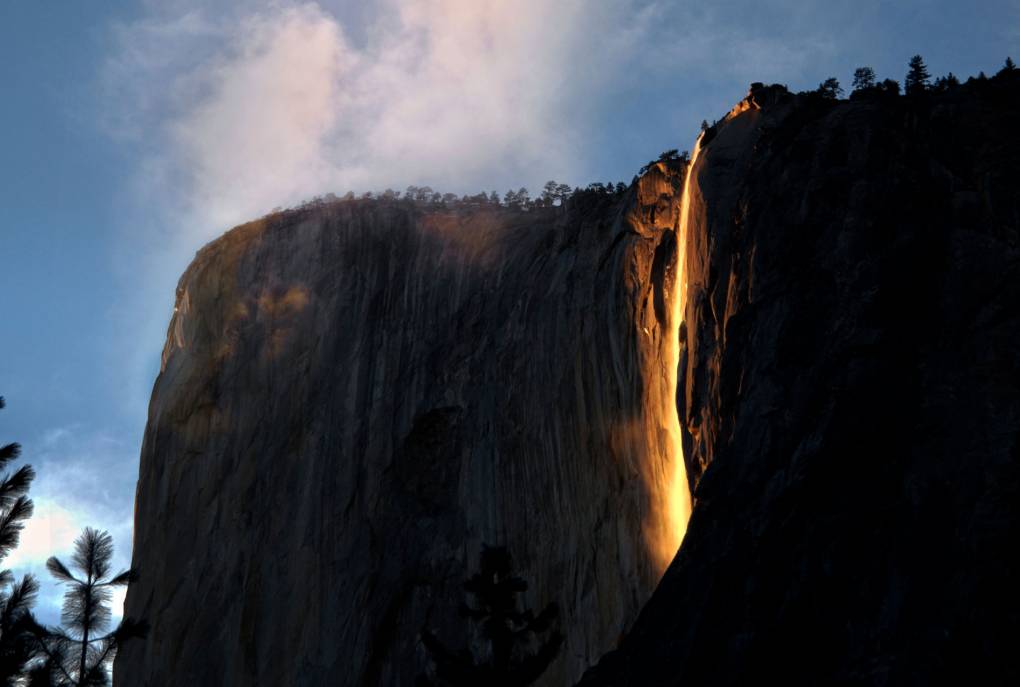
"caption": "Yosemite National Park's 'firefall' on El Capitan, captured in 2016.",
"description": null,
"title": "yosemite-firefall-horsetail-fall",
"credit": "Steve Corey via Flickr",
"status": "inherit",
"altTag": "Horsetaill Fall on El Capitan in Yosemite National Park glows with the sunset, looking like flowing lava",
"isLoading": false,
"fetchFailed": false
},
"news_11860888": {
"type": "attachments",
"id": "news_11860888",
"meta": {
"index": "attachments_1716263798",
"site": "news",
"id": "11860888",
"found": true
},
"parent": 11860759,
"imgSizes": {
"apple_news_ca_landscape_5_5": {
"file": "https://ww2.kqed.org/app/uploads/sites/10/2021/02/RS47252_GettyImages-1209901726-qut-1044x783.jpg",
"width": 1044,
"mimeType": "image/jpeg",
"height": 783
},
"apple_news_ca_square_4_0": {
"file": "https://ww2.kqed.org/app/uploads/sites/10/2021/02/RS47252_GettyImages-1209901726-qut-470x470.jpg",
"width": 470,
"mimeType": "image/jpeg",
"height": 470
},
"twentyfourteen-full-width": {
"file": "https://ww2.kqed.org/app/uploads/sites/10/2021/02/RS47252_GettyImages-1209901726-qut-1038x576.jpg",
"width": 1038,
"mimeType": "image/jpeg",
"height": 576
},
"thumbnail": {
"file": "https://ww2.kqed.org/app/uploads/sites/10/2021/02/RS47252_GettyImages-1209901726-qut-160x107.jpg",
"width": 160,
"mimeType": "image/jpeg",
"height": 107
},
"post-thumbnail": {
"file": "https://ww2.kqed.org/app/uploads/sites/10/2021/02/RS47252_GettyImages-1209901726-qut-672x372.jpg",
"width": 672,
"mimeType": "image/jpeg",
"height": 372
},
"kqedFullSize": {
"file": "https://ww2.kqed.org/app/uploads/sites/10/2021/02/RS47252_GettyImages-1209901726-qut.jpg",
"width": 1920,
"height": 1278
},
"apple_news_ca_landscape_4_7": {
"file": "https://ww2.kqed.org/app/uploads/sites/10/2021/02/RS47252_GettyImages-1209901726-qut-632x474.jpg",
"width": 632,
"mimeType": "image/jpeg",
"height": 474
},
"large": {
"file": "https://ww2.kqed.org/app/uploads/sites/10/2021/02/RS47252_GettyImages-1209901726-qut-1020x679.jpg",
"width": 1020,
"mimeType": "image/jpeg",
"height": 679
},
"apple_news_ca_landscape_4_0": {
"file": "https://ww2.kqed.org/app/uploads/sites/10/2021/02/RS47252_GettyImages-1209901726-qut-536x402.jpg",
"width": 536,
"mimeType": "image/jpeg",
"height": 402
},
"apple_news_ca_portrait_12_9": {
"file": "https://ww2.kqed.org/app/uploads/sites/10/2021/02/RS47252_GettyImages-1209901726-qut-1122x1278.jpg",
"width": 1122,
"mimeType": "image/jpeg",
"height": 1278
},
"medium": {
"file": "https://ww2.kqed.org/app/uploads/sites/10/2021/02/RS47252_GettyImages-1209901726-qut-800x533.jpg",
"width": 800,
"mimeType": "image/jpeg",
"height": 533
},
"apple_news_ca_portrait_4_0": {
"file": "https://ww2.kqed.org/app/uploads/sites/10/2021/02/RS47252_GettyImages-1209901726-qut-354x472.jpg",
"width": 354,
"mimeType": "image/jpeg",
"height": 472
},
"apple_news_ca_portrait_9_7": {
"file": "https://ww2.kqed.org/app/uploads/sites/10/2021/02/RS47252_GettyImages-1209901726-qut-840x1120.jpg",
"width": 840,
"mimeType": "image/jpeg",
"height": 1120
},
"apple_news_ca_landscape_12_9": {
"file": "https://ww2.kqed.org/app/uploads/sites/10/2021/02/RS47252_GettyImages-1209901726-qut-1832x1278.jpg",
"width": 1832,
"mimeType": "image/jpeg",
"height": 1278
},
"apple_news_ca_square_9_7": {
"file": "https://ww2.kqed.org/app/uploads/sites/10/2021/02/RS47252_GettyImages-1209901726-qut-1104x1104.jpg",
"width": 1104,
"mimeType": "image/jpeg",
"height": 1104
},
"1536x1536": {
"file": "https://ww2.kqed.org/app/uploads/sites/10/2021/02/RS47252_GettyImages-1209901726-qut-1536x1022.jpg",
"width": 1536,
"mimeType": "image/jpeg",
"height": 1022
},
"apple_news_ca_portrait_4_7": {
"file": "https://ww2.kqed.org/app/uploads/sites/10/2021/02/RS47252_GettyImages-1209901726-qut-414x552.jpg",
"width": 414,
"mimeType": "image/jpeg",
"height": 552
},
"apple_news_ca_square_12_9": {
"file": "https://ww2.kqed.org/app/uploads/sites/10/2021/02/RS47252_GettyImages-1209901726-qut-1472x1278.jpg",
"width": 1472,
"mimeType": "image/jpeg",
"height": 1278
},
"apple_news_ca_portrait_5_5": {
"file": "https://ww2.kqed.org/app/uploads/sites/10/2021/02/RS47252_GettyImages-1209901726-qut-687x916.jpg",
"width": 687,
"mimeType": "image/jpeg",
"height": 916
},
"apple_news_ca_square_4_7": {
"file": "https://ww2.kqed.org/app/uploads/sites/10/2021/02/RS47252_GettyImages-1209901726-qut-550x550.jpg",
"width": 550,
"mimeType": "image/jpeg",
"height": 550
},
"apple_news_ca_landscape_9_7": {
"file": "https://ww2.kqed.org/app/uploads/sites/10/2021/02/RS47252_GettyImages-1209901726-qut-1376x1032.jpg",
"width": 1376,
"mimeType": "image/jpeg",
"height": 1032
},
"apple_news_ca_square_5_5": {
"file": "https://ww2.kqed.org/app/uploads/sites/10/2021/02/RS47252_GettyImages-1209901726-qut-912x912.jpg",
"width": 912,
"mimeType": "image/jpeg",
"height": 912
}
},
"publishDate": 1613669556,
"modified": 1613675512,
"caption": "Workers participate in a 'Caravan for Essential and Excluded Workers' that called on Gov. Gavin Newsom to ensure that COVID-19-related emergency aid from the federal CARES Act reaches day laborers, undocumented workers and their families, on April 14, 2020 in Los Angeles. Now, as Congress debates President Biden’s $1.9 trillion stimulus package, state lawmakers have been negotiating their own plan to send cash to struggling Californians, splitting over whether to target the cash to undocumented workers left out of federal relief.",
"description": "Workers participate in a \"Caravan for Essential and Excluded Workers'' that called on Gov. Newsom to ensure that COVID-19 related emergency aid from the federal CARES Act reaches day laborers, undocumented workers and their families, on April 14, 2020 in Los Angeles. Now, as Congress debates President Biden’s $1.9 trillion stimulus package, state lawmakers have been negotiating their own plan to send cash to struggling Californians, splitting over whether to target the cash to undocumented workers left out of federal relief.",
"title": "US-HEALTH-VIRUS",
"credit": "Robyn Beck/AFP via Getty Images",
"status": "inherit",
"altTag": null,
"isLoading": false,
"fetchFailed": false
},
"news_11860306": {
"type": "attachments",
"id": "news_11860306",
"meta": {
"index": "attachments_1716263798",
"site": "news",
"id": "11860306",
"found": true
},
"parent": 11860304,
"imgSizes": {
"apple_news_ca_landscape_5_5": {
"file": "https://ww2.kqed.org/app/uploads/sites/10/2021/02/RS46593_011_KQED_Berkeley_SchoolSitIn_01132021-qut-1044x783.jpg",
"width": 1044,
"mimeType": "image/jpeg",
"height": 783
},
"apple_news_ca_square_4_0": {
"file": "https://ww2.kqed.org/app/uploads/sites/10/2021/02/RS46593_011_KQED_Berkeley_SchoolSitIn_01132021-qut-470x470.jpg",
"width": 470,
"mimeType": "image/jpeg",
"height": 470
},
"twentyfourteen-full-width": {
"file": "https://ww2.kqed.org/app/uploads/sites/10/2021/02/RS46593_011_KQED_Berkeley_SchoolSitIn_01132021-qut-1038x576.jpg",
"width": 1038,
"mimeType": "image/jpeg",
"height": 576
},
"thumbnail": {
"file": "https://ww2.kqed.org/app/uploads/sites/10/2021/02/RS46593_011_KQED_Berkeley_SchoolSitIn_01132021-qut-160x109.jpg",
"width": 160,
"mimeType": "image/jpeg",
"height": 109
},
"post-thumbnail": {
"file": "https://ww2.kqed.org/app/uploads/sites/10/2021/02/RS46593_011_KQED_Berkeley_SchoolSitIn_01132021-qut-672x372.jpg",
"width": 672,
"mimeType": "image/jpeg",
"height": 372
},
"kqedFullSize": {
"file": "https://ww2.kqed.org/app/uploads/sites/10/2021/02/RS46593_011_KQED_Berkeley_SchoolSitIn_01132021-qut.jpg",
"width": 1920,
"height": 1303
},
"apple_news_ca_landscape_4_7": {
"file": "https://ww2.kqed.org/app/uploads/sites/10/2021/02/RS46593_011_KQED_Berkeley_SchoolSitIn_01132021-qut-632x474.jpg",
"width": 632,
"mimeType": "image/jpeg",
"height": 474
},
"large": {
"file": "https://ww2.kqed.org/app/uploads/sites/10/2021/02/RS46593_011_KQED_Berkeley_SchoolSitIn_01132021-qut-1020x692.jpg",
"width": 1020,
"mimeType": "image/jpeg",
"height": 692
},
"apple_news_ca_landscape_4_0": {
"file": "https://ww2.kqed.org/app/uploads/sites/10/2021/02/RS46593_011_KQED_Berkeley_SchoolSitIn_01132021-qut-536x402.jpg",
"width": 536,
"mimeType": "image/jpeg",
"height": 402
},
"apple_news_ca_portrait_12_9": {
"file": "https://ww2.kqed.org/app/uploads/sites/10/2021/02/RS46593_011_KQED_Berkeley_SchoolSitIn_01132021-qut-1122x1303.jpg",
"width": 1122,
"mimeType": "image/jpeg",
"height": 1303
},
"medium": {
"file": "https://ww2.kqed.org/app/uploads/sites/10/2021/02/RS46593_011_KQED_Berkeley_SchoolSitIn_01132021-qut-800x543.jpg",
"width": 800,
"mimeType": "image/jpeg",
"height": 543
},
"apple_news_ca_portrait_4_0": {
"file": "https://ww2.kqed.org/app/uploads/sites/10/2021/02/RS46593_011_KQED_Berkeley_SchoolSitIn_01132021-qut-354x472.jpg",
"width": 354,
"mimeType": "image/jpeg",
"height": 472
},
"apple_news_ca_portrait_9_7": {
"file": "https://ww2.kqed.org/app/uploads/sites/10/2021/02/RS46593_011_KQED_Berkeley_SchoolSitIn_01132021-qut-840x1120.jpg",
"width": 840,
"mimeType": "image/jpeg",
"height": 1120
},
"apple_news_ca_landscape_12_9": {
"file": "https://ww2.kqed.org/app/uploads/sites/10/2021/02/RS46593_011_KQED_Berkeley_SchoolSitIn_01132021-qut-1832x1303.jpg",
"width": 1832,
"mimeType": "image/jpeg",
"height": 1303
},
"apple_news_ca_square_9_7": {
"file": "https://ww2.kqed.org/app/uploads/sites/10/2021/02/RS46593_011_KQED_Berkeley_SchoolSitIn_01132021-qut-1104x1104.jpg",
"width": 1104,
"mimeType": "image/jpeg",
"height": 1104
},
"1536x1536": {
"file": "https://ww2.kqed.org/app/uploads/sites/10/2021/02/RS46593_011_KQED_Berkeley_SchoolSitIn_01132021-qut-1536x1042.jpg",
"width": 1536,
"mimeType": "image/jpeg",
"height": 1042
},
"apple_news_ca_portrait_4_7": {
"file": "https://ww2.kqed.org/app/uploads/sites/10/2021/02/RS46593_011_KQED_Berkeley_SchoolSitIn_01132021-qut-414x552.jpg",
"width": 414,
"mimeType": "image/jpeg",
"height": 552
},
"apple_news_ca_square_12_9": {
"file": "https://ww2.kqed.org/app/uploads/sites/10/2021/02/RS46593_011_KQED_Berkeley_SchoolSitIn_01132021-qut-1472x1303.jpg",
"width": 1472,
"mimeType": "image/jpeg",
"height": 1303
},
"apple_news_ca_portrait_5_5": {
"file": "https://ww2.kqed.org/app/uploads/sites/10/2021/02/RS46593_011_KQED_Berkeley_SchoolSitIn_01132021-qut-687x916.jpg",
"width": 687,
"mimeType": "image/jpeg",
"height": 916
},
"apple_news_ca_square_4_7": {
"file": "https://ww2.kqed.org/app/uploads/sites/10/2021/02/RS46593_011_KQED_Berkeley_SchoolSitIn_01132021-qut-550x550.jpg",
"width": 550,
"mimeType": "image/jpeg",
"height": 550
},
"apple_news_ca_landscape_9_7": {
"file": "https://ww2.kqed.org/app/uploads/sites/10/2021/02/RS46593_011_KQED_Berkeley_SchoolSitIn_01132021-qut-1376x1032.jpg",
"width": 1376,
"mimeType": "image/jpeg",
"height": 1032
},
"apple_news_ca_square_5_5": {
"file": "https://ww2.kqed.org/app/uploads/sites/10/2021/02/RS46593_011_KQED_Berkeley_SchoolSitIn_01132021-qut-912x912.jpg",
"width": 912,
"mimeType": "image/jpeg",
"height": 912
}
},
"publishDate": 1613173122,
"modified": 1613173174,
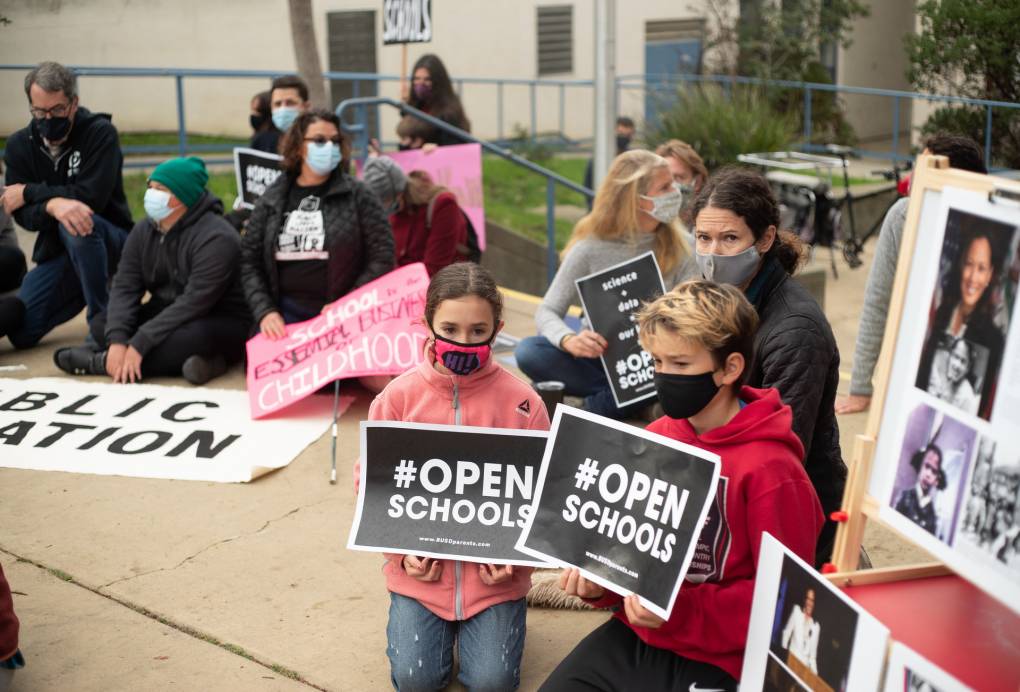
"caption": "Parents and students hold up signs in support of reopening schools at Thousand Oaks Elementary School in Berkeley on Jan. 13, 2021.",
"description": "Parents and students hold up signs in support of reopening schools at Thousand Oaks Elementary School in Berkeley on Jan. 13, 2021.",
"title": "RS46593_011_KQED_Berkeley_SchoolSitIn_01132021-qut",
"credit": "Anna Vignet/KQED",
"status": "inherit",
"altTag": null,
"isLoading": false,
"fetchFailed": false
},
"news_11859144": {
"type": "attachments",
"id": "news_11859144",
"meta": {
"index": "attachments_1716263798",
"site": "news",
"id": "11859144",
"found": true
},
"parent": 11859141,
"imgSizes": {
"apple_news_ca_landscape_5_5": {
"file": "https://ww2.kqed.org/app/uploads/sites/10/2021/02/GettyImages-655538838-copy-1044x783.jpg",
"width": 1044,
"mimeType": "image/jpeg",
"height": 783
},
"apple_news_ca_square_4_0": {
"file": "https://ww2.kqed.org/app/uploads/sites/10/2021/02/GettyImages-655538838-copy-470x470.jpg",
"width": 470,
"mimeType": "image/jpeg",
"height": 470
},
"twentyfourteen-full-width": {
"file": "https://ww2.kqed.org/app/uploads/sites/10/2021/02/GettyImages-655538838-copy-1038x576.jpg",
"width": 1038,
"mimeType": "image/jpeg",
"height": 576
},
"thumbnail": {
"file": "https://ww2.kqed.org/app/uploads/sites/10/2021/02/GettyImages-655538838-copy-160x90.jpg",
"width": 160,
"mimeType": "image/jpeg",
"height": 90
},
"post-thumbnail": {
"file": "https://ww2.kqed.org/app/uploads/sites/10/2021/02/GettyImages-655538838-copy-672x372.jpg",
"width": 672,
"mimeType": "image/jpeg",
"height": 372
},
"kqedFullSize": {
"file": "https://ww2.kqed.org/app/uploads/sites/10/2021/02/GettyImages-655538838-copy-scaled.jpg",
"width": 2560,
"height": 1440
},
"2048x2048": {
"file": "https://ww2.kqed.org/app/uploads/sites/10/2021/02/GettyImages-655538838-copy-2048x1152.jpg",
"width": 2048,
"mimeType": "image/jpeg",
"height": 1152
},
"apple_news_ca_landscape_4_7": {
"file": "https://ww2.kqed.org/app/uploads/sites/10/2021/02/GettyImages-655538838-copy-632x474.jpg",
"width": 632,
"mimeType": "image/jpeg",
"height": 474
},
"large": {
"file": "https://ww2.kqed.org/app/uploads/sites/10/2021/02/GettyImages-655538838-copy-1020x574.jpg",
"width": 1020,
"mimeType": "image/jpeg",
"height": 574
},
"apple_news_ca_landscape_4_0": {
"file": "https://ww2.kqed.org/app/uploads/sites/10/2021/02/GettyImages-655538838-copy-536x402.jpg",
"width": 536,
"mimeType": "image/jpeg",
"height": 402
},
"apple_news_ca_portrait_12_9": {
"file": "https://ww2.kqed.org/app/uploads/sites/10/2021/02/GettyImages-655538838-copy-1122x1496.jpg",
"width": 1122,
"mimeType": "image/jpeg",
"height": 1496
},
"medium": {
"file": "https://ww2.kqed.org/app/uploads/sites/10/2021/02/GettyImages-655538838-copy-800x450.jpg",
"width": 800,
"mimeType": "image/jpeg",
"height": 450
},
"apple_news_ca_portrait_4_0": {
"file": "https://ww2.kqed.org/app/uploads/sites/10/2021/02/GettyImages-655538838-copy-354x472.jpg",
"width": 354,
"mimeType": "image/jpeg",
"height": 472
},
"apple_news_ca_portrait_9_7": {
"file": "https://ww2.kqed.org/app/uploads/sites/10/2021/02/GettyImages-655538838-copy-840x1120.jpg",
"width": 840,
"mimeType": "image/jpeg",
"height": 1120
},
"apple_news_ca_landscape_12_9": {
"file": "https://ww2.kqed.org/app/uploads/sites/10/2021/02/GettyImages-655538838-copy-1832x1374.jpg",
"width": 1832,
"mimeType": "image/jpeg",
"height": 1374
},
"apple_news_ca_square_9_7": {
"file": "https://ww2.kqed.org/app/uploads/sites/10/2021/02/GettyImages-655538838-copy-1104x1104.jpg",
"width": 1104,
"mimeType": "image/jpeg",
"height": 1104
},
"1536x1536": {
"file": "https://ww2.kqed.org/app/uploads/sites/10/2021/02/GettyImages-655538838-copy-1536x864.jpg",
"width": 1536,
"mimeType": "image/jpeg",
"height": 864
},
"apple_news_ca_portrait_4_7": {
"file": "https://ww2.kqed.org/app/uploads/sites/10/2021/02/GettyImages-655538838-copy-414x552.jpg",
"width": 414,
"mimeType": "image/jpeg",
"height": 552
},
"apple_news_ca_square_12_9": {
"file": "https://ww2.kqed.org/app/uploads/sites/10/2021/02/GettyImages-655538838-copy-1472x1472.jpg",
"width": 1472,
"mimeType": "image/jpeg",
"height": 1472
},
"apple_news_ca_portrait_5_5": {
"file": "https://ww2.kqed.org/app/uploads/sites/10/2021/02/GettyImages-655538838-copy-687x916.jpg",
"width": 687,
"mimeType": "image/jpeg",
"height": 916
},
"full-width": {
"file": "https://ww2.kqed.org/app/uploads/sites/10/2021/02/GettyImages-655538838-copy-1920x1080.jpg",
"width": 1920,
"mimeType": "image/jpeg",
"height": 1080
},
"apple_news_ca_square_4_7": {
"file": "https://ww2.kqed.org/app/uploads/sites/10/2021/02/GettyImages-655538838-copy-550x550.jpg",
"width": 550,
"mimeType": "image/jpeg",
"height": 550
},
"apple_news_ca_landscape_9_7": {
"file": "https://ww2.kqed.org/app/uploads/sites/10/2021/02/GettyImages-655538838-copy-1376x1032.jpg",
"width": 1376,
"mimeType": "image/jpeg",
"height": 1032
},
"apple_news_ca_square_5_5": {
"file": "https://ww2.kqed.org/app/uploads/sites/10/2021/02/GettyImages-655538838-copy-912x912.jpg",
"width": 912,
"mimeType": "image/jpeg",
"height": 912
}
},
"publishDate": 1612717741,
"modified": 1612717835,
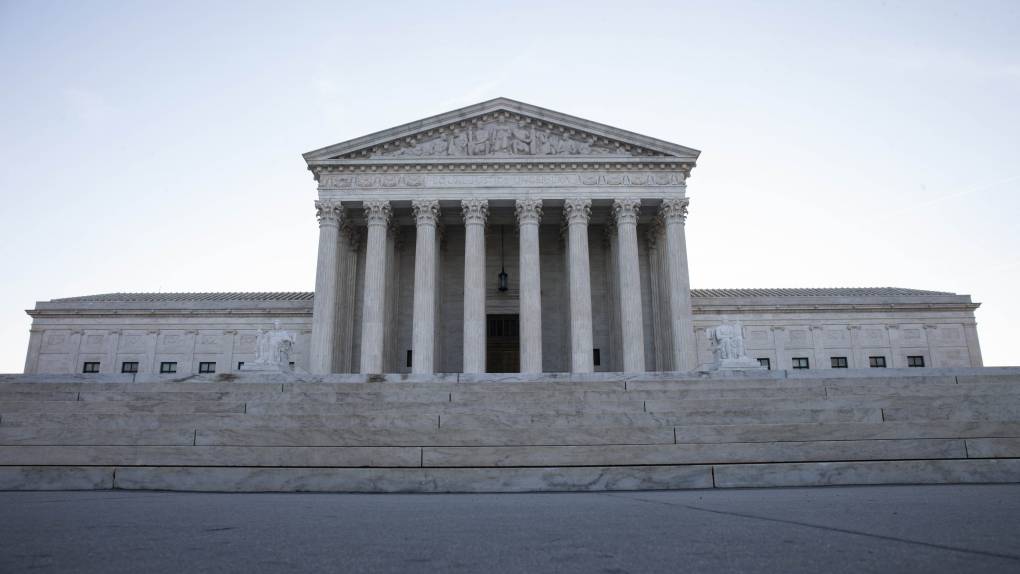
"caption": "Morning light shines outside The United States Supreme Court building on March 20, 2017 in Washington, D.C. ",
"description": null,
"title": "FBI Director Comey Testifies At Hearing On Alleged Russian Election Meddling",
"credit": "Zach Gibson/Getty Images",
"status": "inherit",
"altTag": null,
"isLoading": false,
"fetchFailed": false
},
"news_11858820": {
"type": "attachments",
"id": "news_11858820",
"meta": {
"index": "attachments_1716263798",
"site": "news",
"id": "11858820",
"found": true
},
"parent": 11858814,
"imgSizes": {
"apple_news_ca_landscape_5_5": {
"file": "https://ww2.kqed.org/app/uploads/sites/10/2021/02/1920_iStock_BofA_02-copy-1044x675.jpg",
"width": 1044,
"mimeType": "image/jpeg",
"height": 675
},
"apple_news_ca_square_4_0": {
"file": "https://ww2.kqed.org/app/uploads/sites/10/2021/02/1920_iStock_BofA_02-copy-470x470.jpg",
"width": 470,
"mimeType": "image/jpeg",
"height": 470
},
"twentyfourteen-full-width": {
"file": "https://ww2.kqed.org/app/uploads/sites/10/2021/02/1920_iStock_BofA_02-copy-1038x576.jpg",
"width": 1038,
"mimeType": "image/jpeg",
"height": 576
},
"thumbnail": {
"file": "https://ww2.kqed.org/app/uploads/sites/10/2021/02/1920_iStock_BofA_02-copy-160x90.jpg",
"width": 160,
"mimeType": "image/jpeg",
"height": 90
},
"post-thumbnail": {
"file": "https://ww2.kqed.org/app/uploads/sites/10/2021/02/1920_iStock_BofA_02-copy-672x372.jpg",
"width": 672,
"mimeType": "image/jpeg",
"height": 372
},
"kqedFullSize": {
"file": "https://ww2.kqed.org/app/uploads/sites/10/2021/02/1920_iStock_BofA_02-copy.jpg",
"width": 1200,
"height": 675
},
"apple_news_ca_landscape_4_7": {
"file": "https://ww2.kqed.org/app/uploads/sites/10/2021/02/1920_iStock_BofA_02-copy-632x474.jpg",
"width": 632,
"mimeType": "image/jpeg",
"height": 474
},
"large": {
"file": "https://ww2.kqed.org/app/uploads/sites/10/2021/02/1920_iStock_BofA_02-copy-1020x574.jpg",
"width": 1020,
"mimeType": "image/jpeg",
"height": 574
},
"apple_news_ca_landscape_4_0": {
"file": "https://ww2.kqed.org/app/uploads/sites/10/2021/02/1920_iStock_BofA_02-copy-536x402.jpg",
"width": 536,
"mimeType": "image/jpeg",
"height": 402
},
"apple_news_ca_portrait_12_9": {
"file": "https://ww2.kqed.org/app/uploads/sites/10/2021/02/1920_iStock_BofA_02-copy-1122x675.jpg",
"width": 1122,
"mimeType": "image/jpeg",
"height": 675
},
"medium": {
"file": "https://ww2.kqed.org/app/uploads/sites/10/2021/02/1920_iStock_BofA_02-copy-800x450.jpg",
"width": 800,
"mimeType": "image/jpeg",
"height": 450
},
"apple_news_ca_portrait_4_0": {
"file": "https://ww2.kqed.org/app/uploads/sites/10/2021/02/1920_iStock_BofA_02-copy-354x472.jpg",
"width": 354,
"mimeType": "image/jpeg",
"height": 472
},
"apple_news_ca_portrait_9_7": {
"file": "https://ww2.kqed.org/app/uploads/sites/10/2021/02/1920_iStock_BofA_02-copy-840x675.jpg",
"width": 840,
"mimeType": "image/jpeg",
"height": 675
},
"apple_news_ca_square_9_7": {
"file": "https://ww2.kqed.org/app/uploads/sites/10/2021/02/1920_iStock_BofA_02-copy-1104x675.jpg",
"width": 1104,
"mimeType": "image/jpeg",
"height": 675
},
"apple_news_ca_portrait_4_7": {
"file": "https://ww2.kqed.org/app/uploads/sites/10/2021/02/1920_iStock_BofA_02-copy-414x552.jpg",
"width": 414,
"mimeType": "image/jpeg",
"height": 552
},
"apple_news_ca_portrait_5_5": {
"file": "https://ww2.kqed.org/app/uploads/sites/10/2021/02/1920_iStock_BofA_02-copy-687x675.jpg",
"width": 687,
"mimeType": "image/jpeg",
"height": 675
},
"apple_news_ca_square_4_7": {
"file": "https://ww2.kqed.org/app/uploads/sites/10/2021/02/1920_iStock_BofA_02-copy-550x550.jpg",
"width": 550,
"mimeType": "image/jpeg",
"height": 550
},
"apple_news_ca_square_5_5": {
"file": "https://ww2.kqed.org/app/uploads/sites/10/2021/02/1920_iStock_BofA_02-copy-912x675.jpg",
"width": 912,
"mimeType": "image/jpeg",
"height": 675
}
},
"publishDate": 1612548016,
"modified": 1612555081,
"caption": "In September, the EDD made $5.2 million on a debit card revenue sharing agreement with Bank of America — a sizable chunk of the $22.5 million the state raked in from March to October, according to public records requested by CalMatters.",
"description": "In September, the EDD made $5.2 million on a debit card revenue sharing agreement with Bank of America — a sizable chunk of the $22.5 million the state raked in from March to October, according to public records requested by CalMatters.",
"title": null,
"credit": "iStock",
"status": "inherit",
"altTag": "A pile of US Dollars and a Bank of America Visa debit card.",
"isLoading": false,
"fetchFailed": false
},
"news_11858072": {
"type": "attachments",
"id": "news_11858072",
"meta": {
"index": "attachments_1716263798",
"site": "news",
"id": "11858072",
"found": true
},
"parent": 11857956,
"imgSizes": {
"apple_news_ca_landscape_5_5": {
"file": "https://ww2.kqed.org/app/uploads/sites/10/2021/02/GettyImages-968048574-copy-1044x783.jpg",
"width": 1044,
"mimeType": "image/jpeg",
"height": 783
},
"apple_news_ca_square_4_0": {
"file": "https://ww2.kqed.org/app/uploads/sites/10/2021/02/GettyImages-968048574-copy-470x470.jpg",
"width": 470,
"mimeType": "image/jpeg",
"height": 470
},
"twentyfourteen-full-width": {
"file": "https://ww2.kqed.org/app/uploads/sites/10/2021/02/GettyImages-968048574-copy-1038x576.jpg",
"width": 1038,
"mimeType": "image/jpeg",
"height": 576
},
"thumbnail": {
"file": "https://ww2.kqed.org/app/uploads/sites/10/2021/02/GettyImages-968048574-copy-160x90.jpg",
"width": 160,
"mimeType": "image/jpeg",
"height": 90
},
"post-thumbnail": {
"file": "https://ww2.kqed.org/app/uploads/sites/10/2021/02/GettyImages-968048574-copy-672x372.jpg",
"width": 672,
"mimeType": "image/jpeg",
"height": 372
},
"kqedFullSize": {
"file": "https://ww2.kqed.org/app/uploads/sites/10/2021/02/GettyImages-968048574-copy-scaled.jpg",
"width": 2560,
"height": 1440
},
"2048x2048": {
"file": "https://ww2.kqed.org/app/uploads/sites/10/2021/02/GettyImages-968048574-copy-2048x1152.jpg",
"width": 2048,
"mimeType": "image/jpeg",
"height": 1152
},
"apple_news_ca_landscape_4_7": {
"file": "https://ww2.kqed.org/app/uploads/sites/10/2021/02/GettyImages-968048574-copy-632x474.jpg",
"width": 632,
"mimeType": "image/jpeg",
"height": 474
},
"large": {
"file": "https://ww2.kqed.org/app/uploads/sites/10/2021/02/GettyImages-968048574-copy-1020x574.jpg",
"width": 1020,
"mimeType": "image/jpeg",
"height": 574
},
"apple_news_ca_landscape_4_0": {
"file": "https://ww2.kqed.org/app/uploads/sites/10/2021/02/GettyImages-968048574-copy-536x402.jpg",
"width": 536,
"mimeType": "image/jpeg",
"height": 402
},
"apple_news_ca_portrait_12_9": {
"file": "https://ww2.kqed.org/app/uploads/sites/10/2021/02/GettyImages-968048574-copy-1122x1496.jpg",
"width": 1122,
"mimeType": "image/jpeg",
"height": 1496
},
"medium": {
"file": "https://ww2.kqed.org/app/uploads/sites/10/2021/02/GettyImages-968048574-copy-800x450.jpg",
"width": 800,
"mimeType": "image/jpeg",
"height": 450
},
"apple_news_ca_portrait_4_0": {
"file": "https://ww2.kqed.org/app/uploads/sites/10/2021/02/GettyImages-968048574-copy-354x472.jpg",
"width": 354,
"mimeType": "image/jpeg",
"height": 472
},
"apple_news_ca_portrait_9_7": {
"file": "https://ww2.kqed.org/app/uploads/sites/10/2021/02/GettyImages-968048574-copy-840x1120.jpg",
"width": 840,
"mimeType": "image/jpeg",
"height": 1120
},
"apple_news_ca_landscape_12_9": {
"file": "https://ww2.kqed.org/app/uploads/sites/10/2021/02/GettyImages-968048574-copy-1832x1374.jpg",
"width": 1832,
"mimeType": "image/jpeg",
"height": 1374
},
"apple_news_ca_square_9_7": {
"file": "https://ww2.kqed.org/app/uploads/sites/10/2021/02/GettyImages-968048574-copy-1104x1104.jpg",
"width": 1104,
"mimeType": "image/jpeg",
"height": 1104
},
"1536x1536": {
"file": "https://ww2.kqed.org/app/uploads/sites/10/2021/02/GettyImages-968048574-copy-1536x864.jpg",
"width": 1536,
"mimeType": "image/jpeg",
"height": 864
},
"apple_news_ca_portrait_4_7": {
"file": "https://ww2.kqed.org/app/uploads/sites/10/2021/02/GettyImages-968048574-copy-414x552.jpg",
"width": 414,
"mimeType": "image/jpeg",
"height": 552
},
"apple_news_ca_square_12_9": {
"file": "https://ww2.kqed.org/app/uploads/sites/10/2021/02/GettyImages-968048574-copy-1472x1472.jpg",
"width": 1472,
"mimeType": "image/jpeg",
"height": 1472
},
"apple_news_ca_portrait_5_5": {
"file": "https://ww2.kqed.org/app/uploads/sites/10/2021/02/GettyImages-968048574-copy-687x916.jpg",
"width": 687,
"mimeType": "image/jpeg",
"height": 916
},
"full-width": {
"file": "https://ww2.kqed.org/app/uploads/sites/10/2021/02/GettyImages-968048574-copy-1920x1080.jpg",
"width": 1920,
"mimeType": "image/jpeg",
"height": 1080
},
"apple_news_ca_square_4_7": {
"file": "https://ww2.kqed.org/app/uploads/sites/10/2021/02/GettyImages-968048574-copy-550x550.jpg",
"width": 550,
"mimeType": "image/jpeg",
"height": 550
},
"apple_news_ca_landscape_9_7": {
"file": "https://ww2.kqed.org/app/uploads/sites/10/2021/02/GettyImages-968048574-copy-1376x1032.jpg",
"width": 1376,
"mimeType": "image/jpeg",
"height": 1032
},
"apple_news_ca_square_5_5": {
"file": "https://ww2.kqed.org/app/uploads/sites/10/2021/02/GettyImages-968048574-copy-912x912.jpg",
"width": 912,
"mimeType": "image/jpeg",
"height": 912
}
},
"publishDate": 1612223778,
"modified": 1612230844,
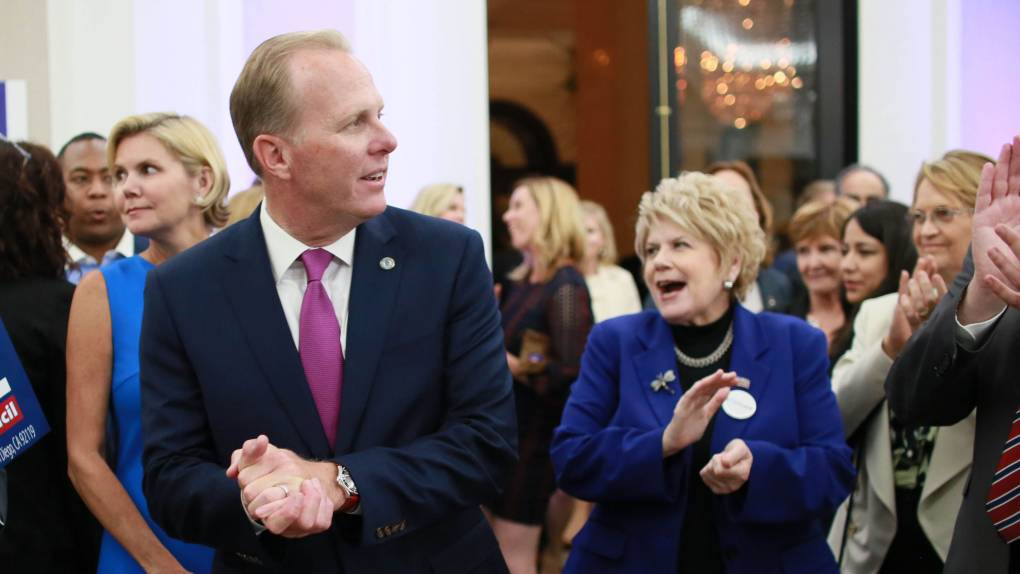
"caption": "Then-San Diego Mayor Kevin Faulconer heads to the stage to speak during an election eve party at the U.S. Grant Hotel in San Diego on June 5, 2018.",
"description": null,
"title": "California GOP Gubernatorial Candidate John Cox Holds Primary Night Party",
"credit": "Sandy Huffaker/Getty Images",
"status": "inherit",
"altTag": null,
"isLoading": false,
"fetchFailed": false
},
"news_11857833": {
"type": "attachments",
"id": "news_11857833",
"meta": {
"index": "attachments_1716263798",
"site": "news",
"id": "11857833",
"found": true
},
"parent": 11857822,
"imgSizes": {
"apple_news_ca_landscape_5_5": {
"file": "https://ww2.kqed.org/app/uploads/sites/10/2021/01/GettyImages-1230147443-1044x783.jpg",
"width": 1044,
"mimeType": "image/jpeg",
"height": 783
},
"apple_news_ca_square_4_0": {
"file": "https://ww2.kqed.org/app/uploads/sites/10/2021/01/GettyImages-1230147443-470x470.jpg",
"width": 470,
"mimeType": "image/jpeg",
"height": 470
},
"twentyfourteen-full-width": {
"file": "https://ww2.kqed.org/app/uploads/sites/10/2021/01/GettyImages-1230147443-1038x576.jpg",
"width": 1038,
"mimeType": "image/jpeg",
"height": 576
},
"thumbnail": {
"file": "https://ww2.kqed.org/app/uploads/sites/10/2021/01/GettyImages-1230147443-160x90.jpg",
"width": 160,
"mimeType": "image/jpeg",
"height": 90
},
"post-thumbnail": {
"file": "https://ww2.kqed.org/app/uploads/sites/10/2021/01/GettyImages-1230147443-672x372.jpg",
"width": 672,
"mimeType": "image/jpeg",
"height": 372
},
"kqedFullSize": {
"file": "https://ww2.kqed.org/app/uploads/sites/10/2021/01/GettyImages-1230147443.jpg",
"width": 1920,
"height": 1080
},
"apple_news_ca_landscape_4_7": {
"file": "https://ww2.kqed.org/app/uploads/sites/10/2021/01/GettyImages-1230147443-632x474.jpg",
"width": 632,
"mimeType": "image/jpeg",
"height": 474
},
"large": {
"file": "https://ww2.kqed.org/app/uploads/sites/10/2021/01/GettyImages-1230147443-1020x574.jpg",
"width": 1020,
"mimeType": "image/jpeg",
"height": 574
},
"apple_news_ca_landscape_4_0": {
"file": "https://ww2.kqed.org/app/uploads/sites/10/2021/01/GettyImages-1230147443-536x402.jpg",
"width": 536,
"mimeType": "image/jpeg",
"height": 402
},
"apple_news_ca_portrait_12_9": {
"file": "https://ww2.kqed.org/app/uploads/sites/10/2021/01/GettyImages-1230147443-1122x1080.jpg",
"width": 1122,
"mimeType": "image/jpeg",
"height": 1080
},
"medium": {
"file": "https://ww2.kqed.org/app/uploads/sites/10/2021/01/GettyImages-1230147443-800x450.jpg",
"width": 800,
"mimeType": "image/jpeg",
"height": 450
},
"apple_news_ca_portrait_4_0": {
"file": "https://ww2.kqed.org/app/uploads/sites/10/2021/01/GettyImages-1230147443-354x472.jpg",
"width": 354,
"mimeType": "image/jpeg",
"height": 472
},
"apple_news_ca_portrait_9_7": {
"file": "https://ww2.kqed.org/app/uploads/sites/10/2021/01/GettyImages-1230147443-840x1080.jpg",
"width": 840,
"mimeType": "image/jpeg",
"height": 1080
},
"apple_news_ca_landscape_12_9": {
"file": "https://ww2.kqed.org/app/uploads/sites/10/2021/01/GettyImages-1230147443-1832x1080.jpg",
"width": 1832,
"mimeType": "image/jpeg",
"height": 1080
},
"apple_news_ca_square_9_7": {
"file": "https://ww2.kqed.org/app/uploads/sites/10/2021/01/GettyImages-1230147443-1104x1080.jpg",
"width": 1104,
"mimeType": "image/jpeg",
"height": 1080
},
"1536x1536": {
"file": "https://ww2.kqed.org/app/uploads/sites/10/2021/01/GettyImages-1230147443-1536x864.jpg",
"width": 1536,
"mimeType": "image/jpeg",
"height": 864
},
"apple_news_ca_portrait_4_7": {
"file": "https://ww2.kqed.org/app/uploads/sites/10/2021/01/GettyImages-1230147443-414x552.jpg",
"width": 414,
"mimeType": "image/jpeg",
"height": 552
},
"apple_news_ca_square_12_9": {
"file": "https://ww2.kqed.org/app/uploads/sites/10/2021/01/GettyImages-1230147443-1472x1080.jpg",
"width": 1472,
"mimeType": "image/jpeg",
"height": 1080
},
"apple_news_ca_portrait_5_5": {
"file": "https://ww2.kqed.org/app/uploads/sites/10/2021/01/GettyImages-1230147443-687x916.jpg",
"width": 687,
"mimeType": "image/jpeg",
"height": 916
},
"apple_news_ca_square_4_7": {
"file": "https://ww2.kqed.org/app/uploads/sites/10/2021/01/GettyImages-1230147443-550x550.jpg",
"width": 550,
"mimeType": "image/jpeg",
"height": 550
},
"apple_news_ca_landscape_9_7": {
"file": "https://ww2.kqed.org/app/uploads/sites/10/2021/01/GettyImages-1230147443-1376x1032.jpg",
"width": 1376,
"mimeType": "image/jpeg",
"height": 1032
},
"apple_news_ca_square_5_5": {
"file": "https://ww2.kqed.org/app/uploads/sites/10/2021/01/GettyImages-1230147443-912x912.jpg",
"width": 912,
"mimeType": "image/jpeg",
"height": 912
}
},
"publishDate": 1611970246,
"modified": 1611973113,
"caption": "Pfizer's Covid-19 vaccine is pictured at Rady Children's Hospital before it's placed back in the refrigerator in San Diego, California on December 15, 2020.",
"description": "Pfizer's Covid-19 vaccine is pictured at Rady Children's Hospital before it's placed back in the refrigerator in San Diego, California on December 15, 2020.",
"title": "GettyImages-1230147443",
"credit": "Ariana Drehsler/AFP via Getty Images",
"status": "inherit",
"altTag": "Pfizer's Covid-19 vaccine is pictured at Rady Children's Hospital before it's placed back in the refrigerator in San Diego, California on December 15, 2020. (Photo by ARIANA DREHSLER / AFP) (Photo by ARIANA DREHSLER/AFP via Getty Images)",
"isLoading": false,
"fetchFailed": false
},
"news_11857405": {
"type": "attachments",
"id": "news_11857405",
"meta": {
"index": "attachments_1716263798",
"site": "news",
"id": "11857405",
"found": true
},
"parent": 11857199,
"imgSizes": {
"apple_news_ca_landscape_5_5": {
"file": "https://ww2.kqed.org/app/uploads/sites/10/2021/01/GettyImages-106107335-1-1044x783.jpg",
"width": 1044,
"mimeType": "image/jpeg",
"height": 783
},
"apple_news_ca_square_4_0": {
"file": "https://ww2.kqed.org/app/uploads/sites/10/2021/01/GettyImages-106107335-1-470x470.jpg",
"width": 470,
"mimeType": "image/jpeg",
"height": 470
},
"twentyfourteen-full-width": {
"file": "https://ww2.kqed.org/app/uploads/sites/10/2021/01/GettyImages-106107335-1-1038x576.jpg",
"width": 1038,
"mimeType": "image/jpeg",
"height": 576
},
"thumbnail": {
"file": "https://ww2.kqed.org/app/uploads/sites/10/2021/01/GettyImages-106107335-1-160x93.jpg",
"width": 160,
"mimeType": "image/jpeg",
"height": 93
},
"post-thumbnail": {
"file": "https://ww2.kqed.org/app/uploads/sites/10/2021/01/GettyImages-106107335-1-672x372.jpg",
"width": 672,
"mimeType": "image/jpeg",
"height": 372
},
"kqedFullSize": {
"file": "https://ww2.kqed.org/app/uploads/sites/10/2021/01/GettyImages-106107335-1.jpg",
"width": 1900,
"height": 1108
},
"apple_news_ca_landscape_4_7": {
"file": "https://ww2.kqed.org/app/uploads/sites/10/2021/01/GettyImages-106107335-1-632x474.jpg",
"width": 632,
"mimeType": "image/jpeg",
"height": 474
},
"large": {
"file": "https://ww2.kqed.org/app/uploads/sites/10/2021/01/GettyImages-106107335-1-1020x595.jpg",
"width": 1020,
"mimeType": "image/jpeg",
"height": 595
},
"apple_news_ca_landscape_4_0": {
"file": "https://ww2.kqed.org/app/uploads/sites/10/2021/01/GettyImages-106107335-1-536x402.jpg",
"width": 536,
"mimeType": "image/jpeg",
"height": 402
},
"apple_news_ca_portrait_12_9": {
"file": "https://ww2.kqed.org/app/uploads/sites/10/2021/01/GettyImages-106107335-1-1122x1108.jpg",
"width": 1122,
"mimeType": "image/jpeg",
"height": 1108
},
"medium": {
"file": "https://ww2.kqed.org/app/uploads/sites/10/2021/01/GettyImages-106107335-1-800x467.jpg",
"width": 800,
"mimeType": "image/jpeg",
"height": 467
},
"apple_news_ca_portrait_4_0": {
"file": "https://ww2.kqed.org/app/uploads/sites/10/2021/01/GettyImages-106107335-1-354x472.jpg",
"width": 354,
"mimeType": "image/jpeg",
"height": 472
},
"apple_news_ca_portrait_9_7": {
"file": "https://ww2.kqed.org/app/uploads/sites/10/2021/01/GettyImages-106107335-1-840x1108.jpg",
"width": 840,
"mimeType": "image/jpeg",
"height": 1108
},
"apple_news_ca_landscape_12_9": {
"file": "https://ww2.kqed.org/app/uploads/sites/10/2021/01/GettyImages-106107335-1-1832x1108.jpg",
"width": 1832,
"mimeType": "image/jpeg",
"height": 1108
},
"apple_news_ca_square_9_7": {
"file": "https://ww2.kqed.org/app/uploads/sites/10/2021/01/GettyImages-106107335-1-1104x1104.jpg",
"width": 1104,
"mimeType": "image/jpeg",
"height": 1104
},
"1536x1536": {
"file": "https://ww2.kqed.org/app/uploads/sites/10/2021/01/GettyImages-106107335-1-1536x896.jpg",
"width": 1536,
"mimeType": "image/jpeg",
"height": 896
},
"apple_news_ca_portrait_4_7": {
"file": "https://ww2.kqed.org/app/uploads/sites/10/2021/01/GettyImages-106107335-1-414x552.jpg",
"width": 414,
"mimeType": "image/jpeg",
"height": 552
},
"apple_news_ca_square_12_9": {
"file": "https://ww2.kqed.org/app/uploads/sites/10/2021/01/GettyImages-106107335-1-1472x1108.jpg",
"width": 1472,
"mimeType": "image/jpeg",
"height": 1108
},
"apple_news_ca_portrait_5_5": {
"file": "https://ww2.kqed.org/app/uploads/sites/10/2021/01/GettyImages-106107335-1-687x916.jpg",
"width": 687,
"mimeType": "image/jpeg",
"height": 916
},
"apple_news_ca_square_4_7": {
"file": "https://ww2.kqed.org/app/uploads/sites/10/2021/01/GettyImages-106107335-1-550x550.jpg",
"width": 550,
"mimeType": "image/jpeg",
"height": 550
},
"apple_news_ca_landscape_9_7": {
"file": "https://ww2.kqed.org/app/uploads/sites/10/2021/01/GettyImages-106107335-1-1376x1032.jpg",
"width": 1376,
"mimeType": "image/jpeg",
"height": 1032
},
"apple_news_ca_square_5_5": {
"file": "https://ww2.kqed.org/app/uploads/sites/10/2021/01/GettyImages-106107335-1-912x912.jpg",
"width": 912,
"mimeType": "image/jpeg",
"height": 912
}
},
"publishDate": 1611788073,
"modified": 1611792890,
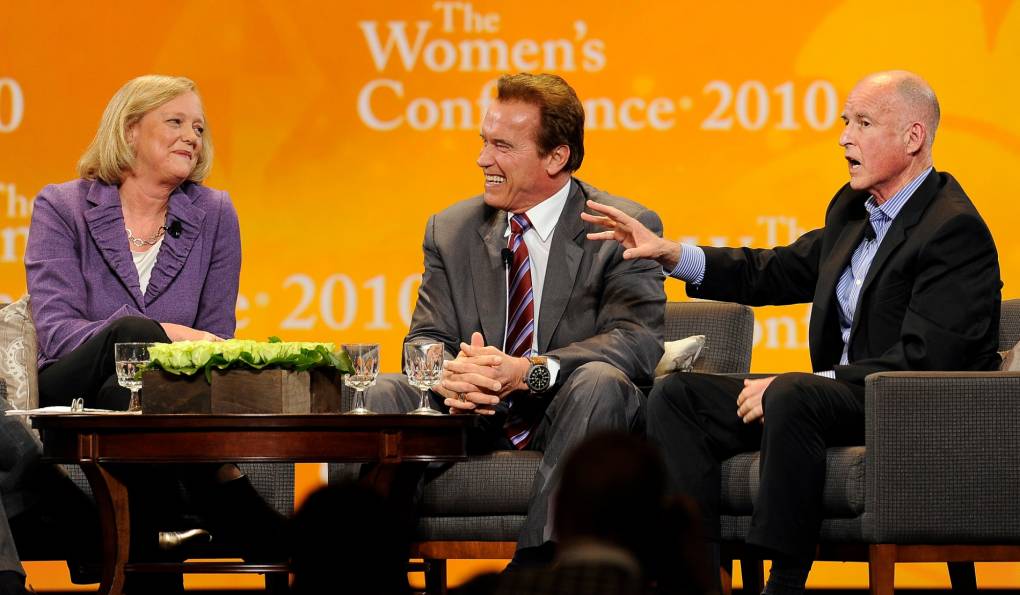
"caption": "California Republican gubernatorial candidate and former eBay CEO Meg Whitman (L), former Gov. Jerry Brown (R) and former Gov. Arnold Schwarzenegger (C) speak during a discussion on the future of California at the Women's Conference 2010 on Oct. 26, 2010 at the Long Beach Convention Center.",
"description": "California Republican gubernatorial candidate and former eBay CEO Meg Whitman (L), former Gov. Jerry Brown (R) and former Gov. Arnold Schwarzenegger (C) speak during a discussion on the future of California at the Women's Conference 2010 on October 26, 2010 at the Long Beach Convention Center in Long Beach, California. ",
"title": "GettyImages-106107335 (1)",
"credit": "Robyn Beck/AFP via Getty Images",
"status": "inherit",
"altTag": null,
"isLoading": false,
"fetchFailed": false
},
"news_11857380": {
"type": "attachments",
"id": "news_11857380",
"meta": {
"index": "attachments_1716263798",
"site": "news",
"id": "11857380",
"found": true
},
"parent": 11857269,
"imgSizes": {
"apple_news_ca_landscape_5_5": {
"file": "https://ww2.kqed.org/app/uploads/sites/10/2021/01/DACA-rally-1044x783.jpg",
"width": 1044,
"mimeType": "image/jpeg",
"height": 783
},
"apple_news_ca_square_4_0": {
"file": "https://ww2.kqed.org/app/uploads/sites/10/2021/01/DACA-rally-470x470.jpg",
"width": 470,
"mimeType": "image/jpeg",
"height": 470
},
"twentyfourteen-full-width": {
"file": "https://ww2.kqed.org/app/uploads/sites/10/2021/01/DACA-rally-1038x576.jpg",
"width": 1038,
"mimeType": "image/jpeg",
"height": 576
},
"thumbnail": {
"file": "https://ww2.kqed.org/app/uploads/sites/10/2021/01/DACA-rally-160x107.jpg",
"width": 160,
"mimeType": "image/jpeg",
"height": 107
},
"post-thumbnail": {
"file": "https://ww2.kqed.org/app/uploads/sites/10/2021/01/DACA-rally-672x372.jpg",
"width": 672,
"mimeType": "image/jpeg",
"height": 372
},
"kqedFullSize": {
"file": "https://ww2.kqed.org/app/uploads/sites/10/2021/01/DACA-rally.jpg",
"width": 1920,
"height": 1280
},
"apple_news_ca_landscape_4_7": {
"file": "https://ww2.kqed.org/app/uploads/sites/10/2021/01/DACA-rally-632x474.jpg",
"width": 632,
"mimeType": "image/jpeg",
"height": 474
},
"large": {
"file": "https://ww2.kqed.org/app/uploads/sites/10/2021/01/DACA-rally-1020x680.jpg",
"width": 1020,
"mimeType": "image/jpeg",
"height": 680
},
"apple_news_ca_landscape_4_0": {
"file": "https://ww2.kqed.org/app/uploads/sites/10/2021/01/DACA-rally-536x402.jpg",
"width": 536,
"mimeType": "image/jpeg",
"height": 402
},
"apple_news_ca_portrait_12_9": {
"file": "https://ww2.kqed.org/app/uploads/sites/10/2021/01/DACA-rally-1122x1280.jpg",
"width": 1122,
"mimeType": "image/jpeg",
"height": 1280
},
"medium": {
"file": "https://ww2.kqed.org/app/uploads/sites/10/2021/01/DACA-rally-800x533.jpg",
"width": 800,
"mimeType": "image/jpeg",
"height": 533
},
"apple_news_ca_portrait_4_0": {
"file": "https://ww2.kqed.org/app/uploads/sites/10/2021/01/DACA-rally-354x472.jpg",
"width": 354,
"mimeType": "image/jpeg",
"height": 472
},
"apple_news_ca_portrait_9_7": {
"file": "https://ww2.kqed.org/app/uploads/sites/10/2021/01/DACA-rally-840x1120.jpg",
"width": 840,
"mimeType": "image/jpeg",
"height": 1120
},
"apple_news_ca_landscape_12_9": {
"file": "https://ww2.kqed.org/app/uploads/sites/10/2021/01/DACA-rally-1832x1280.jpg",
"width": 1832,
"mimeType": "image/jpeg",
"height": 1280
},
"apple_news_ca_square_9_7": {
"file": "https://ww2.kqed.org/app/uploads/sites/10/2021/01/DACA-rally-1104x1104.jpg",
"width": 1104,
"mimeType": "image/jpeg",
"height": 1104
},
"1536x1536": {
"file": "https://ww2.kqed.org/app/uploads/sites/10/2021/01/DACA-rally-1536x1024.jpg",
"width": 1536,
"mimeType": "image/jpeg",
"height": 1024
},
"apple_news_ca_portrait_4_7": {
"file": "https://ww2.kqed.org/app/uploads/sites/10/2021/01/DACA-rally-414x552.jpg",
"width": 414,
"mimeType": "image/jpeg",
"height": 552
},
"apple_news_ca_square_12_9": {
"file": "https://ww2.kqed.org/app/uploads/sites/10/2021/01/DACA-rally-1472x1280.jpg",
"width": 1472,
"mimeType": "image/jpeg",
"height": 1280
},
"apple_news_ca_portrait_5_5": {
"file": "https://ww2.kqed.org/app/uploads/sites/10/2021/01/DACA-rally-687x916.jpg",
"width": 687,
"mimeType": "image/jpeg",
"height": 916
},
"apple_news_ca_square_4_7": {
"file": "https://ww2.kqed.org/app/uploads/sites/10/2021/01/DACA-rally-550x550.jpg",
"width": 550,
"mimeType": "image/jpeg",
"height": 550
},
"apple_news_ca_landscape_9_7": {
"file": "https://ww2.kqed.org/app/uploads/sites/10/2021/01/DACA-rally-1376x1032.jpg",
"width": 1376,
"mimeType": "image/jpeg",
"height": 1032
},
"apple_news_ca_square_5_5": {
"file": "https://ww2.kqed.org/app/uploads/sites/10/2021/01/DACA-rally-912x912.jpg",
"width": 912,
"mimeType": "image/jpeg",
"height": 912
}
},
"publishDate": 1611783753,
"modified": 1611790357,
"caption": "Immigrant advocates rally in support of the Supreme Court's ruling in favor of the Deferred Action for Childhood Arrivals (DACA) program, in San Diego on June 18, 2020. ",
"description": "Immigrant advocates rally in support of the Supreme Court's ruling in favor of the Deferred Action for Childhood Arrivals (DACA) program, in San Diego on June 18, 2020. ",
"title": "DACA-rally",
"credit": "Sandy Huffaker/AFP via Getty Images",
"status": "inherit",
"altTag": null,
"isLoading": false,
"fetchFailed": false
},
"news_11857217": {
"type": "attachments",
"id": "news_11857217",
"meta": {
"index": "attachments_1716263798",
"site": "news",
"id": "11857217",
"found": true
},
"parent": 11857198,
"imgSizes": {
"apple_news_ca_landscape_5_5": {
"file": "https://ww2.kqed.org/app/uploads/sites/10/2021/01/Child-CBP-Agents-1044x783.jpg",
"width": 1044,
"mimeType": "image/jpeg",
"height": 783
},
"apple_news_ca_square_4_0": {
"file": "https://ww2.kqed.org/app/uploads/sites/10/2021/01/Child-CBP-Agents-470x470.jpg",
"width": 470,
"mimeType": "image/jpeg",
"height": 470
},
"twentyfourteen-full-width": {
"file": "https://ww2.kqed.org/app/uploads/sites/10/2021/01/Child-CBP-Agents-1038x576.jpg",
"width": 1038,
"mimeType": "image/jpeg",
"height": 576
},
"thumbnail": {
"file": "https://ww2.kqed.org/app/uploads/sites/10/2021/01/Child-CBP-Agents-160x107.jpg",
"width": 160,
"mimeType": "image/jpeg",
"height": 107
},
"post-thumbnail": {
"file": "https://ww2.kqed.org/app/uploads/sites/10/2021/01/Child-CBP-Agents-672x372.jpg",
"width": 672,
"mimeType": "image/jpeg",
"height": 372
},
"kqedFullSize": {
"file": "https://ww2.kqed.org/app/uploads/sites/10/2021/01/Child-CBP-Agents.jpg",
"width": 1920,
"height": 1278
},
"apple_news_ca_landscape_4_7": {
"file": "https://ww2.kqed.org/app/uploads/sites/10/2021/01/Child-CBP-Agents-632x474.jpg",
"width": 632,
"mimeType": "image/jpeg",
"height": 474
},
"large": {
"file": "https://ww2.kqed.org/app/uploads/sites/10/2021/01/Child-CBP-Agents-1020x679.jpg",
"width": 1020,
"mimeType": "image/jpeg",
"height": 679
},
"apple_news_ca_landscape_4_0": {
"file": "https://ww2.kqed.org/app/uploads/sites/10/2021/01/Child-CBP-Agents-536x402.jpg",
"width": 536,
"mimeType": "image/jpeg",
"height": 402
},
"apple_news_ca_portrait_12_9": {
"file": "https://ww2.kqed.org/app/uploads/sites/10/2021/01/Child-CBP-Agents-1122x1278.jpg",
"width": 1122,
"mimeType": "image/jpeg",
"height": 1278
},
"medium": {
"file": "https://ww2.kqed.org/app/uploads/sites/10/2021/01/Child-CBP-Agents-800x533.jpg",
"width": 800,
"mimeType": "image/jpeg",
"height": 533
},
"apple_news_ca_portrait_4_0": {
"file": "https://ww2.kqed.org/app/uploads/sites/10/2021/01/Child-CBP-Agents-354x472.jpg",
"width": 354,
"mimeType": "image/jpeg",
"height": 472
},
"apple_news_ca_portrait_9_7": {
"file": "https://ww2.kqed.org/app/uploads/sites/10/2021/01/Child-CBP-Agents-840x1120.jpg",
"width": 840,
"mimeType": "image/jpeg",
"height": 1120
},
"apple_news_ca_landscape_12_9": {
"file": "https://ww2.kqed.org/app/uploads/sites/10/2021/01/Child-CBP-Agents-1832x1278.jpg",
"width": 1832,
"mimeType": "image/jpeg",
"height": 1278
},
"apple_news_ca_square_9_7": {
"file": "https://ww2.kqed.org/app/uploads/sites/10/2021/01/Child-CBP-Agents-1104x1104.jpg",
"width": 1104,
"mimeType": "image/jpeg",
"height": 1104
},
"1536x1536": {
"file": "https://ww2.kqed.org/app/uploads/sites/10/2021/01/Child-CBP-Agents-1536x1022.jpg",
"width": 1536,
"mimeType": "image/jpeg",
"height": 1022
},
"apple_news_ca_portrait_4_7": {
"file": "https://ww2.kqed.org/app/uploads/sites/10/2021/01/Child-CBP-Agents-414x552.jpg",
"width": 414,
"mimeType": "image/jpeg",
"height": 552
},
"apple_news_ca_square_12_9": {
"file": "https://ww2.kqed.org/app/uploads/sites/10/2021/01/Child-CBP-Agents-1472x1278.jpg",
"width": 1472,
"mimeType": "image/jpeg",
"height": 1278
},
"apple_news_ca_portrait_5_5": {
"file": "https://ww2.kqed.org/app/uploads/sites/10/2021/01/Child-CBP-Agents-687x916.jpg",
"width": 687,
"mimeType": "image/jpeg",
"height": 916
},
"apple_news_ca_square_4_7": {
"file": "https://ww2.kqed.org/app/uploads/sites/10/2021/01/Child-CBP-Agents-550x550.jpg",
"width": 550,
"mimeType": "image/jpeg",
"height": 550
},
"apple_news_ca_landscape_9_7": {
"file": "https://ww2.kqed.org/app/uploads/sites/10/2021/01/Child-CBP-Agents-1376x1032.jpg",
"width": 1376,
"mimeType": "image/jpeg",
"height": 1032
},
"apple_news_ca_square_5_5": {
"file": "https://ww2.kqed.org/app/uploads/sites/10/2021/01/Child-CBP-Agents-912x912.jpg",
"width": 912,
"mimeType": "image/jpeg",
"height": 912
}
},
"publishDate": 1611706692,
"modified": 1611706819,
"caption": "Central American asylum seekers wait as U.S. Border Patrol agents take them into custody in 2018 near McAllen, Texas. The families were then sent to a U.S. Customs and Border Protection (CBP) processing center for possible separation as part of the Trump administration's 'zero tolerance' policy towards undocumented immigrants. ",
"description": "Central American asylum seekers wait as U.S. Border Patrol agents take them into custody in 2018 near McAllen, Texas. The families were then sent to a U.S. Customs and Border Protection (CBP) processing center for possible separation as part of the Trump administration's 'zero tolerance' policy towards undocumented immigrants. ",
"title": "Child-CBP-Agents",
"credit": "John Moore/Getty Images",
"status": "inherit",
"altTag": "child looks up at CBP agents",
"isLoading": false,
"fetchFailed": false
},
"news_11857116": {
"type": "attachments",
"id": "news_11857116",
"meta": {
"index": "attachments_1716263798",
"site": "news",
"id": "11857116",
"found": true
},
"parent": 11856995,
"imgSizes": {
"apple_news_ca_landscape_5_5": {
"file": "https://ww2.kqed.org/app/uploads/sites/10/2021/01/Herrera-1044x783.jpg",
"width": 1044,
"mimeType": "image/jpeg",
"height": 783
},
"apple_news_ca_square_4_0": {
"file": "https://ww2.kqed.org/app/uploads/sites/10/2021/01/Herrera-470x470.jpg",
"width": 470,
"mimeType": "image/jpeg",
"height": 470
},
"twentyfourteen-full-width": {
"file": "https://ww2.kqed.org/app/uploads/sites/10/2021/01/Herrera-1038x576.jpg",
"width": 1038,
"mimeType": "image/jpeg",
"height": 576
},
"thumbnail": {
"file": "https://ww2.kqed.org/app/uploads/sites/10/2021/01/Herrera-160x121.jpg",
"width": 160,
"mimeType": "image/jpeg",
"height": 121
},
"post-thumbnail": {
"file": "https://ww2.kqed.org/app/uploads/sites/10/2021/01/Herrera-672x372.jpg",
"width": 672,
"mimeType": "image/jpeg",
"height": 372
},
"kqedFullSize": {
"file": "https://ww2.kqed.org/app/uploads/sites/10/2021/01/Herrera.jpg",
"width": 1920,
"height": 1451
},
"apple_news_ca_landscape_4_7": {
"file": "https://ww2.kqed.org/app/uploads/sites/10/2021/01/Herrera-632x474.jpg",
"width": 632,
"mimeType": "image/jpeg",
"height": 474
},
"large": {
"file": "https://ww2.kqed.org/app/uploads/sites/10/2021/01/Herrera-1020x771.jpg",
"width": 1020,
"mimeType": "image/jpeg",
"height": 771
},
"apple_news_ca_landscape_4_0": {
"file": "https://ww2.kqed.org/app/uploads/sites/10/2021/01/Herrera-536x402.jpg",
"width": 536,
"mimeType": "image/jpeg",
"height": 402
},
"apple_news_ca_portrait_12_9": {
"file": "https://ww2.kqed.org/app/uploads/sites/10/2021/01/Herrera-1122x1451.jpg",
"width": 1122,
"mimeType": "image/jpeg",
"height": 1451
},
"medium": {
"file": "https://ww2.kqed.org/app/uploads/sites/10/2021/01/Herrera-800x605.jpg",
"width": 800,
"mimeType": "image/jpeg",
"height": 605
},
"apple_news_ca_portrait_4_0": {
"file": "https://ww2.kqed.org/app/uploads/sites/10/2021/01/Herrera-354x472.jpg",
"width": 354,
"mimeType": "image/jpeg",
"height": 472
},
"apple_news_ca_portrait_9_7": {
"file": "https://ww2.kqed.org/app/uploads/sites/10/2021/01/Herrera-840x1120.jpg",
"width": 840,
"mimeType": "image/jpeg",
"height": 1120
},
"apple_news_ca_landscape_12_9": {
"file": "https://ww2.kqed.org/app/uploads/sites/10/2021/01/Herrera-1832x1374.jpg",
"width": 1832,
"mimeType": "image/jpeg",
"height": 1374
},
"apple_news_ca_square_9_7": {
"file": "https://ww2.kqed.org/app/uploads/sites/10/2021/01/Herrera-1104x1104.jpg",
"width": 1104,
"mimeType": "image/jpeg",
"height": 1104
},
"1536x1536": {
"file": "https://ww2.kqed.org/app/uploads/sites/10/2021/01/Herrera-1536x1161.jpg",
"width": 1536,
"mimeType": "image/jpeg",
"height": 1161
},
"apple_news_ca_portrait_4_7": {
"file": "https://ww2.kqed.org/app/uploads/sites/10/2021/01/Herrera-414x552.jpg",
"width": 414,
"mimeType": "image/jpeg",
"height": 552
},
"apple_news_ca_square_12_9": {
"file": "https://ww2.kqed.org/app/uploads/sites/10/2021/01/Herrera-1472x1451.jpg",
"width": 1472,
"mimeType": "image/jpeg",
"height": 1451
},
"apple_news_ca_portrait_5_5": {
"file": "https://ww2.kqed.org/app/uploads/sites/10/2021/01/Herrera-687x916.jpg",
"width": 687,
"mimeType": "image/jpeg",
"height": 916
},
"apple_news_ca_square_4_7": {
"file": "https://ww2.kqed.org/app/uploads/sites/10/2021/01/Herrera-550x550.jpg",
"width": 550,
"mimeType": "image/jpeg",
"height": 550
},
"apple_news_ca_landscape_9_7": {
"file": "https://ww2.kqed.org/app/uploads/sites/10/2021/01/Herrera-1376x1032.jpg",
"width": 1376,
"mimeType": "image/jpeg",
"height": 1032
},
"apple_news_ca_square_5_5": {
"file": "https://ww2.kqed.org/app/uploads/sites/10/2021/01/Herrera-912x912.jpg",
"width": 912,
"mimeType": "image/jpeg",
"height": 912
}
},
"publishDate": 1611693380,
"modified": 1611700711,
"caption": "Juan Jose Erazo Herrera, photographed while in ICE custody shortly before he turned 19, in March 2019.",
"description": "Juan Jose Erazo Herrera, photographed while in ICE custody shortly before he turned 19, in March, 2019.",
"title": "Herrera",
"credit": "Courtesy of Juan Jose Erazo Herrera",
"status": "inherit",
"altTag": "Juan Jose Erazo Herrera speaks to a visitor on a ICE detention center phone",
"isLoading": false,
"fetchFailed": false
}
},
"audioPlayerReducer": {
"postId": "stream_live",
"isPaused": true,
"isPlaying": false,
"pfsActive": false,
"pledgeModalIsOpen": true,
"playerDrawerIsOpen": false,
"liveAudioPlayStartedAt": 0,
"liveAudioPlayContext": ""
},
"authorsReducer": {
"byline_news_11861170": {
"type": "authors",
"id": "byline_news_11861170",
"meta": {
"override": true
},
"slug": "byline_news_11861170",
"name": "\u003ca href=\"https://www.npr.org/people/159989569/joel-rose\">Joel Rose\u003c/a>",
"isLoading": false
},
"byline_news_11860759": {
"type": "authors",
"id": "byline_news_11860759",
"meta": {
"override": true
},
"slug": "byline_news_11860759",
"name": "\u003ca href=\"https://calmatters.org/author/jackie-botts/\">Jackie Botts\u003c/a> ",
"isLoading": false
},
"byline_news_11860304": {
"type": "authors",
"id": "byline_news_11860304",
"meta": {
"override": true
},
"slug": "byline_news_11860304",
"name": "\u003ca href=\"https://edsource.org/author/lfreedberg\">Louis Freedberg\u003c/a>\u003cbr>\u003ca href=\"https://edsource.org/\">EdSource\u003c/a>",
"isLoading": false
},
"byline_news_11859141": {
"type": "authors",
"id": "byline_news_11859141",
"meta": {
"override": true
},
"slug": "byline_news_11859141",
"name": "Nina Totenberg, Jason Breslow",
"isLoading": false
},
"byline_news_11858814": {
"type": "authors",
"id": "byline_news_11858814",
"meta": {
"override": true
},
"slug": "byline_news_11858814",
"name": "Lauren Hepler \u003cbr> CalMatters",
"isLoading": false
},
"byline_news_11857198": {
"type": "authors",
"id": "byline_news_11857198",
"meta": {
"override": true
},
"slug": "byline_news_11857198",
"name": "Michael Balsamo and Colleen Long \u003cbr> The Associated Press",
"isLoading": false
},
"scottshafer": {
"type": "authors",
"id": "255",
"meta": {
"index": "authors_1716337520",
"id": "255",
"found": true
},
"name": "Scott Shafer",
"firstName": "Scott",
"lastName": "Shafer",
"slug": "scottshafer",
"email": "sshafer@kqed.org",
"display_author_email": false,
"staff_mastheads": [
"news"
],
"title": "KQED Contributor",
"bio": "Scott Shafer is a senior editor with the KQED Politics and Government desk. He is co-host of Political Breakdown, the award-winning radio show and podcast with a personal take on the world of politics. Scott came to KQED in 1998 to host the statewide\u003cem> California Report\u003c/em>. Prior to that he had extended stints in politics and government\u003cem>.\u003c/em> He uses that inside experience at KQED in his, reporting, hosting and analysis for the politics desk. Scott collaborated \u003cem>Political Breakdown a\u003c/em>nd on \u003cem>The Political Mind of Jerry Brown, \u003c/em>an eight-part series about the life and extraordinary political career of the former governor. For fun, he plays water polo with the San Francisco Tsunami.",
"avatar": "https://secure.gravatar.com/avatar/a62ebae45b79d7aed1a39a0e3bf68104?s=600&d=blank&r=g",
"twitter": "scottshafer",
"bluesky": null,
"facebook": null,
"instagram": null,
"linkedin": null,
"sites": [
{
"site": "news",
"roles": [
"editor"
]
},
{
"site": "stateofhealth",
"roles": [
"author"
]
},
{
"site": "science",
"roles": [
"author"
]
},
{
"site": "forum",
"roles": [
"subscriber"
]
},
{
"site": "liveblog",
"roles": [
"author"
]
}
],
"headData": {
"title": "Scott Shafer | KQED",
"description": "KQED Contributor",
"ogImgSrc": "https://secure.gravatar.com/avatar/a62ebae45b79d7aed1a39a0e3bf68104?s=600&d=blank&r=g",
"twImgSrc": "https://secure.gravatar.com/avatar/a62ebae45b79d7aed1a39a0e3bf68104?s=600&d=blank&r=g"
},
"isLoading": false,
"link": "/author/scottshafer"
},
"tychehendricks": {
"type": "authors",
"id": "259",
"meta": {
"index": "authors_1716337520",
"id": "259",
"found": true
},
"name": "Tyche Hendricks",
"firstName": "Tyche",
"lastName": "Hendricks",
"slug": "tychehendricks",
"email": "thendricks@kqed.org",
"display_author_email": true,
"staff_mastheads": [
"news"
],
"title": "KQED Senior Editor, Immigration",
"bio": "\u003cspan style=\"font-weight: 400;\">Tyche Hendricks is KQED’s senior editor for immigration, leading coverage of the policy and politics that affect California’s immigrant communities. Her work for KQED’s radio and online audiences is also carried on NPR and other national outlets. She has been recognized with awards from the Radio and Television News Directors Association, the Society for Professional Journalists; the Education Writers Association; the Best of the West and the National Federation of Community Broadcasters. Before joining KQED in 2010, Tyche spent more than a dozen years as a newspaper reporter, notably at the \u003c/span>\u003ci>\u003cspan style=\"font-weight: 400;\">San Francisco Chronicle\u003c/span>\u003c/i>\u003cspan style=\"font-weight: 400;\">. At different times she has covered criminal justice, government and politics and urban planning. Tyche has taught in the MFA Creative Writing program at the University of San Francisco and at UC Berkeley’s Graduate School of Journalism, where she was co-director of a national immigration symposium for professional journalists. She is the author of \u003c/span>\u003ci>\u003cspan style=\"font-weight: 400;\">The Wind Doesn't Need a Passport: Stories from the U.S.-Mexico Borderlands\u003c/span>\u003c/i>\u003cspan style=\"font-weight: 400;\"> (University of California Press). \u003c/span>",
"avatar": "https://secure.gravatar.com/avatar/b8ee458e2731c2d43df86882ce17267e?s=600&d=blank&r=g",
"twitter": "tychehendricks",
"facebook": null,
"instagram": null,
"linkedin": null,
"sites": [
{
"site": "news",
"roles": [
"editor"
]
},
{
"site": "stateofhealth",
"roles": [
"editor"
]
}
],
"headData": {
"title": "Tyche Hendricks | KQED",
"description": "KQED Senior Editor, Immigration",
"ogImgSrc": "https://secure.gravatar.com/avatar/b8ee458e2731c2d43df86882ce17267e?s=600&d=blank&r=g",
"twImgSrc": "https://secure.gravatar.com/avatar/b8ee458e2731c2d43df86882ce17267e?s=600&d=blank&r=g"
},
"isLoading": false,
"link": "/author/tychehendricks"
},
"carlysevern": {
"type": "authors",
"id": "3243",
"meta": {
"index": "authors_1716337520",
"id": "3243",
"found": true
},
"name": "Carly Severn",
"firstName": "Carly",
"lastName": "Severn",
"slug": "carlysevern",
"email": "csevern@kqed.org",
"display_author_email": false,
"staff_mastheads": [
"news"
],
"title": "Senior Editor, Audience News ",
"bio": "Carly is KQED's Senior Editor of Audience News on the Digital News team, and has reported for the California Report Magazine, Bay Curious and KQED Arts. She's formerly the host of \u003ca href=\"http://ww2.kqed.org/pop/category/the-cooler/\" rel=\"noopener noreferrer\">The Cooler\u003c/a> podcast.",
"avatar": "https://secure.gravatar.com/avatar/2d8d6765f186e64c798cf7f0c8088a41?s=600&d=blank&r=g",
"twitter": "teacupinthebay",
"facebook": null,
"instagram": null,
"linkedin": null,
"sites": [
{
"site": "",
"roles": [
"editor"
]
},
{
"site": "arts",
"roles": [
"editor"
]
},
{
"site": "news",
"roles": [
"administrator"
]
},
{
"site": "pop",
"roles": [
"editor"
]
},
{
"site": "futureofyou",
"roles": [
"editor"
]
},
{
"site": "about",
"roles": [
"administrator"
]
},
{
"site": "mindshift",
"roles": [
"editor"
]
},
{
"site": "bayareabites",
"roles": [
"editor"
]
},
{
"site": "stateofhealth",
"roles": [
"editor"
]
},
{
"site": "science",
"roles": [
"editor"
]
},
{
"site": "food",
"roles": [
"contributor"
]
},
{
"site": "forum",
"roles": [
"editor"
]
},
{
"site": "perspectives",
"roles": [
"administrator"
]
},
{
"site": "liveblog",
"roles": [
"editor"
]
}
],
"headData": {
"title": "Carly Severn | KQED",
"description": "Senior Editor, Audience News ",
"ogImgSrc": "https://secure.gravatar.com/avatar/2d8d6765f186e64c798cf7f0c8088a41?s=600&d=blank&r=g",
"twImgSrc": "https://secure.gravatar.com/avatar/2d8d6765f186e64c798cf7f0c8088a41?s=600&d=blank&r=g"
},
"isLoading": false,
"link": "/author/carlysevern"
},
"fjhabvala": {
"type": "authors",
"id": "8659",
"meta": {
"index": "authors_1716337520",
"id": "8659",
"found": true
},
"name": "Farida Jhabvala Romero",
"firstName": "Farida",
"lastName": "Jhabvala Romero",
"slug": "fjhabvala",
"email": "fjhabvala@kqed.org",
"display_author_email": true,
"staff_mastheads": [
"news"
],
"title": "KQED Contributor",
"bio": "\u003cspan style=\"font-weight: 400;\">Farida Jhabvala Romero is a Labor Correspondent for KQED. She previously covered immigration. Farida was \u003ca href=\"https://www.ccnma.org/2022-most-influential-latina-journalists\">named\u003c/a> one of the 10 Most Influential Latina Journalists in California in 2022 by the California Chicano News Media Association. Her work has won awards from the Society of Professional Journalists (Northern California), as well as a national and regional Edward M. Murrow Award for the collaborative reporting projects “Dangerous Air” and “Graying California.” \u003c/span>\u003cspan style=\"font-weight: 400;\">Before joining KQED, Farida worked as a producer at Radio Bilingüe, a national public radio network. Farida earned her master’s degree in journalism from Stanford University.\u003c/span>",
"avatar": "https://secure.gravatar.com/avatar/c3ab27c5554b67b478f80971e515aa02?s=600&d=blank&r=g",
"twitter": "FaridaJhabvala",
"facebook": null,
"instagram": null,
"linkedin": "https://www.linkedin.com/in/faridajhabvala/",
"sites": [
{
"site": "news",
"roles": [
"editor"
]
},
{
"site": "stateofhealth",
"roles": [
"author"
]
}
],
"headData": {
"title": "Farida Jhabvala Romero | KQED",
"description": "KQED Contributor",
"ogImgSrc": "https://secure.gravatar.com/avatar/c3ab27c5554b67b478f80971e515aa02?s=600&d=blank&r=g",
"twImgSrc": "https://secure.gravatar.com/avatar/c3ab27c5554b67b478f80971e515aa02?s=600&d=blank&r=g"
},
"isLoading": false,
"link": "/author/fjhabvala"
}
},
"pagesReducer": {
"news_tag_california": {
"type": "terms",
"id": "news_18538",
"meta": {
"index": "terms_1716263798",
"site": "news",
"id": "18538",
"score": 6.8456693
},
"featImg": null,
"name": "California",
"description": null,
"taxonomy": "tag",
"headData": {
"twImgId": null,
"twTitle": null,
"ogTitle": null,
"ogImgId": null,
"twDescription": null,
"description": null,
"title": "California Archives | KQED News",
"ogDescription": null
},
"ttid": 31,
"slug": "california",
"isLoading": false,
"title": "California",
"pageMeta": {
"site": "news",
"WpPageTemplate": "page-topic-editorial",
"currentPage": 185
},
"blocks": [
{
"blockName": "kqed/post-list",
"attrs": {
"layout": "cardArticle2",
"query": "posts/news?tag=california",
"seeMore": false,
"paginated": true,
"page": 185
}
},
{
"blockName": "kqed/ad"
}
]
}
},
"pfsSessionReducer": {},
"postsReducer": {
"stream_live": {
"type": "live",
"id": "stream_live",
"audioUrl": "https://streams.kqed.org/kqedradio",
"title": "Live Stream",
"excerpt": "Live Stream information currently unavailable.",
"link": "/radio",
"featImg": "",
"label": {
"name": "KQED Live",
"link": "/"
}
},
"stream_kqedNewscast": {
"type": "posts",
"id": "stream_kqedNewscast",
"audioUrl": "https://www.kqed.org/.stream/anon/radio/RDnews/newscast.mp3?_=1",
"title": "KQED Newscast",
"featImg": "",
"label": {
"name": "88.5 FM",
"link": "/"
}
},
"news_11861170": {
"type": "posts",
"id": "news_11861170",
"meta": {
"index": "posts_1716263798",
"site": "news",
"id": "11861170",
"score": null,
"sort": [
1613766161000
]
},
"parent": 0,
"labelTerm": {},
"blocks": [],
"publishDate": 1613766161,
"format": "standard",
"disqusTitle": "Biden Tries to Rein in ICE: New Rules Limit Who Immigration Agents Target for Arrest",
"title": "Biden Tries to Rein in ICE: New Rules Limit Who Immigration Agents Target for Arrest",
"headTitle": "KQED News",
"content": "\u003cp>After four years of former President Donald Trump's immigration crackdown, the Biden administration on Thursday announced new guidelines that are expected to sharply limit arrests and deportations carried out by Immigration and Customs Enforcement. \u003c/p>\n\u003cp>Under the guidance, ICE agents and officers have been told to prioritize threats to national security and public safety when deciding whom to arrest, detain and deport.\u003c/p>\n\u003cp>ICE officials said the guidance is intended to help the agency allocate its limited resources to cases the public cares about most.\u003c/p>\n\u003cp>\"Like every law enforcement agency at the local, state, and federal level, we must prioritize our efforts to achieve the greatest security and safety impact,\" ICE acting Director Tae Johnson said in a statement. \u003c/p>\n\u003cp>The guidance to ICE agents is part of a broader effort by President Biden to roll back the previous administration's hard-line immigration policies. Also on Thursday, \u003ca href=\"https://www.npr.org/2021/02/18/968989967/democrats-unveil-sweeping-immigration-bill\">congressional Democrats unveiled an immigration bill\u003c/a> – \u003ca href=\"https://www.npr.org/sections/inauguration-day-live-updates/2021/01/20/958626092/on-immigration-biden-goes-big-in-opening-bid-to-congress\">a plan that President Biden had proposed on his first day in office\u003c/a>.\u003c/p>\n\u003cp>The bill includes a path to citizenship for the estimated 11 million undocumented immigrants living in the United States and a fast-track process for young \"Dreamer\" immigrants brought to the country illegally as children. The bill faces steep hurdles in a divided Congress. \u003c/p>\n\u003cp>Changes at ICE also face pushback – from outside the agency and within. Immigration hawks complain that the new guidance will prevent ICE agents and officers from doing their jobs – in essence, abolishing ICE without actually abolishing it. \u003c/p>\n\u003cp>\"The men and women of ICE, they took an oath to enforce immigration laws,\" said Thomas Homan, who served as acting ICE director under former President Trump. \"It's unfortunate they can't do the job. ... And it's unfortunate that many criminals are going to be walking the streets of America because this administration simply thinks they're not important enough to take off the streets.\"\u003c/p>\n\u003cp>ICE is charged with enforcing the nation's immigration laws – including arresting and deporting people living in the country illegally. In many ways, its agents became the public face of Trump's immigration crackdown, spreading fear and confusion in immigrant communities. \u003c/p>\n\u003cp>The new guidance also was greeted with criticism from some immigrant advocates. \u003c/p>\n\u003cp>[ad fullwidth]\u003c/p>\n\u003cp>Naureen Shah, senior advocacy and policy counsel for the American Civil Liberties Union, said in a statement that the Biden administration isn't going far enough to \"fully break from the harmful deportation policies of both the Trump and Obama presidencies.\"\u003c/p>\n\u003cp>Shah said the guidance would lead to \"continued disproportionate deportations of Black and Brown immigrants, including Muslims\" and that it contradicts the Biden administration's pledge to make sure that people seeking asylum are treated with dignity. \u003c/p>\n\u003cp>The new guidance directs ICE agents and officers to focus on non-citizens who recently crossed the border illegally, or who are deemed to be threats to national security or public safety. \u003c/p>\n\u003cp>The guidance defines a public safety threat as someone who has been convicted of an aggravated felony, such as murder and rape, or of actively participating in a criminal street gang. \u003c/p>\n\u003cp>Field officers have been instructed to seek preapproval from supervisors before making arrests of non-citizens convicted of other crimes, such as minor drug offenses, immigration offenses and driving under the influence. \u003c/p>\n\u003cp>In practice, that means ICE arrests would be limited largely to immigrants who have been convicted of felony offenses and are already detained in federal or state prisons. \u003c/p>\n\u003cp>It's not unusual for enforcement priorities at ICE to change from administration to administration – nor is it unusual for the changes to be controversial.\u003c/p>\n\u003cp>[aside label='Related Coverage' tag='ice']The Obama administration instructed ICE to prioritize criminals for removal. Obama then faced criticism from immigrant advocates who decried the dramatic rise in deportations under his watch, as well as immigration hard-liners who said he shouldn't have set any priorities that tied agents' hands. \u003c/p>\n\u003cp>The Biden administration guidelines are more restrictive – and facing the same range of criticism. \u003c/p>\n\u003cp>\"Obama-era policies ... set a dangerous precedent for the non-enforcement of the immigration laws of the United States in the name of prioritizing scarce ICE resources,\" said Andrew Arthur, a former immigration judge who is now at the Center for Immigration Studies, a nonprofit in Washington that advocates for lower levels of immigration. \u003c/p>\n\u003cp>The Biden administration's plan is \"much, much worse,\" Arthur \u003ca href=\"https://cis.org/Arthur/Biden-Limits-Immigration-Enforcement-Are-Much-Worse-Even-Obamas\">wrote in a blog post\u003c/a>.\u003c/p>\n\u003cp>Homan, the former acting director of ICE, predicted that the new guidance would hurt morale at the agency.\u003c/p>\n\u003cp>While the union representing ICE agents has been silent on the new Biden guidance, the National ICE Council twice endorsed Trump for president and agents talked openly about feeling empowered during his administration.\u003c/p>\n\u003cp>Shortly before the Trump administration ended, the union signed an unusual labor agreement with ICE. According to a whistleblower complaint, the deal would have given the union extraordinary power to \"indefinitely delay\" changes to immigration enforcement policies that it doesn't like. \u003c/p>\n\u003cp>The Biden administration said this week it is moving to scrap the deal. \u003c/p>\n\u003cdiv class=\"fullattribution\">Copyright 2021 NPR. To see more, visit \u003ca href=\"https://www.npr.org\">NPR.org\u003c/a>.\u003cimg src=\"https://www.google-analytics.com/__utm.gif?utmac=UA-5828686-4&utmdt=Biden+Tries+To+Rein+In+ICE%3A+New+Rules+Limit+Who+Immigration+Agents+Target+for+Arrest+&utme=8(APIKey)9(MDAxOTAwOTE4MDEyMTkxMDAzNjczZDljZA004)\">\u003c/div>\n\u003cp>\u003c/p>\n",
"disqusIdentifier": "11861170 https://ww2.kqed.org/news/?p=11861170",
"disqusUrl": "https://ww2.kqed.org/news/2021/02/19/biden-tries-to-rein-in-ice-new-rules-limit-who-immigration-agents-target-for-arrest/",
"stats": {
"hasVideo": false,
"hasChartOrMap": false,
"hasAudio": false,
"hasPolis": false,
"wordCount": 850,
"hasGoogleForm": false,
"hasGallery": false,
"hasHearkenModule": false,
"iframeSrcs": [],
"paragraphCount": 27
},
"modified": 1613769323,
"excerpt": "After four years of stepped-up enforcement, the Biden administration announced new guidelines that sharply limit who can be arrested and deported by Immigration and Customs Enforcement agents.",
"headData": {
"twImgId": "",
"twTitle": "",
"ogTitle": "",
"ogImgId": "",
"twDescription": "",
"description": "After four years of stepped-up enforcement, the Biden administration announced new guidelines that sharply limit who can be arrested and deported by Immigration and Customs Enforcement agents.",
"title": "Biden Tries to Rein in ICE: New Rules Limit Who Immigration Agents Target for Arrest | KQED",
"ogDescription": "",
"schema": {
"@context": "https://schema.org",
"@type": "NewsArticle",
"headline": "Biden Tries to Rein in ICE: New Rules Limit Who Immigration Agents Target for Arrest",
"datePublished": "2021-02-19T12:22:41-08:00",
"dateModified": "2021-02-19T13:15:23-08:00",
"image": "https://cdn.kqed.org/wp-content/uploads/2020/02/KQED-OG-Image@1x.png",
"isAccessibleForFree": "True",
"publisher": {
"@type": "NewsMediaOrganization",
"@id": "https://www.kqed.org/#organization",
"name": "KQED",
"logo": "https://cdn.kqed.org/wp-content/uploads/2020/02/KQED-OG-Image@1x.png",
"url": "https://www.kqed.org",
"sameAs": [
"https://www.facebook.com/KQED",
"https://twitter.com/KQED",
"https://www.instagram.com/kqed/",
"https://www.tiktok.com/@kqedofficial",
"https://www.linkedin.com/company/kqed",
"https://www.youtube.com/channel/UCeC0IOo7i1P_61zVUWbJ4nw"
]
}
}
},
"guestAuthors": [],
"slug": "biden-tries-to-rein-in-ice-new-rules-limit-who-immigration-agents-target-for-arrest",
"status": "publish",
"sourceUrl": "https://www.npr.org/",
"nprApiLink": "http://api.npr.org/query?id=969083367&apiKey=MDAxOTAwOTE4MDEyMTkxMDAzNjczZDljZA004",
"nprByline": "\u003ca href=\"https://www.npr.org/people/159989569/joel-rose\">Joel Rose\u003c/a>",
"nprStoryDate": "Thu, 18 Feb 2021 14:20:27 -0500",
"nprLastModifiedDate": "Thu, 18 Feb 2021 18:10:50 -0500",
"nprHtmlLink": "https://www.npr.org/2021/02/18/969083367/biden-tells-ice-to-chill-new-rules-limit-who-immigration-agents-target-for-arres?ft=nprml&f=969083367",
"nprImageAgency": "AP",
"nprImageCredit": "Gregory Bull",
"source": "NPR",
"nprStoryId": "969083367",
"nprRetrievedStory": "1",
"nprPubDate": "Thu, 18 Feb 2021 18:10:00 -0500",
"path": "/news/11861170/biden-tries-to-rein-in-ice-new-rules-limit-who-immigration-agents-target-for-arrest",
"audioTrackLength": null,
"parsedContent": [
{
"type": "contentString",
"content": "\u003cdiv class=\"post-body\">\u003cp>\u003cp>After four years of former President Donald Trump's immigration crackdown, the Biden administration on Thursday announced new guidelines that are expected to sharply limit arrests and deportations carried out by Immigration and Customs Enforcement. \u003c/p>\n\u003cp>Under the guidance, ICE agents and officers have been told to prioritize threats to national security and public safety when deciding whom to arrest, detain and deport.\u003c/p>\n\u003cp>ICE officials said the guidance is intended to help the agency allocate its limited resources to cases the public cares about most.\u003c/p>\n\u003cp>\"Like every law enforcement agency at the local, state, and federal level, we must prioritize our efforts to achieve the greatest security and safety impact,\" ICE acting Director Tae Johnson said in a statement. \u003c/p>\n\u003cp>The guidance to ICE agents is part of a broader effort by President Biden to roll back the previous administration's hard-line immigration policies. Also on Thursday, \u003ca href=\"https://www.npr.org/2021/02/18/968989967/democrats-unveil-sweeping-immigration-bill\">congressional Democrats unveiled an immigration bill\u003c/a> – \u003ca href=\"https://www.npr.org/sections/inauguration-day-live-updates/2021/01/20/958626092/on-immigration-biden-goes-big-in-opening-bid-to-congress\">a plan that President Biden had proposed on his first day in office\u003c/a>.\u003c/p>\n\u003cp>The bill includes a path to citizenship for the estimated 11 million undocumented immigrants living in the United States and a fast-track process for young \"Dreamer\" immigrants brought to the country illegally as children. The bill faces steep hurdles in a divided Congress. \u003c/p>\n\u003cp>Changes at ICE also face pushback – from outside the agency and within. Immigration hawks complain that the new guidance will prevent ICE agents and officers from doing their jobs – in essence, abolishing ICE without actually abolishing it. \u003c/p>\n\u003cp>\"The men and women of ICE, they took an oath to enforce immigration laws,\" said Thomas Homan, who served as acting ICE director under former President Trump. \"It's unfortunate they can't do the job. ... And it's unfortunate that many criminals are going to be walking the streets of America because this administration simply thinks they're not important enough to take off the streets.\"\u003c/p>\n\u003cp>ICE is charged with enforcing the nation's immigration laws – including arresting and deporting people living in the country illegally. In many ways, its agents became the public face of Trump's immigration crackdown, spreading fear and confusion in immigrant communities. \u003c/p>\n\u003cp>The new guidance also was greeted with criticism from some immigrant advocates. \u003c/p>\n\u003cp>\u003c/p>\u003c/div>",
"attributes": {
"named": {},
"numeric": []
}
},
{
"type": "component",
"content": "",
"name": "ad",
"attributes": {
"named": {
"label": "fullwidth"
},
"numeric": [
"fullwidth"
]
}
},
{
"type": "contentString",
"content": "\u003cdiv class=\"post-body\">\u003cp>\u003c/p>\n\u003cp>Naureen Shah, senior advocacy and policy counsel for the American Civil Liberties Union, said in a statement that the Biden administration isn't going far enough to \"fully break from the harmful deportation policies of both the Trump and Obama presidencies.\"\u003c/p>\n\u003cp>Shah said the guidance would lead to \"continued disproportionate deportations of Black and Brown immigrants, including Muslims\" and that it contradicts the Biden administration's pledge to make sure that people seeking asylum are treated with dignity. \u003c/p>\n\u003cp>The new guidance directs ICE agents and officers to focus on non-citizens who recently crossed the border illegally, or who are deemed to be threats to national security or public safety. \u003c/p>\n\u003cp>The guidance defines a public safety threat as someone who has been convicted of an aggravated felony, such as murder and rape, or of actively participating in a criminal street gang. \u003c/p>\n\u003cp>Field officers have been instructed to seek preapproval from supervisors before making arrests of non-citizens convicted of other crimes, such as minor drug offenses, immigration offenses and driving under the influence. \u003c/p>\n\u003cp>In practice, that means ICE arrests would be limited largely to immigrants who have been convicted of felony offenses and are already detained in federal or state prisons. \u003c/p>\n\u003cp>It's not unusual for enforcement priorities at ICE to change from administration to administration – nor is it unusual for the changes to be controversial.\u003c/p>\n\u003cp>\u003c/p>\u003c/div>",
"attributes": {
"named": {},
"numeric": []
}
},
{
"type": "component",
"content": "",
"name": "aside",
"attributes": {
"named": {
"label": "Related Coverage ",
"tag": "ice"
},
"numeric": []
}
},
{
"type": "contentString",
"content": "\u003cdiv class=\"post-body\">\u003cp>The Obama administration instructed ICE to prioritize criminals for removal. Obama then faced criticism from immigrant advocates who decried the dramatic rise in deportations under his watch, as well as immigration hard-liners who said he shouldn't have set any priorities that tied agents' hands. \u003c/p>\n\u003cp>The Biden administration guidelines are more restrictive – and facing the same range of criticism. \u003c/p>\n\u003cp>\"Obama-era policies ... set a dangerous precedent for the non-enforcement of the immigration laws of the United States in the name of prioritizing scarce ICE resources,\" said Andrew Arthur, a former immigration judge who is now at the Center for Immigration Studies, a nonprofit in Washington that advocates for lower levels of immigration. \u003c/p>\n\u003cp>The Biden administration's plan is \"much, much worse,\" Arthur \u003ca href=\"https://cis.org/Arthur/Biden-Limits-Immigration-Enforcement-Are-Much-Worse-Even-Obamas\">wrote in a blog post\u003c/a>.\u003c/p>\n\u003cp>Homan, the former acting director of ICE, predicted that the new guidance would hurt morale at the agency.\u003c/p>\n\u003cp>While the union representing ICE agents has been silent on the new Biden guidance, the National ICE Council twice endorsed Trump for president and agents talked openly about feeling empowered during his administration.\u003c/p>\n\u003cp>Shortly before the Trump administration ended, the union signed an unusual labor agreement with ICE. According to a whistleblower complaint, the deal would have given the union extraordinary power to \"indefinitely delay\" changes to immigration enforcement policies that it doesn't like. \u003c/p>\n\u003cp>The Biden administration said this week it is moving to scrap the deal. \u003c/p>\n\u003cdiv class=\"fullattribution\">Copyright 2021 NPR. To see more, visit \u003ca href=\"https://www.npr.org\">NPR.org\u003c/a>.\u003cimg src=\"https://www.google-analytics.com/__utm.gif?utmac=UA-5828686-4&utmdt=Biden+Tries+To+Rein+In+ICE%3A+New+Rules+Limit+Who+Immigration+Agents+Target+for+Arrest+&utme=8(APIKey)9(MDAxOTAwOTE4MDEyMTkxMDAzNjczZDljZA004)\">\u003c/div>\n\u003cp>\u003c/p>\n\u003c/div>\u003c/p>",
"attributes": {
"named": {},
"numeric": []
}
}
],
"link": "/news/11861170/biden-tries-to-rein-in-ice-new-rules-limit-who-immigration-agents-target-for-arrest",
"authors": [
"byline_news_11861170"
],
"categories": [
"news_1169",
"news_8",
"news_13"
],
"tags": [
"news_18538",
"news_21027",
"news_717",
"news_17968",
"news_20529",
"news_244"
],
"featImg": "news_11861171",
"label": "source_news_11861170"
},
"news_11860844": {
"type": "posts",
"id": "news_11860844",
"meta": {
"index": "posts_1716263798",
"site": "news",
"id": "11860844",
"score": null,
"sort": [
1613681974000
]
},
"parent": 0,
"labelTerm": {
"site": "news"
},
"blocks": [],
"publishDate": 1613681974,
"format": "image",
"disqusTitle": "Yosemite 'Firefall' 2021: If You Want to Glimpse It, You'll Need Reservations",
"title": "Yosemite 'Firefall' 2021: If You Want to Glimpse It, You'll Need Reservations",
"headTitle": "KQED News",
"content": "\u003cp>Every February, photographers and nature lovers alike flock to Yosemite National Park in the hope of glimpsing the famed \"firefall\": a natural phenomenon that makes Horsetail Fall on El Capitan appear like it's on fire at sunset.\u003c/p>\n\u003cp>This year, Yosemite's \"Firefall Week\" began Feb. 12 and lasts through Feb. 24, according to \u003ca href=\"#restrictions\">special viewing restrictions imposed by the park.\u003c/a>\u003c/p>\n\u003cp>Photographer Aaron Meyers, who provides \u003ca href=\"https://blog.aaronmphotography.com/2021/01/15/horsetail-falls-2021-yosemite-national-park/\">Yosemite firefall photography advice and timings on his site\u003c/a>, predicts that sunset on \u003ca href=\"https://blog.aaronmphotography.com/2021/01/15/horsetail-falls-2021-yosemite-national-park/\">Sunday, Feb. 21\u003c/a> will be the optimum date to catch Horsetail Fall this year.\u003c/p>\n\u003ch3>How Does the Yosemite Firefall Happen?\u003c/h3>\n\u003cp>Yosemite Horsetail Fall firefall is a rather \u003cem>particular\u003c/em> phenomenon — in order for the full \"lava flow\" effect to appear, conditions have to be perfect. Horsetail Fall itself, a small waterfall that usually only flows during winter, needs to actually have water in it. It's this water that glows orange when it's lit from behind by the setting sun. The firefall also requires a clear sky, because any haze or cloudiness affects the quality of the illusion.\u003c/p>\n\u003cp>https://twitter.com/visualdavid/status/1362471683567742976\u003c/p>\n\u003cp>In 2020, the hoped-for firefall actually \u003ca href=\"https://www.latimes.com/travel/story/2020-02-13/yosemites-natural-firefall-may-not-glow-this-year\">failed to fully materialize\u003c/a> because of imperfect conditions. On Feb. 11, the National Park Service warned of \u003ca href=\"https://www.kcra.com/article/firefall-yosemite-valley-horsetail-fall-no-water-flow/30882971#\">\"little to no water\"\u003c/a> in Horsetail Fall ahead of the projected 2021 firefall, although that particular alert is no longer visible on \u003ca href=\"https://www.nps.gov/yose/planyourvisit/horsetailfall.htm\">Yosemite's firefall webpage\u003c/a>.\u003c/p>\n\u003cp>If you're thinking of trying your luck, keep your eye on \u003ca href=\"https://www.nps.gov/yose/planyourvisit/conditions.htm\">park conditions on Yosemite's website\u003c/a> and watch the weather forecast. And if conditions \u003cem>aren't\u003c/em> perfect to see a Yosemite firefall this year, at least there's plenty of other natural wonders to witness in Yosemite National Park.\u003c/p>\n\u003cp>In addition to \u003ca href=\"#restrictions\">Yosemite's own restrictions within the park\u003c/a>, remember that the state of California's current COVID-19 travel recommendations ask that Californians \"\u003ca href=\"https://covid19.ca.gov/travel/\">not travel more than 120 miles from their home\u003c/a> for non-essential purposes such as pleasure or recreation.\"\u003c/p>\n\u003cp>If you do travel, the state asks that you take appropriate COVID-19 safety precautions, including wearing a face covering, maintaining social distance of 6 feet from people who aren't in your household and frequent hand-washing.\u003c/p>\n\u003cfigure id=\"attachment_11861072\" class=\"wp-caption alignnone\" style=\"max-width: 1966px\">\u003cimg class=\"size-full wp-image-11861072\" src=\"https://ww2.kqed.org/app/uploads/sites/10/2021/02/Stacy-Yosemite2.jpg\" alt=\"\" width=\"1966\" height=\"1312\" srcset=\"https://ww2.kqed.org/app/uploads/sites/10/2021/02/Stacy-Yosemite2.jpg 1966w, https://ww2.kqed.org/app/uploads/sites/10/2021/02/Stacy-Yosemite2-800x534.jpg 800w, https://ww2.kqed.org/app/uploads/sites/10/2021/02/Stacy-Yosemite2-1020x681.jpg 1020w, https://ww2.kqed.org/app/uploads/sites/10/2021/02/Stacy-Yosemite2-160x107.jpg 160w, https://ww2.kqed.org/app/uploads/sites/10/2021/02/Stacy-Yosemite2-1536x1025.jpg 1536w, https://ww2.kqed.org/app/uploads/sites/10/2021/02/Stacy-Yosemite2-1920x1281.jpg 1920w\" sizes=\"(max-width: 1966px) 100vw, 1966px\">\u003cfigcaption class=\"wp-caption-text\">Yosemite's \"firefall\" in action this year \u003ccite>(Stacy Brand)\u003c/cite>\u003c/figcaption>\u003c/figure>\n\u003ch3>Making a Reservation for Yosemite Firefall 2021\u003c/h3>\n\u003cp>You can make a Yosemite National Park day reservation for $35 per car (National Park pass holders only pay a $2 reservation fee) through \u003ca id=\"https://www.recreation.gov/timed-entry/10086745|\" href=\"https://www.recreation.gov/timed-entry/10086745\">Recreation.gov\u003c/a>. Some things to know:\u003c/p>\n\u003cul>\n\u003cli>Day-use tickets become available two days before the reservation date, at 8 a.m. PT. (That means that if you want to visit on Sunday, Feb. 21, day-use tickets will go online at 8 a.m. on Friday, Feb. 19.)\u003c/li>\n\u003cli>Have an account already made and be logged in, ready to make your reservation. The tickets go fast!\u003c/li>\n\u003cli>If you weren't lucky, don't despair. Yosemite says that canceled reservations become available immediately on \u003ca id=\"https://www.recreation.gov/timed-entry/10086745|\" href=\"https://www.recreation.gov/timed-entry/10086745\">Recreation.gov\u003c/a>, so it's worth returning to see what might have become available since your last attempt\u003c/li>\n\u003cli>One reservation is needed per vehicle: It doesn't matter how many people are in the vehicle, but the reservation holder must be one of them, and have photo ID to enter the park\u003c/li>\n\u003c/ul>\n\u003cp>These day-use permits are valid for unlimited entries lasting seven days after you first enter. You don't need a day reservation if you have an existing reservation for camping, lodging or a vacation rental in Yosemite National Park.\u003c/p>\n\u003cp>\u003ca href=\"https://www.recreation.gov/timed-entry/10086745\">Make a day reservation for Yosemite National Park.\u003c/a>\u003c/p>\n\u003cp>[ad fullwidth]\u003c/p>\n\u003ch3>\u003ca id=\"restrictions\">\u003c/a>Know the Restrictions on Viewing\u003c/h3>\n\u003cp>If you're lucky enough to snag a reservation, you should know and plan for the restrictions that'll be in place within Yosemite National Park to limit crowding.\u003c/p>\n\u003cp>To view Horsetail Fall, park officials say you'll have to park at Yosemite Falls and walk 1.5 miles each way to the viewing area near El Capitan Picnic Area. You're advised to bring warm clothes and a headlamp/flashlight for safety on the walk.\u003c/p>\n\u003cp>If your vehicle has a disability placard, you will be permitted to drive straight to El Capitan Picnic Area and park there. \u003ca href=\"https://www.nps.gov/yose/planyourvisit/horsetailfall.htm\">Detailed instructions for accessing Horsetail Fall\u003c/a> can be found on \u003ca href=\"https://www.nps.gov/yose/planyourvisit/horsetailfall.htm\">Yosemite National Park's site\u003c/a>.\u003c/p>\n\u003cp>Yosemite National Park says these restrictions are in place owing to a sharp increase in visitors straining to get a glimpse of the firefall phenomenon. One day alone in February 2019, says the park, \u003ca href=\"https://www.nps.gov/yose/planyourvisit/horsetailfall.htm\">over 2,000 people gathered to see Horsetail Fall\u003c/a> \"in areas mostly lacking adequate parking and other facilities,\" trampling the ground, congregating in the Merced River itself and leaving litter behind them.\u003c/p>\n\u003cp>\u003c/p>\n",
"disqusIdentifier": "11860844 https://ww2.kqed.org/news/?p=11860844",
"disqusUrl": "https://ww2.kqed.org/news/2021/02/18/yosemite-firefall-week-2021/",
"stats": {
"hasVideo": false,
"hasChartOrMap": false,
"hasAudio": false,
"hasPolis": false,
"wordCount": 779,
"hasGoogleForm": false,
"hasGallery": false,
"hasHearkenModule": false,
"iframeSrcs": [],
"paragraphCount": 17
},
"modified": 1613696535,
"excerpt": "Every February, Yosemite's Horsetail Fall catches the sunset and appears to transform into a stream of lava — if conditions are right. Here's how to see it this year.",
"headData": {
"twImgId": "",
"twTitle": "",
"ogTitle": "",
"ogImgId": "",
"twDescription": "",
"description": "Every February, Yosemite's Horsetail Fall catches the sunset and appears to transform into a stream of lava — if conditions are right. Here's how to see it this year.",
"title": "Yosemite 'Firefall' 2021: If You Want to Glimpse It, You'll Need Reservations | KQED",
"ogDescription": "",
"schema": {
"@context": "https://schema.org",
"@type": "NewsArticle",
"headline": "Yosemite 'Firefall' 2021: If You Want to Glimpse It, You'll Need Reservations",
"datePublished": "2021-02-18T12:59:34-08:00",
"dateModified": "2021-02-18T17:02:15-08:00",
"image": "https://cdn.kqed.org/wp-content/uploads/2020/02/KQED-OG-Image@1x.png",
"isAccessibleForFree": "True",
"publisher": {
"@type": "NewsMediaOrganization",
"@id": "https://www.kqed.org/#organization",
"name": "KQED",
"logo": "https://cdn.kqed.org/wp-content/uploads/2020/02/KQED-OG-Image@1x.png",
"url": "https://www.kqed.org",
"sameAs": [
"https://www.facebook.com/KQED",
"https://twitter.com/KQED",
"https://www.instagram.com/kqed/",
"https://www.tiktok.com/@kqedofficial",
"https://www.linkedin.com/company/kqed",
"https://www.youtube.com/channel/UCeC0IOo7i1P_61zVUWbJ4nw"
]
}
}
},
"guestAuthors": [],
"slug": "yosemite-firefall-week-2021",
"status": "publish",
"path": "/news/11860844/yosemite-firefall-week-2021",
"audioTrackLength": null,
"parsedContent": [
{
"type": "contentString",
"content": "\u003cdiv class=\"post-body\">\u003cp>\u003cp>Every February, photographers and nature lovers alike flock to Yosemite National Park in the hope of glimpsing the famed \"firefall\": a natural phenomenon that makes Horsetail Fall on El Capitan appear like it's on fire at sunset.\u003c/p>\n\u003cp>This year, Yosemite's \"Firefall Week\" began Feb. 12 and lasts through Feb. 24, according to \u003ca href=\"#restrictions\">special viewing restrictions imposed by the park.\u003c/a>\u003c/p>\n\u003cp>Photographer Aaron Meyers, who provides \u003ca href=\"https://blog.aaronmphotography.com/2021/01/15/horsetail-falls-2021-yosemite-national-park/\">Yosemite firefall photography advice and timings on his site\u003c/a>, predicts that sunset on \u003ca href=\"https://blog.aaronmphotography.com/2021/01/15/horsetail-falls-2021-yosemite-national-park/\">Sunday, Feb. 21\u003c/a> will be the optimum date to catch Horsetail Fall this year.\u003c/p>\n\u003ch3>How Does the Yosemite Firefall Happen?\u003c/h3>\n\u003cp>Yosemite Horsetail Fall firefall is a rather \u003cem>particular\u003c/em> phenomenon — in order for the full \"lava flow\" effect to appear, conditions have to be perfect. Horsetail Fall itself, a small waterfall that usually only flows during winter, needs to actually have water in it. It's this water that glows orange when it's lit from behind by the setting sun. The firefall also requires a clear sky, because any haze or cloudiness affects the quality of the illusion.\u003c/p>\u003c/p>\u003c/div>",
"attributes": {
"named": {},
"numeric": []
}
},
{
"type": "component",
"content": "",
"name": "singleTwitterStatus",
"attributes": {
"named": {
"id": "1362471683567742976"
},
"numeric": []
}
},
{
"type": "contentString",
"content": "\u003cdiv class=\"post-body\">\u003cp>\n\u003cp>In 2020, the hoped-for firefall actually \u003ca href=\"https://www.latimes.com/travel/story/2020-02-13/yosemites-natural-firefall-may-not-glow-this-year\">failed to fully materialize\u003c/a> because of imperfect conditions. On Feb. 11, the National Park Service warned of \u003ca href=\"https://www.kcra.com/article/firefall-yosemite-valley-horsetail-fall-no-water-flow/30882971#\">\"little to no water\"\u003c/a> in Horsetail Fall ahead of the projected 2021 firefall, although that particular alert is no longer visible on \u003ca href=\"https://www.nps.gov/yose/planyourvisit/horsetailfall.htm\">Yosemite's firefall webpage\u003c/a>.\u003c/p>\n\u003cp>If you're thinking of trying your luck, keep your eye on \u003ca href=\"https://www.nps.gov/yose/planyourvisit/conditions.htm\">park conditions on Yosemite's website\u003c/a> and watch the weather forecast. And if conditions \u003cem>aren't\u003c/em> perfect to see a Yosemite firefall this year, at least there's plenty of other natural wonders to witness in Yosemite National Park.\u003c/p>\n\u003cp>In addition to \u003ca href=\"#restrictions\">Yosemite's own restrictions within the park\u003c/a>, remember that the state of California's current COVID-19 travel recommendations ask that Californians \"\u003ca href=\"https://covid19.ca.gov/travel/\">not travel more than 120 miles from their home\u003c/a> for non-essential purposes such as pleasure or recreation.\"\u003c/p>\n\u003cp>If you do travel, the state asks that you take appropriate COVID-19 safety precautions, including wearing a face covering, maintaining social distance of 6 feet from people who aren't in your household and frequent hand-washing.\u003c/p>\n\u003cfigure id=\"attachment_11861072\" class=\"wp-caption alignnone\" style=\"max-width: 1966px\">\u003cimg class=\"size-full wp-image-11861072\" src=\"https://ww2.kqed.org/app/uploads/sites/10/2021/02/Stacy-Yosemite2.jpg\" alt=\"\" width=\"1966\" height=\"1312\" srcset=\"https://ww2.kqed.org/app/uploads/sites/10/2021/02/Stacy-Yosemite2.jpg 1966w, https://ww2.kqed.org/app/uploads/sites/10/2021/02/Stacy-Yosemite2-800x534.jpg 800w, https://ww2.kqed.org/app/uploads/sites/10/2021/02/Stacy-Yosemite2-1020x681.jpg 1020w, https://ww2.kqed.org/app/uploads/sites/10/2021/02/Stacy-Yosemite2-160x107.jpg 160w, https://ww2.kqed.org/app/uploads/sites/10/2021/02/Stacy-Yosemite2-1536x1025.jpg 1536w, https://ww2.kqed.org/app/uploads/sites/10/2021/02/Stacy-Yosemite2-1920x1281.jpg 1920w\" sizes=\"(max-width: 1966px) 100vw, 1966px\">\u003cfigcaption class=\"wp-caption-text\">Yosemite's \"firefall\" in action this year \u003ccite>(Stacy Brand)\u003c/cite>\u003c/figcaption>\u003c/figure>\n\u003ch3>Making a Reservation for Yosemite Firefall 2021\u003c/h3>\n\u003cp>You can make a Yosemite National Park day reservation for $35 per car (National Park pass holders only pay a $2 reservation fee) through \u003ca id=\"https://www.recreation.gov/timed-entry/10086745|\" href=\"https://www.recreation.gov/timed-entry/10086745\">Recreation.gov\u003c/a>. Some things to know:\u003c/p>\n\u003cul>\n\u003cli>Day-use tickets become available two days before the reservation date, at 8 a.m. PT. (That means that if you want to visit on Sunday, Feb. 21, day-use tickets will go online at 8 a.m. on Friday, Feb. 19.)\u003c/li>\n\u003cli>Have an account already made and be logged in, ready to make your reservation. The tickets go fast!\u003c/li>\n\u003cli>If you weren't lucky, don't despair. Yosemite says that canceled reservations become available immediately on \u003ca id=\"https://www.recreation.gov/timed-entry/10086745|\" href=\"https://www.recreation.gov/timed-entry/10086745\">Recreation.gov\u003c/a>, so it's worth returning to see what might have become available since your last attempt\u003c/li>\n\u003cli>One reservation is needed per vehicle: It doesn't matter how many people are in the vehicle, but the reservation holder must be one of them, and have photo ID to enter the park\u003c/li>\n\u003c/ul>\n\u003cp>These day-use permits are valid for unlimited entries lasting seven days after you first enter. You don't need a day reservation if you have an existing reservation for camping, lodging or a vacation rental in Yosemite National Park.\u003c/p>\n\u003cp>\u003ca href=\"https://www.recreation.gov/timed-entry/10086745\">Make a day reservation for Yosemite National Park.\u003c/a>\u003c/p>\n\u003cp>\u003c/p>\u003c/div>",
"attributes": {
"named": {},
"numeric": []
}
},
{
"type": "component",
"content": "",
"name": "ad",
"attributes": {
"named": {
"label": "fullwidth"
},
"numeric": [
"fullwidth"
]
}
},
{
"type": "contentString",
"content": "\u003cdiv class=\"post-body\">\u003cp>\u003c/p>\n\u003ch3>\u003ca id=\"restrictions\">\u003c/a>Know the Restrictions on Viewing\u003c/h3>\n\u003cp>If you're lucky enough to snag a reservation, you should know and plan for the restrictions that'll be in place within Yosemite National Park to limit crowding.\u003c/p>\n\u003cp>To view Horsetail Fall, park officials say you'll have to park at Yosemite Falls and walk 1.5 miles each way to the viewing area near El Capitan Picnic Area. You're advised to bring warm clothes and a headlamp/flashlight for safety on the walk.\u003c/p>\n\u003cp>If your vehicle has a disability placard, you will be permitted to drive straight to El Capitan Picnic Area and park there. \u003ca href=\"https://www.nps.gov/yose/planyourvisit/horsetailfall.htm\">Detailed instructions for accessing Horsetail Fall\u003c/a> can be found on \u003ca href=\"https://www.nps.gov/yose/planyourvisit/horsetailfall.htm\">Yosemite National Park's site\u003c/a>.\u003c/p>\n\u003cp>Yosemite National Park says these restrictions are in place owing to a sharp increase in visitors straining to get a glimpse of the firefall phenomenon. One day alone in February 2019, says the park, \u003ca href=\"https://www.nps.gov/yose/planyourvisit/horsetailfall.htm\">over 2,000 people gathered to see Horsetail Fall\u003c/a> \"in areas mostly lacking adequate parking and other facilities,\" trampling the ground, congregating in the Merced River itself and leaving litter behind them.\u003c/p>\n\u003cp>\u003c/p>\n\u003c/div>\u003c/p>",
"attributes": {
"named": {},
"numeric": []
}
}
],
"link": "/news/11860844/yosemite-firefall-week-2021",
"authors": [
"3243"
],
"categories": [
"news_19906",
"news_8"
],
"tags": [
"news_18538",
"news_29177",
"news_29178",
"news_21950",
"news_17603",
"news_4746"
],
"featImg": "news_11860912",
"label": "news"
},
"news_11860759": {
"type": "posts",
"id": "news_11860759",
"meta": {
"index": "posts_1716263798",
"site": "news",
"id": "11860759",
"score": null,
"sort": [
1613656892000
]
},
"parent": 0,
"labelTerm": {},
"blocks": [],
"publishDate": 1613656892,
"format": "standard",
"disqusTitle": "Newsom, Lawmakers Agree To $600 Stimulus Checks Plus Boost For Undocumented Workers",
"title": "Newsom, Lawmakers Agree To $600 Stimulus Checks Plus Boost For Undocumented Workers",
"headTitle": "KQED News",
"content": "\u003cp>\u003cem>This post has been updated.\u003c/em>\u003c/p>\n\u003cp>As Congress hammers out President Joe Biden’s $1.9 trillion stimulus package, California has worked out its own plan to get more cash into the hands of struggling Californians, particularly undocumented families left out of federal assistance.\u003c/p>\n\u003cp>After weeks of public hearings and closed-door negotiations, Gov. Gavin Newsom, Senate leader Toni G. Atkins and Assembly Speaker Anthony Rendon today announced $600 one-time payments to households receiving the state’s earned income tax credit, along with an extra $600 for undocumented taxpayers earning less than $75,000 who were ineligible for previous federal stimulus payments and other assistance for low-income residents.\u003c/p>\n\u003cp>The deal is a compromise version of Newsom’s \u003ca href=\"https://calmatters.org/california-divide/2021/01/newsom-wants-extra-600-stimulus-for-low-wage-californians/\">Golden State Stimulus\u003c/a> package and would help an estimated 5.7 million Californians. It now needs formal approval in the state Legislature as part of a \u003ca href=\"https://www.gov.ca.gov/2021/02/17/governor-newsom-legislative-leaders-announce-immediate-action-agreement-for-relief-to-californians-experiencing-pandemic-hardship/\">$9.6 billion California economic stimulus package\u003c/a> aimed at helping workers and small businesses. A vote could come as soon as Monday.\u003c/p>\n\u003cp>“People are hungry and hurting,” Atkins, a San Diego Democrat, said in a statement. “I’m proud we were able to come together to get Californians some needed relief.”\u003c/p>\n\u003cp>[pullquote size='medium' align='right' citation='Senate leader Toni G. Atkins']'People are hungry and hurting ... I’m proud we were able to come together to get Californians some needed relief.'[/pullquote]\u003c/p>\n\u003cp>Under Newsom’s original $2.4 billion proposal, California would have sent $600 payments to the families of approximately 4 million workers with annual incomes below $30,000, including some undocumented workers. But some advocates and lawmakers argued that the money would be better spent on filling gaps in federal relief, rather than trying to jumpstart the economy. Instead, they pushed for two alternatives that would send much larger cash payments payments to California’s \u003ca href=\"https://www.ppic.org/publication/undocumented-immigrants-in-california/\">nearly one in 10 workers\u003c/a> who are undocumented.\u003c/p>\n\u003cp>Today’s $3.8 billion Golden State Stimulus deal took those concerns into account. California will now send $600 tax rebates out to 3.8 million workers who made less than $30,000 last year. On top of that, an estimated 575,000 undocumented workers who make up to $75,000 a year will get an extra $600, in some cases bringing their total aid to $1,200.\u003c/p>\n\u003cp>Grants of $600 will also go out to 405,000 very low-income families with children enrolled in CalWorks, as well as 1.2 million elderly, blind and disabled recipients of Supplemental Security Income or the \u003ca href=\"https://www.cdss.ca.gov/capi\">state’s Cash Assistance Program for Immigrants\u003c/a>.\u003c/p>\n\u003ch3>Sending Out More Cash\u003c/h3>\n\u003cp>California’s coffers have grown since Newsom’s January proposal, likely increasing lawmakers’ appetite to send out more cash. \u003ca href=\"https://twitter.com/GavinNewsom/status/1357089574288117760?s=20\">The state now expects\u003c/a> $10.3 billion more in revenue than was projected in January, \u003ca href=\"https://calmatters.org/california-divide/2021/01/california-budget-depends-on-staggering-wealth-gap/\">driven by the pandemic gains of the state’s wealthiest residents\u003c/a>.\u003c/p>\n\u003cp>Sending thousands in relief to undocumented immigrants would be a political nonstarter in most other parts of the country. But not in California, which has used its growing Democratic super majority of legislators — \u003ca href=\"https://calmatters.org/politics/california-legislature/2021/01/how-diverse-california-legislature/\">of which one in four are Latino\u003c/a> — to break economic barriers for those without legal status, granting them driver’s licenses, sending them low-income tax refunds and expanding health care for undocumented children and young adults.\u003c/p>\n\u003cp>“I think about my community and the 2 million people across the state who have been left out of any type of assistance,” said Assembly Member Wendy Carrillo, a Democrat from Los Angeles who was formally undocumented herself, in a hearing on the proposal. [ad fullwidth]\u003c/p>\n\u003ch3>Ineligible For Federal Aid\u003c/h3>\n\u003cp>Undocumented Californians, many who work in industries ravaged both by pandemic closures and the coronavirus itself, don’t qualify for federal stimulus payments and unemployment benefits. They are also largely ineligible for other safety net benefits, like food stamps. Newsom created a program to send $500 to undocumented immigrants last spring, but there was only enough money for about 150,000 people.\u003c/p>\n\u003cp>Over the summer, Newsom also created Housing for the Harvest to provide hotel rooms for farmworkers who can’t safely quarantine at home. But as of late January, \u003ca href=\"https://calmatters.org/california-divide/2020/12/why-few-farmworkers-isolate-in-californias-free-covid-19-hotel-rooms/\">just 119 rooms had been reserved\u003c/a>. Earlier today Newsom acknowledged that the program has been “underutilized.” The early action deal doubles down on the program, investing $24 million in financial assistance and services for farmworkers.\u003c/p>\n\u003cp>Newsom’s stimulus will act like a boost to the California’s Earned Income Tax Credit, which is already available to undocumented workers who file taxes with an Individual Taxpayer Identification Number, thanks to a \u003ca href=\"https://calmatters.org/california-divide/2020/09/newsom-weighs-pandemic-relief-for-undocumented-immigrants/\">new law passed last year\u003c/a>.\u003c/p>\n\u003cp>During legislative hearings, the nonpartisan Legislative Analyst’s Office recommended sending \u003ca href=\"https://abgt.assembly.ca.gov/sites/abgt.assembly.ca.gov/files/Feb%202%20Sub%204%20LAO%20The-2021-22-Budget-Golden-State-Stimulus-012221.pdf\">$1,800 payments\u003c/a> just to the low-income ITIN filers, cutting the plan’s price tag to under $1 billion. Then distribute the remaining funds to the approximately half of undocumented workers who don’t have ITINS or other very low-income Californians.\u003c/p>\n\u003ch3>Target Aid To Undocumented\u003c/h3>\n\u003cp>Fiscal and policy analyst Chas Alamo said Newsom’s $2.4 billion proposal was too small to stimulate California’s $3.1 trillion economy. By contrast, he noted Californians received about $4 billion in unemployment benefits each week during 2020.\u003c/p>\n\u003cp>The LAO alternative had gained support from a group of 17 Assembly Democrats. [aside tag=\"immigration\" label=\"more coverage\"]\u003c/p>\n\u003cp>“We must continue to work together to address the void created by years of inaction by the federal government that has left our undocumented worker population in the cold, without any viable economic support to survive this pandemic,” the lawmakers wrote in a letter to the budget committee.\u003c/p>\n\u003cp>Meanwhile, a coalition of pro-immigrant and anti-poverty advocacy groups had called for lawmakers to build immigrant relief on top of Newsom’s original proposal: For most workers, they wanted to keep the $600 tax credits. For households making less than $50,000 last year that file taxes with ITINS, they asked California to send $1,200 per parent and child.\u003c/p>\n\u003cp>The compromise with Newsom was less. Advocates applauded lawmakers for sending extra help to undocumented immigrants, but said it didn’t go far enough.\u003c/p>\n\u003cp>“With a multibillion dollar surplus we should be creating a real California for All,” said Sasha Feldstein, economic justice policy manager at the California Immigrant Policy Center. “And that means filling in all of the gaps left by exclusionary federal relief efforts, not just pieces.”\u003c/p>\n\u003cp>\u003c/p>\n",
"disqusIdentifier": "11860759 https://ww2.kqed.org/news/?p=11860759",
"disqusUrl": "https://ww2.kqed.org/news/2021/02/18/california-considers-stimulus-for-undocumented-workers-left-out-of-federal-aid/",
"stats": {
"hasVideo": false,
"hasChartOrMap": false,
"hasAudio": false,
"hasPolis": false,
"wordCount": 1092,
"hasGoogleForm": false,
"hasGallery": false,
"hasHearkenModule": false,
"iframeSrcs": [],
"paragraphCount": 23
},
"modified": 1613688917,
"excerpt": "As Congress debates President Biden’s $1.9 trillion stimulus package, state lawmakers have been negotiating their own plan to send cash to struggling Californians, splitting over whether to target the cash to undocumented workers left out of federal relief.",
"headData": {
"twImgId": "",
"twTitle": "",
"ogTitle": "",
"ogImgId": "",
"twDescription": "",
"description": "As Congress debates President Biden’s $1.9 trillion stimulus package, state lawmakers have been negotiating their own plan to send cash to struggling Californians, splitting over whether to target the cash to undocumented workers left out of federal relief.",
"title": "Newsom, Lawmakers Agree To $600 Stimulus Checks Plus Boost For Undocumented Workers | KQED",
"ogDescription": "",
"schema": {
"@context": "https://schema.org",
"@type": "NewsArticle",
"headline": "Newsom, Lawmakers Agree To $600 Stimulus Checks Plus Boost For Undocumented Workers",
"datePublished": "2021-02-18T06:01:32-08:00",
"dateModified": "2021-02-18T14:55:17-08:00",
"image": "https://cdn.kqed.org/wp-content/uploads/2020/02/KQED-OG-Image@1x.png",
"isAccessibleForFree": "True",
"publisher": {
"@type": "NewsMediaOrganization",
"@id": "https://www.kqed.org/#organization",
"name": "KQED",
"logo": "https://cdn.kqed.org/wp-content/uploads/2020/02/KQED-OG-Image@1x.png",
"url": "https://www.kqed.org",
"sameAs": [
"https://www.facebook.com/KQED",
"https://twitter.com/KQED",
"https://www.instagram.com/kqed/",
"https://www.tiktok.com/@kqedofficial",
"https://www.linkedin.com/company/kqed",
"https://www.youtube.com/channel/UCeC0IOo7i1P_61zVUWbJ4nw"
]
}
}
},
"guestAuthors": [],
"slug": "california-considers-stimulus-for-undocumented-workers-left-out-of-federal-aid",
"status": "publish",
"sourceUrl": "https://calmatters.org/",
"nprByline": "\u003ca href=\"https://calmatters.org/author/jackie-botts/\">Jackie Botts\u003c/a> ",
"source": "CalMatters",
"path": "/news/11860759/california-considers-stimulus-for-undocumented-workers-left-out-of-federal-aid",
"audioTrackLength": null,
"parsedContent": [
{
"type": "contentString",
"content": "\u003cdiv class=\"post-body\">\u003cp>\u003cp>\u003cem>This post has been updated.\u003c/em>\u003c/p>\n\u003cp>As Congress hammers out President Joe Biden’s $1.9 trillion stimulus package, California has worked out its own plan to get more cash into the hands of struggling Californians, particularly undocumented families left out of federal assistance.\u003c/p>\n\u003cp>After weeks of public hearings and closed-door negotiations, Gov. Gavin Newsom, Senate leader Toni G. Atkins and Assembly Speaker Anthony Rendon today announced $600 one-time payments to households receiving the state’s earned income tax credit, along with an extra $600 for undocumented taxpayers earning less than $75,000 who were ineligible for previous federal stimulus payments and other assistance for low-income residents.\u003c/p>\n\u003cp>The deal is a compromise version of Newsom’s \u003ca href=\"https://calmatters.org/california-divide/2021/01/newsom-wants-extra-600-stimulus-for-low-wage-californians/\">Golden State Stimulus\u003c/a> package and would help an estimated 5.7 million Californians. It now needs formal approval in the state Legislature as part of a \u003ca href=\"https://www.gov.ca.gov/2021/02/17/governor-newsom-legislative-leaders-announce-immediate-action-agreement-for-relief-to-californians-experiencing-pandemic-hardship/\">$9.6 billion California economic stimulus package\u003c/a> aimed at helping workers and small businesses. A vote could come as soon as Monday.\u003c/p>\n\u003cp>“People are hungry and hurting,” Atkins, a San Diego Democrat, said in a statement. “I’m proud we were able to come together to get Californians some needed relief.”\u003c/p>\n\u003cp>\u003c/p>\u003c/div>",
"attributes": {
"named": {},
"numeric": []
}
},
{
"type": "component",
"content": "'People are hungry and hurting ... I’m proud we were able to come together to get Californians some needed relief.'",
"name": "pullquote",
"attributes": {
"named": {
"size": "medium",
"align": "right",
"citation": "Senate leader Toni G. Atkins",
"label": ""
},
"numeric": []
}
},
{
"type": "contentString",
"content": "\u003cdiv class=\"post-body\">\u003cp>\u003c/p>\n\u003cp>Under Newsom’s original $2.4 billion proposal, California would have sent $600 payments to the families of approximately 4 million workers with annual incomes below $30,000, including some undocumented workers. But some advocates and lawmakers argued that the money would be better spent on filling gaps in federal relief, rather than trying to jumpstart the economy. Instead, they pushed for two alternatives that would send much larger cash payments payments to California’s \u003ca href=\"https://www.ppic.org/publication/undocumented-immigrants-in-california/\">nearly one in 10 workers\u003c/a> who are undocumented.\u003c/p>\n\u003cp>Today’s $3.8 billion Golden State Stimulus deal took those concerns into account. California will now send $600 tax rebates out to 3.8 million workers who made less than $30,000 last year. On top of that, an estimated 575,000 undocumented workers who make up to $75,000 a year will get an extra $600, in some cases bringing their total aid to $1,200.\u003c/p>\n\u003cp>Grants of $600 will also go out to 405,000 very low-income families with children enrolled in CalWorks, as well as 1.2 million elderly, blind and disabled recipients of Supplemental Security Income or the \u003ca href=\"https://www.cdss.ca.gov/capi\">state’s Cash Assistance Program for Immigrants\u003c/a>.\u003c/p>\n\u003ch3>Sending Out More Cash\u003c/h3>\n\u003cp>California’s coffers have grown since Newsom’s January proposal, likely increasing lawmakers’ appetite to send out more cash. \u003ca href=\"https://twitter.com/GavinNewsom/status/1357089574288117760?s=20\">The state now expects\u003c/a> $10.3 billion more in revenue than was projected in January, \u003ca href=\"https://calmatters.org/california-divide/2021/01/california-budget-depends-on-staggering-wealth-gap/\">driven by the pandemic gains of the state’s wealthiest residents\u003c/a>.\u003c/p>\n\u003cp>Sending thousands in relief to undocumented immigrants would be a political nonstarter in most other parts of the country. But not in California, which has used its growing Democratic super majority of legislators — \u003ca href=\"https://calmatters.org/politics/california-legislature/2021/01/how-diverse-california-legislature/\">of which one in four are Latino\u003c/a> — to break economic barriers for those without legal status, granting them driver’s licenses, sending them low-income tax refunds and expanding health care for undocumented children and young adults.\u003c/p>\n\u003cp>“I think about my community and the 2 million people across the state who have been left out of any type of assistance,” said Assembly Member Wendy Carrillo, a Democrat from Los Angeles who was formally undocumented herself, in a hearing on the proposal. \u003c/p>\u003c/div>",
"attributes": {
"named": {},
"numeric": []
}
},
{
"type": "component",
"content": "",
"name": "ad",
"attributes": {
"named": {
"label": "fullwidth"
},
"numeric": [
"fullwidth"
]
}
},
{
"type": "contentString",
"content": "\u003cdiv class=\"post-body\">\u003cp>\u003c/p>\n\u003ch3>Ineligible For Federal Aid\u003c/h3>\n\u003cp>Undocumented Californians, many who work in industries ravaged both by pandemic closures and the coronavirus itself, don’t qualify for federal stimulus payments and unemployment benefits. They are also largely ineligible for other safety net benefits, like food stamps. Newsom created a program to send $500 to undocumented immigrants last spring, but there was only enough money for about 150,000 people.\u003c/p>\n\u003cp>Over the summer, Newsom also created Housing for the Harvest to provide hotel rooms for farmworkers who can’t safely quarantine at home. But as of late January, \u003ca href=\"https://calmatters.org/california-divide/2020/12/why-few-farmworkers-isolate-in-californias-free-covid-19-hotel-rooms/\">just 119 rooms had been reserved\u003c/a>. Earlier today Newsom acknowledged that the program has been “underutilized.” The early action deal doubles down on the program, investing $24 million in financial assistance and services for farmworkers.\u003c/p>\n\u003cp>Newsom’s stimulus will act like a boost to the California’s Earned Income Tax Credit, which is already available to undocumented workers who file taxes with an Individual Taxpayer Identification Number, thanks to a \u003ca href=\"https://calmatters.org/california-divide/2020/09/newsom-weighs-pandemic-relief-for-undocumented-immigrants/\">new law passed last year\u003c/a>.\u003c/p>\n\u003cp>During legislative hearings, the nonpartisan Legislative Analyst’s Office recommended sending \u003ca href=\"https://abgt.assembly.ca.gov/sites/abgt.assembly.ca.gov/files/Feb%202%20Sub%204%20LAO%20The-2021-22-Budget-Golden-State-Stimulus-012221.pdf\">$1,800 payments\u003c/a> just to the low-income ITIN filers, cutting the plan’s price tag to under $1 billion. Then distribute the remaining funds to the approximately half of undocumented workers who don’t have ITINS or other very low-income Californians.\u003c/p>\n\u003ch3>Target Aid To Undocumented\u003c/h3>\n\u003cp>Fiscal and policy analyst Chas Alamo said Newsom’s $2.4 billion proposal was too small to stimulate California’s $3.1 trillion economy. By contrast, he noted Californians received about $4 billion in unemployment benefits each week during 2020.\u003c/p>\n\u003cp>The LAO alternative had gained support from a group of 17 Assembly Democrats. \u003c/p>\u003c/div>",
"attributes": {
"named": {},
"numeric": []
}
},
{
"type": "component",
"content": "",
"name": "aside",
"attributes": {
"named": {
"tag": "immigration",
"label": "more coverage "
},
"numeric": []
}
},
{
"type": "contentString",
"content": "\u003cdiv class=\"post-body\">\u003cp>\u003c/p>\n\u003cp>“We must continue to work together to address the void created by years of inaction by the federal government that has left our undocumented worker population in the cold, without any viable economic support to survive this pandemic,” the lawmakers wrote in a letter to the budget committee.\u003c/p>\n\u003cp>Meanwhile, a coalition of pro-immigrant and anti-poverty advocacy groups had called for lawmakers to build immigrant relief on top of Newsom’s original proposal: For most workers, they wanted to keep the $600 tax credits. For households making less than $50,000 last year that file taxes with ITINS, they asked California to send $1,200 per parent and child.\u003c/p>\n\u003cp>The compromise with Newsom was less. Advocates applauded lawmakers for sending extra help to undocumented immigrants, but said it didn’t go far enough.\u003c/p>\n\u003cp>“With a multibillion dollar surplus we should be creating a real California for All,” said Sasha Feldstein, economic justice policy manager at the California Immigrant Policy Center. “And that means filling in all of the gaps left by exclusionary federal relief efforts, not just pieces.”\u003c/p>\n\u003cp>\u003c/p>\n\u003c/div>\u003c/p>",
"attributes": {
"named": {},
"numeric": []
}
}
],
"link": "/news/11860759/california-considers-stimulus-for-undocumented-workers-left-out-of-federal-aid",
"authors": [
"byline_news_11860759"
],
"categories": [
"news_1169",
"news_8",
"news_13"
],
"tags": [
"news_18538",
"news_27698",
"news_20202",
"news_17968",
"news_244",
"news_4569"
],
"featImg": "news_11860888",
"label": "source_news_11860759"
},
"news_11860304": {
"type": "posts",
"id": "news_11860304",
"meta": {
"index": "posts_1716263798",
"site": "news",
"id": "11860304",
"score": null,
"sort": [
1613178979000
]
},
"parent": 0,
"labelTerm": {},
"blocks": [],
"publishDate": 1613178979,
"format": "standard",
"disqusTitle": "CDC's New Color-Coded Guide for School Reopening Could Create More Confusion in California",
"title": "CDC's New Color-Coded Guide for School Reopening Could Create More Confusion in California",
"headTitle": "KQED News",
"content": "\u003cp>As educators around California await further guidance from Sacramento on school reopening, the Centers for Disease Control and Prevention issued a \u003ca href=\"https://www.cdc.gov/coronavirus/2019-ncov/downloads/community/schools-childcare/Operational-Strategy-for-K-12-Schools-through-Phased-Mitigation.pdf\">color-coded guide \u003c/a>to help school districts decide under what conditions they could offer in-person instruction.\u003c/p>\n\u003cp>The CDC guidance for schools bears a striking resemblance to what California already has in place in regard to its \u003ca href=\"https://covid19.ca.gov/safer-economy/\">much broader tiered system\u003c/a> of reopening guidelines for businesses and activities. But the CDC's guidance could generate more confusion because the color codes it has in mind don’t match California’s four-tier system.\u003c/p>\n\u003cp>In one of the strongest statements on this topic yet from the CDC, the guidance states that “K-12 schools should be the last settings to close after all other mitigation measures in the community have been employed, and the first to reopen when they can do so safely. Schools should be prioritized for reopening and remaining open for in-person instruction over nonessential businesses and activities.”\u003c/p>\n\u003cp>Despite this strong statement, the new guidance leaves crucial decisions around vaccinations and testing as voluntary strategies that could be implemented at the discretion of local communities.\u003c/p>\n\u003cp>Reinforcing what Gov. Gavin Newsom has been saying, the CDC says vaccinations “should not be considered a condition for reopening schools for in-person instruction.” It also does not require schools to do asymptomatic testing of staff and students, although it says that schools “may elect” to do so “as a strategy to identify cases and prevent secondary transmission.”\u003c/p>\n\u003cp>[ad fullwidth]\u003c/p>\n\u003cp>While California educators try to digest the \u003ca href=\"https://www.cdc.gov/coronavirus/2019-ncov/downloads/community/schools-childcare/K-12-Operational-Strategy-2021-2-12.pdf\">new, lengthy CDC guidelines\u003c/a>, they are also awaiting the outcome of negotiations between Gov. Newson and the Legislature regarding efforts to come up with a more robust school reopening plan. Key elements of Newsom’s “Safe Schools for All” plan are in limbo, after coming under intense criticism from a range of sources.\u003c/p>\n\u003cp>A week ago, Newsom indicated that a revised strategy would be issued within days. But sources say that the negotiations have been intense, and difficult. As of 1 p.m Friday, no announcement had been made, and none appears to be forthcoming today.\u003c/p>\n\u003cp>The new CDC guidance for school reopening envisions a phased-in approach based on red, orange, yellow and blue tiers. In contrast, California’s tiers are purple, red, orange and yellow. Unlike California’s tiers, in which purple is the most restrictive category, and red somewhat less restrictive, red would be the most restrictive level under the CDC strategy.\u003c/p>\n\u003cp>[aside label='Related Coverage' tag='education']Under the CDC plan, schools in the blue and yellow tiers could open for “full-in person instruction,” along with sports and extracurricular activities, as long as strict social distancing and masking practices are followed. In the orange tier, K-12 schools could also open, but in a more restricted way — either by having hybrid instruction, with some classes offered via distance learning, and others in person, or through what the CDC calls “reduced attendance.”\u003c/p>\n\u003cp>In the red tier, middle and high school students would have to remain in a distance learning mode, unless schools “can strictly implement all mitigation strategies.” All sports and extracurricular activities would have to be carried out virtually.\u003c/p>\n\u003cp>It will take time and effort to sort out the differences in how the CDC and California define their various color codes.\u003c/p>\n\u003cp>The CDC uses similar measures to California in determining what color a district is assigned — the average rate of new infections and the test positivity rate. But the CDC’s definitions are slightly different. The CDC, for example, takes into account the weekly rate of new cases, while California looks at daily cases. A school would be in the CDC’s red tier, equivalent to California’s purple tier, if a community has more than 100 weekly new cases per 100,000, and a positive rate of over 10 percent. Under California’s system, a school is in the purple zone if there are more than seven new cases per day, and a positivity rating of 8%.\u003c/p>\n\u003cp>In another significant development, the California Department of Public Health has \u003ca href=\"https://maps.schools.covid19.ca.gov/public.html\">issued long-awaited information\u003c/a> on the extent to which local districts are offering in-person or remote instruction. The maps show that many districts are offering in-person instruction, but far fewer are doing so for middle schools, and even fewer for high school students.\u003c/p>\n\u003cp>\u003c/p>\n",
"disqusIdentifier": "11860304 https://ww2.kqed.org/news/?p=11860304",
"disqusUrl": "https://ww2.kqed.org/news/2021/02/12/cdcs-new-color-coded-guide-for-school-reopening-could-create-more-confusion-in-california/",
"stats": {
"hasVideo": false,
"hasChartOrMap": false,
"hasAudio": false,
"hasPolis": false,
"wordCount": 752,
"hasGoogleForm": false,
"hasGallery": false,
"hasHearkenModule": false,
"iframeSrcs": [],
"paragraphCount": 15
},
"modified": 1613521380,
"excerpt": "New national guidance bears a striking resemblance to what California already has in place. But it could generate more confusion because the color codes it has in mind don’t match California’s four-tier system.",
"headData": {
"twImgId": "",
"twTitle": "",
"ogTitle": "",
"ogImgId": "",
"twDescription": "",
"description": "New national guidance bears a striking resemblance to what California already has in place. But it could generate more confusion because the color codes it has in mind don’t match California’s four-tier system.",
"title": "CDC's New Color-Coded Guide for School Reopening Could Create More Confusion in California | KQED",
"ogDescription": "",
"schema": {
"@context": "https://schema.org",
"@type": "NewsArticle",
"headline": "CDC's New Color-Coded Guide for School Reopening Could Create More Confusion in California",
"datePublished": "2021-02-12T17:16:19-08:00",
"dateModified": "2021-02-16T16:23:00-08:00",
"image": "https://cdn.kqed.org/wp-content/uploads/2020/02/KQED-OG-Image@1x.png",
"isAccessibleForFree": "True",
"publisher": {
"@type": "NewsMediaOrganization",
"@id": "https://www.kqed.org/#organization",
"name": "KQED",
"logo": "https://cdn.kqed.org/wp-content/uploads/2020/02/KQED-OG-Image@1x.png",
"url": "https://www.kqed.org",
"sameAs": [
"https://www.facebook.com/KQED",
"https://twitter.com/KQED",
"https://www.instagram.com/kqed/",
"https://www.tiktok.com/@kqedofficial",
"https://www.linkedin.com/company/kqed",
"https://www.youtube.com/channel/UCeC0IOo7i1P_61zVUWbJ4nw"
]
}
}
},
"guestAuthors": [],
"slug": "cdcs-new-color-coded-guide-for-school-reopening-could-create-more-confusion-in-california",
"status": "publish",
"sourceUrl": "https://edsource.org/",
"nprByline": "\u003ca href=\"https://edsource.org/author/lfreedberg\">Louis Freedberg\u003c/a>\u003cbr>\u003ca href=\"https://edsource.org/\">EdSource\u003c/a>",
"source": "EdSource",
"path": "/news/11860304/cdcs-new-color-coded-guide-for-school-reopening-could-create-more-confusion-in-california",
"audioTrackLength": null,
"parsedContent": [
{
"type": "contentString",
"content": "\u003cdiv class=\"post-body\">\u003cp>\u003cp>As educators around California await further guidance from Sacramento on school reopening, the Centers for Disease Control and Prevention issued a \u003ca href=\"https://www.cdc.gov/coronavirus/2019-ncov/downloads/community/schools-childcare/Operational-Strategy-for-K-12-Schools-through-Phased-Mitigation.pdf\">color-coded guide \u003c/a>to help school districts decide under what conditions they could offer in-person instruction.\u003c/p>\n\u003cp>The CDC guidance for schools bears a striking resemblance to what California already has in place in regard to its \u003ca href=\"https://covid19.ca.gov/safer-economy/\">much broader tiered system\u003c/a> of reopening guidelines for businesses and activities. But the CDC's guidance could generate more confusion because the color codes it has in mind don’t match California’s four-tier system.\u003c/p>\n\u003cp>In one of the strongest statements on this topic yet from the CDC, the guidance states that “K-12 schools should be the last settings to close after all other mitigation measures in the community have been employed, and the first to reopen when they can do so safely. Schools should be prioritized for reopening and remaining open for in-person instruction over nonessential businesses and activities.”\u003c/p>\n\u003cp>Despite this strong statement, the new guidance leaves crucial decisions around vaccinations and testing as voluntary strategies that could be implemented at the discretion of local communities.\u003c/p>\n\u003cp>Reinforcing what Gov. Gavin Newsom has been saying, the CDC says vaccinations “should not be considered a condition for reopening schools for in-person instruction.” It also does not require schools to do asymptomatic testing of staff and students, although it says that schools “may elect” to do so “as a strategy to identify cases and prevent secondary transmission.”\u003c/p>\n\u003cp>\u003c/p>\u003c/div>",
"attributes": {
"named": {},
"numeric": []
}
},
{
"type": "component",
"content": "",
"name": "ad",
"attributes": {
"named": {
"label": "fullwidth"
},
"numeric": [
"fullwidth"
]
}
},
{
"type": "contentString",
"content": "\u003cdiv class=\"post-body\">\u003cp>\u003c/p>\n\u003cp>While California educators try to digest the \u003ca href=\"https://www.cdc.gov/coronavirus/2019-ncov/downloads/community/schools-childcare/K-12-Operational-Strategy-2021-2-12.pdf\">new, lengthy CDC guidelines\u003c/a>, they are also awaiting the outcome of negotiations between Gov. Newson and the Legislature regarding efforts to come up with a more robust school reopening plan. Key elements of Newsom’s “Safe Schools for All” plan are in limbo, after coming under intense criticism from a range of sources.\u003c/p>\n\u003cp>A week ago, Newsom indicated that a revised strategy would be issued within days. But sources say that the negotiations have been intense, and difficult. As of 1 p.m Friday, no announcement had been made, and none appears to be forthcoming today.\u003c/p>\n\u003cp>The new CDC guidance for school reopening envisions a phased-in approach based on red, orange, yellow and blue tiers. In contrast, California’s tiers are purple, red, orange and yellow. Unlike California’s tiers, in which purple is the most restrictive category, and red somewhat less restrictive, red would be the most restrictive level under the CDC strategy.\u003c/p>\n\u003cp>\u003c/p>\u003c/div>",
"attributes": {
"named": {},
"numeric": []
}
},
{
"type": "component",
"content": "",
"name": "aside",
"attributes": {
"named": {
"label": "Related Coverage ",
"tag": "education"
},
"numeric": []
}
},
{
"type": "contentString",
"content": "\u003cdiv class=\"post-body\">\u003cp>Under the CDC plan, schools in the blue and yellow tiers could open for “full-in person instruction,” along with sports and extracurricular activities, as long as strict social distancing and masking practices are followed. In the orange tier, K-12 schools could also open, but in a more restricted way — either by having hybrid instruction, with some classes offered via distance learning, and others in person, or through what the CDC calls “reduced attendance.”\u003c/p>\n\u003cp>In the red tier, middle and high school students would have to remain in a distance learning mode, unless schools “can strictly implement all mitigation strategies.” All sports and extracurricular activities would have to be carried out virtually.\u003c/p>\n\u003cp>It will take time and effort to sort out the differences in how the CDC and California define their various color codes.\u003c/p>\n\u003cp>The CDC uses similar measures to California in determining what color a district is assigned — the average rate of new infections and the test positivity rate. But the CDC’s definitions are slightly different. The CDC, for example, takes into account the weekly rate of new cases, while California looks at daily cases. A school would be in the CDC’s red tier, equivalent to California’s purple tier, if a community has more than 100 weekly new cases per 100,000, and a positive rate of over 10 percent. Under California’s system, a school is in the purple zone if there are more than seven new cases per day, and a positivity rating of 8%.\u003c/p>\n\u003cp>In another significant development, the California Department of Public Health has \u003ca href=\"https://maps.schools.covid19.ca.gov/public.html\">issued long-awaited information\u003c/a> on the extent to which local districts are offering in-person or remote instruction. The maps show that many districts are offering in-person instruction, but far fewer are doing so for middle schools, and even fewer for high school students.\u003c/p>\n\u003cp>\u003c/p>\n\u003c/div>\u003c/p>",
"attributes": {
"named": {},
"numeric": []
}
}
],
"link": "/news/11860304/cdcs-new-color-coded-guide-for-school-reopening-could-create-more-confusion-in-california",
"authors": [
"byline_news_11860304"
],
"categories": [
"news_18540",
"news_457",
"news_8"
],
"tags": [
"news_18538",
"news_22221",
"news_6456",
"news_27350",
"news_27504",
"news_20013",
"news_27881",
"news_28267"
],
"featImg": "news_11860306",
"label": "source_news_11860304"
},
"news_11859141": {
"type": "posts",
"id": "news_11859141",
"meta": {
"index": "posts_1716263798",
"site": "news",
"id": "11859141",
"score": null,
"sort": [
1612718798000
]
},
"guestAuthors": [],
"slug": "supreme-court-rules-against-calif-doubles-down-on-religious-rights-amid-pandemic",
"title": "Supreme Court Rules Against California, Doubles Down on Religious Rights Amid Pandemic",
"publishDate": 1612718798,
"format": "standard",
"headTitle": "Supreme Court Rules Against California, Doubles Down on Religious Rights Amid Pandemic | KQED",
"labelTerm": {},
"content": "\u003cp>A deeply divided Supreme Court doubled down on religious rights late Friday, ruling that California can no longer continue with a ban on indoor church services put in place to fight to the coronavirus pandemic. But the court said that the state, for now, can keep in place restrictions on singing and chanting inside.\u003c/p>\n\u003cp>The two cases at the center of Friday’s ruling marked a test of how far states can go to safeguard public health before running afoul of constitutional protections for the free exercise of religion. In response to suits brought by the South Bay United Pentecostal Church in Chula Vista and the Harvest Rock Church in Pasadena, the court said California cannot bar in-person services altogether, but can limit attendance to 25% of capacity.[aside tag=\"religion, church\" label=\"More Related Stories\"]\u003c/p>\n\u003cp>Last year, the high court, by a 5-to-4 vote, upheld such bans in California and elsewhere. But with the arrival of new Justice Amy Coney Barrett in place of the late Justice Ruth Bader Ginsburg, the balance of power on the question switched, and this latest order is fresh evidence of the court’s willingness to second-guess both epidemiologists and elected officials who are fighting a once-in-a-century pandemic when it comes to questions of religious liberty.\u003c/p>\n\u003cp>The churches argued that California violated their religious rights when the state moved last year to place limits on attendance at in-person worship services based on COVID-19 infection rates. In the hardest-hit areas of the state, in-person services were put on hold completely. So too was singing and chanting inside, given that the coronavirus is not only more transmissible in enclosed spaces, but that singing \u003ca href=\"https://www.npr.org/2020/08/10/888945949/is-singing-together-safe-in-the-era-of-coronavirus-not-really-experts-say\" target=\"_blank\" rel=\"noopener noreferrer\">releases tiny droplets\u003c/a> that carry the virus through the air.\u003c/p>\n\u003cp>Though the conservative wing of the court prevailed decisively in the case Friday night, it was sharply split, with the conservative justices filing four separate opinions. In \u003ca href=\"https://www.supremecourt.gov/opinions/20pdf/20a136_bq7c.pdf\" target=\"_blank\" rel=\"noopener noreferrer\">a concurring opinion\u003c/a>, Chief Justice John Roberts wrote that federal courts owe “significant deference” to state officials when it comes to matters of public health, but he said such deference can only go so far.\u003c/p>\n\u003cp>[ad fullwidth]\u003c/p>\n\u003cp>“The State has concluded, for example, that singing indoors poses a heightened risk of transmitting COVID–19. I see no basis in this record for overriding that aspect of the state public health framework,” wrote Roberts. “At the same time, the State’s present determination — that the maximum number of adherents who can safely worship in the most cavernous cathedral is zero — appears to reflect not expertise or discretion, but instead insufficient appreciation or consideration of the interests at stake.”\u003c/p>\n\u003cp>The chief justice’s opinion marked a middle ground of sorts among the court’s conservatives. Justices Neil Gorsuch and Clarence Thomas said they would have lifted California’s restrictions in full. While acknowledging that the state has a “compelling interest” in reducing the spread of COVID-19, they said California had effectively given preferential treatment to “lucrative industries” such as the film industry, adding that the state had “openly imposed more stringent regulations on religious institutions than on many businesses.”\u003c/p>\n\u003cp>“If Hollywood may host a studio audience or film a singing competition while not a single soul may enter California’s churches, synagogues, and mosques, something has gone seriously awry,” they wrote in an opinion that was joined by Justice Samuel Alito.\u003c/p>\n\u003cp>Justice Amy Coney Barrett, in her first signed opinion since joining the court in October, focused on the state’s restrictions on singing and chanting. In an opinion joined by Justice Brett Kavanaugh, Barrett said that it was up to churches to demonstrate that they were entitled to relief from the singing ban, but that in this case, they had not. Still, she said, it remains unsettled as to whether the ban applies evenly across the board in California or if it favors certain sectors.\u003c/p>\n\u003cp>“Of course, if a chorister can sing in a Hollywood studio but not in her church, California’s regulations cannot be viewed as neutral,” Barrett said.\u003c/p>\n\u003cp>Justices Stephen Breyer, Sonia Sotomayor and Elena Kagan said they would have left California’s restrictions in place. In a stinging dissent for the three, Kagan noted that none of the justices is a scientist, and she accused the majority of substituting its own judgment for the epidemiologists and elected officials who are “desperately trying to slow the spread of a deadly disease.” Kagan disputed the notion that the state is somehow treating religious institutions worse than secular entities. The only secular conduct the state treats better, she said, “is the kind that its experts have found does not imperil” the battle against the pandemic.\u003c/p>\n\u003cp>“I cannot imagine that any of us [on the court] has delved into the scientific research on how COVID spreads, or studied the strategies for containing it,” she said. “So it is alarming that the court second guesses the judgments of expert officials and displaces their conclusions with its own. … In the worst public health crisis in a century, this foray into armchair epidemiology cannot end well.”\u003c/p>\n\u003cp>\u003c/p>\n\u003cp>Friday’s orders appeared to further cement the shift in the court’s view on the issue following the death of Justice Ginsburg. Twice before Ginsburg’s death in September, the court voted to allow similar restrictions on attendance at church services put in place by California and Nevada, with Chief Justice Roberts joining the court’s liberal members in the majority. In November, with Barrett on the court, the justices ruled 5-4 \u003ca href=\"https://www.npr.org/sections/coronavirus-live-updates/2020/11/26/939264852/supreme-court-says-new-york-cant-limit-attendance-in-houses-of-worship-due-to-co\" target=\"_blank\" rel=\"noopener noreferrer\">to block New York\u003c/a> from enforcing strict limits on attendance limits on places of worship in coronavirus hot spots.\u003c/p>\n\u003cdiv class=\"fullattribution\">Copyright 2021 NPR. To see more, visit https://www.npr.org.\u003cimg decoding=\"async\" src=\"https://www.google-analytics.com/__utm.gif?utmac=UA-5828686-4&utmdt=Supreme+Court+Rules+Against+Calif.%2C+Doubles+Down+On+Religious+Rights+Amid+Pandemic&utme=8(APIKey)9(MDAxOTAwOTE4MDEyMTkxMDAzNjczZDljZA004)\">\u003c/div>\n\n",
"blocks": [],
"excerpt": "The court sided with two churches that said a ban on indoor church services violated their rights to free exercise of religion. But the justices let stand restrictions that cap attendance at 25%.",
"status": "publish",
"parent": 0,
"modified": 1721128609,
"stats": {
"hasAudio": false,
"hasVideo": false,
"hasChartOrMap": false,
"iframeSrcs": [],
"hasGoogleForm": false,
"hasGallery": false,
"hasHearkenModule": false,
"hasPolis": false,
"paragraphCount": 15,
"wordCount": 994
},
"headData": {
"title": "Supreme Court Rules Against California, Doubles Down on Religious Rights Amid Pandemic | KQED",
"description": "The court sided with two churches that said a ban on indoor church services violated their rights to free exercise of religion. But the justices let stand restrictions that cap attendance at 25%.",
"ogTitle": "",
"ogDescription": "",
"ogImgId": "",
"twTitle": "",
"twDescription": "",
"twImgId": "",
"schema": {
"@context": "https://schema.org",
"@type": "NewsArticle",
"headline": "Supreme Court Rules Against California, Doubles Down on Religious Rights Amid Pandemic",
"datePublished": "2021-02-07T09:26:38-08:00",
"dateModified": "2024-07-16T04:16:49-07:00",
"image": "https://cdn.kqed.org/wp-content/uploads/2020/02/KQED-OG-Image@1x.png",
"isAccessibleForFree": "True",
"publisher": {
"@type": "NewsMediaOrganization",
"@id": "https://www.kqed.org/#organization",
"name": "KQED",
"logo": "https://cdn.kqed.org/wp-content/uploads/2020/02/KQED-OG-Image@1x.png",
"url": "https://www.kqed.org",
"sameAs": [
"https://www.facebook.com/KQED",
"https://twitter.com/KQED",
"https://www.instagram.com/kqed/",
"https://www.tiktok.com/@kqedofficial",
"https://www.linkedin.com/company/kqed",
"https://www.youtube.com/channel/UCeC0IOo7i1P_61zVUWbJ4nw"
]
}
}
},
"source": "NPR",
"sourceUrl": "https://www.npr.org/",
"sticky": false,
"nprImageCredit": "J. Scott Applewhite",
"nprByline": "Nina Totenberg, Jason Breslow",
"nprImageAgency": "AP",
"nprStoryId": "964822479",
"nprApiLink": "http://api.npr.org/query?id=964822479&apiKey=MDAxOTAwOTE4MDEyMTkxMDAzNjczZDljZA004",
"nprHtmlLink": "https://www.npr.org/2021/02/06/964822479/supreme-court-rules-against-california-ban-on-in-person-worship-amid-the-pandemi?ft=nprml&f=964822479",
"nprRetrievedStory": "1",
"nprPubDate": "Sun, 07 Feb 2021 07:05:00 -0500",
"nprStoryDate": "Sat, 06 Feb 2021 11:48:00 -0500",
"nprLastModifiedDate": "Sun, 07 Feb 2021 07:05:21 -0500",
"path": "/news/11859141/supreme-court-rules-against-calif-doubles-down-on-religious-rights-amid-pandemic",
"audioTrackLength": null,
"parsedContent": [
{
"type": "contentString",
"content": "\u003cdiv class=\"post-body\">\u003cp>\u003cp>A deeply divided Supreme Court doubled down on religious rights late Friday, ruling that California can no longer continue with a ban on indoor church services put in place to fight to the coronavirus pandemic. But the court said that the state, for now, can keep in place restrictions on singing and chanting inside.\u003c/p>\n\u003cp>The two cases at the center of Friday’s ruling marked a test of how far states can go to safeguard public health before running afoul of constitutional protections for the free exercise of religion. In response to suits brought by the South Bay United Pentecostal Church in Chula Vista and the Harvest Rock Church in Pasadena, the court said California cannot bar in-person services altogether, but can limit attendance to 25% of capacity.\u003c/p>\u003c/div>",
"attributes": {
"named": {},
"numeric": []
}
},
{
"type": "component",
"content": "",
"name": "aside",
"attributes": {
"named": {
"tag": "religion, church",
"label": "More Related Stories "
},
"numeric": []
}
},
{
"type": "contentString",
"content": "\u003cdiv class=\"post-body\">\u003cp>\u003c/p>\n\u003cp>Last year, the high court, by a 5-to-4 vote, upheld such bans in California and elsewhere. But with the arrival of new Justice Amy Coney Barrett in place of the late Justice Ruth Bader Ginsburg, the balance of power on the question switched, and this latest order is fresh evidence of the court’s willingness to second-guess both epidemiologists and elected officials who are fighting a once-in-a-century pandemic when it comes to questions of religious liberty.\u003c/p>\n\u003cp>The churches argued that California violated their religious rights when the state moved last year to place limits on attendance at in-person worship services based on COVID-19 infection rates. In the hardest-hit areas of the state, in-person services were put on hold completely. So too was singing and chanting inside, given that the coronavirus is not only more transmissible in enclosed spaces, but that singing \u003ca href=\"https://www.npr.org/2020/08/10/888945949/is-singing-together-safe-in-the-era-of-coronavirus-not-really-experts-say\" target=\"_blank\" rel=\"noopener noreferrer\">releases tiny droplets\u003c/a> that carry the virus through the air.\u003c/p>\n\u003cp>Though the conservative wing of the court prevailed decisively in the case Friday night, it was sharply split, with the conservative justices filing four separate opinions. In \u003ca href=\"https://www.supremecourt.gov/opinions/20pdf/20a136_bq7c.pdf\" target=\"_blank\" rel=\"noopener noreferrer\">a concurring opinion\u003c/a>, Chief Justice John Roberts wrote that federal courts owe “significant deference” to state officials when it comes to matters of public health, but he said such deference can only go so far.\u003c/p>\n\u003cp>\u003c/p>\u003c/div>",
"attributes": {
"named": {},
"numeric": []
}
},
{
"type": "component",
"content": "",
"name": "ad",
"attributes": {
"named": {
"label": "fullwidth"
},
"numeric": [
"fullwidth"
]
}
},
{
"type": "contentString",
"content": "\u003cdiv class=\"post-body\">\u003cp>\u003c/p>\n\u003cp>“The State has concluded, for example, that singing indoors poses a heightened risk of transmitting COVID–19. I see no basis in this record for overriding that aspect of the state public health framework,” wrote Roberts. “At the same time, the State’s present determination — that the maximum number of adherents who can safely worship in the most cavernous cathedral is zero — appears to reflect not expertise or discretion, but instead insufficient appreciation or consideration of the interests at stake.”\u003c/p>\n\u003cp>The chief justice’s opinion marked a middle ground of sorts among the court’s conservatives. Justices Neil Gorsuch and Clarence Thomas said they would have lifted California’s restrictions in full. While acknowledging that the state has a “compelling interest” in reducing the spread of COVID-19, they said California had effectively given preferential treatment to “lucrative industries” such as the film industry, adding that the state had “openly imposed more stringent regulations on religious institutions than on many businesses.”\u003c/p>\n\u003cp>“If Hollywood may host a studio audience or film a singing competition while not a single soul may enter California’s churches, synagogues, and mosques, something has gone seriously awry,” they wrote in an opinion that was joined by Justice Samuel Alito.\u003c/p>\n\u003cp>Justice Amy Coney Barrett, in her first signed opinion since joining the court in October, focused on the state’s restrictions on singing and chanting. In an opinion joined by Justice Brett Kavanaugh, Barrett said that it was up to churches to demonstrate that they were entitled to relief from the singing ban, but that in this case, they had not. Still, she said, it remains unsettled as to whether the ban applies evenly across the board in California or if it favors certain sectors.\u003c/p>\n\u003cp>“Of course, if a chorister can sing in a Hollywood studio but not in her church, California’s regulations cannot be viewed as neutral,” Barrett said.\u003c/p>\n\u003cp>Justices Stephen Breyer, Sonia Sotomayor and Elena Kagan said they would have left California’s restrictions in place. In a stinging dissent for the three, Kagan noted that none of the justices is a scientist, and she accused the majority of substituting its own judgment for the epidemiologists and elected officials who are “desperately trying to slow the spread of a deadly disease.” Kagan disputed the notion that the state is somehow treating religious institutions worse than secular entities. The only secular conduct the state treats better, she said, “is the kind that its experts have found does not imperil” the battle against the pandemic.\u003c/p>\n\u003cp>“I cannot imagine that any of us [on the court] has delved into the scientific research on how COVID spreads, or studied the strategies for containing it,” she said. “So it is alarming that the court second guesses the judgments of expert officials and displaces their conclusions with its own. … In the worst public health crisis in a century, this foray into armchair epidemiology cannot end well.”\u003c/p>\n\u003cp>\u003c/p>\n\u003cp>Friday’s orders appeared to further cement the shift in the court’s view on the issue following the death of Justice Ginsburg. Twice before Ginsburg’s death in September, the court voted to allow similar restrictions on attendance at church services put in place by California and Nevada, with Chief Justice Roberts joining the court’s liberal members in the majority. In November, with Barrett on the court, the justices ruled 5-4 \u003ca href=\"https://www.npr.org/sections/coronavirus-live-updates/2020/11/26/939264852/supreme-court-says-new-york-cant-limit-attendance-in-houses-of-worship-due-to-co\" target=\"_blank\" rel=\"noopener noreferrer\">to block New York\u003c/a> from enforcing strict limits on attendance limits on places of worship in coronavirus hot spots.\u003c/p>\n\u003cdiv class=\"fullattribution\">Copyright 2021 NPR. To see more, visit https://www.npr.org.\u003cimg decoding=\"async\" src=\"https://www.google-analytics.com/__utm.gif?utmac=UA-5828686-4&utmdt=Supreme+Court+Rules+Against+Calif.%2C+Doubles+Down+On+Religious+Rights+Amid+Pandemic&utme=8(APIKey)9(MDAxOTAwOTE4MDEyMTkxMDAzNjczZDljZA004)\">\u003c/div>\n\n\u003c/div>\u003c/p>",
"attributes": {
"named": {},
"numeric": []
}
}
],
"link": "/news/11859141/supreme-court-rules-against-calif-doubles-down-on-religious-rights-amid-pandemic",
"authors": [
"byline_news_11859141"
],
"categories": [
"news_8"
],
"tags": [
"news_18538",
"news_22060",
"news_27626",
"news_856",
"news_932"
],
"featImg": "news_11859144",
"label": "source_news_11859141"
},
"news_11858814": {
"type": "posts",
"id": "news_11858814",
"meta": {
"index": "posts_1716263798",
"site": "news",
"id": "11858814",
"score": null,
"sort": [
1612550687000
]
},
"guestAuthors": [],
"slug": "edd-and-bank-of-america-make-millions-on-california-unemployment",
"title": "EDD and Bank of America Make Millions on California Unemployment",
"publishDate": 1612550687,
"format": "standard",
"headTitle": "EDD and Bank of America Make Millions on California Unemployment | KQED",
"labelTerm": {
"site": "news"
},
"content": "\u003cp>\u003cem>Leer en \u003ca href=\"https://calmatters.org/calmatters-en-espanol/2021/02/como-el-edd-y-bank-of-america-ganan-millones-con-el-desempleo-en-california/\" target=\"_blank\" rel=\"noopener noreferrer\">español\u003c/a>.\u003c/em>\u003c/p>\n\u003cp>She didn’t know it at the time, but last September was when everything started to unravel for Julie Hansen. It was late in the month when the furloughed Disneyland candy maker noticed a string of suspicious charges totaling $12,222.23 on her state-issued Bank of America unemployment debit card. First, the money was credited back to her account. Then it disappeared again, setting in motion a chain of events that left her and her son homeless.\u003c/p>\n\u003cfigure id=\"attachment_11858834\" class=\"wp-caption alignleft\" style=\"max-width: 715px\">\u003cimg loading=\"lazy\" decoding=\"async\" class=\"size-full wp-image-11858834\" src=\"https://ww2.kqed.org/app/uploads/sites/10/2021/02/Julie_Hansen.png\" alt=\"Image of Julie and son\" width=\"715\" height=\"791\" srcset=\"https://cdn.kqed.org/wp-content/uploads/sites/10/2021/02/Julie_Hansen.png 715w, https://cdn.kqed.org/wp-content/uploads/sites/10/2021/02/Julie_Hansen-160x177.png 160w\" sizes=\"auto, (max-width: 715px) 100vw, 715px\">\u003cfigcaption class=\"wp-caption-text\">Julie Hansen with her son. The pair has stayed in Hansen’s Fiat and with friends while she fights for nearly $13,000 tied up in her frozen state-issued Bank of America unemployment debit card. \u003ccite>(Courtesy of Julie Hansen)\u003c/cite>\u003c/figcaption>\u003c/figure>\n\u003cp>Behind the scenes, California’s Employment Development Department and longtime debit card contractor Bank of America were \u003ca href=\"https://calmatters.org/economy/2020/12/who-will-pay-for-all-of-californias-unemployment-fraud/\" target=\"_blank\" rel=\"noopener noreferrer\">scrambling to rein in rampant fraud\u003c/a>. They froze some 350,000 unemployment accounts around the time Hansen’s card was cut off.\u003c/p>\n\u003cp>The catch: while Hansen and other out-of-work Californians were left in financial purgatory unable to access unemployment money, a \u003ca href=\"https://calmatters.org/economy/2020/11/how-bank-of-america-helped-fuel-californias-unemployment-meltdown/\" target=\"_blank\" rel=\"noopener noreferrer\">Great Recession-era contract\u003c/a> ensured that the state and the bank kept raking in millions of dollars in merchant fees whenever debit cards still in circulation were swiped. In September, the EDD made $5.2 million on a debit card revenue sharing agreement with Bank of America — a sizable chunk of the $22.5 million the state raked in from March to October, according to public records requested by CalMatters.\u003c/p>\n\u003cp>How much money did Bank of America make on its end of the deal? The state says it doesn’t know, and the bank won’t say, despite a contract requirement to report unemployment debit card fees and revenue each month. “EDD does not track BofA’s revenue,” the agency told CalMatters. The bank declined to comment on its unemployment revenue and financial reporting.\u003c/p>\n\u003cp>“This is essentially a nifty little hidden kickback scheme,” said Assembly Member Jim Patterson, a Republican from Fresno. “This is becoming far too familiar. EDD just does not tell us what’s going on.”\u003c/p>\n\u003cp>\u003c!-- iframe plugin v.4.3 wordpress.org/plugins/iframe/ -->\u003cbr>\n\u003ciframe loading=\"lazy\" src=\"https://e.infogram.com/8f3d8d73-5256-45ba-a497-01857d425f45?src=embed\" title=\"EDD debit card profit\" width=\"800\" height=\"870\" scrolling=\"no\" frameborder=\"0\" style=\"border:none;\" allowfullscreen=\"allowfullscreen\" class=\"iframe-class\">\u003c/iframe>\u003c/p>\n\u003ch3>Basic Questions Unanswered\u003c/h3>\n\u003cp>In recent weeks, California lawmakers\u003ca href=\"https://calmatters.org/economy/2020/11/bank-of-america-california-lawmakers-unemployment-direct-deposit/\" target=\"_blank\" rel=\"noopener noreferrer\"> rushing to introduce new unemployment reform bills\u003c/a> have struggled to get basic questions answered about when and how jobless workers are paid — and who profits in the process.\u003c/p>\n\u003cp>Under Bank of America’s exclusive 2010 unemployment debit card contract with the state, which was \u003ca href=\"https://calmatters.org/economy/2020/11/how-bank-of-america-helped-fuel-californias-unemployment-meltdown/\" target=\"_blank\" rel=\"noopener noreferrer\">first detailed by CalMatters\u003c/a>, the Employment Development Department does not pay the bank directly for its financial services. Instead, the two parties split revenue on merchant transaction fees when the cards are swiped, and the bank charges limited consumer fees for things like ATM use or rush shipping on new debit cards. The contract specifies only that the state’s share of the fee revenue will “assist in offsetting program costs.”\u003c/p>\n\u003cp>The bank was supposed to report at least monthly on any fees earned and its average revenue, according to the contract provided by the state. But when CalMatters asked for those reports, the state said it did not have any records on bank fees. The agency said only that Bank of America made $37.8 million in transaction fees during 2013 — a figure disclosed as part of a bond estimate in a year when California paid out a sliver of the record \u003ca href=\"https://www.auditor.ca.gov/reports/2020-128and628.1/introduction.html\" target=\"_blank\" rel=\"noopener noreferrer\">$111 billion\u003c/a> in unemployment benefits from March to December last year.\u003c/p>\n\u003cp>\u003cspan style=\"font-weight: 400\">[ad fullwidth]\u003c/span>\u003c/p>\n\u003cp>“I’m stunned that EDD doesn’t know,” Patterson said, “and I’m not sure that I believe that they don’t know.”\u003c/p>\n\u003cp>Bank of America said it suspended some consumer fees, including rush shipping charges, in the spring. The bank declined to comment on transaction fees. Faiz Ahmad, managing director of transaction services for Bank of America, \u003ca href=\"https://calmatters.org/economy/2021/01/bank-of-america-lost-hundreds-of-millions-on-california-unemployment-fiasco/\" target=\"_blank\" rel=\"noopener noreferrer\">told lawmakers last week\u003c/a> that despite any money the bank may have made during the pandemic, it “lost hundreds of millions of dollars on the contract” last year due to fraud and a need to hire more customer service workers to respond to complaints.\u003c/p>\n\u003cp>\u003cspan style=\"font-weight: 400\">[pullquote size=\"medium\" align=\"right\" citation=\"Wendy Carrillo, Democratic Assembly Member, Los Angeles\"]‘Bank of America’s contract with EDD belongs to California’s taxpayers. Its contents are not secret. They belong to the public record.’[/pullquote] \u003c/span>“Bank of America’s contract with EDD belongs to California’s taxpayers,” said Assembly Member Wendy Carrillo, a Democrat from Los Angeles. “Its contents are not secret. They belong to the public record.”\u003c/p>\n\u003cp>Lauren Saunders, associate director of the National Consumer Law Center, has \u003ca href=\"https://www.nclc.org/images/pdf/pr-reports/report-prepaid-card-2013.pdf\" target=\"_blank\" rel=\"noopener noreferrer\">studied unemployment debit card contracts\u003c/a> including the one Bank of America has in California. She found that many states are “not paying any attention” to fees earned by banks — a lack of transparency that makes it hard to know how much unemployed workers are paying to use their benefit money — but that California’s revenue sharing agreement appears to be unique.\u003c/p>\n\u003cp>“Banks have to make money. They are selling a product,” Saunders said. “What’s more unusual is the state making money. That’s because California is such a big market and there was so much interchange revenue that the bank was willing to share some with the state, but that money should go back into making sure that people aren’t paying fees and to making sure that people get the money where they want to get it.”\u003c/p>\n\u003ch3>A Long Fight\u003c/h3>\n\u003cp>As fall turned to winter, Hansen tried everything she could think of to get her missing unemployment money back. She spent hours on hold with the bank, then called the state when she was told it was an identity verification issue. After waiting hours longer to get through to the state agency, and often hung up on in the process, she was told that she needed to call the bank. She called politicians and posted online, and briefly saw the account reopened just long enough for another $672 to post to the account, only to have the card frozen again. [aside tag=\"unemployment\" label=\"More Related Coverage\"]\u003c/p>\n\u003cp>By December, it was too late. Hansen and her son slept in her Fiat or stayed with friends after they were forced to leave their two-bedroom rental in the Inland Empire to avoid eviction proceedings. There were no Christmas presents that month.\u003c/p>\n\u003cp>“Nobody helps. They blame it on each other,” Hansen said. “I don’t know if they’re trying to make it to where I just don’t fight anymore, but that’s $13,000.”\u003c/p>\n\u003cp>Stories like Hansen’s, where both the state and the bank have added to confusion, make the prospect of unraveling California’s unemployment crisis more daunting. In Sacramento, both Democrats and Republicans have proposed legislation to add a direct deposit option for claimants, crack down on fraud and strengthen oversight. Bank of America’s current contract ends this summer.\u003c/p>\n\u003cp>In addition to refunding legitimate unemployment claimants caught up in the mess, Patterson worries about tax bills and unsuspecting people asked to repay the government for benefits paid out to fraudsters. He said lawmakers are weighing requirements for the agency to act fast.\u003c/p>\n\u003cp>Meanwhile, unemployment claimants accused Bank of America in a \u003ca href=\"https://calmatters.org/california-divide/2021/01/bank-of-america-sued-over-edd-unemployment-debit-card-fraud/\" target=\"_blank\" rel=\"noopener noreferrer\">class-action lawsuit filed last month\u003c/a> of putting them at risk of debit card fraud. The bank argues that the “vast majority” of fraud during the pandemic involved fraudulent unemployment applications that the state failed to catch, rather than debit card fraud. While lawmakers and the state auditor press for more details on \u003ca href=\"https://calmatters.org/newsletters/whatmatters/2021/01/how-edd-failed-to-detect-fraud/\" target=\"_blank\" rel=\"noopener noreferrer\">up to $31 billion in total fraud\u003c/a>, Saunders said it’s also possible that federal watchdogs like the Consumer Financial Protection Bureau could get involved if the bank fails to provide claim documentation or timely credits for fraud as required by law.\u003c/p>\n\u003cp>“If they’re found not to have complied,” Saunders said, “then the bank would be responsible to reimburse the consumers.”\u003c/p>\n\u003cp>With no full reopening in sight for Disneyland, Hansen has taken to making boxes of toffee, chocolate strawberries and peanut brittle in a friend’s kitchen for anyone who still has $10 or $20 to spend. She was mailed one paper unemployment check for $1,000 in January — enough to pay for her son’s medication and the car they were living in — and the family recently moved into a rented room while she fights for the rest of the missing money.\u003c/p>\n\u003cp>Hansen says, “There’s gotta be an easier way.”\u003c/p>\n\u003cp>[ad floatright]\u003c/p>\n",
"blocks": [],
"excerpt": "State records show that the employment agency made $22.5 million on unemployment debit card fees as the pandemic ravaged the job market, but it failed to track how much Bank of America earned off a debit card contract during the spike in benefits. Lawmakers are asking questions about the revenue-sharing deal as workers still missing money fight to survive.",
"status": "publish",
"parent": 0,
"modified": 1740181729,
"stats": {
"hasAudio": false,
"hasVideo": false,
"hasChartOrMap": true,
"iframeSrcs": [
"https://e.infogram.com/8f3d8d73-5256-45ba-a497-01857d425f45"
],
"hasGoogleForm": false,
"hasGallery": false,
"hasHearkenModule": false,
"hasPolis": false,
"paragraphCount": 26,
"wordCount": 1477
},
"headData": {
"title": "EDD and Bank of America Make Millions on California Unemployment | KQED",
"description": "State records show that the employment agency made $22.5 million on unemployment debit card fees as the pandemic ravaged the job market, but it failed to track how much Bank of America earned off a debit card contract during the spike in benefits. Lawmakers are asking questions about the revenue-sharing deal as workers still missing money fight to survive.",
"ogTitle": "",
"ogDescription": "",
"ogImgId": "",
"twTitle": "",
"twDescription": "",
"twImgId": "",
"schema": {
"@context": "https://schema.org",
"@type": "NewsArticle",
"headline": "EDD and Bank of America Make Millions on California Unemployment",
"datePublished": "2021-02-05T10:44:47-08:00",
"dateModified": "2025-02-21T15:48:49-08:00",
"image": "https://cdn.kqed.org/wp-content/uploads/2020/02/KQED-OG-Image@1x.png",
"isAccessibleForFree": "True",
"publisher": {
"@type": "NewsMediaOrganization",
"@id": "https://www.kqed.org/#organization",
"name": "KQED",
"logo": "https://cdn.kqed.org/wp-content/uploads/2020/02/KQED-OG-Image@1x.png",
"url": "https://www.kqed.org",
"sameAs": [
"https://www.facebook.com/KQED",
"https://twitter.com/KQED",
"https://www.instagram.com/kqed/",
"https://www.tiktok.com/@kqedofficial",
"https://www.linkedin.com/company/kqed",
"https://www.youtube.com/channel/UCeC0IOo7i1P_61zVUWbJ4nw"
]
}
}
},
"sticky": false,
"nprByline": "Lauren Hepler \u003cbr> CalMatters",
"path": "/news/11858814/edd-and-bank-of-america-make-millions-on-california-unemployment",
"audioTrackLength": null,
"parsedContent": [
{
"type": "contentString",
"content": "\u003cdiv class=\"post-body\">\u003cp>\u003cp>\u003cem>Leer en \u003ca href=\"https://calmatters.org/calmatters-en-espanol/2021/02/como-el-edd-y-bank-of-america-ganan-millones-con-el-desempleo-en-california/\" target=\"_blank\" rel=\"noopener noreferrer\">español\u003c/a>.\u003c/em>\u003c/p>\n\u003cp>She didn’t know it at the time, but last September was when everything started to unravel for Julie Hansen. It was late in the month when the furloughed Disneyland candy maker noticed a string of suspicious charges totaling $12,222.23 on her state-issued Bank of America unemployment debit card. First, the money was credited back to her account. Then it disappeared again, setting in motion a chain of events that left her and her son homeless.\u003c/p>\n\u003cfigure id=\"attachment_11858834\" class=\"wp-caption alignleft\" style=\"max-width: 715px\">\u003cimg loading=\"lazy\" decoding=\"async\" class=\"size-full wp-image-11858834\" src=\"https://ww2.kqed.org/app/uploads/sites/10/2021/02/Julie_Hansen.png\" alt=\"Image of Julie and son\" width=\"715\" height=\"791\" srcset=\"https://cdn.kqed.org/wp-content/uploads/sites/10/2021/02/Julie_Hansen.png 715w, https://cdn.kqed.org/wp-content/uploads/sites/10/2021/02/Julie_Hansen-160x177.png 160w\" sizes=\"auto, (max-width: 715px) 100vw, 715px\">\u003cfigcaption class=\"wp-caption-text\">Julie Hansen with her son. The pair has stayed in Hansen’s Fiat and with friends while she fights for nearly $13,000 tied up in her frozen state-issued Bank of America unemployment debit card. \u003ccite>(Courtesy of Julie Hansen)\u003c/cite>\u003c/figcaption>\u003c/figure>\n\u003cp>Behind the scenes, California’s Employment Development Department and longtime debit card contractor Bank of America were \u003ca href=\"https://calmatters.org/economy/2020/12/who-will-pay-for-all-of-californias-unemployment-fraud/\" target=\"_blank\" rel=\"noopener noreferrer\">scrambling to rein in rampant fraud\u003c/a>. They froze some 350,000 unemployment accounts around the time Hansen’s card was cut off.\u003c/p>\n\u003cp>The catch: while Hansen and other out-of-work Californians were left in financial purgatory unable to access unemployment money, a \u003ca href=\"https://calmatters.org/economy/2020/11/how-bank-of-america-helped-fuel-californias-unemployment-meltdown/\" target=\"_blank\" rel=\"noopener noreferrer\">Great Recession-era contract\u003c/a> ensured that the state and the bank kept raking in millions of dollars in merchant fees whenever debit cards still in circulation were swiped. In September, the EDD made $5.2 million on a debit card revenue sharing agreement with Bank of America — a sizable chunk of the $22.5 million the state raked in from March to October, according to public records requested by CalMatters.\u003c/p>\n\u003cp>How much money did Bank of America make on its end of the deal? The state says it doesn’t know, and the bank won’t say, despite a contract requirement to report unemployment debit card fees and revenue each month. “EDD does not track BofA’s revenue,” the agency told CalMatters. The bank declined to comment on its unemployment revenue and financial reporting.\u003c/p>\n\u003cp>“This is essentially a nifty little hidden kickback scheme,” said Assembly Member Jim Patterson, a Republican from Fresno. “This is becoming far too familiar. EDD just does not tell us what’s going on.”\u003c/p>\n\u003cp>\u003c!-- iframe plugin v.4.3 wordpress.org/plugins/iframe/ -->\u003cbr>\n\u003ciframe loading=\"lazy\" src=\"https://e.infogram.com/8f3d8d73-5256-45ba-a497-01857d425f45?src=embed\" title=\"EDD debit card profit\" width=\"800\" height=\"870\" scrolling=\"no\" frameborder=\"0\" style=\"border:none;\" allowfullscreen=\"allowfullscreen\" class=\"iframe-class\">\u003c/iframe>\u003c/p>\n\u003ch3>Basic Questions Unanswered\u003c/h3>\n\u003cp>In recent weeks, California lawmakers\u003ca href=\"https://calmatters.org/economy/2020/11/bank-of-america-california-lawmakers-unemployment-direct-deposit/\" target=\"_blank\" rel=\"noopener noreferrer\"> rushing to introduce new unemployment reform bills\u003c/a> have struggled to get basic questions answered about when and how jobless workers are paid — and who profits in the process.\u003c/p>\n\u003cp>Under Bank of America’s exclusive 2010 unemployment debit card contract with the state, which was \u003ca href=\"https://calmatters.org/economy/2020/11/how-bank-of-america-helped-fuel-californias-unemployment-meltdown/\" target=\"_blank\" rel=\"noopener noreferrer\">first detailed by CalMatters\u003c/a>, the Employment Development Department does not pay the bank directly for its financial services. Instead, the two parties split revenue on merchant transaction fees when the cards are swiped, and the bank charges limited consumer fees for things like ATM use or rush shipping on new debit cards. The contract specifies only that the state’s share of the fee revenue will “assist in offsetting program costs.”\u003c/p>\n\u003cp>The bank was supposed to report at least monthly on any fees earned and its average revenue, according to the contract provided by the state. But when CalMatters asked for those reports, the state said it did not have any records on bank fees. The agency said only that Bank of America made $37.8 million in transaction fees during 2013 — a figure disclosed as part of a bond estimate in a year when California paid out a sliver of the record \u003ca href=\"https://www.auditor.ca.gov/reports/2020-128and628.1/introduction.html\" target=\"_blank\" rel=\"noopener noreferrer\">$111 billion\u003c/a> in unemployment benefits from March to December last year.\u003c/p>\n\u003cp>\u003cspan style=\"font-weight: 400\">\u003c/p>\u003c/div>",
"attributes": {
"named": {},
"numeric": []
}
},
{
"type": "component",
"content": "",
"name": "ad",
"attributes": {
"named": {
"label": "fullwidth"
},
"numeric": [
"fullwidth"
]
}
},
{
"type": "contentString",
"content": "\u003cdiv class=\"post-body\">\u003cp>\u003c/span>\u003c/p>\n\u003cp>“I’m stunned that EDD doesn’t know,” Patterson said, “and I’m not sure that I believe that they don’t know.”\u003c/p>\n\u003cp>Bank of America said it suspended some consumer fees, including rush shipping charges, in the spring. The bank declined to comment on transaction fees. Faiz Ahmad, managing director of transaction services for Bank of America, \u003ca href=\"https://calmatters.org/economy/2021/01/bank-of-america-lost-hundreds-of-millions-on-california-unemployment-fiasco/\" target=\"_blank\" rel=\"noopener noreferrer\">told lawmakers last week\u003c/a> that despite any money the bank may have made during the pandemic, it “lost hundreds of millions of dollars on the contract” last year due to fraud and a need to hire more customer service workers to respond to complaints.\u003c/p>\n\u003cp>\u003cspan style=\"font-weight: 400\">\u003c/p>\u003c/div>",
"attributes": {
"named": {},
"numeric": []
}
},
{
"type": "component",
"content": "‘Bank of America’s contract with EDD belongs to California’s taxpayers. Its contents are not secret. They belong to the public record.’",
"name": "pullquote",
"attributes": {
"named": {
"size": "medium",
"align": "right",
"citation": "Wendy Carrillo, Democratic Assembly Member, Los Angeles",
"label": ""
},
"numeric": []
}
},
{
"type": "contentString",
"content": "\u003cdiv class=\"post-body\">\u003cp> \u003c/span>“Bank of America’s contract with EDD belongs to California’s taxpayers,” said Assembly Member Wendy Carrillo, a Democrat from Los Angeles. “Its contents are not secret. They belong to the public record.”\u003c/p>\n\u003cp>Lauren Saunders, associate director of the National Consumer Law Center, has \u003ca href=\"https://www.nclc.org/images/pdf/pr-reports/report-prepaid-card-2013.pdf\" target=\"_blank\" rel=\"noopener noreferrer\">studied unemployment debit card contracts\u003c/a> including the one Bank of America has in California. She found that many states are “not paying any attention” to fees earned by banks — a lack of transparency that makes it hard to know how much unemployed workers are paying to use their benefit money — but that California’s revenue sharing agreement appears to be unique.\u003c/p>\n\u003cp>“Banks have to make money. They are selling a product,” Saunders said. “What’s more unusual is the state making money. That’s because California is such a big market and there was so much interchange revenue that the bank was willing to share some with the state, but that money should go back into making sure that people aren’t paying fees and to making sure that people get the money where they want to get it.”\u003c/p>\n\u003ch3>A Long Fight\u003c/h3>\n\u003cp>As fall turned to winter, Hansen tried everything she could think of to get her missing unemployment money back. She spent hours on hold with the bank, then called the state when she was told it was an identity verification issue. After waiting hours longer to get through to the state agency, and often hung up on in the process, she was told that she needed to call the bank. She called politicians and posted online, and briefly saw the account reopened just long enough for another $672 to post to the account, only to have the card frozen again. \u003c/p>\u003c/div>",
"attributes": {
"named": {},
"numeric": []
}
},
{
"type": "component",
"content": "",
"name": "aside",
"attributes": {
"named": {
"tag": "unemployment",
"label": "More Related Coverage "
},
"numeric": []
}
},
{
"type": "contentString",
"content": "\u003cdiv class=\"post-body\">\u003cp>\u003c/p>\n\u003cp>By December, it was too late. Hansen and her son slept in her Fiat or stayed with friends after they were forced to leave their two-bedroom rental in the Inland Empire to avoid eviction proceedings. There were no Christmas presents that month.\u003c/p>\n\u003cp>“Nobody helps. They blame it on each other,” Hansen said. “I don’t know if they’re trying to make it to where I just don’t fight anymore, but that’s $13,000.”\u003c/p>\n\u003cp>Stories like Hansen’s, where both the state and the bank have added to confusion, make the prospect of unraveling California’s unemployment crisis more daunting. In Sacramento, both Democrats and Republicans have proposed legislation to add a direct deposit option for claimants, crack down on fraud and strengthen oversight. Bank of America’s current contract ends this summer.\u003c/p>\n\u003cp>In addition to refunding legitimate unemployment claimants caught up in the mess, Patterson worries about tax bills and unsuspecting people asked to repay the government for benefits paid out to fraudsters. He said lawmakers are weighing requirements for the agency to act fast.\u003c/p>\n\u003cp>Meanwhile, unemployment claimants accused Bank of America in a \u003ca href=\"https://calmatters.org/california-divide/2021/01/bank-of-america-sued-over-edd-unemployment-debit-card-fraud/\" target=\"_blank\" rel=\"noopener noreferrer\">class-action lawsuit filed last month\u003c/a> of putting them at risk of debit card fraud. The bank argues that the “vast majority” of fraud during the pandemic involved fraudulent unemployment applications that the state failed to catch, rather than debit card fraud. While lawmakers and the state auditor press for more details on \u003ca href=\"https://calmatters.org/newsletters/whatmatters/2021/01/how-edd-failed-to-detect-fraud/\" target=\"_blank\" rel=\"noopener noreferrer\">up to $31 billion in total fraud\u003c/a>, Saunders said it’s also possible that federal watchdogs like the Consumer Financial Protection Bureau could get involved if the bank fails to provide claim documentation or timely credits for fraud as required by law.\u003c/p>\n\u003cp>“If they’re found not to have complied,” Saunders said, “then the bank would be responsible to reimburse the consumers.”\u003c/p>\n\u003cp>With no full reopening in sight for Disneyland, Hansen has taken to making boxes of toffee, chocolate strawberries and peanut brittle in a friend’s kitchen for anyone who still has $10 or $20 to spend. She was mailed one paper unemployment check for $1,000 in January — enough to pay for her son’s medication and the car they were living in — and the family recently moved into a rented room while she fights for the rest of the missing money.\u003c/p>\n\u003cp>Hansen says, “There’s gotta be an easier way.”\u003c/p>\n\u003cp>\u003c/p>\u003c/div>",
"attributes": {
"named": {},
"numeric": []
}
},
{
"type": "component",
"content": "",
"name": "ad",
"attributes": {
"named": {
"label": "floatright"
},
"numeric": [
"floatright"
]
}
},
{
"type": "contentString",
"content": "\u003cdiv class=\"post-body\">\u003cp>\u003c/p>\n\u003c/div>\u003c/p>",
"attributes": {
"named": {},
"numeric": []
}
}
],
"link": "/news/11858814/edd-and-bank-of-america-make-millions-on-california-unemployment",
"authors": [
"byline_news_11858814"
],
"categories": [
"news_1758",
"news_8"
],
"tags": [
"news_69",
"news_18538",
"news_28339",
"news_631",
"news_27765"
],
"featImg": "news_11858820",
"label": "news"
},
"news_11857956": {
"type": "posts",
"id": "news_11857956",
"meta": {
"index": "posts_1716263798",
"site": "news",
"id": "11857956",
"score": null,
"sort": [
1612229177000
]
},
"parent": 0,
"labelTerm": {
"site": "news"
},
"blocks": [],
"publishDate": 1612229177,
"format": "standard",
"disqusTitle": "Former San Diego Mayor Kevin Faulconer Jumps Into the Governor's Race",
"title": "Former San Diego Mayor Kevin Faulconer Jumps Into the Governor's Race",
"headTitle": "KQED News",
"content": "\u003cp>Kevin Faulconer, a fiscally conservative but socially moderate Republican who served as San Diego's mayor for six years, announced Monday night that he's running for governor of California — whether or not a \u003ca href=\"https://www.kqed.org/news/11854170/recall-newsom-campaign-reaches-1-million-signatures-proponents-say\">pending recall\u003c/a> effort against Gov. Gavin Newsom qualifies for the ballot.\u003c/p>\n\u003cp>Faulconer, who formed an exploratory campaign last month, made it official on a slickly produced 2 1/2-minute \u003ca href=\"https://www.youtube.com/watch?v=sSsp5JrSaik&feature=youtu.be\">video\u003c/a> released tonight. He will either challenge Newsom in 2022, when the governor's term expires, or sooner if the recall qualifies.\u003c/p>\n\u003cp>https://www.youtube.com/watch?v=sSsp5JrSaik&feature=youtu.be\u003c/p>\n\u003cp>The video begins with Faulconer asking, \"What happened to the promise of California?\"\u003c/p>\n\u003cp>It goes on to site a litany of problems the state is facing, including Newsom's handling of the COVID-19 pandemic and vaccine distribution, massive incompetence at the state agency that handles unemployment checks, income inequality and homelessness.\u003c/p>\n\u003cp>[ad fullwidth]\u003c/p>\n\u003cp>\"California has become the land of broken promises,\" Faulconer says, concluding that \"I know we can clean up California and that's why I'm running for governor.\"\u003c/p>\n\u003cp>The 54-year-old Republican is promising a \"California comeback,\" saying he will make Newsom's much-criticized handling of the COVID-19 pandemic the centerpiece of his initial pitch to voters. Faulconer has criticized Newsom's management of the pandemic as erratic.\u003c/p>\n\u003cp>\"Look, we've had some businesses in California that have been open and shut five different times,\" Faulconer said on \u003ca href=\"https://www.foxnews.com/politics/ex-san-diego-mayor-exploratory-committee-challenge-gov-newsom-raised-1-million\" target=\"_blank\" rel=\"noopener noreferrer\">Fox News\u003c/a> last month. \"The fact that we had outdoor dining shut these past several months, again, when there was no science behind the transmission of the virus in outdoor dining settings, I think speaks volumes.\"\u003c/p>\n\u003cp>\"That's why so many Californians up and down the state are frustrated and at their wits end,\" he added.\u003c/p>\n\u003cp>Faulconer enters the governor's race after declining to run in 2018, despite the urging of top party leaders who thought his relatively moderate philosophy on issues like immigration, LGBT and abortion rights ,and climate change would appeal to independent voters and more conservative Democrats.\u003c/p>\n\u003cp>In the end, Newsom crushed Republican John Cox in that election 62% to 38%.\u003c/p>\n\u003cp>Faulconer has been involved in the latest campaign to recall Newsom, which has until March 17 to turn in about 1.5 million valid signatures.\u003c/p>\n\u003cp>Although largely avoiding partisan politics as mayor of San Diego, Faulconer intensified his criticism of Newsom after the governor's widely covered — and lambasted — \u003ca href=\"https://www.cnn.com/2020/11/18/politics/gavin-newsom-french-laundry-california-governor/index.html\">dinner in November\u003c/a> at the posh French Laundry restaurant in Napa, where he joined lobbyists and others for a birthday party with guests who did not wear masks. The ill-timed visit came as Newsom was urging Californians to stay at home.\u003c/p>\n\u003cp>\"He can dine on a $350 meal at one [of] California's fanciest restaurants during the worst recession in generations. But you definitely can't,\" \u003ca href=\"https://twitter.com/Kevin_Faulconer/status/1327472689875800064\">Faulconer posted on Twitter\u003c/a> in November. \"Can you believe this? I can't.\"\u003c/p>\n\u003cp>https://twitter.com/Kevin_Faulconer/status/1327472689875800064\u003c/p>\n\u003cp>Faulconer served two terms on the San Diego City Council before being elected mayor in a 2014 special election, following the resignation of Mayor Bob Filner amid allegations of sexual misconduct.\u003c/p>\n\u003cp>Faulconer won a full four-year term in 2016, making San Diego the largest U.S. city to have a Republican mayor.\u003c/p>\n\u003cp>As mayor, he worked with the majority-Democratic City Council to implement his agenda. He signed a series of city budgets that financed libraries, fire stations, parks and road paving. However, when he left office last year, Faulconer handed incoming Mayor Todd Gloria, a Democrat, an $86 million deficit to manage, largely as a result of plummeting revenues during the pandemic.\u003c/p>\n\u003cp>Faulconer's efforts to reduce homelessness in San Diego also had mixed results. He spent more than $40 million on the effort through his \"Operation Shelter to Home\" initiative, which was criticized for falling short on providing permanent housing.\u003c/p>\n\u003cp>His administration defended spending $10 million of state and federal money to\u003ca href=\"https://www.sandiegouniontribune.com/news/watchdog/story/2020-12-13/convention-center-shelter-costs-exceed-40m-in-nine-months-city-records-show\" target=\"_blank\" rel=\"noopener noreferrer\"> temporarily house the homeless at the San Diego Convention Center,\u003c/a> saying it helped a vulnerable population in a time of crisis.\u003c/p>\n\u003cp>When Donald Trump was elected president in 2016, Faulconer said he'd never vote for him, citing his \"divisive rhetoric\" as \"unacceptable.\"\u003c/p>\n\u003cp>And as mayor, Faulconer often distanced himself from Trump's policies, especially on immigration, the border wall and some of the president's more incendiary rhetoric. [aside tag=\"politics, newsom\" label=\"More Related Coverage\"]\u003c/p>\n\u003cp>But Faulconer voted for Trump in 2020, \u003ca href=\"https://www.kpbs.org/news/2020/dec/09/mayor-faulconer-chargers-trump-run-governor/\">explaining to KPBS\u003c/a> in San Diego recently that \"my support for his reelection was absolutely based on — I believe that was the best for our economic recovery.\"\u003c/p>\n\u003cp>Trump's deep lack of popularity in California — he lost the state to Joe Biden by 5 million votes in November — could become a problem for Faulconer in his quest to become governor. Democrats are sure to make good use of an Oval Office photo of the mayor with Trump after a meeting on trade issues.\u003c/p>\n\u003cp>But Newsom has \u003ca href=\"https://www.kqed.org/news/11858051/poll-finds-newsoms-approval-plummeting-as-recall-looms\">political vulnerabilities\u003c/a> largely stemming from the pandemic: anger over on-again, off-again business closures; frustration from parents regarding the slow reopening of schools; and a record on vaccine delivery that is among the slowest of the 50 states.\u003c/p>\n\u003cp>But even if Newsom's recall qualifies for the ballot, it might not be considered by voters until well after most Californians have gotten vaccinated and their memories of the worst of the pandemic have faded.\u003c/p>\n\u003cp>\u003c/p>\n\u003cp>Faulconer's challenge will be developing a message that resonates across political lines, giving him a chance to become the first Republican to win a statewide election since 2006.\u003c/p>\n\n",
"disqusIdentifier": "11857956 https://ww2.kqed.org/news/?p=11857956",
"disqusUrl": "https://ww2.kqed.org/news/2021/02/01/former-san-diego-mayor-kevin-faulconer-jumps-into-the-governors-race/",
"stats": {
"hasVideo": true,
"hasChartOrMap": false,
"hasAudio": false,
"hasPolis": false,
"wordCount": 939,
"hasGoogleForm": false,
"hasGallery": false,
"hasHearkenModule": false,
"iframeSrcs": [],
"paragraphCount": 27
},
"modified": 1612291859,
"excerpt": "The moderate Republican is hoping to provide an acceptable alternative to Gov. Gavin Newsom.",
"headData": {
"twImgId": "",
"twTitle": "",
"ogTitle": "",
"ogImgId": "",
"twDescription": "",
"description": "The moderate Republican is hoping to provide an acceptable alternative to Gov. Gavin Newsom.",
"title": "Former San Diego Mayor Kevin Faulconer Jumps Into the Governor's Race | KQED",
"ogDescription": "",
"schema": {
"@context": "https://schema.org",
"@type": "NewsArticle",
"headline": "Former San Diego Mayor Kevin Faulconer Jumps Into the Governor's Race",
"datePublished": "2021-02-01T17:26:17-08:00",
"dateModified": "2021-02-02T10:50:59-08:00",
"image": "https://cdn.kqed.org/wp-content/uploads/2020/02/KQED-OG-Image@1x.png",
"isAccessibleForFree": "True",
"publisher": {
"@type": "NewsMediaOrganization",
"@id": "https://www.kqed.org/#organization",
"name": "KQED",
"logo": "https://cdn.kqed.org/wp-content/uploads/2020/02/KQED-OG-Image@1x.png",
"url": "https://www.kqed.org",
"sameAs": [
"https://www.facebook.com/KQED",
"https://twitter.com/KQED",
"https://www.instagram.com/kqed/",
"https://www.tiktok.com/@kqedofficial",
"https://www.linkedin.com/company/kqed",
"https://www.youtube.com/channel/UCeC0IOo7i1P_61zVUWbJ4nw"
]
}
}
},
"guestAuthors": [],
"slug": "former-san-diego-mayor-kevin-faulconer-jumps-into-the-governors-race",
"status": "publish",
"path": "/news/11857956/former-san-diego-mayor-kevin-faulconer-jumps-into-the-governors-race",
"audioTrackLength": null,
"parsedContent": [
{
"type": "contentString",
"content": "\u003cdiv class=\"post-body\">\u003cp>\u003cp>Kevin Faulconer, a fiscally conservative but socially moderate Republican who served as San Diego's mayor for six years, announced Monday night that he's running for governor of California — whether or not a \u003ca href=\"https://www.kqed.org/news/11854170/recall-newsom-campaign-reaches-1-million-signatures-proponents-say\">pending recall\u003c/a> effort against Gov. Gavin Newsom qualifies for the ballot.\u003c/p>\n\u003cp>Faulconer, who formed an exploratory campaign last month, made it official on a slickly produced 2 1/2-minute \u003ca href=\"https://www.youtube.com/watch?v=sSsp5JrSaik&feature=youtu.be\">video\u003c/a> released tonight. He will either challenge Newsom in 2022, when the governor's term expires, or sooner if the recall qualifies.\u003c/p>\u003c/p>\u003cp>\u003cspan class='utils-parseShortcode-shortcodes-__youtubeShortcode__embedYoutube'>\n \u003cspan class='utils-parseShortcode-shortcodes-__youtubeShortcode__embedYoutubeInside'>\n \u003ciframe\n loading='lazy'\n class='utils-parseShortcode-shortcodes-__youtubeShortcode__youtubePlayer'\n type='text/html'\n src='//www.youtube.com/embed/sSsp5JrSaik'\n title='//www.youtube.com/embed/sSsp5JrSaik'\n allowfullscreen='true'\n style='border:0;'>\u003c/iframe>\n \u003c/span>\n \u003c/span>\u003c/p>\u003cp>\u003cp>The video begins with Faulconer asking, \"What happened to the promise of California?\"\u003c/p>\n\u003cp>It goes on to site a litany of problems the state is facing, including Newsom's handling of the COVID-19 pandemic and vaccine distribution, massive incompetence at the state agency that handles unemployment checks, income inequality and homelessness.\u003c/p>\n\u003cp>\u003c/p>\u003c/div>",
"attributes": {
"named": {},
"numeric": []
}
},
{
"type": "component",
"content": "",
"name": "ad",
"attributes": {
"named": {
"label": "fullwidth"
},
"numeric": [
"fullwidth"
]
}
},
{
"type": "contentString",
"content": "\u003cdiv class=\"post-body\">\u003cp>\u003c/p>\n\u003cp>\"California has become the land of broken promises,\" Faulconer says, concluding that \"I know we can clean up California and that's why I'm running for governor.\"\u003c/p>\n\u003cp>The 54-year-old Republican is promising a \"California comeback,\" saying he will make Newsom's much-criticized handling of the COVID-19 pandemic the centerpiece of his initial pitch to voters. Faulconer has criticized Newsom's management of the pandemic as erratic.\u003c/p>\n\u003cp>\"Look, we've had some businesses in California that have been open and shut five different times,\" Faulconer said on \u003ca href=\"https://www.foxnews.com/politics/ex-san-diego-mayor-exploratory-committee-challenge-gov-newsom-raised-1-million\" target=\"_blank\" rel=\"noopener noreferrer\">Fox News\u003c/a> last month. \"The fact that we had outdoor dining shut these past several months, again, when there was no science behind the transmission of the virus in outdoor dining settings, I think speaks volumes.\"\u003c/p>\n\u003cp>\"That's why so many Californians up and down the state are frustrated and at their wits end,\" he added.\u003c/p>\n\u003cp>Faulconer enters the governor's race after declining to run in 2018, despite the urging of top party leaders who thought his relatively moderate philosophy on issues like immigration, LGBT and abortion rights ,and climate change would appeal to independent voters and more conservative Democrats.\u003c/p>\n\u003cp>In the end, Newsom crushed Republican John Cox in that election 62% to 38%.\u003c/p>\n\u003cp>Faulconer has been involved in the latest campaign to recall Newsom, which has until March 17 to turn in about 1.5 million valid signatures.\u003c/p>\n\u003cp>Although largely avoiding partisan politics as mayor of San Diego, Faulconer intensified his criticism of Newsom after the governor's widely covered — and lambasted — \u003ca href=\"https://www.cnn.com/2020/11/18/politics/gavin-newsom-french-laundry-california-governor/index.html\">dinner in November\u003c/a> at the posh French Laundry restaurant in Napa, where he joined lobbyists and others for a birthday party with guests who did not wear masks. The ill-timed visit came as Newsom was urging Californians to stay at home.\u003c/p>\n\u003cp>\"He can dine on a $350 meal at one [of] California's fanciest restaurants during the worst recession in generations. But you definitely can't,\" \u003ca href=\"https://twitter.com/Kevin_Faulconer/status/1327472689875800064\">Faulconer posted on Twitter\u003c/a> in November. \"Can you believe this? I can't.\"\u003c/p>\u003c/p>\u003c/div>",
"attributes": {
"named": {},
"numeric": []
}
},
{
"type": "component",
"content": "",
"name": "singleTwitterStatus",
"attributes": {
"named": {
"id": "1327472689875800064"
},
"numeric": []
}
},
{
"type": "contentString",
"content": "\u003cdiv class=\"post-body\">\u003cp>\n\u003cp>Faulconer served two terms on the San Diego City Council before being elected mayor in a 2014 special election, following the resignation of Mayor Bob Filner amid allegations of sexual misconduct.\u003c/p>\n\u003cp>Faulconer won a full four-year term in 2016, making San Diego the largest U.S. city to have a Republican mayor.\u003c/p>\n\u003cp>As mayor, he worked with the majority-Democratic City Council to implement his agenda. He signed a series of city budgets that financed libraries, fire stations, parks and road paving. However, when he left office last year, Faulconer handed incoming Mayor Todd Gloria, a Democrat, an $86 million deficit to manage, largely as a result of plummeting revenues during the pandemic.\u003c/p>\n\u003cp>Faulconer's efforts to reduce homelessness in San Diego also had mixed results. He spent more than $40 million on the effort through his \"Operation Shelter to Home\" initiative, which was criticized for falling short on providing permanent housing.\u003c/p>\n\u003cp>His administration defended spending $10 million of state and federal money to\u003ca href=\"https://www.sandiegouniontribune.com/news/watchdog/story/2020-12-13/convention-center-shelter-costs-exceed-40m-in-nine-months-city-records-show\" target=\"_blank\" rel=\"noopener noreferrer\"> temporarily house the homeless at the San Diego Convention Center,\u003c/a> saying it helped a vulnerable population in a time of crisis.\u003c/p>\n\u003cp>When Donald Trump was elected president in 2016, Faulconer said he'd never vote for him, citing his \"divisive rhetoric\" as \"unacceptable.\"\u003c/p>\n\u003cp>And as mayor, Faulconer often distanced himself from Trump's policies, especially on immigration, the border wall and some of the president's more incendiary rhetoric. \u003c/p>\u003c/div>",
"attributes": {
"named": {},
"numeric": []
}
},
{
"type": "component",
"content": "",
"name": "aside",
"attributes": {
"named": {
"tag": "politics, newsom",
"label": "More Related Coverage "
},
"numeric": []
}
},
{
"type": "contentString",
"content": "\u003cdiv class=\"post-body\">\u003cp>\u003c/p>\n\u003cp>But Faulconer voted for Trump in 2020, \u003ca href=\"https://www.kpbs.org/news/2020/dec/09/mayor-faulconer-chargers-trump-run-governor/\">explaining to KPBS\u003c/a> in San Diego recently that \"my support for his reelection was absolutely based on — I believe that was the best for our economic recovery.\"\u003c/p>\n\u003cp>Trump's deep lack of popularity in California — he lost the state to Joe Biden by 5 million votes in November — could become a problem for Faulconer in his quest to become governor. Democrats are sure to make good use of an Oval Office photo of the mayor with Trump after a meeting on trade issues.\u003c/p>\n\u003cp>But Newsom has \u003ca href=\"https://www.kqed.org/news/11858051/poll-finds-newsoms-approval-plummeting-as-recall-looms\">political vulnerabilities\u003c/a> largely stemming from the pandemic: anger over on-again, off-again business closures; frustration from parents regarding the slow reopening of schools; and a record on vaccine delivery that is among the slowest of the 50 states.\u003c/p>\n\u003cp>But even if Newsom's recall qualifies for the ballot, it might not be considered by voters until well after most Californians have gotten vaccinated and their memories of the worst of the pandemic have faded.\u003c/p>\n\u003cp>\u003c/p>\n\u003cp>Faulconer's challenge will be developing a message that resonates across political lines, giving him a chance to become the first Republican to win a statewide election since 2006.\u003c/p>\n\n\u003c/div>\u003c/p>",
"attributes": {
"named": {},
"numeric": []
}
}
],
"link": "/news/11857956/former-san-diego-mayor-kevin-faulconer-jumps-into-the-governors-race",
"authors": [
"255"
],
"categories": [
"news_8",
"news_13"
],
"tags": [
"news_18538",
"news_29112",
"news_2601",
"news_17968"
],
"featImg": "news_11858072",
"label": "news"
},
"news_11857822": {
"type": "posts",
"id": "news_11857822",
"meta": {
"index": "posts_1716263798",
"site": "news",
"id": "11857822",
"score": null,
"sort": [
1611972192000
]
},
"guestAuthors": [],
"slug": "advocates-fear-immigrant-detainees-could-be-left-out-of-vaccination-plans",
"title": "Advocates Fear Immigrant Detainees Could Be Left Out of Vaccination Plans",
"publishDate": 1611972192,
"format": "standard",
"headTitle": "Advocates Fear Immigrant Detainees Could Be Left Out of Vaccination Plans | KQED",
"labelTerm": {
"site": "news"
},
"content": "\u003cp>Even as California has begun providing the COVID-19 vaccine to thousands of incarcerated people, advocates fear vulnerable detained immigrants are being forgotten, with neither federal nor state authorities seeming to take responsibility for this population.\u003c/p>\n\u003cp>U.S. Immigration and Customs Enforcement officials maintain California is in charge of distributing the vaccine to immigrants held in facilities throughout the state.\u003c/p>\n\u003cp>“Vaccines for detainees are being allocated by local and state health departments, and timelines vary based on availability and priorities within each state,” said Danielle Bennett, an ICE spokesperson, in a statement this week.\u003c/p>\n\u003cp>“ICE has been working with state and local health departments to ensure that the ICE detainee population is included in state vaccination plans,” she added. [pullquote size=\"medium\" align=\"right\" citation=\"Hamid Yazdan Panah, advocacy director for Immigrant Defense Advocates\"]‘Not only have they not been vaccinating folks in ICE detention, but there seemingly does not appear to be a plan in place.’[/pullquote]\u003c/p>\n\u003cp>But until recently, California officials believed ICE was leading inoculation efforts for people in its custody, according to members of an advisory group tasked with helping public health officials distribute the vaccine equitably.\u003c/p>\n\u003cp>“I think everyone prior to this week was under the assumption that it is federal property, so it was going to be up to the federal government,” said Orville Thomas, who sits on the state’s \u003ca href=\"https://www.cdph.ca.gov/Programs/CID/DCDC/Pages/COVID-19/Community-Vaccine-Advisory-Committee.aspx\" target=\"_blank\" rel=\"noopener noreferrer\">Community Vaccine Advisory Committee\u003c/a>.\u003c/p>\n\u003cp>The governor’s office did not return repeated requests for comment, and the California Department of Public Health referred questions to ICE.\u003c/p>\n\u003cp>“Suggest you reach out to ICE for information,” a CDPH spokesperson told KQED in an email. “When we have additional information to share, we will loop back with you.”\u003c/p>\n\u003cp>Immigration detention centers, like other congregate settings, pose a greater risk of COVID-19 infection, with one study estimating the mean case rate among ICE detainees was about \u003ca href=\"https://www.usatoday.com/story/news/health/2020/11/11/covid-ice-detainee-case-rate-higher-than-general-us-study/6220333002/\">13 times\u003c/a> higher than for the U.S. population overall during the first six months of the pandemic.\u003c/p>\n\u003cp>[ad fullwidth]\u003c/p>\n\u003cp>In California, the coronavirus has swept through nearly all of the seven immigration detention facilities, infecting hundreds of detainees and dozens of staffers. In May, a 57-year-old Salvadoran man held at the Otay Mesa Detention Center, near San Diego, became the first person to die from COVID-19 in ICE custody.\u003c/p>\n\u003cp>“These are lives that are at greater risk considering what we know happens at these facilities,” said Thomas, who directs government affairs at the California Immigrant Policy Center in Sacramento. “So if the ball was dropped, it needs to get picked up.”\u003c/p>\n\u003cp>The state initially prioritized people in congregate settings, including those incarcerated, for vaccine allocation. More than 8,700 state prison inmates — 9% of the total prison population — have received the first round of the vaccine, according to the California Department of Corrections and Rehabilitation.\u003c/p>\n\u003cp>But it is unclear if any immigrant detainees in the state have been inoculated yet.\u003c/p>\n\u003cp>ICE and two private prison companies operating most of the detention facilities in California — the GEO Group and CoreCivic — declined to answer whether any detainees in their custody had received the vaccine.\u003c/p>\n\u003cp>Issa Arnita, a spokesman with Management & Training Corp., which runs the Imperial Regional Detention Facility in Calexico, said while some staffers have received doses, the vaccine “has not yet reached detainees.”\u003c/p>\n\u003cp>However, Arnita said that the company would offer the vaccine to people held in its facilities once local authorities deliver it. [aside tag=\"ice, immigration, migration\" label=\"More Related Stories\"]\u003c/p>\n\u003cp>“As soon as we can get more vaccines from the health department, we will make them available to all staff and detainees,” he said.\u003c/p>\n\u003cp>Advocates and lawyers representing ICE detainees in California said they didn’t know of anyone held at these facilities who had received the vaccine.\u003c/p>\n\u003cp>This week, dozens of organizations renewed their calls for state officials to include immigrant detainees in their vaccination plans and disclose the details and timeline, sending a \u003ca href=\"https://docs.google.com/document/d/1hl1OQfsm1vtz0bFw4K7hZixnEBvGW8NLmb9z3YWVIoM/edit?usp=sharing\">letter\u003c/a> to Governor Gavin Newsom and Dr. Tomás Aragón, the head of the California Department of Public Health.\u003c/p>\n\u003cp>“Not only have they not been vaccinating folks in ICE detention, but there seemingly does not appear to be a plan in place,” said Hamid Yazdan Panah, who directs advocacy for Immigrant Defense Advocates, one of the letter’s main signatories.\u003c/p>\n\u003cp>There are currently over 1,200 ICE detainees in California. The number of people held in immigration detention centers has plummeted during the pandemic to 14,200 nationwide — from 23,400 last June — in part because courts have ordered ICE to release vulnerable immigrants.\u003c/p>\n\u003cp>Still, nearly 9,000 people who were or are in ICE detention have tested positive for the virus so far, including hundreds in California, according to agency figures.\u003c/p>\n\u003cp>The state has argued in court recently that it has the right to protect people’s safety and health within its borders, even those who are in federal detention facilities. Yet with ICE declining responsibility, and California seeming to take no action, Yazdan Panah worries that immigrant detainees may not be able to receive the vaccine at all.\u003c/p>\n\u003cp>“What we want to see is California exercising [its] right and ensuring that individuals in these facilities are protected,” he said.\u003c/p>\n\u003cp>The bureaucratic confusion comes as the state struggles with one of the slowest vaccine rollouts in the nation. One of the biggest problems is that the federal government hasn’t delivered enough doses to the state, said Kiran Savage-Sangwan, who directs the California Pan-Ethnic Health Network and also sits on the CDPH’s Community Vaccine Advisory Committee.\u003c/p>\n\u003cp>Even with the limited supply, California is trying to speed up delivery by shifting from a complex list of at-risk populations and essential workers, to a simpler age-based system, with those 65 and older first in line.\u003c/p>\n\u003cp>That change, and the state’s lack of clarity around who is in charge of vaccinating immigrant detainees, may delay COVID-19 protections even longer for people held at ICE facilities, she said.\u003c/p>\n\u003cp>“I hope it gets resolved because it’s so important,” said Savage-Sangwan. “We really have seen major outbreaks in the detention centers and we have to, you know, not be playing hot potato with this issue.”\u003c/p>\n\u003cp>[ad floatright]\u003c/p>\n",
"blocks": [],
"excerpt": "Even as California has begun providing the COVID-19 vaccine to thousands of prison inmates, advocates fear vulnerable detained immigrants are being forgotten, with neither federal nor state authorities seeming to take responsibility for this incarcerated population.",
"status": "publish",
"parent": 0,
"modified": 1740699706,
"stats": {
"hasAudio": false,
"hasVideo": false,
"hasChartOrMap": false,
"iframeSrcs": [],
"hasGoogleForm": false,
"hasGallery": false,
"hasHearkenModule": false,
"hasPolis": false,
"paragraphCount": 30,
"wordCount": 1081
},
"headData": {
"title": "Advocates Fear Immigrant Detainees Could Be Left Out of Vaccination Plans | KQED",
"description": "Even as California has begun providing the COVID-19 vaccine to thousands of prison inmates, advocates fear vulnerable detained immigrants are being forgotten, with neither federal nor state authorities seeming to take responsibility for this incarcerated population.",
"ogTitle": "",
"ogDescription": "",
"ogImgId": "",
"twTitle": "",
"twDescription": "",
"twImgId": "",
"schema": {
"@context": "https://schema.org",
"@type": "NewsArticle",
"headline": "Advocates Fear Immigrant Detainees Could Be Left Out of Vaccination Plans",
"datePublished": "2021-01-29T18:03:12-08:00",
"dateModified": "2025-02-27T15:41:46-08:00",
"image": "https://cdn.kqed.org/wp-content/uploads/2020/02/KQED-OG-Image@1x.png",
"isAccessibleForFree": "True",
"publisher": {
"@type": "NewsMediaOrganization",
"@id": "https://www.kqed.org/#organization",
"name": "KQED",
"logo": "https://cdn.kqed.org/wp-content/uploads/2020/02/KQED-OG-Image@1x.png",
"url": "https://www.kqed.org",
"sameAs": [
"https://www.facebook.com/KQED",
"https://twitter.com/KQED",
"https://www.instagram.com/kqed/",
"https://www.tiktok.com/@kqedofficial",
"https://www.linkedin.com/company/kqed",
"https://www.youtube.com/channel/UCeC0IOo7i1P_61zVUWbJ4nw"
]
}
}
},
"sticky": false,
"path": "/news/11857822/advocates-fear-immigrant-detainees-could-be-left-out-of-vaccination-plans",
"audioTrackLength": null,
"parsedContent": [
{
"type": "contentString",
"content": "\u003cdiv class=\"post-body\">\u003cp>\u003cp>Even as California has begun providing the COVID-19 vaccine to thousands of incarcerated people, advocates fear vulnerable detained immigrants are being forgotten, with neither federal nor state authorities seeming to take responsibility for this population.\u003c/p>\n\u003cp>U.S. Immigration and Customs Enforcement officials maintain California is in charge of distributing the vaccine to immigrants held in facilities throughout the state.\u003c/p>\n\u003cp>“Vaccines for detainees are being allocated by local and state health departments, and timelines vary based on availability and priorities within each state,” said Danielle Bennett, an ICE spokesperson, in a statement this week.\u003c/p>\n\u003cp>“ICE has been working with state and local health departments to ensure that the ICE detainee population is included in state vaccination plans,” she added. \u003c/p>\u003c/div>",
"attributes": {
"named": {},
"numeric": []
}
},
{
"type": "component",
"content": "‘Not only have they not been vaccinating folks in ICE detention, but there seemingly does not appear to be a plan in place.’",
"name": "pullquote",
"attributes": {
"named": {
"size": "medium",
"align": "right",
"citation": "Hamid Yazdan Panah, advocacy director for Immigrant Defense Advocates",
"label": ""
},
"numeric": []
}
},
{
"type": "contentString",
"content": "\u003cdiv class=\"post-body\">\u003cp>\u003c/p>\n\u003cp>But until recently, California officials believed ICE was leading inoculation efforts for people in its custody, according to members of an advisory group tasked with helping public health officials distribute the vaccine equitably.\u003c/p>\n\u003cp>“I think everyone prior to this week was under the assumption that it is federal property, so it was going to be up to the federal government,” said Orville Thomas, who sits on the state’s \u003ca href=\"https://www.cdph.ca.gov/Programs/CID/DCDC/Pages/COVID-19/Community-Vaccine-Advisory-Committee.aspx\" target=\"_blank\" rel=\"noopener noreferrer\">Community Vaccine Advisory Committee\u003c/a>.\u003c/p>\n\u003cp>The governor’s office did not return repeated requests for comment, and the California Department of Public Health referred questions to ICE.\u003c/p>\n\u003cp>“Suggest you reach out to ICE for information,” a CDPH spokesperson told KQED in an email. “When we have additional information to share, we will loop back with you.”\u003c/p>\n\u003cp>Immigration detention centers, like other congregate settings, pose a greater risk of COVID-19 infection, with one study estimating the mean case rate among ICE detainees was about \u003ca href=\"https://www.usatoday.com/story/news/health/2020/11/11/covid-ice-detainee-case-rate-higher-than-general-us-study/6220333002/\">13 times\u003c/a> higher than for the U.S. population overall during the first six months of the pandemic.\u003c/p>\n\u003cp>\u003c/p>\u003c/div>",
"attributes": {
"named": {},
"numeric": []
}
},
{
"type": "component",
"content": "",
"name": "ad",
"attributes": {
"named": {
"label": "fullwidth"
},
"numeric": [
"fullwidth"
]
}
},
{
"type": "contentString",
"content": "\u003cdiv class=\"post-body\">\u003cp>\u003c/p>\n\u003cp>In California, the coronavirus has swept through nearly all of the seven immigration detention facilities, infecting hundreds of detainees and dozens of staffers. In May, a 57-year-old Salvadoran man held at the Otay Mesa Detention Center, near San Diego, became the first person to die from COVID-19 in ICE custody.\u003c/p>\n\u003cp>“These are lives that are at greater risk considering what we know happens at these facilities,” said Thomas, who directs government affairs at the California Immigrant Policy Center in Sacramento. “So if the ball was dropped, it needs to get picked up.”\u003c/p>\n\u003cp>The state initially prioritized people in congregate settings, including those incarcerated, for vaccine allocation. More than 8,700 state prison inmates — 9% of the total prison population — have received the first round of the vaccine, according to the California Department of Corrections and Rehabilitation.\u003c/p>\n\u003cp>But it is unclear if any immigrant detainees in the state have been inoculated yet.\u003c/p>\n\u003cp>ICE and two private prison companies operating most of the detention facilities in California — the GEO Group and CoreCivic — declined to answer whether any detainees in their custody had received the vaccine.\u003c/p>\n\u003cp>Issa Arnita, a spokesman with Management & Training Corp., which runs the Imperial Regional Detention Facility in Calexico, said while some staffers have received doses, the vaccine “has not yet reached detainees.”\u003c/p>\n\u003cp>However, Arnita said that the company would offer the vaccine to people held in its facilities once local authorities deliver it. \u003c/p>\u003c/div>",
"attributes": {
"named": {},
"numeric": []
}
},
{
"type": "component",
"content": "",
"name": "aside",
"attributes": {
"named": {
"tag": "ice, immigration, migration",
"label": "More Related Stories "
},
"numeric": []
}
},
{
"type": "contentString",
"content": "\u003cdiv class=\"post-body\">\u003cp>\u003c/p>\n\u003cp>“As soon as we can get more vaccines from the health department, we will make them available to all staff and detainees,” he said.\u003c/p>\n\u003cp>Advocates and lawyers representing ICE detainees in California said they didn’t know of anyone held at these facilities who had received the vaccine.\u003c/p>\n\u003cp>This week, dozens of organizations renewed their calls for state officials to include immigrant detainees in their vaccination plans and disclose the details and timeline, sending a \u003ca href=\"https://docs.google.com/document/d/1hl1OQfsm1vtz0bFw4K7hZixnEBvGW8NLmb9z3YWVIoM/edit?usp=sharing\">letter\u003c/a> to Governor Gavin Newsom and Dr. Tomás Aragón, the head of the California Department of Public Health.\u003c/p>\n\u003cp>“Not only have they not been vaccinating folks in ICE detention, but there seemingly does not appear to be a plan in place,” said Hamid Yazdan Panah, who directs advocacy for Immigrant Defense Advocates, one of the letter’s main signatories.\u003c/p>\n\u003cp>There are currently over 1,200 ICE detainees in California. The number of people held in immigration detention centers has plummeted during the pandemic to 14,200 nationwide — from 23,400 last June — in part because courts have ordered ICE to release vulnerable immigrants.\u003c/p>\n\u003cp>Still, nearly 9,000 people who were or are in ICE detention have tested positive for the virus so far, including hundreds in California, according to agency figures.\u003c/p>\n\u003cp>The state has argued in court recently that it has the right to protect people’s safety and health within its borders, even those who are in federal detention facilities. Yet with ICE declining responsibility, and California seeming to take no action, Yazdan Panah worries that immigrant detainees may not be able to receive the vaccine at all.\u003c/p>\n\u003cp>“What we want to see is California exercising [its] right and ensuring that individuals in these facilities are protected,” he said.\u003c/p>\n\u003cp>The bureaucratic confusion comes as the state struggles with one of the slowest vaccine rollouts in the nation. One of the biggest problems is that the federal government hasn’t delivered enough doses to the state, said Kiran Savage-Sangwan, who directs the California Pan-Ethnic Health Network and also sits on the CDPH’s Community Vaccine Advisory Committee.\u003c/p>\n\u003cp>Even with the limited supply, California is trying to speed up delivery by shifting from a complex list of at-risk populations and essential workers, to a simpler age-based system, with those 65 and older first in line.\u003c/p>\n\u003cp>That change, and the state’s lack of clarity around who is in charge of vaccinating immigrant detainees, may delay COVID-19 protections even longer for people held at ICE facilities, she said.\u003c/p>\n\u003cp>“I hope it gets resolved because it’s so important,” said Savage-Sangwan. “We really have seen major outbreaks in the detention centers and we have to, you know, not be playing hot potato with this issue.”\u003c/p>\n\u003cp>\u003c/p>\u003c/div>",
"attributes": {
"named": {},
"numeric": []
}
},
{
"type": "component",
"content": "",
"name": "ad",
"attributes": {
"named": {
"label": "floatright"
},
"numeric": [
"floatright"
]
}
},
{
"type": "contentString",
"content": "\u003cdiv class=\"post-body\">\u003cp>\u003c/p>\n\u003c/div>\u003c/p>",
"attributes": {
"named": {},
"numeric": []
}
}
],
"link": "/news/11857822/advocates-fear-immigrant-detainees-could-be-left-out-of-vaccination-plans",
"authors": [
"8659"
],
"categories": [
"news_1169",
"news_8"
],
"tags": [
"news_18538",
"news_27350",
"news_27626",
"news_21027",
"news_20202",
"news_981"
],
"featImg": "news_11857833",
"label": "news"
},
"news_11857199": {
"type": "posts",
"id": "news_11857199",
"meta": {
"index": "posts_1716263798",
"site": "news",
"id": "11857199",
"score": null,
"sort": [
1611792970000
]
},
"parent": 0,
"labelTerm": {
"site": "news",
"term": 72
},
"blocks": [],
"publishDate": 1611792970,
"format": "audio",
"disqusTitle": "After Trump, California GOP Seeks to Reset and Rebrand",
"title": "After Trump, California GOP Seeks to Reset and Rebrand",
"headTitle": "The California Report | KQED News",
"content": "\u003cp>There’s an old saying in politics that “you can’t beat somebody with nobody.” And at the statewide level, Republican candidates in California have pretty much been “nobodies” ... at least nobody who can \u003cem>win\u003c/em>.\u003c/p>\n\u003cp>\"There hasn't been a full-on competitive Republican candidate in California in a decade since Meg Whitman ran for governor,\" said Republican campaign consultant Rob Stutzman, harkening back to 2010 when the former eBay CEO challenged Jerry Brown before losing the governor’s race by 13 points.\u003c/p>\n\u003cp>Despite mixed results at the ballot box in November, Republicans such as Stutzman sense growing disenchantment with Gov. Gavin Newsom and some of the ideas promoted by Democrats as an opportunity they haven't had in more than a decade.\u003c/p>\n\u003cp>Stutzman says the current political environment, stoked by the governor’s uneven handling of the pandemic, opens the door for a Republican return to relevance. \"Newsom has provided a real rallying point, organizational point for Republicans that they never had during the Jerry Brown years,\" he says.\u003c/p>\n\u003cp>To be sure, Newsom was dealt a much tougher hand than Gov. Brown. He didn’t cause the pandemic. But his handling of it — compounded by \u003ca href=\"https://www.kqed.org/news/11857101/unemployed-californians-pay-the-price-as-edd-struggles-to-sort-fraud-from-fair-claims\">the massive failure of the state’s unemployment agency under his watch\u003c/a> — has generated anger even among some people who voted for him.\u003c/p>\n\u003cp>[ad fullwidth]\u003c/p>\n\u003cp>The Hoover Institution’s Lanhee Chen, who works in Republican politics, sees a real opportunity for the party in California.\u003c/p>\n\u003cp>\"I live in the middle of a very progressive part of California. And I talk to moms and dads every day who just don't understand why we can't get basic things right,\" Chen says.\u003c/p>\n\u003cp>California’s Republican party has been shrinking for years — it’s now just a quarter of registered voters. Former Gov. Arnold Schwarzenegger warned about its decline at a party convention in 2007, saying, \"We're dying at the box office,\" and urging party leaders to move toward the middle of the political spectrum.\u003c/p>\n\u003cp>[pullquote size=\"medium\" align=\"right\" citation=\"Lanhee Chen, Hoover Institution\"]\"The most important thing that Republicans can do is to articulate what it is that you're actually going to do if you're given the opportunity to lead. And that's something that I think, unfortunately, Republicans haven't been good enough at doing.\"[/pullquote]\u003c/p>\n\u003cp>The party rejected that advice and many eventually rejected Schwarzenegger, too, with conservatives calling him a RINO — Republican in name only.\u003c/p>\n\u003cp>Schwarzenegger recently returned the favor, releasing a much-watched \u003ca href=\"https://www.youtube.com/watch?v=x_P-0I6sAck\">video\u003c/a> comparing fringe elements of the GOP who challenged Joe Biden's victory over Donald Trump to the Nazis of his youth in Austria.\u003c/p>\n\u003cp>Since Schwarzenegger left office in 2011, Republicans have been frozen out of statewide office so long they’ve become little more than critics. Lanhee Chen says that needs to change.\u003c/p>\n\u003cp>\"The most important thing that Republicans can do is to articulate what it is that you're actually going to do if you're given the opportunity to lead. And that's something that I think, unfortunately, Republicans haven't been good enough at doing,\" Chen said.\u003c/p>\n\u003cp>GOP consultant Stutzman adds that the party as it stands today will require a significant upgrade in \"organizational coherency\" before making real gains in Sacramento.\u003c/p>\n\u003cp>\"There's an opportunity to suggest that government could be more competently run, more efficiently,\" said Stutzman, who remained a Republican despite misgivings about Trump. \"But, you know, we talk about the Republican Party — it's really not an entity that's organized in any way.\"\u003c/p>\n\u003cp>Chad Mayes — once the Republican leader in the Assembly — left the GOP over former President Trump, and got reelected last year as a member of no party.\u003c/p>\n\u003cp>\"Today, the Trump Republicans own the Republican Party nationally and the Trump Republicans own the California Republican Party as well,\" Mayes said. \"The question is, will they pivot and shift into a new direction?\"\u003c/p>\n\u003cp>https://www.youtube.com/watch?v=x_P-0I6sAck\u003c/p>\n\u003cp>Mayes, I-Yucca Valley, thinks the party took a step in that direction recently by ditching state Senate Republican Leader Shannon Grove, R-Bakersfield.\u003c/p>\n\u003cp>\"Shannon represented the extreme part of the Republican Party, that these are the Trump supporters, the MAGA supporters and maybe even some of the QAnon conspirators,\" Mayes said.\u003c/p>\n\u003cp>The caucus replaced her with its most moderate member, state Sen. Scott Wilk, R-Santa Clarita, who just won reelection in an increasingly purple district in the exurbs of Los Angeles. Mayes says elevating Wilk, who is a more traditional conservative, shows Republicans are trying to rebrand the party.\u003c/p>\n\u003cp>\"Scott understands that for the Republican Party to succeed in California, it has to begin to act and behave a lot more like what Californians believe,\" Mayes said. \"I think that's a good development for that caucus and for the Republican Party at large,\" Mayes said.[aside postID=\"news_11854275\" label=\"CA Republicans and the Attack on the Capitol\"]\u003c/p>\n\u003cp>Lanhee Chen agrees. \"The Senate caucus and the Assembly caucus, I mean, their responsibility is to demonstrate an alternative vision to poor governance. And if making that change in leadership allows them to do that better, then I think that's great,\" Chen said.\u003c/p>\n\u003cp>Changing its leaders may help the party rebrand itself. But even though Republicans picked up four congressional seats in California last November, it will require more than an insider shake-up to make serious inroads with voters and make up for decades of decline.\u003c/p>\n\u003cp>\u003c/p>\n\u003cp>They have a very long way to go before accumulating any real power in Sacramento.\u003c/p>\n\n",
"disqusIdentifier": "11857199 https://ww2.kqed.org/news/?p=11857199",
"disqusUrl": "https://ww2.kqed.org/news/2021/01/27/post-trump-california-gop-seeks-to-reset-and-rebrand/",
"stats": {
"hasVideo": true,
"hasChartOrMap": false,
"hasAudio": false,
"hasPolis": false,
"wordCount": 943,
"hasGoogleForm": false,
"hasGallery": false,
"hasHearkenModule": false,
"iframeSrcs": [],
"paragraphCount": 26
},
"modified": 1611856401,
"excerpt": "The GOP is changing leaders and hoping frustration with Gov. Newsom leads to opportunities for the party.",
"headData": {
"twImgId": "",
"twTitle": "",
"ogTitle": "",
"ogImgId": "",
"twDescription": "",
"description": "The GOP is changing leaders and hoping frustration with Gov. Newsom leads to opportunities for the party.",
"title": "After Trump, California GOP Seeks to Reset and Rebrand | KQED",
"ogDescription": "",
"schema": {
"@context": "https://schema.org",
"@type": "NewsArticle",
"headline": "After Trump, California GOP Seeks to Reset and Rebrand",
"datePublished": "2021-01-27T16:16:10-08:00",
"dateModified": "2021-01-28T09:53:21-08:00",
"image": "https://cdn.kqed.org/wp-content/uploads/2020/02/KQED-OG-Image@1x.png",
"isAccessibleForFree": "True",
"publisher": {
"@type": "NewsMediaOrganization",
"@id": "https://www.kqed.org/#organization",
"name": "KQED",
"logo": "https://cdn.kqed.org/wp-content/uploads/2020/02/KQED-OG-Image@1x.png",
"url": "https://www.kqed.org",
"sameAs": [
"https://www.facebook.com/KQED",
"https://twitter.com/KQED",
"https://www.instagram.com/kqed/",
"https://www.tiktok.com/@kqedofficial",
"https://www.linkedin.com/company/kqed",
"https://www.youtube.com/channel/UCeC0IOo7i1P_61zVUWbJ4nw"
]
}
}
},
"guestAuthors": [],
"slug": "post-trump-california-gop-seeks-to-reset-and-rebrand",
"status": "publish",
"audioUrl": "https://traffic.omny.fm/d/clips/0af137ef-751e-4b19-a055-aaef00d2d578/ffca7e9f-6831-41c5-bcaf-aaef00f5a073/49af877a-a970-48b1-98f4-acbe0112e561/audio.mp3",
"path": "/news/11857199/post-trump-california-gop-seeks-to-reset-and-rebrand",
"audioDuration": 220000,
"audioTrackLength": null,
"parsedContent": [
{
"type": "contentString",
"content": "\u003cdiv class=\"post-body\">\u003cp>\u003cp>There’s an old saying in politics that “you can’t beat somebody with nobody.” And at the statewide level, Republican candidates in California have pretty much been “nobodies” ... at least nobody who can \u003cem>win\u003c/em>.\u003c/p>\n\u003cp>\"There hasn't been a full-on competitive Republican candidate in California in a decade since Meg Whitman ran for governor,\" said Republican campaign consultant Rob Stutzman, harkening back to 2010 when the former eBay CEO challenged Jerry Brown before losing the governor’s race by 13 points.\u003c/p>\n\u003cp>Despite mixed results at the ballot box in November, Republicans such as Stutzman sense growing disenchantment with Gov. Gavin Newsom and some of the ideas promoted by Democrats as an opportunity they haven't had in more than a decade.\u003c/p>\n\u003cp>Stutzman says the current political environment, stoked by the governor’s uneven handling of the pandemic, opens the door for a Republican return to relevance. \"Newsom has provided a real rallying point, organizational point for Republicans that they never had during the Jerry Brown years,\" he says.\u003c/p>\n\u003cp>To be sure, Newsom was dealt a much tougher hand than Gov. Brown. He didn’t cause the pandemic. But his handling of it — compounded by \u003ca href=\"https://www.kqed.org/news/11857101/unemployed-californians-pay-the-price-as-edd-struggles-to-sort-fraud-from-fair-claims\">the massive failure of the state’s unemployment agency under his watch\u003c/a> — has generated anger even among some people who voted for him.\u003c/p>\n\u003cp>\u003c/p>\u003c/div>",
"attributes": {
"named": {},
"numeric": []
}
},
{
"type": "component",
"content": "",
"name": "ad",
"attributes": {
"named": {
"label": "fullwidth"
},
"numeric": [
"fullwidth"
]
}
},
{
"type": "contentString",
"content": "\u003cdiv class=\"post-body\">\u003cp>\u003c/p>\n\u003cp>The Hoover Institution’s Lanhee Chen, who works in Republican politics, sees a real opportunity for the party in California.\u003c/p>\n\u003cp>\"I live in the middle of a very progressive part of California. And I talk to moms and dads every day who just don't understand why we can't get basic things right,\" Chen says.\u003c/p>\n\u003cp>California’s Republican party has been shrinking for years — it’s now just a quarter of registered voters. Former Gov. Arnold Schwarzenegger warned about its decline at a party convention in 2007, saying, \"We're dying at the box office,\" and urging party leaders to move toward the middle of the political spectrum.\u003c/p>\n\u003cp>\u003c/p>\u003c/div>",
"attributes": {
"named": {},
"numeric": []
}
},
{
"type": "component",
"content": "\"The most important thing that Republicans can do is to articulate what it is that you're actually going to do if you're given the opportunity to lead. And that's something that I think, unfortunately, Republicans haven't been good enough at doing.\"",
"name": "pullquote",
"attributes": {
"named": {
"size": "medium",
"align": "right",
"citation": "Lanhee Chen, Hoover Institution",
"label": ""
},
"numeric": []
}
},
{
"type": "contentString",
"content": "\u003cdiv class=\"post-body\">\u003cp>\u003c/p>\n\u003cp>The party rejected that advice and many eventually rejected Schwarzenegger, too, with conservatives calling him a RINO — Republican in name only.\u003c/p>\n\u003cp>Schwarzenegger recently returned the favor, releasing a much-watched \u003ca href=\"https://www.youtube.com/watch?v=x_P-0I6sAck\">video\u003c/a> comparing fringe elements of the GOP who challenged Joe Biden's victory over Donald Trump to the Nazis of his youth in Austria.\u003c/p>\n\u003cp>Since Schwarzenegger left office in 2011, Republicans have been frozen out of statewide office so long they’ve become little more than critics. Lanhee Chen says that needs to change.\u003c/p>\n\u003cp>\"The most important thing that Republicans can do is to articulate what it is that you're actually going to do if you're given the opportunity to lead. And that's something that I think, unfortunately, Republicans haven't been good enough at doing,\" Chen said.\u003c/p>\n\u003cp>GOP consultant Stutzman adds that the party as it stands today will require a significant upgrade in \"organizational coherency\" before making real gains in Sacramento.\u003c/p>\n\u003cp>\"There's an opportunity to suggest that government could be more competently run, more efficiently,\" said Stutzman, who remained a Republican despite misgivings about Trump. \"But, you know, we talk about the Republican Party — it's really not an entity that's organized in any way.\"\u003c/p>\n\u003cp>Chad Mayes — once the Republican leader in the Assembly — left the GOP over former President Trump, and got reelected last year as a member of no party.\u003c/p>\n\u003cp>\"Today, the Trump Republicans own the Republican Party nationally and the Trump Republicans own the California Republican Party as well,\" Mayes said. \"The question is, will they pivot and shift into a new direction?\"\u003c/p>\u003c/p>\u003cp>\u003cspan class='utils-parseShortcode-shortcodes-__youtubeShortcode__embedYoutube'>\n \u003cspan class='utils-parseShortcode-shortcodes-__youtubeShortcode__embedYoutubeInside'>\n \u003ciframe\n loading='lazy'\n class='utils-parseShortcode-shortcodes-__youtubeShortcode__youtubePlayer'\n type='text/html'\n src='//www.youtube.com/embed/x_P-0I6sAck'\n title='//www.youtube.com/embed/x_P-0I6sAck'\n allowfullscreen='true'\n style='border:0;'>\u003c/iframe>\n \u003c/span>\n \u003c/span>\u003c/p>\u003cp>\u003cp>Mayes, I-Yucca Valley, thinks the party took a step in that direction recently by ditching state Senate Republican Leader Shannon Grove, R-Bakersfield.\u003c/p>\n\u003cp>\"Shannon represented the extreme part of the Republican Party, that these are the Trump supporters, the MAGA supporters and maybe even some of the QAnon conspirators,\" Mayes said.\u003c/p>\n\u003cp>The caucus replaced her with its most moderate member, state Sen. Scott Wilk, R-Santa Clarita, who just won reelection in an increasingly purple district in the exurbs of Los Angeles. Mayes says elevating Wilk, who is a more traditional conservative, shows Republicans are trying to rebrand the party.\u003c/p>\n\u003cp>\"Scott understands that for the Republican Party to succeed in California, it has to begin to act and behave a lot more like what Californians believe,\" Mayes said. \"I think that's a good development for that caucus and for the Republican Party at large,\" Mayes said.\u003c/p>\u003c/div>",
"attributes": {
"named": {},
"numeric": []
}
},
{
"type": "component",
"content": "",
"name": "aside",
"attributes": {
"named": {
"postid": "news_11854275",
"label": "CA Republicans and the Attack on the Capitol "
},
"numeric": []
}
},
{
"type": "contentString",
"content": "\u003cdiv class=\"post-body\">\u003cp>\u003c/p>\n\u003cp>Lanhee Chen agrees. \"The Senate caucus and the Assembly caucus, I mean, their responsibility is to demonstrate an alternative vision to poor governance. And if making that change in leadership allows them to do that better, then I think that's great,\" Chen said.\u003c/p>\n\u003cp>Changing its leaders may help the party rebrand itself. But even though Republicans picked up four congressional seats in California last November, it will require more than an insider shake-up to make serious inroads with voters and make up for decades of decline.\u003c/p>\n\u003cp>\u003c/p>\n\u003cp>They have a very long way to go before accumulating any real power in Sacramento.\u003c/p>\n\n\u003c/div>\u003c/p>",
"attributes": {
"named": {},
"numeric": []
}
}
],
"link": "/news/11857199/post-trump-california-gop-seeks-to-reset-and-rebrand",
"authors": [
"255"
],
"programs": [
"news_72"
],
"categories": [
"news_8",
"news_13"
],
"tags": [
"news_65",
"news_18538",
"news_1871",
"news_20615",
"news_1323",
"news_16",
"news_17968"
],
"featImg": "news_11857405",
"label": "news_72"
},
"news_11857269": {
"type": "posts",
"id": "news_11857269",
"meta": {
"index": "posts_1716263798",
"site": "news",
"id": "11857269",
"score": null,
"sort": [
1611787561000
]
},
"parent": 0,
"labelTerm": {
"site": "news"
},
"blocks": [],
"publishDate": 1611787561,
"format": "standard",
"disqusTitle": "'The Moment for Action Is Now': Immigrant Advocates Rally Behind Biden's Path to Citizenship Bill",
"title": "'The Moment for Action Is Now': Immigrant Advocates Rally Behind Biden's Path to Citizenship Bill",
"headTitle": "KQED News",
"content": "\u003cp>California immigrant advocacy groups, along with newly appointed Sen. Alex Padilla, are gearing up to try and push President Biden’s sweeping immigration reform bill through Congress – but the effort will face a tough road in the Senate, where power is evenly divided between Democrats and Republicans.\u003c/p>\n\u003cp>On his first day in office, Biden announced the \u003ca href=\"https://cdn.vox-cdn.com/uploads/chorus_asset/file/22246670/Fact_Sheet__America_s_Citizenship_Act_of_2021.pdf\">outlines of a bill\u003c/a> that would provide an accelerated path to citizenship for the nearly 11 million unauthorized immigrants in the country, a goal long held by immigrant rights advocates.\u003c/p>\n\u003cp>This week, a coalition of those groups, including several based in California, launched a major campaign to hold Biden’s feet to the fire and persuade Congress to pass broad-based legalization and refashion the nation’s immigration system to be more humane and welcoming. The \u003ca href=\"https://unitedwedream.org/2021/01/leading-organizations-join-forces-launch-nationwide-campaign-for-immigrant-justice/\">We Are Home coalition\u003c/a> announced a plan to spend upwards of $10 million on media and grassroots organizing in pursuit of those goals.\u003c/p>\n\u003cp>[pullquote size=\"medium\" align=\"right\" citation=\"Sen. Alex Padilla\"]'No state has more at stake in these reforms than the state of California.'[/pullquote]\u003c/p>\n\u003cp>The groups represent farmworkers, domestic workers, Dreamers – young undocumented immigrants who grew up in the U.S. – and others. They are also pushing for the swift reversal of hundreds of former President Donald Trump’s restrictive policies, which they say fed a poisonous climate of hostility toward immigrants and their families, regardless of legal status. Within hours of being sworn in, Biden began issuing \u003ca href=\"https://www.kqed.org/news/11856440/bidens-day-1-immigration-reform-plan-sparks-hope-in-california\">executive orders to revoke some of those measures\u003c/a>.\u003c/p>\n\u003cp>“After four years of one attack on immigrants after another, to see the immediate action taken by the Biden-Harris administration ... is a really good starting point,” said Kamal Essaheb, deputy director of the National Immigration Law Center, a nonprofit based in Los Angeles and Washington, D.C., that’s a member of the coalition. “Now is the time to start turning the corner and projecting our values as a country.”\u003c/p>\n\u003cp>[ad fullwidth]\u003c/p>\n\u003cp>In addition to allowing unauthorized immigrants who pay taxes and pass criminal background checks to become citizens in eight years or less, Biden’s bill would also:\u003c/p>\n\u003cul>\n\u003cli>Reduce backlogs for legal immigration by ending per-country visa caps\u003c/li>\n\u003cli>Eliminate the \"\u003ca href=\"https://www.uscis.gov/laws-and-policy/other-resources/unlawful-presence-and-bars-to-admissibility\">3- and 10-year bars\u003c/a>\" that block people who've lived in the U.S. illegally from reentering to become legal residents\u003c/li>\n\u003cli>Prioritize visas for foreign STEM graduates of U.S. universities\u003c/li>\n\u003cli>Target border enforcement on criminal organizations\u003c/li>\n\u003cli>Increase technology at the border and ports of entry\u003c/li>\n\u003cli>Restore discretion to immigration judges to reduce court backlogs\u003c/li>\n\u003cli>Address the roots of migration from Central America by investing in economic development and anti-corruption efforts there\u003c/li>\n\u003c/ul>\n\u003cp>The plan has special resonance in California, which is home to 1 in 4 of all the immigrants in the country, including roughly 2 million unauthorized immigrants.\u003c/p>\n\u003cp>That’s not lost on Padilla, a Democrat who was sworn in last Wednesday to fill the Senate seat vacated by Vice President Harris. Padilla often talks about his own parents, who came to California from Mexico in the 1960s in search of opportunity, but who often faced discrimination.\u003c/p>\n\u003cp>“No state has more at stake in these reforms than the state of California, just by the numbers,” he said recently. “We’re home to more immigrants, documented and undocumented, than any state in the nation.”\u003c/p>\n\u003cfigure id=\"attachment_11857401\" class=\"wp-caption aligncenter\" style=\"max-width: 1920px\">\u003cimg src=\"https://ww2.kqed.org/app/uploads/sites/10/2021/01/Padilla-Zoom.jpg\" alt=\"\" width=\"1920\" height=\"1080\" class=\"size-full wp-image-11857401\" srcset=\"https://ww2.kqed.org/app/uploads/sites/10/2021/01/Padilla-Zoom.jpg 1920w, https://ww2.kqed.org/app/uploads/sites/10/2021/01/Padilla-Zoom-800x450.jpg 800w, https://ww2.kqed.org/app/uploads/sites/10/2021/01/Padilla-Zoom-1020x574.jpg 1020w, https://ww2.kqed.org/app/uploads/sites/10/2021/01/Padilla-Zoom-160x90.jpg 160w, https://ww2.kqed.org/app/uploads/sites/10/2021/01/Padilla-Zoom-1536x864.jpg 1536w\" sizes=\"(max-width: 1920px) 100vw, 1920px\">\u003cfigcaption class=\"wp-caption-text\">California Sen. Alex Padilla speaks during the Latino Inaugural 2021: Inheritance, Resilience and Promise event hosted by the Biden Inaugural Committee on Jan. 19, 2021. \u003ccite>(Getty Images)\u003c/cite>\u003c/figcaption>\u003c/figure>\n\u003cp>Early in January, shortly after Gov. Gavin Newsom tapped him for the Senate vacancy, Padilla reached out to California immigrant rights leaders for an early talk about how to roll back Trump’s punitive policies and offer unauthorized people the security of legal status and the chance to become full Americans.\u003c/p>\n\u003cp>The average undocumented immigrant has \u003ca href=\"https://www.pewresearch.org/hispanic/2018/11/27/unauthorized-immigrants-are-more-likely-to-be-long-term-residents/\">lived in the U.S. for 15 years\u003c/a>, usually with no way to become a legal resident, according to estimates from the Pew Research Center. And advocates have been pushing for two decades to give them a path to citizenship.\u003c/p>\n\u003cp>Major immigration reform bills have been advanced repeatedly over the past 15 years, most with bipartisan support, and none have reached a president’s desk.\u003c/p>\n\u003cp>Those so-called comprehensive immigration reform bills combined a path to citizenship and an overhaul of the immigration system with steep increases in immigration enforcement, both at the borders and inside the country, something Republicans sought.\u003c/p>\n\u003cp>After four years in which Trump focused exclusively on enforcement, there's almost none of that in Biden's proposal. Some Republicans in the Senate are calling it a “mass amnesty.” And Sen. Robert Menendez, D-New Jersey, who will introduce the bill, acknowledges it is a starting point for negotiation.\u003c/p>\n\u003cp>But today, Congress is more polarized than ever. Though the House of Representatives is in Democratic control and has approved recent liberal immigration bills, in the Senate, the bill’s backers must overcome the \u003ca href=\"https://www.brookings.edu/policy2020/votervital/what-is-the-senate-filibuster-and-what-would-it-take-to-eliminate-it/\">filibuster rule\u003c/a>, which would require 60 senators to bring the issue to a vote. Democrats have just 50 seats, plus a tie-breaking vote from Vice President Harris.\u003c/p>\n\u003cp>That’s leading Democrats and many immigrant advocates to strategize about other approaches. \u003c/p>\n\u003ch3>A Path to Citizenship as Part of COVID-19 Relief?\u003c/h3>\n\u003cp>Rather than invest everything in one big bill, some suggest breaking efforts toward a path to citizenship into smaller chunks, through bills like the American Dream and Promise Act for undocumented youth and people with temporary protected status, or a farmworker bill, both of which have already passed the House with bipartisan support.\u003c/p>\n\u003cp>[pullquote size=\"medium\" align=\"right\" citation=\"Angelica Salas, executive director of the Coalition for Humane Immigrant Rights\"]'You can't battle the pandemic and provide relief if essential immigrant undocumented workers are left out.'[/pullquote]Padilla and others are turning their focus to undocumented immigrants working in essential industries – including food production and health care – during the pandemic. They’re calling on the Biden administration to include a path to citizenship for some 5 million essential workers as part of the president’s $1.9 trillion COVID-19 relief package.\u003c/p>\n\u003cp>“We have deemed so many of them as essential and we have an obligation to treat them as essential,” said Padilla. “It's not an 'either or.' We are pushing for the whole 11 million, but with the urgency of COVID-19 relief, it seems that there is a quick, easy way to get a good number of these folks covered and protected sooner rather than later.”\u003c/p>\n\u003cp>He added: \"We have deemed so many of them essential and we have an obligation to treat them as essential ... History will remember them as American heroes.\"\u003c/p>\n\u003cp>The coronavirus relief bill, which could be debated as early as next week, is a golden opportunity, said Angelica Salas, executive director of the Coalition for Humane Immigrant Rights in Los Angeles.\u003c/p>\n\u003cp>“What we want to make sure that everybody understands is, you can't battle the pandemic and provide relief if essential immigrant undocumented workers are left out,\" she said. \"So we want immediately for them to be included and legalized through this process.\"\u003c/p>\n\u003cp>[aside label='Related Coverage' tag='immigration']Including legalization in the COVID-19 relief bill is significant because Senate Democrats are already taking steps to use an arcane process called \u003ca href=\"https://budget.house.gov/publications/fact-sheet/budget-reconciliation-basics\">budget reconciliation\u003c/a> that would allow them to pass the relief package with a simple majority.\u003c/p>\n\u003cp>Tom Jawetz, vice president for immigration policy at the Center for American Progress, a liberal Washington, D.C., think tank, believes the reconciliation process will be key.\u003c/p>\n\u003cp>“While we know for a fact the president does not approach these negotiations from the perspective of relying upon only Democratic votes to get relief to the public that they need, it is an important tool at the president's disposal,” Jawetz said. “It’s a technique that can be used to get big legislation done when it needs to get done.”\u003c/p>\n\u003cp>Jawetz said he and others have been consulting former Senate parliamentarians to understand how to include a tailored legalization program for essential workers in the COVID-19 bill in a way that would pass muster in the reconciliation process.\u003c/p>\n\u003cp>“We think there's a strong case to be made that it would comply with the rules,” he said. “The moment for decisive action is now. This is when we can make a really big impact.”\u003c/p>\n\u003cp>One factor that’s working in favor of Congress passing immigration reform: Polling shows \u003ca href=\"https://www.realclearpolitics.com/articles/2021/01/22/bidens_immigration_plans_face_a_warming_public_reception_145089.html\">68% of Americans\u003c/a> – including majorities of Republicans as well as Democrats – favor legalizing undocumented immigrants, and that support has grown markedly since Trump took office four years ago.\u003c/p>\n\u003cp>[ad floatright]\u003c/p>\n",
"disqusIdentifier": "11857269 https://ww2.kqed.org/news/?p=11857269",
"disqusUrl": "https://ww2.kqed.org/news/2021/01/27/the-moment-for-action-is-now-immigrant-advocates-rally-behind-bidens-path-to-citizenship-bill/",
"stats": {
"hasVideo": false,
"hasChartOrMap": false,
"hasAudio": false,
"hasPolis": false,
"wordCount": 1481,
"hasGoogleForm": false,
"hasGallery": false,
"hasHearkenModule": false,
"iframeSrcs": [],
"paragraphCount": 31
},
"modified": 1611791038,
"excerpt": "Seeing an uphill battle for comprehensive legalization, California Sen. Alex Padilla wants to start with undocumented immigrants deemed essential workers in the pandemic.",
"headData": {
"twImgId": "",
"twTitle": "",
"ogTitle": "",
"ogImgId": "",
"twDescription": "",
"description": "Seeing an uphill battle for comprehensive legalization, California Sen. Alex Padilla wants to start with undocumented immigrants deemed essential workers in the pandemic.",
"title": "'The Moment for Action Is Now': Immigrant Advocates Rally Behind Biden's Path to Citizenship Bill | KQED",
"ogDescription": "",
"schema": {
"@context": "https://schema.org",
"@type": "NewsArticle",
"headline": "'The Moment for Action Is Now': Immigrant Advocates Rally Behind Biden's Path to Citizenship Bill",
"datePublished": "2021-01-27T14:46:01-08:00",
"dateModified": "2021-01-27T15:43:58-08:00",
"image": "https://cdn.kqed.org/wp-content/uploads/2020/02/KQED-OG-Image@1x.png",
"isAccessibleForFree": "True",
"publisher": {
"@type": "NewsMediaOrganization",
"@id": "https://www.kqed.org/#organization",
"name": "KQED",
"logo": "https://cdn.kqed.org/wp-content/uploads/2020/02/KQED-OG-Image@1x.png",
"url": "https://www.kqed.org",
"sameAs": [
"https://www.facebook.com/KQED",
"https://twitter.com/KQED",
"https://www.instagram.com/kqed/",
"https://www.tiktok.com/@kqedofficial",
"https://www.linkedin.com/company/kqed",
"https://www.youtube.com/channel/UCeC0IOo7i1P_61zVUWbJ4nw"
]
}
}
},
"guestAuthors": [],
"slug": "the-moment-for-action-is-now-immigrant-advocates-rally-behind-bidens-path-to-citizenship-bill",
"status": "publish",
"audioUrl": "https://traffic.omny.fm/d/clips/0af137ef-751e-4b19-a055-aaef00d2d578/ffca7e9f-6831-4[…]f-aaef00f5a073/c6690bf0-7506-4266-8c68-acbb012ac1e6/audio.mp3",
"path": "/news/11857269/the-moment-for-action-is-now-immigrant-advocates-rally-behind-bidens-path-to-citizenship-bill",
"audioTrackLength": null,
"parsedContent": [
{
"type": "contentString",
"content": "\u003cdiv class=\"post-body\">\u003cp>\u003cp>California immigrant advocacy groups, along with newly appointed Sen. Alex Padilla, are gearing up to try and push President Biden’s sweeping immigration reform bill through Congress – but the effort will face a tough road in the Senate, where power is evenly divided between Democrats and Republicans.\u003c/p>\n\u003cp>On his first day in office, Biden announced the \u003ca href=\"https://cdn.vox-cdn.com/uploads/chorus_asset/file/22246670/Fact_Sheet__America_s_Citizenship_Act_of_2021.pdf\">outlines of a bill\u003c/a> that would provide an accelerated path to citizenship for the nearly 11 million unauthorized immigrants in the country, a goal long held by immigrant rights advocates.\u003c/p>\n\u003cp>This week, a coalition of those groups, including several based in California, launched a major campaign to hold Biden’s feet to the fire and persuade Congress to pass broad-based legalization and refashion the nation’s immigration system to be more humane and welcoming. The \u003ca href=\"https://unitedwedream.org/2021/01/leading-organizations-join-forces-launch-nationwide-campaign-for-immigrant-justice/\">We Are Home coalition\u003c/a> announced a plan to spend upwards of $10 million on media and grassroots organizing in pursuit of those goals.\u003c/p>\n\u003cp>\u003c/p>\u003c/div>",
"attributes": {
"named": {},
"numeric": []
}
},
{
"type": "component",
"content": "'No state has more at stake in these reforms than the state of California.'",
"name": "pullquote",
"attributes": {
"named": {
"size": "medium",
"align": "right",
"citation": "Sen. Alex Padilla",
"label": ""
},
"numeric": []
}
},
{
"type": "contentString",
"content": "\u003cdiv class=\"post-body\">\u003cp>\u003c/p>\n\u003cp>The groups represent farmworkers, domestic workers, Dreamers – young undocumented immigrants who grew up in the U.S. – and others. They are also pushing for the swift reversal of hundreds of former President Donald Trump’s restrictive policies, which they say fed a poisonous climate of hostility toward immigrants and their families, regardless of legal status. Within hours of being sworn in, Biden began issuing \u003ca href=\"https://www.kqed.org/news/11856440/bidens-day-1-immigration-reform-plan-sparks-hope-in-california\">executive orders to revoke some of those measures\u003c/a>.\u003c/p>\n\u003cp>“After four years of one attack on immigrants after another, to see the immediate action taken by the Biden-Harris administration ... is a really good starting point,” said Kamal Essaheb, deputy director of the National Immigration Law Center, a nonprofit based in Los Angeles and Washington, D.C., that’s a member of the coalition. “Now is the time to start turning the corner and projecting our values as a country.”\u003c/p>\n\u003cp>\u003c/p>\u003c/div>",
"attributes": {
"named": {},
"numeric": []
}
},
{
"type": "component",
"content": "",
"name": "ad",
"attributes": {
"named": {
"label": "fullwidth"
},
"numeric": [
"fullwidth"
]
}
},
{
"type": "contentString",
"content": "\u003cdiv class=\"post-body\">\u003cp>\u003c/p>\n\u003cp>In addition to allowing unauthorized immigrants who pay taxes and pass criminal background checks to become citizens in eight years or less, Biden’s bill would also:\u003c/p>\n\u003cul>\n\u003cli>Reduce backlogs for legal immigration by ending per-country visa caps\u003c/li>\n\u003cli>Eliminate the \"\u003ca href=\"https://www.uscis.gov/laws-and-policy/other-resources/unlawful-presence-and-bars-to-admissibility\">3- and 10-year bars\u003c/a>\" that block people who've lived in the U.S. illegally from reentering to become legal residents\u003c/li>\n\u003cli>Prioritize visas for foreign STEM graduates of U.S. universities\u003c/li>\n\u003cli>Target border enforcement on criminal organizations\u003c/li>\n\u003cli>Increase technology at the border and ports of entry\u003c/li>\n\u003cli>Restore discretion to immigration judges to reduce court backlogs\u003c/li>\n\u003cli>Address the roots of migration from Central America by investing in economic development and anti-corruption efforts there\u003c/li>\n\u003c/ul>\n\u003cp>The plan has special resonance in California, which is home to 1 in 4 of all the immigrants in the country, including roughly 2 million unauthorized immigrants.\u003c/p>\n\u003cp>That’s not lost on Padilla, a Democrat who was sworn in last Wednesday to fill the Senate seat vacated by Vice President Harris. Padilla often talks about his own parents, who came to California from Mexico in the 1960s in search of opportunity, but who often faced discrimination.\u003c/p>\n\u003cp>“No state has more at stake in these reforms than the state of California, just by the numbers,” he said recently. “We’re home to more immigrants, documented and undocumented, than any state in the nation.”\u003c/p>\n\u003cfigure id=\"attachment_11857401\" class=\"wp-caption aligncenter\" style=\"max-width: 1920px\">\u003cimg src=\"https://ww2.kqed.org/app/uploads/sites/10/2021/01/Padilla-Zoom.jpg\" alt=\"\" width=\"1920\" height=\"1080\" class=\"size-full wp-image-11857401\" srcset=\"https://ww2.kqed.org/app/uploads/sites/10/2021/01/Padilla-Zoom.jpg 1920w, https://ww2.kqed.org/app/uploads/sites/10/2021/01/Padilla-Zoom-800x450.jpg 800w, https://ww2.kqed.org/app/uploads/sites/10/2021/01/Padilla-Zoom-1020x574.jpg 1020w, https://ww2.kqed.org/app/uploads/sites/10/2021/01/Padilla-Zoom-160x90.jpg 160w, https://ww2.kqed.org/app/uploads/sites/10/2021/01/Padilla-Zoom-1536x864.jpg 1536w\" sizes=\"(max-width: 1920px) 100vw, 1920px\">\u003cfigcaption class=\"wp-caption-text\">California Sen. Alex Padilla speaks during the Latino Inaugural 2021: Inheritance, Resilience and Promise event hosted by the Biden Inaugural Committee on Jan. 19, 2021. \u003ccite>(Getty Images)\u003c/cite>\u003c/figcaption>\u003c/figure>\n\u003cp>Early in January, shortly after Gov. Gavin Newsom tapped him for the Senate vacancy, Padilla reached out to California immigrant rights leaders for an early talk about how to roll back Trump’s punitive policies and offer unauthorized people the security of legal status and the chance to become full Americans.\u003c/p>\n\u003cp>The average undocumented immigrant has \u003ca href=\"https://www.pewresearch.org/hispanic/2018/11/27/unauthorized-immigrants-are-more-likely-to-be-long-term-residents/\">lived in the U.S. for 15 years\u003c/a>, usually with no way to become a legal resident, according to estimates from the Pew Research Center. And advocates have been pushing for two decades to give them a path to citizenship.\u003c/p>\n\u003cp>Major immigration reform bills have been advanced repeatedly over the past 15 years, most with bipartisan support, and none have reached a president’s desk.\u003c/p>\n\u003cp>Those so-called comprehensive immigration reform bills combined a path to citizenship and an overhaul of the immigration system with steep increases in immigration enforcement, both at the borders and inside the country, something Republicans sought.\u003c/p>\n\u003cp>After four years in which Trump focused exclusively on enforcement, there's almost none of that in Biden's proposal. Some Republicans in the Senate are calling it a “mass amnesty.” And Sen. Robert Menendez, D-New Jersey, who will introduce the bill, acknowledges it is a starting point for negotiation.\u003c/p>\n\u003cp>But today, Congress is more polarized than ever. Though the House of Representatives is in Democratic control and has approved recent liberal immigration bills, in the Senate, the bill’s backers must overcome the \u003ca href=\"https://www.brookings.edu/policy2020/votervital/what-is-the-senate-filibuster-and-what-would-it-take-to-eliminate-it/\">filibuster rule\u003c/a>, which would require 60 senators to bring the issue to a vote. Democrats have just 50 seats, plus a tie-breaking vote from Vice President Harris.\u003c/p>\n\u003cp>That’s leading Democrats and many immigrant advocates to strategize about other approaches. \u003c/p>\n\u003ch3>A Path to Citizenship as Part of COVID-19 Relief?\u003c/h3>\n\u003cp>Rather than invest everything in one big bill, some suggest breaking efforts toward a path to citizenship into smaller chunks, through bills like the American Dream and Promise Act for undocumented youth and people with temporary protected status, or a farmworker bill, both of which have already passed the House with bipartisan support.\u003c/p>\n\u003cp>\u003c/p>\u003c/div>",
"attributes": {
"named": {},
"numeric": []
}
},
{
"type": "component",
"content": "'You can't battle the pandemic and provide relief if essential immigrant undocumented workers are left out.'",
"name": "pullquote",
"attributes": {
"named": {
"size": "medium",
"align": "right",
"citation": "Angelica Salas, executive director of the Coalition for Humane Immigrant Rights",
"label": ""
},
"numeric": []
}
},
{
"type": "contentString",
"content": "\u003cdiv class=\"post-body\">\u003cp>Padilla and others are turning their focus to undocumented immigrants working in essential industries – including food production and health care – during the pandemic. They’re calling on the Biden administration to include a path to citizenship for some 5 million essential workers as part of the president’s $1.9 trillion COVID-19 relief package.\u003c/p>\n\u003cp>“We have deemed so many of them as essential and we have an obligation to treat them as essential,” said Padilla. “It's not an 'either or.' We are pushing for the whole 11 million, but with the urgency of COVID-19 relief, it seems that there is a quick, easy way to get a good number of these folks covered and protected sooner rather than later.”\u003c/p>\n\u003cp>He added: \"We have deemed so many of them essential and we have an obligation to treat them as essential ... History will remember them as American heroes.\"\u003c/p>\n\u003cp>The coronavirus relief bill, which could be debated as early as next week, is a golden opportunity, said Angelica Salas, executive director of the Coalition for Humane Immigrant Rights in Los Angeles.\u003c/p>\n\u003cp>“What we want to make sure that everybody understands is, you can't battle the pandemic and provide relief if essential immigrant undocumented workers are left out,\" she said. \"So we want immediately for them to be included and legalized through this process.\"\u003c/p>\n\u003cp>\u003c/p>\u003c/div>",
"attributes": {
"named": {},
"numeric": []
}
},
{
"type": "component",
"content": "",
"name": "aside",
"attributes": {
"named": {
"label": "Related Coverage ",
"tag": "immigration"
},
"numeric": []
}
},
{
"type": "contentString",
"content": "\u003cdiv class=\"post-body\">\u003cp>Including legalization in the COVID-19 relief bill is significant because Senate Democrats are already taking steps to use an arcane process called \u003ca href=\"https://budget.house.gov/publications/fact-sheet/budget-reconciliation-basics\">budget reconciliation\u003c/a> that would allow them to pass the relief package with a simple majority.\u003c/p>\n\u003cp>Tom Jawetz, vice president for immigration policy at the Center for American Progress, a liberal Washington, D.C., think tank, believes the reconciliation process will be key.\u003c/p>\n\u003cp>“While we know for a fact the president does not approach these negotiations from the perspective of relying upon only Democratic votes to get relief to the public that they need, it is an important tool at the president's disposal,” Jawetz said. “It’s a technique that can be used to get big legislation done when it needs to get done.”\u003c/p>\n\u003cp>Jawetz said he and others have been consulting former Senate parliamentarians to understand how to include a tailored legalization program for essential workers in the COVID-19 bill in a way that would pass muster in the reconciliation process.\u003c/p>\n\u003cp>“We think there's a strong case to be made that it would comply with the rules,” he said. “The moment for decisive action is now. This is when we can make a really big impact.”\u003c/p>\n\u003cp>One factor that’s working in favor of Congress passing immigration reform: Polling shows \u003ca href=\"https://www.realclearpolitics.com/articles/2021/01/22/bidens_immigration_plans_face_a_warming_public_reception_145089.html\">68% of Americans\u003c/a> – including majorities of Republicans as well as Democrats – favor legalizing undocumented immigrants, and that support has grown markedly since Trump took office four years ago.\u003c/p>\n\u003cp>\u003c/p>\u003c/div>",
"attributes": {
"named": {},
"numeric": []
}
},
{
"type": "component",
"content": "",
"name": "ad",
"attributes": {
"named": {
"label": "floatright"
},
"numeric": [
"floatright"
]
}
},
{
"type": "contentString",
"content": "\u003cdiv class=\"post-body\">\u003cp>\u003c/p>\n\u003c/div>\u003c/p>",
"attributes": {
"named": {},
"numeric": []
}
}
],
"link": "/news/11857269/the-moment-for-action-is-now-immigrant-advocates-rally-behind-bidens-path-to-citizenship-bill",
"authors": [
"259"
],
"categories": [
"news_1169",
"news_8",
"news_13"
],
"tags": [
"news_19112",
"news_18538",
"news_22883",
"news_27504",
"news_27698",
"news_20579",
"news_20202",
"news_717",
"news_27660",
"news_17968",
"news_17628",
"news_244"
],
"featImg": "news_11857380",
"label": "news"
},
"news_11857198": {
"type": "posts",
"id": "news_11857198",
"meta": {
"index": "posts_1716263798",
"site": "news",
"id": "11857198",
"score": null,
"sort": [
1611707335000
]
},
"guestAuthors": [],
"slug": "doj-rescinds-trump-zero-tolerance-rule-that-separated-thousands-of-migrant-families",
"title": "DOJ Rescinds Trump 'Zero Tolerance' Rule That Separated Thousands of Migrant Families",
"publishDate": 1611707335,
"format": "standard",
"headTitle": "DOJ Rescinds Trump ‘Zero Tolerance’ Rule That Separated Thousands of Migrant Families | KQED",
"labelTerm": {
"site": "news"
},
"content": "\u003cp>The Justice Department on Tuesday rescinded a Trump-era memo that established a “zero tolerance” enforcement policy for migrants crossing the U.S.-Mexico border illegally, which resulted in thousands of family separations. \u003c/p>\n\u003cp>Acting Attorney General Monty Wilkinson issued the new memo to federal prosecutors across the nation, saying the department would return to its longstanding previous policy and instructing prosecutors to act on the merits of individual cases.\u003c/p>\n\u003cp>“Consistent with this longstanding principle of making individualized assessments in criminal cases, I am rescinding — effective immediately — the policy directive,” Wilkinson wrote. \u003c/p>\n\u003cp>Wilkinson said the department’s principles have “long emphasized that decisions about bringing criminal charges should involve not only a determination that a federal offense has been committed and that the admissible evidence will probably be sufficient to obtain and sustain a conviction, but should also take into account other individualized factors, including personal circumstances and criminal history, the seriousness of the offense, and the probable sentence or other consequences that would result from a conviction.” \u003c/p>\n\u003cp>The “zero tolerance” policy meant that any adult caught crossing the border illegally would be prosecuted for illegal entry. Because children cannot be jailed with their family members, families were separated and children were taken into custody by the U.S. Department of Health and Human Services, which manages unaccompanied children at the border. \u003c/p>\n\u003cp>[aside postID=news_11843880 hero='https://ww2.kqed.org/app/uploads/sites/10/2020/10/CBPAgent-1020x680.jpg']While the rescinding of “zero tolerance” is in part symbolic, it undoes the Trump administration’s massively unpopular policy responsible for the \u003ca href=\"https://www.kqed.org/news/tag/family-separation/\">separation of more than 5,500 children from their parents\u003c/a> at the U.S-Mexico border. \u003c/p>\n\u003cp>Most families have not been prosecuted under zero tolerance since 2018, when the separations were halted, though separations have continued on a smaller scale. Practically, the ending of the policy will affect mostly single men who have entered the country illegally. Prosecutions had dropped sharply after the Trump administration declared a pandemic-related health emergency that allows them to immediately expel Mexicans and many Central Americans without applying immigration laws. \u003c/p>\n\u003cp>“While policies may change, our mission always remains the same: to seek justice under the law,” Wilkinson wrote in the memo, which was obtained by The Associated Press. \u003c/p>\n\u003cp>[ad fullwidth]\u003c/p>\n\u003cp>President Biden has issued an executive order to undo some of Trump’s restrictive policies, but the previous administration has so altered the immigration landscape that it will take quite a while to untangle all the major changes. Some of the parents separated from their children were deported. Advocates for the families have called on Biden to allow those families to reunite in the United States. \u003c/p>\n\u003cp>[aside label='Related Coverage' tag='family-separation']Then-Attorney General Jeff Sessions, along with Trump and other top leaders in his administration, were bent on curbing immigration. The “zero tolerance” policy was one of several increasingly restrictive policies aimed at discouraging migrants from coming to the Southern border. Trump’s administration also vastly reduced the number of refugees allowed into the U.S. and all but halted asylum at the border, through a combination of executive orders and regulation changes.\u003c/p>\n\u003cp>The policy was a disaster. There was no system created to reunite children with their families. A report from the Justice Department’s inspector general, released earlier this month, found that the policy led to a $227 million funding shortfall. Children suffered lasting emotional damage from the separations, and the policy was criticized as grossly inhumane by world leaders.\u003c/p>\n\u003cp>The policy began April 6, 2018, under an executive order that was issued without warning to other federal agencies that would have to manage the policy, including the U.S. Marshals Service and Health and Human Services. It was halted June 20, 2018. A federal judge ordered the families to be reunited.\u003c/p>\n\u003cp>The watchdog report also found that Sessions and other top officials knew the children would be separated under the policy and encouraged it. Justice officials ignored concerns from staff about the rollout and did not bother to set up a system to track families in order to reunite them. Some children are still separated.\u003c/p>\n\u003cp>\u003c/p>\n",
"blocks": [],
"excerpt": "While rescinding 'zero tolerance' is in part symbolic, it undoes the Trump administration's policy responsible for the separation of more than 5,500 children from their parents at the U.S-Mexico border.",
"status": "publish",
"parent": 0,
"modified": 1739475078,
"stats": {
"hasAudio": false,
"hasVideo": false,
"hasChartOrMap": false,
"iframeSrcs": [],
"hasGoogleForm": false,
"hasGallery": false,
"hasHearkenModule": false,
"hasPolis": false,
"paragraphCount": 15,
"wordCount": 708
},
"headData": {
"title": "DOJ Rescinds Trump 'Zero Tolerance' Rule That Separated Thousands of Migrant Families | KQED",
"description": "While rescinding 'zero tolerance' is in part symbolic, it undoes the Trump administration's policy responsible for the separation of more than 5,500 children from their parents at the U.S-Mexico border.",
"ogTitle": "",
"ogDescription": "",
"ogImgId": "",
"twTitle": "",
"twDescription": "",
"twImgId": "",
"schema": {
"@context": "https://schema.org",
"@type": "NewsArticle",
"headline": "DOJ Rescinds Trump 'Zero Tolerance' Rule That Separated Thousands of Migrant Families",
"datePublished": "2021-01-26T16:28:55-08:00",
"dateModified": "2025-02-13T11:31:18-08:00",
"image": "https://cdn.kqed.org/wp-content/uploads/2020/02/KQED-OG-Image@1x.png",
"isAccessibleForFree": "True",
"publisher": {
"@type": "NewsMediaOrganization",
"@id": "https://www.kqed.org/#organization",
"name": "KQED",
"logo": "https://cdn.kqed.org/wp-content/uploads/2020/02/KQED-OG-Image@1x.png",
"url": "https://www.kqed.org",
"sameAs": [
"https://www.facebook.com/KQED",
"https://twitter.com/KQED",
"https://www.instagram.com/kqed/",
"https://www.tiktok.com/@kqedofficial",
"https://www.linkedin.com/company/kqed",
"https://www.youtube.com/channel/UCeC0IOo7i1P_61zVUWbJ4nw"
]
}
}
},
"sticky": false,
"nprByline": "Michael Balsamo and Colleen Long \u003cbr> The Associated Press",
"path": "/news/11857198/doj-rescinds-trump-zero-tolerance-rule-that-separated-thousands-of-migrant-families",
"audioTrackLength": null,
"parsedContent": [
{
"type": "contentString",
"content": "\u003cdiv class=\"post-body\">\u003cp>\u003cp>The Justice Department on Tuesday rescinded a Trump-era memo that established a “zero tolerance” enforcement policy for migrants crossing the U.S.-Mexico border illegally, which resulted in thousands of family separations. \u003c/p>\n\u003cp>Acting Attorney General Monty Wilkinson issued the new memo to federal prosecutors across the nation, saying the department would return to its longstanding previous policy and instructing prosecutors to act on the merits of individual cases.\u003c/p>\n\u003cp>“Consistent with this longstanding principle of making individualized assessments in criminal cases, I am rescinding — effective immediately — the policy directive,” Wilkinson wrote. \u003c/p>\n\u003cp>Wilkinson said the department’s principles have “long emphasized that decisions about bringing criminal charges should involve not only a determination that a federal offense has been committed and that the admissible evidence will probably be sufficient to obtain and sustain a conviction, but should also take into account other individualized factors, including personal circumstances and criminal history, the seriousness of the offense, and the probable sentence or other consequences that would result from a conviction.” \u003c/p>\n\u003cp>The “zero tolerance” policy meant that any adult caught crossing the border illegally would be prosecuted for illegal entry. Because children cannot be jailed with their family members, families were separated and children were taken into custody by the U.S. Department of Health and Human Services, which manages unaccompanied children at the border. \u003c/p>\n\u003cp>\u003c/p>\u003c/div>",
"attributes": {
"named": {},
"numeric": []
}
},
{
"type": "component",
"content": "",
"name": "aside",
"attributes": {
"named": {
"postid": "news_11843880",
"hero": "https://ww2.kqed.org/app/uploads/sites/10/2020/10/CBPAgent-1020x680.jpg",
"label": ""
},
"numeric": []
}
},
{
"type": "contentString",
"content": "\u003cdiv class=\"post-body\">\u003cp>While the rescinding of “zero tolerance” is in part symbolic, it undoes the Trump administration’s massively unpopular policy responsible for the \u003ca href=\"https://www.kqed.org/news/tag/family-separation/\">separation of more than 5,500 children from their parents\u003c/a> at the U.S-Mexico border. \u003c/p>\n\u003cp>Most families have not been prosecuted under zero tolerance since 2018, when the separations were halted, though separations have continued on a smaller scale. Practically, the ending of the policy will affect mostly single men who have entered the country illegally. Prosecutions had dropped sharply after the Trump administration declared a pandemic-related health emergency that allows them to immediately expel Mexicans and many Central Americans without applying immigration laws. \u003c/p>\n\u003cp>“While policies may change, our mission always remains the same: to seek justice under the law,” Wilkinson wrote in the memo, which was obtained by The Associated Press. \u003c/p>\n\u003cp>\u003c/p>\u003c/div>",
"attributes": {
"named": {},
"numeric": []
}
},
{
"type": "component",
"content": "",
"name": "ad",
"attributes": {
"named": {
"label": "fullwidth"
},
"numeric": [
"fullwidth"
]
}
},
{
"type": "contentString",
"content": "\u003cdiv class=\"post-body\">\u003cp>\u003c/p>\n\u003cp>President Biden has issued an executive order to undo some of Trump’s restrictive policies, but the previous administration has so altered the immigration landscape that it will take quite a while to untangle all the major changes. Some of the parents separated from their children were deported. Advocates for the families have called on Biden to allow those families to reunite in the United States. \u003c/p>\n\u003cp>\u003c/p>\u003c/div>",
"attributes": {
"named": {},
"numeric": []
}
},
{
"type": "component",
"content": "",
"name": "aside",
"attributes": {
"named": {
"label": "Related Coverage ",
"tag": "family-separation"
},
"numeric": []
}
},
{
"type": "contentString",
"content": "\u003cdiv class=\"post-body\">\u003cp>Then-Attorney General Jeff Sessions, along with Trump and other top leaders in his administration, were bent on curbing immigration. The “zero tolerance” policy was one of several increasingly restrictive policies aimed at discouraging migrants from coming to the Southern border. Trump’s administration also vastly reduced the number of refugees allowed into the U.S. and all but halted asylum at the border, through a combination of executive orders and regulation changes.\u003c/p>\n\u003cp>The policy was a disaster. There was no system created to reunite children with their families. A report from the Justice Department’s inspector general, released earlier this month, found that the policy led to a $227 million funding shortfall. Children suffered lasting emotional damage from the separations, and the policy was criticized as grossly inhumane by world leaders.\u003c/p>\n\u003cp>The policy began April 6, 2018, under an executive order that was issued without warning to other federal agencies that would have to manage the policy, including the U.S. Marshals Service and Health and Human Services. It was halted June 20, 2018. A federal judge ordered the families to be reunited.\u003c/p>\n\u003cp>The watchdog report also found that Sessions and other top officials knew the children would be separated under the policy and encouraged it. Justice officials ignored concerns from staff about the rollout and did not bother to set up a system to track families in order to reunite them. Some children are still separated.\u003c/p>\n\u003cp>\u003c/p>\n\u003c/div>\u003c/p>",
"attributes": {
"named": {},
"numeric": []
}
}
],
"link": "/news/11857198/doj-rescinds-trump-zero-tolerance-rule-that-separated-thousands-of-migrant-families",
"authors": [
"byline_news_11857198"
],
"categories": [
"news_1169",
"news_6188",
"news_8",
"news_13"
],
"tags": [
"news_18538",
"news_23456",
"news_20202",
"news_717",
"news_17968",
"news_23457"
],
"featImg": "news_11857217",
"label": "news"
},
"news_11856995": {
"type": "posts",
"id": "news_11856995",
"meta": {
"index": "posts_1716263798",
"site": "news",
"id": "11856995",
"score": null,
"sort": [
1611697730000
]
},
"parent": 0,
"labelTerm": {
"site": "news",
"term": 72
},
"blocks": [],
"publishDate": 1611697730,
"format": "audio",
"disqusTitle": "'They Didn't Listen to Us': ICE Detainee Who Waged Hunger Strikes for COVID-19 Protections Gets Virus",
"title": "'They Didn't Listen to Us': ICE Detainee Who Waged Hunger Strikes for COVID-19 Protections Gets Virus",
"headTitle": "The California Report | KQED News",
"content": "\u003cp>\u003ca href=\"https://www.kqed.org/news/11858607/no-nos-escucharon-se-contagia-de-covid-19-el-inmigrante-detenido-por-ice-que-realizo-una-huelga-de-hambre-en-favor-de-mas-protecciones-contra-la-pandemia\">\u003cem>Leer en español\u003c/em>\u003c/a>\u003c/p>\n\u003cp>At the beginning of January, Juan Jose Erazo Herrera found himself coughing up blood and having difficulty breathing. The 20-year-old asylum seeker, held by immigration authorities at a jail north of Sacramento, tested positive for COVID-19 on Jan. 7, a few days after his symptoms began.\u003c/p>\n\u003cp>The diagnosis felt particularly stinging to Erazo Herrera. He had repeatedly called on officials with U.S. Immigration and Customs Enforcement and the Yuba County Jail to do more to prevent a coronavirus outbreak at the facility, including \u003ca href=\"https://www.kqed.org/news/11835611/ice-detainees-at-yuba-jail-press-for-covid-19-protections\">waging hunger strikes\u003c/a> last year to protest what he believed were unsafe conditions.\u003c/p>\n\u003cp>[pullquote size=\"medium\" align=\"right\" citation=\"Juan Jose Erazo Herrera, ICE detainee at Yuba County Jail\"]'It’s not our fault we get sick when we can’t protect ourselves.'[/pullquote]“They didn’t listen to us,” Erazo Herrera said in Spanish. “And it’s really unfair. It’s not our fault we get sick when we can’t protect ourselves.”\u003c/p>\n\u003cp>The coronavirus has spread rapidly at the Yuba County Jail, infecting about half of all the people currently locked up there. More than 120 county inmates and nine ICE detainees at the facility have tested positive for COVID-19 since last month.\u003c/p>\n\u003cp>Guards isolated Erazo Herrera in a small, concrete cell with no windows for 12 days, he said. When he was first placed there, he said the conditions were squalid, with a filthy toilet, moldy walls and a bed covered in dust and other people’s hair.\u003c/p>\n\u003cp>“I’m not going to lie, when I first saw the cell, I started crying,” said Erazo Herrera, who is originally from El Salvador. “I tried to protest. It made me so sad to see how dirty it was.”\u003c/p>\n\u003cp>[ad fullwidth]\u003c/p>\n\u003cp>Guards told him the unit was the only one available for quarantine, he said. He asked for cleaning products and wiped it down himself despite having a severe headache and shortness of breath.\u003c/p>\n\u003cp>During the pandemic, a federal judge in San Francisco has been monitoring conditions at the jail, located in Marysville, and on Dec. 23 he ordered ICE take steps to protect detainees, including testing them at least weekly for the coronavirus, and ensuring cells are cleaned and disinfected.\u003c/p>\n\u003cp>U.S. District Judge Vince Chhabria intervened after immigrants held at Yuba County Jail and another facility in Bakersfield \u003ca href=\"https://www.kqed.org/news/11832472/people-are-terrified-sf-judge-orders-covid-19-testing-at-ice-facility\">sued to force ICE to release detainees\u003c/a> in an effort to reduce the detained population and allow for social distancing.\u003c/p>\n\u003cp>But the cleaning requirement at Yuba County Jail isn’t being met, said Kelly Wells, an attorney with the San Francisco Public Defender’s immigration unit, who represents Erazo Herrera.\u003c/p>\n\u003cp>“We've heard consistently from every single detainee who has been moved since the order that they have arrived to filthy cells that clearly hadn't even been cleaned, much less disinfected,” she said.\u003c/p>\n\u003cfigure id=\"attachment_11857142\" class=\"wp-caption aligncenter\" style=\"max-width: 800px\">\u003cimg class=\"size-full wp-image-11857142\" src=\"https://ww2.kqed.org/app/uploads/sites/10/2021/01/Yuba-County-Jail-Cells.jpg\" alt=\"Exterior doors of isolation cells at Yuba County Jail\" width=\"800\" height=\"577\" srcset=\"https://ww2.kqed.org/app/uploads/sites/10/2021/01/Yuba-County-Jail-Cells.jpg 800w, https://ww2.kqed.org/app/uploads/sites/10/2021/01/Yuba-County-Jail-Cells-160x115.jpg 160w\" sizes=\"(max-width: 800px) 100vw, 800px\">\u003cfigcaption class=\"wp-caption-text\">ICE detainees and other people incarcerated at Yuba County Jail can be placed in isolation in windowless 'safety cells' for days at a time. \u003ccite>(Courtesy Rosen Bien Galvan & Grunfeld LLP)\u003c/cite>\u003c/figcaption>\u003c/figure>\n\u003cp>A spokeswoman with the Yuba County Sheriff’s Office, which oversees the jail, referred questions to ICE. The immigration agency also declined to comment about the conditions of Erazo Herrera’s medical segregation.\u003c/p>\n\u003cp>“U.S. Immigration and Customs Enforcement cannot comment due to pending litigation,” said ICE spokesman Jonathan Moor in a statement. “However, a lack of comment should not be construed as an agreement with or stipulation to any allegations.”\u003c/p>\n\u003cp>Nearly 9,000 people have tested positive for COVID-19 while in ICE detention, according to agency \u003ca href=\"https://www.ice.gov/coronavirus#detStat\">figures\u003c/a>.\u003c/p>\n\u003cp>ICE detention centers must ensure that medical isolation is “operationally distinct” from any punitive form of housing, according to the agency’s \u003ca href=\"https://www.ice.gov/doclib/coronavirus/eroCOVID19responseReqsCleanFacilities.pdf\">pandemic response requirements\u003c/a>. For instance, facilities must provide detainees with access to TV, recreation and books to the fullest extent possible.\u003c/p>\n\u003cp>But immigrants held at various detention centers, including private prisons and county jails, have reported that ICE is \u003ca href=\"https://www.kqed.org/news/11841120/ice-misusing-solitary-confinement-for-covid-19-quarantine-detainees-say\">misusing solitary confinement\u003c/a> for COVID-19 quarantine. Erazo Herrera said the 12-day quarantine he experienced felt like a punishment, and his mental health deteriorated.\u003c/p>\n\u003cp>[aside label='Related Coverage' tag='immigration']He was kept in the cell alone, 22 hours per day, he said. For days, there was nothing for him to do to pass the time. The jail eventually allowed him to have books friends outside the jail sent him, he said.\u003c/p>\n\u003cp>“That cell is not for a human being, it’s like for keeping a dangerous animal locked up. There’s no TV, there’s nothing,” said Erazo Herrera. “You start feeling so depressed that you think about killing yourself. You wonder what you’ve done to deserve to be treated this way.”\u003c/p>\n\u003cp>He was released from medical segregation last week and said he no longer feels severe COVID-19 symptoms.\u003c/p>\n\u003cp>Since April, the ICE detainee population at Yuba County Jail has decreased from 144 to 16 people. Judge Chhabria ordered the agency to release more than 50 immigrants from the facility. Others were transferred, deported or released by ICE, which can free individuals after assessing their public safety and flight risk.\u003c/p>\n\u003cp>Attorney Wells said conditions are so miserable that some immigrants held at Yuba County Jail have given up and agreed to be deported after just one month in detention. But Erazo Herrera has endured three years at the jail as he waits for his asylum case to be decided.\u003c/p>\n\u003cp>“Juan Jose has not agreed to deportation because he really is in a dire situation,” said Wells. “In addition to the abuse that he suffered by his mother, he was also repeatedly beaten by gang members and threatened with death.”\u003c/p>\n\u003cp>Erazo Herrera fled El Salvador and crossed the U.S. border without a parent when he was 16. Officials with the Office of Refugee Resettlement, the agency responsible for caring for unaccompanied migrant minors, took him into custody and subsequently released him to an older brother in New York, said Wells.\u003c/p>\n\u003cp>But Erazo Herrera was involved in a robbery, for which he served time at a juvenile facility. When he turned 18, ICE detained him and sent him to the Yuba jail.\u003c/p>\n\u003cfigure id=\"attachment_11857138\" class=\"wp-caption aligncenter\" style=\"max-width: 1200px\">\u003cimg class=\"size-full wp-image-11857138\" src=\"https://ww2.kqed.org/app/uploads/sites/10/2021/01/Herrera-Snow.jpg\" alt=\"\" width=\"1200\" height=\"821\" srcset=\"https://ww2.kqed.org/app/uploads/sites/10/2021/01/Herrera-Snow.jpg 1200w, https://ww2.kqed.org/app/uploads/sites/10/2021/01/Herrera-Snow-800x547.jpg 800w, https://ww2.kqed.org/app/uploads/sites/10/2021/01/Herrera-Snow-1020x698.jpg 1020w, https://ww2.kqed.org/app/uploads/sites/10/2021/01/Herrera-Snow-160x109.jpg 160w\" sizes=\"(max-width: 1200px) 100vw, 1200px\">\u003cfigcaption class=\"wp-caption-text\">Juan Jose Erazo Herrera plays in the snow in New York, where he lived with his brother before his involvement in a robbery led him to be detained by ICE. \u003ccite>(Courtesy of Juan Jose Erazo Herrera)\u003c/cite>\u003c/figcaption>\u003c/figure>\n\u003cp>The crime wass a mistake Erazo Herrera said he frequently regrets.\u003c/p>\n\u003cp>“I’ve paid for it. I haven’t been free since I was 16,” he said. “I just want an opportunity to show that I am different, that I’ve learned a lot while locked up here. I’m not the same kid I was then.”\u003c/p>\n\u003cp>Recently, a judge in Yuba County Superior Court granted Erazo Herrera special immigrant juvenile status, reserved for undocumented immigrants under age 21 who were abused by a parent, and for whom returning to their home country is not in their best interest.\u003c/p>\n\u003cp>The classification is not enough for ICE to release him from detention, said Wells, but it opens the door for him to apply for a green card. Still, that may take years.\u003c/p>\n\u003cp>Erazo Herrera hopes that when he can eventually leave the detention center, he’ll have a chance go to school, work, and one day start an organization that supports young undocumented migrants.\u003c/p>\n\u003cp>“I’d like to help other kids who’ve gone through similar circumstances as me,” he said.\u003c/p>\n\u003cp>[ad floatright]\u003c/p>\n",
"disqusIdentifier": "11856995 https://ww2.kqed.org/news/?p=11856995",
"disqusUrl": "https://ww2.kqed.org/news/2021/01/26/they-didnt-listen-to-us-ice-detainee-who-waged-hunger-strikes-for-covid-19-protections-gets-virus/",
"stats": {
"hasVideo": false,
"hasChartOrMap": false,
"hasAudio": false,
"hasPolis": false,
"wordCount": 1296,
"hasGoogleForm": false,
"hasGallery": false,
"hasHearkenModule": false,
"iframeSrcs": [],
"paragraphCount": 33
},
"modified": 1612546238,
"excerpt": "The 20-year-old asylum seeker called on officials to do more to prevent an outbreak at Yuba County Jail. Then, after getting COVID-19 himself, he said he was isolated in a filthy cell.",
"headData": {
"twImgId": "",
"twTitle": "",
"ogTitle": "",
"ogImgId": "",
"twDescription": "",
"description": "The 20-year-old asylum seeker called on officials to do more to prevent an outbreak at Yuba County Jail. Then, after getting COVID-19 himself, he said he was isolated in a filthy cell.",
"title": "'They Didn't Listen to Us': ICE Detainee Who Waged Hunger Strikes for COVID-19 Protections Gets Virus | KQED",
"ogDescription": "",
"schema": {
"@context": "https://schema.org",
"@type": "NewsArticle",
"headline": "'They Didn't Listen to Us': ICE Detainee Who Waged Hunger Strikes for COVID-19 Protections Gets Virus",
"datePublished": "2021-01-26T13:48:50-08:00",
"dateModified": "2021-02-05T09:30:38-08:00",
"image": "https://cdn.kqed.org/wp-content/uploads/2020/02/KQED-OG-Image@1x.png",
"isAccessibleForFree": "True",
"publisher": {
"@type": "NewsMediaOrganization",
"@id": "https://www.kqed.org/#organization",
"name": "KQED",
"logo": "https://cdn.kqed.org/wp-content/uploads/2020/02/KQED-OG-Image@1x.png",
"url": "https://www.kqed.org",
"sameAs": [
"https://www.facebook.com/KQED",
"https://twitter.com/KQED",
"https://www.instagram.com/kqed/",
"https://www.tiktok.com/@kqedofficial",
"https://www.linkedin.com/company/kqed",
"https://www.youtube.com/channel/UCeC0IOo7i1P_61zVUWbJ4nw"
]
}
}
},
"guestAuthors": [],
"slug": "they-didnt-listen-to-us-ice-detainee-who-waged-hunger-strikes-for-covid-19-protections-gets-virus",
"status": "publish",
"audioUrl": "https://www.kqed.org/.stream/anon/radio/tcrmag/2021/01/RomeroYubaImmigrantCovidMAG.mp3",
"path": "/news/11856995/they-didnt-listen-to-us-ice-detainee-who-waged-hunger-strikes-for-covid-19-protections-gets-virus",
"audioDuration": 380000,
"audioTrackLength": null,
"parsedContent": [
{
"type": "contentString",
"content": "\u003cdiv class=\"post-body\">\u003cp>\u003cp>\u003ca href=\"https://www.kqed.org/news/11858607/no-nos-escucharon-se-contagia-de-covid-19-el-inmigrante-detenido-por-ice-que-realizo-una-huelga-de-hambre-en-favor-de-mas-protecciones-contra-la-pandemia\">\u003cem>Leer en español\u003c/em>\u003c/a>\u003c/p>\n\u003cp>At the beginning of January, Juan Jose Erazo Herrera found himself coughing up blood and having difficulty breathing. The 20-year-old asylum seeker, held by immigration authorities at a jail north of Sacramento, tested positive for COVID-19 on Jan. 7, a few days after his symptoms began.\u003c/p>\n\u003cp>The diagnosis felt particularly stinging to Erazo Herrera. He had repeatedly called on officials with U.S. Immigration and Customs Enforcement and the Yuba County Jail to do more to prevent a coronavirus outbreak at the facility, including \u003ca href=\"https://www.kqed.org/news/11835611/ice-detainees-at-yuba-jail-press-for-covid-19-protections\">waging hunger strikes\u003c/a> last year to protest what he believed were unsafe conditions.\u003c/p>\n\u003cp>\u003c/p>\u003c/div>",
"attributes": {
"named": {},
"numeric": []
}
},
{
"type": "component",
"content": "'It’s not our fault we get sick when we can’t protect ourselves.'",
"name": "pullquote",
"attributes": {
"named": {
"size": "medium",
"align": "right",
"citation": "Juan Jose Erazo Herrera, ICE detainee at Yuba County Jail",
"label": ""
},
"numeric": []
}
},
{
"type": "contentString",
"content": "\u003cdiv class=\"post-body\">\u003cp>“They didn’t listen to us,” Erazo Herrera said in Spanish. “And it’s really unfair. It’s not our fault we get sick when we can’t protect ourselves.”\u003c/p>\n\u003cp>The coronavirus has spread rapidly at the Yuba County Jail, infecting about half of all the people currently locked up there. More than 120 county inmates and nine ICE detainees at the facility have tested positive for COVID-19 since last month.\u003c/p>\n\u003cp>Guards isolated Erazo Herrera in a small, concrete cell with no windows for 12 days, he said. When he was first placed there, he said the conditions were squalid, with a filthy toilet, moldy walls and a bed covered in dust and other people’s hair.\u003c/p>\n\u003cp>“I’m not going to lie, when I first saw the cell, I started crying,” said Erazo Herrera, who is originally from El Salvador. “I tried to protest. It made me so sad to see how dirty it was.”\u003c/p>\n\u003cp>\u003c/p>\u003c/div>",
"attributes": {
"named": {},
"numeric": []
}
},
{
"type": "component",
"content": "",
"name": "ad",
"attributes": {
"named": {
"label": "fullwidth"
},
"numeric": [
"fullwidth"
]
}
},
{
"type": "contentString",
"content": "\u003cdiv class=\"post-body\">\u003cp>\u003c/p>\n\u003cp>Guards told him the unit was the only one available for quarantine, he said. He asked for cleaning products and wiped it down himself despite having a severe headache and shortness of breath.\u003c/p>\n\u003cp>During the pandemic, a federal judge in San Francisco has been monitoring conditions at the jail, located in Marysville, and on Dec. 23 he ordered ICE take steps to protect detainees, including testing them at least weekly for the coronavirus, and ensuring cells are cleaned and disinfected.\u003c/p>\n\u003cp>U.S. District Judge Vince Chhabria intervened after immigrants held at Yuba County Jail and another facility in Bakersfield \u003ca href=\"https://www.kqed.org/news/11832472/people-are-terrified-sf-judge-orders-covid-19-testing-at-ice-facility\">sued to force ICE to release detainees\u003c/a> in an effort to reduce the detained population and allow for social distancing.\u003c/p>\n\u003cp>But the cleaning requirement at Yuba County Jail isn’t being met, said Kelly Wells, an attorney with the San Francisco Public Defender’s immigration unit, who represents Erazo Herrera.\u003c/p>\n\u003cp>“We've heard consistently from every single detainee who has been moved since the order that they have arrived to filthy cells that clearly hadn't even been cleaned, much less disinfected,” she said.\u003c/p>\n\u003cfigure id=\"attachment_11857142\" class=\"wp-caption aligncenter\" style=\"max-width: 800px\">\u003cimg class=\"size-full wp-image-11857142\" src=\"https://ww2.kqed.org/app/uploads/sites/10/2021/01/Yuba-County-Jail-Cells.jpg\" alt=\"Exterior doors of isolation cells at Yuba County Jail\" width=\"800\" height=\"577\" srcset=\"https://ww2.kqed.org/app/uploads/sites/10/2021/01/Yuba-County-Jail-Cells.jpg 800w, https://ww2.kqed.org/app/uploads/sites/10/2021/01/Yuba-County-Jail-Cells-160x115.jpg 160w\" sizes=\"(max-width: 800px) 100vw, 800px\">\u003cfigcaption class=\"wp-caption-text\">ICE detainees and other people incarcerated at Yuba County Jail can be placed in isolation in windowless 'safety cells' for days at a time. \u003ccite>(Courtesy Rosen Bien Galvan & Grunfeld LLP)\u003c/cite>\u003c/figcaption>\u003c/figure>\n\u003cp>A spokeswoman with the Yuba County Sheriff’s Office, which oversees the jail, referred questions to ICE. The immigration agency also declined to comment about the conditions of Erazo Herrera’s medical segregation.\u003c/p>\n\u003cp>“U.S. Immigration and Customs Enforcement cannot comment due to pending litigation,” said ICE spokesman Jonathan Moor in a statement. “However, a lack of comment should not be construed as an agreement with or stipulation to any allegations.”\u003c/p>\n\u003cp>Nearly 9,000 people have tested positive for COVID-19 while in ICE detention, according to agency \u003ca href=\"https://www.ice.gov/coronavirus#detStat\">figures\u003c/a>.\u003c/p>\n\u003cp>ICE detention centers must ensure that medical isolation is “operationally distinct” from any punitive form of housing, according to the agency’s \u003ca href=\"https://www.ice.gov/doclib/coronavirus/eroCOVID19responseReqsCleanFacilities.pdf\">pandemic response requirements\u003c/a>. For instance, facilities must provide detainees with access to TV, recreation and books to the fullest extent possible.\u003c/p>\n\u003cp>But immigrants held at various detention centers, including private prisons and county jails, have reported that ICE is \u003ca href=\"https://www.kqed.org/news/11841120/ice-misusing-solitary-confinement-for-covid-19-quarantine-detainees-say\">misusing solitary confinement\u003c/a> for COVID-19 quarantine. Erazo Herrera said the 12-day quarantine he experienced felt like a punishment, and his mental health deteriorated.\u003c/p>\n\u003cp>\u003c/p>\u003c/div>",
"attributes": {
"named": {},
"numeric": []
}
},
{
"type": "component",
"content": "",
"name": "aside",
"attributes": {
"named": {
"label": "Related Coverage ",
"tag": "immigration"
},
"numeric": []
}
},
{
"type": "contentString",
"content": "\u003cdiv class=\"post-body\">\u003cp>He was kept in the cell alone, 22 hours per day, he said. For days, there was nothing for him to do to pass the time. The jail eventually allowed him to have books friends outside the jail sent him, he said.\u003c/p>\n\u003cp>“That cell is not for a human being, it’s like for keeping a dangerous animal locked up. There’s no TV, there’s nothing,” said Erazo Herrera. “You start feeling so depressed that you think about killing yourself. You wonder what you’ve done to deserve to be treated this way.”\u003c/p>\n\u003cp>He was released from medical segregation last week and said he no longer feels severe COVID-19 symptoms.\u003c/p>\n\u003cp>Since April, the ICE detainee population at Yuba County Jail has decreased from 144 to 16 people. Judge Chhabria ordered the agency to release more than 50 immigrants from the facility. Others were transferred, deported or released by ICE, which can free individuals after assessing their public safety and flight risk.\u003c/p>\n\u003cp>Attorney Wells said conditions are so miserable that some immigrants held at Yuba County Jail have given up and agreed to be deported after just one month in detention. But Erazo Herrera has endured three years at the jail as he waits for his asylum case to be decided.\u003c/p>\n\u003cp>“Juan Jose has not agreed to deportation because he really is in a dire situation,” said Wells. “In addition to the abuse that he suffered by his mother, he was also repeatedly beaten by gang members and threatened with death.”\u003c/p>\n\u003cp>Erazo Herrera fled El Salvador and crossed the U.S. border without a parent when he was 16. Officials with the Office of Refugee Resettlement, the agency responsible for caring for unaccompanied migrant minors, took him into custody and subsequently released him to an older brother in New York, said Wells.\u003c/p>\n\u003cp>But Erazo Herrera was involved in a robbery, for which he served time at a juvenile facility. When he turned 18, ICE detained him and sent him to the Yuba jail.\u003c/p>\n\u003cfigure id=\"attachment_11857138\" class=\"wp-caption aligncenter\" style=\"max-width: 1200px\">\u003cimg class=\"size-full wp-image-11857138\" src=\"https://ww2.kqed.org/app/uploads/sites/10/2021/01/Herrera-Snow.jpg\" alt=\"\" width=\"1200\" height=\"821\" srcset=\"https://ww2.kqed.org/app/uploads/sites/10/2021/01/Herrera-Snow.jpg 1200w, https://ww2.kqed.org/app/uploads/sites/10/2021/01/Herrera-Snow-800x547.jpg 800w, https://ww2.kqed.org/app/uploads/sites/10/2021/01/Herrera-Snow-1020x698.jpg 1020w, https://ww2.kqed.org/app/uploads/sites/10/2021/01/Herrera-Snow-160x109.jpg 160w\" sizes=\"(max-width: 1200px) 100vw, 1200px\">\u003cfigcaption class=\"wp-caption-text\">Juan Jose Erazo Herrera plays in the snow in New York, where he lived with his brother before his involvement in a robbery led him to be detained by ICE. \u003ccite>(Courtesy of Juan Jose Erazo Herrera)\u003c/cite>\u003c/figcaption>\u003c/figure>\n\u003cp>The crime wass a mistake Erazo Herrera said he frequently regrets.\u003c/p>\n\u003cp>“I’ve paid for it. I haven’t been free since I was 16,” he said. “I just want an opportunity to show that I am different, that I’ve learned a lot while locked up here. I’m not the same kid I was then.”\u003c/p>\n\u003cp>Recently, a judge in Yuba County Superior Court granted Erazo Herrera special immigrant juvenile status, reserved for undocumented immigrants under age 21 who were abused by a parent, and for whom returning to their home country is not in their best interest.\u003c/p>\n\u003cp>The classification is not enough for ICE to release him from detention, said Wells, but it opens the door for him to apply for a green card. Still, that may take years.\u003c/p>\n\u003cp>Erazo Herrera hopes that when he can eventually leave the detention center, he’ll have a chance go to school, work, and one day start an organization that supports young undocumented migrants.\u003c/p>\n\u003cp>“I’d like to help other kids who’ve gone through similar circumstances as me,” he said.\u003c/p>\n\u003cp>\u003c/p>\u003c/div>",
"attributes": {
"named": {},
"numeric": []
}
},
{
"type": "component",
"content": "",
"name": "ad",
"attributes": {
"named": {
"label": "floatright"
},
"numeric": [
"floatright"
]
}
},
{
"type": "contentString",
"content": "\u003cdiv class=\"post-body\">\u003cp>\u003c/p>\n\u003c/div>\u003c/p>",
"attributes": {
"named": {},
"numeric": []
}
}
],
"link": "/news/11856995/they-didnt-listen-to-us-ice-detainee-who-waged-hunger-strikes-for-covid-19-protections-gets-virus",
"authors": [
"8659"
],
"programs": [
"news_72"
],
"categories": [
"news_457",
"news_1169",
"news_8"
],
"tags": [
"news_18538",
"news_27350",
"news_27504",
"news_27240",
"news_21027",
"news_20202",
"news_20529",
"news_25025"
],
"featImg": "news_11857116",
"label": "news_72"
}
},
"podcastsReducer": {
"isFetching": false,
"fetchFailed": false,
"hasFetched": false,
"podcasts": {}
},
"radioProgramsReducer": {
"isFetching": false,
"fetchFailed": false,
"hasFetched": false,
"radioPrograms": {}
},
"programsReducer": {
"all-things-considered": {
"id": "all-things-considered",
"title": "All Things Considered",
"info": "Every weekday, \u003cem>All Things Considered\u003c/em> hosts Robert Siegel, Audie Cornish, Ari Shapiro, and Kelly McEvers present the program's trademark mix of news, interviews, commentaries, reviews, and offbeat features. Michel Martin hosts on the weekends.",
"airtime": "MON-FRI 1pm-2pm, 4:30pm-6:30pm\u003cbr />SAT-SUN 5pm-6pm",
"imageSrc": "https://cdn.kqed.org/wp-content/uploads/2024/04/All-Things-Considered-Podcast-Tile-360x360-1.jpg",
"officialWebsiteLink": "https://www.npr.org/programs/all-things-considered/",
"meta": {
"site": "news",
"source": "npr"
},
"link": "/radio/program/all-things-considered"
},
"american-suburb-podcast": {
"id": "american-suburb-podcast",
"title": "American Suburb: The Podcast",
"tagline": "The flip side of gentrification, told through one town",
"info": "Gentrification is changing cities across America, forcing people from neighborhoods they have long called home. Call them the displaced. Now those priced out of the Bay Area are looking for a better life in an unlikely place. American Suburb follows this migration to one California town along the Delta, 45 miles from San Francisco. But is this once sleepy suburb ready for them?",
"imageSrc": "https://cdn.kqed.org/wp-content/uploads/2024/04/American-Suburb-Podcast-Tile-703x703-1.jpg",
"officialWebsiteLink": "/news/series/american-suburb-podcast",
"meta": {
"site": "news",
"source": "kqed",
"order": 19
},
"link": "/news/series/american-suburb-podcast/",
"subscribe": {
"npr": "https://rpb3r.app.goo.gl/RBrW",
"apple": "https://itunes.apple.com/WebObjects/MZStore.woa/wa/viewPodcast?mt=2&id=1287748328",
"tuneIn": "https://tunein.com/radio/American-Suburb-p1086805/",
"rss": "https://ww2.kqed.org/news/series/american-suburb-podcast/feed/podcast",
"google": "https://podcasts.google.com/feed/aHR0cHM6Ly9mZWVkcy5tZWdhcGhvbmUuZm0vS1FJTkMzMDExODgxNjA5"
}
},
"baycurious": {
"id": "baycurious",
"title": "Bay Curious",
"tagline": "Exploring the Bay Area, one question at a time",
"info": "KQED’s new podcast, Bay Curious, gets to the bottom of the mysteries — both profound and peculiar — that give the Bay Area its unique identity. And we’ll do it with your help! You ask the questions. You decide what Bay Curious investigates. And you join us on the journey to find the answers.",
"imageSrc": "https://cdn.kqed.org/wp-content/uploads/2024/04/Bay-Curious-Podcast-Tile-703x703-1.jpg",
"imageAlt": "KQED Bay Curious",
"officialWebsiteLink": "/news/series/baycurious",
"meta": {
"site": "news",
"source": "kqed",
"order": 3
},
"link": "/podcasts/baycurious",
"subscribe": {
"apple": "https://podcasts.apple.com/us/podcast/bay-curious/id1172473406",
"npr": "https://www.npr.org/podcasts/500557090/bay-curious",
"rss": "https://ww2.kqed.org/news/category/bay-curious-podcast/feed/podcast",
"amazon": "https://music.amazon.com/podcasts/9a90d476-aa04-455d-9a4c-0871ed6216d4/bay-curious",
"stitcher": "https://www.stitcher.com/podcast/kqed/bay-curious",
"spotify": "https://open.spotify.com/show/6O76IdmhixfijmhTZLIJ8k"
}
},
"bbc-world-service": {
"id": "bbc-world-service",
"title": "BBC World Service",
"info": "The day's top stories from BBC News compiled twice daily in the week, once at weekends.",
"airtime": "MON-FRI 9pm-10pm, TUE-FRI 1am-2am",
"imageSrc": "https://cdn.kqed.org/wp-content/uploads/2024/04/BBC-World-Service-Podcast-Tile-360x360-1.jpg",
"officialWebsiteLink": "https://www.bbc.co.uk/sounds/play/live:bbc_world_service",
"meta": {
"site": "news",
"source": "BBC World Service"
},
"link": "/radio/program/bbc-world-service",
"subscribe": {
"apple": "https://itunes.apple.com/us/podcast/global-news-podcast/id135067274?mt=2",
"tuneIn": "https://tunein.com/radio/BBC-World-Service-p455581/",
"rss": "https://podcasts.files.bbci.co.uk/p02nq0gn.rss"
}
},
"californiareport": {
"id": "californiareport",
"title": "The California Report",
"tagline": "California, day by day",
"info": "KQED’s statewide radio news program providing daily coverage of issues, trends and public policy decisions.",
"imageSrc": "https://cdn.kqed.org/wp-content/uploads/2024/04/The-California-Report-Podcast-Tile-703x703-1.jpg",
"imageAlt": "KQED The California Report",
"officialWebsiteLink": "/californiareport",
"meta": {
"site": "news",
"source": "kqed",
"order": 8
},
"link": "/californiareport",
"subscribe": {
"apple": "https://podcasts.apple.com/us/podcast/kqeds-the-california-report/id79681292",
"amazon": "https://music.amazon.com/podcasts/26099305-72af-4542-9dde-ac1807fe36d5/kqed-s-the-california-report",
"npr": "https://www.npr.org/podcasts/432285393/the-california-report",
"stitcher": "https://www.stitcher.com/podcast/kqedfm-kqeds-the-california-report-podcast-8838",
"rss": "https://ww2.kqed.org/news/tag/tcram/feed/podcast"
}
},
"californiareportmagazine": {
"id": "californiareportmagazine",
"title": "The California Report Magazine",
"tagline": "Your state, your stories",
"info": "Every week, The California Report Magazine takes you on a road trip for the ears: to visit the places and meet the people who make California unique. The in-depth storytelling podcast from the California Report.",
"airtime": "FRI 4:30pm-5pm, 6:30pm-7pm, 11pm-11:30pm",
"imageSrc": "https://cdn.kqed.org/wp-content/uploads/2024/04/The-California-Report-Magazine-Podcast-Tile-703x703-1.jpg",
"imageAlt": "KQED The California Report Magazine",
"officialWebsiteLink": "/californiareportmagazine",
"meta": {
"site": "news",
"source": "kqed",
"order": 10
},
"link": "/californiareportmagazine",
"subscribe": {
"apple": "https://podcasts.apple.com/us/podcast/the-california-report-magazine/id1314750545",
"google": "https://podcasts.google.com/feed/aHR0cHM6Ly9mZWVkcy5tZWdhcGhvbmUuZm0vS1FJTkM3NjkwNjk1OTAz",
"npr": "https://www.npr.org/podcasts/564733126/the-california-report-magazine",
"stitcher": "https://www.stitcher.com/podcast/kqed/the-california-report-magazine",
"rss": "https://ww2.kqed.org/news/tag/tcrmag/feed/podcast"
}
},
"city-arts": {
"id": "city-arts",
"title": "City Arts & Lectures",
"info": "A one-hour radio program to hear celebrated writers, artists and thinkers address contemporary ideas and values, often discussing the creative process. Please note: tapes or transcripts are not available",
"imageSrc": "https://ww2.kqed.org/radio/wp-content/uploads/sites/50/2018/05/cityartsandlecture-300x300.jpg",
"officialWebsiteLink": "https://www.cityarts.net/",
"airtime": "SUN 1pm-2pm, TUE 10pm, WED 1am",
"meta": {
"site": "news",
"source": "City Arts & Lectures"
},
"link": "https://www.cityarts.net",
"subscribe": {
"tuneIn": "https://tunein.com/radio/City-Arts-and-Lectures-p692/",
"rss": "https://www.cityarts.net/feed/"
}
},
"closealltabs": {
"id": "closealltabs",
"title": "Close All Tabs",
"tagline": "Your irreverent guide to the trends redefining our world",
"info": "Close All Tabs breaks down how digital culture shapes our world through thoughtful insights and irreverent humor.",
"imageSrc": "https://cdn.kqed.org/wp-content/uploads/2025/02/CAT_2_Tile-scaled.jpg",
"imageAlt": "KQED Close All Tabs",
"officialWebsiteLink": "/podcasts/closealltabs",
"meta": {
"site": "news",
"source": "kqed",
"order": 1
},
"link": "/podcasts/closealltabs",
"subscribe": {
"apple": "https://podcasts.apple.com/us/podcast/close-all-tabs/id214663465",
"rss": "https://feeds.megaphone.fm/KQINC6993880386",
"amazon": "https://music.amazon.com/podcasts/92d9d4ac-67a3-4eed-b10a-fb45d45b1ef2/close-all-tabs",
"spotify": "https://open.spotify.com/show/6LAJFHnGK1pYXYzv6SIol6?si=deb0cae19813417c"
}
},
"code-switch-life-kit": {
"id": "code-switch-life-kit",
"title": "Code Switch / Life Kit",
"info": "\u003cem>Code Switch\u003c/em>, which listeners will hear in the first part of the hour, has fearless and much-needed conversations about race. Hosted by journalists of color, the show tackles the subject of race head-on, exploring how it impacts every part of society — from politics and pop culture to history, sports and more.\u003cbr />\u003cbr />\u003cem>Life Kit\u003c/em>, which will be in the second part of the hour, guides you through spaces and feelings no one prepares you for — from finances to mental health, from workplace microaggressions to imposter syndrome, from relationships to parenting. The show features experts with real world experience and shares their knowledge. Because everyone needs a little help being human.\u003cbr />\u003cbr />\u003ca href=\"https://www.npr.org/podcasts/510312/codeswitch\">\u003cem>Code Switch\u003c/em> offical site and podcast\u003c/a>\u003cbr />\u003ca href=\"https://www.npr.org/lifekit\">\u003cem>Life Kit\u003c/em> offical site and podcast\u003c/a>\u003cbr />",
"airtime": "SUN 9pm-10pm",
"imageSrc": "https://cdn.kqed.org/wp-content/uploads/2024/04/Code-Switch-Life-Kit-Podcast-Tile-360x360-1.jpg",
"meta": {
"site": "radio",
"source": "npr"
},
"link": "/radio/program/code-switch-life-kit",
"subscribe": {
"apple": "https://podcasts.apple.com/podcast/1112190608?mt=2&at=11l79Y&ct=nprdirectory",
"google": "https://podcasts.google.com/feed/aHR0cHM6Ly93d3cubnByLm9yZy9yc3MvcG9kY2FzdC5waHA_aWQ9NTEwMzEy",
"spotify": "https://open.spotify.com/show/3bExJ9JQpkwNhoHvaIIuyV",
"rss": "https://feeds.npr.org/510312/podcast.xml"
}
},
"commonwealth-club": {
"id": "commonwealth-club",
"title": "Commonwealth Club of California Podcast",
"info": "The Commonwealth Club of California is the nation's oldest and largest public affairs forum. As a non-partisan forum, The Club brings to the public airwaves diverse viewpoints on important topics. The Club's weekly radio broadcast - the oldest in the U.S., dating back to 1924 - is carried across the nation on public radio stations and is now podcasting. Our website archive features audio of our recent programs, as well as selected speeches from our long and distinguished history. This podcast feed is usually updated twice a week and is always un-edited.",
"airtime": "THU 10pm, FRI 1am",
"imageSrc": "https://cdn.kqed.org/wp-content/uploads/2024/04/Commonwealth-Club-Podcast-Tile-360x360-1.jpg",
"officialWebsiteLink": "https://www.commonwealthclub.org/podcasts",
"meta": {
"site": "news",
"source": "Commonwealth Club of California"
},
"link": "/radio/program/commonwealth-club",
"subscribe": {
"apple": "https://itunes.apple.com/us/podcast/commonwealth-club-of-california-podcast/id976334034?mt=2",
"google": "https://podcasts.google.com/feed/aHR0cDovL3d3dy5jb21tb253ZWFsdGhjbHViLm9yZy9hdWRpby9wb2RjYXN0L3dlZWtseS54bWw",
"tuneIn": "https://tunein.com/radio/Commonwealth-Club-of-California-p1060/"
}
},
"forum": {
"id": "forum",
"title": "Forum",
"tagline": "The conversation starts here",
"info": "KQED’s live call-in program discussing local, state, national and international issues, as well as in-depth interviews.",
"airtime": "MON-FRI 9am-11am, 10pm-11pm",
"imageSrc": "https://cdn.kqed.org/wp-content/uploads/2024/04/Forum-Podcast-Tile-703x703-1.jpg",
"imageAlt": "KQED Forum with Mina Kim and Alexis Madrigal",
"officialWebsiteLink": "/forum",
"meta": {
"site": "news",
"source": "kqed",
"order": 9
},
"link": "/forum",
"subscribe": {
"apple": "https://podcasts.apple.com/us/podcast/kqeds-forum/id73329719",
"google": "https://podcasts.google.com/feed/aHR0cHM6Ly9mZWVkcy5tZWdhcGhvbmUuZm0vS1FJTkM5NTU3MzgxNjMz",
"npr": "https://www.npr.org/podcasts/432307980/forum",
"stitcher": "https://www.stitcher.com/podcast/kqedfm-kqeds-forum-podcast",
"rss": "https://feeds.megaphone.fm/KQINC9557381633"
}
},
"freakonomics-radio": {
"id": "freakonomics-radio",
"title": "Freakonomics Radio",
"info": "Freakonomics Radio is a one-hour award-winning podcast and public-radio project hosted by Stephen Dubner, with co-author Steve Levitt as a regular guest. It is produced in partnership with WNYC.",
"imageSrc": "https://ww2.kqed.org/news/wp-content/uploads/sites/10/2018/05/freakonomicsRadio.png",
"officialWebsiteLink": "http://freakonomics.com/",
"airtime": "SUN 1am-2am, SAT 3pm-4pm",
"meta": {
"site": "radio",
"source": "WNYC"
},
"link": "/radio/program/freakonomics-radio",
"subscribe": {
"npr": "https://rpb3r.app.goo.gl/4s8b",
"apple": "https://itunes.apple.com/us/podcast/freakonomics-radio/id354668519",
"tuneIn": "https://tunein.com/podcasts/WNYC-Podcasts/Freakonomics-Radio-p272293/",
"rss": "https://feeds.feedburner.com/freakonomicsradio"
}
},
"fresh-air": {
"id": "fresh-air",
"title": "Fresh Air",
"info": "Hosted by Terry Gross, \u003cem>Fresh Air from WHYY\u003c/em> is the Peabody Award-winning weekday magazine of contemporary arts and issues. One of public radio's most popular programs, Fresh Air features intimate conversations with today's biggest luminaries.",
"airtime": "MON-FRI 7pm-8pm",
"imageSrc": "https://cdn.kqed.org/wp-content/uploads/2024/04/Fresh-Air-Podcast-Tile-360x360-1.jpg",
"officialWebsiteLink": "https://www.npr.org/programs/fresh-air/",
"meta": {
"site": "radio",
"source": "npr"
},
"link": "/radio/program/fresh-air",
"subscribe": {
"npr": "https://rpb3r.app.goo.gl/4s8b",
"apple": "https://itunes.apple.com/WebObjects/MZStore.woa/wa/viewPodcast?s=143441&mt=2&id=214089682&at=11l79Y&ct=nprdirectory",
"tuneIn": "https://tunein.com/radio/Fresh-Air-p17/",
"rss": "https://feeds.npr.org/381444908/podcast.xml"
}
},
"here-and-now": {
"id": "here-and-now",
"title": "Here & Now",
"info": "A live production of NPR and WBUR Boston, in collaboration with stations across the country, Here & Now reflects the fluid world of news as it's happening in the middle of the day, with timely, in-depth news, interviews and conversation. Hosted by Robin Young, Jeremy Hobson and Tonya Mosley.",
"airtime": "MON-THU 11am-12pm",
"imageSrc": "https://cdn.kqed.org/wp-content/uploads/2024/04/Here-And-Now-Podcast-Tile-360x360-1.jpg",
"officialWebsiteLink": "http://www.wbur.org/hereandnow",
"meta": {
"site": "news",
"source": "npr"
},
"link": "/radio/program/here-and-now",
"subsdcribe": {
"apple": "https://itunes.apple.com/WebObjects/MZStore.woa/wa/viewPodcast?mt=2&id=426698661",
"tuneIn": "https://tunein.com/radio/Here--Now-p211/",
"rss": "https://feeds.npr.org/510051/podcast.xml"
}
},
"hidden-brain": {
"id": "hidden-brain",
"title": "Hidden Brain",
"info": "Shankar Vedantam uses science and storytelling to reveal the unconscious patterns that drive human behavior, shape our choices and direct our relationships.",
"imageSrc": "https://ww2.kqed.org/radio/wp-content/uploads/sites/50/2018/05/hiddenbrain.jpg",
"officialWebsiteLink": "https://www.npr.org/series/423302056/hidden-brain",
"airtime": "SUN 7pm-8pm",
"meta": {
"site": "news",
"source": "NPR"
},
"link": "/radio/program/hidden-brain",
"subscribe": {
"apple": "https://itunes.apple.com/us/podcast/hidden-brain/id1028908750?mt=2",
"tuneIn": "https://tunein.com/podcasts/Science-Podcasts/Hidden-Brain-p787503/",
"rss": "https://feeds.npr.org/510308/podcast.xml"
}
},
"how-i-built-this": {
"id": "how-i-built-this",
"title": "How I Built This with Guy Raz",
"info": "Guy Raz dives into the stories behind some of the world's best known companies. How I Built This weaves a narrative journey about innovators, entrepreneurs and idealists—and the movements they built.",
"imageSrc": "https://ww2.kqed.org/news/wp-content/uploads/sites/10/2018/05/howIBuiltThis.png",
"officialWebsiteLink": "https://www.npr.org/podcasts/510313/how-i-built-this",
"airtime": "SUN 7:30pm-8pm",
"meta": {
"site": "news",
"source": "npr"
},
"link": "/radio/program/how-i-built-this",
"subscribe": {
"npr": "https://rpb3r.app.goo.gl/3zxy",
"apple": "https://itunes.apple.com/us/podcast/how-i-built-this-with-guy-raz/id1150510297?mt=2",
"tuneIn": "https://tunein.com/podcasts/Arts--Culture-Podcasts/How-I-Built-This-p910896/",
"rss": "https://feeds.npr.org/510313/podcast.xml"
}
},
"hyphenacion": {
"id": "hyphenacion",
"title": "Hyphenación",
"tagline": "Where conversation and cultura meet",
"info": "What kind of no sabo word is Hyphenación? For us, it’s about living within a hyphenation. Like being a third-gen Mexican-American from the Texas border now living that Bay Area Chicano life. Like Xorje! Each week we bring together a couple of hyphenated Latinos to talk all about personal life choices: family, careers, relationships, belonging … everything is on the table. ",
"imageSrc": "https://cdn.kqed.org/wp-content/uploads/2025/03/Hyphenacion_FinalAssets_PodcastTile.png",
"imageAlt": "KQED Hyphenación",
"officialWebsiteLink": "/podcasts/hyphenacion",
"meta": {
"site": "news",
"source": "kqed",
"order": 15
},
"link": "/podcasts/hyphenacion",
"subscribe": {
"apple": "https://podcasts.apple.com/us/podcast/hyphenaci%C3%B3n/id1191591838",
"spotify": "https://open.spotify.com/show/2p3Fifq96nw9BPcmFdIq0o?si=39209f7b25774f38",
"youtube": "https://www.youtube.com/c/kqedarts",
"amazon": "https://music.amazon.com/podcasts/6c3dd23c-93fb-4aab-97ba-1725fa6315f1/hyphenaci%C3%B3n",
"rss": "https://feeds.megaphone.fm/KQINC2275451163"
}
},
"jerrybrown": {
"id": "jerrybrown",
"title": "The Political Mind of Jerry Brown",
"tagline": "Lessons from a lifetime in politics",
"info": "The Political Mind of Jerry Brown brings listeners the wisdom of the former Governor, Mayor, and presidential candidate. Scott Shafer interviewed Brown for more than 40 hours, covering the former governor's life and half-century in the political game – and Brown has some lessons he'd like to share. ",
"imageSrc": "https://cdn.kqed.org/wp-content/uploads/2024/04/The-Political-Mind-of-Jerry-Brown-Podcast-Tile-703x703-1.jpg",
"imageAlt": "KQED The Political Mind of Jerry Brown",
"officialWebsiteLink": "/podcasts/jerrybrown",
"meta": {
"site": "news",
"source": "kqed",
"order": 18
},
"link": "/podcasts/jerrybrown",
"subscribe": {
"npr": "https://www.npr.org/podcasts/790253322/the-political-mind-of-jerry-brown",
"apple": "https://itunes.apple.com/us/podcast/id1492194549",
"rss": "https://ww2.kqed.org/news/series/jerrybrown/feed/podcast/",
"tuneIn": "http://tun.in/pjGcK",
"stitcher": "https://www.stitcher.com/podcast/kqed/the-political-mind-of-jerry-brown",
"spotify": "https://open.spotify.com/show/54C1dmuyFyKMFttY6X2j6r?si=K8SgRCoISNK6ZbjpXrX5-w",
"amazon": "https://music.amazon.com/podcasts/44420f75-3b0e-4301-ab3b-16da6b09e543/the-political-mind-of-jerry-brown"
}
},
"latino-usa": {
"id": "latino-usa",
"title": "Latino USA",
"airtime": "MON 1am-2am, SUN 6pm-7pm",
"info": "Latino USA, the radio journal of news and culture, is the only national, English-language radio program produced from a Latino perspective.",
"imageSrc": "https://ww2.kqed.org/radio/wp-content/uploads/sites/50/2018/04/latinoUsa.jpg",
"officialWebsiteLink": "http://latinousa.org/",
"meta": {
"site": "news",
"source": "npr"
},
"link": "/radio/program/latino-usa",
"subscribe": {
"npr": "https://rpb3r.app.goo.gl/xtTd",
"apple": "https://itunes.apple.com/WebObjects/MZStore.woa/wa/viewPodcast?s=143441&mt=2&id=79681317&at=11l79Y&ct=nprdirectory",
"tuneIn": "https://tunein.com/radio/Latino-USA-p621/",
"rss": "https://feeds.npr.org/510016/podcast.xml"
}
},
"marketplace": {
"id": "marketplace",
"title": "Marketplace",
"info": "Our flagship program, helmed by Kai Ryssdal, examines what the day in money delivered, through stories, conversations, newsworthy numbers and more. Updated Monday through Friday at about 3:30 p.m. PT.",
"airtime": "MON-FRI 4pm-4:30pm, MON-WED 6:30pm-7pm",
"imageSrc": "https://cdn.kqed.org/wp-content/uploads/2024/04/Marketplace-Podcast-Tile-360x360-1.jpg",
"officialWebsiteLink": "https://www.marketplace.org/",
"meta": {
"site": "news",
"source": "American Public Media"
},
"link": "/radio/program/marketplace",
"subscribe": {
"apple": "https://itunes.apple.com/WebObjects/MZStore.woa/wa/viewPodcast?s=143441&mt=2&id=201853034&at=11l79Y&ct=nprdirectory",
"tuneIn": "https://tunein.com/radio/APM-Marketplace-p88/",
"rss": "https://feeds.publicradio.org/public_feeds/marketplace-pm/rss/rss"
}
},
"masters-of-scale": {
"id": "masters-of-scale",
"title": "Masters of Scale",
"info": "Masters of Scale is an original podcast in which LinkedIn co-founder and Greylock Partner Reid Hoffman sets out to describe and prove theories that explain how great entrepreneurs take their companies from zero to a gazillion in ingenious fashion.",
"airtime": "Every other Wednesday June 12 through October 16 at 8pm (repeats Thursdays at 2am)",
"imageSrc": "https://cdn.kqed.org/wp-content/uploads/2024/04/Masters-of-Scale-Podcast-Tile-360x360-1.jpg",
"officialWebsiteLink": "https://mastersofscale.com/",
"meta": {
"site": "radio",
"source": "WaitWhat"
},
"link": "/radio/program/masters-of-scale",
"subscribe": {
"apple": "http://mastersofscale.app.link/",
"rss": "https://rss.art19.com/masters-of-scale"
}
},
"mindshift": {
"id": "mindshift",
"title": "MindShift",
"tagline": "A podcast about the future of learning and how we raise our kids",
"info": "The MindShift podcast explores the innovations in education that are shaping how kids learn. Hosts Ki Sung and Katrina Schwartz introduce listeners to educators, researchers, parents and students who are developing effective ways to improve how kids learn. We cover topics like how fed-up administrators are developing surprising tactics to deal with classroom disruptions; how listening to podcasts are helping kids develop reading skills; the consequences of overparenting; and why interdisciplinary learning can engage students on all ends of the traditional achievement spectrum. This podcast is part of the MindShift education site, a division of KQED News. KQED is an NPR/PBS member station based in San Francisco. You can also visit the MindShift website for episodes and supplemental blog posts or tweet us \u003ca href=\"https://twitter.com/MindShiftKQED\">@MindShiftKQED\u003c/a> or visit us at \u003ca href=\"/mindshift\">MindShift.KQED.org\u003c/a>",
"imageSrc": "https://cdn.kqed.org/wp-content/uploads/2024/04/Mindshift-Podcast-Tile-703x703-1.jpg",
"imageAlt": "KQED MindShift: How We Will Learn",
"officialWebsiteLink": "/mindshift/",
"meta": {
"site": "news",
"source": "kqed",
"order": 12
},
"link": "/podcasts/mindshift",
"subscribe": {
"apple": "https://podcasts.apple.com/us/podcast/mindshift-podcast/id1078765985",
"google": "https://podcasts.google.com/feed/aHR0cHM6Ly9mZWVkcy5tZWdhcGhvbmUuZm0vS1FJTkM1NzY0NjAwNDI5",
"npr": "https://www.npr.org/podcasts/464615685/mind-shift-podcast",
"stitcher": "https://www.stitcher.com/podcast/kqed/stories-teachers-share",
"spotify": "https://open.spotify.com/show/0MxSpNYZKNprFLCl7eEtyx"
}
},
"morning-edition": {
"id": "morning-edition",
"title": "Morning Edition",
"info": "\u003cem>Morning Edition\u003c/em> takes listeners around the country and the world with multi-faceted stories and commentaries every weekday. Hosts Steve Inskeep, David Greene and Rachel Martin bring you the latest breaking news and features to prepare you for the day.",
"airtime": "MON-FRI 3am-9am",
"imageSrc": "https://cdn.kqed.org/wp-content/uploads/2024/04/Morning-Edition-Podcast-Tile-360x360-1.jpg",
"officialWebsiteLink": "https://www.npr.org/programs/morning-edition/",
"meta": {
"site": "news",
"source": "npr"
},
"link": "/radio/program/morning-edition"
},
"onourwatch": {
"id": "onourwatch",
"title": "On Our Watch",
"tagline": "Deeply-reported investigative journalism",
"info": "For decades, the process for how police police themselves has been inconsistent – if not opaque. In some states, like California, these proceedings were completely hidden. After a new police transparency law unsealed scores of internal affairs files, our reporters set out to examine these cases and the shadow world of police discipline. On Our Watch brings listeners into the rooms where officers are questioned and witnesses are interrogated to find out who this system is really protecting. Is it the officers, or the public they've sworn to serve?",
"imageSrc": "https://cdn.kqed.org/wp-content/uploads/2024/04/On-Our-Watch-Podcast-Tile-703x703-1.jpg",
"imageAlt": "On Our Watch from NPR and KQED",
"officialWebsiteLink": "/podcasts/onourwatch",
"meta": {
"site": "news",
"source": "kqed",
"order": 11
},
"link": "/podcasts/onourwatch",
"subscribe": {
"apple": "https://podcasts.apple.com/podcast/id1567098962",
"google": "https://podcasts.google.com/feed/aHR0cHM6Ly9mZWVkcy5ucHIub3JnLzUxMDM2MC9wb2RjYXN0LnhtbD9zYz1nb29nbGVwb2RjYXN0cw",
"npr": "https://rpb3r.app.goo.gl/onourwatch",
"spotify": "https://open.spotify.com/show/0OLWoyizopu6tY1XiuX70x",
"tuneIn": "https://tunein.com/radio/On-Our-Watch-p1436229/",
"stitcher": "https://www.stitcher.com/show/on-our-watch",
"rss": "https://feeds.npr.org/510360/podcast.xml"
}
},
"on-the-media": {
"id": "on-the-media",
"title": "On The Media",
"info": "Our weekly podcast explores how the media 'sausage' is made, casts an incisive eye on fluctuations in the marketplace of ideas, and examines threats to the freedom of information and expression in America and abroad. For one hour a week, the show tries to lift the veil from the process of \"making media,\" especially news media, because it's through that lens that we see the world and the world sees us",
"airtime": "SUN 2pm-3pm, MON 12am-1am",
"imageSrc": "https://ww2.kqed.org/radio/wp-content/uploads/sites/50/2018/04/onTheMedia.png",
"officialWebsiteLink": "https://www.wnycstudios.org/shows/otm",
"meta": {
"site": "news",
"source": "wnyc"
},
"link": "/radio/program/on-the-media",
"subscribe": {
"apple": "https://itunes.apple.com/us/podcast/on-the-media/id73330715?mt=2",
"tuneIn": "https://tunein.com/radio/On-the-Media-p69/",
"rss": "http://feeds.wnyc.org/onthemedia"
}
},
"pbs-newshour": {
"id": "pbs-newshour",
"title": "PBS NewsHour",
"info": "Analysis, background reports and updates from the PBS NewsHour putting today's news in context.",
"airtime": "MON-FRI 3pm-4pm",
"imageSrc": "https://cdn.kqed.org/wp-content/uploads/2024/04/PBS-News-Hour-Podcast-Tile-360x360-1.jpg",
"officialWebsiteLink": "https://www.pbs.org/newshour/",
"meta": {
"site": "news",
"source": "pbs"
},
"link": "/radio/program/pbs-newshour",
"subscribe": {
"apple": "https://itunes.apple.com/us/podcast/pbs-newshour-full-show/id394432287?mt=2",
"tuneIn": "https://tunein.com/radio/PBS-NewsHour---Full-Show-p425698/",
"rss": "https://www.pbs.org/newshour/feeds/rss/podcasts/show"
}
},
"perspectives": {
"id": "perspectives",
"title": "Perspectives",
"tagline": "KQED's series of daily listener commentaries since 1991",
"info": "KQED's series of daily listener commentaries since 1991.",
"imageSrc": "https://cdn.kqed.org/wp-content/uploads/2025/01/Perspectives_Tile_Final.jpg",
"imageAlt": "KQED Perspectives",
"officialWebsiteLink": "/perspectives/",
"meta": {
"site": "radio",
"source": "kqed",
"order": 14
},
"link": "/perspectives",
"subscribe": {
"apple": "https://podcasts.apple.com/us/podcast/id73801135",
"npr": "https://www.npr.org/podcasts/432309616/perspectives",
"rss": "https://ww2.kqed.org/perspectives/category/perspectives/feed/",
"google": "https://podcasts.google.com/feed/aHR0cHM6Ly93dzIua3FlZC5vcmcvcGVyc3BlY3RpdmVzL2NhdGVnb3J5L3BlcnNwZWN0aXZlcy9mZWVkLw"
}
},
"planet-money": {
"id": "planet-money",
"title": "Planet Money",
"info": "The economy explained. Imagine you could call up a friend and say, Meet me at the bar and tell me what's going on with the economy. Now imagine that's actually a fun evening.",
"airtime": "SUN 3pm-4pm",
"imageSrc": "https://ww2.kqed.org/radio/wp-content/uploads/sites/50/2018/04/planetmoney.jpg",
"officialWebsiteLink": "https://www.npr.org/sections/money/",
"meta": {
"site": "news",
"source": "npr"
},
"link": "/radio/program/planet-money",
"subscribe": {
"npr": "https://rpb3r.app.goo.gl/M4f5",
"apple": "https://itunes.apple.com/us/podcast/planet-money/id290783428?mt=2",
"tuneIn": "https://tunein.com/podcasts/Business--Economics-Podcasts/Planet-Money-p164680/",
"rss": "https://feeds.npr.org/510289/podcast.xml"
}
},
"politicalbreakdown": {
"id": "politicalbreakdown",
"title": "Political Breakdown",
"tagline": "Politics from a personal perspective",
"info": "Political Breakdown is a new series that explores the political intersection of California and the nation. Each week hosts Scott Shafer and Marisa Lagos are joined with a new special guest to unpack politics -- with personality — and offer an insider’s glimpse at how politics happens.",
"airtime": "THU 6:30pm-7pm",
"imageSrc": "https://cdn.kqed.org/wp-content/uploads/2024/04/Political-Breakdown-2024-Podcast-Tile-703x703-1.jpg",
"imageAlt": "KQED Political Breakdown",
"officialWebsiteLink": "/podcasts/politicalbreakdown",
"meta": {
"site": "radio",
"source": "kqed",
"order": 5
},
"link": "/podcasts/politicalbreakdown",
"subscribe": {
"apple": "https://podcasts.apple.com/us/podcast/political-breakdown/id1327641087",
"amazon": "https://music.amazon.com/podcasts/e0c2d153-ad36-4c8d-901d-f1da6a724824/political-breakdown",
"npr": "https://www.npr.org/podcasts/572155894/political-breakdown",
"stitcher": "https://www.stitcher.com/podcast/kqed/political-breakdown",
"spotify": "https://open.spotify.com/show/07RVyIjIdk2WDuVehvBMoN",
"rss": "https://ww2.kqed.org/news/tag/political-breakdown/feed/podcast"
}
},
"possible": {
"id": "possible",
"title": "Possible",
"info": "Possible is hosted by entrepreneur Reid Hoffman and writer Aria Finger. Together in Possible, Hoffman and Finger lead enlightening discussions about building a brighter collective future. The show features interviews with visionary guests like Trevor Noah, Sam Altman and Janette Sadik-Khan. Possible paints an optimistic portrait of the world we can create through science, policy, business, art and our shared humanity. It asks: What if everything goes right for once? How can we get there? Each episode also includes a short fiction story generated by advanced AI GPT-4, serving as a thought-provoking springboard to speculate how humanity could leverage technology for good.",
"airtime": "SUN 2pm",
"imageSrc": "https://cdn.kqed.org/wp-content/uploads/2024/04/Possible-Podcast-Tile-360x360-1.jpg",
"officialWebsiteLink": "https://www.possible.fm/",
"meta": {
"site": "news",
"source": "Possible"
},
"link": "/radio/program/possible",
"subscribe": {
"apple": "https://podcasts.apple.com/us/podcast/possible/id1677184070",
"spotify": "https://open.spotify.com/show/730YpdUSNlMyPQwNnyjp4k"
}
},
"pri-the-world": {
"id": "pri-the-world",
"title": "PRI's The World: Latest Edition",
"info": "Each weekday, host Marco Werman and his team of producers bring you the world's most interesting stories in an hour of radio that reminds us just how small our planet really is.",
"airtime": "MON-FRI 2pm-3pm",
"imageSrc": "https://cdn.kqed.org/wp-content/uploads/2024/04/The-World-Podcast-Tile-360x360-1.jpg",
"officialWebsiteLink": "https://www.pri.org/programs/the-world",
"meta": {
"site": "news",
"source": "PRI"
},
"link": "/radio/program/pri-the-world",
"subscribe": {
"apple": "https://itunes.apple.com/us/podcast/pris-the-world-latest-edition/id278196007?mt=2",
"tuneIn": "https://tunein.com/podcasts/News--Politics-Podcasts/PRIs-The-World-p24/",
"rss": "http://feeds.feedburner.com/pri/theworld"
}
},
"radiolab": {
"id": "radiolab",
"title": "Radiolab",
"info": "A two-time Peabody Award-winner, Radiolab is an investigation told through sounds and stories, and centered around one big idea. In the Radiolab world, information sounds like music and science and culture collide. Hosted by Jad Abumrad and Robert Krulwich, the show is designed for listeners who demand skepticism, but appreciate wonder. WNYC Studios is the producer of other leading podcasts including Freakonomics Radio, Death, Sex & Money, On the Media and many more.",
"airtime": "SUN 12am-1am, SAT 2pm-3pm",
"imageSrc": "https://ww2.kqed.org/radio/wp-content/uploads/sites/50/2018/04/radiolab1400.png",
"officialWebsiteLink": "https://www.wnycstudios.org/shows/radiolab/",
"meta": {
"site": "science",
"source": "WNYC"
},
"link": "/radio/program/radiolab",
"subscribe": {
"apple": "https://itunes.apple.com/us/podcast/radiolab/id152249110?mt=2",
"tuneIn": "https://tunein.com/radio/RadioLab-p68032/",
"rss": "https://feeds.wnyc.org/radiolab"
}
},
"reveal": {
"id": "reveal",
"title": "Reveal",
"info": "Created by The Center for Investigative Reporting and PRX, Reveal is public radios first one-hour weekly radio show and podcast dedicated to investigative reporting. Credible, fact based and without a partisan agenda, Reveal combines the power and artistry of driveway moment storytelling with data-rich reporting on critically important issues. The result is stories that inform and inspire, arming our listeners with information to right injustices, hold the powerful accountable and improve lives.Reveal is hosted by Al Letson and showcases the award-winning work of CIR and newsrooms large and small across the nation. In a radio and podcast market crowded with choices, Reveal focuses on important and often surprising stories that illuminate the world for our listeners.",
"airtime": "SAT 4pm-5pm",
"imageSrc": "https://ww2.kqed.org/radio/wp-content/uploads/sites/50/2018/04/reveal300px.png",
"officialWebsiteLink": "https://www.revealnews.org/episodes/",
"meta": {
"site": "news",
"source": "npr"
},
"link": "/radio/program/reveal",
"subscribe": {
"apple": "https://itunes.apple.com/us/podcast/reveal/id886009669",
"tuneIn": "https://tunein.com/radio/Reveal-p679597/",
"rss": "http://feeds.revealradio.org/revealpodcast"
}
},
"rightnowish": {
"id": "rightnowish",
"title": "Rightnowish",
"tagline": "Art is where you find it",
"info": "Rightnowish digs into life in the Bay Area right now… ish. Journalist Pendarvis Harshaw takes us to galleries painted on the sides of liquor stores in West Oakland. We'll dance in warehouses in the Bayview, make smoothies with kids in South Berkeley, and listen to classical music in a 1984 Cutlass Supreme in Richmond. Every week, Pen talks to movers and shakers about how the Bay Area shapes what they create, and how they shape the place we call home.",
"imageSrc": "https://cdn.kqed.org/wp-content/uploads/2024/04/Rightnowish-Podcast-Tile-500x500-1.jpg",
"imageAlt": "KQED Rightnowish with Pendarvis Harshaw",
"officialWebsiteLink": "/podcasts/rightnowish",
"meta": {
"site": "arts",
"source": "kqed",
"order": 16
},
"link": "/podcasts/rightnowish",
"subscribe": {
"npr": "https://www.npr.org/podcasts/721590300/rightnowish",
"rss": "https://ww2.kqed.org/arts/programs/rightnowish/feed/podcast",
"apple": "https://podcasts.apple.com/us/podcast/rightnowish/id1482187648",
"stitcher": "https://www.stitcher.com/podcast/kqed/rightnowish",
"google": "https://podcasts.google.com/feed/aHR0cHM6Ly9mZWVkcy5tZWdhcGhvbmUuZm0vS1FJTkMxMjU5MTY3NDc4",
"spotify": "https://open.spotify.com/show/7kEJuafTzTVan7B78ttz1I"
}
},
"science-friday": {
"id": "science-friday",
"title": "Science Friday",
"info": "Science Friday is a weekly science talk show, broadcast live over public radio stations nationwide. Each week, the show focuses on science topics that are in the news and tries to bring an educated, balanced discussion to bear on the scientific issues at hand. Panels of expert guests join host Ira Flatow, a veteran science journalist, to discuss science and to take questions from listeners during the call-in portion of the program.",
"airtime": "FRI 11am-1pm",
"imageSrc": "https://cdn.kqed.org/wp-content/uploads/2024/04/Science-Friday-Podcast-Tile-360x360-1.jpg",
"officialWebsiteLink": "https://www.wnycstudios.org/shows/science-friday",
"meta": {
"site": "news",
"source": "npr"
},
"link": "/radio/program/science-friday",
"subscribe": {
"apple": "https://itunes.apple.com/WebObjects/MZStore.woa/wa/viewPodcast?s=143441&mt=2&id=73329284&at=11l79Y&ct=nprdirectory",
"tuneIn": "https://tunein.com/radio/Science-Friday-p394/",
"rss": "http://feeds.wnyc.org/science-friday"
}
},
"snap-judgment": {
"id": "snap-judgment",
"title": "Snap Judgment",
"tagline": "Real stories with killer beats",
"info": "The Snap Judgment radio show and podcast mixes real stories with killer beats to produce cinematic, dramatic radio. Snap's musical brand of storytelling dares listeners to see the world through the eyes of another. This is storytelling... with a BEAT!! Snap first aired on public radio stations nationwide in July 2010. Today, Snap Judgment airs on over 450 public radio stations and is brought to the airwaves by KQED & PRX.",
"airtime": "SAT 1pm-2pm, 9pm-10pm",
"imageSrc": "https://cdn.kqed.org/wp-content/uploads/2024/05/Snap-Judgment-Podcast-Tile-703x703-1.jpg",
"imageAlt": "KQED Snap Judgment",
"officialWebsiteLink": "https://snapjudgment.org",
"meta": {
"site": "arts",
"source": "kqed",
"order": 4
},
"link": "https://snapjudgment.org",
"subscribe": {
"apple": "https://podcasts.apple.com/us/podcast/snap-judgment/id283657561",
"npr": "https://www.npr.org/podcasts/449018144/snap-judgment",
"stitcher": "https://www.pandora.com/podcast/snap-judgment/PC:241?source=stitcher-sunset",
"spotify": "https://open.spotify.com/show/3Cct7ZWmxHNAtLgBTqjC5v",
"rss": "https://snap.feed.snapjudgment.org/"
}
},
"soldout": {
"id": "soldout",
"title": "SOLD OUT: Rethinking Housing in America",
"tagline": "A new future for housing",
"info": "Sold Out: Rethinking Housing in America",
"imageSrc": "https://cdn.kqed.org/wp-content/uploads/2024/04/Sold-Out-Podcast-Tile-703x703-1.jpg",
"imageAlt": "KQED Sold Out: Rethinking Housing in America",
"officialWebsiteLink": "/podcasts/soldout",
"meta": {
"site": "news",
"source": "kqed",
"order": 13
},
"link": "/podcasts/soldout",
"subscribe": {
"npr": "https://www.npr.org/podcasts/911586047/s-o-l-d-o-u-t-a-new-future-for-housing",
"apple": "https://podcasts.apple.com/us/podcast/introducing-sold-out-rethinking-housing-in-america/id1531354937",
"rss": "https://feeds.megaphone.fm/soldout",
"spotify": "https://open.spotify.com/show/38dTBSk2ISFoPiyYNoKn1X",
"stitcher": "https://www.stitcher.com/podcast/kqed/sold-out-rethinking-housing-in-america",
"tunein": "https://tunein.com/radio/SOLD-OUT-Rethinking-Housing-in-America-p1365871/"
}
},
"spooked": {
"id": "spooked",
"title": "Spooked",
"tagline": "True-life supernatural stories",
"info": "",
"imageSrc": "https://cdn.kqed.org/wp-content/uploads/2024/10/Spooked-Podcast-Tile-703x703-1.jpg",
"imageAlt": "KQED Spooked",
"officialWebsiteLink": "https://spookedpodcast.org/",
"meta": {
"site": "news",
"source": "kqed",
"order": 7
},
"link": "https://spookedpodcast.org/",
"subscribe": {
"apple": "https://podcasts.apple.com/us/podcast/spooked/id1279361017",
"npr": "https://www.npr.org/podcasts/549547848/snap-judgment-presents-spooked",
"spotify": "https://open.spotify.com/show/76571Rfl3m7PLJQZKQIGCT",
"rss": "https://feeds.simplecast.com/TBotaapn"
}
},
"tech-nation": {
"id": "tech-nation",
"title": "Tech Nation Radio Podcast",
"info": "Tech Nation is a weekly public radio program, hosted by Dr. Moira Gunn. Founded in 1993, it has grown from a simple interview show to a multi-faceted production, featuring conversations with noted technology and science leaders, and a weekly science and technology-related commentary.",
"airtime": "FRI 10pm",
"imageSrc": "https://cdn.kqed.org/wp-content/uploads/2024/04/Tech-Nation-Radio-Podcast-Tile-360x360-1.jpg",
"officialWebsiteLink": "http://technation.podomatic.com/",
"meta": {
"site": "science",
"source": "Tech Nation Media"
},
"link": "/radio/program/tech-nation",
"subscribe": {
"rss": "https://technation.podomatic.com/rss2.xml"
}
},
"ted-radio-hour": {
"id": "ted-radio-hour",
"title": "TED Radio Hour",
"info": "The TED Radio Hour is a journey through fascinating ideas, astonishing inventions, fresh approaches to old problems, and new ways to think and create.",
"airtime": "SUN 3pm-4pm, SAT 10pm-11pm",
"imageSrc": "https://ww2.kqed.org/radio/wp-content/uploads/sites/50/2018/04/tedRadioHour.jpg",
"officialWebsiteLink": "https://www.npr.org/programs/ted-radio-hour/?showDate=2018-06-22",
"meta": {
"site": "news",
"source": "npr"
},
"link": "/radio/program/ted-radio-hour",
"subscribe": {
"npr": "https://rpb3r.app.goo.gl/8vsS",
"apple": "https://itunes.apple.com/WebObjects/MZStore.woa/wa/viewPodcast?s=143441&mt=2&id=523121474&at=11l79Y&ct=nprdirectory",
"tuneIn": "https://tunein.com/radio/TED-Radio-Hour-p418021/",
"rss": "https://feeds.npr.org/510298/podcast.xml"
}
},
"thebay": {
"id": "thebay",
"title": "The Bay",
"tagline": "Local news to keep you rooted",
"info": "Host Devin Katayama walks you through the biggest story of the day with reporters and newsmakers.",
"imageSrc": "https://cdn.kqed.org/wp-content/uploads/2024/04/The-Bay-Podcast-Tile-703x703-1.jpg",
"imageAlt": "KQED The Bay",
"officialWebsiteLink": "/podcasts/thebay",
"meta": {
"site": "radio",
"source": "kqed",
"order": 2
},
"link": "/podcasts/thebay",
"subscribe": {
"apple": "https://podcasts.apple.com/us/podcast/the-bay/id1350043452",
"amazon": "https://music.amazon.com/podcasts/d800ea4c-7a2c-42f2-b861-edaf78a5db0b/the-bay",
"npr": "https://www.npr.org/podcasts/586725995/the-bay",
"stitcher": "https://www.stitcher.com/podcast/kqed/the-bay",
"spotify": "https://open.spotify.com/show/4BIKBKIujizLHlIlBNaAqQ",
"rss": "https://feeds.megaphone.fm/KQINC8259786327"
}
},
"thelatest": {
"id": "thelatest",
"title": "The Latest",
"tagline": "Trusted local news in real time",
"info": "",
"imageSrc": "https://cdn.kqed.org/wp-content/uploads/2025/05/The-Latest-2025-Podcast-Tile-703x703-1.jpg",
"imageAlt": "KQED The Latest",
"officialWebsiteLink": "/thelatest",
"meta": {
"site": "news",
"source": "kqed",
"order": 6
},
"link": "/thelatest",
"subscribe": {
"apple": "https://podcasts.apple.com/us/podcast/the-latest-from-kqed/id1197721799",
"npr": "https://www.npr.org/podcasts/1257949365/the-latest-from-k-q-e-d",
"spotify": "https://open.spotify.com/show/5KIIXMgM9GTi5AepwOYvIZ?si=bd3053fec7244dba",
"rss": "https://feeds.megaphone.fm/KQINC9137121918"
}
},
"theleap": {
"id": "theleap",
"title": "The Leap",
"tagline": "What if you closed your eyes, and jumped?",
"info": "Stories about people making dramatic, risky changes, told by award-winning public radio reporter Judy Campbell.",
"imageSrc": "https://cdn.kqed.org/wp-content/uploads/2024/04/The-Leap-Podcast-Tile-703x703-1.jpg",
"imageAlt": "KQED The Leap",
"officialWebsiteLink": "/podcasts/theleap",
"meta": {
"site": "news",
"source": "kqed",
"order": 17
},
"link": "/podcasts/theleap",
"subscribe": {
"apple": "https://podcasts.apple.com/us/podcast/the-leap/id1046668171",
"npr": "https://www.npr.org/podcasts/447248267/the-leap",
"stitcher": "https://www.stitcher.com/podcast/kqed/the-leap",
"spotify": "https://open.spotify.com/show/3sSlVHHzU0ytLwuGs1SD1U",
"rss": "https://ww2.kqed.org/news/programs/the-leap/feed/podcast"
}
},
"the-moth-radio-hour": {
"id": "the-moth-radio-hour",
"title": "The Moth Radio Hour",
"info": "Since its launch in 1997, The Moth has presented thousands of true stories, told live and without notes, to standing-room-only crowds worldwide. Moth storytellers stand alone, under a spotlight, with only a microphone and a roomful of strangers. The storyteller and the audience embark on a high-wire act of shared experience which is both terrifying and exhilarating. Since 2008, The Moth podcast has featured many of our favorite stories told live on Moth stages around the country. For information on all of our programs and live events, visit themoth.org.",
"airtime": "SAT 8pm-9pm and SUN 11am-12pm",
"imageSrc": "https://ww2.kqed.org/radio/wp-content/uploads/sites/50/2018/04/theMoth.jpg",
"officialWebsiteLink": "https://themoth.org/",
"meta": {
"site": "arts",
"source": "prx"
},
"link": "/radio/program/the-moth-radio-hour",
"subscribe": {
"apple": "https://itunes.apple.com/us/podcast/the-moth-podcast/id275699983?mt=2",
"tuneIn": "https://tunein.com/radio/The-Moth-p273888/",
"rss": "http://feeds.themoth.org/themothpodcast"
}
},
"the-new-yorker-radio-hour": {
"id": "the-new-yorker-radio-hour",
"title": "The New Yorker Radio Hour",
"info": "The New Yorker Radio Hour is a weekly program presented by the magazine's editor, David Remnick, and produced by WNYC Studios and The New Yorker. Each episode features a diverse mix of interviews, profiles, storytelling, and an occasional burst of humor inspired by the magazine, and shaped by its writers, artists, and editors. This isn't a radio version of a magazine, but something all its own, reflecting the rich possibilities of audio storytelling and conversation. Theme music for the show was composed and performed by Merrill Garbus of tUnE-YArDs.",
"airtime": "SAT 10am-11am",
"imageSrc": "https://cdn.kqed.org/wp-content/uploads/2024/04/The-New-Yorker-Podcast-Tile-360x360-1.jpg",
"officialWebsiteLink": "https://www.wnycstudios.org/shows/tnyradiohour",
"meta": {
"site": "arts",
"source": "WNYC"
},
"link": "/radio/program/the-new-yorker-radio-hour",
"subscribe": {
"apple": "https://itunes.apple.com/us/podcast/id1050430296",
"tuneIn": "https://tunein.com/podcasts/WNYC-Podcasts/New-Yorker-Radio-Hour-p803804/",
"rss": "https://feeds.feedburner.com/newyorkerradiohour"
}
},
"the-sam-sanders-show": {
"id": "the-sam-sanders-show",
"title": "The Sam Sanders Show",
"info": "One of public radio's most dynamic voices, Sam Sanders helped launch The NPR Politics Podcast and hosted NPR's hit show It's Been A Minute. Now, the award-winning host returns with something brand new, The Sam Sanders Show. Every week, Sam Sanders and friends dig into the culture that shapes our lives: what's driving the biggest trends, how artists really think, and even the memes you can't stop scrolling past. Sam is beloved for his way of unpacking the world and bringing you up close to fresh currents and engaging conversations. The Sam Sanders Show is smart, funny and always a good time.",
"airtime": "FRI 12-1pm AND SAT 11am-12pm",
"imageSrc": "https://cdn.kqed.org/wp-content/uploads/2025/11/The-Sam-Sanders-Show-Podcast-Tile-400x400-1.jpg",
"officialWebsiteLink": "https://www.kcrw.com/shows/the-sam-sanders-show/latest",
"meta": {
"site": "arts",
"source": "KCRW"
},
"link": "https://www.kcrw.com/shows/the-sam-sanders-show/latest",
"subscribe": {
"rss": "https://feed.cdnstream1.com/zjb/feed/download/ac/28/59/ac28594c-e1d0-4231-8728-61865cdc80e8.xml"
}
},
"the-splendid-table": {
"id": "the-splendid-table",
"title": "The Splendid Table",
"info": "\u003cem>The Splendid Table\u003c/em> hosts our nation's conversations about cooking, sustainability and food culture.",
"imageSrc": "https://cdn.kqed.org/wp-content/uploads/2024/04/The-Splendid-Table-Podcast-Tile-360x360-1.jpg",
"officialWebsiteLink": "https://www.splendidtable.org/",
"airtime": "SUN 10-11 pm",
"meta": {
"site": "radio",
"source": "npr"
},
"link": "/radio/program/the-splendid-table"
},
"this-american-life": {
"id": "this-american-life",
"title": "This American Life",
"info": "This American Life is a weekly public radio show, heard by 2.2 million people on more than 500 stations. Another 2.5 million people download the weekly podcast. It is hosted by Ira Glass, produced in collaboration with Chicago Public Media, delivered to stations by PRX The Public Radio Exchange, and has won all of the major broadcasting awards.",
"airtime": "SAT 12pm-1pm, 7pm-8pm",
"imageSrc": "https://ww2.kqed.org/radio/wp-content/uploads/sites/50/2018/04/thisAmericanLife.png",
"officialWebsiteLink": "https://www.thisamericanlife.org/",
"meta": {
"site": "news",
"source": "wbez"
},
"link": "/radio/program/this-american-life",
"subscribe": {
"apple": "https://itunes.apple.com/WebObjects/MZStore.woa/wa/viewPodcast?s=143441&mt=2&id=201671138&at=11l79Y&ct=nprdirectory",
"rss": "https://www.thisamericanlife.org/podcast/rss.xml"
}
},
"tinydeskradio": {
"id": "tinydeskradio",
"title": "Tiny Desk Radio",
"info": "We're bringing the best of Tiny Desk to the airwaves, only on public radio.",
"airtime": "SUN 8pm and SAT 9pm",
"imageSrc": "https://cdn.kqed.org/wp-content/uploads/2025/04/300x300-For-Member-Station-Logo-Tiny-Desk-Radio-@2x.png",
"officialWebsiteLink": "https://www.npr.org/series/g-s1-52030/tiny-desk-radio",
"meta": {
"site": "news",
"source": "npr"
},
"link": "/radio/program/tinydeskradio",
"subscribe": {
"rss": "https://feeds.npr.org/g-s1-52030/rss.xml"
}
},
"wait-wait-dont-tell-me": {
"id": "wait-wait-dont-tell-me",
"title": "Wait Wait... Don't Tell Me!",
"info": "Peter Sagal and Bill Kurtis host the weekly NPR News quiz show alongside some of the best and brightest news and entertainment personalities.",
"airtime": "SUN 10am-11am, SAT 11am-12pm, SAT 6pm-7pm",
"imageSrc": "https://cdn.kqed.org/wp-content/uploads/2024/04/Wait-Wait-Podcast-Tile-300x300-1.jpg",
"officialWebsiteLink": "https://www.npr.org/programs/wait-wait-dont-tell-me/",
"meta": {
"site": "news",
"source": "npr"
},
"link": "/radio/program/wait-wait-dont-tell-me",
"subscribe": {
"npr": "https://rpb3r.app.goo.gl/Xogv",
"apple": "https://itunes.apple.com/WebObjects/MZStore.woa/wa/viewPodcast?s=143441&mt=2&id=121493804&at=11l79Y&ct=nprdirectory",
"tuneIn": "https://tunein.com/radio/Wait-Wait-Dont-Tell-Me-p46/",
"rss": "https://feeds.npr.org/344098539/podcast.xml"
}
},
"weekend-edition-saturday": {
"id": "weekend-edition-saturday",
"title": "Weekend Edition Saturday",
"info": "Weekend Edition Saturday wraps up the week's news and offers a mix of analysis and features on a wide range of topics, including arts, sports, entertainment, and human interest stories. The two-hour program is hosted by NPR's Peabody Award-winning Scott Simon.",
"airtime": "SAT 5am-10am",
"imageSrc": "https://cdn.kqed.org/wp-content/uploads/2024/04/Weekend-Edition-Podcast-Tile-360x360-1.jpg",
"officialWebsiteLink": "https://www.npr.org/programs/weekend-edition-saturday/",
"meta": {
"site": "news",
"source": "npr"
},
"link": "/radio/program/weekend-edition-saturday"
},
"weekend-edition-sunday": {
"id": "weekend-edition-sunday",
"title": "Weekend Edition Sunday",
"info": "Weekend Edition Sunday features interviews with newsmakers, artists, scientists, politicians, musicians, writers, theologians and historians. The program has covered news events from Nelson Mandela's 1990 release from a South African prison to the capture of Saddam Hussein.",
"airtime": "SUN 5am-10am",
"imageSrc": "https://cdn.kqed.org/wp-content/uploads/2024/04/Weekend-Edition-Podcast-Tile-360x360-1.jpg",
"officialWebsiteLink": "https://www.npr.org/programs/weekend-edition-sunday/",
"meta": {
"site": "news",
"source": "npr"
},
"link": "/radio/program/weekend-edition-sunday"
}
},
"racesReducer": {},
"racesGenElectionReducer": {},
"racesGenElection2026Reducer": {},
"radioSchedulesReducer": {},
"listsReducer": {
"posts/news?tag=california": {
"isFetching": false,
"latestQuery": {
"from": 2208,
"size": 12
},
"vitalsOnly": false,
"totalRequested": 12,
"isLoading": false,
"isLoadingMore": true,
"total": {
"value": 2769,
"relation": "eq"
},
"items": [
"news_11861170",
"news_11860844",
"news_11860759",
"news_11860304",
"news_11859141",
"news_11858814",
"news_11857956",
"news_11857822",
"news_11857199",
"news_11857269",
"news_11857198",
"news_11856995"
],
"complete": true
}
},
"recallGuideReducer": {
"intros": {},
"policy": {},
"candidates": {}
},
"savedArticleReducer": {
"articles": [],
"status": {}
},
"newslettersReducer": {
"isFetching": false,
"fetchFailed": false,
"hasFetched": false,
"newsletters": {},
"isSubscribing": false,
"isUnsubscribing": false,
"subscribedNewsletters": {}
},
"termsReducer": {
"about": {
"name": "About",
"type": "terms",
"id": "about",
"slug": "about",
"link": "/about",
"taxonomy": "site"
},
"arts": {
"name": "Arts & Culture",
"grouping": [
"arts",
"pop",
"trulyca"
],
"description": "KQED Arts provides daily in-depth coverage of the Bay Area's music, art, film, performing arts, literature and arts news, as well as cultural commentary and criticism.",
"type": "terms",
"id": "arts",
"slug": "arts",
"link": "/arts",
"taxonomy": "site"
},
"artschool": {
"name": "Art School",
"parent": "arts",
"type": "terms",
"id": "artschool",
"slug": "artschool",
"link": "/artschool",
"taxonomy": "site"
},
"bayareabites": {
"name": "KQED food",
"grouping": [
"food",
"bayareabites",
"checkplease"
],
"parent": "food",
"type": "terms",
"id": "bayareabites",
"slug": "bayareabites",
"link": "/food",
"taxonomy": "site"
},
"bayareahiphop": {
"name": "Bay Area Hiphop",
"type": "terms",
"id": "bayareahiphop",
"slug": "bayareahiphop",
"link": "/bayareahiphop",
"taxonomy": "site"
},
"campaign21": {
"name": "Campaign 21",
"type": "terms",
"id": "campaign21",
"slug": "campaign21",
"link": "/campaign21",
"taxonomy": "site"
},
"careers": {
"name": "Careers",
"type": "terms",
"id": "careers",
"slug": "careers",
"link": "/careers",
"taxonomy": "site"
},
"checkplease": {
"name": "KQED food",
"grouping": [
"food",
"bayareabites",
"checkplease"
],
"parent": "food",
"type": "terms",
"id": "checkplease",
"slug": "checkplease",
"link": "/food",
"taxonomy": "site"
},
"education": {
"name": "Education",
"grouping": [
"education"
],
"type": "terms",
"id": "education",
"slug": "education",
"link": "/education",
"taxonomy": "site"
},
"elections": {
"name": "Elections",
"type": "terms",
"id": "elections",
"slug": "elections",
"link": "/elections",
"taxonomy": "site"
},
"events": {
"name": "Events",
"type": "terms",
"id": "events",
"slug": "events",
"link": "/events",
"taxonomy": "site"
},
"event": {
"name": "Event",
"alias": "events",
"type": "terms",
"id": "event",
"slug": "event",
"link": "/event",
"taxonomy": "site"
},
"filmschoolshorts": {
"name": "Film School Shorts",
"type": "terms",
"id": "filmschoolshorts",
"slug": "filmschoolshorts",
"link": "/filmschoolshorts",
"taxonomy": "site"
},
"food": {
"name": "KQED food",
"grouping": [
"food",
"bayareabites",
"checkplease"
],
"type": "terms",
"id": "food",
"slug": "food",
"link": "/food",
"taxonomy": "site"
},
"forum": {
"name": "Forum",
"relatedContentQuery": "posts/forum?",
"parent": "news",
"type": "terms",
"id": "forum",
"slug": "forum",
"link": "/forum",
"taxonomy": "site"
},
"futureofyou": {
"name": "Future of You",
"grouping": [
"science",
"futureofyou"
],
"parent": "science",
"type": "terms",
"id": "futureofyou",
"slug": "futureofyou",
"link": "/futureofyou",
"taxonomy": "site"
},
"jpepinheart": {
"name": "KQED food",
"relatedContentQuery": "posts/food,bayareabites,checkplease",
"parent": "food",
"type": "terms",
"id": "jpepinheart",
"slug": "jpepinheart",
"link": "/food",
"taxonomy": "site"
},
"liveblog": {
"name": "Live Blog",
"type": "terms",
"id": "liveblog",
"slug": "liveblog",
"link": "/liveblog",
"taxonomy": "site"
},
"livetv": {
"name": "Live TV",
"parent": "tv",
"type": "terms",
"id": "livetv",
"slug": "livetv",
"link": "/livetv",
"taxonomy": "site"
},
"lowdown": {
"name": "The Lowdown",
"relatedContentQuery": "posts/lowdown?",
"parent": "news",
"type": "terms",
"id": "lowdown",
"slug": "lowdown",
"link": "/lowdown",
"taxonomy": "site"
},
"mindshift": {
"name": "Mindshift",
"parent": "news",
"description": "MindShift explores the future of education by highlighting the innovative – and sometimes counterintuitive – ways educators and parents are helping all children succeed.",
"type": "terms",
"id": "mindshift",
"slug": "mindshift",
"link": "/mindshift",
"taxonomy": "site"
},
"news": {
"name": "News",
"grouping": [
"news",
"forum"
],
"type": "terms",
"id": "news",
"slug": "news",
"link": "/news",
"taxonomy": "site"
},
"newsletters": {
"name": "newsletters",
"type": "terms",
"id": "newsletters",
"slug": "newsletters",
"link": "/newsletters",
"taxonomy": "site"
},
"perspectives": {
"name": "Perspectives",
"parent": "radio",
"type": "terms",
"id": "perspectives",
"slug": "perspectives",
"link": "/perspectives",
"taxonomy": "site"
},
"podcasts": {
"name": "Podcasts",
"type": "terms",
"id": "podcasts",
"slug": "podcasts",
"link": "/podcasts",
"taxonomy": "site"
},
"pop": {
"name": "Pop",
"parent": "arts",
"type": "terms",
"id": "pop",
"slug": "pop",
"link": "/pop",
"taxonomy": "site"
},
"pressroom": {
"name": "Pressroom",
"type": "terms",
"id": "pressroom",
"slug": "pressroom",
"link": "/pressroom",
"taxonomy": "site"
},
"quest": {
"name": "Quest",
"parent": "science",
"type": "terms",
"id": "quest",
"slug": "quest",
"link": "/quest",
"taxonomy": "site"
},
"radio": {
"name": "Radio",
"grouping": [
"forum",
"perspectives"
],
"description": "Listen to KQED Public Radio – home of Forum and The California Report – on 88.5 FM in San Francisco, 89.3 FM in Sacramento, 88.3 FM in Santa Rosa and 88.1 FM in Martinez.",
"type": "terms",
"id": "radio",
"slug": "radio",
"link": "/radio",
"taxonomy": "site"
},
"root": {
"name": "KQED",
"image": "https://ww2.kqed.org/app/uploads/2020/02/KQED-OG-Image@1x.png",
"imageWidth": 1200,
"imageHeight": 630,
"headData": {
"title": "KQED | News, Radio, Podcasts, TV | Public Media for Northern California",
"description": "KQED provides public radio, television, and independent reporting on issues that matter to the Bay Area. We’re the NPR and PBS member station for Northern California."
},
"type": "terms",
"id": "root",
"slug": "root",
"link": "/root",
"taxonomy": "site"
},
"science": {
"name": "Science",
"grouping": [
"science",
"futureofyou"
],
"description": "KQED Science brings you award-winning science and environment coverage from the Bay Area and beyond.",
"type": "terms",
"id": "science",
"slug": "science",
"link": "/science",
"taxonomy": "site"
},
"stateofhealth": {
"name": "State of Health",
"parent": "science",
"type": "terms",
"id": "stateofhealth",
"slug": "stateofhealth",
"link": "/stateofhealth",
"taxonomy": "site"
},
"support": {
"name": "Support",
"type": "terms",
"id": "support",
"slug": "support",
"link": "/support",
"taxonomy": "site"
},
"thedolist": {
"name": "The Do List",
"parent": "arts",
"type": "terms",
"id": "thedolist",
"slug": "thedolist",
"link": "/thedolist",
"taxonomy": "site"
},
"trulyca": {
"name": "Truly CA",
"grouping": [
"arts",
"pop",
"trulyca"
],
"parent": "arts",
"type": "terms",
"id": "trulyca",
"slug": "trulyca",
"link": "/trulyca",
"taxonomy": "site"
},
"tv": {
"name": "TV",
"type": "terms",
"id": "tv",
"slug": "tv",
"link": "/tv",
"taxonomy": "site"
},
"voterguide": {
"name": "Voter Guide",
"parent": "elections",
"alias": "elections",
"type": "terms",
"id": "voterguide",
"slug": "voterguide",
"link": "/voterguide",
"taxonomy": "site"
},
"guiaelectoral": {
"name": "Guia Electoral",
"parent": "elections",
"alias": "elections",
"type": "terms",
"id": "guiaelectoral",
"slug": "guiaelectoral",
"link": "/guiaelectoral",
"taxonomy": "site"
},
"news_tag_california": {
"isLoading": true
},
"news_18538": {
"type": "terms",
"id": "news_18538",
"meta": {
"index": "terms_1716263798",
"site": "news",
"id": "18538",
"found": true
},
"relationships": {},
"featImg": null,
"name": "California",
"description": null,
"taxonomy": "tag",
"headData": {
"twImgId": null,
"twTitle": null,
"ogTitle": null,
"ogImgId": null,
"twDescription": null,
"description": null,
"title": "California Archives | KQED News",
"ogDescription": null
},
"ttid": 31,
"slug": "california",
"isLoading": false,
"link": "/news/tag/california"
},
"source_news_11861170": {
"type": "terms",
"id": "source_news_11861170",
"meta": {
"override": true
},
"name": "NPR",
"link": "https://www.npr.org/",
"isLoading": false
},
"source_news_11860759": {
"type": "terms",
"id": "source_news_11860759",
"meta": {
"override": true
},
"name": "CalMatters",
"link": "https://calmatters.org/",
"isLoading": false
},
"source_news_11860304": {
"type": "terms",
"id": "source_news_11860304",
"meta": {
"override": true
},
"name": "EdSource",
"link": "https://edsource.org/",
"isLoading": false
},
"source_news_11859141": {
"type": "terms",
"id": "source_news_11859141",
"meta": {
"override": true
},
"name": "NPR",
"link": "https://www.npr.org/",
"isLoading": false
},
"news_1169": {
"type": "terms",
"id": "news_1169",
"meta": {
"index": "terms_1716263798",
"site": "news",
"id": "1169",
"found": true
},
"relationships": {},
"featImg": null,
"name": "Immigration",
"description": null,
"taxonomy": "category",
"headData": {
"twImgId": null,
"twTitle": null,
"ogTitle": null,
"ogImgId": null,
"twDescription": null,
"description": null,
"title": "Immigration Archives | KQED News",
"ogDescription": null
},
"ttid": 1180,
"slug": "immigration",
"isLoading": false,
"link": "/news/category/immigration"
},
"news_8": {
"type": "terms",
"id": "news_8",
"meta": {
"index": "terms_1716263798",
"site": "news",
"id": "8",
"found": true
},
"relationships": {},
"featImg": null,
"name": "News",
"description": null,
"taxonomy": "category",
"headData": {
"twImgId": null,
"twTitle": null,
"ogTitle": null,
"ogImgId": null,
"twDescription": null,
"description": null,
"title": "News Archives | KQED News",
"ogDescription": null
},
"ttid": 8,
"slug": "news",
"isLoading": false,
"link": "/news/category/news"
},
"news_13": {
"type": "terms",
"id": "news_13",
"meta": {
"index": "terms_1716263798",
"site": "news",
"id": "13",
"found": true
},
"relationships": {},
"name": "Politics",
"slug": "politics",
"taxonomy": "category",
"description": null,
"featImg": null,
"headData": {
"title": "Politics | KQED News",
"description": null,
"ogTitle": null,
"ogDescription": null,
"ogImgId": null,
"twTitle": null,
"twDescription": null,
"twImgId": null
},
"ttid": 13,
"isLoading": false,
"link": "/news/category/politics"
},
"news_21027": {
"type": "terms",
"id": "news_21027",
"meta": {
"index": "terms_1716263798",
"site": "news",
"id": "21027",
"found": true
},
"relationships": {},
"featImg": null,
"name": "ICE",
"description": null,
"taxonomy": "tag",
"headData": {
"twImgId": null,
"twTitle": null,
"ogTitle": null,
"ogImgId": null,
"twDescription": null,
"description": null,
"title": "ICE Archives | KQED News",
"ogDescription": null
},
"ttid": 21044,
"slug": "ice",
"isLoading": false,
"link": "/news/tag/ice"
},
"news_717": {
"type": "terms",
"id": "news_717",
"meta": {
"index": "terms_1716263798",
"site": "news",
"id": "717",
"found": true
},
"relationships": {},
"featImg": null,
"name": "Joe Biden",
"description": null,
"taxonomy": "tag",
"headData": {
"twImgId": null,
"twTitle": null,
"ogTitle": null,
"ogImgId": null,
"twDescription": null,
"description": null,
"title": "Joe Biden Archives | KQED News",
"ogDescription": null
},
"ttid": 726,
"slug": "joe-biden",
"isLoading": false,
"link": "/news/tag/joe-biden"
},
"news_17968": {
"type": "terms",
"id": "news_17968",
"meta": {
"index": "terms_1716263798",
"site": "news",
"id": "17968",
"found": true
},
"relationships": {},
"name": "Politics",
"slug": "politics",
"taxonomy": "tag",
"description": null,
"featImg": null,
"headData": {
"title": "Politics | KQED News",
"description": null,
"ogTitle": null,
"ogDescription": null,
"ogImgId": null,
"twTitle": null,
"twDescription": null,
"twImgId": null
},
"ttid": 18002,
"isLoading": false,
"link": "/news/tag/politics"
},
"news_20529": {
"type": "terms",
"id": "news_20529",
"meta": {
"index": "terms_1716263798",
"site": "news",
"id": "20529",
"found": true
},
"relationships": {},
"featImg": null,
"name": "U.S. Immigration and Customs Enforcement",
"description": null,
"taxonomy": "tag",
"headData": {
"twImgId": null,
"twTitle": null,
"ogTitle": null,
"ogImgId": null,
"twDescription": null,
"description": null,
"title": "U.S. Immigration and Customs Enforcement Archives | KQED News",
"ogDescription": null
},
"ttid": 20546,
"slug": "u-s-immigration-and-customs-enforcement",
"isLoading": false,
"link": "/news/tag/u-s-immigration-and-customs-enforcement"
},
"news_244": {
"type": "terms",
"id": "news_244",
"meta": {
"index": "terms_1716263798",
"site": "news",
"id": "244",
"found": true
},
"relationships": {},
"featImg": null,
"name": "undocumented immigrants",
"description": null,
"taxonomy": "tag",
"headData": {
"twImgId": null,
"twTitle": null,
"ogTitle": null,
"ogImgId": null,
"twDescription": null,
"description": null,
"title": "undocumented immigrants Archives | KQED News",
"ogDescription": null
},
"ttid": 252,
"slug": "undocumented-immigrants",
"isLoading": false,
"link": "/news/tag/undocumented-immigrants"
},
"news_19906": {
"type": "terms",
"id": "news_19906",
"meta": {
"index": "terms_1716263798",
"site": "news",
"id": "19906",
"found": true
},
"relationships": {},
"featImg": null,
"name": "Environment",
"description": null,
"taxonomy": "category",
"headData": {
"twImgId": null,
"twTitle": null,
"ogTitle": null,
"ogImgId": null,
"twDescription": null,
"description": null,
"title": "Environment Archives | KQED News",
"ogDescription": null
},
"ttid": 19923,
"slug": "environment",
"isLoading": false,
"link": "/news/category/environment"
},
"news_21950": {
"type": "terms",
"id": "news_21950",
"meta": {
"index": "terms_1716263798",
"site": "news",
"id": "21950",
"found": true
},
"relationships": {},
"featImg": null,
"name": "nature",
"description": null,
"taxonomy": "tag",
"headData": {
"twImgId": null,
"twTitle": null,
"ogTitle": null,
"ogImgId": null,
"twDescription": null,
"description": null,
"title": "nature Archives | KQED News",
"ogDescription": null
},
"ttid": 21967,
"slug": "nature",
"isLoading": false,
"link": "/news/tag/nature"
},
"news_17603": {
"type": "terms",
"id": "news_17603",
"meta": {
"index": "terms_1716263798",
"site": "news",
"id": "17603",
"found": true
},
"relationships": {},
"featImg": null,
"name": "Yosemite",
"description": null,
"taxonomy": "tag",
"headData": {
"twImgId": null,
"twTitle": null,
"ogTitle": null,
"ogImgId": null,
"twDescription": null,
"description": null,
"title": "Yosemite Archives | KQED News",
"ogDescription": null
},
"ttid": 17637,
"slug": "yosemite",
"isLoading": false,
"link": "/news/tag/yosemite"
},
"news_4746": {
"type": "terms",
"id": "news_4746",
"meta": {
"index": "terms_1716263798",
"site": "news",
"id": "4746",
"found": true
},
"relationships": {},
"featImg": null,
"name": "Yosemite National Park",
"description": null,
"taxonomy": "tag",
"headData": {
"twImgId": null,
"twTitle": null,
"ogTitle": null,
"ogImgId": null,
"twDescription": null,
"description": null,
"title": "Yosemite National Park Archives | KQED News",
"ogDescription": null
},
"ttid": 4765,
"slug": "yosemite-national-park",
"isLoading": false,
"link": "/news/tag/yosemite-national-park"
},
"news_27698": {
"type": "terms",
"id": "news_27698",
"meta": {
"index": "terms_1716263798",
"site": "news",
"id": "27698",
"found": true
},
"relationships": {},
"featImg": null,
"name": "essential workers",
"description": null,
"taxonomy": "tag",
"headData": {
"twImgId": null,
"twTitle": null,
"ogTitle": null,
"ogImgId": null,
"twDescription": null,
"description": null,
"title": "essential workers Archives | KQED News",
"ogDescription": null
},
"ttid": 27715,
"slug": "essential-workers",
"isLoading": false,
"link": "/news/tag/essential-workers"
},
"news_20202": {
"type": "terms",
"id": "news_20202",
"meta": {
"index": "terms_1716263798",
"site": "news",
"id": "20202",
"found": true
},
"relationships": {},
"featImg": null,
"name": "immigration",
"description": null,
"taxonomy": "tag",
"headData": {
"twImgId": null,
"twTitle": null,
"ogTitle": null,
"ogImgId": null,
"twDescription": null,
"description": null,
"title": "immigration Archives | KQED News",
"ogDescription": null
},
"ttid": 20219,
"slug": "immigration",
"isLoading": false,
"link": "/news/tag/immigration"
},
"news_4569": {
"type": "terms",
"id": "news_4569",
"meta": {
"index": "terms_1716263798",
"site": "news",
"id": "4569",
"found": true
},
"relationships": {},
"featImg": null,
"name": "Workers",
"description": null,
"taxonomy": "tag",
"headData": {
"twImgId": null,
"twTitle": null,
"ogTitle": null,
"ogImgId": null,
"twDescription": null,
"description": null,
"title": "Workers Archives | KQED News",
"ogDescription": null
},
"ttid": 4588,
"slug": "workers",
"isLoading": false,
"link": "/news/tag/workers"
},
"news_18540": {
"type": "terms",
"id": "news_18540",
"meta": {
"index": "terms_1716263798",
"site": "news",
"id": "18540",
"found": true
},
"relationships": {},
"featImg": null,
"name": "Education",
"description": null,
"taxonomy": "category",
"headData": {
"twImgId": null,
"twTitle": null,
"ogTitle": null,
"ogImgId": null,
"twDescription": null,
"description": null,
"title": "Education Archives | KQED News",
"ogDescription": null
},
"ttid": 2595,
"slug": "education",
"isLoading": false,
"link": "/news/category/education"
},
"news_457": {
"type": "terms",
"id": "news_457",
"meta": {
"index": "terms_1716263798",
"site": "news",
"id": "457",
"found": true
},
"relationships": {},
"featImg": null,
"name": "Health",
"description": null,
"taxonomy": "category",
"headData": {
"twImgId": null,
"twTitle": null,
"ogTitle": null,
"ogImgId": null,
"twDescription": null,
"description": null,
"title": "Health Archives | KQED News",
"ogDescription": null
},
"ttid": 16998,
"slug": "health",
"isLoading": false,
"link": "/news/category/health"
},
"news_22221": {
"type": "terms",
"id": "news_22221",
"meta": {
"index": "terms_1716263798",
"site": "news",
"id": "22221",
"found": true
},
"relationships": {},
"featImg": null,
"name": "cdc",
"description": null,
"taxonomy": "tag",
"headData": {
"twImgId": null,
"twTitle": null,
"ogTitle": null,
"ogImgId": null,
"twDescription": null,
"description": null,
"title": "cdc Archives | KQED News",
"ogDescription": null
},
"ttid": 22238,
"slug": "cdc",
"isLoading": false,
"link": "/news/tag/cdc"
},
"news_6456": {
"type": "terms",
"id": "news_6456",
"meta": {
"index": "terms_1716263798",
"site": "news",
"id": "6456",
"found": true
},
"relationships": {},
"featImg": null,
"name": "CDPH",
"description": null,
"taxonomy": "tag",
"headData": {
"twImgId": null,
"twTitle": null,
"ogTitle": null,
"ogImgId": null,
"twDescription": null,
"description": null,
"title": "CDPH Archives | KQED News",
"ogDescription": null
},
"ttid": 6480,
"slug": "cdph",
"isLoading": false,
"link": "/news/tag/cdph"
},
"news_27350": {
"type": "terms",
"id": "news_27350",
"meta": {
"index": "terms_1716263798",
"site": "news",
"id": "27350",
"found": true
},
"relationships": {},
"featImg": null,
"name": "coronavirus",
"description": null,
"taxonomy": "tag",
"headData": {
"twImgId": null,
"twTitle": null,
"ogTitle": null,
"ogImgId": null,
"twDescription": null,
"description": null,
"title": "coronavirus Archives | KQED News",
"ogDescription": null
},
"ttid": 27367,
"slug": "coronavirus",
"isLoading": false,
"link": "/news/tag/coronavirus"
},
"news_27504": {
"type": "terms",
"id": "news_27504",
"meta": {
"index": "terms_1716263798",
"site": "news",
"id": "27504",
"found": true
},
"relationships": {},
"featImg": null,
"name": "covid-19",
"description": null,
"taxonomy": "tag",
"headData": {
"twImgId": null,
"twTitle": null,
"ogTitle": null,
"ogImgId": null,
"twDescription": null,
"description": null,
"title": "covid-19 Archives | KQED News",
"ogDescription": null
},
"ttid": 27521,
"slug": "covid-19",
"isLoading": false,
"link": "/news/tag/covid-19"
},
"news_20013": {
"type": "terms",
"id": "news_20013",
"meta": {
"index": "terms_1716263798",
"site": "news",
"id": "20013",
"found": true
},
"relationships": {},
"featImg": null,
"name": "education",
"description": null,
"taxonomy": "tag",
"headData": {
"twImgId": null,
"twTitle": null,
"ogTitle": null,
"ogImgId": null,
"twDescription": null,
"description": null,
"title": "education Archives | KQED News",
"ogDescription": null
},
"ttid": 20030,
"slug": "education",
"isLoading": false,
"link": "/news/tag/education"
},
"news_27881": {
"type": "terms",
"id": "news_27881",
"meta": {
"index": "terms_1716263798",
"site": "news",
"id": "27881",
"found": true
},
"relationships": {},
"featImg": null,
"name": "reopening",
"description": null,
"taxonomy": "tag",
"headData": {
"twImgId": null,
"twTitle": null,
"ogTitle": null,
"ogImgId": null,
"twDescription": null,
"description": null,
"title": "reopening Archives | KQED News",
"ogDescription": null
},
"ttid": 27898,
"slug": "reopening",
"isLoading": false,
"link": "/news/tag/reopening"
},
"news_28267": {
"type": "terms",
"id": "news_28267",
"meta": {
"index": "terms_1716263798",
"site": "news",
"id": "28267",
"found": true
},
"relationships": {},
"featImg": null,
"name": "school reopening",
"description": null,
"taxonomy": "tag",
"headData": {
"twImgId": null,
"twTitle": null,
"ogTitle": null,
"ogImgId": null,
"twDescription": null,
"description": null,
"title": "school reopening Archives | KQED News",
"ogDescription": null
},
"ttid": 28284,
"slug": "school-reopening",
"isLoading": false,
"link": "/news/tag/school-reopening"
},
"news_22060": {
"type": "terms",
"id": "news_22060",
"meta": {
"index": "terms_1716263798",
"site": "news",
"id": "22060",
"found": true
},
"relationships": {},
"featImg": null,
"name": "church",
"description": null,
"taxonomy": "tag",
"headData": {
"twImgId": null,
"twTitle": null,
"ogTitle": null,
"ogImgId": null,
"twDescription": null,
"description": null,
"title": "church Archives | KQED News",
"ogDescription": null
},
"ttid": 22077,
"slug": "church",
"isLoading": false,
"link": "/news/tag/church"
},
"news_27626": {
"type": "terms",
"id": "news_27626",
"meta": {
"index": "terms_1716263798",
"site": "news",
"id": "27626",
"found": true
},
"relationships": {},
"featImg": null,
"name": "featured-news",
"description": null,
"taxonomy": "tag",
"headData": {
"twImgId": null,
"twTitle": null,
"ogTitle": null,
"ogImgId": null,
"twDescription": null,
"description": null,
"title": "featured-news Archives | KQED News",
"ogDescription": null
},
"ttid": 27643,
"slug": "featured-news",
"isLoading": false,
"link": "/news/tag/featured-news"
},
"news_856": {
"type": "terms",
"id": "news_856",
"meta": {
"index": "terms_1716263798",
"site": "news",
"id": "856",
"found": true
},
"relationships": {},
"featImg": null,
"name": "Religion",
"description": null,
"taxonomy": "tag",
"headData": {
"twImgId": null,
"twTitle": null,
"ogTitle": null,
"ogImgId": null,
"twDescription": null,
"description": null,
"title": "Religion Archives | KQED News",
"ogDescription": null
},
"ttid": 866,
"slug": "religion",
"isLoading": false,
"link": "/news/tag/religion"
},
"news_932": {
"type": "terms",
"id": "news_932",
"meta": {
"index": "terms_1716263798",
"site": "news",
"id": "932",
"found": true
},
"relationships": {},
"featImg": null,
"name": "supreme court",
"description": null,
"taxonomy": "tag",
"headData": {
"twImgId": null,
"twTitle": null,
"ogTitle": null,
"ogImgId": null,
"twDescription": null,
"description": null,
"title": "supreme court Archives | KQED News",
"ogDescription": null
},
"ttid": 942,
"slug": "supreme-court",
"isLoading": false,
"link": "/news/tag/supreme-court"
},
"news_1758": {
"type": "terms",
"id": "news_1758",
"meta": {
"index": "terms_1716263798",
"site": "news",
"id": "1758",
"found": true
},
"relationships": {},
"featImg": null,
"name": "Economy",
"description": null,
"taxonomy": "category",
"headData": {
"twImgId": null,
"twTitle": null,
"ogTitle": null,
"ogImgId": null,
"twDescription": null,
"description": "Full coverage of the economy",
"title": "Economy Archives | KQED News",
"ogDescription": null
},
"ttid": 2648,
"slug": "economy",
"isLoading": false,
"link": "/news/category/economy"
},
"news_69": {
"type": "terms",
"id": "news_69",
"meta": {
"index": "terms_1716263798",
"site": "news",
"id": "69",
"found": true
},
"relationships": {},
"name": "Banks",
"slug": "banks",
"taxonomy": "tag",
"description": null,
"featImg": null,
"headData": {
"title": "Banks | KQED News",
"description": null,
"ogTitle": null,
"ogDescription": null,
"ogImgId": null,
"twTitle": null,
"twDescription": null,
"twImgId": null
},
"ttid": 70,
"isLoading": false,
"link": "/news/tag/banks"
},
"news_28339": {
"type": "terms",
"id": "news_28339",
"meta": {
"index": "terms_1716263798",
"site": "news",
"id": "28339",
"found": true
},
"relationships": {},
"featImg": null,
"name": "EDD",
"description": null,
"taxonomy": "tag",
"headData": {
"twImgId": null,
"twTitle": null,
"ogTitle": null,
"ogImgId": null,
"twDescription": null,
"description": null,
"title": "EDD Archives | KQED News",
"ogDescription": null
},
"ttid": 28356,
"slug": "edd",
"isLoading": false,
"link": "/news/tag/edd"
},
"news_631": {
"type": "terms",
"id": "news_631",
"meta": {
"index": "terms_1716263798",
"site": "news",
"id": "631",
"found": true
},
"relationships": {},
"featImg": null,
"name": "unemployment",
"description": null,
"taxonomy": "tag",
"headData": {
"twImgId": null,
"twTitle": null,
"ogTitle": null,
"ogImgId": null,
"twDescription": null,
"description": null,
"title": "unemployment Archives | KQED News",
"ogDescription": null
},
"ttid": 640,
"slug": "unemployment",
"isLoading": false,
"link": "/news/tag/unemployment"
},
"news_27765": {
"type": "terms",
"id": "news_27765",
"meta": {
"index": "terms_1716263798",
"site": "news",
"id": "27765",
"found": true
},
"relationships": {},
"featImg": null,
"name": "unemployment insurance",
"description": null,
"taxonomy": "tag",
"headData": {
"twImgId": null,
"twTitle": null,
"ogTitle": null,
"ogImgId": null,
"twDescription": null,
"description": null,
"title": "unemployment insurance Archives | KQED News",
"ogDescription": null
},
"ttid": 27782,
"slug": "unemployment-insurance",
"isLoading": false,
"link": "/news/tag/unemployment-insurance"
},
"news_2601": {
"type": "terms",
"id": "news_2601",
"meta": {
"index": "terms_1716263798",
"site": "news",
"id": "2601",
"found": true
},
"relationships": {},
"name": "Governor",
"slug": "governor",
"taxonomy": "tag",
"description": null,
"featImg": null,
"headData": {
"title": "Governor | KQED News",
"description": null,
"ogTitle": null,
"ogDescription": null,
"ogImgId": null,
"twTitle": null,
"twDescription": null,
"twImgId": null
},
"ttid": 2617,
"isLoading": false,
"link": "/news/tag/governor"
},
"news_981": {
"type": "terms",
"id": "news_981",
"meta": {
"index": "terms_1716263798",
"site": "news",
"id": "981",
"found": true
},
"relationships": {},
"name": "Vaccines",
"slug": "vaccines",
"taxonomy": "tag",
"description": null,
"featImg": null,
"headData": {
"title": "Vaccines | KQED News",
"description": null,
"ogTitle": null,
"ogDescription": null,
"ogImgId": null,
"twTitle": null,
"twDescription": null,
"twImgId": null
},
"ttid": 991,
"isLoading": false,
"link": "/news/tag/vaccines"
},
"news_72": {
"type": "terms",
"id": "news_72",
"meta": {
"index": "terms_1716263798",
"site": "news",
"id": "72",
"found": true
},
"relationships": {},
"featImg": "https://ww2.kqed.org/app/uploads/sites/10/2014/10/TCR-2-Logo-Web-Banners-03.png",
"name": "The California Report",
"description": null,
"taxonomy": "program",
"headData": {
"twImgId": null,
"twTitle": null,
"ogTitle": null,
"ogImgId": null,
"twDescription": null,
"description": null,
"title": "The California Report Archives | KQED News",
"ogDescription": null
},
"ttid": 6969,
"slug": "the-california-report",
"isLoading": false,
"link": "/news/program/the-california-report"
},
"news_65": {
"type": "terms",
"id": "news_65",
"meta": {
"index": "terms_1716263798",
"site": "news",
"id": "65",
"found": true
},
"relationships": {},
"featImg": null,
"name": "Arnold Schwarzenegger",
"description": null,
"taxonomy": "tag",
"headData": {
"twImgId": null,
"twTitle": null,
"ogTitle": null,
"ogImgId": null,
"twDescription": null,
"description": null,
"title": "Arnold Schwarzenegger Archives | KQED News",
"ogDescription": null
},
"ttid": 66,
"slug": "arnold-schwarzenegger",
"isLoading": false,
"link": "/news/tag/arnold-schwarzenegger"
},
"news_1871": {
"type": "terms",
"id": "news_1871",
"meta": {
"index": "terms_1716263798",
"site": "news",
"id": "1871",
"found": true
},
"relationships": {},
"featImg": null,
"name": "California GOP",
"description": null,
"taxonomy": "tag",
"headData": {
"twImgId": null,
"twTitle": null,
"ogTitle": null,
"ogImgId": null,
"twDescription": null,
"description": null,
"title": "California GOP Archives | KQED News",
"ogDescription": null
},
"ttid": 1886,
"slug": "california-gop",
"isLoading": false,
"link": "/news/tag/california-gop"
},
"news_20615": {
"type": "terms",
"id": "news_20615",
"meta": {
"index": "terms_1716263798",
"site": "news",
"id": "20615",
"found": true
},
"relationships": {},
"featImg": null,
"name": "Chad Mayes",
"description": null,
"taxonomy": "tag",
"headData": {
"twImgId": null,
"twTitle": null,
"ogTitle": null,
"ogImgId": null,
"twDescription": null,
"description": null,
"title": "Chad Mayes Archives | KQED News",
"ogDescription": null
},
"ttid": 20632,
"slug": "chad-mayes",
"isLoading": false,
"link": "/news/tag/chad-mayes"
},
"news_1323": {
"type": "terms",
"id": "news_1323",
"meta": {
"index": "terms_1716263798",
"site": "news",
"id": "1323",
"found": true
},
"relationships": {},
"featImg": null,
"name": "Donald Trump",
"description": null,
"taxonomy": "tag",
"headData": {
"twImgId": null,
"twTitle": null,
"ogTitle": null,
"ogImgId": null,
"twDescription": null,
"description": null,
"title": "Donald Trump Archives | KQED News",
"ogDescription": null
},
"ttid": 1335,
"slug": "donald-trump",
"isLoading": false,
"link": "/news/tag/donald-trump"
},
"news_16": {
"type": "terms",
"id": "news_16",
"meta": {
"index": "terms_1716263798",
"site": "news",
"id": "16",
"found": true
},
"relationships": {},
"featImg": null,
"name": "Gavin Newsom",
"description": null,
"taxonomy": "tag",
"headData": {
"twImgId": null,
"twTitle": null,
"ogTitle": null,
"ogImgId": null,
"twDescription": null,
"description": null,
"title": "Gavin Newsom Archives | KQED News",
"ogDescription": null
},
"ttid": 16,
"slug": "gavin-newsom",
"isLoading": false,
"link": "/news/tag/gavin-newsom"
},
"news_19112": {
"type": "terms",
"id": "news_19112",
"meta": {
"index": "terms_1716263798",
"site": "news",
"id": "19112",
"found": true
},
"relationships": {},
"featImg": null,
"name": "Alex Padilla",
"description": null,
"taxonomy": "tag",
"headData": {
"twImgId": null,
"twTitle": null,
"ogTitle": null,
"ogImgId": null,
"twDescription": null,
"description": null,
"title": "Alex Padilla Archives | KQED News",
"ogDescription": null
},
"ttid": 19129,
"slug": "alex-padilla",
"isLoading": false,
"link": "/news/tag/alex-padilla"
},
"news_22883": {
"type": "terms",
"id": "news_22883",
"meta": {
"index": "terms_1716263798",
"site": "news",
"id": "22883",
"found": true
},
"relationships": {},
"featImg": null,
"name": "citizenship",
"description": null,
"taxonomy": "tag",
"headData": {
"twImgId": null,
"twTitle": null,
"ogTitle": null,
"ogImgId": null,
"twDescription": null,
"description": null,
"title": "citizenship Archives | KQED News",
"ogDescription": null
},
"ttid": 22900,
"slug": "citizenship",
"isLoading": false,
"link": "/news/tag/citizenship"
},
"news_20579": {
"type": "terms",
"id": "news_20579",
"meta": {
"index": "terms_1716263798",
"site": "news",
"id": "20579",
"found": true
},
"relationships": {},
"featImg": null,
"name": "immigrant rights",
"description": null,
"taxonomy": "tag",
"headData": {
"twImgId": null,
"twTitle": null,
"ogTitle": null,
"ogImgId": null,
"twDescription": null,
"description": null,
"title": "immigrant rights Archives | KQED News",
"ogDescription": null
},
"ttid": 20596,
"slug": "immigrant-rights",
"isLoading": false,
"link": "/news/tag/immigrant-rights"
},
"news_27660": {
"type": "terms",
"id": "news_27660",
"meta": {
"index": "terms_1716263798",
"site": "news",
"id": "27660",
"found": true
},
"relationships": {},
"featImg": null,
"name": "pandemic",
"description": null,
"taxonomy": "tag",
"headData": {
"twImgId": null,
"twTitle": null,
"ogTitle": null,
"ogImgId": null,
"twDescription": null,
"description": null,
"title": "pandemic Archives | KQED News",
"ogDescription": null
},
"ttid": 27677,
"slug": "pandemic",
"isLoading": false,
"link": "/news/tag/pandemic"
},
"news_17628": {
"type": "terms",
"id": "news_17628",
"meta": {
"index": "terms_1716263798",
"site": "news",
"id": "17628",
"found": true
},
"relationships": {},
"featImg": null,
"name": "U.S. Senate",
"description": null,
"taxonomy": "tag",
"headData": {
"twImgId": null,
"twTitle": null,
"ogTitle": null,
"ogImgId": null,
"twDescription": null,
"description": null,
"title": "U.S. Senate Archives | KQED News",
"ogDescription": null
},
"ttid": 17662,
"slug": "u-s-senate",
"isLoading": false,
"link": "/news/tag/u-s-senate"
},
"news_6188": {
"type": "terms",
"id": "news_6188",
"meta": {
"index": "terms_1716263798",
"site": "news",
"id": "6188",
"found": true
},
"relationships": {},
"featImg": null,
"name": "Law and Justice",
"description": null,
"taxonomy": "category",
"headData": {
"twImgId": null,
"twTitle": null,
"ogTitle": null,
"ogImgId": null,
"twDescription": null,
"description": null,
"title": "Law and Justice Archives | KQED News",
"ogDescription": null
},
"ttid": 6212,
"slug": "law-and-justice",
"isLoading": false,
"link": "/news/category/law-and-justice"
},
"news_23456": {
"type": "terms",
"id": "news_23456",
"meta": {
"index": "terms_1716263798",
"site": "news",
"id": "23456",
"found": true
},
"relationships": {},
"featImg": null,
"name": "family separation",
"description": null,
"taxonomy": "tag",
"headData": {
"twImgId": null,
"twTitle": null,
"ogTitle": null,
"ogImgId": null,
"twDescription": null,
"description": null,
"title": "family separation Archives | KQED News",
"ogDescription": null
},
"ttid": 23473,
"slug": "family-separation",
"isLoading": false,
"link": "/news/tag/family-separation"
},
"news_23457": {
"type": "terms",
"id": "news_23457",
"meta": {
"index": "terms_1716263798",
"site": "news",
"id": "23457",
"found": true
},
"relationships": {},
"featImg": null,
"name": "zero tolerance",
"description": null,
"taxonomy": "tag",
"headData": {
"twImgId": null,
"twTitle": null,
"ogTitle": null,
"ogImgId": null,
"twDescription": null,
"description": null,
"title": "zero tolerance Archives | KQED News",
"ogDescription": null
},
"ttid": 23474,
"slug": "zero-tolerance",
"isLoading": false,
"link": "/news/tag/zero-tolerance"
},
"news_27240": {
"type": "terms",
"id": "news_27240",
"meta": {
"index": "terms_1716263798",
"site": "news",
"id": "27240",
"found": true
},
"relationships": {},
"featImg": null,
"name": "detention centers",
"description": null,
"taxonomy": "tag",
"headData": {
"twImgId": null,
"twTitle": null,
"ogTitle": null,
"ogImgId": null,
"twDescription": null,
"description": null,
"title": "detention centers Archives | KQED News",
"ogDescription": null
},
"ttid": 27257,
"slug": "detention-centers",
"isLoading": false,
"link": "/news/tag/detention-centers"
},
"news_25025": {
"type": "terms",
"id": "news_25025",
"meta": {
"index": "terms_1716263798",
"site": "news",
"id": "25025",
"found": true
},
"relationships": {},
"featImg": null,
"name": "Yuba County Jail",
"description": null,
"taxonomy": "tag",
"headData": {
"twImgId": null,
"twTitle": null,
"ogTitle": null,
"ogImgId": null,
"twDescription": null,
"description": null,
"title": "Yuba County Jail Archives | KQED News",
"ogDescription": null
},
"ttid": 25042,
"slug": "yuba-county-jail",
"isLoading": false,
"link": "/news/tag/yuba-county-jail"
}
},
"userPermissionsReducer": {
"wpLoggedIn": false
},
"eventsReducer": {},
"fssReducer": {},
"tvDailyScheduleReducer": {},
"tvWeeklyScheduleReducer": {},
"tvPrimetimeScheduleReducer": {},
"tvMonthlyScheduleReducer": {},
"userAccountReducer": {
"user": {
"email": null,
"emailStatus": "EMAIL_UNVALIDATED",
"loggedStatus": "LOGGED_OUT",
"loggingChecked": false,
"articles": [],
"firstName": null,
"lastName": null,
"phoneNumber": null,
"fetchingMembership": false,
"membershipError": false,
"memberships": [
{
"id": null,
"startDate": null,
"firstName": null,
"lastName": null,
"familyNumber": null,
"memberNumber": null,
"memberSince": null,
"expirationDate": null,
"pfsEligible": false,
"isSustaining": false,
"membershipLevel": "Prospect",
"membershipStatus": "Non Member",
"lastGiftDate": null,
"renewalDate": null,
"lastDonationAmount": null
}
]
},
"authModal": {
"isOpen": false,
"view": "LANDING_VIEW"
},
"error": null
},
"youthMediaReducer": {},
"checkPleaseReducer": {
"filterData": {
"region": {
"key": "Restaurant Region",
"filters": [
"Any Region"
]
},
"cuisine": {
"key": "Restaurant Cuisine",
"filters": [
"Any Cuisine"
]
}
},
"restaurantDataById": {},
"restaurantIdsSorted": [],
"error": null
},
"userAgentReducer": {
"userAgent": "Mozilla/5.0 AppleWebKit/537.36 (KHTML, like Gecko; compatible; ClaudeBot/1.0; +claudebot@anthropic.com)",
"isBot": true
}
}