window.__IS_SSR__=true
window.__INITIAL_STATE__={
"attachmentsReducer": {
"audio_0": {
"type": "attachments",
"id": "audio_0",
"imgSizes": {
"kqedFullSize": {
"file": "https://ww2.kqed.org/news/wp-content/themes/KQED-unified/img/audio_bgs/background0.jpg"
}
}
},
"audio_1": {
"type": "attachments",
"id": "audio_1",
"imgSizes": {
"kqedFullSize": {
"file": "https://ww2.kqed.org/news/wp-content/themes/KQED-unified/img/audio_bgs/background1.jpg"
}
}
},
"audio_2": {
"type": "attachments",
"id": "audio_2",
"imgSizes": {
"kqedFullSize": {
"file": "https://ww2.kqed.org/news/wp-content/themes/KQED-unified/img/audio_bgs/background2.jpg"
}
}
},
"audio_3": {
"type": "attachments",
"id": "audio_3",
"imgSizes": {
"kqedFullSize": {
"file": "https://ww2.kqed.org/news/wp-content/themes/KQED-unified/img/audio_bgs/background3.jpg"
}
}
},
"audio_4": {
"type": "attachments",
"id": "audio_4",
"imgSizes": {
"kqedFullSize": {
"file": "https://ww2.kqed.org/news/wp-content/themes/KQED-unified/img/audio_bgs/background4.jpg"
}
}
},
"placeholder": {
"type": "attachments",
"id": "placeholder",
"imgSizes": {
"thumbnail": {
"file": "https://cdn.kqed.org/wp-content/uploads/2024/12/KQED-Default-Image-816638274-2000x1333-1-160x107.jpg",
"width": 160,
"height": 107,
"mimeType": "image/jpeg"
},
"medium": {
"file": "https://cdn.kqed.org/wp-content/uploads/2024/12/KQED-Default-Image-816638274-2000x1333-1-800x533.jpg",
"width": 800,
"height": 533,
"mimeType": "image/jpeg"
},
"medium_large": {
"file": "https://cdn.kqed.org/wp-content/uploads/2024/12/KQED-Default-Image-816638274-2000x1333-1-768x512.jpg",
"width": 768,
"height": 512,
"mimeType": "image/jpeg"
},
"large": {
"file": "https://cdn.kqed.org/wp-content/uploads/2024/12/KQED-Default-Image-816638274-2000x1333-1-1020x680.jpg",
"width": 1020,
"height": 680,
"mimeType": "image/jpeg"
},
"1536x1536": {
"file": "https://cdn.kqed.org/wp-content/uploads/2024/12/KQED-Default-Image-816638274-2000x1333-1-1536x1024.jpg",
"width": 1536,
"height": 1024,
"mimeType": "image/jpeg"
},
"fd-lrg": {
"file": "https://cdn.kqed.org/wp-content/uploads/2024/12/KQED-Default-Image-816638274-2000x1333-1-1536x1024.jpg",
"width": 1536,
"height": 1024,
"mimeType": "image/jpeg"
},
"fd-med": {
"file": "https://cdn.kqed.org/wp-content/uploads/2024/12/KQED-Default-Image-816638274-2000x1333-1-1020x680.jpg",
"width": 1020,
"height": 680,
"mimeType": "image/jpeg"
},
"fd-sm": {
"file": "https://cdn.kqed.org/wp-content/uploads/2024/12/KQED-Default-Image-816638274-2000x1333-1-800x533.jpg",
"width": 800,
"height": 533,
"mimeType": "image/jpeg"
},
"post-thumbnail": {
"file": "https://cdn.kqed.org/wp-content/uploads/2024/12/KQED-Default-Image-816638274-2000x1333-1-672x372.jpg",
"width": 672,
"height": 372,
"mimeType": "image/jpeg"
},
"twentyfourteen-full-width": {
"file": "https://cdn.kqed.org/wp-content/uploads/2024/12/KQED-Default-Image-816638274-2000x1333-1-1038x576.jpg",
"width": 1038,
"height": 576,
"mimeType": "image/jpeg"
},
"xxsmall": {
"file": "https://cdn.kqed.org/wp-content/uploads/2024/12/KQED-Default-Image-816638274-2000x1333-1-160x107.jpg",
"width": 160,
"height": 107,
"mimeType": "image/jpeg"
},
"xsmall": {
"file": "https://cdn.kqed.org/wp-content/uploads/2024/12/KQED-Default-Image-816638274-2000x1333-1-672x372.jpg",
"width": 672,
"height": 372,
"mimeType": "image/jpeg"
},
"small": {
"file": "https://cdn.kqed.org/wp-content/uploads/2024/12/KQED-Default-Image-816638274-2000x1333-1-672x372.jpg",
"width": 672,
"height": 372,
"mimeType": "image/jpeg"
},
"xlarge": {
"file": "https://cdn.kqed.org/wp-content/uploads/2024/12/KQED-Default-Image-816638274-2000x1333-1-1020x680.jpg",
"width": 1020,
"height": 680,
"mimeType": "image/jpeg"
},
"full-width": {
"file": "https://cdn.kqed.org/wp-content/uploads/2024/12/KQED-Default-Image-816638274-2000x1333-1-1920x1280.jpg",
"width": 1920,
"height": 1280,
"mimeType": "image/jpeg"
},
"guest-author-32": {
"file": "https://cdn.kqed.org/wp-content/uploads/2025/01/KQED-Default-Image-816638274-1333x1333-1-160x160.jpg",
"width": 32,
"height": 32,
"mimeType": "image/jpeg"
},
"guest-author-50": {
"file": "https://cdn.kqed.org/wp-content/uploads/2025/01/KQED-Default-Image-816638274-1333x1333-1-160x160.jpg",
"width": 50,
"height": 50,
"mimeType": "image/jpeg"
},
"guest-author-64": {
"file": "https://cdn.kqed.org/wp-content/uploads/2025/01/KQED-Default-Image-816638274-1333x1333-1-160x160.jpg",
"width": 64,
"height": 64,
"mimeType": "image/jpeg"
},
"guest-author-96": {
"file": "https://cdn.kqed.org/wp-content/uploads/2025/01/KQED-Default-Image-816638274-1333x1333-1-160x160.jpg",
"width": 96,
"height": 96,
"mimeType": "image/jpeg"
},
"guest-author-128": {
"file": "https://cdn.kqed.org/wp-content/uploads/2025/01/KQED-Default-Image-816638274-1333x1333-1-160x160.jpg",
"width": 128,
"height": 128,
"mimeType": "image/jpeg"
},
"detail": {
"file": "https://cdn.kqed.org/wp-content/uploads/2025/01/KQED-Default-Image-816638274-1333x1333-1-160x160.jpg",
"width": 160,
"height": 160,
"mimeType": "image/jpeg"
},
"kqedFullSize": {
"file": "https://cdn.kqed.org/wp-content/uploads/2024/12/KQED-Default-Image-816638274-2000x1333-1.jpg",
"width": 2000,
"height": 1333
}
}
},
"news_11909050": {
"type": "attachments",
"id": "news_11909050",
"meta": {
"index": "attachments_1716263798",
"site": "news",
"id": "11909050",
"found": true
},
"parent": 11909017,
"imgSizes": {
"twentyfourteen-full-width": {
"file": "https://ww2.kqed.org/app/uploads/sites/10/2022/03/RS2992_abortiondebate20130125-1038x576.jpg",
"width": 1038,
"mimeType": "image/jpeg",
"height": 576
},
"thumbnail": {
"file": "https://ww2.kqed.org/app/uploads/sites/10/2022/03/RS2992_abortiondebate20130125-160x107.jpg",
"width": 160,
"mimeType": "image/jpeg",
"height": 107
},
"post-thumbnail": {
"file": "https://ww2.kqed.org/app/uploads/sites/10/2022/03/RS2992_abortiondebate20130125-672x372.jpg",
"width": 672,
"mimeType": "image/jpeg",
"height": 372
},
"kqedFullSize": {
"file": "https://ww2.kqed.org/app/uploads/sites/10/2022/03/RS2992_abortiondebate20130125-scaled.jpg",
"width": 2560,
"height": 1707
},
"2048x2048": {
"file": "https://ww2.kqed.org/app/uploads/sites/10/2022/03/RS2992_abortiondebate20130125-2048x1365.jpg",
"width": 2048,
"mimeType": "image/jpeg",
"height": 1365
},
"large": {
"file": "https://ww2.kqed.org/app/uploads/sites/10/2022/03/RS2992_abortiondebate20130125-1020x680.jpg",
"width": 1020,
"mimeType": "image/jpeg",
"height": 680
},
"1536x1536": {
"file": "https://ww2.kqed.org/app/uploads/sites/10/2022/03/RS2992_abortiondebate20130125-1536x1024.jpg",
"width": 1536,
"mimeType": "image/jpeg",
"height": 1024
},
"full-width": {
"file": "https://ww2.kqed.org/app/uploads/sites/10/2022/03/RS2992_abortiondebate20130125-1920x1280.jpg",
"width": 1920,
"mimeType": "image/jpeg",
"height": 1280
},
"medium": {
"file": "https://ww2.kqed.org/app/uploads/sites/10/2022/03/RS2992_abortiondebate20130125-800x533.jpg",
"width": 800,
"mimeType": "image/jpeg",
"height": 533
}
},
"publishDate": 1648070473,
"modified": 1648086085,
"caption": "An anti-abortion rights activist stands in front of abortion rights activists with the National Organization for Women at a vigil outside the U.S. Supreme Court on January 23, 2012, in Washington, D.C. The vigil was held to mark the anniversary of the Supreme Court's Roe v. Wade decision, which legalized abortion. ",
"description": null,
"title": "Nat'l Organization For Women Marks Roe V. Wade Anniversary At Supreme Court",
"credit": "Brendan Hoffman/Getty Images",
"status": "inherit",
"altTag": "A pro-life activist stands in front of pro-choice activists carrying signs declaring positions for either side of the abortion rights debate.",
"isLoading": false,
"fetchFailed": false
},
"news_11899932": {
"type": "attachments",
"id": "news_11899932",
"meta": {
"index": "attachments_1716263798",
"site": "news",
"id": "11899932",
"found": true
},
"parent": 11899900,
"imgSizes": {
"twentyfourteen-full-width": {
"file": "https://ww2.kqed.org/app/uploads/sites/10/2021/12/GettyImages-1340334325-1024x576.jpg",
"width": 1024,
"mimeType": "image/jpeg",
"height": 576
},
"thumbnail": {
"file": "https://ww2.kqed.org/app/uploads/sites/10/2021/12/GettyImages-1340334325-160x110.jpg",
"width": 160,
"mimeType": "image/jpeg",
"height": 110
},
"post-thumbnail": {
"file": "https://ww2.kqed.org/app/uploads/sites/10/2021/12/GettyImages-1340334325-672x372.jpg",
"width": 672,
"mimeType": "image/jpeg",
"height": 372
},
"kqedFullSize": {
"file": "https://ww2.kqed.org/app/uploads/sites/10/2021/12/GettyImages-1340334325.jpg",
"width": 1024,
"height": 703
},
"large": {
"file": "https://ww2.kqed.org/app/uploads/sites/10/2021/12/GettyImages-1340334325-1020x700.jpg",
"width": 1020,
"mimeType": "image/jpeg",
"height": 700
},
"medium": {
"file": "https://ww2.kqed.org/app/uploads/sites/10/2021/12/GettyImages-1340334325-800x549.jpg",
"width": 800,
"mimeType": "image/jpeg",
"height": 549
}
},
"publishDate": 1640116928,
"modified": 1640116999,
"caption": "Gov. Gavin Newsom speaks to union workers and volunteers on election day at the IBEW Local 6 union hall on Sept. 14, 2021 in San Francisco. ",
"description": null,
"title": "California Governor Gavin Newsom Meets With Campaign Staff And Volunteer On Day Of Recall Election Vote",
"credit": "Justin Sullivan/Getty Images",
"status": "inherit",
"altTag": "A man stands at a podium wearing a business suit with his right hand raised.",
"isLoading": false,
"fetchFailed": false
},
"news_11899521": {
"type": "attachments",
"id": "news_11899521",
"meta": {
"index": "attachments_1716263798",
"site": "news",
"id": "11899521",
"found": true
},
"parent": 11899501,
"imgSizes": {
"twentyfourteen-full-width": {
"file": "https://ww2.kqed.org/app/uploads/sites/10/2021/12/GettyImages-56866581-1038x576.jpg",
"width": 1038,
"mimeType": "image/jpeg",
"height": 576
},
"thumbnail": {
"file": "https://ww2.kqed.org/app/uploads/sites/10/2021/12/GettyImages-56866581-160x107.jpg",
"width": 160,
"mimeType": "image/jpeg",
"height": 107
},
"post-thumbnail": {
"file": "https://ww2.kqed.org/app/uploads/sites/10/2021/12/GettyImages-56866581-672x372.jpg",
"width": 672,
"mimeType": "image/jpeg",
"height": 372
},
"kqedFullSize": {
"file": "https://ww2.kqed.org/app/uploads/sites/10/2021/12/GettyImages-56866581-scaled.jpg",
"width": 2560,
"height": 1707
},
"2048x2048": {
"file": "https://ww2.kqed.org/app/uploads/sites/10/2021/12/GettyImages-56866581-2048x1365.jpg",
"width": 2048,
"mimeType": "image/jpeg",
"height": 1365
},
"large": {
"file": "https://ww2.kqed.org/app/uploads/sites/10/2021/12/GettyImages-56866581-1020x680.jpg",
"width": 1020,
"mimeType": "image/jpeg",
"height": 680
},
"1536x1536": {
"file": "https://ww2.kqed.org/app/uploads/sites/10/2021/12/GettyImages-56866581-1536x1024.jpg",
"width": 1536,
"mimeType": "image/jpeg",
"height": 1024
},
"full-width": {
"file": "https://ww2.kqed.org/app/uploads/sites/10/2021/12/GettyImages-56866581-1920x1280.jpg",
"width": 1920,
"mimeType": "image/jpeg",
"height": 1280
},
"medium": {
"file": "https://ww2.kqed.org/app/uploads/sites/10/2021/12/GettyImages-56866581-800x533.jpg",
"width": 800,
"mimeType": "image/jpeg",
"height": 533
}
},
"publishDate": 1639705493,
"modified": 1639767423,
"caption": "The FDA has announced it will relax restrictions on mifepristone, pictured above, which is approved for use in combination with another medication, misoprostol, to terminate pregnancies of up to 10 weeks.",
"description": "The abortion drug mifepristone, also known as RU486, is pictured in an abortion clinic February 17, 2006.",
"title": "mifepristone_01",
"credit": "Phil Walter/Getty Images",
"status": "inherit",
"altTag": "A close-up of two pill boxes and an aluminum and plastic pill containers.",
"isLoading": false,
"fetchFailed": false
},
"news_11898937": {
"type": "attachments",
"id": "news_11898937",
"meta": {
"index": "attachments_1716263798",
"site": "news",
"id": "11898937",
"found": true
},
"parent": 11898922,
"imgSizes": {
"twentyfourteen-full-width": {
"file": "https://ww2.kqed.org/app/uploads/sites/10/2021/12/vigilantism_121321_final-1038x576.png",
"width": 1038,
"mimeType": "image/png",
"height": 576
},
"thumbnail": {
"file": "https://ww2.kqed.org/app/uploads/sites/10/2021/12/vigilantism_121321_final-160x105.png",
"width": 160,
"mimeType": "image/png",
"height": 105
},
"post-thumbnail": {
"file": "https://ww2.kqed.org/app/uploads/sites/10/2021/12/vigilantism_121321_final-672x372.png",
"width": 672,
"mimeType": "image/png",
"height": 372
},
"kqedFullSize": {
"file": "https://ww2.kqed.org/app/uploads/sites/10/2021/12/vigilantism_121321_final.png",
"width": 1920,
"height": 1263
},
"large": {
"file": "https://ww2.kqed.org/app/uploads/sites/10/2021/12/vigilantism_121321_final-1020x671.png",
"width": 1020,
"mimeType": "image/png",
"height": 671
},
"1536x1536": {
"file": "https://ww2.kqed.org/app/uploads/sites/10/2021/12/vigilantism_121321_final-1536x1010.png",
"width": 1536,
"mimeType": "image/png",
"height": 1010
},
"medium": {
"file": "https://ww2.kqed.org/app/uploads/sites/10/2021/12/vigilantism_121321_final-800x526.png",
"width": 800,
"mimeType": "image/png",
"height": 526
}
},
"publishDate": 1639434288,
"modified": 1639434729,
"caption": null,
"description": null,
"title": "vigilantism_121321_final",
"credit": null,
"status": "inherit",
"altTag": "Cartoon: Two wanted posters are side by side, one reads, \"wanted: anyone who commits, aids or abets a vile abortion, $10,000 lawsuit reward, by Texas sheriff Abbott.\" The other sign reads, \"wanted: any purveyor or smithy of evil assault weapons, $10,000 lawsuit reward, by California sheriff Newsom.\"",
"isLoading": false,
"fetchFailed": false
},
"news_11888654": {
"type": "attachments",
"id": "news_11888654",
"meta": {
"index": "attachments_1716263798",
"site": "news",
"id": "11888654",
"found": true
},
"parent": 11888634,
"imgSizes": {
"twentyfourteen-full-width": {
"file": "https://ww2.kqed.org/app/uploads/sites/10/2021/09/GettyImages-1340327673-1024x576.jpg",
"width": 1024,
"mimeType": "image/jpeg",
"height": 576
},
"thumbnail": {
"file": "https://ww2.kqed.org/app/uploads/sites/10/2021/09/GettyImages-1340327673-160x108.jpg",
"width": 160,
"mimeType": "image/jpeg",
"height": 108
},
"post-thumbnail": {
"file": "https://ww2.kqed.org/app/uploads/sites/10/2021/09/GettyImages-1340327673-672x372.jpg",
"width": 672,
"mimeType": "image/jpeg",
"height": 372
},
"kqedFullSize": {
"file": "https://ww2.kqed.org/app/uploads/sites/10/2021/09/GettyImages-1340327673.jpg",
"width": 1024,
"height": 688
},
"large": {
"file": "https://ww2.kqed.org/app/uploads/sites/10/2021/09/GettyImages-1340327673-1020x685.jpg",
"width": 1020,
"mimeType": "image/jpeg",
"height": 685
},
"medium": {
"file": "https://ww2.kqed.org/app/uploads/sites/10/2021/09/GettyImages-1340327673-800x538.jpg",
"width": 800,
"mimeType": "image/jpeg",
"height": 538
}
},
"publishDate": 1631684738,
"modified": 1657139508,
"caption": "California Gov. Gavin Newsom speaks to union workers and volunteers on Election Day at the IBEW Local 6 union hall on Sept. 14, 2021, in San Francisco.",
"description": null,
"title": "California Governor Gavin Newsom Meets With Campaign Staff And Volunteer On Day Of Recall Election Vote",
"credit": "Justin Sullivan/Getty Images",
"status": "inherit",
"altTag": "Gavin Newsom points to his left as he speaks.",
"isLoading": false,
"fetchFailed": false
},
"news_11897664": {
"type": "attachments",
"id": "news_11897664",
"meta": {
"index": "attachments_1716263798",
"site": "news",
"id": "11897664",
"found": true
},
"parent": 11897663,
"imgSizes": {
"twentyfourteen-full-width": {
"file": "https://ww2.kqed.org/app/uploads/sites/10/2021/11/GettyImages-1145344131-1038x576.jpg",
"width": 1038,
"mimeType": "image/jpeg",
"height": 576
},
"thumbnail": {
"file": "https://ww2.kqed.org/app/uploads/sites/10/2021/11/GettyImages-1145344131-160x107.jpg",
"width": 160,
"mimeType": "image/jpeg",
"height": 107
},
"post-thumbnail": {
"file": "https://ww2.kqed.org/app/uploads/sites/10/2021/11/GettyImages-1145344131-672x372.jpg",
"width": 672,
"mimeType": "image/jpeg",
"height": 372
},
"kqedFullSize": {
"file": "https://ww2.kqed.org/app/uploads/sites/10/2021/11/GettyImages-1145344131-scaled.jpg",
"width": 2560,
"height": 1707
},
"2048x2048": {
"file": "https://ww2.kqed.org/app/uploads/sites/10/2021/11/GettyImages-1145344131-2048x1366.jpg",
"width": 2048,
"mimeType": "image/jpeg",
"height": 1366
},
"large": {
"file": "https://ww2.kqed.org/app/uploads/sites/10/2021/11/GettyImages-1145344131-1020x680.jpg",
"width": 1020,
"mimeType": "image/jpeg",
"height": 680
},
"1536x1536": {
"file": "https://ww2.kqed.org/app/uploads/sites/10/2021/11/GettyImages-1145344131-1536x1024.jpg",
"width": 1536,
"mimeType": "image/jpeg",
"height": 1024
},
"full-width": {
"file": "https://ww2.kqed.org/app/uploads/sites/10/2021/11/GettyImages-1145344131-1920x1280.jpg",
"width": 1920,
"mimeType": "image/jpeg",
"height": 1280
},
"medium": {
"file": "https://ww2.kqed.org/app/uploads/sites/10/2021/11/GettyImages-1145344131-800x533.jpg",
"width": 800,
"mimeType": "image/jpeg",
"height": 533
}
},
"publishDate": 1638285277,
"modified": 1651587197,
"caption": null,
"description": "Abortion-rights advocates in West Hollywood rally on May 21, 2019, in a protest against the many states seeking to restrict access to the procedure.",
"title": "Abortion CA",
"credit": "Robyn Beck/AFP/Getty Images",
"status": "inherit",
"altTag": "A person holds a sign that says 'PROTECT SAFE, LEGAL ABORTIONS'",
"isLoading": false,
"fetchFailed": false
},
"news_11897303": {
"type": "attachments",
"id": "news_11897303",
"meta": {
"index": "attachments_1716263798",
"site": "news",
"id": "11897303",
"found": true
},
"parent": 11896560,
"imgSizes": {
"twentyfourteen-full-width": {
"file": "https://ww2.kqed.org/app/uploads/sites/10/2021/11/RS52685_010_Chico_WomensHealthSpecialists_11182021-qut-1038x576.jpg",
"width": 1038,
"mimeType": "image/jpeg",
"height": 576
},
"thumbnail": {
"file": "https://ww2.kqed.org/app/uploads/sites/10/2021/11/RS52685_010_Chico_WomensHealthSpecialists_11182021-qut-160x107.jpg",
"width": 160,
"mimeType": "image/jpeg",
"height": 107
},
"post-thumbnail": {
"file": "https://ww2.kqed.org/app/uploads/sites/10/2021/11/RS52685_010_Chico_WomensHealthSpecialists_11182021-qut-672x372.jpg",
"width": 672,
"mimeType": "image/jpeg",
"height": 372
},
"kqedFullSize": {
"file": "https://ww2.kqed.org/app/uploads/sites/10/2021/11/RS52685_010_Chico_WomensHealthSpecialists_11182021-qut.jpg",
"width": 1920,
"height": 1280
},
"large": {
"file": "https://ww2.kqed.org/app/uploads/sites/10/2021/11/RS52685_010_Chico_WomensHealthSpecialists_11182021-qut-1020x680.jpg",
"width": 1020,
"mimeType": "image/jpeg",
"height": 680
},
"1536x1536": {
"file": "https://ww2.kqed.org/app/uploads/sites/10/2021/11/RS52685_010_Chico_WomensHealthSpecialists_11182021-qut-1536x1024.jpg",
"width": 1536,
"mimeType": "image/jpeg",
"height": 1024
},
"medium": {
"file": "https://ww2.kqed.org/app/uploads/sites/10/2021/11/RS52685_010_Chico_WomensHealthSpecialists_11182021-qut-800x533.jpg",
"width": 800,
"mimeType": "image/jpeg",
"height": 533
}
},
"publishDate": 1637787653,
"modified": 1638380811,
"caption": "Literature sits on a table in the waiting room at the Women's Health Specialists clinic in Chico on Nov. 18, 2021.",
"description": null,
"title": "RS52685_010_Chico_WomensHealthSpecialists_11182021-qut",
"credit": "Beth LaBerge/KQED",
"status": "inherit",
"altTag": "A multicolored paper sits upright on a desk next to other papers and says \"stop abortion bans.\"",
"isLoading": false,
"fetchFailed": false
},
"news_11897942": {
"type": "attachments",
"id": "news_11897942",
"meta": {
"index": "attachments_1716263798",
"site": "news",
"id": "11897942",
"found": true
},
"parent": 11897914,
"imgSizes": {
"twentyfourteen-full-width": {
"file": "https://ww2.kqed.org/app/uploads/sites/10/2021/12/RS52745_GettyImages-1356612777-qut-1038x576.jpg",
"width": 1038,
"mimeType": "image/jpeg",
"height": 576
},
"thumbnail": {
"file": "https://ww2.kqed.org/app/uploads/sites/10/2021/12/RS52745_GettyImages-1356612777-qut-160x109.jpg",
"width": 160,
"mimeType": "image/jpeg",
"height": 109
},
"post-thumbnail": {
"file": "https://ww2.kqed.org/app/uploads/sites/10/2021/12/RS52745_GettyImages-1356612777-qut-672x372.jpg",
"width": 672,
"mimeType": "image/jpeg",
"height": 372
},
"kqedFullSize": {
"file": "https://ww2.kqed.org/app/uploads/sites/10/2021/12/RS52745_GettyImages-1356612777-qut.jpg",
"width": 1920,
"height": 1308
},
"large": {
"file": "https://ww2.kqed.org/app/uploads/sites/10/2021/12/RS52745_GettyImages-1356612777-qut-1020x695.jpg",
"width": 1020,
"mimeType": "image/jpeg",
"height": 695
},
"1536x1536": {
"file": "https://ww2.kqed.org/app/uploads/sites/10/2021/12/RS52745_GettyImages-1356612777-qut-1536x1046.jpg",
"width": 1536,
"mimeType": "image/jpeg",
"height": 1046
},
"medium": {
"file": "https://ww2.kqed.org/app/uploads/sites/10/2021/12/RS52745_GettyImages-1356612777-qut-800x545.jpg",
"width": 800,
"mimeType": "image/jpeg",
"height": 545
}
},
"publishDate": 1638491694,
"modified": 1638491737,
"caption": "Julie Rikelman, Senior Litigation Director at the Center for Reproductive Rights, who represents the Jackson Women’s Health Organization, leaves after arguing before the U.S. Supreme Court in Dobbs v. Jackson Women's Health, a case about a Mississippi law that bans most abortions after 15 weeks, on December 01, 2021 in Washington, DC.",
"description": null,
"title": "Supreme Court Hears Mississippi Abortion Case",
"credit": "Chip Somodevilla/Getty Images",
"status": "inherit",
"altTag": null,
"isLoading": false,
"fetchFailed": false
},
"news_11897288": {
"type": "attachments",
"id": "news_11897288",
"meta": {
"index": "attachments_1716263798",
"site": "news",
"id": "11897288",
"found": true
},
"parent": 11896908,
"imgSizes": {
"twentyfourteen-full-width": {
"file": "https://ww2.kqed.org/app/uploads/sites/10/2021/11/RS52678_001_Chico_WomensHealthSpecialists_11182021-qut-1038x576.jpg",
"width": 1038,
"mimeType": "image/jpeg",
"height": 576
},
"thumbnail": {
"file": "https://ww2.kqed.org/app/uploads/sites/10/2021/11/RS52678_001_Chico_WomensHealthSpecialists_11182021-qut-160x107.jpg",
"width": 160,
"mimeType": "image/jpeg",
"height": 107
},
"post-thumbnail": {
"file": "https://ww2.kqed.org/app/uploads/sites/10/2021/11/RS52678_001_Chico_WomensHealthSpecialists_11182021-qut-672x372.jpg",
"width": 672,
"mimeType": "image/jpeg",
"height": 372
},
"kqedFullSize": {
"file": "https://ww2.kqed.org/app/uploads/sites/10/2021/11/RS52678_001_Chico_WomensHealthSpecialists_11182021-qut.jpg",
"width": 1920,
"height": 1280
},
"large": {
"file": "https://ww2.kqed.org/app/uploads/sites/10/2021/11/RS52678_001_Chico_WomensHealthSpecialists_11182021-qut-1020x680.jpg",
"width": 1020,
"mimeType": "image/jpeg",
"height": 680
},
"1536x1536": {
"file": "https://ww2.kqed.org/app/uploads/sites/10/2021/11/RS52678_001_Chico_WomensHealthSpecialists_11182021-qut-1536x1024.jpg",
"width": 1536,
"mimeType": "image/jpeg",
"height": 1024
},
"medium": {
"file": "https://ww2.kqed.org/app/uploads/sites/10/2021/11/RS52678_001_Chico_WomensHealthSpecialists_11182021-qut-800x533.jpg",
"width": 800,
"mimeType": "image/jpeg",
"height": 533
}
},
"publishDate": 1637785048,
"modified": 1638341064,
"caption": "Women's Health Specialists employees (from left) Maria Barreto, Cindy Xiong, Laura Morehouse and Katrina Maczen-Cantrell, in front of the group's clinic in Chico, on Nov. 18, 2021. The clinic is one of the few abortion providers in the region.",
"description": null,
"title": "RS52678_001_Chico_WomensHealthSpecialists_11182021-qut",
"credit": "Beth LaBerge/KQED",
"status": "inherit",
"altTag": "Four women stand together outside wearing black pants, brown, blue, purple and neon jackets.",
"isLoading": false,
"fetchFailed": false
},
"news_11887230": {
"type": "attachments",
"id": "news_11887230",
"meta": {
"index": "attachments_1716263798",
"site": "news",
"id": "11887230",
"found": true
},
"parent": 11887229,
"imgSizes": {
"twentyfourteen-full-width": {
"file": "https://ww2.kqed.org/app/uploads/sites/10/2021/09/gettyimages-1233172250-edit_custom-1ff3feeac5aefb3603b942d44d902c92bb233976-1038x576.jpg",
"width": 1038,
"mimeType": "image/jpeg",
"height": 576
},
"thumbnail": {
"file": "https://ww2.kqed.org/app/uploads/sites/10/2021/09/gettyimages-1233172250-edit_custom-1ff3feeac5aefb3603b942d44d902c92bb233976-160x106.jpg",
"width": 160,
"mimeType": "image/jpeg",
"height": 106
},
"post-thumbnail": {
"file": "https://ww2.kqed.org/app/uploads/sites/10/2021/09/gettyimages-1233172250-edit_custom-1ff3feeac5aefb3603b942d44d902c92bb233976-672x372.jpg",
"width": 672,
"mimeType": "image/jpeg",
"height": 372
},
"kqedFullSize": {
"file": "https://ww2.kqed.org/app/uploads/sites/10/2021/09/gettyimages-1233172250-edit_custom-1ff3feeac5aefb3603b942d44d902c92bb233976-scaled.jpg",
"width": 2560,
"height": 1703
},
"2048x2048": {
"file": "https://ww2.kqed.org/app/uploads/sites/10/2021/09/gettyimages-1233172250-edit_custom-1ff3feeac5aefb3603b942d44d902c92bb233976-2048x1363.jpg",
"width": 2048,
"mimeType": "image/jpeg",
"height": 1363
},
"large": {
"file": "https://ww2.kqed.org/app/uploads/sites/10/2021/09/gettyimages-1233172250-edit_custom-1ff3feeac5aefb3603b942d44d902c92bb233976-1020x679.jpg",
"width": 1020,
"mimeType": "image/jpeg",
"height": 679
},
"1536x1536": {
"file": "https://ww2.kqed.org/app/uploads/sites/10/2021/09/gettyimages-1233172250-edit_custom-1ff3feeac5aefb3603b942d44d902c92bb233976-1536x1022.jpg",
"width": 1536,
"mimeType": "image/jpeg",
"height": 1022
},
"full-width": {
"file": "https://ww2.kqed.org/app/uploads/sites/10/2021/09/gettyimages-1233172250-edit_custom-1ff3feeac5aefb3603b942d44d902c92bb233976-1920x1277.jpg",
"width": 1920,
"mimeType": "image/jpeg",
"height": 1277
},
"medium": {
"file": "https://ww2.kqed.org/app/uploads/sites/10/2021/09/gettyimages-1233172250-edit_custom-1ff3feeac5aefb3603b942d44d902c92bb233976-800x532.jpg",
"width": 800,
"mimeType": "image/jpeg",
"height": 532
}
},
"publishDate": 1630520049,
"modified": 1630537411,
"caption": "Protesters hold up signs at a protest outside the Texas state capitol on May 29, 2021, in Austin, Texas. Thousands of protesters came out in response to a new bill outlawing abortions after a fetal heartbeat is detected signed on Wednesday by Texas Gov. Greg Abbot.",
"description": "AUSTIN, TX - MAY 29: Protesters hold up signs at a protest outside the Texas state capitol on May 29, 2021 in Austin, Texas. Thousands of protesters came out in response to a new bill outlawing abortions after a fetal heartbeat is detected signed on Wednesday by Texas Governor Greg Abbot. (Photo by Sergio Flores/Getty Images)",
"title": "Protesters demonstrate outside the Texas Capitol in Austin in late May in response to a bill that outlaws abortions after a fetal heartbeat is detected.",
"credit": " Photo by Sergio Flores/Getty Images",
"status": "inherit",
"altTag": "A protester holds a sign saying \"Don't tread on me,\" with a snake forming the shape of a female reproductive system.",
"isLoading": false,
"fetchFailed": false
},
"news_11859872": {
"type": "attachments",
"id": "news_11859872",
"meta": {
"index": "attachments_1716263798",
"site": "news",
"id": "11859872",
"found": true
},
"parent": 11859831,
"imgSizes": {
"apple_news_ca_landscape_5_5": {
"file": "https://ww2.kqed.org/app/uploads/sites/10/2021/02/RS6737_128930962-1044x783.jpg",
"width": 1044,
"mimeType": "image/jpeg",
"height": 783
},
"apple_news_ca_square_4_0": {
"file": "https://ww2.kqed.org/app/uploads/sites/10/2021/02/RS6737_128930962-470x470.jpg",
"width": 470,
"mimeType": "image/jpeg",
"height": 470
},
"twentyfourteen-full-width": {
"file": "https://ww2.kqed.org/app/uploads/sites/10/2021/02/RS6737_128930962-1038x576.jpg",
"width": 1038,
"mimeType": "image/jpeg",
"height": 576
},
"thumbnail": {
"file": "https://ww2.kqed.org/app/uploads/sites/10/2021/02/RS6737_128930962-160x104.jpg",
"width": 160,
"mimeType": "image/jpeg",
"height": 104
},
"post-thumbnail": {
"file": "https://ww2.kqed.org/app/uploads/sites/10/2021/02/RS6737_128930962-672x372.jpg",
"width": 672,
"mimeType": "image/jpeg",
"height": 372
},
"kqedFullSize": {
"file": "https://ww2.kqed.org/app/uploads/sites/10/2021/02/RS6737_128930962.jpg",
"width": 2147,
"height": 1399
},
"2048x2048": {
"file": "https://ww2.kqed.org/app/uploads/sites/10/2021/02/RS6737_128930962-2048x1334.jpg",
"width": 2048,
"mimeType": "image/jpeg",
"height": 1334
},
"apple_news_ca_landscape_4_7": {
"file": "https://ww2.kqed.org/app/uploads/sites/10/2021/02/RS6737_128930962-632x474.jpg",
"width": 632,
"mimeType": "image/jpeg",
"height": 474
},
"large": {
"file": "https://ww2.kqed.org/app/uploads/sites/10/2021/02/RS6737_128930962-1020x665.jpg",
"width": 1020,
"mimeType": "image/jpeg",
"height": 665
},
"apple_news_ca_landscape_4_0": {
"file": "https://ww2.kqed.org/app/uploads/sites/10/2021/02/RS6737_128930962-536x402.jpg",
"width": 536,
"mimeType": "image/jpeg",
"height": 402
},
"apple_news_ca_portrait_12_9": {
"file": "https://ww2.kqed.org/app/uploads/sites/10/2021/02/RS6737_128930962-1122x1399.jpg",
"width": 1122,
"mimeType": "image/jpeg",
"height": 1399
},
"medium": {
"file": "https://ww2.kqed.org/app/uploads/sites/10/2021/02/RS6737_128930962-800x521.jpg",
"width": 800,
"mimeType": "image/jpeg",
"height": 521
},
"apple_news_ca_portrait_4_0": {
"file": "https://ww2.kqed.org/app/uploads/sites/10/2021/02/RS6737_128930962-354x472.jpg",
"width": 354,
"mimeType": "image/jpeg",
"height": 472
},
"apple_news_ca_portrait_9_7": {
"file": "https://ww2.kqed.org/app/uploads/sites/10/2021/02/RS6737_128930962-840x1120.jpg",
"width": 840,
"mimeType": "image/jpeg",
"height": 1120
},
"apple_news_ca_landscape_12_9": {
"file": "https://ww2.kqed.org/app/uploads/sites/10/2021/02/RS6737_128930962-1832x1374.jpg",
"width": 1832,
"mimeType": "image/jpeg",
"height": 1374
},
"apple_news_ca_square_9_7": {
"file": "https://ww2.kqed.org/app/uploads/sites/10/2021/02/RS6737_128930962-1104x1104.jpg",
"width": 1104,
"mimeType": "image/jpeg",
"height": 1104
},
"1536x1536": {
"file": "https://ww2.kqed.org/app/uploads/sites/10/2021/02/RS6737_128930962-1536x1001.jpg",
"width": 1536,
"mimeType": "image/jpeg",
"height": 1001
},
"apple_news_ca_portrait_4_7": {
"file": "https://ww2.kqed.org/app/uploads/sites/10/2021/02/RS6737_128930962-414x552.jpg",
"width": 414,
"mimeType": "image/jpeg",
"height": 552
},
"apple_news_ca_square_12_9": {
"file": "https://ww2.kqed.org/app/uploads/sites/10/2021/02/RS6737_128930962-1472x1399.jpg",
"width": 1472,
"mimeType": "image/jpeg",
"height": 1399
},
"apple_news_ca_portrait_5_5": {
"file": "https://ww2.kqed.org/app/uploads/sites/10/2021/02/RS6737_128930962-687x916.jpg",
"width": 687,
"mimeType": "image/jpeg",
"height": 916
},
"full-width": {
"file": "https://ww2.kqed.org/app/uploads/sites/10/2021/02/RS6737_128930962-1920x1251.jpg",
"width": 1920,
"mimeType": "image/jpeg",
"height": 1251
},
"apple_news_ca_square_4_7": {
"file": "https://ww2.kqed.org/app/uploads/sites/10/2021/02/RS6737_128930962-550x550.jpg",
"width": 550,
"mimeType": "image/jpeg",
"height": 550
},
"apple_news_ca_landscape_9_7": {
"file": "https://ww2.kqed.org/app/uploads/sites/10/2021/02/RS6737_128930962-1376x1032.jpg",
"width": 1376,
"mimeType": "image/jpeg",
"height": 1032
},
"apple_news_ca_square_5_5": {
"file": "https://ww2.kqed.org/app/uploads/sites/10/2021/02/RS6737_128930962-912x912.jpg",
"width": 912,
"mimeType": "image/jpeg",
"height": 912
}
},
"publishDate": 1613009241,
"modified": 1613071585,
"caption": "UC doctors working at Catholic hospitals in California must abide by directives that prohibit care, including abortions, contraception and gender affirmation surgery. A new bill could change that.",
"description": "UC doctors working at Catholic hospitals in California must abide by directives that prohibit care including abortions, contraception and gender affirmation surgery. A new bill could change that.",
"title": "RS6737_128930962",
"credit": "Getty Images",
"status": "inherit",
"altTag": null,
"isLoading": false,
"fetchFailed": false
},
"news_11798056": {
"type": "attachments",
"id": "news_11798056",
"meta": {
"index": "attachments_1716263798",
"site": "news",
"id": "11798056",
"found": true
},
"parent": 11798044,
"imgSizes": {
"apple_news_ca_landscape_5_5": {
"file": "https://ww2.kqed.org/app/uploads/sites/10/2020/01/image_from_ios-2-1044x783.jpg",
"width": 1044,
"mimeType": "image/jpeg",
"height": 783
},
"apple_news_ca_square_4_0": {
"file": "https://ww2.kqed.org/app/uploads/sites/10/2020/01/image_from_ios-2-470x470.jpg",
"width": 470,
"mimeType": "image/jpeg",
"height": 470
},
"twentyfourteen-full-width": {
"file": "https://ww2.kqed.org/app/uploads/sites/10/2020/01/image_from_ios-2-1038x576.jpg",
"width": 1038,
"mimeType": "image/jpeg",
"height": 576
},
"thumbnail": {
"file": "https://ww2.kqed.org/app/uploads/sites/10/2020/01/image_from_ios-2-160x120.jpg",
"width": 160,
"mimeType": "image/jpeg",
"height": 120
},
"post-thumbnail": {
"file": "https://ww2.kqed.org/app/uploads/sites/10/2020/01/image_from_ios-2-672x372.jpg",
"width": 672,
"mimeType": "image/jpeg",
"height": 372
},
"kqedFullSize": {
"file": "https://ww2.kqed.org/app/uploads/sites/10/2020/01/image_from_ios-2-e1580001694941.jpg",
"width": 1920,
"height": 1440
},
"apple_news_ca_landscape_4_7": {
"file": "https://ww2.kqed.org/app/uploads/sites/10/2020/01/image_from_ios-2-632x474.jpg",
"width": 632,
"mimeType": "image/jpeg",
"height": 474
},
"large": {
"file": "https://ww2.kqed.org/app/uploads/sites/10/2020/01/image_from_ios-2-1020x765.jpg",
"width": 1020,
"mimeType": "image/jpeg",
"height": 765
},
"apple_news_ca_landscape_4_0": {
"file": "https://ww2.kqed.org/app/uploads/sites/10/2020/01/image_from_ios-2-536x402.jpg",
"width": 536,
"mimeType": "image/jpeg",
"height": 402
},
"apple_news_ca_portrait_12_9": {
"file": "https://ww2.kqed.org/app/uploads/sites/10/2020/01/image_from_ios-2-1122x1496.jpg",
"width": 1122,
"mimeType": "image/jpeg",
"height": 1496
},
"medium": {
"file": "https://ww2.kqed.org/app/uploads/sites/10/2020/01/image_from_ios-2-800x600.jpg",
"width": 800,
"mimeType": "image/jpeg",
"height": 600
},
"apple_news_ca_portrait_4_0": {
"file": "https://ww2.kqed.org/app/uploads/sites/10/2020/01/image_from_ios-2-354x472.jpg",
"width": 354,
"mimeType": "image/jpeg",
"height": 472
},
"apple_news_ca_portrait_9_7": {
"file": "https://ww2.kqed.org/app/uploads/sites/10/2020/01/image_from_ios-2-840x1120.jpg",
"width": 840,
"mimeType": "image/jpeg",
"height": 1120
},
"apple_news_ca_landscape_12_9": {
"file": "https://ww2.kqed.org/app/uploads/sites/10/2020/01/image_from_ios-2-1832x1374.jpg",
"width": 1832,
"mimeType": "image/jpeg",
"height": 1374
},
"apple_news_ca_square_9_7": {
"file": "https://ww2.kqed.org/app/uploads/sites/10/2020/01/image_from_ios-2-1104x1104.jpg",
"width": 1104,
"mimeType": "image/jpeg",
"height": 1104
},
"apple_news_ca_portrait_4_7": {
"file": "https://ww2.kqed.org/app/uploads/sites/10/2020/01/image_from_ios-2-414x552.jpg",
"width": 414,
"mimeType": "image/jpeg",
"height": 552
},
"apple_news_ca_square_12_9": {
"file": "https://ww2.kqed.org/app/uploads/sites/10/2020/01/image_from_ios-2-1472x1472.jpg",
"width": 1472,
"mimeType": "image/jpeg",
"height": 1472
},
"apple_news_ca_portrait_5_5": {
"file": "https://ww2.kqed.org/app/uploads/sites/10/2020/01/image_from_ios-2-687x916.jpg",
"width": 687,
"mimeType": "image/jpeg",
"height": 916
},
"full-width": {
"file": "https://ww2.kqed.org/app/uploads/sites/10/2020/01/image_from_ios-2-1920x1440.jpg",
"width": 1920,
"mimeType": "image/jpeg",
"height": 1440
},
"apple_news_ca_square_4_7": {
"file": "https://ww2.kqed.org/app/uploads/sites/10/2020/01/image_from_ios-2-550x550.jpg",
"width": 550,
"mimeType": "image/jpeg",
"height": 550
},
"apple_news_ca_landscape_9_7": {
"file": "https://ww2.kqed.org/app/uploads/sites/10/2020/01/image_from_ios-2-1376x1032.jpg",
"width": 1376,
"mimeType": "image/jpeg",
"height": 1032
},
"apple_news_ca_square_5_5": {
"file": "https://ww2.kqed.org/app/uploads/sites/10/2020/01/image_from_ios-2-912x912.jpg",
"width": 912,
"mimeType": "image/jpeg",
"height": 912
}
},
"publishDate": 1580001598,
"modified": 1580001697,
"caption": "Students from Thomas Aquinas College in Ventura traveled to attend the Walk for Life march in San Francisco.\n",
"description": "Students from Thomas Aquinas College in Ventura traveled to attend the Walk for Life march in San Francisco.\n",
"title": "Students from Thomas Aquinas College in Ventura traveled to attend the Walk for Life march in San Francisco.",
"credit": "Holly McDede/KQED",
"status": "inherit",
"isLoading": false,
"fetchFailed": false
}
},
"audioPlayerReducer": {
"postId": "stream_live",
"isPaused": true,
"isPlaying": false,
"pfsActive": false,
"pledgeModalIsOpen": true,
"playerDrawerIsOpen": false,
"liveAudioPlayStartedAt": 0,
"liveAudioPlayContext": ""
},
"authorsReducer": {
"byline_news_11909017": {
"type": "authors",
"id": "byline_news_11909017",
"meta": {
"override": true
},
"slug": "byline_news_11909017",
"name": "Adam Beam",
"isLoading": false
},
"byline_news_11899501": {
"type": "authors",
"id": "byline_news_11899501",
"meta": {
"override": true
},
"slug": "byline_news_11899501",
"name": "\u003ca href=\"https://www.npr.org/people/448294256/sarah-mccammon\">Sarah McCammon\u003c/a>, \u003ca href=\"https://www.npr.org/people/1019412563/jonathan-franklin\">Jonathan Franklin\u003c/a>",
"isLoading": false
},
"byline_news_11887229": {
"type": "authors",
"id": "byline_news_11887229",
"meta": {
"override": true
},
"slug": "byline_news_11887229",
"name": "Sarah McCammon",
"isLoading": false
},
"byline_news_11798044": {
"type": "authors",
"id": "byline_news_11798044",
"meta": {
"override": true
},
"slug": "byline_news_11798044",
"name": "Holly McDede",
"isLoading": false
},
"kqednewsstaffandwires": {
"type": "authors",
"id": "237",
"meta": {
"index": "authors_1716337520",
"id": "237",
"found": true
},
"name": "KQED News Staff and Wires",
"firstName": "KQED News Staff and Wires",
"lastName": null,
"slug": "kqednewsstaffandwires",
"email": "onlinenewsstaff@kqed.org",
"display_author_email": false,
"staff_mastheads": [],
"title": null,
"bio": null,
"avatar": "https://secure.gravatar.com/avatar/72295af8ebbfbd19a4948f5271285664?s=600&d=blank&r=g",
"twitter": null,
"facebook": null,
"instagram": null,
"linkedin": null,
"sites": [
{
"site": "arts",
"roles": [
"contributor"
]
},
{
"site": "news",
"roles": [
"contributor"
]
},
{
"site": "lowdown",
"roles": [
"author"
]
},
{
"site": "stateofhealth",
"roles": [
"contributor"
]
},
{
"site": "food",
"roles": [
"author"
]
}
],
"headData": {
"title": "KQED News Staff and Wires | KQED",
"description": null,
"ogImgSrc": "https://secure.gravatar.com/avatar/72295af8ebbfbd19a4948f5271285664?s=600&d=blank&r=g",
"twImgSrc": "https://secure.gravatar.com/avatar/72295af8ebbfbd19a4948f5271285664?s=600&d=blank&r=g"
},
"isLoading": false,
"link": "/author/kqednewsstaffandwires"
},
"scottshafer": {
"type": "authors",
"id": "255",
"meta": {
"index": "authors_1716337520",
"id": "255",
"found": true
},
"name": "Scott Shafer",
"firstName": "Scott",
"lastName": "Shafer",
"slug": "scottshafer",
"email": "sshafer@kqed.org",
"display_author_email": false,
"staff_mastheads": [
"news"
],
"title": "KQED Contributor",
"bio": "Scott Shafer is a senior editor with the KQED Politics and Government desk. He is co-host of Political Breakdown, the award-winning radio show and podcast with a personal take on the world of politics. Scott came to KQED in 1998 to host the statewide\u003cem> California Report\u003c/em>. Prior to that he had extended stints in politics and government\u003cem>.\u003c/em> He uses that inside experience at KQED in his, reporting, hosting and analysis for the politics desk. Scott collaborated \u003cem>Political Breakdown a\u003c/em>nd on \u003cem>The Political Mind of Jerry Brown, \u003c/em>an eight-part series about the life and extraordinary political career of the former governor. For fun, he plays water polo with the San Francisco Tsunami.",
"avatar": "https://secure.gravatar.com/avatar/a62ebae45b79d7aed1a39a0e3bf68104?s=600&d=blank&r=g",
"twitter": "scottshafer",
"bluesky": null,
"facebook": null,
"instagram": null,
"linkedin": null,
"sites": [
{
"site": "news",
"roles": [
"editor"
]
},
{
"site": "stateofhealth",
"roles": [
"author"
]
},
{
"site": "science",
"roles": [
"author"
]
},
{
"site": "forum",
"roles": [
"subscriber"
]
},
{
"site": "liveblog",
"roles": [
"author"
]
}
],
"headData": {
"title": "Scott Shafer | KQED",
"description": "KQED Contributor",
"ogImgSrc": "https://secure.gravatar.com/avatar/a62ebae45b79d7aed1a39a0e3bf68104?s=600&d=blank&r=g",
"twImgSrc": "https://secure.gravatar.com/avatar/a62ebae45b79d7aed1a39a0e3bf68104?s=600&d=blank&r=g"
},
"isLoading": false,
"link": "/author/scottshafer"
},
"adembosky": {
"type": "authors",
"id": "3205",
"meta": {
"index": "authors_1716337520",
"id": "3205",
"found": true
},
"name": "April Dembosky",
"firstName": "April",
"lastName": "Dembosky",
"slug": "adembosky",
"email": "adembosky@kqed.org",
"display_author_email": false,
"staff_mastheads": [
"news",
"science"
],
"title": "KQED Health Correspondent",
"bio": "April Dembosky is the health correspondent for KQED News and a regular contributor to NPR. She specializes in covering altered states of mind, from postpartum depression to methamphetamine-induced psychosis to the insanity defense. Her investigative series on insurance companies sidestepping mental health laws won multiple awards, including first place in beat reporting from the national Association of Health Care Journalists. She is the recipient of numerous other prizes and fellowships, including a national Edward R. Murrow award for investigative reporting, a Society of Professional Journalists award for long-form storytelling, and a Carter Center Fellowship for Mental Health Journalism.\r\n\r\nDembosky reported and produced \u003cem>Soundtrack of Silence\u003c/em>, an audio documentary about music and memory that is currently being made into a feature film by Paramount Pictures.\r\n\r\nBefore joining KQED in 2013, Dembosky covered technology and Silicon Valley for \u003cem>The Financial Times of London,\u003c/em> and contributed business and arts stories to \u003cem>Marketplace \u003c/em>and \u003cem>The New York Times.\u003c/em> She got her undergraduate degree in philosophy from Smith College and her master's in journalism from the University of California, Berkeley. She is a classically trained violinist and proud alum of the first symphony orchestra at Burning Man.",
"avatar": "https://secure.gravatar.com/avatar/ef92999be4ceb9ea60701e7dc276f813?s=600&d=blank&r=g",
"twitter": "adembosky",
"facebook": null,
"instagram": null,
"linkedin": null,
"sites": [
{
"site": "arts",
"roles": [
"author"
]
},
{
"site": "news",
"roles": [
"editor"
]
},
{
"site": "futureofyou",
"roles": [
"author"
]
},
{
"site": "stateofhealth",
"roles": [
"editor"
]
},
{
"site": "science",
"roles": [
"editor"
]
},
{
"site": "forum",
"roles": [
"editor"
]
}
],
"headData": {
"title": "April Dembosky | KQED",
"description": "KQED Health Correspondent",
"ogImgSrc": "https://secure.gravatar.com/avatar/ef92999be4ceb9ea60701e7dc276f813?s=600&d=blank&r=g",
"twImgSrc": "https://secure.gravatar.com/avatar/ef92999be4ceb9ea60701e7dc276f813?s=600&d=blank&r=g"
},
"isLoading": false,
"link": "/author/adembosky"
},
"markfiore": {
"type": "authors",
"id": "3236",
"meta": {
"index": "authors_1716337520",
"id": "3236",
"found": true
},
"name": "Mark Fiore",
"firstName": "Mark",
"lastName": "Fiore",
"slug": "markfiore",
"email": "mark@markfiore.com",
"display_author_email": false,
"staff_mastheads": [
"news"
],
"title": "KQED News Cartoonist",
"bio": "\u003ca href=\"http://www.MarkFiore.com\">MarkFiore.com\u003c/a> | \u003ca href=\"https://twitter.com/markfiore\">Follow on Twitter\u003c/a> | \u003ca href=\"https://www.facebook.com/pages/Mark-Fiore-Animated-Political-Cartoons/94451707396?ref=bookmarks\">Facebook\u003c/a> | \u003ca href=\"mailto:mark@markfiore.com\">email\u003c/a>\r\n\r\nPulitzer Prize-winner, Mark Fiore, who the Wall Street Journal has called “the undisputed guru of the form,” creates animated political cartoons in San Francisco, where his work has been featured regularly on the San Francisco Chronicle’s web site, SFGate.com. His work has appeared on Newsweek.com, Slate.com, CBSNews.com, MotherJones.com, DailyKos.com and NPR’s web site. Fiore’s political animation has appeared on CNN, Frontline, Bill Moyers Journal, Salon.com and cable and broadcast outlets across the globe.\r\n\r\nBeginning his professional life by drawing traditional political cartoons for newspapers, Fiore’s work appeared in publications ranging from the Washington Post to the Los Angeles Times. In the late 1990s, he began to experiment with animating political cartoons and, after a short stint at the San Jose Mercury News as their staff cartoonist, Fiore devoted all his energies to animation.\r\nGrowing up in California, Fiore also spent a good portion of his life in the backwoods of Idaho. It was this combination that shaped him politically. Mark majored in political science at Colorado College, where, in a perfect send-off for a cartoonist, he received his diploma in 1991 as commencement speaker Dick Cheney smiled approvingly.\r\nMark Fiore was awarded the Pulitzer Prize for political cartooning in 2010, a Robert F. Kennedy Journalism Award in 2004 and has twice received an Online Journalism Award for commentary from the Online News Association (2002, 2008). Fiore has received two awards for his work in new media from the National Cartoonists Society (2001, 2002), and in 2006 received The James Madison Freedom of Information Award from The Society of Professional Journalists.",
"avatar": "https://secure.gravatar.com/avatar/fc4e2a612b15b67bad0c6f0e1db4ca9b?s=600&d=blank&r=g",
"twitter": "MarkFiore",
"facebook": null,
"instagram": "https://www.instagram.com/markfiore/?hl=en",
"linkedin": null,
"sites": [
{
"site": "arts",
"roles": [
"contributor"
]
},
{
"site": "news",
"roles": [
"editor"
]
},
{
"site": "futureofyou",
"roles": [
"editor"
]
},
{
"site": "science",
"roles": [
"editor"
]
}
],
"headData": {
"title": "Mark Fiore | KQED",
"description": "KQED News Cartoonist",
"ogImgSrc": "https://secure.gravatar.com/avatar/fc4e2a612b15b67bad0c6f0e1db4ca9b?s=600&d=blank&r=g",
"twImgSrc": "https://secure.gravatar.com/avatar/fc4e2a612b15b67bad0c6f0e1db4ca9b?s=600&d=blank&r=g"
},
"isLoading": false,
"link": "/author/markfiore"
},
"mlagos": {
"type": "authors",
"id": "3239",
"meta": {
"index": "authors_1716337520",
"id": "3239",
"found": true
},
"name": "Marisa Lagos",
"firstName": "Marisa",
"lastName": "Lagos",
"slug": "mlagos",
"email": "mlagos@kqed.org",
"display_author_email": false,
"staff_mastheads": [
"news"
],
"title": "KQED Contributor",
"bio": "Marisa Lagos is a correspondent for KQED’s California Politics and Government Desk and co-hosts the award-winning show and podcast, Political Breakdown. At KQED, Lagos also conducts reporting, analysis and investigations into state, local and national politics for radio, TV, online and onstage. In 2022, she and co-host, Scott Shafer, moderated the only gubernatorial debate in California. In 2020, the \u003ci>Washington Post\u003c/i> named her one of the top political journalists in California; she was nominated for a Peabody and won several other awards for her work investigating the 2017 California wildfires. She has worked at the \u003ci>San Francisco Chronicle\u003c/i>, \u003ci>San Francisco Examiner\u003c/i> and \u003ci>Los Angeles Times\u003c/i>. A UC Santa Barbara graduate, she lives in San Francisco with her two sons and husband.",
"avatar": "https://secure.gravatar.com/avatar/a261a0d3696fc066871ef96b85b5e7d2?s=600&d=blank&r=g",
"twitter": "@mlagos",
"facebook": null,
"instagram": null,
"linkedin": null,
"sites": [
{
"site": "arts",
"roles": [
"author"
]
},
{
"site": "news",
"roles": [
"editor"
]
},
{
"site": "science",
"roles": [
"editor"
]
},
{
"site": "forum",
"roles": [
"author"
]
},
{
"site": "liveblog",
"roles": [
"author"
]
}
],
"headData": {
"title": "Marisa Lagos | KQED",
"description": "KQED Contributor",
"ogImgSrc": "https://secure.gravatar.com/avatar/a261a0d3696fc066871ef96b85b5e7d2?s=600&d=blank&r=g",
"twImgSrc": "https://secure.gravatar.com/avatar/a261a0d3696fc066871ef96b85b5e7d2?s=600&d=blank&r=g"
},
"isLoading": false,
"link": "/author/mlagos"
},
"ecruzguevarra": {
"type": "authors",
"id": "8654",
"meta": {
"index": "authors_1716337520",
"id": "8654",
"found": true
},
"name": "Ericka Cruz Guevarra",
"firstName": "Ericka",
"lastName": "Cruz Guevarra",
"slug": "ecruzguevarra",
"email": "ecruzguevarra@kqed.org",
"display_author_email": true,
"staff_mastheads": [
"news"
],
"title": "Producer, The Bay Podcast",
"bio": "Ericka Cruz Guevarra is host of \u003ca href=\"https://www.kqed.org/podcasts/thebay\">\u003cem>The Bay\u003c/em>\u003c/a> podcast at KQED. Before host, she was the show’s producer. Her work in that capacity includes a three-part reported series on policing in Vallejo, which won a 2020 excellence in journalism award from the Society of Professional Journalists. Ericka has worked as a breaking news reporter at Oregon Public Broadcasting, helped produce the Code Switch podcast, and was KQED’s inaugural Raul Ramirez Diversity Fund intern. She’s also an alumna of NPR’s Next Generation Radio program. Send her an email if you have strong feelings about whether Fairfield and Suisun City are the Bay. Ericka is represented by SAG-AFTRA.",
"avatar": "https://secure.gravatar.com/avatar/accefc1de4bafc7e234b69bcb9b6f6536c130fd84709bc3069ef11a78787e1bb?s=600&d=blank&r=g",
"twitter": "NotoriousECG",
"bluesky": null,
"facebook": null,
"instagram": null,
"linkedin": null,
"sites": [
{
"site": "arts",
"roles": [
"subscriber"
]
},
{
"site": "news",
"roles": [
"editor",
"manage_categories"
]
},
{
"site": "futureofyou",
"roles": [
"subscriber"
]
},
{
"site": "stateofhealth",
"roles": [
"subscriber"
]
},
{
"site": "science",
"roles": [
"editor"
]
},
{
"site": "forum",
"roles": [
"subscriber"
]
}
],
"headData": {
"title": "Ericka Cruz Guevarra | KQED",
"description": "Producer, The Bay Podcast",
"ogImgSrc": "https://secure.gravatar.com/avatar/accefc1de4bafc7e234b69bcb9b6f6536c130fd84709bc3069ef11a78787e1bb?s=600&d=blank&r=g",
"twImgSrc": "https://secure.gravatar.com/avatar/accefc1de4bafc7e234b69bcb9b6f6536c130fd84709bc3069ef11a78787e1bb?s=600&d=blank&r=g"
},
"isLoading": false,
"link": "/author/ecruzguevarra"
},
"korr": {
"type": "authors",
"id": "11200",
"meta": {
"index": "authors_1716337520",
"id": "11200",
"found": true
},
"name": "Katie Orr",
"firstName": "Katie",
"lastName": "Orr",
"slug": "korr",
"email": "korr@kqed.org",
"display_author_email": false,
"staff_mastheads": [],
"title": "KQED Contributor",
"bio": "Katie Orr was a Sacramento-based reporter for KQED's Politics and Government Desk, covering the state Capitol and a variety of issues including women in politics, voting and elections and legislation. Prior to joining KQED in 2016, Katie was state government reporter for Capital Public Radio in Sacramento. She's also worked for KPBS in San Diego, where she covered City Hall.\r\n\r\nKatie received her masters degree in political science from San Diego State University and holds a Bachelors degree in broadcast journalism from Arizona State University.\r\n\r\nIn 2015 Katie won a national Clarion Award for a series of stories she did on women in California politics. She's been honored by the Society for Professional Journalists and, in 2013, was named by \u003cem>The Washington Post\u003c/em> as one of the country's top state Capitol reporters. She's also reported for the award-winning documentary series \u003cem>The View from Here \u003c/em>and was part of the team that won national PRNDI and Gabriel Awards in 2015. She lives in Sacramento with her husband. Twitter: @1KatieOrr",
"avatar": "https://secure.gravatar.com/avatar/41a40b25845adc78f50808670860449e?s=600&d=blank&r=g",
"twitter": "1katieorr",
"facebook": null,
"instagram": null,
"linkedin": null,
"sites": [
{
"site": "news",
"roles": [
"subscriber"
]
},
{
"site": "stateofhealth",
"roles": [
"author"
]
},
{
"site": "forum",
"roles": [
"author"
]
}
],
"headData": {
"title": "Katie Orr | KQED",
"description": "KQED Contributor",
"ogImgSrc": "https://secure.gravatar.com/avatar/41a40b25845adc78f50808670860449e?s=600&d=blank&r=g",
"twImgSrc": "https://secure.gravatar.com/avatar/41a40b25845adc78f50808670860449e?s=600&d=blank&r=g"
},
"isLoading": false,
"link": "/author/korr"
},
"amontecillo": {
"type": "authors",
"id": "11649",
"meta": {
"index": "authors_1716337520",
"id": "11649",
"found": true
},
"name": "Alan Montecillo",
"firstName": "Alan",
"lastName": "Montecillo",
"slug": "amontecillo",
"email": "amontecillo@kqed.org",
"display_author_email": false,
"staff_mastheads": [
"news"
],
"title": "KQED Contributor",
"bio": "Alan Montecillo is the senior editor of \u003cem>\u003ca href=\"http://kqed.org/thebay\">The Bay\u003c/a>, \u003c/em> KQED's local news podcast. Before moving to the Bay Area, he worked as a senior talk show producer for WILL in Champaign-Urbana, Illinois and at Oregon Public Broadcasting in Portland, Oregon. He has won journalism awards from the Society of Professional Journalists Northern California, the Public Media Journalists Association, The Signal Awards, and has also received a regional Edward R. Murrow award. Alan is a Filipino American from Hong Kong and a graduate of Reed College.",
"avatar": "https://secure.gravatar.com/avatar/268f53a2066899ea9efdd8a5900218b17c822d9862cbc9326cccec53ef41d349?s=600&d=blank&r=g",
"twitter": "alanmontecillo",
"bluesky": null,
"facebook": null,
"instagram": null,
"linkedin": null,
"sites": [
{
"site": "",
"roles": [
"editor"
]
},
{
"site": "news",
"roles": [
"editor",
"manage_categories"
]
}
],
"headData": {
"title": "Alan Montecillo | KQED",
"description": "KQED Contributor",
"ogImgSrc": "https://secure.gravatar.com/avatar/268f53a2066899ea9efdd8a5900218b17c822d9862cbc9326cccec53ef41d349?s=600&d=blank&r=g",
"twImgSrc": "https://secure.gravatar.com/avatar/268f53a2066899ea9efdd8a5900218b17c822d9862cbc9326cccec53ef41d349?s=600&d=blank&r=g"
},
"isLoading": false,
"link": "/author/amontecillo"
},
"ccabreralomeli": {
"type": "authors",
"id": "11708",
"meta": {
"index": "authors_1716337520",
"id": "11708",
"found": true
},
"name": "Carlos Cabrera-Lomelí",
"firstName": "Carlos",
"lastName": "Cabrera-Lomelí",
"slug": "ccabreralomeli",
"email": "ccabreralomeli@KQED.org",
"display_author_email": true,
"staff_mastheads": [
"news"
],
"title": "Community Reporter",
"bio": "Carlos Cabrera-Lomelí is a community reporter with KQED's digital engagement team. He also reports and co-produces for KQED's bilingual news hub KQED en Español. He grew up in San Francisco's Mission District and has previously worked with Univision, 48 Hills and REFORMA in Mexico City.",
"avatar": "https://secure.gravatar.com/avatar/c309be9665e484f887b818c89e273ecc673004f426f36b24d00a4d813a2e0518?s=600&d=blank&r=g",
"twitter": "@LomeliCabrera",
"bluesky": null,
"facebook": null,
"instagram": null,
"linkedin": null,
"sites": [
{
"site": "arts",
"roles": [
"editor"
]
},
{
"site": "news",
"roles": [
"editor"
]
},
{
"site": "about",
"roles": [
"editor"
]
},
{
"site": "science",
"roles": [
"editor"
]
},
{
"site": "perspectives",
"roles": [
"editor"
]
},
{
"site": "elections",
"roles": [
"editor"
]
},
{
"site": "liveblog",
"roles": [
"contributor"
]
}
],
"headData": {
"title": "Carlos Cabrera-Lomelí | KQED",
"description": "Community Reporter",
"ogImgSrc": "https://secure.gravatar.com/avatar/c309be9665e484f887b818c89e273ecc673004f426f36b24d00a4d813a2e0518?s=600&d=blank&r=g",
"twImgSrc": "https://secure.gravatar.com/avatar/c309be9665e484f887b818c89e273ecc673004f426f36b24d00a4d813a2e0518?s=600&d=blank&r=g"
},
"isLoading": false,
"link": "/author/ccabreralomeli"
}
},
"pagesReducer": {
"news_tag_abortion": {
"type": "terms",
"id": "news_866",
"meta": {
"index": "terms_1716263798",
"site": "news",
"id": "866",
"score": 8.668587
},
"featImg": null,
"name": "abortion",
"description": null,
"taxonomy": "tag",
"headData": {
"twImgId": null,
"twTitle": null,
"ogTitle": null,
"ogImgId": null,
"twDescription": null,
"description": null,
"title": "abortion Archives | KQED News",
"ogDescription": null
},
"ttid": 876,
"slug": "abortion",
"isLoading": false,
"title": "abortion",
"pageMeta": {
"site": "news",
"WpPageTemplate": "page-topic-editorial",
"currentPage": 9
},
"blocks": [
{
"blockName": "kqed/post-list",
"attrs": {
"layout": "cardArticle2",
"query": "posts/news?tag=abortion",
"seeMore": false,
"paginated": true,
"page": 9
}
},
{
"blockName": "kqed/ad"
}
]
}
},
"pfsSessionReducer": {},
"postsReducer": {
"stream_live": {
"type": "live",
"id": "stream_live",
"audioUrl": "https://streams.kqed.org/kqedradio",
"title": "Live Stream",
"excerpt": "Live Stream information currently unavailable.",
"link": "/radio",
"featImg": "",
"label": {
"name": "KQED Live",
"link": "/"
}
},
"stream_kqedNewscast": {
"type": "posts",
"id": "stream_kqedNewscast",
"audioUrl": "https://www.kqed.org/.stream/anon/radio/RDnews/newscast.mp3?_=1",
"title": "KQED Newscast",
"featImg": "",
"label": {
"name": "88.5 FM",
"link": "/"
}
},
"news_11909017": {
"type": "posts",
"id": "news_11909017",
"meta": {
"index": "posts_1716263798",
"site": "news",
"id": "11909017",
"score": null,
"sort": [
1648070629000
]
},
"guestAuthors": [],
"slug": "california-makes-abortions-that-use-private-insurance-cheaper-in-response-to-other-states-proposed-restrictions",
"title": "California Reduces Cost for Abortions That Use Private Insurance in Response to Other States' Proposed Restrictions",
"publishDate": 1648070629,
"format": "standard",
"headTitle": "California Reduces Cost for Abortions That Use Private Insurance in Response to Other States’ Proposed Restrictions | KQED",
"labelTerm": {
"site": "news"
},
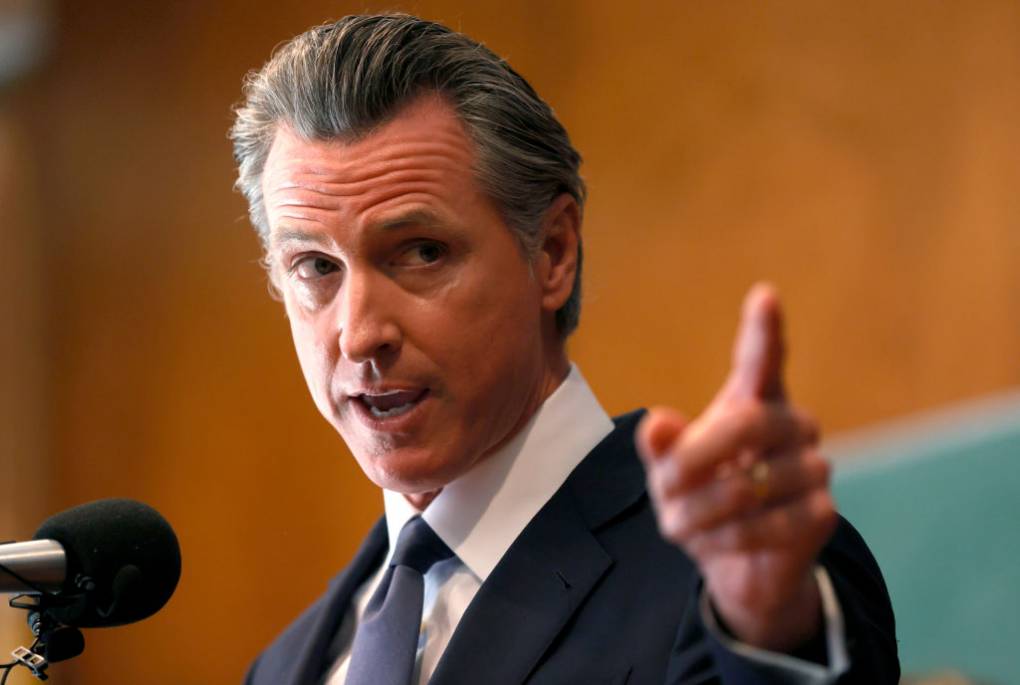
"content": "\u003cp>\u003cem>\u003cstrong>Update Friday, June 24: The decision in Dobbs v. Jackson Women’s Health Organization was announced on June 24, overturning Roe v. Wade and eliminating the constitutional right to an abortion.\u003c/strong>\u003c/em>\u003c/p>\n\u003cp>\u003cem>\u003cstrong>California guarantees the right to abortion in statute and the state constitution. Our state’s abortion laws are the strongest in the United States. Both officials and abortion providers have made it very clear that \u003ca href=\"https://www.kqed.org/news/11917111/even-without-roe-v-wade-abortion-is-still-legal-in-california-heres-what-you-need-to-know\">abortion access in California will not change\u003c/a> because of the U.S. Supreme Court’s decision. \u003ca class=\"c-link\" tabindex=\"-1\" href=\"https://www.kqed.org/news/11917776/supreme-court-overturns-roe-v-wade\" target=\"_blank\" rel=\"noopener noreferrer\" data-stringify-link=\"https://www.kqed.org/news/11917776/supreme-court-overturns-roe-v-wade\" data-sk=\"tooltip_parent\" data-remove-tab-index=\"true\">Read more about the overturning of Roe v. Wade\u003c/a>.\u003c/strong>\u003c/em>\u003c/p>\n\u003cp>\u003cem>Original story continues:\u003c/em>\u003c/p>\n\u003cp>Gov. Gavin Newsom signed a new law Tuesday, March 22 to make abortions cheaper for people on private insurance plans, the first of more than a dozen bills the state’s Democratic leaders plan to pass this year to prepare for a potential U.S. Supreme Court ruling that could overturn Roe v. Wade.\u003c/p>\n\u003cp>The new conservative majority on the U.S. Supreme Court is \u003ca href=\"https://apnews.com/article/abortion-us-supreme-court-health-united-states-mississippi-65751e1b9ca7d34f1458ffe9729f82b2\">weighing whether to overturn the landmark 1973 ruling\u003c/a> that banned states from outlawing abortion.\u003c/p>\n\u003cp>[ad fullwidth]\u003c/p>\n\u003cp>If they do, at least 26 states are likely either to ban abortion outright or severely limit access, according to the Guttmacher Institute, a research and policy organization that supports abortion rights.\u003c/p>\n\u003cp>That would force many pregnant people to travel to other states to get abortions, prompting Democratic-led states like California to propose and pass new laws to prepare for them.\u003c/p>\n\u003cp>Last week, Democratic Washington Gov. Jay Inslee signed a law aimed at \u003ca href=\"https://apnews.com/article/abortion-health-lawsuits-legislature-washington-b63da7e85e9f95402cce5f3ac8ebe86f\">banning legal action against people who aid or receive an abortion\u003c/a>, a measure responding to the Texas law that lets people sue abortion providers or those who assist them.\u003c/p>\n\u003cp>Oregon lawmakers included $15 million in their state budget to help pay for people to travel to the state to get abortions.\u003c/p>\n\u003cp>California has a similar bill, one of 14 proposals aimed at expanding and protecting access to abortion in the nation’s most populous state. The bills were inspired by a report from the California Future of Abortion Council, a group Newsom convened last year to advise him on how to respond if Roe v. Wade is overturned.[pullquote size=\"medium\" align=\"right\" citation=\"Jodi Hicks, CEO and president, Planned Parenthood Affiliates of California\"]‘We’re looking at 26 states that will introduce some sort of ban and restriction on abortion, so you have the other half of the country that will need to prepare for how we take care of those patients.’[/pullquote]“We’re looking at 26 states that will introduce some sort of ban and restriction on abortion, so you have the other half of the country that will need to prepare for how we take care of those patients,” said Jodi Hicks, CEO and president of Planned Parenthood Affiliates of California. “We’re all imagining and trying to prepare correctly for what that impact will be.”\u003c/p>\n\u003cp>California already requires health insurance companies to cover abortions. But insurers often charge things like co-pays and deductibles that can add an average of $543 to the cost of a medication abortion and $887 to the cost of a procedural abortion, according to an analysis by the California Health Benefits Review Program.\u003c/p>\n\u003cp>The law Newsom signed on Tuesday eliminates those fees. While the law will make abortions cheaper, it also will slightly increase monthly premiums for patients and their employers.\u003c/p>\n\u003cp>But the savings from eliminating the fees will be greater than the increased premiums, also according to an analysis by the California Health Benefits Review Program.\u003c/p>\n\u003cp>The law, authored by state Sen. Lena Gonzalez, makes California the fourth state to ban the fees, joining Illinois, New York and Oregon.\u003c/p>\n\u003cp>“As states across the country attempt to move us backwards by restricting fundamental reproductive rights, California continues to protect and advance reproductive freedom for all,” Newsom said.\u003c/p>\n\u003cp>The U.S. Supreme Court is expected to decide this summer whether to uphold a law in Mississippi that bans abortions after 15 weeks of pregnancy. During a public hearing on the case last year, a majority of justices indicated they were willing to uphold the law and even overturn Roe v. Wade.\u003c/p>\n\u003cp>That case prompted swift action in state legislatures across the country. Last week, lawmakers in Idaho sent a bill to the governor that would \u003ca href=\"https://apnews.com/article/abortion-us-supreme-court-health-business-lawsuits-51f006f5be4ac59b85c28a2d50f1710d\">ban abortions after six weeks of pregnancy\u003c/a>. In Missouri, lawmakers introduced a bill that would make it \u003ca href=\"https://apnews.com/article/us-supreme-court-texas-legislature-missouri-90d2411161833cf28799491840aac387\">illegal for the state’s residents to get abortions in other states\u003c/a>.\u003c/p>\n\u003cp>States like California, however, are drafting proposals to counter those measures. They include bills to ban disclosing abortion medical records to police or other out-of-state entities and protect patients and providers from civil liability.[pullquote size=\"medium\" align=\"right\" citation=\"Gov. Gavin Newsom\"]‘As states across the country attempt to move us backwards by restricting fundamental reproductive rights, California continues to protect and advance reproductive freedom for all.’[/pullquote]The measures would expand California’s abortion workforce, allowing some nurse practitioners to perform the procedure without the supervision of doctors and setting up a scholarship program for people studying reproductive health who agree to work in underserved areas.\u003c/p>\n\u003cp>And they would set up funds that would help pay for people to get abortions, including compensating providers who provide free care to patients with lower incomes and assisting with travel, lodging and child care for women seeking the procedure in California.\u003c/p>\n\u003cp>“This legislative package is robust, it’s bold, it’s responsive and it’s innovative, and that’s exactly what we need right now,” said Amy Moy, chief external affairs officer for Essential Access Health and a member of the steering committee for the Future of Abortion Council.\u003c/p>\n\u003cp>She added, “We have a unique opportunity and a pressing responsibility to make sure that anyone seeking time-sensitive and potentially life-changing abortion care within our state’s borders can do so with dignity and respect and safety.”[aside postID=news_11898317 label='Related Coverage']\u003cspan style=\"font-weight: 400;\">So how likely is it that people would actually come to California from other states to get abortions? Of the three states California shares a border with, Arizona poses the greatest risk to abortion access for the people who live there.\u003c/span>\u003c/p>\n\u003cp>That’s because \u003ca href=\"https://www.azleg.gov/viewdocument/?docName=https%3A%2F%2Fwww.azleg.gov%2Fars%2F13%2F03603.htm\">Arizona has an abortion ban\u003c/a> that preexists Roe v. Wade and that has never been taken off the books. It hasn’t been enforced since the constitutional right to an abortion was established in 1973, but if \u003cspan style=\"font-weight: 400;\">Roe \u003c/span>\u003cspan style=\"font-weight: 400;\">is repealed, abortion rights advocates worry the ban could become enforceable again. If reenforced, the law would carry a minimum two-year prison sentence for anyone who “provides, supplies, or administers” an abortion. Arizona’s governor, Doug Ducey, has taken a staunch \u003c/span>\u003ca href=\"https://azgovernor.gov/governor/news/2021/04/governor-ducey-signs-legislation-protect-preborn-children\">\u003cspan style=\"font-weight: 400;\">anti-abortion rights\u003c/span>\u003c/a>\u003cspan style=\"font-weight: 400;\"> stance while in office.\u003c/span>\u003c/p>\n\u003cp>\u003cspan style=\"font-weight: 400;\">According to the \u003c/span>\u003ca href=\"https://states.guttmacher.org/#arizona\">\u003cspan style=\"font-weight: 400;\">Guttmacher Institute\u003c/span>\u003c/a>\u003cspan style=\"font-weight: 400;\">, if Arizona were to maintain their abortion ban\u003c/span>\u003cspan style=\"font-weight: 400;\">, 85% of women in Arizona of reproductive age, numbering more than 1.3 million, would find their closest abortion clinic in California. The average one-way driving distance for people seeking this care would be 251 miles.\u003c/span>\u003c/p>\n\u003cp>[ad floatright]\u003c/p>\n\u003cp>\u003cem>KQED’s Azul Dahlstrom-Eckman contributed reporting to this story.\u003c/em>\u003c/p>\n\n",
"blocks": [],
"excerpt": "The move anticipates the Supreme Court considering a repeal of abortion protections this summer.",
"status": "publish",
"parent": 0,
"modified": 1721753433,
"stats": {
"hasAudio": false,
"hasVideo": false,
"hasChartOrMap": false,
"iframeSrcs": [],
"hasGoogleForm": false,
"hasGallery": false,
"hasHearkenModule": false,
"hasPolis": false,
"paragraphCount": 26,
"wordCount": 1225
},
"headData": {
"title": "California Reduces Cost for Abortions That Use Private Insurance in Response to Other States' Proposed Restrictions | KQED",
"description": "The move anticipates the Supreme Court considering a repeal of abortion protections this summer.",
"ogTitle": "",
"ogDescription": "",
"ogImgId": "",
"twTitle": "",
"twDescription": "",
"twImgId": "",
"schema": {
"@context": "https://schema.org",
"@type": "NewsArticle",
"headline": "California Reduces Cost for Abortions That Use Private Insurance in Response to Other States' Proposed Restrictions",
"datePublished": "2022-03-23T14:23:49-07:00",
"dateModified": "2024-07-23T09:50:33-07:00",
"image": "https://cdn.kqed.org/wp-content/uploads/2020/02/KQED-OG-Image@1x.png",
"isAccessibleForFree": "True",
"publisher": {
"@type": "NewsMediaOrganization",
"@id": "https://www.kqed.org/#organization",
"name": "KQED",
"logo": "https://cdn.kqed.org/wp-content/uploads/2020/02/KQED-OG-Image@1x.png",
"url": "https://www.kqed.org",
"sameAs": [
"https://www.facebook.com/KQED",
"https://twitter.com/KQED",
"https://www.instagram.com/kqed/",
"https://www.tiktok.com/@kqedofficial",
"https://www.linkedin.com/company/kqed",
"https://www.youtube.com/channel/UCeC0IOo7i1P_61zVUWbJ4nw"
]
}
}
},
"sticky": false,
"nprByline": "Adam Beam",
"excludeFromSiteSearch": "Include",
"showOnAuthorArchivePages": "No",
"articleAge": "0",
"path": "/news/11909017/california-makes-abortions-that-use-private-insurance-cheaper-in-response-to-other-states-proposed-restrictions",
"audioTrackLength": null,
"parsedContent": [
{
"type": "contentString",
"content": "\u003cdiv class=\"post-body\">\u003cp>\u003cp>\u003cem>\u003cstrong>Update Friday, June 24: The decision in Dobbs v. Jackson Women’s Health Organization was announced on June 24, overturning Roe v. Wade and eliminating the constitutional right to an abortion.\u003c/strong>\u003c/em>\u003c/p>\n\u003cp>\u003cem>\u003cstrong>California guarantees the right to abortion in statute and the state constitution. Our state’s abortion laws are the strongest in the United States. Both officials and abortion providers have made it very clear that \u003ca href=\"https://www.kqed.org/news/11917111/even-without-roe-v-wade-abortion-is-still-legal-in-california-heres-what-you-need-to-know\">abortion access in California will not change\u003c/a> because of the U.S. Supreme Court’s decision. \u003ca class=\"c-link\" tabindex=\"-1\" href=\"https://www.kqed.org/news/11917776/supreme-court-overturns-roe-v-wade\" target=\"_blank\" rel=\"noopener noreferrer\" data-stringify-link=\"https://www.kqed.org/news/11917776/supreme-court-overturns-roe-v-wade\" data-sk=\"tooltip_parent\" data-remove-tab-index=\"true\">Read more about the overturning of Roe v. Wade\u003c/a>.\u003c/strong>\u003c/em>\u003c/p>\n\u003cp>\u003cem>Original story continues:\u003c/em>\u003c/p>\n\u003cp>Gov. Gavin Newsom signed a new law Tuesday, March 22 to make abortions cheaper for people on private insurance plans, the first of more than a dozen bills the state’s Democratic leaders plan to pass this year to prepare for a potential U.S. Supreme Court ruling that could overturn Roe v. Wade.\u003c/p>\n\u003cp>The new conservative majority on the U.S. Supreme Court is \u003ca href=\"https://apnews.com/article/abortion-us-supreme-court-health-united-states-mississippi-65751e1b9ca7d34f1458ffe9729f82b2\">weighing whether to overturn the landmark 1973 ruling\u003c/a> that banned states from outlawing abortion.\u003c/p>\n\u003cp>\u003c/p>\u003c/div>",
"attributes": {
"named": {},
"numeric": []
}
},
{
"type": "component",
"content": "",
"name": "ad",
"attributes": {
"named": {
"label": "fullwidth"
},
"numeric": [
"fullwidth"
]
}
},
{
"type": "contentString",
"content": "\u003cdiv class=\"post-body\">\u003cp>\u003c/p>\n\u003cp>If they do, at least 26 states are likely either to ban abortion outright or severely limit access, according to the Guttmacher Institute, a research and policy organization that supports abortion rights.\u003c/p>\n\u003cp>That would force many pregnant people to travel to other states to get abortions, prompting Democratic-led states like California to propose and pass new laws to prepare for them.\u003c/p>\n\u003cp>Last week, Democratic Washington Gov. Jay Inslee signed a law aimed at \u003ca href=\"https://apnews.com/article/abortion-health-lawsuits-legislature-washington-b63da7e85e9f95402cce5f3ac8ebe86f\">banning legal action against people who aid or receive an abortion\u003c/a>, a measure responding to the Texas law that lets people sue abortion providers or those who assist them.\u003c/p>\n\u003cp>Oregon lawmakers included $15 million in their state budget to help pay for people to travel to the state to get abortions.\u003c/p>\n\u003cp>California has a similar bill, one of 14 proposals aimed at expanding and protecting access to abortion in the nation’s most populous state. The bills were inspired by a report from the California Future of Abortion Council, a group Newsom convened last year to advise him on how to respond if Roe v. Wade is overturned.\u003c/p>\u003c/div>",
"attributes": {
"named": {},
"numeric": []
}
},
{
"type": "component",
"content": "‘We’re looking at 26 states that will introduce some sort of ban and restriction on abortion, so you have the other half of the country that will need to prepare for how we take care of those patients.’",
"name": "pullquote",
"attributes": {
"named": {
"size": "medium",
"align": "right",
"citation": "Jodi Hicks, CEO and president, Planned Parenthood Affiliates of California",
"label": ""
},
"numeric": []
}
},
{
"type": "contentString",
"content": "\u003cdiv class=\"post-body\">\u003cp>“We’re looking at 26 states that will introduce some sort of ban and restriction on abortion, so you have the other half of the country that will need to prepare for how we take care of those patients,” said Jodi Hicks, CEO and president of Planned Parenthood Affiliates of California. “We’re all imagining and trying to prepare correctly for what that impact will be.”\u003c/p>\n\u003cp>California already requires health insurance companies to cover abortions. But insurers often charge things like co-pays and deductibles that can add an average of $543 to the cost of a medication abortion and $887 to the cost of a procedural abortion, according to an analysis by the California Health Benefits Review Program.\u003c/p>\n\u003cp>The law Newsom signed on Tuesday eliminates those fees. While the law will make abortions cheaper, it also will slightly increase monthly premiums for patients and their employers.\u003c/p>\n\u003cp>But the savings from eliminating the fees will be greater than the increased premiums, also according to an analysis by the California Health Benefits Review Program.\u003c/p>\n\u003cp>The law, authored by state Sen. Lena Gonzalez, makes California the fourth state to ban the fees, joining Illinois, New York and Oregon.\u003c/p>\n\u003cp>“As states across the country attempt to move us backwards by restricting fundamental reproductive rights, California continues to protect and advance reproductive freedom for all,” Newsom said.\u003c/p>\n\u003cp>The U.S. Supreme Court is expected to decide this summer whether to uphold a law in Mississippi that bans abortions after 15 weeks of pregnancy. During a public hearing on the case last year, a majority of justices indicated they were willing to uphold the law and even overturn Roe v. Wade.\u003c/p>\n\u003cp>That case prompted swift action in state legislatures across the country. Last week, lawmakers in Idaho sent a bill to the governor that would \u003ca href=\"https://apnews.com/article/abortion-us-supreme-court-health-business-lawsuits-51f006f5be4ac59b85c28a2d50f1710d\">ban abortions after six weeks of pregnancy\u003c/a>. In Missouri, lawmakers introduced a bill that would make it \u003ca href=\"https://apnews.com/article/us-supreme-court-texas-legislature-missouri-90d2411161833cf28799491840aac387\">illegal for the state’s residents to get abortions in other states\u003c/a>.\u003c/p>\n\u003cp>States like California, however, are drafting proposals to counter those measures. They include bills to ban disclosing abortion medical records to police or other out-of-state entities and protect patients and providers from civil liability.\u003c/p>\u003c/div>",
"attributes": {
"named": {},
"numeric": []
}
},
{
"type": "component",
"content": "‘As states across the country attempt to move us backwards by restricting fundamental reproductive rights, California continues to protect and advance reproductive freedom for all.’",
"name": "pullquote",
"attributes": {
"named": {
"size": "medium",
"align": "right",
"citation": "Gov. Gavin Newsom",
"label": ""
},
"numeric": []
}
},
{
"type": "contentString",
"content": "\u003cdiv class=\"post-body\">\u003cp>The measures would expand California’s abortion workforce, allowing some nurse practitioners to perform the procedure without the supervision of doctors and setting up a scholarship program for people studying reproductive health who agree to work in underserved areas.\u003c/p>\n\u003cp>And they would set up funds that would help pay for people to get abortions, including compensating providers who provide free care to patients with lower incomes and assisting with travel, lodging and child care for women seeking the procedure in California.\u003c/p>\n\u003cp>“This legislative package is robust, it’s bold, it’s responsive and it’s innovative, and that’s exactly what we need right now,” said Amy Moy, chief external affairs officer for Essential Access Health and a member of the steering committee for the Future of Abortion Council.\u003c/p>\n\u003cp>She added, “We have a unique opportunity and a pressing responsibility to make sure that anyone seeking time-sensitive and potentially life-changing abortion care within our state’s borders can do so with dignity and respect and safety.”\u003c/p>\u003c/div>",
"attributes": {
"named": {},
"numeric": []
}
},
{
"type": "component",
"content": "",
"name": "aside",
"attributes": {
"named": {
"postid": "news_11898317",
"label": "Related Coverage "
},
"numeric": []
}
},
{
"type": "contentString",
"content": "\u003cdiv class=\"post-body\">\u003cp>\u003cspan style=\"font-weight: 400;\">So how likely is it that people would actually come to California from other states to get abortions? Of the three states California shares a border with, Arizona poses the greatest risk to abortion access for the people who live there.\u003c/span>\u003c/p>\n\u003cp>That’s because \u003ca href=\"https://www.azleg.gov/viewdocument/?docName=https%3A%2F%2Fwww.azleg.gov%2Fars%2F13%2F03603.htm\">Arizona has an abortion ban\u003c/a> that preexists Roe v. Wade and that has never been taken off the books. It hasn’t been enforced since the constitutional right to an abortion was established in 1973, but if \u003cspan style=\"font-weight: 400;\">Roe \u003c/span>\u003cspan style=\"font-weight: 400;\">is repealed, abortion rights advocates worry the ban could become enforceable again. If reenforced, the law would carry a minimum two-year prison sentence for anyone who “provides, supplies, or administers” an abortion. Arizona’s governor, Doug Ducey, has taken a staunch \u003c/span>\u003ca href=\"https://azgovernor.gov/governor/news/2021/04/governor-ducey-signs-legislation-protect-preborn-children\">\u003cspan style=\"font-weight: 400;\">anti-abortion rights\u003c/span>\u003c/a>\u003cspan style=\"font-weight: 400;\"> stance while in office.\u003c/span>\u003c/p>\n\u003cp>\u003cspan style=\"font-weight: 400;\">According to the \u003c/span>\u003ca href=\"https://states.guttmacher.org/#arizona\">\u003cspan style=\"font-weight: 400;\">Guttmacher Institute\u003c/span>\u003c/a>\u003cspan style=\"font-weight: 400;\">, if Arizona were to maintain their abortion ban\u003c/span>\u003cspan style=\"font-weight: 400;\">, 85% of women in Arizona of reproductive age, numbering more than 1.3 million, would find their closest abortion clinic in California. The average one-way driving distance for people seeking this care would be 251 miles.\u003c/span>\u003c/p>\n\u003cp>\u003c/p>\u003c/div>",
"attributes": {
"named": {},
"numeric": []
}
},
{
"type": "component",
"content": "",
"name": "ad",
"attributes": {
"named": {
"label": "floatright"
},
"numeric": [
"floatright"
]
}
},
{
"type": "contentString",
"content": "\u003cdiv class=\"post-body\">\u003cp>\u003c/p>\n\u003cp>\u003cem>KQED’s Azul Dahlstrom-Eckman contributed reporting to this story.\u003c/em>\u003c/p>\n\n\u003c/div>\u003c/p>",
"attributes": {
"named": {},
"numeric": []
}
}
],
"link": "/news/11909017/california-makes-abortions-that-use-private-insurance-cheaper-in-response-to-other-states-proposed-restrictions",
"authors": [
"byline_news_11909017"
],
"categories": [
"news_8"
],
"tags": [
"news_866",
"news_30251",
"news_30275",
"news_16"
],
"featImg": "news_11909050",
"label": "news"
},
"news_11899900": {
"type": "posts",
"id": "news_11899900",
"meta": {
"index": "posts_1716263798",
"site": "news",
"id": "11899900",
"score": null,
"sort": [
1640122242000
]
},
"guestAuthors": [],
"slug": "why-newsom-thinks-texas-offers-a-roadmap-for-california-gun-control",
"title": "Why Newsom Thinks Texas Offers a Road Map for California Gun Control",
"publishDate": 1640122242,
"format": "standard",
"headTitle": "Why Newsom Thinks Texas Offers a Road Map for California Gun Control | KQED",
"labelTerm": {
"site": "news"
},
"content": "\u003cp>Gov. Gavin Newsom often seems to itch for a fight with Texas, frequently saying California’s record on job creation, budget surpluses, environmental protection and crime outshine the Lone Star State’s.\u003c/p>\n\u003cp>Now Newsom wants to emulate the cynical legal approach Texas takes to restricting abortions and apply it to enhancing gun control in California.\u003c/p>\n\u003cp>Texas essentially outsources enforcement of its strict anti-abortion law to private individuals who can file lawsuits. The U.S. Supreme Court recently allowed that law to stand, at least for now, while also shielding government officials, like the Texas attorney general, from being sued.[pullquote size=\"medium\" align=\"right\" citation=\"Gov. Gavin Newsom\"]‘To the extent this decision is used to put women’s lives at risk, we’re going to use this decision to save people’s lives by addressing the issue of gun violence here in the state of California.’[/pullquote]\u003c/p>\n\u003cp>Gov. Newsom didn’t mince words about the high court’s recent ruling. “I think it was a terrible decision by the United States Supreme Court,” he said last week.\u003c/p>\n\u003cp>But Newsom, a staunch supporter of abortion rights, sees an opportunity for California.\u003c/p>\n\u003cp>“To the extent this decision is used to put women’s lives at risk, we’re going to use this decision to save people’s lives by addressing the issue of gun violence here in the state of California,” he added.\u003c/p>\n\u003cp>Newsom’s idea was hatched on a Saturday night the day after the Supreme Court’s controversial decision on the Texas abortion law.\u003c/p>\n\u003cp>Newsom is proposing a new law to allow private individuals to sue people who make, sell or distribute weapons banned in the state, including assault weapons and so-called ghost guns.[aside postID=\"news_11899691,news_11898857,forum_2010101886912\" label=\"Related Posts\"]\u003c/p>\n\u003cp>“I have directed my staff to work with the Legislature and the Attorney General on a bill that would create a right of action allowing private citizens to seek injunctive relief, and statutory damages of at least $10,000 per violation plus costs and attorney’s fees, against anyone who manufactures, distributes, or sells an assault weapon or ghost gun kit or parts in the State of California,” Newsom said in a statement. “If the most efficient way to keep these devastating weapons off our streets is to add the threat of private lawsuits, we should do just that.”\u003c/p>\n\u003cp>“He’s basically saying, ‘OK, I’ll see your opinion in the Texas abortion case, and I’ll raise you a new gun control law,'” said Loyola Law School professor Jessica Levinson.\u003c/p>\n\u003cp>“I think that it was really just a matter of moments until there was some blue state governor that was going to say, OK, the Supreme Court’s told us exactly how we can pass laws, try and evade judicial review. So I’m going to go ahead and pass a law that protects X, Y or Z,” Levinson added.\u003c/p>\n\u003cp>Even Newsom’s staff seemed caught off guard by the Saturday night policy pronouncement. There was no evidence of the kind of staff work and research that often goes into a major new policy before it’s released.\u003c/p>\n\u003cp>Although California has some of the toughest gun laws on the books, the state has had more than its share of mass shootings in recent years. There have been shooting sprees at a synagogue in Poway, near the UC Santa Barbara campus, at the Garlic Festival in Gilroy and most recently at the Santa Clara Valley Transit Authority where a disgruntled employee \u003ca href=\"https://www.kqed.org/news/11875404/official-multiple-people-killed-in-shooting-at-san-jose-vta-railyard\" target=\"_blank\" rel=\"noopener noreferrer\">shot and killed nine people\u003c/a> before turning the gun on himself.\u003c/p>\n\u003cp>Crimes like those and gun violence in general are often carried out with weapons banned in California. One of the people working to create the legislation Gov. Newsom wants is California Attorney General Rob Bonta. His legal strategy is based on the anti-abortion law in Texas that allows lawsuits against anyone who provides or aids in an abortion.\u003c/p>\n\u003cp>“Generally private individuals could provide a force multiplier to support our common sense gun safety laws to make more people safe and save more lives,” Bonta said.\u003c/p>\n\u003cp>Bay Area attorney Travis Silva, who is working with the office of San Francisco District Attorney Chesa Boudin to sue makers of ghost guns, thinks Newsom’s idea is spot on. He says ghost guns are quickly proliferating and make up a large portion of guns recovered by law enforcement.\u003c/p>\n\u003cp>“They don’t conduct background checks. They don’t ensure that there’s a serial number on the firearm, and they don’t verify that the person who is purchasing the ghost gun is eligible to obtain a firearm,” Silva said.\u003c/p>\n\u003cp>“These companies are circumventing those requirements and they’re doing it openly, and notoriously. Targeting these companies and their practices is appropriate. It’s appropriate to have a legislative response to that kind of business practice.”\u003c/p>\n\u003cp>Even some supporters of the Texas law worried in briefs filed with the Supreme Court that this legal framework could backfire, said Sarah Parshall Perry with the Heritage Foundation in Washington.\u003c/p>\n\u003cp>“I think there are conservatives who are concerned that there is going to be sort of a copycat effort,” Perry said.\u003c/p>\n\u003cp>She says the Supreme Court is giving a road map to challenge all kinds of rights by blocking off federal courts as a way to challenge state officials who implement the laws.\u003c/p>\n\u003cp>“Particularly disfavored constitutional rights, whether that’s freedom of speech, freedom of religion or the Second Amendment,” she said.\u003c/p>\n\u003cp>Others would add the right of same sex couples to marry.\u003c/p>\n\u003cp>California Assemblyman Mike Gipson, a former cop from Los Angeles, has authored legislation against ghost guns. He’s eager to carry Gov. Newsom’s latest gun control idea.\u003c/p>\n\u003cp>“California is unique and other states follow California, and we hope that they will follow this lead, once it gets on the governor’s desk and signed into law,” Gipson said.\u003c/p>\n\u003cp>Of course, there’s a long way between an idea and a law, especially a controversial one like this that challenges a right enshrined in the Second Amendment. That said, it seems to be a fight Governor Newsom would relish.\u003c/p>\n\u003cp>[ad fullwidth]\u003c/p>\n\u003cp>[ad floatright]\u003c/p>\n",
"blocks": [],
"excerpt": "Gov. Gavin Newsom is proposing a controversial new law to allow private individuals to sue people who make, sell or distribute weapons banned in the state, including assault weapons and so-called ghost guns.",
"status": "publish",
"parent": 0,
"modified": 1721753465,
"stats": {
"hasAudio": false,
"hasVideo": false,
"hasChartOrMap": false,
"iframeSrcs": [],
"hasGoogleForm": false,
"hasGallery": false,
"hasHearkenModule": false,
"hasPolis": false,
"paragraphCount": 28,
"wordCount": 1087
},
"headData": {
"title": "Why Newsom Thinks Texas Offers a Road Map for California Gun Control | KQED",
"description": "Gov. Gavin Newsom is proposing a controversial new law to allow private individuals to sue people who make, sell or distribute weapons banned in the state, including assault weapons and so-called ghost guns.",
"ogTitle": "",
"ogDescription": "",
"ogImgId": "",
"twTitle": "",
"twDescription": "",
"twImgId": "",
"schema": {
"@context": "https://schema.org",
"@type": "NewsArticle",
"headline": "Why Newsom Thinks Texas Offers a Road Map for California Gun Control",
"datePublished": "2021-12-21T13:30:42-08:00",
"dateModified": "2024-07-23T09:51:05-07:00",
"image": "https://cdn.kqed.org/wp-content/uploads/2020/02/KQED-OG-Image@1x.png",
"isAccessibleForFree": "True",
"publisher": {
"@type": "NewsMediaOrganization",
"@id": "https://www.kqed.org/#organization",
"name": "KQED",
"logo": "https://cdn.kqed.org/wp-content/uploads/2020/02/KQED-OG-Image@1x.png",
"url": "https://www.kqed.org",
"sameAs": [
"https://www.facebook.com/KQED",
"https://twitter.com/KQED",
"https://www.instagram.com/kqed/",
"https://www.tiktok.com/@kqedofficial",
"https://www.linkedin.com/company/kqed",
"https://www.youtube.com/channel/UCeC0IOo7i1P_61zVUWbJ4nw"
]
}
}
},
"audioUrl": "https://traffic.omny.fm/d/clips/0af137ef-751e-4b19-a055-aaef00d2d578/ffca7e9f-6831-4[…]f-aaef00f5a073/dda63d73-4f1e-467a-aa10-ae05010a42fe/audio.mp3",
"sticky": false,
"excludeFromSiteSearch": "Include",
"articleAge": "0",
"path": "/news/11899900/why-newsom-thinks-texas-offers-a-roadmap-for-california-gun-control",
"audioTrackLength": null,
"parsedContent": [
{
"type": "contentString",
"content": "\u003cdiv class=\"post-body\">\u003cp>\u003cp>Gov. Gavin Newsom often seems to itch for a fight with Texas, frequently saying California’s record on job creation, budget surpluses, environmental protection and crime outshine the Lone Star State’s.\u003c/p>\n\u003cp>Now Newsom wants to emulate the cynical legal approach Texas takes to restricting abortions and apply it to enhancing gun control in California.\u003c/p>\n\u003cp>Texas essentially outsources enforcement of its strict anti-abortion law to private individuals who can file lawsuits. The U.S. Supreme Court recently allowed that law to stand, at least for now, while also shielding government officials, like the Texas attorney general, from being sued.\u003c/p>\u003c/div>",
"attributes": {
"named": {},
"numeric": []
}
},
{
"type": "component",
"content": "‘To the extent this decision is used to put women’s lives at risk, we’re going to use this decision to save people’s lives by addressing the issue of gun violence here in the state of California.’",
"name": "pullquote",
"attributes": {
"named": {
"size": "medium",
"align": "right",
"citation": "Gov. Gavin Newsom",
"label": ""
},
"numeric": []
}
},
{
"type": "contentString",
"content": "\u003cdiv class=\"post-body\">\u003cp>\u003c/p>\n\u003cp>Gov. Newsom didn’t mince words about the high court’s recent ruling. “I think it was a terrible decision by the United States Supreme Court,” he said last week.\u003c/p>\n\u003cp>But Newsom, a staunch supporter of abortion rights, sees an opportunity for California.\u003c/p>\n\u003cp>“To the extent this decision is used to put women’s lives at risk, we’re going to use this decision to save people’s lives by addressing the issue of gun violence here in the state of California,” he added.\u003c/p>\n\u003cp>Newsom’s idea was hatched on a Saturday night the day after the Supreme Court’s controversial decision on the Texas abortion law.\u003c/p>\n\u003cp>Newsom is proposing a new law to allow private individuals to sue people who make, sell or distribute weapons banned in the state, including assault weapons and so-called ghost guns.\u003c/p>\u003c/div>",
"attributes": {
"named": {},
"numeric": []
}
},
{
"type": "component",
"content": "",
"name": "aside",
"attributes": {
"named": {
"postid": "news_11899691,news_11898857,forum_2010101886912",
"label": "Related Posts "
},
"numeric": []
}
},
{
"type": "contentString",
"content": "\u003cdiv class=\"post-body\">\u003cp>\u003c/p>\n\u003cp>“I have directed my staff to work with the Legislature and the Attorney General on a bill that would create a right of action allowing private citizens to seek injunctive relief, and statutory damages of at least $10,000 per violation plus costs and attorney’s fees, against anyone who manufactures, distributes, or sells an assault weapon or ghost gun kit or parts in the State of California,” Newsom said in a statement. “If the most efficient way to keep these devastating weapons off our streets is to add the threat of private lawsuits, we should do just that.”\u003c/p>\n\u003cp>“He’s basically saying, ‘OK, I’ll see your opinion in the Texas abortion case, and I’ll raise you a new gun control law,'” said Loyola Law School professor Jessica Levinson.\u003c/p>\n\u003cp>“I think that it was really just a matter of moments until there was some blue state governor that was going to say, OK, the Supreme Court’s told us exactly how we can pass laws, try and evade judicial review. So I’m going to go ahead and pass a law that protects X, Y or Z,” Levinson added.\u003c/p>\n\u003cp>Even Newsom’s staff seemed caught off guard by the Saturday night policy pronouncement. There was no evidence of the kind of staff work and research that often goes into a major new policy before it’s released.\u003c/p>\n\u003cp>Although California has some of the toughest gun laws on the books, the state has had more than its share of mass shootings in recent years. There have been shooting sprees at a synagogue in Poway, near the UC Santa Barbara campus, at the Garlic Festival in Gilroy and most recently at the Santa Clara Valley Transit Authority where a disgruntled employee \u003ca href=\"https://www.kqed.org/news/11875404/official-multiple-people-killed-in-shooting-at-san-jose-vta-railyard\" target=\"_blank\" rel=\"noopener noreferrer\">shot and killed nine people\u003c/a> before turning the gun on himself.\u003c/p>\n\u003cp>Crimes like those and gun violence in general are often carried out with weapons banned in California. One of the people working to create the legislation Gov. Newsom wants is California Attorney General Rob Bonta. His legal strategy is based on the anti-abortion law in Texas that allows lawsuits against anyone who provides or aids in an abortion.\u003c/p>\n\u003cp>“Generally private individuals could provide a force multiplier to support our common sense gun safety laws to make more people safe and save more lives,” Bonta said.\u003c/p>\n\u003cp>Bay Area attorney Travis Silva, who is working with the office of San Francisco District Attorney Chesa Boudin to sue makers of ghost guns, thinks Newsom’s idea is spot on. He says ghost guns are quickly proliferating and make up a large portion of guns recovered by law enforcement.\u003c/p>\n\u003cp>“They don’t conduct background checks. They don’t ensure that there’s a serial number on the firearm, and they don’t verify that the person who is purchasing the ghost gun is eligible to obtain a firearm,” Silva said.\u003c/p>\n\u003cp>“These companies are circumventing those requirements and they’re doing it openly, and notoriously. Targeting these companies and their practices is appropriate. It’s appropriate to have a legislative response to that kind of business practice.”\u003c/p>\n\u003cp>Even some supporters of the Texas law worried in briefs filed with the Supreme Court that this legal framework could backfire, said Sarah Parshall Perry with the Heritage Foundation in Washington.\u003c/p>\n\u003cp>“I think there are conservatives who are concerned that there is going to be sort of a copycat effort,” Perry said.\u003c/p>\n\u003cp>She says the Supreme Court is giving a road map to challenge all kinds of rights by blocking off federal courts as a way to challenge state officials who implement the laws.\u003c/p>\n\u003cp>“Particularly disfavored constitutional rights, whether that’s freedom of speech, freedom of religion or the Second Amendment,” she said.\u003c/p>\n\u003cp>Others would add the right of same sex couples to marry.\u003c/p>\n\u003cp>California Assemblyman Mike Gipson, a former cop from Los Angeles, has authored legislation against ghost guns. He’s eager to carry Gov. Newsom’s latest gun control idea.\u003c/p>\n\u003cp>“California is unique and other states follow California, and we hope that they will follow this lead, once it gets on the governor’s desk and signed into law,” Gipson said.\u003c/p>\n\u003cp>Of course, there’s a long way between an idea and a law, especially a controversial one like this that challenges a right enshrined in the Second Amendment. That said, it seems to be a fight Governor Newsom would relish.\u003c/p>\n\u003cp>\u003c/p>\u003c/div>",
"attributes": {
"named": {},
"numeric": []
}
},
{
"type": "component",
"content": "",
"name": "ad",
"attributes": {
"named": {
"label": "fullwidth"
},
"numeric": [
"fullwidth"
]
}
},
{
"type": "contentString",
"content": "\u003cdiv class=\"post-body\">\u003cp>\u003c/p>\n\u003cp>\u003c/p>\u003c/div>",
"attributes": {
"named": {},
"numeric": []
}
},
{
"type": "component",
"content": "",
"name": "ad",
"attributes": {
"named": {
"label": "floatright"
},
"numeric": [
"floatright"
]
}
},
{
"type": "contentString",
"content": "\u003cdiv class=\"post-body\">\u003cp>\u003c/p>\n\u003c/div>\u003c/p>",
"attributes": {
"named": {},
"numeric": []
}
}
],
"link": "/news/11899900/why-newsom-thinks-texas-offers-a-roadmap-for-california-gun-control",
"authors": [
"255"
],
"categories": [
"news_8",
"news_13"
],
"tags": [
"news_866",
"news_17725",
"news_16",
"news_2795"
],
"featImg": "news_11899932",
"label": "news"
},
"news_11899501": {
"type": "posts",
"id": "news_11899501",
"meta": {
"index": "posts_1716263798",
"site": "news",
"id": "11899501",
"score": null,
"sort": [
1639707309000
]
},
"guestAuthors": [],
"slug": "fda-relaxes-restrictions-on-access-to-abortion-pill-by-mail",
"title": "FDA Relaxes Restrictions on Access to Abortion Pill by Mail",
"publishDate": 1639707309,
"format": "standard",
"headTitle": "FDA Relaxes Restrictions on Access to Abortion Pill by Mail | KQED",
"labelTerm": {
"term": 253,
"site": "news"
},
"content": "\u003cp>The Food and Drug Administration has announced it will relax controversial restrictions on a heavily regulated medication used to induce abortions — easing access to the drug at a time when abortion rights are being increasingly restricted nationwide.\u003c/p>\n\u003cp>The drug, mifepristone, is approved for use in combination with another medication, misoprostol, to \u003ca href=\"https://www.kff.org/womens-health-policy/fact-sheet/the-availability-and-use-of-medication-abortion/\">terminate pregnancies of up to 10 weeks\u003c/a> and is sometimes used to treat patients experiencing miscarriages.\u003c/p>\n\u003cp>Before the coronavirus pandemic, doctors could prescribe the pills only to patients who were able to pick them up in person. But in response to COVID-19, the Biden administration suspended that requirement, allowing them to be mailed to patients instead. The decision by the FDA on Thursday makes that change permanent.\u003c/p>\n\u003ch3>\u003cstrong>Advocates said restrictions on the abortion pill were ‘outdated’\u003c/strong>\u003c/h3>\n\u003cp>Last year, reproductive rights groups successfully sued to suspend the in-person dispensing rule, arguing it exposed patients to unnecessary risk from COVID-19. The Trump administration fought that decision at the Supreme Court, \u003ca href=\"https://www.nytimes.com/2021/01/12/us/supreme-court-abortion-pill.html\">which allowed the rule to be reinstated\u003c/a>. Then, \u003ca href=\"https://www.acog.org/news/news-releases/2021/04/acog-applauds-fda-action-on-mifepristone-access-during-covid-19-pandemic\">the Biden administration stepped in this April\u003c/a> to once again allow patients to receive the abortion pills by mail.\u003c/p>\n\u003cp>Doctors like Nisha Verma said this mail option has been particularly helpful for residents of rural areas far from the nearest clinic.\u003c/p>\n\u003cp>[aside postID=\"news_11896908\" hero=\"https://ww2.kqed.org/app/uploads/sites/10/2021/11/RS52678_001_Chico_WomensHealthSpecialists_11182021-qut-1020x680.jpg\"]“I think that makes it much more accessible for people where they don’t actually have to physically come into a clinic, they don’t have to expose themselves to COVID, they can do this all from the comfort of their home,” said Verma, an OB-GYN and abortion provider based in Washington, D.C.\u003c/p>\n\u003cp>In California, state law protects the right to obtain an abortion before viability is guaranteed. That assurance, however, \u003ca href=\"https://www.kqed.org/news/11896908/for-many-rural-and-lower-income-californians-abortion-services-remain-hard-to-access\">doesn’t always mean it’s easy to terminate a pregnancy, especially in the more rural regions of the state\u003c/a>.\u003c/p>\n\u003cp>In a 2017 study, the Guttmacher Institute, an abortion-rights advocacy and policy organization, found that some 40% of mostly rural counties in California had no clinics that provided abortions. That means even in a state with some of the nation’s most progressive abortion laws, many must travel over 100 miles to find a provider.\u003c/p>\n\u003cp>A coalition of medical and reproductive rights groups from across the country asked the FDA to permanently remove the in-person rule, as well as other restrictions, for mifepristone. As a result of litigation spearheaded by groups including the American Civil Liberties Union, the FDA agreed to review its regulations and report back.\u003c/p>\n\u003cp>Julia Kaye, an ACLU attorney, said years of data demonstrate that mifepristone is safe if used appropriately.\u003c/p>\n\u003cp>[aside postID=\"news_11896560\" hero=\"https://ww2.kqed.org/app/uploads/sites/10/2021/11/RS52685_010_Chico_WomensHealthSpecialists_11182021-qut-1020x680.jpg\"]“At this moment, with Roe v. Wade hanging by a thread, it is especially urgent that the federal government do everything in its power to follow the science and expand access to this safe, effective medication,” Kaye said.\u003c/p>\n\u003cp>As more states pass restrictions, Kaye said, lifting “outdated” restrictions and \u003ca href=\"https://www.contraceptionjournal.org/article/S0010-7824(21)00148-7/fulltext\">making it easier for doctors to prescribe the pill could make abortion available for more people\u003c/a>.\u003c/p>\n\u003cp>Major \u003ca href=\"https://www.acog.org/clinical-information/policy-and-position-statements/position-statements/2018/improving-access-to-mifepristone-for-reproductive-health-indications\">medical groups including the American Medical Association argue\u003c/a> that since mifepristone was approved by the Food and Drug Administration in 2000, it has built up a strong safety record. Nonetheless, mifepristone is subject to layers of restrictions beyond those applied to typical prescription drugs.\u003c/p>\n\u003ch3>\u003cstrong>Abortion opponents have long fought easier access\u003c/strong>\u003c/h3>\n\u003cp>Conservative activists have long fought efforts to relax the rules for mifepristone, taking note of the increasing popularity of abortion pills, which many patients choose out of a desire to avoid surgery or \u003ca href=\"https://www.npr.org/transcripts/759761114\">to terminate pregnancies more privately at home\u003c/a>. Today, \u003ca href=\"https://www.guttmacher.org/evidence-you-can-use/medication-abortion\">about 40% of patients seeking abortions use pills\u003c/a> rather than having a surgical procedure.\u003c/p>\n\u003cp>Melanie Israel, a policy analyst with the DeVos Center for Religion and Civil Society at the Heritage Foundation, said she \u003ca href=\"https://www.heritage.org/life/report/chemical-abortion-review\">worries that less oversight would put patients at risk\u003c/a>.\u003c/p>\n\u003cp>“There is a reason that these safety protocols have been in place, and the abortion industry is really trying to seize this moment to remove those important safety restrictions and make abortion pills more widely available and more common,” Israel said.\u003c/p>\n\u003ch3>\u003cstrong>Doctors are allowed to prescribe the abortion pill in Canada\u003c/strong>\u003c/h3>\n\u003cp>But a new study published last week in The New England Journal of Medicine, which reviewed data from more than 84,000 abortions, \u003ca href=\"https://www.nejm.org/doi/full/10.1056/NEJMsa2109779\">found no increase in complications after Canada made mifepristone available by a doctor’s prescription in 2017\u003c/a>.\u003c/p>\n\u003cp>Verma, who is also a fellow with the \u003ca href=\"https://www.acog.org/clinical-information/policy-and-position-statements/position-statements/2018/improving-access-to-mifepristone-for-reproductive-health-indications\">American College of Obstetricians and Gynecologists, which has lobbied to remove the FDA restrictions\u003c/a>, said doctors prescribing the pills through telemedicine \u003ca href=\"https://www.npr.org/transcripts/863512837\">ask questions designed to rule out risk factors, including ectopic pregnancies\u003c/a>. She said the pandemic has added to years of research demonstrating mifepristone’s safety.\u003c/p>\n\u003cp>[aside label ='Related Coverage' tag='public-health']“We’ve really seen that this is completely safe and that these FDA regulations are based on politics — they’re not based on science or evidence,” she said. “Medications with similar risk, similar safety profiles, are not regulated the same way.”\u003c/p>\n\u003cp>Verma points to the use of the same drug, mifepristone, to treat \u003ca href=\"https://www.niddk.nih.gov/health-information/endocrine-diseases/cushings-syndrome\">Cushing’s syndrome\u003c/a> — \u003ca href=\"https://www.accessdata.fda.gov/drugsatfda_docs/label/2012/202107s000lbl.pdf\">prescribed in a larger dose than is typically used to induce an abortion\u003c/a>. That use of the medication is not subject to the same restrictions that constrain abortion patients.\u003c/p>\n\u003cp>Even with the FDA decision, the battle over abortion pills likely will continue in state legislatures, where some lawmakers have passed their own restrictions. This month, \u003ca href=\"https://capitol.texas.gov/tlodocs/872/billtext/html/SB00004F.htm\">a new law took effect in Texas that makes sending abortion pills through the mail a felony\u003c/a>.\u003c/p>\n\u003cp>\u003cem>This post includes reporting from KQED’s Katie Orr.\u003c/em>\u003cbr>\n[ad fullwidth]\u003c/p>\n\u003cp>\u003c/p>\n",
"blocks": [],
"excerpt": "Due to COVID-19, federal authorities suspended a rule requiring doctors to prescribe in-person medication used to induce abortions, allowing them to be mailed to patients instead.",
"status": "publish",
"parent": 0,
"modified": 1721131686,
"stats": {
"hasAudio": false,
"hasVideo": false,
"hasChartOrMap": false,
"iframeSrcs": [],
"hasGoogleForm": false,
"hasGallery": false,
"hasHearkenModule": false,
"hasPolis": false,
"paragraphCount": 23,
"wordCount": 987
},
"headData": {
"title": "FDA Relaxes Restrictions on Access to Abortion Pill by Mail | KQED",
"description": "Due to COVID-19, federal authorities suspended a rule requiring doctors to prescribe in-person medication used to induce abortions, allowing them to be mailed to patients instead.",
"ogTitle": "",
"ogDescription": "",
"ogImgId": "",
"twTitle": "",
"twDescription": "",
"twImgId": "",
"schema": {
"@context": "https://schema.org",
"@type": "NewsArticle",
"headline": "FDA Relaxes Restrictions on Access to Abortion Pill by Mail",
"datePublished": "2021-12-16T18:15:09-08:00",
"dateModified": "2024-07-16T05:08:06-07:00",
"image": "https://cdn.kqed.org/wp-content/uploads/2020/02/KQED-OG-Image@1x.png",
"isAccessibleForFree": "True",
"publisher": {
"@type": "NewsMediaOrganization",
"@id": "https://www.kqed.org/#organization",
"name": "KQED",
"logo": "https://cdn.kqed.org/wp-content/uploads/2020/02/KQED-OG-Image@1x.png",
"url": "https://www.kqed.org",
"sameAs": [
"https://www.facebook.com/KQED",
"https://twitter.com/KQED",
"https://www.instagram.com/kqed/",
"https://www.tiktok.com/@kqedofficial",
"https://www.linkedin.com/company/kqed",
"https://www.youtube.com/channel/UCeC0IOo7i1P_61zVUWbJ4nw"
]
}
}
},
"sticky": false,
"nprByline": "\u003ca href=\"https://www.npr.org/people/448294256/sarah-mccammon\">Sarah McCammon\u003c/a>, \u003ca href=\"https://www.npr.org/people/1019412563/jonathan-franklin\">Jonathan Franklin\u003c/a>",
"excludeFromSiteSearch": "Include",
"showOnAuthorArchivePages": "No",
"path": "/news/11899501/fda-relaxes-restrictions-on-access-to-abortion-pill-by-mail",
"audioTrackLength": null,
"parsedContent": [
{
"type": "contentString",
"content": "\u003cdiv class=\"post-body\">\u003cp>\u003cp>The Food and Drug Administration has announced it will relax controversial restrictions on a heavily regulated medication used to induce abortions — easing access to the drug at a time when abortion rights are being increasingly restricted nationwide.\u003c/p>\n\u003cp>The drug, mifepristone, is approved for use in combination with another medication, misoprostol, to \u003ca href=\"https://www.kff.org/womens-health-policy/fact-sheet/the-availability-and-use-of-medication-abortion/\">terminate pregnancies of up to 10 weeks\u003c/a> and is sometimes used to treat patients experiencing miscarriages.\u003c/p>\n\u003cp>Before the coronavirus pandemic, doctors could prescribe the pills only to patients who were able to pick them up in person. But in response to COVID-19, the Biden administration suspended that requirement, allowing them to be mailed to patients instead. The decision by the FDA on Thursday makes that change permanent.\u003c/p>\n\u003ch3>\u003cstrong>Advocates said restrictions on the abortion pill were ‘outdated’\u003c/strong>\u003c/h3>\n\u003cp>Last year, reproductive rights groups successfully sued to suspend the in-person dispensing rule, arguing it exposed patients to unnecessary risk from COVID-19. The Trump administration fought that decision at the Supreme Court, \u003ca href=\"https://www.nytimes.com/2021/01/12/us/supreme-court-abortion-pill.html\">which allowed the rule to be reinstated\u003c/a>. Then, \u003ca href=\"https://www.acog.org/news/news-releases/2021/04/acog-applauds-fda-action-on-mifepristone-access-during-covid-19-pandemic\">the Biden administration stepped in this April\u003c/a> to once again allow patients to receive the abortion pills by mail.\u003c/p>\n\u003cp>Doctors like Nisha Verma said this mail option has been particularly helpful for residents of rural areas far from the nearest clinic.\u003c/p>\n\u003cp>\u003c/p>\u003c/div>",
"attributes": {
"named": {},
"numeric": []
}
},
{
"type": "component",
"content": "",
"name": "aside",
"attributes": {
"named": {
"postid": "news_11896908",
"hero": "https://ww2.kqed.org/app/uploads/sites/10/2021/11/RS52678_001_Chico_WomensHealthSpecialists_11182021-qut-1020x680.jpg",
"label": ""
},
"numeric": []
}
},
{
"type": "contentString",
"content": "\u003cdiv class=\"post-body\">\u003cp>“I think that makes it much more accessible for people where they don’t actually have to physically come into a clinic, they don’t have to expose themselves to COVID, they can do this all from the comfort of their home,” said Verma, an OB-GYN and abortion provider based in Washington, D.C.\u003c/p>\n\u003cp>In California, state law protects the right to obtain an abortion before viability is guaranteed. That assurance, however, \u003ca href=\"https://www.kqed.org/news/11896908/for-many-rural-and-lower-income-californians-abortion-services-remain-hard-to-access\">doesn’t always mean it’s easy to terminate a pregnancy, especially in the more rural regions of the state\u003c/a>.\u003c/p>\n\u003cp>In a 2017 study, the Guttmacher Institute, an abortion-rights advocacy and policy organization, found that some 40% of mostly rural counties in California had no clinics that provided abortions. That means even in a state with some of the nation’s most progressive abortion laws, many must travel over 100 miles to find a provider.\u003c/p>\n\u003cp>A coalition of medical and reproductive rights groups from across the country asked the FDA to permanently remove the in-person rule, as well as other restrictions, for mifepristone. As a result of litigation spearheaded by groups including the American Civil Liberties Union, the FDA agreed to review its regulations and report back.\u003c/p>\n\u003cp>Julia Kaye, an ACLU attorney, said years of data demonstrate that mifepristone is safe if used appropriately.\u003c/p>\n\u003cp>\u003c/p>\u003c/div>",
"attributes": {
"named": {},
"numeric": []
}
},
{
"type": "component",
"content": "",
"name": "aside",
"attributes": {
"named": {
"postid": "news_11896560",
"hero": "https://ww2.kqed.org/app/uploads/sites/10/2021/11/RS52685_010_Chico_WomensHealthSpecialists_11182021-qut-1020x680.jpg",
"label": ""
},
"numeric": []
}
},
{
"type": "contentString",
"content": "\u003cdiv class=\"post-body\">\u003cp>“At this moment, with Roe v. Wade hanging by a thread, it is especially urgent that the federal government do everything in its power to follow the science and expand access to this safe, effective medication,” Kaye said.\u003c/p>\n\u003cp>As more states pass restrictions, Kaye said, lifting “outdated” restrictions and \u003ca href=\"https://www.contraceptionjournal.org/article/S0010-7824(21)00148-7/fulltext\">making it easier for doctors to prescribe the pill could make abortion available for more people\u003c/a>.\u003c/p>\n\u003cp>Major \u003ca href=\"https://www.acog.org/clinical-information/policy-and-position-statements/position-statements/2018/improving-access-to-mifepristone-for-reproductive-health-indications\">medical groups including the American Medical Association argue\u003c/a> that since mifepristone was approved by the Food and Drug Administration in 2000, it has built up a strong safety record. Nonetheless, mifepristone is subject to layers of restrictions beyond those applied to typical prescription drugs.\u003c/p>\n\u003ch3>\u003cstrong>Abortion opponents have long fought easier access\u003c/strong>\u003c/h3>\n\u003cp>Conservative activists have long fought efforts to relax the rules for mifepristone, taking note of the increasing popularity of abortion pills, which many patients choose out of a desire to avoid surgery or \u003ca href=\"https://www.npr.org/transcripts/759761114\">to terminate pregnancies more privately at home\u003c/a>. Today, \u003ca href=\"https://www.guttmacher.org/evidence-you-can-use/medication-abortion\">about 40% of patients seeking abortions use pills\u003c/a> rather than having a surgical procedure.\u003c/p>\n\u003cp>Melanie Israel, a policy analyst with the DeVos Center for Religion and Civil Society at the Heritage Foundation, said she \u003ca href=\"https://www.heritage.org/life/report/chemical-abortion-review\">worries that less oversight would put patients at risk\u003c/a>.\u003c/p>\n\u003cp>“There is a reason that these safety protocols have been in place, and the abortion industry is really trying to seize this moment to remove those important safety restrictions and make abortion pills more widely available and more common,” Israel said.\u003c/p>\n\u003ch3>\u003cstrong>Doctors are allowed to prescribe the abortion pill in Canada\u003c/strong>\u003c/h3>\n\u003cp>But a new study published last week in The New England Journal of Medicine, which reviewed data from more than 84,000 abortions, \u003ca href=\"https://www.nejm.org/doi/full/10.1056/NEJMsa2109779\">found no increase in complications after Canada made mifepristone available by a doctor’s prescription in 2017\u003c/a>.\u003c/p>\n\u003cp>Verma, who is also a fellow with the \u003ca href=\"https://www.acog.org/clinical-information/policy-and-position-statements/position-statements/2018/improving-access-to-mifepristone-for-reproductive-health-indications\">American College of Obstetricians and Gynecologists, which has lobbied to remove the FDA restrictions\u003c/a>, said doctors prescribing the pills through telemedicine \u003ca href=\"https://www.npr.org/transcripts/863512837\">ask questions designed to rule out risk factors, including ectopic pregnancies\u003c/a>. She said the pandemic has added to years of research demonstrating mifepristone’s safety.\u003c/p>\n\u003cp>\u003c/p>\u003c/div>",
"attributes": {
"named": {},
"numeric": []
}
},
{
"type": "component",
"content": "",
"name": "aside",
"attributes": {
"named": {
"label": "Related Coverage ",
"tag": "public-health"
},
"numeric": []
}
},
{
"type": "contentString",
"content": "\u003cdiv class=\"post-body\">\u003cp>“We’ve really seen that this is completely safe and that these FDA regulations are based on politics — they’re not based on science or evidence,” she said. “Medications with similar risk, similar safety profiles, are not regulated the same way.”\u003c/p>\n\u003cp>Verma points to the use of the same drug, mifepristone, to treat \u003ca href=\"https://www.niddk.nih.gov/health-information/endocrine-diseases/cushings-syndrome\">Cushing’s syndrome\u003c/a> — \u003ca href=\"https://www.accessdata.fda.gov/drugsatfda_docs/label/2012/202107s000lbl.pdf\">prescribed in a larger dose than is typically used to induce an abortion\u003c/a>. That use of the medication is not subject to the same restrictions that constrain abortion patients.\u003c/p>\n\u003cp>Even with the FDA decision, the battle over abortion pills likely will continue in state legislatures, where some lawmakers have passed their own restrictions. This month, \u003ca href=\"https://capitol.texas.gov/tlodocs/872/billtext/html/SB00004F.htm\">a new law took effect in Texas that makes sending abortion pills through the mail a felony\u003c/a>.\u003c/p>\n\u003cp>\u003cem>This post includes reporting from KQED’s Katie Orr.\u003c/em>\u003cbr>\n\u003c/p>\u003c/div>",
"attributes": {
"named": {},
"numeric": []
}
},
{
"type": "component",
"content": "",
"name": "ad",
"attributes": {
"named": {
"label": "fullwidth"
},
"numeric": [
"fullwidth"
]
}
},
{
"type": "contentString",
"content": "\u003cdiv class=\"post-body\">\u003cp>\u003c/p>\n\u003cp>\u003c/p>\n\u003c/div>\u003c/p>",
"attributes": {
"named": {},
"numeric": []
}
}
],
"link": "/news/11899501/fda-relaxes-restrictions-on-access-to-abortion-pill-by-mail",
"authors": [
"byline_news_11899501"
],
"categories": [
"news_457",
"news_8"
],
"tags": [
"news_866",
"news_30251",
"news_23790",
"news_22880",
"news_20402",
"news_19960",
"news_23688"
],
"affiliates": [
"news_253"
],
"featImg": "news_11899521",
"label": "news_253"
},
"news_11898922": {
"type": "posts",
"id": "news_11898922",
"meta": {
"index": "posts_1716263798",
"site": "news",
"id": "11898922",
"score": null,
"sort": [
1639440588000
]
},
"guestAuthors": [],
"slug": "another-sheriff-in-town",
"title": "Another Sheriff in Town ...",
"publishDate": 1639440588,
"format": "aside",
"headTitle": "Another Sheriff in Town … | KQED",
"labelTerm": {
"term": 18515,
"site": "news"
},
"content": "\u003cp>\u003ca href=\"https://ww2.kqed.org/app/uploads/sites/10/2021/12/vigilantism_121321_final.png\">\u003cimg loading=\"lazy\" decoding=\"async\" class=\"alignnone size-full wp-image-11898937\" src=\"https://ww2.kqed.org/app/uploads/sites/10/2021/12/vigilantism_121321_final.png\" alt='Cartoon: Two wanted posters are side by side, one reads, \"wanted: anyone who commits, aids or abets a vile abortion, $10,000 lawsuit reward, by Texas sheriff Abbott.\" The other sign reads, \"wanted: any purveyor or smithy of evil assault weapons, $10,000 lawsuit reward, by California sheriff Newsom.\"' width=\"1920\" height=\"1263\" srcset=\"https://cdn.kqed.org/wp-content/uploads/sites/10/2021/12/vigilantism_121321_final.png 1920w, https://cdn.kqed.org/wp-content/uploads/sites/10/2021/12/vigilantism_121321_final-800x526.png 800w, https://cdn.kqed.org/wp-content/uploads/sites/10/2021/12/vigilantism_121321_final-1020x671.png 1020w, https://cdn.kqed.org/wp-content/uploads/sites/10/2021/12/vigilantism_121321_final-160x105.png 160w, https://cdn.kqed.org/wp-content/uploads/sites/10/2021/12/vigilantism_121321_final-1536x1010.png 1536w\" sizes=\"(max-width: 1920px) 100vw, 1920px\">\u003c/a>\u003c/p>\n\u003cp>\u003ca href=\"https://bit.ly/fiorenewsomtexaslaw\">Gov. Gavin Newsom issued a statement on Saturday saying that California would let private citizens sue “those who put ghost guns and assault weapons on our streets,”\u003c/a> employing the same legal tactic Texas is using to enforce the ban on most abortions.\u003c/p>\n\u003cp>Texas Gov. Greg Abbott signed a law last May that would essentially pass off the enforcement of new abortion restrictions to private citizens, who could be awarded $10,000 for suing abortion providers and others who “\u003ca href=\"https://www.npr.org/2021/09/01/1033202132/texas-abortion-ban-what-happens-next\">aid and abet\u003c/a>” the procedures.\u003c/p>\n\u003cp>After the U.S. Supreme Court on Friday permitted the Texas law to remain in effect, an incensed Newsom vowed to follow suit … but for assault weapons and ghost guns.\u003c/p>\n\u003cp>No matter which side of the culture war you’re on, deputizing private citizens so a law can withstand judicial review \u003ca href=\"http://www.markfiore.com/july-sept-2021/2021/9/9/lawsuit-vigilantes-not-just-for-texas-anymore\">sure doesn’t seem like the best way to run a country\u003c/a>.\u003c/p>\n\u003cp>[ad fullwidth]\u003c/p>\n\u003cp>\u003c/p>\n",
"blocks": [],
"excerpt": "Gov. Gavin Newsom issued a statement on Saturday saying that California would let private citizens sue \"those who put ghost guns and assault weapons on our streets,\" using the same legal tactic Texas uses to outlaw most abortions.",
"status": "publish",
"parent": 0,
"modified": 1721157686,
"stats": {
"hasAudio": false,
"hasVideo": false,
"hasChartOrMap": false,
"iframeSrcs": [],
"hasGoogleForm": false,
"hasGallery": false,
"hasHearkenModule": false,
"hasPolis": false,
"paragraphCount": 7,
"wordCount": 155
},
"headData": {
"title": "Another Sheriff in Town ... | KQED",
"description": "Gov. Gavin Newsom issued a statement on Saturday saying that California would let private citizens sue "those who put ghost guns and assault weapons on our streets," using the same legal tactic Texas uses to outlaw most abortions.",
"ogTitle": "",
"ogDescription": "",
"ogImgId": "",
"twTitle": "",
"twDescription": "",
"twImgId": "",
"schema": {
"@context": "https://schema.org",
"@type": "NewsArticle",
"headline": "Another Sheriff in Town ...",
"datePublished": "2021-12-13T16:09:48-08:00",
"dateModified": "2024-07-16T12:21:26-07:00",
"image": "https://cdn.kqed.org/wp-content/uploads/2020/02/KQED-OG-Image@1x.png",
"isAccessibleForFree": "True",
"publisher": {
"@type": "NewsMediaOrganization",
"@id": "https://www.kqed.org/#organization",
"name": "KQED",
"logo": "https://cdn.kqed.org/wp-content/uploads/2020/02/KQED-OG-Image@1x.png",
"url": "https://www.kqed.org",
"sameAs": [
"https://www.facebook.com/KQED",
"https://twitter.com/KQED",
"https://www.instagram.com/kqed/",
"https://www.tiktok.com/@kqedofficial",
"https://www.linkedin.com/company/kqed",
"https://www.youtube.com/channel/UCeC0IOo7i1P_61zVUWbJ4nw"
]
}
}
},
"sticky": false,
"excludeFromSiteSearch": "Include",
"path": "/news/11898922/another-sheriff-in-town",
"audioTrackLength": null,
"parsedContent": [
{
"type": "contentString",
"content": "\u003cdiv class=\"post-body\">\u003cp>\u003cp>\u003ca href=\"https://ww2.kqed.org/app/uploads/sites/10/2021/12/vigilantism_121321_final.png\">\u003cimg loading=\"lazy\" decoding=\"async\" class=\"alignnone size-full wp-image-11898937\" src=\"https://ww2.kqed.org/app/uploads/sites/10/2021/12/vigilantism_121321_final.png\" alt='Cartoon: Two wanted posters are side by side, one reads, \"wanted: anyone who commits, aids or abets a vile abortion, $10,000 lawsuit reward, by Texas sheriff Abbott.\" The other sign reads, \"wanted: any purveyor or smithy of evil assault weapons, $10,000 lawsuit reward, by California sheriff Newsom.\"' width=\"1920\" height=\"1263\" srcset=\"https://cdn.kqed.org/wp-content/uploads/sites/10/2021/12/vigilantism_121321_final.png 1920w, https://cdn.kqed.org/wp-content/uploads/sites/10/2021/12/vigilantism_121321_final-800x526.png 800w, https://cdn.kqed.org/wp-content/uploads/sites/10/2021/12/vigilantism_121321_final-1020x671.png 1020w, https://cdn.kqed.org/wp-content/uploads/sites/10/2021/12/vigilantism_121321_final-160x105.png 160w, https://cdn.kqed.org/wp-content/uploads/sites/10/2021/12/vigilantism_121321_final-1536x1010.png 1536w\" sizes=\"(max-width: 1920px) 100vw, 1920px\">\u003c/a>\u003c/p>\n\u003cp>\u003ca href=\"https://bit.ly/fiorenewsomtexaslaw\">Gov. Gavin Newsom issued a statement on Saturday saying that California would let private citizens sue “those who put ghost guns and assault weapons on our streets,”\u003c/a> employing the same legal tactic Texas is using to enforce the ban on most abortions.\u003c/p>\n\u003cp>Texas Gov. Greg Abbott signed a law last May that would essentially pass off the enforcement of new abortion restrictions to private citizens, who could be awarded $10,000 for suing abortion providers and others who “\u003ca href=\"https://www.npr.org/2021/09/01/1033202132/texas-abortion-ban-what-happens-next\">aid and abet\u003c/a>” the procedures.\u003c/p>\n\u003cp>After the U.S. Supreme Court on Friday permitted the Texas law to remain in effect, an incensed Newsom vowed to follow suit … but for assault weapons and ghost guns.\u003c/p>\n\u003cp>No matter which side of the culture war you’re on, deputizing private citizens so a law can withstand judicial review \u003ca href=\"http://www.markfiore.com/july-sept-2021/2021/9/9/lawsuit-vigilantes-not-just-for-texas-anymore\">sure doesn’t seem like the best way to run a country\u003c/a>.\u003c/p>\n\u003cp>\u003c/p>\u003c/div>",
"attributes": {
"named": {},
"numeric": []
}
},
{
"type": "component",
"content": "",
"name": "ad",
"attributes": {
"named": {
"label": "fullwidth"
},
"numeric": [
"fullwidth"
]
}
},
{
"type": "contentString",
"content": "\u003cdiv class=\"post-body\">\u003cp>\u003c/p>\n\u003cp>\u003c/p>\n\u003c/div>\u003c/p>",
"attributes": {
"named": {},
"numeric": []
}
}
],
"link": "/news/11898922/another-sheriff-in-town",
"authors": [
"3236"
],
"series": [
"news_18515"
],
"categories": [
"news_6188",
"news_8",
"news_13"
],
"tags": [
"news_866",
"news_30251",
"news_22880",
"news_3606",
"news_3607",
"news_16",
"news_2795",
"news_20949"
],
"featImg": "news_11898937",
"label": "news_18515"
},
"news_11898857": {
"type": "posts",
"id": "news_11898857",
"meta": {
"index": "posts_1716263798",
"site": "news",
"id": "11898857",
"score": null,
"sort": [
1639419056000
]
},
"parent": 0,
"labelTerm": {
"site": "news"
},
"blocks": [],
"publishDate": 1639419056,
"format": "standard",
"disqusTitle": "Newsom Wants Texas-Like Law to Help Enforce California's Assault Weapons Ban",
"title": "Newsom Wants Texas-Like Law to Help Enforce California's Assault Weapons Ban",
"headTitle": "KQED News",
"content": "\u003cp>Gov. Gavin Newsom on Saturday pledged to empower private citizens to enforce a ban on the manufacture and sale of assault weapons in the state, citing the same authority claimed by conservative lawmakers in Texas to outlaw most abortions once a heartbeat is detected.\u003c/p>\n\u003cp>California had banned the manufacture and sale of many assault-style weapons for decades. But in June a federal district judge overturned that ban, ruling it unconstitutional and drawing the ire of the state’s Democratic leaders by comparing the popular AR-15 rifle to a Swiss Army knife as “good for both home and battle.” The ban remained in place while the state appealed, and in November, \u003ca href=\"https://www.latimes.com/california/story/2021-11-30/9th-circuit-upholds-key-california-gun-control-law\">a federal appeals court upheld California’s restrictions\u003c/a>, scrapping the lower court’s ruling.\u003c/p>\n\u003cp>Meanwhile, Republican lawmakers in Texas this year passed a law banning abortions after a fetal heartbeat is detected, which normally occurs at about six weeks into pregnancy. The Texas law allows private citizens to enforce the ban, empowering them to sue abortion clinics and anyone else who “aids and abets” with the procedure.\u003c/p>\n\u003cp>On Friday, the U.S. Supreme Court allowed the Texas law to remain in effect while abortion clinics sue to block it. That decision incensed Newsom, a Democrat who supports abortion rights.[pullquote size=\"medium\" align=\"right\" citation=\"Gov. Gavin Newsom\"]'If the most efficient way to keep these devastating weapons off our streets is to add the threat of private lawsuits, we should do just that.'[/pullquote]\u003c/p>\n\u003cp>“If states can now shield their laws from review by the federal courts that compare assault weapons to Swiss Army knives, then California will use that authority to protect people’s lives, where Texas used it to put women in harm’s way,” Newsom said in a statement released by his office on Saturday evening.\u003c/p>\n\u003cp>Newsom said he has directed his staff to work with the state’s Legislature and its Democratic attorney general to pass a law that would let private citizens sue to enforce California’s ban on assault weapons. Newsom said people who sue could win up to $10,000 per violation plus other costs and attorneys fees against “anyone who manufactures, distributes, or sells an assault weapon” in California.\u003c/p>\n\u003cp>“If the most efficient way to keep these devastating weapons off our streets is to add the threat of private lawsuits, we should do just that,” he said.\u003c/p>\n\u003cp>https://twitter.com/GavinNewsom/status/1469865185493983234\u003c/p>\n\u003cp>Law professors speaking with KQED said Newsom's gambit is risky, and cautioned that the Supreme Court, with its conservative bent, may not be as receptive to California's approach as they were to the one implemented in Texas.\u003c/p>\n\u003cp>\"They are different because the Supreme Court's going to view them as different,\" said Jessica Levinson, a law professor and director of Loyola Law School's Public Service Institute in Los Angeles. \"They'll find some way to distinguish the two.\"\u003c/p>\n\u003cp>Rory Little, a professor at UC Hastings Law in San Francisco, said the Supreme Court's decision to not strike down the Texas statute was an \"outrageous\" move that may ultimately encourage other states to similarly pass laws allowing citizens to sue to stop other practices they might politically disagree with.\u003c/p>\n\u003cp>Newsom's strategy, while \"understandable,\" Little said, may be the beginning of something bigger and, perhaps, chaotic.\u003c/p>\n\u003cp>\"When Pandora opened the box, all these terrible diseases poured out and infected the world,\" Little said. \"I don't think any of us want to see a world where every state can arm all of its citizens with private lawsuits to enforce whatever right the state feels like should be enforced. I mean, first, it'll flood the courts with lawsuits, presumably. And second, it's not the way we have traditionally tried to enforce the law in this country. Traditionally, we have relied on the government to enforce the law.\"\u003c/p>\n\u003cp>Newsom's proposal is already winning approval among some California Democrats. Oakland Mayor Libby Schaaf, \u003ca href=\"https://www.kqed.org/news/11898323/wheres-the-anger-oakland-family-reels-from-death-of-beloved-teen-amid-rise-in-gun-violence\">whose city is seeing a surge in homicides this year\u003c/a>, voiced her support Sunday.\u003c/p>\n\u003cp>“I applaud Gov. Newsom for adding the threat of private lawsuits to help take illegal assault weapons and ghost guns off our streets,\" Schaaf said, in a statement. \"We must continue to do all we can to prevent the devastating loss and trauma of gun violence in our beloved communities.”\u003c/p>\n\u003cp>The legal fight over the Texas abortion law has focused on its unusual structure and whether it improperly limits how the law can be challenged in court. Texas lawmakers handed responsibility for enforcing the law to private citizens, rather than to state officials.[aside postID=\"news_11897702,news_11876940,news_11898640\" label=\"Related Posts\"]The case raised a complex set of issues about who, if anyone, can sue over the law in federal court, the typical route for challenges to abortion restrictions.\u003c/p>\n\u003cp>Newsom’s gun proposal would first have to pass California’s Legislature before it could become law. The Legislature is not in session now and is scheduled to reconvene in January. It usually takes about eight months for new bills to pass, barring special circumstances.\u003c/p>\n\u003cp>State Sen. Brian Dahle, a Republican from Bieber, would oppose the plan but predicted it would probably pass California’s Democratic-dominated Legislature. He said the proposal was most likely a stunt for Newsom to win favor with his progressive base of voters ahead of a possible run for president in the future.\u003c/p>\n\u003cp>“The right to bear arms is different than the right to have an abortion,\" said Dahle. \"The right to have an abortion is not a constitutional amendment. So I think he’s way off base. I think he’s just using it as an opportunity to grandstand.”\u003c/p>\n\u003cp>But Newsom’s Saturday night declaration is a fulfilled prophecy for some gun rights groups who had predicted progressive states would attempt to use Texas's abortion law to restrict access to guns. That’s why the Firearms Policy Coalition, a nonprofit group that advocates for gun rights, filed a brief with the U.S. Supreme Court opposing the Texas law.\u003c/p>\n\u003cp>“If Texas succeeds in its gambit here, New York, California, New Jersey, and others will not be far behind in adopting equally aggressive gambits to not merely chill but to freeze the right to keep and bear arms,” attorney Erik Jaffe wrote on behalf of the coalition.\u003c/p>\n\u003cp>While state Sen. Scott Wiener, a Democrat representing San Francisco and parts of San Mateo County, would not say whether he supported Newsom's proposed law, he did note it would prompt a much-needed national debate.\u003c/p>\n\u003cp>\"The Texas law is horrific, and it was just reprehensible that the U.S. Supreme Court has allowed this law to remain in effect. So I want to see the Texas law and anything like it just disappear. But it's happening, unfortunately,\" Wiener said. \"Gov. Newsom is calling [into] question the slippery slope Texas and the Supreme Court have created by moving in this direction. And so it's a really important conversation.\"\u003c/p>\n\u003cp>\u003cem>KQED's Azul Dahlstrom-Eckman contributed to this report, as did Associated Press reporter Adam Beam.\u003c/em>\u003c/p>\n\u003cp>[ad fullwidth]\u003c/p>\n\u003cp>[ad floatright]\u003c/p>\n",
"disqusIdentifier": "11898857 https://ww2.kqed.org/news/?p=11898857",
"disqusUrl": "https://ww2.kqed.org/news/2021/12/13/gov-newsom-wants-texas-like-law-to-ban-assault-guns/",
"stats": {
"hasVideo": false,
"hasChartOrMap": false,
"hasAudio": false,
"hasPolis": false,
"wordCount": 1217,
"hasGoogleForm": false,
"hasGallery": false,
"hasHearkenModule": false,
"iframeSrcs": [],
"paragraphCount": 25
},
"modified": 1639428026,
"excerpt": "Gov. Gavin Newsom pledged over the weekend to empower private citizens to enforce a ban on the manufacture and sale of assault weapons in the state. His proposal is already earning some support among California Democrats.",
"headData": {
"twImgId": "",
"twTitle": "",
"ogTitle": "",
"ogImgId": "",
"twDescription": "",
"description": "Gov. Gavin Newsom pledged over the weekend to empower private citizens to enforce a ban on the manufacture and sale of assault weapons in the state. His proposal is already earning some support among California Democrats.",
"title": "Newsom Wants Texas-Like Law to Help Enforce California's Assault Weapons Ban | KQED",
"ogDescription": "",
"schema": {
"@context": "https://schema.org",
"@type": "NewsArticle",
"headline": "Newsom Wants Texas-Like Law to Help Enforce California's Assault Weapons Ban",
"datePublished": "2021-12-13T10:10:56-08:00",
"dateModified": "2021-12-13T12:40:26-08:00",
"image": "https://cdn.kqed.org/wp-content/uploads/2020/02/KQED-OG-Image@1x.png",
"isAccessibleForFree": "True",
"publisher": {
"@type": "NewsMediaOrganization",
"@id": "https://www.kqed.org/#organization",
"name": "KQED",
"logo": "https://cdn.kqed.org/wp-content/uploads/2020/02/KQED-OG-Image@1x.png",
"url": "https://www.kqed.org",
"sameAs": [
"https://www.facebook.com/KQED",
"https://twitter.com/KQED",
"https://www.instagram.com/kqed/",
"https://www.tiktok.com/@kqedofficial",
"https://www.linkedin.com/company/kqed",
"https://www.youtube.com/channel/UCeC0IOo7i1P_61zVUWbJ4nw"
]
}
}
},
"guestAuthors": [],
"slug": "gov-newsom-wants-texas-like-law-to-ban-assault-guns",
"status": "publish",
"excludeFromSiteSearch": "Include",
"path": "/news/11898857/gov-newsom-wants-texas-like-law-to-ban-assault-guns",
"audioTrackLength": null,
"parsedContent": [
{
"type": "contentString",
"content": "\u003cdiv class=\"post-body\">\u003cp>\u003cp>Gov. Gavin Newsom on Saturday pledged to empower private citizens to enforce a ban on the manufacture and sale of assault weapons in the state, citing the same authority claimed by conservative lawmakers in Texas to outlaw most abortions once a heartbeat is detected.\u003c/p>\n\u003cp>California had banned the manufacture and sale of many assault-style weapons for decades. But in June a federal district judge overturned that ban, ruling it unconstitutional and drawing the ire of the state’s Democratic leaders by comparing the popular AR-15 rifle to a Swiss Army knife as “good for both home and battle.” The ban remained in place while the state appealed, and in November, \u003ca href=\"https://www.latimes.com/california/story/2021-11-30/9th-circuit-upholds-key-california-gun-control-law\">a federal appeals court upheld California’s restrictions\u003c/a>, scrapping the lower court’s ruling.\u003c/p>\n\u003cp>Meanwhile, Republican lawmakers in Texas this year passed a law banning abortions after a fetal heartbeat is detected, which normally occurs at about six weeks into pregnancy. The Texas law allows private citizens to enforce the ban, empowering them to sue abortion clinics and anyone else who “aids and abets” with the procedure.\u003c/p>\n\u003cp>On Friday, the U.S. Supreme Court allowed the Texas law to remain in effect while abortion clinics sue to block it. That decision incensed Newsom, a Democrat who supports abortion rights.\u003c/p>\u003c/div>",
"attributes": {
"named": {},
"numeric": []
}
},
{
"type": "component",
"content": "'If the most efficient way to keep these devastating weapons off our streets is to add the threat of private lawsuits, we should do just that.'",
"name": "pullquote",
"attributes": {
"named": {
"size": "medium",
"align": "right",
"citation": "Gov. Gavin Newsom",
"label": ""
},
"numeric": []
}
},
{
"type": "contentString",
"content": "\u003cdiv class=\"post-body\">\u003cp>\u003c/p>\n\u003cp>“If states can now shield their laws from review by the federal courts that compare assault weapons to Swiss Army knives, then California will use that authority to protect people’s lives, where Texas used it to put women in harm’s way,” Newsom said in a statement released by his office on Saturday evening.\u003c/p>\n\u003cp>Newsom said he has directed his staff to work with the state’s Legislature and its Democratic attorney general to pass a law that would let private citizens sue to enforce California’s ban on assault weapons. Newsom said people who sue could win up to $10,000 per violation plus other costs and attorneys fees against “anyone who manufactures, distributes, or sells an assault weapon” in California.\u003c/p>\n\u003cp>“If the most efficient way to keep these devastating weapons off our streets is to add the threat of private lawsuits, we should do just that,” he said.\u003c/p>\u003c/p>\u003c/div>",
"attributes": {
"named": {},
"numeric": []
}
},
{
"type": "component",
"content": "",
"name": "singleTwitterStatus",
"attributes": {
"named": {
"id": "1469865185493983234"
},
"numeric": []
}
},
{
"type": "contentString",
"content": "\u003cdiv class=\"post-body\">\u003cp>\n\u003cp>Law professors speaking with KQED said Newsom's gambit is risky, and cautioned that the Supreme Court, with its conservative bent, may not be as receptive to California's approach as they were to the one implemented in Texas.\u003c/p>\n\u003cp>\"They are different because the Supreme Court's going to view them as different,\" said Jessica Levinson, a law professor and director of Loyola Law School's Public Service Institute in Los Angeles. \"They'll find some way to distinguish the two.\"\u003c/p>\n\u003cp>Rory Little, a professor at UC Hastings Law in San Francisco, said the Supreme Court's decision to not strike down the Texas statute was an \"outrageous\" move that may ultimately encourage other states to similarly pass laws allowing citizens to sue to stop other practices they might politically disagree with.\u003c/p>\n\u003cp>Newsom's strategy, while \"understandable,\" Little said, may be the beginning of something bigger and, perhaps, chaotic.\u003c/p>\n\u003cp>\"When Pandora opened the box, all these terrible diseases poured out and infected the world,\" Little said. \"I don't think any of us want to see a world where every state can arm all of its citizens with private lawsuits to enforce whatever right the state feels like should be enforced. I mean, first, it'll flood the courts with lawsuits, presumably. And second, it's not the way we have traditionally tried to enforce the law in this country. Traditionally, we have relied on the government to enforce the law.\"\u003c/p>\n\u003cp>Newsom's proposal is already winning approval among some California Democrats. Oakland Mayor Libby Schaaf, \u003ca href=\"https://www.kqed.org/news/11898323/wheres-the-anger-oakland-family-reels-from-death-of-beloved-teen-amid-rise-in-gun-violence\">whose city is seeing a surge in homicides this year\u003c/a>, voiced her support Sunday.\u003c/p>\n\u003cp>“I applaud Gov. Newsom for adding the threat of private lawsuits to help take illegal assault weapons and ghost guns off our streets,\" Schaaf said, in a statement. \"We must continue to do all we can to prevent the devastating loss and trauma of gun violence in our beloved communities.”\u003c/p>\n\u003cp>The legal fight over the Texas abortion law has focused on its unusual structure and whether it improperly limits how the law can be challenged in court. Texas lawmakers handed responsibility for enforcing the law to private citizens, rather than to state officials.\u003c/p>\u003c/div>",
"attributes": {
"named": {},
"numeric": []
}
},
{
"type": "component",
"content": "",
"name": "aside",
"attributes": {
"named": {
"postid": "news_11897702,news_11876940,news_11898640",
"label": "Related Posts "
},
"numeric": []
}
},
{
"type": "contentString",
"content": "\u003cdiv class=\"post-body\">\u003cp>The case raised a complex set of issues about who, if anyone, can sue over the law in federal court, the typical route for challenges to abortion restrictions.\u003c/p>\n\u003cp>Newsom’s gun proposal would first have to pass California’s Legislature before it could become law. The Legislature is not in session now and is scheduled to reconvene in January. It usually takes about eight months for new bills to pass, barring special circumstances.\u003c/p>\n\u003cp>State Sen. Brian Dahle, a Republican from Bieber, would oppose the plan but predicted it would probably pass California’s Democratic-dominated Legislature. He said the proposal was most likely a stunt for Newsom to win favor with his progressive base of voters ahead of a possible run for president in the future.\u003c/p>\n\u003cp>“The right to bear arms is different than the right to have an abortion,\" said Dahle. \"The right to have an abortion is not a constitutional amendment. So I think he’s way off base. I think he’s just using it as an opportunity to grandstand.”\u003c/p>\n\u003cp>But Newsom’s Saturday night declaration is a fulfilled prophecy for some gun rights groups who had predicted progressive states would attempt to use Texas's abortion law to restrict access to guns. That’s why the Firearms Policy Coalition, a nonprofit group that advocates for gun rights, filed a brief with the U.S. Supreme Court opposing the Texas law.\u003c/p>\n\u003cp>“If Texas succeeds in its gambit here, New York, California, New Jersey, and others will not be far behind in adopting equally aggressive gambits to not merely chill but to freeze the right to keep and bear arms,” attorney Erik Jaffe wrote on behalf of the coalition.\u003c/p>\n\u003cp>While state Sen. Scott Wiener, a Democrat representing San Francisco and parts of San Mateo County, would not say whether he supported Newsom's proposed law, he did note it would prompt a much-needed national debate.\u003c/p>\n\u003cp>\"The Texas law is horrific, and it was just reprehensible that the U.S. Supreme Court has allowed this law to remain in effect. So I want to see the Texas law and anything like it just disappear. But it's happening, unfortunately,\" Wiener said. \"Gov. Newsom is calling [into] question the slippery slope Texas and the Supreme Court have created by moving in this direction. And so it's a really important conversation.\"\u003c/p>\n\u003cp>\u003cem>KQED's Azul Dahlstrom-Eckman contributed to this report, as did Associated Press reporter Adam Beam.\u003c/em>\u003c/p>\n\u003cp>\u003c/p>\u003c/div>",
"attributes": {
"named": {},
"numeric": []
}
},
{
"type": "component",
"content": "",
"name": "ad",
"attributes": {
"named": {
"label": "fullwidth"
},
"numeric": [
"fullwidth"
]
}
},
{
"type": "contentString",
"content": "\u003cdiv class=\"post-body\">\u003cp>\u003c/p>\n\u003cp>\u003c/p>\u003c/div>",
"attributes": {
"named": {},
"numeric": []
}
},
{
"type": "component",
"content": "",
"name": "ad",
"attributes": {
"named": {
"label": "floatright"
},
"numeric": [
"floatright"
]
}
},
{
"type": "contentString",
"content": "\u003cdiv class=\"post-body\">\u003cp>\u003c/p>\n\u003c/div>\u003c/p>",
"attributes": {
"named": {},
"numeric": []
}
}
],
"link": "/news/11898857/gov-newsom-wants-texas-like-law-to-ban-assault-guns",
"authors": [
"237"
],
"categories": [
"news_8",
"news_13"
],
"tags": [
"news_866",
"news_22880",
"news_3607",
"news_27626",
"news_30374",
"news_16"
],
"featImg": "news_11888654",
"label": "news"
},
"news_11898317": {
"type": "posts",
"id": "news_11898317",
"meta": {
"index": "posts_1716263798",
"site": "news",
"id": "11898317",
"score": null,
"sort": [
1638982819000
]
},
"guestAuthors": [],
"slug": "with-abortion-rights-threatened-45-recommendations-for-improving-access-in-california",
"title": "State Council Recommends Making California an Abortion 'Sanctuary' if Supreme Court Overturns Roe",
"publishDate": 1638982819,
"format": "standard",
"headTitle": "State Council Recommends Making California an Abortion ‘Sanctuary’ if Supreme Court Overturns Roe | KQED",
"labelTerm": {
"term": 72,
"site": "news"
},
"content": "\u003cp>If people can’t access abortion services in their own states, California should help fund their travel here to get the services they need.\u003c/p>\n\u003cp>That’s according to \u003ca href=\"https://www.plannedparenthoodaction.org/uploads/filer_public/d8/e1/d8e17825-72e0-4f6f-9c57-7549bb54261e/ca_fab_council_report_.pdf\">a report released Wednesday\u003c/a> by a council convened by Gov. Gavin Newsom, which issued 45 recommendations for expanding abortion access both for California residents and those living elsewhere.\u003c/p>\n\u003cp>With more than two dozen states poised to ban abortion next year if the U.S. Supreme Court overturns Roe v. Wade, California clinics and their allies in the state Legislature are pushing to make the state a “sanctuary” for people seeking reproductive care, including possibly paying for travel, lodging and procedures for out-of-state patients.\u003c/p>\n\u003cp>Earlier this month, \u003ca href=\"https://www.nytimes.com/live/2021/12/01/us/abortion-mississippi-supreme-court\">the court heard oral arguments\u003c/a> in a case questioning whether a Mississippi state ban on abortions after 15 weeks of pregnancy is constitutional. The court appears likely to rule in favor of Mississippi, effectively overturning Roe, which allows for abortion procedures up until a fetus is deemed viable — usually around 24 weeks.\u003c/p>\n\u003cp>Recognizing there could soon be an estimated \u003ca href=\"https://states.guttmacher.org/#california\">3,000% increase in people from out of state traveling to California for abortions\u003c/a> — from about 46,000 now to an anticipated 1.4 million, according to one analysis — the report also recommends steeply increasing funding for abortion clinics across the state.\u003c/p>\n\u003cp>[ad fullwidth]\u003c/p>\n\u003cp>“That will definitely destabilize the abortion provider network,” said Fabiola Carrión, interim director for reproductive and sexual health at the National Health Law Program.\u003c/p>\n\u003cp>The recommendations from the California Future of Abortion Council, which Newsom convened earlier this year, likely will carry weight in a state with a Democratic supermajority that has already expanded abortion access multiple times.\u003c/p>\n\u003cp>In an interview last week with The Associated Press, Newsom said some of the report’s details will be included in his budget proposal in January.\u003c/p>\n\u003cp>“We’ll be a sanctuary,” he said. “We are looking at ways to support that inevitability and looking at ways to expand our protections.”\u003c/p>\n\u003cp>California already pays for abortions for many lower-income residents through Medi-Cal, the state’s Medicaid program, and is one of six states that require private insurance companies to cover abortions — although many patients still end up paying high deductibles and co-payments.\u003c/p>\n\u003cp>Jodi Hicks, the president and CEO of Planned Parenthood Affiliates of California, which was involved in the council, said California abortion clinics already have seen an increase in patients from Texas, since that state recently\u003ca href=\"https://www.texastribune.org/2021/05/18/texas-heartbeat-bill-abortions-law/\"> implemented a ban on abortions after six weeks of pregnancy\u003c/a>.\u003c/p>\n\u003cp>“In September, once SB 8 [in Texas] went into effect, we realized that California was already seeing the impact and the effects of just one state banning access to abortion,” she said. “We know at Planned Parenthood, we were receiving an average of one to two patients [from Texas] a day.”\u003c/p>\n\u003cp>[aside label=\"related coverage\" tag=\"abortion\"]Because of the sheer number of states likely to ban abortions, Hicks said, the council is also recommending stronger legal protections for patients and providers — particularly out of concern that some states may seek to punish patients traveling to California.\u003c/p>\n\u003cp>“If we’re imagining a scenario where 26 states are going to craft abortion bans in very different ways, it was important that our providers had legal protections in place,” Hicks said, noting that some changes can be implemented as budget requests while others will need to be enacted through legislation.\u003c/p>\n\u003cp>“We’re looking at how to build capacity and build workforce,” she added. “It will take a partnership and investment with the state.”\u003c/p>\n\u003cp>The council also recommends increasing training opportunities for reproductive health clinics to ensure that more of them can actually perform abortions.\u003c/p>\n\u003cp>Additionally, the report highlights the need to increase abortion training for people of color and those in other marginalized communities who have historically faced barriers in becoming abortion providers, and suggests steps to expand training opportunities.\u003c/p>\n\u003cp>Hicks said the council’s recommendations include a mix of immediate actions and longer-term proposals.\u003c/p>\n\u003cp>“We tried to make this really aspirational, not just to meet an immediate need, but to really look to the future, and [identify] barriers that have existed for quite some time, even within California,” she said, “and how we can address all of those.”\u003c/p>\n\u003cp>Abortion-rights opponents in California, meanwhile, also are preparing for a potential surge of patients from other states seeking the procedure — only they hope to convince them not to do it.\u003c/p>\n\u003cp>Jonathan Keller, president and CEO of the California Family Council, said California has about 160 pregnancy resource centers whose aim is to convince people not to get abortions. He said about half of those centers are medical clinics, while the rest are faith-based counseling centers.\u003c/p>\n\u003cp>Many of the centers are located near abortion clinics as part of a strategy to entice people to seek their counsel before opting to end pregnancies. Keller said many of these centers are already planning on increasing their staffing if there is a sharp increase in patients coming to California.\u003c/p>\n\u003cp>“Even if we are not facing any immediate legislative opportunities or legislative victories, it’s a reminder that the work of changing hearts and minds and also providing real support and resources to women facing unplanned pregnancies — that work will always continue,” he said.\u003c/p>\n\u003cp>\u003c/p>\n\u003cp>\u003cem>This post includes reporting from Adam Beam of The Associated Press.\u003c/em>\u003c/p>\n\n",
"blocks": [],
"excerpt": "The council, convened by Gov. Gavin Newsom, issued 45 recommendations for expanding abortion access both for California residents and those living in states where the procedure may soon be banned or severely limited.",
"status": "publish",
"parent": 0,
"modified": 1721131497,
"stats": {
"hasAudio": false,
"hasVideo": false,
"hasChartOrMap": false,
"iframeSrcs": [],
"hasGoogleForm": false,
"hasGallery": false,
"hasHearkenModule": false,
"hasPolis": false,
"paragraphCount": 26,
"wordCount": 928
},
"headData": {
"title": "State Council Recommends Making California an Abortion 'Sanctuary' if Supreme Court Overturns Roe | KQED",
"description": "The council, convened by Gov. Gavin Newsom, issued 45 recommendations for expanding abortion access both for California residents and those living in states where the procedure may soon be banned or severely limited.",
"ogTitle": "",
"ogDescription": "",
"ogImgId": "",
"twTitle": "",
"twDescription": "",
"twImgId": "",
"schema": {
"@context": "https://schema.org",
"@type": "NewsArticle",
"headline": "State Council Recommends Making California an Abortion 'Sanctuary' if Supreme Court Overturns Roe",
"datePublished": "2021-12-08T09:00:19-08:00",
"dateModified": "2024-07-16T05:04:57-07:00",
"image": "https://cdn.kqed.org/wp-content/uploads/2020/02/KQED-OG-Image@1x.png",
"isAccessibleForFree": "True",
"publisher": {
"@type": "NewsMediaOrganization",
"@id": "https://www.kqed.org/#organization",
"name": "KQED",
"logo": "https://cdn.kqed.org/wp-content/uploads/2020/02/KQED-OG-Image@1x.png",
"url": "https://www.kqed.org",
"sameAs": [
"https://www.facebook.com/KQED",
"https://twitter.com/KQED",
"https://www.instagram.com/kqed/",
"https://www.tiktok.com/@kqedofficial",
"https://www.linkedin.com/company/kqed",
"https://www.youtube.com/channel/UCeC0IOo7i1P_61zVUWbJ4nw"
]
}
}
},
"sticky": false,
"excludeFromSiteSearch": "Include",
"path": "/news/11898317/with-abortion-rights-threatened-45-recommendations-for-improving-access-in-california",
"audioTrackLength": null,
"parsedContent": [
{
"type": "contentString",
"content": "\u003cdiv class=\"post-body\">\u003cp>\u003cp>If people can’t access abortion services in their own states, California should help fund their travel here to get the services they need.\u003c/p>\n\u003cp>That’s according to \u003ca href=\"https://www.plannedparenthoodaction.org/uploads/filer_public/d8/e1/d8e17825-72e0-4f6f-9c57-7549bb54261e/ca_fab_council_report_.pdf\">a report released Wednesday\u003c/a> by a council convened by Gov. Gavin Newsom, which issued 45 recommendations for expanding abortion access both for California residents and those living elsewhere.\u003c/p>\n\u003cp>With more than two dozen states poised to ban abortion next year if the U.S. Supreme Court overturns Roe v. Wade, California clinics and their allies in the state Legislature are pushing to make the state a “sanctuary” for people seeking reproductive care, including possibly paying for travel, lodging and procedures for out-of-state patients.\u003c/p>\n\u003cp>Earlier this month, \u003ca href=\"https://www.nytimes.com/live/2021/12/01/us/abortion-mississippi-supreme-court\">the court heard oral arguments\u003c/a> in a case questioning whether a Mississippi state ban on abortions after 15 weeks of pregnancy is constitutional. The court appears likely to rule in favor of Mississippi, effectively overturning Roe, which allows for abortion procedures up until a fetus is deemed viable — usually around 24 weeks.\u003c/p>\n\u003cp>Recognizing there could soon be an estimated \u003ca href=\"https://states.guttmacher.org/#california\">3,000% increase in people from out of state traveling to California for abortions\u003c/a> — from about 46,000 now to an anticipated 1.4 million, according to one analysis — the report also recommends steeply increasing funding for abortion clinics across the state.\u003c/p>\n\u003cp>\u003c/p>\u003c/div>",
"attributes": {
"named": {},
"numeric": []
}
},
{
"type": "component",
"content": "",
"name": "ad",
"attributes": {
"named": {
"label": "fullwidth"
},
"numeric": [
"fullwidth"
]
}
},
{
"type": "contentString",
"content": "\u003cdiv class=\"post-body\">\u003cp>\u003c/p>\n\u003cp>“That will definitely destabilize the abortion provider network,” said Fabiola Carrión, interim director for reproductive and sexual health at the National Health Law Program.\u003c/p>\n\u003cp>The recommendations from the California Future of Abortion Council, which Newsom convened earlier this year, likely will carry weight in a state with a Democratic supermajority that has already expanded abortion access multiple times.\u003c/p>\n\u003cp>In an interview last week with The Associated Press, Newsom said some of the report’s details will be included in his budget proposal in January.\u003c/p>\n\u003cp>“We’ll be a sanctuary,” he said. “We are looking at ways to support that inevitability and looking at ways to expand our protections.”\u003c/p>\n\u003cp>California already pays for abortions for many lower-income residents through Medi-Cal, the state’s Medicaid program, and is one of six states that require private insurance companies to cover abortions — although many patients still end up paying high deductibles and co-payments.\u003c/p>\n\u003cp>Jodi Hicks, the president and CEO of Planned Parenthood Affiliates of California, which was involved in the council, said California abortion clinics already have seen an increase in patients from Texas, since that state recently\u003ca href=\"https://www.texastribune.org/2021/05/18/texas-heartbeat-bill-abortions-law/\"> implemented a ban on abortions after six weeks of pregnancy\u003c/a>.\u003c/p>\n\u003cp>“In September, once SB 8 [in Texas] went into effect, we realized that California was already seeing the impact and the effects of just one state banning access to abortion,” she said. “We know at Planned Parenthood, we were receiving an average of one to two patients [from Texas] a day.”\u003c/p>\n\u003cp>\u003c/p>\u003c/div>",
"attributes": {
"named": {},
"numeric": []
}
},
{
"type": "component",
"content": "",
"name": "aside",
"attributes": {
"named": {
"label": "related coverage ",
"tag": "abortion"
},
"numeric": []
}
},
{
"type": "contentString",
"content": "\u003cdiv class=\"post-body\">\u003cp>Because of the sheer number of states likely to ban abortions, Hicks said, the council is also recommending stronger legal protections for patients and providers — particularly out of concern that some states may seek to punish patients traveling to California.\u003c/p>\n\u003cp>“If we’re imagining a scenario where 26 states are going to craft abortion bans in very different ways, it was important that our providers had legal protections in place,” Hicks said, noting that some changes can be implemented as budget requests while others will need to be enacted through legislation.\u003c/p>\n\u003cp>“We’re looking at how to build capacity and build workforce,” she added. “It will take a partnership and investment with the state.”\u003c/p>\n\u003cp>The council also recommends increasing training opportunities for reproductive health clinics to ensure that more of them can actually perform abortions.\u003c/p>\n\u003cp>Additionally, the report highlights the need to increase abortion training for people of color and those in other marginalized communities who have historically faced barriers in becoming abortion providers, and suggests steps to expand training opportunities.\u003c/p>\n\u003cp>Hicks said the council’s recommendations include a mix of immediate actions and longer-term proposals.\u003c/p>\n\u003cp>“We tried to make this really aspirational, not just to meet an immediate need, but to really look to the future, and [identify] barriers that have existed for quite some time, even within California,” she said, “and how we can address all of those.”\u003c/p>\n\u003cp>Abortion-rights opponents in California, meanwhile, also are preparing for a potential surge of patients from other states seeking the procedure — only they hope to convince them not to do it.\u003c/p>\n\u003cp>Jonathan Keller, president and CEO of the California Family Council, said California has about 160 pregnancy resource centers whose aim is to convince people not to get abortions. He said about half of those centers are medical clinics, while the rest are faith-based counseling centers.\u003c/p>\n\u003cp>Many of the centers are located near abortion clinics as part of a strategy to entice people to seek their counsel before opting to end pregnancies. Keller said many of these centers are already planning on increasing their staffing if there is a sharp increase in patients coming to California.\u003c/p>\n\u003cp>“Even if we are not facing any immediate legislative opportunities or legislative victories, it’s a reminder that the work of changing hearts and minds and also providing real support and resources to women facing unplanned pregnancies — that work will always continue,” he said.\u003c/p>\n\u003cp>\u003c/p>\n\u003cp>\u003cem>This post includes reporting from Adam Beam of The Associated Press.\u003c/em>\u003c/p>\n\n\u003c/div>\u003c/p>",
"attributes": {
"named": {},
"numeric": []
}
}
],
"link": "/news/11898317/with-abortion-rights-threatened-45-recommendations-for-improving-access-in-california",
"authors": [
"11200"
],
"programs": [
"news_72"
],
"categories": [
"news_8",
"news_13"
],
"tags": [
"news_866",
"news_30251",
"news_30275",
"news_16",
"news_20296",
"news_23688"
],
"featImg": "news_11897664",
"label": "news_72"
},
"news_11898358": {
"type": "posts",
"id": "news_11898358",
"meta": {
"index": "posts_1716263798",
"site": "news",
"id": "11898358",
"score": null,
"sort": [
1638961248000
]
},
"parent": 0,
"labelTerm": {},
"blocks": [],
"publishDate": 1638961248,
"format": "audio",
"title": "Abortion Services Are Still Hard to Find for Rural and Low Income Californians",
"headTitle": "Abortion Services Are Still Hard to Find for Rural and Low Income Californians | KQED",
"content": "\u003cp>If the Supreme Court overturns Roe v. Wade, Californians won’t lose the right to an abortion. The right to have one is codified into state law.\u003c/p>\n\u003cp>But having the right to an abortion isn’t the same as having good access to one — especially if you’re low income or live in rural parts of the state, where \u003ca href=\"https://www.guttmacher.org/fact-sheet/state-facts-about-abortion-california#1\">40% of mostly rural counties in California\u003c/a> — home to hundreds of thousands of people in the state — have no clinics that provide abortions.\u003c/p>\n\u003cp>\u003cstrong>Guest\u003c/strong>: \u003ca href=\"https://twitter.com/1KatieOrr\">Katie Orr\u003c/a>, KQED politics and government reporter\u003c/p>\n\u003cp id=\"embed-code\" class=\"inconsolata\">\n\u003c!-- iframe plugin v.4.3 wordpress.org/plugins/iframe/ -->\u003cbr>\n\u003ciframe loading=\"lazy\" frameborder=\"0\" height=\"200\" scrolling=\"no\" src=\"https://playlist.megaphone.fm?e=KQINC9079709767&light=true\" width=\"100%\" class=\"iframe-class\">\u003c/iframe>\n\u003c/p>\n\u003cp>\u003ci>Follow \u003c/i>\u003ca href=\"https://www.kqed.org/news/tag/the-bay\">\u003ci>The Bay\u003c/i>\u003c/a>\u003ci> to hear more local Bay Area stories like this one. New episodes are released Monday, Wednesday and Friday at 3 a.m. Find The Bay on \u003c/i>\u003ca href=\"https://podcasts.apple.com/us/podcast/the-bay/id1350043452?mt=2\">\u003ci>Apple Podcasts\u003c/i>\u003c/a>\u003ci>, \u003c/i>\u003ca href=\"https://open.spotify.com/show/4BIKBKIujizLHlIlBNaAqQ\">\u003ci>Spotify\u003c/i>\u003c/a>\u003ci>, \u003c/i>\u003ca href=\"https://www.stitcher.com/podcast/kqed/the-bay\">\u003ci>Stitcher\u003c/i>\u003c/a>\u003ci>, NPR One or via \u003c/i>\u003ca href=\"https://www.amazon.com/KQED-The-Bay-Flash-Briefing/dp/B07H6YYV23\">\u003ci>Alexa\u003c/i>\u003c/a>.\u003c/p>\n\u003cp>[ad fullwidth]\u003c/p>\u003cp>\u003c/p>\n",
"stats": {
"hasVideo": false,
"hasChartOrMap": false,
"hasAudio": true,
"hasPolis": false,
"wordCount": 136,
"hasGoogleForm": false,
"hasGallery": false,
"hasHearkenModule": false,
"iframeSrcs": [],
"paragraphCount": 6
},
"modified": 1700690948,
"excerpt": null,
"headData": {
"twImgId": "",
"twTitle": "",
"ogTitle": "",
"ogImgId": "",
"twDescription": "",
"description": "If the Supreme Court overturns Roe v. Wade, Californians won’t lose the right to an abortion. The right to have one is codified into state law. But having the right to an abortion isn’t the same as having good access to one — especially if you’re low income or live in rural parts of the",
"title": "Abortion Services Are Still Hard to Find for Rural and Low Income Californians | KQED",
"ogDescription": "",
"schema": {
"@context": "https://schema.org",
"@type": "NewsArticle",
"headline": "Abortion Services Are Still Hard to Find for Rural and Low Income Californians",
"datePublished": "2021-12-08T03:00:48-08:00",
"dateModified": "2023-11-22T14:09:08-08:00",
"image": "https://cdn.kqed.org/wp-content/uploads/2020/02/KQED-OG-Image@1x.png",
"isAccessibleForFree": "True",
"publisher": {
"@type": "NewsMediaOrganization",
"@id": "https://www.kqed.org/#organization",
"name": "KQED",
"logo": "https://cdn.kqed.org/wp-content/uploads/2020/02/KQED-OG-Image@1x.png",
"url": "https://www.kqed.org",
"sameAs": [
"https://www.facebook.com/KQED",
"https://twitter.com/KQED",
"https://www.instagram.com/kqed/",
"https://www.tiktok.com/@kqedofficial",
"https://www.linkedin.com/company/kqed",
"https://www.youtube.com/channel/UCeC0IOo7i1P_61zVUWbJ4nw"
]
}
}
},
"guestAuthors": [],
"slug": "rural-abortion-access",
"status": "publish",
"sourceUrl": "https://www.kqed.org/podcasts/thebay",
"audioUrl": "https://www.podtrac.com/pts/redirect.mp3/traffic.megaphone.fm/KQINC9079709767.mp3?updated=1638930901",
"excludeFromSiteSearch": "Include",
"source": "The Bay",
"path": "/news/11898358/rural-abortion-access",
"audioTrackLength": null,
"parsedContent": [
{
"type": "contentString",
"content": "\u003cdiv class=\"post-body\">\u003cp>\u003cp>If the Supreme Court overturns Roe v. Wade, Californians won’t lose the right to an abortion. The right to have one is codified into state law.\u003c/p>\n\u003cp>But having the right to an abortion isn’t the same as having good access to one — especially if you’re low income or live in rural parts of the state, where \u003ca href=\"https://www.guttmacher.org/fact-sheet/state-facts-about-abortion-california#1\">40% of mostly rural counties in California\u003c/a> — home to hundreds of thousands of people in the state — have no clinics that provide abortions.\u003c/p>\n\u003cp>\u003cstrong>Guest\u003c/strong>: \u003ca href=\"https://twitter.com/1KatieOrr\">Katie Orr\u003c/a>, KQED politics and government reporter\u003c/p>\n\u003cp id=\"embed-code\" class=\"inconsolata\">\n\u003c!-- iframe plugin v.4.3 wordpress.org/plugins/iframe/ -->\u003cbr>\n\u003ciframe loading=\"lazy\" frameborder=\"0\" height=\"200\" scrolling=\"no\" src=\"https://playlist.megaphone.fm?e=KQINC9079709767&light=true\" width=\"100%\" class=\"iframe-class\">\u003c/iframe>\n\u003c/p>\n\u003cp>\u003ci>Follow \u003c/i>\u003ca href=\"https://www.kqed.org/news/tag/the-bay\">\u003ci>The Bay\u003c/i>\u003c/a>\u003ci> to hear more local Bay Area stories like this one. New episodes are released Monday, Wednesday and Friday at 3 a.m. Find The Bay on \u003c/i>\u003ca href=\"https://podcasts.apple.com/us/podcast/the-bay/id1350043452?mt=2\">\u003ci>Apple Podcasts\u003c/i>\u003c/a>\u003ci>, \u003c/i>\u003ca href=\"https://open.spotify.com/show/4BIKBKIujizLHlIlBNaAqQ\">\u003ci>Spotify\u003c/i>\u003c/a>\u003ci>, \u003c/i>\u003ca href=\"https://www.stitcher.com/podcast/kqed/the-bay\">\u003ci>Stitcher\u003c/i>\u003c/a>\u003ci>, NPR One or via \u003c/i>\u003ca href=\"https://www.amazon.com/KQED-The-Bay-Flash-Briefing/dp/B07H6YYV23\">\u003ci>Alexa\u003c/i>\u003c/a>.\u003c/p>\n\u003cp>\u003c/p>\u003c/div>",
"attributes": {
"named": {},
"numeric": []
}
},
{
"type": "component",
"content": "",
"name": "ad",
"attributes": {
"named": {
"label": "fullwidth"
},
"numeric": [
"fullwidth"
]
}
},
{
"type": "contentString",
"content": "\u003cdiv class=\"post-body\">\u003cp>\u003c/p>\u003cp>\u003c/p>\n\u003c/div>\u003c/p>",
"attributes": {
"named": {},
"numeric": []
}
}
],
"link": "/news/11898358/rural-abortion-access",
"authors": [
"8654",
"11200",
"11708",
"11649"
],
"programs": [
"news_28779"
],
"categories": [
"news_8",
"news_33520"
],
"tags": [
"news_866",
"news_23688",
"news_22598"
],
"featImg": "news_11897303",
"label": "source_news_11898358"
},
"news_11897914": {
"type": "posts",
"id": "news_11897914",
"meta": {
"index": "posts_1716263798",
"site": "news",
"id": "11897914",
"score": null,
"sort": [
1638497731000
]
},
"parent": 0,
"labelTerm": {},
"blocks": [],
"publishDate": 1638497731,
"format": "audio",
"title": "The Dobbs Arguments and Abortion Access in California",
"headTitle": "The Dobbs Arguments and Abortion Access in California | KQED",
"content": "\u003cp>As the Supreme Court weighs a challenge to abortion rights established in the \u003cem>Roe v. Wade \u003c/em>decision, Scott and Marisa talk to Katie Orr about the landscape of abortion access in California. Then, Jodi Hicks, CEO and President of Planned Parenthood Affiliates of California joins to discuss the oral arguments in \u003cem>Dobbs v. Jackson \u003c/em>and the case’s potential impact on California and the 2022 midterms.\u003c/p>\n\u003cp>[ad fullwidth]\u003c/p>\u003cp>\u003c/p>\n",
"stats": {
"hasVideo": false,
"hasChartOrMap": false,
"hasAudio": false,
"hasPolis": false,
"wordCount": 71,
"hasGoogleForm": false,
"hasGallery": false,
"hasHearkenModule": false,
"iframeSrcs": [],
"paragraphCount": 3
},
"modified": 1700875216,
"excerpt": null,
"headData": {
"twImgId": "",
"twTitle": "",
"ogTitle": "",
"ogImgId": "",
"twDescription": "",
"description": "As the Supreme Court weighs a challenge to abortion rights established in the Roe v. Wade decision, Scott and Marisa talk to Katie Orr about the landscape of abortion access in California. Then, Jodi Hicks, CEO and President of Planned Parenthood Affiliates of California joins to discuss the oral arguments in Dobbs v. Jackson and the",
"title": "The Dobbs Arguments and Abortion Access in California | KQED",
"ogDescription": "",
"schema": {
"@context": "https://schema.org",
"@type": "NewsArticle",
"headline": "The Dobbs Arguments and Abortion Access in California",
"datePublished": "2021-12-02T18:15:31-08:00",
"dateModified": "2023-11-24T17:20:16-08:00",
"image": "https://cdn.kqed.org/wp-content/uploads/2020/02/KQED-OG-Image@1x.png",
"isAccessibleForFree": "True",
"publisher": {
"@type": "NewsMediaOrganization",
"@id": "https://www.kqed.org/#organization",
"name": "KQED",
"logo": "https://cdn.kqed.org/wp-content/uploads/2020/02/KQED-OG-Image@1x.png",
"url": "https://www.kqed.org",
"sameAs": [
"https://www.facebook.com/KQED",
"https://twitter.com/KQED",
"https://www.instagram.com/kqed/",
"https://www.tiktok.com/@kqedofficial",
"https://www.linkedin.com/company/kqed",
"https://www.youtube.com/channel/UCeC0IOo7i1P_61zVUWbJ4nw"
]
}
}
},
"guestAuthors": [],
"slug": "the-dobbs-arguments-and-abortion-access-in-california",
"status": "publish",
"audioUrl": "https://www.podtrac.com/pts/redirect.mp3/traffic.megaphone.fm/KQINC1138829636.mp3",
"excludeFromSiteSearch": "Include",
"source": "Political Breakdown ",
"path": "/news/11897914/the-dobbs-arguments-and-abortion-access-in-california",
"audioDuration": 1695000,
"audioTrackLength": null,
"parsedContent": [
{
"type": "contentString",
"content": "\u003cdiv class=\"post-body\">\u003cp>\u003cp>As the Supreme Court weighs a challenge to abortion rights established in the \u003cem>Roe v. Wade \u003c/em>decision, Scott and Marisa talk to Katie Orr about the landscape of abortion access in California. Then, Jodi Hicks, CEO and President of Planned Parenthood Affiliates of California joins to discuss the oral arguments in \u003cem>Dobbs v. Jackson \u003c/em>and the case’s potential impact on California and the 2022 midterms.\u003c/p>\n\u003cp>\u003c/p>\u003c/div>",
"attributes": {
"named": {},
"numeric": []
}
},
{
"type": "component",
"content": "",
"name": "ad",
"attributes": {
"named": {
"label": "fullwidth"
},
"numeric": [
"fullwidth"
]
}
},
{
"type": "contentString",
"content": "\u003cdiv class=\"post-body\">\u003cp>\u003c/p>\u003cp>\u003c/p>\n\u003c/div>\u003c/p>",
"attributes": {
"named": {},
"numeric": []
}
}
],
"link": "/news/11897914/the-dobbs-arguments-and-abortion-access-in-california",
"authors": [
"255",
"3239",
"11200"
],
"programs": [
"news_33544"
],
"categories": [
"news_8",
"news_33520"
],
"tags": [
"news_866",
"news_22235"
],
"featImg": "news_11897942",
"label": "source_news_11897914"
},
"news_11896908": {
"type": "posts",
"id": "news_11896908",
"meta": {
"index": "posts_1716263798",
"site": "news",
"id": "11896908",
"score": null,
"sort": [
1638367271000
]
},
"guestAuthors": [],
"slug": "for-many-rural-and-lower-income-californians-abortion-services-remain-hard-to-access",
"title": "For Many Rural and Lower-Income Californians, Abortion Access Remains Limited",
"publishDate": 1638367271,
"format": "audio",
"headTitle": "For Many Rural and Lower-Income Californians, Abortion Access Remains Limited | KQED",
"labelTerm": {
"term": 72,
"site": "news"
},
"content": "\u003cp>\u003cem>\u003cstrong>Update June 24, 2022: The decision in Dobbs v. Jackson Women’s Health Organization was announced June 24, overturning Roe v. Wade and eliminating the constitutional right to an abortion.\u003c/strong>\u003c/em>\u003c/p>\n\u003cp>\u003cem>\u003cstrong>California guarantees the right to abortion in statute and the state constitution. Our state’s abortion laws are the strongest in the United States. Both officials and abortion providers have made it very clear that \u003ca href=\"https://www.kqed.org/news/11917111/even-without-roe-v-wade-abortion-is-still-legal-in-california-heres-what-you-need-to-know\">abortion access in California will not change\u003c/a> because of the U.S. Supreme Court’s decision. \u003ca class=\"c-link\" tabindex=\"-1\" href=\"https://www.kqed.org/news/11917776/supreme-court-overturns-roe-v-wade\" target=\"_blank\" rel=\"noopener noreferrer\" data-stringify-link=\"https://www.kqed.org/news/11917776/supreme-court-overturns-roe-v-wade\" data-sk=\"tooltip_parent\" data-remove-tab-index=\"true\">Read more about the overturning of Roe v. Wade\u003c/a>.\u003c/strong>\u003c/em>\u003c/p>\n\u003cp>\u003cem>Original story continues:\u003c/em>\u003c/p>\n\u003cp>The U.S. Supreme Court will hear oral arguments today in a case challenging \u003ca href=\"https://www.npr.org/2021/09/20/1038972266/supreme-court-date-roe-wade-dobbs-jackson-womens\">Roe v. Wade\u003c/a>, the landmark 1973 decision guaranteeing the right to an abortion.\u003c/p>\n\u003cp>The case before the court considers whether a Mississippi state ban on abortions after 15 weeks of pregnancy is constitutional. The decision could undercut current law, which allows for abortion procedures up until a fetus is deemed viable — usually around 24 weeks.\u003c/p>\n\u003cp>The court’s ultimate decision could have vast implications for millions of pregnant people living in an estimated 26 conservative states across the country, where officials have long worked to restrict abortion access.\u003c/p>\n\u003cfigure id=\"attachment_11897735\" class=\"wp-caption aligncenter\" style=\"max-width: 1920px\">\u003ca href=\"https://ww2.kqed.org/app/uploads/sites/10/2021/11/RS52688_014_Chico_WomensHealthSpecialists_11182021-qut.jpg\">\u003cimg loading=\"lazy\" decoding=\"async\" class=\"size-full wp-image-11897735\" src=\"https://ww2.kqed.org/app/uploads/sites/10/2021/11/RS52688_014_Chico_WomensHealthSpecialists_11182021-qut.jpg\" alt=\"Two people with face masks sit in an office.\" width=\"1920\" height=\"1280\" srcset=\"https://cdn.kqed.org/wp-content/uploads/sites/10/2021/11/RS52688_014_Chico_WomensHealthSpecialists_11182021-qut.jpg 1920w, https://cdn.kqed.org/wp-content/uploads/sites/10/2021/11/RS52688_014_Chico_WomensHealthSpecialists_11182021-qut-800x533.jpg 800w, https://cdn.kqed.org/wp-content/uploads/sites/10/2021/11/RS52688_014_Chico_WomensHealthSpecialists_11182021-qut-1020x680.jpg 1020w, https://cdn.kqed.org/wp-content/uploads/sites/10/2021/11/RS52688_014_Chico_WomensHealthSpecialists_11182021-qut-160x107.jpg 160w, https://cdn.kqed.org/wp-content/uploads/sites/10/2021/11/RS52688_014_Chico_WomensHealthSpecialists_11182021-qut-1536x1024.jpg 1536w\" sizes=\"(max-width: 1920px) 100vw, 1920px\">\u003c/a>\u003cfigcaption class=\"wp-caption-text\">Cindy Xiong, left, the director of health services at Women’s Health Specialists, and Katrina Maczen-Cantrell, the executive director, meet at the group’s Chico clinic on Nov. 18, 2021. \u003ccite>(Beth LaBerge/KQED)\u003c/cite>\u003c/figcaption>\u003c/figure>\n\u003cp>But whichever direction the conservative-leaning court goes, its decision likely will have little bearing on access to the procedure in California, where the fundamental right to obtain an abortion before viability is guaranteed, and will remain so.\u003c/p>\n\u003cp>That assurance, however, doesn’t mean it’s always easy to terminate a pregnancy in California, especially in many rural parts of the state.[pullquote size=\"medium\" align=\"right\" citation=\"Laura Morehouse, director's assistant at Women's Health Specialists\"]‘These are people who have minimum-wage jobs. They can’t afford to take time off. They can’t afford additional child care.’[/pullquote]Laura Morehouse knows firsthand just how difficult it can be. When she sought an abortion about 10 years ago, she struggled to find a clinic that would do surgical abortions, and that could provide the service at a rate she could afford.\u003c/p>\n\u003cp>“My abortion was going to cost me around $1,000,” Morehouse said. “I made minimum wage at the time. I worked part time as a cashier. So that was terrifying, absolutely terrifying.”\u003c/p>\n\u003cp>Morehouse now works as an assistant at \u003ca href=\"https://www.womenshealthspecialists.org/\">Women’s Health Specialists\u003c/a> in Chico. The clinic, with three locations in California, provides abortions, and Morehouse says she deeply relates to patients who face even greater challenges than she once did.\u003c/p>\n\u003cfigure id=\"attachment_11897736\" class=\"wp-caption aligncenter\" style=\"max-width: 1920px\">\u003ca href=\"https://ww2.kqed.org/app/uploads/sites/10/2021/11/RS52697_022_Chico_WomensHealthSpecialists_11182021-qut.jpg\">\u003cimg loading=\"lazy\" decoding=\"async\" class=\"size-full wp-image-11897736\" src=\"https://ww2.kqed.org/app/uploads/sites/10/2021/11/RS52697_022_Chico_WomensHealthSpecialists_11182021-qut.jpg\" alt=\"A 2-story wood-paneled building.\" width=\"1920\" height=\"1280\" srcset=\"https://cdn.kqed.org/wp-content/uploads/sites/10/2021/11/RS52697_022_Chico_WomensHealthSpecialists_11182021-qut.jpg 1920w, https://cdn.kqed.org/wp-content/uploads/sites/10/2021/11/RS52697_022_Chico_WomensHealthSpecialists_11182021-qut-800x533.jpg 800w, https://cdn.kqed.org/wp-content/uploads/sites/10/2021/11/RS52697_022_Chico_WomensHealthSpecialists_11182021-qut-1020x680.jpg 1020w, https://cdn.kqed.org/wp-content/uploads/sites/10/2021/11/RS52697_022_Chico_WomensHealthSpecialists_11182021-qut-160x107.jpg 160w, https://cdn.kqed.org/wp-content/uploads/sites/10/2021/11/RS52697_022_Chico_WomensHealthSpecialists_11182021-qut-1536x1024.jpg 1536w\" sizes=\"(max-width: 1920px) 100vw, 1920px\">\u003c/a>\u003cfigcaption class=\"wp-caption-text\">Outside the Women’s Health Specialists clinic in Chico. \u003ccite>(Beth LaBerge/KQED)\u003c/cite>\u003c/figcaption>\u003c/figure>\n\u003cp>“These are single parents. These are young people. These are people who have minimum-wage jobs,” Morehouse said. “They can’t afford to take time off. They can’t afford additional child care. They can’t afford the gas. These are people who have to travel two, three hours one way.”\u003c/p>\n\u003cp>In a 2017 study, the Guttmacher Institute, an abortion-rights advocacy and policy organization, found that some \u003ca href=\"https://www.guttmacher.org/fact-sheet/state-facts-about-abortion-california#1\">40% of mostly rural counties\u003c/a> in California — home to hundreds of thousands of women in the state — had no clinics that provided abortions. That means even in a state with some of the nation’s most progressive abortion laws, many must travel over 100 miles to find a provider.\u003c/p>\n\u003cp>Like it was for Morehouse, the cost of an abortion, which rises sharply as a pregnancy progresses, also continues to be a major barrier for many lower-income pregnant people, including those with insurance. A medical abortion in California, in which pills are used to terminate a pregnancy, costs an average of $306 out of pocket, according to an \u003ca href=\"http://analyses.chbrp.com/document/view.php?id=1542\">analysis by the California Health Benefits Review Program\u003c/a>, but can’t be done after 10 weeks. The only option after that, a surgical abortion, costs an average of over $1,000 out of pocket, when factoring all associated expenses.\u003c/p>\n\u003cfigure id=\"attachment_11897289\" class=\"wp-caption aligncenter\" style=\"max-width: 1920px\">\u003ca href=\"https://ww2.kqed.org/app/uploads/sites/10/2021/11/RS52686_009_Chico_WomensHealthSpecialists_11182021-qut.jpg\">\u003cimg loading=\"lazy\" decoding=\"async\" class=\"size-full wp-image-11897289\" src=\"https://ww2.kqed.org/app/uploads/sites/10/2021/11/RS52686_009_Chico_WomensHealthSpecialists_11182021-qut.jpg\" alt=\"A woman wearing glasses and a masks sits behind a desk seen through glass.\" width=\"1920\" height=\"1280\" srcset=\"https://cdn.kqed.org/wp-content/uploads/sites/10/2021/11/RS52686_009_Chico_WomensHealthSpecialists_11182021-qut.jpg 1920w, https://cdn.kqed.org/wp-content/uploads/sites/10/2021/11/RS52686_009_Chico_WomensHealthSpecialists_11182021-qut-800x533.jpg 800w, https://cdn.kqed.org/wp-content/uploads/sites/10/2021/11/RS52686_009_Chico_WomensHealthSpecialists_11182021-qut-1020x680.jpg 1020w, https://cdn.kqed.org/wp-content/uploads/sites/10/2021/11/RS52686_009_Chico_WomensHealthSpecialists_11182021-qut-160x107.jpg 160w, https://cdn.kqed.org/wp-content/uploads/sites/10/2021/11/RS52686_009_Chico_WomensHealthSpecialists_11182021-qut-1536x1024.jpg 1536w\" sizes=\"(max-width: 1920px) 100vw, 1920px\">\u003c/a>\u003cfigcaption class=\"wp-caption-text\">A staff member at the Women’s Health Specialists clinic in Chico checks in patients on Nov. 18, 2021. \u003ccite>(Beth LaBerge/KQED)\u003c/cite>\u003c/figcaption>\u003c/figure>\n\u003cp>In some more conservative-leaning areas of the state, where anti-abortion sentiment is strong, safety also can be a concern — both to those seeking procedures and those running the clinics that provide them.[aside postID=\"news_11887229,forum_2010101885934,forum_2010101886287\" label=\"Related Posts]Katrina Maczen-Cantrell, the executive director of Women’s Health Specialists, who oversees the clinic in Chico as well as the group’s locations in Redding and Grass Valley, says community disapproval of abortion in some rural areas can drive providers away.\u003c/p>\n\u003cp>“We have not, in our 45 years, really managed to have local providers,” Maczen-Cantrell said. “No local physician wants to remain in the community. It was just for so long, literally, physically hostile.”\u003c/p>\n\u003cp>The threats aren’t just theoretical. In the early 1990s, Maczen-Cantrell’s clinics in Redding, Chico and a now-closed location in Sacramento were \u003ca href=\"https://apnews.com/article/9fab4c5afa4c87f1e58ae053010d7b15\">the targets of arson\u003c/a> and \u003ca href=\"https://www.justice.gov/archive/opa/pr/Pre_96/October94/607.txt.html\">acid attacks\u003c/a>.\u003c/p>\n\u003cp>And, she said, many of those tensions remain.\u003c/p>\n\u003cp>“We continue to have protesters who harass, intimidate and threaten at our sites on abortion clinic days,” she said.\u003c/p>\n\u003cfigure id=\"attachment_11897290\" class=\"wp-caption aligncenter\" style=\"max-width: 1920px\">\u003ca href=\"https://ww2.kqed.org/app/uploads/sites/10/2021/11/RS52687_012_Chico_WomensHealthSpecialists_11182021-qut.jpg\">\u003cimg loading=\"lazy\" decoding=\"async\" class=\"size-full wp-image-11897290\" src=\"https://ww2.kqed.org/app/uploads/sites/10/2021/11/RS52687_012_Chico_WomensHealthSpecialists_11182021-qut.jpg\" alt='Yellow pieces of paper that read \"survival guide\" and a white sign that reads \"free condoms\" with a purple wrappers sits on a table.' width=\"1920\" height=\"1280\" srcset=\"https://cdn.kqed.org/wp-content/uploads/sites/10/2021/11/RS52687_012_Chico_WomensHealthSpecialists_11182021-qut.jpg 1920w, https://cdn.kqed.org/wp-content/uploads/sites/10/2021/11/RS52687_012_Chico_WomensHealthSpecialists_11182021-qut-800x533.jpg 800w, https://cdn.kqed.org/wp-content/uploads/sites/10/2021/11/RS52687_012_Chico_WomensHealthSpecialists_11182021-qut-1020x680.jpg 1020w, https://cdn.kqed.org/wp-content/uploads/sites/10/2021/11/RS52687_012_Chico_WomensHealthSpecialists_11182021-qut-160x107.jpg 160w, https://cdn.kqed.org/wp-content/uploads/sites/10/2021/11/RS52687_012_Chico_WomensHealthSpecialists_11182021-qut-1536x1024.jpg 1536w\" sizes=\"(max-width: 1920px) 100vw, 1920px\">\u003c/a>\u003cfigcaption class=\"wp-caption-text\">Literature and condoms sit on a table in the waiting room at the Women’s Health Specialists clinic in Chico on Nov. 18, 2021. \u003ccite>(Beth LaBerge/KQED)\u003c/cite>\u003c/figcaption>\u003c/figure>\n\u003cp>Maczen-Cantrell’s clinic does not divulge the exact number of abortions they perform, but staff members suggested demand for the procedure remained high, despite the myriad obstacles often involved.\u003c/p>\n\u003cp>With the fate of Roe v. Wade uncertain, and the possibility that California could see a major influx of people from out of state seeking abortions, Maczen-Cantrell and her staff say they’re ready to help anyone who may need to travel here to get one.\u003c/p>\n\u003cp>But, she points out, many patients don’t have the resources to travel for several days in search of a provider. What they really need, she says, is safe, reliable care close to where they live.\u003c/p>\n\u003cp>[ad fullwidth]\u003c/p>\n\u003cp>\u003c/p>\n",
"blocks": [],
"excerpt": "California has some of the nation's most progressive abortion laws, but gaining access to the procedure is still difficult in rural areas of the state, and for many lower-income residents.",
"status": "publish",
"parent": 0,
"modified": 1721131502,
"stats": {
"hasAudio": false,
"hasVideo": false,
"hasChartOrMap": false,
"iframeSrcs": [],
"hasGoogleForm": false,
"hasGallery": false,
"hasHearkenModule": false,
"hasPolis": false,
"paragraphCount": 23,
"wordCount": 1061
},
"headData": {
"title": "For Many Rural and Lower-Income Californians, Abortion Access Remains Limited | KQED",
"description": "California has some of the nation's most progressive abortion laws, but gaining access to the procedure is still difficult in rural areas of the state, and for many lower-income residents.",
"ogTitle": "",
"ogDescription": "",
"ogImgId": "",
"twTitle": "",
"twDescription": "",
"twImgId": "",
"schema": {
"@context": "https://schema.org",
"@type": "NewsArticle",
"headline": "For Many Rural and Lower-Income Californians, Abortion Access Remains Limited",
"datePublished": "2021-12-01T06:01:11-08:00",
"dateModified": "2024-07-16T05:05:02-07:00",
"image": "https://cdn.kqed.org/wp-content/uploads/2020/02/KQED-OG-Image@1x.png",
"isAccessibleForFree": "True",
"publisher": {
"@type": "NewsMediaOrganization",
"@id": "https://www.kqed.org/#organization",
"name": "KQED",
"logo": "https://cdn.kqed.org/wp-content/uploads/2020/02/KQED-OG-Image@1x.png",
"url": "https://www.kqed.org",
"sameAs": [
"https://www.facebook.com/KQED",
"https://twitter.com/KQED",
"https://www.instagram.com/kqed/",
"https://www.tiktok.com/@kqedofficial",
"https://www.linkedin.com/company/kqed",
"https://www.youtube.com/channel/UCeC0IOo7i1P_61zVUWbJ4nw"
]
}
}
},
"audioUrl": "https://traffic.omny.fm/d/clips/0af137ef-751e-4b19-a055-aaef00d2d578/ffca7e9f-6831-41c5-bcaf-aaef00f5a073/e4962b5a-0b32-4c26-bf3c-adf1010f81cf/audio.mp3",
"sticky": false,
"excludeFromSiteSearch": "Include",
"path": "/news/11896908/for-many-rural-and-lower-income-californians-abortion-services-remain-hard-to-access",
"audioTrackLength": null,
"parsedContent": [
{
"type": "contentString",
"content": "\u003cdiv class=\"post-body\">\u003cp>\u003cp>\u003cem>\u003cstrong>Update June 24, 2022: The decision in Dobbs v. Jackson Women’s Health Organization was announced June 24, overturning Roe v. Wade and eliminating the constitutional right to an abortion.\u003c/strong>\u003c/em>\u003c/p>\n\u003cp>\u003cem>\u003cstrong>California guarantees the right to abortion in statute and the state constitution. Our state’s abortion laws are the strongest in the United States. Both officials and abortion providers have made it very clear that \u003ca href=\"https://www.kqed.org/news/11917111/even-without-roe-v-wade-abortion-is-still-legal-in-california-heres-what-you-need-to-know\">abortion access in California will not change\u003c/a> because of the U.S. Supreme Court’s decision. \u003ca class=\"c-link\" tabindex=\"-1\" href=\"https://www.kqed.org/news/11917776/supreme-court-overturns-roe-v-wade\" target=\"_blank\" rel=\"noopener noreferrer\" data-stringify-link=\"https://www.kqed.org/news/11917776/supreme-court-overturns-roe-v-wade\" data-sk=\"tooltip_parent\" data-remove-tab-index=\"true\">Read more about the overturning of Roe v. Wade\u003c/a>.\u003c/strong>\u003c/em>\u003c/p>\n\u003cp>\u003cem>Original story continues:\u003c/em>\u003c/p>\n\u003cp>The U.S. Supreme Court will hear oral arguments today in a case challenging \u003ca href=\"https://www.npr.org/2021/09/20/1038972266/supreme-court-date-roe-wade-dobbs-jackson-womens\">Roe v. Wade\u003c/a>, the landmark 1973 decision guaranteeing the right to an abortion.\u003c/p>\n\u003cp>The case before the court considers whether a Mississippi state ban on abortions after 15 weeks of pregnancy is constitutional. The decision could undercut current law, which allows for abortion procedures up until a fetus is deemed viable — usually around 24 weeks.\u003c/p>\n\u003cp>The court’s ultimate decision could have vast implications for millions of pregnant people living in an estimated 26 conservative states across the country, where officials have long worked to restrict abortion access.\u003c/p>\n\u003cfigure id=\"attachment_11897735\" class=\"wp-caption aligncenter\" style=\"max-width: 1920px\">\u003ca href=\"https://ww2.kqed.org/app/uploads/sites/10/2021/11/RS52688_014_Chico_WomensHealthSpecialists_11182021-qut.jpg\">\u003cimg loading=\"lazy\" decoding=\"async\" class=\"size-full wp-image-11897735\" src=\"https://ww2.kqed.org/app/uploads/sites/10/2021/11/RS52688_014_Chico_WomensHealthSpecialists_11182021-qut.jpg\" alt=\"Two people with face masks sit in an office.\" width=\"1920\" height=\"1280\" srcset=\"https://cdn.kqed.org/wp-content/uploads/sites/10/2021/11/RS52688_014_Chico_WomensHealthSpecialists_11182021-qut.jpg 1920w, https://cdn.kqed.org/wp-content/uploads/sites/10/2021/11/RS52688_014_Chico_WomensHealthSpecialists_11182021-qut-800x533.jpg 800w, https://cdn.kqed.org/wp-content/uploads/sites/10/2021/11/RS52688_014_Chico_WomensHealthSpecialists_11182021-qut-1020x680.jpg 1020w, https://cdn.kqed.org/wp-content/uploads/sites/10/2021/11/RS52688_014_Chico_WomensHealthSpecialists_11182021-qut-160x107.jpg 160w, https://cdn.kqed.org/wp-content/uploads/sites/10/2021/11/RS52688_014_Chico_WomensHealthSpecialists_11182021-qut-1536x1024.jpg 1536w\" sizes=\"(max-width: 1920px) 100vw, 1920px\">\u003c/a>\u003cfigcaption class=\"wp-caption-text\">Cindy Xiong, left, the director of health services at Women’s Health Specialists, and Katrina Maczen-Cantrell, the executive director, meet at the group’s Chico clinic on Nov. 18, 2021. \u003ccite>(Beth LaBerge/KQED)\u003c/cite>\u003c/figcaption>\u003c/figure>\n\u003cp>But whichever direction the conservative-leaning court goes, its decision likely will have little bearing on access to the procedure in California, where the fundamental right to obtain an abortion before viability is guaranteed, and will remain so.\u003c/p>\n\u003cp>That assurance, however, doesn’t mean it’s always easy to terminate a pregnancy in California, especially in many rural parts of the state.\u003c/p>\u003c/div>",
"attributes": {
"named": {},
"numeric": []
}
},
{
"type": "component",
"content": "‘These are people who have minimum-wage jobs. They can’t afford to take time off. They can’t afford additional child care.’",
"name": "pullquote",
"attributes": {
"named": {
"size": "medium",
"align": "right",
"citation": "Laura Morehouse, director's assistant at Women's Health Specialists",
"label": ""
},
"numeric": []
}
},
{
"type": "contentString",
"content": "\u003cdiv class=\"post-body\">\u003cp>Laura Morehouse knows firsthand just how difficult it can be. When she sought an abortion about 10 years ago, she struggled to find a clinic that would do surgical abortions, and that could provide the service at a rate she could afford.\u003c/p>\n\u003cp>“My abortion was going to cost me around $1,000,” Morehouse said. “I made minimum wage at the time. I worked part time as a cashier. So that was terrifying, absolutely terrifying.”\u003c/p>\n\u003cp>Morehouse now works as an assistant at \u003ca href=\"https://www.womenshealthspecialists.org/\">Women’s Health Specialists\u003c/a> in Chico. The clinic, with three locations in California, provides abortions, and Morehouse says she deeply relates to patients who face even greater challenges than she once did.\u003c/p>\n\u003cfigure id=\"attachment_11897736\" class=\"wp-caption aligncenter\" style=\"max-width: 1920px\">\u003ca href=\"https://ww2.kqed.org/app/uploads/sites/10/2021/11/RS52697_022_Chico_WomensHealthSpecialists_11182021-qut.jpg\">\u003cimg loading=\"lazy\" decoding=\"async\" class=\"size-full wp-image-11897736\" src=\"https://ww2.kqed.org/app/uploads/sites/10/2021/11/RS52697_022_Chico_WomensHealthSpecialists_11182021-qut.jpg\" alt=\"A 2-story wood-paneled building.\" width=\"1920\" height=\"1280\" srcset=\"https://cdn.kqed.org/wp-content/uploads/sites/10/2021/11/RS52697_022_Chico_WomensHealthSpecialists_11182021-qut.jpg 1920w, https://cdn.kqed.org/wp-content/uploads/sites/10/2021/11/RS52697_022_Chico_WomensHealthSpecialists_11182021-qut-800x533.jpg 800w, https://cdn.kqed.org/wp-content/uploads/sites/10/2021/11/RS52697_022_Chico_WomensHealthSpecialists_11182021-qut-1020x680.jpg 1020w, https://cdn.kqed.org/wp-content/uploads/sites/10/2021/11/RS52697_022_Chico_WomensHealthSpecialists_11182021-qut-160x107.jpg 160w, https://cdn.kqed.org/wp-content/uploads/sites/10/2021/11/RS52697_022_Chico_WomensHealthSpecialists_11182021-qut-1536x1024.jpg 1536w\" sizes=\"(max-width: 1920px) 100vw, 1920px\">\u003c/a>\u003cfigcaption class=\"wp-caption-text\">Outside the Women’s Health Specialists clinic in Chico. \u003ccite>(Beth LaBerge/KQED)\u003c/cite>\u003c/figcaption>\u003c/figure>\n\u003cp>“These are single parents. These are young people. These are people who have minimum-wage jobs,” Morehouse said. “They can’t afford to take time off. They can’t afford additional child care. They can’t afford the gas. These are people who have to travel two, three hours one way.”\u003c/p>\n\u003cp>In a 2017 study, the Guttmacher Institute, an abortion-rights advocacy and policy organization, found that some \u003ca href=\"https://www.guttmacher.org/fact-sheet/state-facts-about-abortion-california#1\">40% of mostly rural counties\u003c/a> in California — home to hundreds of thousands of women in the state — had no clinics that provided abortions. That means even in a state with some of the nation’s most progressive abortion laws, many must travel over 100 miles to find a provider.\u003c/p>\n\u003cp>Like it was for Morehouse, the cost of an abortion, which rises sharply as a pregnancy progresses, also continues to be a major barrier for many lower-income pregnant people, including those with insurance. A medical abortion in California, in which pills are used to terminate a pregnancy, costs an average of $306 out of pocket, according to an \u003ca href=\"http://analyses.chbrp.com/document/view.php?id=1542\">analysis by the California Health Benefits Review Program\u003c/a>, but can’t be done after 10 weeks. The only option after that, a surgical abortion, costs an average of over $1,000 out of pocket, when factoring all associated expenses.\u003c/p>\n\u003cfigure id=\"attachment_11897289\" class=\"wp-caption aligncenter\" style=\"max-width: 1920px\">\u003ca href=\"https://ww2.kqed.org/app/uploads/sites/10/2021/11/RS52686_009_Chico_WomensHealthSpecialists_11182021-qut.jpg\">\u003cimg loading=\"lazy\" decoding=\"async\" class=\"size-full wp-image-11897289\" src=\"https://ww2.kqed.org/app/uploads/sites/10/2021/11/RS52686_009_Chico_WomensHealthSpecialists_11182021-qut.jpg\" alt=\"A woman wearing glasses and a masks sits behind a desk seen through glass.\" width=\"1920\" height=\"1280\" srcset=\"https://cdn.kqed.org/wp-content/uploads/sites/10/2021/11/RS52686_009_Chico_WomensHealthSpecialists_11182021-qut.jpg 1920w, https://cdn.kqed.org/wp-content/uploads/sites/10/2021/11/RS52686_009_Chico_WomensHealthSpecialists_11182021-qut-800x533.jpg 800w, https://cdn.kqed.org/wp-content/uploads/sites/10/2021/11/RS52686_009_Chico_WomensHealthSpecialists_11182021-qut-1020x680.jpg 1020w, https://cdn.kqed.org/wp-content/uploads/sites/10/2021/11/RS52686_009_Chico_WomensHealthSpecialists_11182021-qut-160x107.jpg 160w, https://cdn.kqed.org/wp-content/uploads/sites/10/2021/11/RS52686_009_Chico_WomensHealthSpecialists_11182021-qut-1536x1024.jpg 1536w\" sizes=\"(max-width: 1920px) 100vw, 1920px\">\u003c/a>\u003cfigcaption class=\"wp-caption-text\">A staff member at the Women’s Health Specialists clinic in Chico checks in patients on Nov. 18, 2021. \u003ccite>(Beth LaBerge/KQED)\u003c/cite>\u003c/figcaption>\u003c/figure>\n\u003cp>In some more conservative-leaning areas of the state, where anti-abortion sentiment is strong, safety also can be a concern — both to those seeking procedures and those running the clinics that provide them.\u003c/p>\u003c/div>",
"attributes": {
"named": {},
"numeric": []
}
},
{
"type": "component",
"content": "",
"name": "aside",
"attributes": {
"named": {
"postid": "news_11887229,forum_2010101885934,forum_2010101886287",
"label": "label=\"Related Posts"
},
"numeric": [
"label=\"Related",
"Posts"
]
}
},
{
"type": "contentString",
"content": "\u003cdiv class=\"post-body\">\u003cp>Katrina Maczen-Cantrell, the executive director of Women’s Health Specialists, who oversees the clinic in Chico as well as the group’s locations in Redding and Grass Valley, says community disapproval of abortion in some rural areas can drive providers away.\u003c/p>\n\u003cp>“We have not, in our 45 years, really managed to have local providers,” Maczen-Cantrell said. “No local physician wants to remain in the community. It was just for so long, literally, physically hostile.”\u003c/p>\n\u003cp>The threats aren’t just theoretical. In the early 1990s, Maczen-Cantrell’s clinics in Redding, Chico and a now-closed location in Sacramento were \u003ca href=\"https://apnews.com/article/9fab4c5afa4c87f1e58ae053010d7b15\">the targets of arson\u003c/a> and \u003ca href=\"https://www.justice.gov/archive/opa/pr/Pre_96/October94/607.txt.html\">acid attacks\u003c/a>.\u003c/p>\n\u003cp>And, she said, many of those tensions remain.\u003c/p>\n\u003cp>“We continue to have protesters who harass, intimidate and threaten at our sites on abortion clinic days,” she said.\u003c/p>\n\u003cfigure id=\"attachment_11897290\" class=\"wp-caption aligncenter\" style=\"max-width: 1920px\">\u003ca href=\"https://ww2.kqed.org/app/uploads/sites/10/2021/11/RS52687_012_Chico_WomensHealthSpecialists_11182021-qut.jpg\">\u003cimg loading=\"lazy\" decoding=\"async\" class=\"size-full wp-image-11897290\" src=\"https://ww2.kqed.org/app/uploads/sites/10/2021/11/RS52687_012_Chico_WomensHealthSpecialists_11182021-qut.jpg\" alt='Yellow pieces of paper that read \"survival guide\" and a white sign that reads \"free condoms\" with a purple wrappers sits on a table.' width=\"1920\" height=\"1280\" srcset=\"https://cdn.kqed.org/wp-content/uploads/sites/10/2021/11/RS52687_012_Chico_WomensHealthSpecialists_11182021-qut.jpg 1920w, https://cdn.kqed.org/wp-content/uploads/sites/10/2021/11/RS52687_012_Chico_WomensHealthSpecialists_11182021-qut-800x533.jpg 800w, https://cdn.kqed.org/wp-content/uploads/sites/10/2021/11/RS52687_012_Chico_WomensHealthSpecialists_11182021-qut-1020x680.jpg 1020w, https://cdn.kqed.org/wp-content/uploads/sites/10/2021/11/RS52687_012_Chico_WomensHealthSpecialists_11182021-qut-160x107.jpg 160w, https://cdn.kqed.org/wp-content/uploads/sites/10/2021/11/RS52687_012_Chico_WomensHealthSpecialists_11182021-qut-1536x1024.jpg 1536w\" sizes=\"(max-width: 1920px) 100vw, 1920px\">\u003c/a>\u003cfigcaption class=\"wp-caption-text\">Literature and condoms sit on a table in the waiting room at the Women’s Health Specialists clinic in Chico on Nov. 18, 2021. \u003ccite>(Beth LaBerge/KQED)\u003c/cite>\u003c/figcaption>\u003c/figure>\n\u003cp>Maczen-Cantrell’s clinic does not divulge the exact number of abortions they perform, but staff members suggested demand for the procedure remained high, despite the myriad obstacles often involved.\u003c/p>\n\u003cp>With the fate of Roe v. Wade uncertain, and the possibility that California could see a major influx of people from out of state seeking abortions, Maczen-Cantrell and her staff say they’re ready to help anyone who may need to travel here to get one.\u003c/p>\n\u003cp>But, she points out, many patients don’t have the resources to travel for several days in search of a provider. What they really need, she says, is safe, reliable care close to where they live.\u003c/p>\n\u003cp>\u003c/p>\u003c/div>",
"attributes": {
"named": {},
"numeric": []
}
},
{
"type": "component",
"content": "",
"name": "ad",
"attributes": {
"named": {
"label": "fullwidth"
},
"numeric": [
"fullwidth"
]
}
},
{
"type": "contentString",
"content": "\u003cdiv class=\"post-body\">\u003cp>\u003c/p>\n\u003cp>\u003c/p>\n\u003c/div>\u003c/p>",
"attributes": {
"named": {},
"numeric": []
}
}
],
"link": "/news/11896908/for-many-rural-and-lower-income-californians-abortion-services-remain-hard-to-access",
"authors": [
"11200"
],
"programs": [
"news_72"
],
"categories": [
"news_457",
"news_6188",
"news_8",
"news_13"
],
"tags": [
"news_866",
"news_30251",
"news_22880",
"news_30275",
"news_23688",
"news_1172"
],
"featImg": "news_11897288",
"label": "news_72"
},
"news_11887229": {
"type": "posts",
"id": "news_11887229",
"meta": {
"index": "posts_1716263798",
"site": "news",
"id": "11887229",
"score": null,
"sort": [
1630522839000
]
},
"parent": 0,
"labelTerm": {
"site": "news"
},
"blocks": [],
"publishDate": 1630522839,
"format": "standard",
"disqusTitle": "What the Texas Abortion Ban Does — And What It Means for Other States",
"title": "What the Texas Abortion Ban Does — And What It Means for Other States",
"headTitle": "KQED News",
"content": "\u003cp>With the U.S. Supreme Court staying silent, \u003ca href=\"https://www.npr.org/2021/09/01/1033171800/texas-abortion-ban-supreme-court-\">a new law went into effect in Texas that bans abortions after about six weeks of pregnancy\u003c/a>. That's well before many pregnant people even know they are pregnant.\u003c/p>\n\u003cp>\u003ca href=\"https://www.npr.org/2021/08/29/1032259863/texas-ob-gyn-my-existence-is-in-violation-of-the-new-abortion-law\">The law allows private citizens to sue abortion providers\u003c/a> and anyone else who helps a woman obtain an abortion — including those who give a woman a ride to a clinic or provide financial assistance to obtain an abortion. Private citizens who bring these suits don't need to show any connection to those they are suing.\u003c/p>\n\u003cp>The law makes no exceptions for cases involving rape or incest.\u003c/p>\n\u003cp>The news has drawn intense criticism across the country. In a statement, California Governor Gavin Newsom said he was \"outraged\" at the U.S. Supreme Court's lack of action, saying that \"silently, in the dead of night, the Supreme Court has eviscerated the fundamental protection of a woman’s right to choose that Roe v. Wade has protected for the last 50 years.\"\u003c/p>\n\u003cp>Read on for a breakdown on why the law is one of the strictest abortion bans in the country.\u003c/p>\n\u003cul>\n\u003cli>\u003cstrong>Jump to: \u003ca href=\"#california\">How this might affect California and other states\u003c/a>\u003c/strong>\u003c/li>\n\u003c/ul>\n\u003ch3>What does the Texas law prohibit?\u003c/h3>\n\u003cp>It bans abortion as soon as cardiac activity is detectable. That's around six weeks, which is before a lot of people know that they're pregnant. Other states have tried to do this, but those laws have been challenged by abortion-rights groups and blocked by federal courts again and again.\u003c/p>\n\u003ch3>How is this law different from other states' efforts?\u003c/h3>\n\u003cp>Groups who oppose abortion rights have pushed for this Texas law, hoping that it will be harder for federal courts to knock it down. Instead of requiring public officials to enforce the law, this law allows individuals to bring civil lawsuits against abortion providers or anyone else found to \"aid or abet\" illegal abortions.\u003c/p>\n\u003ch3>This law empowers individuals to enforce an abortion ban. How would that work in practice?\u003c/h3>\n\u003cp>Anyone who successfully sues an abortion provider under this law could be awarded at least $10,000. And to prepare for that, Texas Right to Life has set up what it calls a \"whistleblower\" website where people can submit anonymous tips about anyone they believe to be violating the law.\u003c/p>\n\u003cp>[ad fullwidth]\u003c/p>\n\u003cp>\"These lawsuits are not against the women,\" says John Seago with Texas Right to Life. \"The lawsuits would be against the individuals making money off of the abortion, the abortion industry itself. So this is not spy on your neighbor and see if they're having an abortion.\"\u003c/p>\n\u003cp>In a federal lawsuit challenging this, a coalition of abortion providers and reproductive rights groups said the law \"places a bounty on people who provide or aid abortions, inviting random strangers to sue them.\"\u003c/p>\n\u003ch3>What does the law mean for patients and abortion providers?\u003c/h3>\n\u003cp>Dr. Bhavik Kumar, a family medicine doctor who works for Planned Parenthood in Houston, says the law creates a lot of uncertainty for patients and providers. But Kumar insists he will comply.\u003c/p>\n\u003cp>The ban, though, will likely mean a lot of questions from patients about how they can get an abortion outside of Texas, Kumar said.\u003c/p>\n\u003cp>\"I know that there are many people who don't have the ability to make it out of state. ... The logistics and ability to do so is not an option for them,\" he said. \"So I'm really concerned about what's going to happen to people.\"\u003c/p>\n\u003cp>Dr. Ghazaleh Moayedi, an OB-GYN, told NPR over the weekend that patients are apprehensive. \"They understand that the abortion that they're having this week, last week, the week before, is something that they wouldn't be able to have next week. They've been asking about it and asking, you know, 'If I were here in September, would I be able to get this?'\"\u003c/p>\n\u003ch3>What does this mean for abortion laws in other states?\u003c/h3>\n\u003cp>If the federal courts ultimately allow this law to stand, it's very likely that other conservative states will move to pass similar laws. Seago, with Texas Right to Life, said his organization is working with activists in multiple states who are eager to replicate this model if it succeeds in blocking access to most abortions in Texas.\u003c/p>\n\u003cp>\"It is still a bit untested. We're still working on what these lawsuits are going to look like if the industry decides to break the law,\" Seago said. \"So it is a new model that we're still testing out.\"\u003c/p>\n\u003ch3>\u003ca id=\"california\">\u003c/a>What about California?\u003c/h3>\n\u003cp>In his statement, Gov. Newsom declared that the state of California would \"ensure that women continue to have access to critical health care services, including abortion.\"\u003c/p>\n\u003cp>He also pledged to \"continue to appoint judges and justices who will faithfully follow the Constitution and precedent to uphold people’s rights, unlike this disappointing inaction from the high court.”\u003c/p>\n\u003cp>Jodi Hicks, the president and CEO of Planned Parenthood Affiliates of California, condemned the law's passing and how this would present the greatest barriers to abortion access for \"many Black, Latino, Indigenous and people of color, those with low incomes, and people in rural areas.\"\u003c/p>\n\u003cp>\"One patient being forced to cross state lines to get the essential care they need is one too many,\" said Hicks, noting that in the last year, California's Planned Parenthood centers saw more than 7,000 out-of-state patients.\u003c/p>\n\u003cp>Hicks drew parallels between the Texas law and California's imminent recall election — in which voters will decide whether to recall and replace Gov. Newsom on Sept. 14 — saying that to her \"there is no question that access to abortion is on the ballot in two weeks\" and urging Californians to vote \"no\" on what she called \"the Republican-led recall attempt of Gov. Gavin Newsom.\"\u003c/p>\n\u003cp>\"California’s leadership as a reproductive freedom state — and Governor Newsom’s commitment as a champion of sexual and reproductive health care — is needed now more than ever,\" said Hicks.\u003c/p>\n\u003ch3>What happens next in Texas?\u003c/h3>\n\u003cp>Multiple court challenges to the law are underway, including several lawsuits in state court in Texas targeting anti-abortion-rights groups including Texas Right to Life. Abortion-rights groups are also organizing protests and demonstrations in Texas in opposition to the law.\u003c/p>\n\u003cp>A spokesperson for Texas Right to Life told NPR that no lawsuits against abortion providers are imminent, and abortion providers say they will comply with the law as long as it is in effect.\u003c/p>\n\u003cp>[ad floatright]\u003c/p>\n\u003cp>\u003cem>KQED's Carly Severn contributed to this story.\u003c/em>\u003c/p>\n\u003cdiv class=\"fullattribution\">Copyright 2021 NPR. To see more, visit npr.org.\u003cimg src=\"https://www.google-analytics.com/__utm.gif?utmac=UA-5828686-4&utmdt=What+The+Texas+Abortion+Ban+Does+%E2%80%94+And+What+It+Means+For+Other+States&utme=8(APIKey)9(MDAxOTAwOTE4MDEyMTkxMDAzNjczZDljZA004)\">\u003c/div>\n\n",
"disqusIdentifier": "11887229 https://ww2.kqed.org/news/?p=11887229",
"disqusUrl": "https://ww2.kqed.org/news/2021/09/01/what-the-texas-abortion-ban-does-and-what-it-means-for-other-states/",
"stats": {
"hasVideo": false,
"hasChartOrMap": false,
"hasAudio": false,
"hasPolis": false,
"wordCount": 1108,
"hasGoogleForm": false,
"hasGallery": false,
"hasHearkenModule": false,
"iframeSrcs": [],
"paragraphCount": 27
},
"modified": 1630537899,
"excerpt": "The law bans abortions as early as six weeks after conception and allows Texans to sue anyone who aids, abets or performs an abortion past that mark.",
"headData": {
"twImgId": "",
"twTitle": "",
"ogTitle": "",
"ogImgId": "",
"twDescription": "",
"description": "The law bans abortions as early as six weeks after conception and allows Texans to sue anyone who aids, abets or performs an abortion past that mark.",
"title": "What the Texas Abortion Ban Does — And What It Means for Other States | KQED",
"ogDescription": "",
"schema": {
"@context": "https://schema.org",
"@type": "NewsArticle",
"headline": "What the Texas Abortion Ban Does — And What It Means for Other States",
"datePublished": "2021-09-01T12:00:39-07:00",
"dateModified": "2021-09-01T16:11:39-07:00",
"image": "https://cdn.kqed.org/wp-content/uploads/2020/02/KQED-OG-Image@1x.png",
"isAccessibleForFree": "True",
"publisher": {
"@type": "NewsMediaOrganization",
"@id": "https://www.kqed.org/#organization",
"name": "KQED",
"logo": "https://cdn.kqed.org/wp-content/uploads/2020/02/KQED-OG-Image@1x.png",
"url": "https://www.kqed.org",
"sameAs": [
"https://www.facebook.com/KQED",
"https://twitter.com/KQED",
"https://www.instagram.com/kqed/",
"https://www.tiktok.com/@kqedofficial",
"https://www.linkedin.com/company/kqed",
"https://www.youtube.com/channel/UCeC0IOo7i1P_61zVUWbJ4nw"
]
}
}
},
"guestAuthors": [],
"slug": "what-the-texas-abortion-ban-does-and-what-it-means-for-other-states",
"status": "publish",
"nprApiLink": "http://api.npr.org/query?id=1033202132&apiKey=MDAxOTAwOTE4MDEyMTkxMDAzNjczZDljZA004",
"nprByline": "Sarah McCammon",
"nprStoryDate": "Wed, 01 Sep 2021 08:48:10 -0400",
"nprLastModifiedDate": "Wed, 01 Sep 2021 10:25:01 -0400",
"nprHtmlLink": "https://www.npr.org/2021/09/01/1033202132/texas-abortion-ban-what-happens-next?ft=nprml&f=1033202132",
"nprImageAgency": "Getty Images",
"nprImageCredit": "Sergio Flores",
"nprStoryId": "1033202132",
"nprRetrievedStory": "1",
"nprPubDate": "Wed, 01 Sep 2021 10:25:00 -0400",
"path": "/news/11887229/what-the-texas-abortion-ban-does-and-what-it-means-for-other-states",
"audioTrackLength": null,
"parsedContent": [
{
"type": "contentString",
"content": "\u003cdiv class=\"post-body\">\u003cp>\u003cp>With the U.S. Supreme Court staying silent, \u003ca href=\"https://www.npr.org/2021/09/01/1033171800/texas-abortion-ban-supreme-court-\">a new law went into effect in Texas that bans abortions after about six weeks of pregnancy\u003c/a>. That's well before many pregnant people even know they are pregnant.\u003c/p>\n\u003cp>\u003ca href=\"https://www.npr.org/2021/08/29/1032259863/texas-ob-gyn-my-existence-is-in-violation-of-the-new-abortion-law\">The law allows private citizens to sue abortion providers\u003c/a> and anyone else who helps a woman obtain an abortion — including those who give a woman a ride to a clinic or provide financial assistance to obtain an abortion. Private citizens who bring these suits don't need to show any connection to those they are suing.\u003c/p>\n\u003cp>The law makes no exceptions for cases involving rape or incest.\u003c/p>\n\u003cp>The news has drawn intense criticism across the country. In a statement, California Governor Gavin Newsom said he was \"outraged\" at the U.S. Supreme Court's lack of action, saying that \"silently, in the dead of night, the Supreme Court has eviscerated the fundamental protection of a woman’s right to choose that Roe v. Wade has protected for the last 50 years.\"\u003c/p>\n\u003cp>Read on for a breakdown on why the law is one of the strictest abortion bans in the country.\u003c/p>\n\u003cul>\n\u003cli>\u003cstrong>Jump to: \u003ca href=\"#california\">How this might affect California and other states\u003c/a>\u003c/strong>\u003c/li>\n\u003c/ul>\n\u003ch3>What does the Texas law prohibit?\u003c/h3>\n\u003cp>It bans abortion as soon as cardiac activity is detectable. That's around six weeks, which is before a lot of people know that they're pregnant. Other states have tried to do this, but those laws have been challenged by abortion-rights groups and blocked by federal courts again and again.\u003c/p>\n\u003ch3>How is this law different from other states' efforts?\u003c/h3>\n\u003cp>Groups who oppose abortion rights have pushed for this Texas law, hoping that it will be harder for federal courts to knock it down. Instead of requiring public officials to enforce the law, this law allows individuals to bring civil lawsuits against abortion providers or anyone else found to \"aid or abet\" illegal abortions.\u003c/p>\n\u003ch3>This law empowers individuals to enforce an abortion ban. How would that work in practice?\u003c/h3>\n\u003cp>Anyone who successfully sues an abortion provider under this law could be awarded at least $10,000. And to prepare for that, Texas Right to Life has set up what it calls a \"whistleblower\" website where people can submit anonymous tips about anyone they believe to be violating the law.\u003c/p>\n\u003cp>\u003c/p>\u003c/div>",
"attributes": {
"named": {},
"numeric": []
}
},
{
"type": "component",
"content": "",
"name": "ad",
"attributes": {
"named": {
"label": "fullwidth"
},
"numeric": [
"fullwidth"
]
}
},
{
"type": "contentString",
"content": "\u003cdiv class=\"post-body\">\u003cp>\u003c/p>\n\u003cp>\"These lawsuits are not against the women,\" says John Seago with Texas Right to Life. \"The lawsuits would be against the individuals making money off of the abortion, the abortion industry itself. So this is not spy on your neighbor and see if they're having an abortion.\"\u003c/p>\n\u003cp>In a federal lawsuit challenging this, a coalition of abortion providers and reproductive rights groups said the law \"places a bounty on people who provide or aid abortions, inviting random strangers to sue them.\"\u003c/p>\n\u003ch3>What does the law mean for patients and abortion providers?\u003c/h3>\n\u003cp>Dr. Bhavik Kumar, a family medicine doctor who works for Planned Parenthood in Houston, says the law creates a lot of uncertainty for patients and providers. But Kumar insists he will comply.\u003c/p>\n\u003cp>The ban, though, will likely mean a lot of questions from patients about how they can get an abortion outside of Texas, Kumar said.\u003c/p>\n\u003cp>\"I know that there are many people who don't have the ability to make it out of state. ... The logistics and ability to do so is not an option for them,\" he said. \"So I'm really concerned about what's going to happen to people.\"\u003c/p>\n\u003cp>Dr. Ghazaleh Moayedi, an OB-GYN, told NPR over the weekend that patients are apprehensive. \"They understand that the abortion that they're having this week, last week, the week before, is something that they wouldn't be able to have next week. They've been asking about it and asking, you know, 'If I were here in September, would I be able to get this?'\"\u003c/p>\n\u003ch3>What does this mean for abortion laws in other states?\u003c/h3>\n\u003cp>If the federal courts ultimately allow this law to stand, it's very likely that other conservative states will move to pass similar laws. Seago, with Texas Right to Life, said his organization is working with activists in multiple states who are eager to replicate this model if it succeeds in blocking access to most abortions in Texas.\u003c/p>\n\u003cp>\"It is still a bit untested. We're still working on what these lawsuits are going to look like if the industry decides to break the law,\" Seago said. \"So it is a new model that we're still testing out.\"\u003c/p>\n\u003ch3>\u003ca id=\"california\">\u003c/a>What about California?\u003c/h3>\n\u003cp>In his statement, Gov. Newsom declared that the state of California would \"ensure that women continue to have access to critical health care services, including abortion.\"\u003c/p>\n\u003cp>He also pledged to \"continue to appoint judges and justices who will faithfully follow the Constitution and precedent to uphold people’s rights, unlike this disappointing inaction from the high court.”\u003c/p>\n\u003cp>Jodi Hicks, the president and CEO of Planned Parenthood Affiliates of California, condemned the law's passing and how this would present the greatest barriers to abortion access for \"many Black, Latino, Indigenous and people of color, those with low incomes, and people in rural areas.\"\u003c/p>\n\u003cp>\"One patient being forced to cross state lines to get the essential care they need is one too many,\" said Hicks, noting that in the last year, California's Planned Parenthood centers saw more than 7,000 out-of-state patients.\u003c/p>\n\u003cp>Hicks drew parallels between the Texas law and California's imminent recall election — in which voters will decide whether to recall and replace Gov. Newsom on Sept. 14 — saying that to her \"there is no question that access to abortion is on the ballot in two weeks\" and urging Californians to vote \"no\" on what she called \"the Republican-led recall attempt of Gov. Gavin Newsom.\"\u003c/p>\n\u003cp>\"California’s leadership as a reproductive freedom state — and Governor Newsom’s commitment as a champion of sexual and reproductive health care — is needed now more than ever,\" said Hicks.\u003c/p>\n\u003ch3>What happens next in Texas?\u003c/h3>\n\u003cp>Multiple court challenges to the law are underway, including several lawsuits in state court in Texas targeting anti-abortion-rights groups including Texas Right to Life. Abortion-rights groups are also organizing protests and demonstrations in Texas in opposition to the law.\u003c/p>\n\u003cp>A spokesperson for Texas Right to Life told NPR that no lawsuits against abortion providers are imminent, and abortion providers say they will comply with the law as long as it is in effect.\u003c/p>\n\u003cp>\u003c/p>\u003c/div>",
"attributes": {
"named": {},
"numeric": []
}
},
{
"type": "component",
"content": "",
"name": "ad",
"attributes": {
"named": {
"label": "floatright"
},
"numeric": [
"floatright"
]
}
},
{
"type": "contentString",
"content": "\u003cdiv class=\"post-body\">\u003cp>\u003c/p>\n\u003cp>\u003cem>KQED's Carly Severn contributed to this story.\u003c/em>\u003c/p>\n\u003cdiv class=\"fullattribution\">Copyright 2021 NPR. To see more, visit npr.org.\u003cimg src=\"https://www.google-analytics.com/__utm.gif?utmac=UA-5828686-4&utmdt=What+The+Texas+Abortion+Ban+Does+%E2%80%94+And+What+It+Means+For+Other+States&utme=8(APIKey)9(MDAxOTAwOTE4MDEyMTkxMDAzNjczZDljZA004)\">\u003c/div>\n\n\u003c/div>\u003c/p>",
"attributes": {
"named": {},
"numeric": []
}
}
],
"link": "/news/11887229/what-the-texas-abortion-ban-does-and-what-it-means-for-other-states",
"authors": [
"byline_news_11887229"
],
"categories": [
"news_8"
],
"tags": [
"news_866",
"news_22880",
"news_23688",
"news_21540"
],
"featImg": "news_11887230",
"label": "news"
},
"news_11859831": {
"type": "posts",
"id": "news_11859831",
"meta": {
"index": "posts_1716263798",
"site": "news",
"id": "11859831",
"score": null,
"sort": [
1613044844000
]
},
"guestAuthors": [],
"slug": "catholic-hospitals-can-keep-uc-doctors-from-providing-abortions-a-new-bill-could-change-that",
"title": "New Bill Could Open Door to Abortions at Catholic Hospitals. It Could Also Jeopardize Care for Low-Income Californians",
"publishDate": 1613044844,
"format": "standard",
"headTitle": "New Bill Could Open Door to Abortions at Catholic Hospitals. It Could Also Jeopardize Care for Low-Income Californians | KQED",
"labelTerm": {
"site": "news"
},
"content": "\u003cp>State lawmakers want to square conflicting health care values between public University of California hospitals and Catholic hospitals that collaborate on patient care, under a new bill introduced Wednesday by state Sen. Scott Wiener, D-San Francisco.\u003c/p>\n\u003cp>Under longstanding agreements between UC Health and Catholic hospital systems like Dignity Health or St. Joseph Health, UC doctors and medical students who provide care inside Catholic hospitals must abide by Catholic Church directives that prohibit abortions, sterilizations, contraception, some end-of-life options and gender affirmation surgery.\u003c/p>\n\u003cp>Wiener says this makes the public university system complicit in discriminating against women and transgender patients.\u003c/p>\n\u003cp>“The fact that a UC medical professional would not be able to provide care, I just think is honestly completely outrageous,” he said. “It’s because of the pride that we all have in UC and, frankly, the love that we hold for the system that we want to make sure that UC lives up to its high aspirations of providing health care to everyone.”\u003c/p>\n\u003cp>\u003ca href=\"https://leginfo.legislature.ca.gov/faces/billTextClient.xhtml?bill_id=202120220SB379\" target=\"_blank\" rel=\"noopener noreferrer\">Senate Bill 379\u003c/a> would require UC health systems to renegotiate these agreements with Catholic hospitals to either allow UC staff to provide all care they deem medically necessary, or to end those affiliations altogether.\u003c/p>\n\u003cp>“Access to health care is fundamental to an equitable and successful society, and public institutions must lead by example in ensuring health care access,” Wiener said.\u003c/p>\n\u003cp>But Catholic hospitals said canceling these partnerships would likely harm health care access.\u003c/p>\n\u003cp>[ad fullwidth]\u003c/p>\n\u003cp>Dignity Health and the UC Health system are the number one and two providers of care to low-income Medi-Cal patients in the state.\u003c/p>\n\u003cp>“It would absolutely devastate access to health care for the most vulnerable,” said Lori Dangberg, vice president of the Alliance of Catholic Health Care, a trade group for Catholic hospitals. “At a time when COVID-19 is placing unprecedented demands on our state’s health care providers, any effort to weaken the safety net would only harm the state’s most vulnerable patients.”\u003c/p>\n\u003cp>In recent years, UCSF officials have said the affiliation it has with Dignity Health is necessary to meet the demand for care in San Francisco. Instead of turning patients away for lack of beds, it can transfer them to a Dignity hospital.\u003c/p>\n\u003cp>Similar partnerships provide other hard-to-access care across the state, particularly in rural areas, Dangberg said. UC Davis and Mercy Medical Center in Merced, a Dignity hospital, jointly run a cancer center providing treatment for more than 12,000 patients a year. UCLA specialists have provided pediatric trauma services to more than 700 patients at Northridge Hospital Medical Center, another Dignity facility.\u003c/p>\n\u003cp>Wiener said he recognizes the importance of these partnerships in expanding access to care and that he is not opposed to them per se, but he believes public employees and students should practice by standards set by state law, even if they’re practicing within the walls of a Catholic hospital.\u003c/p>\n\u003cp>Catholic hospitals say their directives are protected by law, too, and that the state cannot force them to provide abortions or other services that conflict with their moral code.\u003c/p>\n\u003cp>“Tolerance is a two-way street,” Dangberg said. “You’re welcome to practice in our hospitals, but you follow the policies, whether those policies are based on quality issues, economic issues or religious issues, you practice based on a hospital’s policy.”\u003c/p>\n\u003cp>\u003c/p>\n",
"blocks": [],
"excerpt": "UC doctors working at Catholic hospitals in California must abide by directives that prohibit certain kinds of care. A new bill could change that — but critics say it could also hurt health care access for low-income patients.",
"status": "publish",
"parent": 0,
"modified": 1738186572,
"stats": {
"hasAudio": false,
"hasVideo": false,
"hasChartOrMap": false,
"iframeSrcs": [],
"hasGoogleForm": false,
"hasGallery": false,
"hasHearkenModule": false,
"hasPolis": false,
"paragraphCount": 16,
"wordCount": 576
},
"headData": {
"title": "New Bill Could Open Door to Abortions at Catholic Hospitals. It Could Also Jeopardize Care for Low-Income Californians | KQED",
"description": "UC doctors working at Catholic hospitals in California must abide by directives that prohibit certain kinds of care. A new bill could change that — but critics say it could also hurt health care access for low-income patients.",
"ogTitle": "",
"ogDescription": "",
"ogImgId": "",
"twTitle": "",
"twDescription": "",
"twImgId": "",
"schema": {
"@context": "https://schema.org",
"@type": "NewsArticle",
"headline": "New Bill Could Open Door to Abortions at Catholic Hospitals. It Could Also Jeopardize Care for Low-Income Californians",
"datePublished": "2021-02-11T04:00:44-08:00",
"dateModified": "2025-01-29T13:36:12-08:00",
"image": "https://cdn.kqed.org/wp-content/uploads/2020/02/KQED-OG-Image@1x.png",
"isAccessibleForFree": "True",
"publisher": {
"@type": "NewsMediaOrganization",
"@id": "https://www.kqed.org/#organization",
"name": "KQED",
"logo": "https://cdn.kqed.org/wp-content/uploads/2020/02/KQED-OG-Image@1x.png",
"url": "https://www.kqed.org",
"sameAs": [
"https://www.facebook.com/KQED",
"https://twitter.com/KQED",
"https://www.instagram.com/kqed/",
"https://www.tiktok.com/@kqedofficial",
"https://www.linkedin.com/company/kqed",
"https://www.youtube.com/channel/UCeC0IOo7i1P_61zVUWbJ4nw"
]
}
}
},
"sticky": false,
"path": "/news/11859831/catholic-hospitals-can-keep-uc-doctors-from-providing-abortions-a-new-bill-could-change-that",
"audioTrackLength": null,
"parsedContent": [
{
"type": "contentString",
"content": "\u003cdiv class=\"post-body\">\u003cp>\u003cp>State lawmakers want to square conflicting health care values between public University of California hospitals and Catholic hospitals that collaborate on patient care, under a new bill introduced Wednesday by state Sen. Scott Wiener, D-San Francisco.\u003c/p>\n\u003cp>Under longstanding agreements between UC Health and Catholic hospital systems like Dignity Health or St. Joseph Health, UC doctors and medical students who provide care inside Catholic hospitals must abide by Catholic Church directives that prohibit abortions, sterilizations, contraception, some end-of-life options and gender affirmation surgery.\u003c/p>\n\u003cp>Wiener says this makes the public university system complicit in discriminating against women and transgender patients.\u003c/p>\n\u003cp>“The fact that a UC medical professional would not be able to provide care, I just think is honestly completely outrageous,” he said. “It’s because of the pride that we all have in UC and, frankly, the love that we hold for the system that we want to make sure that UC lives up to its high aspirations of providing health care to everyone.”\u003c/p>\n\u003cp>\u003ca href=\"https://leginfo.legislature.ca.gov/faces/billTextClient.xhtml?bill_id=202120220SB379\" target=\"_blank\" rel=\"noopener noreferrer\">Senate Bill 379\u003c/a> would require UC health systems to renegotiate these agreements with Catholic hospitals to either allow UC staff to provide all care they deem medically necessary, or to end those affiliations altogether.\u003c/p>\n\u003cp>“Access to health care is fundamental to an equitable and successful society, and public institutions must lead by example in ensuring health care access,” Wiener said.\u003c/p>\n\u003cp>But Catholic hospitals said canceling these partnerships would likely harm health care access.\u003c/p>\n\u003cp>\u003c/p>\u003c/div>",
"attributes": {
"named": {},
"numeric": []
}
},
{
"type": "component",
"content": "",
"name": "ad",
"attributes": {
"named": {
"label": "fullwidth"
},
"numeric": [
"fullwidth"
]
}
},
{
"type": "contentString",
"content": "\u003cdiv class=\"post-body\">\u003cp>\u003c/p>\n\u003cp>Dignity Health and the UC Health system are the number one and two providers of care to low-income Medi-Cal patients in the state.\u003c/p>\n\u003cp>“It would absolutely devastate access to health care for the most vulnerable,” said Lori Dangberg, vice president of the Alliance of Catholic Health Care, a trade group for Catholic hospitals. “At a time when COVID-19 is placing unprecedented demands on our state’s health care providers, any effort to weaken the safety net would only harm the state’s most vulnerable patients.”\u003c/p>\n\u003cp>In recent years, UCSF officials have said the affiliation it has with Dignity Health is necessary to meet the demand for care in San Francisco. Instead of turning patients away for lack of beds, it can transfer them to a Dignity hospital.\u003c/p>\n\u003cp>Similar partnerships provide other hard-to-access care across the state, particularly in rural areas, Dangberg said. UC Davis and Mercy Medical Center in Merced, a Dignity hospital, jointly run a cancer center providing treatment for more than 12,000 patients a year. UCLA specialists have provided pediatric trauma services to more than 700 patients at Northridge Hospital Medical Center, another Dignity facility.\u003c/p>\n\u003cp>Wiener said he recognizes the importance of these partnerships in expanding access to care and that he is not opposed to them per se, but he believes public employees and students should practice by standards set by state law, even if they’re practicing within the walls of a Catholic hospital.\u003c/p>\n\u003cp>Catholic hospitals say their directives are protected by law, too, and that the state cannot force them to provide abortions or other services that conflict with their moral code.\u003c/p>\n\u003cp>“Tolerance is a two-way street,” Dangberg said. “You’re welcome to practice in our hospitals, but you follow the policies, whether those policies are based on quality issues, economic issues or religious issues, you practice based on a hospital’s policy.”\u003c/p>\n\u003cp>\u003c/p>\n\u003c/div>\u003c/p>",
"attributes": {
"named": {},
"numeric": []
}
}
],
"link": "/news/11859831/catholic-hospitals-can-keep-uc-doctors-from-providing-abortions-a-new-bill-could-change-that",
"authors": [
"3205"
],
"categories": [
"news_457",
"news_8",
"news_13"
],
"tags": [
"news_866",
"news_18543",
"news_856",
"news_1217",
"news_206"
],
"featImg": "news_11859872",
"label": "news"
},
"news_11798044": {
"type": "posts",
"id": "news_11798044",
"meta": {
"index": "posts_1716263798",
"site": "news",
"id": "11798044",
"score": null,
"sort": [
1580002126000
]
},
"guestAuthors": [],
"slug": "some-walk-for-life-attendees-divided-over-trump",
"title": "Some ‘Walk For Life’ Attendees Divided Over Trump",
"publishDate": 1580002126,
"format": "standard",
"headTitle": "Some ‘Walk For Life’ Attendees Divided Over Trump | KQED",
"labelTerm": {
"site": "news"
},
"content": "\u003cp>Thousands took to downtown San Francisco on Saturday for an anti-abortion march, just one day after President Donald Trump \u003ca href=\"https://www.kqed.org/news/11797736/trump-administration-threatens-california-over-insurance-abortion-mandate\" target=\"_blank\" rel=\"noopener noreferrer\">threatened to withhold funds\u003c/a> from the state over requirements that insurance plans cover abortion.\u003c/p>\n\u003cp>The event began with the National Anthem followed by a prayer. Attendees held signs saying, “Vote Life” and “Abortion Hurts Women” as they marched through downtown.\u003c/p>\n\u003cp>The \u003ca href=\"https://marchforlife.org/timeline-of-mfl-events/\" target=\"_blank\" rel=\"noopener noreferrer\">first event of this kind\u003c/a> took place in Washington D.C. in 1974, one year after the Supreme Court decided \u003ca href=\"https://www.oyez.org/cases/1971/70-18\" target=\"_blank\" rel=\"noopener noreferrer\">Roe vs. Wade\u003c/a> — the ruling that affirmed women’s legal right to have an abortion.\u003c/p>\n\u003cp>A similar rally was held at the National Mall on Friday, where President Donald Trump became the first sitting president to speak during the march.\u003c/p>\n\u003cp>“Unborn children have never had a stronger defender in the White House,” Trump told the crowd.\u003c/p>\n\u003cfigure id=\"attachment_11798053\" class=\"wp-caption aligncenter\" style=\"max-width: 800px\">\u003cimg loading=\"lazy\" decoding=\"async\" class=\"size-medium wp-image-11798053\" src=\"https://ww2.kqed.org/app/uploads/sites/10/2020/01/IMG_0373-800x600.jpg\" alt=\"\" width=\"800\" height=\"600\">\u003cfigcaption class=\"wp-caption-text\">Marilyn Hicks, 73, has attended San Francisco’s annual anti-abortion rally for over 15 years. \u003ccite>(Holly McDede/KQED)\u003c/cite>\u003c/figcaption>\u003c/figure>\n\u003cp>Marilyn Hicks, 73, is a retired nurse from Murphys, California. She said she supports the president because of his stance on abortion, even if she disagrees with his conduct online.\u003c/p>\n\u003cp>“I think that our Lord gives everyone the opportunity to repent of whatever sin they’ve committed. I don’t judge where they are in their walk,” said Hicks. “But he’s very pro-life, and he’s done a great deal for our nation as far as pro-life and religious rights. So I’ll vote for him. I think it is our biggest issue today. We have to reverse Roe vs. Wade in order to renew our nation.”\u003c/p>\n\u003cp>Many at the rally said they cast their ballots based on the candidate’s stance on abortion. White evangelicals and conservative Christians remain among Trump’s most loyal backers, according to an \u003ca href=\"https://apnews.com/8d3eb99934accc2ad795aca0183290a7\" target=\"_blank\" rel=\"noopener noreferrer\">AP-NORC Poll\u003c/a>.\u003c/p>\n\u003cfigure id=\"attachment_11798052\" class=\"wp-caption aligncenter\" style=\"max-width: 800px\">\u003cimg loading=\"lazy\" decoding=\"async\" class=\"size-medium wp-image-11798052\" src=\"https://ww2.kqed.org/app/uploads/sites/10/2020/01/IMG_0372-800x600.jpg\" alt=\"\" width=\"800\" height=\"600\">\u003cfigcaption class=\"wp-caption-text\">Hervey Ibarra traveled to the Walk for Life march from Sparks, Nevada with members of his church. \u003ccite>(Holly McDede/KQED)\u003c/cite>\u003c/figcaption>\u003c/figure>\n\u003cp>“If they don’t vote for life, then I don’t vote for them,” said Hervey Ibarra, a resident of Sparks, Nevada who came with more than 50 people from his local church. “I was very proud of what the president was saying,” he said, referring to the rally in Washington. “He’s talking about this, while other people seem like they don’t want to take up the subject.”\u003c/p>\n\u003cp>But others at the rally argued that the president’s voice isn’t needed on this issue. What is needed, instead, is more women.\u003c/p>\n\u003cfigure id=\"attachment_11798054\" class=\"wp-caption aligncenter\" style=\"max-width: 800px\">\u003cimg loading=\"lazy\" decoding=\"async\" class=\"size-medium wp-image-11798054\" src=\"https://ww2.kqed.org/app/uploads/sites/10/2020/01/IMG_0374-800x600.jpg\" alt=\"\" width=\"800\" height=\"600\">\u003cfigcaption class=\"wp-caption-text\">From left to right: Nitza Alvarez, Chiedza Prickisie, Carla Martinez at the Walk For Life rally as it kicks off at Civic Center Plaza. \u003ccite>(Holly McDede/KQED)\u003c/cite>\u003c/figcaption>\u003c/figure>\n\u003cp>“If more women were involved in making decisions for women, it would make it easier,” said 17-year old Chiedza Prickisie. “You can’t say, ‘Donald Trump, do you know the consequences of abortion?’ [Men] don’t know anything to do with a woman’s body.”\u003c/p>\n\u003cp>While abortion is sometimes considered a “\u003ca href=\"https://www.vox.com/2019/4/10/18295513/abortion-2020-roe-joe-biden-democrats-republicans\" target=\"_blank\" rel=\"noopener noreferrer\">single-issue\u003c/a>” for voters, some at the rally cautioned throwing support behind a single candidate because of their stance.\u003c/p>\n\u003cp>“Some people who are self-professed pro-lifers can have really controversial opinions about race, sex and religion. For me, it would be irresponsible to choose a candidate who was just pro-life, period,” said retired childcare provider Maria Delfino. “If he is the one who does his tweets, I wouldn’t vote for him. He’s leading the country. We need someone who has firmly established moral and ethics.”\u003c/p>\n\u003cfigure id=\"attachment_11798055\" class=\"wp-caption aligncenter\" style=\"max-width: 800px\">\u003cimg loading=\"lazy\" decoding=\"async\" class=\"size-medium wp-image-11798055\" src=\"https://ww2.kqed.org/app/uploads/sites/10/2020/01/IMG_0382-800x600.jpg\" alt=\"\" width=\"800\" height=\"600\">\u003cfigcaption class=\"wp-caption-text\">Anti-abortion attendees gather at Civic Center before the march down Market Street. \u003ccite>(Holly McDede/KQED)\u003c/cite>\u003c/figcaption>\u003c/figure>\n\u003cp>[ad fullwidth]\u003c/p>\n\u003cp>\u003c/p>\n",
"blocks": [],
"excerpt": "While abortion is sometimes considered a “single-issue” for voters, some at the rally cautioned throwing support behind a single candidate because of their stance on the issue.",
"status": "publish",
"parent": 0,
"modified": 1727475686,
"stats": {
"hasAudio": false,
"hasVideo": false,
"hasChartOrMap": false,
"iframeSrcs": [],
"hasGoogleForm": false,
"hasGallery": false,
"hasHearkenModule": false,
"hasPolis": false,
"paragraphCount": 15,
"wordCount": 650
},
"headData": {
"title": "Some ‘Walk For Life’ Attendees Divided Over Trump | KQED",
"description": "While abortion is sometimes considered a “single-issue” for voters, some at the rally cautioned throwing support behind a single candidate because of their stance on the issue.",
"ogTitle": "",
"ogDescription": "",
"ogImgId": "",
"twTitle": "",
"twDescription": "",
"twImgId": "",
"schema": {
"@context": "https://schema.org",
"@type": "NewsArticle",
"headline": "Some ‘Walk For Life’ Attendees Divided Over Trump",
"datePublished": "2020-01-25T17:28:46-08:00",
"dateModified": "2024-09-27T15:21:26-07:00",
"image": "https://cdn.kqed.org/wp-content/uploads/2020/02/KQED-OG-Image@1x.png",
"isAccessibleForFree": "True",
"publisher": {
"@type": "NewsMediaOrganization",
"@id": "https://www.kqed.org/#organization",
"name": "KQED",
"logo": "https://cdn.kqed.org/wp-content/uploads/2020/02/KQED-OG-Image@1x.png",
"url": "https://www.kqed.org",
"sameAs": [
"https://www.facebook.com/KQED",
"https://twitter.com/KQED",
"https://www.instagram.com/kqed/",
"https://www.tiktok.com/@kqedofficial",
"https://www.linkedin.com/company/kqed",
"https://www.youtube.com/channel/UCeC0IOo7i1P_61zVUWbJ4nw"
]
}
}
},
"sticky": false,
"nprByline": "Holly McDede",
"path": "/news/11798044/some-walk-for-life-attendees-divided-over-trump",
"audioTrackLength": null,
"parsedContent": [
{
"type": "contentString",
"content": "\u003cdiv class=\"post-body\">\u003cp>\u003cp>Thousands took to downtown San Francisco on Saturday for an anti-abortion march, just one day after President Donald Trump \u003ca href=\"https://www.kqed.org/news/11797736/trump-administration-threatens-california-over-insurance-abortion-mandate\" target=\"_blank\" rel=\"noopener noreferrer\">threatened to withhold funds\u003c/a> from the state over requirements that insurance plans cover abortion.\u003c/p>\n\u003cp>The event began with the National Anthem followed by a prayer. Attendees held signs saying, “Vote Life” and “Abortion Hurts Women” as they marched through downtown.\u003c/p>\n\u003cp>The \u003ca href=\"https://marchforlife.org/timeline-of-mfl-events/\" target=\"_blank\" rel=\"noopener noreferrer\">first event of this kind\u003c/a> took place in Washington D.C. in 1974, one year after the Supreme Court decided \u003ca href=\"https://www.oyez.org/cases/1971/70-18\" target=\"_blank\" rel=\"noopener noreferrer\">Roe vs. Wade\u003c/a> — the ruling that affirmed women’s legal right to have an abortion.\u003c/p>\n\u003cp>A similar rally was held at the National Mall on Friday, where President Donald Trump became the first sitting president to speak during the march.\u003c/p>\n\u003cp>“Unborn children have never had a stronger defender in the White House,” Trump told the crowd.\u003c/p>\n\u003cfigure id=\"attachment_11798053\" class=\"wp-caption aligncenter\" style=\"max-width: 800px\">\u003cimg loading=\"lazy\" decoding=\"async\" class=\"size-medium wp-image-11798053\" src=\"https://ww2.kqed.org/app/uploads/sites/10/2020/01/IMG_0373-800x600.jpg\" alt=\"\" width=\"800\" height=\"600\">\u003cfigcaption class=\"wp-caption-text\">Marilyn Hicks, 73, has attended San Francisco’s annual anti-abortion rally for over 15 years. \u003ccite>(Holly McDede/KQED)\u003c/cite>\u003c/figcaption>\u003c/figure>\n\u003cp>Marilyn Hicks, 73, is a retired nurse from Murphys, California. She said she supports the president because of his stance on abortion, even if she disagrees with his conduct online.\u003c/p>\n\u003cp>“I think that our Lord gives everyone the opportunity to repent of whatever sin they’ve committed. I don’t judge where they are in their walk,” said Hicks. “But he’s very pro-life, and he’s done a great deal for our nation as far as pro-life and religious rights. So I’ll vote for him. I think it is our biggest issue today. We have to reverse Roe vs. Wade in order to renew our nation.”\u003c/p>\n\u003cp>Many at the rally said they cast their ballots based on the candidate’s stance on abortion. White evangelicals and conservative Christians remain among Trump’s most loyal backers, according to an \u003ca href=\"https://apnews.com/8d3eb99934accc2ad795aca0183290a7\" target=\"_blank\" rel=\"noopener noreferrer\">AP-NORC Poll\u003c/a>.\u003c/p>\n\u003cfigure id=\"attachment_11798052\" class=\"wp-caption aligncenter\" style=\"max-width: 800px\">\u003cimg loading=\"lazy\" decoding=\"async\" class=\"size-medium wp-image-11798052\" src=\"https://ww2.kqed.org/app/uploads/sites/10/2020/01/IMG_0372-800x600.jpg\" alt=\"\" width=\"800\" height=\"600\">\u003cfigcaption class=\"wp-caption-text\">Hervey Ibarra traveled to the Walk for Life march from Sparks, Nevada with members of his church. \u003ccite>(Holly McDede/KQED)\u003c/cite>\u003c/figcaption>\u003c/figure>\n\u003cp>“If they don’t vote for life, then I don’t vote for them,” said Hervey Ibarra, a resident of Sparks, Nevada who came with more than 50 people from his local church. “I was very proud of what the president was saying,” he said, referring to the rally in Washington. “He’s talking about this, while other people seem like they don’t want to take up the subject.”\u003c/p>\n\u003cp>But others at the rally argued that the president’s voice isn’t needed on this issue. What is needed, instead, is more women.\u003c/p>\n\u003cfigure id=\"attachment_11798054\" class=\"wp-caption aligncenter\" style=\"max-width: 800px\">\u003cimg loading=\"lazy\" decoding=\"async\" class=\"size-medium wp-image-11798054\" src=\"https://ww2.kqed.org/app/uploads/sites/10/2020/01/IMG_0374-800x600.jpg\" alt=\"\" width=\"800\" height=\"600\">\u003cfigcaption class=\"wp-caption-text\">From left to right: Nitza Alvarez, Chiedza Prickisie, Carla Martinez at the Walk For Life rally as it kicks off at Civic Center Plaza. \u003ccite>(Holly McDede/KQED)\u003c/cite>\u003c/figcaption>\u003c/figure>\n\u003cp>“If more women were involved in making decisions for women, it would make it easier,” said 17-year old Chiedza Prickisie. “You can’t say, ‘Donald Trump, do you know the consequences of abortion?’ [Men] don’t know anything to do with a woman’s body.”\u003c/p>\n\u003cp>While abortion is sometimes considered a “\u003ca href=\"https://www.vox.com/2019/4/10/18295513/abortion-2020-roe-joe-biden-democrats-republicans\" target=\"_blank\" rel=\"noopener noreferrer\">single-issue\u003c/a>” for voters, some at the rally cautioned throwing support behind a single candidate because of their stance.\u003c/p>\n\u003cp>“Some people who are self-professed pro-lifers can have really controversial opinions about race, sex and religion. For me, it would be irresponsible to choose a candidate who was just pro-life, period,” said retired childcare provider Maria Delfino. “If he is the one who does his tweets, I wouldn’t vote for him. He’s leading the country. We need someone who has firmly established moral and ethics.”\u003c/p>\n\u003cfigure id=\"attachment_11798055\" class=\"wp-caption aligncenter\" style=\"max-width: 800px\">\u003cimg loading=\"lazy\" decoding=\"async\" class=\"size-medium wp-image-11798055\" src=\"https://ww2.kqed.org/app/uploads/sites/10/2020/01/IMG_0382-800x600.jpg\" alt=\"\" width=\"800\" height=\"600\">\u003cfigcaption class=\"wp-caption-text\">Anti-abortion attendees gather at Civic Center before the march down Market Street. \u003ccite>(Holly McDede/KQED)\u003c/cite>\u003c/figcaption>\u003c/figure>\n\u003cp>\u003c/p>\u003c/div>",
"attributes": {
"named": {},
"numeric": []
}
},
{
"type": "component",
"content": "",
"name": "ad",
"attributes": {
"named": {
"label": "fullwidth"
},
"numeric": [
"fullwidth"
]
}
},
{
"type": "contentString",
"content": "\u003cdiv class=\"post-body\">\u003cp>\u003c/p>\n\u003cp>\u003c/p>\n\u003c/div>\u003c/p>",
"attributes": {
"named": {},
"numeric": []
}
}
],
"link": "/news/11798044/some-walk-for-life-attendees-divided-over-trump",
"authors": [
"byline_news_11798044"
],
"categories": [
"news_457",
"news_8",
"news_13"
],
"tags": [
"news_866",
"news_1323",
"news_18543",
"news_23688"
],
"featImg": "news_11798056",
"label": "news"
}
},
"podcastsReducer": {
"isFetching": false,
"fetchFailed": false,
"hasFetched": false,
"podcasts": {}
},
"radioProgramsReducer": {
"isFetching": false,
"fetchFailed": false,
"hasFetched": false,
"radioPrograms": {}
},
"radioSearchSegmentsReducer": {},
"programsReducer": {
"all-things-considered": {
"id": "all-things-considered",
"title": "All Things Considered",
"info": "Every weekday, \u003cem>All Things Considered\u003c/em> hosts Robert Siegel, Audie Cornish, Ari Shapiro, and Kelly McEvers present the program's trademark mix of news, interviews, commentaries, reviews, and offbeat features. Michel Martin hosts on the weekends.",
"airtime": "MON-FRI 1pm-2pm, 4:30pm-6:30pm\u003cbr />SAT-SUN 5pm-6pm",
"imageSrc": "https://cdn.kqed.org/wp-content/uploads/2024/04/All-Things-Considered-Podcast-Tile-360x360-1.jpg",
"officialWebsiteLink": "https://www.npr.org/programs/all-things-considered/",
"meta": {
"site": "news",
"source": "npr"
},
"link": "/radio/program/all-things-considered"
},
"american-suburb-podcast": {
"id": "american-suburb-podcast",
"title": "American Suburb: The Podcast",
"tagline": "The flip side of gentrification, told through one town",
"info": "Gentrification is changing cities across America, forcing people from neighborhoods they have long called home. Call them the displaced. Now those priced out of the Bay Area are looking for a better life in an unlikely place. American Suburb follows this migration to one California town along the Delta, 45 miles from San Francisco. But is this once sleepy suburb ready for them?",
"imageSrc": "https://cdn.kqed.org/wp-content/uploads/2024/04/American-Suburb-Podcast-Tile-703x703-1.jpg",
"officialWebsiteLink": "/news/series/american-suburb-podcast",
"meta": {
"site": "news",
"source": "kqed",
"order": 19
},
"link": "/news/series/american-suburb-podcast/",
"subscribe": {
"npr": "https://rpb3r.app.goo.gl/RBrW",
"apple": "https://itunes.apple.com/WebObjects/MZStore.woa/wa/viewPodcast?mt=2&id=1287748328",
"tuneIn": "https://tunein.com/radio/American-Suburb-p1086805/",
"rss": "https://ww2.kqed.org/news/series/american-suburb-podcast/feed/podcast",
"google": "https://podcasts.google.com/feed/aHR0cHM6Ly9mZWVkcy5tZWdhcGhvbmUuZm0vS1FJTkMzMDExODgxNjA5"
}
},
"baycurious": {
"id": "baycurious",
"title": "Bay Curious",
"tagline": "Exploring the Bay Area, one question at a time",
"info": "KQED’s new podcast, Bay Curious, gets to the bottom of the mysteries — both profound and peculiar — that give the Bay Area its unique identity. And we’ll do it with your help! You ask the questions. You decide what Bay Curious investigates. And you join us on the journey to find the answers.",
"imageSrc": "https://cdn.kqed.org/wp-content/uploads/2024/04/Bay-Curious-Podcast-Tile-703x703-1.jpg",
"imageAlt": "KQED Bay Curious",
"officialWebsiteLink": "/news/series/baycurious",
"meta": {
"site": "news",
"source": "kqed",
"order": 3
},
"link": "/podcasts/baycurious",
"subscribe": {
"apple": "https://podcasts.apple.com/us/podcast/bay-curious/id1172473406",
"npr": "https://www.npr.org/podcasts/500557090/bay-curious",
"rss": "https://ww2.kqed.org/news/category/bay-curious-podcast/feed/podcast",
"amazon": "https://music.amazon.com/podcasts/9a90d476-aa04-455d-9a4c-0871ed6216d4/bay-curious",
"stitcher": "https://www.stitcher.com/podcast/kqed/bay-curious",
"spotify": "https://open.spotify.com/show/6O76IdmhixfijmhTZLIJ8k"
}
},
"bbc-world-service": {
"id": "bbc-world-service",
"title": "BBC World Service",
"info": "The day's top stories from BBC News compiled twice daily in the week, once at weekends.",
"airtime": "MON-FRI 9pm-10pm, TUE-FRI 1am-2am",
"imageSrc": "https://cdn.kqed.org/wp-content/uploads/2024/04/BBC-World-Service-Podcast-Tile-360x360-1.jpg",
"officialWebsiteLink": "https://www.bbc.co.uk/sounds/play/live:bbc_world_service",
"meta": {
"site": "news",
"source": "BBC World Service"
},
"link": "/radio/program/bbc-world-service",
"subscribe": {
"apple": "https://itunes.apple.com/us/podcast/global-news-podcast/id135067274?mt=2",
"tuneIn": "https://tunein.com/radio/BBC-World-Service-p455581/",
"rss": "https://podcasts.files.bbci.co.uk/p02nq0gn.rss"
}
},
"californiareport": {
"id": "californiareport",
"title": "The California Report",
"tagline": "California, day by day",
"info": "KQED’s statewide radio news program providing daily coverage of issues, trends and public policy decisions.",
"imageSrc": "https://cdn.kqed.org/wp-content/uploads/2024/04/The-California-Report-Podcast-Tile-703x703-1.jpg",
"imageAlt": "KQED The California Report",
"officialWebsiteLink": "/californiareport",
"meta": {
"site": "news",
"source": "kqed",
"order": 8
},
"link": "/californiareport",
"subscribe": {
"apple": "https://podcasts.apple.com/us/podcast/kqeds-the-california-report/id79681292",
"amazon": "https://music.amazon.com/podcasts/26099305-72af-4542-9dde-ac1807fe36d5/kqed-s-the-california-report",
"npr": "https://www.npr.org/podcasts/432285393/the-california-report",
"stitcher": "https://www.stitcher.com/podcast/kqedfm-kqeds-the-california-report-podcast-8838",
"rss": "https://ww2.kqed.org/news/tag/tcram/feed/podcast"
}
},
"californiareportmagazine": {
"id": "californiareportmagazine",
"title": "The California Report Magazine",
"tagline": "Your state, your stories",
"info": "Every week, The California Report Magazine takes you on a road trip for the ears: to visit the places and meet the people who make California unique. The in-depth storytelling podcast from the California Report.",
"airtime": "FRI 4:30pm-5pm, 6:30pm-7pm, 11pm-11:30pm",
"imageSrc": "https://cdn.kqed.org/wp-content/uploads/2024/04/The-California-Report-Magazine-Podcast-Tile-703x703-1.jpg",
"imageAlt": "KQED The California Report Magazine",
"officialWebsiteLink": "/californiareportmagazine",
"meta": {
"site": "news",
"source": "kqed",
"order": 10
},
"link": "/californiareportmagazine",
"subscribe": {
"apple": "https://podcasts.apple.com/us/podcast/the-california-report-magazine/id1314750545",
"google": "https://podcasts.google.com/feed/aHR0cHM6Ly9mZWVkcy5tZWdhcGhvbmUuZm0vS1FJTkM3NjkwNjk1OTAz",
"npr": "https://www.npr.org/podcasts/564733126/the-california-report-magazine",
"stitcher": "https://www.stitcher.com/podcast/kqed/the-california-report-magazine",
"rss": "https://ww2.kqed.org/news/tag/tcrmag/feed/podcast"
}
},
"city-arts": {
"id": "city-arts",
"title": "City Arts & Lectures",
"info": "A one-hour radio program to hear celebrated writers, artists and thinkers address contemporary ideas and values, often discussing the creative process. Please note: tapes or transcripts are not available",
"imageSrc": "https://ww2.kqed.org/radio/wp-content/uploads/sites/50/2018/05/cityartsandlecture-300x300.jpg",
"officialWebsiteLink": "https://www.cityarts.net/",
"airtime": "SUN 1pm-2pm, TUE 10pm, WED 1am",
"meta": {
"site": "news",
"source": "City Arts & Lectures"
},
"link": "https://www.cityarts.net",
"subscribe": {
"tuneIn": "https://tunein.com/radio/City-Arts-and-Lectures-p692/",
"rss": "https://www.cityarts.net/feed/"
}
},
"closealltabs": {
"id": "closealltabs",
"title": "Close All Tabs",
"tagline": "Your irreverent guide to the trends redefining our world",
"info": "Close All Tabs breaks down how digital culture shapes our world through thoughtful insights and irreverent humor.",
"imageSrc": "https://cdn.kqed.org/wp-content/uploads/2025/02/CAT_2_Tile-scaled.jpg",
"imageAlt": "KQED Close All Tabs",
"officialWebsiteLink": "/podcasts/closealltabs",
"meta": {
"site": "news",
"source": "kqed",
"order": 1
},
"link": "/podcasts/closealltabs",
"subscribe": {
"apple": "https://podcasts.apple.com/us/podcast/close-all-tabs/id214663465",
"rss": "https://feeds.megaphone.fm/KQINC6993880386",
"amazon": "https://music.amazon.com/podcasts/92d9d4ac-67a3-4eed-b10a-fb45d45b1ef2/close-all-tabs",
"spotify": "https://open.spotify.com/show/6LAJFHnGK1pYXYzv6SIol6?si=deb0cae19813417c"
}
},
"code-switch-life-kit": {
"id": "code-switch-life-kit",
"title": "Code Switch / Life Kit",
"info": "\u003cem>Code Switch\u003c/em>, which listeners will hear in the first part of the hour, has fearless and much-needed conversations about race. Hosted by journalists of color, the show tackles the subject of race head-on, exploring how it impacts every part of society — from politics and pop culture to history, sports and more.\u003cbr />\u003cbr />\u003cem>Life Kit\u003c/em>, which will be in the second part of the hour, guides you through spaces and feelings no one prepares you for — from finances to mental health, from workplace microaggressions to imposter syndrome, from relationships to parenting. The show features experts with real world experience and shares their knowledge. Because everyone needs a little help being human.\u003cbr />\u003cbr />\u003ca href=\"https://www.npr.org/podcasts/510312/codeswitch\">\u003cem>Code Switch\u003c/em> offical site and podcast\u003c/a>\u003cbr />\u003ca href=\"https://www.npr.org/lifekit\">\u003cem>Life Kit\u003c/em> offical site and podcast\u003c/a>\u003cbr />",
"airtime": "SUN 9pm-10pm",
"imageSrc": "https://cdn.kqed.org/wp-content/uploads/2024/04/Code-Switch-Life-Kit-Podcast-Tile-360x360-1.jpg",
"meta": {
"site": "radio",
"source": "npr"
},
"link": "/radio/program/code-switch-life-kit",
"subscribe": {
"apple": "https://podcasts.apple.com/podcast/1112190608?mt=2&at=11l79Y&ct=nprdirectory",
"google": "https://podcasts.google.com/feed/aHR0cHM6Ly93d3cubnByLm9yZy9yc3MvcG9kY2FzdC5waHA_aWQ9NTEwMzEy",
"spotify": "https://open.spotify.com/show/3bExJ9JQpkwNhoHvaIIuyV",
"rss": "https://feeds.npr.org/510312/podcast.xml"
}
},
"commonwealth-club": {
"id": "commonwealth-club",
"title": "Commonwealth Club of California Podcast",
"info": "The Commonwealth Club of California is the nation's oldest and largest public affairs forum. As a non-partisan forum, The Club brings to the public airwaves diverse viewpoints on important topics. The Club's weekly radio broadcast - the oldest in the U.S., dating back to 1924 - is carried across the nation on public radio stations and is now podcasting. Our website archive features audio of our recent programs, as well as selected speeches from our long and distinguished history. This podcast feed is usually updated twice a week and is always un-edited.",
"airtime": "THU 10pm, FRI 1am",
"imageSrc": "https://cdn.kqed.org/wp-content/uploads/2024/04/Commonwealth-Club-Podcast-Tile-360x360-1.jpg",
"officialWebsiteLink": "https://www.commonwealthclub.org/podcasts",
"meta": {
"site": "news",
"source": "Commonwealth Club of California"
},
"link": "/radio/program/commonwealth-club",
"subscribe": {
"apple": "https://itunes.apple.com/us/podcast/commonwealth-club-of-california-podcast/id976334034?mt=2",
"google": "https://podcasts.google.com/feed/aHR0cDovL3d3dy5jb21tb253ZWFsdGhjbHViLm9yZy9hdWRpby9wb2RjYXN0L3dlZWtseS54bWw",
"tuneIn": "https://tunein.com/radio/Commonwealth-Club-of-California-p1060/"
}
},
"forum": {
"id": "forum",
"title": "Forum",
"tagline": "The conversation starts here",
"info": "KQED’s live call-in program discussing local, state, national and international issues, as well as in-depth interviews.",
"airtime": "MON-FRI 9am-11am, 10pm-11pm",
"imageSrc": "https://cdn.kqed.org/wp-content/uploads/2024/04/Forum-Podcast-Tile-703x703-1.jpg",
"imageAlt": "KQED Forum with Mina Kim and Alexis Madrigal",
"officialWebsiteLink": "/forum",
"meta": {
"site": "news",
"source": "kqed",
"order": 9
},
"link": "/forum",
"subscribe": {
"apple": "https://podcasts.apple.com/us/podcast/kqeds-forum/id73329719",
"google": "https://podcasts.google.com/feed/aHR0cHM6Ly9mZWVkcy5tZWdhcGhvbmUuZm0vS1FJTkM5NTU3MzgxNjMz",
"npr": "https://www.npr.org/podcasts/432307980/forum",
"stitcher": "https://www.stitcher.com/podcast/kqedfm-kqeds-forum-podcast",
"rss": "https://feeds.megaphone.fm/KQINC9557381633"
}
},
"freakonomics-radio": {
"id": "freakonomics-radio",
"title": "Freakonomics Radio",
"info": "Freakonomics Radio is a one-hour award-winning podcast and public-radio project hosted by Stephen Dubner, with co-author Steve Levitt as a regular guest. It is produced in partnership with WNYC.",
"imageSrc": "https://ww2.kqed.org/news/wp-content/uploads/sites/10/2018/05/freakonomicsRadio.png",
"officialWebsiteLink": "http://freakonomics.com/",
"airtime": "SUN 1am-2am, SAT 3pm-4pm",
"meta": {
"site": "radio",
"source": "WNYC"
},
"link": "/radio/program/freakonomics-radio",
"subscribe": {
"npr": "https://rpb3r.app.goo.gl/4s8b",
"apple": "https://itunes.apple.com/us/podcast/freakonomics-radio/id354668519",
"tuneIn": "https://tunein.com/podcasts/WNYC-Podcasts/Freakonomics-Radio-p272293/",
"rss": "https://feeds.feedburner.com/freakonomicsradio"
}
},
"fresh-air": {
"id": "fresh-air",
"title": "Fresh Air",
"info": "Hosted by Terry Gross, \u003cem>Fresh Air from WHYY\u003c/em> is the Peabody Award-winning weekday magazine of contemporary arts and issues. One of public radio's most popular programs, Fresh Air features intimate conversations with today's biggest luminaries.",
"airtime": "MON-FRI 7pm-8pm",
"imageSrc": "https://cdn.kqed.org/wp-content/uploads/2024/04/Fresh-Air-Podcast-Tile-360x360-1.jpg",
"officialWebsiteLink": "https://www.npr.org/programs/fresh-air/",
"meta": {
"site": "radio",
"source": "npr"
},
"link": "/radio/program/fresh-air",
"subscribe": {
"npr": "https://rpb3r.app.goo.gl/4s8b",
"apple": "https://itunes.apple.com/WebObjects/MZStore.woa/wa/viewPodcast?s=143441&mt=2&id=214089682&at=11l79Y&ct=nprdirectory",
"tuneIn": "https://tunein.com/radio/Fresh-Air-p17/",
"rss": "https://feeds.npr.org/381444908/podcast.xml"
}
},
"here-and-now": {
"id": "here-and-now",
"title": "Here & Now",
"info": "A live production of NPR and WBUR Boston, in collaboration with stations across the country, Here & Now reflects the fluid world of news as it's happening in the middle of the day, with timely, in-depth news, interviews and conversation. Hosted by Robin Young, Jeremy Hobson and Tonya Mosley.",
"airtime": "MON-THU 11am-12pm",
"imageSrc": "https://cdn.kqed.org/wp-content/uploads/2024/04/Here-And-Now-Podcast-Tile-360x360-1.jpg",
"officialWebsiteLink": "http://www.wbur.org/hereandnow",
"meta": {
"site": "news",
"source": "npr"
},
"link": "/radio/program/here-and-now",
"subsdcribe": {
"apple": "https://itunes.apple.com/WebObjects/MZStore.woa/wa/viewPodcast?mt=2&id=426698661",
"tuneIn": "https://tunein.com/radio/Here--Now-p211/",
"rss": "https://feeds.npr.org/510051/podcast.xml"
}
},
"hidden-brain": {
"id": "hidden-brain",
"title": "Hidden Brain",
"info": "Shankar Vedantam uses science and storytelling to reveal the unconscious patterns that drive human behavior, shape our choices and direct our relationships.",
"imageSrc": "https://ww2.kqed.org/radio/wp-content/uploads/sites/50/2018/05/hiddenbrain.jpg",
"officialWebsiteLink": "https://www.npr.org/series/423302056/hidden-brain",
"airtime": "SUN 7pm-8pm",
"meta": {
"site": "news",
"source": "NPR"
},
"link": "/radio/program/hidden-brain",
"subscribe": {
"apple": "https://itunes.apple.com/us/podcast/hidden-brain/id1028908750?mt=2",
"tuneIn": "https://tunein.com/podcasts/Science-Podcasts/Hidden-Brain-p787503/",
"rss": "https://feeds.npr.org/510308/podcast.xml"
}
},
"how-i-built-this": {
"id": "how-i-built-this",
"title": "How I Built This with Guy Raz",
"info": "Guy Raz dives into the stories behind some of the world's best known companies. How I Built This weaves a narrative journey about innovators, entrepreneurs and idealists—and the movements they built.",
"imageSrc": "https://ww2.kqed.org/news/wp-content/uploads/sites/10/2018/05/howIBuiltThis.png",
"officialWebsiteLink": "https://www.npr.org/podcasts/510313/how-i-built-this",
"airtime": "SUN 7:30pm-8pm",
"meta": {
"site": "news",
"source": "npr"
},
"link": "/radio/program/how-i-built-this",
"subscribe": {
"npr": "https://rpb3r.app.goo.gl/3zxy",
"apple": "https://itunes.apple.com/us/podcast/how-i-built-this-with-guy-raz/id1150510297?mt=2",
"tuneIn": "https://tunein.com/podcasts/Arts--Culture-Podcasts/How-I-Built-This-p910896/",
"rss": "https://feeds.npr.org/510313/podcast.xml"
}
},
"hyphenacion": {
"id": "hyphenacion",
"title": "Hyphenación",
"tagline": "Where conversation and cultura meet",
"info": "What kind of no sabo word is Hyphenación? For us, it’s about living within a hyphenation. Like being a third-gen Mexican-American from the Texas border now living that Bay Area Chicano life. Like Xorje! Each week we bring together a couple of hyphenated Latinos to talk all about personal life choices: family, careers, relationships, belonging … everything is on the table. ",
"imageSrc": "https://cdn.kqed.org/wp-content/uploads/2025/03/Hyphenacion_FinalAssets_PodcastTile.png",
"imageAlt": "KQED Hyphenación",
"officialWebsiteLink": "/podcasts/hyphenacion",
"meta": {
"site": "news",
"source": "kqed",
"order": 15
},
"link": "/podcasts/hyphenacion",
"subscribe": {
"apple": "https://podcasts.apple.com/us/podcast/hyphenaci%C3%B3n/id1191591838",
"spotify": "https://open.spotify.com/show/2p3Fifq96nw9BPcmFdIq0o?si=39209f7b25774f38",
"youtube": "https://www.youtube.com/c/kqedarts",
"amazon": "https://music.amazon.com/podcasts/6c3dd23c-93fb-4aab-97ba-1725fa6315f1/hyphenaci%C3%B3n",
"rss": "https://feeds.megaphone.fm/KQINC2275451163"
}
},
"jerrybrown": {
"id": "jerrybrown",
"title": "The Political Mind of Jerry Brown",
"tagline": "Lessons from a lifetime in politics",
"info": "The Political Mind of Jerry Brown brings listeners the wisdom of the former Governor, Mayor, and presidential candidate. Scott Shafer interviewed Brown for more than 40 hours, covering the former governor's life and half-century in the political game – and Brown has some lessons he'd like to share. ",
"imageSrc": "https://cdn.kqed.org/wp-content/uploads/2024/04/The-Political-Mind-of-Jerry-Brown-Podcast-Tile-703x703-1.jpg",
"imageAlt": "KQED The Political Mind of Jerry Brown",
"officialWebsiteLink": "/podcasts/jerrybrown",
"meta": {
"site": "news",
"source": "kqed",
"order": 18
},
"link": "/podcasts/jerrybrown",
"subscribe": {
"npr": "https://www.npr.org/podcasts/790253322/the-political-mind-of-jerry-brown",
"apple": "https://itunes.apple.com/us/podcast/id1492194549",
"rss": "https://ww2.kqed.org/news/series/jerrybrown/feed/podcast/",
"tuneIn": "http://tun.in/pjGcK",
"stitcher": "https://www.stitcher.com/podcast/kqed/the-political-mind-of-jerry-brown",
"spotify": "https://open.spotify.com/show/54C1dmuyFyKMFttY6X2j6r?si=K8SgRCoISNK6ZbjpXrX5-w",
"amazon": "https://music.amazon.com/podcasts/44420f75-3b0e-4301-ab3b-16da6b09e543/the-political-mind-of-jerry-brown"
}
},
"latino-usa": {
"id": "latino-usa",
"title": "Latino USA",
"airtime": "MON 1am-2am, SUN 6pm-7pm",
"info": "Latino USA, the radio journal of news and culture, is the only national, English-language radio program produced from a Latino perspective.",
"imageSrc": "https://ww2.kqed.org/radio/wp-content/uploads/sites/50/2018/04/latinoUsa.jpg",
"officialWebsiteLink": "http://latinousa.org/",
"meta": {
"site": "news",
"source": "npr"
},
"link": "/radio/program/latino-usa",
"subscribe": {
"npr": "https://rpb3r.app.goo.gl/xtTd",
"apple": "https://itunes.apple.com/WebObjects/MZStore.woa/wa/viewPodcast?s=143441&mt=2&id=79681317&at=11l79Y&ct=nprdirectory",
"tuneIn": "https://tunein.com/radio/Latino-USA-p621/",
"rss": "https://feeds.npr.org/510016/podcast.xml"
}
},
"marketplace": {
"id": "marketplace",
"title": "Marketplace",
"info": "Our flagship program, helmed by Kai Ryssdal, examines what the day in money delivered, through stories, conversations, newsworthy numbers and more. Updated Monday through Friday at about 3:30 p.m. PT.",
"airtime": "MON-FRI 4pm-4:30pm, MON-WED 6:30pm-7pm",
"imageSrc": "https://cdn.kqed.org/wp-content/uploads/2024/04/Marketplace-Podcast-Tile-360x360-1.jpg",
"officialWebsiteLink": "https://www.marketplace.org/",
"meta": {
"site": "news",
"source": "American Public Media"
},
"link": "/radio/program/marketplace",
"subscribe": {
"apple": "https://itunes.apple.com/WebObjects/MZStore.woa/wa/viewPodcast?s=143441&mt=2&id=201853034&at=11l79Y&ct=nprdirectory",
"tuneIn": "https://tunein.com/radio/APM-Marketplace-p88/",
"rss": "https://feeds.publicradio.org/public_feeds/marketplace-pm/rss/rss"
}
},
"masters-of-scale": {
"id": "masters-of-scale",
"title": "Masters of Scale",
"info": "Masters of Scale is an original podcast in which LinkedIn co-founder and Greylock Partner Reid Hoffman sets out to describe and prove theories that explain how great entrepreneurs take their companies from zero to a gazillion in ingenious fashion.",
"airtime": "Every other Wednesday June 12 through October 16 at 8pm (repeats Thursdays at 2am)",
"imageSrc": "https://cdn.kqed.org/wp-content/uploads/2024/04/Masters-of-Scale-Podcast-Tile-360x360-1.jpg",
"officialWebsiteLink": "https://mastersofscale.com/",
"meta": {
"site": "radio",
"source": "WaitWhat"
},
"link": "/radio/program/masters-of-scale",
"subscribe": {
"apple": "http://mastersofscale.app.link/",
"rss": "https://rss.art19.com/masters-of-scale"
}
},
"mindshift": {
"id": "mindshift",
"title": "MindShift",
"tagline": "A podcast about the future of learning and how we raise our kids",
"info": "The MindShift podcast explores the innovations in education that are shaping how kids learn. Hosts Ki Sung and Katrina Schwartz introduce listeners to educators, researchers, parents and students who are developing effective ways to improve how kids learn. We cover topics like how fed-up administrators are developing surprising tactics to deal with classroom disruptions; how listening to podcasts are helping kids develop reading skills; the consequences of overparenting; and why interdisciplinary learning can engage students on all ends of the traditional achievement spectrum. This podcast is part of the MindShift education site, a division of KQED News. KQED is an NPR/PBS member station based in San Francisco. You can also visit the MindShift website for episodes and supplemental blog posts or tweet us \u003ca href=\"https://twitter.com/MindShiftKQED\">@MindShiftKQED\u003c/a> or visit us at \u003ca href=\"/mindshift\">MindShift.KQED.org\u003c/a>",
"imageSrc": "https://cdn.kqed.org/wp-content/uploads/2024/04/Mindshift-Podcast-Tile-703x703-1.jpg",
"imageAlt": "KQED MindShift: How We Will Learn",
"officialWebsiteLink": "/mindshift/",
"meta": {
"site": "news",
"source": "kqed",
"order": 12
},
"link": "/podcasts/mindshift",
"subscribe": {
"apple": "https://podcasts.apple.com/us/podcast/mindshift-podcast/id1078765985",
"google": "https://podcasts.google.com/feed/aHR0cHM6Ly9mZWVkcy5tZWdhcGhvbmUuZm0vS1FJTkM1NzY0NjAwNDI5",
"npr": "https://www.npr.org/podcasts/464615685/mind-shift-podcast",
"stitcher": "https://www.stitcher.com/podcast/kqed/stories-teachers-share",
"spotify": "https://open.spotify.com/show/0MxSpNYZKNprFLCl7eEtyx"
}
},
"morning-edition": {
"id": "morning-edition",
"title": "Morning Edition",
"info": "\u003cem>Morning Edition\u003c/em> takes listeners around the country and the world with multi-faceted stories and commentaries every weekday. Hosts Steve Inskeep, David Greene and Rachel Martin bring you the latest breaking news and features to prepare you for the day.",
"airtime": "MON-FRI 3am-9am",
"imageSrc": "https://cdn.kqed.org/wp-content/uploads/2024/04/Morning-Edition-Podcast-Tile-360x360-1.jpg",
"officialWebsiteLink": "https://www.npr.org/programs/morning-edition/",
"meta": {
"site": "news",
"source": "npr"
},
"link": "/radio/program/morning-edition"
},
"onourwatch": {
"id": "onourwatch",
"title": "On Our Watch",
"tagline": "Deeply-reported investigative journalism",
"info": "For decades, the process for how police police themselves has been inconsistent – if not opaque. In some states, like California, these proceedings were completely hidden. After a new police transparency law unsealed scores of internal affairs files, our reporters set out to examine these cases and the shadow world of police discipline. On Our Watch brings listeners into the rooms where officers are questioned and witnesses are interrogated to find out who this system is really protecting. Is it the officers, or the public they've sworn to serve?",
"imageSrc": "https://cdn.kqed.org/wp-content/uploads/2024/04/On-Our-Watch-Podcast-Tile-703x703-1.jpg",
"imageAlt": "On Our Watch from NPR and KQED",
"officialWebsiteLink": "/podcasts/onourwatch",
"meta": {
"site": "news",
"source": "kqed",
"order": 11
},
"link": "/podcasts/onourwatch",
"subscribe": {
"apple": "https://podcasts.apple.com/podcast/id1567098962",
"google": "https://podcasts.google.com/feed/aHR0cHM6Ly9mZWVkcy5ucHIub3JnLzUxMDM2MC9wb2RjYXN0LnhtbD9zYz1nb29nbGVwb2RjYXN0cw",
"npr": "https://rpb3r.app.goo.gl/onourwatch",
"spotify": "https://open.spotify.com/show/0OLWoyizopu6tY1XiuX70x",
"tuneIn": "https://tunein.com/radio/On-Our-Watch-p1436229/",
"stitcher": "https://www.stitcher.com/show/on-our-watch",
"rss": "https://feeds.npr.org/510360/podcast.xml"
}
},
"on-the-media": {
"id": "on-the-media",
"title": "On The Media",
"info": "Our weekly podcast explores how the media 'sausage' is made, casts an incisive eye on fluctuations in the marketplace of ideas, and examines threats to the freedom of information and expression in America and abroad. For one hour a week, the show tries to lift the veil from the process of \"making media,\" especially news media, because it's through that lens that we see the world and the world sees us",
"airtime": "SUN 2pm-3pm, MON 12am-1am",
"imageSrc": "https://ww2.kqed.org/radio/wp-content/uploads/sites/50/2018/04/onTheMedia.png",
"officialWebsiteLink": "https://www.wnycstudios.org/shows/otm",
"meta": {
"site": "news",
"source": "wnyc"
},
"link": "/radio/program/on-the-media",
"subscribe": {
"apple": "https://itunes.apple.com/us/podcast/on-the-media/id73330715?mt=2",
"tuneIn": "https://tunein.com/radio/On-the-Media-p69/",
"rss": "http://feeds.wnyc.org/onthemedia"
}
},
"pbs-newshour": {
"id": "pbs-newshour",
"title": "PBS NewsHour",
"info": "Analysis, background reports and updates from the PBS NewsHour putting today's news in context.",
"airtime": "MON-FRI 3pm-4pm",
"imageSrc": "https://cdn.kqed.org/wp-content/uploads/2024/04/PBS-News-Hour-Podcast-Tile-360x360-1.jpg",
"officialWebsiteLink": "https://www.pbs.org/newshour/",
"meta": {
"site": "news",
"source": "pbs"
},
"link": "/radio/program/pbs-newshour",
"subscribe": {
"apple": "https://itunes.apple.com/us/podcast/pbs-newshour-full-show/id394432287?mt=2",
"tuneIn": "https://tunein.com/radio/PBS-NewsHour---Full-Show-p425698/",
"rss": "https://www.pbs.org/newshour/feeds/rss/podcasts/show"
}
},
"perspectives": {
"id": "perspectives",
"title": "Perspectives",
"tagline": "KQED's series of daily listener commentaries since 1991",
"info": "KQED's series of daily listener commentaries since 1991.",
"imageSrc": "https://cdn.kqed.org/wp-content/uploads/2025/01/Perspectives_Tile_Final.jpg",
"imageAlt": "KQED Perspectives",
"officialWebsiteLink": "/perspectives/",
"meta": {
"site": "radio",
"source": "kqed",
"order": 14
},
"link": "/perspectives",
"subscribe": {
"apple": "https://podcasts.apple.com/us/podcast/id73801135",
"npr": "https://www.npr.org/podcasts/432309616/perspectives",
"rss": "https://ww2.kqed.org/perspectives/category/perspectives/feed/",
"google": "https://podcasts.google.com/feed/aHR0cHM6Ly93dzIua3FlZC5vcmcvcGVyc3BlY3RpdmVzL2NhdGVnb3J5L3BlcnNwZWN0aXZlcy9mZWVkLw"
}
},
"planet-money": {
"id": "planet-money",
"title": "Planet Money",
"info": "The economy explained. Imagine you could call up a friend and say, Meet me at the bar and tell me what's going on with the economy. Now imagine that's actually a fun evening.",
"airtime": "SUN 3pm-4pm",
"imageSrc": "https://ww2.kqed.org/radio/wp-content/uploads/sites/50/2018/04/planetmoney.jpg",
"officialWebsiteLink": "https://www.npr.org/sections/money/",
"meta": {
"site": "news",
"source": "npr"
},
"link": "/radio/program/planet-money",
"subscribe": {
"npr": "https://rpb3r.app.goo.gl/M4f5",
"apple": "https://itunes.apple.com/us/podcast/planet-money/id290783428?mt=2",
"tuneIn": "https://tunein.com/podcasts/Business--Economics-Podcasts/Planet-Money-p164680/",
"rss": "https://feeds.npr.org/510289/podcast.xml"
}
},
"politicalbreakdown": {
"id": "politicalbreakdown",
"title": "Political Breakdown",
"tagline": "Politics from a personal perspective",
"info": "Political Breakdown is a new series that explores the political intersection of California and the nation. Each week hosts Scott Shafer and Marisa Lagos are joined with a new special guest to unpack politics -- with personality — and offer an insider’s glimpse at how politics happens.",
"airtime": "THU 6:30pm-7pm",
"imageSrc": "https://cdn.kqed.org/wp-content/uploads/2024/04/Political-Breakdown-2024-Podcast-Tile-703x703-1.jpg",
"imageAlt": "KQED Political Breakdown",
"officialWebsiteLink": "/podcasts/politicalbreakdown",
"meta": {
"site": "radio",
"source": "kqed",
"order": 5
},
"link": "/podcasts/politicalbreakdown",
"subscribe": {
"apple": "https://podcasts.apple.com/us/podcast/political-breakdown/id1327641087",
"amazon": "https://music.amazon.com/podcasts/e0c2d153-ad36-4c8d-901d-f1da6a724824/political-breakdown",
"npr": "https://www.npr.org/podcasts/572155894/political-breakdown",
"stitcher": "https://www.stitcher.com/podcast/kqed/political-breakdown",
"spotify": "https://open.spotify.com/show/07RVyIjIdk2WDuVehvBMoN",
"rss": "https://ww2.kqed.org/news/tag/political-breakdown/feed/podcast"
}
},
"possible": {
"id": "possible",
"title": "Possible",
"info": "Possible is hosted by entrepreneur Reid Hoffman and writer Aria Finger. Together in Possible, Hoffman and Finger lead enlightening discussions about building a brighter collective future. The show features interviews with visionary guests like Trevor Noah, Sam Altman and Janette Sadik-Khan. Possible paints an optimistic portrait of the world we can create through science, policy, business, art and our shared humanity. It asks: What if everything goes right for once? How can we get there? Each episode also includes a short fiction story generated by advanced AI GPT-4, serving as a thought-provoking springboard to speculate how humanity could leverage technology for good.",
"airtime": "SUN 2pm",
"imageSrc": "https://cdn.kqed.org/wp-content/uploads/2024/04/Possible-Podcast-Tile-360x360-1.jpg",
"officialWebsiteLink": "https://www.possible.fm/",
"meta": {
"site": "news",
"source": "Possible"
},
"link": "/radio/program/possible",
"subscribe": {
"apple": "https://podcasts.apple.com/us/podcast/possible/id1677184070",
"spotify": "https://open.spotify.com/show/730YpdUSNlMyPQwNnyjp4k"
}
},
"pri-the-world": {
"id": "pri-the-world",
"title": "PRI's The World: Latest Edition",
"info": "Each weekday, host Marco Werman and his team of producers bring you the world's most interesting stories in an hour of radio that reminds us just how small our planet really is.",
"airtime": "MON-FRI 2pm-3pm",
"imageSrc": "https://cdn.kqed.org/wp-content/uploads/2024/04/The-World-Podcast-Tile-360x360-1.jpg",
"officialWebsiteLink": "https://www.pri.org/programs/the-world",
"meta": {
"site": "news",
"source": "PRI"
},
"link": "/radio/program/pri-the-world",
"subscribe": {
"apple": "https://itunes.apple.com/us/podcast/pris-the-world-latest-edition/id278196007?mt=2",
"tuneIn": "https://tunein.com/podcasts/News--Politics-Podcasts/PRIs-The-World-p24/",
"rss": "http://feeds.feedburner.com/pri/theworld"
}
},
"radiolab": {
"id": "radiolab",
"title": "Radiolab",
"info": "A two-time Peabody Award-winner, Radiolab is an investigation told through sounds and stories, and centered around one big idea. In the Radiolab world, information sounds like music and science and culture collide. Hosted by Jad Abumrad and Robert Krulwich, the show is designed for listeners who demand skepticism, but appreciate wonder. WNYC Studios is the producer of other leading podcasts including Freakonomics Radio, Death, Sex & Money, On the Media and many more.",
"airtime": "SUN 12am-1am, SAT 2pm-3pm",
"imageSrc": "https://ww2.kqed.org/radio/wp-content/uploads/sites/50/2018/04/radiolab1400.png",
"officialWebsiteLink": "https://www.wnycstudios.org/shows/radiolab/",
"meta": {
"site": "science",
"source": "WNYC"
},
"link": "/radio/program/radiolab",
"subscribe": {
"apple": "https://itunes.apple.com/us/podcast/radiolab/id152249110?mt=2",
"tuneIn": "https://tunein.com/radio/RadioLab-p68032/",
"rss": "https://feeds.wnyc.org/radiolab"
}
},
"reveal": {
"id": "reveal",
"title": "Reveal",
"info": "Created by The Center for Investigative Reporting and PRX, Reveal is public radios first one-hour weekly radio show and podcast dedicated to investigative reporting. Credible, fact based and without a partisan agenda, Reveal combines the power and artistry of driveway moment storytelling with data-rich reporting on critically important issues. The result is stories that inform and inspire, arming our listeners with information to right injustices, hold the powerful accountable and improve lives.Reveal is hosted by Al Letson and showcases the award-winning work of CIR and newsrooms large and small across the nation. In a radio and podcast market crowded with choices, Reveal focuses on important and often surprising stories that illuminate the world for our listeners.",
"airtime": "SAT 4pm-5pm",
"imageSrc": "https://ww2.kqed.org/radio/wp-content/uploads/sites/50/2018/04/reveal300px.png",
"officialWebsiteLink": "https://www.revealnews.org/episodes/",
"meta": {
"site": "news",
"source": "npr"
},
"link": "/radio/program/reveal",
"subscribe": {
"apple": "https://itunes.apple.com/us/podcast/reveal/id886009669",
"tuneIn": "https://tunein.com/radio/Reveal-p679597/",
"rss": "http://feeds.revealradio.org/revealpodcast"
}
},
"rightnowish": {
"id": "rightnowish",
"title": "Rightnowish",
"tagline": "Art is where you find it",
"info": "Rightnowish digs into life in the Bay Area right now… ish. Journalist Pendarvis Harshaw takes us to galleries painted on the sides of liquor stores in West Oakland. We'll dance in warehouses in the Bayview, make smoothies with kids in South Berkeley, and listen to classical music in a 1984 Cutlass Supreme in Richmond. Every week, Pen talks to movers and shakers about how the Bay Area shapes what they create, and how they shape the place we call home.",
"imageSrc": "https://cdn.kqed.org/wp-content/uploads/2024/04/Rightnowish-Podcast-Tile-500x500-1.jpg",
"imageAlt": "KQED Rightnowish with Pendarvis Harshaw",
"officialWebsiteLink": "/podcasts/rightnowish",
"meta": {
"site": "arts",
"source": "kqed",
"order": 16
},
"link": "/podcasts/rightnowish",
"subscribe": {
"npr": "https://www.npr.org/podcasts/721590300/rightnowish",
"rss": "https://ww2.kqed.org/arts/programs/rightnowish/feed/podcast",
"apple": "https://podcasts.apple.com/us/podcast/rightnowish/id1482187648",
"stitcher": "https://www.stitcher.com/podcast/kqed/rightnowish",
"google": "https://podcasts.google.com/feed/aHR0cHM6Ly9mZWVkcy5tZWdhcGhvbmUuZm0vS1FJTkMxMjU5MTY3NDc4",
"spotify": "https://open.spotify.com/show/7kEJuafTzTVan7B78ttz1I"
}
},
"science-friday": {
"id": "science-friday",
"title": "Science Friday",
"info": "Science Friday is a weekly science talk show, broadcast live over public radio stations nationwide. Each week, the show focuses on science topics that are in the news and tries to bring an educated, balanced discussion to bear on the scientific issues at hand. Panels of expert guests join host Ira Flatow, a veteran science journalist, to discuss science and to take questions from listeners during the call-in portion of the program.",
"airtime": "FRI 11am-1pm",
"imageSrc": "https://cdn.kqed.org/wp-content/uploads/2024/04/Science-Friday-Podcast-Tile-360x360-1.jpg",
"officialWebsiteLink": "https://www.wnycstudios.org/shows/science-friday",
"meta": {
"site": "news",
"source": "npr"
},
"link": "/radio/program/science-friday",
"subscribe": {
"apple": "https://itunes.apple.com/WebObjects/MZStore.woa/wa/viewPodcast?s=143441&mt=2&id=73329284&at=11l79Y&ct=nprdirectory",
"tuneIn": "https://tunein.com/radio/Science-Friday-p394/",
"rss": "http://feeds.wnyc.org/science-friday"
}
},
"snap-judgment": {
"id": "snap-judgment",
"title": "Snap Judgment",
"tagline": "Real stories with killer beats",
"info": "The Snap Judgment radio show and podcast mixes real stories with killer beats to produce cinematic, dramatic radio. Snap's musical brand of storytelling dares listeners to see the world through the eyes of another. This is storytelling... with a BEAT!! Snap first aired on public radio stations nationwide in July 2010. Today, Snap Judgment airs on over 450 public radio stations and is brought to the airwaves by KQED & PRX.",
"airtime": "SAT 1pm-2pm, 9pm-10pm",
"imageSrc": "https://cdn.kqed.org/wp-content/uploads/2024/05/Snap-Judgment-Podcast-Tile-703x703-1.jpg",
"imageAlt": "KQED Snap Judgment",
"officialWebsiteLink": "https://snapjudgment.org",
"meta": {
"site": "arts",
"source": "kqed",
"order": 4
},
"link": "https://snapjudgment.org",
"subscribe": {
"apple": "https://podcasts.apple.com/us/podcast/snap-judgment/id283657561",
"npr": "https://www.npr.org/podcasts/449018144/snap-judgment",
"stitcher": "https://www.pandora.com/podcast/snap-judgment/PC:241?source=stitcher-sunset",
"spotify": "https://open.spotify.com/show/3Cct7ZWmxHNAtLgBTqjC5v",
"rss": "https://snap.feed.snapjudgment.org/"
}
},
"soldout": {
"id": "soldout",
"title": "SOLD OUT: Rethinking Housing in America",
"tagline": "A new future for housing",
"info": "Sold Out: Rethinking Housing in America",
"imageSrc": "https://cdn.kqed.org/wp-content/uploads/2024/04/Sold-Out-Podcast-Tile-703x703-1.jpg",
"imageAlt": "KQED Sold Out: Rethinking Housing in America",
"officialWebsiteLink": "/podcasts/soldout",
"meta": {
"site": "news",
"source": "kqed",
"order": 13
},
"link": "/podcasts/soldout",
"subscribe": {
"npr": "https://www.npr.org/podcasts/911586047/s-o-l-d-o-u-t-a-new-future-for-housing",
"apple": "https://podcasts.apple.com/us/podcast/introducing-sold-out-rethinking-housing-in-america/id1531354937",
"rss": "https://feeds.megaphone.fm/soldout",
"spotify": "https://open.spotify.com/show/38dTBSk2ISFoPiyYNoKn1X",
"stitcher": "https://www.stitcher.com/podcast/kqed/sold-out-rethinking-housing-in-america",
"tunein": "https://tunein.com/radio/SOLD-OUT-Rethinking-Housing-in-America-p1365871/"
}
},
"spooked": {
"id": "spooked",
"title": "Spooked",
"tagline": "True-life supernatural stories",
"info": "",
"imageSrc": "https://cdn.kqed.org/wp-content/uploads/2024/10/Spooked-Podcast-Tile-703x703-1.jpg",
"imageAlt": "KQED Spooked",
"officialWebsiteLink": "https://spookedpodcast.org/",
"meta": {
"site": "news",
"source": "kqed",
"order": 7
},
"link": "https://spookedpodcast.org/",
"subscribe": {
"apple": "https://podcasts.apple.com/us/podcast/spooked/id1279361017",
"npr": "https://www.npr.org/podcasts/549547848/snap-judgment-presents-spooked",
"spotify": "https://open.spotify.com/show/76571Rfl3m7PLJQZKQIGCT",
"rss": "https://feeds.simplecast.com/TBotaapn"
}
},
"tech-nation": {
"id": "tech-nation",
"title": "Tech Nation Radio Podcast",
"info": "Tech Nation is a weekly public radio program, hosted by Dr. Moira Gunn. Founded in 1993, it has grown from a simple interview show to a multi-faceted production, featuring conversations with noted technology and science leaders, and a weekly science and technology-related commentary.",
"airtime": "FRI 10pm",
"imageSrc": "https://cdn.kqed.org/wp-content/uploads/2024/04/Tech-Nation-Radio-Podcast-Tile-360x360-1.jpg",
"officialWebsiteLink": "http://technation.podomatic.com/",
"meta": {
"site": "science",
"source": "Tech Nation Media"
},
"link": "/radio/program/tech-nation",
"subscribe": {
"rss": "https://technation.podomatic.com/rss2.xml"
}
},
"ted-radio-hour": {
"id": "ted-radio-hour",
"title": "TED Radio Hour",
"info": "The TED Radio Hour is a journey through fascinating ideas, astonishing inventions, fresh approaches to old problems, and new ways to think and create.",
"airtime": "SUN 3pm-4pm, SAT 10pm-11pm",
"imageSrc": "https://ww2.kqed.org/radio/wp-content/uploads/sites/50/2018/04/tedRadioHour.jpg",
"officialWebsiteLink": "https://www.npr.org/programs/ted-radio-hour/?showDate=2018-06-22",
"meta": {
"site": "news",
"source": "npr"
},
"link": "/radio/program/ted-radio-hour",
"subscribe": {
"npr": "https://rpb3r.app.goo.gl/8vsS",
"apple": "https://itunes.apple.com/WebObjects/MZStore.woa/wa/viewPodcast?s=143441&mt=2&id=523121474&at=11l79Y&ct=nprdirectory",
"tuneIn": "https://tunein.com/radio/TED-Radio-Hour-p418021/",
"rss": "https://feeds.npr.org/510298/podcast.xml"
}
},
"thebay": {
"id": "thebay",
"title": "The Bay",
"tagline": "Local news to keep you rooted",
"info": "Host Devin Katayama walks you through the biggest story of the day with reporters and newsmakers.",
"imageSrc": "https://cdn.kqed.org/wp-content/uploads/2024/04/The-Bay-Podcast-Tile-703x703-1.jpg",
"imageAlt": "KQED The Bay",
"officialWebsiteLink": "/podcasts/thebay",
"meta": {
"site": "radio",
"source": "kqed",
"order": 2
},
"link": "/podcasts/thebay",
"subscribe": {
"apple": "https://podcasts.apple.com/us/podcast/the-bay/id1350043452",
"amazon": "https://music.amazon.com/podcasts/d800ea4c-7a2c-42f2-b861-edaf78a5db0b/the-bay",
"npr": "https://www.npr.org/podcasts/586725995/the-bay",
"stitcher": "https://www.stitcher.com/podcast/kqed/the-bay",
"spotify": "https://open.spotify.com/show/4BIKBKIujizLHlIlBNaAqQ",
"rss": "https://feeds.megaphone.fm/KQINC8259786327"
}
},
"thelatest": {
"id": "thelatest",
"title": "The Latest",
"tagline": "Trusted local news in real time",
"info": "",
"imageSrc": "https://cdn.kqed.org/wp-content/uploads/2025/05/The-Latest-2025-Podcast-Tile-703x703-1.jpg",
"imageAlt": "KQED The Latest",
"officialWebsiteLink": "/thelatest",
"meta": {
"site": "news",
"source": "kqed",
"order": 6
},
"link": "/thelatest",
"subscribe": {
"apple": "https://podcasts.apple.com/us/podcast/the-latest-from-kqed/id1197721799",
"npr": "https://www.npr.org/podcasts/1257949365/the-latest-from-k-q-e-d",
"spotify": "https://open.spotify.com/show/5KIIXMgM9GTi5AepwOYvIZ?si=bd3053fec7244dba",
"rss": "https://feeds.megaphone.fm/KQINC9137121918"
}
},
"theleap": {
"id": "theleap",
"title": "The Leap",
"tagline": "What if you closed your eyes, and jumped?",
"info": "Stories about people making dramatic, risky changes, told by award-winning public radio reporter Judy Campbell.",
"imageSrc": "https://cdn.kqed.org/wp-content/uploads/2024/04/The-Leap-Podcast-Tile-703x703-1.jpg",
"imageAlt": "KQED The Leap",
"officialWebsiteLink": "/podcasts/theleap",
"meta": {
"site": "news",
"source": "kqed",
"order": 17
},
"link": "/podcasts/theleap",
"subscribe": {
"apple": "https://podcasts.apple.com/us/podcast/the-leap/id1046668171",
"npr": "https://www.npr.org/podcasts/447248267/the-leap",
"stitcher": "https://www.stitcher.com/podcast/kqed/the-leap",
"spotify": "https://open.spotify.com/show/3sSlVHHzU0ytLwuGs1SD1U",
"rss": "https://ww2.kqed.org/news/programs/the-leap/feed/podcast"
}
},
"the-moth-radio-hour": {
"id": "the-moth-radio-hour",
"title": "The Moth Radio Hour",
"info": "Since its launch in 1997, The Moth has presented thousands of true stories, told live and without notes, to standing-room-only crowds worldwide. Moth storytellers stand alone, under a spotlight, with only a microphone and a roomful of strangers. The storyteller and the audience embark on a high-wire act of shared experience which is both terrifying and exhilarating. Since 2008, The Moth podcast has featured many of our favorite stories told live on Moth stages around the country. For information on all of our programs and live events, visit themoth.org.",
"airtime": "SAT 8pm-9pm and SUN 11am-12pm",
"imageSrc": "https://ww2.kqed.org/radio/wp-content/uploads/sites/50/2018/04/theMoth.jpg",
"officialWebsiteLink": "https://themoth.org/",
"meta": {
"site": "arts",
"source": "prx"
},
"link": "/radio/program/the-moth-radio-hour",
"subscribe": {
"apple": "https://itunes.apple.com/us/podcast/the-moth-podcast/id275699983?mt=2",
"tuneIn": "https://tunein.com/radio/The-Moth-p273888/",
"rss": "http://feeds.themoth.org/themothpodcast"
}
},
"the-new-yorker-radio-hour": {
"id": "the-new-yorker-radio-hour",
"title": "The New Yorker Radio Hour",
"info": "The New Yorker Radio Hour is a weekly program presented by the magazine's editor, David Remnick, and produced by WNYC Studios and The New Yorker. Each episode features a diverse mix of interviews, profiles, storytelling, and an occasional burst of humor inspired by the magazine, and shaped by its writers, artists, and editors. This isn't a radio version of a magazine, but something all its own, reflecting the rich possibilities of audio storytelling and conversation. Theme music for the show was composed and performed by Merrill Garbus of tUnE-YArDs.",
"airtime": "SAT 10am-11am",
"imageSrc": "https://cdn.kqed.org/wp-content/uploads/2024/04/The-New-Yorker-Podcast-Tile-360x360-1.jpg",
"officialWebsiteLink": "https://www.wnycstudios.org/shows/tnyradiohour",
"meta": {
"site": "arts",
"source": "WNYC"
},
"link": "/radio/program/the-new-yorker-radio-hour",
"subscribe": {
"apple": "https://itunes.apple.com/us/podcast/id1050430296",
"tuneIn": "https://tunein.com/podcasts/WNYC-Podcasts/New-Yorker-Radio-Hour-p803804/",
"rss": "https://feeds.feedburner.com/newyorkerradiohour"
}
},
"the-sam-sanders-show": {
"id": "the-sam-sanders-show",
"title": "The Sam Sanders Show",
"info": "One of public radio's most dynamic voices, Sam Sanders helped launch The NPR Politics Podcast and hosted NPR's hit show It's Been A Minute. Now, the award-winning host returns with something brand new, The Sam Sanders Show. Every week, Sam Sanders and friends dig into the culture that shapes our lives: what's driving the biggest trends, how artists really think, and even the memes you can't stop scrolling past. Sam is beloved for his way of unpacking the world and bringing you up close to fresh currents and engaging conversations. The Sam Sanders Show is smart, funny and always a good time.",
"airtime": "FRI 12-1pm AND SAT 11am-12pm",
"imageSrc": "https://cdn.kqed.org/wp-content/uploads/2025/11/The-Sam-Sanders-Show-Podcast-Tile-400x400-1.jpg",
"officialWebsiteLink": "https://www.kcrw.com/shows/the-sam-sanders-show/latest",
"meta": {
"site": "arts",
"source": "KCRW"
},
"link": "https://www.kcrw.com/shows/the-sam-sanders-show/latest",
"subscribe": {
"rss": "https://feed.cdnstream1.com/zjb/feed/download/ac/28/59/ac28594c-e1d0-4231-8728-61865cdc80e8.xml"
}
},
"the-splendid-table": {
"id": "the-splendid-table",
"title": "The Splendid Table",
"info": "\u003cem>The Splendid Table\u003c/em> hosts our nation's conversations about cooking, sustainability and food culture.",
"imageSrc": "https://cdn.kqed.org/wp-content/uploads/2024/04/The-Splendid-Table-Podcast-Tile-360x360-1.jpg",
"officialWebsiteLink": "https://www.splendidtable.org/",
"airtime": "SUN 10-11 pm",
"meta": {
"site": "radio",
"source": "npr"
},
"link": "/radio/program/the-splendid-table"
},
"this-american-life": {
"id": "this-american-life",
"title": "This American Life",
"info": "This American Life is a weekly public radio show, heard by 2.2 million people on more than 500 stations. Another 2.5 million people download the weekly podcast. It is hosted by Ira Glass, produced in collaboration with Chicago Public Media, delivered to stations by PRX The Public Radio Exchange, and has won all of the major broadcasting awards.",
"airtime": "SAT 12pm-1pm, 7pm-8pm",
"imageSrc": "https://ww2.kqed.org/radio/wp-content/uploads/sites/50/2018/04/thisAmericanLife.png",
"officialWebsiteLink": "https://www.thisamericanlife.org/",
"meta": {
"site": "news",
"source": "wbez"
},
"link": "/radio/program/this-american-life",
"subscribe": {
"apple": "https://itunes.apple.com/WebObjects/MZStore.woa/wa/viewPodcast?s=143441&mt=2&id=201671138&at=11l79Y&ct=nprdirectory",
"rss": "https://www.thisamericanlife.org/podcast/rss.xml"
}
},
"tinydeskradio": {
"id": "tinydeskradio",
"title": "Tiny Desk Radio",
"info": "We're bringing the best of Tiny Desk to the airwaves, only on public radio.",
"airtime": "SUN 8pm and SAT 9pm",
"imageSrc": "https://cdn.kqed.org/wp-content/uploads/2025/04/300x300-For-Member-Station-Logo-Tiny-Desk-Radio-@2x.png",
"officialWebsiteLink": "https://www.npr.org/series/g-s1-52030/tiny-desk-radio",
"meta": {
"site": "news",
"source": "npr"
},
"link": "/radio/program/tinydeskradio",
"subscribe": {
"rss": "https://feeds.npr.org/g-s1-52030/rss.xml"
}
},
"wait-wait-dont-tell-me": {
"id": "wait-wait-dont-tell-me",
"title": "Wait Wait... Don't Tell Me!",
"info": "Peter Sagal and Bill Kurtis host the weekly NPR News quiz show alongside some of the best and brightest news and entertainment personalities.",
"airtime": "SUN 10am-11am, SAT 11am-12pm, SAT 6pm-7pm",
"imageSrc": "https://cdn.kqed.org/wp-content/uploads/2024/04/Wait-Wait-Podcast-Tile-300x300-1.jpg",
"officialWebsiteLink": "https://www.npr.org/programs/wait-wait-dont-tell-me/",
"meta": {
"site": "news",
"source": "npr"
},
"link": "/radio/program/wait-wait-dont-tell-me",
"subscribe": {
"npr": "https://rpb3r.app.goo.gl/Xogv",
"apple": "https://itunes.apple.com/WebObjects/MZStore.woa/wa/viewPodcast?s=143441&mt=2&id=121493804&at=11l79Y&ct=nprdirectory",
"tuneIn": "https://tunein.com/radio/Wait-Wait-Dont-Tell-Me-p46/",
"rss": "https://feeds.npr.org/344098539/podcast.xml"
}
},
"weekend-edition-saturday": {
"id": "weekend-edition-saturday",
"title": "Weekend Edition Saturday",
"info": "Weekend Edition Saturday wraps up the week's news and offers a mix of analysis and features on a wide range of topics, including arts, sports, entertainment, and human interest stories. The two-hour program is hosted by NPR's Peabody Award-winning Scott Simon.",
"airtime": "SAT 5am-10am",
"imageSrc": "https://cdn.kqed.org/wp-content/uploads/2024/04/Weekend-Edition-Podcast-Tile-360x360-1.jpg",
"officialWebsiteLink": "https://www.npr.org/programs/weekend-edition-saturday/",
"meta": {
"site": "news",
"source": "npr"
},
"link": "/radio/program/weekend-edition-saturday"
},
"weekend-edition-sunday": {
"id": "weekend-edition-sunday",
"title": "Weekend Edition Sunday",
"info": "Weekend Edition Sunday features interviews with newsmakers, artists, scientists, politicians, musicians, writers, theologians and historians. The program has covered news events from Nelson Mandela's 1990 release from a South African prison to the capture of Saddam Hussein.",
"airtime": "SUN 5am-10am",
"imageSrc": "https://cdn.kqed.org/wp-content/uploads/2024/04/Weekend-Edition-Podcast-Tile-360x360-1.jpg",
"officialWebsiteLink": "https://www.npr.org/programs/weekend-edition-sunday/",
"meta": {
"site": "news",
"source": "npr"
},
"link": "/radio/program/weekend-edition-sunday"
}
},
"racesReducer": {},
"racesGenElectionReducer": {},
"racesGenElection2026Reducer": {},
"radioSchedulesReducer": {},
"listsReducer": {
"posts/news?tag=abortion": {
"isFetching": false,
"latestQuery": {
"from": 96,
"size": 12
},
"vitalsOnly": false,
"totalRequested": 12,
"isLoading": false,
"isLoadingMore": true,
"total": {
"value": 136,
"relation": "eq"
},
"items": [
"news_11909017",
"news_11899900",
"news_11899501",
"news_11898922",
"news_11898857",
"news_11898317",
"news_11898358",
"news_11897914",
"news_11896908",
"news_11887229",
"news_11859831",
"news_11798044"
],
"complete": true
}
},
"recallGuideReducer": {
"intros": {},
"policy": {},
"candidates": {}
},
"savedArticleReducer": {
"articles": [],
"status": {}
},
"newslettersReducer": {
"isFetching": false,
"fetchFailed": false,
"hasFetched": false,
"newsletters": {},
"isSubscribing": false,
"isUnsubscribing": false,
"subscribedNewsletters": {}
},
"termsReducer": {
"about": {
"name": "About",
"type": "terms",
"id": "about",
"slug": "about",
"link": "/about",
"taxonomy": "site"
},
"arts": {
"name": "Arts & Culture",
"grouping": [
"arts",
"pop",
"trulyca"
],
"description": "KQED Arts provides daily in-depth coverage of the Bay Area's music, art, film, performing arts, literature and arts news, as well as cultural commentary and criticism.",
"type": "terms",
"id": "arts",
"slug": "arts",
"link": "/arts",
"taxonomy": "site"
},
"artschool": {
"name": "Art School",
"parent": "arts",
"type": "terms",
"id": "artschool",
"slug": "artschool",
"link": "/artschool",
"taxonomy": "site"
},
"bayareabites": {
"name": "KQED food",
"grouping": [
"food",
"bayareabites",
"checkplease"
],
"parent": "food",
"type": "terms",
"id": "bayareabites",
"slug": "bayareabites",
"link": "/food",
"taxonomy": "site"
},
"bayareahiphop": {
"name": "Bay Area Hiphop",
"type": "terms",
"id": "bayareahiphop",
"slug": "bayareahiphop",
"link": "/bayareahiphop",
"taxonomy": "site"
},
"campaign21": {
"name": "Campaign 21",
"type": "terms",
"id": "campaign21",
"slug": "campaign21",
"link": "/campaign21",
"taxonomy": "site"
},
"careers": {
"name": "Careers",
"type": "terms",
"id": "careers",
"slug": "careers",
"link": "/careers",
"taxonomy": "site"
},
"checkplease": {
"name": "KQED food",
"grouping": [
"food",
"bayareabites",
"checkplease"
],
"parent": "food",
"type": "terms",
"id": "checkplease",
"slug": "checkplease",
"link": "/food",
"taxonomy": "site"
},
"education": {
"name": "Education",
"grouping": [
"education"
],
"type": "terms",
"id": "education",
"slug": "education",
"link": "/education",
"taxonomy": "site"
},
"elections": {
"name": "Elections",
"type": "terms",
"id": "elections",
"slug": "elections",
"link": "/elections",
"taxonomy": "site"
},
"events": {
"name": "Events",
"type": "terms",
"id": "events",
"slug": "events",
"link": "/events",
"taxonomy": "site"
},
"event": {
"name": "Event",
"alias": "events",
"type": "terms",
"id": "event",
"slug": "event",
"link": "/event",
"taxonomy": "site"
},
"filmschoolshorts": {
"name": "Film School Shorts",
"type": "terms",
"id": "filmschoolshorts",
"slug": "filmschoolshorts",
"link": "/filmschoolshorts",
"taxonomy": "site"
},
"food": {
"name": "KQED food",
"grouping": [
"food",
"bayareabites",
"checkplease"
],
"type": "terms",
"id": "food",
"slug": "food",
"link": "/food",
"taxonomy": "site"
},
"forum": {
"name": "Forum",
"relatedContentQuery": "posts/forum?",
"parent": "news",
"type": "terms",
"id": "forum",
"slug": "forum",
"link": "/forum",
"taxonomy": "site"
},
"futureofyou": {
"name": "Future of You",
"grouping": [
"science",
"futureofyou"
],
"parent": "science",
"type": "terms",
"id": "futureofyou",
"slug": "futureofyou",
"link": "/futureofyou",
"taxonomy": "site"
},
"jpepinheart": {
"name": "KQED food",
"relatedContentQuery": "posts/food,bayareabites,checkplease",
"parent": "food",
"type": "terms",
"id": "jpepinheart",
"slug": "jpepinheart",
"link": "/food",
"taxonomy": "site"
},
"liveblog": {
"name": "Live Blog",
"type": "terms",
"id": "liveblog",
"slug": "liveblog",
"link": "/liveblog",
"taxonomy": "site"
},
"livetv": {
"name": "Live TV",
"parent": "tv",
"type": "terms",
"id": "livetv",
"slug": "livetv",
"link": "/livetv",
"taxonomy": "site"
},
"lowdown": {
"name": "The Lowdown",
"relatedContentQuery": "posts/lowdown?",
"parent": "news",
"type": "terms",
"id": "lowdown",
"slug": "lowdown",
"link": "/lowdown",
"taxonomy": "site"
},
"mindshift": {
"name": "Mindshift",
"parent": "news",
"description": "MindShift explores the future of education by highlighting the innovative – and sometimes counterintuitive – ways educators and parents are helping all children succeed.",
"type": "terms",
"id": "mindshift",
"slug": "mindshift",
"link": "/mindshift",
"taxonomy": "site"
},
"news": {
"name": "News",
"grouping": [
"news",
"forum"
],
"type": "terms",
"id": "news",
"slug": "news",
"link": "/news",
"taxonomy": "site"
},
"newsletters": {
"name": "newsletters",
"type": "terms",
"id": "newsletters",
"slug": "newsletters",
"link": "/newsletters",
"taxonomy": "site"
},
"perspectives": {
"name": "Perspectives",
"parent": "radio",
"type": "terms",
"id": "perspectives",
"slug": "perspectives",
"link": "/perspectives",
"taxonomy": "site"
},
"podcasts": {
"name": "Podcasts",
"type": "terms",
"id": "podcasts",
"slug": "podcasts",
"link": "/podcasts",
"taxonomy": "site"
},
"pop": {
"name": "Pop",
"parent": "arts",
"type": "terms",
"id": "pop",
"slug": "pop",
"link": "/pop",
"taxonomy": "site"
},
"pressroom": {
"name": "Pressroom",
"type": "terms",
"id": "pressroom",
"slug": "pressroom",
"link": "/pressroom",
"taxonomy": "site"
},
"quest": {
"name": "Quest",
"parent": "science",
"type": "terms",
"id": "quest",
"slug": "quest",
"link": "/quest",
"taxonomy": "site"
},
"radio": {
"name": "Radio",
"grouping": [
"forum",
"perspectives"
],
"description": "Listen to KQED Public Radio – home of Forum and The California Report – on 88.5 FM in San Francisco, 89.3 FM in Sacramento, 88.3 FM in Santa Rosa and 88.1 FM in Martinez.",
"type": "terms",
"id": "radio",
"slug": "radio",
"link": "/radio",
"taxonomy": "site"
},
"root": {
"name": "KQED",
"image": "https://ww2.kqed.org/app/uploads/2020/02/KQED-OG-Image@1x.png",
"imageWidth": 1200,
"imageHeight": 630,
"headData": {
"title": "KQED | News, Radio, Podcasts, TV | Public Media for Northern California",
"description": "KQED provides public radio, television, and independent reporting on issues that matter to the Bay Area. We’re the NPR and PBS member station for Northern California."
},
"type": "terms",
"id": "root",
"slug": "root",
"link": "/root",
"taxonomy": "site"
},
"science": {
"name": "Science",
"grouping": [
"science",
"futureofyou"
],
"description": "KQED Science brings you award-winning science and environment coverage from the Bay Area and beyond.",
"type": "terms",
"id": "science",
"slug": "science",
"link": "/science",
"taxonomy": "site"
},
"stateofhealth": {
"name": "State of Health",
"parent": "science",
"type": "terms",
"id": "stateofhealth",
"slug": "stateofhealth",
"link": "/stateofhealth",
"taxonomy": "site"
},
"support": {
"name": "Support",
"type": "terms",
"id": "support",
"slug": "support",
"link": "/support",
"taxonomy": "site"
},
"thedolist": {
"name": "The Do List",
"parent": "arts",
"type": "terms",
"id": "thedolist",
"slug": "thedolist",
"link": "/thedolist",
"taxonomy": "site"
},
"trulyca": {
"name": "Truly CA",
"grouping": [
"arts",
"pop",
"trulyca"
],
"parent": "arts",
"type": "terms",
"id": "trulyca",
"slug": "trulyca",
"link": "/trulyca",
"taxonomy": "site"
},
"tv": {
"name": "TV",
"type": "terms",
"id": "tv",
"slug": "tv",
"link": "/tv",
"taxonomy": "site"
},
"voterguide": {
"name": "Voter Guide",
"parent": "elections",
"alias": "elections",
"type": "terms",
"id": "voterguide",
"slug": "voterguide",
"link": "/voterguide",
"taxonomy": "site"
},
"guiaelectoral": {
"name": "Guia Electoral",
"parent": "elections",
"alias": "elections",
"type": "terms",
"id": "guiaelectoral",
"slug": "guiaelectoral",
"link": "/guiaelectoral",
"taxonomy": "site"
},
"news_tag_abortion": {
"isLoading": true
},
"news_866": {
"type": "terms",
"id": "news_866",
"meta": {
"index": "terms_1716263798",
"site": "news",
"id": "866",
"found": true
},
"relationships": {},
"featImg": null,
"name": "abortion",
"description": null,
"taxonomy": "tag",
"headData": {
"twImgId": null,
"twTitle": null,
"ogTitle": null,
"ogImgId": null,
"twDescription": null,
"description": null,
"title": "abortion Archives | KQED News",
"ogDescription": null
},
"ttid": 876,
"slug": "abortion",
"isLoading": false,
"link": "/news/tag/abortion"
},
"source_news_11898358": {
"type": "terms",
"id": "source_news_11898358",
"meta": {
"override": true
},
"name": "The Bay",
"link": "https://www.kqed.org/podcasts/thebay",
"isLoading": false
},
"source_news_11897914": {
"type": "terms",
"id": "source_news_11897914",
"meta": {
"override": true
},
"name": "Political Breakdown ",
"isLoading": false
},
"news_8": {
"type": "terms",
"id": "news_8",
"meta": {
"index": "terms_1716263798",
"site": "news",
"id": "8",
"found": true
},
"relationships": {},
"featImg": null,
"name": "News",
"description": null,
"taxonomy": "category",
"headData": {
"twImgId": null,
"twTitle": null,
"ogTitle": null,
"ogImgId": null,
"twDescription": null,
"description": null,
"title": "News Archives | KQED News",
"ogDescription": null
},
"ttid": 8,
"slug": "news",
"isLoading": false,
"link": "/news/category/news"
},
"news_30251": {
"type": "terms",
"id": "news_30251",
"meta": {
"index": "terms_1716263798",
"site": "news",
"id": "30251",
"found": true
},
"relationships": {},
"featImg": null,
"name": "abortion access",
"description": null,
"taxonomy": "tag",
"headData": {
"twImgId": null,
"twTitle": null,
"ogTitle": null,
"ogImgId": null,
"twDescription": null,
"description": null,
"title": "abortion access Archives | KQED News",
"ogDescription": null
},
"ttid": 30268,
"slug": "abortion-access",
"isLoading": false,
"link": "/news/tag/abortion-access"
},
"news_30275": {
"type": "terms",
"id": "news_30275",
"meta": {
"index": "terms_1716263798",
"site": "news",
"id": "30275",
"found": true
},
"relationships": {},
"featImg": null,
"name": "California abortion laws",
"description": null,
"taxonomy": "tag",
"headData": {
"twImgId": null,
"twTitle": null,
"ogTitle": null,
"ogImgId": null,
"twDescription": null,
"description": null,
"title": "California abortion laws Archives | KQED News",
"ogDescription": null
},
"ttid": 30292,
"slug": "california-abortion-laws",
"isLoading": false,
"link": "/news/tag/california-abortion-laws"
},
"news_16": {
"type": "terms",
"id": "news_16",
"meta": {
"index": "terms_1716263798",
"site": "news",
"id": "16",
"found": true
},
"relationships": {},
"featImg": null,
"name": "Gavin Newsom",
"description": null,
"taxonomy": "tag",
"headData": {
"twImgId": null,
"twTitle": null,
"ogTitle": null,
"ogImgId": null,
"twDescription": null,
"description": null,
"title": "Gavin Newsom Archives | KQED News",
"ogDescription": null
},
"ttid": 16,
"slug": "gavin-newsom",
"isLoading": false,
"link": "/news/tag/gavin-newsom"
},
"news_13": {
"type": "terms",
"id": "news_13",
"meta": {
"index": "terms_1716263798",
"site": "news",
"id": "13",
"found": true
},
"relationships": {},
"name": "Politics",
"slug": "politics",
"taxonomy": "category",
"description": null,
"featImg": null,
"headData": {
"title": "Politics | KQED News",
"description": null,
"ogTitle": null,
"ogDescription": null,
"ogImgId": null,
"twTitle": null,
"twDescription": null,
"twImgId": null
},
"ttid": 13,
"isLoading": false,
"link": "/news/category/politics"
},
"news_17725": {
"type": "terms",
"id": "news_17725",
"meta": {
"index": "terms_1716263798",
"site": "news",
"id": "17725",
"found": true
},
"relationships": {},
"featImg": null,
"name": "criminal justice",
"description": null,
"taxonomy": "tag",
"headData": {
"twImgId": null,
"twTitle": null,
"ogTitle": null,
"ogImgId": null,
"twDescription": null,
"description": null,
"title": "criminal justice Archives | KQED News",
"ogDescription": null
},
"ttid": 17759,
"slug": "criminal-justice",
"isLoading": false,
"link": "/news/tag/criminal-justice"
},
"news_2795": {
"type": "terms",
"id": "news_2795",
"meta": {
"index": "terms_1716263798",
"site": "news",
"id": "2795",
"found": true
},
"relationships": {},
"featImg": null,
"name": "gun control",
"description": null,
"taxonomy": "tag",
"headData": {
"twImgId": null,
"twTitle": null,
"ogTitle": null,
"ogImgId": null,
"twDescription": null,
"description": null,
"title": "gun control Archives | KQED News",
"ogDescription": null
},
"ttid": 2813,
"slug": "gun-control",
"isLoading": false,
"link": "/news/tag/gun-control"
},
"news_457": {
"type": "terms",
"id": "news_457",
"meta": {
"index": "terms_1716263798",
"site": "news",
"id": "457",
"found": true
},
"relationships": {},
"featImg": null,
"name": "Health",
"description": null,
"taxonomy": "category",
"headData": {
"twImgId": null,
"twTitle": null,
"ogTitle": null,
"ogImgId": null,
"twDescription": null,
"description": null,
"title": "Health Archives | KQED News",
"ogDescription": null
},
"ttid": 16998,
"slug": "health",
"isLoading": false,
"link": "/news/category/health"
},
"news_23790": {
"type": "terms",
"id": "news_23790",
"meta": {
"index": "terms_1716263798",
"site": "news",
"id": "23790",
"found": true
},
"relationships": {},
"name": "abortion pill",
"slug": "abortion-pill",
"taxonomy": "tag",
"description": null,
"featImg": null,
"headData": {
"title": "abortion pill | KQED News",
"description": null,
"ogTitle": null,
"ogDescription": null,
"ogImgId": null,
"twTitle": null,
"twDescription": null,
"twImgId": null,
"metaRobotsNoIndex": "noindex"
},
"ttid": 23807,
"isLoading": false,
"link": "/news/tag/abortion-pill"
},
"news_22880": {
"type": "terms",
"id": "news_22880",
"meta": {
"index": "terms_1716263798",
"site": "news",
"id": "22880",
"found": true
},
"relationships": {},
"featImg": null,
"name": "abortion rights",
"description": null,
"taxonomy": "tag",
"headData": {
"twImgId": null,
"twTitle": null,
"ogTitle": null,
"ogImgId": null,
"twDescription": null,
"description": null,
"title": "abortion rights Archives | KQED News",
"ogDescription": null
},
"ttid": 22897,
"slug": "abortion-rights",
"isLoading": false,
"link": "/news/tag/abortion-rights"
},
"news_20402": {
"type": "terms",
"id": "news_20402",
"meta": {
"index": "terms_1716263798",
"site": "news",
"id": "20402",
"found": true
},
"relationships": {},
"featImg": null,
"name": "FDA",
"description": null,
"taxonomy": "tag",
"headData": {
"twImgId": null,
"twTitle": null,
"ogTitle": null,
"ogImgId": null,
"twDescription": null,
"description": null,
"title": "FDA Archives | KQED News",
"ogDescription": null
},
"ttid": 20419,
"slug": "fda",
"isLoading": false,
"link": "/news/tag/fda"
},
"news_19960": {
"type": "terms",
"id": "news_19960",
"meta": {
"index": "terms_1716263798",
"site": "news",
"id": "19960",
"found": true
},
"relationships": {},
"featImg": null,
"name": "public health",
"description": null,
"taxonomy": "tag",
"headData": {
"twImgId": null,
"twTitle": null,
"ogTitle": null,
"ogImgId": null,
"twDescription": null,
"description": null,
"title": "public health Archives | KQED News",
"ogDescription": null
},
"ttid": 19977,
"slug": "public-health",
"isLoading": false,
"link": "/news/tag/public-health"
},
"news_23688": {
"type": "terms",
"id": "news_23688",
"meta": {
"index": "terms_1716263798",
"site": "news",
"id": "23688",
"found": true
},
"relationships": {},
"featImg": null,
"name": "roe v. wade",
"description": null,
"taxonomy": "tag",
"headData": {
"twImgId": null,
"twTitle": null,
"ogTitle": null,
"ogImgId": null,
"twDescription": null,
"description": null,
"title": "roe v. wade Archives | KQED News",
"ogDescription": null
},
"ttid": 23705,
"slug": "roe-v-wade",
"isLoading": false,
"link": "/news/tag/roe-v-wade"
},
"news_253": {
"type": "terms",
"id": "news_253",
"meta": {
"index": "terms_1716263798",
"site": "news",
"id": "253",
"found": true
},
"relationships": {},
"featImg": null,
"name": "NPR",
"description": null,
"taxonomy": "affiliate",
"headData": {
"twImgId": null,
"twTitle": null,
"ogTitle": null,
"ogImgId": null,
"twDescription": null,
"description": "KQED is the NPR station for the Bay Area, providing award-winning news, programming, and community engagement.",
"title": "NPR Archives - Get the Latest News and Reports from California | KQED",
"ogDescription": null
},
"ttid": 7083,
"slug": "npr",
"isLoading": false,
"link": "/news/affiliate/npr"
},
"news_18515": {
"type": "terms",
"id": "news_18515",
"meta": {
"index": "terms_1716263798",
"site": "news",
"id": "18515",
"found": true
},
"relationships": {},
"featImg": "https://ww2.kqed.org/app/uploads/sites/10/2015/09/DrawnBayHeader.jpg",
"name": "Mark Fiore: Drawn to the Bay",
"description": "\"Mark Fiore: Drawn to the Bay\" is a look at the Bay Area through the eyes of a longtime local cartoonist. Sometimes current, sometimes quirky, always interesting and engaging, you can find Drawn to the Bay here and on KQED’s Facebook, Twitter and Instagram feeds Monday through Friday. Mark Fiore is a Pulitzer Prize-winning political animator and cartoonist who hatched in California before the Intertubes were even invented.\r\n",
"taxonomy": "series",
"headData": {
"twImgId": null,
"twTitle": null,
"ogTitle": null,
"ogImgId": null,
"twDescription": null,
"description": "\"Mark Fiore: Drawn to the Bay\" is a look at the Bay Area through the eyes of a longtime local cartoonist. Sometimes current, sometimes quirky, always interesting and engaging, you can find Drawn to the Bay here and on KQED’s Facebook, Twitter and Instagram feeds Monday through Friday. Mark Fiore is a Pulitzer Prize-winning political animator and cartoonist who hatched in California before the Intertubes were even invented.",
"title": "Mark Fiore: Drawn to the Bay Archives | KQED News",
"ogDescription": null
},
"ttid": 18549,
"slug": "mark-fiore-drawn-to-the-bay",
"isLoading": false,
"link": "/news/series/mark-fiore-drawn-to-the-bay"
},
"news_6188": {
"type": "terms",
"id": "news_6188",
"meta": {
"index": "terms_1716263798",
"site": "news",
"id": "6188",
"found": true
},
"relationships": {},
"featImg": null,
"name": "Law and Justice",
"description": null,
"taxonomy": "category",
"headData": {
"twImgId": null,
"twTitle": null,
"ogTitle": null,
"ogImgId": null,
"twDescription": null,
"description": null,
"title": "Law and Justice Archives | KQED News",
"ogDescription": null
},
"ttid": 6212,
"slug": "law-and-justice",
"isLoading": false,
"link": "/news/category/law-and-justice"
},
"news_3606": {
"type": "terms",
"id": "news_3606",
"meta": {
"index": "terms_1716263798",
"site": "news",
"id": "3606",
"found": true
},
"relationships": {},
"featImg": null,
"name": "assault weapons",
"description": null,
"taxonomy": "tag",
"headData": {
"twImgId": null,
"twTitle": null,
"ogTitle": null,
"ogImgId": null,
"twDescription": null,
"description": null,
"title": "assault weapons Archives | KQED News",
"ogDescription": null
},
"ttid": 3624,
"slug": "assault-weapons",
"isLoading": false,
"link": "/news/tag/assault-weapons"
},
"news_3607": {
"type": "terms",
"id": "news_3607",
"meta": {
"index": "terms_1716263798",
"site": "news",
"id": "3607",
"found": true
},
"relationships": {},
"featImg": null,
"name": "assault weapons ban",
"description": null,
"taxonomy": "tag",
"headData": {
"twImgId": null,
"twTitle": null,
"ogTitle": null,
"ogImgId": null,
"twDescription": null,
"description": null,
"title": "assault weapons ban Archives | KQED News",
"ogDescription": null
},
"ttid": 3625,
"slug": "assault-weapons-ban",
"isLoading": false,
"link": "/news/tag/assault-weapons-ban"
},
"news_20949": {
"type": "terms",
"id": "news_20949",
"meta": {
"index": "terms_1716263798",
"site": "news",
"id": "20949",
"found": true
},
"relationships": {},
"featImg": null,
"name": "mark-fiore-drawn-to-the-bay-featured",
"description": null,
"taxonomy": "tag",
"headData": {
"twImgId": null,
"twTitle": null,
"ogTitle": null,
"ogImgId": null,
"twDescription": null,
"description": null,
"title": "mark-fiore-drawn-to-the-bay-featured Archives | KQED News",
"ogDescription": null
},
"ttid": 20966,
"slug": "mark-fiore-drawn-to-the-bay-featured",
"isLoading": false,
"link": "/news/tag/mark-fiore-drawn-to-the-bay-featured"
},
"news_27626": {
"type": "terms",
"id": "news_27626",
"meta": {
"index": "terms_1716263798",
"site": "news",
"id": "27626",
"found": true
},
"relationships": {},
"featImg": null,
"name": "featured-news",
"description": null,
"taxonomy": "tag",
"headData": {
"twImgId": null,
"twTitle": null,
"ogTitle": null,
"ogImgId": null,
"twDescription": null,
"description": null,
"title": "featured-news Archives | KQED News",
"ogDescription": null
},
"ttid": 27643,
"slug": "featured-news",
"isLoading": false,
"link": "/news/tag/featured-news"
},
"news_72": {
"type": "terms",
"id": "news_72",
"meta": {
"index": "terms_1716263798",
"site": "news",
"id": "72",
"found": true
},
"relationships": {},
"featImg": "https://ww2.kqed.org/app/uploads/sites/10/2014/10/TCR-2-Logo-Web-Banners-03.png",
"name": "The California Report",
"description": null,
"taxonomy": "program",
"headData": {
"twImgId": null,
"twTitle": null,
"ogTitle": null,
"ogImgId": null,
"twDescription": null,
"description": null,
"title": "The California Report Archives | KQED News",
"ogDescription": null
},
"ttid": 6969,
"slug": "the-california-report",
"isLoading": false,
"link": "/news/program/the-california-report"
},
"news_20296": {
"type": "terms",
"id": "news_20296",
"meta": {
"index": "terms_1716263798",
"site": "news",
"id": "20296",
"found": true
},
"relationships": {},
"featImg": null,
"name": "planned parenthood",
"description": null,
"taxonomy": "tag",
"headData": {
"twImgId": null,
"twTitle": null,
"ogTitle": null,
"ogImgId": null,
"twDescription": null,
"description": null,
"title": "planned parenthood Archives | KQED News",
"ogDescription": null
},
"ttid": 20313,
"slug": "planned-parenthood",
"isLoading": false,
"link": "/news/tag/planned-parenthood"
},
"news_28779": {
"type": "terms",
"id": "news_28779",
"meta": {
"index": "terms_1716263798",
"site": "news",
"id": "28779",
"found": true
},
"relationships": {},
"featImg": null,
"name": "The Bay",
"description": null,
"taxonomy": "program",
"headData": {
"twImgId": null,
"twTitle": null,
"ogTitle": null,
"ogImgId": null,
"twDescription": null,
"description": "The Bay is a daily news and culture program from KQED that covers the latest headlines, trends, and stories that matter to the Bay Area.",
"title": "The Bay Area Archives | KQED",
"ogDescription": null
},
"ttid": 28796,
"slug": "the-bay",
"isLoading": false,
"link": "/news/program/the-bay"
},
"news_33520": {
"type": "terms",
"id": "news_33520",
"meta": {
"index": "terms_1716263798",
"site": "news",
"id": "33520",
"found": true
},
"relationships": {},
"featImg": null,
"name": "Podcast",
"description": null,
"taxonomy": "category",
"headData": {
"twImgId": null,
"twTitle": null,
"ogTitle": null,
"ogImgId": null,
"twDescription": null,
"description": null,
"title": "Podcast Archives | KQED News",
"ogDescription": null
},
"ttid": 33537,
"slug": "podcast",
"isLoading": false,
"link": "/news/category/podcast"
},
"news_22598": {
"type": "terms",
"id": "news_22598",
"meta": {
"index": "terms_1716263798",
"site": "news",
"id": "22598",
"found": true
},
"relationships": {},
"featImg": null,
"name": "The Bay",
"description": "\u003cimg class=\"alignnone size-medium wp-image-11638190\" src=\"https://ww2.kqed.org/news/wp-content/uploads/sites/10/2018/02/TheBay_1200x6301.png\" alt=\"\" />\r\n\u003cbr/>\r\n\r\nEvery good story starts local. So that’s where we start. \u003ci>The Bay\u003c/i> is storytelling for daily news. KQED host Devin Katayama talks with reporters to help us make sense of what’s happening in the Bay Area. One story. One conversation. One idea.\r\n\r\n\u003cstrong>Subscribe to The Bay:\u003c/strong>\r\n\r\n\u003ca href=\"https://itunes.apple.com/us/podcast/the-bay/id1350043452?mt=2\">\u003cimg src=\"https://ww2.kqed.org/news/wp-content/uploads/sites/10/2018/01/Listen_on_Apple_Podcasts_sRGB_US-e1515635079510.png\" />\u003c/a>",
"taxonomy": "tag",
"headData": {
"twImgId": null,
"twTitle": null,
"ogTitle": null,
"ogImgId": null,
"twDescription": null,
"description": "Every good story starts local. So that’s where we start. The Bay is storytelling for daily news. KQED host Devin Katayama talks with reporters to help us make sense of what’s happening in the Bay Area. One story. One conversation. One idea. Subscribe to The Bay:",
"title": "The Bay Archives | KQED News",
"ogDescription": null
},
"ttid": 22615,
"slug": "the-bay",
"isLoading": false,
"link": "/news/tag/the-bay"
},
"news_33544": {
"type": "terms",
"id": "news_33544",
"meta": {
"index": "terms_1716263798",
"site": "news",
"id": "33544",
"found": true
},
"relationships": {},
"featImg": null,
"name": "Political Breakdown",
"description": null,
"taxonomy": "program",
"headData": {
"twImgId": null,
"twTitle": null,
"ogTitle": null,
"ogImgId": null,
"twDescription": null,
"description": null,
"title": "Political Breakdown Archives | KQED News",
"ogDescription": null
},
"ttid": 33561,
"slug": "political-breakdown",
"isLoading": false,
"link": "/news/program/political-breakdown"
},
"news_22235": {
"type": "terms",
"id": "news_22235",
"meta": {
"index": "terms_1716263798",
"site": "news",
"id": "22235",
"found": true
},
"relationships": {},
"featImg": null,
"name": "Political Breakdown",
"description": "\u003cimg class=\"alignnone size-medium wp-image-11638190\" src=\"https://ww2.kqed.org/news/wp-content/uploads/sites/10/2018/01/PB-for-FB-links.png\" alt=\"\" />\r\n\r\nJoin hosts\u003cstrong> Scott Shafer\u003c/strong> and \u003cstrong>Marisa Lagos\u003c/strong> as they unpack the week in politics with a California perspective. Featuring interviews with reporters and other insiders involved in the craft of politics—including elected officials, candidates, pollsters, campaign managers, fundraisers, and other political players—\u003ci>Political Breakdown \u003c/i>pulls back the curtain to offer an insider’s glimpse at how politics works today.\r\n\r\n\u003ca href=\"https://itunes.apple.com/us/podcast/political-breakdown/id1327641087?mt=2\">\u003cimg src=\"https://ww2.kqed.org/news/wp-content/uploads/sites/10/2018/01/Listen_on_Apple_Podcasts_sRGB_US-e1515635079510.png\" />\u003c/a>",
"taxonomy": "tag",
"headData": {
"twImgId": null,
"twTitle": null,
"ogTitle": null,
"ogImgId": null,
"twDescription": null,
"description": "Join hosts Scott Shafer and Marisa Lagos as they unpack the week in politics with a California perspective. Featuring interviews with reporters and other insiders involved in the craft of politics—including elected officials, candidates, pollsters, campaign managers, fundraisers, and other political players—Political Breakdown pulls back the curtain to offer an insider’s glimpse at how politics works today.",
"title": "Political Breakdown Archives | KQED News",
"ogDescription": null
},
"ttid": 22252,
"slug": "political-breakdown",
"isLoading": false,
"link": "/news/tag/political-breakdown"
},
"news_1172": {
"type": "terms",
"id": "news_1172",
"meta": {
"index": "terms_1716263798",
"site": "news",
"id": "1172",
"found": true
},
"relationships": {},
"featImg": null,
"name": "U.S. Supreme Court",
"description": null,
"taxonomy": "tag",
"headData": {
"twImgId": null,
"twTitle": null,
"ogTitle": null,
"ogImgId": null,
"twDescription": null,
"description": null,
"title": "U.S. Supreme Court Archives | KQED News",
"ogDescription": null
},
"ttid": 1183,
"slug": "u-s-supreme-court",
"isLoading": false,
"link": "/news/tag/u-s-supreme-court"
},
"news_21540": {
"type": "terms",
"id": "news_21540",
"meta": {
"index": "terms_1716263798",
"site": "news",
"id": "21540",
"found": true
},
"relationships": {},
"featImg": null,
"name": "Texas",
"description": null,
"taxonomy": "tag",
"headData": {
"twImgId": null,
"twTitle": null,
"ogTitle": null,
"ogImgId": null,
"twDescription": null,
"description": null,
"title": "Texas Archives | KQED News",
"ogDescription": null
},
"ttid": 21557,
"slug": "texas",
"isLoading": false,
"link": "/news/tag/texas"
},
"news_18543": {
"type": "terms",
"id": "news_18543",
"meta": {
"index": "terms_1716263798",
"site": "news",
"id": "18543",
"found": true
},
"relationships": {},
"featImg": null,
"name": "Health",
"description": null,
"taxonomy": "tag",
"headData": {
"twImgId": null,
"twTitle": null,
"ogTitle": null,
"ogImgId": null,
"twDescription": null,
"description": null,
"title": "Health Archives | KQED News",
"ogDescription": null
},
"ttid": 466,
"slug": "health",
"isLoading": false,
"link": "/news/tag/health"
},
"news_856": {
"type": "terms",
"id": "news_856",
"meta": {
"index": "terms_1716263798",
"site": "news",
"id": "856",
"found": true
},
"relationships": {},
"featImg": null,
"name": "Religion",
"description": null,
"taxonomy": "tag",
"headData": {
"twImgId": null,
"twTitle": null,
"ogTitle": null,
"ogImgId": null,
"twDescription": null,
"description": null,
"title": "Religion Archives | KQED News",
"ogDescription": null
},
"ttid": 866,
"slug": "religion",
"isLoading": false,
"link": "/news/tag/religion"
},
"news_1217": {
"type": "terms",
"id": "news_1217",
"meta": {
"index": "terms_1716263798",
"site": "news",
"id": "1217",
"found": true
},
"relationships": {},
"featImg": null,
"name": "Scott Wiener",
"description": null,
"taxonomy": "tag",
"headData": {
"twImgId": null,
"twTitle": null,
"ogTitle": null,
"ogImgId": null,
"twDescription": null,
"description": null,
"title": "Scott Wiener Archives | KQED News",
"ogDescription": null
},
"ttid": 1229,
"slug": "scott-wiener",
"isLoading": false,
"link": "/news/tag/scott-wiener"
},
"news_206": {
"type": "terms",
"id": "news_206",
"meta": {
"index": "terms_1716263798",
"site": "news",
"id": "206",
"found": true
},
"relationships": {},
"featImg": null,
"name": "University of California",
"description": null,
"taxonomy": "tag",
"headData": {
"twImgId": null,
"twTitle": null,
"ogTitle": null,
"ogImgId": null,
"twDescription": null,
"description": null,
"title": "University of California Archives | KQED News",
"ogDescription": null
},
"ttid": 214,
"slug": "university-of-california",
"isLoading": false,
"link": "/news/tag/university-of-california"
},
"news_1323": {
"type": "terms",
"id": "news_1323",
"meta": {
"index": "terms_1716263798",
"site": "news",
"id": "1323",
"found": true
},
"relationships": {},
"featImg": null,
"name": "Donald Trump",
"description": null,
"taxonomy": "tag",
"headData": {
"twImgId": null,
"twTitle": null,
"ogTitle": null,
"ogImgId": null,
"twDescription": null,
"description": null,
"title": "Donald Trump Archives | KQED News",
"ogDescription": null
},
"ttid": 1335,
"slug": "donald-trump",
"isLoading": false,
"link": "/news/tag/donald-trump"
}
},
"userPermissionsReducer": {
"wpLoggedIn": false
},
"eventsReducer": {},
"fssReducer": {},
"tvDailyScheduleReducer": {},
"tvWeeklyScheduleReducer": {},
"tvPrimetimeScheduleReducer": {},
"tvMonthlyScheduleReducer": {},
"userAccountReducer": {
"user": {
"email": null,
"emailStatus": "EMAIL_UNVALIDATED",
"loggedStatus": "LOGGED_OUT",
"loggingChecked": false,
"articles": [],
"firstName": null,
"lastName": null,
"phoneNumber": null,
"fetchingMembership": false,
"membershipError": false,
"memberships": [
{
"id": null,
"startDate": null,
"firstName": null,
"lastName": null,
"familyNumber": null,
"memberNumber": null,
"memberSince": null,
"expirationDate": null,
"pfsEligible": false,
"isSustaining": false,
"membershipLevel": "Prospect",
"membershipStatus": "Non Member",
"lastGiftDate": null,
"renewalDate": null,
"lastDonationAmount": null
}
]
},
"authModal": {
"isOpen": false,
"view": "LANDING_VIEW"
},
"error": null
},
"youthMediaReducer": {},
"checkPleaseReducer": {
"filterData": {
"region": {
"key": "Restaurant Region",
"filters": [
"Any Region"
]
},
"cuisine": {
"key": "Restaurant Cuisine",
"filters": [
"Any Cuisine"
]
}
},
"restaurantDataById": {},
"restaurantIdsSorted": [],
"error": null
},
"userAgentReducer": {
"userAgent": "Mozilla/5.0 AppleWebKit/537.36 (KHTML, like Gecko; compatible; ClaudeBot/1.0; +claudebot@anthropic.com)",
"isBot": true
},
"requestOutcomesReducer": {
"notFound": []
}
}