Map: See Where Wildfires Are Burning in California
Wildfire Season Just Got Worse. Here's How to Prepare Your Home
Wildfire News
Fire Crews Battle Blaze in Oakland-Berkeley Hills
88,000 PG&E Customers Could Lose Power — Including in 5 Bay Area Counties
Could a Public Wildfire Insurance Plan Work in California?
Yosemite’s Dome Fire Was Caused by An Abandoned Campfire. Here’s What to Know About Camping During Fire Season
2 Pilots Killed in Helicopter Crash While Fighting Yosemite Wildfire
As Fast-Moving Wildfire Near Truckee Burns 640 Acres, I-80 Remains Closed
Newsom Signs New Law to Clear Confusion Around Smoke Damage
PG&E Warns 14,000 Northern California Residents Could See Power Cuts Due to Fire Risk
Deal on California Wildfire Liability Collapses in Legislature
Big Sur Fires Cost Around $80 Million So Far, Could Burn Until October Rains
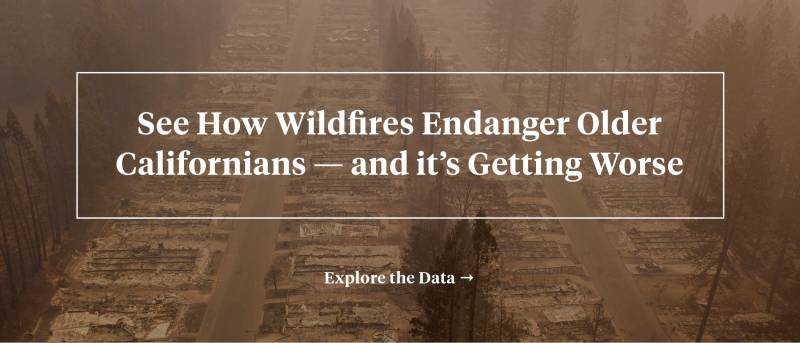
Older and Overlooked
Living With Wildfire
One Potential Solution to Deadly Fires in the Wilderness: Don't Build There
'Increasingly Unavailable and Unaffordable': Home Insurance Threatened Amid Wildfire Crisis
Who’s Checking Your Neighborhood for Flammable Brush? Maybe No One
We Can Make California Wildfires Less Horrific. Will We?
In the Age of Fast-Moving Fires, What's the Best Way to Get People Out?
Town Unites Against Federal Mismanagement to Save Forest
This California Neighborhood Was Built to Survive a Wildfire. And It Worked
Player sponsored by
window.__IS_SSR__=true
window.__INITIAL_STATE__={
"attachmentsReducer": {
"audio_0": {
"type": "attachments",
"id": "audio_0",
"imgSizes": {
"kqedFullSize": {
"file": "https://ww2.kqed.org/news/wp-content/themes/KQED-unified/img/audio_bgs/background0.jpg"
}
}
},
"audio_1": {
"type": "attachments",
"id": "audio_1",
"imgSizes": {
"kqedFullSize": {
"file": "https://ww2.kqed.org/news/wp-content/themes/KQED-unified/img/audio_bgs/background1.jpg"
}
}
},
"audio_2": {
"type": "attachments",
"id": "audio_2",
"imgSizes": {
"kqedFullSize": {
"file": "https://ww2.kqed.org/news/wp-content/themes/KQED-unified/img/audio_bgs/background2.jpg"
}
}
},
"audio_3": {
"type": "attachments",
"id": "audio_3",
"imgSizes": {
"kqedFullSize": {
"file": "https://ww2.kqed.org/news/wp-content/themes/KQED-unified/img/audio_bgs/background3.jpg"
}
}
},
"audio_4": {
"type": "attachments",
"id": "audio_4",
"imgSizes": {
"kqedFullSize": {
"file": "https://ww2.kqed.org/news/wp-content/themes/KQED-unified/img/audio_bgs/background4.jpg"
}
}
},
"placeholder": {
"type": "attachments",
"id": "placeholder",
"imgSizes": {
"thumbnail": {
"file": "https://cdn.kqed.org/wp-content/uploads/2024/12/KQED-Default-Image-816638274-2000x1333-1-160x107.jpg",
"width": 160,
"height": 107,
"mimeType": "image/jpeg"
},
"medium": {
"file": "https://cdn.kqed.org/wp-content/uploads/2024/12/KQED-Default-Image-816638274-2000x1333-1-800x533.jpg",
"width": 800,
"height": 533,
"mimeType": "image/jpeg"
},
"medium_large": {
"file": "https://cdn.kqed.org/wp-content/uploads/2024/12/KQED-Default-Image-816638274-2000x1333-1-768x512.jpg",
"width": 768,
"height": 512,
"mimeType": "image/jpeg"
},
"large": {
"file": "https://cdn.kqed.org/wp-content/uploads/2024/12/KQED-Default-Image-816638274-2000x1333-1-1020x680.jpg",
"width": 1020,
"height": 680,
"mimeType": "image/jpeg"
},
"1536x1536": {
"file": "https://cdn.kqed.org/wp-content/uploads/2024/12/KQED-Default-Image-816638274-2000x1333-1-1536x1024.jpg",
"width": 1536,
"height": 1024,
"mimeType": "image/jpeg"
},
"fd-lrg": {
"file": "https://cdn.kqed.org/wp-content/uploads/2024/12/KQED-Default-Image-816638274-2000x1333-1-1536x1024.jpg",
"width": 1536,
"height": 1024,
"mimeType": "image/jpeg"
},
"fd-med": {
"file": "https://cdn.kqed.org/wp-content/uploads/2024/12/KQED-Default-Image-816638274-2000x1333-1-1020x680.jpg",
"width": 1020,
"height": 680,
"mimeType": "image/jpeg"
},
"fd-sm": {
"file": "https://cdn.kqed.org/wp-content/uploads/2024/12/KQED-Default-Image-816638274-2000x1333-1-800x533.jpg",
"width": 800,
"height": 533,
"mimeType": "image/jpeg"
},
"post-thumbnail": {
"file": "https://cdn.kqed.org/wp-content/uploads/2024/12/KQED-Default-Image-816638274-2000x1333-1-672x372.jpg",
"width": 672,
"height": 372,
"mimeType": "image/jpeg"
},
"twentyfourteen-full-width": {
"file": "https://cdn.kqed.org/wp-content/uploads/2024/12/KQED-Default-Image-816638274-2000x1333-1-1038x576.jpg",
"width": 1038,
"height": 576,
"mimeType": "image/jpeg"
},
"xxsmall": {
"file": "https://cdn.kqed.org/wp-content/uploads/2024/12/KQED-Default-Image-816638274-2000x1333-1-160x107.jpg",
"width": 160,
"height": 107,
"mimeType": "image/jpeg"
},
"xsmall": {
"file": "https://cdn.kqed.org/wp-content/uploads/2024/12/KQED-Default-Image-816638274-2000x1333-1-672x372.jpg",
"width": 672,
"height": 372,
"mimeType": "image/jpeg"
},
"small": {
"file": "https://cdn.kqed.org/wp-content/uploads/2024/12/KQED-Default-Image-816638274-2000x1333-1-672x372.jpg",
"width": 672,
"height": 372,
"mimeType": "image/jpeg"
},
"xlarge": {
"file": "https://cdn.kqed.org/wp-content/uploads/2024/12/KQED-Default-Image-816638274-2000x1333-1-1020x680.jpg",
"width": 1020,
"height": 680,
"mimeType": "image/jpeg"
},
"full-width": {
"file": "https://cdn.kqed.org/wp-content/uploads/2024/12/KQED-Default-Image-816638274-2000x1333-1-1920x1280.jpg",
"width": 1920,
"height": 1280,
"mimeType": "image/jpeg"
},
"guest-author-32": {
"file": "https://cdn.kqed.org/wp-content/uploads/2025/01/KQED-Default-Image-816638274-1333x1333-1-160x160.jpg",
"width": 32,
"height": 32,
"mimeType": "image/jpeg"
},
"guest-author-50": {
"file": "https://cdn.kqed.org/wp-content/uploads/2025/01/KQED-Default-Image-816638274-1333x1333-1-160x160.jpg",
"width": 50,
"height": 50,
"mimeType": "image/jpeg"
},
"guest-author-64": {
"file": "https://cdn.kqed.org/wp-content/uploads/2025/01/KQED-Default-Image-816638274-1333x1333-1-160x160.jpg",
"width": 64,
"height": 64,
"mimeType": "image/jpeg"
},
"guest-author-96": {
"file": "https://cdn.kqed.org/wp-content/uploads/2025/01/KQED-Default-Image-816638274-1333x1333-1-160x160.jpg",
"width": 96,
"height": 96,
"mimeType": "image/jpeg"
},
"guest-author-128": {
"file": "https://cdn.kqed.org/wp-content/uploads/2025/01/KQED-Default-Image-816638274-1333x1333-1-160x160.jpg",
"width": 128,
"height": 128,
"mimeType": "image/jpeg"
},
"detail": {
"file": "https://cdn.kqed.org/wp-content/uploads/2025/01/KQED-Default-Image-816638274-1333x1333-1-160x160.jpg",
"width": 160,
"height": 160,
"mimeType": "image/jpeg"
},
"kqedFullSize": {
"file": "https://cdn.kqed.org/wp-content/uploads/2024/12/KQED-Default-Image-816638274-2000x1333-1.jpg",
"width": 2000,
"height": 1333
}
}
},
"science_1993849": {
"type": "attachments",
"id": "science_1993849",
"meta": {
"index": "attachments_1716263798",
"site": "science",
"id": "1993849",
"found": true
},
"title": "wildfire-smoke-bay-area-air-quality",
"publishDate": 1722882240,
"status": "inherit",
"parent": 1930023,
"modified": 1722882240,
"caption": null,
"credit": null,
"altTag": null,
"description": null,
"imgSizes": {
"medium": {
"file": "https://cdn.kqed.org/wp-content/uploads/sites/35/2023/09/wildfire-smoke-bay-area-air-quality-800x491.jpg",
"width": 800,
"height": 491,
"mimeType": "image/jpeg"
},
"large": {
"file": "https://cdn.kqed.org/wp-content/uploads/sites/35/2023/09/wildfire-smoke-bay-area-air-quality-1020x626.jpg",
"width": 1020,
"height": 626,
"mimeType": "image/jpeg"
},
"thumbnail": {
"file": "https://cdn.kqed.org/wp-content/uploads/sites/35/2023/09/wildfire-smoke-bay-area-air-quality-160x98.jpg",
"width": 160,
"height": 98,
"mimeType": "image/jpeg"
},
"medium_large": {
"file": "https://cdn.kqed.org/wp-content/uploads/sites/35/2023/09/wildfire-smoke-bay-area-air-quality-768x472.jpg",
"width": 768,
"height": 472,
"mimeType": "image/jpeg"
},
"1536x1536": {
"file": "https://cdn.kqed.org/wp-content/uploads/sites/35/2023/09/wildfire-smoke-bay-area-air-quality-1536x943.jpg",
"width": 1536,
"height": 943,
"mimeType": "image/jpeg"
},
"2048x2048": {
"file": "https://cdn.kqed.org/wp-content/uploads/sites/35/2023/09/wildfire-smoke-bay-area-air-quality-2048x1258.jpg",
"width": 2048,
"height": 1258,
"mimeType": "image/jpeg"
},
"post-thumbnail": {
"file": "https://cdn.kqed.org/wp-content/uploads/sites/35/2023/09/wildfire-smoke-bay-area-air-quality-672x372.jpg",
"width": 672,
"height": 372,
"mimeType": "image/jpeg"
},
"twentyfourteen-full-width": {
"file": "https://cdn.kqed.org/wp-content/uploads/sites/35/2023/09/wildfire-smoke-bay-area-air-quality-1038x576.jpg",
"width": 1038,
"height": 576,
"mimeType": "image/jpeg"
},
"full-width": {
"file": "https://cdn.kqed.org/wp-content/uploads/sites/35/2023/09/wildfire-smoke-bay-area-air-quality-1920x1179.jpg",
"width": 1920,
"height": 1179,
"mimeType": "image/jpeg"
},
"kqedFullSize": {
"file": "https://cdn.kqed.org/wp-content/uploads/sites/35/2023/09/wildfire-smoke-bay-area-air-quality.jpg",
"width": 2247,
"height": 1380
}
},
"isLoading": false,
"fetchFailed": false
},
"news_11993661": {
"type": "attachments",
"id": "news_11993661",
"meta": {
"index": "attachments_1716263798",
"site": "news",
"id": "11993661",
"found": true
},
"title": "FireMapCap",
"publishDate": 1720724401,
"status": "inherit",
"parent": 11834132,
"modified": 1720724401,
"caption": null,
"credit": null,
"altTag": null,
"description": null,
"imgSizes": {
"medium": {
"file": "https://cdn.kqed.org/wp-content/uploads/sites/10/2024/06/FireMapCap-800x515.jpg",
"width": 800,
"height": 515,
"mimeType": "image/jpeg"
},
"large": {
"file": "https://cdn.kqed.org/wp-content/uploads/sites/10/2024/06/FireMapCap-1020x657.jpg",
"width": 1020,
"height": 657,
"mimeType": "image/jpeg"
},
"thumbnail": {
"file": "https://cdn.kqed.org/wp-content/uploads/sites/10/2024/06/FireMapCap-160x103.jpg",
"width": 160,
"height": 103,
"mimeType": "image/jpeg"
},
"1536x1536": {
"file": "https://cdn.kqed.org/wp-content/uploads/sites/10/2024/06/FireMapCap-1536x990.jpg",
"width": 1536,
"height": 990,
"mimeType": "image/jpeg"
},
"post-thumbnail": {
"file": "https://cdn.kqed.org/wp-content/uploads/sites/10/2024/06/FireMapCap-672x372.jpg",
"width": 672,
"height": 372,
"mimeType": "image/jpeg"
},
"twentyfourteen-full-width": {
"file": "https://cdn.kqed.org/wp-content/uploads/sites/10/2024/06/FireMapCap-1038x576.jpg",
"width": 1038,
"height": 576,
"mimeType": "image/jpeg"
},
"kqedFullSize": {
"file": "https://cdn.kqed.org/wp-content/uploads/sites/10/2024/06/FireMapCap.jpg",
"width": 1920,
"height": 1237
}
},
"isLoading": false,
"fetchFailed": false
},
"science_1993586": {
"type": "attachments",
"id": "science_1993586",
"meta": {
"index": "attachments_1716263798",
"site": "science",
"id": "1993586",
"found": true
},
"title": "230809-SOLDOUTPARADISE-45-BL-KQED",
"publishDate": 1720649808,
"status": "inherit",
"parent": 0,
"modified": 1720652442,
"caption": "Empty lots dot the side of a residential area of Paradise, Butte County, on Aug. 9, 2023. The Camp Fire, the deadliest and most destructive fire in modern California history, swept through the area in 2018.",
"credit": "Beth LaBerge/KQED",
"altTag": null,
"description": null,
"imgSizes": {
"medium": {
"file": "https://cdn.kqed.org/wp-content/uploads/sites/35/2024/07/230809-SOLDOUTPARADISE-45-BL-KQED-800x533.jpg",
"width": 800,
"height": 533,
"mimeType": "image/jpeg"
},
"large": {
"file": "https://cdn.kqed.org/wp-content/uploads/sites/35/2024/07/230809-SOLDOUTPARADISE-45-BL-KQED-1020x680.jpg",
"width": 1020,
"height": 680,
"mimeType": "image/jpeg"
},
"thumbnail": {
"file": "https://cdn.kqed.org/wp-content/uploads/sites/35/2024/07/230809-SOLDOUTPARADISE-45-BL-KQED-160x107.jpg",
"width": 160,
"height": 107,
"mimeType": "image/jpeg"
},
"medium_large": {
"file": "https://cdn.kqed.org/wp-content/uploads/sites/35/2024/07/230809-SOLDOUTPARADISE-45-BL-KQED-768x512.jpg",
"width": 768,
"height": 512,
"mimeType": "image/jpeg"
},
"1536x1536": {
"file": "https://cdn.kqed.org/wp-content/uploads/sites/35/2024/07/230809-SOLDOUTPARADISE-45-BL-KQED-1536x1024.jpg",
"width": 1536,
"height": 1024,
"mimeType": "image/jpeg"
},
"post-thumbnail": {
"file": "https://cdn.kqed.org/wp-content/uploads/sites/35/2024/07/230809-SOLDOUTPARADISE-45-BL-KQED-672x372.jpg",
"width": 672,
"height": 372,
"mimeType": "image/jpeg"
},
"twentyfourteen-full-width": {
"file": "https://cdn.kqed.org/wp-content/uploads/sites/35/2024/07/230809-SOLDOUTPARADISE-45-BL-KQED-1038x576.jpg",
"width": 1038,
"height": 576,
"mimeType": "image/jpeg"
},
"full-width": {
"file": "https://cdn.kqed.org/wp-content/uploads/sites/35/2024/07/230809-SOLDOUTPARADISE-45-BL-KQED-1920x1280.jpg",
"width": 1920,
"height": 1280,
"mimeType": "image/jpeg"
},
"kqedFullSize": {
"file": "https://cdn.kqed.org/wp-content/uploads/sites/35/2024/07/230809-SOLDOUTPARADISE-45-BL-KQED.jpg",
"width": 2000,
"height": 1333
}
},
"isLoading": false,
"fetchFailed": false
},
"news_12105426": {
"type": "attachments",
"id": "news_12105426",
"meta": {
"index": "attachments_1716263798",
"site": "news",
"id": "12105426",
"found": true
},
"title": "261020-Berkeley Hills Fire-MD-01-KQED_1",
"publishDate": 1792529938,
"status": "inherit",
"parent": 0,
"modified": 1792529962,
"caption": "Crews fight the Panoramic Fire in the Berkeley Hills on Oct. 20, 2026. The fire broke out on Panoramic Way around 11:45 a.m., above UC Berkeley’s campus. \r\n",
"credit": "Martin do Nascimento/KQED",
"altTag": null,
"description": null,
"imgSizes": {
"thumbnail": {
"file": "https://cdn.kqed.org/wp-content/uploads/sites/10/2026/10/261020-Berkeley-Hills-Fire-MD-01-KQED_1-bda6e042-160x107.jpg",
"width": 160,
"height": 107,
"mimeType": "image/jpeg"
},
"1536x1536": {
"file": "https://cdn.kqed.org/wp-content/uploads/sites/10/2026/10/261020-Berkeley-Hills-Fire-MD-01-KQED_1-bda6e042-1536x1025.jpg",
"width": 1536,
"height": 1025,
"mimeType": "image/jpeg"
},
"post-thumbnail": {
"file": "https://cdn.kqed.org/wp-content/uploads/sites/10/2026/10/261020-Berkeley-Hills-Fire-MD-01-KQED_1-bda6e042-672x372.jpg",
"width": 672,
"height": 372,
"mimeType": "image/jpeg"
},
"twentyfourteen-full-width": {
"file": "https://cdn.kqed.org/wp-content/uploads/sites/10/2026/10/261020-Berkeley-Hills-Fire-MD-01-KQED_1-bda6e042-1038x576.jpg",
"width": 1038,
"height": 576,
"mimeType": "image/jpeg"
},
"npr-cds-wide": {
"file": "https://cdn.kqed.org/wp-content/uploads/sites/10/2026/10/261020-Berkeley-Hills-Fire-MD-01-KQED_1-bda6e042-1200x675.jpg",
"width": 1200,
"height": 675,
"mimeType": "image/jpeg"
},
"npr-cds-square": {
"file": "https://cdn.kqed.org/wp-content/uploads/sites/10/2026/10/261020-Berkeley-Hills-Fire-MD-01-KQED_1-bda6e042-600x600.jpg",
"width": 600,
"height": 600,
"mimeType": "image/jpeg"
},
"kqedFullSize": {
"file": "https://cdn.kqed.org/wp-content/uploads/sites/10/2026/10/261020-Berkeley-Hills-Fire-MD-01-KQED_1-bda6e042.jpg",
"width": 2000,
"height": 1334
}
},
"isLoading": false,
"fetchFailed": false
},
"news_12099186": {
"type": "attachments",
"id": "news_12099186",
"meta": {
"index": "attachments_1716263798",
"site": "news",
"id": "12099186",
"found": true
},
"title": "PG&EGetty",
"publishDate": 1789145080,
"status": "inherit",
"parent": 12099181,
"modified": 1792001280,
"caption": "A PG&E crew makes repairs along the Iron Horse Trail near Camille Avenue in Danville, California, on March 15, 2023. ",
"credit": "Jane Tyska/Digital First Media/East Bay Times via Getty Images",
"altTag": null,
"description": null,
"imgSizes": {
"thumbnail": {
"file": "https://cdn.kqed.org/wp-content/uploads/sites/10/2026/09/PGEGetty-160x107.jpg",
"width": 160,
"height": 107,
"mimeType": "image/jpeg"
},
"1536x1536": {
"file": "https://cdn.kqed.org/wp-content/uploads/sites/10/2026/09/PGEGetty-1536x1024.jpg",
"width": 1536,
"height": 1024,
"mimeType": "image/jpeg"
},
"post-thumbnail": {
"file": "https://cdn.kqed.org/wp-content/uploads/sites/10/2026/09/PGEGetty-672x372.jpg",
"width": 672,
"height": 372,
"mimeType": "image/jpeg"
},
"twentyfourteen-full-width": {
"file": "https://cdn.kqed.org/wp-content/uploads/sites/10/2026/09/PGEGetty-1038x576.jpg",
"width": 1038,
"height": 576,
"mimeType": "image/jpeg"
},
"npr-cds-wide": {
"file": "https://cdn.kqed.org/wp-content/uploads/sites/10/2026/09/PGEGetty-1200x675.jpg",
"width": 1200,
"height": 675,
"mimeType": "image/jpeg"
},
"npr-cds-square": {
"file": "https://cdn.kqed.org/wp-content/uploads/sites/10/2026/09/PGEGetty-600x600.jpg",
"width": 600,
"height": 600,
"mimeType": "image/jpeg"
},
"kqedFullSize": {
"file": "https://cdn.kqed.org/wp-content/uploads/sites/10/2026/09/PGEGetty.jpg",
"width": 2000,
"height": 1333
}
},
"isLoading": false,
"fetchFailed": false
},
"science_2002306": {
"type": "attachments",
"id": "science_2002306",
"meta": {
"index": "attachments_1716263798",
"site": "science",
"id": "2002306",
"found": true
},
"title": "013_KQED_SantaRosa_GlassIncident_09282020_qed",
"publishDate": 1791935355,
"status": "inherit",
"parent": 2002294,
"modified": 1791935363,
"caption": "Santa Rosa and Petaluma fire crews work to put out a fire at a home on White Oak Drive in the Oakmont neighborhood in east Santa Rosa on Sept. 28, 2020.",
"credit": "Beth LaBerge/KQED",
"altTag": null,
"description": null,
"imgSizes": {
"thumbnail": {
"file": "https://cdn.kqed.org/wp-content/uploads/sites/35/2026/10/013_KQED_SantaRosa_GlassIncident_09282020_qed-acb0f98e-160x107.jpg",
"width": 160,
"height": 107,
"mimeType": "image/jpeg"
},
"medium_large": {
"file": "https://cdn.kqed.org/wp-content/uploads/sites/35/2026/10/013_KQED_SantaRosa_GlassIncident_09282020_qed-acb0f98e-768x512.jpg",
"width": 768,
"height": 512,
"mimeType": "image/jpeg"
},
"1536x1536": {
"file": "https://cdn.kqed.org/wp-content/uploads/sites/35/2026/10/013_KQED_SantaRosa_GlassIncident_09282020_qed-acb0f98e-1536x1024.jpg",
"width": 1536,
"height": 1024,
"mimeType": "image/jpeg"
},
"post-thumbnail": {
"file": "https://cdn.kqed.org/wp-content/uploads/sites/35/2026/10/013_KQED_SantaRosa_GlassIncident_09282020_qed-acb0f98e-672x372.jpg",
"width": 672,
"height": 372,
"mimeType": "image/jpeg"
},
"twentyfourteen-full-width": {
"file": "https://cdn.kqed.org/wp-content/uploads/sites/35/2026/10/013_KQED_SantaRosa_GlassIncident_09282020_qed-acb0f98e-1038x576.jpg",
"width": 1038,
"height": 576,
"mimeType": "image/jpeg"
},
"npr-cds-wide": {
"file": "https://cdn.kqed.org/wp-content/uploads/sites/35/2026/10/013_KQED_SantaRosa_GlassIncident_09282020_qed-acb0f98e-1200x675.jpg",
"width": 1200,
"height": 675,
"mimeType": "image/jpeg"
},
"npr-cds-square": {
"file": "https://cdn.kqed.org/wp-content/uploads/sites/35/2026/10/013_KQED_SantaRosa_GlassIncident_09282020_qed-acb0f98e-600x600.jpg",
"width": 600,
"height": 600,
"mimeType": "image/jpeg"
},
"kqedFullSize": {
"file": "https://cdn.kqed.org/wp-content/uploads/sites/35/2026/10/013_KQED_SantaRosa_GlassIncident_09282020_qed-acb0f98e.jpg",
"width": 2000,
"height": 1333
}
},
"isLoading": false,
"fetchFailed": false
},
"news_12052370": {
"type": "attachments",
"id": "news_12052370",
"meta": {
"index": "attachments_1716263798",
"site": "news",
"id": "12052370",
"found": true
},
"title": "Outdoor Camping Setup with Canopy and Equipment by Lake",
"publishDate": 1755279504,
"status": "inherit",
"parent": 12052357,
"modified": 1787763033,
"caption": "This image shows an outdoor camping setup by a lake. There is a canopy providing shade with string lights hanging from it. There are camping chairs, a table with food and drinks, a cooler, and a portable cart. The scene is set on a grassy area near a lake, creating a relaxing and enjoyable camping atmosphere.",
"credit": "Linyang Zhang/Getty Images",
"altTag": null,
"description": null,
"imgSizes": {
"medium": {
"file": "https://cdn.kqed.org/wp-content/uploads/sites/10/2025/08/GettyImages-2227181433-2000x1334.jpg",
"width": 2000,
"height": 1334,
"mimeType": "image/jpeg"
},
"large": {
"file": "https://cdn.kqed.org/wp-content/uploads/sites/10/2025/08/GettyImages-2227181433-2000x1334.jpg",
"width": 2000,
"height": 1334,
"mimeType": "image/jpeg"
},
"thumbnail": {
"file": "https://cdn.kqed.org/wp-content/uploads/sites/10/2025/08/GettyImages-2227181433-160x107.jpg",
"width": 160,
"height": 107,
"mimeType": "image/jpeg"
},
"1536x1536": {
"file": "https://cdn.kqed.org/wp-content/uploads/sites/10/2025/08/GettyImages-2227181433-1536x1025.jpg",
"width": 1536,
"height": 1025,
"mimeType": "image/jpeg"
},
"2048x2048": {
"file": "https://cdn.kqed.org/wp-content/uploads/sites/10/2025/08/GettyImages-2227181433-2048x1366.jpg",
"width": 2048,
"height": 1366,
"mimeType": "image/jpeg"
},
"post-thumbnail": {
"file": "https://cdn.kqed.org/wp-content/uploads/sites/10/2025/08/GettyImages-2227181433-672x372.jpg",
"width": 672,
"height": 372,
"mimeType": "image/jpeg"
},
"twentyfourteen-full-width": {
"file": "https://cdn.kqed.org/wp-content/uploads/sites/10/2025/08/GettyImages-2227181433-1038x576.jpg",
"width": 1038,
"height": 576,
"mimeType": "image/jpeg"
},
"full-width": {
"file": "https://cdn.kqed.org/wp-content/uploads/sites/10/2025/08/GettyImages-2227181433-2000x1334.jpg",
"width": 2000,
"height": 1334,
"mimeType": "image/jpeg"
},
"kqedFullSize": {
"file": "https://cdn.kqed.org/wp-content/uploads/sites/10/2025/08/GettyImages-2227181433-scaled-e1787762969792.jpg",
"width": 2000,
"height": 1334
}
},
"isLoading": false,
"fetchFailed": false
},
"news_12100899": {
"type": "attachments",
"id": "news_12100899",
"meta": {
"index": "attachments_1716263798",
"site": "news",
"id": "12100899",
"found": true
},
"title": "Yosemite Fire Helicopter Crash",
"publishDate": 1790033943,
"status": "inherit",
"parent": 12100860,
"modified": 1790036184,
"caption": "This photo, provided by the National Park Service, shows the Dome Fire burning in Yosemite National Park on Wednesday, Sept. 16, 2026.",
"credit": "National Parks Service via AP",
"altTag": null,
"description": null,
"imgSizes": {
"medium": {
"file": "https://cdn.kqed.org/wp-content/uploads/sites/10/2026/09/AP26264639978382-2000x1334.jpg",
"width": 2000,
"height": 1334,
"mimeType": "image/jpeg"
},
"large": {
"file": "https://cdn.kqed.org/wp-content/uploads/sites/10/2026/09/AP26264639978382-2000x1334.jpg",
"width": 2000,
"height": 1334,
"mimeType": "image/jpeg"
},
"thumbnail": {
"file": "https://cdn.kqed.org/wp-content/uploads/sites/10/2026/09/AP26264639978382-160x107.jpg",
"width": 160,
"height": 107,
"mimeType": "image/jpeg"
},
"1536x1536": {
"file": "https://cdn.kqed.org/wp-content/uploads/sites/10/2026/09/AP26264639978382-1536x1024.jpg",
"width": 1536,
"height": 1024,
"mimeType": "image/jpeg"
},
"2048x2048": {
"file": "https://cdn.kqed.org/wp-content/uploads/sites/10/2026/09/AP26264639978382-2048x1366.jpg",
"width": 2048,
"height": 1366,
"mimeType": "image/jpeg"
},
"post-thumbnail": {
"file": "https://cdn.kqed.org/wp-content/uploads/sites/10/2026/09/AP26264639978382-672x372.jpg",
"width": 672,
"height": 372,
"mimeType": "image/jpeg"
},
"twentyfourteen-full-width": {
"file": "https://cdn.kqed.org/wp-content/uploads/sites/10/2026/09/AP26264639978382-1038x576.jpg",
"width": 1038,
"height": 576,
"mimeType": "image/jpeg"
},
"full-width": {
"file": "https://cdn.kqed.org/wp-content/uploads/sites/10/2026/09/AP26264639978382-2000x1334.jpg",
"width": 2000,
"height": 1334,
"mimeType": "image/jpeg"
},
"npr-cds-wide": {
"file": "https://cdn.kqed.org/wp-content/uploads/sites/10/2026/09/AP26264639978382-1200x675.jpg",
"width": 1200,
"height": 675,
"mimeType": "image/jpeg"
},
"npr-cds-square": {
"file": "https://cdn.kqed.org/wp-content/uploads/sites/10/2026/09/AP26264639978382-600x600.jpg",
"width": 600,
"height": 600,
"mimeType": "image/jpeg"
},
"kqedFullSize": {
"file": "https://cdn.kqed.org/wp-content/uploads/sites/10/2026/09/AP26264639978382-e1790033978500.jpg",
"width": 2000,
"height": 1334
}
},
"isLoading": false,
"fetchFailed": false
},
"news_12100097": {
"type": "attachments",
"id": "news_12100097",
"meta": {
"index": "attachments_1716263798",
"site": "news",
"id": "12100097",
"found": true
},
"title": "Smoke is seen from the Floriston Fire in Truckee on Sept. 16, 2026.",
"publishDate": 1789596614,
"status": "inherit",
"parent": 0,
"modified": 1789599452,
"caption": "Smoke is seen from the Floriston Fire in Truckee on Sept. 16, 2026.",
"credit": "Courtesy of Cal Fire NEU",
"altTag": null,
"description": null,
"imgSizes": {
"thumbnail": {
"file": "https://cdn.kqed.org/wp-content/uploads/sites/10/2026/09/260916-FloristonFire-01-160x107.jpg",
"width": 160,
"height": 107,
"mimeType": "image/jpeg"
},
"1536x1536": {
"file": "https://cdn.kqed.org/wp-content/uploads/sites/10/2026/09/260916-FloristonFire-01-1536x1024.jpg",
"width": 1536,
"height": 1024,
"mimeType": "image/jpeg"
},
"post-thumbnail": {
"file": "https://cdn.kqed.org/wp-content/uploads/sites/10/2026/09/260916-FloristonFire-01-672x372.jpg",
"width": 672,
"height": 372,
"mimeType": "image/jpeg"
},
"twentyfourteen-full-width": {
"file": "https://cdn.kqed.org/wp-content/uploads/sites/10/2026/09/260916-FloristonFire-01-1038x576.jpg",
"width": 1038,
"height": 576,
"mimeType": "image/jpeg"
},
"npr-cds-wide": {
"file": "https://cdn.kqed.org/wp-content/uploads/sites/10/2026/09/260916-FloristonFire-01-1200x675.jpg",
"width": 1200,
"height": 675,
"mimeType": "image/jpeg"
},
"npr-cds-square": {
"file": "https://cdn.kqed.org/wp-content/uploads/sites/10/2026/09/260916-FloristonFire-01-600x600.jpg",
"width": 600,
"height": 600,
"mimeType": "image/jpeg"
},
"kqedFullSize": {
"file": "https://cdn.kqed.org/wp-content/uploads/sites/10/2026/09/260916-FloristonFire-01.jpg",
"width": 2000,
"height": 1333
}
},
"isLoading": false,
"fetchFailed": false
},
"science_1985846": {
"type": "attachments",
"id": "science_1985846",
"meta": {
"index": "attachments_1716263798",
"site": "science",
"id": "1985846",
"found": true
},
"title": "Wildfires Deadly Smoke",
"publishDate": 1702530319,
"status": "inherit",
"parent": 1985830,
"modified": 1789503349,
"caption": "The San Francisco skyline in the distance behind Crissy Field is barely visible due to smoke from wildfires burning across California on Sept. 9, 2020. Researchers say smoke from wildfires accounted for up to half of all small particle air pollution in parts of the western U.S. in recent years.",
"credit": "Eric Risberg/AP Photo",
"altTag": "The San Francisco skyline is illuminated in a burnt, orange smog during wildfire season.",
"description": null,
"imgSizes": {
"medium": {
"file": "https://cdn.kqed.org/wp-content/uploads/sites/35/2023/12/CMWildfire02-800x533.jpeg",
"width": 800,
"height": 533,
"mimeType": "image/jpeg"
},
"large": {
"file": "https://cdn.kqed.org/wp-content/uploads/sites/35/2023/12/CMWildfire02-1020x680.jpeg",
"width": 1020,
"height": 680,
"mimeType": "image/jpeg"
},
"thumbnail": {
"file": "https://cdn.kqed.org/wp-content/uploads/sites/35/2023/12/CMWildfire02-160x107.jpeg",
"width": 160,
"height": 107,
"mimeType": "image/jpeg"
},
"medium_large": {
"file": "https://cdn.kqed.org/wp-content/uploads/sites/35/2023/12/CMWildfire02-768x512.jpeg",
"width": 768,
"height": 512,
"mimeType": "image/jpeg"
},
"1536x1536": {
"file": "https://cdn.kqed.org/wp-content/uploads/sites/35/2023/12/CMWildfire02-1536x1024.jpeg",
"width": 1536,
"height": 1024,
"mimeType": "image/jpeg"
},
"post-thumbnail": {
"file": "https://cdn.kqed.org/wp-content/uploads/sites/35/2023/12/CMWildfire02-672x372.jpeg",
"width": 672,
"height": 372,
"mimeType": "image/jpeg"
},
"twentyfourteen-full-width": {
"file": "https://cdn.kqed.org/wp-content/uploads/sites/35/2023/12/CMWildfire02-1038x576.jpeg",
"width": 1038,
"height": 576,
"mimeType": "image/jpeg"
},
"full-width": {
"file": "https://cdn.kqed.org/wp-content/uploads/sites/35/2023/12/CMWildfire02-1920x1280.jpeg",
"width": 1920,
"height": 1280,
"mimeType": "image/jpeg"
},
"kqedFullSize": {
"file": "https://cdn.kqed.org/wp-content/uploads/sites/35/2023/12/CMWildfire02.jpeg",
"width": 2000,
"height": 1333
}
},
"isLoading": false,
"fetchFailed": false
},
"news_12093941": {
"type": "attachments",
"id": "news_12093941",
"meta": {
"index": "attachments_1716263798",
"site": "news",
"id": "12093941",
"found": true
},
"title": "California Wildfire",
"publishDate": 1785949492,
"status": "inherit",
"parent": 12093925,
"modified": 1785949529,
"caption": "A structure is engulfed in flames during the Gann Fire near Angels Camp in Calaveras County, California, on Tuesday, Aug. 4, 2026. ",
"credit": "Stephen Lam/San Francisco Chronicle via Getty Images",
"altTag": null,
"description": null,
"imgSizes": {
"thumbnail": {
"file": "https://cdn.kqed.org/wp-content/uploads/sites/10/2026/08/GannFireGetty1-160x107.jpg",
"width": 160,
"height": 107,
"mimeType": "image/jpeg"
},
"1536x1536": {
"file": "https://cdn.kqed.org/wp-content/uploads/sites/10/2026/08/GannFireGetty1-1536x1024.jpg",
"width": 1536,
"height": 1024,
"mimeType": "image/jpeg"
},
"post-thumbnail": {
"file": "https://cdn.kqed.org/wp-content/uploads/sites/10/2026/08/GannFireGetty1-672x372.jpg",
"width": 672,
"height": 372,
"mimeType": "image/jpeg"
},
"twentyfourteen-full-width": {
"file": "https://cdn.kqed.org/wp-content/uploads/sites/10/2026/08/GannFireGetty1-1038x576.jpg",
"width": 1038,
"height": 576,
"mimeType": "image/jpeg"
},
"npr-cds-wide": {
"file": "https://cdn.kqed.org/wp-content/uploads/sites/10/2026/08/GannFireGetty1-1200x675.jpg",
"width": 1200,
"height": 675,
"mimeType": "image/jpeg"
},
"npr-cds-square": {
"file": "https://cdn.kqed.org/wp-content/uploads/sites/10/2026/08/GannFireGetty1-600x600.jpg",
"width": 600,
"height": 600,
"mimeType": "image/jpeg"
},
"kqedFullSize": {
"file": "https://cdn.kqed.org/wp-content/uploads/sites/10/2026/08/GannFireGetty1.jpg",
"width": 2000,
"height": 1333
}
},
"isLoading": false,
"fetchFailed": false
},
"news_12097306": {
"type": "attachments",
"id": "news_12097306",
"meta": {
"index": "attachments_1716263798",
"site": "news",
"id": "12097306",
"found": true
},
"title": "Western Wildfires",
"publishDate": 1787936676,
"status": "inherit",
"parent": 12097303,
"modified": 1788213071,
"caption": "A helicopter flies over Willow Creek to fill a water bucket to help fight the Plaskett Fire near Big Sur, California, on Thursday, Aug. 27, 2026.",
"credit": "Nic Coury/AP Photo",
"altTag": null,
"description": null,
"imgSizes": {
"thumbnail": {
"file": "https://cdn.kqed.org/wp-content/uploads/sites/10/2026/08/PlaskettFireAP2-160x107.jpg",
"width": 160,
"height": 107,
"mimeType": "image/jpeg"
},
"1536x1536": {
"file": "https://cdn.kqed.org/wp-content/uploads/sites/10/2026/08/PlaskettFireAP2-1536x1024.jpg",
"width": 1536,
"height": 1024,
"mimeType": "image/jpeg"
},
"post-thumbnail": {
"file": "https://cdn.kqed.org/wp-content/uploads/sites/10/2026/08/PlaskettFireAP2-672x372.jpg",
"width": 672,
"height": 372,
"mimeType": "image/jpeg"
},
"twentyfourteen-full-width": {
"file": "https://cdn.kqed.org/wp-content/uploads/sites/10/2026/08/PlaskettFireAP2-1038x576.jpg",
"width": 1038,
"height": 576,
"mimeType": "image/jpeg"
},
"npr-cds-wide": {
"file": "https://cdn.kqed.org/wp-content/uploads/sites/10/2026/08/PlaskettFireAP2-1200x675.jpg",
"width": 1200,
"height": 675,
"mimeType": "image/jpeg"
},
"npr-cds-square": {
"file": "https://cdn.kqed.org/wp-content/uploads/sites/10/2026/08/PlaskettFireAP2-600x600.jpg",
"width": 600,
"height": 600,
"mimeType": "image/jpeg"
},
"kqedFullSize": {
"file": "https://cdn.kqed.org/wp-content/uploads/sites/10/2026/08/PlaskettFireAP2.jpg",
"width": 2000,
"height": 1333
}
},
"isLoading": false,
"fetchFailed": false
},
"science_1943269": {
"type": "attachments",
"id": "science_1943269",
"meta": {
"index": "attachments_1716263798",
"site": "science",
"id": "1943269",
"found": true
},
"parent": 1943266,
"imgSizes": {
"twentyfourteen-full-width": {
"file": "https://ww2.kqed.org/app/uploads/sites/35/2019/06/Santa-Barbara-Wildfire-1038x576.jpg",
"width": 1038,
"mimeType": "image/jpeg",
"height": 576
},
"thumbnail": {
"file": "https://ww2.kqed.org/app/uploads/sites/35/2019/06/Santa-Barbara-Wildfire-160x106.jpg",
"width": 160,
"mimeType": "image/jpeg",
"height": 106
},
"post-thumbnail": {
"file": "https://ww2.kqed.org/app/uploads/sites/35/2019/06/Santa-Barbara-Wildfire-672x372.jpg",
"width": 672,
"mimeType": "image/jpeg",
"height": 372
},
"kqedFullSize": {
"file": "https://ww2.kqed.org/app/uploads/sites/35/2019/06/Santa-Barbara-Wildfire-e1560298313550.jpg",
"width": 1920,
"height": 1278
},
"large": {
"file": "https://ww2.kqed.org/app/uploads/sites/35/2019/06/Santa-Barbara-Wildfire-1020x679.jpg",
"width": 1020,
"mimeType": "image/jpeg",
"height": 679
},
"complete_open_graph": {
"file": "https://ww2.kqed.org/app/uploads/sites/35/2019/06/Santa-Barbara-Wildfire-1200x798.jpg",
"width": 1200,
"mimeType": "image/jpeg",
"height": 798
},
"full-width": {
"file": "https://ww2.kqed.org/app/uploads/sites/35/2019/06/Santa-Barbara-Wildfire-1920x1278.jpg",
"width": 1920,
"mimeType": "image/jpeg",
"height": 1278
},
"medium": {
"file": "https://ww2.kqed.org/app/uploads/sites/35/2019/06/Santa-Barbara-Wildfire-800x532.jpg",
"width": 800,
"mimeType": "image/jpeg",
"height": 532
},
"medium_large": {
"file": "https://ww2.kqed.org/app/uploads/sites/35/2019/06/Santa-Barbara-Wildfire-768x511.jpg",
"width": 768,
"mimeType": "image/jpeg",
"height": 511
}
},
"publishDate": 1560298298,
"modified": 1560298469,
"caption": "A mansion saved from a raging wildfire sits on a scorched hillside in Santa Barbara, November 2008. ",
"description": null,
"title": "A mansion that was saved from a fire sit",
"credit": "Robyn Beck/AFP/Getty Images",
"status": "inherit",
"isLoading": false,
"fetchFailed": false
},
"science_1943211": {
"type": "attachments",
"id": "science_1943211",
"meta": {
"index": "attachments_1716263798",
"site": "science",
"id": "1943211",
"found": true
},
"parent": 1943180,
"imgSizes": {
"twentyfourteen-full-width": {
"file": "https://ww2.kqed.org/app/uploads/sites/35/2019/06/California-fire-insurance-1038x576.jpg",
"width": 1038,
"mimeType": "image/jpeg",
"height": 576
},
"thumbnail": {
"file": "https://ww2.kqed.org/app/uploads/sites/35/2019/06/California-fire-insurance-160x99.jpg",
"width": 160,
"mimeType": "image/jpeg",
"height": 99
},
"post-thumbnail": {
"file": "https://ww2.kqed.org/app/uploads/sites/35/2019/06/California-fire-insurance-672x372.jpg",
"width": 672,
"mimeType": "image/jpeg",
"height": 372
},
"kqedFullSize": {
"file": "https://ww2.kqed.org/app/uploads/sites/35/2019/06/California-fire-insurance.jpg",
"width": 2048,
"height": 1273
},
"large": {
"file": "https://ww2.kqed.org/app/uploads/sites/35/2019/06/California-fire-insurance-1020x634.jpg",
"width": 1020,
"mimeType": "image/jpeg",
"height": 634
},
"complete_open_graph": {
"file": "https://ww2.kqed.org/app/uploads/sites/35/2019/06/California-fire-insurance-1200x746.jpg",
"width": 1200,
"mimeType": "image/jpeg",
"height": 746
},
"full-width": {
"file": "https://ww2.kqed.org/app/uploads/sites/35/2019/06/California-fire-insurance-1920x1193.jpg",
"width": 1920,
"mimeType": "image/jpeg",
"height": 1193
},
"medium": {
"file": "https://ww2.kqed.org/app/uploads/sites/35/2019/06/California-fire-insurance-800x497.jpg",
"width": 800,
"mimeType": "image/jpeg",
"height": 497
},
"medium_large": {
"file": "https://ww2.kqed.org/app/uploads/sites/35/2019/06/California-fire-insurance-768x477.jpg",
"width": 768,
"mimeType": "image/jpeg",
"height": 477
}
},
"publishDate": 1560210296,
"modified": 1560210701,
"caption": "A firefighter, seen here in the distance, right side, is watering down burning embers on a hillside overlooking homes in West Hills, California, during the Woolsey Fire of November 2018.",
"description": null,
"title": "US-FIRE-CALIFORNIA-ENVIRONMENT-WEATHER",
"credit": "Frederic J. Brown/AFP/Getty Images",
"status": "inherit",
"isLoading": false,
"fetchFailed": false
},
"science_1943071": {
"type": "attachments",
"id": "science_1943071",
"meta": {
"index": "attachments_1716263798",
"site": "science",
"id": "1943071",
"found": true
},
"parent": 1943058,
"imgSizes": {
"twentyfourteen-full-width": {
"file": "https://ww2.kqed.org/app/uploads/sites/35/2019/06/defensible-space-1038x576.jpg",
"width": 1038,
"mimeType": "image/jpeg",
"height": 576
},
"thumbnail": {
"file": "https://ww2.kqed.org/app/uploads/sites/35/2019/06/defensible-space-160x90.jpg",
"width": 160,
"mimeType": "image/jpeg",
"height": 90
},
"post-thumbnail": {
"file": "https://ww2.kqed.org/app/uploads/sites/35/2019/06/defensible-space-672x372.jpg",
"width": 672,
"mimeType": "image/jpeg",
"height": 372
},
"kqedFullSize": {
"file": "https://ww2.kqed.org/app/uploads/sites/35/2019/06/defensible-space.jpg",
"width": 1920,
"height": 1080
},
"large": {
"file": "https://ww2.kqed.org/app/uploads/sites/35/2019/06/defensible-space-1020x574.jpg",
"width": 1020,
"mimeType": "image/jpeg",
"height": 574
},
"complete_open_graph": {
"file": "https://ww2.kqed.org/app/uploads/sites/35/2019/06/defensible-space-1200x675.jpg",
"width": 1200,
"mimeType": "image/jpeg",
"height": 675
},
"full-width": {
"file": "https://ww2.kqed.org/app/uploads/sites/35/2019/06/defensible-space-1920x1080.jpg",
"width": 1920,
"mimeType": "image/jpeg",
"height": 1080
},
"medium": {
"file": "https://ww2.kqed.org/app/uploads/sites/35/2019/06/defensible-space-800x450.jpg",
"width": 800,
"mimeType": "image/jpeg",
"height": 450
},
"medium_large": {
"file": "https://ww2.kqed.org/app/uploads/sites/35/2019/06/defensible-space-768x432.jpg",
"width": 768,
"mimeType": "image/jpeg",
"height": 432
}
},
"publishDate": 1559945241,
"modified": 1560144309,
"caption": "Flames from the Rocky Fire approach a house in Lower Lake, California, in 2015. ",
"description": null,
"title": "Wildfire Grows Rapidly In California's Lake County",
"credit": "Justin Sullivan/Getty Images",
"status": "inherit",
"isLoading": false,
"fetchFailed": false
},
"science_1942463": {
"type": "attachments",
"id": "science_1942463",
"meta": {
"index": "attachments_1716263798",
"site": "science",
"id": "1942463",
"found": true
},
"parent": 1941376,
"imgSizes": {
"twentyfourteen-full-width": {
"file": "https://ww2.kqed.org/app/uploads/sites/35/2029/05/California-wildfire-1038x576.jpg",
"width": 1038,
"mimeType": "image/jpeg",
"height": 576
},
"thumbnail": {
"file": "https://ww2.kqed.org/app/uploads/sites/35/2029/05/California-wildfire-160x107.jpg",
"width": 160,
"mimeType": "image/jpeg",
"height": 107
},
"post-thumbnail": {
"file": "https://ww2.kqed.org/app/uploads/sites/35/2029/05/California-wildfire-672x372.jpg",
"width": 672,
"mimeType": "image/jpeg",
"height": 372
},
"kqedFullSize": {
"file": "https://ww2.kqed.org/app/uploads/sites/35/2029/05/California-wildfire.jpg",
"width": 1920,
"height": 1280
},
"large": {
"file": "https://ww2.kqed.org/app/uploads/sites/35/2029/05/California-wildfire-1020x680.jpg",
"width": 1020,
"mimeType": "image/jpeg",
"height": 680
},
"complete_open_graph": {
"file": "https://ww2.kqed.org/app/uploads/sites/35/2029/05/California-wildfire-1200x800.jpg",
"width": 1200,
"mimeType": "image/jpeg",
"height": 800
},
"full-width": {
"file": "https://ww2.kqed.org/app/uploads/sites/35/2029/05/California-wildfire-1920x1280.jpg",
"width": 1920,
"mimeType": "image/jpeg",
"height": 1280
},
"medium": {
"file": "https://ww2.kqed.org/app/uploads/sites/35/2029/05/California-wildfire-800x533.jpg",
"width": 800,
"mimeType": "image/jpeg",
"height": 533
},
"medium_large": {
"file": "https://ww2.kqed.org/app/uploads/sites/35/2029/05/California-wildfire-768x512.jpg",
"width": 768,
"mimeType": "image/jpeg",
"height": 512
}
},
"publishDate": 1559166249,
"modified": 1576012382,
"caption": "Embers fly as wind and flames from the Camp fire tear through Paradise, California on Nov. 8, 2018.",
"description": null,
"title": "US-FIRE-WEATHER",
"credit": "Josh Edelson/AFP/Getty Images",
"status": "inherit",
"isLoading": false,
"fetchFailed": false
},
"science_1942662": {
"type": "attachments",
"id": "science_1942662",
"meta": {
"index": "attachments_1716263798",
"site": "science",
"id": "1942662",
"found": true
},
"parent": 1942547,
"imgSizes": {
"twentyfourteen-full-width": {
"file": "https://ww2.kqed.org/app/uploads/sites/35/2029/05/Paradise-Camp-Fire-Cars-1038x576.jpg",
"width": 1038,
"mimeType": "image/jpeg",
"height": 576
},
"thumbnail": {
"file": "https://ww2.kqed.org/app/uploads/sites/35/2029/05/Paradise-Camp-Fire-Cars-160x106.jpg",
"width": 160,
"mimeType": "image/jpeg",
"height": 106
},
"post-thumbnail": {
"file": "https://ww2.kqed.org/app/uploads/sites/35/2029/05/Paradise-Camp-Fire-Cars-672x372.jpg",
"width": 672,
"mimeType": "image/jpeg",
"height": 372
},
"kqedFullSize": {
"file": "https://ww2.kqed.org/app/uploads/sites/35/2029/05/Paradise-Camp-Fire-Cars-e1559342897687.jpg",
"width": 1920,
"height": 1269
},
"large": {
"file": "https://ww2.kqed.org/app/uploads/sites/35/2029/05/Paradise-Camp-Fire-Cars-1020x674.jpg",
"width": 1020,
"mimeType": "image/jpeg",
"height": 674
},
"complete_open_graph": {
"file": "https://ww2.kqed.org/app/uploads/sites/35/2029/05/Paradise-Camp-Fire-Cars-1200x793.jpg",
"width": 1200,
"mimeType": "image/jpeg",
"height": 793
},
"full-width": {
"file": "https://ww2.kqed.org/app/uploads/sites/35/2029/05/Paradise-Camp-Fire-Cars-1920x1269.jpg",
"width": 1920,
"mimeType": "image/jpeg",
"height": 1269
},
"medium": {
"file": "https://ww2.kqed.org/app/uploads/sites/35/2029/05/Paradise-Camp-Fire-Cars-800x529.jpg",
"width": 800,
"mimeType": "image/jpeg",
"height": 529
},
"medium_large": {
"file": "https://ww2.kqed.org/app/uploads/sites/35/2029/05/Paradise-Camp-Fire-Cars-768x508.jpg",
"width": 768,
"mimeType": "image/jpeg",
"height": 508
}
},
"publishDate": 1559342877,
"modified": 1566433166,
"caption": "Cars abandoned by Paradise residents during the November 2018 Camp Fire. ",
"description": null,
"title": "Rapidly-Spreading Wildfire In California's Butte County Prompts Evacuations",
"credit": "Justin Sullivan/Getty Images",
"status": "inherit",
"isLoading": false,
"fetchFailed": false
},
"science_1942643": {
"type": "attachments",
"id": "science_1942643",
"meta": {
"index": "attachments_1716263798",
"site": "science",
"id": "1942643",
"found": true
},
"parent": 1942299,
"imgSizes": {
"twentyfourteen-full-width": {
"file": "https://ww2.kqed.org/app/uploads/sites/35/2029/05/Wildfire-Weaverville-6-1038x576.jpg",
"width": 1038,
"mimeType": "image/jpeg",
"height": 576
},
"thumbnail": {
"file": "https://ww2.kqed.org/app/uploads/sites/35/2029/05/Wildfire-Weaverville-6-160x107.jpg",
"width": 160,
"mimeType": "image/jpeg",
"height": 107
},
"post-thumbnail": {
"file": "https://ww2.kqed.org/app/uploads/sites/35/2029/05/Wildfire-Weaverville-6-672x372.jpg",
"width": 672,
"mimeType": "image/jpeg",
"height": 372
},
"kqedFullSize": {
"file": "https://ww2.kqed.org/app/uploads/sites/35/2029/05/Wildfire-Weaverville-6-e1559332057779.jpg",
"width": 1920,
"height": 1280
},
"large": {
"file": "https://ww2.kqed.org/app/uploads/sites/35/2029/05/Wildfire-Weaverville-6-1020x680.jpg",
"width": 1020,
"mimeType": "image/jpeg",
"height": 680
},
"complete_open_graph": {
"file": "https://ww2.kqed.org/app/uploads/sites/35/2029/05/Wildfire-Weaverville-6-1200x800.jpg",
"width": 1200,
"mimeType": "image/jpeg",
"height": 800
},
"full-width": {
"file": "https://ww2.kqed.org/app/uploads/sites/35/2029/05/Wildfire-Weaverville-6-1920x1280.jpg",
"width": 1920,
"mimeType": "image/jpeg",
"height": 1280
},
"medium": {
"file": "https://ww2.kqed.org/app/uploads/sites/35/2029/05/Wildfire-Weaverville-6-800x533.jpg",
"width": 800,
"mimeType": "image/jpeg",
"height": 533
},
"medium_large": {
"file": "https://ww2.kqed.org/app/uploads/sites/35/2029/05/Wildfire-Weaverville-6-768x512.jpg",
"width": 768,
"mimeType": "image/jpeg",
"height": 512
}
},
"publishDate": 1559332013,
"modified": 1559332642,
"caption": "Kelly Sheen, Clarence Rose, Alex Cousins and Bob Morris in the Weaverville Community Forest. Even residents who have different ideas about how to use and manage the forest have come together in agreement that local control is better than leaving the federal government in charge.",
"description": null,
"title": "Forest management in the town of Weaverville, CA",
"credit": "Hung T. Vu/KQED",
"status": "inherit",
"isLoading": false,
"fetchFailed": false
},
"science_1942403": {
"type": "attachments",
"id": "science_1942403",
"meta": {
"index": "attachments_1716263798",
"site": "science",
"id": "1942403",
"found": true
},
"parent": 1941685,
"imgSizes": {
"twentyfourteen-full-width": {
"file": "https://ww2.kqed.org/app/uploads/sites/35/2029/05/Wildfire_KQED_Crop-1038x576.jpg",
"width": 1038,
"mimeType": "image/jpeg",
"height": 576
},
"thumbnail": {
"file": "https://ww2.kqed.org/app/uploads/sites/35/2029/05/Wildfire_KQED_Crop-160x90.jpg",
"width": 160,
"mimeType": "image/jpeg",
"height": 90
},
"post-thumbnail": {
"file": "https://ww2.kqed.org/app/uploads/sites/35/2029/05/Wildfire_KQED_Crop-672x372.jpg",
"width": 672,
"mimeType": "image/jpeg",
"height": 372
},
"kqedFullSize": {
"file": "https://ww2.kqed.org/app/uploads/sites/35/2029/05/Wildfire_KQED_Crop.jpg",
"width": 1920,
"height": 1080
},
"large": {
"file": "https://ww2.kqed.org/app/uploads/sites/35/2029/05/Wildfire_KQED_Crop-1020x574.jpg",
"width": 1020,
"mimeType": "image/jpeg",
"height": 574
},
"complete_open_graph": {
"file": "https://ww2.kqed.org/app/uploads/sites/35/2029/05/Wildfire_KQED_Crop-1200x675.jpg",
"width": 1200,
"mimeType": "image/jpeg",
"height": 675
},
"full-width": {
"file": "https://ww2.kqed.org/app/uploads/sites/35/2029/05/Wildfire_KQED_Crop-1920x1080.jpg",
"width": 1920,
"mimeType": "image/jpeg",
"height": 1080
},
"medium": {
"file": "https://ww2.kqed.org/app/uploads/sites/35/2029/05/Wildfire_KQED_Crop-800x450.jpg",
"width": 800,
"mimeType": "image/jpeg",
"height": 450
},
"medium_large": {
"file": "https://ww2.kqed.org/app/uploads/sites/35/2029/05/Wildfire_KQED_Crop-768x432.jpg",
"width": 768,
"mimeType": "image/jpeg",
"height": 432
}
},
"publishDate": 1559144432,
"modified": 1559151963,
"caption": "The 2007 Witch Fire burned right up to The Crosby neighborhood at Rancho Santa Fe, but not a single house was ignited.",
"description": null,
"title": "Wildfire_KQED_Crop",
"credit": "Don Barletti/Los Angeles Times via Getty Images",
"status": "inherit",
"isLoading": false,
"fetchFailed": false
}
},
"audioPlayerReducer": {
"postId": "stream_live",
"isPaused": true,
"isPlaying": false,
"pfsActive": false,
"pledgeModalIsOpen": true,
"playerDrawerIsOpen": false,
"liveAudioPlayStartedAt": 0,
"liveAudioPlayContext": ""
},
"authorsReducer": {
"matthewgreen": {
"type": "authors",
"id": "1263",
"meta": {
"index": "authors_1716337520",
"id": "1263",
"found": true
},
"name": "Matthew Green",
"firstName": "Matthew",
"lastName": "Green",
"slug": "matthewgreen",
"email": "mgreen@kqed.org",
"display_author_email": false,
"staff_mastheads": [],
"title": "KQED Editor/Reporter",
"bio": "Matthew Green is a digital media producer for KQED News. He previously produced \u003ca href=\"http://www.kqed.org/lowdown\">The Lowdown\u003c/a>, KQED’s multimedia news education blog. Matthew's written for numerous Bay Area publications, including the Oakland Tribune and San Francisco Chronicle. He also taught journalism classes at Fremont High School in East Oakland.\r\n\r\nEmail: mgreen@kqed.org; Twitter: @MGreenKQED",
"avatar": "https://secure.gravatar.com/avatar/3bf498d1267ca02c8494f33d8cfc575e?s=600&d=blank&r=g",
"twitter": "MGreenKQED",
"facebook": null,
"instagram": null,
"linkedin": null,
"sites": [
{
"site": "news",
"roles": []
},
{
"site": "lowdown",
"roles": []
},
{
"site": "science",
"roles": []
},
{
"site": "education",
"roles": []
},
{
"site": "quest",
"roles": []
},
{
"site": "liveblog",
"roles": []
}
],
"headData": {
"title": "Matthew Green | KQED",
"description": "KQED Editor/Reporter",
"ogImgSrc": "https://secure.gravatar.com/avatar/3bf498d1267ca02c8494f33d8cfc575e?s=600&d=blank&r=g",
"twImgSrc": "https://secure.gravatar.com/avatar/3bf498d1267ca02c8494f33d8cfc575e?s=600&d=blank&r=g"
},
"isLoading": false,
"link": "/author/matthewgreen"
},
"dventon": {
"type": "authors",
"id": "11088",
"meta": {
"index": "authors_1716337520",
"id": "11088",
"found": true
},
"name": "Danielle Venton",
"firstName": "Danielle",
"lastName": "Venton",
"slug": "dventon",
"email": "dventon@kqed.org",
"display_author_email": true,
"staff_mastheads": [
"science"
],
"title": "Science reporter",
"bio": "Danielle Venton is a reporter for KQED Science. She covers wildfires, space and oceans (though she is prone to sea sickness).\r\n\r\nBefore joining KQED in 2015, Danielle was a staff reporter at KRCB in Sonoma County and a freelancer. She studied science communication at UC Santa Cruz and formerly worked at CERN in Geneva, Switzerland where she wrote about computing. She lives in Sonoma County and enjoys backpacking.",
"avatar": "https://secure.gravatar.com/avatar/37b292b5c40c8d93959c4f48d73b5286f41b7abd8588277e941905a3ed4c801c?s=600&d=blank&r=g",
"twitter": "DanielleVenton",
"bluesky": null,
"facebook": null,
"instagram": null,
"linkedin": null,
"sites": [
{
"site": "arts",
"roles": [
"contributor"
]
},
{
"site": "news",
"roles": [
"editor"
]
},
{
"site": "futureofyou",
"roles": [
"editor"
]
},
{
"site": "science",
"roles": [
"editor"
]
},
{
"site": "liveblog",
"roles": [
"contributor"
]
}
],
"headData": {
"title": "Danielle Venton | KQED",
"description": "Science reporter",
"ogImgSrc": "https://secure.gravatar.com/avatar/37b292b5c40c8d93959c4f48d73b5286f41b7abd8588277e941905a3ed4c801c?s=600&d=blank&r=g",
"twImgSrc": "https://secure.gravatar.com/avatar/37b292b5c40c8d93959c4f48d73b5286f41b7abd8588277e941905a3ed4c801c?s=600&d=blank&r=g"
},
"isLoading": false,
"link": "/author/dventon"
},
"parcuni": {
"type": "authors",
"id": "11368",
"meta": {
"index": "authors_1716337520",
"id": "11368",
"found": true
},
"name": "Peter Arcuni",
"firstName": "Peter",
"lastName": "Arcuni",
"slug": "parcuni",
"email": "parcuni@KQED.org",
"display_author_email": false,
"staff_mastheads": [
"science"
],
"title": "Reporter",
"bio": "Peter reports radio and online stories for \u003cem>KQED Science\u003c/em>. His work has also appeared on the \u003cem>The California Report\u003c/em> morning show and \u003cem>KQED News\u003c/em>. His production credits include \u003cem>The California Report, The California Report Magazine\u003c/em> and KQED's local news podcast \u003cem>The Bay\u003c/em>. Other credits include NPR's \u003cem>All Things Considered\u003c/em>, WNYC's \u003cem>Science Friday\u003c/em>, WBUR's \u003cem>Here & Now\u003c/em>, WIRED and SFGate. Peter graduated from Brown University and earned a master's degree in journalism from Stanford. He's covered everything from homelessness to wildfires, health, the environment, arts and Thanksgiving in San Quentin prison. In other lives, he played rock n roll music and studied neuroscience. You can email him at: parcuni@kqed.org",
"avatar": "https://secure.gravatar.com/avatar/d5032f6f27199d478af34ad2e1d98732?s=600&d=blank&r=g",
"twitter": "peterarcuni",
"facebook": null,
"instagram": null,
"linkedin": null,
"sites": [
{
"site": "news",
"roles": [
"editor"
]
},
{
"site": "science",
"roles": [
"editor"
]
}
],
"headData": {
"title": "Peter Arcuni | KQED",
"description": "Reporter",
"ogImgSrc": "https://secure.gravatar.com/avatar/d5032f6f27199d478af34ad2e1d98732?s=600&d=blank&r=g",
"twImgSrc": "https://secure.gravatar.com/avatar/d5032f6f27199d478af34ad2e1d98732?s=600&d=blank&r=g"
},
"isLoading": false,
"link": "/author/parcuni"
},
"gmarzorati": {
"type": "authors",
"id": "227",
"meta": {
"index": "authors_1716337520",
"id": "227",
"found": true
},
"name": "Guy Marzorati",
"firstName": "Guy",
"lastName": "Marzorati",
"slug": "gmarzorati",
"email": "gmarzorati@KQED.org",
"display_author_email": true,
"staff_mastheads": [
"news"
],
"title": "Correspondent",
"bio": "Guy Marzorati is a correspondent on KQED's California Politics and Government Desk, based in San Jose. A graduate of Santa Clara University, Guy joined KQED in 2013. He reports on state and local politics and produces KQED's digital voter guide.",
"avatar": "https://secure.gravatar.com/avatar/771cddf45ce3a8ed533d82dcc214e9ef925d76d2af5794a33da1ce439eb54a32?s=600&d=blank&r=g",
"twitter": "guymarzorati",
"bluesky": null,
"facebook": null,
"instagram": null,
"linkedin": null,
"sites": [
{
"site": "",
"roles": [
"editor"
]
},
{
"site": "news",
"roles": [
"editor"
]
},
{
"site": "science",
"roles": [
"editor"
]
},
{
"site": "forum",
"roles": [
"editor"
]
},
{
"site": "elections",
"roles": [
"editor"
]
},
{
"site": "liveblog",
"roles": [
"editor"
]
}
],
"headData": {
"title": "Guy Marzorati | KQED",
"description": "Correspondent",
"ogImgSrc": "https://secure.gravatar.com/avatar/771cddf45ce3a8ed533d82dcc214e9ef925d76d2af5794a33da1ce439eb54a32?s=600&d=blank&r=g",
"twImgSrc": "https://secure.gravatar.com/avatar/771cddf45ce3a8ed533d82dcc214e9ef925d76d2af5794a33da1ce439eb54a32?s=600&d=blank&r=g"
},
"isLoading": false,
"link": "/author/gmarzorati"
},
"kdebenedetti": {
"type": "authors",
"id": "11913",
"meta": {
"index": "authors_1716337520",
"id": "11913",
"found": true
},
"name": "Katie DeBenedetti",
"firstName": "Katie",
"lastName": "DeBenedetti",
"slug": "kdebenedetti",
"email": "kdebenedetti@kqed.org",
"display_author_email": false,
"staff_mastheads": [
"news",
"science"
],
"title": "KQED Contributor",
"bio": "Katie DeBenedetti is a digital reporter covering daily news for the Express Desk. Prior to joining KQED as a culture reporting intern in January 2024, she covered education and city government for the Napa Valley Register.",
"avatar": "https://secure.gravatar.com/avatar/6e31073cb8f7e4214ab03f42771d0f45?s=600&d=blank&r=g",
"twitter": null,
"facebook": null,
"instagram": null,
"linkedin": null,
"sites": [
{
"site": "news",
"roles": [
"author"
]
},
{
"site": "science",
"roles": [
"author"
]
},
{
"site": "liveblog",
"roles": [
"author"
]
}
],
"headData": {
"title": "Katie DeBenedetti | KQED",
"description": "KQED Contributor",
"ogImgSrc": "https://secure.gravatar.com/avatar/6e31073cb8f7e4214ab03f42771d0f45?s=600&d=blank&r=g",
"twImgSrc": "https://secure.gravatar.com/avatar/6e31073cb8f7e4214ab03f42771d0f45?s=600&d=blank&r=g"
},
"isLoading": false,
"link": "/author/kdebenedetti"
},
"sarahwright": {
"type": "authors",
"id": "11956",
"meta": {
"index": "authors_1716337520",
"id": "11956",
"found": true
},
"name": "Sarah Wright",
"firstName": "Sarah",
"lastName": "Wright",
"slug": "sarahwright",
"email": "swright@kqed.org",
"display_author_email": true,
"staff_mastheads": [],
"title": "Outdoors Engagement Reporter",
"bio": "Sarah Wright is KQED's Outdoors Engagement Reporter. Originally from Lake Tahoe, she completed a thru-hike of the Pacific Crest Trail in 2019 and was a U.S. Fulbright Program grantee to Argentina in 2023. Her journalism has appeared in The Guardian, The San Francisco Standard, The Palo Alto Weekly and the Half Moon Bay Review.",
"avatar": "https://secure.gravatar.com/avatar/c161a3d6441865cba25e6db4fa561099ad665799e9432e34da2b84d7e371524c?s=600&d=blank&r=g",
"twitter": null,
"bluesky": null,
"facebook": null,
"instagram": null,
"linkedin": null,
"sites": [
{
"site": "arts",
"roles": [
"editor"
]
},
{
"site": "news",
"roles": [
"editor"
]
},
{
"site": "science",
"roles": [
"contributor",
"author"
]
},
{
"site": "forum",
"roles": [
"editor"
]
}
],
"headData": {
"title": "Sarah Wright | KQED",
"description": "Outdoors Engagement Reporter",
"ogImgSrc": "https://secure.gravatar.com/avatar/c161a3d6441865cba25e6db4fa561099ad665799e9432e34da2b84d7e371524c?s=600&d=blank&r=g",
"twImgSrc": "https://secure.gravatar.com/avatar/c161a3d6441865cba25e6db4fa561099ad665799e9432e34da2b84d7e371524c?s=600&d=blank&r=g"
},
"isLoading": false,
"link": "/author/sarahwright"
},
"ejackson": {
"type": "authors",
"id": "12003",
"meta": {
"index": "authors_1716337520",
"id": "12003",
"found": true
},
"name": "Ella Jackson",
"firstName": "Ella",
"lastName": "Jackson",
"slug": "ejackson",
"email": "ejackson@kqed.org",
"display_author_email": false,
"staff_mastheads": [],
"title": "KQED Contributor",
"bio": null,
"avatar": "https://secure.gravatar.com/avatar/3c688edc62aec1dcae096e1475956d245f72bde99cff316455871c9b22a7205b?s=600&d=blank&r=g",
"twitter": null,
"bluesky": null,
"facebook": null,
"instagram": null,
"linkedin": null,
"sites": [
{
"site": "news",
"roles": [
"author"
]
},
{
"site": "science",
"roles": [
"author"
]
}
],
"headData": {
"title": "Ella Jackson | KQED",
"description": "KQED Contributor",
"ogImgSrc": "https://secure.gravatar.com/avatar/3c688edc62aec1dcae096e1475956d245f72bde99cff316455871c9b22a7205b?s=600&d=blank&r=g",
"twImgSrc": "https://secure.gravatar.com/avatar/3c688edc62aec1dcae096e1475956d245f72bde99cff316455871c9b22a7205b?s=600&d=blank&r=g"
},
"isLoading": false,
"link": "/author/ejackson"
},
"laurensommer": {
"type": "authors",
"id": "239",
"meta": {
"index": "authors_1716337520",
"id": "239",
"found": true
},
"name": "Lauren Sommer",
"firstName": "Lauren",
"lastName": "Sommer",
"slug": "laurensommer",
"email": "lsommer@kqed.org",
"display_author_email": false,
"staff_mastheads": [],
"title": "KQED Contributor",
"bio": "Lauren is a radio reporter formerly covering environment, water, and energy for KQED Science. As part of her day job, she has scaled Sierra Nevada peaks, run from charging elephant seals, and desperately tried to get her sea legs - all in pursuit of good radio. Her work has appeared on Marketplace, Living on Earth, Science Friday and NPR's Morning Edition and All Things Considered. You can find her on Twitter at \u003ca href=\"https://twitter.com/lesommer\">@lesommer\u003c/a>.",
"avatar": "https://secure.gravatar.com/avatar/33aa3772bb86c6ad45b8aca6a238bbdf?s=600&d=blank&r=g",
"twitter": null,
"facebook": null,
"instagram": null,
"linkedin": null,
"sites": [
{
"site": "news",
"roles": [
"author"
]
},
{
"site": "science",
"roles": [
"editor",
"manage_content_types",
"manage_taxonomies"
]
},
{
"site": "quest",
"roles": [
"editor"
]
}
],
"headData": {
"title": "Lauren Sommer | KQED",
"description": "KQED Contributor",
"ogImgSrc": "https://secure.gravatar.com/avatar/33aa3772bb86c6ad45b8aca6a238bbdf?s=600&d=blank&r=g",
"twImgSrc": "https://secure.gravatar.com/avatar/33aa3772bb86c6ad45b8aca6a238bbdf?s=600&d=blank&r=g"
},
"isLoading": false,
"link": "/author/laurensommer"
},
"mlagos": {
"type": "authors",
"id": "3239",
"meta": {
"index": "authors_1716337520",
"id": "3239",
"found": true
},
"name": "Marisa Lagos",
"firstName": "Marisa",
"lastName": "Lagos",
"slug": "mlagos",
"email": "mlagos@kqed.org",
"display_author_email": false,
"staff_mastheads": [
"news"
],
"title": "KQED Contributor",
"bio": "Marisa Lagos is a correspondent for KQED’s California Politics and Government Desk and co-hosts the award-winning show and podcast, Political Breakdown. At KQED, Lagos also conducts reporting, analysis and investigations into state, local and national politics for radio, TV, online and onstage. In 2022, she and co-host, Scott Shafer, moderated the only gubernatorial debate in California. In 2020, the \u003ci>Washington Post\u003c/i> named her one of the top political journalists in California; she was nominated for a Peabody and won several other awards for her work investigating the 2017 California wildfires. She has worked at the \u003ci>San Francisco Chronicle\u003c/i>, \u003ci>San Francisco Examiner\u003c/i> and \u003ci>Los Angeles Times\u003c/i>. A UC Santa Barbara graduate, she lives in San Francisco with her two sons and husband.",
"avatar": "https://secure.gravatar.com/avatar/a261a0d3696fc066871ef96b85b5e7d2?s=600&d=blank&r=g",
"twitter": "@mlagos",
"facebook": null,
"instagram": null,
"linkedin": null,
"sites": [
{
"site": "arts",
"roles": [
"author"
]
},
{
"site": "news",
"roles": [
"editor"
]
},
{
"site": "science",
"roles": [
"editor"
]
},
{
"site": "forum",
"roles": [
"author"
]
},
{
"site": "liveblog",
"roles": [
"author"
]
}
],
"headData": {
"title": "Marisa Lagos | KQED",
"description": "KQED Contributor",
"ogImgSrc": "https://secure.gravatar.com/avatar/a261a0d3696fc066871ef96b85b5e7d2?s=600&d=blank&r=g",
"twImgSrc": "https://secure.gravatar.com/avatar/a261a0d3696fc066871ef96b85b5e7d2?s=600&d=blank&r=g"
},
"isLoading": false,
"link": "/author/mlagos"
},
"mpeterson": {
"type": "authors",
"id": "11223",
"meta": {
"index": "authors_1716337520",
"id": "11223",
"found": true
},
"name": "Molly Peterson",
"firstName": "Molly",
"lastName": "Peterson",
"slug": "mpeterson",
"email": "mpeterson@kqed.org",
"display_author_email": false,
"staff_mastheads": [],
"title": null,
"bio": "Molly Peterson reports for KQED science and news on climate change, catastrophe and risk. Previously she was environment correspondent at Southern California Public Radio. Her work has also appeared at The New York Times, The Guardian, on NPR, at High Country News, on Code Switch, and other national outlets. She has been honored with awards from Public Radio News Directors Incorporated, Investigative Reporters and Editors, the Society for Professional Journalists, the Los Angeles Press Club, and RTNDA Edward R. Murrow awards, among others.",
"avatar": "https://secure.gravatar.com/avatar/7908e2807131f776cc8165c649530b05?s=600&d=blank&r=g",
"twitter": "Mollydacious",
"facebook": null,
"instagram": "https://www.instagram.com/radiomolly/",
"linkedin": null,
"sites": [
{
"site": "news",
"roles": [
"subscriber"
]
},
{
"site": "futureofyou",
"roles": [
"editor"
]
},
{
"site": "science",
"roles": [
"editor"
]
}
],
"headData": {
"title": "Molly Peterson | KQED",
"description": null,
"ogImgSrc": "https://secure.gravatar.com/avatar/7908e2807131f776cc8165c649530b05?s=600&d=blank&r=g",
"twImgSrc": "https://secure.gravatar.com/avatar/7908e2807131f776cc8165c649530b05?s=600&d=blank&r=g"
},
"isLoading": false,
"link": "/author/mpeterson"
},
"jeremysiegel": {
"type": "authors",
"id": "11258",
"meta": {
"index": "authors_1716337520",
"id": "11258",
"found": true
},
"name": "Jeremy Siegel",
"firstName": "Jeremy",
"lastName": "Siegel",
"slug": "jeremysiegel",
"email": "jsiegel@kqed.org",
"display_author_email": false,
"staff_mastheads": [],
"title": "KQED Contributor",
"bio": "Jeremy Siegel is is the weekend afternoon news anchor for KQED. His reporting can be heard on KQED News, Morning Edition, All Things Considered and The California Report. Jeremy's coverage of the Camp Fire in Butte County won the 2019 Society of Professional Journalists, Northern California Chapter, Excellence in Journalism Award for Breaking News. Jeremy grew up in Cincinnati, Ohio, and graduated from UC Berkeley.",
"avatar": "https://secure.gravatar.com/avatar/3921a64ceb9ed5d0ba47d9ae9782f1ab?s=600&d=blank&r=g",
"twitter": "jersiegel",
"facebook": null,
"instagram": null,
"linkedin": null,
"sites": [
{
"site": "arts",
"roles": []
},
{
"site": "news",
"roles": [
"subscriber"
]
},
{
"site": "science",
"roles": []
}
],
"headData": {
"title": "Jeremy Siegel | KQED",
"description": "KQED Contributor",
"ogImgSrc": "https://secure.gravatar.com/avatar/3921a64ceb9ed5d0ba47d9ae9782f1ab?s=600&d=blank&r=g",
"twImgSrc": "https://secure.gravatar.com/avatar/3921a64ceb9ed5d0ba47d9ae9782f1ab?s=600&d=blank&r=g"
},
"isLoading": false,
"link": "/author/jeremysiegel"
}
},
"pagesReducer": {
"root-site_wildfires": {
"type": "pages",
"id": "root-site_15468",
"meta": {
"index": "pages_1716337520",
"site": "root-site",
"id": "15468",
"score": 0
},
"slug": "wildfires",
"title": "Wildfires",
"headTitle": "Wildfires | KQED",
"pagePath": "wildfires",
"pageMeta": {
"sticky": false,
"WpPageTemplate": "page-topic-editorial",
"adSlotOverride": "300x250_news",
"excludeFromSiteSearch": "Include"
},
"headData": {
"title": "Wildfire News & Resources for Californians | KQED",
"description": "Stay informed about the latest news about California wildfires with KQED's in-depth reporting, analysis, and resources.",
"ogTitle": "",
"ogDescription": "",
"ogImgId": "",
"twTitle": "",
"twDescription": "",
"twImgId": "",
"socialTitle": "Wildfire News & Resources for Californians | KQED",
"socialDescription": "Stay informed about the latest news about California wildfires with KQED's in-depth reporting, analysis, and resources."
},
"labelTerm": {
"site": ""
},
"publishDate": 1580927006,
"content": "\u003cp>Californians can learn to survive wildfire in a warming world. KQED’s reporting includes \u003ca href=\"/news/11880307/kqeds-wildfire-resources-prepare-protect-cope\">vital resources\u003c/a>, such as live maps on \u003ca href=\"https://www.kqed.org/news/11834132/see-where-wildfires-are-burning-in-california\">where fires are burning\u003c/a>, \u003ca href=\"https://www.kqed.org/science/1930023/map-heres-your-daily-air-quality-report-for-the-bay-area\">current air quality\u003c/a> and \u003ca href=\"https://www.kqed.org/science/1950931/map-pge-power-outages\">current PG&E power outages\u003c/a> – as well as guides on \u003ca href=\"https://ww2.kqed.org/news/11833686/what-to-pack-in-your-emergency-bag-with-covid-19-in-mind\">what to pack for evacuation\u003c/a> and how to \u003ca href=\"/science/1965575/and-now-fire-season-heres-how-to-prepare\">protect your home\u003c/a>. Our in-depth coverage examines fire from all angles, \u003ca href=\"https://www.kqed.org/science/1985778/more-california-towns-will-burn-we-should-plan-for-that\">highlights solutions\u003c/a>, and \u003ca href=\"https://www.kqed.org/science/1985440/draft-living-in-californias-sierra-foothills-residents-confront-climate-change\">clearly explains\u003c/a> the connection between a warming climate and severe fire.\u003c/p>\n\n\n\n\n\n\n\n\n\n\u003cfigure class=\"wp-block-image size-medium\">\u003ca href=\"https://www.kqed.org/olderandoverlooked/\">\u003cimg loading=\"lazy\" decoding=\"async\" width=\"800\" height=\"343\" src=\"https://ww2.kqed.org/app/uploads/2020/08/See-How-Wildfires-Web@2x-1-800x343.jpg\" alt=\"\" class=\"wp-image-16166\" srcset=\"https://cdn.kqed.org/wp-content/uploads/2020/08/See-How-Wildfires-Web@2x-1-800x343.jpg 800w, https://cdn.kqed.org/wp-content/uploads/2020/08/See-How-Wildfires-Web@2x-1-1020x438.jpg 1020w, https://cdn.kqed.org/wp-content/uploads/2020/08/See-How-Wildfires-Web@2x-1-160x69.jpg 160w, https://cdn.kqed.org/wp-content/uploads/2020/08/See-How-Wildfires-Web@2x-1-768x330.jpg 768w, https://cdn.kqed.org/wp-content/uploads/2020/08/See-How-Wildfires-Web@2x-1-1536x659.jpg 1536w, https://cdn.kqed.org/wp-content/uploads/2020/08/See-How-Wildfires-Web@2x-1-2048x879.jpg 2048w, https://cdn.kqed.org/wp-content/uploads/2020/08/See-How-Wildfires-Web@2x-1-1920x824.jpg 1920w\" sizes=\"(max-width: 800px) 100vw, 800px\">\u003c/a>\u003c/figure>\n\n\n\n\n\u003cp>[ad fullwidth]\u003c/p>\u003cp>\u003c/p>\n",
"blocks": [
{
"blockName": "core/paragraph",
"attrs": [],
"innerBlocks": [],
"innerHTML": "\n\u003cp>Californians can learn to survive wildfire in a warming world. KQED’s reporting includes \u003ca href=\"/news/11880307/kqeds-wildfire-resources-prepare-protect-cope\">vital resources\u003c/a>, such as live maps on \u003ca href=\"https://www.kqed.org/news/11834132/see-where-wildfires-are-burning-in-california\">where fires are burning\u003c/a>, \u003ca href=\"https://www.kqed.org/science/1930023/map-heres-your-daily-air-quality-report-for-the-bay-area\">current air quality\u003c/a> and \u003ca href=\"https://www.kqed.org/science/1950931/map-pge-power-outages\">current PG&E power outages\u003c/a> – as well as guides on \u003ca href=\"https://ww2.kqed.org/news/11833686/what-to-pack-in-your-emergency-bag-with-covid-19-in-mind\">what to pack for evacuation\u003c/a> and how to \u003ca href=\"/science/1965575/and-now-fire-season-heres-how-to-prepare\">protect your home\u003c/a>. Our in-depth coverage examines fire from all angles, \u003ca href=\"https://www.kqed.org/science/1985778/more-california-towns-will-burn-we-should-plan-for-that\">highlights solutions\u003c/a>, and \u003ca href=\"https://www.kqed.org/science/1985440/draft-living-in-californias-sierra-foothills-residents-confront-climate-change\">clearly explains\u003c/a> the connection between a warming climate and severe fire.\u003c/p>\n",
"innerContent": [
"\n\u003cp>Californians can learn to survive wildfire in a warming world. KQED’s reporting includes \u003ca href=\"/news/11880307/kqeds-wildfire-resources-prepare-protect-cope\">vital resources\u003c/a>, such as live maps on \u003ca href=\"https://www.kqed.org/news/11834132/see-where-wildfires-are-burning-in-california\">where fires are burning\u003c/a>, \u003ca href=\"https://www.kqed.org/science/1930023/map-heres-your-daily-air-quality-report-for-the-bay-area\">current air quality\u003c/a> and \u003ca href=\"https://www.kqed.org/science/1950931/map-pge-power-outages\">current PG&E power outages\u003c/a> – as well as guides on \u003ca href=\"https://ww2.kqed.org/news/11833686/what-to-pack-in-your-emergency-bag-with-covid-19-in-mind\">what to pack for evacuation\u003c/a> and how to \u003ca href=\"/science/1965575/and-now-fire-season-heres-how-to-prepare\">protect your home\u003c/a>. Our in-depth coverage examines fire from all angles, \u003ca href=\"https://www.kqed.org/science/1985778/more-california-towns-will-burn-we-should-plan-for-that\">highlights solutions\u003c/a>, and \u003ca href=\"https://www.kqed.org/science/1985440/draft-living-in-californias-sierra-foothills-residents-confront-climate-change\">clearly explains\u003c/a> the connection between a warming climate and severe fire.\u003c/p>\n"
]
},
{
"blockName": "kqed/post-list",
"attrs": {
"query": "posts/?tag=wildfirefeature&queryId=164255fd50c",
"title": "Featured Reporting"
},
"innerBlocks": [],
"innerHTML": "",
"innerContent": []
},
{
"blockName": "kqed/post-list",
"attrs": {
"query": "posts/news,science,arts?tag=wildfire,wildfires&excludeTag=wildfirefeature&queryId=25c4896e0a",
"title": "Wildfire News",
"seeMore": true
},
"innerBlocks": [],
"innerHTML": "",
"innerContent": []
},
{
"blockName": "kqed/post-list",
"attrs": {
"query": "posts/?tag=overlooked&queryId=a599dd1f96",
"title": "Older and Overlooked"
},
"innerBlocks": [],
"innerHTML": "",
"innerContent": []
},
{
"blockName": "core/image",
"attrs": {
"id": 16166,
"sizeSlug": "medium"
},
"innerBlocks": [],
"innerHTML": "\n\u003cfigure class=\"wp-block-image size-medium\">\u003ca href=\"https://www.kqed.org/olderandoverlooked/\">\u003cimg src=\"https://ww2.kqed.org/app/uploads/2020/08/See-How-Wildfires-Web@2x-1-800x343.jpg\" alt=\"\" class=\"wp-image-16166\"/>\u003c/a>\u003c/figure>\n",
"innerContent": [
"\n\u003cfigure class=\"wp-block-image size-medium\">\u003ca href=\"https://www.kqed.org/olderandoverlooked/\">\u003cimg src=\"https://ww2.kqed.org/app/uploads/2020/08/See-How-Wildfires-Web@2x-1-800x343.jpg\" alt=\"\" class=\"wp-image-16166\"/>\u003c/a>\u003c/figure>\n"
]
},
{
"blockName": "kqed/post-list",
"attrs": {
"query": "posts/news,science,arts?tag=livingwithwildfire&queryId=596664ebba",
"title": "Living With Wildfire"
},
"innerBlocks": [],
"innerHTML": "",
"innerContent": []
},
{
"blockName": "kqed/ad",
"attrs": [],
"innerBlocks": [],
"innerHTML": "",
"innerContent": []
}
],
"status": "publish",
"parent": 0,
"modified": 1720816068,
"format": "standard",
"path": "/root-site/15468/wildfires",
"audioTrackLength": null,
"parsedContent": [
{
"type": "contentString",
"content": "\u003cdiv class=\"post-body\">\u003cp>\u003cp>Californians can learn to survive wildfire in a warming world. KQED’s reporting includes \u003ca href=\"/news/11880307/kqeds-wildfire-resources-prepare-protect-cope\">vital resources\u003c/a>, such as live maps on \u003ca href=\"https://www.kqed.org/news/11834132/see-where-wildfires-are-burning-in-california\">where fires are burning\u003c/a>, \u003ca href=\"https://www.kqed.org/science/1930023/map-heres-your-daily-air-quality-report-for-the-bay-area\">current air quality\u003c/a> and \u003ca href=\"https://www.kqed.org/science/1950931/map-pge-power-outages\">current PG&E power outages\u003c/a> – as well as guides on \u003ca href=\"https://ww2.kqed.org/news/11833686/what-to-pack-in-your-emergency-bag-with-covid-19-in-mind\">what to pack for evacuation\u003c/a> and how to \u003ca href=\"/science/1965575/and-now-fire-season-heres-how-to-prepare\">protect your home\u003c/a>. Our in-depth coverage examines fire from all angles, \u003ca href=\"https://www.kqed.org/science/1985778/more-california-towns-will-burn-we-should-plan-for-that\">highlights solutions\u003c/a>, and \u003ca href=\"https://www.kqed.org/science/1985440/draft-living-in-californias-sierra-foothills-residents-confront-climate-change\">clearly explains\u003c/a> the connection between a warming climate and severe fire.\u003c/p>\n\n\n\n\n\n\n\n\n\n\u003cfigure class=\"wp-block-image size-medium\">\u003ca href=\"https://www.kqed.org/olderandoverlooked/\">\u003cimg loading=\"lazy\" decoding=\"async\" width=\"800\" height=\"343\" src=\"https://ww2.kqed.org/app/uploads/2020/08/See-How-Wildfires-Web@2x-1-800x343.jpg\" alt=\"\" class=\"wp-image-16166\" srcset=\"https://cdn.kqed.org/wp-content/uploads/2020/08/See-How-Wildfires-Web@2x-1-800x343.jpg 800w, https://cdn.kqed.org/wp-content/uploads/2020/08/See-How-Wildfires-Web@2x-1-1020x438.jpg 1020w, https://cdn.kqed.org/wp-content/uploads/2020/08/See-How-Wildfires-Web@2x-1-160x69.jpg 160w, https://cdn.kqed.org/wp-content/uploads/2020/08/See-How-Wildfires-Web@2x-1-768x330.jpg 768w, https://cdn.kqed.org/wp-content/uploads/2020/08/See-How-Wildfires-Web@2x-1-1536x659.jpg 1536w, https://cdn.kqed.org/wp-content/uploads/2020/08/See-How-Wildfires-Web@2x-1-2048x879.jpg 2048w, https://cdn.kqed.org/wp-content/uploads/2020/08/See-How-Wildfires-Web@2x-1-1920x824.jpg 1920w\" sizes=\"(max-width: 800px) 100vw, 800px\">\u003c/a>\u003c/figure>\n\n\n\n\n\u003cp>\u003c/p>\u003c/div>",
"attributes": {
"named": {},
"numeric": []
}
},
{
"type": "component",
"content": "",
"name": "ad",
"attributes": {
"named": {
"label": "fullwidth"
},
"numeric": [
"fullwidth"
]
}
},
{
"type": "contentString",
"content": "\u003cdiv class=\"post-body\">\u003cp>\u003c/p>\u003cp>\u003c/p>\n\u003c/div>\u003c/p>",
"attributes": {
"named": {},
"numeric": []
}
}
],
"label": "root-site",
"isLoading": false
}
},
"pfsSessionReducer": {},
"postsReducer": {
"stream_live": {
"type": "live",
"id": "stream_live",
"audioUrl": "https://hls.kqed.org/hls/kqed_app/playlist.m3u8",
"title": "Live Stream",
"excerpt": "Live Stream information currently unavailable.",
"link": "/radio",
"featImg": "",
"label": {
"name": "KQED Live",
"link": "/"
}
},
"stream_kqedNewscast": {
"type": "posts",
"id": "stream_kqedNewscast",
"audioUrl": "https://www.kqed.org/.stream/anon/radio/RDnews/newscast.mp3?_=1",
"title": "KQED Newscast",
"featImg": "",
"label": {
"name": "88.5 FM",
"link": "/"
}
},
"science_1930023": {
"type": "posts",
"id": "science_1930023",
"meta": {
"index": "posts_1716263798",
"site": "science",
"id": "1930023",
"score": null,
"sort": [
1785510306000
]
},
"guestAuthors": [],
"slug": "map-heres-your-daily-air-quality-report-for-the-bay-area",
"title": "Your Bay Area Air Quality Map",
"publishDate": 1785510306,
"format": "aside",
"headTitle": "Your Bay Area Air Quality Map | KQED",
"labelTerm": {},
"content": "\u003cp>\u003cem>\u003ca href=\"https://www.kqed.org/science/1968622/mapa-reporte-actual-de-la-calidad-del-aire-en-el-area-de-la-bahia\">Leer en español\u003c/a>\u003c/em>\u003c/p>\n\u003cp>Concerned about wildfire smoke in your region? This map shows air quality ratings for the \u003ca href=\"https://www.kqed.org/news/tag/bay-area\">Bay Area\u003c/a> and California, updated every hour.\u003c/p>\n\u003cp>The large circles on the map show Air Quality Index (AQI) values — for ozone and AQI2.5 — as measured at official, outdoor permanent monitoring sites managed in the Bay Area by the \u003ca href=\"https://www.baaqmd.gov/about-air-quality/current-air-quality\">Air Quality Management District\u003c/a> and submitted to the \u003ca href=\"https://www.airnow.gov/\">U.S. EPA’s AirNow database\u003c/a>. Data from these sensors is updated hourly.\u003c/p>\n\u003cp>Smaller squares show real-time PM2.5 readings at low-cost, individually owned \u003ca href=\"https://map.purpleair.com/air-quality-standards-us-epa-aqi?opt=%2F1%2Flp%2Fa10%2Fp604800%2FcC0#7.72/37.63/-121.556\">PurpleAir sensors\u003c/a> that may be located indoors or outdoors. Data is updated every four hours. Outliers may be a result of localized activities, such as small fires or exposure to vehicle exhaust. Alternatively, healthy air quality in an otherwise unhealthy location could be the result of a sensor placed in a well-ventilated indoor area.\u003c/p>\n\u003cp>Use the layer selector in the top left corner to toggle between layer views, including current wind and weather patterns, based on hourly weather station data provided by NOAA.\u003c/p>\n\u003cp>\u003cem>If the map does not display below, \u003ca href=\"https://kqedsf.maps.arcgis.com/apps/instant/basic/index.html?appid=a5534be2dbad4a168130942a641ab643\">view it here\u003c/a>.\u003c/em>\u003c/p>\n\u003cdiv style=\"width: 100%;\" align=\"center\">\n\u003c!-- iframe plugin v.4.3 wordpress.org/plugins/iframe/ -->\u003cbr>\n\u003ciframe loading=\"lazy\" src=\"https://kqedsf.maps.arcgis.com/apps/instant/basic/index.html?appid=a5534be2dbad4a168130942a641ab643\" width=\"100%\" height=\"700\" frameborder=\"0\" style=\"border:0\" scrolling=\"yes\" class=\"iframe-class\">\u003c/iframe>\n\u003c/div>\n\u003cp>\u003ci>Map produced by Matthew Green and \u003ca href=\"https://www.linkedin.com/in/brendan-soule-6a085819/\">Brendan Soulé\u003c/a>\u003c/i>\u003c/p>\n\u003ch2>\u003cb>What does AQI mean?\u003c/b>\u003c/h2>\n\u003cp>\u003cspan style=\"font-weight: 400;\">The Air Quality Index (AQI) is a scale used to measure and report air pollution levels. It tells you how clean or polluted the air is and what health effects might be a concern. \u003c/span>\u003c/p>\n\u003cp>\u003cspan style=\"font-weight: 400;\">Generally, AQI values above 100 are considered unhealthy. Specifically, values between 101-150 are unhealthy for sensitive groups (like children, older adults, and people with heart or lung disease), 151-200 are unhealthy, 201-300 are very unhealthy, and anything over 300 is considered hazardous. \u003c/span>\u003c/p>\n\u003cp>\u003cspan style=\"font-weight: 400;\">When the air quality is poor (AQI above 100), it’s best to limit prolonged or strenuous outdoor activities. Sensitive groups should be especially cautious and may need to stay indoors. Checking the air quality forecast can help you plan your activities accordingly.\u003c/span>\u003c/p>\n\u003cp>Want more information about air quality and wildfire smoke?\u003c/p>\n\u003cul>\n\u003cli>\u003ca href=\"https://www.kqed.org/science/1926793/protecting-your-health-from-toxic-wildfire-smoke\" target=\"_blank\" rel=\"noopener noreferrer\">How to protect yourself from wildfire smoke\u003c/a>\u003c/li>\n\u003cli>\u003ca href=\"https://www.kqed.org/science/1969271/making-sense-of-purple-air-vs-airnow-and-a-new-map-to-rule-them-all\">How to read air quality maps properly, from Purple Air to AirNow\u003c/a>\u003c/li>\n\u003cli>\u003ca href=\"https://www.kqed.org/news/11834305/masks-for-smoke-and-covid-19-what-kind-is-best\">Which masks are best for smoke?\u003c/a>\u003c/li>\n\u003c/ul>\n\u003cp>Here is an expanded list of other air quality measurement resources:\u003c/p>\n\u003cul>\n\u003cli>\u003ca href=\"https://mobile.arb.ca.gov/breathewell/CityList.aspx\" target=\"_blank\" rel=\"noopener noreferrer\">Air Resource Board Breathewell for Mobile\u003c/a>\u003c/li>\n\u003cli>\u003ca href=\"http://aqicn.org/city/california/san-francisco/san-francisco-arkansas-street/\" target=\"_blank\" rel=\"noopener noreferrer\">World Air Quality Index\u003c/a>\u003c/li>\n\u003c/ul>\n\u003cp>\u003ca href=\"https://fire.airnow.gov/?lat=37.7576497&lng=-122.4353884&zoom=10\">AirNow is also running a project\u003c/a> that adds data from low-cost sensors to a fire and smoke map.\u003c/p>\n\u003cp>[ad fullwidth]\u003c/p>\n\u003cp>\u003c/p>\n",
"blocks": [],
"excerpt": "Breathe easy: this regularly-updated air quality map shows wildfire smoke impacts across the Bay Area.",
"status": "publish",
"parent": 0,
"modified": 1785860706,
"stats": {
"hasAudio": false,
"hasVideo": false,
"hasChartOrMap": true,
"iframeSrcs": [
"https://kqedsf.maps.arcgis.com/apps/instant/basic/index.html"
],
"hasGoogleForm": false,
"hasGallery": false,
"hasHearkenModule": false,
"hasPolis": false,
"paragraphCount": 15,
"wordCount": 402
},
"headData": {
"title": "Bay Area Air Quality: Check Local AQI Levels Anytime | KQED",
"description": "Track current air quality in the Bay Area with an interactive map showing official AQI and local sensor data to help you plan your day safely.",
"ogTitle": "",
"ogDescription": "",
"ogImgId": "",
"twTitle": "",
"twDescription": "",
"twImgId": "",
"socialTitle": "Bay Area Air Quality: Check Local AQI Levels Anytime | KQED",
"socialDescription": "Track current air quality in the Bay Area with an interactive map showing official AQI and local sensor data to help you plan your day safely.",
"schema": {
"@context": "https://schema.org",
"@type": "Article",
"headline": "Your Bay Area Air Quality Map",
"datePublished": "2026-07-31T08:05:06-07:00",
"dateModified": "2026-08-04T09:25:06-07:00",
"image": "https://cdn.kqed.org/wp-content/uploads/2020/02/KQED-OG-Image@1x.png"
}
},
"primaryCategory": {
"termId": 31,
"slug": "climate",
"name": "Climate"
},
"source": "Air Quality",
"sticky": false,
"templateType": "standard",
"featuredImageType": "standard",
"excludeFromSiteSearch": "Include",
"showOnAuthorArchivePages": "No",
"articleAge": "0",
"path": "/science/1930023/map-heres-your-daily-air-quality-report-for-the-bay-area",
"audioTrackLength": null,
"parsedContent": [
{
"type": "contentString",
"content": "\u003cdiv class=\"post-body\">\u003cp>\u003cp>\u003cem>\u003ca href=\"https://www.kqed.org/science/1968622/mapa-reporte-actual-de-la-calidad-del-aire-en-el-area-de-la-bahia\">Leer en español\u003c/a>\u003c/em>\u003c/p>\n\u003cp>Concerned about wildfire smoke in your region? This map shows air quality ratings for the \u003ca href=\"https://www.kqed.org/news/tag/bay-area\">Bay Area\u003c/a> and California, updated every hour.\u003c/p>\n\u003cp>The large circles on the map show Air Quality Index (AQI) values — for ozone and AQI2.5 — as measured at official, outdoor permanent monitoring sites managed in the Bay Area by the \u003ca href=\"https://www.baaqmd.gov/about-air-quality/current-air-quality\">Air Quality Management District\u003c/a> and submitted to the \u003ca href=\"https://www.airnow.gov/\">U.S. EPA’s AirNow database\u003c/a>. Data from these sensors is updated hourly.\u003c/p>\n\u003cp>Smaller squares show real-time PM2.5 readings at low-cost, individually owned \u003ca href=\"https://map.purpleair.com/air-quality-standards-us-epa-aqi?opt=%2F1%2Flp%2Fa10%2Fp604800%2FcC0#7.72/37.63/-121.556\">PurpleAir sensors\u003c/a> that may be located indoors or outdoors. Data is updated every four hours. Outliers may be a result of localized activities, such as small fires or exposure to vehicle exhaust. Alternatively, healthy air quality in an otherwise unhealthy location could be the result of a sensor placed in a well-ventilated indoor area.\u003c/p>\n\u003cp>Use the layer selector in the top left corner to toggle between layer views, including current wind and weather patterns, based on hourly weather station data provided by NOAA.\u003c/p>\n\u003cp>\u003cem>If the map does not display below, \u003ca href=\"https://kqedsf.maps.arcgis.com/apps/instant/basic/index.html?appid=a5534be2dbad4a168130942a641ab643\">view it here\u003c/a>.\u003c/em>\u003c/p>\n\u003cdiv style=\"width: 100%;\" align=\"center\">\n\u003c!-- iframe plugin v.4.3 wordpress.org/plugins/iframe/ -->\u003cbr>\n\u003ciframe loading=\"lazy\" src=\"https://kqedsf.maps.arcgis.com/apps/instant/basic/index.html?appid=a5534be2dbad4a168130942a641ab643\" width=\"100%\" height=\"700\" frameborder=\"0\" style=\"border:0\" scrolling=\"yes\" class=\"iframe-class\">\u003c/iframe>\n\u003c/div>\n\u003cp>\u003ci>Map produced by Matthew Green and \u003ca href=\"https://www.linkedin.com/in/brendan-soule-6a085819/\">Brendan Soulé\u003c/a>\u003c/i>\u003c/p>\n\u003ch2>\u003cb>What does AQI mean?\u003c/b>\u003c/h2>\n\u003cp>\u003cspan style=\"font-weight: 400;\">The Air Quality Index (AQI) is a scale used to measure and report air pollution levels. It tells you how clean or polluted the air is and what health effects might be a concern. \u003c/span>\u003c/p>\n\u003cp>\u003cspan style=\"font-weight: 400;\">Generally, AQI values above 100 are considered unhealthy. Specifically, values between 101-150 are unhealthy for sensitive groups (like children, older adults, and people with heart or lung disease), 151-200 are unhealthy, 201-300 are very unhealthy, and anything over 300 is considered hazardous. \u003c/span>\u003c/p>\n\u003cp>\u003cspan style=\"font-weight: 400;\">When the air quality is poor (AQI above 100), it’s best to limit prolonged or strenuous outdoor activities. Sensitive groups should be especially cautious and may need to stay indoors. Checking the air quality forecast can help you plan your activities accordingly.\u003c/span>\u003c/p>\n\u003cp>Want more information about air quality and wildfire smoke?\u003c/p>\n\u003cul>\n\u003cli>\u003ca href=\"https://www.kqed.org/science/1926793/protecting-your-health-from-toxic-wildfire-smoke\" target=\"_blank\" rel=\"noopener noreferrer\">How to protect yourself from wildfire smoke\u003c/a>\u003c/li>\n\u003cli>\u003ca href=\"https://www.kqed.org/science/1969271/making-sense-of-purple-air-vs-airnow-and-a-new-map-to-rule-them-all\">How to read air quality maps properly, from Purple Air to AirNow\u003c/a>\u003c/li>\n\u003cli>\u003ca href=\"https://www.kqed.org/news/11834305/masks-for-smoke-and-covid-19-what-kind-is-best\">Which masks are best for smoke?\u003c/a>\u003c/li>\n\u003c/ul>\n\u003cp>Here is an expanded list of other air quality measurement resources:\u003c/p>\n\u003cul>\n\u003cli>\u003ca href=\"https://mobile.arb.ca.gov/breathewell/CityList.aspx\" target=\"_blank\" rel=\"noopener noreferrer\">Air Resource Board Breathewell for Mobile\u003c/a>\u003c/li>\n\u003cli>\u003ca href=\"http://aqicn.org/city/california/san-francisco/san-francisco-arkansas-street/\" target=\"_blank\" rel=\"noopener noreferrer\">World Air Quality Index\u003c/a>\u003c/li>\n\u003c/ul>\n\u003cp>\u003ca href=\"https://fire.airnow.gov/?lat=37.7576497&lng=-122.4353884&zoom=10\">AirNow is also running a project\u003c/a> that adds data from low-cost sensors to a fire and smoke map.\u003c/p>\n\u003cp>\u003c/p>\u003c/div>",
"attributes": {
"named": {},
"numeric": []
}
},
{
"type": "component",
"content": "",
"name": "ad",
"attributes": {
"named": {
"label": "fullwidth"
},
"numeric": [
"fullwidth"
]
}
},
{
"type": "contentString",
"content": "\u003cdiv class=\"post-body\">\u003cp>\u003c/p>\n\u003cp>\u003c/p>\n\u003c/div>\u003c/p>",
"attributes": {
"named": {},
"numeric": []
}
}
],
"link": "/science/1930023/map-heres-your-daily-air-quality-report-for-the-bay-area",
"authors": [
"1263"
],
"categories": [
"science_31",
"science_35",
"science_40",
"science_4450",
"science_3730"
],
"tags": [
"science_505",
"science_524",
"science_4992",
"science_856",
"science_3820",
"science_3463",
"science_113",
"science_5342",
"science_5347"
],
"featImg": "science_1993849",
"label": "source_science_1930023"
},
"news_11834132": {
"type": "posts",
"id": "news_11834132",
"meta": {
"index": "posts_1716263798",
"site": "news",
"id": "11834132",
"score": null,
"sort": [
1725908421000
]
},
"guestAuthors": [],
"slug": "see-where-wildfires-are-burning-in-california",
"title": "Map: See Where Wildfires Are Burning in California",
"publishDate": 1725908421,
"format": "aside",
"headTitle": "Map: See Where Wildfires Are Burning in California | KQED",
"labelTerm": {
"site": "news"
},
"content": "\u003cp>\u003ca href=\"https://www.kqed.org/news/11834530/vea-donde-estan-sucediendo-los-incendios-en-california\" target=\"_blank\" rel=\"noopener noreferrer\">\u003cem>Leer en español \u003c/em>\u003c/a>\u003c/p>\n\u003cp>The following map shows current wildfires that are more than 100 acres in size. Click on each incident to find up-to-date information, including \u003ca href=\"https://www.kqed.org/news/11624317/wildfires-youve-got-questions-weve-got-answers\">containment percentage\u003c/a>. Zoom in to see perimeters of larger incidents. Note that location and perimeter data are from different government sources, so burn acreage estimates for those two layers may differ based on disparate reporting methods.\u003c/p>\n\u003cp>Click on the layers tab in the top left corner to view hot spots and any current fire weather warnings from the National Weather Service, including red flag warnings.\u003c/p>\n\u003cp>\u003cem>If the map does not display below, \u003ca href=\"https://kqedsf.maps.arcgis.com/apps/instant/basic/index.html?appid=4d8ff3a854854531a22958572b4259a8\">view it here\u003c/a>.\u003c/em>\u003c/p>\n\u003cdiv style=\"width: 100%;\" align=\"center\">\n\u003c!-- iframe plugin v.4.3 wordpress.org/plugins/iframe/ -->\u003cbr>\n\u003ciframe loading=\"lazy\" src=\"https://kqedsf.maps.arcgis.com/apps/instant/basic/index.html?appid=4d8ff3a854854531a22958572b4259a8\" width=\"1200\" height=\"800\" frameborder=\"0\" style=\"border:0\" scrolling=\"yes\" class=\"iframe-class\">\u003c/iframe>\n\u003c/div>\n\u003cdiv style=\"width: 94%;\" align=\"left\">\n\u003cp>\u003ci>Map by Matthew Green/KQED\u003c/i>\u003c/p>\n\u003c/div>\n\u003cdiv align=\"left\">\u003c/div>\n\u003cdiv style=\"width: 94%;\" align=\"left\">\u003cstrong>Sources\u003c/strong>\u003cbr>\n\u003ci>Wildfire locations are sourced from the \u003ca href=\"https://www.fire.ca.gov/\">Cal Fire\u003c/a> and perimeters from the \u003ca href=\"https://data-nifc.opendata.arcgis.com/\">National Interagency Fire Center (NIFC)\u003c/a>\u003c/i>.\u003c/div>\n\u003cp>[ad fullwidth]\u003c/p>\n\u003cp>\u003c/p>\n",
"blocks": [],
"excerpt": "A continuously updated map of active wildfires in California. ",
"status": "publish",
"parent": 0,
"modified": 1783373078,
"stats": {
"hasAudio": false,
"hasVideo": false,
"hasChartOrMap": true,
"iframeSrcs": [
"https://kqedsf.maps.arcgis.com/apps/instant/basic/index.html"
],
"hasGoogleForm": false,
"hasGallery": false,
"hasHearkenModule": false,
"hasPolis": false,
"paragraphCount": 7,
"wordCount": 131
},
"headData": {
"title": "Map: See Where Wildfires Are Burning in California | KQED",
"description": "A continuously updated map of active wildfires in California. ",
"ogTitle": "",
"ogDescription": "",
"ogImgId": "",
"twTitle": "",
"twDescription": "",
"twImgId": "",
"schema": {
"@context": "https://schema.org",
"@type": "NewsArticle",
"headline": "Map: See Where Wildfires Are Burning in California",
"datePublished": "2024-09-09T12:00:21-07:00",
"dateModified": "2026-07-06T14:24:38-07:00",
"image": "https://cdn.kqed.org/wp-content/uploads/2020/02/KQED-OG-Image@1x.png",
"isAccessibleForFree": "True",
"publisher": {
"@type": "NewsMediaOrganization",
"@id": "https://www.kqed.org/#organization",
"name": "KQED",
"logo": "https://cdn.kqed.org/wp-content/uploads/2020/02/KQED-OG-Image@1x.png",
"url": "https://www.kqed.org",
"sameAs": [
"https://www.facebook.com/KQED",
"https://twitter.com/KQED",
"https://www.instagram.com/kqed/",
"https://www.tiktok.com/@kqedofficial",
"https://www.linkedin.com/company/kqed",
"https://www.youtube.com/channel/UCeC0IOo7i1P_61zVUWbJ4nw"
]
}
}
},
"primaryCategory": {
"termId": 8,
"slug": "news",
"name": "News"
},
"sticky": false,
"excludeFromSiteSearch": "Include",
"showOnAuthorArchivePages": "No",
"articleAge": "0",
"path": "/news/11834132/see-where-wildfires-are-burning-in-california",
"audioTrackLength": null,
"parsedContent": [
{
"type": "contentString",
"content": "\u003cdiv class=\"post-body\">\u003cp>\u003cp>\u003ca href=\"https://www.kqed.org/news/11834530/vea-donde-estan-sucediendo-los-incendios-en-california\" target=\"_blank\" rel=\"noopener noreferrer\">\u003cem>Leer en español \u003c/em>\u003c/a>\u003c/p>\n\u003cp>The following map shows current wildfires that are more than 100 acres in size. Click on each incident to find up-to-date information, including \u003ca href=\"https://www.kqed.org/news/11624317/wildfires-youve-got-questions-weve-got-answers\">containment percentage\u003c/a>. Zoom in to see perimeters of larger incidents. Note that location and perimeter data are from different government sources, so burn acreage estimates for those two layers may differ based on disparate reporting methods.\u003c/p>\n\u003cp>Click on the layers tab in the top left corner to view hot spots and any current fire weather warnings from the National Weather Service, including red flag warnings.\u003c/p>\n\u003cp>\u003cem>If the map does not display below, \u003ca href=\"https://kqedsf.maps.arcgis.com/apps/instant/basic/index.html?appid=4d8ff3a854854531a22958572b4259a8\">view it here\u003c/a>.\u003c/em>\u003c/p>\n\u003cdiv style=\"width: 100%;\" align=\"center\">\n\u003c!-- iframe plugin v.4.3 wordpress.org/plugins/iframe/ -->\u003cbr>\n\u003ciframe loading=\"lazy\" src=\"https://kqedsf.maps.arcgis.com/apps/instant/basic/index.html?appid=4d8ff3a854854531a22958572b4259a8\" width=\"1200\" height=\"800\" frameborder=\"0\" style=\"border:0\" scrolling=\"yes\" class=\"iframe-class\">\u003c/iframe>\n\u003c/div>\n\u003cdiv style=\"width: 94%;\" align=\"left\">\n\u003cp>\u003ci>Map by Matthew Green/KQED\u003c/i>\u003c/p>\n\u003c/div>\n\u003cdiv align=\"left\">\u003c/div>\n\u003cdiv style=\"width: 94%;\" align=\"left\">\u003cstrong>Sources\u003c/strong>\u003cbr>\n\u003ci>Wildfire locations are sourced from the \u003ca href=\"https://www.fire.ca.gov/\">Cal Fire\u003c/a> and perimeters from the \u003ca href=\"https://data-nifc.opendata.arcgis.com/\">National Interagency Fire Center (NIFC)\u003c/a>\u003c/i>.\u003c/div>\n\u003cp>\u003c/p>\u003c/div>",
"attributes": {
"named": {},
"numeric": []
}
},
{
"type": "component",
"content": "",
"name": "ad",
"attributes": {
"named": {
"label": "fullwidth"
},
"numeric": [
"fullwidth"
]
}
},
{
"type": "contentString",
"content": "\u003cdiv class=\"post-body\">\u003cp>\u003c/p>\n\u003cp>\u003c/p>\n\u003c/div>\u003c/p>",
"attributes": {
"named": {},
"numeric": []
}
}
],
"link": "/news/11834132/see-where-wildfires-are-burning-in-california",
"authors": [
"1263"
],
"categories": [
"news_19906",
"news_8"
],
"tags": [
"news_18538",
"news_20023",
"news_34204",
"news_4463"
],
"featImg": "news_11993661",
"label": "news"
},
"science_1965575": {
"type": "posts",
"id": "science_1965575",
"meta": {
"index": "posts_1716263798",
"site": "science",
"id": "1965575",
"score": null,
"sort": [
1720695655000
]
},
"guestAuthors": [],
"slug": "and-now-fire-season-heres-how-to-prepare",
"title": "Wildfire Season Just Got Worse. Here's How to Prepare Your Home",
"publishDate": 1720695655,
"format": "standard",
"headTitle": "Wildfire Season Just Got Worse. Here’s How to Prepare Your Home | KQED",
"labelTerm": {},
"content": "\u003cp>After two relatively mild fire seasons, 2024 looks poised to reverse that trend.\u003c/p>\n\u003cp>As of early July, Cal Fire has responded to more than 3,500 wildland fires that have burned more than 207,000 acres. That’s a similar number of fires but 197,000 more acres than at this time in 2023.\u003c/p>\n\u003cp>Punishingly hot and dry conditions around the state have dried out grasses and brush, \u003ca href=\"https://www.kqed.org/news/11993386/california-heat-turned-brush-into-prime-fuel-for-fires-forests-will-be-next\">laying the conditions for fast-moving intense wildfires\u003c/a>.\u003c/p>\n\u003cp>“We are fully fuel loaded at this point,” said Brian Garcia, the National Weather Service’s warning coordination meteorologist, on \u003ca href=\"https://www.kqed.org/forum/2010101906134/hot-summer-promises-more-blazes-this-wildfire-season\" target=\"_blank\" rel=\"noopener\">KQED’s Forum\u003c/a> recently. He’s most concerned about the fall, when the Bay Area typically has its largest fires.\u003c/p>\n\u003cp>That’s when “[the weather] turns into the low humidity offshore wind, the gusty offshore wind regime that brought us fires like the Nuns, the Tubbs, the Kincade, the Camp,” said Garcia, citing some of the most destructive fires in California history, and in the history of the nation. “We need to be prepared now.”\u003c/p>\n\u003cp>[aside postID=news_11993386]Cal Fire Battalion Chief of Communications Issac Sanchez said Californians shouldn’t wait. “Preparation steps need to be done now. That way, when a fire breaks out — not \u003cem>if\u003c/em> a fire breaks out in your community, but \u003cem>when\u003c/em> a fire breaks out in your community — you’re ready to react at a moment’s notice.”\u003c/p>\n\u003cp>“The public needs to maintain a constant state of readiness,” he said.\u003c/p>\n\u003cp>Cal Fire has launched some new tools to help residents get organized. Its \u003ca href=\"https://plan.readyforwildfire.org/en\">fire\u003cem>PLANNER\u003c/em>\u003c/a> application hosts to-do checklists tailored to the user’s circumstances to prioritize safety steps. It also offers text alerts and information to track wildfires.\u003c/p>\n\u003cp>https://www.youtube.com/watch?v=kKuwfnOXHO4&t=30s\u003c/p>\n\u003cp>In any disaster, there aren’t enough emergency personnel to help everyone. So first responders depend on the majority of people being ready and able to take care of themselves and help their neighbors.\u003c/p>\n\u003cp>One of the top things to do, said Sanchez, is a \u003ca href=\"https://www.fire.ca.gov/DSpace\" target=\"_blank\" rel=\"noopener noreferrer\">self-assessment\u003c/a> of the trees, brush and other vegetation on and around your property. Learn the steps to protect your home from wildfire and start clearing brush and doing other key tasks now.\u003c/p>\n\u003cp>Cal Fire’s \u003ca href=\"https://www.readyforwildfire.org/\" target=\"_blank\" rel=\"noopener noreferrer\">Ready for Wildfire\u003c/a> website and app breaks down steps everyone can take to get prepared. Sanchez also advised people to \u003ca href=\"http://calalerts.org/signup.html\" target=\"_blank\" rel=\"noopener noreferrer\">register for emergency alerts\u003c/a> and evacuation warnings from their county’s emergency services agencies.\u003c/p>\n\u003cp>Preparing for a wildfire or other disaster can feel daunting. So the\u003ca href=\"https://www.listoscalifornia.org/\" target=\"_blank\" rel=\"noopener noreferrer\"> Listos California \u003c/a>Emergency Preparedness Campaign provides a five-step readiness plan that sends you reminders \u003ca href=\"https://listos.arist.co/courses/5f0898b34456264206dbc956\" target=\"_blank\" rel=\"noopener noreferrer\">via text\u003c/a>.\u003c/p>\n\u003cp>Here are some guidelines to help get you ready.\u003c/p>\n\u003ch2>Prepare the outside of your home\u003c/h2>\n\u003cp>If you live in a fire-prone area, sometimes called the “wildland-urban interface,” clearing brush and tree limbs close to your home is an important way to slow the spread of fires, increasing the chance of your home’s survival. This area of cleared and low vegetation is called “defensible space,” and you can think of it as a buffer zone, free of anything likely to catch fire.\u003cbr>\nhttps://www.youtube.com/watch?v=uawt5fTLU6Q&feature=youtu.be\u003c/p>\n\u003cp>Cal Fire asks homeowners to think about two zones of defensible space. The first extends 30 feet from homes, outbuildings and decks:\u003c/p>\n\u003cul>\n\u003cli>Remove overhanging and dead branches. All branches should be a minimum of 10 feet away from your chimney and other trees.\u003c/li>\n\u003cli>All dead vegetation should be removed.\u003c/li>\n\u003cli>Clear dry leaves and pine needles from the yard, roof and rain gutters.\u003c/li>\n\u003cli>Move wood piles to Zone 2.\u003c/li>\n\u003c/ul>\n\u003cp>Zone 2 extends from the end of Zone 1 to 100 feet out from your home, structures and deck:\u003c/p>\n\u003cul>\n\u003cli class=\"p1\">Here, mow annual grasses down to 4 inches or less, and create horizontal and vertical spaces between vegetation.\u003c/li>\n\u003cli class=\"p1\">Don’t let fallen leaves, needles, twigs, bark, cones and small branches accumulate more than 3 inches high.\u003c/li>\n\u003c/ul>\n\u003cp>Find detailed instructions at \u003ca href=\"https://www.readyforwildfire.org/prepare-for-wildfire/get-ready/defensible-space/\" target=\"_blank\" rel=\"noopener noreferrer\">Readyforwildfire.org\u003c/a>.\u003c/p>\n\u003cp>\u003cimg loading=\"lazy\" decoding=\"async\" class=\"aligncenter size-medium wp-image-1965579\" src=\"https://ww2.kqed.org/app/uploads/sites/35/2020/06/def_space_zones-800x555.png\" alt=\"\" width=\"800\" height=\"555\" srcset=\"https://cdn.kqed.org/wp-content/uploads/sites/35/2020/06/def_space_zones-800x555.png 800w, https://cdn.kqed.org/wp-content/uploads/sites/35/2020/06/def_space_zones-160x111.png 160w, https://cdn.kqed.org/wp-content/uploads/sites/35/2020/06/def_space_zones-768x533.png 768w, https://cdn.kqed.org/wp-content/uploads/sites/35/2020/06/def_space_zones.png 820w\" sizes=\"(max-width: 800px) 100vw, 800px\">\u003c/p>\n\u003cp>One thing people don’t think about a lot is to make sure their home address is clearly visible. You should make sure it is. That way, if you call for emergency help, responders can find you.\u003c/p>\n\u003ch2>‘Harden’ your home against wildfire\u003c/h2>\n\u003cp>Many homes that burn in a wildfire are never in the path of flames, but ignite from flying embers and firebrands that can accumulate in eaves or drift into vents. Hardening homes against fire can be as inexpensive as installing screens over vents and as pricey as installing new windows, roofing or siding.\u003c/p>\n\u003cp>Find detailed information \u003ca href=\"https://www.readyforwildfire.org/prepare-for-wildfire/get-ready/hardening-your-home/\" target=\"_blank\" rel=\"noopener noreferrer\">here\u003c/a>, including a low-cost \u003ca href=\"https://readyforwildfire.org/wp-content/uploads/2024/05/Low-Cost-Retrofit-List-Updated-5_1_2024.pdf\">retrofit list (PDF)\u003c/a>.\u003c/p>\n\u003ch2>Have a go bag ready\u003c/h2>\n\u003cp>[aside postID=news_11833686]There are three reasons people tend to put off preparing for a disaster, says Karen Baker, co-chair of Listos California. “They either find it scary, expensive, and/or time-consuming,” she said.\u003c/p>\n\u003cp>Listos tries to overcome those qualms with a simple readiness guide, available in \u003ca href=\"https://www.elsolnec.org/wp-content/uploads/2020/08/ENG-Disaster-Ready-Guide.pdf\">English (PDF)\u003c/a> and \u003ca href=\"https://www.listoscalifornia.org/wp-content/uploads/2020/07/508_LIS_DRG_19pp_1_03_ES_50520.pdf\">Spanish (PDF)\u003c/a>. Sign up for readiness text prompts \u003ca href=\"https://www.listoscalifornia.org/online-course/en/\">here\u003c/a>.\u003c/p>\n\u003cp>The organization recommends packing up some items in advance so you can get out of the house quickly if you need to. If cost is a concern, you can assemble the kits over time. Recommended items to pack beforehand:\u003c/p>\n\u003cul>\n\u003cli>Documents: copies of insurance, identification, and other important papers and photos.\u003c/li>\n\u003cli>Cash: $1 and $5 bills are best.\u003c/li>\n\u003cli>Map: with different routes out of your neighborhood marked.\u003c/li>\n\u003cli>Medications list: Include all prescriptions and other important medical information.\u003c/li>\n\u003cli>Portable radio.\u003c/li>\n\u003cli>Flashlight.\u003c/li>\n\u003c/ul>\n\u003cp>To grab on your way out the door:\u003c/p>\n\u003cul>\n\u003cli>Wallet, purse, keys.\u003c/li>\n\u003cli>Phone and charger.\u003c/li>\n\u003cli>Medicine.\u003c/li>\n\u003cli>Portable computer.\u003c/li>\n\u003cli>First-aid supplies, N95 masks, hand sanitizer, wipes.\u003c/li>\n\u003cli>Change of clothes.\u003c/li>\n\u003cli>Anything else needed by people or animals in your household.\u003c/li>\n\u003c/ul>\n\u003cp>Create a plan for your household in the event of a wildfire emergency. (See Cal Fire’s wildfire \u003ca href=\"https://www.readyforwildfire.org/prepare-for-wildfire/get-set/wildfire-action-plan/\" target=\"_blank\" rel=\"noopener noreferrer\">action plan checklist\u003c/a>.) And be sure you’re signed up to receive emergency alerts for your area. You can \u003ca href=\"http://calalerts.org/signup.html\" target=\"_blank\" rel=\"noopener noreferrer\">sign up here\u003c/a>.\u003c/p>\n\u003cp>Cal Fire also recommends mapping out your household’s fire escape route and running your own \u003ca href=\"https://readyforwildfire.org/prepare-for-wildfire/prepare-your-family/\">fire drills (PDF)\u003c/a>.\u003c/p>\n\u003ch2>Expect Smoky Days\u003c/h2>\n\u003cp>[aside postID='science_1926793']With wildfire comes smoke.\u003c/p>\n\u003cp>You can get smoke advisories, forecasts and current fire conditions through the federal government’s \u003ca href=\"https://www.airnow.gov/\">AirNow website\u003c/a>.\u003c/p>\n\u003cp>How to protect yourself from wildfire smoke:\u003c/p>\n\u003cul>\n\u003cli class=\"p3\">Keep windows and doors closed.\u003c/li>\n\u003cli class=\"p3\">Use fans, air conditioners, ice packs or a \u003ca href=\"https://www.kqed.org/news/11836824/how-to-cope-with-the-california-heat-wave#tips\" target=\"_blank\" rel=\"noopener noreferrer\">frozen bandana\u003c/a> to stay cool.\u003c/li>\n\u003cli class=\"p3\">Know how the ventilation system in your home works and close the outdoor air damper, if there is one.\u003c/li>\n\u003cli class=\"p3\">Avoid making indoor air pollution any worse by smoking cigarettes, spraying aerosols, frying food or burning candles or incense.\u003c/li>\n\u003cli class=\"p3\">Buy an air cleaner (also called an air purifier) that doesn’t produce ozone and has a HEPA filter. Designate a “clean-air room” in your home for smoky days. (The Environmental Protection Agency has a \u003ca href=\"https://www.epa.gov/sites/production/files/2018-07/documents/guide_to_air_cleaners_in_the_home_2nd_edition.pdf\" target=\"_blank\" rel=\"noopener noreferrer\">guide (PDF)\u003c/a> for air cleaners in the home).\u003c/li>\n\u003cli>If air purifiers are too costly, here’s a less expensive \u003ca href=\"https://www.kqed.org/science/1968863/helping-kids-protect-themselves-from-dirty-air-one-diy-filter-at-a-time\" target=\"_blank\" rel=\"noopener noreferrer\">DIY option\u003c/a>.\u003c/li>\n\u003c/ul>\n\u003cp>Air purifiers can range from $100 on up and can be hard to obtain during bad fires, so think about buying one in advance of fire season. In California, few resources exist to help people with low income afford these devices; one asthma intervention program in Fresno does provide enrollees with air cleaners for a year. In years past, some counties have set up “clean air shelters” during smoky days.\u003c/p>\n\u003ch2>People power\u003c/h2>\n\u003cp>One theme running through the advice of fire and emergency officials: Your social network is one of your most important safety tools.\u003c/p>\n\u003cp>“Really, when it comes down to a ‘no-notice’ event, like a fast-running wildland fire through your neighborhood, it really is neighbor helping neighbor,“ said Santa Rosa Fire Chief Gossner.\u003c/p>\n\u003caside class=\"alignright\">\n\u003ch3>Emergency Resource Websites\u003c/h3>\n\u003cp>\u003ca href=\"http://211CA.org\">211CA.org\u003c/a>\u003cbr>\nDial 211 for evacuation routes, shelters.\u003c/p>\n\u003cp>\u003ca href=\"http://CalAlerts.org\">CalAlerts.org\u003c/a>\u003cbr>\nSign up to get your county’s alerts.\u003c/p>\n\u003cp>\u003ca href=\"http://Earthquake.ca.gov\">Earthquake.ca.gov\u003c/a>\u003cbr>\nGet MyShake earthquake warning app.\u003c/p>\n\u003cp>\u003ca href=\"http://Response.ca.gov\">Response.ca.gov\u003c/a>\u003cbr>\nReal-time wildfire and shelter news.\u003c/p>\n\u003cp>\u003ca href=\"http://Ready.gov\">Ready.gov\u003c/a>\u003cbr>\nResources to prepare for any disaster.\u003c/p>\n\u003c/aside>\n\u003cp>That means it’s time to think about who in your neighborhood might need help getting ready for fire season. Maybe they’re elderly and could use some help trimming vegetation. During an evacuation order, who will you check on and who will check on you? Write down their names and contact information, pack the list in your go bag, and share it with others for backup. At least one person on your list should live outside your area to ensure you’re not relying on someone who also might be affected by the fire.\u003c/p>\n\u003cp>Even if this feels overwhelming or scary, the time to do it is \u003cem>now\u003c/em>. Every step you can take toward preparedness makes you, your family, and your community a little bit safer.\u003cbr>\n[ad fullwidth]\u003c/p>\n\u003cp>\u003cem>A version of this story originally published on June 8, 2020.\u003c/em>\u003c/p>\n\u003cp>[ad floatright]\u003c/p>\n",
"blocks": [],
"excerpt": "California's extended heat wave means some forests are primed to burn. Protect yourself, your family and your neighborhood by preparing now for wildfire.",
"status": "publish",
"parent": 0,
"modified": 1727135384,
"stats": {
"hasAudio": false,
"hasVideo": true,
"hasChartOrMap": false,
"iframeSrcs": [],
"hasGoogleForm": false,
"hasGallery": false,
"hasHearkenModule": false,
"hasPolis": false,
"paragraphCount": 42,
"wordCount": 1519
},
"headData": {
"title": "Wildfire Season Just Got Worse. Here's How to Prepare Your Home | KQED",
"description": "California's extended heat wave means some forests are primed to burn. Protect yourself, your family and your neighborhood by preparing now for wildfire.",
"ogTitle": "",
"ogDescription": "",
"ogImgId": "",
"twTitle": "",
"twDescription": "",
"twImgId": "",
"schema": {
"@context": "https://schema.org",
"@type": "Article",
"headline": "Wildfire Season Just Got Worse. Here's How to Prepare Your Home",
"datePublished": "2024-07-11T04:00:55-07:00",
"dateModified": "2024-09-23T16:49:44-07:00",
"image": "https://cdn.kqed.org/wp-content/uploads/2020/02/KQED-OG-Image@1x.png"
}
},
"source": "Wildfire",
"sticky": false,
"excludeFromSiteSearch": "Include",
"articleAge": "0",
"path": "/science/1965575/and-now-fire-season-heres-how-to-prepare",
"audioTrackLength": null,
"parsedContent": [
{
"type": "contentString",
"content": "\u003cdiv class=\"post-body\">\u003cp>\u003cp>After two relatively mild fire seasons, 2024 looks poised to reverse that trend.\u003c/p>\n\u003cp>As of early July, Cal Fire has responded to more than 3,500 wildland fires that have burned more than 207,000 acres. That’s a similar number of fires but 197,000 more acres than at this time in 2023.\u003c/p>\n\u003cp>Punishingly hot and dry conditions around the state have dried out grasses and brush, \u003ca href=\"https://www.kqed.org/news/11993386/california-heat-turned-brush-into-prime-fuel-for-fires-forests-will-be-next\">laying the conditions for fast-moving intense wildfires\u003c/a>.\u003c/p>\n\u003cp>“We are fully fuel loaded at this point,” said Brian Garcia, the National Weather Service’s warning coordination meteorologist, on \u003ca href=\"https://www.kqed.org/forum/2010101906134/hot-summer-promises-more-blazes-this-wildfire-season\" target=\"_blank\" rel=\"noopener\">KQED’s Forum\u003c/a> recently. He’s most concerned about the fall, when the Bay Area typically has its largest fires.\u003c/p>\n\u003cp>That’s when “[the weather] turns into the low humidity offshore wind, the gusty offshore wind regime that brought us fires like the Nuns, the Tubbs, the Kincade, the Camp,” said Garcia, citing some of the most destructive fires in California history, and in the history of the nation. “We need to be prepared now.”\u003c/p>\n\u003cp>\u003c/p>\u003c/div>",
"attributes": {
"named": {},
"numeric": []
}
},
{
"type": "component",
"content": "",
"name": "aside",
"attributes": {
"named": {
"postid": "news_11993386",
"label": ""
},
"numeric": []
}
},
{
"type": "contentString",
"content": "\u003cdiv class=\"post-body\">\u003cp>Cal Fire Battalion Chief of Communications Issac Sanchez said Californians shouldn’t wait. “Preparation steps need to be done now. That way, when a fire breaks out — not \u003cem>if\u003c/em> a fire breaks out in your community, but \u003cem>when\u003c/em> a fire breaks out in your community — you’re ready to react at a moment’s notice.”\u003c/p>\n\u003cp>“The public needs to maintain a constant state of readiness,” he said.\u003c/p>\n\u003cp>Cal Fire has launched some new tools to help residents get organized. Its \u003ca href=\"https://plan.readyforwildfire.org/en\">fire\u003cem>PLANNER\u003c/em>\u003c/a> application hosts to-do checklists tailored to the user’s circumstances to prioritize safety steps. It also offers text alerts and information to track wildfires.\u003c/p>\u003c/p>\u003cp>\u003cspan class='utils-parseShortcode-shortcodes-__youtubeShortcode__embedYoutube'>\n \u003cspan class='utils-parseShortcode-shortcodes-__youtubeShortcode__embedYoutubeInside'>\n \u003ciframe\n loading='lazy'\n class='utils-parseShortcode-shortcodes-__youtubeShortcode__youtubePlayer'\n type='text/html'\n src='//www.youtube.com/embed/kKuwfnOXHO4'\n title='//www.youtube.com/embed/kKuwfnOXHO4'\n allowfullscreen='true'\n style='border:0;'>\u003c/iframe>\n \u003c/span>\n \u003c/span>\u003c/p>\u003cp>\u003cp>In any disaster, there aren’t enough emergency personnel to help everyone. So first responders depend on the majority of people being ready and able to take care of themselves and help their neighbors.\u003c/p>\n\u003cp>One of the top things to do, said Sanchez, is a \u003ca href=\"https://www.fire.ca.gov/DSpace\" target=\"_blank\" rel=\"noopener noreferrer\">self-assessment\u003c/a> of the trees, brush and other vegetation on and around your property. Learn the steps to protect your home from wildfire and start clearing brush and doing other key tasks now.\u003c/p>\n\u003cp>Cal Fire’s \u003ca href=\"https://www.readyforwildfire.org/\" target=\"_blank\" rel=\"noopener noreferrer\">Ready for Wildfire\u003c/a> website and app breaks down steps everyone can take to get prepared. Sanchez also advised people to \u003ca href=\"http://calalerts.org/signup.html\" target=\"_blank\" rel=\"noopener noreferrer\">register for emergency alerts\u003c/a> and evacuation warnings from their county’s emergency services agencies.\u003c/p>\n\u003cp>Preparing for a wildfire or other disaster can feel daunting. So the\u003ca href=\"https://www.listoscalifornia.org/\" target=\"_blank\" rel=\"noopener noreferrer\"> Listos California \u003c/a>Emergency Preparedness Campaign provides a five-step readiness plan that sends you reminders \u003ca href=\"https://listos.arist.co/courses/5f0898b34456264206dbc956\" target=\"_blank\" rel=\"noopener noreferrer\">via text\u003c/a>.\u003c/p>\n\u003cp>Here are some guidelines to help get you ready.\u003c/p>\n\u003ch2>Prepare the outside of your home\u003c/h2>\n\u003cp>If you live in a fire-prone area, sometimes called the “wildland-urban interface,” clearing brush and tree limbs close to your home is an important way to slow the spread of fires, increasing the chance of your home’s survival. This area of cleared and low vegetation is called “defensible space,” and you can think of it as a buffer zone, free of anything likely to catch fire.\u003cbr>\u003c/p>\u003cp>\u003cspan class='utils-parseShortcode-shortcodes-__youtubeShortcode__embedYoutube'>\n \u003cspan class='utils-parseShortcode-shortcodes-__youtubeShortcode__embedYoutubeInside'>\n \u003ciframe\n loading='lazy'\n class='utils-parseShortcode-shortcodes-__youtubeShortcode__youtubePlayer'\n type='text/html'\n src='//www.youtube.com/embed/uawt5fTLU6Q'\n title='//www.youtube.com/embed/uawt5fTLU6Q'\n allowfullscreen='true'\n style='border:0;'>\u003c/iframe>\n \u003c/span>\n \u003c/span>\u003c/p>\u003cp>\u003cp>Cal Fire asks homeowners to think about two zones of defensible space. The first extends 30 feet from homes, outbuildings and decks:\u003c/p>\n\u003cul>\n\u003cli>Remove overhanging and dead branches. All branches should be a minimum of 10 feet away from your chimney and other trees.\u003c/li>\n\u003cli>All dead vegetation should be removed.\u003c/li>\n\u003cli>Clear dry leaves and pine needles from the yard, roof and rain gutters.\u003c/li>\n\u003cli>Move wood piles to Zone 2.\u003c/li>\n\u003c/ul>\n\u003cp>Zone 2 extends from the end of Zone 1 to 100 feet out from your home, structures and deck:\u003c/p>\n\u003cul>\n\u003cli class=\"p1\">Here, mow annual grasses down to 4 inches or less, and create horizontal and vertical spaces between vegetation.\u003c/li>\n\u003cli class=\"p1\">Don’t let fallen leaves, needles, twigs, bark, cones and small branches accumulate more than 3 inches high.\u003c/li>\n\u003c/ul>\n\u003cp>Find detailed instructions at \u003ca href=\"https://www.readyforwildfire.org/prepare-for-wildfire/get-ready/defensible-space/\" target=\"_blank\" rel=\"noopener noreferrer\">Readyforwildfire.org\u003c/a>.\u003c/p>\n\u003cp>\u003cimg loading=\"lazy\" decoding=\"async\" class=\"aligncenter size-medium wp-image-1965579\" src=\"https://ww2.kqed.org/app/uploads/sites/35/2020/06/def_space_zones-800x555.png\" alt=\"\" width=\"800\" height=\"555\" srcset=\"https://cdn.kqed.org/wp-content/uploads/sites/35/2020/06/def_space_zones-800x555.png 800w, https://cdn.kqed.org/wp-content/uploads/sites/35/2020/06/def_space_zones-160x111.png 160w, https://cdn.kqed.org/wp-content/uploads/sites/35/2020/06/def_space_zones-768x533.png 768w, https://cdn.kqed.org/wp-content/uploads/sites/35/2020/06/def_space_zones.png 820w\" sizes=\"(max-width: 800px) 100vw, 800px\">\u003c/p>\n\u003cp>One thing people don’t think about a lot is to make sure their home address is clearly visible. You should make sure it is. That way, if you call for emergency help, responders can find you.\u003c/p>\n\u003ch2>‘Harden’ your home against wildfire\u003c/h2>\n\u003cp>Many homes that burn in a wildfire are never in the path of flames, but ignite from flying embers and firebrands that can accumulate in eaves or drift into vents. Hardening homes against fire can be as inexpensive as installing screens over vents and as pricey as installing new windows, roofing or siding.\u003c/p>\n\u003cp>Find detailed information \u003ca href=\"https://www.readyforwildfire.org/prepare-for-wildfire/get-ready/hardening-your-home/\" target=\"_blank\" rel=\"noopener noreferrer\">here\u003c/a>, including a low-cost \u003ca href=\"https://readyforwildfire.org/wp-content/uploads/2024/05/Low-Cost-Retrofit-List-Updated-5_1_2024.pdf\">retrofit list (PDF)\u003c/a>.\u003c/p>\n\u003ch2>Have a go bag ready\u003c/h2>\n\u003cp>\u003c/p>\u003c/div>",
"attributes": {
"named": {},
"numeric": []
}
},
{
"type": "component",
"content": "",
"name": "aside",
"attributes": {
"named": {
"postid": "news_11833686",
"label": ""
},
"numeric": []
}
},
{
"type": "contentString",
"content": "\u003cdiv class=\"post-body\">\u003cp>There are three reasons people tend to put off preparing for a disaster, says Karen Baker, co-chair of Listos California. “They either find it scary, expensive, and/or time-consuming,” she said.\u003c/p>\n\u003cp>Listos tries to overcome those qualms with a simple readiness guide, available in \u003ca href=\"https://www.elsolnec.org/wp-content/uploads/2020/08/ENG-Disaster-Ready-Guide.pdf\">English (PDF)\u003c/a> and \u003ca href=\"https://www.listoscalifornia.org/wp-content/uploads/2020/07/508_LIS_DRG_19pp_1_03_ES_50520.pdf\">Spanish (PDF)\u003c/a>. Sign up for readiness text prompts \u003ca href=\"https://www.listoscalifornia.org/online-course/en/\">here\u003c/a>.\u003c/p>\n\u003cp>The organization recommends packing up some items in advance so you can get out of the house quickly if you need to. If cost is a concern, you can assemble the kits over time. Recommended items to pack beforehand:\u003c/p>\n\u003cul>\n\u003cli>Documents: copies of insurance, identification, and other important papers and photos.\u003c/li>\n\u003cli>Cash: $1 and $5 bills are best.\u003c/li>\n\u003cli>Map: with different routes out of your neighborhood marked.\u003c/li>\n\u003cli>Medications list: Include all prescriptions and other important medical information.\u003c/li>\n\u003cli>Portable radio.\u003c/li>\n\u003cli>Flashlight.\u003c/li>\n\u003c/ul>\n\u003cp>To grab on your way out the door:\u003c/p>\n\u003cul>\n\u003cli>Wallet, purse, keys.\u003c/li>\n\u003cli>Phone and charger.\u003c/li>\n\u003cli>Medicine.\u003c/li>\n\u003cli>Portable computer.\u003c/li>\n\u003cli>First-aid supplies, N95 masks, hand sanitizer, wipes.\u003c/li>\n\u003cli>Change of clothes.\u003c/li>\n\u003cli>Anything else needed by people or animals in your household.\u003c/li>\n\u003c/ul>\n\u003cp>Create a plan for your household in the event of a wildfire emergency. (See Cal Fire’s wildfire \u003ca href=\"https://www.readyforwildfire.org/prepare-for-wildfire/get-set/wildfire-action-plan/\" target=\"_blank\" rel=\"noopener noreferrer\">action plan checklist\u003c/a>.) And be sure you’re signed up to receive emergency alerts for your area. You can \u003ca href=\"http://calalerts.org/signup.html\" target=\"_blank\" rel=\"noopener noreferrer\">sign up here\u003c/a>.\u003c/p>\n\u003cp>Cal Fire also recommends mapping out your household’s fire escape route and running your own \u003ca href=\"https://readyforwildfire.org/prepare-for-wildfire/prepare-your-family/\">fire drills (PDF)\u003c/a>.\u003c/p>\n\u003ch2>Expect Smoky Days\u003c/h2>\n\u003cp>\u003c/p>\u003c/div>",
"attributes": {
"named": {},
"numeric": []
}
},
{
"type": "component",
"content": "",
"name": "aside",
"attributes": {
"named": {
"postid": "science_1926793",
"label": ""
},
"numeric": []
}
},
{
"type": "contentString",
"content": "\u003cdiv class=\"post-body\">\u003cp>With wildfire comes smoke.\u003c/p>\n\u003cp>You can get smoke advisories, forecasts and current fire conditions through the federal government’s \u003ca href=\"https://www.airnow.gov/\">AirNow website\u003c/a>.\u003c/p>\n\u003cp>How to protect yourself from wildfire smoke:\u003c/p>\n\u003cul>\n\u003cli class=\"p3\">Keep windows and doors closed.\u003c/li>\n\u003cli class=\"p3\">Use fans, air conditioners, ice packs or a \u003ca href=\"https://www.kqed.org/news/11836824/how-to-cope-with-the-california-heat-wave#tips\" target=\"_blank\" rel=\"noopener noreferrer\">frozen bandana\u003c/a> to stay cool.\u003c/li>\n\u003cli class=\"p3\">Know how the ventilation system in your home works and close the outdoor air damper, if there is one.\u003c/li>\n\u003cli class=\"p3\">Avoid making indoor air pollution any worse by smoking cigarettes, spraying aerosols, frying food or burning candles or incense.\u003c/li>\n\u003cli class=\"p3\">Buy an air cleaner (also called an air purifier) that doesn’t produce ozone and has a HEPA filter. Designate a “clean-air room” in your home for smoky days. (The Environmental Protection Agency has a \u003ca href=\"https://www.epa.gov/sites/production/files/2018-07/documents/guide_to_air_cleaners_in_the_home_2nd_edition.pdf\" target=\"_blank\" rel=\"noopener noreferrer\">guide (PDF)\u003c/a> for air cleaners in the home).\u003c/li>\n\u003cli>If air purifiers are too costly, here’s a less expensive \u003ca href=\"https://www.kqed.org/science/1968863/helping-kids-protect-themselves-from-dirty-air-one-diy-filter-at-a-time\" target=\"_blank\" rel=\"noopener noreferrer\">DIY option\u003c/a>.\u003c/li>\n\u003c/ul>\n\u003cp>Air purifiers can range from $100 on up and can be hard to obtain during bad fires, so think about buying one in advance of fire season. In California, few resources exist to help people with low income afford these devices; one asthma intervention program in Fresno does provide enrollees with air cleaners for a year. In years past, some counties have set up “clean air shelters” during smoky days.\u003c/p>\n\u003ch2>People power\u003c/h2>\n\u003cp>One theme running through the advice of fire and emergency officials: Your social network is one of your most important safety tools.\u003c/p>\n\u003cp>“Really, when it comes down to a ‘no-notice’ event, like a fast-running wildland fire through your neighborhood, it really is neighbor helping neighbor,“ said Santa Rosa Fire Chief Gossner.\u003c/p>\n\u003caside class=\"alignright\">\n\u003ch3>Emergency Resource Websites\u003c/h3>\n\u003cp>\u003ca href=\"http://211CA.org\">211CA.org\u003c/a>\u003cbr>\nDial 211 for evacuation routes, shelters.\u003c/p>\n\u003cp>\u003ca href=\"http://CalAlerts.org\">CalAlerts.org\u003c/a>\u003cbr>\nSign up to get your county’s alerts.\u003c/p>\n\u003cp>\u003ca href=\"http://Earthquake.ca.gov\">Earthquake.ca.gov\u003c/a>\u003cbr>\nGet MyShake earthquake warning app.\u003c/p>\n\u003cp>\u003ca href=\"http://Response.ca.gov\">Response.ca.gov\u003c/a>\u003cbr>\nReal-time wildfire and shelter news.\u003c/p>\n\u003cp>\u003ca href=\"http://Ready.gov\">Ready.gov\u003c/a>\u003cbr>\nResources to prepare for any disaster.\u003c/p>\n\u003c/aside>\n\u003cp>That means it’s time to think about who in your neighborhood might need help getting ready for fire season. Maybe they’re elderly and could use some help trimming vegetation. During an evacuation order, who will you check on and who will check on you? Write down their names and contact information, pack the list in your go bag, and share it with others for backup. At least one person on your list should live outside your area to ensure you’re not relying on someone who also might be affected by the fire.\u003c/p>\n\u003cp>Even if this feels overwhelming or scary, the time to do it is \u003cem>now\u003c/em>. Every step you can take toward preparedness makes you, your family, and your community a little bit safer.\u003cbr>\n\u003c/p>\u003c/div>",
"attributes": {
"named": {},
"numeric": []
}
},
{
"type": "component",
"content": "",
"name": "ad",
"attributes": {
"named": {
"label": "fullwidth"
},
"numeric": [
"fullwidth"
]
}
},
{
"type": "contentString",
"content": "\u003cdiv class=\"post-body\">\u003cp>\u003c/p>\n\u003cp>\u003cem>A version of this story originally published on June 8, 2020.\u003c/em>\u003c/p>\n\u003cp>\u003c/p>\u003c/div>",
"attributes": {
"named": {},
"numeric": []
}
},
{
"type": "component",
"content": "",
"name": "ad",
"attributes": {
"named": {
"label": "floatright"
},
"numeric": [
"floatright"
]
}
},
{
"type": "contentString",
"content": "\u003cdiv class=\"post-body\">\u003cp>\u003c/p>\n\u003c/div>\u003c/p>",
"attributes": {
"named": {},
"numeric": []
}
}
],
"link": "/science/1965575/and-now-fire-season-heres-how-to-prepare",
"authors": [
"11088",
"11368"
],
"programs": [
"science_5376"
],
"categories": [
"science_40",
"science_5141",
"science_4450",
"science_3423",
"science_3730"
],
"tags": [
"science_4417",
"science_3779",
"science_113",
"science_5342",
"science_5347"
],
"featImg": "science_1993586",
"label": "source_science_1965575"
},
"news_12093756": {
"type": "posts",
"id": "news_12093756",
"meta": {
"index": "posts_1716263798",
"site": "news",
"id": "12093756",
"score": null,
"sort": [
1792525745000
]
},
"guestAuthors": [],
"slug": "fire-crews-battle-blaze-in-blaze-in-oakland-berkeley-hills",
"title": "Fire Crews Battle Blaze in Oakland-Berkeley Hills",
"publishDate": 1792525745,
"format": "standard",
"headTitle": "Fire Crews Battle Blaze in Oakland-Berkeley Hills | KQED",
"labelTerm": {
"site": "news"
},
"content": "\n\u003cp>A vegetation fire broke out in the Oakland-\u003ca href=\"https://www.kqed.org/news/tag/berkeley\">Berkeley\u003c/a> Hills late Tuesday morning, according to \u003ca href=\"https://www.kqed.org/news/tag/oakland\">Oakland\u003c/a> fire officials. \u003c/p>\n\n\n\n\u003cp>The blaze started around 11:45 a.m. on the 1000 block of Panoramic Way, above UC Berkeley’s campus. \u003c/p>\n\n\n\n\u003cp>At least 60 firefighters from across the East Bay, including the Oakland and Berkeley Fire Departments, rushed to the scene, and were able to stall forward progress within a few hours, according to OFD spokesperson Michael Hunt.\u003c/p>\n\n\n\n\u003cp>The fire had burned about one and a half acres of vegetation by 1:50 p.m., and caused “limited damage” to the roof of one home.\u003c/p>\n\n\n\n\n\n\u003cp>Hunt said no injuries or fatalities have been reported, and no evacuations have been ordered. UC Berkeley told students that roads were closed at Stadium Rim Way and Centennial Drive and Prospect Street and Channing Way.\u003c/p>\n\n\n\n\u003cp>The blaze sparked not far from where almost exactly 35 years ago, the \u003ca href=\"https://www.kqed.org/news/11893199/the-oakland-hills-fire-transformed-firefighting-along-a-citys-edge-in-california\">1991 Tunnel Fire\u003c/a> broke out along the border of the Oakland-Berkeley Hills. That blaze killed 25 people and charred more than 3,000 homes. \u003c/p>\n\n\n\n\u003cp>What started as a small grass fire on Oct. 19, 1991, and firefighters presumed was under control by that night, exploded the following day, roaring through the drought-dry wooded hills in strong Diablo winds. \u003c/p>\n\n\n\n\u003cp>The firestorm, which burned 1,500 acres, spurred major changes to the East Bay’s fire preparedness efforts: fire departments added new stations in the hills, cities revised evacuation routes and residents implemented home hardening tactics to increase their own properties’ fire resilience. But wildfires are still a major threat to the area, where the roads are narrow and homes are nestled in often dry and overgrown brush and trees. \u003c/p>\n\n\n\n\u003cp>\u003cem>This is a developing story and will be updated.\u003c/em>\u003c/p>\n",
"blocks": [
{
"blockName": "core/paragraph",
"attrs": {
"dropCap": false
},
"innerHTML": "\n\u003cp>A vegetation fire broke out in the Oakland-\u003ca href=\"https://www.kqed.org/news/tag/berkeley\">Berkeley\u003c/a> Hills late Tuesday morning, according to \u003ca href=\"https://www.kqed.org/news/tag/oakland\">Oakland\u003c/a> fire officials. \u003c/p>\n",
"innerContent": [
"\n\u003cp>A vegetation fire broke out in the Oakland-\u003ca href=\"https://www.kqed.org/news/tag/berkeley\">Berkeley\u003c/a> Hills late Tuesday morning, according to \u003ca href=\"https://www.kqed.org/news/tag/oakland\">Oakland\u003c/a> fire officials. \u003c/p>\n"
],
"innerBlocks": []
},
{
"blockName": "core/paragraph",
"attrs": {
"dropCap": false
},
"innerHTML": "\n\u003cp>The blaze started around 11:45 a.m. on the 1000 block of Panoramic Way, above UC Berkeley’s campus. \u003c/p>\n",
"innerContent": [
"\n\u003cp>The blaze started around 11:45 a.m. on the 1000 block of Panoramic Way, above UC Berkeley’s campus. \u003c/p>\n"
],
"innerBlocks": []
},
{
"blockName": "core/paragraph",
"attrs": {
"dropCap": false
},
"innerHTML": "\n\u003cp>At least 60 firefighters from across the East Bay, including the Oakland and Berkeley Fire Departments, rushed to the scene, and were able to stall forward progress within a few hours, according to OFD spokesperson Michael Hunt.\u003c/p>\n",
"innerContent": [
"\n\u003cp>At least 60 firefighters from across the East Bay, including the Oakland and Berkeley Fire Departments, rushed to the scene, and were able to stall forward progress within a few hours, according to OFD spokesperson Michael Hunt.\u003c/p>\n"
],
"innerBlocks": []
},
{
"blockName": "core/paragraph",
"attrs": {
"dropCap": false
},
"innerHTML": "\n\u003cp>The fire had burned about one and a half acres of vegetation by 1:50 p.m., and caused “limited damage” to the roof of one home.\u003c/p>\n",
"innerContent": [
"\n\u003cp>The fire had burned about one and a half acres of vegetation by 1:50 p.m., and caused “limited damage” to the roof of one home.\u003c/p>\n"
],
"innerBlocks": []
},
{
"blockName": "kqed-v2/related-articles",
"attrs": {
"postIds": [
"news_12105298"
],
"label": "Related Articles",
"maxPosts": 1,
"showImages": false,
"heroImage": "https://cdn.kqed.org/wp-content/uploads/sites/10/2026/10/251223-Storm-08-BL_qed-a4841014.jpg",
"query": "",
"labelWasCleared": false,
"heroImageAlt": "",
"heroImageLink": "",
"labelLink": "",
"alignment": "right",
"target": "_self",
"manualLinks": [],
"posts": []
},
"innerHTML": "",
"innerContent": [],
"innerBlocks": []
},
{
"blockName": "core/paragraph",
"attrs": {
"dropCap": false
},
"innerHTML": "\n\u003cp>Hunt said no injuries or fatalities have been reported, and no evacuations have been ordered. UC Berkeley told students that roads were closed at Stadium Rim Way and Centennial Drive and Prospect Street and Channing Way.\u003c/p>\n",
"innerContent": [
"\n\u003cp>Hunt said no injuries or fatalities have been reported, and no evacuations have been ordered. UC Berkeley told students that roads were closed at Stadium Rim Way and Centennial Drive and Prospect Street and Channing Way.\u003c/p>\n"
],
"innerBlocks": []
},
{
"blockName": "core/paragraph",
"attrs": {
"dropCap": false
},
"innerHTML": "\n\u003cp>The blaze sparked not far from where almost exactly 35 years ago, the \u003ca href=\"https://www.kqed.org/news/11893199/the-oakland-hills-fire-transformed-firefighting-along-a-citys-edge-in-california\">1991 Tunnel Fire\u003c/a> broke out along the border of the Oakland-Berkeley Hills. That blaze killed 25 people and charred more than 3,000 homes. \u003c/p>\n",
"innerContent": [
"\n\u003cp>The blaze sparked not far from where almost exactly 35 years ago, the \u003ca href=\"https://www.kqed.org/news/11893199/the-oakland-hills-fire-transformed-firefighting-along-a-citys-edge-in-california\">1991 Tunnel Fire\u003c/a> broke out along the border of the Oakland-Berkeley Hills. That blaze killed 25 people and charred more than 3,000 homes. \u003c/p>\n"
],
"innerBlocks": []
},
{
"blockName": "core/paragraph",
"attrs": {
"dropCap": false
},
"innerHTML": "\n\u003cp>What started as a small grass fire on Oct. 19, 1991, and firefighters presumed was under control by that night, exploded the following day, roaring through the drought-dry wooded hills in strong Diablo winds. \u003c/p>\n",
"innerContent": [
"\n\u003cp>What started as a small grass fire on Oct. 19, 1991, and firefighters presumed was under control by that night, exploded the following day, roaring through the drought-dry wooded hills in strong Diablo winds. \u003c/p>\n"
],
"innerBlocks": []
},
{
"blockName": "core/paragraph",
"attrs": {
"dropCap": false
},
"innerHTML": "\n\u003cp>The firestorm, which burned 1,500 acres, spurred major changes to the East Bay’s fire preparedness efforts: fire departments added new stations in the hills, cities revised evacuation routes and residents implemented home hardening tactics to increase their own properties’ fire resilience. But wildfires are still a major threat to the area, where the roads are narrow and homes are nestled in often dry and overgrown brush and trees. \u003c/p>\n",
"innerContent": [
"\n\u003cp>The firestorm, which burned 1,500 acres, spurred major changes to the East Bay’s fire preparedness efforts: fire departments added new stations in the hills, cities revised evacuation routes and residents implemented home hardening tactics to increase their own properties’ fire resilience. But wildfires are still a major threat to the area, where the roads are narrow and homes are nestled in often dry and overgrown brush and trees. \u003c/p>\n"
],
"innerBlocks": []
},
{
"blockName": "core/paragraph",
"attrs": {
"dropCap": false
},
"innerHTML": "\n\u003cp>\u003cem>This is a developing story and will be updated.\u003c/em>\u003c/p>\n",
"innerContent": [
"\n\u003cp>\u003cem>This is a developing story and will be updated.\u003c/em>\u003c/p>\n"
],
"innerBlocks": []
}
],
"excerpt": "The vegetation fire that started just before noon Tuesday has spread a half acre and has impacted at least one structure.",
"status": "publish",
"parent": 0,
"modified": 1792531584,
"stats": {
"hasAudio": false,
"hasVideo": false,
"hasChartOrMap": false,
"iframeSrcs": [],
"hasGoogleForm": false,
"hasGallery": false,
"hasHearkenModule": false,
"hasPolis": false,
"paragraphCount": 9,
"wordCount": 297
},
"headData": {
"title": "Fire Crews Battle Blaze in Oakland-Berkeley Hills | KQED",
"description": "The vegetation fire that started just before noon Tuesday has spread a half acre and has impacted at least one structure.",
"ogTitle": "",
"ogDescription": "",
"ogImgId": "",
"twTitle": "",
"twDescription": "",
"twImgId": "",
"schema": {
"@context": "https://schema.org",
"@type": "NewsArticle",
"headline": "Fire Crews Battle Blaze in Oakland-Berkeley Hills",
"datePublished": "2026-10-20T12:49:05-07:00",
"dateModified": "2026-10-20T14:26:24-07:00",
"image": "https://cdn.kqed.org/wp-content/uploads/2020/02/KQED-OG-Image@1x.png",
"isAccessibleForFree": "True",
"publisher": {
"@type": "NewsMediaOrganization",
"@id": "https://www.kqed.org/#organization",
"name": "KQED",
"logo": "https://cdn.kqed.org/wp-content/uploads/2020/02/KQED-OG-Image@1x.png",
"url": "https://www.kqed.org",
"sameAs": [
"https://www.facebook.com/KQED",
"https://twitter.com/KQED",
"https://www.instagram.com/kqed/",
"https://www.tiktok.com/@kqedofficial",
"https://www.linkedin.com/company/kqed",
"https://www.youtube.com/channel/UCeC0IOo7i1P_61zVUWbJ4nw"
]
}
}
},
"primaryCategory": {
"termId": 28250,
"slug": "local",
"name": "Local"
},
"sticky": false,
"nprStoryId": "kqed-12093756",
"templateType": "standard",
"featuredImageType": "standard",
"excludeFromSiteSearch": "Include",
"articleAge": "0",
"path": "/news/12093756/fire-crews-battle-blaze-in-blaze-in-oakland-berkeley-hills",
"audioTrackLength": null,
"parsedContent": [
{
"type": "contentString",
"content": "\u003cdiv class=\"post-body\">\u003cp>\n\u003cp>A vegetation fire broke out in the Oakland-\u003ca href=\"https://www.kqed.org/news/tag/berkeley\">Berkeley\u003c/a> Hills late Tuesday morning, according to \u003ca href=\"https://www.kqed.org/news/tag/oakland\">Oakland\u003c/a> fire officials. \u003c/p>\n\n\n\n\u003cp>The blaze started around 11:45 a.m. on the 1000 block of Panoramic Way, above UC Berkeley’s campus. \u003c/p>\n\n\n\n\u003cp>At least 60 firefighters from across the East Bay, including the Oakland and Berkeley Fire Departments, rushed to the scene, and were able to stall forward progress within a few hours, according to OFD spokesperson Michael Hunt.\u003c/p>\n\n\n\n\u003cp>The fire had burned about one and a half acres of vegetation by 1:50 p.m., and caused “limited damage” to the roof of one home.\u003c/p>\n\n\n\n\n\n\u003cp>Hunt said no injuries or fatalities have been reported, and no evacuations have been ordered. UC Berkeley told students that roads were closed at Stadium Rim Way and Centennial Drive and Prospect Street and Channing Way.\u003c/p>\n\n\n\n\u003cp>The blaze sparked not far from where almost exactly 35 years ago, the \u003ca href=\"https://www.kqed.org/news/11893199/the-oakland-hills-fire-transformed-firefighting-along-a-citys-edge-in-california\">1991 Tunnel Fire\u003c/a> broke out along the border of the Oakland-Berkeley Hills. That blaze killed 25 people and charred more than 3,000 homes. \u003c/p>\n\n\n\n\u003cp>What started as a small grass fire on Oct. 19, 1991, and firefighters presumed was under control by that night, exploded the following day, roaring through the drought-dry wooded hills in strong Diablo winds. \u003c/p>\n\n\n\n\u003cp>The firestorm, which burned 1,500 acres, spurred major changes to the East Bay’s fire preparedness efforts: fire departments added new stations in the hills, cities revised evacuation routes and residents implemented home hardening tactics to increase their own properties’ fire resilience. But wildfires are still a major threat to the area, where the roads are narrow and homes are nestled in often dry and overgrown brush and trees. \u003c/p>\n\n\n\n\u003cp>\u003cem>This is a developing story and will be updated.\u003c/em>\u003c/p>\n\u003c/div>\u003c/p>",
"attributes": {
"named": {},
"numeric": []
}
}
],
"link": "/news/12093756/fire-crews-battle-blaze-in-blaze-in-oakland-berkeley-hills",
"authors": [
"11913"
],
"categories": [
"news_31795",
"news_34165",
"news_19906",
"news_28250",
"news_8",
"news_356"
],
"tags": [
"news_1386",
"news_18538",
"news_19204",
"news_255",
"news_25411",
"news_27017",
"news_20023",
"news_27626",
"news_28199",
"news_881",
"news_22456",
"news_3187",
"news_4463"
],
"featImg": "news_12105426",
"label": "news"
},
"news_12104352": {
"type": "posts",
"id": "news_12104352",
"meta": {
"index": "posts_1716263798",
"site": "news",
"id": "12104352",
"score": null,
"sort": [
1792007895000
]
},
"guestAuthors": [],
"slug": "88000-pge-customers-could-lose-power-including-in-5-bay-area-counties",
"title": "88,000 PG&E Customers Could Lose Power — Including in 5 Bay Area Counties",
"publishDate": 1792007895,
"format": "standard",
"headTitle": "88,000 PG&E Customers Could Lose Power — Including in 5 Bay Area Counties | KQED",
"labelTerm": {
"site": "news"
},
"content": "\n\u003cp>\u003ca href=\"https://www.kqed.org/pge\">PG&E\u003c/a> has warned nearly 88,000 customers, including 11,000 in the Bay Area, that they could lose power as early as Wednesday evening.\u003c/p>\n\n\n\n\u003cp>The move would be part of a “public safety power shutoff,” a last resort to prevent utility lines from causing wildfires, due to the upcoming “statewide fire weather event,” according to a \u003ca href=\"https://www.pge.com/en/newsroom/press-release-details.ae941ed4-6671-4763-acbe-56caae753a81.html\">press release\u003c/a> on Wednesday. \u003c/p>\n\n\n\n\u003cp>The cutoff could impact customers in 29 counties — including roughly 11,000 customers in Alameda, Contra Costa, Napa, Sonoma and Solano counties, the press release said.\u003c/p>\n\n\n\n\u003cp>Joe Merchant, a meteorologist for the National Weather Service, said that while they will be messaging “elevated to near-critical fire weather concerns,” he does not anticipate NWS issuing red flag warnings for most of the Bay Area, due to a lack of strong winds. \u003c/p>\n\n\n\n\u003cfigure class=\"wp-block-image size-full\">\u003cimg loading=\"lazy\" decoding=\"async\" width=\"1999\" height=\"1333\" src=\"https://cdn.kqed.org/wp-content/uploads/sites/10/2025/05/drought_1_140115_qed.jpg\" alt=\"\" class=\"wp-image-12040711\" srcset=\"https://cdn.kqed.org/wp-content/uploads/sites/10/2025/05/drought_1_140115_qed.jpg 1999w, https://cdn.kqed.org/wp-content/uploads/sites/10/2025/05/drought_1_140115_qed-800x533.jpg 800w, https://cdn.kqed.org/wp-content/uploads/sites/10/2025/05/drought_1_140115_qed-1020x680.jpg 1020w, https://cdn.kqed.org/wp-content/uploads/sites/10/2025/05/drought_1_140115_qed-160x107.jpg 160w, https://cdn.kqed.org/wp-content/uploads/sites/10/2025/05/drought_1_140115_qed-1536x1024.jpg 1536w, https://cdn.kqed.org/wp-content/uploads/sites/10/2025/05/drought_1_140115_qed-1920x1280.jpg 1920w\" sizes=\"auto, (max-width: 1999px) 100vw, 1999px\" />\u003cfigcaption class=\"wp-element-caption\">Fire warning signs in the Berkeley and Oakland Hills. (Mark Andrew Boyer/KQED)\u003c/figcaption>\u003c/figure>\n\n\n\n\u003cp>Merchant said that conditions remain dry across the Bay. Fire risk will be \u003ca href=\"https://www.weather.gov/wrh/TextProduct?product=fwfmtr\">elevated\u003c/a> in the East Bay Hills and the North Bay Mountains, with winds around 25 to 35 mph. \u003c/p>\n\n\n\n\u003cp>Tamar Sarkissian, a spokesperson for PG&E, said that if they do decide to shut off the power, “all hands are on deck.” \u003c/p>\n\n\n\n\u003cp>PG&E is also working with over 40 community resource centers in 23 of the impacted counties to provide device charging, Wi-Fi, air conditioning and other supplies, according to their \u003ca href=\"https://www.pge.com/en/newsroom/press-release-details.ae941ed4-6671-4763-acbe-56caae753a81.html\">latest\u003c/a> press release. \u003c/p>\n\n\n\n\u003cp>Sarkissian said that they are working closely with the NWS as well as PG&E’s internal weather team to make final calls on whether or not to shut off power. \u003c/p>\n\n\n\n\n\n\u003cp>“We have weather stations in the field that send back data and information. We also have, you know, folks in the fields who are our eyes and ears of what’s really going on,” Sarkissian said. \u003c/p>\n\n\n\n\u003cp>Residents can look up their address \u003ca href=\"https://pgealerts.alerts.pge.com/psps-updates/?WT.mc_id=Vanity_pspsupdates-a\">online\u003c/a> to see if they might be impacted and prepare for potential power loss.\u003c/p>\n\n\n\n\u003cp>“We really encourage those customers who’ve received notifications that they’re in scope to start preparing now,” Sarkissian said, who also advised people to charge their devices and to fill their freezers with ice packs and water bottles.\u003c/p>\n\n\n\n\u003cp>She said that public safety power shutoffs can last longer than standard power shutoffs. Instead of fixing one issue, as they would with a standard outage, they have to wait for the weather event to end before going out and patrolling all of the lines. \u003c/p>\n\n\n\n\u003cp>“We start going out and patrolling both by foot and helicopter to make sure that there is nothing on our lines, no vegetation, no debris, nothing that could spark an issue,” Sarkissian said. “If there is damage, we have to make repairs to it. Once all of that is done, that’s when we’re able to turn our customers back on safely.” \u003c/p>\n\n\n\n\u003cp>If this shutoff happens, it would be the sixth shutoff of the year, she said. \u003c/p>\n\n\n\n\u003cp>PG&E’s utility lines have caused \u003ca href=\"https://www.kqed.org/news/12094546/pge-will-pay-22-million-for-mosquito-fire-biggest-blaze-of-2022\">numerous\u003c/a> deadly fires in the past decade. Earlier this month, they \u003ca href=\"https://investor.pgecorp.com/news-events/press-releases/press-release-details/2026/PGE-Files-10-Year-Electrical-Undergrounding-Plan-to-Deliver-Permanent-Wildfire-Protection-and-Improve-Safety-Reliability-and-Affordability/default.aspx\">filed\u003c/a> a 10-year plan to put nearly 5,000 miles of utility lines underground to reduce the risk of wildfire during events like this one.\u003c/p>\n",
"blocks": [
{
"blockName": "core/paragraph",
"attrs": {
"dropCap": false
},
"innerHTML": "\n\u003cp>\u003ca href=\"https://www.kqed.org/pge\">PG&E\u003c/a> has warned nearly 88,000 customers, including 11,000 in the Bay Area, that they could lose power as early as Wednesday evening.\u003c/p>\n",
"innerContent": [
"\n\u003cp>\u003ca href=\"https://www.kqed.org/pge\">PG&E\u003c/a> has warned nearly 88,000 customers, including 11,000 in the Bay Area, that they could lose power as early as Wednesday evening.\u003c/p>\n"
],
"innerBlocks": []
},
{
"blockName": "core/paragraph",
"attrs": {
"dropCap": false
},
"innerHTML": "\n\u003cp>The move would be part of a “public safety power shutoff,” a last resort to prevent utility lines from causing wildfires, due to the upcoming “statewide fire weather event,” according to a \u003ca href=\"https://www.pge.com/en/newsroom/press-release-details.ae941ed4-6671-4763-acbe-56caae753a81.html\">press release\u003c/a> on Wednesday. \u003c/p>\n",
"innerContent": [
"\n\u003cp>The move would be part of a “public safety power shutoff,” a last resort to prevent utility lines from causing wildfires, due to the upcoming “statewide fire weather event,” according to a \u003ca href=\"https://www.pge.com/en/newsroom/press-release-details.ae941ed4-6671-4763-acbe-56caae753a81.html\">press release\u003c/a> on Wednesday. \u003c/p>\n"
],
"innerBlocks": []
},
{
"blockName": "core/paragraph",
"attrs": {
"dropCap": false
},
"innerHTML": "\n\u003cp>The cutoff could impact customers in 29 counties — including roughly 11,000 customers in Alameda, Contra Costa, Napa, Sonoma and Solano counties, the press release said.\u003c/p>\n",
"innerContent": [
"\n\u003cp>The cutoff could impact customers in 29 counties — including roughly 11,000 customers in Alameda, Contra Costa, Napa, Sonoma and Solano counties, the press release said.\u003c/p>\n"
],
"innerBlocks": []
},
{
"blockName": "core/paragraph",
"attrs": {
"dropCap": false
},
"innerHTML": "\n\u003cp>Joe Merchant, a meteorologist for the National Weather Service, said that while they will be messaging “elevated to near-critical fire weather concerns,” he does not anticipate NWS issuing red flag warnings for most of the Bay Area, due to a lack of strong winds. \u003c/p>\n",
"innerContent": [
"\n\u003cp>Joe Merchant, a meteorologist for the National Weather Service, said that while they will be messaging “elevated to near-critical fire weather concerns,” he does not anticipate NWS issuing red flag warnings for most of the Bay Area, due to a lack of strong winds. \u003c/p>\n"
],
"innerBlocks": []
},
{
"blockName": "core/image",
"attrs": {
"id": 12040711,
"sizeSlug": "full",
"linkDestination": "none",
"alt": "",
"srcset": "https://cdn.kqed.org/wp-content/uploads/sites/10/2025/05/drought_1_140115_qed.jpg 1999w, https://cdn.kqed.org/wp-content/uploads/sites/10/2025/05/drought_1_140115_qed-800x533.jpg 800w, https://cdn.kqed.org/wp-content/uploads/sites/10/2025/05/drought_1_140115_qed-1020x680.jpg 1020w, https://cdn.kqed.org/wp-content/uploads/sites/10/2025/05/drought_1_140115_qed-160x107.jpg 160w, https://cdn.kqed.org/wp-content/uploads/sites/10/2025/05/drought_1_140115_qed-1536x1024.jpg 1536w, https://cdn.kqed.org/wp-content/uploads/sites/10/2025/05/drought_1_140115_qed-1920x1280.jpg 1920w",
"sizes": "(min-width: 992px) min(100vw, 1536px), (min-width: 768px) min(100vw, 1280px), min(100vw, 1020px)"
},
"innerHTML": "\n\u003cfigure class=\"wp-block-image size-full\">\u003cimg src=\"https://cdn.kqed.org/wp-content/uploads/sites/10/2025/05/drought_1_140115_qed.jpg\" alt=\"\" class=\"wp-image-12040711\" srcset=\"https://cdn.kqed.org/wp-content/uploads/sites/10/2025/05/drought_1_140115_qed.jpg 1999w, https://cdn.kqed.org/wp-content/uploads/sites/10/2025/05/drought_1_140115_qed-800x533.jpg 800w, https://cdn.kqed.org/wp-content/uploads/sites/10/2025/05/drought_1_140115_qed-1020x680.jpg 1020w, https://cdn.kqed.org/wp-content/uploads/sites/10/2025/05/drought_1_140115_qed-160x107.jpg 160w, https://cdn.kqed.org/wp-content/uploads/sites/10/2025/05/drought_1_140115_qed-1536x1024.jpg 1536w, https://cdn.kqed.org/wp-content/uploads/sites/10/2025/05/drought_1_140115_qed-1920x1280.jpg 1920w\" sizes=\"(min-width: 992px) min(100vw, 1536px), (min-width: 768px) min(100vw, 1280px), min(100vw, 1020px)\"/>\u003cfigcaption class=\"wp-element-caption\">Fire warning signs in the Berkeley and Oakland Hills. \u003ccite class=\"wp-inline-image-credit\"> (Mark Andrew Boyer/KQED)\u003c/cite>\u003c/figcaption>\u003c/figure>\n",
"innerContent": [
"\n\u003cfigure class=\"wp-block-image size-full\">\u003cimg src=\"https://cdn.kqed.org/wp-content/uploads/sites/10/2025/05/drought_1_140115_qed.jpg\" alt=\"\" class=\"wp-image-12040711\"/>\u003cfigcaption class=\"wp-element-caption\">Fire warning signs in the Berkeley and Oakland Hills. \u003ccite class=\"wp-inline-image-credit\"> (Mark Andrew Boyer/KQED)\u003c/cite>\u003c/figcaption>\u003c/figure>\n"
],
"innerBlocks": []
},
{
"blockName": "core/paragraph",
"attrs": {
"dropCap": false
},
"innerHTML": "\n\u003cp>Merchant said that conditions remain dry across the Bay. Fire risk will be \u003ca href=\"https://www.weather.gov/wrh/TextProduct?product=fwfmtr\">elevated\u003c/a> in the East Bay Hills and the North Bay Mountains, with winds around 25 to 35 mph. \u003c/p>\n",
"innerContent": [
"\n\u003cp>Merchant said that conditions remain dry across the Bay. Fire risk will be \u003ca href=\"https://www.weather.gov/wrh/TextProduct?product=fwfmtr\">elevated\u003c/a> in the East Bay Hills and the North Bay Mountains, with winds around 25 to 35 mph. \u003c/p>\n"
],
"innerBlocks": []
},
{
"blockName": "core/paragraph",
"attrs": {
"dropCap": false
},
"innerHTML": "\n\u003cp>Tamar Sarkissian, a spokesperson for PG&E, said that if they do decide to shut off the power, “all hands are on deck.” \u003c/p>\n",
"innerContent": [
"\n\u003cp>Tamar Sarkissian, a spokesperson for PG&E, said that if they do decide to shut off the power, “all hands are on deck.” \u003c/p>\n"
],
"innerBlocks": []
},
{
"blockName": "core/paragraph",
"attrs": {
"dropCap": false
},
"innerHTML": "\n\u003cp>PG&E is also working with over 40 community resource centers in 23 of the impacted counties to provide device charging, Wi-Fi, air conditioning and other supplies, according to their \u003ca href=\"https://www.pge.com/en/newsroom/press-release-details.ae941ed4-6671-4763-acbe-56caae753a81.html\">latest\u003c/a> press release. \u003c/p>\n",
"innerContent": [
"\n\u003cp>PG&E is also working with over 40 community resource centers in 23 of the impacted counties to provide device charging, Wi-Fi, air conditioning and other supplies, according to their \u003ca href=\"https://www.pge.com/en/newsroom/press-release-details.ae941ed4-6671-4763-acbe-56caae753a81.html\">latest\u003c/a> press release. \u003c/p>\n"
],
"innerBlocks": []
},
{
"blockName": "core/paragraph",
"attrs": {
"dropCap": false
},
"innerHTML": "\n\u003cp>Sarkissian said that they are working closely with the NWS as well as PG&E’s internal weather team to make final calls on whether or not to shut off power. \u003c/p>\n",
"innerContent": [
"\n\u003cp>Sarkissian said that they are working closely with the NWS as well as PG&E’s internal weather team to make final calls on whether or not to shut off power. \u003c/p>\n"
],
"innerBlocks": []
},
{
"blockName": "kqed-v2/related-articles",
"attrs": {
"postIds": [
"news_12104145"
],
"label": "Related Articles",
"maxPosts": 1,
"showImages": false,
"heroImage": "https://cdn.kqed.org/wp-content/uploads/sites/10/2026/10/ElNinoGetty-203e6b11.jpg",
"query": "",
"labelWasCleared": false,
"heroImageAlt": "",
"heroImageLink": "",
"labelLink": "",
"alignment": "right",
"target": "_self",
"manualLinks": [],
"posts": []
},
"innerHTML": "",
"innerContent": [],
"innerBlocks": []
},
{
"blockName": "core/paragraph",
"attrs": {
"dropCap": false
},
"innerHTML": "\n\u003cp>“We have weather stations in the field that send back data and information. We also have, you know, folks in the fields who are our eyes and ears of what’s really going on,” Sarkissian said. \u003c/p>\n",
"innerContent": [
"\n\u003cp>“We have weather stations in the field that send back data and information. We also have, you know, folks in the fields who are our eyes and ears of what’s really going on,” Sarkissian said. \u003c/p>\n"
],
"innerBlocks": []
},
{
"blockName": "core/paragraph",
"attrs": {
"dropCap": false
},
"innerHTML": "\n\u003cp>Residents can look up their address \u003ca href=\"https://pgealerts.alerts.pge.com/psps-updates/?WT.mc_id=Vanity_pspsupdates-a\">online\u003c/a> to see if they might be impacted and prepare for potential power loss.\u003c/p>\n",
"innerContent": [
"\n\u003cp>Residents can look up their address \u003ca href=\"https://pgealerts.alerts.pge.com/psps-updates/?WT.mc_id=Vanity_pspsupdates-a\">online\u003c/a> to see if they might be impacted and prepare for potential power loss.\u003c/p>\n"
],
"innerBlocks": []
},
{
"blockName": "core/paragraph",
"attrs": {
"dropCap": false
},
"innerHTML": "\n\u003cp>“We really encourage those customers who’ve received notifications that they’re in scope to start preparing now,” Sarkissian said, who also advised people to charge their devices and to fill their freezers with ice packs and water bottles.\u003c/p>\n",
"innerContent": [
"\n\u003cp>“We really encourage those customers who’ve received notifications that they’re in scope to start preparing now,” Sarkissian said, who also advised people to charge their devices and to fill their freezers with ice packs and water bottles.\u003c/p>\n"
],
"innerBlocks": []
},
{
"blockName": "core/paragraph",
"attrs": {
"dropCap": false
},
"innerHTML": "\n\u003cp>She said that public safety power shutoffs can last longer than standard power shutoffs. Instead of fixing one issue, as they would with a standard outage, they have to wait for the weather event to end before going out and patrolling all of the lines. \u003c/p>\n",
"innerContent": [
"\n\u003cp>She said that public safety power shutoffs can last longer than standard power shutoffs. Instead of fixing one issue, as they would with a standard outage, they have to wait for the weather event to end before going out and patrolling all of the lines. \u003c/p>\n"
],
"innerBlocks": []
},
{
"blockName": "core/paragraph",
"attrs": {
"dropCap": false
},
"innerHTML": "\n\u003cp>“We start going out and patrolling both by foot and helicopter to make sure that there is nothing on our lines, no vegetation, no debris, nothing that could spark an issue,” Sarkissian said. “If there is damage, we have to make repairs to it. Once all of that is done, that’s when we’re able to turn our customers back on safely.” \u003c/p>\n",
"innerContent": [
"\n\u003cp>“We start going out and patrolling both by foot and helicopter to make sure that there is nothing on our lines, no vegetation, no debris, nothing that could spark an issue,” Sarkissian said. “If there is damage, we have to make repairs to it. Once all of that is done, that’s when we’re able to turn our customers back on safely.” \u003c/p>\n"
],
"innerBlocks": []
},
{
"blockName": "core/paragraph",
"attrs": {
"dropCap": false
},
"innerHTML": "\n\u003cp>If this shutoff happens, it would be the sixth shutoff of the year, she said. \u003c/p>\n",
"innerContent": [
"\n\u003cp>If this shutoff happens, it would be the sixth shutoff of the year, she said. \u003c/p>\n"
],
"innerBlocks": []
},
{
"blockName": "core/paragraph",
"attrs": {
"dropCap": false
},
"innerHTML": "\n\u003cp>PG&E’s utility lines have caused \u003ca href=\"https://www.kqed.org/news/12094546/pge-will-pay-22-million-for-mosquito-fire-biggest-blaze-of-2022\">numerous\u003c/a> deadly fires in the past decade. Earlier this month, they \u003ca href=\"https://investor.pgecorp.com/news-events/press-releases/press-release-details/2026/PGE-Files-10-Year-Electrical-Undergrounding-Plan-to-Deliver-Permanent-Wildfire-Protection-and-Improve-Safety-Reliability-and-Affordability/default.aspx\">filed\u003c/a> a 10-year plan to put nearly 5,000 miles of utility lines underground to reduce the risk of wildfire during events like this one.\u003c/p>\n",
"innerContent": [
"\n\u003cp>PG&E’s utility lines have caused \u003ca href=\"https://www.kqed.org/news/12094546/pge-will-pay-22-million-for-mosquito-fire-biggest-blaze-of-2022\">numerous\u003c/a> deadly fires in the past decade. Earlier this month, they \u003ca href=\"https://investor.pgecorp.com/news-events/press-releases/press-release-details/2026/PGE-Files-10-Year-Electrical-Undergrounding-Plan-to-Deliver-Permanent-Wildfire-Protection-and-Improve-Safety-Reliability-and-Affordability/default.aspx\">filed\u003c/a> a 10-year plan to put nearly 5,000 miles of utility lines underground to reduce the risk of wildfire during events like this one.\u003c/p>\n"
],
"innerBlocks": []
}
],
"excerpt": "PG&E may cut power to reduce wildfire risk as strong winds and warm weather pick up across the state. ",
"status": "publish",
"parent": 0,
"modified": 1792010128,
"stats": {
"hasAudio": false,
"hasVideo": false,
"hasChartOrMap": false,
"iframeSrcs": [],
"hasGoogleForm": false,
"hasGallery": false,
"hasHearkenModule": false,
"hasPolis": false,
"paragraphCount": 15,
"wordCount": 545
},
"headData": {
"title": "88,000 PG&E Customers Could Lose Power — Including in 5 Bay Area Counties | KQED",
"description": "PG&E may cut power to reduce wildfire risk as strong winds and warm weather pick up across the state. ",
"ogTitle": "",
"ogDescription": "",
"ogImgId": "",
"twTitle": "",
"twDescription": "",
"twImgId": "",
"schema": {
"@context": "https://schema.org",
"@type": "NewsArticle",
"headline": "88,000 PG&E Customers Could Lose Power — Including in 5 Bay Area Counties",
"datePublished": "2026-10-14T12:58:15-07:00",
"dateModified": "2026-10-14T13:35:28-07:00",
"image": "https://cdn.kqed.org/wp-content/uploads/2020/02/KQED-OG-Image@1x.png",
"isAccessibleForFree": "True",
"publisher": {
"@type": "NewsMediaOrganization",
"@id": "https://www.kqed.org/#organization",
"name": "KQED",
"logo": "https://cdn.kqed.org/wp-content/uploads/2020/02/KQED-OG-Image@1x.png",
"url": "https://www.kqed.org",
"sameAs": [
"https://www.facebook.com/KQED",
"https://twitter.com/KQED",
"https://www.instagram.com/kqed/",
"https://www.tiktok.com/@kqedofficial",
"https://www.linkedin.com/company/kqed",
"https://www.youtube.com/channel/UCeC0IOo7i1P_61zVUWbJ4nw"
]
}
}
},
"primaryCategory": {
"termId": 28250,
"slug": "local",
"name": "Local"
},
"sticky": false,
"nprStoryId": "kqed-12104352",
"templateType": "standard",
"featuredImageType": "standard",
"excludeFromSiteSearch": "Include",
"articleAge": "0",
"path": "/news/12104352/88000-pge-customers-could-lose-power-including-in-5-bay-area-counties",
"audioTrackLength": null,
"parsedContent": [
{
"type": "contentString",
"content": "\u003cdiv class=\"post-body\">\u003cp>\n\u003cp>\u003ca href=\"https://www.kqed.org/pge\">PG&E\u003c/a> has warned nearly 88,000 customers, including 11,000 in the Bay Area, that they could lose power as early as Wednesday evening.\u003c/p>\n\n\n\n\u003cp>The move would be part of a “public safety power shutoff,” a last resort to prevent utility lines from causing wildfires, due to the upcoming “statewide fire weather event,” according to a \u003ca href=\"https://www.pge.com/en/newsroom/press-release-details.ae941ed4-6671-4763-acbe-56caae753a81.html\">press release\u003c/a> on Wednesday. \u003c/p>\n\n\n\n\u003cp>The cutoff could impact customers in 29 counties — including roughly 11,000 customers in Alameda, Contra Costa, Napa, Sonoma and Solano counties, the press release said.\u003c/p>\n\n\n\n\u003cp>Joe Merchant, a meteorologist for the National Weather Service, said that while they will be messaging “elevated to near-critical fire weather concerns,” he does not anticipate NWS issuing red flag warnings for most of the Bay Area, due to a lack of strong winds. \u003c/p>\n\n\n\n\u003cfigure class=\"wp-block-image size-full\">\u003cimg loading=\"lazy\" decoding=\"async\" width=\"1999\" height=\"1333\" src=\"https://cdn.kqed.org/wp-content/uploads/sites/10/2025/05/drought_1_140115_qed.jpg\" alt=\"\" class=\"wp-image-12040711\" srcset=\"https://cdn.kqed.org/wp-content/uploads/sites/10/2025/05/drought_1_140115_qed.jpg 1999w, https://cdn.kqed.org/wp-content/uploads/sites/10/2025/05/drought_1_140115_qed-800x533.jpg 800w, https://cdn.kqed.org/wp-content/uploads/sites/10/2025/05/drought_1_140115_qed-1020x680.jpg 1020w, https://cdn.kqed.org/wp-content/uploads/sites/10/2025/05/drought_1_140115_qed-160x107.jpg 160w, https://cdn.kqed.org/wp-content/uploads/sites/10/2025/05/drought_1_140115_qed-1536x1024.jpg 1536w, https://cdn.kqed.org/wp-content/uploads/sites/10/2025/05/drought_1_140115_qed-1920x1280.jpg 1920w\" sizes=\"auto, (max-width: 1999px) 100vw, 1999px\" />\u003cfigcaption class=\"wp-element-caption\">Fire warning signs in the Berkeley and Oakland Hills. (Mark Andrew Boyer/KQED)\u003c/figcaption>\u003c/figure>\n\n\n\n\u003cp>Merchant said that conditions remain dry across the Bay. Fire risk will be \u003ca href=\"https://www.weather.gov/wrh/TextProduct?product=fwfmtr\">elevated\u003c/a> in the East Bay Hills and the North Bay Mountains, with winds around 25 to 35 mph. \u003c/p>\n\n\n\n\u003cp>Tamar Sarkissian, a spokesperson for PG&E, said that if they do decide to shut off the power, “all hands are on deck.” \u003c/p>\n\n\n\n\u003cp>PG&E is also working with over 40 community resource centers in 23 of the impacted counties to provide device charging, Wi-Fi, air conditioning and other supplies, according to their \u003ca href=\"https://www.pge.com/en/newsroom/press-release-details.ae941ed4-6671-4763-acbe-56caae753a81.html\">latest\u003c/a> press release. \u003c/p>\n\n\n\n\u003cp>Sarkissian said that they are working closely with the NWS as well as PG&E’s internal weather team to make final calls on whether or not to shut off power. \u003c/p>\n\n\n\n\n\n\u003cp>“We have weather stations in the field that send back data and information. We also have, you know, folks in the fields who are our eyes and ears of what’s really going on,” Sarkissian said. \u003c/p>\n\n\n\n\u003cp>Residents can look up their address \u003ca href=\"https://pgealerts.alerts.pge.com/psps-updates/?WT.mc_id=Vanity_pspsupdates-a\">online\u003c/a> to see if they might be impacted and prepare for potential power loss.\u003c/p>\n\n\n\n\u003cp>“We really encourage those customers who’ve received notifications that they’re in scope to start preparing now,” Sarkissian said, who also advised people to charge their devices and to fill their freezers with ice packs and water bottles.\u003c/p>\n\n\n\n\u003cp>She said that public safety power shutoffs can last longer than standard power shutoffs. Instead of fixing one issue, as they would with a standard outage, they have to wait for the weather event to end before going out and patrolling all of the lines. \u003c/p>\n\n\n\n\u003cp>“We start going out and patrolling both by foot and helicopter to make sure that there is nothing on our lines, no vegetation, no debris, nothing that could spark an issue,” Sarkissian said. “If there is damage, we have to make repairs to it. Once all of that is done, that’s when we’re able to turn our customers back on safely.” \u003c/p>\n\n\n\n\u003cp>If this shutoff happens, it would be the sixth shutoff of the year, she said. \u003c/p>\n\n\n\n\u003cp>PG&E’s utility lines have caused \u003ca href=\"https://www.kqed.org/news/12094546/pge-will-pay-22-million-for-mosquito-fire-biggest-blaze-of-2022\">numerous\u003c/a> deadly fires in the past decade. Earlier this month, they \u003ca href=\"https://investor.pgecorp.com/news-events/press-releases/press-release-details/2026/PGE-Files-10-Year-Electrical-Undergrounding-Plan-to-Deliver-Permanent-Wildfire-Protection-and-Improve-Safety-Reliability-and-Affordability/default.aspx\">filed\u003c/a> a 10-year plan to put nearly 5,000 miles of utility lines underground to reduce the risk of wildfire during events like this one.\u003c/p>\n\u003c/div>\u003c/p>",
"attributes": {
"named": {},
"numeric": []
}
}
],
"link": "/news/12104352/88000-pge-customers-could-lose-power-including-in-5-bay-area-counties",
"authors": [
"12003"
],
"categories": [
"news_34165",
"news_19906",
"news_28250",
"news_8",
"news_356"
],
"tags": [
"news_1386",
"news_19204",
"news_18352",
"news_28199",
"news_6615",
"news_140",
"news_26868",
"news_26823",
"news_3187",
"news_3",
"news_4463",
"news_36271"
],
"featImg": "news_12099186",
"label": "news"
},
"science_2002294": {
"type": "posts",
"id": "science_2002294",
"meta": {
"index": "posts_1716263798",
"site": "science",
"id": "2002294",
"score": null,
"sort": [
1791990000000
]
},
"guestAuthors": [],
"slug": "could-a-public-wildfire-insurance-plan-work-in-california",
"title": "Could a Public Wildfire Insurance Plan Work in California?",
"publishDate": 1791990000,
"format": "standard",
"headTitle": "Could a Public Wildfire Insurance Plan Work in California? | KQED",
"labelTerm": {},
"content": "\n\u003cp>Former \u003ca href=\"https://www.kqed.org/news/tag/san-francisco\">San Francisco\u003c/a> Supervisor Jane Kim’s proposal to create a public, natural disaster insurance program for all is the boldest out-of-the-box idea in the race to become California’s next insurance commissioner.\u003c/p>\n\n\n\n\u003cp>The consumer advocate and attorney proposed a “guaranteed disaster for all insurance program that is publicly run and nonprofit.” \u003c/p>\n\n\n\n\u003cp>“The state would collect some of the premiums that you’re already paying to this industry,” she said. “We would invest those dollars in the market, and then we would use excess capital to actually invest in driving down risk, meaning we would invest in fireproofing and floodproofing communities.” \u003c/p>\n\n\n\n\u003cp>Kim has pointed to New Zealand and France’s arrangements as potential models. In these countries, the government and private companies share risk in the insurance market. She said she wants to see California’s insurance dollars at work to control the state’s insurance costs. \u003c/p>\n\n\n\n\u003cp>Could a similar program work here? How would it? KQED spoke with half a dozen experts to take a look at these questions, and many met the idea with skepticism, and also some hints of curiosity.\u003c/p>\n\n\n\n\u003ch2 class=\"wp-block-heading\">What exactly is Jane Kim proposing?\u003cstrong> \u003c/strong>\u003c/h2>\n\n\n\n\u003cp>Kim’s campaign released a \u003ca href=\"https://www.janekim.org/policy-brief\">policy document\u003c/a> on the proposal on Oct. 8th. It outlines a vision to have the state cover the cost of rebuilding the average home.\u003cbr>\u003cbr>The money for this would come from two charges added to a person’s private insurance: one would be based on a home’s wildfire risk, another would be based on the value of the home.\u003cbr>\u003cbr>The proposal raises the possibility of adding a surcharge on high-value second homes and vacation properties. The program would be mandatory but administered similar to the California Earthquake Authority, which covers earthquake risk in the state.\u003c/p>\n\n\n\n\u003cfigure class=\"wp-block-image size-full\">\u003cimg loading=\"lazy\" decoding=\"async\" width=\"1999\" height=\"1333\" src=\"https://cdn.kqed.org/wp-content/uploads/sites/35/2026/10/260917-JaneKimPB-04-BL_qed-bf9c36ae.jpg\" alt=\"\" class=\"wp-image-2002300\" srcset=\"https://cdn.kqed.org/wp-content/uploads/sites/35/2026/10/260917-JaneKimPB-04-BL_qed-bf9c36ae.jpg 1999w, https://cdn.kqed.org/wp-content/uploads/sites/35/2026/10/260917-JaneKimPB-04-BL_qed-bf9c36ae-160x107.jpg 160w, https://cdn.kqed.org/wp-content/uploads/sites/35/2026/10/260917-JaneKimPB-04-BL_qed-bf9c36ae-768x512.jpg 768w, https://cdn.kqed.org/wp-content/uploads/sites/35/2026/10/260917-JaneKimPB-04-BL_qed-bf9c36ae-1536x1024.jpg 1536w\" sizes=\"auto, (max-width: 1999px) 100vw, 1999px\" />\u003cfigcaption class=\"wp-element-caption\">Jane Kim, former San Francisco supervisor and candidate for California Insurance Commissioner, speaks with politics reporter Marisa Lagos for Political Breakdown at the KQED offices in San Francisco on Sept. 17, 2026. (Beth LaBerge/KQED)\u003c/figcaption>\u003c/figure>\n\n\n\n\u003cp>“From the consumer’s perspective, there’s no difference,” Kim said during an interview on \u003ca href=\"https://www.kqed.org/news/12100390/jane-kims-bold-plan-to-protect-you-when-disaster-strikes\">KQED’s Political Breakdown\u003c/a>. “And when you file a claim, you still file it with the insurance industry. But the state pays it out, and they pay it out quickly and fairly.” \u003c/p>\n\n\n\n\u003cp>To fund this, Kim said, the program would happen in stages, “and we’d have to figure out how to capitalize it in the beginning so that we could pay out claims in year one if fires happened.” \u003c/p>\n\n\n\n\u003cp>But the advantage for the state, she said, is that the profit insurance companies make on this part of policies could be invested in reducing risk.\u003c/p>\n\n\n\n\u003cp>Public-private insurance partnerships exist in some form in dozens of countries, including England for flood risk and Spain for some risk reduction and emergency response. The U.S. also has a national flood insurance program. And states like Texas and Florida have schemes to socialize some of the costs of home insurance, owing to their frequent hurricanes and flooding.\u003c/p>\n\n\n\n\u003cfigure class=\"wp-block-image size-full\">\u003cimg loading=\"lazy\" decoding=\"async\" width=\"2000\" height=\"1333\" src=\"https://cdn.kqed.org/wp-content/uploads/sites/35/2024/09/AP24253126507105-KQED.jpg\" alt=\"\" class=\"wp-image-1994224\" srcset=\"https://cdn.kqed.org/wp-content/uploads/sites/35/2024/09/AP24253126507105-KQED.jpg 2000w, https://cdn.kqed.org/wp-content/uploads/sites/35/2024/09/AP24253126507105-KQED-800x533.jpg 800w, https://cdn.kqed.org/wp-content/uploads/sites/35/2024/09/AP24253126507105-KQED-1020x680.jpg 1020w, https://cdn.kqed.org/wp-content/uploads/sites/35/2024/09/AP24253126507105-KQED-160x107.jpg 160w, https://cdn.kqed.org/wp-content/uploads/sites/35/2024/09/AP24253126507105-KQED-768x512.jpg 768w, https://cdn.kqed.org/wp-content/uploads/sites/35/2024/09/AP24253126507105-KQED-1536x1024.jpg 1536w, https://cdn.kqed.org/wp-content/uploads/sites/35/2024/09/AP24253126507105-KQED-1920x1280.jpg 1920w\" sizes=\"auto, (max-width: 2000px) 100vw, 2000px\" />\u003cfigcaption class=\"wp-element-caption\">Firefighter Nolan Graham sprays water around a scorched garage as the Boyles fire burns in Clearlake on Sept. 8, 2024. (Noah Berger/AP Photo)\u003c/figcaption>\u003c/figure>\n\n\n\n\u003cp>Each country or state’s arrangement is unique. In New Zealand, a set amount of a homeowner’s property insurance, about 600 New Zealand dollars ($336), goes to the government program that covers seismic risk: earthquakes, volcanic eruptions and landslides. If a policyholder suffers a loss, they can receive up to 300,000 NZ$ (roughly $170,000). All claim values above that are paid by the insurance company they have coverage with. It only covers seismic hazards.\u003c/p>\n\n\n\n\u003cp>In France, a surcharge of 20% is added to property insurance policies. Private insurance companies handle claims, but they are reinsured by a public reinsurance company backed by the French state. Spain also operates a public reinsurance and direct insurance program, also funded by mandatory surcharges.\u003c/p>\n\n\n\n\u003cp>While some California insurance experts believe bold ideas are needed to decrease wildfire risk, most are skeptical of Kim’s idea. \u003c/p>\n\n\n\n\u003ch2 class=\"wp-block-heading\">Caution, skepticism, some curiosity, too \u003c/h2>\n\n\n\n\u003cp>Their concerns overlap: public insurance programs spread out costs but don’t necessarily reduce them; they are often overly generous and fiscally irresponsible because they are set up by politicians who want to be reelected.\u003c/p>\n\n\n\n\u003cp>Some experts argue that California’s climate-fueled disasters are so expensive and frequent that it would be foolish for the state to take on so much risk, and that California’s market is in the early phases of a recovery and that shocking it with major changes could delay or reverse the progress. \u003c/p>\n\n\n\n\u003cfigure class=\"wp-block-image size-full\">\u003cimg loading=\"lazy\" decoding=\"async\" width=\"2000\" height=\"1333\" src=\"https://cdn.kqed.org/wp-content/uploads/sites/35/2024/09/240909-BOYLESFIRE-22-BL-KQED.jpg\" alt=\"\" class=\"wp-image-1994257\" srcset=\"https://cdn.kqed.org/wp-content/uploads/sites/35/2024/09/240909-BOYLESFIRE-22-BL-KQED.jpg 2000w, https://cdn.kqed.org/wp-content/uploads/sites/35/2024/09/240909-BOYLESFIRE-22-BL-KQED-800x533.jpg 800w, https://cdn.kqed.org/wp-content/uploads/sites/35/2024/09/240909-BOYLESFIRE-22-BL-KQED-1020x680.jpg 1020w, https://cdn.kqed.org/wp-content/uploads/sites/35/2024/09/240909-BOYLESFIRE-22-BL-KQED-160x107.jpg 160w, https://cdn.kqed.org/wp-content/uploads/sites/35/2024/09/240909-BOYLESFIRE-22-BL-KQED-768x512.jpg 768w, https://cdn.kqed.org/wp-content/uploads/sites/35/2024/09/240909-BOYLESFIRE-22-BL-KQED-1536x1024.jpg 1536w, https://cdn.kqed.org/wp-content/uploads/sites/35/2024/09/240909-BOYLESFIRE-22-BL-KQED-1920x1280.jpg 1920w\" sizes=\"auto, (max-width: 2000px) 100vw, 2000px\" />\u003cfigcaption class=\"wp-element-caption\">A home destroyed by the Boyles Fire in Clearlake on Sept. 9, 2024, after the wildfire swept through the area on Sept. 8, 2024. (Beth LaBerge/KQED)\u003c/figcaption>\u003c/figure>\n\n\n\n\u003cp>“There aren’t a huge number of what most people would consider successful examples of public insurers. They tend to be plagued by problems,” said Michael Wara, wildfire and insurance expert at Stanford. “And the biggest problem is that when you tell a government agency to set the cost of insurance, they almost always set it too low.”\u003c/p>\n\n\n\n\u003cp>And that means that taxpayers then must bail out the program. \u003c/p>\n\n\n\n\u003cp>“Ideally, place politicians far away from this process,” said Ilan Noy, an expert in the economics of disasters and climate change at Victoria University of Wellington in New Zealand.\u003c/p>\n\n\n\n\n\n\u003cp>Noy has studied the New Zealand program extensively and is largely a fan of it. However, he did not think an all-natural-hazard system would work in California, where some of the people at the highest risk are also wealthy. \u003c/p>\n\n\n\n\u003cp>When public-private programs work, it’s because the insurance is being subsidized. But would subsidizing these wealthy homeowners be fair? \u003c/p>\n\n\n\n\u003cp>If California insurance costs are going up, Noy said, “the only way to make them lower is reduce the risk through public policy. You cannot make the costs, the premiums low if the risk is high because someone ends up paying for it.”\u003c/p>\n\n\n\n\u003cp>Other experts stressed that the public-private partnerships could work but must be well-designed. \u003c/p>\n\n\n\n\u003cp>“It’s literally a design choice of, what are we solving for?” said \u003ca href=\"https://www.linkedin.com/in/erwann-o-michel-kerjan-5653a9/?isSelfProfile=false\">Erwann Michel-Kerjan\u003c/a>, former executive director of the Wharton Risk Center, now a partner at McKinsey & Company. He has studied France’s system. “Are you solving for fairness?”\u003c/p>\n\n\n\n\u003cp>Perhaps fairness is everyone paying for their own risk? But, equally, perhaps it’s unfair for people to see their insurance costs triple and to be priced out of where they grew up, when they didn’t do anything themselves to increase fire risk?\u003c/p>\n\n\n\n\u003cp>“I don’t think anyone has the answer, because there is not the perfect silver bullet,” Michel-Kerjan said. “California is unique, so it’s not like you can take the French system, the Netherlands system, and make it work in California, but you could be inspired by some of the principles behind some of these schemes.” \u003c/p>\n\n\n\n\u003ch2 class=\"wp-block-heading\">Time and again, California’s wildfires defy expectations. Do taxpayers want to be responsible?\u003c/h2>\n\n\n\n\u003cp>A system could be particularly hard to set up in California, right now. Wildfire damage is enormous, and costs are skyrocketing.\u003c/p>\n\n\n\n\u003cp>Experts worry that creating an all-hazard system in California would concentrate fire risk into one program, instead of allowing private insurance companies to spread the costs out across the country, among many different policies. \u003c/p>\n\n\n\n\u003cp>If a public insurance scheme relied only on money from within the state, the danger of costs exceeding incoming funds is greater than if the money going into and out of the system flows through national and global companies. \u003c/p>\n\n\n\n\u003cfigure class=\"wp-block-image size-full\">\u003cimg loading=\"lazy\" decoding=\"async\" width=\"1999\" height=\"1333\" src=\"https://cdn.kqed.org/wp-content/uploads/sites/35/2025/08/240109-CAWindStorm-069_qed.jpg\" alt=\"\" class=\"wp-image-1998029\" srcset=\"https://cdn.kqed.org/wp-content/uploads/sites/35/2025/08/240109-CAWindStorm-069_qed.jpg 1999w, https://cdn.kqed.org/wp-content/uploads/sites/35/2025/08/240109-CAWindStorm-069_qed-160x107.jpg 160w, https://cdn.kqed.org/wp-content/uploads/sites/35/2025/08/240109-CAWindStorm-069_qed-768x512.jpg 768w, https://cdn.kqed.org/wp-content/uploads/sites/35/2025/08/240109-CAWindStorm-069_qed-1536x1024.jpg 1536w\" sizes=\"auto, (max-width: 1999px) 100vw, 1999px\" />\u003cfigcaption class=\"wp-element-caption\">Fire destruction in downtown Altadena, after the Eaton Fire swept through the area northeast of Los Angeles, on Jan. 9, 2025. (Beth LaBerge/KQED)\u003c/figcaption>\u003c/figure>\n\n\n\n\u003cp>“This proposal,” said Carolyn Kousky, executive director of \u003ca href=\"https://www.insuranceforgood.org/\">Insurance for Good\u003c/a>, a nonprofit that works on insurance solutions, “would concentrate fire risk, not diversify it.” \u003c/p>\n\n\n\n\u003cp>Diversification tends to make insurance markets stronger. Currently, California’s property insurance market is diversified among dozens of private carriers who, in turn, are diversified across the country, insuring people in different states, and hold reinsurance through global markets.\u003c/p>\n\n\n\n\u003cp>“You would actually end up costing people more by concentrating fire risk in one program instead of having access to this broader diversification,” Kousky said. “And we’ve seen that global reinsurance markets tend to charge more for public programs, for them to offload directly into the reinsurance market, because they are so often politically manipulated and their business isn’t consistent.”\u003c/p>\n\n\n\n\u003ch2 class=\"wp-block-heading\">Reassurance through reinsurance? \u003c/h2>\n\n\n\n\u003cp>If California were to, instead of insuring homes directly, follow one aspect of the French model, it could create a different problem with reinsurance. Reinsurance is most simply thought of as insurance for insurance companies. In France, this helps keep costs down, and in Florida, too; however, in California, reinsurance costs are not a great place for saving. \u003c/p>\n\n\n\n\u003cp>“Florida is the only state in the U.S. that has a public reinsurance program. And it’s actually working pretty well,” Kousky said. That’s because Florida is filled with very small insurers who tend to operate only in the state or the region, and they are poorly capitalized and heavily dependent on insurance. Those costs are high, and they impact the primary market. \u003c/p>\n\n\n\n\u003cfigure class=\"wp-block-image size-full\">\u003cimg loading=\"lazy\" decoding=\"async\" width=\"2000\" height=\"1333\" src=\"https://cdn.kqed.org/wp-content/uploads/sites/35/2026/03/OrovilleWildfireAP.jpg\" alt=\"\" class=\"wp-image-2000450\" srcset=\"https://cdn.kqed.org/wp-content/uploads/sites/35/2026/03/OrovilleWildfireAP.jpg 2000w, https://cdn.kqed.org/wp-content/uploads/sites/35/2026/03/OrovilleWildfireAP-160x107.jpg 160w, https://cdn.kqed.org/wp-content/uploads/sites/35/2026/03/OrovilleWildfireAP-768x512.jpg 768w, https://cdn.kqed.org/wp-content/uploads/sites/35/2026/03/OrovilleWildfireAP-1536x1024.jpg 1536w\" sizes=\"auto, (max-width: 2000px) 100vw, 2000px\" />\u003cfigcaption class=\"wp-element-caption\">A boat crosses Lake Oroville with a smoldering hillside behind as the Thompson Fire burns in Oroville, California, on July 3, 2024. (Noah Berger/AP Photo)\u003c/figcaption>\u003c/figure>\n\n\n\n\u003cp>“Putting in a state layer of reinsurance that’s less expensive and — important — stable in its pricing does provide these protective benefits to the homeowners market there. That’s not the case for the homeowners market in California.” \u003c/p>\n\n\n\n\u003cp>Here, she said, most carriers operate nationally, have good financial health, and are getting reinsurance fairly inexpensively. Putting out California fire reinsurance specifically won’t help residents much. Perhaps it would make policies slightly cheaper, but Kousky estimated by not much. \u003c/p>\n\n\n\n\u003cp>What these public programs mostly do is change who pays. To meaningfully lower how much everyone has to pay, we need to make everyone safer. \u003c/p>\n\n\n\n\u003ch2 class=\"wp-block-heading\">Could insurance fees pay for wildfire mitigation?\u003c/h2>\n\n\n\n\u003cp>Kim does want to solve the persistent state problem of a lack of funds to invest in home- and community-level fire resilience. \u003c/p>\n\n\n\n\u003cp>State Sen. Ben Allen represents parts of Los Angeles County and is Kim’s opponent for the role of insurance commissioner. He wants to expand grants and financing to help home and business owners safeguard their properties from fire. \u003c/p>\n\n\n\n\u003cp>Wara, at Stanford, said he loves that both insurance commissioner candidates are thinking about how to find money to help communities reduce risk. \u003c/p>\n\n\n\n\u003cfigure class=\"wp-block-image size-full\">\u003cimg loading=\"lazy\" decoding=\"async\" width=\"1999\" height=\"1333\" src=\"https://cdn.kqed.org/wp-content/uploads/sites/35/2026/10/260409-InsuranceCandidateForum-12-BL_qed-708498f7.jpg\" alt=\"\" class=\"wp-image-2002299\" srcset=\"https://cdn.kqed.org/wp-content/uploads/sites/35/2026/10/260409-InsuranceCandidateForum-12-BL_qed-708498f7.jpg 1999w, https://cdn.kqed.org/wp-content/uploads/sites/35/2026/10/260409-InsuranceCandidateForum-12-BL_qed-708498f7-160x107.jpg 160w, https://cdn.kqed.org/wp-content/uploads/sites/35/2026/10/260409-InsuranceCandidateForum-12-BL_qed-708498f7-768x512.jpg 768w, https://cdn.kqed.org/wp-content/uploads/sites/35/2026/10/260409-InsuranceCandidateForum-12-BL_qed-708498f7-1536x1024.jpg 1536w\" sizes=\"auto, (max-width: 1999px) 100vw, 1999px\" />\u003cfigcaption class=\"wp-element-caption\">Ben Allen, a California state senator, speaks during a forum for candidates for California insurance commissioner at the San Francisco Bay Area Planning and Urban Research Association (SPUR) in San Francisco on April 9, 2026. The event brought together candidates to discuss the state’s insurance market, including affordability and coverage challenges facing homeowners. (Beth LaBerge/KQED)\u003c/figcaption>\u003c/figure>\n\n\n\n\u003cp>But Wara does not think there would be enough profit in California’s wildfire insurance premiums to siphon enough off for meaningful investment and have a fund that could continue to pay claims. \u003c/p>\n\n\n\n\u003cp>When disaster strikes, those funds need a big pile of cash to pay claims, Wara said. “If we are spending that money on trying to reduce risk, the challenge is that we might have some bad fires before we’ve actually reduced the risk and then we’re going to need to pay claims, but we won’t have the money.” \u003c/p>\n\n\n\n\u003cp>In bad years like 2017, 2018 and 2020, insurance industry insiders said decades of company profits were wiped out and, by the early 2020s, many companies felt that the California market had become so risky and unprofitable that, for a time, almost no insurance company would offer new homeowner policies. \u003c/p>\n\n\n\n\u003cp>That has since loosened up, and California’s insurance market shows some early signs of recovery: more companies entering the market and slowed growth in the FAIR Plan — California’s carrier of last resort. \u003c/p>\n\n\n\n\n\n\u003cp>Wara likened this to a sick patient who has a long way to go before they can do anything too ambitious. \u003c/p>\n\n\n\n\u003cp>“We have taken one dose of antibiotics when it comes to the insurance system in California,” he said. It’ll be a while before it’s fully healthy. When someone is in recovery, “You just say: ‘go to bed, rest, take some antibiotics. Here’s some soup.’” \u003c/p>\n\n\n\n\u003cp>New and creative ideas are needed in California to shift the state from its current untenable trajectory with climate change, wildfires and electrical utilities, Wara said. But he is skeptical of the contours of the plan currently offered by Kim. \u003c/p>\n\n\n\n\u003cp>“It’s not like the status quo is necessarily going to work,” he said, “We may have to try very different things.” \u003c/p>\n\n\n\n\u003cp>Allen characterized her plan as “taking popular support for comprehensive single-payer health care, which is a real thing that exists in a lot of countries,” he told \u003ca href=\"https://www.kqed.org/news/12098926/ben-allen-wants-to-take-on-the-insurance-industry-for-you\">KQED’s Political Breakdown\u003c/a>, “and popped it over onto home disaster insurance.” \u003c/p>\n\n\n\n\u003cp>But the problem, he said, is that a comprehensive single-payer system doesn’t exist anywhere in the world. \u003c/p>\n\n\n\n\u003cp>“Even if she were able to get this through the legislature, which I don’t think she’d be able to, even if it were a good idea, it would take 10 years to implement at the earliest,” he said. “I’m trying to focus on fixing the problems right now.” \u003c/p>\n\n\n\n\u003cp>Kim, if elected, would need to advocate for the idea, have a bill proposed by a legislative partner, see it pass both houses and have it signed by the governor. \u003c/p>\n\n\n\n\u003cp>For her part, Kim said she’s optimistic about her ability to negotiate, build coalitions and get this idea across the finish line. Voters will decide if she gets the chance to try.\u003c/p>\n",
"blocks": [
{
"blockName": "core/paragraph",
"attrs": {
"dropCap": false
},
"innerHTML": "\n\u003cp>Former \u003ca href=\"https://www.kqed.org/news/tag/san-francisco\">San Francisco\u003c/a> Supervisor Jane Kim’s proposal to create a public, natural disaster insurance program for all is the boldest out-of-the-box idea in the race to become California’s next insurance commissioner.\u003c/p>\n",
"innerContent": [
"\n\u003cp>Former \u003ca href=\"https://www.kqed.org/news/tag/san-francisco\">San Francisco\u003c/a> Supervisor Jane Kim’s proposal to create a public, natural disaster insurance program for all is the boldest out-of-the-box idea in the race to become California’s next insurance commissioner.\u003c/p>\n"
],
"innerBlocks": []
},
{
"blockName": "core/paragraph",
"attrs": {
"dropCap": false
},
"innerHTML": "\n\u003cp>The consumer advocate and attorney proposed a “guaranteed disaster for all insurance program that is publicly run and nonprofit.” \u003c/p>\n",
"innerContent": [
"\n\u003cp>The consumer advocate and attorney proposed a “guaranteed disaster for all insurance program that is publicly run and nonprofit.” \u003c/p>\n"
],
"innerBlocks": []
},
{
"blockName": "core/paragraph",
"attrs": {
"dropCap": false
},
"innerHTML": "\n\u003cp>“The state would collect some of the premiums that you’re already paying to this industry,” she said. “We would invest those dollars in the market, and then we would use excess capital to actually invest in driving down risk, meaning we would invest in fireproofing and floodproofing communities.” \u003c/p>\n",
"innerContent": [
"\n\u003cp>“The state would collect some of the premiums that you’re already paying to this industry,” she said. “We would invest those dollars in the market, and then we would use excess capital to actually invest in driving down risk, meaning we would invest in fireproofing and floodproofing communities.” \u003c/p>\n"
],
"innerBlocks": []
},
{
"blockName": "core/paragraph",
"attrs": {
"dropCap": false
},
"innerHTML": "\n\u003cp>Kim has pointed to New Zealand and France’s arrangements as potential models. In these countries, the government and private companies share risk in the insurance market. She said she wants to see California’s insurance dollars at work to control the state’s insurance costs. \u003c/p>\n",
"innerContent": [
"\n\u003cp>Kim has pointed to New Zealand and France’s arrangements as potential models. In these countries, the government and private companies share risk in the insurance market. She said she wants to see California’s insurance dollars at work to control the state’s insurance costs. \u003c/p>\n"
],
"innerBlocks": []
},
{
"blockName": "core/paragraph",
"attrs": {
"dropCap": false
},
"innerHTML": "\n\u003cp>Could a similar program work here? How would it? KQED spoke with half a dozen experts to take a look at these questions, and many met the idea with skepticism, and also some hints of curiosity.\u003c/p>\n",
"innerContent": [
"\n\u003cp>Could a similar program work here? How would it? KQED spoke with half a dozen experts to take a look at these questions, and many met the idea with skepticism, and also some hints of curiosity.\u003c/p>\n"
],
"innerBlocks": []
},
{
"blockName": "core/heading",
"attrs": {
"text": "What exactly is Jane Kim proposing? ",
"level": 2
},
"innerHTML": "\n\u003ch2 class=\"wp-block-heading\">What exactly is Jane Kim proposing?\u003cstrong> \u003c/strong>\u003c/h2>\n",
"innerContent": [
"\n\u003ch2 class=\"wp-block-heading\">What exactly is Jane Kim proposing?\u003cstrong> \u003c/strong>\u003c/h2>\n"
],
"innerBlocks": []
},
{
"blockName": "core/paragraph",
"attrs": {
"dropCap": false
},
"innerHTML": "\n\u003cp>Kim’s campaign released a \u003ca href=\"https://www.janekim.org/policy-brief\">policy document\u003c/a> on the proposal on Oct. 8th. It outlines a vision to have the state cover the cost of rebuilding the average home.\u003cbr>\u003cbr>The money for this would come from two charges added to a person’s private insurance: one would be based on a home’s wildfire risk, another would be based on the value of the home.\u003cbr>\u003cbr>The proposal raises the possibility of adding a surcharge on high-value second homes and vacation properties. The program would be mandatory but administered similar to the California Earthquake Authority, which covers earthquake risk in the state.\u003c/p>\n",
"innerContent": [
"\n\u003cp>Kim’s campaign released a \u003ca href=\"https://www.janekim.org/policy-brief\">policy document\u003c/a> on the proposal on Oct. 8th. It outlines a vision to have the state cover the cost of rebuilding the average home.\u003cbr>\u003cbr>The money for this would come from two charges added to a person’s private insurance: one would be based on a home’s wildfire risk, another would be based on the value of the home.\u003cbr>\u003cbr>The proposal raises the possibility of adding a surcharge on high-value second homes and vacation properties. The program would be mandatory but administered similar to the California Earthquake Authority, which covers earthquake risk in the state.\u003c/p>\n"
],
"innerBlocks": []
},
{
"blockName": "core/image",
"attrs": {
"id": 2002300,
"sizeSlug": "full",
"linkDestination": "none",
"alt": "",
"srcset": "https://cdn.kqed.org/wp-content/uploads/sites/35/2026/10/260917-JaneKimPB-04-BL_qed-bf9c36ae.jpg 1999w, https://cdn.kqed.org/wp-content/uploads/sites/35/2026/10/260917-JaneKimPB-04-BL_qed-bf9c36ae-160x107.jpg 160w, https://cdn.kqed.org/wp-content/uploads/sites/35/2026/10/260917-JaneKimPB-04-BL_qed-bf9c36ae-768x512.jpg 768w, https://cdn.kqed.org/wp-content/uploads/sites/35/2026/10/260917-JaneKimPB-04-BL_qed-bf9c36ae-1536x1024.jpg 1536w",
"sizes": "(min-width: 992px) min(100vw, 1536px), (min-width: 768px) min(100vw, 1280px), min(100vw, 1020px)"
},
"innerHTML": "\n\u003cfigure class=\"wp-block-image size-full\">\u003cimg src=\"https://cdn.kqed.org/wp-content/uploads/sites/35/2026/10/260917-JaneKimPB-04-BL_qed-bf9c36ae.jpg\" alt=\"\" class=\"wp-image-2002300\" srcset=\"https://cdn.kqed.org/wp-content/uploads/sites/35/2026/10/260917-JaneKimPB-04-BL_qed-bf9c36ae.jpg 1999w, https://cdn.kqed.org/wp-content/uploads/sites/35/2026/10/260917-JaneKimPB-04-BL_qed-bf9c36ae-160x107.jpg 160w, https://cdn.kqed.org/wp-content/uploads/sites/35/2026/10/260917-JaneKimPB-04-BL_qed-bf9c36ae-768x512.jpg 768w, https://cdn.kqed.org/wp-content/uploads/sites/35/2026/10/260917-JaneKimPB-04-BL_qed-bf9c36ae-1536x1024.jpg 1536w\" sizes=\"(min-width: 992px) min(100vw, 1536px), (min-width: 768px) min(100vw, 1280px), min(100vw, 1020px)\"/>\u003cfigcaption class=\"wp-element-caption\">Jane Kim, former San Francisco supervisor and candidate for California Insurance Commissioner, speaks with politics reporter Marisa Lagos for Political Breakdown at the KQED offices in San Francisco on Sept. 17, 2026.\u003ccite class=\"wp-inline-image-credit\"> (Beth LaBerge/KQED)\u003c/cite>\u003c/figcaption>\u003c/figure>\n",
"innerContent": [
"\n\u003cfigure class=\"wp-block-image size-full\">\u003cimg src=\"https://cdn.kqed.org/wp-content/uploads/sites/35/2026/10/260917-JaneKimPB-04-BL_qed-bf9c36ae.jpg\" alt=\"\" class=\"wp-image-2002300\"/>\u003cfigcaption class=\"wp-element-caption\">Jane Kim, former San Francisco supervisor and candidate for California Insurance Commissioner, speaks with politics reporter Marisa Lagos for Political Breakdown at the KQED offices in San Francisco on Sept. 17, 2026.\u003ccite class=\"wp-inline-image-credit\"> (Beth LaBerge/KQED)\u003c/cite>\u003c/figcaption>\u003c/figure>\n"
],
"innerBlocks": []
},
{
"blockName": "core/paragraph",
"attrs": {
"dropCap": false
},
"innerHTML": "\n\u003cp>“From the consumer’s perspective, there’s no difference,” Kim said during an interview on \u003ca href=\"https://www.kqed.org/news/12100390/jane-kims-bold-plan-to-protect-you-when-disaster-strikes\">KQED’s Political Breakdown\u003c/a>. “And when you file a claim, you still file it with the insurance industry. But the state pays it out, and they pay it out quickly and fairly.” \u003c/p>\n",
"innerContent": [
"\n\u003cp>“From the consumer’s perspective, there’s no difference,” Kim said during an interview on \u003ca href=\"https://www.kqed.org/news/12100390/jane-kims-bold-plan-to-protect-you-when-disaster-strikes\">KQED’s Political Breakdown\u003c/a>. “And when you file a claim, you still file it with the insurance industry. But the state pays it out, and they pay it out quickly and fairly.” \u003c/p>\n"
],
"innerBlocks": []
},
{
"blockName": "core/paragraph",
"attrs": {
"dropCap": false
},
"innerHTML": "\n\u003cp>To fund this, Kim said, the program would happen in stages, “and we’d have to figure out how to capitalize it in the beginning so that we could pay out claims in year one if fires happened.” \u003c/p>\n",
"innerContent": [
"\n\u003cp>To fund this, Kim said, the program would happen in stages, “and we’d have to figure out how to capitalize it in the beginning so that we could pay out claims in year one if fires happened.” \u003c/p>\n"
],
"innerBlocks": []
},
{
"blockName": "core/paragraph",
"attrs": {
"dropCap": false
},
"innerHTML": "\n\u003cp>But the advantage for the state, she said, is that the profit insurance companies make on this part of policies could be invested in reducing risk.\u003c/p>\n",
"innerContent": [
"\n\u003cp>But the advantage for the state, she said, is that the profit insurance companies make on this part of policies could be invested in reducing risk.\u003c/p>\n"
],
"innerBlocks": []
},
{
"blockName": "core/paragraph",
"attrs": {
"dropCap": false
},
"innerHTML": "\n\u003cp>Public-private insurance partnerships exist in some form in dozens of countries, including England for flood risk and Spain for some risk reduction and emergency response. The U.S. also has a national flood insurance program. And states like Texas and Florida have schemes to socialize some of the costs of home insurance, owing to their frequent hurricanes and flooding.\u003c/p>\n",
"innerContent": [
"\n\u003cp>Public-private insurance partnerships exist in some form in dozens of countries, including England for flood risk and Spain for some risk reduction and emergency response. The U.S. also has a national flood insurance program. And states like Texas and Florida have schemes to socialize some of the costs of home insurance, owing to their frequent hurricanes and flooding.\u003c/p>\n"
],
"innerBlocks": []
},
{
"blockName": "core/image",
"attrs": {
"id": 1994224,
"sizeSlug": "full",
"linkDestination": "none",
"alt": "",
"srcset": "https://cdn.kqed.org/wp-content/uploads/sites/35/2024/09/AP24253126507105-KQED.jpg 2000w, https://cdn.kqed.org/wp-content/uploads/sites/35/2024/09/AP24253126507105-KQED-800x533.jpg 800w, https://cdn.kqed.org/wp-content/uploads/sites/35/2024/09/AP24253126507105-KQED-1020x680.jpg 1020w, https://cdn.kqed.org/wp-content/uploads/sites/35/2024/09/AP24253126507105-KQED-160x107.jpg 160w, https://cdn.kqed.org/wp-content/uploads/sites/35/2024/09/AP24253126507105-KQED-768x512.jpg 768w, https://cdn.kqed.org/wp-content/uploads/sites/35/2024/09/AP24253126507105-KQED-1536x1024.jpg 1536w, https://cdn.kqed.org/wp-content/uploads/sites/35/2024/09/AP24253126507105-KQED-1920x1280.jpg 1920w",
"sizes": "(min-width: 992px) min(100vw, 1536px), (min-width: 768px) min(100vw, 1280px), min(100vw, 1020px)"
},
"innerHTML": "\n\u003cfigure class=\"wp-block-image size-full\">\u003cimg src=\"https://cdn.kqed.org/wp-content/uploads/sites/35/2024/09/AP24253126507105-KQED.jpg\" alt=\"\" class=\"wp-image-1994224\" srcset=\"https://cdn.kqed.org/wp-content/uploads/sites/35/2024/09/AP24253126507105-KQED.jpg 2000w, https://cdn.kqed.org/wp-content/uploads/sites/35/2024/09/AP24253126507105-KQED-800x533.jpg 800w, https://cdn.kqed.org/wp-content/uploads/sites/35/2024/09/AP24253126507105-KQED-1020x680.jpg 1020w, https://cdn.kqed.org/wp-content/uploads/sites/35/2024/09/AP24253126507105-KQED-160x107.jpg 160w, https://cdn.kqed.org/wp-content/uploads/sites/35/2024/09/AP24253126507105-KQED-768x512.jpg 768w, https://cdn.kqed.org/wp-content/uploads/sites/35/2024/09/AP24253126507105-KQED-1536x1024.jpg 1536w, https://cdn.kqed.org/wp-content/uploads/sites/35/2024/09/AP24253126507105-KQED-1920x1280.jpg 1920w\" sizes=\"(min-width: 992px) min(100vw, 1536px), (min-width: 768px) min(100vw, 1280px), min(100vw, 1020px)\"/>\u003cfigcaption class=\"wp-element-caption\">Firefighter Nolan Graham sprays water around a scorched garage as the Boyles fire burns in Clearlake on Sept. 8, 2024. \u003ccite class=\"wp-inline-image-credit\"> (Noah Berger/AP Photo)\u003c/cite>\u003c/figcaption>\u003c/figure>\n",
"innerContent": [
"\n\u003cfigure class=\"wp-block-image size-full\">\u003cimg src=\"https://cdn.kqed.org/wp-content/uploads/sites/35/2024/09/AP24253126507105-KQED.jpg\" alt=\"\" class=\"wp-image-1994224\"/>\u003cfigcaption class=\"wp-element-caption\">Firefighter Nolan Graham sprays water around a scorched garage as the Boyles fire burns in Clearlake on Sept. 8, 2024. \u003ccite class=\"wp-inline-image-credit\"> (Noah Berger/AP Photo)\u003c/cite>\u003c/figcaption>\u003c/figure>\n"
],
"innerBlocks": []
},
{
"blockName": "core/paragraph",
"attrs": {
"dropCap": false
},
"innerHTML": "\n\u003cp>Each country or state’s arrangement is unique. In New Zealand, a set amount of a homeowner’s property insurance, about 600 New Zealand dollars ($336), goes to the government program that covers seismic risk: earthquakes, volcanic eruptions and landslides. If a policyholder suffers a loss, they can receive up to 300,000 NZ$ (roughly $170,000). All claim values above that are paid by the insurance company they have coverage with. It only covers seismic hazards.\u003c/p>\n",
"innerContent": [
"\n\u003cp>Each country or state’s arrangement is unique. In New Zealand, a set amount of a homeowner’s property insurance, about 600 New Zealand dollars ($336), goes to the government program that covers seismic risk: earthquakes, volcanic eruptions and landslides. If a policyholder suffers a loss, they can receive up to 300,000 NZ$ (roughly $170,000). All claim values above that are paid by the insurance company they have coverage with. It only covers seismic hazards.\u003c/p>\n"
],
"innerBlocks": []
},
{
"blockName": "core/paragraph",
"attrs": {
"dropCap": false
},
"innerHTML": "\n\u003cp>In France, a surcharge of 20% is added to property insurance policies. Private insurance companies handle claims, but they are reinsured by a public reinsurance company backed by the French state. Spain also operates a public reinsurance and direct insurance program, also funded by mandatory surcharges.\u003c/p>\n",
"innerContent": [
"\n\u003cp>In France, a surcharge of 20% is added to property insurance policies. Private insurance companies handle claims, but they are reinsured by a public reinsurance company backed by the French state. Spain also operates a public reinsurance and direct insurance program, also funded by mandatory surcharges.\u003c/p>\n"
],
"innerBlocks": []
},
{
"blockName": "core/paragraph",
"attrs": {
"dropCap": false
},
"innerHTML": "\n\u003cp>While some California insurance experts believe bold ideas are needed to decrease wildfire risk, most are skeptical of Kim’s idea. \u003c/p>\n",
"innerContent": [
"\n\u003cp>While some California insurance experts believe bold ideas are needed to decrease wildfire risk, most are skeptical of Kim’s idea. \u003c/p>\n"
],
"innerBlocks": []
},
{
"blockName": "core/heading",
"attrs": {
"text": "Caution, skepticism, some curiosity, too",
"level": 2
},
"innerHTML": "\n\u003ch2 class=\"wp-block-heading\">Caution, skepticism, some curiosity, too \u003c/h2>\n",
"innerContent": [
"\n\u003ch2 class=\"wp-block-heading\">Caution, skepticism, some curiosity, too \u003c/h2>\n"
],
"innerBlocks": []
},
{
"blockName": "core/paragraph",
"attrs": {
"dropCap": false
},
"innerHTML": "\n\u003cp>Their concerns overlap: public insurance programs spread out costs but don’t necessarily reduce them; they are often overly generous and fiscally irresponsible because they are set up by politicians who want to be reelected.\u003c/p>\n",
"innerContent": [
"\n\u003cp>Their concerns overlap: public insurance programs spread out costs but don’t necessarily reduce them; they are often overly generous and fiscally irresponsible because they are set up by politicians who want to be reelected.\u003c/p>\n"
],
"innerBlocks": []
},
{
"blockName": "core/paragraph",
"attrs": {
"dropCap": false
},
"innerHTML": "\n\u003cp>Some experts argue that California’s climate-fueled disasters are so expensive and frequent that it would be foolish for the state to take on so much risk, and that California’s market is in the early phases of a recovery and that shocking it with major changes could delay or reverse the progress. \u003c/p>\n",
"innerContent": [
"\n\u003cp>Some experts argue that California’s climate-fueled disasters are so expensive and frequent that it would be foolish for the state to take on so much risk, and that California’s market is in the early phases of a recovery and that shocking it with major changes could delay or reverse the progress. \u003c/p>\n"
],
"innerBlocks": []
},
{
"blockName": "core/image",
"attrs": {
"id": 1994257,
"sizeSlug": "full",
"linkDestination": "none",
"alt": "",
"srcset": "https://cdn.kqed.org/wp-content/uploads/sites/35/2024/09/240909-BOYLESFIRE-22-BL-KQED.jpg 2000w, https://cdn.kqed.org/wp-content/uploads/sites/35/2024/09/240909-BOYLESFIRE-22-BL-KQED-800x533.jpg 800w, https://cdn.kqed.org/wp-content/uploads/sites/35/2024/09/240909-BOYLESFIRE-22-BL-KQED-1020x680.jpg 1020w, https://cdn.kqed.org/wp-content/uploads/sites/35/2024/09/240909-BOYLESFIRE-22-BL-KQED-160x107.jpg 160w, https://cdn.kqed.org/wp-content/uploads/sites/35/2024/09/240909-BOYLESFIRE-22-BL-KQED-768x512.jpg 768w, https://cdn.kqed.org/wp-content/uploads/sites/35/2024/09/240909-BOYLESFIRE-22-BL-KQED-1536x1024.jpg 1536w, https://cdn.kqed.org/wp-content/uploads/sites/35/2024/09/240909-BOYLESFIRE-22-BL-KQED-1920x1280.jpg 1920w",
"sizes": "(min-width: 992px) min(100vw, 1536px), (min-width: 768px) min(100vw, 1280px), min(100vw, 1020px)"
},
"innerHTML": "\n\u003cfigure class=\"wp-block-image size-full\">\u003cimg src=\"https://cdn.kqed.org/wp-content/uploads/sites/35/2024/09/240909-BOYLESFIRE-22-BL-KQED.jpg\" alt=\"\" class=\"wp-image-1994257\" srcset=\"https://cdn.kqed.org/wp-content/uploads/sites/35/2024/09/240909-BOYLESFIRE-22-BL-KQED.jpg 2000w, https://cdn.kqed.org/wp-content/uploads/sites/35/2024/09/240909-BOYLESFIRE-22-BL-KQED-800x533.jpg 800w, https://cdn.kqed.org/wp-content/uploads/sites/35/2024/09/240909-BOYLESFIRE-22-BL-KQED-1020x680.jpg 1020w, https://cdn.kqed.org/wp-content/uploads/sites/35/2024/09/240909-BOYLESFIRE-22-BL-KQED-160x107.jpg 160w, https://cdn.kqed.org/wp-content/uploads/sites/35/2024/09/240909-BOYLESFIRE-22-BL-KQED-768x512.jpg 768w, https://cdn.kqed.org/wp-content/uploads/sites/35/2024/09/240909-BOYLESFIRE-22-BL-KQED-1536x1024.jpg 1536w, https://cdn.kqed.org/wp-content/uploads/sites/35/2024/09/240909-BOYLESFIRE-22-BL-KQED-1920x1280.jpg 1920w\" sizes=\"(min-width: 992px) min(100vw, 1536px), (min-width: 768px) min(100vw, 1280px), min(100vw, 1020px)\"/>\u003cfigcaption class=\"wp-element-caption\">A home destroyed by the Boyles Fire in Clearlake on Sept. 9, 2024, after the wildfire swept through the area on Sept. 8, 2024.\u003ccite class=\"wp-inline-image-credit\"> (Beth LaBerge/KQED)\u003c/cite>\u003c/figcaption>\u003c/figure>\n",
"innerContent": [
"\n\u003cfigure class=\"wp-block-image size-full\">\u003cimg src=\"https://cdn.kqed.org/wp-content/uploads/sites/35/2024/09/240909-BOYLESFIRE-22-BL-KQED.jpg\" alt=\"\" class=\"wp-image-1994257\"/>\u003cfigcaption class=\"wp-element-caption\">A home destroyed by the Boyles Fire in Clearlake on Sept. 9, 2024, after the wildfire swept through the area on Sept. 8, 2024.\u003ccite class=\"wp-inline-image-credit\"> (Beth LaBerge/KQED)\u003c/cite>\u003c/figcaption>\u003c/figure>\n"
],
"innerBlocks": []
},
{
"blockName": "core/paragraph",
"attrs": {
"dropCap": false
},
"innerHTML": "\n\u003cp>“There aren’t a huge number of what most people would consider successful examples of public insurers. They tend to be plagued by problems,” said Michael Wara, wildfire and insurance expert at Stanford. “And the biggest problem is that when you tell a government agency to set the cost of insurance, they almost always set it too low.”\u003c/p>\n",
"innerContent": [
"\n\u003cp>“There aren’t a huge number of what most people would consider successful examples of public insurers. They tend to be plagued by problems,” said Michael Wara, wildfire and insurance expert at Stanford. “And the biggest problem is that when you tell a government agency to set the cost of insurance, they almost always set it too low.”\u003c/p>\n"
],
"innerBlocks": []
},
{
"blockName": "core/paragraph",
"attrs": {
"dropCap": false
},
"innerHTML": "\n\u003cp>And that means that taxpayers then must bail out the program. \u003c/p>\n",
"innerContent": [
"\n\u003cp>And that means that taxpayers then must bail out the program. \u003c/p>\n"
],
"innerBlocks": []
},
{
"blockName": "core/paragraph",
"attrs": {
"dropCap": false
},
"innerHTML": "\n\u003cp>“Ideally, place politicians far away from this process,” said Ilan Noy, an expert in the economics of disasters and climate change at Victoria University of Wellington in New Zealand.\u003c/p>\n",
"innerContent": [
"\n\u003cp>“Ideally, place politicians far away from this process,” said Ilan Noy, an expert in the economics of disasters and climate change at Victoria University of Wellington in New Zealand.\u003c/p>\n"
],
"innerBlocks": []
},
{
"blockName": "kqed-v2/related-articles",
"attrs": {
"label": "From the 2026 Voter Guide",
"heroImage": "https://cdn.kqed.org/wp-content/uploads/sites/80/2026/09/Aside-California-Insurance-Commissioner-2026-Midterm-Election-1200x1200@2x.jpg",
"heroImageLink": "https://www.kqed.org/voterguide/california/insurance-commissioner",
"manualLinks": [
{
"url": "https://www.kqed.org/voterguide/california/insurance-commissioner",
"title": "Learn about the California Insurance Commissioner Election"
}
],
"query": "",
"postIds": [],
"labelWasCleared": false,
"maxPosts": 3,
"showImages": true,
"heroImageAlt": "",
"labelLink": "",
"alignment": "right",
"target": "_self",
"posts": []
},
"innerHTML": "",
"innerContent": [],
"innerBlocks": []
},
{
"blockName": "core/paragraph",
"attrs": {
"dropCap": false
},
"innerHTML": "\n\u003cp>Noy has studied the New Zealand program extensively and is largely a fan of it. However, he did not think an all-natural-hazard system would work in California, where some of the people at the highest risk are also wealthy. \u003c/p>\n",
"innerContent": [
"\n\u003cp>Noy has studied the New Zealand program extensively and is largely a fan of it. However, he did not think an all-natural-hazard system would work in California, where some of the people at the highest risk are also wealthy. \u003c/p>\n"
],
"innerBlocks": []
},
{
"blockName": "core/paragraph",
"attrs": {
"dropCap": false
},
"innerHTML": "\n\u003cp>When public-private programs work, it’s because the insurance is being subsidized. But would subsidizing these wealthy homeowners be fair? \u003c/p>\n",
"innerContent": [
"\n\u003cp>When public-private programs work, it’s because the insurance is being subsidized. But would subsidizing these wealthy homeowners be fair? \u003c/p>\n"
],
"innerBlocks": []
},
{
"blockName": "core/paragraph",
"attrs": {
"dropCap": false
},
"innerHTML": "\n\u003cp>If California insurance costs are going up, Noy said, “the only way to make them lower is reduce the risk through public policy. You cannot make the costs, the premiums low if the risk is high because someone ends up paying for it.”\u003c/p>\n",
"innerContent": [
"\n\u003cp>If California insurance costs are going up, Noy said, “the only way to make them lower is reduce the risk through public policy. You cannot make the costs, the premiums low if the risk is high because someone ends up paying for it.”\u003c/p>\n"
],
"innerBlocks": []
},
{
"blockName": "core/paragraph",
"attrs": {
"dropCap": false
},
"innerHTML": "\n\u003cp>Other experts stressed that the public-private partnerships could work but must be well-designed. \u003c/p>\n",
"innerContent": [
"\n\u003cp>Other experts stressed that the public-private partnerships could work but must be well-designed. \u003c/p>\n"
],
"innerBlocks": []
},
{
"blockName": "core/paragraph",
"attrs": {
"dropCap": false
},
"innerHTML": "\n\u003cp>“It’s literally a design choice of, what are we solving for?” said \u003ca href=\"https://www.linkedin.com/in/erwann-o-michel-kerjan-5653a9/?isSelfProfile=false\">Erwann Michel-Kerjan\u003c/a>, former executive director of the Wharton Risk Center, now a partner at McKinsey & Company. He has studied France’s system. “Are you solving for fairness?”\u003c/p>\n",
"innerContent": [
"\n\u003cp>“It’s literally a design choice of, what are we solving for?” said \u003ca href=\"https://www.linkedin.com/in/erwann-o-michel-kerjan-5653a9/?isSelfProfile=false\">Erwann Michel-Kerjan\u003c/a>, former executive director of the Wharton Risk Center, now a partner at McKinsey & Company. He has studied France’s system. “Are you solving for fairness?”\u003c/p>\n"
],
"innerBlocks": []
},
{
"blockName": "core/paragraph",
"attrs": {
"dropCap": false
},
"innerHTML": "\n\u003cp>Perhaps fairness is everyone paying for their own risk? But, equally, perhaps it’s unfair for people to see their insurance costs triple and to be priced out of where they grew up, when they didn’t do anything themselves to increase fire risk?\u003c/p>\n",
"innerContent": [
"\n\u003cp>Perhaps fairness is everyone paying for their own risk? But, equally, perhaps it’s unfair for people to see their insurance costs triple and to be priced out of where they grew up, when they didn’t do anything themselves to increase fire risk?\u003c/p>\n"
],
"innerBlocks": []
},
{
"blockName": "core/paragraph",
"attrs": {
"dropCap": false
},
"innerHTML": "\n\u003cp>“I don’t think anyone has the answer, because there is not the perfect silver bullet,” Michel-Kerjan said. “California is unique, so it’s not like you can take the French system, the Netherlands system, and make it work in California, but you could be inspired by some of the principles behind some of these schemes.” \u003c/p>\n",
"innerContent": [
"\n\u003cp>“I don’t think anyone has the answer, because there is not the perfect silver bullet,” Michel-Kerjan said. “California is unique, so it’s not like you can take the French system, the Netherlands system, and make it work in California, but you could be inspired by some of the principles behind some of these schemes.” \u003c/p>\n"
],
"innerBlocks": []
},
{
"blockName": "core/heading",
"attrs": {
"text": "Time and again, California’s wildfires defy expectations. Do taxpayers want to be responsible?",
"level": 2
},
"innerHTML": "\n\u003ch2 class=\"wp-block-heading\">Time and again, California’s wildfires defy expectations. Do taxpayers want to be responsible?\u003c/h2>\n",
"innerContent": [
"\n\u003ch2 class=\"wp-block-heading\">Time and again, California’s wildfires defy expectations. Do taxpayers want to be responsible?\u003c/h2>\n"
],
"innerBlocks": []
},
{
"blockName": "core/paragraph",
"attrs": {
"dropCap": false
},
"innerHTML": "\n\u003cp>A system could be particularly hard to set up in California, right now. Wildfire damage is enormous, and costs are skyrocketing.\u003c/p>\n",
"innerContent": [
"\n\u003cp>A system could be particularly hard to set up in California, right now. Wildfire damage is enormous, and costs are skyrocketing.\u003c/p>\n"
],
"innerBlocks": []
},
{
"blockName": "core/paragraph",
"attrs": {
"dropCap": false
},
"innerHTML": "\n\u003cp>Experts worry that creating an all-hazard system in California would concentrate fire risk into one program, instead of allowing private insurance companies to spread the costs out across the country, among many different policies. \u003c/p>\n",
"innerContent": [
"\n\u003cp>Experts worry that creating an all-hazard system in California would concentrate fire risk into one program, instead of allowing private insurance companies to spread the costs out across the country, among many different policies. \u003c/p>\n"
],
"innerBlocks": []
},
{
"blockName": "core/paragraph",
"attrs": {
"dropCap": false
},
"innerHTML": "\n\u003cp>If a public insurance scheme relied only on money from within the state, the danger of costs exceeding incoming funds is greater than if the money going into and out of the system flows through national and global companies. \u003c/p>\n",
"innerContent": [
"\n\u003cp>If a public insurance scheme relied only on money from within the state, the danger of costs exceeding incoming funds is greater than if the money going into and out of the system flows through national and global companies. \u003c/p>\n"
],
"innerBlocks": []
},
{
"blockName": "core/image",
"attrs": {
"id": 1998029,
"sizeSlug": "full",
"linkDestination": "none",
"alt": "",
"srcset": "https://cdn.kqed.org/wp-content/uploads/sites/35/2025/08/240109-CAWindStorm-069_qed.jpg 1999w, https://cdn.kqed.org/wp-content/uploads/sites/35/2025/08/240109-CAWindStorm-069_qed-160x107.jpg 160w, https://cdn.kqed.org/wp-content/uploads/sites/35/2025/08/240109-CAWindStorm-069_qed-768x512.jpg 768w, https://cdn.kqed.org/wp-content/uploads/sites/35/2025/08/240109-CAWindStorm-069_qed-1536x1024.jpg 1536w",
"sizes": "(min-width: 992px) min(100vw, 1536px), (min-width: 768px) min(100vw, 1280px), min(100vw, 1020px)"
},
"innerHTML": "\n\u003cfigure class=\"wp-block-image size-full\">\u003cimg src=\"https://cdn.kqed.org/wp-content/uploads/sites/35/2025/08/240109-CAWindStorm-069_qed.jpg\" alt=\"\" class=\"wp-image-1998029\" srcset=\"https://cdn.kqed.org/wp-content/uploads/sites/35/2025/08/240109-CAWindStorm-069_qed.jpg 1999w, https://cdn.kqed.org/wp-content/uploads/sites/35/2025/08/240109-CAWindStorm-069_qed-160x107.jpg 160w, https://cdn.kqed.org/wp-content/uploads/sites/35/2025/08/240109-CAWindStorm-069_qed-768x512.jpg 768w, https://cdn.kqed.org/wp-content/uploads/sites/35/2025/08/240109-CAWindStorm-069_qed-1536x1024.jpg 1536w\" sizes=\"(min-width: 992px) min(100vw, 1536px), (min-width: 768px) min(100vw, 1280px), min(100vw, 1020px)\"/>\u003cfigcaption class=\"wp-element-caption\">Fire destruction in downtown Altadena, after the Eaton Fire swept through the area northeast of Los Angeles, on Jan. 9, 2025.\u003ccite class=\"wp-inline-image-credit\"> (Beth LaBerge/KQED)\u003c/cite>\u003c/figcaption>\u003c/figure>\n",
"innerContent": [
"\n\u003cfigure class=\"wp-block-image size-full\">\u003cimg src=\"https://cdn.kqed.org/wp-content/uploads/sites/35/2025/08/240109-CAWindStorm-069_qed.jpg\" alt=\"\" class=\"wp-image-1998029\"/>\u003cfigcaption class=\"wp-element-caption\">Fire destruction in downtown Altadena, after the Eaton Fire swept through the area northeast of Los Angeles, on Jan. 9, 2025.\u003ccite class=\"wp-inline-image-credit\"> (Beth LaBerge/KQED)\u003c/cite>\u003c/figcaption>\u003c/figure>\n"
],
"innerBlocks": []
},
{
"blockName": "core/paragraph",
"attrs": {
"dropCap": false
},
"innerHTML": "\n\u003cp>“This proposal,” said Carolyn Kousky, executive director of \u003ca href=\"https://www.insuranceforgood.org/\">Insurance for Good\u003c/a>, a nonprofit that works on insurance solutions, “would concentrate fire risk, not diversify it.” \u003c/p>\n",
"innerContent": [
"\n\u003cp>“This proposal,” said Carolyn Kousky, executive director of \u003ca href=\"https://www.insuranceforgood.org/\">Insurance for Good\u003c/a>, a nonprofit that works on insurance solutions, “would concentrate fire risk, not diversify it.” \u003c/p>\n"
],
"innerBlocks": []
},
{
"blockName": "core/paragraph",
"attrs": {
"dropCap": false
},
"innerHTML": "\n\u003cp>Diversification tends to make insurance markets stronger. Currently, California’s property insurance market is diversified among dozens of private carriers who, in turn, are diversified across the country, insuring people in different states, and hold reinsurance through global markets.\u003c/p>\n",
"innerContent": [
"\n\u003cp>Diversification tends to make insurance markets stronger. Currently, California’s property insurance market is diversified among dozens of private carriers who, in turn, are diversified across the country, insuring people in different states, and hold reinsurance through global markets.\u003c/p>\n"
],
"innerBlocks": []
},
{
"blockName": "core/paragraph",
"attrs": {
"dropCap": false
},
"innerHTML": "\n\u003cp>“You would actually end up costing people more by concentrating fire risk in one program instead of having access to this broader diversification,” Kousky said. “And we’ve seen that global reinsurance markets tend to charge more for public programs, for them to offload directly into the reinsurance market, because they are so often politically manipulated and their business isn’t consistent.”\u003c/p>\n",
"innerContent": [
"\n\u003cp>“You would actually end up costing people more by concentrating fire risk in one program instead of having access to this broader diversification,” Kousky said. “And we’ve seen that global reinsurance markets tend to charge more for public programs, for them to offload directly into the reinsurance market, because they are so often politically manipulated and their business isn’t consistent.”\u003c/p>\n"
],
"innerBlocks": []
},
{
"blockName": "core/heading",
"attrs": {
"text": "Reassurance through reinsurance?",
"level": 2
},
"innerHTML": "\n\u003ch2 class=\"wp-block-heading\">Reassurance through reinsurance? \u003c/h2>\n",
"innerContent": [
"\n\u003ch2 class=\"wp-block-heading\">Reassurance through reinsurance? \u003c/h2>\n"
],
"innerBlocks": []
},
{
"blockName": "core/paragraph",
"attrs": {
"dropCap": false
},
"innerHTML": "\n\u003cp>If California were to, instead of insuring homes directly, follow one aspect of the French model, it could create a different problem with reinsurance. Reinsurance is most simply thought of as insurance for insurance companies. In France, this helps keep costs down, and in Florida, too; however, in California, reinsurance costs are not a great place for saving. \u003c/p>\n",
"innerContent": [
"\n\u003cp>If California were to, instead of insuring homes directly, follow one aspect of the French model, it could create a different problem with reinsurance. Reinsurance is most simply thought of as insurance for insurance companies. In France, this helps keep costs down, and in Florida, too; however, in California, reinsurance costs are not a great place for saving. \u003c/p>\n"
],
"innerBlocks": []
},
{
"blockName": "core/paragraph",
"attrs": {
"dropCap": false
},
"innerHTML": "\n\u003cp>“Florida is the only state in the U.S. that has a public reinsurance program. And it’s actually working pretty well,” Kousky said. That’s because Florida is filled with very small insurers who tend to operate only in the state or the region, and they are poorly capitalized and heavily dependent on insurance. Those costs are high, and they impact the primary market. \u003c/p>\n",
"innerContent": [
"\n\u003cp>“Florida is the only state in the U.S. that has a public reinsurance program. And it’s actually working pretty well,” Kousky said. That’s because Florida is filled with very small insurers who tend to operate only in the state or the region, and they are poorly capitalized and heavily dependent on insurance. Those costs are high, and they impact the primary market. \u003c/p>\n"
],
"innerBlocks": []
},
{
"blockName": "core/image",
"attrs": {
"id": 2000450,
"sizeSlug": "full",
"linkDestination": "none",
"alt": "",
"srcset": "https://cdn.kqed.org/wp-content/uploads/sites/35/2026/03/OrovilleWildfireAP.jpg 2000w, https://cdn.kqed.org/wp-content/uploads/sites/35/2026/03/OrovilleWildfireAP-160x107.jpg 160w, https://cdn.kqed.org/wp-content/uploads/sites/35/2026/03/OrovilleWildfireAP-768x512.jpg 768w, https://cdn.kqed.org/wp-content/uploads/sites/35/2026/03/OrovilleWildfireAP-1536x1024.jpg 1536w",
"sizes": "(min-width: 992px) min(100vw, 1536px), (min-width: 768px) min(100vw, 1280px), min(100vw, 1020px)"
},
"innerHTML": "\n\u003cfigure class=\"wp-block-image size-full\">\u003cimg src=\"https://cdn.kqed.org/wp-content/uploads/sites/35/2026/03/OrovilleWildfireAP.jpg\" alt=\"\" class=\"wp-image-2000450\" srcset=\"https://cdn.kqed.org/wp-content/uploads/sites/35/2026/03/OrovilleWildfireAP.jpg 2000w, https://cdn.kqed.org/wp-content/uploads/sites/35/2026/03/OrovilleWildfireAP-160x107.jpg 160w, https://cdn.kqed.org/wp-content/uploads/sites/35/2026/03/OrovilleWildfireAP-768x512.jpg 768w, https://cdn.kqed.org/wp-content/uploads/sites/35/2026/03/OrovilleWildfireAP-1536x1024.jpg 1536w\" sizes=\"(min-width: 992px) min(100vw, 1536px), (min-width: 768px) min(100vw, 1280px), min(100vw, 1020px)\"/>\u003cfigcaption class=\"wp-element-caption\">A boat crosses Lake Oroville with a smoldering hillside behind as the Thompson Fire burns in Oroville, California, on July 3, 2024. \u003ccite class=\"wp-inline-image-credit\"> (Noah Berger/AP Photo)\u003c/cite>\u003c/figcaption>\u003c/figure>\n",
"innerContent": [
"\n\u003cfigure class=\"wp-block-image size-full\">\u003cimg src=\"https://cdn.kqed.org/wp-content/uploads/sites/35/2026/03/OrovilleWildfireAP.jpg\" alt=\"\" class=\"wp-image-2000450\"/>\u003cfigcaption class=\"wp-element-caption\">A boat crosses Lake Oroville with a smoldering hillside behind as the Thompson Fire burns in Oroville, California, on July 3, 2024. \u003ccite class=\"wp-inline-image-credit\"> (Noah Berger/AP Photo)\u003c/cite>\u003c/figcaption>\u003c/figure>\n"
],
"innerBlocks": []
},
{
"blockName": "core/paragraph",
"attrs": {
"dropCap": false
},
"innerHTML": "\n\u003cp>“Putting in a state layer of reinsurance that’s less expensive and — important — stable in its pricing does provide these protective benefits to the homeowners market there. That’s not the case for the homeowners market in California.” \u003c/p>\n",
"innerContent": [
"\n\u003cp>“Putting in a state layer of reinsurance that’s less expensive and — important — stable in its pricing does provide these protective benefits to the homeowners market there. That’s not the case for the homeowners market in California.” \u003c/p>\n"
],
"innerBlocks": []
},
{
"blockName": "core/paragraph",
"attrs": {
"dropCap": false
},
"innerHTML": "\n\u003cp>Here, she said, most carriers operate nationally, have good financial health, and are getting reinsurance fairly inexpensively. Putting out California fire reinsurance specifically won’t help residents much. Perhaps it would make policies slightly cheaper, but Kousky estimated by not much. \u003c/p>\n",
"innerContent": [
"\n\u003cp>Here, she said, most carriers operate nationally, have good financial health, and are getting reinsurance fairly inexpensively. Putting out California fire reinsurance specifically won’t help residents much. Perhaps it would make policies slightly cheaper, but Kousky estimated by not much. \u003c/p>\n"
],
"innerBlocks": []
},
{
"blockName": "core/paragraph",
"attrs": {
"dropCap": false
},
"innerHTML": "\n\u003cp>What these public programs mostly do is change who pays. To meaningfully lower how much everyone has to pay, we need to make everyone safer. \u003c/p>\n",
"innerContent": [
"\n\u003cp>What these public programs mostly do is change who pays. To meaningfully lower how much everyone has to pay, we need to make everyone safer. \u003c/p>\n"
],
"innerBlocks": []
},
{
"blockName": "core/heading",
"attrs": {
"text": "Could insurance fees pay for wildfire mitigation?",
"level": 2
},
"innerHTML": "\n\u003ch2 class=\"wp-block-heading\">Could insurance fees pay for wildfire mitigation?\u003c/h2>\n",
"innerContent": [
"\n\u003ch2 class=\"wp-block-heading\">Could insurance fees pay for wildfire mitigation?\u003c/h2>\n"
],
"innerBlocks": []
},
{
"blockName": "core/paragraph",
"attrs": {
"dropCap": false
},
"innerHTML": "\n\u003cp>Kim does want to solve the persistent state problem of a lack of funds to invest in home- and community-level fire resilience. \u003c/p>\n",
"innerContent": [
"\n\u003cp>Kim does want to solve the persistent state problem of a lack of funds to invest in home- and community-level fire resilience. \u003c/p>\n"
],
"innerBlocks": []
},
{
"blockName": "core/paragraph",
"attrs": {
"dropCap": false
},
"innerHTML": "\n\u003cp>State Sen. Ben Allen represents parts of Los Angeles County and is Kim’s opponent for the role of insurance commissioner. He wants to expand grants and financing to help home and business owners safeguard their properties from fire. \u003c/p>\n",
"innerContent": [
"\n\u003cp>State Sen. Ben Allen represents parts of Los Angeles County and is Kim’s opponent for the role of insurance commissioner. He wants to expand grants and financing to help home and business owners safeguard their properties from fire. \u003c/p>\n"
],
"innerBlocks": []
},
{
"blockName": "core/paragraph",
"attrs": {
"dropCap": false
},
"innerHTML": "\n\u003cp>Wara, at Stanford, said he loves that both insurance commissioner candidates are thinking about how to find money to help communities reduce risk. \u003c/p>\n",
"innerContent": [
"\n\u003cp>Wara, at Stanford, said he loves that both insurance commissioner candidates are thinking about how to find money to help communities reduce risk. \u003c/p>\n"
],
"innerBlocks": []
},
{
"blockName": "core/image",
"attrs": {
"id": 2002299,
"sizeSlug": "full",
"linkDestination": "none",
"alt": "",
"srcset": "https://cdn.kqed.org/wp-content/uploads/sites/35/2026/10/260409-InsuranceCandidateForum-12-BL_qed-708498f7.jpg 1999w, https://cdn.kqed.org/wp-content/uploads/sites/35/2026/10/260409-InsuranceCandidateForum-12-BL_qed-708498f7-160x107.jpg 160w, https://cdn.kqed.org/wp-content/uploads/sites/35/2026/10/260409-InsuranceCandidateForum-12-BL_qed-708498f7-768x512.jpg 768w, https://cdn.kqed.org/wp-content/uploads/sites/35/2026/10/260409-InsuranceCandidateForum-12-BL_qed-708498f7-1536x1024.jpg 1536w",
"sizes": "(min-width: 992px) min(100vw, 1536px), (min-width: 768px) min(100vw, 1280px), min(100vw, 1020px)"
},
"innerHTML": "\n\u003cfigure class=\"wp-block-image size-full\">\u003cimg src=\"https://cdn.kqed.org/wp-content/uploads/sites/35/2026/10/260409-InsuranceCandidateForum-12-BL_qed-708498f7.jpg\" alt=\"\" class=\"wp-image-2002299\" srcset=\"https://cdn.kqed.org/wp-content/uploads/sites/35/2026/10/260409-InsuranceCandidateForum-12-BL_qed-708498f7.jpg 1999w, https://cdn.kqed.org/wp-content/uploads/sites/35/2026/10/260409-InsuranceCandidateForum-12-BL_qed-708498f7-160x107.jpg 160w, https://cdn.kqed.org/wp-content/uploads/sites/35/2026/10/260409-InsuranceCandidateForum-12-BL_qed-708498f7-768x512.jpg 768w, https://cdn.kqed.org/wp-content/uploads/sites/35/2026/10/260409-InsuranceCandidateForum-12-BL_qed-708498f7-1536x1024.jpg 1536w\" sizes=\"(min-width: 992px) min(100vw, 1536px), (min-width: 768px) min(100vw, 1280px), min(100vw, 1020px)\"/>\u003cfigcaption class=\"wp-element-caption\">Ben Allen, a California state senator, speaks during a forum for candidates for California insurance commissioner at the San Francisco Bay Area Planning and Urban Research Association (SPUR) in San Francisco on April 9, 2026. The event brought together candidates to discuss the state’s insurance market, including affordability and coverage challenges facing homeowners.\u003ccite class=\"wp-inline-image-credit\"> (Beth LaBerge/KQED)\u003c/cite>\u003c/figcaption>\u003c/figure>\n",
"innerContent": [
"\n\u003cfigure class=\"wp-block-image size-full\">\u003cimg src=\"https://cdn.kqed.org/wp-content/uploads/sites/35/2026/10/260409-InsuranceCandidateForum-12-BL_qed-708498f7.jpg\" alt=\"\" class=\"wp-image-2002299\"/>\u003cfigcaption class=\"wp-element-caption\">Ben Allen, a California state senator, speaks during a forum for candidates for California insurance commissioner at the San Francisco Bay Area Planning and Urban Research Association (SPUR) in San Francisco on April 9, 2026. The event brought together candidates to discuss the state’s insurance market, including affordability and coverage challenges facing homeowners.\u003ccite class=\"wp-inline-image-credit\"> (Beth LaBerge/KQED)\u003c/cite>\u003c/figcaption>\u003c/figure>\n"
],
"innerBlocks": []
},
{
"blockName": "core/paragraph",
"attrs": {
"dropCap": false
},
"innerHTML": "\n\u003cp>But Wara does not think there would be enough profit in California’s wildfire insurance premiums to siphon enough off for meaningful investment and have a fund that could continue to pay claims. \u003c/p>\n",
"innerContent": [
"\n\u003cp>But Wara does not think there would be enough profit in California’s wildfire insurance premiums to siphon enough off for meaningful investment and have a fund that could continue to pay claims. \u003c/p>\n"
],
"innerBlocks": []
},
{
"blockName": "core/paragraph",
"attrs": {
"dropCap": false
},
"innerHTML": "\n\u003cp>When disaster strikes, those funds need a big pile of cash to pay claims, Wara said. “If we are spending that money on trying to reduce risk, the challenge is that we might have some bad fires before we’ve actually reduced the risk and then we’re going to need to pay claims, but we won’t have the money.” \u003c/p>\n",
"innerContent": [
"\n\u003cp>When disaster strikes, those funds need a big pile of cash to pay claims, Wara said. “If we are spending that money on trying to reduce risk, the challenge is that we might have some bad fires before we’ve actually reduced the risk and then we’re going to need to pay claims, but we won’t have the money.” \u003c/p>\n"
],
"innerBlocks": []
},
{
"blockName": "core/paragraph",
"attrs": {
"dropCap": false
},
"innerHTML": "\n\u003cp>In bad years like 2017, 2018 and 2020, insurance industry insiders said decades of company profits were wiped out and, by the early 2020s, many companies felt that the California market had become so risky and unprofitable that, for a time, almost no insurance company would offer new homeowner policies. \u003c/p>\n",
"innerContent": [
"\n\u003cp>In bad years like 2017, 2018 and 2020, insurance industry insiders said decades of company profits were wiped out and, by the early 2020s, many companies felt that the California market had become so risky and unprofitable that, for a time, almost no insurance company would offer new homeowner policies. \u003c/p>\n"
],
"innerBlocks": []
},
{
"blockName": "core/paragraph",
"attrs": {
"dropCap": false
},
"innerHTML": "\n\u003cp>That has since loosened up, and California’s insurance market shows some early signs of recovery: more companies entering the market and slowed growth in the FAIR Plan — California’s carrier of last resort. \u003c/p>\n",
"innerContent": [
"\n\u003cp>That has since loosened up, and California’s insurance market shows some early signs of recovery: more companies entering the market and slowed growth in the FAIR Plan — California’s carrier of last resort. \u003c/p>\n"
],
"innerBlocks": []
},
{
"blockName": "kqed-v2/related-articles",
"attrs": {
"postIds": [
"science_2001997"
],
"label": "Related Articles",
"maxPosts": 1,
"showImages": false,
"heroImage": "https://cdn.kqed.org/wp-content/uploads/sites/35/2023/12/CMWildfire02-1536x1024.jpeg",
"query": "",
"labelWasCleared": false,
"heroImageAlt": "",
"heroImageLink": "",
"labelLink": "",
"alignment": "right",
"target": "_self",
"manualLinks": [],
"posts": []
},
"innerHTML": "",
"innerContent": [],
"innerBlocks": []
},
{
"blockName": "core/paragraph",
"attrs": {
"dropCap": false
},
"innerHTML": "\n\u003cp>Wara likened this to a sick patient who has a long way to go before they can do anything too ambitious. \u003c/p>\n",
"innerContent": [
"\n\u003cp>Wara likened this to a sick patient who has a long way to go before they can do anything too ambitious. \u003c/p>\n"
],
"innerBlocks": []
},
{
"blockName": "core/paragraph",
"attrs": {
"dropCap": false
},
"innerHTML": "\n\u003cp>“We have taken one dose of antibiotics when it comes to the insurance system in California,” he said. It’ll be a while before it’s fully healthy. When someone is in recovery, “You just say: ‘go to bed, rest, take some antibiotics. Here’s some soup.’” \u003c/p>\n",
"innerContent": [
"\n\u003cp>“We have taken one dose of antibiotics when it comes to the insurance system in California,” he said. It’ll be a while before it’s fully healthy. When someone is in recovery, “You just say: ‘go to bed, rest, take some antibiotics. Here’s some soup.’” \u003c/p>\n"
],
"innerBlocks": []
},
{
"blockName": "core/paragraph",
"attrs": {
"dropCap": false
},
"innerHTML": "\n\u003cp>New and creative ideas are needed in California to shift the state from its current untenable trajectory with climate change, wildfires and electrical utilities, Wara said. But he is skeptical of the contours of the plan currently offered by Kim. \u003c/p>\n",
"innerContent": [
"\n\u003cp>New and creative ideas are needed in California to shift the state from its current untenable trajectory with climate change, wildfires and electrical utilities, Wara said. But he is skeptical of the contours of the plan currently offered by Kim. \u003c/p>\n"
],
"innerBlocks": []
},
{
"blockName": "core/paragraph",
"attrs": {
"dropCap": false
},
"innerHTML": "\n\u003cp>“It’s not like the status quo is necessarily going to work,” he said, “We may have to try very different things.” \u003c/p>\n",
"innerContent": [
"\n\u003cp>“It’s not like the status quo is necessarily going to work,” he said, “We may have to try very different things.” \u003c/p>\n"
],
"innerBlocks": []
},
{
"blockName": "core/paragraph",
"attrs": {
"dropCap": false
},
"innerHTML": "\n\u003cp>Allen characterized her plan as “taking popular support for comprehensive single-payer health care, which is a real thing that exists in a lot of countries,” he told \u003ca href=\"https://www.kqed.org/news/12098926/ben-allen-wants-to-take-on-the-insurance-industry-for-you\">KQED’s Political Breakdown\u003c/a>, “and popped it over onto home disaster insurance.” \u003c/p>\n",
"innerContent": [
"\n\u003cp>Allen characterized her plan as “taking popular support for comprehensive single-payer health care, which is a real thing that exists in a lot of countries,” he told \u003ca href=\"https://www.kqed.org/news/12098926/ben-allen-wants-to-take-on-the-insurance-industry-for-you\">KQED’s Political Breakdown\u003c/a>, “and popped it over onto home disaster insurance.” \u003c/p>\n"
],
"innerBlocks": []
},
{
"blockName": "core/paragraph",
"attrs": {
"dropCap": false
},
"innerHTML": "\n\u003cp>But the problem, he said, is that a comprehensive single-payer system doesn’t exist anywhere in the world. \u003c/p>\n",
"innerContent": [
"\n\u003cp>But the problem, he said, is that a comprehensive single-payer system doesn’t exist anywhere in the world. \u003c/p>\n"
],
"innerBlocks": []
},
{
"blockName": "core/paragraph",
"attrs": {
"dropCap": false
},
"innerHTML": "\n\u003cp>“Even if she were able to get this through the legislature, which I don’t think she’d be able to, even if it were a good idea, it would take 10 years to implement at the earliest,” he said. “I’m trying to focus on fixing the problems right now.” \u003c/p>\n",
"innerContent": [
"\n\u003cp>“Even if she were able to get this through the legislature, which I don’t think she’d be able to, even if it were a good idea, it would take 10 years to implement at the earliest,” he said. “I’m trying to focus on fixing the problems right now.” \u003c/p>\n"
],
"innerBlocks": []
},
{
"blockName": "core/paragraph",
"attrs": {
"dropCap": false
},
"innerHTML": "\n\u003cp>Kim, if elected, would need to advocate for the idea, have a bill proposed by a legislative partner, see it pass both houses and have it signed by the governor. \u003c/p>\n",
"innerContent": [
"\n\u003cp>Kim, if elected, would need to advocate for the idea, have a bill proposed by a legislative partner, see it pass both houses and have it signed by the governor. \u003c/p>\n"
],
"innerBlocks": []
},
{
"blockName": "core/paragraph",
"attrs": {
"dropCap": false
},
"innerHTML": "\n\u003cp>For her part, Kim said she’s optimistic about her ability to negotiate, build coalitions and get this idea across the finish line. Voters will decide if she gets the chance to try.\u003c/p>\n",
"innerContent": [
"\n\u003cp>For her part, Kim said she’s optimistic about her ability to negotiate, build coalitions and get this idea across the finish line. Voters will decide if she gets the chance to try.\u003c/p>\n"
],
"innerBlocks": []
}
],
"excerpt": "Jane Kim is running to be California’s insurance commissioner on the idea that it can. Many experts have reservations, but agree that more needs to be done to reduce insurance costs.",
"status": "publish",
"parent": 0,
"modified": 1792116575,
"stats": {
"hasAudio": false,
"hasVideo": false,
"hasChartOrMap": false,
"iframeSrcs": [],
"hasGoogleForm": false,
"hasGallery": false,
"hasHearkenModule": false,
"hasPolis": false,
"paragraphCount": 52,
"wordCount": 2322
},
"headData": {
"title": "Could a Public Wildfire Insurance Plan Work in California? | KQED",
"description": "Jane Kim is running to be California’s insurance commissioner on the idea that it can. Many experts have reservations, but agree that more needs to be done to reduce insurance costs.",
"ogTitle": "",
"ogDescription": "",
"ogImgId": "",
"twTitle": "",
"twDescription": "",
"twImgId": "",
"schema": {
"@context": "https://schema.org",
"@type": "Article",
"headline": "Could a Public Wildfire Insurance Plan Work in California?",
"datePublished": "2026-10-14T08:00:00-07:00",
"dateModified": "2026-10-15T19:09:35-07:00",
"image": "https://cdn.kqed.org/wp-content/uploads/2020/02/KQED-OG-Image@1x.png"
}
},
"primaryCategory": {
"termId": 3730,
"slug": "wildfires",
"name": "Wildfires"
},
"source": "News",
"sticky": false,
"nprStoryId": "kqed-2002294",
"templateType": "standard",
"featuredImageType": "standard",
"excludeFromSiteSearch": "Include",
"articleAge": "0",
"path": "/science/2002294/could-a-public-wildfire-insurance-plan-work-in-california",
"audioTrackLength": null,
"parsedContent": [
{
"type": "contentString",
"content": "\u003cdiv class=\"post-body\">\u003cp>\n\u003cp>Former \u003ca href=\"https://www.kqed.org/news/tag/san-francisco\">San Francisco\u003c/a> Supervisor Jane Kim’s proposal to create a public, natural disaster insurance program for all is the boldest out-of-the-box idea in the race to become California’s next insurance commissioner.\u003c/p>\n\n\n\n\u003cp>The consumer advocate and attorney proposed a “guaranteed disaster for all insurance program that is publicly run and nonprofit.” \u003c/p>\n\n\n\n\u003cp>“The state would collect some of the premiums that you’re already paying to this industry,” she said. “We would invest those dollars in the market, and then we would use excess capital to actually invest in driving down risk, meaning we would invest in fireproofing and floodproofing communities.” \u003c/p>\n\n\n\n\u003cp>Kim has pointed to New Zealand and France’s arrangements as potential models. In these countries, the government and private companies share risk in the insurance market. She said she wants to see California’s insurance dollars at work to control the state’s insurance costs. \u003c/p>\n\n\n\n\u003cp>Could a similar program work here? How would it? KQED spoke with half a dozen experts to take a look at these questions, and many met the idea with skepticism, and also some hints of curiosity.\u003c/p>\n\n\n\n\u003ch2 class=\"wp-block-heading\">What exactly is Jane Kim proposing?\u003cstrong> \u003c/strong>\u003c/h2>\n\n\n\n\u003cp>Kim’s campaign released a \u003ca href=\"https://www.janekim.org/policy-brief\">policy document\u003c/a> on the proposal on Oct. 8th. It outlines a vision to have the state cover the cost of rebuilding the average home.\u003cbr>\u003cbr>The money for this would come from two charges added to a person’s private insurance: one would be based on a home’s wildfire risk, another would be based on the value of the home.\u003cbr>\u003cbr>The proposal raises the possibility of adding a surcharge on high-value second homes and vacation properties. The program would be mandatory but administered similar to the California Earthquake Authority, which covers earthquake risk in the state.\u003c/p>\n\n\n\n\u003cfigure class=\"wp-block-image size-full\">\u003cimg loading=\"lazy\" decoding=\"async\" width=\"1999\" height=\"1333\" src=\"https://cdn.kqed.org/wp-content/uploads/sites/35/2026/10/260917-JaneKimPB-04-BL_qed-bf9c36ae.jpg\" alt=\"\" class=\"wp-image-2002300\" srcset=\"https://cdn.kqed.org/wp-content/uploads/sites/35/2026/10/260917-JaneKimPB-04-BL_qed-bf9c36ae.jpg 1999w, https://cdn.kqed.org/wp-content/uploads/sites/35/2026/10/260917-JaneKimPB-04-BL_qed-bf9c36ae-160x107.jpg 160w, https://cdn.kqed.org/wp-content/uploads/sites/35/2026/10/260917-JaneKimPB-04-BL_qed-bf9c36ae-768x512.jpg 768w, https://cdn.kqed.org/wp-content/uploads/sites/35/2026/10/260917-JaneKimPB-04-BL_qed-bf9c36ae-1536x1024.jpg 1536w\" sizes=\"auto, (max-width: 1999px) 100vw, 1999px\" />\u003cfigcaption class=\"wp-element-caption\">Jane Kim, former San Francisco supervisor and candidate for California Insurance Commissioner, speaks with politics reporter Marisa Lagos for Political Breakdown at the KQED offices in San Francisco on Sept. 17, 2026. (Beth LaBerge/KQED)\u003c/figcaption>\u003c/figure>\n\n\n\n\u003cp>“From the consumer’s perspective, there’s no difference,” Kim said during an interview on \u003ca href=\"https://www.kqed.org/news/12100390/jane-kims-bold-plan-to-protect-you-when-disaster-strikes\">KQED’s Political Breakdown\u003c/a>. “And when you file a claim, you still file it with the insurance industry. But the state pays it out, and they pay it out quickly and fairly.” \u003c/p>\n\n\n\n\u003cp>To fund this, Kim said, the program would happen in stages, “and we’d have to figure out how to capitalize it in the beginning so that we could pay out claims in year one if fires happened.” \u003c/p>\n\n\n\n\u003cp>But the advantage for the state, she said, is that the profit insurance companies make on this part of policies could be invested in reducing risk.\u003c/p>\n\n\n\n\u003cp>Public-private insurance partnerships exist in some form in dozens of countries, including England for flood risk and Spain for some risk reduction and emergency response. The U.S. also has a national flood insurance program. And states like Texas and Florida have schemes to socialize some of the costs of home insurance, owing to their frequent hurricanes and flooding.\u003c/p>\n\n\n\n\u003cfigure class=\"wp-block-image size-full\">\u003cimg loading=\"lazy\" decoding=\"async\" width=\"2000\" height=\"1333\" src=\"https://cdn.kqed.org/wp-content/uploads/sites/35/2024/09/AP24253126507105-KQED.jpg\" alt=\"\" class=\"wp-image-1994224\" srcset=\"https://cdn.kqed.org/wp-content/uploads/sites/35/2024/09/AP24253126507105-KQED.jpg 2000w, https://cdn.kqed.org/wp-content/uploads/sites/35/2024/09/AP24253126507105-KQED-800x533.jpg 800w, https://cdn.kqed.org/wp-content/uploads/sites/35/2024/09/AP24253126507105-KQED-1020x680.jpg 1020w, https://cdn.kqed.org/wp-content/uploads/sites/35/2024/09/AP24253126507105-KQED-160x107.jpg 160w, https://cdn.kqed.org/wp-content/uploads/sites/35/2024/09/AP24253126507105-KQED-768x512.jpg 768w, https://cdn.kqed.org/wp-content/uploads/sites/35/2024/09/AP24253126507105-KQED-1536x1024.jpg 1536w, https://cdn.kqed.org/wp-content/uploads/sites/35/2024/09/AP24253126507105-KQED-1920x1280.jpg 1920w\" sizes=\"auto, (max-width: 2000px) 100vw, 2000px\" />\u003cfigcaption class=\"wp-element-caption\">Firefighter Nolan Graham sprays water around a scorched garage as the Boyles fire burns in Clearlake on Sept. 8, 2024. (Noah Berger/AP Photo)\u003c/figcaption>\u003c/figure>\n\n\n\n\u003cp>Each country or state’s arrangement is unique. In New Zealand, a set amount of a homeowner’s property insurance, about 600 New Zealand dollars ($336), goes to the government program that covers seismic risk: earthquakes, volcanic eruptions and landslides. If a policyholder suffers a loss, they can receive up to 300,000 NZ$ (roughly $170,000). All claim values above that are paid by the insurance company they have coverage with. It only covers seismic hazards.\u003c/p>\n\n\n\n\u003cp>In France, a surcharge of 20% is added to property insurance policies. Private insurance companies handle claims, but they are reinsured by a public reinsurance company backed by the French state. Spain also operates a public reinsurance and direct insurance program, also funded by mandatory surcharges.\u003c/p>\n\n\n\n\u003cp>While some California insurance experts believe bold ideas are needed to decrease wildfire risk, most are skeptical of Kim’s idea. \u003c/p>\n\n\n\n\u003ch2 class=\"wp-block-heading\">Caution, skepticism, some curiosity, too \u003c/h2>\n\n\n\n\u003cp>Their concerns overlap: public insurance programs spread out costs but don’t necessarily reduce them; they are often overly generous and fiscally irresponsible because they are set up by politicians who want to be reelected.\u003c/p>\n\n\n\n\u003cp>Some experts argue that California’s climate-fueled disasters are so expensive and frequent that it would be foolish for the state to take on so much risk, and that California’s market is in the early phases of a recovery and that shocking it with major changes could delay or reverse the progress. \u003c/p>\n\n\n\n\u003cfigure class=\"wp-block-image size-full\">\u003cimg loading=\"lazy\" decoding=\"async\" width=\"2000\" height=\"1333\" src=\"https://cdn.kqed.org/wp-content/uploads/sites/35/2024/09/240909-BOYLESFIRE-22-BL-KQED.jpg\" alt=\"\" class=\"wp-image-1994257\" srcset=\"https://cdn.kqed.org/wp-content/uploads/sites/35/2024/09/240909-BOYLESFIRE-22-BL-KQED.jpg 2000w, https://cdn.kqed.org/wp-content/uploads/sites/35/2024/09/240909-BOYLESFIRE-22-BL-KQED-800x533.jpg 800w, https://cdn.kqed.org/wp-content/uploads/sites/35/2024/09/240909-BOYLESFIRE-22-BL-KQED-1020x680.jpg 1020w, https://cdn.kqed.org/wp-content/uploads/sites/35/2024/09/240909-BOYLESFIRE-22-BL-KQED-160x107.jpg 160w, https://cdn.kqed.org/wp-content/uploads/sites/35/2024/09/240909-BOYLESFIRE-22-BL-KQED-768x512.jpg 768w, https://cdn.kqed.org/wp-content/uploads/sites/35/2024/09/240909-BOYLESFIRE-22-BL-KQED-1536x1024.jpg 1536w, https://cdn.kqed.org/wp-content/uploads/sites/35/2024/09/240909-BOYLESFIRE-22-BL-KQED-1920x1280.jpg 1920w\" sizes=\"auto, (max-width: 2000px) 100vw, 2000px\" />\u003cfigcaption class=\"wp-element-caption\">A home destroyed by the Boyles Fire in Clearlake on Sept. 9, 2024, after the wildfire swept through the area on Sept. 8, 2024. (Beth LaBerge/KQED)\u003c/figcaption>\u003c/figure>\n\n\n\n\u003cp>“There aren’t a huge number of what most people would consider successful examples of public insurers. They tend to be plagued by problems,” said Michael Wara, wildfire and insurance expert at Stanford. “And the biggest problem is that when you tell a government agency to set the cost of insurance, they almost always set it too low.”\u003c/p>\n\n\n\n\u003cp>And that means that taxpayers then must bail out the program. \u003c/p>\n\n\n\n\u003cp>“Ideally, place politicians far away from this process,” said Ilan Noy, an expert in the economics of disasters and climate change at Victoria University of Wellington in New Zealand.\u003c/p>\n\n\n\n\n\n\u003cp>Noy has studied the New Zealand program extensively and is largely a fan of it. However, he did not think an all-natural-hazard system would work in California, where some of the people at the highest risk are also wealthy. \u003c/p>\n\n\n\n\u003cp>When public-private programs work, it’s because the insurance is being subsidized. But would subsidizing these wealthy homeowners be fair? \u003c/p>\n\n\n\n\u003cp>If California insurance costs are going up, Noy said, “the only way to make them lower is reduce the risk through public policy. You cannot make the costs, the premiums low if the risk is high because someone ends up paying for it.”\u003c/p>\n\n\n\n\u003cp>Other experts stressed that the public-private partnerships could work but must be well-designed. \u003c/p>\n\n\n\n\u003cp>“It’s literally a design choice of, what are we solving for?” said \u003ca href=\"https://www.linkedin.com/in/erwann-o-michel-kerjan-5653a9/?isSelfProfile=false\">Erwann Michel-Kerjan\u003c/a>, former executive director of the Wharton Risk Center, now a partner at McKinsey & Company. He has studied France’s system. “Are you solving for fairness?”\u003c/p>\n\n\n\n\u003cp>Perhaps fairness is everyone paying for their own risk? But, equally, perhaps it’s unfair for people to see their insurance costs triple and to be priced out of where they grew up, when they didn’t do anything themselves to increase fire risk?\u003c/p>\n\n\n\n\u003cp>“I don’t think anyone has the answer, because there is not the perfect silver bullet,” Michel-Kerjan said. “California is unique, so it’s not like you can take the French system, the Netherlands system, and make it work in California, but you could be inspired by some of the principles behind some of these schemes.” \u003c/p>\n\n\n\n\u003ch2 class=\"wp-block-heading\">Time and again, California’s wildfires defy expectations. Do taxpayers want to be responsible?\u003c/h2>\n\n\n\n\u003cp>A system could be particularly hard to set up in California, right now. Wildfire damage is enormous, and costs are skyrocketing.\u003c/p>\n\n\n\n\u003cp>Experts worry that creating an all-hazard system in California would concentrate fire risk into one program, instead of allowing private insurance companies to spread the costs out across the country, among many different policies. \u003c/p>\n\n\n\n\u003cp>If a public insurance scheme relied only on money from within the state, the danger of costs exceeding incoming funds is greater than if the money going into and out of the system flows through national and global companies. \u003c/p>\n\n\n\n\u003cfigure class=\"wp-block-image size-full\">\u003cimg loading=\"lazy\" decoding=\"async\" width=\"1999\" height=\"1333\" src=\"https://cdn.kqed.org/wp-content/uploads/sites/35/2025/08/240109-CAWindStorm-069_qed.jpg\" alt=\"\" class=\"wp-image-1998029\" srcset=\"https://cdn.kqed.org/wp-content/uploads/sites/35/2025/08/240109-CAWindStorm-069_qed.jpg 1999w, https://cdn.kqed.org/wp-content/uploads/sites/35/2025/08/240109-CAWindStorm-069_qed-160x107.jpg 160w, https://cdn.kqed.org/wp-content/uploads/sites/35/2025/08/240109-CAWindStorm-069_qed-768x512.jpg 768w, https://cdn.kqed.org/wp-content/uploads/sites/35/2025/08/240109-CAWindStorm-069_qed-1536x1024.jpg 1536w\" sizes=\"auto, (max-width: 1999px) 100vw, 1999px\" />\u003cfigcaption class=\"wp-element-caption\">Fire destruction in downtown Altadena, after the Eaton Fire swept through the area northeast of Los Angeles, on Jan. 9, 2025. (Beth LaBerge/KQED)\u003c/figcaption>\u003c/figure>\n\n\n\n\u003cp>“This proposal,” said Carolyn Kousky, executive director of \u003ca href=\"https://www.insuranceforgood.org/\">Insurance for Good\u003c/a>, a nonprofit that works on insurance solutions, “would concentrate fire risk, not diversify it.” \u003c/p>\n\n\n\n\u003cp>Diversification tends to make insurance markets stronger. Currently, California’s property insurance market is diversified among dozens of private carriers who, in turn, are diversified across the country, insuring people in different states, and hold reinsurance through global markets.\u003c/p>\n\n\n\n\u003cp>“You would actually end up costing people more by concentrating fire risk in one program instead of having access to this broader diversification,” Kousky said. “And we’ve seen that global reinsurance markets tend to charge more for public programs, for them to offload directly into the reinsurance market, because they are so often politically manipulated and their business isn’t consistent.”\u003c/p>\n\n\n\n\u003ch2 class=\"wp-block-heading\">Reassurance through reinsurance? \u003c/h2>\n\n\n\n\u003cp>If California were to, instead of insuring homes directly, follow one aspect of the French model, it could create a different problem with reinsurance. Reinsurance is most simply thought of as insurance for insurance companies. In France, this helps keep costs down, and in Florida, too; however, in California, reinsurance costs are not a great place for saving. \u003c/p>\n\n\n\n\u003cp>“Florida is the only state in the U.S. that has a public reinsurance program. And it’s actually working pretty well,” Kousky said. That’s because Florida is filled with very small insurers who tend to operate only in the state or the region, and they are poorly capitalized and heavily dependent on insurance. Those costs are high, and they impact the primary market. \u003c/p>\n\n\n\n\u003cfigure class=\"wp-block-image size-full\">\u003cimg loading=\"lazy\" decoding=\"async\" width=\"2000\" height=\"1333\" src=\"https://cdn.kqed.org/wp-content/uploads/sites/35/2026/03/OrovilleWildfireAP.jpg\" alt=\"\" class=\"wp-image-2000450\" srcset=\"https://cdn.kqed.org/wp-content/uploads/sites/35/2026/03/OrovilleWildfireAP.jpg 2000w, https://cdn.kqed.org/wp-content/uploads/sites/35/2026/03/OrovilleWildfireAP-160x107.jpg 160w, https://cdn.kqed.org/wp-content/uploads/sites/35/2026/03/OrovilleWildfireAP-768x512.jpg 768w, https://cdn.kqed.org/wp-content/uploads/sites/35/2026/03/OrovilleWildfireAP-1536x1024.jpg 1536w\" sizes=\"auto, (max-width: 2000px) 100vw, 2000px\" />\u003cfigcaption class=\"wp-element-caption\">A boat crosses Lake Oroville with a smoldering hillside behind as the Thompson Fire burns in Oroville, California, on July 3, 2024. (Noah Berger/AP Photo)\u003c/figcaption>\u003c/figure>\n\n\n\n\u003cp>“Putting in a state layer of reinsurance that’s less expensive and — important — stable in its pricing does provide these protective benefits to the homeowners market there. That’s not the case for the homeowners market in California.” \u003c/p>\n\n\n\n\u003cp>Here, she said, most carriers operate nationally, have good financial health, and are getting reinsurance fairly inexpensively. Putting out California fire reinsurance specifically won’t help residents much. Perhaps it would make policies slightly cheaper, but Kousky estimated by not much. \u003c/p>\n\n\n\n\u003cp>What these public programs mostly do is change who pays. To meaningfully lower how much everyone has to pay, we need to make everyone safer. \u003c/p>\n\n\n\n\u003ch2 class=\"wp-block-heading\">Could insurance fees pay for wildfire mitigation?\u003c/h2>\n\n\n\n\u003cp>Kim does want to solve the persistent state problem of a lack of funds to invest in home- and community-level fire resilience. \u003c/p>\n\n\n\n\u003cp>State Sen. Ben Allen represents parts of Los Angeles County and is Kim’s opponent for the role of insurance commissioner. He wants to expand grants and financing to help home and business owners safeguard their properties from fire. \u003c/p>\n\n\n\n\u003cp>Wara, at Stanford, said he loves that both insurance commissioner candidates are thinking about how to find money to help communities reduce risk. \u003c/p>\n\n\n\n\u003cfigure class=\"wp-block-image size-full\">\u003cimg loading=\"lazy\" decoding=\"async\" width=\"1999\" height=\"1333\" src=\"https://cdn.kqed.org/wp-content/uploads/sites/35/2026/10/260409-InsuranceCandidateForum-12-BL_qed-708498f7.jpg\" alt=\"\" class=\"wp-image-2002299\" srcset=\"https://cdn.kqed.org/wp-content/uploads/sites/35/2026/10/260409-InsuranceCandidateForum-12-BL_qed-708498f7.jpg 1999w, https://cdn.kqed.org/wp-content/uploads/sites/35/2026/10/260409-InsuranceCandidateForum-12-BL_qed-708498f7-160x107.jpg 160w, https://cdn.kqed.org/wp-content/uploads/sites/35/2026/10/260409-InsuranceCandidateForum-12-BL_qed-708498f7-768x512.jpg 768w, https://cdn.kqed.org/wp-content/uploads/sites/35/2026/10/260409-InsuranceCandidateForum-12-BL_qed-708498f7-1536x1024.jpg 1536w\" sizes=\"auto, (max-width: 1999px) 100vw, 1999px\" />\u003cfigcaption class=\"wp-element-caption\">Ben Allen, a California state senator, speaks during a forum for candidates for California insurance commissioner at the San Francisco Bay Area Planning and Urban Research Association (SPUR) in San Francisco on April 9, 2026. The event brought together candidates to discuss the state’s insurance market, including affordability and coverage challenges facing homeowners. (Beth LaBerge/KQED)\u003c/figcaption>\u003c/figure>\n\n\n\n\u003cp>But Wara does not think there would be enough profit in California’s wildfire insurance premiums to siphon enough off for meaningful investment and have a fund that could continue to pay claims. \u003c/p>\n\n\n\n\u003cp>When disaster strikes, those funds need a big pile of cash to pay claims, Wara said. “If we are spending that money on trying to reduce risk, the challenge is that we might have some bad fires before we’ve actually reduced the risk and then we’re going to need to pay claims, but we won’t have the money.” \u003c/p>\n\n\n\n\u003cp>In bad years like 2017, 2018 and 2020, insurance industry insiders said decades of company profits were wiped out and, by the early 2020s, many companies felt that the California market had become so risky and unprofitable that, for a time, almost no insurance company would offer new homeowner policies. \u003c/p>\n\n\n\n\u003cp>That has since loosened up, and California’s insurance market shows some early signs of recovery: more companies entering the market and slowed growth in the FAIR Plan — California’s carrier of last resort. \u003c/p>\n\n\n\n\n\n\u003cp>Wara likened this to a sick patient who has a long way to go before they can do anything too ambitious. \u003c/p>\n\n\n\n\u003cp>“We have taken one dose of antibiotics when it comes to the insurance system in California,” he said. It’ll be a while before it’s fully healthy. When someone is in recovery, “You just say: ‘go to bed, rest, take some antibiotics. Here’s some soup.’” \u003c/p>\n\n\n\n\u003cp>New and creative ideas are needed in California to shift the state from its current untenable trajectory with climate change, wildfires and electrical utilities, Wara said. But he is skeptical of the contours of the plan currently offered by Kim. \u003c/p>\n\n\n\n\u003cp>“It’s not like the status quo is necessarily going to work,” he said, “We may have to try very different things.” \u003c/p>\n\n\n\n\u003cp>Allen characterized her plan as “taking popular support for comprehensive single-payer health care, which is a real thing that exists in a lot of countries,” he told \u003ca href=\"https://www.kqed.org/news/12098926/ben-allen-wants-to-take-on-the-insurance-industry-for-you\">KQED’s Political Breakdown\u003c/a>, “and popped it over onto home disaster insurance.” \u003c/p>\n\n\n\n\u003cp>But the problem, he said, is that a comprehensive single-payer system doesn’t exist anywhere in the world. \u003c/p>\n\n\n\n\u003cp>“Even if she were able to get this through the legislature, which I don’t think she’d be able to, even if it were a good idea, it would take 10 years to implement at the earliest,” he said. “I’m trying to focus on fixing the problems right now.” \u003c/p>\n\n\n\n\u003cp>Kim, if elected, would need to advocate for the idea, have a bill proposed by a legislative partner, see it pass both houses and have it signed by the governor. \u003c/p>\n\n\n\n\u003cp>For her part, Kim said she’s optimistic about her ability to negotiate, build coalitions and get this idea across the finish line. Voters will decide if she gets the chance to try.\u003c/p>\n\u003c/div>\u003c/p>",
"attributes": {
"named": {},
"numeric": []
}
}
],
"link": "/science/2002294/could-a-public-wildfire-insurance-plan-work-in-california",
"authors": [
"11088"
],
"categories": [
"science_31",
"science_4550",
"science_40",
"science_4450",
"science_3730"
],
"tags": [
"science_5178",
"science_5275",
"science_2006",
"science_4417",
"science_4414",
"science_5274",
"science_5259",
"science_5375",
"science_309",
"science_5347"
],
"featImg": "science_2002306",
"label": "source_science_2002294"
},
"news_12096539": {
"type": "posts",
"id": "news_12096539",
"meta": {
"index": "posts_1716263798",
"site": "news",
"id": "12096539",
"score": null,
"sort": [
1790979371000
]
},
"guestAuthors": [],
"slug": "going-camping-during-fire-season-heres-what-to-know",
"title": "Yosemite’s Dome Fire Was Caused by An Abandoned Campfire. Here’s What to Know About Camping During Fire Season",
"publishDate": 1790979371,
"format": "standard",
"headTitle": "Yosemite’s Dome Fire Was Caused by An Abandoned Campfire. Here’s What to Know About Camping During Fire Season | KQED",
"labelTerm": {
"site": "news"
},
"content": "\n\u003cp>CalFire confirmed this week that a \u003ca href=\"https://www.fire.ca.gov/incidents/2026/9/15/dome-fire/updates/e89ef665-5f28-4e52-836d-660acf2c489e?utm_source=chatgpt.com\">campfire\u003c/a> was the cause of the Dome Fire in Yosemite National Park, which has\u003ca href=\"https://www.fire.ca.gov/incidents/2026/9/15/dome-fire\"> burned over 6,000 acres\u003c/a> and is around 40% contained as of Friday. \u003c/p>\n\n\n\n\u003cp>\u003ca href=\"https://www.kqed.org/news/12100860/two-pilots-killed-in-helicopter-crash-while-fighting-yosemite-wildfire\">Two helicopter pilots\u003c/a> were killed in a crash on Sunday while assisting the wildfire-fighting effort. The Dome Fire, which is burning in a remote area of Yosemite, also led to the premature closure of Glacier Point Road for the season.\u003c/p>\n\n\n\n\u003cp>The human cause of the fire was first reported on \u003ca href=\"https://inciweb.wildfire.gov/incident-information/caynp-dome-fire\">the website InciWeb\u003c/a>, which serves as a repository for wildfire updates from various governmental agencies responding to wildfire, and which listed the Dome Fire’s cause as “abandoned campfire”. Federal and local officials did not provide more information to KQED.\u003c/p>\n\n\n\n\u003cp>Campfire restrictions had been in effect since Aug. 1, according to a post from Yosemite National Park. \u003ca href=\"https://www.facebook.com/YosemiteNPS/posts/pfbid02tHdHEFj5UQKK3cctoh4ZNeSjncyQL82VN1iF9WYX1vBrBK43NVgK9T3hhDArxhgl\">The park posted this week\u003c/a> that it is seeking information from hikers in the area of Chilnualna Falls between September 9 and 15 who may have witnessed the start of the fire.\u003c/p>\n\n\n\n\u003cp>\u003ca href=\"https://www.kqed.org/wildfires\">Wildfires\u003c/a> are one of the biggest risks of being outdoors in \u003ca href=\"https://www.kqed.org/news/tag/california\">California\u003c/a>, especially at this time of year — and particularly if you’re planning to stay outdoors in a campsite. \u003c/p>\n\n\n\n\u003cp>But if you’ve got a camping trip planned, and a wildfire is burning not too far away, how do you know when you should cancel? \u003c/p>\n\n\n\n\u003cp>Or what the air quality in your campsite will be like due to wildfire smoke, if you choose to continue with your plans? And how can you be ready if the worst happens and a wildfire reaches your campground itself?\u003c/p>\n\n\n\n\u003cfigure class=\"wp-block-image size-full\">\u003cimg loading=\"lazy\" decoding=\"async\" width=\"2000\" height=\"1392\" src=\"https://cdn.kqed.org/wp-content/uploads/sites/10/2025/08/250828-Presidio-Trails-01-KQED.jpg\" alt=\"\" class=\"wp-image-12054125\" srcset=\"https://cdn.kqed.org/wp-content/uploads/sites/10/2025/08/250828-Presidio-Trails-01-KQED.jpg 2000w, https://cdn.kqed.org/wp-content/uploads/sites/10/2025/08/250828-Presidio-Trails-01-KQED-160x111.jpg 160w, https://cdn.kqed.org/wp-content/uploads/sites/10/2025/08/250828-Presidio-Trails-01-KQED-1536x1069.jpg 1536w\" sizes=\"auto, (max-width: 2000px) 100vw, 2000px\" />\u003cfigcaption class=\"wp-element-caption\">Campers arrive at Rob Hill Campground in the Presidio, where staying overnight is allowed all summer long. (Courtesy of Presidio Trust)\u003c/figcaption>\u003c/figure>\n\n\n\n\u003cp>It’s also critical that campers are responsible for following local campfire regulations and, if they are allowed, putting out their fire completely.\u003c/p>\n\n\n\n\u003cp>There’s at least some good news: There are lots of tools at your disposal to help you decide how to adjust your trip and stay safe, said Peter Ostroskie, staff park and recreation specialist for the Bay Area district of California State Parks.\u003c/p>\n\n\n\n\u003cp>“I would rather people be more safe than sorry,” Ostroskie said — even if that means rescheduling a much-anticipated trip. \u003c/p>\n\n\n\n\u003cp>Here’s what you need to know before heading out into fire-prone areas or during the peak of fire season.\u003c/p>\n\n\n\n\u003cp>\u003cstrong>Jump straight to:\u003c/strong>\u003c/p>\n\n\n\n\u003cul class=\"wp-block-list\">\n\u003cli>\u003cstrong>\u003ca href=\"#air-quality\">How to check air quality at your campsite\u003c/a>\u003c/strong>\u003c/li>\n\n\n\n\u003cli>\u003cstrong>\u003ca href=\"#canceling\">What to know about California State Parks’ new cancellation policy\u003c/a>\u003c/strong>\u003c/li>\n\n\n\n\u003cli>\u003cstrong>\u003ca href=\"#campfire\">Will you be allowed a campfire at your site? \u003c/a>\u003c/strong>\u003c/li>\n\u003c/ul>\n\n\n\n\u003ch2 class=\"wp-block-heading\">Know the fire risk \u003cem>before \u003c/em>you go\u003c/h2>\n\n\n\n\u003cp>Ostroskie’s biggest advice: Check the website of the place you’re planning on camping \u003cem>before \u003c/em>you head out to double-check if there are any evacuation notices or information about wildfires. \u003c/p>\n\n\n\n\u003cp>Check your inbox too, as you may have received an email about conditions at your campsite. \u003c/p>\n\n\n\n\u003cfigure class=\"wp-block-image size-full\">\u003cimg loading=\"lazy\" decoding=\"async\" width=\"2000\" height=\"1500\" src=\"https://cdn.kqed.org/wp-content/uploads/sites/10/2025/08/campfire-photo-sarah-wright-e1755279648823.jpg\" alt=\"\" class=\"wp-image-12052372\"/>\u003cfigcaption class=\"wp-element-caption\">A campfire during the author’s recent trip to Montana. If you plan to bring firewood, make sure you check your state and campsite’s fire regulations. (Sarah Wright/KQED)\u003c/figcaption>\u003c/figure>\n\n\n\n\u003cp>If there’s an active fire near your camping spot, you can use the \u003ca href=\"https://www.fire.ca.gov/incidents\">CalFire incidents webpage\u003c/a> to know which zones are currently under \u003ca href=\"https://www.kqed.org/news/11834901/fire-evacuation-what-actually-happens-and-how-can-you-plan\">evacuation orders or warnings\u003c/a>. You can also check \u003ca href=\"https://app.watchduty.org/\">apps like Watch Duty \u003c/a>that compile reports of fires from users to watch where the fire is moving and learn if your area might soon be at risk. \u003c/p>\n\n\n\n\u003cp>If you are at all in doubt about safety or whether your campsite is open, just call the local park kiosk and speak to rangers — they will have the latest safety information and will be able to let you know the conditions at the campground, Ostroskie said. (You can usually find that phone number on the main page of your park’s website, or check your reservation for contact information for the park you’re going to.)\u003c/p>\n\n\n\n\u003ch2 class=\"wp-block-heading\" id=\"air-quality\">Check the air quality at your campsite\u003cstrong> \u003c/strong>\u003c/h2>\n\n\n\n\u003cp>Even if your campground is technically open, it might not be all that fun to visit — and sleep outside — if the air quality is poor or \u003ca href=\"https://www.kqed.org/science/1926793/protecting-your-health-from-toxic-wildfire-smoke\">even dangerous\u003c/a>. \u003c/p>\n\n\n\n\u003cp>There are a \u003ca href=\"https://www.kqed.org/science/1969271/making-sense-of-purple-air-vs-airnow-and-a-new-map-to-rule-them-all\">few easy-to-use sources\u003c/a> to give you an idea of air quality in the area you’re heading to, including: \u003c/p>\n\n\n\n\u003cul class=\"wp-block-list\">\n\u003cli>The national \u003ca href=\"https://www.airnow.gov/state/?name=california\">AirNow website\u003c/a> from the Environmental Protection Agency\u003c/li>\n\n\n\n\u003cli>The \u003ca href=\"https://ww2.arb.ca.gov/resources/fact-sheets/frequently-asked-questions-about-wildfire-smoke-ash-air-quality\">California Smoke Spotter mobile app\u003c/a>\u003c/li>\n\n\n\n\u003cli>The crowdsourced \u003ca href=\"https://map.purpleair.com/air-quality-standards-us-epa-aqi/united-states/california?opt=%2F1%2Flp%2Fa10%2Fp604800%2FcC0#5.71/37.419/-119.306\">Purple Air site\u003c/a> (although be aware that crowdsourced air quality sensors tend to be l\u003ca href=\"https://pmc.ncbi.nlm.nih.gov/articles/PMC9784900/\">ess accurate when measuring extreme smoke\u003c/a>)\u003c/li>\n\u003c/ul>\n\n\n\n\u003cp>Each will give you the latest air quality readings from nearby weather stations or community sensors, which can help you decide if it’s safe and comfortable for you to be outside. \u003c/p>\n\n\n\n\u003cfigure class=\"wp-block-image size-full\">\u003cimg loading=\"lazy\" decoding=\"async\" width=\"2000\" height=\"1331\" src=\"https://cdn.kqed.org/wp-content/uploads/sites/10/2026/07/042_KQED_BigBasin_Fire_09102020-KQED.jpg\" alt=\"\" class=\"wp-image-12092803\" srcset=\"https://cdn.kqed.org/wp-content/uploads/sites/10/2026/07/042_KQED_BigBasin_Fire_09102020-KQED.jpg 2000w, https://cdn.kqed.org/wp-content/uploads/sites/10/2026/07/042_KQED_BigBasin_Fire_09102020-KQED-160x106.jpg 160w, https://cdn.kqed.org/wp-content/uploads/sites/10/2026/07/042_KQED_BigBasin_Fire_09102020-KQED-1536x1022.jpg 1536w\" sizes=\"auto, (max-width: 2000px) 100vw, 2000px\" />\u003cfigcaption class=\"wp-element-caption\">Two California Park Rangers walk through Big Basin Redwoods State Park headquarters on Sep. 10, 2020. (Beth LaBerge/KQED)\u003c/figcaption>\u003c/figure>\n\n\n\n\u003cp>To help understand what the colors and numbers mean, you can \u003ca href=\"https://www.airnow.gov/aqi/aqi-basics/\">use the EPA’s guide\u003c/a> to reading air quality maps — and don’t forget that some members of your group, including young children and older adults, \u003ca href=\"https://www.epa.gov/wildfire-smoke-course/who-increased-risk-health-effects-wildfire-smoke-exposure\">might be more sensitive to poor air quality. \u003c/a>\u003c/p>\n\n\n\n\u003cp>If you’re planning to camp in a California state park, Ostroskie said the state parks system uses social media and its websites to communicate when an area of a park is experiencing elevated levels of pollutants in the air — and when it might not be the best time to come camping. \u003c/p>\n\n\n\n\u003cp>“We just tell them, ‘Hey, this is at your own risk, but we really advise you not to be outside,’” he said.\u003c/p>\n\n\n\n\u003cp>If you are worried about smoke exposure more generally, \u003ca href=\"https://www.epa.gov/wildfires/protect-yourself-wildfire-smoke-and-ash\">health experts say using an N95 mask\u003c/a> — and wearing it properly, tightly sealed across your face — can help filter out pollutants.\u003c/p>\n\n\n\n\u003ch2 class=\"wp-block-heading\" id=\"canceling\">Be OK with canceling (and know the refund policy)\u003c/h2>\n\n\n\n\u003cp>If your campground is under evacuation orders or any other emergency situation, your reservation will be canceled and refunded for each night the park was evacuated or closed, Ostroskie said. \u003c/p>\n\n\n\n\u003cp>Allow time for processing, but if you’re missing a refund, the best thing to do is to contact the platform you reserved on, like \u003ca href=\"http://reservecalifornia.com\">ReserveCalifornia.com\u003c/a>, and you should get all of your money back.\u003c/p>\n\n\n\n\n\n\u003cp>But even if the campground is open, you might not want to risk going. State-run campgrounds allow modifications, but they charge an $8.25 fee for any change and are based on campsite availability.\u003c/p>\n\n\n\n\u003cp>“If somebody’s feeling nervous about the situation, I would reschedule a trip,” he said.\u003c/p>\n\n\n\n\u003cp>If you’re camping in a California state park, just make sure you’re familiar with the system’s \u003ca href=\"https://www.parks.ca.gov/?page_id=31977\">up-to-date policies\u003c/a> on campsite cancellations. The $8.25 processing fee is never refundable. If you cancel more than a week in advance, you get a full refund — but canceling within seven days means you won’t get all your money back on the reservation. \u003c/p>\n\n\n\n\u003cp>And if you no-show three times in one calendar year, you won’t be able to reserve any more campsites on ReserveCalifornia.com for a calendar year.\u003c/p>\n\n\n\n\u003ch2 class=\"wp-block-heading\" id=\"campfire\">Check campfire restrictions and follow them\u003c/h2>\n\n\n\n\u003cp>Another must-do before heading out to camp is to check the area’s fire regulations. Many places in the state institute blanket fire bans during the summer, meaning that campfires — even at designated sites and in fire rings — are not allowed. \u003c/p>\n\n\n\n\u003cp>The best way to find out about fire restrictions is to call the local entity that manages the land or the place you’re camping. That could be a state, city, county park or a federal land management agency like the U.S. Forest Service and Bureau of Land Management. \u003c/p>\n\n\n\n\u003cp>Check their website for a phone number for the regional office near where you’re going. Their staff will have on-the-ground knowledge of regulations in place.\u003c/p>\n\n\n\n\u003cfigure class=\"wp-block-image size-full\">\u003cimg loading=\"lazy\" decoding=\"async\" width=\"1999\" height=\"1333\" src=\"https://cdn.kqed.org/wp-content/uploads/sites/10/2026/04/040526CheapCamping_GH_003_qed.jpg\" alt=\"\" class=\"wp-image-12079256\" srcset=\"https://cdn.kqed.org/wp-content/uploads/sites/10/2026/04/040526CheapCamping_GH_003_qed.jpg 1999w, https://cdn.kqed.org/wp-content/uploads/sites/10/2026/04/040526CheapCamping_GH_003_qed-160x107.jpg 160w, https://cdn.kqed.org/wp-content/uploads/sites/10/2026/04/040526CheapCamping_GH_003_qed-1536x1024.jpg 1536w\" sizes=\"auto, (max-width: 1999px) 100vw, 1999px\" />\u003cfigcaption class=\"wp-element-caption\">Firewood and charcoal are sold at Anthony Chabot Family Campground on April 5, 2026, in Castro Valley, California. (Gustavo Hernandez/KQED)\u003c/figcaption>\u003c/figure>\n\n\n\n\u003cp>And if you are allowed to make a campfire during the summer, be \u003cem>extra \u003c/em>cautious that you’re putting it out fully, Ostroskie said. \u003c/p>\n\n\n\n\u003cp>“I know a lot of folks; what they’ll do is sometimes they’ll just throw a bucket of water onto a campfire and then they’re like, ‘We’re good,’” he said. \u003c/p>\n\n\n\n\u003cp>But the reality is that you have to \u003ca href=\"https://smokeybear.com/campfire-safety\">make absolutely sure that your fire is extinguished\u003c/a>, which “means that everything is cool to the touch,” he said. “You’re not going to be risking anything restarting or reigniting.”\u003c/p>\n\n\n\n\u003cp>To do that, “\u003ca href=\"https://www.facebook.com/salmonchallisnf/posts/three-simple-steps-can-stop-abandoned-or-improperly-extinguished-campfires-from-/957643936661684/\">stir and drown\u003c/a>,” Ostroskie said, which means: Take a stick and make sure that all the water you’re using to put out your fire is hitting all the hot coals at the bottom. \u003c/p>\n\n\n\n\u003cp>And do not under any circumstances start a fire during a \u003ca href=\"https://wfca.com/wildfire-articles/wildfire-preparedness/red-flag-warning/\">red flag warning \u003c/a>— when hot, windy and dry weather can turn your campfire into a deadly wildfire, Ostroskie said. \u003c/p>\n\n\n\n\u003ch2 class=\"wp-block-heading\">Know your exits and consider an emergency device\u003c/h2>\n\n\n\n\u003cp>The idea that a wildfire could reach your campsite itself might seem far-fetched — but it happens. In 2020, campers in Big Basin Redwoods State Park were \u003ca href=\"https://www.bouldercreeklocal.com/around-town/big-basin-evacuation-czu-fire\">dramatically evacuated\u003c/a> as the CZU Lightning Complex fire approached their campground. So how can you be ready for this kind of emergency yourself? \u003c/p>\n\n\n\n\u003cp>Before you head out to your campground, make sure you have all of your maps and navigation downloaded ahead of time, using offline maps if you won’t have cellphone signal at your site. Keep an eye out for the nearest evacuation route out of your campground — usually a paved road — and try to memorize how to get there on foot or in a vehicle from your spot. \u003c/p>\n\n\n\n\u003cp>Just like any other outdoor trip, let someone who isn’t on the trip know where you’re going and when you expect to be back. \u003c/p>\n\n\n\n\u003cfigure class=\"wp-block-image size-full\">\u003cimg loading=\"lazy\" decoding=\"async\" width=\"2560\" height=\"1703\" src=\"https://cdn.kqed.org/wp-content/uploads/sites/10/2023/06/AP23177647201576-scaled.jpg\" alt=\"\" class=\"wp-image-11954242\" srcset=\"https://cdn.kqed.org/wp-content/uploads/sites/10/2023/06/AP23177647201576-scaled.jpg 2560w, https://cdn.kqed.org/wp-content/uploads/sites/10/2023/06/AP23177647201576-800x532.jpg 800w, https://cdn.kqed.org/wp-content/uploads/sites/10/2023/06/AP23177647201576-1020x679.jpg 1020w, https://cdn.kqed.org/wp-content/uploads/sites/10/2023/06/AP23177647201576-160x106.jpg 160w, https://cdn.kqed.org/wp-content/uploads/sites/10/2023/06/AP23177647201576-1536x1022.jpg 1536w, https://cdn.kqed.org/wp-content/uploads/sites/10/2023/06/AP23177647201576-2048x1363.jpg 2048w, https://cdn.kqed.org/wp-content/uploads/sites/10/2023/06/AP23177647201576-1920x1277.jpg 1920w\" sizes=\"auto, (max-width: 2560px) 100vw, 2560px\" />\u003cfigcaption class=\"wp-element-caption\">Fire Battalion Chief Craig Newell carries a hose while battling the North Complex Fire in Plumas National Forest, California, on Sept. 14, 2020. (Noah Berger/AP Photo)\u003c/figcaption>\u003c/figure>\n\n\n\n\u003cp>If you’re the type of person who is gone all day hiking while out of cellphone range, consider investing in an \u003ca href=\"https://www.outdoorgearlab.com/topics/camping-and-hiking/best-personal-locator-beacon\">emergency device\u003c/a>, Ostroskie said. Something like a Garmin InReach or a cell phone with satellite capabilities will mean you can stay up-to-date on emergency information. \u003c/p>\n\n\n\n\u003cp>Having some sort of \u003ca href=\"https://www.youtube.com/watch?v=HY7wFXKLzko&t=324\">outdoors insurance\u003c/a> can also give you peace of mind, Ostroskie said, and cover instances like medical evacuations. \u003c/p>\n\n\n\n\u003cp>“If you are an avid backpacker and you are an avid outdoorsperson, you should really be looking at some of those extra insurances that can help pull you out of places, especially if you’re in the backcountry,” he said.\u003c/p>\n\n\n\n\u003ch2 class=\"wp-block-heading\">Be ready to bail — without your stuff\u003c/h2>\n\n\n\n\u003cp>Know that in the case of a fire, you won’t be able to pack up all of your stuff before leaving your campsite, Ostroskie said. So you should consider keeping a “go bag” in your car that’s stocked with three to five days of food, a first aid kit, flashlights and water (\u003ca href=\"https://www.readyforwildfire.org/prepare-for-wildfire/emergency-supply-kit\">a full recommended list is here\u003c/a>).\u003c/p>\n\n\n\n\u003cp>If you do encounter a wildfire near your campsite or while hiking, get to a road as fast as you can, Ostroskie said — and be aware that fires can move quickly. \u003c/p>\n\n\n\n\u003cfigure class=\"wp-block-image size-full\">\u003cimg loading=\"lazy\" decoding=\"async\" width=\"2000\" height=\"1333\" src=\"https://cdn.kqed.org/wp-content/uploads/sites/10/2026/01/CampingGetty1.jpg\" alt=\"\" class=\"wp-image-12069168\" srcset=\"https://cdn.kqed.org/wp-content/uploads/sites/10/2026/01/CampingGetty1.jpg 2000w, https://cdn.kqed.org/wp-content/uploads/sites/10/2026/01/CampingGetty1-160x107.jpg 160w, https://cdn.kqed.org/wp-content/uploads/sites/10/2026/01/CampingGetty1-1536x1024.jpg 1536w\" sizes=\"auto, (max-width: 2000px) 100vw, 2000px\" />\u003cfigcaption class=\"wp-element-caption\">A public campground near Camp Richardson is shown on Aug. 4, 2013, in South Lake Tahoe, California. (George Rose/Getty Images)\u003c/figcaption>\u003c/figure>\n\n\n\n\u003cp>“If the wind kicks up just right, and if the fuel sources are there, then it can take off really quick, and the fire can move,” he said — so don’t wait to act. \u003c/p>\n\n\n\n\u003cp>“If you’re seeing large plumes of smoke and you’re worried, get off the trail, get onto a main road, get back to your vehicle, make sure that you have some way of getting out of there and that somebody can see you so that you can get help,” he said.\u003c/p>\n",
"blocks": [
{
"blockName": "core/paragraph",
"attrs": {
"dropCap": false
},
"innerHTML": "\n\u003cp>CalFire confirmed this week that a \u003ca href=\"https://www.fire.ca.gov/incidents/2026/9/15/dome-fire/updates/e89ef665-5f28-4e52-836d-660acf2c489e?utm_source=chatgpt.com\">campfire\u003c/a> was the cause of the Dome Fire in Yosemite National Park, which has\u003ca href=\"https://www.fire.ca.gov/incidents/2026/9/15/dome-fire\"> burned over 6,000 acres\u003c/a> and is around 40% contained as of Friday. \u003c/p>\n",
"innerContent": [
"\n\u003cp>CalFire confirmed this week that a \u003ca href=\"https://www.fire.ca.gov/incidents/2026/9/15/dome-fire/updates/e89ef665-5f28-4e52-836d-660acf2c489e?utm_source=chatgpt.com\">campfire\u003c/a> was the cause of the Dome Fire in Yosemite National Park, which has\u003ca href=\"https://www.fire.ca.gov/incidents/2026/9/15/dome-fire\"> burned over 6,000 acres\u003c/a> and is around 40% contained as of Friday. \u003c/p>\n"
],
"innerBlocks": []
},
{
"blockName": "core/paragraph",
"attrs": {
"dropCap": false
},
"innerHTML": "\n\u003cp>\u003ca href=\"https://www.kqed.org/news/12100860/two-pilots-killed-in-helicopter-crash-while-fighting-yosemite-wildfire\">Two helicopter pilots\u003c/a> were killed in a crash on Sunday while assisting the wildfire-fighting effort. The Dome Fire, which is burning in a remote area of Yosemite, also led to the premature closure of Glacier Point Road for the season.\u003c/p>\n",
"innerContent": [
"\n\u003cp>\u003ca href=\"https://www.kqed.org/news/12100860/two-pilots-killed-in-helicopter-crash-while-fighting-yosemite-wildfire\">Two helicopter pilots\u003c/a> were killed in a crash on Sunday while assisting the wildfire-fighting effort. The Dome Fire, which is burning in a remote area of Yosemite, also led to the premature closure of Glacier Point Road for the season.\u003c/p>\n"
],
"innerBlocks": []
},
{
"blockName": "core/paragraph",
"attrs": {
"dropCap": false
},
"innerHTML": "\n\u003cp>The human cause of the fire was first reported on \u003ca href=\"https://inciweb.wildfire.gov/incident-information/caynp-dome-fire\">the website InciWeb\u003c/a>, which serves as a repository for wildfire updates from various governmental agencies responding to wildfire, and which listed the Dome Fire’s cause as “abandoned campfire”. Federal and local officials did not provide more information to KQED.\u003c/p>\n",
"innerContent": [
"\n\u003cp>The human cause of the fire was first reported on \u003ca href=\"https://inciweb.wildfire.gov/incident-information/caynp-dome-fire\">the website InciWeb\u003c/a>, which serves as a repository for wildfire updates from various governmental agencies responding to wildfire, and which listed the Dome Fire’s cause as “abandoned campfire”. Federal and local officials did not provide more information to KQED.\u003c/p>\n"
],
"innerBlocks": []
},
{
"blockName": "core/paragraph",
"attrs": {
"dropCap": false
},
"innerHTML": "\n\u003cp>Campfire restrictions had been in effect since Aug. 1, according to a post from Yosemite National Park. \u003ca href=\"https://www.facebook.com/YosemiteNPS/posts/pfbid02tHdHEFj5UQKK3cctoh4ZNeSjncyQL82VN1iF9WYX1vBrBK43NVgK9T3hhDArxhgl\">The park posted this week\u003c/a> that it is seeking information from hikers in the area of Chilnualna Falls between September 9 and 15 who may have witnessed the start of the fire.\u003c/p>\n",
"innerContent": [
"\n\u003cp>Campfire restrictions had been in effect since Aug. 1, according to a post from Yosemite National Park. \u003ca href=\"https://www.facebook.com/YosemiteNPS/posts/pfbid02tHdHEFj5UQKK3cctoh4ZNeSjncyQL82VN1iF9WYX1vBrBK43NVgK9T3hhDArxhgl\">The park posted this week\u003c/a> that it is seeking information from hikers in the area of Chilnualna Falls between September 9 and 15 who may have witnessed the start of the fire.\u003c/p>\n"
],
"innerBlocks": []
},
{
"blockName": "core/paragraph",
"attrs": {
"dropCap": false
},
"innerHTML": "\n\u003cp>\u003ca href=\"https://www.kqed.org/wildfires\">Wildfires\u003c/a> are one of the biggest risks of being outdoors in \u003ca href=\"https://www.kqed.org/news/tag/california\">California\u003c/a>, especially at this time of year — and particularly if you’re planning to stay outdoors in a campsite. \u003c/p>\n",
"innerContent": [
"\n\u003cp>\u003ca href=\"https://www.kqed.org/wildfires\">Wildfires\u003c/a> are one of the biggest risks of being outdoors in \u003ca href=\"https://www.kqed.org/news/tag/california\">California\u003c/a>, especially at this time of year — and particularly if you’re planning to stay outdoors in a campsite. \u003c/p>\n"
],
"innerBlocks": []
},
{
"blockName": "core/paragraph",
"attrs": {
"dropCap": false
},
"innerHTML": "\n\u003cp>But if you’ve got a camping trip planned, and a wildfire is burning not too far away, how do you know when you should cancel? \u003c/p>\n",
"innerContent": [
"\n\u003cp>But if you’ve got a camping trip planned, and a wildfire is burning not too far away, how do you know when you should cancel? \u003c/p>\n"
],
"innerBlocks": []
},
{
"blockName": "core/paragraph",
"attrs": {
"dropCap": false
},
"innerHTML": "\n\u003cp>Or what the air quality in your campsite will be like due to wildfire smoke, if you choose to continue with your plans? And how can you be ready if the worst happens and a wildfire reaches your campground itself?\u003c/p>\n",
"innerContent": [
"\n\u003cp>Or what the air quality in your campsite will be like due to wildfire smoke, if you choose to continue with your plans? And how can you be ready if the worst happens and a wildfire reaches your campground itself?\u003c/p>\n"
],
"innerBlocks": []
},
{
"blockName": "core/image",
"attrs": {
"id": 12054125,
"sizeSlug": "full",
"linkDestination": "none",
"alt": "",
"srcset": "https://cdn.kqed.org/wp-content/uploads/sites/10/2025/08/250828-Presidio-Trails-01-KQED.jpg 2000w, https://cdn.kqed.org/wp-content/uploads/sites/10/2025/08/250828-Presidio-Trails-01-KQED-160x111.jpg 160w, https://cdn.kqed.org/wp-content/uploads/sites/10/2025/08/250828-Presidio-Trails-01-KQED-1536x1069.jpg 1536w",
"sizes": "(min-width: 992px) min(100vw, 1536px), (min-width: 768px) min(100vw, 1280px), min(100vw, 1020px)"
},
"innerHTML": "\n\u003cfigure class=\"wp-block-image size-full\">\u003cimg src=\"https://cdn.kqed.org/wp-content/uploads/sites/10/2025/08/250828-Presidio-Trails-01-KQED.jpg\" alt=\"\" class=\"wp-image-12054125\" srcset=\"https://cdn.kqed.org/wp-content/uploads/sites/10/2025/08/250828-Presidio-Trails-01-KQED.jpg 2000w, https://cdn.kqed.org/wp-content/uploads/sites/10/2025/08/250828-Presidio-Trails-01-KQED-160x111.jpg 160w, https://cdn.kqed.org/wp-content/uploads/sites/10/2025/08/250828-Presidio-Trails-01-KQED-1536x1069.jpg 1536w\" sizes=\"(min-width: 992px) min(100vw, 1536px), (min-width: 768px) min(100vw, 1280px), min(100vw, 1020px)\"/>\u003cfigcaption class=\"wp-element-caption\">Campers arrive at Rob Hill Campground in the Presidio, where staying overnight is allowed all summer long.\u003ccite class=\"wp-inline-image-credit\"> (Courtesy of Presidio Trust)\u003c/cite>\u003c/figcaption>\u003c/figure>\n",
"innerContent": [
"\n\u003cfigure class=\"wp-block-image size-full\">\u003cimg src=\"https://cdn.kqed.org/wp-content/uploads/sites/10/2025/08/250828-Presidio-Trails-01-KQED.jpg\" alt=\"\" class=\"wp-image-12054125\"/>\u003cfigcaption class=\"wp-element-caption\">Campers arrive at Rob Hill Campground in the Presidio, where staying overnight is allowed all summer long.\u003ccite class=\"wp-inline-image-credit\"> (Courtesy of Presidio Trust)\u003c/cite>\u003c/figcaption>\u003c/figure>\n"
],
"innerBlocks": []
},
{
"blockName": "core/paragraph",
"attrs": {
"dropCap": false
},
"innerHTML": "\n\u003cp>It’s also critical that campers are responsible for following local campfire regulations and, if they are allowed, putting out their fire completely.\u003c/p>\n",
"innerContent": [
"\n\u003cp>It’s also critical that campers are responsible for following local campfire regulations and, if they are allowed, putting out their fire completely.\u003c/p>\n"
],
"innerBlocks": []
},
{
"blockName": "core/paragraph",
"attrs": {
"dropCap": false
},
"innerHTML": "\n\u003cp>There’s at least some good news: There are lots of tools at your disposal to help you decide how to adjust your trip and stay safe, said Peter Ostroskie, staff park and recreation specialist for the Bay Area district of California State Parks.\u003c/p>\n",
"innerContent": [
"\n\u003cp>There’s at least some good news: There are lots of tools at your disposal to help you decide how to adjust your trip and stay safe, said Peter Ostroskie, staff park and recreation specialist for the Bay Area district of California State Parks.\u003c/p>\n"
],
"innerBlocks": []
},
{
"blockName": "core/paragraph",
"attrs": {
"dropCap": false
},
"innerHTML": "\n\u003cp>“I would rather people be more safe than sorry,” Ostroskie said — even if that means rescheduling a much-anticipated trip. \u003c/p>\n",
"innerContent": [
"\n\u003cp>“I would rather people be more safe than sorry,” Ostroskie said — even if that means rescheduling a much-anticipated trip. \u003c/p>\n"
],
"innerBlocks": []
},
{
"blockName": "core/paragraph",
"attrs": {
"dropCap": false
},
"innerHTML": "\n\u003cp>Here’s what you need to know before heading out into fire-prone areas or during the peak of fire season.\u003c/p>\n",
"innerContent": [
"\n\u003cp>Here’s what you need to know before heading out into fire-prone areas or during the peak of fire season.\u003c/p>\n"
],
"innerBlocks": []
},
{
"blockName": "core/paragraph",
"attrs": {
"dropCap": false
},
"innerHTML": "\n\u003cp>\u003cstrong>Jump straight to:\u003c/strong>\u003c/p>\n",
"innerContent": [
"\n\u003cp>\u003cstrong>Jump straight to:\u003c/strong>\u003c/p>\n"
],
"innerBlocks": []
},
{
"blockName": "core/list",
"attrs": {
"items": [
"How to check air quality at your campsite",
"What to know about California State Parks’ new cancellation policy",
"Will you be allowed a campfire at your site? "
],
"ordered": false,
"values": ""
},
"innerHTML": "\n\u003cul class=\"wp-block-list\">\n\n\n\n\u003c/ul>\n",
"innerContent": [
"\n\u003cul class=\"wp-block-list\">",
null,
"\n\n",
null,
"\n\n",
null,
"\u003c/ul>\n"
],
"innerBlocks": [
{
"blockName": "core/list-item",
"attrs": [],
"innerBlocks": [],
"innerHTML": "\n\u003cli>\u003cstrong>\u003ca href=\"#air-quality\">How to check air quality at your campsite\u003c/a>\u003c/strong>\u003c/li>\n",
"innerContent": [
"\n\u003cli>\u003cstrong>\u003ca href=\"#air-quality\">How to check air quality at your campsite\u003c/a>\u003c/strong>\u003c/li>\n"
]
},
{
"blockName": "core/list-item",
"attrs": [],
"innerBlocks": [],
"innerHTML": "\n\u003cli>\u003cstrong>\u003ca href=\"#canceling\">What to know about California State Parks’ new cancellation policy\u003c/a>\u003c/strong>\u003c/li>\n",
"innerContent": [
"\n\u003cli>\u003cstrong>\u003ca href=\"#canceling\">What to know about California State Parks’ new cancellation policy\u003c/a>\u003c/strong>\u003c/li>\n"
]
},
{
"blockName": "core/list-item",
"attrs": [],
"innerBlocks": [],
"innerHTML": "\n\u003cli>\u003cstrong>\u003ca href=\"#campfire\">Will you be allowed a campfire at your site? \u003c/a>\u003c/strong>\u003c/li>\n",
"innerContent": [
"\n\u003cli>\u003cstrong>\u003ca href=\"#campfire\">Will you be allowed a campfire at your site? \u003c/a>\u003c/strong>\u003c/li>\n"
]
}
]
},
{
"blockName": "core/heading",
"attrs": {
"text": "Know the fire risk before you go",
"level": 2
},
"innerHTML": "\n\u003ch2 class=\"wp-block-heading\">Know the fire risk \u003cem>before \u003c/em>you go\u003c/h2>\n",
"innerContent": [
"\n\u003ch2 class=\"wp-block-heading\">Know the fire risk \u003cem>before \u003c/em>you go\u003c/h2>\n"
],
"innerBlocks": []
},
{
"blockName": "core/paragraph",
"attrs": {
"dropCap": false
},
"innerHTML": "\n\u003cp>Ostroskie’s biggest advice: Check the website of the place you’re planning on camping \u003cem>before \u003c/em>you head out to double-check if there are any evacuation notices or information about wildfires. \u003c/p>\n",
"innerContent": [
"\n\u003cp>Ostroskie’s biggest advice: Check the website of the place you’re planning on camping \u003cem>before \u003c/em>you head out to double-check if there are any evacuation notices or information about wildfires. \u003c/p>\n"
],
"innerBlocks": []
},
{
"blockName": "core/paragraph",
"attrs": {
"dropCap": false
},
"innerHTML": "\n\u003cp>Check your inbox too, as you may have received an email about conditions at your campsite. \u003c/p>\n",
"innerContent": [
"\n\u003cp>Check your inbox too, as you may have received an email about conditions at your campsite. \u003c/p>\n"
],
"innerBlocks": []
},
{
"blockName": "core/image",
"attrs": {
"id": 12052372,
"sizeSlug": "full",
"linkDestination": "none",
"alt": ""
},
"innerHTML": "\n\u003cfigure class=\"wp-block-image size-full\">\u003cimg src=\"https://cdn.kqed.org/wp-content/uploads/sites/10/2025/08/campfire-photo-sarah-wright-e1755279648823.jpg\" alt=\"\" class=\"wp-image-12052372\"/>\u003cfigcaption class=\"wp-element-caption\">A campfire during the author’s recent trip to Montana. If you plan to bring firewood, make sure you check your state and campsite’s fire regulations. \u003ccite class=\"wp-inline-image-credit\"> (Sarah Wright/KQED)\u003c/cite>\u003c/figcaption>\u003c/figure>\n",
"innerContent": [
"\n\u003cfigure class=\"wp-block-image size-full\">\u003cimg src=\"https://cdn.kqed.org/wp-content/uploads/sites/10/2025/08/campfire-photo-sarah-wright-e1755279648823.jpg\" alt=\"\" class=\"wp-image-12052372\"/>\u003cfigcaption class=\"wp-element-caption\">A campfire during the author’s recent trip to Montana. If you plan to bring firewood, make sure you check your state and campsite’s fire regulations. \u003ccite class=\"wp-inline-image-credit\"> (Sarah Wright/KQED)\u003c/cite>\u003c/figcaption>\u003c/figure>\n"
],
"innerBlocks": []
},
{
"blockName": "core/paragraph",
"attrs": {
"dropCap": false
},
"innerHTML": "\n\u003cp>If there’s an active fire near your camping spot, you can use the \u003ca href=\"https://www.fire.ca.gov/incidents\">CalFire incidents webpage\u003c/a> to know which zones are currently under \u003ca href=\"https://www.kqed.org/news/11834901/fire-evacuation-what-actually-happens-and-how-can-you-plan\">evacuation orders or warnings\u003c/a>. You can also check \u003ca href=\"https://app.watchduty.org/\">apps like Watch Duty \u003c/a>that compile reports of fires from users to watch where the fire is moving and learn if your area might soon be at risk. \u003c/p>\n",
"innerContent": [
"\n\u003cp>If there’s an active fire near your camping spot, you can use the \u003ca href=\"https://www.fire.ca.gov/incidents\">CalFire incidents webpage\u003c/a> to know which zones are currently under \u003ca href=\"https://www.kqed.org/news/11834901/fire-evacuation-what-actually-happens-and-how-can-you-plan\">evacuation orders or warnings\u003c/a>. You can also check \u003ca href=\"https://app.watchduty.org/\">apps like Watch Duty \u003c/a>that compile reports of fires from users to watch where the fire is moving and learn if your area might soon be at risk. \u003c/p>\n"
],
"innerBlocks": []
},
{
"blockName": "core/paragraph",
"attrs": {
"dropCap": false
},
"innerHTML": "\n\u003cp>If you are at all in doubt about safety or whether your campsite is open, just call the local park kiosk and speak to rangers — they will have the latest safety information and will be able to let you know the conditions at the campground, Ostroskie said. (You can usually find that phone number on the main page of your park’s website, or check your reservation for contact information for the park you’re going to.)\u003c/p>\n",
"innerContent": [
"\n\u003cp>If you are at all in doubt about safety or whether your campsite is open, just call the local park kiosk and speak to rangers — they will have the latest safety information and will be able to let you know the conditions at the campground, Ostroskie said. (You can usually find that phone number on the main page of your park’s website, or check your reservation for contact information for the park you’re going to.)\u003c/p>\n"
],
"innerBlocks": []
},
{
"blockName": "core/heading",
"attrs": {
"text": "Check the air quality at your campsite ",
"level": 2
},
"innerHTML": "\n\u003ch2 class=\"wp-block-heading\" id=\"air-quality\">Check the air quality at your campsite\u003cstrong> \u003c/strong>\u003c/h2>\n",
"innerContent": [
"\n\u003ch2 class=\"wp-block-heading\" id=\"air-quality\">Check the air quality at your campsite\u003cstrong> \u003c/strong>\u003c/h2>\n"
],
"innerBlocks": []
},
{
"blockName": "core/paragraph",
"attrs": {
"dropCap": false
},
"innerHTML": "\n\u003cp>Even if your campground is technically open, it might not be all that fun to visit — and sleep outside — if the air quality is poor or \u003ca href=\"https://www.kqed.org/science/1926793/protecting-your-health-from-toxic-wildfire-smoke\">even dangerous\u003c/a>. \u003c/p>\n",
"innerContent": [
"\n\u003cp>Even if your campground is technically open, it might not be all that fun to visit — and sleep outside — if the air quality is poor or \u003ca href=\"https://www.kqed.org/science/1926793/protecting-your-health-from-toxic-wildfire-smoke\">even dangerous\u003c/a>. \u003c/p>\n"
],
"innerBlocks": []
},
{
"blockName": "core/paragraph",
"attrs": {
"dropCap": false
},
"innerHTML": "\n\u003cp>There are a \u003ca href=\"https://www.kqed.org/science/1969271/making-sense-of-purple-air-vs-airnow-and-a-new-map-to-rule-them-all\">few easy-to-use sources\u003c/a> to give you an idea of air quality in the area you’re heading to, including: \u003c/p>\n",
"innerContent": [
"\n\u003cp>There are a \u003ca href=\"https://www.kqed.org/science/1969271/making-sense-of-purple-air-vs-airnow-and-a-new-map-to-rule-them-all\">few easy-to-use sources\u003c/a> to give you an idea of air quality in the area you’re heading to, including: \u003c/p>\n"
],
"innerBlocks": []
},
{
"blockName": "core/list",
"attrs": {
"items": [
"The national AirNow website from the Environmental Protection Agency",
"The California Smoke Spotter mobile app",
"The crowdsourced Purple Air site (although be aware that crowdsourced air quality sensors tend to be less accurate when measuring extreme smoke)"
],
"ordered": false,
"values": ""
},
"innerHTML": "\n\u003cul class=\"wp-block-list\">\n\n\n\n\u003c/ul>\n",
"innerContent": [
"\n\u003cul class=\"wp-block-list\">",
null,
"\n\n",
null,
"\n\n",
null,
"\u003c/ul>\n"
],
"innerBlocks": [
{
"blockName": "core/list-item",
"attrs": [],
"innerBlocks": [],
"innerHTML": "\n\u003cli>The national \u003ca href=\"https://www.airnow.gov/state/?name=california\">AirNow website\u003c/a> from the Environmental Protection Agency\u003c/li>\n",
"innerContent": [
"\n\u003cli>The national \u003ca href=\"https://www.airnow.gov/state/?name=california\">AirNow website\u003c/a> from the Environmental Protection Agency\u003c/li>\n"
]
},
{
"blockName": "core/list-item",
"attrs": [],
"innerBlocks": [],
"innerHTML": "\n\u003cli>The \u003ca href=\"https://ww2.arb.ca.gov/resources/fact-sheets/frequently-asked-questions-about-wildfire-smoke-ash-air-quality\">California Smoke Spotter mobile app\u003c/a>\u003c/li>\n",
"innerContent": [
"\n\u003cli>The \u003ca href=\"https://ww2.arb.ca.gov/resources/fact-sheets/frequently-asked-questions-about-wildfire-smoke-ash-air-quality\">California Smoke Spotter mobile app\u003c/a>\u003c/li>\n"
]
},
{
"blockName": "core/list-item",
"attrs": [],
"innerBlocks": [],
"innerHTML": "\n\u003cli>The crowdsourced \u003ca href=\"https://map.purpleair.com/air-quality-standards-us-epa-aqi/united-states/california?opt=%2F1%2Flp%2Fa10%2Fp604800%2FcC0#5.71/37.419/-119.306\">Purple Air site\u003c/a> (although be aware that crowdsourced air quality sensors tend to be l\u003ca href=\"https://pmc.ncbi.nlm.nih.gov/articles/PMC9784900/\">ess accurate when measuring extreme smoke\u003c/a>)\u003c/li>\n",
"innerContent": [
"\n\u003cli>The crowdsourced \u003ca href=\"https://map.purpleair.com/air-quality-standards-us-epa-aqi/united-states/california?opt=%2F1%2Flp%2Fa10%2Fp604800%2FcC0#5.71/37.419/-119.306\">Purple Air site\u003c/a> (although be aware that crowdsourced air quality sensors tend to be l\u003ca href=\"https://pmc.ncbi.nlm.nih.gov/articles/PMC9784900/\">ess accurate when measuring extreme smoke\u003c/a>)\u003c/li>\n"
]
}
]
},
{
"blockName": "core/paragraph",
"attrs": {
"dropCap": false
},
"innerHTML": "\n\u003cp>Each will give you the latest air quality readings from nearby weather stations or community sensors, which can help you decide if it’s safe and comfortable for you to be outside. \u003c/p>\n",
"innerContent": [
"\n\u003cp>Each will give you the latest air quality readings from nearby weather stations or community sensors, which can help you decide if it’s safe and comfortable for you to be outside. \u003c/p>\n"
],
"innerBlocks": []
},
{
"blockName": "core/image",
"attrs": {
"id": 12092803,
"sizeSlug": "full",
"linkDestination": "none",
"alt": "",
"srcset": "https://cdn.kqed.org/wp-content/uploads/sites/10/2026/07/042_KQED_BigBasin_Fire_09102020-KQED.jpg 2000w, https://cdn.kqed.org/wp-content/uploads/sites/10/2026/07/042_KQED_BigBasin_Fire_09102020-KQED-160x106.jpg 160w, https://cdn.kqed.org/wp-content/uploads/sites/10/2026/07/042_KQED_BigBasin_Fire_09102020-KQED-1536x1022.jpg 1536w",
"sizes": "(min-width: 992px) min(100vw, 1536px), (min-width: 768px) min(100vw, 1280px), min(100vw, 1020px)"
},
"innerHTML": "\n\u003cfigure class=\"wp-block-image size-full\">\u003cimg src=\"https://cdn.kqed.org/wp-content/uploads/sites/10/2026/07/042_KQED_BigBasin_Fire_09102020-KQED.jpg\" alt=\"\" class=\"wp-image-12092803\" srcset=\"https://cdn.kqed.org/wp-content/uploads/sites/10/2026/07/042_KQED_BigBasin_Fire_09102020-KQED.jpg 2000w, https://cdn.kqed.org/wp-content/uploads/sites/10/2026/07/042_KQED_BigBasin_Fire_09102020-KQED-160x106.jpg 160w, https://cdn.kqed.org/wp-content/uploads/sites/10/2026/07/042_KQED_BigBasin_Fire_09102020-KQED-1536x1022.jpg 1536w\" sizes=\"(min-width: 992px) min(100vw, 1536px), (min-width: 768px) min(100vw, 1280px), min(100vw, 1020px)\"/>\u003cfigcaption class=\"wp-element-caption\">Two California Park Rangers walk through Big Basin Redwoods State Park headquarters on Sep. 10, 2020.\u003ccite class=\"wp-inline-image-credit\"> (Beth LaBerge/KQED)\u003c/cite>\u003c/figcaption>\u003c/figure>\n",
"innerContent": [
"\n\u003cfigure class=\"wp-block-image size-full\">\u003cimg src=\"https://cdn.kqed.org/wp-content/uploads/sites/10/2026/07/042_KQED_BigBasin_Fire_09102020-KQED.jpg\" alt=\"\" class=\"wp-image-12092803\"/>\u003cfigcaption class=\"wp-element-caption\">Two California Park Rangers walk through Big Basin Redwoods State Park headquarters on Sep. 10, 2020.\u003ccite class=\"wp-inline-image-credit\"> (Beth LaBerge/KQED)\u003c/cite>\u003c/figcaption>\u003c/figure>\n"
],
"innerBlocks": []
},
{
"blockName": "core/paragraph",
"attrs": {
"dropCap": false
},
"innerHTML": "\n\u003cp>To help understand what the colors and numbers mean, you can \u003ca href=\"https://www.airnow.gov/aqi/aqi-basics/\">use the EPA’s guide\u003c/a> to reading air quality maps — and don’t forget that some members of your group, including young children and older adults, \u003ca href=\"https://www.epa.gov/wildfire-smoke-course/who-increased-risk-health-effects-wildfire-smoke-exposure\">might be more sensitive to poor air quality. \u003c/a>\u003c/p>\n",
"innerContent": [
"\n\u003cp>To help understand what the colors and numbers mean, you can \u003ca href=\"https://www.airnow.gov/aqi/aqi-basics/\">use the EPA’s guide\u003c/a> to reading air quality maps — and don’t forget that some members of your group, including young children and older adults, \u003ca href=\"https://www.epa.gov/wildfire-smoke-course/who-increased-risk-health-effects-wildfire-smoke-exposure\">might be more sensitive to poor air quality. \u003c/a>\u003c/p>\n"
],
"innerBlocks": []
},
{
"blockName": "core/paragraph",
"attrs": {
"dropCap": false
},
"innerHTML": "\n\u003cp>If you’re planning to camp in a California state park, Ostroskie said the state parks system uses social media and its websites to communicate when an area of a park is experiencing elevated levels of pollutants in the air — and when it might not be the best time to come camping. \u003c/p>\n",
"innerContent": [
"\n\u003cp>If you’re planning to camp in a California state park, Ostroskie said the state parks system uses social media and its websites to communicate when an area of a park is experiencing elevated levels of pollutants in the air — and when it might not be the best time to come camping. \u003c/p>\n"
],
"innerBlocks": []
},
{
"blockName": "core/paragraph",
"attrs": {
"dropCap": false
},
"innerHTML": "\n\u003cp>“We just tell them, ‘Hey, this is at your own risk, but we really advise you not to be outside,’” he said.\u003c/p>\n",
"innerContent": [
"\n\u003cp>“We just tell them, ‘Hey, this is at your own risk, but we really advise you not to be outside,’” he said.\u003c/p>\n"
],
"innerBlocks": []
},
{
"blockName": "core/paragraph",
"attrs": {
"dropCap": false
},
"innerHTML": "\n\u003cp>If you are worried about smoke exposure more generally, \u003ca href=\"https://www.epa.gov/wildfires/protect-yourself-wildfire-smoke-and-ash\">health experts say using an N95 mask\u003c/a> — and wearing it properly, tightly sealed across your face — can help filter out pollutants.\u003c/p>\n",
"innerContent": [
"\n\u003cp>If you are worried about smoke exposure more generally, \u003ca href=\"https://www.epa.gov/wildfires/protect-yourself-wildfire-smoke-and-ash\">health experts say using an N95 mask\u003c/a> — and wearing it properly, tightly sealed across your face — can help filter out pollutants.\u003c/p>\n"
],
"innerBlocks": []
},
{
"blockName": "core/heading",
"attrs": {
"text": "Be OK with canceling (and know the refund policy)",
"level": 2
},
"innerHTML": "\n\u003ch2 class=\"wp-block-heading\" id=\"canceling\">Be OK with canceling (and know the refund policy)\u003c/h2>\n",
"innerContent": [
"\n\u003ch2 class=\"wp-block-heading\" id=\"canceling\">Be OK with canceling (and know the refund policy)\u003c/h2>\n"
],
"innerBlocks": []
},
{
"blockName": "core/paragraph",
"attrs": {
"dropCap": false
},
"innerHTML": "\n\u003cp>If your campground is under evacuation orders or any other emergency situation, your reservation will be canceled and refunded for each night the park was evacuated or closed, Ostroskie said. \u003c/p>\n",
"innerContent": [
"\n\u003cp>If your campground is under evacuation orders or any other emergency situation, your reservation will be canceled and refunded for each night the park was evacuated or closed, Ostroskie said. \u003c/p>\n"
],
"innerBlocks": []
},
{
"blockName": "core/paragraph",
"attrs": {
"dropCap": false
},
"innerHTML": "\n\u003cp>Allow time for processing, but if you’re missing a refund, the best thing to do is to contact the platform you reserved on, like \u003ca href=\"http://reservecalifornia.com\">ReserveCalifornia.com\u003c/a>, and you should get all of your money back.\u003c/p>\n",
"innerContent": [
"\n\u003cp>Allow time for processing, but if you’re missing a refund, the best thing to do is to contact the platform you reserved on, like \u003ca href=\"http://reservecalifornia.com\">ReserveCalifornia.com\u003c/a>, and you should get all of your money back.\u003c/p>\n"
],
"innerBlocks": []
},
{
"blockName": "kqed-v2/related-articles",
"attrs": {
"postIds": [
"science_1969271"
],
"label": "Related Articles",
"maxPosts": 1,
"showImages": false,
"heroImage": "https://cdn.kqed.org/wp-content/uploads/sites/35/2020/09/Image-9-4-20-at-1.32-PM-672x372.jpg",
"query": "",
"labelWasCleared": false,
"heroImageAlt": "",
"heroImageLink": "",
"labelLink": "",
"alignment": "right",
"target": "_self",
"manualLinks": [],
"posts": []
},
"innerHTML": "",
"innerContent": [],
"innerBlocks": []
},
{
"blockName": "core/paragraph",
"attrs": {
"dropCap": false
},
"innerHTML": "\n\u003cp>But even if the campground is open, you might not want to risk going. State-run campgrounds allow modifications, but they charge an $8.25 fee for any change and are based on campsite availability.\u003c/p>\n",
"innerContent": [
"\n\u003cp>But even if the campground is open, you might not want to risk going. State-run campgrounds allow modifications, but they charge an $8.25 fee for any change and are based on campsite availability.\u003c/p>\n"
],
"innerBlocks": []
},
{
"blockName": "core/paragraph",
"attrs": {
"dropCap": false
},
"innerHTML": "\n\u003cp>“If somebody’s feeling nervous about the situation, I would reschedule a trip,” he said.\u003c/p>\n",
"innerContent": [
"\n\u003cp>“If somebody’s feeling nervous about the situation, I would reschedule a trip,” he said.\u003c/p>\n"
],
"innerBlocks": []
},
{
"blockName": "core/paragraph",
"attrs": {
"dropCap": false
},
"innerHTML": "\n\u003cp>If you’re camping in a California state park, just make sure you’re familiar with the system’s \u003ca href=\"https://www.parks.ca.gov/?page_id=31977\">up-to-date policies\u003c/a> on campsite cancellations. The $8.25 processing fee is never refundable. If you cancel more than a week in advance, you get a full refund — but canceling within seven days means you won’t get all your money back on the reservation. \u003c/p>\n",
"innerContent": [
"\n\u003cp>If you’re camping in a California state park, just make sure you’re familiar with the system’s \u003ca href=\"https://www.parks.ca.gov/?page_id=31977\">up-to-date policies\u003c/a> on campsite cancellations. The $8.25 processing fee is never refundable. If you cancel more than a week in advance, you get a full refund — but canceling within seven days means you won’t get all your money back on the reservation. \u003c/p>\n"
],
"innerBlocks": []
},
{
"blockName": "core/paragraph",
"attrs": {
"dropCap": false
},
"innerHTML": "\n\u003cp>And if you no-show three times in one calendar year, you won’t be able to reserve any more campsites on ReserveCalifornia.com for a calendar year.\u003c/p>\n",
"innerContent": [
"\n\u003cp>And if you no-show three times in one calendar year, you won’t be able to reserve any more campsites on ReserveCalifornia.com for a calendar year.\u003c/p>\n"
],
"innerBlocks": []
},
{
"blockName": "core/heading",
"attrs": {
"text": "Check campfire restrictions and follow them",
"level": 2
},
"innerHTML": "\n\u003ch2 class=\"wp-block-heading\" id=\"campfire\">Check campfire restrictions and follow them\u003c/h2>\n",
"innerContent": [
"\n\u003ch2 class=\"wp-block-heading\" id=\"campfire\">Check campfire restrictions and follow them\u003c/h2>\n"
],
"innerBlocks": []
},
{
"blockName": "core/paragraph",
"attrs": {
"dropCap": false
},
"innerHTML": "\n\u003cp>Another must-do before heading out to camp is to check the area’s fire regulations. Many places in the state institute blanket fire bans during the summer, meaning that campfires — even at designated sites and in fire rings — are not allowed. \u003c/p>\n",
"innerContent": [
"\n\u003cp>Another must-do before heading out to camp is to check the area’s fire regulations. Many places in the state institute blanket fire bans during the summer, meaning that campfires — even at designated sites and in fire rings — are not allowed. \u003c/p>\n"
],
"innerBlocks": []
},
{
"blockName": "core/paragraph",
"attrs": {
"dropCap": false
},
"innerHTML": "\n\u003cp>The best way to find out about fire restrictions is to call the local entity that manages the land or the place you’re camping. That could be a state, city, county park or a federal land management agency like the U.S. Forest Service and Bureau of Land Management. \u003c/p>\n",
"innerContent": [
"\n\u003cp>The best way to find out about fire restrictions is to call the local entity that manages the land or the place you’re camping. That could be a state, city, county park or a federal land management agency like the U.S. Forest Service and Bureau of Land Management. \u003c/p>\n"
],
"innerBlocks": []
},
{
"blockName": "core/paragraph",
"attrs": {
"dropCap": false
},
"innerHTML": "\n\u003cp>Check their website for a phone number for the regional office near where you’re going. Their staff will have on-the-ground knowledge of regulations in place.\u003c/p>\n",
"innerContent": [
"\n\u003cp>Check their website for a phone number for the regional office near where you’re going. Their staff will have on-the-ground knowledge of regulations in place.\u003c/p>\n"
],
"innerBlocks": []
},
{
"blockName": "core/image",
"attrs": {
"id": 12079256,
"sizeSlug": "full",
"linkDestination": "none",
"alt": "",
"srcset": "https://cdn.kqed.org/wp-content/uploads/sites/10/2026/04/040526CheapCamping_GH_003_qed.jpg 1999w, https://cdn.kqed.org/wp-content/uploads/sites/10/2026/04/040526CheapCamping_GH_003_qed-160x107.jpg 160w, https://cdn.kqed.org/wp-content/uploads/sites/10/2026/04/040526CheapCamping_GH_003_qed-1536x1024.jpg 1536w",
"sizes": "(min-width: 992px) min(100vw, 1536px), (min-width: 768px) min(100vw, 1280px), min(100vw, 1020px)"
},
"innerHTML": "\n\u003cfigure class=\"wp-block-image size-full\">\u003cimg src=\"https://cdn.kqed.org/wp-content/uploads/sites/10/2026/04/040526CheapCamping_GH_003_qed.jpg\" alt=\"\" class=\"wp-image-12079256\" srcset=\"https://cdn.kqed.org/wp-content/uploads/sites/10/2026/04/040526CheapCamping_GH_003_qed.jpg 1999w, https://cdn.kqed.org/wp-content/uploads/sites/10/2026/04/040526CheapCamping_GH_003_qed-160x107.jpg 160w, https://cdn.kqed.org/wp-content/uploads/sites/10/2026/04/040526CheapCamping_GH_003_qed-1536x1024.jpg 1536w\" sizes=\"(min-width: 992px) min(100vw, 1536px), (min-width: 768px) min(100vw, 1280px), min(100vw, 1020px)\"/>\u003cfigcaption class=\"wp-element-caption\">Firewood and charcoal are sold at Anthony Chabot Family Campground on April 5, 2026, in Castro Valley, California.\u003ccite class=\"wp-inline-image-credit\"> (Gustavo Hernandez/KQED)\u003c/cite>\u003c/figcaption>\u003c/figure>\n",
"innerContent": [
"\n\u003cfigure class=\"wp-block-image size-full\">\u003cimg src=\"https://cdn.kqed.org/wp-content/uploads/sites/10/2026/04/040526CheapCamping_GH_003_qed.jpg\" alt=\"\" class=\"wp-image-12079256\"/>\u003cfigcaption class=\"wp-element-caption\">Firewood and charcoal are sold at Anthony Chabot Family Campground on April 5, 2026, in Castro Valley, California.\u003ccite class=\"wp-inline-image-credit\"> (Gustavo Hernandez/KQED)\u003c/cite>\u003c/figcaption>\u003c/figure>\n"
],
"innerBlocks": []
},
{
"blockName": "core/paragraph",
"attrs": {
"dropCap": false
},
"innerHTML": "\n\u003cp>And if you are allowed to make a campfire during the summer, be \u003cem>extra \u003c/em>cautious that you’re putting it out fully, Ostroskie said. \u003c/p>\n",
"innerContent": [
"\n\u003cp>And if you are allowed to make a campfire during the summer, be \u003cem>extra \u003c/em>cautious that you’re putting it out fully, Ostroskie said. \u003c/p>\n"
],
"innerBlocks": []
},
{
"blockName": "core/paragraph",
"attrs": {
"dropCap": false
},
"innerHTML": "\n\u003cp>“I know a lot of folks; what they’ll do is sometimes they’ll just throw a bucket of water onto a campfire and then they’re like, ‘We’re good,’” he said. \u003c/p>\n",
"innerContent": [
"\n\u003cp>“I know a lot of folks; what they’ll do is sometimes they’ll just throw a bucket of water onto a campfire and then they’re like, ‘We’re good,’” he said. \u003c/p>\n"
],
"innerBlocks": []
},
{
"blockName": "core/paragraph",
"attrs": {
"dropCap": false
},
"innerHTML": "\n\u003cp>But the reality is that you have to \u003ca href=\"https://smokeybear.com/campfire-safety\">make absolutely sure that your fire is extinguished\u003c/a>, which “means that everything is cool to the touch,” he said. “You’re not going to be risking anything restarting or reigniting.”\u003c/p>\n",
"innerContent": [
"\n\u003cp>But the reality is that you have to \u003ca href=\"https://smokeybear.com/campfire-safety\">make absolutely sure that your fire is extinguished\u003c/a>, which “means that everything is cool to the touch,” he said. “You’re not going to be risking anything restarting or reigniting.”\u003c/p>\n"
],
"innerBlocks": []
},
{
"blockName": "core/paragraph",
"attrs": {
"dropCap": false
},
"innerHTML": "\n\u003cp>To do that, “\u003ca href=\"https://www.facebook.com/salmonchallisnf/posts/three-simple-steps-can-stop-abandoned-or-improperly-extinguished-campfires-from-/957643936661684/\">stir and drown\u003c/a>,” Ostroskie said, which means: Take a stick and make sure that all the water you’re using to put out your fire is hitting all the hot coals at the bottom. \u003c/p>\n",
"innerContent": [
"\n\u003cp>To do that, “\u003ca href=\"https://www.facebook.com/salmonchallisnf/posts/three-simple-steps-can-stop-abandoned-or-improperly-extinguished-campfires-from-/957643936661684/\">stir and drown\u003c/a>,” Ostroskie said, which means: Take a stick and make sure that all the water you’re using to put out your fire is hitting all the hot coals at the bottom. \u003c/p>\n"
],
"innerBlocks": []
},
{
"blockName": "core/paragraph",
"attrs": {
"dropCap": false
},
"innerHTML": "\n\u003cp>And do not under any circumstances start a fire during a \u003ca href=\"https://wfca.com/wildfire-articles/wildfire-preparedness/red-flag-warning/\">red flag warning \u003c/a>— when hot, windy and dry weather can turn your campfire into a deadly wildfire, Ostroskie said. \u003c/p>\n",
"innerContent": [
"\n\u003cp>And do not under any circumstances start a fire during a \u003ca href=\"https://wfca.com/wildfire-articles/wildfire-preparedness/red-flag-warning/\">red flag warning \u003c/a>— when hot, windy and dry weather can turn your campfire into a deadly wildfire, Ostroskie said. \u003c/p>\n"
],
"innerBlocks": []
},
{
"blockName": "core/heading",
"attrs": {
"text": "Know your exits and consider an emergency device",
"level": 2
},
"innerHTML": "\n\u003ch2 class=\"wp-block-heading\">Know your exits and consider an emergency device\u003c/h2>\n",
"innerContent": [
"\n\u003ch2 class=\"wp-block-heading\">Know your exits and consider an emergency device\u003c/h2>\n"
],
"innerBlocks": []
},
{
"blockName": "core/paragraph",
"attrs": {
"dropCap": false
},
"innerHTML": "\n\u003cp>The idea that a wildfire could reach your campsite itself might seem far-fetched — but it happens. In 2020, campers in Big Basin Redwoods State Park were \u003ca href=\"https://www.bouldercreeklocal.com/around-town/big-basin-evacuation-czu-fire\">dramatically evacuated\u003c/a> as the CZU Lightning Complex fire approached their campground. So how can you be ready for this kind of emergency yourself? \u003c/p>\n",
"innerContent": [
"\n\u003cp>The idea that a wildfire could reach your campsite itself might seem far-fetched — but it happens. In 2020, campers in Big Basin Redwoods State Park were \u003ca href=\"https://www.bouldercreeklocal.com/around-town/big-basin-evacuation-czu-fire\">dramatically evacuated\u003c/a> as the CZU Lightning Complex fire approached their campground. So how can you be ready for this kind of emergency yourself? \u003c/p>\n"
],
"innerBlocks": []
},
{
"blockName": "core/paragraph",
"attrs": {
"dropCap": false
},
"innerHTML": "\n\u003cp>Before you head out to your campground, make sure you have all of your maps and navigation downloaded ahead of time, using offline maps if you won’t have cellphone signal at your site. Keep an eye out for the nearest evacuation route out of your campground — usually a paved road — and try to memorize how to get there on foot or in a vehicle from your spot. \u003c/p>\n",
"innerContent": [
"\n\u003cp>Before you head out to your campground, make sure you have all of your maps and navigation downloaded ahead of time, using offline maps if you won’t have cellphone signal at your site. Keep an eye out for the nearest evacuation route out of your campground — usually a paved road — and try to memorize how to get there on foot or in a vehicle from your spot. \u003c/p>\n"
],
"innerBlocks": []
},
{
"blockName": "core/paragraph",
"attrs": {
"dropCap": false
},
"innerHTML": "\n\u003cp>Just like any other outdoor trip, let someone who isn’t on the trip know where you’re going and when you expect to be back. \u003c/p>\n",
"innerContent": [
"\n\u003cp>Just like any other outdoor trip, let someone who isn’t on the trip know where you’re going and when you expect to be back. \u003c/p>\n"
],
"innerBlocks": []
},
{
"blockName": "core/image",
"attrs": {
"id": 11954242,
"sizeSlug": "full",
"linkDestination": "none",
"alt": "",
"srcset": "https://cdn.kqed.org/wp-content/uploads/sites/10/2023/06/AP23177647201576-scaled.jpg 2560w, https://cdn.kqed.org/wp-content/uploads/sites/10/2023/06/AP23177647201576-800x532.jpg 800w, https://cdn.kqed.org/wp-content/uploads/sites/10/2023/06/AP23177647201576-1020x679.jpg 1020w, https://cdn.kqed.org/wp-content/uploads/sites/10/2023/06/AP23177647201576-160x106.jpg 160w, https://cdn.kqed.org/wp-content/uploads/sites/10/2023/06/AP23177647201576-1536x1022.jpg 1536w, https://cdn.kqed.org/wp-content/uploads/sites/10/2023/06/AP23177647201576-2048x1363.jpg 2048w, https://cdn.kqed.org/wp-content/uploads/sites/10/2023/06/AP23177647201576-1920x1277.jpg 1920w",
"sizes": "(min-width: 992px) min(100vw, 1536px), (min-width: 768px) min(100vw, 1280px), min(100vw, 1020px)"
},
"innerHTML": "\n\u003cfigure class=\"wp-block-image size-full\">\u003cimg src=\"https://cdn.kqed.org/wp-content/uploads/sites/10/2023/06/AP23177647201576-scaled.jpg\" alt=\"\" class=\"wp-image-11954242\" srcset=\"https://cdn.kqed.org/wp-content/uploads/sites/10/2023/06/AP23177647201576-scaled.jpg 2560w, https://cdn.kqed.org/wp-content/uploads/sites/10/2023/06/AP23177647201576-800x532.jpg 800w, https://cdn.kqed.org/wp-content/uploads/sites/10/2023/06/AP23177647201576-1020x679.jpg 1020w, https://cdn.kqed.org/wp-content/uploads/sites/10/2023/06/AP23177647201576-160x106.jpg 160w, https://cdn.kqed.org/wp-content/uploads/sites/10/2023/06/AP23177647201576-1536x1022.jpg 1536w, https://cdn.kqed.org/wp-content/uploads/sites/10/2023/06/AP23177647201576-2048x1363.jpg 2048w, https://cdn.kqed.org/wp-content/uploads/sites/10/2023/06/AP23177647201576-1920x1277.jpg 1920w\" sizes=\"(min-width: 992px) min(100vw, 1536px), (min-width: 768px) min(100vw, 1280px), min(100vw, 1020px)\"/>\u003cfigcaption class=\"wp-element-caption\">Fire Battalion Chief Craig Newell carries a hose while battling the North Complex Fire in Plumas National Forest, California, on Sept. 14, 2020.\u003ccite class=\"wp-inline-image-credit\"> (Noah Berger/AP Photo)\u003c/cite>\u003c/figcaption>\u003c/figure>\n",
"innerContent": [
"\n\u003cfigure class=\"wp-block-image size-full\">\u003cimg src=\"https://cdn.kqed.org/wp-content/uploads/sites/10/2023/06/AP23177647201576-scaled.jpg\" alt=\"\" class=\"wp-image-11954242\"/>\u003cfigcaption class=\"wp-element-caption\">Fire Battalion Chief Craig Newell carries a hose while battling the North Complex Fire in Plumas National Forest, California, on Sept. 14, 2020.\u003ccite class=\"wp-inline-image-credit\"> (Noah Berger/AP Photo)\u003c/cite>\u003c/figcaption>\u003c/figure>\n"
],
"innerBlocks": []
},
{
"blockName": "core/paragraph",
"attrs": {
"dropCap": false
},
"innerHTML": "\n\u003cp>If you’re the type of person who is gone all day hiking while out of cellphone range, consider investing in an \u003ca href=\"https://www.outdoorgearlab.com/topics/camping-and-hiking/best-personal-locator-beacon\">emergency device\u003c/a>, Ostroskie said. Something like a Garmin InReach or a cell phone with satellite capabilities will mean you can stay up-to-date on emergency information. \u003c/p>\n",
"innerContent": [
"\n\u003cp>If you’re the type of person who is gone all day hiking while out of cellphone range, consider investing in an \u003ca href=\"https://www.outdoorgearlab.com/topics/camping-and-hiking/best-personal-locator-beacon\">emergency device\u003c/a>, Ostroskie said. Something like a Garmin InReach or a cell phone with satellite capabilities will mean you can stay up-to-date on emergency information. \u003c/p>\n"
],
"innerBlocks": []
},
{
"blockName": "core/paragraph",
"attrs": {
"dropCap": false
},
"innerHTML": "\n\u003cp>Having some sort of \u003ca href=\"https://www.youtube.com/watch?v=HY7wFXKLzko&t=324\">outdoors insurance\u003c/a> can also give you peace of mind, Ostroskie said, and cover instances like medical evacuations. \u003c/p>\n",
"innerContent": [
"\n\u003cp>Having some sort of \u003ca href=\"https://www.youtube.com/watch?v=HY7wFXKLzko&t=324\">outdoors insurance\u003c/a> can also give you peace of mind, Ostroskie said, and cover instances like medical evacuations. \u003c/p>\n"
],
"innerBlocks": []
},
{
"blockName": "core/paragraph",
"attrs": {
"dropCap": false
},
"innerHTML": "\n\u003cp>“If you are an avid backpacker and you are an avid outdoorsperson, you should really be looking at some of those extra insurances that can help pull you out of places, especially if you’re in the backcountry,” he said.\u003c/p>\n",
"innerContent": [
"\n\u003cp>“If you are an avid backpacker and you are an avid outdoorsperson, you should really be looking at some of those extra insurances that can help pull you out of places, especially if you’re in the backcountry,” he said.\u003c/p>\n"
],
"innerBlocks": []
},
{
"blockName": "core/heading",
"attrs": {
"text": "Be ready to bail — without your stuff",
"level": 2
},
"innerHTML": "\n\u003ch2 class=\"wp-block-heading\">Be ready to bail — without your stuff\u003c/h2>\n",
"innerContent": [
"\n\u003ch2 class=\"wp-block-heading\">Be ready to bail — without your stuff\u003c/h2>\n"
],
"innerBlocks": []
},
{
"blockName": "core/paragraph",
"attrs": {
"dropCap": false
},
"innerHTML": "\n\u003cp>Know that in the case of a fire, you won’t be able to pack up all of your stuff before leaving your campsite, Ostroskie said. So you should consider keeping a “go bag” in your car that’s stocked with three to five days of food, a first aid kit, flashlights and water (\u003ca href=\"https://www.readyforwildfire.org/prepare-for-wildfire/emergency-supply-kit\">a full recommended list is here\u003c/a>).\u003c/p>\n",
"innerContent": [
"\n\u003cp>Know that in the case of a fire, you won’t be able to pack up all of your stuff before leaving your campsite, Ostroskie said. So you should consider keeping a “go bag” in your car that’s stocked with three to five days of food, a first aid kit, flashlights and water (\u003ca href=\"https://www.readyforwildfire.org/prepare-for-wildfire/emergency-supply-kit\">a full recommended list is here\u003c/a>).\u003c/p>\n"
],
"innerBlocks": []
},
{
"blockName": "core/paragraph",
"attrs": {
"dropCap": false
},
"innerHTML": "\n\u003cp>If you do encounter a wildfire near your campsite or while hiking, get to a road as fast as you can, Ostroskie said — and be aware that fires can move quickly. \u003c/p>\n",
"innerContent": [
"\n\u003cp>If you do encounter a wildfire near your campsite or while hiking, get to a road as fast as you can, Ostroskie said — and be aware that fires can move quickly. \u003c/p>\n"
],
"innerBlocks": []
},
{
"blockName": "core/image",
"attrs": {
"id": 12069168,
"sizeSlug": "full",
"linkDestination": "none",
"alt": "",
"srcset": "https://cdn.kqed.org/wp-content/uploads/sites/10/2026/01/CampingGetty1.jpg 2000w, https://cdn.kqed.org/wp-content/uploads/sites/10/2026/01/CampingGetty1-160x107.jpg 160w, https://cdn.kqed.org/wp-content/uploads/sites/10/2026/01/CampingGetty1-1536x1024.jpg 1536w",
"sizes": "(min-width: 992px) min(100vw, 1536px), (min-width: 768px) min(100vw, 1280px), min(100vw, 1020px)"
},
"innerHTML": "\n\u003cfigure class=\"wp-block-image size-full\">\u003cimg src=\"https://cdn.kqed.org/wp-content/uploads/sites/10/2026/01/CampingGetty1.jpg\" alt=\"\" class=\"wp-image-12069168\" srcset=\"https://cdn.kqed.org/wp-content/uploads/sites/10/2026/01/CampingGetty1.jpg 2000w, https://cdn.kqed.org/wp-content/uploads/sites/10/2026/01/CampingGetty1-160x107.jpg 160w, https://cdn.kqed.org/wp-content/uploads/sites/10/2026/01/CampingGetty1-1536x1024.jpg 1536w\" sizes=\"(min-width: 992px) min(100vw, 1536px), (min-width: 768px) min(100vw, 1280px), min(100vw, 1020px)\"/>\u003cfigcaption class=\"wp-element-caption\">A public campground near Camp Richardson is shown on Aug. 4, 2013, in South Lake Tahoe, California. \u003ccite class=\"wp-inline-image-credit\"> (George Rose/Getty Images)\u003c/cite>\u003c/figcaption>\u003c/figure>\n",
"innerContent": [
"\n\u003cfigure class=\"wp-block-image size-full\">\u003cimg src=\"https://cdn.kqed.org/wp-content/uploads/sites/10/2026/01/CampingGetty1.jpg\" alt=\"\" class=\"wp-image-12069168\"/>\u003cfigcaption class=\"wp-element-caption\">A public campground near Camp Richardson is shown on Aug. 4, 2013, in South Lake Tahoe, California. \u003ccite class=\"wp-inline-image-credit\"> (George Rose/Getty Images)\u003c/cite>\u003c/figcaption>\u003c/figure>\n"
],
"innerBlocks": []
},
{
"blockName": "core/paragraph",
"attrs": {
"dropCap": false
},
"innerHTML": "\n\u003cp>“If the wind kicks up just right, and if the fuel sources are there, then it can take off really quick, and the fire can move,” he said — so don’t wait to act. \u003c/p>\n",
"innerContent": [
"\n\u003cp>“If the wind kicks up just right, and if the fuel sources are there, then it can take off really quick, and the fire can move,” he said — so don’t wait to act. \u003c/p>\n"
],
"innerBlocks": []
},
{
"blockName": "core/paragraph",
"attrs": {
"dropCap": false
},
"innerHTML": "\n\u003cp>“If you’re seeing large plumes of smoke and you’re worried, get off the trail, get onto a main road, get back to your vehicle, make sure that you have some way of getting out of there and that somebody can see you so that you can get help,” he said.\u003c/p>\n",
"innerContent": [
"\n\u003cp>“If you’re seeing large plumes of smoke and you’re worried, get off the trail, get onto a main road, get back to your vehicle, make sure that you have some way of getting out of there and that somebody can see you so that you can get help,” he said.\u003c/p>\n"
],
"innerBlocks": []
}
],
"excerpt": "As fires threaten the state and region, campers should know about escape routes and air quality.",
"status": "publish",
"parent": 0,
"modified": 1790979379,
"stats": {
"hasAudio": false,
"hasVideo": false,
"hasChartOrMap": false,
"iframeSrcs": [],
"hasGoogleForm": false,
"hasGallery": false,
"hasHearkenModule": false,
"hasPolis": false,
"paragraphCount": 47,
"wordCount": 2009
},
"headData": {
"title": "Yosemite’s Dome Fire Was Caused by An Abandoned Campfire. Here’s What to Know About Camping During Fire Season | KQED",
"description": "As fires threaten the state and region, campers should know about escape routes and air quality.",
"ogTitle": "",
"ogDescription": "",
"ogImgId": "",
"twTitle": "",
"twDescription": "",
"twImgId": "",
"schema": {
"@context": "https://schema.org",
"@type": "NewsArticle",
"headline": "Yosemite’s Dome Fire Was Caused by An Abandoned Campfire. Here’s What to Know About Camping During Fire Season",
"datePublished": "2026-10-02T15:16:11-07:00",
"dateModified": "2026-10-02T15:16:19-07:00",
"image": "https://cdn.kqed.org/wp-content/uploads/2020/02/KQED-OG-Image@1x.png",
"isAccessibleForFree": "True",
"publisher": {
"@type": "NewsMediaOrganization",
"@id": "https://www.kqed.org/#organization",
"name": "KQED",
"logo": "https://cdn.kqed.org/wp-content/uploads/2020/02/KQED-OG-Image@1x.png",
"url": "https://www.kqed.org",
"sameAs": [
"https://www.facebook.com/KQED",
"https://twitter.com/KQED",
"https://www.instagram.com/kqed/",
"https://www.tiktok.com/@kqedofficial",
"https://www.linkedin.com/company/kqed",
"https://www.youtube.com/channel/UCeC0IOo7i1P_61zVUWbJ4nw"
]
}
}
},
"primaryCategory": {
"termId": 34168,
"slug": "guides-and-explainers",
"name": "Guides and Explainers"
},
"sticky": false,
"nprStoryId": "kqed-12096539",
"templateType": "standard",
"featuredImageType": "standard",
"excludeFromSiteSearch": "Include",
"articleAge": "0",
"path": "/news/12096539/going-camping-during-fire-season-heres-what-to-know",
"audioTrackLength": null,
"parsedContent": [
{
"type": "contentString",
"content": "\u003cdiv class=\"post-body\">\u003cp>\n\u003cp>CalFire confirmed this week that a \u003ca href=\"https://www.fire.ca.gov/incidents/2026/9/15/dome-fire/updates/e89ef665-5f28-4e52-836d-660acf2c489e?utm_source=chatgpt.com\">campfire\u003c/a> was the cause of the Dome Fire in Yosemite National Park, which has\u003ca href=\"https://www.fire.ca.gov/incidents/2026/9/15/dome-fire\"> burned over 6,000 acres\u003c/a> and is around 40% contained as of Friday. \u003c/p>\n\n\n\n\u003cp>\u003ca href=\"https://www.kqed.org/news/12100860/two-pilots-killed-in-helicopter-crash-while-fighting-yosemite-wildfire\">Two helicopter pilots\u003c/a> were killed in a crash on Sunday while assisting the wildfire-fighting effort. The Dome Fire, which is burning in a remote area of Yosemite, also led to the premature closure of Glacier Point Road for the season.\u003c/p>\n\n\n\n\u003cp>The human cause of the fire was first reported on \u003ca href=\"https://inciweb.wildfire.gov/incident-information/caynp-dome-fire\">the website InciWeb\u003c/a>, which serves as a repository for wildfire updates from various governmental agencies responding to wildfire, and which listed the Dome Fire’s cause as “abandoned campfire”. Federal and local officials did not provide more information to KQED.\u003c/p>\n\n\n\n\u003cp>Campfire restrictions had been in effect since Aug. 1, according to a post from Yosemite National Park. \u003ca href=\"https://www.facebook.com/YosemiteNPS/posts/pfbid02tHdHEFj5UQKK3cctoh4ZNeSjncyQL82VN1iF9WYX1vBrBK43NVgK9T3hhDArxhgl\">The park posted this week\u003c/a> that it is seeking information from hikers in the area of Chilnualna Falls between September 9 and 15 who may have witnessed the start of the fire.\u003c/p>\n\n\n\n\u003cp>\u003ca href=\"https://www.kqed.org/wildfires\">Wildfires\u003c/a> are one of the biggest risks of being outdoors in \u003ca href=\"https://www.kqed.org/news/tag/california\">California\u003c/a>, especially at this time of year — and particularly if you’re planning to stay outdoors in a campsite. \u003c/p>\n\n\n\n\u003cp>But if you’ve got a camping trip planned, and a wildfire is burning not too far away, how do you know when you should cancel? \u003c/p>\n\n\n\n\u003cp>Or what the air quality in your campsite will be like due to wildfire smoke, if you choose to continue with your plans? And how can you be ready if the worst happens and a wildfire reaches your campground itself?\u003c/p>\n\n\n\n\u003cfigure class=\"wp-block-image size-full\">\u003cimg loading=\"lazy\" decoding=\"async\" width=\"2000\" height=\"1392\" src=\"https://cdn.kqed.org/wp-content/uploads/sites/10/2025/08/250828-Presidio-Trails-01-KQED.jpg\" alt=\"\" class=\"wp-image-12054125\" srcset=\"https://cdn.kqed.org/wp-content/uploads/sites/10/2025/08/250828-Presidio-Trails-01-KQED.jpg 2000w, https://cdn.kqed.org/wp-content/uploads/sites/10/2025/08/250828-Presidio-Trails-01-KQED-160x111.jpg 160w, https://cdn.kqed.org/wp-content/uploads/sites/10/2025/08/250828-Presidio-Trails-01-KQED-1536x1069.jpg 1536w\" sizes=\"auto, (max-width: 2000px) 100vw, 2000px\" />\u003cfigcaption class=\"wp-element-caption\">Campers arrive at Rob Hill Campground in the Presidio, where staying overnight is allowed all summer long. (Courtesy of Presidio Trust)\u003c/figcaption>\u003c/figure>\n\n\n\n\u003cp>It’s also critical that campers are responsible for following local campfire regulations and, if they are allowed, putting out their fire completely.\u003c/p>\n\n\n\n\u003cp>There’s at least some good news: There are lots of tools at your disposal to help you decide how to adjust your trip and stay safe, said Peter Ostroskie, staff park and recreation specialist for the Bay Area district of California State Parks.\u003c/p>\n\n\n\n\u003cp>“I would rather people be more safe than sorry,” Ostroskie said — even if that means rescheduling a much-anticipated trip. \u003c/p>\n\n\n\n\u003cp>Here’s what you need to know before heading out into fire-prone areas or during the peak of fire season.\u003c/p>\n\n\n\n\u003cp>\u003cstrong>Jump straight to:\u003c/strong>\u003c/p>\n\n\n\n\u003cul class=\"wp-block-list\">\n\u003cli>\u003cstrong>\u003ca href=\"#air-quality\">How to check air quality at your campsite\u003c/a>\u003c/strong>\u003c/li>\n\n\n\n\u003cli>\u003cstrong>\u003ca href=\"#canceling\">What to know about California State Parks’ new cancellation policy\u003c/a>\u003c/strong>\u003c/li>\n\n\n\n\u003cli>\u003cstrong>\u003ca href=\"#campfire\">Will you be allowed a campfire at your site? \u003c/a>\u003c/strong>\u003c/li>\n\u003c/ul>\n\n\n\n\u003ch2 class=\"wp-block-heading\">Know the fire risk \u003cem>before \u003c/em>you go\u003c/h2>\n\n\n\n\u003cp>Ostroskie’s biggest advice: Check the website of the place you’re planning on camping \u003cem>before \u003c/em>you head out to double-check if there are any evacuation notices or information about wildfires. \u003c/p>\n\n\n\n\u003cp>Check your inbox too, as you may have received an email about conditions at your campsite. \u003c/p>\n\n\n\n\u003cfigure class=\"wp-block-image size-full\">\u003cimg loading=\"lazy\" decoding=\"async\" width=\"2000\" height=\"1500\" src=\"https://cdn.kqed.org/wp-content/uploads/sites/10/2025/08/campfire-photo-sarah-wright-e1755279648823.jpg\" alt=\"\" class=\"wp-image-12052372\"/>\u003cfigcaption class=\"wp-element-caption\">A campfire during the author’s recent trip to Montana. If you plan to bring firewood, make sure you check your state and campsite’s fire regulations. (Sarah Wright/KQED)\u003c/figcaption>\u003c/figure>\n\n\n\n\u003cp>If there’s an active fire near your camping spot, you can use the \u003ca href=\"https://www.fire.ca.gov/incidents\">CalFire incidents webpage\u003c/a> to know which zones are currently under \u003ca href=\"https://www.kqed.org/news/11834901/fire-evacuation-what-actually-happens-and-how-can-you-plan\">evacuation orders or warnings\u003c/a>. You can also check \u003ca href=\"https://app.watchduty.org/\">apps like Watch Duty \u003c/a>that compile reports of fires from users to watch where the fire is moving and learn if your area might soon be at risk. \u003c/p>\n\n\n\n\u003cp>If you are at all in doubt about safety or whether your campsite is open, just call the local park kiosk and speak to rangers — they will have the latest safety information and will be able to let you know the conditions at the campground, Ostroskie said. (You can usually find that phone number on the main page of your park’s website, or check your reservation for contact information for the park you’re going to.)\u003c/p>\n\n\n\n\u003ch2 class=\"wp-block-heading\" id=\"air-quality\">Check the air quality at your campsite\u003cstrong> \u003c/strong>\u003c/h2>\n\n\n\n\u003cp>Even if your campground is technically open, it might not be all that fun to visit — and sleep outside — if the air quality is poor or \u003ca href=\"https://www.kqed.org/science/1926793/protecting-your-health-from-toxic-wildfire-smoke\">even dangerous\u003c/a>. \u003c/p>\n\n\n\n\u003cp>There are a \u003ca href=\"https://www.kqed.org/science/1969271/making-sense-of-purple-air-vs-airnow-and-a-new-map-to-rule-them-all\">few easy-to-use sources\u003c/a> to give you an idea of air quality in the area you’re heading to, including: \u003c/p>\n\n\n\n\u003cul class=\"wp-block-list\">\n\u003cli>The national \u003ca href=\"https://www.airnow.gov/state/?name=california\">AirNow website\u003c/a> from the Environmental Protection Agency\u003c/li>\n\n\n\n\u003cli>The \u003ca href=\"https://ww2.arb.ca.gov/resources/fact-sheets/frequently-asked-questions-about-wildfire-smoke-ash-air-quality\">California Smoke Spotter mobile app\u003c/a>\u003c/li>\n\n\n\n\u003cli>The crowdsourced \u003ca href=\"https://map.purpleair.com/air-quality-standards-us-epa-aqi/united-states/california?opt=%2F1%2Flp%2Fa10%2Fp604800%2FcC0#5.71/37.419/-119.306\">Purple Air site\u003c/a> (although be aware that crowdsourced air quality sensors tend to be l\u003ca href=\"https://pmc.ncbi.nlm.nih.gov/articles/PMC9784900/\">ess accurate when measuring extreme smoke\u003c/a>)\u003c/li>\n\u003c/ul>\n\n\n\n\u003cp>Each will give you the latest air quality readings from nearby weather stations or community sensors, which can help you decide if it’s safe and comfortable for you to be outside. \u003c/p>\n\n\n\n\u003cfigure class=\"wp-block-image size-full\">\u003cimg loading=\"lazy\" decoding=\"async\" width=\"2000\" height=\"1331\" src=\"https://cdn.kqed.org/wp-content/uploads/sites/10/2026/07/042_KQED_BigBasin_Fire_09102020-KQED.jpg\" alt=\"\" class=\"wp-image-12092803\" srcset=\"https://cdn.kqed.org/wp-content/uploads/sites/10/2026/07/042_KQED_BigBasin_Fire_09102020-KQED.jpg 2000w, https://cdn.kqed.org/wp-content/uploads/sites/10/2026/07/042_KQED_BigBasin_Fire_09102020-KQED-160x106.jpg 160w, https://cdn.kqed.org/wp-content/uploads/sites/10/2026/07/042_KQED_BigBasin_Fire_09102020-KQED-1536x1022.jpg 1536w\" sizes=\"auto, (max-width: 2000px) 100vw, 2000px\" />\u003cfigcaption class=\"wp-element-caption\">Two California Park Rangers walk through Big Basin Redwoods State Park headquarters on Sep. 10, 2020. (Beth LaBerge/KQED)\u003c/figcaption>\u003c/figure>\n\n\n\n\u003cp>To help understand what the colors and numbers mean, you can \u003ca href=\"https://www.airnow.gov/aqi/aqi-basics/\">use the EPA’s guide\u003c/a> to reading air quality maps — and don’t forget that some members of your group, including young children and older adults, \u003ca href=\"https://www.epa.gov/wildfire-smoke-course/who-increased-risk-health-effects-wildfire-smoke-exposure\">might be more sensitive to poor air quality. \u003c/a>\u003c/p>\n\n\n\n\u003cp>If you’re planning to camp in a California state park, Ostroskie said the state parks system uses social media and its websites to communicate when an area of a park is experiencing elevated levels of pollutants in the air — and when it might not be the best time to come camping. \u003c/p>\n\n\n\n\u003cp>“We just tell them, ‘Hey, this is at your own risk, but we really advise you not to be outside,’” he said.\u003c/p>\n\n\n\n\u003cp>If you are worried about smoke exposure more generally, \u003ca href=\"https://www.epa.gov/wildfires/protect-yourself-wildfire-smoke-and-ash\">health experts say using an N95 mask\u003c/a> — and wearing it properly, tightly sealed across your face — can help filter out pollutants.\u003c/p>\n\n\n\n\u003ch2 class=\"wp-block-heading\" id=\"canceling\">Be OK with canceling (and know the refund policy)\u003c/h2>\n\n\n\n\u003cp>If your campground is under evacuation orders or any other emergency situation, your reservation will be canceled and refunded for each night the park was evacuated or closed, Ostroskie said. \u003c/p>\n\n\n\n\u003cp>Allow time for processing, but if you’re missing a refund, the best thing to do is to contact the platform you reserved on, like \u003ca href=\"http://reservecalifornia.com\">ReserveCalifornia.com\u003c/a>, and you should get all of your money back.\u003c/p>\n\n\n\n\n\n\u003cp>But even if the campground is open, you might not want to risk going. State-run campgrounds allow modifications, but they charge an $8.25 fee for any change and are based on campsite availability.\u003c/p>\n\n\n\n\u003cp>“If somebody’s feeling nervous about the situation, I would reschedule a trip,” he said.\u003c/p>\n\n\n\n\u003cp>If you’re camping in a California state park, just make sure you’re familiar with the system’s \u003ca href=\"https://www.parks.ca.gov/?page_id=31977\">up-to-date policies\u003c/a> on campsite cancellations. The $8.25 processing fee is never refundable. If you cancel more than a week in advance, you get a full refund — but canceling within seven days means you won’t get all your money back on the reservation. \u003c/p>\n\n\n\n\u003cp>And if you no-show three times in one calendar year, you won’t be able to reserve any more campsites on ReserveCalifornia.com for a calendar year.\u003c/p>\n\n\n\n\u003ch2 class=\"wp-block-heading\" id=\"campfire\">Check campfire restrictions and follow them\u003c/h2>\n\n\n\n\u003cp>Another must-do before heading out to camp is to check the area’s fire regulations. Many places in the state institute blanket fire bans during the summer, meaning that campfires — even at designated sites and in fire rings — are not allowed. \u003c/p>\n\n\n\n\u003cp>The best way to find out about fire restrictions is to call the local entity that manages the land or the place you’re camping. That could be a state, city, county park or a federal land management agency like the U.S. Forest Service and Bureau of Land Management. \u003c/p>\n\n\n\n\u003cp>Check their website for a phone number for the regional office near where you’re going. Their staff will have on-the-ground knowledge of regulations in place.\u003c/p>\n\n\n\n\u003cfigure class=\"wp-block-image size-full\">\u003cimg loading=\"lazy\" decoding=\"async\" width=\"1999\" height=\"1333\" src=\"https://cdn.kqed.org/wp-content/uploads/sites/10/2026/04/040526CheapCamping_GH_003_qed.jpg\" alt=\"\" class=\"wp-image-12079256\" srcset=\"https://cdn.kqed.org/wp-content/uploads/sites/10/2026/04/040526CheapCamping_GH_003_qed.jpg 1999w, https://cdn.kqed.org/wp-content/uploads/sites/10/2026/04/040526CheapCamping_GH_003_qed-160x107.jpg 160w, https://cdn.kqed.org/wp-content/uploads/sites/10/2026/04/040526CheapCamping_GH_003_qed-1536x1024.jpg 1536w\" sizes=\"auto, (max-width: 1999px) 100vw, 1999px\" />\u003cfigcaption class=\"wp-element-caption\">Firewood and charcoal are sold at Anthony Chabot Family Campground on April 5, 2026, in Castro Valley, California. (Gustavo Hernandez/KQED)\u003c/figcaption>\u003c/figure>\n\n\n\n\u003cp>And if you are allowed to make a campfire during the summer, be \u003cem>extra \u003c/em>cautious that you’re putting it out fully, Ostroskie said. \u003c/p>\n\n\n\n\u003cp>“I know a lot of folks; what they’ll do is sometimes they’ll just throw a bucket of water onto a campfire and then they’re like, ‘We’re good,’” he said. \u003c/p>\n\n\n\n\u003cp>But the reality is that you have to \u003ca href=\"https://smokeybear.com/campfire-safety\">make absolutely sure that your fire is extinguished\u003c/a>, which “means that everything is cool to the touch,” he said. “You’re not going to be risking anything restarting or reigniting.”\u003c/p>\n\n\n\n\u003cp>To do that, “\u003ca href=\"https://www.facebook.com/salmonchallisnf/posts/three-simple-steps-can-stop-abandoned-or-improperly-extinguished-campfires-from-/957643936661684/\">stir and drown\u003c/a>,” Ostroskie said, which means: Take a stick and make sure that all the water you’re using to put out your fire is hitting all the hot coals at the bottom. \u003c/p>\n\n\n\n\u003cp>And do not under any circumstances start a fire during a \u003ca href=\"https://wfca.com/wildfire-articles/wildfire-preparedness/red-flag-warning/\">red flag warning \u003c/a>— when hot, windy and dry weather can turn your campfire into a deadly wildfire, Ostroskie said. \u003c/p>\n\n\n\n\u003ch2 class=\"wp-block-heading\">Know your exits and consider an emergency device\u003c/h2>\n\n\n\n\u003cp>The idea that a wildfire could reach your campsite itself might seem far-fetched — but it happens. In 2020, campers in Big Basin Redwoods State Park were \u003ca href=\"https://www.bouldercreeklocal.com/around-town/big-basin-evacuation-czu-fire\">dramatically evacuated\u003c/a> as the CZU Lightning Complex fire approached their campground. So how can you be ready for this kind of emergency yourself? \u003c/p>\n\n\n\n\u003cp>Before you head out to your campground, make sure you have all of your maps and navigation downloaded ahead of time, using offline maps if you won’t have cellphone signal at your site. Keep an eye out for the nearest evacuation route out of your campground — usually a paved road — and try to memorize how to get there on foot or in a vehicle from your spot. \u003c/p>\n\n\n\n\u003cp>Just like any other outdoor trip, let someone who isn’t on the trip know where you’re going and when you expect to be back. \u003c/p>\n\n\n\n\u003cfigure class=\"wp-block-image size-full\">\u003cimg loading=\"lazy\" decoding=\"async\" width=\"2560\" height=\"1703\" src=\"https://cdn.kqed.org/wp-content/uploads/sites/10/2023/06/AP23177647201576-scaled.jpg\" alt=\"\" class=\"wp-image-11954242\" srcset=\"https://cdn.kqed.org/wp-content/uploads/sites/10/2023/06/AP23177647201576-scaled.jpg 2560w, https://cdn.kqed.org/wp-content/uploads/sites/10/2023/06/AP23177647201576-800x532.jpg 800w, https://cdn.kqed.org/wp-content/uploads/sites/10/2023/06/AP23177647201576-1020x679.jpg 1020w, https://cdn.kqed.org/wp-content/uploads/sites/10/2023/06/AP23177647201576-160x106.jpg 160w, https://cdn.kqed.org/wp-content/uploads/sites/10/2023/06/AP23177647201576-1536x1022.jpg 1536w, https://cdn.kqed.org/wp-content/uploads/sites/10/2023/06/AP23177647201576-2048x1363.jpg 2048w, https://cdn.kqed.org/wp-content/uploads/sites/10/2023/06/AP23177647201576-1920x1277.jpg 1920w\" sizes=\"auto, (max-width: 2560px) 100vw, 2560px\" />\u003cfigcaption class=\"wp-element-caption\">Fire Battalion Chief Craig Newell carries a hose while battling the North Complex Fire in Plumas National Forest, California, on Sept. 14, 2020. (Noah Berger/AP Photo)\u003c/figcaption>\u003c/figure>\n\n\n\n\u003cp>If you’re the type of person who is gone all day hiking while out of cellphone range, consider investing in an \u003ca href=\"https://www.outdoorgearlab.com/topics/camping-and-hiking/best-personal-locator-beacon\">emergency device\u003c/a>, Ostroskie said. Something like a Garmin InReach or a cell phone with satellite capabilities will mean you can stay up-to-date on emergency information. \u003c/p>\n\n\n\n\u003cp>Having some sort of \u003ca href=\"https://www.youtube.com/watch?v=HY7wFXKLzko&t=324\">outdoors insurance\u003c/a> can also give you peace of mind, Ostroskie said, and cover instances like medical evacuations. \u003c/p>\n\n\n\n\u003cp>“If you are an avid backpacker and you are an avid outdoorsperson, you should really be looking at some of those extra insurances that can help pull you out of places, especially if you’re in the backcountry,” he said.\u003c/p>\n\n\n\n\u003ch2 class=\"wp-block-heading\">Be ready to bail — without your stuff\u003c/h2>\n\n\n\n\u003cp>Know that in the case of a fire, you won’t be able to pack up all of your stuff before leaving your campsite, Ostroskie said. So you should consider keeping a “go bag” in your car that’s stocked with three to five days of food, a first aid kit, flashlights and water (\u003ca href=\"https://www.readyforwildfire.org/prepare-for-wildfire/emergency-supply-kit\">a full recommended list is here\u003c/a>).\u003c/p>\n\n\n\n\u003cp>If you do encounter a wildfire near your campsite or while hiking, get to a road as fast as you can, Ostroskie said — and be aware that fires can move quickly. \u003c/p>\n\n\n\n\u003cfigure class=\"wp-block-image size-full\">\u003cimg loading=\"lazy\" decoding=\"async\" width=\"2000\" height=\"1333\" src=\"https://cdn.kqed.org/wp-content/uploads/sites/10/2026/01/CampingGetty1.jpg\" alt=\"\" class=\"wp-image-12069168\" srcset=\"https://cdn.kqed.org/wp-content/uploads/sites/10/2026/01/CampingGetty1.jpg 2000w, https://cdn.kqed.org/wp-content/uploads/sites/10/2026/01/CampingGetty1-160x107.jpg 160w, https://cdn.kqed.org/wp-content/uploads/sites/10/2026/01/CampingGetty1-1536x1024.jpg 1536w\" sizes=\"auto, (max-width: 2000px) 100vw, 2000px\" />\u003cfigcaption class=\"wp-element-caption\">A public campground near Camp Richardson is shown on Aug. 4, 2013, in South Lake Tahoe, California. (George Rose/Getty Images)\u003c/figcaption>\u003c/figure>\n\n\n\n\u003cp>“If the wind kicks up just right, and if the fuel sources are there, then it can take off really quick, and the fire can move,” he said — so don’t wait to act. \u003c/p>\n\n\n\n\u003cp>“If you’re seeing large plumes of smoke and you’re worried, get off the trail, get onto a main road, get back to your vehicle, make sure that you have some way of getting out of there and that somebody can see you so that you can get help,” he said.\u003c/p>\n\u003c/div>\u003c/p>",
"attributes": {
"named": {},
"numeric": []
}
}
],
"link": "/news/12096539/going-camping-during-fire-season-heres-what-to-know",
"authors": [
"11956"
],
"categories": [
"news_31795",
"news_34168",
"news_8"
],
"tags": [
"news_32707",
"news_1386",
"news_18538",
"news_35888",
"news_17925",
"news_36379",
"news_4463"
],
"featImg": "news_12052370",
"label": "news"
},
"news_12100860": {
"type": "posts",
"id": "news_12100860",
"meta": {
"index": "posts_1716263798",
"site": "news",
"id": "12100860",
"score": null,
"sort": [
1790034599000
]
},
"guestAuthors": [],
"slug": "two-pilots-killed-in-helicopter-crash-while-fighting-yosemite-wildfire",
"title": "2 Pilots Killed in Helicopter Crash While Fighting Yosemite Wildfire",
"publishDate": 1790034599,
"format": "standard",
"headTitle": "2 Pilots Killed in Helicopter Crash While Fighting Yosemite Wildfire | KQED",
"labelTerm": {
"site": "news"
},
"content": "\n\u003cp>Two helicopter pilots died on Sunday when their aircraft crashed while assisting wildfire-fighting efforts in \u003ca href=\"https://www.kqed.org/news/tag/yosemite-national-park\">Yosemite National Park\u003c/a>, officials said.\u003c/p>\n\n\n\n\u003cp>One of the victims of the crash was Greg King, “a cherished member” of the Alaska Division of Forestry and Fire Protection, \u003ca href=\"https://akfireinfo.com/2026/09/21/alaska-based-helicopter-pilot-fatality-in-california/\">the agency wrote\u003c/a> in a statement on Monday. \u003c/p>\n\n\n\n\u003cp>The identity of the second pilot has not been released. Helicopter company Precision employed both. \u003c/p>\n\n\n\n\u003cp>Benjamin Cossel, a spokesperson from the interagency team managing the Dome Fire, said the pilots were part of a team of helicopters using buckets to dump water on steep, high-elevation terrain that ground crews could not reach.\u003c/p>\n\n\n\n\u003cfigure class=\"wp-block-image size-full\">\u003cimg loading=\"lazy\" decoding=\"async\" width=\"1980\" height=\"1320\" src=\"https://cdn.kqed.org/wp-content/uploads/sites/10/2026/06/GettyImages-2276435220.jpg\" alt=\"\" class=\"wp-image-12086280\" srcset=\"https://cdn.kqed.org/wp-content/uploads/sites/10/2026/06/GettyImages-2276435220.jpg 1980w, https://cdn.kqed.org/wp-content/uploads/sites/10/2026/06/GettyImages-2276435220-160x107.jpg 160w, https://cdn.kqed.org/wp-content/uploads/sites/10/2026/06/GettyImages-2276435220-1536x1024.jpg 1536w\" sizes=\"auto, (max-width: 1980px) 100vw, 1980px\" />\u003cfigcaption class=\"wp-element-caption\">People look for parking near Curry Village in Yosemite National Park on Saturday, May 16, 2026 in Yosemite, California. The National Park Service announced it will be doing away with summer reservation requirements at several popular parks, including Yosemite, leading to a surge in crowds.\u003cbr> (Eric Thayer/Los Angeles Times via Getty Images)\u003c/figcaption>\u003c/figure>\n\n\n\n\u003cp>“They’d been dipping out of Ostrander Lake and then coming back to kind of that northern edge of the fire,” he said. “And that is where they crashed.”\u003c/p>\n\n\n\n\u003cp>The Dome Fire, now more than 3,000 acres, started on Sept. 15 near Wawona, California and is just 15% contained. \u003c/p>\n\n\n\n\u003cp>While it has closed remote areas of the national park near Chilnualna Falls, all roads in the park are still open, and there have been no evacuations issued.\u003c/p>\n\n\n\n\u003cp>\u003ca href=\"https://www.instagram.com/p/Ddh1oqfMGNH/?hl=en\">Precision\u003c/a> wrote in an Instagram post on Sunday that it is mourning two of its employees.\u003c/p>\n\n\n\n\u003cp>“We are devastated by this loss and are struggling to find the words,” the company wrote.\u003c/p>\n\n\n\n\n\n\u003cp>The cause of the crash is under investigation by the FAA and the National Transportation Safety Board.\u003c/p>\n\n\n\n\u003cp>The NTSB confirmed to KQED on Monday that investigators “will travel to the scene when fire conditions allow.” \u003c/p>\n\n\n\n\u003cp>Cossel said the firefighting efforts at the time were intense, with about 13 helicopters assigned to the area to assist with the difficult terrain and conditions.\u003c/p>\n\n\n\n\u003cp>After the pilots’ remains were recovered on Monday, they were driven in a procession through the town of Mariposa, Cossel said. He called the crash “heartbreaking.”\u003c/p>\n\n\n\n\u003cp>“This is wildland firefighting — we all know each other,” he said. “This is a member of our family, and we were all devastated when we heard this news. Everyone sort of gets that drop in the gut feeling.\u003c/p>\n\n\n\n\u003cp>“Our number one priority was getting our fellow firefighters, our fellow pilots, off of that ridge line and back home to their families, and treating them with the respect and the dignity that they deserved to get them back home,” he said.\u003c/p>\n",
"blocks": [
{
"blockName": "core/paragraph",
"attrs": {
"dropCap": false
},
"innerHTML": "\n\u003cp>Two helicopter pilots died on Sunday when their aircraft crashed while assisting wildfire-fighting efforts in \u003ca href=\"https://www.kqed.org/news/tag/yosemite-national-park\">Yosemite National Park\u003c/a>, officials said.\u003c/p>\n",
"innerContent": [
"\n\u003cp>Two helicopter pilots died on Sunday when their aircraft crashed while assisting wildfire-fighting efforts in \u003ca href=\"https://www.kqed.org/news/tag/yosemite-national-park\">Yosemite National Park\u003c/a>, officials said.\u003c/p>\n"
],
"innerBlocks": []
},
{
"blockName": "core/paragraph",
"attrs": {
"dropCap": false
},
"innerHTML": "\n\u003cp>One of the victims of the crash was Greg King, “a cherished member” of the Alaska Division of Forestry and Fire Protection, \u003ca href=\"https://akfireinfo.com/2026/09/21/alaska-based-helicopter-pilot-fatality-in-california/\">the agency wrote\u003c/a> in a statement on Monday. \u003c/p>\n",
"innerContent": [
"\n\u003cp>One of the victims of the crash was Greg King, “a cherished member” of the Alaska Division of Forestry and Fire Protection, \u003ca href=\"https://akfireinfo.com/2026/09/21/alaska-based-helicopter-pilot-fatality-in-california/\">the agency wrote\u003c/a> in a statement on Monday. \u003c/p>\n"
],
"innerBlocks": []
},
{
"blockName": "core/paragraph",
"attrs": {
"dropCap": false
},
"innerHTML": "\n\u003cp>The identity of the second pilot has not been released. Helicopter company Precision employed both. \u003c/p>\n",
"innerContent": [
"\n\u003cp>The identity of the second pilot has not been released. Helicopter company Precision employed both. \u003c/p>\n"
],
"innerBlocks": []
},
{
"blockName": "core/paragraph",
"attrs": {
"dropCap": false
},
"innerHTML": "\n\u003cp>Benjamin Cossel, a spokesperson from the interagency team managing the Dome Fire, said the pilots were part of a team of helicopters using buckets to dump water on steep, high-elevation terrain that ground crews could not reach.\u003c/p>\n",
"innerContent": [
"\n\u003cp>Benjamin Cossel, a spokesperson from the interagency team managing the Dome Fire, said the pilots were part of a team of helicopters using buckets to dump water on steep, high-elevation terrain that ground crews could not reach.\u003c/p>\n"
],
"innerBlocks": []
},
{
"blockName": "core/image",
"attrs": {
"id": 12086280,
"sizeSlug": "full",
"linkDestination": "none",
"alt": "",
"srcset": "https://cdn.kqed.org/wp-content/uploads/sites/10/2026/06/GettyImages-2276435220.jpg 1980w, https://cdn.kqed.org/wp-content/uploads/sites/10/2026/06/GettyImages-2276435220-160x107.jpg 160w, https://cdn.kqed.org/wp-content/uploads/sites/10/2026/06/GettyImages-2276435220-1536x1024.jpg 1536w",
"sizes": "(min-width: 992px) min(100vw, 1536px), (min-width: 768px) min(100vw, 1280px), min(100vw, 1020px)"
},
"innerHTML": "\n\u003cfigure class=\"wp-block-image size-full\">\u003cimg src=\"https://cdn.kqed.org/wp-content/uploads/sites/10/2026/06/GettyImages-2276435220.jpg\" alt=\"\" class=\"wp-image-12086280\" srcset=\"https://cdn.kqed.org/wp-content/uploads/sites/10/2026/06/GettyImages-2276435220.jpg 1980w, https://cdn.kqed.org/wp-content/uploads/sites/10/2026/06/GettyImages-2276435220-160x107.jpg 160w, https://cdn.kqed.org/wp-content/uploads/sites/10/2026/06/GettyImages-2276435220-1536x1024.jpg 1536w\" sizes=\"(min-width: 992px) min(100vw, 1536px), (min-width: 768px) min(100vw, 1280px), min(100vw, 1020px)\"/>\u003cfigcaption class=\"wp-element-caption\">People look for parking near Curry Village in Yosemite National Park on Saturday, May 16, 2026 in Yosemite, California. The National Park Service announced it will be doing away with summer reservation requirements at several popular parks, including Yosemite, leading to a surge in crowds.\u003cbr>\u003ccite class=\"wp-inline-image-credit\"> (Eric Thayer/Los Angeles Times via Getty Images)\u003c/cite>\u003c/figcaption>\u003c/figure>\n",
"innerContent": [
"\n\u003cfigure class=\"wp-block-image size-full\">\u003cimg src=\"https://cdn.kqed.org/wp-content/uploads/sites/10/2026/06/GettyImages-2276435220.jpg\" alt=\"\" class=\"wp-image-12086280\"/>\u003cfigcaption class=\"wp-element-caption\">People look for parking near Curry Village in Yosemite National Park on Saturday, May 16, 2026 in Yosemite, California. The National Park Service announced it will be doing away with summer reservation requirements at several popular parks, including Yosemite, leading to a surge in crowds.\u003cbr>\u003ccite class=\"wp-inline-image-credit\"> (Eric Thayer/Los Angeles Times via Getty Images)\u003c/cite>\u003c/figcaption>\u003c/figure>\n"
],
"innerBlocks": []
},
{
"blockName": "core/paragraph",
"attrs": {
"dropCap": false
},
"innerHTML": "\n\u003cp>“They’d been dipping out of Ostrander Lake and then coming back to kind of that northern edge of the fire,” he said. “And that is where they crashed.”\u003c/p>\n",
"innerContent": [
"\n\u003cp>“They’d been dipping out of Ostrander Lake and then coming back to kind of that northern edge of the fire,” he said. “And that is where they crashed.”\u003c/p>\n"
],
"innerBlocks": []
},
{
"blockName": "core/paragraph",
"attrs": {
"dropCap": false
},
"innerHTML": "\n\u003cp>The Dome Fire, now more than 3,000 acres, started on Sept. 15 near Wawona, California and is just 15% contained. \u003c/p>\n",
"innerContent": [
"\n\u003cp>The Dome Fire, now more than 3,000 acres, started on Sept. 15 near Wawona, California and is just 15% contained. \u003c/p>\n"
],
"innerBlocks": []
},
{
"blockName": "core/paragraph",
"attrs": {
"dropCap": false
},
"innerHTML": "\n\u003cp>While it has closed remote areas of the national park near Chilnualna Falls, all roads in the park are still open, and there have been no evacuations issued.\u003c/p>\n",
"innerContent": [
"\n\u003cp>While it has closed remote areas of the national park near Chilnualna Falls, all roads in the park are still open, and there have been no evacuations issued.\u003c/p>\n"
],
"innerBlocks": []
},
{
"blockName": "core/paragraph",
"attrs": {
"dropCap": false
},
"innerHTML": "\n\u003cp>\u003ca href=\"https://www.instagram.com/p/Ddh1oqfMGNH/?hl=en\">Precision\u003c/a> wrote in an Instagram post on Sunday that it is mourning two of its employees.\u003c/p>\n",
"innerContent": [
"\n\u003cp>\u003ca href=\"https://www.instagram.com/p/Ddh1oqfMGNH/?hl=en\">Precision\u003c/a> wrote in an Instagram post on Sunday that it is mourning two of its employees.\u003c/p>\n"
],
"innerBlocks": []
},
{
"blockName": "core/paragraph",
"attrs": {
"dropCap": false
},
"innerHTML": "\n\u003cp>“We are devastated by this loss and are struggling to find the words,” the company wrote.\u003c/p>\n",
"innerContent": [
"\n\u003cp>“We are devastated by this loss and are struggling to find the words,” the company wrote.\u003c/p>\n"
],
"innerBlocks": []
},
{
"blockName": "kqed-v2/related-articles",
"attrs": {
"postIds": [
"news_12100746"
],
"label": "Related Articles",
"maxPosts": 1,
"showImages": false,
"heroImage": "https://cdn.kqed.org/wp-content/uploads/sites/10/2026/01/260116-NewsomLuriePresser-32-BL_qed.jpg",
"query": "",
"labelWasCleared": false,
"heroImageAlt": "",
"heroImageLink": "",
"labelLink": "",
"alignment": "right",
"target": "_self",
"manualLinks": [],
"posts": []
},
"innerHTML": "",
"innerContent": [],
"innerBlocks": []
},
{
"blockName": "core/paragraph",
"attrs": {
"dropCap": false
},
"innerHTML": "\n\u003cp>The cause of the crash is under investigation by the FAA and the National Transportation Safety Board.\u003c/p>\n",
"innerContent": [
"\n\u003cp>The cause of the crash is under investigation by the FAA and the National Transportation Safety Board.\u003c/p>\n"
],
"innerBlocks": []
},
{
"blockName": "core/paragraph",
"attrs": {
"dropCap": false
},
"innerHTML": "\n\u003cp>The NTSB confirmed to KQED on Monday that investigators “will travel to the scene when fire conditions allow.” \u003c/p>\n",
"innerContent": [
"\n\u003cp>The NTSB confirmed to KQED on Monday that investigators “will travel to the scene when fire conditions allow.” \u003c/p>\n"
],
"innerBlocks": []
},
{
"blockName": "core/paragraph",
"attrs": {
"dropCap": false
},
"innerHTML": "\n\u003cp>Cossel said the firefighting efforts at the time were intense, with about 13 helicopters assigned to the area to assist with the difficult terrain and conditions.\u003c/p>\n",
"innerContent": [
"\n\u003cp>Cossel said the firefighting efforts at the time were intense, with about 13 helicopters assigned to the area to assist with the difficult terrain and conditions.\u003c/p>\n"
],
"innerBlocks": []
},
{
"blockName": "core/paragraph",
"attrs": {
"dropCap": false
},
"innerHTML": "\n\u003cp>After the pilots’ remains were recovered on Monday, they were driven in a procession through the town of Mariposa, Cossel said. He called the crash “heartbreaking.”\u003c/p>\n",
"innerContent": [
"\n\u003cp>After the pilots’ remains were recovered on Monday, they were driven in a procession through the town of Mariposa, Cossel said. He called the crash “heartbreaking.”\u003c/p>\n"
],
"innerBlocks": []
},
{
"blockName": "core/paragraph",
"attrs": {
"dropCap": false
},
"innerHTML": "\n\u003cp>“This is wildland firefighting — we all know each other,” he said. “This is a member of our family, and we were all devastated when we heard this news. Everyone sort of gets that drop in the gut feeling.\u003c/p>\n",
"innerContent": [
"\n\u003cp>“This is wildland firefighting — we all know each other,” he said. “This is a member of our family, and we were all devastated when we heard this news. Everyone sort of gets that drop in the gut feeling.\u003c/p>\n"
],
"innerBlocks": []
},
{
"blockName": "core/paragraph",
"attrs": {
"dropCap": false
},
"innerHTML": "\n\u003cp>“Our number one priority was getting our fellow firefighters, our fellow pilots, off of that ridge line and back home to their families, and treating them with the respect and the dignity that they deserved to get them back home,” he said.\u003c/p>\n",
"innerContent": [
"\n\u003cp>“Our number one priority was getting our fellow firefighters, our fellow pilots, off of that ridge line and back home to their families, and treating them with the respect and the dignity that they deserved to get them back home,” he said.\u003c/p>\n"
],
"innerBlocks": []
}
],
"excerpt": "The firefighters were battling the Dome Fire on steep, high-elevation terrain when the helicopter went down.",
"status": "publish",
"parent": 0,
"modified": 1790036498,
"stats": {
"hasAudio": false,
"hasVideo": false,
"hasChartOrMap": false,
"iframeSrcs": [],
"hasGoogleForm": false,
"hasGallery": false,
"hasHearkenModule": false,
"hasPolis": false,
"paragraphCount": 15,
"wordCount": 436
},
"headData": {
"title": "2 Pilots Killed in Helicopter Crash While Fighting Yosemite Wildfire | KQED",
"description": "The firefighters were battling the Dome Fire on steep, high-elevation terrain when the helicopter went down.",
"ogTitle": "",
"ogDescription": "",
"ogImgId": "",
"twTitle": "",
"twDescription": "",
"twImgId": "",
"schema": {
"@context": "https://schema.org",
"@type": "NewsArticle",
"headline": "2 Pilots Killed in Helicopter Crash While Fighting Yosemite Wildfire",
"datePublished": "2026-09-21T16:49:59-07:00",
"dateModified": "2026-09-21T17:21:38-07:00",
"image": "https://cdn.kqed.org/wp-content/uploads/2020/02/KQED-OG-Image@1x.png",
"isAccessibleForFree": "True",
"publisher": {
"@type": "NewsMediaOrganization",
"@id": "https://www.kqed.org/#organization",
"name": "KQED",
"logo": "https://cdn.kqed.org/wp-content/uploads/2020/02/KQED-OG-Image@1x.png",
"url": "https://www.kqed.org",
"sameAs": [
"https://www.facebook.com/KQED",
"https://twitter.com/KQED",
"https://www.instagram.com/kqed/",
"https://www.tiktok.com/@kqedofficial",
"https://www.linkedin.com/company/kqed",
"https://www.youtube.com/channel/UCeC0IOo7i1P_61zVUWbJ4nw"
]
}
}
},
"primaryCategory": {
"termId": 28250,
"slug": "local",
"name": "Local"
},
"sticky": false,
"nprStoryId": "kqed-12100860",
"templateType": "standard",
"featuredImageType": "standard",
"excludeFromSiteSearch": "Include",
"articleAge": "0",
"path": "/news/12100860/two-pilots-killed-in-helicopter-crash-while-fighting-yosemite-wildfire",
"audioTrackLength": null,
"parsedContent": [
{
"type": "contentString",
"content": "\u003cdiv class=\"post-body\">\u003cp>\n\u003cp>Two helicopter pilots died on Sunday when their aircraft crashed while assisting wildfire-fighting efforts in \u003ca href=\"https://www.kqed.org/news/tag/yosemite-national-park\">Yosemite National Park\u003c/a>, officials said.\u003c/p>\n\n\n\n\u003cp>One of the victims of the crash was Greg King, “a cherished member” of the Alaska Division of Forestry and Fire Protection, \u003ca href=\"https://akfireinfo.com/2026/09/21/alaska-based-helicopter-pilot-fatality-in-california/\">the agency wrote\u003c/a> in a statement on Monday. \u003c/p>\n\n\n\n\u003cp>The identity of the second pilot has not been released. Helicopter company Precision employed both. \u003c/p>\n\n\n\n\u003cp>Benjamin Cossel, a spokesperson from the interagency team managing the Dome Fire, said the pilots were part of a team of helicopters using buckets to dump water on steep, high-elevation terrain that ground crews could not reach.\u003c/p>\n\n\n\n\u003cfigure class=\"wp-block-image size-full\">\u003cimg loading=\"lazy\" decoding=\"async\" width=\"1980\" height=\"1320\" src=\"https://cdn.kqed.org/wp-content/uploads/sites/10/2026/06/GettyImages-2276435220.jpg\" alt=\"\" class=\"wp-image-12086280\" srcset=\"https://cdn.kqed.org/wp-content/uploads/sites/10/2026/06/GettyImages-2276435220.jpg 1980w, https://cdn.kqed.org/wp-content/uploads/sites/10/2026/06/GettyImages-2276435220-160x107.jpg 160w, https://cdn.kqed.org/wp-content/uploads/sites/10/2026/06/GettyImages-2276435220-1536x1024.jpg 1536w\" sizes=\"auto, (max-width: 1980px) 100vw, 1980px\" />\u003cfigcaption class=\"wp-element-caption\">People look for parking near Curry Village in Yosemite National Park on Saturday, May 16, 2026 in Yosemite, California. The National Park Service announced it will be doing away with summer reservation requirements at several popular parks, including Yosemite, leading to a surge in crowds.\u003cbr> (Eric Thayer/Los Angeles Times via Getty Images)\u003c/figcaption>\u003c/figure>\n\n\n\n\u003cp>“They’d been dipping out of Ostrander Lake and then coming back to kind of that northern edge of the fire,” he said. “And that is where they crashed.”\u003c/p>\n\n\n\n\u003cp>The Dome Fire, now more than 3,000 acres, started on Sept. 15 near Wawona, California and is just 15% contained. \u003c/p>\n\n\n\n\u003cp>While it has closed remote areas of the national park near Chilnualna Falls, all roads in the park are still open, and there have been no evacuations issued.\u003c/p>\n\n\n\n\u003cp>\u003ca href=\"https://www.instagram.com/p/Ddh1oqfMGNH/?hl=en\">Precision\u003c/a> wrote in an Instagram post on Sunday that it is mourning two of its employees.\u003c/p>\n\n\n\n\u003cp>“We are devastated by this loss and are struggling to find the words,” the company wrote.\u003c/p>\n\n\n\n\n\n\u003cp>The cause of the crash is under investigation by the FAA and the National Transportation Safety Board.\u003c/p>\n\n\n\n\u003cp>The NTSB confirmed to KQED on Monday that investigators “will travel to the scene when fire conditions allow.” \u003c/p>\n\n\n\n\u003cp>Cossel said the firefighting efforts at the time were intense, with about 13 helicopters assigned to the area to assist with the difficult terrain and conditions.\u003c/p>\n\n\n\n\u003cp>After the pilots’ remains were recovered on Monday, they were driven in a procession through the town of Mariposa, Cossel said. He called the crash “heartbreaking.”\u003c/p>\n\n\n\n\u003cp>“This is wildland firefighting — we all know each other,” he said. “This is a member of our family, and we were all devastated when we heard this news. Everyone sort of gets that drop in the gut feeling.\u003c/p>\n\n\n\n\u003cp>“Our number one priority was getting our fellow firefighters, our fellow pilots, off of that ridge line and back home to their families, and treating them with the respect and the dignity that they deserved to get them back home,” he said.\u003c/p>\n\u003c/div>\u003c/p>",
"attributes": {
"named": {},
"numeric": []
}
}
],
"link": "/news/12100860/two-pilots-killed-in-helicopter-crash-while-fighting-yosemite-wildfire",
"authors": [
"11956"
],
"categories": [
"news_31795",
"news_28250",
"news_8"
],
"tags": [
"news_18538",
"news_27017",
"news_25000",
"news_4463",
"news_4746"
],
"featImg": "news_12100899",
"label": "news"
},
"news_12100071": {
"type": "posts",
"id": "news_12100071",
"meta": {
"index": "posts_1716263798",
"site": "news",
"id": "12100071",
"score": null,
"sort": [
1789670024000
]
},
"guestAuthors": [],
"slug": "fast-moving-wildfire-near-truckee-closes-span-of-i-80",
"title": "As Fast-Moving Wildfire Near Truckee Burns 640 Acres, I-80 Remains Closed",
"publishDate": 1789670024,
"format": "standard",
"headTitle": "As Fast-Moving Wildfire Near Truckee Burns 640 Acres, I-80 Remains Closed | KQED",
"labelTerm": {
"site": "news"
},
"content": "\n\u003cp>A rapidly spreading \u003ca href=\"https://www.kqed.org/wildfires\">wildfire \u003c/a>near Truckee that shuttered a span of Interstate-80 and prompted swift evacuation warnings has expanded to 640 acres.\u003c/p>\n\n\n\n\u003cp>The Floriston Fire in Nevada County, in California, broke out just after 10 a.m. Wednesday and exploded to nearly 300 acres within hours, spreading at a “dangerous rate” without containment, Cal Fire said. \u003c/p>\n\n\n\n\u003cp>The vegetation fire sparked on the hillside near the Floriston exit of I-80, closing the road’s westbound lanes near the Nevada state line and prompting evacuation warnings in three zones near Truckee. Cal Fire said the fast-moving blaze nine miles west of the town is threatening the thoroughfare, along with the Truckee watershed and nearby natural resources. \u003c/p>\n\n\n\n\u003cfigure class=\"wp-block-image size-full\">\u003cimg loading=\"lazy\" decoding=\"async\" width=\"2000\" height=\"1333\" src=\"https://cdn.kqed.org/wp-content/uploads/sites/10/2026/07/CalFireGetty.jpg\" alt=\"\" class=\"wp-image-12093449\" srcset=\"https://cdn.kqed.org/wp-content/uploads/sites/10/2026/07/CalFireGetty.jpg 2000w, https://cdn.kqed.org/wp-content/uploads/sites/10/2026/07/CalFireGetty-160x107.jpg 160w, https://cdn.kqed.org/wp-content/uploads/sites/10/2026/07/CalFireGetty-1536x1024.jpg 1536w\" sizes=\"auto, (max-width: 2000px) 100vw, 2000px\" />\u003cfigcaption class=\"wp-element-caption\">A Cal Fire patch is seen on the shoulder of a firefighter on Sept. 26, 2025, in San Diego, California. (Kevin Carter/Getty Images)\u003c/figcaption>\u003c/figure>\n\n\n\n\u003cp>“Although it’s late in the season and the temperatures have dropped significantly, we’re still really dry,” said Chris Vestal, a spokesperson for CalFire. \u003c/p>\n\n\n\n\u003cp>Fuel moisture in the area is at a historic low after an abnormally dry winter and there’s zero precipitation in the long-range forecast, Vestal said. “We didn’t have a huge winter last year, so some of the larger diameter stuff did not have the opportunity to absorb the moisture that it would have in a more productive winter.” \u003c/p>\n\n\n\n\u003cp>This is the sixth fire reported in Nevada County this summer, according to \u003ca href=\"https://www.fire.ca.gov/incidents/2026\">CalFire’s archive\u003c/a>. \u003c/p>\n\n\n\n\u003cp>Bulldozers and hand crews made significant progress securing the perimeter of the fire overnight, Vestal said. \u003c/p>\n\n\n\n\n\n\u003cp>20 engines, 10 water tenders, two helicopters, eight dozers and 12 hand firefighting crews continue to combat the blaze this morning which is now 5% contained according to CalFire.\u003c/p>\n\n\n\n\u003cp>Portions of both Nevada County and Sierra County remain under evacuation warnings today, CalFire said, and an evacuation order is in place for Nevada County, NCO-E379-A. \u003c/p>\n\n\n\n\u003cp>California Highway Patrol said there is currently no estimate for reopening I-80 and urged motorists to avoid the area and expect significant delays.\u003c/p>\n\n\n\n\u003cp>“It’s not just the fire danger that poses a hazard to travelers,” Vestal said, explaining that root systems hold soil, dirt and rock together above the road. When they burn, rocks and other debris can “roll onto the highway.” \u003c/p>\n\n\n\n\u003cp>CalFire said residents should continue to pay attention to both Sierra and Nevada County’s Sheriff’s offices for additional updates. \u003c/p>\n\n\n\n\u003cp>\u003cem>This is a developing story and will be updated.\u003c/em>\u003c/p>\n\n\n\n\u003cp>\u003c/p>\n",
"blocks": [
{
"blockName": "core/paragraph",
"attrs": {
"dropCap": false
},
"innerHTML": "\n\u003cp>A rapidly spreading \u003ca href=\"https://www.kqed.org/wildfires\">wildfire \u003c/a>near Truckee that shuttered a span of Interstate-80 and prompted swift evacuation warnings has expanded to 640 acres.\u003c/p>\n",
"innerContent": [
"\n\u003cp>A rapidly spreading \u003ca href=\"https://www.kqed.org/wildfires\">wildfire \u003c/a>near Truckee that shuttered a span of Interstate-80 and prompted swift evacuation warnings has expanded to 640 acres.\u003c/p>\n"
],
"innerBlocks": []
},
{
"blockName": "core/paragraph",
"attrs": {
"dropCap": false
},
"innerHTML": "\n\u003cp>The Floriston Fire in Nevada County, in California, broke out just after 10 a.m. Wednesday and exploded to nearly 300 acres within hours, spreading at a “dangerous rate” without containment, Cal Fire said. \u003c/p>\n",
"innerContent": [
"\n\u003cp>The Floriston Fire in Nevada County, in California, broke out just after 10 a.m. Wednesday and exploded to nearly 300 acres within hours, spreading at a “dangerous rate” without containment, Cal Fire said. \u003c/p>\n"
],
"innerBlocks": []
},
{
"blockName": "core/paragraph",
"attrs": {
"dropCap": false
},
"innerHTML": "\n\u003cp>The vegetation fire sparked on the hillside near the Floriston exit of I-80, closing the road’s westbound lanes near the Nevada state line and prompting evacuation warnings in three zones near Truckee. Cal Fire said the fast-moving blaze nine miles west of the town is threatening the thoroughfare, along with the Truckee watershed and nearby natural resources. \u003c/p>\n",
"innerContent": [
"\n\u003cp>The vegetation fire sparked on the hillside near the Floriston exit of I-80, closing the road’s westbound lanes near the Nevada state line and prompting evacuation warnings in three zones near Truckee. Cal Fire said the fast-moving blaze nine miles west of the town is threatening the thoroughfare, along with the Truckee watershed and nearby natural resources. \u003c/p>\n"
],
"innerBlocks": []
},
{
"blockName": "core/image",
"attrs": {
"id": 12093449,
"sizeSlug": "full",
"linkDestination": "none",
"alt": "",
"srcset": "https://cdn.kqed.org/wp-content/uploads/sites/10/2026/07/CalFireGetty.jpg 2000w, https://cdn.kqed.org/wp-content/uploads/sites/10/2026/07/CalFireGetty-160x107.jpg 160w, https://cdn.kqed.org/wp-content/uploads/sites/10/2026/07/CalFireGetty-1536x1024.jpg 1536w",
"sizes": "(min-width: 992px) min(100vw, 1536px), (min-width: 768px) min(100vw, 1280px), min(100vw, 1020px)"
},
"innerHTML": "\n\u003cfigure class=\"wp-block-image size-full\">\u003cimg src=\"https://cdn.kqed.org/wp-content/uploads/sites/10/2026/07/CalFireGetty.jpg\" alt=\"\" class=\"wp-image-12093449\" srcset=\"https://cdn.kqed.org/wp-content/uploads/sites/10/2026/07/CalFireGetty.jpg 2000w, https://cdn.kqed.org/wp-content/uploads/sites/10/2026/07/CalFireGetty-160x107.jpg 160w, https://cdn.kqed.org/wp-content/uploads/sites/10/2026/07/CalFireGetty-1536x1024.jpg 1536w\" sizes=\"(min-width: 992px) min(100vw, 1536px), (min-width: 768px) min(100vw, 1280px), min(100vw, 1020px)\" />\u003cfigcaption class=\"wp-element-caption\">A Cal Fire patch is seen on the shoulder of a firefighter on Sept. 26, 2025, in San Diego, California.\u003ccite class=\"wp-inline-image-credit\"> (Kevin Carter/Getty Images)\u003c/cite>\u003c/figcaption>\u003c/figure>\n",
"innerContent": [
"\n\u003cfigure class=\"wp-block-image size-full\">\u003cimg src=\"https://cdn.kqed.org/wp-content/uploads/sites/10/2026/07/CalFireGetty.jpg\" alt=\"\" class=\"wp-image-12093449\" />\u003cfigcaption class=\"wp-element-caption\">A Cal Fire patch is seen on the shoulder of a firefighter on Sept. 26, 2025, in San Diego, California.\u003ccite class=\"wp-inline-image-credit\"> (Kevin Carter/Getty Images)\u003c/cite>\u003c/figcaption>\u003c/figure>\n"
],
"innerBlocks": []
},
{
"blockName": "core/paragraph",
"attrs": {
"dropCap": false
},
"innerHTML": "\n\u003cp>“Although it’s late in the season and the temperatures have dropped significantly, we’re still really dry,” said Chris Vestal, a spokesperson for CalFire. \u003c/p>\n",
"innerContent": [
"\n\u003cp>“Although it’s late in the season and the temperatures have dropped significantly, we’re still really dry,” said Chris Vestal, a spokesperson for CalFire. \u003c/p>\n"
],
"innerBlocks": []
},
{
"blockName": "core/paragraph",
"attrs": {
"dropCap": false
},
"innerHTML": "\n\u003cp>Fuel moisture in the area is at a historic low after an abnormally dry winter and there’s zero precipitation in the long-range forecast, Vestal said. “We didn’t have a huge winter last year, so some of the larger diameter stuff did not have the opportunity to absorb the moisture that it would have in a more productive winter.” \u003c/p>\n",
"innerContent": [
"\n\u003cp>Fuel moisture in the area is at a historic low after an abnormally dry winter and there’s zero precipitation in the long-range forecast, Vestal said. “We didn’t have a huge winter last year, so some of the larger diameter stuff did not have the opportunity to absorb the moisture that it would have in a more productive winter.” \u003c/p>\n"
],
"innerBlocks": []
},
{
"blockName": "core/paragraph",
"attrs": {
"dropCap": false
},
"innerHTML": "\n\u003cp>This is the sixth fire reported in Nevada County this summer, according to \u003ca href=\"https://www.fire.ca.gov/incidents/2026\">CalFire’s archive\u003c/a>. \u003c/p>\n",
"innerContent": [
"\n\u003cp>This is the sixth fire reported in Nevada County this summer, according to \u003ca href=\"https://www.fire.ca.gov/incidents/2026\">CalFire’s archive\u003c/a>. \u003c/p>\n"
],
"innerBlocks": []
},
{
"blockName": "core/paragraph",
"attrs": {
"dropCap": false
},
"innerHTML": "\n\u003cp>Bulldozers and hand crews made significant progress securing the perimeter of the fire overnight, Vestal said. \u003c/p>\n",
"innerContent": [
"\n\u003cp>Bulldozers and hand crews made significant progress securing the perimeter of the fire overnight, Vestal said. \u003c/p>\n"
],
"innerBlocks": []
},
{
"blockName": "kqed-v2/related-articles",
"attrs": {
"postIds": [
"news_12097752"
],
"label": "Related Articles",
"maxPosts": 1,
"showImages": false,
"heroImage": "https://cdn.kqed.org/wp-content/uploads/sites/10/2026/08/GannFireGetty1.jpg",
"query": "",
"labelWasCleared": false,
"heroImageAlt": "",
"heroImageLink": "",
"labelLink": "",
"alignment": "right",
"target": "_self",
"manualLinks": [],
"posts": []
},
"innerHTML": "",
"innerContent": [],
"innerBlocks": []
},
{
"blockName": "core/paragraph",
"attrs": {
"dropCap": false
},
"innerHTML": "\n\u003cp>20 engines, 10 water tenders, two helicopters, eight dozers and 12 hand firefighting crews continue to combat the blaze this morning which is now 5% contained according to CalFire.\u003c/p>\n",
"innerContent": [
"\n\u003cp>20 engines, 10 water tenders, two helicopters, eight dozers and 12 hand firefighting crews continue to combat the blaze this morning which is now 5% contained according to CalFire.\u003c/p>\n"
],
"innerBlocks": []
},
{
"blockName": "core/paragraph",
"attrs": {
"dropCap": false
},
"innerHTML": "\n\u003cp>Portions of both Nevada County and Sierra County remain under evacuation warnings today, CalFire said, and an evacuation order is in place for Nevada County, NCO-E379-A. \u003c/p>\n",
"innerContent": [
"\n\u003cp>Portions of both Nevada County and Sierra County remain under evacuation warnings today, CalFire said, and an evacuation order is in place for Nevada County, NCO-E379-A. \u003c/p>\n"
],
"innerBlocks": []
},
{
"blockName": "core/paragraph",
"attrs": {
"dropCap": false
},
"innerHTML": "\n\u003cp>California Highway Patrol said there is currently no estimate for reopening I-80 and urged motorists to avoid the area and expect significant delays.\u003c/p>\n",
"innerContent": [
"\n\u003cp>California Highway Patrol said there is currently no estimate for reopening I-80 and urged motorists to avoid the area and expect significant delays.\u003c/p>\n"
],
"innerBlocks": []
},
{
"blockName": "core/paragraph",
"attrs": {
"dropCap": false
},
"innerHTML": "\n\u003cp>“It’s not just the fire danger that poses a hazard to travelers,” Vestal said, explaining that root systems hold soil, dirt and rock together above the road. When they burn, rocks and other debris can “roll onto the highway.” \u003c/p>\n",
"innerContent": [
"\n\u003cp>“It’s not just the fire danger that poses a hazard to travelers,” Vestal said, explaining that root systems hold soil, dirt and rock together above the road. When they burn, rocks and other debris can “roll onto the highway.” \u003c/p>\n"
],
"innerBlocks": []
},
{
"blockName": "core/paragraph",
"attrs": {
"dropCap": false
},
"innerHTML": "\n\u003cp>CalFire said residents should continue to pay attention to both Sierra and Nevada County’s Sheriff’s offices for additional updates. \u003c/p>\n",
"innerContent": [
"\n\u003cp>CalFire said residents should continue to pay attention to both Sierra and Nevada County’s Sheriff’s offices for additional updates. \u003c/p>\n"
],
"innerBlocks": []
},
{
"blockName": "core/paragraph",
"attrs": {
"dropCap": false
},
"innerHTML": "\n\u003cp>\u003cem>This is a developing story and will be updated.\u003c/em>\u003c/p>\n",
"innerContent": [
"\n\u003cp>\u003cem>This is a developing story and will be updated.\u003c/em>\u003c/p>\n"
],
"innerBlocks": []
},
{
"blockName": "core/paragraph",
"attrs": {
"dropCap": false
},
"innerHTML": "\n\u003cp>\u003c/p>\n",
"innerContent": [
"\n\u003cp>\u003c/p>\n"
],
"innerBlocks": []
}
],
"excerpt": "The fire continues to burn with a dry weekend ahead, according to CalFire.",
"status": "publish",
"parent": 0,
"modified": 1789670030,
"stats": {
"hasAudio": false,
"hasVideo": false,
"hasChartOrMap": false,
"iframeSrcs": [],
"hasGoogleForm": false,
"hasGallery": false,
"hasHearkenModule": false,
"hasPolis": false,
"paragraphCount": 14,
"wordCount": 419
},
"headData": {
"title": "As Fast-Moving Wildfire Near Truckee Burns 640 Acres, I-80 Remains Closed | KQED",
"description": "The fire continues to burn with a dry weekend ahead, according to CalFire.",
"ogTitle": "",
"ogDescription": "",
"ogImgId": "",
"twTitle": "",
"twDescription": "",
"twImgId": "",
"schema": {
"@context": "https://schema.org",
"@type": "NewsArticle",
"headline": "As Fast-Moving Wildfire Near Truckee Burns 640 Acres, I-80 Remains Closed",
"datePublished": "2026-09-17T11:33:44-07:00",
"dateModified": "2026-09-17T11:33:50-07:00",
"image": "https://cdn.kqed.org/wp-content/uploads/2020/02/KQED-OG-Image@1x.png",
"isAccessibleForFree": "True",
"publisher": {
"@type": "NewsMediaOrganization",
"@id": "https://www.kqed.org/#organization",
"name": "KQED",
"logo": "https://cdn.kqed.org/wp-content/uploads/2020/02/KQED-OG-Image@1x.png",
"url": "https://www.kqed.org",
"sameAs": [
"https://www.facebook.com/KQED",
"https://twitter.com/KQED",
"https://www.instagram.com/kqed/",
"https://www.tiktok.com/@kqedofficial",
"https://www.linkedin.com/company/kqed",
"https://www.youtube.com/channel/UCeC0IOo7i1P_61zVUWbJ4nw"
]
}
}
},
"primaryCategory": {
"termId": 31795,
"slug": "california",
"name": "California"
},
"sticky": false,
"nprStoryId": "kqed-12100071",
"templateType": "standard",
"featuredImageType": "standard",
"excludeFromSiteSearch": "Include",
"articleAge": "0",
"path": "/news/12100071/fast-moving-wildfire-near-truckee-closes-span-of-i-80",
"audioTrackLength": null,
"parsedContent": [
{
"type": "contentString",
"content": "\u003cdiv class=\"post-body\">\u003cp>\n\u003cp>A rapidly spreading \u003ca href=\"https://www.kqed.org/wildfires\">wildfire \u003c/a>near Truckee that shuttered a span of Interstate-80 and prompted swift evacuation warnings has expanded to 640 acres.\u003c/p>\n\n\n\n\u003cp>The Floriston Fire in Nevada County, in California, broke out just after 10 a.m. Wednesday and exploded to nearly 300 acres within hours, spreading at a “dangerous rate” without containment, Cal Fire said. \u003c/p>\n\n\n\n\u003cp>The vegetation fire sparked on the hillside near the Floriston exit of I-80, closing the road’s westbound lanes near the Nevada state line and prompting evacuation warnings in three zones near Truckee. Cal Fire said the fast-moving blaze nine miles west of the town is threatening the thoroughfare, along with the Truckee watershed and nearby natural resources. \u003c/p>\n\n\n\n\u003cfigure class=\"wp-block-image size-full\">\u003cimg loading=\"lazy\" decoding=\"async\" width=\"2000\" height=\"1333\" src=\"https://cdn.kqed.org/wp-content/uploads/sites/10/2026/07/CalFireGetty.jpg\" alt=\"\" class=\"wp-image-12093449\" srcset=\"https://cdn.kqed.org/wp-content/uploads/sites/10/2026/07/CalFireGetty.jpg 2000w, https://cdn.kqed.org/wp-content/uploads/sites/10/2026/07/CalFireGetty-160x107.jpg 160w, https://cdn.kqed.org/wp-content/uploads/sites/10/2026/07/CalFireGetty-1536x1024.jpg 1536w\" sizes=\"auto, (max-width: 2000px) 100vw, 2000px\" />\u003cfigcaption class=\"wp-element-caption\">A Cal Fire patch is seen on the shoulder of a firefighter on Sept. 26, 2025, in San Diego, California. (Kevin Carter/Getty Images)\u003c/figcaption>\u003c/figure>\n\n\n\n\u003cp>“Although it’s late in the season and the temperatures have dropped significantly, we’re still really dry,” said Chris Vestal, a spokesperson for CalFire. \u003c/p>\n\n\n\n\u003cp>Fuel moisture in the area is at a historic low after an abnormally dry winter and there’s zero precipitation in the long-range forecast, Vestal said. “We didn’t have a huge winter last year, so some of the larger diameter stuff did not have the opportunity to absorb the moisture that it would have in a more productive winter.” \u003c/p>\n\n\n\n\u003cp>This is the sixth fire reported in Nevada County this summer, according to \u003ca href=\"https://www.fire.ca.gov/incidents/2026\">CalFire’s archive\u003c/a>. \u003c/p>\n\n\n\n\u003cp>Bulldozers and hand crews made significant progress securing the perimeter of the fire overnight, Vestal said. \u003c/p>\n\n\n\n\n\n\u003cp>20 engines, 10 water tenders, two helicopters, eight dozers and 12 hand firefighting crews continue to combat the blaze this morning which is now 5% contained according to CalFire.\u003c/p>\n\n\n\n\u003cp>Portions of both Nevada County and Sierra County remain under evacuation warnings today, CalFire said, and an evacuation order is in place for Nevada County, NCO-E379-A. \u003c/p>\n\n\n\n\u003cp>California Highway Patrol said there is currently no estimate for reopening I-80 and urged motorists to avoid the area and expect significant delays.\u003c/p>\n\n\n\n\u003cp>“It’s not just the fire danger that poses a hazard to travelers,” Vestal said, explaining that root systems hold soil, dirt and rock together above the road. When they burn, rocks and other debris can “roll onto the highway.” \u003c/p>\n\n\n\n\u003cp>CalFire said residents should continue to pay attention to both Sierra and Nevada County’s Sheriff’s offices for additional updates. \u003c/p>\n\n\n\n\u003cp>\u003cem>This is a developing story and will be updated.\u003c/em>\u003c/p>\n\n\n\n\u003cp>\u003c/p>\n\u003c/div>\u003c/p>",
"attributes": {
"named": {},
"numeric": []
}
}
],
"link": "/news/12100071/fast-moving-wildfire-near-truckee-closes-span-of-i-80",
"authors": [
"11913",
"12003"
],
"categories": [
"news_31795",
"news_34165",
"news_19906",
"news_8",
"news_356"
],
"tags": [
"news_18538",
"news_19204",
"news_3034",
"news_5930",
"news_3187",
"news_36520",
"news_4463"
],
"featImg": "news_12100097",
"label": "news"
},
"science_2001997": {
"type": "posts",
"id": "science_2001997",
"meta": {
"index": "posts_1716263798",
"site": "science",
"id": "2001997",
"score": null,
"sort": [
1789515998000
]
},
"guestAuthors": [],
"slug": "newsom-signs-new-law-to-clear-confusion-around-smoke-damage",
"title": "Newsom Signs New Law to Clear Confusion Around Smoke Damage",
"publishDate": 1789515998,
"format": "standard",
"headTitle": "Newsom Signs New Law to Clear Confusion Around Smoke Damage | KQED",
"labelTerm": {},
"content": "\n\u003cp>One of the paradoxes facing people whose homes survive a \u003ca href=\"https://www.kqed.org/wildfires\">wildfire\u003c/a> is that they are often still victims of it. Sometimes, they have the least help for restoring their home to how it was. \u003c/p>\n\n\n\n\u003cp>How insurance ought to address the damage caused by heat and smoke, even if the building never caught on fire, has been unclear, leaving survivors fighting to prove their homes were unsafe and to have their claims covered — until now. \u003c/p>\n\n\n\n\u003cp>This week, Gov. Gavin Newsom signed a package of legislation into law that establishes the nation’s first enforceable standards for testing and fixing smoke-damaged homes. \u003c/p>\n\n\n\n\u003cp>“For future fire survivors, they will have peace of mind as well as safety,” said Joy Chen, executive director of the advocacy group Every Fire Survivor’s Network. Her home suffered smoke damage during the Eaton Fire in Los Angeles. \u003c/p>\n\n\n\n\u003cp>“Ideally we’ll get some settled science on the question, ‘Is my house safe?’” Chen said. “‘What needs to be done to make it safe?”\u003c/p>\n\n\n\n\u003cfigure class=\"wp-block-image size-full\">\u003cimg loading=\"lazy\" decoding=\"async\" width=\"1999\" height=\"1333\" src=\"https://cdn.kqed.org/wp-content/uploads/sites/35/2025/10/240109-CAWindStorm-076_qed.jpg\" alt=\"\" class=\"wp-image-1998770\" srcset=\"https://cdn.kqed.org/wp-content/uploads/sites/35/2025/10/240109-CAWindStorm-076_qed.jpg 1999w, https://cdn.kqed.org/wp-content/uploads/sites/35/2025/10/240109-CAWindStorm-076_qed-160x107.jpg 160w, https://cdn.kqed.org/wp-content/uploads/sites/35/2025/10/240109-CAWindStorm-076_qed-768x512.jpg 768w, https://cdn.kqed.org/wp-content/uploads/sites/35/2025/10/240109-CAWindStorm-076_qed-1536x1024.jpg 1536w\" sizes=\"auto, (max-width: 1999px) 100vw, 1999px\" />\u003cfigcaption class=\"wp-element-caption\">The remains of a house in Altadena, California, after the Eaton Fire swept through the area northeast of Los Angeles on Jan. 9, 2025. (Beth LaBerge/KQED)\u003c/figcaption>\u003c/figure>\n\n\n\n\u003cp>Survivors of the 2025 Los Angeles firestorm were among the strongest advocates for changes. More than a quarter of all insurance claims stemming from the fires were for \u003ca href=\"https://www.kqed.org/news/12047275/6-months-after-januarys-fires-recovery-is-just-beginning-for-many\">smoke damage\u003c/a> to homes that didn’t burn, according to estimates from the California Department of Insurance. Smoke-damaged homes can be polluted with lead, asbestos, benzene and other toxic substances. \u003c/p>\n\n\n\n\u003cp>“California will not leave survivors to navigate recovery alone,” Newsom said in a press release. “These new protections will make insurer obligations clearer and give homeowners more financial flexibility when they need it most.”\u003c/p>\n\n\n\n\u003cp>The \u003ca href=\"https://leginfo.legislature.ca.gov/faces/billNavClient.xhtml?bill_id=202520260AB1795\">bill\u003c/a>, AB 1795, was authored by Assemblymember Mike Gipson (D-Los Angeles) and sponsored by Insurance Commissioner Ricardo Lara.\u003c/p>\n\n\n\n\u003cp>“For too many wildfire survivors, the end of the fire has never meant the end of the disaster. Families have spent months, and sometimes years, fighting over whether their homes were safe while navigating confusing and inconsistent insurance claims,” Lara said in a statement. \u003c/p>\n\n\n\n\u003cp>“This law closes a dangerous gap that left wildfire survivors without clear standards, clear answers, and often a clear path home.”\u003c/p>\n\n\n\n\u003cp>Under the new law, the California Air Resources Board and the Department of Toxic Substances Control will develop standards for testing, remediating and restoring the lead and asbestos contamination that can come from wildfire smoke. \u003c/p>\n\n\n\n\n\n\u003cp>Insurance companies will have to assume that smoke damage from a wildfire impact zone came from the fire — meaning homeowners will not have to find a way to prove the cause — and will have to pay for the necessary testing, remediation and the living expenses of the household until the home is fixed and safe. \u003c/p>\n\n\n\n\u003cp>Policyholders will still have the right to select the restoration contractors of their choice. Insurance adjusters will get specialized training for handling smoke-damage claims. \u003c/p>\n\n\n\n\u003cp>Insurance broker Karl Susman, who lives in Southern California, said what he observed wasn’t so much the problem of claims getting denied, “they just were getting paid so inconsistently.” \u003c/p>\n\n\n\n\u003cp>“You might have one company that says, ‘We’re going to come in there, clean it all up, and we’re going to pay for you to live somewhere while we’re doing it.’ Another company would come in and say, ‘Yeah, just get a vacuum and you should be good.’” \u003c/p>\n\n\n\n\u003cp>Other companies, he noted, might say the damage was so bad that everything in the house, including drywall, needed replacing. Each company is following interpretations of their own policies, he said, “but clearly a different outcome.” \u003c/p>\n\n\n\n\u003cp>Some industry groups opposed the bill, saying in part that it would increase costs for policy holders. A request for comment to the Personal Insurance Federation of California, one of the registered opponents of the bill, was not responded to by deadline. \u003c/p>\n\n\n\n\u003cp>Survivors of the LA fires were among the strongest advocates for the new law. The bill is not retroactive, however, so survivors will not in general be able to take care of the newfound clarity around insurance company’s responsibilities. \u003c/p>\n\n\n\n\u003cp>Still, the consumer protection win was celebrated by advocates, including Amy Bach, executive director of San Francisco-based advocacy group United Policyholders. \u003c/p>\n\n\n\n\u003cp>The organization “has been fighting for over a decade to get insurers to routinely test and thoroughly restore wildfire-damaged homes and not mislead residents that their homes are safe to move back into when they aren’t,” Bach said in a statement. \u003c/p>\n\n\n\n\u003cp>“The Governor’s signature on AB 1795 paves the way for better outcomes and fewer disputes going forward. We commend the Commissioner’s team for the countless hours spent with survivors, insurers, scientists, and professionals to craft these protections.”\u003c/p>\n",
"blocks": [
{
"blockName": "core/paragraph",
"attrs": {
"dropCap": false
},
"innerHTML": "\n\u003cp>One of the paradoxes facing people whose homes survive a \u003ca href=\"https://www.kqed.org/wildfires\">wildfire\u003c/a> is that they are often still victims of it. Sometimes, they have the least help for restoring their home to how it was. \u003c/p>\n",
"innerContent": [
"\n\u003cp>One of the paradoxes facing people whose homes survive a \u003ca href=\"https://www.kqed.org/wildfires\">wildfire\u003c/a> is that they are often still victims of it. Sometimes, they have the least help for restoring their home to how it was. \u003c/p>\n"
],
"innerBlocks": []
},
{
"blockName": "core/paragraph",
"attrs": {
"dropCap": false
},
"innerHTML": "\n\u003cp>How insurance ought to address the damage caused by heat and smoke, even if the building never caught on fire, has been unclear, leaving survivors fighting to prove their homes were unsafe and to have their claims covered — until now. \u003c/p>\n",
"innerContent": [
"\n\u003cp>How insurance ought to address the damage caused by heat and smoke, even if the building never caught on fire, has been unclear, leaving survivors fighting to prove their homes were unsafe and to have their claims covered — until now. \u003c/p>\n"
],
"innerBlocks": []
},
{
"blockName": "core/paragraph",
"attrs": {
"dropCap": false
},
"innerHTML": "\n\u003cp>This week, Gov. Gavin Newsom signed a package of legislation into law that establishes the nation’s first enforceable standards for testing and fixing smoke-damaged homes. \u003c/p>\n",
"innerContent": [
"\n\u003cp>This week, Gov. Gavin Newsom signed a package of legislation into law that establishes the nation’s first enforceable standards for testing and fixing smoke-damaged homes. \u003c/p>\n"
],
"innerBlocks": []
},
{
"blockName": "core/paragraph",
"attrs": {
"dropCap": false
},
"innerHTML": "\n\u003cp>“For future fire survivors, they will have peace of mind as well as safety,” said Joy Chen, executive director of the advocacy group Every Fire Survivor’s Network. Her home suffered smoke damage during the Eaton Fire in Los Angeles. \u003c/p>\n",
"innerContent": [
"\n\u003cp>“For future fire survivors, they will have peace of mind as well as safety,” said Joy Chen, executive director of the advocacy group Every Fire Survivor’s Network. Her home suffered smoke damage during the Eaton Fire in Los Angeles. \u003c/p>\n"
],
"innerBlocks": []
},
{
"blockName": "core/paragraph",
"attrs": {
"dropCap": false
},
"innerHTML": "\n\u003cp>“Ideally we’ll get some settled science on the question, ‘Is my house safe?’” Chen said. “‘What needs to be done to make it safe?”\u003c/p>\n",
"innerContent": [
"\n\u003cp>“Ideally we’ll get some settled science on the question, ‘Is my house safe?’” Chen said. “‘What needs to be done to make it safe?”\u003c/p>\n"
],
"innerBlocks": []
},
{
"blockName": "core/image",
"attrs": {
"id": 1998770,
"sizeSlug": "full",
"linkDestination": "none",
"alt": "",
"srcset": "https://cdn.kqed.org/wp-content/uploads/sites/35/2025/10/240109-CAWindStorm-076_qed.jpg 1999w, https://cdn.kqed.org/wp-content/uploads/sites/35/2025/10/240109-CAWindStorm-076_qed-160x107.jpg 160w, https://cdn.kqed.org/wp-content/uploads/sites/35/2025/10/240109-CAWindStorm-076_qed-768x512.jpg 768w, https://cdn.kqed.org/wp-content/uploads/sites/35/2025/10/240109-CAWindStorm-076_qed-1536x1024.jpg 1536w",
"sizes": "(min-width: 992px) min(100vw, 1536px), (min-width: 768px) min(100vw, 1280px), min(100vw, 1020px)"
},
"innerHTML": "\n\u003cfigure class=\"wp-block-image size-full\">\u003cimg src=\"https://cdn.kqed.org/wp-content/uploads/sites/35/2025/10/240109-CAWindStorm-076_qed.jpg\" alt=\"\" class=\"wp-image-1998770\" srcset=\"https://cdn.kqed.org/wp-content/uploads/sites/35/2025/10/240109-CAWindStorm-076_qed.jpg 1999w, https://cdn.kqed.org/wp-content/uploads/sites/35/2025/10/240109-CAWindStorm-076_qed-160x107.jpg 160w, https://cdn.kqed.org/wp-content/uploads/sites/35/2025/10/240109-CAWindStorm-076_qed-768x512.jpg 768w, https://cdn.kqed.org/wp-content/uploads/sites/35/2025/10/240109-CAWindStorm-076_qed-1536x1024.jpg 1536w\" sizes=\"(min-width: 992px) min(100vw, 1536px), (min-width: 768px) min(100vw, 1280px), min(100vw, 1020px)\" />\u003cfigcaption class=\"wp-element-caption\">The remains of a house in Altadena, California, after the Eaton Fire swept through the area northeast of Los Angeles on Jan. 9, 2025.\u003ccite class=\"wp-inline-image-credit\"> (Beth LaBerge/KQED)\u003c/cite>\u003c/figcaption>\u003c/figure>\n",
"innerContent": [
"\n\u003cfigure class=\"wp-block-image size-full\">\u003cimg src=\"https://cdn.kqed.org/wp-content/uploads/sites/35/2025/10/240109-CAWindStorm-076_qed.jpg\" alt=\"\" class=\"wp-image-1998770\" />\u003cfigcaption class=\"wp-element-caption\">The remains of a house in Altadena, California, after the Eaton Fire swept through the area northeast of Los Angeles on Jan. 9, 2025.\u003ccite class=\"wp-inline-image-credit\"> (Beth LaBerge/KQED)\u003c/cite>\u003c/figcaption>\u003c/figure>\n"
],
"innerBlocks": []
},
{
"blockName": "core/paragraph",
"attrs": {
"dropCap": false
},
"innerHTML": "\n\u003cp>Survivors of the 2025 Los Angeles firestorm were among the strongest advocates for changes. More than a quarter of all insurance claims stemming from the fires were for \u003ca href=\"https://www.kqed.org/news/12047275/6-months-after-januarys-fires-recovery-is-just-beginning-for-many\">smoke damage\u003c/a> to homes that didn’t burn, according to estimates from the California Department of Insurance. Smoke-damaged homes can be polluted with lead, asbestos, benzene and other toxic substances. \u003c/p>\n",
"innerContent": [
"\n\u003cp>Survivors of the 2025 Los Angeles firestorm were among the strongest advocates for changes. More than a quarter of all insurance claims stemming from the fires were for \u003ca href=\"https://www.kqed.org/news/12047275/6-months-after-januarys-fires-recovery-is-just-beginning-for-many\">smoke damage\u003c/a> to homes that didn’t burn, according to estimates from the California Department of Insurance. Smoke-damaged homes can be polluted with lead, asbestos, benzene and other toxic substances. \u003c/p>\n"
],
"innerBlocks": []
},
{
"blockName": "core/paragraph",
"attrs": {
"dropCap": false
},
"innerHTML": "\n\u003cp>“California will not leave survivors to navigate recovery alone,” Newsom said in a press release. “These new protections will make insurer obligations clearer and give homeowners more financial flexibility when they need it most.”\u003c/p>\n",
"innerContent": [
"\n\u003cp>“California will not leave survivors to navigate recovery alone,” Newsom said in a press release. “These new protections will make insurer obligations clearer and give homeowners more financial flexibility when they need it most.”\u003c/p>\n"
],
"innerBlocks": []
},
{
"blockName": "core/paragraph",
"attrs": {
"dropCap": false
},
"innerHTML": "\n\u003cp>The \u003ca href=\"https://leginfo.legislature.ca.gov/faces/billNavClient.xhtml?bill_id=202520260AB1795\">bill\u003c/a>, AB 1795, was authored by Assemblymember Mike Gipson (D-Los Angeles) and sponsored by Insurance Commissioner Ricardo Lara.\u003c/p>\n",
"innerContent": [
"\n\u003cp>The \u003ca href=\"https://leginfo.legislature.ca.gov/faces/billNavClient.xhtml?bill_id=202520260AB1795\">bill\u003c/a>, AB 1795, was authored by Assemblymember Mike Gipson (D-Los Angeles) and sponsored by Insurance Commissioner Ricardo Lara.\u003c/p>\n"
],
"innerBlocks": []
},
{
"blockName": "core/paragraph",
"attrs": {
"dropCap": false
},
"innerHTML": "\n\u003cp>“For too many wildfire survivors, the end of the fire has never meant the end of the disaster. Families have spent months, and sometimes years, fighting over whether their homes were safe while navigating confusing and inconsistent insurance claims,” Lara said in a statement. \u003c/p>\n",
"innerContent": [
"\n\u003cp>“For too many wildfire survivors, the end of the fire has never meant the end of the disaster. Families have spent months, and sometimes years, fighting over whether their homes were safe while navigating confusing and inconsistent insurance claims,” Lara said in a statement. \u003c/p>\n"
],
"innerBlocks": []
},
{
"blockName": "core/paragraph",
"attrs": {
"dropCap": false
},
"innerHTML": "\n\u003cp>“This law closes a dangerous gap that left wildfire survivors without clear standards, clear answers, and often a clear path home.”\u003c/p>\n",
"innerContent": [
"\n\u003cp>“This law closes a dangerous gap that left wildfire survivors without clear standards, clear answers, and often a clear path home.”\u003c/p>\n"
],
"innerBlocks": []
},
{
"blockName": "core/paragraph",
"attrs": {
"dropCap": false
},
"innerHTML": "\n\u003cp>Under the new law, the California Air Resources Board and the Department of Toxic Substances Control will develop standards for testing, remediating and restoring the lead and asbestos contamination that can come from wildfire smoke. \u003c/p>\n",
"innerContent": [
"\n\u003cp>Under the new law, the California Air Resources Board and the Department of Toxic Substances Control will develop standards for testing, remediating and restoring the lead and asbestos contamination that can come from wildfire smoke. \u003c/p>\n"
],
"innerBlocks": []
},
{
"blockName": "kqed-v2/related-articles",
"attrs": {
"postIds": [
"science_1965575"
],
"label": "Related Articles",
"maxPosts": 1,
"showImages": false,
"heroImage": "https://cdn.kqed.org/wp-content/uploads/sites/35/2024/07/230809-SOLDOUTPARADISE-45-BL-KQED-1920x1280.jpg",
"query": "",
"labelWasCleared": false,
"heroImageAlt": "",
"heroImageLink": "",
"labelLink": "",
"alignment": "right",
"target": "_self",
"manualLinks": [],
"posts": []
},
"innerHTML": "",
"innerContent": [],
"innerBlocks": []
},
{
"blockName": "core/paragraph",
"attrs": {
"dropCap": false
},
"innerHTML": "\n\u003cp>Insurance companies will have to assume that smoke damage from a wildfire impact zone came from the fire — meaning homeowners will not have to find a way to prove the cause — and will have to pay for the necessary testing, remediation and the living expenses of the household until the home is fixed and safe. \u003c/p>\n",
"innerContent": [
"\n\u003cp>Insurance companies will have to assume that smoke damage from a wildfire impact zone came from the fire — meaning homeowners will not have to find a way to prove the cause — and will have to pay for the necessary testing, remediation and the living expenses of the household until the home is fixed and safe. \u003c/p>\n"
],
"innerBlocks": []
},
{
"blockName": "core/paragraph",
"attrs": {
"dropCap": false
},
"innerHTML": "\n\u003cp>Policyholders will still have the right to select the restoration contractors of their choice. Insurance adjusters will get specialized training for handling smoke-damage claims. \u003c/p>\n",
"innerContent": [
"\n\u003cp>Policyholders will still have the right to select the restoration contractors of their choice. Insurance adjusters will get specialized training for handling smoke-damage claims. \u003c/p>\n"
],
"innerBlocks": []
},
{
"blockName": "core/paragraph",
"attrs": {
"dropCap": false
},
"innerHTML": "\n\u003cp>Insurance broker Karl Susman, who lives in Southern California, said what he observed wasn’t so much the problem of claims getting denied, “they just were getting paid so inconsistently.” \u003c/p>\n",
"innerContent": [
"\n\u003cp>Insurance broker Karl Susman, who lives in Southern California, said what he observed wasn’t so much the problem of claims getting denied, “they just were getting paid so inconsistently.” \u003c/p>\n"
],
"innerBlocks": []
},
{
"blockName": "core/paragraph",
"attrs": {
"dropCap": false
},
"innerHTML": "\n\u003cp>“You might have one company that says, ‘We’re going to come in there, clean it all up, and we’re going to pay for you to live somewhere while we’re doing it.’ Another company would come in and say, ‘Yeah, just get a vacuum and you should be good.’” \u003c/p>\n",
"innerContent": [
"\n\u003cp>“You might have one company that says, ‘We’re going to come in there, clean it all up, and we’re going to pay for you to live somewhere while we’re doing it.’ Another company would come in and say, ‘Yeah, just get a vacuum and you should be good.’” \u003c/p>\n"
],
"innerBlocks": []
},
{
"blockName": "core/paragraph",
"attrs": {
"dropCap": false
},
"innerHTML": "\n\u003cp>Other companies, he noted, might say the damage was so bad that everything in the house, including drywall, needed replacing. Each company is following interpretations of their own policies, he said, “but clearly a different outcome.” \u003c/p>\n",
"innerContent": [
"\n\u003cp>Other companies, he noted, might say the damage was so bad that everything in the house, including drywall, needed replacing. Each company is following interpretations of their own policies, he said, “but clearly a different outcome.” \u003c/p>\n"
],
"innerBlocks": []
},
{
"blockName": "core/paragraph",
"attrs": {
"dropCap": false
},
"innerHTML": "\n\u003cp>Some industry groups opposed the bill, saying in part that it would increase costs for policy holders. A request for comment to the Personal Insurance Federation of California, one of the registered opponents of the bill, was not responded to by deadline. \u003c/p>\n",
"innerContent": [
"\n\u003cp>Some industry groups opposed the bill, saying in part that it would increase costs for policy holders. A request for comment to the Personal Insurance Federation of California, one of the registered opponents of the bill, was not responded to by deadline. \u003c/p>\n"
],
"innerBlocks": []
},
{
"blockName": "core/paragraph",
"attrs": {
"dropCap": false
},
"innerHTML": "\n\u003cp>Survivors of the LA fires were among the strongest advocates for the new law. The bill is not retroactive, however, so survivors will not in general be able to take care of the newfound clarity around insurance company’s responsibilities. \u003c/p>\n",
"innerContent": [
"\n\u003cp>Survivors of the LA fires were among the strongest advocates for the new law. The bill is not retroactive, however, so survivors will not in general be able to take care of the newfound clarity around insurance company’s responsibilities. \u003c/p>\n"
],
"innerBlocks": []
},
{
"blockName": "core/paragraph",
"attrs": {
"dropCap": false
},
"innerHTML": "\n\u003cp>Still, the consumer protection win was celebrated by advocates, including Amy Bach, executive director of San Francisco-based advocacy group United Policyholders. \u003c/p>\n",
"innerContent": [
"\n\u003cp>Still, the consumer protection win was celebrated by advocates, including Amy Bach, executive director of San Francisco-based advocacy group United Policyholders. \u003c/p>\n"
],
"innerBlocks": []
},
{
"blockName": "core/paragraph",
"attrs": {
"dropCap": false
},
"innerHTML": "\n\u003cp>The organization “has been fighting for over a decade to get insurers to routinely test and thoroughly restore wildfire-damaged homes and not mislead residents that their homes are safe to move back into when they aren’t,” Bach said in a statement. \u003c/p>\n",
"innerContent": [
"\n\u003cp>The organization “has been fighting for over a decade to get insurers to routinely test and thoroughly restore wildfire-damaged homes and not mislead residents that their homes are safe to move back into when they aren’t,” Bach said in a statement. \u003c/p>\n"
],
"innerBlocks": []
},
{
"blockName": "core/paragraph",
"attrs": {
"dropCap": false
},
"innerHTML": "\n\u003cp>“The Governor’s signature on AB 1795 paves the way for better outcomes and fewer disputes going forward. We commend the Commissioner’s team for the countless hours spent with survivors, insurers, scientists, and professionals to craft these protections.”\u003c/p>\n",
"innerContent": [
"\n\u003cp>“The Governor’s signature on AB 1795 paves the way for better outcomes and fewer disputes going forward. We commend the Commissioner’s team for the countless hours spent with survivors, insurers, scientists, and professionals to craft these protections.”\u003c/p>\n"
],
"innerBlocks": []
}
],
"excerpt": "California sets nation’s first standards for smoke-damaged homes.",
"status": "publish",
"parent": 0,
"modified": 1789595188,
"stats": {
"hasAudio": false,
"hasVideo": false,
"hasChartOrMap": false,
"iframeSrcs": [],
"hasGoogleForm": false,
"hasGallery": false,
"hasHearkenModule": false,
"hasPolis": false,
"paragraphCount": 21,
"wordCount": 807
},
"headData": {
"title": "Newsom Signs New Law to Clear Confusion Around Smoke Damage | KQED",
"description": "California sets nation’s first standards for smoke-damaged homes.",
"ogTitle": "",
"ogDescription": "",
"ogImgId": "",
"twTitle": "",
"twDescription": "",
"twImgId": "",
"schema": {
"@context": "https://schema.org",
"@type": "Article",
"headline": "Newsom Signs New Law to Clear Confusion Around Smoke Damage",
"datePublished": "2026-09-15T16:46:38-07:00",
"dateModified": "2026-09-16T14:46:28-07:00",
"image": "https://cdn.kqed.org/wp-content/uploads/2020/02/KQED-OG-Image@1x.png"
}
},
"primaryCategory": {
"termId": 3730,
"slug": "wildfires",
"name": "Wildfires"
},
"source": "News",
"sticky": false,
"nprStoryId": "kqed-2001997",
"templateType": "standard",
"featuredImageType": "standard",
"excludeFromSiteSearch": "Include",
"articleAge": "0",
"path": "/science/2001997/newsom-signs-new-law-to-clear-confusion-around-smoke-damage",
"audioTrackLength": null,
"parsedContent": [
{
"type": "contentString",
"content": "\u003cdiv class=\"post-body\">\u003cp>\n\u003cp>One of the paradoxes facing people whose homes survive a \u003ca href=\"https://www.kqed.org/wildfires\">wildfire\u003c/a> is that they are often still victims of it. Sometimes, they have the least help for restoring their home to how it was. \u003c/p>\n\n\n\n\u003cp>How insurance ought to address the damage caused by heat and smoke, even if the building never caught on fire, has been unclear, leaving survivors fighting to prove their homes were unsafe and to have their claims covered — until now. \u003c/p>\n\n\n\n\u003cp>This week, Gov. Gavin Newsom signed a package of legislation into law that establishes the nation’s first enforceable standards for testing and fixing smoke-damaged homes. \u003c/p>\n\n\n\n\u003cp>“For future fire survivors, they will have peace of mind as well as safety,” said Joy Chen, executive director of the advocacy group Every Fire Survivor’s Network. Her home suffered smoke damage during the Eaton Fire in Los Angeles. \u003c/p>\n\n\n\n\u003cp>“Ideally we’ll get some settled science on the question, ‘Is my house safe?’” Chen said. “‘What needs to be done to make it safe?”\u003c/p>\n\n\n\n\u003cfigure class=\"wp-block-image size-full\">\u003cimg loading=\"lazy\" decoding=\"async\" width=\"1999\" height=\"1333\" src=\"https://cdn.kqed.org/wp-content/uploads/sites/35/2025/10/240109-CAWindStorm-076_qed.jpg\" alt=\"\" class=\"wp-image-1998770\" srcset=\"https://cdn.kqed.org/wp-content/uploads/sites/35/2025/10/240109-CAWindStorm-076_qed.jpg 1999w, https://cdn.kqed.org/wp-content/uploads/sites/35/2025/10/240109-CAWindStorm-076_qed-160x107.jpg 160w, https://cdn.kqed.org/wp-content/uploads/sites/35/2025/10/240109-CAWindStorm-076_qed-768x512.jpg 768w, https://cdn.kqed.org/wp-content/uploads/sites/35/2025/10/240109-CAWindStorm-076_qed-1536x1024.jpg 1536w\" sizes=\"auto, (max-width: 1999px) 100vw, 1999px\" />\u003cfigcaption class=\"wp-element-caption\">The remains of a house in Altadena, California, after the Eaton Fire swept through the area northeast of Los Angeles on Jan. 9, 2025. (Beth LaBerge/KQED)\u003c/figcaption>\u003c/figure>\n\n\n\n\u003cp>Survivors of the 2025 Los Angeles firestorm were among the strongest advocates for changes. More than a quarter of all insurance claims stemming from the fires were for \u003ca href=\"https://www.kqed.org/news/12047275/6-months-after-januarys-fires-recovery-is-just-beginning-for-many\">smoke damage\u003c/a> to homes that didn’t burn, according to estimates from the California Department of Insurance. Smoke-damaged homes can be polluted with lead, asbestos, benzene and other toxic substances. \u003c/p>\n\n\n\n\u003cp>“California will not leave survivors to navigate recovery alone,” Newsom said in a press release. “These new protections will make insurer obligations clearer and give homeowners more financial flexibility when they need it most.”\u003c/p>\n\n\n\n\u003cp>The \u003ca href=\"https://leginfo.legislature.ca.gov/faces/billNavClient.xhtml?bill_id=202520260AB1795\">bill\u003c/a>, AB 1795, was authored by Assemblymember Mike Gipson (D-Los Angeles) and sponsored by Insurance Commissioner Ricardo Lara.\u003c/p>\n\n\n\n\u003cp>“For too many wildfire survivors, the end of the fire has never meant the end of the disaster. Families have spent months, and sometimes years, fighting over whether their homes were safe while navigating confusing and inconsistent insurance claims,” Lara said in a statement. \u003c/p>\n\n\n\n\u003cp>“This law closes a dangerous gap that left wildfire survivors without clear standards, clear answers, and often a clear path home.”\u003c/p>\n\n\n\n\u003cp>Under the new law, the California Air Resources Board and the Department of Toxic Substances Control will develop standards for testing, remediating and restoring the lead and asbestos contamination that can come from wildfire smoke. \u003c/p>\n\n\n\n\n\n\u003cp>Insurance companies will have to assume that smoke damage from a wildfire impact zone came from the fire — meaning homeowners will not have to find a way to prove the cause — and will have to pay for the necessary testing, remediation and the living expenses of the household until the home is fixed and safe. \u003c/p>\n\n\n\n\u003cp>Policyholders will still have the right to select the restoration contractors of their choice. Insurance adjusters will get specialized training for handling smoke-damage claims. \u003c/p>\n\n\n\n\u003cp>Insurance broker Karl Susman, who lives in Southern California, said what he observed wasn’t so much the problem of claims getting denied, “they just were getting paid so inconsistently.” \u003c/p>\n\n\n\n\u003cp>“You might have one company that says, ‘We’re going to come in there, clean it all up, and we’re going to pay for you to live somewhere while we’re doing it.’ Another company would come in and say, ‘Yeah, just get a vacuum and you should be good.’” \u003c/p>\n\n\n\n\u003cp>Other companies, he noted, might say the damage was so bad that everything in the house, including drywall, needed replacing. Each company is following interpretations of their own policies, he said, “but clearly a different outcome.” \u003c/p>\n\n\n\n\u003cp>Some industry groups opposed the bill, saying in part that it would increase costs for policy holders. A request for comment to the Personal Insurance Federation of California, one of the registered opponents of the bill, was not responded to by deadline. \u003c/p>\n\n\n\n\u003cp>Survivors of the LA fires were among the strongest advocates for the new law. The bill is not retroactive, however, so survivors will not in general be able to take care of the newfound clarity around insurance company’s responsibilities. \u003c/p>\n\n\n\n\u003cp>Still, the consumer protection win was celebrated by advocates, including Amy Bach, executive director of San Francisco-based advocacy group United Policyholders. \u003c/p>\n\n\n\n\u003cp>The organization “has been fighting for over a decade to get insurers to routinely test and thoroughly restore wildfire-damaged homes and not mislead residents that their homes are safe to move back into when they aren’t,” Bach said in a statement. \u003c/p>\n\n\n\n\u003cp>“The Governor’s signature on AB 1795 paves the way for better outcomes and fewer disputes going forward. We commend the Commissioner’s team for the countless hours spent with survivors, insurers, scientists, and professionals to craft these protections.”\u003c/p>\n\u003c/div>\u003c/p>",
"attributes": {
"named": {},
"numeric": []
}
}
],
"link": "/science/2001997/newsom-signs-new-law-to-clear-confusion-around-smoke-damage",
"authors": [
"11088"
],
"categories": [
"science_31",
"science_40",
"science_4450",
"science_3730"
],
"tags": [
"science_5178",
"science_4417",
"science_4414",
"science_5274",
"science_3779",
"science_5259",
"science_309",
"science_5347"
],
"featImg": "science_1985846",
"label": "source_science_2001997"
},
"news_12099181": {
"type": "posts",
"id": "news_12099181",
"meta": {
"index": "posts_1716263798",
"site": "news",
"id": "12099181",
"score": null,
"sort": [
1789147503000
]
},
"guestAuthors": [],
"slug": "pge-warns-14000-northern-california-residents-could-see-power-cuts-due-to-fire-risk",
"title": "PG&E Warns 14,000 Northern California Residents Could See Power Cuts Due to Fire Risk",
"publishDate": 1789147503,
"format": "standard",
"headTitle": "PG&E Warns 14,000 Northern California Residents Could See Power Cuts Due to Fire Risk | KQED",
"labelTerm": {
"site": "news"
},
"content": "\n\u003cp>Residents in large parts of \u003ca href=\"https://www.kqed.org/news/tag/northern-california\">Northern California\u003c/a> could have their electricity turned off over the weekend as the region is hit with \u003ca href=\"https://www.kqed.org/news/12098784/summer-finally-kicks-off-in-san-francisco-with-hot-weather-stretch-across-the-bay-area\">critical fire weather\u003c/a> conditions, according to PG&E.\u003c/p>\n\n\n\n\u003cp>The utility said that public safety power shutoffs are likely on Saturday and Sunday in eight counties around the Sierra Nevada and Sacramento Valley due to high winds and dry conditions. Additional counties will be under watch as the weekend progresses, and some will continue to be monitored through Monday.\u003c/p>\n\n\n\n\u003cp>“The Emergency Operations Center remains activated, and PG&E meteorology is continuing to monitor the potential for elevated fire weather conditions to occur tomorrow through Monday morning,” PG&E said in its Friday forecast. \u003c/p>\n\n\n\n\u003cp>PG&E has issued Public Safety Power Shutoff warnings for El Dorado, Lassen, Nevada, Placer, Plumas, Shasta, Sierra and Tehama counties on Saturday and Sunday, meaning electricity shutoffs are likely. The utility will expand its monitoring to Butte, Colusa, Glenn and Yolo counties on Sunday, meaning shutoffs could be necessary. \u003c/p>\n\n\n\n\u003cfigure class=\"wp-block-image size-full\">\u003cimg loading=\"lazy\" decoding=\"async\" width=\"1920\" height=\"969\" src=\"https://cdn.kqed.org/wp-content/uploads/sites/10/2019/10/DSC5078-e1570605801462.jpg\" alt=\"\" class=\"wp-image-11778921\" srcset=\"https://cdn.kqed.org/wp-content/uploads/sites/10/2019/10/DSC5078-e1570605801462.jpg 1920w, https://cdn.kqed.org/wp-content/uploads/sites/10/2019/10/DSC5078-e1570605801462-160x81.jpg 160w, https://cdn.kqed.org/wp-content/uploads/sites/10/2019/10/DSC5078-e1570605801462-800x404.jpg 800w, https://cdn.kqed.org/wp-content/uploads/sites/10/2019/10/DSC5078-e1570605801462-1020x515.jpg 1020w, https://cdn.kqed.org/wp-content/uploads/sites/10/2019/10/DSC5078-e1570605801462-1200x606.jpg 1200w\" sizes=\"auto, (max-width: 1920px) 100vw, 1920px\" />\u003cfigcaption class=\"wp-element-caption\">PG&E is monitoring northeastern counties for elevated fire risk. (Stephanie Lister/KQED)\u003c/figcaption>\u003c/figure>\n\n\n\n\u003cp>By Monday, only Tehama County will be under watch for likely power cuts, while Butte, Colusa and Glenn counties continue to be monitored.\u003c/p>\n\n\n\n\u003cp>PG&E said that shutoffs aren’t expected countywide, and where they’re necessary will be determined at a “granular” level. On Thursday, the utility \u003ca href=\"https://www.pge.com/en/newsroom/currents/safety/potential-public-safety-power-shutoff-could-impact-portions-of-11.html\">predicted\u003c/a> that around 14,000 customers across 11 counties could be affected.\u003c/p>\n\n\n\n\u003cp>Cooler weather is expected to blow into Northern California from the Pacific Northwest throughout the weekend after a week of extreme heat, but those milder temperatures will be accompanied by fast-moving winds, which threaten to quickly spread any fires that break out among dried-up brush and grasses. \u003c/p>\n\n\n\n\n\n\u003cp>PG&E said the Bay Area should expect gusty winds between 25 and 35 mph on Saturday, while further north, over the North and Central Sierra, gusts could hit 40 to 50 mph. Those winds, combined with a period of low relative humidity, will contribute to elevated fire potential, according to PG&E. \u003c/p>\n\n\n\n\u003cp>On its tail, another offshore flow of winds up to 35 mph is expected to develop over the Sacramento Valley, extending fire risk to the region on Sunday. \u003c/p>\n\n\n\n\u003cp>“Any fires that develop will spread rapidly,” the National Weather Service wrote in a \u003ca href=\"https://forecast.weather.gov/wwamap/wwatxtget.php?cwa=STO&wwa=fire%20weather%20watch\">Fire Weather Watch\u003c/a> issued Friday. \u003c/p>\n\n\n\n\u003cp>NWS predicts that between 11 a.m. Saturday and 11 a.m. Monday, relative humidity will drop to between 10% and 25%, further drying out flammable dead forest fuels. PG&E said in its forecast that dead fuel moisture values are already trending near or below normal for this time of year, and moisture content in brush is steadily declining, putting most species at “critically flammable levels.”\u003c/p>\n\n\n\n\u003cp>After the weekend, “fair, dry and seasonable” weather is expected to return to the region for the remainder of next week.\u003c/p>\n\n\n\n\u003cp>Throughout the fall, the Northern Operations Predictive Services’ latest four-month seasonal outlook for significant fire potential predicts near- to above-normal potential in northeastern California throughout September, followed by normal fire potential in October through December. \u003c/p>\n",
"blocks": [
{
"blockName": "core/paragraph",
"attrs": {
"dropCap": false
},
"innerHTML": "\n\u003cp>Residents in large parts of \u003ca href=\"https://www.kqed.org/news/tag/northern-california\">Northern California\u003c/a> could have their electricity turned off over the weekend as the region is hit with \u003ca href=\"https://www.kqed.org/news/12098784/summer-finally-kicks-off-in-san-francisco-with-hot-weather-stretch-across-the-bay-area\">critical fire weather\u003c/a> conditions, according to PG&E.\u003c/p>\n",
"innerContent": [
"\n\u003cp>Residents in large parts of \u003ca href=\"https://www.kqed.org/news/tag/northern-california\">Northern California\u003c/a> could have their electricity turned off over the weekend as the region is hit with \u003ca href=\"https://www.kqed.org/news/12098784/summer-finally-kicks-off-in-san-francisco-with-hot-weather-stretch-across-the-bay-area\">critical fire weather\u003c/a> conditions, according to PG&E.\u003c/p>\n"
],
"innerBlocks": []
},
{
"blockName": "core/paragraph",
"attrs": {
"dropCap": false
},
"innerHTML": "\n\u003cp>The utility said that public safety power shutoffs are likely on Saturday and Sunday in eight counties around the Sierra Nevada and Sacramento Valley due to high winds and dry conditions. Additional counties will be under watch as the weekend progresses, and some will continue to be monitored through Monday.\u003c/p>\n",
"innerContent": [
"\n\u003cp>The utility said that public safety power shutoffs are likely on Saturday and Sunday in eight counties around the Sierra Nevada and Sacramento Valley due to high winds and dry conditions. Additional counties will be under watch as the weekend progresses, and some will continue to be monitored through Monday.\u003c/p>\n"
],
"innerBlocks": []
},
{
"blockName": "core/paragraph",
"attrs": {
"dropCap": false
},
"innerHTML": "\n\u003cp>“The Emergency Operations Center remains activated, and PG&E meteorology is continuing to monitor the potential for elevated fire weather conditions to occur tomorrow through Monday morning,” PG&E said in its Friday forecast. \u003c/p>\n",
"innerContent": [
"\n\u003cp>“The Emergency Operations Center remains activated, and PG&E meteorology is continuing to monitor the potential for elevated fire weather conditions to occur tomorrow through Monday morning,” PG&E said in its Friday forecast. \u003c/p>\n"
],
"innerBlocks": []
},
{
"blockName": "core/paragraph",
"attrs": {
"dropCap": false
},
"innerHTML": "\n\u003cp>PG&E has issued Public Safety Power Shutoff warnings for El Dorado, Lassen, Nevada, Placer, Plumas, Shasta, Sierra and Tehama counties on Saturday and Sunday, meaning electricity shutoffs are likely. The utility will expand its monitoring to Butte, Colusa, Glenn and Yolo counties on Sunday, meaning shutoffs could be necessary. \u003c/p>\n",
"innerContent": [
"\n\u003cp>PG&E has issued Public Safety Power Shutoff warnings for El Dorado, Lassen, Nevada, Placer, Plumas, Shasta, Sierra and Tehama counties on Saturday and Sunday, meaning electricity shutoffs are likely. The utility will expand its monitoring to Butte, Colusa, Glenn and Yolo counties on Sunday, meaning shutoffs could be necessary. \u003c/p>\n"
],
"innerBlocks": []
},
{
"blockName": "core/image",
"attrs": {
"id": 11778921,
"sizeSlug": "full",
"linkDestination": "none",
"alt": "",
"srcset": "https://cdn.kqed.org/wp-content/uploads/sites/10/2019/10/DSC5078-e1570605801462.jpg 1920w, https://cdn.kqed.org/wp-content/uploads/sites/10/2019/10/DSC5078-e1570605801462-160x81.jpg 160w, https://cdn.kqed.org/wp-content/uploads/sites/10/2019/10/DSC5078-e1570605801462-800x404.jpg 800w, https://cdn.kqed.org/wp-content/uploads/sites/10/2019/10/DSC5078-e1570605801462-1020x515.jpg 1020w, https://cdn.kqed.org/wp-content/uploads/sites/10/2019/10/DSC5078-e1570605801462-1200x606.jpg 1200w",
"sizes": "(min-width: 992px) min(100vw, 1536px), (min-width: 768px) min(100vw, 1280px), min(100vw, 1020px)"
},
"innerHTML": "\n\u003cfigure class=\"wp-block-image size-full\">\u003cimg src=\"https://cdn.kqed.org/wp-content/uploads/sites/10/2019/10/DSC5078-e1570605801462.jpg\" alt=\"\" class=\"wp-image-11778921\" srcset=\"https://cdn.kqed.org/wp-content/uploads/sites/10/2019/10/DSC5078-e1570605801462.jpg 1920w, https://cdn.kqed.org/wp-content/uploads/sites/10/2019/10/DSC5078-e1570605801462-160x81.jpg 160w, https://cdn.kqed.org/wp-content/uploads/sites/10/2019/10/DSC5078-e1570605801462-800x404.jpg 800w, https://cdn.kqed.org/wp-content/uploads/sites/10/2019/10/DSC5078-e1570605801462-1020x515.jpg 1020w, https://cdn.kqed.org/wp-content/uploads/sites/10/2019/10/DSC5078-e1570605801462-1200x606.jpg 1200w\" sizes=\"(min-width: 992px) min(100vw, 1536px), (min-width: 768px) min(100vw, 1280px), min(100vw, 1020px)\" />\u003cfigcaption class=\"wp-element-caption\">PG&E is monitoring northeastern counties for elevated fire risk.\u003ccite class=\"wp-inline-image-credit\"> (Stephanie Lister/KQED)\u003c/cite>\u003c/figcaption>\u003c/figure>\n",
"innerContent": [
"\n\u003cfigure class=\"wp-block-image size-full\">\u003cimg src=\"https://cdn.kqed.org/wp-content/uploads/sites/10/2019/10/DSC5078-e1570605801462.jpg\" alt=\"\" class=\"wp-image-11778921\" />\u003cfigcaption class=\"wp-element-caption\">PG&E is monitoring northeastern counties for elevated fire risk.\u003ccite class=\"wp-inline-image-credit\"> (Stephanie Lister/KQED)\u003c/cite>\u003c/figcaption>\u003c/figure>\n"
],
"innerBlocks": []
},
{
"blockName": "core/paragraph",
"attrs": {
"dropCap": false
},
"innerHTML": "\n\u003cp>By Monday, only Tehama County will be under watch for likely power cuts, while Butte, Colusa and Glenn counties continue to be monitored.\u003c/p>\n",
"innerContent": [
"\n\u003cp>By Monday, only Tehama County will be under watch for likely power cuts, while Butte, Colusa and Glenn counties continue to be monitored.\u003c/p>\n"
],
"innerBlocks": []
},
{
"blockName": "core/paragraph",
"attrs": {
"dropCap": false
},
"innerHTML": "\n\u003cp>PG&E said that shutoffs aren’t expected countywide, and where they’re necessary will be determined at a “granular” level. On Thursday, the utility \u003ca href=\"https://www.pge.com/en/newsroom/currents/safety/potential-public-safety-power-shutoff-could-impact-portions-of-11.html\">predicted\u003c/a> that around 14,000 customers across 11 counties could be affected.\u003c/p>\n",
"innerContent": [
"\n\u003cp>PG&E said that shutoffs aren’t expected countywide, and where they’re necessary will be determined at a “granular” level. On Thursday, the utility \u003ca href=\"https://www.pge.com/en/newsroom/currents/safety/potential-public-safety-power-shutoff-could-impact-portions-of-11.html\">predicted\u003c/a> that around 14,000 customers across 11 counties could be affected.\u003c/p>\n"
],
"innerBlocks": []
},
{
"blockName": "core/paragraph",
"attrs": {
"dropCap": false
},
"innerHTML": "\n\u003cp>Cooler weather is expected to blow into Northern California from the Pacific Northwest throughout the weekend after a week of extreme heat, but those milder temperatures will be accompanied by fast-moving winds, which threaten to quickly spread any fires that break out among dried-up brush and grasses. \u003c/p>\n",
"innerContent": [
"\n\u003cp>Cooler weather is expected to blow into Northern California from the Pacific Northwest throughout the weekend after a week of extreme heat, but those milder temperatures will be accompanied by fast-moving winds, which threaten to quickly spread any fires that break out among dried-up brush and grasses. \u003c/p>\n"
],
"innerBlocks": []
},
{
"blockName": "kqed-v2/related-articles",
"attrs": {
"postIds": [
"news_12097569"
],
"label": "Related Articles",
"maxPosts": 1,
"showImages": false,
"heroImage": "https://cdn.kqed.org/wp-content/uploads/sites/10/2026/08/PlaskettFireAP2.jpg",
"query": "",
"labelWasCleared": false,
"heroImageAlt": "",
"heroImageLink": "",
"labelLink": "",
"alignment": "right",
"target": "_self",
"manualLinks": [],
"posts": []
},
"innerHTML": "",
"innerContent": [],
"innerBlocks": []
},
{
"blockName": "core/paragraph",
"attrs": {
"dropCap": false
},
"innerHTML": "\n\u003cp>PG&E said the Bay Area should expect gusty winds between 25 and 35 mph on Saturday, while further north, over the North and Central Sierra, gusts could hit 40 to 50 mph. Those winds, combined with a period of low relative humidity, will contribute to elevated fire potential, according to PG&E. \u003c/p>\n",
"innerContent": [
"\n\u003cp>PG&E said the Bay Area should expect gusty winds between 25 and 35 mph on Saturday, while further north, over the North and Central Sierra, gusts could hit 40 to 50 mph. Those winds, combined with a period of low relative humidity, will contribute to elevated fire potential, according to PG&E. \u003c/p>\n"
],
"innerBlocks": []
},
{
"blockName": "core/paragraph",
"attrs": {
"dropCap": false
},
"innerHTML": "\n\u003cp>On its tail, another offshore flow of winds up to 35 mph is expected to develop over the Sacramento Valley, extending fire risk to the region on Sunday. \u003c/p>\n",
"innerContent": [
"\n\u003cp>On its tail, another offshore flow of winds up to 35 mph is expected to develop over the Sacramento Valley, extending fire risk to the region on Sunday. \u003c/p>\n"
],
"innerBlocks": []
},
{
"blockName": "core/paragraph",
"attrs": {
"dropCap": false
},
"innerHTML": "\n\u003cp>“Any fires that develop will spread rapidly,” the National Weather Service wrote in a \u003ca href=\"https://forecast.weather.gov/wwamap/wwatxtget.php?cwa=STO&wwa=fire%20weather%20watch\">Fire Weather Watch\u003c/a> issued Friday. \u003c/p>\n",
"innerContent": [
"\n\u003cp>“Any fires that develop will spread rapidly,” the National Weather Service wrote in a \u003ca href=\"https://forecast.weather.gov/wwamap/wwatxtget.php?cwa=STO&wwa=fire%20weather%20watch\">Fire Weather Watch\u003c/a> issued Friday. \u003c/p>\n"
],
"innerBlocks": []
},
{
"blockName": "core/paragraph",
"attrs": {
"dropCap": false
},
"innerHTML": "\n\u003cp>NWS predicts that between 11 a.m. Saturday and 11 a.m. Monday, relative humidity will drop to between 10% and 25%, further drying out flammable dead forest fuels. PG&E said in its forecast that dead fuel moisture values are already trending near or below normal for this time of year, and moisture content in brush is steadily declining, putting most species at “critically flammable levels.”\u003c/p>\n",
"innerContent": [
"\n\u003cp>NWS predicts that between 11 a.m. Saturday and 11 a.m. Monday, relative humidity will drop to between 10% and 25%, further drying out flammable dead forest fuels. PG&E said in its forecast that dead fuel moisture values are already trending near or below normal for this time of year, and moisture content in brush is steadily declining, putting most species at “critically flammable levels.”\u003c/p>\n"
],
"innerBlocks": []
},
{
"blockName": "core/paragraph",
"attrs": {
"dropCap": false
},
"innerHTML": "\n\u003cp>After the weekend, “fair, dry and seasonable” weather is expected to return to the region for the remainder of next week.\u003c/p>\n",
"innerContent": [
"\n\u003cp>After the weekend, “fair, dry and seasonable” weather is expected to return to the region for the remainder of next week.\u003c/p>\n"
],
"innerBlocks": []
},
{
"blockName": "core/paragraph",
"attrs": {
"dropCap": false
},
"innerHTML": "\n\u003cp>Throughout the fall, the Northern Operations Predictive Services’ latest four-month seasonal outlook for significant fire potential predicts near- to above-normal potential in northeastern California throughout September, followed by normal fire potential in October through December. \u003c/p>\n",
"innerContent": [
"\n\u003cp>Throughout the fall, the Northern Operations Predictive Services’ latest four-month seasonal outlook for significant fire potential predicts near- to above-normal potential in northeastern California throughout September, followed by normal fire potential in October through December. \u003c/p>\n"
],
"innerBlocks": []
}
],
"excerpt": "Residents across the Sierra Nevada and Sacramento Valley are bracing for possible shutoffs this weekend due to high winds and dry conditions. ",
"status": "publish",
"parent": 0,
"modified": 1789150022,
"stats": {
"hasAudio": false,
"hasVideo": false,
"hasChartOrMap": false,
"iframeSrcs": [],
"hasGoogleForm": false,
"hasGallery": false,
"hasHearkenModule": false,
"hasPolis": false,
"paragraphCount": 13,
"wordCount": 525
},
"headData": {
"title": "PG&E Warns 14,000 Northern California Residents Could See Power Cuts Due to Fire Risk | KQED",
"description": "Residents across the Sierra Nevada and Sacramento Valley are bracing for possible shutoffs this weekend due to high winds and dry conditions. ",
"ogTitle": "",
"ogDescription": "",
"ogImgId": "",
"twTitle": "",
"twDescription": "",
"twImgId": "",
"schema": {
"@context": "https://schema.org",
"@type": "NewsArticle",
"headline": "PG&E Warns 14,000 Northern California Residents Could See Power Cuts Due to Fire Risk",
"datePublished": "2026-09-11T10:25:03-07:00",
"dateModified": "2026-09-11T11:07:02-07:00",
"image": "https://cdn.kqed.org/wp-content/uploads/2020/02/KQED-OG-Image@1x.png",
"isAccessibleForFree": "True",
"publisher": {
"@type": "NewsMediaOrganization",
"@id": "https://www.kqed.org/#organization",
"name": "KQED",
"logo": "https://cdn.kqed.org/wp-content/uploads/2020/02/KQED-OG-Image@1x.png",
"url": "https://www.kqed.org",
"sameAs": [
"https://www.facebook.com/KQED",
"https://twitter.com/KQED",
"https://www.instagram.com/kqed/",
"https://www.tiktok.com/@kqedofficial",
"https://www.linkedin.com/company/kqed",
"https://www.youtube.com/channel/UCeC0IOo7i1P_61zVUWbJ4nw"
]
}
}
},
"primaryCategory": {
"termId": 31795,
"slug": "california",
"name": "California"
},
"sticky": false,
"nprStoryId": "kqed-12099181",
"templateType": "standard",
"featuredImageType": "standard",
"excludeFromSiteSearch": "Include",
"articleAge": "0",
"path": "/news/12099181/pge-warns-14000-northern-california-residents-could-see-power-cuts-due-to-fire-risk",
"audioTrackLength": null,
"parsedContent": [
{
"type": "contentString",
"content": "\u003cdiv class=\"post-body\">\u003cp>\n\u003cp>Residents in large parts of \u003ca href=\"https://www.kqed.org/news/tag/northern-california\">Northern California\u003c/a> could have their electricity turned off over the weekend as the region is hit with \u003ca href=\"https://www.kqed.org/news/12098784/summer-finally-kicks-off-in-san-francisco-with-hot-weather-stretch-across-the-bay-area\">critical fire weather\u003c/a> conditions, according to PG&E.\u003c/p>\n\n\n\n\u003cp>The utility said that public safety power shutoffs are likely on Saturday and Sunday in eight counties around the Sierra Nevada and Sacramento Valley due to high winds and dry conditions. Additional counties will be under watch as the weekend progresses, and some will continue to be monitored through Monday.\u003c/p>\n\n\n\n\u003cp>“The Emergency Operations Center remains activated, and PG&E meteorology is continuing to monitor the potential for elevated fire weather conditions to occur tomorrow through Monday morning,” PG&E said in its Friday forecast. \u003c/p>\n\n\n\n\u003cp>PG&E has issued Public Safety Power Shutoff warnings for El Dorado, Lassen, Nevada, Placer, Plumas, Shasta, Sierra and Tehama counties on Saturday and Sunday, meaning electricity shutoffs are likely. The utility will expand its monitoring to Butte, Colusa, Glenn and Yolo counties on Sunday, meaning shutoffs could be necessary. \u003c/p>\n\n\n\n\u003cfigure class=\"wp-block-image size-full\">\u003cimg loading=\"lazy\" decoding=\"async\" width=\"1920\" height=\"969\" src=\"https://cdn.kqed.org/wp-content/uploads/sites/10/2019/10/DSC5078-e1570605801462.jpg\" alt=\"\" class=\"wp-image-11778921\" srcset=\"https://cdn.kqed.org/wp-content/uploads/sites/10/2019/10/DSC5078-e1570605801462.jpg 1920w, https://cdn.kqed.org/wp-content/uploads/sites/10/2019/10/DSC5078-e1570605801462-160x81.jpg 160w, https://cdn.kqed.org/wp-content/uploads/sites/10/2019/10/DSC5078-e1570605801462-800x404.jpg 800w, https://cdn.kqed.org/wp-content/uploads/sites/10/2019/10/DSC5078-e1570605801462-1020x515.jpg 1020w, https://cdn.kqed.org/wp-content/uploads/sites/10/2019/10/DSC5078-e1570605801462-1200x606.jpg 1200w\" sizes=\"auto, (max-width: 1920px) 100vw, 1920px\" />\u003cfigcaption class=\"wp-element-caption\">PG&E is monitoring northeastern counties for elevated fire risk. (Stephanie Lister/KQED)\u003c/figcaption>\u003c/figure>\n\n\n\n\u003cp>By Monday, only Tehama County will be under watch for likely power cuts, while Butte, Colusa and Glenn counties continue to be monitored.\u003c/p>\n\n\n\n\u003cp>PG&E said that shutoffs aren’t expected countywide, and where they’re necessary will be determined at a “granular” level. On Thursday, the utility \u003ca href=\"https://www.pge.com/en/newsroom/currents/safety/potential-public-safety-power-shutoff-could-impact-portions-of-11.html\">predicted\u003c/a> that around 14,000 customers across 11 counties could be affected.\u003c/p>\n\n\n\n\u003cp>Cooler weather is expected to blow into Northern California from the Pacific Northwest throughout the weekend after a week of extreme heat, but those milder temperatures will be accompanied by fast-moving winds, which threaten to quickly spread any fires that break out among dried-up brush and grasses. \u003c/p>\n\n\n\n\n\n\u003cp>PG&E said the Bay Area should expect gusty winds between 25 and 35 mph on Saturday, while further north, over the North and Central Sierra, gusts could hit 40 to 50 mph. Those winds, combined with a period of low relative humidity, will contribute to elevated fire potential, according to PG&E. \u003c/p>\n\n\n\n\u003cp>On its tail, another offshore flow of winds up to 35 mph is expected to develop over the Sacramento Valley, extending fire risk to the region on Sunday. \u003c/p>\n\n\n\n\u003cp>“Any fires that develop will spread rapidly,” the National Weather Service wrote in a \u003ca href=\"https://forecast.weather.gov/wwamap/wwatxtget.php?cwa=STO&wwa=fire%20weather%20watch\">Fire Weather Watch\u003c/a> issued Friday. \u003c/p>\n\n\n\n\u003cp>NWS predicts that between 11 a.m. Saturday and 11 a.m. Monday, relative humidity will drop to between 10% and 25%, further drying out flammable dead forest fuels. PG&E said in its forecast that dead fuel moisture values are already trending near or below normal for this time of year, and moisture content in brush is steadily declining, putting most species at “critically flammable levels.”\u003c/p>\n\n\n\n\u003cp>After the weekend, “fair, dry and seasonable” weather is expected to return to the region for the remainder of next week.\u003c/p>\n\n\n\n\u003cp>Throughout the fall, the Northern Operations Predictive Services’ latest four-month seasonal outlook for significant fire potential predicts near- to above-normal potential in northeastern California throughout September, followed by normal fire potential in October through December. \u003c/p>\n\u003c/div>\u003c/p>",
"attributes": {
"named": {},
"numeric": []
}
}
],
"link": "/news/12099181/pge-warns-14000-northern-california-residents-could-see-power-cuts-due-to-fire-risk",
"authors": [
"11913"
],
"categories": [
"news_31795",
"news_34165",
"news_28250",
"news_8",
"news_356"
],
"tags": [
"news_18538",
"news_19204",
"news_28199",
"news_5930",
"news_140",
"news_26868",
"news_26823",
"news_3187",
"news_23900",
"news_4463"
],
"featImg": "news_12099186",
"label": "news"
},
"news_12097752": {
"type": "posts",
"id": "news_12097752",
"meta": {
"index": "posts_1716263798",
"site": "news",
"id": "12097752",
"score": null,
"sort": [
1788304061000
]
},
"guestAuthors": [],
"slug": "deal-on-california-wildfire-liability-collapses-in-legislature",
"title": "Deal on California Wildfire Liability Collapses in Legislature",
"publishDate": 1788304061,
"format": "standard",
"headTitle": "Deal on California Wildfire Liability Collapses in Legislature | KQED",
"labelTerm": {
"site": "news"
},
"content": "\n\u003cp>A \u003ca href=\"https://www.kqed.org/news/12097357/newsom-lawmakers-reach-last-minute-deal-on-wildfire-fallout\">last-minute legislative deal\u003c/a> to change California’s rules governing the fallout of damaging \u003ca href=\"https://www.kqed.org/wildfires\">wildfires\u003c/a> sparked by utility equipment fell apart Tuesday, after the state Assembly ended its regular session without a vote on the plan. \u003c/p>\n\n\n\n\u003cp>The \u003ca href=\"https://www.kqed.org/forum/2010101915096/who-should-pay-when-utilities-companies-start-a-fire\">agreement announced\u003c/a> on Saturday between Gov. \u003ca href=\"https://www.kqed.org/news/tag/gavin-newsom\">Gavin Newsom\u003c/a> and legislative leaders sought to speed up payments for fire victims, limited compensation for power company executives after utility-caused fires, and prevented insurance companies from selling their right to sue utilities. \u003c/p>\n\n\n\n\u003cp>After months of negotiations that pitted California utilities against insurance companies, supporters heralded the deal as a first step toward better aiding \u003ca href=\"https://www.kqed.org/news/12093430/la-fire-survivors-say-newsom-is-trying-to-help-utilities-reduce-their-wildfire-costs-again\">wildfire survivors\u003c/a> and shielding utilities from expensive legal settlements that have contributed to rising electric bills. \u003c/p>\n\n\n\n\u003cp>But the leaders of PG&E and the parent company of SoCal Edison said the deal did not go far enough to ease the financial risks they face when their equipment starts a damaging blaze. Under California law, utilities are liable for damage caused by their equipment, regardless of whether they are found to have acted negligently. \u003c/p>\n\n\n\n\u003cfigure class=\"wp-block-image size-full\">\u003cimg loading=\"lazy\" decoding=\"async\" width=\"2000\" height=\"1333\" src=\"https://cdn.kqed.org/wp-content/uploads/sites/10/2026/05/GavinNewsomAP.jpg\" alt=\"\" class=\"wp-image-12084670\" srcset=\"https://cdn.kqed.org/wp-content/uploads/sites/10/2026/05/GavinNewsomAP.jpg 2000w, https://cdn.kqed.org/wp-content/uploads/sites/10/2026/05/GavinNewsomAP-160x107.jpg 160w, https://cdn.kqed.org/wp-content/uploads/sites/10/2026/05/GavinNewsomAP-1536x1024.jpg 1536w\" sizes=\"auto, (max-width: 2000px) 100vw, 2000px\" />\u003cfigcaption class=\"wp-element-caption\">California Gov. Gavin Newsom speaks about his state budget proposal on May 14, 2026, in Sacramento. (Jeff Chiu/AP)\u003c/figcaption>\u003c/figure>\n\n\n\n\u003cp>Stocks for PG&E and Edison International tumbled after the compromise was announced over the weekend, and Newsom — who had initially pushed for \u003ca href=\"https://www.kqed.org/news/12097383/newsoms-wildfire-gamble-and-two-voting-court-cases\">shifting more liability away from utilities\u003c/a> — publicly criticized the deal he had struck. \u003c/p>\n\n\n\n\u003cp>“The reforms in this bill, while important, did not address the underlying structural problems driving this crisis, as the initial market reaction this week demonstrates,” the governor said in a statement Tuesday after the bill’s failure. “Simply put, this measure did not meet the gravity of this moment. The only solution is to return to fix the entire problem, not part of it.” \u003c/p>\n\n\n\n\u003cp>Newsom’s office did not respond to a question about whether the governor would call a special session to continue work on the issue this fall. \u003c/p>\n\n\n\n\u003cp>The Legislature convened on Tuesday morning, a day after the regular legislative session was scheduled to end, to cast a vote on a few remaining bills.\u003c/p>\n\n\n\n\n\n\u003cp>But moments before the Assembly ended its session, Speaker Robert Rivas announced that the chamber would not be holding a vote on the wildfire agreement, \u003ca href=\"https://leginfo.legislature.ca.gov/faces/billTextClient.xhtml?bill_id=202520260SB492\">Senate Bill 492\u003c/a>. \u003c/p>\n\n\n\n\u003cp>“We made this decision that we’re going to go back to work this fall,” Rivas said. “We’re not going to stop until we have done everything possible for those who have lost everything.” \u003c/p>\n\n\n\n\u003cp>Rivas’ announcement marked a surprising twist on a topic central to Newsom’s legacy as governor, as his final term ends in January. \u003c/p>\n\n\n\n\u003cp>Weeks after Newsom took office in 2019, PG&E declared bankruptcy in the face of tens of billions of dollars in liabilities from the deadly Camp Fire in Northern California. \u003c/p>\n\n\n\n\u003cp>In the years since, wildfire liabilities have shaken the state’s insurance and electricity markets. Home insurers have raised premiums and exited the state completely in the face of massive losses, while utility spending on settlements and wildfire prevention has driven up California’s electricity rates to the second highest in the nation. \u003c/p>\n\n\n\n\u003cp>Wildfire liability costs now account for roughly 5% of Californians’ average monthly electricity bill, according to the California Public Utilities Commission, while wildfire mitigation — such as burying power lines and trimming trees — makes up about 15%. \u003c/p>\n\n\n\n\u003cp>Newsom proposed a major shift in wildfire risk from utilities to home insurers. His initial plan would have banned insurance companies from filing lawsuits against utilities, known as subrogation claims, to recover the payments they had made to wildfire victims. It would also have placed limits on claims of noneconomic damages and the amounts that local governments can recoup from utilities for destroyed infrastructure. \u003c/p>\n\n\n\n\u003cfigure class=\"wp-block-image size-full\">\u003cimg loading=\"lazy\" decoding=\"async\" width=\"2560\" height=\"1707\" src=\"https://cdn.kqed.org/wp-content/uploads/sites/10/2026/01/gettyimages-2192342554-scaled.jpeg\" alt=\"After the heavy toll of the Los Angeles fires, California regulators are moving ahead with rules to limit or clear vegetation within five feet of homes, a zone where flammable materials pose a\" class=\"wp-image-12068944\" srcset=\"https://cdn.kqed.org/wp-content/uploads/sites/10/2026/01/gettyimages-2192342554-scaled.jpeg 2560w, https://cdn.kqed.org/wp-content/uploads/sites/10/2026/01/gettyimages-2192342554-2000x1333.jpeg 2000w, https://cdn.kqed.org/wp-content/uploads/sites/10/2026/01/gettyimages-2192342554-160x107.jpeg 160w, https://cdn.kqed.org/wp-content/uploads/sites/10/2026/01/gettyimages-2192342554-1536x1024.jpeg 1536w, https://cdn.kqed.org/wp-content/uploads/sites/10/2026/01/gettyimages-2192342554-2048x1365.jpeg 2048w\" sizes=\"auto, (max-width: 2560px) 100vw, 2560px\" />\u003cfigcaption class=\"wp-element-caption\">Flames from the Palisades Fire burn a home during a powerful windstorm on Jan. 8, 2025, in the Pacific Palisades neighborhood of Los Angeles. (Apu Gomes/Getty Images North America)\u003c/figcaption>\u003c/figure>\n\n\n\n\u003cp>But those changes met resistance from a formidable coalition of insurance companies, attorneys and wildfire-victim groups who \u003ca href=\"https://www.kqed.org/news/12093430/la-fire-survivors-say-newsom-is-trying-to-help-utilities-reduce-their-wildfire-costs-again\">criticized the governor’s push\u003c/a> as a bailout of the utilities that would discourage the power giants from prioritizing fire safety. \u003c/p>\n\n\n\n\u003cp>The deal announced in SB 492 would have restricted insurance companies only from selling their right to file such claims to private-equity firms. The bill would have also established a fast-pay system for fire victims, prevented utility executives from receiving bonuses after a utility-caused fire, authorized the creation of a statewide plan to reduce fire risk and capped the attorney fees in insurance subrogation cases to 10% of the final settlement.\u003c/p>\n\n\n\n\u003cp>The survivor-advocacy group Every Fire Survivor’s Network took a neutral position on the legislation. \u003c/p>\n\n\n\n\u003cp>“This bill was a balanced and meaningful first step with the understanding that we would continue working on the larger structural issues next year,” said Sen. Josh Becker, D-Menlo Park, the bill’s author. “I am disappointed we could not deliver these reforms today, but I will not stop working on behalf of wildfire survivors.”\u003c/p>\n\n\n\n\u003cfigure class=\"wp-block-image size-full\">\u003cimg loading=\"lazy\" decoding=\"async\" width=\"1920\" height=\"1280\" src=\"https://cdn.kqed.org/wp-content/uploads/sites/10/2020/05/Camp-Fire-Aftermath.jpg\" alt=\"A man looks over his burned home, destroyed by the Camp Fire in Nov. 2018 in Paradise. The deadline for 70,000 survivors of numerous fires to vote on a multi-billion-dollar settlement deal with PG&E was May 15.\" class=\"wp-image-11820077\" srcset=\"https://cdn.kqed.org/wp-content/uploads/sites/10/2020/05/Camp-Fire-Aftermath.jpg 1920w, https://cdn.kqed.org/wp-content/uploads/sites/10/2020/05/Camp-Fire-Aftermath-160x107.jpg 160w, https://cdn.kqed.org/wp-content/uploads/sites/10/2020/05/Camp-Fire-Aftermath-800x533.jpg 800w, https://cdn.kqed.org/wp-content/uploads/sites/10/2020/05/Camp-Fire-Aftermath-1020x680.jpg 1020w\" sizes=\"auto, (max-width: 1920px) 100vw, 1920px\" />\u003cfigcaption class=\"wp-element-caption\">A man looks over his burned home, destroyed by the Camp Fire in November 2018, in Paradise, California. (Justin Sullivan/Getty Images)\u003c/figcaption>\u003c/figure>\n\n\n\n\u003cp>As Democrats in the Legislature rebuffed Newsom’s proposed changes to limit utilities’ liability, PG&E’s share price dropped from over $18 on Friday to just above $13 on Monday. \u003c/p>\n\n\n\n\u003cp>“A large segment of the entities that used to own California utilities — pension funds, kind of boring investors that need safe, reliable investments — were like, ‘We’re out of here, this is too much,’ and they sold their stock, and the stock fell as a result,” said Michael Wara, director of the Climate and Energy Policy Program at Stanford University’s Woods Institute for the Environment.\u003c/p>\n\n\n\n\u003cp>“The people that buy stock in that context are bargain shoppers looking for ways to make a lot of money fast — that’s called a hedge fund,” Wara added. “The thing we should worry about as Californians … is that the shareholders of the companies, the new shareholders, are going to do things to California to try to make a lot of money after they bought the stock cheap yesterday.” \u003c/p>\n\n\n\n\u003cp>The conversation on where to place liability for destructive wildfires is not over, Wara said. \u003c/p>\n\n\n\n\u003cp>“Do we want to solve this problem ahead of time … or do we want to solve it in the context of the next utility bankruptcy?” Wara asked. “That is not a better place to solve this problem, but it may be where we have to solve it because the politics are so hard.”\u003c/p>\n",
"blocks": [
{
"blockName": "core/paragraph",
"attrs": {
"dropCap": false
},
"innerHTML": "\n\u003cp>A \u003ca href=\"https://www.kqed.org/news/12097357/newsom-lawmakers-reach-last-minute-deal-on-wildfire-fallout\">last-minute legislative deal\u003c/a> to change California’s rules governing the fallout of damaging \u003ca href=\"https://www.kqed.org/wildfires\">wildfires\u003c/a> sparked by utility equipment fell apart Tuesday, after the state Assembly ended its regular session without a vote on the plan. \u003c/p>\n",
"innerContent": [
"\n\u003cp>A \u003ca href=\"https://www.kqed.org/news/12097357/newsom-lawmakers-reach-last-minute-deal-on-wildfire-fallout\">last-minute legislative deal\u003c/a> to change California’s rules governing the fallout of damaging \u003ca href=\"https://www.kqed.org/wildfires\">wildfires\u003c/a> sparked by utility equipment fell apart Tuesday, after the state Assembly ended its regular session without a vote on the plan. \u003c/p>\n"
],
"innerBlocks": []
},
{
"blockName": "core/paragraph",
"attrs": {
"dropCap": false
},
"innerHTML": "\n\u003cp>The \u003ca href=\"https://www.kqed.org/forum/2010101915096/who-should-pay-when-utilities-companies-start-a-fire\">agreement announced\u003c/a> on Saturday between Gov. \u003ca href=\"https://www.kqed.org/news/tag/gavin-newsom\">Gavin Newsom\u003c/a> and legislative leaders sought to speed up payments for fire victims, limited compensation for power company executives after utility-caused fires, and prevented insurance companies from selling their right to sue utilities. \u003c/p>\n",
"innerContent": [
"\n\u003cp>The \u003ca href=\"https://www.kqed.org/forum/2010101915096/who-should-pay-when-utilities-companies-start-a-fire\">agreement announced\u003c/a> on Saturday between Gov. \u003ca href=\"https://www.kqed.org/news/tag/gavin-newsom\">Gavin Newsom\u003c/a> and legislative leaders sought to speed up payments for fire victims, limited compensation for power company executives after utility-caused fires, and prevented insurance companies from selling their right to sue utilities. \u003c/p>\n"
],
"innerBlocks": []
},
{
"blockName": "core/paragraph",
"attrs": {
"dropCap": false
},
"innerHTML": "\n\u003cp>After months of negotiations that pitted California utilities against insurance companies, supporters heralded the deal as a first step toward better aiding \u003ca href=\"https://www.kqed.org/news/12093430/la-fire-survivors-say-newsom-is-trying-to-help-utilities-reduce-their-wildfire-costs-again\">wildfire survivors\u003c/a> and shielding utilities from expensive legal settlements that have contributed to rising electric bills. \u003c/p>\n",
"innerContent": [
"\n\u003cp>After months of negotiations that pitted California utilities against insurance companies, supporters heralded the deal as a first step toward better aiding \u003ca href=\"https://www.kqed.org/news/12093430/la-fire-survivors-say-newsom-is-trying-to-help-utilities-reduce-their-wildfire-costs-again\">wildfire survivors\u003c/a> and shielding utilities from expensive legal settlements that have contributed to rising electric bills. \u003c/p>\n"
],
"innerBlocks": []
},
{
"blockName": "core/paragraph",
"attrs": {
"dropCap": false
},
"innerHTML": "\n\u003cp>But the leaders of PG&E and the parent company of SoCal Edison said the deal did not go far enough to ease the financial risks they face when their equipment starts a damaging blaze. Under California law, utilities are liable for damage caused by their equipment, regardless of whether they are found to have acted negligently. \u003c/p>\n",
"innerContent": [
"\n\u003cp>But the leaders of PG&E and the parent company of SoCal Edison said the deal did not go far enough to ease the financial risks they face when their equipment starts a damaging blaze. Under California law, utilities are liable for damage caused by their equipment, regardless of whether they are found to have acted negligently. \u003c/p>\n"
],
"innerBlocks": []
},
{
"blockName": "core/image",
"attrs": {
"id": 12084670,
"sizeSlug": "full",
"linkDestination": "none",
"alt": "",
"srcset": "https://cdn.kqed.org/wp-content/uploads/sites/10/2026/05/GavinNewsomAP.jpg 2000w, https://cdn.kqed.org/wp-content/uploads/sites/10/2026/05/GavinNewsomAP-160x107.jpg 160w, https://cdn.kqed.org/wp-content/uploads/sites/10/2026/05/GavinNewsomAP-1536x1024.jpg 1536w",
"sizes": "(min-width: 992px) min(100vw, 1536px), (min-width: 768px) min(100vw, 1280px), min(100vw, 1020px)"
},
"innerHTML": "\n\u003cfigure class=\"wp-block-image size-full\">\u003cimg src=\"https://cdn.kqed.org/wp-content/uploads/sites/10/2026/05/GavinNewsomAP.jpg\" alt=\"\" class=\"wp-image-12084670\" srcset=\"https://cdn.kqed.org/wp-content/uploads/sites/10/2026/05/GavinNewsomAP.jpg 2000w, https://cdn.kqed.org/wp-content/uploads/sites/10/2026/05/GavinNewsomAP-160x107.jpg 160w, https://cdn.kqed.org/wp-content/uploads/sites/10/2026/05/GavinNewsomAP-1536x1024.jpg 1536w\" sizes=\"(min-width: 992px) min(100vw, 1536px), (min-width: 768px) min(100vw, 1280px), min(100vw, 1020px)\" />\u003cfigcaption class=\"wp-element-caption\">California Gov. Gavin Newsom speaks about his state budget proposal on May 14, 2026, in Sacramento.\u003ccite class=\"wp-inline-image-credit\"> (Jeff Chiu/AP)\u003c/cite>\u003c/figcaption>\u003c/figure>\n",
"innerContent": [
"\n\u003cfigure class=\"wp-block-image size-full\">\u003cimg src=\"https://cdn.kqed.org/wp-content/uploads/sites/10/2026/05/GavinNewsomAP.jpg\" alt=\"\" class=\"wp-image-12084670\" />\u003cfigcaption class=\"wp-element-caption\">California Gov. Gavin Newsom speaks about his state budget proposal on May 14, 2026, in Sacramento.\u003ccite class=\"wp-inline-image-credit\"> (Jeff Chiu/AP)\u003c/cite>\u003c/figcaption>\u003c/figure>\n"
],
"innerBlocks": []
},
{
"blockName": "core/paragraph",
"attrs": {
"dropCap": false
},
"innerHTML": "\n\u003cp>Stocks for PG&E and Edison International tumbled after the compromise was announced over the weekend, and Newsom — who had initially pushed for \u003ca href=\"https://www.kqed.org/news/12097383/newsoms-wildfire-gamble-and-two-voting-court-cases\">shifting more liability away from utilities\u003c/a> — publicly criticized the deal he had struck. \u003c/p>\n",
"innerContent": [
"\n\u003cp>Stocks for PG&E and Edison International tumbled after the compromise was announced over the weekend, and Newsom — who had initially pushed for \u003ca href=\"https://www.kqed.org/news/12097383/newsoms-wildfire-gamble-and-two-voting-court-cases\">shifting more liability away from utilities\u003c/a> — publicly criticized the deal he had struck. \u003c/p>\n"
],
"innerBlocks": []
},
{
"blockName": "core/paragraph",
"attrs": {
"dropCap": false
},
"innerHTML": "\n\u003cp>“The reforms in this bill, while important, did not address the underlying structural problems driving this crisis, as the initial market reaction this week demonstrates,” the governor said in a statement Tuesday after the bill’s failure. “Simply put, this measure did not meet the gravity of this moment. The only solution is to return to fix the entire problem, not part of it.” \u003c/p>\n",
"innerContent": [
"\n\u003cp>“The reforms in this bill, while important, did not address the underlying structural problems driving this crisis, as the initial market reaction this week demonstrates,” the governor said in a statement Tuesday after the bill’s failure. “Simply put, this measure did not meet the gravity of this moment. The only solution is to return to fix the entire problem, not part of it.” \u003c/p>\n"
],
"innerBlocks": []
},
{
"blockName": "core/paragraph",
"attrs": {
"dropCap": false
},
"innerHTML": "\n\u003cp>Newsom’s office did not respond to a question about whether the governor would call a special session to continue work on the issue this fall. \u003c/p>\n",
"innerContent": [
"\n\u003cp>Newsom’s office did not respond to a question about whether the governor would call a special session to continue work on the issue this fall. \u003c/p>\n"
],
"innerBlocks": []
},
{
"blockName": "core/paragraph",
"attrs": {
"dropCap": false
},
"innerHTML": "\n\u003cp>The Legislature convened on Tuesday morning, a day after the regular legislative session was scheduled to end, to cast a vote on a few remaining bills.\u003c/p>\n",
"innerContent": [
"\n\u003cp>The Legislature convened on Tuesday morning, a day after the regular legislative session was scheduled to end, to cast a vote on a few remaining bills.\u003c/p>\n"
],
"innerBlocks": []
},
{
"blockName": "kqed-v2/related-articles",
"attrs": {
"postIds": [
"news_12097569"
],
"label": "Related Articles",
"maxPosts": 1,
"showImages": false,
"heroImage": "https://cdn.kqed.org/wp-content/uploads/sites/10/2026/08/PlaskettFireAP2.jpg",
"query": "",
"labelWasCleared": false,
"heroImageAlt": "",
"heroImageLink": "",
"labelLink": "",
"alignment": "right",
"target": "_self",
"manualLinks": [],
"posts": []
},
"innerHTML": "",
"innerContent": [],
"innerBlocks": []
},
{
"blockName": "core/paragraph",
"attrs": {
"dropCap": false
},
"innerHTML": "\n\u003cp>But moments before the Assembly ended its session, Speaker Robert Rivas announced that the chamber would not be holding a vote on the wildfire agreement, \u003ca href=\"https://leginfo.legislature.ca.gov/faces/billTextClient.xhtml?bill_id=202520260SB492\">Senate Bill 492\u003c/a>. \u003c/p>\n",
"innerContent": [
"\n\u003cp>But moments before the Assembly ended its session, Speaker Robert Rivas announced that the chamber would not be holding a vote on the wildfire agreement, \u003ca href=\"https://leginfo.legislature.ca.gov/faces/billTextClient.xhtml?bill_id=202520260SB492\">Senate Bill 492\u003c/a>. \u003c/p>\n"
],
"innerBlocks": []
},
{
"blockName": "core/paragraph",
"attrs": {
"dropCap": false
},
"innerHTML": "\n\u003cp>“We made this decision that we’re going to go back to work this fall,” Rivas said. “We’re not going to stop until we have done everything possible for those who have lost everything.” \u003c/p>\n",
"innerContent": [
"\n\u003cp>“We made this decision that we’re going to go back to work this fall,” Rivas said. “We’re not going to stop until we have done everything possible for those who have lost everything.” \u003c/p>\n"
],
"innerBlocks": []
},
{
"blockName": "core/paragraph",
"attrs": {
"dropCap": false
},
"innerHTML": "\n\u003cp>Rivas’ announcement marked a surprising twist on a topic central to Newsom’s legacy as governor, as his final term ends in January. \u003c/p>\n",
"innerContent": [
"\n\u003cp>Rivas’ announcement marked a surprising twist on a topic central to Newsom’s legacy as governor, as his final term ends in January. \u003c/p>\n"
],
"innerBlocks": []
},
{
"blockName": "core/paragraph",
"attrs": {
"dropCap": false
},
"innerHTML": "\n\u003cp>Weeks after Newsom took office in 2019, PG&E declared bankruptcy in the face of tens of billions of dollars in liabilities from the deadly Camp Fire in Northern California. \u003c/p>\n",
"innerContent": [
"\n\u003cp>Weeks after Newsom took office in 2019, PG&E declared bankruptcy in the face of tens of billions of dollars in liabilities from the deadly Camp Fire in Northern California. \u003c/p>\n"
],
"innerBlocks": []
},
{
"blockName": "core/paragraph",
"attrs": {
"dropCap": false
},
"innerHTML": "\n\u003cp>In the years since, wildfire liabilities have shaken the state’s insurance and electricity markets. Home insurers have raised premiums and exited the state completely in the face of massive losses, while utility spending on settlements and wildfire prevention has driven up California’s electricity rates to the second highest in the nation. \u003c/p>\n",
"innerContent": [
"\n\u003cp>In the years since, wildfire liabilities have shaken the state’s insurance and electricity markets. Home insurers have raised premiums and exited the state completely in the face of massive losses, while utility spending on settlements and wildfire prevention has driven up California’s electricity rates to the second highest in the nation. \u003c/p>\n"
],
"innerBlocks": []
},
{
"blockName": "core/paragraph",
"attrs": {
"dropCap": false
},
"innerHTML": "\n\u003cp>Wildfire liability costs now account for roughly 5% of Californians’ average monthly electricity bill, according to the California Public Utilities Commission, while wildfire mitigation — such as burying power lines and trimming trees — makes up about 15%. \u003c/p>\n",
"innerContent": [
"\n\u003cp>Wildfire liability costs now account for roughly 5% of Californians’ average monthly electricity bill, according to the California Public Utilities Commission, while wildfire mitigation — such as burying power lines and trimming trees — makes up about 15%. \u003c/p>\n"
],
"innerBlocks": []
},
{
"blockName": "core/paragraph",
"attrs": {
"dropCap": false
},
"innerHTML": "\n\u003cp>Newsom proposed a major shift in wildfire risk from utilities to home insurers. His initial plan would have banned insurance companies from filing lawsuits against utilities, known as subrogation claims, to recover the payments they had made to wildfire victims. It would also have placed limits on claims of noneconomic damages and the amounts that local governments can recoup from utilities for destroyed infrastructure. \u003c/p>\n",
"innerContent": [
"\n\u003cp>Newsom proposed a major shift in wildfire risk from utilities to home insurers. His initial plan would have banned insurance companies from filing lawsuits against utilities, known as subrogation claims, to recover the payments they had made to wildfire victims. It would also have placed limits on claims of noneconomic damages and the amounts that local governments can recoup from utilities for destroyed infrastructure. \u003c/p>\n"
],
"innerBlocks": []
},
{
"blockName": "core/image",
"attrs": {
"id": 12068944,
"sizeSlug": "full",
"linkDestination": "none",
"alt": "After the heavy toll of the Los Angeles fires, California regulators are moving ahead with rules to limit or clear vegetation within five feet of homes, a zone where flammable materials pose a",
"srcset": "https://cdn.kqed.org/wp-content/uploads/sites/10/2026/01/gettyimages-2192342554-scaled.jpeg 2560w, https://cdn.kqed.org/wp-content/uploads/sites/10/2026/01/gettyimages-2192342554-2000x1333.jpeg 2000w, https://cdn.kqed.org/wp-content/uploads/sites/10/2026/01/gettyimages-2192342554-160x107.jpeg 160w, https://cdn.kqed.org/wp-content/uploads/sites/10/2026/01/gettyimages-2192342554-1536x1024.jpeg 1536w, https://cdn.kqed.org/wp-content/uploads/sites/10/2026/01/gettyimages-2192342554-2048x1365.jpeg 2048w",
"sizes": "(min-width: 992px) min(100vw, 1536px), (min-width: 768px) min(100vw, 1280px), min(100vw, 1020px)"
},
"innerHTML": "\n\u003cfigure class=\"wp-block-image size-full\">\u003cimg src=\"https://cdn.kqed.org/wp-content/uploads/sites/10/2026/01/gettyimages-2192342554-scaled.jpeg\" alt=\"After the heavy toll of the Los Angeles fires, California regulators are moving ahead with rules to limit or clear vegetation within five feet of homes, a zone where flammable materials pose a\" class=\"wp-image-12068944\" srcset=\"https://cdn.kqed.org/wp-content/uploads/sites/10/2026/01/gettyimages-2192342554-scaled.jpeg 2560w, https://cdn.kqed.org/wp-content/uploads/sites/10/2026/01/gettyimages-2192342554-2000x1333.jpeg 2000w, https://cdn.kqed.org/wp-content/uploads/sites/10/2026/01/gettyimages-2192342554-160x107.jpeg 160w, https://cdn.kqed.org/wp-content/uploads/sites/10/2026/01/gettyimages-2192342554-1536x1024.jpeg 1536w, https://cdn.kqed.org/wp-content/uploads/sites/10/2026/01/gettyimages-2192342554-2048x1365.jpeg 2048w\" sizes=\"(min-width: 992px) min(100vw, 1536px), (min-width: 768px) min(100vw, 1280px), min(100vw, 1020px)\" />\u003cfigcaption class=\"wp-element-caption\">Flames from the Palisades Fire burn a home during a powerful windstorm on Jan. 8, 2025, in the Pacific Palisades neighborhood of Los Angeles.\u003ccite class=\"wp-inline-image-credit\"> (Apu Gomes/Getty Images North America)\u003c/cite>\u003c/figcaption>\u003c/figure>\n",
"innerContent": [
"\n\u003cfigure class=\"wp-block-image size-full\">\u003cimg src=\"https://cdn.kqed.org/wp-content/uploads/sites/10/2026/01/gettyimages-2192342554-scaled.jpeg\" alt=\"After the heavy toll of the Los Angeles fires, California regulators are moving ahead with rules to limit or clear vegetation within five feet of homes, a zone where flammable materials pose a\" class=\"wp-image-12068944\" />\u003cfigcaption class=\"wp-element-caption\">Flames from the Palisades Fire burn a home during a powerful windstorm on Jan. 8, 2025, in the Pacific Palisades neighborhood of Los Angeles.\u003ccite class=\"wp-inline-image-credit\"> (Apu Gomes/Getty Images North America)\u003c/cite>\u003c/figcaption>\u003c/figure>\n"
],
"innerBlocks": []
},
{
"blockName": "core/paragraph",
"attrs": {
"dropCap": false
},
"innerHTML": "\n\u003cp>But those changes met resistance from a formidable coalition of insurance companies, attorneys and wildfire-victim groups who \u003ca href=\"https://www.kqed.org/news/12093430/la-fire-survivors-say-newsom-is-trying-to-help-utilities-reduce-their-wildfire-costs-again\">criticized the governor’s push\u003c/a> as a bailout of the utilities that would discourage the power giants from prioritizing fire safety. \u003c/p>\n",
"innerContent": [
"\n\u003cp>But those changes met resistance from a formidable coalition of insurance companies, attorneys and wildfire-victim groups who \u003ca href=\"https://www.kqed.org/news/12093430/la-fire-survivors-say-newsom-is-trying-to-help-utilities-reduce-their-wildfire-costs-again\">criticized the governor’s push\u003c/a> as a bailout of the utilities that would discourage the power giants from prioritizing fire safety. \u003c/p>\n"
],
"innerBlocks": []
},
{
"blockName": "core/paragraph",
"attrs": {
"dropCap": false
},
"innerHTML": "\n\u003cp>The deal announced in SB 492 would have restricted insurance companies only from selling their right to file such claims to private-equity firms. The bill would have also established a fast-pay system for fire victims, prevented utility executives from receiving bonuses after a utility-caused fire, authorized the creation of a statewide plan to reduce fire risk and capped the attorney fees in insurance subrogation cases to 10% of the final settlement.\u003c/p>\n",
"innerContent": [
"\n\u003cp>The deal announced in SB 492 would have restricted insurance companies only from selling their right to file such claims to private-equity firms. The bill would have also established a fast-pay system for fire victims, prevented utility executives from receiving bonuses after a utility-caused fire, authorized the creation of a statewide plan to reduce fire risk and capped the attorney fees in insurance subrogation cases to 10% of the final settlement.\u003c/p>\n"
],
"innerBlocks": []
},
{
"blockName": "core/paragraph",
"attrs": {
"dropCap": false
},
"innerHTML": "\n\u003cp>The survivor-advocacy group Every Fire Survivor’s Network took a neutral position on the legislation. \u003c/p>\n",
"innerContent": [
"\n\u003cp>The survivor-advocacy group Every Fire Survivor’s Network took a neutral position on the legislation. \u003c/p>\n"
],
"innerBlocks": []
},
{
"blockName": "core/paragraph",
"attrs": {
"dropCap": false
},
"innerHTML": "\n\u003cp>“This bill was a balanced and meaningful first step with the understanding that we would continue working on the larger structural issues next year,” said Sen. Josh Becker, D-Menlo Park, the bill’s author. “I am disappointed we could not deliver these reforms today, but I will not stop working on behalf of wildfire survivors.”\u003c/p>\n",
"innerContent": [
"\n\u003cp>“This bill was a balanced and meaningful first step with the understanding that we would continue working on the larger structural issues next year,” said Sen. Josh Becker, D-Menlo Park, the bill’s author. “I am disappointed we could not deliver these reforms today, but I will not stop working on behalf of wildfire survivors.”\u003c/p>\n"
],
"innerBlocks": []
},
{
"blockName": "core/image",
"attrs": {
"id": 11820077,
"sizeSlug": "full",
"linkDestination": "none",
"alt": "A man looks over his burned home, destroyed by the Camp Fire in Nov. 2018 in Paradise. The deadline for 70,000 survivors of numerous fires to vote on a multi-billion-dollar settlement deal with PG&E was May 15.",
"srcset": "https://cdn.kqed.org/wp-content/uploads/sites/10/2020/05/Camp-Fire-Aftermath.jpg 1920w, https://cdn.kqed.org/wp-content/uploads/sites/10/2020/05/Camp-Fire-Aftermath-160x107.jpg 160w, https://cdn.kqed.org/wp-content/uploads/sites/10/2020/05/Camp-Fire-Aftermath-800x533.jpg 800w, https://cdn.kqed.org/wp-content/uploads/sites/10/2020/05/Camp-Fire-Aftermath-1020x680.jpg 1020w",
"sizes": "(min-width: 992px) min(100vw, 1536px), (min-width: 768px) min(100vw, 1280px), min(100vw, 1020px)"
},
"innerHTML": "\n\u003cfigure class=\"wp-block-image size-full\">\u003cimg src=\"https://cdn.kqed.org/wp-content/uploads/sites/10/2020/05/Camp-Fire-Aftermath.jpg\" alt=\"A man looks over his burned home, destroyed by the Camp Fire in Nov. 2018 in Paradise. The deadline for 70,000 survivors of numerous fires to vote on a multi-billion-dollar settlement deal with PG&E was May 15.\" class=\"wp-image-11820077\" srcset=\"https://cdn.kqed.org/wp-content/uploads/sites/10/2020/05/Camp-Fire-Aftermath.jpg 1920w, https://cdn.kqed.org/wp-content/uploads/sites/10/2020/05/Camp-Fire-Aftermath-160x107.jpg 160w, https://cdn.kqed.org/wp-content/uploads/sites/10/2020/05/Camp-Fire-Aftermath-800x533.jpg 800w, https://cdn.kqed.org/wp-content/uploads/sites/10/2020/05/Camp-Fire-Aftermath-1020x680.jpg 1020w\" sizes=\"(min-width: 992px) min(100vw, 1536px), (min-width: 768px) min(100vw, 1280px), min(100vw, 1020px)\" />\u003cfigcaption class=\"wp-element-caption\">A man looks over his burned home, destroyed by the Camp Fire in November 2018, in Paradise, California. \u003ccite class=\"wp-inline-image-credit\"> (Justin Sullivan/Getty Images)\u003c/cite>\u003c/figcaption>\u003c/figure>\n",
"innerContent": [
"\n\u003cfigure class=\"wp-block-image size-full\">\u003cimg src=\"https://cdn.kqed.org/wp-content/uploads/sites/10/2020/05/Camp-Fire-Aftermath.jpg\" alt=\"A man looks over his burned home, destroyed by the Camp Fire in Nov. 2018 in Paradise. The deadline for 70,000 survivors of numerous fires to vote on a multi-billion-dollar settlement deal with PG&E was May 15.\" class=\"wp-image-11820077\" />\u003cfigcaption class=\"wp-element-caption\">A man looks over his burned home, destroyed by the Camp Fire in November 2018, in Paradise, California. \u003ccite class=\"wp-inline-image-credit\"> (Justin Sullivan/Getty Images)\u003c/cite>\u003c/figcaption>\u003c/figure>\n"
],
"innerBlocks": []
},
{
"blockName": "core/paragraph",
"attrs": {
"dropCap": false
},
"innerHTML": "\n\u003cp>As Democrats in the Legislature rebuffed Newsom’s proposed changes to limit utilities’ liability, PG&E’s share price dropped from over $18 on Friday to just above $13 on Monday. \u003c/p>\n",
"innerContent": [
"\n\u003cp>As Democrats in the Legislature rebuffed Newsom’s proposed changes to limit utilities’ liability, PG&E’s share price dropped from over $18 on Friday to just above $13 on Monday. \u003c/p>\n"
],
"innerBlocks": []
},
{
"blockName": "core/paragraph",
"attrs": {
"dropCap": false
},
"innerHTML": "\n\u003cp>“A large segment of the entities that used to own California utilities — pension funds, kind of boring investors that need safe, reliable investments — were like, ‘We’re out of here, this is too much,’ and they sold their stock, and the stock fell as a result,” said Michael Wara, director of the Climate and Energy Policy Program at Stanford University’s Woods Institute for the Environment.\u003c/p>\n",
"innerContent": [
"\n\u003cp>“A large segment of the entities that used to own California utilities — pension funds, kind of boring investors that need safe, reliable investments — were like, ‘We’re out of here, this is too much,’ and they sold their stock, and the stock fell as a result,” said Michael Wara, director of the Climate and Energy Policy Program at Stanford University’s Woods Institute for the Environment.\u003c/p>\n"
],
"innerBlocks": []
},
{
"blockName": "core/paragraph",
"attrs": {
"dropCap": false
},
"innerHTML": "\n\u003cp>“The people that buy stock in that context are bargain shoppers looking for ways to make a lot of money fast — that’s called a hedge fund,” Wara added. “The thing we should worry about as Californians … is that the shareholders of the companies, the new shareholders, are going to do things to California to try to make a lot of money after they bought the stock cheap yesterday.” \u003c/p>\n",
"innerContent": [
"\n\u003cp>“The people that buy stock in that context are bargain shoppers looking for ways to make a lot of money fast — that’s called a hedge fund,” Wara added. “The thing we should worry about as Californians … is that the shareholders of the companies, the new shareholders, are going to do things to California to try to make a lot of money after they bought the stock cheap yesterday.” \u003c/p>\n"
],
"innerBlocks": []
},
{
"blockName": "core/paragraph",
"attrs": {
"dropCap": false
},
"innerHTML": "\n\u003cp>The conversation on where to place liability for destructive wildfires is not over, Wara said. \u003c/p>\n",
"innerContent": [
"\n\u003cp>The conversation on where to place liability for destructive wildfires is not over, Wara said. \u003c/p>\n"
],
"innerBlocks": []
},
{
"blockName": "core/paragraph",
"attrs": {
"dropCap": false
},
"innerHTML": "\n\u003cp>“Do we want to solve this problem ahead of time … or do we want to solve it in the context of the next utility bankruptcy?” Wara asked. “That is not a better place to solve this problem, but it may be where we have to solve it because the politics are so hard.”\u003c/p>\n",
"innerContent": [
"\n\u003cp>“Do we want to solve this problem ahead of time … or do we want to solve it in the context of the next utility bankruptcy?” Wara asked. “That is not a better place to solve this problem, but it may be where we have to solve it because the politics are so hard.”\u003c/p>\n"
],
"innerBlocks": []
}
],
"excerpt": "Gov. Gavin Newsom criticized the deal he reached just days ago with legislative leaders, which utilities said did not go far enough to ease their financial risks. ",
"status": "publish",
"parent": 0,
"modified": 1788306150,
"stats": {
"hasAudio": false,
"hasVideo": false,
"hasChartOrMap": false,
"iframeSrcs": [],
"hasGoogleForm": false,
"hasGallery": false,
"hasHearkenModule": false,
"hasPolis": false,
"paragraphCount": 24,
"wordCount": 1099
},
"headData": {
"title": "Deal on California Wildfire Liability Collapses in Legislature | KQED",
"description": "Gov. Gavin Newsom criticized the deal he reached just days ago with legislative leaders, which utilities said did not go far enough to ease their financial risks. ",
"ogTitle": "",
"ogDescription": "",
"ogImgId": "",
"twTitle": "",
"twDescription": "",
"twImgId": "",
"schema": {
"@context": "https://schema.org",
"@type": "NewsArticle",
"headline": "Deal on California Wildfire Liability Collapses in Legislature",
"datePublished": "2026-09-01T16:07:41-07:00",
"dateModified": "2026-09-01T16:42:30-07:00",
"image": "https://cdn.kqed.org/wp-content/uploads/2020/02/KQED-OG-Image@1x.png",
"isAccessibleForFree": "True",
"publisher": {
"@type": "NewsMediaOrganization",
"@id": "https://www.kqed.org/#organization",
"name": "KQED",
"logo": "https://cdn.kqed.org/wp-content/uploads/2020/02/KQED-OG-Image@1x.png",
"url": "https://www.kqed.org",
"sameAs": [
"https://www.facebook.com/KQED",
"https://twitter.com/KQED",
"https://www.instagram.com/kqed/",
"https://www.tiktok.com/@kqedofficial",
"https://www.linkedin.com/company/kqed",
"https://www.youtube.com/channel/UCeC0IOo7i1P_61zVUWbJ4nw"
]
}
}
},
"primaryCategory": {
"termId": 13,
"slug": "politics",
"name": "Politics"
},
"sticky": false,
"nprStoryId": "kqed-12097752",
"templateType": "standard",
"featuredImageType": "standard",
"excludeFromSiteSearch": "Include",
"articleAge": "0",
"path": "/news/12097752/deal-on-california-wildfire-liability-collapses-in-legislature",
"audioTrackLength": null,
"parsedContent": [
{
"type": "contentString",
"content": "\u003cdiv class=\"post-body\">\u003cp>\n\u003cp>A \u003ca href=\"https://www.kqed.org/news/12097357/newsom-lawmakers-reach-last-minute-deal-on-wildfire-fallout\">last-minute legislative deal\u003c/a> to change California’s rules governing the fallout of damaging \u003ca href=\"https://www.kqed.org/wildfires\">wildfires\u003c/a> sparked by utility equipment fell apart Tuesday, after the state Assembly ended its regular session without a vote on the plan. \u003c/p>\n\n\n\n\u003cp>The \u003ca href=\"https://www.kqed.org/forum/2010101915096/who-should-pay-when-utilities-companies-start-a-fire\">agreement announced\u003c/a> on Saturday between Gov. \u003ca href=\"https://www.kqed.org/news/tag/gavin-newsom\">Gavin Newsom\u003c/a> and legislative leaders sought to speed up payments for fire victims, limited compensation for power company executives after utility-caused fires, and prevented insurance companies from selling their right to sue utilities. \u003c/p>\n\n\n\n\u003cp>After months of negotiations that pitted California utilities against insurance companies, supporters heralded the deal as a first step toward better aiding \u003ca href=\"https://www.kqed.org/news/12093430/la-fire-survivors-say-newsom-is-trying-to-help-utilities-reduce-their-wildfire-costs-again\">wildfire survivors\u003c/a> and shielding utilities from expensive legal settlements that have contributed to rising electric bills. \u003c/p>\n\n\n\n\u003cp>But the leaders of PG&E and the parent company of SoCal Edison said the deal did not go far enough to ease the financial risks they face when their equipment starts a damaging blaze. Under California law, utilities are liable for damage caused by their equipment, regardless of whether they are found to have acted negligently. \u003c/p>\n\n\n\n\u003cfigure class=\"wp-block-image size-full\">\u003cimg loading=\"lazy\" decoding=\"async\" width=\"2000\" height=\"1333\" src=\"https://cdn.kqed.org/wp-content/uploads/sites/10/2026/05/GavinNewsomAP.jpg\" alt=\"\" class=\"wp-image-12084670\" srcset=\"https://cdn.kqed.org/wp-content/uploads/sites/10/2026/05/GavinNewsomAP.jpg 2000w, https://cdn.kqed.org/wp-content/uploads/sites/10/2026/05/GavinNewsomAP-160x107.jpg 160w, https://cdn.kqed.org/wp-content/uploads/sites/10/2026/05/GavinNewsomAP-1536x1024.jpg 1536w\" sizes=\"auto, (max-width: 2000px) 100vw, 2000px\" />\u003cfigcaption class=\"wp-element-caption\">California Gov. Gavin Newsom speaks about his state budget proposal on May 14, 2026, in Sacramento. (Jeff Chiu/AP)\u003c/figcaption>\u003c/figure>\n\n\n\n\u003cp>Stocks for PG&E and Edison International tumbled after the compromise was announced over the weekend, and Newsom — who had initially pushed for \u003ca href=\"https://www.kqed.org/news/12097383/newsoms-wildfire-gamble-and-two-voting-court-cases\">shifting more liability away from utilities\u003c/a> — publicly criticized the deal he had struck. \u003c/p>\n\n\n\n\u003cp>“The reforms in this bill, while important, did not address the underlying structural problems driving this crisis, as the initial market reaction this week demonstrates,” the governor said in a statement Tuesday after the bill’s failure. “Simply put, this measure did not meet the gravity of this moment. The only solution is to return to fix the entire problem, not part of it.” \u003c/p>\n\n\n\n\u003cp>Newsom’s office did not respond to a question about whether the governor would call a special session to continue work on the issue this fall. \u003c/p>\n\n\n\n\u003cp>The Legislature convened on Tuesday morning, a day after the regular legislative session was scheduled to end, to cast a vote on a few remaining bills.\u003c/p>\n\n\n\n\n\n\u003cp>But moments before the Assembly ended its session, Speaker Robert Rivas announced that the chamber would not be holding a vote on the wildfire agreement, \u003ca href=\"https://leginfo.legislature.ca.gov/faces/billTextClient.xhtml?bill_id=202520260SB492\">Senate Bill 492\u003c/a>. \u003c/p>\n\n\n\n\u003cp>“We made this decision that we’re going to go back to work this fall,” Rivas said. “We’re not going to stop until we have done everything possible for those who have lost everything.” \u003c/p>\n\n\n\n\u003cp>Rivas’ announcement marked a surprising twist on a topic central to Newsom’s legacy as governor, as his final term ends in January. \u003c/p>\n\n\n\n\u003cp>Weeks after Newsom took office in 2019, PG&E declared bankruptcy in the face of tens of billions of dollars in liabilities from the deadly Camp Fire in Northern California. \u003c/p>\n\n\n\n\u003cp>In the years since, wildfire liabilities have shaken the state’s insurance and electricity markets. Home insurers have raised premiums and exited the state completely in the face of massive losses, while utility spending on settlements and wildfire prevention has driven up California’s electricity rates to the second highest in the nation. \u003c/p>\n\n\n\n\u003cp>Wildfire liability costs now account for roughly 5% of Californians’ average monthly electricity bill, according to the California Public Utilities Commission, while wildfire mitigation — such as burying power lines and trimming trees — makes up about 15%. \u003c/p>\n\n\n\n\u003cp>Newsom proposed a major shift in wildfire risk from utilities to home insurers. His initial plan would have banned insurance companies from filing lawsuits against utilities, known as subrogation claims, to recover the payments they had made to wildfire victims. It would also have placed limits on claims of noneconomic damages and the amounts that local governments can recoup from utilities for destroyed infrastructure. \u003c/p>\n\n\n\n\u003cfigure class=\"wp-block-image size-full\">\u003cimg loading=\"lazy\" decoding=\"async\" width=\"2560\" height=\"1707\" src=\"https://cdn.kqed.org/wp-content/uploads/sites/10/2026/01/gettyimages-2192342554-scaled.jpeg\" alt=\"After the heavy toll of the Los Angeles fires, California regulators are moving ahead with rules to limit or clear vegetation within five feet of homes, a zone where flammable materials pose a\" class=\"wp-image-12068944\" srcset=\"https://cdn.kqed.org/wp-content/uploads/sites/10/2026/01/gettyimages-2192342554-scaled.jpeg 2560w, https://cdn.kqed.org/wp-content/uploads/sites/10/2026/01/gettyimages-2192342554-2000x1333.jpeg 2000w, https://cdn.kqed.org/wp-content/uploads/sites/10/2026/01/gettyimages-2192342554-160x107.jpeg 160w, https://cdn.kqed.org/wp-content/uploads/sites/10/2026/01/gettyimages-2192342554-1536x1024.jpeg 1536w, https://cdn.kqed.org/wp-content/uploads/sites/10/2026/01/gettyimages-2192342554-2048x1365.jpeg 2048w\" sizes=\"auto, (max-width: 2560px) 100vw, 2560px\" />\u003cfigcaption class=\"wp-element-caption\">Flames from the Palisades Fire burn a home during a powerful windstorm on Jan. 8, 2025, in the Pacific Palisades neighborhood of Los Angeles. (Apu Gomes/Getty Images North America)\u003c/figcaption>\u003c/figure>\n\n\n\n\u003cp>But those changes met resistance from a formidable coalition of insurance companies, attorneys and wildfire-victim groups who \u003ca href=\"https://www.kqed.org/news/12093430/la-fire-survivors-say-newsom-is-trying-to-help-utilities-reduce-their-wildfire-costs-again\">criticized the governor’s push\u003c/a> as a bailout of the utilities that would discourage the power giants from prioritizing fire safety. \u003c/p>\n\n\n\n\u003cp>The deal announced in SB 492 would have restricted insurance companies only from selling their right to file such claims to private-equity firms. The bill would have also established a fast-pay system for fire victims, prevented utility executives from receiving bonuses after a utility-caused fire, authorized the creation of a statewide plan to reduce fire risk and capped the attorney fees in insurance subrogation cases to 10% of the final settlement.\u003c/p>\n\n\n\n\u003cp>The survivor-advocacy group Every Fire Survivor’s Network took a neutral position on the legislation. \u003c/p>\n\n\n\n\u003cp>“This bill was a balanced and meaningful first step with the understanding that we would continue working on the larger structural issues next year,” said Sen. Josh Becker, D-Menlo Park, the bill’s author. “I am disappointed we could not deliver these reforms today, but I will not stop working on behalf of wildfire survivors.”\u003c/p>\n\n\n\n\u003cfigure class=\"wp-block-image size-full\">\u003cimg loading=\"lazy\" decoding=\"async\" width=\"1920\" height=\"1280\" src=\"https://cdn.kqed.org/wp-content/uploads/sites/10/2020/05/Camp-Fire-Aftermath.jpg\" alt=\"A man looks over his burned home, destroyed by the Camp Fire in Nov. 2018 in Paradise. The deadline for 70,000 survivors of numerous fires to vote on a multi-billion-dollar settlement deal with PG&E was May 15.\" class=\"wp-image-11820077\" srcset=\"https://cdn.kqed.org/wp-content/uploads/sites/10/2020/05/Camp-Fire-Aftermath.jpg 1920w, https://cdn.kqed.org/wp-content/uploads/sites/10/2020/05/Camp-Fire-Aftermath-160x107.jpg 160w, https://cdn.kqed.org/wp-content/uploads/sites/10/2020/05/Camp-Fire-Aftermath-800x533.jpg 800w, https://cdn.kqed.org/wp-content/uploads/sites/10/2020/05/Camp-Fire-Aftermath-1020x680.jpg 1020w\" sizes=\"auto, (max-width: 1920px) 100vw, 1920px\" />\u003cfigcaption class=\"wp-element-caption\">A man looks over his burned home, destroyed by the Camp Fire in November 2018, in Paradise, California. (Justin Sullivan/Getty Images)\u003c/figcaption>\u003c/figure>\n\n\n\n\u003cp>As Democrats in the Legislature rebuffed Newsom’s proposed changes to limit utilities’ liability, PG&E’s share price dropped from over $18 on Friday to just above $13 on Monday. \u003c/p>\n\n\n\n\u003cp>“A large segment of the entities that used to own California utilities — pension funds, kind of boring investors that need safe, reliable investments — were like, ‘We’re out of here, this is too much,’ and they sold their stock, and the stock fell as a result,” said Michael Wara, director of the Climate and Energy Policy Program at Stanford University’s Woods Institute for the Environment.\u003c/p>\n\n\n\n\u003cp>“The people that buy stock in that context are bargain shoppers looking for ways to make a lot of money fast — that’s called a hedge fund,” Wara added. “The thing we should worry about as Californians … is that the shareholders of the companies, the new shareholders, are going to do things to California to try to make a lot of money after they bought the stock cheap yesterday.” \u003c/p>\n\n\n\n\u003cp>The conversation on where to place liability for destructive wildfires is not over, Wara said. \u003c/p>\n\n\n\n\u003cp>“Do we want to solve this problem ahead of time … or do we want to solve it in the context of the next utility bankruptcy?” Wara asked. “That is not a better place to solve this problem, but it may be where we have to solve it because the politics are so hard.”\u003c/p>\n\u003c/div>\u003c/p>",
"attributes": {
"named": {},
"numeric": []
}
}
],
"link": "/news/12097752/deal-on-california-wildfire-liability-collapses-in-legislature",
"authors": [
"227"
],
"categories": [
"news_31795",
"news_8",
"news_13"
],
"tags": [
"news_18538",
"news_2704",
"news_27626",
"news_34377",
"news_16",
"news_17968",
"news_4463"
],
"featImg": "news_12093941",
"label": "news"
},
"news_12097569": {
"type": "posts",
"id": "news_12097569",
"meta": {
"index": "posts_1716263798",
"site": "news",
"id": "12097569",
"score": null,
"sort": [
1788208589000
]
},
"guestAuthors": [],
"slug": "big-sur-fires-cost-around-80-million-so-far-could-burn-until-october-rains",
"title": "Big Sur Fires Cost Around $80 Million So Far, Could Burn Until October Rains",
"publishDate": 1788208589,
"format": "standard",
"headTitle": "Big Sur Fires Cost Around $80 Million So Far, Could Burn Until October Rains | KQED",
"labelTerm": {
"site": "news"
},
"content": "\n\u003cp>As firefighters continue to battle the two major blazes in the Big Sur area, the U.S. Forest Service estimates that the \u003ca href=\"https://www.kqed.org/news/12097303/crews-struggle-to-contain-big-sur-fires-with-el-nino-on-the-horizon\">Timber and Plaskett fires\u003c/a> have cost $80 million so far and could burn until October.\u003c/p>\n\n\n\n\u003cp>The \u003ca href=\"https://www.kqed.org/news/12097092/timber-fire-big-sur-highway-1-closed-again-wildfire-map-evacuation-august-2026\">Plaskett Fire\u003c/a> near Big Sur almost doubled in size over the weekend, burning 15,479 acres with just 1% containment. The fire triggered new evacuation orders on Sunday, in both \u003ca href=\"https://www.facebook.com/MontereyCountySheriffsOffice/\">Monterey\u003c/a> and \u003ca href=\"https://x.com/slocountyoes\">San Luis Obispo \u003c/a>counties, and has ignited land that has not burned since the 1970s, said Lee Beyer, a U.S. Forest Service spokesperson. \u003c/p>\n\n\n\n\u003cp>The nearly 25,000-acre \u003ca href=\"https://www.kqed.org/news/12096883/timber-fire-now-third-largest-in-state-chp-announces-highway-1-closure\">Timber Fire\u003c/a>, now in its fourth week, slowed overnight thanks to a change in weather, which draped a thick marine layer over Highway 1, said Josh Silveira, a Cal Fire spokesperson.\u003c/p>\n\n\n\n\u003cp>It remains the third-largest wildfire in California this year, according to \u003ca href=\"https://www.fire.ca.gov/incidents/2026\">Cal Fire\u003c/a>. \u003c/p>\n\n\n\n\u003cfigure class=\"wp-block-image size-full\">\u003cimg loading=\"lazy\" decoding=\"async\" width=\"2000\" height=\"1334\" src=\"https://cdn.kqed.org/wp-content/uploads/sites/10/2026/08/55484414192_e9eb07140e_o-scaled-e1787935469462.jpg\" alt=\"\" class=\"wp-image-12097295\" />\u003cfigcaption class=\"wp-element-caption\">U.S. Forest Service biologists survey the Timber Fire area on Aug. 24, 2026. (Courtesy of Cal Fire)\u003c/figcaption>\u003c/figure>\n\n\n\n\u003cp>In an email to KQED, the Forest Service estimated that fighting the blazes has racked up $80 million in firefighting costs so far, due to the use of “expensive” aircraft. \u003c/p>\n\n\n\n\u003cp>“Given the remote and difficult terrain and the high value of the communities at risk along the Big Sur coast, we have used a lot of aircraft,” Beyer wrote.\u003c/p>\n\n\n\n\u003cp>Silveira warned the weather may get warmer and drier midweek, which could “potentially put the fire into conditions where it’s going to grow a little more steadily.”\u003c/p>\n\n\n\n\u003cp>Fires in Big Sur can burn into October, Beyer said, when early winter rain can fully extinguish the most remote flames. \u003c/p>\n\n\n\n\n\n\u003cp>Silveira said fires in this part of the Ventana Wilderness — the rugged, mountainous area just inland from Big Sur — typically last longer \u003cstrong>“\u003c/strong>because they are so remote, so difficult to access.”\u003c/p>\n\n\n\n\u003cp>“There’s some hiking trails that lead back into the backcountry, but there’s no real vehicle access,” Silveira said. “So that steep, really rugged, inaccessible terrain is a historic challenge that we’ve had on all the fires in this area. And that’s one of the reasons that we love the Big Sur coast because it is that untamed natural beauty. On the back end of it, though, it just makes things difficult when we do get fires.”\u003c/p>\n\n\n\n\u003cp>Road closures remain in effect on U.S. Highway 1 between Little Sur River and Salmon Creek. Smoke from the fires is expected to impact air quality in the Bay Area on Monday and Tuesday, the air district said Monday. \u003c/p>\n\n\n\n\u003cp>Silveira added that “monsoonal moisture,” or the humid, rainy weather on Monday, combined with southerly winds, will push the smoke towards the Bay Area. Though the smoke will stay relatively high in the sky, “residents in the Bay should be aware that there is going to be smoke from both of these fires in the area.” \u003c/p>\n\n\n\n\u003cp>Firefighters from across the state, including engine strike teams from Contra Costa, Santa Clara and Alameda counties — and from across the country — have helped manage the flames, he added. \u003c/p>\n\n\n\n\u003cfigure class=\"wp-block-image size-full\">\u003cimg loading=\"lazy\" decoding=\"async\" width=\"2000\" height=\"1333\" src=\"https://cdn.kqed.org/wp-content/uploads/sites/10/2026/08/TimberFireGetty6.jpg\" alt=\"\" class=\"wp-image-12094843\" srcset=\"https://cdn.kqed.org/wp-content/uploads/sites/10/2026/08/TimberFireGetty6.jpg 2000w, https://cdn.kqed.org/wp-content/uploads/sites/10/2026/08/TimberFireGetty6-160x107.jpg 160w, https://cdn.kqed.org/wp-content/uploads/sites/10/2026/08/TimberFireGetty6-1536x1024.jpg 1536w\" sizes=\"auto, (max-width: 2000px) 100vw, 2000px\" />\u003cfigcaption class=\"wp-element-caption\">A firefighter battles with flames as the Timber Fire continues in Big Sur, California, Aug. 10, 2026. (Tayfun Coskun/Anadolu via Getty Images)\u003c/figcaption>\u003c/figure>\n\n\n\n\u003cp>Two firefighters have been injured so far, and no civilians have been injured, Silveira said. Cal Fire has not yet identified the cause of the fire, citing dangerous conditions for investigators.\u003c/p>\n\n\n\n\u003cp>“The community does an amazing job with home hardening and preparedness because they’ve lived through fires in this area,” Silveira said. \u003c/p>\n\n\n\n\u003cp>Evacuation \u003ca href=\"https://www.readymontereycounty.org/emergency/incident-archive/2026-timber-fire\">shelters\u003c/a> remain open at Carmel Mission Inn Conference Room in Carmel and the Veteran’s Building in Cambria. Monterey County’s SPCA is providing emergency rescue and sheltering for animals impacted. \u003c/p>\n\n\n\n\u003cp>\u003cem>KQED’s \u003c/em>\u003ca href=\"https://www.kqed.org/author/calam\">\u003cem>Christopher Alam\u003c/em>\u003c/a>\u003cem> contributed to this report. \u003c/em>\u003c/p>\n",
"blocks": [
{
"blockName": "core/paragraph",
"attrs": {
"dropCap": false
},
"innerHTML": "\n\u003cp>As firefighters continue to battle the two major blazes in the Big Sur area, the U.S. Forest Service estimates that the \u003ca href=\"https://www.kqed.org/news/12097303/crews-struggle-to-contain-big-sur-fires-with-el-nino-on-the-horizon\">Timber and Plaskett fires\u003c/a> have cost $80 million so far and could burn until October.\u003c/p>\n",
"innerContent": [
"\n\u003cp>As firefighters continue to battle the two major blazes in the Big Sur area, the U.S. Forest Service estimates that the \u003ca href=\"https://www.kqed.org/news/12097303/crews-struggle-to-contain-big-sur-fires-with-el-nino-on-the-horizon\">Timber and Plaskett fires\u003c/a> have cost $80 million so far and could burn until October.\u003c/p>\n"
],
"innerBlocks": []
},
{
"blockName": "core/paragraph",
"attrs": {
"dropCap": false
},
"innerHTML": "\n\u003cp>The \u003ca href=\"https://www.kqed.org/news/12097092/timber-fire-big-sur-highway-1-closed-again-wildfire-map-evacuation-august-2026\">Plaskett Fire\u003c/a> near Big Sur almost doubled in size over the weekend, burning 15,479 acres with just 1% containment. The fire triggered new evacuation orders on Sunday, in both \u003ca href=\"https://www.facebook.com/MontereyCountySheriffsOffice/\">Monterey\u003c/a> and \u003ca href=\"https://x.com/slocountyoes\">San Luis Obispo \u003c/a>counties, and has ignited land that has not burned since the 1970s, said Lee Beyer, a U.S. Forest Service spokesperson. \u003c/p>\n",
"innerContent": [
"\n\u003cp>The \u003ca href=\"https://www.kqed.org/news/12097092/timber-fire-big-sur-highway-1-closed-again-wildfire-map-evacuation-august-2026\">Plaskett Fire\u003c/a> near Big Sur almost doubled in size over the weekend, burning 15,479 acres with just 1% containment. The fire triggered new evacuation orders on Sunday, in both \u003ca href=\"https://www.facebook.com/MontereyCountySheriffsOffice/\">Monterey\u003c/a> and \u003ca href=\"https://x.com/slocountyoes\">San Luis Obispo \u003c/a>counties, and has ignited land that has not burned since the 1970s, said Lee Beyer, a U.S. Forest Service spokesperson. \u003c/p>\n"
],
"innerBlocks": []
},
{
"blockName": "core/paragraph",
"attrs": {
"dropCap": false
},
"innerHTML": "\n\u003cp>The nearly 25,000-acre \u003ca href=\"https://www.kqed.org/news/12096883/timber-fire-now-third-largest-in-state-chp-announces-highway-1-closure\">Timber Fire\u003c/a>, now in its fourth week, slowed overnight thanks to a change in weather, which draped a thick marine layer over Highway 1, said Josh Silveira, a Cal Fire spokesperson.\u003c/p>\n",
"innerContent": [
"\n\u003cp>The nearly 25,000-acre \u003ca href=\"https://www.kqed.org/news/12096883/timber-fire-now-third-largest-in-state-chp-announces-highway-1-closure\">Timber Fire\u003c/a>, now in its fourth week, slowed overnight thanks to a change in weather, which draped a thick marine layer over Highway 1, said Josh Silveira, a Cal Fire spokesperson.\u003c/p>\n"
],
"innerBlocks": []
},
{
"blockName": "core/paragraph",
"attrs": {
"dropCap": false
},
"innerHTML": "\n\u003cp>It remains the third-largest wildfire in California this year, according to \u003ca href=\"https://www.fire.ca.gov/incidents/2026\">Cal Fire\u003c/a>. \u003c/p>\n",
"innerContent": [
"\n\u003cp>It remains the third-largest wildfire in California this year, according to \u003ca href=\"https://www.fire.ca.gov/incidents/2026\">Cal Fire\u003c/a>. \u003c/p>\n"
],
"innerBlocks": []
},
{
"blockName": "core/image",
"attrs": {
"id": 12097295,
"sizeSlug": "full",
"linkDestination": "none",
"alt": ""
},
"innerHTML": "\n\u003cfigure class=\"wp-block-image size-full\">\u003cimg src=\"https://cdn.kqed.org/wp-content/uploads/sites/10/2026/08/55484414192_e9eb07140e_o-scaled-e1787935469462.jpg\" alt=\"\" class=\"wp-image-12097295\" />\u003cfigcaption class=\"wp-element-caption\">U.S. Forest Service biologists survey the Timber Fire area on Aug. 24, 2026. \u003ccite class=\"wp-inline-image-credit\"> (Courtesy of Cal Fire)\u003c/cite>\u003c/figcaption>\u003c/figure>\n",
"innerContent": [
"\n\u003cfigure class=\"wp-block-image size-full\">\u003cimg src=\"https://cdn.kqed.org/wp-content/uploads/sites/10/2026/08/55484414192_e9eb07140e_o-scaled-e1787935469462.jpg\" alt=\"\" class=\"wp-image-12097295\" />\u003cfigcaption class=\"wp-element-caption\">U.S. Forest Service biologists survey the Timber Fire area on Aug. 24, 2026. \u003ccite class=\"wp-inline-image-credit\"> (Courtesy of Cal Fire)\u003c/cite>\u003c/figcaption>\u003c/figure>\n"
],
"innerBlocks": []
},
{
"blockName": "core/paragraph",
"attrs": {
"dropCap": false
},
"innerHTML": "\n\u003cp>In an email to KQED, the Forest Service estimated that fighting the blazes has racked up $80 million in firefighting costs so far, due to the use of “expensive” aircraft. \u003c/p>\n",
"innerContent": [
"\n\u003cp>In an email to KQED, the Forest Service estimated that fighting the blazes has racked up $80 million in firefighting costs so far, due to the use of “expensive” aircraft. \u003c/p>\n"
],
"innerBlocks": []
},
{
"blockName": "core/paragraph",
"attrs": {
"dropCap": false
},
"innerHTML": "\n\u003cp>“Given the remote and difficult terrain and the high value of the communities at risk along the Big Sur coast, we have used a lot of aircraft,” Beyer wrote.\u003c/p>\n",
"innerContent": [
"\n\u003cp>“Given the remote and difficult terrain and the high value of the communities at risk along the Big Sur coast, we have used a lot of aircraft,” Beyer wrote.\u003c/p>\n"
],
"innerBlocks": []
},
{
"blockName": "core/paragraph",
"attrs": {
"dropCap": false
},
"innerHTML": "\n\u003cp>Silveira warned the weather may get warmer and drier midweek, which could “potentially put the fire into conditions where it’s going to grow a little more steadily.”\u003c/p>\n",
"innerContent": [
"\n\u003cp>Silveira warned the weather may get warmer and drier midweek, which could “potentially put the fire into conditions where it’s going to grow a little more steadily.”\u003c/p>\n"
],
"innerBlocks": []
},
{
"blockName": "core/paragraph",
"attrs": {
"dropCap": false
},
"innerHTML": "\n\u003cp>Fires in Big Sur can burn into October, Beyer said, when early winter rain can fully extinguish the most remote flames. \u003c/p>\n",
"innerContent": [
"\n\u003cp>Fires in Big Sur can burn into October, Beyer said, when early winter rain can fully extinguish the most remote flames. \u003c/p>\n"
],
"innerBlocks": []
},
{
"blockName": "kqed-v2/related-articles",
"attrs": {
"postIds": [
"news_12097357"
],
"label": "Related Articles",
"maxPosts": 1,
"showImages": false,
"heroImage": "https://cdn.kqed.org/wp-content/uploads/sites/10/2025/11/251103-NewsomProp50Rally-44-BL.jpg",
"query": "",
"labelWasCleared": false,
"heroImageAlt": "",
"heroImageLink": "",
"labelLink": "",
"alignment": "right",
"target": "_self",
"manualLinks": [],
"posts": []
},
"innerHTML": "",
"innerContent": [],
"innerBlocks": []
},
{
"blockName": "core/paragraph",
"attrs": {
"dropCap": false
},
"innerHTML": "\n\u003cp>Silveira said fires in this part of the Ventana Wilderness — the rugged, mountainous area just inland from Big Sur — typically last longer \u003cstrong>“\u003c/strong>because they are so remote, so difficult to access.”\u003c/p>\n",
"innerContent": [
"\n\u003cp>Silveira said fires in this part of the Ventana Wilderness — the rugged, mountainous area just inland from Big Sur — typically last longer \u003cstrong>“\u003c/strong>because they are so remote, so difficult to access.”\u003c/p>\n"
],
"innerBlocks": []
},
{
"blockName": "core/paragraph",
"attrs": {
"dropCap": false
},
"innerHTML": "\n\u003cp>“There’s some hiking trails that lead back into the backcountry, but there’s no real vehicle access,” Silveira said. “So that steep, really rugged, inaccessible terrain is a historic challenge that we’ve had on all the fires in this area. And that’s one of the reasons that we love the Big Sur coast because it is that untamed natural beauty. On the back end of it, though, it just makes things difficult when we do get fires.”\u003c/p>\n",
"innerContent": [
"\n\u003cp>“There’s some hiking trails that lead back into the backcountry, but there’s no real vehicle access,” Silveira said. “So that steep, really rugged, inaccessible terrain is a historic challenge that we’ve had on all the fires in this area. And that’s one of the reasons that we love the Big Sur coast because it is that untamed natural beauty. On the back end of it, though, it just makes things difficult when we do get fires.”\u003c/p>\n"
],
"innerBlocks": []
},
{
"blockName": "core/paragraph",
"attrs": {
"dropCap": false
},
"innerHTML": "\n\u003cp>Road closures remain in effect on U.S. Highway 1 between Little Sur River and Salmon Creek. Smoke from the fires is expected to impact air quality in the Bay Area on Monday and Tuesday, the air district said Monday. \u003c/p>\n",
"innerContent": [
"\n\u003cp>Road closures remain in effect on U.S. Highway 1 between Little Sur River and Salmon Creek. Smoke from the fires is expected to impact air quality in the Bay Area on Monday and Tuesday, the air district said Monday. \u003c/p>\n"
],
"innerBlocks": []
},
{
"blockName": "core/paragraph",
"attrs": {
"dropCap": false
},
"innerHTML": "\n\u003cp>Silveira added that “monsoonal moisture,” or the humid, rainy weather on Monday, combined with southerly winds, will push the smoke towards the Bay Area. Though the smoke will stay relatively high in the sky, “residents in the Bay should be aware that there is going to be smoke from both of these fires in the area.” \u003c/p>\n",
"innerContent": [
"\n\u003cp>Silveira added that “monsoonal moisture,” or the humid, rainy weather on Monday, combined with southerly winds, will push the smoke towards the Bay Area. Though the smoke will stay relatively high in the sky, “residents in the Bay should be aware that there is going to be smoke from both of these fires in the area.” \u003c/p>\n"
],
"innerBlocks": []
},
{
"blockName": "core/paragraph",
"attrs": {
"dropCap": false
},
"innerHTML": "\n\u003cp>Firefighters from across the state, including engine strike teams from Contra Costa, Santa Clara and Alameda counties — and from across the country — have helped manage the flames, he added. \u003c/p>\n",
"innerContent": [
"\n\u003cp>Firefighters from across the state, including engine strike teams from Contra Costa, Santa Clara and Alameda counties — and from across the country — have helped manage the flames, he added. \u003c/p>\n"
],
"innerBlocks": []
},
{
"blockName": "core/image",
"attrs": {
"id": 12094843,
"sizeSlug": "full",
"linkDestination": "none",
"alt": "",
"srcset": "https://cdn.kqed.org/wp-content/uploads/sites/10/2026/08/TimberFireGetty6.jpg 2000w, https://cdn.kqed.org/wp-content/uploads/sites/10/2026/08/TimberFireGetty6-160x107.jpg 160w, https://cdn.kqed.org/wp-content/uploads/sites/10/2026/08/TimberFireGetty6-1536x1024.jpg 1536w",
"sizes": "(min-width: 992px) min(100vw, 1536px), (min-width: 768px) min(100vw, 1280px), min(100vw, 1020px)"
},
"innerHTML": "\n\u003cfigure class=\"wp-block-image size-full\">\u003cimg src=\"https://cdn.kqed.org/wp-content/uploads/sites/10/2026/08/TimberFireGetty6.jpg\" alt=\"\" class=\"wp-image-12094843\" srcset=\"https://cdn.kqed.org/wp-content/uploads/sites/10/2026/08/TimberFireGetty6.jpg 2000w, https://cdn.kqed.org/wp-content/uploads/sites/10/2026/08/TimberFireGetty6-160x107.jpg 160w, https://cdn.kqed.org/wp-content/uploads/sites/10/2026/08/TimberFireGetty6-1536x1024.jpg 1536w\" sizes=\"(min-width: 992px) min(100vw, 1536px), (min-width: 768px) min(100vw, 1280px), min(100vw, 1020px)\" />\u003cfigcaption class=\"wp-element-caption\">A firefighter battles with flames as the Timber Fire continues in Big Sur, California, Aug. 10, 2026. \u003ccite class=\"wp-inline-image-credit\"> (Tayfun Coskun/Anadolu via Getty Images)\u003c/cite>\u003c/figcaption>\u003c/figure>\n",
"innerContent": [
"\n\u003cfigure class=\"wp-block-image size-full\">\u003cimg src=\"https://cdn.kqed.org/wp-content/uploads/sites/10/2026/08/TimberFireGetty6.jpg\" alt=\"\" class=\"wp-image-12094843\" />\u003cfigcaption class=\"wp-element-caption\">A firefighter battles with flames as the Timber Fire continues in Big Sur, California, Aug. 10, 2026. \u003ccite class=\"wp-inline-image-credit\"> (Tayfun Coskun/Anadolu via Getty Images)\u003c/cite>\u003c/figcaption>\u003c/figure>\n"
],
"innerBlocks": []
},
{
"blockName": "core/paragraph",
"attrs": {
"dropCap": false
},
"innerHTML": "\n\u003cp>Two firefighters have been injured so far, and no civilians have been injured, Silveira said. Cal Fire has not yet identified the cause of the fire, citing dangerous conditions for investigators.\u003c/p>\n",
"innerContent": [
"\n\u003cp>Two firefighters have been injured so far, and no civilians have been injured, Silveira said. Cal Fire has not yet identified the cause of the fire, citing dangerous conditions for investigators.\u003c/p>\n"
],
"innerBlocks": []
},
{
"blockName": "core/paragraph",
"attrs": {
"dropCap": false
},
"innerHTML": "\n\u003cp>“The community does an amazing job with home hardening and preparedness because they’ve lived through fires in this area,” Silveira said. \u003c/p>\n",
"innerContent": [
"\n\u003cp>“The community does an amazing job with home hardening and preparedness because they’ve lived through fires in this area,” Silveira said. \u003c/p>\n"
],
"innerBlocks": []
},
{
"blockName": "core/paragraph",
"attrs": {
"dropCap": false
},
"innerHTML": "\n\u003cp>Evacuation \u003ca href=\"https://www.readymontereycounty.org/emergency/incident-archive/2026-timber-fire\">shelters\u003c/a> remain open at Carmel Mission Inn Conference Room in Carmel and the Veteran’s Building in Cambria. Monterey County’s SPCA is providing emergency rescue and sheltering for animals impacted. \u003c/p>\n",
"innerContent": [
"\n\u003cp>Evacuation \u003ca href=\"https://www.readymontereycounty.org/emergency/incident-archive/2026-timber-fire\">shelters\u003c/a> remain open at Carmel Mission Inn Conference Room in Carmel and the Veteran’s Building in Cambria. Monterey County’s SPCA is providing emergency rescue and sheltering for animals impacted. \u003c/p>\n"
],
"innerBlocks": []
},
{
"blockName": "core/paragraph",
"attrs": {
"dropCap": false
},
"innerHTML": "\n\u003cp>\u003cem>KQED’s \u003c/em>\u003ca href=\"https://www.kqed.org/author/calam\">\u003cem>Christopher Alam\u003c/em>\u003c/a>\u003cem> contributed to this report. \u003c/em>\u003c/p>\n",
"innerContent": [
"\n\u003cp>\u003cem>KQED’s \u003c/em>\u003ca href=\"https://www.kqed.org/author/calam\">\u003cem>Christopher Alam\u003c/em>\u003c/a>\u003cem> contributed to this report. \u003c/em>\u003c/p>\n"
],
"innerBlocks": []
}
],
"excerpt": "The Plaskett and Timber fires raging in the Monterey County wilderness have burned more than 40,000 acres — and show no sign of stopping.",
"status": "publish",
"parent": 0,
"modified": 1788214968,
"stats": {
"hasAudio": false,
"hasVideo": false,
"hasChartOrMap": false,
"iframeSrcs": [],
"hasGoogleForm": false,
"hasGallery": false,
"hasHearkenModule": false,
"hasPolis": false,
"paragraphCount": 17,
"wordCount": 633
},
"headData": {
"title": "Big Sur Fires Cost Around $80 Million So Far, Could Burn Until October Rains | KQED",
"description": "The Plaskett and Timber fires raging in the Monterey County wilderness have burned more than 40,000 acres — and show no sign of stopping.",
"ogTitle": "",
"ogDescription": "",
"ogImgId": "",
"twTitle": "",
"twDescription": "",
"twImgId": "",
"schema": {
"@context": "https://schema.org",
"@type": "NewsArticle",
"headline": "Big Sur Fires Cost Around $80 Million So Far, Could Burn Until October Rains",
"datePublished": "2026-08-31T13:36:29-07:00",
"dateModified": "2026-08-31T15:22:48-07:00",
"image": "https://cdn.kqed.org/wp-content/uploads/2020/02/KQED-OG-Image@1x.png",
"isAccessibleForFree": "True",
"publisher": {
"@type": "NewsMediaOrganization",
"@id": "https://www.kqed.org/#organization",
"name": "KQED",
"logo": "https://cdn.kqed.org/wp-content/uploads/2020/02/KQED-OG-Image@1x.png",
"url": "https://www.kqed.org",
"sameAs": [
"https://www.facebook.com/KQED",
"https://twitter.com/KQED",
"https://www.instagram.com/kqed/",
"https://www.tiktok.com/@kqedofficial",
"https://www.linkedin.com/company/kqed",
"https://www.youtube.com/channel/UCeC0IOo7i1P_61zVUWbJ4nw"
]
}
}
},
"primaryCategory": {
"termId": 31795,
"slug": "california",
"name": "California"
},
"sticky": false,
"nprStoryId": "kqed-12097569",
"templateType": "standard",
"featuredImageType": "standard",
"excludeFromSiteSearch": "Include",
"articleAge": "0",
"path": "/news/12097569/big-sur-fires-cost-around-80-million-so-far-could-burn-until-october-rains",
"audioTrackLength": null,
"parsedContent": [
{
"type": "contentString",
"content": "\u003cdiv class=\"post-body\">\u003cp>\n\u003cp>As firefighters continue to battle the two major blazes in the Big Sur area, the U.S. Forest Service estimates that the \u003ca href=\"https://www.kqed.org/news/12097303/crews-struggle-to-contain-big-sur-fires-with-el-nino-on-the-horizon\">Timber and Plaskett fires\u003c/a> have cost $80 million so far and could burn until October.\u003c/p>\n\n\n\n\u003cp>The \u003ca href=\"https://www.kqed.org/news/12097092/timber-fire-big-sur-highway-1-closed-again-wildfire-map-evacuation-august-2026\">Plaskett Fire\u003c/a> near Big Sur almost doubled in size over the weekend, burning 15,479 acres with just 1% containment. The fire triggered new evacuation orders on Sunday, in both \u003ca href=\"https://www.facebook.com/MontereyCountySheriffsOffice/\">Monterey\u003c/a> and \u003ca href=\"https://x.com/slocountyoes\">San Luis Obispo \u003c/a>counties, and has ignited land that has not burned since the 1970s, said Lee Beyer, a U.S. Forest Service spokesperson. \u003c/p>\n\n\n\n\u003cp>The nearly 25,000-acre \u003ca href=\"https://www.kqed.org/news/12096883/timber-fire-now-third-largest-in-state-chp-announces-highway-1-closure\">Timber Fire\u003c/a>, now in its fourth week, slowed overnight thanks to a change in weather, which draped a thick marine layer over Highway 1, said Josh Silveira, a Cal Fire spokesperson.\u003c/p>\n\n\n\n\u003cp>It remains the third-largest wildfire in California this year, according to \u003ca href=\"https://www.fire.ca.gov/incidents/2026\">Cal Fire\u003c/a>. \u003c/p>\n\n\n\n\u003cfigure class=\"wp-block-image size-full\">\u003cimg loading=\"lazy\" decoding=\"async\" width=\"2000\" height=\"1334\" src=\"https://cdn.kqed.org/wp-content/uploads/sites/10/2026/08/55484414192_e9eb07140e_o-scaled-e1787935469462.jpg\" alt=\"\" class=\"wp-image-12097295\" />\u003cfigcaption class=\"wp-element-caption\">U.S. Forest Service biologists survey the Timber Fire area on Aug. 24, 2026. (Courtesy of Cal Fire)\u003c/figcaption>\u003c/figure>\n\n\n\n\u003cp>In an email to KQED, the Forest Service estimated that fighting the blazes has racked up $80 million in firefighting costs so far, due to the use of “expensive” aircraft. \u003c/p>\n\n\n\n\u003cp>“Given the remote and difficult terrain and the high value of the communities at risk along the Big Sur coast, we have used a lot of aircraft,” Beyer wrote.\u003c/p>\n\n\n\n\u003cp>Silveira warned the weather may get warmer and drier midweek, which could “potentially put the fire into conditions where it’s going to grow a little more steadily.”\u003c/p>\n\n\n\n\u003cp>Fires in Big Sur can burn into October, Beyer said, when early winter rain can fully extinguish the most remote flames. \u003c/p>\n\n\n\n\n\n\u003cp>Silveira said fires in this part of the Ventana Wilderness — the rugged, mountainous area just inland from Big Sur — typically last longer \u003cstrong>“\u003c/strong>because they are so remote, so difficult to access.”\u003c/p>\n\n\n\n\u003cp>“There’s some hiking trails that lead back into the backcountry, but there’s no real vehicle access,” Silveira said. “So that steep, really rugged, inaccessible terrain is a historic challenge that we’ve had on all the fires in this area. And that’s one of the reasons that we love the Big Sur coast because it is that untamed natural beauty. On the back end of it, though, it just makes things difficult when we do get fires.”\u003c/p>\n\n\n\n\u003cp>Road closures remain in effect on U.S. Highway 1 between Little Sur River and Salmon Creek. Smoke from the fires is expected to impact air quality in the Bay Area on Monday and Tuesday, the air district said Monday. \u003c/p>\n\n\n\n\u003cp>Silveira added that “monsoonal moisture,” or the humid, rainy weather on Monday, combined with southerly winds, will push the smoke towards the Bay Area. Though the smoke will stay relatively high in the sky, “residents in the Bay should be aware that there is going to be smoke from both of these fires in the area.” \u003c/p>\n\n\n\n\u003cp>Firefighters from across the state, including engine strike teams from Contra Costa, Santa Clara and Alameda counties — and from across the country — have helped manage the flames, he added. \u003c/p>\n\n\n\n\u003cfigure class=\"wp-block-image size-full\">\u003cimg loading=\"lazy\" decoding=\"async\" width=\"2000\" height=\"1333\" src=\"https://cdn.kqed.org/wp-content/uploads/sites/10/2026/08/TimberFireGetty6.jpg\" alt=\"\" class=\"wp-image-12094843\" srcset=\"https://cdn.kqed.org/wp-content/uploads/sites/10/2026/08/TimberFireGetty6.jpg 2000w, https://cdn.kqed.org/wp-content/uploads/sites/10/2026/08/TimberFireGetty6-160x107.jpg 160w, https://cdn.kqed.org/wp-content/uploads/sites/10/2026/08/TimberFireGetty6-1536x1024.jpg 1536w\" sizes=\"auto, (max-width: 2000px) 100vw, 2000px\" />\u003cfigcaption class=\"wp-element-caption\">A firefighter battles with flames as the Timber Fire continues in Big Sur, California, Aug. 10, 2026. (Tayfun Coskun/Anadolu via Getty Images)\u003c/figcaption>\u003c/figure>\n\n\n\n\u003cp>Two firefighters have been injured so far, and no civilians have been injured, Silveira said. Cal Fire has not yet identified the cause of the fire, citing dangerous conditions for investigators.\u003c/p>\n\n\n\n\u003cp>“The community does an amazing job with home hardening and preparedness because they’ve lived through fires in this area,” Silveira said. \u003c/p>\n\n\n\n\u003cp>Evacuation \u003ca href=\"https://www.readymontereycounty.org/emergency/incident-archive/2026-timber-fire\">shelters\u003c/a> remain open at Carmel Mission Inn Conference Room in Carmel and the Veteran’s Building in Cambria. Monterey County’s SPCA is providing emergency rescue and sheltering for animals impacted. \u003c/p>\n\n\n\n\u003cp>\u003cem>KQED’s \u003c/em>\u003ca href=\"https://www.kqed.org/author/calam\">\u003cem>Christopher Alam\u003c/em>\u003c/a>\u003cem> contributed to this report. \u003c/em>\u003c/p>\n\u003c/div>\u003c/p>",
"attributes": {
"named": {},
"numeric": []
}
}
],
"link": "/news/12097569/big-sur-fires-cost-around-80-million-so-far-could-burn-until-october-rains",
"authors": [
"12003"
],
"categories": [
"news_31795",
"news_34165",
"news_28250",
"news_8",
"news_356"
],
"tags": [
"news_5369",
"news_18538",
"news_34076",
"news_19204",
"news_27626",
"news_28199",
"news_4084",
"news_3187",
"news_37320",
"news_4463"
],
"featImg": "news_12097306",
"label": "news"
},
"science_1943266": {
"type": "posts",
"id": "science_1943266",
"meta": {
"index": "posts_1716263798",
"site": "science",
"id": "1943266",
"score": null,
"sort": [
1560364207000
]
},
"parent": 0,
"labelTerm": {},
"blocks": [],
"publishDate": 1560364207,
"format": "image",
"title": "One Potential Solution to Deadly Fires in the Wilderness: Don't Build There",
"headTitle": "One Potential Solution to Deadly Fires in the Wilderness: Don’t Build There | KQED",
"content": "\u003cp>As the riskiest areas for wildfire expand, Californians keep pouring into them. By midcentury, builders \u003ca href=\"https://www.sciencedirect.com/science/article/pii/S0264837714001409\">may add\u003c/a> as many as 1.2 million new homes in geographic areas most at risk.\u003c/p>\n\u003cp>It’s a contradiction, and the state’s showing no signs of resolving it. Almost as incendiary as wildfire itself is the idea that we shouldn’t build — or in many cases rebuild — because of it.\u003c/p>\n\u003cp>[pullquote align=\"right\" size=\"small\" citation=\"Kurt Henke, retired Sacramento Metropolitan Fire District chief\"]‘Are there areas that shouldn’t be built? Absolutely. If the last two or three years doesn’t change it, what more do they need to see?’[/pullquote]Even as California demands \u003ca href=\"https://www.kqed.org/science/1941685/this-california-neighborhood-was-built-to-survive-a-wildfire-and-it-worked\" target=\"_blank\" rel=\"noopener\">hardened homes\u003c/a> through tougher building codes, \u003ca href=\"https://www.kqed.org/science/1943058/whos-checking-homes-for-flammable-brush-in-some-high-risk-areas-maybe-no-one\" target=\"_blank\" rel=\"noopener\">struggles\u003c/a> with enforcing existing requirements for defensible space, \u003ca href=\"https://www.kqed.org/science/1942547/in-the-age-of-the-crazy-fast-fire-a-good-evacuation-plan-may-not-be-enough\" target=\"_blank\" rel=\"noopener\">begins to consider\u003c/a> the role of evacuation routes in community safety, and \u003ca href=\"https://www.kqed.org/science/1942299/onetime-enemies-over-logging-are-now-a-community-to-prevent-wildfire\" target=\"_blank\" rel=\"noopener\">reconsiders\u003c/a> its relationship with the forests and grasslands where people spark fires, the hardest question remains unspoken.\u003c/p>\n\u003cp>Should California communities retreat from the growing risk of fire?\u003c/p>\n\u003cp>“Retreat seems to grate on the American psyche; we don’t like to go backwards,” said Nicholas Pinter, a geology professor at UC Davis who \u003ca href=\"https://www.universityofcalifornia.edu/news/small-towns-big-flood-waters\" target=\"_blank\" rel=\"noopener\">studies\u003c/a> repeat flooding, another natural hazard whose frequency is affected by human behavior and climate change.\u003c/p>\n\u003cp>[pullquote align=\"small\"]\u003ca href=\"mailto:mpeterson@kqed.org\">Contact Molly Peterson\u003c/a>[/pullquote]While California has \u003ca href=\"https://www.kqed.org/science/1917374/map-see-if-you-live-in-a-high-risk-fire-zone-and-what-that-means\" target=\"_blank\" rel=\"noopener\">mapped\u003c/a> fire risk and boosted scrutiny of local fire response in \u003ca href=\"http://opr.ca.gov/planning/general-plan/\" target=\"_blank\" rel=\"noopener\">general plans\u003c/a>, the road maps for development that officials use, nothing prevents local communities from rebuilding in places that have burned over and over, like Paradise in Butte County, and Fountaingrove in the city of Santa Rosa.\u003c/p>\n\u003cp>Some experts say the state’s land use and planning practices demand reconsideration.\u003c/p>\n\u003cp>“I think it’s mature and it’s a mark of intelligence that we can actually say … let’s do this better, let’s do it radically different, different enough that this isn’t actually that big a problem anymore,” said Max Moritz, a cooperative extension fire specialist at UC Santa Barbara’s Bren School.\u003c/p>\n\u003cp>[ad fullwidth]\u003c/p>\n\u003cp>\u003cstrong>Our Vulnerabilities Are Our Choices\u003c/strong>\u003c/p>\n\u003cp>Ninety percent of buildings in Paradise burned down. Established in the Sierra Nevada foothills in the 1800s, the town grew in the 20th century without much in the way of zoning or planning for fire risk.\u003c/p>\n\u003cfigure id=\"attachment_1943271\" class=\"wp-caption alignright\" style=\"max-width: 425px\">\u003cimg loading=\"lazy\" decoding=\"async\" class=\"wp-image-1943271\" src=\"https://ww2.kqed.org/science/wp-content/uploads/sites/35/2019/06/RS37628_IMG_6088-qut-1200x900.jpg\" alt=\"\" width=\"425\" height=\"319\" srcset=\"https://cdn.kqed.org/wp-content/uploads/sites/35/2019/06/RS37628_IMG_6088-qut-1200x900.jpg 1200w, https://cdn.kqed.org/wp-content/uploads/sites/35/2019/06/RS37628_IMG_6088-qut-160x120.jpg 160w, https://cdn.kqed.org/wp-content/uploads/sites/35/2019/06/RS37628_IMG_6088-qut-800x600.jpg 800w, https://cdn.kqed.org/wp-content/uploads/sites/35/2019/06/RS37628_IMG_6088-qut-768x576.jpg 768w, https://cdn.kqed.org/wp-content/uploads/sites/35/2019/06/RS37628_IMG_6088-qut-1020x765.jpg 1020w, https://cdn.kqed.org/wp-content/uploads/sites/35/2019/06/RS37628_IMG_6088-qut.jpg 1920w\" sizes=\"(max-width: 425px) 100vw, 425px\">\u003cfigcaption class=\"wp-caption-text\">Claire Gottsdanker lost her home in Santa Barbara County’s Tea Fire. Immediately after a fire is a ‘terrible time to make a decision,’ about rebuilding, she said. \u003ccite>(Molly Peterson/KQED)\u003c/cite>\u003c/figcaption>\u003c/figure>\n\u003cp>That’s normal for California. No codified guidance tells communities where and how to build to reduce the threat from natural disasters.\u003c/p>\n\u003cp>The state’s recently updated building codes do minimize hazards in the “building envelope,” the outer elements in the structure itself. To aid in fighting fires, the state also \u003ca href=\"https://www.caloes.ca.gov/HazardMitigationSite/Documents/011-2018%20SHMP_FINAL_Ch%208.pdf\" target=\"_blank\" rel=\"noopener\">requires\u003c/a> water supplies and certain features related to road access.\u003c/p>\n\u003cp>But some planners now say these mitigation efforts aren’t enough to guarantee the safety of new development. Pete Parkinson, who lost a home in Santa Rosa and has led planning departments in Napa, Sonoma and Santa Cruz counties before retiring, sounded an alarm last fall.\u003c/p>\n\u003cp>“I cannot recall any development project that was denied, or where the density was substantially reduced, because of known wildfire hazards,” he \u003ca href=\"http://winewaterwatch.org/wp1/wp-content/uploads/2018/09/PParkinson-AICP-We-Planned-We-Were-Wrong.pdf\" target=\"_blank\" rel=\"noopener\">wrote\u003c/a> in a regional newsletter for the American Planning Association. “The fire hazards in some areas of our state are simply too great to allow additional residential development.”\u003c/p>\n\u003cp>Max Moritz has talked to local planners and fire officials who sign off on developments and recognize weaknesses in the current system.\u003c/p>\n\u003cp>“They don’t have the authority to do what they know is right, and so they have to let some of these developments proceed without being able to say anything about how it could be done better,” he said. “From the people I’ve talked to, I know that that’s hard to sleep with really, when you play that out.”\u003c/p>\n\u003cp>[aside postID='science_1941376,science_1943058'] [/aside]Since January, the state has made counties consult with fire officials on planning, but it’s not clear how much that will affect decisions. Under a law passed last year, counties with very high risk fire severity zones and state responsibility areas must submit the safety elements of their general plans to the Board of Forestry and Fire Protection for review. If counties don’t incorporate the fire marshall’s recommendations, they \u003ca href=\"https://leginfo.legislature.ca.gov/faces/billNavClient.xhtml?bill_id=201720180AB2911\" target=\"_blank\" rel=\"noopener\">must meet\u003c/a> with officials from the board, but the law provides no penalties or substantive requirements.\u003c/p>\n\u003cp>California produces several maps that include information potentially useful to planning, but none includes guidance about how planners might use them, says Moritz. Cal Fire has \u003ca href=\"http://www.fire.ca.gov/fire_prevention/fire_prevention_wildland_zones\" target=\"_blank\" rel=\"noopener\">maps\u003c/a> on fire hazard severity zones and has analyzed \u003ca href=\"http://frap.fire.ca.gov/projects/fireprobability\" target=\"_blank\" rel=\"noopener\">fire probability\u003c/a>; the California Public Utilities Commission has created fire threat \u003ca href=\"http://www.cpuc.ca.gov/firethreatmaps/\" target=\"_blank\" rel=\"noopener\">maps\u003c/a>.\u003c/p>\n\u003cp>Moritz says these maps focus on just parts of what makes up fire risk. That risk, he says, is a calculation based both on hazards — the steepness of canyons and the dryness of vegetation — and on vulnerabilities — the systems that communities build to cope with the hazards.\u003c/p>\n\u003cp>So whether San Diego County is waiving requirements for multiple roads in and out of a new development next to the steep canyons of \u003ca href=\"https://www.biologicaldiversity.org/programs/urban/pdfs/San-Diego-BoS-Wildfire-Comment-Letter.pdf\" target=\"_blank\" rel=\"noopener\">Harmony Grove\u003c/a>, or Los Angeles County is approving thousands of new homes in the fire-prone grasslands of \u003ca href=\"https://finance.yahoo.com/news/statement-tejon-ranch-co-regarding-214500538.html\" target=\"_blank\" rel=\"noopener\">Centennial at Tejon Ranch\u003c/a>, our vulnerabilities — our choices, really — aren’t on any map.\u003c/p>\n\u003cp>https://www.kqed.org/.stream/anon/radio/science/2019/06/Peterson2wayWildfireRetreat.mp3\u003c/p>\n\u003cp>\u003cstrong>Limits on Rebuilding?\u003c/strong>\u003c/p>\n\u003cp>Politicians would have to act if counties are to set limits on where developers build, or the state is to set limits on what counties could permit. But elected officials are rarely caught talking about such limits in the wild. Instead, we rely on retired fire officials to speak truth.\u003c/p>\n\u003cp>“Are there areas that shouldn’t be built? Absolutely,” said Kurt Henke, who retired as chief from the Sacramento Metropolitan Fire District after a 35-year career. “If the last two or three years doesn’t change it, what more do they need to see?”\u003c/p>\n\u003cfigure id=\"attachment_1943274\" class=\"wp-caption alignleft\" style=\"max-width: 640px\">\u003cimg loading=\"lazy\" decoding=\"async\" class=\"size-complete_open_graph wp-image-1943274\" src=\"https://ww2.kqed.org/science/wp-content/uploads/sites/35/2019/06/California-Wildfire-Policies-1200x900.jpg\" alt=\"\" width=\"640\" height=\"480\" srcset=\"https://cdn.kqed.org/wp-content/uploads/sites/35/2019/06/California-Wildfire-Policies-1200x900.jpg 1200w, https://cdn.kqed.org/wp-content/uploads/sites/35/2019/06/California-Wildfire-Policies-160x120.jpg 160w, https://cdn.kqed.org/wp-content/uploads/sites/35/2019/06/California-Wildfire-Policies-800x600.jpg 800w, https://cdn.kqed.org/wp-content/uploads/sites/35/2019/06/California-Wildfire-Policies-768x576.jpg 768w, https://cdn.kqed.org/wp-content/uploads/sites/35/2019/06/California-Wildfire-Policies-1020x765.jpg 1020w, https://cdn.kqed.org/wp-content/uploads/sites/35/2019/06/California-Wildfire-Policies.jpg 1920w\" sizes=\"(max-width: 640px) 100vw, 640px\">\u003cfigcaption class=\"wp-caption-text\">Former city of Santa Barbara fire chief Pat McElroy. ‘Hoping it doesn’t happen again isn’t a strategy.’ \u003ccite>(Molly Peterson/KQED)\u003c/cite>\u003c/figcaption>\u003c/figure>\n\u003cp>Fire officials stress that public safety isn’t just the work of first responders. In planning, though, safety concerns compete with the need for both housing and the local property taxes that fund essential services.\u003c/p>\n\u003cp>Local control over planning and development is sacrosanct in California. But one fire-safety argument is that the state could take some of that authority over land use back.\u003c/p>\n\u003cp>On his way into retirement last December, Cal Fire chief Ken Pimlott \u003ca href=\"https://apnews.com/d2f76432db1749d4918e55624a47c654\" target=\"_blank\" rel=\"noopener\">told AP\u003c/a> that the state must consider prohibiting building in wildfire-prone areas.\u003c/p>\n\u003cp>Hours into his new job in January, Gov. Gavin Newsom was in Colfax, standing with Placer County supervisors and Auburn mayor Cheryl Maki, as he \u003ca href=\"https://www.facebook.com/CaliforniaOES/videos/1808489912589772/\" target=\"_blank\" rel=\"noopener\">was asked\u003c/a> about Pimlott’s remarks.\u003c/p>\n\u003cp>Newsom turned to face the local officials as he said he recognized the stresses they face in permitting development in the wildland-urban interface.\u003c/p>\n\u003cp>“The last thing you want is, you know, some guy in Sacramento there telling you what to do in Auburn,” Newsom said. “That said, if, you know, there’s a point where common sense … is not in evidence, maybe we can lean in a little, and encourage and incentivize better behavior.”\u003c/p>\n\u003cp>In the U.S., the Constitution prevents government taking of private property without compensation. But natural hazards change the value of compensation all of the time, and limits on zoning or development can occur. While it’s very rare that a public official will propose an outright ban on rebuilding after a fire, it does happen.\u003c/p>\n\u003cp>In 2017, a fire that sparked in a Los Angeles County homeless camp wrapped the hills around the 405 freeway in flames. After that blaze, called the Skirball Fire, and the neighboring Rye and Creek Fires, the longtime head of the Santa Monica Mountains Conservancy, Joe Edmiston, \u003ca href=\"https://www.latimes.com/local/lanow/la-me-ln-rebuilding-in-hazard-zones-20171216-story.html\" target=\"_blank\" rel=\"noopener\">spoke to the Los Angeles Times\u003c/a> about scorched properties.\u003c/p>\n\u003cp>“I think two strikes is enough and they ought to be bought out,” he said. It wasn’t the first time he had floated the idea — 24 years earlier, after another fire, he \u003ca href=\"https://www.latimes.com/opinion/editorials/la-ed-wildfire-rebuild-20181124-story.html\" target=\"_blank\" rel=\"noopener\">called for\u003c/a> a “three strikes” rule, under which homeowners could obtain recovery funds for no more than three disasters.\u003c/p>\n\u003cp>Edmiston is now part of a task force evaluating local response to the 2017 Woolsey Fire, which killed three people and destroyed 1,500 buildings. A spokeswoman for the conservancy said Edmiston wouldn’t comment further on planning and rebuilding until that work is complete.\u003c/p>\n\u003cp>\u003cstrong>Montecito: Redefining Resilience\u003c/strong>\u003c/p>\n\u003cp>In January of last year, heavy rain let loose a punch: Mud and water poured down from the Santa Ynez mountains into Montecito, a town of about 9,000 people in Santa Barbara County. Former Santa Barbara City fire chief Pat McElroy says the debris flow slapped the bark off sycamore trees and bowled sandstone rocks the size of SUVs into houses. Twenty-three people died as the Thomas fire still burned in backcountry.\u003c/p>\n\u003cp>That fire was the county’s fifth in a decade. McElroy counts a cumulative toll from those years, from the 2007 Zaca Fire, the Tea and Gap Fires in 2008, the 2009 Jesusita Fire, and the Thomas in 2017. “It was a really shattering experience,” he said.\u003c/p>\n\u003cp>Now Montecito residents want to redefine resilience, by boosting physical protections against the cycle of fire, mud, repeat. McElroy helped found the Partnership for Resilient Communities, and people in the wealthy town have privately raised nearly $5 million to pay for six steel hoop retention nets that could slow the destructive crush of mud and debris that fire can cause.\u003c/p>\n\u003cfigure id=\"attachment_1943283\" class=\"wp-caption aligncenter\" style=\"max-width: 640px\">\u003ca href=\"https://ww2.kqed.org/science/wp-content/uploads/sites/35/2019/06/San-Ysidro-mud-wildfire.jpg\">\u003cimg loading=\"lazy\" decoding=\"async\" class=\"wp-image-1943283 size-large\" src=\"https://ww2.kqed.org/science/wp-content/uploads/sites/35/2019/06/San-Ysidro-mud-wildfire-1020x655.jpg\" alt=\"\" width=\"640\" height=\"411\" srcset=\"https://cdn.kqed.org/wp-content/uploads/sites/35/2019/06/San-Ysidro-mud-wildfire-1020x655.jpg 1020w, https://cdn.kqed.org/wp-content/uploads/sites/35/2019/06/San-Ysidro-mud-wildfire-160x103.jpg 160w, https://cdn.kqed.org/wp-content/uploads/sites/35/2019/06/San-Ysidro-mud-wildfire-800x514.jpg 800w, https://cdn.kqed.org/wp-content/uploads/sites/35/2019/06/San-Ysidro-mud-wildfire-768x493.jpg 768w, https://cdn.kqed.org/wp-content/uploads/sites/35/2019/06/San-Ysidro-mud-wildfire-1200x771.jpg 1200w, https://cdn.kqed.org/wp-content/uploads/sites/35/2019/06/San-Ysidro-mud-wildfire.jpg 1920w\" sizes=\"(max-width: 640px) 100vw, 640px\">\u003c/a>\u003cfigcaption class=\"wp-caption-text\">Crews stretch a mesh of steel hoops like chain mail across San Ysidro Creek in Montecito. The nets won’t block all debris that rain after a fire can release, but will slow it down.\u003c/figcaption>\u003c/figure>\n\u003cp>In early May, a helicopter hovered over San Ysidro Creek dangling a long mesh net of rings. Across the creek canyon, crews stood on wires stretched like tightropes, 70 feet across. The workers linked the mesh to the wires where they stood, then pulled the rings taut, like chainmail. These nets won’t stop debris rolling down the creek, but they will slow it down.\u003c/p>\n\u003cp>“Hoping it doesn’t happen again isn’t a strategy,” McElroy said, beaming as the operation unfolded.\u003c/p>\n\u003cp>Others in Montecito wonder whether county planning practices need an even more radical shift.\u003c/p>\n\u003cp>Ten years ago, Santa Barbara County’s Tea Fire stole Claire Gottsdanker’s home, burning it to the ground as she watched.\u003c/p>\n\u003cp>Gottsdanker, a landscape designer, says she was one of the first people in Montecito to pull a permit to rebuild.\u003c/p>\n\u003cp>She rebuilt quickly. But the trauma clung to her. Three years after the Tea Fire, she had a stroke.\u003c/p>\n\u003cp>All of that was on her mind a decade later, immediately after the Thomas Fire.\u003c/p>\n\u003cp>“I think it’s a terrible time to make a decision,” Gottsdanker said.\u003c/p>\n\u003cp>After seeing the impacts of the Thomas Fire, she says, she wouldn’t want to rebuild again.\u003c/p>\n\u003cp>Santa Barbara County’s flood control district made it clear that everyone who wanted to could rebuild. As a member of the Montecito Board of Architectural Review, Gottsdanker was one of the first to review plans for one property along Montecito Creek, another canyon creek pounded by mudflows. In a public hearing, she asked the homeowner why she would want to do that.\u003c/p>\n\u003cp>“Here she was getting her house reviewed and she can’t even get to it,” said Gottsdanker. “The county issued these … permits really fast. And I’m going, slow down, having been there 10 years ago, you need to slow down.”\u003c/p>\n\u003cp>The architectural review board and the planning board approved the project. No construction has begun; the once-verdant site remains brown and scrubby, with a camper tucked under a massive tree.\u003c/p>\n\u003cp>\u003cstrong>A Window of Opportunity, But Short-Lived\u003c/strong>\u003c/p>\n\u003cp>When Ryan Miller was growing up in the heart of Paradise, he thought of fire as something that happened to other people, on the edge of town. His family hadn’t moved to the Butte County town seeking a wildland experience. Rather, they were like a lot of his neighbors, wanting to be close to jobs in Chico: people who were “priced out,” he said, of the urban center.\u003c/p>\n\u003cp>Now, Miller’s a UC Davis Ph.D. student whose work focuses in part on natural hazards and how they impact housing disparity. His childhood home was one of thousands burned to the ground during the Camp Fire, and his mother has moved 30 miles away; she isn’t sure yet whether she will return.\u003c/p>\n\u003cp>Miller worries that people in his community will feel pressured socially and economically into rebuilding.\u003c/p>\n\u003cp>“There’s this growing sense that, you know, your duty is to go back and be resilient and go back to Paradise,” he said. “So I think we need to be more comfortable with the word ‘retreat.’”\u003c/p>\n\u003cp>Focusing on rebuilding is a narrow idea about community resilience after a wildfire. UC Davis geology professor Nicholas Pinter suggests a broader approach, with every question put on the table.\u003c/p>\n\u003cp>Pinter studies repeat flooding and how communities respond to it, including by “managed retreat” — a term used often in the context of flood and sea level rise to describe backing away from a natural hazard. But he says maybe retreat isn’t the right word to encourage people to think differently about their risk, and to rely less on engineered mitigations that can often fail. Instead, California could think about heading toward a better understanding of resilience.\u003c/p>\n\u003cp>“What we’re really talking about is fixing these old planning errors, moving people to a more appropriate location, and balancing human occupation of the landscape with the hazards that exist out there,” he said.\u003c/p>\n\u003cp>Flood risk and fire risk are very different, but Pinter says in both contexts the time after the disaster is a crucial one.\u003c/p>\n\u003cp>“There really is this short-lived window of opportunity following a major natural disaster to have some sort of transformative change, to make things different afterwards,” he said.\u003c/p>\n\u003cp>After California’s fires last year, that window is open. But for how long is anybody’s guess.\u003c/p>\n\u003cp>[ad floatright]\u003c/p>\n",
"stats": {
"hasVideo": false,
"hasChartOrMap": false,
"hasAudio": true,
"hasPolis": false,
"wordCount": 2506,
"hasGoogleForm": false,
"hasGallery": false,
"hasHearkenModule": false,
"iframeSrcs": [],
"paragraphCount": 62
},
"modified": 1704848603,
"excerpt": "Almost as incendiary as wildfire itself is the idea that we shouldn’t build — or in many cases rebuild — because of it. But some people are beginning to speak out that retreating from the 'Wildland-Urban Interface' needs to be on the table.",
"headData": {
"twImgId": "",
"twTitle": "",
"ogTitle": "",
"ogImgId": "",
"twDescription": "",
"description": "Almost as incendiary as wildfire itself is the idea that we shouldn’t build — or in many cases rebuild — because of it. But some people are beginning to speak out that retreating from the 'Wildland-Urban Interface' needs to be on the table.",
"title": "One Potential Solution to Deadly Fires in the Wilderness: Don't Build There | KQED",
"ogDescription": "",
"schema": {
"@context": "https://schema.org",
"@type": "Article",
"headline": "One Potential Solution to Deadly Fires in the Wilderness: Don't Build There",
"datePublished": "2019-06-12T11:30:07-07:00",
"dateModified": "2024-01-09T17:03:23-08:00",
"image": "https://cdn.kqed.org/wp-content/uploads/2020/02/KQED-OG-Image@1x.png"
}
},
"guestAuthors": [],
"slug": "one-potential-solution-to-fires-in-the-wilderness-dont-build-there",
"status": "publish",
"sourceUrl": "https://www.kqed.org/science/tag/livingwithwildfire",
"audioUrl": "https://www.kqed.org/.stream/anon/radio/science/2019/06/PetersonQuestionOfRetreat.mp3",
"sticky": false,
"audioTrackLength": 426,
"source": "Living With Wildfire",
"path": "/science/1943266/one-potential-solution-to-fires-in-the-wilderness-dont-build-there",
"audioDuration": 426000,
"parsedContent": [
{
"type": "contentString",
"content": "\u003cdiv class=\"post-body\">\u003cp>\u003cp>As the riskiest areas for wildfire expand, Californians keep pouring into them. By midcentury, builders \u003ca href=\"https://www.sciencedirect.com/science/article/pii/S0264837714001409\">may add\u003c/a> as many as 1.2 million new homes in geographic areas most at risk.\u003c/p>\n\u003cp>It’s a contradiction, and the state’s showing no signs of resolving it. Almost as incendiary as wildfire itself is the idea that we shouldn’t build — or in many cases rebuild — because of it.\u003c/p>\n\u003cp>\u003c/p>\u003c/div>",
"attributes": {
"named": {},
"numeric": []
}
},
{
"type": "component",
"content": "‘Are there areas that shouldn’t be built? Absolutely. If the last two or three years doesn’t change it, what more do they need to see?’",
"name": "pullquote",
"attributes": {
"named": {
"align": "right",
"size": "small",
"citation": "Kurt Henke, retired Sacramento Metropolitan Fire District chief",
"label": ""
},
"numeric": []
}
},
{
"type": "contentString",
"content": "\u003cdiv class=\"post-body\">\u003cp>Even as California demands \u003ca href=\"https://www.kqed.org/science/1941685/this-california-neighborhood-was-built-to-survive-a-wildfire-and-it-worked\" target=\"_blank\" rel=\"noopener\">hardened homes\u003c/a> through tougher building codes, \u003ca href=\"https://www.kqed.org/science/1943058/whos-checking-homes-for-flammable-brush-in-some-high-risk-areas-maybe-no-one\" target=\"_blank\" rel=\"noopener\">struggles\u003c/a> with enforcing existing requirements for defensible space, \u003ca href=\"https://www.kqed.org/science/1942547/in-the-age-of-the-crazy-fast-fire-a-good-evacuation-plan-may-not-be-enough\" target=\"_blank\" rel=\"noopener\">begins to consider\u003c/a> the role of evacuation routes in community safety, and \u003ca href=\"https://www.kqed.org/science/1942299/onetime-enemies-over-logging-are-now-a-community-to-prevent-wildfire\" target=\"_blank\" rel=\"noopener\">reconsiders\u003c/a> its relationship with the forests and grasslands where people spark fires, the hardest question remains unspoken.\u003c/p>\n\u003cp>Should California communities retreat from the growing risk of fire?\u003c/p>\n\u003cp>“Retreat seems to grate on the American psyche; we don’t like to go backwards,” said Nicholas Pinter, a geology professor at UC Davis who \u003ca href=\"https://www.universityofcalifornia.edu/news/small-towns-big-flood-waters\" target=\"_blank\" rel=\"noopener\">studies\u003c/a> repeat flooding, another natural hazard whose frequency is affected by human behavior and climate change.\u003c/p>\n\u003cp>\u003c/p>\u003c/div>",
"attributes": {
"named": {},
"numeric": []
}
},
{
"type": "component",
"content": "\u003ca href=\"mailto:mpeterson@kqed.org\">Contact Molly Peterson\u003c/a>",
"name": "pullquote",
"attributes": {
"named": {
"align": "small",
"label": ""
},
"numeric": []
}
},
{
"type": "contentString",
"content": "\u003cdiv class=\"post-body\">\u003cp>While California has \u003ca href=\"https://www.kqed.org/science/1917374/map-see-if-you-live-in-a-high-risk-fire-zone-and-what-that-means\" target=\"_blank\" rel=\"noopener\">mapped\u003c/a> fire risk and boosted scrutiny of local fire response in \u003ca href=\"http://opr.ca.gov/planning/general-plan/\" target=\"_blank\" rel=\"noopener\">general plans\u003c/a>, the road maps for development that officials use, nothing prevents local communities from rebuilding in places that have burned over and over, like Paradise in Butte County, and Fountaingrove in the city of Santa Rosa.\u003c/p>\n\u003cp>Some experts say the state’s land use and planning practices demand reconsideration.\u003c/p>\n\u003cp>“I think it’s mature and it’s a mark of intelligence that we can actually say … let’s do this better, let’s do it radically different, different enough that this isn’t actually that big a problem anymore,” said Max Moritz, a cooperative extension fire specialist at UC Santa Barbara’s Bren School.\u003c/p>\n\u003cp>\u003c/p>\u003c/div>",
"attributes": {
"named": {},
"numeric": []
}
},
{
"type": "component",
"content": "",
"name": "ad",
"attributes": {
"named": {
"label": "fullwidth"
},
"numeric": [
"fullwidth"
]
}
},
{
"type": "contentString",
"content": "\u003cdiv class=\"post-body\">\u003cp>\u003c/p>\n\u003cp>\u003cstrong>Our Vulnerabilities Are Our Choices\u003c/strong>\u003c/p>\n\u003cp>Ninety percent of buildings in Paradise burned down. Established in the Sierra Nevada foothills in the 1800s, the town grew in the 20th century without much in the way of zoning or planning for fire risk.\u003c/p>\n\u003cfigure id=\"attachment_1943271\" class=\"wp-caption alignright\" style=\"max-width: 425px\">\u003cimg loading=\"lazy\" decoding=\"async\" class=\"wp-image-1943271\" src=\"https://ww2.kqed.org/science/wp-content/uploads/sites/35/2019/06/RS37628_IMG_6088-qut-1200x900.jpg\" alt=\"\" width=\"425\" height=\"319\" srcset=\"https://cdn.kqed.org/wp-content/uploads/sites/35/2019/06/RS37628_IMG_6088-qut-1200x900.jpg 1200w, https://cdn.kqed.org/wp-content/uploads/sites/35/2019/06/RS37628_IMG_6088-qut-160x120.jpg 160w, https://cdn.kqed.org/wp-content/uploads/sites/35/2019/06/RS37628_IMG_6088-qut-800x600.jpg 800w, https://cdn.kqed.org/wp-content/uploads/sites/35/2019/06/RS37628_IMG_6088-qut-768x576.jpg 768w, https://cdn.kqed.org/wp-content/uploads/sites/35/2019/06/RS37628_IMG_6088-qut-1020x765.jpg 1020w, https://cdn.kqed.org/wp-content/uploads/sites/35/2019/06/RS37628_IMG_6088-qut.jpg 1920w\" sizes=\"(max-width: 425px) 100vw, 425px\">\u003cfigcaption class=\"wp-caption-text\">Claire Gottsdanker lost her home in Santa Barbara County’s Tea Fire. Immediately after a fire is a ‘terrible time to make a decision,’ about rebuilding, she said. \u003ccite>(Molly Peterson/KQED)\u003c/cite>\u003c/figcaption>\u003c/figure>\n\u003cp>That’s normal for California. No codified guidance tells communities where and how to build to reduce the threat from natural disasters.\u003c/p>\n\u003cp>The state’s recently updated building codes do minimize hazards in the “building envelope,” the outer elements in the structure itself. To aid in fighting fires, the state also \u003ca href=\"https://www.caloes.ca.gov/HazardMitigationSite/Documents/011-2018%20SHMP_FINAL_Ch%208.pdf\" target=\"_blank\" rel=\"noopener\">requires\u003c/a> water supplies and certain features related to road access.\u003c/p>\n\u003cp>But some planners now say these mitigation efforts aren’t enough to guarantee the safety of new development. Pete Parkinson, who lost a home in Santa Rosa and has led planning departments in Napa, Sonoma and Santa Cruz counties before retiring, sounded an alarm last fall.\u003c/p>\n\u003cp>“I cannot recall any development project that was denied, or where the density was substantially reduced, because of known wildfire hazards,” he \u003ca href=\"http://winewaterwatch.org/wp1/wp-content/uploads/2018/09/PParkinson-AICP-We-Planned-We-Were-Wrong.pdf\" target=\"_blank\" rel=\"noopener\">wrote\u003c/a> in a regional newsletter for the American Planning Association. “The fire hazards in some areas of our state are simply too great to allow additional residential development.”\u003c/p>\n\u003cp>Max Moritz has talked to local planners and fire officials who sign off on developments and recognize weaknesses in the current system.\u003c/p>\n\u003cp>“They don’t have the authority to do what they know is right, and so they have to let some of these developments proceed without being able to say anything about how it could be done better,” he said. “From the people I’ve talked to, I know that that’s hard to sleep with really, when you play that out.”\u003c/p>\n\u003cp>\u003c/p>\u003c/div>",
"attributes": {
"named": {},
"numeric": []
}
},
{
"type": "component",
"content": " ",
"name": "aside",
"attributes": {
"named": {
"postid": "science_1941376,science_1943058",
"label": ""
},
"numeric": []
}
},
{
"type": "contentString",
"content": "\u003cdiv class=\"post-body\">\u003cp>Since January, the state has made counties consult with fire officials on planning, but it’s not clear how much that will affect decisions. Under a law passed last year, counties with very high risk fire severity zones and state responsibility areas must submit the safety elements of their general plans to the Board of Forestry and Fire Protection for review. If counties don’t incorporate the fire marshall’s recommendations, they \u003ca href=\"https://leginfo.legislature.ca.gov/faces/billNavClient.xhtml?bill_id=201720180AB2911\" target=\"_blank\" rel=\"noopener\">must meet\u003c/a> with officials from the board, but the law provides no penalties or substantive requirements.\u003c/p>\n\u003cp>California produces several maps that include information potentially useful to planning, but none includes guidance about how planners might use them, says Moritz. Cal Fire has \u003ca href=\"http://www.fire.ca.gov/fire_prevention/fire_prevention_wildland_zones\" target=\"_blank\" rel=\"noopener\">maps\u003c/a> on fire hazard severity zones and has analyzed \u003ca href=\"http://frap.fire.ca.gov/projects/fireprobability\" target=\"_blank\" rel=\"noopener\">fire probability\u003c/a>; the California Public Utilities Commission has created fire threat \u003ca href=\"http://www.cpuc.ca.gov/firethreatmaps/\" target=\"_blank\" rel=\"noopener\">maps\u003c/a>.\u003c/p>\n\u003cp>Moritz says these maps focus on just parts of what makes up fire risk. That risk, he says, is a calculation based both on hazards — the steepness of canyons and the dryness of vegetation — and on vulnerabilities — the systems that communities build to cope with the hazards.\u003c/p>\n\u003cp>So whether San Diego County is waiving requirements for multiple roads in and out of a new development next to the steep canyons of \u003ca href=\"https://www.biologicaldiversity.org/programs/urban/pdfs/San-Diego-BoS-Wildfire-Comment-Letter.pdf\" target=\"_blank\" rel=\"noopener\">Harmony Grove\u003c/a>, or Los Angeles County is approving thousands of new homes in the fire-prone grasslands of \u003ca href=\"https://finance.yahoo.com/news/statement-tejon-ranch-co-regarding-214500538.html\" target=\"_blank\" rel=\"noopener\">Centennial at Tejon Ranch\u003c/a>, our vulnerabilities — our choices, really — aren’t on any map.\u003c/p>\u003c/p>\u003c/div>",
"attributes": {
"named": {},
"numeric": []
}
},
{
"type": "component",
"content": "",
"name": "audioLink",
"attributes": {
"named": {
"src": "https://www.kqed.org/.stream/anon/radio/science/2019/06/Peterson2wayWildfireRetreat.mp3"
},
"numeric": []
}
},
{
"type": "contentString",
"content": "\u003cdiv class=\"post-body\">\u003cp>\u003cp>\u003cstrong>Limits on Rebuilding?\u003c/strong>\u003c/p>\n\u003cp>Politicians would have to act if counties are to set limits on where developers build, or the state is to set limits on what counties could permit. But elected officials are rarely caught talking about such limits in the wild. Instead, we rely on retired fire officials to speak truth.\u003c/p>\n\u003cp>“Are there areas that shouldn’t be built? Absolutely,” said Kurt Henke, who retired as chief from the Sacramento Metropolitan Fire District after a 35-year career. “If the last two or three years doesn’t change it, what more do they need to see?”\u003c/p>\n\u003cfigure id=\"attachment_1943274\" class=\"wp-caption alignleft\" style=\"max-width: 640px\">\u003cimg loading=\"lazy\" decoding=\"async\" class=\"size-complete_open_graph wp-image-1943274\" src=\"https://ww2.kqed.org/science/wp-content/uploads/sites/35/2019/06/California-Wildfire-Policies-1200x900.jpg\" alt=\"\" width=\"640\" height=\"480\" srcset=\"https://cdn.kqed.org/wp-content/uploads/sites/35/2019/06/California-Wildfire-Policies-1200x900.jpg 1200w, https://cdn.kqed.org/wp-content/uploads/sites/35/2019/06/California-Wildfire-Policies-160x120.jpg 160w, https://cdn.kqed.org/wp-content/uploads/sites/35/2019/06/California-Wildfire-Policies-800x600.jpg 800w, https://cdn.kqed.org/wp-content/uploads/sites/35/2019/06/California-Wildfire-Policies-768x576.jpg 768w, https://cdn.kqed.org/wp-content/uploads/sites/35/2019/06/California-Wildfire-Policies-1020x765.jpg 1020w, https://cdn.kqed.org/wp-content/uploads/sites/35/2019/06/California-Wildfire-Policies.jpg 1920w\" sizes=\"(max-width: 640px) 100vw, 640px\">\u003cfigcaption class=\"wp-caption-text\">Former city of Santa Barbara fire chief Pat McElroy. ‘Hoping it doesn’t happen again isn’t a strategy.’ \u003ccite>(Molly Peterson/KQED)\u003c/cite>\u003c/figcaption>\u003c/figure>\n\u003cp>Fire officials stress that public safety isn’t just the work of first responders. In planning, though, safety concerns compete with the need for both housing and the local property taxes that fund essential services.\u003c/p>\n\u003cp>Local control over planning and development is sacrosanct in California. But one fire-safety argument is that the state could take some of that authority over land use back.\u003c/p>\n\u003cp>On his way into retirement last December, Cal Fire chief Ken Pimlott \u003ca href=\"https://apnews.com/d2f76432db1749d4918e55624a47c654\" target=\"_blank\" rel=\"noopener\">told AP\u003c/a> that the state must consider prohibiting building in wildfire-prone areas.\u003c/p>\n\u003cp>Hours into his new job in January, Gov. Gavin Newsom was in Colfax, standing with Placer County supervisors and Auburn mayor Cheryl Maki, as he \u003ca href=\"https://www.facebook.com/CaliforniaOES/videos/1808489912589772/\" target=\"_blank\" rel=\"noopener\">was asked\u003c/a> about Pimlott’s remarks.\u003c/p>\n\u003cp>Newsom turned to face the local officials as he said he recognized the stresses they face in permitting development in the wildland-urban interface.\u003c/p>\n\u003cp>“The last thing you want is, you know, some guy in Sacramento there telling you what to do in Auburn,” Newsom said. “That said, if, you know, there’s a point where common sense … is not in evidence, maybe we can lean in a little, and encourage and incentivize better behavior.”\u003c/p>\n\u003cp>In the U.S., the Constitution prevents government taking of private property without compensation. But natural hazards change the value of compensation all of the time, and limits on zoning or development can occur. While it’s very rare that a public official will propose an outright ban on rebuilding after a fire, it does happen.\u003c/p>\n\u003cp>In 2017, a fire that sparked in a Los Angeles County homeless camp wrapped the hills around the 405 freeway in flames. After that blaze, called the Skirball Fire, and the neighboring Rye and Creek Fires, the longtime head of the Santa Monica Mountains Conservancy, Joe Edmiston, \u003ca href=\"https://www.latimes.com/local/lanow/la-me-ln-rebuilding-in-hazard-zones-20171216-story.html\" target=\"_blank\" rel=\"noopener\">spoke to the Los Angeles Times\u003c/a> about scorched properties.\u003c/p>\n\u003cp>“I think two strikes is enough and they ought to be bought out,” he said. It wasn’t the first time he had floated the idea — 24 years earlier, after another fire, he \u003ca href=\"https://www.latimes.com/opinion/editorials/la-ed-wildfire-rebuild-20181124-story.html\" target=\"_blank\" rel=\"noopener\">called for\u003c/a> a “three strikes” rule, under which homeowners could obtain recovery funds for no more than three disasters.\u003c/p>\n\u003cp>Edmiston is now part of a task force evaluating local response to the 2017 Woolsey Fire, which killed three people and destroyed 1,500 buildings. A spokeswoman for the conservancy said Edmiston wouldn’t comment further on planning and rebuilding until that work is complete.\u003c/p>\n\u003cp>\u003cstrong>Montecito: Redefining Resilience\u003c/strong>\u003c/p>\n\u003cp>In January of last year, heavy rain let loose a punch: Mud and water poured down from the Santa Ynez mountains into Montecito, a town of about 9,000 people in Santa Barbara County. Former Santa Barbara City fire chief Pat McElroy says the debris flow slapped the bark off sycamore trees and bowled sandstone rocks the size of SUVs into houses. Twenty-three people died as the Thomas fire still burned in backcountry.\u003c/p>\n\u003cp>That fire was the county’s fifth in a decade. McElroy counts a cumulative toll from those years, from the 2007 Zaca Fire, the Tea and Gap Fires in 2008, the 2009 Jesusita Fire, and the Thomas in 2017. “It was a really shattering experience,” he said.\u003c/p>\n\u003cp>Now Montecito residents want to redefine resilience, by boosting physical protections against the cycle of fire, mud, repeat. McElroy helped found the Partnership for Resilient Communities, and people in the wealthy town have privately raised nearly $5 million to pay for six steel hoop retention nets that could slow the destructive crush of mud and debris that fire can cause.\u003c/p>\n\u003cfigure id=\"attachment_1943283\" class=\"wp-caption aligncenter\" style=\"max-width: 640px\">\u003ca href=\"https://ww2.kqed.org/science/wp-content/uploads/sites/35/2019/06/San-Ysidro-mud-wildfire.jpg\">\u003cimg loading=\"lazy\" decoding=\"async\" class=\"wp-image-1943283 size-large\" src=\"https://ww2.kqed.org/science/wp-content/uploads/sites/35/2019/06/San-Ysidro-mud-wildfire-1020x655.jpg\" alt=\"\" width=\"640\" height=\"411\" srcset=\"https://cdn.kqed.org/wp-content/uploads/sites/35/2019/06/San-Ysidro-mud-wildfire-1020x655.jpg 1020w, https://cdn.kqed.org/wp-content/uploads/sites/35/2019/06/San-Ysidro-mud-wildfire-160x103.jpg 160w, https://cdn.kqed.org/wp-content/uploads/sites/35/2019/06/San-Ysidro-mud-wildfire-800x514.jpg 800w, https://cdn.kqed.org/wp-content/uploads/sites/35/2019/06/San-Ysidro-mud-wildfire-768x493.jpg 768w, https://cdn.kqed.org/wp-content/uploads/sites/35/2019/06/San-Ysidro-mud-wildfire-1200x771.jpg 1200w, https://cdn.kqed.org/wp-content/uploads/sites/35/2019/06/San-Ysidro-mud-wildfire.jpg 1920w\" sizes=\"(max-width: 640px) 100vw, 640px\">\u003c/a>\u003cfigcaption class=\"wp-caption-text\">Crews stretch a mesh of steel hoops like chain mail across San Ysidro Creek in Montecito. The nets won’t block all debris that rain after a fire can release, but will slow it down.\u003c/figcaption>\u003c/figure>\n\u003cp>In early May, a helicopter hovered over San Ysidro Creek dangling a long mesh net of rings. Across the creek canyon, crews stood on wires stretched like tightropes, 70 feet across. The workers linked the mesh to the wires where they stood, then pulled the rings taut, like chainmail. These nets won’t stop debris rolling down the creek, but they will slow it down.\u003c/p>\n\u003cp>“Hoping it doesn’t happen again isn’t a strategy,” McElroy said, beaming as the operation unfolded.\u003c/p>\n\u003cp>Others in Montecito wonder whether county planning practices need an even more radical shift.\u003c/p>\n\u003cp>Ten years ago, Santa Barbara County’s Tea Fire stole Claire Gottsdanker’s home, burning it to the ground as she watched.\u003c/p>\n\u003cp>Gottsdanker, a landscape designer, says she was one of the first people in Montecito to pull a permit to rebuild.\u003c/p>\n\u003cp>She rebuilt quickly. But the trauma clung to her. Three years after the Tea Fire, she had a stroke.\u003c/p>\n\u003cp>All of that was on her mind a decade later, immediately after the Thomas Fire.\u003c/p>\n\u003cp>“I think it’s a terrible time to make a decision,” Gottsdanker said.\u003c/p>\n\u003cp>After seeing the impacts of the Thomas Fire, she says, she wouldn’t want to rebuild again.\u003c/p>\n\u003cp>Santa Barbara County’s flood control district made it clear that everyone who wanted to could rebuild. As a member of the Montecito Board of Architectural Review, Gottsdanker was one of the first to review plans for one property along Montecito Creek, another canyon creek pounded by mudflows. In a public hearing, she asked the homeowner why she would want to do that.\u003c/p>\n\u003cp>“Here she was getting her house reviewed and she can’t even get to it,” said Gottsdanker. “The county issued these … permits really fast. And I’m going, slow down, having been there 10 years ago, you need to slow down.”\u003c/p>\n\u003cp>The architectural review board and the planning board approved the project. No construction has begun; the once-verdant site remains brown and scrubby, with a camper tucked under a massive tree.\u003c/p>\n\u003cp>\u003cstrong>A Window of Opportunity, But Short-Lived\u003c/strong>\u003c/p>\n\u003cp>When Ryan Miller was growing up in the heart of Paradise, he thought of fire as something that happened to other people, on the edge of town. His family hadn’t moved to the Butte County town seeking a wildland experience. Rather, they were like a lot of his neighbors, wanting to be close to jobs in Chico: people who were “priced out,” he said, of the urban center.\u003c/p>\n\u003cp>Now, Miller’s a UC Davis Ph.D. student whose work focuses in part on natural hazards and how they impact housing disparity. His childhood home was one of thousands burned to the ground during the Camp Fire, and his mother has moved 30 miles away; she isn’t sure yet whether she will return.\u003c/p>\n\u003cp>Miller worries that people in his community will feel pressured socially and economically into rebuilding.\u003c/p>\n\u003cp>“There’s this growing sense that, you know, your duty is to go back and be resilient and go back to Paradise,” he said. “So I think we need to be more comfortable with the word ‘retreat.’”\u003c/p>\n\u003cp>Focusing on rebuilding is a narrow idea about community resilience after a wildfire. UC Davis geology professor Nicholas Pinter suggests a broader approach, with every question put on the table.\u003c/p>\n\u003cp>Pinter studies repeat flooding and how communities respond to it, including by “managed retreat” — a term used often in the context of flood and sea level rise to describe backing away from a natural hazard. But he says maybe retreat isn’t the right word to encourage people to think differently about their risk, and to rely less on engineered mitigations that can often fail. Instead, California could think about heading toward a better understanding of resilience.\u003c/p>\n\u003cp>“What we’re really talking about is fixing these old planning errors, moving people to a more appropriate location, and balancing human occupation of the landscape with the hazards that exist out there,” he said.\u003c/p>\n\u003cp>Flood risk and fire risk are very different, but Pinter says in both contexts the time after the disaster is a crucial one.\u003c/p>\n\u003cp>“There really is this short-lived window of opportunity following a major natural disaster to have some sort of transformative change, to make things different afterwards,” he said.\u003c/p>\n\u003cp>After California’s fires last year, that window is open. But for how long is anybody’s guess.\u003c/p>\n\u003cp>\u003c/p>\u003c/div>",
"attributes": {
"named": {},
"numeric": []
}
},
{
"type": "component",
"content": "",
"name": "ad",
"attributes": {
"named": {
"label": "floatright"
},
"numeric": [
"floatright"
]
}
},
{
"type": "contentString",
"content": "\u003cdiv class=\"post-body\">\u003cp>\u003c/p>\n\u003c/div>\u003c/p>",
"attributes": {
"named": {},
"numeric": []
}
}
],
"link": "/science/1943266/one-potential-solution-to-fires-in-the-wilderness-dont-build-there",
"authors": [
"11223"
],
"categories": [
"science_40",
"science_3730"
],
"tags": [
"science_3833",
"science_3988",
"science_113"
],
"featImg": "science_1943269",
"label": "source_science_1943266"
},
"science_1943180": {
"type": "posts",
"id": "science_1943180",
"meta": {
"index": "posts_1716263798",
"site": "science",
"id": "1943180",
"score": null,
"sort": [
1560247208000
]
},
"guestAuthors": [],
"slug": "increasingly-unavailable-and-unaffordable-home-insurance-threatened-amid-wildfire-crisis",
"title": "'Increasingly Unavailable and Unaffordable': Home Insurance Threatened Amid Wildfire Crisis",
"publishDate": 1560247208,
"format": "audio",
"headTitle": "‘Increasingly Unavailable and Unaffordable’: Home Insurance Threatened Amid Wildfire Crisis | KQED",
"labelTerm": {},
"content": "\u003cp>David Bevacqua never had trouble insuring a home in California, but he was in for a rude surprise after recently buying a house in Bass Lake, in the Sierra Nevada foothills.\u003c/p>\n\u003cp>[pullquote align=\"right\" size=\"small\" citation=\"California homeowner David Bevacqua\"]‘I’m paying twice as much as I expected, and now I have to deal with three separate policies on this one house.’[/pullquote] “None of the insurance companies would quote me,” he said. “I didn’t know what was going on.”\u003c/p>\n\u003cp>Bevacqua is not alone. As more and more destructive wildfires have whipped through the state in recent years, Californians living in areas considered a high wildfire risk are seeing their insurance rates creep up \u003cem>—\u003c/em> or in cases like Bevacqua’s, having insurers simply pull out of some communities altogether.\u003c/p>\n\u003cp>Between 2015 and 2016 alone, according to the state insurance commissioner’s office, there was a 15 percent increase in “insurer initiated non-renewals” in fire-prone areas. That means homeowners wanted to keep their insurance but the companies refused to renew their policies.\u003c/p>\n\u003cp>Since Bevacqua couldn’t get a policy on the “admitted” market, where rates are regulated by the state, he ended up going with an alternative known as the FAIR Plan. Created in the 1960s, it’s a very limited, expensive option-of-last resort for consumers who cannot find insurance elsewhere.\u003c/p>\n\u003cp>[ad fullwidth]\u003c/p>\n\u003cp>“I’m paying twice as much as I expected, and now I have to deal with three separate policies on this one house,” he said, referring to yet another policy he bought covering earthquakes.\u003c/p>\n\u003cp>Ah, California.\u003c/p>\n\u003cp>Stories like Bevacqua’s have caught the attention of policymakers in Sacramento, who have made a number of tweaks to laws governing personal property insurance in recent years, including legislation prohibiting insurers from canceling policies after a home burns down, and laws aimed at making sure people understand their policies and are not underinsured.\u003c/p>\n\u003cp>[pullquote align=\"right\" size=\"small\" citation=\"Mark Sektnan, American Property Casualty Insurance Association\"]‘Wildfire is the one catastrophe where you may take all the correct actions, but if none of your neighbors do, the effectiveness of your own mitigations are not as good.’[/pullquote]But more sweeping insurance reforms have died under pressure from the insurance industry, and as of yet, no one seems to be ready to completely overhaul the state’s insurance market. According to the industry, 98 percent of Californians with home insurance are still covered by the traditional, regulated market, with the other 2% using the FAIR Plan and other policies not regulated by the state.\u003c/p>\n\u003cp>“The reason I hesitate about rethinking the entire insurance industry is that in California — despite these fires, despite the challenges — we have a robust market,” said California Insurance Commissioner Ricardo Lara. “We still feel comfortable that our insurance market is strong and healthy enough to be able to pay out claims.”\u003c/p>\n\u003cp>Mark Sektnan, of the American Property Casualty Insurance Association, agrees.\u003c/p>\n\u003cp>“Overall we still see the market as very competitive, very viable,” he said. “But we do understand that homeowners in certain areas may be facing challenges.”\u003c/p>\n\u003cp>\u003cb>‘Increasingly Unavailable and Unaffordable’\u003c/b>\u003c/p>\n\u003cp>California actually has some of the most consumer-friendly insurance laws in the nation, thanks to a 30-year-old ballot measure that set the rules still in effect today.\u003c/p>\n\u003cp>[aside postID='science_1943266,science_1943058'] [/aside]Those rules require insurance companies participating in the regulated market to base insurance rates on a customer’s individual level of risk.\u003c/p>\n\u003cp>And while the state insurance commissioner must approve the amount insurers can charge, he can’t force them to offer insurance if they think the risk is too high.\u003c/p>\n\u003cp>Those restrictions make sense, Lara said, to ensure that the insurance market stays financially healthy. So while he is concerned about the cost and availability of insurance in wildfire-prone areas, he said that basing prices on the level of risk that a home poses makes sense, even if it is driving up costs for those who are the most vulnerable.\u003c/p>\n\u003cp>The Commission on Catastrophic Wildfire Cost and Recovery, set up by the state Legislature and governor to study wildfire costs, agreed with Lara, warning that if California “artificially masks” expensive insurance in high-risk regions by subsidizing rates, it will incentivize risky behavior and make insurance more expensive for people in other parts of the state where wildfires are not a threat.\u003c/p>\n\u003cp>Still, the commission’s recent report said that while “the home insurance market is not in crisis yet,” the state is “marching toward a future where home insurance will be increasingly unavailable and/or unaffordable” for Californians in high-risk fire areas.\u003c/p>\n\u003cp>The commission focused on areas known as the wildland urban interface, or WUI, which refers to regions where homes are built near forests or other wildlands threatened by wildfire.\u003c/p>\n\u003cp>“In evaluating whether to subsidize homeowners insurance in the WUI, policymakers need to consider whether the state wants to encourage more people to move into the WUI,” the report states. “We believe doing so will lead to more deaths and injuries of both residents and first responders, destruction of property, loss of homes, more damages to be paid by utilities … consequent costs to shareholders and utility ratepayers, and more costs for local, state and federal governments and taxpayers.”\u003c/p>\n\u003cp>\u003cstrong>Discounts for Clearing Brush?\u003c/strong>\u003c/p>\n\u003cp>Consumer advocate Amy Bach, executive director of the insurance consumer group United Policyholders, agrees that the current risk-based system should not be changed.\u003c/p>\n\u003cp>That’s because at its core, she says, insurance is “basically just a very kind of informed gambling.”\u003c/p>\n\u003cp>“When you buy insurance, you’re basically transferring your risk onto the insurance company,” she said. “The insurance company looks at you and says, ‘OK what is this person’s risk profile? How old are they? How responsible are they? What’s their history? … ‘ They’re just deciding, what is this risk worth that I’m taking on, and what am I going to charge this person?”\u003c/p>\n\u003cp>Lara, the insurance commissioner, said he is trying to figure out how to “incentivize more of the admitted market insurers to stay in” high-risk areas to ensure lower prices and consumer protections.\u003c/p>\n\u003cp>“I know that’s a lot to ask in some of these communities,” he said.\u003c/p>\n\u003cp>But he noted that California is the largest market in the country.\u003c/p>\n\u003cp>“It is a massive market for the insurance companies. I don’t think it behooves them to leave the market. But also we have to figure out how we learn to coexist and how do we ensure that the market is robust so that they can pay out the claims and we can continue with our daily lives.”\u003c/p>\n\u003cp>One way to do that could be requiring insurance companies to offer lower prices to individuals and communities that invest in materials and initiatives that make them less vulnerable to fire. That could include \u003ca href=\"https://www.kqed.org/science/1943058/whos-checking-homes-for-flammable-brush-in-some-high-risk-areas-maybe-no-one\" target=\"_blank\" rel=\"noopener\">clearing the area\u003c/a> around a home of dangerous brush that can ignite during a wildfire, or building homes with more fire-resistant materials.\u003c/p>\n\u003cp>Lara said his office is pushing insurance companies to consider those sorts of discounts, similar to the discounts they give good drivers, for example. He said the industry is open to the concept.\u003c/p>\n\u003cp>The industry is indeed exploring the idea, says Mark Sektnan, of the American Property Casualty Insurance Association. But to make it work, companies would need entire communities to participate in reducing a wildfire threat, because fires come with a uniquely unfortunate risk compared to other natural disasters.\u003c/p>\n\u003cp>“If you mitigate your house for a hurricane or earthquake — whatever you do for your house directly benefits you, whatever your neighbors don’t do, doesn’t negatively impact you,” Sektnan said. “Wildfire is the one catastrophe where you may take all the correct actions, but if none of your neighbors do, the effectiveness of your own mitigations are not as good.”\u003c/p>\n\u003cp>Sektnan said this kind of communitywide approach is already being taken in at least one market, where the county of Boulder in Colorado is partnering with insurers to bring down everyone’s rates.\u003c/p>\n\u003cp>Lara agreed that collective action is key, saying the state now needs to think about how to ensure communities work together to harden themselves against wildfire.\u003c/p>\n\u003cp>He also wants to simplify insurance contracts so that consumers have a better idea of their coverage ahead of a disaster.\u003c/p>\n\u003cp>“How do we create smarter contracts so that people can clearly understand what they’re covered [for], what they’re paying?” he said.\u003c/p>\n\u003cp>\u003cstrong>Climate Questions Loom\u003c/strong>\u003c/p>\n\u003cp>Of course, personal property insurance isn’t the only insurance question looming over California, as climate change is not only making wildfires more destructive, but it’s raising broader questions about the state’s resilience.\u003c/p>\n\u003cp>For one, state firefighting costs have exploded in recent years, so Lara is pushing legislation that would let the state take out insurance to cover those cost overruns.\u003c/p>\n\u003cp>State leaders are also debating the possibility of a multibillion dollar wildfire insurance fund that would help protect the state’s utilities against financial ruin when they’re found liable for fires.\u003c/p>\n\u003cp>And Lara is also exploring more out-of-the-box ideas, such as taking out insurance policies on natural resource like wetlands or forests that are threatened by climate change but whose existence actually helps mitigate its effects.\u003c/p>\n\u003cp>Lara, a former state lawmaker, authored legislation in 2018 to create a working group to address the broader question of climate change and insurance; that group will start meeting soon.\u003c/p>\n\u003cp>“Where are we most vulnerable as a state? Where are we most at risk? ” he said. “We know, for example in the Bay Area, the wetlands around the bay are critical, and we have to make sure that they’re strong and they’re thriving so that we could defend against potential flooding or sea level rise.”\u003c/p>\n\u003cp>In other parts of the world, this is already happening. For example, a coral reef off the coast of Cancun, Mexico, was recently insured in a collaboration between the government and nongovernmental organizations.\u003c/p>\n\u003cp>“The world’s already starting to figure out how do we bring in the insurance industry in our united front against climate change,” Lara said.\u003c/p>\n\u003cp>Now, California must do the same.\u003c/p>\n\u003cp>[ad floatright]\u003c/p>\n\u003cp>\u003cem>Jon Brooks contributed to this post.\u003c/em>\u003c/p>\n\n",
"blocks": [],
"excerpt": "Despite an increase in insurance companies dropping coverage in fire-prone areas, nobody's ready to blow up the entire system yet. But some reforms may be on the way.",
"status": "publish",
"parent": 0,
"modified": 1727135582,
"stats": {
"hasAudio": false,
"hasVideo": false,
"hasChartOrMap": false,
"iframeSrcs": [],
"hasGoogleForm": false,
"hasGallery": false,
"hasHearkenModule": false,
"hasPolis": false,
"paragraphCount": 50,
"wordCount": 1811
},
"headData": {
"title": "'Increasingly Unavailable and Unaffordable': Home Insurance Threatened Amid Wildfire Crisis | KQED",
"description": "Despite an increase in insurance companies dropping coverage in fire-prone areas, nobody's ready to blow up the entire system yet. But some reforms may be on the way.",
"ogTitle": "",
"ogDescription": "",
"ogImgId": "",
"twTitle": "",
"twDescription": "",
"twImgId": "",
"schema": {
"@context": "https://schema.org",
"@type": "Article",
"headline": "'Increasingly Unavailable and Unaffordable': Home Insurance Threatened Amid Wildfire Crisis",
"datePublished": "2019-06-11T03:00:08-07:00",
"dateModified": "2024-09-23T16:53:02-07:00",
"image": "https://cdn.kqed.org/wp-content/uploads/2020/02/KQED-OG-Image@1x.png"
}
},
"source": "Living With Wildfire",
"sourceUrl": "https://www.kqed.org/wildfires",
"audioUrl": "https://www.kqed.org/.stream/anon/radio/science/2019/06/LagosLwWInsurance.mp3",
"sticky": false,
"audioTrackLength": 431,
"templateType": "standard",
"featuredImageType": "standard",
"excludeFromSiteSearch": "Include",
"articleAge": "0",
"path": "/science/1943180/increasingly-unavailable-and-unaffordable-home-insurance-threatened-amid-wildfire-crisis",
"audioDuration": 431000,
"parsedContent": [
{
"type": "contentString",
"content": "\u003cdiv class=\"post-body\">\u003cp>\u003cp>David Bevacqua never had trouble insuring a home in California, but he was in for a rude surprise after recently buying a house in Bass Lake, in the Sierra Nevada foothills.\u003c/p>\n\u003cp>\u003c/p>\u003c/div>",
"attributes": {
"named": {},
"numeric": []
}
},
{
"type": "component",
"content": "‘I’m paying twice as much as I expected, and now I have to deal with three separate policies on this one house.’",
"name": "pullquote",
"attributes": {
"named": {
"align": "right",
"size": "small",
"citation": "California homeowner David Bevacqua",
"label": ""
},
"numeric": []
}
},
{
"type": "contentString",
"content": "\u003cdiv class=\"post-body\">\u003cp> “None of the insurance companies would quote me,” he said. “I didn’t know what was going on.”\u003c/p>\n\u003cp>Bevacqua is not alone. As more and more destructive wildfires have whipped through the state in recent years, Californians living in areas considered a high wildfire risk are seeing their insurance rates creep up \u003cem>—\u003c/em> or in cases like Bevacqua’s, having insurers simply pull out of some communities altogether.\u003c/p>\n\u003cp>Between 2015 and 2016 alone, according to the state insurance commissioner’s office, there was a 15 percent increase in “insurer initiated non-renewals” in fire-prone areas. That means homeowners wanted to keep their insurance but the companies refused to renew their policies.\u003c/p>\n\u003cp>Since Bevacqua couldn’t get a policy on the “admitted” market, where rates are regulated by the state, he ended up going with an alternative known as the FAIR Plan. Created in the 1960s, it’s a very limited, expensive option-of-last resort for consumers who cannot find insurance elsewhere.\u003c/p>\n\u003cp>\u003c/p>\u003c/div>",
"attributes": {
"named": {},
"numeric": []
}
},
{
"type": "component",
"content": "",
"name": "ad",
"attributes": {
"named": {
"label": "fullwidth"
},
"numeric": [
"fullwidth"
]
}
},
{
"type": "contentString",
"content": "\u003cdiv class=\"post-body\">\u003cp>\u003c/p>\n\u003cp>“I’m paying twice as much as I expected, and now I have to deal with three separate policies on this one house,” he said, referring to yet another policy he bought covering earthquakes.\u003c/p>\n\u003cp>Ah, California.\u003c/p>\n\u003cp>Stories like Bevacqua’s have caught the attention of policymakers in Sacramento, who have made a number of tweaks to laws governing personal property insurance in recent years, including legislation prohibiting insurers from canceling policies after a home burns down, and laws aimed at making sure people understand their policies and are not underinsured.\u003c/p>\n\u003cp>\u003c/p>\u003c/div>",
"attributes": {
"named": {},
"numeric": []
}
},
{
"type": "component",
"content": "‘Wildfire is the one catastrophe where you may take all the correct actions, but if none of your neighbors do, the effectiveness of your own mitigations are not as good.’",
"name": "pullquote",
"attributes": {
"named": {
"align": "right",
"size": "small",
"citation": "Mark Sektnan, American Property Casualty Insurance Association",
"label": ""
},
"numeric": []
}
},
{
"type": "contentString",
"content": "\u003cdiv class=\"post-body\">\u003cp>But more sweeping insurance reforms have died under pressure from the insurance industry, and as of yet, no one seems to be ready to completely overhaul the state’s insurance market. According to the industry, 98 percent of Californians with home insurance are still covered by the traditional, regulated market, with the other 2% using the FAIR Plan and other policies not regulated by the state.\u003c/p>\n\u003cp>“The reason I hesitate about rethinking the entire insurance industry is that in California — despite these fires, despite the challenges — we have a robust market,” said California Insurance Commissioner Ricardo Lara. “We still feel comfortable that our insurance market is strong and healthy enough to be able to pay out claims.”\u003c/p>\n\u003cp>Mark Sektnan, of the American Property Casualty Insurance Association, agrees.\u003c/p>\n\u003cp>“Overall we still see the market as very competitive, very viable,” he said. “But we do understand that homeowners in certain areas may be facing challenges.”\u003c/p>\n\u003cp>\u003cb>‘Increasingly Unavailable and Unaffordable’\u003c/b>\u003c/p>\n\u003cp>California actually has some of the most consumer-friendly insurance laws in the nation, thanks to a 30-year-old ballot measure that set the rules still in effect today.\u003c/p>\n\u003cp>\u003c/p>\u003c/div>",
"attributes": {
"named": {},
"numeric": []
}
},
{
"type": "component",
"content": " ",
"name": "aside",
"attributes": {
"named": {
"postid": "science_1943266,science_1943058",
"label": ""
},
"numeric": []
}
},
{
"type": "contentString",
"content": "\u003cdiv class=\"post-body\">\u003cp>Those rules require insurance companies participating in the regulated market to base insurance rates on a customer’s individual level of risk.\u003c/p>\n\u003cp>And while the state insurance commissioner must approve the amount insurers can charge, he can’t force them to offer insurance if they think the risk is too high.\u003c/p>\n\u003cp>Those restrictions make sense, Lara said, to ensure that the insurance market stays financially healthy. So while he is concerned about the cost and availability of insurance in wildfire-prone areas, he said that basing prices on the level of risk that a home poses makes sense, even if it is driving up costs for those who are the most vulnerable.\u003c/p>\n\u003cp>The Commission on Catastrophic Wildfire Cost and Recovery, set up by the state Legislature and governor to study wildfire costs, agreed with Lara, warning that if California “artificially masks” expensive insurance in high-risk regions by subsidizing rates, it will incentivize risky behavior and make insurance more expensive for people in other parts of the state where wildfires are not a threat.\u003c/p>\n\u003cp>Still, the commission’s recent report said that while “the home insurance market is not in crisis yet,” the state is “marching toward a future where home insurance will be increasingly unavailable and/or unaffordable” for Californians in high-risk fire areas.\u003c/p>\n\u003cp>The commission focused on areas known as the wildland urban interface, or WUI, which refers to regions where homes are built near forests or other wildlands threatened by wildfire.\u003c/p>\n\u003cp>“In evaluating whether to subsidize homeowners insurance in the WUI, policymakers need to consider whether the state wants to encourage more people to move into the WUI,” the report states. “We believe doing so will lead to more deaths and injuries of both residents and first responders, destruction of property, loss of homes, more damages to be paid by utilities … consequent costs to shareholders and utility ratepayers, and more costs for local, state and federal governments and taxpayers.”\u003c/p>\n\u003cp>\u003cstrong>Discounts for Clearing Brush?\u003c/strong>\u003c/p>\n\u003cp>Consumer advocate Amy Bach, executive director of the insurance consumer group United Policyholders, agrees that the current risk-based system should not be changed.\u003c/p>\n\u003cp>That’s because at its core, she says, insurance is “basically just a very kind of informed gambling.”\u003c/p>\n\u003cp>“When you buy insurance, you’re basically transferring your risk onto the insurance company,” she said. “The insurance company looks at you and says, ‘OK what is this person’s risk profile? How old are they? How responsible are they? What’s their history? … ‘ They’re just deciding, what is this risk worth that I’m taking on, and what am I going to charge this person?”\u003c/p>\n\u003cp>Lara, the insurance commissioner, said he is trying to figure out how to “incentivize more of the admitted market insurers to stay in” high-risk areas to ensure lower prices and consumer protections.\u003c/p>\n\u003cp>“I know that’s a lot to ask in some of these communities,” he said.\u003c/p>\n\u003cp>But he noted that California is the largest market in the country.\u003c/p>\n\u003cp>“It is a massive market for the insurance companies. I don’t think it behooves them to leave the market. But also we have to figure out how we learn to coexist and how do we ensure that the market is robust so that they can pay out the claims and we can continue with our daily lives.”\u003c/p>\n\u003cp>One way to do that could be requiring insurance companies to offer lower prices to individuals and communities that invest in materials and initiatives that make them less vulnerable to fire. That could include \u003ca href=\"https://www.kqed.org/science/1943058/whos-checking-homes-for-flammable-brush-in-some-high-risk-areas-maybe-no-one\" target=\"_blank\" rel=\"noopener\">clearing the area\u003c/a> around a home of dangerous brush that can ignite during a wildfire, or building homes with more fire-resistant materials.\u003c/p>\n\u003cp>Lara said his office is pushing insurance companies to consider those sorts of discounts, similar to the discounts they give good drivers, for example. He said the industry is open to the concept.\u003c/p>\n\u003cp>The industry is indeed exploring the idea, says Mark Sektnan, of the American Property Casualty Insurance Association. But to make it work, companies would need entire communities to participate in reducing a wildfire threat, because fires come with a uniquely unfortunate risk compared to other natural disasters.\u003c/p>\n\u003cp>“If you mitigate your house for a hurricane or earthquake — whatever you do for your house directly benefits you, whatever your neighbors don’t do, doesn’t negatively impact you,” Sektnan said. “Wildfire is the one catastrophe where you may take all the correct actions, but if none of your neighbors do, the effectiveness of your own mitigations are not as good.”\u003c/p>\n\u003cp>Sektnan said this kind of communitywide approach is already being taken in at least one market, where the county of Boulder in Colorado is partnering with insurers to bring down everyone’s rates.\u003c/p>\n\u003cp>Lara agreed that collective action is key, saying the state now needs to think about how to ensure communities work together to harden themselves against wildfire.\u003c/p>\n\u003cp>He also wants to simplify insurance contracts so that consumers have a better idea of their coverage ahead of a disaster.\u003c/p>\n\u003cp>“How do we create smarter contracts so that people can clearly understand what they’re covered [for], what they’re paying?” he said.\u003c/p>\n\u003cp>\u003cstrong>Climate Questions Loom\u003c/strong>\u003c/p>\n\u003cp>Of course, personal property insurance isn’t the only insurance question looming over California, as climate change is not only making wildfires more destructive, but it’s raising broader questions about the state’s resilience.\u003c/p>\n\u003cp>For one, state firefighting costs have exploded in recent years, so Lara is pushing legislation that would let the state take out insurance to cover those cost overruns.\u003c/p>\n\u003cp>State leaders are also debating the possibility of a multibillion dollar wildfire insurance fund that would help protect the state’s utilities against financial ruin when they’re found liable for fires.\u003c/p>\n\u003cp>And Lara is also exploring more out-of-the-box ideas, such as taking out insurance policies on natural resource like wetlands or forests that are threatened by climate change but whose existence actually helps mitigate its effects.\u003c/p>\n\u003cp>Lara, a former state lawmaker, authored legislation in 2018 to create a working group to address the broader question of climate change and insurance; that group will start meeting soon.\u003c/p>\n\u003cp>“Where are we most vulnerable as a state? Where are we most at risk? ” he said. “We know, for example in the Bay Area, the wetlands around the bay are critical, and we have to make sure that they’re strong and they’re thriving so that we could defend against potential flooding or sea level rise.”\u003c/p>\n\u003cp>In other parts of the world, this is already happening. For example, a coral reef off the coast of Cancun, Mexico, was recently insured in a collaboration between the government and nongovernmental organizations.\u003c/p>\n\u003cp>“The world’s already starting to figure out how do we bring in the insurance industry in our united front against climate change,” Lara said.\u003c/p>\n\u003cp>Now, California must do the same.\u003c/p>\n\u003cp>\u003c/p>\u003c/div>",
"attributes": {
"named": {},
"numeric": []
}
},
{
"type": "component",
"content": "",
"name": "ad",
"attributes": {
"named": {
"label": "floatright"
},
"numeric": [
"floatright"
]
}
},
{
"type": "contentString",
"content": "\u003cdiv class=\"post-body\">\u003cp>\u003c/p>\n\u003cp>\u003cem>Jon Brooks contributed to this post.\u003c/em>\u003c/p>\n\n\u003c/div>\u003c/p>",
"attributes": {
"named": {},
"numeric": []
}
}
],
"link": "/science/1943180/increasingly-unavailable-and-unaffordable-home-insurance-threatened-amid-wildfire-crisis",
"authors": [
"3239"
],
"programs": [
"science_5376"
],
"categories": [
"science_31",
"science_40",
"science_5141",
"science_3423",
"science_3730"
],
"tags": [
"science_194",
"science_3832",
"science_3988"
],
"featImg": "science_1943211",
"label": "source_science_1943180"
},
"science_1943058": {
"type": "posts",
"id": "science_1943058",
"meta": {
"index": "posts_1716263798",
"site": "science",
"id": "1943058",
"score": null,
"sort": [
1560150075000
]
},
"parent": 0,
"labelTerm": {},
"blocks": [],
"publishDate": 1560150075,
"format": "image",
"title": "Who’s Checking Your Neighborhood for Flammable Brush? Maybe No One",
"headTitle": "Who’s Checking Your Neighborhood for Flammable Brush? Maybe No One | KQED",
"content": "\u003cp>It’s one of the most confounding sights of California’s recent firestorms: One home is completely destroyed, and another right next door is still standing, even untouched.\u003c/p>\n\u003cp>[pullquote size=\"small\"]Cal Fire inspected just 17% of properties in 2018 in areas where the agency is responsible for checking defensible space, according to a KQED analysis of almost a half-million inspection records. That is just over half of the agency’s 33% goal.[/pullquote]Might be luck. Or it could be because that homeowner took care of the property’s “defensible space,” an area around the building where flammable brush and grass have been cut back, depriving the fire of fuel.\u003c/p>\n\u003cp>Experts say even a few homes surrounded by too much growth can put an entire neighborhood at risk. So in many parts of the state, inspectors go door to door, checking a home’s defensible space and issuing citations for violations.\u003c/p>\n\u003cp>But a KQED investigation has found homes and buildings in Northern California, in some of the most at-risk fire areas in the state, are rarely inspected \u003cspan style=\"font-weight: 400;\">by Cal Fire, the state firefighting agency responsible for checking defensible space in much of California\u003c/span>.\u003c/p>\n\u003cp>In one Cal Fire region in the Sierra Nevada, just 6% of properties were inspected in 2018. In the Bay Area, Cal Fire inspected just 12% of properties in its jurisdiction that includes Napa and Sonoma counties.\u003c/p>\n\u003cp>Meanwhile, in Southern California coastal counties, county fire departments are checking homes at much higher rates, with some counties looking at 100% of properties and sending homeowners multiple reminders to make their houses safer.\u003c/p>\n\u003cp>“We should be doing more, doing better,” said Max Moritz, a wildfire specialist with the University of California Cooperative Extension, after reviewing the findings. “We need to have more people aware they live on a fire-prone landscape and taking action.”\u003c/p>\n\u003cp>[pullquote size=\"small\" citation=\"Assemblymember Laura Friedman, D-Glendale\"]‘Having one property that’s badly out of compliance can put an entire neighborhood at risk.’[/pullquote]Cal Fire, for its part, says it’s struggling to meet its inspection goals due to a lack of inspectors and resources.\u003c/p>\n\u003cp>For many Californians, a defensible space inspection will be the only exposure to wildfire planning they get.\u003c/p>\n\u003cp>“There’s not too many other ways people will learn about the vulnerability of their own home other than having an inspector or firefighter at their property,” Moritz said.\u003c/p>\n\u003cp>\u003cstrong>Lake County: Many Fires, Few Inspections\u003c/strong>\u003c/p>\n\u003cp>One place struggling to enforce defensible space is also one of the hardest hit by wildfires in recent years: Lake County, just north of the Bay Area.\u003c/p>\n\u003cp>The Cal Fire unit that covers Lake County inspected just 12% of properties in its overall region in 2018. Local fire departments have also tried to do inspections, but have been busy with the catastrophic fires of recent years.\u003c/p>\n\u003cp>In 2015, the \u003ca href=\"http://cdfdata.fire.ca.gov/incidents/incidents_details_info?incident_id=1226\">\u003cspan style=\"font-weight: 400;\">Valley Fire\u003c/span>\u003c/a>\u003cspan style=\"font-weight: 400;\"> burned almost 2,000 homes and structures in the county. Then came the \u003c/span>\u003ca href=\"http://cdfdata.fire.ca.gov/incidents/incidents_details_info?incident_id=1390\">\u003cspan style=\"font-weight: 400;\">Clayton Fire\u003c/span>\u003c/a>\u003cspan style=\"font-weight: 400;\"> in 2016, the \u003c/span>\u003ca href=\"http://cdfdata.fire.ca.gov/incidents/incidents_details_info?incident_id=1876\">\u003cspan style=\"font-weight: 400;\">Sulphur Fire\u003c/span>\u003c/a>\u003cspan style=\"font-weight: 400;\"> in 2017 and the \u003c/span>\u003ca href=\"https://inciweb.nwcg.gov/incident/6073/\">\u003cspan style=\"font-weight: 400;\">Mendocino Complex\u003c/span>\u003c/a>\u003cspan style=\"font-weight: 400;\"> in 2018. That four-county blaze was the largest in state history, scorching 717 square miles, a bigger area than is taken up by the cities of Houston or Phoenix.\u003c/span>\u003c/p>\n\u003cp>\u003cimg loading=\"lazy\" decoding=\"async\" class=\"aligncenter size-medium wp-image-1943083\" src=\"https://ww2.kqed.org/science/wp-content/uploads/sites/35/2019/06/KQEDScience_Defensible_190607C.jpg\" alt=\"\" width=\"800\" height=\"450\">\u003c/p>\n\u003cp>“We’ve burned up about 45 percent of our county land mass,” said Willie Sapeta, fire chief for the Lake County Fire Protection District. “Lake County as a whole is suffering from PTSD just because everyone is so traumatized by it.”\u003c/p>\n\u003cp>Sapeta has seen first-hand the difference that maintaining defensible space can make. In 2015, the Clayton Fire was racing through tall grass and brush on the outskirts of the town of Lower Lake. But it slowed down when it approached the Lower Lake Historic Schoolhouse Museum; there, the grasses had been mowed within 100 feet of the wooden building, creating a buffer. The shrubs around the museum also had large gaps between them, another important defensible space tactic.\u003c/p>\n\u003cp>The museum, and the buildings behind it, were left untouched by the fire.\u003c/p>\n\u003cp>“Definitely a big part of Lower Lake was saved by having that defensible space in place,” Sapeta said.\u003c/p>\n\u003cp>Today, the hills remain covered with dead, blackened trees, but the undergrowth has sprung back, fed by this winter’s abundant rain.\u003c/p>\n\u003cp>Even with the scars of wildfire still visible, Sapeta says, many homeowners still haven’t cleared their defensible space.\u003c/p>\n\u003cp>“Life happens,” he said. “They’ve got kids. They’ve got jobs. And then all of a sudden they don’t realize we’re in June and all that brush is right up against their home.”\u003c/p>\n\u003cp>The firefighters in Sapeta’s fire district, one of several covering the county, try to make defensible space inspections when they can. But mostly they’re responding to emergency calls like fires, car crashes and heart attacks.\u003c/p>\n\u003cfigure id=\"attachment_1943085\" class=\"wp-caption alignleft\" style=\"max-width: 800px\">\u003cimg loading=\"lazy\" decoding=\"async\" class=\"size-medium wp-image-1943085\" src=\"https://ww2.kqed.org/science/wp-content/uploads/sites/35/2019/06/lake-county-800x752.jpg\" alt=\"\" width=\"800\" height=\"752\" srcset=\"https://cdn.kqed.org/wp-content/uploads/sites/35/2019/06/lake-county-800x752.jpg 800w, https://cdn.kqed.org/wp-content/uploads/sites/35/2019/06/lake-county-160x150.jpg 160w, https://cdn.kqed.org/wp-content/uploads/sites/35/2019/06/lake-county-768x722.jpg 768w, https://cdn.kqed.org/wp-content/uploads/sites/35/2019/06/lake-county-1020x959.jpg 1020w, https://cdn.kqed.org/wp-content/uploads/sites/35/2019/06/lake-county.jpg 1200w\" sizes=\"(max-width: 800px) 100vw, 800px\">\u003cfigcaption class=\"wp-caption-text\">Lake County, where Willie Sapeta leads the fire protection district, passed a defensible space ordinance for the first time this year. \u003ccite>(Lauren Sommer/KQED)\u003c/cite>\u003c/figcaption>\u003c/figure>\n\u003cp>To really educate homeowners and enforce the rules, Sapeta says, he needs dedicated inspectors.\u003c/p>\n\u003cp>“I would love to have a fire prevention program where I’ve got a staff of six or eight people,” he said. “Nothing more in the world I’d love, to be able to do that.”\u003c/p>\n\u003cp>He says the funds, however, aren’t there. “It takes everything we have just to keep our doors open. The small rural counties just don’t have the resources.”\u003c/p>\n\u003cp>Lake County’s Board of Supervisors passed its first defensible space ordinance earlier this year, despite the opposition of some members of the public concerned about the cost of clearing their properties.\u003c/p>\n\u003cp>Now, even without additional funding, inspectors are visiting homes for the first time. To do that, the planning department is temporarily pulling building inspectors off their jobs to focus on vegetation.\u003c/p>\n\u003cp>“Other counties are in the same boat, particularly like Butte and Shasta counties,” said Mary Jane Montana, Lake County’s chief building official. “None of us have a lot money, and we’re faced with the same thing. So, we kind of just had to say, ‘We’re doing it this year.’ ”\u003c/p>\n\u003cp>\u003cstrong>‘Everybody Wants to Save Their Community’\u003c/strong>\u003c/p>\n\u003cp>Fire safety is very different in other parts of California.\u003c/p>\n\u003cp>[pullquote size=\"small\" citation=\"Fire Protection District Chief Willie Sapeta, on the lack of defensible space inspections in Lake County\"]‘It takes everything we have just to keep our doors open. The small rural counties just don’t have the resources.’[/pullquote]“All these homes have chimneys,” said Charles Butler, code enforcement officer for San Diego Fire-Rescue, squinting at a row of suburban homes. “Another thing I look for is tree canopy up over the chimney. That is a violation.”\u003c/p>\n\u003cp>Butler enters the information on an iPad, something he does at thousands of homes every year. He’s one of five inspectors responsible for about 45,000 homes in San Diego’s wildland-urban interface, where houses are nestled against open space or rugged canyons.\u003c/p>\n\u003cp>When he finds dead brush or tall weeds, he leaves the homeowner a notice about what to fix, with several weeks to comply. The city then does another inspection, and if the work still isn’t complete, follows up a third time.\u003c/p>\n\u003cp>If problems persist, the city hires a contractor to clear the brush. The owner is then on the hook for the cost, and a lien is put on their property. The city has to resort to this process, called “forced abatement,” on a few dozen properties each year, often at \u003ca href=\"https://www.voiceofsandiego.org/topics/science-environment/this-company-will-clear-fire-hazards-from-your-property-whether-you-asked-it-to-or-not/\" target=\"_blank\" rel=\"noopener\">considerable cost \u003c/a>to the owner.\u003c/p>\n\u003cp>Most people who don’t follow the rules are elderly or financially burdened, says Marcy Garcia\u003cstrong>,\u003c/strong> San Diego Fire-Rescue’s code compliance supervisor. In those cases, the city tries to connect violators with local fire-safe councils, the community-led groups that have \u003ca href=\"http://firesafesdcounty.org/dsap/\" target=\"_blank\" rel=\"noopener\">grants or have other resources\u003c/a> available to help get the work done.\u003c/p>\n\u003cfigure id=\"attachment_1943081\" class=\"wp-caption alignright\" style=\"max-width: 800px\">\u003cimg loading=\"lazy\" decoding=\"async\" class=\"size-medium wp-image-1943081\" src=\"https://ww2.kqed.org/science/wp-content/uploads/sites/35/2019/06/san-diego-fire-800x714.jpg\" alt=\"\" width=\"800\" height=\"714\" srcset=\"https://cdn.kqed.org/wp-content/uploads/sites/35/2019/06/san-diego-fire-800x714.jpg 800w, https://cdn.kqed.org/wp-content/uploads/sites/35/2019/06/san-diego-fire-160x143.jpg 160w, https://cdn.kqed.org/wp-content/uploads/sites/35/2019/06/san-diego-fire-768x685.jpg 768w, https://cdn.kqed.org/wp-content/uploads/sites/35/2019/06/san-diego-fire-1020x910.jpg 1020w, https://cdn.kqed.org/wp-content/uploads/sites/35/2019/06/san-diego-fire.jpg 1200w\" sizes=\"(max-width: 800px) 100vw, 800px\">\u003cfigcaption class=\"wp-caption-text\">San Diego code enforcement officer Charles Butler enters defensible space inspection data. \u003ccite>(Lauren Sommer/KQED)\u003c/cite>\u003c/figcaption>\u003c/figure>\n\u003cp>Garcia says the overall compliance rate is high because the city provides crucial reminders to homeowners who may care about fire safety but haven’t gotten around to fixing their property.\u003c/p>\n\u003cp>“Especially in the areas where there have been fires before, they’re very receptive to it,” said Garcia. “Everybody wants to save their community.”\u003c/p>\n\u003cp>\u003cstrong>Cal Fire Struggling\u003c/strong>\u003c/p>\n\u003cp>In addition to local governments, Cal Fire is also responsible for enforcing defensible space regulations, for more than 750,000 homes and buildings within 31 million acres that fall outside city and town limits.\u003c/p>\n\u003cp>But across that territory, Cal Fire is struggling to meet its inspection goals, especially in rural Northern California.\u003c/p>\n\u003cp>A defensible space law, passed in 2005, \u003ca href=\"http://calfire.ca.gov/communications/communications_firesafety_100feet\" target=\"_blank\" rel=\"noopener\">requires a 100-foot buffer\u003c/a> around homes in fire zones. From zero to 30 feet, homeowners must create a “lean and green” zone by trimming trees so they don’t hang over roofs and clearing dead grass and brush. Between 30 and 100 feet, they must keep shrubs spaced apart and grasses mowed to 4 inches or less.\u003c/p>\n\u003cp>“Our goal is to inspect every property in our responsibility area every three years,” said Steven Hawks, deputy chief for Cal Fire’s wildland fire-prevention engineering program. “Defensible space is a critical component to a home surviving a wildland fire.”\u003c/p>\n\u003cp>Cal Fire reports it’s close to its goal. From July 2017 through June 2018, it completed 217,666 inspections.\u003c/p>\n\u003cp>But doesn’t mean Cal Fire visited 217,666 properties.\u003c/p>\n\u003cp>A KQED analysis of almost a half- million inspection records shows the agency’s inspection rate was just 17% of properties in 2018, far below the agency’s 33% goal.\u003c/p>\n\u003cp>One reason for the discrepancy is that Cal Fire includes multiple trips to the same properties that failed a first inspection.\u003c/p>\n\u003cp>It also includes visits in areas where responsibility for inspections has been handed to county fire departments. And those rates are dramatically higher than Cal Fire’s.\u003c/p>\n\u003cp>The Orange County and Ventura County fire departments each inspect 100% of properties in risky fire zones every year. The Los Angeles County and Santa Barbara County fire departments get to around 60%.\u003c/p>\n\u003cp>While Cal Fire sends money to those counties, as well as Marin and Kern, because they do their own firefighting, it generally doesn’t cover the costs of their entire defensible space programs.\u003c/p>\n\u003cfigure id=\"attachment_1943088\" class=\"wp-caption alignright\" style=\"max-width: 750px\">\u003cimg loading=\"lazy\" decoding=\"async\" class=\"size-full wp-image-1943088\" src=\"https://ww2.kqed.org/science/wp-content/uploads/sites/35/2019/06/KQEDScience_Defensible_SideBar_190607B.jpg\" alt=\"\" width=\"750\" height=\"1050\" srcset=\"https://cdn.kqed.org/wp-content/uploads/sites/35/2019/06/KQEDScience_Defensible_SideBar_190607B.jpg 750w, https://cdn.kqed.org/wp-content/uploads/sites/35/2019/06/KQEDScience_Defensible_SideBar_190607B-160x224.jpg 160w\" sizes=\"(max-width: 750px) 100vw, 750px\">\u003cfigcaption class=\"wp-caption-text\">California’s defensible space law requires managing vegetation 100 feet around structures. \u003ccite>(Teodros Hailye/KQED)\u003c/cite>\u003c/figcaption>\u003c/figure>\n\u003cp>Achieving those high inspection rates takes substantial county investment. Some county fire departments have dedicated teams of year-round inspectors, while others rely on firefighting engine crews.\u003c/p>\n\u003cp>“It does take resources and commitment, but we do it because it’s one of the most important programs in the department,” says Ventura County Fire Marshal Massoud Araghi. “This is what we believe will save structures and will help our firefighters be safe.”\u003c/p>\n\u003cp>Araghi estimated a 99.9% compliance rate from the county’s homeowners, something he attributes to annual inspections.\u003c/p>\n\u003cp>“It’s very important the time period is consistent,” he said. “Everyone knows they have to have it clean by a certain time. If you have long periods of time in between, you won’t be successful.”\u003c/p>\n\u003cp>\u003cstrong>Resources Lacking\u003c/strong>\u003c/p>\n\u003cp>In some high-risk fire areas where Cal Fire does inspections, properties receive dramatically few inspections.\u003c/p>\n\u003cp>At the low end, just 6% of properties received inspections in 2018 by the Cal Fire unit that covers the Sierra Nevada counties of Amador, El Dorado, Sacramento and Alpine. At that rate, which has remained mostly consistent since 2010, each property would be visited about once every 16 years.\u003c/p>\n\u003cp>The same pattern is found in the nearby rural counties of Nevada, Yuba, Placer, Sierra and Sutter, where 7% of properties were inspected in 2018.\u003c/p>\n\u003cp>Even in Sonoma, Napa and Lake counties, where recent fires have been historically devastating, Cal Fire inspected just 12% of properties last year.\u003c/p>\n\u003cp>Cal Fire gives several reasons for the low numbers.\u003c/p>\n\u003cp>Every year, the agency hires between four and six defensible space inspectors in each of its 21 units throughout the state, but those inspectors are only funded to work three months.\u003c/p>\n\u003cp>Beginning in 2011, that money came from a $152 annual fee on homeowners within Cal Fire’s jurisdiction\u003cstrong>. \u003c/strong>But the levy was opposed by many in rural counties who saw it as an added tax, and in 2017, Gov. Jerry Brown signed a bill to suspend it.\u003c/p>\n\u003cp>Since then, Cal Fire’s defensible space funding has come from revenue generated by the state’s cap-and-trade program, designed to lower carbon emissions.\u003c/p>\n\u003cp>Without more funding, Cal Fire Deputy Chief Hawks says, it will be tough to increase the inspection rate.\u003c/p>\n\u003cp>Another issue is that inspectors are not distributed in proportion to the number of properties in each region. A Cal Fire unit that covers 35,000 properties has four seasonal inspectors, for example, but one with double that number has just six.\u003c/p>\n\u003cfigure id=\"attachment_1943091\" class=\"wp-caption alignleft\" style=\"max-width: 800px\">\u003cimg loading=\"lazy\" decoding=\"async\" class=\"size-medium wp-image-1943091\" src=\"https://ww2.kqed.org/science/wp-content/uploads/sites/35/2019/06/Cal-fire-edited-800x657.jpg\" alt=\"\" width=\"800\" height=\"657\" srcset=\"https://cdn.kqed.org/wp-content/uploads/sites/35/2019/06/Cal-fire-edited-800x657.jpg 800w, https://cdn.kqed.org/wp-content/uploads/sites/35/2019/06/Cal-fire-edited-160x131.jpg 160w, https://cdn.kqed.org/wp-content/uploads/sites/35/2019/06/Cal-fire-edited-768x630.jpg 768w, https://cdn.kqed.org/wp-content/uploads/sites/35/2019/06/Cal-fire-edited-1020x837.jpg 1020w, https://cdn.kqed.org/wp-content/uploads/sites/35/2019/06/Cal-fire-edited.jpg 1200w\" sizes=\"(max-width: 800px) 100vw, 800px\">\u003cfigcaption class=\"wp-caption-text\">Cal Fire firefighter Tony Kochis discusses defensible space with a homeowner in Yountville, California in 2014. \u003ccite>(Justin Sullivan/Getty Images)\u003c/cite>\u003c/figcaption>\u003c/figure>\n\u003cp>“We should look at the numbers like you’re looking at them,” Hawks told KQED. “We may have some units that have a larger number of parcels than others, and they should get more of the resources.”\u003c/p>\n\u003cp>Cal Fire has the power to hire contractors to clean up properties when homeowners don’t comply, but it’s not something the agency currently does.\u003c/p>\n\u003cp>“We don’t really have the staff to accomplish that mission,” Hawks said.\u003c/p>\n\u003cp>In general, Hawks says, Cal Fire hasn’t been able to hire enough people to take care of its defensible space responsibilities.\u003c/p>\n\u003cp>“We have not been able to fill our defensible space inspectors in every unit every year,” he said. “So having enough qualified people on the list to fill our positions is important.” Hawks could not provide numbers for how many positions have gone unfilled or the reasons why.\u003c/p>\n\u003cp>Typically, some inspections are done by the agency’s firefighters during down times. But with fire seasons getting longer and more intense, there hasn’t been much of that in recent years.\u003c/p>\n\u003cp>“It’s difficult with the fire seasons being the way they’ve been,” Hawks said.\u003c/p>\n\u003cp>[ad fullwidth]\u003c/p>\n\u003cp>\u003cstrong>Doubling Inspections\u003c/strong>\u003c/p>\n\u003cp>Lawmakers in Sacramento are now considering a bill, \u003ca href=\"https://leginfo.legislature.ca.gov/faces/billTextClient.xhtml?bill_id=201920200AB1516\" target=\"_blank\" rel=\"noopener\">AB 1516\u003c/a>, that mandates Cal Fire do inspections at a rate double what it does now. The bill requires the agency to inspect properties once every three years, beginning in 2021.\u003c/p>\n\u003cp>“We have to change the way that we think about clearing the foliage off of private property,” said the bill’s sponsor, Assemblymember Laura Friedman, D-Glendale. “Having one property that’s badly out of compliance can put an entire neighborhood at risk.”\u003c/p>\n\u003cp>The bill would also create new defensible space rules specifically for the zone within five feet of a building, something many defensible space experts recommend. Cal Fire would be responsible for identifying which kinds of plants homeowners aren’t allowed to grow in that zone.\u003c/p>\n\u003cp>“I would say absolutely the zero-to-5 feet is the most important place to focus on,” said Alexandra Syphard, chief scientist at Sage Underwriters, a company that evaluates the fire risk of homes for the insurance industry. “The things that tend to be the most important are those things that are right up against the house: trees overhanging your roof, vegetation that’s touching the structure.”\u003c/p>\n\u003cp>Many homes are ignited by embers that are blown ahead of a wildfire as opposed to actually being lit by flames. If a tree or bush next to a house catches fire that way, it can spread to the house.\u003c/p>\n\u003cp>Defensible space can reduce that risk and also give firefighters the necessary space to maneuver and defend a home.\u003c/p>\n\u003cp>“It doesn’t have to be drastic,” said Syphard. “You can still have a lot of vegetation on your property, but reducing it by at least 20% is a critical threshold where you do significantly improve survival chances.”\u003c/p>\n\u003cp>Still, she cautions that there’s no guarantee a home will be spared.\u003c/p>\n\u003cp>“A lot of homes with more defensible space than is even required are still destroyed by fires.”\u003c/p>\n\u003cp>With many Californians struggling to get fire insurance policies, there’s also a push for insurance companies to consider the maintenance of defensible space when setting rates.\u003c/p>\n\u003cp>“We have to look at how do we allow Californians to get maybe a discount for mitigating wildfire risk, for hardening their home … similar to what we give in terms of discounts for good drivers,” said Ricardo Lara, California’s insurance commissioner. “We’re pushing insurance companies now, and surprisingly they’re coming to the table.”\u003c/p>\n\u003cp>Cal Fire has not said what doubling inspections would cost, but if AB 1516 passes, the agency would request the funding as part of its annual budget.\u003c/p>\n\u003cp>“We do need more resources for Cal Fire,” said Assemblymember Friedman. “I do believe that Governor Newsom is very serious about investing to make our communities more resilient to fire and he’ll see the wisdom in investing in these kinds of programs.”\u003c/p>\n\u003cp>\u003c!-- iframe plugin v.4.3 wordpress.org/plugins/iframe/ -->\u003cbr>\n\u003ciframe loading=\"lazy\" width=\"100%\" height=\"780\" frameborder=\"0\" src=\"https://kqednews.carto.com/builder/eb7d93a3-2cc8-410e-826a-22d3e7e97721/embed\" scrolling=\"yes\" class=\"iframe-class\">\u003c/iframe>\u003c/p>\n\u003cp>[ad floatright]\u003c/p>\n",
"stats": {
"hasVideo": false,
"hasChartOrMap": true,
"hasAudio": false,
"hasPolis": false,
"wordCount": 3016,
"hasGoogleForm": false,
"hasGallery": false,
"hasHearkenModule": false,
"iframeSrcs": [
"https://kqednews.carto.com/builder/eb7d93a3-2cc8-410e-826a-22d3e7e97721/embed"
],
"paragraphCount": 89
},
"modified": 1704848619,
"excerpt": "A KQED investigation found homes and buildings in rural parts of Northern California, in some of the state's most fire-prone areas, are rarely inspected for brush and grass that can ignite and put whole neighborhoods in jeopardy.",
"headData": {
"twImgId": "",
"twTitle": "",
"ogTitle": "",
"ogImgId": "",
"twDescription": "",
"description": "A KQED investigation found homes and buildings in rural parts of Northern California, in some of the state's most fire-prone areas, are rarely inspected for brush and grass that can ignite and put whole neighborhoods in jeopardy.",
"title": "Who’s Checking Your Neighborhood for Flammable Brush? Maybe No One | KQED",
"ogDescription": "",
"schema": {
"@context": "https://schema.org",
"@type": "Article",
"headline": "Who’s Checking Your Neighborhood for Flammable Brush? Maybe No One",
"datePublished": "2019-06-10T00:01:15-07:00",
"dateModified": "2024-01-09T17:03:39-08:00",
"image": "https://cdn.kqed.org/wp-content/uploads/2020/02/KQED-OG-Image@1x.png"
}
},
"guestAuthors": [],
"slug": "whos-checking-homes-for-flammable-brush-in-some-high-risk-areas-maybe-no-one",
"status": "publish",
"audioUrl": "https://www.kqed.org/.stream/anon/radio/science/2019/06/SommerDefensibleSpace.mp3",
"sticky": false,
"audioTrackLength": 425,
"source": "Living With Wildfire",
"path": "/science/1943058/whos-checking-homes-for-flammable-brush-in-some-high-risk-areas-maybe-no-one",
"parsedContent": [
{
"type": "contentString",
"content": "\u003cdiv class=\"post-body\">\u003cp>\u003cp>It’s one of the most confounding sights of California’s recent firestorms: One home is completely destroyed, and another right next door is still standing, even untouched.\u003c/p>\n\u003cp>\u003c/p>\u003c/div>",
"attributes": {
"named": {},
"numeric": []
}
},
{
"type": "component",
"content": "Cal Fire inspected just 17% of properties in 2018 in areas where the agency is responsible for checking defensible space, according to a KQED analysis of almost a half-million inspection records. That is just over half of the agency’s 33% goal.",
"name": "pullquote",
"attributes": {
"named": {
"size": "small",
"label": ""
},
"numeric": []
}
},
{
"type": "contentString",
"content": "\u003cdiv class=\"post-body\">\u003cp>Might be luck. Or it could be because that homeowner took care of the property’s “defensible space,” an area around the building where flammable brush and grass have been cut back, depriving the fire of fuel.\u003c/p>\n\u003cp>Experts say even a few homes surrounded by too much growth can put an entire neighborhood at risk. So in many parts of the state, inspectors go door to door, checking a home’s defensible space and issuing citations for violations.\u003c/p>\n\u003cp>But a KQED investigation has found homes and buildings in Northern California, in some of the most at-risk fire areas in the state, are rarely inspected \u003cspan style=\"font-weight: 400;\">by Cal Fire, the state firefighting agency responsible for checking defensible space in much of California\u003c/span>.\u003c/p>\n\u003cp>In one Cal Fire region in the Sierra Nevada, just 6% of properties were inspected in 2018. In the Bay Area, Cal Fire inspected just 12% of properties in its jurisdiction that includes Napa and Sonoma counties.\u003c/p>\n\u003cp>Meanwhile, in Southern California coastal counties, county fire departments are checking homes at much higher rates, with some counties looking at 100% of properties and sending homeowners multiple reminders to make their houses safer.\u003c/p>\n\u003cp>“We should be doing more, doing better,” said Max Moritz, a wildfire specialist with the University of California Cooperative Extension, after reviewing the findings. “We need to have more people aware they live on a fire-prone landscape and taking action.”\u003c/p>\n\u003cp>\u003c/p>\u003c/div>",
"attributes": {
"named": {},
"numeric": []
}
},
{
"type": "component",
"content": "‘Having one property that’s badly out of compliance can put an entire neighborhood at risk.’",
"name": "pullquote",
"attributes": {
"named": {
"size": "small",
"citation": "Assemblymember Laura Friedman, D-Glendale",
"label": ""
},
"numeric": []
}
},
{
"type": "contentString",
"content": "\u003cdiv class=\"post-body\">\u003cp>Cal Fire, for its part, says it’s struggling to meet its inspection goals due to a lack of inspectors and resources.\u003c/p>\n\u003cp>For many Californians, a defensible space inspection will be the only exposure to wildfire planning they get.\u003c/p>\n\u003cp>“There’s not too many other ways people will learn about the vulnerability of their own home other than having an inspector or firefighter at their property,” Moritz said.\u003c/p>\n\u003cp>\u003cstrong>Lake County: Many Fires, Few Inspections\u003c/strong>\u003c/p>\n\u003cp>One place struggling to enforce defensible space is also one of the hardest hit by wildfires in recent years: Lake County, just north of the Bay Area.\u003c/p>\n\u003cp>The Cal Fire unit that covers Lake County inspected just 12% of properties in its overall region in 2018. Local fire departments have also tried to do inspections, but have been busy with the catastrophic fires of recent years.\u003c/p>\n\u003cp>In 2015, the \u003ca href=\"http://cdfdata.fire.ca.gov/incidents/incidents_details_info?incident_id=1226\">\u003cspan style=\"font-weight: 400;\">Valley Fire\u003c/span>\u003c/a>\u003cspan style=\"font-weight: 400;\"> burned almost 2,000 homes and structures in the county. Then came the \u003c/span>\u003ca href=\"http://cdfdata.fire.ca.gov/incidents/incidents_details_info?incident_id=1390\">\u003cspan style=\"font-weight: 400;\">Clayton Fire\u003c/span>\u003c/a>\u003cspan style=\"font-weight: 400;\"> in 2016, the \u003c/span>\u003ca href=\"http://cdfdata.fire.ca.gov/incidents/incidents_details_info?incident_id=1876\">\u003cspan style=\"font-weight: 400;\">Sulphur Fire\u003c/span>\u003c/a>\u003cspan style=\"font-weight: 400;\"> in 2017 and the \u003c/span>\u003ca href=\"https://inciweb.nwcg.gov/incident/6073/\">\u003cspan style=\"font-weight: 400;\">Mendocino Complex\u003c/span>\u003c/a>\u003cspan style=\"font-weight: 400;\"> in 2018. That four-county blaze was the largest in state history, scorching 717 square miles, a bigger area than is taken up by the cities of Houston or Phoenix.\u003c/span>\u003c/p>\n\u003cp>\u003cimg loading=\"lazy\" decoding=\"async\" class=\"aligncenter size-medium wp-image-1943083\" src=\"https://ww2.kqed.org/science/wp-content/uploads/sites/35/2019/06/KQEDScience_Defensible_190607C.jpg\" alt=\"\" width=\"800\" height=\"450\">\u003c/p>\n\u003cp>“We’ve burned up about 45 percent of our county land mass,” said Willie Sapeta, fire chief for the Lake County Fire Protection District. “Lake County as a whole is suffering from PTSD just because everyone is so traumatized by it.”\u003c/p>\n\u003cp>Sapeta has seen first-hand the difference that maintaining defensible space can make. In 2015, the Clayton Fire was racing through tall grass and brush on the outskirts of the town of Lower Lake. But it slowed down when it approached the Lower Lake Historic Schoolhouse Museum; there, the grasses had been mowed within 100 feet of the wooden building, creating a buffer. The shrubs around the museum also had large gaps between them, another important defensible space tactic.\u003c/p>\n\u003cp>The museum, and the buildings behind it, were left untouched by the fire.\u003c/p>\n\u003cp>“Definitely a big part of Lower Lake was saved by having that defensible space in place,” Sapeta said.\u003c/p>\n\u003cp>Today, the hills remain covered with dead, blackened trees, but the undergrowth has sprung back, fed by this winter’s abundant rain.\u003c/p>\n\u003cp>Even with the scars of wildfire still visible, Sapeta says, many homeowners still haven’t cleared their defensible space.\u003c/p>\n\u003cp>“Life happens,” he said. “They’ve got kids. They’ve got jobs. And then all of a sudden they don’t realize we’re in June and all that brush is right up against their home.”\u003c/p>\n\u003cp>The firefighters in Sapeta’s fire district, one of several covering the county, try to make defensible space inspections when they can. But mostly they’re responding to emergency calls like fires, car crashes and heart attacks.\u003c/p>\n\u003cfigure id=\"attachment_1943085\" class=\"wp-caption alignleft\" style=\"max-width: 800px\">\u003cimg loading=\"lazy\" decoding=\"async\" class=\"size-medium wp-image-1943085\" src=\"https://ww2.kqed.org/science/wp-content/uploads/sites/35/2019/06/lake-county-800x752.jpg\" alt=\"\" width=\"800\" height=\"752\" srcset=\"https://cdn.kqed.org/wp-content/uploads/sites/35/2019/06/lake-county-800x752.jpg 800w, https://cdn.kqed.org/wp-content/uploads/sites/35/2019/06/lake-county-160x150.jpg 160w, https://cdn.kqed.org/wp-content/uploads/sites/35/2019/06/lake-county-768x722.jpg 768w, https://cdn.kqed.org/wp-content/uploads/sites/35/2019/06/lake-county-1020x959.jpg 1020w, https://cdn.kqed.org/wp-content/uploads/sites/35/2019/06/lake-county.jpg 1200w\" sizes=\"(max-width: 800px) 100vw, 800px\">\u003cfigcaption class=\"wp-caption-text\">Lake County, where Willie Sapeta leads the fire protection district, passed a defensible space ordinance for the first time this year. \u003ccite>(Lauren Sommer/KQED)\u003c/cite>\u003c/figcaption>\u003c/figure>\n\u003cp>To really educate homeowners and enforce the rules, Sapeta says, he needs dedicated inspectors.\u003c/p>\n\u003cp>“I would love to have a fire prevention program where I’ve got a staff of six or eight people,” he said. “Nothing more in the world I’d love, to be able to do that.”\u003c/p>\n\u003cp>He says the funds, however, aren’t there. “It takes everything we have just to keep our doors open. The small rural counties just don’t have the resources.”\u003c/p>\n\u003cp>Lake County’s Board of Supervisors passed its first defensible space ordinance earlier this year, despite the opposition of some members of the public concerned about the cost of clearing their properties.\u003c/p>\n\u003cp>Now, even without additional funding, inspectors are visiting homes for the first time. To do that, the planning department is temporarily pulling building inspectors off their jobs to focus on vegetation.\u003c/p>\n\u003cp>“Other counties are in the same boat, particularly like Butte and Shasta counties,” said Mary Jane Montana, Lake County’s chief building official. “None of us have a lot money, and we’re faced with the same thing. So, we kind of just had to say, ‘We’re doing it this year.’ ”\u003c/p>\n\u003cp>\u003cstrong>‘Everybody Wants to Save Their Community’\u003c/strong>\u003c/p>\n\u003cp>Fire safety is very different in other parts of California.\u003c/p>\n\u003cp>\u003c/p>\u003c/div>",
"attributes": {
"named": {},
"numeric": []
}
},
{
"type": "component",
"content": "‘It takes everything we have just to keep our doors open. The small rural counties just don’t have the resources.’",
"name": "pullquote",
"attributes": {
"named": {
"size": "small",
"citation": "Fire Protection District Chief Willie Sapeta, on the lack of defensible space inspections in Lake County",
"label": ""
},
"numeric": []
}
},
{
"type": "contentString",
"content": "\u003cdiv class=\"post-body\">\u003cp>“All these homes have chimneys,” said Charles Butler, code enforcement officer for San Diego Fire-Rescue, squinting at a row of suburban homes. “Another thing I look for is tree canopy up over the chimney. That is a violation.”\u003c/p>\n\u003cp>Butler enters the information on an iPad, something he does at thousands of homes every year. He’s one of five inspectors responsible for about 45,000 homes in San Diego’s wildland-urban interface, where houses are nestled against open space or rugged canyons.\u003c/p>\n\u003cp>When he finds dead brush or tall weeds, he leaves the homeowner a notice about what to fix, with several weeks to comply. The city then does another inspection, and if the work still isn’t complete, follows up a third time.\u003c/p>\n\u003cp>If problems persist, the city hires a contractor to clear the brush. The owner is then on the hook for the cost, and a lien is put on their property. The city has to resort to this process, called “forced abatement,” on a few dozen properties each year, often at \u003ca href=\"https://www.voiceofsandiego.org/topics/science-environment/this-company-will-clear-fire-hazards-from-your-property-whether-you-asked-it-to-or-not/\" target=\"_blank\" rel=\"noopener\">considerable cost \u003c/a>to the owner.\u003c/p>\n\u003cp>Most people who don’t follow the rules are elderly or financially burdened, says Marcy Garcia\u003cstrong>,\u003c/strong> San Diego Fire-Rescue’s code compliance supervisor. In those cases, the city tries to connect violators with local fire-safe councils, the community-led groups that have \u003ca href=\"http://firesafesdcounty.org/dsap/\" target=\"_blank\" rel=\"noopener\">grants or have other resources\u003c/a> available to help get the work done.\u003c/p>\n\u003cfigure id=\"attachment_1943081\" class=\"wp-caption alignright\" style=\"max-width: 800px\">\u003cimg loading=\"lazy\" decoding=\"async\" class=\"size-medium wp-image-1943081\" src=\"https://ww2.kqed.org/science/wp-content/uploads/sites/35/2019/06/san-diego-fire-800x714.jpg\" alt=\"\" width=\"800\" height=\"714\" srcset=\"https://cdn.kqed.org/wp-content/uploads/sites/35/2019/06/san-diego-fire-800x714.jpg 800w, https://cdn.kqed.org/wp-content/uploads/sites/35/2019/06/san-diego-fire-160x143.jpg 160w, https://cdn.kqed.org/wp-content/uploads/sites/35/2019/06/san-diego-fire-768x685.jpg 768w, https://cdn.kqed.org/wp-content/uploads/sites/35/2019/06/san-diego-fire-1020x910.jpg 1020w, https://cdn.kqed.org/wp-content/uploads/sites/35/2019/06/san-diego-fire.jpg 1200w\" sizes=\"(max-width: 800px) 100vw, 800px\">\u003cfigcaption class=\"wp-caption-text\">San Diego code enforcement officer Charles Butler enters defensible space inspection data. \u003ccite>(Lauren Sommer/KQED)\u003c/cite>\u003c/figcaption>\u003c/figure>\n\u003cp>Garcia says the overall compliance rate is high because the city provides crucial reminders to homeowners who may care about fire safety but haven’t gotten around to fixing their property.\u003c/p>\n\u003cp>“Especially in the areas where there have been fires before, they’re very receptive to it,” said Garcia. “Everybody wants to save their community.”\u003c/p>\n\u003cp>\u003cstrong>Cal Fire Struggling\u003c/strong>\u003c/p>\n\u003cp>In addition to local governments, Cal Fire is also responsible for enforcing defensible space regulations, for more than 750,000 homes and buildings within 31 million acres that fall outside city and town limits.\u003c/p>\n\u003cp>But across that territory, Cal Fire is struggling to meet its inspection goals, especially in rural Northern California.\u003c/p>\n\u003cp>A defensible space law, passed in 2005, \u003ca href=\"http://calfire.ca.gov/communications/communications_firesafety_100feet\" target=\"_blank\" rel=\"noopener\">requires a 100-foot buffer\u003c/a> around homes in fire zones. From zero to 30 feet, homeowners must create a “lean and green” zone by trimming trees so they don’t hang over roofs and clearing dead grass and brush. Between 30 and 100 feet, they must keep shrubs spaced apart and grasses mowed to 4 inches or less.\u003c/p>\n\u003cp>“Our goal is to inspect every property in our responsibility area every three years,” said Steven Hawks, deputy chief for Cal Fire’s wildland fire-prevention engineering program. “Defensible space is a critical component to a home surviving a wildland fire.”\u003c/p>\n\u003cp>Cal Fire reports it’s close to its goal. From July 2017 through June 2018, it completed 217,666 inspections.\u003c/p>\n\u003cp>But doesn’t mean Cal Fire visited 217,666 properties.\u003c/p>\n\u003cp>A KQED analysis of almost a half- million inspection records shows the agency’s inspection rate was just 17% of properties in 2018, far below the agency’s 33% goal.\u003c/p>\n\u003cp>One reason for the discrepancy is that Cal Fire includes multiple trips to the same properties that failed a first inspection.\u003c/p>\n\u003cp>It also includes visits in areas where responsibility for inspections has been handed to county fire departments. And those rates are dramatically higher than Cal Fire’s.\u003c/p>\n\u003cp>The Orange County and Ventura County fire departments each inspect 100% of properties in risky fire zones every year. The Los Angeles County and Santa Barbara County fire departments get to around 60%.\u003c/p>\n\u003cp>While Cal Fire sends money to those counties, as well as Marin and Kern, because they do their own firefighting, it generally doesn’t cover the costs of their entire defensible space programs.\u003c/p>\n\u003cfigure id=\"attachment_1943088\" class=\"wp-caption alignright\" style=\"max-width: 750px\">\u003cimg loading=\"lazy\" decoding=\"async\" class=\"size-full wp-image-1943088\" src=\"https://ww2.kqed.org/science/wp-content/uploads/sites/35/2019/06/KQEDScience_Defensible_SideBar_190607B.jpg\" alt=\"\" width=\"750\" height=\"1050\" srcset=\"https://cdn.kqed.org/wp-content/uploads/sites/35/2019/06/KQEDScience_Defensible_SideBar_190607B.jpg 750w, https://cdn.kqed.org/wp-content/uploads/sites/35/2019/06/KQEDScience_Defensible_SideBar_190607B-160x224.jpg 160w\" sizes=\"(max-width: 750px) 100vw, 750px\">\u003cfigcaption class=\"wp-caption-text\">California’s defensible space law requires managing vegetation 100 feet around structures. \u003ccite>(Teodros Hailye/KQED)\u003c/cite>\u003c/figcaption>\u003c/figure>\n\u003cp>Achieving those high inspection rates takes substantial county investment. Some county fire departments have dedicated teams of year-round inspectors, while others rely on firefighting engine crews.\u003c/p>\n\u003cp>“It does take resources and commitment, but we do it because it’s one of the most important programs in the department,” says Ventura County Fire Marshal Massoud Araghi. “This is what we believe will save structures and will help our firefighters be safe.”\u003c/p>\n\u003cp>Araghi estimated a 99.9% compliance rate from the county’s homeowners, something he attributes to annual inspections.\u003c/p>\n\u003cp>“It’s very important the time period is consistent,” he said. “Everyone knows they have to have it clean by a certain time. If you have long periods of time in between, you won’t be successful.”\u003c/p>\n\u003cp>\u003cstrong>Resources Lacking\u003c/strong>\u003c/p>\n\u003cp>In some high-risk fire areas where Cal Fire does inspections, properties receive dramatically few inspections.\u003c/p>\n\u003cp>At the low end, just 6% of properties received inspections in 2018 by the Cal Fire unit that covers the Sierra Nevada counties of Amador, El Dorado, Sacramento and Alpine. At that rate, which has remained mostly consistent since 2010, each property would be visited about once every 16 years.\u003c/p>\n\u003cp>The same pattern is found in the nearby rural counties of Nevada, Yuba, Placer, Sierra and Sutter, where 7% of properties were inspected in 2018.\u003c/p>\n\u003cp>Even in Sonoma, Napa and Lake counties, where recent fires have been historically devastating, Cal Fire inspected just 12% of properties last year.\u003c/p>\n\u003cp>Cal Fire gives several reasons for the low numbers.\u003c/p>\n\u003cp>Every year, the agency hires between four and six defensible space inspectors in each of its 21 units throughout the state, but those inspectors are only funded to work three months.\u003c/p>\n\u003cp>Beginning in 2011, that money came from a $152 annual fee on homeowners within Cal Fire’s jurisdiction\u003cstrong>. \u003c/strong>But the levy was opposed by many in rural counties who saw it as an added tax, and in 2017, Gov. Jerry Brown signed a bill to suspend it.\u003c/p>\n\u003cp>Since then, Cal Fire’s defensible space funding has come from revenue generated by the state’s cap-and-trade program, designed to lower carbon emissions.\u003c/p>\n\u003cp>Without more funding, Cal Fire Deputy Chief Hawks says, it will be tough to increase the inspection rate.\u003c/p>\n\u003cp>Another issue is that inspectors are not distributed in proportion to the number of properties in each region. A Cal Fire unit that covers 35,000 properties has four seasonal inspectors, for example, but one with double that number has just six.\u003c/p>\n\u003cfigure id=\"attachment_1943091\" class=\"wp-caption alignleft\" style=\"max-width: 800px\">\u003cimg loading=\"lazy\" decoding=\"async\" class=\"size-medium wp-image-1943091\" src=\"https://ww2.kqed.org/science/wp-content/uploads/sites/35/2019/06/Cal-fire-edited-800x657.jpg\" alt=\"\" width=\"800\" height=\"657\" srcset=\"https://cdn.kqed.org/wp-content/uploads/sites/35/2019/06/Cal-fire-edited-800x657.jpg 800w, https://cdn.kqed.org/wp-content/uploads/sites/35/2019/06/Cal-fire-edited-160x131.jpg 160w, https://cdn.kqed.org/wp-content/uploads/sites/35/2019/06/Cal-fire-edited-768x630.jpg 768w, https://cdn.kqed.org/wp-content/uploads/sites/35/2019/06/Cal-fire-edited-1020x837.jpg 1020w, https://cdn.kqed.org/wp-content/uploads/sites/35/2019/06/Cal-fire-edited.jpg 1200w\" sizes=\"(max-width: 800px) 100vw, 800px\">\u003cfigcaption class=\"wp-caption-text\">Cal Fire firefighter Tony Kochis discusses defensible space with a homeowner in Yountville, California in 2014. \u003ccite>(Justin Sullivan/Getty Images)\u003c/cite>\u003c/figcaption>\u003c/figure>\n\u003cp>“We should look at the numbers like you’re looking at them,” Hawks told KQED. “We may have some units that have a larger number of parcels than others, and they should get more of the resources.”\u003c/p>\n\u003cp>Cal Fire has the power to hire contractors to clean up properties when homeowners don’t comply, but it’s not something the agency currently does.\u003c/p>\n\u003cp>“We don’t really have the staff to accomplish that mission,” Hawks said.\u003c/p>\n\u003cp>In general, Hawks says, Cal Fire hasn’t been able to hire enough people to take care of its defensible space responsibilities.\u003c/p>\n\u003cp>“We have not been able to fill our defensible space inspectors in every unit every year,” he said. “So having enough qualified people on the list to fill our positions is important.” Hawks could not provide numbers for how many positions have gone unfilled or the reasons why.\u003c/p>\n\u003cp>Typically, some inspections are done by the agency’s firefighters during down times. But with fire seasons getting longer and more intense, there hasn’t been much of that in recent years.\u003c/p>\n\u003cp>“It’s difficult with the fire seasons being the way they’ve been,” Hawks said.\u003c/p>\n\u003cp>\u003c/p>\u003c/div>",
"attributes": {
"named": {},
"numeric": []
}
},
{
"type": "component",
"content": "",
"name": "ad",
"attributes": {
"named": {
"label": "fullwidth"
},
"numeric": [
"fullwidth"
]
}
},
{
"type": "contentString",
"content": "\u003cdiv class=\"post-body\">\u003cp>\u003c/p>\n\u003cp>\u003cstrong>Doubling Inspections\u003c/strong>\u003c/p>\n\u003cp>Lawmakers in Sacramento are now considering a bill, \u003ca href=\"https://leginfo.legislature.ca.gov/faces/billTextClient.xhtml?bill_id=201920200AB1516\" target=\"_blank\" rel=\"noopener\">AB 1516\u003c/a>, that mandates Cal Fire do inspections at a rate double what it does now. The bill requires the agency to inspect properties once every three years, beginning in 2021.\u003c/p>\n\u003cp>“We have to change the way that we think about clearing the foliage off of private property,” said the bill’s sponsor, Assemblymember Laura Friedman, D-Glendale. “Having one property that’s badly out of compliance can put an entire neighborhood at risk.”\u003c/p>\n\u003cp>The bill would also create new defensible space rules specifically for the zone within five feet of a building, something many defensible space experts recommend. Cal Fire would be responsible for identifying which kinds of plants homeowners aren’t allowed to grow in that zone.\u003c/p>\n\u003cp>“I would say absolutely the zero-to-5 feet is the most important place to focus on,” said Alexandra Syphard, chief scientist at Sage Underwriters, a company that evaluates the fire risk of homes for the insurance industry. “The things that tend to be the most important are those things that are right up against the house: trees overhanging your roof, vegetation that’s touching the structure.”\u003c/p>\n\u003cp>Many homes are ignited by embers that are blown ahead of a wildfire as opposed to actually being lit by flames. If a tree or bush next to a house catches fire that way, it can spread to the house.\u003c/p>\n\u003cp>Defensible space can reduce that risk and also give firefighters the necessary space to maneuver and defend a home.\u003c/p>\n\u003cp>“It doesn’t have to be drastic,” said Syphard. “You can still have a lot of vegetation on your property, but reducing it by at least 20% is a critical threshold where you do significantly improve survival chances.”\u003c/p>\n\u003cp>Still, she cautions that there’s no guarantee a home will be spared.\u003c/p>\n\u003cp>“A lot of homes with more defensible space than is even required are still destroyed by fires.”\u003c/p>\n\u003cp>With many Californians struggling to get fire insurance policies, there’s also a push for insurance companies to consider the maintenance of defensible space when setting rates.\u003c/p>\n\u003cp>“We have to look at how do we allow Californians to get maybe a discount for mitigating wildfire risk, for hardening their home … similar to what we give in terms of discounts for good drivers,” said Ricardo Lara, California’s insurance commissioner. “We’re pushing insurance companies now, and surprisingly they’re coming to the table.”\u003c/p>\n\u003cp>Cal Fire has not said what doubling inspections would cost, but if AB 1516 passes, the agency would request the funding as part of its annual budget.\u003c/p>\n\u003cp>“We do need more resources for Cal Fire,” said Assemblymember Friedman. “I do believe that Governor Newsom is very serious about investing to make our communities more resilient to fire and he’ll see the wisdom in investing in these kinds of programs.”\u003c/p>\n\u003cp>\u003c!-- iframe plugin v.4.3 wordpress.org/plugins/iframe/ -->\u003cbr>\n\u003ciframe loading=\"lazy\" width=\"100%\" height=\"780\" frameborder=\"0\" src=\"https://kqednews.carto.com/builder/eb7d93a3-2cc8-410e-826a-22d3e7e97721/embed\" scrolling=\"yes\" class=\"iframe-class\">\u003c/iframe>\u003c/p>\n\u003cp>\u003c/p>\u003c/div>",
"attributes": {
"named": {},
"numeric": []
}
},
{
"type": "component",
"content": "",
"name": "ad",
"attributes": {
"named": {
"label": "floatright"
},
"numeric": [
"floatright"
]
}
},
{
"type": "contentString",
"content": "\u003cdiv class=\"post-body\">\u003cp>\u003c/p>\n\u003c/div>\u003c/p>",
"attributes": {
"named": {},
"numeric": []
}
}
],
"link": "/science/1943058/whos-checking-homes-for-flammable-brush-in-some-high-risk-areas-maybe-no-one",
"authors": [
"239"
],
"categories": [
"science_46",
"science_31",
"science_35",
"science_40",
"science_3730"
],
"tags": [
"science_3370",
"science_3833",
"science_3988",
"science_3830"
],
"featImg": "science_1943071",
"label": "source_science_1943058"
},
"science_1941376": {
"type": "posts",
"id": "science_1941376",
"meta": {
"index": "posts_1716263798",
"site": "science",
"id": "1941376",
"score": null,
"sort": [
1559545307000
]
},
"guestAuthors": [],
"slug": "we-can-make-california-wildfires-less-horrific-will-we",
"title": "We Can Make California Wildfires Less Horrific. Will We?",
"publishDate": 1559545307,
"format": "image",
"headTitle": "We Can Make California Wildfires Less Horrific. Will We? | KQED",
"labelTerm": {},
"content": "\u003cp>\u003cspan style=\"font-size: 4.6875em; float: left; line-height: 0.733em; padding: 0.05em 0.1em 0 0; font-family: times, serif, georgia;\">A\u003c/span>s California wildfires scar more lives and char more property year after year, residents must now grapple with the distinct possibility of opening their front door one day to the sight of a raging inferno.\u003c/p>\n\u003cp>To be sure, fire has always been a part of life in the state, and it always will — many landscapes are actually unhealthy without periodic blazes. What’s new is the increasing scale of catastrophe and the corresponding toll on human life.\u003c/p>\n\u003cp>The fires of 2017 were the worst on record, that is, until the fires of 2018. Of the \u003ca href=\"http://fire.ca.gov/communications/downloads/fact_sheets/top20_destruction.pdf\" target=\"_blank\" rel=\"noopener noreferrer\">top 20\u003c/a> most destructive California wildfires, 10 have occured since 2015. Of the top 10, seven have burned over the last four years. (See sidebar.)\u003c/p>\n\u003cp>[pullquote size=\"small\"]Why Are Wildfires Getting Worse?\u003cbr>\n\u003cimg decoding=\"async\" src=\"https://ww2.kqed.org/science/wp-content/uploads/sites/35/2019/06/GettyImages-591627312.jpg\">\u003cbr>\nThe threat from wildfire comes partly from weak building codes, a lack of fire breaks, and poorly thought out evacuation routes, and partly from a history of logging big trees, which were replaced with those that are smaller and more flammable. More than a century of fire suppression has also resulted in the accumulation of scrub vegetation and other fuels that cover the forest floor and contribute to hotter, more destructive flames. And climate change has altered fire behavior, making it more unpredictable.[/pullquote]\u003c/p>\n\u003cp>\u003cstrong>Does It Have to Be This way?\u003c/strong>\u003c/p>\n\u003cp>“That’s the great question,” said Scott Stephens, a professor of fire science at UC Berkeley, before thinking for a moment. “No. In a lot of ways, it could be better.”\u003c/p>\n\u003cp>The situation can’t be fixed easily or quickly, not even in the next decade or two, Stephens says. “But you can change the trajectory of where we’re headed.”\u003c/p>\n\u003cp>Californians could have safer homes, healthier forests, cleaner air and a drastically reduced risk of catastrophic fires.\u003c/p>\n\u003cp>While this future requires sweeping changes in fire management, state and local policy, and individual behavior, California has a history of making bold changes and coming out the better. Stephens thinks the state can do it again.\u003c/p>\n\u003cp>“If this became a priority for health, for our kids, our grandkids and everybody else, it would just happen. It’s not like something that’s impossible,” he said. “It’s going to take time, but we really need to think about this and move a little bit decisively.”\u003c/p>\n\u003cp>Here, in eight stories, we examine some of the issues Californians will need to grapple with if we’re going to adapt to the increasing wildfire threat. We’re calling the series “\u003ca href=\"https://www.kqed.org/wildfires\" target=\"_blank\" rel=\"noopener noreferrer\">Living With Wildfire: California Reimagined\u003c/a>.”\u003c/p>\n\u003cp>\u003cstrong>Can We Make Sure It Never Happens Again?\u003c/strong>\u003c/p>\n\u003cp>[pullquote size=\"small\"]10 Most Destructive Fires in California\u003c/p>\n\u003cul>\n\u003cli>Camp Fire, Nov. 2018; 85 deaths; 18,804 structures destroyed; 153,336 acres burned in Butte County\u003c/li>\n\u003cli>Tubbs, Oct. 2017; 22 deaths; 5,636 structures; 36,807 acres; Napa and Sonoma counties\u003c/li>\n\u003cli>Tunnel, Oct. 1991; 25 deaths; 2,900 structures; 1,600 acres; Alameda County\u003c/li>\n\u003cli>Cedar, Oct. 2003; 15 deaths; 2,820 structures; 273,246 acres; San Diego County\u003c/li>\n\u003cli>Valley, Sept. 2015; 4 deaths; 1,955 structures; 76,067 acres; Lake, Napa and Sonoma counties\u003c/li>\n\u003cli>Witch, Oct. 2007; 2 deaths; 1,650 structures; 197,990 acres; San Diego County\u003c/li>\n\u003cli>Woolsey, Nov. 2018; 3 deaths; 1,643 structures; 96,949 acres; Ventura County\u003c/li>\n\u003cli>Carr, July 2018; 8 deaths; 1,614 structures; 229,651 acres; Shasta, Trinity counties\u003c/li>\n\u003cli>CZU August Complex, Aug. 2020; 1 death; 1,490 structures; 85,467 acres; Santa Cruz County\u003c/li>\n\u003cli>LNU Lightning Complex, Aug. 2020; 5 deaths; 1,457 structures; 375,209 acres; Lake, Napa, Sonoma, Yolo & Solano counties\u003c/li>\n\u003c/ul>\n\u003cp>[/pullquote]The Camp Fire that ripped through the communities of Paradise and Concow last November was the deadliest blaze anywhere in the United States in 100 years. It killed 85 people, more than the Loma Prieta earthquake, and left a path of ash and ruin that stunned people across the state. The devastation was so severe, the obvious question is:\u003c/p>\n\u003cp>Can we prevent it from happening again?\u003c/p>\n\u003cp>Many may think a California constantly aflame is the state’s inevitable future. But it seems worth remembering that transformations around public safety rarely come easily or unprompted.\u003c/p>\n\u003cp>Americans were in a similar moment in 1912, after the sinking of the Titanic. It wasn’t the first time a ship had gone down, but the disaster was so high-profile, so shocking, that the public demanded immediate action.\u003c/p>\n\u003cp>“From the moment the ship sank, it became clear that there hadn’t been provision to save everybody’s life on the ship,” said Steven Biel, a Harvard Historian and author of “\u003ca href=\"https://www.goodreads.com/book/show/1426951.Down_with_the_Old_Canoe\" target=\"_blank\" rel=\"noopener noreferrer\">Down with the Old Canoe: A Cultural History of the Titanic Disaster\u003c/a>.”\u003c/p>\n\u003cfigure id=\"attachment_1941412\" class=\"wp-caption alignleft\" style=\"max-width: 800px\">\u003cimg loading=\"lazy\" decoding=\"async\" class=\"wp-image-1941412 size-medium\" src=\"https://ww2.kqed.org/science/wp-content/uploads/sites/35/2019/05/20120507201420Sto%CC%88wer_Titanic-800x600.jpg\" alt=\"\" width=\"800\" height=\"600\" srcset=\"https://cdn.kqed.org/wp-content/uploads/sites/35/2019/05/20120507201420Stöwer_Titanic-800x600.jpg 800w, https://cdn.kqed.org/wp-content/uploads/sites/35/2019/05/20120507201420Stöwer_Titanic-160x120.jpg 160w, https://cdn.kqed.org/wp-content/uploads/sites/35/2019/05/20120507201420Stöwer_Titanic-768x576.jpg 768w, https://cdn.kqed.org/wp-content/uploads/sites/35/2019/05/20120507201420Stöwer_Titanic-1020x765.jpg 1020w, https://cdn.kqed.org/wp-content/uploads/sites/35/2019/05/20120507201420Stöwer_Titanic.jpg 1024w\" sizes=\"(max-width: 800px) 100vw, 800px\">\u003cfigcaption class=\"wp-caption-text\">The sinking of the Titanic prompted swift safety overhauls for the shipping industry. Untergang der Titanic (“Sinking of the Titanic”) by Willy Stöwer, 1912\u003c/figcaption>\u003c/figure>\n\u003cp>The shipbuilders, from their perspective, took safety seriously. In fact, they’d installed more than the required number of lifeboats on board. But that number was based on a vessel’s tonnage, not on how many people it carried.\u003c/p>\n\u003cp>“And so there was a huge outcry about this,” Biel said. “And that’s really what led to change.”\u003c/p>\n\u003cp>Within two years, new safety regulations were adopted worldwide, a common — and not unreasonable — reaction to catastrophes.\u003c/p>\n\u003cp>“One of the things about the story of disasters is that we don’t want them to be meaningless,” said Biel. “We want some good to have come from this … so that supposedly this kind of thing, whatever the disaster is, will never happen again.”\u003c/p>\n\u003cp>\u003cstrong>Collective Safety Versus Personal Freedom\u003c/strong>\u003c/p>\n\u003cp>If California is to do all it can to prevent disasters like the 2018 Camp Fire, it will mean working through some contentious issues. Are there some locations where we shouldn’t rebuild? Should we fine homeowners who don’t clear vegetation? Can we agree on how to manage forests?\u003c/p>\n\u003cp>Grappling with these questions will call on Californians to evaluate competing priorities. In some cases, personal freedom and property rights may be pitted against collective safety and the common good.\u003c/p>\n\u003cp>That debate also played out during the years the country came to grips with its cigarette problem. The first report of the Surgeon General’s Advisory Committee on Smoking and Health in 1964 identified smoking as a cause of lung cancer. The first major studies demonstrating a link between second-hand smoke and lung cancer were published in 1981. Yet, smoking in public places such as restaurants persisted for many years.\u003c/p>\n\u003cp>“People simply took it for granted that the indoor spaces were going to be contaminated with tobacco smoke,” said James Repace, an anti-smoking advocate who helped pass some of the first nonsmoking bills in New England in the late 1970s.\u003c/p>\n\u003cp>\u003cimg loading=\"lazy\" decoding=\"async\" class=\"alignright wp-image-1941870 \" src=\"https://ww2.kqed.org/science/wp-content/uploads/sites/35/2029/05/babies_09-1020x1294.jpg\" alt=\"\" width=\"440\" height=\"558\" srcset=\"https://cdn.kqed.org/wp-content/uploads/sites/35/2029/05/babies_09-1020x1294.jpg 1020w, https://cdn.kqed.org/wp-content/uploads/sites/35/2029/05/babies_09-160x203.jpg 160w, https://cdn.kqed.org/wp-content/uploads/sites/35/2029/05/babies_09-800x1015.jpg 800w, https://cdn.kqed.org/wp-content/uploads/sites/35/2029/05/babies_09-768x974.jpg 768w, https://cdn.kqed.org/wp-content/uploads/sites/35/2029/05/babies_09-946x1200.jpg 946w, https://cdn.kqed.org/wp-content/uploads/sites/35/2029/05/babies_09.jpg 1200w\" sizes=\"(max-width: 440px) 100vw, 440px\">“At the time, the thought of telling people they couldn’t smoke wherever they liked was unthinkable,” Repace said. That started to shift when public information campaigns taught people about the dangers of breathing tobacco smoke. “You know, you might have the right to smoke, but you don’t have a right to let your smoke make other people sick.”\u003c/p>\n\u003cp>Grassroots pressure and the political will to change led to prioritizing public health over individual desire.\u003c/p>\n\u003cp>“So it did take a generation,” said Repace. “But with respect to climate issues, we don’t have a generation. Time is running out.”\u003c/p>\n\u003cp>California state Sen. \u003ca href=\"https://sd03.senate.ca.gov/\" target=\"_blank\" rel=\"noopener noreferrer\">Bill Dodd\u003c/a>, whose district includes areas burned during the 2017 Wine Country fires, already sees an attitude change among his constituents. Dodd says the once unpalatable idea of fining homeowners who don’t maintain what fire officials call “\u003ca href=\"https://calfire.ca.gov/communications/downloads/fact_sheets/DefensibleSpaceFlyer.pdf\" target=\"_blank\" rel=\"noopener noreferrer\">defensible space\u003c/a>” around their homes is seeming more reasonable to those who lived through recent conflagrations.\u003c/p>\n\u003cp>“Instead of government intrusion in their life,” said Dodd, characterizing the public’s change of thinking, “this is something where we all have to work together to protect not only your land, but your neighbor’s land as well, because if you don’t, that puts your neighbor in harm’s way.”\u003c/p>\n\u003cp>Americans have made great strides toward solving a host of problems. The air used to be dirtier, rivers more polluted, food-safety regulations nonexistent. Acid rain once fell from the sky and the ozone hole continually grew. These issues, if not totally behind us, are vastly improved.\u003c/p>\n\u003cp>“There is hope for our ecosystems to be more fire resilient, better adapted to climate change,” Scott Stephens said. “So there really is hope, a way to step forward.”\u003c/p>\n\u003cp>[ad fullwidth]\u003c/p>\n\u003cp>[ad floatright]\u003c/p>\n",
"blocks": [],
"excerpt": "California is in a state of crisis over more frequent, intense and deadly wildfires. But it doesn't have to be this way. Can the state summon the will to fix the problem?",
"status": "publish",
"parent": 0,
"modified": 1727135584,
"stats": {
"hasAudio": false,
"hasVideo": false,
"hasChartOrMap": false,
"iframeSrcs": [],
"hasGoogleForm": false,
"hasGallery": false,
"hasHearkenModule": false,
"hasPolis": false,
"paragraphCount": 36,
"wordCount": 1480
},
"headData": {
"title": "We Can Make California Wildfires Less Horrific. Will We? | KQED",
"description": "California is in a state of crisis over more frequent, intense and deadly wildfires. But it doesn't have to be this way. Can the state summon the will to fix the problem?",
"ogTitle": "",
"ogDescription": "",
"ogImgId": "",
"twTitle": "",
"twDescription": "",
"twImgId": "",
"schema": {
"@context": "https://schema.org",
"@type": "Article",
"headline": "We Can Make California Wildfires Less Horrific. Will We?",
"datePublished": "2019-06-03T00:01:47-07:00",
"dateModified": "2024-09-23T16:53:04-07:00",
"image": "https://cdn.kqed.org/wp-content/uploads/2020/02/KQED-OG-Image@1x.png"
}
},
"source": "Living With Wildfire",
"sourceUrl": "https://www.kqed.org/science/tag/livingwithwildfire",
"audioUrl": "https://www.kqed.org/.stream/anon/radio/science/2019/06/VentonLivingWithWildfire1.mp3",
"sticky": false,
"audioTrackLength": 421,
"templateType": "standard",
"featuredImageType": "standard",
"excludeFromSiteSearch": "Include",
"articleAge": "0",
"path": "/science/1941376/we-can-make-california-wildfires-less-horrific-will-we",
"parsedContent": [
{
"type": "contentString",
"content": "\u003cdiv class=\"post-body\">\u003cp>\u003cp>\u003cspan style=\"font-size: 4.6875em; float: left; line-height: 0.733em; padding: 0.05em 0.1em 0 0; font-family: times, serif, georgia;\">A\u003c/span>s California wildfires scar more lives and char more property year after year, residents must now grapple with the distinct possibility of opening their front door one day to the sight of a raging inferno.\u003c/p>\n\u003cp>To be sure, fire has always been a part of life in the state, and it always will — many landscapes are actually unhealthy without periodic blazes. What’s new is the increasing scale of catastrophe and the corresponding toll on human life.\u003c/p>\n\u003cp>The fires of 2017 were the worst on record, that is, until the fires of 2018. Of the \u003ca href=\"http://fire.ca.gov/communications/downloads/fact_sheets/top20_destruction.pdf\" target=\"_blank\" rel=\"noopener noreferrer\">top 20\u003c/a> most destructive California wildfires, 10 have occured since 2015. Of the top 10, seven have burned over the last four years. (See sidebar.)\u003c/p>\n\u003cp>\u003c/p>\u003c/div>",
"attributes": {
"named": {},
"numeric": []
}
},
{
"type": "component",
"content": "Why Are Wildfires Getting Worse?\u003cbr>\n\u003cimg decoding=\"async\" src=\"https://ww2.kqed.org/science/wp-content/uploads/sites/35/2019/06/GettyImages-591627312.jpg\">\u003cbr>\nThe threat from wildfire comes partly from weak building codes, a lack of fire breaks, and poorly thought out evacuation routes, and partly from a history of logging big trees, which were replaced with those that are smaller and more flammable. More than a century of fire suppression has also resulted in the accumulation of scrub vegetation and other fuels that cover the forest floor and contribute to hotter, more destructive flames. And climate change has altered fire behavior, making it more unpredictable.",
"name": "pullquote",
"attributes": {
"named": {
"size": "small",
"label": ""
},
"numeric": []
}
},
{
"type": "contentString",
"content": "\u003cdiv class=\"post-body\">\u003cp>\u003c/p>\n\u003cp>\u003cstrong>Does It Have to Be This way?\u003c/strong>\u003c/p>\n\u003cp>“That’s the great question,” said Scott Stephens, a professor of fire science at UC Berkeley, before thinking for a moment. “No. In a lot of ways, it could be better.”\u003c/p>\n\u003cp>The situation can’t be fixed easily or quickly, not even in the next decade or two, Stephens says. “But you can change the trajectory of where we’re headed.”\u003c/p>\n\u003cp>Californians could have safer homes, healthier forests, cleaner air and a drastically reduced risk of catastrophic fires.\u003c/p>\n\u003cp>While this future requires sweeping changes in fire management, state and local policy, and individual behavior, California has a history of making bold changes and coming out the better. Stephens thinks the state can do it again.\u003c/p>\n\u003cp>“If this became a priority for health, for our kids, our grandkids and everybody else, it would just happen. It’s not like something that’s impossible,” he said. “It’s going to take time, but we really need to think about this and move a little bit decisively.”\u003c/p>\n\u003cp>Here, in eight stories, we examine some of the issues Californians will need to grapple with if we’re going to adapt to the increasing wildfire threat. We’re calling the series “\u003ca href=\"https://www.kqed.org/wildfires\" target=\"_blank\" rel=\"noopener noreferrer\">Living With Wildfire: California Reimagined\u003c/a>.”\u003c/p>\n\u003cp>\u003cstrong>Can We Make Sure It Never Happens Again?\u003c/strong>\u003c/p>\n\u003cp>\u003c/p>\u003c/div>",
"attributes": {
"named": {},
"numeric": []
}
},
{
"type": "component",
"content": "10 Most Destructive Fires in California\u003c/p>\n\u003cul>\n\u003cli>Camp Fire, Nov. 2018; 85 deaths; 18,804 structures destroyed; 153,336 acres burned in Butte County\u003c/li>\n\u003cli>Tubbs, Oct. 2017; 22 deaths; 5,636 structures; 36,807 acres; Napa and Sonoma counties\u003c/li>\n\u003cli>Tunnel, Oct. 1991; 25 deaths; 2,900 structures; 1,600 acres; Alameda County\u003c/li>\n\u003cli>Cedar, Oct. 2003; 15 deaths; 2,820 structures; 273,246 acres; San Diego County\u003c/li>\n\u003cli>Valley, Sept. 2015; 4 deaths; 1,955 structures; 76,067 acres; Lake, Napa and Sonoma counties\u003c/li>\n\u003cli>Witch, Oct. 2007; 2 deaths; 1,650 structures; 197,990 acres; San Diego County\u003c/li>\n\u003cli>Woolsey, Nov. 2018; 3 deaths; 1,643 structures; 96,949 acres; Ventura County\u003c/li>\n\u003cli>Carr, July 2018; 8 deaths; 1,614 structures; 229,651 acres; Shasta, Trinity counties\u003c/li>\n\u003cli>CZU August Complex, Aug. 2020; 1 death; 1,490 structures; 85,467 acres; Santa Cruz County\u003c/li>\n\u003cli>LNU Lightning Complex, Aug. 2020; 5 deaths; 1,457 structures; 375,209 acres; Lake, Napa, Sonoma, Yolo & Solano counties\u003c/li>\n\u003c/ul>\n\u003cp>",
"name": "pullquote",
"attributes": {
"named": {
"size": "small",
"label": ""
},
"numeric": []
}
},
{
"type": "contentString",
"content": "\u003cdiv class=\"post-body\">\u003cp>The Camp Fire that ripped through the communities of Paradise and Concow last November was the deadliest blaze anywhere in the United States in 100 years. It killed 85 people, more than the Loma Prieta earthquake, and left a path of ash and ruin that stunned people across the state. The devastation was so severe, the obvious question is:\u003c/p>\n\u003cp>Can we prevent it from happening again?\u003c/p>\n\u003cp>Many may think a California constantly aflame is the state’s inevitable future. But it seems worth remembering that transformations around public safety rarely come easily or unprompted.\u003c/p>\n\u003cp>Americans were in a similar moment in 1912, after the sinking of the Titanic. It wasn’t the first time a ship had gone down, but the disaster was so high-profile, so shocking, that the public demanded immediate action.\u003c/p>\n\u003cp>“From the moment the ship sank, it became clear that there hadn’t been provision to save everybody’s life on the ship,” said Steven Biel, a Harvard Historian and author of “\u003ca href=\"https://www.goodreads.com/book/show/1426951.Down_with_the_Old_Canoe\" target=\"_blank\" rel=\"noopener noreferrer\">Down with the Old Canoe: A Cultural History of the Titanic Disaster\u003c/a>.”\u003c/p>\n\u003cfigure id=\"attachment_1941412\" class=\"wp-caption alignleft\" style=\"max-width: 800px\">\u003cimg loading=\"lazy\" decoding=\"async\" class=\"wp-image-1941412 size-medium\" src=\"https://ww2.kqed.org/science/wp-content/uploads/sites/35/2019/05/20120507201420Sto%CC%88wer_Titanic-800x600.jpg\" alt=\"\" width=\"800\" height=\"600\" srcset=\"https://cdn.kqed.org/wp-content/uploads/sites/35/2019/05/20120507201420Stöwer_Titanic-800x600.jpg 800w, https://cdn.kqed.org/wp-content/uploads/sites/35/2019/05/20120507201420Stöwer_Titanic-160x120.jpg 160w, https://cdn.kqed.org/wp-content/uploads/sites/35/2019/05/20120507201420Stöwer_Titanic-768x576.jpg 768w, https://cdn.kqed.org/wp-content/uploads/sites/35/2019/05/20120507201420Stöwer_Titanic-1020x765.jpg 1020w, https://cdn.kqed.org/wp-content/uploads/sites/35/2019/05/20120507201420Stöwer_Titanic.jpg 1024w\" sizes=\"(max-width: 800px) 100vw, 800px\">\u003cfigcaption class=\"wp-caption-text\">The sinking of the Titanic prompted swift safety overhauls for the shipping industry. Untergang der Titanic (“Sinking of the Titanic”) by Willy Stöwer, 1912\u003c/figcaption>\u003c/figure>\n\u003cp>The shipbuilders, from their perspective, took safety seriously. In fact, they’d installed more than the required number of lifeboats on board. But that number was based on a vessel’s tonnage, not on how many people it carried.\u003c/p>\n\u003cp>“And so there was a huge outcry about this,” Biel said. “And that’s really what led to change.”\u003c/p>\n\u003cp>Within two years, new safety regulations were adopted worldwide, a common — and not unreasonable — reaction to catastrophes.\u003c/p>\n\u003cp>“One of the things about the story of disasters is that we don’t want them to be meaningless,” said Biel. “We want some good to have come from this … so that supposedly this kind of thing, whatever the disaster is, will never happen again.”\u003c/p>\n\u003cp>\u003cstrong>Collective Safety Versus Personal Freedom\u003c/strong>\u003c/p>\n\u003cp>If California is to do all it can to prevent disasters like the 2018 Camp Fire, it will mean working through some contentious issues. Are there some locations where we shouldn’t rebuild? Should we fine homeowners who don’t clear vegetation? Can we agree on how to manage forests?\u003c/p>\n\u003cp>Grappling with these questions will call on Californians to evaluate competing priorities. In some cases, personal freedom and property rights may be pitted against collective safety and the common good.\u003c/p>\n\u003cp>That debate also played out during the years the country came to grips with its cigarette problem. The first report of the Surgeon General’s Advisory Committee on Smoking and Health in 1964 identified smoking as a cause of lung cancer. The first major studies demonstrating a link between second-hand smoke and lung cancer were published in 1981. Yet, smoking in public places such as restaurants persisted for many years.\u003c/p>\n\u003cp>“People simply took it for granted that the indoor spaces were going to be contaminated with tobacco smoke,” said James Repace, an anti-smoking advocate who helped pass some of the first nonsmoking bills in New England in the late 1970s.\u003c/p>\n\u003cp>\u003cimg loading=\"lazy\" decoding=\"async\" class=\"alignright wp-image-1941870 \" src=\"https://ww2.kqed.org/science/wp-content/uploads/sites/35/2029/05/babies_09-1020x1294.jpg\" alt=\"\" width=\"440\" height=\"558\" srcset=\"https://cdn.kqed.org/wp-content/uploads/sites/35/2029/05/babies_09-1020x1294.jpg 1020w, https://cdn.kqed.org/wp-content/uploads/sites/35/2029/05/babies_09-160x203.jpg 160w, https://cdn.kqed.org/wp-content/uploads/sites/35/2029/05/babies_09-800x1015.jpg 800w, https://cdn.kqed.org/wp-content/uploads/sites/35/2029/05/babies_09-768x974.jpg 768w, https://cdn.kqed.org/wp-content/uploads/sites/35/2029/05/babies_09-946x1200.jpg 946w, https://cdn.kqed.org/wp-content/uploads/sites/35/2029/05/babies_09.jpg 1200w\" sizes=\"(max-width: 440px) 100vw, 440px\">“At the time, the thought of telling people they couldn’t smoke wherever they liked was unthinkable,” Repace said. That started to shift when public information campaigns taught people about the dangers of breathing tobacco smoke. “You know, you might have the right to smoke, but you don’t have a right to let your smoke make other people sick.”\u003c/p>\n\u003cp>Grassroots pressure and the political will to change led to prioritizing public health over individual desire.\u003c/p>\n\u003cp>“So it did take a generation,” said Repace. “But with respect to climate issues, we don’t have a generation. Time is running out.”\u003c/p>\n\u003cp>California state Sen. \u003ca href=\"https://sd03.senate.ca.gov/\" target=\"_blank\" rel=\"noopener noreferrer\">Bill Dodd\u003c/a>, whose district includes areas burned during the 2017 Wine Country fires, already sees an attitude change among his constituents. Dodd says the once unpalatable idea of fining homeowners who don’t maintain what fire officials call “\u003ca href=\"https://calfire.ca.gov/communications/downloads/fact_sheets/DefensibleSpaceFlyer.pdf\" target=\"_blank\" rel=\"noopener noreferrer\">defensible space\u003c/a>” around their homes is seeming more reasonable to those who lived through recent conflagrations.\u003c/p>\n\u003cp>“Instead of government intrusion in their life,” said Dodd, characterizing the public’s change of thinking, “this is something where we all have to work together to protect not only your land, but your neighbor’s land as well, because if you don’t, that puts your neighbor in harm’s way.”\u003c/p>\n\u003cp>Americans have made great strides toward solving a host of problems. The air used to be dirtier, rivers more polluted, food-safety regulations nonexistent. Acid rain once fell from the sky and the ozone hole continually grew. These issues, if not totally behind us, are vastly improved.\u003c/p>\n\u003cp>“There is hope for our ecosystems to be more fire resilient, better adapted to climate change,” Scott Stephens said. “So there really is hope, a way to step forward.”\u003c/p>\n\u003cp>\u003c/p>\u003c/div>",
"attributes": {
"named": {},
"numeric": []
}
},
{
"type": "component",
"content": "",
"name": "ad",
"attributes": {
"named": {
"label": "fullwidth"
},
"numeric": [
"fullwidth"
]
}
},
{
"type": "contentString",
"content": "\u003cdiv class=\"post-body\">\u003cp>\u003c/p>\n\u003cp>\u003c/p>\u003c/div>",
"attributes": {
"named": {},
"numeric": []
}
},
{
"type": "component",
"content": "",
"name": "ad",
"attributes": {
"named": {
"label": "floatright"
},
"numeric": [
"floatright"
]
}
},
{
"type": "contentString",
"content": "\u003cdiv class=\"post-body\">\u003cp>\u003c/p>\n\u003c/div>\u003c/p>",
"attributes": {
"named": {},
"numeric": []
}
}
],
"link": "/science/1941376/we-can-make-california-wildfires-less-horrific-will-we",
"authors": [
"11088"
],
"programs": [
"science_5376"
],
"categories": [
"science_35",
"science_40",
"science_5141",
"science_3423",
"science_3730"
],
"tags": [
"science_3833",
"science_3988",
"science_3830",
"science_113"
],
"featImg": "science_1942463",
"label": "source_science_1941376"
},
"science_1942547": {
"type": "posts",
"id": "science_1942547",
"meta": {
"index": "posts_1716263798",
"site": "science",
"id": "1942547",
"score": null,
"sort": [
1559545294000
]
},
"parent": 0,
"labelTerm": {},
"blocks": [],
"publishDate": 1559545294,
"format": "audio",
"title": "In the Age of Fast-Moving Fires, What's the Best Way to Get People Out?",
"headTitle": "In the Age of Fast-Moving Fires, What’s the Best Way to Get People Out? | KQED",
"content": "\u003cp>\u003cspan style=\"font-size: 4.6875em; float: left; line-height: 0.733em; padding: 0.05em 0.1em 0 0; font-family: times, serif, georgia;\">F\u003c/span>oresthill Road, which extends from Interstate 80 deep into the Tahoe National Forest, is a beautiful drive. Well-paved and scenic, it takes you across the North Fork American River over the breathtaking Foresthill Bridge, one of the tallest spans in the country. As you move farther from the highway and closer to the Sierra Nevada Foothills, it’s the density of the growing number of trees lining each side of the roadway that claims your attention.\u003c/p>\n\u003cp>[pullquote size=\"medium\"]New ideas on how to protect residents when the entire community is engulfed in flames include ditching a single ‘this way out’ evacuation route.[/pullquote]The road’s 5-star \u003ca href=\"https://www.tripadvisor.com/ShowUserReviews-g32396-d113865-r275617274-Foresthill_Divide-Foresthill_California.html\">TripAdvisor rating\u003c/a> makes sense; it’s the kind of drive you take for fun.\u003c/p>\n\u003cp>Yet, it’s also the source of considerable anxiety for Foresthill, a community of around 1,500 residents. That’s because there’s only a single main route in and out of town, and Foresthill Road, with one narrow lane going and one narrow lane coming, is it.\u003c/p>\n\u003cp>\u003cstrong>A Potential Disaster\u003c/strong>\u003c/p>\n\u003cp>During a wildfire, you could imagine, the roads would clutter with the cars of panicking people all trying to make it out of town one step ahead of the flames.\u003c/p>\n\u003cp>That’s something Gary Kirk thinks about. A lot.\u003c/p>\n\u003cp>“A single ingress-egress is not good for a community,” said Kirk, a volunteer firefighter for decades who worked his way up to captain at the Foresthill Fire Protection District. He’s retired now and spends his time as director of the Foresthill Fire Safe Council, a nonprofit group working to keep residents prepared for wildfires.\u003c/p>\n\u003cp>He knows this community inside and out — what makes it prone to wildfire danger and what makes it a beautiful place to live. He’s hunted and fished in the area for years, and he loves living in the forest. But in the event of a wildfire, he said, Foresthill Road could be disastrous.\u003c/p>\n\u003cp>“I know Paradise. I’ve been there several times. And Skyway was just like Foresthill Road,” he said, referring to the main route out of the town that last year became \u003ca href=\"https://www.kqed.org/news/tag/paradise\" target=\"_blank\" rel=\"noopener\">synonymous\u003c/a> with lethal California fires.\u003c/p>\n\u003cp>Compared to Paradise, according to a USA Today-California Network \u003ca href=\"https://www.apnews.com/6f621c1c54734d0b95d374556c2cf5c0\" target=\"_blank\" rel=\"noopener\">analysis\u003c/a> of wildfire evacuation routes, Foresthill actually has a \u003ca href=\"https://www.vvdailypress.com/news/20190504/few-ways-out-escape-routes-limited-in-california-towns-at-risk-from-fires\" target=\"_blank\" rel=\"noopener\">worse population-to-lane ratio\u003c/a>.\u003c/p>\n\u003cp>Kirk’s not the only one who worries.\u003c/p>\n\u003cp>“I think it’s a big concern for most of the people here,” said Shonne Elgin, a resident since 1989.\u003c/p>\n\u003cfigure id=\"attachment_1942699\" class=\"wp-caption alignnone\" style=\"max-width: 800px\">\u003cimg loading=\"lazy\" decoding=\"async\" class=\"size-medium wp-image-1942699\" src=\"https://ww2.kqed.org/science/wp-content/uploads/sites/35/2029/05/Foresthill-Wildfire-800x546.jpg\" alt=\"\" width=\"800\" height=\"546\" srcset=\"https://cdn.kqed.org/wp-content/uploads/sites/35/2029/05/Foresthill-Wildfire-800x546.jpg 800w, https://cdn.kqed.org/wp-content/uploads/sites/35/2029/05/Foresthill-Wildfire-160x109.jpg 160w, https://cdn.kqed.org/wp-content/uploads/sites/35/2029/05/Foresthill-Wildfire-768x524.jpg 768w, https://cdn.kqed.org/wp-content/uploads/sites/35/2029/05/Foresthill-Wildfire-1020x696.jpg 1020w, https://cdn.kqed.org/wp-content/uploads/sites/35/2029/05/Foresthill-Wildfire-1200x819.jpg 1200w, https://cdn.kqed.org/wp-content/uploads/sites/35/2029/05/Foresthill-Wildfire.jpg 1920w\" sizes=\"(max-width: 800px) 100vw, 800px\">\u003cfigcaption class=\"wp-caption-text\">Foresthill Road in Foresthill, California is the only main route in and out of town. \u003ccite>(Lindsey Moore/KQED)\u003c/cite>\u003c/figcaption>\u003c/figure>\n\u003cp>\u003cstrong>‘The Fire Was Outrunning Us’\u003c/strong>\u003c/p>\n\u003cp>When the Camp Fire swept through Paradise in November 2018, residents took to Skyway en masse, and 27,000 people, with flames bearing down, were caught in gridlock. Some residents abandoned their cars to flee on foot. Others were found dead in their vehicles. For some who made it out, it took up to 10 hours to get to an evacuation center.\u003c/p>\n\u003cp>“The fire was outrunning us, in terms of our ability to notify people, get evacuations done, before we even knew we were in a race.” Butte County Sheriff Kory Honea \u003ca href=\"https://www.kqed.org/news/11711175/butte-county-to-reassess-emergency-alert-system-in-aftermath-of-camp-fire\">told\u003c/a> \u003ca href=\"https://www.kqed.org/news/11711175/butte-county-to-reassess-emergency-alert-system-in-aftermath-of-camp-fire\">KQED\u003c/a> in the aftermath of the catastrophe.\u003c/p>\n\u003cp>“Are there better ways to notify people? Are there better ways to conduct evacuations? Those are all things that I want to look at, perhaps have studies done, to determine if there are lessons to be learned.”\u003c/p>\n\u003cp>Still, Honea said, nothing could have prepared Butte County and Paradise for the disaster of the Camp Fire. The town and county indeed had an \u003ca href=\"https://www.townofparadise.com/index.php/residents/emergency-services-information\">evacuation\u003c/a> \u003ca href=\"https://www.townofparadise.com/index.php/residents/emergency-services-information\">plan\u003c/a>, one that included dividing the town into 14 zones, the creation of assembly areas, and even a fire drill.\u003c/p>\n\u003cp>The systems that the county put in place helped to get tens of thousands of people to safety, Honea said, but they still couldn’t defend against the speed of the Camp Fire.\u003c/p>\n\u003cp>“Is the system perfect?” he said. “There’s no system that is ever perfect.”\u003cbr>\n[ad fullwidth]\u003c/p>\n\u003cp>\u003cstrong>Rethinking Evacuations\u003c/strong>\u003c/p>\n\u003cp>Many other towns living under the threat of wildfire don’t have a plan, perfect or not. A recent USA Today California Network \u003ca href=\"https://www.sacbee.com/news/state/california/fires/article229547244.html\" target=\"_blank\" rel=\"noopener\">survey\u003c/a> found that just 22 percent of at-risk communities have robust evacuation plans available to the public.\u003c/p>\n\u003cp>Placer County, which would oversee an evacuation of Foresthill, is working on its own blueprint for leaving town during a wildfire, and officials hope to have it finished this summer. But it’s not necessarily one you might expect.\u003c/p>\n\u003cp>“A lot of people think that we’re going to come up with a specific evacuation route — that this is the way you have to go out. And that’s just not the case, because the fire’s going to predict how we’re going to do the evacuation,” said Ty Conners, a sergeant with the Placer County Sheriff’s Office, who works as the station commander for Colfax and Foresthill.\u003c/p>\n\u003cp>Conners was a first responder during the Camp Fire and saw for himself what happens when an entire community tries to leave on one road.\u003c/p>\n\u003cp>“They had a very good evacuation plan,” Conners said. “Only thing is, that fire was moving so fast that even if you have the best plan, you can’t beat the fire.”\u003c/p>\n\u003cp>Seeing the devastation in Butte County has caused Conners to re-examine town evacuations.\u003c/p>\n\u003cp>“Giving people an evacuation route, trying to get them out— yeah, it’s important,” he said. “But if you’re not going to be able to do it … divert people to these temporary safe refuge areas.”\u003c/p>\n\u003cp>The idea is that if you have a fast-moving fire and only one way out, residents would be directed to somewhere in town with defensible space and fewer trees, making it safe to take shelter.\u003c/p>\n\u003cp>In Foresthill, Conners said, that could be the local high school.\u003c/p>\n\u003cp>“The Foresthill High School has a huge area of clear-cut,” he said. “That’s a place that’s a temporary safe refuge for people to congregate and go while the actual fire front pushes through, and then you can evacuate them out.”\u003c/p>\n\u003cp>\u003cstrong>Simulating Disaster\u003c/strong>\u003c/p>\n\u003cp>Temporary refuge could indeed be the answer when there’s a fast-moving fire and limited escape routes, says Dapeng Li, an assistant professor of geography at South Dakota State University.\u003c/p>\n\u003cp>“There are many places we can use as the shelters,” Li said. “For example, places like high schools, where there are a lot of open spaces, or other facilities in town.”\u003c/p>\n\u003cp>Li studies wildfire evacuations by overlaying fire progression models with traffic simulations to see how incoming flames can influence exit plans, making them dynamic.\u003c/p>\n\u003cp>“We could use a traffic simulation model to estimate how much time we would need for the community to evacuate,” he said. “If we don’t have enough lead time, we might need to ask them to go to those shelters or to shelter in place.”\u003c/p>\n\u003cp>Using this modeling technique, Li said, a community can virtually explore an infinite number of evacuation scenarios when it comes to how a wildfire progresses. For example, officials might see what would happen when a fire is spreading from a particular direction and shutting down a specific portion of roadway.\u003c/p>\n\u003cp>“We can also do simulations [for] if we build a new evacuation route,” Li said. “That could be used for planning and transportation purposes.”\u003c/p>\n\u003cp>The idea is that if emergency managers were to model different wildfire situations, they could devise multiple plans from which to choose when disaster strikes.\u003c/p>\n\u003cp>California counties could make use of similar models in order to create contingency evacuation plans, Li said, but it would take time, resources and a lot of training.\u003c/p>\n\u003cp>“If we are to make an evacuation plan, we need to consider different scenarios,” he said.\u003c/p>\n\u003cfigure id=\"attachment_1942701\" class=\"wp-caption alignnone\" style=\"max-width: 800px\">\u003cimg loading=\"lazy\" decoding=\"async\" class=\"size-medium wp-image-1942701\" src=\"https://ww2.kqed.org/science/wp-content/uploads/sites/35/2029/05/Foresthill-evacuations-wildfire-800x533.jpg\" alt=\"\" width=\"800\" height=\"533\" srcset=\"https://cdn.kqed.org/wp-content/uploads/sites/35/2029/05/Foresthill-evacuations-wildfire-800x533.jpg 800w, https://cdn.kqed.org/wp-content/uploads/sites/35/2029/05/Foresthill-evacuations-wildfire-160x107.jpg 160w, https://cdn.kqed.org/wp-content/uploads/sites/35/2029/05/Foresthill-evacuations-wildfire-768x512.jpg 768w, https://cdn.kqed.org/wp-content/uploads/sites/35/2029/05/Foresthill-evacuations-wildfire-1020x680.jpg 1020w, https://cdn.kqed.org/wp-content/uploads/sites/35/2029/05/Foresthill-evacuations-wildfire-1200x800.jpg 1200w, https://cdn.kqed.org/wp-content/uploads/sites/35/2029/05/Foresthill-evacuations-wildfire.jpg 1920w\" sizes=\"(max-width: 800px) 100vw, 800px\">\u003cfigcaption class=\"wp-caption-text\">Gary Kirk, Foresthill Firesafe Council director, outside of the Foresthill fire station, May 20, 2019. \u003ccite>(Lindsey Moore/KQED)\u003c/cite>\u003c/figcaption>\u003c/figure>\n\u003cp>\u003cstrong>It Starts With an Alert\u003c/strong>\u003c/p>\n\u003cp>Even if a community has foolproof and adaptable evacuation protocols in place, there’s still the matter of letting residents know there’s a wildfire.\u003c/p>\n\u003cp>During both the Camp Fire and the North Bay fires of 2017, county officials came under scrutiny for using so-called “opt-in” alert systems, which only sent emergency notifications to people if they’d signed up for the service.\u003c/p>\n\u003cp>In Butte County, that emergency system is called “\u003ca href=\"https://public.coderedweb.com/CNE/en-US/BFA19C579EA5\" target=\"_blank\" rel=\"noopener\">Code Red\u003c/a>.” In the aftermath of the Camp Fire, many residents \u003ca href=\"https://www.kqed.org/news/11711175/butte-county-to-reassess-emergency-alert-system-in-aftermath-of-camp-fire\">told\u003c/a> \u003ca href=\"https://www.kqed.org/news/11711175/butte-county-to-reassess-emergency-alert-system-in-aftermath-of-camp-fire\">KQED\u003c/a> they didn’t learn about the fire from officials, but rather through word of mouth, media reports, or actually seeing or smelling flames.\u003c/p>\n\u003cp>In March, the Governor’s Office of Emergency Services released statewide \u003ca href=\"http://calalerts.org/documents/2019-CA-Alert-Warning-Guidelines.pdf\">guidelines\u003c/a> for counties on how to issue emergency alerts. The 85-page document suggests a number of ways communities can better prepare for disasters, including using Wireless Emergency Alerts, or WEA, a system run by the Federal Emergency Management Agency that allows geo-targeted notifications to be sent, much like an amber alert, to every cellphone in a given area.\u003c/p>\n\u003cp>The guidelines provide “consistency across all of our 58 counties and jurisdictions,” said Cal OES director Mark Ghilarducci. While the suggested protocols stop short of requiring use of WEA, Ghilarducci hopes they’ll push communities in the right direction.\u003c/p>\n\u003cp>“Without establishing a mandate, [we] recommend the use of WEA and the expectation [is] that all of the counties would use WEA,” he said. “And this guideline was put together as a collaborative effort with our local government partners, and every indication is that that will become the standard bearer in the state.”\u003c/p>\n\u003cp>Officials in Placer County are prepared to use WEA in the event of a devastating fire in Foresthill, according to Holly Powers, the county’s assistant director of emergency services.\u003c/p>\n\u003cp>“Our alerting protocol is across the board,” she said, noting that in some remote areas WEA may not be enough to reach every resident.\u003c/p>\n\u003cp>“Something that a lot of people may not realize is that WEA is based on cell towers and cell data,” Powers said. “So if you have a fire that burns down a cell tower, even if I sent a WEA alert, it’s not going to be able to go through.”\u003c/p>\n\u003cp>\u003cstrong>‘Be Prepared’\u003c/strong>\u003c/p>\n\u003cp>For isolated areas like Foresthill, where cell service could be an issue, it’s important for people to know one another and to stay informed, says Gary Kirk.\u003c/p>\n\u003cp>That’s where his Fire Safe Council comes in.\u003c/p>\n\u003cp>“This time of the year is when we start really ramping up to get this information out to people,” Kirk said. “We do hold meetings once a month, and we get the community together.”\u003c/p>\n\u003cp>There are also communities in the area certified by the National Fire Protection Association’s \u003ca href=\"https://www.nfpa.org/Public-Education/By-topic/Wildfire/Firewise-USA\" target=\"_blank\" rel=\"noopener\">Firewise USA program\u003c/a>, Kirk said. The program teaches wildfire preparedness and fire safety initiatives, such as brush clearing. Kirk said these communities could potentially serve as temporary refuge during a fire.\u003c/p>\n\u003cp>Of course, the entire town isn’t showing up to Kirk’s monthly meetings. But the idea is that if you get some people informed, they’ll spread the word about what to do in the event of a fire, until eventually everyone is living and breathing fire safety.\u003c/p>\n\u003cp>“It’s a chain reaction that we try to create,” he said. “And it works.”\u003c/p>\n\u003cp>Still, for a community like Foresthill, there’s no real formula for an evacuation where everything goes just right. If you’re living in an isolated and fire-prone area, the most important thing is:\u003c/p>\n\u003cp>Always be ready.\u003c/p>\n\u003cp>https://www.youtube.com/watch?time_continue=5&v=pfbEcMeYFFA\u003c/p>\n\u003cp>[ad floatright]\u003c/p>\n",
"stats": {
"hasVideo": true,
"hasChartOrMap": false,
"hasAudio": false,
"hasPolis": false,
"wordCount": 2056,
"hasGoogleForm": false,
"hasGallery": false,
"hasHearkenModule": false,
"iframeSrcs": [],
"paragraphCount": 60
},
"modified": 1704848637,
"excerpt": "During the Camp Fire, residents of Paradise, California took to the one main road out of town, and it quickly became a parking lot. So some communities and academics are looking at new ways to evacuate during a fast-moving blaze.",
"headData": {
"twImgId": "",
"twTitle": "",
"ogTitle": "",
"ogImgId": "",
"twDescription": "",
"description": "During the Camp Fire, residents of Paradise, California took to the one main road out of town, and it quickly became a parking lot. So some communities and academics are looking at new ways to evacuate during a fast-moving blaze.",
"title": "In the Age of Fast-Moving Fires, What's the Best Way to Get People Out? | KQED",
"ogDescription": "",
"schema": {
"@context": "https://schema.org",
"@type": "Article",
"headline": "In the Age of Fast-Moving Fires, What's the Best Way to Get People Out?",
"datePublished": "2019-06-03T00:01:34-07:00",
"dateModified": "2024-01-09T17:03:57-08:00",
"image": "https://cdn.kqed.org/wp-content/uploads/2020/02/KQED-OG-Image@1x.png"
}
},
"guestAuthors": [],
"slug": "in-the-age-of-the-crazy-fast-fire-a-good-evacuation-plan-may-not-be-enough",
"status": "publish",
"sourceUrl": "https://www.kqed.org/science/tag/livingwithwildfire",
"audioUrl": "https://www.kqed.org/.stream/anon/radio/science/2019/06/SiegelLivingWithWildfireEvacuations.mp3",
"sticky": false,
"audioTrackLength": 424,
"source": "Living With Wildfire",
"path": "/science/1942547/in-the-age-of-the-crazy-fast-fire-a-good-evacuation-plan-may-not-be-enough",
"parsedContent": [
{
"type": "contentString",
"content": "\u003cdiv class=\"post-body\">\u003cp>\u003cp>\u003cspan style=\"font-size: 4.6875em; float: left; line-height: 0.733em; padding: 0.05em 0.1em 0 0; font-family: times, serif, georgia;\">F\u003c/span>oresthill Road, which extends from Interstate 80 deep into the Tahoe National Forest, is a beautiful drive. Well-paved and scenic, it takes you across the North Fork American River over the breathtaking Foresthill Bridge, one of the tallest spans in the country. As you move farther from the highway and closer to the Sierra Nevada Foothills, it’s the density of the growing number of trees lining each side of the roadway that claims your attention.\u003c/p>\n\u003cp>\u003c/p>\u003c/div>",
"attributes": {
"named": {},
"numeric": []
}
},
{
"type": "component",
"content": "New ideas on how to protect residents when the entire community is engulfed in flames include ditching a single ‘this way out’ evacuation route.",
"name": "pullquote",
"attributes": {
"named": {
"size": "medium",
"label": ""
},
"numeric": []
}
},
{
"type": "contentString",
"content": "\u003cdiv class=\"post-body\">\u003cp>The road’s 5-star \u003ca href=\"https://www.tripadvisor.com/ShowUserReviews-g32396-d113865-r275617274-Foresthill_Divide-Foresthill_California.html\">TripAdvisor rating\u003c/a> makes sense; it’s the kind of drive you take for fun.\u003c/p>\n\u003cp>Yet, it’s also the source of considerable anxiety for Foresthill, a community of around 1,500 residents. That’s because there’s only a single main route in and out of town, and Foresthill Road, with one narrow lane going and one narrow lane coming, is it.\u003c/p>\n\u003cp>\u003cstrong>A Potential Disaster\u003c/strong>\u003c/p>\n\u003cp>During a wildfire, you could imagine, the roads would clutter with the cars of panicking people all trying to make it out of town one step ahead of the flames.\u003c/p>\n\u003cp>That’s something Gary Kirk thinks about. A lot.\u003c/p>\n\u003cp>“A single ingress-egress is not good for a community,” said Kirk, a volunteer firefighter for decades who worked his way up to captain at the Foresthill Fire Protection District. He’s retired now and spends his time as director of the Foresthill Fire Safe Council, a nonprofit group working to keep residents prepared for wildfires.\u003c/p>\n\u003cp>He knows this community inside and out — what makes it prone to wildfire danger and what makes it a beautiful place to live. He’s hunted and fished in the area for years, and he loves living in the forest. But in the event of a wildfire, he said, Foresthill Road could be disastrous.\u003c/p>\n\u003cp>“I know Paradise. I’ve been there several times. And Skyway was just like Foresthill Road,” he said, referring to the main route out of the town that last year became \u003ca href=\"https://www.kqed.org/news/tag/paradise\" target=\"_blank\" rel=\"noopener\">synonymous\u003c/a> with lethal California fires.\u003c/p>\n\u003cp>Compared to Paradise, according to a USA Today-California Network \u003ca href=\"https://www.apnews.com/6f621c1c54734d0b95d374556c2cf5c0\" target=\"_blank\" rel=\"noopener\">analysis\u003c/a> of wildfire evacuation routes, Foresthill actually has a \u003ca href=\"https://www.vvdailypress.com/news/20190504/few-ways-out-escape-routes-limited-in-california-towns-at-risk-from-fires\" target=\"_blank\" rel=\"noopener\">worse population-to-lane ratio\u003c/a>.\u003c/p>\n\u003cp>Kirk’s not the only one who worries.\u003c/p>\n\u003cp>“I think it’s a big concern for most of the people here,” said Shonne Elgin, a resident since 1989.\u003c/p>\n\u003cfigure id=\"attachment_1942699\" class=\"wp-caption alignnone\" style=\"max-width: 800px\">\u003cimg loading=\"lazy\" decoding=\"async\" class=\"size-medium wp-image-1942699\" src=\"https://ww2.kqed.org/science/wp-content/uploads/sites/35/2029/05/Foresthill-Wildfire-800x546.jpg\" alt=\"\" width=\"800\" height=\"546\" srcset=\"https://cdn.kqed.org/wp-content/uploads/sites/35/2029/05/Foresthill-Wildfire-800x546.jpg 800w, https://cdn.kqed.org/wp-content/uploads/sites/35/2029/05/Foresthill-Wildfire-160x109.jpg 160w, https://cdn.kqed.org/wp-content/uploads/sites/35/2029/05/Foresthill-Wildfire-768x524.jpg 768w, https://cdn.kqed.org/wp-content/uploads/sites/35/2029/05/Foresthill-Wildfire-1020x696.jpg 1020w, https://cdn.kqed.org/wp-content/uploads/sites/35/2029/05/Foresthill-Wildfire-1200x819.jpg 1200w, https://cdn.kqed.org/wp-content/uploads/sites/35/2029/05/Foresthill-Wildfire.jpg 1920w\" sizes=\"(max-width: 800px) 100vw, 800px\">\u003cfigcaption class=\"wp-caption-text\">Foresthill Road in Foresthill, California is the only main route in and out of town. \u003ccite>(Lindsey Moore/KQED)\u003c/cite>\u003c/figcaption>\u003c/figure>\n\u003cp>\u003cstrong>‘The Fire Was Outrunning Us’\u003c/strong>\u003c/p>\n\u003cp>When the Camp Fire swept through Paradise in November 2018, residents took to Skyway en masse, and 27,000 people, with flames bearing down, were caught in gridlock. Some residents abandoned their cars to flee on foot. Others were found dead in their vehicles. For some who made it out, it took up to 10 hours to get to an evacuation center.\u003c/p>\n\u003cp>“The fire was outrunning us, in terms of our ability to notify people, get evacuations done, before we even knew we were in a race.” Butte County Sheriff Kory Honea \u003ca href=\"https://www.kqed.org/news/11711175/butte-county-to-reassess-emergency-alert-system-in-aftermath-of-camp-fire\">told\u003c/a> \u003ca href=\"https://www.kqed.org/news/11711175/butte-county-to-reassess-emergency-alert-system-in-aftermath-of-camp-fire\">KQED\u003c/a> in the aftermath of the catastrophe.\u003c/p>\n\u003cp>“Are there better ways to notify people? Are there better ways to conduct evacuations? Those are all things that I want to look at, perhaps have studies done, to determine if there are lessons to be learned.”\u003c/p>\n\u003cp>Still, Honea said, nothing could have prepared Butte County and Paradise for the disaster of the Camp Fire. The town and county indeed had an \u003ca href=\"https://www.townofparadise.com/index.php/residents/emergency-services-information\">evacuation\u003c/a> \u003ca href=\"https://www.townofparadise.com/index.php/residents/emergency-services-information\">plan\u003c/a>, one that included dividing the town into 14 zones, the creation of assembly areas, and even a fire drill.\u003c/p>\n\u003cp>The systems that the county put in place helped to get tens of thousands of people to safety, Honea said, but they still couldn’t defend against the speed of the Camp Fire.\u003c/p>\n\u003cp>“Is the system perfect?” he said. “There’s no system that is ever perfect.”\u003cbr>\n\u003c/p>\u003c/div>",
"attributes": {
"named": {},
"numeric": []
}
},
{
"type": "component",
"content": "",
"name": "ad",
"attributes": {
"named": {
"label": "fullwidth"
},
"numeric": [
"fullwidth"
]
}
},
{
"type": "contentString",
"content": "\u003cdiv class=\"post-body\">\u003cp>\u003c/p>\n\u003cp>\u003cstrong>Rethinking Evacuations\u003c/strong>\u003c/p>\n\u003cp>Many other towns living under the threat of wildfire don’t have a plan, perfect or not. A recent USA Today California Network \u003ca href=\"https://www.sacbee.com/news/state/california/fires/article229547244.html\" target=\"_blank\" rel=\"noopener\">survey\u003c/a> found that just 22 percent of at-risk communities have robust evacuation plans available to the public.\u003c/p>\n\u003cp>Placer County, which would oversee an evacuation of Foresthill, is working on its own blueprint for leaving town during a wildfire, and officials hope to have it finished this summer. But it’s not necessarily one you might expect.\u003c/p>\n\u003cp>“A lot of people think that we’re going to come up with a specific evacuation route — that this is the way you have to go out. And that’s just not the case, because the fire’s going to predict how we’re going to do the evacuation,” said Ty Conners, a sergeant with the Placer County Sheriff’s Office, who works as the station commander for Colfax and Foresthill.\u003c/p>\n\u003cp>Conners was a first responder during the Camp Fire and saw for himself what happens when an entire community tries to leave on one road.\u003c/p>\n\u003cp>“They had a very good evacuation plan,” Conners said. “Only thing is, that fire was moving so fast that even if you have the best plan, you can’t beat the fire.”\u003c/p>\n\u003cp>Seeing the devastation in Butte County has caused Conners to re-examine town evacuations.\u003c/p>\n\u003cp>“Giving people an evacuation route, trying to get them out— yeah, it’s important,” he said. “But if you’re not going to be able to do it … divert people to these temporary safe refuge areas.”\u003c/p>\n\u003cp>The idea is that if you have a fast-moving fire and only one way out, residents would be directed to somewhere in town with defensible space and fewer trees, making it safe to take shelter.\u003c/p>\n\u003cp>In Foresthill, Conners said, that could be the local high school.\u003c/p>\n\u003cp>“The Foresthill High School has a huge area of clear-cut,” he said. “That’s a place that’s a temporary safe refuge for people to congregate and go while the actual fire front pushes through, and then you can evacuate them out.”\u003c/p>\n\u003cp>\u003cstrong>Simulating Disaster\u003c/strong>\u003c/p>\n\u003cp>Temporary refuge could indeed be the answer when there’s a fast-moving fire and limited escape routes, says Dapeng Li, an assistant professor of geography at South Dakota State University.\u003c/p>\n\u003cp>“There are many places we can use as the shelters,” Li said. “For example, places like high schools, where there are a lot of open spaces, or other facilities in town.”\u003c/p>\n\u003cp>Li studies wildfire evacuations by overlaying fire progression models with traffic simulations to see how incoming flames can influence exit plans, making them dynamic.\u003c/p>\n\u003cp>“We could use a traffic simulation model to estimate how much time we would need for the community to evacuate,” he said. “If we don’t have enough lead time, we might need to ask them to go to those shelters or to shelter in place.”\u003c/p>\n\u003cp>Using this modeling technique, Li said, a community can virtually explore an infinite number of evacuation scenarios when it comes to how a wildfire progresses. For example, officials might see what would happen when a fire is spreading from a particular direction and shutting down a specific portion of roadway.\u003c/p>\n\u003cp>“We can also do simulations [for] if we build a new evacuation route,” Li said. “That could be used for planning and transportation purposes.”\u003c/p>\n\u003cp>The idea is that if emergency managers were to model different wildfire situations, they could devise multiple plans from which to choose when disaster strikes.\u003c/p>\n\u003cp>California counties could make use of similar models in order to create contingency evacuation plans, Li said, but it would take time, resources and a lot of training.\u003c/p>\n\u003cp>“If we are to make an evacuation plan, we need to consider different scenarios,” he said.\u003c/p>\n\u003cfigure id=\"attachment_1942701\" class=\"wp-caption alignnone\" style=\"max-width: 800px\">\u003cimg loading=\"lazy\" decoding=\"async\" class=\"size-medium wp-image-1942701\" src=\"https://ww2.kqed.org/science/wp-content/uploads/sites/35/2029/05/Foresthill-evacuations-wildfire-800x533.jpg\" alt=\"\" width=\"800\" height=\"533\" srcset=\"https://cdn.kqed.org/wp-content/uploads/sites/35/2029/05/Foresthill-evacuations-wildfire-800x533.jpg 800w, https://cdn.kqed.org/wp-content/uploads/sites/35/2029/05/Foresthill-evacuations-wildfire-160x107.jpg 160w, https://cdn.kqed.org/wp-content/uploads/sites/35/2029/05/Foresthill-evacuations-wildfire-768x512.jpg 768w, https://cdn.kqed.org/wp-content/uploads/sites/35/2029/05/Foresthill-evacuations-wildfire-1020x680.jpg 1020w, https://cdn.kqed.org/wp-content/uploads/sites/35/2029/05/Foresthill-evacuations-wildfire-1200x800.jpg 1200w, https://cdn.kqed.org/wp-content/uploads/sites/35/2029/05/Foresthill-evacuations-wildfire.jpg 1920w\" sizes=\"(max-width: 800px) 100vw, 800px\">\u003cfigcaption class=\"wp-caption-text\">Gary Kirk, Foresthill Firesafe Council director, outside of the Foresthill fire station, May 20, 2019. \u003ccite>(Lindsey Moore/KQED)\u003c/cite>\u003c/figcaption>\u003c/figure>\n\u003cp>\u003cstrong>It Starts With an Alert\u003c/strong>\u003c/p>\n\u003cp>Even if a community has foolproof and adaptable evacuation protocols in place, there’s still the matter of letting residents know there’s a wildfire.\u003c/p>\n\u003cp>During both the Camp Fire and the North Bay fires of 2017, county officials came under scrutiny for using so-called “opt-in” alert systems, which only sent emergency notifications to people if they’d signed up for the service.\u003c/p>\n\u003cp>In Butte County, that emergency system is called “\u003ca href=\"https://public.coderedweb.com/CNE/en-US/BFA19C579EA5\" target=\"_blank\" rel=\"noopener\">Code Red\u003c/a>.” In the aftermath of the Camp Fire, many residents \u003ca href=\"https://www.kqed.org/news/11711175/butte-county-to-reassess-emergency-alert-system-in-aftermath-of-camp-fire\">told\u003c/a> \u003ca href=\"https://www.kqed.org/news/11711175/butte-county-to-reassess-emergency-alert-system-in-aftermath-of-camp-fire\">KQED\u003c/a> they didn’t learn about the fire from officials, but rather through word of mouth, media reports, or actually seeing or smelling flames.\u003c/p>\n\u003cp>In March, the Governor’s Office of Emergency Services released statewide \u003ca href=\"http://calalerts.org/documents/2019-CA-Alert-Warning-Guidelines.pdf\">guidelines\u003c/a> for counties on how to issue emergency alerts. The 85-page document suggests a number of ways communities can better prepare for disasters, including using Wireless Emergency Alerts, or WEA, a system run by the Federal Emergency Management Agency that allows geo-targeted notifications to be sent, much like an amber alert, to every cellphone in a given area.\u003c/p>\n\u003cp>The guidelines provide “consistency across all of our 58 counties and jurisdictions,” said Cal OES director Mark Ghilarducci. While the suggested protocols stop short of requiring use of WEA, Ghilarducci hopes they’ll push communities in the right direction.\u003c/p>\n\u003cp>“Without establishing a mandate, [we] recommend the use of WEA and the expectation [is] that all of the counties would use WEA,” he said. “And this guideline was put together as a collaborative effort with our local government partners, and every indication is that that will become the standard bearer in the state.”\u003c/p>\n\u003cp>Officials in Placer County are prepared to use WEA in the event of a devastating fire in Foresthill, according to Holly Powers, the county’s assistant director of emergency services.\u003c/p>\n\u003cp>“Our alerting protocol is across the board,” she said, noting that in some remote areas WEA may not be enough to reach every resident.\u003c/p>\n\u003cp>“Something that a lot of people may not realize is that WEA is based on cell towers and cell data,” Powers said. “So if you have a fire that burns down a cell tower, even if I sent a WEA alert, it’s not going to be able to go through.”\u003c/p>\n\u003cp>\u003cstrong>‘Be Prepared’\u003c/strong>\u003c/p>\n\u003cp>For isolated areas like Foresthill, where cell service could be an issue, it’s important for people to know one another and to stay informed, says Gary Kirk.\u003c/p>\n\u003cp>That’s where his Fire Safe Council comes in.\u003c/p>\n\u003cp>“This time of the year is when we start really ramping up to get this information out to people,” Kirk said. “We do hold meetings once a month, and we get the community together.”\u003c/p>\n\u003cp>There are also communities in the area certified by the National Fire Protection Association’s \u003ca href=\"https://www.nfpa.org/Public-Education/By-topic/Wildfire/Firewise-USA\" target=\"_blank\" rel=\"noopener\">Firewise USA program\u003c/a>, Kirk said. The program teaches wildfire preparedness and fire safety initiatives, such as brush clearing. Kirk said these communities could potentially serve as temporary refuge during a fire.\u003c/p>\n\u003cp>Of course, the entire town isn’t showing up to Kirk’s monthly meetings. But the idea is that if you get some people informed, they’ll spread the word about what to do in the event of a fire, until eventually everyone is living and breathing fire safety.\u003c/p>\n\u003cp>“It’s a chain reaction that we try to create,” he said. “And it works.”\u003c/p>\n\u003cp>Still, for a community like Foresthill, there’s no real formula for an evacuation where everything goes just right. If you’re living in an isolated and fire-prone area, the most important thing is:\u003c/p>\n\u003cp>Always be ready.\u003c/p>\u003c/p>\u003cp>\u003cspan class='utils-parseShortcode-shortcodes-__youtubeShortcode__embedYoutube'>\n \u003cspan class='utils-parseShortcode-shortcodes-__youtubeShortcode__embedYoutubeInside'>\n \u003ciframe\n loading='lazy'\n class='utils-parseShortcode-shortcodes-__youtubeShortcode__youtubePlayer'\n type='text/html'\n src='//www.youtube.com/embed/pfbEcMeYFFA'\n title='//www.youtube.com/embed/pfbEcMeYFFA'\n allowfullscreen='true'\n style='border:0;'>\u003c/iframe>\n \u003c/span>\n \u003c/span>\u003c/p>\u003cp>\u003cp>\u003c/p>\u003c/div>",
"attributes": {
"named": {},
"numeric": []
}
},
{
"type": "component",
"content": "",
"name": "ad",
"attributes": {
"named": {
"label": "floatright"
},
"numeric": [
"floatright"
]
}
},
{
"type": "contentString",
"content": "\u003cdiv class=\"post-body\">\u003cp>\u003c/p>\n\u003c/div>\u003c/p>",
"attributes": {
"named": {},
"numeric": []
}
}
],
"link": "/science/1942547/in-the-age-of-the-crazy-fast-fire-a-good-evacuation-plan-may-not-be-enough",
"authors": [
"11258"
],
"categories": [
"science_40",
"science_3730"
],
"tags": [
"science_3833",
"science_3988",
"science_3830",
"science_113"
],
"featImg": "science_1942662",
"label": "source_science_1942547"
},
"science_1942299": {
"type": "posts",
"id": "science_1942299",
"meta": {
"index": "posts_1716263798",
"site": "science",
"id": "1942299",
"score": null,
"sort": [
1559545289000
]
},
"parent": 0,
"labelTerm": {},
"blocks": [],
"publishDate": 1559545289,
"format": "audio",
"title": "Town Unites Against Federal Mismanagement to Save Forest",
"headTitle": "Town Unites Against Federal Mismanagement to Save Forest | KQED",
"content": "\u003cp>\u003cspan style=\"font-size: 4.6875em; float: left; line-height: 0.733em; padding: 0.05em 0.1em 0 0; font-family: times, serif, georgia;\">T\u003c/span>he forest once tore this town apart.\u003c/p>\n\u003cp>In the northwest corner of California, the \u003ca href=\"https://www.wilderness.net/NWPS/wildview?wid=611\" target=\"_blank\" rel=\"noopener\">Trinity Alps\u003c/a> tumble down to Weaverville, a community of around 3,600 people. Below the subalpine mountains, the basin has a more Mediterranean climate, and summers are dry as a bone. Most of Trinity County is federal land, including two national forests. Their complex landscape of oak woodland is thick with manzanita brush, mixed with chaparral and dense, creeping pines.\u003c/p>\n\u003cp>[pullquote align=\"right\"]In the northwest corner of California, residents assumed local control of the forest through an agreement with the federal government. ‘We assume it’s someone else’s responsibility at our peril,” said Nick Goulette, director of a local land stewardship group. ‘We have to save ourselves.’[/pullquote]Tensions over clear-cut logging and the fate of spotted owls once turned the county into a battleground, sharpening a sprawling argument to a fine point in the 1990s.\u003c/p>\n\u003cp>You either wanted to exploit the forest or protect it.\u003c/p>\n\u003cp>Things have changed.\u003c/p>\n\u003cp>As trees across the Shasta-Trinity and Six Rivers national forests have become drought-stressed and overcrowded, basically all but asking to burn, it’s the forest that has brought people back together. Now, a locally driven partnership forged to make a small community forest healthier is kindling a wider push for resilience and reducing fire risk across the entire county. Community members say a key \u003ca href=\"https://www.kqed.org/science/1927354/controlled-burns-can-help-solve-californias-fire-problem-so-why-arent-there-more-of-them\" target=\"_blank\" rel=\"noopener\">strategy\u003c/a> will be preventing what are often high-intensity wildfires by implementing lower-intensity prescribed burns to eradicate chip-dry tinder and grasses.\u003c/p>\n\u003cp>“There will be fire on this entire landscape. Do we want it to be controlled or do we want it to be out of control?” said Alex Cousins, a lifelong county resident. “We need to leave these forests ready to accept fire.”\u003c/p>\n\u003cp>[ad fullwidth]\u003c/p>\n\u003cp>\u003cstrong>After Prescribed Burn, Wildfire ‘Just Laid Down’\u003c/strong>\u003c/p>\n\u003cp>Preparing for fire has already helped suppress one near Weaverville.\u003c/p>\n\u003cp>Forested slopes bear the scars of five wildfires, which threatened the community over the last two decades. In August 2014, a spark from a boat that had come off its trailer hit Highway 299 and lifted into the tree crowns. The resulting flames, which turned into the \u003ca href=\"https://www.kqed.org/news/145826/california-wildfire-roundup-blaze-burns-close-to-weaverville\" target=\"_blank\" rel=\"noopener\">Oregon Fire\u003c/a>, raced across the tight canopy, forcing evacuations and threatening the high school.\u003c/p>\n\u003cp>Nine months before, however, federal and local partners removed some trees and thinned brush in an area called Five Cent Gulch. They then lit a \u003ca href=\"https://www.fs.usda.gov/Internet/FSE_DOCUMENTS/stelprd3815317.pdf\" target=\"_blank\" rel=\"noopener\">prescribed fire\u003c/a> to burn away remaining brush, logs, snags and forest debris. So when the Oregon Fire came along to threaten the area, the lack of heavy fuel on the land slowed it down, enabling crews and tanker planes to catch up and gain control.\u003c/p>\n\u003cfigure id=\"attachment_1942718\" class=\"wp-caption alignright\" style=\"max-width: 320px\">\u003cimg loading=\"lazy\" decoding=\"async\" src=\"https://ww2.kqed.org/science/wp-content/uploads/sites/35/2029/05/Weaverville-controlled-burn-1200x899.jpg\" alt=\"\" width=\"640\" height=\"479\" class=\"size-complete_open_graph wp-image-1942718\" srcset=\"https://cdn.kqed.org/wp-content/uploads/sites/35/2029/05/Weaverville-controlled-burn-1200x899.jpg 1200w, https://cdn.kqed.org/wp-content/uploads/sites/35/2029/05/Weaverville-controlled-burn-160x120.jpg 160w, https://cdn.kqed.org/wp-content/uploads/sites/35/2029/05/Weaverville-controlled-burn-800x600.jpg 800w, https://cdn.kqed.org/wp-content/uploads/sites/35/2029/05/Weaverville-controlled-burn-768x576.jpg 768w, https://cdn.kqed.org/wp-content/uploads/sites/35/2029/05/Weaverville-controlled-burn-1020x764.jpg 1020w, https://cdn.kqed.org/wp-content/uploads/sites/35/2029/05/Weaverville-controlled-burn.jpg 1920w\" sizes=\"(max-width: 640px) 100vw, 640px\">\u003cfigcaption class=\"wp-caption-text\">Dylan Sheedy, a ‘burn boss’ with The Watershed Center in Trinity County, torches piles of manzanita brusch cleared from private land in Hayfork, California.\u003cbr> \u003ccite>(Molly Peterson/KQED)\u003c/cite>\u003c/figcaption>\u003c/figure>\n\u003cp>“The fire ran head on into this thinned and burned unit, and the fire just laid down,” said Nick Goulette, who directs the Watershed Center, a local land stewardship group. “My home was evacuated as a part of that fire, so I was very thankful.”\u003c/p>\n\u003cp>Five Cent Gulch is located within the \u003ca href=\"https://tcrcd.net/wcf/index.htm\" target=\"_blank\" rel=\"noopener\">Weaverville Community Forest\u003c/a>, made up of some 13,000 acres \u003ca href=\"https://www.tcrcd.net/wcf/pdf/WCF_Master_Stewardship_Agreement_USFS_2019_Signed.pdf\" target=\"_blank\" rel=\"noopener\">governed\u003c/a> by one of the first federal master stewardship agreements in the country. Authorized by Congress in 2003, these arrangements permit communities and other interested parties to support and fund restoration projects on forest land.\u003c/p>\n\u003cp>“We’re seeing more and more collaboratives not only be formed but also be effective in terms of trying to deal with forest health issues,” said Al Olson, who directs ecosystem services for the U.S. Forest Service across California.\u003c/p>\n\u003cp>Reducing fire risk through active management has been a goal of the community forest since its inception, says Kelly Sheen, executive director of the \u003ca href=\"https://www.tcrcd.net/\" target=\"_blank\" rel=\"noopener\">Trinity County Resource Conservation District\u003c/a>.\u003c/p>\n\u003cp>“\u003cem>Not\u003c/em> managing it is not an effective tool for managing the forest,” Sheen said.\u003c/p>\n\u003cp>Reducing fuels by thinning the understory, removing trees to open up canopy, and burning what’s left on the ground is the strategy that scientists and policymakers say California forests need. Last year, Cal Fire announced it intended to triple the amount of land it treats in order to reduce risk. The U.S. Forest Service says its goal in 2019 is to treat 250,000 acres by either reducing and rearranging vegetation or with prescribed burns.\u003c/p>\n\u003cp>In Weaverville, working with the federal government to utilize more fire on the Trinity County landscape has been a huge shift.\u003c/p>\n\u003cp>\u003cstrong>A Common Foe\u003c/strong>\u003c/p>\n\u003cp>During the 1980s and ‘90s, the heat of the Timber Wars poured into every public space in the area, says Bob Morris, a 45-year Trinity County resident and environmentalist. In a small town, there’s no place to hide.\u003c/p>\n\u003cp>“It was terrible,” Morris said. “Death threats were common. People were arming themselves.”\u003c/p>\n\u003cp>It got so bad, parents told their children not to walk in front of windows at night. Morris’ neighbor, a logger named Clarence Rose, became, literally, his enemy, and Rose felt the same way about him.\u003c/p>\n\u003cp>Then, a common foe emerged.\u003c/p>\n\u003cp>What got people talking again was what Morris calls the “dysfunctionality” of federal forest management.\u003c/p>\n\u003cp>“Environmentalists saw it, industry saw it, and that was our first unifying ‘we have something in common,’ that was the first thing that we saw.”\u003c/p>\n\u003cfigure id=\"attachment_1942719\" class=\"wp-caption alignleft\" style=\"max-width: 800px\">\u003cimg loading=\"lazy\" decoding=\"async\" class=\"size-medium wp-image-1942719\" src=\"https://ww2.kqed.org/science/wp-content/uploads/sites/35/2029/05/Weaverville-logging-800x600.jpg\" alt=\"\" width=\"800\" height=\"600\" srcset=\"https://cdn.kqed.org/wp-content/uploads/sites/35/2029/05/Weaverville-logging-800x600.jpg 800w, https://cdn.kqed.org/wp-content/uploads/sites/35/2029/05/Weaverville-logging-160x120.jpg 160w, https://cdn.kqed.org/wp-content/uploads/sites/35/2029/05/Weaverville-logging-768x576.jpg 768w, https://cdn.kqed.org/wp-content/uploads/sites/35/2029/05/Weaverville-logging-1020x765.jpg 1020w, https://cdn.kqed.org/wp-content/uploads/sites/35/2029/05/Weaverville-logging-1200x900.jpg 1200w, https://cdn.kqed.org/wp-content/uploads/sites/35/2029/05/Weaverville-logging.jpg 1920w\" sizes=\"(max-width: 800px) 100vw, 800px\">\u003cfigcaption class=\"wp-caption-text\">The Trinity River Lumber Mill, the last mill open in the county, has been modified since the ‘Timber Wars’ of the 1990s to handle small- to medium-sized logs, the kind that are cut through ecologically responsible thinning. \u003ccite>(Molly Peterson/KQED)\u003c/cite>\u003c/figcaption>\u003c/figure>\n\u003cp>Morris and Rose shared a growing concern about decisions made by the U.S. Forest Service in Shasta -Trinity. Then, in 1999, the Bureau of Land Management \u003ca href=\"https://www.nytimes.com/2001/08/31/us/controlled-blaze-that-wasn-t-haunts-firefighters-in-california.html\" target=\"_blank\" rel=\"noopener\">lost control\u003c/a> of a prescribed fire, which accidentally destroyed 23 homes in Lewiston. Around the same time, BLM proposed a land swap with a private timber company of nearly 1,000 acres near Weaverville, a trade that would have likely clear-cut trees out of some of the best views in town.\u003c/p>\n\u003cp>That proposal galvanized local concern for the forest. After years of negotiations, those BLM acres became the first patch of the Weaverville Community Forest. Ever since, the former enemies, environmentalist Bob Morris and ex-logger Clarence Rose, have served as two of the land’s informal stewards.\u003c/p>\n\u003cp>“Once you find areas of agreement, you can make huge progress,” said Morris. “Dissimilar interests finding common ground and working together, it’s been huge, a huge change after 40 years of polarization.”\u003c/p>\n\u003cp>From the start, the community has stuck to certain values: fire reduction, preserving views and recreational access, and responsible timber harvesting.\u003c/p>\n\u003cp>“I’m proud of it, actually,” Morris said.\u003c/p>\n\u003cp>And he and the other stewards hope their community forest is only the beginning.\u003c/p>\n\u003cp>\u003cstrong>Ecologically Responsible Thinning\u003c/strong>\u003c/p>\n\u003cp>In his boyhood, Kelly Sheen says, the forest was just a playground, the place where he ate from invasive blackberry plants and roamed off undermaintained trails.\u003c/p>\n\u003cp>“I took it for granted,” Sheen said.\u003c/p>\n\u003cp>[pullquote align=\"right\" citation=\"Alex Cousins, Trinity County Collaborative\"]‘We’re tired of living in smoke.’[/pullquote]Now, as chief local steward for the Weaverville Community Forest, he has mapped its every inch. Timber sales and restoration projects have improved the forest’s health, and there’s a new understanding of the benefits that prescribed burns can bring to the ecology of the land.\u003c/p>\n\u003cp>Larger and more deadly blazes like the Carr Fire only amplify the risk of a catastrophe.\u003c/p>\n\u003cp>“People have started thinking about things on a much more holistic level and across the landscape,” Sheen said.\u003c/p>\n\u003cp>Seeing the community forest as a success, he and other stewards take part in the Trinity County Collaborative, a group formed to expand the application of local values to a wider swath of forest whose health is mixed, at best.\u003c/p>\n\u003cp>In California, some forest stands are \u003ca href=\"https://www.ncbi.nlm.nih.gov/core/lw/2.0/html/tileshop_pmc/tileshop_pmc_inline.html?title=Click%20on%20image%20to%20zoom&p=PMC3&id=4321274_pnas.1410186112fig02.jpg\" target=\"_blank\" rel=\"noopener\">five times as dense\u003c/a> as in the past. Oaks and conifers increasingly compete for nutrients and water, while invasive beetles threaten pines.\u003c/p>\n\u003cp>Fire scientists generally \u003ca href=\"https://www.nceas.ucsb.edu/files/research/projects/WildfireCommonGround.pdf\" target=\"_blank\" rel=\"noopener\">agree\u003c/a> on what might help forest lands in Trinity County and Northern California. But while “brush-crushing” and removal of some trees make sense, these practices alone don’t make a forest healthier. That’s why locals here say adding fire back to the landscape has to be the linchpin of any restoration strategy.\u003c/p>\n\u003cp>In the Weaverville Community Forest, three timber sales have yielded funds, called “retained receipts,” that have helped pay for restoration initiatives, including the one at Five Cent Gulch. Several members of the Trinity County Collaborative say this model could work across Shasta-Trinity and Six Rivers national forests, as well as throughout the county.\u003c/p>\n\u003cp>Advocates like Sheen, Goulette and Morris, who represent different factions and priorities on forest issues, are united in distinguishing ecologically responsible thinning from the logging practices of the past.\u003c/p>\n\u003cp>“All of this isn’t just based on what we want, it’s based on science,” said Alex Cousins, another collaborative member.\u003c/p>\n\u003cp>Cousins used to have Sheen’s job running the Weaverville Community Forest. Now he sells timber for the Trinity River Lumber Company, the last of what was once 14 mills in the county and the area’s largest private employer.\u003c/p>\n\u003cp>A sustainable, restoration-focused local economy is a collaborative goal, too, Cousins says. “We’ve got all of our eggs in this basket,” he said. “We want to see these forests managed, we want to see this mill as a part of that, not as a sole reason for that. And we’re tired of living in smoke.”\u003c/p>\n\u003cp>In Trinity County, the choice to use the forest or protect it no longer seems binary. Among forest stewards, the idea now is to do a bit of both.\u003c/p>\n\u003cp>\u003cstrong>Federal Underfunding\u003c/strong>\u003c/p>\n\u003cp>For all the change in local values, the federal government still controls most of the county’s land, and federal budgets still don’t reflect the vision that’s taken root in Weaverville.\u003c/p>\n\u003cp>Data compiled by the nonprofit news organization Climate Central shows that across California, the U.S. Forest Service spends more than five times as much on suppressing fires as it does on prescribed burns and preparing for fire’s inevitable return.\u003c/p>\n\u003cp>As a result, most fires on federal land are still uncontrolled, and they’re often high-intensity. Planned burns are used on only about a tenth as much land as the U.S. Forest Service says it wants to actively manage for fire risk each year. Meanwhile, in that same time period, wildfires have burned 10 times as many acres in California’s federal forests as were treated in prescribed fires, according to an analysis of the Climate Central data by KQED.\u003c/p>\n\u003cp>That’s why people here aren’t waiting for the federal government or state authorities. Or, for that matter, the local fire department. The Watershed Center’s Nick Goulette says those agencies and institutions won’t save us. If a community wants to protect its values and its land, the message from Weaverville is clear.\u003c/p>\n\u003cp>“We assume it’s someone else’s responsibility at our peril,” Goulette says. “We have to save ourselves.”\u003c/p>\n\u003cp>[ad floatright]\u003c/p>\n",
"stats": {
"hasVideo": false,
"hasChartOrMap": false,
"hasAudio": false,
"hasPolis": false,
"wordCount": 1952,
"hasGoogleForm": false,
"hasGallery": false,
"hasHearkenModule": false,
"iframeSrcs": [],
"paragraphCount": 54
},
"modified": 1704848640,
"excerpt": "Conflicts over logging once tore the town of Weaverville apart. But after missteps by the federal government, all sides found a common purpose: taking local control of the forest to preserve its health and prevent wildfire.",
"headData": {
"twImgId": "",
"twTitle": "",
"ogTitle": "",
"ogImgId": "",
"twDescription": "",
"description": "Conflicts over logging once tore the town of Weaverville apart. But after missteps by the federal government, all sides found a common purpose: taking local control of the forest to preserve its health and prevent wildfire.",
"title": "Town Unites Against Federal Mismanagement to Save Forest | KQED",
"ogDescription": "",
"schema": {
"@context": "https://schema.org",
"@type": "Article",
"headline": "Town Unites Against Federal Mismanagement to Save Forest",
"datePublished": "2019-06-03T00:01:29-07:00",
"dateModified": "2024-01-09T17:04:00-08:00",
"image": "https://cdn.kqed.org/wp-content/uploads/2020/02/KQED-OG-Image@1x.png"
}
},
"guestAuthors": [],
"slug": "onetime-enemies-over-logging-are-now-a-community-to-prevent-wildfire",
"status": "publish",
"sourceUrl": "https://www.kqed.org/science/tag/livingwithwildfire",
"audioUrl": "https://www.kqed.org/.stream/anon/radio/RDnews/2019/06/PetersonFireBseg.mp3",
"sticky": false,
"audioTrackLength": 422,
"source": "Living With Wildfire",
"path": "/science/1942299/onetime-enemies-over-logging-are-now-a-community-to-prevent-wildfire",
"parsedContent": [
{
"type": "contentString",
"content": "\u003cdiv class=\"post-body\">\u003cp>\u003cp>\u003cspan style=\"font-size: 4.6875em; float: left; line-height: 0.733em; padding: 0.05em 0.1em 0 0; font-family: times, serif, georgia;\">T\u003c/span>he forest once tore this town apart.\u003c/p>\n\u003cp>In the northwest corner of California, the \u003ca href=\"https://www.wilderness.net/NWPS/wildview?wid=611\" target=\"_blank\" rel=\"noopener\">Trinity Alps\u003c/a> tumble down to Weaverville, a community of around 3,600 people. Below the subalpine mountains, the basin has a more Mediterranean climate, and summers are dry as a bone. Most of Trinity County is federal land, including two national forests. Their complex landscape of oak woodland is thick with manzanita brush, mixed with chaparral and dense, creeping pines.\u003c/p>\n\u003cp>\u003c/p>\u003c/div>",
"attributes": {
"named": {},
"numeric": []
}
},
{
"type": "component",
"content": "In the northwest corner of California, residents assumed local control of the forest through an agreement with the federal government. ‘We assume it’s someone else’s responsibility at our peril,” said Nick Goulette, director of a local land stewardship group. ‘We have to save ourselves.’",
"name": "pullquote",
"attributes": {
"named": {
"align": "right",
"label": ""
},
"numeric": []
}
},
{
"type": "contentString",
"content": "\u003cdiv class=\"post-body\">\u003cp>Tensions over clear-cut logging and the fate of spotted owls once turned the county into a battleground, sharpening a sprawling argument to a fine point in the 1990s.\u003c/p>\n\u003cp>You either wanted to exploit the forest or protect it.\u003c/p>\n\u003cp>Things have changed.\u003c/p>\n\u003cp>As trees across the Shasta-Trinity and Six Rivers national forests have become drought-stressed and overcrowded, basically all but asking to burn, it’s the forest that has brought people back together. Now, a locally driven partnership forged to make a small community forest healthier is kindling a wider push for resilience and reducing fire risk across the entire county. Community members say a key \u003ca href=\"https://www.kqed.org/science/1927354/controlled-burns-can-help-solve-californias-fire-problem-so-why-arent-there-more-of-them\" target=\"_blank\" rel=\"noopener\">strategy\u003c/a> will be preventing what are often high-intensity wildfires by implementing lower-intensity prescribed burns to eradicate chip-dry tinder and grasses.\u003c/p>\n\u003cp>“There will be fire on this entire landscape. Do we want it to be controlled or do we want it to be out of control?” said Alex Cousins, a lifelong county resident. “We need to leave these forests ready to accept fire.”\u003c/p>\n\u003cp>\u003c/p>\u003c/div>",
"attributes": {
"named": {},
"numeric": []
}
},
{
"type": "component",
"content": "",
"name": "ad",
"attributes": {
"named": {
"label": "fullwidth"
},
"numeric": [
"fullwidth"
]
}
},
{
"type": "contentString",
"content": "\u003cdiv class=\"post-body\">\u003cp>\u003c/p>\n\u003cp>\u003cstrong>After Prescribed Burn, Wildfire ‘Just Laid Down’\u003c/strong>\u003c/p>\n\u003cp>Preparing for fire has already helped suppress one near Weaverville.\u003c/p>\n\u003cp>Forested slopes bear the scars of five wildfires, which threatened the community over the last two decades. In August 2014, a spark from a boat that had come off its trailer hit Highway 299 and lifted into the tree crowns. The resulting flames, which turned into the \u003ca href=\"https://www.kqed.org/news/145826/california-wildfire-roundup-blaze-burns-close-to-weaverville\" target=\"_blank\" rel=\"noopener\">Oregon Fire\u003c/a>, raced across the tight canopy, forcing evacuations and threatening the high school.\u003c/p>\n\u003cp>Nine months before, however, federal and local partners removed some trees and thinned brush in an area called Five Cent Gulch. They then lit a \u003ca href=\"https://www.fs.usda.gov/Internet/FSE_DOCUMENTS/stelprd3815317.pdf\" target=\"_blank\" rel=\"noopener\">prescribed fire\u003c/a> to burn away remaining brush, logs, snags and forest debris. So when the Oregon Fire came along to threaten the area, the lack of heavy fuel on the land slowed it down, enabling crews and tanker planes to catch up and gain control.\u003c/p>\n\u003cfigure id=\"attachment_1942718\" class=\"wp-caption alignright\" style=\"max-width: 320px\">\u003cimg loading=\"lazy\" decoding=\"async\" src=\"https://ww2.kqed.org/science/wp-content/uploads/sites/35/2029/05/Weaverville-controlled-burn-1200x899.jpg\" alt=\"\" width=\"640\" height=\"479\" class=\"size-complete_open_graph wp-image-1942718\" srcset=\"https://cdn.kqed.org/wp-content/uploads/sites/35/2029/05/Weaverville-controlled-burn-1200x899.jpg 1200w, https://cdn.kqed.org/wp-content/uploads/sites/35/2029/05/Weaverville-controlled-burn-160x120.jpg 160w, https://cdn.kqed.org/wp-content/uploads/sites/35/2029/05/Weaverville-controlled-burn-800x600.jpg 800w, https://cdn.kqed.org/wp-content/uploads/sites/35/2029/05/Weaverville-controlled-burn-768x576.jpg 768w, https://cdn.kqed.org/wp-content/uploads/sites/35/2029/05/Weaverville-controlled-burn-1020x764.jpg 1020w, https://cdn.kqed.org/wp-content/uploads/sites/35/2029/05/Weaverville-controlled-burn.jpg 1920w\" sizes=\"(max-width: 640px) 100vw, 640px\">\u003cfigcaption class=\"wp-caption-text\">Dylan Sheedy, a ‘burn boss’ with The Watershed Center in Trinity County, torches piles of manzanita brusch cleared from private land in Hayfork, California.\u003cbr> \u003ccite>(Molly Peterson/KQED)\u003c/cite>\u003c/figcaption>\u003c/figure>\n\u003cp>“The fire ran head on into this thinned and burned unit, and the fire just laid down,” said Nick Goulette, who directs the Watershed Center, a local land stewardship group. “My home was evacuated as a part of that fire, so I was very thankful.”\u003c/p>\n\u003cp>Five Cent Gulch is located within the \u003ca href=\"https://tcrcd.net/wcf/index.htm\" target=\"_blank\" rel=\"noopener\">Weaverville Community Forest\u003c/a>, made up of some 13,000 acres \u003ca href=\"https://www.tcrcd.net/wcf/pdf/WCF_Master_Stewardship_Agreement_USFS_2019_Signed.pdf\" target=\"_blank\" rel=\"noopener\">governed\u003c/a> by one of the first federal master stewardship agreements in the country. Authorized by Congress in 2003, these arrangements permit communities and other interested parties to support and fund restoration projects on forest land.\u003c/p>\n\u003cp>“We’re seeing more and more collaboratives not only be formed but also be effective in terms of trying to deal with forest health issues,” said Al Olson, who directs ecosystem services for the U.S. Forest Service across California.\u003c/p>\n\u003cp>Reducing fire risk through active management has been a goal of the community forest since its inception, says Kelly Sheen, executive director of the \u003ca href=\"https://www.tcrcd.net/\" target=\"_blank\" rel=\"noopener\">Trinity County Resource Conservation District\u003c/a>.\u003c/p>\n\u003cp>“\u003cem>Not\u003c/em> managing it is not an effective tool for managing the forest,” Sheen said.\u003c/p>\n\u003cp>Reducing fuels by thinning the understory, removing trees to open up canopy, and burning what’s left on the ground is the strategy that scientists and policymakers say California forests need. Last year, Cal Fire announced it intended to triple the amount of land it treats in order to reduce risk. The U.S. Forest Service says its goal in 2019 is to treat 250,000 acres by either reducing and rearranging vegetation or with prescribed burns.\u003c/p>\n\u003cp>In Weaverville, working with the federal government to utilize more fire on the Trinity County landscape has been a huge shift.\u003c/p>\n\u003cp>\u003cstrong>A Common Foe\u003c/strong>\u003c/p>\n\u003cp>During the 1980s and ‘90s, the heat of the Timber Wars poured into every public space in the area, says Bob Morris, a 45-year Trinity County resident and environmentalist. In a small town, there’s no place to hide.\u003c/p>\n\u003cp>“It was terrible,” Morris said. “Death threats were common. People were arming themselves.”\u003c/p>\n\u003cp>It got so bad, parents told their children not to walk in front of windows at night. Morris’ neighbor, a logger named Clarence Rose, became, literally, his enemy, and Rose felt the same way about him.\u003c/p>\n\u003cp>Then, a common foe emerged.\u003c/p>\n\u003cp>What got people talking again was what Morris calls the “dysfunctionality” of federal forest management.\u003c/p>\n\u003cp>“Environmentalists saw it, industry saw it, and that was our first unifying ‘we have something in common,’ that was the first thing that we saw.”\u003c/p>\n\u003cfigure id=\"attachment_1942719\" class=\"wp-caption alignleft\" style=\"max-width: 800px\">\u003cimg loading=\"lazy\" decoding=\"async\" class=\"size-medium wp-image-1942719\" src=\"https://ww2.kqed.org/science/wp-content/uploads/sites/35/2029/05/Weaverville-logging-800x600.jpg\" alt=\"\" width=\"800\" height=\"600\" srcset=\"https://cdn.kqed.org/wp-content/uploads/sites/35/2029/05/Weaverville-logging-800x600.jpg 800w, https://cdn.kqed.org/wp-content/uploads/sites/35/2029/05/Weaverville-logging-160x120.jpg 160w, https://cdn.kqed.org/wp-content/uploads/sites/35/2029/05/Weaverville-logging-768x576.jpg 768w, https://cdn.kqed.org/wp-content/uploads/sites/35/2029/05/Weaverville-logging-1020x765.jpg 1020w, https://cdn.kqed.org/wp-content/uploads/sites/35/2029/05/Weaverville-logging-1200x900.jpg 1200w, https://cdn.kqed.org/wp-content/uploads/sites/35/2029/05/Weaverville-logging.jpg 1920w\" sizes=\"(max-width: 800px) 100vw, 800px\">\u003cfigcaption class=\"wp-caption-text\">The Trinity River Lumber Mill, the last mill open in the county, has been modified since the ‘Timber Wars’ of the 1990s to handle small- to medium-sized logs, the kind that are cut through ecologically responsible thinning. \u003ccite>(Molly Peterson/KQED)\u003c/cite>\u003c/figcaption>\u003c/figure>\n\u003cp>Morris and Rose shared a growing concern about decisions made by the U.S. Forest Service in Shasta -Trinity. Then, in 1999, the Bureau of Land Management \u003ca href=\"https://www.nytimes.com/2001/08/31/us/controlled-blaze-that-wasn-t-haunts-firefighters-in-california.html\" target=\"_blank\" rel=\"noopener\">lost control\u003c/a> of a prescribed fire, which accidentally destroyed 23 homes in Lewiston. Around the same time, BLM proposed a land swap with a private timber company of nearly 1,000 acres near Weaverville, a trade that would have likely clear-cut trees out of some of the best views in town.\u003c/p>\n\u003cp>That proposal galvanized local concern for the forest. After years of negotiations, those BLM acres became the first patch of the Weaverville Community Forest. Ever since, the former enemies, environmentalist Bob Morris and ex-logger Clarence Rose, have served as two of the land’s informal stewards.\u003c/p>\n\u003cp>“Once you find areas of agreement, you can make huge progress,” said Morris. “Dissimilar interests finding common ground and working together, it’s been huge, a huge change after 40 years of polarization.”\u003c/p>\n\u003cp>From the start, the community has stuck to certain values: fire reduction, preserving views and recreational access, and responsible timber harvesting.\u003c/p>\n\u003cp>“I’m proud of it, actually,” Morris said.\u003c/p>\n\u003cp>And he and the other stewards hope their community forest is only the beginning.\u003c/p>\n\u003cp>\u003cstrong>Ecologically Responsible Thinning\u003c/strong>\u003c/p>\n\u003cp>In his boyhood, Kelly Sheen says, the forest was just a playground, the place where he ate from invasive blackberry plants and roamed off undermaintained trails.\u003c/p>\n\u003cp>“I took it for granted,” Sheen said.\u003c/p>\n\u003cp>\u003c/p>\u003c/div>",
"attributes": {
"named": {},
"numeric": []
}
},
{
"type": "component",
"content": "‘We’re tired of living in smoke.’",
"name": "pullquote",
"attributes": {
"named": {
"align": "right",
"citation": "Alex Cousins, Trinity County Collaborative",
"label": ""
},
"numeric": []
}
},
{
"type": "contentString",
"content": "\u003cdiv class=\"post-body\">\u003cp>Now, as chief local steward for the Weaverville Community Forest, he has mapped its every inch. Timber sales and restoration projects have improved the forest’s health, and there’s a new understanding of the benefits that prescribed burns can bring to the ecology of the land.\u003c/p>\n\u003cp>Larger and more deadly blazes like the Carr Fire only amplify the risk of a catastrophe.\u003c/p>\n\u003cp>“People have started thinking about things on a much more holistic level and across the landscape,” Sheen said.\u003c/p>\n\u003cp>Seeing the community forest as a success, he and other stewards take part in the Trinity County Collaborative, a group formed to expand the application of local values to a wider swath of forest whose health is mixed, at best.\u003c/p>\n\u003cp>In California, some forest stands are \u003ca href=\"https://www.ncbi.nlm.nih.gov/core/lw/2.0/html/tileshop_pmc/tileshop_pmc_inline.html?title=Click%20on%20image%20to%20zoom&p=PMC3&id=4321274_pnas.1410186112fig02.jpg\" target=\"_blank\" rel=\"noopener\">five times as dense\u003c/a> as in the past. Oaks and conifers increasingly compete for nutrients and water, while invasive beetles threaten pines.\u003c/p>\n\u003cp>Fire scientists generally \u003ca href=\"https://www.nceas.ucsb.edu/files/research/projects/WildfireCommonGround.pdf\" target=\"_blank\" rel=\"noopener\">agree\u003c/a> on what might help forest lands in Trinity County and Northern California. But while “brush-crushing” and removal of some trees make sense, these practices alone don’t make a forest healthier. That’s why locals here say adding fire back to the landscape has to be the linchpin of any restoration strategy.\u003c/p>\n\u003cp>In the Weaverville Community Forest, three timber sales have yielded funds, called “retained receipts,” that have helped pay for restoration initiatives, including the one at Five Cent Gulch. Several members of the Trinity County Collaborative say this model could work across Shasta-Trinity and Six Rivers national forests, as well as throughout the county.\u003c/p>\n\u003cp>Advocates like Sheen, Goulette and Morris, who represent different factions and priorities on forest issues, are united in distinguishing ecologically responsible thinning from the logging practices of the past.\u003c/p>\n\u003cp>“All of this isn’t just based on what we want, it’s based on science,” said Alex Cousins, another collaborative member.\u003c/p>\n\u003cp>Cousins used to have Sheen’s job running the Weaverville Community Forest. Now he sells timber for the Trinity River Lumber Company, the last of what was once 14 mills in the county and the area’s largest private employer.\u003c/p>\n\u003cp>A sustainable, restoration-focused local economy is a collaborative goal, too, Cousins says. “We’ve got all of our eggs in this basket,” he said. “We want to see these forests managed, we want to see this mill as a part of that, not as a sole reason for that. And we’re tired of living in smoke.”\u003c/p>\n\u003cp>In Trinity County, the choice to use the forest or protect it no longer seems binary. Among forest stewards, the idea now is to do a bit of both.\u003c/p>\n\u003cp>\u003cstrong>Federal Underfunding\u003c/strong>\u003c/p>\n\u003cp>For all the change in local values, the federal government still controls most of the county’s land, and federal budgets still don’t reflect the vision that’s taken root in Weaverville.\u003c/p>\n\u003cp>Data compiled by the nonprofit news organization Climate Central shows that across California, the U.S. Forest Service spends more than five times as much on suppressing fires as it does on prescribed burns and preparing for fire’s inevitable return.\u003c/p>\n\u003cp>As a result, most fires on federal land are still uncontrolled, and they’re often high-intensity. Planned burns are used on only about a tenth as much land as the U.S. Forest Service says it wants to actively manage for fire risk each year. Meanwhile, in that same time period, wildfires have burned 10 times as many acres in California’s federal forests as were treated in prescribed fires, according to an analysis of the Climate Central data by KQED.\u003c/p>\n\u003cp>That’s why people here aren’t waiting for the federal government or state authorities. Or, for that matter, the local fire department. The Watershed Center’s Nick Goulette says those agencies and institutions won’t save us. If a community wants to protect its values and its land, the message from Weaverville is clear.\u003c/p>\n\u003cp>“We assume it’s someone else’s responsibility at our peril,” Goulette says. “We have to save ourselves.”\u003c/p>\n\u003cp>\u003c/p>\u003c/div>",
"attributes": {
"named": {},
"numeric": []
}
},
{
"type": "component",
"content": "",
"name": "ad",
"attributes": {
"named": {
"label": "floatright"
},
"numeric": [
"floatright"
]
}
},
{
"type": "contentString",
"content": "\u003cdiv class=\"post-body\">\u003cp>\u003c/p>\n\u003c/div>\u003c/p>",
"attributes": {
"named": {},
"numeric": []
}
}
],
"link": "/science/1942299/onetime-enemies-over-logging-are-now-a-community-to-prevent-wildfire",
"authors": [
"11223"
],
"categories": [
"science_40",
"science_3730"
],
"tags": [
"science_3370",
"science_3833",
"science_3988",
"science_3830",
"science_113"
],
"featImg": "science_1942643",
"label": "source_science_1942299"
},
"science_1941685": {
"type": "posts",
"id": "science_1941685",
"meta": {
"index": "posts_1716263798",
"site": "science",
"id": "1941685",
"score": null,
"sort": [
1559545270000
]
},
"parent": 0,
"labelTerm": {},
"blocks": [],
"publishDate": 1559545270,
"format": "image",
"title": "This California Neighborhood Was Built to Survive a Wildfire. And It Worked",
"headTitle": "This California Neighborhood Was Built to Survive a Wildfire. And It Worked | KQED",
"content": "\u003cp>\u003cspan style=\"font-size: 4.6875em; float: left; line-height: 0.733em; padding: 0.05em 0.1em 0 0; font-family: times, serif, georgia;\">I\u003c/span>n California, it’s a scene all too familiar: a late October day, the winds pick up, and a few sparks explode into a megafire, rapidly overtaking a community.\u003c/p>\n\u003cp>In 2007, it was Rancho Santa Fe’s turn. It’s not a place you’d want to fight a fire — hundreds of homes sitting on rolling hillsides, surrounded by the scrubby chaparral common to northern San Diego County.\u003c/p>\n\u003cp>[pullquote align=\"right\" size=\"small\" citation=\"Erwin Willis, former Rancho Santa Fe fire chief\"]‘The same communities burn over and over and over again. How many times has Malibu burned? How many times has Santa Barbara burned? So if we don’t learn how to build in those areas, we’re going to keep losing lives and homes.’[/pullquote]“It doesn’t get any worse than this,” said Rancho Santa Fe Fire Chief Fred Cox, looking out at the tidy subdivisions from a hilltop. “This is about as steep as it comes.”\u003c/p>\n\u003cp>Rancho Santa Fe, like so many other California communities, sits on the vulnerable border between development and open space.\u003c/p>\n\u003cp>Firefighters have a name for this: the wildland-urban interface. Essentially, it means things you don’t want to burn, like houses, have been built next to something that’s supposed to, the ecosystem.\u003c/p>\n\u003cp>On Oct. 21, 2007, the Santa Ana winds carried the \u003ca href=\"http://cdfdata.fire.ca.gov/incidents/incidents_details_info?incident_id=225\" target=\"_blank\" rel=\"noopener\">Witch Fire\u003c/a> into town, the flames funneled through low valleys or “avenues of fire,” as Cox calls them.\u003c/p>\n\u003cp>“It was like raining fire,” he said. “I remember going down some streets down here, La Breccia, and it’s like, man, if I go down there, I don’t know if I’m going to make it back out.”\u003c/p>\n\u003cp>Even before the fire actually hit, Cox had a problem.\u003c/p>\n\u003cp>“The fire wasn’t even close, but we had homes burning,” he said. “I would drive down the road and it was, like: How did that house catch on fire?”\u003c/p>\n\u003cfigure id=\"attachment_1942427\" class=\"wp-caption alignleft\" style=\"max-width: 800px\">\u003cimg loading=\"lazy\" decoding=\"async\" class=\"wp-image-1942427 size-medium\" src=\"https://ww2.kqed.org/science/wp-content/uploads/sites/35/2029/05/Rancho-santa-fe1-800x450.jpg\" alt=\"\" width=\"800\" height=\"450\" srcset=\"https://cdn.kqed.org/wp-content/uploads/sites/35/2029/05/Rancho-santa-fe1-800x450.jpg 800w, https://cdn.kqed.org/wp-content/uploads/sites/35/2029/05/Rancho-santa-fe1-160x90.jpg 160w, https://cdn.kqed.org/wp-content/uploads/sites/35/2029/05/Rancho-santa-fe1-768x432.jpg 768w, https://cdn.kqed.org/wp-content/uploads/sites/35/2029/05/Rancho-santa-fe1-1020x574.jpg 1020w, https://cdn.kqed.org/wp-content/uploads/sites/35/2029/05/Rancho-santa-fe1-1200x675.jpg 1200w, https://cdn.kqed.org/wp-content/uploads/sites/35/2029/05/Rancho-santa-fe1.jpg 1920w\" sizes=\"(max-width: 800px) 100vw, 800px\">\u003cfigcaption class=\"wp-caption-text\">Fire chief Fred Cox and forester Conor Lenehan look over the steep hillsides of Rancho Santa Fe. \u003ccite>(Lauren Sommer/KQED)\u003c/cite>\u003c/figcaption>\u003c/figure>\n\u003cp>The answer was \u003ca href=\"https://www.kqed.org/science/1917346/wildfires-can-attack-your-house-from-the-inside-heres-how-to-prevent-it\" target=\"_blank\" rel=\"noopener\">embers\u003c/a>, blown far ahead of the fire front. They’d land on a wood roof or leaf-filled gutter, or even get sucked into an attic vent. In many fires, the majority of homes are ignited this way.\u003c/p>\n\u003cp>Cox and his crew rushed around the evacuated neighborhoods, trying to stop the flames from spreading to neighboring homes.\u003c/p>\n\u003cp>But then they got to one subdivision that was, surprisingly, calm.\u003c/p>\n\u003cp>“The only thing we had to do was put out a couple palm trees and the plastic trash cans that were burning,” Cox said. “The houses were perfectly OK. It was amazing.”\u003c/p>\n\u003cp>Why?\u003c/p>\n\u003cp>The neighborhood had been designed and built with wildfire in mind.\u003c/p>\n\u003cp>\u003cstrong>Built to Burn\u003c/strong>\u003c/p>\n\u003cp>The transformation of Rancho Santa Fe into a fire-aware town had begun more than a decade earlier.\u003c/p>\n\u003cp>“When I came into Rancho Santa Fe, I saw a community that was built to burn,” said Erwin Willis, who moved there to become fire chief in 1993 and has since retired. “It had large homes with shake roofs, narrow, windey roads, not a good water supply.”\u003c/p>\n\u003cp>[pullquote align=\"right\" citation=\"Fred Cox, Rancho Santa Fe fire chief\"]‘We have a couple of inspectors, that’s all they do is check weeds and hazards, and it’s year-round … They get hammered every day until something happens, and then when something happens the people are really gracious.’[/pullquote]At the time, Rancho Santa Fe was growing, with new homes pushing farther into open space. Willis knew the risk.\u003c/p>\n\u003cp>“The same communities burn over and over and over again,” he said. “How many times has Malibu burned? How many times has Santa Barbara burned? So if we don’t learn how to build in those areas, we’re going to keep losing lives and homes.”\u003c/p>\n\u003cp>So Willis started drafting \u003ca href=\"https://www.rsf-fire.org/new-construction/\" target=\"_blank\" rel=\"noopener\">new building codes\u003c/a> for his district, requiring installations proven to protect homes, like noncombustible roofs, noncombustible siding, fire sprinklers and double-pane windows.\u003c/p>\n\u003cp>The idea was far from mainstream at the time. It’s often more expensive to build homes with those features, and developers were concerned.\u003c/p>\n\u003cp>Then in 1996, fires broke out all over Southern California, including one in San Diego.\u003c/p>\n\u003cfigure id=\"attachment_1942429\" class=\"wp-caption alignright\" style=\"max-width: 800px\">\u003cimg loading=\"lazy\" decoding=\"async\" class=\"wp-image-1942429 size-medium\" src=\"https://ww2.kqed.org/science/wp-content/uploads/sites/35/2029/05/Rancho-santa-fe2-800x450.jpg\" alt=\"\" width=\"800\" height=\"450\" srcset=\"https://cdn.kqed.org/wp-content/uploads/sites/35/2029/05/Rancho-santa-fe2-800x450.jpg 800w, https://cdn.kqed.org/wp-content/uploads/sites/35/2029/05/Rancho-santa-fe2-160x90.jpg 160w, https://cdn.kqed.org/wp-content/uploads/sites/35/2029/05/Rancho-santa-fe2-768x432.jpg 768w, https://cdn.kqed.org/wp-content/uploads/sites/35/2029/05/Rancho-santa-fe2-1020x574.jpg 1020w, https://cdn.kqed.org/wp-content/uploads/sites/35/2029/05/Rancho-santa-fe2-1200x676.jpg 1200w, https://cdn.kqed.org/wp-content/uploads/sites/35/2029/05/Rancho-santa-fe2.jpg 1476w\" sizes=\"(max-width: 800px) 100vw, 800px\">\u003cfigcaption class=\"wp-caption-text\">Homes in Rancho Santa Fe have noncombustible roofs and siding. There’s also no street parking on narrow roads. \u003ccite>(Lauren Sommer/KQED)\u003c/cite>\u003c/figcaption>\u003c/figure>\n\u003cp>“It’s generally much easier to get codes passed right after a fire,” Willis said. “So I took this code to our board right after that fire.”\u003c/p>\n\u003cp>The fire district’s board voted to adopt the new building codes. But the first real test didn’t come until 11 years later, with the Witch Fire. Willis watched it approach from a fire station.\u003c/p>\n\u003cp>“Honestly, I was just hoping it was going to work,” he said.\u003c/p>\n\u003cp>And it did. No houses were lost in the newly built neighborhoods, while the older part of town lost about 50.\u003c/p>\n\u003cp>Not long after, California passed similar building codes for all new homes built in \u003ca href=\"https://www.kqed.org/science/1917374/map-see-if-you-live-in-a-high-risk-fire-zone-and-what-that-means\" target=\"_blank\" rel=\"noopener\">fire-hazard zones\u003c/a>, as designated by statewide Cal Fire maps.\u003c/p>\n\u003cp>[ad fullwidth]\u003c/p>\n\u003cp>\u003cstrong>Year-Round Inspections\u003c/strong>\u003c/p>\n\u003cp>Still, even fire-resistant homes become less safe over time, because individual residents make small decisions that collectively put the entire community at risk.\u003c/p>\n\u003cp>So Rancho Santa Fe has tried to change how residents think about fire.\u003c/p>\n\u003cp>In some neighborhoods, street parking isn’t allowed in front of homes, since it would impede fire trucks on narrow roads. It’s not a popular rule when people want to throw a party.\u003c/p>\n\u003cp>The fire district also strictly enforces state regulations governing weeds and brush. Californians in high fire-risk zones are required to manage vegetation within 100 feet of their homes, with the toughest requirements within 30 feet.\u003c/p>\n\u003cp>That area is known as “\u003ca href=\"https://calfire.ca.gov/communications/communications_firesafety_100feet\" target=\"_blank\" rel=\"noopener\">defensible space\u003c/a>,” and meeting the requirements for maintaining it means clearing out dead leaves and brush, mowing weeds or grasses and establishing gaps between trees and shrubs.\u003c/p>\n\u003cp>Enforcement of these rules is lax in some parts of the state, but not in Rancho Santa Fe. The fire district checks around 29,000 properties for compliance annually.\u003c/p>\n\u003cp>“We have a couple of inspectors, that’s all they do is check weeds and hazards, and it’s year-round,” Cox said.\u003c/p>\n\u003cp>The fire district has even \u003ca href=\"https://www.rsf-fire.org/wp-content/uploads/2016/10/116-Landscape_Plan_Check_Form.pdf\" target=\"_blank\" rel=\"noopener\">passed its own rules\u003c/a> above and beyond the state’s. No palm, pine or cypress trees are allowed within 30 feet of a home, because they’re too flammable. Mulch cannot be applied within 12 inches of a house, since it easily catches fire. Next year, the district expects to extend the mulch-free zone to 5 feet.\u003c/p>\n\u003cp>If homeowners don’t comply with the rules, the district will hire a contractor to clear the vegetation, and the homeowner will get the bill. If they don’t pay, a lien can be put on their home to recoup the cost.\u003c/p>\n\u003cp>Inspectors get a lot of pushback, Cox says.\u003c/p>\n\u003cp>“They get hammered every day until something happens, and then when something happens the people are really gracious,” he said.\u003c/p>\n\u003cfigure id=\"attachment_1942436\" class=\"wp-caption aligncenter\" style=\"max-width: 800px\">\u003cimg loading=\"lazy\" decoding=\"async\" class=\"size-medium wp-image-1942436\" src=\"https://ww2.kqed.org/science/wp-content/uploads/sites/35/2029/05/GettyImages-77479367-edited-800x450.jpg\" alt=\"\" width=\"800\" height=\"450\" srcset=\"https://cdn.kqed.org/wp-content/uploads/sites/35/2029/05/GettyImages-77479367-edited-800x450.jpg 800w, https://cdn.kqed.org/wp-content/uploads/sites/35/2029/05/GettyImages-77479367-edited-160x90.jpg 160w, https://cdn.kqed.org/wp-content/uploads/sites/35/2029/05/GettyImages-77479367-edited-768x432.jpg 768w, https://cdn.kqed.org/wp-content/uploads/sites/35/2029/05/GettyImages-77479367-edited-1020x574.jpg 1020w, https://cdn.kqed.org/wp-content/uploads/sites/35/2029/05/GettyImages-77479367-edited-1200x676.jpg 1200w, https://cdn.kqed.org/wp-content/uploads/sites/35/2029/05/GettyImages-77479367-edited.jpg 1920w\" sizes=\"(max-width: 800px) 100vw, 800px\">\u003cfigcaption class=\"wp-caption-text\">Northern Rancho Bernardo, hit by the 2007 Witch Fire. Homes are often ignited by embers that travel far ahead of wildfires, so while those homes burn, other homes can be left standing, even if they’re right next to each other. \u003ccite>(Sandy Huffaker/Getty Images)\u003c/cite>\u003c/figcaption>\u003c/figure>\n\u003cp>\u003cstrong>Hardening Homes\u003c/strong>\u003c/p>\n\u003cp>Even if a community takes all these steps to protect itself, there are no guarantees. Cal Fire says wildfires are becoming more unpredictable. The 2018 Carr Fire created a \u003ca href=\"https://www.kqed.org/science/1928143/reddings-firenado-was-not-your-garden-variety-fire-whirl\" target=\"_blank\" rel=\"noopener\">fire tornado\u003c/a> that lasted nearly an hour. And climate change is making fires more extreme.\u003c/p>\n\u003cp>“There’s no such thing as a truly fire-safe community,” Cox said. “They can be safer, but in the environment we live in, nothing’s truly safe, 100% safe.”\u003c/p>\n\u003cp>Some worry that having tougher codes will encourage the building of new housing developments in risky fire areas.\u003c/p>\n\u003cp>“The argument for their approval is that they will use materials, up to the latest fire-safe building codes, and that they’ll have defensible space and great evacuation routes,” said Alexandra Syphard, a fire scientist with SAGE Underwriters. “Many of the homes that burned in the recent years in California had all of those features, and they still burned because the fire was burning under unbelievable wind conditions.”\u003c/p>\n\u003cp>Rancho Santa Fe’s fire programs also require financial resources, something that’s easier to come by in a higher-income community. The fire district is funded by local taxes on the town’s multimillion dollar homes.\u003c/p>\n\u003cp>“Honestly, I get concerned … the only people that will be able to afford to live in natural environments will be the very wealthy,” said Chris Dicus, professor of wildland fire at Cal Poly, San Luis Obispo. “They’ll be the ones who can afford getting through the planning process, the actual building, etc.”\u003c/p>\n\u003cp>Recent fires have shown that California’s wildfire building codes have helped \u003ca href=\"https://www.kqed.org/science/1940012/newer-houses-much-less-damaged-in-camp-fire\" target=\"_blank\" rel=\"noopener\">save homes\u003c/a>. But the vast majority of houses at risk from wildfire were built before the 2008 regulations were put in place.\u003c/p>\n\u003cp>“We have communities like Paradise all up and down the Sierras that were built a long time ago,” Dicus said. “So those homes are at extreme risk.”\u003c/p>\n\u003cp>Older homes can be retrofitted with fire-safe roofs or siding. Less expensive retrofits, such as covering attic vents with a fine mesh screen, can also make a difference.\u003c/p>\n\u003cp>This year, state lawmakers had been considering \u003ca href=\"https://leginfo.legislature.ca.gov/faces/billTextClient.xhtml?bill_id=201920200AB38\" target=\"_blank\" rel=\"noopener\">AB 38\u003c/a>, a bill that would have created a $1 billion fund to help homeowners make these improvements with low-interest loans or rebates.\u003c/p>\n\u003cp>But after the money wasn’t included in the May revision of Gov. Gavin Newsom’s state budget, lawmakers removed the $1 billion amount. The legislation now creates the fund but without a specific number of dollars attached. It the bill passes, lawmakers will have to decide how much to fund it with in next year’s budget.\u003c/p>\n\u003cp>“Hardening homes is profoundly important,” Newsom said in May. “I look forward to working with the Legislature to see if we can identify money along the lines of what we do for earthquake retrofitting.”\u003c/p>\n\u003cp>Dicus says that to really make California safer, everyone at risk from fire will have to work consistently to prevent it, whether it’s clearing vegetation, fixing homes or preparing evacuation plans.\u003c/p>\n\u003cp>“It’s not going to be easy, but if we want to enjoy the quality of life here in California,” he said, “we’re going to have to make that a decision as a society to do so.”\u003c/p>\n\u003cp>[ad floatright]\u003c/p>\n",
"stats": {
"hasVideo": false,
"hasChartOrMap": false,
"hasAudio": false,
"hasPolis": false,
"wordCount": 1884,
"hasGoogleForm": false,
"hasGallery": false,
"hasHearkenModule": false,
"iframeSrcs": [],
"paragraphCount": 57
},
"modified": 1704848641,
"excerpt": "As the 2007 Witch Fire engulfed the small town of Rancho Santa Fe in flames, some neighborhoods managed to escape burning. How did they do it? ",
"headData": {
"twImgId": "",
"twTitle": "",
"ogTitle": "",
"ogImgId": "",
"twDescription": "",
"description": "As the 2007 Witch Fire engulfed the small town of Rancho Santa Fe in flames, some neighborhoods managed to escape burning. How did they do it? ",
"title": "This California Neighborhood Was Built to Survive a Wildfire. And It Worked | KQED",
"ogDescription": "",
"schema": {
"@context": "https://schema.org",
"@type": "Article",
"headline": "This California Neighborhood Was Built to Survive a Wildfire. And It Worked",
"datePublished": "2019-06-03T00:01:10-07:00",
"dateModified": "2024-01-09T17:04:01-08:00",
"image": "https://cdn.kqed.org/wp-content/uploads/2020/02/KQED-OG-Image@1x.png"
}
},
"guestAuthors": [],
"slug": "this-california-neighborhood-was-built-to-survive-a-wildfire-and-it-worked",
"status": "publish",
"sourceUrl": "https://www.kqed.org/wildfires",
"templateType": "standard",
"audioUrl": "https://www.kqed.org/.stream/anon/radio/science/2019/06/SommerLwWFireSafeCommunities.mp3",
"excludeFromSiteSearch": "Include",
"featuredImageType": "standard",
"sticky": false,
"audioTrackLength": 419,
"source": "Living With Wildfire",
"articleAge": "0",
"path": "/science/1941685/this-california-neighborhood-was-built-to-survive-a-wildfire-and-it-worked",
"parsedContent": [
{
"type": "contentString",
"content": "\u003cdiv class=\"post-body\">\u003cp>\u003cp>\u003cspan style=\"font-size: 4.6875em; float: left; line-height: 0.733em; padding: 0.05em 0.1em 0 0; font-family: times, serif, georgia;\">I\u003c/span>n California, it’s a scene all too familiar: a late October day, the winds pick up, and a few sparks explode into a megafire, rapidly overtaking a community.\u003c/p>\n\u003cp>In 2007, it was Rancho Santa Fe’s turn. It’s not a place you’d want to fight a fire — hundreds of homes sitting on rolling hillsides, surrounded by the scrubby chaparral common to northern San Diego County.\u003c/p>\n\u003cp>\u003c/p>\u003c/div>",
"attributes": {
"named": {},
"numeric": []
}
},
{
"type": "component",
"content": "‘The same communities burn over and over and over again. How many times has Malibu burned? How many times has Santa Barbara burned? So if we don’t learn how to build in those areas, we’re going to keep losing lives and homes.’",
"name": "pullquote",
"attributes": {
"named": {
"align": "right",
"size": "small",
"citation": "Erwin Willis, former Rancho Santa Fe fire chief",
"label": ""
},
"numeric": []
}
},
{
"type": "contentString",
"content": "\u003cdiv class=\"post-body\">\u003cp>“It doesn’t get any worse than this,” said Rancho Santa Fe Fire Chief Fred Cox, looking out at the tidy subdivisions from a hilltop. “This is about as steep as it comes.”\u003c/p>\n\u003cp>Rancho Santa Fe, like so many other California communities, sits on the vulnerable border between development and open space.\u003c/p>\n\u003cp>Firefighters have a name for this: the wildland-urban interface. Essentially, it means things you don’t want to burn, like houses, have been built next to something that’s supposed to, the ecosystem.\u003c/p>\n\u003cp>On Oct. 21, 2007, the Santa Ana winds carried the \u003ca href=\"http://cdfdata.fire.ca.gov/incidents/incidents_details_info?incident_id=225\" target=\"_blank\" rel=\"noopener\">Witch Fire\u003c/a> into town, the flames funneled through low valleys or “avenues of fire,” as Cox calls them.\u003c/p>\n\u003cp>“It was like raining fire,” he said. “I remember going down some streets down here, La Breccia, and it’s like, man, if I go down there, I don’t know if I’m going to make it back out.”\u003c/p>\n\u003cp>Even before the fire actually hit, Cox had a problem.\u003c/p>\n\u003cp>“The fire wasn’t even close, but we had homes burning,” he said. “I would drive down the road and it was, like: How did that house catch on fire?”\u003c/p>\n\u003cfigure id=\"attachment_1942427\" class=\"wp-caption alignleft\" style=\"max-width: 800px\">\u003cimg loading=\"lazy\" decoding=\"async\" class=\"wp-image-1942427 size-medium\" src=\"https://ww2.kqed.org/science/wp-content/uploads/sites/35/2029/05/Rancho-santa-fe1-800x450.jpg\" alt=\"\" width=\"800\" height=\"450\" srcset=\"https://cdn.kqed.org/wp-content/uploads/sites/35/2029/05/Rancho-santa-fe1-800x450.jpg 800w, https://cdn.kqed.org/wp-content/uploads/sites/35/2029/05/Rancho-santa-fe1-160x90.jpg 160w, https://cdn.kqed.org/wp-content/uploads/sites/35/2029/05/Rancho-santa-fe1-768x432.jpg 768w, https://cdn.kqed.org/wp-content/uploads/sites/35/2029/05/Rancho-santa-fe1-1020x574.jpg 1020w, https://cdn.kqed.org/wp-content/uploads/sites/35/2029/05/Rancho-santa-fe1-1200x675.jpg 1200w, https://cdn.kqed.org/wp-content/uploads/sites/35/2029/05/Rancho-santa-fe1.jpg 1920w\" sizes=\"(max-width: 800px) 100vw, 800px\">\u003cfigcaption class=\"wp-caption-text\">Fire chief Fred Cox and forester Conor Lenehan look over the steep hillsides of Rancho Santa Fe. \u003ccite>(Lauren Sommer/KQED)\u003c/cite>\u003c/figcaption>\u003c/figure>\n\u003cp>The answer was \u003ca href=\"https://www.kqed.org/science/1917346/wildfires-can-attack-your-house-from-the-inside-heres-how-to-prevent-it\" target=\"_blank\" rel=\"noopener\">embers\u003c/a>, blown far ahead of the fire front. They’d land on a wood roof or leaf-filled gutter, or even get sucked into an attic vent. In many fires, the majority of homes are ignited this way.\u003c/p>\n\u003cp>Cox and his crew rushed around the evacuated neighborhoods, trying to stop the flames from spreading to neighboring homes.\u003c/p>\n\u003cp>But then they got to one subdivision that was, surprisingly, calm.\u003c/p>\n\u003cp>“The only thing we had to do was put out a couple palm trees and the plastic trash cans that were burning,” Cox said. “The houses were perfectly OK. It was amazing.”\u003c/p>\n\u003cp>Why?\u003c/p>\n\u003cp>The neighborhood had been designed and built with wildfire in mind.\u003c/p>\n\u003cp>\u003cstrong>Built to Burn\u003c/strong>\u003c/p>\n\u003cp>The transformation of Rancho Santa Fe into a fire-aware town had begun more than a decade earlier.\u003c/p>\n\u003cp>“When I came into Rancho Santa Fe, I saw a community that was built to burn,” said Erwin Willis, who moved there to become fire chief in 1993 and has since retired. “It had large homes with shake roofs, narrow, windey roads, not a good water supply.”\u003c/p>\n\u003cp>\u003c/p>\u003c/div>",
"attributes": {
"named": {},
"numeric": []
}
},
{
"type": "component",
"content": "‘We have a couple of inspectors, that’s all they do is check weeds and hazards, and it’s year-round … They get hammered every day until something happens, and then when something happens the people are really gracious.’",
"name": "pullquote",
"attributes": {
"named": {
"align": "right",
"citation": "Fred Cox, Rancho Santa Fe fire chief",
"label": ""
},
"numeric": []
}
},
{
"type": "contentString",
"content": "\u003cdiv class=\"post-body\">\u003cp>At the time, Rancho Santa Fe was growing, with new homes pushing farther into open space. Willis knew the risk.\u003c/p>\n\u003cp>“The same communities burn over and over and over again,” he said. “How many times has Malibu burned? How many times has Santa Barbara burned? So if we don’t learn how to build in those areas, we’re going to keep losing lives and homes.”\u003c/p>\n\u003cp>So Willis started drafting \u003ca href=\"https://www.rsf-fire.org/new-construction/\" target=\"_blank\" rel=\"noopener\">new building codes\u003c/a> for his district, requiring installations proven to protect homes, like noncombustible roofs, noncombustible siding, fire sprinklers and double-pane windows.\u003c/p>\n\u003cp>The idea was far from mainstream at the time. It’s often more expensive to build homes with those features, and developers were concerned.\u003c/p>\n\u003cp>Then in 1996, fires broke out all over Southern California, including one in San Diego.\u003c/p>\n\u003cfigure id=\"attachment_1942429\" class=\"wp-caption alignright\" style=\"max-width: 800px\">\u003cimg loading=\"lazy\" decoding=\"async\" class=\"wp-image-1942429 size-medium\" src=\"https://ww2.kqed.org/science/wp-content/uploads/sites/35/2029/05/Rancho-santa-fe2-800x450.jpg\" alt=\"\" width=\"800\" height=\"450\" srcset=\"https://cdn.kqed.org/wp-content/uploads/sites/35/2029/05/Rancho-santa-fe2-800x450.jpg 800w, https://cdn.kqed.org/wp-content/uploads/sites/35/2029/05/Rancho-santa-fe2-160x90.jpg 160w, https://cdn.kqed.org/wp-content/uploads/sites/35/2029/05/Rancho-santa-fe2-768x432.jpg 768w, https://cdn.kqed.org/wp-content/uploads/sites/35/2029/05/Rancho-santa-fe2-1020x574.jpg 1020w, https://cdn.kqed.org/wp-content/uploads/sites/35/2029/05/Rancho-santa-fe2-1200x676.jpg 1200w, https://cdn.kqed.org/wp-content/uploads/sites/35/2029/05/Rancho-santa-fe2.jpg 1476w\" sizes=\"(max-width: 800px) 100vw, 800px\">\u003cfigcaption class=\"wp-caption-text\">Homes in Rancho Santa Fe have noncombustible roofs and siding. There’s also no street parking on narrow roads. \u003ccite>(Lauren Sommer/KQED)\u003c/cite>\u003c/figcaption>\u003c/figure>\n\u003cp>“It’s generally much easier to get codes passed right after a fire,” Willis said. “So I took this code to our board right after that fire.”\u003c/p>\n\u003cp>The fire district’s board voted to adopt the new building codes. But the first real test didn’t come until 11 years later, with the Witch Fire. Willis watched it approach from a fire station.\u003c/p>\n\u003cp>“Honestly, I was just hoping it was going to work,” he said.\u003c/p>\n\u003cp>And it did. No houses were lost in the newly built neighborhoods, while the older part of town lost about 50.\u003c/p>\n\u003cp>Not long after, California passed similar building codes for all new homes built in \u003ca href=\"https://www.kqed.org/science/1917374/map-see-if-you-live-in-a-high-risk-fire-zone-and-what-that-means\" target=\"_blank\" rel=\"noopener\">fire-hazard zones\u003c/a>, as designated by statewide Cal Fire maps.\u003c/p>\n\u003cp>\u003c/p>\u003c/div>",
"attributes": {
"named": {},
"numeric": []
}
},
{
"type": "component",
"content": "",
"name": "ad",
"attributes": {
"named": {
"label": "fullwidth"
},
"numeric": [
"fullwidth"
]
}
},
{
"type": "contentString",
"content": "\u003cdiv class=\"post-body\">\u003cp>\u003c/p>\n\u003cp>\u003cstrong>Year-Round Inspections\u003c/strong>\u003c/p>\n\u003cp>Still, even fire-resistant homes become less safe over time, because individual residents make small decisions that collectively put the entire community at risk.\u003c/p>\n\u003cp>So Rancho Santa Fe has tried to change how residents think about fire.\u003c/p>\n\u003cp>In some neighborhoods, street parking isn’t allowed in front of homes, since it would impede fire trucks on narrow roads. It’s not a popular rule when people want to throw a party.\u003c/p>\n\u003cp>The fire district also strictly enforces state regulations governing weeds and brush. Californians in high fire-risk zones are required to manage vegetation within 100 feet of their homes, with the toughest requirements within 30 feet.\u003c/p>\n\u003cp>That area is known as “\u003ca href=\"https://calfire.ca.gov/communications/communications_firesafety_100feet\" target=\"_blank\" rel=\"noopener\">defensible space\u003c/a>,” and meeting the requirements for maintaining it means clearing out dead leaves and brush, mowing weeds or grasses and establishing gaps between trees and shrubs.\u003c/p>\n\u003cp>Enforcement of these rules is lax in some parts of the state, but not in Rancho Santa Fe. The fire district checks around 29,000 properties for compliance annually.\u003c/p>\n\u003cp>“We have a couple of inspectors, that’s all they do is check weeds and hazards, and it’s year-round,” Cox said.\u003c/p>\n\u003cp>The fire district has even \u003ca href=\"https://www.rsf-fire.org/wp-content/uploads/2016/10/116-Landscape_Plan_Check_Form.pdf\" target=\"_blank\" rel=\"noopener\">passed its own rules\u003c/a> above and beyond the state’s. No palm, pine or cypress trees are allowed within 30 feet of a home, because they’re too flammable. Mulch cannot be applied within 12 inches of a house, since it easily catches fire. Next year, the district expects to extend the mulch-free zone to 5 feet.\u003c/p>\n\u003cp>If homeowners don’t comply with the rules, the district will hire a contractor to clear the vegetation, and the homeowner will get the bill. If they don’t pay, a lien can be put on their home to recoup the cost.\u003c/p>\n\u003cp>Inspectors get a lot of pushback, Cox says.\u003c/p>\n\u003cp>“They get hammered every day until something happens, and then when something happens the people are really gracious,” he said.\u003c/p>\n\u003cfigure id=\"attachment_1942436\" class=\"wp-caption aligncenter\" style=\"max-width: 800px\">\u003cimg loading=\"lazy\" decoding=\"async\" class=\"size-medium wp-image-1942436\" src=\"https://ww2.kqed.org/science/wp-content/uploads/sites/35/2029/05/GettyImages-77479367-edited-800x450.jpg\" alt=\"\" width=\"800\" height=\"450\" srcset=\"https://cdn.kqed.org/wp-content/uploads/sites/35/2029/05/GettyImages-77479367-edited-800x450.jpg 800w, https://cdn.kqed.org/wp-content/uploads/sites/35/2029/05/GettyImages-77479367-edited-160x90.jpg 160w, https://cdn.kqed.org/wp-content/uploads/sites/35/2029/05/GettyImages-77479367-edited-768x432.jpg 768w, https://cdn.kqed.org/wp-content/uploads/sites/35/2029/05/GettyImages-77479367-edited-1020x574.jpg 1020w, https://cdn.kqed.org/wp-content/uploads/sites/35/2029/05/GettyImages-77479367-edited-1200x676.jpg 1200w, https://cdn.kqed.org/wp-content/uploads/sites/35/2029/05/GettyImages-77479367-edited.jpg 1920w\" sizes=\"(max-width: 800px) 100vw, 800px\">\u003cfigcaption class=\"wp-caption-text\">Northern Rancho Bernardo, hit by the 2007 Witch Fire. Homes are often ignited by embers that travel far ahead of wildfires, so while those homes burn, other homes can be left standing, even if they’re right next to each other. \u003ccite>(Sandy Huffaker/Getty Images)\u003c/cite>\u003c/figcaption>\u003c/figure>\n\u003cp>\u003cstrong>Hardening Homes\u003c/strong>\u003c/p>\n\u003cp>Even if a community takes all these steps to protect itself, there are no guarantees. Cal Fire says wildfires are becoming more unpredictable. The 2018 Carr Fire created a \u003ca href=\"https://www.kqed.org/science/1928143/reddings-firenado-was-not-your-garden-variety-fire-whirl\" target=\"_blank\" rel=\"noopener\">fire tornado\u003c/a> that lasted nearly an hour. And climate change is making fires more extreme.\u003c/p>\n\u003cp>“There’s no such thing as a truly fire-safe community,” Cox said. “They can be safer, but in the environment we live in, nothing’s truly safe, 100% safe.”\u003c/p>\n\u003cp>Some worry that having tougher codes will encourage the building of new housing developments in risky fire areas.\u003c/p>\n\u003cp>“The argument for their approval is that they will use materials, up to the latest fire-safe building codes, and that they’ll have defensible space and great evacuation routes,” said Alexandra Syphard, a fire scientist with SAGE Underwriters. “Many of the homes that burned in the recent years in California had all of those features, and they still burned because the fire was burning under unbelievable wind conditions.”\u003c/p>\n\u003cp>Rancho Santa Fe’s fire programs also require financial resources, something that’s easier to come by in a higher-income community. The fire district is funded by local taxes on the town’s multimillion dollar homes.\u003c/p>\n\u003cp>“Honestly, I get concerned … the only people that will be able to afford to live in natural environments will be the very wealthy,” said Chris Dicus, professor of wildland fire at Cal Poly, San Luis Obispo. “They’ll be the ones who can afford getting through the planning process, the actual building, etc.”\u003c/p>\n\u003cp>Recent fires have shown that California’s wildfire building codes have helped \u003ca href=\"https://www.kqed.org/science/1940012/newer-houses-much-less-damaged-in-camp-fire\" target=\"_blank\" rel=\"noopener\">save homes\u003c/a>. But the vast majority of houses at risk from wildfire were built before the 2008 regulations were put in place.\u003c/p>\n\u003cp>“We have communities like Paradise all up and down the Sierras that were built a long time ago,” Dicus said. “So those homes are at extreme risk.”\u003c/p>\n\u003cp>Older homes can be retrofitted with fire-safe roofs or siding. Less expensive retrofits, such as covering attic vents with a fine mesh screen, can also make a difference.\u003c/p>\n\u003cp>This year, state lawmakers had been considering \u003ca href=\"https://leginfo.legislature.ca.gov/faces/billTextClient.xhtml?bill_id=201920200AB38\" target=\"_blank\" rel=\"noopener\">AB 38\u003c/a>, a bill that would have created a $1 billion fund to help homeowners make these improvements with low-interest loans or rebates.\u003c/p>\n\u003cp>But after the money wasn’t included in the May revision of Gov. Gavin Newsom’s state budget, lawmakers removed the $1 billion amount. The legislation now creates the fund but without a specific number of dollars attached. It the bill passes, lawmakers will have to decide how much to fund it with in next year’s budget.\u003c/p>\n\u003cp>“Hardening homes is profoundly important,” Newsom said in May. “I look forward to working with the Legislature to see if we can identify money along the lines of what we do for earthquake retrofitting.”\u003c/p>\n\u003cp>Dicus says that to really make California safer, everyone at risk from fire will have to work consistently to prevent it, whether it’s clearing vegetation, fixing homes or preparing evacuation plans.\u003c/p>\n\u003cp>“It’s not going to be easy, but if we want to enjoy the quality of life here in California,” he said, “we’re going to have to make that a decision as a society to do so.”\u003c/p>\n\u003cp>\u003c/p>\u003c/div>",
"attributes": {
"named": {},
"numeric": []
}
},
{
"type": "component",
"content": "",
"name": "ad",
"attributes": {
"named": {
"label": "floatright"
},
"numeric": [
"floatright"
]
}
},
{
"type": "contentString",
"content": "\u003cdiv class=\"post-body\">\u003cp>\u003c/p>\n\u003c/div>\u003c/p>",
"attributes": {
"named": {},
"numeric": []
}
}
],
"link": "/science/1941685/this-california-neighborhood-was-built-to-survive-a-wildfire-and-it-worked",
"authors": [
"239"
],
"categories": [
"science_40",
"science_3730"
],
"tags": [
"science_3833",
"science_3988",
"science_3830",
"science_113"
],
"featImg": "science_1942403",
"label": "source_science_1941685"
}
},
"podcastsReducer": {
"isFetching": false,
"fetchFailed": false,
"hasFetched": false,
"podcasts": {}
},
"radioProgramsReducer": {
"isFetching": false,
"fetchFailed": false,
"hasFetched": false,
"radioPrograms": {}
},
"radioSearchSegmentsReducer": {},
"programsReducer": {
"all-things-considered": {
"id": "all-things-considered",
"title": "All Things Considered",
"info": "Every weekday, \u003cem>All Things Considered\u003c/em> hosts Robert Siegel, Audie Cornish, Ari Shapiro, and Kelly McEvers present the program's trademark mix of news, interviews, commentaries, reviews, and offbeat features. Michel Martin hosts on the weekends.",
"airtime": "MON-FRI 1pm-2pm, 4:30pm-6:30pm\u003cbr />SAT-SUN 5pm-6pm",
"imageSrc": "https://cdn.kqed.org/wp-content/uploads/2024/04/All-Things-Considered-Podcast-Tile-360x360-1.jpg",
"officialWebsiteLink": "https://www.npr.org/programs/all-things-considered/",
"meta": {
"site": "news",
"source": "npr"
},
"link": "/radio/program/all-things-considered"
},
"american-suburb-podcast": {
"id": "american-suburb-podcast",
"title": "American Suburb: The Podcast",
"tagline": "The flip side of gentrification, told through one town",
"info": "Gentrification is changing cities across America, forcing people from neighborhoods they have long called home. Call them the displaced. Now those priced out of the Bay Area are looking for a better life in an unlikely place. American Suburb follows this migration to one California town along the Delta, 45 miles from San Francisco. But is this once sleepy suburb ready for them?",
"imageSrc": "https://cdn.kqed.org/wp-content/uploads/2024/04/American-Suburb-Podcast-Tile-703x703-1.jpg",
"officialWebsiteLink": "/news/series/american-suburb-podcast",
"meta": {
"site": "news",
"source": "kqed",
"order": 19
},
"link": "/news/series/american-suburb-podcast/",
"subscribe": {
"npr": "https://rpb3r.app.goo.gl/RBrW",
"apple": "https://itunes.apple.com/WebObjects/MZStore.woa/wa/viewPodcast?mt=2&id=1287748328",
"tuneIn": "https://tunein.com/radio/American-Suburb-p1086805/",
"rss": "https://ww2.kqed.org/news/series/american-suburb-podcast/feed/podcast",
"google": "https://podcasts.google.com/feed/aHR0cHM6Ly9mZWVkcy5tZWdhcGhvbmUuZm0vS1FJTkMzMDExODgxNjA5"
}
},
"baycurious": {
"id": "baycurious",
"title": "Bay Curious",
"tagline": "Exploring the Bay Area, one question at a time",
"info": "KQED’s new podcast, Bay Curious, gets to the bottom of the mysteries — both profound and peculiar — that give the Bay Area its unique identity. And we’ll do it with your help! You ask the questions. You decide what Bay Curious investigates. And you join us on the journey to find the answers.",
"imageSrc": "https://cdn.kqed.org/wp-content/uploads/2024/04/Bay-Curious-Podcast-Tile-703x703-1.jpg",
"imageAlt": "KQED Bay Curious",
"officialWebsiteLink": "/news/series/baycurious",
"meta": {
"site": "news",
"source": "kqed",
"order": 3
},
"link": "/podcasts/baycurious",
"subscribe": {
"apple": "https://podcasts.apple.com/us/podcast/bay-curious/id1172473406",
"npr": "https://www.npr.org/podcasts/500557090/bay-curious",
"rss": "https://ww2.kqed.org/news/category/bay-curious-podcast/feed/podcast",
"amazon": "https://music.amazon.com/podcasts/9a90d476-aa04-455d-9a4c-0871ed6216d4/bay-curious",
"stitcher": "https://www.stitcher.com/podcast/kqed/bay-curious",
"spotify": "https://open.spotify.com/show/6O76IdmhixfijmhTZLIJ8k"
}
},
"bbc-world-service": {
"id": "bbc-world-service",
"title": "BBC World Service",
"info": "The day's top stories from BBC News compiled twice daily in the week, once at weekends.",
"airtime": "MON-FRI 9pm-10pm, TUE-FRI 1am-2am",
"imageSrc": "https://cdn.kqed.org/wp-content/uploads/2024/04/BBC-World-Service-Podcast-Tile-360x360-1.jpg",
"officialWebsiteLink": "https://www.bbc.co.uk/sounds/play/live:bbc_world_service",
"meta": {
"site": "news",
"source": "BBC World Service"
},
"link": "/radio/program/bbc-world-service",
"subscribe": {
"apple": "https://itunes.apple.com/us/podcast/global-news-podcast/id135067274?mt=2",
"tuneIn": "https://tunein.com/radio/BBC-World-Service-p455581/",
"rss": "https://podcasts.files.bbci.co.uk/p02nq0gn.rss"
}
},
"californiareport": {
"id": "californiareport",
"title": "The California Report",
"tagline": "California, day by day",
"info": "KQED’s statewide radio news program providing daily coverage of issues, trends and public policy decisions.",
"imageSrc": "https://cdn.kqed.org/wp-content/uploads/2024/04/The-California-Report-Podcast-Tile-703x703-1.jpg",
"imageAlt": "KQED The California Report",
"officialWebsiteLink": "/californiareport",
"meta": {
"site": "news",
"source": "kqed",
"order": 8
},
"link": "/californiareport",
"subscribe": {
"apple": "https://podcasts.apple.com/us/podcast/kqeds-the-california-report/id79681292",
"amazon": "https://music.amazon.com/podcasts/26099305-72af-4542-9dde-ac1807fe36d5/kqed-s-the-california-report",
"npr": "https://www.npr.org/podcasts/432285393/the-california-report",
"stitcher": "https://www.stitcher.com/podcast/kqedfm-kqeds-the-california-report-podcast-8838",
"rss": "https://ww2.kqed.org/news/tag/tcram/feed/podcast"
}
},
"californiareportmagazine": {
"id": "californiareportmagazine",
"title": "The California Report Magazine",
"tagline": "Your state, your stories",
"info": "Every week, The California Report Magazine takes you on a road trip for the ears: to visit the places and meet the people who make California unique. The in-depth storytelling podcast from the California Report.",
"airtime": "FRI 4:30pm-5pm, 6:30pm-7pm, 11pm-11:30pm",
"imageSrc": "https://cdn.kqed.org/wp-content/uploads/2024/04/The-California-Report-Magazine-Podcast-Tile-703x703-1.jpg",
"imageAlt": "KQED The California Report Magazine",
"officialWebsiteLink": "/californiareportmagazine",
"meta": {
"site": "news",
"source": "kqed",
"order": 10
},
"link": "/californiareportmagazine",
"subscribe": {
"apple": "https://podcasts.apple.com/us/podcast/the-california-report-magazine/id1314750545",
"google": "https://podcasts.google.com/feed/aHR0cHM6Ly9mZWVkcy5tZWdhcGhvbmUuZm0vS1FJTkM3NjkwNjk1OTAz",
"npr": "https://www.npr.org/podcasts/564733126/the-california-report-magazine",
"stitcher": "https://www.stitcher.com/podcast/kqed/the-california-report-magazine",
"rss": "https://ww2.kqed.org/news/tag/tcrmag/feed/podcast"
}
},
"city-arts": {
"id": "city-arts",
"title": "City Arts & Lectures",
"info": "A one-hour radio program to hear celebrated writers, artists and thinkers address contemporary ideas and values, often discussing the creative process. Please note: tapes or transcripts are not available",
"imageSrc": "https://ww2.kqed.org/radio/wp-content/uploads/sites/50/2018/05/cityartsandlecture-300x300.jpg",
"officialWebsiteLink": "https://www.cityarts.net/",
"airtime": "SUN 1pm-2pm, TUE 10pm, WED 1am",
"meta": {
"site": "news",
"source": "City Arts & Lectures"
},
"link": "https://www.cityarts.net",
"subscribe": {
"tuneIn": "https://tunein.com/radio/City-Arts-and-Lectures-p692/",
"rss": "https://www.cityarts.net/feed/"
}
},
"closealltabs": {
"id": "closealltabs",
"title": "Close All Tabs",
"tagline": "Your irreverent guide to the trends redefining our world",
"info": "Close All Tabs breaks down how digital culture shapes our world through thoughtful insights and irreverent humor.",
"imageSrc": "https://cdn.kqed.org/wp-content/uploads/2025/02/CAT_2_Tile-scaled.jpg",
"imageAlt": "KQED Close All Tabs",
"officialWebsiteLink": "/podcasts/closealltabs",
"meta": {
"site": "news",
"source": "kqed",
"order": 1
},
"link": "/podcasts/closealltabs",
"subscribe": {
"apple": "https://podcasts.apple.com/us/podcast/close-all-tabs/id214663465",
"rss": "https://feeds.megaphone.fm/KQINC6993880386",
"amazon": "https://music.amazon.com/podcasts/92d9d4ac-67a3-4eed-b10a-fb45d45b1ef2/close-all-tabs",
"spotify": "https://open.spotify.com/show/6LAJFHnGK1pYXYzv6SIol6?si=deb0cae19813417c"
}
},
"code-switch-life-kit": {
"id": "code-switch-life-kit",
"title": "Code Switch / Life Kit",
"info": "\u003cem>Code Switch\u003c/em>, which listeners will hear in the first part of the hour, has fearless and much-needed conversations about race. Hosted by journalists of color, the show tackles the subject of race head-on, exploring how it impacts every part of society — from politics and pop culture to history, sports and more.\u003cbr />\u003cbr />\u003cem>Life Kit\u003c/em>, which will be in the second part of the hour, guides you through spaces and feelings no one prepares you for — from finances to mental health, from workplace microaggressions to imposter syndrome, from relationships to parenting. The show features experts with real world experience and shares their knowledge. Because everyone needs a little help being human.\u003cbr />\u003cbr />\u003ca href=\"https://www.npr.org/podcasts/510312/codeswitch\">\u003cem>Code Switch\u003c/em> offical site and podcast\u003c/a>\u003cbr />\u003ca href=\"https://www.npr.org/lifekit\">\u003cem>Life Kit\u003c/em> offical site and podcast\u003c/a>\u003cbr />",
"airtime": "SUN 9pm-10pm",
"imageSrc": "https://cdn.kqed.org/wp-content/uploads/2024/04/Code-Switch-Life-Kit-Podcast-Tile-360x360-1.jpg",
"meta": {
"site": "radio",
"source": "npr"
},
"link": "/radio/program/code-switch-life-kit",
"subscribe": {
"apple": "https://podcasts.apple.com/podcast/1112190608?mt=2&at=11l79Y&ct=nprdirectory",
"google": "https://podcasts.google.com/feed/aHR0cHM6Ly93d3cubnByLm9yZy9yc3MvcG9kY2FzdC5waHA_aWQ9NTEwMzEy",
"spotify": "https://open.spotify.com/show/3bExJ9JQpkwNhoHvaIIuyV",
"rss": "https://feeds.npr.org/510312/podcast.xml"
}
},
"commonwealth-club": {
"id": "commonwealth-club",
"title": "Commonwealth Club of California Podcast",
"info": "The Commonwealth Club of California is the nation's oldest and largest public affairs forum. As a non-partisan forum, The Club brings to the public airwaves diverse viewpoints on important topics. The Club's weekly radio broadcast - the oldest in the U.S., dating back to 1924 - is carried across the nation on public radio stations and is now podcasting. Our website archive features audio of our recent programs, as well as selected speeches from our long and distinguished history. This podcast feed is usually updated twice a week and is always un-edited.",
"airtime": "THU 10pm, FRI 1am",
"imageSrc": "https://cdn.kqed.org/wp-content/uploads/2024/04/Commonwealth-Club-Podcast-Tile-360x360-1.jpg",
"officialWebsiteLink": "https://www.commonwealthclub.org/podcasts",
"meta": {
"site": "news",
"source": "Commonwealth Club of California"
},
"link": "/radio/program/commonwealth-club",
"subscribe": {
"apple": "https://itunes.apple.com/us/podcast/commonwealth-club-of-california-podcast/id976334034?mt=2",
"google": "https://podcasts.google.com/feed/aHR0cDovL3d3dy5jb21tb253ZWFsdGhjbHViLm9yZy9hdWRpby9wb2RjYXN0L3dlZWtseS54bWw",
"tuneIn": "https://tunein.com/radio/Commonwealth-Club-of-California-p1060/"
}
},
"forum": {
"id": "forum",
"title": "Forum",
"tagline": "The conversation starts here",
"info": "KQED’s live call-in program discussing local, state, national and international issues, as well as in-depth interviews.",
"airtime": "MON-FRI 9am-11am, 10pm-11pm",
"imageSrc": "https://cdn.kqed.org/wp-content/uploads/2024/04/Forum-Podcast-Tile-703x703-1.jpg",
"imageAlt": "KQED Forum with Mina Kim and Alexis Madrigal",
"officialWebsiteLink": "/forum",
"meta": {
"site": "news",
"source": "kqed",
"order": 9
},
"link": "/forum",
"subscribe": {
"apple": "https://podcasts.apple.com/us/podcast/kqeds-forum/id73329719",
"google": "https://podcasts.google.com/feed/aHR0cHM6Ly9mZWVkcy5tZWdhcGhvbmUuZm0vS1FJTkM5NTU3MzgxNjMz",
"npr": "https://www.npr.org/podcasts/432307980/forum",
"stitcher": "https://www.stitcher.com/podcast/kqedfm-kqeds-forum-podcast",
"rss": "https://feeds.megaphone.fm/KQINC9557381633"
}
},
"freakonomics-radio": {
"id": "freakonomics-radio",
"title": "Freakonomics Radio",
"info": "Freakonomics Radio is a one-hour award-winning podcast and public-radio project hosted by Stephen Dubner, with co-author Steve Levitt as a regular guest. It is produced in partnership with WNYC.",
"imageSrc": "https://ww2.kqed.org/news/wp-content/uploads/sites/10/2018/05/freakonomicsRadio.png",
"officialWebsiteLink": "http://freakonomics.com/",
"airtime": "SUN 1am-2am, SAT 3pm-4pm",
"meta": {
"site": "radio",
"source": "WNYC"
},
"link": "/radio/program/freakonomics-radio",
"subscribe": {
"npr": "https://rpb3r.app.goo.gl/4s8b",
"apple": "https://itunes.apple.com/us/podcast/freakonomics-radio/id354668519",
"tuneIn": "https://tunein.com/podcasts/WNYC-Podcasts/Freakonomics-Radio-p272293/",
"rss": "https://feeds.feedburner.com/freakonomicsradio"
}
},
"fresh-air": {
"id": "fresh-air",
"title": "Fresh Air",
"info": "Hosted by Terry Gross, \u003cem>Fresh Air from WHYY\u003c/em> is the Peabody Award-winning weekday magazine of contemporary arts and issues. One of public radio's most popular programs, Fresh Air features intimate conversations with today's biggest luminaries.",
"airtime": "MON-FRI 7pm-8pm",
"imageSrc": "https://cdn.kqed.org/wp-content/uploads/2024/04/Fresh-Air-Podcast-Tile-360x360-1.jpg",
"officialWebsiteLink": "https://www.npr.org/programs/fresh-air/",
"meta": {
"site": "radio",
"source": "npr"
},
"link": "/radio/program/fresh-air",
"subscribe": {
"npr": "https://rpb3r.app.goo.gl/4s8b",
"apple": "https://itunes.apple.com/WebObjects/MZStore.woa/wa/viewPodcast?s=143441&mt=2&id=214089682&at=11l79Y&ct=nprdirectory",
"tuneIn": "https://tunein.com/radio/Fresh-Air-p17/",
"rss": "https://feeds.npr.org/381444908/podcast.xml"
}
},
"here-and-now": {
"id": "here-and-now",
"title": "Here & Now",
"info": "A live production of NPR and WBUR Boston, in collaboration with stations across the country, Here & Now reflects the fluid world of news as it's happening in the middle of the day, with timely, in-depth news, interviews and conversation. Hosted by Robin Young, Jeremy Hobson and Tonya Mosley.",
"airtime": "MON-THU 11am-12pm",
"imageSrc": "https://cdn.kqed.org/wp-content/uploads/2024/04/Here-And-Now-Podcast-Tile-360x360-1.jpg",
"officialWebsiteLink": "http://www.wbur.org/hereandnow",
"meta": {
"site": "news",
"source": "npr"
},
"link": "/radio/program/here-and-now",
"subsdcribe": {
"apple": "https://itunes.apple.com/WebObjects/MZStore.woa/wa/viewPodcast?mt=2&id=426698661",
"tuneIn": "https://tunein.com/radio/Here--Now-p211/",
"rss": "https://feeds.npr.org/510051/podcast.xml"
}
},
"hidden-brain": {
"id": "hidden-brain",
"title": "Hidden Brain",
"info": "Shankar Vedantam uses science and storytelling to reveal the unconscious patterns that drive human behavior, shape our choices and direct our relationships.",
"imageSrc": "https://ww2.kqed.org/radio/wp-content/uploads/sites/50/2018/05/hiddenbrain.jpg",
"officialWebsiteLink": "https://www.npr.org/series/423302056/hidden-brain",
"airtime": "SUN 7pm-8pm",
"meta": {
"site": "news",
"source": "NPR"
},
"link": "/radio/program/hidden-brain",
"subscribe": {
"apple": "https://itunes.apple.com/us/podcast/hidden-brain/id1028908750?mt=2",
"tuneIn": "https://tunein.com/podcasts/Science-Podcasts/Hidden-Brain-p787503/",
"rss": "https://feeds.npr.org/510308/podcast.xml"
}
},
"how-i-built-this": {
"id": "how-i-built-this",
"title": "How I Built This with Guy Raz",
"info": "Guy Raz dives into the stories behind some of the world's best known companies. How I Built This weaves a narrative journey about innovators, entrepreneurs and idealists—and the movements they built.",
"imageSrc": "https://ww2.kqed.org/news/wp-content/uploads/sites/10/2018/05/howIBuiltThis.png",
"officialWebsiteLink": "https://www.npr.org/podcasts/510313/how-i-built-this",
"airtime": "SUN 7:30pm-8pm",
"meta": {
"site": "news",
"source": "npr"
},
"link": "/radio/program/how-i-built-this",
"subscribe": {
"npr": "https://rpb3r.app.goo.gl/3zxy",
"apple": "https://itunes.apple.com/us/podcast/how-i-built-this-with-guy-raz/id1150510297?mt=2",
"tuneIn": "https://tunein.com/podcasts/Arts--Culture-Podcasts/How-I-Built-This-p910896/",
"rss": "https://feeds.npr.org/510313/podcast.xml"
}
},
"hyphenacion": {
"id": "hyphenacion",
"title": "Hyphenación",
"tagline": "Where conversation and cultura meet",
"info": "What kind of no sabo word is Hyphenación? For us, it’s about living within a hyphenation. Like being a third-gen Mexican-American from the Texas border now living that Bay Area Chicano life. Like Xorje! Each week we bring together a couple of hyphenated Latinos to talk all about personal life choices: family, careers, relationships, belonging … everything is on the table. ",
"imageSrc": "https://cdn.kqed.org/wp-content/uploads/2025/03/Hyphenacion_FinalAssets_PodcastTile.png",
"imageAlt": "KQED Hyphenación",
"officialWebsiteLink": "/podcasts/hyphenacion",
"meta": {
"site": "news",
"source": "kqed",
"order": 15
},
"link": "/podcasts/hyphenacion",
"subscribe": {
"apple": "https://podcasts.apple.com/us/podcast/hyphenaci%C3%B3n/id1191591838",
"spotify": "https://open.spotify.com/show/2p3Fifq96nw9BPcmFdIq0o?si=39209f7b25774f38",
"youtube": "https://www.youtube.com/c/kqedarts",
"amazon": "https://music.amazon.com/podcasts/6c3dd23c-93fb-4aab-97ba-1725fa6315f1/hyphenaci%C3%B3n",
"rss": "https://feeds.megaphone.fm/KQINC2275451163"
}
},
"jerrybrown": {
"id": "jerrybrown",
"title": "The Political Mind of Jerry Brown",
"tagline": "Lessons from a lifetime in politics",
"info": "The Political Mind of Jerry Brown brings listeners the wisdom of the former Governor, Mayor, and presidential candidate. Scott Shafer interviewed Brown for more than 40 hours, covering the former governor's life and half-century in the political game – and Brown has some lessons he'd like to share. ",
"imageSrc": "https://cdn.kqed.org/wp-content/uploads/2024/04/The-Political-Mind-of-Jerry-Brown-Podcast-Tile-703x703-1.jpg",
"imageAlt": "KQED The Political Mind of Jerry Brown",
"officialWebsiteLink": "/podcasts/jerrybrown",
"meta": {
"site": "news",
"source": "kqed",
"order": 18
},
"link": "/podcasts/jerrybrown",
"subscribe": {
"npr": "https://www.npr.org/podcasts/790253322/the-political-mind-of-jerry-brown",
"apple": "https://itunes.apple.com/us/podcast/id1492194549",
"rss": "https://ww2.kqed.org/news/series/jerrybrown/feed/podcast/",
"tuneIn": "http://tun.in/pjGcK",
"stitcher": "https://www.stitcher.com/podcast/kqed/the-political-mind-of-jerry-brown",
"spotify": "https://open.spotify.com/show/54C1dmuyFyKMFttY6X2j6r?si=K8SgRCoISNK6ZbjpXrX5-w",
"amazon": "https://music.amazon.com/podcasts/44420f75-3b0e-4301-ab3b-16da6b09e543/the-political-mind-of-jerry-brown"
}
},
"latino-usa": {
"id": "latino-usa",
"title": "Latino USA",
"airtime": "MON 1am-2am, SUN 6pm-7pm",
"info": "Latino USA, the radio journal of news and culture, is the only national, English-language radio program produced from a Latino perspective.",
"imageSrc": "https://ww2.kqed.org/radio/wp-content/uploads/sites/50/2018/04/latinoUsa.jpg",
"officialWebsiteLink": "http://latinousa.org/",
"meta": {
"site": "news",
"source": "npr"
},
"link": "/radio/program/latino-usa",
"subscribe": {
"npr": "https://rpb3r.app.goo.gl/xtTd",
"apple": "https://itunes.apple.com/WebObjects/MZStore.woa/wa/viewPodcast?s=143441&mt=2&id=79681317&at=11l79Y&ct=nprdirectory",
"tuneIn": "https://tunein.com/radio/Latino-USA-p621/",
"rss": "https://feeds.npr.org/510016/podcast.xml"
}
},
"marketplace": {
"id": "marketplace",
"title": "Marketplace",
"info": "Our flagship program, helmed by Kai Ryssdal, examines what the day in money delivered, through stories, conversations, newsworthy numbers and more. Updated Monday through Friday at about 3:30 p.m. PT.",
"airtime": "MON-FRI 4pm-4:30pm, MON-WED 6:30pm-7pm",
"imageSrc": "https://cdn.kqed.org/wp-content/uploads/2024/04/Marketplace-Podcast-Tile-360x360-1.jpg",
"officialWebsiteLink": "https://www.marketplace.org/",
"meta": {
"site": "news",
"source": "American Public Media"
},
"link": "/radio/program/marketplace",
"subscribe": {
"apple": "https://itunes.apple.com/WebObjects/MZStore.woa/wa/viewPodcast?s=143441&mt=2&id=201853034&at=11l79Y&ct=nprdirectory",
"tuneIn": "https://tunein.com/radio/APM-Marketplace-p88/",
"rss": "https://feeds.publicradio.org/public_feeds/marketplace-pm/rss/rss"
}
},
"masters-of-scale": {
"id": "masters-of-scale",
"title": "Masters of Scale",
"info": "Masters of Scale is an original podcast in which LinkedIn co-founder and Greylock Partner Reid Hoffman sets out to describe and prove theories that explain how great entrepreneurs take their companies from zero to a gazillion in ingenious fashion.",
"airtime": "Every other Wednesday June 12 through October 16 at 8pm (repeats Thursdays at 2am)",
"imageSrc": "https://cdn.kqed.org/wp-content/uploads/2024/04/Masters-of-Scale-Podcast-Tile-360x360-1.jpg",
"officialWebsiteLink": "https://mastersofscale.com/",
"meta": {
"site": "radio",
"source": "WaitWhat"
},
"link": "/radio/program/masters-of-scale",
"subscribe": {
"apple": "http://mastersofscale.app.link/",
"rss": "https://rss.art19.com/masters-of-scale"
}
},
"mindshift": {
"id": "mindshift",
"title": "MindShift",
"tagline": "A podcast about the future of learning and how we raise our kids",
"info": "The MindShift podcast explores the innovations in education that are shaping how kids learn. Hosts Ki Sung and Katrina Schwartz introduce listeners to educators, researchers, parents and students who are developing effective ways to improve how kids learn. We cover topics like how fed-up administrators are developing surprising tactics to deal with classroom disruptions; how listening to podcasts are helping kids develop reading skills; the consequences of overparenting; and why interdisciplinary learning can engage students on all ends of the traditional achievement spectrum. This podcast is part of the MindShift education site, a division of KQED News. KQED is an NPR/PBS member station based in San Francisco. You can also visit the MindShift website for episodes and supplemental blog posts or tweet us \u003ca href=\"https://twitter.com/MindShiftKQED\">@MindShiftKQED\u003c/a> or visit us at \u003ca href=\"/mindshift\">MindShift.KQED.org\u003c/a>",
"imageSrc": "https://cdn.kqed.org/wp-content/uploads/2024/04/Mindshift-Podcast-Tile-703x703-1.jpg",
"imageAlt": "KQED MindShift: How We Will Learn",
"officialWebsiteLink": "/mindshift/",
"meta": {
"site": "news",
"source": "kqed",
"order": 12
},
"link": "/podcasts/mindshift",
"subscribe": {
"apple": "https://podcasts.apple.com/us/podcast/mindshift-podcast/id1078765985",
"google": "https://podcasts.google.com/feed/aHR0cHM6Ly9mZWVkcy5tZWdhcGhvbmUuZm0vS1FJTkM1NzY0NjAwNDI5",
"npr": "https://www.npr.org/podcasts/464615685/mind-shift-podcast",
"stitcher": "https://www.stitcher.com/podcast/kqed/stories-teachers-share",
"spotify": "https://open.spotify.com/show/0MxSpNYZKNprFLCl7eEtyx"
}
},
"morning-edition": {
"id": "morning-edition",
"title": "Morning Edition",
"info": "\u003cem>Morning Edition\u003c/em> takes listeners around the country and the world with multi-faceted stories and commentaries every weekday. Hosts Steve Inskeep, David Greene and Rachel Martin bring you the latest breaking news and features to prepare you for the day.",
"airtime": "MON-FRI 3am-9am",
"imageSrc": "https://cdn.kqed.org/wp-content/uploads/2024/04/Morning-Edition-Podcast-Tile-360x360-1.jpg",
"officialWebsiteLink": "https://www.npr.org/programs/morning-edition/",
"meta": {
"site": "news",
"source": "npr"
},
"link": "/radio/program/morning-edition"
},
"onourwatch": {
"id": "onourwatch",
"title": "On Our Watch",
"tagline": "Deeply-reported investigative journalism",
"info": "For decades, the process for how police police themselves has been inconsistent – if not opaque. In some states, like California, these proceedings were completely hidden. After a new police transparency law unsealed scores of internal affairs files, our reporters set out to examine these cases and the shadow world of police discipline. On Our Watch brings listeners into the rooms where officers are questioned and witnesses are interrogated to find out who this system is really protecting. Is it the officers, or the public they've sworn to serve?",
"imageSrc": "https://cdn.kqed.org/wp-content/uploads/2024/04/On-Our-Watch-Podcast-Tile-703x703-1.jpg",
"imageAlt": "On Our Watch from NPR and KQED",
"officialWebsiteLink": "/podcasts/onourwatch",
"meta": {
"site": "news",
"source": "kqed",
"order": 11
},
"link": "/podcasts/onourwatch",
"subscribe": {
"apple": "https://podcasts.apple.com/podcast/id1567098962",
"google": "https://podcasts.google.com/feed/aHR0cHM6Ly9mZWVkcy5ucHIub3JnLzUxMDM2MC9wb2RjYXN0LnhtbD9zYz1nb29nbGVwb2RjYXN0cw",
"npr": "https://rpb3r.app.goo.gl/onourwatch",
"spotify": "https://open.spotify.com/show/0OLWoyizopu6tY1XiuX70x",
"tuneIn": "https://tunein.com/radio/On-Our-Watch-p1436229/",
"stitcher": "https://www.stitcher.com/show/on-our-watch",
"rss": "https://feeds.npr.org/510360/podcast.xml"
}
},
"on-the-media": {
"id": "on-the-media",
"title": "On The Media",
"info": "Our weekly podcast explores how the media 'sausage' is made, casts an incisive eye on fluctuations in the marketplace of ideas, and examines threats to the freedom of information and expression in America and abroad. For one hour a week, the show tries to lift the veil from the process of \"making media,\" especially news media, because it's through that lens that we see the world and the world sees us",
"airtime": "SUN 2pm-3pm, MON 12am-1am",
"imageSrc": "https://ww2.kqed.org/radio/wp-content/uploads/sites/50/2018/04/onTheMedia.png",
"officialWebsiteLink": "https://www.wnycstudios.org/shows/otm",
"meta": {
"site": "news",
"source": "wnyc"
},
"link": "/radio/program/on-the-media",
"subscribe": {
"apple": "https://itunes.apple.com/us/podcast/on-the-media/id73330715?mt=2",
"tuneIn": "https://tunein.com/radio/On-the-Media-p69/",
"rss": "http://feeds.wnyc.org/onthemedia"
}
},
"pbs-newshour": {
"id": "pbs-newshour",
"title": "PBS NewsHour",
"info": "Analysis, background reports and updates from the PBS NewsHour putting today's news in context.",
"airtime": "MON-FRI 3pm-4pm",
"imageSrc": "https://cdn.kqed.org/wp-content/uploads/2024/04/PBS-News-Hour-Podcast-Tile-360x360-1.jpg",
"officialWebsiteLink": "https://www.pbs.org/newshour/",
"meta": {
"site": "news",
"source": "pbs"
},
"link": "/radio/program/pbs-newshour",
"subscribe": {
"apple": "https://itunes.apple.com/us/podcast/pbs-newshour-full-show/id394432287?mt=2",
"tuneIn": "https://tunein.com/radio/PBS-NewsHour---Full-Show-p425698/",
"rss": "https://www.pbs.org/newshour/feeds/rss/podcasts/show"
}
},
"perspectives": {
"id": "perspectives",
"title": "Perspectives",
"tagline": "KQED's series of daily listener commentaries since 1991",
"info": "KQED's series of daily listener commentaries since 1991.",
"imageSrc": "https://cdn.kqed.org/wp-content/uploads/2025/01/Perspectives_Tile_Final.jpg",
"imageAlt": "KQED Perspectives",
"officialWebsiteLink": "/perspectives/",
"meta": {
"site": "radio",
"source": "kqed",
"order": 14
},
"link": "/perspectives",
"subscribe": {
"apple": "https://podcasts.apple.com/us/podcast/id73801135",
"npr": "https://www.npr.org/podcasts/432309616/perspectives",
"rss": "https://ww2.kqed.org/perspectives/category/perspectives/feed/",
"google": "https://podcasts.google.com/feed/aHR0cHM6Ly93dzIua3FlZC5vcmcvcGVyc3BlY3RpdmVzL2NhdGVnb3J5L3BlcnNwZWN0aXZlcy9mZWVkLw"
}
},
"planet-money": {
"id": "planet-money",
"title": "Planet Money",
"info": "The economy explained. Imagine you could call up a friend and say, Meet me at the bar and tell me what's going on with the economy. Now imagine that's actually a fun evening.",
"airtime": "SUN 3pm-4pm",
"imageSrc": "https://ww2.kqed.org/radio/wp-content/uploads/sites/50/2018/04/planetmoney.jpg",
"officialWebsiteLink": "https://www.npr.org/sections/money/",
"meta": {
"site": "news",
"source": "npr"
},
"link": "/radio/program/planet-money",
"subscribe": {
"npr": "https://rpb3r.app.goo.gl/M4f5",
"apple": "https://itunes.apple.com/us/podcast/planet-money/id290783428?mt=2",
"tuneIn": "https://tunein.com/podcasts/Business--Economics-Podcasts/Planet-Money-p164680/",
"rss": "https://feeds.npr.org/510289/podcast.xml"
}
},
"politicalbreakdown": {
"id": "politicalbreakdown",
"title": "Political Breakdown",
"tagline": "Politics from a personal perspective",
"info": "Political Breakdown is a new series that explores the political intersection of California and the nation. Each week hosts Scott Shafer and Marisa Lagos are joined with a new special guest to unpack politics -- with personality — and offer an insider’s glimpse at how politics happens.",
"airtime": "THU 6:30pm-7pm",
"imageSrc": "https://cdn.kqed.org/wp-content/uploads/2024/04/Political-Breakdown-2024-Podcast-Tile-703x703-1.jpg",
"imageAlt": "KQED Political Breakdown",
"officialWebsiteLink": "/podcasts/politicalbreakdown",
"meta": {
"site": "radio",
"source": "kqed",
"order": 5
},
"link": "/podcasts/politicalbreakdown",
"subscribe": {
"apple": "https://podcasts.apple.com/us/podcast/political-breakdown/id1327641087",
"amazon": "https://music.amazon.com/podcasts/e0c2d153-ad36-4c8d-901d-f1da6a724824/political-breakdown",
"npr": "https://www.npr.org/podcasts/572155894/political-breakdown",
"stitcher": "https://www.stitcher.com/podcast/kqed/political-breakdown",
"spotify": "https://open.spotify.com/show/07RVyIjIdk2WDuVehvBMoN",
"rss": "https://ww2.kqed.org/news/tag/political-breakdown/feed/podcast"
}
},
"possible": {
"id": "possible",
"title": "Possible",
"info": "Possible is hosted by entrepreneur Reid Hoffman and writer Aria Finger. Together in Possible, Hoffman and Finger lead enlightening discussions about building a brighter collective future. The show features interviews with visionary guests like Trevor Noah, Sam Altman and Janette Sadik-Khan. Possible paints an optimistic portrait of the world we can create through science, policy, business, art and our shared humanity. It asks: What if everything goes right for once? How can we get there? Each episode also includes a short fiction story generated by advanced AI GPT-4, serving as a thought-provoking springboard to speculate how humanity could leverage technology for good.",
"airtime": "SUN 2pm",
"imageSrc": "https://cdn.kqed.org/wp-content/uploads/2024/04/Possible-Podcast-Tile-360x360-1.jpg",
"officialWebsiteLink": "https://www.possible.fm/",
"meta": {
"site": "news",
"source": "Possible"
},
"link": "/radio/program/possible",
"subscribe": {
"apple": "https://podcasts.apple.com/us/podcast/possible/id1677184070",
"spotify": "https://open.spotify.com/show/730YpdUSNlMyPQwNnyjp4k"
}
},
"pri-the-world": {
"id": "pri-the-world",
"title": "PRI's The World: Latest Edition",
"info": "Each weekday, host Marco Werman and his team of producers bring you the world's most interesting stories in an hour of radio that reminds us just how small our planet really is.",
"airtime": "MON-FRI 2pm-3pm",
"imageSrc": "https://cdn.kqed.org/wp-content/uploads/2024/04/The-World-Podcast-Tile-360x360-1.jpg",
"officialWebsiteLink": "https://www.pri.org/programs/the-world",
"meta": {
"site": "news",
"source": "PRI"
},
"link": "/radio/program/pri-the-world",
"subscribe": {
"apple": "https://itunes.apple.com/us/podcast/pris-the-world-latest-edition/id278196007?mt=2",
"tuneIn": "https://tunein.com/podcasts/News--Politics-Podcasts/PRIs-The-World-p24/",
"rss": "http://feeds.feedburner.com/pri/theworld"
}
},
"radiolab": {
"id": "radiolab",
"title": "Radiolab",
"info": "A two-time Peabody Award-winner, Radiolab is an investigation told through sounds and stories, and centered around one big idea. In the Radiolab world, information sounds like music and science and culture collide. Hosted by Jad Abumrad and Robert Krulwich, the show is designed for listeners who demand skepticism, but appreciate wonder. WNYC Studios is the producer of other leading podcasts including Freakonomics Radio, Death, Sex & Money, On the Media and many more.",
"airtime": "SUN 12am-1am, SAT 2pm-3pm",
"imageSrc": "https://ww2.kqed.org/radio/wp-content/uploads/sites/50/2018/04/radiolab1400.png",
"officialWebsiteLink": "https://www.wnycstudios.org/shows/radiolab/",
"meta": {
"site": "science",
"source": "WNYC"
},
"link": "/radio/program/radiolab",
"subscribe": {
"apple": "https://itunes.apple.com/us/podcast/radiolab/id152249110?mt=2",
"tuneIn": "https://tunein.com/radio/RadioLab-p68032/",
"rss": "https://feeds.wnyc.org/radiolab"
}
},
"reveal": {
"id": "reveal",
"title": "Reveal",
"info": "Created by The Center for Investigative Reporting and PRX, Reveal is public radios first one-hour weekly radio show and podcast dedicated to investigative reporting. Credible, fact based and without a partisan agenda, Reveal combines the power and artistry of driveway moment storytelling with data-rich reporting on critically important issues. The result is stories that inform and inspire, arming our listeners with information to right injustices, hold the powerful accountable and improve lives.Reveal is hosted by Al Letson and showcases the award-winning work of CIR and newsrooms large and small across the nation. In a radio and podcast market crowded with choices, Reveal focuses on important and often surprising stories that illuminate the world for our listeners.",
"airtime": "SAT 4pm-5pm",
"imageSrc": "https://ww2.kqed.org/radio/wp-content/uploads/sites/50/2018/04/reveal300px.png",
"officialWebsiteLink": "https://www.revealnews.org/episodes/",
"meta": {
"site": "news",
"source": "npr"
},
"link": "/radio/program/reveal",
"subscribe": {
"apple": "https://itunes.apple.com/us/podcast/reveal/id886009669",
"tuneIn": "https://tunein.com/radio/Reveal-p679597/",
"rss": "http://feeds.revealradio.org/revealpodcast"
}
},
"rightnowish": {
"id": "rightnowish",
"title": "Rightnowish",
"tagline": "Art is where you find it",
"info": "Rightnowish digs into life in the Bay Area right now… ish. Journalist Pendarvis Harshaw takes us to galleries painted on the sides of liquor stores in West Oakland. We'll dance in warehouses in the Bayview, make smoothies with kids in South Berkeley, and listen to classical music in a 1984 Cutlass Supreme in Richmond. Every week, Pen talks to movers and shakers about how the Bay Area shapes what they create, and how they shape the place we call home.",
"imageSrc": "https://cdn.kqed.org/wp-content/uploads/2024/04/Rightnowish-Podcast-Tile-500x500-1.jpg",
"imageAlt": "KQED Rightnowish with Pendarvis Harshaw",
"officialWebsiteLink": "/podcasts/rightnowish",
"meta": {
"site": "arts",
"source": "kqed",
"order": 16
},
"link": "/podcasts/rightnowish",
"subscribe": {
"npr": "https://www.npr.org/podcasts/721590300/rightnowish",
"rss": "https://ww2.kqed.org/arts/programs/rightnowish/feed/podcast",
"apple": "https://podcasts.apple.com/us/podcast/rightnowish/id1482187648",
"stitcher": "https://www.stitcher.com/podcast/kqed/rightnowish",
"google": "https://podcasts.google.com/feed/aHR0cHM6Ly9mZWVkcy5tZWdhcGhvbmUuZm0vS1FJTkMxMjU5MTY3NDc4",
"spotify": "https://open.spotify.com/show/7kEJuafTzTVan7B78ttz1I"
}
},
"science-friday": {
"id": "science-friday",
"title": "Science Friday",
"info": "Science Friday is a weekly science talk show, broadcast live over public radio stations nationwide. Each week, the show focuses on science topics that are in the news and tries to bring an educated, balanced discussion to bear on the scientific issues at hand. Panels of expert guests join host Ira Flatow, a veteran science journalist, to discuss science and to take questions from listeners during the call-in portion of the program.",
"airtime": "FRI 11am-1pm",
"imageSrc": "https://cdn.kqed.org/wp-content/uploads/2024/04/Science-Friday-Podcast-Tile-360x360-1.jpg",
"officialWebsiteLink": "https://www.wnycstudios.org/shows/science-friday",
"meta": {
"site": "news",
"source": "npr"
},
"link": "/radio/program/science-friday",
"subscribe": {
"apple": "https://itunes.apple.com/WebObjects/MZStore.woa/wa/viewPodcast?s=143441&mt=2&id=73329284&at=11l79Y&ct=nprdirectory",
"tuneIn": "https://tunein.com/radio/Science-Friday-p394/",
"rss": "http://feeds.wnyc.org/science-friday"
}
},
"snap-judgment": {
"id": "snap-judgment",
"title": "Snap Judgment",
"tagline": "Real stories with killer beats",
"info": "The Snap Judgment radio show and podcast mixes real stories with killer beats to produce cinematic, dramatic radio. Snap's musical brand of storytelling dares listeners to see the world through the eyes of another. This is storytelling... with a BEAT!! Snap first aired on public radio stations nationwide in July 2010. Today, Snap Judgment airs on over 450 public radio stations and is brought to the airwaves by KQED & PRX.",
"airtime": "SAT 1pm-2pm, 9pm-10pm",
"imageSrc": "https://cdn.kqed.org/wp-content/uploads/2024/05/Snap-Judgment-Podcast-Tile-703x703-1.jpg",
"imageAlt": "KQED Snap Judgment",
"officialWebsiteLink": "https://snapjudgment.org",
"meta": {
"site": "arts",
"source": "kqed",
"order": 4
},
"link": "https://snapjudgment.org",
"subscribe": {
"apple": "https://podcasts.apple.com/us/podcast/snap-judgment/id283657561",
"npr": "https://www.npr.org/podcasts/449018144/snap-judgment",
"stitcher": "https://www.pandora.com/podcast/snap-judgment/PC:241?source=stitcher-sunset",
"spotify": "https://open.spotify.com/show/3Cct7ZWmxHNAtLgBTqjC5v",
"rss": "https://snap.feed.snapjudgment.org/"
}
},
"soldout": {
"id": "soldout",
"title": "SOLD OUT: Rethinking Housing in America",
"tagline": "A new future for housing",
"info": "Sold Out: Rethinking Housing in America",
"imageSrc": "https://cdn.kqed.org/wp-content/uploads/2024/04/Sold-Out-Podcast-Tile-703x703-1.jpg",
"imageAlt": "KQED Sold Out: Rethinking Housing in America",
"officialWebsiteLink": "/podcasts/soldout",
"meta": {
"site": "news",
"source": "kqed",
"order": 13
},
"link": "/podcasts/soldout",
"subscribe": {
"npr": "https://www.npr.org/podcasts/911586047/s-o-l-d-o-u-t-a-new-future-for-housing",
"apple": "https://podcasts.apple.com/us/podcast/introducing-sold-out-rethinking-housing-in-america/id1531354937",
"rss": "https://feeds.megaphone.fm/soldout",
"spotify": "https://open.spotify.com/show/38dTBSk2ISFoPiyYNoKn1X",
"stitcher": "https://www.stitcher.com/podcast/kqed/sold-out-rethinking-housing-in-america",
"tunein": "https://tunein.com/radio/SOLD-OUT-Rethinking-Housing-in-America-p1365871/"
}
},
"spooked": {
"id": "spooked",
"title": "Spooked",
"tagline": "True-life supernatural stories",
"info": "",
"imageSrc": "https://cdn.kqed.org/wp-content/uploads/2024/10/Spooked-Podcast-Tile-703x703-1.jpg",
"imageAlt": "KQED Spooked",
"officialWebsiteLink": "https://spookedpodcast.org/",
"meta": {
"site": "news",
"source": "kqed",
"order": 7
},
"link": "https://spookedpodcast.org/",
"subscribe": {
"apple": "https://podcasts.apple.com/us/podcast/spooked/id1279361017",
"npr": "https://www.npr.org/podcasts/549547848/snap-judgment-presents-spooked",
"spotify": "https://open.spotify.com/show/76571Rfl3m7PLJQZKQIGCT",
"rss": "https://feeds.simplecast.com/TBotaapn"
}
},
"tech-nation": {
"id": "tech-nation",
"title": "Tech Nation Radio Podcast",
"info": "Tech Nation is a weekly public radio program, hosted by Dr. Moira Gunn. Founded in 1993, it has grown from a simple interview show to a multi-faceted production, featuring conversations with noted technology and science leaders, and a weekly science and technology-related commentary.",
"airtime": "FRI 10pm",
"imageSrc": "https://cdn.kqed.org/wp-content/uploads/2024/04/Tech-Nation-Radio-Podcast-Tile-360x360-1.jpg",
"officialWebsiteLink": "http://technation.podomatic.com/",
"meta": {
"site": "science",
"source": "Tech Nation Media"
},
"link": "/radio/program/tech-nation",
"subscribe": {
"rss": "https://technation.podomatic.com/rss2.xml"
}
},
"ted-radio-hour": {
"id": "ted-radio-hour",
"title": "TED Radio Hour",
"info": "The TED Radio Hour is a journey through fascinating ideas, astonishing inventions, fresh approaches to old problems, and new ways to think and create.",
"airtime": "SUN 3pm-4pm, SAT 10pm-11pm",
"imageSrc": "https://ww2.kqed.org/radio/wp-content/uploads/sites/50/2018/04/tedRadioHour.jpg",
"officialWebsiteLink": "https://www.npr.org/programs/ted-radio-hour/?showDate=2018-06-22",
"meta": {
"site": "news",
"source": "npr"
},
"link": "/radio/program/ted-radio-hour",
"subscribe": {
"npr": "https://rpb3r.app.goo.gl/8vsS",
"apple": "https://itunes.apple.com/WebObjects/MZStore.woa/wa/viewPodcast?s=143441&mt=2&id=523121474&at=11l79Y&ct=nprdirectory",
"tuneIn": "https://tunein.com/radio/TED-Radio-Hour-p418021/",
"rss": "https://feeds.npr.org/510298/podcast.xml"
}
},
"thebay": {
"id": "thebay",
"title": "The Bay",
"tagline": "Local news to keep you rooted",
"info": "Host Devin Katayama walks you through the biggest story of the day with reporters and newsmakers.",
"imageSrc": "https://cdn.kqed.org/wp-content/uploads/2024/04/The-Bay-Podcast-Tile-703x703-1.jpg",
"imageAlt": "KQED The Bay",
"officialWebsiteLink": "/podcasts/thebay",
"meta": {
"site": "radio",
"source": "kqed",
"order": 2
},
"link": "/podcasts/thebay",
"subscribe": {
"apple": "https://podcasts.apple.com/us/podcast/the-bay/id1350043452",
"amazon": "https://music.amazon.com/podcasts/d800ea4c-7a2c-42f2-b861-edaf78a5db0b/the-bay",
"npr": "https://www.npr.org/podcasts/586725995/the-bay",
"stitcher": "https://www.stitcher.com/podcast/kqed/the-bay",
"spotify": "https://open.spotify.com/show/4BIKBKIujizLHlIlBNaAqQ",
"rss": "https://feeds.megaphone.fm/KQINC8259786327"
}
},
"thelatest": {
"id": "thelatest",
"title": "The Latest",
"tagline": "Trusted local news in real time",
"info": "",
"imageSrc": "https://cdn.kqed.org/wp-content/uploads/2025/05/The-Latest-2025-Podcast-Tile-703x703-1.jpg",
"imageAlt": "KQED The Latest",
"officialWebsiteLink": "/thelatest",
"meta": {
"site": "news",
"source": "kqed",
"order": 6
},
"link": "/thelatest",
"subscribe": {
"apple": "https://podcasts.apple.com/us/podcast/the-latest-from-kqed/id1197721799",
"npr": "https://www.npr.org/podcasts/1257949365/the-latest-from-k-q-e-d",
"spotify": "https://open.spotify.com/show/5KIIXMgM9GTi5AepwOYvIZ?si=bd3053fec7244dba",
"rss": "https://feeds.megaphone.fm/KQINC9137121918"
}
},
"theleap": {
"id": "theleap",
"title": "The Leap",
"tagline": "What if you closed your eyes, and jumped?",
"info": "Stories about people making dramatic, risky changes, told by award-winning public radio reporter Judy Campbell.",
"imageSrc": "https://cdn.kqed.org/wp-content/uploads/2024/04/The-Leap-Podcast-Tile-703x703-1.jpg",
"imageAlt": "KQED The Leap",
"officialWebsiteLink": "/podcasts/theleap",
"meta": {
"site": "news",
"source": "kqed",
"order": 17
},
"link": "/podcasts/theleap",
"subscribe": {
"apple": "https://podcasts.apple.com/us/podcast/the-leap/id1046668171",
"npr": "https://www.npr.org/podcasts/447248267/the-leap",
"stitcher": "https://www.stitcher.com/podcast/kqed/the-leap",
"spotify": "https://open.spotify.com/show/3sSlVHHzU0ytLwuGs1SD1U",
"rss": "https://ww2.kqed.org/news/programs/the-leap/feed/podcast"
}
},
"the-moth-radio-hour": {
"id": "the-moth-radio-hour",
"title": "The Moth Radio Hour",
"info": "Since its launch in 1997, The Moth has presented thousands of true stories, told live and without notes, to standing-room-only crowds worldwide. Moth storytellers stand alone, under a spotlight, with only a microphone and a roomful of strangers. The storyteller and the audience embark on a high-wire act of shared experience which is both terrifying and exhilarating. Since 2008, The Moth podcast has featured many of our favorite stories told live on Moth stages around the country. For information on all of our programs and live events, visit themoth.org.",
"airtime": "SAT 8pm-9pm and SUN 11am-12pm",
"imageSrc": "https://ww2.kqed.org/radio/wp-content/uploads/sites/50/2018/04/theMoth.jpg",
"officialWebsiteLink": "https://themoth.org/",
"meta": {
"site": "arts",
"source": "prx"
},
"link": "/radio/program/the-moth-radio-hour",
"subscribe": {
"apple": "https://itunes.apple.com/us/podcast/the-moth-podcast/id275699983?mt=2",
"tuneIn": "https://tunein.com/radio/The-Moth-p273888/",
"rss": "http://feeds.themoth.org/themothpodcast"
}
},
"the-new-yorker-radio-hour": {
"id": "the-new-yorker-radio-hour",
"title": "The New Yorker Radio Hour",
"info": "The New Yorker Radio Hour is a weekly program presented by the magazine's editor, David Remnick, and produced by WNYC Studios and The New Yorker. Each episode features a diverse mix of interviews, profiles, storytelling, and an occasional burst of humor inspired by the magazine, and shaped by its writers, artists, and editors. This isn't a radio version of a magazine, but something all its own, reflecting the rich possibilities of audio storytelling and conversation. Theme music for the show was composed and performed by Merrill Garbus of tUnE-YArDs.",
"airtime": "SAT 10am-11am",
"imageSrc": "https://cdn.kqed.org/wp-content/uploads/2024/04/The-New-Yorker-Podcast-Tile-360x360-1.jpg",
"officialWebsiteLink": "https://www.wnycstudios.org/shows/tnyradiohour",
"meta": {
"site": "arts",
"source": "WNYC"
},
"link": "/radio/program/the-new-yorker-radio-hour",
"subscribe": {
"apple": "https://itunes.apple.com/us/podcast/id1050430296",
"tuneIn": "https://tunein.com/podcasts/WNYC-Podcasts/New-Yorker-Radio-Hour-p803804/",
"rss": "https://feeds.feedburner.com/newyorkerradiohour"
}
},
"the-sam-sanders-show": {
"id": "the-sam-sanders-show",
"title": "The Sam Sanders Show",
"info": "One of public radio's most dynamic voices, Sam Sanders helped launch The NPR Politics Podcast and hosted NPR's hit show It's Been A Minute. Now, the award-winning host returns with something brand new, The Sam Sanders Show. Every week, Sam Sanders and friends dig into the culture that shapes our lives: what's driving the biggest trends, how artists really think, and even the memes you can't stop scrolling past. Sam is beloved for his way of unpacking the world and bringing you up close to fresh currents and engaging conversations. The Sam Sanders Show is smart, funny and always a good time.",
"airtime": "FRI 12-1pm AND SAT 11am-12pm",
"imageSrc": "https://cdn.kqed.org/wp-content/uploads/2025/11/The-Sam-Sanders-Show-Podcast-Tile-400x400-1.jpg",
"officialWebsiteLink": "https://www.kcrw.com/shows/the-sam-sanders-show/latest",
"meta": {
"site": "arts",
"source": "KCRW"
},
"link": "https://www.kcrw.com/shows/the-sam-sanders-show/latest",
"subscribe": {
"rss": "https://feed.cdnstream1.com/zjb/feed/download/ac/28/59/ac28594c-e1d0-4231-8728-61865cdc80e8.xml"
}
},
"the-splendid-table": {
"id": "the-splendid-table",
"title": "The Splendid Table",
"info": "\u003cem>The Splendid Table\u003c/em> hosts our nation's conversations about cooking, sustainability and food culture.",
"imageSrc": "https://cdn.kqed.org/wp-content/uploads/2024/04/The-Splendid-Table-Podcast-Tile-360x360-1.jpg",
"officialWebsiteLink": "https://www.splendidtable.org/",
"airtime": "SUN 10-11 pm",
"meta": {
"site": "radio",
"source": "npr"
},
"link": "/radio/program/the-splendid-table"
},
"this-american-life": {
"id": "this-american-life",
"title": "This American Life",
"info": "This American Life is a weekly public radio show, heard by 2.2 million people on more than 500 stations. Another 2.5 million people download the weekly podcast. It is hosted by Ira Glass, produced in collaboration with Chicago Public Media, delivered to stations by PRX The Public Radio Exchange, and has won all of the major broadcasting awards.",
"airtime": "SAT 12pm-1pm, 7pm-8pm",
"imageSrc": "https://ww2.kqed.org/radio/wp-content/uploads/sites/50/2018/04/thisAmericanLife.png",
"officialWebsiteLink": "https://www.thisamericanlife.org/",
"meta": {
"site": "news",
"source": "wbez"
},
"link": "/radio/program/this-american-life",
"subscribe": {
"apple": "https://itunes.apple.com/WebObjects/MZStore.woa/wa/viewPodcast?s=143441&mt=2&id=201671138&at=11l79Y&ct=nprdirectory",
"rss": "https://www.thisamericanlife.org/podcast/rss.xml"
}
},
"tinydeskradio": {
"id": "tinydeskradio",
"title": "Tiny Desk Radio",
"info": "We're bringing the best of Tiny Desk to the airwaves, only on public radio.",
"airtime": "SUN 8pm and SAT 9pm",
"imageSrc": "https://cdn.kqed.org/wp-content/uploads/2025/04/300x300-For-Member-Station-Logo-Tiny-Desk-Radio-@2x.png",
"officialWebsiteLink": "https://www.npr.org/series/g-s1-52030/tiny-desk-radio",
"meta": {
"site": "news",
"source": "npr"
},
"link": "/radio/program/tinydeskradio",
"subscribe": {
"rss": "https://feeds.npr.org/g-s1-52030/rss.xml"
}
},
"wait-wait-dont-tell-me": {
"id": "wait-wait-dont-tell-me",
"title": "Wait Wait... Don't Tell Me!",
"info": "Peter Sagal and Bill Kurtis host the weekly NPR News quiz show alongside some of the best and brightest news and entertainment personalities.",
"airtime": "SUN 10am-11am, SAT 11am-12pm, SAT 6pm-7pm",
"imageSrc": "https://cdn.kqed.org/wp-content/uploads/2024/04/Wait-Wait-Podcast-Tile-300x300-1.jpg",
"officialWebsiteLink": "https://www.npr.org/programs/wait-wait-dont-tell-me/",
"meta": {
"site": "news",
"source": "npr"
},
"link": "/radio/program/wait-wait-dont-tell-me",
"subscribe": {
"npr": "https://rpb3r.app.goo.gl/Xogv",
"apple": "https://itunes.apple.com/WebObjects/MZStore.woa/wa/viewPodcast?s=143441&mt=2&id=121493804&at=11l79Y&ct=nprdirectory",
"tuneIn": "https://tunein.com/radio/Wait-Wait-Dont-Tell-Me-p46/",
"rss": "https://feeds.npr.org/344098539/podcast.xml"
}
},
"weekend-edition-saturday": {
"id": "weekend-edition-saturday",
"title": "Weekend Edition Saturday",
"info": "Weekend Edition Saturday wraps up the week's news and offers a mix of analysis and features on a wide range of topics, including arts, sports, entertainment, and human interest stories. The two-hour program is hosted by NPR's Peabody Award-winning Scott Simon.",
"airtime": "SAT 5am-10am",
"imageSrc": "https://cdn.kqed.org/wp-content/uploads/2024/04/Weekend-Edition-Podcast-Tile-360x360-1.jpg",
"officialWebsiteLink": "https://www.npr.org/programs/weekend-edition-saturday/",
"meta": {
"site": "news",
"source": "npr"
},
"link": "/radio/program/weekend-edition-saturday"
},
"weekend-edition-sunday": {
"id": "weekend-edition-sunday",
"title": "Weekend Edition Sunday",
"info": "Weekend Edition Sunday features interviews with newsmakers, artists, scientists, politicians, musicians, writers, theologians and historians. The program has covered news events from Nelson Mandela's 1990 release from a South African prison to the capture of Saddam Hussein.",
"airtime": "SUN 5am-10am",
"imageSrc": "https://cdn.kqed.org/wp-content/uploads/2024/04/Weekend-Edition-Podcast-Tile-360x360-1.jpg",
"officialWebsiteLink": "https://www.npr.org/programs/weekend-edition-sunday/",
"meta": {
"site": "news",
"source": "npr"
},
"link": "/radio/program/weekend-edition-sunday"
}
},
"racesReducer": {},
"racesGenElectionReducer": {},
"racesGenElection2026Reducer": {},
"racesGenElection2026PresidentialReducer": {},
"radioSchedulesReducer": {},
"listsReducer": {
"posts/?tag=wildfirefeature&queryId=164255fd50c": {
"isFetching": false,
"latestQuery": {
"from": 0,
"size": 10
},
"vitalsOnly": false,
"totalRequested": 3,
"isLoading": false,
"isLoadingMore": true,
"total": {
"value": 3,
"relation": "eq"
},
"items": [
"science_1930023",
"news_11834132",
"science_1965575"
],
"complete": true
},
"posts/news,science,arts?tag=wildfire,wildfires&excludeTag=wildfirefeature&queryId=25c4896e0a": {
"isFetching": false,
"latestQuery": {
"from": 0,
"size": 10
},
"vitalsOnly": false,
"totalRequested": 10,
"isLoading": false,
"isLoadingMore": true,
"total": {
"value": 1560,
"relation": "eq"
},
"items": [
"news_12093756",
"news_12104352",
"science_2002294",
"news_12096539",
"news_12100860",
"news_12100071",
"science_2001997",
"news_12099181",
"news_12097752",
"news_12097569"
],
"complete": true
},
"posts/?tag=overlooked&queryId=a599dd1f96": {
"isFetching": false,
"latestQuery": {
"from": 0,
"size": 10
},
"vitalsOnly": false,
"totalRequested": 0,
"isLoading": false,
"isLoadingMore": true,
"total": {
"value": 0,
"relation": "eq"
},
"items": [],
"complete": true
},
"posts/news,science,arts?tag=livingwithwildfire&queryId=596664ebba": {
"isFetching": false,
"latestQuery": {
"from": 0,
"size": 10
},
"vitalsOnly": false,
"totalRequested": 7,
"isLoading": false,
"isLoadingMore": true,
"total": {
"value": 7,
"relation": "eq"
},
"items": [
"science_1943266",
"science_1943180",
"science_1943058",
"science_1941376",
"science_1942547",
"science_1942299",
"science_1941685"
],
"complete": true
}
},
"recallGuideReducer": {
"intros": {},
"policy": {},
"candidates": {}
},
"savedArticleReducer": {
"articles": [],
"status": {}
},
"newslettersReducer": {
"isFetching": false,
"fetchFailed": false,
"hasFetched": false,
"newsletters": {},
"isSubscribing": false,
"isUnsubscribing": false,
"subscribedNewsletters": {}
},
"termsReducer": {
"about": {
"name": "About",
"type": "terms",
"id": "about",
"slug": "about",
"link": "/about",
"taxonomy": "site"
},
"arts": {
"name": "Arts & Culture",
"grouping": [
"arts",
"pop",
"trulyca"
],
"description": "KQED Arts provides daily in-depth coverage of the Bay Area's music, art, film, performing arts, literature and arts news, as well as cultural commentary and criticism.",
"type": "terms",
"id": "arts",
"slug": "arts",
"link": "/arts",
"taxonomy": "site"
},
"artschool": {
"name": "Art School",
"parent": "arts",
"type": "terms",
"id": "artschool",
"slug": "artschool",
"link": "/artschool",
"taxonomy": "site"
},
"bayareabites": {
"name": "KQED food",
"grouping": [
"food",
"bayareabites",
"checkplease"
],
"parent": "food",
"type": "terms",
"id": "bayareabites",
"slug": "bayareabites",
"link": "/food",
"taxonomy": "site"
},
"bayareahiphop": {
"name": "Bay Area Hiphop",
"type": "terms",
"id": "bayareahiphop",
"slug": "bayareahiphop",
"link": "/bayareahiphop",
"taxonomy": "site"
},
"campaign21": {
"name": "Campaign 21",
"type": "terms",
"id": "campaign21",
"slug": "campaign21",
"link": "/campaign21",
"taxonomy": "site"
},
"careers": {
"name": "Careers",
"type": "terms",
"id": "careers",
"slug": "careers",
"link": "/careers",
"taxonomy": "site"
},
"checkplease": {
"name": "KQED food",
"grouping": [
"food",
"bayareabites",
"checkplease"
],
"parent": "food",
"type": "terms",
"id": "checkplease",
"slug": "checkplease",
"link": "/food",
"taxonomy": "site"
},
"education": {
"name": "Education",
"grouping": [
"education"
],
"type": "terms",
"id": "education",
"slug": "education",
"link": "/education",
"taxonomy": "site"
},
"elections": {
"name": "Elections",
"type": "terms",
"id": "elections",
"slug": "elections",
"link": "/elections",
"taxonomy": "site"
},
"events": {
"name": "Events",
"type": "terms",
"id": "events",
"slug": "events",
"link": "/events",
"taxonomy": "site"
},
"event": {
"name": "Event",
"alias": "events",
"type": "terms",
"id": "event",
"slug": "event",
"link": "/event",
"taxonomy": "site"
},
"filmschoolshorts": {
"name": "Film School Shorts",
"type": "terms",
"id": "filmschoolshorts",
"slug": "filmschoolshorts",
"link": "/filmschoolshorts",
"taxonomy": "site"
},
"food": {
"name": "KQED food",
"grouping": [
"food",
"bayareabites",
"checkplease"
],
"type": "terms",
"id": "food",
"slug": "food",
"link": "/food",
"taxonomy": "site"
},
"forum": {
"name": "Forum",
"relatedContentQuery": "posts/forum?",
"parent": "news",
"type": "terms",
"id": "forum",
"slug": "forum",
"link": "/forum",
"taxonomy": "site"
},
"futureofyou": {
"name": "Future of You",
"grouping": [
"science",
"futureofyou"
],
"parent": "science",
"type": "terms",
"id": "futureofyou",
"slug": "futureofyou",
"link": "/futureofyou",
"taxonomy": "site"
},
"jpepinheart": {
"name": "KQED food",
"relatedContentQuery": "posts/food,bayareabites,checkplease",
"parent": "food",
"type": "terms",
"id": "jpepinheart",
"slug": "jpepinheart",
"link": "/food",
"taxonomy": "site"
},
"liveblog": {
"name": "Live Blog",
"type": "terms",
"id": "liveblog",
"slug": "liveblog",
"link": "/liveblog",
"taxonomy": "site"
},
"livetv": {
"name": "Live TV",
"parent": "tv",
"type": "terms",
"id": "livetv",
"slug": "livetv",
"link": "/livetv",
"taxonomy": "site"
},
"lowdown": {
"name": "The Lowdown",
"relatedContentQuery": "posts/lowdown?",
"parent": "news",
"type": "terms",
"id": "lowdown",
"slug": "lowdown",
"link": "/lowdown",
"taxonomy": "site"
},
"mindshift": {
"name": "Mindshift",
"parent": "news",
"description": "MindShift explores the future of education by highlighting the innovative – and sometimes counterintuitive – ways educators and parents are helping all children succeed.",
"type": "terms",
"id": "mindshift",
"slug": "mindshift",
"link": "/mindshift",
"taxonomy": "site"
},
"news": {
"name": "News",
"grouping": [
"news",
"forum"
],
"type": "terms",
"id": "news",
"slug": "news",
"link": "/news",
"taxonomy": "site"
},
"newsletters": {
"name": "newsletters",
"type": "terms",
"id": "newsletters",
"slug": "newsletters",
"link": "/newsletters",
"taxonomy": "site"
},
"perspectives": {
"name": "Perspectives",
"parent": "radio",
"type": "terms",
"id": "perspectives",
"slug": "perspectives",
"link": "/perspectives",
"taxonomy": "site"
},
"podcasts": {
"name": "Podcasts",
"type": "terms",
"id": "podcasts",
"slug": "podcasts",
"link": "/podcasts",
"taxonomy": "site"
},
"pop": {
"name": "Pop",
"parent": "arts",
"type": "terms",
"id": "pop",
"slug": "pop",
"link": "/pop",
"taxonomy": "site"
},
"pressroom": {
"name": "Pressroom",
"type": "terms",
"id": "pressroom",
"slug": "pressroom",
"link": "/pressroom",
"taxonomy": "site"
},
"quest": {
"name": "Quest",
"parent": "science",
"type": "terms",
"id": "quest",
"slug": "quest",
"link": "/quest",
"taxonomy": "site"
},
"radio": {
"name": "Radio",
"grouping": [
"forum",
"perspectives"
],
"description": "Listen to KQED Public Radio – home of Forum and The California Report – on 88.5 FM in San Francisco, 89.3 FM in Sacramento, 88.3 FM in Santa Rosa and 88.1 FM in Martinez.",
"type": "terms",
"id": "radio",
"slug": "radio",
"link": "/radio",
"taxonomy": "site"
},
"root": {
"name": "KQED",
"image": "https://ww2.kqed.org/app/uploads/2020/02/KQED-OG-Image@1x.png",
"imageWidth": 1200,
"imageHeight": 630,
"headData": {
"title": "KQED | News, Radio, Podcasts, TV | Public Media for Northern California",
"description": "KQED provides public radio, television, and independent reporting on issues that matter to the Bay Area. We’re the NPR and PBS member station for Northern California."
},
"type": "terms",
"id": "root",
"slug": "root",
"link": "/root",
"taxonomy": "site"
},
"science": {
"name": "Science",
"grouping": [
"science",
"futureofyou"
],
"description": "KQED Science brings you award-winning science and environment coverage from the Bay Area and beyond.",
"type": "terms",
"id": "science",
"slug": "science",
"link": "/science",
"taxonomy": "site"
},
"stateofhealth": {
"name": "State of Health",
"parent": "science",
"type": "terms",
"id": "stateofhealth",
"slug": "stateofhealth",
"link": "/stateofhealth",
"taxonomy": "site"
},
"support": {
"name": "Support",
"type": "terms",
"id": "support",
"slug": "support",
"link": "/support",
"taxonomy": "site"
},
"thedolist": {
"name": "The Do List",
"parent": "arts",
"type": "terms",
"id": "thedolist",
"slug": "thedolist",
"link": "/thedolist",
"taxonomy": "site"
},
"trulyca": {
"name": "Truly CA",
"grouping": [
"arts",
"pop",
"trulyca"
],
"parent": "arts",
"type": "terms",
"id": "trulyca",
"slug": "trulyca",
"link": "/trulyca",
"taxonomy": "site"
},
"tv": {
"name": "TV",
"type": "terms",
"id": "tv",
"slug": "tv",
"link": "/tv",
"taxonomy": "site"
},
"voterguide": {
"name": "Voter Guide",
"parent": "elections",
"alias": "elections",
"type": "terms",
"id": "voterguide",
"slug": "voterguide",
"link": "/voterguide",
"taxonomy": "site"
},
"guiaelectoral": {
"name": "Guia Electoral",
"parent": "elections",
"alias": "elections",
"type": "terms",
"id": "guiaelectoral",
"slug": "guiaelectoral",
"link": "/guiaelectoral",
"taxonomy": "site"
},
"source_science_1930023": {
"type": "terms",
"id": "source_science_1930023",
"meta": {
"override": true
},
"name": "Air Quality",
"isLoading": false
},
"source_science_1965575": {
"type": "terms",
"id": "source_science_1965575",
"meta": {
"override": true
},
"name": "Wildfire",
"isLoading": false
},
"science_31": {
"type": "terms",
"id": "science_31",
"meta": {
"index": "terms_1716263798",
"site": "science",
"id": "31",
"found": true
},
"relationships": {},
"featImg": null,
"name": "Climate",
"description": null,
"taxonomy": "category",
"headData": {
"twImgId": null,
"twTitle": null,
"ogTitle": null,
"ogImgId": null,
"twDescription": null,
"description": null,
"title": "Climate Archives | KQED Science",
"ogDescription": null
},
"ttid": 33,
"slug": "climate",
"isLoading": false,
"link": "/science/category/climate"
},
"science_35": {
"type": "terms",
"id": "science_35",
"meta": {
"index": "terms_1716263798",
"site": "science",
"id": "35",
"found": true
},
"relationships": {},
"featImg": null,
"name": "Environment",
"description": null,
"taxonomy": "category",
"headData": {
"twImgId": null,
"twTitle": null,
"ogTitle": null,
"ogImgId": null,
"twDescription": null,
"description": null,
"title": "Environment Archives | KQED Science",
"ogDescription": null
},
"ttid": 37,
"slug": "environment",
"isLoading": false,
"link": "/science/category/environment"
},
"science_40": {
"type": "terms",
"id": "science_40",
"meta": {
"index": "terms_1716263798",
"site": "science",
"id": "40",
"found": true
},
"relationships": {},
"featImg": null,
"name": "News",
"description": null,
"taxonomy": "category",
"headData": {
"twImgId": null,
"twTitle": null,
"ogTitle": null,
"ogImgId": null,
"twDescription": null,
"description": null,
"title": "News Archives | KQED Science",
"ogDescription": null
},
"ttid": 42,
"slug": "news",
"isLoading": false,
"link": "/science/category/news"
},
"science_4450": {
"type": "terms",
"id": "science_4450",
"meta": {
"index": "terms_1716263798",
"site": "science",
"id": "4450",
"found": true
},
"relationships": {},
"featImg": null,
"name": "Science",
"description": null,
"taxonomy": "category",
"headData": {
"twImgId": null,
"twTitle": null,
"ogTitle": null,
"ogImgId": null,
"twDescription": null,
"description": null,
"title": "Science Archives | KQED Science",
"ogDescription": null
},
"ttid": 4450,
"slug": "science",
"isLoading": false,
"link": "/science/category/science"
},
"science_3730": {
"type": "terms",
"id": "science_3730",
"meta": {
"index": "terms_1716263798",
"site": "science",
"id": "3730",
"found": true
},
"relationships": {},
"featImg": null,
"name": "Wildfires",
"description": null,
"taxonomy": "category",
"headData": {
"twImgId": null,
"twTitle": null,
"ogTitle": null,
"ogImgId": null,
"twDescription": null,
"description": null,
"title": "Wildfires Archives | KQED Science",
"ogDescription": null
},
"ttid": 3730,
"slug": "wildfires",
"isLoading": false,
"link": "/science/category/wildfires"
},
"science_505": {
"type": "terms",
"id": "science_505",
"meta": {
"index": "terms_1716263798",
"site": "science",
"id": "505",
"found": true
},
"relationships": {},
"featImg": null,
"name": "air pollution",
"description": null,
"taxonomy": "tag",
"headData": {
"twImgId": null,
"twTitle": null,
"ogTitle": null,
"ogImgId": null,
"twDescription": null,
"description": null,
"title": "air pollution Archives | KQED Science",
"ogDescription": null
},
"ttid": 511,
"slug": "air-pollution",
"isLoading": false,
"link": "/science/tag/air-pollution"
},
"science_524": {
"type": "terms",
"id": "science_524",
"meta": {
"index": "terms_1716263798",
"site": "science",
"id": "524",
"found": true
},
"relationships": {},
"featImg": null,
"name": "air quality",
"description": null,
"taxonomy": "tag",
"headData": {
"twImgId": null,
"twTitle": null,
"ogTitle": null,
"ogImgId": null,
"twDescription": null,
"description": null,
"title": "air quality Archives | KQED Science",
"ogDescription": null
},
"ttid": 530,
"slug": "air-quality",
"isLoading": false,
"link": "/science/tag/air-quality"
},
"science_4992": {
"type": "terms",
"id": "science_4992",
"meta": {
"index": "terms_1716263798",
"site": "science",
"id": "4992",
"found": true
},
"relationships": {},
"featImg": null,
"name": "audience-news",
"description": null,
"taxonomy": "tag",
"headData": {
"twImgId": null,
"twTitle": null,
"ogTitle": null,
"ogImgId": null,
"twDescription": null,
"description": null,
"title": "audience-news Archives | KQED Science",
"ogDescription": null
},
"ttid": 4992,
"slug": "audience-news",
"isLoading": false,
"link": "/science/tag/audience-news"
},
"science_856": {
"type": "terms",
"id": "science_856",
"meta": {
"index": "terms_1716263798",
"site": "science",
"id": "856",
"found": true
},
"relationships": {},
"featImg": null,
"name": "bay area",
"description": null,
"taxonomy": "tag",
"headData": {
"twImgId": null,
"twTitle": null,
"ogTitle": null,
"ogImgId": null,
"twDescription": null,
"description": null,
"title": "bay area Archives | KQED Science",
"ogDescription": null
},
"ttid": 862,
"slug": "bay-area",
"isLoading": false,
"link": "/science/tag/bay-area"
},
"science_3820": {
"type": "terms",
"id": "science_3820",
"meta": {
"index": "terms_1716263798",
"site": "science",
"id": "3820",
"found": true
},
"relationships": {},
"featImg": null,
"name": "camp fire",
"description": null,
"taxonomy": "tag",
"headData": {
"twImgId": null,
"twTitle": null,
"ogTitle": null,
"ogImgId": null,
"twDescription": null,
"description": null,
"title": "camp fire Archives | KQED Science",
"ogDescription": null
},
"ttid": 3820,
"slug": "camp-fire",
"isLoading": false,
"link": "/science/tag/camp-fire"
},
"science_3463": {
"type": "terms",
"id": "science_3463",
"meta": {
"index": "terms_1716263798",
"site": "science",
"id": "3463",
"found": true
},
"relationships": {},
"featImg": null,
"name": "smoke",
"description": null,
"taxonomy": "tag",
"headData": {
"twImgId": null,
"twTitle": null,
"ogTitle": null,
"ogImgId": null,
"twDescription": null,
"description": null,
"title": "smoke Archives | KQED Science",
"ogDescription": null
},
"ttid": 3463,
"slug": "smoke",
"isLoading": false,
"link": "/science/tag/smoke"
},
"science_113": {
"type": "terms",
"id": "science_113",
"meta": {
"index": "terms_1716263798",
"site": "science",
"id": "113",
"found": true
},
"relationships": {},
"featImg": null,
"name": "wildfire",
"description": null,
"taxonomy": "tag",
"headData": {
"twImgId": null,
"twTitle": null,
"ogTitle": null,
"ogImgId": null,
"twDescription": null,
"description": null,
"title": "wildfire Archives | KQED Science",
"ogDescription": null
},
"ttid": 117,
"slug": "wildfire",
"isLoading": false,
"link": "/science/tag/wildfire"
},
"science_5342": {
"type": "terms",
"id": "science_5342",
"meta": {
"index": "terms_1716263798",
"site": "science",
"id": "5342",
"found": true
},
"relationships": {},
"name": "wildfirefeature",
"slug": "wildfirefeature",
"taxonomy": "tag",
"description": null,
"featImg": null,
"headData": {
"title": "wildfirefeature Archives | KQED Science",
"description": null,
"ogTitle": null,
"ogDescription": null,
"ogImgId": null,
"twTitle": null,
"twDescription": null,
"twImgId": null
},
"ttid": 5342,
"isLoading": false,
"link": "/science/tag/wildfirefeature"
},
"science_5347": {
"type": "terms",
"id": "science_5347",
"meta": {
"index": "terms_1716263798",
"site": "science",
"id": "5347",
"found": true
},
"relationships": {},
"name": "wildfires",
"slug": "wildfires",
"taxonomy": "tag",
"description": null,
"featImg": null,
"headData": {
"title": "wildfires Archives | KQED Science",
"description": null,
"ogTitle": null,
"ogDescription": null,
"ogImgId": null,
"twTitle": null,
"twDescription": null,
"twImgId": null
},
"ttid": 5347,
"isLoading": false,
"link": "/science/tag/wildfires"
},
"news_19906": {
"type": "terms",
"id": "news_19906",
"meta": {
"index": "terms_1716263798",
"site": "news",
"id": "19906",
"found": true
},
"relationships": {},
"featImg": null,
"name": "Environment",
"description": null,
"taxonomy": "category",
"headData": {
"twImgId": null,
"twTitle": null,
"ogTitle": null,
"ogImgId": null,
"twDescription": null,
"description": null,
"title": "Environment Archives | KQED News",
"ogDescription": null
},
"ttid": 19923,
"slug": "environment",
"isLoading": false,
"link": "/news/category/environment"
},
"news_8": {
"type": "terms",
"id": "news_8",
"meta": {
"index": "terms_1716263798",
"site": "news",
"id": "8",
"found": true
},
"relationships": {},
"featImg": null,
"name": "News",
"description": null,
"taxonomy": "category",
"headData": {
"twImgId": null,
"twTitle": null,
"ogTitle": null,
"ogImgId": null,
"twDescription": null,
"description": null,
"title": "News Archives | KQED News",
"ogDescription": null
},
"ttid": 8,
"slug": "news",
"isLoading": false,
"link": "/news/category/news"
},
"news_18538": {
"type": "terms",
"id": "news_18538",
"meta": {
"index": "terms_1716263798",
"site": "news",
"id": "18538",
"found": true
},
"relationships": {},
"featImg": null,
"name": "California",
"description": null,
"taxonomy": "tag",
"headData": {
"twImgId": null,
"twTitle": null,
"ogTitle": null,
"ogImgId": null,
"twDescription": null,
"description": null,
"title": "California Archives | KQED News",
"ogDescription": null
},
"ttid": 31,
"slug": "california",
"isLoading": false,
"link": "/news/tag/california"
},
"news_20023": {
"type": "terms",
"id": "news_20023",
"meta": {
"index": "terms_1716263798",
"site": "news",
"id": "20023",
"found": true
},
"relationships": {},
"featImg": null,
"name": "environment",
"description": null,
"taxonomy": "tag",
"headData": {
"twImgId": null,
"twTitle": null,
"ogTitle": null,
"ogImgId": null,
"twDescription": null,
"description": null,
"title": "environment Archives | KQED News",
"ogDescription": null
},
"ttid": 20040,
"slug": "environment",
"isLoading": false,
"link": "/news/tag/environment"
},
"news_34204": {
"type": "terms",
"id": "news_34204",
"meta": {
"index": "terms_1716263798",
"site": "news",
"id": "34204",
"found": true
},
"relationships": {},
"name": "wildfirefeature",
"slug": "wildfirefeature",
"taxonomy": "tag",
"description": null,
"featImg": null,
"headData": {
"title": "wildfirefeature | KQED News",
"description": null,
"ogTitle": null,
"ogDescription": null,
"ogImgId": null,
"twTitle": null,
"twDescription": null,
"twImgId": null,
"metaRobotsNoIndex": "noindex"
},
"ttid": 34221,
"isLoading": false,
"link": "/news/tag/wildfirefeature"
},
"news_4463": {
"type": "terms",
"id": "news_4463",
"meta": {
"index": "terms_1716263798",
"site": "news",
"id": "4463",
"found": true
},
"relationships": {},
"featImg": null,
"name": "wildfires",
"description": null,
"taxonomy": "tag",
"headData": {
"twImgId": null,
"twTitle": null,
"ogTitle": null,
"ogImgId": null,
"twDescription": null,
"description": null,
"title": "wildfires Archives | KQED News",
"ogDescription": null
},
"ttid": 4482,
"slug": "wildfires",
"isLoading": false,
"link": "/news/tag/wildfires"
},
"news_33738": {
"type": "terms",
"id": "news_33738",
"meta": {
"index": "terms_1716263798",
"site": "news",
"id": "33738",
"found": true
},
"relationships": {},
"featImg": null,
"name": "California",
"description": null,
"taxonomy": "interest",
"headData": {
"twImgId": null,
"twTitle": null,
"ogTitle": null,
"ogImgId": null,
"twDescription": null,
"description": null,
"title": "California Archives | KQED News",
"ogDescription": null
},
"ttid": 33755,
"slug": "california",
"isLoading": false,
"link": "/news/interest/california"
},
"news_33750": {
"type": "terms",
"id": "news_33750",
"meta": {
"index": "terms_1716263798",
"site": "news",
"id": "33750",
"found": true
},
"relationships": {},
"featImg": null,
"name": "Climate",
"description": null,
"taxonomy": "interest",
"headData": {
"twImgId": null,
"twTitle": null,
"ogTitle": null,
"ogImgId": null,
"twDescription": null,
"description": null,
"title": "Climate Archives | KQED News",
"ogDescription": null
},
"ttid": 33767,
"slug": "climate",
"isLoading": false,
"link": "/news/interest/climate"
},
"news_33733": {
"type": "terms",
"id": "news_33733",
"meta": {
"index": "terms_1716263798",
"site": "news",
"id": "33733",
"found": true
},
"relationships": {},
"featImg": null,
"name": "News",
"description": null,
"taxonomy": "interest",
"headData": {
"twImgId": null,
"twTitle": null,
"ogTitle": null,
"ogImgId": null,
"twDescription": null,
"description": null,
"title": "News Archives | KQED News",
"ogDescription": null
},
"ttid": 33750,
"slug": "news",
"isLoading": false,
"link": "/news/interest/news"
},
"science_5376": {
"type": "terms",
"id": "science_5376",
"meta": {
"index": "terms_1716263798",
"site": "science",
"id": "5376",
"found": true
},
"relationships": {},
"name": "Science Podcast",
"slug": "science-podcast",
"taxonomy": "program",
"description": null,
"featImg": null,
"headData": {
"title": "Science Podcast | KQED Science",
"description": null,
"ogTitle": null,
"ogDescription": null,
"ogImgId": null,
"twTitle": null,
"twDescription": null,
"twImgId": null
},
"ttid": 5376,
"isLoading": false,
"link": "/science/program/science-podcast"
},
"science_5141": {
"type": "terms",
"id": "science_5141",
"meta": {
"index": "terms_1716263798",
"site": "science",
"id": "5141",
"found": true
},
"relationships": {},
"featImg": null,
"name": "Podcast",
"description": null,
"taxonomy": "category",
"headData": {
"twImgId": null,
"twTitle": null,
"ogTitle": null,
"ogImgId": null,
"twDescription": null,
"description": null,
"title": "Podcast Archives | KQED Science",
"ogDescription": null
},
"ttid": 5141,
"slug": "podcast",
"isLoading": false,
"link": "/science/category/podcast"
},
"science_3423": {
"type": "terms",
"id": "science_3423",
"meta": {
"index": "terms_1716263798",
"site": "science",
"id": "3423",
"found": true
},
"relationships": {},
"featImg": null,
"name": "Science Podcast",
"description": null,
"taxonomy": "category",
"headData": {
"twImgId": null,
"twTitle": null,
"socialTitle": "Bay Area Science: Stories & Insights with KQED's Science Podcasts",
"ogTitle": null,
"ogImgId": null,
"twDescription": null,
"description": "Our captivating podcasts take you on a journey through the Bay Area's vibrant scientific landscape. Discover groundbreaking research & hear expert insights.",
"title": "Bay Area Science: Stories & Insights with KQED's Science Podcasts",
"ogDescription": null
},
"ttid": 3423,
"slug": "science-podcast",
"isLoading": false,
"link": "/science/category/science-podcast"
},
"science_4417": {
"type": "terms",
"id": "science_4417",
"meta": {
"index": "terms_1716263798",
"site": "science",
"id": "4417",
"found": true
},
"relationships": {},
"featImg": null,
"name": "featured-news",
"description": null,
"taxonomy": "tag",
"headData": {
"twImgId": null,
"twTitle": null,
"ogTitle": null,
"ogImgId": null,
"twDescription": null,
"description": null,
"title": "featured-news Archives | KQED Science",
"ogDescription": null
},
"ttid": 4417,
"slug": "featured-news",
"isLoading": false,
"link": "/science/tag/featured-news"
},
"science_3779": {
"type": "terms",
"id": "science_3779",
"meta": {
"index": "terms_1716263798",
"site": "science",
"id": "3779",
"found": true
},
"relationships": {},
"featImg": null,
"name": "housing",
"description": null,
"taxonomy": "tag",
"headData": {
"twImgId": null,
"twTitle": null,
"ogTitle": null,
"ogImgId": null,
"twDescription": null,
"description": null,
"title": "housing Archives | KQED Science",
"ogDescription": null
},
"ttid": 3779,
"slug": "housing",
"isLoading": false,
"link": "/science/tag/housing"
},
"science_5217": {
"type": "terms",
"id": "science_5217",
"meta": {
"index": "terms_1716263798",
"site": "science",
"id": "5217",
"found": true
},
"relationships": {},
"featImg": null,
"name": "California",
"description": null,
"taxonomy": "interest",
"headData": {
"twImgId": null,
"twTitle": null,
"ogTitle": null,
"ogImgId": null,
"twDescription": null,
"description": null,
"title": "California Archives | KQED Science",
"ogDescription": null
},
"ttid": 5217,
"slug": "california",
"isLoading": false,
"link": "/science/interest/california"
},
"science_5229": {
"type": "terms",
"id": "science_5229",
"meta": {
"index": "terms_1716263798",
"site": "science",
"id": "5229",
"found": true
},
"relationships": {},
"featImg": null,
"name": "Climate",
"description": null,
"taxonomy": "interest",
"headData": {
"twImgId": null,
"twTitle": null,
"ogTitle": null,
"ogImgId": null,
"twDescription": null,
"description": null,
"title": "Climate Archives | KQED Science",
"ogDescription": null
},
"ttid": 5229,
"slug": "climate",
"isLoading": false,
"link": "/science/interest/climate"
},
"science_5220": {
"type": "terms",
"id": "science_5220",
"meta": {
"index": "terms_1716263798",
"site": "science",
"id": "5220",
"found": true
},
"relationships": {},
"featImg": null,
"name": "East Bay",
"description": null,
"taxonomy": "interest",
"headData": {
"twImgId": null,
"twTitle": null,
"ogTitle": null,
"ogImgId": null,
"twDescription": null,
"description": null,
"title": "East Bay Archives | KQED Science",
"ogDescription": null
},
"ttid": 5220,
"slug": "east-bay",
"isLoading": false,
"link": "/science/interest/east-bay"
},
"science_5222": {
"type": "terms",
"id": "science_5222",
"meta": {
"index": "terms_1716263798",
"site": "science",
"id": "5222",
"found": true
},
"relationships": {},
"featImg": null,
"name": "North Bay",
"description": null,
"taxonomy": "interest",
"headData": {
"twImgId": null,
"twTitle": null,
"ogTitle": null,
"ogImgId": null,
"twDescription": null,
"description": null,
"title": "North Bay Archives | KQED Science",
"ogDescription": null
},
"ttid": 5222,
"slug": "north-bay",
"isLoading": false,
"link": "/science/interest/north-bay"
},
"source_science_2002294": {
"type": "terms",
"id": "source_science_2002294",
"meta": {
"override": true
},
"name": "News",
"isLoading": false
},
"source_science_2001997": {
"type": "terms",
"id": "source_science_2001997",
"meta": {
"override": true
},
"name": "News",
"isLoading": false
},
"news_31795": {
"type": "terms",
"id": "news_31795",
"meta": {
"index": "terms_1716263798",
"site": "news",
"id": "31795",
"found": true
},
"relationships": {},
"featImg": null,
"name": "California",
"description": null,
"taxonomy": "category",
"headData": {
"twImgId": null,
"twTitle": null,
"ogTitle": null,
"ogImgId": null,
"twDescription": null,
"description": null,
"title": "California Archives | KQED News",
"ogDescription": null
},
"ttid": 31812,
"slug": "california",
"isLoading": false,
"link": "/news/category/california"
},
"news_34165": {
"type": "terms",
"id": "news_34165",
"meta": {
"index": "terms_1716263798",
"site": "news",
"id": "34165",
"found": true
},
"relationships": {},
"name": "Climate",
"slug": "climate",
"taxonomy": "category",
"description": null,
"featImg": null,
"headData": {
"title": "Climate Archives | KQED News",
"description": null,
"ogTitle": null,
"ogDescription": null,
"ogImgId": null,
"twTitle": null,
"twDescription": null,
"twImgId": null
},
"ttid": 34182,
"isLoading": false,
"link": "/news/category/climate"
},
"news_28250": {
"type": "terms",
"id": "news_28250",
"meta": {
"index": "terms_1716263798",
"site": "news",
"id": "28250",
"found": true
},
"relationships": {},
"featImg": null,
"name": "Local",
"description": null,
"taxonomy": "category",
"headData": {
"twImgId": null,
"twTitle": null,
"ogTitle": null,
"ogImgId": null,
"twDescription": null,
"description": null,
"title": "Local Archives | KQED News",
"ogDescription": null
},
"ttid": 28267,
"slug": "local",
"isLoading": false,
"link": "/news/category/local"
},
"news_356": {
"type": "terms",
"id": "news_356",
"meta": {
"index": "terms_1716263798",
"site": "news",
"id": "356",
"found": true
},
"relationships": {},
"featImg": null,
"name": "Science",
"description": null,
"taxonomy": "category",
"headData": {
"twImgId": null,
"twTitle": null,
"ogTitle": null,
"ogImgId": null,
"twDescription": null,
"description": null,
"title": "Science Archives | KQED News",
"ogDescription": null
},
"ttid": 364,
"slug": "science",
"isLoading": false,
"link": "/news/category/science"
},
"news_1386": {
"type": "terms",
"id": "news_1386",
"meta": {
"index": "terms_1716263798",
"site": "news",
"id": "1386",
"found": true
},
"relationships": {},
"featImg": null,
"name": "Bay Area",
"description": null,
"taxonomy": "tag",
"headData": {
"twImgId": null,
"twTitle": null,
"ogTitle": null,
"ogImgId": null,
"twDescription": null,
"description": null,
"title": "Bay Area Archives | KQED News",
"ogDescription": null
},
"ttid": 1398,
"slug": "bay-area",
"isLoading": false,
"link": "/news/tag/bay-area"
},
"news_19204": {
"type": "terms",
"id": "news_19204",
"meta": {
"index": "terms_1716263798",
"site": "news",
"id": "19204",
"found": true
},
"relationships": {},
"featImg": null,
"name": "climate",
"description": null,
"taxonomy": "tag",
"headData": {
"twImgId": null,
"twTitle": null,
"ogTitle": null,
"ogImgId": null,
"twDescription": null,
"description": null,
"title": "climate Archives | KQED News",
"ogDescription": null
},
"ttid": 19221,
"slug": "climate",
"isLoading": false,
"link": "/news/tag/climate"
},
"news_255": {
"type": "terms",
"id": "news_255",
"meta": {
"index": "terms_1716263798",
"site": "news",
"id": "255",
"found": true
},
"relationships": {},
"featImg": null,
"name": "climate change",
"description": null,
"taxonomy": "tag",
"headData": {
"twImgId": null,
"twTitle": null,
"ogTitle": null,
"ogImgId": null,
"twDescription": null,
"description": null,
"title": "climate change Archives | KQED News",
"ogDescription": null
},
"ttid": 263,
"slug": "climate-change",
"isLoading": false,
"link": "/news/tag/climate-change"
},
"news_25411": {
"type": "terms",
"id": "news_25411",
"meta": {
"index": "terms_1716263798",
"site": "news",
"id": "25411",
"found": true
},
"relationships": {},
"featImg": null,
"name": "disaster preparedness",
"description": null,
"taxonomy": "tag",
"headData": {
"twImgId": null,
"twTitle": null,
"ogTitle": null,
"ogImgId": null,
"twDescription": null,
"description": null,
"title": "disaster preparedness Archives | KQED News",
"ogDescription": null
},
"ttid": 25428,
"slug": "disaster-preparedness",
"isLoading": false,
"link": "/news/tag/disaster-preparedness"
},
"news_27017": {
"type": "terms",
"id": "news_27017",
"meta": {
"index": "terms_1716263798",
"site": "news",
"id": "27017",
"found": true
},
"relationships": {},
"featImg": null,
"name": "emergency preparedness",
"description": null,
"taxonomy": "tag",
"headData": {
"twImgId": null,
"twTitle": null,
"ogTitle": null,
"ogImgId": null,
"twDescription": null,
"description": null,
"title": "emergency preparedness Archives | KQED News",
"ogDescription": null
},
"ttid": 27034,
"slug": "emergency-preparedness",
"isLoading": false,
"link": "/news/tag/emergency-preparedness"
},
"news_27626": {
"type": "terms",
"id": "news_27626",
"meta": {
"index": "terms_1716263798",
"site": "news",
"id": "27626",
"found": true
},
"relationships": {},
"featImg": null,
"name": "featured-news",
"description": null,
"taxonomy": "tag",
"headData": {
"twImgId": null,
"twTitle": null,
"ogTitle": null,
"ogImgId": null,
"twDescription": null,
"description": null,
"title": "featured-news Archives | KQED News",
"ogDescription": null
},
"ttid": 27643,
"slug": "featured-news",
"isLoading": false,
"link": "/news/tag/featured-news"
},
"news_28199": {
"type": "terms",
"id": "news_28199",
"meta": {
"index": "terms_1716263798",
"site": "news",
"id": "28199",
"found": true
},
"relationships": {},
"featImg": null,
"name": "featured-science",
"description": null,
"taxonomy": "tag",
"headData": {
"twImgId": null,
"twTitle": null,
"ogTitle": null,
"ogImgId": null,
"twDescription": null,
"description": null,
"title": "featured-science Archives | KQED News",
"ogDescription": null
},
"ttid": 28216,
"slug": "featured-science",
"isLoading": false,
"link": "/news/tag/featured-science"
},
"news_881": {
"type": "terms",
"id": "news_881",
"meta": {
"index": "terms_1716263798",
"site": "news",
"id": "881",
"found": true
},
"relationships": {},
"featImg": null,
"name": "Natural Disasters",
"description": null,
"taxonomy": "tag",
"headData": {
"twImgId": null,
"twTitle": null,
"ogTitle": null,
"ogImgId": null,
"twDescription": null,
"description": null,
"title": "Natural Disasters Archives | KQED News",
"ogDescription": null
},
"ttid": 891,
"slug": "natural-disasters",
"isLoading": false,
"link": "/news/tag/natural-disasters"
},
"news_22456": {
"type": "terms",
"id": "news_22456",
"meta": {
"index": "terms_1716263798",
"site": "news",
"id": "22456",
"found": true
},
"relationships": {},
"featImg": null,
"name": "public safety",
"description": null,
"taxonomy": "tag",
"headData": {
"twImgId": null,
"twTitle": null,
"ogTitle": null,
"ogImgId": null,
"twDescription": null,
"description": null,
"title": "public safety Archives | KQED News",
"ogDescription": null
},
"ttid": 22473,
"slug": "public-safety",
"isLoading": false,
"link": "/news/tag/public-safety"
},
"news_3187": {
"type": "terms",
"id": "news_3187",
"meta": {
"index": "terms_1716263798",
"site": "news",
"id": "3187",
"found": true
},
"relationships": {},
"featImg": null,
"name": "science",
"description": null,
"taxonomy": "tag",
"headData": {
"twImgId": null,
"twTitle": null,
"ogTitle": null,
"ogImgId": null,
"twDescription": null,
"description": null,
"title": "science Archives | KQED News",
"ogDescription": null
},
"ttid": 3205,
"slug": "science-2",
"isLoading": false,
"link": "/news/tag/science-2"
},
"news_18352": {
"type": "terms",
"id": "news_18352",
"meta": {
"index": "terms_1716263798",
"site": "news",
"id": "18352",
"found": true
},
"relationships": {},
"featImg": null,
"name": "East Bay",
"description": null,
"taxonomy": "tag",
"headData": {
"twImgId": null,
"twTitle": null,
"ogTitle": null,
"ogImgId": null,
"twDescription": null,
"description": null,
"title": "East Bay Archives | KQED News",
"ogDescription": null
},
"ttid": 18386,
"slug": "east-bay",
"isLoading": false,
"link": "/news/tag/east-bay"
},
"news_6615": {
"type": "terms",
"id": "news_6615",
"meta": {
"index": "terms_1716263798",
"site": "news",
"id": "6615",
"found": true
},
"relationships": {},
"featImg": null,
"name": "North Bay",
"description": null,
"taxonomy": "tag",
"headData": {
"twImgId": null,
"twTitle": null,
"ogTitle": null,
"ogImgId": null,
"twDescription": null,
"description": null,
"title": "North Bay Archives | KQED News",
"ogDescription": null
},
"ttid": 6639,
"slug": "north-bay",
"isLoading": false,
"link": "/news/tag/north-bay"
},
"news_140": {
"type": "terms",
"id": "news_140",
"meta": {
"index": "terms_1716263798",
"site": "news",
"id": "140",
"found": true
},
"relationships": {},
"featImg": null,
"name": "PG&E",
"description": null,
"taxonomy": "tag",
"headData": {
"twImgId": null,
"twTitle": null,
"ogTitle": null,
"ogImgId": null,
"twDescription": null,
"description": null,
"title": "PG&E Archives | KQED News",
"ogDescription": null
},
"ttid": 144,
"slug": "pge",
"isLoading": false,
"link": "/news/tag/pge"
},
"news_26868": {
"type": "terms",
"id": "news_26868",
"meta": {
"index": "terms_1716263798",
"site": "news",
"id": "26868",
"found": true
},
"relationships": {},
"featImg": null,
"name": "PG&E power shutoffs",
"description": null,
"taxonomy": "tag",
"headData": {
"twImgId": null,
"twTitle": null,
"ogTitle": null,
"ogImgId": null,
"twDescription": null,
"description": null,
"title": "PG&E power shutoffs Archives | KQED News",
"ogDescription": null
},
"ttid": 26885,
"slug": "pge-power-shutoffs",
"isLoading": false,
"link": "/news/tag/pge-power-shutoffs"
},
"news_26823": {
"type": "terms",
"id": "news_26823",
"meta": {
"index": "terms_1716263798",
"site": "news",
"id": "26823",
"found": true
},
"relationships": {},
"featImg": null,
"name": "power outages",
"description": null,
"taxonomy": "tag",
"headData": {
"twImgId": null,
"twTitle": null,
"ogTitle": null,
"ogImgId": null,
"twDescription": null,
"description": null,
"title": "power outages Archives | KQED News",
"ogDescription": null
},
"ttid": 26840,
"slug": "power-outages",
"isLoading": false,
"link": "/news/tag/power-outages"
},
"news_3": {
"type": "terms",
"id": "news_3",
"meta": {
"index": "terms_1716263798",
"site": "news",
"id": "3",
"found": true
},
"relationships": {},
"featImg": null,
"name": "weather",
"description": null,
"taxonomy": "tag",
"headData": {
"twImgId": null,
"twTitle": null,
"ogTitle": null,
"ogImgId": null,
"twDescription": null,
"description": null,
"title": "weather Archives | KQED News",
"ogDescription": null
},
"ttid": 3,
"slug": "weather",
"isLoading": false,
"link": "/news/tag/weather"
},
"news_36271": {
"type": "terms",
"id": "news_36271",
"meta": {
"index": "terms_1716263798",
"site": "news",
"id": "36271",
"found": true
},
"relationships": {},
"name": "wind",
"slug": "wind",
"taxonomy": "tag",
"description": null,
"featImg": null,
"headData": {
"title": "wind | KQED News",
"description": null,
"ogTitle": null,
"ogDescription": null,
"ogImgId": null,
"twTitle": null,
"twDescription": null,
"twImgId": null
},
"ttid": 36288,
"isLoading": false,
"link": "/news/tag/wind"
},
"news_33741": {
"type": "terms",
"id": "news_33741",
"meta": {
"index": "terms_1716263798",
"site": "news",
"id": "33741",
"found": true
},
"relationships": {},
"featImg": null,
"name": "East Bay",
"description": null,
"taxonomy": "interest",
"headData": {
"twImgId": null,
"twTitle": null,
"ogTitle": null,
"ogImgId": null,
"twDescription": null,
"description": null,
"title": "East Bay Archives | KQED News",
"ogDescription": null
},
"ttid": 33758,
"slug": "east-bay",
"isLoading": false,
"link": "/news/interest/east-bay"
},
"news_33743": {
"type": "terms",
"id": "news_33743",
"meta": {
"index": "terms_1716263798",
"site": "news",
"id": "33743",
"found": true
},
"relationships": {},
"featImg": null,
"name": "North Bay",
"description": null,
"taxonomy": "interest",
"headData": {
"twImgId": null,
"twTitle": null,
"ogTitle": null,
"ogImgId": null,
"twDescription": null,
"description": null,
"title": "North Bay Archives | KQED News",
"ogDescription": null
},
"ttid": 33760,
"slug": "north-bay",
"isLoading": false,
"link": "/news/interest/north-bay"
},
"science_4550": {
"type": "terms",
"id": "science_4550",
"meta": {
"index": "terms_1716263798",
"site": "science",
"id": "4550",
"found": true
},
"relationships": {},
"featImg": null,
"name": "Local",
"description": null,
"taxonomy": "category",
"headData": {
"twImgId": null,
"twTitle": null,
"ogTitle": null,
"ogImgId": null,
"twDescription": null,
"description": null,
"title": "Local Archives | KQED Science",
"ogDescription": null
},
"ttid": 4550,
"slug": "local",
"isLoading": false,
"link": "/science/category/local"
},
"science_5178": {
"type": "terms",
"id": "science_5178",
"meta": {
"index": "terms_1716263798",
"site": "science",
"id": "5178",
"found": true
},
"relationships": {},
"featImg": null,
"name": "California",
"description": null,
"taxonomy": "tag",
"headData": {
"twImgId": null,
"twTitle": null,
"ogTitle": null,
"ogImgId": null,
"twDescription": null,
"description": null,
"title": "California Archives | KQED Science",
"ogDescription": null
},
"ttid": 5178,
"slug": "california",
"isLoading": false,
"link": "/science/tag/california"
},
"science_5275": {
"type": "terms",
"id": "science_5275",
"meta": {
"index": "terms_1716263798",
"site": "science",
"id": "5275",
"found": true
},
"relationships": {},
"featImg": null,
"name": "California insurance",
"description": null,
"taxonomy": "tag",
"headData": {
"twImgId": null,
"twTitle": null,
"ogTitle": null,
"ogImgId": null,
"twDescription": null,
"description": null,
"title": "California insurance Archives | KQED Science",
"ogDescription": null
},
"ttid": 5275,
"slug": "california-insurance",
"isLoading": false,
"link": "/science/tag/california-insurance"
},
"science_2006": {
"type": "terms",
"id": "science_2006",
"meta": {
"index": "terms_1716263798",
"site": "science",
"id": "2006",
"found": true
},
"relationships": {},
"featImg": null,
"name": "election",
"description": null,
"taxonomy": "tag",
"headData": {
"twImgId": null,
"twTitle": null,
"ogTitle": null,
"ogImgId": null,
"twDescription": null,
"description": null,
"title": "election Archives | KQED Science",
"ogDescription": null
},
"ttid": 2017,
"slug": "election",
"isLoading": false,
"link": "/science/tag/election"
},
"science_4414": {
"type": "terms",
"id": "science_4414",
"meta": {
"index": "terms_1716263798",
"site": "science",
"id": "4414",
"found": true
},
"relationships": {},
"featImg": null,
"name": "featured-science",
"description": null,
"taxonomy": "tag",
"headData": {
"twImgId": null,
"twTitle": null,
"ogTitle": null,
"ogImgId": null,
"twDescription": null,
"description": null,
"title": "featured-science Archives | KQED Science",
"ogDescription": null
},
"ttid": 4414,
"slug": "featured-science",
"isLoading": false,
"link": "/science/tag/featured-science"
},
"science_5274": {
"type": "terms",
"id": "science_5274",
"meta": {
"index": "terms_1716263798",
"site": "science",
"id": "5274",
"found": true
},
"relationships": {},
"featImg": null,
"name": "fire insurance",
"description": null,
"taxonomy": "tag",
"headData": {
"twImgId": null,
"twTitle": null,
"ogTitle": null,
"ogImgId": null,
"twDescription": null,
"description": null,
"title": "fire insurance Archives | KQED Science",
"ogDescription": null
},
"ttid": 5274,
"slug": "fire-insurance",
"isLoading": false,
"link": "/science/tag/fire-insurance"
},
"science_5259": {
"type": "terms",
"id": "science_5259",
"meta": {
"index": "terms_1716263798",
"site": "science",
"id": "5259",
"found": true
},
"relationships": {},
"featImg": null,
"name": "insurance",
"description": null,
"taxonomy": "tag",
"headData": {
"twImgId": null,
"twTitle": null,
"ogTitle": null,
"ogImgId": null,
"twDescription": null,
"description": null,
"title": "insurance Archives | KQED Science",
"ogDescription": null
},
"ttid": 5259,
"slug": "insurance",
"isLoading": false,
"link": "/science/tag/insurance"
},
"science_5375": {
"type": "terms",
"id": "science_5375",
"meta": {
"index": "terms_1716263798",
"site": "science",
"id": "5375",
"found": true
},
"relationships": {},
"name": "politics",
"slug": "politics",
"taxonomy": "tag",
"description": null,
"featImg": null,
"headData": {
"title": "politics | KQED Science",
"description": null,
"ogTitle": null,
"ogDescription": null,
"ogImgId": null,
"twTitle": null,
"twDescription": null,
"twImgId": null
},
"ttid": 5375,
"isLoading": false,
"link": "/science/tag/politics"
},
"science_309": {
"type": "terms",
"id": "science_309",
"meta": {
"index": "terms_1716263798",
"site": "science",
"id": "309",
"found": true
},
"relationships": {},
"featImg": null,
"name": "science",
"description": null,
"taxonomy": "tag",
"headData": {
"twImgId": null,
"twTitle": null,
"ogTitle": null,
"ogImgId": null,
"twDescription": null,
"description": null,
"title": "science Archives | KQED Science",
"ogDescription": null
},
"ttid": 314,
"slug": "science",
"isLoading": false,
"link": "/science/tag/science"
},
"science_5218": {
"type": "terms",
"id": "science_5218",
"meta": {
"index": "terms_1716263798",
"site": "science",
"id": "5218",
"found": true
},
"relationships": {},
"featImg": null,
"name": "Housing",
"description": null,
"taxonomy": "interest",
"headData": {
"twImgId": null,
"twTitle": null,
"ogTitle": null,
"ogImgId": null,
"twDescription": null,
"description": null,
"title": "Housing Archives | KQED Science",
"ogDescription": null
},
"ttid": 5218,
"slug": "housing",
"isLoading": false,
"link": "/science/interest/housing"
},
"science_5213": {
"type": "terms",
"id": "science_5213",
"meta": {
"index": "terms_1716263798",
"site": "science",
"id": "5213",
"found": true
},
"relationships": {},
"featImg": null,
"name": "Local Politics",
"description": null,
"taxonomy": "interest",
"headData": {
"twImgId": null,
"twTitle": null,
"ogTitle": null,
"ogImgId": null,
"twDescription": null,
"description": null,
"title": "Local Politics Archives | KQED Science",
"ogDescription": null
},
"ttid": 5213,
"slug": "local-politics",
"isLoading": false,
"link": "/science/interest/local-politics"
},
"science_5212": {
"type": "terms",
"id": "science_5212",
"meta": {
"index": "terms_1716263798",
"site": "science",
"id": "5212",
"found": true
},
"relationships": {},
"featImg": null,
"name": "News",
"description": null,
"taxonomy": "interest",
"headData": {
"twImgId": null,
"twTitle": null,
"ogTitle": null,
"ogImgId": null,
"twDescription": null,
"description": null,
"title": "News Archives | KQED Science",
"ogDescription": null
},
"ttid": 5212,
"slug": "news",
"isLoading": false,
"link": "/science/interest/news"
},
"news_34168": {
"type": "terms",
"id": "news_34168",
"meta": {
"index": "terms_1716263798",
"site": "news",
"id": "34168",
"found": true
},
"relationships": {},
"name": "Guides and Explainers",
"slug": "guides-and-explainers",
"taxonomy": "category",
"description": null,
"featImg": null,
"headData": {
"title": "Guides and Explainers Archives | KQED News",
"description": null,
"ogTitle": null,
"ogDescription": null,
"ogImgId": null,
"twTitle": null,
"twDescription": null,
"twImgId": null
},
"ttid": 34185,
"isLoading": false,
"link": "/news/category/guides-and-explainers"
},
"news_32707": {
"type": "terms",
"id": "news_32707",
"meta": {
"index": "terms_1716263798",
"site": "news",
"id": "32707",
"found": true
},
"relationships": {},
"featImg": null,
"name": "audience-news",
"description": null,
"taxonomy": "tag",
"headData": {
"twImgId": null,
"twTitle": null,
"ogTitle": null,
"ogImgId": null,
"twDescription": null,
"description": null,
"title": "audience-news Archives | KQED News",
"ogDescription": null
},
"ttid": 32724,
"slug": "audience-news",
"isLoading": false,
"link": "/news/tag/audience-news"
},
"news_35888": {
"type": "terms",
"id": "news_35888",
"meta": {
"index": "terms_1716263798",
"site": "news",
"id": "35888",
"found": true
},
"relationships": {},
"name": "featured-audience-news",
"slug": "featured-audience-news",
"taxonomy": "tag",
"description": null,
"featImg": null,
"headData": {
"title": "featured-audience-news | KQED News",
"description": null,
"ogTitle": null,
"ogDescription": null,
"ogImgId": null,
"twTitle": null,
"twDescription": null,
"twImgId": null
},
"ttid": 35905,
"isLoading": false,
"link": "/news/tag/featured-audience-news"
},
"news_17925": {
"type": "terms",
"id": "news_17925",
"meta": {
"index": "terms_1716263798",
"site": "news",
"id": "17925",
"found": true
},
"relationships": {},
"featImg": null,
"name": "hiking",
"description": null,
"taxonomy": "tag",
"headData": {
"twImgId": null,
"twTitle": null,
"ogTitle": null,
"ogImgId": null,
"twDescription": null,
"description": null,
"title": "hiking Archives | KQED News",
"ogDescription": null
},
"ttid": 17959,
"slug": "hiking",
"isLoading": false,
"link": "/news/tag/hiking"
},
"news_36379": {
"type": "terms",
"id": "news_36379",
"meta": {
"index": "terms_1716263798",
"site": "news",
"id": "36379",
"found": true
},
"relationships": {},
"name": "outdoors",
"slug": "outdoors",
"taxonomy": "tag",
"description": null,
"featImg": null,
"headData": {
"title": "outdoors | KQED News",
"description": null,
"ogTitle": null,
"ogDescription": null,
"ogImgId": null,
"twTitle": null,
"twDescription": null,
"twImgId": null
},
"ttid": 36396,
"isLoading": false,
"link": "/news/tag/outdoors"
},
"news_25000": {
"type": "terms",
"id": "news_25000",
"meta": {
"index": "terms_1716263798",
"site": "news",
"id": "25000",
"found": true
},
"relationships": {},
"featImg": null,
"name": "us forest service",
"description": null,
"taxonomy": "tag",
"headData": {
"twImgId": null,
"twTitle": null,
"ogTitle": null,
"ogImgId": null,
"twDescription": null,
"description": null,
"title": "us forest service Archives | KQED News",
"ogDescription": null
},
"ttid": 25017,
"slug": "us-forest-service",
"isLoading": false,
"link": "/news/tag/us-forest-service"
},
"news_4746": {
"type": "terms",
"id": "news_4746",
"meta": {
"index": "terms_1716263798",
"site": "news",
"id": "4746",
"found": true
},
"relationships": {},
"featImg": null,
"name": "Yosemite National Park",
"description": null,
"taxonomy": "tag",
"headData": {
"twImgId": null,
"twTitle": null,
"ogTitle": null,
"ogImgId": null,
"twDescription": null,
"description": null,
"title": "Yosemite National Park Archives | KQED News",
"ogDescription": null
},
"ttid": 4765,
"slug": "yosemite-national-park",
"isLoading": false,
"link": "/news/tag/yosemite-national-park"
},
"news_3034": {
"type": "terms",
"id": "news_3034",
"meta": {
"index": "terms_1716263798",
"site": "news",
"id": "3034",
"found": true
},
"relationships": {},
"featImg": null,
"name": "Nevada",
"description": null,
"taxonomy": "tag",
"headData": {
"twImgId": null,
"twTitle": null,
"ogTitle": null,
"ogImgId": null,
"twDescription": null,
"description": null,
"title": "Nevada Archives | KQED News",
"ogDescription": null
},
"ttid": 3052,
"slug": "nevada",
"isLoading": false,
"link": "/news/tag/nevada"
},
"news_5930": {
"type": "terms",
"id": "news_5930",
"meta": {
"index": "terms_1716263798",
"site": "news",
"id": "5930",
"found": true
},
"relationships": {},
"featImg": null,
"name": "Northern California",
"description": null,
"taxonomy": "tag",
"headData": {
"twImgId": null,
"twTitle": null,
"ogTitle": null,
"ogImgId": null,
"twDescription": null,
"description": null,
"title": "Northern California Archives | KQED News",
"ogDescription": null
},
"ttid": 5954,
"slug": "northern-california",
"isLoading": false,
"link": "/news/tag/northern-california"
},
"news_36520": {
"type": "terms",
"id": "news_36520",
"meta": {
"index": "terms_1716263798",
"site": "news",
"id": "36520",
"found": true
},
"relationships": {},
"name": "Truckee",
"slug": "truckee",
"taxonomy": "tag",
"description": null,
"featImg": null,
"headData": {
"title": "Truckee | KQED News",
"description": null,
"ogTitle": null,
"ogDescription": null,
"ogImgId": null,
"twTitle": null,
"twDescription": null,
"twImgId": null
},
"ttid": 36537,
"isLoading": false,
"link": "/news/tag/truckee"
},
"news_23900": {
"type": "terms",
"id": "news_23900",
"meta": {
"index": "terms_1716263798",
"site": "news",
"id": "23900",
"found": true
},
"relationships": {},
"featImg": null,
"name": "utilities",
"description": null,
"taxonomy": "tag",
"headData": {
"twImgId": null,
"twTitle": null,
"ogTitle": null,
"ogImgId": null,
"twDescription": null,
"description": null,
"title": "utilities Archives | KQED News",
"ogDescription": null
},
"ttid": 23917,
"slug": "utilities",
"isLoading": false,
"link": "/news/tag/utilities"
},
"news_13": {
"type": "terms",
"id": "news_13",
"meta": {
"index": "terms_1716263798",
"site": "news",
"id": "13",
"found": true
},
"relationships": {},
"name": "Politics",
"slug": "politics",
"taxonomy": "category",
"description": null,
"featImg": null,
"headData": {
"title": "Politics | KQED News",
"description": null,
"ogTitle": null,
"ogDescription": null,
"ogImgId": null,
"twTitle": null,
"twDescription": null,
"twImgId": null
},
"ttid": 13,
"isLoading": false,
"link": "/news/category/politics"
},
"news_2704": {
"type": "terms",
"id": "news_2704",
"meta": {
"index": "terms_1716263798",
"site": "news",
"id": "2704",
"found": true
},
"relationships": {},
"featImg": null,
"name": "California Legislature",
"description": null,
"taxonomy": "tag",
"headData": {
"twImgId": null,
"twTitle": null,
"ogTitle": null,
"ogImgId": null,
"twDescription": null,
"description": null,
"title": "California Legislature Archives | KQED News",
"ogDescription": null
},
"ttid": 2722,
"slug": "california-legislature",
"isLoading": false,
"link": "/news/tag/california-legislature"
},
"news_34377": {
"type": "terms",
"id": "news_34377",
"meta": {
"index": "terms_1716263798",
"site": "news",
"id": "34377",
"found": true
},
"relationships": {},
"name": "featured-politics",
"slug": "featured-politics",
"taxonomy": "tag",
"description": null,
"featImg": null,
"headData": {
"title": "featured-politics Archives | KQED News",
"description": null,
"ogTitle": null,
"ogDescription": null,
"ogImgId": null,
"twTitle": null,
"twDescription": null,
"twImgId": null
},
"ttid": 34394,
"isLoading": false,
"link": "/news/tag/featured-politics"
},
"news_16": {
"type": "terms",
"id": "news_16",
"meta": {
"index": "terms_1716263798",
"site": "news",
"id": "16",
"found": true
},
"relationships": {},
"featImg": null,
"name": "Gavin Newsom",
"description": null,
"taxonomy": "tag",
"headData": {
"twImgId": null,
"twTitle": null,
"ogTitle": null,
"ogImgId": null,
"twDescription": null,
"description": null,
"title": "Gavin Newsom Archives | KQED News",
"ogDescription": null
},
"ttid": 16,
"slug": "gavin-newsom",
"isLoading": false,
"link": "/news/tag/gavin-newsom"
},
"news_17968": {
"type": "terms",
"id": "news_17968",
"meta": {
"index": "terms_1716263798",
"site": "news",
"id": "17968",
"found": true
},
"relationships": {},
"name": "Politics",
"slug": "politics",
"taxonomy": "tag",
"description": null,
"featImg": null,
"headData": {
"title": "Politics | KQED News",
"description": null,
"ogTitle": null,
"ogDescription": null,
"ogImgId": null,
"twTitle": null,
"twDescription": null,
"twImgId": null
},
"ttid": 18002,
"isLoading": false,
"link": "/news/tag/politics"
},
"news_33734": {
"type": "terms",
"id": "news_33734",
"meta": {
"index": "terms_1716263798",
"site": "news",
"id": "33734",
"found": true
},
"relationships": {},
"featImg": null,
"name": "Local Politics",
"description": null,
"taxonomy": "interest",
"headData": {
"twImgId": null,
"twTitle": null,
"ogTitle": null,
"ogImgId": null,
"twDescription": null,
"description": null,
"title": "Local Politics Archives | KQED News",
"ogDescription": null
},
"ttid": 33751,
"slug": "local-politics",
"isLoading": false,
"link": "/news/interest/local-politics"
},
"news_5369": {
"type": "terms",
"id": "news_5369",
"meta": {
"index": "terms_1716263798",
"site": "news",
"id": "5369",
"found": true
},
"relationships": {},
"featImg": null,
"name": "Big Sur",
"description": null,
"taxonomy": "tag",
"headData": {
"twImgId": null,
"twTitle": null,
"ogTitle": null,
"ogImgId": null,
"twDescription": null,
"description": null,
"title": "Big Sur Archives | KQED News",
"ogDescription": null
},
"ttid": 5391,
"slug": "big-sur",
"isLoading": false,
"link": "/news/tag/big-sur"
},
"news_34076": {
"type": "terms",
"id": "news_34076",
"meta": {
"index": "terms_1716263798",
"site": "news",
"id": "34076",
"found": true
},
"relationships": {},
"featImg": null,
"name": "California coast",
"description": null,
"taxonomy": "tag",
"headData": {
"twImgId": null,
"twTitle": null,
"ogTitle": null,
"ogImgId": null,
"twDescription": null,
"description": null,
"title": "California coast Archives | KQED News",
"ogDescription": null
},
"ttid": 34093,
"slug": "california-coast",
"isLoading": false,
"link": "/news/tag/california-coast"
},
"news_4084": {
"type": "terms",
"id": "news_4084",
"meta": {
"index": "terms_1716263798",
"site": "news",
"id": "4084",
"found": true
},
"relationships": {},
"featImg": null,
"name": "Monterey County",
"description": null,
"taxonomy": "tag",
"headData": {
"twImgId": null,
"twTitle": null,
"ogTitle": null,
"ogImgId": null,
"twDescription": null,
"description": null,
"title": "Monterey County Archives | KQED News",
"ogDescription": null
},
"ttid": 4103,
"slug": "monterey-county",
"isLoading": false,
"link": "/news/tag/monterey-county"
},
"news_37320": {
"type": "terms",
"id": "news_37320",
"meta": {
"index": "terms_1716263798",
"site": "news",
"id": "37320",
"found": true
},
"relationships": {},
"name": "Timber Fire",
"slug": "timber-fire",
"taxonomy": "tag",
"description": null,
"featImg": null,
"headData": {
"title": "Timber Fire | KQED News",
"description": null,
"ogTitle": null,
"ogDescription": null,
"ogImgId": null,
"twTitle": null,
"twDescription": null,
"twImgId": null
},
"ttid": 37337,
"isLoading": false,
"link": "/news/tag/timber-fire"
},
"source_science_1943266": {
"type": "terms",
"id": "source_science_1943266",
"meta": {
"override": true
},
"name": "Living With Wildfire",
"link": "https://www.kqed.org/science/tag/livingwithwildfire",
"isLoading": false
},
"source_science_1943180": {
"type": "terms",
"id": "source_science_1943180",
"meta": {
"override": true
},
"name": "Living With Wildfire",
"link": "https://www.kqed.org/wildfires",
"isLoading": false
},
"source_science_1943058": {
"type": "terms",
"id": "source_science_1943058",
"meta": {
"override": true
},
"name": "Living With Wildfire",
"isLoading": false
},
"source_science_1941376": {
"type": "terms",
"id": "source_science_1941376",
"meta": {
"override": true
},
"name": "Living With Wildfire",
"link": "https://www.kqed.org/science/tag/livingwithwildfire",
"isLoading": false
},
"source_science_1942547": {
"type": "terms",
"id": "source_science_1942547",
"meta": {
"override": true
},
"name": "Living With Wildfire",
"link": "https://www.kqed.org/science/tag/livingwithwildfire",
"isLoading": false
},
"source_science_1942299": {
"type": "terms",
"id": "source_science_1942299",
"meta": {
"override": true
},
"name": "Living With Wildfire",
"link": "https://www.kqed.org/science/tag/livingwithwildfire",
"isLoading": false
},
"source_science_1941685": {
"type": "terms",
"id": "source_science_1941685",
"meta": {
"override": true
},
"name": "Living With Wildfire",
"link": "https://www.kqed.org/wildfires",
"isLoading": false
},
"science_3833": {
"type": "terms",
"id": "science_3833",
"meta": {
"index": "terms_1716263798",
"site": "science",
"id": "3833",
"found": true
},
"relationships": {},
"featImg": null,
"name": "FeatureRadio",
"description": null,
"taxonomy": "tag",
"headData": {
"twImgId": null,
"twTitle": null,
"ogTitle": null,
"ogImgId": null,
"twDescription": null,
"description": null,
"title": "FeatureRadio Archives | KQED Science",
"ogDescription": null
},
"ttid": 3833,
"slug": "featureradio",
"isLoading": false,
"link": "/science/tag/featureradio"
},
"science_3988": {
"type": "terms",
"id": "science_3988",
"meta": {
"index": "terms_1716263798",
"site": "science",
"id": "3988",
"found": true
},
"relationships": {},
"featImg": null,
"name": "livingwithwildfire",
"description": null,
"taxonomy": "tag",
"headData": {
"twImgId": null,
"twTitle": null,
"ogTitle": null,
"ogImgId": null,
"twDescription": null,
"description": null,
"title": "livingwithwildfire Archives | KQED Science",
"ogDescription": null
},
"ttid": 3988,
"slug": "livingwithwildfire",
"isLoading": false,
"link": "/science/tag/livingwithwildfire"
},
"science_194": {
"type": "terms",
"id": "science_194",
"meta": {
"index": "terms_1716263798",
"site": "science",
"id": "194",
"found": true
},
"relationships": {},
"featImg": null,
"name": "climate change",
"description": null,
"taxonomy": "tag",
"headData": {
"twImgId": null,
"twTitle": null,
"ogTitle": null,
"ogImgId": null,
"twDescription": null,
"description": null,
"title": "climate change Archives | KQED Science",
"ogDescription": null
},
"ttid": 198,
"slug": "climate-change",
"isLoading": false,
"link": "/science/tag/climate-change"
},
"science_3832": {
"type": "terms",
"id": "science_3832",
"meta": {
"index": "terms_1716263798",
"site": "science",
"id": "3832",
"found": true
},
"relationships": {},
"featImg": null,
"name": "FeatureText",
"description": null,
"taxonomy": "tag",
"headData": {
"twImgId": null,
"twTitle": null,
"ogTitle": null,
"ogImgId": null,
"twDescription": null,
"description": null,
"title": "FeatureText Archives | KQED Science",
"ogDescription": null
},
"ttid": 3832,
"slug": "featuretext",
"isLoading": false,
"link": "/science/tag/featuretext"
},
"science_46": {
"type": "terms",
"id": "science_46",
"meta": {
"index": "terms_1716263798",
"site": "science",
"id": "46",
"found": true
},
"relationships": {},
"featImg": null,
"name": "Audio",
"description": null,
"taxonomy": "category",
"headData": {
"twImgId": null,
"twTitle": null,
"ogTitle": null,
"ogImgId": null,
"twDescription": null,
"description": null,
"title": "Audio Archives | KQED Science",
"ogDescription": null
},
"ttid": 48,
"slug": "audio",
"isLoading": false,
"link": "/science/category/audio"
},
"science_3370": {
"type": "terms",
"id": "science_3370",
"meta": {
"index": "terms_1716263798",
"site": "science",
"id": "3370",
"found": true
},
"relationships": {},
"featImg": null,
"name": "featured",
"description": null,
"taxonomy": "tag",
"headData": {
"twImgId": null,
"twTitle": null,
"ogTitle": null,
"ogImgId": null,
"twDescription": null,
"description": null,
"title": "featured Archives | KQED Science",
"ogDescription": null
},
"ttid": 3370,
"slug": "featured",
"isLoading": false,
"link": "/science/tag/featured"
},
"science_3830": {
"type": "terms",
"id": "science_3830",
"meta": {
"index": "terms_1716263798",
"site": "science",
"id": "3830",
"found": true
},
"relationships": {},
"featImg": null,
"name": "Staff",
"description": null,
"taxonomy": "tag",
"headData": {
"twImgId": null,
"twTitle": null,
"ogTitle": null,
"ogImgId": null,
"twDescription": null,
"description": null,
"title": "Staff Archives | KQED Science",
"ogDescription": null
},
"ttid": 3830,
"slug": "staff",
"isLoading": false,
"link": "/science/tag/staff"
}
},
"userPermissionsReducer": {
"wpLoggedIn": false
},
"eventsReducer": {},
"fssReducer": {},
"tvDailyScheduleReducer": {},
"tvWeeklyScheduleReducer": {},
"tvPrimetimeScheduleReducer": {},
"tvMonthlyScheduleReducer": {},
"userAccountReducer": {
"user": {
"email": null,
"emailStatus": "EMAIL_UNVALIDATED",
"loggedStatus": "LOGGED_OUT",
"loggingChecked": false,
"articles": [],
"firstName": null,
"lastName": null,
"phoneNumber": null,
"fetchingMembership": false,
"membershipError": false,
"memberships": [
{
"id": null,
"startDate": null,
"firstName": null,
"lastName": null,
"familyNumber": null,
"memberNumber": null,
"memberSince": null,
"expirationDate": null,
"pfsEligible": false,
"isSustaining": false,
"membershipLevel": "Prospect",
"membershipStatus": "Non Member",
"lastGiftDate": null,
"renewalDate": null,
"lastDonationAmount": null
}
]
},
"authModal": {
"isOpen": false,
"view": "LANDING_VIEW"
},
"error": null
},
"youthMediaReducer": {},
"checkPleaseReducer": {
"filterData": {
"region": {
"key": "Restaurant Region",
"filters": [
"Any Region"
]
},
"cuisine": {
"key": "Restaurant Cuisine",
"filters": [
"Any Cuisine"
]
}
},
"restaurantDataById": {},
"restaurantIdsSorted": [],
"error": null
},
"userAgentReducer": {
"userAgent": "Mozilla/5.0 AppleWebKit/537.36 (KHTML, like Gecko; compatible; ClaudeBot/1.0; +claudebot@anthropic.com)",
"isBot": true
},
"requestOutcomesReducer": {
"notFound": []
},
"navPromosReducer": {
"isFetching": false,
"fetchFailed": false,
"hasFetched": true,
"promos": {
"news": {
"name": "2026 Voter Guide",
"link": "/voterguide",
"imageURL": "https://cdn.kqed.org/wp-content/uploads/2026/10/Nav-News-Nov2026ElectionCoverage@2x-7bd4aad4.png",
"description": "Get informed in minutes with our Voter Guide for California’s November 3 election."
},
"podcasts-radio": {},
"video-tv": {},
"events": {},
"support": {}
}
}
}