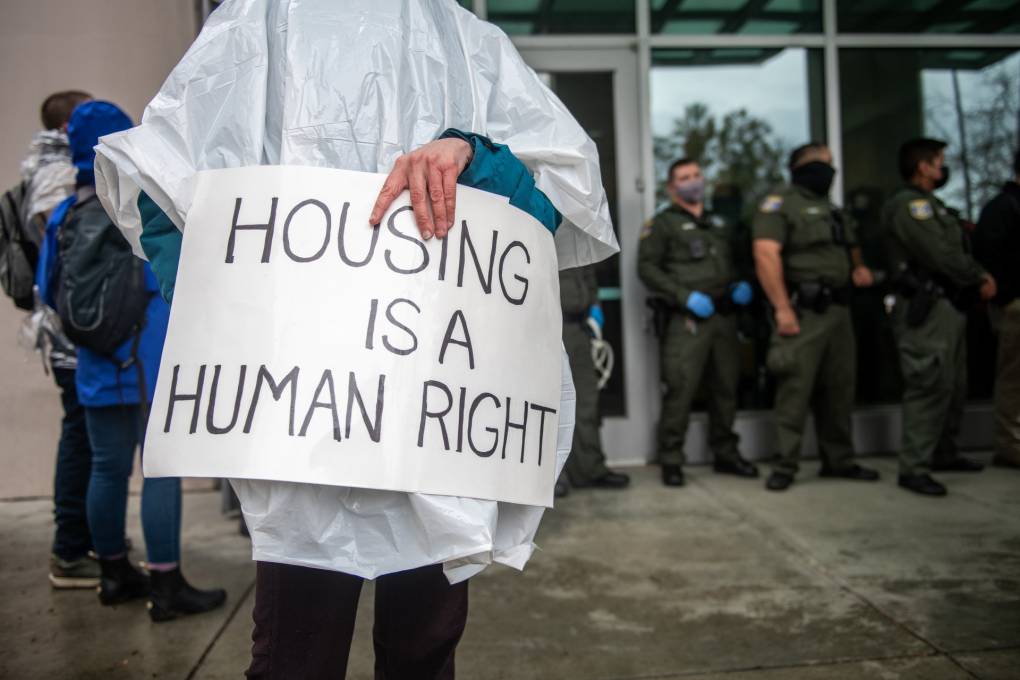
window.__IS_SSR__=true
window.__INITIAL_STATE__={
"attachmentsReducer": {
"audio_0": {
"type": "attachments",
"id": "audio_0",
"imgSizes": {
"kqedFullSize": {
"file": "https://ww2.kqed.org/news/wp-content/themes/KQED-unified/img/audio_bgs/background0.jpg"
}
}
},
"audio_1": {
"type": "attachments",
"id": "audio_1",
"imgSizes": {
"kqedFullSize": {
"file": "https://ww2.kqed.org/news/wp-content/themes/KQED-unified/img/audio_bgs/background1.jpg"
}
}
},
"audio_2": {
"type": "attachments",
"id": "audio_2",
"imgSizes": {
"kqedFullSize": {
"file": "https://ww2.kqed.org/news/wp-content/themes/KQED-unified/img/audio_bgs/background2.jpg"
}
}
},
"audio_3": {
"type": "attachments",
"id": "audio_3",
"imgSizes": {
"kqedFullSize": {
"file": "https://ww2.kqed.org/news/wp-content/themes/KQED-unified/img/audio_bgs/background3.jpg"
}
}
},
"audio_4": {
"type": "attachments",
"id": "audio_4",
"imgSizes": {
"kqedFullSize": {
"file": "https://ww2.kqed.org/news/wp-content/themes/KQED-unified/img/audio_bgs/background4.jpg"
}
}
},
"placeholder": {
"type": "attachments",
"id": "placeholder",
"imgSizes": {
"thumbnail": {
"file": "https://cdn.kqed.org/wp-content/uploads/2024/12/KQED-Default-Image-816638274-2000x1333-1-160x107.jpg",
"width": 160,
"height": 107,
"mimeType": "image/jpeg"
},
"medium": {
"file": "https://cdn.kqed.org/wp-content/uploads/2024/12/KQED-Default-Image-816638274-2000x1333-1-800x533.jpg",
"width": 800,
"height": 533,
"mimeType": "image/jpeg"
},
"medium_large": {
"file": "https://cdn.kqed.org/wp-content/uploads/2024/12/KQED-Default-Image-816638274-2000x1333-1-768x512.jpg",
"width": 768,
"height": 512,
"mimeType": "image/jpeg"
},
"large": {
"file": "https://cdn.kqed.org/wp-content/uploads/2024/12/KQED-Default-Image-816638274-2000x1333-1-1020x680.jpg",
"width": 1020,
"height": 680,
"mimeType": "image/jpeg"
},
"1536x1536": {
"file": "https://cdn.kqed.org/wp-content/uploads/2024/12/KQED-Default-Image-816638274-2000x1333-1-1536x1024.jpg",
"width": 1536,
"height": 1024,
"mimeType": "image/jpeg"
},
"fd-lrg": {
"file": "https://cdn.kqed.org/wp-content/uploads/2024/12/KQED-Default-Image-816638274-2000x1333-1-1536x1024.jpg",
"width": 1536,
"height": 1024,
"mimeType": "image/jpeg"
},
"fd-med": {
"file": "https://cdn.kqed.org/wp-content/uploads/2024/12/KQED-Default-Image-816638274-2000x1333-1-1020x680.jpg",
"width": 1020,
"height": 680,
"mimeType": "image/jpeg"
},
"fd-sm": {
"file": "https://cdn.kqed.org/wp-content/uploads/2024/12/KQED-Default-Image-816638274-2000x1333-1-800x533.jpg",
"width": 800,
"height": 533,
"mimeType": "image/jpeg"
},
"post-thumbnail": {
"file": "https://cdn.kqed.org/wp-content/uploads/2024/12/KQED-Default-Image-816638274-2000x1333-1-672x372.jpg",
"width": 672,
"height": 372,
"mimeType": "image/jpeg"
},
"twentyfourteen-full-width": {
"file": "https://cdn.kqed.org/wp-content/uploads/2024/12/KQED-Default-Image-816638274-2000x1333-1-1038x576.jpg",
"width": 1038,
"height": 576,
"mimeType": "image/jpeg"
},
"xxsmall": {
"file": "https://cdn.kqed.org/wp-content/uploads/2024/12/KQED-Default-Image-816638274-2000x1333-1-160x107.jpg",
"width": 160,
"height": 107,
"mimeType": "image/jpeg"
},
"xsmall": {
"file": "https://cdn.kqed.org/wp-content/uploads/2024/12/KQED-Default-Image-816638274-2000x1333-1-672x372.jpg",
"width": 672,
"height": 372,
"mimeType": "image/jpeg"
},
"small": {
"file": "https://cdn.kqed.org/wp-content/uploads/2024/12/KQED-Default-Image-816638274-2000x1333-1-672x372.jpg",
"width": 672,
"height": 372,
"mimeType": "image/jpeg"
},
"xlarge": {
"file": "https://cdn.kqed.org/wp-content/uploads/2024/12/KQED-Default-Image-816638274-2000x1333-1-1020x680.jpg",
"width": 1020,
"height": 680,
"mimeType": "image/jpeg"
},
"full-width": {
"file": "https://cdn.kqed.org/wp-content/uploads/2024/12/KQED-Default-Image-816638274-2000x1333-1-1920x1280.jpg",
"width": 1920,
"height": 1280,
"mimeType": "image/jpeg"
},
"guest-author-32": {
"file": "https://cdn.kqed.org/wp-content/uploads/2025/01/KQED-Default-Image-816638274-1333x1333-1-160x160.jpg",
"width": 32,
"height": 32,
"mimeType": "image/jpeg"
},
"guest-author-50": {
"file": "https://cdn.kqed.org/wp-content/uploads/2025/01/KQED-Default-Image-816638274-1333x1333-1-160x160.jpg",
"width": 50,
"height": 50,
"mimeType": "image/jpeg"
},
"guest-author-64": {
"file": "https://cdn.kqed.org/wp-content/uploads/2025/01/KQED-Default-Image-816638274-1333x1333-1-160x160.jpg",
"width": 64,
"height": 64,
"mimeType": "image/jpeg"
},
"guest-author-96": {
"file": "https://cdn.kqed.org/wp-content/uploads/2025/01/KQED-Default-Image-816638274-1333x1333-1-160x160.jpg",
"width": 96,
"height": 96,
"mimeType": "image/jpeg"
},
"guest-author-128": {
"file": "https://cdn.kqed.org/wp-content/uploads/2025/01/KQED-Default-Image-816638274-1333x1333-1-160x160.jpg",
"width": 128,
"height": 128,
"mimeType": "image/jpeg"
},
"detail": {
"file": "https://cdn.kqed.org/wp-content/uploads/2025/01/KQED-Default-Image-816638274-1333x1333-1-160x160.jpg",
"width": 160,
"height": 160,
"mimeType": "image/jpeg"
},
"kqedFullSize": {
"file": "https://cdn.kqed.org/wp-content/uploads/2024/12/KQED-Default-Image-816638274-2000x1333-1.jpg",
"width": 2000,
"height": 1333
}
}
},
"news_11909296": {
"type": "attachments",
"id": "news_11909296",
"meta": {
"index": "attachments_1716263798",
"site": "news",
"id": "11909296",
"found": true
},
"parent": 11909254,
"imgSizes": {
"twentyfourteen-full-width": {
"file": "https://ww2.kqed.org/app/uploads/sites/10/2022/03/RS46925_034_SanJose_AntiEvictionProtest_01272021-qut-1038x576.jpg",
"width": 1038,
"mimeType": "image/jpeg",
"height": 576
},
"thumbnail": {
"file": "https://ww2.kqed.org/app/uploads/sites/10/2022/03/RS46925_034_SanJose_AntiEvictionProtest_01272021-qut-160x107.jpg",
"width": 160,
"mimeType": "image/jpeg",
"height": 107
},
"post-thumbnail": {
"file": "https://ww2.kqed.org/app/uploads/sites/10/2022/03/RS46925_034_SanJose_AntiEvictionProtest_01272021-qut-672x372.jpg",
"width": 672,
"mimeType": "image/jpeg",
"height": 372
},
"kqedFullSize": {
"file": "https://ww2.kqed.org/app/uploads/sites/10/2022/03/RS46925_034_SanJose_AntiEvictionProtest_01272021-qut.jpg",
"width": 1920,
"height": 1280
},
"large": {
"file": "https://ww2.kqed.org/app/uploads/sites/10/2022/03/RS46925_034_SanJose_AntiEvictionProtest_01272021-qut-1020x680.jpg",
"width": 1020,
"mimeType": "image/jpeg",
"height": 680
},
"1536x1536": {
"file": "https://ww2.kqed.org/app/uploads/sites/10/2022/03/RS46925_034_SanJose_AntiEvictionProtest_01272021-qut-1536x1024.jpg",
"width": 1536,
"mimeType": "image/jpeg",
"height": 1024
},
"medium": {
"file": "https://ww2.kqed.org/app/uploads/sites/10/2022/03/RS46925_034_SanJose_AntiEvictionProtest_01272021-qut-800x533.jpg",
"width": 800,
"mimeType": "image/jpeg",
"height": 533
}
},
"publishDate": 1648234367,
"modified": 1648243103,
"caption": "A demonstrator holds a sign in front of the Santa Clara County Superior Court in San Jose on Jan. 27, 2021, during a protest calling for stronger eviction protections in California. Hundreds of thousands of California renters facing eviction could get another three months of protection under a bill introduced Thursday.",
"description": null,
"title": "RS46925_034_SanJose_AntiEvictionProtest_01272021-qut",
"credit": "Beth LaBerge/KQED",
"status": "inherit",
"altTag": "A demonstrator holds a sign that says 'Housing Is A Human Right'",
"isLoading": false,
"fetchFailed": false
},
"news_11908887": {
"type": "attachments",
"id": "news_11908887",
"meta": {
"index": "attachments_1716263798",
"site": "news",
"id": "11908887",
"found": true
},
"parent": 11908825,
"imgSizes": {
"twentyfourteen-full-width": {
"file": "https://ww2.kqed.org/app/uploads/sites/10/2022/03/RS54314_007_KQED_SFUSDProtest_03142022-qut-1038x576.jpg",
"width": 1038,
"mimeType": "image/jpeg",
"height": 576
},
"thumbnail": {
"file": "https://ww2.kqed.org/app/uploads/sites/10/2022/03/RS54314_007_KQED_SFUSDProtest_03142022-qut-160x107.jpg",
"width": 160,
"mimeType": "image/jpeg",
"height": 107
},
"post-thumbnail": {
"file": "https://ww2.kqed.org/app/uploads/sites/10/2022/03/RS54314_007_KQED_SFUSDProtest_03142022-qut-672x372.jpg",
"width": 672,
"mimeType": "image/jpeg",
"height": 372
},
"kqedFullSize": {
"file": "https://ww2.kqed.org/app/uploads/sites/10/2022/03/RS54314_007_KQED_SFUSDProtest_03142022-qut.jpg",
"width": 1920,
"height": 1280
},
"large": {
"file": "https://ww2.kqed.org/app/uploads/sites/10/2022/03/RS54314_007_KQED_SFUSDProtest_03142022-qut-1020x680.jpg",
"width": 1020,
"mimeType": "image/jpeg",
"height": 680
},
"1536x1536": {
"file": "https://ww2.kqed.org/app/uploads/sites/10/2022/03/RS54314_007_KQED_SFUSDProtest_03142022-qut-1536x1024.jpg",
"width": 1536,
"mimeType": "image/jpeg",
"height": 1024
},
"medium": {
"file": "https://ww2.kqed.org/app/uploads/sites/10/2022/03/RS54314_007_KQED_SFUSDProtest_03142022-qut-800x533.jpg",
"width": 800,
"mimeType": "image/jpeg",
"height": 533
}
},
"publishDate": 1647981010,
"modified": 1652909843,
"caption": "Chesa Boudin stands with SFUSD staff in front of the district headquarters in San Francisco on March 14, 2022, to protest the mismanagement of paychecks of district staff.",
"description": null,
"title": "RS54314_007_KQED_SFUSDProtest_03142022-qut",
"credit": "Beth LaBerge/KQED",
"status": "inherit",
"altTag": "A middle-aged white man, Chesa Boudin, wears a white shirt, gray-and-red-striped tie, and navy suit jacket with a red pocket square next to a lapel pin that's a seven-pointed star (the seal of the SF District Attorney's Office). Chesa has a brown beard, a trim haircut a bit longer on top, and a receding hairline. He looks somber. He appears to be standing on an outdoor stairway, amid three other people who are partially visible, all dressed casually.",
"isLoading": false,
"fetchFailed": false
},
"news_11908650": {
"type": "attachments",
"id": "news_11908650",
"meta": {
"index": "attachments_1716263798",
"site": "news",
"id": "11908650",
"found": true
},
"parent": 11908647,
"imgSizes": {
"thumbnail": {
"file": "https://ww2.kqed.org/app/uploads/sites/10/2022/03/philmarqueeyuh-160x90.jpg",
"width": 160,
"mimeType": "image/jpeg",
"height": 90
},
"post-thumbnail": {
"file": "https://ww2.kqed.org/app/uploads/sites/10/2022/03/philmarqueeyuh-672x372.jpg",
"width": 672,
"mimeType": "image/jpeg",
"height": 372
},
"kqedFullSize": {
"file": "https://ww2.kqed.org/app/uploads/sites/10/2022/03/philmarqueeyuh.jpg",
"width": 898,
"height": 505
},
"medium": {
"file": "https://ww2.kqed.org/app/uploads/sites/10/2022/03/philmarqueeyuh-800x450.jpg",
"width": 800,
"mimeType": "image/jpeg",
"height": 450
}
},
"publishDate": 1647638413,
"modified": 1647638413,
"caption": null,
"description": null,
"title": "philmarqueeyuh",
"credit": null,
"status": "inherit",
"altTag": null,
"isLoading": false,
"fetchFailed": false
},
"news_11908430": {
"type": "attachments",
"id": "news_11908430",
"meta": {
"index": "attachments_1716263798",
"site": "news",
"id": "11908430",
"found": true
},
"parent": 11908414,
"imgSizes": {
"twentyfourteen-full-width": {
"file": "https://ww2.kqed.org/app/uploads/sites/10/2022/03/RS54430_GettyImages-1231758554-qut-1038x576.jpg",
"width": 1038,
"mimeType": "image/jpeg",
"height": 576
},
"thumbnail": {
"file": "https://ww2.kqed.org/app/uploads/sites/10/2022/03/RS54430_GettyImages-1231758554-qut-160x107.jpg",
"width": 160,
"mimeType": "image/jpeg",
"height": 107
},
"post-thumbnail": {
"file": "https://ww2.kqed.org/app/uploads/sites/10/2022/03/RS54430_GettyImages-1231758554-qut-672x372.jpg",
"width": 672,
"mimeType": "image/jpeg",
"height": 372
},
"kqedFullSize": {
"file": "https://ww2.kqed.org/app/uploads/sites/10/2022/03/RS54430_GettyImages-1231758554-qut.jpg",
"width": 1920,
"height": 1280
},
"large": {
"file": "https://ww2.kqed.org/app/uploads/sites/10/2022/03/RS54430_GettyImages-1231758554-qut-1020x680.jpg",
"width": 1020,
"mimeType": "image/jpeg",
"height": 680
},
"1536x1536": {
"file": "https://ww2.kqed.org/app/uploads/sites/10/2022/03/RS54430_GettyImages-1231758554-qut-1536x1024.jpg",
"width": 1536,
"mimeType": "image/jpeg",
"height": 1024
},
"medium": {
"file": "https://ww2.kqed.org/app/uploads/sites/10/2022/03/RS54430_GettyImages-1231758554-qut-800x533.jpg",
"width": 800,
"mimeType": "image/jpeg",
"height": 533
}
},
"publishDate": 1647466158,
"modified": 1647470316,
"caption": "Police tape is seen outside one of the two Atlanta spas where Robert Aaron Long murdered four women of Asian descent on March 16, 2021.",
"description": null,
"title": "US-SHOOTINGS-SPA",
"credit": "Elijah Nouvelage/AFP via Getty Images",
"status": "inherit",
"altTag": "spa building in distance, out of focus, lit by pink neon lights, police tape in foreground",
"isLoading": false,
"fetchFailed": false
},
"news_11908432": {
"type": "attachments",
"id": "news_11908432",
"meta": {
"index": "attachments_1716263798",
"site": "news",
"id": "11908432",
"found": true
},
"parent": 11908113,
"imgSizes": {
"twentyfourteen-full-width": {
"file": "https://ww2.kqed.org/app/uploads/sites/10/2022/03/campos-haney3-1038x576.jpg",
"width": 1038,
"mimeType": "image/jpeg",
"height": 576
},
"thumbnail": {
"file": "https://ww2.kqed.org/app/uploads/sites/10/2022/03/campos-haney3-160x104.jpg",
"width": 160,
"mimeType": "image/jpeg",
"height": 104
},
"post-thumbnail": {
"file": "https://ww2.kqed.org/app/uploads/sites/10/2022/03/campos-haney3-672x372.jpg",
"width": 672,
"mimeType": "image/jpeg",
"height": 372
},
"kqedFullSize": {
"file": "https://ww2.kqed.org/app/uploads/sites/10/2022/03/campos-haney3.jpg",
"width": 1790,
"height": 1160
},
"large": {
"file": "https://ww2.kqed.org/app/uploads/sites/10/2022/03/campos-haney3-1020x661.jpg",
"width": 1020,
"mimeType": "image/jpeg",
"height": 661
},
"1536x1536": {
"file": "https://ww2.kqed.org/app/uploads/sites/10/2022/03/campos-haney3-1536x995.jpg",
"width": 1536,
"mimeType": "image/jpeg",
"height": 995
},
"medium": {
"file": "https://ww2.kqed.org/app/uploads/sites/10/2022/03/campos-haney3-800x518.jpg",
"width": 800,
"mimeType": "image/jpeg",
"height": 518
}
},
"publishDate": 1647466358,
"modified": 1647466386,
"caption": "David Campos, left, and Matt Haney are in a heated runoff for a seat in the state Assembly to represent the eastern side of San Francisco.",
"description": null,
"title": "campos-haney3",
"credit": "Illustration by Anna Vignet/KQED, with SF BOS pics",
"status": "inherit",
"altTag": "Profile pics of two men in suits, divided by jagged line.",
"isLoading": false,
"fetchFailed": false
},
"news_11907987": {
"type": "attachments",
"id": "news_11907987",
"meta": {
"index": "attachments_1716263798",
"site": "news",
"id": "11907987",
"found": true
},
"parent": 11907959,
"imgSizes": {
"twentyfourteen-full-width": {
"file": "https://ww2.kqed.org/app/uploads/sites/10/2022/03/JG-action-Headshot-1038x576.jpeg",
"width": 1038,
"mimeType": "image/jpeg",
"height": 576
},
"thumbnail": {
"file": "https://ww2.kqed.org/app/uploads/sites/10/2022/03/JG-action-Headshot-160x90.jpeg",
"width": 160,
"mimeType": "image/jpeg",
"height": 90
},
"post-thumbnail": {
"file": "https://ww2.kqed.org/app/uploads/sites/10/2022/03/JG-action-Headshot-672x372.jpeg",
"width": 672,
"mimeType": "image/jpeg",
"height": 372
},
"kqedFullSize": {
"file": "https://ww2.kqed.org/app/uploads/sites/10/2022/03/JG-action-Headshot-scaled.jpeg",
"width": 2560,
"height": 1440
},
"2048x2048": {
"file": "https://ww2.kqed.org/app/uploads/sites/10/2022/03/JG-action-Headshot-2048x1152.jpeg",
"width": 2048,
"mimeType": "image/jpeg",
"height": 1152
},
"large": {
"file": "https://ww2.kqed.org/app/uploads/sites/10/2022/03/JG-action-Headshot-1020x574.jpeg",
"width": 1020,
"mimeType": "image/jpeg",
"height": 574
},
"1536x1536": {
"file": "https://ww2.kqed.org/app/uploads/sites/10/2022/03/JG-action-Headshot-1536x864.jpeg",
"width": 1536,
"mimeType": "image/jpeg",
"height": 864
},
"full-width": {
"file": "https://ww2.kqed.org/app/uploads/sites/10/2022/03/JG-action-Headshot-1920x1080.jpeg",
"width": 1920,
"mimeType": "image/jpeg",
"height": 1080
},
"medium": {
"file": "https://ww2.kqed.org/app/uploads/sites/10/2022/03/JG-action-Headshot-800x450.jpeg",
"width": 800,
"mimeType": "image/jpeg",
"height": 450
}
},
"publishDate": 1647043672,
"modified": 1647043672,
"caption": null,
"description": null,
"title": "JG action Headshot",
"credit": null,
"status": "inherit",
"altTag": null,
"isLoading": false,
"fetchFailed": false
},
"news_11907579": {
"type": "attachments",
"id": "news_11907579",
"meta": {
"index": "attachments_1716263798",
"site": "news",
"id": "11907579",
"found": true
},
"parent": 11907552,
"imgSizes": {
"twentyfourteen-full-width": {
"file": "https://ww2.kqed.org/app/uploads/sites/10/2022/03/RS54122_GettyImages-1238594451-qut-1038x576.jpg",
"width": 1038,
"mimeType": "image/jpeg",
"height": 576
},
"thumbnail": {
"file": "https://ww2.kqed.org/app/uploads/sites/10/2022/03/RS54122_GettyImages-1238594451-qut-160x107.jpg",
"width": 160,
"mimeType": "image/jpeg",
"height": 107
},
"post-thumbnail": {
"file": "https://ww2.kqed.org/app/uploads/sites/10/2022/03/RS54122_GettyImages-1238594451-qut-672x372.jpg",
"width": 672,
"mimeType": "image/jpeg",
"height": 372
},
"kqedFullSize": {
"file": "https://ww2.kqed.org/app/uploads/sites/10/2022/03/RS54122_GettyImages-1238594451-qut.jpg",
"width": 1920,
"height": 1280
},
"large": {
"file": "https://ww2.kqed.org/app/uploads/sites/10/2022/03/RS54122_GettyImages-1238594451-qut-1020x680.jpg",
"width": 1020,
"mimeType": "image/jpeg",
"height": 680
},
"1536x1536": {
"file": "https://ww2.kqed.org/app/uploads/sites/10/2022/03/RS54122_GettyImages-1238594451-qut-1536x1024.jpg",
"width": 1536,
"mimeType": "image/jpeg",
"height": 1024
},
"medium": {
"file": "https://ww2.kqed.org/app/uploads/sites/10/2022/03/RS54122_GettyImages-1238594451-qut-800x533.jpg",
"width": 800,
"mimeType": "image/jpeg",
"height": 533
}
},
"publishDate": 1646846249,
"modified": 1646854986,
"caption": "Gov. Gavin Newsom, pictured at a press conference in February 2022, vowed in his State of the State address on Tuesday to include a gas tax rebate in the revised state budget proposal he will release in May.",
"description": null,
"title": "Governor Gavin Newsom speaks during a press conference to unveil the next phase of California's pandemic response",
"credit": "Allen J. Schaben/Los Angeles Times via Getty Images",
"status": "inherit",
"altTag": "Gavin Newsom profile shot",
"isLoading": false,
"fetchFailed": false
},
"news_11907152": {
"type": "attachments",
"id": "news_11907152",
"meta": {
"index": "attachments_1716263798",
"site": "news",
"id": "11907152",
"found": true
},
"title": "where-to-vote-today",
"publishDate": 1646357766,
"status": "inherit",
"parent": 11907125,
"modified": 1730762246,
"caption": "Dax Strane drops off his mail-in ballot at the Alameda County Registrar of Voters in Oakland on Oct. 27, 2020. Alameda was one of the dozens of counties that consolidated voting locations in 2020. ",
"credit": "Beth LaBerge/KQED",
"altTag": null,
"description": null,
"imgSizes": {
"medium": {
"file": "https://cdn.kqed.org/wp-content/uploads/sites/10/2022/03/RS45463_011_KQED_Oakland_RegistrarofVoters_10272020-qut-800x533.jpg",
"width": 800,
"height": 533,
"mimeType": "image/jpeg"
},
"large": {
"file": "https://cdn.kqed.org/wp-content/uploads/sites/10/2022/03/RS45463_011_KQED_Oakland_RegistrarofVoters_10272020-qut-1020x680.jpg",
"width": 1020,
"height": 680,
"mimeType": "image/jpeg"
},
"thumbnail": {
"file": "https://cdn.kqed.org/wp-content/uploads/sites/10/2022/03/RS45463_011_KQED_Oakland_RegistrarofVoters_10272020-qut-160x107.jpg",
"width": 160,
"height": 107,
"mimeType": "image/jpeg"
},
"1536x1536": {
"file": "https://cdn.kqed.org/wp-content/uploads/sites/10/2022/03/RS45463_011_KQED_Oakland_RegistrarofVoters_10272020-qut-1536x1024.jpg",
"width": 1536,
"height": 1024,
"mimeType": "image/jpeg"
},
"post-thumbnail": {
"file": "https://cdn.kqed.org/wp-content/uploads/sites/10/2022/03/RS45463_011_KQED_Oakland_RegistrarofVoters_10272020-qut-672x372.jpg",
"width": 672,
"height": 372,
"mimeType": "image/jpeg"
},
"twentyfourteen-full-width": {
"file": "https://cdn.kqed.org/wp-content/uploads/sites/10/2022/03/RS45463_011_KQED_Oakland_RegistrarofVoters_10272020-qut-1038x576.jpg",
"width": 1038,
"height": 576,
"mimeType": "image/jpeg"
},
"kqedFullSize": {
"file": "https://cdn.kqed.org/wp-content/uploads/sites/10/2022/03/RS45463_011_KQED_Oakland_RegistrarofVoters_10272020-qut.jpg",
"width": 1920,
"height": 1280
}
},
"isLoading": false,
"fetchFailed": false
},
"news_11907199": {
"type": "attachments",
"id": "news_11907199",
"meta": {
"index": "attachments_1716263798",
"site": "news",
"id": "11907199",
"found": true
},
"parent": 11907155,
"imgSizes": {
"twentyfourteen-full-width": {
"file": "https://ww2.kqed.org/app/uploads/sites/10/2022/03/ExcludedWorkersRallySac-1038x576.jpg",
"width": 1038,
"mimeType": "image/jpeg",
"height": 576
},
"thumbnail": {
"file": "https://ww2.kqed.org/app/uploads/sites/10/2022/03/ExcludedWorkersRallySac-160x104.jpg",
"width": 160,
"mimeType": "image/jpeg",
"height": 104
},
"post-thumbnail": {
"file": "https://ww2.kqed.org/app/uploads/sites/10/2022/03/ExcludedWorkersRallySac-672x372.jpg",
"width": 672,
"mimeType": "image/jpeg",
"height": 372
},
"kqedFullSize": {
"file": "https://ww2.kqed.org/app/uploads/sites/10/2022/03/ExcludedWorkersRallySac.jpg",
"width": 1920,
"height": 1242
},
"large": {
"file": "https://ww2.kqed.org/app/uploads/sites/10/2022/03/ExcludedWorkersRallySac-1020x660.jpg",
"width": 1020,
"mimeType": "image/jpeg",
"height": 660
},
"1536x1536": {
"file": "https://ww2.kqed.org/app/uploads/sites/10/2022/03/ExcludedWorkersRallySac-1536x994.jpg",
"width": 1536,
"mimeType": "image/jpeg",
"height": 994
},
"medium": {
"file": "https://ww2.kqed.org/app/uploads/sites/10/2022/03/ExcludedWorkersRallySac-800x518.jpg",
"width": 800,
"mimeType": "image/jpeg",
"height": 518
}
},
"publishDate": 1646420431,
"modified": 1646421313,
"caption": "Assemblymember Robert Rivas (left, at podium) speaks in support of AB 2847, which he coauthored, as supporters rally outside the state Capitol in Sacramento on March 3, 2022.",
"description": null,
"title": "ExcludedWorkersRallySac",
"credit": "Courtesy of Sumeet Bal, California Immigrant Policy Center",
"status": "inherit",
"altTag": "man in suit speaks at podium as ralliers hold bright yellow signs reading 'fund excluded workers'",
"isLoading": false,
"fetchFailed": false
},
"news_11907032": {
"type": "attachments",
"id": "news_11907032",
"meta": {
"index": "attachments_1716263798",
"site": "news",
"id": "11907032",
"found": true
},
"parent": 11906815,
"imgSizes": {
"twentyfourteen-full-width": {
"file": "https://ww2.kqed.org/app/uploads/sites/10/2022/03/rencanfeat-1038x576.jpg",
"width": 1038,
"mimeType": "image/jpeg",
"height": 576
},
"thumbnail": {
"file": "https://ww2.kqed.org/app/uploads/sites/10/2022/03/rencanfeat-160x90.jpg",
"width": 160,
"mimeType": "image/jpeg",
"height": 90
},
"post-thumbnail": {
"file": "https://ww2.kqed.org/app/uploads/sites/10/2022/03/rencanfeat-672x372.jpg",
"width": 672,
"mimeType": "image/jpeg",
"height": 372
},
"kqedFullSize": {
"file": "https://ww2.kqed.org/app/uploads/sites/10/2022/03/rencanfeat-scaled.jpg",
"width": 2560,
"height": 1440
},
"2048x2048": {
"file": "https://ww2.kqed.org/app/uploads/sites/10/2022/03/rencanfeat-2048x1152.jpg",
"width": 2048,
"mimeType": "image/jpeg",
"height": 1152
},
"large": {
"file": "https://ww2.kqed.org/app/uploads/sites/10/2022/03/rencanfeat-1020x574.jpg",
"width": 1020,
"mimeType": "image/jpeg",
"height": 574
},
"1536x1536": {
"file": "https://ww2.kqed.org/app/uploads/sites/10/2022/03/rencanfeat-1536x864.jpg",
"width": 1536,
"mimeType": "image/jpeg",
"height": 864
},
"full-width": {
"file": "https://ww2.kqed.org/app/uploads/sites/10/2022/03/rencanfeat-1920x1080.jpg",
"width": 1920,
"mimeType": "image/jpeg",
"height": 1080
},
"medium": {
"file": "https://ww2.kqed.org/app/uploads/sites/10/2022/03/rencanfeat-800x450.jpg",
"width": 800,
"mimeType": "image/jpeg",
"height": 450
}
},
"publishDate": 1646263016,
"modified": 1646263080,
"caption": "The green 'renaissance' trash cans have been on San Francisco's streets since 1993.",
"description": null,
"title": "rencanfeat",
"credit": "Christopher J. Beale/KQED",
"status": "inherit",
"altTag": null,
"isLoading": false,
"fetchFailed": false
},
"news_11906475": {
"type": "attachments",
"id": "news_11906475",
"meta": {
"index": "attachments_1716263798",
"site": "news",
"id": "11906475",
"found": true
},
"parent": 11906473,
"imgSizes": {
"twentyfourteen-full-width": {
"file": "https://ww2.kqed.org/app/uploads/sites/10/2022/02/RS53901_GettyImages-1232579208-qut-1038x576.jpg",
"width": 1038,
"mimeType": "image/jpeg",
"height": 576
},
"thumbnail": {
"file": "https://ww2.kqed.org/app/uploads/sites/10/2022/02/RS53901_GettyImages-1232579208-qut-160x107.jpg",
"width": 160,
"mimeType": "image/jpeg",
"height": 107
},
"post-thumbnail": {
"file": "https://ww2.kqed.org/app/uploads/sites/10/2022/02/RS53901_GettyImages-1232579208-qut-672x372.jpg",
"width": 672,
"mimeType": "image/jpeg",
"height": 372
},
"kqedFullSize": {
"file": "https://ww2.kqed.org/app/uploads/sites/10/2022/02/RS53901_GettyImages-1232579208-qut.jpg",
"width": 1920,
"height": 1280
},
"large": {
"file": "https://ww2.kqed.org/app/uploads/sites/10/2022/02/RS53901_GettyImages-1232579208-qut-1020x680.jpg",
"width": 1020,
"mimeType": "image/jpeg",
"height": 680
},
"1536x1536": {
"file": "https://ww2.kqed.org/app/uploads/sites/10/2022/02/RS53901_GettyImages-1232579208-qut-1536x1024.jpg",
"width": 1536,
"mimeType": "image/jpeg",
"height": 1024
},
"medium": {
"file": "https://ww2.kqed.org/app/uploads/sites/10/2022/02/RS53901_GettyImages-1232579208-qut-800x533.jpg",
"width": 800,
"mimeType": "image/jpeg",
"height": 533
}
},
"publishDate": 1645811683,
"modified": 1645819347,
"caption": "Ketanji Brown Jackson testifies before a Senate Judiciary Committee hearing on pending judicial nominations on April 28, 2021.",
"description": null,
"title": "Senate Judiciary Committee TW POOL",
"credit": "Tom Williams/CQ-Roll Call Inc. via Getty Images/POOL",
"status": "inherit",
"altTag": "profile photo of Ketanji Brown Jackson smiling",
"isLoading": false,
"fetchFailed": false
},
"news_11905430": {
"type": "attachments",
"id": "news_11905430",
"meta": {
"index": "attachments_1716263798",
"site": "news",
"id": "11905430",
"found": true
},
"parent": 11905429,
"imgSizes": {
"twentyfourteen-full-width": {
"file": "https://ww2.kqed.org/app/uploads/sites/10/2022/02/ap22038735487988-406e08ab721fc89b9ac39a3d70df1c65801d41dc-1038x576.jpg",
"width": 1038,
"mimeType": "image/jpeg",
"height": 576
},
"thumbnail": {
"file": "https://ww2.kqed.org/app/uploads/sites/10/2022/02/ap22038735487988-406e08ab721fc89b9ac39a3d70df1c65801d41dc-160x120.jpg",
"width": 160,
"mimeType": "image/jpeg",
"height": 120
},
"post-thumbnail": {
"file": "https://ww2.kqed.org/app/uploads/sites/10/2022/02/ap22038735487988-406e08ab721fc89b9ac39a3d70df1c65801d41dc-672x372.jpg",
"width": 672,
"mimeType": "image/jpeg",
"height": 372
},
"kqedFullSize": {
"file": "https://ww2.kqed.org/app/uploads/sites/10/2022/02/ap22038735487988-406e08ab721fc89b9ac39a3d70df1c65801d41dc-scaled-e1645046892712.jpg",
"width": 1920,
"height": 1440
},
"2048x2048": {
"file": "https://ww2.kqed.org/app/uploads/sites/10/2022/02/ap22038735487988-406e08ab721fc89b9ac39a3d70df1c65801d41dc-2048x1536.jpg",
"width": 2048,
"mimeType": "image/jpeg",
"height": 1536
},
"large": {
"file": "https://ww2.kqed.org/app/uploads/sites/10/2022/02/ap22038735487988-406e08ab721fc89b9ac39a3d70df1c65801d41dc-1020x765.jpg",
"width": 1020,
"mimeType": "image/jpeg",
"height": 765
},
"1536x1536": {
"file": "https://ww2.kqed.org/app/uploads/sites/10/2022/02/ap22038735487988-406e08ab721fc89b9ac39a3d70df1c65801d41dc-1536x1152.jpg",
"width": 1536,
"mimeType": "image/jpeg",
"height": 1152
},
"full-width": {
"file": "https://ww2.kqed.org/app/uploads/sites/10/2022/02/ap22038735487988-406e08ab721fc89b9ac39a3d70df1c65801d41dc-1920x1440.jpg",
"width": 1920,
"mimeType": "image/jpeg",
"height": 1440
},
"medium": {
"file": "https://ww2.kqed.org/app/uploads/sites/10/2022/02/ap22038735487988-406e08ab721fc89b9ac39a3d70df1c65801d41dc-800x600.jpg",
"width": 800,
"mimeType": "image/jpeg",
"height": 600
}
},
"publishDate": 1645046758,
"modified": 1645062417,
"caption": "Leondra Kruger, an associate justice of the Supreme Court of California, poses for photos in San Francisco on Feb. 3, 2022. ",
"description": "Leondra Kruger, an Associate Justice of the Supreme Court of California, poses for photos in San Francisco, Thursday, Feb. 3, 2022. (AP Photo/Jeff Chiu)",
"title": "California Supreme Court Justice Leondra Kruger is a leading contender to replace Justice Stephen Breyer on the U.S. Supreme Court.",
"credit": "Jeff Chiu/AP",
"status": "inherit",
"altTag": "A portrait of a woman with glasses.",
"isLoading": false,
"fetchFailed": false
}
},
"audioPlayerReducer": {
"postId": "stream_live",
"isPaused": true,
"isPlaying": false,
"pfsActive": false,
"pledgeModalIsOpen": true,
"playerDrawerIsOpen": false,
"liveAudioPlayStartedAt": 0,
"liveAudioPlayContext": ""
},
"authorsReducer": {
"byline_news_11909254": {
"type": "authors",
"id": "byline_news_11909254",
"meta": {
"override": true
},
"slug": "byline_news_11909254",
"name": "Adam Beam\u003cbr>The Associated Press",
"isLoading": false
},
"byline_news_11908414": {
"type": "authors",
"id": "byline_news_11908414",
"meta": {
"override": true
},
"slug": "byline_news_11908414",
"name": "Kate Brumback \u003cbr> The Associated Press",
"isLoading": false
},
"byline_news_11906473": {
"type": "authors",
"id": "byline_news_11906473",
"meta": {
"override": true
},
"slug": "byline_news_11906473",
"name": "\u003ca href=\"https://www.npr.org/people/2101289/nina-totenberg\">Nina Totenberg\u003c/a>",
"isLoading": false
},
"gmarzorati": {
"type": "authors",
"id": "227",
"meta": {
"index": "authors_1716337520",
"id": "227",
"found": true
},
"name": "Guy Marzorati",
"firstName": "Guy",
"lastName": "Marzorati",
"slug": "gmarzorati",
"email": "gmarzorati@KQED.org",
"display_author_email": true,
"staff_mastheads": [
"news"
],
"title": "Correspondent",
"bio": "Guy Marzorati is a correspondent on KQED's California Politics and Government Desk, based in San Jose. A graduate of Santa Clara University, Guy joined KQED in 2013. He reports on state and local politics and produces KQED's digital voter guide.",
"avatar": "https://secure.gravatar.com/avatar/e7038b8dbfd55b104369b76b1cd0b9de?s=600&d=blank&r=g",
"twitter": "guymarzorati",
"facebook": null,
"instagram": null,
"linkedin": null,
"sites": [
{
"site": "",
"roles": [
"editor"
]
},
{
"site": "news",
"roles": [
"editor"
]
},
{
"site": "science",
"roles": [
"editor"
]
},
{
"site": "forum",
"roles": [
"editor"
]
},
{
"site": "elections",
"roles": [
"editor"
]
},
{
"site": "liveblog",
"roles": [
"editor"
]
}
],
"headData": {
"title": "Guy Marzorati | KQED",
"description": "Correspondent",
"ogImgSrc": "https://secure.gravatar.com/avatar/e7038b8dbfd55b104369b76b1cd0b9de?s=600&d=blank&r=g",
"twImgSrc": "https://secure.gravatar.com/avatar/e7038b8dbfd55b104369b76b1cd0b9de?s=600&d=blank&r=g"
},
"isLoading": false,
"link": "/author/gmarzorati"
},
"kqed": {
"type": "authors",
"id": "236",
"meta": {
"index": "authors_1716337520",
"id": "236",
"found": true
},
"name": "KQED News Staff",
"firstName": "KQED News Staff",
"lastName": null,
"slug": "kqed",
"email": "faq@kqed.org",
"display_author_email": false,
"staff_mastheads": [],
"title": null,
"bio": null,
"avatar": "https://secure.gravatar.com/avatar/ef0e801a68c4c54afa9180db14084167?s=600&d=blank&r=g",
"twitter": null,
"facebook": null,
"instagram": null,
"linkedin": null,
"sites": [
{
"site": "arts",
"roles": [
"contributor"
]
},
{
"site": "news",
"roles": [
"editor"
]
},
{
"site": "futureofyou",
"roles": [
"author"
]
}
],
"headData": {
"title": "KQED News Staff | KQED",
"description": null,
"ogImgSrc": "https://secure.gravatar.com/avatar/ef0e801a68c4c54afa9180db14084167?s=600&d=blank&r=g",
"twImgSrc": "https://secure.gravatar.com/avatar/ef0e801a68c4c54afa9180db14084167?s=600&d=blank&r=g"
},
"isLoading": false,
"link": "/author/kqed"
},
"scottshafer": {
"type": "authors",
"id": "255",
"meta": {
"index": "authors_1716337520",
"id": "255",
"found": true
},
"name": "Scott Shafer",
"firstName": "Scott",
"lastName": "Shafer",
"slug": "scottshafer",
"email": "sshafer@kqed.org",
"display_author_email": false,
"staff_mastheads": [
"news"
],
"title": "KQED Contributor",
"bio": "Scott Shafer is a senior editor with the KQED Politics and Government desk. He is co-host of Political Breakdown, the award-winning radio show and podcast with a personal take on the world of politics. Scott came to KQED in 1998 to host the statewide\u003cem> California Report\u003c/em>. Prior to that he had extended stints in politics and government\u003cem>.\u003c/em> He uses that inside experience at KQED in his, reporting, hosting and analysis for the politics desk. Scott collaborated \u003cem>Political Breakdown a\u003c/em>nd on \u003cem>The Political Mind of Jerry Brown, \u003c/em>an eight-part series about the life and extraordinary political career of the former governor. For fun, he plays water polo with the San Francisco Tsunami.",
"avatar": "https://secure.gravatar.com/avatar/a62ebae45b79d7aed1a39a0e3bf68104?s=600&d=blank&r=g",
"twitter": "scottshafer",
"bluesky": null,
"facebook": null,
"instagram": null,
"linkedin": null,
"sites": [
{
"site": "news",
"roles": [
"editor"
]
},
{
"site": "stateofhealth",
"roles": [
"author"
]
},
{
"site": "science",
"roles": [
"author"
]
},
{
"site": "forum",
"roles": [
"subscriber"
]
},
{
"site": "liveblog",
"roles": [
"author"
]
}
],
"headData": {
"title": "Scott Shafer | KQED",
"description": "KQED Contributor",
"ogImgSrc": "https://secure.gravatar.com/avatar/a62ebae45b79d7aed1a39a0e3bf68104?s=600&d=blank&r=g",
"twImgSrc": "https://secure.gravatar.com/avatar/a62ebae45b79d7aed1a39a0e3bf68104?s=600&d=blank&r=g"
},
"isLoading": false,
"link": "/author/scottshafer"
},
"mlagos": {
"type": "authors",
"id": "3239",
"meta": {
"index": "authors_1716337520",
"id": "3239",
"found": true
},
"name": "Marisa Lagos",
"firstName": "Marisa",
"lastName": "Lagos",
"slug": "mlagos",
"email": "mlagos@kqed.org",
"display_author_email": false,
"staff_mastheads": [
"news"
],
"title": "KQED Contributor",
"bio": "Marisa Lagos is a correspondent for KQED’s California Politics and Government Desk and co-hosts the award-winning show and podcast, Political Breakdown. At KQED, Lagos also conducts reporting, analysis and investigations into state, local and national politics for radio, TV, online and onstage. In 2022, she and co-host, Scott Shafer, moderated the only gubernatorial debate in California. In 2020, the \u003ci>Washington Post\u003c/i> named her one of the top political journalists in California; she was nominated for a Peabody and won several other awards for her work investigating the 2017 California wildfires. She has worked at the \u003ci>San Francisco Chronicle\u003c/i>, \u003ci>San Francisco Examiner\u003c/i> and \u003ci>Los Angeles Times\u003c/i>. A UC Santa Barbara graduate, she lives in San Francisco with her two sons and husband.",
"avatar": "https://secure.gravatar.com/avatar/a261a0d3696fc066871ef96b85b5e7d2?s=600&d=blank&r=g",
"twitter": "@mlagos",
"facebook": null,
"instagram": null,
"linkedin": null,
"sites": [
{
"site": "arts",
"roles": [
"author"
]
},
{
"site": "news",
"roles": [
"editor"
]
},
{
"site": "science",
"roles": [
"editor"
]
},
{
"site": "forum",
"roles": [
"author"
]
},
{
"site": "liveblog",
"roles": [
"author"
]
}
],
"headData": {
"title": "Marisa Lagos | KQED",
"description": "KQED Contributor",
"ogImgSrc": "https://secure.gravatar.com/avatar/a261a0d3696fc066871ef96b85b5e7d2?s=600&d=blank&r=g",
"twImgSrc": "https://secure.gravatar.com/avatar/a261a0d3696fc066871ef96b85b5e7d2?s=600&d=blank&r=g"
},
"isLoading": false,
"link": "/author/mlagos"
},
"fjhabvala": {
"type": "authors",
"id": "8659",
"meta": {
"index": "authors_1716337520",
"id": "8659",
"found": true
},
"name": "Farida Jhabvala Romero",
"firstName": "Farida",
"lastName": "Jhabvala Romero",
"slug": "fjhabvala",
"email": "fjhabvala@kqed.org",
"display_author_email": true,
"staff_mastheads": [
"news"
],
"title": "KQED Contributor",
"bio": "Farida Jhabvala Romero is a Labor Correspondent for KQED. She previously covered immigration. Farida was \u003ca href=\"https://www.ccnma.org/2022-most-influential-latina-journalists\">named\u003c/a> one of the 10 Most Influential Latina Journalists in California in 2022 by the California Chicano News Media Association. Her work has won awards from the Society of Professional Journalists (Northern California), as well as a national and regional Edward M. Murrow Award for the collaborative reporting projects “Dangerous Air” and “Graying California.” Before joining KQED, Farida worked as a producer at Radio Bilingüe, a national public radio network. Farida earned her master’s degree in journalism from Stanford University.",
"avatar": "https://secure.gravatar.com/avatar/f9f022d4e2609741874222a1e9d41f48fea74011aa7c615eef91d9a50c944ebe?s=600&d=blank&r=g",
"twitter": "FaridaJhabvala",
"bluesky": null,
"facebook": null,
"instagram": null,
"linkedin": "https://www.linkedin.com/in/faridajhabvala/",
"sites": [
{
"site": "news",
"roles": [
"editor"
]
},
{
"site": "stateofhealth",
"roles": [
"author"
]
},
{
"site": "liveblog",
"roles": [
"author"
]
}
],
"headData": {
"title": "Farida Jhabvala Romero | KQED",
"description": "KQED Contributor",
"ogImgSrc": "https://secure.gravatar.com/avatar/f9f022d4e2609741874222a1e9d41f48fea74011aa7c615eef91d9a50c944ebe?s=600&d=blank&r=g",
"twImgSrc": "https://secure.gravatar.com/avatar/f9f022d4e2609741874222a1e9d41f48fea74011aa7c615eef91d9a50c944ebe?s=600&d=blank&r=g"
},
"isLoading": false,
"link": "/author/fjhabvala"
},
"jrodriguez": {
"type": "authors",
"id": "11690",
"meta": {
"index": "authors_1716337520",
"id": "11690",
"found": true
},
"name": "Joe Fitzgerald Rodriguez",
"firstName": "Joe",
"lastName": "Fitzgerald Rodriguez",
"slug": "jrodriguez",
"email": "jrodriguez@kqed.org",
"display_author_email": true,
"staff_mastheads": [
"news"
],
"title": "Reporter and Producer",
"bio": "Joe Fitzgerald Rodriguez is a reporter and digital producer for KQED covering politics. Joe most recently wrote for the \u003cem>San Francisco Examiner\u003c/em> as a political columnist covering The City. He was raised in San Francisco and has spent his reporting career in his beloved, foggy, city by the bay. Joe was 12-years-old when he conducted his first interview in journalism, grilling former San Francisco Mayor Willie Brown for the Marina Middle School newspaper, \u003cem>The Penguin Press, \u003c/em>and he continues to report on the San Francisco Bay Area to this day.",
"avatar": "https://secure.gravatar.com/avatar/2247beb0564c1e9c62228d5649d2edac?s=600&d=blank&r=g",
"twitter": "FitztheReporter",
"facebook": null,
"instagram": "https://www.instagram.com/fitzthereporter/",
"linkedin": null,
"sites": [
{
"site": "",
"roles": [
"editor"
]
},
{
"site": "arts",
"roles": [
"editor"
]
},
{
"site": "news",
"roles": [
"editor"
]
},
{
"site": "science",
"roles": [
"editor"
]
},
{
"site": "elections",
"roles": [
"editor"
]
},
{
"site": "liveblog",
"roles": [
"editor"
]
}
],
"headData": {
"title": "Joe Fitzgerald Rodriguez | KQED",
"description": "Reporter and Producer",
"ogImgSrc": "https://secure.gravatar.com/avatar/2247beb0564c1e9c62228d5649d2edac?s=600&d=blank&r=g",
"twImgSrc": "https://secure.gravatar.com/avatar/2247beb0564c1e9c62228d5649d2edac?s=600&d=blank&r=g"
},
"isLoading": false,
"link": "/author/jrodriguez"
},
"cbeale": {
"type": "authors",
"id": "11749",
"meta": {
"index": "authors_1716337520",
"id": "11749",
"found": true
},
"name": "Christopher Beale",
"firstName": "Christopher",
"lastName": "Beale",
"slug": "cbeale",
"email": "cbeale@kqed.org",
"display_author_email": true,
"staff_mastheads": [
"news"
],
"title": "Engineer/Producer/Reporter",
"bio": "\u003ca href=\"https://linktr.ee/realchrisjbeale\" rel=\"noopener noreferrer\">Christopher J. Beale\u003c/a> is an award winning journalist, audio engineer, and media host living in San Francisco. \r\n\r\nChristopher works primarily as an audio engineer at KQED and serves as the sound designer for both the Bay Curious and Rightnowish podcasts. He is the host and producer of the LGBTQIA podcast and radio segment \u003ca href=\"https://stereotypespodcast.org\">Stereotypes\u003c/a>.",
"avatar": "https://secure.gravatar.com/avatar/dc485bf84788eb7e7414eb638e72407e?s=600&d=blank&r=g",
"twitter": "realchrisjbeale",
"facebook": null,
"instagram": "http://instagram.com/realchrisjbeale",
"linkedin": null,
"sites": [
{
"site": "arts",
"roles": [
"contributor"
]
},
{
"site": "news",
"roles": [
"editor"
]
},
{
"site": "forum",
"roles": [
"editor"
]
}
],
"headData": {
"title": "Christopher Beale | KQED",
"description": "Engineer/Producer/Reporter",
"ogImgSrc": "https://secure.gravatar.com/avatar/dc485bf84788eb7e7414eb638e72407e?s=600&d=blank&r=g",
"twImgSrc": "https://secure.gravatar.com/avatar/dc485bf84788eb7e7414eb638e72407e?s=600&d=blank&r=g"
},
"isLoading": false,
"link": "/author/cbeale"
}
},
"pagesReducer": {
"news_tag_politics": {
"type": "terms",
"id": "news_17968",
"meta": {
"index": "terms_1716263798",
"site": "news",
"id": "17968",
"score": 8.003266
},
"name": "Politics",
"slug": "politics",
"taxonomy": "tag",
"description": null,
"featImg": null,
"headData": {
"title": "Politics | KQED News",
"description": null,
"ogTitle": null,
"ogDescription": null,
"ogImgId": null,
"twTitle": null,
"twDescription": null,
"twImgId": null
},
"ttid": 18002,
"isLoading": false,
"title": "Politics",
"pageMeta": {
"site": "news",
"WpPageTemplate": "page-topic-editorial",
"currentPage": 177
},
"blocks": [
{
"blockName": "kqed/post-list",
"attrs": {
"layout": "cardArticle2",
"query": "posts/news?tag=politics",
"seeMore": false,
"paginated": true,
"page": 177
}
},
{
"blockName": "kqed/ad"
}
]
}
},
"pfsSessionReducer": {},
"postsReducer": {
"stream_live": {
"type": "live",
"id": "stream_live",
"audioUrl": "https://streams.kqed.org/kqedradio",
"title": "Live Stream",
"excerpt": "Live Stream information currently unavailable.",
"link": "/radio",
"featImg": "",
"label": {
"name": "KQED Live",
"link": "/"
}
},
"stream_kqedNewscast": {
"type": "posts",
"id": "stream_kqedNewscast",
"audioUrl": "https://www.kqed.org/.stream/anon/radio/RDnews/newscast.mp3?_=1",
"title": "KQED Newscast",
"featImg": "",
"label": {
"name": "88.5 FM",
"link": "/"
}
},
"news_11909254": {
"type": "posts",
"id": "news_11909254",
"meta": {
"index": "posts_1716263798",
"site": "news",
"id": "11909254",
"score": null,
"sort": [
1648234807000
]
},
"guestAuthors": [],
"slug": "california-poised-to-extend-eviction-protections-but-you-must-apply-for-covid-rent-relief-by-march-31",
"title": "California Poised to Extend Eviction Protections — but You Must Apply for COVID Rent Relief by March 31",
"publishDate": 1648234807,
"format": "standard",
"headTitle": "California Poised to Extend Eviction Protections — but You Must Apply for COVID Rent Relief by March 31 | KQED",
"labelTerm": {
"site": "news"
},
"content": "\u003cp>Hundreds of thousands of California renters facing eviction next week could get another three months of protection under a bill top legislative leaders endorsed on Thursday.\u003c/p>\n\u003cp>The federal government sent billions of dollars to the states to help people who fell behind on their rent payments during the pandemic. California’s program will pay for 100% of people’s unpaid rent if they meet certain income requirements.\u003c/p>\n\u003cp>State law says tenants cannot be evicted as long as they have an application pending for rental assistance. But that law is set to expire on March 31. Meanwhile, so many people have applied for assistance that it is taking state officials longer than they thought to hand out the money.\u003c/p>\n\u003cp>As of Tuesday, just over 275,600 people had applications still pending, according to the California Business, Consumer Services and Housing Agency. That number doesn’t include assistance programs operated by local governments. State officials won’t be able to approve all those applications by March 31. Starting April 1, anyone who has unpaid rent can be evicted.\u003c/p>\n\u003cp>[aside postID=news_11889738 hero='https://ww2.kqed.org/app/uploads/sites/10/2021/09/pexels-andrew-neel-4134784-1020x679.jpg']At the last moment, state lawmakers have decided to intervene. On Thursday, two lawmakers — Assemblymembers Tim Grayson and Buffy Wicks, both Democrats — introduced a bill that would extend eviction protections for people with pending applications through the end of June. Lawmakers plan to have public hearings on the bill next week before voting to send it to Gov. Gavin Newsom on March 31.\u003c/p>\n\u003cp>“The Governor strongly supports an extension that continues to protect tenants well into the summer and ensures that every eligible applicant is protected under this nation-leading rent relief program as it winds down,” Newsom’s office said in an email Thursday.\u003c/p>\n\u003cp>The state has extended eviction protections multiple times during the pandemic, always over the objections of landlords who say they are being squeezed by, in some cases, going more than a year without receiving rent payments. Last year, Newsom said the chances of extending protections again were “very modest.”\u003c/p>\n\u003cp>Reactions to the bill were mixed. The largest landlord group, the California Apartment Association, supports the bill because, along with preventing some evictions, it also would stop local governments from passing their own, more stringent eviction laws.\u003c/p>\n\u003cp>“Consistency is very important,” said Debra Carlton, the California Apartment Association’s executive vice president for state government affairs and compliance.\u003c/p>\n\u003cp>[ad fullwidth]\u003c/p>\n\u003cp>California’s eviction assistance program will stop taking new applications on April 1, so the proposed law would only protect people who have applied for assistance by that date. The Alliance of Californians for Community Empowerment, a group that represents tenants, said lawmakers should also give people more time to apply. Anything less, they said, would be “a landlord bailout that results in thousands of families on the streets.”\u003c/p>\n\u003cp>[aside postID=news_11908640 hero='https://ww2.kqed.org/app/uploads/sites/10/2022/03/pexels-thuongdaihua-4203996-1020x680.png']The bill is expected to move quickly through the Legislature. On Thursday, the Legislature’s top two leaders — Assembly Speaker Anthony Rendon and Senate President Pro Tempore Toni Atkins, both Democrats — released a joint statement saying the bill “will receive quick action.”\u003c/p>\n\u003cp>“We made a commitment to those who are in line and they shouldn’t be harmed because of how long the process is taking,” Rendon and Atkins said in a joint statement.\u003c/p>\n\u003cp>The extension will benefit people like Jenise Dixon, whose application for rental assistance has been pending since October. Dixon says she has lived in the same rent-controlled Los Angeles apartment for 19 years. She said she worked in the entertainment industry, but hasn’t had steady work since the pandemic started and soon fell behind on her rent payments.\u003c/p>\n\u003cp>“I’m one step away from homelessness,” she said.\u003c/p>\n\u003cp>But her application for rental assistance is stuck because neither she nor her landlord can produce a lease. She said she’s submitted utility bills and other evidence to prove she lives in the apartment, but to no avail.\u003c/p>\n\u003cp>“Even if I’m approved, it’s not going to cover all the months that I’m behind,” she said Tuesday during a news conference organized by housing advocates urging for an extension of eviction protections. “I’m just asking the people at the top, the lawmakers, to give the system a chance to catch up so that people like me don’t fall through the cracks.”\u003c/p>\n\u003cp>So far, California has paid out nearly $2.5 billion in rental assistance to just over 214,000 households, for an average assistance of $11,488. State officials say most of the money has gone to very low- or extremely low-income households that earn less than 50% of their area’s median income. The program could soon run out of money. State officials had asked for an additional $1.9 billion from the federal government, but so far have received only about $200 million.\u003c/p>\n\u003cp>But tenants shouldn’t have to worry. Last month, Newsom signed a law allowing state money to cover the costs of the program should the federal money not cover all of it.\u003c/p>\n\u003cp>\u003c/p>\n",
"blocks": [],
"excerpt": "Hundreds of thousands of California renters facing eviction could get another three months of protection under a bill introduced Thursday.",
"status": "publish",
"parent": 0,
"modified": 1721132348,
"stats": {
"hasAudio": false,
"hasVideo": false,
"hasChartOrMap": false,
"iframeSrcs": [],
"hasGoogleForm": false,
"hasGallery": false,
"hasHearkenModule": false,
"hasPolis": false,
"paragraphCount": 20,
"wordCount": 905
},
"headData": {
"title": "California Poised to Extend Eviction Protections — but You Must Apply for COVID Rent Relief by March 31 | KQED",
"description": "Hundreds of thousands of California renters facing eviction could get another three months of protection under a bill introduced Thursday.",
"ogTitle": "",
"ogDescription": "",
"ogImgId": "",
"twTitle": "",
"twDescription": "",
"twImgId": "",
"schema": {
"@context": "https://schema.org",
"@type": "NewsArticle",
"headline": "California Poised to Extend Eviction Protections — but You Must Apply for COVID Rent Relief by March 31",
"datePublished": "2022-03-25T12:00:07-07:00",
"dateModified": "2024-07-16T05:19:08-07:00",
"image": "https://cdn.kqed.org/wp-content/uploads/2020/02/KQED-OG-Image@1x.png",
"isAccessibleForFree": "True",
"publisher": {
"@type": "NewsMediaOrganization",
"@id": "https://www.kqed.org/#organization",
"name": "KQED",
"logo": "https://cdn.kqed.org/wp-content/uploads/2020/02/KQED-OG-Image@1x.png",
"url": "https://www.kqed.org",
"sameAs": [
"https://www.facebook.com/KQED",
"https://twitter.com/KQED",
"https://www.instagram.com/kqed/",
"https://www.tiktok.com/@kqedofficial",
"https://www.linkedin.com/company/kqed",
"https://www.youtube.com/channel/UCeC0IOo7i1P_61zVUWbJ4nw"
]
}
}
},
"sticky": false,
"nprByline": "Adam Beam\u003cbr>The Associated Press",
"excludeFromSiteSearch": "Include",
"showOnAuthorArchivePages": "No",
"path": "/news/11909254/california-poised-to-extend-eviction-protections-but-you-must-apply-for-covid-rent-relief-by-march-31",
"audioTrackLength": null,
"parsedContent": [
{
"type": "contentString",
"content": "\u003cdiv class=\"post-body\">\u003cp>\u003cp>Hundreds of thousands of California renters facing eviction next week could get another three months of protection under a bill top legislative leaders endorsed on Thursday.\u003c/p>\n\u003cp>The federal government sent billions of dollars to the states to help people who fell behind on their rent payments during the pandemic. California’s program will pay for 100% of people’s unpaid rent if they meet certain income requirements.\u003c/p>\n\u003cp>State law says tenants cannot be evicted as long as they have an application pending for rental assistance. But that law is set to expire on March 31. Meanwhile, so many people have applied for assistance that it is taking state officials longer than they thought to hand out the money.\u003c/p>\n\u003cp>As of Tuesday, just over 275,600 people had applications still pending, according to the California Business, Consumer Services and Housing Agency. That number doesn’t include assistance programs operated by local governments. State officials won’t be able to approve all those applications by March 31. Starting April 1, anyone who has unpaid rent can be evicted.\u003c/p>\n\u003cp>\u003c/p>\u003c/div>",
"attributes": {
"named": {},
"numeric": []
}
},
{
"type": "component",
"content": "",
"name": "aside",
"attributes": {
"named": {
"postid": "news_11889738",
"hero": "https://ww2.kqed.org/app/uploads/sites/10/2021/09/pexels-andrew-neel-4134784-1020x679.jpg",
"label": ""
},
"numeric": []
}
},
{
"type": "contentString",
"content": "\u003cdiv class=\"post-body\">\u003cp>At the last moment, state lawmakers have decided to intervene. On Thursday, two lawmakers — Assemblymembers Tim Grayson and Buffy Wicks, both Democrats — introduced a bill that would extend eviction protections for people with pending applications through the end of June. Lawmakers plan to have public hearings on the bill next week before voting to send it to Gov. Gavin Newsom on March 31.\u003c/p>\n\u003cp>“The Governor strongly supports an extension that continues to protect tenants well into the summer and ensures that every eligible applicant is protected under this nation-leading rent relief program as it winds down,” Newsom’s office said in an email Thursday.\u003c/p>\n\u003cp>The state has extended eviction protections multiple times during the pandemic, always over the objections of landlords who say they are being squeezed by, in some cases, going more than a year without receiving rent payments. Last year, Newsom said the chances of extending protections again were “very modest.”\u003c/p>\n\u003cp>Reactions to the bill were mixed. The largest landlord group, the California Apartment Association, supports the bill because, along with preventing some evictions, it also would stop local governments from passing their own, more stringent eviction laws.\u003c/p>\n\u003cp>“Consistency is very important,” said Debra Carlton, the California Apartment Association’s executive vice president for state government affairs and compliance.\u003c/p>\n\u003cp>\u003c/p>\u003c/div>",
"attributes": {
"named": {},
"numeric": []
}
},
{
"type": "component",
"content": "",
"name": "ad",
"attributes": {
"named": {
"label": "fullwidth"
},
"numeric": [
"fullwidth"
]
}
},
{
"type": "contentString",
"content": "\u003cdiv class=\"post-body\">\u003cp>\u003c/p>\n\u003cp>California’s eviction assistance program will stop taking new applications on April 1, so the proposed law would only protect people who have applied for assistance by that date. The Alliance of Californians for Community Empowerment, a group that represents tenants, said lawmakers should also give people more time to apply. Anything less, they said, would be “a landlord bailout that results in thousands of families on the streets.”\u003c/p>\n\u003cp>\u003c/p>\u003c/div>",
"attributes": {
"named": {},
"numeric": []
}
},
{
"type": "component",
"content": "",
"name": "aside",
"attributes": {
"named": {
"postid": "news_11908640",
"hero": "https://ww2.kqed.org/app/uploads/sites/10/2022/03/pexels-thuongdaihua-4203996-1020x680.png",
"label": ""
},
"numeric": []
}
},
{
"type": "contentString",
"content": "\u003cdiv class=\"post-body\">\u003cp>The bill is expected to move quickly through the Legislature. On Thursday, the Legislature’s top two leaders — Assembly Speaker Anthony Rendon and Senate President Pro Tempore Toni Atkins, both Democrats — released a joint statement saying the bill “will receive quick action.”\u003c/p>\n\u003cp>“We made a commitment to those who are in line and they shouldn’t be harmed because of how long the process is taking,” Rendon and Atkins said in a joint statement.\u003c/p>\n\u003cp>The extension will benefit people like Jenise Dixon, whose application for rental assistance has been pending since October. Dixon says she has lived in the same rent-controlled Los Angeles apartment for 19 years. She said she worked in the entertainment industry, but hasn’t had steady work since the pandemic started and soon fell behind on her rent payments.\u003c/p>\n\u003cp>“I’m one step away from homelessness,” she said.\u003c/p>\n\u003cp>But her application for rental assistance is stuck because neither she nor her landlord can produce a lease. She said she’s submitted utility bills and other evidence to prove she lives in the apartment, but to no avail.\u003c/p>\n\u003cp>“Even if I’m approved, it’s not going to cover all the months that I’m behind,” she said Tuesday during a news conference organized by housing advocates urging for an extension of eviction protections. “I’m just asking the people at the top, the lawmakers, to give the system a chance to catch up so that people like me don’t fall through the cracks.”\u003c/p>\n\u003cp>So far, California has paid out nearly $2.5 billion in rental assistance to just over 214,000 households, for an average assistance of $11,488. State officials say most of the money has gone to very low- or extremely low-income households that earn less than 50% of their area’s median income. The program could soon run out of money. State officials had asked for an additional $1.9 billion from the federal government, but so far have received only about $200 million.\u003c/p>\n\u003cp>But tenants shouldn’t have to worry. Last month, Newsom signed a law allowing state money to cover the costs of the program should the federal money not cover all of it.\u003c/p>\n\u003cp>\u003c/p>\n\u003c/div>\u003c/p>",
"attributes": {
"named": {},
"numeric": []
}
}
],
"link": "/news/11909254/california-poised-to-extend-eviction-protections-but-you-must-apply-for-covid-rent-relief-by-march-31",
"authors": [
"byline_news_11909254"
],
"categories": [
"news_1758",
"news_6266",
"news_8"
],
"tags": [
"news_3921",
"news_18538",
"news_21883",
"news_27701",
"news_1775",
"news_17968"
],
"featImg": "news_11909296",
"label": "news"
},
"news_11908825": {
"type": "posts",
"id": "news_11908825",
"meta": {
"index": "posts_1716263798",
"site": "news",
"id": "11908825",
"score": null,
"sort": [
1648059663000
]
},
"guestAuthors": [],
"slug": "a-blame-game-criminal-justice-experts-debate-effort-to-recall-sf-da-chesa-boudin",
"title": "A 'Blame Game'? Criminal Justice Experts Debate Effort to Recall SF DA Chesa Boudin",
"publishDate": 1648059663,
"format": "standard",
"headTitle": "A ‘Blame Game’? Criminal Justice Experts Debate Effort to Recall SF DA Chesa Boudin | KQED",
"labelTerm": {
"site": "news"
},
"content": "\u003cp>\u003cspan style=\"font-weight: 400\">Arguing about San Francisco District Attorney Chesa Boudin’s performance in office is practically the city’s pastime these days. Is “Chesa” the root cause of the city’s assaults, its thefts, its \u003cem>anarchy\u003c/em>, as some publicly put it?\u003c/span>\u003c/p>\n\u003cp>\u003cspan style=\"font-weight: 400\">Those are the salvos launched by keyboard warriors on social media every day, but Monday night, those experienced in criminal justice took the debate to center stage.\u003c/span>\u003c/p>\n\u003cp>\u003cspan style=\"font-weight: 400\">San Francisco’s United Democratic Club, Eastern Neighborhoods Democratic Club, Edwin M. Lee Asian Pacific Democratic Club, and Willie B. Kennedy Democratic Club hosted a virtual debate among professionals who have seen different sides of the criminal justice system, to get at the heart of Boudin’s time in office.\u003c/span>\u003c/p>\n\u003cp>The evening’s talks were moderated over Zoom by KQED politics correspondent \u003ca href=\"https://twitter.com/mlagos\">Marisa Lagos\u003c/a> and San Francisco Chronicle criminal justice reporter \u003ca href=\"https://twitter.com/meganrcassidy?ref_src=twsrc%5Egoogle%7Ctwcamp%5Eserp%7Ctwgr%5Eauthor\">Megan Cassidy\u003c/a>.\u003c/p>\n\u003cp>While many in virtual attendance seemed dug in on either side — for, or against, the upcoming recall election against Boudin — organizers hoped the night’s discussions could illuminate Boudin’s career for those finding themselves on the electoral fence.\u003c/p>\n\u003cp>[ad fullwidth]\u003c/p>\n\u003cp>It’s been a particularly rough few weeks for Boudin’s political prospects, \u003ca href=\"https://sfstandard.com/criminal-justice/da-chesa-boudin-recall-campaign-poll-crime/\">as a recent poll, paid for by proponents of his recall\u003c/a>, found that 68% of San Franciscans would remove him from office if the recall election were today. (The recall is set for June.) In another public blow, his office recently lost a case against San Francisco Police Department officer Terrance Stangel, in what may be the city’s first trial against an officer for excessive force allegations in the line of duty, \u003ca href=\"https://www.kqed.org/news/11907396/san-francisco-officer-not-guilty-of-using-excessive-force\">KQED previously reported\u003c/a>.\u003c/p>\n\u003cp>At Monday’s debate, two prosecuting attorneys formerly with Boudin’s office, Brooke Jenkins and Don du Bain, argued Boudin needed to be recalled in light of the fear of crime pervading San Francisco. Jenkins was assigned to the homicide unit in the DA’s office and has been a sex crimes prosecutor. Du Bain is a 30-year prosecutor and also has served as Solano County district attorney.[pullquote size=\"medium\" align=\"right\" citation=\"Brooke Jenkins, attorney\"]‘The issue for us is Chesa creates the landscape where criminals think this is OK behavior.’[/pullquote]Those arguing against the recall characterized crime statistics used against Boudin as cherry-picked, with fear-mongering used to drive a wedge between Boudin and the public. The debaters against the recall included Tinisch Hollins, who is a crime survivor and also executive director of \u003ca href=\"https://safeandjust.org/staff/tinisch-hollins/\">Californians for Safety and Justice\u003c/a>, and Richard Corriea, a retired San Francisco police commander who is now the director of the International Institute of Criminal Justice Leadership at the University of San Francisco.\u003c/p>\n\u003cp>\u003cspan style=\"font-weight: 400\">“The role of people who prosecute was not viewed as something people who look like me do,” said Jenkins, the former prosecutor for Boudin, speaking of people of color. She joined the San Francisco District Attorney’s office specifically to serve former DA George Gascón, whom she described as “leading the way” on alternative forms of incarceration.\u003c/span>\u003c/p>\n\u003cp>“He was able to help us balance reform with making sure we kept the community safe,” she said.\u003c/p>\n\u003cp>Boudin, she said, is “failing to keep San Franciscans safe.”[aside label=\"Boudin comes to KQED on May 3\" link1=\"https://www.kqed.org/event/1814,San Francisco District Attorney Chesa Boudin with Political Breakdown\"]\u003c/p>\n\u003cp>Speaking against the recall, Richard Corriea said his family has been in the San Francisco Police Department since the 1906 earthquake. He’s a fourth-generation San Franciscan who attended George Washington High School.\u003c/p>\n\u003cp>“I did not support Chesa Boudin in his race for district attorney,” Corriea said.\u003c/p>\n\u003cp>So what is he doing opposing the Boudin recall? Corriea said he’s seen half-truths and “lies” take hold of crime statistics.\u003c/p>\n\u003cp>“It’s been disturbing, and seems bent on fomenting fear,” he said. “I object to the recall because the promoters said San Francisco would be safer if we’d just dump the district attorney, which is absurd.”\u003c/p>\n\u003cp>Throughout the night, the criminal justice experts tackled homicide rates, shoplifters, and the records of previous district attorneys.\u003c/p>\n\u003cp>In response to the first question, Jenkins suggested that diversion, a procedure by which defendants avoid criminal conviction if they agree to rehabilitation and a period of probation, is overused by DA Boudin.\u003c/p>\n\u003cp>\u003cem>This conversation has been edited for length and clarity.\u003c/em>\u003c/p>\n\u003cp>\u003cstrong>MEGAN CASSIDY: Why is it we should blame the DA for increases in property crimes, but not credit his policies, let’s say, for the relatively low murder rate? If the murder rate goes up somewhat here, but is consistent with the rest of the country, why should we blame the DA’s office for this?\u003c/strong>[pullquote size=\"medium\" align=\"right\" citation=\"Richard Correia, retired San Francisco police commander\"]‘The idea that a DA is going to change property crime in the city? I just don’t see it.’[/pullquote]\u003cstrong>JENKINS\u003c/strong>: \u003cspan style=\"font-weight: 400\">For the most part I think everyone agrees, even in the street, murder is wrong and it won’t go unpunished, but when the DA creates an environment where property crime, where assault, where burglary is acceptable, where there is no consequence, where even if you are arrested, you are released within hours, at most a day or two, and you’re back out into the street, it doesn’t matter if you commit five more burglaries, you’re going to be released each time and at most get probation. At best you get diversion regardless of how many offenses you pick up.\u003c/span>\u003c/p>\n\u003cp>\u003cspan style=\"font-weight: 400\">He’s creating a landscape where criminal offenders desire to come here and commit crimes. They know that there’s no penalty.\u003c/span>\u003c/p>\n\u003cp>\u003cstrong>CORRIEA\u003c/strong>: \u003cspan style=\"font-weight: 400\">I’d just like to say, after 35 years of police work, I don’t believe criminals in their calculation are thinking about what Chesa Boudin is going to do or not do to them.\u003c/span>\u003c/p>\n\u003cp>\u003cspan style=\"font-weight: 400\">What they think about is, “What are the chances of getting maybe a tourist car with valuable items in it? What are their chances of getting caught?” Those factors weigh in. What are their chances of blending into the surroundings? How many ways can they escape? But honestly, they’re not sitting there going, “Well, in the marketplace of the Hall of Justice, how will I do?”\u003c/span>\u003c/p>\n\u003cfigure id=\"attachment_11908889\" class=\"wp-caption alignnone\" style=\"max-width: 1920px\">\u003cimg loading=\"lazy\" decoding=\"async\" class=\"size-full wp-image-11908889\" src=\"https://ww2.kqed.org/app/uploads/sites/10/2022/03/Screenshot-2022-03-21-192521-1.jpg\" alt=\"A zoom call with nine windows featuring various experts on criminal justice, two journalists, and community members. \" width=\"1920\" height=\"1081\" srcset=\"https://cdn.kqed.org/wp-content/uploads/sites/10/2022/03/Screenshot-2022-03-21-192521-1.jpg 1920w, https://cdn.kqed.org/wp-content/uploads/sites/10/2022/03/Screenshot-2022-03-21-192521-1-800x450.jpg 800w, https://cdn.kqed.org/wp-content/uploads/sites/10/2022/03/Screenshot-2022-03-21-192521-1-1020x574.jpg 1020w, https://cdn.kqed.org/wp-content/uploads/sites/10/2022/03/Screenshot-2022-03-21-192521-1-160x90.jpg 160w, https://cdn.kqed.org/wp-content/uploads/sites/10/2022/03/Screenshot-2022-03-21-192521-1-1536x865.jpg 1536w\" sizes=\"(max-width: 1920px) 100vw, 1920px\">\u003cfigcaption class=\"wp-caption-text\">Criminal justice experts gathered Monday night for a debate on San Francisco DA Chesa Boudin’s recall. Top row, left to right: Megan Cassidy (San Francisco Chronicle), Marisa Lagos (KQED), Richard Corriea (retired San Francisco police commander). Middle row, left to right: Don du Bain (attorney), Brooke Jenkins (attorney), Tinisch Hollins (Californians for Safety and Justice). Bottom row, left to right: Kristen Webb (United Democratic Club); Bruce Agid (Eastern Neighborhoods Democratic Club). \u003ccite>(Courtesy United Democratic Club)\u003c/cite>\u003c/figcaption>\u003c/figure>\n\u003cp>\u003cstrong>MARISA LAGOS: Even if you support this district attorney, there’s no question that people feel unsafe. \u003c/strong>\u003cstrong>So why shouldn’t the DA be held accountable for some of the really horrific or just upsetting things we’ve seen, particularly around property crimes?\u003cbr>\n\u003c/strong>\u003c/p>\n\u003cp>\u003cstrong>CORRIEA\u003c/strong>: \u003cspan style=\"font-weight: 400\">Property crimes are changing because of the pandemic. The issue of poverty, drug addiction, mental illness, failed public policy, mass incarceration, discrimination, all those factors come into play.\u003c/span>\u003c/p>\n\u003cp>\u003cspan style=\"font-weight: 400\">So to say, hmm, someone is here shoplifting, it’s the DA’s fault … What about retailers that have gone from stopping people and holding them and arresting them, to not using security and passing on the cost to the consumer?\u003c/span>\u003c/p>\n\u003cp>\u003cspan style=\"font-weight: 400\">I can tell you that I never made a shoplifting arrest, ever, because they were done by private security in the stores who would call the police and sign a citizen’s arrest card, and we would take them down and book them.\u003c/span>\u003c/p>\n\u003cp>\u003cspan style=\"font-weight: 400\">The idea that a DA is going to change property crime in the city? I just don’t see it.\u003c/span>\u003c/p>\n\u003cp>\u003cstrong>HOLLINS\u003c/strong>: \u003cspan style=\"font-weight: 400\">It’s also important to mention that property crime closure rates have been sadly low in San Francisco for a very long time. That did not just start. That’s not really related to who the DA is.\u003c/span>\u003c/p>\n\u003cp>\u003cstrong>CASSIDY: The DA’s office is just one arm of the criminal justice system. We’ve seen police clearance rates, particularly with property crimes, drop significantly. A lot of these crimes are not getting arrested in the first place. Do the police also share the blame for crime rates? Particularly with property crimes?\u003c/strong>\u003c/p>\n\u003cp>\u003cstrong>JENKINS\u003c/strong>: \u003cspan style=\"font-weight: 400\">The issue for us is Chesa creates the landscape where criminals think this is OK behavior.\u003c/span>\u003c/p>\n\u003cp>\u003cspan style=\"font-weight: 400\">We can talk about examples where we’ve heard from the police that they will make an arrest and somebody will tell them, “That’s fine because I’ll be out in a few hours. The DA’s office isn’t going to do anything about it.” Or jail calls where they’re saying, you know what, pretty much theft is legal in San Francisco. These are the stories that we are hearing. It doesn’t take the responsibility off of the police to make arrests, of course.\u003c/span>\u003c/p>\n\u003cp>\u003cspan style=\"font-weight: 400\">I think we have to understand we are in a universe now where morale is low, I think in law enforcement, period. We keep hearing, “The DA’s office isn’t going to do anything about it, so why should I risk my safety to make an arrest?”\u003c/span>\u003c/p>\n\u003cp>\u003cstrong>CORRIEA\u003c/strong>: \u003cstrong>\u003cspan style=\"font-weight: 400\">Point of fact, Chesa has reached out to the unions and department, over and over again. What people don’t know about city government is, it’s a large blame game, and now Chesa is being blamed.\u003c/span>\u003c/strong>\u003c/p>\n\u003cp>\u003cstrong>LAGOS: What is criminal justice reform, if not what Chesa is doing? \u003c/strong>\u003c/p>\n\u003cp>\u003cstrong>DU BAIN\u003c/strong>: \u003cspan style=\"font-weight: 400\">Like Mr. Corriea, I’ve been in law enforcement myself for 30 years as a prosecutor, in various counties in California. I recognize the complexity of what we do in criminal justice. I’ve known plenty of progressive district attorneys in my time, [such as] Nancy O’Malley in Alameda County. Here in San Francisco, we had both Kamala Harris and George Gascón, who were very progressive district attorneys.\u003c/span>[pullquote size=\"medium\" align=\"right\" citation=\"Brooke Jenkins, attorney\"]‘Boudin is failing to keep San Francisco safe.’[/pullquote]\u003cspan style=\"font-weight: 400\">They were progressive because they created new, innovative programs to try to keep our young people out of the criminal justice system in the first place and to rehabilitate those criminal offenders who ended up in the system.\u003c/span>\u003c/p>\n\u003cp>\u003cspan style=\"font-weight: 400\">Kamala Harris created Back on Track, which was a successful program to keep kids out of the criminal justice system, employed and in a productive lifestyle. George Gascón expanded that program into young adult court. He also created a mental health court called Behavioral Health Court … and Intensive Supervision Court for adult offenders who are recidivists.\u003c/span>\u003c/p>\n\u003cp>\u003cspan style=\"font-weight: 400\">Those are true progressive prosecutors. Chesa hasn’t developed a single rehabilitative program.\u003c/span>\u003c/p>\n\u003cp>\u003cstrong>CORRIEA\u003c/strong>: \u003cstrong>\u003cspan style=\"font-weight: 400\">Well, I’m looking at five pages of accomplishments that would hurt your eyes to look at. My brother was murdered in 1988 and my worst memories are dealing with the criminal justice system. The rest of it has faded for me, over time.\u003c/span>\u003c/strong>\u003c/p>\n\u003cp>\u003cstrong>CASSIDY: Including crime, one of the things polls show people are worried about [is] drug overdoses, open-air drug use on the streets, particularly in the Tenderloin. What role should the DA’s office be playing to stem this tide?\u003c/strong>[aside postID=news_11907396 label='Related Coverage']\u003cstrong>JENKINS\u003c/strong>: \u003cspan style=\"font-weight: 400\">The DA’s office plays a huge role in that. We make the decisions on what to do with drug-dealing offenses. We have the ability to use the consequence for that … to incentivize them to engage in drug treatment, or go to drug court where they can engage in substance abuse counseling or treatment.\u003c/span>\u003c/p>\n\u003cp>\u003cspan style=\"font-weight: 400\">So it’s imperative the chief law enforcement officer, the district attorney, use that office to compel people who need treatment into treatment, and to hold drug dealers accountable for taking advantage of this vulnerable population.\u003c/span>\u003c/p>\n\u003cp>\u003cspan style=\"font-weight: 400\">That, again, does not necessarily mean sending people to prison. It means you have to use the consequence as an incentive. It could be an incentive for vocational training.\u003c/span>\u003c/p>\n\u003cp>\u003cstrong>HOLLINS\u003c/strong>: \u003cspan style=\"font-weight: 400\">We’re having a conversation about a public health issue with a criminal justice lens. We know we don’t have enough treatment beds. I had a brother who struggled with addiction and later lost his life. Both of my brothers were on probation when they passed away. That’s a sad failure of the systems.\u003c/span>\u003c/p>\n\u003cp>\u003cspan style=\"font-weight: 400\">The DA should focus on crime, I agree. But the drug crisis is much bigger than the DA’s office.\u003c/span>[pullquote size=\"medium\" align=\"right\" citation=\"Richard Correia, retired San Francisco police commander\"]‘We’ve seen in these high-charging, hard-on-crime jurisdictions increases in crime when some folks would suggest it should be the opposite.’[/pullquote]\u003cspan style=\"font-weight: 400\">I don’t think it’s been any better under any of the previous DAs.\u003c/span>\u003c/p>\n\u003cp>\u003cspan style=\"font-weight: 400\">Just to reference the programs that had been implemented under District Attorney Harris and Gascón, I worked very closely with people who implemented those programs. Again it is a national crisis, not one that’s just focused here in San Francisco. It’s a public health issue that needs to be dealt with with a public health lens.\u003c/span>\u003c/p>\n\u003cp>\u003cstrong>CASSIDY: Diversion rates are up, conviction rates are down. What should voters take away from that?\u003cbr>\n\u003c/strong>\u003c/p>\n\u003cp>\u003cstrong>CORRIEA\u003c/strong>: \u003cspan style=\"font-weight: 400\">I think that the statistics, if you read them, are really mind-numbing, you know? How many cases came in the door and where they went, and which had action and which didn’t.\u003c/span>\u003c/p>\n\u003cp>\u003cspan style=\"font-weight: 400\">What equates to safety?\u003c/span>\u003c/p>\n\u003cp>\u003cspan style=\"font-weight: 400\">We’ve seen in these high-charging, hard-on-crime jurisdictions increases in crime when some folks would suggest it should be the opposite.\u003c/span>\u003c/p>\n\u003cp>\u003cspan style=\"font-weight: 400\">What I want to say about statistics, this is the most telling: The burglary rates in some neighborhoods in San Francisco grew during the pandemic as crime patterns changed. I noticed that they were up in the Richmond and people were very upset about that, and I noticed they were down in other parts of town.\u003c/span>\u003c/p>\n\u003cp>\u003cspan style=\"font-weight: 400\">Folks tore into that the day after: “Look at burglaries out of control.” I always wondered, “Well, what about where it’s dropped?” Shouldn’t you get an offsetting penalty there? I think statistics are not ultimately very helpful.\u003c/span>\u003c/p>\n\u003cp>[ad floatright]\u003c/p>\n\u003cp>\u003cspan style=\"font-weight: 400\">If you look at the chat [of viewer comments in the Zoom debate], it’s almost scary how worried people are and the level of hostility. I would love to see more conversations like this.\u003c/span>\u003c/p>\n\n",
"blocks": [],
"excerpt": "Two former prosecutors, a criminal justice reformer and a former SFPD commander took to a virtual stage to talk property crime, criminal justice reform, and the records of former district attorneys, to help inform voters before the June recall election of Chesa Boudin. ",
"status": "publish",
"parent": 0,
"modified": 1721132742,
"stats": {
"hasAudio": false,
"hasVideo": false,
"hasChartOrMap": false,
"iframeSrcs": [],
"hasGoogleForm": false,
"hasGallery": false,
"hasHearkenModule": false,
"hasPolis": false,
"paragraphCount": 52,
"wordCount": 2524
},
"headData": {
"title": "A 'Blame Game'? Criminal Justice Experts Debate Effort to Recall SF DA Chesa Boudin | KQED",
"description": "Two former prosecutors, a criminal justice reformer and a former SFPD commander took to a virtual stage to talk property crime, criminal justice reform, and the records of former district attorneys, to help inform voters before the June recall election of Chesa Boudin. ",
"ogTitle": "",
"ogDescription": "",
"ogImgId": "",
"twTitle": "",
"twDescription": "",
"twImgId": "",
"schema": {
"@context": "https://schema.org",
"@type": "NewsArticle",
"headline": "A 'Blame Game'? Criminal Justice Experts Debate Effort to Recall SF DA Chesa Boudin",
"datePublished": "2022-03-23T11:21:03-07:00",
"dateModified": "2024-07-16T05:25:42-07:00",
"image": "https://cdn.kqed.org/wp-content/uploads/2020/02/KQED-OG-Image@1x.png",
"isAccessibleForFree": "True",
"publisher": {
"@type": "NewsMediaOrganization",
"@id": "https://www.kqed.org/#organization",
"name": "KQED",
"logo": "https://cdn.kqed.org/wp-content/uploads/2020/02/KQED-OG-Image@1x.png",
"url": "https://www.kqed.org",
"sameAs": [
"https://www.facebook.com/KQED",
"https://twitter.com/KQED",
"https://www.instagram.com/kqed/",
"https://www.tiktok.com/@kqedofficial",
"https://www.linkedin.com/company/kqed",
"https://www.youtube.com/channel/UCeC0IOo7i1P_61zVUWbJ4nw"
]
}
}
},
"sticky": false,
"excludeFromSiteSearch": "Include",
"path": "/news/11908825/a-blame-game-criminal-justice-experts-debate-effort-to-recall-sf-da-chesa-boudin",
"audioTrackLength": null,
"parsedContent": [
{
"type": "contentString",
"content": "\u003cdiv class=\"post-body\">\u003cp>\u003cp>\u003cspan style=\"font-weight: 400\">Arguing about San Francisco District Attorney Chesa Boudin’s performance in office is practically the city’s pastime these days. Is “Chesa” the root cause of the city’s assaults, its thefts, its \u003cem>anarchy\u003c/em>, as some publicly put it?\u003c/span>\u003c/p>\n\u003cp>\u003cspan style=\"font-weight: 400\">Those are the salvos launched by keyboard warriors on social media every day, but Monday night, those experienced in criminal justice took the debate to center stage.\u003c/span>\u003c/p>\n\u003cp>\u003cspan style=\"font-weight: 400\">San Francisco’s United Democratic Club, Eastern Neighborhoods Democratic Club, Edwin M. Lee Asian Pacific Democratic Club, and Willie B. Kennedy Democratic Club hosted a virtual debate among professionals who have seen different sides of the criminal justice system, to get at the heart of Boudin’s time in office.\u003c/span>\u003c/p>\n\u003cp>The evening’s talks were moderated over Zoom by KQED politics correspondent \u003ca href=\"https://twitter.com/mlagos\">Marisa Lagos\u003c/a> and San Francisco Chronicle criminal justice reporter \u003ca href=\"https://twitter.com/meganrcassidy?ref_src=twsrc%5Egoogle%7Ctwcamp%5Eserp%7Ctwgr%5Eauthor\">Megan Cassidy\u003c/a>.\u003c/p>\n\u003cp>While many in virtual attendance seemed dug in on either side — for, or against, the upcoming recall election against Boudin — organizers hoped the night’s discussions could illuminate Boudin’s career for those finding themselves on the electoral fence.\u003c/p>\n\u003cp>\u003c/p>\u003c/div>",
"attributes": {
"named": {},
"numeric": []
}
},
{
"type": "component",
"content": "",
"name": "ad",
"attributes": {
"named": {
"label": "fullwidth"
},
"numeric": [
"fullwidth"
]
}
},
{
"type": "contentString",
"content": "\u003cdiv class=\"post-body\">\u003cp>\u003c/p>\n\u003cp>It’s been a particularly rough few weeks for Boudin’s political prospects, \u003ca href=\"https://sfstandard.com/criminal-justice/da-chesa-boudin-recall-campaign-poll-crime/\">as a recent poll, paid for by proponents of his recall\u003c/a>, found that 68% of San Franciscans would remove him from office if the recall election were today. (The recall is set for June.) In another public blow, his office recently lost a case against San Francisco Police Department officer Terrance Stangel, in what may be the city’s first trial against an officer for excessive force allegations in the line of duty, \u003ca href=\"https://www.kqed.org/news/11907396/san-francisco-officer-not-guilty-of-using-excessive-force\">KQED previously reported\u003c/a>.\u003c/p>\n\u003cp>At Monday’s debate, two prosecuting attorneys formerly with Boudin’s office, Brooke Jenkins and Don du Bain, argued Boudin needed to be recalled in light of the fear of crime pervading San Francisco. Jenkins was assigned to the homicide unit in the DA’s office and has been a sex crimes prosecutor. Du Bain is a 30-year prosecutor and also has served as Solano County district attorney.\u003c/p>\u003c/div>",
"attributes": {
"named": {},
"numeric": []
}
},
{
"type": "component",
"content": "‘The issue for us is Chesa creates the landscape where criminals think this is OK behavior.’",
"name": "pullquote",
"attributes": {
"named": {
"size": "medium",
"align": "right",
"citation": "Brooke Jenkins, attorney",
"label": ""
},
"numeric": []
}
},
{
"type": "contentString",
"content": "\u003cdiv class=\"post-body\">\u003cp>Those arguing against the recall characterized crime statistics used against Boudin as cherry-picked, with fear-mongering used to drive a wedge between Boudin and the public. The debaters against the recall included Tinisch Hollins, who is a crime survivor and also executive director of \u003ca href=\"https://safeandjust.org/staff/tinisch-hollins/\">Californians for Safety and Justice\u003c/a>, and Richard Corriea, a retired San Francisco police commander who is now the director of the International Institute of Criminal Justice Leadership at the University of San Francisco.\u003c/p>\n\u003cp>\u003cspan style=\"font-weight: 400\">“The role of people who prosecute was not viewed as something people who look like me do,” said Jenkins, the former prosecutor for Boudin, speaking of people of color. She joined the San Francisco District Attorney’s office specifically to serve former DA George Gascón, whom she described as “leading the way” on alternative forms of incarceration.\u003c/span>\u003c/p>\n\u003cp>“He was able to help us balance reform with making sure we kept the community safe,” she said.\u003c/p>\n\u003cp>Boudin, she said, is “failing to keep San Franciscans safe.”\u003c/p>\u003c/div>",
"attributes": {
"named": {},
"numeric": []
}
},
{
"type": "component",
"content": "",
"name": "aside",
"attributes": {
"named": {
"label": "Boudin comes to KQED on May 3 ",
"link1": "https://www.kqed.org/event/1814,San Francisco District Attorney Chesa Boudin with Political Breakdown"
},
"numeric": []
}
},
{
"type": "contentString",
"content": "\u003cdiv class=\"post-body\">\u003cp>\u003c/p>\n\u003cp>Speaking against the recall, Richard Corriea said his family has been in the San Francisco Police Department since the 1906 earthquake. He’s a fourth-generation San Franciscan who attended George Washington High School.\u003c/p>\n\u003cp>“I did not support Chesa Boudin in his race for district attorney,” Corriea said.\u003c/p>\n\u003cp>So what is he doing opposing the Boudin recall? Corriea said he’s seen half-truths and “lies” take hold of crime statistics.\u003c/p>\n\u003cp>“It’s been disturbing, and seems bent on fomenting fear,” he said. “I object to the recall because the promoters said San Francisco would be safer if we’d just dump the district attorney, which is absurd.”\u003c/p>\n\u003cp>Throughout the night, the criminal justice experts tackled homicide rates, shoplifters, and the records of previous district attorneys.\u003c/p>\n\u003cp>In response to the first question, Jenkins suggested that diversion, a procedure by which defendants avoid criminal conviction if they agree to rehabilitation and a period of probation, is overused by DA Boudin.\u003c/p>\n\u003cp>\u003cem>This conversation has been edited for length and clarity.\u003c/em>\u003c/p>\n\u003cp>\u003cstrong>MEGAN CASSIDY: Why is it we should blame the DA for increases in property crimes, but not credit his policies, let’s say, for the relatively low murder rate? If the murder rate goes up somewhat here, but is consistent with the rest of the country, why should we blame the DA’s office for this?\u003c/strong>\u003c/p>\u003c/div>",
"attributes": {
"named": {},
"numeric": []
}
},
{
"type": "component",
"content": "‘The idea that a DA is going to change property crime in the city? I just don’t see it.’",
"name": "pullquote",
"attributes": {
"named": {
"size": "medium",
"align": "right",
"citation": "Richard Correia, retired San Francisco police commander",
"label": ""
},
"numeric": []
}
},
{
"type": "contentString",
"content": "\u003cdiv class=\"post-body\">\u003cp>\u003cstrong>JENKINS\u003c/strong>: \u003cspan style=\"font-weight: 400\">For the most part I think everyone agrees, even in the street, murder is wrong and it won’t go unpunished, but when the DA creates an environment where property crime, where assault, where burglary is acceptable, where there is no consequence, where even if you are arrested, you are released within hours, at most a day or two, and you’re back out into the street, it doesn’t matter if you commit five more burglaries, you’re going to be released each time and at most get probation. At best you get diversion regardless of how many offenses you pick up.\u003c/span>\u003c/p>\n\u003cp>\u003cspan style=\"font-weight: 400\">He’s creating a landscape where criminal offenders desire to come here and commit crimes. They know that there’s no penalty.\u003c/span>\u003c/p>\n\u003cp>\u003cstrong>CORRIEA\u003c/strong>: \u003cspan style=\"font-weight: 400\">I’d just like to say, after 35 years of police work, I don’t believe criminals in their calculation are thinking about what Chesa Boudin is going to do or not do to them.\u003c/span>\u003c/p>\n\u003cp>\u003cspan style=\"font-weight: 400\">What they think about is, “What are the chances of getting maybe a tourist car with valuable items in it? What are their chances of getting caught?” Those factors weigh in. What are their chances of blending into the surroundings? How many ways can they escape? But honestly, they’re not sitting there going, “Well, in the marketplace of the Hall of Justice, how will I do?”\u003c/span>\u003c/p>\n\u003cfigure id=\"attachment_11908889\" class=\"wp-caption alignnone\" style=\"max-width: 1920px\">\u003cimg loading=\"lazy\" decoding=\"async\" class=\"size-full wp-image-11908889\" src=\"https://ww2.kqed.org/app/uploads/sites/10/2022/03/Screenshot-2022-03-21-192521-1.jpg\" alt=\"A zoom call with nine windows featuring various experts on criminal justice, two journalists, and community members. \" width=\"1920\" height=\"1081\" srcset=\"https://cdn.kqed.org/wp-content/uploads/sites/10/2022/03/Screenshot-2022-03-21-192521-1.jpg 1920w, https://cdn.kqed.org/wp-content/uploads/sites/10/2022/03/Screenshot-2022-03-21-192521-1-800x450.jpg 800w, https://cdn.kqed.org/wp-content/uploads/sites/10/2022/03/Screenshot-2022-03-21-192521-1-1020x574.jpg 1020w, https://cdn.kqed.org/wp-content/uploads/sites/10/2022/03/Screenshot-2022-03-21-192521-1-160x90.jpg 160w, https://cdn.kqed.org/wp-content/uploads/sites/10/2022/03/Screenshot-2022-03-21-192521-1-1536x865.jpg 1536w\" sizes=\"(max-width: 1920px) 100vw, 1920px\">\u003cfigcaption class=\"wp-caption-text\">Criminal justice experts gathered Monday night for a debate on San Francisco DA Chesa Boudin’s recall. Top row, left to right: Megan Cassidy (San Francisco Chronicle), Marisa Lagos (KQED), Richard Corriea (retired San Francisco police commander). Middle row, left to right: Don du Bain (attorney), Brooke Jenkins (attorney), Tinisch Hollins (Californians for Safety and Justice). Bottom row, left to right: Kristen Webb (United Democratic Club); Bruce Agid (Eastern Neighborhoods Democratic Club). \u003ccite>(Courtesy United Democratic Club)\u003c/cite>\u003c/figcaption>\u003c/figure>\n\u003cp>\u003cstrong>MARISA LAGOS: Even if you support this district attorney, there’s no question that people feel unsafe. \u003c/strong>\u003cstrong>So why shouldn’t the DA be held accountable for some of the really horrific or just upsetting things we’ve seen, particularly around property crimes?\u003cbr>\n\u003c/strong>\u003c/p>\n\u003cp>\u003cstrong>CORRIEA\u003c/strong>: \u003cspan style=\"font-weight: 400\">Property crimes are changing because of the pandemic. The issue of poverty, drug addiction, mental illness, failed public policy, mass incarceration, discrimination, all those factors come into play.\u003c/span>\u003c/p>\n\u003cp>\u003cspan style=\"font-weight: 400\">So to say, hmm, someone is here shoplifting, it’s the DA’s fault … What about retailers that have gone from stopping people and holding them and arresting them, to not using security and passing on the cost to the consumer?\u003c/span>\u003c/p>\n\u003cp>\u003cspan style=\"font-weight: 400\">I can tell you that I never made a shoplifting arrest, ever, because they were done by private security in the stores who would call the police and sign a citizen’s arrest card, and we would take them down and book them.\u003c/span>\u003c/p>\n\u003cp>\u003cspan style=\"font-weight: 400\">The idea that a DA is going to change property crime in the city? I just don’t see it.\u003c/span>\u003c/p>\n\u003cp>\u003cstrong>HOLLINS\u003c/strong>: \u003cspan style=\"font-weight: 400\">It’s also important to mention that property crime closure rates have been sadly low in San Francisco for a very long time. That did not just start. That’s not really related to who the DA is.\u003c/span>\u003c/p>\n\u003cp>\u003cstrong>CASSIDY: The DA’s office is just one arm of the criminal justice system. We’ve seen police clearance rates, particularly with property crimes, drop significantly. A lot of these crimes are not getting arrested in the first place. Do the police also share the blame for crime rates? Particularly with property crimes?\u003c/strong>\u003c/p>\n\u003cp>\u003cstrong>JENKINS\u003c/strong>: \u003cspan style=\"font-weight: 400\">The issue for us is Chesa creates the landscape where criminals think this is OK behavior.\u003c/span>\u003c/p>\n\u003cp>\u003cspan style=\"font-weight: 400\">We can talk about examples where we’ve heard from the police that they will make an arrest and somebody will tell them, “That’s fine because I’ll be out in a few hours. The DA’s office isn’t going to do anything about it.” Or jail calls where they’re saying, you know what, pretty much theft is legal in San Francisco. These are the stories that we are hearing. It doesn’t take the responsibility off of the police to make arrests, of course.\u003c/span>\u003c/p>\n\u003cp>\u003cspan style=\"font-weight: 400\">I think we have to understand we are in a universe now where morale is low, I think in law enforcement, period. We keep hearing, “The DA’s office isn’t going to do anything about it, so why should I risk my safety to make an arrest?”\u003c/span>\u003c/p>\n\u003cp>\u003cstrong>CORRIEA\u003c/strong>: \u003cstrong>\u003cspan style=\"font-weight: 400\">Point of fact, Chesa has reached out to the unions and department, over and over again. What people don’t know about city government is, it’s a large blame game, and now Chesa is being blamed.\u003c/span>\u003c/strong>\u003c/p>\n\u003cp>\u003cstrong>LAGOS: What is criminal justice reform, if not what Chesa is doing? \u003c/strong>\u003c/p>\n\u003cp>\u003cstrong>DU BAIN\u003c/strong>: \u003cspan style=\"font-weight: 400\">Like Mr. Corriea, I’ve been in law enforcement myself for 30 years as a prosecutor, in various counties in California. I recognize the complexity of what we do in criminal justice. I’ve known plenty of progressive district attorneys in my time, [such as] Nancy O’Malley in Alameda County. Here in San Francisco, we had both Kamala Harris and George Gascón, who were very progressive district attorneys.\u003c/span>\u003c/p>\u003c/div>",
"attributes": {
"named": {},
"numeric": []
}
},
{
"type": "component",
"content": "‘Boudin is failing to keep San Francisco safe.’",
"name": "pullquote",
"attributes": {
"named": {
"size": "medium",
"align": "right",
"citation": "Brooke Jenkins, attorney",
"label": ""
},
"numeric": []
}
},
{
"type": "contentString",
"content": "\u003cdiv class=\"post-body\">\u003cp>\u003cspan style=\"font-weight: 400\">They were progressive because they created new, innovative programs to try to keep our young people out of the criminal justice system in the first place and to rehabilitate those criminal offenders who ended up in the system.\u003c/span>\u003c/p>\n\u003cp>\u003cspan style=\"font-weight: 400\">Kamala Harris created Back on Track, which was a successful program to keep kids out of the criminal justice system, employed and in a productive lifestyle. George Gascón expanded that program into young adult court. He also created a mental health court called Behavioral Health Court … and Intensive Supervision Court for adult offenders who are recidivists.\u003c/span>\u003c/p>\n\u003cp>\u003cspan style=\"font-weight: 400\">Those are true progressive prosecutors. Chesa hasn’t developed a single rehabilitative program.\u003c/span>\u003c/p>\n\u003cp>\u003cstrong>CORRIEA\u003c/strong>: \u003cstrong>\u003cspan style=\"font-weight: 400\">Well, I’m looking at five pages of accomplishments that would hurt your eyes to look at. My brother was murdered in 1988 and my worst memories are dealing with the criminal justice system. The rest of it has faded for me, over time.\u003c/span>\u003c/strong>\u003c/p>\n\u003cp>\u003cstrong>CASSIDY: Including crime, one of the things polls show people are worried about [is] drug overdoses, open-air drug use on the streets, particularly in the Tenderloin. What role should the DA’s office be playing to stem this tide?\u003c/strong>\u003c/p>\u003c/div>",
"attributes": {
"named": {},
"numeric": []
}
},
{
"type": "component",
"content": "",
"name": "aside",
"attributes": {
"named": {
"postid": "news_11907396",
"label": "Related Coverage "
},
"numeric": []
}
},
{
"type": "contentString",
"content": "\u003cdiv class=\"post-body\">\u003cp>\u003cstrong>JENKINS\u003c/strong>: \u003cspan style=\"font-weight: 400\">The DA’s office plays a huge role in that. We make the decisions on what to do with drug-dealing offenses. We have the ability to use the consequence for that … to incentivize them to engage in drug treatment, or go to drug court where they can engage in substance abuse counseling or treatment.\u003c/span>\u003c/p>\n\u003cp>\u003cspan style=\"font-weight: 400\">So it’s imperative the chief law enforcement officer, the district attorney, use that office to compel people who need treatment into treatment, and to hold drug dealers accountable for taking advantage of this vulnerable population.\u003c/span>\u003c/p>\n\u003cp>\u003cspan style=\"font-weight: 400\">That, again, does not necessarily mean sending people to prison. It means you have to use the consequence as an incentive. It could be an incentive for vocational training.\u003c/span>\u003c/p>\n\u003cp>\u003cstrong>HOLLINS\u003c/strong>: \u003cspan style=\"font-weight: 400\">We’re having a conversation about a public health issue with a criminal justice lens. We know we don’t have enough treatment beds. I had a brother who struggled with addiction and later lost his life. Both of my brothers were on probation when they passed away. That’s a sad failure of the systems.\u003c/span>\u003c/p>\n\u003cp>\u003cspan style=\"font-weight: 400\">The DA should focus on crime, I agree. But the drug crisis is much bigger than the DA’s office.\u003c/span>\u003c/p>\u003c/div>",
"attributes": {
"named": {},
"numeric": []
}
},
{
"type": "component",
"content": "‘We’ve seen in these high-charging, hard-on-crime jurisdictions increases in crime when some folks would suggest it should be the opposite.’",
"name": "pullquote",
"attributes": {
"named": {
"size": "medium",
"align": "right",
"citation": "Richard Correia, retired San Francisco police commander",
"label": ""
},
"numeric": []
}
},
{
"type": "contentString",
"content": "\u003cdiv class=\"post-body\">\u003cp>\u003cspan style=\"font-weight: 400\">I don’t think it’s been any better under any of the previous DAs.\u003c/span>\u003c/p>\n\u003cp>\u003cspan style=\"font-weight: 400\">Just to reference the programs that had been implemented under District Attorney Harris and Gascón, I worked very closely with people who implemented those programs. Again it is a national crisis, not one that’s just focused here in San Francisco. It’s a public health issue that needs to be dealt with with a public health lens.\u003c/span>\u003c/p>\n\u003cp>\u003cstrong>CASSIDY: Diversion rates are up, conviction rates are down. What should voters take away from that?\u003cbr>\n\u003c/strong>\u003c/p>\n\u003cp>\u003cstrong>CORRIEA\u003c/strong>: \u003cspan style=\"font-weight: 400\">I think that the statistics, if you read them, are really mind-numbing, you know? How many cases came in the door and where they went, and which had action and which didn’t.\u003c/span>\u003c/p>\n\u003cp>\u003cspan style=\"font-weight: 400\">What equates to safety?\u003c/span>\u003c/p>\n\u003cp>\u003cspan style=\"font-weight: 400\">We’ve seen in these high-charging, hard-on-crime jurisdictions increases in crime when some folks would suggest it should be the opposite.\u003c/span>\u003c/p>\n\u003cp>\u003cspan style=\"font-weight: 400\">What I want to say about statistics, this is the most telling: The burglary rates in some neighborhoods in San Francisco grew during the pandemic as crime patterns changed. I noticed that they were up in the Richmond and people were very upset about that, and I noticed they were down in other parts of town.\u003c/span>\u003c/p>\n\u003cp>\u003cspan style=\"font-weight: 400\">Folks tore into that the day after: “Look at burglaries out of control.” I always wondered, “Well, what about where it’s dropped?” Shouldn’t you get an offsetting penalty there? I think statistics are not ultimately very helpful.\u003c/span>\u003c/p>\n\u003cp>\u003c/p>\u003c/div>",
"attributes": {
"named": {},
"numeric": []
}
},
{
"type": "component",
"content": "",
"name": "ad",
"attributes": {
"named": {
"label": "floatright"
},
"numeric": [
"floatright"
]
}
},
{
"type": "contentString",
"content": "\u003cdiv class=\"post-body\">\u003cp>\u003c/p>\n\u003cp>\u003cspan style=\"font-weight: 400\">If you look at the chat [of viewer comments in the Zoom debate], it’s almost scary how worried people are and the level of hostility. I would love to see more conversations like this.\u003c/span>\u003c/p>\n\n\u003c/div>\u003c/p>",
"attributes": {
"named": {},
"numeric": []
}
}
],
"link": "/news/11908825/a-blame-game-criminal-justice-experts-debate-effort-to-recall-sf-da-chesa-boudin",
"authors": [
"11690"
],
"categories": [
"news_8",
"news_13"
],
"tags": [
"news_24162",
"news_30830",
"news_30879",
"news_20081",
"news_17968",
"news_21509",
"news_559",
"news_545"
],
"featImg": "news_11908887",
"label": "news"
},
"news_11908647": {
"type": "posts",
"id": "news_11908647",
"meta": {
"index": "posts_1716263798",
"site": "news",
"id": "11908647",
"score": null,
"sort": [
1647645899000
]
},
"guestAuthors": [],
"slug": "uc-berkeley-fight-this-week-in-california-news",
"title": "UC Berkeley Fight | This Week in California News",
"publishDate": 1647645899,
"format": "video",
"headTitle": "UC Berkeley Fight | This Week in California News | KQED",
"labelTerm": {
"term": 7052,
"site": "news"
},
"content": "\u003cp>\u003cb>UC Berkeley Admissions Restored Under Senate Bill 118\u003cbr>\n\u003c/b>\u003cspan style=\"font-weight: 400\">California legislators acted with unusual speed this week to protect UC Berkeley from the consequences of a court ruling governing the number of students it could admit. Senate Bill 118, which was signed by Gov. Gavin Newsom on Monday, exempts all state universities and colleges from certain portions of the California Environmental Quality Act (CEQA), which had been invoked by a local group suing UC Berkeley. \u003c/span>\u003c/p>\n\u003cp>\u003cspan style=\"font-weight: 400\">That group, called Save Berkeley’s Neighborhoods, had sued the university for growing its student population by 30% over the past two decades without doing enough to account for the environmental impact of those students. For now, the university can proceed with its planned enrollment for this fall, but broader questions raised by the lawsuit remain unanswered. We talk to one of the authors of the newly enacted law, Assemblymember Phil Ting from San Francisco. \u003c/span>\u003c/p>\n\u003cp>\u003cspan style=\"font-weight: 400\">Guest:\u003c/span>\u003c/p>\n\u003cul>\n\u003cli style=\"font-weight: 400\">\u003cspan style=\"font-weight: 400\">Assemblymember. Phil Ting, D-San Francisco\u003c/span>\u003c/li>\n\u003c/ul>\n\u003cp> \u003c/p>\n\u003cp>\u003cb>This Week in California News and Politics\u003c/b>\u003cspan style=\"font-weight: 400\">\u003cbr>\n\u003c/span>\u003cspan style=\"font-weight: 400\">This week, congressional earmarks — a way for members of Congress to request funding for specific projects in their districts — made their return after a decade of being banned. California is set to get $766 million out of the $1.5 trillion dollar budget that President Joe Biden signed on Tuesday for projects including construction at naval bases and beach replenishment in Southern California. Roughly $100 million is coming to the Bay Area for healthcare, education and transportation projects.\u003c/span>\u003c/p>\n\u003cp>[ad fullwidth]\u003c/p>\n\u003cp>\u003cspan style=\"font-weight: 400\">Guests:\u003c/span>\u003c/p>\n\u003cul>\n\u003cli style=\"font-weight: 400\">\u003cspan style=\"font-weight: 400\">Tal Kopan, San Francisco Chronicle Washington, D.C., correspondent\u003c/span>\u003c/li>\n\u003cli style=\"font-weight: 400\">\u003cspan style=\"font-weight: 400\">Scott Shafer, KQED politics and government senior editor\u003c/span>\u003c/li>\n\u003c/ul>\n\u003cp> \u003c/p>\n\u003cp>\u003c/p>\n\u003cp>\u003cb>Something Beautiful: Pacific Pinball Museum\u003cbr>\n\u003c/b>\u003cspan style=\"font-weight: 400\">Bells ring, lights flash, and balls fly at the Pacific Pinball Museum in Alameda, where machines from throughout the decades are on display in this week’s look at Something Beautiful. \u003c/span>\u003c/p>\n\n",
"blocks": [],
"excerpt": null,
"status": "publish",
"parent": 0,
"modified": 1722644347,
"stats": {
"hasAudio": false,
"hasVideo": false,
"hasChartOrMap": false,
"iframeSrcs": [],
"hasGoogleForm": false,
"hasGallery": false,
"hasHearkenModule": false,
"hasPolis": false,
"paragraphCount": 8,
"wordCount": 304
},
"headData": {
"title": "UC Berkeley Fight | This Week in California News | KQED",
"description": "UC Berkeley Admissions Restored Under Senate Bill 118 California legislators acted with unusual speed this week to protect UC Berkeley from the consequences of a court ruling governing the number of students it could admit. Senate Bill 118, which was signed by Gov. Gavin Newsom on Monday, exempts all state universities and colleges from certain portions of the California Environmental Quality Act (CEQA), which had been invoked by a local group suing UC Berkeley. That group, called Save Berkeley’s Neighborhoods, had sued the university for growing its student population by 30% over the past two decades without doing enough to",
"ogTitle": "",
"ogDescription": "",
"ogImgId": "",
"twTitle": "",
"twDescription": "",
"twImgId": "",
"schema": {
"@context": "https://schema.org",
"@type": "NewsArticle",
"headline": "UC Berkeley Fight | This Week in California News",
"datePublished": "2022-03-18T16:24:59-07:00",
"dateModified": "2024-08-02T17:19:07-07:00",
"image": "https://cdn.kqed.org/wp-content/uploads/2020/02/KQED-OG-Image@1x.png",
"isAccessibleForFree": "True",
"publisher": {
"@type": "NewsMediaOrganization",
"@id": "https://www.kqed.org/#organization",
"name": "KQED",
"logo": "https://cdn.kqed.org/wp-content/uploads/2020/02/KQED-OG-Image@1x.png",
"url": "https://www.kqed.org",
"sameAs": [
"https://www.facebook.com/KQED",
"https://twitter.com/KQED",
"https://www.instagram.com/kqed/",
"https://www.tiktok.com/@kqedofficial",
"https://www.linkedin.com/company/kqed",
"https://www.youtube.com/channel/UCeC0IOo7i1P_61zVUWbJ4nw"
]
}
}
},
"videoEmbed": "https://youtu.be/cu1sszMqEtQ",
"sticky": false,
"excludeFromSiteSearch": "Include",
"path": "/news/11908647/uc-berkeley-fight-this-week-in-california-news",
"audioTrackLength": null,
"parsedContent": [
{
"type": "contentString",
"content": "\u003cdiv class=\"post-body\">\u003cp>\u003cp>\u003cb>UC Berkeley Admissions Restored Under Senate Bill 118\u003cbr>\n\u003c/b>\u003cspan style=\"font-weight: 400\">California legislators acted with unusual speed this week to protect UC Berkeley from the consequences of a court ruling governing the number of students it could admit. Senate Bill 118, which was signed by Gov. Gavin Newsom on Monday, exempts all state universities and colleges from certain portions of the California Environmental Quality Act (CEQA), which had been invoked by a local group suing UC Berkeley. \u003c/span>\u003c/p>\n\u003cp>\u003cspan style=\"font-weight: 400\">That group, called Save Berkeley’s Neighborhoods, had sued the university for growing its student population by 30% over the past two decades without doing enough to account for the environmental impact of those students. For now, the university can proceed with its planned enrollment for this fall, but broader questions raised by the lawsuit remain unanswered. We talk to one of the authors of the newly enacted law, Assemblymember Phil Ting from San Francisco. \u003c/span>\u003c/p>\n\u003cp>\u003cspan style=\"font-weight: 400\">Guest:\u003c/span>\u003c/p>\n\u003cul>\n\u003cli style=\"font-weight: 400\">\u003cspan style=\"font-weight: 400\">Assemblymember. Phil Ting, D-San Francisco\u003c/span>\u003c/li>\n\u003c/ul>\n\u003cp> \u003c/p>\n\u003cp>\u003cb>This Week in California News and Politics\u003c/b>\u003cspan style=\"font-weight: 400\">\u003cbr>\n\u003c/span>\u003cspan style=\"font-weight: 400\">This week, congressional earmarks — a way for members of Congress to request funding for specific projects in their districts — made their return after a decade of being banned. California is set to get $766 million out of the $1.5 trillion dollar budget that President Joe Biden signed on Tuesday for projects including construction at naval bases and beach replenishment in Southern California. Roughly $100 million is coming to the Bay Area for healthcare, education and transportation projects.\u003c/span>\u003c/p>\n\u003cp>\u003c/p>\u003c/div>",
"attributes": {
"named": {},
"numeric": []
}
},
{
"type": "component",
"content": "",
"name": "ad",
"attributes": {
"named": {
"label": "fullwidth"
},
"numeric": [
"fullwidth"
]
}
},
{
"type": "contentString",
"content": "\u003cdiv class=\"post-body\">\u003cp>\u003c/p>\n\u003cp>\u003cspan style=\"font-weight: 400\">Guests:\u003c/span>\u003c/p>\n\u003cul>\n\u003cli style=\"font-weight: 400\">\u003cspan style=\"font-weight: 400\">Tal Kopan, San Francisco Chronicle Washington, D.C., correspondent\u003c/span>\u003c/li>\n\u003cli style=\"font-weight: 400\">\u003cspan style=\"font-weight: 400\">Scott Shafer, KQED politics and government senior editor\u003c/span>\u003c/li>\n\u003c/ul>\n\u003cp> \u003c/p>\n\u003cp>\u003c/p>\n\u003cp>\u003cb>Something Beautiful: Pacific Pinball Museum\u003cbr>\n\u003c/b>\u003cspan style=\"font-weight: 400\">Bells ring, lights flash, and balls fly at the Pacific Pinball Museum in Alameda, where machines from throughout the decades are on display in this week’s look at Something Beautiful. \u003c/span>\u003c/p>\n\n\u003c/div>\u003c/p>",
"attributes": {
"named": {},
"numeric": []
}
}
],
"link": "/news/11908647/uc-berkeley-fight-this-week-in-california-news",
"authors": [
"236"
],
"programs": [
"news_7052"
],
"categories": [
"news_1758",
"news_19906",
"news_457",
"news_6266",
"news_8",
"news_13"
],
"tags": [
"news_18848",
"news_1386",
"news_18538",
"news_4248",
"news_16",
"news_717",
"news_9",
"news_20297",
"news_19177",
"news_30816",
"news_17968",
"news_38",
"news_1258",
"news_163",
"news_30632",
"news_25049",
"news_17597"
],
"featImg": "news_11908650",
"label": "news_7052"
},
"news_11908414": {
"type": "posts",
"id": "news_11908414",
"meta": {
"index": "posts_1716263798",
"site": "news",
"id": "11908414",
"score": null,
"sort": [
1647466648000
]
},
"guestAuthors": [],
"slug": "america-was-finally-shocked-awake-one-year-after-atlanta-spa-shootings-democratic-leaders-condemn-anti-asian-hate",
"title": "'America Was Finally Shocked Awake': One Year After Atlanta Spa Shootings, Democratic Leaders Condemn Anti-Asian Hate",
"publishDate": 1647466648,
"format": "standard",
"headTitle": "‘America Was Finally Shocked Awake’: One Year After Atlanta Spa Shootings, Democratic Leaders Condemn Anti-Asian Hate | KQED",
"labelTerm": {},
"content": "\u003cp>President Joe Biden on Wednesday remembered the victims of shootings at three massage businesses in Georgia a year earlier and decried racism, misogyny and gun violence.\u003c/p>\n\u003cp>Six women of Asian descent were among the eight people killed on March 16, 2021. The killings contributed to fear and anger among Asian Americans and Pacific Islanders already experiencing a rise in hostility and motivated many people to join the fight against it.\u003c/p>\n\u003cp>Asian American organizations in cities across the country planned rallies Wednesday to mark the anniversary of the shootings and to promote awareness about ongoing violence against Asian Americans and Pacific Islanders.\u003c/p>\n\u003cp>Robert Aaron Long, then 21, shot and killed four people — Xiaojie “Emily” Tan, 49; Daoyou Feng, 44; Delaina Yaun, 33; and Paul Michels, 54 — and seriously injured a fifth person at Youngs Asian Massage in Cherokee County. Authorities say he then drove about 30 miles south to Atlanta, where he killed three women — Suncha Kim, 69; Soon Chung Park, 74; and Hyun Jung Grant, 51 — at Gold Spa, crossed the street and killed Yong Ae Yue, 63, at Aromatherapy Spa.\u003c/p>\n\u003cp>[aside postID=\"news_11907902,news_11876972,news_11874508\" label=\"Related Posts\"]“These horrific murders shook communities across America and underscored how far we have to go in this country to fight racism, misogyny, and all forms of hate — and the epidemic of gun violence that enables these extremists,” Biden said in a statement.\u003c/p>\n\u003cp>The president recalled a meeting he and Vice President Kamala Harris had with Asian American community leaders during a visit to Atlanta shortly after the shootings.\u003c/p>\n\u003cp>“We heard about the terror and anguish that too many Asian Americans have felt since the beginning of the COVID-19 pandemic, when anti-Asian xenophobia, harassment, and violence skyrocketed to alarming levels,” Biden said.\u003c/p>\n\u003cp>Members of Congress gathered on the steps of the Capitol Wednesday for a press event organized by the Congressional Asian Pacific American Caucus and House Speaker Nancy Pelosi.\u003c/p>\n\u003cp>“Because of [the spa shootings], America was finally shocked awake to the reality of anti-Asian hate,” \u003ca href=\"https://www.youtube.com/watch?v=0FfVnxunhK0\">said Democratic Southern California Rep. Judy Chu, the caucus chair, at the news event\u003c/a>. “But in reality, for over a year, xenophobic slurs like ‘China virus’ and ‘kung flu’ have been terrorizing Asian American communities across the country with thousands of anti-Asian hate crimes and incidents.”\u003c/p>\n\u003cp>Prejudice and discrimination against Asian Americans and Pacific Islanders in the U.S. are not new, but racist verbal and physical attacks increased sharply after the coronavirus first appeared in China just over two years ago. Many believe that former President Donald Trump’s use of racist terms to talk about the virus contributed to the trend.\u003c/p>\n\u003cfigure id=\"attachment_11908428\" class=\"wp-caption aligncenter\" style=\"max-width: 1920px\">\u003cimg loading=\"lazy\" decoding=\"async\" class=\"size-full wp-image-11908428\" src=\"https://ww2.kqed.org/app/uploads/sites/10/2022/03/RS54463_GettyImages-1385744683-qut.jpg\" alt=\"woman speaking at podium with 'stop asian hate' written on it as rows of faces of members of congress stand behind her\" width=\"1920\" height=\"1281\" srcset=\"https://cdn.kqed.org/wp-content/uploads/sites/10/2022/03/RS54463_GettyImages-1385744683-qut.jpg 1920w, https://cdn.kqed.org/wp-content/uploads/sites/10/2022/03/RS54463_GettyImages-1385744683-qut-800x534.jpg 800w, https://cdn.kqed.org/wp-content/uploads/sites/10/2022/03/RS54463_GettyImages-1385744683-qut-1020x681.jpg 1020w, https://cdn.kqed.org/wp-content/uploads/sites/10/2022/03/RS54463_GettyImages-1385744683-qut-160x107.jpg 160w, https://cdn.kqed.org/wp-content/uploads/sites/10/2022/03/RS54463_GettyImages-1385744683-qut-1536x1025.jpg 1536w\" sizes=\"(max-width: 1920px) 100vw, 1920px\">\u003cfigcaption class=\"wp-caption-text\">Rep. Judy Chu (D-Calif.) speaks during commemorations to mark the one-year anniversary of a series of deadly shootings at Atlanta-area spas on the steps of the U.S Capitol on March 16, 2022. \u003ccite>(Tasos Katopodis/Getty Images)\u003c/cite>\u003c/figcaption>\u003c/figure>\n\u003cp>\u003ca href=\"https://www.kqed.org/news/11876972/inside-the-california-organization-tracking-anti-asian-hate-incidents\">Stop AAPI Hate has been tracking incidents nationwide\u003c/a> based on victims self-reporting. From March 19, 2020, through the end of last year, the organization recorded a total of 10,905, with 4,632 occurring in 2020 and 6,273 in 2021. Incidents reported by women made up 61.8% of the total.\u003c/p>\n\u003cp>Shortly after the Georgia shootings, police said Long blamed his actions on a “sex addiction,” which isn’t recognized as an official disorder, and targeted the spas as a source of temptation. That explanation rankled many Asian Americans and their allies, who saw the killings as hate crimes.\u003c/p>\n\u003cp>When he pleaded guilty in July to murder and other charges in the Cherokee County shootings, the district attorney there said investigators did not find evidence that Long was motivated by racial bias. Among other things, the prosecutor noted the diversity of the people shot there — in addition to two women of Asian descent, two victims were white and one Hispanic. But in Atlanta, where all four victims were women of Asian descent, the Fulton County district attorney is pursuing a sentencing enhancement under the state hate crimes law, saying she believes race and gender played a role.\u003c/p>\n\u003cp>In the weeks and months following the shootings, rallies were held to protest violence against people of Asian descent. Prominent figures, including lawmakers and former federal prosecutors, spoke out against the violence and called for solutions.\u003c/p>\n\u003cp>Initial figures from individual police agencies indicate anti-Asian hate crime overall in the U.S. increased 339% in 2021, compared with a 124% rise in 2020, according to the Center for the Study of Hate and Extremism. But the actual numbers could be much higher since many victims hesitate to report and not all incidents are charged as hate crimes.\u003c/p>\n\u003cfigure id=\"attachment_11907910\" class=\"wp-caption aligncenter\" style=\"max-width: 1920px\">\u003cimg loading=\"lazy\" decoding=\"async\" class=\"size-full wp-image-11907910\" src=\"https://ww2.kqed.org/app/uploads/sites/10/2022/03/RS48155_035_SanFrancisco_RiseUpRally_03262021-qut.jpg\" alt=\"\" width=\"1920\" height=\"1280\" srcset=\"https://cdn.kqed.org/wp-content/uploads/sites/10/2022/03/RS48155_035_SanFrancisco_RiseUpRally_03262021-qut.jpg 1920w, https://cdn.kqed.org/wp-content/uploads/sites/10/2022/03/RS48155_035_SanFrancisco_RiseUpRally_03262021-qut-800x533.jpg 800w, https://cdn.kqed.org/wp-content/uploads/sites/10/2022/03/RS48155_035_SanFrancisco_RiseUpRally_03262021-qut-1020x680.jpg 1020w, https://cdn.kqed.org/wp-content/uploads/sites/10/2022/03/RS48155_035_SanFrancisco_RiseUpRally_03262021-qut-160x107.jpg 160w, https://cdn.kqed.org/wp-content/uploads/sites/10/2022/03/RS48155_035_SanFrancisco_RiseUpRally_03262021-qut-1536x1024.jpg 1536w\" sizes=\"(max-width: 1920px) 100vw, 1920px\">\u003cfigcaption class=\"wp-caption-text\">Cecile Dang (left) and Bryan Nguyen hold signs to show support for the Asian American community during a student-led rally in San Francisco on March 26, 2021. \u003ccite>(Beth LaBerge/KQED)\u003c/cite>\u003c/figcaption>\u003c/figure>\n\u003cp>Preliminary figures released by San Francisco police in January show reported hate crimes against Asian Americans and Pacific Islanders rose by 567% last year. The initial count shows 60 victims in 2021, up from nine in 2020. Half of last year’s victims were allegedly targeted by one man.\u003c/p>\n\u003cp>In New York City, the number of alleged hate crimes against Asians logged by police climbed from 28 in 2020 to 131 last year. Earlier this month, a 28-year-old white man was charged with hate crimes after police said he randomly punched seven women of Asian ethnicity over two hours.\u003c/p>\n\u003cp>[ad fullwidth]\u003c/p>\n\u003cp>At least two people of Asian descent have died in New York City this year from injuries sustained months ago in attacks that authorities said were likely racially motivated: GuiYing Ma, 61, who was beaten in November while she swept a sidewalk in Queens, and Yao Pan Ma, 61, who was beaten into a coma in April while he collected bottles and cans in Manhattan.\u003c/p>\n\u003cp>There have been other recent attacks on Asian women in the city that authorities aren’t sure are linked to racial bias, including the stabbing death of a woman in her Chinatown apartment building last month by a homeless man who followed her inside and the January death of a woman who was pushed in front of a subway train by a mentally ill homeless man.\u003c/p>\n\u003cp>In the nearby city of Yonkers, New York, this week, police charged a man with attempted murder as a hate crime after he attacked a 67-year-old Asian woman in an apartment building vestibule, punching her more than 125 times in an assault recorded on security video. Police and prosecutors said the man used an anti-Asian slur before assaulting her.\u003c/p>\n\u003cp>\u003cem>Associated Press writer David B. Caruso in New York and KQED’s David Marks contributed to this story.\u003c/em>\u003c/p>\n\u003cp>[ad floatright]\u003c/p>\n",
"blocks": [],
"excerpt": "President Biden and congressional leaders on Wednesday remembered the victims of shootings at three massage businesses in Georgia a year earlier and decried racism, misogyny and gun violence.",
"status": "publish",
"parent": 0,
"modified": 1730493340,
"stats": {
"hasAudio": false,
"hasVideo": false,
"hasChartOrMap": false,
"iframeSrcs": [],
"hasGoogleForm": false,
"hasGallery": false,
"hasHearkenModule": false,
"hasPolis": false,
"paragraphCount": 23,
"wordCount": 1151
},
"headData": {
"title": "'America Was Finally Shocked Awake': One Year After Atlanta Spa Shootings, Democratic Leaders Condemn Anti-Asian Hate | KQED",
"description": "President Biden and congressional leaders on Wednesday remembered the victims of shootings at three massage businesses in Georgia a year earlier and decried racism, misogyny and gun violence.",
"ogTitle": "",
"ogDescription": "",
"ogImgId": "",
"twTitle": "",
"twDescription": "",
"twImgId": "",
"schema": {
"@context": "https://schema.org",
"@type": "NewsArticle",
"headline": "'America Was Finally Shocked Awake': One Year After Atlanta Spa Shootings, Democratic Leaders Condemn Anti-Asian Hate",
"datePublished": "2022-03-16T14:37:28-07:00",
"dateModified": "2024-11-01T13:35:40-07:00",
"image": "https://cdn.kqed.org/wp-content/uploads/2020/02/KQED-OG-Image@1x.png",
"isAccessibleForFree": "True",
"publisher": {
"@type": "NewsMediaOrganization",
"@id": "https://www.kqed.org/#organization",
"name": "KQED",
"logo": "https://cdn.kqed.org/wp-content/uploads/2020/02/KQED-OG-Image@1x.png",
"url": "https://www.kqed.org",
"sameAs": [
"https://www.facebook.com/KQED",
"https://twitter.com/KQED",
"https://www.instagram.com/kqed/",
"https://www.tiktok.com/@kqedofficial",
"https://www.linkedin.com/company/kqed",
"https://www.youtube.com/channel/UCeC0IOo7i1P_61zVUWbJ4nw"
]
}
}
},
"source": "Food",
"sourceUrl": "https://www.kqed.org/food",
"sticky": false,
"nprByline": "Kate Brumback \u003cbr> The Associated Press",
"excludeFromSiteSearch": "Include",
"showOnAuthorArchivePages": "No",
"path": "/news/11908414/america-was-finally-shocked-awake-one-year-after-atlanta-spa-shootings-democratic-leaders-condemn-anti-asian-hate",
"audioTrackLength": null,
"parsedContent": [
{
"type": "contentString",
"content": "\u003cdiv class=\"post-body\">\u003cp>\u003cp>President Joe Biden on Wednesday remembered the victims of shootings at three massage businesses in Georgia a year earlier and decried racism, misogyny and gun violence.\u003c/p>\n\u003cp>Six women of Asian descent were among the eight people killed on March 16, 2021. The killings contributed to fear and anger among Asian Americans and Pacific Islanders already experiencing a rise in hostility and motivated many people to join the fight against it.\u003c/p>\n\u003cp>Asian American organizations in cities across the country planned rallies Wednesday to mark the anniversary of the shootings and to promote awareness about ongoing violence against Asian Americans and Pacific Islanders.\u003c/p>\n\u003cp>Robert Aaron Long, then 21, shot and killed four people — Xiaojie “Emily” Tan, 49; Daoyou Feng, 44; Delaina Yaun, 33; and Paul Michels, 54 — and seriously injured a fifth person at Youngs Asian Massage in Cherokee County. Authorities say he then drove about 30 miles south to Atlanta, where he killed three women — Suncha Kim, 69; Soon Chung Park, 74; and Hyun Jung Grant, 51 — at Gold Spa, crossed the street and killed Yong Ae Yue, 63, at Aromatherapy Spa.\u003c/p>\n\u003cp>\u003c/p>\u003c/div>",
"attributes": {
"named": {},
"numeric": []
}
},
{
"type": "component",
"content": "",
"name": "aside",
"attributes": {
"named": {
"postid": "news_11907902,news_11876972,news_11874508",
"label": "Related Posts "
},
"numeric": []
}
},
{
"type": "contentString",
"content": "\u003cdiv class=\"post-body\">\u003cp>“These horrific murders shook communities across America and underscored how far we have to go in this country to fight racism, misogyny, and all forms of hate — and the epidemic of gun violence that enables these extremists,” Biden said in a statement.\u003c/p>\n\u003cp>The president recalled a meeting he and Vice President Kamala Harris had with Asian American community leaders during a visit to Atlanta shortly after the shootings.\u003c/p>\n\u003cp>“We heard about the terror and anguish that too many Asian Americans have felt since the beginning of the COVID-19 pandemic, when anti-Asian xenophobia, harassment, and violence skyrocketed to alarming levels,” Biden said.\u003c/p>\n\u003cp>Members of Congress gathered on the steps of the Capitol Wednesday for a press event organized by the Congressional Asian Pacific American Caucus and House Speaker Nancy Pelosi.\u003c/p>\n\u003cp>“Because of [the spa shootings], America was finally shocked awake to the reality of anti-Asian hate,” \u003ca href=\"https://www.youtube.com/watch?v=0FfVnxunhK0\">said Democratic Southern California Rep. Judy Chu, the caucus chair, at the news event\u003c/a>. “But in reality, for over a year, xenophobic slurs like ‘China virus’ and ‘kung flu’ have been terrorizing Asian American communities across the country with thousands of anti-Asian hate crimes and incidents.”\u003c/p>\n\u003cp>Prejudice and discrimination against Asian Americans and Pacific Islanders in the U.S. are not new, but racist verbal and physical attacks increased sharply after the coronavirus first appeared in China just over two years ago. Many believe that former President Donald Trump’s use of racist terms to talk about the virus contributed to the trend.\u003c/p>\n\u003cfigure id=\"attachment_11908428\" class=\"wp-caption aligncenter\" style=\"max-width: 1920px\">\u003cimg loading=\"lazy\" decoding=\"async\" class=\"size-full wp-image-11908428\" src=\"https://ww2.kqed.org/app/uploads/sites/10/2022/03/RS54463_GettyImages-1385744683-qut.jpg\" alt=\"woman speaking at podium with 'stop asian hate' written on it as rows of faces of members of congress stand behind her\" width=\"1920\" height=\"1281\" srcset=\"https://cdn.kqed.org/wp-content/uploads/sites/10/2022/03/RS54463_GettyImages-1385744683-qut.jpg 1920w, https://cdn.kqed.org/wp-content/uploads/sites/10/2022/03/RS54463_GettyImages-1385744683-qut-800x534.jpg 800w, https://cdn.kqed.org/wp-content/uploads/sites/10/2022/03/RS54463_GettyImages-1385744683-qut-1020x681.jpg 1020w, https://cdn.kqed.org/wp-content/uploads/sites/10/2022/03/RS54463_GettyImages-1385744683-qut-160x107.jpg 160w, https://cdn.kqed.org/wp-content/uploads/sites/10/2022/03/RS54463_GettyImages-1385744683-qut-1536x1025.jpg 1536w\" sizes=\"(max-width: 1920px) 100vw, 1920px\">\u003cfigcaption class=\"wp-caption-text\">Rep. Judy Chu (D-Calif.) speaks during commemorations to mark the one-year anniversary of a series of deadly shootings at Atlanta-area spas on the steps of the U.S Capitol on March 16, 2022. \u003ccite>(Tasos Katopodis/Getty Images)\u003c/cite>\u003c/figcaption>\u003c/figure>\n\u003cp>\u003ca href=\"https://www.kqed.org/news/11876972/inside-the-california-organization-tracking-anti-asian-hate-incidents\">Stop AAPI Hate has been tracking incidents nationwide\u003c/a> based on victims self-reporting. From March 19, 2020, through the end of last year, the organization recorded a total of 10,905, with 4,632 occurring in 2020 and 6,273 in 2021. Incidents reported by women made up 61.8% of the total.\u003c/p>\n\u003cp>Shortly after the Georgia shootings, police said Long blamed his actions on a “sex addiction,” which isn’t recognized as an official disorder, and targeted the spas as a source of temptation. That explanation rankled many Asian Americans and their allies, who saw the killings as hate crimes.\u003c/p>\n\u003cp>When he pleaded guilty in July to murder and other charges in the Cherokee County shootings, the district attorney there said investigators did not find evidence that Long was motivated by racial bias. Among other things, the prosecutor noted the diversity of the people shot there — in addition to two women of Asian descent, two victims were white and one Hispanic. But in Atlanta, where all four victims were women of Asian descent, the Fulton County district attorney is pursuing a sentencing enhancement under the state hate crimes law, saying she believes race and gender played a role.\u003c/p>\n\u003cp>In the weeks and months following the shootings, rallies were held to protest violence against people of Asian descent. Prominent figures, including lawmakers and former federal prosecutors, spoke out against the violence and called for solutions.\u003c/p>\n\u003cp>Initial figures from individual police agencies indicate anti-Asian hate crime overall in the U.S. increased 339% in 2021, compared with a 124% rise in 2020, according to the Center for the Study of Hate and Extremism. But the actual numbers could be much higher since many victims hesitate to report and not all incidents are charged as hate crimes.\u003c/p>\n\u003cfigure id=\"attachment_11907910\" class=\"wp-caption aligncenter\" style=\"max-width: 1920px\">\u003cimg loading=\"lazy\" decoding=\"async\" class=\"size-full wp-image-11907910\" src=\"https://ww2.kqed.org/app/uploads/sites/10/2022/03/RS48155_035_SanFrancisco_RiseUpRally_03262021-qut.jpg\" alt=\"\" width=\"1920\" height=\"1280\" srcset=\"https://cdn.kqed.org/wp-content/uploads/sites/10/2022/03/RS48155_035_SanFrancisco_RiseUpRally_03262021-qut.jpg 1920w, https://cdn.kqed.org/wp-content/uploads/sites/10/2022/03/RS48155_035_SanFrancisco_RiseUpRally_03262021-qut-800x533.jpg 800w, https://cdn.kqed.org/wp-content/uploads/sites/10/2022/03/RS48155_035_SanFrancisco_RiseUpRally_03262021-qut-1020x680.jpg 1020w, https://cdn.kqed.org/wp-content/uploads/sites/10/2022/03/RS48155_035_SanFrancisco_RiseUpRally_03262021-qut-160x107.jpg 160w, https://cdn.kqed.org/wp-content/uploads/sites/10/2022/03/RS48155_035_SanFrancisco_RiseUpRally_03262021-qut-1536x1024.jpg 1536w\" sizes=\"(max-width: 1920px) 100vw, 1920px\">\u003cfigcaption class=\"wp-caption-text\">Cecile Dang (left) and Bryan Nguyen hold signs to show support for the Asian American community during a student-led rally in San Francisco on March 26, 2021. \u003ccite>(Beth LaBerge/KQED)\u003c/cite>\u003c/figcaption>\u003c/figure>\n\u003cp>Preliminary figures released by San Francisco police in January show reported hate crimes against Asian Americans and Pacific Islanders rose by 567% last year. The initial count shows 60 victims in 2021, up from nine in 2020. Half of last year’s victims were allegedly targeted by one man.\u003c/p>\n\u003cp>In New York City, the number of alleged hate crimes against Asians logged by police climbed from 28 in 2020 to 131 last year. Earlier this month, a 28-year-old white man was charged with hate crimes after police said he randomly punched seven women of Asian ethnicity over two hours.\u003c/p>\n\u003cp>\u003c/p>\u003c/div>",
"attributes": {
"named": {},
"numeric": []
}
},
{
"type": "component",
"content": "",
"name": "ad",
"attributes": {
"named": {
"label": "fullwidth"
},
"numeric": [
"fullwidth"
]
}
},
{
"type": "contentString",
"content": "\u003cdiv class=\"post-body\">\u003cp>\u003c/p>\n\u003cp>At least two people of Asian descent have died in New York City this year from injuries sustained months ago in attacks that authorities said were likely racially motivated: GuiYing Ma, 61, who was beaten in November while she swept a sidewalk in Queens, and Yao Pan Ma, 61, who was beaten into a coma in April while he collected bottles and cans in Manhattan.\u003c/p>\n\u003cp>There have been other recent attacks on Asian women in the city that authorities aren’t sure are linked to racial bias, including the stabbing death of a woman in her Chinatown apartment building last month by a homeless man who followed her inside and the January death of a woman who was pushed in front of a subway train by a mentally ill homeless man.\u003c/p>\n\u003cp>In the nearby city of Yonkers, New York, this week, police charged a man with attempted murder as a hate crime after he attacked a 67-year-old Asian woman in an apartment building vestibule, punching her more than 125 times in an assault recorded on security video. Police and prosecutors said the man used an anti-Asian slur before assaulting her.\u003c/p>\n\u003cp>\u003cem>Associated Press writer David B. Caruso in New York and KQED’s David Marks contributed to this story.\u003c/em>\u003c/p>\n\u003cp>\u003c/p>\u003c/div>",
"attributes": {
"named": {},
"numeric": []
}
},
{
"type": "component",
"content": "",
"name": "ad",
"attributes": {
"named": {
"label": "floatright"
},
"numeric": [
"floatright"
]
}
},
{
"type": "contentString",
"content": "\u003cdiv class=\"post-body\">\u003cp>\u003c/p>\n\u003c/div>\u003c/p>",
"attributes": {
"named": {},
"numeric": []
}
}
],
"link": "/news/11908414/america-was-finally-shocked-awake-one-year-after-atlanta-spa-shootings-democratic-leaders-condemn-anti-asian-hate",
"authors": [
"byline_news_11908414"
],
"categories": [
"news_8",
"news_13"
],
"tags": [
"news_29276",
"news_29182",
"news_29173",
"news_29272",
"news_4273",
"news_717",
"news_177",
"news_17968",
"news_20219",
"news_19216",
"news_23074"
],
"featImg": "news_11908430",
"label": "source_news_11908414"
},
"news_11908113": {
"type": "posts",
"id": "news_11908113",
"meta": {
"index": "posts_1716263798",
"site": "news",
"id": "11908113",
"score": null,
"sort": [
1647466524000
]
},
"parent": 0,
"labelTerm": {
"site": "news"
},
"blocks": [],
"publishDate": 1647466524,
"format": "standard",
"disqusTitle": "Despite Heated Campaign, Campos and Haney Aligned on Key Legislation",
"title": "Despite Heated Campaign, Campos and Haney Aligned on Key Legislation",
"headTitle": "KQED News",
"content": "\u003cp>The runoff campaign for a state Assembly seat representing the east side of San Francisco has become a fractious affair typical of politics in this city.\u003c/p>\n\u003cp>In the month since \u003ca href=\"https://www.kqed.org/news/11904968/close-call-sf-assembly-race-likely-heading-to-a-run-off-election-between-haney-campos\">the primary election\u003c/a>, Democrats Matt Haney, currently a member of the city's Board of Supervisors, and David Campos, a former supervisor, have assailed each other's records and credentials. Campos has blamed Haney for not adequately addressing rampant \u003ca href=\"https://www.sfchronicle.com/bayarea/article/Two-liberal-San-Francisco-politicians-are-locked-16931313.php\">public health and homelessness issues\u003c/a> in the Tenderloin neighborhood he represents. Haney, meanwhile, \u003ca href=\"https://sfstandard.com/politics/elections/assembly-race-heats-up-as-haney-accuses-campos-of-misleading-voters-with-civil-rights-attorney-designation/\">successfully sued Campos\u003c/a> over his ballot designation, calling it misleading. A judge agreed, forcing Campos to change his title from \"civil rights attorney\" to \"criminal justice administrator.\"\u003c/p>\n\u003cp>But both Assembly District 17 candidates, running to fill out the remainder of former Assemblymember David Chiu's term, are likely to bring a similar perspective on key issues currently before the Legislature. And the winner of the April 19 runoff will take office in time to cast crucial votes on high-profile bills, some of which have divided members of the Democratic caucus.\u003c/p>\n\u003cp>Below are some of the issues Campos and Haney see eye-to-eye on, according to their responses to a questionnaire from KQED.\u003c/p>\n\u003ch2>CARE courts\u003c/h2>\n\u003cp>Both Campos and Haney say they support Gov. Gavin Newsom's \u003ca href=\"https://www.kqed.org/news/11907115/newsom-proposes-offering-more-treatment-services-for-unhoused-people-and-forcing-some-to-participate\">recently announced plan\u003c/a>, called CARE court, to assist Californians suffering from severe mental health issues or substance use disorders. The proposal would require each county in the state to create a mental health branch of civil court with the authority to order outpatient care, that, if rejected, could lead to more restrictive forced hospitalizations or conservatorships.\u003c/p>\n\u003cp>[ad fullwidth]\u003c/p>\n\u003cp>\"I support the idea of requiring every county to do something,\" Campos said in an interview. \"I think that there are some instances where people may not be able to decide for themselves if something is appropriate for them.\"\u003c/p>\n\u003cp>Some civil liberties advocates have \u003ca href=\"https://laist.com/news/health/civil-rights-advocates-worry-newsoms-care-court-is-too-coercive\" target=\"_blank\" rel=\"noopener noreferrer\">bristled at the idea of compelling treatment\u003c/a>, and are urging that the government's focus and resources instead be directed toward voluntary treatment.\u003c/p>\n\u003cp>But in justifying his support for the bill, Haney told KQED, \"[T]he current system is failing, it's not getting those people into care.\"\u003c/p>\n\u003ch3>Housing\u003c/h3>\n\u003cp>Housing was a major flashpoint in the primary election, when Haney finished just 726 votes ahead of Campos, a margin thin enough to trigger the runoff.\u003c/p>\n\u003cp>The two sparred over a \u003ca href=\"https://www.sfchronicle.com/sf/article/Why-did-S-F-supervisors-vote-against-a-project-16569809.php\" target=\"_blank\" rel=\"noopener noreferrer\">proposed development in San Francisco\u003c/a>, which Haney supported, but ultimately was voted down by the Board of Supervisors. Meanwhile, endorsements from housing groups have split along familiar lines, with Haney gaining the backing of homebuilders and \"yes in my backyard\" (YIMBY) groups, while Campos is supported by the city's tenants union.\u003c/p>\n\u003cp>[aside label=\"related coverage\" tag=\"matt-haney\"]But Campos agrees with Haney on two bills championed by YIMBYs: one to ban parking requirements for new developments near transit (\u003ca href=\"https://leginfo.legislature.ca.gov/faces/billTextClient.xhtml?bill_id=202120220AB2097\" target=\"_blank\" rel=\"noopener noreferrer\">Assembly Bill 2097\u003c/a>) and another (\u003ca href=\"https://leginfo.legislature.ca.gov/faces/billTextClient.xhtml?bill_id=202120220SB886\" target=\"_blank\" rel=\"noopener noreferrer\">Senate Bill 886\u003c/a>) to exempt student housing and faculty housing from environmental review.\u003c/p>\n\u003cp>\"I think that if there are things that we can do to help ease the way in which housing is approved and created, I'm all for that,\" Campos said.\u003c/p>\n\u003cp>The two candidates also both support an ambitious plan to give the state a greater role in actually developing housing. The \"social housing\" policy in \u003ca href=\"https://leginfo.legislature.ca.gov/faces/billTextClient.xhtml?bill_id=202120220AB2053\" target=\"_blank\" rel=\"noopener noreferrer\">Assembly Bill 2053\u003c/a> would set up a state agency to build and acquire government housing for different income levels. Haney said he will be introducing a resolution at a future Board of Supervisors meeting in support of the bill.\u003c/p>\n\u003cp>\"We know that we have to build a lot more housing at all [income] levels of all types,\" Haney said. \"That means both market-rate housing and also a lot more housing that is subsidized, that is built by the government, that is built by nonprofits and that ensures a true affordability.\"\u003c/p>\n\u003cp>Haney and Campos also both back \u003ca href=\"https://leginfo.legislature.ca.gov/faces/billTextClient.xhtml?bill_id=202120220AB2469\" target=\"_blank\" rel=\"noopener noreferrer\">Assembly Bill 2469\u003c/a>, which would create a state registry of information about rental properties, owners and tenants. Versions of the proposal have been defeated in three consecutive years, after facing opposition from landlord groups that have raised concerns over privacy.\u003c/p>\n\u003cp>And the policy harmony between the two extends to their support of a proposal that critics contend will stifle housing development: \u003ca href=\"https://leginfo.legislature.ca.gov/faces/billTextClient.xhtml?bill_id=202120220AB1001\" target=\"_blank\" rel=\"noopener noreferrer\">Assembly Bill 1001\u003c/a>, a bill that expands the scope of the California Environmental Quality Act to consider environmental justice concerns and ensure that mitigation of a polluting project happens in the community where the project is located, not elsewhere.\u003c/p>\n\u003ch2>COVID-19 response\u003c/h2>\n\u003cp>Past attempts to tighten vaccine requirements have been met with \u003ca href=\"https://www.sacbee.com/news/politics-government/capitol-alert/article256750522.html\" target=\"_blank\" rel=\"noopener noreferrer\">protests at the Capitol and attempts to intimidate lawmakers\u003c/a>. But both Haney and Campos said they would join Democrats in the Legislature to mandate COVID-19 vaccinations in the workplace (\u003ca href=\"https://leginfo.legislature.ca.gov/faces/billTextClient.xhtml?bill_id=202120220AB1993\" target=\"_blank\" rel=\"noopener noreferrer\">Assembly Bill 1993\u003c/a>) while also eliminating the ability of K-12 public school students to use personal belief exemptions to avoid vaccinations (\u003ca href=\"https://leginfo.legislature.ca.gov/faces/billTextClient.xhtml?bill_id=202120220SB871\" target=\"_blank\" rel=\"noopener noreferrer\">Senate Bill 871\u003c/a>).\u003c/p>\n\u003cp>\"I think it absolutely would make sense to have a vaccination requirement and to not allow for the personal belief exemption, which I think is so often misused,\" Haney said.\u003c/p>\n\u003cp>Campos agreed.\u003c/p>\n\u003cp>\"Everyone has the right to their opinion, but that right ends when their actions infringe upon the rights of other people,\" he said. \"And in this particular case, someone not getting the vaccine is something that could hurt other people, their fellow Californians.\"\u003c/p>\n\u003ch2>Education\u003c/h2>\n\u003cp>Perhaps the biggest change in education policy introduced in the Legislature this year is \u003ca href=\"https://leginfo.legislature.ca.gov/faces/billNavClient.xhtml?bill_id=202120220SB830\" target=\"_blank\" rel=\"noopener noreferrer\">Senate Bill 830\u003c/a>, legislation to revamp how the state funds the thousands of K-12 schools in California.\u003c/p>\n\u003cp>Haney and Campos said it's time for the state to move away from the current model of calculating funding based on average daily attendance, and instead start giving schools money based on their total enrollment. While truancy is a top concern about any system that isn't built on attendance, the candidates say the switch will add more predictability and resources for school districts.\u003c/p>\n\u003cp>\"The level of uncertainty that the current funding structure creates, I think, is a reason why we should go to a different model that has more stability, that allows districts to plan, that doesn't really have a sort of a strange fluctuation,\" Haney said.\u003c/p>\n\u003ch2>Theft and shoplifting\u003c/h2>\n\u003cp>With \u003ca href=\"https://www.kqed.org/news/11906253/violent-crime-soared-during-the-pandemic-but-does-the-political-debate-reflect-the-data\" target=\"_blank\" rel=\"noopener noreferrer\">voters' concerns about crime on the rise\u003c/a>, some Democrats in the Legislature have signaled they are open to tweaking \u003ca href=\"https://ballotpedia.org/California_Proposition_47,_Reduced_Penalties_for_Some_Crimes_Initiative_(2014)\">Proposition 47\u003c/a>, the state's landmark criminal justice reform law that voters widely approved in 2014.\u003c/p>\n\u003cp>While a \u003ca href=\"https://leginfo.legislature.ca.gov/faces/billNavClient.xhtml?bill_id=202120220AB1599\" target=\"_blank\" rel=\"noopener noreferrer\">proposed wholesale reversal\u003c/a> of the law was quickly voted down last week, \u003ca href=\"https://leginfo.legislature.ca.gov/faces/billTextClient.xhtml?bill_id=202120220AB1603\" target=\"_blank\" rel=\"noopener noreferrer\">Assembly Bill 1603\u003c/a> (written by Bakersfield Democrat Rudy Salas) seeks to lower the dollar threshold at which larceny would switch from being a misdemeanor to a possible felony.\u003c/p>\n\u003cp>Both Assembly candidates, however, oppose bringing such a change back to the voters, who would need to approve it.\u003c/p>\n\u003cp>[ad floatright]\u003c/p>\n\u003cp>\"No one wants to give a green light to retail theft, no one wants to let people do whatever they want without consequences,\" Campos said. \"But I don't think that this is the way to deal with it.\"\u003c/p>\n\n",
"disqusIdentifier": "11908113 https://ww2.kqed.org/news/?p=11908113",
"disqusUrl": "https://ww2.kqed.org/news/2022/03/16/despite-heated-campaign-campos-and-haney-aligned-on-key-legislation/",
"stats": {
"hasVideo": false,
"hasChartOrMap": false,
"hasAudio": false,
"hasPolis": false,
"wordCount": 1168,
"hasGoogleForm": false,
"hasGallery": false,
"hasHearkenModule": false,
"iframeSrcs": [],
"paragraphCount": 29
},
"modified": 1651299641,
"excerpt": "Here's where Assembly District 17 candidates, Matt Haney and David Campos, stand on housing, COVID-19 vaccinations, education and criminal justice bills.",
"headData": {
"twImgId": "",
"twTitle": "",
"ogTitle": "",
"ogImgId": "",
"twDescription": "",
"description": "Here's where Assembly District 17 candidates, Matt Haney and David Campos, stand on housing, COVID-19 vaccinations, education and criminal justice bills.",
"title": "Despite Heated Campaign, Campos and Haney Aligned on Key Legislation | KQED",
"ogDescription": "",
"schema": {
"@context": "https://schema.org",
"@type": "NewsArticle",
"headline": "Despite Heated Campaign, Campos and Haney Aligned on Key Legislation",
"datePublished": "2022-03-16T14:35:24-07:00",
"dateModified": "2022-04-29T23:20:41-07:00",
"image": "https://cdn.kqed.org/wp-content/uploads/2020/02/KQED-OG-Image@1x.png",
"isAccessibleForFree": "True",
"publisher": {
"@type": "NewsMediaOrganization",
"@id": "https://www.kqed.org/#organization",
"name": "KQED",
"logo": "https://cdn.kqed.org/wp-content/uploads/2020/02/KQED-OG-Image@1x.png",
"url": "https://www.kqed.org",
"sameAs": [
"https://www.facebook.com/KQED",
"https://twitter.com/KQED",
"https://www.instagram.com/kqed/",
"https://www.tiktok.com/@kqedofficial",
"https://www.linkedin.com/company/kqed",
"https://www.youtube.com/channel/UCeC0IOo7i1P_61zVUWbJ4nw"
]
}
}
},
"guestAuthors": [],
"slug": "despite-heated-campaign-campos-and-haney-aligned-on-key-legislation",
"status": "publish",
"excludeFromSiteSearch": "Include",
"path": "/news/11908113/despite-heated-campaign-campos-and-haney-aligned-on-key-legislation",
"audioTrackLength": null,
"parsedContent": [
{
"type": "contentString",
"content": "\u003cdiv class=\"post-body\">\u003cp>\u003cp>The runoff campaign for a state Assembly seat representing the east side of San Francisco has become a fractious affair typical of politics in this city.\u003c/p>\n\u003cp>In the month since \u003ca href=\"https://www.kqed.org/news/11904968/close-call-sf-assembly-race-likely-heading-to-a-run-off-election-between-haney-campos\">the primary election\u003c/a>, Democrats Matt Haney, currently a member of the city's Board of Supervisors, and David Campos, a former supervisor, have assailed each other's records and credentials. Campos has blamed Haney for not adequately addressing rampant \u003ca href=\"https://www.sfchronicle.com/bayarea/article/Two-liberal-San-Francisco-politicians-are-locked-16931313.php\">public health and homelessness issues\u003c/a> in the Tenderloin neighborhood he represents. Haney, meanwhile, \u003ca href=\"https://sfstandard.com/politics/elections/assembly-race-heats-up-as-haney-accuses-campos-of-misleading-voters-with-civil-rights-attorney-designation/\">successfully sued Campos\u003c/a> over his ballot designation, calling it misleading. A judge agreed, forcing Campos to change his title from \"civil rights attorney\" to \"criminal justice administrator.\"\u003c/p>\n\u003cp>But both Assembly District 17 candidates, running to fill out the remainder of former Assemblymember David Chiu's term, are likely to bring a similar perspective on key issues currently before the Legislature. And the winner of the April 19 runoff will take office in time to cast crucial votes on high-profile bills, some of which have divided members of the Democratic caucus.\u003c/p>\n\u003cp>Below are some of the issues Campos and Haney see eye-to-eye on, according to their responses to a questionnaire from KQED.\u003c/p>\n\u003ch2>CARE courts\u003c/h2>\n\u003cp>Both Campos and Haney say they support Gov. Gavin Newsom's \u003ca href=\"https://www.kqed.org/news/11907115/newsom-proposes-offering-more-treatment-services-for-unhoused-people-and-forcing-some-to-participate\">recently announced plan\u003c/a>, called CARE court, to assist Californians suffering from severe mental health issues or substance use disorders. The proposal would require each county in the state to create a mental health branch of civil court with the authority to order outpatient care, that, if rejected, could lead to more restrictive forced hospitalizations or conservatorships.\u003c/p>\n\u003cp>\u003c/p>\u003c/div>",
"attributes": {
"named": {},
"numeric": []
}
},
{
"type": "component",
"content": "",
"name": "ad",
"attributes": {
"named": {
"label": "fullwidth"
},
"numeric": [
"fullwidth"
]
}
},
{
"type": "contentString",
"content": "\u003cdiv class=\"post-body\">\u003cp>\u003c/p>\n\u003cp>\"I support the idea of requiring every county to do something,\" Campos said in an interview. \"I think that there are some instances where people may not be able to decide for themselves if something is appropriate for them.\"\u003c/p>\n\u003cp>Some civil liberties advocates have \u003ca href=\"https://laist.com/news/health/civil-rights-advocates-worry-newsoms-care-court-is-too-coercive\" target=\"_blank\" rel=\"noopener noreferrer\">bristled at the idea of compelling treatment\u003c/a>, and are urging that the government's focus and resources instead be directed toward voluntary treatment.\u003c/p>\n\u003cp>But in justifying his support for the bill, Haney told KQED, \"[T]he current system is failing, it's not getting those people into care.\"\u003c/p>\n\u003ch3>Housing\u003c/h3>\n\u003cp>Housing was a major flashpoint in the primary election, when Haney finished just 726 votes ahead of Campos, a margin thin enough to trigger the runoff.\u003c/p>\n\u003cp>The two sparred over a \u003ca href=\"https://www.sfchronicle.com/sf/article/Why-did-S-F-supervisors-vote-against-a-project-16569809.php\" target=\"_blank\" rel=\"noopener noreferrer\">proposed development in San Francisco\u003c/a>, which Haney supported, but ultimately was voted down by the Board of Supervisors. Meanwhile, endorsements from housing groups have split along familiar lines, with Haney gaining the backing of homebuilders and \"yes in my backyard\" (YIMBY) groups, while Campos is supported by the city's tenants union.\u003c/p>\n\u003cp>\u003c/p>\u003c/div>",
"attributes": {
"named": {},
"numeric": []
}
},
{
"type": "component",
"content": "",
"name": "aside",
"attributes": {
"named": {
"label": "related coverage ",
"tag": "matt-haney"
},
"numeric": []
}
},
{
"type": "contentString",
"content": "\u003cdiv class=\"post-body\">\u003cp>But Campos agrees with Haney on two bills championed by YIMBYs: one to ban parking requirements for new developments near transit (\u003ca href=\"https://leginfo.legislature.ca.gov/faces/billTextClient.xhtml?bill_id=202120220AB2097\" target=\"_blank\" rel=\"noopener noreferrer\">Assembly Bill 2097\u003c/a>) and another (\u003ca href=\"https://leginfo.legislature.ca.gov/faces/billTextClient.xhtml?bill_id=202120220SB886\" target=\"_blank\" rel=\"noopener noreferrer\">Senate Bill 886\u003c/a>) to exempt student housing and faculty housing from environmental review.\u003c/p>\n\u003cp>\"I think that if there are things that we can do to help ease the way in which housing is approved and created, I'm all for that,\" Campos said.\u003c/p>\n\u003cp>The two candidates also both support an ambitious plan to give the state a greater role in actually developing housing. The \"social housing\" policy in \u003ca href=\"https://leginfo.legislature.ca.gov/faces/billTextClient.xhtml?bill_id=202120220AB2053\" target=\"_blank\" rel=\"noopener noreferrer\">Assembly Bill 2053\u003c/a> would set up a state agency to build and acquire government housing for different income levels. Haney said he will be introducing a resolution at a future Board of Supervisors meeting in support of the bill.\u003c/p>\n\u003cp>\"We know that we have to build a lot more housing at all [income] levels of all types,\" Haney said. \"That means both market-rate housing and also a lot more housing that is subsidized, that is built by the government, that is built by nonprofits and that ensures a true affordability.\"\u003c/p>\n\u003cp>Haney and Campos also both back \u003ca href=\"https://leginfo.legislature.ca.gov/faces/billTextClient.xhtml?bill_id=202120220AB2469\" target=\"_blank\" rel=\"noopener noreferrer\">Assembly Bill 2469\u003c/a>, which would create a state registry of information about rental properties, owners and tenants. Versions of the proposal have been defeated in three consecutive years, after facing opposition from landlord groups that have raised concerns over privacy.\u003c/p>\n\u003cp>And the policy harmony between the two extends to their support of a proposal that critics contend will stifle housing development: \u003ca href=\"https://leginfo.legislature.ca.gov/faces/billTextClient.xhtml?bill_id=202120220AB1001\" target=\"_blank\" rel=\"noopener noreferrer\">Assembly Bill 1001\u003c/a>, a bill that expands the scope of the California Environmental Quality Act to consider environmental justice concerns and ensure that mitigation of a polluting project happens in the community where the project is located, not elsewhere.\u003c/p>\n\u003ch2>COVID-19 response\u003c/h2>\n\u003cp>Past attempts to tighten vaccine requirements have been met with \u003ca href=\"https://www.sacbee.com/news/politics-government/capitol-alert/article256750522.html\" target=\"_blank\" rel=\"noopener noreferrer\">protests at the Capitol and attempts to intimidate lawmakers\u003c/a>. But both Haney and Campos said they would join Democrats in the Legislature to mandate COVID-19 vaccinations in the workplace (\u003ca href=\"https://leginfo.legislature.ca.gov/faces/billTextClient.xhtml?bill_id=202120220AB1993\" target=\"_blank\" rel=\"noopener noreferrer\">Assembly Bill 1993\u003c/a>) while also eliminating the ability of K-12 public school students to use personal belief exemptions to avoid vaccinations (\u003ca href=\"https://leginfo.legislature.ca.gov/faces/billTextClient.xhtml?bill_id=202120220SB871\" target=\"_blank\" rel=\"noopener noreferrer\">Senate Bill 871\u003c/a>).\u003c/p>\n\u003cp>\"I think it absolutely would make sense to have a vaccination requirement and to not allow for the personal belief exemption, which I think is so often misused,\" Haney said.\u003c/p>\n\u003cp>Campos agreed.\u003c/p>\n\u003cp>\"Everyone has the right to their opinion, but that right ends when their actions infringe upon the rights of other people,\" he said. \"And in this particular case, someone not getting the vaccine is something that could hurt other people, their fellow Californians.\"\u003c/p>\n\u003ch2>Education\u003c/h2>\n\u003cp>Perhaps the biggest change in education policy introduced in the Legislature this year is \u003ca href=\"https://leginfo.legislature.ca.gov/faces/billNavClient.xhtml?bill_id=202120220SB830\" target=\"_blank\" rel=\"noopener noreferrer\">Senate Bill 830\u003c/a>, legislation to revamp how the state funds the thousands of K-12 schools in California.\u003c/p>\n\u003cp>Haney and Campos said it's time for the state to move away from the current model of calculating funding based on average daily attendance, and instead start giving schools money based on their total enrollment. While truancy is a top concern about any system that isn't built on attendance, the candidates say the switch will add more predictability and resources for school districts.\u003c/p>\n\u003cp>\"The level of uncertainty that the current funding structure creates, I think, is a reason why we should go to a different model that has more stability, that allows districts to plan, that doesn't really have a sort of a strange fluctuation,\" Haney said.\u003c/p>\n\u003ch2>Theft and shoplifting\u003c/h2>\n\u003cp>With \u003ca href=\"https://www.kqed.org/news/11906253/violent-crime-soared-during-the-pandemic-but-does-the-political-debate-reflect-the-data\" target=\"_blank\" rel=\"noopener noreferrer\">voters' concerns about crime on the rise\u003c/a>, some Democrats in the Legislature have signaled they are open to tweaking \u003ca href=\"https://ballotpedia.org/California_Proposition_47,_Reduced_Penalties_for_Some_Crimes_Initiative_(2014)\">Proposition 47\u003c/a>, the state's landmark criminal justice reform law that voters widely approved in 2014.\u003c/p>\n\u003cp>While a \u003ca href=\"https://leginfo.legislature.ca.gov/faces/billNavClient.xhtml?bill_id=202120220AB1599\" target=\"_blank\" rel=\"noopener noreferrer\">proposed wholesale reversal\u003c/a> of the law was quickly voted down last week, \u003ca href=\"https://leginfo.legislature.ca.gov/faces/billTextClient.xhtml?bill_id=202120220AB1603\" target=\"_blank\" rel=\"noopener noreferrer\">Assembly Bill 1603\u003c/a> (written by Bakersfield Democrat Rudy Salas) seeks to lower the dollar threshold at which larceny would switch from being a misdemeanor to a possible felony.\u003c/p>\n\u003cp>Both Assembly candidates, however, oppose bringing such a change back to the voters, who would need to approve it.\u003c/p>\n\u003cp>\u003c/p>\u003c/div>",
"attributes": {
"named": {},
"numeric": []
}
},
{
"type": "component",
"content": "",
"name": "ad",
"attributes": {
"named": {
"label": "floatright"
},
"numeric": [
"floatright"
]
}
},
{
"type": "contentString",
"content": "\u003cdiv class=\"post-body\">\u003cp>\u003c/p>\n\u003cp>\"No one wants to give a green light to retail theft, no one wants to let people do whatever they want without consequences,\" Campos said. \"But I don't think that this is the way to deal with it.\"\u003c/p>\n\n\u003c/div>\u003c/p>",
"attributes": {
"named": {},
"numeric": []
}
}
],
"link": "/news/11908113/despite-heated-campaign-campos-and-haney-aligned-on-key-legislation",
"authors": [
"227"
],
"categories": [
"news_8",
"news_13"
],
"tags": [
"news_29966",
"news_4367",
"news_30879",
"news_25468",
"news_17968",
"news_20252"
],
"featImg": "news_11908432",
"label": "news"
},
"news_11907959": {
"type": "posts",
"id": "news_11907959",
"meta": {
"index": "posts_1716263798",
"site": "news",
"id": "11907959",
"score": null,
"sort": [
1647048959000
]
},
"guestAuthors": [],
"slug": "asm-james-gallagher-sold-out-this-week-in-california-news",
"title": "Asm. James Gallagher | “Sold Out” | This Week in California News",
"publishDate": 1647048959,
"format": "video",
"headTitle": "Asm. James Gallagher | “Sold Out” | This Week in California News | KQED",
"labelTerm": {
"term": 33522,
"site": "news"
},
"content": "\u003cp>\u003cb>Republican Calls to Repeal CA Gas Tax\u003cbr>\n\u003c/b>\u003cspan style=\"font-weight: 400\">As gas prices climb higher and higher, \u003c/span>\u003cspan style=\"font-weight: 400\">Republican state Assemblymember James Gallagher is \u003c/span>\u003cspan style=\"font-weight: 400\">calling for California’s gas tax of $0.51 per gallon to be suspended. Gallagher also wants to increase oil production in state.\u003c/span>\u003c/p>\n\u003cp>\u003cspan style=\"font-weight: 400\">Guest:\u003c/span>\u003c/p>\n\u003cul>\n\u003cli style=\"font-weight: 400\">\u003cspan style=\"font-weight: 400\">Assemblymember James Gallagher, R-Yuba City\u003c/span>\u003c/li>\n\u003c/ul>\n\u003cp>\u003cb>This Week in California News and Politics\u003c/b>\u003cspan style=\"font-weight: 400\">\u003cbr>\n\u003c/span>\u003cspan style=\"font-weight: 400\">In his State of the State address this week, Gov. Gavin Newsom acknowledged the ongoing crisis in Ukraine and expressed California’s solidarity with the Ukrainian government. \u003c/span>\u003c/p>\n\u003cp>\u003cspan style=\"font-weight: 400\">Earlier this week, he issued an executive order requiring state agencies and their contractors to comply with economic sanctions against Russia. He also touted California’s leadership on clean technology and recognized that while mask mandates and lockdowns during the pandemic were challenging, they also saved lives.\u003c/span>\u003c/p>\n\u003cp>\u003cspan style=\"font-weight: 400\">Guests:\u003c/span>\u003c/p>\n\u003cul>\n\u003cli style=\"font-weight: 400\">\u003cspan style=\"font-weight: 400\">Marisa Lagos, KQED government and politics correspondent\u003c/span>\u003c/li>\n\u003cli style=\"font-weight: 400\">\u003cspan style=\"font-weight: 400\">Brian Watt, KQED Morning Edition host\u003c/span>\u003c/li>\n\u003c/ul>\n\u003cp>\u003cb>Housing and Evictions\u003cbr>\n\u003c/b>\u003cspan style=\"font-weight: 400\">KQED has taken an in-depth look at the housing crisis with its podcast series, “\u003c/span>\u003ca href=\"https://www.kqed.org/podcasts/soldout\">\u003cspan style=\"font-weight: 400\">Sold Out: Rethinking Housing in America\u003c/span>\u003c/a>\u003cspan style=\"font-weight: 400\">.” We talk to co-hosts and housing affordability reporters \u003c/span>\u003cb>Erin Baldassari\u003c/b>\u003cspan style=\"font-weight: 400\"> and \u003c/span>\u003cb>Molly Solomon\u003c/b>\u003cspan style=\"font-weight: 400\">.\u003c/span>\u003c/p>\n\u003cp>[ad fullwidth]\u003c/p>\n\u003cp>\u003c/p>\n\u003cp>\u003cb>Something Beautiful: Anti-War Protests\u003cbr>\n\u003c/b>\u003cspan style=\"font-weight: 400\">Around the world, people have rallied in support of Ukraine in its fight against the Russian invasion. In this week’s look at Something Beautiful, we share photos from some San Francisco protests against the war.\u003c/span>\u003c/p>\n\n",
"blocks": [],
"excerpt": null,
"status": "publish",
"parent": 0,
"modified": 1727134236,
"stats": {
"hasAudio": false,
"hasVideo": false,
"hasChartOrMap": false,
"iframeSrcs": [],
"hasGoogleForm": false,
"hasGallery": false,
"hasHearkenModule": false,
"hasPolis": false,
"paragraphCount": 9,
"wordCount": 232
},
"headData": {
"title": "Asm. James Gallagher | “Sold Out” | This Week in California News | KQED",
"description": "Republican Calls to Repeal CA Gas Tax As gas prices climb higher and higher, Republican state Assemblymember James Gallagher is calling for California’s gas tax of $0.51 per gallon to be suspended. Gallagher also wants to increase oil production in state. Guest: Assemblymember James Gallagher, R-Yuba City This Week in California News and Politics In his State of the State address this week, Gov. Gavin Newsom acknowledged the ongoing crisis in Ukraine and expressed California’s solidarity with the Ukrainian government. Earlier this week, he issued an executive order requiring state agencies and their contractors to comply with economic sanctions against",
"ogTitle": "",
"ogDescription": "",
"ogImgId": "",
"twTitle": "",
"twDescription": "",
"twImgId": "",
"schema": {
"@context": "https://schema.org",
"@type": "NewsArticle",
"headline": "Asm. James Gallagher | “Sold Out” | This Week in California News",
"datePublished": "2022-03-11T17:35:59-08:00",
"dateModified": "2024-09-23T16:30:36-07:00",
"image": "https://cdn.kqed.org/wp-content/uploads/2020/02/KQED-OG-Image@1x.png",
"isAccessibleForFree": "True",
"publisher": {
"@type": "NewsMediaOrganization",
"@id": "https://www.kqed.org/#organization",
"name": "KQED",
"logo": "https://cdn.kqed.org/wp-content/uploads/2020/02/KQED-OG-Image@1x.png",
"url": "https://www.kqed.org",
"sameAs": [
"https://www.facebook.com/KQED",
"https://twitter.com/KQED",
"https://www.instagram.com/kqed/",
"https://www.tiktok.com/@kqedofficial",
"https://www.linkedin.com/company/kqed",
"https://www.youtube.com/channel/UCeC0IOo7i1P_61zVUWbJ4nw"
]
}
}
},
"videoEmbed": "https://youtu.be/PcVrvAZH2yg",
"sticky": false,
"excludeFromSiteSearch": "Include",
"path": "/news/11907959/asm-james-gallagher-sold-out-this-week-in-california-news",
"audioTrackLength": null,
"parsedContent": [
{
"type": "contentString",
"content": "\u003cdiv class=\"post-body\">\u003cp>\u003cp>\u003cb>Republican Calls to Repeal CA Gas Tax\u003cbr>\n\u003c/b>\u003cspan style=\"font-weight: 400\">As gas prices climb higher and higher, \u003c/span>\u003cspan style=\"font-weight: 400\">Republican state Assemblymember James Gallagher is \u003c/span>\u003cspan style=\"font-weight: 400\">calling for California’s gas tax of $0.51 per gallon to be suspended. Gallagher also wants to increase oil production in state.\u003c/span>\u003c/p>\n\u003cp>\u003cspan style=\"font-weight: 400\">Guest:\u003c/span>\u003c/p>\n\u003cul>\n\u003cli style=\"font-weight: 400\">\u003cspan style=\"font-weight: 400\">Assemblymember James Gallagher, R-Yuba City\u003c/span>\u003c/li>\n\u003c/ul>\n\u003cp>\u003cb>This Week in California News and Politics\u003c/b>\u003cspan style=\"font-weight: 400\">\u003cbr>\n\u003c/span>\u003cspan style=\"font-weight: 400\">In his State of the State address this week, Gov. Gavin Newsom acknowledged the ongoing crisis in Ukraine and expressed California’s solidarity with the Ukrainian government. \u003c/span>\u003c/p>\n\u003cp>\u003cspan style=\"font-weight: 400\">Earlier this week, he issued an executive order requiring state agencies and their contractors to comply with economic sanctions against Russia. He also touted California’s leadership on clean technology and recognized that while mask mandates and lockdowns during the pandemic were challenging, they also saved lives.\u003c/span>\u003c/p>\n\u003cp>\u003cspan style=\"font-weight: 400\">Guests:\u003c/span>\u003c/p>\n\u003cul>\n\u003cli style=\"font-weight: 400\">\u003cspan style=\"font-weight: 400\">Marisa Lagos, KQED government and politics correspondent\u003c/span>\u003c/li>\n\u003cli style=\"font-weight: 400\">\u003cspan style=\"font-weight: 400\">Brian Watt, KQED Morning Edition host\u003c/span>\u003c/li>\n\u003c/ul>\n\u003cp>\u003cb>Housing and Evictions\u003cbr>\n\u003c/b>\u003cspan style=\"font-weight: 400\">KQED has taken an in-depth look at the housing crisis with its podcast series, “\u003c/span>\u003ca href=\"https://www.kqed.org/podcasts/soldout\">\u003cspan style=\"font-weight: 400\">Sold Out: Rethinking Housing in America\u003c/span>\u003c/a>\u003cspan style=\"font-weight: 400\">.” We talk to co-hosts and housing affordability reporters \u003c/span>\u003cb>Erin Baldassari\u003c/b>\u003cspan style=\"font-weight: 400\"> and \u003c/span>\u003cb>Molly Solomon\u003c/b>\u003cspan style=\"font-weight: 400\">.\u003c/span>\u003c/p>\n\u003cp>\u003c/p>\u003c/div>",
"attributes": {
"named": {},
"numeric": []
}
},
{
"type": "component",
"content": "",
"name": "ad",
"attributes": {
"named": {
"label": "fullwidth"
},
"numeric": [
"fullwidth"
]
}
},
{
"type": "contentString",
"content": "\u003cdiv class=\"post-body\">\u003cp>\u003c/p>\n\u003cp>\u003c/p>\n\u003cp>\u003cb>Something Beautiful: Anti-War Protests\u003cbr>\n\u003c/b>\u003cspan style=\"font-weight: 400\">Around the world, people have rallied in support of Ukraine in its fight against the Russian invasion. In this week’s look at Something Beautiful, we share photos from some San Francisco protests against the war.\u003c/span>\u003c/p>\n\n\u003c/div>\u003c/p>",
"attributes": {
"named": {},
"numeric": []
}
}
],
"link": "/news/11907959/asm-james-gallagher-sold-out-this-week-in-california-news",
"authors": [
"236"
],
"programs": [
"news_7052",
"news_33522"
],
"categories": [
"news_1758",
"news_19906",
"news_1169",
"news_6188",
"news_8",
"news_33520",
"news_13",
"news_30302"
],
"tags": [
"news_26437",
"news_18538",
"news_19105",
"news_16",
"news_20297",
"news_19177",
"news_20562",
"news_17968",
"news_30740",
"news_20279",
"news_38",
"news_28541",
"news_30632",
"news_720",
"news_26723"
],
"featImg": "news_11907987",
"label": "news_33522"
},
"news_11907552": {
"type": "posts",
"id": "news_11907552",
"meta": {
"index": "posts_1716263798",
"site": "news",
"id": "11907552",
"score": null,
"sort": [
1646791708000
]
},
"parent": 0,
"labelTerm": {
"site": "news"
},
"blocks": [],
"publishDate": 1646791708,
"format": "standard",
"disqusTitle": "Newsom Promises Tax Refund to Ease Pain at the Pump",
"title": "Newsom Promises Tax Refund to Ease Pain at the Pump",
"headTitle": "KQED News",
"content": "\u003cp>Gov. Gavin Newsom wants to use a tax refund to ease the pressure Californians are feeling at the gas pump and double down on his commitment to lead the country’s transition away from fossil fuels, he \u003ca href=\"https://www.youtube.com/watch?v=GDKPJHkK520\">announced Tuesday evening in his annual State of the State address\u003c/a>.\u003c/p>\n\u003cp>Facing few political headwinds on his path to reelection and bolstered by record tax revenues, Newsom opened the speech by acknowledging the ongoing attack on Ukraine and tying that “geopolitical uncertainty” to the economic pressures squeezing Californians. With the average price of a gallon of gas soaring above $5 in the state, the governor vowed to include a tax refund in the revised state budget proposal he will release in May.\u003c/p>\n\u003cp>But he also resisted calls to expand local oil production in the face of President Biden’s ban on oil imports from Russia, saying there is a third way forward, a better way he dubbed “the California way.”\u003c/p>\n\u003cp>“At a time when we’ve been heating up and burning up, one thing we cannot do is repeat the mistakes of the past,” Newsom said, “by embracing polluters, drilling even more, which only leads to even more extreme weather, more extreme drought, more wildfire.\"\u003c/p>\n\u003cp>\"Think about this — in just ... the past few years we’ve seen whole communities wiped off the map: Greenville, Paradise, Grizzly Flats. How many more are we willing to sacrifice? We need to be fighting polluters, not bolstering them,\" he added.\u003c/p>\n\u003cfigure id=\"attachment_11907580\" class=\"wp-caption aligncenter\" style=\"max-width: 1920px\">\u003cimg class=\"size-full wp-image-11907580\" src=\"https://ww2.kqed.org/app/uploads/sites/10/2022/03/RS54115_001_KQED_GasStationSF_03082022-qut-1.jpg\" alt=\"gas price marquee outside a San Francisco gas station\" width=\"1920\" height=\"1278\" srcset=\"https://ww2.kqed.org/app/uploads/sites/10/2022/03/RS54115_001_KQED_GasStationSF_03082022-qut-1.jpg 1920w, https://ww2.kqed.org/app/uploads/sites/10/2022/03/RS54115_001_KQED_GasStationSF_03082022-qut-1-800x533.jpg 800w, https://ww2.kqed.org/app/uploads/sites/10/2022/03/RS54115_001_KQED_GasStationSF_03082022-qut-1-1020x679.jpg 1020w, https://ww2.kqed.org/app/uploads/sites/10/2022/03/RS54115_001_KQED_GasStationSF_03082022-qut-1-160x107.jpg 160w, https://ww2.kqed.org/app/uploads/sites/10/2022/03/RS54115_001_KQED_GasStationSF_03082022-qut-1-1536x1022.jpg 1536w\" sizes=\"(max-width: 1920px) 100vw, 1920px\">\u003cfigcaption class=\"wp-caption-text\">A sign shows prices at $5.69 a gallon for regular gasoline at a Circle K gas station on Potrero Avenue and 17th Street in San Francisco on March 8, 2022. \u003ccite>(Beth LaBerge/KQED)\u003c/cite>\u003c/figcaption>\u003c/figure>\n\u003cp>Newsom previously had proposed to delay a scheduled increase in the state’s gas tax, a decision buffered by the state’s surging revenues, which have continued to rise as the state bounces back from the pandemic. The governor highlighted those wins, noting the state’s impressive GDP growth and strong job growth over the past year.\u003c/p>\n\u003cp>A report from the state’s Legislative Analyst’s Office released last month projected that the state will rake in at least $6 billion more than anticipated in Newsom’s January budget proposal.\u003c/p>\n\u003cp>A healthy budget windfall will allow Newsom and legislative Democrats to pursue record investments, like the $1.5 billion the governor wants to spent on electric vehicle charging stations, rebates for purchasing electric cars and local green initiatives.\u003c/p>\n\u003cp>[ad fullwidth]\u003c/p>\n\u003cp>“California’s leadership in clean technology … is not just a national security and an environmental justice imperative. Clean energy is this generation's greatest economic opportunity,” Newsom said.\u003c/p>\n\u003cp>But Newsom offered no details on how the tax refund would be calculated. The state's gas tax, \u003ca href=\"https://lao.ca.gov/Transportation/FAQs\">which is $0.51 per gallon of gasoline this fiscal year\u003c/a>, is charged to suppliers, not directly to consumers at the pump. And Republicans immediately blasted the proposal as too little, too late.\u003c/p>\n\u003cp>\"A gas tax rebate in July will do exactly nothing for drivers who are currently struggling with the highest gas prices in history, being forced to choose between driving their kids to school or putting food on the table,\" said Republican Assembly Leader James Gallagher, R-Yuba City, in a statement.\u003c/p>\n\u003cp>https://www.youtube.com/watch?v=GDKPJHkK520\u003c/p>\n\u003cp>In Tuesday's speech, Newsom also touted his marquee proposal, called Care Court, to help Californians with severe mental illness or addiction, many of whom are experiencing homelessness.\u003c/p>\n\u003cp>The plan, unveiled last week, would require each county to create a mental health branch of civil court and provide individuals with treatment and supportive services. Participants would be compelled to accept care, or face forced hospitalization or conservatorship.\u003c/p>\n\u003cp>“Getting people off the streets, out of tents and into housing and treatment is essential to making our streets safe for everyone,” Newsom said.\u003c/p>\n\u003cp>[aside postID=news_11907115]In a prerecorded \"prebuttal\" to Newsom’s speech, Assemblymember Suzette Valladares, R-Santa Clarita, urged the governor to declare a state of emergency on homelessness, a move that could remove some regulatory hurdles to building shelters.\u003c/p>\n\u003cp>She also tied the issue of homelessness to public safety, a clarion call for the state Republican party ahead of this year’s midterm elections.\u003c/p>\n\u003cp>“The failure of the governor on this issue is clear,” Valladares said. “Not just in growing encampments but in the tidal wave of crime that is washing over our communities.”\u003c/p>\n\u003cp>Newsom acknowledged the anxiety over crime, which \u003ca href=\"https://www.kqed.org/news/11906253/violent-crime-soared-during-the-pandemic-but-does-the-political-debate-reflect-the-data\" target=\"_blank\" rel=\"noopener noreferrer\">polls show increasing despite low overall crime rates\u003c/a>.\u003c/p>\n\u003cp>[aside postID=news_11906253]But just hours after Democrats in the Legislature voted down a GOP bill that sought to repeal \u003ca href=\"https://www.kqed.org/news/11796149/voter-approved-criminal-justice-reform-expected-to-save-state-over-122-million#:~:text=Proposition%2047%2C%20which%20was%20approved,as%20misdemeanors%20instead%20of%20felonies.\">Proposition 47\u003c/a>, the controversial 2014 criminal justice reform measure supported by Newsom, the governor argued that the state needs to strike a balanced approach in response to concerns of crime.\u003c/p>\n\u003cp>“Our approach is to be neither indifferent to the realities of the present day, nor revert to the heavy-handed policies that have marked the failures of the past,” he said, citing recent new investments in law enforcement including the creation of a special unit at the attorney general’s office dedicated to combating retail theft.\u003c/p>\n\u003cp>Six months after \u003ca href=\"https://www.kqed.org/news/11888259/newsom-prevails-in-california-recall-election-holds-onto-job-as-governor\">surviving a bitter recall\u003c/a> in landslide fashion, Newsom pushed back against what he described as “powerful forces and loud voices — stoking fear and seeking to divide us, weakening the institutions of our democracy.” He tied what’s happening in Ukraine to the divisions in America, and said that California’s green energy future will allow the state to be freed “from the grasp of petro-dictators.”\u003c/p>\n\u003cp>Newsom also used the relatively short address to highlight the ongoing changes he’s pushed in public education, including expanding transitional kindergarten and before- and after-school programs and making community college free for some.\u003c/p>\n\u003cp>But in a sign of the political debate ahead this midterm election year, he also used that part of the speech to take a swipe at states like Florida and Texas.\u003c/p>\n\u003cp>“I’m not talking about that version of education 'reform' being promoted in some states where they’re banning books, where you can sue your history teacher for teaching history and where you can’t say the word 'gay,’” he said. “I’m talking about a real transformation of our public education system, like we’re doing right here in California.”\u003c/p>\n\u003cp>\u003cem>An earlier version of this story misidentified the tax refund as a \"gas tax rebate.\" We regret this error.\u003c/em>\u003c/p>\n\u003cp>[ad floatright]\u003c/p>\n",
"disqusIdentifier": "11907552 https://ww2.kqed.org/news/?p=11907552",
"disqusUrl": "https://ww2.kqed.org/news/2022/03/08/gov-newsom-promises-gas-tax-rebate-to-ease-pain-at-the-pump/",
"stats": {
"hasVideo": true,
"hasChartOrMap": false,
"hasAudio": false,
"hasPolis": false,
"wordCount": 1118,
"hasGoogleForm": false,
"hasGallery": false,
"hasHearkenModule": false,
"iframeSrcs": [],
"paragraphCount": 27
},
"modified": 1646934735,
"excerpt": "In his annual State of the State address, the governor also doubled down on California's commitment to fighting climate change.",
"headData": {
"twImgId": "",
"twTitle": "",
"ogTitle": "",
"ogImgId": "",
"twDescription": "",
"description": "In his annual State of the State address, the governor also doubled down on California's commitment to fighting climate change.",
"title": "Newsom Promises Tax Refund to Ease Pain at the Pump | KQED",
"ogDescription": "",
"schema": {
"@context": "https://schema.org",
"@type": "NewsArticle",
"headline": "Newsom Promises Tax Refund to Ease Pain at the Pump",
"datePublished": "2022-03-08T18:08:28-08:00",
"dateModified": "2022-03-10T09:52:15-08:00",
"image": "https://cdn.kqed.org/wp-content/uploads/2020/02/KQED-OG-Image@1x.png",
"isAccessibleForFree": "True",
"publisher": {
"@type": "NewsMediaOrganization",
"@id": "https://www.kqed.org/#organization",
"name": "KQED",
"logo": "https://cdn.kqed.org/wp-content/uploads/2020/02/KQED-OG-Image@1x.png",
"url": "https://www.kqed.org",
"sameAs": [
"https://www.facebook.com/KQED",
"https://twitter.com/KQED",
"https://www.instagram.com/kqed/",
"https://www.tiktok.com/@kqedofficial",
"https://www.linkedin.com/company/kqed",
"https://www.youtube.com/channel/UCeC0IOo7i1P_61zVUWbJ4nw"
]
}
}
},
"guestAuthors": [],
"slug": "gov-newsom-promises-gas-tax-rebate-to-ease-pain-at-the-pump",
"status": "publish",
"excludeFromSiteSearch": "Include",
"path": "/news/11907552/gov-newsom-promises-gas-tax-rebate-to-ease-pain-at-the-pump",
"audioTrackLength": null,
"parsedContent": [
{
"type": "contentString",
"content": "\u003cdiv class=\"post-body\">\u003cp>\u003cp>Gov. Gavin Newsom wants to use a tax refund to ease the pressure Californians are feeling at the gas pump and double down on his commitment to lead the country’s transition away from fossil fuels, he \u003ca href=\"https://www.youtube.com/watch?v=GDKPJHkK520\">announced Tuesday evening in his annual State of the State address\u003c/a>.\u003c/p>\n\u003cp>Facing few political headwinds on his path to reelection and bolstered by record tax revenues, Newsom opened the speech by acknowledging the ongoing attack on Ukraine and tying that “geopolitical uncertainty” to the economic pressures squeezing Californians. With the average price of a gallon of gas soaring above $5 in the state, the governor vowed to include a tax refund in the revised state budget proposal he will release in May.\u003c/p>\n\u003cp>But he also resisted calls to expand local oil production in the face of President Biden’s ban on oil imports from Russia, saying there is a third way forward, a better way he dubbed “the California way.”\u003c/p>\n\u003cp>“At a time when we’ve been heating up and burning up, one thing we cannot do is repeat the mistakes of the past,” Newsom said, “by embracing polluters, drilling even more, which only leads to even more extreme weather, more extreme drought, more wildfire.\"\u003c/p>\n\u003cp>\"Think about this — in just ... the past few years we’ve seen whole communities wiped off the map: Greenville, Paradise, Grizzly Flats. How many more are we willing to sacrifice? We need to be fighting polluters, not bolstering them,\" he added.\u003c/p>\n\u003cfigure id=\"attachment_11907580\" class=\"wp-caption aligncenter\" style=\"max-width: 1920px\">\u003cimg class=\"size-full wp-image-11907580\" src=\"https://ww2.kqed.org/app/uploads/sites/10/2022/03/RS54115_001_KQED_GasStationSF_03082022-qut-1.jpg\" alt=\"gas price marquee outside a San Francisco gas station\" width=\"1920\" height=\"1278\" srcset=\"https://ww2.kqed.org/app/uploads/sites/10/2022/03/RS54115_001_KQED_GasStationSF_03082022-qut-1.jpg 1920w, https://ww2.kqed.org/app/uploads/sites/10/2022/03/RS54115_001_KQED_GasStationSF_03082022-qut-1-800x533.jpg 800w, https://ww2.kqed.org/app/uploads/sites/10/2022/03/RS54115_001_KQED_GasStationSF_03082022-qut-1-1020x679.jpg 1020w, https://ww2.kqed.org/app/uploads/sites/10/2022/03/RS54115_001_KQED_GasStationSF_03082022-qut-1-160x107.jpg 160w, https://ww2.kqed.org/app/uploads/sites/10/2022/03/RS54115_001_KQED_GasStationSF_03082022-qut-1-1536x1022.jpg 1536w\" sizes=\"(max-width: 1920px) 100vw, 1920px\">\u003cfigcaption class=\"wp-caption-text\">A sign shows prices at $5.69 a gallon for regular gasoline at a Circle K gas station on Potrero Avenue and 17th Street in San Francisco on March 8, 2022. \u003ccite>(Beth LaBerge/KQED)\u003c/cite>\u003c/figcaption>\u003c/figure>\n\u003cp>Newsom previously had proposed to delay a scheduled increase in the state’s gas tax, a decision buffered by the state’s surging revenues, which have continued to rise as the state bounces back from the pandemic. The governor highlighted those wins, noting the state’s impressive GDP growth and strong job growth over the past year.\u003c/p>\n\u003cp>A report from the state’s Legislative Analyst’s Office released last month projected that the state will rake in at least $6 billion more than anticipated in Newsom’s January budget proposal.\u003c/p>\n\u003cp>A healthy budget windfall will allow Newsom and legislative Democrats to pursue record investments, like the $1.5 billion the governor wants to spent on electric vehicle charging stations, rebates for purchasing electric cars and local green initiatives.\u003c/p>\n\u003cp>\u003c/p>\u003c/div>",
"attributes": {
"named": {},
"numeric": []
}
},
{
"type": "component",
"content": "",
"name": "ad",
"attributes": {
"named": {
"label": "fullwidth"
},
"numeric": [
"fullwidth"
]
}
},
{
"type": "contentString",
"content": "\u003cdiv class=\"post-body\">\u003cp>\u003c/p>\n\u003cp>“California’s leadership in clean technology … is not just a national security and an environmental justice imperative. Clean energy is this generation's greatest economic opportunity,” Newsom said.\u003c/p>\n\u003cp>But Newsom offered no details on how the tax refund would be calculated. The state's gas tax, \u003ca href=\"https://lao.ca.gov/Transportation/FAQs\">which is $0.51 per gallon of gasoline this fiscal year\u003c/a>, is charged to suppliers, not directly to consumers at the pump. And Republicans immediately blasted the proposal as too little, too late.\u003c/p>\n\u003cp>\"A gas tax rebate in July will do exactly nothing for drivers who are currently struggling with the highest gas prices in history, being forced to choose between driving their kids to school or putting food on the table,\" said Republican Assembly Leader James Gallagher, R-Yuba City, in a statement.\u003c/p>\u003c/p>\u003cp>\u003cspan class='utils-parseShortcode-shortcodes-__youtubeShortcode__embedYoutube'>\n \u003cspan class='utils-parseShortcode-shortcodes-__youtubeShortcode__embedYoutubeInside'>\n \u003ciframe\n loading='lazy'\n class='utils-parseShortcode-shortcodes-__youtubeShortcode__youtubePlayer'\n type='text/html'\n src='//www.youtube.com/embed/GDKPJHkK520'\n title='//www.youtube.com/embed/GDKPJHkK520'\n allowfullscreen='true'\n style='border:0;'>\u003c/iframe>\n \u003c/span>\n \u003c/span>\u003c/p>\u003cp>\u003cp>In Tuesday's speech, Newsom also touted his marquee proposal, called Care Court, to help Californians with severe mental illness or addiction, many of whom are experiencing homelessness.\u003c/p>\n\u003cp>The plan, unveiled last week, would require each county to create a mental health branch of civil court and provide individuals with treatment and supportive services. Participants would be compelled to accept care, or face forced hospitalization or conservatorship.\u003c/p>\n\u003cp>“Getting people off the streets, out of tents and into housing and treatment is essential to making our streets safe for everyone,” Newsom said.\u003c/p>\n\u003cp>\u003c/p>\u003c/div>",
"attributes": {
"named": {},
"numeric": []
}
},
{
"type": "component",
"content": "",
"name": "aside",
"attributes": {
"named": {
"postid": "news_11907115",
"label": ""
},
"numeric": []
}
},
{
"type": "contentString",
"content": "\u003cdiv class=\"post-body\">\u003cp>In a prerecorded \"prebuttal\" to Newsom’s speech, Assemblymember Suzette Valladares, R-Santa Clarita, urged the governor to declare a state of emergency on homelessness, a move that could remove some regulatory hurdles to building shelters.\u003c/p>\n\u003cp>She also tied the issue of homelessness to public safety, a clarion call for the state Republican party ahead of this year’s midterm elections.\u003c/p>\n\u003cp>“The failure of the governor on this issue is clear,” Valladares said. “Not just in growing encampments but in the tidal wave of crime that is washing over our communities.”\u003c/p>\n\u003cp>Newsom acknowledged the anxiety over crime, which \u003ca href=\"https://www.kqed.org/news/11906253/violent-crime-soared-during-the-pandemic-but-does-the-political-debate-reflect-the-data\" target=\"_blank\" rel=\"noopener noreferrer\">polls show increasing despite low overall crime rates\u003c/a>.\u003c/p>\n\u003cp>\u003c/p>\u003c/div>",
"attributes": {
"named": {},
"numeric": []
}
},
{
"type": "component",
"content": "",
"name": "aside",
"attributes": {
"named": {
"postid": "news_11906253",
"label": ""
},
"numeric": []
}
},
{
"type": "contentString",
"content": "\u003cdiv class=\"post-body\">\u003cp>But just hours after Democrats in the Legislature voted down a GOP bill that sought to repeal \u003ca href=\"https://www.kqed.org/news/11796149/voter-approved-criminal-justice-reform-expected-to-save-state-over-122-million#:~:text=Proposition%2047%2C%20which%20was%20approved,as%20misdemeanors%20instead%20of%20felonies.\">Proposition 47\u003c/a>, the controversial 2014 criminal justice reform measure supported by Newsom, the governor argued that the state needs to strike a balanced approach in response to concerns of crime.\u003c/p>\n\u003cp>“Our approach is to be neither indifferent to the realities of the present day, nor revert to the heavy-handed policies that have marked the failures of the past,” he said, citing recent new investments in law enforcement including the creation of a special unit at the attorney general’s office dedicated to combating retail theft.\u003c/p>\n\u003cp>Six months after \u003ca href=\"https://www.kqed.org/news/11888259/newsom-prevails-in-california-recall-election-holds-onto-job-as-governor\">surviving a bitter recall\u003c/a> in landslide fashion, Newsom pushed back against what he described as “powerful forces and loud voices — stoking fear and seeking to divide us, weakening the institutions of our democracy.” He tied what’s happening in Ukraine to the divisions in America, and said that California’s green energy future will allow the state to be freed “from the grasp of petro-dictators.”\u003c/p>\n\u003cp>Newsom also used the relatively short address to highlight the ongoing changes he’s pushed in public education, including expanding transitional kindergarten and before- and after-school programs and making community college free for some.\u003c/p>\n\u003cp>But in a sign of the political debate ahead this midterm election year, he also used that part of the speech to take a swipe at states like Florida and Texas.\u003c/p>\n\u003cp>“I’m not talking about that version of education 'reform' being promoted in some states where they’re banning books, where you can sue your history teacher for teaching history and where you can’t say the word 'gay,’” he said. “I’m talking about a real transformation of our public education system, like we’re doing right here in California.”\u003c/p>\n\u003cp>\u003cem>An earlier version of this story misidentified the tax refund as a \"gas tax rebate.\" We regret this error.\u003c/em>\u003c/p>\n\u003cp>\u003c/p>\u003c/div>",
"attributes": {
"named": {},
"numeric": []
}
},
{
"type": "component",
"content": "",
"name": "ad",
"attributes": {
"named": {
"label": "floatright"
},
"numeric": [
"floatright"
]
}
},
{
"type": "contentString",
"content": "\u003cdiv class=\"post-body\">\u003cp>\u003c/p>\n\u003c/div>\u003c/p>",
"attributes": {
"named": {},
"numeric": []
}
}
],
"link": "/news/11907552/gov-newsom-promises-gas-tax-rebate-to-ease-pain-at-the-pump",
"authors": [
"227",
"3239"
],
"categories": [
"news_1758",
"news_8",
"news_13"
],
"tags": [
"news_18538",
"news_22178",
"news_19542",
"news_27626",
"news_16",
"news_17968",
"news_30764"
],
"featImg": "news_11907579",
"label": "news"
},
"news_11907125": {
"type": "posts",
"id": "news_11907125",
"meta": {
"index": "posts_1716263798",
"site": "news",
"id": "11907125",
"score": null,
"sort": [
1646434568000
]
},
"guestAuthors": [],
"slug": "report-reducing-voting-locations-discouraged-participation-for-californias-black-and-latino-voters-in-2020",
"title": "Report: Reducing Voting Locations 'Discouraged Participation' for California's Black and Latino Voters in 2020",
"publishDate": 1646434568,
"format": "standard",
"headTitle": "Report: Reducing Voting Locations ‘Discouraged Participation’ for California’s Black and Latino Voters in 2020 | KQED",
"labelTerm": {
"site": "news"
},
"content": "\u003cp>California’s move to reduce the number of in-person voting locations in the 2020 election had an outsize impact on Black and Latino voter turnout, according to a pair of reports released this week.\u003c/p>\n\u003cp>The analyses come as more counties are moving away from traditional assigned polling places and instead opening fewer, larger vote centers, while also sending every voter a ballot in the mail.\u003c/p>\n\u003cp>A \u003ca href=\"https://www.ppic.org/publication/equity-in-voter-turnout-after-pandemic-election-policy-changes/\" target=\"_blank\" rel=\"noopener noreferrer\">study from the Public Policy Institute of California\u003c/a> found that while the state’s universal vote-by-mail law actually decreased the turnout gap between racial and ethnic groups, \u003ca href=\"https://www.kqed.org/news/11837095/how-covid-19-warped-californias-election-process\" target=\"_blank\" rel=\"noopener noreferrer\">the simultaneous consolidation of voting locations\u003c/a> diminished those gains.\u003c/p>\n\u003cp>“Overall, California actually saw a more representative electorate in 2020 than in 2016,” said PPIC Senior Fellow Eric McGhee, one of the report’s authors, noting the impact of the mail-ballot law. “But it wasn’t as good in the counties that did the [voting site] consolidations.”\u003c/p>\n\u003cp>\u003ca href=\"https://static1.squarespace.com/static/57b8c7ce15d5dbf599fb46ab/t/621fae5d9e646142640e7a4a/1646243427169/USC+CID+Black+Voting+Experience+in+California+Report+FINAL.pdf\">A separate report\u003c/a> from the Center for Inclusive Democracy at the USC Sol Price School of Public Policy found that Black voters in Black-majority census tracts were more likely than the general electorate to vote in person. And Black voters surveyed were most likely not to know about the myriad changes made to the state’s voting process during the pandemic.\u003c/p>\n\u003cp>[ad fullwidth]\u003c/p>\n\u003cp>“I think the findings show that the outreach, that the quality of the outreach, how extensive the outreach is done in counties across the state is absolutely, enormously important, and we know that outreach efforts are chronically underfunded,” said Mindy Romero, director of the Center for Inclusive Democracy, who co-authored both studies. “Voters don’t know about all the changes.”\u003c/p>\n\u003cp>California’s universal vote-by-mail law, which was \u003ca href=\"https://www.kqed.org/news/11825137/state-legislature-approves-bill-to-mail-all-california-voters-a-ballot\">implemented in 2020 \u003c/a>amid COVID-19 concerns, and subsequently \u003ca href=\"https://www.kqed.org/news/11890023/california-adopts-vote-by-mail-system-for-all-future-elections\">made permanent\u003c/a>, had \u003ca href=\"https://www.kqed.org/news/11869522/touting-voter-turnout-vote-by-mail-advocates-seek-permanent-change-to-california-elections\">the biggest impact\u003c/a> on boosting statewide voter turnout — resulting in \u003ca href=\"https://www.kqed.org/news/11847064/inside-californias-pandemic-election-how-covid-19-changes-could-shape-the-future-of-voting\">historically high participation\u003c/a> in the November 2020 election — an earlier PPIC study found.\u003c/p>\n\u003cp>But as county officials \u003ca href=\"https://www.kqed.org/news/11833846/bay-areas-faithful-election-poll-workers-sidelined-by-pandemic\" target=\"_blank\" rel=\"noopener noreferrer\">struggled to recruit poll workers\u003c/a> and \u003ca href=\"https://www.kqed.org/news/11831335/all-hands-on-deck-as-california-election-officials-struggle-to-find-pandemic-safe-polling-places\" target=\"_blank\" rel=\"noopener noreferrer\">find voting locations\u003c/a> that could accommodate social distancing, state lawmakers allowed them to open fewer sites if they agreed to offer extended early voting hours.\u003c/p>\n\u003cp>[aside label=\"Related Coverage\" tag=\"voter-turnout\"]Only 16 counties stuck with the traditional model of assigning each voter a polling place without consolidating precincts.\u003c/p>\n\u003cp>The PPIC study found that the precinct consolidation expanded the turnout gap for Latino and Black voters, especially for Black voters who were not previously registered to vote-by-mail and were therefore not used to having a ballot arrive in their mailbox.\u003c/p>\n\u003cp>“The in-person places were so varied across the state that people had to get used to that difference,” said Astrid Ochoa, a public affairs consultant who advises the Secretary of State’s office on changes to election administration. “Just because you’re sending every voter a ballot, there still needs to be a strong emphasis on voter education and outreach for that practice.”\u003c/p>\n\u003cp>Both studies grappled with the difficulty of identifying voters of different racial or ethnic groups, as most voters don’t provide that information. Researchers instead analyzed registrant surnames, census block demographics and survey data to determine voter demographics.\u003c/p>\n\u003cp>More changes to California’s voting practices are on the horizon this year, when at least 11 additional counties — including Alameda, Marin and Sonoma — will opt in to \u003ca href=\"https://www.sos.ca.gov/elections/voters-choice-act\">California’s Voter’s Choice Act\u003c/a>, which allows for the permanent consolidation of polling places into vote centers, where any voter in the county can cast a ballot and receive voting or language assistance.\u003c/p>\n\u003cp>The USC report also looked at longer-term trends in voting equity, namely that the turnout gap between Black and white voters in California has grown in recent years, even as the gap between whites and other ethnic groups has shrunk.\u003c/p>\n\u003cp>James Woodson, executive director of the California Black Power Network, pointed to the long-term effects of gentrification and displacement in disrupting civic participation among Black communities.\u003c/p>\n\u003cp>“Black residents are being pushed out of traditionally urban hubs into new emerging communities that don’t necessarily have established organizing infrastructure, don’t have groups that are reaching out to engage them around elections,” he said.\u003c/p>\n\u003cp>The USC survey found Black California voters were twice as likely to take public transportation to the polls in 2020, as compared to voters of other racial or ethnic groups.\u003c/p>\n\u003cp>Organizers say voting disparities could be further exacerbated as more Black voters move to suburban and exurban communities with fewer public transportation options and greater distances between voting locations.\u003c/p>\n\u003cp>“We’re not in an urban center, a lot of our places are still rural,” said Minister Quan Williams, an organizer for the Inland Empire-based Congregations Organized for Prophetic Engagement, or COPE. “Even catching public transportation to a polling place might be challenging, you might have to walk in the street to get there.”\u003c/p>\n\u003cp>For local election officials, consolidating voting locations helps offset the cost of mailing every voter a ballot. Funding for elections was plentiful in 2020, but there’s no guarantee that largess will continue in future years.\u003c/p>\n\u003cp>\u003c/p>\n\u003cp>But McGhee, from PPIC, said state lawmakers should take the findings as caution that “we need to possibly rethink some of this in-person consolidation, or at least how we do it and maybe how much we do it because of the impacts on equity.”\u003c/p>\n\n",
"blocks": [],
"excerpt": "Two new studies find California's record turnout came with significant racial and ethnic gaps, due largely to the consolidation of voting locations.",
"status": "publish",
"parent": 0,
"modified": 1722891485,
"stats": {
"hasAudio": false,
"hasVideo": false,
"hasChartOrMap": false,
"iframeSrcs": [],
"hasGoogleForm": false,
"hasGallery": false,
"hasHearkenModule": false,
"hasPolis": false,
"paragraphCount": 23,
"wordCount": 935
},
"headData": {
"title": "Report: Reducing Voting Locations 'Discouraged Participation' for California's Black and Latino Voters in 2020 | KQED",
"description": "Two new studies find California's record turnout came with significant racial and ethnic gaps, due largely to the consolidation of voting locations.",
"ogTitle": "",
"ogDescription": "",
"ogImgId": "",
"twTitle": "",
"twDescription": "",
"twImgId": "",
"schema": {
"@context": "https://schema.org",
"@type": "NewsArticle",
"headline": "Report: Reducing Voting Locations 'Discouraged Participation' for California's Black and Latino Voters in 2020",
"datePublished": "2022-03-04T14:56:08-08:00",
"dateModified": "2024-08-05T13:58:05-07:00",
"image": "https://cdn.kqed.org/wp-content/uploads/2020/02/KQED-OG-Image@1x.png",
"isAccessibleForFree": "True",
"publisher": {
"@type": "NewsMediaOrganization",
"@id": "https://www.kqed.org/#organization",
"name": "KQED",
"logo": "https://cdn.kqed.org/wp-content/uploads/2020/02/KQED-OG-Image@1x.png",
"url": "https://www.kqed.org",
"sameAs": [
"https://www.facebook.com/KQED",
"https://twitter.com/KQED",
"https://www.instagram.com/kqed/",
"https://www.tiktok.com/@kqedofficial",
"https://www.linkedin.com/company/kqed",
"https://www.youtube.com/channel/UCeC0IOo7i1P_61zVUWbJ4nw"
]
}
}
},
"sticky": false,
"excludeFromSiteSearch": "Include",
"path": "/news/11907125/report-reducing-voting-locations-discouraged-participation-for-californias-black-and-latino-voters-in-2020",
"audioTrackLength": null,
"parsedContent": [
{
"type": "contentString",
"content": "\u003cdiv class=\"post-body\">\u003cp>\u003cp>California’s move to reduce the number of in-person voting locations in the 2020 election had an outsize impact on Black and Latino voter turnout, according to a pair of reports released this week.\u003c/p>\n\u003cp>The analyses come as more counties are moving away from traditional assigned polling places and instead opening fewer, larger vote centers, while also sending every voter a ballot in the mail.\u003c/p>\n\u003cp>A \u003ca href=\"https://www.ppic.org/publication/equity-in-voter-turnout-after-pandemic-election-policy-changes/\" target=\"_blank\" rel=\"noopener noreferrer\">study from the Public Policy Institute of California\u003c/a> found that while the state’s universal vote-by-mail law actually decreased the turnout gap between racial and ethnic groups, \u003ca href=\"https://www.kqed.org/news/11837095/how-covid-19-warped-californias-election-process\" target=\"_blank\" rel=\"noopener noreferrer\">the simultaneous consolidation of voting locations\u003c/a> diminished those gains.\u003c/p>\n\u003cp>“Overall, California actually saw a more representative electorate in 2020 than in 2016,” said PPIC Senior Fellow Eric McGhee, one of the report’s authors, noting the impact of the mail-ballot law. “But it wasn’t as good in the counties that did the [voting site] consolidations.”\u003c/p>\n\u003cp>\u003ca href=\"https://static1.squarespace.com/static/57b8c7ce15d5dbf599fb46ab/t/621fae5d9e646142640e7a4a/1646243427169/USC+CID+Black+Voting+Experience+in+California+Report+FINAL.pdf\">A separate report\u003c/a> from the Center for Inclusive Democracy at the USC Sol Price School of Public Policy found that Black voters in Black-majority census tracts were more likely than the general electorate to vote in person. And Black voters surveyed were most likely not to know about the myriad changes made to the state’s voting process during the pandemic.\u003c/p>\n\u003cp>\u003c/p>\u003c/div>",
"attributes": {
"named": {},
"numeric": []
}
},
{
"type": "component",
"content": "",
"name": "ad",
"attributes": {
"named": {
"label": "fullwidth"
},
"numeric": [
"fullwidth"
]
}
},
{
"type": "contentString",
"content": "\u003cdiv class=\"post-body\">\u003cp>\u003c/p>\n\u003cp>“I think the findings show that the outreach, that the quality of the outreach, how extensive the outreach is done in counties across the state is absolutely, enormously important, and we know that outreach efforts are chronically underfunded,” said Mindy Romero, director of the Center for Inclusive Democracy, who co-authored both studies. “Voters don’t know about all the changes.”\u003c/p>\n\u003cp>California’s universal vote-by-mail law, which was \u003ca href=\"https://www.kqed.org/news/11825137/state-legislature-approves-bill-to-mail-all-california-voters-a-ballot\">implemented in 2020 \u003c/a>amid COVID-19 concerns, and subsequently \u003ca href=\"https://www.kqed.org/news/11890023/california-adopts-vote-by-mail-system-for-all-future-elections\">made permanent\u003c/a>, had \u003ca href=\"https://www.kqed.org/news/11869522/touting-voter-turnout-vote-by-mail-advocates-seek-permanent-change-to-california-elections\">the biggest impact\u003c/a> on boosting statewide voter turnout — resulting in \u003ca href=\"https://www.kqed.org/news/11847064/inside-californias-pandemic-election-how-covid-19-changes-could-shape-the-future-of-voting\">historically high participation\u003c/a> in the November 2020 election — an earlier PPIC study found.\u003c/p>\n\u003cp>But as county officials \u003ca href=\"https://www.kqed.org/news/11833846/bay-areas-faithful-election-poll-workers-sidelined-by-pandemic\" target=\"_blank\" rel=\"noopener noreferrer\">struggled to recruit poll workers\u003c/a> and \u003ca href=\"https://www.kqed.org/news/11831335/all-hands-on-deck-as-california-election-officials-struggle-to-find-pandemic-safe-polling-places\" target=\"_blank\" rel=\"noopener noreferrer\">find voting locations\u003c/a> that could accommodate social distancing, state lawmakers allowed them to open fewer sites if they agreed to offer extended early voting hours.\u003c/p>\n\u003cp>\u003c/p>\u003c/div>",
"attributes": {
"named": {},
"numeric": []
}
},
{
"type": "component",
"content": "",
"name": "aside",
"attributes": {
"named": {
"label": "Related Coverage ",
"tag": "voter-turnout"
},
"numeric": []
}
},
{
"type": "contentString",
"content": "\u003cdiv class=\"post-body\">\u003cp>Only 16 counties stuck with the traditional model of assigning each voter a polling place without consolidating precincts.\u003c/p>\n\u003cp>The PPIC study found that the precinct consolidation expanded the turnout gap for Latino and Black voters, especially for Black voters who were not previously registered to vote-by-mail and were therefore not used to having a ballot arrive in their mailbox.\u003c/p>\n\u003cp>“The in-person places were so varied across the state that people had to get used to that difference,” said Astrid Ochoa, a public affairs consultant who advises the Secretary of State’s office on changes to election administration. “Just because you’re sending every voter a ballot, there still needs to be a strong emphasis on voter education and outreach for that practice.”\u003c/p>\n\u003cp>Both studies grappled with the difficulty of identifying voters of different racial or ethnic groups, as most voters don’t provide that information. Researchers instead analyzed registrant surnames, census block demographics and survey data to determine voter demographics.\u003c/p>\n\u003cp>More changes to California’s voting practices are on the horizon this year, when at least 11 additional counties — including Alameda, Marin and Sonoma — will opt in to \u003ca href=\"https://www.sos.ca.gov/elections/voters-choice-act\">California’s Voter’s Choice Act\u003c/a>, which allows for the permanent consolidation of polling places into vote centers, where any voter in the county can cast a ballot and receive voting or language assistance.\u003c/p>\n\u003cp>The USC report also looked at longer-term trends in voting equity, namely that the turnout gap between Black and white voters in California has grown in recent years, even as the gap between whites and other ethnic groups has shrunk.\u003c/p>\n\u003cp>James Woodson, executive director of the California Black Power Network, pointed to the long-term effects of gentrification and displacement in disrupting civic participation among Black communities.\u003c/p>\n\u003cp>“Black residents are being pushed out of traditionally urban hubs into new emerging communities that don’t necessarily have established organizing infrastructure, don’t have groups that are reaching out to engage them around elections,” he said.\u003c/p>\n\u003cp>The USC survey found Black California voters were twice as likely to take public transportation to the polls in 2020, as compared to voters of other racial or ethnic groups.\u003c/p>\n\u003cp>Organizers say voting disparities could be further exacerbated as more Black voters move to suburban and exurban communities with fewer public transportation options and greater distances between voting locations.\u003c/p>\n\u003cp>“We’re not in an urban center, a lot of our places are still rural,” said Minister Quan Williams, an organizer for the Inland Empire-based Congregations Organized for Prophetic Engagement, or COPE. “Even catching public transportation to a polling place might be challenging, you might have to walk in the street to get there.”\u003c/p>\n\u003cp>For local election officials, consolidating voting locations helps offset the cost of mailing every voter a ballot. Funding for elections was plentiful in 2020, but there’s no guarantee that largess will continue in future years.\u003c/p>\n\u003cp>\u003c/p>\n\u003cp>But McGhee, from PPIC, said state lawmakers should take the findings as caution that “we need to possibly rethink some of this in-person consolidation, or at least how we do it and maybe how much we do it because of the impacts on equity.”\u003c/p>\n\n\u003c/div>\u003c/p>",
"attributes": {
"named": {},
"numeric": []
}
}
],
"link": "/news/11907125/report-reducing-voting-locations-discouraged-participation-for-californias-black-and-latino-voters-in-2020",
"authors": [
"227"
],
"categories": [
"news_8",
"news_13"
],
"tags": [
"news_28756",
"news_17968",
"news_17648",
"news_2027"
],
"featImg": "news_11907152",
"label": "news"
},
"news_11907155": {
"type": "posts",
"id": "news_11907155",
"meta": {
"index": "posts_1716263798",
"site": "news",
"id": "11907155",
"score": null,
"sort": [
1646421379000
]
},
"parent": 0,
"labelTerm": {
"site": "news",
"term": 72
},
"blocks": [],
"publishDate": 1646421379,
"format": "standard",
"disqusTitle": "California's Undocumented Workers Would Get Unemployment Benefits Under New Bill",
"title": "California's Undocumented Workers Would Get Unemployment Benefits Under New Bill",
"headTitle": "The California Report | KQED News",
"content": "\u003cp>Dozens of immigrant and worker rights advocates rallied in Sacramento on Thursday for the creation of a temporary wage replacement program for California's undocumented immigrants who become unemployed.\u003c/p>\n\u003cp>People without work permits are excluded from unemployment insurance benefits, even though they comprise a significant portion of the state’s labor force in key industries such as agriculture and construction.\u003c/p>\n\u003cp>As businesses closed during the pandemic, undocumented immigrants who lost their jobs were often left with no income to pay for rent and other basic needs. But they were ineligible for most federal public benefit programs and COVID-19 relief.\u003c/p>\n\u003cp>[pullquote size=\"medium\" align=\"right\" citation=\"Maria Venegas, indigenous Maya immigrant from Mexico\"]'I came to support this bill not just for me but for our community ... so we don’t go through the same crisis again of losing our jobs without having access to any unemployment benefits'[/pullquote]A \u003ca href=\"https://leginfo.legislature.ca.gov/faces/billTextClient.xhtml?bill_id=202120220AB2847\">new California bill\u003c/a> by Assemblymember Eduardo Garcia (D-Coachella) would create the first-ever pilot program to offer $300 per week for up to 20 weeks to workers who are ineligible for unemployment insurance benefits because they are undocumented.\u003c/p>\n\u003cp>“It's time for California to take the lead on this issue, upholding California's values and taking care of all Californians – not just some, but all Californians,” said Garcia, who represents a largely Latino district in eastern Riverside and Imperial counties.\u003c/p>\n\u003cp>“The Excluded Workers Pilot Program will rightfully provide unemployment benefits to workers who have earned them, but are ineligible due to their documentation status,” he said.\u003c/p>\n\u003cp>[ad fullwidth]\u003c/p>\n\u003cp>The proposal, AB 2847, would task the California Labor and Workforce Development Agency with administering the income assistance, which would be offered next year at a cost of $690 million.\u003c/p>\n\u003cp>The bill would also require the agency to recommend plans to establish a permanent unemployment insurance benefit program for undocumented Californians by Aug. 2024.\u003c/p>\n\u003cp>In California, people without lawful immigration status contribute an estimated $3 billion per year in local and state taxes, according to the nonprofit Institute on Taxation and Economic Policy.\u003c/p>\n\u003cfigure id=\"attachment_11907211\" class=\"wp-caption aligncenter\" style=\"max-width: 1920px\">\u003cimg class=\"size-full wp-image-11907211\" src=\"https://ww2.kqed.org/app/uploads/sites/10/2022/03/WorkersRallyBabyWithSign.jpg\" alt=\"baby in stroller with pacifier in her mouth holds sign\" width=\"1920\" height=\"1655\" srcset=\"https://ww2.kqed.org/app/uploads/sites/10/2022/03/WorkersRallyBabyWithSign.jpg 1920w, https://ww2.kqed.org/app/uploads/sites/10/2022/03/WorkersRallyBabyWithSign-800x690.jpg 800w, https://ww2.kqed.org/app/uploads/sites/10/2022/03/WorkersRallyBabyWithSign-1020x879.jpg 1020w, https://ww2.kqed.org/app/uploads/sites/10/2022/03/WorkersRallyBabyWithSign-160x138.jpg 160w, https://ww2.kqed.org/app/uploads/sites/10/2022/03/WorkersRallyBabyWithSign-1536x1324.jpg 1536w\" sizes=\"(max-width: 1920px) 100vw, 1920px\">\u003cfigcaption class=\"wp-caption-text\">Ayla Arroyo, 1, from Orange County holds a sign in Spanish that reads 'Safety Net for All Coalition,' at a rally at the state Capitol on March 3, 2022. A coalition of more than 100 California organizations is calling for unemployment benefits for undocumented workers. \u003ccite>(Courtesy of Sumeet Bal, California Immigrant Policy Center)\u003c/cite>\u003c/figcaption>\u003c/figure>\n\u003cp>Maria Venegas, one of the speakers at the Sacramento rally, said she lost her job at a restaurant in San Francisco early in the pandemic and remained unemployed for several months.\u003c/p>\n\u003cp>Venegas remembers having to explain to her two sons, ages 10 and 15, that they had run out of money to pay rent. The family relied on food banks to survive and was ultimately evicted, she said.\u003c/p>\n\u003cp>“I sacrificed so much to be able to support my children,” said Venegas, an indigenous Maya immigrant from Mexico. “I came to support this bill not just for me but for our community ... so we don’t go through the same crisis again of losing our jobs without having access to any unemployment benefits.”\u003c/p>\n\u003cp>[aside postID=news_11906868]More than 5.2 million Californians were either undocumented or lived in a household with an undocumented person in 2018, according to census data analyzed by researchers at the University of Southern California.\u003c/p>\n\u003cp>\u003c/p>\n",
"disqusIdentifier": "11907155 https://ww2.kqed.org/news/?p=11907155",
"disqusUrl": "https://ww2.kqed.org/news/2022/03/04/californias-undocumented-workers-would-get-unemployment-benefits-under-new-bill/",
"stats": {
"hasVideo": false,
"hasChartOrMap": false,
"hasAudio": false,
"hasPolis": false,
"wordCount": 565,
"hasGoogleForm": false,
"hasGallery": false,
"hasHearkenModule": false,
"iframeSrcs": [],
"paragraphCount": 15
},
"modified": 1648843247,
"excerpt": "The bill would create the first-ever pilot program to offer $300 per week for up to 20 weeks to workers who are ineligible for unemployment insurance benefits because of their immigration status.",
"headData": {
"twImgId": "",
"twTitle": "",
"ogTitle": "",
"ogImgId": "",
"twDescription": "",
"description": "The bill would create the first-ever pilot program to offer $300 per week for up to 20 weeks to workers who are ineligible for unemployment insurance benefits because of their immigration status.",
"title": "California's Undocumented Workers Would Get Unemployment Benefits Under New Bill | KQED",
"ogDescription": "",
"schema": {
"@context": "https://schema.org",
"@type": "NewsArticle",
"headline": "California's Undocumented Workers Would Get Unemployment Benefits Under New Bill",
"datePublished": "2022-03-04T11:16:19-08:00",
"dateModified": "2022-04-01T13:00:47-07:00",
"image": "https://cdn.kqed.org/wp-content/uploads/2020/02/KQED-OG-Image@1x.png",
"isAccessibleForFree": "True",
"publisher": {
"@type": "NewsMediaOrganization",
"@id": "https://www.kqed.org/#organization",
"name": "KQED",
"logo": "https://cdn.kqed.org/wp-content/uploads/2020/02/KQED-OG-Image@1x.png",
"url": "https://www.kqed.org",
"sameAs": [
"https://www.facebook.com/KQED",
"https://twitter.com/KQED",
"https://www.instagram.com/kqed/",
"https://www.tiktok.com/@kqedofficial",
"https://www.linkedin.com/company/kqed",
"https://www.youtube.com/channel/UCeC0IOo7i1P_61zVUWbJ4nw"
]
}
}
},
"guestAuthors": [],
"slug": "californias-undocumented-workers-would-get-unemployment-benefits-under-new-bill",
"status": "publish",
"audioUrl": "https://traffic.omny.fm/d/clips/0af137ef-751e-4b19-a055-aaef00d2d578/ffca7e9f-6831-4[…]f-aaef00f5a073/363cce14-9a2b-498d-86ae-ae4e014f7fd8/audio.mp3",
"excludeFromSiteSearch": "Include",
"path": "/news/11907155/californias-undocumented-workers-would-get-unemployment-benefits-under-new-bill",
"audioTrackLength": null,
"parsedContent": [
{
"type": "contentString",
"content": "\u003cdiv class=\"post-body\">\u003cp>\u003cp>Dozens of immigrant and worker rights advocates rallied in Sacramento on Thursday for the creation of a temporary wage replacement program for California's undocumented immigrants who become unemployed.\u003c/p>\n\u003cp>People without work permits are excluded from unemployment insurance benefits, even though they comprise a significant portion of the state’s labor force in key industries such as agriculture and construction.\u003c/p>\n\u003cp>As businesses closed during the pandemic, undocumented immigrants who lost their jobs were often left with no income to pay for rent and other basic needs. But they were ineligible for most federal public benefit programs and COVID-19 relief.\u003c/p>\n\u003cp>\u003c/p>\u003c/div>",
"attributes": {
"named": {},
"numeric": []
}
},
{
"type": "component",
"content": "'I came to support this bill not just for me but for our community ... so we don’t go through the same crisis again of losing our jobs without having access to any unemployment benefits'",
"name": "pullquote",
"attributes": {
"named": {
"size": "medium",
"align": "right",
"citation": "Maria Venegas, indigenous Maya immigrant from Mexico",
"label": ""
},
"numeric": []
}
},
{
"type": "contentString",
"content": "\u003cdiv class=\"post-body\">\u003cp>A \u003ca href=\"https://leginfo.legislature.ca.gov/faces/billTextClient.xhtml?bill_id=202120220AB2847\">new California bill\u003c/a> by Assemblymember Eduardo Garcia (D-Coachella) would create the first-ever pilot program to offer $300 per week for up to 20 weeks to workers who are ineligible for unemployment insurance benefits because they are undocumented.\u003c/p>\n\u003cp>“It's time for California to take the lead on this issue, upholding California's values and taking care of all Californians – not just some, but all Californians,” said Garcia, who represents a largely Latino district in eastern Riverside and Imperial counties.\u003c/p>\n\u003cp>“The Excluded Workers Pilot Program will rightfully provide unemployment benefits to workers who have earned them, but are ineligible due to their documentation status,” he said.\u003c/p>\n\u003cp>\u003c/p>\u003c/div>",
"attributes": {
"named": {},
"numeric": []
}
},
{
"type": "component",
"content": "",
"name": "ad",
"attributes": {
"named": {
"label": "fullwidth"
},
"numeric": [
"fullwidth"
]
}
},
{
"type": "contentString",
"content": "\u003cdiv class=\"post-body\">\u003cp>\u003c/p>\n\u003cp>The proposal, AB 2847, would task the California Labor and Workforce Development Agency with administering the income assistance, which would be offered next year at a cost of $690 million.\u003c/p>\n\u003cp>The bill would also require the agency to recommend plans to establish a permanent unemployment insurance benefit program for undocumented Californians by Aug. 2024.\u003c/p>\n\u003cp>In California, people without lawful immigration status contribute an estimated $3 billion per year in local and state taxes, according to the nonprofit Institute on Taxation and Economic Policy.\u003c/p>\n\u003cfigure id=\"attachment_11907211\" class=\"wp-caption aligncenter\" style=\"max-width: 1920px\">\u003cimg class=\"size-full wp-image-11907211\" src=\"https://ww2.kqed.org/app/uploads/sites/10/2022/03/WorkersRallyBabyWithSign.jpg\" alt=\"baby in stroller with pacifier in her mouth holds sign\" width=\"1920\" height=\"1655\" srcset=\"https://ww2.kqed.org/app/uploads/sites/10/2022/03/WorkersRallyBabyWithSign.jpg 1920w, https://ww2.kqed.org/app/uploads/sites/10/2022/03/WorkersRallyBabyWithSign-800x690.jpg 800w, https://ww2.kqed.org/app/uploads/sites/10/2022/03/WorkersRallyBabyWithSign-1020x879.jpg 1020w, https://ww2.kqed.org/app/uploads/sites/10/2022/03/WorkersRallyBabyWithSign-160x138.jpg 160w, https://ww2.kqed.org/app/uploads/sites/10/2022/03/WorkersRallyBabyWithSign-1536x1324.jpg 1536w\" sizes=\"(max-width: 1920px) 100vw, 1920px\">\u003cfigcaption class=\"wp-caption-text\">Ayla Arroyo, 1, from Orange County holds a sign in Spanish that reads 'Safety Net for All Coalition,' at a rally at the state Capitol on March 3, 2022. A coalition of more than 100 California organizations is calling for unemployment benefits for undocumented workers. \u003ccite>(Courtesy of Sumeet Bal, California Immigrant Policy Center)\u003c/cite>\u003c/figcaption>\u003c/figure>\n\u003cp>Maria Venegas, one of the speakers at the Sacramento rally, said she lost her job at a restaurant in San Francisco early in the pandemic and remained unemployed for several months.\u003c/p>\n\u003cp>Venegas remembers having to explain to her two sons, ages 10 and 15, that they had run out of money to pay rent. The family relied on food banks to survive and was ultimately evicted, she said.\u003c/p>\n\u003cp>“I sacrificed so much to be able to support my children,” said Venegas, an indigenous Maya immigrant from Mexico. “I came to support this bill not just for me but for our community ... so we don’t go through the same crisis again of losing our jobs without having access to any unemployment benefits.”\u003c/p>\n\u003cp>\u003c/p>\u003c/div>",
"attributes": {
"named": {},
"numeric": []
}
},
{
"type": "component",
"content": "",
"name": "aside",
"attributes": {
"named": {
"postid": "news_11906868",
"label": ""
},
"numeric": []
}
},
{
"type": "contentString",
"content": "\u003cdiv class=\"post-body\">\u003cp>More than 5.2 million Californians were either undocumented or lived in a household with an undocumented person in 2018, according to census data analyzed by researchers at the University of Southern California.\u003c/p>\n\u003cp>\u003c/p>\n\u003c/div>\u003c/p>",
"attributes": {
"named": {},
"numeric": []
}
}
],
"link": "/news/11907155/californias-undocumented-workers-would-get-unemployment-benefits-under-new-bill",
"authors": [
"8659"
],
"programs": [
"news_72"
],
"categories": [
"news_1169",
"news_8"
],
"tags": [
"news_18538",
"news_27698",
"news_18269",
"news_20202",
"news_19904",
"news_17968",
"news_244",
"news_30130"
],
"featImg": "news_11907199",
"label": "news_72"
},
"news_11906815": {
"type": "posts",
"id": "news_11906815",
"meta": {
"index": "posts_1716263798",
"site": "news",
"id": "11906815",
"score": null,
"sort": [
1646305231000
]
},
"guestAuthors": [],
"slug": "the-sordid-saga-of-san-franciscos-trash-cans",
"title": "The Sordid Saga of San Francisco's Trash Cans",
"publishDate": 1646305231,
"format": "standard",
"headTitle": "The Sordid Saga of San Francisco’s Trash Cans | KQED",
"labelTerm": {},
"content": "\u003cp>\u003ca href=\"#episode-transcript\">\u003ci>View the full episode transcript.\u003c/i>\u003c/a>\u003c/p>\n\u003cp>\u003cstrong>Au\u003c/strong>\u003cstrong>g. 5 Update: \u003c/strong>As of August 2026, San Francisco has rolled out 18 of the new trash cans across city streets as part of a pilot project to see how they perform in the real world. The chosen design was the soft silhouette.\u003c/p>\n\u003cp>“The people who serviced the cans liked it best,” said Rachel Gordon, spokesperson for the Department of Public Works. “We saw that it was easier to maintain, and it also was the clear favorite with the members of the public who weighed in on the three trash cans.”\u003c/p>\n\u003cp>During the pilot, the city made adjustments to the locking mechanism to increase sturdiness.\u003c/p>\n\u003cp>“That was one of the main criteria we wanted with the new trash cans that they’re going to be hard to break into. Not impossible, but just more difficult,” Gordon said.\u003c/p>\n\u003cp>[ad fullwidth]\u003c/p>\n\u003cp>Within the next few weeks the design will be finalized and an order will be placed for mass production of the new trash cans in China. By the end of 2026, about 3,000 are expected to be on San Francisco streets, replacing approximately 2,500 of the older trash cans.\u003c/p>\n\u003cp>\u003cstrong>Original story:\u003c/strong>\u003c/p>\n\u003cp>San Francisco’s trash cans have problems. From debris littering the streets around them, to the — more often than not — broken recycling compartments, these green garbage receptacles are past their intended life span. San Francisco is nearing the end of a years-long replacement process designed (in part) to clean up San Francisco’s streets, and years of corruption.\u003c/p>\n\u003ch2>The dirty backstory behind the ubiquitous green cans\u003c/h2>\n\u003cp>Since first appearing on San Francisco streets in 1993, the current cans — called “renaissance cans” by city officials — have been a sore spot for neighborhood groups and officials like District 6 Supervisor Matt Haney, who says, “Sometimes [the trash cans are] part of the problem.”\u003c/p>\n\u003cp>A walk through any of San Francisco’s dense neighborhoods reveals a slew of issues surrounding trash. Rachel Gordon, spokesperson for the Department of Public Works, says that her department picks up “about 90,000 pounds of litter and debris a week” from the streets of San Francisco and knows that the old cans just aren’t up to the job anymore.\u003c/p>\n\u003cfigure id=\"attachment_11907001\" class=\"wp-caption aligncenter\" style=\"max-width: 800px\">\u003cimg loading=\"lazy\" decoding=\"async\" class=\"size-medium wp-image-11907001\" src=\"https://ww2.kqed.org/app/uploads/sites/10/2022/03/20220207_174614-800x450.jpg\" alt=\"\" width=\"800\" height=\"450\" srcset=\"https://cdn.kqed.org/wp-content/uploads/sites/10/2022/03/20220207_174614-800x450.jpg 800w, https://cdn.kqed.org/wp-content/uploads/sites/10/2022/03/20220207_174614-1020x574.jpg 1020w, https://cdn.kqed.org/wp-content/uploads/sites/10/2022/03/20220207_174614-160x90.jpg 160w, https://cdn.kqed.org/wp-content/uploads/sites/10/2022/03/20220207_174614-1536x864.jpg 1536w, https://cdn.kqed.org/wp-content/uploads/sites/10/2022/03/20220207_174614.jpg 1920w\" sizes=\"auto, (max-width: 800px) 100vw, 800px\">\u003cfigcaption class=\"wp-caption-text\">A ‘renaissance’ trash can surrounded by garbage in San Francisco’s Mission neighborhood. \u003ccite>(Christopher J. Beale/KQED)\u003c/cite>\u003c/figcaption>\u003c/figure>\n\u003cp>Part of the issue with these cans has to do with the maintenance of them, which the city contracts out to a third party.\u003c/p>\n\u003cp>“The contract for these [renaissance] trash cans came about in a way that very possibly could have been corrupt,” said Supervisor Haney.\u003c/p>\n\u003cp>Walter Wong was a permit expediter in San Francisco who pleaded guilty in 2020 to charges of conspiracy. He — and then-director of the Department of Public Works, Mohammed Nuru — worked together to trade city contracts for gifts. The contract to maintain San Francisco’s trash cans went to a company called Alternate Choice LLC — owned by a family member of Wong — in 2018.\u003c/p>\n\u003cfigure id=\"attachment_11907005\" class=\"wp-caption aligncenter\" style=\"max-width: 800px\">\u003cimg loading=\"lazy\" decoding=\"async\" class=\"size-medium wp-image-11907005\" src=\"https://ww2.kqed.org/app/uploads/sites/10/2022/03/20220205_105605-800x450.jpg\" alt=\"\" width=\"800\" height=\"450\" srcset=\"https://cdn.kqed.org/wp-content/uploads/sites/10/2022/03/20220205_105605-800x450.jpg 800w, https://cdn.kqed.org/wp-content/uploads/sites/10/2022/03/20220205_105605-1020x574.jpg 1020w, https://cdn.kqed.org/wp-content/uploads/sites/10/2022/03/20220205_105605-160x90.jpg 160w, https://cdn.kqed.org/wp-content/uploads/sites/10/2022/03/20220205_105605-1536x864.jpg 1536w, https://cdn.kqed.org/wp-content/uploads/sites/10/2022/03/20220205_105605-2048x1152.jpg 2048w, https://cdn.kqed.org/wp-content/uploads/sites/10/2022/03/20220205_105605-1920x1080.jpg 1920w\" sizes=\"auto, (max-width: 800px) 100vw, 800px\">\u003cfigcaption class=\"wp-caption-text\">A ‘big belly’ trash can in District 6. \u003ccite>(Christopher J. Beale/KQED)\u003c/cite>\u003c/figcaption>\u003c/figure>\n\u003cp>City supervisors like Haney tried for years to get the trash cans in their districts replaced with newer, more effective models but say it was Nuru who stood in the way.\u003c/p>\n\u003cp>“He was adamant in his protection of these broken trash cans. And I think it was pretty clear that he was protecting his buddies who were giving us really crappy cans,” Haney said.\u003c/p>\n\u003cp>Wong is now participating with federal investigators in the corruption probe against Nuru, who pleaded guilty to federal corruption charges earlier this year after being arrested and indicted in 2020.\u003c/p>\n\u003ch2>The road to the perfect can\u003c/h2>\n\u003cp>Nuru did eventually set into motion a process to replace San Francisco’s green renaissance cans with some new ones. But, off-the-rack cans — the kind you might find in another American city — weren’t considered suitable for the project.\u003c/p>\n\u003cp>The Department of Public Works want something tamper-proof, with wheels on the inner can so workers won’t get hurt emptying them, and a sensor that can tell when they’re full. Oh, and they have to be attractive. The department commissioned a custom-designed can.\u003c/p>\n\u003cp>The prototypes will cost an estimated $12,000 each and will be fabricated locally and tested alongside some off-the-rack designs. Gordon says the prototypes do cost a lot of money. “I don’t think anyone can say otherwise. But will it be money well spent? We hope so,” she said.\u003c/p>\n\u003cp>After prototyping, the selected can’s manufacturing is expected to cost less than half of the prototype, which is comparable to the price paid in other U.S. cities.\u003c/p>\n\u003cfigure id=\"attachment_11907012\" class=\"wp-caption aligncenter\" style=\"max-width: 800px\">\u003cimg loading=\"lazy\" decoding=\"async\" class=\"size-medium wp-image-11907012\" src=\"https://ww2.kqed.org/app/uploads/sites/10/2022/03/SFTrashPrototypes-800x402.png\" alt=\"\" width=\"800\" height=\"402\" srcset=\"https://cdn.kqed.org/wp-content/uploads/sites/10/2022/03/SFTrashPrototypes-800x402.png 800w, https://cdn.kqed.org/wp-content/uploads/sites/10/2022/03/SFTrashPrototypes-1020x512.png 1020w, https://cdn.kqed.org/wp-content/uploads/sites/10/2022/03/SFTrashPrototypes-160x80.png 160w, https://cdn.kqed.org/wp-content/uploads/sites/10/2022/03/SFTrashPrototypes-1536x771.png 1536w, https://cdn.kqed.org/wp-content/uploads/sites/10/2022/03/SFTrashPrototypes-2048x1028.png 2048w, https://cdn.kqed.org/wp-content/uploads/sites/10/2022/03/SFTrashPrototypes-1920x964.png 1920w\" sizes=\"auto, (max-width: 800px) 100vw, 800px\">\u003cfigcaption class=\"wp-caption-text\">The three trash can prototypes that will be created and tested in San Francisco. \u003ccite>(Courtesy of Institute for Creative Integration)\u003c/cite>\u003c/figcaption>\u003c/figure>\n\u003cp>This new-can-selection process has its critics. Supervisor Haney said, \u003cspan style=\"font-weight: 400;\">“Ultimately, San Francisco shouldn’t be in the trash can making business. The conditions that we face on our streets are not fundamentally different than an LA and New York, or Chicago, D.C., Oakland, and there is plenty of data that we can look at in terms of prototypes, but here we are.”\u003c/span>\u003c/p>\n\u003ch2>The new cans\u003c/h2>\n\u003cp>Three new trash can prototypes are being considered, with hopes they can solve many of the problems presented by the current cans.\u003c/p>\n\u003cp>The Salt & Pepper has a durable frame with minimal surface area for graffiti, the Slim Silhouette features a slim profile for less of a sidewalk footprint, and the Soft Square adds a foot pedal.\u003c/p>\n\u003cp>The work of making the new trash cans was just handed off from industrial designers to the team at APROE (Advanced Prototype Engineering), a shop founded by San Francisco native Mose O’Griffin. “I went to Galileo High School. I founded this shop in 2006 and it’s been a long, slow crawl to get here. So I’m really proud of what it’s become,” he said.\u003c/p>\n\u003cp>O’Griffin and his team will take the designs made by the industrial designers and turn them into engineering drawings, the kind that can be used to create actual objects.\u003c/p>\n\u003cp>O’Griffin says every step in the process for creating a unique, one-of-a-kind trash can is being priced out, but “we’re going to try as hard as we can to, to stay within the bounds of those shapes and materials [outlined by the industrial designers], selections, and all those things, and try to figure out how to get them manufactured for the prices that they’ve set out.”\u003c/p>\n\u003cp>The new cans will be out on the street testing in different neighborhoods as soon as they are done, but there’s no official word on exactly when that will be.\u003c/p>\n\u003cp>After decades of dysfunction, corruption and politics, the end may be in sight for those unsightly green renaissance trash cans. Will the next generation of cans clean up San Francisco’s streets? Well, not unless our behavior as citizens changes, says Gordon.\u003c/p>\n\u003cp>“So let’s set public expectations. Garbage cans, new or old, are not going to clean up the streets of San Francisco, but it’s a tool to help us keep the city clean,” she said.\u003c/p>\n\u003cp>The rest is up to us.\u003c/p>\n\u003cp>[baycuriousquestion]\u003c/p>\n\u003ch2 id=\"episode-transcript\">Episode Transcript\u003c/h2>\n\u003cp>Olivia Allen-Price (on a SF street): Just walk around any neighborhood in San Francisco, like the Mission where I am right now and you’ll see them. 4 feet tall, green, made of metal. They are (drumroll) … San Francisco’s trash cans.\u003c/p>\n\u003cp>In my experience, you can never seem to find one when you are looking for it, and when you do find one…it will often be surrounded by trash.\u003c/p>\n\u003cp>They’re usually broken in some way, which seems like quite a feat – like how do you even break a trash can? But there’s this recycling container at the top that gets busted, and then anything you try to recycle falls into the trash can below.\u003c/p>\n\u003cp>These trash cans got our question asker Matt Leonard wondering …\u003c/p>\n\u003cp>Matt Leonard: What’s the deal with San Francisco’s trash cans? Why are they so unwieldy and why does it seem like it’s so hard to get them replaced?\u003c/p>\n\u003cp>Olivia Allen-Price: I have some good news for Matt. San Francisco is in the process of replacing about 2,500 of these old city trash cans with a sleek new design.\u003c/p>\n\u003cp>But it’s been a long road, littered with obstacles to get here as we found out in 2022 when Bay Curious first reported on the cans.\u003c/p>\n\u003cp>In honor of the new models hitting the streets in a neighborhood near you, we’re going to reair a refreshed version of that episode – and share some updates at the end.\u003c/p>\n\u003cp>Olivia Allen-Price: Reporter Christopher Beale got the down and dirty on San Francisco’s trash cans for our question asker Matt…\u003c/p>\n\u003cp>Christopher Beale: Matt, this story is crazy.\u003c/p>\n\u003cp>Matt Leonard: Really?\u003c/p>\n\u003cp>Christopher Beale: Oh gosh, let me just break down what I found out so far.\u003c/p>\n\u003cp>For starters, these big green trash cans we have now have been in place since 1993. San Francisco officials call them Renaissance Cans, and in the almost 30 years since their installation they have certainly had their detractors, like Matt Haney. I caught up with him in the Tenderloin back in 2022 when he was the District 6 supervisor.\u003c/p>\n\u003cp>Matt Haney: You know, we’re a city that unfortunately has become known around the country and around the world for, dirty streets and sidewalks. And, there’s pretty much nothing more basic than a trash can. One of the frustrating things that I have experienced with our trash cans that we’ve had are that sometimes they’re part of the problem.\u003c/p>\n\u003cp>Christopher Beale: The story of San Francisco’s trash cans started to go a little sideways in 2018.\u003c/p>\n\u003cp>Christopher Beale (on phone): I don’t know if you’ve heard the name Walter Wong. If that name rings a bell?\u003c/p>\n\u003cp>Matt Leonard: Recently indicted or something, right?\u003c/p>\n\u003cp>Christopher Beale (on phone) Ding, ding, ding.\u003c/p>\n\u003cp>Matt Leonard: Yeah\u003c/p>\n\u003cp>Newsclip 1 – “Tonight, a strange twist in the San Francisco corruption probe. Our investigative unit has learned the city bought $5 million worth of public garbage cans from a vendor with ties to ousted public works director Mohammed Nuru.”\u003c/p>\n\u003cp>Newsclip 2 – Cans that one supervisor say make the city’s litter problem, worse.\u003c/p>\n\u003cp>Christopher Beale: Walter Wong was a permit expediter in San Francisco who pleaded guilty in 2020 to charges of conspiracy. He—and then Department of Public Works director Mohammed Nuru—worked together to trade City contracts for gifts…it’s messy.\u003c/p>\n\u003cp>Anyway… so Wong has a family member who owned a company called Alternate Choice LLC who made and maintained…you guessed it…Trash Cans! See where I’m going here?\u003c/p>\n\u003cp>Matt Leonard: This is what I was wondering.\u003c/p>\n\u003cp>Christopher Beale: Oh yes, the story of San Francisco’s dysfunctional trash cans, past, present, and even future are tied directly to Walter Wong, and Mohammed Nuru.\u003c/p>\n\u003cp>Matt Leonard: This is like The Sopranos mafia. You know, they control the trash that’s insane.\u003c/p>\n\u003cp>Christopher Beale: Permit expediter Wong cooperated with federal officials in the corruption case against Nuru. Wong and his companies ultimately paid about one and a half million dollars to the city because they violated ethics laws.\u003c/p>\n\u003cp>Matt Haney: The contract for these trash cans came about in a way that, very possibly could have been corrupt.\u003c/p>\n\u003cp>Christopher Beale: After their installation, city supervisors complained about the poorly maintained trash cans but Nuru defended them, refusing to buy alternatives.\u003c/p>\n\u003cp>Matt Haney: He was adamant in his protection of these broken trash cans. And I think it was pretty clear that he was protecting his buddies who were giving us really crappy cans.\u003c/p>\n\u003cp>Music\u003c/p>\n\u003cp>Christopher Beale: Ultimately, Mohammed Nuru was sentenced to 7 years in federal prison for honest services wire fraud – which is legal speak for taking bribes or offering kickbacks.\u003c/p>\n\u003cp>And so the Department of Public Works, under new leadership, ventured forward trying to fix the trash can situation.\u003c/p>\n\u003cp>I want to bring in Rachel Gordon.\u003c/p>\n\u003cp>Rachel Gordon: Spokesperson for San Francisco Public Works.\u003c/p>\n\u003cp>Christopher Beale: She shares Supervisor Haney’s frustration with the condition of San Francisco’s messy streets but says it’s vandals who are to blame for the used and abused trash cans…\u003c/p>\n\u003cp>Rachel Gordon: Folks like to do things like take the doors off, break the locks, ravage through them, scavenging looking for cans and bottles. Graffiti of them, knock them over.\u003c/p>\n\u003cp>Christopher Beale: Rachel says the department of public works has been working for years to try and find solutions to the trash can problems in the City. Things like removing trash cans in certain areas, putting more trash cans in others and even installing sensors to tell DPW when a can is full. And that data that will ultimately be used to pick where to put the next generation of trash cans.\u003c/p>\n\u003cp>Rachel Gordon: The bigger issue is how do we change behavior of people not trashing San Francisco in the first place? Like that’s a big challenge. I don’t have the magic wand for that. How do you get it in someone’s head that it’s not okay to litter. We got into a mindset with some people and certainly not all in San Francisco where they think you put it on the sidewalk and then we’ll get picked up. In San Francisco, public works picks up about 90,000 pounds of litter and debris a week from the city.\u003c/p>\n\u003cp>Christopher Beale: That’s from the streets?\u003c/p>\n\u003cp>Rachel Gordon: It’s from the streets.\u003c/p>\n\u003cp>Christopher Beale: Goodness, that is a lot.\u003c/p>\n\u003cp>Rachel Gordon: We have been looking at other cans and we have been trying other cans in the city. Uh, we haven’t found one that’s going to be the perfect can yet for San Francisco. Are we going to get to the perfect can? We don’t know that.\u003c/p>\n\u003cp>Christopher Beale: The perfect can is the goal. And whether it’s possible or not, the Department of Public Works is trying to get there. No off-the-shelf cans – like what you might see in any other American city – were deemed suitable. So the department commissioned a custom designed can with some really specific ideas about what it should do and look like.\u003c/p>\n\u003cp>They wanted something tamper proof. With wheels on the inner can can so workers don’t get hurt emptying them. A sensor that can tell when they’re full. Oh, and they have to be gorgeous.\u003c/p>\n\u003cp>Obviously.\u003c/p>\n\u003cp>In the blog post for this episode of Bay Curious there are some photos of the new trash can prototypes. One is called a soft square and has a little foot pedal on it. There is the elegant—for a trash can—Slim Silhouette and the Salt & Pepper that looks like a giant salt shaker.\u003c/p>\n\u003cp>These cans are sleek, they are modern, and they are designed to solve a lot of the problems we have with the current renaissance cans.\u003c/p>\n\u003cp>But will it work?\u003c/p>\n\u003cp>Olivia Allen-Price: When we return, we take a trip to where the prototype trash cans were being made and learn which one is being rolled out on city streets today. Stay with us.\u003c/p>\n\u003cp>Sponsor Messages\u003c/p>\n\u003cp>Olivia Allen-Price: San Francisco Public Works was considering three trash cans designs, the Soft Square, the Slim Silhouette and the Salt & Pepper. Christopher Beale takes us behind the scenes as they make a prototype.\u003c/p>\n\u003cp>Christopher Beale: The prototype cans are actually being made right here in San Francisco. The work is being done by this engineering Firm called A-P-R-O-E.\u003c/p>\n\u003cp>Mose O’Griffin: Advanced Prototype Engineering, but we say aye-pro-ee.\u003c/p>\n\u003cp>Christopher Beale: That’s Mose O’Griffin, he is the founder.\u003c/p>\n\u003cp>Mose O’Griffin: I went to Galileo high school here in San Francisco\u003c/p>\n\u003cp>Christopher Beale: He opened this shop in 2006.\u003c/p>\n\u003cp>Mose O’Griffin: It’s been a long, slow crawl to get here. So I’m really proud of what it’s become.\u003c/p>\n\u003cp>Christopher Beale: Mose gave me a little tour of his design shop where some really specific parts—like some that may eventually be created for the new trash cans–were being created.\u003c/p>\n\u003cp>Mose O’Griffin: This is a CNC milling machine. So it’s a computer controlled cutting machine. This is a milling machine. Over on the side, here was a lathe.These are kind of the workhorse machine tools. If you find a machine shop there’s mostly mills and lades, there are a lot of other really specific machines, but these are the more generic ones that can make lots and lots of different shapes.\u003c/p>\n\u003cp>Christopher Beale: Mose and his crew will be working to create real trash cans from those prototype drawings…\u003c/p>\n\u003cp>Mose O’Griffin: Those are from an industrial design firm. And industrial designers, their specialty is how do humans interact with shapes and how, you know, what are the right kinds of materials? They certainly do some level of, of engineering design, but, uh, we’re going to be doing the in-depth mechanical design. So the, what you said is correct where we’re taking those designs that we have been given, and we’re going to try as hard as we can to, to stay within the bounds of those shapes and material selections, and all those things, and try to figure out how to get them manufactured for, for the prices that they’ve they’ve outlined for us.\u003c/p>\n\u003cp>Christopher Beale: They’ll get that info figured out, and then the real work of making San Francisco’s new trash cans begins. And it’s worth noting that all of the work outside this shop is also being done by local businesses.\u003c/p>\n\u003cp>Mose O’Griffin: The local piece is huge. In terms of the ability of the residents of SF to come up with a really cool trashcan that you won’t see in any other city, that’s pretty cool, I think.\u003c/p>\n\u003cp>Music\u003c/p>\n\u003cp>Olivia Allen-Price: Since this story aired, those prototypes made by APROE spent some time on city streets and ultimately a best can was chosen…\u003c/p>\n\u003cp>Rachel Gordon with the big reveal…\u003c/p>\n\u003cp>Rachel Gordon: We selected the slim silhouette…\u003c/p>\n\u003cp>Olivia Allen-Price: It’s tall and wide, but, as the name says, slim – so it doesn’t take up too much walking space on the sidewalk.\u003c/p>\n\u003cp>Rachel Gordon: … the people who serviced the cans liked it best. We saw that it was easier to maintain, that means to be able to clean off graffiti as an example.\u003c/p>\n\u003cp>Olivia Allen-Price: There are currently 18 of these slim silhouette trash cans peppered all around the city as part of a pilot program. The city wants to see how they perform, and make any final adjustments to the design before placing a big order.\u003c/p>\n\u003cp>Rachel Gordon: So we’re liking what we’re seeing. We have made some tweaks to the locking mechanism.\u003c/p>\n\u003cp>Olivia Allen-Price: Next step, the city will start getting the trash cans mass produced in China, and ultimately you’ll find about 3,000 of them around town. The price per can, by the way, came out to about $1,400 – very comparable to the price of off-the-shelf cans, Rachel says.\u003c/p>\n\u003cp>It’s been a saga, but looks like we are close to putting a lid on this one.\u003c/p>\n\u003cp>Today’s story was reported by Christopher Beale.\u003c/p>\n\u003cp>Thanks to our listener Matt for asking this week’s question, and thanks also to the many members of KQED who listen to the podcast. Your support means everything. If you’re not a member yet, consider becoming one. All it takes is a donation. Whatever is comfortable for your budget. You can get started at donate.kqed.org/podcasts.\u003c/p>\n\u003cp>Bay Curious is made in San Francisco at member-supported KQED. Our show is produced by Katrina Schwartz, Christopher Beale, and me, Olivia Allen-Price. We get extra support from Maha Sanad, Katie Sprenger, Jen Chien, Ethan Toven-Lindsey, and everyone on Team KQED. Some members of the KQED podcast team are represented by The Screen Actors Guild, American Federation of Television and Radio Artists, San Francisco Northern California Local.\u003c/p>\n\u003cp>[ad floatright]\u003c/p>\n\u003cp>I’m Olivia Allen-Price. Have a great week.\u003c/p>\n\n",
"blocks": [],
"excerpt": "San Francisco's ubiquitous green trash cans are ensnarled in a corruption saga, but the end could be in sight, as new prototypes are set to hit the streets soon.",
"status": "publish",
"parent": 0,
"modified": 1785978125,
"stats": {
"hasAudio": false,
"hasVideo": false,
"hasChartOrMap": false,
"iframeSrcs": [],
"hasGoogleForm": false,
"hasGallery": false,
"hasHearkenModule": true,
"hasPolis": false,
"paragraphCount": 111,
"wordCount": 3585
},
"headData": {
"title": "The Sordid Saga of San Francisco's Trash Cans | KQED",
"description": "San Francisco's ubiquitous green trash cans are ensnarled in a corruption saga, but the end could be in sight, as new prototypes are set to hit the streets soon.",
"ogTitle": "",
"ogDescription": "",
"ogImgId": "",
"twTitle": "",
"twDescription": "",
"twImgId": "",
"schema": {
"@context": "https://schema.org",
"@type": "NewsArticle",
"headline": "The Sordid Saga of San Francisco's Trash Cans",
"datePublished": "2022-03-03T03:00:31-08:00",
"dateModified": "2026-08-05T18:02:05-07:00",
"image": "https://cdn.kqed.org/wp-content/uploads/2020/02/KQED-OG-Image@1x.png",
"isAccessibleForFree": "True",
"publisher": {
"@type": "NewsMediaOrganization",
"@id": "https://www.kqed.org/#organization",
"name": "KQED",
"logo": "https://cdn.kqed.org/wp-content/uploads/2020/02/KQED-OG-Image@1x.png",
"url": "https://www.kqed.org",
"sameAs": [
"https://www.facebook.com/KQED",
"https://twitter.com/KQED",
"https://www.instagram.com/kqed/",
"https://www.tiktok.com/@kqedofficial",
"https://www.linkedin.com/company/kqed",
"https://www.youtube.com/channel/UCeC0IOo7i1P_61zVUWbJ4nw"
]
}
}
},
"primaryCategory": {
"termId": 8,
"slug": "news",
"name": "News"
},
"source": "Bay Curious",
"sourceUrl": "http://baycurious.org/",
"audioUrl": "https://www.podtrac.com/pts/redirect.mp3/traffic.megaphone.fm/KQINC3263159498.mp3?updated=1646266483",
"sticky": false,
"templateType": "standard",
"featuredImageType": "standard",
"excludeFromSiteSearch": "Include",
"articleAge": "0",
"path": "/news/11906815/the-sordid-saga-of-san-franciscos-trash-cans",
"audioTrackLength": null,
"parsedContent": [
{
"type": "contentString",
"content": "\u003cdiv class=\"post-body\">\u003cp>\u003cp>\u003ca href=\"#episode-transcript\">\u003ci>View the full episode transcript.\u003c/i>\u003c/a>\u003c/p>\n\u003cp>\u003cstrong>Au\u003c/strong>\u003cstrong>g. 5 Update: \u003c/strong>As of August 2026, San Francisco has rolled out 18 of the new trash cans across city streets as part of a pilot project to see how they perform in the real world. The chosen design was the soft silhouette.\u003c/p>\n\u003cp>“The people who serviced the cans liked it best,” said Rachel Gordon, spokesperson for the Department of Public Works. “We saw that it was easier to maintain, and it also was the clear favorite with the members of the public who weighed in on the three trash cans.”\u003c/p>\n\u003cp>During the pilot, the city made adjustments to the locking mechanism to increase sturdiness.\u003c/p>\n\u003cp>“That was one of the main criteria we wanted with the new trash cans that they’re going to be hard to break into. Not impossible, but just more difficult,” Gordon said.\u003c/p>\n\u003cp>\u003c/p>\u003c/div>",
"attributes": {
"named": {},
"numeric": []
}
},
{
"type": "component",
"content": "",
"name": "ad",
"attributes": {
"named": {
"label": "fullwidth"
},
"numeric": [
"fullwidth"
]
}
},
{
"type": "contentString",
"content": "\u003cdiv class=\"post-body\">\u003cp>\u003c/p>\n\u003cp>Within the next few weeks the design will be finalized and an order will be placed for mass production of the new trash cans in China. By the end of 2026, about 3,000 are expected to be on San Francisco streets, replacing approximately 2,500 of the older trash cans.\u003c/p>\n\u003cp>\u003cstrong>Original story:\u003c/strong>\u003c/p>\n\u003cp>San Francisco’s trash cans have problems. From debris littering the streets around them, to the — more often than not — broken recycling compartments, these green garbage receptacles are past their intended life span. San Francisco is nearing the end of a years-long replacement process designed (in part) to clean up San Francisco’s streets, and years of corruption.\u003c/p>\n\u003ch2>The dirty backstory behind the ubiquitous green cans\u003c/h2>\n\u003cp>Since first appearing on San Francisco streets in 1993, the current cans — called “renaissance cans” by city officials — have been a sore spot for neighborhood groups and officials like District 6 Supervisor Matt Haney, who says, “Sometimes [the trash cans are] part of the problem.”\u003c/p>\n\u003cp>A walk through any of San Francisco’s dense neighborhoods reveals a slew of issues surrounding trash. Rachel Gordon, spokesperson for the Department of Public Works, says that her department picks up “about 90,000 pounds of litter and debris a week” from the streets of San Francisco and knows that the old cans just aren’t up to the job anymore.\u003c/p>\n\u003cfigure id=\"attachment_11907001\" class=\"wp-caption aligncenter\" style=\"max-width: 800px\">\u003cimg loading=\"lazy\" decoding=\"async\" class=\"size-medium wp-image-11907001\" src=\"https://ww2.kqed.org/app/uploads/sites/10/2022/03/20220207_174614-800x450.jpg\" alt=\"\" width=\"800\" height=\"450\" srcset=\"https://cdn.kqed.org/wp-content/uploads/sites/10/2022/03/20220207_174614-800x450.jpg 800w, https://cdn.kqed.org/wp-content/uploads/sites/10/2022/03/20220207_174614-1020x574.jpg 1020w, https://cdn.kqed.org/wp-content/uploads/sites/10/2022/03/20220207_174614-160x90.jpg 160w, https://cdn.kqed.org/wp-content/uploads/sites/10/2022/03/20220207_174614-1536x864.jpg 1536w, https://cdn.kqed.org/wp-content/uploads/sites/10/2022/03/20220207_174614.jpg 1920w\" sizes=\"auto, (max-width: 800px) 100vw, 800px\">\u003cfigcaption class=\"wp-caption-text\">A ‘renaissance’ trash can surrounded by garbage in San Francisco’s Mission neighborhood. \u003ccite>(Christopher J. Beale/KQED)\u003c/cite>\u003c/figcaption>\u003c/figure>\n\u003cp>Part of the issue with these cans has to do with the maintenance of them, which the city contracts out to a third party.\u003c/p>\n\u003cp>“The contract for these [renaissance] trash cans came about in a way that very possibly could have been corrupt,” said Supervisor Haney.\u003c/p>\n\u003cp>Walter Wong was a permit expediter in San Francisco who pleaded guilty in 2020 to charges of conspiracy. He — and then-director of the Department of Public Works, Mohammed Nuru — worked together to trade city contracts for gifts. The contract to maintain San Francisco’s trash cans went to a company called Alternate Choice LLC — owned by a family member of Wong — in 2018.\u003c/p>\n\u003cfigure id=\"attachment_11907005\" class=\"wp-caption aligncenter\" style=\"max-width: 800px\">\u003cimg loading=\"lazy\" decoding=\"async\" class=\"size-medium wp-image-11907005\" src=\"https://ww2.kqed.org/app/uploads/sites/10/2022/03/20220205_105605-800x450.jpg\" alt=\"\" width=\"800\" height=\"450\" srcset=\"https://cdn.kqed.org/wp-content/uploads/sites/10/2022/03/20220205_105605-800x450.jpg 800w, https://cdn.kqed.org/wp-content/uploads/sites/10/2022/03/20220205_105605-1020x574.jpg 1020w, https://cdn.kqed.org/wp-content/uploads/sites/10/2022/03/20220205_105605-160x90.jpg 160w, https://cdn.kqed.org/wp-content/uploads/sites/10/2022/03/20220205_105605-1536x864.jpg 1536w, https://cdn.kqed.org/wp-content/uploads/sites/10/2022/03/20220205_105605-2048x1152.jpg 2048w, https://cdn.kqed.org/wp-content/uploads/sites/10/2022/03/20220205_105605-1920x1080.jpg 1920w\" sizes=\"auto, (max-width: 800px) 100vw, 800px\">\u003cfigcaption class=\"wp-caption-text\">A ‘big belly’ trash can in District 6. \u003ccite>(Christopher J. Beale/KQED)\u003c/cite>\u003c/figcaption>\u003c/figure>\n\u003cp>City supervisors like Haney tried for years to get the trash cans in their districts replaced with newer, more effective models but say it was Nuru who stood in the way.\u003c/p>\n\u003cp>“He was adamant in his protection of these broken trash cans. And I think it was pretty clear that he was protecting his buddies who were giving us really crappy cans,” Haney said.\u003c/p>\n\u003cp>Wong is now participating with federal investigators in the corruption probe against Nuru, who pleaded guilty to federal corruption charges earlier this year after being arrested and indicted in 2020.\u003c/p>\n\u003ch2>The road to the perfect can\u003c/h2>\n\u003cp>Nuru did eventually set into motion a process to replace San Francisco’s green renaissance cans with some new ones. But, off-the-rack cans — the kind you might find in another American city — weren’t considered suitable for the project.\u003c/p>\n\u003cp>The Department of Public Works want something tamper-proof, with wheels on the inner can so workers won’t get hurt emptying them, and a sensor that can tell when they’re full. Oh, and they have to be attractive. The department commissioned a custom-designed can.\u003c/p>\n\u003cp>The prototypes will cost an estimated $12,000 each and will be fabricated locally and tested alongside some off-the-rack designs. Gordon says the prototypes do cost a lot of money. “I don’t think anyone can say otherwise. But will it be money well spent? We hope so,” she said.\u003c/p>\n\u003cp>After prototyping, the selected can’s manufacturing is expected to cost less than half of the prototype, which is comparable to the price paid in other U.S. cities.\u003c/p>\n\u003cfigure id=\"attachment_11907012\" class=\"wp-caption aligncenter\" style=\"max-width: 800px\">\u003cimg loading=\"lazy\" decoding=\"async\" class=\"size-medium wp-image-11907012\" src=\"https://ww2.kqed.org/app/uploads/sites/10/2022/03/SFTrashPrototypes-800x402.png\" alt=\"\" width=\"800\" height=\"402\" srcset=\"https://cdn.kqed.org/wp-content/uploads/sites/10/2022/03/SFTrashPrototypes-800x402.png 800w, https://cdn.kqed.org/wp-content/uploads/sites/10/2022/03/SFTrashPrototypes-1020x512.png 1020w, https://cdn.kqed.org/wp-content/uploads/sites/10/2022/03/SFTrashPrototypes-160x80.png 160w, https://cdn.kqed.org/wp-content/uploads/sites/10/2022/03/SFTrashPrototypes-1536x771.png 1536w, https://cdn.kqed.org/wp-content/uploads/sites/10/2022/03/SFTrashPrototypes-2048x1028.png 2048w, https://cdn.kqed.org/wp-content/uploads/sites/10/2022/03/SFTrashPrototypes-1920x964.png 1920w\" sizes=\"auto, (max-width: 800px) 100vw, 800px\">\u003cfigcaption class=\"wp-caption-text\">The three trash can prototypes that will be created and tested in San Francisco. \u003ccite>(Courtesy of Institute for Creative Integration)\u003c/cite>\u003c/figcaption>\u003c/figure>\n\u003cp>This new-can-selection process has its critics. Supervisor Haney said, \u003cspan style=\"font-weight: 400;\">“Ultimately, San Francisco shouldn’t be in the trash can making business. The conditions that we face on our streets are not fundamentally different than an LA and New York, or Chicago, D.C., Oakland, and there is plenty of data that we can look at in terms of prototypes, but here we are.”\u003c/span>\u003c/p>\n\u003ch2>The new cans\u003c/h2>\n\u003cp>Three new trash can prototypes are being considered, with hopes they can solve many of the problems presented by the current cans.\u003c/p>\n\u003cp>The Salt & Pepper has a durable frame with minimal surface area for graffiti, the Slim Silhouette features a slim profile for less of a sidewalk footprint, and the Soft Square adds a foot pedal.\u003c/p>\n\u003cp>The work of making the new trash cans was just handed off from industrial designers to the team at APROE (Advanced Prototype Engineering), a shop founded by San Francisco native Mose O’Griffin. “I went to Galileo High School. I founded this shop in 2006 and it’s been a long, slow crawl to get here. So I’m really proud of what it’s become,” he said.\u003c/p>\n\u003cp>O’Griffin and his team will take the designs made by the industrial designers and turn them into engineering drawings, the kind that can be used to create actual objects.\u003c/p>\n\u003cp>O’Griffin says every step in the process for creating a unique, one-of-a-kind trash can is being priced out, but “we’re going to try as hard as we can to, to stay within the bounds of those shapes and materials [outlined by the industrial designers], selections, and all those things, and try to figure out how to get them manufactured for the prices that they’ve set out.”\u003c/p>\n\u003cp>The new cans will be out on the street testing in different neighborhoods as soon as they are done, but there’s no official word on exactly when that will be.\u003c/p>\n\u003cp>After decades of dysfunction, corruption and politics, the end may be in sight for those unsightly green renaissance trash cans. Will the next generation of cans clean up San Francisco’s streets? Well, not unless our behavior as citizens changes, says Gordon.\u003c/p>\n\u003cp>“So let’s set public expectations. Garbage cans, new or old, are not going to clean up the streets of San Francisco, but it’s a tool to help us keep the city clean,” she said.\u003c/p>\n\u003cp>The rest is up to us.\u003c/p>\n\u003cp>\u003c/p>\u003c/div>",
"attributes": {
"named": {},
"numeric": []
}
},
{
"type": "component",
"content": "",
"name": "baycuriousquestion",
"attributes": {
"named": {
"label": ""
},
"numeric": []
}
},
{
"type": "contentString",
"content": "\u003cdiv class=\"post-body\">\u003c/div>",
"attributes": {
"named": {},
"numeric": []
}
},
{
"type": "contentString",
"content": "\u003cdiv class=\"post-content post-body\">\u003ch2 id=\"episode-transcript\">Episode Transcript\u003c/h2>\n\u003cp>Olivia Allen-Price (on a SF street): Just walk around any neighborhood in San Francisco, like the Mission where I am right now and you’ll see them. 4 feet tall, green, made of metal. They are (drumroll) … San Francisco’s trash cans.\u003c/p>\n\u003cp>In my experience, you can never seem to find one when you are looking for it, and when you do find one…it will often be surrounded by trash.\u003c/p>\n\u003cp>They’re usually broken in some way, which seems like quite a feat – like how do you even break a trash can? But there’s this recycling container at the top that gets busted, and then anything you try to recycle falls into the trash can below.\u003c/p>\n\u003cp>These trash cans got our question asker Matt Leonard wondering …\u003c/p>\n\u003cp>Matt Leonard: What’s the deal with San Francisco’s trash cans? Why are they so unwieldy and why does it seem like it’s so hard to get them replaced?\u003c/p>\n\u003cp>Olivia Allen-Price: I have some good news for Matt. San Francisco is in the process of replacing about 2,500 of these old city trash cans with a sleek new design.\u003c/p>\n\u003cp>But it’s been a long road, littered with obstacles to get here as we found out in 2022 when Bay Curious first reported on the cans.\u003c/p>\n\u003cp>In honor of the new models hitting the streets in a neighborhood near you, we’re going to reair a refreshed version of that episode – and share some updates at the end.\u003c/p>\n\u003cp>Olivia Allen-Price: Reporter Christopher Beale got the down and dirty on San Francisco’s trash cans for our question asker Matt…\u003c/p>\n\u003cp>Christopher Beale: Matt, this story is crazy.\u003c/p>\n\u003cp>Matt Leonard: Really?\u003c/p>\n\u003cp>Christopher Beale: Oh gosh, let me just break down what I found out so far.\u003c/p>\n\u003cp>For starters, these big green trash cans we have now have been in place since 1993. San Francisco officials call them Renaissance Cans, and in the almost 30 years since their installation they have certainly had their detractors, like Matt Haney. I caught up with him in the Tenderloin back in 2022 when he was the District 6 supervisor.\u003c/p>\n\u003cp>Matt Haney: You know, we’re a city that unfortunately has become known around the country and around the world for, dirty streets and sidewalks. And, there’s pretty much nothing more basic than a trash can. One of the frustrating things that I have experienced with our trash cans that we’ve had are that sometimes they’re part of the problem.\u003c/p>\n\u003cp>Christopher Beale: The story of San Francisco’s trash cans started to go a little sideways in 2018.\u003c/p>\n\u003cp>Christopher Beale (on phone): I don’t know if you’ve heard the name Walter Wong. If that name rings a bell?\u003c/p>\n\u003cp>Matt Leonard: Recently indicted or something, right?\u003c/p>\n\u003cp>Christopher Beale (on phone) Ding, ding, ding.\u003c/p>\n\u003cp>Matt Leonard: Yeah\u003c/p>\n\u003cp>Newsclip 1 – “Tonight, a strange twist in the San Francisco corruption probe. Our investigative unit has learned the city bought $5 million worth of public garbage cans from a vendor with ties to ousted public works director Mohammed Nuru.”\u003c/p>\n\u003cp>Newsclip 2 – Cans that one supervisor say make the city’s litter problem, worse.\u003c/p>\n\u003cp>Christopher Beale: Walter Wong was a permit expediter in San Francisco who pleaded guilty in 2020 to charges of conspiracy. He—and then Department of Public Works director Mohammed Nuru—worked together to trade City contracts for gifts…it’s messy.\u003c/p>\n\u003cp>Anyway… so Wong has a family member who owned a company called Alternate Choice LLC who made and maintained…you guessed it…Trash Cans! See where I’m going here?\u003c/p>\n\u003cp>Matt Leonard: This is what I was wondering.\u003c/p>\n\u003cp>Christopher Beale: Oh yes, the story of San Francisco’s dysfunctional trash cans, past, present, and even future are tied directly to Walter Wong, and Mohammed Nuru.\u003c/p>\n\u003cp>Matt Leonard: This is like The Sopranos mafia. You know, they control the trash that’s insane.\u003c/p>\n\u003cp>Christopher Beale: Permit expediter Wong cooperated with federal officials in the corruption case against Nuru. Wong and his companies ultimately paid about one and a half million dollars to the city because they violated ethics laws.\u003c/p>\n\u003cp>Matt Haney: The contract for these trash cans came about in a way that, very possibly could have been corrupt.\u003c/p>\n\u003cp>Christopher Beale: After their installation, city supervisors complained about the poorly maintained trash cans but Nuru defended them, refusing to buy alternatives.\u003c/p>\n\u003cp>Matt Haney: He was adamant in his protection of these broken trash cans. And I think it was pretty clear that he was protecting his buddies who were giving us really crappy cans.\u003c/p>\n\u003cp>Music\u003c/p>\n\u003cp>Christopher Beale: Ultimately, Mohammed Nuru was sentenced to 7 years in federal prison for honest services wire fraud – which is legal speak for taking bribes or offering kickbacks.\u003c/p>\n\u003cp>And so the Department of Public Works, under new leadership, ventured forward trying to fix the trash can situation.\u003c/p>\n\u003cp>I want to bring in Rachel Gordon.\u003c/p>\n\u003cp>Rachel Gordon: Spokesperson for San Francisco Public Works.\u003c/p>\n\u003cp>Christopher Beale: She shares Supervisor Haney’s frustration with the condition of San Francisco’s messy streets but says it’s vandals who are to blame for the used and abused trash cans…\u003c/p>\n\u003cp>Rachel Gordon: Folks like to do things like take the doors off, break the locks, ravage through them, scavenging looking for cans and bottles. Graffiti of them, knock them over.\u003c/p>\n\u003cp>Christopher Beale: Rachel says the department of public works has been working for years to try and find solutions to the trash can problems in the City. Things like removing trash cans in certain areas, putting more trash cans in others and even installing sensors to tell DPW when a can is full. And that data that will ultimately be used to pick where to put the next generation of trash cans.\u003c/p>\n\u003cp>Rachel Gordon: The bigger issue is how do we change behavior of people not trashing San Francisco in the first place? Like that’s a big challenge. I don’t have the magic wand for that. How do you get it in someone’s head that it’s not okay to litter. We got into a mindset with some people and certainly not all in San Francisco where they think you put it on the sidewalk and then we’ll get picked up. In San Francisco, public works picks up about 90,000 pounds of litter and debris a week from the city.\u003c/p>\n\u003cp>Christopher Beale: That’s from the streets?\u003c/p>\n\u003cp>Rachel Gordon: It’s from the streets.\u003c/p>\n\u003cp>Christopher Beale: Goodness, that is a lot.\u003c/p>\n\u003cp>Rachel Gordon: We have been looking at other cans and we have been trying other cans in the city. Uh, we haven’t found one that’s going to be the perfect can yet for San Francisco. Are we going to get to the perfect can? We don’t know that.\u003c/p>\n\u003cp>Christopher Beale: The perfect can is the goal. And whether it’s possible or not, the Department of Public Works is trying to get there. No off-the-shelf cans – like what you might see in any other American city – were deemed suitable. So the department commissioned a custom designed can with some really specific ideas about what it should do and look like.\u003c/p>\n\u003cp>They wanted something tamper proof. With wheels on the inner can can so workers don’t get hurt emptying them. A sensor that can tell when they’re full. Oh, and they have to be gorgeous.\u003c/p>\n\u003cp>Obviously.\u003c/p>\n\u003cp>In the blog post for this episode of Bay Curious there are some photos of the new trash can prototypes. One is called a soft square and has a little foot pedal on it. There is the elegant—for a trash can—Slim Silhouette and the Salt & Pepper that looks like a giant salt shaker.\u003c/p>\n\u003cp>These cans are sleek, they are modern, and they are designed to solve a lot of the problems we have with the current renaissance cans.\u003c/p>\n\u003cp>But will it work?\u003c/p>\n\u003cp>Olivia Allen-Price: When we return, we take a trip to where the prototype trash cans were being made and learn which one is being rolled out on city streets today. Stay with us.\u003c/p>\n\u003cp>Sponsor Messages\u003c/p>\n\u003cp>Olivia Allen-Price: San Francisco Public Works was considering three trash cans designs, the Soft Square, the Slim Silhouette and the Salt & Pepper. Christopher Beale takes us behind the scenes as they make a prototype.\u003c/p>\n\u003cp>Christopher Beale: The prototype cans are actually being made right here in San Francisco. The work is being done by this engineering Firm called A-P-R-O-E.\u003c/p>\n\u003cp>Mose O’Griffin: Advanced Prototype Engineering, but we say aye-pro-ee.\u003c/p>\n\u003cp>Christopher Beale: That’s Mose O’Griffin, he is the founder.\u003c/p>\n\u003cp>Mose O’Griffin: I went to Galileo high school here in San Francisco\u003c/p>\n\u003cp>Christopher Beale: He opened this shop in 2006.\u003c/p>\n\u003cp>Mose O’Griffin: It’s been a long, slow crawl to get here. So I’m really proud of what it’s become.\u003c/p>\n\u003cp>Christopher Beale: Mose gave me a little tour of his design shop where some really specific parts—like some that may eventually be created for the new trash cans–were being created.\u003c/p>\n\u003cp>Mose O’Griffin: This is a CNC milling machine. So it’s a computer controlled cutting machine. This is a milling machine. Over on the side, here was a lathe.These are kind of the workhorse machine tools. If you find a machine shop there’s mostly mills and lades, there are a lot of other really specific machines, but these are the more generic ones that can make lots and lots of different shapes.\u003c/p>\n\u003cp>Christopher Beale: Mose and his crew will be working to create real trash cans from those prototype drawings…\u003c/p>\n\u003cp>Mose O’Griffin: Those are from an industrial design firm. And industrial designers, their specialty is how do humans interact with shapes and how, you know, what are the right kinds of materials? They certainly do some level of, of engineering design, but, uh, we’re going to be doing the in-depth mechanical design. So the, what you said is correct where we’re taking those designs that we have been given, and we’re going to try as hard as we can to, to stay within the bounds of those shapes and material selections, and all those things, and try to figure out how to get them manufactured for, for the prices that they’ve they’ve outlined for us.\u003c/p>\n\u003cp>Christopher Beale: They’ll get that info figured out, and then the real work of making San Francisco’s new trash cans begins. And it’s worth noting that all of the work outside this shop is also being done by local businesses.\u003c/p>\n\u003cp>Mose O’Griffin: The local piece is huge. In terms of the ability of the residents of SF to come up with a really cool trashcan that you won’t see in any other city, that’s pretty cool, I think.\u003c/p>\n\u003cp>Music\u003c/p>\n\u003cp>Olivia Allen-Price: Since this story aired, those prototypes made by APROE spent some time on city streets and ultimately a best can was chosen…\u003c/p>\n\u003cp>Rachel Gordon with the big reveal…\u003c/p>\n\u003cp>Rachel Gordon: We selected the slim silhouette…\u003c/p>\n\u003cp>Olivia Allen-Price: It’s tall and wide, but, as the name says, slim – so it doesn’t take up too much walking space on the sidewalk.\u003c/p>\n\u003cp>Rachel Gordon: … the people who serviced the cans liked it best. We saw that it was easier to maintain, that means to be able to clean off graffiti as an example.\u003c/p>\n\u003cp>Olivia Allen-Price: There are currently 18 of these slim silhouette trash cans peppered all around the city as part of a pilot program. The city wants to see how they perform, and make any final adjustments to the design before placing a big order.\u003c/p>\n\u003cp>Rachel Gordon: So we’re liking what we’re seeing. We have made some tweaks to the locking mechanism.\u003c/p>\n\u003cp>Olivia Allen-Price: Next step, the city will start getting the trash cans mass produced in China, and ultimately you’ll find about 3,000 of them around town. The price per can, by the way, came out to about $1,400 – very comparable to the price of off-the-shelf cans, Rachel says.\u003c/p>\n\u003cp>It’s been a saga, but looks like we are close to putting a lid on this one.\u003c/p>\n\u003cp>Today’s story was reported by Christopher Beale.\u003c/p>\n\u003cp>Thanks to our listener Matt for asking this week’s question, and thanks also to the many members of KQED who listen to the podcast. Your support means everything. If you’re not a member yet, consider becoming one. All it takes is a donation. Whatever is comfortable for your budget. You can get started at donate.kqed.org/podcasts.\u003c/p>\n\u003cp>Bay Curious is made in San Francisco at member-supported KQED. Our show is produced by Katrina Schwartz, Christopher Beale, and me, Olivia Allen-Price. We get extra support from Maha Sanad, Katie Sprenger, Jen Chien, Ethan Toven-Lindsey, and everyone on Team KQED. Some members of the KQED podcast team are represented by The Screen Actors Guild, American Federation of Television and Radio Artists, San Francisco Northern California Local.\u003c/p>\n\u003cp>\u003c/p>\n\u003cp>I’m Olivia Allen-Price. Have a great week.\u003c/p>\n\n\u003c/div>"
}
],
"link": "/news/11906815/the-sordid-saga-of-san-franciscos-trash-cans",
"authors": [
"11749"
],
"programs": [
"news_33523",
"news_34552",
"news_28779"
],
"series": [
"news_17986"
],
"categories": [
"news_8",
"news_33520"
],
"tags": [
"news_27404",
"news_17968"
],
"featImg": "news_11907032",
"label": "source_news_11906815"
},
"news_11906473": {
"type": "posts",
"id": "news_11906473",
"meta": {
"index": "posts_1716263798",
"site": "news",
"id": "11906473",
"score": null,
"sort": [
1645816953000
]
},
"guestAuthors": [],
"slug": "ketanji-brown-jackson-bidens-supreme-court-nominee-has-broken-new-ground-all-her-life",
"title": "Ketanji Brown Jackson, Biden's Supreme Court Nominee, Has Broken New Ground All Her Life",
"publishDate": 1645816953,
"format": "standard",
"headTitle": "Ketanji Brown Jackson, Biden’s Supreme Court Nominee, Has Broken New Ground All Her Life | KQED",
"labelTerm": {},
"content": "\u003cp>President Biden \u003ca href=\"https://www.whitehouse.gov/KBJ/\">has selected Judge Ketanji Brown Jackson\u003c/a> as his Supreme Court nominee to fill the seat left \u003ca href=\"https://www.npr.org/2022/01/27/1076091746/supreme-court-justice-breyer-retire-announce-biden-white-house\">when Judge Stephen Breyer retires\u003c/a> this summer.\u003c/p>\n\u003cp>At a White House event Friday introducing Jackson, Biden described her as a consensus-builder with a “pragmatic understanding that the law much work for the American people.”\u003c/p>\n\u003cp>Jackson, 51, has led a professional and personal life at once classic and unpredictable. Unlike most judges, her background is not as a prosecutor or major corporate lawyer, and her personal life also defies stereotypes.\u003c/p>\n\u003cp>Professionally, she is an experienced judge. For eight years, she served as a federal trial court judge and last June was confirmed for a seat on the U.S. Court of Appeals for the District of Columbia.\u003c/p>\n\u003cp>Prior to her becoming a judge, her legal experience was extensive and varied. While four members of the current court were at one time prosecutors, Jackson, if nominated, would be the first Supreme Court justice since Thurgood Marshall to have represented indigent criminal defendants.\u003c/p>\n\u003cp>[ad fullwidth]\u003c/p>\n\u003cp>At the White House event, Jackson opened her remarks by saying she was humbled by the nomination, noting that it came at a time when there was a lot going on in the world.\u003c/p>\n\u003cp>“I must begin these very brief remarks by thanking God for delivering me to this point in my professional journey,” she said. “My life has been blessed beyond measure and I do know that one can only come this far by faith.”\u003c/p>\n\u003cp>Later, she noted she shares a birthday with Constance Baker Motley, \u003ca href=\"https://www.npr.org/sections/codeswitch/2022/02/03/248994291/the-life-of-a-civil-rights-queen\">the first Black woman ever to be appointed as a federal judge\u003c/a>. Jackson said she stands on her shoulders and shares her commitment to equal justice under the law. “I can only hope that my life and career, my love of this country and the Constitution … will inspire future generations of Americans,” Jackson said.\u003c/p>\n\u003cp>News of Jackson’s nomination was cheered by California senators Alex Padilla and Dianne Feinstein, both of whom sit on the Senate Judiciary Committee.\u003c/p>\n\u003cp>“President Biden has made an exceptional choice with his historic nomination,” Padilla said in a statement. “Throughout her career as a public defender, a member of the U.S. Sentencing Commission, and a federal judge, Judge Jackson has consistently demonstrated a commitment to equal justice under law, respect for the Constitution, and a clear understanding of the impact that the law can have on ordinary Americans.”\u003c/p>\n\u003cp>“Judge Jackson is an experienced jurist and an outstanding nominee,” said Feinstein in a statement. “She embodies President Biden’s commitment to ensuring that the federal judiciary is representative of America as a whole.”\u003c/p>\n\u003ch2>Work as a public defender\u003c/h2>\n\u003cp>In addition to her work as a public defender, Jackson practiced at law firms large and small and served as vice chair of the U.S. Sentencing Commission at a time when it sought to reduce the draconian penalties for crack cocaine, penalties that were 100 times more severe than for powder cocaine. At the Sentencing Commission, she earned a reputation for building consensus, and most of the panel’s decisions were unanimous.\u003c/p>\n\u003cp>For Jackson, sentencing was not an abstract matter. One uncle is a former Miami police chief; another was a sex crimes detective; and her younger brother was a Baltimore police undercover agent. But her family also has had experience with the scourge of drugs. Her father’s older brother was sentenced to life in prison under a federal three-strikes law aimed at repeat drug offenders.\u003c/p>\n\u003cp>After more than 15 years behind bars, he contacted Jackson, by then a public defender, seeking help. According to The Washington Post, Jackson felt sympathy for her uncle, but saw no legal options for him at the time. Later, though, after learning that the law firm of Wilmer Hale was handling clemency cases free of charge, she referred her uncle to the firm. The Post quoted Wilmer Hale as saying that the case was referred “years before Judge Jackson became a federal judge” and that “she had no further involvement in the matter.” Eventually, the uncle would be one of 1,700 people whose sentences for nonviolent drug crimes were commuted by President Barack Obama, more than the past 12 presidents combined. By the time of the uncle’s release, he was 78 and in poor health. He died four months later, according to the Post.\u003c/p>\n\u003ch2>Trump-era record\u003c/h2>\n\u003cp>In 2012, Jackson was nominated for a seat on the federal trial court. Her confirmation went smoothly, with numerous lawyers on the right, as well as the left, supporting the nomination. She was confirmed for the trial court by a voice vote in 2013.\u003c/p>\n\u003cp>As a trial judge, Jackson earned a reputation for hard work, a raucous laugh and more than 500 opinions, some of them noteworthy not just for the outcome but their length.\u003c/p>\n\u003cp>Perhaps the most prominent was an opinion ordering President Trump’s former White House counsel Don McGahn to appear before the House Judiciary Committee to testify in its investigation into allegations of Russian interference in the 2016 elections. In it, she wrote, “Presidents are not kings. This means that they do not have subjects bound by loyalty or blood, whose destiny they are entitled to control.” But the opinion, which numbered some 119 pages, took four months to write, allowing Trump to essentially run out the clock as president. Ultimately, McGahn did testify before the committee in 2021 after the Justice Department, by then under control of the Biden administration, and the committee reached an agreement on the terms of his testimony.\u003c/p>\n\u003cp>[aside label='Related Coverage' tag='u-s-supreme-court']In 2018 Jackson, in another decision against Trump, ruled in favor of federal employee unions that were contesting several executive orders limiting the collective bargaining rights of federal workers. A federal appeals court panel reversed her decision on grounds that the unions had to pursue their claims first through an agency administrative process, and only after that, the appeals court said, could the unions go to federal court.\u003c/p>\n\u003cp>In another Trump-era case, Jackson sided with the administration, concluding that the Department of Homeland Security could waive more than two dozen environmental laws in order to construct a segment of the wall along the U.S. border with Mexico.\u003c/p>\n\u003ch2>Grilled by Senate Republicans on race\u003c/h2>\n\u003cp>Jackson’s nomination to the D.C. Circuit also went relatively smoothly after she was nominated by President Biden last year. Still, she got quite a grilling from some conservative senators on the Judiciary Committee. Sen. Josh Hawley, R-Mo., for instance, asked her this question: “Do you think that the U.S. criminal justice system is systemically racist or is infected with systematic racism and bias?”\u003c/p>\n\u003cp>“Those are not terms that I use in the law when we look at issues of race,” she replied, adding that in examining whether there has been race discrimination, courts “will generally look for attorneys to prove up discriminatory intent, discriminatory impact, in some cases, retaliation. There is no Supreme Court doctrine that speaks to systemic racism,” and those “aren’t words that I’ve ever used in a court of law to make claims based under the constitution or the applicable statutes. ”\u003c/p>\n\u003cp>Sen. Ted Cruz, R-Texas, asked her about her representation of clients in a case involving prisoners at Guantánamo Bay. Jackson said she filed a friend-of-the-court brief, representing 20 former federal judges who wanted to make the point that evidence obtained by torture would not have been accepted by the English courts in the system of common law that is the basis for ours. Cruz pressed further, asking her what led her to take on the case. She replied that she worked in a big firm and was assigned to represent the firm’s clients, who, in this case, were a group of judges.\u003c/p>\n\u003cp>When Sen. Tom Cotton, R-Ark., similarly challenged her about the case, she noted that at the time she was assigned to work on it, her brother was deployed to Iraq with the military. And in a follow-up written answer, she said that she was “keenly aware” of the threat posed by the 9/11 attack.\u003c/p>\n\u003cp>In the end, she was confirmed by a vote of 53-44, with three Republican senators supporting her — Susan Collins, Lisa Murkowski and the Judiciary Committee ranking Republican, Lindsey Graham.\u003c/p>\n\u003cp>On the appeals court, she most recently was part of a unanimous panel that upheld a congressional subpoena for White House records related to the Jan. 6 riots. When Trump appealed to the Supreme Court, the justices left the lower court ruling intact.\u003c/p>\n\u003ch2>From Miami to Harvard\u003c/h2>\n\u003cp>Jackson was born in Washington, D.C., where her parents were schoolteachers. They soon moved to Miami, where her father went to law school and rose to become the school board’s top lawyer, while her mother became a school principal. One of her earliest memories of the law, she has said, was sitting next to her father in the evening while he studied law books and she worked on her coloring books.\u003c/p>\n\u003cp>In high school, Jackson was a national oratory champion, then graduated with honors from Harvard College and Harvard Law School, where she was an editor on the law review. She clerked for three federal judges, including Justice Breyer, the man she would replace.\u003c/p>\n\u003cp>Jackson met her husband, Patrick Jackson, when the two were at Harvard College. He was, she says, her first “serious boyfriend” and has remained that ever since. They have two daughters.\u003c/p>\n\u003cp>At first blush, they look like an improbable couple.\u003c/p>\n\u003cp>As she put it in a charming — and candid — speech at the University of Georgia law school \u003ca href=\"https://digitalcommons.law.uga.edu/lectures_pre_arch_lectures_house/41/\">in March 2017\u003c/a>, “Patrick is a quintessential ‘Boston Brahmin’ — his family can be traced back to England before the Mayflower. … He and his twin brother are, in fact, the sixth generation in their family to graduate from Harvard College. By contrast, I am only the second generation in my family to go to \u003cem>any\u003c/em> college, and I am fairly certain that if you traced my family lineage back past my grandparents — who were raised in Georgia, by the way — you would find that my ancestors were slaves on both sides.”\u003c/p>\n\u003cp>Federal Judge Patti Saris, who hired Jackson as a law clerk straight out of law school, recalls her husband, who now looks full-on prep, as less so back then. At the time, he was a surgical resident at Massachusetts General Hospital, but he was so fascinated by his wife’s work he would often go to the courtroom after a long night on call to watch what was going on. As Saris remembers, the young doctor had often been up for 24-plus hours and looked incredibly scruffy, sitting in the back of the courtroom. Finally, one day, the judge’s courtroom marshal came up to her and whispered, “Judge, would you like me to remove the homeless man in the back row?”\u003c/p>\n\u003cp>The doctor, a star in the surgical world today, is the first to toot his wife’s horn.\u003c/p>\n\u003cp>Judge Brown said in that Georgia speech that being a federal judge was always her “dream job.” But after Obama nominated her in 2012, actually getting that job depended entirely on events beyond her control, namely Obama’s reelection.\u003c/p>\n\u003cp>“And when you add to that,” she said, “the fact that I am related by marriage to … Paul Ryan [then the House speaker], who was at that point running for vice president against President Obama, you can get the sense of what that period was like for me.”\u003c/p>\n\u003cp>As difficult as that confirmation may have seemed at the time, it may in hindsight be something of a picnic compared to what she is likely to face her as a nominee to the U.S. Supreme Court.\u003c/p>\n\u003cp>[ad floatright]\u003c/p>\n\u003cp>\u003cem>This story has been updated.\u003c/em>\u003cbr>\n\u003cem>KQED’s David Marks contributed to this story.\u003c/em>\u003c/p>\n\u003cdiv class=\"fullattribution\">Copyright 2022 NPR. To see more, visit \u003ca href=\"https://www.npr.org\">NPR.org\u003c/a>.\u003cimg decoding=\"async\" src=\"https://www.google-analytics.com/__utm.gif?utmac=UA-5828686-4&utmdt=Ketanji+Brown+Jackson%2C+Biden%27s+Supreme+Court+nominee%2C+has+blazed+trails+all+her+life+&utme=8(APIKey)9(MDAxOTAwOTE4MDEyMTkxMDAzNjczZDljZA004)\">\u003c/div>\n\n",
"blocks": [],
"excerpt": "President Biden announced that Judge Jackson, 51, will be his nominee to the Supreme Court. If confirmed, she will be the first Black woman to serve on the high court.",
"status": "publish",
"parent": 0,
"modified": 1721158481,
"stats": {
"hasAudio": false,
"hasVideo": false,
"hasChartOrMap": false,
"iframeSrcs": [],
"hasGoogleForm": false,
"hasGallery": false,
"hasHearkenModule": false,
"hasPolis": false,
"paragraphCount": 38,
"wordCount": 2068
},
"headData": {
"title": "Ketanji Brown Jackson, Biden's Supreme Court Nominee, Has Broken New Ground All Her Life | KQED",
"description": "President Biden announced that Judge Jackson, 51, will be his nominee to the Supreme Court. If confirmed, she will be the first Black woman to serve on the high court.",
"ogTitle": "",
"ogDescription": "",
"ogImgId": "",
"twTitle": "",
"twDescription": "",
"twImgId": "",
"schema": {
"@context": "https://schema.org",
"@type": "NewsArticle",
"headline": "Ketanji Brown Jackson, Biden's Supreme Court Nominee, Has Broken New Ground All Her Life",
"datePublished": "2022-02-25T11:22:33-08:00",
"dateModified": "2024-07-16T12:34:41-07:00",
"image": "https://cdn.kqed.org/wp-content/uploads/2020/02/KQED-OG-Image@1x.png",
"isAccessibleForFree": "True",
"publisher": {
"@type": "NewsMediaOrganization",
"@id": "https://www.kqed.org/#organization",
"name": "KQED",
"logo": "https://cdn.kqed.org/wp-content/uploads/2020/02/KQED-OG-Image@1x.png",
"url": "https://www.kqed.org",
"sameAs": [
"https://www.facebook.com/KQED",
"https://twitter.com/KQED",
"https://www.instagram.com/kqed/",
"https://www.tiktok.com/@kqedofficial",
"https://www.linkedin.com/company/kqed",
"https://www.youtube.com/channel/UCeC0IOo7i1P_61zVUWbJ4nw"
]
}
}
},
"source": "NPR",
"sourceUrl": "https://www.npr.org/",
"sticky": false,
"nprByline": "\u003ca href=\"https://www.npr.org/people/2101289/nina-totenberg\">Nina Totenberg\u003c/a>",
"nprStoryId": "1078086453",
"nprApiLink": "http://api.npr.org/query?id=1078086453&apiKey=MDAxOTAwOTE4MDEyMTkxMDAzNjczZDljZA004",
"nprHtmlLink": "https://www.npr.org/2022/02/14/1078086453/ketanji-brown-jackson-supreme-court-biden?ft=nprml&f=1078086453",
"nprRetrievedStory": "1",
"nprPubDate": "Fri, 25 Feb 2022 12:08:00 -0500",
"nprStoryDate": "Mon, 14 Feb 2022 16:10:40 -0500",
"nprLastModifiedDate": "Fri, 25 Feb 2022 12:08:54 -0500",
"excludeFromSiteSearch": "Include",
"showOnAuthorArchivePages": "No",
"path": "/news/11906473/ketanji-brown-jackson-bidens-supreme-court-nominee-has-broken-new-ground-all-her-life",
"audioTrackLength": null,
"parsedContent": [
{
"type": "contentString",
"content": "\u003cdiv class=\"post-body\">\u003cp>\u003cp>President Biden \u003ca href=\"https://www.whitehouse.gov/KBJ/\">has selected Judge Ketanji Brown Jackson\u003c/a> as his Supreme Court nominee to fill the seat left \u003ca href=\"https://www.npr.org/2022/01/27/1076091746/supreme-court-justice-breyer-retire-announce-biden-white-house\">when Judge Stephen Breyer retires\u003c/a> this summer.\u003c/p>\n\u003cp>At a White House event Friday introducing Jackson, Biden described her as a consensus-builder with a “pragmatic understanding that the law much work for the American people.”\u003c/p>\n\u003cp>Jackson, 51, has led a professional and personal life at once classic and unpredictable. Unlike most judges, her background is not as a prosecutor or major corporate lawyer, and her personal life also defies stereotypes.\u003c/p>\n\u003cp>Professionally, she is an experienced judge. For eight years, she served as a federal trial court judge and last June was confirmed for a seat on the U.S. Court of Appeals for the District of Columbia.\u003c/p>\n\u003cp>Prior to her becoming a judge, her legal experience was extensive and varied. While four members of the current court were at one time prosecutors, Jackson, if nominated, would be the first Supreme Court justice since Thurgood Marshall to have represented indigent criminal defendants.\u003c/p>\n\u003cp>\u003c/p>\u003c/div>",
"attributes": {
"named": {},
"numeric": []
}
},
{
"type": "component",
"content": "",
"name": "ad",
"attributes": {
"named": {
"label": "fullwidth"
},
"numeric": [
"fullwidth"
]
}
},
{
"type": "contentString",
"content": "\u003cdiv class=\"post-body\">\u003cp>\u003c/p>\n\u003cp>At the White House event, Jackson opened her remarks by saying she was humbled by the nomination, noting that it came at a time when there was a lot going on in the world.\u003c/p>\n\u003cp>“I must begin these very brief remarks by thanking God for delivering me to this point in my professional journey,” she said. “My life has been blessed beyond measure and I do know that one can only come this far by faith.”\u003c/p>\n\u003cp>Later, she noted she shares a birthday with Constance Baker Motley, \u003ca href=\"https://www.npr.org/sections/codeswitch/2022/02/03/248994291/the-life-of-a-civil-rights-queen\">the first Black woman ever to be appointed as a federal judge\u003c/a>. Jackson said she stands on her shoulders and shares her commitment to equal justice under the law. “I can only hope that my life and career, my love of this country and the Constitution … will inspire future generations of Americans,” Jackson said.\u003c/p>\n\u003cp>News of Jackson’s nomination was cheered by California senators Alex Padilla and Dianne Feinstein, both of whom sit on the Senate Judiciary Committee.\u003c/p>\n\u003cp>“President Biden has made an exceptional choice with his historic nomination,” Padilla said in a statement. “Throughout her career as a public defender, a member of the U.S. Sentencing Commission, and a federal judge, Judge Jackson has consistently demonstrated a commitment to equal justice under law, respect for the Constitution, and a clear understanding of the impact that the law can have on ordinary Americans.”\u003c/p>\n\u003cp>“Judge Jackson is an experienced jurist and an outstanding nominee,” said Feinstein in a statement. “She embodies President Biden’s commitment to ensuring that the federal judiciary is representative of America as a whole.”\u003c/p>\n\u003ch2>Work as a public defender\u003c/h2>\n\u003cp>In addition to her work as a public defender, Jackson practiced at law firms large and small and served as vice chair of the U.S. Sentencing Commission at a time when it sought to reduce the draconian penalties for crack cocaine, penalties that were 100 times more severe than for powder cocaine. At the Sentencing Commission, she earned a reputation for building consensus, and most of the panel’s decisions were unanimous.\u003c/p>\n\u003cp>For Jackson, sentencing was not an abstract matter. One uncle is a former Miami police chief; another was a sex crimes detective; and her younger brother was a Baltimore police undercover agent. But her family also has had experience with the scourge of drugs. Her father’s older brother was sentenced to life in prison under a federal three-strikes law aimed at repeat drug offenders.\u003c/p>\n\u003cp>After more than 15 years behind bars, he contacted Jackson, by then a public defender, seeking help. According to The Washington Post, Jackson felt sympathy for her uncle, but saw no legal options for him at the time. Later, though, after learning that the law firm of Wilmer Hale was handling clemency cases free of charge, she referred her uncle to the firm. The Post quoted Wilmer Hale as saying that the case was referred “years before Judge Jackson became a federal judge” and that “she had no further involvement in the matter.” Eventually, the uncle would be one of 1,700 people whose sentences for nonviolent drug crimes were commuted by President Barack Obama, more than the past 12 presidents combined. By the time of the uncle’s release, he was 78 and in poor health. He died four months later, according to the Post.\u003c/p>\n\u003ch2>Trump-era record\u003c/h2>\n\u003cp>In 2012, Jackson was nominated for a seat on the federal trial court. Her confirmation went smoothly, with numerous lawyers on the right, as well as the left, supporting the nomination. She was confirmed for the trial court by a voice vote in 2013.\u003c/p>\n\u003cp>As a trial judge, Jackson earned a reputation for hard work, a raucous laugh and more than 500 opinions, some of them noteworthy not just for the outcome but their length.\u003c/p>\n\u003cp>Perhaps the most prominent was an opinion ordering President Trump’s former White House counsel Don McGahn to appear before the House Judiciary Committee to testify in its investigation into allegations of Russian interference in the 2016 elections. In it, she wrote, “Presidents are not kings. This means that they do not have subjects bound by loyalty or blood, whose destiny they are entitled to control.” But the opinion, which numbered some 119 pages, took four months to write, allowing Trump to essentially run out the clock as president. Ultimately, McGahn did testify before the committee in 2021 after the Justice Department, by then under control of the Biden administration, and the committee reached an agreement on the terms of his testimony.\u003c/p>\n\u003cp>\u003c/p>\u003c/div>",
"attributes": {
"named": {},
"numeric": []
}
},
{
"type": "component",
"content": "",
"name": "aside",
"attributes": {
"named": {
"label": "Related Coverage ",
"tag": "u-s-supreme-court"
},
"numeric": []
}
},
{
"type": "contentString",
"content": "\u003cdiv class=\"post-body\">\u003cp>In 2018 Jackson, in another decision against Trump, ruled in favor of federal employee unions that were contesting several executive orders limiting the collective bargaining rights of federal workers. A federal appeals court panel reversed her decision on grounds that the unions had to pursue their claims first through an agency administrative process, and only after that, the appeals court said, could the unions go to federal court.\u003c/p>\n\u003cp>In another Trump-era case, Jackson sided with the administration, concluding that the Department of Homeland Security could waive more than two dozen environmental laws in order to construct a segment of the wall along the U.S. border with Mexico.\u003c/p>\n\u003ch2>Grilled by Senate Republicans on race\u003c/h2>\n\u003cp>Jackson’s nomination to the D.C. Circuit also went relatively smoothly after she was nominated by President Biden last year. Still, she got quite a grilling from some conservative senators on the Judiciary Committee. Sen. Josh Hawley, R-Mo., for instance, asked her this question: “Do you think that the U.S. criminal justice system is systemically racist or is infected with systematic racism and bias?”\u003c/p>\n\u003cp>“Those are not terms that I use in the law when we look at issues of race,” she replied, adding that in examining whether there has been race discrimination, courts “will generally look for attorneys to prove up discriminatory intent, discriminatory impact, in some cases, retaliation. There is no Supreme Court doctrine that speaks to systemic racism,” and those “aren’t words that I’ve ever used in a court of law to make claims based under the constitution or the applicable statutes. ”\u003c/p>\n\u003cp>Sen. Ted Cruz, R-Texas, asked her about her representation of clients in a case involving prisoners at Guantánamo Bay. Jackson said she filed a friend-of-the-court brief, representing 20 former federal judges who wanted to make the point that evidence obtained by torture would not have been accepted by the English courts in the system of common law that is the basis for ours. Cruz pressed further, asking her what led her to take on the case. She replied that she worked in a big firm and was assigned to represent the firm’s clients, who, in this case, were a group of judges.\u003c/p>\n\u003cp>When Sen. Tom Cotton, R-Ark., similarly challenged her about the case, she noted that at the time she was assigned to work on it, her brother was deployed to Iraq with the military. And in a follow-up written answer, she said that she was “keenly aware” of the threat posed by the 9/11 attack.\u003c/p>\n\u003cp>In the end, she was confirmed by a vote of 53-44, with three Republican senators supporting her — Susan Collins, Lisa Murkowski and the Judiciary Committee ranking Republican, Lindsey Graham.\u003c/p>\n\u003cp>On the appeals court, she most recently was part of a unanimous panel that upheld a congressional subpoena for White House records related to the Jan. 6 riots. When Trump appealed to the Supreme Court, the justices left the lower court ruling intact.\u003c/p>\n\u003ch2>From Miami to Harvard\u003c/h2>\n\u003cp>Jackson was born in Washington, D.C., where her parents were schoolteachers. They soon moved to Miami, where her father went to law school and rose to become the school board’s top lawyer, while her mother became a school principal. One of her earliest memories of the law, she has said, was sitting next to her father in the evening while he studied law books and she worked on her coloring books.\u003c/p>\n\u003cp>In high school, Jackson was a national oratory champion, then graduated with honors from Harvard College and Harvard Law School, where she was an editor on the law review. She clerked for three federal judges, including Justice Breyer, the man she would replace.\u003c/p>\n\u003cp>Jackson met her husband, Patrick Jackson, when the two were at Harvard College. He was, she says, her first “serious boyfriend” and has remained that ever since. They have two daughters.\u003c/p>\n\u003cp>At first blush, they look like an improbable couple.\u003c/p>\n\u003cp>As she put it in a charming — and candid — speech at the University of Georgia law school \u003ca href=\"https://digitalcommons.law.uga.edu/lectures_pre_arch_lectures_house/41/\">in March 2017\u003c/a>, “Patrick is a quintessential ‘Boston Brahmin’ — his family can be traced back to England before the Mayflower. … He and his twin brother are, in fact, the sixth generation in their family to graduate from Harvard College. By contrast, I am only the second generation in my family to go to \u003cem>any\u003c/em> college, and I am fairly certain that if you traced my family lineage back past my grandparents — who were raised in Georgia, by the way — you would find that my ancestors were slaves on both sides.”\u003c/p>\n\u003cp>Federal Judge Patti Saris, who hired Jackson as a law clerk straight out of law school, recalls her husband, who now looks full-on prep, as less so back then. At the time, he was a surgical resident at Massachusetts General Hospital, but he was so fascinated by his wife’s work he would often go to the courtroom after a long night on call to watch what was going on. As Saris remembers, the young doctor had often been up for 24-plus hours and looked incredibly scruffy, sitting in the back of the courtroom. Finally, one day, the judge’s courtroom marshal came up to her and whispered, “Judge, would you like me to remove the homeless man in the back row?”\u003c/p>\n\u003cp>The doctor, a star in the surgical world today, is the first to toot his wife’s horn.\u003c/p>\n\u003cp>Judge Brown said in that Georgia speech that being a federal judge was always her “dream job.” But after Obama nominated her in 2012, actually getting that job depended entirely on events beyond her control, namely Obama’s reelection.\u003c/p>\n\u003cp>“And when you add to that,” she said, “the fact that I am related by marriage to … Paul Ryan [then the House speaker], who was at that point running for vice president against President Obama, you can get the sense of what that period was like for me.”\u003c/p>\n\u003cp>As difficult as that confirmation may have seemed at the time, it may in hindsight be something of a picnic compared to what she is likely to face her as a nominee to the U.S. Supreme Court.\u003c/p>\n\u003cp>\u003c/p>\u003c/div>",
"attributes": {
"named": {},
"numeric": []
}
},
{
"type": "component",
"content": "",
"name": "ad",
"attributes": {
"named": {
"label": "floatright"
},
"numeric": [
"floatright"
]
}
},
{
"type": "contentString",
"content": "\u003cdiv class=\"post-body\">\u003cp>\u003c/p>\n\u003cp>\u003cem>This story has been updated.\u003c/em>\u003cbr>\n\u003cem>KQED’s David Marks contributed to this story.\u003c/em>\u003c/p>\n\u003cdiv class=\"fullattribution\">Copyright 2022 NPR. To see more, visit \u003ca href=\"https://www.npr.org\">NPR.org\u003c/a>.\u003cimg decoding=\"async\" src=\"https://www.google-analytics.com/__utm.gif?utmac=UA-5828686-4&utmdt=Ketanji+Brown+Jackson%2C+Biden%27s+Supreme+Court+nominee%2C+has+blazed+trails+all+her+life+&utme=8(APIKey)9(MDAxOTAwOTE4MDEyMTkxMDAzNjczZDljZA004)\">\u003c/div>\n\n\u003c/div>\u003c/p>",
"attributes": {
"named": {},
"numeric": []
}
}
],
"link": "/news/11906473/ketanji-brown-jackson-bidens-supreme-court-nominee-has-broken-new-ground-all-her-life",
"authors": [
"byline_news_11906473"
],
"categories": [
"news_6188",
"news_8",
"news_13"
],
"tags": [
"news_717",
"news_17968",
"news_201",
"news_1172"
],
"featImg": "news_11906475",
"label": "source_news_11906473"
},
"news_11905770": {
"type": "posts",
"id": "news_11905770",
"meta": {
"index": "posts_1716263798",
"site": "news",
"id": "11905770",
"score": null,
"sort": [
1645570716000
]
},
"guestAuthors": [],
"slug": "how-california-judge-leondra-kruger-rose-to-be-on-bidens-supreme-court-short-list",
"title": "How California Judge Leondra Kruger Rose to Be on Biden's Supreme Court Short List",
"publishDate": 1645570716,
"format": "audio",
"headTitle": "How California Judge Leondra Kruger Rose to Be on Biden’s Supreme Court Short List | KQED",
"labelTerm": {
"term": 72,
"site": "news"
},
"content": "\u003cp>California Supreme Court Justice Leondra Kruger is hardly a household name. But to those who know her well, it is no surprise that she’s on President Biden’s short list to fill the seat of retiring U.S. Supreme Court Justice Stephen Breyer.\u003c/p>\n\u003cp>When a vacancy on the California Supreme Court opened up in 2014, then-Gov. Jerry Brown spent months searching for a replacement. Kruger — then 38 years old — was living on the East Coast, working for the solicitor general’s office in the Obama Justice Department.\u003c/p>\n\u003cp>“As soon as I met her, I was very impressed,” Brown said in 2019 after he left office.\u003c/p>\n\u003cp>When Brown nominated her, there was some grumbling that he didn’t choose an attorney or judge practicing in California — a criticism Brown brushed off. “I don’t think you’ve heard a peep of criticism,” he said. “[She’s] very independent, very well reasoned, very well prepared.”\u003c/p>\n\u003cp>Born and raised in Pasadena, Kruger graduated from Harvard before heading to Yale Law School. Common descriptions of her tend to say she’s studious, serious and focused.\u003c/p>\n\u003cp>[ad fullwidth]\u003c/p>\n\u003cp>“She’s very quiet. She’s reserved. She is, I think, more of a shy personality,” said NYU School of Law professor Melissa Murray. Murray was at Yale when Kruger became editor-in-chief of the Yale Law Journal — the first Black woman to hold that prestigious position.\u003c/p>\n\u003cp>“It was a really exciting moment, a real accomplishment, not just for her, but I think we all sort of took great pride in what she was able to accomplish,” Murray recalled.\u003c/p>\n\u003cp>Murray said she and Kruger bonded at Yale over their common family background.\u003c/p>\n\u003cp>“Her mother was from Jamaica. Both of my parents are from Jamaica, so I think we initially talked about that,” Murray said. “She had basically grown up in California in the Los Angeles area, the daughter of two doctors.”\u003c/p>\n\u003cp>In 2014, Murray was teaching at Berkeley Law and heard the criticism when Brown picked Kruger — a Washington, D.C., lawyer instead of one working in California.\u003c/p>\n\u003cp>“This wasn’t a carpetbagging situation,” Murray said. “She was impeccably qualified and this was a governor who I think was incredibly determined to put his stamp on the judiciary. And he did.”\u003c/p>\n\u003cp>[aside postID=news_10386867]After graduating from Yale, Kruger clerked for U.S. Supreme Court Justice John Paul Stevens. UC Hastings law school professor Rory Little, who worked for Stevens years earlier, said Kruger has exactly the right temperament for the bench.\u003c/p>\n\u003cp>“She’s kind of unflappably gracious, but also incredibly smart, just incisively smart and perceptive,” Little told KQED. “To me, she’s everything you might want in a judge.”\u003c/p>\n\u003cp>As a state Supreme Court Justice, Kruger has held nuanced, sometimes cautious positions. When the court has been divided, she has often joined colleagues appointed by Democratic governors, but not always. Rory Little said Kruger does not look at cases through a political lens.\u003c/p>\n\u003cp>“That is not who Leondra is,” Little said. “She is apolitical. I mean, I don’t think anybody can find anything in her record where she comments on things politically.”\u003c/p>\n\u003cp>Fatima Goss Graves, president and CEO of the National Women’s Law Center in Washington, also attended Yale with Kruger. She said having President Biden name a Black woman to the Supreme Court fills her with pride, whether it’s Kruger or someone else on the short list.\u003c/p>\n\u003cp>“And part of that pride comes from the fact that we have long known many people who would have been well qualified and would have made the Supreme Court better, but who were never considered,” Graves said.\u003c/p>\n\u003cp>There have already been misplaced criticisms from conservatives, who say that because Biden has committed to naming a Black woman that he’s somehow picking someone less qualified — a ridiculous notion given the credentials of the women he’s considering.\u003c/p>\n\u003cp>But Professor Little said no matter what they throw at her, Kruger will be ready.\u003c/p>\n\u003cp>“She’s not going to lose her cool during a Senate confirmation hearing and sort of lash out at the people on the panel. She’s not that kind of person, no matter what they say,” Little predicted.\u003c/p>\n\u003cp>\u003c/p>\n\u003cp>If Biden chooses her and she is confirmed, Kruger would be the youngest justice on the court at age 45. She would also join a short list of Supreme Court justices who came from state courts — a list that includes Arizona’s Sandra Day O’Connor and David Souter of New Hampshire.\u003c/p>\n\n",
"blocks": [],
"excerpt": "California Supreme Court Justice Leondra Kruger, who grew up in Pasadena, is hardly a household name. But that could change.",
"status": "publish",
"parent": 0,
"modified": 1721158425,
"stats": {
"hasAudio": false,
"hasVideo": false,
"hasChartOrMap": false,
"iframeSrcs": [],
"hasGoogleForm": false,
"hasGallery": false,
"hasHearkenModule": false,
"hasPolis": false,
"paragraphCount": 23,
"wordCount": 810
},
"headData": {
"title": "How California Judge Leondra Kruger Rose to Be on Biden's Supreme Court Short List | KQED",
"description": "California Supreme Court Justice Leondra Kruger, who grew up in Pasadena, is hardly a household name. But that could change.",
"ogTitle": "",
"ogDescription": "",
"ogImgId": "",
"twTitle": "",
"twDescription": "",
"twImgId": "",
"schema": {
"@context": "https://schema.org",
"@type": "NewsArticle",
"headline": "How California Judge Leondra Kruger Rose to Be on Biden's Supreme Court Short List",
"datePublished": "2022-02-22T14:58:36-08:00",
"dateModified": "2024-07-16T12:33:45-07:00",
"image": "https://cdn.kqed.org/wp-content/uploads/2020/02/KQED-OG-Image@1x.png",
"isAccessibleForFree": "True",
"publisher": {
"@type": "NewsMediaOrganization",
"@id": "https://www.kqed.org/#organization",
"name": "KQED",
"logo": "https://cdn.kqed.org/wp-content/uploads/2020/02/KQED-OG-Image@1x.png",
"url": "https://www.kqed.org",
"sameAs": [
"https://www.facebook.com/KQED",
"https://twitter.com/KQED",
"https://www.instagram.com/kqed/",
"https://www.tiktok.com/@kqedofficial",
"https://www.linkedin.com/company/kqed",
"https://www.youtube.com/channel/UCeC0IOo7i1P_61zVUWbJ4nw"
]
}
}
},
"audioUrl": "https://traffic.omny.fm/d/clips/0af137ef-751e-4b19-a055-aaef00d2d578/ffca7e9f-6831-41c5-bcaf-aaef00f5a073/99c77d7b-e27a-480c-b56c-ae4401141916/audio.mp3",
"sticky": false,
"excludeFromSiteSearch": "Include",
"path": "/news/11905770/how-california-judge-leondra-kruger-rose-to-be-on-bidens-supreme-court-short-list",
"audioTrackLength": null,
"parsedContent": [
{
"type": "contentString",
"content": "\u003cdiv class=\"post-body\">\u003cp>\u003cp>California Supreme Court Justice Leondra Kruger is hardly a household name. But to those who know her well, it is no surprise that she’s on President Biden’s short list to fill the seat of retiring U.S. Supreme Court Justice Stephen Breyer.\u003c/p>\n\u003cp>When a vacancy on the California Supreme Court opened up in 2014, then-Gov. Jerry Brown spent months searching for a replacement. Kruger — then 38 years old — was living on the East Coast, working for the solicitor general’s office in the Obama Justice Department.\u003c/p>\n\u003cp>“As soon as I met her, I was very impressed,” Brown said in 2019 after he left office.\u003c/p>\n\u003cp>When Brown nominated her, there was some grumbling that he didn’t choose an attorney or judge practicing in California — a criticism Brown brushed off. “I don’t think you’ve heard a peep of criticism,” he said. “[She’s] very independent, very well reasoned, very well prepared.”\u003c/p>\n\u003cp>Born and raised in Pasadena, Kruger graduated from Harvard before heading to Yale Law School. Common descriptions of her tend to say she’s studious, serious and focused.\u003c/p>\n\u003cp>\u003c/p>\u003c/div>",
"attributes": {
"named": {},
"numeric": []
}
},
{
"type": "component",
"content": "",
"name": "ad",
"attributes": {
"named": {
"label": "fullwidth"
},
"numeric": [
"fullwidth"
]
}
},
{
"type": "contentString",
"content": "\u003cdiv class=\"post-body\">\u003cp>\u003c/p>\n\u003cp>“She’s very quiet. She’s reserved. She is, I think, more of a shy personality,” said NYU School of Law professor Melissa Murray. Murray was at Yale when Kruger became editor-in-chief of the Yale Law Journal — the first Black woman to hold that prestigious position.\u003c/p>\n\u003cp>“It was a really exciting moment, a real accomplishment, not just for her, but I think we all sort of took great pride in what she was able to accomplish,” Murray recalled.\u003c/p>\n\u003cp>Murray said she and Kruger bonded at Yale over their common family background.\u003c/p>\n\u003cp>“Her mother was from Jamaica. Both of my parents are from Jamaica, so I think we initially talked about that,” Murray said. “She had basically grown up in California in the Los Angeles area, the daughter of two doctors.”\u003c/p>\n\u003cp>In 2014, Murray was teaching at Berkeley Law and heard the criticism when Brown picked Kruger — a Washington, D.C., lawyer instead of one working in California.\u003c/p>\n\u003cp>“This wasn’t a carpetbagging situation,” Murray said. “She was impeccably qualified and this was a governor who I think was incredibly determined to put his stamp on the judiciary. And he did.”\u003c/p>\n\u003cp>\u003c/p>\u003c/div>",
"attributes": {
"named": {},
"numeric": []
}
},
{
"type": "component",
"content": "",
"name": "aside",
"attributes": {
"named": {
"postid": "news_10386867",
"label": ""
},
"numeric": []
}
},
{
"type": "contentString",
"content": "\u003cdiv class=\"post-body\">\u003cp>After graduating from Yale, Kruger clerked for U.S. Supreme Court Justice John Paul Stevens. UC Hastings law school professor Rory Little, who worked for Stevens years earlier, said Kruger has exactly the right temperament for the bench.\u003c/p>\n\u003cp>“She’s kind of unflappably gracious, but also incredibly smart, just incisively smart and perceptive,” Little told KQED. “To me, she’s everything you might want in a judge.”\u003c/p>\n\u003cp>As a state Supreme Court Justice, Kruger has held nuanced, sometimes cautious positions. When the court has been divided, she has often joined colleagues appointed by Democratic governors, but not always. Rory Little said Kruger does not look at cases through a political lens.\u003c/p>\n\u003cp>“That is not who Leondra is,” Little said. “She is apolitical. I mean, I don’t think anybody can find anything in her record where she comments on things politically.”\u003c/p>\n\u003cp>Fatima Goss Graves, president and CEO of the National Women’s Law Center in Washington, also attended Yale with Kruger. She said having President Biden name a Black woman to the Supreme Court fills her with pride, whether it’s Kruger or someone else on the short list.\u003c/p>\n\u003cp>“And part of that pride comes from the fact that we have long known many people who would have been well qualified and would have made the Supreme Court better, but who were never considered,” Graves said.\u003c/p>\n\u003cp>There have already been misplaced criticisms from conservatives, who say that because Biden has committed to naming a Black woman that he’s somehow picking someone less qualified — a ridiculous notion given the credentials of the women he’s considering.\u003c/p>\n\u003cp>But Professor Little said no matter what they throw at her, Kruger will be ready.\u003c/p>\n\u003cp>“She’s not going to lose her cool during a Senate confirmation hearing and sort of lash out at the people on the panel. She’s not that kind of person, no matter what they say,” Little predicted.\u003c/p>\n\u003cp>\u003c/p>\n\u003cp>If Biden chooses her and she is confirmed, Kruger would be the youngest justice on the court at age 45. She would also join a short list of Supreme Court justices who came from state courts — a list that includes Arizona’s Sandra Day O’Connor and David Souter of New Hampshire.\u003c/p>\n\n\u003c/div>\u003c/p>",
"attributes": {
"named": {},
"numeric": []
}
}
],
"link": "/news/11905770/how-california-judge-leondra-kruger-rose-to-be-on-bidens-supreme-court-short-list",
"authors": [
"255"
],
"programs": [
"news_72"
],
"categories": [
"news_6188",
"news_8",
"news_13"
],
"tags": [
"news_18538",
"news_548",
"news_717",
"news_17968"
],
"featImg": "news_11905430",
"label": "news_72"
}
},
"podcastsReducer": {
"isFetching": false,
"fetchFailed": false,
"hasFetched": false,
"podcasts": {}
},
"radioProgramsReducer": {
"isFetching": false,
"fetchFailed": false,
"hasFetched": false,
"radioPrograms": {}
},
"programsReducer": {
"all-things-considered": {
"id": "all-things-considered",
"title": "All Things Considered",
"info": "Every weekday, \u003cem>All Things Considered\u003c/em> hosts Robert Siegel, Audie Cornish, Ari Shapiro, and Kelly McEvers present the program's trademark mix of news, interviews, commentaries, reviews, and offbeat features. Michel Martin hosts on the weekends.",
"airtime": "MON-FRI 1pm-2pm, 4:30pm-6:30pm\u003cbr />SAT-SUN 5pm-6pm",
"imageSrc": "https://cdn.kqed.org/wp-content/uploads/2024/04/All-Things-Considered-Podcast-Tile-360x360-1.jpg",
"officialWebsiteLink": "https://www.npr.org/programs/all-things-considered/",
"meta": {
"site": "news",
"source": "npr"
},
"link": "/radio/program/all-things-considered"
},
"american-suburb-podcast": {
"id": "american-suburb-podcast",
"title": "American Suburb: The Podcast",
"tagline": "The flip side of gentrification, told through one town",
"info": "Gentrification is changing cities across America, forcing people from neighborhoods they have long called home. Call them the displaced. Now those priced out of the Bay Area are looking for a better life in an unlikely place. American Suburb follows this migration to one California town along the Delta, 45 miles from San Francisco. But is this once sleepy suburb ready for them?",
"imageSrc": "https://cdn.kqed.org/wp-content/uploads/2024/04/American-Suburb-Podcast-Tile-703x703-1.jpg",
"officialWebsiteLink": "/news/series/american-suburb-podcast",
"meta": {
"site": "news",
"source": "kqed",
"order": 19
},
"link": "/news/series/american-suburb-podcast/",
"subscribe": {
"npr": "https://rpb3r.app.goo.gl/RBrW",
"apple": "https://itunes.apple.com/WebObjects/MZStore.woa/wa/viewPodcast?mt=2&id=1287748328",
"tuneIn": "https://tunein.com/radio/American-Suburb-p1086805/",
"rss": "https://ww2.kqed.org/news/series/american-suburb-podcast/feed/podcast",
"google": "https://podcasts.google.com/feed/aHR0cHM6Ly9mZWVkcy5tZWdhcGhvbmUuZm0vS1FJTkMzMDExODgxNjA5"
}
},
"baycurious": {
"id": "baycurious",
"title": "Bay Curious",
"tagline": "Exploring the Bay Area, one question at a time",
"info": "KQED’s new podcast, Bay Curious, gets to the bottom of the mysteries — both profound and peculiar — that give the Bay Area its unique identity. And we’ll do it with your help! You ask the questions. You decide what Bay Curious investigates. And you join us on the journey to find the answers.",
"imageSrc": "https://cdn.kqed.org/wp-content/uploads/2024/04/Bay-Curious-Podcast-Tile-703x703-1.jpg",
"imageAlt": "KQED Bay Curious",
"officialWebsiteLink": "/news/series/baycurious",
"meta": {
"site": "news",
"source": "kqed",
"order": 3
},
"link": "/podcasts/baycurious",
"subscribe": {
"apple": "https://podcasts.apple.com/us/podcast/bay-curious/id1172473406",
"npr": "https://www.npr.org/podcasts/500557090/bay-curious",
"rss": "https://ww2.kqed.org/news/category/bay-curious-podcast/feed/podcast",
"amazon": "https://music.amazon.com/podcasts/9a90d476-aa04-455d-9a4c-0871ed6216d4/bay-curious",
"stitcher": "https://www.stitcher.com/podcast/kqed/bay-curious",
"spotify": "https://open.spotify.com/show/6O76IdmhixfijmhTZLIJ8k"
}
},
"bbc-world-service": {
"id": "bbc-world-service",
"title": "BBC World Service",
"info": "The day's top stories from BBC News compiled twice daily in the week, once at weekends.",
"airtime": "MON-FRI 9pm-10pm, TUE-FRI 1am-2am",
"imageSrc": "https://cdn.kqed.org/wp-content/uploads/2024/04/BBC-World-Service-Podcast-Tile-360x360-1.jpg",
"officialWebsiteLink": "https://www.bbc.co.uk/sounds/play/live:bbc_world_service",
"meta": {
"site": "news",
"source": "BBC World Service"
},
"link": "/radio/program/bbc-world-service",
"subscribe": {
"apple": "https://itunes.apple.com/us/podcast/global-news-podcast/id135067274?mt=2",
"tuneIn": "https://tunein.com/radio/BBC-World-Service-p455581/",
"rss": "https://podcasts.files.bbci.co.uk/p02nq0gn.rss"
}
},
"californiareport": {
"id": "californiareport",
"title": "The California Report",
"tagline": "California, day by day",
"info": "KQED’s statewide radio news program providing daily coverage of issues, trends and public policy decisions.",
"imageSrc": "https://cdn.kqed.org/wp-content/uploads/2024/04/The-California-Report-Podcast-Tile-703x703-1.jpg",
"imageAlt": "KQED The California Report",
"officialWebsiteLink": "/californiareport",
"meta": {
"site": "news",
"source": "kqed",
"order": 8
},
"link": "/californiareport",
"subscribe": {
"apple": "https://podcasts.apple.com/us/podcast/kqeds-the-california-report/id79681292",
"amazon": "https://music.amazon.com/podcasts/26099305-72af-4542-9dde-ac1807fe36d5/kqed-s-the-california-report",
"npr": "https://www.npr.org/podcasts/432285393/the-california-report",
"stitcher": "https://www.stitcher.com/podcast/kqedfm-kqeds-the-california-report-podcast-8838",
"rss": "https://ww2.kqed.org/news/tag/tcram/feed/podcast"
}
},
"californiareportmagazine": {
"id": "californiareportmagazine",
"title": "The California Report Magazine",
"tagline": "Your state, your stories",
"info": "Every week, The California Report Magazine takes you on a road trip for the ears: to visit the places and meet the people who make California unique. The in-depth storytelling podcast from the California Report.",
"airtime": "FRI 4:30pm-5pm, 6:30pm-7pm, 11pm-11:30pm",
"imageSrc": "https://cdn.kqed.org/wp-content/uploads/2024/04/The-California-Report-Magazine-Podcast-Tile-703x703-1.jpg",
"imageAlt": "KQED The California Report Magazine",
"officialWebsiteLink": "/californiareportmagazine",
"meta": {
"site": "news",
"source": "kqed",
"order": 10
},
"link": "/californiareportmagazine",
"subscribe": {
"apple": "https://podcasts.apple.com/us/podcast/the-california-report-magazine/id1314750545",
"google": "https://podcasts.google.com/feed/aHR0cHM6Ly9mZWVkcy5tZWdhcGhvbmUuZm0vS1FJTkM3NjkwNjk1OTAz",
"npr": "https://www.npr.org/podcasts/564733126/the-california-report-magazine",
"stitcher": "https://www.stitcher.com/podcast/kqed/the-california-report-magazine",
"rss": "https://ww2.kqed.org/news/tag/tcrmag/feed/podcast"
}
},
"city-arts": {
"id": "city-arts",
"title": "City Arts & Lectures",
"info": "A one-hour radio program to hear celebrated writers, artists and thinkers address contemporary ideas and values, often discussing the creative process. Please note: tapes or transcripts are not available",
"imageSrc": "https://ww2.kqed.org/radio/wp-content/uploads/sites/50/2018/05/cityartsandlecture-300x300.jpg",
"officialWebsiteLink": "https://www.cityarts.net/",
"airtime": "SUN 1pm-2pm, TUE 10pm, WED 1am",
"meta": {
"site": "news",
"source": "City Arts & Lectures"
},
"link": "https://www.cityarts.net",
"subscribe": {
"tuneIn": "https://tunein.com/radio/City-Arts-and-Lectures-p692/",
"rss": "https://www.cityarts.net/feed/"
}
},
"closealltabs": {
"id": "closealltabs",
"title": "Close All Tabs",
"tagline": "Your irreverent guide to the trends redefining our world",
"info": "Close All Tabs breaks down how digital culture shapes our world through thoughtful insights and irreverent humor.",
"imageSrc": "https://cdn.kqed.org/wp-content/uploads/2025/02/CAT_2_Tile-scaled.jpg",
"imageAlt": "KQED Close All Tabs",
"officialWebsiteLink": "/podcasts/closealltabs",
"meta": {
"site": "news",
"source": "kqed",
"order": 1
},
"link": "/podcasts/closealltabs",
"subscribe": {
"apple": "https://podcasts.apple.com/us/podcast/close-all-tabs/id214663465",
"rss": "https://feeds.megaphone.fm/KQINC6993880386",
"amazon": "https://music.amazon.com/podcasts/92d9d4ac-67a3-4eed-b10a-fb45d45b1ef2/close-all-tabs",
"spotify": "https://open.spotify.com/show/6LAJFHnGK1pYXYzv6SIol6?si=deb0cae19813417c"
}
},
"code-switch-life-kit": {
"id": "code-switch-life-kit",
"title": "Code Switch / Life Kit",
"info": "\u003cem>Code Switch\u003c/em>, which listeners will hear in the first part of the hour, has fearless and much-needed conversations about race. Hosted by journalists of color, the show tackles the subject of race head-on, exploring how it impacts every part of society — from politics and pop culture to history, sports and more.\u003cbr />\u003cbr />\u003cem>Life Kit\u003c/em>, which will be in the second part of the hour, guides you through spaces and feelings no one prepares you for — from finances to mental health, from workplace microaggressions to imposter syndrome, from relationships to parenting. The show features experts with real world experience and shares their knowledge. Because everyone needs a little help being human.\u003cbr />\u003cbr />\u003ca href=\"https://www.npr.org/podcasts/510312/codeswitch\">\u003cem>Code Switch\u003c/em> offical site and podcast\u003c/a>\u003cbr />\u003ca href=\"https://www.npr.org/lifekit\">\u003cem>Life Kit\u003c/em> offical site and podcast\u003c/a>\u003cbr />",
"airtime": "SUN 9pm-10pm",
"imageSrc": "https://cdn.kqed.org/wp-content/uploads/2024/04/Code-Switch-Life-Kit-Podcast-Tile-360x360-1.jpg",
"meta": {
"site": "radio",
"source": "npr"
},
"link": "/radio/program/code-switch-life-kit",
"subscribe": {
"apple": "https://podcasts.apple.com/podcast/1112190608?mt=2&at=11l79Y&ct=nprdirectory",
"google": "https://podcasts.google.com/feed/aHR0cHM6Ly93d3cubnByLm9yZy9yc3MvcG9kY2FzdC5waHA_aWQ9NTEwMzEy",
"spotify": "https://open.spotify.com/show/3bExJ9JQpkwNhoHvaIIuyV",
"rss": "https://feeds.npr.org/510312/podcast.xml"
}
},
"commonwealth-club": {
"id": "commonwealth-club",
"title": "Commonwealth Club of California Podcast",
"info": "The Commonwealth Club of California is the nation's oldest and largest public affairs forum. As a non-partisan forum, The Club brings to the public airwaves diverse viewpoints on important topics. The Club's weekly radio broadcast - the oldest in the U.S., dating back to 1924 - is carried across the nation on public radio stations and is now podcasting. Our website archive features audio of our recent programs, as well as selected speeches from our long and distinguished history. This podcast feed is usually updated twice a week and is always un-edited.",
"airtime": "THU 10pm, FRI 1am",
"imageSrc": "https://cdn.kqed.org/wp-content/uploads/2024/04/Commonwealth-Club-Podcast-Tile-360x360-1.jpg",
"officialWebsiteLink": "https://www.commonwealthclub.org/podcasts",
"meta": {
"site": "news",
"source": "Commonwealth Club of California"
},
"link": "/radio/program/commonwealth-club",
"subscribe": {
"apple": "https://itunes.apple.com/us/podcast/commonwealth-club-of-california-podcast/id976334034?mt=2",
"google": "https://podcasts.google.com/feed/aHR0cDovL3d3dy5jb21tb253ZWFsdGhjbHViLm9yZy9hdWRpby9wb2RjYXN0L3dlZWtseS54bWw",
"tuneIn": "https://tunein.com/radio/Commonwealth-Club-of-California-p1060/"
}
},
"forum": {
"id": "forum",
"title": "Forum",
"tagline": "The conversation starts here",
"info": "KQED’s live call-in program discussing local, state, national and international issues, as well as in-depth interviews.",
"airtime": "MON-FRI 9am-11am, 10pm-11pm",
"imageSrc": "https://cdn.kqed.org/wp-content/uploads/2024/04/Forum-Podcast-Tile-703x703-1.jpg",
"imageAlt": "KQED Forum with Mina Kim and Alexis Madrigal",
"officialWebsiteLink": "/forum",
"meta": {
"site": "news",
"source": "kqed",
"order": 9
},
"link": "/forum",
"subscribe": {
"apple": "https://podcasts.apple.com/us/podcast/kqeds-forum/id73329719",
"google": "https://podcasts.google.com/feed/aHR0cHM6Ly9mZWVkcy5tZWdhcGhvbmUuZm0vS1FJTkM5NTU3MzgxNjMz",
"npr": "https://www.npr.org/podcasts/432307980/forum",
"stitcher": "https://www.stitcher.com/podcast/kqedfm-kqeds-forum-podcast",
"rss": "https://feeds.megaphone.fm/KQINC9557381633"
}
},
"freakonomics-radio": {
"id": "freakonomics-radio",
"title": "Freakonomics Radio",
"info": "Freakonomics Radio is a one-hour award-winning podcast and public-radio project hosted by Stephen Dubner, with co-author Steve Levitt as a regular guest. It is produced in partnership with WNYC.",
"imageSrc": "https://ww2.kqed.org/news/wp-content/uploads/sites/10/2018/05/freakonomicsRadio.png",
"officialWebsiteLink": "http://freakonomics.com/",
"airtime": "SUN 1am-2am, SAT 3pm-4pm",
"meta": {
"site": "radio",
"source": "WNYC"
},
"link": "/radio/program/freakonomics-radio",
"subscribe": {
"npr": "https://rpb3r.app.goo.gl/4s8b",
"apple": "https://itunes.apple.com/us/podcast/freakonomics-radio/id354668519",
"tuneIn": "https://tunein.com/podcasts/WNYC-Podcasts/Freakonomics-Radio-p272293/",
"rss": "https://feeds.feedburner.com/freakonomicsradio"
}
},
"fresh-air": {
"id": "fresh-air",
"title": "Fresh Air",
"info": "Hosted by Terry Gross, \u003cem>Fresh Air from WHYY\u003c/em> is the Peabody Award-winning weekday magazine of contemporary arts and issues. One of public radio's most popular programs, Fresh Air features intimate conversations with today's biggest luminaries.",
"airtime": "MON-FRI 7pm-8pm",
"imageSrc": "https://cdn.kqed.org/wp-content/uploads/2024/04/Fresh-Air-Podcast-Tile-360x360-1.jpg",
"officialWebsiteLink": "https://www.npr.org/programs/fresh-air/",
"meta": {
"site": "radio",
"source": "npr"
},
"link": "/radio/program/fresh-air",
"subscribe": {
"npr": "https://rpb3r.app.goo.gl/4s8b",
"apple": "https://itunes.apple.com/WebObjects/MZStore.woa/wa/viewPodcast?s=143441&mt=2&id=214089682&at=11l79Y&ct=nprdirectory",
"tuneIn": "https://tunein.com/radio/Fresh-Air-p17/",
"rss": "https://feeds.npr.org/381444908/podcast.xml"
}
},
"here-and-now": {
"id": "here-and-now",
"title": "Here & Now",
"info": "A live production of NPR and WBUR Boston, in collaboration with stations across the country, Here & Now reflects the fluid world of news as it's happening in the middle of the day, with timely, in-depth news, interviews and conversation. Hosted by Robin Young, Jeremy Hobson and Tonya Mosley.",
"airtime": "MON-THU 11am-12pm",
"imageSrc": "https://cdn.kqed.org/wp-content/uploads/2024/04/Here-And-Now-Podcast-Tile-360x360-1.jpg",
"officialWebsiteLink": "http://www.wbur.org/hereandnow",
"meta": {
"site": "news",
"source": "npr"
},
"link": "/radio/program/here-and-now",
"subsdcribe": {
"apple": "https://itunes.apple.com/WebObjects/MZStore.woa/wa/viewPodcast?mt=2&id=426698661",
"tuneIn": "https://tunein.com/radio/Here--Now-p211/",
"rss": "https://feeds.npr.org/510051/podcast.xml"
}
},
"hidden-brain": {
"id": "hidden-brain",
"title": "Hidden Brain",
"info": "Shankar Vedantam uses science and storytelling to reveal the unconscious patterns that drive human behavior, shape our choices and direct our relationships.",
"imageSrc": "https://ww2.kqed.org/radio/wp-content/uploads/sites/50/2018/05/hiddenbrain.jpg",
"officialWebsiteLink": "https://www.npr.org/series/423302056/hidden-brain",
"airtime": "SUN 7pm-8pm",
"meta": {
"site": "news",
"source": "NPR"
},
"link": "/radio/program/hidden-brain",
"subscribe": {
"apple": "https://itunes.apple.com/us/podcast/hidden-brain/id1028908750?mt=2",
"tuneIn": "https://tunein.com/podcasts/Science-Podcasts/Hidden-Brain-p787503/",
"rss": "https://feeds.npr.org/510308/podcast.xml"
}
},
"how-i-built-this": {
"id": "how-i-built-this",
"title": "How I Built This with Guy Raz",
"info": "Guy Raz dives into the stories behind some of the world's best known companies. How I Built This weaves a narrative journey about innovators, entrepreneurs and idealists—and the movements they built.",
"imageSrc": "https://ww2.kqed.org/news/wp-content/uploads/sites/10/2018/05/howIBuiltThis.png",
"officialWebsiteLink": "https://www.npr.org/podcasts/510313/how-i-built-this",
"airtime": "SUN 7:30pm-8pm",
"meta": {
"site": "news",
"source": "npr"
},
"link": "/radio/program/how-i-built-this",
"subscribe": {
"npr": "https://rpb3r.app.goo.gl/3zxy",
"apple": "https://itunes.apple.com/us/podcast/how-i-built-this-with-guy-raz/id1150510297?mt=2",
"tuneIn": "https://tunein.com/podcasts/Arts--Culture-Podcasts/How-I-Built-This-p910896/",
"rss": "https://feeds.npr.org/510313/podcast.xml"
}
},
"hyphenacion": {
"id": "hyphenacion",
"title": "Hyphenación",
"tagline": "Where conversation and cultura meet",
"info": "What kind of no sabo word is Hyphenación? For us, it’s about living within a hyphenation. Like being a third-gen Mexican-American from the Texas border now living that Bay Area Chicano life. Like Xorje! Each week we bring together a couple of hyphenated Latinos to talk all about personal life choices: family, careers, relationships, belonging … everything is on the table. ",
"imageSrc": "https://cdn.kqed.org/wp-content/uploads/2025/03/Hyphenacion_FinalAssets_PodcastTile.png",
"imageAlt": "KQED Hyphenación",
"officialWebsiteLink": "/podcasts/hyphenacion",
"meta": {
"site": "news",
"source": "kqed",
"order": 15
},
"link": "/podcasts/hyphenacion",
"subscribe": {
"apple": "https://podcasts.apple.com/us/podcast/hyphenaci%C3%B3n/id1191591838",
"spotify": "https://open.spotify.com/show/2p3Fifq96nw9BPcmFdIq0o?si=39209f7b25774f38",
"youtube": "https://www.youtube.com/c/kqedarts",
"amazon": "https://music.amazon.com/podcasts/6c3dd23c-93fb-4aab-97ba-1725fa6315f1/hyphenaci%C3%B3n",
"rss": "https://feeds.megaphone.fm/KQINC2275451163"
}
},
"jerrybrown": {
"id": "jerrybrown",
"title": "The Political Mind of Jerry Brown",
"tagline": "Lessons from a lifetime in politics",
"info": "The Political Mind of Jerry Brown brings listeners the wisdom of the former Governor, Mayor, and presidential candidate. Scott Shafer interviewed Brown for more than 40 hours, covering the former governor's life and half-century in the political game – and Brown has some lessons he'd like to share. ",
"imageSrc": "https://cdn.kqed.org/wp-content/uploads/2024/04/The-Political-Mind-of-Jerry-Brown-Podcast-Tile-703x703-1.jpg",
"imageAlt": "KQED The Political Mind of Jerry Brown",
"officialWebsiteLink": "/podcasts/jerrybrown",
"meta": {
"site": "news",
"source": "kqed",
"order": 18
},
"link": "/podcasts/jerrybrown",
"subscribe": {
"npr": "https://www.npr.org/podcasts/790253322/the-political-mind-of-jerry-brown",
"apple": "https://itunes.apple.com/us/podcast/id1492194549",
"rss": "https://ww2.kqed.org/news/series/jerrybrown/feed/podcast/",
"tuneIn": "http://tun.in/pjGcK",
"stitcher": "https://www.stitcher.com/podcast/kqed/the-political-mind-of-jerry-brown",
"spotify": "https://open.spotify.com/show/54C1dmuyFyKMFttY6X2j6r?si=K8SgRCoISNK6ZbjpXrX5-w",
"amazon": "https://music.amazon.com/podcasts/44420f75-3b0e-4301-ab3b-16da6b09e543/the-political-mind-of-jerry-brown"
}
},
"latino-usa": {
"id": "latino-usa",
"title": "Latino USA",
"airtime": "MON 1am-2am, SUN 6pm-7pm",
"info": "Latino USA, the radio journal of news and culture, is the only national, English-language radio program produced from a Latino perspective.",
"imageSrc": "https://ww2.kqed.org/radio/wp-content/uploads/sites/50/2018/04/latinoUsa.jpg",
"officialWebsiteLink": "http://latinousa.org/",
"meta": {
"site": "news",
"source": "npr"
},
"link": "/radio/program/latino-usa",
"subscribe": {
"npr": "https://rpb3r.app.goo.gl/xtTd",
"apple": "https://itunes.apple.com/WebObjects/MZStore.woa/wa/viewPodcast?s=143441&mt=2&id=79681317&at=11l79Y&ct=nprdirectory",
"tuneIn": "https://tunein.com/radio/Latino-USA-p621/",
"rss": "https://feeds.npr.org/510016/podcast.xml"
}
},
"marketplace": {
"id": "marketplace",
"title": "Marketplace",
"info": "Our flagship program, helmed by Kai Ryssdal, examines what the day in money delivered, through stories, conversations, newsworthy numbers and more. Updated Monday through Friday at about 3:30 p.m. PT.",
"airtime": "MON-FRI 4pm-4:30pm, MON-WED 6:30pm-7pm",
"imageSrc": "https://cdn.kqed.org/wp-content/uploads/2024/04/Marketplace-Podcast-Tile-360x360-1.jpg",
"officialWebsiteLink": "https://www.marketplace.org/",
"meta": {
"site": "news",
"source": "American Public Media"
},
"link": "/radio/program/marketplace",
"subscribe": {
"apple": "https://itunes.apple.com/WebObjects/MZStore.woa/wa/viewPodcast?s=143441&mt=2&id=201853034&at=11l79Y&ct=nprdirectory",
"tuneIn": "https://tunein.com/radio/APM-Marketplace-p88/",
"rss": "https://feeds.publicradio.org/public_feeds/marketplace-pm/rss/rss"
}
},
"masters-of-scale": {
"id": "masters-of-scale",
"title": "Masters of Scale",
"info": "Masters of Scale is an original podcast in which LinkedIn co-founder and Greylock Partner Reid Hoffman sets out to describe and prove theories that explain how great entrepreneurs take their companies from zero to a gazillion in ingenious fashion.",
"airtime": "Every other Wednesday June 12 through October 16 at 8pm (repeats Thursdays at 2am)",
"imageSrc": "https://cdn.kqed.org/wp-content/uploads/2024/04/Masters-of-Scale-Podcast-Tile-360x360-1.jpg",
"officialWebsiteLink": "https://mastersofscale.com/",
"meta": {
"site": "radio",
"source": "WaitWhat"
},
"link": "/radio/program/masters-of-scale",
"subscribe": {
"apple": "http://mastersofscale.app.link/",
"rss": "https://rss.art19.com/masters-of-scale"
}
},
"mindshift": {
"id": "mindshift",
"title": "MindShift",
"tagline": "A podcast about the future of learning and how we raise our kids",
"info": "The MindShift podcast explores the innovations in education that are shaping how kids learn. Hosts Ki Sung and Katrina Schwartz introduce listeners to educators, researchers, parents and students who are developing effective ways to improve how kids learn. We cover topics like how fed-up administrators are developing surprising tactics to deal with classroom disruptions; how listening to podcasts are helping kids develop reading skills; the consequences of overparenting; and why interdisciplinary learning can engage students on all ends of the traditional achievement spectrum. This podcast is part of the MindShift education site, a division of KQED News. KQED is an NPR/PBS member station based in San Francisco. You can also visit the MindShift website for episodes and supplemental blog posts or tweet us \u003ca href=\"https://twitter.com/MindShiftKQED\">@MindShiftKQED\u003c/a> or visit us at \u003ca href=\"/mindshift\">MindShift.KQED.org\u003c/a>",
"imageSrc": "https://cdn.kqed.org/wp-content/uploads/2024/04/Mindshift-Podcast-Tile-703x703-1.jpg",
"imageAlt": "KQED MindShift: How We Will Learn",
"officialWebsiteLink": "/mindshift/",
"meta": {
"site": "news",
"source": "kqed",
"order": 12
},
"link": "/podcasts/mindshift",
"subscribe": {
"apple": "https://podcasts.apple.com/us/podcast/mindshift-podcast/id1078765985",
"google": "https://podcasts.google.com/feed/aHR0cHM6Ly9mZWVkcy5tZWdhcGhvbmUuZm0vS1FJTkM1NzY0NjAwNDI5",
"npr": "https://www.npr.org/podcasts/464615685/mind-shift-podcast",
"stitcher": "https://www.stitcher.com/podcast/kqed/stories-teachers-share",
"spotify": "https://open.spotify.com/show/0MxSpNYZKNprFLCl7eEtyx"
}
},
"morning-edition": {
"id": "morning-edition",
"title": "Morning Edition",
"info": "\u003cem>Morning Edition\u003c/em> takes listeners around the country and the world with multi-faceted stories and commentaries every weekday. Hosts Steve Inskeep, David Greene and Rachel Martin bring you the latest breaking news and features to prepare you for the day.",
"airtime": "MON-FRI 3am-9am",
"imageSrc": "https://cdn.kqed.org/wp-content/uploads/2024/04/Morning-Edition-Podcast-Tile-360x360-1.jpg",
"officialWebsiteLink": "https://www.npr.org/programs/morning-edition/",
"meta": {
"site": "news",
"source": "npr"
},
"link": "/radio/program/morning-edition"
},
"onourwatch": {
"id": "onourwatch",
"title": "On Our Watch",
"tagline": "Deeply-reported investigative journalism",
"info": "For decades, the process for how police police themselves has been inconsistent – if not opaque. In some states, like California, these proceedings were completely hidden. After a new police transparency law unsealed scores of internal affairs files, our reporters set out to examine these cases and the shadow world of police discipline. On Our Watch brings listeners into the rooms where officers are questioned and witnesses are interrogated to find out who this system is really protecting. Is it the officers, or the public they've sworn to serve?",
"imageSrc": "https://cdn.kqed.org/wp-content/uploads/2024/04/On-Our-Watch-Podcast-Tile-703x703-1.jpg",
"imageAlt": "On Our Watch from NPR and KQED",
"officialWebsiteLink": "/podcasts/onourwatch",
"meta": {
"site": "news",
"source": "kqed",
"order": 11
},
"link": "/podcasts/onourwatch",
"subscribe": {
"apple": "https://podcasts.apple.com/podcast/id1567098962",
"google": "https://podcasts.google.com/feed/aHR0cHM6Ly9mZWVkcy5ucHIub3JnLzUxMDM2MC9wb2RjYXN0LnhtbD9zYz1nb29nbGVwb2RjYXN0cw",
"npr": "https://rpb3r.app.goo.gl/onourwatch",
"spotify": "https://open.spotify.com/show/0OLWoyizopu6tY1XiuX70x",
"tuneIn": "https://tunein.com/radio/On-Our-Watch-p1436229/",
"stitcher": "https://www.stitcher.com/show/on-our-watch",
"rss": "https://feeds.npr.org/510360/podcast.xml"
}
},
"on-the-media": {
"id": "on-the-media",
"title": "On The Media",
"info": "Our weekly podcast explores how the media 'sausage' is made, casts an incisive eye on fluctuations in the marketplace of ideas, and examines threats to the freedom of information and expression in America and abroad. For one hour a week, the show tries to lift the veil from the process of \"making media,\" especially news media, because it's through that lens that we see the world and the world sees us",
"airtime": "SUN 2pm-3pm, MON 12am-1am",
"imageSrc": "https://ww2.kqed.org/radio/wp-content/uploads/sites/50/2018/04/onTheMedia.png",
"officialWebsiteLink": "https://www.wnycstudios.org/shows/otm",
"meta": {
"site": "news",
"source": "wnyc"
},
"link": "/radio/program/on-the-media",
"subscribe": {
"apple": "https://itunes.apple.com/us/podcast/on-the-media/id73330715?mt=2",
"tuneIn": "https://tunein.com/radio/On-the-Media-p69/",
"rss": "http://feeds.wnyc.org/onthemedia"
}
},
"pbs-newshour": {
"id": "pbs-newshour",
"title": "PBS NewsHour",
"info": "Analysis, background reports and updates from the PBS NewsHour putting today's news in context.",
"airtime": "MON-FRI 3pm-4pm",
"imageSrc": "https://cdn.kqed.org/wp-content/uploads/2024/04/PBS-News-Hour-Podcast-Tile-360x360-1.jpg",
"officialWebsiteLink": "https://www.pbs.org/newshour/",
"meta": {
"site": "news",
"source": "pbs"
},
"link": "/radio/program/pbs-newshour",
"subscribe": {
"apple": "https://itunes.apple.com/us/podcast/pbs-newshour-full-show/id394432287?mt=2",
"tuneIn": "https://tunein.com/radio/PBS-NewsHour---Full-Show-p425698/",
"rss": "https://www.pbs.org/newshour/feeds/rss/podcasts/show"
}
},
"perspectives": {
"id": "perspectives",
"title": "Perspectives",
"tagline": "KQED's series of daily listener commentaries since 1991",
"info": "KQED's series of daily listener commentaries since 1991.",
"imageSrc": "https://cdn.kqed.org/wp-content/uploads/2025/01/Perspectives_Tile_Final.jpg",
"imageAlt": "KQED Perspectives",
"officialWebsiteLink": "/perspectives/",
"meta": {
"site": "radio",
"source": "kqed",
"order": 14
},
"link": "/perspectives",
"subscribe": {
"apple": "https://podcasts.apple.com/us/podcast/id73801135",
"npr": "https://www.npr.org/podcasts/432309616/perspectives",
"rss": "https://ww2.kqed.org/perspectives/category/perspectives/feed/",
"google": "https://podcasts.google.com/feed/aHR0cHM6Ly93dzIua3FlZC5vcmcvcGVyc3BlY3RpdmVzL2NhdGVnb3J5L3BlcnNwZWN0aXZlcy9mZWVkLw"
}
},
"planet-money": {
"id": "planet-money",
"title": "Planet Money",
"info": "The economy explained. Imagine you could call up a friend and say, Meet me at the bar and tell me what's going on with the economy. Now imagine that's actually a fun evening.",
"airtime": "SUN 3pm-4pm",
"imageSrc": "https://ww2.kqed.org/radio/wp-content/uploads/sites/50/2018/04/planetmoney.jpg",
"officialWebsiteLink": "https://www.npr.org/sections/money/",
"meta": {
"site": "news",
"source": "npr"
},
"link": "/radio/program/planet-money",
"subscribe": {
"npr": "https://rpb3r.app.goo.gl/M4f5",
"apple": "https://itunes.apple.com/us/podcast/planet-money/id290783428?mt=2",
"tuneIn": "https://tunein.com/podcasts/Business--Economics-Podcasts/Planet-Money-p164680/",
"rss": "https://feeds.npr.org/510289/podcast.xml"
}
},
"politicalbreakdown": {
"id": "politicalbreakdown",
"title": "Political Breakdown",
"tagline": "Politics from a personal perspective",
"info": "Political Breakdown is a new series that explores the political intersection of California and the nation. Each week hosts Scott Shafer and Marisa Lagos are joined with a new special guest to unpack politics -- with personality — and offer an insider’s glimpse at how politics happens.",
"airtime": "THU 6:30pm-7pm",
"imageSrc": "https://cdn.kqed.org/wp-content/uploads/2024/04/Political-Breakdown-2024-Podcast-Tile-703x703-1.jpg",
"imageAlt": "KQED Political Breakdown",
"officialWebsiteLink": "/podcasts/politicalbreakdown",
"meta": {
"site": "radio",
"source": "kqed",
"order": 5
},
"link": "/podcasts/politicalbreakdown",
"subscribe": {
"apple": "https://podcasts.apple.com/us/podcast/political-breakdown/id1327641087",
"amazon": "https://music.amazon.com/podcasts/e0c2d153-ad36-4c8d-901d-f1da6a724824/political-breakdown",
"npr": "https://www.npr.org/podcasts/572155894/political-breakdown",
"stitcher": "https://www.stitcher.com/podcast/kqed/political-breakdown",
"spotify": "https://open.spotify.com/show/07RVyIjIdk2WDuVehvBMoN",
"rss": "https://ww2.kqed.org/news/tag/political-breakdown/feed/podcast"
}
},
"possible": {
"id": "possible",
"title": "Possible",
"info": "Possible is hosted by entrepreneur Reid Hoffman and writer Aria Finger. Together in Possible, Hoffman and Finger lead enlightening discussions about building a brighter collective future. The show features interviews with visionary guests like Trevor Noah, Sam Altman and Janette Sadik-Khan. Possible paints an optimistic portrait of the world we can create through science, policy, business, art and our shared humanity. It asks: What if everything goes right for once? How can we get there? Each episode also includes a short fiction story generated by advanced AI GPT-4, serving as a thought-provoking springboard to speculate how humanity could leverage technology for good.",
"airtime": "SUN 2pm",
"imageSrc": "https://cdn.kqed.org/wp-content/uploads/2024/04/Possible-Podcast-Tile-360x360-1.jpg",
"officialWebsiteLink": "https://www.possible.fm/",
"meta": {
"site": "news",
"source": "Possible"
},
"link": "/radio/program/possible",
"subscribe": {
"apple": "https://podcasts.apple.com/us/podcast/possible/id1677184070",
"spotify": "https://open.spotify.com/show/730YpdUSNlMyPQwNnyjp4k"
}
},
"pri-the-world": {
"id": "pri-the-world",
"title": "PRI's The World: Latest Edition",
"info": "Each weekday, host Marco Werman and his team of producers bring you the world's most interesting stories in an hour of radio that reminds us just how small our planet really is.",
"airtime": "MON-FRI 2pm-3pm",
"imageSrc": "https://cdn.kqed.org/wp-content/uploads/2024/04/The-World-Podcast-Tile-360x360-1.jpg",
"officialWebsiteLink": "https://www.pri.org/programs/the-world",
"meta": {
"site": "news",
"source": "PRI"
},
"link": "/radio/program/pri-the-world",
"subscribe": {
"apple": "https://itunes.apple.com/us/podcast/pris-the-world-latest-edition/id278196007?mt=2",
"tuneIn": "https://tunein.com/podcasts/News--Politics-Podcasts/PRIs-The-World-p24/",
"rss": "http://feeds.feedburner.com/pri/theworld"
}
},
"radiolab": {
"id": "radiolab",
"title": "Radiolab",
"info": "A two-time Peabody Award-winner, Radiolab is an investigation told through sounds and stories, and centered around one big idea. In the Radiolab world, information sounds like music and science and culture collide. Hosted by Jad Abumrad and Robert Krulwich, the show is designed for listeners who demand skepticism, but appreciate wonder. WNYC Studios is the producer of other leading podcasts including Freakonomics Radio, Death, Sex & Money, On the Media and many more.",
"airtime": "SUN 12am-1am, SAT 2pm-3pm",
"imageSrc": "https://ww2.kqed.org/radio/wp-content/uploads/sites/50/2018/04/radiolab1400.png",
"officialWebsiteLink": "https://www.wnycstudios.org/shows/radiolab/",
"meta": {
"site": "science",
"source": "WNYC"
},
"link": "/radio/program/radiolab",
"subscribe": {
"apple": "https://itunes.apple.com/us/podcast/radiolab/id152249110?mt=2",
"tuneIn": "https://tunein.com/radio/RadioLab-p68032/",
"rss": "https://feeds.wnyc.org/radiolab"
}
},
"reveal": {
"id": "reveal",
"title": "Reveal",
"info": "Created by The Center for Investigative Reporting and PRX, Reveal is public radios first one-hour weekly radio show and podcast dedicated to investigative reporting. Credible, fact based and without a partisan agenda, Reveal combines the power and artistry of driveway moment storytelling with data-rich reporting on critically important issues. The result is stories that inform and inspire, arming our listeners with information to right injustices, hold the powerful accountable and improve lives.Reveal is hosted by Al Letson and showcases the award-winning work of CIR and newsrooms large and small across the nation. In a radio and podcast market crowded with choices, Reveal focuses on important and often surprising stories that illuminate the world for our listeners.",
"airtime": "SAT 4pm-5pm",
"imageSrc": "https://ww2.kqed.org/radio/wp-content/uploads/sites/50/2018/04/reveal300px.png",
"officialWebsiteLink": "https://www.revealnews.org/episodes/",
"meta": {
"site": "news",
"source": "npr"
},
"link": "/radio/program/reveal",
"subscribe": {
"apple": "https://itunes.apple.com/us/podcast/reveal/id886009669",
"tuneIn": "https://tunein.com/radio/Reveal-p679597/",
"rss": "http://feeds.revealradio.org/revealpodcast"
}
},
"rightnowish": {
"id": "rightnowish",
"title": "Rightnowish",
"tagline": "Art is where you find it",
"info": "Rightnowish digs into life in the Bay Area right now… ish. Journalist Pendarvis Harshaw takes us to galleries painted on the sides of liquor stores in West Oakland. We'll dance in warehouses in the Bayview, make smoothies with kids in South Berkeley, and listen to classical music in a 1984 Cutlass Supreme in Richmond. Every week, Pen talks to movers and shakers about how the Bay Area shapes what they create, and how they shape the place we call home.",
"imageSrc": "https://cdn.kqed.org/wp-content/uploads/2024/04/Rightnowish-Podcast-Tile-500x500-1.jpg",
"imageAlt": "KQED Rightnowish with Pendarvis Harshaw",
"officialWebsiteLink": "/podcasts/rightnowish",
"meta": {
"site": "arts",
"source": "kqed",
"order": 16
},
"link": "/podcasts/rightnowish",
"subscribe": {
"npr": "https://www.npr.org/podcasts/721590300/rightnowish",
"rss": "https://ww2.kqed.org/arts/programs/rightnowish/feed/podcast",
"apple": "https://podcasts.apple.com/us/podcast/rightnowish/id1482187648",
"stitcher": "https://www.stitcher.com/podcast/kqed/rightnowish",
"google": "https://podcasts.google.com/feed/aHR0cHM6Ly9mZWVkcy5tZWdhcGhvbmUuZm0vS1FJTkMxMjU5MTY3NDc4",
"spotify": "https://open.spotify.com/show/7kEJuafTzTVan7B78ttz1I"
}
},
"science-friday": {
"id": "science-friday",
"title": "Science Friday",
"info": "Science Friday is a weekly science talk show, broadcast live over public radio stations nationwide. Each week, the show focuses on science topics that are in the news and tries to bring an educated, balanced discussion to bear on the scientific issues at hand. Panels of expert guests join host Ira Flatow, a veteran science journalist, to discuss science and to take questions from listeners during the call-in portion of the program.",
"airtime": "FRI 11am-1pm",
"imageSrc": "https://cdn.kqed.org/wp-content/uploads/2024/04/Science-Friday-Podcast-Tile-360x360-1.jpg",
"officialWebsiteLink": "https://www.wnycstudios.org/shows/science-friday",
"meta": {
"site": "news",
"source": "npr"
},
"link": "/radio/program/science-friday",
"subscribe": {
"apple": "https://itunes.apple.com/WebObjects/MZStore.woa/wa/viewPodcast?s=143441&mt=2&id=73329284&at=11l79Y&ct=nprdirectory",
"tuneIn": "https://tunein.com/radio/Science-Friday-p394/",
"rss": "http://feeds.wnyc.org/science-friday"
}
},
"snap-judgment": {
"id": "snap-judgment",
"title": "Snap Judgment",
"tagline": "Real stories with killer beats",
"info": "The Snap Judgment radio show and podcast mixes real stories with killer beats to produce cinematic, dramatic radio. Snap's musical brand of storytelling dares listeners to see the world through the eyes of another. This is storytelling... with a BEAT!! Snap first aired on public radio stations nationwide in July 2010. Today, Snap Judgment airs on over 450 public radio stations and is brought to the airwaves by KQED & PRX.",
"airtime": "SAT 1pm-2pm, 9pm-10pm",
"imageSrc": "https://cdn.kqed.org/wp-content/uploads/2024/05/Snap-Judgment-Podcast-Tile-703x703-1.jpg",
"imageAlt": "KQED Snap Judgment",
"officialWebsiteLink": "https://snapjudgment.org",
"meta": {
"site": "arts",
"source": "kqed",
"order": 4
},
"link": "https://snapjudgment.org",
"subscribe": {
"apple": "https://podcasts.apple.com/us/podcast/snap-judgment/id283657561",
"npr": "https://www.npr.org/podcasts/449018144/snap-judgment",
"stitcher": "https://www.pandora.com/podcast/snap-judgment/PC:241?source=stitcher-sunset",
"spotify": "https://open.spotify.com/show/3Cct7ZWmxHNAtLgBTqjC5v",
"rss": "https://snap.feed.snapjudgment.org/"
}
},
"soldout": {
"id": "soldout",
"title": "SOLD OUT: Rethinking Housing in America",
"tagline": "A new future for housing",
"info": "Sold Out: Rethinking Housing in America",
"imageSrc": "https://cdn.kqed.org/wp-content/uploads/2024/04/Sold-Out-Podcast-Tile-703x703-1.jpg",
"imageAlt": "KQED Sold Out: Rethinking Housing in America",
"officialWebsiteLink": "/podcasts/soldout",
"meta": {
"site": "news",
"source": "kqed",
"order": 13
},
"link": "/podcasts/soldout",
"subscribe": {
"npr": "https://www.npr.org/podcasts/911586047/s-o-l-d-o-u-t-a-new-future-for-housing",
"apple": "https://podcasts.apple.com/us/podcast/introducing-sold-out-rethinking-housing-in-america/id1531354937",
"rss": "https://feeds.megaphone.fm/soldout",
"spotify": "https://open.spotify.com/show/38dTBSk2ISFoPiyYNoKn1X",
"stitcher": "https://www.stitcher.com/podcast/kqed/sold-out-rethinking-housing-in-america",
"tunein": "https://tunein.com/radio/SOLD-OUT-Rethinking-Housing-in-America-p1365871/"
}
},
"spooked": {
"id": "spooked",
"title": "Spooked",
"tagline": "True-life supernatural stories",
"info": "",
"imageSrc": "https://cdn.kqed.org/wp-content/uploads/2024/10/Spooked-Podcast-Tile-703x703-1.jpg",
"imageAlt": "KQED Spooked",
"officialWebsiteLink": "https://spookedpodcast.org/",
"meta": {
"site": "news",
"source": "kqed",
"order": 7
},
"link": "https://spookedpodcast.org/",
"subscribe": {
"apple": "https://podcasts.apple.com/us/podcast/spooked/id1279361017",
"npr": "https://www.npr.org/podcasts/549547848/snap-judgment-presents-spooked",
"spotify": "https://open.spotify.com/show/76571Rfl3m7PLJQZKQIGCT",
"rss": "https://feeds.simplecast.com/TBotaapn"
}
},
"tech-nation": {
"id": "tech-nation",
"title": "Tech Nation Radio Podcast",
"info": "Tech Nation is a weekly public radio program, hosted by Dr. Moira Gunn. Founded in 1993, it has grown from a simple interview show to a multi-faceted production, featuring conversations with noted technology and science leaders, and a weekly science and technology-related commentary.",
"airtime": "FRI 10pm",
"imageSrc": "https://cdn.kqed.org/wp-content/uploads/2024/04/Tech-Nation-Radio-Podcast-Tile-360x360-1.jpg",
"officialWebsiteLink": "http://technation.podomatic.com/",
"meta": {
"site": "science",
"source": "Tech Nation Media"
},
"link": "/radio/program/tech-nation",
"subscribe": {
"rss": "https://technation.podomatic.com/rss2.xml"
}
},
"ted-radio-hour": {
"id": "ted-radio-hour",
"title": "TED Radio Hour",
"info": "The TED Radio Hour is a journey through fascinating ideas, astonishing inventions, fresh approaches to old problems, and new ways to think and create.",
"airtime": "SUN 3pm-4pm, SAT 10pm-11pm",
"imageSrc": "https://ww2.kqed.org/radio/wp-content/uploads/sites/50/2018/04/tedRadioHour.jpg",
"officialWebsiteLink": "https://www.npr.org/programs/ted-radio-hour/?showDate=2018-06-22",
"meta": {
"site": "news",
"source": "npr"
},
"link": "/radio/program/ted-radio-hour",
"subscribe": {
"npr": "https://rpb3r.app.goo.gl/8vsS",
"apple": "https://itunes.apple.com/WebObjects/MZStore.woa/wa/viewPodcast?s=143441&mt=2&id=523121474&at=11l79Y&ct=nprdirectory",
"tuneIn": "https://tunein.com/radio/TED-Radio-Hour-p418021/",
"rss": "https://feeds.npr.org/510298/podcast.xml"
}
},
"thebay": {
"id": "thebay",
"title": "The Bay",
"tagline": "Local news to keep you rooted",
"info": "Host Devin Katayama walks you through the biggest story of the day with reporters and newsmakers.",
"imageSrc": "https://cdn.kqed.org/wp-content/uploads/2024/04/The-Bay-Podcast-Tile-703x703-1.jpg",
"imageAlt": "KQED The Bay",
"officialWebsiteLink": "/podcasts/thebay",
"meta": {
"site": "radio",
"source": "kqed",
"order": 2
},
"link": "/podcasts/thebay",
"subscribe": {
"apple": "https://podcasts.apple.com/us/podcast/the-bay/id1350043452",
"amazon": "https://music.amazon.com/podcasts/d800ea4c-7a2c-42f2-b861-edaf78a5db0b/the-bay",
"npr": "https://www.npr.org/podcasts/586725995/the-bay",
"stitcher": "https://www.stitcher.com/podcast/kqed/the-bay",
"spotify": "https://open.spotify.com/show/4BIKBKIujizLHlIlBNaAqQ",
"rss": "https://feeds.megaphone.fm/KQINC8259786327"
}
},
"thelatest": {
"id": "thelatest",
"title": "The Latest",
"tagline": "Trusted local news in real time",
"info": "",
"imageSrc": "https://cdn.kqed.org/wp-content/uploads/2025/05/The-Latest-2025-Podcast-Tile-703x703-1.jpg",
"imageAlt": "KQED The Latest",
"officialWebsiteLink": "/thelatest",
"meta": {
"site": "news",
"source": "kqed",
"order": 6
},
"link": "/thelatest",
"subscribe": {
"apple": "https://podcasts.apple.com/us/podcast/the-latest-from-kqed/id1197721799",
"npr": "https://www.npr.org/podcasts/1257949365/the-latest-from-k-q-e-d",
"spotify": "https://open.spotify.com/show/5KIIXMgM9GTi5AepwOYvIZ?si=bd3053fec7244dba",
"rss": "https://feeds.megaphone.fm/KQINC9137121918"
}
},
"theleap": {
"id": "theleap",
"title": "The Leap",
"tagline": "What if you closed your eyes, and jumped?",
"info": "Stories about people making dramatic, risky changes, told by award-winning public radio reporter Judy Campbell.",
"imageSrc": "https://cdn.kqed.org/wp-content/uploads/2024/04/The-Leap-Podcast-Tile-703x703-1.jpg",
"imageAlt": "KQED The Leap",
"officialWebsiteLink": "/podcasts/theleap",
"meta": {
"site": "news",
"source": "kqed",
"order": 17
},
"link": "/podcasts/theleap",
"subscribe": {
"apple": "https://podcasts.apple.com/us/podcast/the-leap/id1046668171",
"npr": "https://www.npr.org/podcasts/447248267/the-leap",
"stitcher": "https://www.stitcher.com/podcast/kqed/the-leap",
"spotify": "https://open.spotify.com/show/3sSlVHHzU0ytLwuGs1SD1U",
"rss": "https://ww2.kqed.org/news/programs/the-leap/feed/podcast"
}
},
"the-moth-radio-hour": {
"id": "the-moth-radio-hour",
"title": "The Moth Radio Hour",
"info": "Since its launch in 1997, The Moth has presented thousands of true stories, told live and without notes, to standing-room-only crowds worldwide. Moth storytellers stand alone, under a spotlight, with only a microphone and a roomful of strangers. The storyteller and the audience embark on a high-wire act of shared experience which is both terrifying and exhilarating. Since 2008, The Moth podcast has featured many of our favorite stories told live on Moth stages around the country. For information on all of our programs and live events, visit themoth.org.",
"airtime": "SAT 8pm-9pm and SUN 11am-12pm",
"imageSrc": "https://ww2.kqed.org/radio/wp-content/uploads/sites/50/2018/04/theMoth.jpg",
"officialWebsiteLink": "https://themoth.org/",
"meta": {
"site": "arts",
"source": "prx"
},
"link": "/radio/program/the-moth-radio-hour",
"subscribe": {
"apple": "https://itunes.apple.com/us/podcast/the-moth-podcast/id275699983?mt=2",
"tuneIn": "https://tunein.com/radio/The-Moth-p273888/",
"rss": "http://feeds.themoth.org/themothpodcast"
}
},
"the-new-yorker-radio-hour": {
"id": "the-new-yorker-radio-hour",
"title": "The New Yorker Radio Hour",
"info": "The New Yorker Radio Hour is a weekly program presented by the magazine's editor, David Remnick, and produced by WNYC Studios and The New Yorker. Each episode features a diverse mix of interviews, profiles, storytelling, and an occasional burst of humor inspired by the magazine, and shaped by its writers, artists, and editors. This isn't a radio version of a magazine, but something all its own, reflecting the rich possibilities of audio storytelling and conversation. Theme music for the show was composed and performed by Merrill Garbus of tUnE-YArDs.",
"airtime": "SAT 10am-11am",
"imageSrc": "https://cdn.kqed.org/wp-content/uploads/2024/04/The-New-Yorker-Podcast-Tile-360x360-1.jpg",
"officialWebsiteLink": "https://www.wnycstudios.org/shows/tnyradiohour",
"meta": {
"site": "arts",
"source": "WNYC"
},
"link": "/radio/program/the-new-yorker-radio-hour",
"subscribe": {
"apple": "https://itunes.apple.com/us/podcast/id1050430296",
"tuneIn": "https://tunein.com/podcasts/WNYC-Podcasts/New-Yorker-Radio-Hour-p803804/",
"rss": "https://feeds.feedburner.com/newyorkerradiohour"
}
},
"the-sam-sanders-show": {
"id": "the-sam-sanders-show",
"title": "The Sam Sanders Show",
"info": "One of public radio's most dynamic voices, Sam Sanders helped launch The NPR Politics Podcast and hosted NPR's hit show It's Been A Minute. Now, the award-winning host returns with something brand new, The Sam Sanders Show. Every week, Sam Sanders and friends dig into the culture that shapes our lives: what's driving the biggest trends, how artists really think, and even the memes you can't stop scrolling past. Sam is beloved for his way of unpacking the world and bringing you up close to fresh currents and engaging conversations. The Sam Sanders Show is smart, funny and always a good time.",
"airtime": "FRI 12-1pm AND SAT 11am-12pm",
"imageSrc": "https://cdn.kqed.org/wp-content/uploads/2025/11/The-Sam-Sanders-Show-Podcast-Tile-400x400-1.jpg",
"officialWebsiteLink": "https://www.kcrw.com/shows/the-sam-sanders-show/latest",
"meta": {
"site": "arts",
"source": "KCRW"
},
"link": "https://www.kcrw.com/shows/the-sam-sanders-show/latest",
"subscribe": {
"rss": "https://feed.cdnstream1.com/zjb/feed/download/ac/28/59/ac28594c-e1d0-4231-8728-61865cdc80e8.xml"
}
},
"the-splendid-table": {
"id": "the-splendid-table",
"title": "The Splendid Table",
"info": "\u003cem>The Splendid Table\u003c/em> hosts our nation's conversations about cooking, sustainability and food culture.",
"imageSrc": "https://cdn.kqed.org/wp-content/uploads/2024/04/The-Splendid-Table-Podcast-Tile-360x360-1.jpg",
"officialWebsiteLink": "https://www.splendidtable.org/",
"airtime": "SUN 10-11 pm",
"meta": {
"site": "radio",
"source": "npr"
},
"link": "/radio/program/the-splendid-table"
},
"this-american-life": {
"id": "this-american-life",
"title": "This American Life",
"info": "This American Life is a weekly public radio show, heard by 2.2 million people on more than 500 stations. Another 2.5 million people download the weekly podcast. It is hosted by Ira Glass, produced in collaboration with Chicago Public Media, delivered to stations by PRX The Public Radio Exchange, and has won all of the major broadcasting awards.",
"airtime": "SAT 12pm-1pm, 7pm-8pm",
"imageSrc": "https://ww2.kqed.org/radio/wp-content/uploads/sites/50/2018/04/thisAmericanLife.png",
"officialWebsiteLink": "https://www.thisamericanlife.org/",
"meta": {
"site": "news",
"source": "wbez"
},
"link": "/radio/program/this-american-life",
"subscribe": {
"apple": "https://itunes.apple.com/WebObjects/MZStore.woa/wa/viewPodcast?s=143441&mt=2&id=201671138&at=11l79Y&ct=nprdirectory",
"rss": "https://www.thisamericanlife.org/podcast/rss.xml"
}
},
"tinydeskradio": {
"id": "tinydeskradio",
"title": "Tiny Desk Radio",
"info": "We're bringing the best of Tiny Desk to the airwaves, only on public radio.",
"airtime": "SUN 8pm and SAT 9pm",
"imageSrc": "https://cdn.kqed.org/wp-content/uploads/2025/04/300x300-For-Member-Station-Logo-Tiny-Desk-Radio-@2x.png",
"officialWebsiteLink": "https://www.npr.org/series/g-s1-52030/tiny-desk-radio",
"meta": {
"site": "news",
"source": "npr"
},
"link": "/radio/program/tinydeskradio",
"subscribe": {
"rss": "https://feeds.npr.org/g-s1-52030/rss.xml"
}
},
"wait-wait-dont-tell-me": {
"id": "wait-wait-dont-tell-me",
"title": "Wait Wait... Don't Tell Me!",
"info": "Peter Sagal and Bill Kurtis host the weekly NPR News quiz show alongside some of the best and brightest news and entertainment personalities.",
"airtime": "SUN 10am-11am, SAT 11am-12pm, SAT 6pm-7pm",
"imageSrc": "https://cdn.kqed.org/wp-content/uploads/2024/04/Wait-Wait-Podcast-Tile-300x300-1.jpg",
"officialWebsiteLink": "https://www.npr.org/programs/wait-wait-dont-tell-me/",
"meta": {
"site": "news",
"source": "npr"
},
"link": "/radio/program/wait-wait-dont-tell-me",
"subscribe": {
"npr": "https://rpb3r.app.goo.gl/Xogv",
"apple": "https://itunes.apple.com/WebObjects/MZStore.woa/wa/viewPodcast?s=143441&mt=2&id=121493804&at=11l79Y&ct=nprdirectory",
"tuneIn": "https://tunein.com/radio/Wait-Wait-Dont-Tell-Me-p46/",
"rss": "https://feeds.npr.org/344098539/podcast.xml"
}
},
"weekend-edition-saturday": {
"id": "weekend-edition-saturday",
"title": "Weekend Edition Saturday",
"info": "Weekend Edition Saturday wraps up the week's news and offers a mix of analysis and features on a wide range of topics, including arts, sports, entertainment, and human interest stories. The two-hour program is hosted by NPR's Peabody Award-winning Scott Simon.",
"airtime": "SAT 5am-10am",
"imageSrc": "https://cdn.kqed.org/wp-content/uploads/2024/04/Weekend-Edition-Podcast-Tile-360x360-1.jpg",
"officialWebsiteLink": "https://www.npr.org/programs/weekend-edition-saturday/",
"meta": {
"site": "news",
"source": "npr"
},
"link": "/radio/program/weekend-edition-saturday"
},
"weekend-edition-sunday": {
"id": "weekend-edition-sunday",
"title": "Weekend Edition Sunday",
"info": "Weekend Edition Sunday features interviews with newsmakers, artists, scientists, politicians, musicians, writers, theologians and historians. The program has covered news events from Nelson Mandela's 1990 release from a South African prison to the capture of Saddam Hussein.",
"airtime": "SUN 5am-10am",
"imageSrc": "https://cdn.kqed.org/wp-content/uploads/2024/04/Weekend-Edition-Podcast-Tile-360x360-1.jpg",
"officialWebsiteLink": "https://www.npr.org/programs/weekend-edition-sunday/",
"meta": {
"site": "news",
"source": "npr"
},
"link": "/radio/program/weekend-edition-sunday"
}
},
"racesReducer": {},
"racesGenElectionReducer": {},
"racesGenElection2026Reducer": {},
"radioSchedulesReducer": {},
"listsReducer": {
"posts/news?tag=politics": {
"isFetching": false,
"latestQuery": {
"from": 2112,
"size": 12
},
"vitalsOnly": false,
"totalRequested": 12,
"isLoading": false,
"isLoadingMore": true,
"total": {
"value": 3255,
"relation": "eq"
},
"items": [
"news_11909254",
"news_11908825",
"news_11908647",
"news_11908414",
"news_11908113",
"news_11907959",
"news_11907552",
"news_11907125",
"news_11907155",
"news_11906815",
"news_11906473",
"news_11905770"
],
"complete": true
}
},
"recallGuideReducer": {
"intros": {},
"policy": {},
"candidates": {}
},
"savedArticleReducer": {
"articles": [],
"status": {}
},
"newslettersReducer": {
"isFetching": false,
"fetchFailed": false,
"hasFetched": false,
"newsletters": {},
"isSubscribing": false,
"isUnsubscribing": false,
"subscribedNewsletters": {}
},
"termsReducer": {
"about": {
"name": "About",
"type": "terms",
"id": "about",
"slug": "about",
"link": "/about",
"taxonomy": "site"
},
"arts": {
"name": "Arts & Culture",
"grouping": [
"arts",
"pop",
"trulyca"
],
"description": "KQED Arts provides daily in-depth coverage of the Bay Area's music, art, film, performing arts, literature and arts news, as well as cultural commentary and criticism.",
"type": "terms",
"id": "arts",
"slug": "arts",
"link": "/arts",
"taxonomy": "site"
},
"artschool": {
"name": "Art School",
"parent": "arts",
"type": "terms",
"id": "artschool",
"slug": "artschool",
"link": "/artschool",
"taxonomy": "site"
},
"bayareabites": {
"name": "KQED food",
"grouping": [
"food",
"bayareabites",
"checkplease"
],
"parent": "food",
"type": "terms",
"id": "bayareabites",
"slug": "bayareabites",
"link": "/food",
"taxonomy": "site"
},
"bayareahiphop": {
"name": "Bay Area Hiphop",
"type": "terms",
"id": "bayareahiphop",
"slug": "bayareahiphop",
"link": "/bayareahiphop",
"taxonomy": "site"
},
"campaign21": {
"name": "Campaign 21",
"type": "terms",
"id": "campaign21",
"slug": "campaign21",
"link": "/campaign21",
"taxonomy": "site"
},
"careers": {
"name": "Careers",
"type": "terms",
"id": "careers",
"slug": "careers",
"link": "/careers",
"taxonomy": "site"
},
"checkplease": {
"name": "KQED food",
"grouping": [
"food",
"bayareabites",
"checkplease"
],
"parent": "food",
"type": "terms",
"id": "checkplease",
"slug": "checkplease",
"link": "/food",
"taxonomy": "site"
},
"education": {
"name": "Education",
"grouping": [
"education"
],
"type": "terms",
"id": "education",
"slug": "education",
"link": "/education",
"taxonomy": "site"
},
"elections": {
"name": "Elections",
"type": "terms",
"id": "elections",
"slug": "elections",
"link": "/elections",
"taxonomy": "site"
},
"events": {
"name": "Events",
"type": "terms",
"id": "events",
"slug": "events",
"link": "/events",
"taxonomy": "site"
},
"event": {
"name": "Event",
"alias": "events",
"type": "terms",
"id": "event",
"slug": "event",
"link": "/event",
"taxonomy": "site"
},
"filmschoolshorts": {
"name": "Film School Shorts",
"type": "terms",
"id": "filmschoolshorts",
"slug": "filmschoolshorts",
"link": "/filmschoolshorts",
"taxonomy": "site"
},
"food": {
"name": "KQED food",
"grouping": [
"food",
"bayareabites",
"checkplease"
],
"type": "terms",
"id": "food",
"slug": "food",
"link": "/food",
"taxonomy": "site"
},
"forum": {
"name": "Forum",
"relatedContentQuery": "posts/forum?",
"parent": "news",
"type": "terms",
"id": "forum",
"slug": "forum",
"link": "/forum",
"taxonomy": "site"
},
"futureofyou": {
"name": "Future of You",
"grouping": [
"science",
"futureofyou"
],
"parent": "science",
"type": "terms",
"id": "futureofyou",
"slug": "futureofyou",
"link": "/futureofyou",
"taxonomy": "site"
},
"jpepinheart": {
"name": "KQED food",
"relatedContentQuery": "posts/food,bayareabites,checkplease",
"parent": "food",
"type": "terms",
"id": "jpepinheart",
"slug": "jpepinheart",
"link": "/food",
"taxonomy": "site"
},
"liveblog": {
"name": "Live Blog",
"type": "terms",
"id": "liveblog",
"slug": "liveblog",
"link": "/liveblog",
"taxonomy": "site"
},
"livetv": {
"name": "Live TV",
"parent": "tv",
"type": "terms",
"id": "livetv",
"slug": "livetv",
"link": "/livetv",
"taxonomy": "site"
},
"lowdown": {
"name": "The Lowdown",
"relatedContentQuery": "posts/lowdown?",
"parent": "news",
"type": "terms",
"id": "lowdown",
"slug": "lowdown",
"link": "/lowdown",
"taxonomy": "site"
},
"mindshift": {
"name": "Mindshift",
"parent": "news",
"description": "MindShift explores the future of education by highlighting the innovative – and sometimes counterintuitive – ways educators and parents are helping all children succeed.",
"type": "terms",
"id": "mindshift",
"slug": "mindshift",
"link": "/mindshift",
"taxonomy": "site"
},
"news": {
"name": "News",
"grouping": [
"news",
"forum"
],
"type": "terms",
"id": "news",
"slug": "news",
"link": "/news",
"taxonomy": "site"
},
"newsletters": {
"name": "newsletters",
"type": "terms",
"id": "newsletters",
"slug": "newsletters",
"link": "/newsletters",
"taxonomy": "site"
},
"perspectives": {
"name": "Perspectives",
"parent": "radio",
"type": "terms",
"id": "perspectives",
"slug": "perspectives",
"link": "/perspectives",
"taxonomy": "site"
},
"podcasts": {
"name": "Podcasts",
"type": "terms",
"id": "podcasts",
"slug": "podcasts",
"link": "/podcasts",
"taxonomy": "site"
},
"pop": {
"name": "Pop",
"parent": "arts",
"type": "terms",
"id": "pop",
"slug": "pop",
"link": "/pop",
"taxonomy": "site"
},
"pressroom": {
"name": "Pressroom",
"type": "terms",
"id": "pressroom",
"slug": "pressroom",
"link": "/pressroom",
"taxonomy": "site"
},
"quest": {
"name": "Quest",
"parent": "science",
"type": "terms",
"id": "quest",
"slug": "quest",
"link": "/quest",
"taxonomy": "site"
},
"radio": {
"name": "Radio",
"grouping": [
"forum",
"perspectives"
],
"description": "Listen to KQED Public Radio – home of Forum and The California Report – on 88.5 FM in San Francisco, 89.3 FM in Sacramento, 88.3 FM in Santa Rosa and 88.1 FM in Martinez.",
"type": "terms",
"id": "radio",
"slug": "radio",
"link": "/radio",
"taxonomy": "site"
},
"root": {
"name": "KQED",
"image": "https://ww2.kqed.org/app/uploads/2020/02/KQED-OG-Image@1x.png",
"imageWidth": 1200,
"imageHeight": 630,
"headData": {
"title": "KQED | News, Radio, Podcasts, TV | Public Media for Northern California",
"description": "KQED provides public radio, television, and independent reporting on issues that matter to the Bay Area. We’re the NPR and PBS member station for Northern California."
},
"type": "terms",
"id": "root",
"slug": "root",
"link": "/root",
"taxonomy": "site"
},
"science": {
"name": "Science",
"grouping": [
"science",
"futureofyou"
],
"description": "KQED Science brings you award-winning science and environment coverage from the Bay Area and beyond.",
"type": "terms",
"id": "science",
"slug": "science",
"link": "/science",
"taxonomy": "site"
},
"stateofhealth": {
"name": "State of Health",
"parent": "science",
"type": "terms",
"id": "stateofhealth",
"slug": "stateofhealth",
"link": "/stateofhealth",
"taxonomy": "site"
},
"support": {
"name": "Support",
"type": "terms",
"id": "support",
"slug": "support",
"link": "/support",
"taxonomy": "site"
},
"thedolist": {
"name": "The Do List",
"parent": "arts",
"type": "terms",
"id": "thedolist",
"slug": "thedolist",
"link": "/thedolist",
"taxonomy": "site"
},
"trulyca": {
"name": "Truly CA",
"grouping": [
"arts",
"pop",
"trulyca"
],
"parent": "arts",
"type": "terms",
"id": "trulyca",
"slug": "trulyca",
"link": "/trulyca",
"taxonomy": "site"
},
"tv": {
"name": "TV",
"type": "terms",
"id": "tv",
"slug": "tv",
"link": "/tv",
"taxonomy": "site"
},
"voterguide": {
"name": "Voter Guide",
"parent": "elections",
"alias": "elections",
"type": "terms",
"id": "voterguide",
"slug": "voterguide",
"link": "/voterguide",
"taxonomy": "site"
},
"guiaelectoral": {
"name": "Guia Electoral",
"parent": "elections",
"alias": "elections",
"type": "terms",
"id": "guiaelectoral",
"slug": "guiaelectoral",
"link": "/guiaelectoral",
"taxonomy": "site"
},
"news_tag_politics": {
"isLoading": true
},
"news_17968": {
"type": "terms",
"id": "news_17968",
"meta": {
"index": "terms_1716263798",
"site": "news",
"id": "17968",
"found": true
},
"relationships": {},
"name": "Politics",
"slug": "politics",
"taxonomy": "tag",
"description": null,
"featImg": null,
"headData": {
"title": "Politics | KQED News",
"description": null,
"ogTitle": null,
"ogDescription": null,
"ogImgId": null,
"twTitle": null,
"twDescription": null,
"twImgId": null
},
"ttid": 18002,
"isLoading": false,
"link": "/news/tag/politics"
},
"source_news_11908414": {
"type": "terms",
"id": "source_news_11908414",
"meta": {
"override": true
},
"name": "Food",
"link": "https://www.kqed.org/food",
"isLoading": false
},
"source_news_11906815": {
"type": "terms",
"id": "source_news_11906815",
"meta": {
"override": true
},
"name": "Bay Curious",
"link": "http://baycurious.org/",
"isLoading": false
},
"source_news_11906473": {
"type": "terms",
"id": "source_news_11906473",
"meta": {
"override": true
},
"name": "NPR",
"link": "https://www.npr.org/",
"isLoading": false
},
"news_1758": {
"type": "terms",
"id": "news_1758",
"meta": {
"index": "terms_1716263798",
"site": "news",
"id": "1758",
"found": true
},
"relationships": {},
"featImg": null,
"name": "Economy",
"description": null,
"taxonomy": "category",
"headData": {
"twImgId": null,
"twTitle": null,
"ogTitle": null,
"ogImgId": null,
"twDescription": null,
"description": "Full coverage of the economy",
"title": "Economy Archives | KQED News",
"ogDescription": null
},
"ttid": 2648,
"slug": "economy",
"isLoading": false,
"link": "/news/category/economy"
},
"news_6266": {
"type": "terms",
"id": "news_6266",
"meta": {
"index": "terms_1716263798",
"site": "news",
"id": "6266",
"found": true
},
"relationships": {},
"featImg": null,
"name": "Housing",
"description": null,
"taxonomy": "category",
"headData": {
"twImgId": null,
"twTitle": null,
"ogTitle": null,
"ogImgId": null,
"twDescription": null,
"description": null,
"title": "Housing Archives | KQED News",
"ogDescription": null
},
"ttid": 6290,
"slug": "housing",
"isLoading": false,
"link": "/news/category/housing"
},
"news_8": {
"type": "terms",
"id": "news_8",
"meta": {
"index": "terms_1716263798",
"site": "news",
"id": "8",
"found": true
},
"relationships": {},
"featImg": null,
"name": "News",
"description": null,
"taxonomy": "category",
"headData": {
"twImgId": null,
"twTitle": null,
"ogTitle": null,
"ogImgId": null,
"twDescription": null,
"description": null,
"title": "News Archives | KQED News",
"ogDescription": null
},
"ttid": 8,
"slug": "news",
"isLoading": false,
"link": "/news/category/news"
},
"news_3921": {
"type": "terms",
"id": "news_3921",
"meta": {
"index": "terms_1716263798",
"site": "news",
"id": "3921",
"found": true
},
"relationships": {},
"featImg": null,
"name": "affordable housing",
"description": null,
"taxonomy": "tag",
"headData": {
"twImgId": null,
"twTitle": null,
"ogTitle": null,
"ogImgId": null,
"twDescription": null,
"description": null,
"title": "affordable housing Archives | KQED News",
"ogDescription": null
},
"ttid": 3940,
"slug": "affordable-housing",
"isLoading": false,
"link": "/news/tag/affordable-housing"
},
"news_18538": {
"type": "terms",
"id": "news_18538",
"meta": {
"index": "terms_1716263798",
"site": "news",
"id": "18538",
"found": true
},
"relationships": {},
"featImg": null,
"name": "California",
"description": null,
"taxonomy": "tag",
"headData": {
"twImgId": null,
"twTitle": null,
"ogTitle": null,
"ogImgId": null,
"twDescription": null,
"description": null,
"title": "California Archives | KQED News",
"ogDescription": null
},
"ttid": 31,
"slug": "california",
"isLoading": false,
"link": "/news/tag/california"
},
"news_21883": {
"type": "terms",
"id": "news_21883",
"meta": {
"index": "terms_1716263798",
"site": "news",
"id": "21883",
"found": true
},
"relationships": {},
"featImg": null,
"name": "eviction",
"description": null,
"taxonomy": "tag",
"headData": {
"twImgId": null,
"twTitle": null,
"ogTitle": null,
"ogImgId": null,
"twDescription": null,
"description": null,
"title": "eviction Archives | KQED News",
"ogDescription": null
},
"ttid": 21900,
"slug": "eviction",
"isLoading": false,
"link": "/news/tag/eviction"
},
"news_27701": {
"type": "terms",
"id": "news_27701",
"meta": {
"index": "terms_1716263798",
"site": "news",
"id": "27701",
"found": true
},
"relationships": {},
"featImg": null,
"name": "eviction moratorium",
"description": null,
"taxonomy": "tag",
"headData": {
"twImgId": null,
"twTitle": null,
"ogTitle": null,
"ogImgId": null,
"twDescription": null,
"description": null,
"title": "eviction moratorium Archives | KQED News",
"ogDescription": null
},
"ttid": 27718,
"slug": "eviction-moratorium",
"isLoading": false,
"link": "/news/tag/eviction-moratorium"
},
"news_1775": {
"type": "terms",
"id": "news_1775",
"meta": {
"index": "terms_1716263798",
"site": "news",
"id": "1775",
"found": true
},
"relationships": {},
"featImg": null,
"name": "housing",
"description": null,
"taxonomy": "tag",
"headData": {
"twImgId": null,
"twTitle": null,
"ogTitle": null,
"ogImgId": null,
"twDescription": null,
"description": null,
"title": "housing Archives | KQED News",
"ogDescription": null
},
"ttid": 1790,
"slug": "housing",
"isLoading": false,
"link": "/news/tag/housing"
},
"news_13": {
"type": "terms",
"id": "news_13",
"meta": {
"index": "terms_1716263798",
"site": "news",
"id": "13",
"found": true
},
"relationships": {},
"name": "Politics",
"slug": "politics",
"taxonomy": "category",
"description": null,
"featImg": null,
"headData": {
"title": "Politics | KQED News",
"description": null,
"ogTitle": null,
"ogDescription": null,
"ogImgId": null,
"twTitle": null,
"twDescription": null,
"twImgId": null
},
"ttid": 13,
"isLoading": false,
"link": "/news/category/politics"
},
"news_24162": {
"type": "terms",
"id": "news_24162",
"meta": {
"index": "terms_1716263798",
"site": "news",
"id": "24162",
"found": true
},
"relationships": {},
"featImg": null,
"name": "Chesa Boudin",
"description": null,
"taxonomy": "tag",
"headData": {
"twImgId": null,
"twTitle": null,
"ogTitle": null,
"ogImgId": null,
"twDescription": null,
"description": null,
"title": "Chesa Boudin Archives | KQED News",
"ogDescription": null
},
"ttid": 24179,
"slug": "chesa-boudin",
"isLoading": false,
"link": "/news/tag/chesa-boudin"
},
"news_30830": {
"type": "terms",
"id": "news_30830",
"meta": {
"index": "terms_1716263798",
"site": "news",
"id": "30830",
"found": true
},
"relationships": {},
"featImg": null,
"name": "District Attorney recall",
"description": null,
"taxonomy": "tag",
"headData": {
"twImgId": null,
"twTitle": null,
"ogTitle": null,
"ogImgId": null,
"twDescription": null,
"description": null,
"title": "District Attorney recall Archives | KQED News",
"ogDescription": null
},
"ttid": 30847,
"slug": "district-attorney-recall",
"isLoading": false,
"link": "/news/tag/district-attorney-recall"
},
"news_30879": {
"type": "terms",
"id": "news_30879",
"meta": {
"index": "terms_1716263798",
"site": "news",
"id": "30879",
"found": true
},
"relationships": {},
"name": "Election 2022",
"slug": "election-2022",
"taxonomy": "tag",
"description": null,
"featImg": null,
"headData": {
"title": "Election 2022 | KQED News",
"description": null,
"ogTitle": null,
"ogDescription": null,
"ogImgId": null,
"twTitle": null,
"twDescription": null,
"twImgId": null
},
"ttid": 30896,
"isLoading": false,
"link": "/news/tag/election-2022"
},
"news_20081": {
"type": "terms",
"id": "news_20081",
"meta": {
"index": "terms_1716263798",
"site": "news",
"id": "20081",
"found": true
},
"relationships": {},
"featImg": null,
"name": "police reform",
"description": null,
"taxonomy": "tag",
"headData": {
"twImgId": null,
"twTitle": null,
"ogTitle": null,
"ogImgId": null,
"twDescription": null,
"description": null,
"title": "police reform Archives | KQED News",
"ogDescription": null
},
"ttid": 20098,
"slug": "police-reform",
"isLoading": false,
"link": "/news/tag/police-reform"
},
"news_21509": {
"type": "terms",
"id": "news_21509",
"meta": {
"index": "terms_1716263798",
"site": "news",
"id": "21509",
"found": true
},
"relationships": {},
"featImg": null,
"name": "recall",
"description": null,
"taxonomy": "tag",
"headData": {
"twImgId": null,
"twTitle": null,
"ogTitle": null,
"ogImgId": null,
"twDescription": null,
"description": null,
"title": "recall Archives | KQED News",
"ogDescription": null
},
"ttid": 21526,
"slug": "recall",
"isLoading": false,
"link": "/news/tag/recall"
},
"news_559": {
"type": "terms",
"id": "news_559",
"meta": {
"index": "terms_1716263798",
"site": "news",
"id": "559",
"found": true
},
"relationships": {},
"featImg": null,
"name": "San Francisco District Attorney",
"description": null,
"taxonomy": "tag",
"headData": {
"twImgId": null,
"twTitle": null,
"ogTitle": null,
"ogImgId": null,
"twDescription": null,
"description": null,
"title": "San Francisco District Attorney Archives | KQED News",
"ogDescription": null
},
"ttid": 568,
"slug": "san-francisco-district-attorney",
"isLoading": false,
"link": "/news/tag/san-francisco-district-attorney"
},
"news_545": {
"type": "terms",
"id": "news_545",
"meta": {
"index": "terms_1716263798",
"site": "news",
"id": "545",
"found": true
},
"relationships": {},
"featImg": null,
"name": "San Francisco Police Department",
"description": null,
"taxonomy": "tag",
"headData": {
"twImgId": null,
"twTitle": null,
"ogTitle": null,
"ogImgId": null,
"twDescription": null,
"description": null,
"title": "San Francisco Police Department Archives | KQED News",
"ogDescription": null
},
"ttid": 554,
"slug": "san-francisco-police-department",
"isLoading": false,
"link": "/news/tag/san-francisco-police-department"
},
"news_7052": {
"type": "terms",
"id": "news_7052",
"meta": {
"index": "terms_1716263798",
"site": "news",
"id": "7052",
"found": true
},
"relationships": {
"ogImgId": {
"data": {
"type": "attachments",
"id": "news_117396"
}
}
},
"featImg": "https://ww2.kqed.org/app/uploads/sites/10/2014/10/KQED-Newsroom-Logo-Web-Banners-051.png",
"name": "KQED Newsroom",
"description": null,
"taxonomy": "program",
"headData": {
"twImgId": null,
"twTitle": null,
"ogTitle": "KQED Newsroom",
"ogImgId": "news_117396",
"twDescription": null,
"description": "KQED Newsroom airs every Friday on KQED-9",
"title": "KQED Newsroom | KQED Arts",
"ogDescription": "KQED Newsroom is our weekly show highlighting the issues that matter most to the people of Northern California."
},
"ttid": 7078,
"slug": "kqed-newsroom",
"isLoading": false,
"link": "/news/program/kqed-newsroom"
},
"news_19906": {
"type": "terms",
"id": "news_19906",
"meta": {
"index": "terms_1716263798",
"site": "news",
"id": "19906",
"found": true
},
"relationships": {},
"featImg": null,
"name": "Environment",
"description": null,
"taxonomy": "category",
"headData": {
"twImgId": null,
"twTitle": null,
"ogTitle": null,
"ogImgId": null,
"twDescription": null,
"description": null,
"title": "Environment Archives | KQED News",
"ogDescription": null
},
"ttid": 19923,
"slug": "environment",
"isLoading": false,
"link": "/news/category/environment"
},
"news_457": {
"type": "terms",
"id": "news_457",
"meta": {
"index": "terms_1716263798",
"site": "news",
"id": "457",
"found": true
},
"relationships": {},
"featImg": null,
"name": "Health",
"description": null,
"taxonomy": "category",
"headData": {
"twImgId": null,
"twTitle": null,
"ogTitle": null,
"ogImgId": null,
"twDescription": null,
"description": null,
"title": "Health Archives | KQED News",
"ogDescription": null
},
"ttid": 16998,
"slug": "health",
"isLoading": false,
"link": "/news/category/health"
},
"news_18848": {
"type": "terms",
"id": "news_18848",
"meta": {
"index": "terms_1716263798",
"site": "news",
"id": "18848",
"found": true
},
"relationships": {},
"featImg": null,
"name": "Alameda",
"description": null,
"taxonomy": "tag",
"headData": {
"twImgId": null,
"twTitle": null,
"ogTitle": null,
"ogImgId": null,
"twDescription": null,
"description": null,
"title": "Alameda Archives | KQED News",
"ogDescription": null
},
"ttid": 18865,
"slug": "alameda",
"isLoading": false,
"link": "/news/tag/alameda"
},
"news_1386": {
"type": "terms",
"id": "news_1386",
"meta": {
"index": "terms_1716263798",
"site": "news",
"id": "1386",
"found": true
},
"relationships": {},
"featImg": null,
"name": "Bay Area",
"description": null,
"taxonomy": "tag",
"headData": {
"twImgId": null,
"twTitle": null,
"ogTitle": null,
"ogImgId": null,
"twDescription": null,
"description": null,
"title": "Bay Area Archives | KQED News",
"ogDescription": null
},
"ttid": 1398,
"slug": "bay-area",
"isLoading": false,
"link": "/news/tag/bay-area"
},
"news_4248": {
"type": "terms",
"id": "news_4248",
"meta": {
"index": "terms_1716263798",
"site": "news",
"id": "4248",
"found": true
},
"relationships": {},
"featImg": null,
"name": "ceqa",
"description": null,
"taxonomy": "tag",
"headData": {
"twImgId": null,
"twTitle": null,
"ogTitle": null,
"ogImgId": null,
"twDescription": null,
"description": null,
"title": "ceqa Archives | KQED News",
"ogDescription": null
},
"ttid": 4267,
"slug": "ceqa",
"isLoading": false,
"link": "/news/tag/ceqa"
},
"news_16": {
"type": "terms",
"id": "news_16",
"meta": {
"index": "terms_1716263798",
"site": "news",
"id": "16",
"found": true
},
"relationships": {},
"featImg": null,
"name": "Gavin Newsom",
"description": null,
"taxonomy": "tag",
"headData": {
"twImgId": null,
"twTitle": null,
"ogTitle": null,
"ogImgId": null,
"twDescription": null,
"description": null,
"title": "Gavin Newsom Archives | KQED News",
"ogDescription": null
},
"ttid": 16,
"slug": "gavin-newsom",
"isLoading": false,
"link": "/news/tag/gavin-newsom"
},
"news_717": {
"type": "terms",
"id": "news_717",
"meta": {
"index": "terms_1716263798",
"site": "news",
"id": "717",
"found": true
},
"relationships": {},
"featImg": null,
"name": "Joe Biden",
"description": null,
"taxonomy": "tag",
"headData": {
"twImgId": null,
"twTitle": null,
"ogTitle": null,
"ogImgId": null,
"twDescription": null,
"description": null,
"title": "Joe Biden Archives | KQED News",
"ogDescription": null
},
"ttid": 726,
"slug": "joe-biden",
"isLoading": false,
"link": "/news/tag/joe-biden"
},
"news_9": {
"type": "terms",
"id": "news_9",
"meta": {
"index": "terms_1716263798",
"site": "news",
"id": "9",
"found": true
},
"relationships": {},
"featImg": null,
"name": "KQED",
"description": null,
"taxonomy": "tag",
"headData": {
"twImgId": null,
"twTitle": null,
"ogTitle": null,
"ogImgId": null,
"twDescription": null,
"description": null,
"title": "KQED Archives | KQED News",
"ogDescription": null
},
"ttid": 150,
"slug": "kqed",
"isLoading": false,
"link": "/news/tag/kqed"
},
"news_20297": {
"type": "terms",
"id": "news_20297",
"meta": {
"index": "terms_1716263798",
"site": "news",
"id": "20297",
"found": true
},
"relationships": {},
"featImg": "https://ww2.kqed.org/app/uploads/sites/10/2014/10/KQED-Newsroom-Logo-Web-Banners-051.png",
"name": "KQED Newsroom Full Episodes",
"description": null,
"taxonomy": "tag",
"headData": {
"twImgId": null,
"twTitle": null,
"ogTitle": null,
"ogImgId": null,
"twDescription": null,
"description": null,
"title": "KQED Newsroom Full Episodes Archives | KQED News",
"ogDescription": null
},
"ttid": 20314,
"slug": "kqed-newsroom-episode",
"isLoading": false,
"link": "/news/tag/kqed-newsroom-episode"
},
"news_19177": {
"type": "terms",
"id": "news_19177",
"meta": {
"index": "terms_1716263798",
"site": "news",
"id": "19177",
"found": true
},
"relationships": {},
"featImg": null,
"name": "kqed-newsroom-featured",
"description": null,
"taxonomy": "tag",
"headData": {
"twImgId": null,
"twTitle": null,
"ogTitle": null,
"ogImgId": null,
"twDescription": null,
"description": null,
"title": "kqed-newsroom-featured Archives | KQED News",
"ogDescription": null
},
"ttid": 19194,
"slug": "kqed-newsroom-featured",
"isLoading": false,
"link": "/news/tag/kqed-newsroom-featured"
},
"news_30816": {
"type": "terms",
"id": "news_30816",
"meta": {
"index": "terms_1716263798",
"site": "news",
"id": "30816",
"found": true
},
"relationships": {},
"name": "Pacific Pinball Museum",
"slug": "pacific-pinball-museum",
"taxonomy": "tag",
"description": null,
"featImg": null,
"headData": {
"title": "Pacific Pinball Museum | KQED News",
"description": null,
"ogTitle": null,
"ogDescription": null,
"ogImgId": null,
"twTitle": null,
"twDescription": null,
"twImgId": null,
"metaRobotsNoIndex": "noindex"
},
"ttid": 30833,
"isLoading": false,
"link": "/news/tag/pacific-pinball-museum"
},
"news_38": {
"type": "terms",
"id": "news_38",
"meta": {
"index": "terms_1716263798",
"site": "news",
"id": "38",
"found": true
},
"relationships": {},
"featImg": null,
"name": "San Francisco",
"description": null,
"taxonomy": "tag",
"headData": {
"twImgId": null,
"twTitle": null,
"ogTitle": null,
"ogImgId": null,
"twDescription": null,
"description": null,
"title": "San Francisco Archives | KQED News",
"ogDescription": null
},
"ttid": 58,
"slug": "san-francisco",
"isLoading": false,
"link": "/news/tag/san-francisco"
},
"news_1258": {
"type": "terms",
"id": "news_1258",
"meta": {
"index": "terms_1716263798",
"site": "news",
"id": "1258",
"found": true
},
"relationships": {},
"featImg": null,
"name": "San Francisco Chronicle",
"description": null,
"taxonomy": "tag",
"headData": {
"twImgId": null,
"twTitle": null,
"ogTitle": null,
"ogImgId": null,
"twDescription": null,
"description": null,
"title": "San Francisco Chronicle Archives | KQED News",
"ogDescription": null
},
"ttid": 1270,
"slug": "san-francisco-chronicle",
"isLoading": false,
"link": "/news/tag/san-francisco-chronicle"
},
"news_163": {
"type": "terms",
"id": "news_163",
"meta": {
"index": "terms_1716263798",
"site": "news",
"id": "163",
"found": true
},
"relationships": {},
"featImg": null,
"name": "Scott Shafer",
"description": null,
"taxonomy": "tag",
"headData": {
"twImgId": null,
"twTitle": null,
"ogTitle": null,
"ogImgId": null,
"twDescription": null,
"description": null,
"title": "Scott Shafer Archives | KQED News",
"ogDescription": null
},
"ttid": 170,
"slug": "scott-shafer",
"isLoading": false,
"link": "/news/tag/scott-shafer"
},
"news_30632": {
"type": "terms",
"id": "news_30632",
"meta": {
"index": "terms_1716263798",
"site": "news",
"id": "30632",
"found": true
},
"relationships": {},
"featImg": null,
"name": "Something Beautiful",
"description": null,
"taxonomy": "tag",
"headData": {
"twImgId": null,
"twTitle": null,
"ogTitle": null,
"ogImgId": null,
"twDescription": null,
"description": null,
"title": "Something Beautiful Archives | KQED News",
"ogDescription": null
},
"ttid": 30649,
"slug": "something-beautiful",
"isLoading": false,
"link": "/news/tag/something-beautiful"
},
"news_25049": {
"type": "terms",
"id": "news_25049",
"meta": {
"index": "terms_1716263798",
"site": "news",
"id": "25049",
"found": true
},
"relationships": {},
"featImg": null,
"name": "tal kopan",
"description": null,
"taxonomy": "tag",
"headData": {
"twImgId": null,
"twTitle": null,
"ogTitle": null,
"ogImgId": null,
"twDescription": null,
"description": null,
"title": "tal kopan Archives | KQED News",
"ogDescription": null
},
"ttid": 25066,
"slug": "tal-kopan",
"isLoading": false,
"link": "/news/tag/tal-kopan"
},
"news_17597": {
"type": "terms",
"id": "news_17597",
"meta": {
"index": "terms_1716263798",
"site": "news",
"id": "17597",
"found": true
},
"relationships": {},
"featImg": null,
"name": "UC Berkeley",
"description": null,
"taxonomy": "tag",
"headData": {
"twImgId": null,
"twTitle": null,
"ogTitle": null,
"ogImgId": null,
"twDescription": null,
"description": null,
"title": "UC Berkeley Archives | KQED News",
"ogDescription": null
},
"ttid": 17631,
"slug": "uc-berkeley",
"isLoading": false,
"link": "/news/tag/uc-berkeley"
},
"news_29276": {
"type": "terms",
"id": "news_29276",
"meta": {
"index": "terms_1716263798",
"site": "news",
"id": "29276",
"found": true
},
"relationships": {},
"name": "#stopaapihate",
"slug": "stopaapihate",
"taxonomy": "tag",
"description": null,
"featImg": null,
"headData": {
"title": "#stopaapihate | KQED News",
"description": null,
"ogTitle": null,
"ogDescription": null,
"ogImgId": null,
"twTitle": null,
"twDescription": null,
"twImgId": null,
"metaRobotsNoIndex": "index"
},
"ttid": 29293,
"isLoading": false,
"link": "/news/tag/stopaapihate"
},
"news_29182": {
"type": "terms",
"id": "news_29182",
"meta": {
"index": "terms_1716263798",
"site": "news",
"id": "29182",
"found": true
},
"relationships": {},
"featImg": null,
"name": "AAPI",
"description": null,
"taxonomy": "tag",
"headData": {
"twImgId": null,
"twTitle": null,
"ogTitle": null,
"ogImgId": null,
"twDescription": null,
"description": null,
"title": "AAPI Archives | KQED News",
"ogDescription": null
},
"ttid": 29199,
"slug": "aapi",
"isLoading": false,
"link": "/news/tag/aapi"
},
"news_29173": {
"type": "terms",
"id": "news_29173",
"meta": {
"index": "terms_1716263798",
"site": "news",
"id": "29173",
"found": true
},
"relationships": {},
"featImg": null,
"name": "anti-Asian attacks",
"description": null,
"taxonomy": "tag",
"headData": {
"twImgId": null,
"twTitle": null,
"ogTitle": null,
"ogImgId": null,
"twDescription": null,
"description": null,
"title": "anti-Asian attacks Archives | KQED News",
"ogDescription": null
},
"ttid": 29190,
"slug": "anti-asian-attacks",
"isLoading": false,
"link": "/news/tag/anti-asian-attacks"
},
"news_29272": {
"type": "terms",
"id": "news_29272",
"meta": {
"index": "terms_1716263798",
"site": "news",
"id": "29272",
"found": true
},
"relationships": {},
"featImg": null,
"name": "anti-asian violence",
"description": null,
"taxonomy": "tag",
"headData": {
"twImgId": null,
"twTitle": null,
"ogTitle": null,
"ogImgId": null,
"twDescription": null,
"description": null,
"title": "anti-asian violence Archives | KQED News",
"ogDescription": null
},
"ttid": 29289,
"slug": "anti-asian-violence",
"isLoading": false,
"link": "/news/tag/anti-asian-violence"
},
"news_4273": {
"type": "terms",
"id": "news_4273",
"meta": {
"index": "terms_1716263798",
"site": "news",
"id": "4273",
"found": true
},
"relationships": {},
"featImg": null,
"name": "hate crimes",
"description": null,
"taxonomy": "tag",
"headData": {
"twImgId": null,
"twTitle": null,
"ogTitle": null,
"ogImgId": null,
"twDescription": null,
"description": null,
"title": "hate crimes Archives | KQED News",
"ogDescription": null
},
"ttid": 4292,
"slug": "hate-crimes",
"isLoading": false,
"link": "/news/tag/hate-crimes"
},
"news_177": {
"type": "terms",
"id": "news_177",
"meta": {
"index": "terms_1716263798",
"site": "news",
"id": "177",
"found": true
},
"relationships": {},
"featImg": null,
"name": "Nancy Pelosi",
"description": null,
"taxonomy": "tag",
"headData": {
"twImgId": null,
"twTitle": null,
"ogTitle": null,
"ogImgId": null,
"twDescription": null,
"description": null,
"title": "Nancy Pelosi Archives | KQED News",
"ogDescription": null
},
"ttid": 184,
"slug": "nancy-pelosi",
"isLoading": false,
"link": "/news/tag/nancy-pelosi"
},
"news_20219": {
"type": "terms",
"id": "news_20219",
"meta": {
"index": "terms_1716263798",
"site": "news",
"id": "20219",
"found": true
},
"relationships": {},
"featImg": null,
"name": "race",
"description": null,
"taxonomy": "tag",
"headData": {
"twImgId": null,
"twTitle": null,
"ogTitle": null,
"ogImgId": null,
"twDescription": null,
"description": null,
"title": "race Archives | KQED News",
"ogDescription": null
},
"ttid": 20236,
"slug": "race",
"isLoading": false,
"link": "/news/tag/race"
},
"news_19216": {
"type": "terms",
"id": "news_19216",
"meta": {
"index": "terms_1716263798",
"site": "news",
"id": "19216",
"found": true
},
"relationships": {},
"featImg": null,
"name": "racism",
"description": null,
"taxonomy": "tag",
"headData": {
"twImgId": null,
"twTitle": null,
"ogTitle": null,
"ogImgId": null,
"twDescription": null,
"description": null,
"title": "racism Archives | KQED News",
"ogDescription": null
},
"ttid": 19233,
"slug": "racism",
"isLoading": false,
"link": "/news/tag/racism"
},
"news_23074": {
"type": "terms",
"id": "news_23074",
"meta": {
"index": "terms_1716263798",
"site": "news",
"id": "23074",
"found": true
},
"relationships": {},
"featImg": null,
"name": "shootings",
"description": null,
"taxonomy": "tag",
"headData": {
"twImgId": null,
"twTitle": null,
"ogTitle": null,
"ogImgId": null,
"twDescription": null,
"description": null,
"title": "shootings Archives | KQED News",
"ogDescription": null
},
"ttid": 23091,
"slug": "shootings",
"isLoading": false,
"link": "/news/tag/shootings"
},
"news_29966": {
"type": "terms",
"id": "news_29966",
"meta": {
"index": "terms_1716263798",
"site": "news",
"id": "29966",
"found": true
},
"relationships": {},
"name": "AD17",
"slug": "ad17",
"taxonomy": "tag",
"description": null,
"featImg": null,
"headData": {
"title": "AD17 | KQED News",
"description": null,
"ogTitle": null,
"ogDescription": null,
"ogImgId": null,
"twTitle": null,
"twDescription": null,
"twImgId": null,
"metaRobotsNoIndex": "noindex"
},
"ttid": 29983,
"isLoading": false,
"link": "/news/tag/ad17"
},
"news_4367": {
"type": "terms",
"id": "news_4367",
"meta": {
"index": "terms_1716263798",
"site": "news",
"id": "4367",
"found": true
},
"relationships": {},
"featImg": null,
"name": "David Campos",
"description": null,
"taxonomy": "tag",
"headData": {
"twImgId": null,
"twTitle": null,
"ogTitle": null,
"ogImgId": null,
"twDescription": null,
"description": null,
"title": "David Campos Archives | KQED News",
"ogDescription": null
},
"ttid": 4386,
"slug": "david-campos",
"isLoading": false,
"link": "/news/tag/david-campos"
},
"news_25468": {
"type": "terms",
"id": "news_25468",
"meta": {
"index": "terms_1716263798",
"site": "news",
"id": "25468",
"found": true
},
"relationships": {},
"featImg": null,
"name": "Matt Haney",
"description": null,
"taxonomy": "tag",
"headData": {
"twImgId": null,
"twTitle": null,
"ogTitle": null,
"ogImgId": null,
"twDescription": null,
"description": null,
"title": "Matt Haney Archives | KQED News",
"ogDescription": null
},
"ttid": 25485,
"slug": "matt-haney",
"isLoading": false,
"link": "/news/tag/matt-haney"
},
"news_20252": {
"type": "terms",
"id": "news_20252",
"meta": {
"index": "terms_1716263798",
"site": "news",
"id": "20252",
"found": true
},
"relationships": {},
"featImg": null,
"name": "State Assembly",
"description": null,
"taxonomy": "tag",
"headData": {
"twImgId": null,
"twTitle": null,
"ogTitle": null,
"ogImgId": null,
"twDescription": null,
"description": null,
"title": "State Assembly Archives | KQED News",
"ogDescription": null
},
"ttid": 20269,
"slug": "state-assembly",
"isLoading": false,
"link": "/news/tag/state-assembly"
},
"news_33522": {
"type": "terms",
"id": "news_33522",
"meta": {
"index": "terms_1716263798",
"site": "news",
"id": "33522",
"found": true
},
"relationships": {},
"featImg": null,
"name": "SOLD OUT",
"description": null,
"taxonomy": "program",
"headData": {
"twImgId": null,
"twTitle": null,
"ogTitle": null,
"ogImgId": null,
"twDescription": null,
"description": null,
"title": "SOLD OUT Archives | KQED News",
"ogDescription": null
},
"ttid": 33539,
"slug": "sold-out",
"isLoading": false,
"link": "/news/program/sold-out"
},
"news_1169": {
"type": "terms",
"id": "news_1169",
"meta": {
"index": "terms_1716263798",
"site": "news",
"id": "1169",
"found": true
},
"relationships": {},
"featImg": null,
"name": "Immigration",
"description": null,
"taxonomy": "category",
"headData": {
"twImgId": null,
"twTitle": null,
"ogTitle": null,
"ogImgId": null,
"twDescription": null,
"description": null,
"title": "Immigration Archives | KQED News",
"ogDescription": null
},
"ttid": 1180,
"slug": "immigration",
"isLoading": false,
"link": "/news/category/immigration"
},
"news_6188": {
"type": "terms",
"id": "news_6188",
"meta": {
"index": "terms_1716263798",
"site": "news",
"id": "6188",
"found": true
},
"relationships": {},
"featImg": null,
"name": "Law and Justice",
"description": null,
"taxonomy": "category",
"headData": {
"twImgId": null,
"twTitle": null,
"ogTitle": null,
"ogImgId": null,
"twDescription": null,
"description": null,
"title": "Law and Justice Archives | KQED News",
"ogDescription": null
},
"ttid": 6212,
"slug": "law-and-justice",
"isLoading": false,
"link": "/news/category/law-and-justice"
},
"news_33520": {
"type": "terms",
"id": "news_33520",
"meta": {
"index": "terms_1716263798",
"site": "news",
"id": "33520",
"found": true
},
"relationships": {},
"featImg": null,
"name": "Podcast",
"description": null,
"taxonomy": "category",
"headData": {
"twImgId": null,
"twTitle": null,
"ogTitle": null,
"ogImgId": null,
"twDescription": null,
"description": null,
"title": "Podcast Archives | KQED News",
"ogDescription": null
},
"ttid": 33537,
"slug": "podcast",
"isLoading": false,
"link": "/news/category/podcast"
},
"news_30302": {
"type": "terms",
"id": "news_30302",
"meta": {
"index": "terms_1716263798",
"site": "news",
"id": "30302",
"found": true
},
"relationships": {},
"featImg": null,
"name": "Sold Out",
"description": null,
"taxonomy": "category",
"headData": {
"twImgId": null,
"twTitle": null,
"ogTitle": null,
"ogImgId": null,
"twDescription": null,
"description": null,
"title": "Sold Out Archives | KQED News",
"ogDescription": null
},
"ttid": 30319,
"slug": "sold-out",
"isLoading": false,
"link": "/news/category/sold-out"
},
"news_26437": {
"type": "terms",
"id": "news_26437",
"meta": {
"index": "terms_1716263798",
"site": "news",
"id": "26437",
"found": true
},
"relationships": {},
"featImg": null,
"name": "Brian Watt",
"description": null,
"taxonomy": "tag",
"headData": {
"twImgId": null,
"twTitle": null,
"ogTitle": null,
"ogImgId": null,
"twDescription": null,
"description": null,
"title": "Brian Watt Archives | KQED News",
"ogDescription": null
},
"ttid": 26454,
"slug": "brian-watt",
"isLoading": false,
"link": "/news/tag/brian-watt"
},
"news_19105": {
"type": "terms",
"id": "news_19105",
"meta": {
"index": "terms_1716263798",
"site": "news",
"id": "19105",
"found": true
},
"relationships": {},
"featImg": null,
"name": "gas tax",
"description": null,
"taxonomy": "tag",
"headData": {
"twImgId": null,
"twTitle": null,
"ogTitle": null,
"ogImgId": null,
"twDescription": null,
"description": null,
"title": "gas tax Archives | KQED News",
"ogDescription": null
},
"ttid": 19122,
"slug": "gas-tax",
"isLoading": false,
"link": "/news/tag/gas-tax"
},
"news_20562": {
"type": "terms",
"id": "news_20562",
"meta": {
"index": "terms_1716263798",
"site": "news",
"id": "20562",
"found": true
},
"relationships": {},
"featImg": null,
"name": "Marisa Lagos",
"description": null,
"taxonomy": "tag",
"headData": {
"twImgId": null,
"twTitle": null,
"ogTitle": null,
"ogImgId": null,
"twDescription": null,
"description": null,
"title": "Marisa Lagos Archives | KQED News",
"ogDescription": null
},
"ttid": 20579,
"slug": "marisa-lagos",
"isLoading": false,
"link": "/news/tag/marisa-lagos"
},
"news_30740": {
"type": "terms",
"id": "news_30740",
"meta": {
"index": "terms_1716263798",
"site": "news",
"id": "30740",
"found": true
},
"relationships": {},
"featImg": null,
"name": "Priya David Clemens",
"description": null,
"taxonomy": "tag",
"headData": {
"twImgId": null,
"twTitle": null,
"ogTitle": null,
"ogImgId": null,
"twDescription": null,
"description": null,
"title": "Priya David Clemens Archives | KQED News",
"ogDescription": null
},
"ttid": 30757,
"slug": "priya-david-clemens",
"isLoading": false,
"link": "/news/tag/priya-david-clemens"
},
"news_20279": {
"type": "terms",
"id": "news_20279",
"meta": {
"index": "terms_1716263798",
"site": "news",
"id": "20279",
"found": true
},
"relationships": {},
"featImg": null,
"name": "Russia",
"description": null,
"taxonomy": "tag",
"headData": {
"twImgId": null,
"twTitle": null,
"ogTitle": null,
"ogImgId": null,
"twDescription": null,
"description": null,
"title": "Russia Archives | KQED News",
"ogDescription": null
},
"ttid": 20296,
"slug": "russia",
"isLoading": false,
"link": "/news/tag/russia"
},
"news_28541": {
"type": "terms",
"id": "news_28541",
"meta": {
"index": "terms_1716263798",
"site": "news",
"id": "28541",
"found": true
},
"relationships": {},
"featImg": null,
"name": "sold out",
"description": null,
"taxonomy": "tag",
"headData": {
"twImgId": null,
"twTitle": null,
"ogTitle": null,
"ogImgId": null,
"twDescription": null,
"description": null,
"title": "sold out Archives | KQED News",
"ogDescription": null
},
"ttid": 28558,
"slug": "sold-out",
"isLoading": false,
"link": "/news/tag/sold-out"
},
"news_720": {
"type": "terms",
"id": "news_720",
"meta": {
"index": "terms_1716263798",
"site": "news",
"id": "720",
"found": true
},
"relationships": {},
"featImg": null,
"name": "State of the State",
"description": null,
"taxonomy": "tag",
"headData": {
"twImgId": null,
"twTitle": null,
"ogTitle": null,
"ogImgId": null,
"twDescription": null,
"description": null,
"title": "State of the State Archives | KQED News",
"ogDescription": null
},
"ttid": 729,
"slug": "state-of-the-state",
"isLoading": false,
"link": "/news/tag/state-of-the-state"
},
"news_26723": {
"type": "terms",
"id": "news_26723",
"meta": {
"index": "terms_1716263798",
"site": "news",
"id": "26723",
"found": true
},
"relationships": {},
"featImg": null,
"name": "ukraine",
"description": null,
"taxonomy": "tag",
"headData": {
"twImgId": null,
"twTitle": null,
"ogTitle": null,
"ogImgId": null,
"twDescription": null,
"description": null,
"title": "ukraine Archives | KQED News",
"ogDescription": null
},
"ttid": 26740,
"slug": "ukraine",
"isLoading": false,
"link": "/news/tag/ukraine"
},
"news_22178": {
"type": "terms",
"id": "news_22178",
"meta": {
"index": "terms_1716263798",
"site": "news",
"id": "22178",
"found": true
},
"relationships": {},
"featImg": null,
"name": "California State Budget",
"description": null,
"taxonomy": "tag",
"headData": {
"twImgId": null,
"twTitle": null,
"ogTitle": null,
"ogImgId": null,
"twDescription": null,
"description": null,
"title": "California State Budget Archives | KQED News",
"ogDescription": null
},
"ttid": 22195,
"slug": "california-state-budget",
"isLoading": false,
"link": "/news/tag/california-state-budget"
},
"news_19542": {
"type": "terms",
"id": "news_19542",
"meta": {
"index": "terms_1716263798",
"site": "news",
"id": "19542",
"found": true
},
"relationships": {},
"featImg": null,
"name": "featured",
"description": null,
"taxonomy": "tag",
"headData": {
"twImgId": null,
"twTitle": null,
"ogTitle": null,
"ogImgId": null,
"twDescription": null,
"description": null,
"title": "featured Archives | KQED News",
"ogDescription": null
},
"ttid": 19559,
"slug": "featured",
"isLoading": false,
"link": "/news/tag/featured"
},
"news_27626": {
"type": "terms",
"id": "news_27626",
"meta": {
"index": "terms_1716263798",
"site": "news",
"id": "27626",
"found": true
},
"relationships": {},
"featImg": null,
"name": "featured-news",
"description": null,
"taxonomy": "tag",
"headData": {
"twImgId": null,
"twTitle": null,
"ogTitle": null,
"ogImgId": null,
"twDescription": null,
"description": null,
"title": "featured-news Archives | KQED News",
"ogDescription": null
},
"ttid": 27643,
"slug": "featured-news",
"isLoading": false,
"link": "/news/tag/featured-news"
},
"news_30764": {
"type": "terms",
"id": "news_30764",
"meta": {
"index": "terms_1716263798",
"site": "news",
"id": "30764",
"found": true
},
"relationships": {},
"featImg": null,
"name": "rising gas prices",
"description": null,
"taxonomy": "tag",
"headData": {
"twImgId": null,
"twTitle": null,
"ogTitle": null,
"ogImgId": null,
"twDescription": null,
"description": null,
"title": "rising gas prices Archives | KQED News",
"ogDescription": null
},
"ttid": 30781,
"slug": "rising-gas-prices",
"isLoading": false,
"link": "/news/tag/rising-gas-prices"
},
"news_28756": {
"type": "terms",
"id": "news_28756",
"meta": {
"index": "terms_1716263798",
"site": "news",
"id": "28756",
"found": true
},
"relationships": {},
"name": "Election 2020",
"slug": "election-2020",
"taxonomy": "tag",
"description": null,
"featImg": null,
"headData": {
"title": "Election 2020 | KQED News",
"description": null,
"ogTitle": null,
"ogDescription": null,
"ogImgId": null,
"twTitle": null,
"twDescription": null,
"twImgId": null
},
"ttid": 28773,
"isLoading": false,
"link": "/news/tag/election-2020"
},
"news_17648": {
"type": "terms",
"id": "news_17648",
"meta": {
"index": "terms_1716263798",
"site": "news",
"id": "17648",
"found": true
},
"relationships": {},
"featImg": null,
"name": "voter turnout",
"description": null,
"taxonomy": "tag",
"headData": {
"twImgId": null,
"twTitle": null,
"ogTitle": null,
"ogImgId": null,
"twDescription": null,
"description": null,
"title": "voter turnout Archives | KQED News",
"ogDescription": null
},
"ttid": 17682,
"slug": "voter-turnout",
"isLoading": false,
"link": "/news/tag/voter-turnout"
},
"news_2027": {
"type": "terms",
"id": "news_2027",
"meta": {
"index": "terms_1716263798",
"site": "news",
"id": "2027",
"found": true
},
"relationships": {},
"featImg": null,
"name": "voting",
"description": null,
"taxonomy": "tag",
"headData": {
"twImgId": null,
"twTitle": null,
"ogTitle": null,
"ogImgId": null,
"twDescription": null,
"description": null,
"title": "voting Archives | KQED News",
"ogDescription": null
},
"ttid": 2042,
"slug": "voting",
"isLoading": false,
"link": "/news/tag/voting"
},
"news_72": {
"type": "terms",
"id": "news_72",
"meta": {
"index": "terms_1716263798",
"site": "news",
"id": "72",
"found": true
},
"relationships": {},
"featImg": "https://ww2.kqed.org/app/uploads/sites/10/2014/10/TCR-2-Logo-Web-Banners-03.png",
"name": "The California Report",
"description": null,
"taxonomy": "program",
"headData": {
"twImgId": null,
"twTitle": null,
"ogTitle": null,
"ogImgId": null,
"twDescription": null,
"description": null,
"title": "The California Report Archives | KQED News",
"ogDescription": null
},
"ttid": 6969,
"slug": "the-california-report",
"isLoading": false,
"link": "/news/program/the-california-report"
},
"news_27698": {
"type": "terms",
"id": "news_27698",
"meta": {
"index": "terms_1716263798",
"site": "news",
"id": "27698",
"found": true
},
"relationships": {},
"featImg": null,
"name": "essential workers",
"description": null,
"taxonomy": "tag",
"headData": {
"twImgId": null,
"twTitle": null,
"ogTitle": null,
"ogImgId": null,
"twDescription": null,
"description": null,
"title": "essential workers Archives | KQED News",
"ogDescription": null
},
"ttid": 27715,
"slug": "essential-workers",
"isLoading": false,
"link": "/news/tag/essential-workers"
},
"news_18269": {
"type": "terms",
"id": "news_18269",
"meta": {
"index": "terms_1716263798",
"site": "news",
"id": "18269",
"found": true
},
"relationships": {},
"featImg": null,
"name": "farmworkers",
"description": null,
"taxonomy": "tag",
"headData": {
"twImgId": null,
"twTitle": null,
"ogTitle": null,
"ogImgId": null,
"twDescription": null,
"description": null,
"title": "farmworkers Archives | KQED News",
"ogDescription": null
},
"ttid": 18303,
"slug": "farmworkers",
"isLoading": false,
"link": "/news/tag/farmworkers"
},
"news_20202": {
"type": "terms",
"id": "news_20202",
"meta": {
"index": "terms_1716263798",
"site": "news",
"id": "20202",
"found": true
},
"relationships": {},
"featImg": null,
"name": "immigration",
"description": null,
"taxonomy": "tag",
"headData": {
"twImgId": null,
"twTitle": null,
"ogTitle": null,
"ogImgId": null,
"twDescription": null,
"description": null,
"title": "immigration Archives | KQED News",
"ogDescription": null
},
"ttid": 20219,
"slug": "immigration",
"isLoading": false,
"link": "/news/tag/immigration"
},
"news_19904": {
"type": "terms",
"id": "news_19904",
"meta": {
"index": "terms_1716263798",
"site": "news",
"id": "19904",
"found": true
},
"relationships": {},
"name": "Labor",
"slug": "labor",
"taxonomy": "tag",
"description": null,
"featImg": null,
"headData": {
"title": "Labor | KQED News",
"description": null,
"ogTitle": null,
"ogDescription": null,
"ogImgId": null,
"twTitle": null,
"twDescription": null,
"twImgId": null
},
"ttid": 19921,
"isLoading": false,
"link": "/news/tag/labor"
},
"news_244": {
"type": "terms",
"id": "news_244",
"meta": {
"index": "terms_1716263798",
"site": "news",
"id": "244",
"found": true
},
"relationships": {},
"featImg": null,
"name": "undocumented immigrants",
"description": null,
"taxonomy": "tag",
"headData": {
"twImgId": null,
"twTitle": null,
"ogTitle": null,
"ogImgId": null,
"twDescription": null,
"description": null,
"title": "undocumented immigrants Archives | KQED News",
"ogDescription": null
},
"ttid": 252,
"slug": "undocumented-immigrants",
"isLoading": false,
"link": "/news/tag/undocumented-immigrants"
},
"news_30130": {
"type": "terms",
"id": "news_30130",
"meta": {
"index": "terms_1716263798",
"site": "news",
"id": "30130",
"found": true
},
"relationships": {},
"featImg": null,
"name": "unemployment benefits",
"description": null,
"taxonomy": "tag",
"headData": {
"twImgId": null,
"twTitle": null,
"ogTitle": null,
"ogImgId": null,
"twDescription": null,
"description": null,
"title": "unemployment benefits Archives | KQED News",
"ogDescription": null
},
"ttid": 30147,
"slug": "unemployment-benefits",
"isLoading": false,
"link": "/news/tag/unemployment-benefits"
},
"news_33523": {
"type": "terms",
"id": "news_33523",
"meta": {
"index": "terms_1716263798",
"site": "news",
"id": "33523",
"found": true
},
"relationships": {},
"featImg": null,
"name": "Bay Curious",
"description": null,
"taxonomy": "program",
"headData": {
"twImgId": null,
"twTitle": null,
"ogTitle": null,
"ogImgId": null,
"twDescription": null,
"description": null,
"title": "Bay Curious Archives | KQED News",
"ogDescription": null
},
"ttid": 33540,
"slug": "bay-curious",
"isLoading": false,
"link": "/news/program/bay-curious"
},
"news_34552": {
"type": "terms",
"id": "news_34552",
"meta": {
"index": "terms_1716263798",
"site": "news",
"id": "34552",
"found": true
},
"relationships": {},
"name": "baycurious",
"slug": "baycurious",
"taxonomy": "program",
"description": null,
"featImg": null,
"headData": {
"title": "baycurious | KQED News",
"description": null,
"ogTitle": null,
"ogDescription": null,
"ogImgId": null,
"twTitle": null,
"twDescription": null,
"twImgId": null
},
"ttid": 34569,
"isLoading": false,
"link": "/news/program/baycurious"
},
"news_28779": {
"type": "terms",
"id": "news_28779",
"meta": {
"index": "terms_1716263798",
"site": "news",
"id": "28779",
"found": true
},
"relationships": {},
"featImg": null,
"name": "The Bay",
"description": null,
"taxonomy": "program",
"headData": {
"twImgId": null,
"twTitle": null,
"ogTitle": null,
"ogImgId": null,
"twDescription": null,
"description": "The Bay is a daily news and culture program from KQED that covers the latest headlines, trends, and stories that matter to the Bay Area.",
"title": "The Bay Area Archives | KQED",
"ogDescription": null
},
"ttid": 28796,
"slug": "the-bay",
"isLoading": false,
"link": "/news/program/the-bay"
},
"news_17986": {
"type": "terms",
"id": "news_17986",
"meta": {
"index": "terms_1716263798",
"site": "news",
"id": "17986",
"found": true
},
"relationships": {},
"featImg": "https://ww2.kqed.org/app/uploads/sites/10/2016/11/BayCuriousLogoFinal01-e1493662037229.png",
"name": "Bay Curious",
"description": "\u003ch2>A podcast exploring the Bay Area one question at a time\u003c/h2>\r\n\r\n\u003caside>\r\n\u003cdiv style=\"width: 100%; padding-right: 20px;\">\r\n\r\nKQED’s \u003cstrong>Bay Curious\u003c/strong> gets to the bottom of the mysteries — both profound and peculiar — that give the Bay Area its unique identity. And we’ll do it with your help! You ask the questions. You decide what Bay Curious investigates. And you join us on the journey to find the answers.\r\n\u003cbr />\r\n\u003cspan class=\"alignleft\">\u003ca href=\"https://itunes.apple.com/us/podcast/id1172473406\">\u003cimg width=\"75px\" src=\"https://ww2.kqed.org/news/wp-content/uploads/sites/10/2016/11/DownloadOniTunes_100x100.png\">\u003c/a> \u003ca href=\"https://goo.gl/app/playmusic?ibi=com.google.PlayMusic&isi=691797987&ius=googleplaymusic&link=https://play.google.com/music/m/Ipi2mc5aqfen4nr2daayiziiyuy?t%3DBay_Curious\">\u003cimg width=\"75px\" src=\"https://ww2.kqed.org/news/wp-content/uploads/sites/10/2016/11/Google_Play_100x100.png\">\u003c/a>\u003c/span>\u003c/div>\r\n\u003c/aside> \r\n\u003ch2>What's your question?\u003c/h2>\r\n\u003cdiv id=\"huxq6\" class=\"curiosity-module\" data-pym-src=\"//modules.wearehearken.com/kqed/curiosity_modules/133\">\u003c/div>\r\n\u003cscript src=\"//assets.wearehearken.com/production/thirdparty/p.m.js\">\u003c/script>\r\n\u003ch2>Bay Curious monthly newsletter\u003c/h2>\r\nWe're launching it soon! \u003ca href=\"https://docs.google.com/forms/d/e/1FAIpQLSdEtzbyNbSQkRHCCAkKhoGiAl3Bd0zWxhk0ZseJ1KH_o_ZDjQ/viewform\" target=\"_blank\">Sign up\u003c/a> so you don't miss it when it drops.\r\n",
"taxonomy": "series",
"headData": {
"twImgId": null,
"twTitle": null,
"ogTitle": null,
"ogImgId": null,
"twDescription": null,
"description": "A podcast exploring the Bay Area one question at a time KQED’s Bay Curious gets to the bottom of the mysteries — both profound and peculiar — that give the Bay Area its unique identity. And we’ll do it with your help! You ask the questions. You decide what Bay Curious investigates. And you join us on the journey to find the answers. What's your question? Bay Curious monthly newsletter We're launching it soon! Sign up so you don't miss it when it drops.",
"title": "Bay Curious Archives | KQED News",
"ogDescription": null
},
"ttid": 18020,
"slug": "baycurious",
"isLoading": false,
"link": "/news/series/baycurious"
},
"news_27404": {
"type": "terms",
"id": "news_27404",
"meta": {
"index": "terms_1716263798",
"site": "news",
"id": "27404",
"found": true
},
"relationships": {},
"featImg": null,
"name": "mohammed nuru",
"description": null,
"taxonomy": "tag",
"headData": {
"twImgId": null,
"twTitle": null,
"ogTitle": null,
"ogImgId": null,
"twDescription": null,
"description": null,
"title": "mohammed nuru Archives | KQED News",
"ogDescription": null
},
"ttid": 27421,
"slug": "mohammed-nuru",
"isLoading": false,
"link": "/news/tag/mohammed-nuru"
},
"news_201": {
"type": "terms",
"id": "news_201",
"meta": {
"index": "terms_1716263798",
"site": "news",
"id": "201",
"found": true
},
"relationships": {},
"featImg": null,
"name": "SCOTUS",
"description": null,
"taxonomy": "tag",
"headData": {
"twImgId": null,
"twTitle": null,
"ogTitle": null,
"ogImgId": null,
"twDescription": null,
"description": null,
"title": "SCOTUS Archives | KQED News",
"ogDescription": null
},
"ttid": 209,
"slug": "scotus",
"isLoading": false,
"link": "/news/tag/scotus"
},
"news_1172": {
"type": "terms",
"id": "news_1172",
"meta": {
"index": "terms_1716263798",
"site": "news",
"id": "1172",
"found": true
},
"relationships": {},
"featImg": null,
"name": "U.S. Supreme Court",
"description": null,
"taxonomy": "tag",
"headData": {
"twImgId": null,
"twTitle": null,
"ogTitle": null,
"ogImgId": null,
"twDescription": null,
"description": null,
"title": "U.S. Supreme Court Archives | KQED News",
"ogDescription": null
},
"ttid": 1183,
"slug": "u-s-supreme-court",
"isLoading": false,
"link": "/news/tag/u-s-supreme-court"
},
"news_548": {
"type": "terms",
"id": "news_548",
"meta": {
"index": "terms_1716263798",
"site": "news",
"id": "548",
"found": true
},
"relationships": {},
"featImg": null,
"name": "California Supreme Court",
"description": null,
"taxonomy": "tag",
"headData": {
"twImgId": null,
"twTitle": null,
"ogTitle": null,
"ogImgId": null,
"twDescription": null,
"description": null,
"title": "California Supreme Court Archives | KQED News",
"ogDescription": null
},
"ttid": 557,
"slug": "california-supreme-court",
"isLoading": false,
"link": "/news/tag/california-supreme-court"
}
},
"userPermissionsReducer": {
"wpLoggedIn": false
},
"eventsReducer": {},
"fssReducer": {},
"tvDailyScheduleReducer": {},
"tvWeeklyScheduleReducer": {},
"tvPrimetimeScheduleReducer": {},
"tvMonthlyScheduleReducer": {},
"userAccountReducer": {
"user": {
"email": null,
"emailStatus": "EMAIL_UNVALIDATED",
"loggedStatus": "LOGGED_OUT",
"loggingChecked": false,
"articles": [],
"firstName": null,
"lastName": null,
"phoneNumber": null,
"fetchingMembership": false,
"membershipError": false,
"memberships": [
{
"id": null,
"startDate": null,
"firstName": null,
"lastName": null,
"familyNumber": null,
"memberNumber": null,
"memberSince": null,
"expirationDate": null,
"pfsEligible": false,
"isSustaining": false,
"membershipLevel": "Prospect",
"membershipStatus": "Non Member",
"lastGiftDate": null,
"renewalDate": null,
"lastDonationAmount": null
}
]
},
"authModal": {
"isOpen": false,
"view": "LANDING_VIEW"
},
"error": null
},
"youthMediaReducer": {},
"checkPleaseReducer": {
"filterData": {
"region": {
"key": "Restaurant Region",
"filters": [
"Any Region"
]
},
"cuisine": {
"key": "Restaurant Cuisine",
"filters": [
"Any Cuisine"
]
}
},
"restaurantDataById": {},
"restaurantIdsSorted": [],
"error": null
},
"userAgentReducer": {
"userAgent": "Mozilla/5.0 AppleWebKit/537.36 (KHTML, like Gecko; compatible; ClaudeBot/1.0; +claudebot@anthropic.com)",
"isBot": true
}
}