window.__IS_SSR__=true
window.__INITIAL_STATE__={
"attachmentsReducer": {
"audio_0": {
"type": "attachments",
"id": "audio_0",
"imgSizes": {
"kqedFullSize": {
"file": "https://ww2.kqed.org/news/wp-content/themes/KQED-unified/img/audio_bgs/background0.jpg"
}
}
},
"audio_1": {
"type": "attachments",
"id": "audio_1",
"imgSizes": {
"kqedFullSize": {
"file": "https://ww2.kqed.org/news/wp-content/themes/KQED-unified/img/audio_bgs/background1.jpg"
}
}
},
"audio_2": {
"type": "attachments",
"id": "audio_2",
"imgSizes": {
"kqedFullSize": {
"file": "https://ww2.kqed.org/news/wp-content/themes/KQED-unified/img/audio_bgs/background2.jpg"
}
}
},
"audio_3": {
"type": "attachments",
"id": "audio_3",
"imgSizes": {
"kqedFullSize": {
"file": "https://ww2.kqed.org/news/wp-content/themes/KQED-unified/img/audio_bgs/background3.jpg"
}
}
},
"audio_4": {
"type": "attachments",
"id": "audio_4",
"imgSizes": {
"kqedFullSize": {
"file": "https://ww2.kqed.org/news/wp-content/themes/KQED-unified/img/audio_bgs/background4.jpg"
}
}
},
"placeholder": {
"type": "attachments",
"id": "placeholder",
"imgSizes": {
"thumbnail": {
"file": "https://cdn.kqed.org/wp-content/uploads/2024/12/KQED-Default-Image-816638274-2000x1333-1-160x107.jpg",
"width": 160,
"height": 107,
"mimeType": "image/jpeg"
},
"medium": {
"file": "https://cdn.kqed.org/wp-content/uploads/2024/12/KQED-Default-Image-816638274-2000x1333-1-800x533.jpg",
"width": 800,
"height": 533,
"mimeType": "image/jpeg"
},
"medium_large": {
"file": "https://cdn.kqed.org/wp-content/uploads/2024/12/KQED-Default-Image-816638274-2000x1333-1-768x512.jpg",
"width": 768,
"height": 512,
"mimeType": "image/jpeg"
},
"large": {
"file": "https://cdn.kqed.org/wp-content/uploads/2024/12/KQED-Default-Image-816638274-2000x1333-1-1020x680.jpg",
"width": 1020,
"height": 680,
"mimeType": "image/jpeg"
},
"1536x1536": {
"file": "https://cdn.kqed.org/wp-content/uploads/2024/12/KQED-Default-Image-816638274-2000x1333-1-1536x1024.jpg",
"width": 1536,
"height": 1024,
"mimeType": "image/jpeg"
},
"fd-lrg": {
"file": "https://cdn.kqed.org/wp-content/uploads/2024/12/KQED-Default-Image-816638274-2000x1333-1-1536x1024.jpg",
"width": 1536,
"height": 1024,
"mimeType": "image/jpeg"
},
"fd-med": {
"file": "https://cdn.kqed.org/wp-content/uploads/2024/12/KQED-Default-Image-816638274-2000x1333-1-1020x680.jpg",
"width": 1020,
"height": 680,
"mimeType": "image/jpeg"
},
"fd-sm": {
"file": "https://cdn.kqed.org/wp-content/uploads/2024/12/KQED-Default-Image-816638274-2000x1333-1-800x533.jpg",
"width": 800,
"height": 533,
"mimeType": "image/jpeg"
},
"post-thumbnail": {
"file": "https://cdn.kqed.org/wp-content/uploads/2024/12/KQED-Default-Image-816638274-2000x1333-1-672x372.jpg",
"width": 672,
"height": 372,
"mimeType": "image/jpeg"
},
"twentyfourteen-full-width": {
"file": "https://cdn.kqed.org/wp-content/uploads/2024/12/KQED-Default-Image-816638274-2000x1333-1-1038x576.jpg",
"width": 1038,
"height": 576,
"mimeType": "image/jpeg"
},
"xxsmall": {
"file": "https://cdn.kqed.org/wp-content/uploads/2024/12/KQED-Default-Image-816638274-2000x1333-1-160x107.jpg",
"width": 160,
"height": 107,
"mimeType": "image/jpeg"
},
"xsmall": {
"file": "https://cdn.kqed.org/wp-content/uploads/2024/12/KQED-Default-Image-816638274-2000x1333-1-672x372.jpg",
"width": 672,
"height": 372,
"mimeType": "image/jpeg"
},
"small": {
"file": "https://cdn.kqed.org/wp-content/uploads/2024/12/KQED-Default-Image-816638274-2000x1333-1-672x372.jpg",
"width": 672,
"height": 372,
"mimeType": "image/jpeg"
},
"xlarge": {
"file": "https://cdn.kqed.org/wp-content/uploads/2024/12/KQED-Default-Image-816638274-2000x1333-1-1020x680.jpg",
"width": 1020,
"height": 680,
"mimeType": "image/jpeg"
},
"full-width": {
"file": "https://cdn.kqed.org/wp-content/uploads/2024/12/KQED-Default-Image-816638274-2000x1333-1-1920x1280.jpg",
"width": 1920,
"height": 1280,
"mimeType": "image/jpeg"
},
"guest-author-32": {
"file": "https://cdn.kqed.org/wp-content/uploads/2025/01/KQED-Default-Image-816638274-1333x1333-1-160x160.jpg",
"width": 32,
"height": 32,
"mimeType": "image/jpeg"
},
"guest-author-50": {
"file": "https://cdn.kqed.org/wp-content/uploads/2025/01/KQED-Default-Image-816638274-1333x1333-1-160x160.jpg",
"width": 50,
"height": 50,
"mimeType": "image/jpeg"
},
"guest-author-64": {
"file": "https://cdn.kqed.org/wp-content/uploads/2025/01/KQED-Default-Image-816638274-1333x1333-1-160x160.jpg",
"width": 64,
"height": 64,
"mimeType": "image/jpeg"
},
"guest-author-96": {
"file": "https://cdn.kqed.org/wp-content/uploads/2025/01/KQED-Default-Image-816638274-1333x1333-1-160x160.jpg",
"width": 96,
"height": 96,
"mimeType": "image/jpeg"
},
"guest-author-128": {
"file": "https://cdn.kqed.org/wp-content/uploads/2025/01/KQED-Default-Image-816638274-1333x1333-1-160x160.jpg",
"width": 128,
"height": 128,
"mimeType": "image/jpeg"
},
"detail": {
"file": "https://cdn.kqed.org/wp-content/uploads/2025/01/KQED-Default-Image-816638274-1333x1333-1-160x160.jpg",
"width": 160,
"height": 160,
"mimeType": "image/jpeg"
},
"kqedFullSize": {
"file": "https://cdn.kqed.org/wp-content/uploads/2024/12/KQED-Default-Image-816638274-2000x1333-1.jpg",
"width": 2000,
"height": 1333
}
}
},
"news_11937446": {
"type": "attachments",
"id": "news_11937446",
"meta": {
"index": "attachments_1716263798",
"site": "news",
"id": "11937446",
"found": true
},
"parent": 11937410,
"imgSizes": {
"twentyfourteen-full-width": {
"file": "https://ww2.kqed.org/app/uploads/sites/10/2023/01/RS59959_026_KQED_MattMahanSanJose_11082022-qut-1038x576.jpg",
"width": 1038,
"mimeType": "image/jpeg",
"height": 576
},
"thumbnail": {
"file": "https://ww2.kqed.org/app/uploads/sites/10/2023/01/RS59959_026_KQED_MattMahanSanJose_11082022-qut-160x107.jpg",
"width": 160,
"mimeType": "image/jpeg",
"height": 107
},
"post-thumbnail": {
"file": "https://ww2.kqed.org/app/uploads/sites/10/2023/01/RS59959_026_KQED_MattMahanSanJose_11082022-qut-672x372.jpg",
"width": 672,
"mimeType": "image/jpeg",
"height": 372
},
"kqedFullSize": {
"file": "https://ww2.kqed.org/app/uploads/sites/10/2023/01/RS59959_026_KQED_MattMahanSanJose_11082022-qut.jpg",
"width": 1920,
"height": 1280
},
"large": {
"file": "https://ww2.kqed.org/app/uploads/sites/10/2023/01/RS59959_026_KQED_MattMahanSanJose_11082022-qut-1020x680.jpg",
"width": 1020,
"mimeType": "image/jpeg",
"height": 680
},
"1536x1536": {
"file": "https://ww2.kqed.org/app/uploads/sites/10/2023/01/RS59959_026_KQED_MattMahanSanJose_11082022-qut-1536x1024.jpg",
"width": 1536,
"mimeType": "image/jpeg",
"height": 1024
},
"medium": {
"file": "https://ww2.kqed.org/app/uploads/sites/10/2023/01/RS59959_026_KQED_MattMahanSanJose_11082022-qut-800x533.jpg",
"width": 800,
"mimeType": "image/jpeg",
"height": 533
}
},
"publishDate": 1673295494,
"modified": 1673382949,
"caption": "San José mayoral candidate Matt Mahan at his campaign headquarters in San José on Election Day, Nov. 8, 2022.",
"description": null,
"title": "RS59959_026_KQED_MattMahanSanJose_11082022-qut",
"credit": "Beth LaBerge/KQED",
"status": "inherit",
"altTag": null,
"isLoading": false,
"fetchFailed": false
},
"news_11937279": {
"type": "attachments",
"id": "news_11937279",
"meta": {
"index": "attachments_1716263798",
"site": "news",
"id": "11937279",
"found": true
},
"parent": 11937277,
"imgSizes": {
"twentyfourteen-full-width": {
"file": "https://ww2.kqed.org/app/uploads/sites/10/2023/01/GettyImages-1454757741-1038x576.jpg",
"width": 1038,
"mimeType": "image/jpeg",
"height": 576
},
"thumbnail": {
"file": "https://ww2.kqed.org/app/uploads/sites/10/2023/01/GettyImages-1454757741-160x110.jpg",
"width": 160,
"mimeType": "image/jpeg",
"height": 110
},
"post-thumbnail": {
"file": "https://ww2.kqed.org/app/uploads/sites/10/2023/01/GettyImages-1454757741-672x372.jpg",
"width": 672,
"mimeType": "image/jpeg",
"height": 372
},
"kqedFullSize": {
"file": "https://ww2.kqed.org/app/uploads/sites/10/2023/01/GettyImages-1454757741-scaled.jpg",
"width": 2560,
"height": 1757
},
"2048x2048": {
"file": "https://ww2.kqed.org/app/uploads/sites/10/2023/01/GettyImages-1454757741-2048x1406.jpg",
"width": 2048,
"mimeType": "image/jpeg",
"height": 1406
},
"large": {
"file": "https://ww2.kqed.org/app/uploads/sites/10/2023/01/GettyImages-1454757741-1020x700.jpg",
"width": 1020,
"mimeType": "image/jpeg",
"height": 700
},
"1536x1536": {
"file": "https://ww2.kqed.org/app/uploads/sites/10/2023/01/GettyImages-1454757741-1536x1054.jpg",
"width": 1536,
"mimeType": "image/jpeg",
"height": 1054
},
"full-width": {
"file": "https://ww2.kqed.org/app/uploads/sites/10/2023/01/GettyImages-1454757741-1920x1318.jpg",
"width": 1920,
"mimeType": "image/jpeg",
"height": 1318
},
"medium": {
"file": "https://ww2.kqed.org/app/uploads/sites/10/2023/01/GettyImages-1454757741-800x549.jpg",
"width": 800,
"mimeType": "image/jpeg",
"height": 549
}
},
"publishDate": 1673107381,
"modified": 1673325546,
"caption": "US Speaker of the House Kevin McCarthy (R-CA) receives the gavel from House Democratic Leader Hakeem Jeffries (D-NY) after McCarthy was elected speaker in the House Chamber at the US Capitol Building on Jan. 7, 2023, in Washington, DC. After four days of voting and 15 ballots, McCarthy secured enough votes to become speaker of the house for the 118th Congress.",
"description": null,
"title": "Vote For Speaker Of The House Stretches Into Fourth Day",
"credit": "Chip Somodevilla/Getty Images",
"status": "inherit",
"altTag": "A man on the left receives a gavel from a man on the right",
"isLoading": false,
"fetchFailed": false
},
"news_11937202": {
"type": "attachments",
"id": "news_11937202",
"meta": {
"index": "attachments_1716263798",
"site": "news",
"id": "11937202",
"found": true
},
"parent": 11937183,
"imgSizes": {
"twentyfourteen-full-width": {
"file": "https://ww2.kqed.org/app/uploads/sites/10/2023/01/KNR1011_Liccardo_VR-2_frame_16481-1038x576.jpeg",
"width": 1038,
"mimeType": "image/jpeg",
"height": 576
},
"thumbnail": {
"file": "https://ww2.kqed.org/app/uploads/sites/10/2023/01/KNR1011_Liccardo_VR-2_frame_16481-160x90.jpeg",
"width": 160,
"mimeType": "image/jpeg",
"height": 90
},
"post-thumbnail": {
"file": "https://ww2.kqed.org/app/uploads/sites/10/2023/01/KNR1011_Liccardo_VR-2_frame_16481-672x372.jpeg",
"width": 672,
"mimeType": "image/jpeg",
"height": 372
},
"kqedFullSize": {
"file": "https://ww2.kqed.org/app/uploads/sites/10/2023/01/KNR1011_Liccardo_VR-2_frame_16481.jpeg",
"width": 1920,
"height": 1080
},
"large": {
"file": "https://ww2.kqed.org/app/uploads/sites/10/2023/01/KNR1011_Liccardo_VR-2_frame_16481-1020x574.jpeg",
"width": 1020,
"mimeType": "image/jpeg",
"height": 574
},
"1536x1536": {
"file": "https://ww2.kqed.org/app/uploads/sites/10/2023/01/KNR1011_Liccardo_VR-2_frame_16481-1536x864.jpeg",
"width": 1536,
"mimeType": "image/jpeg",
"height": 864
},
"medium": {
"file": "https://ww2.kqed.org/app/uploads/sites/10/2023/01/KNR1011_Liccardo_VR-2_frame_16481-800x450.jpeg",
"width": 800,
"mimeType": "image/jpeg",
"height": 450
}
},
"publishDate": 1673044303,
"modified": 1673044303,
"caption": null,
"description": null,
"title": "KNR1011_Liccardo_VR 2_frame_16481",
"credit": null,
"status": "inherit",
"altTag": null,
"isLoading": false,
"fetchFailed": false
},
"news_11931571": {
"type": "attachments",
"id": "news_11931571",
"meta": {
"index": "attachments_1716263798",
"site": "news",
"id": "11931571",
"found": true
},
"parent": 0,
"imgSizes": {
"twentyfourteen-full-width": {
"file": "https://ww2.kqed.org/app/uploads/sites/10/2022/11/IMG_0515-1038x576.jpg",
"width": 1038,
"mimeType": "image/jpeg",
"height": 576
},
"thumbnail": {
"file": "https://ww2.kqed.org/app/uploads/sites/10/2022/11/IMG_0515-160x123.jpg",
"width": 160,
"mimeType": "image/jpeg",
"height": 123
},
"post-thumbnail": {
"file": "https://ww2.kqed.org/app/uploads/sites/10/2022/11/IMG_0515-672x372.jpg",
"width": 672,
"mimeType": "image/jpeg",
"height": 372
},
"kqedFullSize": {
"file": "https://ww2.kqed.org/app/uploads/sites/10/2022/11/IMG_0515.jpg",
"width": 2036,
"height": 1566
},
"large": {
"file": "https://ww2.kqed.org/app/uploads/sites/10/2022/11/IMG_0515-1020x785.jpg",
"width": 1020,
"mimeType": "image/jpeg",
"height": 785
},
"1536x1536": {
"file": "https://ww2.kqed.org/app/uploads/sites/10/2022/11/IMG_0515-1536x1181.jpg",
"width": 1536,
"mimeType": "image/jpeg",
"height": 1181
},
"full-width": {
"file": "https://ww2.kqed.org/app/uploads/sites/10/2022/11/IMG_0515-1920x1477.jpg",
"width": 1920,
"mimeType": "image/jpeg",
"height": 1477
},
"medium": {
"file": "https://ww2.kqed.org/app/uploads/sites/10/2022/11/IMG_0515-800x615.jpg",
"width": 800,
"mimeType": "image/jpeg",
"height": 615
}
},
"publishDate": 1667969417,
"modified": 1667969446,
"caption": "San José mayoral candidate Matt Mahan and wife at his election party on Nov. 8, 2022. ",
"description": null,
"title": "IMG_0515",
"credit": "Carlos Cabrera-Lomelí/KQED",
"status": "inherit",
"altTag": "San José mayoral candidate Matt Mahan and wife in front of a party crowd.",
"isLoading": false,
"fetchFailed": false
},
"news_11936545": {
"type": "attachments",
"id": "news_11936545",
"meta": {
"index": "attachments_1716263798",
"site": "news",
"id": "11936545",
"found": true
},
"parent": 11936540,
"imgSizes": {
"twentyfourteen-full-width": {
"file": "https://ww2.kqed.org/app/uploads/sites/10/2022/12/GettyImages-1244809417-1024x576.jpg",
"width": 1024,
"mimeType": "image/jpeg",
"height": 576
},
"thumbnail": {
"file": "https://ww2.kqed.org/app/uploads/sites/10/2022/12/GettyImages-1244809417-160x107.jpg",
"width": 160,
"mimeType": "image/jpeg",
"height": 107
},
"post-thumbnail": {
"file": "https://ww2.kqed.org/app/uploads/sites/10/2022/12/GettyImages-1244809417-672x372.jpg",
"width": 672,
"mimeType": "image/jpeg",
"height": 372
},
"kqedFullSize": {
"file": "https://ww2.kqed.org/app/uploads/sites/10/2022/12/GettyImages-1244809417.jpg",
"width": 1024,
"height": 683
},
"large": {
"file": "https://ww2.kqed.org/app/uploads/sites/10/2022/12/GettyImages-1244809417-1020x680.jpg",
"width": 1020,
"mimeType": "image/jpeg",
"height": 680
},
"medium": {
"file": "https://ww2.kqed.org/app/uploads/sites/10/2022/12/GettyImages-1244809417-800x534.jpg",
"width": 800,
"mimeType": "image/jpeg",
"height": 534
}
},
"publishDate": 1672513943,
"modified": 1672515967,
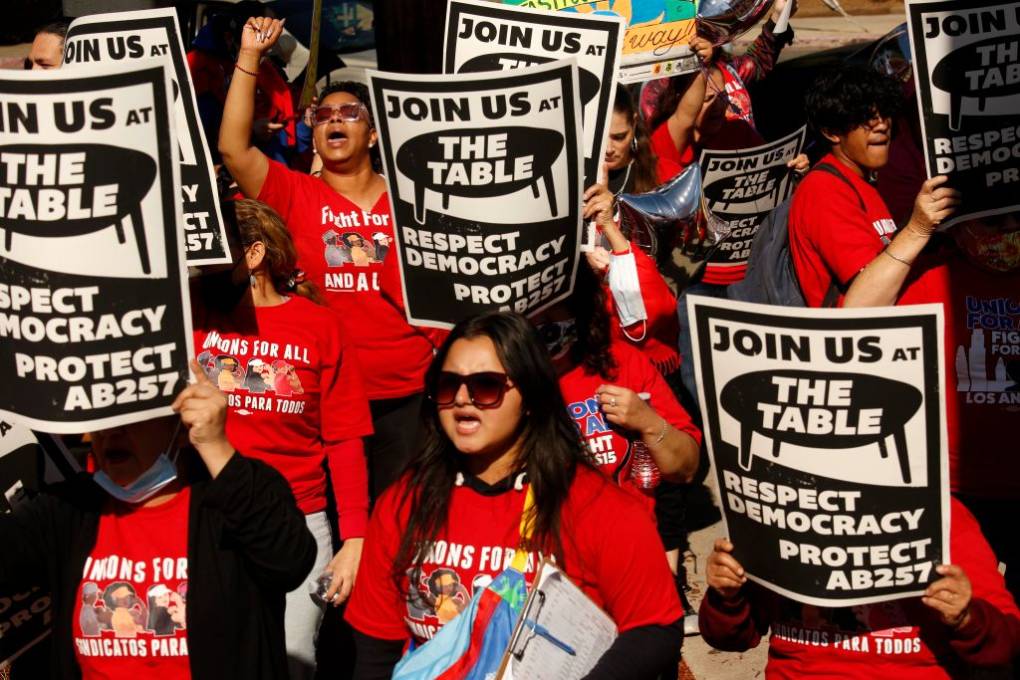
"caption": "Dozens of fast-food cooks and cashiers in Los Angeles and Orange counties join a statewide strike to demand that McDonalds, Starbucks and other chains drop their referendum seeking to overturn AB 257, aka the FAST Recovery Act, outside a Starbucks in Los Angeles on Nov. 15, 2022.",
"description": null,
"title": "AB 257 Rally",
"credit": "Genaro Molina/Los Angeles Times via Getty Images",
"status": "inherit",
"altTag": "Workers protest with signs that read \"Join us at the table, respect democracy, protect AB257\"",
"isLoading": false,
"fetchFailed": false
},
"news_11936289": {
"type": "attachments",
"id": "news_11936289",
"meta": {
"index": "attachments_1716263798",
"site": "news",
"id": "11936289",
"found": true
},
"parent": 11936288,
"imgSizes": {
"twentyfourteen-full-width": {
"file": "https://ww2.kqed.org/app/uploads/sites/10/2022/12/RS59905_014_KQED_ShengThaoOakland_11072022-qut-1038x576.jpg",
"width": 1038,
"mimeType": "image/jpeg",
"height": 576
},
"thumbnail": {
"file": "https://ww2.kqed.org/app/uploads/sites/10/2022/12/RS59905_014_KQED_ShengThaoOakland_11072022-qut-160x107.jpg",
"width": 160,
"mimeType": "image/jpeg",
"height": 107
},
"post-thumbnail": {
"file": "https://ww2.kqed.org/app/uploads/sites/10/2022/12/RS59905_014_KQED_ShengThaoOakland_11072022-qut-672x372.jpg",
"width": 672,
"mimeType": "image/jpeg",
"height": 372
},
"kqedFullSize": {
"file": "https://ww2.kqed.org/app/uploads/sites/10/2022/12/RS59905_014_KQED_ShengThaoOakland_11072022-qut.jpg",
"width": 1920,
"height": 1280
},
"large": {
"file": "https://ww2.kqed.org/app/uploads/sites/10/2022/12/RS59905_014_KQED_ShengThaoOakland_11072022-qut-1020x680.jpg",
"width": 1020,
"mimeType": "image/jpeg",
"height": 680
},
"1536x1536": {
"file": "https://ww2.kqed.org/app/uploads/sites/10/2022/12/RS59905_014_KQED_ShengThaoOakland_11072022-qut-1536x1024.jpg",
"width": 1536,
"mimeType": "image/jpeg",
"height": 1024
},
"medium": {
"file": "https://ww2.kqed.org/app/uploads/sites/10/2022/12/RS59905_014_KQED_ShengThaoOakland_11072022-qut-800x533.jpg",
"width": 800,
"mimeType": "image/jpeg",
"height": 533
}
},
"publishDate": 1671829525,
"modified": 1671829552,
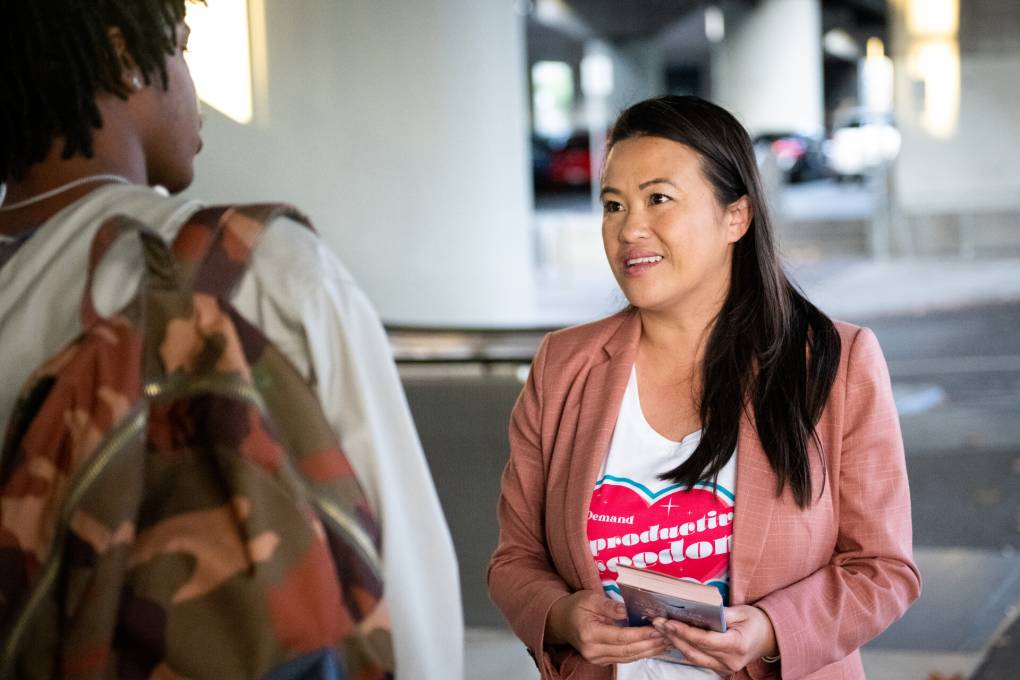
"caption": "Oakland mayoral candidate Sheng Thao speaks with a voter at Rockridge BART station in Oakland on Nov. 7, 2022.",
"description": null,
"title": "RS59905_014_KQED_ShengThaoOakland_11072022-qut",
"credit": "Beth LaBerge/KQED",
"status": "inherit",
"altTag": null,
"isLoading": false,
"fetchFailed": false
},
"news_11936471": {
"type": "attachments",
"id": "news_11936471",
"meta": {
"index": "attachments_1716263798",
"site": "news",
"id": "11936471",
"found": true
},
"parent": 11936453,
"imgSizes": {
"twentyfourteen-full-width": {
"file": "https://ww2.kqed.org/app/uploads/sites/10/2022/12/GettyImages-1245732182-1024x576.jpg",
"width": 1024,
"mimeType": "image/jpeg",
"height": 576
},
"thumbnail": {
"file": "https://ww2.kqed.org/app/uploads/sites/10/2022/12/GettyImages-1245732182-160x107.jpg",
"width": 160,
"mimeType": "image/jpeg",
"height": 107
},
"post-thumbnail": {
"file": "https://ww2.kqed.org/app/uploads/sites/10/2022/12/GettyImages-1245732182-672x372.jpg",
"width": 672,
"mimeType": "image/jpeg",
"height": 372
},
"kqedFullSize": {
"file": "https://ww2.kqed.org/app/uploads/sites/10/2022/12/GettyImages-1245732182.jpg",
"width": 1024,
"height": 683
},
"large": {
"file": "https://ww2.kqed.org/app/uploads/sites/10/2022/12/GettyImages-1245732182-1020x680.jpg",
"width": 1020,
"mimeType": "image/jpeg",
"height": 680
},
"medium": {
"file": "https://ww2.kqed.org/app/uploads/sites/10/2022/12/GettyImages-1245732182-800x534.jpg",
"width": 800,
"mimeType": "image/jpeg",
"height": 534
}
},
"publishDate": 1672344122,
"modified": 1672344273,
"caption": "View of a fence on the US-Mexico border at the San Ysidro crossing port seen from Tijuana, Baja California state, Mexico, on Dec. 19, 2022.",
"description": null,
"title": "MEXICO-US-MIGRATION-BORDER-TITLE 42",
"credit": "Guillermo Arias/AFP via Getty Images",
"status": "inherit",
"altTag": "A view of a border with a Mexican and US flag and high steel barriers.",
"isLoading": false,
"fetchFailed": false
},
"news_11936362": {
"type": "attachments",
"id": "news_11936362",
"meta": {
"index": "attachments_1716263798",
"site": "news",
"id": "11936362",
"found": true
},
"parent": 11936335,
"imgSizes": {
"twentyfourteen-full-width": {
"file": "https://ww2.kqed.org/app/uploads/sites/10/2022/12/GettyImages-498668895-1038x576.jpg",
"width": 1038,
"mimeType": "image/jpeg",
"height": 576
},
"thumbnail": {
"file": "https://ww2.kqed.org/app/uploads/sites/10/2022/12/GettyImages-498668895-160x107.jpg",
"width": 160,
"mimeType": "image/jpeg",
"height": 107
},
"post-thumbnail": {
"file": "https://ww2.kqed.org/app/uploads/sites/10/2022/12/GettyImages-498668895-672x372.jpg",
"width": 672,
"mimeType": "image/jpeg",
"height": 372
},
"kqedFullSize": {
"file": "https://ww2.kqed.org/app/uploads/sites/10/2022/12/GettyImages-498668895.jpg",
"width": 2119,
"height": 1414
},
"2048x2048": {
"file": "https://ww2.kqed.org/app/uploads/sites/10/2022/12/GettyImages-498668895-2048x1367.jpg",
"width": 2048,
"mimeType": "image/jpeg",
"height": 1367
},
"large": {
"file": "https://ww2.kqed.org/app/uploads/sites/10/2022/12/GettyImages-498668895-1020x681.jpg",
"width": 1020,
"mimeType": "image/jpeg",
"height": 681
},
"1536x1536": {
"file": "https://ww2.kqed.org/app/uploads/sites/10/2022/12/GettyImages-498668895-1536x1025.jpg",
"width": 1536,
"mimeType": "image/jpeg",
"height": 1025
},
"full-width": {
"file": "https://ww2.kqed.org/app/uploads/sites/10/2022/12/GettyImages-498668895-1920x1281.jpg",
"width": 1920,
"mimeType": "image/jpeg",
"height": 1281
},
"medium": {
"file": "https://ww2.kqed.org/app/uploads/sites/10/2022/12/GettyImages-498668895-800x534.jpg",
"width": 800,
"mimeType": "image/jpeg",
"height": 534
}
},
"publishDate": 1672177218,
"modified": 1672177314,
"caption": null,
"description": null,
"title": "Political Fund raising",
"credit": "cmannphoto/iStock via Getty Images Plus",
"status": "inherit",
"altTag": "A hat with \"Vote\" written on it in red white and blue sits on top of a pile of bank notes.",
"isLoading": false,
"fetchFailed": false
},
"news_11936284": {
"type": "attachments",
"id": "news_11936284",
"meta": {
"index": "attachments_1716263798",
"site": "news",
"id": "11936284",
"found": true
},
"parent": 11936268,
"imgSizes": {
"twentyfourteen-full-width": {
"file": "https://ww2.kqed.org/app/uploads/sites/10/2022/12/RS61790_IMG_4640-qut-1038x576.jpg",
"width": 1038,
"mimeType": "image/jpeg",
"height": 576
},
"thumbnail": {
"file": "https://ww2.kqed.org/app/uploads/sites/10/2022/12/RS61790_IMG_4640-qut-160x120.jpg",
"width": 160,
"mimeType": "image/jpeg",
"height": 120
},
"post-thumbnail": {
"file": "https://ww2.kqed.org/app/uploads/sites/10/2022/12/RS61790_IMG_4640-qut-672x372.jpg",
"width": 672,
"mimeType": "image/jpeg",
"height": 372
},
"kqedFullSize": {
"file": "https://ww2.kqed.org/app/uploads/sites/10/2022/12/RS61790_IMG_4640-qut.jpg",
"width": 1920,
"height": 1440
},
"large": {
"file": "https://ww2.kqed.org/app/uploads/sites/10/2022/12/RS61790_IMG_4640-qut-1020x765.jpg",
"width": 1020,
"mimeType": "image/jpeg",
"height": 765
},
"1536x1536": {
"file": "https://ww2.kqed.org/app/uploads/sites/10/2022/12/RS61790_IMG_4640-qut-1536x1152.jpg",
"width": 1536,
"mimeType": "image/jpeg",
"height": 1152
},
"medium": {
"file": "https://ww2.kqed.org/app/uploads/sites/10/2022/12/RS61790_IMG_4640-qut-800x600.jpg",
"width": 800,
"mimeType": "image/jpeg",
"height": 600
}
},
"publishDate": 1671824676,
"modified": 1672169599,
"caption": "San José Mayor Sam Liccardo, in KQED's San José bureau, on Dec. 22, 2022.",
"description": null,
"title": "RS61790_IMG_4640-qut",
"credit": "Guy Marzorati/KQED",
"status": "inherit",
"altTag": "A white man in a shirt and tie smiles at the camera in an office.",
"isLoading": false,
"fetchFailed": false
},
"news_11936239": {
"type": "attachments",
"id": "news_11936239",
"meta": {
"index": "attachments_1716263798",
"site": "news",
"id": "11936239",
"found": true
},
"parent": 11936230,
"imgSizes": {
"twentyfourteen-full-width": {
"file": "https://ww2.kqed.org/app/uploads/sites/10/2022/12/GettyImages-528574174-1038x576.jpg",
"width": 1038,
"mimeType": "image/jpeg",
"height": 576
},
"thumbnail": {
"file": "https://ww2.kqed.org/app/uploads/sites/10/2022/12/GettyImages-528574174-160x107.jpg",
"width": 160,
"mimeType": "image/jpeg",
"height": 107
},
"post-thumbnail": {
"file": "https://ww2.kqed.org/app/uploads/sites/10/2022/12/GettyImages-528574174-672x372.jpg",
"width": 672,
"mimeType": "image/jpeg",
"height": 372
},
"kqedFullSize": {
"file": "https://ww2.kqed.org/app/uploads/sites/10/2022/12/GettyImages-528574174.jpg",
"width": 2121,
"height": 1414
},
"2048x2048": {
"file": "https://ww2.kqed.org/app/uploads/sites/10/2022/12/GettyImages-528574174-2048x1365.jpg",
"width": 2048,
"mimeType": "image/jpeg",
"height": 1365
},
"large": {
"file": "https://ww2.kqed.org/app/uploads/sites/10/2022/12/GettyImages-528574174-1020x680.jpg",
"width": 1020,
"mimeType": "image/jpeg",
"height": 680
},
"1536x1536": {
"file": "https://ww2.kqed.org/app/uploads/sites/10/2022/12/GettyImages-528574174-1536x1024.jpg",
"width": 1536,
"mimeType": "image/jpeg",
"height": 1024
},
"full-width": {
"file": "https://ww2.kqed.org/app/uploads/sites/10/2022/12/GettyImages-528574174-1920x1280.jpg",
"width": 1920,
"mimeType": "image/jpeg",
"height": 1280
},
"medium": {
"file": "https://ww2.kqed.org/app/uploads/sites/10/2022/12/GettyImages-528574174-800x533.jpg",
"width": 800,
"mimeType": "image/jpeg",
"height": 533
}
},
"publishDate": 1671746549,
"modified": 1671749691,
"caption": "Oil pump jacks near Fellows, Kern County, which has the largest oil fields in California.",
"description": null,
"title": "GettyImages-528574174",
"credit": "Gary Kavanagh/Getty Images",
"status": "inherit",
"altTag": "Oil pumpjacks and a refinery with smoke billowing at sunset.",
"isLoading": false,
"fetchFailed": false
},
"news_11935561": {
"type": "attachments",
"id": "news_11935561",
"meta": {
"index": "attachments_1716263798",
"site": "news",
"id": "11935561",
"found": true
},
"parent": 11935550,
"imgSizes": {
"twentyfourteen-full-width": {
"file": "https://ww2.kqed.org/app/uploads/sites/10/2022/12/RS45454_002_KQED_Oakland_RegistrarofVoters_10272020-qut-1038x576.jpg",
"width": 1038,
"mimeType": "image/jpeg",
"height": 576
},
"thumbnail": {
"file": "https://ww2.kqed.org/app/uploads/sites/10/2022/12/RS45454_002_KQED_Oakland_RegistrarofVoters_10272020-qut-160x107.jpg",
"width": 160,
"mimeType": "image/jpeg",
"height": 107
},
"post-thumbnail": {
"file": "https://ww2.kqed.org/app/uploads/sites/10/2022/12/RS45454_002_KQED_Oakland_RegistrarofVoters_10272020-qut-672x372.jpg",
"width": 672,
"mimeType": "image/jpeg",
"height": 372
},
"kqedFullSize": {
"file": "https://ww2.kqed.org/app/uploads/sites/10/2022/12/RS45454_002_KQED_Oakland_RegistrarofVoters_10272020-qut.jpg",
"width": 1920,
"height": 1280
},
"large": {
"file": "https://ww2.kqed.org/app/uploads/sites/10/2022/12/RS45454_002_KQED_Oakland_RegistrarofVoters_10272020-qut-1020x680.jpg",
"width": 1020,
"mimeType": "image/jpeg",
"height": 680
},
"1536x1536": {
"file": "https://ww2.kqed.org/app/uploads/sites/10/2022/12/RS45454_002_KQED_Oakland_RegistrarofVoters_10272020-qut-1536x1024.jpg",
"width": 1536,
"mimeType": "image/jpeg",
"height": 1024
},
"medium": {
"file": "https://ww2.kqed.org/app/uploads/sites/10/2022/12/RS45454_002_KQED_Oakland_RegistrarofVoters_10272020-qut-800x533.jpg",
"width": 800,
"mimeType": "image/jpeg",
"height": 533
}
},
"publishDate": 1671223701,
"modified": 1671223722,
"caption": "A voter drops off their mail-in ballot at the Alameda County Registrar of Voters in Oakland on Oct. 27, 2020.",
"description": null,
"title": "RS45454_002_KQED_Oakland_RegistrarofVoters_10272020-qut",
"credit": "Beth LaBerge/KQED",
"status": "inherit",
"altTag": null,
"isLoading": false,
"fetchFailed": false
},
"news_11934874": {
"type": "attachments",
"id": "news_11934874",
"meta": {
"index": "attachments_1716263798",
"site": "news",
"id": "11934874",
"found": true
},
"parent": 11934848,
"imgSizes": {
"twentyfourteen-full-width": {
"file": "https://ww2.kqed.org/app/uploads/sites/10/2022/12/IMG_4544-1038x576.jpg",
"width": 1038,
"mimeType": "image/jpeg",
"height": 576
},
"thumbnail": {
"file": "https://ww2.kqed.org/app/uploads/sites/10/2022/12/IMG_4544-160x120.jpg",
"width": 160,
"mimeType": "image/jpeg",
"height": 120
},
"post-thumbnail": {
"file": "https://ww2.kqed.org/app/uploads/sites/10/2022/12/IMG_4544-672x372.jpg",
"width": 672,
"mimeType": "image/jpeg",
"height": 372
},
"kqedFullSize": {
"file": "https://ww2.kqed.org/app/uploads/sites/10/2022/12/IMG_4544-scaled.jpg",
"width": 2560,
"height": 1920
},
"2048x2048": {
"file": "https://ww2.kqed.org/app/uploads/sites/10/2022/12/IMG_4544-2048x1536.jpg",
"width": 2048,
"mimeType": "image/jpeg",
"height": 1536
},
"large": {
"file": "https://ww2.kqed.org/app/uploads/sites/10/2022/12/IMG_4544-1020x765.jpg",
"width": 1020,
"mimeType": "image/jpeg",
"height": 765
},
"1536x1536": {
"file": "https://ww2.kqed.org/app/uploads/sites/10/2022/12/IMG_4544-1536x1152.jpg",
"width": 1536,
"mimeType": "image/jpeg",
"height": 1152
},
"full-width": {
"file": "https://ww2.kqed.org/app/uploads/sites/10/2022/12/IMG_4544-1920x1440.jpg",
"width": 1920,
"mimeType": "image/jpeg",
"height": 1440
},
"medium": {
"file": "https://ww2.kqed.org/app/uploads/sites/10/2022/12/IMG_4544-800x600.jpg",
"width": 800,
"mimeType": "image/jpeg",
"height": 600
}
},
"publishDate": 1670629331,
"modified": 1670629578,
"caption": "San Francisco Mayor London Breed, KQED Newsroom Host Priya David Clemens, and U.S. Rep Jackie Speier.",
"description": null,
"title": "IMG_4544",
"credit": null,
"status": "inherit",
"altTag": null,
"isLoading": false,
"fetchFailed": false
}
},
"audioPlayerReducer": {
"postId": "stream_live",
"isPaused": true,
"isPlaying": false,
"pfsActive": false,
"pledgeModalIsOpen": true,
"playerDrawerIsOpen": false,
"liveAudioPlayStartedAt": 0,
"liveAudioPlayContext": ""
},
"authorsReducer": {
"byline_news_11937277": {
"type": "authors",
"id": "byline_news_11937277",
"meta": {
"override": true
},
"slug": "byline_news_11937277",
"name": "Lisa Mascaro and Farnoush Amiri\u003cbr>The Associated Press",
"isLoading": false
},
"byline_news_11936540": {
"type": "authors",
"id": "byline_news_11936540",
"meta": {
"override": true
},
"slug": "byline_news_11936540",
"name": "The Associated Press and KQED News Staff",
"isLoading": false
},
"byline_news_11936453": {
"type": "authors",
"id": "byline_news_11936453",
"meta": {
"override": true
},
"slug": "byline_news_11936453",
"name": "\u003ca href=\"https://calmatters.org/author/wendy-fry/\">Wendy Fry\u003c/a>",
"isLoading": false
},
"byline_news_11936335": {
"type": "authors",
"id": "byline_news_11936335",
"meta": {
"override": true
},
"slug": "byline_news_11936335",
"name": "\u003ca href=\"https://calmatters.org/author/alexei-koseff/\">Alexei Koseff\u003c/a> and \u003ca href=\"https://calmatters.org/author/ben-christopher/\">Ben Christopher\u003c/a>",
"isLoading": false
},
"byline_news_11936230": {
"type": "authors",
"id": "byline_news_11936230",
"meta": {
"override": true
},
"slug": "byline_news_11936230",
"name": "Drew Costley\u003cbr>The Associated Press",
"isLoading": false
},
"gmarzorati": {
"type": "authors",
"id": "227",
"meta": {
"index": "authors_1716337520",
"id": "227",
"found": true
},
"name": "Guy Marzorati",
"firstName": "Guy",
"lastName": "Marzorati",
"slug": "gmarzorati",
"email": "gmarzorati@KQED.org",
"display_author_email": true,
"staff_mastheads": [
"news"
],
"title": "Correspondent",
"bio": "Guy Marzorati is a correspondent on KQED's California Politics and Government Desk, based in San Jose. A graduate of Santa Clara University, Guy joined KQED in 2013. He reports on state and local politics and produces KQED's digital voter guide.",
"avatar": "https://secure.gravatar.com/avatar/e7038b8dbfd55b104369b76b1cd0b9de?s=600&d=blank&r=g",
"twitter": "guymarzorati",
"facebook": null,
"instagram": null,
"linkedin": null,
"sites": [
{
"site": "",
"roles": [
"editor"
]
},
{
"site": "news",
"roles": [
"editor"
]
},
{
"site": "science",
"roles": [
"editor"
]
},
{
"site": "forum",
"roles": [
"editor"
]
},
{
"site": "elections",
"roles": [
"editor"
]
},
{
"site": "liveblog",
"roles": [
"editor"
]
}
],
"headData": {
"title": "Guy Marzorati | KQED",
"description": "Correspondent",
"ogImgSrc": "https://secure.gravatar.com/avatar/e7038b8dbfd55b104369b76b1cd0b9de?s=600&d=blank&r=g",
"twImgSrc": "https://secure.gravatar.com/avatar/e7038b8dbfd55b104369b76b1cd0b9de?s=600&d=blank&r=g"
},
"isLoading": false,
"link": "/author/gmarzorati"
},
"kqed": {
"type": "authors",
"id": "236",
"meta": {
"index": "authors_1716337520",
"id": "236",
"found": true
},
"name": "KQED News Staff",
"firstName": "KQED News Staff",
"lastName": null,
"slug": "kqed",
"email": "faq@kqed.org",
"display_author_email": false,
"staff_mastheads": [],
"title": null,
"bio": null,
"avatar": "https://secure.gravatar.com/avatar/ef0e801a68c4c54afa9180db14084167?s=600&d=blank&r=g",
"twitter": null,
"facebook": null,
"instagram": null,
"linkedin": null,
"sites": [
{
"site": "arts",
"roles": [
"contributor"
]
},
{
"site": "news",
"roles": [
"editor"
]
},
{
"site": "futureofyou",
"roles": [
"author"
]
}
],
"headData": {
"title": "KQED News Staff | KQED",
"description": null,
"ogImgSrc": "https://secure.gravatar.com/avatar/ef0e801a68c4c54afa9180db14084167?s=600&d=blank&r=g",
"twImgSrc": "https://secure.gravatar.com/avatar/ef0e801a68c4c54afa9180db14084167?s=600&d=blank&r=g"
},
"isLoading": false,
"link": "/author/kqed"
},
"scottshafer": {
"type": "authors",
"id": "255",
"meta": {
"index": "authors_1716337520",
"id": "255",
"found": true
},
"name": "Scott Shafer",
"firstName": "Scott",
"lastName": "Shafer",
"slug": "scottshafer",
"email": "sshafer@kqed.org",
"display_author_email": false,
"staff_mastheads": [
"news"
],
"title": "KQED Contributor",
"bio": "Scott Shafer is a senior editor with the KQED Politics and Government desk. He is co-host of Political Breakdown, the award-winning radio show and podcast with a personal take on the world of politics. Scott came to KQED in 1998 to host the statewide\u003cem> California Report\u003c/em>. Prior to that he had extended stints in politics and government\u003cem>.\u003c/em> He uses that inside experience at KQED in his, reporting, hosting and analysis for the politics desk. Scott collaborated \u003cem>Political Breakdown a\u003c/em>nd on \u003cem>The Political Mind of Jerry Brown, \u003c/em>an eight-part series about the life and extraordinary political career of the former governor. For fun, he plays water polo with the San Francisco Tsunami.",
"avatar": "https://secure.gravatar.com/avatar/a62ebae45b79d7aed1a39a0e3bf68104?s=600&d=blank&r=g",
"twitter": "scottshafer",
"bluesky": null,
"facebook": null,
"instagram": null,
"linkedin": null,
"sites": [
{
"site": "news",
"roles": [
"editor"
]
},
{
"site": "stateofhealth",
"roles": [
"author"
]
},
{
"site": "science",
"roles": [
"author"
]
},
{
"site": "forum",
"roles": [
"subscriber"
]
},
{
"site": "liveblog",
"roles": [
"author"
]
}
],
"headData": {
"title": "Scott Shafer | KQED",
"description": "KQED Contributor",
"ogImgSrc": "https://secure.gravatar.com/avatar/a62ebae45b79d7aed1a39a0e3bf68104?s=600&d=blank&r=g",
"twImgSrc": "https://secure.gravatar.com/avatar/a62ebae45b79d7aed1a39a0e3bf68104?s=600&d=blank&r=g"
},
"isLoading": false,
"link": "/author/scottshafer"
},
"mlagos": {
"type": "authors",
"id": "3239",
"meta": {
"index": "authors_1716337520",
"id": "3239",
"found": true
},
"name": "Marisa Lagos",
"firstName": "Marisa",
"lastName": "Lagos",
"slug": "mlagos",
"email": "mlagos@kqed.org",
"display_author_email": false,
"staff_mastheads": [
"news"
],
"title": "KQED Contributor",
"bio": "Marisa Lagos is a correspondent for KQED’s California Politics and Government Desk and co-hosts the award-winning show and podcast, Political Breakdown. At KQED, Lagos also conducts reporting, analysis and investigations into state, local and national politics for radio, TV, online and onstage. In 2022, she and co-host, Scott Shafer, moderated the only gubernatorial debate in California. In 2020, the \u003ci>Washington Post\u003c/i> named her one of the top political journalists in California; she was nominated for a Peabody and won several other awards for her work investigating the 2017 California wildfires. She has worked at the \u003ci>San Francisco Chronicle\u003c/i>, \u003ci>San Francisco Examiner\u003c/i> and \u003ci>Los Angeles Times\u003c/i>. A UC Santa Barbara graduate, she lives in San Francisco with her two sons and husband.",
"avatar": "https://secure.gravatar.com/avatar/a261a0d3696fc066871ef96b85b5e7d2?s=600&d=blank&r=g",
"twitter": "@mlagos",
"facebook": null,
"instagram": null,
"linkedin": null,
"sites": [
{
"site": "arts",
"roles": [
"author"
]
},
{
"site": "news",
"roles": [
"editor"
]
},
{
"site": "science",
"roles": [
"editor"
]
},
{
"site": "forum",
"roles": [
"author"
]
},
{
"site": "liveblog",
"roles": [
"author"
]
}
],
"headData": {
"title": "Marisa Lagos | KQED",
"description": "KQED Contributor",
"ogImgSrc": "https://secure.gravatar.com/avatar/a261a0d3696fc066871ef96b85b5e7d2?s=600&d=blank&r=g",
"twImgSrc": "https://secure.gravatar.com/avatar/a261a0d3696fc066871ef96b85b5e7d2?s=600&d=blank&r=g"
},
"isLoading": false,
"link": "/author/mlagos"
},
"ecruzguevarra": {
"type": "authors",
"id": "8654",
"meta": {
"index": "authors_1716337520",
"id": "8654",
"found": true
},
"name": "Ericka Cruz Guevarra",
"firstName": "Ericka",
"lastName": "Cruz Guevarra",
"slug": "ecruzguevarra",
"email": "ecruzguevarra@kqed.org",
"display_author_email": true,
"staff_mastheads": [
"news"
],
"title": "Producer, The Bay Podcast",
"bio": "Ericka Cruz Guevarra is host of \u003ca href=\"https://www.kqed.org/podcasts/thebay\">\u003cem>The Bay\u003c/em>\u003c/a> podcast at KQED. Before host, she was the show’s producer. Her work in that capacity includes a three-part reported series on policing in Vallejo, which won a 2020 excellence in journalism award from the Society of Professional Journalists. Ericka has worked as a breaking news reporter at Oregon Public Broadcasting, helped produce the Code Switch podcast, and was KQED’s inaugural Raul Ramirez Diversity Fund intern. She’s also an alumna of NPR’s Next Generation Radio program. Send her an email if you have strong feelings about whether Fairfield and Suisun City are the Bay. Ericka is represented by SAG-AFTRA.",
"avatar": "https://secure.gravatar.com/avatar/accefc1de4bafc7e234b69bcb9b6f6536c130fd84709bc3069ef11a78787e1bb?s=600&d=blank&r=g",
"twitter": "NotoriousECG",
"bluesky": null,
"facebook": null,
"instagram": null,
"linkedin": null,
"sites": [
{
"site": "arts",
"roles": [
"subscriber"
]
},
{
"site": "news",
"roles": [
"editor",
"manage_categories"
]
},
{
"site": "futureofyou",
"roles": [
"subscriber"
]
},
{
"site": "stateofhealth",
"roles": [
"subscriber"
]
},
{
"site": "science",
"roles": [
"editor"
]
},
{
"site": "forum",
"roles": [
"subscriber"
]
}
],
"headData": {
"title": "Ericka Cruz Guevarra | KQED",
"description": "Producer, The Bay Podcast",
"ogImgSrc": "https://secure.gravatar.com/avatar/accefc1de4bafc7e234b69bcb9b6f6536c130fd84709bc3069ef11a78787e1bb?s=600&d=blank&r=g",
"twImgSrc": "https://secure.gravatar.com/avatar/accefc1de4bafc7e234b69bcb9b6f6536c130fd84709bc3069ef11a78787e1bb?s=600&d=blank&r=g"
},
"isLoading": false,
"link": "/author/ecruzguevarra"
},
"abandlamudi": {
"type": "authors",
"id": "11672",
"meta": {
"index": "authors_1716337520",
"id": "11672",
"found": true
},
"name": "Adhiti Bandlamudi",
"firstName": "Adhiti",
"lastName": "Bandlamudi",
"slug": "abandlamudi",
"email": "abandlamudi@kqed.org",
"display_author_email": false,
"staff_mastheads": [
"news"
],
"title": "KQED Housing Reporter",
"bio": "Adhiti Bandlamudi reports for KQED's Housing desk. She focuses on how housing gets built across the Bay Area. Before joining KQED in 2020, she reported for WUNC in Durham, North Carolina, WABE in Atlanta, Georgia and Capital Public Radio in Sacramento. In 2017, she was awarded a Kroc Fellowship at NPR where she reported on everything from sprinkles to the Golden State Killer's arrest. When she's not reporting, she's baking new recipes in her kitchen or watching movies with friends and family. She's originally from Georgia and has strong opinions about Great British Bake Off.",
"avatar": "https://secure.gravatar.com/avatar/868129c8b257bb99a3500e2c86a65400?s=600&d=mm&r=g",
"twitter": "oddity_adhiti",
"facebook": null,
"instagram": null,
"linkedin": null,
"sites": [
{
"site": "arts",
"roles": [
"author"
]
},
{
"site": "news",
"roles": [
"editor"
]
},
{
"site": "liveblog",
"roles": [
"author"
]
}
],
"headData": {
"title": "Adhiti Bandlamudi | KQED",
"description": "KQED Housing Reporter",
"ogImgSrc": "https://secure.gravatar.com/avatar/868129c8b257bb99a3500e2c86a65400?s=600&d=mm&r=g",
"twImgSrc": "https://secure.gravatar.com/avatar/868129c8b257bb99a3500e2c86a65400?s=600&d=mm&r=g"
},
"isLoading": false,
"link": "/author/abandlamudi"
},
"mesquinca": {
"type": "authors",
"id": "11802",
"meta": {
"index": "authors_1716337520",
"id": "11802",
"found": true
},
"name": "Maria Esquinca",
"firstName": "Maria",
"lastName": "Esquinca",
"slug": "mesquinca",
"email": "mesquinca@kqed.org",
"display_author_email": false,
"staff_mastheads": [],
"title": "Producer, The Bay",
"bio": "María Esquinca is a producer of The Bay. Before that, she was a New York Women’s Foundation IGNITE Fellow at Latino USA. She worked at Radio Bilingue where she covered the San Joaquin Valley. Maria has interned at WLRN, News 21, The New York Times Student Journalism Institute and at Crain’s Detroit Business as a Dow Jones News Fund Business Reporting Intern. She is an MFA graduate from the University of Miami. In 2017, she graduated from the Walter Cronkite School of Journalism and Mass Communication with a Master of Mass Communication. A fronteriza, she was born in Ciudad Juárez, Chihuahua, Mexico and grew up in El Paso, Texas.",
"avatar": "https://secure.gravatar.com/avatar/77cedba18aae91da775038ba06dcd8d0?s=600&d=blank&r=g",
"twitter": "@m_esquinca",
"facebook": null,
"instagram": null,
"linkedin": null,
"sites": [
{
"site": "news",
"roles": []
}
],
"headData": {
"title": "Maria Esquinca | KQED",
"description": "Producer, The Bay",
"ogImgSrc": "https://secure.gravatar.com/avatar/77cedba18aae91da775038ba06dcd8d0?s=600&d=blank&r=g",
"twImgSrc": "https://secure.gravatar.com/avatar/77cedba18aae91da775038ba06dcd8d0?s=600&d=blank&r=g"
},
"isLoading": false,
"link": "/author/mesquinca"
}
},
"pagesReducer": {
"news_tag_politics": {
"type": "terms",
"id": "news_17968",
"meta": {
"index": "terms_1716263798",
"site": "news",
"id": "17968",
"score": 8.003366
},
"name": "Politics",
"slug": "politics",
"taxonomy": "tag",
"description": null,
"featImg": null,
"headData": {
"title": "Politics | KQED News",
"description": null,
"ogTitle": null,
"ogDescription": null,
"ogImgId": null,
"twTitle": null,
"twDescription": null,
"twImgId": null
},
"ttid": 18002,
"isLoading": false,
"title": "Politics",
"pageMeta": {
"site": "news",
"WpPageTemplate": "page-topic-editorial",
"currentPage": 163
},
"blocks": [
{
"blockName": "kqed/post-list",
"attrs": {
"layout": "cardArticle2",
"query": "posts/news?tag=politics",
"seeMore": false,
"paginated": true,
"page": 163
}
},
{
"blockName": "kqed/ad"
}
]
}
},
"pfsSessionReducer": {},
"postsReducer": {
"stream_live": {
"type": "live",
"id": "stream_live",
"audioUrl": "https://streams.kqed.org/kqedradio",
"title": "Live Stream",
"excerpt": "Live Stream information currently unavailable.",
"link": "/radio",
"featImg": "",
"label": {
"name": "KQED Live",
"link": "/"
}
},
"stream_kqedNewscast": {
"type": "posts",
"id": "stream_kqedNewscast",
"audioUrl": "https://www.kqed.org/.stream/anon/radio/RDnews/newscast.mp3?_=1",
"title": "KQED Newscast",
"featImg": "",
"label": {
"name": "88.5 FM",
"link": "/"
}
},
"news_11937410": {
"type": "posts",
"id": "news_11937410",
"meta": {
"index": "posts_1716263798",
"site": "news",
"id": "11937410",
"score": null,
"sort": [
1673377571000
]
},
"parent": 0,
"labelTerm": {
"site": "news"
},
"blocks": [],
"publishDate": 1673377571,
"format": "standard",
"title": "New San José Mayor Matt Mahan Seeks Allies to Tackle Homelessness, Policing",
"headTitle": "KQED News",
"content": "\u003cp>San José’s new mayor, Matt Mahan, will wield the gavel for the first time on Tuesday, as he leads his first city council meeting as the city's top elected official.\u003c/p>\n\u003cp>Mahan was \u003ca href=\"https://www.kqed.org/news/11936704/matt-mahan-begins-his-first-year-as-san-joses-new-mayor\">welcomed into his first week in office\u003c/a> with a massive storm that led to evacuation orders and urgent warnings for unhoused residents to relocate from the city’s waterways.\u003c/p>\n\u003cp>Now, Mahan will assume the lead of a council with four new members, \u003ca href=\"https://www.kqed.org/news/11932432/cindy-chavez-concedes-race-for-san-jose-mayor-to-matt-mahan\">in the wake of a hard-fought election\u003c/a> and \u003ca href=\"https://www.kqed.org/news/11934261/san-jose-council-to-fill-vacancies-with-appointments-not-special-elections\">a bitter debate over the fate of two vacant council seats\u003c/a>. Residents of the Bay Area’s largest city will be looking for signs of progress on the issues that dominated the mayoral campaign, such as homelessness, affordability and public safety.\u003c/p>\n\u003ch2>Building a working majority\u003c/h2>\n\u003cp>Under San José’s weak-mayor system, Mahan has just one vote on local ordinances, without the veto power or the direct oversight of department heads wielded by mayors in cities like San Francisco and Oakland. Building a working majority will require Mahan to find six votes for his agenda, on a council in which all returning members endorsed his opponent in the mayoral election.[aside label=\"Related Stories\" postID=\"news_11936704,news_11931416\"]Mahan’s attempts to build a coalition at the ballot box were thwarted last month, when the council took the controversial step of filling vacant council seats in District 8 and District 10 through appointments instead of special elections.\u003c/p>\n\u003cp>On Friday, Mahan took a step toward reconciliation. He tapped West San José Councilmember Rosemary Kamei, who received backing in her campaign from both labor and business groups, to be the city’s vice mayor.\u003c/p>\n\u003cp>“Rosemary Kamei is collaborative, thoughtful, independent, has a ton of common sense and is a great listener,” Mahan said in a statement. “She is excited about assuming more leadership responsibilities than vice mayors traditionally have in San José and is committed, as I am, to putting unnecessary conflicts behind us, as we focus on driving results on homelessness, community safety and blight.”\u003c/p>\n\u003cp>Mahan also opted to give committee chair positions to four returning council members who opposed his run for mayor — Sergio Jimenez, David Cohen, Dev Davis and Pam Foley — and not Bien Doan, the only current council member to back Mahan’s campaign. Mahan said he will soon release his recommendations for the vacant council seats, which the council is expected to fill this month.\u003c/p>\n\u003ch2>\u003cstrong>Public safety and policing\u003c/strong>\u003c/h2>\n\u003cp>On the campaign trail, Mahan said his top priority was hiring more police officers in the hopes of lowering response times and assuaging concerns about crime. Like many offices in the city, the San José Police Department is thinly staffed compared to similar departments in large U.S. cities — the result of San José’s financial turmoil in the wake of the Great Recession.\u003c/p>\n\u003cp>Details of how Mahan plans to pay for the staffing increase will come in the mayor’s March budget message. In an interview with KQED, Mahan said he is putting together “transition committees that will include council members and community stakeholders\" to help craft that plan.\u003c/p>\n\u003cp>The push for more police officers will come as the council considers reforms to how the department deals with wrongdoing by SJPD officers. As soon as April, the council could vote to move some investigations of officer misconduct from the department’s internal affairs to the city’s independent police auditor.[pullquote align=\"right\" size=\"medium\" citation=\"Sam Liccardo, former mayor of San José\"]'It's going to take courage. There are those community meetings where you're going to be there with 300 very unhappy people, all asserting that they are going to vote you out if affordable housing for the unhoused is anywhere in their neighborhood.'[/pullquote]Mahan said he supports that move, but some civil rights advocates say the reform falls short of changes demanded by protestors in the wake of George Floyd's murder and subsequent protests in San José. They argue the policy could be undermined by keeping the power to discipline officers in the hands of SJPD.\u003c/p>\n\u003cp>“The police shouldn't be the ones dictating what the disciplinary actions should be on the involved police officers,” said Raj Jayadev, co-founder of the community organizing group \u003ca href=\"https://www.siliconvalleydebug.org/\">Silicon Valley De-Bug\u003c/a>. “So while I think this is better than what is the current model, I think there's a sort of fatal flaw in the approach in that it's still the police chief deciding what, if any, action should be taken on the officers that cross the line.”\u003c/p>\n\u003cp>Mahan said he has “total confidence” in Police Chief Anthony Mata and his ability to discipline officers.\u003c/p>\n\u003cp>“He's a public figure himself and is in the spotlight and will receive public scrutiny, and so I think there are some mechanisms in place for accountability there,” Mahan said.\u003c/p>\n\u003ch2>Homelessness\u003c/h2>\n\u003cp>Days before he took office, Mahan joined a ceremony \u003ca href=\"https://www.mercurynews.com/2022/12/21/the-bay-area-mourns-hundreds-of-people-who-died-without-homes-this-year/\">memorializing the unhoused residents who died on city streets in 2022\u003c/a>, a stinging indictment of San José’s response to rising homelessness.\u003c/p>\n\u003cp>Mahan’s solution: focus on constructing quick-build interim shelters instead of costlier, permanent affordable housing.\u003c/p>\n\u003cp>On the agenda this year is building the \u003ca href=\"https://www.sanjoseinside.com/news/city-council-adds-quick-build-housing-units-to-reach-2022-goal/\">hundreds of emergency interim units that the council already approved\u003c/a> last year. Each additional shelter proposal promises a pitched battle with neighbors.\u003c/p>\n\u003cp>“It's going to take courage,” said former Mayor Sam Liccardo, in an interview with KQED. “There are those community meetings where you're going to be there with 300 very unhappy people, all asserting that they are going to vote you out if affordable housing for the unhoused is anywhere in their neighborhood.”\u003c/p>\n\u003cp>Neighborhood opposition has left vast swaths of the city, such as West San José, with no emergency or temporary housing for the unhoused.\u003c/p>\n\u003cfigure id=\"attachment_11937453\" class=\"wp-caption alignright\" style=\"max-width: 733px\">\u003ca href=\"https://ww2.kqed.org/app/uploads/sites/10/2023/01/san-jose-housing.png\">\u003cimg class=\"wp-image-11937453 size-full\" src=\"https://ww2.kqed.org/app/uploads/sites/10/2023/01/san-jose-housing.png\" alt=\"\" width=\"733\" height=\"679\" srcset=\"https://ww2.kqed.org/app/uploads/sites/10/2023/01/san-jose-housing.png 733w, https://ww2.kqed.org/app/uploads/sites/10/2023/01/san-jose-housing-160x148.png 160w\" sizes=\"(max-width: 733px) 100vw, 733px\">\u003c/a>\u003cfigcaption class=\"wp-caption-text\">A map from San José's 2021 housing inventory count shows emergency shelters, group shelters and transitional beds in the city. \u003ccite>(Courtesy of City of San José)\u003c/cite>\u003c/figcaption>\u003c/figure>\n\u003cp>“I want to see every single council district have safe parking, have tiny homes, have something to do with the unhoused,” said homeless advocate Gail Osmer.\u003c/p>\n\u003cp>Mahan said he would like to identify sites for emergency housing in council Districts 1 and 9, in the west and southwest areas of the city, by the end of the year.\u003c/p>\n\u003cp>“Over time, I fully expect that every district in San José will take on part of the solution to homelessness,” Mahan said. “That being said, it won't look exactly the same in every district. There are reasons that some districts have more space than others. The land use is different, access to transit looks different, the cost of land is different.”\u003c/p>\n\u003ch2>Investment in the community\u003c/h2>\n\u003cp>Like many Bay Area cities, San José needs to accelerate its construction of affordable housing to keep up with state-mandated goals.\u003c/p>\n\u003cp>Mahan said he’ll fight against new fees and regulations on developers, and use his bully pulpit to push for reforms at the state capitol to ease environmental reviews on new projects.\u003c/p>\n\u003cp>“I've been very willing to say that we're in the way in government, and we need to get better at facilitating investment in the community,” he said.\u003c/p>\n\u003cp>Many of San José’s most powerful developers backed Mahan’s run for mayor. Now, Alex Shoor, executive director of housing advocacy group Catalyze SV, wants to see Mahan use those relationships to push developers to include more affordable units in the new projects they build.\u003c/p>\n\u003cp>“Is he going to push equity? Because it’s like you're playing blackjack with developers and they never show their hand [on how many affordable units they can afford to build],” said Shoor. “And when you're the mayor of a city, you need to ask for someone to be transparent and open about what they can and cannot do as a development.”\u003c/p>\n\u003ch2>\u003cstrong>'Matt was the sign'\u003c/strong>\u003c/h2>\n\u003cp>Mahan’s vice mayor and committee appointments may have signaled a détente in the city’s political battles, but the election calendar could force the mayor back into campaign mode before long. Mahan’s initial term will span only two years, and 2024’s primary will be held in March, not June.\u003c/p>\n\u003cp>Maintaining engagement with his grassroots supporters could work to Mahan’s advantage. He rallied hundreds of residents to City Hall during the debate over vacant council seats and may need to turn out his backers at a moment’s notice if he faces opposition on the council.\u003c/p>\n\u003cp>Janet Holt, a board member with the Evergreen Leadership Neighborhood Association, credits Mahan’s dogged engagement with residents for helping him carry a neighborhood that had voted for more progressive candidates in previous elections.\u003c/p>\n\u003cp>“During his campaign, he was everywhere. You know, it wasn't just all these signs of Matt everywhere, Matt \u003cem>was\u003c/em> the sign,\" Holt said. “He was at many, many events, he listened to people, he gave his vision, he answered questions.”\u003c/p>\n\u003cp>In 14 months, Mahan said, improvements should be apparent to residents.\u003c/p>\n\u003cp>\"When residents drive around our city in a year's time, they need to see a cleaner city, the city to feel safer and to be a city where they want to spend more time and and hang out with their family and friends,\" he said.\u003c/p>\n\u003cp>[ad fullwidth]\u003c/p>\n\u003cp>[ad floatright]\u003c/p>\n",
"stats": {
"hasVideo": false,
"hasChartOrMap": false,
"hasAudio": false,
"hasPolis": false,
"wordCount": 1622,
"hasGoogleForm": false,
"hasGallery": false,
"hasHearkenModule": false,
"iframeSrcs": [],
"paragraphCount": 34
},
"modified": 1673393472,
"excerpt": "Mahan discusses his agenda with KQED ahead of leading his first city council meeting on Tuesday.",
"headData": {
"twImgId": "",
"twTitle": "",
"ogTitle": "",
"ogImgId": "",
"twDescription": "",
"description": "Mahan discusses his agenda with KQED ahead of leading his first city council meeting on Tuesday.",
"title": "New San José Mayor Matt Mahan Seeks Allies to Tackle Homelessness, Policing | KQED",
"ogDescription": "",
"schema": {
"@context": "https://schema.org",
"@type": "NewsArticle",
"headline": "New San José Mayor Matt Mahan Seeks Allies to Tackle Homelessness, Policing",
"datePublished": "2023-01-10T11:06:11-08:00",
"dateModified": "2023-01-10T15:31:12-08:00",
"image": "https://cdn.kqed.org/wp-content/uploads/2020/02/KQED-OG-Image@1x.png",
"isAccessibleForFree": "True",
"publisher": {
"@type": "NewsMediaOrganization",
"@id": "https://www.kqed.org/#organization",
"name": "KQED",
"logo": "https://cdn.kqed.org/wp-content/uploads/2020/02/KQED-OG-Image@1x.png",
"url": "https://www.kqed.org",
"sameAs": [
"https://www.facebook.com/KQED",
"https://twitter.com/KQED",
"https://www.instagram.com/kqed/",
"https://www.tiktok.com/@kqedofficial",
"https://www.linkedin.com/company/kqed",
"https://www.youtube.com/channel/UCeC0IOo7i1P_61zVUWbJ4nw"
]
}
}
},
"guestAuthors": [],
"slug": "san-joses-new-mayor-matt-mahan-seeks-allies-to-tackle-homelessness-policing",
"status": "publish",
"excludeFromSiteSearch": "Include",
"articleAge": "0",
"path": "/news/11937410/san-joses-new-mayor-matt-mahan-seeks-allies-to-tackle-homelessness-policing",
"audioTrackLength": null,
"parsedContent": [
{
"type": "contentString",
"content": "\u003cdiv class=\"post-body\">\u003cp>\u003cp>San José’s new mayor, Matt Mahan, will wield the gavel for the first time on Tuesday, as he leads his first city council meeting as the city's top elected official.\u003c/p>\n\u003cp>Mahan was \u003ca href=\"https://www.kqed.org/news/11936704/matt-mahan-begins-his-first-year-as-san-joses-new-mayor\">welcomed into his first week in office\u003c/a> with a massive storm that led to evacuation orders and urgent warnings for unhoused residents to relocate from the city’s waterways.\u003c/p>\n\u003cp>Now, Mahan will assume the lead of a council with four new members, \u003ca href=\"https://www.kqed.org/news/11932432/cindy-chavez-concedes-race-for-san-jose-mayor-to-matt-mahan\">in the wake of a hard-fought election\u003c/a> and \u003ca href=\"https://www.kqed.org/news/11934261/san-jose-council-to-fill-vacancies-with-appointments-not-special-elections\">a bitter debate over the fate of two vacant council seats\u003c/a>. Residents of the Bay Area’s largest city will be looking for signs of progress on the issues that dominated the mayoral campaign, such as homelessness, affordability and public safety.\u003c/p>\n\u003ch2>Building a working majority\u003c/h2>\n\u003cp>Under San José’s weak-mayor system, Mahan has just one vote on local ordinances, without the veto power or the direct oversight of department heads wielded by mayors in cities like San Francisco and Oakland. Building a working majority will require Mahan to find six votes for his agenda, on a council in which all returning members endorsed his opponent in the mayoral election.\u003c/p>\u003c/div>",
"attributes": {
"named": {},
"numeric": []
}
},
{
"type": "component",
"content": "",
"name": "aside",
"attributes": {
"named": {
"label": "Related Stories ",
"postid": "news_11936704,news_11931416"
},
"numeric": []
}
},
{
"type": "contentString",
"content": "\u003cdiv class=\"post-body\">\u003cp>Mahan’s attempts to build a coalition at the ballot box were thwarted last month, when the council took the controversial step of filling vacant council seats in District 8 and District 10 through appointments instead of special elections.\u003c/p>\n\u003cp>On Friday, Mahan took a step toward reconciliation. He tapped West San José Councilmember Rosemary Kamei, who received backing in her campaign from both labor and business groups, to be the city’s vice mayor.\u003c/p>\n\u003cp>“Rosemary Kamei is collaborative, thoughtful, independent, has a ton of common sense and is a great listener,” Mahan said in a statement. “She is excited about assuming more leadership responsibilities than vice mayors traditionally have in San José and is committed, as I am, to putting unnecessary conflicts behind us, as we focus on driving results on homelessness, community safety and blight.”\u003c/p>\n\u003cp>Mahan also opted to give committee chair positions to four returning council members who opposed his run for mayor — Sergio Jimenez, David Cohen, Dev Davis and Pam Foley — and not Bien Doan, the only current council member to back Mahan’s campaign. Mahan said he will soon release his recommendations for the vacant council seats, which the council is expected to fill this month.\u003c/p>\n\u003ch2>\u003cstrong>Public safety and policing\u003c/strong>\u003c/h2>\n\u003cp>On the campaign trail, Mahan said his top priority was hiring more police officers in the hopes of lowering response times and assuaging concerns about crime. Like many offices in the city, the San José Police Department is thinly staffed compared to similar departments in large U.S. cities — the result of San José’s financial turmoil in the wake of the Great Recession.\u003c/p>\n\u003cp>Details of how Mahan plans to pay for the staffing increase will come in the mayor’s March budget message. In an interview with KQED, Mahan said he is putting together “transition committees that will include council members and community stakeholders\" to help craft that plan.\u003c/p>\n\u003cp>The push for more police officers will come as the council considers reforms to how the department deals with wrongdoing by SJPD officers. As soon as April, the council could vote to move some investigations of officer misconduct from the department’s internal affairs to the city’s independent police auditor.\u003c/p>\u003c/div>",
"attributes": {
"named": {},
"numeric": []
}
},
{
"type": "component",
"content": "'It's going to take courage. There are those community meetings where you're going to be there with 300 very unhappy people, all asserting that they are going to vote you out if affordable housing for the unhoused is anywhere in their neighborhood.'",
"name": "pullquote",
"attributes": {
"named": {
"align": "right",
"size": "medium",
"citation": "Sam Liccardo, former mayor of San José",
"label": ""
},
"numeric": []
}
},
{
"type": "contentString",
"content": "\u003cdiv class=\"post-body\">\u003cp>Mahan said he supports that move, but some civil rights advocates say the reform falls short of changes demanded by protestors in the wake of George Floyd's murder and subsequent protests in San José. They argue the policy could be undermined by keeping the power to discipline officers in the hands of SJPD.\u003c/p>\n\u003cp>“The police shouldn't be the ones dictating what the disciplinary actions should be on the involved police officers,” said Raj Jayadev, co-founder of the community organizing group \u003ca href=\"https://www.siliconvalleydebug.org/\">Silicon Valley De-Bug\u003c/a>. “So while I think this is better than what is the current model, I think there's a sort of fatal flaw in the approach in that it's still the police chief deciding what, if any, action should be taken on the officers that cross the line.”\u003c/p>\n\u003cp>Mahan said he has “total confidence” in Police Chief Anthony Mata and his ability to discipline officers.\u003c/p>\n\u003cp>“He's a public figure himself and is in the spotlight and will receive public scrutiny, and so I think there are some mechanisms in place for accountability there,” Mahan said.\u003c/p>\n\u003ch2>Homelessness\u003c/h2>\n\u003cp>Days before he took office, Mahan joined a ceremony \u003ca href=\"https://www.mercurynews.com/2022/12/21/the-bay-area-mourns-hundreds-of-people-who-died-without-homes-this-year/\">memorializing the unhoused residents who died on city streets in 2022\u003c/a>, a stinging indictment of San José’s response to rising homelessness.\u003c/p>\n\u003cp>Mahan’s solution: focus on constructing quick-build interim shelters instead of costlier, permanent affordable housing.\u003c/p>\n\u003cp>On the agenda this year is building the \u003ca href=\"https://www.sanjoseinside.com/news/city-council-adds-quick-build-housing-units-to-reach-2022-goal/\">hundreds of emergency interim units that the council already approved\u003c/a> last year. Each additional shelter proposal promises a pitched battle with neighbors.\u003c/p>\n\u003cp>“It's going to take courage,” said former Mayor Sam Liccardo, in an interview with KQED. “There are those community meetings where you're going to be there with 300 very unhappy people, all asserting that they are going to vote you out if affordable housing for the unhoused is anywhere in their neighborhood.”\u003c/p>\n\u003cp>Neighborhood opposition has left vast swaths of the city, such as West San José, with no emergency or temporary housing for the unhoused.\u003c/p>\n\u003cfigure id=\"attachment_11937453\" class=\"wp-caption alignright\" style=\"max-width: 733px\">\u003ca href=\"https://ww2.kqed.org/app/uploads/sites/10/2023/01/san-jose-housing.png\">\u003cimg class=\"wp-image-11937453 size-full\" src=\"https://ww2.kqed.org/app/uploads/sites/10/2023/01/san-jose-housing.png\" alt=\"\" width=\"733\" height=\"679\" srcset=\"https://ww2.kqed.org/app/uploads/sites/10/2023/01/san-jose-housing.png 733w, https://ww2.kqed.org/app/uploads/sites/10/2023/01/san-jose-housing-160x148.png 160w\" sizes=\"(max-width: 733px) 100vw, 733px\">\u003c/a>\u003cfigcaption class=\"wp-caption-text\">A map from San José's 2021 housing inventory count shows emergency shelters, group shelters and transitional beds in the city. \u003ccite>(Courtesy of City of San José)\u003c/cite>\u003c/figcaption>\u003c/figure>\n\u003cp>“I want to see every single council district have safe parking, have tiny homes, have something to do with the unhoused,” said homeless advocate Gail Osmer.\u003c/p>\n\u003cp>Mahan said he would like to identify sites for emergency housing in council Districts 1 and 9, in the west and southwest areas of the city, by the end of the year.\u003c/p>\n\u003cp>“Over time, I fully expect that every district in San José will take on part of the solution to homelessness,” Mahan said. “That being said, it won't look exactly the same in every district. There are reasons that some districts have more space than others. The land use is different, access to transit looks different, the cost of land is different.”\u003c/p>\n\u003ch2>Investment in the community\u003c/h2>\n\u003cp>Like many Bay Area cities, San José needs to accelerate its construction of affordable housing to keep up with state-mandated goals.\u003c/p>\n\u003cp>Mahan said he’ll fight against new fees and regulations on developers, and use his bully pulpit to push for reforms at the state capitol to ease environmental reviews on new projects.\u003c/p>\n\u003cp>“I've been very willing to say that we're in the way in government, and we need to get better at facilitating investment in the community,” he said.\u003c/p>\n\u003cp>Many of San José’s most powerful developers backed Mahan’s run for mayor. Now, Alex Shoor, executive director of housing advocacy group Catalyze SV, wants to see Mahan use those relationships to push developers to include more affordable units in the new projects they build.\u003c/p>\n\u003cp>“Is he going to push equity? Because it’s like you're playing blackjack with developers and they never show their hand [on how many affordable units they can afford to build],” said Shoor. “And when you're the mayor of a city, you need to ask for someone to be transparent and open about what they can and cannot do as a development.”\u003c/p>\n\u003ch2>\u003cstrong>'Matt was the sign'\u003c/strong>\u003c/h2>\n\u003cp>Mahan’s vice mayor and committee appointments may have signaled a détente in the city’s political battles, but the election calendar could force the mayor back into campaign mode before long. Mahan’s initial term will span only two years, and 2024’s primary will be held in March, not June.\u003c/p>\n\u003cp>Maintaining engagement with his grassroots supporters could work to Mahan’s advantage. He rallied hundreds of residents to City Hall during the debate over vacant council seats and may need to turn out his backers at a moment’s notice if he faces opposition on the council.\u003c/p>\n\u003cp>Janet Holt, a board member with the Evergreen Leadership Neighborhood Association, credits Mahan’s dogged engagement with residents for helping him carry a neighborhood that had voted for more progressive candidates in previous elections.\u003c/p>\n\u003cp>“During his campaign, he was everywhere. You know, it wasn't just all these signs of Matt everywhere, Matt \u003cem>was\u003c/em> the sign,\" Holt said. “He was at many, many events, he listened to people, he gave his vision, he answered questions.”\u003c/p>\n\u003cp>In 14 months, Mahan said, improvements should be apparent to residents.\u003c/p>\n\u003cp>\"When residents drive around our city in a year's time, they need to see a cleaner city, the city to feel safer and to be a city where they want to spend more time and and hang out with their family and friends,\" he said.\u003c/p>\n\u003cp>\u003c/p>\u003c/div>",
"attributes": {
"named": {},
"numeric": []
}
},
{
"type": "component",
"content": "",
"name": "ad",
"attributes": {
"named": {
"label": "fullwidth"
},
"numeric": [
"fullwidth"
]
}
},
{
"type": "contentString",
"content": "\u003cdiv class=\"post-body\">\u003cp>\u003c/p>\n\u003cp>\u003c/p>\u003c/div>",
"attributes": {
"named": {},
"numeric": []
}
},
{
"type": "component",
"content": "",
"name": "ad",
"attributes": {
"named": {
"label": "floatright"
},
"numeric": [
"floatright"
]
}
},
{
"type": "contentString",
"content": "\u003cdiv class=\"post-body\">\u003cp>\u003c/p>\n\u003c/div>\u003c/p>",
"attributes": {
"named": {},
"numeric": []
}
}
],
"link": "/news/11937410/san-joses-new-mayor-matt-mahan-seeks-allies-to-tackle-homelessness-policing",
"authors": [
"227"
],
"categories": [
"news_28250",
"news_8",
"news_13"
],
"tags": [
"news_31197",
"news_17968",
"news_18541"
],
"featImg": "news_11937446",
"label": "news"
},
"news_11937277": {
"type": "posts",
"id": "news_11937277",
"meta": {
"index": "posts_1716263798",
"site": "news",
"id": "11937277",
"score": null,
"sort": [
1673108210000
]
},
"guestAuthors": [],
"slug": "california-representative-kevin-mccarthy-elected-speaker-of-the-house",
"title": "California Representative Kevin McCarthy Elected Speaker of the House",
"publishDate": 1673108210,
"format": "standard",
"headTitle": "California Representative Kevin McCarthy Elected Speaker of the House | KQED",
"labelTerm": {
"site": "news"
},
"content": "\u003cp>Republican \u003ca href=\"https://apnews.com/hub/kevin-mccarthy\">Kevin McCarthy\u003c/a> was elected House speaker on a historic post-midnight 15th ballot early Saturday, overcoming holdouts from his own ranks and floor \u003ca href=\"https://apnews.com/article/politics-kevin-mccarthy-matt-gaetz-florida-f2a4a42b4845f2413cca5c1b4c6100dd\">tensions that boiled over\u003c/a> after a chaotic week that tested the new GOP majority’s ability to govern. McCarthy represents California’s 23rd District, which includes the city of Bakersfield, Kern and Tulare counties, and northeastern Los Angeles County.\u003c/p>\n\u003cp>“My father always told me, it’s not how you start, it’s how you finish,” McCarthy told cheering fellow Republicans.\u003c/p>\n\u003cp>Eager to confront President Joe Biden and the Democrats, he promised subpoenas and investigations. “Now the hard work begins,” the California Republican declared. He credited former President Donald Trump for standing with him and for making late calls “helping get those final votes.”\u003c/p>\n\u003cp>Republicans roared in celebration when his victory was announced, chanting, “USA! USA!”\u003c/p>\n\u003cp>Finally elected, McCarthy took the oath of office, and the House was finally able to swear in newly elected lawmakers who had been waiting all week for the chamber to formally open and the 2023–24 session to begin.\u003c/p>\n\u003cp>After four days of grueling ballots, McCarthy flipped more than a dozen conservative holdouts to become supporters, including the chairman of the chamber’s Freedom Caucus.\u003c/p>\n\u003cp>He fell one vote short on the 14th ballot, and the chamber became raucous.\u003c/p>\n\u003cp>McCarthy strode to the back of the chamber to confront Republican Matt Gaetz, sitting with Lauren Boebert and other holdouts. Fingers were pointed, words exchanged and violence apparently just averted.\u003c/p>\n\u003cp>At one point, Republican Mike Rogers of Alabama, shouting, approached Gaetz before another Republican, Richard Hudson, physically pulled him back.\u003c/p>\n\u003cp>“Stay civil!” someone shouted.\u003c/p>\n\u003cp>Order restored, the Republicans fell in line to give McCarthy the post he had fought so hard to gain, House speaker, second in the line of succession to the presidency.\u003c/p>\n\u003cp>The few remaining Republican holdouts began voting present, dropping the tally he needed. It was the end of a bitter standoff that had shown the strengths and fragility of American democracy.\u003c/p>\n\u003cp>The tally was 216–212 with Democrats voting for leader Hakeem Jeffries, and six Republican holdouts to McCarthy simply voting present.\u003c/p>\n\u003cp>The night’s stunning turn of events came after McCarthy agreed to many of the detractors’ demands — including the reinstatement of a longstanding House rule that would allow any single member to call a vote to oust him from office.\u003c/p>\n\u003cp>Even as McCarthy secured the votes he needs, he will emerge as a weakened speaker, having given away some powers and constantly under the threat of being booted by his detractors.[aside postID=news_11931853,news_11934011]\u003c/p>\n\u003cp>But he could also be emboldened as a survivor of one of the more brutal fights for the gavel in U.S. history. Not since the Civil War era has a speaker’s vote dragged through so many rounds of voting.\u003c/p>\n\u003cp>The showdown that has stymied the new Congress came against the backdrop of the second anniversary of the Jan. 6, 2021, attack on the Capitol, which shook the country when a mob of Trump’s supporters tried to stop Congress from certifying the Republican’s 2020 election defeat to Biden.\u003c/p>\n\u003cp>At a Capitol event Friday, some lawmakers, all but one of them Democrats, observed a moment of silence and praised officers who helped protect Congress on that day. And at the White House, Biden handed out medals to officers and others who fought the attackers.\u003c/p>\n\u003cp>“America is a land of laws, not chaos,” he said.\u003c/p>\n\u003cp>At the afternoon speaker’s vote, a number of Republicans tiring of the spectacle temporarily walked out when one of McCarthy’s most ardent challengers, Gaetz, railed against the GOP leader.\u003c/p>\n\u003cp>Contours of a deal with conservative holdouts who had been blocking McCarthy’s rise had emerged the night before, and took hold after four dismal days and 14 failed votes in an \u003ca href=\"https://apnews.com/article/politics-united-states-house-of-representatives-kentucky-kevin-mccarthy-e177c4405ef9b8a7b38641a15855764c\">intraparty standoff unseen in modern times\u003c/a>.\u003c/p>\n\u003cp>Trump may have played a role in swaying some holdouts — calling into a meeting of Republican freshmen the night before, and calling other members ahead of voting. He had urged Republicans to wrap up their public dispute.\u003c/p>\n\u003cp>As Republican Mike Garcia nominated McCarthy on Friday, he also thanked the U.S. Capitol Police who were given a standing ovation for protecting lawmakers and the legislative seat of democracy on Jan. 6.\u003c/p>\n\u003cp>But in nominating the Democratic leader Jeffries, Democrat Jim Clyburn recalled the horror of that day and told his colleagues, “The eyes of the country are on us today.”\u003c/p>\n\u003cp>Electing a speaker is normally an easy, joyous task for a party that has just won majority control. But not this time: About 200 Republicans were stymied by 20 far-right colleagues who said McCarthy was not conservative enough.\u003c/p>\n\u003cp>The House adjourned Friday until late in the night, giving time for last-minute negotiations and allowing two absent Republican colleagues to return to Washington.\u003c/p>\n\u003cp>Newly elected Wesley Hunt of Texas arrived to vote for McCarthy — to applause, days after his wife had given birth — as did Ken Buck of Colorado.\u003c/p>\n\u003cp>The disorganized start to the new Congress pointed to difficulties ahead with Republicans now in control of the House, much the way that some past Republican speakers, including John Boehner, had trouble leading a rebellious right flank. The result: government shutdowns, standoffs and Boehner’s early retirement when conservatives threatened to oust him.\u003c/p>\n\u003cp>The agreement McCarthy presented to \u003ca href=\"https://apnews.com/article/congress-mccarthy-hard-right-foes-5edc1d9468e606a3f1230e98702d9a23\">the holdouts from the Freedom Caucus\u003c/a> and others centers around rules changes they have been seeking for months. Those changes would shrink the power of the speaker’s office and give rank-and-file lawmakers more influence in drafting and passing legislation.\u003c/p>\n\u003cp>At the core of the emerging deal was the reinstatement of a House rule that would allow a single lawmaker to make a motion to “vacate the chair,” essentially calling a vote to oust the speaker. McCarthy had resisted allowing a return to the longstanding rule that former Speaker Nancy Pelosi had done away with, because it had been held over the head of Boehner. But it appears McCarthy had no other choice.\u003c/p>\n\u003cp>Other wins for the holdouts are more obscure and include provisions in the proposed deal to expand the number of seats available on the House Rules Committee; to mandate 72 hours for bills to be posted before votes; and to promise to try for a constitutional amendment that would impose federal limits on the number of terms a person could serve in the House and Senate.\u003c/p>\n\u003cp>Before Friday’s ballots, Democratic leader Jeffries of New York had won the most votes on every ballot but also remained short of a majority. McCarthy had run second, gaining no ground.\u003c/p>\n\u003cp>The longest fight for the gavel started in late 1855 and dragged on for two months, with 133 ballots, during debates over slavery in the run-up to the Civil War.\u003c/p>\n\u003cp>\u003cem>AP writers Mary Clare Jalonick and Kevin Freking and video journalists Nathan Ellgren and Mike Pesoli contributed to this report.\u003c/em>\u003c/p>\n\u003cp>[ad fullwidth]\u003c/p>\n\u003cp>[ad floatright]\u003c/p>\n",
"blocks": [],
"excerpt": "Kevin McCarthy (R-Calif) was elected House speaker in a rowdy post-midnight vote.",
"status": "publish",
"parent": 0,
"modified": 1721128253,
"stats": {
"hasAudio": false,
"hasVideo": false,
"hasChartOrMap": false,
"iframeSrcs": [],
"hasGoogleForm": false,
"hasGallery": false,
"hasHearkenModule": false,
"hasPolis": false,
"paragraphCount": 36,
"wordCount": 1198
},
"headData": {
"title": "California Representative Kevin McCarthy Elected Speaker of the House | KQED",
"description": "Kevin McCarthy (R-Calif) was elected House speaker in a rowdy post-midnight vote.",
"ogTitle": "",
"ogDescription": "",
"ogImgId": "",
"twTitle": "",
"twDescription": "",
"twImgId": "",
"schema": {
"@context": "https://schema.org",
"@type": "NewsArticle",
"headline": "California Representative Kevin McCarthy Elected Speaker of the House",
"datePublished": "2023-01-07T08:16:50-08:00",
"dateModified": "2024-07-16T04:10:53-07:00",
"image": "https://cdn.kqed.org/wp-content/uploads/2020/02/KQED-OG-Image@1x.png",
"isAccessibleForFree": "True",
"publisher": {
"@type": "NewsMediaOrganization",
"@id": "https://www.kqed.org/#organization",
"name": "KQED",
"logo": "https://cdn.kqed.org/wp-content/uploads/2020/02/KQED-OG-Image@1x.png",
"url": "https://www.kqed.org",
"sameAs": [
"https://www.facebook.com/KQED",
"https://twitter.com/KQED",
"https://www.instagram.com/kqed/",
"https://www.tiktok.com/@kqedofficial",
"https://www.linkedin.com/company/kqed",
"https://www.youtube.com/channel/UCeC0IOo7i1P_61zVUWbJ4nw"
]
}
}
},
"sticky": false,
"nprByline": "Lisa Mascaro and Farnoush Amiri\u003cbr>The Associated Press",
"excludeFromSiteSearch": "Include",
"showOnAuthorArchivePages": "No",
"articleAge": "0",
"path": "/news/11937277/california-representative-kevin-mccarthy-elected-speaker-of-the-house",
"audioTrackLength": null,
"parsedContent": [
{
"type": "contentString",
"content": "\u003cdiv class=\"post-body\">\u003cp>\u003cp>Republican \u003ca href=\"https://apnews.com/hub/kevin-mccarthy\">Kevin McCarthy\u003c/a> was elected House speaker on a historic post-midnight 15th ballot early Saturday, overcoming holdouts from his own ranks and floor \u003ca href=\"https://apnews.com/article/politics-kevin-mccarthy-matt-gaetz-florida-f2a4a42b4845f2413cca5c1b4c6100dd\">tensions that boiled over\u003c/a> after a chaotic week that tested the new GOP majority’s ability to govern. McCarthy represents California’s 23rd District, which includes the city of Bakersfield, Kern and Tulare counties, and northeastern Los Angeles County.\u003c/p>\n\u003cp>“My father always told me, it’s not how you start, it’s how you finish,” McCarthy told cheering fellow Republicans.\u003c/p>\n\u003cp>Eager to confront President Joe Biden and the Democrats, he promised subpoenas and investigations. “Now the hard work begins,” the California Republican declared. He credited former President Donald Trump for standing with him and for making late calls “helping get those final votes.”\u003c/p>\n\u003cp>Republicans roared in celebration when his victory was announced, chanting, “USA! USA!”\u003c/p>\n\u003cp>Finally elected, McCarthy took the oath of office, and the House was finally able to swear in newly elected lawmakers who had been waiting all week for the chamber to formally open and the 2023–24 session to begin.\u003c/p>\n\u003cp>After four days of grueling ballots, McCarthy flipped more than a dozen conservative holdouts to become supporters, including the chairman of the chamber’s Freedom Caucus.\u003c/p>\n\u003cp>He fell one vote short on the 14th ballot, and the chamber became raucous.\u003c/p>\n\u003cp>McCarthy strode to the back of the chamber to confront Republican Matt Gaetz, sitting with Lauren Boebert and other holdouts. Fingers were pointed, words exchanged and violence apparently just averted.\u003c/p>\n\u003cp>At one point, Republican Mike Rogers of Alabama, shouting, approached Gaetz before another Republican, Richard Hudson, physically pulled him back.\u003c/p>\n\u003cp>“Stay civil!” someone shouted.\u003c/p>\n\u003cp>Order restored, the Republicans fell in line to give McCarthy the post he had fought so hard to gain, House speaker, second in the line of succession to the presidency.\u003c/p>\n\u003cp>The few remaining Republican holdouts began voting present, dropping the tally he needed. It was the end of a bitter standoff that had shown the strengths and fragility of American democracy.\u003c/p>\n\u003cp>The tally was 216–212 with Democrats voting for leader Hakeem Jeffries, and six Republican holdouts to McCarthy simply voting present.\u003c/p>\n\u003cp>The night’s stunning turn of events came after McCarthy agreed to many of the detractors’ demands — including the reinstatement of a longstanding House rule that would allow any single member to call a vote to oust him from office.\u003c/p>\n\u003cp>Even as McCarthy secured the votes he needs, he will emerge as a weakened speaker, having given away some powers and constantly under the threat of being booted by his detractors.\u003c/p>\u003c/div>",
"attributes": {
"named": {},
"numeric": []
}
},
{
"type": "component",
"content": "",
"name": "aside",
"attributes": {
"named": {
"postid": "news_11931853,news_11934011",
"label": ""
},
"numeric": []
}
},
{
"type": "contentString",
"content": "\u003cdiv class=\"post-body\">\u003cp>\u003c/p>\n\u003cp>But he could also be emboldened as a survivor of one of the more brutal fights for the gavel in U.S. history. Not since the Civil War era has a speaker’s vote dragged through so many rounds of voting.\u003c/p>\n\u003cp>The showdown that has stymied the new Congress came against the backdrop of the second anniversary of the Jan. 6, 2021, attack on the Capitol, which shook the country when a mob of Trump’s supporters tried to stop Congress from certifying the Republican’s 2020 election defeat to Biden.\u003c/p>\n\u003cp>At a Capitol event Friday, some lawmakers, all but one of them Democrats, observed a moment of silence and praised officers who helped protect Congress on that day. And at the White House, Biden handed out medals to officers and others who fought the attackers.\u003c/p>\n\u003cp>“America is a land of laws, not chaos,” he said.\u003c/p>\n\u003cp>At the afternoon speaker’s vote, a number of Republicans tiring of the spectacle temporarily walked out when one of McCarthy’s most ardent challengers, Gaetz, railed against the GOP leader.\u003c/p>\n\u003cp>Contours of a deal with conservative holdouts who had been blocking McCarthy’s rise had emerged the night before, and took hold after four dismal days and 14 failed votes in an \u003ca href=\"https://apnews.com/article/politics-united-states-house-of-representatives-kentucky-kevin-mccarthy-e177c4405ef9b8a7b38641a15855764c\">intraparty standoff unseen in modern times\u003c/a>.\u003c/p>\n\u003cp>Trump may have played a role in swaying some holdouts — calling into a meeting of Republican freshmen the night before, and calling other members ahead of voting. He had urged Republicans to wrap up their public dispute.\u003c/p>\n\u003cp>As Republican Mike Garcia nominated McCarthy on Friday, he also thanked the U.S. Capitol Police who were given a standing ovation for protecting lawmakers and the legislative seat of democracy on Jan. 6.\u003c/p>\n\u003cp>But in nominating the Democratic leader Jeffries, Democrat Jim Clyburn recalled the horror of that day and told his colleagues, “The eyes of the country are on us today.”\u003c/p>\n\u003cp>Electing a speaker is normally an easy, joyous task for a party that has just won majority control. But not this time: About 200 Republicans were stymied by 20 far-right colleagues who said McCarthy was not conservative enough.\u003c/p>\n\u003cp>The House adjourned Friday until late in the night, giving time for last-minute negotiations and allowing two absent Republican colleagues to return to Washington.\u003c/p>\n\u003cp>Newly elected Wesley Hunt of Texas arrived to vote for McCarthy — to applause, days after his wife had given birth — as did Ken Buck of Colorado.\u003c/p>\n\u003cp>The disorganized start to the new Congress pointed to difficulties ahead with Republicans now in control of the House, much the way that some past Republican speakers, including John Boehner, had trouble leading a rebellious right flank. The result: government shutdowns, standoffs and Boehner’s early retirement when conservatives threatened to oust him.\u003c/p>\n\u003cp>The agreement McCarthy presented to \u003ca href=\"https://apnews.com/article/congress-mccarthy-hard-right-foes-5edc1d9468e606a3f1230e98702d9a23\">the holdouts from the Freedom Caucus\u003c/a> and others centers around rules changes they have been seeking for months. Those changes would shrink the power of the speaker’s office and give rank-and-file lawmakers more influence in drafting and passing legislation.\u003c/p>\n\u003cp>At the core of the emerging deal was the reinstatement of a House rule that would allow a single lawmaker to make a motion to “vacate the chair,” essentially calling a vote to oust the speaker. McCarthy had resisted allowing a return to the longstanding rule that former Speaker Nancy Pelosi had done away with, because it had been held over the head of Boehner. But it appears McCarthy had no other choice.\u003c/p>\n\u003cp>Other wins for the holdouts are more obscure and include provisions in the proposed deal to expand the number of seats available on the House Rules Committee; to mandate 72 hours for bills to be posted before votes; and to promise to try for a constitutional amendment that would impose federal limits on the number of terms a person could serve in the House and Senate.\u003c/p>\n\u003cp>Before Friday’s ballots, Democratic leader Jeffries of New York had won the most votes on every ballot but also remained short of a majority. McCarthy had run second, gaining no ground.\u003c/p>\n\u003cp>The longest fight for the gavel started in late 1855 and dragged on for two months, with 133 ballots, during debates over slavery in the run-up to the Civil War.\u003c/p>\n\u003cp>\u003cem>AP writers Mary Clare Jalonick and Kevin Freking and video journalists Nathan Ellgren and Mike Pesoli contributed to this report.\u003c/em>\u003c/p>\n\u003cp>\u003c/p>\u003c/div>",
"attributes": {
"named": {},
"numeric": []
}
},
{
"type": "component",
"content": "",
"name": "ad",
"attributes": {
"named": {
"label": "fullwidth"
},
"numeric": [
"fullwidth"
]
}
},
{
"type": "contentString",
"content": "\u003cdiv class=\"post-body\">\u003cp>\u003c/p>\n\u003cp>\u003c/p>\u003c/div>",
"attributes": {
"named": {},
"numeric": []
}
},
{
"type": "component",
"content": "",
"name": "ad",
"attributes": {
"named": {
"label": "floatright"
},
"numeric": [
"floatright"
]
}
},
{
"type": "contentString",
"content": "\u003cdiv class=\"post-body\">\u003cp>\u003c/p>\n\u003c/div>\u003c/p>",
"attributes": {
"named": {},
"numeric": []
}
}
],
"link": "/news/11937277/california-representative-kevin-mccarthy-elected-speaker-of-the-house",
"authors": [
"byline_news_11937277"
],
"categories": [
"news_8",
"news_13"
],
"tags": [
"news_17968"
],
"featImg": "news_11937279",
"label": "news"
},
"news_11937183": {
"type": "posts",
"id": "news_11937183",
"meta": {
"index": "posts_1716263798",
"site": "news",
"id": "11937183",
"score": null,
"sort": [
1673046323000
]
},
"guestAuthors": [],
"slug": "former-mayor-sam-liccardo-gridlock-in-d-c",
"title": "Former Mayor Sam Liccardo | Gridlock in D.C.",
"publishDate": 1673046323,
"format": "video",
"headTitle": "Former Mayor Sam Liccardo | Gridlock in D.C. | KQED",
"labelTerm": {
"term": 7052,
"site": "news"
},
"content": "\u003cp>\u003cb>Gridlock in DC\u003c/b>\u003c/p>\n\u003cp>\u003cspan style=\"font-weight: 400\">A slim majority of ultraconservatives are holding Washington, D.C., hostage. So what’s the outlook for the 118th Congress and its ability to govern? \u003c/span>\u003cb>Representative Ro Khanna\u003c/b>\u003cspan style=\"font-weight: 400\"> joins us to share the latest on the almost unprecedented gridlock on Capitol Hill. Plus a look at the January 6th Select Committee findings and the future of California’s U.S. Senate seat.\u003c/span>\u003c/p>\n\u003cp> \u003c/p>\n\u003cp>\u003cb>Former San Jos\u003c/b>\u003cb>é\u003c/b>\u003cb> Mayor Sam Liccardo\u003c/b>\u003c/p>\n\u003cp>\u003cspan style=\"font-weight: 400\">After two terms in office, \u003c/span>\u003cb>Sam Liccardo\u003c/b>\u003cspan style=\"font-weight: 400\"> stepped down as mayor of San Jos\u003c/span>\u003cspan style=\"font-weight: 400\">é\u003c/span>\u003cspan style=\"font-weight: 400\">, the 10th largest city in the country. During that time he led the city through pension reform, new housing development, a mass shooting at the Valley Transportation Railyard, and a spike in homelessness. We talk with him about his legacy and lessons learned from his time in office. \u003c/span>\u003c/p>\n\u003cp>[ad fullwidth]\u003c/p>\n\u003cp>\u003cb>Something Beautiful: San Francisco Ferry Building\u003c/b>\u003c/p>\n\u003cp>\u003cspan style=\"font-weight: 400\">San Francisco’s Ferry Building opened in 1898 as a transportation hub for anyone arriving to the city by train. For many years, the ferry was the only way travelers and commuters could reach the East Bay and Marin. The building survived both the 1906 and 1989 earthquakes and it’s this week’s look at Something Beautiful.\u003c/span>\u003c/p>\n\u003cp>\u003c/p>\n\u003cp> \u003c/p>\n\n",
"blocks": [],
"excerpt": null,
"status": "publish",
"parent": 0,
"modified": 1729027583,
"stats": {
"hasAudio": false,
"hasVideo": false,
"hasChartOrMap": false,
"iframeSrcs": [],
"hasGoogleForm": false,
"hasGallery": false,
"hasHearkenModule": false,
"hasPolis": false,
"paragraphCount": 8,
"wordCount": 209
},
"headData": {
"title": "Former Mayor Sam Liccardo | Gridlock in D.C. | KQED",
"description": "Gridlock in DC A slim majority of ultraconservatives are holding Washington, D.C., hostage. So what's the outlook for the 118th Congress and its ability to govern? Representative Ro Khanna joins us to share the latest on the almost unprecedented gridlock on Capitol Hill. Plus a look at the January 6th Select Committee findings and the future of California's U.S. Senate seat. Former San José Mayor Sam Liccardo After two terms in office, Sam Liccardo stepped down as mayor of San José, the 10th largest city in the country. During that time he led the city through pension reform, new",
"ogTitle": "",
"ogDescription": "",
"ogImgId": "",
"twTitle": "",
"twDescription": "",
"twImgId": "",
"schema": {
"@context": "https://schema.org",
"@type": "NewsArticle",
"headline": "Former Mayor Sam Liccardo | Gridlock in D.C.",
"datePublished": "2023-01-06T15:05:23-08:00",
"dateModified": "2024-10-15T14:26:23-07:00",
"image": "https://cdn.kqed.org/wp-content/uploads/2020/02/KQED-OG-Image@1x.png",
"isAccessibleForFree": "True",
"publisher": {
"@type": "NewsMediaOrganization",
"@id": "https://www.kqed.org/#organization",
"name": "KQED",
"logo": "https://cdn.kqed.org/wp-content/uploads/2020/02/KQED-OG-Image@1x.png",
"url": "https://www.kqed.org",
"sameAs": [
"https://www.facebook.com/KQED",
"https://twitter.com/KQED",
"https://www.instagram.com/kqed/",
"https://www.tiktok.com/@kqedofficial",
"https://www.linkedin.com/company/kqed",
"https://www.youtube.com/channel/UCeC0IOo7i1P_61zVUWbJ4nw"
]
}
}
},
"videoEmbed": "https://youtu.be/jx3Tv2wY0hc",
"sticky": false,
"excludeFromSiteSearch": "Include",
"articleAge": "0",
"path": "/news/11937183/former-mayor-sam-liccardo-gridlock-in-d-c",
"audioTrackLength": null,
"parsedContent": [
{
"type": "contentString",
"content": "\u003cdiv class=\"post-body\">\u003cp>\u003cp>\u003cb>Gridlock in DC\u003c/b>\u003c/p>\n\u003cp>\u003cspan style=\"font-weight: 400\">A slim majority of ultraconservatives are holding Washington, D.C., hostage. So what’s the outlook for the 118th Congress and its ability to govern? \u003c/span>\u003cb>Representative Ro Khanna\u003c/b>\u003cspan style=\"font-weight: 400\"> joins us to share the latest on the almost unprecedented gridlock on Capitol Hill. Plus a look at the January 6th Select Committee findings and the future of California’s U.S. Senate seat.\u003c/span>\u003c/p>\n\u003cp> \u003c/p>\n\u003cp>\u003cb>Former San Jos\u003c/b>\u003cb>é\u003c/b>\u003cb> Mayor Sam Liccardo\u003c/b>\u003c/p>\n\u003cp>\u003cspan style=\"font-weight: 400\">After two terms in office, \u003c/span>\u003cb>Sam Liccardo\u003c/b>\u003cspan style=\"font-weight: 400\"> stepped down as mayor of San Jos\u003c/span>\u003cspan style=\"font-weight: 400\">é\u003c/span>\u003cspan style=\"font-weight: 400\">, the 10th largest city in the country. During that time he led the city through pension reform, new housing development, a mass shooting at the Valley Transportation Railyard, and a spike in homelessness. We talk with him about his legacy and lessons learned from his time in office. \u003c/span>\u003c/p>\n\u003cp>\u003c/p>\u003c/div>",
"attributes": {
"named": {},
"numeric": []
}
},
{
"type": "component",
"content": "",
"name": "ad",
"attributes": {
"named": {
"label": "fullwidth"
},
"numeric": [
"fullwidth"
]
}
},
{
"type": "contentString",
"content": "\u003cdiv class=\"post-body\">\u003cp>\u003c/p>\n\u003cp>\u003cb>Something Beautiful: San Francisco Ferry Building\u003c/b>\u003c/p>\n\u003cp>\u003cspan style=\"font-weight: 400\">San Francisco’s Ferry Building opened in 1898 as a transportation hub for anyone arriving to the city by train. For many years, the ferry was the only way travelers and commuters could reach the East Bay and Marin. The building survived both the 1906 and 1989 earthquakes and it’s this week’s look at Something Beautiful.\u003c/span>\u003c/p>\n\u003cp>\u003c/p>\n\u003cp> \u003c/p>\n\n\u003c/div>\u003c/p>",
"attributes": {
"named": {},
"numeric": []
}
}
],
"link": "/news/11937183/former-mayor-sam-liccardo-gridlock-in-d-c",
"authors": [
"236"
],
"programs": [
"news_7052"
],
"categories": [
"news_31795",
"news_34167",
"news_1758",
"news_6266",
"news_6188",
"news_28250",
"news_13",
"news_248"
],
"tags": [
"news_6417",
"news_17725",
"news_1323",
"news_4020",
"news_1891",
"news_17968",
"news_6238",
"news_6413",
"news_18541",
"news_21285",
"news_1631",
"news_387",
"news_29553"
],
"featImg": "news_11937202",
"label": "news_7052"
},
"news_11936704": {
"type": "posts",
"id": "news_11936704",
"meta": {
"index": "posts_1716263798",
"site": "news",
"id": "11936704",
"score": null,
"sort": [
1672830000000
]
},
"guestAuthors": [],
"slug": "matt-mahan-begins-his-first-year-as-san-joses-new-mayor",
"title": "Matt Mahan Begins His First Year As San Jose’s New Mayor",
"publishDate": 1672830000,
"format": "audio",
"headTitle": "Matt Mahan Begins His First Year As San Jose’s New Mayor | KQED",
"labelTerm": {},
"content": "\u003cp>\u003cspan style=\"font-weight: 400\">The new mayor of the Bay Area’s biggest city started his new job this week, and he has to work fast. Matt Mahan’s first job is to address a winter storm hitting San Jose, which could bring floods and heavy rains.\u003c/span>\u003c/p>\n\u003cp>\u003cspan style=\"font-weight: 400\">What can we expect from Mahan in his first year in office? And what roadblocks could he face in accomplishing the goals he ran on? \u003c/span>\u003c/p>\n\u003cp>\u003cb>Guest: \u003c/b>\u003cspan style=\"font-weight: 400\">\u003ca href=\"https://twitter.com/GuyMarzorati\" target=\"_blank\" rel=\"noopener noreferrer\">Guy Marzorati\u003c/a>, Producer and Reporter for KQED’s Politics and Government Desk\u003c/span>\u003c/p>\n\u003cp id=\"embed-code\" class=\"inconsolata\">\n\u003c!-- iframe plugin v.4.3 wordpress.org/plugins/iframe/ -->\u003cbr>\n\u003ciframe loading=\"lazy\" frameborder=\"0\" height=\"200\" scrolling=\"no\" src=\"https://playlist.megaphone.fm/?e=KQINC9470918020&light=true\" width=\"100%\" class=\"iframe-class\">\u003c/iframe>\u003c/p>\n\u003cp>[ad fullwidth]\u003c/p>\u003cp>\u003c/p>\n",
"blocks": [],
"excerpt": "The new mayor of the Bay Area’s biggest city started his new job this week, and he has to work fast. \r\n",
"status": "publish",
"parent": 0,
"modified": 1721133555,
"stats": {
"hasAudio": true,
"hasVideo": false,
"hasChartOrMap": false,
"iframeSrcs": [],
"hasGoogleForm": false,
"hasGallery": false,
"hasHearkenModule": false,
"hasPolis": false,
"paragraphCount": 5,
"wordCount": 87
},
"headData": {
"title": "Matt Mahan Begins His First Year As San Jose’s New Mayor | KQED",
"description": "The new mayor of the Bay Area’s biggest city started his new job this week, and he has to work fast. \r\n",
"ogTitle": "",
"ogDescription": "",
"ogImgId": "",
"twTitle": "",
"twDescription": "",
"twImgId": "",
"schema": {
"@context": "https://schema.org",
"@type": "NewsArticle",
"headline": "Matt Mahan Begins His First Year As San Jose’s New Mayor",
"datePublished": "2023-01-04T03:00:00-08:00",
"dateModified": "2024-07-16T05:39:15-07:00",
"image": "https://cdn.kqed.org/wp-content/uploads/2020/02/KQED-OG-Image@1x.png",
"isAccessibleForFree": "True",
"publisher": {
"@type": "NewsMediaOrganization",
"@id": "https://www.kqed.org/#organization",
"name": "KQED",
"logo": "https://cdn.kqed.org/wp-content/uploads/2020/02/KQED-OG-Image@1x.png",
"url": "https://www.kqed.org",
"sameAs": [
"https://www.facebook.com/KQED",
"https://twitter.com/KQED",
"https://www.instagram.com/kqed/",
"https://www.tiktok.com/@kqedofficial",
"https://www.linkedin.com/company/kqed",
"https://www.youtube.com/channel/UCeC0IOo7i1P_61zVUWbJ4nw"
]
}
}
},
"source": "The Bay",
"sourceUrl": "https://www.kqed.org/news/tag/the-bay",
"audioUrl": "https://www.podtrac.com/pts/redirect.mp3/chrt.fm/track/A511B8/traffic.megaphone.fm/KQINC9470918020.mp3?updated=1672792603",
"sticky": false,
"audioTrackLength": 602,
"excludeFromSiteSearch": "Include",
"articleAge": "0",
"path": "/news/11936704/matt-mahan-begins-his-first-year-as-san-joses-new-mayor",
"parsedContent": [
{
"type": "contentString",
"content": "\u003cdiv class=\"post-body\">\u003cp>\u003cp>\u003cspan style=\"font-weight: 400\">The new mayor of the Bay Area’s biggest city started his new job this week, and he has to work fast. Matt Mahan’s first job is to address a winter storm hitting San Jose, which could bring floods and heavy rains.\u003c/span>\u003c/p>\n\u003cp>\u003cspan style=\"font-weight: 400\">What can we expect from Mahan in his first year in office? And what roadblocks could he face in accomplishing the goals he ran on? \u003c/span>\u003c/p>\n\u003cp>\u003cb>Guest: \u003c/b>\u003cspan style=\"font-weight: 400\">\u003ca href=\"https://twitter.com/GuyMarzorati\" target=\"_blank\" rel=\"noopener noreferrer\">Guy Marzorati\u003c/a>, Producer and Reporter for KQED’s Politics and Government Desk\u003c/span>\u003c/p>\n\u003cp id=\"embed-code\" class=\"inconsolata\">\n\u003c!-- iframe plugin v.4.3 wordpress.org/plugins/iframe/ -->\u003cbr>\n\u003ciframe loading=\"lazy\" frameborder=\"0\" height=\"200\" scrolling=\"no\" src=\"https://playlist.megaphone.fm/?e=KQINC9470918020&light=true\" width=\"100%\" class=\"iframe-class\">\u003c/iframe>\u003c/p>\n\u003cp>\u003c/p>\u003c/div>",
"attributes": {
"named": {},
"numeric": []
}
},
{
"type": "component",
"content": "",
"name": "ad",
"attributes": {
"named": {
"label": "fullwidth"
},
"numeric": [
"fullwidth"
]
}
},
{
"type": "contentString",
"content": "\u003cdiv class=\"post-body\">\u003cp>\u003c/p>\u003cp>\u003c/p>\n\u003c/div>\u003c/p>",
"attributes": {
"named": {},
"numeric": []
}
}
],
"link": "/news/11936704/matt-mahan-begins-his-first-year-as-san-joses-new-mayor",
"authors": [
"8654",
"227",
"11672",
"11802"
],
"programs": [
"news_28779"
],
"categories": [
"news_8",
"news_33520"
],
"tags": [
"news_17968",
"news_18541",
"news_22598"
],
"featImg": "news_11931571",
"label": "source_news_11936704"
},
"news_11936540": {
"type": "posts",
"id": "news_11936540",
"meta": {
"index": "posts_1716263798",
"site": "news",
"id": "11936540",
"score": null,
"sort": [
1672516097000
]
},
"guestAuthors": [],
"slug": "law-to-increase-fast-food-worker-wages-halted-by-judge-pitting-industry-groups-against-unions-and-state",
"title": "Law to Increase Fast-Food Worker Wages Halted by Judge, Pitting Industry Groups Against Unions and State",
"publishDate": 1672516097,
"format": "standard",
"headTitle": "Law to Increase Fast-Food Worker Wages Halted by Judge, Pitting Industry Groups Against Unions and State | KQED",
"labelTerm": {
"site": "news"
},
"content": "\u003cp>A judge on Friday temporarily blocked the state of California from implementing \u003ca href=\"https://apnews.com/article/california-gavin-newsom-government-and-politics-4bba6a5ea994acf06b950726a3b72262\">a landmark new law\u003c/a> aimed at raising wages and improving working conditions for fast-food workers.\u003c/p>\n\u003cp>Sacramento County Superior Court Judge Shelleyanne Chang’s order came in response to a lawsuit by restaurant industry groups under the Save Local Restaurants coalition, which is seeking a referendum on the November 2024 ballot in a bid to overturn the law. The coalition unites major fast-food chains like McDonald’s, Starbucks and Chipotle as \u003ca href=\"https://www.wsj.com/articles/fast-food-chains-raise-millions-to-oppose-california-wage-law-11664582402?mod=article_inline\">corporate brands and franchisees together raised $12.7 million\u003c/a> in 2022 to fight AB257, aka the FAST Recovery Act.[pullquote align=\"right\" size=\"medium\" citation=\"Tia Orr, executive director, SEIU California\"]‘This cowardly tactic comes right out of the corporate playbook Californians have, unfortunately, come to know too well.’[/pullquote]“Above all, today’s decision by the Sacramento Superior Court protects the voices of over one million California voters who exercised their democratic right in asking to vote on a piece of legislation before bearing its burden,” said the coalition \u003ca href=\"https://savelocalrestaurants.com/sacramento-superior-court-puts-ab-257-on-hold-for-review-after-save-local-restaurants-lawsuit/\">in a statement Friday\u003c/a>. “While this pause is temporary, the impact is beyond just one piece of legislation and keeps intact for the time being California’s century-old referendum process.”\u003c/p>\n\u003cp>The law establishes a 10-member council empowered to set minimum wages as well as standards for hours and working conditions for California’s fast-food workers.\u003c/p>\n\u003cp>State and county elections officials are still verifying whether the referendum proposal received enough signatures to qualify for the ballot, a determination expected by the end of January. If that happens, the law would be halted from taking effect until voters weigh in.\u003c/p>\n\u003cp>In the meantime, the state Department of Industrial Relations said it plans to begin implementing the law on Sunday.\u003c/p>\n\u003cp>“If and when the referendum challenging AB 257 qualifies for the ballot, the law will be put on hold,” said Katrina Hagen, director of the DIR, in a \u003ca href=\"https://savelocalrestaurants.com/wp-content/uploads/2022/12/AB-257-Ltr-12.27.2022-.pdf\">declaration (PDF)\u003c/a> on December 27. “But in the absence of clear authority providing that AB 257 is suspended merely upon submission of unverified signatures, DIR has an obligation to proceed with implementing the duly enacted statute.”[aside postID=news_11924687 hero='https://ww2.kqed.org/app/uploads/sites/10/2022/09/RS58349_GettyImages-1242148591-qut-1020x652.jpg']Implementation could include clearing the way for appointments to the Fast Food Council. But any wage increases or other changes couldn’t take effect until at least October, meaning the law would have no immediate impact on worker pay.\u003c/p>\n\u003cp>The International Franchise Association and the National Restaurant Association said state law requires the state to sit tight until the status of the referendum is determined. The industry groups submitted more than 1 million signatures from voters in support of the referendum, well above the roughly 620,000 required by state law.\u003c/p>\n\u003cp>“California bureaucrats, at the behest of special interests, are taking an unprecedented step to violate their Constitution and the will of more than one million voters who asked for the Fast Food Council to be stopped via the referendum process,” Matt Haller, chief executive officer and president of the International Franchise Association, said in a statement.\u003c/p>\n\u003cp>The Service Employees International Union, which drove support for the creation of the council, blasted the lawsuit and several companies by name, including McDonald’s, Chipotle and Starbucks.\u003c/p>\n\u003cp>“This cowardly tactic comes right out of the corporate playbook Californians have, unfortunately, come to know too well,” said Tia Orr, executive director of SEIU California, in a statement.[pullquote align=\"right\" size=\"medium\" citation=\"Save Local Restaurants coalition\"]‘While this pause is temporary, the impact is beyond just one piece of legislation and keeps intact for the time being California’s century-old referendum process.’[/pullquote]“When corporations fail to halt progressive legislation in the legislature, they pivot to bankrolling ballot measures in an attempt to circumvent democracy and the will of the people,” she added.\u003c/p>\n\u003cp>Over \u003ca href=\"https://twitter.com/NorCalFF15/status/1608900657737760774\">Twitter on Friday\u003c/a>, the \u003ca href=\"https://fightfor15.org/\">Fight for $15\u003c/a> coalition said: “Cowardice, greed, and not just rejecting the needs of our families, but punishing us for trying to get ahead, is exactly why we fought and won a Fast Food Council in California. Now the fast food industry is willing to spend millions of dollars to take away our victory.”\u003c/p>\n\u003cp>If the signature drive doesn’t qualify for a referendum and the law moves forward, fast-food wages could be raised as high as $22 an hour by the end of 2023. California’s minimum wage for all workers is set to rise to $15.50 an hour starting Sunday.\u003c/p>\n\u003cp>Chang, the judge, scheduled a hearing on the matter for January 13. She also wrote that restaurant groups have failed to prove they properly served the state with the lawsuit, and she ordered them to do so.\u003c/p>\n\u003cp>[ad fullwidth]\u003c/p>\n\u003cp>\u003c/p>\n",
"blocks": [],
"excerpt": "Restaurant industry groups are trying to overturn the law that would raise wages and improve working conditions for fast-food workers in the state by seeking a referendum on the November 2024 ballot.",
"status": "publish",
"parent": 0,
"modified": 1721134514,
"stats": {
"hasAudio": false,
"hasVideo": false,
"hasChartOrMap": false,
"iframeSrcs": [],
"hasGoogleForm": false,
"hasGallery": false,
"hasHearkenModule": false,
"hasPolis": false,
"paragraphCount": 15,
"wordCount": 828
},
"headData": {
"title": "Law to Increase Fast-Food Worker Wages Halted by Judge, Pitting Industry Groups Against Unions and State | KQED",
"description": "Restaurant industry groups are trying to overturn the law that would raise wages and improve working conditions for fast-food workers in the state by seeking a referendum on the November 2024 ballot.",
"ogTitle": "",
"ogDescription": "",
"ogImgId": "",
"twTitle": "",
"twDescription": "",
"twImgId": "",
"schema": {
"@context": "https://schema.org",
"@type": "NewsArticle",
"headline": "Law to Increase Fast-Food Worker Wages Halted by Judge, Pitting Industry Groups Against Unions and State",
"datePublished": "2022-12-31T11:48:17-08:00",
"dateModified": "2024-07-16T05:55:14-07:00",
"image": "https://cdn.kqed.org/wp-content/uploads/2020/02/KQED-OG-Image@1x.png",
"isAccessibleForFree": "True",
"publisher": {
"@type": "NewsMediaOrganization",
"@id": "https://www.kqed.org/#organization",
"name": "KQED",
"logo": "https://cdn.kqed.org/wp-content/uploads/2020/02/KQED-OG-Image@1x.png",
"url": "https://www.kqed.org",
"sameAs": [
"https://www.facebook.com/KQED",
"https://twitter.com/KQED",
"https://www.instagram.com/kqed/",
"https://www.tiktok.com/@kqedofficial",
"https://www.linkedin.com/company/kqed",
"https://www.youtube.com/channel/UCeC0IOo7i1P_61zVUWbJ4nw"
]
}
}
},
"sticky": false,
"nprByline": "The Associated Press and KQED News Staff",
"excludeFromSiteSearch": "Include",
"showOnAuthorArchivePages": "No",
"articleAge": "0",
"path": "/news/11936540/law-to-increase-fast-food-worker-wages-halted-by-judge-pitting-industry-groups-against-unions-and-state",
"audioTrackLength": null,
"parsedContent": [
{
"type": "contentString",
"content": "\u003cdiv class=\"post-body\">\u003cp>\u003cp>A judge on Friday temporarily blocked the state of California from implementing \u003ca href=\"https://apnews.com/article/california-gavin-newsom-government-and-politics-4bba6a5ea994acf06b950726a3b72262\">a landmark new law\u003c/a> aimed at raising wages and improving working conditions for fast-food workers.\u003c/p>\n\u003cp>Sacramento County Superior Court Judge Shelleyanne Chang’s order came in response to a lawsuit by restaurant industry groups under the Save Local Restaurants coalition, which is seeking a referendum on the November 2024 ballot in a bid to overturn the law. The coalition unites major fast-food chains like McDonald’s, Starbucks and Chipotle as \u003ca href=\"https://www.wsj.com/articles/fast-food-chains-raise-millions-to-oppose-california-wage-law-11664582402?mod=article_inline\">corporate brands and franchisees together raised $12.7 million\u003c/a> in 2022 to fight AB257, aka the FAST Recovery Act.\u003c/p>\u003c/div>",
"attributes": {
"named": {},
"numeric": []
}
},
{
"type": "component",
"content": "‘This cowardly tactic comes right out of the corporate playbook Californians have, unfortunately, come to know too well.’",
"name": "pullquote",
"attributes": {
"named": {
"align": "right",
"size": "medium",
"citation": "Tia Orr, executive director, SEIU California",
"label": ""
},
"numeric": []
}
},
{
"type": "contentString",
"content": "\u003cdiv class=\"post-body\">\u003cp>“Above all, today’s decision by the Sacramento Superior Court protects the voices of over one million California voters who exercised their democratic right in asking to vote on a piece of legislation before bearing its burden,” said the coalition \u003ca href=\"https://savelocalrestaurants.com/sacramento-superior-court-puts-ab-257-on-hold-for-review-after-save-local-restaurants-lawsuit/\">in a statement Friday\u003c/a>. “While this pause is temporary, the impact is beyond just one piece of legislation and keeps intact for the time being California’s century-old referendum process.”\u003c/p>\n\u003cp>The law establishes a 10-member council empowered to set minimum wages as well as standards for hours and working conditions for California’s fast-food workers.\u003c/p>\n\u003cp>State and county elections officials are still verifying whether the referendum proposal received enough signatures to qualify for the ballot, a determination expected by the end of January. If that happens, the law would be halted from taking effect until voters weigh in.\u003c/p>\n\u003cp>In the meantime, the state Department of Industrial Relations said it plans to begin implementing the law on Sunday.\u003c/p>\n\u003cp>“If and when the referendum challenging AB 257 qualifies for the ballot, the law will be put on hold,” said Katrina Hagen, director of the DIR, in a \u003ca href=\"https://savelocalrestaurants.com/wp-content/uploads/2022/12/AB-257-Ltr-12.27.2022-.pdf\">declaration (PDF)\u003c/a> on December 27. “But in the absence of clear authority providing that AB 257 is suspended merely upon submission of unverified signatures, DIR has an obligation to proceed with implementing the duly enacted statute.”\u003c/p>\u003c/div>",
"attributes": {
"named": {},
"numeric": []
}
},
{
"type": "component",
"content": "",
"name": "aside",
"attributes": {
"named": {
"postid": "news_11924687",
"hero": "https://ww2.kqed.org/app/uploads/sites/10/2022/09/RS58349_GettyImages-1242148591-qut-1020x652.jpg",
"label": ""
},
"numeric": []
}
},
{
"type": "contentString",
"content": "\u003cdiv class=\"post-body\">\u003cp>Implementation could include clearing the way for appointments to the Fast Food Council. But any wage increases or other changes couldn’t take effect until at least October, meaning the law would have no immediate impact on worker pay.\u003c/p>\n\u003cp>The International Franchise Association and the National Restaurant Association said state law requires the state to sit tight until the status of the referendum is determined. The industry groups submitted more than 1 million signatures from voters in support of the referendum, well above the roughly 620,000 required by state law.\u003c/p>\n\u003cp>“California bureaucrats, at the behest of special interests, are taking an unprecedented step to violate their Constitution and the will of more than one million voters who asked for the Fast Food Council to be stopped via the referendum process,” Matt Haller, chief executive officer and president of the International Franchise Association, said in a statement.\u003c/p>\n\u003cp>The Service Employees International Union, which drove support for the creation of the council, blasted the lawsuit and several companies by name, including McDonald’s, Chipotle and Starbucks.\u003c/p>\n\u003cp>“This cowardly tactic comes right out of the corporate playbook Californians have, unfortunately, come to know too well,” said Tia Orr, executive director of SEIU California, in a statement.\u003c/p>\u003c/div>",
"attributes": {
"named": {},
"numeric": []
}
},
{
"type": "component",
"content": "‘While this pause is temporary, the impact is beyond just one piece of legislation and keeps intact for the time being California’s century-old referendum process.’",
"name": "pullquote",
"attributes": {
"named": {
"align": "right",
"size": "medium",
"citation": "Save Local Restaurants coalition",
"label": ""
},
"numeric": []
}
},
{
"type": "contentString",
"content": "\u003cdiv class=\"post-body\">\u003cp>“When corporations fail to halt progressive legislation in the legislature, they pivot to bankrolling ballot measures in an attempt to circumvent democracy and the will of the people,” she added.\u003c/p>\n\u003cp>Over \u003ca href=\"https://twitter.com/NorCalFF15/status/1608900657737760774\">Twitter on Friday\u003c/a>, the \u003ca href=\"https://fightfor15.org/\">Fight for $15\u003c/a> coalition said: “Cowardice, greed, and not just rejecting the needs of our families, but punishing us for trying to get ahead, is exactly why we fought and won a Fast Food Council in California. Now the fast food industry is willing to spend millions of dollars to take away our victory.”\u003c/p>\n\u003cp>If the signature drive doesn’t qualify for a referendum and the law moves forward, fast-food wages could be raised as high as $22 an hour by the end of 2023. California’s minimum wage for all workers is set to rise to $15.50 an hour starting Sunday.\u003c/p>\n\u003cp>Chang, the judge, scheduled a hearing on the matter for January 13. She also wrote that restaurant groups have failed to prove they properly served the state with the lawsuit, and she ordered them to do so.\u003c/p>\n\u003cp>\u003c/p>\u003c/div>",
"attributes": {
"named": {},
"numeric": []
}
},
{
"type": "component",
"content": "",
"name": "ad",
"attributes": {
"named": {
"label": "fullwidth"
},
"numeric": [
"fullwidth"
]
}
},
{
"type": "contentString",
"content": "\u003cdiv class=\"post-body\">\u003cp>\u003c/p>\n\u003cp>\u003c/p>\n\u003c/div>\u003c/p>",
"attributes": {
"named": {},
"numeric": []
}
}
],
"link": "/news/11936540/law-to-increase-fast-food-worker-wages-halted-by-judge-pitting-industry-groups-against-unions-and-state",
"authors": [
"byline_news_11936540"
],
"categories": [
"news_1758",
"news_6188",
"news_8"
],
"tags": [
"news_32236",
"news_29044",
"news_17968"
],
"featImg": "news_11936545",
"label": "news"
},
"news_11936288": {
"type": "posts",
"id": "news_11936288",
"meta": {
"index": "posts_1716263798",
"site": "news",
"id": "11936288",
"score": null,
"sort": [
1672367147000
]
},
"parent": 0,
"labelTerm": {},
"blocks": [],
"publishDate": 1672367147,
"format": "audio",
"title": "2023 California Politics Preview and a Conversation with Sheng Thao",
"headTitle": "2023 California Politics Preview and a Conversation with Sheng Thao | KQED",
"content": "\u003cp>Marisa and Scott preview the year ahead in California politics, including oil policy at the capitol, new progressive prosecutors, housing fights and a brewing U.S. Senate race. Then, they revisit their conversation with Oakland’s new mayor Sheng Thao.\u003c/p>\n\u003cp>[ad fullwidth]\u003c/p>\u003cp>\u003c/p>\n",
"stats": {
"hasVideo": false,
"hasChartOrMap": false,
"hasAudio": false,
"hasPolis": false,
"wordCount": 43,
"hasGoogleForm": false,
"hasGallery": false,
"hasHearkenModule": false,
"iframeSrcs": [],
"paragraphCount": 3
},
"modified": 1700874744,
"excerpt": "Oil policy at the capitol, new progressive prosecutors, housing fights and a brewing U.S. Senate race.",
"headData": {
"twImgId": "",
"twTitle": "",
"ogTitle": "",
"ogImgId": "",
"twDescription": "",
"description": "Oil policy at the capitol, new progressive prosecutors, housing fights and a brewing U.S. Senate race.",
"title": "2023 California Politics Preview and a Conversation with Sheng Thao | KQED",
"ogDescription": "",
"schema": {
"@context": "https://schema.org",
"@type": "NewsArticle",
"headline": "2023 California Politics Preview and a Conversation with Sheng Thao",
"datePublished": "2022-12-29T18:25:47-08:00",
"dateModified": "2023-11-24T17:12:24-08:00",
"image": "https://cdn.kqed.org/wp-content/uploads/2020/02/KQED-OG-Image@1x.png",
"isAccessibleForFree": "True",
"publisher": {
"@type": "NewsMediaOrganization",
"@id": "https://www.kqed.org/#organization",
"name": "KQED",
"logo": "https://cdn.kqed.org/wp-content/uploads/2020/02/KQED-OG-Image@1x.png",
"url": "https://www.kqed.org",
"sameAs": [
"https://www.facebook.com/KQED",
"https://twitter.com/KQED",
"https://www.instagram.com/kqed/",
"https://www.tiktok.com/@kqedofficial",
"https://www.linkedin.com/company/kqed",
"https://www.youtube.com/channel/UCeC0IOo7i1P_61zVUWbJ4nw"
]
}
}
},
"guestAuthors": [],
"slug": "2023-california-politics-preview-and-a-conversation-with-sheng-thao",
"status": "publish",
"audioUrl": "https://www.podtrac.com/pts/redirect.mp3/traffic.megaphone.fm/KQINC1524879819.mp3",
"excludeFromSiteSearch": "Include",
"source": "Political Breakdown",
"articleAge": "0",
"path": "/news/11936288/2023-california-politics-preview-and-a-conversation-with-sheng-thao",
"audioDuration": 1706000,
"audioTrackLength": null,
"parsedContent": [
{
"type": "contentString",
"content": "\u003cdiv class=\"post-body\">\u003cp>\u003cp>Marisa and Scott preview the year ahead in California politics, including oil policy at the capitol, new progressive prosecutors, housing fights and a brewing U.S. Senate race. Then, they revisit their conversation with Oakland’s new mayor Sheng Thao.\u003c/p>\n\u003cp>\u003c/p>\u003c/div>",
"attributes": {
"named": {},
"numeric": []
}
},
{
"type": "component",
"content": "",
"name": "ad",
"attributes": {
"named": {
"label": "fullwidth"
},
"numeric": [
"fullwidth"
]
}
},
{
"type": "contentString",
"content": "\u003cdiv class=\"post-body\">\u003cp>\u003c/p>\u003cp>\u003c/p>\n\u003c/div>\u003c/p>",
"attributes": {
"named": {},
"numeric": []
}
}
],
"link": "/news/11936288/2023-california-politics-preview-and-a-conversation-with-sheng-thao",
"authors": [
"3239",
"255"
],
"programs": [
"news_33544"
],
"categories": [
"news_8",
"news_33520"
],
"tags": [
"news_22235",
"news_17968",
"news_31962"
],
"featImg": "news_11936289",
"label": "source_news_11936288"
},
"news_11936453": {
"type": "posts",
"id": "news_11936453",
"meta": {
"index": "posts_1716263798",
"site": "news",
"id": "11936453",
"score": null,
"sort": [
1672344375000
]
},
"guestAuthors": [],
"slug": "border-confusion-and-financial-woes-loom-as-california-braces-for-lifting-of-title-42-in-new-year",
"title": "Border Confusion and Financial Woes Loom as California Braces for Lifting of Title 42 in New Year",
"publishDate": 1672344375,
"format": "standard",
"headTitle": "Border Confusion and Financial Woes Loom as California Braces for Lifting of Title 42 in New Year | KQED",
"labelTerm": {
"term": 18481,
"site": "news"
},
"content": "\u003cp>The Supreme Court’s latest move allows \u003ca href=\"https://www.nytimes.com/2022/12/27/us/politics/title-42-border-supreme-court.html\">a short-term reprieve to an anticipated increase in asylum seekers trying to cross from Mexico\u003c/a> into California and other states, but recent confusion at the border is a preview of what may soon come should a pandemic-era measure known as Title 42 be lifted in 2023.\u003c/p>\n\u003cp>The situation, and its use as a political backdrop, has prompted local officials to ask what state resources will be available next year with California facing a potential budget shortfall and the possibility that Title 42 will end.\u003c/p>\n\u003cp>Title 42 is a Trump-era immigration policy that has continued under President Joe Biden. It allows border agents to rapidly expel migrants at official ports of entry during public health emergencies. The policy has resulted in the expulsion of tens of thousands of people seeking asylum and has discouraged many others from crossing the border.[aside label=\"Related Stories\" postID=\"news_11936012,news_11910789,news_11936184\"]The policy states that if the U.S. surgeon general determines there is a communicable disease in another country, \u003ca href=\"https://www.law.cornell.edu/uscode/text/42/265\">health officials have the authority, with the approval of the president, to prohibit\u003c/a> “the introduction of persons and property from such countries or places” for as long as health officials determine that action is necessary.\u003c/p>\n\u003cp>The measure had been set to lift last week by order of a federal court, which would have allowed many asylum-seekers waiting in limbo at the border to go ahead and cross into the United States. Some experts say that because smugglers in Mexico use any shift in U.S. immigration policy to exploit migrants, mere conversation about the possibility of lifting Title 42 triggered even more people to try to cross into the U.S. in recent weeks.\u003c/p>\n\u003cp>The \u003ca href=\"https://www.supremecourt.gov/opinions/22pdf/22a544_n758.pdf\">Supreme Court’s brief order (PDF)\u003c/a> Tuesday stayed — meaning delayed — the trial judge’s ruling that would have lifted Title 42 until the high court hears arguments in the case in February. The political and legal ping-pong in the case is hard enough for U.S. audiences to follow, making it nearly impossible to explain south of the border.\u003c/p>\n\u003cp>The Supreme Court’s order is a response to a request filed by 19 Republican-led states that they be heard in the case. It does not overrule the lower court’s decision that Title 42 is illegal; it merely leaves the measure in place while the legal challenges play out in court.\u003c/p>\n\u003cp>The federal court order that was supposed to lift Title 42 came as a result of a lawsuit brought by the American Civil Liberties Union on behalf of asylum-seeking families. Asylum is a protection codified in international law for foreign nationals who meet the legal definition of “refugee.” The United Nations 1951 Convention and 1967 Protocol define refugees as people unable or unwilling to return to their home country, and who cannot obtain protection in that country, due to past persecution or a well-founded fear of being persecuted in the future “on account of race, religion, nationality, membership in a particular social group, or political opinion.” Congress incorporated this definition into U.S. immigration law in the Refugee Act of 1980.\u003c/p>\n\u003cp>For those stuck in Mexico because of Title 42, waiting can be perilous. Human Rights First has documented more than 13,000 attacks on asylum seekers waiting in Mexico during the Biden administration.\u003c/p>\n\u003cfigure id=\"attachment_11936462\" class=\"wp-caption alignnone\" style=\"max-width: 800px\">\u003cimg loading=\"lazy\" decoding=\"async\" class=\"size-medium wp-image-11936462\" src=\"https://ww2.kqed.org/app/uploads/sites/10/2022/12/122222-Title-42-Migrants-MC-CM-08-copy-800x533.jpg\" alt=\"Latinx migrants of various ages from adults to children look on with concerned expressions as they stand next to white steel barriers.\" width=\"800\" height=\"533\" srcset=\"https://cdn.kqed.org/wp-content/uploads/sites/10/2022/12/122222-Title-42-Migrants-MC-CM-08-copy-800x533.jpg 800w, https://cdn.kqed.org/wp-content/uploads/sites/10/2022/12/122222-Title-42-Migrants-MC-CM-08-copy-1020x680.jpg 1020w, https://cdn.kqed.org/wp-content/uploads/sites/10/2022/12/122222-Title-42-Migrants-MC-CM-08-copy-160x107.jpg 160w, https://cdn.kqed.org/wp-content/uploads/sites/10/2022/12/122222-Title-42-Migrants-MC-CM-08-copy-1536x1024.jpg 1536w, https://cdn.kqed.org/wp-content/uploads/sites/10/2022/12/122222-Title-42-Migrants-MC-CM-08-copy-1920x1280.jpg 1920w, https://cdn.kqed.org/wp-content/uploads/sites/10/2022/12/122222-Title-42-Migrants-MC-CM-08-copy.jpg 2000w\" sizes=\"(max-width: 800px) 100vw, 800px\">\u003cfigcaption class=\"wp-caption-text\">Migrants wait in line while California border activists organize the group to enter the U.S. and seek asylum through the Chaparral entryway in Tijuana, Mexico on Dec. 22, 2022. \u003ccite>(Carlos A. Moreno for CalMatters)\u003c/cite>\u003c/figcaption>\u003c/figure>\n\u003cp>Because it takes time for news of shifts in U.S. immigration policy to reach areas in rural Mexico and Central America, the numbers of migrants arriving in Tijuana and San Diego this week in anticipation of the end of Title 42 could be elevated right now — and it may take some time before those numbers drop-off as news travels, experts said. Migration numbers typically increase through the first half of the year before dropping off in the summer.\u003c/p>\n\u003cp>San Diego County Supervisor Joel Anderson, a former Republican state senator, was among a group of political leaders who recently complained that the state and federal governments have not provided the funds local leaders have requested to handle the expected influx of asylum seekers and other migrants.\u003c/p>\n\u003cp>“We’re not even talking about whether these are good policies or not,” he said. “But whatever the policy is, we become the targets of it. We’re willing to step up, but they have to step up, too, by giving us the resources we need to deal with it.”\u003c/p>\n\u003cp>He joined several local Republican and Democratic leaders in San Diego in urging in letters and news conferences that the state and the feds should provide more support ahead of the expected end of Title 42.\u003c/p>\n\u003cp>Local officials pointed to needing more funding for schools, hospitals, and police services, among other resources, if Title 42 eventually lifts. The near constant legal back-and-forth has also provided a convenient conversation starter for politicians wanting to debate larger immigration policy issues.\u003c/p>\n\u003cp>“With the state budget projecting a $25 billion deficit, I’d like to know what the plan is for our schools and to help lift all of our students,” said Andrew Hayes, board president of the Lakeside school district in rural eastern San Diego. Hayes said increases in immigration causes strains to the local educational systems because students fleeing persecution in other countries often have increased mental health needs and sometimes require special instruction.\u003c/p>\n\u003cp>San Diego County Supervisors Nathan Fletcher and Nora Vargas, both Democrats, wrote to Alejandro Mayorkas, the U.S. homeland security secretary, on December 19, also requesting federal resources and “a comprehensive plan to ensure humane entry into the United States for those seeking asylum into our country.”\u003c/p>\n\u003cp>“When Title 42 is lifted, we will need additional resources and personnel on the ground to process and arrange for the onward travel of asylum seekers to their final destination,” they wrote. ”We will also need the federal government to set up temporary shelters on federal property to ensure access to needed social and health services. Our hospitals, our public health department, our social services, and our homeless service providers are already at maximum capacity serving vulnerable residents in San Diego.”\u003c/p>\n\u003ch2>El Cajon not ‘the governor’s neighborhood’\u003c/h2>\n\u003cp>Title 42 policy’s end “will likely increase” migration flows, the Department of Homeland Security officially said last week.\u003c/p>\n\u003cp>The burden will unfairly fall on a few border cities, Anderson said.\u003c/p>\n\u003cp>“They’re not talking about releasing people into Sacramento or putting people in the governor’s neighborhood,” said Anderson. “No, they’re talking about releasing people right here in El Cajon, where the median household income is just over $58,000 per year.”\u003c/p>\n\u003cp>Gov. Gavin Newsom’s office responded that the state has done what it can to support local jurisdictions.[pullquote align=\"right\" size=\"medium\" citation=\"Joel Anderson, supervisor, San Diego County\"]‘It is irresponsible to ask the City of El Cajon to shoulder the burden and costs necessary to address the needs of these individuals without assistance from the [state] and federal government.’[/pullquote]“While the federal government is responsible for immigration, California has invested more than any other state to ensure the safety and dignity of asylum seekers. Roughly $1 billion has been invested to provide critical services to migrants, including medical screenings, vaccinations, temporary shelter, food, clothes, and other aid. However, with looming budget deficits, the state cannot continue to fund these efforts at scale without significant support from Congress,” said Daniel Lopez, the deputy communications director for Newsom.\u003c/p>\n\u003cp>“The state has advocated for additional resources to help communities like San Diego provide services to recently arrived migrants,” Lopez added.\u003c/p>\n\u003cp>Anderson wrote to Gov. Gavin Newsom on December 14 complaining that a plan that San Diego County officials proposed to the state was rejected. Though he declined to discuss the plan’s specifics, he said it included opening a temporary emergency shelter, providing food, clothing, healthcare and wrap-around services.\u003c/p>\n\u003cp>“It is irresponsible to ask the City of El Cajon to shoulder the burden and costs necessary to address the needs of these individuals without assistance from the State and federal government,” wrote Anderson in the letter.\u003c/p>\n\u003cp>For his part, Newsom has been complaining of a lack of federal support for asylum seekers and immigrants.\u003c/p>\n\u003cp>Newsom said earlier this month that, because of the federal government’s lackluster support, the state has had to spend nearly $1 billion in the last three years, working with nonprofits to provide immigrants released from federal detention with health screenings, temporary shelter and help connecting with sponsors. The immigrants had been held at nine facilities in Imperial, San Diego and Riverside counties.\u003c/p>\n\u003cp>“With the respect to the federal government, we’ve been doing their job for the last few years at scale,” Newsom said. “But we cannot continue to absorb that responsibility.”\u003c/p>\n\u003cp>The state Legislative Analyst’s Office recently said in its annual forecast that Newsom and the Democratic Party-controlled Legislature are facing a \u003ca href=\"https://calmatters.org/california-divide/2022/12/california-budget-deficit-safety-net/\">$24 billion projected budget deficit\u003c/a> for the next fiscal year.\u003c/p>\n\u003cp>If the state enters a recession the outlook is even worse, with revenues predicted to fall short by $30 billion to $50 billion. The governor signed a record-breaking \u003ca href=\"https://calmatters.org/politics/2022/06/california-budget-deal-2/\">$308 billion budget\u003c/a> in June.[pullquote align=\"right\" size=\"medium\" citation=\"Gov. Gavin Newsom\"]‘With the respect to the federal government, we’ve been doing their job for the last few years at scale. But we cannot continue to absorb that responsibility.’[/pullquote]Advocates say that while migrants sometimes require services when they first enter the country, research shows they ultimately contribute to the larger economy. In California undocumented immigrants collectively pay $3.1 billion a year in state and local taxes, according to the \u003ca href=\"https://itep.sfo2.digitaloceanspaces.com/ITEP-2017-Undocumented-Immigrants-State-and-Local-Contributions.pdf\">Institute on Taxation and Economic Policy (PDF)\u003c/a>.\u003c/p>\n\u003cp>Meanwhile, some migrants in Mexico last week expressed disappointment, concern and confusion about the delay in lifting Title 42.\u003c/p>\n\u003cp>Several people said they had left shelters with the expectation that the order would be released last week and now they had no place to go.\u003c/p>\n\u003cp>However, the scene outside El Chaparral, a pedestrian border crossing between San Ysidro and Tijuana that has been closed since the pandemic began, looked far different than images coming out of Texas. There, members of the National Guard, armed with rifles, have put up razor wire and are blocking migrants from entering the United States.\u003c/p>\n\u003ch2>Waiting patiently, but getting desperate\u003c/h2>\n\u003cp>Here in Baja California, just south of San Diego, migrants wearing masks stood patiently in lines last week waiting for services or to receive news about any policy changes that may impact their ability to cross the border. The flow of people in the area was orderly, mirroring any other normal mid-week day during the lunch hour.\u003c/p>\n\u003cp>A migrant from Michoacán said being out on the streets in Tijuana was extremely uncomfortable for his wife, who has been diagnosed with a brain tumor. He asked not to be named because people in Tijuana were looking for him, putting him in danger.\u003c/p>\n\u003cp>“We haven’t been able to receive any help from anywhere,” he said. “We’re getting desperate.”\u003c/p>\n\u003cp>Anderson said that the county was willing to welcome asylum seekers “with open arms,” but it needs more funds to do it.\u003c/p>\n\u003cp>“Even if it’s only 10 more people coming in, that’s 10 people too many without additional funding because we already have so many people living on our streets needing services,” he said.\u003c/p>\n\u003cfigure id=\"attachment_11936463\" class=\"wp-caption alignnone\" style=\"max-width: 800px\">\u003cimg loading=\"lazy\" decoding=\"async\" class=\"size-medium wp-image-11936463\" src=\"https://ww2.kqed.org/app/uploads/sites/10/2022/12/122222-Title-42-Migrants-MC-CM-05-copy-800x533.jpg\" alt=\"A migrant mother with her baby in her arms and her daughter by her side sit among other asylum seekers in a crowded room with iron bars on windows.\" width=\"800\" height=\"533\" srcset=\"https://cdn.kqed.org/wp-content/uploads/sites/10/2022/12/122222-Title-42-Migrants-MC-CM-05-copy-800x533.jpg 800w, https://cdn.kqed.org/wp-content/uploads/sites/10/2022/12/122222-Title-42-Migrants-MC-CM-05-copy-1020x680.jpg 1020w, https://cdn.kqed.org/wp-content/uploads/sites/10/2022/12/122222-Title-42-Migrants-MC-CM-05-copy-160x107.jpg 160w, https://cdn.kqed.org/wp-content/uploads/sites/10/2022/12/122222-Title-42-Migrants-MC-CM-05-copy-1536x1024.jpg 1536w, https://cdn.kqed.org/wp-content/uploads/sites/10/2022/12/122222-Title-42-Migrants-MC-CM-05-copy.jpg 1568w\" sizes=\"(max-width: 800px) 100vw, 800px\">\u003cfigcaption class=\"wp-caption-text\">Migrants line up to get health services near the free non-profit clinic in Tijuana, Mexico on Dec. 22, 2022. \u003ccite>(Carlos A. Moreno/CalMatters)\u003c/cite>\u003c/figcaption>\u003c/figure>\n\u003cp>Newsom toured a state-funded migrant center that provides services to asylum seekers near the Imperial County border with Mexico on December 12. There the governor criticized Republicans in Congress for politicizing immigration while failing to support comprehensive reforms.\u003c/p>\n\u003cp>The Department of Homeland Security said it plans to boost resources at the border, “increasing processing efficiency, imposing consequences for unlawful entry, bolstering nonprofit capacity, targeting smugglers and working with international partners,” a DHS spokesperson said Thursday.\u003c/p>\n\u003cp>If Title 42 is ultimately lifted, the process for processing migrants at the border would return to the way it was before the start of the pandemic.\u003c/p>\n\u003cp>Asylum seekers who don’t have prior permission to be in the country would have to pass what’s called a “credible fear” test. They would have to prove to a processing agent or asylum officer that they have a well-founded fear that if they are deported home, they would face persecution.\u003c/p>\n\u003cp>After that test, migrants would either be removed from the country, detained in immigration custody or released into the U.S. to wait while their asylum cases make their way through immigration court — a \u003ca href=\"https://trac.syr.edu/immigration/reports/672/\">process that can take years\u003c/a>.\u003c/p>\n\u003cp>[ad fullwidth]\u003c/p>\n\u003cp>[ad floatright]\u003c/p>\n",
"blocks": [],
"excerpt": "With a projected budget deficit of $24 billion for the next fiscal year and a possible recession, California has yet to figure out how to meet the needs of an influx of migrants when Title 42 ends.",
"status": "publish",
"parent": 0,
"modified": 1721136169,
"stats": {
"hasAudio": false,
"hasVideo": false,
"hasChartOrMap": false,
"iframeSrcs": [],
"hasGoogleForm": false,
"hasGallery": false,
"hasHearkenModule": false,
"hasPolis": false,
"paragraphCount": 43,
"wordCount": 2244
},
"headData": {
"title": "Border Confusion and Financial Woes Loom as California Braces for Lifting of Title 42 in New Year | KQED",
"description": "With a projected budget deficit of $24 billion for the next fiscal year and a possible recession, California has yet to figure out how to meet the needs of an influx of migrants when Title 42 ends.",
"ogTitle": "",
"ogDescription": "",
"ogImgId": "",
"twTitle": "",
"twDescription": "",
"twImgId": "",
"schema": {
"@context": "https://schema.org",
"@type": "NewsArticle",
"headline": "Border Confusion and Financial Woes Loom as California Braces for Lifting of Title 42 in New Year",
"datePublished": "2022-12-29T12:06:15-08:00",
"dateModified": "2024-07-16T06:22:49-07:00",
"image": "https://cdn.kqed.org/wp-content/uploads/2020/02/KQED-OG-Image@1x.png",
"isAccessibleForFree": "True",
"publisher": {
"@type": "NewsMediaOrganization",
"@id": "https://www.kqed.org/#organization",
"name": "KQED",
"logo": "https://cdn.kqed.org/wp-content/uploads/2020/02/KQED-OG-Image@1x.png",
"url": "https://www.kqed.org",
"sameAs": [
"https://www.facebook.com/KQED",
"https://twitter.com/KQED",
"https://www.instagram.com/kqed/",
"https://www.tiktok.com/@kqedofficial",
"https://www.linkedin.com/company/kqed",
"https://www.youtube.com/channel/UCeC0IOo7i1P_61zVUWbJ4nw"
]
}
}
},
"sticky": false,
"nprByline": "\u003ca href=\"https://calmatters.org/author/wendy-fry/\">Wendy Fry\u003c/a>",
"excludeFromSiteSearch": "Include",
"showOnAuthorArchivePages": "No",
"articleAge": "0",
"path": "/news/11936453/border-confusion-and-financial-woes-loom-as-california-braces-for-lifting-of-title-42-in-new-year",
"audioTrackLength": null,
"parsedContent": [
{
"type": "contentString",
"content": "\u003cdiv class=\"post-body\">\u003cp>\u003cp>The Supreme Court’s latest move allows \u003ca href=\"https://www.nytimes.com/2022/12/27/us/politics/title-42-border-supreme-court.html\">a short-term reprieve to an anticipated increase in asylum seekers trying to cross from Mexico\u003c/a> into California and other states, but recent confusion at the border is a preview of what may soon come should a pandemic-era measure known as Title 42 be lifted in 2023.\u003c/p>\n\u003cp>The situation, and its use as a political backdrop, has prompted local officials to ask what state resources will be available next year with California facing a potential budget shortfall and the possibility that Title 42 will end.\u003c/p>\n\u003cp>Title 42 is a Trump-era immigration policy that has continued under President Joe Biden. It allows border agents to rapidly expel migrants at official ports of entry during public health emergencies. The policy has resulted in the expulsion of tens of thousands of people seeking asylum and has discouraged many others from crossing the border.\u003c/p>\u003c/div>",
"attributes": {
"named": {},
"numeric": []
}
},
{
"type": "component",
"content": "",
"name": "aside",
"attributes": {
"named": {
"label": "Related Stories ",
"postid": "news_11936012,news_11910789,news_11936184"
},
"numeric": []
}
},
{
"type": "contentString",
"content": "\u003cdiv class=\"post-body\">\u003cp>The policy states that if the U.S. surgeon general determines there is a communicable disease in another country, \u003ca href=\"https://www.law.cornell.edu/uscode/text/42/265\">health officials have the authority, with the approval of the president, to prohibit\u003c/a> “the introduction of persons and property from such countries or places” for as long as health officials determine that action is necessary.\u003c/p>\n\u003cp>The measure had been set to lift last week by order of a federal court, which would have allowed many asylum-seekers waiting in limbo at the border to go ahead and cross into the United States. Some experts say that because smugglers in Mexico use any shift in U.S. immigration policy to exploit migrants, mere conversation about the possibility of lifting Title 42 triggered even more people to try to cross into the U.S. in recent weeks.\u003c/p>\n\u003cp>The \u003ca href=\"https://www.supremecourt.gov/opinions/22pdf/22a544_n758.pdf\">Supreme Court’s brief order (PDF)\u003c/a> Tuesday stayed — meaning delayed — the trial judge’s ruling that would have lifted Title 42 until the high court hears arguments in the case in February. The political and legal ping-pong in the case is hard enough for U.S. audiences to follow, making it nearly impossible to explain south of the border.\u003c/p>\n\u003cp>The Supreme Court’s order is a response to a request filed by 19 Republican-led states that they be heard in the case. It does not overrule the lower court’s decision that Title 42 is illegal; it merely leaves the measure in place while the legal challenges play out in court.\u003c/p>\n\u003cp>The federal court order that was supposed to lift Title 42 came as a result of a lawsuit brought by the American Civil Liberties Union on behalf of asylum-seeking families. Asylum is a protection codified in international law for foreign nationals who meet the legal definition of “refugee.” The United Nations 1951 Convention and 1967 Protocol define refugees as people unable or unwilling to return to their home country, and who cannot obtain protection in that country, due to past persecution or a well-founded fear of being persecuted in the future “on account of race, religion, nationality, membership in a particular social group, or political opinion.” Congress incorporated this definition into U.S. immigration law in the Refugee Act of 1980.\u003c/p>\n\u003cp>For those stuck in Mexico because of Title 42, waiting can be perilous. Human Rights First has documented more than 13,000 attacks on asylum seekers waiting in Mexico during the Biden administration.\u003c/p>\n\u003cfigure id=\"attachment_11936462\" class=\"wp-caption alignnone\" style=\"max-width: 800px\">\u003cimg loading=\"lazy\" decoding=\"async\" class=\"size-medium wp-image-11936462\" src=\"https://ww2.kqed.org/app/uploads/sites/10/2022/12/122222-Title-42-Migrants-MC-CM-08-copy-800x533.jpg\" alt=\"Latinx migrants of various ages from adults to children look on with concerned expressions as they stand next to white steel barriers.\" width=\"800\" height=\"533\" srcset=\"https://cdn.kqed.org/wp-content/uploads/sites/10/2022/12/122222-Title-42-Migrants-MC-CM-08-copy-800x533.jpg 800w, https://cdn.kqed.org/wp-content/uploads/sites/10/2022/12/122222-Title-42-Migrants-MC-CM-08-copy-1020x680.jpg 1020w, https://cdn.kqed.org/wp-content/uploads/sites/10/2022/12/122222-Title-42-Migrants-MC-CM-08-copy-160x107.jpg 160w, https://cdn.kqed.org/wp-content/uploads/sites/10/2022/12/122222-Title-42-Migrants-MC-CM-08-copy-1536x1024.jpg 1536w, https://cdn.kqed.org/wp-content/uploads/sites/10/2022/12/122222-Title-42-Migrants-MC-CM-08-copy-1920x1280.jpg 1920w, https://cdn.kqed.org/wp-content/uploads/sites/10/2022/12/122222-Title-42-Migrants-MC-CM-08-copy.jpg 2000w\" sizes=\"(max-width: 800px) 100vw, 800px\">\u003cfigcaption class=\"wp-caption-text\">Migrants wait in line while California border activists organize the group to enter the U.S. and seek asylum through the Chaparral entryway in Tijuana, Mexico on Dec. 22, 2022. \u003ccite>(Carlos A. Moreno for CalMatters)\u003c/cite>\u003c/figcaption>\u003c/figure>\n\u003cp>Because it takes time for news of shifts in U.S. immigration policy to reach areas in rural Mexico and Central America, the numbers of migrants arriving in Tijuana and San Diego this week in anticipation of the end of Title 42 could be elevated right now — and it may take some time before those numbers drop-off as news travels, experts said. Migration numbers typically increase through the first half of the year before dropping off in the summer.\u003c/p>\n\u003cp>San Diego County Supervisor Joel Anderson, a former Republican state senator, was among a group of political leaders who recently complained that the state and federal governments have not provided the funds local leaders have requested to handle the expected influx of asylum seekers and other migrants.\u003c/p>\n\u003cp>“We’re not even talking about whether these are good policies or not,” he said. “But whatever the policy is, we become the targets of it. We’re willing to step up, but they have to step up, too, by giving us the resources we need to deal with it.”\u003c/p>\n\u003cp>He joined several local Republican and Democratic leaders in San Diego in urging in letters and news conferences that the state and the feds should provide more support ahead of the expected end of Title 42.\u003c/p>\n\u003cp>Local officials pointed to needing more funding for schools, hospitals, and police services, among other resources, if Title 42 eventually lifts. The near constant legal back-and-forth has also provided a convenient conversation starter for politicians wanting to debate larger immigration policy issues.\u003c/p>\n\u003cp>“With the state budget projecting a $25 billion deficit, I’d like to know what the plan is for our schools and to help lift all of our students,” said Andrew Hayes, board president of the Lakeside school district in rural eastern San Diego. Hayes said increases in immigration causes strains to the local educational systems because students fleeing persecution in other countries often have increased mental health needs and sometimes require special instruction.\u003c/p>\n\u003cp>San Diego County Supervisors Nathan Fletcher and Nora Vargas, both Democrats, wrote to Alejandro Mayorkas, the U.S. homeland security secretary, on December 19, also requesting federal resources and “a comprehensive plan to ensure humane entry into the United States for those seeking asylum into our country.”\u003c/p>\n\u003cp>“When Title 42 is lifted, we will need additional resources and personnel on the ground to process and arrange for the onward travel of asylum seekers to their final destination,” they wrote. ”We will also need the federal government to set up temporary shelters on federal property to ensure access to needed social and health services. Our hospitals, our public health department, our social services, and our homeless service providers are already at maximum capacity serving vulnerable residents in San Diego.”\u003c/p>\n\u003ch2>El Cajon not ‘the governor’s neighborhood’\u003c/h2>\n\u003cp>Title 42 policy’s end “will likely increase” migration flows, the Department of Homeland Security officially said last week.\u003c/p>\n\u003cp>The burden will unfairly fall on a few border cities, Anderson said.\u003c/p>\n\u003cp>“They’re not talking about releasing people into Sacramento or putting people in the governor’s neighborhood,” said Anderson. “No, they’re talking about releasing people right here in El Cajon, where the median household income is just over $58,000 per year.”\u003c/p>\n\u003cp>Gov. Gavin Newsom’s office responded that the state has done what it can to support local jurisdictions.\u003c/p>\u003c/div>",
"attributes": {
"named": {},
"numeric": []
}
},
{
"type": "component",
"content": "‘It is irresponsible to ask the City of El Cajon to shoulder the burden and costs necessary to address the needs of these individuals without assistance from the [state] and federal government.’",
"name": "pullquote",
"attributes": {
"named": {
"align": "right",
"size": "medium",
"citation": "Joel Anderson, supervisor, San Diego County",
"label": ""
},
"numeric": []
}
},
{
"type": "contentString",
"content": "\u003cdiv class=\"post-body\">\u003cp>“While the federal government is responsible for immigration, California has invested more than any other state to ensure the safety and dignity of asylum seekers. Roughly $1 billion has been invested to provide critical services to migrants, including medical screenings, vaccinations, temporary shelter, food, clothes, and other aid. However, with looming budget deficits, the state cannot continue to fund these efforts at scale without significant support from Congress,” said Daniel Lopez, the deputy communications director for Newsom.\u003c/p>\n\u003cp>“The state has advocated for additional resources to help communities like San Diego provide services to recently arrived migrants,” Lopez added.\u003c/p>\n\u003cp>Anderson wrote to Gov. Gavin Newsom on December 14 complaining that a plan that San Diego County officials proposed to the state was rejected. Though he declined to discuss the plan’s specifics, he said it included opening a temporary emergency shelter, providing food, clothing, healthcare and wrap-around services.\u003c/p>\n\u003cp>“It is irresponsible to ask the City of El Cajon to shoulder the burden and costs necessary to address the needs of these individuals without assistance from the State and federal government,” wrote Anderson in the letter.\u003c/p>\n\u003cp>For his part, Newsom has been complaining of a lack of federal support for asylum seekers and immigrants.\u003c/p>\n\u003cp>Newsom said earlier this month that, because of the federal government’s lackluster support, the state has had to spend nearly $1 billion in the last three years, working with nonprofits to provide immigrants released from federal detention with health screenings, temporary shelter and help connecting with sponsors. The immigrants had been held at nine facilities in Imperial, San Diego and Riverside counties.\u003c/p>\n\u003cp>“With the respect to the federal government, we’ve been doing their job for the last few years at scale,” Newsom said. “But we cannot continue to absorb that responsibility.”\u003c/p>\n\u003cp>The state Legislative Analyst’s Office recently said in its annual forecast that Newsom and the Democratic Party-controlled Legislature are facing a \u003ca href=\"https://calmatters.org/california-divide/2022/12/california-budget-deficit-safety-net/\">$24 billion projected budget deficit\u003c/a> for the next fiscal year.\u003c/p>\n\u003cp>If the state enters a recession the outlook is even worse, with revenues predicted to fall short by $30 billion to $50 billion. The governor signed a record-breaking \u003ca href=\"https://calmatters.org/politics/2022/06/california-budget-deal-2/\">$308 billion budget\u003c/a> in June.\u003c/p>\u003c/div>",
"attributes": {
"named": {},
"numeric": []
}
},
{
"type": "component",
"content": "‘With the respect to the federal government, we’ve been doing their job for the last few years at scale. But we cannot continue to absorb that responsibility.’",
"name": "pullquote",
"attributes": {
"named": {
"align": "right",
"size": "medium",
"citation": "Gov. Gavin Newsom",
"label": ""
},
"numeric": []
}
},
{
"type": "contentString",
"content": "\u003cdiv class=\"post-body\">\u003cp>Advocates say that while migrants sometimes require services when they first enter the country, research shows they ultimately contribute to the larger economy. In California undocumented immigrants collectively pay $3.1 billion a year in state and local taxes, according to the \u003ca href=\"https://itep.sfo2.digitaloceanspaces.com/ITEP-2017-Undocumented-Immigrants-State-and-Local-Contributions.pdf\">Institute on Taxation and Economic Policy (PDF)\u003c/a>.\u003c/p>\n\u003cp>Meanwhile, some migrants in Mexico last week expressed disappointment, concern and confusion about the delay in lifting Title 42.\u003c/p>\n\u003cp>Several people said they had left shelters with the expectation that the order would be released last week and now they had no place to go.\u003c/p>\n\u003cp>However, the scene outside El Chaparral, a pedestrian border crossing between San Ysidro and Tijuana that has been closed since the pandemic began, looked far different than images coming out of Texas. There, members of the National Guard, armed with rifles, have put up razor wire and are blocking migrants from entering the United States.\u003c/p>\n\u003ch2>Waiting patiently, but getting desperate\u003c/h2>\n\u003cp>Here in Baja California, just south of San Diego, migrants wearing masks stood patiently in lines last week waiting for services or to receive news about any policy changes that may impact their ability to cross the border. The flow of people in the area was orderly, mirroring any other normal mid-week day during the lunch hour.\u003c/p>\n\u003cp>A migrant from Michoacán said being out on the streets in Tijuana was extremely uncomfortable for his wife, who has been diagnosed with a brain tumor. He asked not to be named because people in Tijuana were looking for him, putting him in danger.\u003c/p>\n\u003cp>“We haven’t been able to receive any help from anywhere,” he said. “We’re getting desperate.”\u003c/p>\n\u003cp>Anderson said that the county was willing to welcome asylum seekers “with open arms,” but it needs more funds to do it.\u003c/p>\n\u003cp>“Even if it’s only 10 more people coming in, that’s 10 people too many without additional funding because we already have so many people living on our streets needing services,” he said.\u003c/p>\n\u003cfigure id=\"attachment_11936463\" class=\"wp-caption alignnone\" style=\"max-width: 800px\">\u003cimg loading=\"lazy\" decoding=\"async\" class=\"size-medium wp-image-11936463\" src=\"https://ww2.kqed.org/app/uploads/sites/10/2022/12/122222-Title-42-Migrants-MC-CM-05-copy-800x533.jpg\" alt=\"A migrant mother with her baby in her arms and her daughter by her side sit among other asylum seekers in a crowded room with iron bars on windows.\" width=\"800\" height=\"533\" srcset=\"https://cdn.kqed.org/wp-content/uploads/sites/10/2022/12/122222-Title-42-Migrants-MC-CM-05-copy-800x533.jpg 800w, https://cdn.kqed.org/wp-content/uploads/sites/10/2022/12/122222-Title-42-Migrants-MC-CM-05-copy-1020x680.jpg 1020w, https://cdn.kqed.org/wp-content/uploads/sites/10/2022/12/122222-Title-42-Migrants-MC-CM-05-copy-160x107.jpg 160w, https://cdn.kqed.org/wp-content/uploads/sites/10/2022/12/122222-Title-42-Migrants-MC-CM-05-copy-1536x1024.jpg 1536w, https://cdn.kqed.org/wp-content/uploads/sites/10/2022/12/122222-Title-42-Migrants-MC-CM-05-copy.jpg 1568w\" sizes=\"(max-width: 800px) 100vw, 800px\">\u003cfigcaption class=\"wp-caption-text\">Migrants line up to get health services near the free non-profit clinic in Tijuana, Mexico on Dec. 22, 2022. \u003ccite>(Carlos A. Moreno/CalMatters)\u003c/cite>\u003c/figcaption>\u003c/figure>\n\u003cp>Newsom toured a state-funded migrant center that provides services to asylum seekers near the Imperial County border with Mexico on December 12. There the governor criticized Republicans in Congress for politicizing immigration while failing to support comprehensive reforms.\u003c/p>\n\u003cp>The Department of Homeland Security said it plans to boost resources at the border, “increasing processing efficiency, imposing consequences for unlawful entry, bolstering nonprofit capacity, targeting smugglers and working with international partners,” a DHS spokesperson said Thursday.\u003c/p>\n\u003cp>If Title 42 is ultimately lifted, the process for processing migrants at the border would return to the way it was before the start of the pandemic.\u003c/p>\n\u003cp>Asylum seekers who don’t have prior permission to be in the country would have to pass what’s called a “credible fear” test. They would have to prove to a processing agent or asylum officer that they have a well-founded fear that if they are deported home, they would face persecution.\u003c/p>\n\u003cp>After that test, migrants would either be removed from the country, detained in immigration custody or released into the U.S. to wait while their asylum cases make their way through immigration court — a \u003ca href=\"https://trac.syr.edu/immigration/reports/672/\">process that can take years\u003c/a>.\u003c/p>\n\u003cp>\u003c/p>\u003c/div>",
"attributes": {
"named": {},
"numeric": []
}
},
{
"type": "component",
"content": "",
"name": "ad",
"attributes": {
"named": {
"label": "fullwidth"
},
"numeric": [
"fullwidth"
]
}
},
{
"type": "contentString",
"content": "\u003cdiv class=\"post-body\">\u003cp>\u003c/p>\n\u003cp>\u003c/p>\u003c/div>",
"attributes": {
"named": {},
"numeric": []
}
},
{
"type": "component",
"content": "",
"name": "ad",
"attributes": {
"named": {
"label": "floatright"
},
"numeric": [
"floatright"
]
}
},
{
"type": "contentString",
"content": "\u003cdiv class=\"post-body\">\u003cp>\u003c/p>\n\u003c/div>\u003c/p>",
"attributes": {
"named": {},
"numeric": []
}
}
],
"link": "/news/11936453/border-confusion-and-financial-woes-loom-as-california-braces-for-lifting-of-title-42-in-new-year",
"authors": [
"byline_news_11936453"
],
"categories": [
"news_1758",
"news_1169",
"news_6188",
"news_8",
"news_13"
],
"tags": [
"news_26233",
"news_20202",
"news_17968",
"news_28844",
"news_19006",
"news_30868"
],
"affiliates": [
"news_18481"
],
"featImg": "news_11936471",
"label": "news_18481"
},
"news_11936335": {
"type": "posts",
"id": "news_11936335",
"meta": {
"index": "posts_1716263798",
"site": "news",
"id": "11936335",
"score": null,
"sort": [
1672182259000
]
},
"guestAuthors": [],
"slug": "california-politicians-stash-35-million-in-unused-campaign-funds-some-of-them-years-after-leaving-office",
"title": "California Politicians Stash $35 Million in Unused Campaign Funds, Some of Them Years After Leaving Office",
"publishDate": 1672182259,
"format": "standard",
"headTitle": "California Politicians Stash $35 Million in Unused Campaign Funds, Some of Them Years After Leaving Office | KQED",
"labelTerm": {},
"content": "\u003cp>It has been nearly eight years since Bill Lockyer held elected office in California.\u003c/p>\n\u003cp>For more than four decades, he climbed the ranks of state politics — Assembly member, Senate leader, attorney general, treasurer — before ending a campaign for controller amid turmoil in his marriage and \u003ca href=\"https://www.kqed.org/news/98491/california-treasurer-bill-lockyer-retiring-from-politics\">retiring at the start of 2015\u003c/a>.\u003c/p>\n\u003cp>Nevertheless, \u003ca href=\"https://billlockyer.org/\">Lockyer\u003c/a> still has more than $1 million in a \u003ca href=\"https://cal-access.sos.ca.gov/Campaign/Committees/Detail.aspx?id=1445566\">campaign account\u003c/a> for the 2026 lieutenant governor race. Every month, he pays $2,500 to consultant Michelle Maravich, who said she helps maintain his donor list, manage meetings and appearances, and provide advice on occasional contributions to other candidates as the 81-year-old Democrat contemplates a comeback.\u003c/p>\n\u003cp>“He misses the public arena and obviously still wants to be of service,” Maravich said. “I haven’t seen him lose a step.”\u003c/p>\n\u003cp>Lockyer’s seven-figure war chest is among the largest of nearly 100 accounts belonging to state political candidates with leftover campaign cash, according to a \u003ca href=\"https://public.flourish.studio/visualisation/12221572/?utm_source=showcase&utm_campaign=visualisation/12221572\">CalMatters analysis of California campaign finance records\u003c/a>. Collectively, they hold about $35 million — funds that never got spent on the campaigns for which they were raised — ranging from \u003ca href=\"https://cal-access.sos.ca.gov/Campaign/Committees/Detail.aspx?id=1417455\">$13.1 million that former Gov. Jerry Brown didn’t need\u003c/a> to win reelection in 2014, to $9.62 in the \u003ca href=\"https://cal-access.sos.ca.gov/Campaign/Committees/Detail.aspx?id=1367107\">account for a failed Assembly run\u003c/a> that same year run by investment manager Thomas Krouse.\u003c/p>\n\u003cp>CalMatters counted campaign funds for the Legislature and state constitutional offices that politicians are sitting on years after leaving their positions; that are in committees for past races; or for which the candidate did not end up running. These 96 accounts rarely raise new money, and in some cases, politicians have carried the same leftover contributions through election cycle after election cycle, transferring the money to new committees for positions they never actually sought.\u003c/p>\n\u003cp>The total does not include committees for candidates who ran in 2022. Those who lost in the June 7 primary have not yet had to file paperwork declaring what they did with any leftover campaign cash, while the deadline is still three months away for candidates who made it to the Nov. 8 general election to decide their next move.\u003c/p>\n\u003cp>Some of the politicians holding onto past campaign contributions are simply waiting to figure out their next race, at which point they may tap into those eligible funds. Others are using the money to keep a foothold in the public arena, slowly spending down what’s left on political donations, charitable contributions and administrative expenses. Many of the accounts hold massive debts and must remain open if the candidates ever plan to raise cash to pay off outstanding loans and bills. And some of the money is merely sitting idle, in accounts where nothing much goes in or out, save interest and annual state filing fees.\u003c/p>\n\u003cfigure id=\"attachment_97358\" class=\"wp-caption alignright\" style=\"max-width: 328px\">\u003cimg loading=\"lazy\" decoding=\"async\" class=\"size-full wp-image-97358\" src=\"https://ww2.kqed.org/app/uploads/sites/10/2013/05/Assemblyman-Henry-Perea-and-Assemblyman-Mike-Gatto.jpg\" alt=\"Two men in dark suits with ties shake hands in the California Assembly.\" width=\"328\" height=\"213\">\u003cfigcaption class=\"wp-caption-text\">Former state Assemblymember Mike Gatto, May 16, 2013. \u003ccite>(Max Whittaker/Prime)\u003c/cite>\u003c/figcaption>\u003c/figure>\n\u003cp>“Perhaps the lack of activity reflects my innate frugality,” said \u003ca href=\"https://mikegatto.com/\">Mike Gatto\u003c/a>, a Democrat who served in the Assembly from 2010 through 2016 and has almost $2.1 million in a \u003ca href=\"https://cal-access.sos.ca.gov/Campaign/Committees/Detail.aspx?id=1445004\">lieutenant governor 2026 account\u003c/a>, some of it from an abandoned campaign for state treasurer in 2018.\u003c/p>\n\u003cp>In the first half of 2022, the most recent period for which Gatto has filed a \u003ca href=\"https://cal-access.sos.ca.gov/PDFGen/pdfgen.prg?filingid=2702092&amendid=0\">campaign finance report (PDF)\u003c/a>, he contributed about $2,500 to other candidates and earned nearly the same amount in interest.\u003c/p>\n\u003cp>Gatto said he typically raises money for candidates by turning to his donor list, rather than giving away his own leftover campaign cash, and \u003ca href=\"https://www.prweb.com/releases/former_california_assembly_member_mike_gatto_joins_the_a_mark_foundation_board_of_directors/prweb18458682.htm\">he sits on the board of a family foundation that provides funding to charitable organizations\u003c/a>. He is keeping his residual campaign funds for what he anticipates will be a return to politics in his retirement, after he finishes raising his three children.\u003c/p>\n\u003cp>“I hope there’s more in my future. I believe I can contribute to this beautiful state that we all call home,” said Gatto, who founded a \u003ca href=\"http://www.actiumllp.com/mike-gatto/\">law firm\u003c/a> after leaving the Assembly. “I believe there’s a lot more freedom for people to run for office in their golden years.”\u003c/p>\n\u003ch2>Avoiding surplus funds\u003c/h2>\n\u003cp>Once a politician leaves office or loses an election, a regulatory countdown begins.\u003c/p>\n\u003cp>If a candidate wants to use any of the spare cash from a prior campaign to fund a future political venture, state law allows 90 days to set up a new account and transfer the money. Miss that window and the funds are designated “\u003ca href=\"https://www.fppc.ca.gov/content/dam/fppc/NS-Documents/LegalDiv/Regulations/Index/Chapter9-5/18951.Surplus-Funds%2CDefined.pdf\">surplus (PDF)\u003c/a>.”\u003c/p>\n\u003cp>Surplus cash can be used to pay down debts, refund donors, expense administrative costs, support political parties or contribute to a “bona fide” charity. But it cannot fund a campaign for state office in California, whether the candidate’s own or someone else’s.\u003c/p>\n\u003cp>Avoiding that dreaded surplus designation is why so many former politicians always seem to be running for something — at least on paper.\u003c/p>\n\u003cp>The \u003ca href=\"https://www.sfgate.com/politics/article/Gavin-Newsom-called-job-dull-but-lieutenant-13272318.php\">“dull” job of lieutenant governor\u003c/a>, as Gov. Gavin Newsom once put it, is an especially popular choice. There are currently \u003ca href=\"https://cal-access.sos.ca.gov/Campaign/Candidates/list.aspx?view=intention&electNav=120\">21 open lieutenant governor committees for the 2026 primary\u003c/a>, including for both Senate President Pro Tem Toni Atkins and Assembly Speaker Anthony Rendon. Fewer than half are actively fundraising.\u003cstrong> \u003c/strong>\u003c/p>\n\u003cp>By passing cash from one account to another each election cycle, some former politicians can hang onto campaign contributions for years — even decades — after they hold state office.\u003c/p>\n\u003cp>The \u003ca href=\"https://cal-access.sos.ca.gov/Campaign/Committees/Detail.aspx?id=1452790\">2026 treasurer campaign\u003c/a> controlled by former Assembly Speaker \u003ca href=\"https://twitter.com/FbianNunez\">Fabian Núñez\u003c/a>, for example, is sitting on nearly $2 million. That’s what remains of the $2.1 million the account received from Núñez’s \u003ca href=\"https://cal-access.sos.ca.gov/Campaign/Committees/Detail.aspx?id=1408606\">treasurer 2022 committee\u003c/a> in late August. That account, in turn, got its cash from a \u003ca href=\"https://cal-access.sos.ca.gov/Campaign/Committees/Detail.aspx?id=1366750\">Fabian Núñez for Treasurer 2018\u003c/a> committee, which was funded by a \u003ca href=\"https://cal-access.sos.ca.gov/Campaign/Committees/Detail.aspx?id=1324832\">treasurer 2014 account\u003c/a>, which was funded by a committee for a \u003ca href=\"https://cal-access.sos.ca.gov/Campaign/Committees/Detail.aspx?id=1313595&session=2021\">2010 state Senate campaign\u003c/a>.\u003c/p>\n\u003cp>This daisy chain of electoral accounts, connected by transfers made within those crucial 90 days after the end of each election cycle, reaches back to its ultimate source: the former speaker’s \u003ca href=\"https://cal-access.sos.ca.gov/Campaign/Committees/Detail.aspx?id=1271581&session=2021\">2006 Assembly committee\u003c/a>, which was shored up with a \u003ca href=\"https://www.latimes.com/archives/la-xpm-2008-apr-09-me-nunez9-story.html\">then-controversial influx of cash\u003c/a> from the state Democratic Party.\u003c/p>\n\u003cp>Núñez has not campaigned for office since he was termed out of the Assembly in 2008. Through a colleague at the \u003ca href=\"https://actumllc.com/people/fabian-nunez/\">consulting and lobbying firm Actum\u003c/a>, where he is a managing partner, Núñez agreed to an interview for this story, but never followed up.\u003c/p>\n\u003cp>He isn’t the only former elected official to play this game of financial hot potato. Besides Lockyer and Gatto, \u003ca href=\"https://cal-access.sos.ca.gov/Campaign/Committees/Detail.aspx?id=1448870&session=2021\">Jerome Horton\u003c/a>, who served in the Assembly and on the Board of Equalization; former state Sen. \u003ca href=\"https://cal-access.sos.ca.gov/Campaign/Committees/Detail.aspx?id=1447836\">Jean Fuller\u003c/a>; \u003ca href=\"https://cal-access.sos.ca.gov/Campaign/Committees/Detail.aspx?id=1407076&session=2021\">Jeff Denham\u003c/a>, who spent two terms in the Senate before he was elected to Congress; and others all have kept their electoral funds active by transferring the money from one account to the next.\u003c/p>\n\u003cp>Former Assemblymember Dario Frommer, who did not respond to multiple interview requests, still has $593,000 sitting in a committee for a \u003ca href=\"https://cal-access.sos.ca.gov/Campaign/Committees/Detail.aspx?id=1455363\">2026 controller campaign\u003c/a>, all of it raised before he termed out of the Assembly in 2006.\u003c/p>\n\u003ch2>Maintaining political influence\u003c/h2>\n\u003cp>Former legislators hoarding leftover political funds may be an odd artifact of California law, but the rules are a significant improvement over the old days when politicians “were buying cars with the money, they were taking the money with them” upon retirement and they were using the money to expense “vacations that had nothing to do with legislation,” said Bob Stern, who served as the first general counsel to the California Fair Political Practices Commission, the state campaign finance regulator.\u003c/p>\n\u003cp>Throughout the 1980s, \u003ca href=\"https://scholarlycommons.pacific.edu/cgi/viewcontent.cgi?article=3100&context=mlr\">state lawmakers passed\u003c/a> a series of\u003ca href=\"https://www.latimes.com/archives/la-xpm-1989-08-25-mn-1045-story.html\"> gradual restrictions\u003c/a> on what candidates could do with spare campaign cash. For the last two decades, spending has had to be plausibly tied to a “political or governmental purpose.”\u003c/p>\n\u003cfigure id=\"attachment_11936350\" class=\"wp-caption alignright\" style=\"max-width: 1024px\">\u003cimg loading=\"lazy\" decoding=\"async\" class=\"size-full wp-image-11936350\" src=\"https://ww2.kqed.org/app/uploads/sites/10/2022/12/GettyImages-1409532843.jpg\" alt=\"A Latino man with dark hair looks past the camera with a concerned facial expression..\" width=\"1024\" height=\"683\" srcset=\"https://cdn.kqed.org/wp-content/uploads/sites/10/2022/12/GettyImages-1409532843.jpg 1024w, https://cdn.kqed.org/wp-content/uploads/sites/10/2022/12/GettyImages-1409532843-800x534.jpg 800w, https://cdn.kqed.org/wp-content/uploads/sites/10/2022/12/GettyImages-1409532843-1020x680.jpg 1020w, https://cdn.kqed.org/wp-content/uploads/sites/10/2022/12/GettyImages-1409532843-160x107.jpg 160w\" sizes=\"(max-width: 1024px) 100vw, 1024px\">\u003cfigcaption class=\"wp-caption-text\">Former Assembly Speaker Fabian Núñez, Dec. 3, 2007. \u003ccite>(Carlos Avila Gonzalez/The San Francisco Chronicle via Getty Images)\u003c/cite>\u003c/figcaption>\u003c/figure>\n\u003cp>So what counts as a legitimate purpose? Charities and political allies, for example.\u003c/p>\n\u003cp>In recent years, Núñez has used campaign funds to support the Anti-Recidivism Coalition, \u003ca href=\"https://calmatters.org/projects/california-parolees-voting-rights-nunez-aca6/\">a nonprofit for which his son, Esteban, is a lobbyist\u003c/a>, and After-School All-Stars, a charity founded by former Gov. Arnold Schwarzenegger, a personal friend who before leaving office \u003ca href=\"https://www.latimes.com/archives/la-xpm-2011-jan-03-la-me-arnold-pardons-20110103-story.html\">commuted Esteban Núñez’s prison sentence\u003c/a> for his role in a stabbing death.\u003c/p>\n\u003cp>Núñez campaign accounts also have poured six-figure sums into \u003ca href=\"https://calmatters.org/california-voter-guide-2022/propositions/prop-1-abortion-rights/\">Proposition 1\u003c/a>, the successful \u003ca href=\"https://calmatters.org/politics/election-2022/2022/10/california-ballot-measure-abortion-churches/\">measure to add abortion rights\u003c/a> to the California constitution, and a committee backing the unsuccessful mayoral campaign of Kevin de León, the former state senator and now \u003ca href=\"https://www.politico.com/news/2022/12/13/los-angeles-city-council-kevin-de-leon-00073544\">scandal-laden Los Angeles City Council member\u003c/a>.\u003c/p>\n\u003cp>With $3.1 million in a \u003ca href=\"https://cal-access.sos.ca.gov/Campaign/Committees/Detail.aspx?id=1412227\">lieutenant governor 2026 account\u003c/a>, De León sits on the largest post-incumbency nest egg of any former state legislator.\u003c/p>\n\u003cp>He has doled out nearly $100,000 of that money over the last two years, mostly supporting political allies and causes. Top beneficiaries include an unsuccessful 2020 ballot measure to \u003ca href=\"https://calmatters.org/election-2020-guide/proposition-16-affirmative-action/\">restore affirmative action in California\u003c/a>, this year’s successful reelection campaign of Insurance Commissioner \u003ca href=\"https://calmatters.org/california-voter-guide-2022/insurance-commissioner/ricardo-lara/\">Ricardo Lara\u003c/a> and the Los Angeles County Democratic Party.\u003c/p>\n\u003cp>De León’s most recent publicly reported contribution was a $25,000 payment filed on Election Day to the Santa Clara County Board of Education campaign of Magdalena Carrasco, his former romantic partner and the mother of his daughter. Carrasco lost her race.\u003c/p>\n\u003cp>De León initially responded to an interview request by text message, expressing incredulity about the amount of money reported in his account: “That’s all I have?” he said. “I must have some money missing.” He later said he was being facetious, though neither he nor his spokesperson replied to follow-up requests for an interview.\u003c/p>\n\u003cp>Electoral expenses are another legal way to distribute old campaign dollars.\u003c/p>\n\u003cp>Former Assemblymember Ian Calderon, who \u003ca href=\"https://www.whittierdailynews.com/2019/11/27/ian-calderon-wont-run-again-for-state-assembly/\">stepped down in 2020\u003c/a> to focus on his family, maintains a \u003ca href=\"https://cal-access.sos.ca.gov/Campaign/Committees/Detail.aspx?id=1424007\">lieutenant governor 2026 committee\u003c/a> from which he makes monthly $1,500 payments to a campaign consultant: his former chief of staff.\u003c/p>\n\u003cp>But the line that separates legitimate political purpose and personal expenditure can be blurry, especially for former politicians who have yet to show that they are actually running for the office listed on their campaign account.\u003c/p>\n\u003cp>“The harder part is when they go on a trip to Hawaii and attend an event,” Stern said. “If they’re not in office anymore, it’s kind of hard to justify.”\u003c/p>\n\u003cp>Not that some former lawmakers haven’t tried.\u003c/p>\n\u003cp>Shortly after Election Day this year, an account set up to fund a \u003ca href=\"https://cal-access.sos.ca.gov/Campaign/Committees/Detail.aspx?id=1436709\">2026 lieutenant governor campaign\u003c/a> for former Assemblymember \u003ca href=\"https://calmatters.org/legislator-tracker/autumn-burke-1973/\">Autumn Burke\u003c/a> reported spending $10,000 on a five-day trip to attend the \u003ca href=\"https://www.sacbee.com/news/politics-government/capitol-alert/article45406533.html\">Independent Voter Project conference in Maui\u003c/a> with a guest. Burke \u003ca href=\"https://twitter.com/AsmAutumnBurke/status/1488319173495177219?s=20&t=7YNl1fsGuxjiQ3xxhL4KDQ\">left office last February\u003c/a> to join a lobbying firm.\u003c/p>\n\u003cp>Neither Calderon nor Burke replied to emails and calls requesting comment.\u003c/p>\n\u003ch2>Giving up on future campaigns\u003c/h2>\n\u003cp>Politicians with no further plans to run for office — at least, not anytime soon — can still avoid the surplus designation and retain more control over their leftover campaign funds by transferring them to a general purpose committee. Direct contributions to candidates are permitted from these accounts.\u003c/p>\n\u003cp>After \u003ca href=\"https://calmatters.org/politics/2018/12/colusa-county-welcomes-jerry-brown/\">finishing his second eight-year stint as governor in early 2019\u003c/a>, Brown moved more than $14.7 million from his 2014 reelection campaign to the newly formed \u003ca href=\"https://cal-access.sos.ca.gov/Campaign/Committees/Detail.aspx?id=1417455\">Committee for California\u003c/a>. It has since spent $855,000 to defeat \u003ca href=\"https://www.latimes.com/politics/la-pol-ca-prop-57-jerry-brown-prison-parole-20161027-story.html\">a 2020 initiative that would have rolled back a parole expansion\u003c/a> pushed by the governor; donated $250,000 to the Oakland Military Institute, a charter school founded by Brown when he was the city’s mayor; and directed $141,000 into the most recent Oakland school board election.\u003c/p>\n\u003cfigure id=\"attachment_11936352\" class=\"wp-caption alignright\" style=\"max-width: 1024px\">\u003cimg loading=\"lazy\" decoding=\"async\" class=\"size-full wp-image-11936352\" src=\"https://ww2.kqed.org/app/uploads/sites/10/2022/12/GettyImages-1193389282.jpg\" alt=\"An elderly white man with balding hair speaks into a microphone with a blue background.\" width=\"1024\" height=\"703\" srcset=\"https://cdn.kqed.org/wp-content/uploads/sites/10/2022/12/GettyImages-1193389282.jpg 1024w, https://cdn.kqed.org/wp-content/uploads/sites/10/2022/12/GettyImages-1193389282-800x549.jpg 800w, https://cdn.kqed.org/wp-content/uploads/sites/10/2022/12/GettyImages-1193389282-1020x700.jpg 1020w, https://cdn.kqed.org/wp-content/uploads/sites/10/2022/12/GettyImages-1193389282-160x110.jpg 160w\" sizes=\"(max-width: 1024px) 100vw, 1024px\">\u003cfigcaption class=\"wp-caption-text\">Former California Gov. Jerry Brown, Dec. 11, 2019. \u003ccite>(Justin Sullivan/Getty Images)\u003c/cite>\u003c/figcaption>\u003c/figure>\n\u003cp>“The primary focus is advancing the issues central to Gov. Brown’s gubernatorial terms, including but not limited to climate action, criminal justice reform and public safety, and education,” spokesperson Evan Westrup said in an email.\u003c/p>\n\u003cp>Westrup’s consulting firm, Sempervirent Strategies, is paid $10,000 per month by the Committee for California, its largest expenditure during the most recent two-year election cycle.\u003c/p>\n\u003cp>Lorena Gonzalez, who \u003ca href=\"https://calmatters.org/newsletters/whatmatters/2022/01/california-legislature-labor-gonzalez/\">resigned from the Assembly\u003c/a> in January to become the head of the California Labor Federation, used $1.1 million remaining in accounts for Assembly and secretary of state campaigns to form a new committee in May: \u003ca href=\"https://cal-access.sos.ca.gov/Campaign/Committees/Detail.aspx?id=1448227\">The Future of Workers Action Fund\u003c/a>.\u003c/p>\n\u003cp>Spokesperson Evan McLaughlin, in a text message, declined to provide further information on the goal of the account “beyond the obvious motivation reflected in the committee’s name and the reputation of its sponsor.”\u003c/p>\n\u003cp>A final, if rarely used, option for campaigns: Give back the unused cash to donors.\u003c/p>\n\u003cp>Across the accounts scrutinized by CalMatters, only a few reported significant refunds to contributors once a race was over, including that of former treasurer John Chiang, who returned more than $100,000 to supporters of his failed \u003ca href=\"https://cal-access.sos.ca.gov/Campaign/Committees/Detail.aspx?id=1385799\">2018 bid for governor\u003c/a> — in December 2021, three-and-a-half years after he lost. A representative for Chiang did not respond to emailed questions.\u003c/p>\n\u003cp>Former Long Beach Mayor \u003ca href=\"https://twitter.com/robertgarcia\">Robert Garcia\u003c/a>, with his eye on higher office, had amassed hundreds of thousands of dollars in a \u003ca href=\"https://cal-access.sos.ca.gov/Campaign/Committees/Detail.aspx?id=1420194&session=2021\">lieutenant governor 2026 account\u003c/a> by December 2021, when he launched a campaign for Congress. Over the next four months, he returned more than $170,000 in contributions to his supporters, alongside payments to his political consultants and donations to other candidates.\u003c/p>\n\u003cp>A spokesperson for Garcia, who will be \u003ca href=\"https://www.latimes.com/california/story/2022-11-10/long-beach-sending-first-openly-gay-immigrant-to-congress\">sworn into Congress\u003c/a> next month, did not respond to multiple interview requests. By November, after another $350 payment to the committee treasurer, his lieutenant governor account had just $73.76 left.\u003c/p>\n\u003cp>\u003cem>CalMatters data reporter Jeremia Kimelman contributed to this story.\u003c/em>\u003c/p>\n\u003cp>[ad fullwidth]\u003c/p>\n\u003cp>[ad floatright]\u003c/p>\n",
"blocks": [],
"excerpt": "Nearly 100 committees are sitting on $35 million in leftover campaign funds, which could go to charity or be returned to donors, but many hold on to the money to retain political influence or to possibly run again.",
"status": "publish",
"parent": 0,
"modified": 1728425526,
"stats": {
"hasAudio": false,
"hasVideo": false,
"hasChartOrMap": false,
"iframeSrcs": [],
"hasGoogleForm": false,
"hasGallery": false,
"hasHearkenModule": false,
"hasPolis": false,
"paragraphCount": 52,
"wordCount": 2436
},
"headData": {
"title": "California Politicians Stash $35 Million in Unused Campaign Funds, Some of Them Years After Leaving Office | KQED",
"description": "Nearly 100 committees are sitting on $35 million in leftover campaign funds, which could go to charity or be returned to donors, but many hold on to the money to retain political influence or to possibly run again.",
"ogTitle": "",
"ogDescription": "",
"ogImgId": "",
"twTitle": "",
"twDescription": "",
"twImgId": "",
"schema": {
"@context": "https://schema.org",
"@type": "NewsArticle",
"headline": "California Politicians Stash $35 Million in Unused Campaign Funds, Some of Them Years After Leaving Office",
"datePublished": "2022-12-27T15:04:19-08:00",
"dateModified": "2024-10-08T15:12:06-07:00",
"image": "https://cdn.kqed.org/wp-content/uploads/2020/02/KQED-OG-Image@1x.png",
"isAccessibleForFree": "True",
"publisher": {
"@type": "NewsMediaOrganization",
"@id": "https://www.kqed.org/#organization",
"name": "KQED",
"logo": "https://cdn.kqed.org/wp-content/uploads/2020/02/KQED-OG-Image@1x.png",
"url": "https://www.kqed.org",
"sameAs": [
"https://www.facebook.com/KQED",
"https://twitter.com/KQED",
"https://www.instagram.com/kqed/",
"https://www.tiktok.com/@kqedofficial",
"https://www.linkedin.com/company/kqed",
"https://www.youtube.com/channel/UCeC0IOo7i1P_61zVUWbJ4nw"
]
}
}
},
"source": "CalMatters",
"sticky": false,
"nprByline": "\u003ca href=\"https://calmatters.org/author/alexei-koseff/\">Alexei Koseff\u003c/a> and \u003ca href=\"https://calmatters.org/author/ben-christopher/\">Ben Christopher\u003c/a>",
"excludeFromSiteSearch": "Include",
"showOnAuthorArchivePages": "No",
"articleAge": "0",
"path": "/news/11936335/california-politicians-stash-35-million-in-unused-campaign-funds-some-of-them-years-after-leaving-office",
"audioTrackLength": null,
"parsedContent": [
{
"type": "contentString",
"content": "\u003cdiv class=\"post-body\">\u003cp>\u003cp>It has been nearly eight years since Bill Lockyer held elected office in California.\u003c/p>\n\u003cp>For more than four decades, he climbed the ranks of state politics — Assembly member, Senate leader, attorney general, treasurer — before ending a campaign for controller amid turmoil in his marriage and \u003ca href=\"https://www.kqed.org/news/98491/california-treasurer-bill-lockyer-retiring-from-politics\">retiring at the start of 2015\u003c/a>.\u003c/p>\n\u003cp>Nevertheless, \u003ca href=\"https://billlockyer.org/\">Lockyer\u003c/a> still has more than $1 million in a \u003ca href=\"https://cal-access.sos.ca.gov/Campaign/Committees/Detail.aspx?id=1445566\">campaign account\u003c/a> for the 2026 lieutenant governor race. Every month, he pays $2,500 to consultant Michelle Maravich, who said she helps maintain his donor list, manage meetings and appearances, and provide advice on occasional contributions to other candidates as the 81-year-old Democrat contemplates a comeback.\u003c/p>\n\u003cp>“He misses the public arena and obviously still wants to be of service,” Maravich said. “I haven’t seen him lose a step.”\u003c/p>\n\u003cp>Lockyer’s seven-figure war chest is among the largest of nearly 100 accounts belonging to state political candidates with leftover campaign cash, according to a \u003ca href=\"https://public.flourish.studio/visualisation/12221572/?utm_source=showcase&utm_campaign=visualisation/12221572\">CalMatters analysis of California campaign finance records\u003c/a>. Collectively, they hold about $35 million — funds that never got spent on the campaigns for which they were raised — ranging from \u003ca href=\"https://cal-access.sos.ca.gov/Campaign/Committees/Detail.aspx?id=1417455\">$13.1 million that former Gov. Jerry Brown didn’t need\u003c/a> to win reelection in 2014, to $9.62 in the \u003ca href=\"https://cal-access.sos.ca.gov/Campaign/Committees/Detail.aspx?id=1367107\">account for a failed Assembly run\u003c/a> that same year run by investment manager Thomas Krouse.\u003c/p>\n\u003cp>CalMatters counted campaign funds for the Legislature and state constitutional offices that politicians are sitting on years after leaving their positions; that are in committees for past races; or for which the candidate did not end up running. These 96 accounts rarely raise new money, and in some cases, politicians have carried the same leftover contributions through election cycle after election cycle, transferring the money to new committees for positions they never actually sought.\u003c/p>\n\u003cp>The total does not include committees for candidates who ran in 2022. Those who lost in the June 7 primary have not yet had to file paperwork declaring what they did with any leftover campaign cash, while the deadline is still three months away for candidates who made it to the Nov. 8 general election to decide their next move.\u003c/p>\n\u003cp>Some of the politicians holding onto past campaign contributions are simply waiting to figure out their next race, at which point they may tap into those eligible funds. Others are using the money to keep a foothold in the public arena, slowly spending down what’s left on political donations, charitable contributions and administrative expenses. Many of the accounts hold massive debts and must remain open if the candidates ever plan to raise cash to pay off outstanding loans and bills. And some of the money is merely sitting idle, in accounts where nothing much goes in or out, save interest and annual state filing fees.\u003c/p>\n\u003cfigure id=\"attachment_97358\" class=\"wp-caption alignright\" style=\"max-width: 328px\">\u003cimg loading=\"lazy\" decoding=\"async\" class=\"size-full wp-image-97358\" src=\"https://ww2.kqed.org/app/uploads/sites/10/2013/05/Assemblyman-Henry-Perea-and-Assemblyman-Mike-Gatto.jpg\" alt=\"Two men in dark suits with ties shake hands in the California Assembly.\" width=\"328\" height=\"213\">\u003cfigcaption class=\"wp-caption-text\">Former state Assemblymember Mike Gatto, May 16, 2013. \u003ccite>(Max Whittaker/Prime)\u003c/cite>\u003c/figcaption>\u003c/figure>\n\u003cp>“Perhaps the lack of activity reflects my innate frugality,” said \u003ca href=\"https://mikegatto.com/\">Mike Gatto\u003c/a>, a Democrat who served in the Assembly from 2010 through 2016 and has almost $2.1 million in a \u003ca href=\"https://cal-access.sos.ca.gov/Campaign/Committees/Detail.aspx?id=1445004\">lieutenant governor 2026 account\u003c/a>, some of it from an abandoned campaign for state treasurer in 2018.\u003c/p>\n\u003cp>In the first half of 2022, the most recent period for which Gatto has filed a \u003ca href=\"https://cal-access.sos.ca.gov/PDFGen/pdfgen.prg?filingid=2702092&amendid=0\">campaign finance report (PDF)\u003c/a>, he contributed about $2,500 to other candidates and earned nearly the same amount in interest.\u003c/p>\n\u003cp>Gatto said he typically raises money for candidates by turning to his donor list, rather than giving away his own leftover campaign cash, and \u003ca href=\"https://www.prweb.com/releases/former_california_assembly_member_mike_gatto_joins_the_a_mark_foundation_board_of_directors/prweb18458682.htm\">he sits on the board of a family foundation that provides funding to charitable organizations\u003c/a>. He is keeping his residual campaign funds for what he anticipates will be a return to politics in his retirement, after he finishes raising his three children.\u003c/p>\n\u003cp>“I hope there’s more in my future. I believe I can contribute to this beautiful state that we all call home,” said Gatto, who founded a \u003ca href=\"http://www.actiumllp.com/mike-gatto/\">law firm\u003c/a> after leaving the Assembly. “I believe there’s a lot more freedom for people to run for office in their golden years.”\u003c/p>\n\u003ch2>Avoiding surplus funds\u003c/h2>\n\u003cp>Once a politician leaves office or loses an election, a regulatory countdown begins.\u003c/p>\n\u003cp>If a candidate wants to use any of the spare cash from a prior campaign to fund a future political venture, state law allows 90 days to set up a new account and transfer the money. Miss that window and the funds are designated “\u003ca href=\"https://www.fppc.ca.gov/content/dam/fppc/NS-Documents/LegalDiv/Regulations/Index/Chapter9-5/18951.Surplus-Funds%2CDefined.pdf\">surplus (PDF)\u003c/a>.”\u003c/p>\n\u003cp>Surplus cash can be used to pay down debts, refund donors, expense administrative costs, support political parties or contribute to a “bona fide” charity. But it cannot fund a campaign for state office in California, whether the candidate’s own or someone else’s.\u003c/p>\n\u003cp>Avoiding that dreaded surplus designation is why so many former politicians always seem to be running for something — at least on paper.\u003c/p>\n\u003cp>The \u003ca href=\"https://www.sfgate.com/politics/article/Gavin-Newsom-called-job-dull-but-lieutenant-13272318.php\">“dull” job of lieutenant governor\u003c/a>, as Gov. Gavin Newsom once put it, is an especially popular choice. There are currently \u003ca href=\"https://cal-access.sos.ca.gov/Campaign/Candidates/list.aspx?view=intention&electNav=120\">21 open lieutenant governor committees for the 2026 primary\u003c/a>, including for both Senate President Pro Tem Toni Atkins and Assembly Speaker Anthony Rendon. Fewer than half are actively fundraising.\u003cstrong> \u003c/strong>\u003c/p>\n\u003cp>By passing cash from one account to another each election cycle, some former politicians can hang onto campaign contributions for years — even decades — after they hold state office.\u003c/p>\n\u003cp>The \u003ca href=\"https://cal-access.sos.ca.gov/Campaign/Committees/Detail.aspx?id=1452790\">2026 treasurer campaign\u003c/a> controlled by former Assembly Speaker \u003ca href=\"https://twitter.com/FbianNunez\">Fabian Núñez\u003c/a>, for example, is sitting on nearly $2 million. That’s what remains of the $2.1 million the account received from Núñez’s \u003ca href=\"https://cal-access.sos.ca.gov/Campaign/Committees/Detail.aspx?id=1408606\">treasurer 2022 committee\u003c/a> in late August. That account, in turn, got its cash from a \u003ca href=\"https://cal-access.sos.ca.gov/Campaign/Committees/Detail.aspx?id=1366750\">Fabian Núñez for Treasurer 2018\u003c/a> committee, which was funded by a \u003ca href=\"https://cal-access.sos.ca.gov/Campaign/Committees/Detail.aspx?id=1324832\">treasurer 2014 account\u003c/a>, which was funded by a committee for a \u003ca href=\"https://cal-access.sos.ca.gov/Campaign/Committees/Detail.aspx?id=1313595&session=2021\">2010 state Senate campaign\u003c/a>.\u003c/p>\n\u003cp>This daisy chain of electoral accounts, connected by transfers made within those crucial 90 days after the end of each election cycle, reaches back to its ultimate source: the former speaker’s \u003ca href=\"https://cal-access.sos.ca.gov/Campaign/Committees/Detail.aspx?id=1271581&session=2021\">2006 Assembly committee\u003c/a>, which was shored up with a \u003ca href=\"https://www.latimes.com/archives/la-xpm-2008-apr-09-me-nunez9-story.html\">then-controversial influx of cash\u003c/a> from the state Democratic Party.\u003c/p>\n\u003cp>Núñez has not campaigned for office since he was termed out of the Assembly in 2008. Through a colleague at the \u003ca href=\"https://actumllc.com/people/fabian-nunez/\">consulting and lobbying firm Actum\u003c/a>, where he is a managing partner, Núñez agreed to an interview for this story, but never followed up.\u003c/p>\n\u003cp>He isn’t the only former elected official to play this game of financial hot potato. Besides Lockyer and Gatto, \u003ca href=\"https://cal-access.sos.ca.gov/Campaign/Committees/Detail.aspx?id=1448870&session=2021\">Jerome Horton\u003c/a>, who served in the Assembly and on the Board of Equalization; former state Sen. \u003ca href=\"https://cal-access.sos.ca.gov/Campaign/Committees/Detail.aspx?id=1447836\">Jean Fuller\u003c/a>; \u003ca href=\"https://cal-access.sos.ca.gov/Campaign/Committees/Detail.aspx?id=1407076&session=2021\">Jeff Denham\u003c/a>, who spent two terms in the Senate before he was elected to Congress; and others all have kept their electoral funds active by transferring the money from one account to the next.\u003c/p>\n\u003cp>Former Assemblymember Dario Frommer, who did not respond to multiple interview requests, still has $593,000 sitting in a committee for a \u003ca href=\"https://cal-access.sos.ca.gov/Campaign/Committees/Detail.aspx?id=1455363\">2026 controller campaign\u003c/a>, all of it raised before he termed out of the Assembly in 2006.\u003c/p>\n\u003ch2>Maintaining political influence\u003c/h2>\n\u003cp>Former legislators hoarding leftover political funds may be an odd artifact of California law, but the rules are a significant improvement over the old days when politicians “were buying cars with the money, they were taking the money with them” upon retirement and they were using the money to expense “vacations that had nothing to do with legislation,” said Bob Stern, who served as the first general counsel to the California Fair Political Practices Commission, the state campaign finance regulator.\u003c/p>\n\u003cp>Throughout the 1980s, \u003ca href=\"https://scholarlycommons.pacific.edu/cgi/viewcontent.cgi?article=3100&context=mlr\">state lawmakers passed\u003c/a> a series of\u003ca href=\"https://www.latimes.com/archives/la-xpm-1989-08-25-mn-1045-story.html\"> gradual restrictions\u003c/a> on what candidates could do with spare campaign cash. For the last two decades, spending has had to be plausibly tied to a “political or governmental purpose.”\u003c/p>\n\u003cfigure id=\"attachment_11936350\" class=\"wp-caption alignright\" style=\"max-width: 1024px\">\u003cimg loading=\"lazy\" decoding=\"async\" class=\"size-full wp-image-11936350\" src=\"https://ww2.kqed.org/app/uploads/sites/10/2022/12/GettyImages-1409532843.jpg\" alt=\"A Latino man with dark hair looks past the camera with a concerned facial expression..\" width=\"1024\" height=\"683\" srcset=\"https://cdn.kqed.org/wp-content/uploads/sites/10/2022/12/GettyImages-1409532843.jpg 1024w, https://cdn.kqed.org/wp-content/uploads/sites/10/2022/12/GettyImages-1409532843-800x534.jpg 800w, https://cdn.kqed.org/wp-content/uploads/sites/10/2022/12/GettyImages-1409532843-1020x680.jpg 1020w, https://cdn.kqed.org/wp-content/uploads/sites/10/2022/12/GettyImages-1409532843-160x107.jpg 160w\" sizes=\"(max-width: 1024px) 100vw, 1024px\">\u003cfigcaption class=\"wp-caption-text\">Former Assembly Speaker Fabian Núñez, Dec. 3, 2007. \u003ccite>(Carlos Avila Gonzalez/The San Francisco Chronicle via Getty Images)\u003c/cite>\u003c/figcaption>\u003c/figure>\n\u003cp>So what counts as a legitimate purpose? Charities and political allies, for example.\u003c/p>\n\u003cp>In recent years, Núñez has used campaign funds to support the Anti-Recidivism Coalition, \u003ca href=\"https://calmatters.org/projects/california-parolees-voting-rights-nunez-aca6/\">a nonprofit for which his son, Esteban, is a lobbyist\u003c/a>, and After-School All-Stars, a charity founded by former Gov. Arnold Schwarzenegger, a personal friend who before leaving office \u003ca href=\"https://www.latimes.com/archives/la-xpm-2011-jan-03-la-me-arnold-pardons-20110103-story.html\">commuted Esteban Núñez’s prison sentence\u003c/a> for his role in a stabbing death.\u003c/p>\n\u003cp>Núñez campaign accounts also have poured six-figure sums into \u003ca href=\"https://calmatters.org/california-voter-guide-2022/propositions/prop-1-abortion-rights/\">Proposition 1\u003c/a>, the successful \u003ca href=\"https://calmatters.org/politics/election-2022/2022/10/california-ballot-measure-abortion-churches/\">measure to add abortion rights\u003c/a> to the California constitution, and a committee backing the unsuccessful mayoral campaign of Kevin de León, the former state senator and now \u003ca href=\"https://www.politico.com/news/2022/12/13/los-angeles-city-council-kevin-de-leon-00073544\">scandal-laden Los Angeles City Council member\u003c/a>.\u003c/p>\n\u003cp>With $3.1 million in a \u003ca href=\"https://cal-access.sos.ca.gov/Campaign/Committees/Detail.aspx?id=1412227\">lieutenant governor 2026 account\u003c/a>, De León sits on the largest post-incumbency nest egg of any former state legislator.\u003c/p>\n\u003cp>He has doled out nearly $100,000 of that money over the last two years, mostly supporting political allies and causes. Top beneficiaries include an unsuccessful 2020 ballot measure to \u003ca href=\"https://calmatters.org/election-2020-guide/proposition-16-affirmative-action/\">restore affirmative action in California\u003c/a>, this year’s successful reelection campaign of Insurance Commissioner \u003ca href=\"https://calmatters.org/california-voter-guide-2022/insurance-commissioner/ricardo-lara/\">Ricardo Lara\u003c/a> and the Los Angeles County Democratic Party.\u003c/p>\n\u003cp>De León’s most recent publicly reported contribution was a $25,000 payment filed on Election Day to the Santa Clara County Board of Education campaign of Magdalena Carrasco, his former romantic partner and the mother of his daughter. Carrasco lost her race.\u003c/p>\n\u003cp>De León initially responded to an interview request by text message, expressing incredulity about the amount of money reported in his account: “That’s all I have?” he said. “I must have some money missing.” He later said he was being facetious, though neither he nor his spokesperson replied to follow-up requests for an interview.\u003c/p>\n\u003cp>Electoral expenses are another legal way to distribute old campaign dollars.\u003c/p>\n\u003cp>Former Assemblymember Ian Calderon, who \u003ca href=\"https://www.whittierdailynews.com/2019/11/27/ian-calderon-wont-run-again-for-state-assembly/\">stepped down in 2020\u003c/a> to focus on his family, maintains a \u003ca href=\"https://cal-access.sos.ca.gov/Campaign/Committees/Detail.aspx?id=1424007\">lieutenant governor 2026 committee\u003c/a> from which he makes monthly $1,500 payments to a campaign consultant: his former chief of staff.\u003c/p>\n\u003cp>But the line that separates legitimate political purpose and personal expenditure can be blurry, especially for former politicians who have yet to show that they are actually running for the office listed on their campaign account.\u003c/p>\n\u003cp>“The harder part is when they go on a trip to Hawaii and attend an event,” Stern said. “If they’re not in office anymore, it’s kind of hard to justify.”\u003c/p>\n\u003cp>Not that some former lawmakers haven’t tried.\u003c/p>\n\u003cp>Shortly after Election Day this year, an account set up to fund a \u003ca href=\"https://cal-access.sos.ca.gov/Campaign/Committees/Detail.aspx?id=1436709\">2026 lieutenant governor campaign\u003c/a> for former Assemblymember \u003ca href=\"https://calmatters.org/legislator-tracker/autumn-burke-1973/\">Autumn Burke\u003c/a> reported spending $10,000 on a five-day trip to attend the \u003ca href=\"https://www.sacbee.com/news/politics-government/capitol-alert/article45406533.html\">Independent Voter Project conference in Maui\u003c/a> with a guest. Burke \u003ca href=\"https://twitter.com/AsmAutumnBurke/status/1488319173495177219?s=20&t=7YNl1fsGuxjiQ3xxhL4KDQ\">left office last February\u003c/a> to join a lobbying firm.\u003c/p>\n\u003cp>Neither Calderon nor Burke replied to emails and calls requesting comment.\u003c/p>\n\u003ch2>Giving up on future campaigns\u003c/h2>\n\u003cp>Politicians with no further plans to run for office — at least, not anytime soon — can still avoid the surplus designation and retain more control over their leftover campaign funds by transferring them to a general purpose committee. Direct contributions to candidates are permitted from these accounts.\u003c/p>\n\u003cp>After \u003ca href=\"https://calmatters.org/politics/2018/12/colusa-county-welcomes-jerry-brown/\">finishing his second eight-year stint as governor in early 2019\u003c/a>, Brown moved more than $14.7 million from his 2014 reelection campaign to the newly formed \u003ca href=\"https://cal-access.sos.ca.gov/Campaign/Committees/Detail.aspx?id=1417455\">Committee for California\u003c/a>. It has since spent $855,000 to defeat \u003ca href=\"https://www.latimes.com/politics/la-pol-ca-prop-57-jerry-brown-prison-parole-20161027-story.html\">a 2020 initiative that would have rolled back a parole expansion\u003c/a> pushed by the governor; donated $250,000 to the Oakland Military Institute, a charter school founded by Brown when he was the city’s mayor; and directed $141,000 into the most recent Oakland school board election.\u003c/p>\n\u003cfigure id=\"attachment_11936352\" class=\"wp-caption alignright\" style=\"max-width: 1024px\">\u003cimg loading=\"lazy\" decoding=\"async\" class=\"size-full wp-image-11936352\" src=\"https://ww2.kqed.org/app/uploads/sites/10/2022/12/GettyImages-1193389282.jpg\" alt=\"An elderly white man with balding hair speaks into a microphone with a blue background.\" width=\"1024\" height=\"703\" srcset=\"https://cdn.kqed.org/wp-content/uploads/sites/10/2022/12/GettyImages-1193389282.jpg 1024w, https://cdn.kqed.org/wp-content/uploads/sites/10/2022/12/GettyImages-1193389282-800x549.jpg 800w, https://cdn.kqed.org/wp-content/uploads/sites/10/2022/12/GettyImages-1193389282-1020x700.jpg 1020w, https://cdn.kqed.org/wp-content/uploads/sites/10/2022/12/GettyImages-1193389282-160x110.jpg 160w\" sizes=\"(max-width: 1024px) 100vw, 1024px\">\u003cfigcaption class=\"wp-caption-text\">Former California Gov. Jerry Brown, Dec. 11, 2019. \u003ccite>(Justin Sullivan/Getty Images)\u003c/cite>\u003c/figcaption>\u003c/figure>\n\u003cp>“The primary focus is advancing the issues central to Gov. Brown’s gubernatorial terms, including but not limited to climate action, criminal justice reform and public safety, and education,” spokesperson Evan Westrup said in an email.\u003c/p>\n\u003cp>Westrup’s consulting firm, Sempervirent Strategies, is paid $10,000 per month by the Committee for California, its largest expenditure during the most recent two-year election cycle.\u003c/p>\n\u003cp>Lorena Gonzalez, who \u003ca href=\"https://calmatters.org/newsletters/whatmatters/2022/01/california-legislature-labor-gonzalez/\">resigned from the Assembly\u003c/a> in January to become the head of the California Labor Federation, used $1.1 million remaining in accounts for Assembly and secretary of state campaigns to form a new committee in May: \u003ca href=\"https://cal-access.sos.ca.gov/Campaign/Committees/Detail.aspx?id=1448227\">The Future of Workers Action Fund\u003c/a>.\u003c/p>\n\u003cp>Spokesperson Evan McLaughlin, in a text message, declined to provide further information on the goal of the account “beyond the obvious motivation reflected in the committee’s name and the reputation of its sponsor.”\u003c/p>\n\u003cp>A final, if rarely used, option for campaigns: Give back the unused cash to donors.\u003c/p>\n\u003cp>Across the accounts scrutinized by CalMatters, only a few reported significant refunds to contributors once a race was over, including that of former treasurer John Chiang, who returned more than $100,000 to supporters of his failed \u003ca href=\"https://cal-access.sos.ca.gov/Campaign/Committees/Detail.aspx?id=1385799\">2018 bid for governor\u003c/a> — in December 2021, three-and-a-half years after he lost. A representative for Chiang did not respond to emailed questions.\u003c/p>\n\u003cp>Former Long Beach Mayor \u003ca href=\"https://twitter.com/robertgarcia\">Robert Garcia\u003c/a>, with his eye on higher office, had amassed hundreds of thousands of dollars in a \u003ca href=\"https://cal-access.sos.ca.gov/Campaign/Committees/Detail.aspx?id=1420194&session=2021\">lieutenant governor 2026 account\u003c/a> by December 2021, when he launched a campaign for Congress. Over the next four months, he returned more than $170,000 in contributions to his supporters, alongside payments to his political consultants and donations to other candidates.\u003c/p>\n\u003cp>A spokesperson for Garcia, who will be \u003ca href=\"https://www.latimes.com/california/story/2022-11-10/long-beach-sending-first-openly-gay-immigrant-to-congress\">sworn into Congress\u003c/a> next month, did not respond to multiple interview requests. By November, after another $350 payment to the committee treasurer, his lieutenant governor account had just $73.76 left.\u003c/p>\n\u003cp>\u003cem>CalMatters data reporter Jeremia Kimelman contributed to this story.\u003c/em>\u003c/p>\n\u003cp>\u003c/p>\u003c/div>",
"attributes": {
"named": {},
"numeric": []
}
},
{
"type": "component",
"content": "",
"name": "ad",
"attributes": {
"named": {
"label": "fullwidth"
},
"numeric": [
"fullwidth"
]
}
},
{
"type": "contentString",
"content": "\u003cdiv class=\"post-body\">\u003cp>\u003c/p>\n\u003cp>\u003c/p>\u003c/div>",
"attributes": {
"named": {},
"numeric": []
}
},
{
"type": "component",
"content": "",
"name": "ad",
"attributes": {
"named": {
"label": "floatright"
},
"numeric": [
"floatright"
]
}
},
{
"type": "contentString",
"content": "\u003cdiv class=\"post-body\">\u003cp>\u003c/p>\n\u003c/div>\u003c/p>",
"attributes": {
"named": {},
"numeric": []
}
}
],
"link": "/news/11936335/california-politicians-stash-35-million-in-unused-campaign-funds-some-of-them-years-after-leaving-office",
"authors": [
"byline_news_11936335"
],
"categories": [
"news_8",
"news_13"
],
"tags": [
"news_20118",
"news_19905",
"news_26256",
"news_17968"
],
"affiliates": [
"news_18481"
],
"featImg": "news_11936362",
"label": "source_news_11936335"
},
"news_11936268": {
"type": "posts",
"id": "news_11936268",
"meta": {
"index": "posts_1716263798",
"site": "news",
"id": "11936268",
"score": null,
"sort": [
1672165402000
]
},
"guestAuthors": [],
"slug": "were-finally-paving-our-streets-exit-interview-with-san-jose-mayor-sam-liccardo",
"title": "'We're Finally Paving Our Streets': Exit Interview With San José Mayor Sam Liccardo",
"publishDate": 1672165402,
"format": "standard",
"headTitle": "‘We’re Finally Paving Our Streets’: Exit Interview With San José Mayor Sam Liccardo | KQED",
"labelTerm": {
"site": "news"
},
"content": "\u003cp>After eight years as San José’s mayor — and another eight years before that on the City Council — Sam Liccardo is leaving City Hall.\u003c/p>\n\u003cp>When Liccardo was elected to the city’s top job in 2014, San José was still recovering from \u003ca href=\"https://www.kqed.org/news/40879/just-how-bad-is-san-joses-budget-situation-really\">massive cuts to city services\u003c/a> in the wake of the Great Recession, and city leaders were locked in a \u003ca href=\"https://www.kqed.org/news/49072/live-san-jose-city-council-to-vote-on-putting-mayors-pension-reform-on-ballot\">bitter fight over municipal employee benefits\u003c/a>.\u003c/p>\n\u003cp>\u003ca href=\"https://www.kqed.org/news/11727986/sam-liccardo-on-his-early-california-roots-bringing-google-to-san-jose-and-high-speed-rail\">Liccardo was at the helm\u003c/a> as the city celebrated the arrival of BART in north San José, the preservation of Coyote Valley and the Sharks’ first trip to the Stanley Cup Finals. During his tenure, the city also grappled with \u003ca href=\"https://www.kqed.org/news/11612712/the-san-jose-flood-what-went-wrong-and-how-the-city-plans-to-fix-it\">the damaging Coyote Creek flood\u003c/a> of 2017, the COVID-19 pandemic and \u003ca href=\"https://www.kqed.org/news/11875404/official-multiple-people-killed-in-shooting-at-san-jose-vta-railyard\">the tragic 2021 mass shooting\u003c/a> at the VTA rail yard.\u003c/p>\n\u003cp>Liccardo sat down with KQED’s Guy Marzorati to reflect on his tenure.\u003c/p>\n\u003cp>\u003cem>This interview has been edited for brevity and clarity.\u003c/em>\u003c/p>\n\u003cp>\u003cstrong>Guy Marzorati: Almost exactly a year ago today, you gave a \u003ca href=\"https://www.mercurynews.com/2021/12/23/mayor-liccardo-calls-homelessness-san-joses-greatest-failure-in-state-of-the-city-address/\">speech calling homelessness the city’s “greatest failure.”\u003c/a> A year later do you still feel that way? This is not a problem that has greatly improved, so what responsibility do you take for that?\u003c/strong>\u003c/p>\n\u003cp>\u003cstrong>Sam Liccardo:\u003c/strong> Well, as I said last year, I take responsibility because I’m the mayor. And that being said, I think the reality is I think every mayor of every major city west of the Rockies would say exactly the same thing about their own city if they were pressed.\u003c/p>\n\u003cp>The reality is that homelessness is rapidly rising in far too many cities throughout the country, where we’re seeing rising rents and extraordinary challenges in getting housing built. I’d like to think we’re making a lot of headway in ways that we couldn’t talk about years ago, but that we can say now. We’ve been able to deploy, for example, \u003ca href=\"https://www.sanjoseinside.com/news/city-council-adds-quick-build-housing-units-to-reach-2022-goal/\">quick-build housing communities using prefabricated housing\u003c/a> on underutilized public land, for example, near a Caltrans off-ramp. We’re able to build transitional housing for our unhoused residents and do that in a matter of months rather than building it in years, which is what it takes for a typical apartment complex.\u003c/p>\n\u003cp>\u003cstrong>Were there things that you tried that didn’t work? \u003c/strong>\u003c/p>\n\u003cp>We’ve \u003ca href=\"https://www.kqed.org/news/11768261/san-jose-builds-its-first-ever-tiny-homes-for-the-homeless\">tried tiny homes, which were really, you know, a much smaller version of quick-build housing\u003c/a>. The tiny homes were really just small sheds. And we have those now at two sites and we’re operating them. It’s a very expensive model and, frankly, I don’t believe now that we’ve seen what we can do, I don’t think this is really the way to go. I’d rather see residents in more dignified housing where they have access to their own private bathroom.[pullquote align=\"right\" size=\"medium\" citation=\"San José Mayor Sam Liccardo\"]‘We’re finally starting to be able to provide some of the basic services residents deserve.’[/pullquote]I know it ends up always being bad news when it doesn’t work, but cities need to be more innovative. And I hope that’s an ethos that we’ve been able to impart in my eight years here, that we have to take these kinds of risks because we don’t have the resources we all would love to have to tackle these problems, so we’re just going to have to do things differently.\u003c/p>\n\u003cp>\u003cstrong>It seems like every time one of those interim emergency housing proposals goes before the council, no matter where it is, you hear the same thing from residents: “We’re all for helping the homeless, just not here. It’s just too close to my house, my kid’s school, too close to a hospital.” For future city leaders, how do they deal with that?\u003c/strong>\u003c/p>\n\u003cp>Yeah, it’s going to take courage. And there are those community meetings where you’re going to be there with 300 very unhappy people, all asserting that they are going to vote you out if affordable housing for the unhoused is anywhere in their neighborhood. And the reality is we need to build it in every neighborhood. This is just our reality. And if we don’t build the housing in every neighborhood, it doesn’t mean the unhoused residents go away. I live in a neighborhood where I see unhoused residents every day, and I know that they’d be a lot more safe if they were housed, and I would be more safe if they were housed. So let’s all agree to make everybody safe and get folks housed.\u003c/p>\n\u003cp>\u003cstrong>Perhaps the most dramatic turnaround during your tenure has been with the city’s finances. You took office when San José was reeling from a pension crisis — now we could be looking at budget surpluses. Where can residents see that turnaround? \u003c/strong>\u003c/p>\n\u003cp>We’re finally starting to be able to provide some of the basic services residents deserve. We’re finally paving our streets. We’ve got every street in the city now on a seven-year cycle, and we’re seeing dramatic improvements in street conditions. We’re opening libraries on Sundays in our poorest neighborhoods. Not all of our libraries are open, but we prioritize the 16 libraries serving our least affluent neighborhoods. All of that is a reflection of the budget.\u003c/p>\n\u003cp>The real success story is really from what happened in 2015 and 2016 when we were able to \u003ca href=\"https://www.kqed.org/news/10656386/san-joses-long-and-winding-road-to-pension-reform-takes-another-turn\">negotiate with 11 of our unions on a pension reform plan\u003c/a> that would ultimately save taxpayers about $3 billion over the next three decades. And, you know, everybody came together. We went to the ballot. We had to get voter approval for it because it was a change to the charter and the voters approved it. Because we were able to do that, all these other possibilities emerged.\u003c/p>\n\u003cp>\u003cstrong>One of your last major initiatives as mayor was a push to move investigations of police officer misconduct from inside the San José Police Department to the Independent Police Auditor. The ultimate fate of that idea will be left to the next mayor and council. But we’re coming off a mayoral campaign in which frankly there was a lot more discussion about police staffing than about police accountability. Does that leave you worried about the political desire to get reforms like this done?\u003c/strong>\u003c/p>\n\u003cp>I don’t think anyone really views police misconduct as internal affairs anymore. It’s very public [and it] has severe ramifications on a community. A single act can create ripples of mistrust that can last for years. And so we have to have an independent authority that does this investigation.[aside label='Related Stories' postID='forum_2010101887718,news_11934261,news_11928149']Look, I think we all know, unfortunately, the reality of this, which is inevitably there’s going to be another officer-involved shooting that will be questioned publicly. And when that happens, there’s going to be an uproar. And at some point, I think we want to think in advance of the problem rather than simply dealing with the crisis after the fact, so we have to grapple with this.\u003c/p>\n\u003cp>And, you know, the aftermath and the civil unrest from George Floyd certainly taught many of us an important lesson, which is that we have to listen with different ears and perhaps see with different eyes on this. I would expect that the council will get that. Now, I know a lot of these new council members were not around to be part of much of that aftermath, but I think they were in the community and they saw it. So I would hope that they learned the same lessons we did.\u003c/p>\n\u003cp>\u003cstrong>Matt Mahan takes office next month as the city’s next mayor. You were his most notable supporter in the course of the campaign. What’s going to be the biggest challenge facing him?\u003c/strong>\u003c/p>\n\u003cp>Well, you mentioned I was the most notable; I guess you might say I was the only. That was part of the challenge. You know, there were nine council members who supported somebody else. And so he’s going to need to develop a working majority on the council to get things done.\u003c/p>\n\u003cp>And the good news is, I think Matt is a very collaborative guy. He’s very, very bright. And I think he’s going to be very effective at doing this because he’s pragmatic and he’s not going to get ideological about issues. I think he wants to really address the key problems of the city. It is homelessness, it’s crime, it’s all the big city challenges, blight, whatever it might be. I think he’s going to focus on pragmatic solutions, and I think that’s going to bring people along.\u003c/p>\n\u003cp>\u003cstrong>You’ve started an advocacy organization, Solutions San José, and a political campaign arm, Common Good Silicon Valley. What’s going to be the role of those groups in city policy and politics going forward?\u003c/strong>\u003c/p>\n\u003cp>Those are groups I did help to start but for both political and legal reasons I walked away. I’m not involved in running or managing them. So they will continue to be involved in city politics; I won’t be.\u003c/p>\n\u003cp>\u003cstrong>You’re not going to take over a role in either of those organizations?\u003c/strong>\u003c/p>\n\u003cp>No, I won’t be directly involved in any of those organizations. And I don’t expect to be spending a significant amount of time in a lot of that. So the short answer is, I don’t know exactly what I’ll be doing at this moment. I’d really committed to myself — and I think my wife and I are really committed to each other — that I’d make decisions in January or February, rather than making decisions while I was in office.\u003c/p>\n\u003cp>[ad fullwidth]\u003c/p>\n\u003cp>[ad floatright]\u003c/p>\n",
"blocks": [],
"excerpt": "After eight years in office, the outgoing mayor of San José discusses his legacy, homelessness, the budget and his future.",
"status": "publish",
"parent": 0,
"modified": 1721135047,
"stats": {
"hasAudio": false,
"hasVideo": false,
"hasChartOrMap": false,
"iframeSrcs": [],
"hasGoogleForm": false,
"hasGallery": false,
"hasHearkenModule": false,
"hasPolis": false,
"paragraphCount": 27,
"wordCount": 1733
},
"headData": {
"title": "'We're Finally Paving Our Streets': Exit Interview With San José Mayor Sam Liccardo | KQED",
"description": "After eight years in office, the outgoing mayor of San José discusses his legacy, homelessness, the budget and his future.",
"ogTitle": "",
"ogDescription": "",
"ogImgId": "",
"twTitle": "",
"twDescription": "",
"twImgId": "",
"schema": {
"@context": "https://schema.org",
"@type": "NewsArticle",
"headline": "'We're Finally Paving Our Streets': Exit Interview With San José Mayor Sam Liccardo",
"datePublished": "2022-12-27T10:23:22-08:00",
"dateModified": "2024-07-16T06:04:07-07:00",
"image": "https://cdn.kqed.org/wp-content/uploads/2020/02/KQED-OG-Image@1x.png",
"isAccessibleForFree": "True",
"publisher": {
"@type": "NewsMediaOrganization",
"@id": "https://www.kqed.org/#organization",
"name": "KQED",
"logo": "https://cdn.kqed.org/wp-content/uploads/2020/02/KQED-OG-Image@1x.png",
"url": "https://www.kqed.org",
"sameAs": [
"https://www.facebook.com/KQED",
"https://twitter.com/KQED",
"https://www.instagram.com/kqed/",
"https://www.tiktok.com/@kqedofficial",
"https://www.linkedin.com/company/kqed",
"https://www.youtube.com/channel/UCeC0IOo7i1P_61zVUWbJ4nw"
]
}
}
},
"sticky": false,
"excludeFromSiteSearch": "Include",
"articleAge": "0",
"path": "/news/11936268/were-finally-paving-our-streets-exit-interview-with-san-jose-mayor-sam-liccardo",
"audioTrackLength": null,
"parsedContent": [
{
"type": "contentString",
"content": "\u003cdiv class=\"post-body\">\u003cp>\u003cp>After eight years as San José’s mayor — and another eight years before that on the City Council — Sam Liccardo is leaving City Hall.\u003c/p>\n\u003cp>When Liccardo was elected to the city’s top job in 2014, San José was still recovering from \u003ca href=\"https://www.kqed.org/news/40879/just-how-bad-is-san-joses-budget-situation-really\">massive cuts to city services\u003c/a> in the wake of the Great Recession, and city leaders were locked in a \u003ca href=\"https://www.kqed.org/news/49072/live-san-jose-city-council-to-vote-on-putting-mayors-pension-reform-on-ballot\">bitter fight over municipal employee benefits\u003c/a>.\u003c/p>\n\u003cp>\u003ca href=\"https://www.kqed.org/news/11727986/sam-liccardo-on-his-early-california-roots-bringing-google-to-san-jose-and-high-speed-rail\">Liccardo was at the helm\u003c/a> as the city celebrated the arrival of BART in north San José, the preservation of Coyote Valley and the Sharks’ first trip to the Stanley Cup Finals. During his tenure, the city also grappled with \u003ca href=\"https://www.kqed.org/news/11612712/the-san-jose-flood-what-went-wrong-and-how-the-city-plans-to-fix-it\">the damaging Coyote Creek flood\u003c/a> of 2017, the COVID-19 pandemic and \u003ca href=\"https://www.kqed.org/news/11875404/official-multiple-people-killed-in-shooting-at-san-jose-vta-railyard\">the tragic 2021 mass shooting\u003c/a> at the VTA rail yard.\u003c/p>\n\u003cp>Liccardo sat down with KQED’s Guy Marzorati to reflect on his tenure.\u003c/p>\n\u003cp>\u003cem>This interview has been edited for brevity and clarity.\u003c/em>\u003c/p>\n\u003cp>\u003cstrong>Guy Marzorati: Almost exactly a year ago today, you gave a \u003ca href=\"https://www.mercurynews.com/2021/12/23/mayor-liccardo-calls-homelessness-san-joses-greatest-failure-in-state-of-the-city-address/\">speech calling homelessness the city’s “greatest failure.”\u003c/a> A year later do you still feel that way? This is not a problem that has greatly improved, so what responsibility do you take for that?\u003c/strong>\u003c/p>\n\u003cp>\u003cstrong>Sam Liccardo:\u003c/strong> Well, as I said last year, I take responsibility because I’m the mayor. And that being said, I think the reality is I think every mayor of every major city west of the Rockies would say exactly the same thing about their own city if they were pressed.\u003c/p>\n\u003cp>The reality is that homelessness is rapidly rising in far too many cities throughout the country, where we’re seeing rising rents and extraordinary challenges in getting housing built. I’d like to think we’re making a lot of headway in ways that we couldn’t talk about years ago, but that we can say now. We’ve been able to deploy, for example, \u003ca href=\"https://www.sanjoseinside.com/news/city-council-adds-quick-build-housing-units-to-reach-2022-goal/\">quick-build housing communities using prefabricated housing\u003c/a> on underutilized public land, for example, near a Caltrans off-ramp. We’re able to build transitional housing for our unhoused residents and do that in a matter of months rather than building it in years, which is what it takes for a typical apartment complex.\u003c/p>\n\u003cp>\u003cstrong>Were there things that you tried that didn’t work? \u003c/strong>\u003c/p>\n\u003cp>We’ve \u003ca href=\"https://www.kqed.org/news/11768261/san-jose-builds-its-first-ever-tiny-homes-for-the-homeless\">tried tiny homes, which were really, you know, a much smaller version of quick-build housing\u003c/a>. The tiny homes were really just small sheds. And we have those now at two sites and we’re operating them. It’s a very expensive model and, frankly, I don’t believe now that we’ve seen what we can do, I don’t think this is really the way to go. I’d rather see residents in more dignified housing where they have access to their own private bathroom.\u003c/p>\u003c/div>",
"attributes": {
"named": {},
"numeric": []
}
},
{
"type": "component",
"content": "‘We’re finally starting to be able to provide some of the basic services residents deserve.’",
"name": "pullquote",
"attributes": {
"named": {
"align": "right",
"size": "medium",
"citation": "San José Mayor Sam Liccardo",
"label": ""
},
"numeric": []
}
},
{
"type": "contentString",
"content": "\u003cdiv class=\"post-body\">\u003cp>I know it ends up always being bad news when it doesn’t work, but cities need to be more innovative. And I hope that’s an ethos that we’ve been able to impart in my eight years here, that we have to take these kinds of risks because we don’t have the resources we all would love to have to tackle these problems, so we’re just going to have to do things differently.\u003c/p>\n\u003cp>\u003cstrong>It seems like every time one of those interim emergency housing proposals goes before the council, no matter where it is, you hear the same thing from residents: “We’re all for helping the homeless, just not here. It’s just too close to my house, my kid’s school, too close to a hospital.” For future city leaders, how do they deal with that?\u003c/strong>\u003c/p>\n\u003cp>Yeah, it’s going to take courage. And there are those community meetings where you’re going to be there with 300 very unhappy people, all asserting that they are going to vote you out if affordable housing for the unhoused is anywhere in their neighborhood. And the reality is we need to build it in every neighborhood. This is just our reality. And if we don’t build the housing in every neighborhood, it doesn’t mean the unhoused residents go away. I live in a neighborhood where I see unhoused residents every day, and I know that they’d be a lot more safe if they were housed, and I would be more safe if they were housed. So let’s all agree to make everybody safe and get folks housed.\u003c/p>\n\u003cp>\u003cstrong>Perhaps the most dramatic turnaround during your tenure has been with the city’s finances. You took office when San José was reeling from a pension crisis — now we could be looking at budget surpluses. Where can residents see that turnaround? \u003c/strong>\u003c/p>\n\u003cp>We’re finally starting to be able to provide some of the basic services residents deserve. We’re finally paving our streets. We’ve got every street in the city now on a seven-year cycle, and we’re seeing dramatic improvements in street conditions. We’re opening libraries on Sundays in our poorest neighborhoods. Not all of our libraries are open, but we prioritize the 16 libraries serving our least affluent neighborhoods. All of that is a reflection of the budget.\u003c/p>\n\u003cp>The real success story is really from what happened in 2015 and 2016 when we were able to \u003ca href=\"https://www.kqed.org/news/10656386/san-joses-long-and-winding-road-to-pension-reform-takes-another-turn\">negotiate with 11 of our unions on a pension reform plan\u003c/a> that would ultimately save taxpayers about $3 billion over the next three decades. And, you know, everybody came together. We went to the ballot. We had to get voter approval for it because it was a change to the charter and the voters approved it. Because we were able to do that, all these other possibilities emerged.\u003c/p>\n\u003cp>\u003cstrong>One of your last major initiatives as mayor was a push to move investigations of police officer misconduct from inside the San José Police Department to the Independent Police Auditor. The ultimate fate of that idea will be left to the next mayor and council. But we’re coming off a mayoral campaign in which frankly there was a lot more discussion about police staffing than about police accountability. Does that leave you worried about the political desire to get reforms like this done?\u003c/strong>\u003c/p>\n\u003cp>I don’t think anyone really views police misconduct as internal affairs anymore. It’s very public [and it] has severe ramifications on a community. A single act can create ripples of mistrust that can last for years. And so we have to have an independent authority that does this investigation.\u003c/p>\u003c/div>",
"attributes": {
"named": {},
"numeric": []
}
},
{
"type": "component",
"content": "",
"name": "aside",
"attributes": {
"named": {
"label": "Related Stories ",
"postid": "forum_2010101887718,news_11934261,news_11928149"
},
"numeric": []
}
},
{
"type": "contentString",
"content": "\u003cdiv class=\"post-body\">\u003cp>Look, I think we all know, unfortunately, the reality of this, which is inevitably there’s going to be another officer-involved shooting that will be questioned publicly. And when that happens, there’s going to be an uproar. And at some point, I think we want to think in advance of the problem rather than simply dealing with the crisis after the fact, so we have to grapple with this.\u003c/p>\n\u003cp>And, you know, the aftermath and the civil unrest from George Floyd certainly taught many of us an important lesson, which is that we have to listen with different ears and perhaps see with different eyes on this. I would expect that the council will get that. Now, I know a lot of these new council members were not around to be part of much of that aftermath, but I think they were in the community and they saw it. So I would hope that they learned the same lessons we did.\u003c/p>\n\u003cp>\u003cstrong>Matt Mahan takes office next month as the city’s next mayor. You were his most notable supporter in the course of the campaign. What’s going to be the biggest challenge facing him?\u003c/strong>\u003c/p>\n\u003cp>Well, you mentioned I was the most notable; I guess you might say I was the only. That was part of the challenge. You know, there were nine council members who supported somebody else. And so he’s going to need to develop a working majority on the council to get things done.\u003c/p>\n\u003cp>And the good news is, I think Matt is a very collaborative guy. He’s very, very bright. And I think he’s going to be very effective at doing this because he’s pragmatic and he’s not going to get ideological about issues. I think he wants to really address the key problems of the city. It is homelessness, it’s crime, it’s all the big city challenges, blight, whatever it might be. I think he’s going to focus on pragmatic solutions, and I think that’s going to bring people along.\u003c/p>\n\u003cp>\u003cstrong>You’ve started an advocacy organization, Solutions San José, and a political campaign arm, Common Good Silicon Valley. What’s going to be the role of those groups in city policy and politics going forward?\u003c/strong>\u003c/p>\n\u003cp>Those are groups I did help to start but for both political and legal reasons I walked away. I’m not involved in running or managing them. So they will continue to be involved in city politics; I won’t be.\u003c/p>\n\u003cp>\u003cstrong>You’re not going to take over a role in either of those organizations?\u003c/strong>\u003c/p>\n\u003cp>No, I won’t be directly involved in any of those organizations. And I don’t expect to be spending a significant amount of time in a lot of that. So the short answer is, I don’t know exactly what I’ll be doing at this moment. I’d really committed to myself — and I think my wife and I are really committed to each other — that I’d make decisions in January or February, rather than making decisions while I was in office.\u003c/p>\n\u003cp>\u003c/p>\u003c/div>",
"attributes": {
"named": {},
"numeric": []
}
},
{
"type": "component",
"content": "",
"name": "ad",
"attributes": {
"named": {
"label": "fullwidth"
},
"numeric": [
"fullwidth"
]
}
},
{
"type": "contentString",
"content": "\u003cdiv class=\"post-body\">\u003cp>\u003c/p>\n\u003cp>\u003c/p>\u003c/div>",
"attributes": {
"named": {},
"numeric": []
}
},
{
"type": "component",
"content": "",
"name": "ad",
"attributes": {
"named": {
"label": "floatright"
},
"numeric": [
"floatright"
]
}
},
{
"type": "contentString",
"content": "\u003cdiv class=\"post-body\">\u003cp>\u003c/p>\n\u003c/div>\u003c/p>",
"attributes": {
"named": {},
"numeric": []
}
}
],
"link": "/news/11936268/were-finally-paving-our-streets-exit-interview-with-san-jose-mayor-sam-liccardo",
"authors": [
"227"
],
"categories": [
"news_8",
"news_13"
],
"tags": [
"news_17968",
"news_6413",
"news_18541"
],
"featImg": "news_11936284",
"label": "news"
},
"news_11936230": {
"type": "posts",
"id": "news_11936230",
"meta": {
"index": "posts_1716263798",
"site": "news",
"id": "11936230",
"score": null,
"sort": [
1672070454000
]
},
"guestAuthors": [],
"slug": "blatant-lies-pro-oil-petition-drive-in-california-under-scrutiny-for-allegations-of-misleading-the-public",
"title": "'Blatant Lies': Pro-Oil Petition Drive in California Under Scrutiny for Allegations of Misleading the Public",
"publishDate": 1672070454,
"format": "standard",
"headTitle": "‘Blatant Lies’: Pro-Oil Petition Drive in California Under Scrutiny for Allegations of Misleading the Public | KQED",
"labelTerm": {
"site": "news"
},
"content": "\u003cp>Community organizer Pete Woiwode was walking to meet a friend at a street festival near downtown Oakland in November when a signature gatherer approached and asked if he wanted to sign a petition to lower gas prices.\u003c/p>\n\u003cp>But Woiwode said that in reading the petition he realized it actually was for a referendum to overturn SB 1137 — a state law passed in September to ban new oil and gas wells within 3,200 feet of schools, homes and hospitals.\u003c/p>\n\u003cp>As soon as he pushed back against the claim that the petition was about lowering gas prices, the signature gatherer buckled, Woiwode recalled. “He was like, ‘Look man, they’re paying me a lot of money per signature to do this. I know I don’t agree with this but I’ve got to have this job. I need you to sign this petition. Will you do it?’” he said.\u003c/p>\n\u003cp>Woiwode said no. “I’m not going to actively subvert democracy,” he told The Associated Press.\u003c/p>\n\u003cp>This didn’t just happen to Woiwode. Several California residents who spoke to the AP allege they were misled by signature gatherers over the last two months as a campaign, Stop the Energy Shutdown, sought to gather enough signatures to get a referendum on the 2024 statewide ballot to overturn SB 1137.[pullquote align=\"right\" size=\"medium\" citation=\"Mary-Beth Moylan, professor, McGeorge School of Law at the University of the Pacific\"]‘It’s hard … to crack down on misinformation and disinformation in the process of signature gathering.’[/pullquote]Among them was a man in Oildale, in oil-rich Kern County, who said a petitioner told him drilling near neighborhoods has no effect on human health. Another man, in Los Angeles, said a petitioner falsely told him the referendum would ban oil and gas drilling next to schools and hospitals.\u003c/p>\n\u003cp>SB 1137 — signed into law by Gov. Gavin Newsom in September — was celebrated by environmental justice advocates who had been pushing for this regulation for years to lower air pollution in lower-income communities and communities of color.\u003c/p>\n\u003cp>But days after the bill passed, Nielsen Merksamer, a law firm that specializes in ballot measures, \u003ca href=\"https://oag.ca.gov/system/files/initiatives/pdfs/22-0006%20%28Referendum%20of%20SB%201137%29.pdf\">filed a referendum to overturn SB 1137 (PDF)\u003c/a> on behalf of Jerome Reedy, a board member of the California Independent Petroleum Association. That association has opposed several state and local measures to regulate oil and gas drilling, including bans and phaseouts in Los Angeles County and the city of Los Angeles.\u003c/p>\n\u003cp>The Stop the Energy Shutdown campaign \u003ca href=\"https://www.cipa.org/files/Signature_Gathering_Begins_Press_Release_102022(1).pdf\">began collecting signatures (PDF)\u003c/a>. Last week, \u003ca href=\"https://apnews.com/article/politics-business-california-gavin-newsom-climate-and-environment-27ebf1d22b0bab5b6e11756e1b3c3df6\">it announced it had gathered nearly a million\u003c/a>, well over the approximately 630,000 needed to qualify the measure for the 2024 statewide election.\u003c/p>\n\u003cp>These are now going through certification with the secretary of state’s office. If enough are certified and the referendum qualifies for the ballot, SB 1137 will not become law in January. It will be put on hold until after the referendum.\u003c/p>\n\u003cp>It’s unclear what the secretary of state will do about the alleged use of misinformation by signature gatherers. Joe Kocurek, a spokesperson for the office, confirmed it received several complaints alleging misinformation but declined to share other details, citing an “ongoing or potential investigation.”\u003c/p>\n\u003cp>Rock Zierman, CEO of the California Independent Petroleum Association, told the AP in a statement that “signature gatherers were given explicit talking points about how SB 1137 increases the state’s reliance on foreign oil, which is exempt from our strict environmental and labor laws.”\u003c/p>\n\u003cp>PCI Consulting, the company that managed the petition drive, responded to a call Tuesday from the AP and took a message for someone to call back, but did not.\u003c/p>\n\u003cp>Mary-Beth Moylan, associate dean for academics and a professor at the McGeorge School of Law at the University of the Pacific, has studied California ballot initiatives for nearly 20 years. Since 2003, she’s supervised and edited the \u003cem>California Initiative Review\u003c/em>, a journal that analyzes ballot measures ahead of every election.\u003c/p>\n\u003cp>“A lot of times,” she said, “the people gathering the signatures don’t actually know what they’re doing. They don’t know what their referendum is actually about.”\u003c/p>\n\u003cp>Moylan said Supreme Court rulings prevent states from requiring signature gatherers to be volunteers or knowledgeable about a petition.\u003c/p>\n\u003cp>“It’s hard … to crack down on misinformation and disinformation in the process of signature gathering,” she said, noting that the money spent on petition drives — millions of dollars — doesn’t encourage petitioners to be “thoughtful or deliberative” when communicating with residents.\u003c/p>\n\u003cp>Last Chance Alliance, a California-based climate action group comprising over 900 public health, environmental justice, climate and labor organizations around the world, heard that residents in California were encountering misinformation from signature gatherers and reached out to the AP with names of people who said they were misled. The AP spoke with six residents who told Last Chance Alliance this had happened to them. Five said they filed complaints with the secretary of state’s office, and the other said he was preparing to file one.[aside label='Related Stories' postID='news_11933853,news_11930321']Woiwode said he was “frustrated” and “appalled” by his experiences with petitioners, in part because he’s a community organizer and manager with Reclaim Our Power, an Oakland-based organization that works to get clean energy access for communities of color and lower-income communities. In other words, he works in opposition to fossil fuel companies.\u003c/p>\n\u003cp>Ilonka Zlatar, president of the climate action nonprofit 350 Sacramento, was on her way to get Halloween candy from a grocery store when she saw the unattended table with signs that urged residents to support a ban on oil and gas emissions near schools and hospitals and halt the rise of gas prices to $10 per gallon. She said seeing the “blatant lies” on the signs was “infuriating” and that she included photos with her complaint to the state.\u003c/p>\n\u003cp>Jesus Alonso, the man from Oildale, said it was upsetting to hear the petitioner say there were no health impacts from neighborhood drilling, considering there are days when he has to keep his two sons home from school if air quality is bad enough.\u003c/p>\n\u003cp>Residents and environmental advocates say there’s a lot riding on whether the referendum qualifies for the ballot.\u003c/p>\n\u003cp>California’s Department of Conservation announced on Monday that \u003ca href=\"https://www.conservation.ca.gov/calgem/Pages/Oil%2c-Gas%2c-and-Geothermal-Rulemaking-and-Laws.aspx\">it’s proposing emergency regulations along the lines of drilling restrictions\u003c/a> in SB 1137. California’s Geologic Energy Management Division is adopting regulations that would block permit approvals for new oil and gas wells within 3,200 feet of schools as of Jan. 1, 2023.\u003c/p>\n\u003cp>Environmentalists are worried that regulations they worked hard for will still be stayed if the referendum qualifies for the ballot. And they fear that would open a window for oil and gas companies to get new oil and gas wells permitted within the 3,200-foot radius.\u003c/p>\n\u003cp>On Dec. 13, a coalition of \u003ca href=\"https://www.biologicaldiversity.org/programs/climate_law_institute/pdfs/Group-Letter-to-Gov-CalGEM-re-Kern-Oil-Gas-Permitting.pdf\">California-based environmental groups sent a letter to Gov. Newsom (PDF)\u003c/a> and Uduak-Joe Ntuk, supervisor of the Geologic Energy Management Division, urging the state to issue a moratorium on all permits for new oil and gas wells within the 3,200-foot radius described in SB 1137.\u003c/p>\n\u003cp>“The oil industry is … spending millions to attempt to dismantle the hard-won protections in SB 1137 via referendum,” the letter says. “It is therefore more important than ever for the state to step in to protect frontline communities and the climate by denying applications for state approvals for these dangerous oil and gas projects.”\u003c/p>\n\u003cp>[ad fullwidth]\u003c/p>\n\u003cp>[ad floatright]\u003c/p>\n",
"blocks": [],
"excerpt": "Residents in several regions of California allege that they've been misled by signature gatherers over the last two months as a campaign, Stop the Energy Shutdown, pushed to gather enough signatures to get a referendum to overturn SB 1137 on the 2024 statewide ballot.",
"status": "publish",
"parent": 0,
"modified": 1721136097,
"stats": {
"hasAudio": false,
"hasVideo": false,
"hasChartOrMap": false,
"iframeSrcs": [],
"hasGoogleForm": false,
"hasGallery": false,
"hasHearkenModule": false,
"hasPolis": false,
"paragraphCount": 26,
"wordCount": 1322
},
"headData": {
"title": "'Blatant Lies': Pro-Oil Petition Drive in California Under Scrutiny for Allegations of Misleading the Public | KQED",
"description": "Residents in several regions of California allege that they've been misled by signature gatherers over the last two months as a campaign, Stop the Energy Shutdown, pushed to gather enough signatures to get a referendum to overturn SB 1137 on the 2024 statewide ballot.",
"ogTitle": "",
"ogDescription": "",
"ogImgId": "",
"twTitle": "",
"twDescription": "",
"twImgId": "",
"schema": {
"@context": "https://schema.org",
"@type": "NewsArticle",
"headline": "'Blatant Lies': Pro-Oil Petition Drive in California Under Scrutiny for Allegations of Misleading the Public",
"datePublished": "2022-12-26T08:00:54-08:00",
"dateModified": "2024-07-16T06:21:37-07:00",
"image": "https://cdn.kqed.org/wp-content/uploads/2020/02/KQED-OG-Image@1x.png",
"isAccessibleForFree": "True",
"publisher": {
"@type": "NewsMediaOrganization",
"@id": "https://www.kqed.org/#organization",
"name": "KQED",
"logo": "https://cdn.kqed.org/wp-content/uploads/2020/02/KQED-OG-Image@1x.png",
"url": "https://www.kqed.org",
"sameAs": [
"https://www.facebook.com/KQED",
"https://twitter.com/KQED",
"https://www.instagram.com/kqed/",
"https://www.tiktok.com/@kqedofficial",
"https://www.linkedin.com/company/kqed",
"https://www.youtube.com/channel/UCeC0IOo7i1P_61zVUWbJ4nw"
]
}
}
},
"sticky": false,
"nprByline": "Drew Costley\u003cbr>The Associated Press",
"excludeFromSiteSearch": "Include",
"showOnAuthorArchivePages": "No",
"articleAge": "0",
"path": "/news/11936230/blatant-lies-pro-oil-petition-drive-in-california-under-scrutiny-for-allegations-of-misleading-the-public",
"audioTrackLength": null,
"parsedContent": [
{
"type": "contentString",
"content": "\u003cdiv class=\"post-body\">\u003cp>\u003cp>Community organizer Pete Woiwode was walking to meet a friend at a street festival near downtown Oakland in November when a signature gatherer approached and asked if he wanted to sign a petition to lower gas prices.\u003c/p>\n\u003cp>But Woiwode said that in reading the petition he realized it actually was for a referendum to overturn SB 1137 — a state law passed in September to ban new oil and gas wells within 3,200 feet of schools, homes and hospitals.\u003c/p>\n\u003cp>As soon as he pushed back against the claim that the petition was about lowering gas prices, the signature gatherer buckled, Woiwode recalled. “He was like, ‘Look man, they’re paying me a lot of money per signature to do this. I know I don’t agree with this but I’ve got to have this job. I need you to sign this petition. Will you do it?’” he said.\u003c/p>\n\u003cp>Woiwode said no. “I’m not going to actively subvert democracy,” he told The Associated Press.\u003c/p>\n\u003cp>This didn’t just happen to Woiwode. Several California residents who spoke to the AP allege they were misled by signature gatherers over the last two months as a campaign, Stop the Energy Shutdown, sought to gather enough signatures to get a referendum on the 2024 statewide ballot to overturn SB 1137.\u003c/p>\u003c/div>",
"attributes": {
"named": {},
"numeric": []
}
},
{
"type": "component",
"content": "‘It’s hard … to crack down on misinformation and disinformation in the process of signature gathering.’",
"name": "pullquote",
"attributes": {
"named": {
"align": "right",
"size": "medium",
"citation": "Mary-Beth Moylan, professor, McGeorge School of Law at the University of the Pacific",
"label": ""
},
"numeric": []
}
},
{
"type": "contentString",
"content": "\u003cdiv class=\"post-body\">\u003cp>Among them was a man in Oildale, in oil-rich Kern County, who said a petitioner told him drilling near neighborhoods has no effect on human health. Another man, in Los Angeles, said a petitioner falsely told him the referendum would ban oil and gas drilling next to schools and hospitals.\u003c/p>\n\u003cp>SB 1137 — signed into law by Gov. Gavin Newsom in September — was celebrated by environmental justice advocates who had been pushing for this regulation for years to lower air pollution in lower-income communities and communities of color.\u003c/p>\n\u003cp>But days after the bill passed, Nielsen Merksamer, a law firm that specializes in ballot measures, \u003ca href=\"https://oag.ca.gov/system/files/initiatives/pdfs/22-0006%20%28Referendum%20of%20SB%201137%29.pdf\">filed a referendum to overturn SB 1137 (PDF)\u003c/a> on behalf of Jerome Reedy, a board member of the California Independent Petroleum Association. That association has opposed several state and local measures to regulate oil and gas drilling, including bans and phaseouts in Los Angeles County and the city of Los Angeles.\u003c/p>\n\u003cp>The Stop the Energy Shutdown campaign \u003ca href=\"https://www.cipa.org/files/Signature_Gathering_Begins_Press_Release_102022(1).pdf\">began collecting signatures (PDF)\u003c/a>. Last week, \u003ca href=\"https://apnews.com/article/politics-business-california-gavin-newsom-climate-and-environment-27ebf1d22b0bab5b6e11756e1b3c3df6\">it announced it had gathered nearly a million\u003c/a>, well over the approximately 630,000 needed to qualify the measure for the 2024 statewide election.\u003c/p>\n\u003cp>These are now going through certification with the secretary of state’s office. If enough are certified and the referendum qualifies for the ballot, SB 1137 will not become law in January. It will be put on hold until after the referendum.\u003c/p>\n\u003cp>It’s unclear what the secretary of state will do about the alleged use of misinformation by signature gatherers. Joe Kocurek, a spokesperson for the office, confirmed it received several complaints alleging misinformation but declined to share other details, citing an “ongoing or potential investigation.”\u003c/p>\n\u003cp>Rock Zierman, CEO of the California Independent Petroleum Association, told the AP in a statement that “signature gatherers were given explicit talking points about how SB 1137 increases the state’s reliance on foreign oil, which is exempt from our strict environmental and labor laws.”\u003c/p>\n\u003cp>PCI Consulting, the company that managed the petition drive, responded to a call Tuesday from the AP and took a message for someone to call back, but did not.\u003c/p>\n\u003cp>Mary-Beth Moylan, associate dean for academics and a professor at the McGeorge School of Law at the University of the Pacific, has studied California ballot initiatives for nearly 20 years. Since 2003, she’s supervised and edited the \u003cem>California Initiative Review\u003c/em>, a journal that analyzes ballot measures ahead of every election.\u003c/p>\n\u003cp>“A lot of times,” she said, “the people gathering the signatures don’t actually know what they’re doing. They don’t know what their referendum is actually about.”\u003c/p>\n\u003cp>Moylan said Supreme Court rulings prevent states from requiring signature gatherers to be volunteers or knowledgeable about a petition.\u003c/p>\n\u003cp>“It’s hard … to crack down on misinformation and disinformation in the process of signature gathering,” she said, noting that the money spent on petition drives — millions of dollars — doesn’t encourage petitioners to be “thoughtful or deliberative” when communicating with residents.\u003c/p>\n\u003cp>Last Chance Alliance, a California-based climate action group comprising over 900 public health, environmental justice, climate and labor organizations around the world, heard that residents in California were encountering misinformation from signature gatherers and reached out to the AP with names of people who said they were misled. The AP spoke with six residents who told Last Chance Alliance this had happened to them. Five said they filed complaints with the secretary of state’s office, and the other said he was preparing to file one.\u003c/p>\u003c/div>",
"attributes": {
"named": {},
"numeric": []
}
},
{
"type": "component",
"content": "",
"name": "aside",
"attributes": {
"named": {
"label": "Related Stories ",
"postid": "news_11933853,news_11930321"
},
"numeric": []
}
},
{
"type": "contentString",
"content": "\u003cdiv class=\"post-body\">\u003cp>Woiwode said he was “frustrated” and “appalled” by his experiences with petitioners, in part because he’s a community organizer and manager with Reclaim Our Power, an Oakland-based organization that works to get clean energy access for communities of color and lower-income communities. In other words, he works in opposition to fossil fuel companies.\u003c/p>\n\u003cp>Ilonka Zlatar, president of the climate action nonprofit 350 Sacramento, was on her way to get Halloween candy from a grocery store when she saw the unattended table with signs that urged residents to support a ban on oil and gas emissions near schools and hospitals and halt the rise of gas prices to $10 per gallon. She said seeing the “blatant lies” on the signs was “infuriating” and that she included photos with her complaint to the state.\u003c/p>\n\u003cp>Jesus Alonso, the man from Oildale, said it was upsetting to hear the petitioner say there were no health impacts from neighborhood drilling, considering there are days when he has to keep his two sons home from school if air quality is bad enough.\u003c/p>\n\u003cp>Residents and environmental advocates say there’s a lot riding on whether the referendum qualifies for the ballot.\u003c/p>\n\u003cp>California’s Department of Conservation announced on Monday that \u003ca href=\"https://www.conservation.ca.gov/calgem/Pages/Oil%2c-Gas%2c-and-Geothermal-Rulemaking-and-Laws.aspx\">it’s proposing emergency regulations along the lines of drilling restrictions\u003c/a> in SB 1137. California’s Geologic Energy Management Division is adopting regulations that would block permit approvals for new oil and gas wells within 3,200 feet of schools as of Jan. 1, 2023.\u003c/p>\n\u003cp>Environmentalists are worried that regulations they worked hard for will still be stayed if the referendum qualifies for the ballot. And they fear that would open a window for oil and gas companies to get new oil and gas wells permitted within the 3,200-foot radius.\u003c/p>\n\u003cp>On Dec. 13, a coalition of \u003ca href=\"https://www.biologicaldiversity.org/programs/climate_law_institute/pdfs/Group-Letter-to-Gov-CalGEM-re-Kern-Oil-Gas-Permitting.pdf\">California-based environmental groups sent a letter to Gov. Newsom (PDF)\u003c/a> and Uduak-Joe Ntuk, supervisor of the Geologic Energy Management Division, urging the state to issue a moratorium on all permits for new oil and gas wells within the 3,200-foot radius described in SB 1137.\u003c/p>\n\u003cp>“The oil industry is … spending millions to attempt to dismantle the hard-won protections in SB 1137 via referendum,” the letter says. “It is therefore more important than ever for the state to step in to protect frontline communities and the climate by denying applications for state approvals for these dangerous oil and gas projects.”\u003c/p>\n\u003cp>\u003c/p>\u003c/div>",
"attributes": {
"named": {},
"numeric": []
}
},
{
"type": "component",
"content": "",
"name": "ad",
"attributes": {
"named": {
"label": "fullwidth"
},
"numeric": [
"fullwidth"
]
}
},
{
"type": "contentString",
"content": "\u003cdiv class=\"post-body\">\u003cp>\u003c/p>\n\u003cp>\u003c/p>\u003c/div>",
"attributes": {
"named": {},
"numeric": []
}
},
{
"type": "component",
"content": "",
"name": "ad",
"attributes": {
"named": {
"label": "floatright"
},
"numeric": [
"floatright"
]
}
},
{
"type": "contentString",
"content": "\u003cdiv class=\"post-body\">\u003cp>\u003c/p>\n\u003c/div>\u003c/p>",
"attributes": {
"named": {},
"numeric": []
}
}
],
"link": "/news/11936230/blatant-lies-pro-oil-petition-drive-in-california-under-scrutiny-for-allegations-of-misleading-the-public",
"authors": [
"byline_news_11936230"
],
"categories": [
"news_19906",
"news_8",
"news_13"
],
"tags": [
"news_28708",
"news_32208",
"news_17968"
],
"featImg": "news_11936239",
"label": "news"
},
"news_11935550": {
"type": "posts",
"id": "news_11935550",
"meta": {
"index": "posts_1716263798",
"site": "news",
"id": "11935550",
"score": null,
"sort": [
1671235977000
]
},
"guestAuthors": [],
"slug": "oakland-mayoral-recount-forfeited-after-supporters-fall-short-of-covering-cost",
"title": "Oakland Mayoral Recount 'Forfeited' After Supporters Fall Short of Covering Cost",
"publishDate": 1671235977,
"format": "standard",
"headTitle": "Oakland Mayoral Recount ‘Forfeited’ After Supporters Fall Short of Covering Cost | KQED",
"labelTerm": {
"site": "news"
},
"content": "\u003cp>A potential last-minute recount in Oakland’s razor-thin mayoral race will not move forward, after supporters of a new ballot count couldn’t meet a Friday morning deadline to foot the hefty bill for it.\u003c/p>\n\u003cp>The Oakland NAACP requested the recount for November’s election, in which \u003ca href=\"https://www.kqed.org/news/11935131/its-about-bringing-people-together-oakland-mayor-elect-sheng-thao-on-her-vision-for-the-town\">Oakland City Councilmember Sheng Thao was declared the winner\u003c/a> after finishing just 677 votes ahead of Councilmember Loren Taylor. The election used a ranked choice format, allowing voters to choose up to five candidates, in order of preference.\u003c/p>\n\u003cp>Although Taylor received the most first-place votes, Thao gained the lead after second-place votes were tallied as part of the automatic runoff process.\u003c/p>\n\u003cp>\u003ca href=\"https://www.kqed.org/news/11931400/sheng-thao-oaklands-next-mayor\">Taylor conceded the election to Thao last month\u003c/a> and said he wouldn’t pursue a recount effort, despite criticizing the ranked choice process as undemocratic. Thao is slated to begin her four-year term in office next month.\u003c/p>\n\u003cp>[aside label=\"Related Stories\" postID=\"news_11935131,news_11931400\"]Allie Whitehurst, the local NAACP’s political action chair, said the group was only notified by the Alameda County Registrar of Voters late Thursday that the request for a recount could move forward, and was told the cost would be $21,000 per day.\u003c/p>\n\u003cp>Dwayna Gullatt, spokesperson for the Alameda County Registrar of Voters, said the recount was scheduled to begin on Friday morning, but “was forfeited due to nonpayment of deposit.”\u003c/p>\n\u003cp>“We did not have $21,000 to turn in today,” Whitehurst said at a Friday press conference outside the Alameda County Superior Courthouse in Oakland. “I should note that the letters were received yesterday. I didn’t know until I went outside around 10 [p.m] that this was on my porch.”\u003c/p>\n\u003cp>Whitehurst said the letter indicated that the NAACP was not the only group to request a recount.\u003c/p>\n\u003cp>“We want the recount to happen, and, you know, giving a one-day notice is just not sufficient,” she added.\u003c/p>\n\u003cp>Leaders of the group contend that many voters in the city were not properly educated about the ranked choice system, and that a recount was appropriate in such a close race.\u003c/p>\n\u003cp>“Members, including many seniors, expressed frustration with the lack of voter education provided by the County Registrar’s office around ranked choice voting and the lack of information regarding the change from selection of three candidates to five in the City of Oakland’s Mayoral race,” \u003ca href=\"https://www.kron4.com/news/bay-area/oakland-naacp-asks-for-recount-in-mayoral-race/\">the group said in a statement this week\u003c/a>.\u003c/p>\n\u003cp>California law does not set an automatic threshold to trigger a recounting of votes. Instead, any voter is allowed to file a written request for a recount, but must also pay for the daily costs of reviewing ballots. Those payments are only refunded if the result of the election is changed.\u003c/p>\n\u003cp>Local election officials are required to notify candidates if a recall will take place in their race. On Friday morning, Allyssa Victory, who finished fourth in the mayoral race, tweeted a photo of a letter she received indicating the recount would begin that morning.\u003c/p>\n\u003cblockquote class=\"twitter-tweet\">\u003cp>Received this mail notice announcing a manual recount for the Oakland Mayor’s race beginning this morning. \u003ca href=\"https://t.co/TvgcFCVBDK\">pic.twitter.com/TvgcFCVBDK\u003c/a>\u003c/p>\n\u003cp>— Allyssa Victory for Oakland (@Victory4Oakland) \u003ca href=\"https://twitter.com/Victory4Oakland/status/1603798504035360769?ref_src=twsrc%5Etfw\">December 16, 2022\u003c/a>\u003c/p>\u003c/blockquote>\n\u003cp>In a Friday statement to KQED, \u003ca href=\"https://www.kqed.org/news/11934690/sheng-thao-on-her-mayoral-victory-and-oaklands-future\">Mayor-Elect Thao\u003c/a> said she welcomed any recount effort to ensure an accurate tally.\u003c/p>\n\u003cp>“I send my thanks to the dedicated and hardworking staff at the Alameda County Registrar of Voters for doing the diligent work to ensure every vote was counted in this close election,” said Thao.\u003c/p>\n\u003cp>\u003cem>KQED’s Dana Cronin contributed to this report.\u003c/em>\u003cbr>\n[ad fullwidth]\u003c/p>\n\u003cp>\u003c/p>\n",
"blocks": [],
"excerpt": "Supporters of a manual recount said they couldn't meet the Friday deadline to cover the $21,000 daily cost.",
"status": "publish",
"parent": 0,
"modified": 1723499161,
"stats": {
"hasAudio": false,
"hasVideo": false,
"hasChartOrMap": false,
"iframeSrcs": [],
"hasGoogleForm": false,
"hasGallery": false,
"hasHearkenModule": false,
"hasPolis": false,
"paragraphCount": 19,
"wordCount": 614
},
"headData": {
"title": "Oakland Mayoral Recount 'Forfeited' After Supporters Fall Short of Covering Cost | KQED",
"description": "Supporters of a manual recount said they couldn't meet the Friday deadline to cover the $21,000 daily cost.",
"ogTitle": "",
"ogDescription": "",
"ogImgId": "",
"twTitle": "",
"twDescription": "",
"twImgId": "",
"schema": {
"@context": "https://schema.org",
"@type": "NewsArticle",
"headline": "Oakland Mayoral Recount 'Forfeited' After Supporters Fall Short of Covering Cost",
"datePublished": "2022-12-16T16:12:57-08:00",
"dateModified": "2024-08-12T14:46:01-07:00",
"image": "https://cdn.kqed.org/wp-content/uploads/2020/02/KQED-OG-Image@1x.png",
"isAccessibleForFree": "True",
"publisher": {
"@type": "NewsMediaOrganization",
"@id": "https://www.kqed.org/#organization",
"name": "KQED",
"logo": "https://cdn.kqed.org/wp-content/uploads/2020/02/KQED-OG-Image@1x.png",
"url": "https://www.kqed.org",
"sameAs": [
"https://www.facebook.com/KQED",
"https://twitter.com/KQED",
"https://www.instagram.com/kqed/",
"https://www.tiktok.com/@kqedofficial",
"https://www.linkedin.com/company/kqed",
"https://www.youtube.com/channel/UCeC0IOo7i1P_61zVUWbJ4nw"
]
}
}
},
"sticky": false,
"excludeFromSiteSearch": "Include",
"articleAge": "0",
"path": "/news/11935550/oakland-mayoral-recount-forfeited-after-supporters-fall-short-of-covering-cost",
"audioTrackLength": null,
"parsedContent": [
{
"type": "contentString",
"content": "\u003cdiv class=\"post-body\">\u003cp>\u003cp>A potential last-minute recount in Oakland’s razor-thin mayoral race will not move forward, after supporters of a new ballot count couldn’t meet a Friday morning deadline to foot the hefty bill for it.\u003c/p>\n\u003cp>The Oakland NAACP requested the recount for November’s election, in which \u003ca href=\"https://www.kqed.org/news/11935131/its-about-bringing-people-together-oakland-mayor-elect-sheng-thao-on-her-vision-for-the-town\">Oakland City Councilmember Sheng Thao was declared the winner\u003c/a> after finishing just 677 votes ahead of Councilmember Loren Taylor. The election used a ranked choice format, allowing voters to choose up to five candidates, in order of preference.\u003c/p>\n\u003cp>Although Taylor received the most first-place votes, Thao gained the lead after second-place votes were tallied as part of the automatic runoff process.\u003c/p>\n\u003cp>\u003ca href=\"https://www.kqed.org/news/11931400/sheng-thao-oaklands-next-mayor\">Taylor conceded the election to Thao last month\u003c/a> and said he wouldn’t pursue a recount effort, despite criticizing the ranked choice process as undemocratic. Thao is slated to begin her four-year term in office next month.\u003c/p>\n\u003cp>\u003c/p>\u003c/div>",
"attributes": {
"named": {},
"numeric": []
}
},
{
"type": "component",
"content": "",
"name": "aside",
"attributes": {
"named": {
"label": "Related Stories ",
"postid": "news_11935131,news_11931400"
},
"numeric": []
}
},
{
"type": "contentString",
"content": "\u003cdiv class=\"post-body\">\u003cp>Allie Whitehurst, the local NAACP’s political action chair, said the group was only notified by the Alameda County Registrar of Voters late Thursday that the request for a recount could move forward, and was told the cost would be $21,000 per day.\u003c/p>\n\u003cp>Dwayna Gullatt, spokesperson for the Alameda County Registrar of Voters, said the recount was scheduled to begin on Friday morning, but “was forfeited due to nonpayment of deposit.”\u003c/p>\n\u003cp>“We did not have $21,000 to turn in today,” Whitehurst said at a Friday press conference outside the Alameda County Superior Courthouse in Oakland. “I should note that the letters were received yesterday. I didn’t know until I went outside around 10 [p.m] that this was on my porch.”\u003c/p>\n\u003cp>Whitehurst said the letter indicated that the NAACP was not the only group to request a recount.\u003c/p>\n\u003cp>“We want the recount to happen, and, you know, giving a one-day notice is just not sufficient,” she added.\u003c/p>\n\u003cp>Leaders of the group contend that many voters in the city were not properly educated about the ranked choice system, and that a recount was appropriate in such a close race.\u003c/p>\n\u003cp>“Members, including many seniors, expressed frustration with the lack of voter education provided by the County Registrar’s office around ranked choice voting and the lack of information regarding the change from selection of three candidates to five in the City of Oakland’s Mayoral race,” \u003ca href=\"https://www.kron4.com/news/bay-area/oakland-naacp-asks-for-recount-in-mayoral-race/\">the group said in a statement this week\u003c/a>.\u003c/p>\n\u003cp>California law does not set an automatic threshold to trigger a recounting of votes. Instead, any voter is allowed to file a written request for a recount, but must also pay for the daily costs of reviewing ballots. Those payments are only refunded if the result of the election is changed.\u003c/p>\n\u003cp>Local election officials are required to notify candidates if a recall will take place in their race. On Friday morning, Allyssa Victory, who finished fourth in the mayoral race, tweeted a photo of a letter she received indicating the recount would begin that morning.\u003c/p>\n\u003cblockquote class=\"twitter-tweet\">\u003cp>Received this mail notice announcing a manual recount for the Oakland Mayor’s race beginning this morning. \u003ca href=\"https://t.co/TvgcFCVBDK\">pic.twitter.com/TvgcFCVBDK\u003c/a>\u003c/p>\n\u003cp>— Allyssa Victory for Oakland (@Victory4Oakland) \u003ca href=\"https://twitter.com/Victory4Oakland/status/1603798504035360769?ref_src=twsrc%5Etfw\">December 16, 2022\u003c/a>\u003c/p>\u003c/blockquote>\n\u003cp>In a Friday statement to KQED, \u003ca href=\"https://www.kqed.org/news/11934690/sheng-thao-on-her-mayoral-victory-and-oaklands-future\">Mayor-Elect Thao\u003c/a> said she welcomed any recount effort to ensure an accurate tally.\u003c/p>\n\u003cp>“I send my thanks to the dedicated and hardworking staff at the Alameda County Registrar of Voters for doing the diligent work to ensure every vote was counted in this close election,” said Thao.\u003c/p>\n\u003cp>\u003cem>KQED’s Dana Cronin contributed to this report.\u003c/em>\u003cbr>\n\u003c/p>\u003c/div>",
"attributes": {
"named": {},
"numeric": []
}
},
{
"type": "component",
"content": "",
"name": "ad",
"attributes": {
"named": {
"label": "fullwidth"
},
"numeric": [
"fullwidth"
]
}
},
{
"type": "contentString",
"content": "\u003cdiv class=\"post-body\">\u003cp>\u003c/p>\n\u003cp>\u003c/p>\n\u003c/div>\u003c/p>",
"attributes": {
"named": {},
"numeric": []
}
}
],
"link": "/news/11935550/oakland-mayoral-recount-forfeited-after-supporters-fall-short-of-covering-cost",
"authors": [
"227"
],
"categories": [
"news_8"
],
"tags": [
"news_20013",
"news_30879",
"news_31072",
"news_210",
"news_17968",
"news_211",
"news_31962"
],
"featImg": "news_11935561",
"label": "news"
},
"news_11934848": {
"type": "posts",
"id": "news_11934848",
"meta": {
"index": "posts_1716263798",
"site": "news",
"id": "11934848",
"score": null,
"sort": [
1670632063000
]
},
"guestAuthors": [],
"slug": "mayor-london-breed-representative-jackie-speier",
"title": "Mayor London Breed | Representative Jackie Speier",
"publishDate": 1670632063,
"format": "video",
"headTitle": "Mayor London Breed | Representative Jackie Speier | KQED",
"labelTerm": {
"term": 7052,
"site": "news"
},
"content": "\u003cp>\u003cb>Mayor London Breed\u003cbr>\n\u003c/b>\u003cspan style=\"font-weight: 400\">San Francisco \u003c/span>\u003cb>Mayor London Breed\u003c/b>\u003cspan style=\"font-weight: 400\"> has been in charge of the city for almost five years now. Like many leaders across the state, her tenure has been marked by homelessness and crime. \u003c/span>\u003c/p>\n\u003cp>\u003cspan style=\"font-weight: 400\">She has called for a more conservative approach to addressing these problems while continuing to encourage compassion. With many of our urgent social problems remaining, and some getting worse, she joins us to discuss her plans for the year ahead.\u003c/span>\u003c/p>\n\u003cp>\u003cb>U.S. Rep. Jackie Speier\u003cbr>\n\u003c/b>\u003cspan style=\"font-weight: 400\">San Franciscan and \u003c/span>\u003cb>U.S. Rep. Jackie Speier\u003c/b>\u003cspan style=\"font-weight: 400\"> (D-California) entered the limelight at just 28 years old as one of a handful of survivors of the Jonestown Massacre. Following the ordeal, she went on to a long career in politics, serving on the San Mateo County Board of Supervisors, in the California State Assembly and Senate, and later in the U.S. House of Representatives. Just last year, she announced her retirement from politics. So what’s next for the Congress member, and what is her political legacy?\u003c/span>\u003c/p>\n\u003cp>\u003cb>Something Beautiful: San Francisco Civic Center Tree Lighting\u003cbr>\n\u003c/b>\u003cspan style=\"font-weight: 400\">As holiday lights begin to pop up across our Bay Area neighborhoods, the city of San Francisco joined the festivities on Wednesday. This week’s Something Beautiful is the Civic Center tree-lighting event complete with carols, a dancing Christmas tree, a toy drive and even a few snowflakes! \u003c/span>\u003c/p>\n\u003cp> \u003c/p>\n\u003cp>[ad fullwidth]\u003c/p>\u003cp>\u003c/p>\n",
"blocks": [],
"excerpt": null,
"status": "publish",
"parent": 0,
"modified": 1722986842,
"stats": {
"hasAudio": false,
"hasVideo": false,
"hasChartOrMap": false,
"iframeSrcs": [],
"hasGoogleForm": false,
"hasGallery": false,
"hasHearkenModule": false,
"hasPolis": false,
"paragraphCount": 6,
"wordCount": 233
},
"headData": {
"title": "Mayor London Breed | Representative Jackie Speier | KQED",
"description": "Mayor London Breed San Francisco Mayor London Breed has been in charge of the city for almost five years now. Like many leaders across the state, her tenure has been marked by homelessness and crime. She has called for a more conservative approach to addressing these problems while continuing to encourage compassion. With many of our urgent social problems remaining, and some getting worse, she joins us to discuss her plans for the year ahead. U.S. Rep. Jackie Speier San Franciscan and U.S. Rep. Jackie Speier (D-California) entered the limelight at just 28 years old as one of a handful",
"ogTitle": "",
"ogDescription": "",
"ogImgId": "",
"twTitle": "",
"twDescription": "",
"twImgId": "",
"schema": {
"@context": "https://schema.org",
"@type": "NewsArticle",
"headline": "Mayor London Breed | Representative Jackie Speier",
"datePublished": "2022-12-09T16:27:43-08:00",
"dateModified": "2024-08-06T16:27:22-07:00",
"image": "https://cdn.kqed.org/wp-content/uploads/2020/02/KQED-OG-Image@1x.png",
"isAccessibleForFree": "True",
"publisher": {
"@type": "NewsMediaOrganization",
"@id": "https://www.kqed.org/#organization",
"name": "KQED",
"logo": "https://cdn.kqed.org/wp-content/uploads/2020/02/KQED-OG-Image@1x.png",
"url": "https://www.kqed.org",
"sameAs": [
"https://www.facebook.com/KQED",
"https://twitter.com/KQED",
"https://www.instagram.com/kqed/",
"https://www.tiktok.com/@kqedofficial",
"https://www.linkedin.com/company/kqed",
"https://www.youtube.com/channel/UCeC0IOo7i1P_61zVUWbJ4nw"
]
}
}
},
"videoEmbed": "https://youtu.be/BN0teQ7t8FY",
"sticky": false,
"excludeFromSiteSearch": "Include",
"path": "/news/11934848/mayor-london-breed-representative-jackie-speier",
"audioTrackLength": null,
"parsedContent": [
{
"type": "contentString",
"content": "\u003cdiv class=\"post-body\">\u003cp>\u003cp>\u003cb>Mayor London Breed\u003cbr>\n\u003c/b>\u003cspan style=\"font-weight: 400\">San Francisco \u003c/span>\u003cb>Mayor London Breed\u003c/b>\u003cspan style=\"font-weight: 400\"> has been in charge of the city for almost five years now. Like many leaders across the state, her tenure has been marked by homelessness and crime. \u003c/span>\u003c/p>\n\u003cp>\u003cspan style=\"font-weight: 400\">She has called for a more conservative approach to addressing these problems while continuing to encourage compassion. With many of our urgent social problems remaining, and some getting worse, she joins us to discuss her plans for the year ahead.\u003c/span>\u003c/p>\n\u003cp>\u003cb>U.S. Rep. Jackie Speier\u003cbr>\n\u003c/b>\u003cspan style=\"font-weight: 400\">San Franciscan and \u003c/span>\u003cb>U.S. Rep. Jackie Speier\u003c/b>\u003cspan style=\"font-weight: 400\"> (D-California) entered the limelight at just 28 years old as one of a handful of survivors of the Jonestown Massacre. Following the ordeal, she went on to a long career in politics, serving on the San Mateo County Board of Supervisors, in the California State Assembly and Senate, and later in the U.S. House of Representatives. Just last year, she announced her retirement from politics. So what’s next for the Congress member, and what is her political legacy?\u003c/span>\u003c/p>\n\u003cp>\u003cb>Something Beautiful: San Francisco Civic Center Tree Lighting\u003cbr>\n\u003c/b>\u003cspan style=\"font-weight: 400\">As holiday lights begin to pop up across our Bay Area neighborhoods, the city of San Francisco joined the festivities on Wednesday. This week’s Something Beautiful is the Civic Center tree-lighting event complete with carols, a dancing Christmas tree, a toy drive and even a few snowflakes! \u003c/span>\u003c/p>\n\u003cp> \u003c/p>\n\u003cp>\u003c/p>\u003c/div>",
"attributes": {
"named": {},
"numeric": []
}
},
{
"type": "component",
"content": "",
"name": "ad",
"attributes": {
"named": {
"label": "fullwidth"
},
"numeric": [
"fullwidth"
]
}
},
{
"type": "contentString",
"content": "\u003cdiv class=\"post-body\">\u003cp>\u003c/p>\u003cp>\u003c/p>\n\u003c/div>\u003c/p>",
"attributes": {
"named": {},
"numeric": []
}
}
],
"link": "/news/11934848/mayor-london-breed-representative-jackie-speier",
"authors": [
"236"
],
"programs": [
"news_7052"
],
"categories": [
"news_28250",
"news_8",
"news_13"
],
"tags": [
"news_20149",
"news_602",
"news_6931",
"news_17968",
"news_30740",
"news_38"
],
"featImg": "news_11934874",
"label": "news_7052"
}
},
"podcastsReducer": {
"isFetching": false,
"fetchFailed": false,
"hasFetched": false,
"podcasts": {}
},
"radioProgramsReducer": {
"isFetching": false,
"fetchFailed": false,
"hasFetched": false,
"radioPrograms": {}
},
"programsReducer": {
"all-things-considered": {
"id": "all-things-considered",
"title": "All Things Considered",
"info": "Every weekday, \u003cem>All Things Considered\u003c/em> hosts Robert Siegel, Audie Cornish, Ari Shapiro, and Kelly McEvers present the program's trademark mix of news, interviews, commentaries, reviews, and offbeat features. Michel Martin hosts on the weekends.",
"airtime": "MON-FRI 1pm-2pm, 4:30pm-6:30pm\u003cbr />SAT-SUN 5pm-6pm",
"imageSrc": "https://cdn.kqed.org/wp-content/uploads/2024/04/All-Things-Considered-Podcast-Tile-360x360-1.jpg",
"officialWebsiteLink": "https://www.npr.org/programs/all-things-considered/",
"meta": {
"site": "news",
"source": "npr"
},
"link": "/radio/program/all-things-considered"
},
"american-suburb-podcast": {
"id": "american-suburb-podcast",
"title": "American Suburb: The Podcast",
"tagline": "The flip side of gentrification, told through one town",
"info": "Gentrification is changing cities across America, forcing people from neighborhoods they have long called home. Call them the displaced. Now those priced out of the Bay Area are looking for a better life in an unlikely place. American Suburb follows this migration to one California town along the Delta, 45 miles from San Francisco. But is this once sleepy suburb ready for them?",
"imageSrc": "https://cdn.kqed.org/wp-content/uploads/2024/04/American-Suburb-Podcast-Tile-703x703-1.jpg",
"officialWebsiteLink": "/news/series/american-suburb-podcast",
"meta": {
"site": "news",
"source": "kqed",
"order": 19
},
"link": "/news/series/american-suburb-podcast/",
"subscribe": {
"npr": "https://rpb3r.app.goo.gl/RBrW",
"apple": "https://itunes.apple.com/WebObjects/MZStore.woa/wa/viewPodcast?mt=2&id=1287748328",
"tuneIn": "https://tunein.com/radio/American-Suburb-p1086805/",
"rss": "https://ww2.kqed.org/news/series/american-suburb-podcast/feed/podcast",
"google": "https://podcasts.google.com/feed/aHR0cHM6Ly9mZWVkcy5tZWdhcGhvbmUuZm0vS1FJTkMzMDExODgxNjA5"
}
},
"baycurious": {
"id": "baycurious",
"title": "Bay Curious",
"tagline": "Exploring the Bay Area, one question at a time",
"info": "KQED’s new podcast, Bay Curious, gets to the bottom of the mysteries — both profound and peculiar — that give the Bay Area its unique identity. And we’ll do it with your help! You ask the questions. You decide what Bay Curious investigates. And you join us on the journey to find the answers.",
"imageSrc": "https://cdn.kqed.org/wp-content/uploads/2024/04/Bay-Curious-Podcast-Tile-703x703-1.jpg",
"imageAlt": "KQED Bay Curious",
"officialWebsiteLink": "/news/series/baycurious",
"meta": {
"site": "news",
"source": "kqed",
"order": 3
},
"link": "/podcasts/baycurious",
"subscribe": {
"apple": "https://podcasts.apple.com/us/podcast/bay-curious/id1172473406",
"npr": "https://www.npr.org/podcasts/500557090/bay-curious",
"rss": "https://ww2.kqed.org/news/category/bay-curious-podcast/feed/podcast",
"amazon": "https://music.amazon.com/podcasts/9a90d476-aa04-455d-9a4c-0871ed6216d4/bay-curious",
"stitcher": "https://www.stitcher.com/podcast/kqed/bay-curious",
"spotify": "https://open.spotify.com/show/6O76IdmhixfijmhTZLIJ8k"
}
},
"bbc-world-service": {
"id": "bbc-world-service",
"title": "BBC World Service",
"info": "The day's top stories from BBC News compiled twice daily in the week, once at weekends.",
"airtime": "MON-FRI 9pm-10pm, TUE-FRI 1am-2am",
"imageSrc": "https://cdn.kqed.org/wp-content/uploads/2024/04/BBC-World-Service-Podcast-Tile-360x360-1.jpg",
"officialWebsiteLink": "https://www.bbc.co.uk/sounds/play/live:bbc_world_service",
"meta": {
"site": "news",
"source": "BBC World Service"
},
"link": "/radio/program/bbc-world-service",
"subscribe": {
"apple": "https://itunes.apple.com/us/podcast/global-news-podcast/id135067274?mt=2",
"tuneIn": "https://tunein.com/radio/BBC-World-Service-p455581/",
"rss": "https://podcasts.files.bbci.co.uk/p02nq0gn.rss"
}
},
"californiareport": {
"id": "californiareport",
"title": "The California Report",
"tagline": "California, day by day",
"info": "KQED’s statewide radio news program providing daily coverage of issues, trends and public policy decisions.",
"imageSrc": "https://cdn.kqed.org/wp-content/uploads/2024/04/The-California-Report-Podcast-Tile-703x703-1.jpg",
"imageAlt": "KQED The California Report",
"officialWebsiteLink": "/californiareport",
"meta": {
"site": "news",
"source": "kqed",
"order": 8
},
"link": "/californiareport",
"subscribe": {
"apple": "https://podcasts.apple.com/us/podcast/kqeds-the-california-report/id79681292",
"amazon": "https://music.amazon.com/podcasts/26099305-72af-4542-9dde-ac1807fe36d5/kqed-s-the-california-report",
"npr": "https://www.npr.org/podcasts/432285393/the-california-report",
"stitcher": "https://www.stitcher.com/podcast/kqedfm-kqeds-the-california-report-podcast-8838",
"rss": "https://ww2.kqed.org/news/tag/tcram/feed/podcast"
}
},
"californiareportmagazine": {
"id": "californiareportmagazine",
"title": "The California Report Magazine",
"tagline": "Your state, your stories",
"info": "Every week, The California Report Magazine takes you on a road trip for the ears: to visit the places and meet the people who make California unique. The in-depth storytelling podcast from the California Report.",
"airtime": "FRI 4:30pm-5pm, 6:30pm-7pm, 11pm-11:30pm",
"imageSrc": "https://cdn.kqed.org/wp-content/uploads/2024/04/The-California-Report-Magazine-Podcast-Tile-703x703-1.jpg",
"imageAlt": "KQED The California Report Magazine",
"officialWebsiteLink": "/californiareportmagazine",
"meta": {
"site": "news",
"source": "kqed",
"order": 10
},
"link": "/californiareportmagazine",
"subscribe": {
"apple": "https://podcasts.apple.com/us/podcast/the-california-report-magazine/id1314750545",
"google": "https://podcasts.google.com/feed/aHR0cHM6Ly9mZWVkcy5tZWdhcGhvbmUuZm0vS1FJTkM3NjkwNjk1OTAz",
"npr": "https://www.npr.org/podcasts/564733126/the-california-report-magazine",
"stitcher": "https://www.stitcher.com/podcast/kqed/the-california-report-magazine",
"rss": "https://ww2.kqed.org/news/tag/tcrmag/feed/podcast"
}
},
"city-arts": {
"id": "city-arts",
"title": "City Arts & Lectures",
"info": "A one-hour radio program to hear celebrated writers, artists and thinkers address contemporary ideas and values, often discussing the creative process. Please note: tapes or transcripts are not available",
"imageSrc": "https://ww2.kqed.org/radio/wp-content/uploads/sites/50/2018/05/cityartsandlecture-300x300.jpg",
"officialWebsiteLink": "https://www.cityarts.net/",
"airtime": "SUN 1pm-2pm, TUE 10pm, WED 1am",
"meta": {
"site": "news",
"source": "City Arts & Lectures"
},
"link": "https://www.cityarts.net",
"subscribe": {
"tuneIn": "https://tunein.com/radio/City-Arts-and-Lectures-p692/",
"rss": "https://www.cityarts.net/feed/"
}
},
"closealltabs": {
"id": "closealltabs",
"title": "Close All Tabs",
"tagline": "Your irreverent guide to the trends redefining our world",
"info": "Close All Tabs breaks down how digital culture shapes our world through thoughtful insights and irreverent humor.",
"imageSrc": "https://cdn.kqed.org/wp-content/uploads/2025/02/CAT_2_Tile-scaled.jpg",
"imageAlt": "KQED Close All Tabs",
"officialWebsiteLink": "/podcasts/closealltabs",
"meta": {
"site": "news",
"source": "kqed",
"order": 1
},
"link": "/podcasts/closealltabs",
"subscribe": {
"apple": "https://podcasts.apple.com/us/podcast/close-all-tabs/id214663465",
"rss": "https://feeds.megaphone.fm/KQINC6993880386",
"amazon": "https://music.amazon.com/podcasts/92d9d4ac-67a3-4eed-b10a-fb45d45b1ef2/close-all-tabs",
"spotify": "https://open.spotify.com/show/6LAJFHnGK1pYXYzv6SIol6?si=deb0cae19813417c"
}
},
"code-switch-life-kit": {
"id": "code-switch-life-kit",
"title": "Code Switch / Life Kit",
"info": "\u003cem>Code Switch\u003c/em>, which listeners will hear in the first part of the hour, has fearless and much-needed conversations about race. Hosted by journalists of color, the show tackles the subject of race head-on, exploring how it impacts every part of society — from politics and pop culture to history, sports and more.\u003cbr />\u003cbr />\u003cem>Life Kit\u003c/em>, which will be in the second part of the hour, guides you through spaces and feelings no one prepares you for — from finances to mental health, from workplace microaggressions to imposter syndrome, from relationships to parenting. The show features experts with real world experience and shares their knowledge. Because everyone needs a little help being human.\u003cbr />\u003cbr />\u003ca href=\"https://www.npr.org/podcasts/510312/codeswitch\">\u003cem>Code Switch\u003c/em> offical site and podcast\u003c/a>\u003cbr />\u003ca href=\"https://www.npr.org/lifekit\">\u003cem>Life Kit\u003c/em> offical site and podcast\u003c/a>\u003cbr />",
"airtime": "SUN 9pm-10pm",
"imageSrc": "https://cdn.kqed.org/wp-content/uploads/2024/04/Code-Switch-Life-Kit-Podcast-Tile-360x360-1.jpg",
"meta": {
"site": "radio",
"source": "npr"
},
"link": "/radio/program/code-switch-life-kit",
"subscribe": {
"apple": "https://podcasts.apple.com/podcast/1112190608?mt=2&at=11l79Y&ct=nprdirectory",
"google": "https://podcasts.google.com/feed/aHR0cHM6Ly93d3cubnByLm9yZy9yc3MvcG9kY2FzdC5waHA_aWQ9NTEwMzEy",
"spotify": "https://open.spotify.com/show/3bExJ9JQpkwNhoHvaIIuyV",
"rss": "https://feeds.npr.org/510312/podcast.xml"
}
},
"commonwealth-club": {
"id": "commonwealth-club",
"title": "Commonwealth Club of California Podcast",
"info": "The Commonwealth Club of California is the nation's oldest and largest public affairs forum. As a non-partisan forum, The Club brings to the public airwaves diverse viewpoints on important topics. The Club's weekly radio broadcast - the oldest in the U.S., dating back to 1924 - is carried across the nation on public radio stations and is now podcasting. Our website archive features audio of our recent programs, as well as selected speeches from our long and distinguished history. This podcast feed is usually updated twice a week and is always un-edited.",
"airtime": "THU 10pm, FRI 1am",
"imageSrc": "https://cdn.kqed.org/wp-content/uploads/2024/04/Commonwealth-Club-Podcast-Tile-360x360-1.jpg",
"officialWebsiteLink": "https://www.commonwealthclub.org/podcasts",
"meta": {
"site": "news",
"source": "Commonwealth Club of California"
},
"link": "/radio/program/commonwealth-club",
"subscribe": {
"apple": "https://itunes.apple.com/us/podcast/commonwealth-club-of-california-podcast/id976334034?mt=2",
"google": "https://podcasts.google.com/feed/aHR0cDovL3d3dy5jb21tb253ZWFsdGhjbHViLm9yZy9hdWRpby9wb2RjYXN0L3dlZWtseS54bWw",
"tuneIn": "https://tunein.com/radio/Commonwealth-Club-of-California-p1060/"
}
},
"forum": {
"id": "forum",
"title": "Forum",
"tagline": "The conversation starts here",
"info": "KQED’s live call-in program discussing local, state, national and international issues, as well as in-depth interviews.",
"airtime": "MON-FRI 9am-11am, 10pm-11pm",
"imageSrc": "https://cdn.kqed.org/wp-content/uploads/2024/04/Forum-Podcast-Tile-703x703-1.jpg",
"imageAlt": "KQED Forum with Mina Kim and Alexis Madrigal",
"officialWebsiteLink": "/forum",
"meta": {
"site": "news",
"source": "kqed",
"order": 9
},
"link": "/forum",
"subscribe": {
"apple": "https://podcasts.apple.com/us/podcast/kqeds-forum/id73329719",
"google": "https://podcasts.google.com/feed/aHR0cHM6Ly9mZWVkcy5tZWdhcGhvbmUuZm0vS1FJTkM5NTU3MzgxNjMz",
"npr": "https://www.npr.org/podcasts/432307980/forum",
"stitcher": "https://www.stitcher.com/podcast/kqedfm-kqeds-forum-podcast",
"rss": "https://feeds.megaphone.fm/KQINC9557381633"
}
},
"freakonomics-radio": {
"id": "freakonomics-radio",
"title": "Freakonomics Radio",
"info": "Freakonomics Radio is a one-hour award-winning podcast and public-radio project hosted by Stephen Dubner, with co-author Steve Levitt as a regular guest. It is produced in partnership with WNYC.",
"imageSrc": "https://ww2.kqed.org/news/wp-content/uploads/sites/10/2018/05/freakonomicsRadio.png",
"officialWebsiteLink": "http://freakonomics.com/",
"airtime": "SUN 1am-2am, SAT 3pm-4pm",
"meta": {
"site": "radio",
"source": "WNYC"
},
"link": "/radio/program/freakonomics-radio",
"subscribe": {
"npr": "https://rpb3r.app.goo.gl/4s8b",
"apple": "https://itunes.apple.com/us/podcast/freakonomics-radio/id354668519",
"tuneIn": "https://tunein.com/podcasts/WNYC-Podcasts/Freakonomics-Radio-p272293/",
"rss": "https://feeds.feedburner.com/freakonomicsradio"
}
},
"fresh-air": {
"id": "fresh-air",
"title": "Fresh Air",
"info": "Hosted by Terry Gross, \u003cem>Fresh Air from WHYY\u003c/em> is the Peabody Award-winning weekday magazine of contemporary arts and issues. One of public radio's most popular programs, Fresh Air features intimate conversations with today's biggest luminaries.",
"airtime": "MON-FRI 7pm-8pm",
"imageSrc": "https://cdn.kqed.org/wp-content/uploads/2024/04/Fresh-Air-Podcast-Tile-360x360-1.jpg",
"officialWebsiteLink": "https://www.npr.org/programs/fresh-air/",
"meta": {
"site": "radio",
"source": "npr"
},
"link": "/radio/program/fresh-air",
"subscribe": {
"npr": "https://rpb3r.app.goo.gl/4s8b",
"apple": "https://itunes.apple.com/WebObjects/MZStore.woa/wa/viewPodcast?s=143441&mt=2&id=214089682&at=11l79Y&ct=nprdirectory",
"tuneIn": "https://tunein.com/radio/Fresh-Air-p17/",
"rss": "https://feeds.npr.org/381444908/podcast.xml"
}
},
"here-and-now": {
"id": "here-and-now",
"title": "Here & Now",
"info": "A live production of NPR and WBUR Boston, in collaboration with stations across the country, Here & Now reflects the fluid world of news as it's happening in the middle of the day, with timely, in-depth news, interviews and conversation. Hosted by Robin Young, Jeremy Hobson and Tonya Mosley.",
"airtime": "MON-THU 11am-12pm",
"imageSrc": "https://cdn.kqed.org/wp-content/uploads/2024/04/Here-And-Now-Podcast-Tile-360x360-1.jpg",
"officialWebsiteLink": "http://www.wbur.org/hereandnow",
"meta": {
"site": "news",
"source": "npr"
},
"link": "/radio/program/here-and-now",
"subsdcribe": {
"apple": "https://itunes.apple.com/WebObjects/MZStore.woa/wa/viewPodcast?mt=2&id=426698661",
"tuneIn": "https://tunein.com/radio/Here--Now-p211/",
"rss": "https://feeds.npr.org/510051/podcast.xml"
}
},
"hidden-brain": {
"id": "hidden-brain",
"title": "Hidden Brain",
"info": "Shankar Vedantam uses science and storytelling to reveal the unconscious patterns that drive human behavior, shape our choices and direct our relationships.",
"imageSrc": "https://ww2.kqed.org/radio/wp-content/uploads/sites/50/2018/05/hiddenbrain.jpg",
"officialWebsiteLink": "https://www.npr.org/series/423302056/hidden-brain",
"airtime": "SUN 7pm-8pm",
"meta": {
"site": "news",
"source": "NPR"
},
"link": "/radio/program/hidden-brain",
"subscribe": {
"apple": "https://itunes.apple.com/us/podcast/hidden-brain/id1028908750?mt=2",
"tuneIn": "https://tunein.com/podcasts/Science-Podcasts/Hidden-Brain-p787503/",
"rss": "https://feeds.npr.org/510308/podcast.xml"
}
},
"how-i-built-this": {
"id": "how-i-built-this",
"title": "How I Built This with Guy Raz",
"info": "Guy Raz dives into the stories behind some of the world's best known companies. How I Built This weaves a narrative journey about innovators, entrepreneurs and idealists—and the movements they built.",
"imageSrc": "https://ww2.kqed.org/news/wp-content/uploads/sites/10/2018/05/howIBuiltThis.png",
"officialWebsiteLink": "https://www.npr.org/podcasts/510313/how-i-built-this",
"airtime": "SUN 7:30pm-8pm",
"meta": {
"site": "news",
"source": "npr"
},
"link": "/radio/program/how-i-built-this",
"subscribe": {
"npr": "https://rpb3r.app.goo.gl/3zxy",
"apple": "https://itunes.apple.com/us/podcast/how-i-built-this-with-guy-raz/id1150510297?mt=2",
"tuneIn": "https://tunein.com/podcasts/Arts--Culture-Podcasts/How-I-Built-This-p910896/",
"rss": "https://feeds.npr.org/510313/podcast.xml"
}
},
"hyphenacion": {
"id": "hyphenacion",
"title": "Hyphenación",
"tagline": "Where conversation and cultura meet",
"info": "What kind of no sabo word is Hyphenación? For us, it’s about living within a hyphenation. Like being a third-gen Mexican-American from the Texas border now living that Bay Area Chicano life. Like Xorje! Each week we bring together a couple of hyphenated Latinos to talk all about personal life choices: family, careers, relationships, belonging … everything is on the table. ",
"imageSrc": "https://cdn.kqed.org/wp-content/uploads/2025/03/Hyphenacion_FinalAssets_PodcastTile.png",
"imageAlt": "KQED Hyphenación",
"officialWebsiteLink": "/podcasts/hyphenacion",
"meta": {
"site": "news",
"source": "kqed",
"order": 15
},
"link": "/podcasts/hyphenacion",
"subscribe": {
"apple": "https://podcasts.apple.com/us/podcast/hyphenaci%C3%B3n/id1191591838",
"spotify": "https://open.spotify.com/show/2p3Fifq96nw9BPcmFdIq0o?si=39209f7b25774f38",
"youtube": "https://www.youtube.com/c/kqedarts",
"amazon": "https://music.amazon.com/podcasts/6c3dd23c-93fb-4aab-97ba-1725fa6315f1/hyphenaci%C3%B3n",
"rss": "https://feeds.megaphone.fm/KQINC2275451163"
}
},
"jerrybrown": {
"id": "jerrybrown",
"title": "The Political Mind of Jerry Brown",
"tagline": "Lessons from a lifetime in politics",
"info": "The Political Mind of Jerry Brown brings listeners the wisdom of the former Governor, Mayor, and presidential candidate. Scott Shafer interviewed Brown for more than 40 hours, covering the former governor's life and half-century in the political game – and Brown has some lessons he'd like to share. ",
"imageSrc": "https://cdn.kqed.org/wp-content/uploads/2024/04/The-Political-Mind-of-Jerry-Brown-Podcast-Tile-703x703-1.jpg",
"imageAlt": "KQED The Political Mind of Jerry Brown",
"officialWebsiteLink": "/podcasts/jerrybrown",
"meta": {
"site": "news",
"source": "kqed",
"order": 18
},
"link": "/podcasts/jerrybrown",
"subscribe": {
"npr": "https://www.npr.org/podcasts/790253322/the-political-mind-of-jerry-brown",
"apple": "https://itunes.apple.com/us/podcast/id1492194549",
"rss": "https://ww2.kqed.org/news/series/jerrybrown/feed/podcast/",
"tuneIn": "http://tun.in/pjGcK",
"stitcher": "https://www.stitcher.com/podcast/kqed/the-political-mind-of-jerry-brown",
"spotify": "https://open.spotify.com/show/54C1dmuyFyKMFttY6X2j6r?si=K8SgRCoISNK6ZbjpXrX5-w",
"amazon": "https://music.amazon.com/podcasts/44420f75-3b0e-4301-ab3b-16da6b09e543/the-political-mind-of-jerry-brown"
}
},
"latino-usa": {
"id": "latino-usa",
"title": "Latino USA",
"airtime": "MON 1am-2am, SUN 6pm-7pm",
"info": "Latino USA, the radio journal of news and culture, is the only national, English-language radio program produced from a Latino perspective.",
"imageSrc": "https://ww2.kqed.org/radio/wp-content/uploads/sites/50/2018/04/latinoUsa.jpg",
"officialWebsiteLink": "http://latinousa.org/",
"meta": {
"site": "news",
"source": "npr"
},
"link": "/radio/program/latino-usa",
"subscribe": {
"npr": "https://rpb3r.app.goo.gl/xtTd",
"apple": "https://itunes.apple.com/WebObjects/MZStore.woa/wa/viewPodcast?s=143441&mt=2&id=79681317&at=11l79Y&ct=nprdirectory",
"tuneIn": "https://tunein.com/radio/Latino-USA-p621/",
"rss": "https://feeds.npr.org/510016/podcast.xml"
}
},
"marketplace": {
"id": "marketplace",
"title": "Marketplace",
"info": "Our flagship program, helmed by Kai Ryssdal, examines what the day in money delivered, through stories, conversations, newsworthy numbers and more. Updated Monday through Friday at about 3:30 p.m. PT.",
"airtime": "MON-FRI 4pm-4:30pm, MON-WED 6:30pm-7pm",
"imageSrc": "https://cdn.kqed.org/wp-content/uploads/2024/04/Marketplace-Podcast-Tile-360x360-1.jpg",
"officialWebsiteLink": "https://www.marketplace.org/",
"meta": {
"site": "news",
"source": "American Public Media"
},
"link": "/radio/program/marketplace",
"subscribe": {
"apple": "https://itunes.apple.com/WebObjects/MZStore.woa/wa/viewPodcast?s=143441&mt=2&id=201853034&at=11l79Y&ct=nprdirectory",
"tuneIn": "https://tunein.com/radio/APM-Marketplace-p88/",
"rss": "https://feeds.publicradio.org/public_feeds/marketplace-pm/rss/rss"
}
},
"masters-of-scale": {
"id": "masters-of-scale",
"title": "Masters of Scale",
"info": "Masters of Scale is an original podcast in which LinkedIn co-founder and Greylock Partner Reid Hoffman sets out to describe and prove theories that explain how great entrepreneurs take their companies from zero to a gazillion in ingenious fashion.",
"airtime": "Every other Wednesday June 12 through October 16 at 8pm (repeats Thursdays at 2am)",
"imageSrc": "https://cdn.kqed.org/wp-content/uploads/2024/04/Masters-of-Scale-Podcast-Tile-360x360-1.jpg",
"officialWebsiteLink": "https://mastersofscale.com/",
"meta": {
"site": "radio",
"source": "WaitWhat"
},
"link": "/radio/program/masters-of-scale",
"subscribe": {
"apple": "http://mastersofscale.app.link/",
"rss": "https://rss.art19.com/masters-of-scale"
}
},
"mindshift": {
"id": "mindshift",
"title": "MindShift",
"tagline": "A podcast about the future of learning and how we raise our kids",
"info": "The MindShift podcast explores the innovations in education that are shaping how kids learn. Hosts Ki Sung and Katrina Schwartz introduce listeners to educators, researchers, parents and students who are developing effective ways to improve how kids learn. We cover topics like how fed-up administrators are developing surprising tactics to deal with classroom disruptions; how listening to podcasts are helping kids develop reading skills; the consequences of overparenting; and why interdisciplinary learning can engage students on all ends of the traditional achievement spectrum. This podcast is part of the MindShift education site, a division of KQED News. KQED is an NPR/PBS member station based in San Francisco. You can also visit the MindShift website for episodes and supplemental blog posts or tweet us \u003ca href=\"https://twitter.com/MindShiftKQED\">@MindShiftKQED\u003c/a> or visit us at \u003ca href=\"/mindshift\">MindShift.KQED.org\u003c/a>",
"imageSrc": "https://cdn.kqed.org/wp-content/uploads/2024/04/Mindshift-Podcast-Tile-703x703-1.jpg",
"imageAlt": "KQED MindShift: How We Will Learn",
"officialWebsiteLink": "/mindshift/",
"meta": {
"site": "news",
"source": "kqed",
"order": 12
},
"link": "/podcasts/mindshift",
"subscribe": {
"apple": "https://podcasts.apple.com/us/podcast/mindshift-podcast/id1078765985",
"google": "https://podcasts.google.com/feed/aHR0cHM6Ly9mZWVkcy5tZWdhcGhvbmUuZm0vS1FJTkM1NzY0NjAwNDI5",
"npr": "https://www.npr.org/podcasts/464615685/mind-shift-podcast",
"stitcher": "https://www.stitcher.com/podcast/kqed/stories-teachers-share",
"spotify": "https://open.spotify.com/show/0MxSpNYZKNprFLCl7eEtyx"
}
},
"morning-edition": {
"id": "morning-edition",
"title": "Morning Edition",
"info": "\u003cem>Morning Edition\u003c/em> takes listeners around the country and the world with multi-faceted stories and commentaries every weekday. Hosts Steve Inskeep, David Greene and Rachel Martin bring you the latest breaking news and features to prepare you for the day.",
"airtime": "MON-FRI 3am-9am",
"imageSrc": "https://cdn.kqed.org/wp-content/uploads/2024/04/Morning-Edition-Podcast-Tile-360x360-1.jpg",
"officialWebsiteLink": "https://www.npr.org/programs/morning-edition/",
"meta": {
"site": "news",
"source": "npr"
},
"link": "/radio/program/morning-edition"
},
"onourwatch": {
"id": "onourwatch",
"title": "On Our Watch",
"tagline": "Deeply-reported investigative journalism",
"info": "For decades, the process for how police police themselves has been inconsistent – if not opaque. In some states, like California, these proceedings were completely hidden. After a new police transparency law unsealed scores of internal affairs files, our reporters set out to examine these cases and the shadow world of police discipline. On Our Watch brings listeners into the rooms where officers are questioned and witnesses are interrogated to find out who this system is really protecting. Is it the officers, or the public they've sworn to serve?",
"imageSrc": "https://cdn.kqed.org/wp-content/uploads/2024/04/On-Our-Watch-Podcast-Tile-703x703-1.jpg",
"imageAlt": "On Our Watch from NPR and KQED",
"officialWebsiteLink": "/podcasts/onourwatch",
"meta": {
"site": "news",
"source": "kqed",
"order": 11
},
"link": "/podcasts/onourwatch",
"subscribe": {
"apple": "https://podcasts.apple.com/podcast/id1567098962",
"google": "https://podcasts.google.com/feed/aHR0cHM6Ly9mZWVkcy5ucHIub3JnLzUxMDM2MC9wb2RjYXN0LnhtbD9zYz1nb29nbGVwb2RjYXN0cw",
"npr": "https://rpb3r.app.goo.gl/onourwatch",
"spotify": "https://open.spotify.com/show/0OLWoyizopu6tY1XiuX70x",
"tuneIn": "https://tunein.com/radio/On-Our-Watch-p1436229/",
"stitcher": "https://www.stitcher.com/show/on-our-watch",
"rss": "https://feeds.npr.org/510360/podcast.xml"
}
},
"on-the-media": {
"id": "on-the-media",
"title": "On The Media",
"info": "Our weekly podcast explores how the media 'sausage' is made, casts an incisive eye on fluctuations in the marketplace of ideas, and examines threats to the freedom of information and expression in America and abroad. For one hour a week, the show tries to lift the veil from the process of \"making media,\" especially news media, because it's through that lens that we see the world and the world sees us",
"airtime": "SUN 2pm-3pm, MON 12am-1am",
"imageSrc": "https://ww2.kqed.org/radio/wp-content/uploads/sites/50/2018/04/onTheMedia.png",
"officialWebsiteLink": "https://www.wnycstudios.org/shows/otm",
"meta": {
"site": "news",
"source": "wnyc"
},
"link": "/radio/program/on-the-media",
"subscribe": {
"apple": "https://itunes.apple.com/us/podcast/on-the-media/id73330715?mt=2",
"tuneIn": "https://tunein.com/radio/On-the-Media-p69/",
"rss": "http://feeds.wnyc.org/onthemedia"
}
},
"pbs-newshour": {
"id": "pbs-newshour",
"title": "PBS NewsHour",
"info": "Analysis, background reports and updates from the PBS NewsHour putting today's news in context.",
"airtime": "MON-FRI 3pm-4pm",
"imageSrc": "https://cdn.kqed.org/wp-content/uploads/2024/04/PBS-News-Hour-Podcast-Tile-360x360-1.jpg",
"officialWebsiteLink": "https://www.pbs.org/newshour/",
"meta": {
"site": "news",
"source": "pbs"
},
"link": "/radio/program/pbs-newshour",
"subscribe": {
"apple": "https://itunes.apple.com/us/podcast/pbs-newshour-full-show/id394432287?mt=2",
"tuneIn": "https://tunein.com/radio/PBS-NewsHour---Full-Show-p425698/",
"rss": "https://www.pbs.org/newshour/feeds/rss/podcasts/show"
}
},
"perspectives": {
"id": "perspectives",
"title": "Perspectives",
"tagline": "KQED's series of daily listener commentaries since 1991",
"info": "KQED's series of daily listener commentaries since 1991.",
"imageSrc": "https://cdn.kqed.org/wp-content/uploads/2025/01/Perspectives_Tile_Final.jpg",
"imageAlt": "KQED Perspectives",
"officialWebsiteLink": "/perspectives/",
"meta": {
"site": "radio",
"source": "kqed",
"order": 14
},
"link": "/perspectives",
"subscribe": {
"apple": "https://podcasts.apple.com/us/podcast/id73801135",
"npr": "https://www.npr.org/podcasts/432309616/perspectives",
"rss": "https://ww2.kqed.org/perspectives/category/perspectives/feed/",
"google": "https://podcasts.google.com/feed/aHR0cHM6Ly93dzIua3FlZC5vcmcvcGVyc3BlY3RpdmVzL2NhdGVnb3J5L3BlcnNwZWN0aXZlcy9mZWVkLw"
}
},
"planet-money": {
"id": "planet-money",
"title": "Planet Money",
"info": "The economy explained. Imagine you could call up a friend and say, Meet me at the bar and tell me what's going on with the economy. Now imagine that's actually a fun evening.",
"airtime": "SUN 3pm-4pm",
"imageSrc": "https://ww2.kqed.org/radio/wp-content/uploads/sites/50/2018/04/planetmoney.jpg",
"officialWebsiteLink": "https://www.npr.org/sections/money/",
"meta": {
"site": "news",
"source": "npr"
},
"link": "/radio/program/planet-money",
"subscribe": {
"npr": "https://rpb3r.app.goo.gl/M4f5",
"apple": "https://itunes.apple.com/us/podcast/planet-money/id290783428?mt=2",
"tuneIn": "https://tunein.com/podcasts/Business--Economics-Podcasts/Planet-Money-p164680/",
"rss": "https://feeds.npr.org/510289/podcast.xml"
}
},
"politicalbreakdown": {
"id": "politicalbreakdown",
"title": "Political Breakdown",
"tagline": "Politics from a personal perspective",
"info": "Political Breakdown is a new series that explores the political intersection of California and the nation. Each week hosts Scott Shafer and Marisa Lagos are joined with a new special guest to unpack politics -- with personality — and offer an insider’s glimpse at how politics happens.",
"airtime": "THU 6:30pm-7pm",
"imageSrc": "https://cdn.kqed.org/wp-content/uploads/2024/04/Political-Breakdown-2024-Podcast-Tile-703x703-1.jpg",
"imageAlt": "KQED Political Breakdown",
"officialWebsiteLink": "/podcasts/politicalbreakdown",
"meta": {
"site": "radio",
"source": "kqed",
"order": 5
},
"link": "/podcasts/politicalbreakdown",
"subscribe": {
"apple": "https://podcasts.apple.com/us/podcast/political-breakdown/id1327641087",
"amazon": "https://music.amazon.com/podcasts/e0c2d153-ad36-4c8d-901d-f1da6a724824/political-breakdown",
"npr": "https://www.npr.org/podcasts/572155894/political-breakdown",
"stitcher": "https://www.stitcher.com/podcast/kqed/political-breakdown",
"spotify": "https://open.spotify.com/show/07RVyIjIdk2WDuVehvBMoN",
"rss": "https://ww2.kqed.org/news/tag/political-breakdown/feed/podcast"
}
},
"possible": {
"id": "possible",
"title": "Possible",
"info": "Possible is hosted by entrepreneur Reid Hoffman and writer Aria Finger. Together in Possible, Hoffman and Finger lead enlightening discussions about building a brighter collective future. The show features interviews with visionary guests like Trevor Noah, Sam Altman and Janette Sadik-Khan. Possible paints an optimistic portrait of the world we can create through science, policy, business, art and our shared humanity. It asks: What if everything goes right for once? How can we get there? Each episode also includes a short fiction story generated by advanced AI GPT-4, serving as a thought-provoking springboard to speculate how humanity could leverage technology for good.",
"airtime": "SUN 2pm",
"imageSrc": "https://cdn.kqed.org/wp-content/uploads/2024/04/Possible-Podcast-Tile-360x360-1.jpg",
"officialWebsiteLink": "https://www.possible.fm/",
"meta": {
"site": "news",
"source": "Possible"
},
"link": "/radio/program/possible",
"subscribe": {
"apple": "https://podcasts.apple.com/us/podcast/possible/id1677184070",
"spotify": "https://open.spotify.com/show/730YpdUSNlMyPQwNnyjp4k"
}
},
"pri-the-world": {
"id": "pri-the-world",
"title": "PRI's The World: Latest Edition",
"info": "Each weekday, host Marco Werman and his team of producers bring you the world's most interesting stories in an hour of radio that reminds us just how small our planet really is.",
"airtime": "MON-FRI 2pm-3pm",
"imageSrc": "https://cdn.kqed.org/wp-content/uploads/2024/04/The-World-Podcast-Tile-360x360-1.jpg",
"officialWebsiteLink": "https://www.pri.org/programs/the-world",
"meta": {
"site": "news",
"source": "PRI"
},
"link": "/radio/program/pri-the-world",
"subscribe": {
"apple": "https://itunes.apple.com/us/podcast/pris-the-world-latest-edition/id278196007?mt=2",
"tuneIn": "https://tunein.com/podcasts/News--Politics-Podcasts/PRIs-The-World-p24/",
"rss": "http://feeds.feedburner.com/pri/theworld"
}
},
"radiolab": {
"id": "radiolab",
"title": "Radiolab",
"info": "A two-time Peabody Award-winner, Radiolab is an investigation told through sounds and stories, and centered around one big idea. In the Radiolab world, information sounds like music and science and culture collide. Hosted by Jad Abumrad and Robert Krulwich, the show is designed for listeners who demand skepticism, but appreciate wonder. WNYC Studios is the producer of other leading podcasts including Freakonomics Radio, Death, Sex & Money, On the Media and many more.",
"airtime": "SUN 12am-1am, SAT 2pm-3pm",
"imageSrc": "https://ww2.kqed.org/radio/wp-content/uploads/sites/50/2018/04/radiolab1400.png",
"officialWebsiteLink": "https://www.wnycstudios.org/shows/radiolab/",
"meta": {
"site": "science",
"source": "WNYC"
},
"link": "/radio/program/radiolab",
"subscribe": {
"apple": "https://itunes.apple.com/us/podcast/radiolab/id152249110?mt=2",
"tuneIn": "https://tunein.com/radio/RadioLab-p68032/",
"rss": "https://feeds.wnyc.org/radiolab"
}
},
"reveal": {
"id": "reveal",
"title": "Reveal",
"info": "Created by The Center for Investigative Reporting and PRX, Reveal is public radios first one-hour weekly radio show and podcast dedicated to investigative reporting. Credible, fact based and without a partisan agenda, Reveal combines the power and artistry of driveway moment storytelling with data-rich reporting on critically important issues. The result is stories that inform and inspire, arming our listeners with information to right injustices, hold the powerful accountable and improve lives.Reveal is hosted by Al Letson and showcases the award-winning work of CIR and newsrooms large and small across the nation. In a radio and podcast market crowded with choices, Reveal focuses on important and often surprising stories that illuminate the world for our listeners.",
"airtime": "SAT 4pm-5pm",
"imageSrc": "https://ww2.kqed.org/radio/wp-content/uploads/sites/50/2018/04/reveal300px.png",
"officialWebsiteLink": "https://www.revealnews.org/episodes/",
"meta": {
"site": "news",
"source": "npr"
},
"link": "/radio/program/reveal",
"subscribe": {
"apple": "https://itunes.apple.com/us/podcast/reveal/id886009669",
"tuneIn": "https://tunein.com/radio/Reveal-p679597/",
"rss": "http://feeds.revealradio.org/revealpodcast"
}
},
"rightnowish": {
"id": "rightnowish",
"title": "Rightnowish",
"tagline": "Art is where you find it",
"info": "Rightnowish digs into life in the Bay Area right now… ish. Journalist Pendarvis Harshaw takes us to galleries painted on the sides of liquor stores in West Oakland. We'll dance in warehouses in the Bayview, make smoothies with kids in South Berkeley, and listen to classical music in a 1984 Cutlass Supreme in Richmond. Every week, Pen talks to movers and shakers about how the Bay Area shapes what they create, and how they shape the place we call home.",
"imageSrc": "https://cdn.kqed.org/wp-content/uploads/2024/04/Rightnowish-Podcast-Tile-500x500-1.jpg",
"imageAlt": "KQED Rightnowish with Pendarvis Harshaw",
"officialWebsiteLink": "/podcasts/rightnowish",
"meta": {
"site": "arts",
"source": "kqed",
"order": 16
},
"link": "/podcasts/rightnowish",
"subscribe": {
"npr": "https://www.npr.org/podcasts/721590300/rightnowish",
"rss": "https://ww2.kqed.org/arts/programs/rightnowish/feed/podcast",
"apple": "https://podcasts.apple.com/us/podcast/rightnowish/id1482187648",
"stitcher": "https://www.stitcher.com/podcast/kqed/rightnowish",
"google": "https://podcasts.google.com/feed/aHR0cHM6Ly9mZWVkcy5tZWdhcGhvbmUuZm0vS1FJTkMxMjU5MTY3NDc4",
"spotify": "https://open.spotify.com/show/7kEJuafTzTVan7B78ttz1I"
}
},
"science-friday": {
"id": "science-friday",
"title": "Science Friday",
"info": "Science Friday is a weekly science talk show, broadcast live over public radio stations nationwide. Each week, the show focuses on science topics that are in the news and tries to bring an educated, balanced discussion to bear on the scientific issues at hand. Panels of expert guests join host Ira Flatow, a veteran science journalist, to discuss science and to take questions from listeners during the call-in portion of the program.",
"airtime": "FRI 11am-1pm",
"imageSrc": "https://cdn.kqed.org/wp-content/uploads/2024/04/Science-Friday-Podcast-Tile-360x360-1.jpg",
"officialWebsiteLink": "https://www.wnycstudios.org/shows/science-friday",
"meta": {
"site": "news",
"source": "npr"
},
"link": "/radio/program/science-friday",
"subscribe": {
"apple": "https://itunes.apple.com/WebObjects/MZStore.woa/wa/viewPodcast?s=143441&mt=2&id=73329284&at=11l79Y&ct=nprdirectory",
"tuneIn": "https://tunein.com/radio/Science-Friday-p394/",
"rss": "http://feeds.wnyc.org/science-friday"
}
},
"snap-judgment": {
"id": "snap-judgment",
"title": "Snap Judgment",
"tagline": "Real stories with killer beats",
"info": "The Snap Judgment radio show and podcast mixes real stories with killer beats to produce cinematic, dramatic radio. Snap's musical brand of storytelling dares listeners to see the world through the eyes of another. This is storytelling... with a BEAT!! Snap first aired on public radio stations nationwide in July 2010. Today, Snap Judgment airs on over 450 public radio stations and is brought to the airwaves by KQED & PRX.",
"airtime": "SAT 1pm-2pm, 9pm-10pm",
"imageSrc": "https://cdn.kqed.org/wp-content/uploads/2024/05/Snap-Judgment-Podcast-Tile-703x703-1.jpg",
"imageAlt": "KQED Snap Judgment",
"officialWebsiteLink": "https://snapjudgment.org",
"meta": {
"site": "arts",
"source": "kqed",
"order": 4
},
"link": "https://snapjudgment.org",
"subscribe": {
"apple": "https://podcasts.apple.com/us/podcast/snap-judgment/id283657561",
"npr": "https://www.npr.org/podcasts/449018144/snap-judgment",
"stitcher": "https://www.pandora.com/podcast/snap-judgment/PC:241?source=stitcher-sunset",
"spotify": "https://open.spotify.com/show/3Cct7ZWmxHNAtLgBTqjC5v",
"rss": "https://snap.feed.snapjudgment.org/"
}
},
"soldout": {
"id": "soldout",
"title": "SOLD OUT: Rethinking Housing in America",
"tagline": "A new future for housing",
"info": "Sold Out: Rethinking Housing in America",
"imageSrc": "https://cdn.kqed.org/wp-content/uploads/2024/04/Sold-Out-Podcast-Tile-703x703-1.jpg",
"imageAlt": "KQED Sold Out: Rethinking Housing in America",
"officialWebsiteLink": "/podcasts/soldout",
"meta": {
"site": "news",
"source": "kqed",
"order": 13
},
"link": "/podcasts/soldout",
"subscribe": {
"npr": "https://www.npr.org/podcasts/911586047/s-o-l-d-o-u-t-a-new-future-for-housing",
"apple": "https://podcasts.apple.com/us/podcast/introducing-sold-out-rethinking-housing-in-america/id1531354937",
"rss": "https://feeds.megaphone.fm/soldout",
"spotify": "https://open.spotify.com/show/38dTBSk2ISFoPiyYNoKn1X",
"stitcher": "https://www.stitcher.com/podcast/kqed/sold-out-rethinking-housing-in-america",
"tunein": "https://tunein.com/radio/SOLD-OUT-Rethinking-Housing-in-America-p1365871/"
}
},
"spooked": {
"id": "spooked",
"title": "Spooked",
"tagline": "True-life supernatural stories",
"info": "",
"imageSrc": "https://cdn.kqed.org/wp-content/uploads/2024/10/Spooked-Podcast-Tile-703x703-1.jpg",
"imageAlt": "KQED Spooked",
"officialWebsiteLink": "https://spookedpodcast.org/",
"meta": {
"site": "news",
"source": "kqed",
"order": 7
},
"link": "https://spookedpodcast.org/",
"subscribe": {
"apple": "https://podcasts.apple.com/us/podcast/spooked/id1279361017",
"npr": "https://www.npr.org/podcasts/549547848/snap-judgment-presents-spooked",
"spotify": "https://open.spotify.com/show/76571Rfl3m7PLJQZKQIGCT",
"rss": "https://feeds.simplecast.com/TBotaapn"
}
},
"tech-nation": {
"id": "tech-nation",
"title": "Tech Nation Radio Podcast",
"info": "Tech Nation is a weekly public radio program, hosted by Dr. Moira Gunn. Founded in 1993, it has grown from a simple interview show to a multi-faceted production, featuring conversations with noted technology and science leaders, and a weekly science and technology-related commentary.",
"airtime": "FRI 10pm",
"imageSrc": "https://cdn.kqed.org/wp-content/uploads/2024/04/Tech-Nation-Radio-Podcast-Tile-360x360-1.jpg",
"officialWebsiteLink": "http://technation.podomatic.com/",
"meta": {
"site": "science",
"source": "Tech Nation Media"
},
"link": "/radio/program/tech-nation",
"subscribe": {
"rss": "https://technation.podomatic.com/rss2.xml"
}
},
"ted-radio-hour": {
"id": "ted-radio-hour",
"title": "TED Radio Hour",
"info": "The TED Radio Hour is a journey through fascinating ideas, astonishing inventions, fresh approaches to old problems, and new ways to think and create.",
"airtime": "SUN 3pm-4pm, SAT 10pm-11pm",
"imageSrc": "https://ww2.kqed.org/radio/wp-content/uploads/sites/50/2018/04/tedRadioHour.jpg",
"officialWebsiteLink": "https://www.npr.org/programs/ted-radio-hour/?showDate=2018-06-22",
"meta": {
"site": "news",
"source": "npr"
},
"link": "/radio/program/ted-radio-hour",
"subscribe": {
"npr": "https://rpb3r.app.goo.gl/8vsS",
"apple": "https://itunes.apple.com/WebObjects/MZStore.woa/wa/viewPodcast?s=143441&mt=2&id=523121474&at=11l79Y&ct=nprdirectory",
"tuneIn": "https://tunein.com/radio/TED-Radio-Hour-p418021/",
"rss": "https://feeds.npr.org/510298/podcast.xml"
}
},
"thebay": {
"id": "thebay",
"title": "The Bay",
"tagline": "Local news to keep you rooted",
"info": "Host Devin Katayama walks you through the biggest story of the day with reporters and newsmakers.",
"imageSrc": "https://cdn.kqed.org/wp-content/uploads/2024/04/The-Bay-Podcast-Tile-703x703-1.jpg",
"imageAlt": "KQED The Bay",
"officialWebsiteLink": "/podcasts/thebay",
"meta": {
"site": "radio",
"source": "kqed",
"order": 2
},
"link": "/podcasts/thebay",
"subscribe": {
"apple": "https://podcasts.apple.com/us/podcast/the-bay/id1350043452",
"amazon": "https://music.amazon.com/podcasts/d800ea4c-7a2c-42f2-b861-edaf78a5db0b/the-bay",
"npr": "https://www.npr.org/podcasts/586725995/the-bay",
"stitcher": "https://www.stitcher.com/podcast/kqed/the-bay",
"spotify": "https://open.spotify.com/show/4BIKBKIujizLHlIlBNaAqQ",
"rss": "https://feeds.megaphone.fm/KQINC8259786327"
}
},
"thelatest": {
"id": "thelatest",
"title": "The Latest",
"tagline": "Trusted local news in real time",
"info": "",
"imageSrc": "https://cdn.kqed.org/wp-content/uploads/2025/05/The-Latest-2025-Podcast-Tile-703x703-1.jpg",
"imageAlt": "KQED The Latest",
"officialWebsiteLink": "/thelatest",
"meta": {
"site": "news",
"source": "kqed",
"order": 6
},
"link": "/thelatest",
"subscribe": {
"apple": "https://podcasts.apple.com/us/podcast/the-latest-from-kqed/id1197721799",
"npr": "https://www.npr.org/podcasts/1257949365/the-latest-from-k-q-e-d",
"spotify": "https://open.spotify.com/show/5KIIXMgM9GTi5AepwOYvIZ?si=bd3053fec7244dba",
"rss": "https://feeds.megaphone.fm/KQINC9137121918"
}
},
"theleap": {
"id": "theleap",
"title": "The Leap",
"tagline": "What if you closed your eyes, and jumped?",
"info": "Stories about people making dramatic, risky changes, told by award-winning public radio reporter Judy Campbell.",
"imageSrc": "https://cdn.kqed.org/wp-content/uploads/2024/04/The-Leap-Podcast-Tile-703x703-1.jpg",
"imageAlt": "KQED The Leap",
"officialWebsiteLink": "/podcasts/theleap",
"meta": {
"site": "news",
"source": "kqed",
"order": 17
},
"link": "/podcasts/theleap",
"subscribe": {
"apple": "https://podcasts.apple.com/us/podcast/the-leap/id1046668171",
"npr": "https://www.npr.org/podcasts/447248267/the-leap",
"stitcher": "https://www.stitcher.com/podcast/kqed/the-leap",
"spotify": "https://open.spotify.com/show/3sSlVHHzU0ytLwuGs1SD1U",
"rss": "https://ww2.kqed.org/news/programs/the-leap/feed/podcast"
}
},
"the-moth-radio-hour": {
"id": "the-moth-radio-hour",
"title": "The Moth Radio Hour",
"info": "Since its launch in 1997, The Moth has presented thousands of true stories, told live and without notes, to standing-room-only crowds worldwide. Moth storytellers stand alone, under a spotlight, with only a microphone and a roomful of strangers. The storyteller and the audience embark on a high-wire act of shared experience which is both terrifying and exhilarating. Since 2008, The Moth podcast has featured many of our favorite stories told live on Moth stages around the country. For information on all of our programs and live events, visit themoth.org.",
"airtime": "SAT 8pm-9pm and SUN 11am-12pm",
"imageSrc": "https://ww2.kqed.org/radio/wp-content/uploads/sites/50/2018/04/theMoth.jpg",
"officialWebsiteLink": "https://themoth.org/",
"meta": {
"site": "arts",
"source": "prx"
},
"link": "/radio/program/the-moth-radio-hour",
"subscribe": {
"apple": "https://itunes.apple.com/us/podcast/the-moth-podcast/id275699983?mt=2",
"tuneIn": "https://tunein.com/radio/The-Moth-p273888/",
"rss": "http://feeds.themoth.org/themothpodcast"
}
},
"the-new-yorker-radio-hour": {
"id": "the-new-yorker-radio-hour",
"title": "The New Yorker Radio Hour",
"info": "The New Yorker Radio Hour is a weekly program presented by the magazine's editor, David Remnick, and produced by WNYC Studios and The New Yorker. Each episode features a diverse mix of interviews, profiles, storytelling, and an occasional burst of humor inspired by the magazine, and shaped by its writers, artists, and editors. This isn't a radio version of a magazine, but something all its own, reflecting the rich possibilities of audio storytelling and conversation. Theme music for the show was composed and performed by Merrill Garbus of tUnE-YArDs.",
"airtime": "SAT 10am-11am",
"imageSrc": "https://cdn.kqed.org/wp-content/uploads/2024/04/The-New-Yorker-Podcast-Tile-360x360-1.jpg",
"officialWebsiteLink": "https://www.wnycstudios.org/shows/tnyradiohour",
"meta": {
"site": "arts",
"source": "WNYC"
},
"link": "/radio/program/the-new-yorker-radio-hour",
"subscribe": {
"apple": "https://itunes.apple.com/us/podcast/id1050430296",
"tuneIn": "https://tunein.com/podcasts/WNYC-Podcasts/New-Yorker-Radio-Hour-p803804/",
"rss": "https://feeds.feedburner.com/newyorkerradiohour"
}
},
"the-sam-sanders-show": {
"id": "the-sam-sanders-show",
"title": "The Sam Sanders Show",
"info": "One of public radio's most dynamic voices, Sam Sanders helped launch The NPR Politics Podcast and hosted NPR's hit show It's Been A Minute. Now, the award-winning host returns with something brand new, The Sam Sanders Show. Every week, Sam Sanders and friends dig into the culture that shapes our lives: what's driving the biggest trends, how artists really think, and even the memes you can't stop scrolling past. Sam is beloved for his way of unpacking the world and bringing you up close to fresh currents and engaging conversations. The Sam Sanders Show is smart, funny and always a good time.",
"airtime": "FRI 12-1pm AND SAT 11am-12pm",
"imageSrc": "https://cdn.kqed.org/wp-content/uploads/2025/11/The-Sam-Sanders-Show-Podcast-Tile-400x400-1.jpg",
"officialWebsiteLink": "https://www.kcrw.com/shows/the-sam-sanders-show/latest",
"meta": {
"site": "arts",
"source": "KCRW"
},
"link": "https://www.kcrw.com/shows/the-sam-sanders-show/latest",
"subscribe": {
"rss": "https://feed.cdnstream1.com/zjb/feed/download/ac/28/59/ac28594c-e1d0-4231-8728-61865cdc80e8.xml"
}
},
"the-splendid-table": {
"id": "the-splendid-table",
"title": "The Splendid Table",
"info": "\u003cem>The Splendid Table\u003c/em> hosts our nation's conversations about cooking, sustainability and food culture.",
"imageSrc": "https://cdn.kqed.org/wp-content/uploads/2024/04/The-Splendid-Table-Podcast-Tile-360x360-1.jpg",
"officialWebsiteLink": "https://www.splendidtable.org/",
"airtime": "SUN 10-11 pm",
"meta": {
"site": "radio",
"source": "npr"
},
"link": "/radio/program/the-splendid-table"
},
"this-american-life": {
"id": "this-american-life",
"title": "This American Life",
"info": "This American Life is a weekly public radio show, heard by 2.2 million people on more than 500 stations. Another 2.5 million people download the weekly podcast. It is hosted by Ira Glass, produced in collaboration with Chicago Public Media, delivered to stations by PRX The Public Radio Exchange, and has won all of the major broadcasting awards.",
"airtime": "SAT 12pm-1pm, 7pm-8pm",
"imageSrc": "https://ww2.kqed.org/radio/wp-content/uploads/sites/50/2018/04/thisAmericanLife.png",
"officialWebsiteLink": "https://www.thisamericanlife.org/",
"meta": {
"site": "news",
"source": "wbez"
},
"link": "/radio/program/this-american-life",
"subscribe": {
"apple": "https://itunes.apple.com/WebObjects/MZStore.woa/wa/viewPodcast?s=143441&mt=2&id=201671138&at=11l79Y&ct=nprdirectory",
"rss": "https://www.thisamericanlife.org/podcast/rss.xml"
}
},
"tinydeskradio": {
"id": "tinydeskradio",
"title": "Tiny Desk Radio",
"info": "We're bringing the best of Tiny Desk to the airwaves, only on public radio.",
"airtime": "SUN 8pm and SAT 9pm",
"imageSrc": "https://cdn.kqed.org/wp-content/uploads/2025/04/300x300-For-Member-Station-Logo-Tiny-Desk-Radio-@2x.png",
"officialWebsiteLink": "https://www.npr.org/series/g-s1-52030/tiny-desk-radio",
"meta": {
"site": "news",
"source": "npr"
},
"link": "/radio/program/tinydeskradio",
"subscribe": {
"rss": "https://feeds.npr.org/g-s1-52030/rss.xml"
}
},
"wait-wait-dont-tell-me": {
"id": "wait-wait-dont-tell-me",
"title": "Wait Wait... Don't Tell Me!",
"info": "Peter Sagal and Bill Kurtis host the weekly NPR News quiz show alongside some of the best and brightest news and entertainment personalities.",
"airtime": "SUN 10am-11am, SAT 11am-12pm, SAT 6pm-7pm",
"imageSrc": "https://cdn.kqed.org/wp-content/uploads/2024/04/Wait-Wait-Podcast-Tile-300x300-1.jpg",
"officialWebsiteLink": "https://www.npr.org/programs/wait-wait-dont-tell-me/",
"meta": {
"site": "news",
"source": "npr"
},
"link": "/radio/program/wait-wait-dont-tell-me",
"subscribe": {
"npr": "https://rpb3r.app.goo.gl/Xogv",
"apple": "https://itunes.apple.com/WebObjects/MZStore.woa/wa/viewPodcast?s=143441&mt=2&id=121493804&at=11l79Y&ct=nprdirectory",
"tuneIn": "https://tunein.com/radio/Wait-Wait-Dont-Tell-Me-p46/",
"rss": "https://feeds.npr.org/344098539/podcast.xml"
}
},
"weekend-edition-saturday": {
"id": "weekend-edition-saturday",
"title": "Weekend Edition Saturday",
"info": "Weekend Edition Saturday wraps up the week's news and offers a mix of analysis and features on a wide range of topics, including arts, sports, entertainment, and human interest stories. The two-hour program is hosted by NPR's Peabody Award-winning Scott Simon.",
"airtime": "SAT 5am-10am",
"imageSrc": "https://cdn.kqed.org/wp-content/uploads/2024/04/Weekend-Edition-Podcast-Tile-360x360-1.jpg",
"officialWebsiteLink": "https://www.npr.org/programs/weekend-edition-saturday/",
"meta": {
"site": "news",
"source": "npr"
},
"link": "/radio/program/weekend-edition-saturday"
},
"weekend-edition-sunday": {
"id": "weekend-edition-sunday",
"title": "Weekend Edition Sunday",
"info": "Weekend Edition Sunday features interviews with newsmakers, artists, scientists, politicians, musicians, writers, theologians and historians. The program has covered news events from Nelson Mandela's 1990 release from a South African prison to the capture of Saddam Hussein.",
"airtime": "SUN 5am-10am",
"imageSrc": "https://cdn.kqed.org/wp-content/uploads/2024/04/Weekend-Edition-Podcast-Tile-360x360-1.jpg",
"officialWebsiteLink": "https://www.npr.org/programs/weekend-edition-sunday/",
"meta": {
"site": "news",
"source": "npr"
},
"link": "/radio/program/weekend-edition-sunday"
}
},
"racesReducer": {},
"racesGenElectionReducer": {},
"racesGenElection2026Reducer": {},
"radioSchedulesReducer": {},
"listsReducer": {
"posts/news?tag=politics": {
"isFetching": false,
"latestQuery": {
"from": 1944,
"size": 12
},
"vitalsOnly": false,
"totalRequested": 12,
"isLoading": false,
"isLoadingMore": true,
"total": {
"value": 3255,
"relation": "eq"
},
"items": [
"news_11937410",
"news_11937277",
"news_11937183",
"news_11936704",
"news_11936540",
"news_11936288",
"news_11936453",
"news_11936335",
"news_11936268",
"news_11936230",
"news_11935550",
"news_11934848"
],
"complete": true
}
},
"recallGuideReducer": {
"intros": {},
"policy": {},
"candidates": {}
},
"savedArticleReducer": {
"articles": [],
"status": {}
},
"newslettersReducer": {
"isFetching": false,
"fetchFailed": false,
"hasFetched": false,
"newsletters": {},
"isSubscribing": false,
"isUnsubscribing": false,
"subscribedNewsletters": {}
},
"termsReducer": {
"about": {
"name": "About",
"type": "terms",
"id": "about",
"slug": "about",
"link": "/about",
"taxonomy": "site"
},
"arts": {
"name": "Arts & Culture",
"grouping": [
"arts",
"pop",
"trulyca"
],
"description": "KQED Arts provides daily in-depth coverage of the Bay Area's music, art, film, performing arts, literature and arts news, as well as cultural commentary and criticism.",
"type": "terms",
"id": "arts",
"slug": "arts",
"link": "/arts",
"taxonomy": "site"
},
"artschool": {
"name": "Art School",
"parent": "arts",
"type": "terms",
"id": "artschool",
"slug": "artschool",
"link": "/artschool",
"taxonomy": "site"
},
"bayareabites": {
"name": "KQED food",
"grouping": [
"food",
"bayareabites",
"checkplease"
],
"parent": "food",
"type": "terms",
"id": "bayareabites",
"slug": "bayareabites",
"link": "/food",
"taxonomy": "site"
},
"bayareahiphop": {
"name": "Bay Area Hiphop",
"type": "terms",
"id": "bayareahiphop",
"slug": "bayareahiphop",
"link": "/bayareahiphop",
"taxonomy": "site"
},
"campaign21": {
"name": "Campaign 21",
"type": "terms",
"id": "campaign21",
"slug": "campaign21",
"link": "/campaign21",
"taxonomy": "site"
},
"careers": {
"name": "Careers",
"type": "terms",
"id": "careers",
"slug": "careers",
"link": "/careers",
"taxonomy": "site"
},
"checkplease": {
"name": "KQED food",
"grouping": [
"food",
"bayareabites",
"checkplease"
],
"parent": "food",
"type": "terms",
"id": "checkplease",
"slug": "checkplease",
"link": "/food",
"taxonomy": "site"
},
"education": {
"name": "Education",
"grouping": [
"education"
],
"type": "terms",
"id": "education",
"slug": "education",
"link": "/education",
"taxonomy": "site"
},
"elections": {
"name": "Elections",
"type": "terms",
"id": "elections",
"slug": "elections",
"link": "/elections",
"taxonomy": "site"
},
"events": {
"name": "Events",
"type": "terms",
"id": "events",
"slug": "events",
"link": "/events",
"taxonomy": "site"
},
"event": {
"name": "Event",
"alias": "events",
"type": "terms",
"id": "event",
"slug": "event",
"link": "/event",
"taxonomy": "site"
},
"filmschoolshorts": {
"name": "Film School Shorts",
"type": "terms",
"id": "filmschoolshorts",
"slug": "filmschoolshorts",
"link": "/filmschoolshorts",
"taxonomy": "site"
},
"food": {
"name": "KQED food",
"grouping": [
"food",
"bayareabites",
"checkplease"
],
"type": "terms",
"id": "food",
"slug": "food",
"link": "/food",
"taxonomy": "site"
},
"forum": {
"name": "Forum",
"relatedContentQuery": "posts/forum?",
"parent": "news",
"type": "terms",
"id": "forum",
"slug": "forum",
"link": "/forum",
"taxonomy": "site"
},
"futureofyou": {
"name": "Future of You",
"grouping": [
"science",
"futureofyou"
],
"parent": "science",
"type": "terms",
"id": "futureofyou",
"slug": "futureofyou",
"link": "/futureofyou",
"taxonomy": "site"
},
"jpepinheart": {
"name": "KQED food",
"relatedContentQuery": "posts/food,bayareabites,checkplease",
"parent": "food",
"type": "terms",
"id": "jpepinheart",
"slug": "jpepinheart",
"link": "/food",
"taxonomy": "site"
},
"liveblog": {
"name": "Live Blog",
"type": "terms",
"id": "liveblog",
"slug": "liveblog",
"link": "/liveblog",
"taxonomy": "site"
},
"livetv": {
"name": "Live TV",
"parent": "tv",
"type": "terms",
"id": "livetv",
"slug": "livetv",
"link": "/livetv",
"taxonomy": "site"
},
"lowdown": {
"name": "The Lowdown",
"relatedContentQuery": "posts/lowdown?",
"parent": "news",
"type": "terms",
"id": "lowdown",
"slug": "lowdown",
"link": "/lowdown",
"taxonomy": "site"
},
"mindshift": {
"name": "Mindshift",
"parent": "news",
"description": "MindShift explores the future of education by highlighting the innovative – and sometimes counterintuitive – ways educators and parents are helping all children succeed.",
"type": "terms",
"id": "mindshift",
"slug": "mindshift",
"link": "/mindshift",
"taxonomy": "site"
},
"news": {
"name": "News",
"grouping": [
"news",
"forum"
],
"type": "terms",
"id": "news",
"slug": "news",
"link": "/news",
"taxonomy": "site"
},
"newsletters": {
"name": "newsletters",
"type": "terms",
"id": "newsletters",
"slug": "newsletters",
"link": "/newsletters",
"taxonomy": "site"
},
"perspectives": {
"name": "Perspectives",
"parent": "radio",
"type": "terms",
"id": "perspectives",
"slug": "perspectives",
"link": "/perspectives",
"taxonomy": "site"
},
"podcasts": {
"name": "Podcasts",
"type": "terms",
"id": "podcasts",
"slug": "podcasts",
"link": "/podcasts",
"taxonomy": "site"
},
"pop": {
"name": "Pop",
"parent": "arts",
"type": "terms",
"id": "pop",
"slug": "pop",
"link": "/pop",
"taxonomy": "site"
},
"pressroom": {
"name": "Pressroom",
"type": "terms",
"id": "pressroom",
"slug": "pressroom",
"link": "/pressroom",
"taxonomy": "site"
},
"quest": {
"name": "Quest",
"parent": "science",
"type": "terms",
"id": "quest",
"slug": "quest",
"link": "/quest",
"taxonomy": "site"
},
"radio": {
"name": "Radio",
"grouping": [
"forum",
"perspectives"
],
"description": "Listen to KQED Public Radio – home of Forum and The California Report – on 88.5 FM in San Francisco, 89.3 FM in Sacramento, 88.3 FM in Santa Rosa and 88.1 FM in Martinez.",
"type": "terms",
"id": "radio",
"slug": "radio",
"link": "/radio",
"taxonomy": "site"
},
"root": {
"name": "KQED",
"image": "https://ww2.kqed.org/app/uploads/2020/02/KQED-OG-Image@1x.png",
"imageWidth": 1200,
"imageHeight": 630,
"headData": {
"title": "KQED | News, Radio, Podcasts, TV | Public Media for Northern California",
"description": "KQED provides public radio, television, and independent reporting on issues that matter to the Bay Area. We’re the NPR and PBS member station for Northern California."
},
"type": "terms",
"id": "root",
"slug": "root",
"link": "/root",
"taxonomy": "site"
},
"science": {
"name": "Science",
"grouping": [
"science",
"futureofyou"
],
"description": "KQED Science brings you award-winning science and environment coverage from the Bay Area and beyond.",
"type": "terms",
"id": "science",
"slug": "science",
"link": "/science",
"taxonomy": "site"
},
"stateofhealth": {
"name": "State of Health",
"parent": "science",
"type": "terms",
"id": "stateofhealth",
"slug": "stateofhealth",
"link": "/stateofhealth",
"taxonomy": "site"
},
"support": {
"name": "Support",
"type": "terms",
"id": "support",
"slug": "support",
"link": "/support",
"taxonomy": "site"
},
"thedolist": {
"name": "The Do List",
"parent": "arts",
"type": "terms",
"id": "thedolist",
"slug": "thedolist",
"link": "/thedolist",
"taxonomy": "site"
},
"trulyca": {
"name": "Truly CA",
"grouping": [
"arts",
"pop",
"trulyca"
],
"parent": "arts",
"type": "terms",
"id": "trulyca",
"slug": "trulyca",
"link": "/trulyca",
"taxonomy": "site"
},
"tv": {
"name": "TV",
"type": "terms",
"id": "tv",
"slug": "tv",
"link": "/tv",
"taxonomy": "site"
},
"voterguide": {
"name": "Voter Guide",
"parent": "elections",
"alias": "elections",
"type": "terms",
"id": "voterguide",
"slug": "voterguide",
"link": "/voterguide",
"taxonomy": "site"
},
"guiaelectoral": {
"name": "Guia Electoral",
"parent": "elections",
"alias": "elections",
"type": "terms",
"id": "guiaelectoral",
"slug": "guiaelectoral",
"link": "/guiaelectoral",
"taxonomy": "site"
},
"news_tag_politics": {
"isLoading": true
},
"news_17968": {
"type": "terms",
"id": "news_17968",
"meta": {
"index": "terms_1716263798",
"site": "news",
"id": "17968",
"found": true
},
"relationships": {},
"name": "Politics",
"slug": "politics",
"taxonomy": "tag",
"description": null,
"featImg": null,
"headData": {
"title": "Politics | KQED News",
"description": null,
"ogTitle": null,
"ogDescription": null,
"ogImgId": null,
"twTitle": null,
"twDescription": null,
"twImgId": null
},
"ttid": 18002,
"isLoading": false,
"link": "/news/tag/politics"
},
"source_news_11936704": {
"type": "terms",
"id": "source_news_11936704",
"meta": {
"override": true
},
"name": "The Bay",
"link": "https://www.kqed.org/news/tag/the-bay",
"isLoading": false
},
"source_news_11936288": {
"type": "terms",
"id": "source_news_11936288",
"meta": {
"override": true
},
"name": "Political Breakdown",
"isLoading": false
},
"source_news_11936335": {
"type": "terms",
"id": "source_news_11936335",
"meta": {
"override": true
},
"name": "CalMatters",
"isLoading": false
},
"news_28250": {
"type": "terms",
"id": "news_28250",
"meta": {
"index": "terms_1716263798",
"site": "news",
"id": "28250",
"found": true
},
"relationships": {},
"featImg": null,
"name": "Local",
"description": null,
"taxonomy": "category",
"headData": {
"twImgId": null,
"twTitle": null,
"ogTitle": null,
"ogImgId": null,
"twDescription": null,
"description": null,
"title": "Local Archives | KQED News",
"ogDescription": null
},
"ttid": 28267,
"slug": "local",
"isLoading": false,
"link": "/news/category/local"
},
"news_8": {
"type": "terms",
"id": "news_8",
"meta": {
"index": "terms_1716263798",
"site": "news",
"id": "8",
"found": true
},
"relationships": {},
"featImg": null,
"name": "News",
"description": null,
"taxonomy": "category",
"headData": {
"twImgId": null,
"twTitle": null,
"ogTitle": null,
"ogImgId": null,
"twDescription": null,
"description": null,
"title": "News Archives | KQED News",
"ogDescription": null
},
"ttid": 8,
"slug": "news",
"isLoading": false,
"link": "/news/category/news"
},
"news_13": {
"type": "terms",
"id": "news_13",
"meta": {
"index": "terms_1716263798",
"site": "news",
"id": "13",
"found": true
},
"relationships": {},
"name": "Politics",
"slug": "politics",
"taxonomy": "category",
"description": null,
"featImg": null,
"headData": {
"title": "Politics | KQED News",
"description": null,
"ogTitle": null,
"ogDescription": null,
"ogImgId": null,
"twTitle": null,
"twDescription": null,
"twImgId": null
},
"ttid": 13,
"isLoading": false,
"link": "/news/category/politics"
},
"news_31197": {
"type": "terms",
"id": "news_31197",
"meta": {
"index": "terms_1716263798",
"site": "news",
"id": "31197",
"found": true
},
"relationships": {},
"name": "Matt Mahan",
"slug": "matt-mahan",
"taxonomy": "tag",
"description": null,
"featImg": null,
"headData": {
"title": "Matt Mahan | KQED News",
"description": null,
"ogTitle": null,
"ogDescription": null,
"ogImgId": null,
"twTitle": null,
"twDescription": null,
"twImgId": null
},
"ttid": 31214,
"isLoading": false,
"link": "/news/tag/matt-mahan"
},
"news_18541": {
"type": "terms",
"id": "news_18541",
"meta": {
"index": "terms_1716263798",
"site": "news",
"id": "18541",
"found": true
},
"relationships": {},
"featImg": null,
"name": "San Jose",
"description": null,
"taxonomy": "tag",
"headData": {
"twImgId": null,
"twTitle": null,
"ogTitle": null,
"ogImgId": null,
"twDescription": null,
"description": null,
"title": "San Jose Archives | KQED News",
"ogDescription": null
},
"ttid": 91,
"slug": "san-jose",
"isLoading": false,
"link": "/news/tag/san-jose"
},
"news_7052": {
"type": "terms",
"id": "news_7052",
"meta": {
"index": "terms_1716263798",
"site": "news",
"id": "7052",
"found": true
},
"relationships": {
"ogImgId": {
"data": {
"type": "attachments",
"id": "news_117396"
}
}
},
"featImg": "https://ww2.kqed.org/app/uploads/sites/10/2014/10/KQED-Newsroom-Logo-Web-Banners-051.png",
"name": "KQED Newsroom",
"description": null,
"taxonomy": "program",
"headData": {
"twImgId": null,
"twTitle": null,
"ogTitle": "KQED Newsroom",
"ogImgId": "news_117396",
"twDescription": null,
"description": "KQED Newsroom airs every Friday on KQED-9",
"title": "KQED Newsroom | KQED Arts",
"ogDescription": "KQED Newsroom is our weekly show highlighting the issues that matter most to the people of Northern California."
},
"ttid": 7078,
"slug": "kqed-newsroom",
"isLoading": false,
"link": "/news/program/kqed-newsroom"
},
"news_31795": {
"type": "terms",
"id": "news_31795",
"meta": {
"index": "terms_1716263798",
"site": "news",
"id": "31795",
"found": true
},
"relationships": {},
"featImg": null,
"name": "California",
"description": null,
"taxonomy": "category",
"headData": {
"twImgId": null,
"twTitle": null,
"ogTitle": null,
"ogImgId": null,
"twDescription": null,
"description": null,
"title": "California Archives | KQED News",
"ogDescription": null
},
"ttid": 31812,
"slug": "california",
"isLoading": false,
"link": "/news/category/california"
},
"news_34167": {
"type": "terms",
"id": "news_34167",
"meta": {
"index": "terms_1716263798",
"site": "news",
"id": "34167",
"found": true
},
"relationships": {},
"name": "Criminal Justice",
"slug": "criminal-justice",
"taxonomy": "category",
"description": null,
"featImg": null,
"headData": {
"title": "Criminal Justice Archives | KQED News",
"description": null,
"ogTitle": null,
"ogDescription": null,
"ogImgId": null,
"twTitle": null,
"twDescription": null,
"twImgId": null
},
"ttid": 34184,
"isLoading": false,
"link": "/news/category/criminal-justice"
},
"news_1758": {
"type": "terms",
"id": "news_1758",
"meta": {
"index": "terms_1716263798",
"site": "news",
"id": "1758",
"found": true
},
"relationships": {},
"featImg": null,
"name": "Economy",
"description": null,
"taxonomy": "category",
"headData": {
"twImgId": null,
"twTitle": null,
"ogTitle": null,
"ogImgId": null,
"twDescription": null,
"description": "Full coverage of the economy",
"title": "Economy Archives | KQED News",
"ogDescription": null
},
"ttid": 2648,
"slug": "economy",
"isLoading": false,
"link": "/news/category/economy"
},
"news_6266": {
"type": "terms",
"id": "news_6266",
"meta": {
"index": "terms_1716263798",
"site": "news",
"id": "6266",
"found": true
},
"relationships": {},
"featImg": null,
"name": "Housing",
"description": null,
"taxonomy": "category",
"headData": {
"twImgId": null,
"twTitle": null,
"ogTitle": null,
"ogImgId": null,
"twDescription": null,
"description": null,
"title": "Housing Archives | KQED News",
"ogDescription": null
},
"ttid": 6290,
"slug": "housing",
"isLoading": false,
"link": "/news/category/housing"
},
"news_6188": {
"type": "terms",
"id": "news_6188",
"meta": {
"index": "terms_1716263798",
"site": "news",
"id": "6188",
"found": true
},
"relationships": {},
"featImg": null,
"name": "Law and Justice",
"description": null,
"taxonomy": "category",
"headData": {
"twImgId": null,
"twTitle": null,
"ogTitle": null,
"ogImgId": null,
"twDescription": null,
"description": null,
"title": "Law and Justice Archives | KQED News",
"ogDescription": null
},
"ttid": 6212,
"slug": "law-and-justice",
"isLoading": false,
"link": "/news/category/law-and-justice"
},
"news_248": {
"type": "terms",
"id": "news_248",
"meta": {
"index": "terms_1716263798",
"site": "news",
"id": "248",
"found": true
},
"relationships": {},
"featImg": null,
"name": "Technology",
"description": null,
"taxonomy": "category",
"headData": {
"twImgId": null,
"twTitle": null,
"ogTitle": null,
"ogImgId": null,
"twDescription": null,
"description": null,
"title": "Technology Archives | KQED News",
"ogDescription": null
},
"ttid": 256,
"slug": "technology",
"isLoading": false,
"link": "/news/category/technology"
},
"news_6417": {
"type": "terms",
"id": "news_6417",
"meta": {
"index": "terms_1716263798",
"site": "news",
"id": "6417",
"found": true
},
"relationships": {},
"featImg": null,
"name": "17th Congressional District",
"description": null,
"taxonomy": "tag",
"headData": {
"twImgId": null,
"twTitle": null,
"ogTitle": null,
"ogImgId": null,
"twDescription": null,
"description": null,
"title": "17th Congressional District Archives | KQED News",
"ogDescription": null
},
"ttid": 6441,
"slug": "17th-congressional-district",
"isLoading": false,
"link": "/news/tag/17th-congressional-district"
},
"news_17725": {
"type": "terms",
"id": "news_17725",
"meta": {
"index": "terms_1716263798",
"site": "news",
"id": "17725",
"found": true
},
"relationships": {},
"featImg": null,
"name": "criminal justice",
"description": null,
"taxonomy": "tag",
"headData": {
"twImgId": null,
"twTitle": null,
"ogTitle": null,
"ogImgId": null,
"twDescription": null,
"description": null,
"title": "criminal justice Archives | KQED News",
"ogDescription": null
},
"ttid": 17759,
"slug": "criminal-justice",
"isLoading": false,
"link": "/news/tag/criminal-justice"
},
"news_1323": {
"type": "terms",
"id": "news_1323",
"meta": {
"index": "terms_1716263798",
"site": "news",
"id": "1323",
"found": true
},
"relationships": {},
"featImg": null,
"name": "Donald Trump",
"description": null,
"taxonomy": "tag",
"headData": {
"twImgId": null,
"twTitle": null,
"ogTitle": null,
"ogImgId": null,
"twDescription": null,
"description": null,
"title": "Donald Trump Archives | KQED News",
"ogDescription": null
},
"ttid": 1335,
"slug": "donald-trump",
"isLoading": false,
"link": "/news/tag/donald-trump"
},
"news_4020": {
"type": "terms",
"id": "news_4020",
"meta": {
"index": "terms_1716263798",
"site": "news",
"id": "4020",
"found": true
},
"relationships": {},
"name": "Homelessness",
"slug": "homelessness",
"taxonomy": "tag",
"description": null,
"featImg": null,
"headData": {
"title": "Homelessness | KQED News",
"description": null,
"ogTitle": null,
"ogDescription": null,
"ogImgId": null,
"twTitle": null,
"twDescription": null,
"twImgId": null,
"metaRobotsNoIndex": "index"
},
"ttid": 4039,
"isLoading": false,
"link": "/news/tag/homelessness"
},
"news_1891": {
"type": "terms",
"id": "news_1891",
"meta": {
"index": "terms_1716263798",
"site": "news",
"id": "1891",
"found": true
},
"relationships": {},
"featImg": null,
"name": "Kevin McCarthy",
"description": null,
"taxonomy": "tag",
"headData": {
"twImgId": null,
"twTitle": null,
"ogTitle": null,
"ogImgId": null,
"twDescription": null,
"description": null,
"title": "Kevin McCarthy Archives | KQED News",
"ogDescription": null
},
"ttid": 1906,
"slug": "kevin-mccarthy",
"isLoading": false,
"link": "/news/tag/kevin-mccarthy"
},
"news_6238": {
"type": "terms",
"id": "news_6238",
"meta": {
"index": "terms_1716263798",
"site": "news",
"id": "6238",
"found": true
},
"relationships": {},
"featImg": null,
"name": "Ro Khanna",
"description": null,
"taxonomy": "tag",
"headData": {
"twImgId": null,
"twTitle": null,
"ogTitle": null,
"ogImgId": null,
"twDescription": null,
"description": null,
"title": "Ro Khanna Archives | KQED News",
"ogDescription": null
},
"ttid": 6262,
"slug": "ro-khanna",
"isLoading": false,
"link": "/news/tag/ro-khanna"
},
"news_6413": {
"type": "terms",
"id": "news_6413",
"meta": {
"index": "terms_1716263798",
"site": "news",
"id": "6413",
"found": true
},
"relationships": {},
"featImg": null,
"name": "Sam Liccardo",
"description": null,
"taxonomy": "tag",
"headData": {
"twImgId": null,
"twTitle": null,
"ogTitle": null,
"ogImgId": null,
"twDescription": null,
"description": null,
"title": "Sam Liccardo Archives | KQED News",
"ogDescription": null
},
"ttid": 6437,
"slug": "sam-liccardo",
"isLoading": false,
"link": "/news/tag/sam-liccardo"
},
"news_21285": {
"type": "terms",
"id": "news_21285",
"meta": {
"index": "terms_1716263798",
"site": "news",
"id": "21285",
"found": true
},
"relationships": {},
"featImg": null,
"name": "South Bay",
"description": null,
"taxonomy": "tag",
"headData": {
"twImgId": null,
"twTitle": null,
"ogTitle": null,
"ogImgId": null,
"twDescription": null,
"description": null,
"title": "South Bay Archives | KQED News",
"ogDescription": null
},
"ttid": 21302,
"slug": "south-bay",
"isLoading": false,
"link": "/news/tag/south-bay"
},
"news_1631": {
"type": "terms",
"id": "news_1631",
"meta": {
"index": "terms_1716263798",
"site": "news",
"id": "1631",
"found": true
},
"relationships": {},
"name": "Technology",
"slug": "technology",
"taxonomy": "tag",
"description": null,
"featImg": null,
"headData": {
"title": "Technology | KQED News",
"description": null,
"ogTitle": null,
"ogDescription": null,
"ogImgId": null,
"twTitle": null,
"twDescription": null,
"twImgId": null
},
"ttid": 1643,
"isLoading": false,
"link": "/news/tag/technology"
},
"news_387": {
"type": "terms",
"id": "news_387",
"meta": {
"index": "terms_1716263798",
"site": "news",
"id": "387",
"found": true
},
"relationships": {},
"featImg": null,
"name": "U.S. House of Representatives",
"description": null,
"taxonomy": "tag",
"headData": {
"twImgId": null,
"twTitle": null,
"ogTitle": null,
"ogImgId": null,
"twDescription": null,
"description": null,
"title": "U.S. House of Representatives Archives | KQED News",
"ogDescription": null
},
"ttid": 395,
"slug": "u-s-house-of-representatives",
"isLoading": false,
"link": "/news/tag/u-s-house-of-representatives"
},
"news_29553": {
"type": "terms",
"id": "news_29553",
"meta": {
"index": "terms_1716263798",
"site": "news",
"id": "29553",
"found": true
},
"relationships": {},
"featImg": null,
"name": "VTA shooting",
"description": null,
"taxonomy": "tag",
"headData": {
"twImgId": null,
"twTitle": null,
"ogTitle": null,
"ogImgId": null,
"twDescription": null,
"description": null,
"title": "VTA shooting Archives | KQED News",
"ogDescription": null
},
"ttid": 29570,
"slug": "vta-shooting",
"isLoading": false,
"link": "/news/tag/vta-shooting"
},
"news_28779": {
"type": "terms",
"id": "news_28779",
"meta": {
"index": "terms_1716263798",
"site": "news",
"id": "28779",
"found": true
},
"relationships": {},
"featImg": null,
"name": "The Bay",
"description": null,
"taxonomy": "program",
"headData": {
"twImgId": null,
"twTitle": null,
"ogTitle": null,
"ogImgId": null,
"twDescription": null,
"description": "The Bay is a daily news and culture program from KQED that covers the latest headlines, trends, and stories that matter to the Bay Area.",
"title": "The Bay Area Archives | KQED",
"ogDescription": null
},
"ttid": 28796,
"slug": "the-bay",
"isLoading": false,
"link": "/news/program/the-bay"
},
"news_33520": {
"type": "terms",
"id": "news_33520",
"meta": {
"index": "terms_1716263798",
"site": "news",
"id": "33520",
"found": true
},
"relationships": {},
"featImg": null,
"name": "Podcast",
"description": null,
"taxonomy": "category",
"headData": {
"twImgId": null,
"twTitle": null,
"ogTitle": null,
"ogImgId": null,
"twDescription": null,
"description": null,
"title": "Podcast Archives | KQED News",
"ogDescription": null
},
"ttid": 33537,
"slug": "podcast",
"isLoading": false,
"link": "/news/category/podcast"
},
"news_22598": {
"type": "terms",
"id": "news_22598",
"meta": {
"index": "terms_1716263798",
"site": "news",
"id": "22598",
"found": true
},
"relationships": {},
"featImg": null,
"name": "The Bay",
"description": "\u003cimg class=\"alignnone size-medium wp-image-11638190\" src=\"https://ww2.kqed.org/news/wp-content/uploads/sites/10/2018/02/TheBay_1200x6301.png\" alt=\"\" />\r\n\u003cbr/>\r\n\r\nEvery good story starts local. So that’s where we start. \u003ci>The Bay\u003c/i> is storytelling for daily news. KQED host Devin Katayama talks with reporters to help us make sense of what’s happening in the Bay Area. One story. One conversation. One idea.\r\n\r\n\u003cstrong>Subscribe to The Bay:\u003c/strong>\r\n\r\n\u003ca href=\"https://itunes.apple.com/us/podcast/the-bay/id1350043452?mt=2\">\u003cimg src=\"https://ww2.kqed.org/news/wp-content/uploads/sites/10/2018/01/Listen_on_Apple_Podcasts_sRGB_US-e1515635079510.png\" />\u003c/a>",
"taxonomy": "tag",
"headData": {
"twImgId": null,
"twTitle": null,
"ogTitle": null,
"ogImgId": null,
"twDescription": null,
"description": "Every good story starts local. So that’s where we start. The Bay is storytelling for daily news. KQED host Devin Katayama talks with reporters to help us make sense of what’s happening in the Bay Area. One story. One conversation. One idea. Subscribe to The Bay:",
"title": "The Bay Archives | KQED News",
"ogDescription": null
},
"ttid": 22615,
"slug": "the-bay",
"isLoading": false,
"link": "/news/tag/the-bay"
},
"news_32236": {
"type": "terms",
"id": "news_32236",
"meta": {
"index": "terms_1716263798",
"site": "news",
"id": "32236",
"found": true
},
"relationships": {},
"featImg": null,
"name": "fast food wages",
"description": null,
"taxonomy": "tag",
"headData": {
"twImgId": null,
"twTitle": null,
"ogTitle": null,
"ogImgId": null,
"twDescription": null,
"description": null,
"title": "fast food wages Archives | KQED News",
"ogDescription": null
},
"ttid": 32253,
"slug": "fast-food-wages",
"isLoading": false,
"link": "/news/tag/fast-food-wages"
},
"news_29044": {
"type": "terms",
"id": "news_29044",
"meta": {
"index": "terms_1716263798",
"site": "news",
"id": "29044",
"found": true
},
"relationships": {},
"featImg": null,
"name": "fast food workers",
"description": null,
"taxonomy": "tag",
"headData": {
"twImgId": null,
"twTitle": null,
"ogTitle": null,
"ogImgId": null,
"twDescription": null,
"description": null,
"title": "fast food workers Archives | KQED News",
"ogDescription": null
},
"ttid": 29061,
"slug": "fast-food-workers",
"isLoading": false,
"link": "/news/tag/fast-food-workers"
},
"news_33544": {
"type": "terms",
"id": "news_33544",
"meta": {
"index": "terms_1716263798",
"site": "news",
"id": "33544",
"found": true
},
"relationships": {},
"featImg": null,
"name": "Political Breakdown",
"description": null,
"taxonomy": "program",
"headData": {
"twImgId": null,
"twTitle": null,
"ogTitle": null,
"ogImgId": null,
"twDescription": null,
"description": null,
"title": "Political Breakdown Archives | KQED News",
"ogDescription": null
},
"ttid": 33561,
"slug": "political-breakdown",
"isLoading": false,
"link": "/news/program/political-breakdown"
},
"news_22235": {
"type": "terms",
"id": "news_22235",
"meta": {
"index": "terms_1716263798",
"site": "news",
"id": "22235",
"found": true
},
"relationships": {},
"featImg": null,
"name": "Political Breakdown",
"description": "\u003cimg class=\"alignnone size-medium wp-image-11638190\" src=\"https://ww2.kqed.org/news/wp-content/uploads/sites/10/2018/01/PB-for-FB-links.png\" alt=\"\" />\r\n\r\nJoin hosts\u003cstrong> Scott Shafer\u003c/strong> and \u003cstrong>Marisa Lagos\u003c/strong> as they unpack the week in politics with a California perspective. Featuring interviews with reporters and other insiders involved in the craft of politics—including elected officials, candidates, pollsters, campaign managers, fundraisers, and other political players—\u003ci>Political Breakdown \u003c/i>pulls back the curtain to offer an insider’s glimpse at how politics works today.\r\n\r\n\u003ca href=\"https://itunes.apple.com/us/podcast/political-breakdown/id1327641087?mt=2\">\u003cimg src=\"https://ww2.kqed.org/news/wp-content/uploads/sites/10/2018/01/Listen_on_Apple_Podcasts_sRGB_US-e1515635079510.png\" />\u003c/a>",
"taxonomy": "tag",
"headData": {
"twImgId": null,
"twTitle": null,
"ogTitle": null,
"ogImgId": null,
"twDescription": null,
"description": "Join hosts Scott Shafer and Marisa Lagos as they unpack the week in politics with a California perspective. Featuring interviews with reporters and other insiders involved in the craft of politics—including elected officials, candidates, pollsters, campaign managers, fundraisers, and other political players—Political Breakdown pulls back the curtain to offer an insider’s glimpse at how politics works today.",
"title": "Political Breakdown Archives | KQED News",
"ogDescription": null
},
"ttid": 22252,
"slug": "political-breakdown",
"isLoading": false,
"link": "/news/tag/political-breakdown"
},
"news_31962": {
"type": "terms",
"id": "news_31962",
"meta": {
"index": "terms_1716263798",
"site": "news",
"id": "31962",
"found": true
},
"relationships": {},
"name": "Sheng Thao",
"slug": "sheng-thao",
"taxonomy": "tag",
"description": null,
"featImg": null,
"headData": {
"title": "Sheng Thao Archives | KQED News",
"description": null,
"ogTitle": null,
"ogDescription": null,
"ogImgId": null,
"twTitle": null,
"twDescription": null,
"twImgId": null
},
"ttid": 31979,
"isLoading": false,
"link": "/news/tag/sheng-thao"
},
"news_1169": {
"type": "terms",
"id": "news_1169",
"meta": {
"index": "terms_1716263798",
"site": "news",
"id": "1169",
"found": true
},
"relationships": {},
"featImg": null,
"name": "Immigration",
"description": null,
"taxonomy": "category",
"headData": {
"twImgId": null,
"twTitle": null,
"ogTitle": null,
"ogImgId": null,
"twDescription": null,
"description": null,
"title": "Immigration Archives | KQED News",
"ogDescription": null
},
"ttid": 1180,
"slug": "immigration",
"isLoading": false,
"link": "/news/category/immigration"
},
"news_26233": {
"type": "terms",
"id": "news_26233",
"meta": {
"index": "terms_1716263798",
"site": "news",
"id": "26233",
"found": true
},
"relationships": {},
"featImg": null,
"name": "asylum seeker",
"description": null,
"taxonomy": "tag",
"headData": {
"twImgId": null,
"twTitle": null,
"ogTitle": null,
"ogImgId": null,
"twDescription": null,
"description": null,
"title": "asylum seeker Archives | KQED News",
"ogDescription": null
},
"ttid": 26250,
"slug": "asylum-seeker",
"isLoading": false,
"link": "/news/tag/asylum-seeker"
},
"news_20202": {
"type": "terms",
"id": "news_20202",
"meta": {
"index": "terms_1716263798",
"site": "news",
"id": "20202",
"found": true
},
"relationships": {},
"featImg": null,
"name": "immigration",
"description": null,
"taxonomy": "tag",
"headData": {
"twImgId": null,
"twTitle": null,
"ogTitle": null,
"ogImgId": null,
"twDescription": null,
"description": null,
"title": "immigration Archives | KQED News",
"ogDescription": null
},
"ttid": 20219,
"slug": "immigration",
"isLoading": false,
"link": "/news/tag/immigration"
},
"news_28844": {
"type": "terms",
"id": "news_28844",
"meta": {
"index": "terms_1716263798",
"site": "news",
"id": "28844",
"found": true
},
"relationships": {},
"featImg": null,
"name": "recession",
"description": null,
"taxonomy": "tag",
"headData": {
"twImgId": null,
"twTitle": null,
"ogTitle": null,
"ogImgId": null,
"twDescription": null,
"description": null,
"title": "recession Archives | KQED News",
"ogDescription": null
},
"ttid": 28861,
"slug": "recession",
"isLoading": false,
"link": "/news/tag/recession"
},
"news_19006": {
"type": "terms",
"id": "news_19006",
"meta": {
"index": "terms_1716263798",
"site": "news",
"id": "19006",
"found": true
},
"relationships": {},
"featImg": null,
"name": "refugees",
"description": null,
"taxonomy": "tag",
"headData": {
"twImgId": null,
"twTitle": null,
"ogTitle": null,
"ogImgId": null,
"twDescription": null,
"description": null,
"title": "refugees Archives | KQED News",
"ogDescription": null
},
"ttid": 19023,
"slug": "refugees",
"isLoading": false,
"link": "/news/tag/refugees"
},
"news_30868": {
"type": "terms",
"id": "news_30868",
"meta": {
"index": "terms_1716263798",
"site": "news",
"id": "30868",
"found": true
},
"relationships": {},
"featImg": null,
"name": "Title 42",
"description": null,
"taxonomy": "tag",
"headData": {
"twImgId": null,
"twTitle": null,
"ogTitle": null,
"ogImgId": null,
"twDescription": null,
"description": null,
"title": "Title 42 Archives | KQED News",
"ogDescription": null
},
"ttid": 30885,
"slug": "title-42",
"isLoading": false,
"link": "/news/tag/title-42"
},
"news_18481": {
"type": "terms",
"id": "news_18481",
"meta": {
"index": "terms_1716263798",
"site": "news",
"id": "18481",
"found": true
},
"relationships": {},
"featImg": null,
"name": "CALmatters",
"description": null,
"taxonomy": "affiliate",
"headData": {
"twImgId": null,
"twTitle": null,
"ogTitle": null,
"ogImgId": null,
"twDescription": null,
"description": null,
"title": "CALmatters Archives | KQED Arts",
"ogDescription": null
},
"ttid": 18515,
"slug": "calmatters",
"isLoading": false,
"link": "/news/affiliate/calmatters"
},
"news_20118": {
"type": "terms",
"id": "news_20118",
"meta": {
"index": "terms_1716263798",
"site": "news",
"id": "20118",
"found": true
},
"relationships": {},
"featImg": null,
"name": "campaign contributions",
"description": null,
"taxonomy": "tag",
"headData": {
"twImgId": null,
"twTitle": null,
"ogTitle": null,
"ogImgId": null,
"twDescription": null,
"description": null,
"title": "campaign contributions Archives | KQED News",
"ogDescription": null
},
"ttid": 20135,
"slug": "campaign-contributions",
"isLoading": false,
"link": "/news/tag/campaign-contributions"
},
"news_19905": {
"type": "terms",
"id": "news_19905",
"meta": {
"index": "terms_1716263798",
"site": "news",
"id": "19905",
"found": true
},
"relationships": {},
"featImg": null,
"name": "campaign finance",
"description": null,
"taxonomy": "tag",
"headData": {
"twImgId": null,
"twTitle": null,
"ogTitle": null,
"ogImgId": null,
"twDescription": null,
"description": null,
"title": "campaign finance Archives | KQED News",
"ogDescription": null
},
"ttid": 19922,
"slug": "campaign-finance",
"isLoading": false,
"link": "/news/tag/campaign-finance"
},
"news_26256": {
"type": "terms",
"id": "news_26256",
"meta": {
"index": "terms_1716263798",
"site": "news",
"id": "26256",
"found": true
},
"relationships": {},
"featImg": null,
"name": "campaign fundraising",
"description": null,
"taxonomy": "tag",
"headData": {
"twImgId": null,
"twTitle": null,
"ogTitle": null,
"ogImgId": null,
"twDescription": null,
"description": null,
"title": "campaign fundraising Archives | KQED News",
"ogDescription": null
},
"ttid": 26273,
"slug": "campaign-fundraising",
"isLoading": false,
"link": "/news/tag/campaign-fundraising"
},
"news_19906": {
"type": "terms",
"id": "news_19906",
"meta": {
"index": "terms_1716263798",
"site": "news",
"id": "19906",
"found": true
},
"relationships": {},
"featImg": null,
"name": "Environment",
"description": null,
"taxonomy": "category",
"headData": {
"twImgId": null,
"twTitle": null,
"ogTitle": null,
"ogImgId": null,
"twDescription": null,
"description": null,
"title": "Environment Archives | KQED News",
"ogDescription": null
},
"ttid": 19923,
"slug": "environment",
"isLoading": false,
"link": "/news/category/environment"
},
"news_28708": {
"type": "terms",
"id": "news_28708",
"meta": {
"index": "terms_1716263798",
"site": "news",
"id": "28708",
"found": true
},
"relationships": {},
"featImg": null,
"name": "california oil",
"description": null,
"taxonomy": "tag",
"headData": {
"twImgId": null,
"twTitle": null,
"ogTitle": null,
"ogImgId": null,
"twDescription": null,
"description": null,
"title": "california oil Archives | KQED News",
"ogDescription": null
},
"ttid": 28725,
"slug": "california-oil",
"isLoading": false,
"link": "/news/tag/california-oil"
},
"news_32208": {
"type": "terms",
"id": "news_32208",
"meta": {
"index": "terms_1716263798",
"site": "news",
"id": "32208",
"found": true
},
"relationships": {},
"featImg": null,
"name": "oil wells",
"description": null,
"taxonomy": "tag",
"headData": {
"twImgId": null,
"twTitle": null,
"ogTitle": null,
"ogImgId": null,
"twDescription": null,
"description": null,
"title": "oil wells Archives | KQED News",
"ogDescription": null
},
"ttid": 32225,
"slug": "oil-wells",
"isLoading": false,
"link": "/news/tag/oil-wells"
},
"news_20013": {
"type": "terms",
"id": "news_20013",
"meta": {
"index": "terms_1716263798",
"site": "news",
"id": "20013",
"found": true
},
"relationships": {},
"featImg": null,
"name": "education",
"description": null,
"taxonomy": "tag",
"headData": {
"twImgId": null,
"twTitle": null,
"ogTitle": null,
"ogImgId": null,
"twDescription": null,
"description": null,
"title": "education Archives | KQED News",
"ogDescription": null
},
"ttid": 20030,
"slug": "education",
"isLoading": false,
"link": "/news/tag/education"
},
"news_30879": {
"type": "terms",
"id": "news_30879",
"meta": {
"index": "terms_1716263798",
"site": "news",
"id": "30879",
"found": true
},
"relationships": {},
"name": "Election 2022",
"slug": "election-2022",
"taxonomy": "tag",
"description": null,
"featImg": null,
"headData": {
"title": "Election 2022 | KQED News",
"description": null,
"ogTitle": null,
"ogDescription": null,
"ogImgId": null,
"twTitle": null,
"twDescription": null,
"twImgId": null
},
"ttid": 30896,
"isLoading": false,
"link": "/news/tag/election-2022"
},
"news_31072": {
"type": "terms",
"id": "news_31072",
"meta": {
"index": "terms_1716263798",
"site": "news",
"id": "31072",
"found": true
},
"relationships": {},
"featImg": null,
"name": "election 2022 featured",
"description": null,
"taxonomy": "tag",
"headData": {
"twImgId": null,
"twTitle": null,
"ogTitle": null,
"ogImgId": null,
"twDescription": null,
"description": null,
"title": "election 2022 featured Archives | KQED News",
"ogDescription": null
},
"ttid": 31089,
"slug": "election-2022-featured",
"isLoading": false,
"link": "/news/tag/election-2022-featured"
},
"news_210": {
"type": "terms",
"id": "news_210",
"meta": {
"index": "terms_1716263798",
"site": "news",
"id": "210",
"found": true
},
"relationships": {},
"name": "Oakland Mayor Election",
"slug": "oakland-mayor-election",
"taxonomy": "tag",
"description": null,
"featImg": null,
"headData": {
"title": "Oakland Mayor Election | KQED News",
"description": null,
"ogTitle": null,
"ogDescription": null,
"ogImgId": null,
"twTitle": null,
"twDescription": null,
"twImgId": null
},
"ttid": 218,
"isLoading": false,
"link": "/news/tag/oakland-mayor-election"
},
"news_211": {
"type": "terms",
"id": "news_211",
"meta": {
"index": "terms_1716263798",
"site": "news",
"id": "211",
"found": true
},
"relationships": {},
"featImg": null,
"name": "Ranked-Choice Voting",
"description": null,
"taxonomy": "tag",
"headData": {
"twImgId": null,
"twTitle": null,
"ogTitle": null,
"ogImgId": null,
"twDescription": null,
"description": null,
"title": "Ranked-Choice Voting Archives | KQED News",
"ogDescription": null
},
"ttid": 219,
"slug": "ranked-choice-voting",
"isLoading": false,
"link": "/news/tag/ranked-choice-voting"
},
"news_20149": {
"type": "terms",
"id": "news_20149",
"meta": {
"index": "terms_1716263798",
"site": "news",
"id": "20149",
"found": true
},
"relationships": {},
"featImg": null,
"name": "Congress",
"description": null,
"taxonomy": "tag",
"headData": {
"twImgId": null,
"twTitle": null,
"ogTitle": null,
"ogImgId": null,
"twDescription": null,
"description": null,
"title": "Congress Archives | KQED News",
"ogDescription": null
},
"ttid": 20166,
"slug": "congress",
"isLoading": false,
"link": "/news/tag/congress"
},
"news_602": {
"type": "terms",
"id": "news_602",
"meta": {
"index": "terms_1716263798",
"site": "news",
"id": "602",
"found": true
},
"relationships": {},
"featImg": null,
"name": "Jackie Speier",
"description": null,
"taxonomy": "tag",
"headData": {
"twImgId": null,
"twTitle": null,
"ogTitle": null,
"ogImgId": null,
"twDescription": null,
"description": null,
"title": "Jackie Speier Archives | KQED News",
"ogDescription": null
},
"ttid": 611,
"slug": "jackie-speier",
"isLoading": false,
"link": "/news/tag/jackie-speier"
},
"news_6931": {
"type": "terms",
"id": "news_6931",
"meta": {
"index": "terms_1716263798",
"site": "news",
"id": "6931",
"found": true
},
"relationships": {},
"featImg": null,
"name": "London Breed",
"description": null,
"taxonomy": "tag",
"headData": {
"twImgId": null,
"twTitle": null,
"ogTitle": null,
"ogImgId": null,
"twDescription": null,
"description": null,
"title": "London Breed Archives | KQED News",
"ogDescription": null
},
"ttid": 6955,
"slug": "london-breed",
"isLoading": false,
"link": "/news/tag/london-breed"
},
"news_30740": {
"type": "terms",
"id": "news_30740",
"meta": {
"index": "terms_1716263798",
"site": "news",
"id": "30740",
"found": true
},
"relationships": {},
"featImg": null,
"name": "Priya David Clemens",
"description": null,
"taxonomy": "tag",
"headData": {
"twImgId": null,
"twTitle": null,
"ogTitle": null,
"ogImgId": null,
"twDescription": null,
"description": null,
"title": "Priya David Clemens Archives | KQED News",
"ogDescription": null
},
"ttid": 30757,
"slug": "priya-david-clemens",
"isLoading": false,
"link": "/news/tag/priya-david-clemens"
},
"news_38": {
"type": "terms",
"id": "news_38",
"meta": {
"index": "terms_1716263798",
"site": "news",
"id": "38",
"found": true
},
"relationships": {},
"featImg": null,
"name": "San Francisco",
"description": null,
"taxonomy": "tag",
"headData": {
"twImgId": null,
"twTitle": null,
"ogTitle": null,
"ogImgId": null,
"twDescription": null,
"description": null,
"title": "San Francisco Archives | KQED News",
"ogDescription": null
},
"ttid": 58,
"slug": "san-francisco",
"isLoading": false,
"link": "/news/tag/san-francisco"
}
},
"userPermissionsReducer": {
"wpLoggedIn": false
},
"eventsReducer": {},
"fssReducer": {},
"tvDailyScheduleReducer": {},
"tvWeeklyScheduleReducer": {},
"tvPrimetimeScheduleReducer": {},
"tvMonthlyScheduleReducer": {},
"userAccountReducer": {
"user": {
"email": null,
"emailStatus": "EMAIL_UNVALIDATED",
"loggedStatus": "LOGGED_OUT",
"loggingChecked": false,
"articles": [],
"firstName": null,
"lastName": null,
"phoneNumber": null,
"fetchingMembership": false,
"membershipError": false,
"memberships": [
{
"id": null,
"startDate": null,
"firstName": null,
"lastName": null,
"familyNumber": null,
"memberNumber": null,
"memberSince": null,
"expirationDate": null,
"pfsEligible": false,
"isSustaining": false,
"membershipLevel": "Prospect",
"membershipStatus": "Non Member",
"lastGiftDate": null,
"renewalDate": null,
"lastDonationAmount": null
}
]
},
"authModal": {
"isOpen": false,
"view": "LANDING_VIEW"
},
"error": null
},
"youthMediaReducer": {},
"checkPleaseReducer": {
"filterData": {
"region": {
"key": "Restaurant Region",
"filters": [
"Any Region"
]
},
"cuisine": {
"key": "Restaurant Cuisine",
"filters": [
"Any Cuisine"
]
}
},
"restaurantDataById": {},
"restaurantIdsSorted": [],
"error": null
},
"userAgentReducer": {
"userAgent": "Mozilla/5.0 AppleWebKit/537.36 (KHTML, like Gecko; compatible; ClaudeBot/1.0; +claudebot@anthropic.com)",
"isBot": true
}
}