window.__IS_SSR__=true
window.__INITIAL_STATE__={
"attachmentsReducer": {
"audio_0": {
"type": "attachments",
"id": "audio_0",
"imgSizes": {
"kqedFullSize": {
"file": "https://ww2.kqed.org/news/wp-content/themes/KQED-unified/img/audio_bgs/background0.jpg"
}
}
},
"audio_1": {
"type": "attachments",
"id": "audio_1",
"imgSizes": {
"kqedFullSize": {
"file": "https://ww2.kqed.org/news/wp-content/themes/KQED-unified/img/audio_bgs/background1.jpg"
}
}
},
"audio_2": {
"type": "attachments",
"id": "audio_2",
"imgSizes": {
"kqedFullSize": {
"file": "https://ww2.kqed.org/news/wp-content/themes/KQED-unified/img/audio_bgs/background2.jpg"
}
}
},
"audio_3": {
"type": "attachments",
"id": "audio_3",
"imgSizes": {
"kqedFullSize": {
"file": "https://ww2.kqed.org/news/wp-content/themes/KQED-unified/img/audio_bgs/background3.jpg"
}
}
},
"audio_4": {
"type": "attachments",
"id": "audio_4",
"imgSizes": {
"kqedFullSize": {
"file": "https://ww2.kqed.org/news/wp-content/themes/KQED-unified/img/audio_bgs/background4.jpg"
}
}
},
"placeholder": {
"type": "attachments",
"id": "placeholder",
"imgSizes": {
"thumbnail": {
"file": "https://cdn.kqed.org/wp-content/uploads/2024/12/KQED-Default-Image-816638274-2000x1333-1-160x107.jpg",
"width": 160,
"height": 107,
"mimeType": "image/jpeg"
},
"medium": {
"file": "https://cdn.kqed.org/wp-content/uploads/2024/12/KQED-Default-Image-816638274-2000x1333-1-800x533.jpg",
"width": 800,
"height": 533,
"mimeType": "image/jpeg"
},
"medium_large": {
"file": "https://cdn.kqed.org/wp-content/uploads/2024/12/KQED-Default-Image-816638274-2000x1333-1-768x512.jpg",
"width": 768,
"height": 512,
"mimeType": "image/jpeg"
},
"large": {
"file": "https://cdn.kqed.org/wp-content/uploads/2024/12/KQED-Default-Image-816638274-2000x1333-1-1020x680.jpg",
"width": 1020,
"height": 680,
"mimeType": "image/jpeg"
},
"1536x1536": {
"file": "https://cdn.kqed.org/wp-content/uploads/2024/12/KQED-Default-Image-816638274-2000x1333-1-1536x1024.jpg",
"width": 1536,
"height": 1024,
"mimeType": "image/jpeg"
},
"fd-lrg": {
"file": "https://cdn.kqed.org/wp-content/uploads/2024/12/KQED-Default-Image-816638274-2000x1333-1-1536x1024.jpg",
"width": 1536,
"height": 1024,
"mimeType": "image/jpeg"
},
"fd-med": {
"file": "https://cdn.kqed.org/wp-content/uploads/2024/12/KQED-Default-Image-816638274-2000x1333-1-1020x680.jpg",
"width": 1020,
"height": 680,
"mimeType": "image/jpeg"
},
"fd-sm": {
"file": "https://cdn.kqed.org/wp-content/uploads/2024/12/KQED-Default-Image-816638274-2000x1333-1-800x533.jpg",
"width": 800,
"height": 533,
"mimeType": "image/jpeg"
},
"post-thumbnail": {
"file": "https://cdn.kqed.org/wp-content/uploads/2024/12/KQED-Default-Image-816638274-2000x1333-1-672x372.jpg",
"width": 672,
"height": 372,
"mimeType": "image/jpeg"
},
"twentyfourteen-full-width": {
"file": "https://cdn.kqed.org/wp-content/uploads/2024/12/KQED-Default-Image-816638274-2000x1333-1-1038x576.jpg",
"width": 1038,
"height": 576,
"mimeType": "image/jpeg"
},
"xxsmall": {
"file": "https://cdn.kqed.org/wp-content/uploads/2024/12/KQED-Default-Image-816638274-2000x1333-1-160x107.jpg",
"width": 160,
"height": 107,
"mimeType": "image/jpeg"
},
"xsmall": {
"file": "https://cdn.kqed.org/wp-content/uploads/2024/12/KQED-Default-Image-816638274-2000x1333-1-672x372.jpg",
"width": 672,
"height": 372,
"mimeType": "image/jpeg"
},
"small": {
"file": "https://cdn.kqed.org/wp-content/uploads/2024/12/KQED-Default-Image-816638274-2000x1333-1-672x372.jpg",
"width": 672,
"height": 372,
"mimeType": "image/jpeg"
},
"xlarge": {
"file": "https://cdn.kqed.org/wp-content/uploads/2024/12/KQED-Default-Image-816638274-2000x1333-1-1020x680.jpg",
"width": 1020,
"height": 680,
"mimeType": "image/jpeg"
},
"full-width": {
"file": "https://cdn.kqed.org/wp-content/uploads/2024/12/KQED-Default-Image-816638274-2000x1333-1-1920x1280.jpg",
"width": 1920,
"height": 1280,
"mimeType": "image/jpeg"
},
"guest-author-32": {
"file": "https://cdn.kqed.org/wp-content/uploads/2025/01/KQED-Default-Image-816638274-1333x1333-1-160x160.jpg",
"width": 32,
"height": 32,
"mimeType": "image/jpeg"
},
"guest-author-50": {
"file": "https://cdn.kqed.org/wp-content/uploads/2025/01/KQED-Default-Image-816638274-1333x1333-1-160x160.jpg",
"width": 50,
"height": 50,
"mimeType": "image/jpeg"
},
"guest-author-64": {
"file": "https://cdn.kqed.org/wp-content/uploads/2025/01/KQED-Default-Image-816638274-1333x1333-1-160x160.jpg",
"width": 64,
"height": 64,
"mimeType": "image/jpeg"
},
"guest-author-96": {
"file": "https://cdn.kqed.org/wp-content/uploads/2025/01/KQED-Default-Image-816638274-1333x1333-1-160x160.jpg",
"width": 96,
"height": 96,
"mimeType": "image/jpeg"
},
"guest-author-128": {
"file": "https://cdn.kqed.org/wp-content/uploads/2025/01/KQED-Default-Image-816638274-1333x1333-1-160x160.jpg",
"width": 128,
"height": 128,
"mimeType": "image/jpeg"
},
"detail": {
"file": "https://cdn.kqed.org/wp-content/uploads/2025/01/KQED-Default-Image-816638274-1333x1333-1-160x160.jpg",
"width": 160,
"height": 160,
"mimeType": "image/jpeg"
},
"kqedFullSize": {
"file": "https://cdn.kqed.org/wp-content/uploads/2024/12/KQED-Default-Image-816638274-2000x1333-1.jpg",
"width": 2000,
"height": 1333
}
}
},
"news_11934783": {
"type": "attachments",
"id": "news_11934783",
"meta": {
"index": "attachments_1716263798",
"site": "news",
"id": "11934783",
"found": true
},
"parent": 11934782,
"imgSizes": {
"twentyfourteen-full-width": {
"file": "https://ww2.kqed.org/app/uploads/sites/10/2022/12/gettyimages-1445581617-4504e26b398d94761e47bd4ef8a0d1d854d32f2d-1038x576.jpg",
"width": 1038,
"mimeType": "image/jpeg",
"height": 576
},
"thumbnail": {
"file": "https://ww2.kqed.org/app/uploads/sites/10/2022/12/gettyimages-1445581617-4504e26b398d94761e47bd4ef8a0d1d854d32f2d-160x120.jpg",
"width": 160,
"mimeType": "image/jpeg",
"height": 120
},
"post-thumbnail": {
"file": "https://ww2.kqed.org/app/uploads/sites/10/2022/12/gettyimages-1445581617-4504e26b398d94761e47bd4ef8a0d1d854d32f2d-672x372.jpg",
"width": 672,
"mimeType": "image/jpeg",
"height": 372
},
"kqedFullSize": {
"file": "https://ww2.kqed.org/app/uploads/sites/10/2022/12/gettyimages-1445581617-4504e26b398d94761e47bd4ef8a0d1d854d32f2d-scaled.jpg",
"width": 2560,
"height": 1920
},
"2048x2048": {
"file": "https://ww2.kqed.org/app/uploads/sites/10/2022/12/gettyimages-1445581617-4504e26b398d94761e47bd4ef8a0d1d854d32f2d-2048x1536.jpg",
"width": 2048,
"mimeType": "image/jpeg",
"height": 1536
},
"large": {
"file": "https://ww2.kqed.org/app/uploads/sites/10/2022/12/gettyimages-1445581617-4504e26b398d94761e47bd4ef8a0d1d854d32f2d-1020x765.jpg",
"width": 1020,
"mimeType": "image/jpeg",
"height": 765
},
"1536x1536": {
"file": "https://ww2.kqed.org/app/uploads/sites/10/2022/12/gettyimages-1445581617-4504e26b398d94761e47bd4ef8a0d1d854d32f2d-1536x1152.jpg",
"width": 1536,
"mimeType": "image/jpeg",
"height": 1152
},
"full-width": {
"file": "https://ww2.kqed.org/app/uploads/sites/10/2022/12/gettyimages-1445581617-4504e26b398d94761e47bd4ef8a0d1d854d32f2d-1920x1440.jpg",
"width": 1920,
"mimeType": "image/jpeg",
"height": 1440
},
"medium": {
"file": "https://ww2.kqed.org/app/uploads/sites/10/2022/12/gettyimages-1445581617-4504e26b398d94761e47bd4ef8a0d1d854d32f2d-800x600.jpg",
"width": 800,
"mimeType": "image/jpeg",
"height": 600
}
},
"publishDate": 1670610463,
"modified": 1670614319,
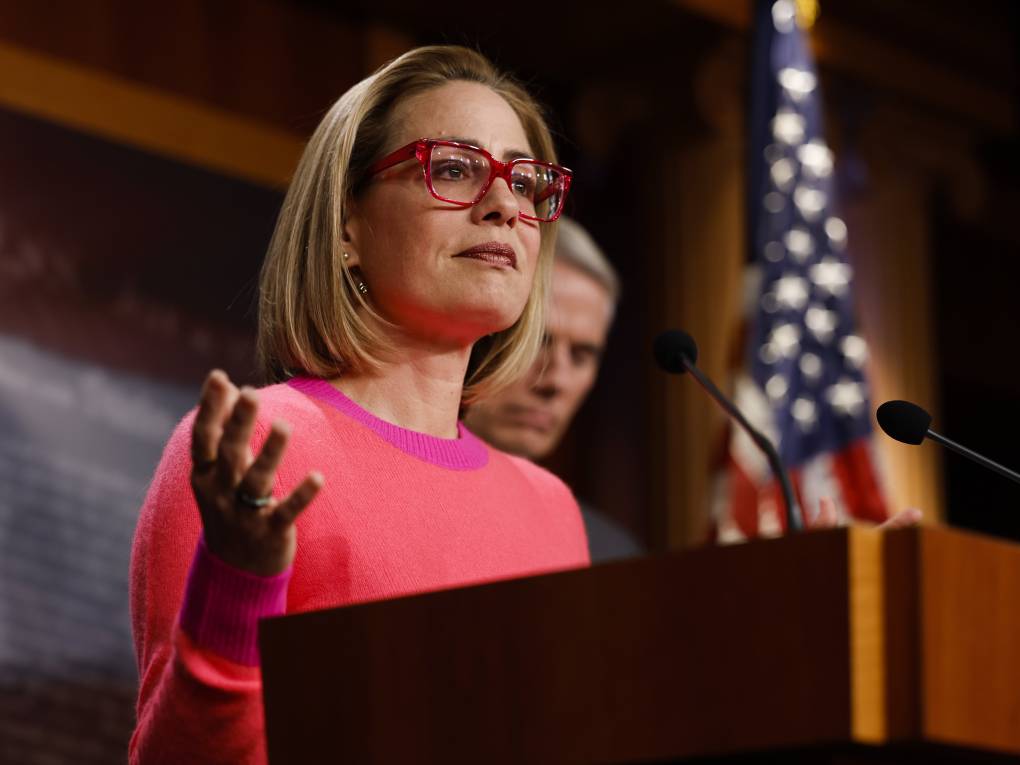
"caption": "Sen. Kyrsten Sinema of Arizona speaks at the US Capitol after the Senate passed the Respect for Marriage Act in November. Sinema announced Friday she would register as an independent rather than a Democrat.",
"description": "WASHINGTON, DC - NOVEMBER 29: U.S. Sen. Kyrtsen Sinema (D-AZ) speaks at a news conference after the Senate passed the Respect for Marriage Act at the Capitol Building on November 29, 2022 in Washington, DC. In a 61-36 vote, the measure would provide federal recognition and protection for same-sex and interracial marriages. (Photo by Anna Moneymaker/Getty Images)",
"title": "Sen. Kyrsten Sinema of Arizona speaks at the U.S. Capitol after the Senate passed the Respect for Marriage Act in November. Sinema announced Friday she would register as an independent rather than a Democrat.",
"credit": "Anna Moneymaker/Getty Images",
"status": "inherit",
"altTag": "a white woman with blond hair in a pink top speaks at a podium with an American flag behind her",
"isLoading": false,
"fetchFailed": false
},
"news_11934596": {
"type": "attachments",
"id": "news_11934596",
"meta": {
"index": "attachments_1716263798",
"site": "news",
"id": "11934596",
"found": true
},
"parent": 11934592,
"imgSizes": {
"twentyfourteen-full-width": {
"file": "https://ww2.kqed.org/app/uploads/sites/10/2022/12/GettyImages-1447731758-1024x576.jpg",
"width": 1024,
"mimeType": "image/jpeg",
"height": 576
},
"thumbnail": {
"file": "https://ww2.kqed.org/app/uploads/sites/10/2022/12/GettyImages-1447731758-160x107.jpg",
"width": 160,
"mimeType": "image/jpeg",
"height": 107
},
"post-thumbnail": {
"file": "https://ww2.kqed.org/app/uploads/sites/10/2022/12/GettyImages-1447731758-672x372.jpg",
"width": 672,
"mimeType": "image/jpeg",
"height": 372
},
"kqedFullSize": {
"file": "https://ww2.kqed.org/app/uploads/sites/10/2022/12/GettyImages-1447731758.jpg",
"width": 1024,
"height": 683
},
"large": {
"file": "https://ww2.kqed.org/app/uploads/sites/10/2022/12/GettyImages-1447731758-1020x680.jpg",
"width": 1020,
"mimeType": "image/jpeg",
"height": 680
},
"medium": {
"file": "https://ww2.kqed.org/app/uploads/sites/10/2022/12/GettyImages-1447731758-800x534.jpg",
"width": 800,
"mimeType": "image/jpeg",
"height": 534
}
},
"publishDate": 1670527757,
"modified": 1670539893,
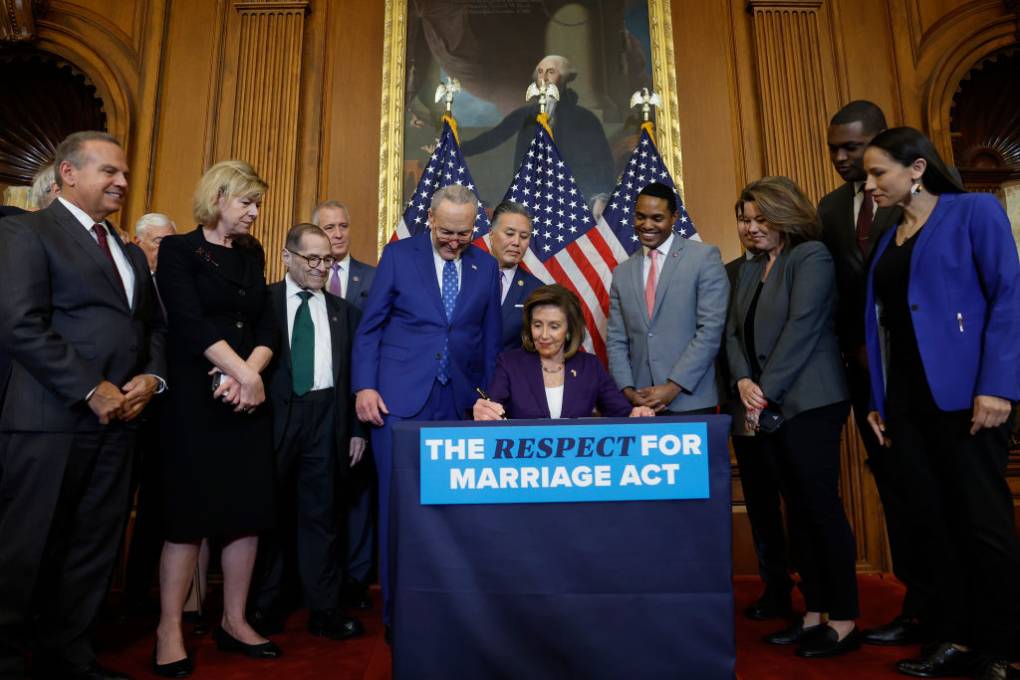
"caption": "House Speaker Nancy Pelosi (D-CA) participates in a bill enrollment ceremony alongside Senate Majority Leader Chuck Schumer (D-NY) and a bipartisan group of senators and representatives at the US Capitol Building on Dec. 8, 2022. in Washington, DC. In a 258–169 vote, the House of Representatives passed the Respect for Marriage Act, which ensures marriage equality for same-sex and interracial couples.",
"description": null,
"title": "Speaker Pelosi Holds Bill Enrollment Ceremony For Respect For Marriage Act",
"credit": "Anna Moneymaker/Getty Images",
"status": "inherit",
"altTag": "A group of Senators and Representatives gather around a seated woman signing a bill at a dais with the words \"The Respect for Marriage Act\" written on it",
"isLoading": false,
"fetchFailed": false
},
"news_11934454": {
"type": "attachments",
"id": "news_11934454",
"meta": {
"index": "attachments_1716263798",
"site": "news",
"id": "11934454",
"found": true
},
"parent": 11934453,
"imgSizes": {
"twentyfourteen-full-width": {
"file": "https://ww2.kqed.org/app/uploads/sites/10/2022/12/GettyImages-1245431931-1024x576.jpg",
"width": 1024,
"mimeType": "image/jpeg",
"height": 576
},
"thumbnail": {
"file": "https://ww2.kqed.org/app/uploads/sites/10/2022/12/GettyImages-1245431931-160x107.jpg",
"width": 160,
"mimeType": "image/jpeg",
"height": 107
},
"post-thumbnail": {
"file": "https://ww2.kqed.org/app/uploads/sites/10/2022/12/GettyImages-1245431931-672x372.jpg",
"width": 672,
"mimeType": "image/jpeg",
"height": 372
},
"kqedFullSize": {
"file": "https://ww2.kqed.org/app/uploads/sites/10/2022/12/GettyImages-1245431931.jpg",
"width": 1024,
"height": 683
},
"large": {
"file": "https://ww2.kqed.org/app/uploads/sites/10/2022/12/GettyImages-1245431931-1020x680.jpg",
"width": 1020,
"mimeType": "image/jpeg",
"height": 680
},
"medium": {
"file": "https://ww2.kqed.org/app/uploads/sites/10/2022/12/GettyImages-1245431931-800x534.jpg",
"width": 800,
"mimeType": "image/jpeg",
"height": 534
}
},
"publishDate": 1670440722,
"modified": 1670440831,
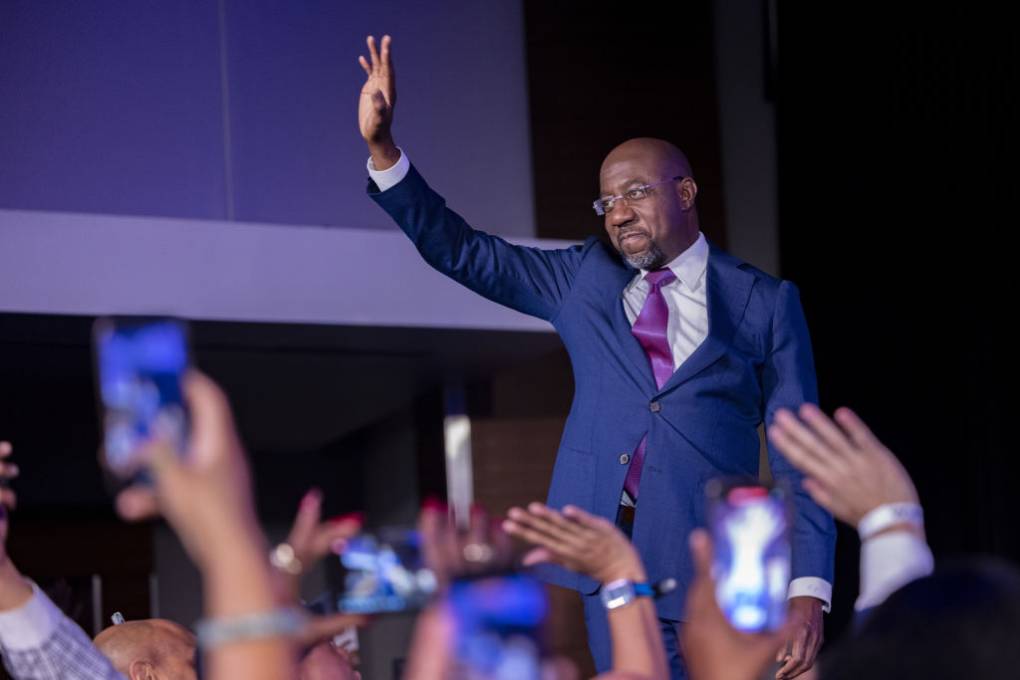
"caption": "Senator Reverend Raphael Warnock (D-GA) arrives to deliver a victory speech at his election night party in Atlanta, Georgia on December 6th, 2022 following the state's Senate runoff election.",
"description": null,
"title": "Warnock Election Night party",
"credit": "Nathan Posner/Anadolu Agency via Getty Images",
"status": "inherit",
"altTag": "A Black man in a blue suit with a purple tie wearing glasses smiles and waves at a crowd while walking on stage.",
"isLoading": false,
"fetchFailed": false
},
"news_11934417": {
"type": "attachments",
"id": "news_11934417",
"meta": {
"index": "attachments_1716263798",
"site": "news",
"id": "11934417",
"found": true
},
"parent": 11934416,
"imgSizes": {
"twentyfourteen-full-width": {
"file": "https://ww2.kqed.org/app/uploads/sites/10/2022/12/ap22339677222875_wide-0af19219ab41258231acabc15a5d4f6e572b6b96-1038x576.jpg",
"width": 1038,
"mimeType": "image/jpeg",
"height": 576
},
"thumbnail": {
"file": "https://ww2.kqed.org/app/uploads/sites/10/2022/12/ap22339677222875_wide-0af19219ab41258231acabc15a5d4f6e572b6b96-160x90.jpg",
"width": 160,
"mimeType": "image/jpeg",
"height": 90
},
"post-thumbnail": {
"file": "https://ww2.kqed.org/app/uploads/sites/10/2022/12/ap22339677222875_wide-0af19219ab41258231acabc15a5d4f6e572b6b96-672x372.jpg",
"width": 672,
"mimeType": "image/jpeg",
"height": 372
},
"kqedFullSize": {
"file": "https://ww2.kqed.org/app/uploads/sites/10/2022/12/ap22339677222875_wide-0af19219ab41258231acabc15a5d4f6e572b6b96-scaled.jpg",
"width": 2560,
"height": 1440
},
"2048x2048": {
"file": "https://ww2.kqed.org/app/uploads/sites/10/2022/12/ap22339677222875_wide-0af19219ab41258231acabc15a5d4f6e572b6b96-2048x1152.jpg",
"width": 2048,
"mimeType": "image/jpeg",
"height": 1152
},
"large": {
"file": "https://ww2.kqed.org/app/uploads/sites/10/2022/12/ap22339677222875_wide-0af19219ab41258231acabc15a5d4f6e572b6b96-1020x574.jpg",
"width": 1020,
"mimeType": "image/jpeg",
"height": 574
},
"1536x1536": {
"file": "https://ww2.kqed.org/app/uploads/sites/10/2022/12/ap22339677222875_wide-0af19219ab41258231acabc15a5d4f6e572b6b96-1536x864.jpg",
"width": 1536,
"mimeType": "image/jpeg",
"height": 864
},
"full-width": {
"file": "https://ww2.kqed.org/app/uploads/sites/10/2022/12/ap22339677222875_wide-0af19219ab41258231acabc15a5d4f6e572b6b96-1920x1080.jpg",
"width": 1920,
"mimeType": "image/jpeg",
"height": 1080
},
"medium": {
"file": "https://ww2.kqed.org/app/uploads/sites/10/2022/12/ap22339677222875_wide-0af19219ab41258231acabc15a5d4f6e572b6b96-800x450.jpg",
"width": 800,
"mimeType": "image/jpeg",
"height": 450
}
},
"publishDate": 1670385343,
"modified": 1670393345,
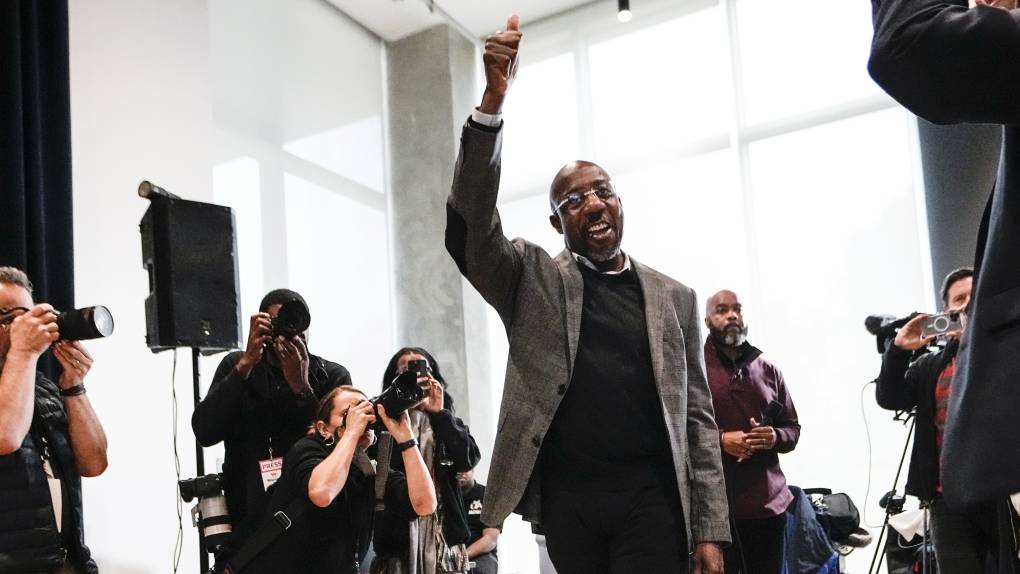
"caption": "US Sen. Raphael Warnock, D-Ga., waves to supporters as he arrives to speak at a campaign rally at Georgia Tech on Monday, Dec. 5, 2022, in Atlanta.",
"description": "U.S. Sen. Raphael Warnock, D-Ga., waves to supporters as arrives to speak at a campaign rally at Georgia Tech Monday, Dec. 5, 2022, in Atlanta. Warnock is in a runoff with Republican Herschel Walker. (AP Photo/John Bazemore)",
"title": "U.S. Sen. Raphael Warnock, D-Ga., waves to supporters as arrives to speak at a campaign rally at Georgia Tech Monday, Dec. 5, 2022, in Atlanta.",
"credit": "John Bazemore/AP",
"status": "inherit",
"altTag": "A Black man with glasses raises his hand in celebration.",
"isLoading": false,
"fetchFailed": false
},
"news_11934412": {
"type": "attachments",
"id": "news_11934412",
"meta": {
"index": "attachments_1716263798",
"site": "news",
"id": "11934412",
"found": true
},
"parent": 11934374,
"imgSizes": {
"twentyfourteen-full-width": {
"file": "https://ww2.kqed.org/app/uploads/sites/10/2022/12/GettyImages-1321791653-1024x576.jpg",
"width": 1024,
"mimeType": "image/jpeg",
"height": 576
},
"thumbnail": {
"file": "https://ww2.kqed.org/app/uploads/sites/10/2022/12/GettyImages-1321791653-160x107.jpg",
"width": 160,
"mimeType": "image/jpeg",
"height": 107
},
"post-thumbnail": {
"file": "https://ww2.kqed.org/app/uploads/sites/10/2022/12/GettyImages-1321791653-672x372.jpg",
"width": 672,
"mimeType": "image/jpeg",
"height": 372
},
"kqedFullSize": {
"file": "https://ww2.kqed.org/app/uploads/sites/10/2022/12/GettyImages-1321791653.jpg",
"width": 1024,
"height": 683
},
"large": {
"file": "https://ww2.kqed.org/app/uploads/sites/10/2022/12/GettyImages-1321791653-1020x680.jpg",
"width": 1020,
"mimeType": "image/jpeg",
"height": 680
},
"medium": {
"file": "https://ww2.kqed.org/app/uploads/sites/10/2022/12/GettyImages-1321791653-800x534.jpg",
"width": 800,
"mimeType": "image/jpeg",
"height": 534
}
},
"publishDate": 1670380621,
"modified": 1670384235,
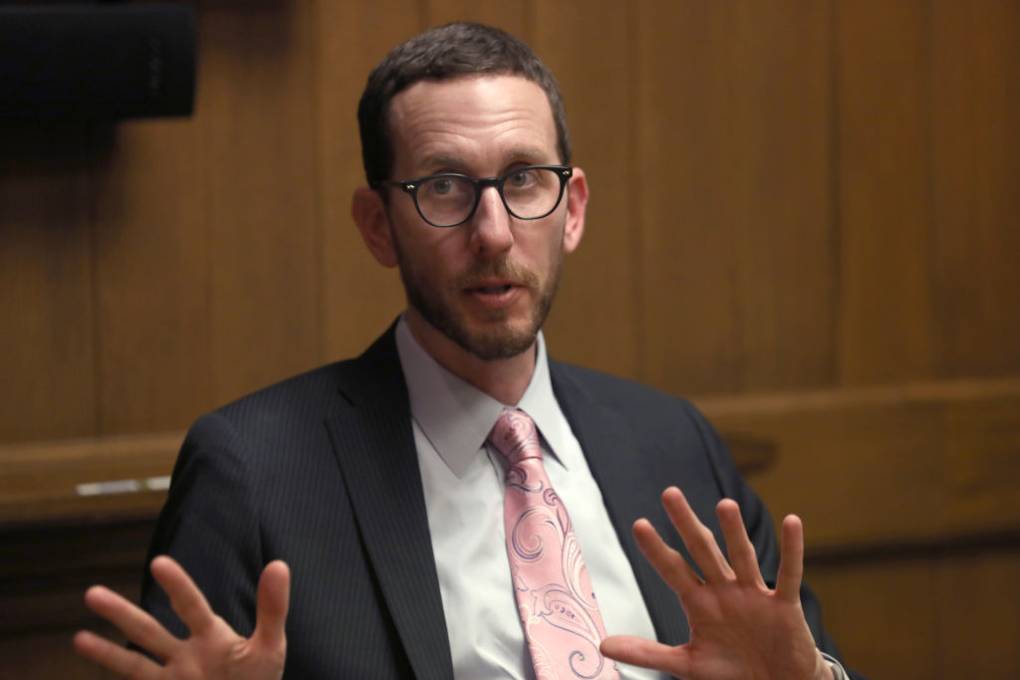
"caption": "State Sen. Scott Wiener (D-San Francisco) speaking to the San Francisco Chronicle Editorial Board on Jan. 10, 2020, in San Francisco.",
"description": null,
"title": "Senator Scott Wiener comes in to talk to the editorial board at the Chronicle on Friday, Jan. 10, 2020, in San Francisco, Calif.",
"credit": "Liz Hafalia/The San Francisco Chronicle via Getty Images",
"status": "inherit",
"altTag": "State Sen. Scott Wiener speaking in a formal setting.",
"isLoading": false,
"fetchFailed": false
},
"news_11934365": {
"type": "attachments",
"id": "news_11934365",
"meta": {
"index": "attachments_1716263798",
"site": "news",
"id": "11934365",
"found": true
},
"parent": 11934343,
"imgSizes": {
"twentyfourteen-full-width": {
"file": "https://ww2.kqed.org/app/uploads/sites/10/2022/12/GettyImages-1321971276-1024x576.jpg",
"width": 1024,
"mimeType": "image/jpeg",
"height": 576
},
"thumbnail": {
"file": "https://ww2.kqed.org/app/uploads/sites/10/2022/12/GettyImages-1321971276-160x95.jpg",
"width": 160,
"mimeType": "image/jpeg",
"height": 95
},
"post-thumbnail": {
"file": "https://ww2.kqed.org/app/uploads/sites/10/2022/12/GettyImages-1321971276-672x372.jpg",
"width": 672,
"mimeType": "image/jpeg",
"height": 372
},
"kqedFullSize": {
"file": "https://ww2.kqed.org/app/uploads/sites/10/2022/12/GettyImages-1321971276.jpg",
"width": 1024,
"height": 610
},
"large": {
"file": "https://ww2.kqed.org/app/uploads/sites/10/2022/12/GettyImages-1321971276-1020x608.jpg",
"width": 1020,
"mimeType": "image/jpeg",
"height": 608
},
"medium": {
"file": "https://ww2.kqed.org/app/uploads/sites/10/2022/12/GettyImages-1321971276-800x477.jpg",
"width": 800,
"mimeType": "image/jpeg",
"height": 477
}
},
"publishDate": 1670370595,
"modified": 1670392054,
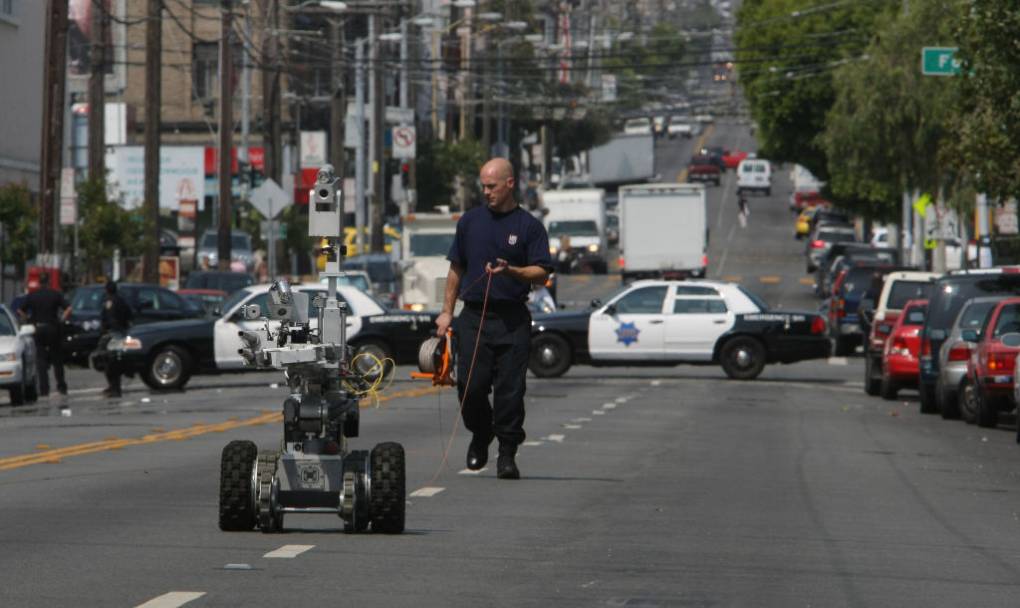
"caption": "The San Francisco Police Department's bomb-investigating robot returns from down 16th Street after looking over a device. The San Francisco police bomb squad closed off 16th Street between Folsom and Harrison streets in San Francisco after a report of a suspicious cart tied to a tree, on Friday, July 25, 2008.",
"description": null,
"title": "The San Francisco Police, bomb investigating robot, returns from down 16th street after looking over the device. The San Francsico Police bomb squard closed of 16th street between Folson and Harrison Streets, in San Francsico, Calif., after a report of",
"credit": "Michael Macor/The San Francisco Chronicle via Getty Images",
"status": "inherit",
"altTag": "A man dressed in a police uniform holds a device that is attached to a robot in the middle of the street with police cars in the background.",
"isLoading": false,
"fetchFailed": false
},
"news_11933993": {
"type": "attachments",
"id": "news_11933993",
"meta": {
"index": "attachments_1716263798",
"site": "news",
"id": "11933993",
"found": true
},
"parent": 11933946,
"imgSizes": {
"thumbnail": {
"file": "https://ww2.kqed.org/app/uploads/sites/10/2022/12/district2-160x98.jpg",
"width": 160,
"mimeType": "image/jpeg",
"height": 98
},
"post-thumbnail": {
"file": "https://ww2.kqed.org/app/uploads/sites/10/2022/12/district2-672x372.jpg",
"width": 672,
"mimeType": "image/jpeg",
"height": 372
},
"kqedFullSize": {
"file": "https://ww2.kqed.org/app/uploads/sites/10/2022/12/district2.jpg",
"width": 831,
"height": 507
},
"medium": {
"file": "https://ww2.kqed.org/app/uploads/sites/10/2022/12/district2-800x488.jpg",
"width": 800,
"mimeType": "image/jpeg",
"height": 488
}
},
"publishDate": 1670057308,
"modified": 1670351580,
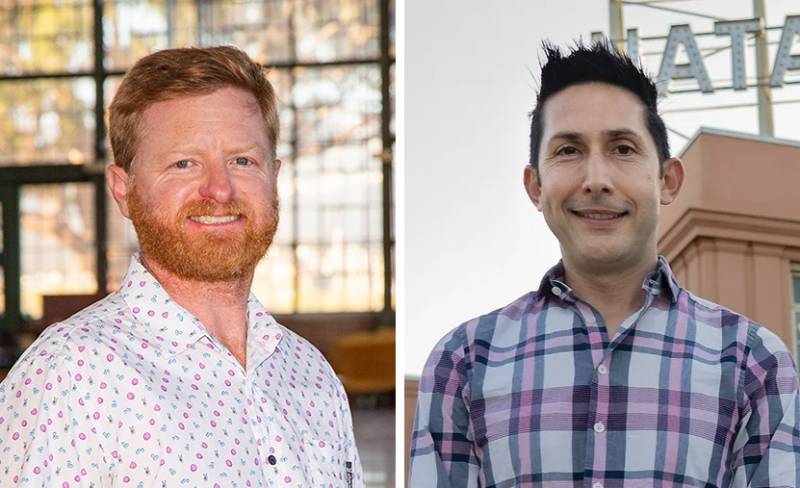
"caption": "Richmond City Council District 2 candidates Andrew Butt (left) and Cesar Zepeda.",
"description": null,
"title": "district2",
"credit": "Courtesy of the candidates' campaigns",
"status": "inherit",
"altTag": "Two men smiling at the camera, one white, the other Latino",
"isLoading": false,
"fetchFailed": false
},
"news_11934029": {
"type": "attachments",
"id": "news_11934029",
"meta": {
"index": "attachments_1716263798",
"site": "news",
"id": "11934029",
"found": true
},
"parent": 11934011,
"imgSizes": {
"twentyfourteen-full-width": {
"file": "https://ww2.kqed.org/app/uploads/sites/10/2022/12/GettyImages-1433168029-1024x576.jpg",
"width": 1024,
"mimeType": "image/jpeg",
"height": 576
},
"thumbnail": {
"file": "https://ww2.kqed.org/app/uploads/sites/10/2022/12/GettyImages-1433168029-160x107.jpg",
"width": 160,
"mimeType": "image/jpeg",
"height": 107
},
"post-thumbnail": {
"file": "https://ww2.kqed.org/app/uploads/sites/10/2022/12/GettyImages-1433168029-672x372.jpg",
"width": 672,
"mimeType": "image/jpeg",
"height": 372
},
"kqedFullSize": {
"file": "https://ww2.kqed.org/app/uploads/sites/10/2022/12/GettyImages-1433168029.jpg",
"width": 1024,
"height": 683
},
"large": {
"file": "https://ww2.kqed.org/app/uploads/sites/10/2022/12/GettyImages-1433168029-1020x680.jpg",
"width": 1020,
"mimeType": "image/jpeg",
"height": 680
},
"medium": {
"file": "https://ww2.kqed.org/app/uploads/sites/10/2022/12/GettyImages-1433168029-800x534.jpg",
"width": 800,
"mimeType": "image/jpeg",
"height": 534
}
},
"publishDate": 1670104368,
"modified": 1670269549,
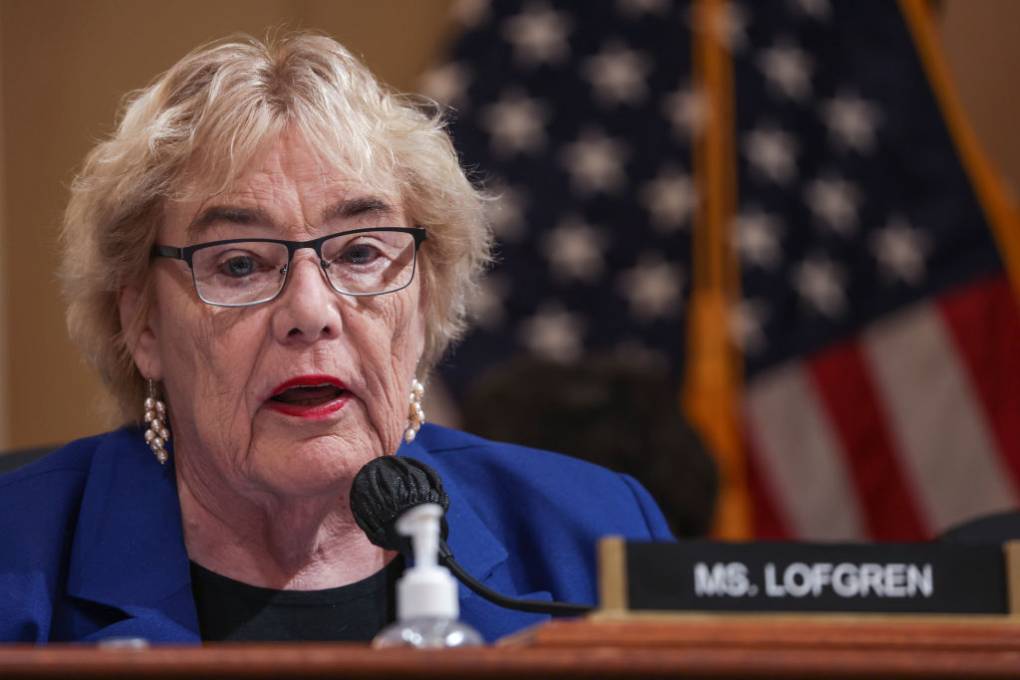
"caption": "US Rep. Zoe Lofgren (D-CA) is seen during a hearing by the House Select Committee to Investigate the Jan. 6 attack on the US Capitol in the Cannon House Office Building in Washington, DC, on Oct. 13, 2022.",
"description": null,
"title": "January 6th Committee Holds First Hearing Since July",
"credit": "Alex Wong/Getty Images",
"status": "inherit",
"altTag": "An older white woman with a blue suit dress and wearing glasses.",
"isLoading": false,
"fetchFailed": false
},
"news_11931650": {
"type": "attachments",
"id": "news_11931650",
"meta": {
"index": "attachments_1716263798",
"site": "news",
"id": "11931650",
"found": true
},
"title": "1AFBACD6-E56E-4A4A-8624-783F1286C3AF",
"publishDate": 1667981119,
"status": "inherit",
"parent": 11932210,
"modified": 1763677534,
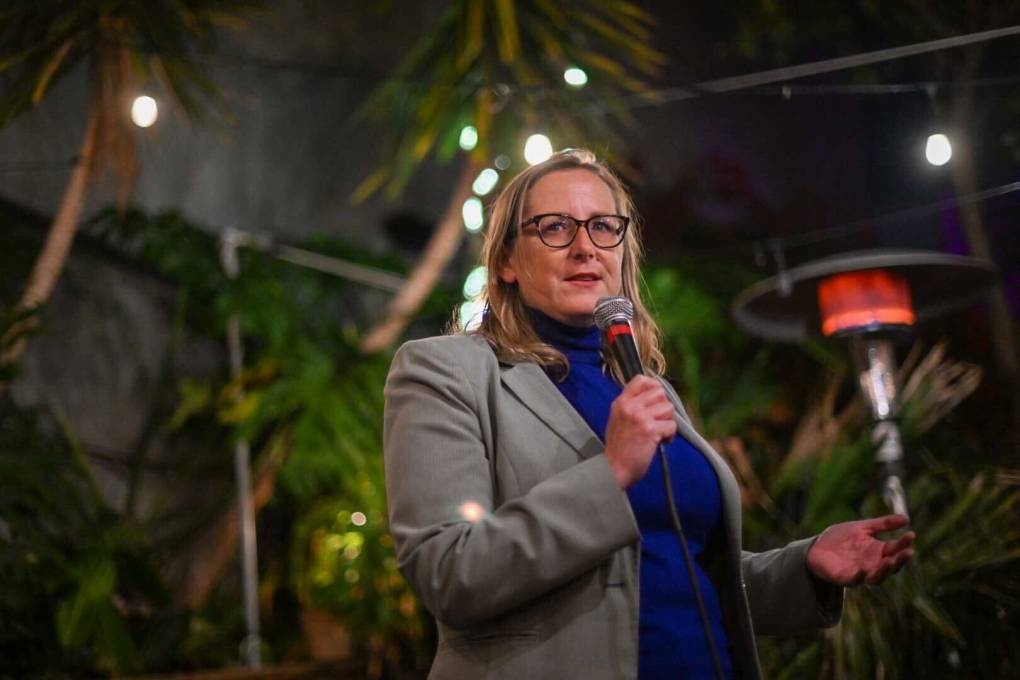
"caption": "Then-San Francisco Unified School District board candidate, Alida Fisher, speaks at an election night event at El Rio in San Francisco on Nov. 8, 2022.",
"credit": "Beth LaBerge/KQED",
"altTag": "A white woman with a grey suit over a blue sweater speaks into a microphone at an event",
"description": null,
"imgSizes": {
"medium": {
"file": "https://cdn.kqed.org/wp-content/uploads/sites/10/2022/11/1AFBACD6-E56E-4A4A-8624-783F1286C3AF-800x533.jpg",
"width": 800,
"height": 533,
"mimeType": "image/jpeg"
},
"large": {
"file": "https://cdn.kqed.org/wp-content/uploads/sites/10/2022/11/1AFBACD6-E56E-4A4A-8624-783F1286C3AF-1020x680.jpg",
"width": 1020,
"height": 680,
"mimeType": "image/jpeg"
},
"thumbnail": {
"file": "https://cdn.kqed.org/wp-content/uploads/sites/10/2022/11/1AFBACD6-E56E-4A4A-8624-783F1286C3AF-160x107.jpg",
"width": 160,
"height": 107,
"mimeType": "image/jpeg"
},
"1536x1536": {
"file": "https://cdn.kqed.org/wp-content/uploads/sites/10/2022/11/1AFBACD6-E56E-4A4A-8624-783F1286C3AF-1536x1024.jpg",
"width": 1536,
"height": 1024,
"mimeType": "image/jpeg"
},
"post-thumbnail": {
"file": "https://cdn.kqed.org/wp-content/uploads/sites/10/2022/11/1AFBACD6-E56E-4A4A-8624-783F1286C3AF-672x372.jpg",
"width": 672,
"height": 372,
"mimeType": "image/jpeg"
},
"twentyfourteen-full-width": {
"file": "https://cdn.kqed.org/wp-content/uploads/sites/10/2022/11/1AFBACD6-E56E-4A4A-8624-783F1286C3AF-1038x576.jpg",
"width": 1038,
"height": 576,
"mimeType": "image/jpeg"
},
"kqedFullSize": {
"file": "https://cdn.kqed.org/wp-content/uploads/sites/10/2022/11/1AFBACD6-E56E-4A4A-8624-783F1286C3AF.jpg",
"width": 1620,
"height": 1080
}
},
"isLoading": false,
"fetchFailed": false
},
"news_11933639": {
"type": "attachments",
"id": "news_11933639",
"meta": {
"index": "attachments_1716263798",
"site": "news",
"id": "11933639",
"found": true
},
"parent": 11933638,
"imgSizes": {
"twentyfourteen-full-width": {
"file": "https://ww2.kqed.org/app/uploads/sites/10/2022/11/gettyimages-1244296758_slide-d860ae94b9f1144db98c6aca9f6e6e56b3102bd1-1038x576.jpg",
"width": 1038,
"mimeType": "image/jpeg",
"height": 576
},
"thumbnail": {
"file": "https://ww2.kqed.org/app/uploads/sites/10/2022/11/gettyimages-1244296758_slide-d860ae94b9f1144db98c6aca9f6e6e56b3102bd1-160x107.jpg",
"width": 160,
"mimeType": "image/jpeg",
"height": 107
},
"post-thumbnail": {
"file": "https://ww2.kqed.org/app/uploads/sites/10/2022/11/gettyimages-1244296758_slide-d860ae94b9f1144db98c6aca9f6e6e56b3102bd1-672x372.jpg",
"width": 672,
"mimeType": "image/jpeg",
"height": 372
},
"kqedFullSize": {
"file": "https://ww2.kqed.org/app/uploads/sites/10/2022/11/gettyimages-1244296758_slide-d860ae94b9f1144db98c6aca9f6e6e56b3102bd1.jpg",
"width": 2494,
"height": 1662
},
"2048x2048": {
"file": "https://ww2.kqed.org/app/uploads/sites/10/2022/11/gettyimages-1244296758_slide-d860ae94b9f1144db98c6aca9f6e6e56b3102bd1-2048x1365.jpg",
"width": 2048,
"mimeType": "image/jpeg",
"height": 1365
},
"large": {
"file": "https://ww2.kqed.org/app/uploads/sites/10/2022/11/gettyimages-1244296758_slide-d860ae94b9f1144db98c6aca9f6e6e56b3102bd1-1020x680.jpg",
"width": 1020,
"mimeType": "image/jpeg",
"height": 680
},
"1536x1536": {
"file": "https://ww2.kqed.org/app/uploads/sites/10/2022/11/gettyimages-1244296758_slide-d860ae94b9f1144db98c6aca9f6e6e56b3102bd1-1536x1024.jpg",
"width": 1536,
"mimeType": "image/jpeg",
"height": 1024
},
"full-width": {
"file": "https://ww2.kqed.org/app/uploads/sites/10/2022/11/gettyimages-1244296758_slide-d860ae94b9f1144db98c6aca9f6e6e56b3102bd1-1920x1279.jpg",
"width": 1920,
"mimeType": "image/jpeg",
"height": 1279
},
"medium": {
"file": "https://ww2.kqed.org/app/uploads/sites/10/2022/11/gettyimages-1244296758_slide-d860ae94b9f1144db98c6aca9f6e6e56b3102bd1-800x533.jpg",
"width": 800,
"mimeType": "image/jpeg",
"height": 533
}
},
"publishDate": 1669849492,
"modified": 1671223976,
"caption": "The Twitter logo is seen on the exterior of Twitter headquarters in San Francisco on Oct. 28, 2022.",
"description": "The Twitter logo is seen on the exterior of Twitter headquarters in San Francisco, California, on October 28, 2022. - After months of controversy, Elon Musk is now at the head of one of the most influential social networks on the planet, whose \"tremendous potential\" he has promised to unleash. (Photo by Constanza HEVIA / AFP) (Photo by CONSTANZA HEVIA/AFP via Getty Images)",
"title": "The outside of Twitter's headquarters in San Francisco last month. The upheaval at the influential social media company threatens to make political violence worse around the world, according to human rights activists.",
"credit": "Constanza HEVIA / AFP via Getty Images",
"status": "inherit",
"altTag": "a blue bird symbol, the company logo for Twitter, is seen on the outside of the company's building",
"isLoading": false,
"fetchFailed": false
},
"news_11933537": {
"type": "attachments",
"id": "news_11933537",
"meta": {
"index": "attachments_1716263798",
"site": "news",
"id": "11933537",
"found": true
},
"parent": 11933522,
"imgSizes": {
"twentyfourteen-full-width": {
"file": "https://ww2.kqed.org/app/uploads/sites/10/2022/11/GettyImages-1245217019-1024x576.jpg",
"width": 1024,
"mimeType": "image/jpeg",
"height": 576
},
"thumbnail": {
"file": "https://ww2.kqed.org/app/uploads/sites/10/2022/11/GettyImages-1245217019-160x107.jpg",
"width": 160,
"mimeType": "image/jpeg",
"height": 107
},
"post-thumbnail": {
"file": "https://ww2.kqed.org/app/uploads/sites/10/2022/11/GettyImages-1245217019-672x372.jpg",
"width": 672,
"mimeType": "image/jpeg",
"height": 372
},
"kqedFullSize": {
"file": "https://ww2.kqed.org/app/uploads/sites/10/2022/11/GettyImages-1245217019.jpg",
"width": 1024,
"height": 683
},
"large": {
"file": "https://ww2.kqed.org/app/uploads/sites/10/2022/11/GettyImages-1245217019-1020x680.jpg",
"width": 1020,
"mimeType": "image/jpeg",
"height": 680
},
"medium": {
"file": "https://ww2.kqed.org/app/uploads/sites/10/2022/11/GettyImages-1245217019-800x534.jpg",
"width": 800,
"mimeType": "image/jpeg",
"height": 534
}
},
"publishDate": 1669768829,
"modified": 1669777905,
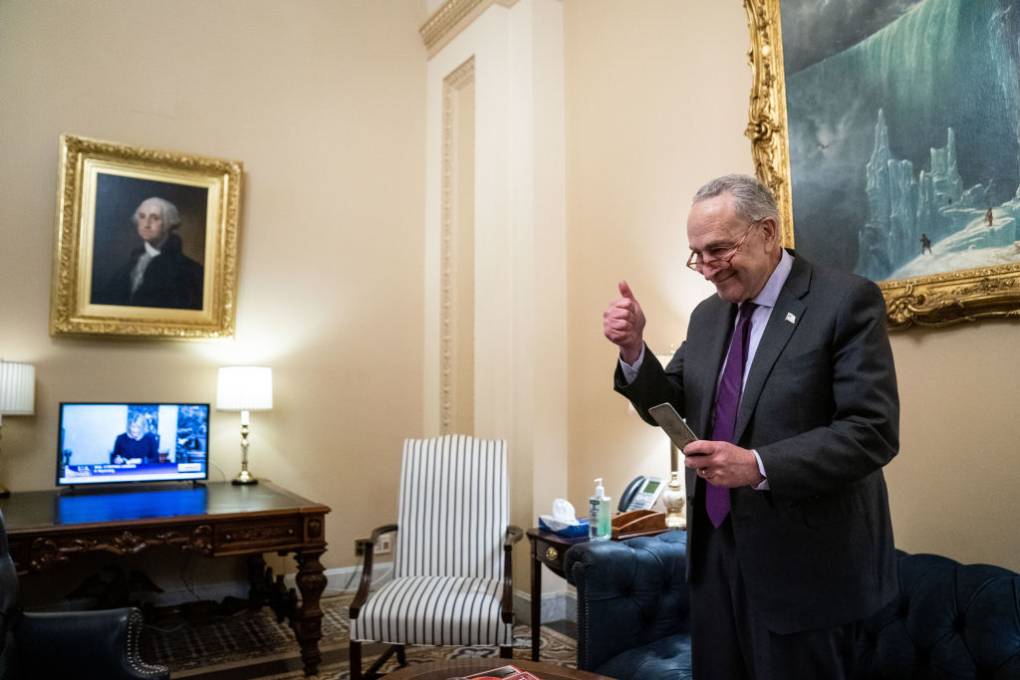
"caption": "Senate Majority Leader Chuck Schumer (D-NY) calls his daughter Alison, who is married to a woman, to tell her about the Senate's passage of the Respect for Marriage Act on Tuesday, Nov. 29, 2022. The Respect for Marriage Act, which passed 61–36 — including support from 12 Republicans — will enshrine marriage equality into federal law.",
"description": null,
"title": "Senate Passes Respect For Marriage Act",
"credit": "Kent Nishimura/Los Angeles Times via Getty Images",
"status": "inherit",
"altTag": null,
"isLoading": false,
"fetchFailed": false
},
"news_11613002": {
"type": "attachments",
"id": "news_11613002",
"meta": {
"index": "attachments_1716263798",
"site": "news",
"id": "11613002",
"found": true
},
"parent": 11612802,
"imgSizes": {
"small": {
"file": "https://ww2.kqed.org/app/uploads/sites/10/2017/08/RS25468_20170515_StateCapitol_Sen_ScottWeiner_credit_BertJohnson-2-qut-520x347.jpg",
"width": 520,
"mimeType": "image/jpeg",
"height": 347
},
"twentyfourteen-full-width": {
"file": "https://ww2.kqed.org/app/uploads/sites/10/2017/08/RS25468_20170515_StateCapitol_Sen_ScottWeiner_credit_BertJohnson-2-qut-1038x576.jpg",
"width": 1038,
"mimeType": "image/jpeg",
"height": 576
},
"thumbnail": {
"file": "https://ww2.kqed.org/app/uploads/sites/10/2017/08/RS25468_20170515_StateCapitol_Sen_ScottWeiner_credit_BertJohnson-2-qut-160x107.jpg",
"width": 160,
"mimeType": "image/jpeg",
"height": 107
},
"fd-sm": {
"file": "https://ww2.kqed.org/app/uploads/sites/10/2017/08/RS25468_20170515_StateCapitol_Sen_ScottWeiner_credit_BertJohnson-2-qut-960x640.jpg",
"width": 960,
"mimeType": "image/jpeg",
"height": 640
},
"post-thumbnail": {
"file": "https://ww2.kqed.org/app/uploads/sites/10/2017/08/RS25468_20170515_StateCapitol_Sen_ScottWeiner_credit_BertJohnson-2-qut-672x372.jpg",
"width": 672,
"mimeType": "image/jpeg",
"height": 372
},
"xsmall": {
"file": "https://ww2.kqed.org/app/uploads/sites/10/2017/08/RS25468_20170515_StateCapitol_Sen_ScottWeiner_credit_BertJohnson-2-qut-375x250.jpg",
"width": 375,
"mimeType": "image/jpeg",
"height": 250
},
"kqedFullSize": {
"file": "https://ww2.kqed.org/app/uploads/sites/10/2017/08/RS25468_20170515_StateCapitol_Sen_ScottWeiner_credit_BertJohnson-2-qut.jpg",
"width": 1920,
"height": 1280
},
"large": {
"file": "https://ww2.kqed.org/app/uploads/sites/10/2017/08/RS25468_20170515_StateCapitol_Sen_ScottWeiner_credit_BertJohnson-2-qut-1020x680.jpg",
"width": 1020,
"mimeType": "image/jpeg",
"height": 680
},
"xlarge": {
"file": "https://ww2.kqed.org/app/uploads/sites/10/2017/08/RS25468_20170515_StateCapitol_Sen_ScottWeiner_credit_BertJohnson-2-qut-1180x787.jpg",
"width": 1180,
"mimeType": "image/jpeg",
"height": 787
},
"guest-author-50": {
"file": "https://ww2.kqed.org/app/uploads/sites/10/2017/08/RS25468_20170515_StateCapitol_Sen_ScottWeiner_credit_BertJohnson-2-qut-50x50.jpg",
"width": 50,
"mimeType": "image/jpeg",
"height": 50
},
"guest-author-96": {
"file": "https://ww2.kqed.org/app/uploads/sites/10/2017/08/RS25468_20170515_StateCapitol_Sen_ScottWeiner_credit_BertJohnson-2-qut-96x96.jpg",
"width": 96,
"mimeType": "image/jpeg",
"height": 96
},
"medium": {
"file": "https://ww2.kqed.org/app/uploads/sites/10/2017/08/RS25468_20170515_StateCapitol_Sen_ScottWeiner_credit_BertJohnson-2-qut-800x533.jpg",
"width": 800,
"mimeType": "image/jpeg",
"height": 533
},
"guest-author-64": {
"file": "https://ww2.kqed.org/app/uploads/sites/10/2017/08/RS25468_20170515_StateCapitol_Sen_ScottWeiner_credit_BertJohnson-2-qut-64x64.jpg",
"width": 64,
"mimeType": "image/jpeg",
"height": 64
},
"guest-author-32": {
"file": "https://ww2.kqed.org/app/uploads/sites/10/2017/08/RS25468_20170515_StateCapitol_Sen_ScottWeiner_credit_BertJohnson-2-qut-32x32.jpg",
"width": 32,
"mimeType": "image/jpeg",
"height": 32
},
"fd-lrg": {
"file": "https://ww2.kqed.org/app/uploads/sites/10/2017/08/RS25468_20170515_StateCapitol_Sen_ScottWeiner_credit_BertJohnson-2-qut-1920x1280.jpg",
"width": 1920,
"mimeType": "image/jpeg",
"height": 1280
},
"fd-med": {
"file": "https://ww2.kqed.org/app/uploads/sites/10/2017/08/RS25468_20170515_StateCapitol_Sen_ScottWeiner_credit_BertJohnson-2-qut-1180x787.jpg",
"width": 1180,
"mimeType": "image/jpeg",
"height": 787
},
"full-width": {
"file": "https://ww2.kqed.org/app/uploads/sites/10/2017/08/RS25468_20170515_StateCapitol_Sen_ScottWeiner_credit_BertJohnson-2-qut-1920x1280.jpg",
"width": 1920,
"mimeType": "image/jpeg",
"height": 1280
},
"detail": {
"file": "https://ww2.kqed.org/app/uploads/sites/10/2017/08/RS25468_20170515_StateCapitol_Sen_ScottWeiner_credit_BertJohnson-2-qut-150x150.jpg",
"width": 150,
"mimeType": "image/jpeg",
"height": 150
},
"guest-author-128": {
"file": "https://ww2.kqed.org/app/uploads/sites/10/2017/08/RS25468_20170515_StateCapitol_Sen_ScottWeiner_credit_BertJohnson-2-qut-128x128.jpg",
"width": 128,
"mimeType": "image/jpeg",
"height": 128
},
"xxsmall": {
"file": "https://ww2.kqed.org/app/uploads/sites/10/2017/08/RS25468_20170515_StateCapitol_Sen_ScottWeiner_credit_BertJohnson-2-qut-240x160.jpg",
"width": 240,
"mimeType": "image/jpeg",
"height": 160
}
},
"publishDate": 1503095687,
"modified": 1669152460,
"caption": "State Senator Scott Wiener (D-San Francisco).",
"description": "Author of Senate Bill 35",
"title": "RS25468_20170515_StateCapitol_Sen_ScottWeiner_credit_BertJohnson-2-qut",
"credit": "Bert Johnson/KQED",
"status": "inherit",
"altTag": "A man wearing a business suit and holding a piece of paper stands in a room with a microphone in front of him.",
"isLoading": false,
"fetchFailed": false
}
},
"audioPlayerReducer": {
"postId": "stream_live",
"isPaused": true,
"isPlaying": false,
"pfsActive": false,
"pledgeModalIsOpen": true,
"playerDrawerIsOpen": false,
"liveAudioPlayStartedAt": 0,
"liveAudioPlayContext": ""
},
"authorsReducer": {
"byline_news_11934782": {
"type": "authors",
"id": "byline_news_11934782",
"meta": {
"override": true
},
"slug": "byline_news_11934782",
"name": "Deirdre Walsh",
"isLoading": false
},
"byline_news_11934592": {
"type": "authors",
"id": "byline_news_11934592",
"meta": {
"override": true
},
"slug": "byline_news_11934592",
"name": "\u003ca href=\"https://www.npr.org/people/1101057193/ximena-bustillo\">Ximena Bustillo\u003c/a>, \u003ca href=\"https://www.npr.org/people/1134107395/juma-sei\">Juma Sei\u003c/a>, \u003ca href=\"https://www.npr.org/people/1015466926/deepa-shivaram\">Deepa Shivaram\u003c/a>",
"isLoading": false
},
"byline_news_11934453": {
"type": "authors",
"id": "byline_news_11934453",
"meta": {
"override": true
},
"slug": "byline_news_11934453",
"name": "\u003ca href=\"https://www.npr.org/people/1134107395/juma-sei\">Juma Sei\u003c/a>",
"isLoading": false
},
"byline_news_11934416": {
"type": "authors",
"id": "byline_news_11934416",
"meta": {
"override": true
},
"slug": "byline_news_11934416",
"name": "Sam Gringlas",
"isLoading": false
},
"byline_news_11933946": {
"type": "authors",
"id": "byline_news_11933946",
"meta": {
"override": true
},
"slug": "byline_news_11933946",
"name": "Matthew Green and Katherine Monahan",
"isLoading": false
},
"byline_news_11933638": {
"type": "authors",
"id": "byline_news_11933638",
"meta": {
"override": true
},
"slug": "byline_news_11933638",
"name": "Shannon Bond",
"isLoading": false
},
"byline_news_11933522": {
"type": "authors",
"id": "byline_news_11933522",
"meta": {
"override": true
},
"slug": "byline_news_11933522",
"name": "Mary Clare Jalonick\u003cbr>Associated Press",
"isLoading": false
},
"byline_news_11933025": {
"type": "authors",
"id": "byline_news_11933025",
"meta": {
"override": true
},
"slug": "byline_news_11933025",
"name": "Don Thompson\u003cbr>The Associated Press",
"isLoading": false
},
"tarasiler": {
"type": "authors",
"id": "257",
"meta": {
"index": "authors_1716337520",
"id": "257",
"found": true
},
"name": "Tara Siler",
"firstName": "Tara",
"lastName": "Siler",
"slug": "tarasiler",
"email": "tsiler@kqed.org",
"display_author_email": false,
"staff_mastheads": [
"news"
],
"title": "KQED Contributor",
"bio": "Tara reports and anchors for KQED news. She covers a range of issues from community-police relations to local politics. Tara started out in community radio in the Bay Area, where she was raised. She eventually moved to Washington DC where she covered Congress for eight years for Pacifica and Monitor Radio. Her stories have also been heard on NPR's All Things Considered, Morning Edition and The World.\r\n\r\nTara lives with her husband in Oakland-- where they raised their two sons. She enjoys spending time with her family, gardening and hiking in the Oakland hills... and keeping up with the news.",
"avatar": "https://secure.gravatar.com/avatar/99802f9746fb80b65fd8ec6c57954450?s=600&d=blank&r=g",
"twitter": null,
"facebook": null,
"instagram": null,
"linkedin": null,
"sites": [
{
"site": "news",
"roles": [
"contributor",
"edit_others_posts"
]
},
{
"site": "stateofhealth",
"roles": [
"author"
]
}
],
"headData": {
"title": "Tara Siler | KQED",
"description": "KQED Contributor",
"ogImgSrc": "https://secure.gravatar.com/avatar/99802f9746fb80b65fd8ec6c57954450?s=600&d=blank&r=g",
"twImgSrc": "https://secure.gravatar.com/avatar/99802f9746fb80b65fd8ec6c57954450?s=600&d=blank&r=g"
},
"isLoading": false,
"link": "/author/tarasiler"
},
"matthewgreen": {
"type": "authors",
"id": "1263",
"meta": {
"index": "authors_1716337520",
"id": "1263",
"found": true
},
"name": "Matthew Green",
"firstName": "Matthew",
"lastName": "Green",
"slug": "matthewgreen",
"email": "mgreen@kqed.org",
"display_author_email": false,
"staff_mastheads": [],
"title": "KQED Editor/Reporter",
"bio": "Matthew Green is a digital media producer for KQED News. He previously produced \u003ca href=\"http://www.kqed.org/lowdown\">The Lowdown\u003c/a>, KQED’s multimedia news education blog. Matthew's written for numerous Bay Area publications, including the Oakland Tribune and San Francisco Chronicle. He also taught journalism classes at Fremont High School in East Oakland.\r\n\r\nEmail: mgreen@kqed.org; Twitter: @MGreenKQED",
"avatar": "https://secure.gravatar.com/avatar/3bf498d1267ca02c8494f33d8cfc575e?s=600&d=blank&r=g",
"twitter": "MGreenKQED",
"facebook": null,
"instagram": null,
"linkedin": null,
"sites": [
{
"site": "news",
"roles": []
},
{
"site": "lowdown",
"roles": []
},
{
"site": "science",
"roles": []
},
{
"site": "education",
"roles": []
},
{
"site": "quest",
"roles": []
},
{
"site": "liveblog",
"roles": []
}
],
"headData": {
"title": "Matthew Green | KQED",
"description": "KQED Editor/Reporter",
"ogImgSrc": "https://secure.gravatar.com/avatar/3bf498d1267ca02c8494f33d8cfc575e?s=600&d=blank&r=g",
"twImgSrc": "https://secure.gravatar.com/avatar/3bf498d1267ca02c8494f33d8cfc575e?s=600&d=blank&r=g"
},
"isLoading": false,
"link": "/author/matthewgreen"
},
"jrodriguez": {
"type": "authors",
"id": "11690",
"meta": {
"index": "authors_1716337520",
"id": "11690",
"found": true
},
"name": "Joe Fitzgerald Rodriguez",
"firstName": "Joe",
"lastName": "Fitzgerald Rodriguez",
"slug": "jrodriguez",
"email": "jrodriguez@kqed.org",
"display_author_email": true,
"staff_mastheads": [
"news"
],
"title": "Reporter and Producer",
"bio": "Joe Fitzgerald Rodriguez is a reporter and digital producer for KQED covering politics. Joe most recently wrote for the \u003cem>San Francisco Examiner\u003c/em> as a political columnist covering The City. He was raised in San Francisco and has spent his reporting career in his beloved, foggy, city by the bay. Joe was 12-years-old when he conducted his first interview in journalism, grilling former San Francisco Mayor Willie Brown for the Marina Middle School newspaper, \u003cem>The Penguin Press, \u003c/em>and he continues to report on the San Francisco Bay Area to this day.",
"avatar": "https://secure.gravatar.com/avatar/2247beb0564c1e9c62228d5649d2edac?s=600&d=blank&r=g",
"twitter": "FitztheReporter",
"facebook": null,
"instagram": "https://www.instagram.com/fitzthereporter/",
"linkedin": null,
"sites": [
{
"site": "",
"roles": [
"editor"
]
},
{
"site": "arts",
"roles": [
"editor"
]
},
{
"site": "news",
"roles": [
"editor"
]
},
{
"site": "science",
"roles": [
"editor"
]
},
{
"site": "elections",
"roles": [
"editor"
]
},
{
"site": "liveblog",
"roles": [
"editor"
]
}
],
"headData": {
"title": "Joe Fitzgerald Rodriguez | KQED",
"description": "Reporter and Producer",
"ogImgSrc": "https://secure.gravatar.com/avatar/2247beb0564c1e9c62228d5649d2edac?s=600&d=blank&r=g",
"twImgSrc": "https://secure.gravatar.com/avatar/2247beb0564c1e9c62228d5649d2edac?s=600&d=blank&r=g"
},
"isLoading": false,
"link": "/author/jrodriguez"
},
"apelit": {
"type": "authors",
"id": "11812",
"meta": {
"index": "authors_1716337520",
"id": "11812",
"found": true
},
"name": "Attila Pelit",
"firstName": "Attila",
"lastName": "Pelit",
"slug": "apelit",
"email": "apelit@kqed.org",
"display_author_email": false,
"staff_mastheads": [],
"title": "KQED Contributor",
"bio": null,
"avatar": "https://secure.gravatar.com/avatar/9b7b8a9e595d58a1f4d853f8608ae584?s=600&d=mm&r=g",
"twitter": null,
"facebook": null,
"instagram": null,
"linkedin": null,
"sites": [
{
"site": "news",
"roles": [
"editor"
]
},
{
"site": "science",
"roles": [
"editor"
]
},
{
"site": "elections",
"roles": [
"editor"
]
},
{
"site": "liveblog",
"roles": [
"editor"
]
}
],
"headData": {
"title": "Attila Pelit | KQED",
"description": "KQED Contributor",
"ogImgSrc": "https://secure.gravatar.com/avatar/9b7b8a9e595d58a1f4d853f8608ae584?s=600&d=mm&r=g",
"twImgSrc": "https://secure.gravatar.com/avatar/9b7b8a9e595d58a1f4d853f8608ae584?s=600&d=mm&r=g"
},
"isLoading": false,
"link": "/author/apelit"
}
},
"pagesReducer": {
"news_tag_politics": {
"type": "terms",
"id": "news_17968",
"meta": {
"index": "terms_1716263798",
"site": "news",
"id": "17968",
"score": 8.003286
},
"name": "Politics",
"slug": "politics",
"taxonomy": "tag",
"description": null,
"featImg": null,
"headData": {
"title": "Politics | KQED News",
"description": null,
"ogTitle": null,
"ogDescription": null,
"ogImgId": null,
"twTitle": null,
"twDescription": null,
"twImgId": null
},
"ttid": 18002,
"isLoading": false,
"title": "Politics",
"pageMeta": {
"site": "news",
"WpPageTemplate": "page-topic-editorial",
"currentPage": 164
},
"blocks": [
{
"blockName": "kqed/post-list",
"attrs": {
"layout": "cardArticle2",
"query": "posts/news?tag=politics",
"seeMore": false,
"paginated": true,
"page": 164
}
},
{
"blockName": "kqed/ad"
}
]
}
},
"pfsSessionReducer": {},
"postsReducer": {
"stream_live": {
"type": "live",
"id": "stream_live",
"audioUrl": "https://streams.kqed.org/kqedradio",
"title": "Live Stream",
"excerpt": "Live Stream information currently unavailable.",
"link": "/radio",
"featImg": "",
"label": {
"name": "KQED Live",
"link": "/"
}
},
"stream_kqedNewscast": {
"type": "posts",
"id": "stream_kqedNewscast",
"audioUrl": "https://www.kqed.org/.stream/anon/radio/RDnews/newscast.mp3?_=1",
"title": "KQED Newscast",
"featImg": "",
"label": {
"name": "88.5 FM",
"link": "/"
}
},
"news_11934782": {
"type": "posts",
"id": "news_11934782",
"meta": {
"index": "posts_1716263798",
"site": "news",
"id": "11934782",
"score": null,
"sort": [
1670611424000
]
},
"guestAuthors": [],
"slug": "heres-what-sinemas-switch-from-democrat-to-independent-could-mean-for-the-senate",
"title": "Here's What Sinema's Switch From Democrat to Independent Could Mean for the Senate",
"publishDate": 1670611424,
"format": "standard",
"headTitle": "Here’s What Sinema’s Switch From Democrat to Independent Could Mean for the Senate | KQED",
"labelTerm": {
"site": "news"
},
"content": "\u003cdiv class=\"storyMajorUpdateDate\">\u003cem>Updated Dec. 9, 2022, at 12:18 p.m. ET\u003c/em>\u003c/div>\n\u003cdiv>\u003c/div>\n\u003cp>Arizona Sen. Kyrsten Sinema, an unapologetic moderate who has alienated progressives with her \u003ca href=\"https://www.npr.org/2022/01/22/1075088298/kyrsten-sinema-censure-arizona-democrats-filibuster-vote\">stance on the filibuster\u003c/a> and other issues, is leaving the Democratic Party to register as an independent.\u003c/p>\n\u003cp>Sinema announced the news on Friday \u003ca href=\"https://twitter.com/kyrstensinema/status/1601170136781664256?s=20&t=oZP7SbBLH-Rz81SpnyFb5Q\">via Twitter\u003c/a>, in an \u003ca href=\"https://t.co/P2JQXFT5IJ\">\u003cem>Arizona Republic\u003c/em>\u003c/a> op-ed and interviews \u003ca href=\"http://edition.cnn.com/2022/12/09/politics/kyrsten-sinema-leaves-democratic-party/index.html\">with CNN\u003c/a> and \u003ca href=\"https://www.politico.com/newsletters/playbook/2022/12/09/breaking-sinema-leaves-the-democratic-party-00073226\">\u003cem>Politico\u003c/em>\u003c/a>.\u003c/p>\n\u003cp>“In a natural extension of my service since I was first elected to Congress, I have joined the growing numbers of Arizonans who reject party politics by declaring my independence from the broken partisan system in Washington and formally registering as an Arizona Independent,” she tweeted.\u003c/p>\n\u003cp>Sinema’s move is unlikely to change the power balance in the Senate, as it comes days after Sen. Raphael Warnock \u003ca href=\"https://www.npr.org/2022/12/06/1141162415/democratic-sen-raphael-warnock-defeats-republican-herschel-walker-in-georgia-run\">won the Georgia runoff\u003c/a> election to give Democrats a 51-49 majority. That includes two independents who caucus with them, Sens. Bernie Sanders of Vermont and Angus King of Maine.\u003c/p>\n\u003cp>“We understand that [Sinema’s] decision to register as an independent in Arizona does not change the new Democratic majority control of the Senate, and we have every reason to expect that we will continue to work successfully with her,” White House press secretary Karine Jean-Pierre said in a statement.\u003c/p>\n\u003cp>[ad fullwidth]\u003c/p>\n\u003cp>Sinema notified Senate Majority Leader Chuck Schumer of her decision on Thursday, and he agreed to keep her committee assignments as they are.\u003c/p>\n\u003cp>“I believe she’s a good and effective Senator and am looking forward to a productive session in the new Democratic majority Senate,” Schumer said in a statement.\u003c/p>\n\u003ch2>Sinema says she doesn’t want to fit in a box\u003c/h2>\n\u003cp>Sinema told \u003cem>Politico \u003c/em>she will not caucus with Republicans. She also said she won’t attend weekly Democratic Caucus meetings, but rarely does that now. And she wrote in her op-ed that becoming an independent won’t change her work in the Senate, adding that “my service to Arizona remains the same.”\u003c/p>\n\u003cp>“I’ve never fit neatly into any party box. I’ve never really tried. I don’t want to,” she told CNN. “Removing myself from the partisan structure — not only is it true to who I am and how I operate, I also think it’ll provide a place of belonging for many folks across the state and the country, who also are tired of the partisanship.”\u003c/p>\n\u003cp>In 2018, Sinema became the \u003ca href=\"https://www.npr.org/2018/11/12/667214148/democrat-kyrsten-sinema-wins-arizona-senate-seat\">first Arizona Democrat\u003c/a> elected to the Senate in 30 years, as well as the state’s first-ever female senator and the first openly bisexual senator in U.S. history. She promised to “be an independent voice for all Arizonans.”\u003c/p>\n\u003cp>But Sinema’s bipartisan approach to legislating had alienated many of her Democratic colleagues and constituents, particularly over the last two years, in an evenly divided Senate where any one vote could influence or derail a bill (even with the House and White House under Democratic control).\u003c/p>\n\u003cp>Over the last two years, she and fellow moderate Democratic Sen. Joe Machin of West Virginia have been criticized as standing in the way of President Biden’s agenda by regularly holding up or objecting to parts of key legislation, as was the case with \u003ca href=\"https://www.npr.org/2022/08/04/1115841297/sinema-says-she-will-move-forward-with-senate-democrats-climate-health-and-tax-b\">Democrats’ key budget package\u003c/a>.\u003c/p>\n\u003cp>Fellow Arizona lawmaker, Rep. Raúl M. Grijalva, a Democrat, summed up this frustration among some in his caucus in a statement on Friday and called Sinema’s switch “predictable.”\u003c/p>\n\u003cp>“Her decision, while disappointing, does not shift the balance of power and Democrats will move forward putting people over politics with or without her help,” he said in the statement.\u003c/p>\n\u003cp>In Friday’s op-ed, Sinema acknowledged that her approach has led to tension, at times, on both sides of the aisle.\u003c/p>\n\u003cp>“My approach is rare in Washington and has upset partisans in both parties,” she wrote. “It is also an approach that has delivered lasting results for Arizona.”\u003c/p>\n\u003cp>Sinema pointed to her work with colleagues on both sides of the aisle to pass legislation related to critical infrastructure, economic competitiveness, water issues, veterans’ benefits, marriage access for LGTBQ Americans and gun safety, among other issues.\u003c/p>\n\u003cp>And she named several areas in which her position and priorities remain steadfast — for example, that “a woman’s health care decision should be between her, her doctor and her family” and her work to “secure the southern border, ensure fair and humane treatment for migrants and permanently protect ‘Dreamers.'”\u003c/p>\n\u003cp>But she also wrote about what she won’t do.\u003c/p>\n\u003cp>“If anyone previously supported me because they believed, contrary to my promise, that I would be a blindly loyal vote for a partisan agenda — or for those who believe our state should be represented by partisans who push divisive, negative politics, regardless of the impact on our state — then there are sure to be others vying for your support,” she added.\u003c/p>\n\u003ch2>Arizona’s 2024 outlook could change\u003c/h2>\n\u003cp>Sinema is up for reelection in 2024. She declined to discuss pursuing a second Senate term, telling \u003cem>Politico\u003c/em>, “It’s fair to say that I’m not talking about it right now.”\u003c/p>\n\u003cp>Still, in addition to the ideological points she’s made, the decision to become independent may also be a political calculation by Sinema that she couldn’t win in a Democratic primary.\u003c/p>\n\u003cp>Rep. Ruben Gallego, D-Ariz., had emerged as a potential Democratic challenger to Sinema, but she would not face him in a primary as an independent. The Democratic political action committee that has been organizing against Sinema said in a statement that the senator “just made our jobs easier by bowing out of a Democratic primary she knew she couldn’t win. Now, we’ll beat her in the general election with a real Democrat.”\u003c/p>\n\u003cp>[ad floatright]\u003c/p>\n\u003cp>Arizona has shifted from once reliably red to become a swing state since Sinema’s election in 2018. \u003ca href=\"https://azsos.gov/elections/results-data/voter-registration-statistics\">It’s electorate is roughly one third Democrats, one third independents and one third Republican\u003c/a>. But if Sinema runs as an independent, she could split the votes with a Democratic candidate and give an opening to the GOP to flip the seat red in 2024.\u003c/p>\n\u003cdiv class=\"fullattribution\">Copyright 2022 NPR. To see more, visit https://www.npr.org.\u003cimg decoding=\"async\" src=\"https://www.google-analytics.com/__utm.gif?utmac=UA-5828686-4&utmdt=Here%27s+what+Sinema%27s+switch+from+Democrat+to+independent+could+mean+for+the+Senate&utme=8(APIKey)9(MDAxOTAwOTE4MDEyMTkxMDAzNjczZDljZA004)\">\u003c/div>\n\n",
"blocks": [],
"excerpt": "Sinema's move is unlikely to change the power balance in the Senate, as it comes days after Sen. Raphael Warnock won the Georgia runoff election to give Democrats a 51–49 majority.",
"status": "publish",
"parent": 0,
"modified": 1721131045,
"stats": {
"hasAudio": false,
"hasVideo": false,
"hasChartOrMap": false,
"iframeSrcs": [],
"hasGoogleForm": false,
"hasGallery": false,
"hasHearkenModule": false,
"hasPolis": false,
"paragraphCount": 26,
"wordCount": 1087
},
"headData": {
"title": "Here's What Sinema's Switch From Democrat to Independent Could Mean for the Senate | KQED",
"description": "Sinema's move is unlikely to change the power balance in the Senate, as it comes days after Sen. Raphael Warnock won the Georgia runoff election to give Democrats a 51–49 majority.",
"ogTitle": "",
"ogDescription": "",
"ogImgId": "",
"twTitle": "",
"twDescription": "",
"twImgId": "",
"schema": {
"@context": "https://schema.org",
"@type": "NewsArticle",
"headline": "Here's What Sinema's Switch From Democrat to Independent Could Mean for the Senate",
"datePublished": "2022-12-09T10:43:44-08:00",
"dateModified": "2024-07-16T04:57:25-07:00",
"image": "https://cdn.kqed.org/wp-content/uploads/2020/02/KQED-OG-Image@1x.png",
"isAccessibleForFree": "True",
"publisher": {
"@type": "NewsMediaOrganization",
"@id": "https://www.kqed.org/#organization",
"name": "KQED",
"logo": "https://cdn.kqed.org/wp-content/uploads/2020/02/KQED-OG-Image@1x.png",
"url": "https://www.kqed.org",
"sameAs": [
"https://www.facebook.com/KQED",
"https://twitter.com/KQED",
"https://www.instagram.com/kqed/",
"https://www.tiktok.com/@kqedofficial",
"https://www.linkedin.com/company/kqed",
"https://www.youtube.com/channel/UCeC0IOo7i1P_61zVUWbJ4nw"
]
}
}
},
"sticky": false,
"nprImageCredit": "Anna Moneymaker",
"nprByline": "Deirdre Walsh",
"nprImageAgency": "Getty Images",
"nprStoryId": "1141827943",
"nprApiLink": "http://api.npr.org/query?id=1141827943&apiKey=MDAxOTAwOTE4MDEyMTkxMDAzNjczZDljZA004",
"nprHtmlLink": "https://www.npr.org/2022/12/09/1141827943/sinema-leaves-democratic-party-independent?ft=nprml&f=1141827943",
"nprRetrievedStory": "1",
"nprPubDate": "Fri, 09 Dec 2022 13:16:00 -0500",
"nprStoryDate": "Fri, 09 Dec 2022 07:31:31 -0500",
"nprLastModifiedDate": "Fri, 09 Dec 2022 13:16:42 -0500",
"excludeFromSiteSearch": "Include",
"showOnAuthorArchivePages": "No",
"path": "/news/11934782/heres-what-sinemas-switch-from-democrat-to-independent-could-mean-for-the-senate",
"audioTrackLength": null,
"parsedContent": [
{
"type": "contentString",
"content": "\u003cdiv class=\"post-body\">\u003cp>\u003cdiv class=\"storyMajorUpdateDate\">\u003cem>Updated Dec. 9, 2022, at 12:18 p.m. ET\u003c/em>\u003c/div>\n\u003cdiv>\u003c/div>\n\u003cp>Arizona Sen. Kyrsten Sinema, an unapologetic moderate who has alienated progressives with her \u003ca href=\"https://www.npr.org/2022/01/22/1075088298/kyrsten-sinema-censure-arizona-democrats-filibuster-vote\">stance on the filibuster\u003c/a> and other issues, is leaving the Democratic Party to register as an independent.\u003c/p>\n\u003cp>Sinema announced the news on Friday \u003ca href=\"https://twitter.com/kyrstensinema/status/1601170136781664256?s=20&t=oZP7SbBLH-Rz81SpnyFb5Q\">via Twitter\u003c/a>, in an \u003ca href=\"https://t.co/P2JQXFT5IJ\">\u003cem>Arizona Republic\u003c/em>\u003c/a> op-ed and interviews \u003ca href=\"http://edition.cnn.com/2022/12/09/politics/kyrsten-sinema-leaves-democratic-party/index.html\">with CNN\u003c/a> and \u003ca href=\"https://www.politico.com/newsletters/playbook/2022/12/09/breaking-sinema-leaves-the-democratic-party-00073226\">\u003cem>Politico\u003c/em>\u003c/a>.\u003c/p>\n\u003cp>“In a natural extension of my service since I was first elected to Congress, I have joined the growing numbers of Arizonans who reject party politics by declaring my independence from the broken partisan system in Washington and formally registering as an Arizona Independent,” she tweeted.\u003c/p>\n\u003cp>Sinema’s move is unlikely to change the power balance in the Senate, as it comes days after Sen. Raphael Warnock \u003ca href=\"https://www.npr.org/2022/12/06/1141162415/democratic-sen-raphael-warnock-defeats-republican-herschel-walker-in-georgia-run\">won the Georgia runoff\u003c/a> election to give Democrats a 51-49 majority. That includes two independents who caucus with them, Sens. Bernie Sanders of Vermont and Angus King of Maine.\u003c/p>\n\u003cp>“We understand that [Sinema’s] decision to register as an independent in Arizona does not change the new Democratic majority control of the Senate, and we have every reason to expect that we will continue to work successfully with her,” White House press secretary Karine Jean-Pierre said in a statement.\u003c/p>\n\u003cp>\u003c/p>\u003c/div>",
"attributes": {
"named": {},
"numeric": []
}
},
{
"type": "component",
"content": "",
"name": "ad",
"attributes": {
"named": {
"label": "fullwidth"
},
"numeric": [
"fullwidth"
]
}
},
{
"type": "contentString",
"content": "\u003cdiv class=\"post-body\">\u003cp>\u003c/p>\n\u003cp>Sinema notified Senate Majority Leader Chuck Schumer of her decision on Thursday, and he agreed to keep her committee assignments as they are.\u003c/p>\n\u003cp>“I believe she’s a good and effective Senator and am looking forward to a productive session in the new Democratic majority Senate,” Schumer said in a statement.\u003c/p>\n\u003ch2>Sinema says she doesn’t want to fit in a box\u003c/h2>\n\u003cp>Sinema told \u003cem>Politico \u003c/em>she will not caucus with Republicans. She also said she won’t attend weekly Democratic Caucus meetings, but rarely does that now. And she wrote in her op-ed that becoming an independent won’t change her work in the Senate, adding that “my service to Arizona remains the same.”\u003c/p>\n\u003cp>“I’ve never fit neatly into any party box. I’ve never really tried. I don’t want to,” she told CNN. “Removing myself from the partisan structure — not only is it true to who I am and how I operate, I also think it’ll provide a place of belonging for many folks across the state and the country, who also are tired of the partisanship.”\u003c/p>\n\u003cp>In 2018, Sinema became the \u003ca href=\"https://www.npr.org/2018/11/12/667214148/democrat-kyrsten-sinema-wins-arizona-senate-seat\">first Arizona Democrat\u003c/a> elected to the Senate in 30 years, as well as the state’s first-ever female senator and the first openly bisexual senator in U.S. history. She promised to “be an independent voice for all Arizonans.”\u003c/p>\n\u003cp>But Sinema’s bipartisan approach to legislating had alienated many of her Democratic colleagues and constituents, particularly over the last two years, in an evenly divided Senate where any one vote could influence or derail a bill (even with the House and White House under Democratic control).\u003c/p>\n\u003cp>Over the last two years, she and fellow moderate Democratic Sen. Joe Machin of West Virginia have been criticized as standing in the way of President Biden’s agenda by regularly holding up or objecting to parts of key legislation, as was the case with \u003ca href=\"https://www.npr.org/2022/08/04/1115841297/sinema-says-she-will-move-forward-with-senate-democrats-climate-health-and-tax-b\">Democrats’ key budget package\u003c/a>.\u003c/p>\n\u003cp>Fellow Arizona lawmaker, Rep. Raúl M. Grijalva, a Democrat, summed up this frustration among some in his caucus in a statement on Friday and called Sinema’s switch “predictable.”\u003c/p>\n\u003cp>“Her decision, while disappointing, does not shift the balance of power and Democrats will move forward putting people over politics with or without her help,” he said in the statement.\u003c/p>\n\u003cp>In Friday’s op-ed, Sinema acknowledged that her approach has led to tension, at times, on both sides of the aisle.\u003c/p>\n\u003cp>“My approach is rare in Washington and has upset partisans in both parties,” she wrote. “It is also an approach that has delivered lasting results for Arizona.”\u003c/p>\n\u003cp>Sinema pointed to her work with colleagues on both sides of the aisle to pass legislation related to critical infrastructure, economic competitiveness, water issues, veterans’ benefits, marriage access for LGTBQ Americans and gun safety, among other issues.\u003c/p>\n\u003cp>And she named several areas in which her position and priorities remain steadfast — for example, that “a woman’s health care decision should be between her, her doctor and her family” and her work to “secure the southern border, ensure fair and humane treatment for migrants and permanently protect ‘Dreamers.'”\u003c/p>\n\u003cp>But she also wrote about what she won’t do.\u003c/p>\n\u003cp>“If anyone previously supported me because they believed, contrary to my promise, that I would be a blindly loyal vote for a partisan agenda — or for those who believe our state should be represented by partisans who push divisive, negative politics, regardless of the impact on our state — then there are sure to be others vying for your support,” she added.\u003c/p>\n\u003ch2>Arizona’s 2024 outlook could change\u003c/h2>\n\u003cp>Sinema is up for reelection in 2024. She declined to discuss pursuing a second Senate term, telling \u003cem>Politico\u003c/em>, “It’s fair to say that I’m not talking about it right now.”\u003c/p>\n\u003cp>Still, in addition to the ideological points she’s made, the decision to become independent may also be a political calculation by Sinema that she couldn’t win in a Democratic primary.\u003c/p>\n\u003cp>Rep. Ruben Gallego, D-Ariz., had emerged as a potential Democratic challenger to Sinema, but she would not face him in a primary as an independent. The Democratic political action committee that has been organizing against Sinema said in a statement that the senator “just made our jobs easier by bowing out of a Democratic primary she knew she couldn’t win. Now, we’ll beat her in the general election with a real Democrat.”\u003c/p>\n\u003cp>\u003c/p>\u003c/div>",
"attributes": {
"named": {},
"numeric": []
}
},
{
"type": "component",
"content": "",
"name": "ad",
"attributes": {
"named": {
"label": "floatright"
},
"numeric": [
"floatright"
]
}
},
{
"type": "contentString",
"content": "\u003cdiv class=\"post-body\">\u003cp>\u003c/p>\n\u003cp>Arizona has shifted from once reliably red to become a swing state since Sinema’s election in 2018. \u003ca href=\"https://azsos.gov/elections/results-data/voter-registration-statistics\">It’s electorate is roughly one third Democrats, one third independents and one third Republican\u003c/a>. But if Sinema runs as an independent, she could split the votes with a Democratic candidate and give an opening to the GOP to flip the seat red in 2024.\u003c/p>\n\u003cdiv class=\"fullattribution\">Copyright 2022 NPR. To see more, visit https://www.npr.org.\u003cimg decoding=\"async\" src=\"https://www.google-analytics.com/__utm.gif?utmac=UA-5828686-4&utmdt=Here%27s+what+Sinema%27s+switch+from+Democrat+to+independent+could+mean+for+the+Senate&utme=8(APIKey)9(MDAxOTAwOTE4MDEyMTkxMDAzNjczZDljZA004)\">\u003c/div>\n\n\u003c/div>\u003c/p>",
"attributes": {
"named": {},
"numeric": []
}
}
],
"link": "/news/11934782/heres-what-sinemas-switch-from-democrat-to-independent-could-mean-for-the-senate",
"authors": [
"byline_news_11934782"
],
"categories": [
"news_8",
"news_13"
],
"tags": [
"news_21477",
"news_21983",
"news_17968",
"news_24023"
],
"featImg": "news_11934783",
"label": "news"
},
"news_11934592": {
"type": "posts",
"id": "news_11934592",
"meta": {
"index": "posts_1716263798",
"site": "news",
"id": "11934592",
"score": null,
"sort": [
1670529234000
]
},
"guestAuthors": [],
"slug": "bill-protecting-same-sex-and-interracial-marriage-clears-congress-with-bipartisan-support",
"title": "Bill Protecting Same-Sex and Interracial Marriage Clears Congress With Bipartisan Support",
"publishDate": 1670529234,
"format": "standard",
"headTitle": "Bill Protecting Same-Sex and Interracial Marriage Clears Congress With Bipartisan Support | KQED",
"labelTerm": {
"term": 253,
"site": "news"
},
"content": "\u003cp>Both the House and the Senate have passed the Respect for Marriage Act, which codifies same-sex and interracial marriages. The bill will head\u003cstrong> \u003c/strong>to President Joe Biden’s desk to be signed into law, which is expected to happen soon.\u003c/p>\n\u003cp>The legislation passed 258-169\u003cstrong> \u003c/strong>in the House Thursday with bipartisan support, after passing through the Senate last week with \u003ca href=\"https://www.senate.gov/legislative/LIS/roll_call_votes/vote1172/vote_117_2_00362.htm\">a 61-36 vote\u003c/a>. Twelve Republican senators voted in favor of the bill.[pullquote align=\"right\" size=\"medium\" citation=\"Rep. Mark Takano (D-CA)\"]‘This bill will pass today but it is a reminder of the necessity of our vigilance in the fight for the human rights and need to hold the judicial branch accountable. We must rise to the challenge and we will prevail.’[/pullquote]\u003c/p>\n\u003cp>Several LGBTQ members of Congress spoke on the House floor ahead of the vote, including Rep. Mark Takano, D-Calif., \u003ca href=\"https://www.govinfo.gov/content/pkg/GPO-CDOC-108hdoc226/pdf/GPO-CDOC-108hdoc226-3-14.pdf\">the first (PDF)\u003c/a> openly gay person of color in Congress.\u003c/p>\n\u003cp>“This bill will pass today but it is a reminder of the necessity of our vigilance in the fight for the human rights and need to hold the judicial branch accountable,” Takano said. “We must rise to the challenge and we will prevail.”\u003c/p>\n\u003cp>The bill would require that all states recognize same-sex and interracial marriages performed in any other state. It would not require that states individually allow these marriages to be performed. The measure also would recognize these marriages for consideration of federal benefits such as Medicare and Social Security.\u003c/p>\n\u003cp>Amendments to the original House-passed bill, led by GOP negotiators Sens. Susan Collins, Thom Tillis and Rob Portman, make sure that nonprofit religious organizations are not required to help perform a same-sex marriage.[aside label=\"Related Stories\" postID=\"news_11919970,news_11933522,news_11922040\"]\u003c/p>\n\u003cp>The measure was first born out of the House this summer following the Supreme Court’s decision in \u003cem>Dobbs v. Jackson\u003c/em>, which held that access to abortion was not a constitutional right. Marriage rights advocates and Democrats expressed concern that the reversal could call other decisions regarding civil liberties into question, including marriage equality.\u003c/p>\n\u003cp>In his concurring opinion of the \u003cem>Dobbs \u003c/em>case,\u003ca href=\"https://www.npr.org/2022/11/16/1137250797/same-sex-marriage-bill-advances-in-the-senate-with-bipartisan-support\"> Justice Clarence Thomas made a point to say \u003c/a>that the landmark 2015 case that legalized same-sex marriage, \u003cem>Obergefell v. Hodges\u003c/em>, rests on the same legal principles that underscored \u003cem>Roe\u003c/em>.\u003c/p>\n\u003cp>While no case challenging the right to marry has yet made it to the Supreme Court, \u003ca href=\"https://www.npr.org/2022/06/27/1107961494/lgbtq-advocate-jim-obergefell-fears-other-rights-are-at-risk-with-roe-overturned\">advocates feared \u003c/a>Thomas was setting the stage for \u003cem>Obergefell\u003c/em>‘s reversal.\u003c/p>\n\u003ch2>The legislative victory comes as somewhat of a surprise\u003c/h2>\n\u003cp>House Democrats brought up the legislation months before the midterm election with little to no expectation that it would become law so quickly, but rather to put Republicans on record on a social issue that has the vast support of American society. But when a notable number of House Republicans joined with Democrats to pass the bill, it ultimately forced the Senate to act on legislation that Democratic leaders did not initially have on their Fall agenda.\u003c/p>\n\u003cp>In November, after the dozen Republican senators voiced support for the legislation in a vote that ended debate on the measure, it permitted the legislation to advance toward a final vote in the upper chamber, which was held last week.\u003c/p>\n\u003cp>As vice president, Biden publicly broke with then-President Barack Obama to voice support for same-sex marriage rights in 2012. Obama \u003ca href=\"https://www.npr.org/2012/05/10/152396814/obama-endorses-same-sex-marriage\">ultimately\u003c/a> joined him.\u003c/p>\n\u003cp>[ad fullwidth]\u003c/p>\n\u003cp>\u003c/p>\n",
"blocks": [],
"excerpt": "Both the House and Senate passed the Respect for Marriage Act, which codifies same-sex and interracial marriages, with President Biden expected to sign it into law soon.",
"status": "publish",
"parent": 0,
"modified": 1721102591,
"stats": {
"hasAudio": false,
"hasVideo": false,
"hasChartOrMap": false,
"iframeSrcs": [],
"hasGoogleForm": false,
"hasGallery": false,
"hasHearkenModule": false,
"hasPolis": false,
"paragraphCount": 14,
"wordCount": 590
},
"headData": {
"title": "Bill Protecting Same-Sex and Interracial Marriage Clears Congress With Bipartisan Support | KQED",
"description": "Both the House and Senate passed the Respect for Marriage Act, which codifies same-sex and interracial marriages, with President Biden expected to sign it into law soon.",
"ogTitle": "",
"ogDescription": "",
"ogImgId": "",
"twTitle": "",
"twDescription": "",
"twImgId": "",
"schema": {
"@context": "https://schema.org",
"@type": "NewsArticle",
"headline": "Bill Protecting Same-Sex and Interracial Marriage Clears Congress With Bipartisan Support",
"datePublished": "2022-12-08T11:53:54-08:00",
"dateModified": "2024-07-15T21:03:11-07:00",
"image": "https://cdn.kqed.org/wp-content/uploads/2020/02/KQED-OG-Image@1x.png",
"isAccessibleForFree": "True",
"publisher": {
"@type": "NewsMediaOrganization",
"@id": "https://www.kqed.org/#organization",
"name": "KQED",
"logo": "https://cdn.kqed.org/wp-content/uploads/2020/02/KQED-OG-Image@1x.png",
"url": "https://www.kqed.org",
"sameAs": [
"https://www.facebook.com/KQED",
"https://twitter.com/KQED",
"https://www.instagram.com/kqed/",
"https://www.tiktok.com/@kqedofficial",
"https://www.linkedin.com/company/kqed",
"https://www.youtube.com/channel/UCeC0IOo7i1P_61zVUWbJ4nw"
]
}
}
},
"sticky": false,
"nprByline": "\u003ca href=\"https://www.npr.org/people/1101057193/ximena-bustillo\">Ximena Bustillo\u003c/a>, \u003ca href=\"https://www.npr.org/people/1134107395/juma-sei\">Juma Sei\u003c/a>, \u003ca href=\"https://www.npr.org/people/1015466926/deepa-shivaram\">Deepa Shivaram\u003c/a>",
"excludeFromSiteSearch": "Include",
"showOnAuthorArchivePages": "No",
"path": "/news/11934592/bill-protecting-same-sex-and-interracial-marriage-clears-congress-with-bipartisan-support",
"audioTrackLength": null,
"parsedContent": [
{
"type": "contentString",
"content": "\u003cdiv class=\"post-body\">\u003cp>\u003cp>Both the House and the Senate have passed the Respect for Marriage Act, which codifies same-sex and interracial marriages. The bill will head\u003cstrong> \u003c/strong>to President Joe Biden’s desk to be signed into law, which is expected to happen soon.\u003c/p>\n\u003cp>The legislation passed 258-169\u003cstrong> \u003c/strong>in the House Thursday with bipartisan support, after passing through the Senate last week with \u003ca href=\"https://www.senate.gov/legislative/LIS/roll_call_votes/vote1172/vote_117_2_00362.htm\">a 61-36 vote\u003c/a>. Twelve Republican senators voted in favor of the bill.\u003c/p>\u003c/div>",
"attributes": {
"named": {},
"numeric": []
}
},
{
"type": "component",
"content": "‘This bill will pass today but it is a reminder of the necessity of our vigilance in the fight for the human rights and need to hold the judicial branch accountable. We must rise to the challenge and we will prevail.’",
"name": "pullquote",
"attributes": {
"named": {
"align": "right",
"size": "medium",
"citation": "Rep. Mark Takano (D-CA)",
"label": ""
},
"numeric": []
}
},
{
"type": "contentString",
"content": "\u003cdiv class=\"post-body\">\u003cp>\u003c/p>\n\u003cp>Several LGBTQ members of Congress spoke on the House floor ahead of the vote, including Rep. Mark Takano, D-Calif., \u003ca href=\"https://www.govinfo.gov/content/pkg/GPO-CDOC-108hdoc226/pdf/GPO-CDOC-108hdoc226-3-14.pdf\">the first (PDF)\u003c/a> openly gay person of color in Congress.\u003c/p>\n\u003cp>“This bill will pass today but it is a reminder of the necessity of our vigilance in the fight for the human rights and need to hold the judicial branch accountable,” Takano said. “We must rise to the challenge and we will prevail.”\u003c/p>\n\u003cp>The bill would require that all states recognize same-sex and interracial marriages performed in any other state. It would not require that states individually allow these marriages to be performed. The measure also would recognize these marriages for consideration of federal benefits such as Medicare and Social Security.\u003c/p>\n\u003cp>Amendments to the original House-passed bill, led by GOP negotiators Sens. Susan Collins, Thom Tillis and Rob Portman, make sure that nonprofit religious organizations are not required to help perform a same-sex marriage.\u003c/p>\u003c/div>",
"attributes": {
"named": {},
"numeric": []
}
},
{
"type": "component",
"content": "",
"name": "aside",
"attributes": {
"named": {
"label": "Related Stories ",
"postid": "news_11919970,news_11933522,news_11922040"
},
"numeric": []
}
},
{
"type": "contentString",
"content": "\u003cdiv class=\"post-body\">\u003cp>\u003c/p>\n\u003cp>The measure was first born out of the House this summer following the Supreme Court’s decision in \u003cem>Dobbs v. Jackson\u003c/em>, which held that access to abortion was not a constitutional right. Marriage rights advocates and Democrats expressed concern that the reversal could call other decisions regarding civil liberties into question, including marriage equality.\u003c/p>\n\u003cp>In his concurring opinion of the \u003cem>Dobbs \u003c/em>case,\u003ca href=\"https://www.npr.org/2022/11/16/1137250797/same-sex-marriage-bill-advances-in-the-senate-with-bipartisan-support\"> Justice Clarence Thomas made a point to say \u003c/a>that the landmark 2015 case that legalized same-sex marriage, \u003cem>Obergefell v. Hodges\u003c/em>, rests on the same legal principles that underscored \u003cem>Roe\u003c/em>.\u003c/p>\n\u003cp>While no case challenging the right to marry has yet made it to the Supreme Court, \u003ca href=\"https://www.npr.org/2022/06/27/1107961494/lgbtq-advocate-jim-obergefell-fears-other-rights-are-at-risk-with-roe-overturned\">advocates feared \u003c/a>Thomas was setting the stage for \u003cem>Obergefell\u003c/em>‘s reversal.\u003c/p>\n\u003ch2>The legislative victory comes as somewhat of a surprise\u003c/h2>\n\u003cp>House Democrats brought up the legislation months before the midterm election with little to no expectation that it would become law so quickly, but rather to put Republicans on record on a social issue that has the vast support of American society. But when a notable number of House Republicans joined with Democrats to pass the bill, it ultimately forced the Senate to act on legislation that Democratic leaders did not initially have on their Fall agenda.\u003c/p>\n\u003cp>In November, after the dozen Republican senators voiced support for the legislation in a vote that ended debate on the measure, it permitted the legislation to advance toward a final vote in the upper chamber, which was held last week.\u003c/p>\n\u003cp>As vice president, Biden publicly broke with then-President Barack Obama to voice support for same-sex marriage rights in 2012. Obama \u003ca href=\"https://www.npr.org/2012/05/10/152396814/obama-endorses-same-sex-marriage\">ultimately\u003c/a> joined him.\u003c/p>\n\u003cp>\u003c/p>\u003c/div>",
"attributes": {
"named": {},
"numeric": []
}
},
{
"type": "component",
"content": "",
"name": "ad",
"attributes": {
"named": {
"label": "fullwidth"
},
"numeric": [
"fullwidth"
]
}
},
{
"type": "contentString",
"content": "\u003cdiv class=\"post-body\">\u003cp>\u003c/p>\n\u003cp>\u003c/p>\n\u003c/div>\u003c/p>",
"attributes": {
"named": {},
"numeric": []
}
}
],
"link": "/news/11934592/bill-protecting-same-sex-and-interracial-marriage-clears-congress-with-bipartisan-support",
"authors": [
"byline_news_11934592"
],
"categories": [
"news_8",
"news_13"
],
"tags": [
"news_20004",
"news_17968"
],
"affiliates": [
"news_253"
],
"featImg": "news_11934596",
"label": "news_253"
},
"news_11934453": {
"type": "posts",
"id": "news_11934453",
"meta": {
"index": "posts_1716263798",
"site": "news",
"id": "11934453",
"score": null,
"sort": [
1670442996000
]
},
"guestAuthors": [],
"slug": "its-a-world-of-difference-why-warnocks-senate-win-matters-for-democrats",
"title": "'It's a World of Difference': Why Warnock’s Senate Win Matters for Democrats",
"publishDate": 1670442996,
"format": "standard",
"headTitle": "‘It’s a World of Difference’: Why Warnock’s Senate Win Matters for Democrats | KQED",
"labelTerm": {
"term": 253,
"site": "news"
},
"content": "\u003cp>Incumbent Sen. Raphael Warnock’s win in the Georgia Senate runoff could have far-reaching consequences legislatively and politically for Democrats.\u003c/p>\n\u003cp>“The truth is it’s not a 1% difference,” Senate Democratic leader Chuck Schumer of New York said earlier this week. “It’s a world of difference.”\u003c/p>\n\u003cp>Warnock’s victory over former NFL and University of Georgia star Herschel Walker came after a shortened four-week runoff following a hotly contested election. Neither candidate got more than 50%, which pushed the race to a runoff.[aside postID=news_11934416 hero='https://ww2.kqed.org/app/uploads/sites/10/2022/12/ap22339677222875_wide-0af19219ab41258231acabc15a5d4f6e572b6b96-1020x574.jpg']\u003c/p>\n\u003cp>Between the general election and the runoff, this race was the most expensive of the 2022 election cycle with some $425 million spent between the campaigns and outside groups supporting them.\u003c/p>\n\u003cp>Even though the result only expands the Democratic majority by one, from 50-50 to 51-49, party leadership and interest groups spent the kind of money they did because they clearly saw it as critically important.\u003c/p>\n\u003cp>Warnock’s win now gives Democrats firm control of the Senate and makes life easier for them in a number of ways. It gives them a cushion in trying to pass bills, assured committee control and eliminates procedural hurdles to carry on the business of the Senate.\u003c/p>\n\u003cp>Here’s how else that two-seat majority could make a big difference for Democrats in the Senate:\u003c/p>\n\u003ch2>Avoiding power-sharing negotiations\u003c/h2>\n\u003cp>For Schumer, Warnock’s triumph means he does not have to again negotiate a power-sharing arrangement with Senate Minority Leader Mitch McConnell.\u003c/p>\n\u003cp>In 2020, Schumer and McConnell settled on an agreement to share power in the evenly split chamber after an early stalemate that stalled the confirmation of President Biden’s cabinet nominees.\u003c/p>\n\u003cp>At the time, McConnell insisted that Democrats maintain the Senate filibuster requiring 60 members — instead of a simple majority — to end debate on the floor before moving to vote.[pullquote align=\"right\" size=\"medium\" citation=\"President Joe Biden\"]‘It’s always better with 51 … It’s just simply better. The bigger the numbers, the better.’[/pullquote]\u003c/p>\n\u003cp>McConnell only dropped his demand after moderate Democrats Kyrsten Sinema of Arizona and Joe Manchin of West Virginia said they wouldn’t vote to undercut the filibuster, leaving Schumer short of 51 votes needed to kill the minority party protection.\u003c/p>\n\u003cp>Without McConnell’s capitulation, the chamber would have been paralyzed, with Senate Democrats unable to take full control despite being in the majority.\u003c/p>\n\u003ch2>No one-senator ‘veto’ power\u003c/h2>\n\u003cp>Democrats now have enough wiggle room to lose one vote in their caucus and still move bills through the chamber without issue.\u003c/p>\n\u003cp>Not only will Vice President Harris not likely have to be called in for as many tie-breaking votes, the extra seat has also changed how they factor Manchin into their political calculus.\u003c/p>\n\u003cp>The West Virginia moderate often held his party hostage in the early years of Biden’s term, leveraging Democrats’ narrow majority to trim some of the president’s legislative priorities on votes that needed complete Democratic unity to pass. Manchin often cites not being comfortable voting against the will of his constituents.\u003c/p>\n\u003cp>“I have always said, ‘If I can’t go back home and explain it, I can’t vote for it,'” Manchin wrote in a 2021 statement explaining his opposition to Biden’s Build Back Better Act as it was initially pitched.\u003c/p>\n\u003cp>Though the bill eventually passed that November, Manchin forced negotiations that reduced its size, scope and cost.\u003c/p>\n\u003ch2>Decisive committee makeup\u003c/h2>\n\u003cp>Because the current power-sharing agreement equally splits the Senate committees, tied votes must undergo an additional vote on the Senate floor to move ahead with bills or nominees.\u003c/p>\n\u003cp>But Warnock’s win means Democrats will likely have an extra seat on every committee, clearing an open path to passage when senators ubiquitously break on party lines.\u003c/p>\n\u003cp>“With 51, we can go bolder and quicker — to show Americans what Democrats stand for,” said Schumer.\u003c/p>\n\u003cp>Still, the next two years in Congress will likely look different than the last two. Republicans have captured the House majority and with it, waned Democrats’ potential to pass major legislation.\u003c/p>\n\u003cp>As such, the party will likely seek to confirm as many judges as it can before 2024, and a 51st seat makes that easier too. A rules change introduced in 2013 by the former Democratic Majority Leader Harry Reid allows just a simple majority for these confirmations.\u003c/p>\n\u003cp>Speaking ahead of Warnock’s election, Biden plainly forecasted what a 51st seat would mean for his party. “It’s always better with 51,” he said, mostly weighing the potential for committee compositions.\u003c/p>\n\u003cp>But the committees aside, Warnock’s win offers Democrats a clear path for action for the final years of Biden’s term.\u003c/p>\n\u003cp>And every one of those seats is going to matter if Democrats have any hope of holding onto the Senate beyond 2024. The party faces a difficult landscape to hold onto control of the chamber in two years with incumbent Senate Democrats up for reelection in places like West Virginia, Montana and Ohio, all Republican-leaning states.\u003c/p>\n\u003cp>\u003cem>NPR senior political editor/correspondent Domenico Montanaro contributed to this report.\u003c/em>\u003c/p>\n\u003cp>[ad fullwidth]\u003c/p>\n\u003cp>\u003c/p>\n",
"blocks": [],
"excerpt": "Sen. Warnock's win in the Georgia Senate, which gives the Democrats a 51–49 majority in the Senate, will have far-reaching consequences legislatively and politically for the Democratic Party.",
"status": "publish",
"parent": 0,
"modified": 1721159047,
"stats": {
"hasAudio": false,
"hasVideo": false,
"hasChartOrMap": false,
"iframeSrcs": [],
"hasGoogleForm": false,
"hasGallery": false,
"hasHearkenModule": false,
"hasPolis": false,
"paragraphCount": 28,
"wordCount": 907
},
"headData": {
"title": "'It's a World of Difference': Why Warnock’s Senate Win Matters for Democrats | KQED",
"description": "Sen. Warnock's win in the Georgia Senate, which gives the Democrats a 51–49 majority in the Senate, will have far-reaching consequences legislatively and politically for the Democratic Party.",
"ogTitle": "",
"ogDescription": "",
"ogImgId": "",
"twTitle": "",
"twDescription": "",
"twImgId": "",
"schema": {
"@context": "https://schema.org",
"@type": "NewsArticle",
"headline": "'It's a World of Difference': Why Warnock’s Senate Win Matters for Democrats",
"datePublished": "2022-12-07T11:56:36-08:00",
"dateModified": "2024-07-16T12:44:07-07:00",
"image": "https://cdn.kqed.org/wp-content/uploads/2020/02/KQED-OG-Image@1x.png",
"isAccessibleForFree": "True",
"publisher": {
"@type": "NewsMediaOrganization",
"@id": "https://www.kqed.org/#organization",
"name": "KQED",
"logo": "https://cdn.kqed.org/wp-content/uploads/2020/02/KQED-OG-Image@1x.png",
"url": "https://www.kqed.org",
"sameAs": [
"https://www.facebook.com/KQED",
"https://twitter.com/KQED",
"https://www.instagram.com/kqed/",
"https://www.tiktok.com/@kqedofficial",
"https://www.linkedin.com/company/kqed",
"https://www.youtube.com/channel/UCeC0IOo7i1P_61zVUWbJ4nw"
]
}
}
},
"sticky": false,
"nprByline": "\u003ca href=\"https://www.npr.org/people/1134107395/juma-sei\">Juma Sei\u003c/a>",
"excludeFromSiteSearch": "Include",
"showOnAuthorArchivePages": "No",
"path": "/news/11934453/its-a-world-of-difference-why-warnocks-senate-win-matters-for-democrats",
"audioTrackLength": null,
"parsedContent": [
{
"type": "contentString",
"content": "\u003cdiv class=\"post-body\">\u003cp>\u003cp>Incumbent Sen. Raphael Warnock’s win in the Georgia Senate runoff could have far-reaching consequences legislatively and politically for Democrats.\u003c/p>\n\u003cp>“The truth is it’s not a 1% difference,” Senate Democratic leader Chuck Schumer of New York said earlier this week. “It’s a world of difference.”\u003c/p>\n\u003cp>Warnock’s victory over former NFL and University of Georgia star Herschel Walker came after a shortened four-week runoff following a hotly contested election. Neither candidate got more than 50%, which pushed the race to a runoff.\u003c/p>\u003c/div>",
"attributes": {
"named": {},
"numeric": []
}
},
{
"type": "component",
"content": "",
"name": "aside",
"attributes": {
"named": {
"postid": "news_11934416",
"hero": "https://ww2.kqed.org/app/uploads/sites/10/2022/12/ap22339677222875_wide-0af19219ab41258231acabc15a5d4f6e572b6b96-1020x574.jpg",
"label": ""
},
"numeric": []
}
},
{
"type": "contentString",
"content": "\u003cdiv class=\"post-body\">\u003cp>\u003c/p>\n\u003cp>Between the general election and the runoff, this race was the most expensive of the 2022 election cycle with some $425 million spent between the campaigns and outside groups supporting them.\u003c/p>\n\u003cp>Even though the result only expands the Democratic majority by one, from 50-50 to 51-49, party leadership and interest groups spent the kind of money they did because they clearly saw it as critically important.\u003c/p>\n\u003cp>Warnock’s win now gives Democrats firm control of the Senate and makes life easier for them in a number of ways. It gives them a cushion in trying to pass bills, assured committee control and eliminates procedural hurdles to carry on the business of the Senate.\u003c/p>\n\u003cp>Here’s how else that two-seat majority could make a big difference for Democrats in the Senate:\u003c/p>\n\u003ch2>Avoiding power-sharing negotiations\u003c/h2>\n\u003cp>For Schumer, Warnock’s triumph means he does not have to again negotiate a power-sharing arrangement with Senate Minority Leader Mitch McConnell.\u003c/p>\n\u003cp>In 2020, Schumer and McConnell settled on an agreement to share power in the evenly split chamber after an early stalemate that stalled the confirmation of President Biden’s cabinet nominees.\u003c/p>\n\u003cp>At the time, McConnell insisted that Democrats maintain the Senate filibuster requiring 60 members — instead of a simple majority — to end debate on the floor before moving to vote.\u003c/p>\u003c/div>",
"attributes": {
"named": {},
"numeric": []
}
},
{
"type": "component",
"content": "‘It’s always better with 51 … It’s just simply better. The bigger the numbers, the better.’",
"name": "pullquote",
"attributes": {
"named": {
"align": "right",
"size": "medium",
"citation": "President Joe Biden",
"label": ""
},
"numeric": []
}
},
{
"type": "contentString",
"content": "\u003cdiv class=\"post-body\">\u003cp>\u003c/p>\n\u003cp>McConnell only dropped his demand after moderate Democrats Kyrsten Sinema of Arizona and Joe Manchin of West Virginia said they wouldn’t vote to undercut the filibuster, leaving Schumer short of 51 votes needed to kill the minority party protection.\u003c/p>\n\u003cp>Without McConnell’s capitulation, the chamber would have been paralyzed, with Senate Democrats unable to take full control despite being in the majority.\u003c/p>\n\u003ch2>No one-senator ‘veto’ power\u003c/h2>\n\u003cp>Democrats now have enough wiggle room to lose one vote in their caucus and still move bills through the chamber without issue.\u003c/p>\n\u003cp>Not only will Vice President Harris not likely have to be called in for as many tie-breaking votes, the extra seat has also changed how they factor Manchin into their political calculus.\u003c/p>\n\u003cp>The West Virginia moderate often held his party hostage in the early years of Biden’s term, leveraging Democrats’ narrow majority to trim some of the president’s legislative priorities on votes that needed complete Democratic unity to pass. Manchin often cites not being comfortable voting against the will of his constituents.\u003c/p>\n\u003cp>“I have always said, ‘If I can’t go back home and explain it, I can’t vote for it,'” Manchin wrote in a 2021 statement explaining his opposition to Biden’s Build Back Better Act as it was initially pitched.\u003c/p>\n\u003cp>Though the bill eventually passed that November, Manchin forced negotiations that reduced its size, scope and cost.\u003c/p>\n\u003ch2>Decisive committee makeup\u003c/h2>\n\u003cp>Because the current power-sharing agreement equally splits the Senate committees, tied votes must undergo an additional vote on the Senate floor to move ahead with bills or nominees.\u003c/p>\n\u003cp>But Warnock’s win means Democrats will likely have an extra seat on every committee, clearing an open path to passage when senators ubiquitously break on party lines.\u003c/p>\n\u003cp>“With 51, we can go bolder and quicker — to show Americans what Democrats stand for,” said Schumer.\u003c/p>\n\u003cp>Still, the next two years in Congress will likely look different than the last two. Republicans have captured the House majority and with it, waned Democrats’ potential to pass major legislation.\u003c/p>\n\u003cp>As such, the party will likely seek to confirm as many judges as it can before 2024, and a 51st seat makes that easier too. A rules change introduced in 2013 by the former Democratic Majority Leader Harry Reid allows just a simple majority for these confirmations.\u003c/p>\n\u003cp>Speaking ahead of Warnock’s election, Biden plainly forecasted what a 51st seat would mean for his party. “It’s always better with 51,” he said, mostly weighing the potential for committee compositions.\u003c/p>\n\u003cp>But the committees aside, Warnock’s win offers Democrats a clear path for action for the final years of Biden’s term.\u003c/p>\n\u003cp>And every one of those seats is going to matter if Democrats have any hope of holding onto the Senate beyond 2024. The party faces a difficult landscape to hold onto control of the chamber in two years with incumbent Senate Democrats up for reelection in places like West Virginia, Montana and Ohio, all Republican-leaning states.\u003c/p>\n\u003cp>\u003cem>NPR senior political editor/correspondent Domenico Montanaro contributed to this report.\u003c/em>\u003c/p>\n\u003cp>\u003c/p>\u003c/div>",
"attributes": {
"named": {},
"numeric": []
}
},
{
"type": "component",
"content": "",
"name": "ad",
"attributes": {
"named": {
"label": "fullwidth"
},
"numeric": [
"fullwidth"
]
}
},
{
"type": "contentString",
"content": "\u003cdiv class=\"post-body\">\u003cp>\u003c/p>\n\u003cp>\u003c/p>\n\u003c/div>\u003c/p>",
"attributes": {
"named": {},
"numeric": []
}
}
],
"link": "/news/11934453/its-a-world-of-difference-why-warnocks-senate-win-matters-for-democrats",
"authors": [
"byline_news_11934453"
],
"categories": [
"news_8",
"news_13"
],
"tags": [
"news_21983",
"news_176",
"news_17968"
],
"affiliates": [
"news_253"
],
"featImg": "news_11934454",
"label": "news_253"
},
"news_11934416": {
"type": "posts",
"id": "news_11934416",
"meta": {
"index": "posts_1716263798",
"site": "news",
"id": "11934416",
"score": null,
"sort": [
1670385894000
]
},
"guestAuthors": [],
"slug": "sen-raphael-warnock-defeats-hershel-walker-in-georgia-senate-runoff",
"title": "Sen. Raphael Warnock Defeats Herschel Walker in Georgia Senate Runoff",
"publishDate": 1670385894,
"format": "standard",
"headTitle": "Sen. Raphael Warnock Defeats Herschel Walker in Georgia Senate Runoff | KQED",
"labelTerm": {
"term": 253,
"site": "news"
},
"content": "\u003cp>Democratic Sen. Raphael Warnock has won a full term in the U.S. Senate, defeating Republican football legend Herschel Walker in a campaign that tested Georgia’s position as a purple state and spurred debates about race, celebrity and partisan politics.\u003c/p>\n\u003cp>Warnock’s victory gives Democrats a 51-49 Senate majority, ending their reliance on the vice president to break ties in an evenly divided chamber and improving the party’s prospects for holding its majority in 2024.\u003c/p>\n\u003cp>In an election that hinged as much on the personalities of the two candidates as the policies they promoted, Warnock embraced his identity as a pastor to draw contrasts with his opponent, whose candidacy was dogged by controversy.\u003c/p>\n\u003cp>Throughout the campaign, Walker stumbled to respond to allegations of domestic violence and \u003ca href=\"https://www.npr.org/2022/10/04/1126692026/herschel-walker-rejects-abortion-report-georgia-republican\">claims\u003c/a> that he paid for ex-girlfriends’ abortions, despite expressing support for a nationwide ban on the procedure. He was also prone to gaffes and false claims, exaggerating his record in academics and business and displaying a loose grasp of policy.\u003c/p>\n\u003cp>This is Warnock’s second runoff win in less than two years. In January 2021, he won another runoff contest to fill out the term of a retiring Republican, flipping the seat blue for the first time in years and clinching Democratic control of the Senate.\u003c/p>\n\u003cp>[ad fullwidth]\u003c/p>\n\u003cp>Warnock is the first Black U.S. senator from Georgia. The campaign between Walker and Warnock made history as the first time two African Americans ran as the major party’s nominees for U.S. Senate from Georgia.\u003c/p>\n\u003cp>Tuesday’s runoff was the latest barometer of whether Democrats’ electoral victories in Georgia last cycle signaled a \u003ca href=\"https://www.npr.org/2022/09/12/1122118393/georgia-abrams-warnock-rural-black-voters-elections-democrats-midterms\">new era\u003c/a> in the state’s politics. The race also reflected the extent of Donald Trump’s influence post-presidency. Walker, who Trump urged to run, was the \u003ca href=\"https://www.npr.org/2022/11/19/1137552158/the-path-looks-uncertain-for-democrats-after-losing-the-georgia-governorship-aga\">only\u003c/a> Georgia Republican not to win outright in November.\u003c/p>\n\u003cp>Neither Walker nor Warnock topped 50% in the general election, resulting in a runoff.\u003c/p>\n\u003cp>On the campaign trail, Warnock touted his bipartisan bonafides in Washington, even as Walker sought to tie him to President Biden, whose approval ratings are underwater in Georgia. Especially in the final weeks of the campaign, Warnock explicitly appealed to independents and Republican-leaning voters \u003ca href=\"https://www.npr.org/2022/10/18/1129590592/georgia-suburbs-democrats-abrams-kemp-warnock-walker-abortion-inflation\">hesitant\u003c/a> about Walker to support him instead.\u003c/p>\n\u003cp>“This is not about right and left,” Warnock told voters before a rally with former President Barack Obama last week in Atlanta. “This is about the difference between right and wrong.”\u003c/p>\n\u003cp>In November, Walker won about 200,000 fewer votes than Republican Gov. Brian Kemp. The gap was most pronounced in Atlanta’s northern suburbs, once Republican strongholds that have trended toward Democrats in recent years.\u003c/p>\n\u003cp>“My vote isn’t bound by party alone,” says Cameron Lewellen, who voted for Kemp in November and for Warnock both times. “It does actually matter what you say because I’m an American first and a Republican second.”\u003c/p>\n\u003cp>While Walker’s campaign tried to focus on the economy, his stump speech catered largely to the state’s most conservative voters, devoting as much time to criticizing transgender people in sports and the military as talking about inflation.\u003c/p>\n\u003cp>His speeches were often light on policy and leaned heavily into his personal story and humorous anecdotes, including one now infamous aside about werewolves and vampires.\u003c/p>\n\u003cp>“We need leaders in Washington who say if you don’t like the rules of the United States of America you can leave,” Walker recently told a crowd gathered inside a community gymnasium in Dalton. “That’s what we need right now.”\u003c/p>\n\u003cp>The campaigns and outside groups \u003ca href=\"https://www.npr.org/2022/12/01/1139995258/georgia-senate-tv-spending-walker-warnock\">spent\u003c/a> roughly $80 million in television advertising for the 4-week runoff.\u003c/p>\n\u003cp>More than 1.8 million Georgians cast ballots by the end of \u003ca href=\"https://sos.ga.gov/data-hub-december-6-2022-runoff\">early voting\u003c/a> last week. Multiple days broke records for daily, in-person voting, reflecting both enthusiasm and a Republican-backed election law that condensed the runoff window from nine weeks to four. At some early vote locations, voters waited in lines for more than two hours to cast their ballots.\u003c/p>\n\u003cp>Born 115 miles and seven years apart, Walker and Warnock followed \u003ca href=\"https://www.npr.org/2022/10/13/1128694481/with-two-black-men-running-for-senate-in-georgia-race-takes-center-stage\">diverging\u003c/a> paths to the heights of two of the most important institutions in the South – the church and college football.\u003c/p>\n\u003cp>Decades after he played for the University of Georgia and later the NFL, Walker remains a celebrated figure in Georgia. At campaign stops, supporters line up carrying hats, jerseys and footballs for the former football star to autograph.\u003c/p>\n\u003cp>Warnock is the senior pastor at the church once led by Dr. Martin Luther King Jr. and on the trail often channeled his hero’s emphasis on the overlap between activism and faith.\u003c/p>\n\u003cp>\u003c/p>\n\u003cp>And so it was fitting that on the final weekend of campaigning, Warnock carved out his Sunday morning to preach from his pulpit at Ebenezer Baptist Church in Atlanta. Across town, Walker snapped photos with fans tailgating outside Mercedes-Benz Stadium on Saturday, where his University of Georgia Bulldogs secured the SEC championship title.\u003c/p>\n\u003cdiv class=\"fullattribution\">Copyright 2022 90.1 WABE. To see more, visit \u003ca href=\"http://www.wabe.org/\">90.1 WABE\u003c/a>.\u003cimg decoding=\"async\" src=\"https://www.google-analytics.com/__utm.gif?utmac=UA-5828686-4&utmdt=Democratic+Sen.+Raphael+Warnock+defeats+Republican+Herschel+Walker+in+Georgia+runoff&utme=8(APIKey)9(MDAxOTAwOTE4MDEyMTkxMDAzNjczZDljZA004)\">\u003c/div>\n\n",
"blocks": [],
"excerpt": "After an exhaustive campaign cycle that stretched into December with a runoff election, Georgia elected Sen. Raphael Warnock to a full six-year term, giving Democrats a 51-seat Senate majority.",
"status": "publish",
"parent": 0,
"modified": 1728429946,
"stats": {
"hasAudio": false,
"hasVideo": false,
"hasChartOrMap": false,
"iframeSrcs": [],
"hasGoogleForm": false,
"hasGallery": false,
"hasHearkenModule": false,
"hasPolis": false,
"paragraphCount": 23,
"wordCount": 867
},
"headData": {
"title": "Sen. Raphael Warnock Defeats Herschel Walker in Georgia Senate Runoff | KQED",
"description": "After an exhaustive campaign cycle that stretched into December with a runoff election, Georgia elected Sen. Raphael Warnock to a full six-year term, giving Democrats a 51-seat Senate majority.",
"ogTitle": "",
"ogDescription": "",
"ogImgId": "",
"twTitle": "",
"twDescription": "",
"twImgId": "",
"schema": {
"@context": "https://schema.org",
"@type": "NewsArticle",
"headline": "Sen. Raphael Warnock Defeats Herschel Walker in Georgia Senate Runoff",
"datePublished": "2022-12-06T20:04:54-08:00",
"dateModified": "2024-10-08T16:25:46-07:00",
"image": "https://cdn.kqed.org/wp-content/uploads/2020/02/KQED-OG-Image@1x.png",
"isAccessibleForFree": "True",
"publisher": {
"@type": "NewsMediaOrganization",
"@id": "https://www.kqed.org/#organization",
"name": "KQED",
"logo": "https://cdn.kqed.org/wp-content/uploads/2020/02/KQED-OG-Image@1x.png",
"url": "https://www.kqed.org",
"sameAs": [
"https://www.facebook.com/KQED",
"https://twitter.com/KQED",
"https://www.instagram.com/kqed/",
"https://www.tiktok.com/@kqedofficial",
"https://www.linkedin.com/company/kqed",
"https://www.youtube.com/channel/UCeC0IOo7i1P_61zVUWbJ4nw"
]
}
}
},
"sticky": false,
"nprImageCredit": "John Bazemore",
"nprByline": "Sam Gringlas",
"nprImageAgency": "AP",
"nprStoryId": "1141162415",
"nprApiLink": "http://api.npr.org/query?id=1141162415&apiKey=MDAxOTAwOTE4MDEyMTkxMDAzNjczZDljZA004",
"nprHtmlLink": "https://www.npr.org/2022/12/06/1141162415/democratic-sen-raphael-warnock-defeats-republican-herschel-walker-in-georgia-run?ft=nprml&f=1141162415",
"nprRetrievedStory": "1",
"nprPubDate": "Tue, 06 Dec 2022 22:38:00 -0500",
"nprStoryDate": "Tue, 06 Dec 2022 22:28:29 -0500",
"nprLastModifiedDate": "Tue, 06 Dec 2022 22:38:52 -0500",
"excludeFromSiteSearch": "Include",
"showOnAuthorArchivePages": "No",
"articleAge": "0",
"path": "/news/11934416/sen-raphael-warnock-defeats-hershel-walker-in-georgia-senate-runoff",
"audioTrackLength": null,
"parsedContent": [
{
"type": "contentString",
"content": "\u003cdiv class=\"post-body\">\u003cp>\u003cp>Democratic Sen. Raphael Warnock has won a full term in the U.S. Senate, defeating Republican football legend Herschel Walker in a campaign that tested Georgia’s position as a purple state and spurred debates about race, celebrity and partisan politics.\u003c/p>\n\u003cp>Warnock’s victory gives Democrats a 51-49 Senate majority, ending their reliance on the vice president to break ties in an evenly divided chamber and improving the party’s prospects for holding its majority in 2024.\u003c/p>\n\u003cp>In an election that hinged as much on the personalities of the two candidates as the policies they promoted, Warnock embraced his identity as a pastor to draw contrasts with his opponent, whose candidacy was dogged by controversy.\u003c/p>\n\u003cp>Throughout the campaign, Walker stumbled to respond to allegations of domestic violence and \u003ca href=\"https://www.npr.org/2022/10/04/1126692026/herschel-walker-rejects-abortion-report-georgia-republican\">claims\u003c/a> that he paid for ex-girlfriends’ abortions, despite expressing support for a nationwide ban on the procedure. He was also prone to gaffes and false claims, exaggerating his record in academics and business and displaying a loose grasp of policy.\u003c/p>\n\u003cp>This is Warnock’s second runoff win in less than two years. In January 2021, he won another runoff contest to fill out the term of a retiring Republican, flipping the seat blue for the first time in years and clinching Democratic control of the Senate.\u003c/p>\n\u003cp>\u003c/p>\u003c/div>",
"attributes": {
"named": {},
"numeric": []
}
},
{
"type": "component",
"content": "",
"name": "ad",
"attributes": {
"named": {
"label": "fullwidth"
},
"numeric": [
"fullwidth"
]
}
},
{
"type": "contentString",
"content": "\u003cdiv class=\"post-body\">\u003cp>\u003c/p>\n\u003cp>Warnock is the first Black U.S. senator from Georgia. The campaign between Walker and Warnock made history as the first time two African Americans ran as the major party’s nominees for U.S. Senate from Georgia.\u003c/p>\n\u003cp>Tuesday’s runoff was the latest barometer of whether Democrats’ electoral victories in Georgia last cycle signaled a \u003ca href=\"https://www.npr.org/2022/09/12/1122118393/georgia-abrams-warnock-rural-black-voters-elections-democrats-midterms\">new era\u003c/a> in the state’s politics. The race also reflected the extent of Donald Trump’s influence post-presidency. Walker, who Trump urged to run, was the \u003ca href=\"https://www.npr.org/2022/11/19/1137552158/the-path-looks-uncertain-for-democrats-after-losing-the-georgia-governorship-aga\">only\u003c/a> Georgia Republican not to win outright in November.\u003c/p>\n\u003cp>Neither Walker nor Warnock topped 50% in the general election, resulting in a runoff.\u003c/p>\n\u003cp>On the campaign trail, Warnock touted his bipartisan bonafides in Washington, even as Walker sought to tie him to President Biden, whose approval ratings are underwater in Georgia. Especially in the final weeks of the campaign, Warnock explicitly appealed to independents and Republican-leaning voters \u003ca href=\"https://www.npr.org/2022/10/18/1129590592/georgia-suburbs-democrats-abrams-kemp-warnock-walker-abortion-inflation\">hesitant\u003c/a> about Walker to support him instead.\u003c/p>\n\u003cp>“This is not about right and left,” Warnock told voters before a rally with former President Barack Obama last week in Atlanta. “This is about the difference between right and wrong.”\u003c/p>\n\u003cp>In November, Walker won about 200,000 fewer votes than Republican Gov. Brian Kemp. The gap was most pronounced in Atlanta’s northern suburbs, once Republican strongholds that have trended toward Democrats in recent years.\u003c/p>\n\u003cp>“My vote isn’t bound by party alone,” says Cameron Lewellen, who voted for Kemp in November and for Warnock both times. “It does actually matter what you say because I’m an American first and a Republican second.”\u003c/p>\n\u003cp>While Walker’s campaign tried to focus on the economy, his stump speech catered largely to the state’s most conservative voters, devoting as much time to criticizing transgender people in sports and the military as talking about inflation.\u003c/p>\n\u003cp>His speeches were often light on policy and leaned heavily into his personal story and humorous anecdotes, including one now infamous aside about werewolves and vampires.\u003c/p>\n\u003cp>“We need leaders in Washington who say if you don’t like the rules of the United States of America you can leave,” Walker recently told a crowd gathered inside a community gymnasium in Dalton. “That’s what we need right now.”\u003c/p>\n\u003cp>The campaigns and outside groups \u003ca href=\"https://www.npr.org/2022/12/01/1139995258/georgia-senate-tv-spending-walker-warnock\">spent\u003c/a> roughly $80 million in television advertising for the 4-week runoff.\u003c/p>\n\u003cp>More than 1.8 million Georgians cast ballots by the end of \u003ca href=\"https://sos.ga.gov/data-hub-december-6-2022-runoff\">early voting\u003c/a> last week. Multiple days broke records for daily, in-person voting, reflecting both enthusiasm and a Republican-backed election law that condensed the runoff window from nine weeks to four. At some early vote locations, voters waited in lines for more than two hours to cast their ballots.\u003c/p>\n\u003cp>Born 115 miles and seven years apart, Walker and Warnock followed \u003ca href=\"https://www.npr.org/2022/10/13/1128694481/with-two-black-men-running-for-senate-in-georgia-race-takes-center-stage\">diverging\u003c/a> paths to the heights of two of the most important institutions in the South – the church and college football.\u003c/p>\n\u003cp>Decades after he played for the University of Georgia and later the NFL, Walker remains a celebrated figure in Georgia. At campaign stops, supporters line up carrying hats, jerseys and footballs for the former football star to autograph.\u003c/p>\n\u003cp>Warnock is the senior pastor at the church once led by Dr. Martin Luther King Jr. and on the trail often channeled his hero’s emphasis on the overlap between activism and faith.\u003c/p>\n\u003cp>\u003c/p>\n\u003cp>And so it was fitting that on the final weekend of campaigning, Warnock carved out his Sunday morning to preach from his pulpit at Ebenezer Baptist Church in Atlanta. Across town, Walker snapped photos with fans tailgating outside Mercedes-Benz Stadium on Saturday, where his University of Georgia Bulldogs secured the SEC championship title.\u003c/p>\n\u003cdiv class=\"fullattribution\">Copyright 2022 90.1 WABE. To see more, visit \u003ca href=\"http://www.wabe.org/\">90.1 WABE\u003c/a>.\u003cimg decoding=\"async\" src=\"https://www.google-analytics.com/__utm.gif?utmac=UA-5828686-4&utmdt=Democratic+Sen.+Raphael+Warnock+defeats+Republican+Herschel+Walker+in+Georgia+runoff&utme=8(APIKey)9(MDAxOTAwOTE4MDEyMTkxMDAzNjczZDljZA004)\">\u003c/div>\n\n\u003c/div>\u003c/p>",
"attributes": {
"named": {},
"numeric": []
}
}
],
"link": "/news/11934416/sen-raphael-warnock-defeats-hershel-walker-in-georgia-senate-runoff",
"authors": [
"byline_news_11934416"
],
"categories": [
"news_8"
],
"tags": [
"news_30879",
"news_17968"
],
"affiliates": [
"news_253"
],
"featImg": "news_11934417",
"label": "news_253"
},
"news_11934374": {
"type": "posts",
"id": "news_11934374",
"meta": {
"index": "posts_1716263798",
"site": "news",
"id": "11934374",
"score": null,
"sort": [
1670377079000
]
},
"guestAuthors": [],
"slug": "state-sen-scott-wiener-target-of-another-death-threat",
"title": "State Sen. Scott Wiener Target of Another Death Threat",
"publishDate": 1670377079,
"format": "standard",
"headTitle": "State Sen. Scott Wiener Target of Another Death Threat | KQED",
"labelTerm": {
"site": "news"
},
"content": "\u003cp>State Sen. Scott Wiener on Tuesday said he had been informed by police and a local news outlet of a bomb threat targeting his home and Sacramento office, the second such threatening message the well-known San Francisco Democrat has received in recent months for what he says is his support of LGBTQ+ and criminal legal reform issues.\u003c/p>\n\u003cp>The threat comes after Wiener last week criticized what he called “homophobic” comments by conservative pundit Charlie Kirk and Marjorie Taylor Greene, the outspoken far-right U.S. representative from Georgia, falsely accusing him of “mutilating children” and being a “communist groomer.”\u003c/p>\n\u003cp>“Tragically, I get a lot of death threats and I have for several years. And they’re now starting again with all of the right-wing attacks on me,” Wiener told KQED. “This extremist homophobic rhetoric online has consequences and sometimes people act. So it’s just a really dangerous situation.”\u003c/p>\n\u003cp>https://twitter.com/Scott_Wiener/status/1600210494068965376\u003c/p>\n\u003cp>The threatening \u003ca href=\"https://sfstandard.com/criminal-justice/police-at-sen-scott-wieners-home-following-bomb-threat/\">email was sent to The San Francisco Standard\u003c/a>, with the subject line: “Scott Wiener will die today.”\u003c/p>\n\u003cp>The sender, who is listed as Zamina Tataro, wrote that “several” bombs had been planted in Wiener’s San Francisco home, and also threatened to shoot up his office.\u003c/p>\n\u003cp>“I’m willing to die today,” the person wrote.\u003c/p>\n\u003cp>“The email said ‘we will f-ing kill you’ and called me a pedophile and groomer,” Wiener said in a statement on Tuesday.\u003c/p>\n\u003cp>Wiener’s home was searched by police early Tuesday morning and no bombs were found, the Standard reported.\u003c/p>\n\u003cp>The term “groomer” has increasingly been used by outspoken far-right activists to attack supporters of LGBTQ+ rights, with the completely false suggestion that teaching children about gay and transgender issues is a nefarious strategy of “grooming” them for sex.\u003c/p>\n\u003cp>[aside label=\"related coverage\" tag=\"scott-wiener\"]Wiener was similarly threatened in June — prompting \u003ca href=\"https://www.sfgate.com/politics/article/Scott-Wiener-receives-bomb-threat-17238828.php\">another police bomb search of his home\u003c/a> — after he made a joke on Twitter about introducing legislation making “Drag Queen 101” part of the state’s K–12 curriculum, SF Gate reported.\u003c/p>\n\u003cp>“I don’t like getting these death threats, but that’s the modern political world that we’re living in right now. And I’m a target for these people,” he said.\u003c/p>\n\u003cp>This most recent threat against a Democratic lawmaker comes just over a month after a man, fueled by far-right conspiracy theories, \u003ca href=\"https://www.kqed.org/news/11930397/nancy-pelosis-husband-assaulted-in-san-francisco-break-in\">broke into House Speaker Nancy Pelosi’s San Francisco\u003c/a> home and attacked her husband, Paul Pelosi, fracturing his skull with a hammer.\u003c/p>\n\u003cp>Wiener recently engaged in fiery Twitter exchanges with both Greene — over the use of anti-LGBTQ+ language in the wake of a recent mass shooting at a gay nightclub in Colorado Springs — and Kirk, who attacked Wiener for his \u003ca href=\"https://sd11.senate.ca.gov/sb145\">bill seeking to make the state’s statutory rape laws\u003c/a> more equitable for LGBTQ+ people. Kirk claimed the law, which took effect last year, would result in the release of “thousands of pedophiles” from jail.\u003c/p>\n\u003cp>“It’s not going to stop me from doing my work,” said Wiener. “Whether it’s around housing or protecting LGBTQ people, I’m not going to miss a beat with that work because I owe that work to my community.”\u003c/p>\n\u003cp>\u003cem>KQED’s Adhiti Bandlamudi contributed to this story. \u003c/em>\u003c/p>\n\u003cp>[ad fullwidth]\u003c/p>\n\u003cp>\u003c/p>\n",
"blocks": [],
"excerpt": "The email is the second such threatening message the well-known San Francisco Democrat has received in recent months for what he says is his support of LGBTQ+ and criminal legal reform issues.",
"status": "publish",
"parent": 0,
"modified": 1721135463,
"stats": {
"hasAudio": false,
"hasVideo": false,
"hasChartOrMap": false,
"iframeSrcs": [],
"hasGoogleForm": false,
"hasGallery": false,
"hasHearkenModule": false,
"hasPolis": false,
"paragraphCount": 17,
"wordCount": 597
},
"headData": {
"title": "State Sen. Scott Wiener Target of Another Death Threat | KQED",
"description": "The email is the second such threatening message the well-known San Francisco Democrat has received in recent months for what he says is his support of LGBTQ+ and criminal legal reform issues.",
"ogTitle": "",
"ogDescription": "",
"ogImgId": "",
"twTitle": "",
"twDescription": "",
"twImgId": "",
"schema": {
"@context": "https://schema.org",
"@type": "NewsArticle",
"headline": "State Sen. Scott Wiener Target of Another Death Threat",
"datePublished": "2022-12-06T17:37:59-08:00",
"dateModified": "2024-07-16T06:11:03-07:00",
"image": "https://cdn.kqed.org/wp-content/uploads/2020/02/KQED-OG-Image@1x.png",
"isAccessibleForFree": "True",
"publisher": {
"@type": "NewsMediaOrganization",
"@id": "https://www.kqed.org/#organization",
"name": "KQED",
"logo": "https://cdn.kqed.org/wp-content/uploads/2020/02/KQED-OG-Image@1x.png",
"url": "https://www.kqed.org",
"sameAs": [
"https://www.facebook.com/KQED",
"https://twitter.com/KQED",
"https://www.instagram.com/kqed/",
"https://www.tiktok.com/@kqedofficial",
"https://www.linkedin.com/company/kqed",
"https://www.youtube.com/channel/UCeC0IOo7i1P_61zVUWbJ4nw"
]
}
}
},
"sticky": false,
"excludeFromSiteSearch": "Include",
"path": "/news/11934374/state-sen-scott-wiener-target-of-another-death-threat",
"audioTrackLength": null,
"parsedContent": [
{
"type": "contentString",
"content": "\u003cdiv class=\"post-body\">\u003cp>\u003cp>State Sen. Scott Wiener on Tuesday said he had been informed by police and a local news outlet of a bomb threat targeting his home and Sacramento office, the second such threatening message the well-known San Francisco Democrat has received in recent months for what he says is his support of LGBTQ+ and criminal legal reform issues.\u003c/p>\n\u003cp>The threat comes after Wiener last week criticized what he called “homophobic” comments by conservative pundit Charlie Kirk and Marjorie Taylor Greene, the outspoken far-right U.S. representative from Georgia, falsely accusing him of “mutilating children” and being a “communist groomer.”\u003c/p>\n\u003cp>“Tragically, I get a lot of death threats and I have for several years. And they’re now starting again with all of the right-wing attacks on me,” Wiener told KQED. “This extremist homophobic rhetoric online has consequences and sometimes people act. So it’s just a really dangerous situation.”\u003c/p>\u003c/p>\u003c/div>",
"attributes": {
"named": {},
"numeric": []
}
},
{
"type": "component",
"content": "",
"name": "singleTwitterStatus",
"attributes": {
"named": {
"id": "1600210494068965376"
},
"numeric": []
}
},
{
"type": "contentString",
"content": "\u003cdiv class=\"post-body\">\u003cp>\n\u003cp>The threatening \u003ca href=\"https://sfstandard.com/criminal-justice/police-at-sen-scott-wieners-home-following-bomb-threat/\">email was sent to The San Francisco Standard\u003c/a>, with the subject line: “Scott Wiener will die today.”\u003c/p>\n\u003cp>The sender, who is listed as Zamina Tataro, wrote that “several” bombs had been planted in Wiener’s San Francisco home, and also threatened to shoot up his office.\u003c/p>\n\u003cp>“I’m willing to die today,” the person wrote.\u003c/p>\n\u003cp>“The email said ‘we will f-ing kill you’ and called me a pedophile and groomer,” Wiener said in a statement on Tuesday.\u003c/p>\n\u003cp>Wiener’s home was searched by police early Tuesday morning and no bombs were found, the Standard reported.\u003c/p>\n\u003cp>The term “groomer” has increasingly been used by outspoken far-right activists to attack supporters of LGBTQ+ rights, with the completely false suggestion that teaching children about gay and transgender issues is a nefarious strategy of “grooming” them for sex.\u003c/p>\n\u003cp>\u003c/p>\u003c/div>",
"attributes": {
"named": {},
"numeric": []
}
},
{
"type": "component",
"content": "",
"name": "aside",
"attributes": {
"named": {
"label": "related coverage ",
"tag": "scott-wiener"
},
"numeric": []
}
},
{
"type": "contentString",
"content": "\u003cdiv class=\"post-body\">\u003cp>Wiener was similarly threatened in June — prompting \u003ca href=\"https://www.sfgate.com/politics/article/Scott-Wiener-receives-bomb-threat-17238828.php\">another police bomb search of his home\u003c/a> — after he made a joke on Twitter about introducing legislation making “Drag Queen 101” part of the state’s K–12 curriculum, SF Gate reported.\u003c/p>\n\u003cp>“I don’t like getting these death threats, but that’s the modern political world that we’re living in right now. And I’m a target for these people,” he said.\u003c/p>\n\u003cp>This most recent threat against a Democratic lawmaker comes just over a month after a man, fueled by far-right conspiracy theories, \u003ca href=\"https://www.kqed.org/news/11930397/nancy-pelosis-husband-assaulted-in-san-francisco-break-in\">broke into House Speaker Nancy Pelosi’s San Francisco\u003c/a> home and attacked her husband, Paul Pelosi, fracturing his skull with a hammer.\u003c/p>\n\u003cp>Wiener recently engaged in fiery Twitter exchanges with both Greene — over the use of anti-LGBTQ+ language in the wake of a recent mass shooting at a gay nightclub in Colorado Springs — and Kirk, who attacked Wiener for his \u003ca href=\"https://sd11.senate.ca.gov/sb145\">bill seeking to make the state’s statutory rape laws\u003c/a> more equitable for LGBTQ+ people. Kirk claimed the law, which took effect last year, would result in the release of “thousands of pedophiles” from jail.\u003c/p>\n\u003cp>“It’s not going to stop me from doing my work,” said Wiener. “Whether it’s around housing or protecting LGBTQ people, I’m not going to miss a beat with that work because I owe that work to my community.”\u003c/p>\n\u003cp>\u003cem>KQED’s Adhiti Bandlamudi contributed to this story. \u003c/em>\u003c/p>\n\u003cp>\u003c/p>\u003c/div>",
"attributes": {
"named": {},
"numeric": []
}
},
{
"type": "component",
"content": "",
"name": "ad",
"attributes": {
"named": {
"label": "fullwidth"
},
"numeric": [
"fullwidth"
]
}
},
{
"type": "contentString",
"content": "\u003cdiv class=\"post-body\">\u003cp>\u003c/p>\n\u003cp>\u003c/p>\n\u003c/div>\u003c/p>",
"attributes": {
"named": {},
"numeric": []
}
}
],
"link": "/news/11934374/state-sen-scott-wiener-target-of-another-death-threat",
"authors": [
"1263"
],
"categories": [
"news_8"
],
"tags": [
"news_20004",
"news_17968",
"news_1217"
],
"featImg": "news_11934412",
"label": "news"
},
"news_11934343": {
"type": "posts",
"id": "news_11934343",
"meta": {
"index": "posts_1716263798",
"site": "news",
"id": "11934343",
"score": null,
"sort": [
1670373228000
]
},
"guestAuthors": [],
"slug": "sf-votes-to-temporarily-ban-police-from-using-remote-controlled-robots-to-kill-will-continue-debating-policy",
"title": "In Reversal, SF Temporarily Bans Police From Using Robots to Kill",
"publishDate": 1670373228,
"format": "standard",
"headTitle": "In Reversal, SF Temporarily Bans Police From Using Robots to Kill | KQED",
"labelTerm": {
"site": "news"
},
"content": "\u003cp>San Francisco’s policy to allow police to kill using remote-controlled robots will be sent back to the workbench.\u003c/p>\n\u003cp>But in the meantime, police will be barred from using remote-controlled drones to kill.\u003c/p>\n\u003cp>“I think it allows us to have that time and really allow experts to weigh in where necessary,” said Supervisor Connie Chan, who represents part of the city’s west side.\u003c/p>\n\u003cp>That’s after a Tuesday vote by the San Francisco Board of Supervisors, who approved new legislation to require the San Francisco Police Department to seek board permission to acquire military-style weapons. Because this amendment was a change from the original legislation, which was voted on last week, it will require a second vote for approval. That vote may take place as soon as next week.[pullquote size=\"medium\" align=\"right\" citation=\"Supervisor Gordon Mar\"]‘I simply do not think arming robots and giving them license to kill will keep us safer.’[/pullquote]\u003c/p>\n\u003cp>Tucked into wider legislation regarding military weapons was a policy to allow police to use remote-controlled robots with deadly force in extreme situations, as long as permission was obtained from top police brass.\u003c/p>\n\u003cp class=\"Component-root-0-2-67 p Component-p-0-2-58\">San Francisco police currently have a dozen functioning ground robots used to assess bombs or provide eyes in low-visibility situations, the department says. They were acquired between 2010 and 2017, and have not been used once to deliver an explosive device, police officials said.\u003c/p>\n\u003cp>While the supervisors approved that legislation 8–3 last week in a hotly contested meeting, board legislation requires two rounds of votes in two separate board meetings for full approval.[aside postID=\"news_11934134,news_11933419,news_11933679\" label=\"Related Posts\"]Those second votes are usually procedural, foregone conclusions that pass by in a wink. Tuesday’s vote was a rare exception.\u003c/p>\n\u003cp>The controversy around last week’s vote grew so hot that one supervisor indicated he would flip his vote. Supervisor Gordon Mar, who lost his election to challenger Joel Engardio this past November, said he had a change of heart.\u003c/p>\n\u003cp>“I simply do not think arming robots and giving them license to kill will keep us safer,” Mar said at Tuesday’s meeting.\u003c/p>\n\u003cp>He wasn’t the only one. A total of five supervisors who approved the “killer robot” policy, as it has been referred to, decided to flip the off switch on the literal remote-controlled killing machines this week.\u003c/p>\n\u003cp>Much has changed in seven days. San Francisco’s vote has renewed a fierce national debate sparked years ago over the ethics of using robots to kill a suspect and the doors such policies might open. Largely, experts say, the use of such robots remains rare even as technology advances.\u003c/p>\n\u003cp>Michael White, professor in the School of Criminology and Criminal Justice at Arizona State University, said even if robotics companies present deadlier options at trade shows, police departments won’t necessarily buy them. White said companies scrambled to equip body-worn cameras with facial recognition software, but departments didn’t want them.\u003c/p>\n\u003cp>“Because communities didn’t support that level of surveillance,” White said. “It’s hard to say what will happen in the future, but I think weaponized robots very well could be the next thing that departments don’t want because communities are saying they don’t want them.”\u003c/p>\n\u003cp>Groups like the American Civil Liberties Union and the Asian Law Caucus voiced concerns about the policy after the vote, they said.\u003c/p>\n\u003cp>“This is a horror and an outrage,” wrote one local group, called Wealth and Disparities in the Black Community, in an email to the Board of Supervisors on Monday.\u003c/p>\n\u003cp>The group said it did not trust SFPD to yield robots with lethal force due to their track record of alleged racism against Black and brown communities. They also argued that the policy flew under the radar for far too long.\u003c/p>\n\u003cp>“Wealth and Disparities in the Black Community has been working on the issue of racist policing and police violence for six years, but we only became aware of the vote a few days prior to the meeting. If we who have been working on this issue daily for years were blindsided by this – we know for certain that the general public, and those Black San Franciscans who will be most impacted, were kept completely in the dark,” the group wrote.\u003c/p>\n\u003cp>In an interview with KQED last week, following the vote, \u003ca href=\"https://www.kqed.org/news/11933679/breed-defends-new-policy-letting-sfpd-deploy-robots-that-use-lethal-force\">Mayor London Breed defended the policy\u003c/a> and dismissed concerns that it would lead to more militarization of local law enforcement.\u003c/p>\n\u003cp>“[The robots are] not trained to shoot people. There’s a lot of misinformation about what they actually will do,” said Breed.\u003c/p>\n\u003cp>The San Francisco Police Department said it does not have pre-armed robots and has no plans to arm robots with guns. But the department could deploy robots equipped with explosive charges “to contact, incapacitate, or disorient violent, armed, or dangerous suspects” when lives are at stake, SFPD spokesperson Allison Maxie said in a statement.\u003c/p>\n\u003cp>Three members of the board objected to barring police from using drones with lethal force: Supervisors Rafael Mandelman, Catherine Stefani and Matt Dorsey, who is a former police department spokesperson.\u003c/p>\n\u003cp>“I think we have spent far too much time on it already,” Mandelman told the board at Tuesday’s vote.\u003c/p>\n\u003cp class=\"Component-root-0-2-67 p Component-p-0-2-58\">Explicit authorization was required after a new California law went into effect this year requiring police and sheriff’s departments to inventory military-grade equipment and seek approval for their use.\u003c/p>\n\u003cp class=\"Component-root-0-2-67 p Component-p-0-2-58\">The state law was authored last year by San Francisco City Attorney David Chiu while he was an Assembly member. It is aimed at giving the public a forum and voice in the acquisition and use of military-grade weapons that have a negative effect on communities, according to the legislation.\u003c/p>\n\u003cp class=\"Component-root-0-2-67 p Component-p-0-2-58\">A federal program has long dispensed grenade launchers, camouflage uniforms, bayonets, armored vehicles and other surplus military equipment to help local law enforcement.\u003c/p>\n\u003cp>\u003cem>This story includes reporting from KQED’s Sara Hossaini and Spencer Whitney, as well as The Associated Press and Bay City News.\u003c/em>\u003c/p>\n\u003cp>[ad fullwidth]\u003c/p>\n\u003cp>\u003c/p>\n",
"blocks": [],
"excerpt": "The San Francisco Board of Supervisors will send a policy on police use of lethal robots back to committee, and intend to have a more robust public input process before making a decision.",
"status": "publish",
"parent": 0,
"modified": 1721158244,
"stats": {
"hasAudio": false,
"hasVideo": false,
"hasChartOrMap": false,
"iframeSrcs": [],
"hasGoogleForm": false,
"hasGallery": false,
"hasHearkenModule": false,
"hasPolis": false,
"paragraphCount": 24,
"wordCount": 1050
},
"headData": {
"title": "In Reversal, SF Temporarily Bans Police From Using Robots to Kill | KQED",
"description": "The San Francisco Board of Supervisors will send a policy on police use of lethal robots back to committee, and intend to have a more robust public input process before making a decision.",
"ogTitle": "",
"ogDescription": "",
"ogImgId": "",
"twTitle": "",
"twDescription": "",
"twImgId": "",
"schema": {
"@context": "https://schema.org",
"@type": "NewsArticle",
"headline": "In Reversal, SF Temporarily Bans Police From Using Robots to Kill",
"datePublished": "2022-12-06T16:33:48-08:00",
"dateModified": "2024-07-16T12:30:44-07:00",
"image": "https://cdn.kqed.org/wp-content/uploads/2020/02/KQED-OG-Image@1x.png",
"isAccessibleForFree": "True",
"publisher": {
"@type": "NewsMediaOrganization",
"@id": "https://www.kqed.org/#organization",
"name": "KQED",
"logo": "https://cdn.kqed.org/wp-content/uploads/2020/02/KQED-OG-Image@1x.png",
"url": "https://www.kqed.org",
"sameAs": [
"https://www.facebook.com/KQED",
"https://twitter.com/KQED",
"https://www.instagram.com/kqed/",
"https://www.tiktok.com/@kqedofficial",
"https://www.linkedin.com/company/kqed",
"https://www.youtube.com/channel/UCeC0IOo7i1P_61zVUWbJ4nw"
]
}
}
},
"sticky": false,
"excludeFromSiteSearch": "Include",
"path": "/news/11934343/sf-votes-to-temporarily-ban-police-from-using-remote-controlled-robots-to-kill-will-continue-debating-policy",
"audioTrackLength": null,
"parsedContent": [
{
"type": "contentString",
"content": "\u003cdiv class=\"post-body\">\u003cp>\u003cp>San Francisco’s policy to allow police to kill using remote-controlled robots will be sent back to the workbench.\u003c/p>\n\u003cp>But in the meantime, police will be barred from using remote-controlled drones to kill.\u003c/p>\n\u003cp>“I think it allows us to have that time and really allow experts to weigh in where necessary,” said Supervisor Connie Chan, who represents part of the city’s west side.\u003c/p>\n\u003cp>That’s after a Tuesday vote by the San Francisco Board of Supervisors, who approved new legislation to require the San Francisco Police Department to seek board permission to acquire military-style weapons. Because this amendment was a change from the original legislation, which was voted on last week, it will require a second vote for approval. That vote may take place as soon as next week.\u003c/p>\u003c/div>",
"attributes": {
"named": {},
"numeric": []
}
},
{
"type": "component",
"content": "‘I simply do not think arming robots and giving them license to kill will keep us safer.’",
"name": "pullquote",
"attributes": {
"named": {
"size": "medium",
"align": "right",
"citation": "Supervisor Gordon Mar",
"label": ""
},
"numeric": []
}
},
{
"type": "contentString",
"content": "\u003cdiv class=\"post-body\">\u003cp>\u003c/p>\n\u003cp>Tucked into wider legislation regarding military weapons was a policy to allow police to use remote-controlled robots with deadly force in extreme situations, as long as permission was obtained from top police brass.\u003c/p>\n\u003cp class=\"Component-root-0-2-67 p Component-p-0-2-58\">San Francisco police currently have a dozen functioning ground robots used to assess bombs or provide eyes in low-visibility situations, the department says. They were acquired between 2010 and 2017, and have not been used once to deliver an explosive device, police officials said.\u003c/p>\n\u003cp>While the supervisors approved that legislation 8–3 last week in a hotly contested meeting, board legislation requires two rounds of votes in two separate board meetings for full approval.\u003c/p>\u003c/div>",
"attributes": {
"named": {},
"numeric": []
}
},
{
"type": "component",
"content": "",
"name": "aside",
"attributes": {
"named": {
"postid": "news_11934134,news_11933419,news_11933679",
"label": "Related Posts "
},
"numeric": []
}
},
{
"type": "contentString",
"content": "\u003cdiv class=\"post-body\">\u003cp>Those second votes are usually procedural, foregone conclusions that pass by in a wink. Tuesday’s vote was a rare exception.\u003c/p>\n\u003cp>The controversy around last week’s vote grew so hot that one supervisor indicated he would flip his vote. Supervisor Gordon Mar, who lost his election to challenger Joel Engardio this past November, said he had a change of heart.\u003c/p>\n\u003cp>“I simply do not think arming robots and giving them license to kill will keep us safer,” Mar said at Tuesday’s meeting.\u003c/p>\n\u003cp>He wasn’t the only one. A total of five supervisors who approved the “killer robot” policy, as it has been referred to, decided to flip the off switch on the literal remote-controlled killing machines this week.\u003c/p>\n\u003cp>Much has changed in seven days. San Francisco’s vote has renewed a fierce national debate sparked years ago over the ethics of using robots to kill a suspect and the doors such policies might open. Largely, experts say, the use of such robots remains rare even as technology advances.\u003c/p>\n\u003cp>Michael White, professor in the School of Criminology and Criminal Justice at Arizona State University, said even if robotics companies present deadlier options at trade shows, police departments won’t necessarily buy them. White said companies scrambled to equip body-worn cameras with facial recognition software, but departments didn’t want them.\u003c/p>\n\u003cp>“Because communities didn’t support that level of surveillance,” White said. “It’s hard to say what will happen in the future, but I think weaponized robots very well could be the next thing that departments don’t want because communities are saying they don’t want them.”\u003c/p>\n\u003cp>Groups like the American Civil Liberties Union and the Asian Law Caucus voiced concerns about the policy after the vote, they said.\u003c/p>\n\u003cp>“This is a horror and an outrage,” wrote one local group, called Wealth and Disparities in the Black Community, in an email to the Board of Supervisors on Monday.\u003c/p>\n\u003cp>The group said it did not trust SFPD to yield robots with lethal force due to their track record of alleged racism against Black and brown communities. They also argued that the policy flew under the radar for far too long.\u003c/p>\n\u003cp>“Wealth and Disparities in the Black Community has been working on the issue of racist policing and police violence for six years, but we only became aware of the vote a few days prior to the meeting. If we who have been working on this issue daily for years were blindsided by this – we know for certain that the general public, and those Black San Franciscans who will be most impacted, were kept completely in the dark,” the group wrote.\u003c/p>\n\u003cp>In an interview with KQED last week, following the vote, \u003ca href=\"https://www.kqed.org/news/11933679/breed-defends-new-policy-letting-sfpd-deploy-robots-that-use-lethal-force\">Mayor London Breed defended the policy\u003c/a> and dismissed concerns that it would lead to more militarization of local law enforcement.\u003c/p>\n\u003cp>“[The robots are] not trained to shoot people. There’s a lot of misinformation about what they actually will do,” said Breed.\u003c/p>\n\u003cp>The San Francisco Police Department said it does not have pre-armed robots and has no plans to arm robots with guns. But the department could deploy robots equipped with explosive charges “to contact, incapacitate, or disorient violent, armed, or dangerous suspects” when lives are at stake, SFPD spokesperson Allison Maxie said in a statement.\u003c/p>\n\u003cp>Three members of the board objected to barring police from using drones with lethal force: Supervisors Rafael Mandelman, Catherine Stefani and Matt Dorsey, who is a former police department spokesperson.\u003c/p>\n\u003cp>“I think we have spent far too much time on it already,” Mandelman told the board at Tuesday’s vote.\u003c/p>\n\u003cp class=\"Component-root-0-2-67 p Component-p-0-2-58\">Explicit authorization was required after a new California law went into effect this year requiring police and sheriff’s departments to inventory military-grade equipment and seek approval for their use.\u003c/p>\n\u003cp class=\"Component-root-0-2-67 p Component-p-0-2-58\">The state law was authored last year by San Francisco City Attorney David Chiu while he was an Assembly member. It is aimed at giving the public a forum and voice in the acquisition and use of military-grade weapons that have a negative effect on communities, according to the legislation.\u003c/p>\n\u003cp class=\"Component-root-0-2-67 p Component-p-0-2-58\">A federal program has long dispensed grenade launchers, camouflage uniforms, bayonets, armored vehicles and other surplus military equipment to help local law enforcement.\u003c/p>\n\u003cp>\u003cem>This story includes reporting from KQED’s Sara Hossaini and Spencer Whitney, as well as The Associated Press and Bay City News.\u003c/em>\u003c/p>\n\u003cp>\u003c/p>\u003c/div>",
"attributes": {
"named": {},
"numeric": []
}
},
{
"type": "component",
"content": "",
"name": "ad",
"attributes": {
"named": {
"label": "fullwidth"
},
"numeric": [
"fullwidth"
]
}
},
{
"type": "contentString",
"content": "\u003cdiv class=\"post-body\">\u003cp>\u003c/p>\n\u003cp>\u003c/p>\n\u003c/div>\u003c/p>",
"attributes": {
"named": {},
"numeric": []
}
}
],
"link": "/news/11934343/sf-votes-to-temporarily-ban-police-from-using-remote-controlled-robots-to-kill-will-continue-debating-policy",
"authors": [
"11690"
],
"categories": [
"news_8"
],
"tags": [
"news_195",
"news_17968",
"news_545"
],
"featImg": "news_11934365",
"label": "news"
},
"news_11933946": {
"type": "posts",
"id": "news_11933946",
"meta": {
"index": "posts_1716263798",
"site": "news",
"id": "11933946",
"score": null,
"sort": [
1670347826000
]
},
"guestAuthors": [],
"slug": "a-dead-heat-richmond-city-council-race-will-be-decided-by-drawing-a-name-from-an-envelope",
"title": "Cesar Zepeda Wins Richmond City Council Race After Name Is Drawn From Red Shopping Bag",
"publishDate": 1670347826,
"format": "standard",
"headTitle": "Cesar Zepeda Wins Richmond City Council Race After Name Is Drawn From Red Shopping Bag | KQED",
"labelTerm": {
"site": "news"
},
"content": "\u003cp>\u003cstrong>Update, 10 a.m. Thursday\u003c/strong>:\u003c/p>\n\u003cp>Talk about luck of the draw! Cesar Zepeda was announced the winner of the Richmond District 2 City Council race on Tuesday morning after the city clerk pulled a green envelope with his name in it out of a red paper shopping bag.\u003c/p>\n\u003cp>Zepeda will be the first openly gay man to serve on Richmond’s City Council. He’s scheduled to be sworn in Jan. 10.\u003c/p>\n\u003cp>The unusual process, which was livestreamed but not open to the public or the press, was conducted to break a tie between Zepeda and his opponent, Andrew Butt, who received the exact same number of votes last month in their bid for the seat.\u003c/p>\n\u003cp>Standing in the Richmond City Council chambers Tuesday morning, the two candidates, both wearing masks covering their mouths and noses, were instructed by City Clerk Pamela Christian to write their names on slips of paper, seal them in small green envelopes, and place each envelope in a small, red, paper “Christmas bag,” as Christian referred to it.\u003c/p>\n\u003cp>Christian then instructed both candidates to individually shake the bag. Butt, dressed casually, went first, giving it a hearty jiggle. Zepeda, in a suit and tie, followed with a gentler touch, prompting Christian to playfully chide him: “Come on, Cesar, shake it!”\u003c/p>\n\u003cfigure id=\"attachment_11934288\" class=\"wp-caption alignnone\" style=\"max-width: 1632px\">\u003ca href=\"https://ww2.kqed.org/app/uploads/sites/10/2022/12/richmondd2.jpg\">\u003cimg loading=\"lazy\" decoding=\"async\" class=\"size-full wp-image-11934288\" src=\"https://ww2.kqed.org/app/uploads/sites/10/2022/12/richmondd2.jpg\" alt=\"Two pics, each of two men standing in front of a table.\" width=\"1632\" height=\"522\" srcset=\"https://cdn.kqed.org/wp-content/uploads/sites/10/2022/12/richmondd2.jpg 1632w, https://cdn.kqed.org/wp-content/uploads/sites/10/2022/12/richmondd2-800x256.jpg 800w, https://cdn.kqed.org/wp-content/uploads/sites/10/2022/12/richmondd2-1020x326.jpg 1020w, https://cdn.kqed.org/wp-content/uploads/sites/10/2022/12/richmondd2-160x51.jpg 160w, https://cdn.kqed.org/wp-content/uploads/sites/10/2022/12/richmondd2-1536x491.jpg 1536w\" sizes=\"(max-width: 1632px) 100vw, 1632px\">\u003c/a>\u003cfigcaption class=\"wp-caption-text\">In these two, very grainy screen grabs from the livestreamed video, Richmond City Council District 2 candidates Andrew Butt (left) and Cesar Zepeda first put their names in green envelopes and then put the envelopes in a red shopping bag, as Richmond City Clerk Pamela Christian observes behind them. The tie-breaker event took place in the Richmond City Council chambers at 9 a.m. on Tuesday morning, Dec. 6, 2022. \u003ccite>(Taken from livestream provided by City of Richmond)\u003c/cite>\u003c/figcaption>\u003c/figure>\n\u003cp>With each candidate holding on to either side of the bag, Christian then reached in and mistakenly drew both envelopes. She then put both envelopes back in the bag and instructed the candidates to repeat the shaking process and resume their positions on either side of the bag. She then drew a single envelope, slowly opened it and announced:\u003c/p>\n\u003cp>“The winner for District 2 is Cesar Zepeda. Congratulations.”\u003c/p>\n\u003cp>For a brief moment, both candidates appeared stunned, facial expressions veiled by their masks. They then shook hands, amid a sprinkling of applause, at which point the livestream ended.\u003c/p>\n\u003cp>After the drawing, Zepeda dashed off to his day job, as a benefits consultant, and said he was still processing the news.\u003c/p>\n\u003cp>“My emails, my texts and every messaging app I have has been blowing up for the past couple of hours,” he told KQED. “It hasn’t quite yet hit reality.”\u003c/p>\n\u003cp>Zepeda acknowledged the quirkiness of the tiebreak process, and said the city should reconsider how to resolve future deadlocked races.\u003c/p>\n\u003cp>“While it’s not very common, we need to make sure that we lean more on the democratically elected person versus luck of the draw,” he said, suggesting that a runoff election could be a fairer method of determining a winner.\u003c/p>\n\u003cp>For his part, Butt said he was still a bit stunned.\u003c/p>\n\u003cp>“I’m taking it all in right now,” Butt said on Tuesday, after the drawing. “It’s not a great way to decide these things.”\u003c/p>\n\u003cp>Butt said his family on Wednesday had filed the official paperwork requesting a recount, and was negotiating how to divvy up the considerable cost of it. The decision to do so, \u003ca href=\"https://www.mercurynews.com/2022/12/07/early-groundhog-day-recounts-called-for-antioch-richmond-council-races/\">he told the East Bay Times\u003c/a>, was driven by a “combination of wanting to follow it through to the end having come this far, and feeling like there are some issues worth looking into.”\u003c/p>\n\u003cp>\u003cstrong>Original story, 6 p.m. Friday, Dec. 2: \u003c/strong>A hotly contested City Council race in Richmond is going to be decided old-school raffle style … with a random drawing.\u003c/p>\n\u003cp>Yes, you read that correctly.\u003c/p>\n\u003cp>The move comes after District 2 candidates Andrew Butt and Cesar Zepeda both received the same number of votes — 1,921, to be precise — in a recount that Contra Costa County election officials performed by hand this week, ahead of Friday’s vote-certification deadline.\u003c/p>\n\u003cp>Richmond’s \u003ca href=\"https://www.ci.richmond.ca.us/DocumentCenter/View/61006/Adopted-Map-201-2020-Census-4-5-2022?bidId=\">newly redrawn District 2\u003c/a> covers a large swath of the city’s west side, including Point Richmond and other communities near its shoreline. Chevron’s oil refinery is also located within the district.\u003c/p>\n\u003cp>While the county oversees Richmond’s elections, the city takes over in the extraordinarily unlikely event of a tie. Election code allows for a standard game of chance to be used to break any such stalemate — be it a coin flip, a roll of the dice, or a drawing — said Helen Nolan, the county’s assistant registrar of voters.[pullquote align=\"right\" size=\"medium\" citation=\"Cesar Zepeda, Richmond City Council candidate\"]‘Many people usually question themselves whether their vote matters or not. Here you can see it. The difference could have been one vote.’[/pullquote]Per obscure \u003ca href=\"https://www.ci.richmond.ca.us/ArchiveCenter/ViewFile/Item/12132\">Richmond city protocol (PDF)\u003c/a>, both candidates will appear before the city clerk, who will then “place the name of each candidate in a sealed unmarked envelope and the tie shall be broken by lot.”\u003c/p>\n\u003cp>“It’s totally surreal and it just feels very bizarre, frankly, that after all the effort and all the votes that it would ultimately come down to pure luck,” said Butt, the son of outgoing mayor Tom Butt. He said a runoff election seemed much more sensible, and criticized officials for failing to adequately inform the public — not to mention the candidates themselves — about the process.\u003c/p>\n\u003cp>“I find it pretty odd, honestly,” Butt added. “It seems a peculiar way to decide an election.”\u003c/p>\n\u003cp>Until the county’s audit this week, Butt had clutched onto an incredibly narrow, yet decisive lead — of five votes. But that advantage evaporated when 11 ballots that had been initially sidelined due to minor voter errors, were reintroduced into the mix, leveling the playing field.\u003c/p>\n\u003cp>To make matters all the more confounding, it remained unclear on Friday exactly when the drawing would actually happen, as the city clerk was reportedly out sick that day, and her office staff said a date — presumably for the following week — had yet to be scheduled.\u003c/p>\n\u003cp>“There’s definitely some anxiety there, right, because we want to know the results already. We’ve been waiting so long,” said Zepeda, the second candidate, who had never heard of an exact tie happening before in a Richmond election.\u003c/p>\n\u003cp>“But ultimately, what I’m also feeling is excitement. Because it’s exciting to be able to see the process of voting come to life,” he added. “Many people usually question themselves whether their vote matters or not. Here you can see it. The difference could have been one vote.”\u003c/p>\n\u003cp>Zepeda agreed with his opponent that a runoff may have been a good option.\u003c/p>\n\u003cp>“But democracy works all the way to the 50-50, and part of democracy is the process that’s been put into place,” he said. “And democracy is still there because we voted for people that put this process into place years ago — about how to break the tie.”\u003c/p>\n\u003cp>A dead-heat finish is not without precedent in the county. In 2018, \u003ca href=\"https://eastcountytoday.net/by-roll-of-dice-larry-enos-reelected-to-byron-bethany-irrigation-district/\">the race for Byron-Bethany Irrigation District Division 1 director \u003c/a> resulted in a tie and was decided by … the roll of a 20-sided dice.\u003c/p>\n\u003cp>\u003ci>This story includes additional reporting from KQED’s Daisy Nguyen.\u003c/i>\u003c/p>\n\u003cp>[ad fullwidth]\u003c/p>\n\u003cp>[ad floatright]\u003c/p>\n",
"blocks": [],
"excerpt": "The tie-break process was conducted after District 2 candidates Andrew Butt and Cesar Zepeda received exactly the same number of votes in the race for the District 2 City Council seat.",
"status": "publish",
"parent": 0,
"modified": 1721128918,
"stats": {
"hasAudio": false,
"hasVideo": false,
"hasChartOrMap": false,
"iframeSrcs": [],
"hasGoogleForm": false,
"hasGallery": false,
"hasHearkenModule": false,
"hasPolis": false,
"paragraphCount": 33,
"wordCount": 1301
},
"headData": {
"title": "Cesar Zepeda Wins Richmond City Council Race After Name Is Drawn From Red Shopping Bag | KQED",
"description": "The tie-break process was conducted after District 2 candidates Andrew Butt and Cesar Zepeda received exactly the same number of votes in the race for the District 2 City Council seat.",
"ogTitle": "",
"ogDescription": "",
"ogImgId": "",
"twTitle": "",
"twDescription": "",
"twImgId": "",
"schema": {
"@context": "https://schema.org",
"@type": "NewsArticle",
"headline": "Cesar Zepeda Wins Richmond City Council Race After Name Is Drawn From Red Shopping Bag",
"datePublished": "2022-12-06T09:30:26-08:00",
"dateModified": "2024-07-16T04:21:58-07:00",
"image": "https://cdn.kqed.org/wp-content/uploads/2020/02/KQED-OG-Image@1x.png",
"isAccessibleForFree": "True",
"publisher": {
"@type": "NewsMediaOrganization",
"@id": "https://www.kqed.org/#organization",
"name": "KQED",
"logo": "https://cdn.kqed.org/wp-content/uploads/2020/02/KQED-OG-Image@1x.png",
"url": "https://www.kqed.org",
"sameAs": [
"https://www.facebook.com/KQED",
"https://twitter.com/KQED",
"https://www.instagram.com/kqed/",
"https://www.tiktok.com/@kqedofficial",
"https://www.linkedin.com/company/kqed",
"https://www.youtube.com/channel/UCeC0IOo7i1P_61zVUWbJ4nw"
]
}
}
},
"sticky": false,
"nprByline": "Matthew Green and Katherine Monahan",
"excludeFromSiteSearch": "Include",
"showOnAuthorArchivePages": "No",
"path": "/news/11933946/a-dead-heat-richmond-city-council-race-will-be-decided-by-drawing-a-name-from-an-envelope",
"audioTrackLength": null,
"parsedContent": [
{
"type": "contentString",
"content": "\u003cdiv class=\"post-body\">\u003cp>\u003cp>\u003cstrong>Update, 10 a.m. Thursday\u003c/strong>:\u003c/p>\n\u003cp>Talk about luck of the draw! Cesar Zepeda was announced the winner of the Richmond District 2 City Council race on Tuesday morning after the city clerk pulled a green envelope with his name in it out of a red paper shopping bag.\u003c/p>\n\u003cp>Zepeda will be the first openly gay man to serve on Richmond’s City Council. He’s scheduled to be sworn in Jan. 10.\u003c/p>\n\u003cp>The unusual process, which was livestreamed but not open to the public or the press, was conducted to break a tie between Zepeda and his opponent, Andrew Butt, who received the exact same number of votes last month in their bid for the seat.\u003c/p>\n\u003cp>Standing in the Richmond City Council chambers Tuesday morning, the two candidates, both wearing masks covering their mouths and noses, were instructed by City Clerk Pamela Christian to write their names on slips of paper, seal them in small green envelopes, and place each envelope in a small, red, paper “Christmas bag,” as Christian referred to it.\u003c/p>\n\u003cp>Christian then instructed both candidates to individually shake the bag. Butt, dressed casually, went first, giving it a hearty jiggle. Zepeda, in a suit and tie, followed with a gentler touch, prompting Christian to playfully chide him: “Come on, Cesar, shake it!”\u003c/p>\n\u003cfigure id=\"attachment_11934288\" class=\"wp-caption alignnone\" style=\"max-width: 1632px\">\u003ca href=\"https://ww2.kqed.org/app/uploads/sites/10/2022/12/richmondd2.jpg\">\u003cimg loading=\"lazy\" decoding=\"async\" class=\"size-full wp-image-11934288\" src=\"https://ww2.kqed.org/app/uploads/sites/10/2022/12/richmondd2.jpg\" alt=\"Two pics, each of two men standing in front of a table.\" width=\"1632\" height=\"522\" srcset=\"https://cdn.kqed.org/wp-content/uploads/sites/10/2022/12/richmondd2.jpg 1632w, https://cdn.kqed.org/wp-content/uploads/sites/10/2022/12/richmondd2-800x256.jpg 800w, https://cdn.kqed.org/wp-content/uploads/sites/10/2022/12/richmondd2-1020x326.jpg 1020w, https://cdn.kqed.org/wp-content/uploads/sites/10/2022/12/richmondd2-160x51.jpg 160w, https://cdn.kqed.org/wp-content/uploads/sites/10/2022/12/richmondd2-1536x491.jpg 1536w\" sizes=\"(max-width: 1632px) 100vw, 1632px\">\u003c/a>\u003cfigcaption class=\"wp-caption-text\">In these two, very grainy screen grabs from the livestreamed video, Richmond City Council District 2 candidates Andrew Butt (left) and Cesar Zepeda first put their names in green envelopes and then put the envelopes in a red shopping bag, as Richmond City Clerk Pamela Christian observes behind them. The tie-breaker event took place in the Richmond City Council chambers at 9 a.m. on Tuesday morning, Dec. 6, 2022. \u003ccite>(Taken from livestream provided by City of Richmond)\u003c/cite>\u003c/figcaption>\u003c/figure>\n\u003cp>With each candidate holding on to either side of the bag, Christian then reached in and mistakenly drew both envelopes. She then put both envelopes back in the bag and instructed the candidates to repeat the shaking process and resume their positions on either side of the bag. She then drew a single envelope, slowly opened it and announced:\u003c/p>\n\u003cp>“The winner for District 2 is Cesar Zepeda. Congratulations.”\u003c/p>\n\u003cp>For a brief moment, both candidates appeared stunned, facial expressions veiled by their masks. They then shook hands, amid a sprinkling of applause, at which point the livestream ended.\u003c/p>\n\u003cp>After the drawing, Zepeda dashed off to his day job, as a benefits consultant, and said he was still processing the news.\u003c/p>\n\u003cp>“My emails, my texts and every messaging app I have has been blowing up for the past couple of hours,” he told KQED. “It hasn’t quite yet hit reality.”\u003c/p>\n\u003cp>Zepeda acknowledged the quirkiness of the tiebreak process, and said the city should reconsider how to resolve future deadlocked races.\u003c/p>\n\u003cp>“While it’s not very common, we need to make sure that we lean more on the democratically elected person versus luck of the draw,” he said, suggesting that a runoff election could be a fairer method of determining a winner.\u003c/p>\n\u003cp>For his part, Butt said he was still a bit stunned.\u003c/p>\n\u003cp>“I’m taking it all in right now,” Butt said on Tuesday, after the drawing. “It’s not a great way to decide these things.”\u003c/p>\n\u003cp>Butt said his family on Wednesday had filed the official paperwork requesting a recount, and was negotiating how to divvy up the considerable cost of it. The decision to do so, \u003ca href=\"https://www.mercurynews.com/2022/12/07/early-groundhog-day-recounts-called-for-antioch-richmond-council-races/\">he told the East Bay Times\u003c/a>, was driven by a “combination of wanting to follow it through to the end having come this far, and feeling like there are some issues worth looking into.”\u003c/p>\n\u003cp>\u003cstrong>Original story, 6 p.m. Friday, Dec. 2: \u003c/strong>A hotly contested City Council race in Richmond is going to be decided old-school raffle style … with a random drawing.\u003c/p>\n\u003cp>Yes, you read that correctly.\u003c/p>\n\u003cp>The move comes after District 2 candidates Andrew Butt and Cesar Zepeda both received the same number of votes — 1,921, to be precise — in a recount that Contra Costa County election officials performed by hand this week, ahead of Friday’s vote-certification deadline.\u003c/p>\n\u003cp>Richmond’s \u003ca href=\"https://www.ci.richmond.ca.us/DocumentCenter/View/61006/Adopted-Map-201-2020-Census-4-5-2022?bidId=\">newly redrawn District 2\u003c/a> covers a large swath of the city’s west side, including Point Richmond and other communities near its shoreline. Chevron’s oil refinery is also located within the district.\u003c/p>\n\u003cp>While the county oversees Richmond’s elections, the city takes over in the extraordinarily unlikely event of a tie. Election code allows for a standard game of chance to be used to break any such stalemate — be it a coin flip, a roll of the dice, or a drawing — said Helen Nolan, the county’s assistant registrar of voters.\u003c/p>\u003c/div>",
"attributes": {
"named": {},
"numeric": []
}
},
{
"type": "component",
"content": "‘Many people usually question themselves whether their vote matters or not. Here you can see it. The difference could have been one vote.’",
"name": "pullquote",
"attributes": {
"named": {
"align": "right",
"size": "medium",
"citation": "Cesar Zepeda, Richmond City Council candidate",
"label": ""
},
"numeric": []
}
},
{
"type": "contentString",
"content": "\u003cdiv class=\"post-body\">\u003cp>Per obscure \u003ca href=\"https://www.ci.richmond.ca.us/ArchiveCenter/ViewFile/Item/12132\">Richmond city protocol (PDF)\u003c/a>, both candidates will appear before the city clerk, who will then “place the name of each candidate in a sealed unmarked envelope and the tie shall be broken by lot.”\u003c/p>\n\u003cp>“It’s totally surreal and it just feels very bizarre, frankly, that after all the effort and all the votes that it would ultimately come down to pure luck,” said Butt, the son of outgoing mayor Tom Butt. He said a runoff election seemed much more sensible, and criticized officials for failing to adequately inform the public — not to mention the candidates themselves — about the process.\u003c/p>\n\u003cp>“I find it pretty odd, honestly,” Butt added. “It seems a peculiar way to decide an election.”\u003c/p>\n\u003cp>Until the county’s audit this week, Butt had clutched onto an incredibly narrow, yet decisive lead — of five votes. But that advantage evaporated when 11 ballots that had been initially sidelined due to minor voter errors, were reintroduced into the mix, leveling the playing field.\u003c/p>\n\u003cp>To make matters all the more confounding, it remained unclear on Friday exactly when the drawing would actually happen, as the city clerk was reportedly out sick that day, and her office staff said a date — presumably for the following week — had yet to be scheduled.\u003c/p>\n\u003cp>“There’s definitely some anxiety there, right, because we want to know the results already. We’ve been waiting so long,” said Zepeda, the second candidate, who had never heard of an exact tie happening before in a Richmond election.\u003c/p>\n\u003cp>“But ultimately, what I’m also feeling is excitement. Because it’s exciting to be able to see the process of voting come to life,” he added. “Many people usually question themselves whether their vote matters or not. Here you can see it. The difference could have been one vote.”\u003c/p>\n\u003cp>Zepeda agreed with his opponent that a runoff may have been a good option.\u003c/p>\n\u003cp>“But democracy works all the way to the 50-50, and part of democracy is the process that’s been put into place,” he said. “And democracy is still there because we voted for people that put this process into place years ago — about how to break the tie.”\u003c/p>\n\u003cp>A dead-heat finish is not without precedent in the county. In 2018, \u003ca href=\"https://eastcountytoday.net/by-roll-of-dice-larry-enos-reelected-to-byron-bethany-irrigation-district/\">the race for Byron-Bethany Irrigation District Division 1 director \u003c/a> resulted in a tie and was decided by … the roll of a 20-sided dice.\u003c/p>\n\u003cp>\u003ci>This story includes additional reporting from KQED’s Daisy Nguyen.\u003c/i>\u003c/p>\n\u003cp>\u003c/p>\u003c/div>",
"attributes": {
"named": {},
"numeric": []
}
},
{
"type": "component",
"content": "",
"name": "ad",
"attributes": {
"named": {
"label": "fullwidth"
},
"numeric": [
"fullwidth"
]
}
},
{
"type": "contentString",
"content": "\u003cdiv class=\"post-body\">\u003cp>\u003c/p>\n\u003cp>\u003c/p>\u003c/div>",
"attributes": {
"named": {},
"numeric": []
}
},
{
"type": "component",
"content": "",
"name": "ad",
"attributes": {
"named": {
"label": "floatright"
},
"numeric": [
"floatright"
]
}
},
{
"type": "contentString",
"content": "\u003cdiv class=\"post-body\">\u003cp>\u003c/p>\n\u003c/div>\u003c/p>",
"attributes": {
"named": {},
"numeric": []
}
}
],
"link": "/news/11933946/a-dead-heat-richmond-city-council-race-will-be-decided-by-drawing-a-name-from-an-envelope",
"authors": [
"byline_news_11933946"
],
"categories": [
"news_8",
"news_13"
],
"tags": [
"news_17968",
"news_579"
],
"featImg": "news_11933993",
"label": "news"
},
"news_11934011": {
"type": "posts",
"id": "news_11934011",
"meta": {
"index": "posts_1716263798",
"site": "news",
"id": "11934011",
"score": null,
"sort": [
1670108480000
]
},
"guestAuthors": [],
"slug": "its-a-ridiculous-statement-rep-zoe-lofgren-assesses-rep-kevin-mccarthys-call-to-investigate-jan-6-committee",
"title": "'It's a Ridiculous Statement': Rep. Zoe Lofgren Assesses Rep. Kevin McCarthy's Call to Investigate Jan. 6 Committee",
"publishDate": 1670108480,
"format": "standard",
"headTitle": "‘It’s a Ridiculous Statement’: Rep. Zoe Lofgren Assesses Rep. Kevin McCarthy’s Call to Investigate Jan. 6 Committee | KQED",
"labelTerm": {
"site": "news"
},
"content": "\u003cp>California U.S. Rep. and House Minority leader Kevin McCarthy (R-Calif.) is preparing for a \u003ca href=\"https://www.nytimes.com/2022/11/30/us/politics/mccarthy-jan-6-committee.html\">GOP investigation into the special committee probing the Jan. 6 attack\u003c/a> on the Capitol last year.\u003c/p>\n\u003cp>With Republicans due to take control of the House in January, the move by McCarthy \u003ca href=\"https://www.msnbc.com/opinion/msnbc-opinion/gop-will-investigate-jan-6-committees-investigation-rcna59619\">is being interpreted by some analysts as a campaign ploy\u003c/a> to win over far-right GOP members in his bid to become House speaker.\u003c/p>\n\u003cp>KQED’s Tara Siler recently spoke with South Bay U.S. Rep. Zoe Lofgren, who sits on the Jan. 6 committee, about what the committee’s next move will be and what Rep. McCarthy’s call for a probe may mean.\u003c/p>\n\u003cp>\u003cstrong>TARA SILER:\u003c/strong> \u003cstrong>Kevin McCarthy says the GOP plans to investigate the committee and its work. What do you think that means exactly?\u003c/strong>\u003c/p>\n\u003cp>\u003cstrong>ZOE LOFGREN:\u003c/strong> I think he means to appeal to his QAnon member base in the Republican side of the aisle so he can be elected speaker. I have no idea what his intention is, because we are going to make public all of the committee records, all of the evidence that we have developed — all the interviews, all the emails we’ve intercepted, the text messages from witnesses, the radio traffic we’ve got from the day, various teams’ messages from the Secret Service, all the evidence that we’ve got.\u003c/p>\n\u003cp>\u003cstrong>And would publicizing any of that information interfere at all in the investigation by the Department of Justice or the special counsel in terms of potential charges?\u003c/strong>\u003c/p>\n\u003cp>We hope not, but we have an obligation in several ways. First, we have an obligation to the public. We have engaged in this investigation on behalf of the public and we feel that we owe them the evidence that we’ve compiled. Secondly, Mr. McCarthy has indicated that they’re going to do some kind of “investigation.” Well, we know what they do. I’ve served with Rep. Jim Jordan (R-Ohio) on the Judiciary Committee. They selectively edit, they distort, they spin. Well, they’re not going to be able to do that if we’ve actually provided all of the evidence. They won’t be able to spin it and distort it. So that’s important as well.[pullquote align=\"right\" size=\"medium\" citation=\"Rep. Zoe Lofgren (D-CA)\"]‘We’ve already said publicly that we’re going to publish the committee records. It’s a ridiculous statement, and the only possible reason I can come up with is that he’s trying to appeal to the farthest-right regions of his Republican membership.’[/pullquote]\u003c/p>\n\u003cp>\u003cstrong>Do you expect to make criminal referrals to the Justice Department?\u003c/strong>\u003c/p>\n\u003cp>We haven’t finished that discussion. We had a very long and productive meeting, buttoning up the report and accompanying materials — not quite done, but close. And we’re going to continue the discussion on remedies for further referrals and the like, which will be done soon, but are not done yet.\u003c/p>\n\u003cp>\u003cstrong>We’ve heard there are some disagreements about the committee’s final report, that it will focus heavily on Donald Trump.\u003c/strong>\u003c/p>\n\u003cp>That’s incorrect. Apparently there were some disgruntled staff who didn’t know what the committee was doing. Some of the drafts prepared by some of the staff were completely untethered from the committee evidence. Every member of the committee is committed to reporting on the evidence we have found, not random opinions of others. In terms of the evidence we have found, there’s no disagreement among any of the members on that.\u003c/p>\n\u003cp>\u003cstrong>So it will cover issues like white nationalism and security failures?\u003c/strong>\u003c/p>\n\u003cp>Sure.\u003c/p>\n\u003cp>\u003cstrong>Why do you think McCarthy is doing this? Is this just a move by McCarthy to garner more support from the far-right members of his caucus?\u003c/strong>\u003c/p>\n\u003cp>I think that’s the obvious explanation. I don’t know why else he would say “preserve your committee records.” We’ve already said publicly that we’re going to publish the committee records. It’s a ridiculous statement, and the only possible reason I can come up with is that he’s trying to appeal to the farthest-right regions of his Republican membership.\u003c/p>\n\u003cp>\u003cstrong>And that’s required by law anyway (preserving the committee records), isn’t it?\u003c/strong>\u003c/p>\n\u003cp>Yes. We are supposed to preserve the committee records, and we will preserve the committee records. That’s never been in question.\u003c/p>\n\u003cp>\u003cstrong>I know Democrats will be in the minority come January, but do you have any opinion or sense of where the speakership is headed, given McCarthy doesn’t seem to have the 218 votes he needs to be voted in, at least not at this stage?\u003c/strong>\u003c/p>\n\u003cp>Well, I don’t know. I’ve learnt never to try and predict what Rep. Matt Gaetz (R-Fla.) will do. From public statements by some of the Republican members, it looks like Mr. McCarthy doesn’t have the necessary votes to become speaker. Whether he has the political skills to put that together is unknown. He hasn’t shown a high level of skill in the past. So we’ll see. And if he can’t put it together, who’s next? I don’t know. The interesting thing is that their narrow majority isn’t a lot narrower than the narrow majority that we have had, but Nancy Pelosi is the most effective speaker probably in the history of the country, and although it was not always easy, she was always able to move the Democratic Caucus forward. We’ll see if Mr. McCarthy has that kind of skill.\u003c/p>\n\u003cp>[ad fullwidth]\u003c/p>\n\u003cp>\u003c/p>\n",
"blocks": [],
"excerpt": "US Rep. and Jan. 6 committee member Rep. Zoe Lofgren talks to KQED about the committee's next move as the House prepares to pass to the Republicans next month.",
"status": "publish",
"parent": 0,
"modified": 1721135896,
"stats": {
"hasAudio": false,
"hasVideo": false,
"hasChartOrMap": false,
"iframeSrcs": [],
"hasGoogleForm": false,
"hasGallery": false,
"hasHearkenModule": false,
"hasPolis": false,
"paragraphCount": 21,
"wordCount": 980
},
"headData": {
"title": "'It's a Ridiculous Statement': Rep. Zoe Lofgren Assesses Rep. Kevin McCarthy's Call to Investigate Jan. 6 Committee | KQED",
"description": "US Rep. and Jan. 6 committee member Rep. Zoe Lofgren talks to KQED about the committee's next move as the House prepares to pass to the Republicans next month.",
"ogTitle": "",
"ogDescription": "",
"ogImgId": "",
"twTitle": "",
"twDescription": "",
"twImgId": "",
"schema": {
"@context": "https://schema.org",
"@type": "NewsArticle",
"headline": "'It's a Ridiculous Statement': Rep. Zoe Lofgren Assesses Rep. Kevin McCarthy's Call to Investigate Jan. 6 Committee",
"datePublished": "2022-12-03T15:01:20-08:00",
"dateModified": "2024-07-16T06:18:16-07:00",
"image": "https://cdn.kqed.org/wp-content/uploads/2020/02/KQED-OG-Image@1x.png",
"isAccessibleForFree": "True",
"publisher": {
"@type": "NewsMediaOrganization",
"@id": "https://www.kqed.org/#organization",
"name": "KQED",
"logo": "https://cdn.kqed.org/wp-content/uploads/2020/02/KQED-OG-Image@1x.png",
"url": "https://www.kqed.org",
"sameAs": [
"https://www.facebook.com/KQED",
"https://twitter.com/KQED",
"https://www.instagram.com/kqed/",
"https://www.tiktok.com/@kqedofficial",
"https://www.linkedin.com/company/kqed",
"https://www.youtube.com/channel/UCeC0IOo7i1P_61zVUWbJ4nw"
]
}
}
},
"sticky": false,
"excludeFromSiteSearch": "Include",
"path": "/news/11934011/its-a-ridiculous-statement-rep-zoe-lofgren-assesses-rep-kevin-mccarthys-call-to-investigate-jan-6-committee",
"audioTrackLength": null,
"parsedContent": [
{
"type": "contentString",
"content": "\u003cdiv class=\"post-body\">\u003cp>\u003cp>California U.S. Rep. and House Minority leader Kevin McCarthy (R-Calif.) is preparing for a \u003ca href=\"https://www.nytimes.com/2022/11/30/us/politics/mccarthy-jan-6-committee.html\">GOP investigation into the special committee probing the Jan. 6 attack\u003c/a> on the Capitol last year.\u003c/p>\n\u003cp>With Republicans due to take control of the House in January, the move by McCarthy \u003ca href=\"https://www.msnbc.com/opinion/msnbc-opinion/gop-will-investigate-jan-6-committees-investigation-rcna59619\">is being interpreted by some analysts as a campaign ploy\u003c/a> to win over far-right GOP members in his bid to become House speaker.\u003c/p>\n\u003cp>KQED’s Tara Siler recently spoke with South Bay U.S. Rep. Zoe Lofgren, who sits on the Jan. 6 committee, about what the committee’s next move will be and what Rep. McCarthy’s call for a probe may mean.\u003c/p>\n\u003cp>\u003cstrong>TARA SILER:\u003c/strong> \u003cstrong>Kevin McCarthy says the GOP plans to investigate the committee and its work. What do you think that means exactly?\u003c/strong>\u003c/p>\n\u003cp>\u003cstrong>ZOE LOFGREN:\u003c/strong> I think he means to appeal to his QAnon member base in the Republican side of the aisle so he can be elected speaker. I have no idea what his intention is, because we are going to make public all of the committee records, all of the evidence that we have developed — all the interviews, all the emails we’ve intercepted, the text messages from witnesses, the radio traffic we’ve got from the day, various teams’ messages from the Secret Service, all the evidence that we’ve got.\u003c/p>\n\u003cp>\u003cstrong>And would publicizing any of that information interfere at all in the investigation by the Department of Justice or the special counsel in terms of potential charges?\u003c/strong>\u003c/p>\n\u003cp>We hope not, but we have an obligation in several ways. First, we have an obligation to the public. We have engaged in this investigation on behalf of the public and we feel that we owe them the evidence that we’ve compiled. Secondly, Mr. McCarthy has indicated that they’re going to do some kind of “investigation.” Well, we know what they do. I’ve served with Rep. Jim Jordan (R-Ohio) on the Judiciary Committee. They selectively edit, they distort, they spin. Well, they’re not going to be able to do that if we’ve actually provided all of the evidence. They won’t be able to spin it and distort it. So that’s important as well.\u003c/p>\u003c/div>",
"attributes": {
"named": {},
"numeric": []
}
},
{
"type": "component",
"content": "‘We’ve already said publicly that we’re going to publish the committee records. It’s a ridiculous statement, and the only possible reason I can come up with is that he’s trying to appeal to the farthest-right regions of his Republican membership.’",
"name": "pullquote",
"attributes": {
"named": {
"align": "right",
"size": "medium",
"citation": "Rep. Zoe Lofgren (D-CA)",
"label": ""
},
"numeric": []
}
},
{
"type": "contentString",
"content": "\u003cdiv class=\"post-body\">\u003cp>\u003c/p>\n\u003cp>\u003cstrong>Do you expect to make criminal referrals to the Justice Department?\u003c/strong>\u003c/p>\n\u003cp>We haven’t finished that discussion. We had a very long and productive meeting, buttoning up the report and accompanying materials — not quite done, but close. And we’re going to continue the discussion on remedies for further referrals and the like, which will be done soon, but are not done yet.\u003c/p>\n\u003cp>\u003cstrong>We’ve heard there are some disagreements about the committee’s final report, that it will focus heavily on Donald Trump.\u003c/strong>\u003c/p>\n\u003cp>That’s incorrect. Apparently there were some disgruntled staff who didn’t know what the committee was doing. Some of the drafts prepared by some of the staff were completely untethered from the committee evidence. Every member of the committee is committed to reporting on the evidence we have found, not random opinions of others. In terms of the evidence we have found, there’s no disagreement among any of the members on that.\u003c/p>\n\u003cp>\u003cstrong>So it will cover issues like white nationalism and security failures?\u003c/strong>\u003c/p>\n\u003cp>Sure.\u003c/p>\n\u003cp>\u003cstrong>Why do you think McCarthy is doing this? Is this just a move by McCarthy to garner more support from the far-right members of his caucus?\u003c/strong>\u003c/p>\n\u003cp>I think that’s the obvious explanation. I don’t know why else he would say “preserve your committee records.” We’ve already said publicly that we’re going to publish the committee records. It’s a ridiculous statement, and the only possible reason I can come up with is that he’s trying to appeal to the farthest-right regions of his Republican membership.\u003c/p>\n\u003cp>\u003cstrong>And that’s required by law anyway (preserving the committee records), isn’t it?\u003c/strong>\u003c/p>\n\u003cp>Yes. We are supposed to preserve the committee records, and we will preserve the committee records. That’s never been in question.\u003c/p>\n\u003cp>\u003cstrong>I know Democrats will be in the minority come January, but do you have any opinion or sense of where the speakership is headed, given McCarthy doesn’t seem to have the 218 votes he needs to be voted in, at least not at this stage?\u003c/strong>\u003c/p>\n\u003cp>Well, I don’t know. I’ve learnt never to try and predict what Rep. Matt Gaetz (R-Fla.) will do. From public statements by some of the Republican members, it looks like Mr. McCarthy doesn’t have the necessary votes to become speaker. Whether he has the political skills to put that together is unknown. He hasn’t shown a high level of skill in the past. So we’ll see. And if he can’t put it together, who’s next? I don’t know. The interesting thing is that their narrow majority isn’t a lot narrower than the narrow majority that we have had, but Nancy Pelosi is the most effective speaker probably in the history of the country, and although it was not always easy, she was always able to move the Democratic Caucus forward. We’ll see if Mr. McCarthy has that kind of skill.\u003c/p>\n\u003cp>\u003c/p>\u003c/div>",
"attributes": {
"named": {},
"numeric": []
}
},
{
"type": "component",
"content": "",
"name": "ad",
"attributes": {
"named": {
"label": "fullwidth"
},
"numeric": [
"fullwidth"
]
}
},
{
"type": "contentString",
"content": "\u003cdiv class=\"post-body\">\u003cp>\u003c/p>\n\u003cp>\u003c/p>\n\u003c/div>\u003c/p>",
"attributes": {
"named": {},
"numeric": []
}
}
],
"link": "/news/11934011/its-a-ridiculous-statement-rep-zoe-lofgren-assesses-rep-kevin-mccarthys-call-to-investigate-jan-6-committee",
"authors": [
"257",
"11812"
],
"categories": [
"news_8"
],
"tags": [
"news_27626",
"news_3037",
"news_30470",
"news_1891",
"news_17968"
],
"featImg": "news_11934029",
"label": "news"
},
"news_11933770": {
"type": "posts",
"id": "news_11933770",
"meta": {
"index": "posts_1716263798",
"site": "news",
"id": "11933770",
"score": null,
"sort": [
1670017908000
]
},
"parent": 0,
"labelTerm": {
"site": "news"
},
"blocks": [],
"publishDate": 1670017908,
"format": "standard",
"title": "Lowell High School's Admissions Policy Is a 'Looming Question,' Says New SF School Board Member",
"headTitle": "KQED News",
"content": "\u003cp>Lowell High School's merit-based admissions policy is not settled and is instead a \"looming question\" for the San Francisco Unified School District.\u003c/p>\n\u003cp>That's according to one of the San Francisco Board of Education's newest members, Alida Fisher, who won her seat on the board in something of an upset this November.\u003c/p>\n\u003cp>\"I think that Lowell is definitely something that we as a board are going to have to address. It is a looming question for sure,\" Fisher told KQED in an interview.\u003c/p>\n\u003cp>The board's previous termination of Lowell's merit-based admissions policy is thought to have activated parents, especially those who are Asian American, who were angry at the board for reverting to the same lottery system as other SFUSD schools.[pullquote align=\"right\" size=\"medium\" citation=\"Alida Fisher, board member, SFUSD\"]'I want to make sure that whatever we do with our high schools, we are bringing all the rest of our high schools up to those same levels of resources as Lowell and not tear Lowell apart.'[/pullquote]As has been previously reported, the school district's legal counsel warned that the merit-based admissions system — though favored strongly by some in the city — is \u003ca href=\"https://missionlocal.org/2022/02/lowells-old-merit-based-admissions-policy-wont-come-back-no-matter-whos-on-the-school-board/\">incompatible with state law\u003c/a> and, if sued to end it, the school would likely lose.\u003c/p>\n\u003cp>And it's especially key as Fisher's win tips the school board's majority to progressive Democrats, who traditionally have been more apt to side with Black students and families who have wanted Lowell High School's admissions process to be lottery-based for the sake of equity.\u003c/p>\n\u003cp>Fisher won the third of three spots by \u003ca href=\"https://www.kqed.org/news/11932210/stunning-reversal-of-fortune-ann-hsu-voted-off-sf-school-board-following-racist-comments\">beating incumbent Ann Hsu\u003c/a>, whom Mayor London Breed appointed and who was part of the moderate-Democrat majority that \u003ca href=\"https://www.sfchronicle.com/sf/article/Big-votes-on-Lowell-and-Washington-mural-before-17259285.php\">voted to restore merit-based admissions at Lowell in June\u003c/a>.\u003c/p>\n\u003cp>Persistence was key to Fisher's win. She has run for the office twice unsuccessfully but, undeterred, finally won this November. She's a frequent voice at Board of Education meetings and is the advocacy chair on the SFUSD Community Advisory Committee for Special Education. Her decade-long advocacy springs from experience, as \u003ca href=\"https://sfstandard.com/education/meet-the-special-ed-advocate-who-ousted-ann-hsu-for-a-spot-on-sfs-school-board/\">one of her four children qualified for special education\u003c/a>, according to the SF Standard.\u003c/p>\n\u003cp>Fisher is a parent volunteer, and her work in the weeds of education policy helped earn her\u003ca href=\"https://uesf.org/wp-content/uploads/2022/10/UESF-112022-Voter-Guide-FINAL-1.pdf\"> the endorsement of the teachers union (PDF)\u003c/a>, the United Educators of San Francisco.\u003c/p>\n\u003cfigure id=\"attachment_10961135\" class=\"wp-caption alignright\" style=\"max-width: 800px\">\u003cimg class=\"wp-image-10961135 size-medium\" src=\"https://ww2.kqed.org/app/uploads/sites/10/2016/05/LowellHighSchoolMainEntranceFromEuclyptausStreet-800x600.jpg\" alt=\"An exterior view of Lowell High School, a gray, boxy building.\" width=\"800\" height=\"600\" srcset=\"https://ww2.kqed.org/app/uploads/sites/10/2016/05/LowellHighSchoolMainEntranceFromEuclyptausStreet-800x600.jpg 800w, https://ww2.kqed.org/app/uploads/sites/10/2016/05/LowellHighSchoolMainEntranceFromEuclyptausStreet-400x300.jpg 400w, https://ww2.kqed.org/app/uploads/sites/10/2016/05/LowellHighSchoolMainEntranceFromEuclyptausStreet-1180x885.jpg 1180w, https://ww2.kqed.org/app/uploads/sites/10/2016/05/LowellHighSchoolMainEntranceFromEuclyptausStreet-960x720.jpg 960w, https://ww2.kqed.org/app/uploads/sites/10/2016/05/LowellHighSchoolMainEntranceFromEuclyptausStreet.jpg 1600w\" sizes=\"(max-width: 800px) 100vw, 800px\">\u003cfigcaption class=\"wp-caption-text\">The main entrance of Lowell High School in San Francisco, on May 19, 2016. \u003ccite>(Wikimedia Commons)\u003c/cite>\u003c/figcaption>\u003c/figure>\n\u003cp>From the start, the debate over Lowell High School's admissions process propelled the San Francisco Board of Education election to the front of the city's conversation. Asian parents, partially galvanized by the loss of a merit-based admissions system at the school, pushed to recall three school board members earlier this year. San Francisco's Asian communities often view Lowell as both a symbolic and very real driver of economic success for their kids, while some in Black communities say its merit-based system is skewed in ways that have historically blocked their children from attendance.\u003c/p>\n\u003cp>For the brief time the school was under a lottery system, \u003ca href=\"https://www.sfchronicle.com/bayarea/article/Lowell-got-rid-of-competitive-admissions-New-16415271.php\">Black student enrollment did increase\u003c/a>.\u003c/p>\n\u003cp>In a wide-ranging interview with KQED, Fisher touched on topics including Lowell’s admissions policy as well as SFUSD’s broken payroll system and her early priorities on the board.\u003c/p>\n\u003cp>\u003cem>The interview below has been edited for brevity and clarity. \u003c/em>\u003c/p>\n\u003cp>\u003cstrong>JOE FITZGERALD RODRIGUEZ: So how does it feel to have done what many said could not be done? \u003c/strong>\u003c/p>\n\u003cp>\u003cstrong>ALIDA FISHER:\u003c/strong> Well, I don't think it's sunk in yet. I'm still in parent mode, I'm still in (SFUSD Community Advisory Committee for Special Education) board member mode where we're still in the middle of planning for a joint CAC-AAPAC (African American Parent Advisory Council) meeting tonight. And so my focus is there, thinking in two hours I've got to pick up the kids. So I don't think the enormity of what's happened has really sunk in yet.\u003c/p>\n\u003cp>\u003cstrong>So what are your first priorities on the board?\u003c/strong>\u003c/p>\n\u003cp>I know I have a lot of work to do to catch up with the governance that the current board is focusing on. I really want to dig in and understand what's going on with EMPowerSF (the school district's staff payment system). I'm grateful that the superintendent has built the command center to actually get the issues fixed so that our teachers and our staff members get paid and benefits are offered, and if there's anything I can do to help keep that a priority.\u003c/p>\n\u003cp>For me, long term, one of my biggest priorities — and an issue that I've been working on for years — is reading. We've got to make sure system-wide, throughout every single school in our district, that we've got the resources, we've got the curriculum, we've got the professional development, we have everything so that our kids are learning to read.\u003c/p>\n\u003cp>The curriculum in our classroom, the methodology that our teachers are using, it's actually teaching our kids the foundational skills they need to be successful later in life. It's one of our biggest gaps right now. Less than half of our kids are proficient readers, and that's — as far as I'm concerned — one of the biggest mandates our school district has: to teach our kids to read.\u003c/p>\n\u003cp>\u003cstrong>There's one thing that folks are wondering openly about Lowell High School's future. Obviously, there's a \u003ca href=\"https://www.npr.org/2022/11/04/1134421129/the-supreme-court-could-end-affirmative-action-what-could-happen-next\">much-anticipated Supreme Court decision that could strike down affirmative action\u003c/a>. And there's a lot of talk about the legality of Lowell's current status now. What's next?\u003c/strong>\u003c/p>\n\u003cp>Well, as far as the law goes, I think right now there are issues that take precedence in our district in front of Lowell. But what I am encouraged to see is this \u003ca href=\"https://www.sfusd.edu/about-sfusd/sfusd-news/current-news-sfusd/sf-board-education-votes-create-task-force-examine-sfusd-high-schools\">high school task force\u003c/a> that has been formed and met.\u003c/p>\n\u003cp>Long term, for me, I think that Lowell is a shining beacon in our system. It has an amazing number of resources. We've got great programs there. We've got a lot of alumni involvement, financially and in other ways. And I want to make sure that whatever we do with our high schools, we are bringing all the rest of our high schools up to those same levels of resources as Lowell and not tear Lowell apart. If every student had the resources at their fingertips that the students at Lowell have, I think we would see a dramatic shift in so many things that happen in our high schools.\u003c/p>\n\u003cp>\u003cstrong>But as far as its legal status goes, I mean, is it not something that's open to challenge?\u003c/strong>\u003c/p>\n\u003cp>Yes, I think it is open to challenge. I think that Lowell is definitely something that we as a board are going to have to address. It is a looming question for sure.\u003c/p>\n\u003cp>And like I said, it's one of many, many big issues that we need to tackle as a district. I am one of seven commissioners in a school district with 50,000 students. One of the things that I value most is authentic family engagement and community partnership. And so I expect that this is not work that I would do as one person in a vacuum. It would be work that is informed by many, including the attorneys who are the ones who actually do interpret the education code, not me.\u003c/p>\n\u003cp>\u003cstrong>Moving back to the teacher pay issue, are you comfortable with how the district is handling it now? Do you get the sense that they're doing their best and that it's best to just get out of the way and let them do it? Or is there some sense of a need to step in and intervene?\u003c/strong>\u003c/p>\n\u003cp>Well, at the beginning of the school year, I was calling for transparency and accountability. And so what I appreciate, and I was not alone in that, is how Superintendent (Matt) Wayne started adding updates about EMPowerSF to every superintendent report at the school board meeting. And then when that wasn't enough and we continued to hear the calls from teachers and we had walkouts at schools, the command center was formed.\u003c/p>\n\u003cp>And so now we have senior leadership that is working alongside HR, all of our contractors, all of our software vendors, everyone in the same room every day. Not just to close the tickets that have been opened by teachers who weren't getting paid, but to actually address the root causes. And that was very encouraging to me, and hopefully to a lot of other folks. But I think that level of transparency needs to continue.\u003c/p>\n\u003cp>This has been going on for almost a year now. This is absolutely unacceptable. And I really appreciate that our leadership team have acknowledged that as well.\u003c/p>\n\u003cp>\u003cstrong>You went to the NAACP local chapter and talked to the folks there. Can you tell me what you felt the message was coming from Black leaders there?\u003c/strong>\u003c/p>\n\u003cp>Well, I was honored to be able to attend the NAACP September meeting and to meet with the community members. The work that is being done and the assets that are being made, the calls to action, there's nothing new. Nothing has changed. The frustration is mounting because the asks are the same year over year.\u003c/p>\n\u003cp>On Tuesday night, for example, our African American Parent Advisory Council gave a report to the Board of Education, and there were no new asks this year in the report. They highlighted the asks that they have been making over the past few years, the calls for restorative practice for culturally humble and culturally responsive teaching practices, for educators to have high expectations for our Black students and to believe in our Black students.\u003c/p>\n\u003cp>None of this is new. And that's what I heard at the NAACP meeting as well and many other opportunities that families have to provide their input: \"Listen to us. Take us seriously. Include us in the decision-making process. Use us as authentic partners.\" That's, I think, universally what we hear.\u003c/p>\n\u003cp>\u003cstrong>One thing that your opponents and Ann Hsu's supporters might say is, they lost the chance for a critical voice for Chinese parents and Chinese families, specifically those with an immigrant background. What lessons can you take from what they prioritized in their messaging and their policies? And what can you take with you to the board when you represent all families?\u003c/strong>\u003c/p>\n\u003cp>I think that there are some things that are universal to all families, whether you're in San Francisco Unified, whether you're in a private school, or whether you're a grandparent or a parent. I think there are some things that just ring true to everybody: We all want our children to achieve the highest level of success that they possibly can. We all want our kids to have more opportunities than we had growing up — I mean, especially anyone who sacrifices anything they had, leaves whatever environment they started in, and makes a conscientious choice to come to California or San Francisco. That sacrifice is nine times out of 10 for the betterment of the next generation.\u003c/p>\n\u003cp>So especially in San Francisco, a city that has such a large immigrant population, I take the responsibility of making sure that all kids have the support and services and resources and everything they need in our public schools to do everything they need to do to make their ancestors proud. I take that responsibility very seriously.\u003c/p>\n\u003cp>[ad fullwidth]\u003c/p>\n\u003cp>[ad floatright]\u003c/p>\n",
"stats": {
"hasVideo": false,
"hasChartOrMap": false,
"hasAudio": false,
"hasPolis": false,
"wordCount": 1965,
"hasGoogleForm": false,
"hasGallery": false,
"hasHearkenModule": false,
"iframeSrcs": [],
"paragraphCount": 37
},
"modified": 1670035918,
"excerpt": "Alida Fisher's win tips the balance on the SF school board to progressive Democrats who take on contentious issues, including the future of Lowell High School.",
"headData": {
"twImgId": "",
"twTitle": "",
"ogTitle": "",
"ogImgId": "",
"twDescription": "",
"description": "Alida Fisher's win tips the balance on the SF school board to progressive Democrats who take on contentious issues, including the future of Lowell High School.",
"title": "Lowell High School's Admissions Policy Is a 'Looming Question,' Says New SF School Board Member | KQED",
"ogDescription": "",
"schema": {
"@context": "https://schema.org",
"@type": "NewsArticle",
"headline": "Lowell High School's Admissions Policy Is a 'Looming Question,' Says New SF School Board Member",
"datePublished": "2022-12-02T13:51:48-08:00",
"dateModified": "2022-12-02T18:51:58-08:00",
"image": "https://cdn.kqed.org/wp-content/uploads/2020/02/KQED-OG-Image@1x.png",
"isAccessibleForFree": "True",
"publisher": {
"@type": "NewsMediaOrganization",
"@id": "https://www.kqed.org/#organization",
"name": "KQED",
"logo": "https://cdn.kqed.org/wp-content/uploads/2020/02/KQED-OG-Image@1x.png",
"url": "https://www.kqed.org",
"sameAs": [
"https://www.facebook.com/KQED",
"https://twitter.com/KQED",
"https://www.instagram.com/kqed/",
"https://www.tiktok.com/@kqedofficial",
"https://www.linkedin.com/company/kqed",
"https://www.youtube.com/channel/UCeC0IOo7i1P_61zVUWbJ4nw"
]
}
}
},
"guestAuthors": [],
"slug": "lowell-high-schools-admissions-policy-is-a-looming-question-says-new-sf-school-board-member",
"status": "publish",
"excludeFromSiteSearch": "Include",
"path": "/news/11933770/lowell-high-schools-admissions-policy-is-a-looming-question-says-new-sf-school-board-member",
"audioTrackLength": null,
"parsedContent": [
{
"type": "contentString",
"content": "\u003cdiv class=\"post-body\">\u003cp>\u003cp>Lowell High School's merit-based admissions policy is not settled and is instead a \"looming question\" for the San Francisco Unified School District.\u003c/p>\n\u003cp>That's according to one of the San Francisco Board of Education's newest members, Alida Fisher, who won her seat on the board in something of an upset this November.\u003c/p>\n\u003cp>\"I think that Lowell is definitely something that we as a board are going to have to address. It is a looming question for sure,\" Fisher told KQED in an interview.\u003c/p>\n\u003cp>The board's previous termination of Lowell's merit-based admissions policy is thought to have activated parents, especially those who are Asian American, who were angry at the board for reverting to the same lottery system as other SFUSD schools.\u003c/p>\u003c/div>",
"attributes": {
"named": {},
"numeric": []
}
},
{
"type": "component",
"content": "'I want to make sure that whatever we do with our high schools, we are bringing all the rest of our high schools up to those same levels of resources as Lowell and not tear Lowell apart.'",
"name": "pullquote",
"attributes": {
"named": {
"align": "right",
"size": "medium",
"citation": "Alida Fisher, board member, SFUSD",
"label": ""
},
"numeric": []
}
},
{
"type": "contentString",
"content": "\u003cdiv class=\"post-body\">\u003cp>As has been previously reported, the school district's legal counsel warned that the merit-based admissions system — though favored strongly by some in the city — is \u003ca href=\"https://missionlocal.org/2022/02/lowells-old-merit-based-admissions-policy-wont-come-back-no-matter-whos-on-the-school-board/\">incompatible with state law\u003c/a> and, if sued to end it, the school would likely lose.\u003c/p>\n\u003cp>And it's especially key as Fisher's win tips the school board's majority to progressive Democrats, who traditionally have been more apt to side with Black students and families who have wanted Lowell High School's admissions process to be lottery-based for the sake of equity.\u003c/p>\n\u003cp>Fisher won the third of three spots by \u003ca href=\"https://www.kqed.org/news/11932210/stunning-reversal-of-fortune-ann-hsu-voted-off-sf-school-board-following-racist-comments\">beating incumbent Ann Hsu\u003c/a>, whom Mayor London Breed appointed and who was part of the moderate-Democrat majority that \u003ca href=\"https://www.sfchronicle.com/sf/article/Big-votes-on-Lowell-and-Washington-mural-before-17259285.php\">voted to restore merit-based admissions at Lowell in June\u003c/a>.\u003c/p>\n\u003cp>Persistence was key to Fisher's win. She has run for the office twice unsuccessfully but, undeterred, finally won this November. She's a frequent voice at Board of Education meetings and is the advocacy chair on the SFUSD Community Advisory Committee for Special Education. Her decade-long advocacy springs from experience, as \u003ca href=\"https://sfstandard.com/education/meet-the-special-ed-advocate-who-ousted-ann-hsu-for-a-spot-on-sfs-school-board/\">one of her four children qualified for special education\u003c/a>, according to the SF Standard.\u003c/p>\n\u003cp>Fisher is a parent volunteer, and her work in the weeds of education policy helped earn her\u003ca href=\"https://uesf.org/wp-content/uploads/2022/10/UESF-112022-Voter-Guide-FINAL-1.pdf\"> the endorsement of the teachers union (PDF)\u003c/a>, the United Educators of San Francisco.\u003c/p>\n\u003cfigure id=\"attachment_10961135\" class=\"wp-caption alignright\" style=\"max-width: 800px\">\u003cimg class=\"wp-image-10961135 size-medium\" src=\"https://ww2.kqed.org/app/uploads/sites/10/2016/05/LowellHighSchoolMainEntranceFromEuclyptausStreet-800x600.jpg\" alt=\"An exterior view of Lowell High School, a gray, boxy building.\" width=\"800\" height=\"600\" srcset=\"https://ww2.kqed.org/app/uploads/sites/10/2016/05/LowellHighSchoolMainEntranceFromEuclyptausStreet-800x600.jpg 800w, https://ww2.kqed.org/app/uploads/sites/10/2016/05/LowellHighSchoolMainEntranceFromEuclyptausStreet-400x300.jpg 400w, https://ww2.kqed.org/app/uploads/sites/10/2016/05/LowellHighSchoolMainEntranceFromEuclyptausStreet-1180x885.jpg 1180w, https://ww2.kqed.org/app/uploads/sites/10/2016/05/LowellHighSchoolMainEntranceFromEuclyptausStreet-960x720.jpg 960w, https://ww2.kqed.org/app/uploads/sites/10/2016/05/LowellHighSchoolMainEntranceFromEuclyptausStreet.jpg 1600w\" sizes=\"(max-width: 800px) 100vw, 800px\">\u003cfigcaption class=\"wp-caption-text\">The main entrance of Lowell High School in San Francisco, on May 19, 2016. \u003ccite>(Wikimedia Commons)\u003c/cite>\u003c/figcaption>\u003c/figure>\n\u003cp>From the start, the debate over Lowell High School's admissions process propelled the San Francisco Board of Education election to the front of the city's conversation. Asian parents, partially galvanized by the loss of a merit-based admissions system at the school, pushed to recall three school board members earlier this year. San Francisco's Asian communities often view Lowell as both a symbolic and very real driver of economic success for their kids, while some in Black communities say its merit-based system is skewed in ways that have historically blocked their children from attendance.\u003c/p>\n\u003cp>For the brief time the school was under a lottery system, \u003ca href=\"https://www.sfchronicle.com/bayarea/article/Lowell-got-rid-of-competitive-admissions-New-16415271.php\">Black student enrollment did increase\u003c/a>.\u003c/p>\n\u003cp>In a wide-ranging interview with KQED, Fisher touched on topics including Lowell’s admissions policy as well as SFUSD’s broken payroll system and her early priorities on the board.\u003c/p>\n\u003cp>\u003cem>The interview below has been edited for brevity and clarity. \u003c/em>\u003c/p>\n\u003cp>\u003cstrong>JOE FITZGERALD RODRIGUEZ: So how does it feel to have done what many said could not be done? \u003c/strong>\u003c/p>\n\u003cp>\u003cstrong>ALIDA FISHER:\u003c/strong> Well, I don't think it's sunk in yet. I'm still in parent mode, I'm still in (SFUSD Community Advisory Committee for Special Education) board member mode where we're still in the middle of planning for a joint CAC-AAPAC (African American Parent Advisory Council) meeting tonight. And so my focus is there, thinking in two hours I've got to pick up the kids. So I don't think the enormity of what's happened has really sunk in yet.\u003c/p>\n\u003cp>\u003cstrong>So what are your first priorities on the board?\u003c/strong>\u003c/p>\n\u003cp>I know I have a lot of work to do to catch up with the governance that the current board is focusing on. I really want to dig in and understand what's going on with EMPowerSF (the school district's staff payment system). I'm grateful that the superintendent has built the command center to actually get the issues fixed so that our teachers and our staff members get paid and benefits are offered, and if there's anything I can do to help keep that a priority.\u003c/p>\n\u003cp>For me, long term, one of my biggest priorities — and an issue that I've been working on for years — is reading. We've got to make sure system-wide, throughout every single school in our district, that we've got the resources, we've got the curriculum, we've got the professional development, we have everything so that our kids are learning to read.\u003c/p>\n\u003cp>The curriculum in our classroom, the methodology that our teachers are using, it's actually teaching our kids the foundational skills they need to be successful later in life. It's one of our biggest gaps right now. Less than half of our kids are proficient readers, and that's — as far as I'm concerned — one of the biggest mandates our school district has: to teach our kids to read.\u003c/p>\n\u003cp>\u003cstrong>There's one thing that folks are wondering openly about Lowell High School's future. Obviously, there's a \u003ca href=\"https://www.npr.org/2022/11/04/1134421129/the-supreme-court-could-end-affirmative-action-what-could-happen-next\">much-anticipated Supreme Court decision that could strike down affirmative action\u003c/a>. And there's a lot of talk about the legality of Lowell's current status now. What's next?\u003c/strong>\u003c/p>\n\u003cp>Well, as far as the law goes, I think right now there are issues that take precedence in our district in front of Lowell. But what I am encouraged to see is this \u003ca href=\"https://www.sfusd.edu/about-sfusd/sfusd-news/current-news-sfusd/sf-board-education-votes-create-task-force-examine-sfusd-high-schools\">high school task force\u003c/a> that has been formed and met.\u003c/p>\n\u003cp>Long term, for me, I think that Lowell is a shining beacon in our system. It has an amazing number of resources. We've got great programs there. We've got a lot of alumni involvement, financially and in other ways. And I want to make sure that whatever we do with our high schools, we are bringing all the rest of our high schools up to those same levels of resources as Lowell and not tear Lowell apart. If every student had the resources at their fingertips that the students at Lowell have, I think we would see a dramatic shift in so many things that happen in our high schools.\u003c/p>\n\u003cp>\u003cstrong>But as far as its legal status goes, I mean, is it not something that's open to challenge?\u003c/strong>\u003c/p>\n\u003cp>Yes, I think it is open to challenge. I think that Lowell is definitely something that we as a board are going to have to address. It is a looming question for sure.\u003c/p>\n\u003cp>And like I said, it's one of many, many big issues that we need to tackle as a district. I am one of seven commissioners in a school district with 50,000 students. One of the things that I value most is authentic family engagement and community partnership. And so I expect that this is not work that I would do as one person in a vacuum. It would be work that is informed by many, including the attorneys who are the ones who actually do interpret the education code, not me.\u003c/p>\n\u003cp>\u003cstrong>Moving back to the teacher pay issue, are you comfortable with how the district is handling it now? Do you get the sense that they're doing their best and that it's best to just get out of the way and let them do it? Or is there some sense of a need to step in and intervene?\u003c/strong>\u003c/p>\n\u003cp>Well, at the beginning of the school year, I was calling for transparency and accountability. And so what I appreciate, and I was not alone in that, is how Superintendent (Matt) Wayne started adding updates about EMPowerSF to every superintendent report at the school board meeting. And then when that wasn't enough and we continued to hear the calls from teachers and we had walkouts at schools, the command center was formed.\u003c/p>\n\u003cp>And so now we have senior leadership that is working alongside HR, all of our contractors, all of our software vendors, everyone in the same room every day. Not just to close the tickets that have been opened by teachers who weren't getting paid, but to actually address the root causes. And that was very encouraging to me, and hopefully to a lot of other folks. But I think that level of transparency needs to continue.\u003c/p>\n\u003cp>This has been going on for almost a year now. This is absolutely unacceptable. And I really appreciate that our leadership team have acknowledged that as well.\u003c/p>\n\u003cp>\u003cstrong>You went to the NAACP local chapter and talked to the folks there. Can you tell me what you felt the message was coming from Black leaders there?\u003c/strong>\u003c/p>\n\u003cp>Well, I was honored to be able to attend the NAACP September meeting and to meet with the community members. The work that is being done and the assets that are being made, the calls to action, there's nothing new. Nothing has changed. The frustration is mounting because the asks are the same year over year.\u003c/p>\n\u003cp>On Tuesday night, for example, our African American Parent Advisory Council gave a report to the Board of Education, and there were no new asks this year in the report. They highlighted the asks that they have been making over the past few years, the calls for restorative practice for culturally humble and culturally responsive teaching practices, for educators to have high expectations for our Black students and to believe in our Black students.\u003c/p>\n\u003cp>None of this is new. And that's what I heard at the NAACP meeting as well and many other opportunities that families have to provide their input: \"Listen to us. Take us seriously. Include us in the decision-making process. Use us as authentic partners.\" That's, I think, universally what we hear.\u003c/p>\n\u003cp>\u003cstrong>One thing that your opponents and Ann Hsu's supporters might say is, they lost the chance for a critical voice for Chinese parents and Chinese families, specifically those with an immigrant background. What lessons can you take from what they prioritized in their messaging and their policies? And what can you take with you to the board when you represent all families?\u003c/strong>\u003c/p>\n\u003cp>I think that there are some things that are universal to all families, whether you're in San Francisco Unified, whether you're in a private school, or whether you're a grandparent or a parent. I think there are some things that just ring true to everybody: We all want our children to achieve the highest level of success that they possibly can. We all want our kids to have more opportunities than we had growing up — I mean, especially anyone who sacrifices anything they had, leaves whatever environment they started in, and makes a conscientious choice to come to California or San Francisco. That sacrifice is nine times out of 10 for the betterment of the next generation.\u003c/p>\n\u003cp>So especially in San Francisco, a city that has such a large immigrant population, I take the responsibility of making sure that all kids have the support and services and resources and everything they need in our public schools to do everything they need to do to make their ancestors proud. I take that responsibility very seriously.\u003c/p>\n\u003cp>\u003c/p>\u003c/div>",
"attributes": {
"named": {},
"numeric": []
}
},
{
"type": "component",
"content": "",
"name": "ad",
"attributes": {
"named": {
"label": "fullwidth"
},
"numeric": [
"fullwidth"
]
}
},
{
"type": "contentString",
"content": "\u003cdiv class=\"post-body\">\u003cp>\u003c/p>\n\u003cp>\u003c/p>\u003c/div>",
"attributes": {
"named": {},
"numeric": []
}
},
{
"type": "component",
"content": "",
"name": "ad",
"attributes": {
"named": {
"label": "floatright"
},
"numeric": [
"floatright"
]
}
},
{
"type": "contentString",
"content": "\u003cdiv class=\"post-body\">\u003cp>\u003c/p>\n\u003c/div>\u003c/p>",
"attributes": {
"named": {},
"numeric": []
}
}
],
"link": "/news/11933770/lowell-high-schools-admissions-policy-is-a-looming-question-says-new-sf-school-board-member",
"authors": [
"11690"
],
"categories": [
"news_8",
"news_13"
],
"tags": [
"news_31992",
"news_31373",
"news_6931",
"news_29127",
"news_17968",
"news_18536",
"news_29330",
"news_1290"
],
"featImg": "news_11931650",
"label": "news"
},
"news_11933638": {
"type": "posts",
"id": "news_11933638",
"meta": {
"index": "posts_1716263798",
"site": "news",
"id": "11933638",
"score": null,
"sort": [
1669850592000
]
},
"guestAuthors": [],
"slug": "twitters-chaos-could-further-stoke-political-violence-outside-the-u-s",
"title": "Twitter's Chaos Could Further Stoke Political Violence Outside the US",
"publishDate": 1669850592,
"format": "standard",
"headTitle": "Twitter’s Chaos Could Further Stoke Political Violence Outside the US | KQED",
"labelTerm": {
"term": 253,
"site": "news"
},
"content": "\u003cp>Impersonators paying for \u003ca href=\"https://www.npr.org/2022/11/25/1139218045/twitter-verification-subscription-relaunch-elon-musk\">blue “verified” checkmarks\u003c/a>. A \u003ca href=\"https://www.npr.org/2022/11/17/1137413251/twitter-employees-quit-elon-musk\">decimated team of workers\u003c/a> enforcing rules against hate speech and other violating posts. A \u003ca href=\"https://www.dailydot.com/debug/antifa-twitter-accounts-list-telegram/\">mass reporting campaign\u003c/a> by right-wing activists targeting political opponents.\u003c/p>\n\u003cp>Under the chaotic changes unleashed by Elon Musk, Twitter users in the U.S. are confronting problems that have long plagued the social network in other parts of the world – and which are at risk of getting even worse under its new billionaire owner, according to human rights and freedom of expression advocates.\u003c/p>\n\u003cp>“It is not clear to me at all that Musk knows the kinds of liability he’s creating with these sort of antics,” said Thenmozhi Soundararajan, executive director of Equality Labs, which advocates for the rights of Dalits, the community at the bottom of India’s caste hierarchy. “I think Musk lacks the cultural competency, he’s not getting proper legal advice around this issue, and so he’s endangering millions of people’s lives just for his whims,” she said.[aside label=\"related coverage\" tag=\"twitter\"]While Musk hasn’t publicly spoken about the implications of his vision for Twitter outside the U.S., activists and advocates point to a wealth of examples of how social media has enabled and exacerbated political, ethnic and religious conflicts, from \u003ca href=\"https://www.npr.org/2021/12/14/1064011279/facebook-is-being-sued-by-rohingya-refugees-over-myanmar-violence\">genocide in Myanmar\u003c/a> to \u003ca href=\"https://www.npr.org/2018/07/18/629731693/fake-news-turns-deadly-in-india\">mob killings in India\u003c/a> to \u003ca href=\"https://www.npr.org/2021/10/15/1046106922/social-media-misinformation-stokes-a-worsening-civil-war-in-ethiopia\">civil war in Ethiopia\u003c/a>.\u003c/p>\n\u003cp>“The majority world, the global south, is an expert in all of these issues,” said Mishi Choudhary, a lawyer and founder of the Software Freedom Law Center, an Indian digital rights organization. “I generally say that we have been watching the same reality TV show,” she added, and “India is two or three seasons ahead” of the West.\u003c/p>\n\u003ch2>Layoffs decimate internationally-focused teams \u003c/h2>\n\u003cp>Musk’s recent announcement that he will grant many suspended Twitter accounts \u003ca href=\"https://www.npr.org/2022/11/25/1139197362/elon-musk-says-he-will-grant-amnesty-to-suspended-twitter-accounts\">“amnesty,”\u003c/a> following an unscientific poll of Twitter users, is escalating alarm about how the platform could be abused. The company has already begun to reinstate some 62,000 accounts with more than 10,000 followers, according to the tech newsletter \u003ca href=\"https://www.platformer.news/p/why-some-tech-ceos-are-rooting-for\">Platformer\u003c/a>.\u003c/p>\n\u003cp>“Twitter and every other platform have always struggled to effectively enforce content moderation guidelines and other policies outside of the U.S. and especially in non-Western countries,” said Shannon McGregor, a communications professor at the University of North Carolina at Chapel Hill. “They don’t have enough people who understand the language and the culture and the politics to be involved in these things.”\u003c/p>\n\u003cp>And that was before Musk laid off more than half of Twitter’s staff, with \u003ca href=\"https://restofworld.org/2022/global-twitter-employees-layoffs/\">teams outside the U.S.\u003c/a> hit especially hard, and eliminated thousands of contractors, many of whom do the difficult daily work of monitoring millions of tweets. Hundreds more employees have resigned rather than commit to the CEO’s call for a new \u003ca href=\"https://www.npr.org/2022/11/16/1137105935/twitter-elon-musk-ultimatum\">“hardcore” Twitter\u003c/a>.\u003c/p>\n\u003cp>Twitter’s \u003ca href=\"https://twitter.com/ShannonRSingh/status/1588591603622772736\">human rights team\u003c/a> is gone. So is a group of investigators tracking state-backed domestic manipulation efforts in high-risk countries including Honduras, Ethiopia and India, according to a former employee. Its team fighting propaganda has been “radically reduced,” the \u003ca href=\"https://www.washingtonpost.com/technology/2022/11/27/twitter-china-spam-protests/\">\u003cem>Washington Post \u003c/em>reported\u003c/a>.\u003c/p>\n\u003cp>Twitter, which has laid off its communications staff, didn’t respond to NPR’s questions for this story. In a \u003ca href=\"https://blog.twitter.com/en_us/topics/company/2022/twitter-2-0-our-continued-commitment-to-the-public-conversation\">blog post\u003c/a> published Thursday, the company said its policies had not changed and it remained “committed to providing a safe, inclusive, entertaining, and informative experience for everyone.”\u003c/p>\n\u003cp>“Our Trust & Safety team continues its diligent work to keep the platform safe from hateful conduct, abusive behavior, and any violation of Twitter’s rules,” the post, signed by “The Twitter Team,” said. “The team remains strong and well-resourced, and automated detection plays an increasingly important role in eliminating abuse.”\u003c/p>\n\u003cp>But automation is not perfect: this week, Twitter’s software failed to detect newly posted videos of the 2019 attack on mosques in Christchurch, New Zealand. The company only removed the clips after it was alerted by the New Zealand government, according to \u003ca href=\"https://www.theguardian.com/world/2022/nov/28/twitter-failed-to-detect-upload-of-christchurch-mosque-terror-attack-videos\">\u003cem>The Guardian\u003c/em>\u003c/a>.\u003c/p>\n\u003cp>Automated systems also require human input to reflect the cultural and linguistic challenges of a company that operates around the world.\u003c/p>\n\u003cp>“Before Musk acquired Twitter, it was understood within the company that markets in South Asia, including India, were countries in which mass atrocity was agreed to be occurring. … One tweet could set off a pogrom,” Soundararajan said.\u003c/p>\n\u003cp>As part of Twitter’s trust and safety council – an outside group of advisers – Soundararajan’s group worked with the company, giving feedback on potential risks of various features and developing lists of racist, casteist and sexist slurs used to help police the platform.\u003c/p>\n\u003cp>Since Musk took control, the trust and safety council group hasn’t met with or heard from the new owner – despite his claim he wanted to set up an outside \u003ca href=\"https://www.npr.org/2022/10/31/1132906782/elon-musk-twitter-pelosi-conspiracy\">“content moderation council.”\u003c/a>\u003c/p>\n\u003cp>[ad fullwidth]\u003c/p>\n\u003cp>“We’ve gotten an email early in November that basically acknowledged the staffing changes and let us know that they were going to reach back out in December,” Soundararajan said.\u003c/p>\n\u003cp>Meanwhile, the Twitter staffers Soundararajan typically communicates with have disappeared. “Our emails bounce back,” she said.\u003c/p>\n\u003ch2>Potential for blue checkmark abuse\u003c/h2>\n\u003cp>Against that backdrop, Musk’s plans to relaunch a subscription offering that would give accounts checkmark badges – previously used to indicate Twitter had verified the identity of high-profile accounts – are a source of additional concern.\u003c/p>\n\u003cp>The initial rollout of the feature allowed anyone to buy an $8 monthly subscription and receive a blue checkmark with no identity verification. Immediately, accounts popped up impersonating celebrities, companies and politicians, forcing Twitter to halt signups.\u003c/p>\n\u003cp>Musk has said the feature will return, with different colored checkmarks for different kinds of accounts, and that going forward, all verified accounts will be “manually authenticated.” It’s not clear how Twitter will authenticate accounts or if it has sufficient staff to do so.\u003c/p>\n\u003cp>Former employees and experts warn the risk of abuse is high, especially by those seeking to use the feature to influence public conversation, given that subscribers are being promised greater amplification on Twitter.\u003c/p>\n\u003cp>“The possibility for different kinds of media manipulation and disinformation campaigns to proliferate is enormous,” said Joan Donovan, research director at Harvard’s Shorenstein Center on Media, Politics and Public Policy.\u003c/p>\n\u003cp>Long before Musk actually put the checkmarks up for sale, Twitter has struggled with bad actors illicitly selling verified accounts in places like the Middle East, Turkey and Africa.\u003c/p>\n\u003cp>In Nigeria, for example, verified accounts have traded hands for at least $5,000 in the past, according to Rosemary Ajayi, lead researcher at the Digital Africa Research Lab. One account impersonating Nigeria’s ruling party managed to retain a verified check from 2015 to 2019, accumulating a million followers along the way, she said.\u003c/p>\n\u003cp>“It’s expensive, but people are doing it, in a country where there is a high level of poverty. So then how [many] more would buy it at the rate of $8 a month?” she asked.\u003c/p>\n\u003cp>The risk will only grow amid a slew of upcoming elections, from Nigeria, Turkey and Thailand in 2023, to India, Mexico, Taiwan, European Parliament and, of course, the U.S. presidential race in 2024.\u003c/p>\n\u003ch2>Free speech outside of the U.S.\u003c/h2>\n\u003cp>Even as they worry about how Musk’s changes could make Twitter more dangerous, freedom of expression advocates are also left wondering what his avowed commitment to free speech will mean outside America.\u003c/p>\n\u003cp>Twitter is \u003ca href=\"https://www.nytimes.com/2022/07/05/business/twitter-india-lawsuit.html\">suing the Indian government\u003c/a> over orders to \u003ca href=\"https://www.npr.org/2021/02/17/968641246/twitter-in-standoff-with-indias-government-over-free-speech-and-local-law\">censor critics\u003c/a> of Prime Minister Narendra Modi, and has resisted some of Modi’s efforts to \u003ca href=\"https://www.npr.org/2021/06/10/1004387255/india-and-tech-companies-clash-over-censorship-privacy-and-digital-colonialism\">clamp down on social media\u003c/a>.\u003c/p>\n\u003cp>“His free speech concerns seem to have only been about the people he thinks should be on this platform, who are U.S.-centric people with a certain kind of politics,” said Choudhary, the Indian digital-rights lawyer.\u003c/p>\n\u003cp>Even though only a small proportion of India’s 1.4 billion people use Twitter, it’s influential among politicians, the media and activists. \u003c/p>\n\u003cp>She said it’s unclear what Musk’s relationship with the Indian government will be like – especially considering he has other business interests in the country with his role as CEO of electric-car maker Tesla.\u003c/p>\n\u003cp>“I rely on the fact that Twitter does not cave in to the pressure of my government and continues to allow me to speak, no matter what I’m speaking against them,” Choudhary said. “I don’t think that he has shown any indication that he’s going to be able to do that, or [that] he’s going to continue, whether it’s the lawsuit or any resistance against the government.” \u003c/p>\n\u003cdiv class=\"fullattribution\">Copyright 2022 NPR. To see more, visit https://www.npr.org.\u003cimg decoding=\"async\" src=\"https://www.google-analytics.com/__utm.gif?utmac=UA-5828686-4&utmdt=Twitter%27s+chaos+could+make+political+violence+worse+outside+of+the+U.S.&utme=8(APIKey)9(MDAxOTAwOTE4MDEyMTkxMDAzNjczZDljZA004)\">\u003c/div>\n\u003cp>[ad floatright]\u003c/p>\n",
"blocks": [],
"excerpt": "Under the chaotic changes unleashed by Elon Musk, Twitter's new owner, US users of the social media platform are confronting problems that have long plagued the social network in other parts of the world.",
"status": "publish",
"parent": 0,
"modified": 1721135468,
"stats": {
"hasAudio": false,
"hasVideo": false,
"hasChartOrMap": false,
"iframeSrcs": [],
"hasGoogleForm": false,
"hasGallery": false,
"hasHearkenModule": false,
"hasPolis": false,
"paragraphCount": 34,
"wordCount": 1524
},
"headData": {
"title": "Twitter's Chaos Could Further Stoke Political Violence Outside the US | KQED",
"description": "Under the chaotic changes unleashed by Elon Musk, Twitter's new owner, US users of the social media platform are confronting problems that have long plagued the social network in other parts of the world.",
"ogTitle": "",
"ogDescription": "",
"ogImgId": "",
"twTitle": "",
"twDescription": "",
"twImgId": "",
"schema": {
"@context": "https://schema.org",
"@type": "NewsArticle",
"headline": "Twitter's Chaos Could Further Stoke Political Violence Outside the US",
"datePublished": "2022-11-30T15:23:12-08:00",
"dateModified": "2024-07-16T06:11:08-07:00",
"image": "https://cdn.kqed.org/wp-content/uploads/2020/02/KQED-OG-Image@1x.png",
"isAccessibleForFree": "True",
"publisher": {
"@type": "NewsMediaOrganization",
"@id": "https://www.kqed.org/#organization",
"name": "KQED",
"logo": "https://cdn.kqed.org/wp-content/uploads/2020/02/KQED-OG-Image@1x.png",
"url": "https://www.kqed.org",
"sameAs": [
"https://www.facebook.com/KQED",
"https://twitter.com/KQED",
"https://www.instagram.com/kqed/",
"https://www.tiktok.com/@kqedofficial",
"https://www.linkedin.com/company/kqed",
"https://www.youtube.com/channel/UCeC0IOo7i1P_61zVUWbJ4nw"
]
}
}
},
"sticky": false,
"nprImageCredit": "Constanza Hevia",
"nprByline": "Shannon Bond",
"nprImageAgency": "AFP via Getty Images",
"nprStoryId": "1139924914",
"nprApiLink": "http://api.npr.org/query?id=1139924914&apiKey=MDAxOTAwOTE4MDEyMTkxMDAzNjczZDljZA004",
"nprHtmlLink": "https://www.npr.org/2022/11/30/1139924914/twitters-chaos-could-make-political-violence-worse-outside-of-the-u-s?ft=nprml&f=1139924914",
"nprRetrievedStory": "1",
"nprPubDate": "Wed, 30 Nov 2022 16:43:00 -0500",
"nprStoryDate": "Wed, 30 Nov 2022 14:24:35 -0500",
"nprLastModifiedDate": "Wed, 30 Nov 2022 14:33:04 -0500",
"nprAudio": "https://ondemand.npr.org/anon.npr-mp3/npr/atc/2022/11/20221130_atc_twitters_chaos_could_make_political_violence_worse_outside_of_the_us.mp3?orgId=1&topicId=1019&aggIds=973275370&d=227&p=2&story=1139924914&ft=nprml&f=1139924914",
"nprAudioM3u": "http://api.npr.org/m3u/11139976048-a5e65b.m3u?orgId=1&topicId=1019&aggIds=973275370&d=227&p=2&story=1139924914&ft=nprml&f=1139924914",
"excludeFromSiteSearch": "Include",
"showOnAuthorArchivePages": "No",
"path": "/news/11933638/twitters-chaos-could-further-stoke-political-violence-outside-the-u-s",
"audioUrl": "https://ondemand.npr.org/anon.npr-mp3/npr/atc/2022/11/20221130_atc_twitters_chaos_could_make_political_violence_worse_outside_of_the_us.mp3?orgId=1&topicId=1019&aggIds=973275370&d=227&p=2&story=1139924914&ft=nprml&f=1139924914",
"audioTrackLength": null,
"parsedContent": [
{
"type": "contentString",
"content": "\u003cdiv class=\"post-body\">\u003cp>\u003cp>Impersonators paying for \u003ca href=\"https://www.npr.org/2022/11/25/1139218045/twitter-verification-subscription-relaunch-elon-musk\">blue “verified” checkmarks\u003c/a>. A \u003ca href=\"https://www.npr.org/2022/11/17/1137413251/twitter-employees-quit-elon-musk\">decimated team of workers\u003c/a> enforcing rules against hate speech and other violating posts. A \u003ca href=\"https://www.dailydot.com/debug/antifa-twitter-accounts-list-telegram/\">mass reporting campaign\u003c/a> by right-wing activists targeting political opponents.\u003c/p>\n\u003cp>Under the chaotic changes unleashed by Elon Musk, Twitter users in the U.S. are confronting problems that have long plagued the social network in other parts of the world – and which are at risk of getting even worse under its new billionaire owner, according to human rights and freedom of expression advocates.\u003c/p>\n\u003cp>“It is not clear to me at all that Musk knows the kinds of liability he’s creating with these sort of antics,” said Thenmozhi Soundararajan, executive director of Equality Labs, which advocates for the rights of Dalits, the community at the bottom of India’s caste hierarchy. “I think Musk lacks the cultural competency, he’s not getting proper legal advice around this issue, and so he’s endangering millions of people’s lives just for his whims,” she said.\u003c/p>\u003c/div>",
"attributes": {
"named": {},
"numeric": []
}
},
{
"type": "component",
"content": "",
"name": "aside",
"attributes": {
"named": {
"label": "related coverage ",
"tag": "twitter"
},
"numeric": []
}
},
{
"type": "contentString",
"content": "\u003cdiv class=\"post-body\">\u003cp>While Musk hasn’t publicly spoken about the implications of his vision for Twitter outside the U.S., activists and advocates point to a wealth of examples of how social media has enabled and exacerbated political, ethnic and religious conflicts, from \u003ca href=\"https://www.npr.org/2021/12/14/1064011279/facebook-is-being-sued-by-rohingya-refugees-over-myanmar-violence\">genocide in Myanmar\u003c/a> to \u003ca href=\"https://www.npr.org/2018/07/18/629731693/fake-news-turns-deadly-in-india\">mob killings in India\u003c/a> to \u003ca href=\"https://www.npr.org/2021/10/15/1046106922/social-media-misinformation-stokes-a-worsening-civil-war-in-ethiopia\">civil war in Ethiopia\u003c/a>.\u003c/p>\n\u003cp>“The majority world, the global south, is an expert in all of these issues,” said Mishi Choudhary, a lawyer and founder of the Software Freedom Law Center, an Indian digital rights organization. “I generally say that we have been watching the same reality TV show,” she added, and “India is two or three seasons ahead” of the West.\u003c/p>\n\u003ch2>Layoffs decimate internationally-focused teams \u003c/h2>\n\u003cp>Musk’s recent announcement that he will grant many suspended Twitter accounts \u003ca href=\"https://www.npr.org/2022/11/25/1139197362/elon-musk-says-he-will-grant-amnesty-to-suspended-twitter-accounts\">“amnesty,”\u003c/a> following an unscientific poll of Twitter users, is escalating alarm about how the platform could be abused. The company has already begun to reinstate some 62,000 accounts with more than 10,000 followers, according to the tech newsletter \u003ca href=\"https://www.platformer.news/p/why-some-tech-ceos-are-rooting-for\">Platformer\u003c/a>.\u003c/p>\n\u003cp>“Twitter and every other platform have always struggled to effectively enforce content moderation guidelines and other policies outside of the U.S. and especially in non-Western countries,” said Shannon McGregor, a communications professor at the University of North Carolina at Chapel Hill. “They don’t have enough people who understand the language and the culture and the politics to be involved in these things.”\u003c/p>\n\u003cp>And that was before Musk laid off more than half of Twitter’s staff, with \u003ca href=\"https://restofworld.org/2022/global-twitter-employees-layoffs/\">teams outside the U.S.\u003c/a> hit especially hard, and eliminated thousands of contractors, many of whom do the difficult daily work of monitoring millions of tweets. Hundreds more employees have resigned rather than commit to the CEO’s call for a new \u003ca href=\"https://www.npr.org/2022/11/16/1137105935/twitter-elon-musk-ultimatum\">“hardcore” Twitter\u003c/a>.\u003c/p>\n\u003cp>Twitter’s \u003ca href=\"https://twitter.com/ShannonRSingh/status/1588591603622772736\">human rights team\u003c/a> is gone. So is a group of investigators tracking state-backed domestic manipulation efforts in high-risk countries including Honduras, Ethiopia and India, according to a former employee. Its team fighting propaganda has been “radically reduced,” the \u003ca href=\"https://www.washingtonpost.com/technology/2022/11/27/twitter-china-spam-protests/\">\u003cem>Washington Post \u003c/em>reported\u003c/a>.\u003c/p>\n\u003cp>Twitter, which has laid off its communications staff, didn’t respond to NPR’s questions for this story. In a \u003ca href=\"https://blog.twitter.com/en_us/topics/company/2022/twitter-2-0-our-continued-commitment-to-the-public-conversation\">blog post\u003c/a> published Thursday, the company said its policies had not changed and it remained “committed to providing a safe, inclusive, entertaining, and informative experience for everyone.”\u003c/p>\n\u003cp>“Our Trust & Safety team continues its diligent work to keep the platform safe from hateful conduct, abusive behavior, and any violation of Twitter’s rules,” the post, signed by “The Twitter Team,” said. “The team remains strong and well-resourced, and automated detection plays an increasingly important role in eliminating abuse.”\u003c/p>\n\u003cp>But automation is not perfect: this week, Twitter’s software failed to detect newly posted videos of the 2019 attack on mosques in Christchurch, New Zealand. The company only removed the clips after it was alerted by the New Zealand government, according to \u003ca href=\"https://www.theguardian.com/world/2022/nov/28/twitter-failed-to-detect-upload-of-christchurch-mosque-terror-attack-videos\">\u003cem>The Guardian\u003c/em>\u003c/a>.\u003c/p>\n\u003cp>Automated systems also require human input to reflect the cultural and linguistic challenges of a company that operates around the world.\u003c/p>\n\u003cp>“Before Musk acquired Twitter, it was understood within the company that markets in South Asia, including India, were countries in which mass atrocity was agreed to be occurring. … One tweet could set off a pogrom,” Soundararajan said.\u003c/p>\n\u003cp>As part of Twitter’s trust and safety council – an outside group of advisers – Soundararajan’s group worked with the company, giving feedback on potential risks of various features and developing lists of racist, casteist and sexist slurs used to help police the platform.\u003c/p>\n\u003cp>Since Musk took control, the trust and safety council group hasn’t met with or heard from the new owner – despite his claim he wanted to set up an outside \u003ca href=\"https://www.npr.org/2022/10/31/1132906782/elon-musk-twitter-pelosi-conspiracy\">“content moderation council.”\u003c/a>\u003c/p>\n\u003cp>\u003c/p>\u003c/div>",
"attributes": {
"named": {},
"numeric": []
}
},
{
"type": "component",
"content": "",
"name": "ad",
"attributes": {
"named": {
"label": "fullwidth"
},
"numeric": [
"fullwidth"
]
}
},
{
"type": "contentString",
"content": "\u003cdiv class=\"post-body\">\u003cp>\u003c/p>\n\u003cp>“We’ve gotten an email early in November that basically acknowledged the staffing changes and let us know that they were going to reach back out in December,” Soundararajan said.\u003c/p>\n\u003cp>Meanwhile, the Twitter staffers Soundararajan typically communicates with have disappeared. “Our emails bounce back,” she said.\u003c/p>\n\u003ch2>Potential for blue checkmark abuse\u003c/h2>\n\u003cp>Against that backdrop, Musk’s plans to relaunch a subscription offering that would give accounts checkmark badges – previously used to indicate Twitter had verified the identity of high-profile accounts – are a source of additional concern.\u003c/p>\n\u003cp>The initial rollout of the feature allowed anyone to buy an $8 monthly subscription and receive a blue checkmark with no identity verification. Immediately, accounts popped up impersonating celebrities, companies and politicians, forcing Twitter to halt signups.\u003c/p>\n\u003cp>Musk has said the feature will return, with different colored checkmarks for different kinds of accounts, and that going forward, all verified accounts will be “manually authenticated.” It’s not clear how Twitter will authenticate accounts or if it has sufficient staff to do so.\u003c/p>\n\u003cp>Former employees and experts warn the risk of abuse is high, especially by those seeking to use the feature to influence public conversation, given that subscribers are being promised greater amplification on Twitter.\u003c/p>\n\u003cp>“The possibility for different kinds of media manipulation and disinformation campaigns to proliferate is enormous,” said Joan Donovan, research director at Harvard’s Shorenstein Center on Media, Politics and Public Policy.\u003c/p>\n\u003cp>Long before Musk actually put the checkmarks up for sale, Twitter has struggled with bad actors illicitly selling verified accounts in places like the Middle East, Turkey and Africa.\u003c/p>\n\u003cp>In Nigeria, for example, verified accounts have traded hands for at least $5,000 in the past, according to Rosemary Ajayi, lead researcher at the Digital Africa Research Lab. One account impersonating Nigeria’s ruling party managed to retain a verified check from 2015 to 2019, accumulating a million followers along the way, she said.\u003c/p>\n\u003cp>“It’s expensive, but people are doing it, in a country where there is a high level of poverty. So then how [many] more would buy it at the rate of $8 a month?” she asked.\u003c/p>\n\u003cp>The risk will only grow amid a slew of upcoming elections, from Nigeria, Turkey and Thailand in 2023, to India, Mexico, Taiwan, European Parliament and, of course, the U.S. presidential race in 2024.\u003c/p>\n\u003ch2>Free speech outside of the U.S.\u003c/h2>\n\u003cp>Even as they worry about how Musk’s changes could make Twitter more dangerous, freedom of expression advocates are also left wondering what his avowed commitment to free speech will mean outside America.\u003c/p>\n\u003cp>Twitter is \u003ca href=\"https://www.nytimes.com/2022/07/05/business/twitter-india-lawsuit.html\">suing the Indian government\u003c/a> over orders to \u003ca href=\"https://www.npr.org/2021/02/17/968641246/twitter-in-standoff-with-indias-government-over-free-speech-and-local-law\">censor critics\u003c/a> of Prime Minister Narendra Modi, and has resisted some of Modi’s efforts to \u003ca href=\"https://www.npr.org/2021/06/10/1004387255/india-and-tech-companies-clash-over-censorship-privacy-and-digital-colonialism\">clamp down on social media\u003c/a>.\u003c/p>\n\u003cp>“His free speech concerns seem to have only been about the people he thinks should be on this platform, who are U.S.-centric people with a certain kind of politics,” said Choudhary, the Indian digital-rights lawyer.\u003c/p>\n\u003cp>Even though only a small proportion of India’s 1.4 billion people use Twitter, it’s influential among politicians, the media and activists. \u003c/p>\n\u003cp>She said it’s unclear what Musk’s relationship with the Indian government will be like – especially considering he has other business interests in the country with his role as CEO of electric-car maker Tesla.\u003c/p>\n\u003cp>“I rely on the fact that Twitter does not cave in to the pressure of my government and continues to allow me to speak, no matter what I’m speaking against them,” Choudhary said. “I don’t think that he has shown any indication that he’s going to be able to do that, or [that] he’s going to continue, whether it’s the lawsuit or any resistance against the government.” \u003c/p>\n\u003cdiv class=\"fullattribution\">Copyright 2022 NPR. To see more, visit https://www.npr.org.\u003cimg decoding=\"async\" src=\"https://www.google-analytics.com/__utm.gif?utmac=UA-5828686-4&utmdt=Twitter%27s+chaos+could+make+political+violence+worse+outside+of+the+U.S.&utme=8(APIKey)9(MDAxOTAwOTE4MDEyMTkxMDAzNjczZDljZA004)\">\u003c/div>\n\u003cp>\u003c/p>\u003c/div>",
"attributes": {
"named": {},
"numeric": []
}
},
{
"type": "component",
"content": "",
"name": "ad",
"attributes": {
"named": {
"label": "floatright"
},
"numeric": [
"floatright"
]
}
},
{
"type": "contentString",
"content": "\u003cdiv class=\"post-body\">\u003cp>\u003c/p>\n\u003c/div>\u003c/p>",
"attributes": {
"named": {},
"numeric": []
}
}
],
"link": "/news/11933638/twitters-chaos-could-further-stoke-political-violence-outside-the-u-s",
"authors": [
"byline_news_11933638"
],
"categories": [
"news_8",
"news_248"
],
"tags": [
"news_3897",
"news_17968",
"news_1089",
"news_346"
],
"affiliates": [
"news_253"
],
"featImg": "news_11933639",
"label": "news_253"
},
"news_11933522": {
"type": "posts",
"id": "news_11933522",
"meta": {
"index": "posts_1716263798",
"site": "news",
"id": "11933522",
"score": null,
"sort": [
1669770006000
]
},
"guestAuthors": [],
"slug": "senate-passes-landmark-bill-protecting-same-sex-marriage",
"title": "Senate Passes Landmark Bill Protecting Same-Sex Marriage",
"publishDate": 1669770006,
"format": "standard",
"headTitle": "Senate Passes Landmark Bill Protecting Same-Sex Marriage | KQED",
"labelTerm": {
"site": "news"
},
"content": "\u003cp>The U.S. Senate passed bipartisan legislation Tuesday to protect same-sex marriages, an extraordinary sign of \u003ca href=\"https://apnews.com/article/religion-relationships-gay-rights-marriage-a6d9a92c4a5cda6e4b977f516a9a71a7\">shifting national politics\u003c/a> on the issue and a measure of relief for the hundreds of thousands of same-sex couples who have married since the Supreme Court’s 2015 decision that legalized gay marriage nationwide.\u003c/p>\n\u003cp>The bill, which would ensure that same-sex and interracial marriages are enshrined in federal law, was approved 61–36, including support from 12 Republicans. Senate Majority Leader Chuck Schumer, a New York Democrat, said the legislation was “a long time coming” and part of America’s “difficult but inexorable march towards greater equality.”[pullquote align=\"right\" size=\"medium\" citation=\"Kelley Robinson, incoming president, Human Rights Campaign\"]‘Our community really needs a win. We have been through a lot. As a queer person who is married, I feel a sense of relief right now. I know my family is safe.’[/pullquote]Democrats are moving quickly, while the party still holds the majority in both chambers of Congress, to send the bill to the House and then — they hope — to President Joe Biden’s desk. The bill has gained steady momentum since the \u003ca href=\"https://apnews.com/article/abortion-supreme-court-decision-854f60302f21c2c35129e58cf8d8a7b0\">Supreme Court’s June decision that overturned the federal right to an abortion\u003c/a>, a ruling that included a concurring opinion from Justice Clarence Thomas that suggested same-sex marriage could also come under threat. Bipartisan Senate negotiations got a kick-start this summer \u003ca href=\"https://apnews.com/article/abortion-race-and-ethnicity-gay-rights-marriage-social-issues-77ec6e2a60b5990ceaf7c396fee42016\">when 47 Republicans unexpectedly voted for a House bill\u003c/a> and gave supporters new optimism.\u003c/p>\n\u003cp>The legislation would require states to recognize all marriages that were legal where they were performed, and protect current same-sex unions, if the Supreme Court’s 2015 Obergefell v. Hodges decision were to be overturned.\u003c/p>\n\u003cp>That’s a stunning bipartisan endorsement, and evidence of societal change, after years of bitter divisiveness on the issue.\u003c/p>\n\u003cp>The bill would also protect interracial marriages by requiring states to recognize legal marriages regardless of “sex, race, ethnicity or national origin.”\u003c/p>\n\u003cp>A new law protecting same-sex marriages would be a major victory for Democrats as they relinquish their two years of consolidated power in Washington, and a massive win for advocates who have been pushing for decades for federal legislation. It comes as the LGBTQ+ community has faced a string of violent attacks, including a \u003ca href=\"https://apnews.com/article/business-crime-shootings-colorado-springs-774c94125cbad7cf05af2c99b81d42cc\">shooting last weekend at a gay nightclub in Colorado\u003c/a> that killed five people and injured at least 17.\u003c/p>\n\u003cp>“Our community really needs a win. We have been through a lot,” said Kelley Robinson, incoming president of the Human Rights Campaign, which advocates on LGBTQ+ issues. “As a queer person who is married, I feel a sense of relief right now. I know my family is safe.”\u003c/p>\n\u003cp>The vote was personal for many senators, too. Schumer said on Tuesday that he was wearing the tie he wore at his daughter’s wedding, which he called “one of the happiest moments of my life.” He also recalled the “harrowing conversation” he had with his daughter and her wife in September 2020 when they heard that liberal Justice Ruth Bader Ginsburg had passed away. “Could our right to marry be undone?” he said they asked him at the time.\u003c/p>\n\u003cp>With conservative Justice Amy Coney Barrett replacing Ginsburg, the court has now overturned Roe v. Wade and the federal right to an abortion, stoking fears about Obergefell and other protected rights. But sentiment has shifted on same-sex marriage, with more than two-thirds of the public now in support.\u003c/p>\n\u003cp>Still, Schumer said it was notable that the Senate was even having the debate after years of Republican opposition. “A decade ago, it would have strained all of our imaginations to envision both sides talking about protecting the rights of same-sex married couples,” he said.\u003c/p>\n\u003cp>Passage came after the Senate rejected three Republican amendments to protect the rights of religious institutions and other groups that still oppose such marriages. Supporters of the legislation argued those amendments were unnecessary because the bill had already been amended to clarify that it does not affect rights of private individuals or businesses that are currently enshrined in law. The bill would also make clear that a marriage is between two people, an effort to ward off some far-right criticism that the legislation could endorse polygamy.\u003c/p>\n\u003cp>Republican Sen. Thom Tillis of North Carolina, who has been lobbying his fellow GOP senators to support the legislation for months, pointed to the number of religious groups supporting the bill, including the Church of Jesus Christ of Latter-day Saints. Some of those groups were part of negotiations on the bipartisan amendment.\u003c/p>\n\u003cp>“They see this as a step forward for religious freedom,” Tillis said.\u003c/p>\n\u003cp>The nearly 17 million-member, Utah-based faith said in a statement this month that church doctrine would continue to consider same-sex relationships to be against God’s commandments. Yet it said it would support rights for same-sex couples as long as they didn’t infringe upon the rights of religious groups to believe as they choose.\u003c/p>\n\u003cp>Most Republicans, however, still oppose the legislation, saying it is unnecessary and citing concerns about religious liberty. And some conservative groups stepped up opposition in recent weeks, lobbying Republican supporters to switch their votes.[aside label=\"related coverage\" tag=\"same-sex-marriage\"]“As I and others have argued for years, marriage is the exclusive, lifelong, conjugal union between one man and one woman, and any departure from that design hurts the indispensable goal of having every child raised in a stable home by the mom and dad who conceived him,” Roger Severino, the Heritage Foundation’s vice president of domestic policy, wrote in a recent blog post arguing against the bill.\u003c/p>\n\u003cp>In an effort to win the 10 Republican votes necessary to overcome a filibuster in the 50-50 Senate, Democrats delayed consideration until after the \u003ca href=\"https://apnews.com/hub/2022-midterm-elections\">midterm elections\u003c/a>, hoping doing so would relieve political pressure on GOP senators who might be wavering.\u003c/p>\n\u003cp>Eventual support from 12 Republicans gave Democrats the votes they needed.\u003c/p>\n\u003cp>Along with Tillis, Maine Sen. Susan Collins and Ohio Sen. Rob Portman supported the bill early on and have lobbied their GOP colleagues to support it. Also voting for the legislation in two test votes ahead of passage were Republican Sens. Richard Burr of North Carolina, Todd Young of Indiana, Shelley Moore Capito of West Virginia, Mitt Romney of Utah, Joni Ernst of Iowa, Roy Blunt of Missouri, Cynthia Lummis of Wyoming and Lisa Murkowski and Dan Sullivan of Alaska.\u003c/p>\n\u003cp>Lummis, one of the more conservative members of the Senate, spoke ahead of the final vote about her “fairly brutal self soul searching” before supporting the bill. She said that she accepts her church’s beliefs that a marriage is between a man and a woman, but noted that the country was founded on the separation of church and state.\u003c/p>\n\u003cp>“We do well by taking this step, not embracing or validating each other’s devoutly held views, but by the simple act of tolerating them,” Lummis said.\u003c/p>\n\u003cp>The growing GOP support for the issue is a sharp contrast from even a decade ago, when many Republicans vocally opposed same-sex marriages.\u003c/p>\n\u003cp>Wisconsin Sen. Tammy Baldwin, a Democrat who is the first openly gay senator and has been working on gay rights issues for almost four decades, said this month that the newfound openness from many Republicans on the subject reminds her “of the arc of the LBGTQ movement to begin with, in the early days when people weren’t out and people knew gay people by myths and stereotypes.”\u003c/p>\n\u003cp>Baldwin, the lead Senate negotiator on the legislation, said that as more individuals and families have become visible, hearts and minds have changed.\u003c/p>\n\u003cp>“And slowly laws have followed,” she said. “It is history.”[ad fullwidth]\u003c/p>\n\u003cp>[ad floatright]\u003c/p>\n",
"blocks": [],
"excerpt": "The bill, which would ensure that same-sex and interracial marriages are enshrined in federal law, was approved 61–36, including support from 12 Republicans.",
"status": "publish",
"parent": 0,
"modified": 1721119373,
"stats": {
"hasAudio": false,
"hasVideo": false,
"hasChartOrMap": false,
"iframeSrcs": [],
"hasGoogleForm": false,
"hasGallery": false,
"hasHearkenModule": false,
"hasPolis": false,
"paragraphCount": 25,
"wordCount": 1350
},
"headData": {
"title": "Senate Passes Landmark Bill Protecting Same-Sex Marriage | KQED",
"description": "The bill, which would ensure that same-sex and interracial marriages are enshrined in federal law, was approved 61–36, including support from 12 Republicans.",
"ogTitle": "",
"ogDescription": "",
"ogImgId": "",
"twTitle": "",
"twDescription": "",
"twImgId": "",
"schema": {
"@context": "https://schema.org",
"@type": "NewsArticle",
"headline": "Senate Passes Landmark Bill Protecting Same-Sex Marriage",
"datePublished": "2022-11-29T17:00:06-08:00",
"dateModified": "2024-07-16T01:42:53-07:00",
"image": "https://cdn.kqed.org/wp-content/uploads/2020/02/KQED-OG-Image@1x.png",
"isAccessibleForFree": "True",
"publisher": {
"@type": "NewsMediaOrganization",
"@id": "https://www.kqed.org/#organization",
"name": "KQED",
"logo": "https://cdn.kqed.org/wp-content/uploads/2020/02/KQED-OG-Image@1x.png",
"url": "https://www.kqed.org",
"sameAs": [
"https://www.facebook.com/KQED",
"https://twitter.com/KQED",
"https://www.instagram.com/kqed/",
"https://www.tiktok.com/@kqedofficial",
"https://www.linkedin.com/company/kqed",
"https://www.youtube.com/channel/UCeC0IOo7i1P_61zVUWbJ4nw"
]
}
}
},
"sticky": false,
"nprByline": "Mary Clare Jalonick\u003cbr>Associated Press",
"excludeFromSiteSearch": "Include",
"showOnAuthorArchivePages": "No",
"path": "/news/11933522/senate-passes-landmark-bill-protecting-same-sex-marriage",
"audioTrackLength": null,
"parsedContent": [
{
"type": "contentString",
"content": "\u003cdiv class=\"post-body\">\u003cp>\u003cp>The U.S. Senate passed bipartisan legislation Tuesday to protect same-sex marriages, an extraordinary sign of \u003ca href=\"https://apnews.com/article/religion-relationships-gay-rights-marriage-a6d9a92c4a5cda6e4b977f516a9a71a7\">shifting national politics\u003c/a> on the issue and a measure of relief for the hundreds of thousands of same-sex couples who have married since the Supreme Court’s 2015 decision that legalized gay marriage nationwide.\u003c/p>\n\u003cp>The bill, which would ensure that same-sex and interracial marriages are enshrined in federal law, was approved 61–36, including support from 12 Republicans. Senate Majority Leader Chuck Schumer, a New York Democrat, said the legislation was “a long time coming” and part of America’s “difficult but inexorable march towards greater equality.”\u003c/p>\u003c/div>",
"attributes": {
"named": {},
"numeric": []
}
},
{
"type": "component",
"content": "‘Our community really needs a win. We have been through a lot. As a queer person who is married, I feel a sense of relief right now. I know my family is safe.’",
"name": "pullquote",
"attributes": {
"named": {
"align": "right",
"size": "medium",
"citation": "Kelley Robinson, incoming president, Human Rights Campaign",
"label": ""
},
"numeric": []
}
},
{
"type": "contentString",
"content": "\u003cdiv class=\"post-body\">\u003cp>Democrats are moving quickly, while the party still holds the majority in both chambers of Congress, to send the bill to the House and then — they hope — to President Joe Biden’s desk. The bill has gained steady momentum since the \u003ca href=\"https://apnews.com/article/abortion-supreme-court-decision-854f60302f21c2c35129e58cf8d8a7b0\">Supreme Court’s June decision that overturned the federal right to an abortion\u003c/a>, a ruling that included a concurring opinion from Justice Clarence Thomas that suggested same-sex marriage could also come under threat. Bipartisan Senate negotiations got a kick-start this summer \u003ca href=\"https://apnews.com/article/abortion-race-and-ethnicity-gay-rights-marriage-social-issues-77ec6e2a60b5990ceaf7c396fee42016\">when 47 Republicans unexpectedly voted for a House bill\u003c/a> and gave supporters new optimism.\u003c/p>\n\u003cp>The legislation would require states to recognize all marriages that were legal where they were performed, and protect current same-sex unions, if the Supreme Court’s 2015 Obergefell v. Hodges decision were to be overturned.\u003c/p>\n\u003cp>That’s a stunning bipartisan endorsement, and evidence of societal change, after years of bitter divisiveness on the issue.\u003c/p>\n\u003cp>The bill would also protect interracial marriages by requiring states to recognize legal marriages regardless of “sex, race, ethnicity or national origin.”\u003c/p>\n\u003cp>A new law protecting same-sex marriages would be a major victory for Democrats as they relinquish their two years of consolidated power in Washington, and a massive win for advocates who have been pushing for decades for federal legislation. It comes as the LGBTQ+ community has faced a string of violent attacks, including a \u003ca href=\"https://apnews.com/article/business-crime-shootings-colorado-springs-774c94125cbad7cf05af2c99b81d42cc\">shooting last weekend at a gay nightclub in Colorado\u003c/a> that killed five people and injured at least 17.\u003c/p>\n\u003cp>“Our community really needs a win. We have been through a lot,” said Kelley Robinson, incoming president of the Human Rights Campaign, which advocates on LGBTQ+ issues. “As a queer person who is married, I feel a sense of relief right now. I know my family is safe.”\u003c/p>\n\u003cp>The vote was personal for many senators, too. Schumer said on Tuesday that he was wearing the tie he wore at his daughter’s wedding, which he called “one of the happiest moments of my life.” He also recalled the “harrowing conversation” he had with his daughter and her wife in September 2020 when they heard that liberal Justice Ruth Bader Ginsburg had passed away. “Could our right to marry be undone?” he said they asked him at the time.\u003c/p>\n\u003cp>With conservative Justice Amy Coney Barrett replacing Ginsburg, the court has now overturned Roe v. Wade and the federal right to an abortion, stoking fears about Obergefell and other protected rights. But sentiment has shifted on same-sex marriage, with more than two-thirds of the public now in support.\u003c/p>\n\u003cp>Still, Schumer said it was notable that the Senate was even having the debate after years of Republican opposition. “A decade ago, it would have strained all of our imaginations to envision both sides talking about protecting the rights of same-sex married couples,” he said.\u003c/p>\n\u003cp>Passage came after the Senate rejected three Republican amendments to protect the rights of religious institutions and other groups that still oppose such marriages. Supporters of the legislation argued those amendments were unnecessary because the bill had already been amended to clarify that it does not affect rights of private individuals or businesses that are currently enshrined in law. The bill would also make clear that a marriage is between two people, an effort to ward off some far-right criticism that the legislation could endorse polygamy.\u003c/p>\n\u003cp>Republican Sen. Thom Tillis of North Carolina, who has been lobbying his fellow GOP senators to support the legislation for months, pointed to the number of religious groups supporting the bill, including the Church of Jesus Christ of Latter-day Saints. Some of those groups were part of negotiations on the bipartisan amendment.\u003c/p>\n\u003cp>“They see this as a step forward for religious freedom,” Tillis said.\u003c/p>\n\u003cp>The nearly 17 million-member, Utah-based faith said in a statement this month that church doctrine would continue to consider same-sex relationships to be against God’s commandments. Yet it said it would support rights for same-sex couples as long as they didn’t infringe upon the rights of religious groups to believe as they choose.\u003c/p>\n\u003cp>Most Republicans, however, still oppose the legislation, saying it is unnecessary and citing concerns about religious liberty. And some conservative groups stepped up opposition in recent weeks, lobbying Republican supporters to switch their votes.\u003c/p>\u003c/div>",
"attributes": {
"named": {},
"numeric": []
}
},
{
"type": "component",
"content": "",
"name": "aside",
"attributes": {
"named": {
"label": "related coverage ",
"tag": "same-sex-marriage"
},
"numeric": []
}
},
{
"type": "contentString",
"content": "\u003cdiv class=\"post-body\">\u003cp>“As I and others have argued for years, marriage is the exclusive, lifelong, conjugal union between one man and one woman, and any departure from that design hurts the indispensable goal of having every child raised in a stable home by the mom and dad who conceived him,” Roger Severino, the Heritage Foundation’s vice president of domestic policy, wrote in a recent blog post arguing against the bill.\u003c/p>\n\u003cp>In an effort to win the 10 Republican votes necessary to overcome a filibuster in the 50-50 Senate, Democrats delayed consideration until after the \u003ca href=\"https://apnews.com/hub/2022-midterm-elections\">midterm elections\u003c/a>, hoping doing so would relieve political pressure on GOP senators who might be wavering.\u003c/p>\n\u003cp>Eventual support from 12 Republicans gave Democrats the votes they needed.\u003c/p>\n\u003cp>Along with Tillis, Maine Sen. Susan Collins and Ohio Sen. Rob Portman supported the bill early on and have lobbied their GOP colleagues to support it. Also voting for the legislation in two test votes ahead of passage were Republican Sens. Richard Burr of North Carolina, Todd Young of Indiana, Shelley Moore Capito of West Virginia, Mitt Romney of Utah, Joni Ernst of Iowa, Roy Blunt of Missouri, Cynthia Lummis of Wyoming and Lisa Murkowski and Dan Sullivan of Alaska.\u003c/p>\n\u003cp>Lummis, one of the more conservative members of the Senate, spoke ahead of the final vote about her “fairly brutal self soul searching” before supporting the bill. She said that she accepts her church’s beliefs that a marriage is between a man and a woman, but noted that the country was founded on the separation of church and state.\u003c/p>\n\u003cp>“We do well by taking this step, not embracing or validating each other’s devoutly held views, but by the simple act of tolerating them,” Lummis said.\u003c/p>\n\u003cp>The growing GOP support for the issue is a sharp contrast from even a decade ago, when many Republicans vocally opposed same-sex marriages.\u003c/p>\n\u003cp>Wisconsin Sen. Tammy Baldwin, a Democrat who is the first openly gay senator and has been working on gay rights issues for almost four decades, said this month that the newfound openness from many Republicans on the subject reminds her “of the arc of the LBGTQ movement to begin with, in the early days when people weren’t out and people knew gay people by myths and stereotypes.”\u003c/p>\n\u003cp>Baldwin, the lead Senate negotiator on the legislation, said that as more individuals and families have become visible, hearts and minds have changed.\u003c/p>\n\u003cp>“And slowly laws have followed,” she said. “It is history.”\u003c/p>\u003c/div>",
"attributes": {
"named": {},
"numeric": []
}
},
{
"type": "component",
"content": "",
"name": "ad",
"attributes": {
"named": {
"label": "fullwidth"
},
"numeric": [
"fullwidth"
]
}
},
{
"type": "contentString",
"content": "\u003cdiv class=\"post-body\">\u003cp>\u003c/p>\n\u003cp>\u003c/p>\u003c/div>",
"attributes": {
"named": {},
"numeric": []
}
},
{
"type": "component",
"content": "",
"name": "ad",
"attributes": {
"named": {
"label": "floatright"
},
"numeric": [
"floatright"
]
}
},
{
"type": "contentString",
"content": "\u003cdiv class=\"post-body\">\u003cp>\u003c/p>\n\u003c/div>\u003c/p>",
"attributes": {
"named": {},
"numeric": []
}
}
],
"link": "/news/11933522/senate-passes-landmark-bill-protecting-same-sex-marriage",
"authors": [
"byline_news_11933522"
],
"categories": [
"news_8"
],
"tags": [
"news_20149",
"news_2626",
"news_17968",
"news_322",
"news_17628"
],
"featImg": "news_11933537",
"label": "news"
},
"news_11933025": {
"type": "posts",
"id": "news_11933025",
"meta": {
"index": "posts_1716263798",
"site": "news",
"id": "11933025",
"score": null,
"sort": [
1669153886000
]
},
"guestAuthors": [],
"slug": "in-first-in-nation-milestone-10-of-california-legislature-identifies-as-lgbtq",
"title": "In First-in-Nation Milestone, 10% of California Legislature Identifies as LGBTQ",
"publishDate": 1669153886,
"format": "standard",
"headTitle": "In First-in-Nation Milestone, 10% of California Legislature Identifies as LGBTQ | KQED",
"labelTerm": {
"site": "news"
},
"content": "\u003cp>While LGBTQ candidates and their supporters celebrated several \u003ca href=\"https://apnews.com/article/historic-firsts-2022-midterm-elections-24caafac13fe0ba2fbcca9905b56f457\">milestone victories\u003c/a> around the nation in this year’s midterm elections, California quietly reached its own: At least 10% of its state lawmakers identify publicly as LGBTQ, believed to be a first for any U.S. legislature.\u003c/p>\n\u003cp>The California legislators, all Democrats, are proud of their success but say it underscores the \u003ca href=\"https://apnews.com/article/2022-midterm-elections-gay-rights-vermont-19b121acf6691670152abd8fcdca4ef9\">hard work that remains\u003c/a> in their own state and elsewhere, such as handling the fallout from measures such as Florida’s “Don’t Say Gay” law, which bans some lessons on sexual orientation and gender identity, or laws in other states limiting transgender students’ participation in sports or blocking \u003ca href=\"https://apnews.com/article/science-health-mental-ce8f5a9ee53768af03c3c65d5331045b\">gender-affirming medical care\u003c/a> for youths.[pullquote size=\"medium\" align=\"right\" citation=\"State Sen. Scott Wiener\"]‘When it comes to LGBTQ people, we’re on two tracks: One track is that societally, we’re winning. People by and large are totally fine with LGBTQ people, they support us, they are accepting and willing to vote for LGBTQ candidates.’[/pullquote]\u003c/p>\n\u003cp>The milestone was further shrouded by the Saturday night \u003ca href=\"https://apnews.com/article/shootings-colorado-gun-politics-springs-7f079c7feebc32cc8ad46f2724844c18?utm_source=homepage&utm_medium=TopNews&utm_campaign=position_01\">shooting at a gay nightclub\u003c/a> in Colorado, which killed five people and wounded many others. The suspect was charged with murder and hate crimes. Colorado Gov. Jared Polis, who just won a second term, was the first openly gay man elected as a state’s governor when he won in 2018.\u003c/p>\n\u003cp>On Monday, California state Sen. Scott Wiener, a member of the LGBTQ Caucus, said, “When it comes to LGBTQ people, we’re on two tracks: One track is that societally, we’re winning. People by and large are totally fine with LGBTQ people, they support us, they are accepting and willing to vote for LGBTQ candidates.”\u003c/p>\n\u003cp>Yet, he said, “despite the fact that we are winning the battle in society at large, you have a very vocal, dangerous minority of extremists who are consistently attacking and demonizing our community.”[aside postID=\"news_11932221\" label=\"Related Post\"]At least 519 out LGBTQ candidates won elected office this year, in positions ranging from school board to Congress and governor, said LGBTQ Victory Fund press secretary Albert Fujii. That’s a record, well up from 2020, when 336 LGBTQ candidates won, according to the group, which along with Equality California calculated that California is the first state to pass the 10% threshold.\u003c/p>\n\u003cp>Of the 12 current or soon-to-be members of the California Legislature, eight were already part of its LGBTQ Caucus, including the leader of the Senate and three other senators whose terms run until 2024. Four current Assembly members won reelection Nov. 8, with two new Assembly members and two new senators joining them, increasing the caucus’s ranks by 50%. The AP has not yet called one remaining race that could add an additional LGBTQ lawmaker.\u003c/p>\n\u003cp>The lawmakers will be sworn in for their new terms Dec. 5. Between both chambers, there are 120 total legislators.\u003c/p>\n\u003cp>The U.S. census has found that 9.1% of Californians identified as LGBT — compared with 7.9% for the nation overall — so the Legislature will have roughly reached parity in sexual orientation and gender identity. Meanwhile, \u003ca href=\"https://public.tableau.com/app/profile/california.research.bureau/viz/LegislativeDemographics2021-22/MainView\">the Legislature has not yet reached parity in gender or in race and ethnicity\u003c/a>, according to statistics from the California State Library.\u003c/p>\n\u003cp>New Hampshire and Vermont have each had more LGBTQ legislators, according to the institute, but their legislatures are bigger than California’s and so have not reached the 10% threshold.\u003c/p>\n\u003cp>The 2022 elections are a landscape of firsts for LGBTQ people, including Corey Jackson, the California Legislature’s first gay Black man, who noted that African Americans — particularly Black trans people — are especially marginalized.\u003c/p>\n\u003cp>“I think this is an opportunity just to say that, No. 1, we are here, we do have something to contribute and we can lead and represent with the best of them,” said Jackson, a school board member from Riverside County.\u003c/p>\n\u003cp>Alaska and South Dakota elected their first out LGBTQ legislators, and Montana and Minnesota elected their first transgender legislators, according to the Human Rights Campaign. In New Hampshire, Democrat James Roesener, 26, became the first trans man elected to any U.S. state legislature.\u003c/p>\n\u003cp>He said he was motivated to run after a state bill that would have required schools to notify parents of developments in their children’s gender identity and expression failed only narrowly. Opponents of such requirements say they invade children’s privacy and can put them at risk of abuse at home.\u003c/p>\n\u003cp>Leigh Finke, who was elected in Minnesota, also was driven by growing anti-transgender rhetoric.\u003c/p>\n\u003cp>Finke hopes to ban so-called conversion therapy in Minnesota and, \u003ca href=\"https://apnews.com/article/california-gender-identity-sacramento-gavin-newsom-1bef273ba60e61a17960eaf8107f37f6\">like California\u003c/a>, make the state a sanctuary for children, and their parents, who can’t access gender-affirming health care elsewhere.\u003c/p>\n\u003cp>“I just thought, ‘This can’t stand.’ We have to have trans people in these rooms. If we are going to lose our rights, at least they have to look us in the eye when they do it,” she said.\u003c/p>\n\u003cp>\u003ca href=\"https://apnews.com/article/2022-midterm-elections-abortion-charlie-baker-donald-trump-eed9407d66e03dd87051e46321a36f6f\">Massachusetts\u003c/a> and \u003ca href=\"https://apnews.com/article/2022-midterm-elections-united-states-portland-oregon-government-and-politics-f44da06cdc42ce0f4686615083ed339a\">Oregon\u003c/a> elected the nation’s first out lesbian governors.\u003c/p>\n\u003cp>Charlotte Perri, a 23-year-old voting organizer in Portland, Ore., said she got emotional hearing Gov.-elect Tina Kotek talk at a campaign event about young people thanking her for running.\u003c/p>\n\u003cp>“It’s hard to feel optimistic as a young queer person with everything that’s going on,” Perri said.\u003c/p>\n\u003cp>Though the newly elected LGBTQ officials are overwhelmingly Democrats, at least one gay Republican — George Santos, a supporter of former President Donald Trump — \u003ca href=\"https://apnews.com/article/2022-midterm-elections-abortion-new-york-city-df3404331dd5f2cc438524e7cafee523\">won a U.S. House seat\u003c/a> in New York by defeating another gay man, a Democrat.\u003c/p>\n\u003cp>The increase in LGBTQ lawmakers contrasts with \u003ca href=\"https://apnews.com/article/sports-texas-pennsylvania-campaigns-elections-5bb0f7fb8c162d9f4da5c935271bc255\">efforts in some states\u003c/a> led by members of Santos’ party to limit the influence, visibility and rights of LGBTQ people.\u003c/p>\n\u003cp>In Tennessee, leaders of the state’s Republican legislative supermajority said the first bill of the 2023 session will seek to ban gender-affirming care for minors. Tennessee has one LGBTQ lawmaker, Democratic Rep. Torrey Harris.\u003c/p>\n\u003cp>The state already has banned transgender athletes from participating in girls’ middle and high school sports and restricted which bathrooms transgender students and employees can use.\u003c/p>\n\u003cp>The Human Rights Campaign tracked what it identified as anti-LGBTQ bills introduced in 23 states this year and said they became law in 13: Alabama, Arizona, Florida, Georgia, Iowa, Indiana, Kentucky, Oklahoma, South Carolina, South Dakota, Tennessee, Utah and Louisiana.\u003c/p>\n\u003cp>By contrast, “as California’s Legislative \u003ca href=\"https://lgbtqcaucus.legislature.ca.gov/members\">LGBTQ Caucus\u003c/a> has grown, the state has led the nation in passing groundbreaking legislation protecting LGBTQ+ civil rights,” said Equality California spokesperson Samuel Garrett-Pate.\u003c/p>\n\u003cp>Wiener carried California’s sanctuary bill for transgender youths, which has been \u003ca href=\"https://apnews.com/article/lifestyle-texas-california-foster-care-scott-wiener-b17a53196d54c7929d3c340b1bf3410c\">copied by Democratic lawmakers in other states\u003c/a>. He and a fellow Assembly member teamed up in 2019 to expand access to HIV prevention medication. Other laws pushed by LGBTQ legislators over the years gave foster children rights to gender-affirming care and allowed nonbinary gender markers on state identification.\u003c/p>\n\u003cp>It’s too soon to have a solid plan for new legislation, California caucus members said, but Wiener noted that realms to consider include employment resources for transgender people; homelessness and crime among at-risk LGBTQ youth; and sexual health services.\u003c/p>\n\u003cp>Jackson said he found hope in the election returns not only in California, but also nationwide.\u003c/p>\n\u003cp>“We have U.S. senators now, we have governors now, we actually have trans legislators now in this country,” Jackson said. “So in the midst of stories of hatred and stories of demonization, you still see rainbows of hope throughout our nation.”\u003c/p>\n\u003cp>\u003cem>Associated Press writers Kathy McCormack in Concord, N.H., Amy Forliti in Minneapolis, Claire Rush in Portland, Ore., and Kimberlee Kruesi in Nashville, Tenn., contributed to this report.\u003c/em>\u003c/p>\n\u003cp>[ad fullwidth]\u003c/p>\n\u003cp>[ad floatright]\u003c/p>\n",
"blocks": [],
"excerpt": "Once all the legislators assume office, California will be the first state where it's believed more than 10% identify publicly as LGBTQ.",
"status": "publish",
"parent": 0,
"modified": 1721129421,
"stats": {
"hasAudio": false,
"hasVideo": false,
"hasChartOrMap": false,
"iframeSrcs": [],
"hasGoogleForm": false,
"hasGallery": false,
"hasHearkenModule": false,
"hasPolis": false,
"paragraphCount": 32,
"wordCount": 1339
},
"headData": {
"title": "In First-in-Nation Milestone, 10% of California Legislature Identifies as LGBTQ | KQED",
"description": "Once all the legislators assume office, California will be the first state where it's believed more than 10% identify publicly as LGBTQ.",
"ogTitle": "",
"ogDescription": "",
"ogImgId": "",
"twTitle": "",
"twDescription": "",
"twImgId": "",
"schema": {
"@context": "https://schema.org",
"@type": "NewsArticle",
"headline": "In First-in-Nation Milestone, 10% of California Legislature Identifies as LGBTQ",
"datePublished": "2022-11-22T13:51:26-08:00",
"dateModified": "2024-07-16T04:30:21-07:00",
"image": "https://cdn.kqed.org/wp-content/uploads/2020/02/KQED-OG-Image@1x.png",
"isAccessibleForFree": "True",
"publisher": {
"@type": "NewsMediaOrganization",
"@id": "https://www.kqed.org/#organization",
"name": "KQED",
"logo": "https://cdn.kqed.org/wp-content/uploads/2020/02/KQED-OG-Image@1x.png",
"url": "https://www.kqed.org",
"sameAs": [
"https://www.facebook.com/KQED",
"https://twitter.com/KQED",
"https://www.instagram.com/kqed/",
"https://www.tiktok.com/@kqedofficial",
"https://www.linkedin.com/company/kqed",
"https://www.youtube.com/channel/UCeC0IOo7i1P_61zVUWbJ4nw"
]
}
}
},
"sticky": false,
"nprByline": "Don Thompson\u003cbr>The Associated Press",
"excludeFromSiteSearch": "Include",
"showOnAuthorArchivePages": "No",
"path": "/news/11933025/in-first-in-nation-milestone-10-of-california-legislature-identifies-as-lgbtq",
"audioTrackLength": null,
"parsedContent": [
{
"type": "contentString",
"content": "\u003cdiv class=\"post-body\">\u003cp>\u003cp>While LGBTQ candidates and their supporters celebrated several \u003ca href=\"https://apnews.com/article/historic-firsts-2022-midterm-elections-24caafac13fe0ba2fbcca9905b56f457\">milestone victories\u003c/a> around the nation in this year’s midterm elections, California quietly reached its own: At least 10% of its state lawmakers identify publicly as LGBTQ, believed to be a first for any U.S. legislature.\u003c/p>\n\u003cp>The California legislators, all Democrats, are proud of their success but say it underscores the \u003ca href=\"https://apnews.com/article/2022-midterm-elections-gay-rights-vermont-19b121acf6691670152abd8fcdca4ef9\">hard work that remains\u003c/a> in their own state and elsewhere, such as handling the fallout from measures such as Florida’s “Don’t Say Gay” law, which bans some lessons on sexual orientation and gender identity, or laws in other states limiting transgender students’ participation in sports or blocking \u003ca href=\"https://apnews.com/article/science-health-mental-ce8f5a9ee53768af03c3c65d5331045b\">gender-affirming medical care\u003c/a> for youths.\u003c/p>\u003c/div>",
"attributes": {
"named": {},
"numeric": []
}
},
{
"type": "component",
"content": "‘When it comes to LGBTQ people, we’re on two tracks: One track is that societally, we’re winning. People by and large are totally fine with LGBTQ people, they support us, they are accepting and willing to vote for LGBTQ candidates.’",
"name": "pullquote",
"attributes": {
"named": {
"size": "medium",
"align": "right",
"citation": "State Sen. Scott Wiener",
"label": ""
},
"numeric": []
}
},
{
"type": "contentString",
"content": "\u003cdiv class=\"post-body\">\u003cp>\u003c/p>\n\u003cp>The milestone was further shrouded by the Saturday night \u003ca href=\"https://apnews.com/article/shootings-colorado-gun-politics-springs-7f079c7feebc32cc8ad46f2724844c18?utm_source=homepage&utm_medium=TopNews&utm_campaign=position_01\">shooting at a gay nightclub\u003c/a> in Colorado, which killed five people and wounded many others. The suspect was charged with murder and hate crimes. Colorado Gov. Jared Polis, who just won a second term, was the first openly gay man elected as a state’s governor when he won in 2018.\u003c/p>\n\u003cp>On Monday, California state Sen. Scott Wiener, a member of the LGBTQ Caucus, said, “When it comes to LGBTQ people, we’re on two tracks: One track is that societally, we’re winning. People by and large are totally fine with LGBTQ people, they support us, they are accepting and willing to vote for LGBTQ candidates.”\u003c/p>\n\u003cp>Yet, he said, “despite the fact that we are winning the battle in society at large, you have a very vocal, dangerous minority of extremists who are consistently attacking and demonizing our community.”\u003c/p>\u003c/div>",
"attributes": {
"named": {},
"numeric": []
}
},
{
"type": "component",
"content": "",
"name": "aside",
"attributes": {
"named": {
"postid": "news_11932221",
"label": "Related Post "
},
"numeric": []
}
},
{
"type": "contentString",
"content": "\u003cdiv class=\"post-body\">\u003cp>At least 519 out LGBTQ candidates won elected office this year, in positions ranging from school board to Congress and governor, said LGBTQ Victory Fund press secretary Albert Fujii. That’s a record, well up from 2020, when 336 LGBTQ candidates won, according to the group, which along with Equality California calculated that California is the first state to pass the 10% threshold.\u003c/p>\n\u003cp>Of the 12 current or soon-to-be members of the California Legislature, eight were already part of its LGBTQ Caucus, including the leader of the Senate and three other senators whose terms run until 2024. Four current Assembly members won reelection Nov. 8, with two new Assembly members and two new senators joining them, increasing the caucus’s ranks by 50%. The AP has not yet called one remaining race that could add an additional LGBTQ lawmaker.\u003c/p>\n\u003cp>The lawmakers will be sworn in for their new terms Dec. 5. Between both chambers, there are 120 total legislators.\u003c/p>\n\u003cp>The U.S. census has found that 9.1% of Californians identified as LGBT — compared with 7.9% for the nation overall — so the Legislature will have roughly reached parity in sexual orientation and gender identity. Meanwhile, \u003ca href=\"https://public.tableau.com/app/profile/california.research.bureau/viz/LegislativeDemographics2021-22/MainView\">the Legislature has not yet reached parity in gender or in race and ethnicity\u003c/a>, according to statistics from the California State Library.\u003c/p>\n\u003cp>New Hampshire and Vermont have each had more LGBTQ legislators, according to the institute, but their legislatures are bigger than California’s and so have not reached the 10% threshold.\u003c/p>\n\u003cp>The 2022 elections are a landscape of firsts for LGBTQ people, including Corey Jackson, the California Legislature’s first gay Black man, who noted that African Americans — particularly Black trans people — are especially marginalized.\u003c/p>\n\u003cp>“I think this is an opportunity just to say that, No. 1, we are here, we do have something to contribute and we can lead and represent with the best of them,” said Jackson, a school board member from Riverside County.\u003c/p>\n\u003cp>Alaska and South Dakota elected their first out LGBTQ legislators, and Montana and Minnesota elected their first transgender legislators, according to the Human Rights Campaign. In New Hampshire, Democrat James Roesener, 26, became the first trans man elected to any U.S. state legislature.\u003c/p>\n\u003cp>He said he was motivated to run after a state bill that would have required schools to notify parents of developments in their children’s gender identity and expression failed only narrowly. Opponents of such requirements say they invade children’s privacy and can put them at risk of abuse at home.\u003c/p>\n\u003cp>Leigh Finke, who was elected in Minnesota, also was driven by growing anti-transgender rhetoric.\u003c/p>\n\u003cp>Finke hopes to ban so-called conversion therapy in Minnesota and, \u003ca href=\"https://apnews.com/article/california-gender-identity-sacramento-gavin-newsom-1bef273ba60e61a17960eaf8107f37f6\">like California\u003c/a>, make the state a sanctuary for children, and their parents, who can’t access gender-affirming health care elsewhere.\u003c/p>\n\u003cp>“I just thought, ‘This can’t stand.’ We have to have trans people in these rooms. If we are going to lose our rights, at least they have to look us in the eye when they do it,” she said.\u003c/p>\n\u003cp>\u003ca href=\"https://apnews.com/article/2022-midterm-elections-abortion-charlie-baker-donald-trump-eed9407d66e03dd87051e46321a36f6f\">Massachusetts\u003c/a> and \u003ca href=\"https://apnews.com/article/2022-midterm-elections-united-states-portland-oregon-government-and-politics-f44da06cdc42ce0f4686615083ed339a\">Oregon\u003c/a> elected the nation’s first out lesbian governors.\u003c/p>\n\u003cp>Charlotte Perri, a 23-year-old voting organizer in Portland, Ore., said she got emotional hearing Gov.-elect Tina Kotek talk at a campaign event about young people thanking her for running.\u003c/p>\n\u003cp>“It’s hard to feel optimistic as a young queer person with everything that’s going on,” Perri said.\u003c/p>\n\u003cp>Though the newly elected LGBTQ officials are overwhelmingly Democrats, at least one gay Republican — George Santos, a supporter of former President Donald Trump — \u003ca href=\"https://apnews.com/article/2022-midterm-elections-abortion-new-york-city-df3404331dd5f2cc438524e7cafee523\">won a U.S. House seat\u003c/a> in New York by defeating another gay man, a Democrat.\u003c/p>\n\u003cp>The increase in LGBTQ lawmakers contrasts with \u003ca href=\"https://apnews.com/article/sports-texas-pennsylvania-campaigns-elections-5bb0f7fb8c162d9f4da5c935271bc255\">efforts in some states\u003c/a> led by members of Santos’ party to limit the influence, visibility and rights of LGBTQ people.\u003c/p>\n\u003cp>In Tennessee, leaders of the state’s Republican legislative supermajority said the first bill of the 2023 session will seek to ban gender-affirming care for minors. Tennessee has one LGBTQ lawmaker, Democratic Rep. Torrey Harris.\u003c/p>\n\u003cp>The state already has banned transgender athletes from participating in girls’ middle and high school sports and restricted which bathrooms transgender students and employees can use.\u003c/p>\n\u003cp>The Human Rights Campaign tracked what it identified as anti-LGBTQ bills introduced in 23 states this year and said they became law in 13: Alabama, Arizona, Florida, Georgia, Iowa, Indiana, Kentucky, Oklahoma, South Carolina, South Dakota, Tennessee, Utah and Louisiana.\u003c/p>\n\u003cp>By contrast, “as California’s Legislative \u003ca href=\"https://lgbtqcaucus.legislature.ca.gov/members\">LGBTQ Caucus\u003c/a> has grown, the state has led the nation in passing groundbreaking legislation protecting LGBTQ+ civil rights,” said Equality California spokesperson Samuel Garrett-Pate.\u003c/p>\n\u003cp>Wiener carried California’s sanctuary bill for transgender youths, which has been \u003ca href=\"https://apnews.com/article/lifestyle-texas-california-foster-care-scott-wiener-b17a53196d54c7929d3c340b1bf3410c\">copied by Democratic lawmakers in other states\u003c/a>. He and a fellow Assembly member teamed up in 2019 to expand access to HIV prevention medication. Other laws pushed by LGBTQ legislators over the years gave foster children rights to gender-affirming care and allowed nonbinary gender markers on state identification.\u003c/p>\n\u003cp>It’s too soon to have a solid plan for new legislation, California caucus members said, but Wiener noted that realms to consider include employment resources for transgender people; homelessness and crime among at-risk LGBTQ youth; and sexual health services.\u003c/p>\n\u003cp>Jackson said he found hope in the election returns not only in California, but also nationwide.\u003c/p>\n\u003cp>“We have U.S. senators now, we have governors now, we actually have trans legislators now in this country,” Jackson said. “So in the midst of stories of hatred and stories of demonization, you still see rainbows of hope throughout our nation.”\u003c/p>\n\u003cp>\u003cem>Associated Press writers Kathy McCormack in Concord, N.H., Amy Forliti in Minneapolis, Claire Rush in Portland, Ore., and Kimberlee Kruesi in Nashville, Tenn., contributed to this report.\u003c/em>\u003c/p>\n\u003cp>\u003c/p>\u003c/div>",
"attributes": {
"named": {},
"numeric": []
}
},
{
"type": "component",
"content": "",
"name": "ad",
"attributes": {
"named": {
"label": "fullwidth"
},
"numeric": [
"fullwidth"
]
}
},
{
"type": "contentString",
"content": "\u003cdiv class=\"post-body\">\u003cp>\u003c/p>\n\u003cp>\u003c/p>\u003c/div>",
"attributes": {
"named": {},
"numeric": []
}
},
{
"type": "component",
"content": "",
"name": "ad",
"attributes": {
"named": {
"label": "floatright"
},
"numeric": [
"floatright"
]
}
},
{
"type": "contentString",
"content": "\u003cdiv class=\"post-body\">\u003cp>\u003c/p>\n\u003c/div>\u003c/p>",
"attributes": {
"named": {},
"numeric": []
}
}
],
"link": "/news/11933025/in-first-in-nation-milestone-10-of-california-legislature-identifies-as-lgbtq",
"authors": [
"byline_news_11933025"
],
"categories": [
"news_8"
],
"tags": [
"news_17968",
"news_32029"
],
"featImg": "news_11613002",
"label": "news"
}
},
"podcastsReducer": {
"isFetching": false,
"fetchFailed": false,
"hasFetched": false,
"podcasts": {}
},
"radioProgramsReducer": {
"isFetching": false,
"fetchFailed": false,
"hasFetched": false,
"radioPrograms": {}
},
"programsReducer": {
"all-things-considered": {
"id": "all-things-considered",
"title": "All Things Considered",
"info": "Every weekday, \u003cem>All Things Considered\u003c/em> hosts Robert Siegel, Audie Cornish, Ari Shapiro, and Kelly McEvers present the program's trademark mix of news, interviews, commentaries, reviews, and offbeat features. Michel Martin hosts on the weekends.",
"airtime": "MON-FRI 1pm-2pm, 4:30pm-6:30pm\u003cbr />SAT-SUN 5pm-6pm",
"imageSrc": "https://cdn.kqed.org/wp-content/uploads/2024/04/All-Things-Considered-Podcast-Tile-360x360-1.jpg",
"officialWebsiteLink": "https://www.npr.org/programs/all-things-considered/",
"meta": {
"site": "news",
"source": "npr"
},
"link": "/radio/program/all-things-considered"
},
"american-suburb-podcast": {
"id": "american-suburb-podcast",
"title": "American Suburb: The Podcast",
"tagline": "The flip side of gentrification, told through one town",
"info": "Gentrification is changing cities across America, forcing people from neighborhoods they have long called home. Call them the displaced. Now those priced out of the Bay Area are looking for a better life in an unlikely place. American Suburb follows this migration to one California town along the Delta, 45 miles from San Francisco. But is this once sleepy suburb ready for them?",
"imageSrc": "https://cdn.kqed.org/wp-content/uploads/2024/04/American-Suburb-Podcast-Tile-703x703-1.jpg",
"officialWebsiteLink": "/news/series/american-suburb-podcast",
"meta": {
"site": "news",
"source": "kqed",
"order": 19
},
"link": "/news/series/american-suburb-podcast/",
"subscribe": {
"npr": "https://rpb3r.app.goo.gl/RBrW",
"apple": "https://itunes.apple.com/WebObjects/MZStore.woa/wa/viewPodcast?mt=2&id=1287748328",
"tuneIn": "https://tunein.com/radio/American-Suburb-p1086805/",
"rss": "https://ww2.kqed.org/news/series/american-suburb-podcast/feed/podcast",
"google": "https://podcasts.google.com/feed/aHR0cHM6Ly9mZWVkcy5tZWdhcGhvbmUuZm0vS1FJTkMzMDExODgxNjA5"
}
},
"baycurious": {
"id": "baycurious",
"title": "Bay Curious",
"tagline": "Exploring the Bay Area, one question at a time",
"info": "KQED’s new podcast, Bay Curious, gets to the bottom of the mysteries — both profound and peculiar — that give the Bay Area its unique identity. And we’ll do it with your help! You ask the questions. You decide what Bay Curious investigates. And you join us on the journey to find the answers.",
"imageSrc": "https://cdn.kqed.org/wp-content/uploads/2024/04/Bay-Curious-Podcast-Tile-703x703-1.jpg",
"imageAlt": "KQED Bay Curious",
"officialWebsiteLink": "/news/series/baycurious",
"meta": {
"site": "news",
"source": "kqed",
"order": 3
},
"link": "/podcasts/baycurious",
"subscribe": {
"apple": "https://podcasts.apple.com/us/podcast/bay-curious/id1172473406",
"npr": "https://www.npr.org/podcasts/500557090/bay-curious",
"rss": "https://ww2.kqed.org/news/category/bay-curious-podcast/feed/podcast",
"amazon": "https://music.amazon.com/podcasts/9a90d476-aa04-455d-9a4c-0871ed6216d4/bay-curious",
"stitcher": "https://www.stitcher.com/podcast/kqed/bay-curious",
"spotify": "https://open.spotify.com/show/6O76IdmhixfijmhTZLIJ8k"
}
},
"bbc-world-service": {
"id": "bbc-world-service",
"title": "BBC World Service",
"info": "The day's top stories from BBC News compiled twice daily in the week, once at weekends.",
"airtime": "MON-FRI 9pm-10pm, TUE-FRI 1am-2am",
"imageSrc": "https://cdn.kqed.org/wp-content/uploads/2024/04/BBC-World-Service-Podcast-Tile-360x360-1.jpg",
"officialWebsiteLink": "https://www.bbc.co.uk/sounds/play/live:bbc_world_service",
"meta": {
"site": "news",
"source": "BBC World Service"
},
"link": "/radio/program/bbc-world-service",
"subscribe": {
"apple": "https://itunes.apple.com/us/podcast/global-news-podcast/id135067274?mt=2",
"tuneIn": "https://tunein.com/radio/BBC-World-Service-p455581/",
"rss": "https://podcasts.files.bbci.co.uk/p02nq0gn.rss"
}
},
"californiareport": {
"id": "californiareport",
"title": "The California Report",
"tagline": "California, day by day",
"info": "KQED’s statewide radio news program providing daily coverage of issues, trends and public policy decisions.",
"imageSrc": "https://cdn.kqed.org/wp-content/uploads/2024/04/The-California-Report-Podcast-Tile-703x703-1.jpg",
"imageAlt": "KQED The California Report",
"officialWebsiteLink": "/californiareport",
"meta": {
"site": "news",
"source": "kqed",
"order": 8
},
"link": "/californiareport",
"subscribe": {
"apple": "https://podcasts.apple.com/us/podcast/kqeds-the-california-report/id79681292",
"amazon": "https://music.amazon.com/podcasts/26099305-72af-4542-9dde-ac1807fe36d5/kqed-s-the-california-report",
"npr": "https://www.npr.org/podcasts/432285393/the-california-report",
"stitcher": "https://www.stitcher.com/podcast/kqedfm-kqeds-the-california-report-podcast-8838",
"rss": "https://ww2.kqed.org/news/tag/tcram/feed/podcast"
}
},
"californiareportmagazine": {
"id": "californiareportmagazine",
"title": "The California Report Magazine",
"tagline": "Your state, your stories",
"info": "Every week, The California Report Magazine takes you on a road trip for the ears: to visit the places and meet the people who make California unique. The in-depth storytelling podcast from the California Report.",
"airtime": "FRI 4:30pm-5pm, 6:30pm-7pm, 11pm-11:30pm",
"imageSrc": "https://cdn.kqed.org/wp-content/uploads/2024/04/The-California-Report-Magazine-Podcast-Tile-703x703-1.jpg",
"imageAlt": "KQED The California Report Magazine",
"officialWebsiteLink": "/californiareportmagazine",
"meta": {
"site": "news",
"source": "kqed",
"order": 10
},
"link": "/californiareportmagazine",
"subscribe": {
"apple": "https://podcasts.apple.com/us/podcast/the-california-report-magazine/id1314750545",
"google": "https://podcasts.google.com/feed/aHR0cHM6Ly9mZWVkcy5tZWdhcGhvbmUuZm0vS1FJTkM3NjkwNjk1OTAz",
"npr": "https://www.npr.org/podcasts/564733126/the-california-report-magazine",
"stitcher": "https://www.stitcher.com/podcast/kqed/the-california-report-magazine",
"rss": "https://ww2.kqed.org/news/tag/tcrmag/feed/podcast"
}
},
"city-arts": {
"id": "city-arts",
"title": "City Arts & Lectures",
"info": "A one-hour radio program to hear celebrated writers, artists and thinkers address contemporary ideas and values, often discussing the creative process. Please note: tapes or transcripts are not available",
"imageSrc": "https://ww2.kqed.org/radio/wp-content/uploads/sites/50/2018/05/cityartsandlecture-300x300.jpg",
"officialWebsiteLink": "https://www.cityarts.net/",
"airtime": "SUN 1pm-2pm, TUE 10pm, WED 1am",
"meta": {
"site": "news",
"source": "City Arts & Lectures"
},
"link": "https://www.cityarts.net",
"subscribe": {
"tuneIn": "https://tunein.com/radio/City-Arts-and-Lectures-p692/",
"rss": "https://www.cityarts.net/feed/"
}
},
"closealltabs": {
"id": "closealltabs",
"title": "Close All Tabs",
"tagline": "Your irreverent guide to the trends redefining our world",
"info": "Close All Tabs breaks down how digital culture shapes our world through thoughtful insights and irreverent humor.",
"imageSrc": "https://cdn.kqed.org/wp-content/uploads/2025/02/CAT_2_Tile-scaled.jpg",
"imageAlt": "KQED Close All Tabs",
"officialWebsiteLink": "/podcasts/closealltabs",
"meta": {
"site": "news",
"source": "kqed",
"order": 1
},
"link": "/podcasts/closealltabs",
"subscribe": {
"apple": "https://podcasts.apple.com/us/podcast/close-all-tabs/id214663465",
"rss": "https://feeds.megaphone.fm/KQINC6993880386",
"amazon": "https://music.amazon.com/podcasts/92d9d4ac-67a3-4eed-b10a-fb45d45b1ef2/close-all-tabs",
"spotify": "https://open.spotify.com/show/6LAJFHnGK1pYXYzv6SIol6?si=deb0cae19813417c"
}
},
"code-switch-life-kit": {
"id": "code-switch-life-kit",
"title": "Code Switch / Life Kit",
"info": "\u003cem>Code Switch\u003c/em>, which listeners will hear in the first part of the hour, has fearless and much-needed conversations about race. Hosted by journalists of color, the show tackles the subject of race head-on, exploring how it impacts every part of society — from politics and pop culture to history, sports and more.\u003cbr />\u003cbr />\u003cem>Life Kit\u003c/em>, which will be in the second part of the hour, guides you through spaces and feelings no one prepares you for — from finances to mental health, from workplace microaggressions to imposter syndrome, from relationships to parenting. The show features experts with real world experience and shares their knowledge. Because everyone needs a little help being human.\u003cbr />\u003cbr />\u003ca href=\"https://www.npr.org/podcasts/510312/codeswitch\">\u003cem>Code Switch\u003c/em> offical site and podcast\u003c/a>\u003cbr />\u003ca href=\"https://www.npr.org/lifekit\">\u003cem>Life Kit\u003c/em> offical site and podcast\u003c/a>\u003cbr />",
"airtime": "SUN 9pm-10pm",
"imageSrc": "https://cdn.kqed.org/wp-content/uploads/2024/04/Code-Switch-Life-Kit-Podcast-Tile-360x360-1.jpg",
"meta": {
"site": "radio",
"source": "npr"
},
"link": "/radio/program/code-switch-life-kit",
"subscribe": {
"apple": "https://podcasts.apple.com/podcast/1112190608?mt=2&at=11l79Y&ct=nprdirectory",
"google": "https://podcasts.google.com/feed/aHR0cHM6Ly93d3cubnByLm9yZy9yc3MvcG9kY2FzdC5waHA_aWQ9NTEwMzEy",
"spotify": "https://open.spotify.com/show/3bExJ9JQpkwNhoHvaIIuyV",
"rss": "https://feeds.npr.org/510312/podcast.xml"
}
},
"commonwealth-club": {
"id": "commonwealth-club",
"title": "Commonwealth Club of California Podcast",
"info": "The Commonwealth Club of California is the nation's oldest and largest public affairs forum. As a non-partisan forum, The Club brings to the public airwaves diverse viewpoints on important topics. The Club's weekly radio broadcast - the oldest in the U.S., dating back to 1924 - is carried across the nation on public radio stations and is now podcasting. Our website archive features audio of our recent programs, as well as selected speeches from our long and distinguished history. This podcast feed is usually updated twice a week and is always un-edited.",
"airtime": "THU 10pm, FRI 1am",
"imageSrc": "https://cdn.kqed.org/wp-content/uploads/2024/04/Commonwealth-Club-Podcast-Tile-360x360-1.jpg",
"officialWebsiteLink": "https://www.commonwealthclub.org/podcasts",
"meta": {
"site": "news",
"source": "Commonwealth Club of California"
},
"link": "/radio/program/commonwealth-club",
"subscribe": {
"apple": "https://itunes.apple.com/us/podcast/commonwealth-club-of-california-podcast/id976334034?mt=2",
"google": "https://podcasts.google.com/feed/aHR0cDovL3d3dy5jb21tb253ZWFsdGhjbHViLm9yZy9hdWRpby9wb2RjYXN0L3dlZWtseS54bWw",
"tuneIn": "https://tunein.com/radio/Commonwealth-Club-of-California-p1060/"
}
},
"forum": {
"id": "forum",
"title": "Forum",
"tagline": "The conversation starts here",
"info": "KQED’s live call-in program discussing local, state, national and international issues, as well as in-depth interviews.",
"airtime": "MON-FRI 9am-11am, 10pm-11pm",
"imageSrc": "https://cdn.kqed.org/wp-content/uploads/2024/04/Forum-Podcast-Tile-703x703-1.jpg",
"imageAlt": "KQED Forum with Mina Kim and Alexis Madrigal",
"officialWebsiteLink": "/forum",
"meta": {
"site": "news",
"source": "kqed",
"order": 9
},
"link": "/forum",
"subscribe": {
"apple": "https://podcasts.apple.com/us/podcast/kqeds-forum/id73329719",
"google": "https://podcasts.google.com/feed/aHR0cHM6Ly9mZWVkcy5tZWdhcGhvbmUuZm0vS1FJTkM5NTU3MzgxNjMz",
"npr": "https://www.npr.org/podcasts/432307980/forum",
"stitcher": "https://www.stitcher.com/podcast/kqedfm-kqeds-forum-podcast",
"rss": "https://feeds.megaphone.fm/KQINC9557381633"
}
},
"freakonomics-radio": {
"id": "freakonomics-radio",
"title": "Freakonomics Radio",
"info": "Freakonomics Radio is a one-hour award-winning podcast and public-radio project hosted by Stephen Dubner, with co-author Steve Levitt as a regular guest. It is produced in partnership with WNYC.",
"imageSrc": "https://ww2.kqed.org/news/wp-content/uploads/sites/10/2018/05/freakonomicsRadio.png",
"officialWebsiteLink": "http://freakonomics.com/",
"airtime": "SUN 1am-2am, SAT 3pm-4pm",
"meta": {
"site": "radio",
"source": "WNYC"
},
"link": "/radio/program/freakonomics-radio",
"subscribe": {
"npr": "https://rpb3r.app.goo.gl/4s8b",
"apple": "https://itunes.apple.com/us/podcast/freakonomics-radio/id354668519",
"tuneIn": "https://tunein.com/podcasts/WNYC-Podcasts/Freakonomics-Radio-p272293/",
"rss": "https://feeds.feedburner.com/freakonomicsradio"
}
},
"fresh-air": {
"id": "fresh-air",
"title": "Fresh Air",
"info": "Hosted by Terry Gross, \u003cem>Fresh Air from WHYY\u003c/em> is the Peabody Award-winning weekday magazine of contemporary arts and issues. One of public radio's most popular programs, Fresh Air features intimate conversations with today's biggest luminaries.",
"airtime": "MON-FRI 7pm-8pm",
"imageSrc": "https://cdn.kqed.org/wp-content/uploads/2024/04/Fresh-Air-Podcast-Tile-360x360-1.jpg",
"officialWebsiteLink": "https://www.npr.org/programs/fresh-air/",
"meta": {
"site": "radio",
"source": "npr"
},
"link": "/radio/program/fresh-air",
"subscribe": {
"npr": "https://rpb3r.app.goo.gl/4s8b",
"apple": "https://itunes.apple.com/WebObjects/MZStore.woa/wa/viewPodcast?s=143441&mt=2&id=214089682&at=11l79Y&ct=nprdirectory",
"tuneIn": "https://tunein.com/radio/Fresh-Air-p17/",
"rss": "https://feeds.npr.org/381444908/podcast.xml"
}
},
"here-and-now": {
"id": "here-and-now",
"title": "Here & Now",
"info": "A live production of NPR and WBUR Boston, in collaboration with stations across the country, Here & Now reflects the fluid world of news as it's happening in the middle of the day, with timely, in-depth news, interviews and conversation. Hosted by Robin Young, Jeremy Hobson and Tonya Mosley.",
"airtime": "MON-THU 11am-12pm",
"imageSrc": "https://cdn.kqed.org/wp-content/uploads/2024/04/Here-And-Now-Podcast-Tile-360x360-1.jpg",
"officialWebsiteLink": "http://www.wbur.org/hereandnow",
"meta": {
"site": "news",
"source": "npr"
},
"link": "/radio/program/here-and-now",
"subsdcribe": {
"apple": "https://itunes.apple.com/WebObjects/MZStore.woa/wa/viewPodcast?mt=2&id=426698661",
"tuneIn": "https://tunein.com/radio/Here--Now-p211/",
"rss": "https://feeds.npr.org/510051/podcast.xml"
}
},
"hidden-brain": {
"id": "hidden-brain",
"title": "Hidden Brain",
"info": "Shankar Vedantam uses science and storytelling to reveal the unconscious patterns that drive human behavior, shape our choices and direct our relationships.",
"imageSrc": "https://ww2.kqed.org/radio/wp-content/uploads/sites/50/2018/05/hiddenbrain.jpg",
"officialWebsiteLink": "https://www.npr.org/series/423302056/hidden-brain",
"airtime": "SUN 7pm-8pm",
"meta": {
"site": "news",
"source": "NPR"
},
"link": "/radio/program/hidden-brain",
"subscribe": {
"apple": "https://itunes.apple.com/us/podcast/hidden-brain/id1028908750?mt=2",
"tuneIn": "https://tunein.com/podcasts/Science-Podcasts/Hidden-Brain-p787503/",
"rss": "https://feeds.npr.org/510308/podcast.xml"
}
},
"how-i-built-this": {
"id": "how-i-built-this",
"title": "How I Built This with Guy Raz",
"info": "Guy Raz dives into the stories behind some of the world's best known companies. How I Built This weaves a narrative journey about innovators, entrepreneurs and idealists—and the movements they built.",
"imageSrc": "https://ww2.kqed.org/news/wp-content/uploads/sites/10/2018/05/howIBuiltThis.png",
"officialWebsiteLink": "https://www.npr.org/podcasts/510313/how-i-built-this",
"airtime": "SUN 7:30pm-8pm",
"meta": {
"site": "news",
"source": "npr"
},
"link": "/radio/program/how-i-built-this",
"subscribe": {
"npr": "https://rpb3r.app.goo.gl/3zxy",
"apple": "https://itunes.apple.com/us/podcast/how-i-built-this-with-guy-raz/id1150510297?mt=2",
"tuneIn": "https://tunein.com/podcasts/Arts--Culture-Podcasts/How-I-Built-This-p910896/",
"rss": "https://feeds.npr.org/510313/podcast.xml"
}
},
"hyphenacion": {
"id": "hyphenacion",
"title": "Hyphenación",
"tagline": "Where conversation and cultura meet",
"info": "What kind of no sabo word is Hyphenación? For us, it’s about living within a hyphenation. Like being a third-gen Mexican-American from the Texas border now living that Bay Area Chicano life. Like Xorje! Each week we bring together a couple of hyphenated Latinos to talk all about personal life choices: family, careers, relationships, belonging … everything is on the table. ",
"imageSrc": "https://cdn.kqed.org/wp-content/uploads/2025/03/Hyphenacion_FinalAssets_PodcastTile.png",
"imageAlt": "KQED Hyphenación",
"officialWebsiteLink": "/podcasts/hyphenacion",
"meta": {
"site": "news",
"source": "kqed",
"order": 15
},
"link": "/podcasts/hyphenacion",
"subscribe": {
"apple": "https://podcasts.apple.com/us/podcast/hyphenaci%C3%B3n/id1191591838",
"spotify": "https://open.spotify.com/show/2p3Fifq96nw9BPcmFdIq0o?si=39209f7b25774f38",
"youtube": "https://www.youtube.com/c/kqedarts",
"amazon": "https://music.amazon.com/podcasts/6c3dd23c-93fb-4aab-97ba-1725fa6315f1/hyphenaci%C3%B3n",
"rss": "https://feeds.megaphone.fm/KQINC2275451163"
}
},
"jerrybrown": {
"id": "jerrybrown",
"title": "The Political Mind of Jerry Brown",
"tagline": "Lessons from a lifetime in politics",
"info": "The Political Mind of Jerry Brown brings listeners the wisdom of the former Governor, Mayor, and presidential candidate. Scott Shafer interviewed Brown for more than 40 hours, covering the former governor's life and half-century in the political game – and Brown has some lessons he'd like to share. ",
"imageSrc": "https://cdn.kqed.org/wp-content/uploads/2024/04/The-Political-Mind-of-Jerry-Brown-Podcast-Tile-703x703-1.jpg",
"imageAlt": "KQED The Political Mind of Jerry Brown",
"officialWebsiteLink": "/podcasts/jerrybrown",
"meta": {
"site": "news",
"source": "kqed",
"order": 18
},
"link": "/podcasts/jerrybrown",
"subscribe": {
"npr": "https://www.npr.org/podcasts/790253322/the-political-mind-of-jerry-brown",
"apple": "https://itunes.apple.com/us/podcast/id1492194549",
"rss": "https://ww2.kqed.org/news/series/jerrybrown/feed/podcast/",
"tuneIn": "http://tun.in/pjGcK",
"stitcher": "https://www.stitcher.com/podcast/kqed/the-political-mind-of-jerry-brown",
"spotify": "https://open.spotify.com/show/54C1dmuyFyKMFttY6X2j6r?si=K8SgRCoISNK6ZbjpXrX5-w",
"amazon": "https://music.amazon.com/podcasts/44420f75-3b0e-4301-ab3b-16da6b09e543/the-political-mind-of-jerry-brown"
}
},
"latino-usa": {
"id": "latino-usa",
"title": "Latino USA",
"airtime": "MON 1am-2am, SUN 6pm-7pm",
"info": "Latino USA, the radio journal of news and culture, is the only national, English-language radio program produced from a Latino perspective.",
"imageSrc": "https://ww2.kqed.org/radio/wp-content/uploads/sites/50/2018/04/latinoUsa.jpg",
"officialWebsiteLink": "http://latinousa.org/",
"meta": {
"site": "news",
"source": "npr"
},
"link": "/radio/program/latino-usa",
"subscribe": {
"npr": "https://rpb3r.app.goo.gl/xtTd",
"apple": "https://itunes.apple.com/WebObjects/MZStore.woa/wa/viewPodcast?s=143441&mt=2&id=79681317&at=11l79Y&ct=nprdirectory",
"tuneIn": "https://tunein.com/radio/Latino-USA-p621/",
"rss": "https://feeds.npr.org/510016/podcast.xml"
}
},
"marketplace": {
"id": "marketplace",
"title": "Marketplace",
"info": "Our flagship program, helmed by Kai Ryssdal, examines what the day in money delivered, through stories, conversations, newsworthy numbers and more. Updated Monday through Friday at about 3:30 p.m. PT.",
"airtime": "MON-FRI 4pm-4:30pm, MON-WED 6:30pm-7pm",
"imageSrc": "https://cdn.kqed.org/wp-content/uploads/2024/04/Marketplace-Podcast-Tile-360x360-1.jpg",
"officialWebsiteLink": "https://www.marketplace.org/",
"meta": {
"site": "news",
"source": "American Public Media"
},
"link": "/radio/program/marketplace",
"subscribe": {
"apple": "https://itunes.apple.com/WebObjects/MZStore.woa/wa/viewPodcast?s=143441&mt=2&id=201853034&at=11l79Y&ct=nprdirectory",
"tuneIn": "https://tunein.com/radio/APM-Marketplace-p88/",
"rss": "https://feeds.publicradio.org/public_feeds/marketplace-pm/rss/rss"
}
},
"masters-of-scale": {
"id": "masters-of-scale",
"title": "Masters of Scale",
"info": "Masters of Scale is an original podcast in which LinkedIn co-founder and Greylock Partner Reid Hoffman sets out to describe and prove theories that explain how great entrepreneurs take their companies from zero to a gazillion in ingenious fashion.",
"airtime": "Every other Wednesday June 12 through October 16 at 8pm (repeats Thursdays at 2am)",
"imageSrc": "https://cdn.kqed.org/wp-content/uploads/2024/04/Masters-of-Scale-Podcast-Tile-360x360-1.jpg",
"officialWebsiteLink": "https://mastersofscale.com/",
"meta": {
"site": "radio",
"source": "WaitWhat"
},
"link": "/radio/program/masters-of-scale",
"subscribe": {
"apple": "http://mastersofscale.app.link/",
"rss": "https://rss.art19.com/masters-of-scale"
}
},
"mindshift": {
"id": "mindshift",
"title": "MindShift",
"tagline": "A podcast about the future of learning and how we raise our kids",
"info": "The MindShift podcast explores the innovations in education that are shaping how kids learn. Hosts Ki Sung and Katrina Schwartz introduce listeners to educators, researchers, parents and students who are developing effective ways to improve how kids learn. We cover topics like how fed-up administrators are developing surprising tactics to deal with classroom disruptions; how listening to podcasts are helping kids develop reading skills; the consequences of overparenting; and why interdisciplinary learning can engage students on all ends of the traditional achievement spectrum. This podcast is part of the MindShift education site, a division of KQED News. KQED is an NPR/PBS member station based in San Francisco. You can also visit the MindShift website for episodes and supplemental blog posts or tweet us \u003ca href=\"https://twitter.com/MindShiftKQED\">@MindShiftKQED\u003c/a> or visit us at \u003ca href=\"/mindshift\">MindShift.KQED.org\u003c/a>",
"imageSrc": "https://cdn.kqed.org/wp-content/uploads/2024/04/Mindshift-Podcast-Tile-703x703-1.jpg",
"imageAlt": "KQED MindShift: How We Will Learn",
"officialWebsiteLink": "/mindshift/",
"meta": {
"site": "news",
"source": "kqed",
"order": 12
},
"link": "/podcasts/mindshift",
"subscribe": {
"apple": "https://podcasts.apple.com/us/podcast/mindshift-podcast/id1078765985",
"google": "https://podcasts.google.com/feed/aHR0cHM6Ly9mZWVkcy5tZWdhcGhvbmUuZm0vS1FJTkM1NzY0NjAwNDI5",
"npr": "https://www.npr.org/podcasts/464615685/mind-shift-podcast",
"stitcher": "https://www.stitcher.com/podcast/kqed/stories-teachers-share",
"spotify": "https://open.spotify.com/show/0MxSpNYZKNprFLCl7eEtyx"
}
},
"morning-edition": {
"id": "morning-edition",
"title": "Morning Edition",
"info": "\u003cem>Morning Edition\u003c/em> takes listeners around the country and the world with multi-faceted stories and commentaries every weekday. Hosts Steve Inskeep, David Greene and Rachel Martin bring you the latest breaking news and features to prepare you for the day.",
"airtime": "MON-FRI 3am-9am",
"imageSrc": "https://cdn.kqed.org/wp-content/uploads/2024/04/Morning-Edition-Podcast-Tile-360x360-1.jpg",
"officialWebsiteLink": "https://www.npr.org/programs/morning-edition/",
"meta": {
"site": "news",
"source": "npr"
},
"link": "/radio/program/morning-edition"
},
"onourwatch": {
"id": "onourwatch",
"title": "On Our Watch",
"tagline": "Deeply-reported investigative journalism",
"info": "For decades, the process for how police police themselves has been inconsistent – if not opaque. In some states, like California, these proceedings were completely hidden. After a new police transparency law unsealed scores of internal affairs files, our reporters set out to examine these cases and the shadow world of police discipline. On Our Watch brings listeners into the rooms where officers are questioned and witnesses are interrogated to find out who this system is really protecting. Is it the officers, or the public they've sworn to serve?",
"imageSrc": "https://cdn.kqed.org/wp-content/uploads/2024/04/On-Our-Watch-Podcast-Tile-703x703-1.jpg",
"imageAlt": "On Our Watch from NPR and KQED",
"officialWebsiteLink": "/podcasts/onourwatch",
"meta": {
"site": "news",
"source": "kqed",
"order": 11
},
"link": "/podcasts/onourwatch",
"subscribe": {
"apple": "https://podcasts.apple.com/podcast/id1567098962",
"google": "https://podcasts.google.com/feed/aHR0cHM6Ly9mZWVkcy5ucHIub3JnLzUxMDM2MC9wb2RjYXN0LnhtbD9zYz1nb29nbGVwb2RjYXN0cw",
"npr": "https://rpb3r.app.goo.gl/onourwatch",
"spotify": "https://open.spotify.com/show/0OLWoyizopu6tY1XiuX70x",
"tuneIn": "https://tunein.com/radio/On-Our-Watch-p1436229/",
"stitcher": "https://www.stitcher.com/show/on-our-watch",
"rss": "https://feeds.npr.org/510360/podcast.xml"
}
},
"on-the-media": {
"id": "on-the-media",
"title": "On The Media",
"info": "Our weekly podcast explores how the media 'sausage' is made, casts an incisive eye on fluctuations in the marketplace of ideas, and examines threats to the freedom of information and expression in America and abroad. For one hour a week, the show tries to lift the veil from the process of \"making media,\" especially news media, because it's through that lens that we see the world and the world sees us",
"airtime": "SUN 2pm-3pm, MON 12am-1am",
"imageSrc": "https://ww2.kqed.org/radio/wp-content/uploads/sites/50/2018/04/onTheMedia.png",
"officialWebsiteLink": "https://www.wnycstudios.org/shows/otm",
"meta": {
"site": "news",
"source": "wnyc"
},
"link": "/radio/program/on-the-media",
"subscribe": {
"apple": "https://itunes.apple.com/us/podcast/on-the-media/id73330715?mt=2",
"tuneIn": "https://tunein.com/radio/On-the-Media-p69/",
"rss": "http://feeds.wnyc.org/onthemedia"
}
},
"pbs-newshour": {
"id": "pbs-newshour",
"title": "PBS NewsHour",
"info": "Analysis, background reports and updates from the PBS NewsHour putting today's news in context.",
"airtime": "MON-FRI 3pm-4pm",
"imageSrc": "https://cdn.kqed.org/wp-content/uploads/2024/04/PBS-News-Hour-Podcast-Tile-360x360-1.jpg",
"officialWebsiteLink": "https://www.pbs.org/newshour/",
"meta": {
"site": "news",
"source": "pbs"
},
"link": "/radio/program/pbs-newshour",
"subscribe": {
"apple": "https://itunes.apple.com/us/podcast/pbs-newshour-full-show/id394432287?mt=2",
"tuneIn": "https://tunein.com/radio/PBS-NewsHour---Full-Show-p425698/",
"rss": "https://www.pbs.org/newshour/feeds/rss/podcasts/show"
}
},
"perspectives": {
"id": "perspectives",
"title": "Perspectives",
"tagline": "KQED's series of daily listener commentaries since 1991",
"info": "KQED's series of daily listener commentaries since 1991.",
"imageSrc": "https://cdn.kqed.org/wp-content/uploads/2025/01/Perspectives_Tile_Final.jpg",
"imageAlt": "KQED Perspectives",
"officialWebsiteLink": "/perspectives/",
"meta": {
"site": "radio",
"source": "kqed",
"order": 14
},
"link": "/perspectives",
"subscribe": {
"apple": "https://podcasts.apple.com/us/podcast/id73801135",
"npr": "https://www.npr.org/podcasts/432309616/perspectives",
"rss": "https://ww2.kqed.org/perspectives/category/perspectives/feed/",
"google": "https://podcasts.google.com/feed/aHR0cHM6Ly93dzIua3FlZC5vcmcvcGVyc3BlY3RpdmVzL2NhdGVnb3J5L3BlcnNwZWN0aXZlcy9mZWVkLw"
}
},
"planet-money": {
"id": "planet-money",
"title": "Planet Money",
"info": "The economy explained. Imagine you could call up a friend and say, Meet me at the bar and tell me what's going on with the economy. Now imagine that's actually a fun evening.",
"airtime": "SUN 3pm-4pm",
"imageSrc": "https://ww2.kqed.org/radio/wp-content/uploads/sites/50/2018/04/planetmoney.jpg",
"officialWebsiteLink": "https://www.npr.org/sections/money/",
"meta": {
"site": "news",
"source": "npr"
},
"link": "/radio/program/planet-money",
"subscribe": {
"npr": "https://rpb3r.app.goo.gl/M4f5",
"apple": "https://itunes.apple.com/us/podcast/planet-money/id290783428?mt=2",
"tuneIn": "https://tunein.com/podcasts/Business--Economics-Podcasts/Planet-Money-p164680/",
"rss": "https://feeds.npr.org/510289/podcast.xml"
}
},
"politicalbreakdown": {
"id": "politicalbreakdown",
"title": "Political Breakdown",
"tagline": "Politics from a personal perspective",
"info": "Political Breakdown is a new series that explores the political intersection of California and the nation. Each week hosts Scott Shafer and Marisa Lagos are joined with a new special guest to unpack politics -- with personality — and offer an insider’s glimpse at how politics happens.",
"airtime": "THU 6:30pm-7pm",
"imageSrc": "https://cdn.kqed.org/wp-content/uploads/2024/04/Political-Breakdown-2024-Podcast-Tile-703x703-1.jpg",
"imageAlt": "KQED Political Breakdown",
"officialWebsiteLink": "/podcasts/politicalbreakdown",
"meta": {
"site": "radio",
"source": "kqed",
"order": 5
},
"link": "/podcasts/politicalbreakdown",
"subscribe": {
"apple": "https://podcasts.apple.com/us/podcast/political-breakdown/id1327641087",
"amazon": "https://music.amazon.com/podcasts/e0c2d153-ad36-4c8d-901d-f1da6a724824/political-breakdown",
"npr": "https://www.npr.org/podcasts/572155894/political-breakdown",
"stitcher": "https://www.stitcher.com/podcast/kqed/political-breakdown",
"spotify": "https://open.spotify.com/show/07RVyIjIdk2WDuVehvBMoN",
"rss": "https://ww2.kqed.org/news/tag/political-breakdown/feed/podcast"
}
},
"possible": {
"id": "possible",
"title": "Possible",
"info": "Possible is hosted by entrepreneur Reid Hoffman and writer Aria Finger. Together in Possible, Hoffman and Finger lead enlightening discussions about building a brighter collective future. The show features interviews with visionary guests like Trevor Noah, Sam Altman and Janette Sadik-Khan. Possible paints an optimistic portrait of the world we can create through science, policy, business, art and our shared humanity. It asks: What if everything goes right for once? How can we get there? Each episode also includes a short fiction story generated by advanced AI GPT-4, serving as a thought-provoking springboard to speculate how humanity could leverage technology for good.",
"airtime": "SUN 2pm",
"imageSrc": "https://cdn.kqed.org/wp-content/uploads/2024/04/Possible-Podcast-Tile-360x360-1.jpg",
"officialWebsiteLink": "https://www.possible.fm/",
"meta": {
"site": "news",
"source": "Possible"
},
"link": "/radio/program/possible",
"subscribe": {
"apple": "https://podcasts.apple.com/us/podcast/possible/id1677184070",
"spotify": "https://open.spotify.com/show/730YpdUSNlMyPQwNnyjp4k"
}
},
"pri-the-world": {
"id": "pri-the-world",
"title": "PRI's The World: Latest Edition",
"info": "Each weekday, host Marco Werman and his team of producers bring you the world's most interesting stories in an hour of radio that reminds us just how small our planet really is.",
"airtime": "MON-FRI 2pm-3pm",
"imageSrc": "https://cdn.kqed.org/wp-content/uploads/2024/04/The-World-Podcast-Tile-360x360-1.jpg",
"officialWebsiteLink": "https://www.pri.org/programs/the-world",
"meta": {
"site": "news",
"source": "PRI"
},
"link": "/radio/program/pri-the-world",
"subscribe": {
"apple": "https://itunes.apple.com/us/podcast/pris-the-world-latest-edition/id278196007?mt=2",
"tuneIn": "https://tunein.com/podcasts/News--Politics-Podcasts/PRIs-The-World-p24/",
"rss": "http://feeds.feedburner.com/pri/theworld"
}
},
"radiolab": {
"id": "radiolab",
"title": "Radiolab",
"info": "A two-time Peabody Award-winner, Radiolab is an investigation told through sounds and stories, and centered around one big idea. In the Radiolab world, information sounds like music and science and culture collide. Hosted by Jad Abumrad and Robert Krulwich, the show is designed for listeners who demand skepticism, but appreciate wonder. WNYC Studios is the producer of other leading podcasts including Freakonomics Radio, Death, Sex & Money, On the Media and many more.",
"airtime": "SUN 12am-1am, SAT 2pm-3pm",
"imageSrc": "https://ww2.kqed.org/radio/wp-content/uploads/sites/50/2018/04/radiolab1400.png",
"officialWebsiteLink": "https://www.wnycstudios.org/shows/radiolab/",
"meta": {
"site": "science",
"source": "WNYC"
},
"link": "/radio/program/radiolab",
"subscribe": {
"apple": "https://itunes.apple.com/us/podcast/radiolab/id152249110?mt=2",
"tuneIn": "https://tunein.com/radio/RadioLab-p68032/",
"rss": "https://feeds.wnyc.org/radiolab"
}
},
"reveal": {
"id": "reveal",
"title": "Reveal",
"info": "Created by The Center for Investigative Reporting and PRX, Reveal is public radios first one-hour weekly radio show and podcast dedicated to investigative reporting. Credible, fact based and without a partisan agenda, Reveal combines the power and artistry of driveway moment storytelling with data-rich reporting on critically important issues. The result is stories that inform and inspire, arming our listeners with information to right injustices, hold the powerful accountable and improve lives.Reveal is hosted by Al Letson and showcases the award-winning work of CIR and newsrooms large and small across the nation. In a radio and podcast market crowded with choices, Reveal focuses on important and often surprising stories that illuminate the world for our listeners.",
"airtime": "SAT 4pm-5pm",
"imageSrc": "https://ww2.kqed.org/radio/wp-content/uploads/sites/50/2018/04/reveal300px.png",
"officialWebsiteLink": "https://www.revealnews.org/episodes/",
"meta": {
"site": "news",
"source": "npr"
},
"link": "/radio/program/reveal",
"subscribe": {
"apple": "https://itunes.apple.com/us/podcast/reveal/id886009669",
"tuneIn": "https://tunein.com/radio/Reveal-p679597/",
"rss": "http://feeds.revealradio.org/revealpodcast"
}
},
"rightnowish": {
"id": "rightnowish",
"title": "Rightnowish",
"tagline": "Art is where you find it",
"info": "Rightnowish digs into life in the Bay Area right now… ish. Journalist Pendarvis Harshaw takes us to galleries painted on the sides of liquor stores in West Oakland. We'll dance in warehouses in the Bayview, make smoothies with kids in South Berkeley, and listen to classical music in a 1984 Cutlass Supreme in Richmond. Every week, Pen talks to movers and shakers about how the Bay Area shapes what they create, and how they shape the place we call home.",
"imageSrc": "https://cdn.kqed.org/wp-content/uploads/2024/04/Rightnowish-Podcast-Tile-500x500-1.jpg",
"imageAlt": "KQED Rightnowish with Pendarvis Harshaw",
"officialWebsiteLink": "/podcasts/rightnowish",
"meta": {
"site": "arts",
"source": "kqed",
"order": 16
},
"link": "/podcasts/rightnowish",
"subscribe": {
"npr": "https://www.npr.org/podcasts/721590300/rightnowish",
"rss": "https://ww2.kqed.org/arts/programs/rightnowish/feed/podcast",
"apple": "https://podcasts.apple.com/us/podcast/rightnowish/id1482187648",
"stitcher": "https://www.stitcher.com/podcast/kqed/rightnowish",
"google": "https://podcasts.google.com/feed/aHR0cHM6Ly9mZWVkcy5tZWdhcGhvbmUuZm0vS1FJTkMxMjU5MTY3NDc4",
"spotify": "https://open.spotify.com/show/7kEJuafTzTVan7B78ttz1I"
}
},
"science-friday": {
"id": "science-friday",
"title": "Science Friday",
"info": "Science Friday is a weekly science talk show, broadcast live over public radio stations nationwide. Each week, the show focuses on science topics that are in the news and tries to bring an educated, balanced discussion to bear on the scientific issues at hand. Panels of expert guests join host Ira Flatow, a veteran science journalist, to discuss science and to take questions from listeners during the call-in portion of the program.",
"airtime": "FRI 11am-1pm",
"imageSrc": "https://cdn.kqed.org/wp-content/uploads/2024/04/Science-Friday-Podcast-Tile-360x360-1.jpg",
"officialWebsiteLink": "https://www.wnycstudios.org/shows/science-friday",
"meta": {
"site": "news",
"source": "npr"
},
"link": "/radio/program/science-friday",
"subscribe": {
"apple": "https://itunes.apple.com/WebObjects/MZStore.woa/wa/viewPodcast?s=143441&mt=2&id=73329284&at=11l79Y&ct=nprdirectory",
"tuneIn": "https://tunein.com/radio/Science-Friday-p394/",
"rss": "http://feeds.wnyc.org/science-friday"
}
},
"snap-judgment": {
"id": "snap-judgment",
"title": "Snap Judgment",
"tagline": "Real stories with killer beats",
"info": "The Snap Judgment radio show and podcast mixes real stories with killer beats to produce cinematic, dramatic radio. Snap's musical brand of storytelling dares listeners to see the world through the eyes of another. This is storytelling... with a BEAT!! Snap first aired on public radio stations nationwide in July 2010. Today, Snap Judgment airs on over 450 public radio stations and is brought to the airwaves by KQED & PRX.",
"airtime": "SAT 1pm-2pm, 9pm-10pm",
"imageSrc": "https://cdn.kqed.org/wp-content/uploads/2024/05/Snap-Judgment-Podcast-Tile-703x703-1.jpg",
"imageAlt": "KQED Snap Judgment",
"officialWebsiteLink": "https://snapjudgment.org",
"meta": {
"site": "arts",
"source": "kqed",
"order": 4
},
"link": "https://snapjudgment.org",
"subscribe": {
"apple": "https://podcasts.apple.com/us/podcast/snap-judgment/id283657561",
"npr": "https://www.npr.org/podcasts/449018144/snap-judgment",
"stitcher": "https://www.pandora.com/podcast/snap-judgment/PC:241?source=stitcher-sunset",
"spotify": "https://open.spotify.com/show/3Cct7ZWmxHNAtLgBTqjC5v",
"rss": "https://snap.feed.snapjudgment.org/"
}
},
"soldout": {
"id": "soldout",
"title": "SOLD OUT: Rethinking Housing in America",
"tagline": "A new future for housing",
"info": "Sold Out: Rethinking Housing in America",
"imageSrc": "https://cdn.kqed.org/wp-content/uploads/2024/04/Sold-Out-Podcast-Tile-703x703-1.jpg",
"imageAlt": "KQED Sold Out: Rethinking Housing in America",
"officialWebsiteLink": "/podcasts/soldout",
"meta": {
"site": "news",
"source": "kqed",
"order": 13
},
"link": "/podcasts/soldout",
"subscribe": {
"npr": "https://www.npr.org/podcasts/911586047/s-o-l-d-o-u-t-a-new-future-for-housing",
"apple": "https://podcasts.apple.com/us/podcast/introducing-sold-out-rethinking-housing-in-america/id1531354937",
"rss": "https://feeds.megaphone.fm/soldout",
"spotify": "https://open.spotify.com/show/38dTBSk2ISFoPiyYNoKn1X",
"stitcher": "https://www.stitcher.com/podcast/kqed/sold-out-rethinking-housing-in-america",
"tunein": "https://tunein.com/radio/SOLD-OUT-Rethinking-Housing-in-America-p1365871/"
}
},
"spooked": {
"id": "spooked",
"title": "Spooked",
"tagline": "True-life supernatural stories",
"info": "",
"imageSrc": "https://cdn.kqed.org/wp-content/uploads/2024/10/Spooked-Podcast-Tile-703x703-1.jpg",
"imageAlt": "KQED Spooked",
"officialWebsiteLink": "https://spookedpodcast.org/",
"meta": {
"site": "news",
"source": "kqed",
"order": 7
},
"link": "https://spookedpodcast.org/",
"subscribe": {
"apple": "https://podcasts.apple.com/us/podcast/spooked/id1279361017",
"npr": "https://www.npr.org/podcasts/549547848/snap-judgment-presents-spooked",
"spotify": "https://open.spotify.com/show/76571Rfl3m7PLJQZKQIGCT",
"rss": "https://feeds.simplecast.com/TBotaapn"
}
},
"tech-nation": {
"id": "tech-nation",
"title": "Tech Nation Radio Podcast",
"info": "Tech Nation is a weekly public radio program, hosted by Dr. Moira Gunn. Founded in 1993, it has grown from a simple interview show to a multi-faceted production, featuring conversations with noted technology and science leaders, and a weekly science and technology-related commentary.",
"airtime": "FRI 10pm",
"imageSrc": "https://cdn.kqed.org/wp-content/uploads/2024/04/Tech-Nation-Radio-Podcast-Tile-360x360-1.jpg",
"officialWebsiteLink": "http://technation.podomatic.com/",
"meta": {
"site": "science",
"source": "Tech Nation Media"
},
"link": "/radio/program/tech-nation",
"subscribe": {
"rss": "https://technation.podomatic.com/rss2.xml"
}
},
"ted-radio-hour": {
"id": "ted-radio-hour",
"title": "TED Radio Hour",
"info": "The TED Radio Hour is a journey through fascinating ideas, astonishing inventions, fresh approaches to old problems, and new ways to think and create.",
"airtime": "SUN 3pm-4pm, SAT 10pm-11pm",
"imageSrc": "https://ww2.kqed.org/radio/wp-content/uploads/sites/50/2018/04/tedRadioHour.jpg",
"officialWebsiteLink": "https://www.npr.org/programs/ted-radio-hour/?showDate=2018-06-22",
"meta": {
"site": "news",
"source": "npr"
},
"link": "/radio/program/ted-radio-hour",
"subscribe": {
"npr": "https://rpb3r.app.goo.gl/8vsS",
"apple": "https://itunes.apple.com/WebObjects/MZStore.woa/wa/viewPodcast?s=143441&mt=2&id=523121474&at=11l79Y&ct=nprdirectory",
"tuneIn": "https://tunein.com/radio/TED-Radio-Hour-p418021/",
"rss": "https://feeds.npr.org/510298/podcast.xml"
}
},
"thebay": {
"id": "thebay",
"title": "The Bay",
"tagline": "Local news to keep you rooted",
"info": "Host Devin Katayama walks you through the biggest story of the day with reporters and newsmakers.",
"imageSrc": "https://cdn.kqed.org/wp-content/uploads/2024/04/The-Bay-Podcast-Tile-703x703-1.jpg",
"imageAlt": "KQED The Bay",
"officialWebsiteLink": "/podcasts/thebay",
"meta": {
"site": "radio",
"source": "kqed",
"order": 2
},
"link": "/podcasts/thebay",
"subscribe": {
"apple": "https://podcasts.apple.com/us/podcast/the-bay/id1350043452",
"amazon": "https://music.amazon.com/podcasts/d800ea4c-7a2c-42f2-b861-edaf78a5db0b/the-bay",
"npr": "https://www.npr.org/podcasts/586725995/the-bay",
"stitcher": "https://www.stitcher.com/podcast/kqed/the-bay",
"spotify": "https://open.spotify.com/show/4BIKBKIujizLHlIlBNaAqQ",
"rss": "https://feeds.megaphone.fm/KQINC8259786327"
}
},
"thelatest": {
"id": "thelatest",
"title": "The Latest",
"tagline": "Trusted local news in real time",
"info": "",
"imageSrc": "https://cdn.kqed.org/wp-content/uploads/2025/05/The-Latest-2025-Podcast-Tile-703x703-1.jpg",
"imageAlt": "KQED The Latest",
"officialWebsiteLink": "/thelatest",
"meta": {
"site": "news",
"source": "kqed",
"order": 6
},
"link": "/thelatest",
"subscribe": {
"apple": "https://podcasts.apple.com/us/podcast/the-latest-from-kqed/id1197721799",
"npr": "https://www.npr.org/podcasts/1257949365/the-latest-from-k-q-e-d",
"spotify": "https://open.spotify.com/show/5KIIXMgM9GTi5AepwOYvIZ?si=bd3053fec7244dba",
"rss": "https://feeds.megaphone.fm/KQINC9137121918"
}
},
"theleap": {
"id": "theleap",
"title": "The Leap",
"tagline": "What if you closed your eyes, and jumped?",
"info": "Stories about people making dramatic, risky changes, told by award-winning public radio reporter Judy Campbell.",
"imageSrc": "https://cdn.kqed.org/wp-content/uploads/2024/04/The-Leap-Podcast-Tile-703x703-1.jpg",
"imageAlt": "KQED The Leap",
"officialWebsiteLink": "/podcasts/theleap",
"meta": {
"site": "news",
"source": "kqed",
"order": 17
},
"link": "/podcasts/theleap",
"subscribe": {
"apple": "https://podcasts.apple.com/us/podcast/the-leap/id1046668171",
"npr": "https://www.npr.org/podcasts/447248267/the-leap",
"stitcher": "https://www.stitcher.com/podcast/kqed/the-leap",
"spotify": "https://open.spotify.com/show/3sSlVHHzU0ytLwuGs1SD1U",
"rss": "https://ww2.kqed.org/news/programs/the-leap/feed/podcast"
}
},
"the-moth-radio-hour": {
"id": "the-moth-radio-hour",
"title": "The Moth Radio Hour",
"info": "Since its launch in 1997, The Moth has presented thousands of true stories, told live and without notes, to standing-room-only crowds worldwide. Moth storytellers stand alone, under a spotlight, with only a microphone and a roomful of strangers. The storyteller and the audience embark on a high-wire act of shared experience which is both terrifying and exhilarating. Since 2008, The Moth podcast has featured many of our favorite stories told live on Moth stages around the country. For information on all of our programs and live events, visit themoth.org.",
"airtime": "SAT 8pm-9pm and SUN 11am-12pm",
"imageSrc": "https://ww2.kqed.org/radio/wp-content/uploads/sites/50/2018/04/theMoth.jpg",
"officialWebsiteLink": "https://themoth.org/",
"meta": {
"site": "arts",
"source": "prx"
},
"link": "/radio/program/the-moth-radio-hour",
"subscribe": {
"apple": "https://itunes.apple.com/us/podcast/the-moth-podcast/id275699983?mt=2",
"tuneIn": "https://tunein.com/radio/The-Moth-p273888/",
"rss": "http://feeds.themoth.org/themothpodcast"
}
},
"the-new-yorker-radio-hour": {
"id": "the-new-yorker-radio-hour",
"title": "The New Yorker Radio Hour",
"info": "The New Yorker Radio Hour is a weekly program presented by the magazine's editor, David Remnick, and produced by WNYC Studios and The New Yorker. Each episode features a diverse mix of interviews, profiles, storytelling, and an occasional burst of humor inspired by the magazine, and shaped by its writers, artists, and editors. This isn't a radio version of a magazine, but something all its own, reflecting the rich possibilities of audio storytelling and conversation. Theme music for the show was composed and performed by Merrill Garbus of tUnE-YArDs.",
"airtime": "SAT 10am-11am",
"imageSrc": "https://cdn.kqed.org/wp-content/uploads/2024/04/The-New-Yorker-Podcast-Tile-360x360-1.jpg",
"officialWebsiteLink": "https://www.wnycstudios.org/shows/tnyradiohour",
"meta": {
"site": "arts",
"source": "WNYC"
},
"link": "/radio/program/the-new-yorker-radio-hour",
"subscribe": {
"apple": "https://itunes.apple.com/us/podcast/id1050430296",
"tuneIn": "https://tunein.com/podcasts/WNYC-Podcasts/New-Yorker-Radio-Hour-p803804/",
"rss": "https://feeds.feedburner.com/newyorkerradiohour"
}
},
"the-sam-sanders-show": {
"id": "the-sam-sanders-show",
"title": "The Sam Sanders Show",
"info": "One of public radio's most dynamic voices, Sam Sanders helped launch The NPR Politics Podcast and hosted NPR's hit show It's Been A Minute. Now, the award-winning host returns with something brand new, The Sam Sanders Show. Every week, Sam Sanders and friends dig into the culture that shapes our lives: what's driving the biggest trends, how artists really think, and even the memes you can't stop scrolling past. Sam is beloved for his way of unpacking the world and bringing you up close to fresh currents and engaging conversations. The Sam Sanders Show is smart, funny and always a good time.",
"airtime": "FRI 12-1pm AND SAT 11am-12pm",
"imageSrc": "https://cdn.kqed.org/wp-content/uploads/2025/11/The-Sam-Sanders-Show-Podcast-Tile-400x400-1.jpg",
"officialWebsiteLink": "https://www.kcrw.com/shows/the-sam-sanders-show/latest",
"meta": {
"site": "arts",
"source": "KCRW"
},
"link": "https://www.kcrw.com/shows/the-sam-sanders-show/latest",
"subscribe": {
"rss": "https://feed.cdnstream1.com/zjb/feed/download/ac/28/59/ac28594c-e1d0-4231-8728-61865cdc80e8.xml"
}
},
"the-splendid-table": {
"id": "the-splendid-table",
"title": "The Splendid Table",
"info": "\u003cem>The Splendid Table\u003c/em> hosts our nation's conversations about cooking, sustainability and food culture.",
"imageSrc": "https://cdn.kqed.org/wp-content/uploads/2024/04/The-Splendid-Table-Podcast-Tile-360x360-1.jpg",
"officialWebsiteLink": "https://www.splendidtable.org/",
"airtime": "SUN 10-11 pm",
"meta": {
"site": "radio",
"source": "npr"
},
"link": "/radio/program/the-splendid-table"
},
"this-american-life": {
"id": "this-american-life",
"title": "This American Life",
"info": "This American Life is a weekly public radio show, heard by 2.2 million people on more than 500 stations. Another 2.5 million people download the weekly podcast. It is hosted by Ira Glass, produced in collaboration with Chicago Public Media, delivered to stations by PRX The Public Radio Exchange, and has won all of the major broadcasting awards.",
"airtime": "SAT 12pm-1pm, 7pm-8pm",
"imageSrc": "https://ww2.kqed.org/radio/wp-content/uploads/sites/50/2018/04/thisAmericanLife.png",
"officialWebsiteLink": "https://www.thisamericanlife.org/",
"meta": {
"site": "news",
"source": "wbez"
},
"link": "/radio/program/this-american-life",
"subscribe": {
"apple": "https://itunes.apple.com/WebObjects/MZStore.woa/wa/viewPodcast?s=143441&mt=2&id=201671138&at=11l79Y&ct=nprdirectory",
"rss": "https://www.thisamericanlife.org/podcast/rss.xml"
}
},
"tinydeskradio": {
"id": "tinydeskradio",
"title": "Tiny Desk Radio",
"info": "We're bringing the best of Tiny Desk to the airwaves, only on public radio.",
"airtime": "SUN 8pm and SAT 9pm",
"imageSrc": "https://cdn.kqed.org/wp-content/uploads/2025/04/300x300-For-Member-Station-Logo-Tiny-Desk-Radio-@2x.png",
"officialWebsiteLink": "https://www.npr.org/series/g-s1-52030/tiny-desk-radio",
"meta": {
"site": "news",
"source": "npr"
},
"link": "/radio/program/tinydeskradio",
"subscribe": {
"rss": "https://feeds.npr.org/g-s1-52030/rss.xml"
}
},
"wait-wait-dont-tell-me": {
"id": "wait-wait-dont-tell-me",
"title": "Wait Wait... Don't Tell Me!",
"info": "Peter Sagal and Bill Kurtis host the weekly NPR News quiz show alongside some of the best and brightest news and entertainment personalities.",
"airtime": "SUN 10am-11am, SAT 11am-12pm, SAT 6pm-7pm",
"imageSrc": "https://cdn.kqed.org/wp-content/uploads/2024/04/Wait-Wait-Podcast-Tile-300x300-1.jpg",
"officialWebsiteLink": "https://www.npr.org/programs/wait-wait-dont-tell-me/",
"meta": {
"site": "news",
"source": "npr"
},
"link": "/radio/program/wait-wait-dont-tell-me",
"subscribe": {
"npr": "https://rpb3r.app.goo.gl/Xogv",
"apple": "https://itunes.apple.com/WebObjects/MZStore.woa/wa/viewPodcast?s=143441&mt=2&id=121493804&at=11l79Y&ct=nprdirectory",
"tuneIn": "https://tunein.com/radio/Wait-Wait-Dont-Tell-Me-p46/",
"rss": "https://feeds.npr.org/344098539/podcast.xml"
}
},
"weekend-edition-saturday": {
"id": "weekend-edition-saturday",
"title": "Weekend Edition Saturday",
"info": "Weekend Edition Saturday wraps up the week's news and offers a mix of analysis and features on a wide range of topics, including arts, sports, entertainment, and human interest stories. The two-hour program is hosted by NPR's Peabody Award-winning Scott Simon.",
"airtime": "SAT 5am-10am",
"imageSrc": "https://cdn.kqed.org/wp-content/uploads/2024/04/Weekend-Edition-Podcast-Tile-360x360-1.jpg",
"officialWebsiteLink": "https://www.npr.org/programs/weekend-edition-saturday/",
"meta": {
"site": "news",
"source": "npr"
},
"link": "/radio/program/weekend-edition-saturday"
},
"weekend-edition-sunday": {
"id": "weekend-edition-sunday",
"title": "Weekend Edition Sunday",
"info": "Weekend Edition Sunday features interviews with newsmakers, artists, scientists, politicians, musicians, writers, theologians and historians. The program has covered news events from Nelson Mandela's 1990 release from a South African prison to the capture of Saddam Hussein.",
"airtime": "SUN 5am-10am",
"imageSrc": "https://cdn.kqed.org/wp-content/uploads/2024/04/Weekend-Edition-Podcast-Tile-360x360-1.jpg",
"officialWebsiteLink": "https://www.npr.org/programs/weekend-edition-sunday/",
"meta": {
"site": "news",
"source": "npr"
},
"link": "/radio/program/weekend-edition-sunday"
}
},
"racesReducer": {},
"racesGenElectionReducer": {},
"racesGenElection2026Reducer": {},
"radioSchedulesReducer": {},
"listsReducer": {
"posts/news?tag=politics": {
"isFetching": false,
"latestQuery": {
"from": 1956,
"size": 12
},
"vitalsOnly": false,
"totalRequested": 12,
"isLoading": false,
"isLoadingMore": true,
"total": {
"value": 3255,
"relation": "eq"
},
"items": [
"news_11934782",
"news_11934592",
"news_11934453",
"news_11934416",
"news_11934374",
"news_11934343",
"news_11933946",
"news_11934011",
"news_11933770",
"news_11933638",
"news_11933522",
"news_11933025"
],
"complete": true
}
},
"recallGuideReducer": {
"intros": {},
"policy": {},
"candidates": {}
},
"savedArticleReducer": {
"articles": [],
"status": {}
},
"newslettersReducer": {
"isFetching": false,
"fetchFailed": false,
"hasFetched": false,
"newsletters": {},
"isSubscribing": false,
"isUnsubscribing": false,
"subscribedNewsletters": {}
},
"termsReducer": {
"about": {
"name": "About",
"type": "terms",
"id": "about",
"slug": "about",
"link": "/about",
"taxonomy": "site"
},
"arts": {
"name": "Arts & Culture",
"grouping": [
"arts",
"pop",
"trulyca"
],
"description": "KQED Arts provides daily in-depth coverage of the Bay Area's music, art, film, performing arts, literature and arts news, as well as cultural commentary and criticism.",
"type": "terms",
"id": "arts",
"slug": "arts",
"link": "/arts",
"taxonomy": "site"
},
"artschool": {
"name": "Art School",
"parent": "arts",
"type": "terms",
"id": "artschool",
"slug": "artschool",
"link": "/artschool",
"taxonomy": "site"
},
"bayareabites": {
"name": "KQED food",
"grouping": [
"food",
"bayareabites",
"checkplease"
],
"parent": "food",
"type": "terms",
"id": "bayareabites",
"slug": "bayareabites",
"link": "/food",
"taxonomy": "site"
},
"bayareahiphop": {
"name": "Bay Area Hiphop",
"type": "terms",
"id": "bayareahiphop",
"slug": "bayareahiphop",
"link": "/bayareahiphop",
"taxonomy": "site"
},
"campaign21": {
"name": "Campaign 21",
"type": "terms",
"id": "campaign21",
"slug": "campaign21",
"link": "/campaign21",
"taxonomy": "site"
},
"careers": {
"name": "Careers",
"type": "terms",
"id": "careers",
"slug": "careers",
"link": "/careers",
"taxonomy": "site"
},
"checkplease": {
"name": "KQED food",
"grouping": [
"food",
"bayareabites",
"checkplease"
],
"parent": "food",
"type": "terms",
"id": "checkplease",
"slug": "checkplease",
"link": "/food",
"taxonomy": "site"
},
"education": {
"name": "Education",
"grouping": [
"education"
],
"type": "terms",
"id": "education",
"slug": "education",
"link": "/education",
"taxonomy": "site"
},
"elections": {
"name": "Elections",
"type": "terms",
"id": "elections",
"slug": "elections",
"link": "/elections",
"taxonomy": "site"
},
"events": {
"name": "Events",
"type": "terms",
"id": "events",
"slug": "events",
"link": "/events",
"taxonomy": "site"
},
"event": {
"name": "Event",
"alias": "events",
"type": "terms",
"id": "event",
"slug": "event",
"link": "/event",
"taxonomy": "site"
},
"filmschoolshorts": {
"name": "Film School Shorts",
"type": "terms",
"id": "filmschoolshorts",
"slug": "filmschoolshorts",
"link": "/filmschoolshorts",
"taxonomy": "site"
},
"food": {
"name": "KQED food",
"grouping": [
"food",
"bayareabites",
"checkplease"
],
"type": "terms",
"id": "food",
"slug": "food",
"link": "/food",
"taxonomy": "site"
},
"forum": {
"name": "Forum",
"relatedContentQuery": "posts/forum?",
"parent": "news",
"type": "terms",
"id": "forum",
"slug": "forum",
"link": "/forum",
"taxonomy": "site"
},
"futureofyou": {
"name": "Future of You",
"grouping": [
"science",
"futureofyou"
],
"parent": "science",
"type": "terms",
"id": "futureofyou",
"slug": "futureofyou",
"link": "/futureofyou",
"taxonomy": "site"
},
"jpepinheart": {
"name": "KQED food",
"relatedContentQuery": "posts/food,bayareabites,checkplease",
"parent": "food",
"type": "terms",
"id": "jpepinheart",
"slug": "jpepinheart",
"link": "/food",
"taxonomy": "site"
},
"liveblog": {
"name": "Live Blog",
"type": "terms",
"id": "liveblog",
"slug": "liveblog",
"link": "/liveblog",
"taxonomy": "site"
},
"livetv": {
"name": "Live TV",
"parent": "tv",
"type": "terms",
"id": "livetv",
"slug": "livetv",
"link": "/livetv",
"taxonomy": "site"
},
"lowdown": {
"name": "The Lowdown",
"relatedContentQuery": "posts/lowdown?",
"parent": "news",
"type": "terms",
"id": "lowdown",
"slug": "lowdown",
"link": "/lowdown",
"taxonomy": "site"
},
"mindshift": {
"name": "Mindshift",
"parent": "news",
"description": "MindShift explores the future of education by highlighting the innovative – and sometimes counterintuitive – ways educators and parents are helping all children succeed.",
"type": "terms",
"id": "mindshift",
"slug": "mindshift",
"link": "/mindshift",
"taxonomy": "site"
},
"news": {
"name": "News",
"grouping": [
"news",
"forum"
],
"type": "terms",
"id": "news",
"slug": "news",
"link": "/news",
"taxonomy": "site"
},
"newsletters": {
"name": "newsletters",
"type": "terms",
"id": "newsletters",
"slug": "newsletters",
"link": "/newsletters",
"taxonomy": "site"
},
"perspectives": {
"name": "Perspectives",
"parent": "radio",
"type": "terms",
"id": "perspectives",
"slug": "perspectives",
"link": "/perspectives",
"taxonomy": "site"
},
"podcasts": {
"name": "Podcasts",
"type": "terms",
"id": "podcasts",
"slug": "podcasts",
"link": "/podcasts",
"taxonomy": "site"
},
"pop": {
"name": "Pop",
"parent": "arts",
"type": "terms",
"id": "pop",
"slug": "pop",
"link": "/pop",
"taxonomy": "site"
},
"pressroom": {
"name": "Pressroom",
"type": "terms",
"id": "pressroom",
"slug": "pressroom",
"link": "/pressroom",
"taxonomy": "site"
},
"quest": {
"name": "Quest",
"parent": "science",
"type": "terms",
"id": "quest",
"slug": "quest",
"link": "/quest",
"taxonomy": "site"
},
"radio": {
"name": "Radio",
"grouping": [
"forum",
"perspectives"
],
"description": "Listen to KQED Public Radio – home of Forum and The California Report – on 88.5 FM in San Francisco, 89.3 FM in Sacramento, 88.3 FM in Santa Rosa and 88.1 FM in Martinez.",
"type": "terms",
"id": "radio",
"slug": "radio",
"link": "/radio",
"taxonomy": "site"
},
"root": {
"name": "KQED",
"image": "https://ww2.kqed.org/app/uploads/2020/02/KQED-OG-Image@1x.png",
"imageWidth": 1200,
"imageHeight": 630,
"headData": {
"title": "KQED | News, Radio, Podcasts, TV | Public Media for Northern California",
"description": "KQED provides public radio, television, and independent reporting on issues that matter to the Bay Area. We’re the NPR and PBS member station for Northern California."
},
"type": "terms",
"id": "root",
"slug": "root",
"link": "/root",
"taxonomy": "site"
},
"science": {
"name": "Science",
"grouping": [
"science",
"futureofyou"
],
"description": "KQED Science brings you award-winning science and environment coverage from the Bay Area and beyond.",
"type": "terms",
"id": "science",
"slug": "science",
"link": "/science",
"taxonomy": "site"
},
"stateofhealth": {
"name": "State of Health",
"parent": "science",
"type": "terms",
"id": "stateofhealth",
"slug": "stateofhealth",
"link": "/stateofhealth",
"taxonomy": "site"
},
"support": {
"name": "Support",
"type": "terms",
"id": "support",
"slug": "support",
"link": "/support",
"taxonomy": "site"
},
"thedolist": {
"name": "The Do List",
"parent": "arts",
"type": "terms",
"id": "thedolist",
"slug": "thedolist",
"link": "/thedolist",
"taxonomy": "site"
},
"trulyca": {
"name": "Truly CA",
"grouping": [
"arts",
"pop",
"trulyca"
],
"parent": "arts",
"type": "terms",
"id": "trulyca",
"slug": "trulyca",
"link": "/trulyca",
"taxonomy": "site"
},
"tv": {
"name": "TV",
"type": "terms",
"id": "tv",
"slug": "tv",
"link": "/tv",
"taxonomy": "site"
},
"voterguide": {
"name": "Voter Guide",
"parent": "elections",
"alias": "elections",
"type": "terms",
"id": "voterguide",
"slug": "voterguide",
"link": "/voterguide",
"taxonomy": "site"
},
"guiaelectoral": {
"name": "Guia Electoral",
"parent": "elections",
"alias": "elections",
"type": "terms",
"id": "guiaelectoral",
"slug": "guiaelectoral",
"link": "/guiaelectoral",
"taxonomy": "site"
},
"news_tag_politics": {
"isLoading": true
},
"news_17968": {
"type": "terms",
"id": "news_17968",
"meta": {
"index": "terms_1716263798",
"site": "news",
"id": "17968",
"found": true
},
"relationships": {},
"name": "Politics",
"slug": "politics",
"taxonomy": "tag",
"description": null,
"featImg": null,
"headData": {
"title": "Politics | KQED News",
"description": null,
"ogTitle": null,
"ogDescription": null,
"ogImgId": null,
"twTitle": null,
"twDescription": null,
"twImgId": null
},
"ttid": 18002,
"isLoading": false,
"link": "/news/tag/politics"
},
"news_8": {
"type": "terms",
"id": "news_8",
"meta": {
"index": "terms_1716263798",
"site": "news",
"id": "8",
"found": true
},
"relationships": {},
"featImg": null,
"name": "News",
"description": null,
"taxonomy": "category",
"headData": {
"twImgId": null,
"twTitle": null,
"ogTitle": null,
"ogImgId": null,
"twDescription": null,
"description": null,
"title": "News Archives | KQED News",
"ogDescription": null
},
"ttid": 8,
"slug": "news",
"isLoading": false,
"link": "/news/category/news"
},
"news_13": {
"type": "terms",
"id": "news_13",
"meta": {
"index": "terms_1716263798",
"site": "news",
"id": "13",
"found": true
},
"relationships": {},
"name": "Politics",
"slug": "politics",
"taxonomy": "category",
"description": null,
"featImg": null,
"headData": {
"title": "Politics | KQED News",
"description": null,
"ogTitle": null,
"ogDescription": null,
"ogImgId": null,
"twTitle": null,
"twDescription": null,
"twImgId": null
},
"ttid": 13,
"isLoading": false,
"link": "/news/category/politics"
},
"news_21477": {
"type": "terms",
"id": "news_21477",
"meta": {
"index": "terms_1716263798",
"site": "news",
"id": "21477",
"found": true
},
"relationships": {},
"featImg": null,
"name": "Arizona",
"description": null,
"taxonomy": "tag",
"headData": {
"twImgId": null,
"twTitle": null,
"ogTitle": null,
"ogImgId": null,
"twDescription": null,
"description": null,
"title": "Arizona Archives | KQED News",
"ogDescription": null
},
"ttid": 21494,
"slug": "arizona",
"isLoading": false,
"link": "/news/tag/arizona"
},
"news_21983": {
"type": "terms",
"id": "news_21983",
"meta": {
"index": "terms_1716263798",
"site": "news",
"id": "21983",
"found": true
},
"relationships": {},
"featImg": null,
"name": "democratic party",
"description": null,
"taxonomy": "tag",
"headData": {
"twImgId": null,
"twTitle": null,
"ogTitle": null,
"ogImgId": null,
"twDescription": null,
"description": null,
"title": "democratic party Archives | KQED News",
"ogDescription": null
},
"ttid": 22000,
"slug": "democratic-party",
"isLoading": false,
"link": "/news/tag/democratic-party"
},
"news_24023": {
"type": "terms",
"id": "news_24023",
"meta": {
"index": "terms_1716263798",
"site": "news",
"id": "24023",
"found": true
},
"relationships": {},
"featImg": null,
"name": "Senate",
"description": null,
"taxonomy": "tag",
"headData": {
"twImgId": null,
"twTitle": null,
"ogTitle": null,
"ogImgId": null,
"twDescription": null,
"description": null,
"title": "Senate Archives | KQED News",
"ogDescription": null
},
"ttid": 24040,
"slug": "senate",
"isLoading": false,
"link": "/news/tag/senate"
},
"news_20004": {
"type": "terms",
"id": "news_20004",
"meta": {
"index": "terms_1716263798",
"site": "news",
"id": "20004",
"found": true
},
"relationships": {},
"featImg": null,
"name": "LGBTQ",
"description": null,
"taxonomy": "tag",
"headData": {
"twImgId": null,
"twTitle": null,
"ogTitle": null,
"ogImgId": null,
"twDescription": null,
"description": null,
"title": "LGBTQ Archives | KQED News",
"ogDescription": null
},
"ttid": 20021,
"slug": "lgbtq",
"isLoading": false,
"link": "/news/tag/lgbtq"
},
"news_253": {
"type": "terms",
"id": "news_253",
"meta": {
"index": "terms_1716263798",
"site": "news",
"id": "253",
"found": true
},
"relationships": {},
"featImg": null,
"name": "NPR",
"description": null,
"taxonomy": "affiliate",
"headData": {
"twImgId": null,
"twTitle": null,
"ogTitle": null,
"ogImgId": null,
"twDescription": null,
"description": "KQED is the NPR station for the Bay Area, providing award-winning news, programming, and community engagement.",
"title": "NPR Archives - Get the Latest News and Reports from California | KQED",
"ogDescription": null
},
"ttid": 7083,
"slug": "npr",
"isLoading": false,
"link": "/news/affiliate/npr"
},
"news_176": {
"type": "terms",
"id": "news_176",
"meta": {
"index": "terms_1716263798",
"site": "news",
"id": "176",
"found": true
},
"relationships": {},
"featImg": null,
"name": "Democrats",
"description": null,
"taxonomy": "tag",
"headData": {
"twImgId": null,
"twTitle": null,
"ogTitle": null,
"ogImgId": null,
"twDescription": null,
"description": null,
"title": "Democrats Archives | KQED News",
"ogDescription": null
},
"ttid": 183,
"slug": "democrats",
"isLoading": false,
"link": "/news/tag/democrats"
},
"news_30879": {
"type": "terms",
"id": "news_30879",
"meta": {
"index": "terms_1716263798",
"site": "news",
"id": "30879",
"found": true
},
"relationships": {},
"name": "Election 2022",
"slug": "election-2022",
"taxonomy": "tag",
"description": null,
"featImg": null,
"headData": {
"title": "Election 2022 | KQED News",
"description": null,
"ogTitle": null,
"ogDescription": null,
"ogImgId": null,
"twTitle": null,
"twDescription": null,
"twImgId": null
},
"ttid": 30896,
"isLoading": false,
"link": "/news/tag/election-2022"
},
"news_1217": {
"type": "terms",
"id": "news_1217",
"meta": {
"index": "terms_1716263798",
"site": "news",
"id": "1217",
"found": true
},
"relationships": {},
"featImg": null,
"name": "Scott Wiener",
"description": null,
"taxonomy": "tag",
"headData": {
"twImgId": null,
"twTitle": null,
"ogTitle": null,
"ogImgId": null,
"twDescription": null,
"description": null,
"title": "Scott Wiener Archives | KQED News",
"ogDescription": null
},
"ttid": 1229,
"slug": "scott-wiener",
"isLoading": false,
"link": "/news/tag/scott-wiener"
},
"news_195": {
"type": "terms",
"id": "news_195",
"meta": {
"index": "terms_1716263798",
"site": "news",
"id": "195",
"found": true
},
"relationships": {},
"featImg": null,
"name": "Aaron Peskin",
"description": null,
"taxonomy": "tag",
"headData": {
"twImgId": null,
"twTitle": null,
"ogTitle": null,
"ogImgId": null,
"twDescription": null,
"description": null,
"title": "Aaron Peskin Archives | KQED News",
"ogDescription": null
},
"ttid": 203,
"slug": "aaron-peskin",
"isLoading": false,
"link": "/news/tag/aaron-peskin"
},
"news_545": {
"type": "terms",
"id": "news_545",
"meta": {
"index": "terms_1716263798",
"site": "news",
"id": "545",
"found": true
},
"relationships": {},
"featImg": null,
"name": "San Francisco Police Department",
"description": null,
"taxonomy": "tag",
"headData": {
"twImgId": null,
"twTitle": null,
"ogTitle": null,
"ogImgId": null,
"twDescription": null,
"description": null,
"title": "San Francisco Police Department Archives | KQED News",
"ogDescription": null
},
"ttid": 554,
"slug": "san-francisco-police-department",
"isLoading": false,
"link": "/news/tag/san-francisco-police-department"
},
"news_579": {
"type": "terms",
"id": "news_579",
"meta": {
"index": "terms_1716263798",
"site": "news",
"id": "579",
"found": true
},
"relationships": {},
"featImg": null,
"name": "Richmond",
"description": null,
"taxonomy": "tag",
"headData": {
"twImgId": null,
"twTitle": null,
"ogTitle": null,
"ogImgId": null,
"twDescription": null,
"description": null,
"title": "Richmond Archives | KQED News",
"ogDescription": null
},
"ttid": 2717,
"slug": "richmond",
"isLoading": false,
"link": "/news/tag/richmond"
},
"news_27626": {
"type": "terms",
"id": "news_27626",
"meta": {
"index": "terms_1716263798",
"site": "news",
"id": "27626",
"found": true
},
"relationships": {},
"featImg": null,
"name": "featured-news",
"description": null,
"taxonomy": "tag",
"headData": {
"twImgId": null,
"twTitle": null,
"ogTitle": null,
"ogImgId": null,
"twDescription": null,
"description": null,
"title": "featured-news Archives | KQED News",
"ogDescription": null
},
"ttid": 27643,
"slug": "featured-news",
"isLoading": false,
"link": "/news/tag/featured-news"
},
"news_3037": {
"type": "terms",
"id": "news_3037",
"meta": {
"index": "terms_1716263798",
"site": "news",
"id": "3037",
"found": true
},
"relationships": {},
"featImg": null,
"name": "GOP",
"description": null,
"taxonomy": "tag",
"headData": {
"twImgId": null,
"twTitle": null,
"ogTitle": null,
"ogImgId": null,
"twDescription": null,
"description": null,
"title": "GOP Archives | KQED News",
"ogDescription": null
},
"ttid": 3055,
"slug": "gop",
"isLoading": false,
"link": "/news/tag/gop"
},
"news_30470": {
"type": "terms",
"id": "news_30470",
"meta": {
"index": "terms_1716263798",
"site": "news",
"id": "30470",
"found": true
},
"relationships": {},
"featImg": null,
"name": "January 6",
"description": null,
"taxonomy": "tag",
"headData": {
"twImgId": null,
"twTitle": null,
"ogTitle": null,
"ogImgId": null,
"twDescription": null,
"description": null,
"title": "January 6 Archives | KQED News",
"ogDescription": null
},
"ttid": 30487,
"slug": "january-6",
"isLoading": false,
"link": "/news/tag/january-6"
},
"news_1891": {
"type": "terms",
"id": "news_1891",
"meta": {
"index": "terms_1716263798",
"site": "news",
"id": "1891",
"found": true
},
"relationships": {},
"featImg": null,
"name": "Kevin McCarthy",
"description": null,
"taxonomy": "tag",
"headData": {
"twImgId": null,
"twTitle": null,
"ogTitle": null,
"ogImgId": null,
"twDescription": null,
"description": null,
"title": "Kevin McCarthy Archives | KQED News",
"ogDescription": null
},
"ttid": 1906,
"slug": "kevin-mccarthy",
"isLoading": false,
"link": "/news/tag/kevin-mccarthy"
},
"news_31992": {
"type": "terms",
"id": "news_31992",
"meta": {
"index": "terms_1716263798",
"site": "news",
"id": "31992",
"found": true
},
"relationships": {},
"name": "Alida Fisher",
"slug": "alida-fisher",
"taxonomy": "tag",
"description": null,
"featImg": null,
"headData": {
"title": "Alida Fisher | KQED News",
"description": null,
"ogTitle": null,
"ogDescription": null,
"ogImgId": null,
"twTitle": null,
"twDescription": null,
"twImgId": null,
"metaRobotsNoIndex": "noindex"
},
"ttid": 32009,
"isLoading": false,
"link": "/news/tag/alida-fisher"
},
"news_31373": {
"type": "terms",
"id": "news_31373",
"meta": {
"index": "terms_1716263798",
"site": "news",
"id": "31373",
"found": true
},
"relationships": {},
"name": "Ann Hsu",
"slug": "ann-hsu",
"taxonomy": "tag",
"description": null,
"featImg": null,
"headData": {
"title": "Ann Hsu | KQED News",
"description": null,
"ogTitle": null,
"ogDescription": null,
"ogImgId": null,
"twTitle": null,
"twDescription": null,
"twImgId": null,
"metaRobotsNoIndex": "noindex"
},
"ttid": 31390,
"isLoading": false,
"link": "/news/tag/ann-hsu"
},
"news_6931": {
"type": "terms",
"id": "news_6931",
"meta": {
"index": "terms_1716263798",
"site": "news",
"id": "6931",
"found": true
},
"relationships": {},
"featImg": null,
"name": "London Breed",
"description": null,
"taxonomy": "tag",
"headData": {
"twImgId": null,
"twTitle": null,
"ogTitle": null,
"ogImgId": null,
"twDescription": null,
"description": null,
"title": "London Breed Archives | KQED News",
"ogDescription": null
},
"ttid": 6955,
"slug": "london-breed",
"isLoading": false,
"link": "/news/tag/london-breed"
},
"news_29127": {
"type": "terms",
"id": "news_29127",
"meta": {
"index": "terms_1716263798",
"site": "news",
"id": "29127",
"found": true
},
"relationships": {},
"featImg": null,
"name": "lowell high school",
"description": null,
"taxonomy": "tag",
"headData": {
"twImgId": null,
"twTitle": null,
"ogTitle": null,
"ogImgId": null,
"twDescription": null,
"description": null,
"title": "lowell high school Archives | KQED News",
"ogDescription": null
},
"ttid": 29144,
"slug": "lowell-high-school",
"isLoading": false,
"link": "/news/tag/lowell-high-school"
},
"news_29330": {
"type": "terms",
"id": "news_29330",
"meta": {
"index": "terms_1716263798",
"site": "news",
"id": "29330",
"found": true
},
"relationships": {},
"featImg": null,
"name": "San Francisco Board of Education",
"description": null,
"taxonomy": "tag",
"headData": {
"twImgId": null,
"twTitle": null,
"ogTitle": null,
"ogImgId": null,
"twDescription": null,
"description": null,
"title": "San Francisco Board of Education Archives | KQED News",
"ogDescription": null
},
"ttid": 29347,
"slug": "san-francisco-board-of-education",
"isLoading": false,
"link": "/news/tag/san-francisco-board-of-education"
},
"news_1290": {
"type": "terms",
"id": "news_1290",
"meta": {
"index": "terms_1716263798",
"site": "news",
"id": "1290",
"found": true
},
"relationships": {},
"featImg": null,
"name": "SFUSD",
"description": null,
"taxonomy": "tag",
"headData": {
"twImgId": null,
"twTitle": null,
"ogTitle": null,
"ogImgId": null,
"twDescription": null,
"description": null,
"title": "SFUSD Archives | KQED News",
"ogDescription": null
},
"ttid": 1302,
"slug": "sfusd",
"isLoading": false,
"link": "/news/tag/sfusd"
},
"news_248": {
"type": "terms",
"id": "news_248",
"meta": {
"index": "terms_1716263798",
"site": "news",
"id": "248",
"found": true
},
"relationships": {},
"featImg": null,
"name": "Technology",
"description": null,
"taxonomy": "category",
"headData": {
"twImgId": null,
"twTitle": null,
"ogTitle": null,
"ogImgId": null,
"twDescription": null,
"description": null,
"title": "Technology Archives | KQED News",
"ogDescription": null
},
"ttid": 256,
"slug": "technology",
"isLoading": false,
"link": "/news/category/technology"
},
"news_3897": {
"type": "terms",
"id": "news_3897",
"meta": {
"index": "terms_1716263798",
"site": "news",
"id": "3897",
"found": true
},
"relationships": {},
"featImg": null,
"name": "Elon Musk",
"description": null,
"taxonomy": "tag",
"headData": {
"twImgId": null,
"twTitle": null,
"ogTitle": null,
"ogImgId": null,
"twDescription": null,
"description": null,
"title": "Elon Musk Archives | KQED News",
"ogDescription": null
},
"ttid": 3916,
"slug": "elon-musk",
"isLoading": false,
"link": "/news/tag/elon-musk"
},
"news_1089": {
"type": "terms",
"id": "news_1089",
"meta": {
"index": "terms_1716263798",
"site": "news",
"id": "1089",
"found": true
},
"relationships": {},
"featImg": null,
"name": "social media",
"description": null,
"taxonomy": "tag",
"headData": {
"twImgId": null,
"twTitle": null,
"ogTitle": null,
"ogImgId": null,
"twDescription": null,
"description": null,
"title": "social media Archives | KQED News",
"ogDescription": null
},
"ttid": 1100,
"slug": "social-media",
"isLoading": false,
"link": "/news/tag/social-media"
},
"news_346": {
"type": "terms",
"id": "news_346",
"meta": {
"index": "terms_1716263798",
"site": "news",
"id": "346",
"found": true
},
"relationships": {},
"featImg": null,
"name": "Twitter",
"description": null,
"taxonomy": "tag",
"headData": {
"twImgId": null,
"twTitle": null,
"ogTitle": null,
"ogImgId": null,
"twDescription": null,
"description": null,
"title": "Twitter Archives | KQED News",
"ogDescription": null
},
"ttid": 354,
"slug": "twitter",
"isLoading": false,
"link": "/news/tag/twitter"
},
"news_20149": {
"type": "terms",
"id": "news_20149",
"meta": {
"index": "terms_1716263798",
"site": "news",
"id": "20149",
"found": true
},
"relationships": {},
"featImg": null,
"name": "Congress",
"description": null,
"taxonomy": "tag",
"headData": {
"twImgId": null,
"twTitle": null,
"ogTitle": null,
"ogImgId": null,
"twDescription": null,
"description": null,
"title": "Congress Archives | KQED News",
"ogDescription": null
},
"ttid": 20166,
"slug": "congress",
"isLoading": false,
"link": "/news/tag/congress"
},
"news_2626": {
"type": "terms",
"id": "news_2626",
"meta": {
"index": "terms_1716263798",
"site": "news",
"id": "2626",
"found": true
},
"relationships": {},
"featImg": null,
"name": "Gay marriage",
"description": null,
"taxonomy": "tag",
"headData": {
"twImgId": null,
"twTitle": null,
"ogTitle": null,
"ogImgId": null,
"twDescription": null,
"description": null,
"title": "Gay marriage Archives | KQED News",
"ogDescription": null
},
"ttid": 2642,
"slug": "gay-marriage",
"isLoading": false,
"link": "/news/tag/gay-marriage"
},
"news_322": {
"type": "terms",
"id": "news_322",
"meta": {
"index": "terms_1716263798",
"site": "news",
"id": "322",
"found": true
},
"relationships": {},
"featImg": null,
"name": "same-sex marriage",
"description": null,
"taxonomy": "tag",
"headData": {
"twImgId": null,
"twTitle": null,
"ogTitle": null,
"ogImgId": null,
"twDescription": null,
"description": null,
"title": "same-sex marriage Archives | KQED News",
"ogDescription": null
},
"ttid": 330,
"slug": "same-sex-marriage",
"isLoading": false,
"link": "/news/tag/same-sex-marriage"
},
"news_17628": {
"type": "terms",
"id": "news_17628",
"meta": {
"index": "terms_1716263798",
"site": "news",
"id": "17628",
"found": true
},
"relationships": {},
"featImg": null,
"name": "U.S. Senate",
"description": null,
"taxonomy": "tag",
"headData": {
"twImgId": null,
"twTitle": null,
"ogTitle": null,
"ogImgId": null,
"twDescription": null,
"description": null,
"title": "U.S. Senate Archives | KQED News",
"ogDescription": null
},
"ttid": 17662,
"slug": "u-s-senate",
"isLoading": false,
"link": "/news/tag/u-s-senate"
},
"news_32029": {
"type": "terms",
"id": "news_32029",
"meta": {
"index": "terms_1716263798",
"site": "news",
"id": "32029",
"found": true
},
"relationships": {},
"name": "state Sen. Scott Wiener",
"slug": "state-sen-scott-wiener",
"taxonomy": "tag",
"description": null,
"featImg": null,
"headData": {
"title": "state Sen. Scott Wiener | KQED News",
"description": null,
"ogTitle": null,
"ogDescription": null,
"ogImgId": null,
"twTitle": null,
"twDescription": null,
"twImgId": null,
"metaRobotsNoIndex": "noindex"
},
"ttid": 32046,
"isLoading": false,
"link": "/news/tag/state-sen-scott-wiener"
}
},
"userPermissionsReducer": {
"wpLoggedIn": false
},
"eventsReducer": {},
"fssReducer": {},
"tvDailyScheduleReducer": {},
"tvWeeklyScheduleReducer": {},
"tvPrimetimeScheduleReducer": {},
"tvMonthlyScheduleReducer": {},
"userAccountReducer": {
"user": {
"email": null,
"emailStatus": "EMAIL_UNVALIDATED",
"loggedStatus": "LOGGED_OUT",
"loggingChecked": false,
"articles": [],
"firstName": null,
"lastName": null,
"phoneNumber": null,
"fetchingMembership": false,
"membershipError": false,
"memberships": [
{
"id": null,
"startDate": null,
"firstName": null,
"lastName": null,
"familyNumber": null,
"memberNumber": null,
"memberSince": null,
"expirationDate": null,
"pfsEligible": false,
"isSustaining": false,
"membershipLevel": "Prospect",
"membershipStatus": "Non Member",
"lastGiftDate": null,
"renewalDate": null,
"lastDonationAmount": null
}
]
},
"authModal": {
"isOpen": false,
"view": "LANDING_VIEW"
},
"error": null
},
"youthMediaReducer": {},
"checkPleaseReducer": {
"filterData": {
"region": {
"key": "Restaurant Region",
"filters": [
"Any Region"
]
},
"cuisine": {
"key": "Restaurant Cuisine",
"filters": [
"Any Cuisine"
]
}
},
"restaurantDataById": {},
"restaurantIdsSorted": [],
"error": null
},
"userAgentReducer": {
"userAgent": "Mozilla/5.0 AppleWebKit/537.36 (KHTML, like Gecko; compatible; ClaudeBot/1.0; +claudebot@anthropic.com)",
"isBot": true
}
}