window.__IS_SSR__=true
window.__INITIAL_STATE__={
"attachmentsReducer": {
"audio_0": {
"type": "attachments",
"id": "audio_0",
"imgSizes": {
"kqedFullSize": {
"file": "https://ww2.kqed.org/news/wp-content/themes/KQED-unified/img/audio_bgs/background0.jpg"
}
}
},
"audio_1": {
"type": "attachments",
"id": "audio_1",
"imgSizes": {
"kqedFullSize": {
"file": "https://ww2.kqed.org/news/wp-content/themes/KQED-unified/img/audio_bgs/background1.jpg"
}
}
},
"audio_2": {
"type": "attachments",
"id": "audio_2",
"imgSizes": {
"kqedFullSize": {
"file": "https://ww2.kqed.org/news/wp-content/themes/KQED-unified/img/audio_bgs/background2.jpg"
}
}
},
"audio_3": {
"type": "attachments",
"id": "audio_3",
"imgSizes": {
"kqedFullSize": {
"file": "https://ww2.kqed.org/news/wp-content/themes/KQED-unified/img/audio_bgs/background3.jpg"
}
}
},
"audio_4": {
"type": "attachments",
"id": "audio_4",
"imgSizes": {
"kqedFullSize": {
"file": "https://ww2.kqed.org/news/wp-content/themes/KQED-unified/img/audio_bgs/background4.jpg"
}
}
},
"placeholder": {
"type": "attachments",
"id": "placeholder",
"imgSizes": {
"thumbnail": {
"file": "https://cdn.kqed.org/wp-content/uploads/2024/12/KQED-Default-Image-816638274-2000x1333-1-160x107.jpg",
"width": 160,
"height": 107,
"mimeType": "image/jpeg"
},
"medium": {
"file": "https://cdn.kqed.org/wp-content/uploads/2024/12/KQED-Default-Image-816638274-2000x1333-1-800x533.jpg",
"width": 800,
"height": 533,
"mimeType": "image/jpeg"
},
"medium_large": {
"file": "https://cdn.kqed.org/wp-content/uploads/2024/12/KQED-Default-Image-816638274-2000x1333-1-768x512.jpg",
"width": 768,
"height": 512,
"mimeType": "image/jpeg"
},
"large": {
"file": "https://cdn.kqed.org/wp-content/uploads/2024/12/KQED-Default-Image-816638274-2000x1333-1-1020x680.jpg",
"width": 1020,
"height": 680,
"mimeType": "image/jpeg"
},
"1536x1536": {
"file": "https://cdn.kqed.org/wp-content/uploads/2024/12/KQED-Default-Image-816638274-2000x1333-1-1536x1024.jpg",
"width": 1536,
"height": 1024,
"mimeType": "image/jpeg"
},
"fd-lrg": {
"file": "https://cdn.kqed.org/wp-content/uploads/2024/12/KQED-Default-Image-816638274-2000x1333-1-1536x1024.jpg",
"width": 1536,
"height": 1024,
"mimeType": "image/jpeg"
},
"fd-med": {
"file": "https://cdn.kqed.org/wp-content/uploads/2024/12/KQED-Default-Image-816638274-2000x1333-1-1020x680.jpg",
"width": 1020,
"height": 680,
"mimeType": "image/jpeg"
},
"fd-sm": {
"file": "https://cdn.kqed.org/wp-content/uploads/2024/12/KQED-Default-Image-816638274-2000x1333-1-800x533.jpg",
"width": 800,
"height": 533,
"mimeType": "image/jpeg"
},
"post-thumbnail": {
"file": "https://cdn.kqed.org/wp-content/uploads/2024/12/KQED-Default-Image-816638274-2000x1333-1-672x372.jpg",
"width": 672,
"height": 372,
"mimeType": "image/jpeg"
},
"twentyfourteen-full-width": {
"file": "https://cdn.kqed.org/wp-content/uploads/2024/12/KQED-Default-Image-816638274-2000x1333-1-1038x576.jpg",
"width": 1038,
"height": 576,
"mimeType": "image/jpeg"
},
"xxsmall": {
"file": "https://cdn.kqed.org/wp-content/uploads/2024/12/KQED-Default-Image-816638274-2000x1333-1-160x107.jpg",
"width": 160,
"height": 107,
"mimeType": "image/jpeg"
},
"xsmall": {
"file": "https://cdn.kqed.org/wp-content/uploads/2024/12/KQED-Default-Image-816638274-2000x1333-1-672x372.jpg",
"width": 672,
"height": 372,
"mimeType": "image/jpeg"
},
"small": {
"file": "https://cdn.kqed.org/wp-content/uploads/2024/12/KQED-Default-Image-816638274-2000x1333-1-672x372.jpg",
"width": 672,
"height": 372,
"mimeType": "image/jpeg"
},
"xlarge": {
"file": "https://cdn.kqed.org/wp-content/uploads/2024/12/KQED-Default-Image-816638274-2000x1333-1-1020x680.jpg",
"width": 1020,
"height": 680,
"mimeType": "image/jpeg"
},
"full-width": {
"file": "https://cdn.kqed.org/wp-content/uploads/2024/12/KQED-Default-Image-816638274-2000x1333-1-1920x1280.jpg",
"width": 1920,
"height": 1280,
"mimeType": "image/jpeg"
},
"guest-author-32": {
"file": "https://cdn.kqed.org/wp-content/uploads/2025/01/KQED-Default-Image-816638274-1333x1333-1-160x160.jpg",
"width": 32,
"height": 32,
"mimeType": "image/jpeg"
},
"guest-author-50": {
"file": "https://cdn.kqed.org/wp-content/uploads/2025/01/KQED-Default-Image-816638274-1333x1333-1-160x160.jpg",
"width": 50,
"height": 50,
"mimeType": "image/jpeg"
},
"guest-author-64": {
"file": "https://cdn.kqed.org/wp-content/uploads/2025/01/KQED-Default-Image-816638274-1333x1333-1-160x160.jpg",
"width": 64,
"height": 64,
"mimeType": "image/jpeg"
},
"guest-author-96": {
"file": "https://cdn.kqed.org/wp-content/uploads/2025/01/KQED-Default-Image-816638274-1333x1333-1-160x160.jpg",
"width": 96,
"height": 96,
"mimeType": "image/jpeg"
},
"guest-author-128": {
"file": "https://cdn.kqed.org/wp-content/uploads/2025/01/KQED-Default-Image-816638274-1333x1333-1-160x160.jpg",
"width": 128,
"height": 128,
"mimeType": "image/jpeg"
},
"detail": {
"file": "https://cdn.kqed.org/wp-content/uploads/2025/01/KQED-Default-Image-816638274-1333x1333-1-160x160.jpg",
"width": 160,
"height": 160,
"mimeType": "image/jpeg"
},
"kqedFullSize": {
"file": "https://cdn.kqed.org/wp-content/uploads/2024/12/KQED-Default-Image-816638274-2000x1333-1.jpg",
"width": 2000,
"height": 1333
}
}
},
"news_11957279": {
"type": "attachments",
"id": "news_11957279",
"meta": {
"index": "attachments_1716263798",
"site": "news",
"id": "11957279",
"found": true
},
"parent": 0,
"imgSizes": {
"twentyfourteen-full-width": {
"file": "https://ww2.kqed.org/app/uploads/sites/10/2023/08/230802-OAKLAND-CITY-HALL-MHN-06-KQED-1038x576.jpg",
"width": 1038,
"mimeType": "image/jpeg",
"height": 576
},
"thumbnail": {
"file": "https://ww2.kqed.org/app/uploads/sites/10/2023/08/230802-OAKLAND-CITY-HALL-MHN-06-KQED-160x107.jpg",
"width": 160,
"mimeType": "image/jpeg",
"height": 107
},
"post-thumbnail": {
"file": "https://ww2.kqed.org/app/uploads/sites/10/2023/08/230802-OAKLAND-CITY-HALL-MHN-06-KQED-672x372.jpg",
"width": 672,
"mimeType": "image/jpeg",
"height": 372
},
"kqedFullSize": {
"file": "https://ww2.kqed.org/app/uploads/sites/10/2023/08/230802-OAKLAND-CITY-HALL-MHN-06-KQED.jpg",
"width": 2000,
"height": 1333
},
"large": {
"file": "https://ww2.kqed.org/app/uploads/sites/10/2023/08/230802-OAKLAND-CITY-HALL-MHN-06-KQED-1020x680.jpg",
"width": 1020,
"mimeType": "image/jpeg",
"height": 680
},
"1536x1536": {
"file": "https://ww2.kqed.org/app/uploads/sites/10/2023/08/230802-OAKLAND-CITY-HALL-MHN-06-KQED-1536x1024.jpg",
"width": 1536,
"mimeType": "image/jpeg",
"height": 1024
},
"full-width": {
"file": "https://ww2.kqed.org/app/uploads/sites/10/2023/08/230802-OAKLAND-CITY-HALL-MHN-06-KQED-1920x1280.jpg",
"width": 1920,
"mimeType": "image/jpeg",
"height": 1280
},
"medium": {
"file": "https://ww2.kqed.org/app/uploads/sites/10/2023/08/230802-OAKLAND-CITY-HALL-MHN-06-KQED-800x533.jpg",
"width": 800,
"mimeType": "image/jpeg",
"height": 533
}
},
"publishDate": 1691020725,
"modified": 1691444475,
"caption": "Oakland City Hall in downtown Oakland on Aug. 2, 2023.",
"description": null,
"title": "230802-OAKLAND CITY HALL-MHN-06-KQED",
"credit": "Martin do Nascimento/KQED",
"status": "inherit",
"altTag": "Oakland's City Hall is seen in between other tall buildings.",
"isLoading": false,
"fetchFailed": false
},
"news_11940416": {
"type": "attachments",
"id": "news_11940416",
"meta": {
"index": "attachments_1716263798",
"site": "news",
"id": "11940416",
"found": true
},
"parent": 11940412,
"imgSizes": {
"twentyfourteen-full-width": {
"file": "https://ww2.kqed.org/app/uploads/sites/10/2023/02/RS49480_046_Oakland_NAACPGeorgeFloyd_05252021-qut-1038x576.jpg",
"width": 1038,
"mimeType": "image/jpeg",
"height": 576
},
"thumbnail": {
"file": "https://ww2.kqed.org/app/uploads/sites/10/2023/02/RS49480_046_Oakland_NAACPGeorgeFloyd_05252021-qut-160x107.jpg",
"width": 160,
"mimeType": "image/jpeg",
"height": 107
},
"post-thumbnail": {
"file": "https://ww2.kqed.org/app/uploads/sites/10/2023/02/RS49480_046_Oakland_NAACPGeorgeFloyd_05252021-qut-672x372.jpg",
"width": 672,
"mimeType": "image/jpeg",
"height": 372
},
"kqedFullSize": {
"file": "https://ww2.kqed.org/app/uploads/sites/10/2023/02/RS49480_046_Oakland_NAACPGeorgeFloyd_05252021-qut.jpg",
"width": 1920,
"height": 1278
},
"large": {
"file": "https://ww2.kqed.org/app/uploads/sites/10/2023/02/RS49480_046_Oakland_NAACPGeorgeFloyd_05252021-qut-1020x679.jpg",
"width": 1020,
"mimeType": "image/jpeg",
"height": 679
},
"1536x1536": {
"file": "https://ww2.kqed.org/app/uploads/sites/10/2023/02/RS49480_046_Oakland_NAACPGeorgeFloyd_05252021-qut-1536x1022.jpg",
"width": 1536,
"mimeType": "image/jpeg",
"height": 1022
},
"medium": {
"file": "https://ww2.kqed.org/app/uploads/sites/10/2023/02/RS49480_046_Oakland_NAACPGeorgeFloyd_05252021-qut-800x533.jpg",
"width": 800,
"mimeType": "image/jpeg",
"height": 533
}
},
"publishDate": 1675811339,
"modified": 1675811382,
"caption": "Oakland Police Chief LeRonne Armstrong speaks during a remembrance event to pay tribute to George Floyd held by the Oakland NAACP at Youth UpRising in Oakland on May 25, 2021.",
"description": null,
"title": "RS49480_046_Oakland_NAACPGeorgeFloyd_05252021-qut",
"credit": "Beth LaBerge/KQED News",
"status": "inherit",
"altTag": null,
"isLoading": false,
"fetchFailed": false
},
"news_11927208": {
"type": "attachments",
"id": "news_11927208",
"meta": {
"index": "attachments_1716263798",
"site": "news",
"id": "11927208",
"found": true
},
"parent": 11927207,
"imgSizes": {
"twentyfourteen-full-width": {
"file": "https://ww2.kqed.org/app/uploads/sites/10/2022/09/GettyImages-1428570636-1024x576.jpg",
"width": 1024,
"mimeType": "image/jpeg",
"height": 576
},
"thumbnail": {
"file": "https://ww2.kqed.org/app/uploads/sites/10/2022/09/GettyImages-1428570636-160x107.jpg",
"width": 160,
"mimeType": "image/jpeg",
"height": 107
},
"post-thumbnail": {
"file": "https://ww2.kqed.org/app/uploads/sites/10/2022/09/GettyImages-1428570636-672x372.jpg",
"width": 672,
"mimeType": "image/jpeg",
"height": 372
},
"kqedFullSize": {
"file": "https://ww2.kqed.org/app/uploads/sites/10/2022/09/GettyImages-1428570636.jpg",
"width": 1024,
"height": 683
},
"large": {
"file": "https://ww2.kqed.org/app/uploads/sites/10/2022/09/GettyImages-1428570636-1020x680.jpg",
"width": 1020,
"mimeType": "image/jpeg",
"height": 680
},
"medium": {
"file": "https://ww2.kqed.org/app/uploads/sites/10/2022/09/GettyImages-1428570636-800x534.jpg",
"width": 800,
"mimeType": "image/jpeg",
"height": 534
}
},
"publishDate": 1664492450,
"modified": 1664506655,
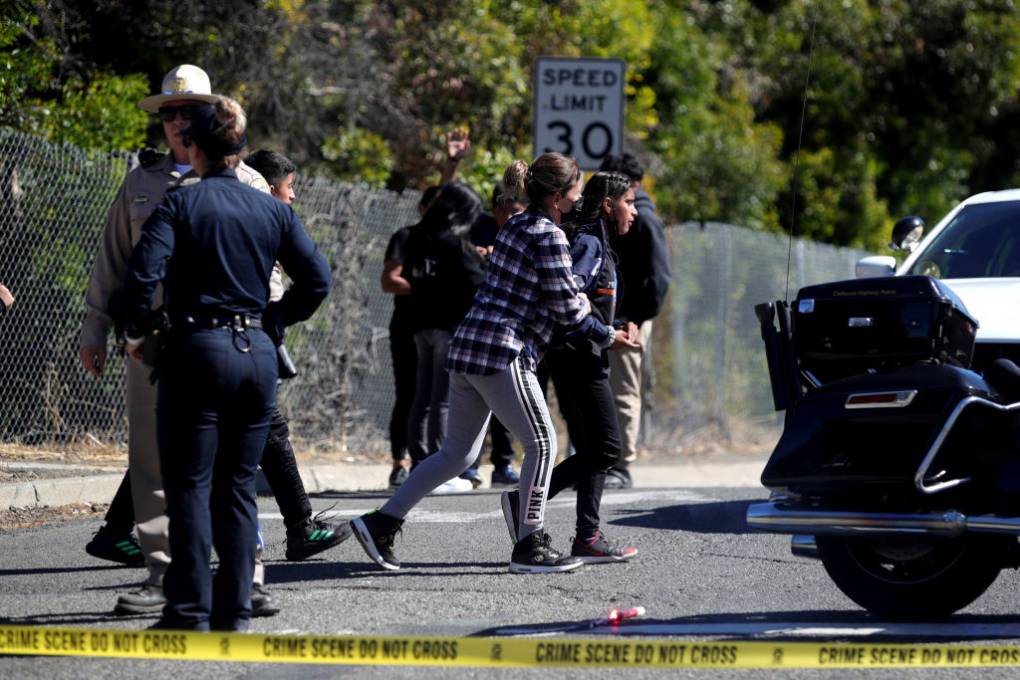
"caption": "Students quickly leave the grounds of King Estates campus, near I-580 in East Oakland, after gunmen fired at least 30 rounds inside one of the schools, wounding six people, on Sept. 28, 2022.",
"description": null,
"title": "Oakland School Shooting",
"credit": "Ray Chavez/MediaNews Group/East Bay Times via Getty Images",
"status": "inherit",
"altTag": "People walk down a street, past yellow caution tape, as law enforcement officers stand by.",
"isLoading": false,
"fetchFailed": false
},
"news_11924530": {
"type": "attachments",
"id": "news_11924530",
"meta": {
"index": "attachments_1716263798",
"site": "news",
"id": "11924530",
"found": true
},
"parent": 11924514,
"imgSizes": {
"twentyfourteen-full-width": {
"file": "https://ww2.kqed.org/app/uploads/sites/10/2022/09/RS43436_026_KQED_Oakland_GeorgeFloydProtest_05292020-qut-1038x576.jpg",
"width": 1038,
"mimeType": "image/jpeg",
"height": 576
},
"thumbnail": {
"file": "https://ww2.kqed.org/app/uploads/sites/10/2022/09/RS43436_026_KQED_Oakland_GeorgeFloydProtest_05292020-qut-160x107.jpg",
"width": 160,
"mimeType": "image/jpeg",
"height": 107
},
"post-thumbnail": {
"file": "https://ww2.kqed.org/app/uploads/sites/10/2022/09/RS43436_026_KQED_Oakland_GeorgeFloydProtest_05292020-qut-672x372.jpg",
"width": 672,
"mimeType": "image/jpeg",
"height": 372
},
"kqedFullSize": {
"file": "https://ww2.kqed.org/app/uploads/sites/10/2022/09/RS43436_026_KQED_Oakland_GeorgeFloydProtest_05292020-qut.jpg",
"width": 1920,
"height": 1280
},
"large": {
"file": "https://ww2.kqed.org/app/uploads/sites/10/2022/09/RS43436_026_KQED_Oakland_GeorgeFloydProtest_05292020-qut-1020x680.jpg",
"width": 1020,
"mimeType": "image/jpeg",
"height": 680
},
"1536x1536": {
"file": "https://ww2.kqed.org/app/uploads/sites/10/2022/09/RS43436_026_KQED_Oakland_GeorgeFloydProtest_05292020-qut-1536x1024.jpg",
"width": 1536,
"mimeType": "image/jpeg",
"height": 1024
},
"medium": {
"file": "https://ww2.kqed.org/app/uploads/sites/10/2022/09/RS43436_026_KQED_Oakland_GeorgeFloydProtest_05292020-qut-800x533.jpg",
"width": 800,
"mimeType": "image/jpeg",
"height": 533
}
},
"publishDate": 1662141950,
"modified": 1662157593,
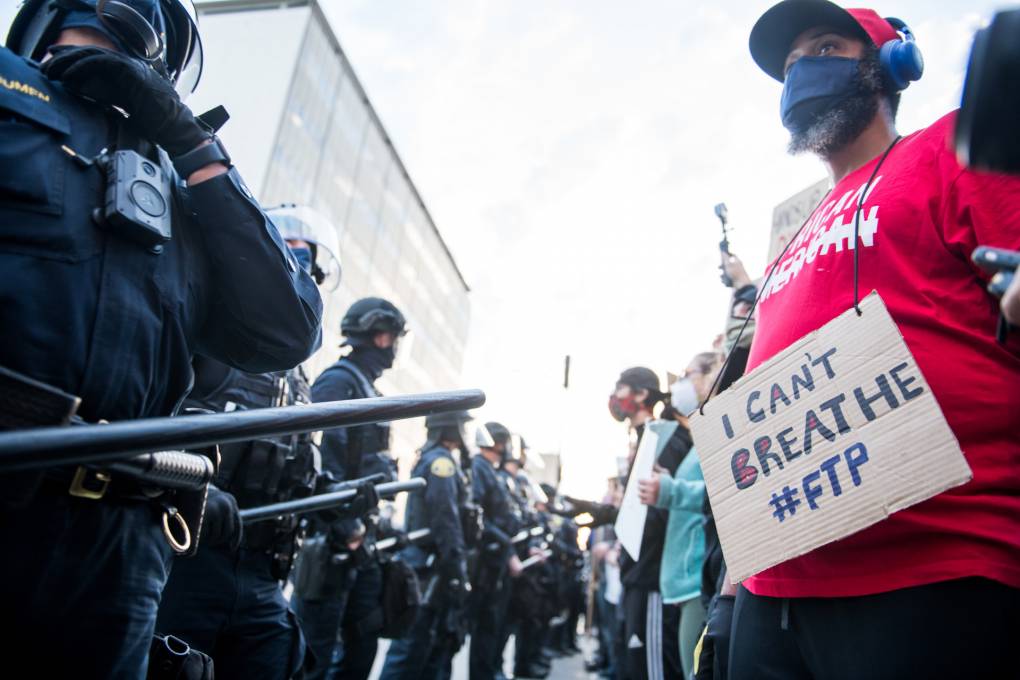
"caption": "A demonstrator comes face-to-face with police outside Oakland Police Department headquarters on May 29, 2020, in the midst of a protest following the murder of George Floyd in Minneapolis.",
"description": null,
"title": "RS43436_026_KQED_Oakland_GeorgeFloydProtest_05292020-qut",
"credit": "Beth LaBerge/KQED",
"status": "inherit",
"altTag": "a row of police officers in combat gear faces a row of protestors, one holding a sign that says 'I can't breathe #FTP'",
"isLoading": false,
"fetchFailed": false
},
"news_11910449": {
"type": "attachments",
"id": "news_11910449",
"meta": {
"index": "attachments_1716263798",
"site": "news",
"id": "11910449",
"found": true
},
"parent": 11910447,
"imgSizes": {
"twentyfourteen-full-width": {
"file": "https://ww2.kqed.org/app/uploads/sites/10/2022/04/GettyImages-1320237484-1-1024x576.jpg",
"width": 1024,
"mimeType": "image/jpeg",
"height": 576
},
"thumbnail": {
"file": "https://ww2.kqed.org/app/uploads/sites/10/2022/04/GettyImages-1320237484-1-160x112.jpg",
"width": 160,
"mimeType": "image/jpeg",
"height": 112
},
"post-thumbnail": {
"file": "https://ww2.kqed.org/app/uploads/sites/10/2022/04/GettyImages-1320237484-1-672x372.jpg",
"width": 672,
"mimeType": "image/jpeg",
"height": 372
},
"kqedFullSize": {
"file": "https://ww2.kqed.org/app/uploads/sites/10/2022/04/GettyImages-1320237484-1.jpg",
"width": 1024,
"height": 717
},
"large": {
"file": "https://ww2.kqed.org/app/uploads/sites/10/2022/04/GettyImages-1320237484-1-1020x714.jpg",
"width": 1020,
"mimeType": "image/jpeg",
"height": 714
},
"medium": {
"file": "https://ww2.kqed.org/app/uploads/sites/10/2022/04/GettyImages-1320237484-1-800x560.jpg",
"width": 800,
"mimeType": "image/jpeg",
"height": 560
}
},
"publishDate": 1649282749,
"modified": 1649282865,
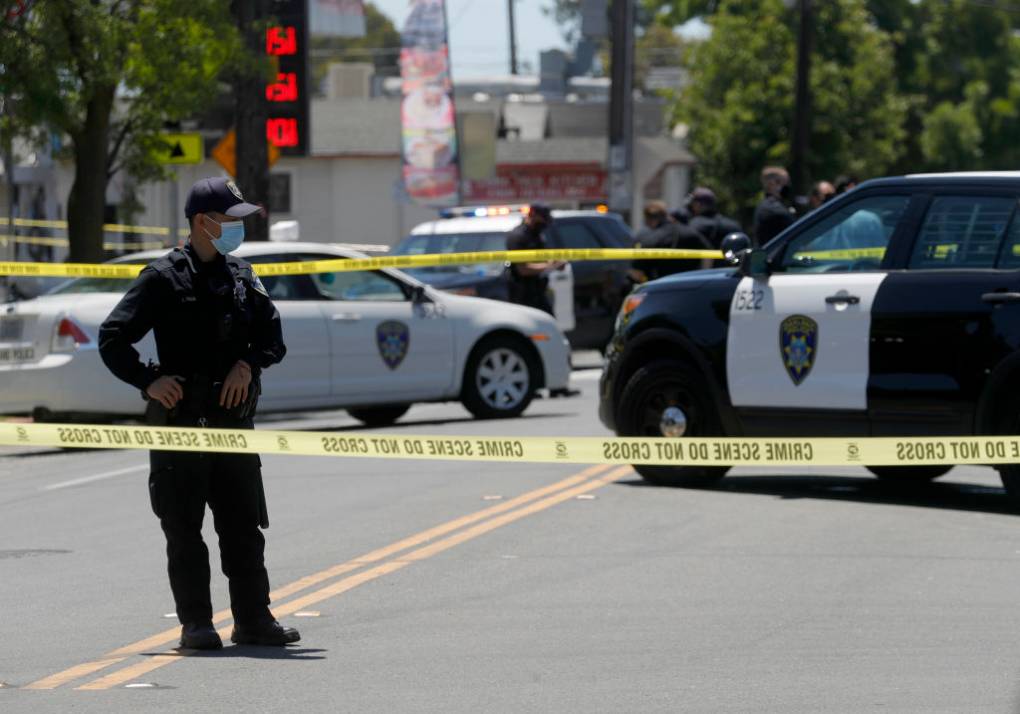
"caption": "Oakland police investigate a homicide on 35th Avenue near Suter Street on May 26, 2021.",
"description": null,
"title": "Oakland Homicide Number 56",
"credit": "Jane Tyska/Digital First Media/East Bay Times via Getty Images",
"status": "inherit",
"altTag": "An Oakland police officer stands behind yellow caution tape, with a police car in the background.",
"isLoading": false,
"fetchFailed": false
},
"news_11899213": {
"type": "attachments",
"id": "news_11899213",
"meta": {
"index": "attachments_1716263798",
"site": "news",
"id": "11899213",
"found": true
},
"parent": 11899157,
"imgSizes": {
"twentyfourteen-full-width": {
"file": "https://cdn.kqed.org/wp-content/uploads/sites/10/2021/12/chpstockimage-1038x576.jpeg",
"width": 1038,
"mimeType": "image/jpeg",
"height": 576
},
"thumbnail": {
"file": "https://cdn.kqed.org/wp-content/uploads/sites/10/2021/12/chpstockimage-160x111.jpeg",
"width": 160,
"mimeType": "image/jpeg",
"height": 111
},
"post-thumbnail": {
"file": "https://cdn.kqed.org/wp-content/uploads/sites/10/2021/12/chpstockimage-672x372.jpeg",
"width": 672,
"mimeType": "image/jpeg",
"height": 372
},
"kqedFullSize": {
"file": "https://cdn.kqed.org/wp-content/uploads/sites/10/2021/12/chpstockimage.jpeg",
"width": 1200,
"height": 830
},
"large": {
"file": "https://cdn.kqed.org/wp-content/uploads/sites/10/2021/12/chpstockimage-1020x706.jpeg",
"width": 1020,
"mimeType": "image/jpeg",
"height": 706
},
"medium": {
"file": "https://cdn.kqed.org/wp-content/uploads/sites/10/2021/12/chpstockimage-800x553.jpeg",
"width": 800,
"mimeType": "image/jpeg",
"height": 553
}
},
"publishDate": 1639605713,
"modified": 1707268896,
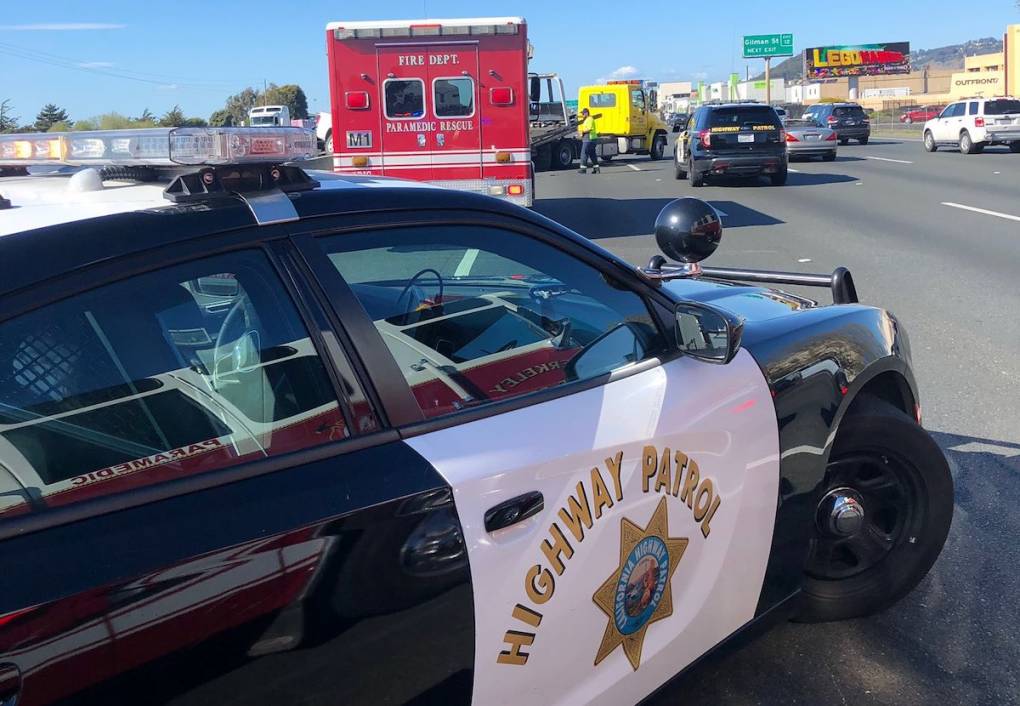
"caption": "A California Highway Patrol vehicle on Interstate 80 in Oakland, near the Berkeley border. ",
"description": null,
"title": "chpstockimage",
"credit": "Courtesy CHP",
"status": "inherit",
"altTag": "A car with black and white paint that reads \"Highway Patrol\" in gold letters is parked on the highway.",
"isLoading": false,
"fetchFailed": false
},
"news_11898490": {
"type": "attachments",
"id": "news_11898490",
"meta": {
"index": "attachments_1716263798",
"site": "news",
"id": "11898490",
"found": true
},
"parent": 11898477,
"imgSizes": {
"twentyfourteen-full-width": {
"file": "https://ww2.kqed.org/app/uploads/sites/10/2021/12/funding_120821_final-1038x576.png",
"width": 1038,
"mimeType": "image/png",
"height": 576
},
"thumbnail": {
"file": "https://ww2.kqed.org/app/uploads/sites/10/2021/12/funding_120821_final-160x112.png",
"width": 160,
"mimeType": "image/png",
"height": 112
},
"post-thumbnail": {
"file": "https://ww2.kqed.org/app/uploads/sites/10/2021/12/funding_120821_final-672x372.png",
"width": 672,
"mimeType": "image/png",
"height": 372
},
"kqedFullSize": {
"file": "https://ww2.kqed.org/app/uploads/sites/10/2021/12/funding_120821_final.png",
"width": 1920,
"height": 1343
},
"large": {
"file": "https://ww2.kqed.org/app/uploads/sites/10/2021/12/funding_120821_final-1020x713.png",
"width": 1020,
"mimeType": "image/png",
"height": 713
},
"1536x1536": {
"file": "https://ww2.kqed.org/app/uploads/sites/10/2021/12/funding_120821_final-1536x1074.png",
"width": 1536,
"mimeType": "image/png",
"height": 1074
},
"medium": {
"file": "https://ww2.kqed.org/app/uploads/sites/10/2021/12/funding_120821_final-800x560.png",
"width": 800,
"mimeType": "image/png",
"height": 560
}
},
"publishDate": 1639001336,
"modified": 1639001413,
"caption": null,
"description": null,
"title": "funding_120821_final",
"credit": null,
"status": "inherit",
"altTag": "Cartoon: Oakland Mayor Libby Schaaf holds a sign that reads, \"Defund the Police\" with the \"de\" crossed out and replaced with \"re.\" We see police tape, shell casings, a flower memorial and sad residents in the background.",
"isLoading": false,
"fetchFailed": false
},
"news_11892534": {
"type": "attachments",
"id": "news_11892534",
"meta": {
"index": "attachments_1716263798",
"site": "news",
"id": "11892534",
"found": true
},
"parent": 11892453,
"imgSizes": {
"twentyfourteen-full-width": {
"file": "https://ww2.kqed.org/app/uploads/sites/10/2021/10/ARMSTRONG-headshot-2-1038x576.jpg",
"width": 1038,
"mimeType": "image/jpeg",
"height": 576
},
"thumbnail": {
"file": "https://ww2.kqed.org/app/uploads/sites/10/2021/10/ARMSTRONG-headshot-2-160x90.jpg",
"width": 160,
"mimeType": "image/jpeg",
"height": 90
},
"post-thumbnail": {
"file": "https://ww2.kqed.org/app/uploads/sites/10/2021/10/ARMSTRONG-headshot-2-672x372.jpg",
"width": 672,
"mimeType": "image/jpeg",
"height": 372
},
"kqedFullSize": {
"file": "https://ww2.kqed.org/app/uploads/sites/10/2021/10/ARMSTRONG-headshot-2.jpg",
"width": 1920,
"height": 1080
},
"large": {
"file": "https://ww2.kqed.org/app/uploads/sites/10/2021/10/ARMSTRONG-headshot-2-1020x574.jpg",
"width": 1020,
"mimeType": "image/jpeg",
"height": 574
},
"1536x1536": {
"file": "https://ww2.kqed.org/app/uploads/sites/10/2021/10/ARMSTRONG-headshot-2-1536x864.jpg",
"width": 1536,
"mimeType": "image/jpeg",
"height": 864
},
"medium": {
"file": "https://ww2.kqed.org/app/uploads/sites/10/2021/10/ARMSTRONG-headshot-2-800x450.jpg",
"width": 800,
"mimeType": "image/jpeg",
"height": 450
}
},
"publishDate": 1634338810,
"modified": 1634338810,
"caption": null,
"description": null,
"title": "ARMSTRONG headshot 2",
"credit": null,
"status": "inherit",
"altTag": null,
"isLoading": false,
"fetchFailed": false
},
"news_11879410": {
"type": "attachments",
"id": "news_11879410",
"meta": {
"index": "attachments_1716263798",
"site": "news",
"id": "11879410",
"found": true
},
"parent": 11879404,
"imgSizes": {
"twentyfourteen-full-width": {
"file": "https://ww2.kqed.org/app/uploads/sites/10/2021/06/RS46661_026_Oakland_MLKCarCaravan_01182021-qut-1038x576.jpg",
"width": 1038,
"mimeType": "image/jpeg",
"height": 576
},
"thumbnail": {
"file": "https://ww2.kqed.org/app/uploads/sites/10/2021/06/RS46661_026_Oakland_MLKCarCaravan_01182021-qut-160x107.jpg",
"width": 160,
"mimeType": "image/jpeg",
"height": 107
},
"post-thumbnail": {
"file": "https://ww2.kqed.org/app/uploads/sites/10/2021/06/RS46661_026_Oakland_MLKCarCaravan_01182021-qut-672x372.jpg",
"width": 672,
"mimeType": "image/jpeg",
"height": 372
},
"kqedFullSize": {
"file": "https://ww2.kqed.org/app/uploads/sites/10/2021/06/RS46661_026_Oakland_MLKCarCaravan_01182021-qut.jpg",
"width": 1920,
"height": 1278
},
"large": {
"file": "https://ww2.kqed.org/app/uploads/sites/10/2021/06/RS46661_026_Oakland_MLKCarCaravan_01182021-qut-1020x679.jpg",
"width": 1020,
"mimeType": "image/jpeg",
"height": 679
},
"1536x1536": {
"file": "https://ww2.kqed.org/app/uploads/sites/10/2021/06/RS46661_026_Oakland_MLKCarCaravan_01182021-qut-1536x1022.jpg",
"width": 1536,
"mimeType": "image/jpeg",
"height": 1022
},
"medium": {
"file": "https://ww2.kqed.org/app/uploads/sites/10/2021/06/RS46661_026_Oakland_MLKCarCaravan_01182021-qut-800x533.jpg",
"width": 800,
"mimeType": "image/jpeg",
"height": 533
}
},
"publishDate": 1624655582,
"modified": 1624655607,
"caption": "Odessa Helfrich-Batt holds a sign that says, \"Defund OPD\" during a Martin Luther King Day car caravan at Middle Harbor Shoreline Park near the Port of Oakland on Jan. 18, 2021.",
"description": "Odessa Helfrich-Batt holds a sign that says, \"Defund OPD\" during a Martin Luther King Day car caravan at Middle Harbor Shoreline Park near the Port of Oakland on Jan. 18, 2021.",
"title": "RS46661_026_Oakland_MLKCarCaravan_01182021-qut",
"credit": "Beth LaBerge/KQED",
"status": "inherit",
"altTag": null,
"isLoading": false,
"fetchFailed": false
},
"news_11823006": {
"type": "attachments",
"id": "news_11823006",
"meta": {
"index": "attachments_1716263798",
"site": "news",
"id": "11823006",
"found": true
},
"parent": 11822817,
"imgSizes": {
"apple_news_ca_landscape_5_5": {
"file": "https://ww2.kqed.org/app/uploads/sites/10/2020/06/RS43444_043_KQED_Oakland_GeorgeFloydProtest_05292020-qut-1044x783.jpg",
"width": 1044,
"mimeType": "image/jpeg",
"height": 783
},
"apple_news_ca_square_4_0": {
"file": "https://ww2.kqed.org/app/uploads/sites/10/2020/06/RS43444_043_KQED_Oakland_GeorgeFloydProtest_05292020-qut-470x470.jpg",
"width": 470,
"mimeType": "image/jpeg",
"height": 470
},
"twentyfourteen-full-width": {
"file": "https://ww2.kqed.org/app/uploads/sites/10/2020/06/RS43444_043_KQED_Oakland_GeorgeFloydProtest_05292020-qut-1038x576.jpg",
"width": 1038,
"mimeType": "image/jpeg",
"height": 576
},
"thumbnail": {
"file": "https://ww2.kqed.org/app/uploads/sites/10/2020/06/RS43444_043_KQED_Oakland_GeorgeFloydProtest_05292020-qut-160x107.jpg",
"width": 160,
"mimeType": "image/jpeg",
"height": 107
},
"post-thumbnail": {
"file": "https://ww2.kqed.org/app/uploads/sites/10/2020/06/RS43444_043_KQED_Oakland_GeorgeFloydProtest_05292020-qut-672x372.jpg",
"width": 672,
"mimeType": "image/jpeg",
"height": 372
},
"kqedFullSize": {
"file": "https://ww2.kqed.org/app/uploads/sites/10/2020/06/RS43444_043_KQED_Oakland_GeorgeFloydProtest_05292020-qut.jpg",
"width": 1920,
"height": 1280
},
"apple_news_ca_landscape_4_7": {
"file": "https://ww2.kqed.org/app/uploads/sites/10/2020/06/RS43444_043_KQED_Oakland_GeorgeFloydProtest_05292020-qut-632x474.jpg",
"width": 632,
"mimeType": "image/jpeg",
"height": 474
},
"large": {
"file": "https://ww2.kqed.org/app/uploads/sites/10/2020/06/RS43444_043_KQED_Oakland_GeorgeFloydProtest_05292020-qut-1020x680.jpg",
"width": 1020,
"mimeType": "image/jpeg",
"height": 680
},
"apple_news_ca_landscape_4_0": {
"file": "https://ww2.kqed.org/app/uploads/sites/10/2020/06/RS43444_043_KQED_Oakland_GeorgeFloydProtest_05292020-qut-536x402.jpg",
"width": 536,
"mimeType": "image/jpeg",
"height": 402
},
"apple_news_ca_portrait_12_9": {
"file": "https://ww2.kqed.org/app/uploads/sites/10/2020/06/RS43444_043_KQED_Oakland_GeorgeFloydProtest_05292020-qut-1122x1280.jpg",
"width": 1122,
"mimeType": "image/jpeg",
"height": 1280
},
"medium": {
"file": "https://ww2.kqed.org/app/uploads/sites/10/2020/06/RS43444_043_KQED_Oakland_GeorgeFloydProtest_05292020-qut-800x533.jpg",
"width": 800,
"mimeType": "image/jpeg",
"height": 533
},
"apple_news_ca_portrait_4_0": {
"file": "https://ww2.kqed.org/app/uploads/sites/10/2020/06/RS43444_043_KQED_Oakland_GeorgeFloydProtest_05292020-qut-354x472.jpg",
"width": 354,
"mimeType": "image/jpeg",
"height": 472
},
"apple_news_ca_portrait_9_7": {
"file": "https://ww2.kqed.org/app/uploads/sites/10/2020/06/RS43444_043_KQED_Oakland_GeorgeFloydProtest_05292020-qut-840x1120.jpg",
"width": 840,
"mimeType": "image/jpeg",
"height": 1120
},
"apple_news_ca_landscape_12_9": {
"file": "https://ww2.kqed.org/app/uploads/sites/10/2020/06/RS43444_043_KQED_Oakland_GeorgeFloydProtest_05292020-qut-1832x1280.jpg",
"width": 1832,
"mimeType": "image/jpeg",
"height": 1280
},
"apple_news_ca_square_9_7": {
"file": "https://ww2.kqed.org/app/uploads/sites/10/2020/06/RS43444_043_KQED_Oakland_GeorgeFloydProtest_05292020-qut-1104x1104.jpg",
"width": 1104,
"mimeType": "image/jpeg",
"height": 1104
},
"apple_news_ca_portrait_4_7": {
"file": "https://ww2.kqed.org/app/uploads/sites/10/2020/06/RS43444_043_KQED_Oakland_GeorgeFloydProtest_05292020-qut-414x552.jpg",
"width": 414,
"mimeType": "image/jpeg",
"height": 552
},
"apple_news_ca_square_12_9": {
"file": "https://ww2.kqed.org/app/uploads/sites/10/2020/06/RS43444_043_KQED_Oakland_GeorgeFloydProtest_05292020-qut-1472x1280.jpg",
"width": 1472,
"mimeType": "image/jpeg",
"height": 1280
},
"apple_news_ca_portrait_5_5": {
"file": "https://ww2.kqed.org/app/uploads/sites/10/2020/06/RS43444_043_KQED_Oakland_GeorgeFloydProtest_05292020-qut-687x916.jpg",
"width": 687,
"mimeType": "image/jpeg",
"height": 916
},
"full-width": {
"file": "https://ww2.kqed.org/app/uploads/sites/10/2020/06/RS43444_043_KQED_Oakland_GeorgeFloydProtest_05292020-qut-1920x1280.jpg",
"width": 1920,
"mimeType": "image/jpeg",
"height": 1280
},
"apple_news_ca_square_4_7": {
"file": "https://ww2.kqed.org/app/uploads/sites/10/2020/06/RS43444_043_KQED_Oakland_GeorgeFloydProtest_05292020-qut-550x550.jpg",
"width": 550,
"mimeType": "image/jpeg",
"height": 550
},
"apple_news_ca_landscape_9_7": {
"file": "https://ww2.kqed.org/app/uploads/sites/10/2020/06/RS43444_043_KQED_Oakland_GeorgeFloydProtest_05292020-qut-1376x1032.jpg",
"width": 1376,
"mimeType": "image/jpeg",
"height": 1032
},
"apple_news_ca_square_5_5": {
"file": "https://ww2.kqed.org/app/uploads/sites/10/2020/06/RS43444_043_KQED_Oakland_GeorgeFloydProtest_05292020-qut-912x912.jpg",
"width": 912,
"mimeType": "image/jpeg",
"height": 912
}
},
"publishDate": 1591318054,
"modified": 1591318710,
"caption": "Demonstrators fill Broadway near Oakland Police Department headquarters on May 29, 2020 during a protest over the Minneapolis police killing of George Floyd.",
"description": null,
"title": "RS43444_043_KQED_Oakland_GeorgeFloydProtest_05292020-qut",
"credit": "Beth LaBerge/KQED",
"status": "inherit",
"isLoading": false,
"fetchFailed": false
},
"news_11845269": {
"type": "attachments",
"id": "news_11845269",
"meta": {
"index": "attachments_1716263798",
"site": "news",
"id": "11845269",
"found": true
},
"parent": 11844487,
"imgSizes": {
"apple_news_ca_landscape_5_5": {
"file": "https://ww2.kqed.org/app/uploads/sites/10/2021/10/Downtown-Oakland-Police-Vehicle-1044x783.jpg",
"width": 1044,
"mimeType": "image/jpeg",
"height": 783
},
"apple_news_ca_square_4_0": {
"file": "https://ww2.kqed.org/app/uploads/sites/10/2021/10/Downtown-Oakland-Police-Vehicle-470x470.jpg",
"width": 470,
"mimeType": "image/jpeg",
"height": 470
},
"twentyfourteen-full-width": {
"file": "https://ww2.kqed.org/app/uploads/sites/10/2021/10/Downtown-Oakland-Police-Vehicle-1038x576.jpg",
"width": 1038,
"mimeType": "image/jpeg",
"height": 576
},
"thumbnail": {
"file": "https://ww2.kqed.org/app/uploads/sites/10/2021/10/Downtown-Oakland-Police-Vehicle-160x107.jpg",
"width": 160,
"mimeType": "image/jpeg",
"height": 107
},
"post-thumbnail": {
"file": "https://ww2.kqed.org/app/uploads/sites/10/2021/10/Downtown-Oakland-Police-Vehicle-672x372.jpg",
"width": 672,
"mimeType": "image/jpeg",
"height": 372
},
"kqedFullSize": {
"file": "https://ww2.kqed.org/app/uploads/sites/10/2021/10/Downtown-Oakland-Police-Vehicle.jpg",
"width": 1920,
"height": 1280
},
"apple_news_ca_landscape_4_7": {
"file": "https://ww2.kqed.org/app/uploads/sites/10/2021/10/Downtown-Oakland-Police-Vehicle-632x474.jpg",
"width": 632,
"mimeType": "image/jpeg",
"height": 474
},
"large": {
"file": "https://ww2.kqed.org/app/uploads/sites/10/2021/10/Downtown-Oakland-Police-Vehicle-1020x680.jpg",
"width": 1020,
"mimeType": "image/jpeg",
"height": 680
},
"apple_news_ca_landscape_4_0": {
"file": "https://ww2.kqed.org/app/uploads/sites/10/2021/10/Downtown-Oakland-Police-Vehicle-536x402.jpg",
"width": 536,
"mimeType": "image/jpeg",
"height": 402
},
"apple_news_ca_portrait_12_9": {
"file": "https://ww2.kqed.org/app/uploads/sites/10/2021/10/Downtown-Oakland-Police-Vehicle-1122x1280.jpg",
"width": 1122,
"mimeType": "image/jpeg",
"height": 1280
},
"medium": {
"file": "https://ww2.kqed.org/app/uploads/sites/10/2021/10/Downtown-Oakland-Police-Vehicle-800x533.jpg",
"width": 800,
"mimeType": "image/jpeg",
"height": 533
},
"apple_news_ca_portrait_4_0": {
"file": "https://ww2.kqed.org/app/uploads/sites/10/2021/10/Downtown-Oakland-Police-Vehicle-354x472.jpg",
"width": 354,
"mimeType": "image/jpeg",
"height": 472
},
"apple_news_ca_portrait_9_7": {
"file": "https://ww2.kqed.org/app/uploads/sites/10/2021/10/Downtown-Oakland-Police-Vehicle-840x1120.jpg",
"width": 840,
"mimeType": "image/jpeg",
"height": 1120
},
"apple_news_ca_landscape_12_9": {
"file": "https://ww2.kqed.org/app/uploads/sites/10/2021/10/Downtown-Oakland-Police-Vehicle-1832x1280.jpg",
"width": 1832,
"mimeType": "image/jpeg",
"height": 1280
},
"apple_news_ca_square_9_7": {
"file": "https://ww2.kqed.org/app/uploads/sites/10/2021/10/Downtown-Oakland-Police-Vehicle-1104x1104.jpg",
"width": 1104,
"mimeType": "image/jpeg",
"height": 1104
},
"1536x1536": {
"file": "https://ww2.kqed.org/app/uploads/sites/10/2021/10/Downtown-Oakland-Police-Vehicle-1536x1024.jpg",
"width": 1536,
"mimeType": "image/jpeg",
"height": 1024
},
"apple_news_ca_portrait_4_7": {
"file": "https://ww2.kqed.org/app/uploads/sites/10/2021/10/Downtown-Oakland-Police-Vehicle-414x552.jpg",
"width": 414,
"mimeType": "image/jpeg",
"height": 552
},
"apple_news_ca_square_12_9": {
"file": "https://ww2.kqed.org/app/uploads/sites/10/2021/10/Downtown-Oakland-Police-Vehicle-1472x1280.jpg",
"width": 1472,
"mimeType": "image/jpeg",
"height": 1280
},
"apple_news_ca_portrait_5_5": {
"file": "https://ww2.kqed.org/app/uploads/sites/10/2021/10/Downtown-Oakland-Police-Vehicle-687x916.jpg",
"width": 687,
"mimeType": "image/jpeg",
"height": 916
},
"apple_news_ca_square_4_7": {
"file": "https://ww2.kqed.org/app/uploads/sites/10/2021/10/Downtown-Oakland-Police-Vehicle-550x550.jpg",
"width": 550,
"mimeType": "image/jpeg",
"height": 550
},
"apple_news_ca_landscape_9_7": {
"file": "https://ww2.kqed.org/app/uploads/sites/10/2021/10/Downtown-Oakland-Police-Vehicle-1376x1032.jpg",
"width": 1376,
"mimeType": "image/jpeg",
"height": 1032
},
"apple_news_ca_square_5_5": {
"file": "https://ww2.kqed.org/app/uploads/sites/10/2021/10/Downtown-Oakland-Police-Vehicle-912x912.jpg",
"width": 912,
"mimeType": "image/jpeg",
"height": 912
}
},
"publishDate": 1604456400,
"modified": 1604456530,
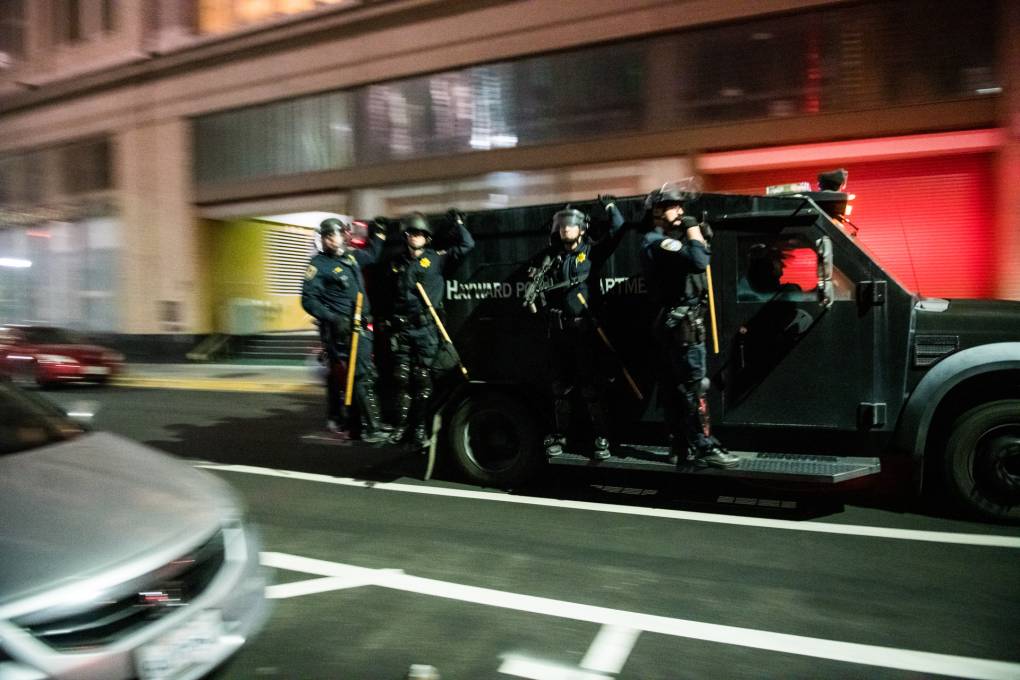
"caption": "Police from Hayward roll through Downtown Oakland on May 29, 2020 during a protest over the killing of George Floyd by Minneapolis police.",
"description": "Police from Hayward roll through Downtown Oakland on May 29, 2020 during a protest over the killing of George Floyd by Minneapolis police.",
"title": "Downtown-Oakland-Police-Vehicle",
"credit": "Beth LaBerge/KQED",
"status": "inherit",
"isLoading": false,
"fetchFailed": false
}
},
"audioPlayerReducer": {
"postId": "stream_live",
"isPaused": true,
"isPlaying": false,
"pfsActive": false,
"pledgeModalIsOpen": true,
"playerDrawerIsOpen": false,
"liveAudioPlayStartedAt": 0,
"liveAudioPlayContext": ""
},
"authorsReducer": {
"byline_news_11924514": {
"type": "authors",
"id": "byline_news_11924514",
"meta": {
"override": true
},
"slug": "byline_news_11924514",
"name": "Olga R. Rodriguez\u003cbr>Associated Press",
"isLoading": false
},
"byline_news_11910447": {
"type": "authors",
"id": "byline_news_11910447",
"meta": {
"override": true
},
"slug": "byline_news_11910447",
"name": "\u003ca href=\"https://calmatters.org/author/nigelduara/\">Nigel Duara\u003c/a>",
"isLoading": false
},
"byline_news_11873608": {
"type": "authors",
"id": "byline_news_11873608",
"meta": {
"override": true
},
"slug": "byline_news_11873608",
"name": "Noah Baustin",
"isLoading": false
},
"kqed": {
"type": "authors",
"id": "236",
"meta": {
"index": "authors_1716337520",
"id": "236",
"found": true
},
"name": "KQED News Staff",
"firstName": "KQED News Staff",
"lastName": null,
"slug": "kqed",
"email": "faq@kqed.org",
"display_author_email": false,
"staff_mastheads": [],
"title": null,
"bio": null,
"avatar": "https://secure.gravatar.com/avatar/ef0e801a68c4c54afa9180db14084167?s=600&d=blank&r=g",
"twitter": null,
"facebook": null,
"instagram": null,
"linkedin": null,
"sites": [
{
"site": "arts",
"roles": [
"contributor"
]
},
{
"site": "news",
"roles": [
"editor"
]
},
{
"site": "futureofyou",
"roles": [
"author"
]
}
],
"headData": {
"title": "KQED News Staff | KQED",
"description": null,
"ogImgSrc": "https://secure.gravatar.com/avatar/ef0e801a68c4c54afa9180db14084167?s=600&d=blank&r=g",
"twImgSrc": "https://secure.gravatar.com/avatar/ef0e801a68c4c54afa9180db14084167?s=600&d=blank&r=g"
},
"isLoading": false,
"link": "/author/kqed"
},
"kqednewsstaffandwires": {
"type": "authors",
"id": "237",
"meta": {
"index": "authors_1716337520",
"id": "237",
"found": true
},
"name": "KQED News Staff and Wires",
"firstName": "KQED News Staff and Wires",
"lastName": null,
"slug": "kqednewsstaffandwires",
"email": "onlinenewsstaff@kqed.org",
"display_author_email": false,
"staff_mastheads": [],
"title": null,
"bio": null,
"avatar": "https://secure.gravatar.com/avatar/72295af8ebbfbd19a4948f5271285664?s=600&d=blank&r=g",
"twitter": null,
"facebook": null,
"instagram": null,
"linkedin": null,
"sites": [
{
"site": "arts",
"roles": [
"contributor"
]
},
{
"site": "news",
"roles": [
"contributor"
]
},
{
"site": "lowdown",
"roles": [
"author"
]
},
{
"site": "stateofhealth",
"roles": [
"contributor"
]
},
{
"site": "food",
"roles": [
"author"
]
}
],
"headData": {
"title": "KQED News Staff and Wires | KQED",
"description": null,
"ogImgSrc": "https://secure.gravatar.com/avatar/72295af8ebbfbd19a4948f5271285664?s=600&d=blank&r=g",
"twImgSrc": "https://secure.gravatar.com/avatar/72295af8ebbfbd19a4948f5271285664?s=600&d=blank&r=g"
},
"isLoading": false,
"link": "/author/kqednewsstaffandwires"
},
"matthewgreen": {
"type": "authors",
"id": "1263",
"meta": {
"index": "authors_1716337520",
"id": "1263",
"found": true
},
"name": "Matthew Green",
"firstName": "Matthew",
"lastName": "Green",
"slug": "matthewgreen",
"email": "mgreen@kqed.org",
"display_author_email": false,
"staff_mastheads": [],
"title": "KQED Editor/Reporter",
"bio": "Matthew Green is a digital media producer for KQED News. He previously produced \u003ca href=\"http://www.kqed.org/lowdown\">The Lowdown\u003c/a>, KQED’s multimedia news education blog. Matthew's written for numerous Bay Area publications, including the Oakland Tribune and San Francisco Chronicle. He also taught journalism classes at Fremont High School in East Oakland.\r\n\r\nEmail: mgreen@kqed.org; Twitter: @MGreenKQED",
"avatar": "https://secure.gravatar.com/avatar/3bf498d1267ca02c8494f33d8cfc575e?s=600&d=blank&r=g",
"twitter": "MGreenKQED",
"facebook": null,
"instagram": null,
"linkedin": null,
"sites": [
{
"site": "news",
"roles": []
},
{
"site": "lowdown",
"roles": []
},
{
"site": "science",
"roles": []
},
{
"site": "education",
"roles": []
},
{
"site": "quest",
"roles": []
},
{
"site": "liveblog",
"roles": []
}
],
"headData": {
"title": "Matthew Green | KQED",
"description": "KQED Editor/Reporter",
"ogImgSrc": "https://secure.gravatar.com/avatar/3bf498d1267ca02c8494f33d8cfc575e?s=600&d=blank&r=g",
"twImgSrc": "https://secure.gravatar.com/avatar/3bf498d1267ca02c8494f33d8cfc575e?s=600&d=blank&r=g"
},
"isLoading": false,
"link": "/author/matthewgreen"
},
"markfiore": {
"type": "authors",
"id": "3236",
"meta": {
"index": "authors_1716337520",
"id": "3236",
"found": true
},
"name": "Mark Fiore",
"firstName": "Mark",
"lastName": "Fiore",
"slug": "markfiore",
"email": "mark@markfiore.com",
"display_author_email": false,
"staff_mastheads": [
"news"
],
"title": "KQED News Cartoonist",
"bio": "\u003ca href=\"http://www.MarkFiore.com\">MarkFiore.com\u003c/a> | \u003ca href=\"https://twitter.com/markfiore\">Follow on Twitter\u003c/a> | \u003ca href=\"https://www.facebook.com/pages/Mark-Fiore-Animated-Political-Cartoons/94451707396?ref=bookmarks\">Facebook\u003c/a> | \u003ca href=\"mailto:mark@markfiore.com\">email\u003c/a>\r\n\r\nPulitzer Prize-winner, Mark Fiore, who the Wall Street Journal has called “the undisputed guru of the form,” creates animated political cartoons in San Francisco, where his work has been featured regularly on the San Francisco Chronicle’s web site, SFGate.com. His work has appeared on Newsweek.com, Slate.com, CBSNews.com, MotherJones.com, DailyKos.com and NPR’s web site. Fiore’s political animation has appeared on CNN, Frontline, Bill Moyers Journal, Salon.com and cable and broadcast outlets across the globe.\r\n\r\nBeginning his professional life by drawing traditional political cartoons for newspapers, Fiore’s work appeared in publications ranging from the Washington Post to the Los Angeles Times. In the late 1990s, he began to experiment with animating political cartoons and, after a short stint at the San Jose Mercury News as their staff cartoonist, Fiore devoted all his energies to animation.\r\nGrowing up in California, Fiore also spent a good portion of his life in the backwoods of Idaho. It was this combination that shaped him politically. Mark majored in political science at Colorado College, where, in a perfect send-off for a cartoonist, he received his diploma in 1991 as commencement speaker Dick Cheney smiled approvingly.\r\nMark Fiore was awarded the Pulitzer Prize for political cartooning in 2010, a Robert F. Kennedy Journalism Award in 2004 and has twice received an Online Journalism Award for commentary from the Online News Association (2002, 2008). Fiore has received two awards for his work in new media from the National Cartoonists Society (2001, 2002), and in 2006 received The James Madison Freedom of Information Award from The Society of Professional Journalists.",
"avatar": "https://secure.gravatar.com/avatar/fc4e2a612b15b67bad0c6f0e1db4ca9b?s=600&d=blank&r=g",
"twitter": "MarkFiore",
"facebook": null,
"instagram": "https://www.instagram.com/markfiore/?hl=en",
"linkedin": null,
"sites": [
{
"site": "arts",
"roles": [
"contributor"
]
},
{
"site": "news",
"roles": [
"editor"
]
},
{
"site": "futureofyou",
"roles": [
"editor"
]
},
{
"site": "science",
"roles": [
"editor"
]
}
],
"headData": {
"title": "Mark Fiore | KQED",
"description": "KQED News Cartoonist",
"ogImgSrc": "https://secure.gravatar.com/avatar/fc4e2a612b15b67bad0c6f0e1db4ca9b?s=600&d=blank&r=g",
"twImgSrc": "https://secure.gravatar.com/avatar/fc4e2a612b15b67bad0c6f0e1db4ca9b?s=600&d=blank&r=g"
},
"isLoading": false,
"link": "/author/markfiore"
},
"ecruzguevarra": {
"type": "authors",
"id": "8654",
"meta": {
"index": "authors_1716337520",
"id": "8654",
"found": true
},
"name": "Ericka Cruz Guevarra",
"firstName": "Ericka",
"lastName": "Cruz Guevarra",
"slug": "ecruzguevarra",
"email": "ecruzguevarra@kqed.org",
"display_author_email": true,
"staff_mastheads": [
"news"
],
"title": "Producer, The Bay Podcast",
"bio": "Ericka Cruz Guevarra is host of \u003ca href=\"https://www.kqed.org/podcasts/thebay\">\u003cem>The Bay\u003c/em>\u003c/a> podcast at KQED. Before host, she was the show’s producer. Her work in that capacity includes a three-part reported series on policing in Vallejo, which won a 2020 excellence in journalism award from the Society of Professional Journalists. Ericka has worked as a breaking news reporter at Oregon Public Broadcasting, helped produce the Code Switch podcast, and was KQED’s inaugural Raul Ramirez Diversity Fund intern. She’s also an alumna of NPR’s Next Generation Radio program. Send her an email if you have strong feelings about whether Fairfield and Suisun City are the Bay. Ericka is represented by SAG-AFTRA.",
"avatar": "https://secure.gravatar.com/avatar/accefc1de4bafc7e234b69bcb9b6f6536c130fd84709bc3069ef11a78787e1bb?s=600&d=blank&r=g",
"twitter": "NotoriousECG",
"bluesky": null,
"facebook": null,
"instagram": null,
"linkedin": null,
"sites": [
{
"site": "arts",
"roles": [
"subscriber"
]
},
{
"site": "news",
"roles": [
"editor",
"manage_categories"
]
},
{
"site": "futureofyou",
"roles": [
"subscriber"
]
},
{
"site": "stateofhealth",
"roles": [
"subscriber"
]
},
{
"site": "science",
"roles": [
"editor"
]
},
{
"site": "forum",
"roles": [
"subscriber"
]
}
],
"headData": {
"title": "Ericka Cruz Guevarra | KQED",
"description": "Producer, The Bay Podcast",
"ogImgSrc": "https://secure.gravatar.com/avatar/accefc1de4bafc7e234b69bcb9b6f6536c130fd84709bc3069ef11a78787e1bb?s=600&d=blank&r=g",
"twImgSrc": "https://secure.gravatar.com/avatar/accefc1de4bafc7e234b69bcb9b6f6536c130fd84709bc3069ef11a78787e1bb?s=600&d=blank&r=g"
},
"isLoading": false,
"link": "/author/ecruzguevarra"
},
"amontecillo": {
"type": "authors",
"id": "11649",
"meta": {
"index": "authors_1716337520",
"id": "11649",
"found": true
},
"name": "Alan Montecillo",
"firstName": "Alan",
"lastName": "Montecillo",
"slug": "amontecillo",
"email": "amontecillo@kqed.org",
"display_author_email": false,
"staff_mastheads": [
"news"
],
"title": "KQED Contributor",
"bio": "Alan Montecillo is the senior editor of \u003cem>\u003ca href=\"http://kqed.org/thebay\">The Bay\u003c/a>, \u003c/em> KQED's local news podcast. Before moving to the Bay Area, he worked as a senior talk show producer for WILL in Champaign-Urbana, Illinois and at Oregon Public Broadcasting in Portland, Oregon. He has won journalism awards from the Society of Professional Journalists Northern California, the Public Media Journalists Association, The Signal Awards, and has also received a regional Edward R. Murrow award. Alan is a Filipino American from Hong Kong and a graduate of Reed College.",
"avatar": "https://secure.gravatar.com/avatar/268f53a2066899ea9efdd8a5900218b17c822d9862cbc9326cccec53ef41d349?s=600&d=blank&r=g",
"twitter": "alanmontecillo",
"bluesky": null,
"facebook": null,
"instagram": null,
"linkedin": null,
"sites": [
{
"site": "",
"roles": [
"editor"
]
},
{
"site": "news",
"roles": [
"editor",
"manage_categories"
]
}
],
"headData": {
"title": "Alan Montecillo | KQED",
"description": "KQED Contributor",
"ogImgSrc": "https://secure.gravatar.com/avatar/268f53a2066899ea9efdd8a5900218b17c822d9862cbc9326cccec53ef41d349?s=600&d=blank&r=g",
"twImgSrc": "https://secure.gravatar.com/avatar/268f53a2066899ea9efdd8a5900218b17c822d9862cbc9326cccec53ef41d349?s=600&d=blank&r=g"
},
"isLoading": false,
"link": "/author/amontecillo"
},
"jrodriguez": {
"type": "authors",
"id": "11690",
"meta": {
"index": "authors_1716337520",
"id": "11690",
"found": true
},
"name": "Joe Fitzgerald Rodriguez",
"firstName": "Joe",
"lastName": "Fitzgerald Rodriguez",
"slug": "jrodriguez",
"email": "jrodriguez@kqed.org",
"display_author_email": true,
"staff_mastheads": [
"news"
],
"title": "Reporter and Producer",
"bio": "Joe Fitzgerald Rodriguez is a reporter and digital producer for KQED covering politics. Joe most recently wrote for the \u003cem>San Francisco Examiner\u003c/em> as a political columnist covering The City. He was raised in San Francisco and has spent his reporting career in his beloved, foggy, city by the bay. Joe was 12-years-old when he conducted his first interview in journalism, grilling former San Francisco Mayor Willie Brown for the Marina Middle School newspaper, \u003cem>The Penguin Press, \u003c/em>and he continues to report on the San Francisco Bay Area to this day.",
"avatar": "https://secure.gravatar.com/avatar/2247beb0564c1e9c62228d5649d2edac?s=600&d=blank&r=g",
"twitter": "FitztheReporter",
"facebook": null,
"instagram": "https://www.instagram.com/fitzthereporter/",
"linkedin": null,
"sites": [
{
"site": "",
"roles": [
"editor"
]
},
{
"site": "arts",
"roles": [
"editor"
]
},
{
"site": "news",
"roles": [
"editor"
]
},
{
"site": "science",
"roles": [
"editor"
]
},
{
"site": "elections",
"roles": [
"editor"
]
},
{
"site": "liveblog",
"roles": [
"editor"
]
}
],
"headData": {
"title": "Joe Fitzgerald Rodriguez | KQED",
"description": "Reporter and Producer",
"ogImgSrc": "https://secure.gravatar.com/avatar/2247beb0564c1e9c62228d5649d2edac?s=600&d=blank&r=g",
"twImgSrc": "https://secure.gravatar.com/avatar/2247beb0564c1e9c62228d5649d2edac?s=600&d=blank&r=g"
},
"isLoading": false,
"link": "/author/jrodriguez"
},
"jlara": {
"type": "authors",
"id": "11761",
"meta": {
"index": "authors_1716337520",
"id": "11761",
"found": true
},
"name": "Juan Carlos Lara",
"firstName": "Juan Carlos",
"lastName": "Lara",
"slug": "jlara",
"email": "jlara@kqed.org",
"display_author_email": false,
"staff_mastheads": [],
"title": "KQED Contributor",
"bio": null,
"avatar": "https://secure.gravatar.com/avatar/19e2052b9b05657c5ff2af2121846e9c?s=600&d=blank&r=g",
"twitter": null,
"facebook": null,
"instagram": null,
"linkedin": null,
"sites": [
{
"site": "arts",
"roles": [
"editor"
]
},
{
"site": "news",
"roles": [
"editor"
]
},
{
"site": "forum",
"roles": [
"editor"
]
},
{
"site": "liveblog",
"roles": [
"contributor"
]
}
],
"headData": {
"title": "Juan Carlos Lara | KQED",
"description": "KQED Contributor",
"ogImgSrc": "https://secure.gravatar.com/avatar/19e2052b9b05657c5ff2af2121846e9c?s=600&d=blank&r=g",
"twImgSrc": "https://secure.gravatar.com/avatar/19e2052b9b05657c5ff2af2121846e9c?s=600&d=blank&r=g"
},
"isLoading": false,
"link": "/author/jlara"
},
"mesquinca": {
"type": "authors",
"id": "11802",
"meta": {
"index": "authors_1716337520",
"id": "11802",
"found": true
},
"name": "Maria Esquinca",
"firstName": "Maria",
"lastName": "Esquinca",
"slug": "mesquinca",
"email": "mesquinca@kqed.org",
"display_author_email": false,
"staff_mastheads": [],
"title": "Producer, The Bay",
"bio": "María Esquinca is a producer of The Bay. Before that, she was a New York Women’s Foundation IGNITE Fellow at Latino USA. She worked at Radio Bilingue where she covered the San Joaquin Valley. Maria has interned at WLRN, News 21, The New York Times Student Journalism Institute and at Crain’s Detroit Business as a Dow Jones News Fund Business Reporting Intern. She is an MFA graduate from the University of Miami. In 2017, she graduated from the Walter Cronkite School of Journalism and Mass Communication with a Master of Mass Communication. A fronteriza, she was born in Ciudad Juárez, Chihuahua, Mexico and grew up in El Paso, Texas.",
"avatar": "https://secure.gravatar.com/avatar/77cedba18aae91da775038ba06dcd8d0?s=600&d=blank&r=g",
"twitter": "@m_esquinca",
"facebook": null,
"instagram": null,
"linkedin": null,
"sites": [
{
"site": "news",
"roles": []
}
],
"headData": {
"title": "Maria Esquinca | KQED",
"description": "Producer, The Bay",
"ogImgSrc": "https://secure.gravatar.com/avatar/77cedba18aae91da775038ba06dcd8d0?s=600&d=blank&r=g",
"twImgSrc": "https://secure.gravatar.com/avatar/77cedba18aae91da775038ba06dcd8d0?s=600&d=blank&r=g"
},
"isLoading": false,
"link": "/author/mesquinca"
}
},
"pagesReducer": {
"news_tag_oakland-police-department": {
"type": "terms",
"id": "news_416",
"meta": {
"index": "terms_1716263798",
"site": "news",
"id": "416",
"score": 9.892343
},
"featImg": null,
"name": "Oakland Police Department",
"description": null,
"taxonomy": "tag",
"headData": {
"twImgId": null,
"twTitle": null,
"ogTitle": null,
"ogImgId": null,
"twDescription": null,
"description": null,
"title": "Oakland Police Department Archives | KQED News",
"ogDescription": null
},
"ttid": 425,
"slug": "oakland-police-department",
"isLoading": false,
"title": "Oakland Police Department",
"pageMeta": {
"site": "news",
"WpPageTemplate": "page-topic-editorial",
"currentPage": 6
},
"blocks": [
{
"blockName": "kqed/post-list",
"attrs": {
"layout": "cardArticle2",
"query": "posts/news?tag=oakland-police-department",
"seeMore": false,
"paginated": true,
"page": 6
}
},
{
"blockName": "kqed/ad"
}
]
}
},
"pfsSessionReducer": {},
"postsReducer": {
"stream_live": {
"type": "live",
"id": "stream_live",
"audioUrl": "https://streams.kqed.org/kqedradio",
"title": "Live Stream",
"excerpt": "Live Stream information currently unavailable.",
"link": "/radio",
"featImg": "",
"label": {
"name": "KQED Live",
"link": "/"
}
},
"stream_kqedNewscast": {
"type": "posts",
"id": "stream_kqedNewscast",
"audioUrl": "https://www.kqed.org/.stream/anon/radio/RDnews/newscast.mp3?_=1",
"title": "KQED Newscast",
"featImg": "",
"label": {
"name": "88.5 FM",
"link": "/"
}
},
"news_11957562": {
"type": "posts",
"id": "news_11957562",
"meta": {
"index": "posts_1716263798",
"site": "news",
"id": "11957562",
"score": null,
"sort": [
1691578857000
]
},
"guestAuthors": [],
"slug": "budget-deep-dive-unpacking-oaklands-360-million-shortfall",
"title": "Budget Deep Dive: Unpacking Oakland’s $360 Million Shortfall",
"publishDate": 1691578857,
"format": "standard",
"headTitle": "Budget Deep Dive: Unpacking Oakland’s $360 Million Shortfall | KQED",
"labelTerm": {
"site": "news"
},
"content": "\u003cp>\u003cem>After three years of economic growth and historic federal pandemic relief, local budgets in the Bay Area are looking a little different this year. Much of that federal aid has been spent, and cities are grappling with the economic fallout from the rise in remote work and empty storefronts. Elected officials often say that budgets are “statements of values.” So KQED is checking the receipts of the \u003ca href=\"https://www.kqed.org/news/tag/city-budgets\">spending plans recently passed in San Francisco, San Jose and Oakland\u003c/a> to see how leaders in the region’s three largest cities are prioritizing taxpayer dollars.\u003c/em>\u003c/p>\n\u003cp>For her first budget season, Mayor Sheng Thao faced Oakland’s largest-ever deficit.\u003c/p>\n\u003cp>While Thao and the Oakland City Council pulled together enough funding to plug a $360 million shortfall, it didn’t come without sacrifices. Much like its neighbor, San Francisco, Oakland’s precarious funding position comes from a one-two punch: a loss of pandemic-related federal assistance which previously bailed out the city to the tune of $188 million, and the new reality of shrinking tax revenue post-pandemic.\u003c/p>\n\u003cp>San Francisco relied on one-time sources of revenue to plug large portions of its funding gaps. Oakland, however, made significant structural changes to its spending to address the shortfall.\u003c/p>\n\u003cp>[ad fullwidth]\u003c/p>\n\u003cp>The $4.2 billion two-year budget approved by the Oakland City Council enshrines some of Thao’s budget-saving maneuvers, like freezing positions across Oakland government to shore up the funding deficit, including more than 100 vacancies in the Oakland Police Department, and consolidating some city departments. That includes rolling homelessness services into the Department of Housing & Community Development and merging two agencies to create a new one, the Department of Children, Youth and Families.\u003c/p>\n\u003cp>But the Oakland City Council rolled back major cuts Thao proposed to non-police violence prevention services, though not to the level of previous years. This came after dozens of protesters rallied outside City Hall against those reductions.\u003c/p>\n\u003cp>\u003c!-- iframe plugin v.4.3 wordpress.org/plugins/iframe/ -->\u003cbr>\n\u003ciframe loading=\"lazy\" title=\"What Funding Did Oakland Restore in Its 2023–24 Budget?\" aria-label=\"Bar Chart\" id=\"datawrapper-chart-H1EAW\" src=\"https://datawrapper.dwcdn.net/H1EAW/1/\" scrolling=\"no\" frameborder=\"0\" style=\"border: none;\" width=\"800\" height=\"382\" data-external=\"1\" class=\"iframe-class\">\u003c/iframe>\u003c/p>\n\u003cp>After the acrimony over the loss of funding to the Department of Violence Prevention, the Oakland City Council ultimately added back about $2.85 million to that department and some related efforts, including $600,000 into addressing sex trafficking.\u003c/p>\n\u003cp>That department has more than 60 grant agreements with community-based organizations, including ones that offer restorative justice programs. Those services help more than 11,500 Oaklanders annually, according to the mayor’s office.\u003c/p>\n\u003cp>The Oakland City Council also committed more than $5 million in FEMA grants for each fiscal year to prevent fire department service cuts, which would’ve seen some fire engine companies alternate when they’re active, essentially spreading them thin to cover a wider geographic area.\u003c/p>\n\u003cp>While Thao’s budget already contained $216 million for affordable housing, the council authorized an additional $8.8 million for funding to quickly purchase homes, when available, for the homeless.\u003c/p>\n\u003ch2>What about the police?\u003c/h2>\n\u003cp>Well, it’s complicated.\u003c/p>\n\u003cp>Technically, the Oakland Police Department saw an increase in its overall budget, with raises for officers on the way.\u003c/p>\n\u003cp>Oakland’s 2021–2022 budget, for instance, spent $330 million on police, rising to $353 million in 2022–2023, $358 million in 2023–2024, and $364 million in the 2024–2025 budget.\u003c/p>\n\u003cp>But despite the budget increase, costs are rising in the police department, including salaries. To make up for that, the department will reduce the number of police academies, which according to Thao’s proposed budget could “result in OPD falling below the number of officers needed to address the public safety needs in Oakland.”\u003c/p>\n\u003cp>Oakland’s sworn police staff will shrink by 16 sworn positions to 710 in the latest budget. With various academies graduating officers, however, that number will fluctuate through June 2025. Police overtime was also cut by 15%.\u003c/p>\n\u003cp>\u003c!-- iframe plugin v.4.3 wordpress.org/plugins/iframe/ -->\u003cbr>\n\u003ciframe loading=\"lazy\" title=\"Under-the-Radar Projects Funded in Oakland's 2023–24 Budget\" aria-label=\"Table\" id=\"datawrapper-chart-Uon0q\" src=\"https://datawrapper.dwcdn.net/Uon0q/9/\" scrolling=\"no\" frameborder=\"0\" style=\"border: none;\" width=\"800\" height=\"311\" data-external=\"1\" class=\"iframe-class\">\u003c/iframe>\u003c/p>\n\u003cp>In an alternative to police, the Oakland City Council also budgeted just over $240,000 for human resources positions to help bring new hires to the city’s Mobile Assistance Community Responders of Oakland, known commonly as MACRO. That community response team is centered around non-violent response to non-emergency 911 calls.[aside label=\"Related Stories\" postID=\"news_11945984,news_11949458,news_11935131\"]Not everything in Oakland’s budget is as high stakes as violence prevention and policing. The financial plan includes some bright spots for community programs, including a beloved amusement park. The Oakland City Council opted to fund $86,400 for Children’s Fairyland, which has been operating in Lake Merritt for more than 70 years.\u003c/p>\n\u003cp>And after a community ambassador program found success in Oakland’s Chinatown, offering graffiti abatement, helping lost bystanders and offering violence prevention, the program will be expanded in other Oakland business corridors with $2 million in funding through 2025.\u003c/p>\n\u003cp>Other investments in Oakland life include $200,000 for programming in Frank Ogawa Plaza, $400,000 for a facade improvement program, and overtime funding for Triangle Incident Response in East Oakland, which offers crisis intervention expertise for shootings with serious injuries, homicides or gender-based violence.\u003c/p>\n\u003cp>\u003c/p>\n",
"blocks": [],
"excerpt": "To address a historic deficit, Oakland is freezing vacant positions, merging city agencies and cutting police overtime. KQED dug into this year’s city budget.",
"status": "publish",
"parent": 0,
"modified": 1721103130,
"stats": {
"hasAudio": false,
"hasVideo": false,
"hasChartOrMap": true,
"iframeSrcs": [
"https://datawrapper.dwcdn.net/H1EAW/1/",
"https://datawrapper.dwcdn.net/Uon0q/9/"
],
"hasGoogleForm": false,
"hasGallery": false,
"hasHearkenModule": false,
"hasPolis": false,
"paragraphCount": 22,
"wordCount": 848
},
"headData": {
"title": "Budget Deep Dive: Unpacking Oakland’s $360 Million Shortfall | KQED",
"description": "To address a historic deficit, Oakland is freezing vacant positions, merging city agencies and cutting police overtime. KQED dug into this year’s city budget.",
"ogTitle": "",
"ogDescription": "",
"ogImgId": "",
"twTitle": "",
"twDescription": "",
"twImgId": "",
"schema": {
"@context": "https://schema.org",
"@type": "NewsArticle",
"headline": "Budget Deep Dive: Unpacking Oakland’s $360 Million Shortfall",
"datePublished": "2023-08-09T04:00:57-07:00",
"dateModified": "2024-07-15T21:12:10-07:00",
"image": "https://cdn.kqed.org/wp-content/uploads/2020/02/KQED-OG-Image@1x.png",
"isAccessibleForFree": "True",
"publisher": {
"@type": "NewsMediaOrganization",
"@id": "https://www.kqed.org/#organization",
"name": "KQED",
"logo": "https://cdn.kqed.org/wp-content/uploads/2020/02/KQED-OG-Image@1x.png",
"url": "https://www.kqed.org",
"sameAs": [
"https://www.facebook.com/KQED",
"https://twitter.com/KQED",
"https://www.instagram.com/kqed/",
"https://www.tiktok.com/@kqedofficial",
"https://www.linkedin.com/company/kqed",
"https://www.youtube.com/channel/UCeC0IOo7i1P_61zVUWbJ4nw"
]
}
}
},
"sticky": false,
"excludeFromSiteSearch": "Include",
"articleAge": "0",
"path": "/news/11957562/budget-deep-dive-unpacking-oaklands-360-million-shortfall",
"audioTrackLength": null,
"parsedContent": [
{
"type": "contentString",
"content": "\u003cdiv class=\"post-body\">\u003cp>\u003cp>\u003cem>After three years of economic growth and historic federal pandemic relief, local budgets in the Bay Area are looking a little different this year. Much of that federal aid has been spent, and cities are grappling with the economic fallout from the rise in remote work and empty storefronts. Elected officials often say that budgets are “statements of values.” So KQED is checking the receipts of the \u003ca href=\"https://www.kqed.org/news/tag/city-budgets\">spending plans recently passed in San Francisco, San Jose and Oakland\u003c/a> to see how leaders in the region’s three largest cities are prioritizing taxpayer dollars.\u003c/em>\u003c/p>\n\u003cp>For her first budget season, Mayor Sheng Thao faced Oakland’s largest-ever deficit.\u003c/p>\n\u003cp>While Thao and the Oakland City Council pulled together enough funding to plug a $360 million shortfall, it didn’t come without sacrifices. Much like its neighbor, San Francisco, Oakland’s precarious funding position comes from a one-two punch: a loss of pandemic-related federal assistance which previously bailed out the city to the tune of $188 million, and the new reality of shrinking tax revenue post-pandemic.\u003c/p>\n\u003cp>San Francisco relied on one-time sources of revenue to plug large portions of its funding gaps. Oakland, however, made significant structural changes to its spending to address the shortfall.\u003c/p>\n\u003cp>\u003c/p>\u003c/div>",
"attributes": {
"named": {},
"numeric": []
}
},
{
"type": "component",
"content": "",
"name": "ad",
"attributes": {
"named": {
"label": "fullwidth"
},
"numeric": [
"fullwidth"
]
}
},
{
"type": "contentString",
"content": "\u003cdiv class=\"post-body\">\u003cp>\u003c/p>\n\u003cp>The $4.2 billion two-year budget approved by the Oakland City Council enshrines some of Thao’s budget-saving maneuvers, like freezing positions across Oakland government to shore up the funding deficit, including more than 100 vacancies in the Oakland Police Department, and consolidating some city departments. That includes rolling homelessness services into the Department of Housing & Community Development and merging two agencies to create a new one, the Department of Children, Youth and Families.\u003c/p>\n\u003cp>But the Oakland City Council rolled back major cuts Thao proposed to non-police violence prevention services, though not to the level of previous years. This came after dozens of protesters rallied outside City Hall against those reductions.\u003c/p>\n\u003cp>\u003c!-- iframe plugin v.4.3 wordpress.org/plugins/iframe/ -->\u003cbr>\n\u003ciframe loading=\"lazy\" title=\"What Funding Did Oakland Restore in Its 2023–24 Budget?\" aria-label=\"Bar Chart\" id=\"datawrapper-chart-H1EAW\" src=\"https://datawrapper.dwcdn.net/H1EAW/1/\" scrolling=\"no\" frameborder=\"0\" style=\"border: none;\" width=\"800\" height=\"382\" data-external=\"1\" class=\"iframe-class\">\u003c/iframe>\u003c/p>\n\u003cp>After the acrimony over the loss of funding to the Department of Violence Prevention, the Oakland City Council ultimately added back about $2.85 million to that department and some related efforts, including $600,000 into addressing sex trafficking.\u003c/p>\n\u003cp>That department has more than 60 grant agreements with community-based organizations, including ones that offer restorative justice programs. Those services help more than 11,500 Oaklanders annually, according to the mayor’s office.\u003c/p>\n\u003cp>The Oakland City Council also committed more than $5 million in FEMA grants for each fiscal year to prevent fire department service cuts, which would’ve seen some fire engine companies alternate when they’re active, essentially spreading them thin to cover a wider geographic area.\u003c/p>\n\u003cp>While Thao’s budget already contained $216 million for affordable housing, the council authorized an additional $8.8 million for funding to quickly purchase homes, when available, for the homeless.\u003c/p>\n\u003ch2>What about the police?\u003c/h2>\n\u003cp>Well, it’s complicated.\u003c/p>\n\u003cp>Technically, the Oakland Police Department saw an increase in its overall budget, with raises for officers on the way.\u003c/p>\n\u003cp>Oakland’s 2021–2022 budget, for instance, spent $330 million on police, rising to $353 million in 2022–2023, $358 million in 2023–2024, and $364 million in the 2024–2025 budget.\u003c/p>\n\u003cp>But despite the budget increase, costs are rising in the police department, including salaries. To make up for that, the department will reduce the number of police academies, which according to Thao’s proposed budget could “result in OPD falling below the number of officers needed to address the public safety needs in Oakland.”\u003c/p>\n\u003cp>Oakland’s sworn police staff will shrink by 16 sworn positions to 710 in the latest budget. With various academies graduating officers, however, that number will fluctuate through June 2025. Police overtime was also cut by 15%.\u003c/p>\n\u003cp>\u003c!-- iframe plugin v.4.3 wordpress.org/plugins/iframe/ -->\u003cbr>\n\u003ciframe loading=\"lazy\" title=\"Under-the-Radar Projects Funded in Oakland's 2023–24 Budget\" aria-label=\"Table\" id=\"datawrapper-chart-Uon0q\" src=\"https://datawrapper.dwcdn.net/Uon0q/9/\" scrolling=\"no\" frameborder=\"0\" style=\"border: none;\" width=\"800\" height=\"311\" data-external=\"1\" class=\"iframe-class\">\u003c/iframe>\u003c/p>\n\u003cp>In an alternative to police, the Oakland City Council also budgeted just over $240,000 for human resources positions to help bring new hires to the city’s Mobile Assistance Community Responders of Oakland, known commonly as MACRO. That community response team is centered around non-violent response to non-emergency 911 calls.\u003c/p>\u003c/div>",
"attributes": {
"named": {},
"numeric": []
}
},
{
"type": "component",
"content": "",
"name": "aside",
"attributes": {
"named": {
"label": "Related Stories ",
"postid": "news_11945984,news_11949458,news_11935131"
},
"numeric": []
}
},
{
"type": "contentString",
"content": "\u003cdiv class=\"post-body\">\u003cp>Not everything in Oakland’s budget is as high stakes as violence prevention and policing. The financial plan includes some bright spots for community programs, including a beloved amusement park. The Oakland City Council opted to fund $86,400 for Children’s Fairyland, which has been operating in Lake Merritt for more than 70 years.\u003c/p>\n\u003cp>And after a community ambassador program found success in Oakland’s Chinatown, offering graffiti abatement, helping lost bystanders and offering violence prevention, the program will be expanded in other Oakland business corridors with $2 million in funding through 2025.\u003c/p>\n\u003cp>Other investments in Oakland life include $200,000 for programming in Frank Ogawa Plaza, $400,000 for a facade improvement program, and overtime funding for Triangle Incident Response in East Oakland, which offers crisis intervention expertise for shootings with serious injuries, homicides or gender-based violence.\u003c/p>\n\u003cp>\u003c/p>\n\u003c/div>\u003c/p>",
"attributes": {
"named": {},
"numeric": []
}
}
],
"link": "/news/11957562/budget-deep-dive-unpacking-oaklands-360-million-shortfall",
"authors": [
"11690"
],
"categories": [
"news_1758",
"news_8",
"news_13"
],
"tags": [
"news_32983",
"news_20013",
"news_27626",
"news_643",
"news_416",
"news_17968",
"news_31962"
],
"featImg": "news_11957279",
"label": "news"
},
"news_11940412": {
"type": "posts",
"id": "news_11940412",
"meta": {
"index": "posts_1716263798",
"site": "news",
"id": "11940412",
"score": null,
"sort": [
1675854024000
]
},
"guestAuthors": [],
"slug": "oaklands-police-chief-and-the-long-road-to-police-reform",
"title": "Oakland’s Police Chief and the Long Road to Police Reform",
"publishDate": 1675854024,
"format": "audio",
"headTitle": "Oakland’s Police Chief and the Long Road to Police Reform | KQED",
"labelTerm": {},
"content": "\u003cp>\u003cspan style=\"font-weight: 400\">Oakland Police Chief LeRonne Armstrong was placed on administrative leave last month, after an external investigation into the handling of two police misconduct cases found he failed to hold officers accountable. This latest chapter comes two decades into the department’s reform efforts under the oversight of a federal judge. \u003c/span>\u003c/p>\n\u003cp>\u003cspan style=\"font-weight: 400\">Recent headlines have focused mostly on Armstrong’s suspension and his efforts to get reinstated. But as journalist and author Ali Winston puts it, this latest scandal is really a symptom of much deeper issues within OPD. \u003c/span>\u003c/p>\n\u003cp>\u003ca href=\"http://Transcript-TheBay-Oaklands-Police-Chief-and-the-Long-Road-to-Police-Reform\">\u003cem>Read the episode transcript\u003c/em>\u003c/a>\u003c/p>\n\u003cp>\u003c!-- iframe plugin v.4.3 wordpress.org/plugins/iframe/ -->\u003cbr>\n\u003ciframe loading=\"lazy\" frameborder=\"0\" height=\"200\" scrolling=\"no\" src=\"https://playlist.megaphone.fm/?e=KQINC8077291599&light=true\" width=\"100%\" class=\"iframe-class\">\u003c/iframe>\u003c/p>\n\u003cp>\u003cb>Guest: \u003c/b>\u003cspan style=\"font-weight: 400\">Ali Winston, independent journalist and co-author of the book \u003c/span>\u003ci>\u003cspan style=\"font-weight: 400\">The Riders Come Out At Night\u003c/span>\u003c/i>\u003c/p>\n\u003cp>[ad fullwidth]\u003c/p>\u003cp>\u003c/p>\n",
"blocks": [],
"excerpt": "This latest chapter comes two decades into the department’s reform efforts under the oversight of a federal judge. ",
"status": "publish",
"parent": 0,
"modified": 1721131000,
"stats": {
"hasAudio": true,
"hasVideo": false,
"hasChartOrMap": false,
"iframeSrcs": [],
"hasGoogleForm": false,
"hasGallery": false,
"hasHearkenModule": false,
"hasPolis": false,
"paragraphCount": 7,
"wordCount": 115
},
"headData": {
"title": "Oakland’s Police Chief and the Long Road to Police Reform | KQED",
"description": "This latest chapter comes two decades into the department’s reform efforts under the oversight of a federal judge. ",
"ogTitle": "",
"ogDescription": "",
"ogImgId": "",
"twTitle": "",
"twDescription": "",
"twImgId": "",
"schema": {
"@context": "https://schema.org",
"@type": "NewsArticle",
"headline": "Oakland’s Police Chief and the Long Road to Police Reform",
"datePublished": "2023-02-08T03:00:24-08:00",
"dateModified": "2024-07-16T04:56:40-07:00",
"image": "https://cdn.kqed.org/wp-content/uploads/2020/02/KQED-OG-Image@1x.png",
"isAccessibleForFree": "True",
"publisher": {
"@type": "NewsMediaOrganization",
"@id": "https://www.kqed.org/#organization",
"name": "KQED",
"logo": "https://cdn.kqed.org/wp-content/uploads/2020/02/KQED-OG-Image@1x.png",
"url": "https://www.kqed.org",
"sameAs": [
"https://www.facebook.com/KQED",
"https://twitter.com/KQED",
"https://www.instagram.com/kqed/",
"https://www.tiktok.com/@kqedofficial",
"https://www.linkedin.com/company/kqed",
"https://www.youtube.com/channel/UCeC0IOo7i1P_61zVUWbJ4nw"
]
}
}
},
"source": "The Bay",
"sourceUrl": "https://www.kqed.org/podcasts/thebay",
"audioUrl": "https://www.podtrac.com/pts/redirect.mp3/chrt.fm/track/A511B8/traffic.megaphone.fm/KQINC8077291599.mp3?updated=1675829888",
"sticky": false,
"excludeFromSiteSearch": "Include",
"articleAge": "0",
"path": "/news/11940412/oaklands-police-chief-and-the-long-road-to-police-reform",
"audioTrackLength": null,
"parsedContent": [
{
"type": "contentString",
"content": "\u003cdiv class=\"post-body\">\u003cp>\u003cp>\u003cspan style=\"font-weight: 400\">Oakland Police Chief LeRonne Armstrong was placed on administrative leave last month, after an external investigation into the handling of two police misconduct cases found he failed to hold officers accountable. This latest chapter comes two decades into the department’s reform efforts under the oversight of a federal judge. \u003c/span>\u003c/p>\n\u003cp>\u003cspan style=\"font-weight: 400\">Recent headlines have focused mostly on Armstrong’s suspension and his efforts to get reinstated. But as journalist and author Ali Winston puts it, this latest scandal is really a symptom of much deeper issues within OPD. \u003c/span>\u003c/p>\n\u003cp>\u003ca href=\"http://Transcript-TheBay-Oaklands-Police-Chief-and-the-Long-Road-to-Police-Reform\">\u003cem>Read the episode transcript\u003c/em>\u003c/a>\u003c/p>\n\u003cp>\u003c!-- iframe plugin v.4.3 wordpress.org/plugins/iframe/ -->\u003cbr>\n\u003ciframe loading=\"lazy\" frameborder=\"0\" height=\"200\" scrolling=\"no\" src=\"https://playlist.megaphone.fm/?e=KQINC8077291599&light=true\" width=\"100%\" class=\"iframe-class\">\u003c/iframe>\u003c/p>\n\u003cp>\u003cb>Guest: \u003c/b>\u003cspan style=\"font-weight: 400\">Ali Winston, independent journalist and co-author of the book \u003c/span>\u003ci>\u003cspan style=\"font-weight: 400\">The Riders Come Out At Night\u003c/span>\u003c/i>\u003c/p>\n\u003cp>\u003c/p>\u003c/div>",
"attributes": {
"named": {},
"numeric": []
}
},
{
"type": "component",
"content": "",
"name": "ad",
"attributes": {
"named": {
"label": "fullwidth"
},
"numeric": [
"fullwidth"
]
}
},
{
"type": "contentString",
"content": "\u003cdiv class=\"post-body\">\u003cp>\u003c/p>\u003cp>\u003c/p>\n\u003c/div>\u003c/p>",
"attributes": {
"named": {},
"numeric": []
}
}
],
"link": "/news/11940412/oaklands-police-chief-and-the-long-road-to-police-reform",
"authors": [
"8654",
"11802",
"11649",
"11844"
],
"programs": [
"news_28779"
],
"categories": [
"news_8",
"news_33520"
],
"tags": [
"news_416",
"news_116",
"news_31962",
"news_22598"
],
"featImg": "news_11940416",
"label": "source_news_11940412"
},
"news_11927207": {
"type": "posts",
"id": "news_11927207",
"meta": {
"index": "posts_1716263798",
"site": "news",
"id": "11927207",
"score": null,
"sort": [
1664498443000
]
},
"guestAuthors": [],
"slug": "oakland-mayor-calls-for-federal-gun-control-after-shooting-leaves-6-wounded-oakcrime",
"title": "Oakland Mayor Calls for Federal Gun Control After Shooting Leaves 6 Wounded",
"publishDate": 1664498443,
"format": "standard",
"headTitle": "Oakland Mayor Calls for Federal Gun Control After Shooting Leaves 6 Wounded | KQED",
"labelTerm": {
"site": "news"
},
"content": "\u003cp>\u003cspan style=\"font-weight: 400\">Oakland Mayor Libby Schaaf on Thursday called on the “obstructionists in Congress” to take action to stop the flow of guns into Oakland after a school shooting wounded six people Wednesday. \u003c/span>\u003c/p>\n\u003cp>\u003cspan style=\"font-weight: 400\">“I want to acknowledge that Oakland, California, has long struggled with gun violence and has made incredible progress,” Schaaf said in a press conference Thursday. “And yet we will never be able to address this alone, or in isolation, without federal leadership.”[aside postID=news_11927080 hero='https://ww2.kqed.org/app/uploads/sites/10/2022/09/GettyImages-1428570615-1020x680.jpg']\u003cspan style=\"font-weight: 400\">The shooting is the latest in a series of devastating violent incidents in Oakland, with nine people killed in as many days and more injured. Four of those deaths occurred in a 24-hour period between Sept. 19 and 20. The spate of homicides has prompted city leadership to announce a ramping up of police presence in Oakland, and to renew calls for federal gun-control reform. \u003c/span>\u003c/span>\u003c/p>\n\u003cp>\u003cspan style=\"font-weight: 400\">Wednesday also marks the second school shooting in Oakland in as many months. In the previous incident at Madison Park Academy, one middle school student reportedly accidentally shot another. \u003c/span>\u003c/p>\n\u003cp>\u003cspan style=\"font-weight: 400\">Oakland Police Chief LeRonne Armstrong said officers suspect the shooting on Wednesday specifically targeted at least one person — and possibly multiple people — at the school. He said footage at the King Estates campus, which contains three schools, showed at least two shooters and an accomplice, but there could have been more.\u003c/span>\u003c/p>\n\u003cp>\u003cspan style=\"font-weight: 400\">“We do believe that this incident is group- and gang-related,” Armstrong said. “We believe that this is related to ongoing conflicts in our city that has driven violence.” \u003c/span>\u003c/p>\n\u003cp>\u003cspan style=\"font-weight: 400\">Armstrong said that in the footage, two shooters can be seen entering Rudsdale High School and that, soon after, they appear to identify a target and begin shooting. \u003c/span>\u003c/p>\n\u003cp>\u003cspan style=\"font-weight: 400\">In the end, six adults, including two students, were wounded but survived, although two remain in critical condition. Officers determined that over 30 rounds were fired on the campus.[pullquote size=\"medium\" align=\"right\" citation=\"LeRonne Armstrong, Oakland police chief\"]‘Group and gang violence continues to be the predominant driver of violence in the city of Oakland. Of our 450 shootings this year, 137 have been attributed to group and gang violence.’[/pullquote]\u003c/span>\u003cspan style=\"font-weight: 400\">Chief Armstrong said footage of the shooting is still being reviewed, but will be released to the public eventually. No arrests have yet been made. \u003c/span>\u003c/p>\n\u003cp>\u003cspan style=\"font-weight: 400\">Guillermo Cespedes, chief of Oakland’s Department of Violence Prevention, said the department has been working hard to interrupt the cycles of violence occurring in Oakland. \u003c/span>\u003c/p>\n\u003cp>\u003cspan style=\"font-weight: 400\">After any shooting, violence-prevention staff are dispatched to speak with victims and family members. The staff try to address the needs of victims and direct them to services as well as assess for the possibility of retaliation. By speaking with those affected and “ensuring cooler heads prevail,” Cespedes says, they can break that cycle. \u003c/span>\u003c/p>\n\u003cp>\u003cspan style=\"font-weight: 400\">Of the shootings that occurred earlier this month, Cespedes says several could have a high potential for retaliation, and the department has even temporarily relocated some families to prevent more attacks. He declined to share which specific cases he was referring to. \u003c/span>\u003c/p>\n\u003cp>\u003cspan style=\"font-weight: 400\">“I can tell you without a doubt that some of the work that’s taken place in the last month has kept the nine homicides from becoming 18 or 21 or more,” Cespedes said. \u003c/span>\u003c/p>\n\u003cp>\u003cspan style=\"font-weight: 400\">Cespedes added that he agreed with Mayor Schaaf that federal movement on gun control was needed to curb the killings in Oakland. \u003c/span>\u003c/p>\n\u003cp>\u003cspan style=\"font-weight: 400\">After the most recent homicide on Tuesday, Armstrong announced in a press conference that he would be reorganizing and redeploying officers to “provide a greater presence in areas where we’ve seen violence continue to spike.” \u003c/span>\u003c/p>\n\u003cp>\u003cspan style=\"font-weight: 400\">That shooting death marked the 96th homicide in the city this year, compared to 102 by the same time last year. \u003c/span>\u003c/p>\n\u003cp>\u003cspan style=\"font-weight: 400\">“Group and gang violence continues to be the predominant driver of violence in the city of Oakland,” Armstrong said. “Of our 450 shootings this year, 137 have been attributed to group and gang violence.”\u003c/span>\u003c/p>\n\u003cp>\u003cspan style=\"font-weight: 400\">At an Oakland Unified School District board meeting Wednesday night, the board addressed the school shooting, and members of the public spoke about the impact that gun violence has had on school communities. \u003c/span>\u003c/p>\n\u003cp>\u003cspan style=\"font-weight: 400\">“Our young people have been expressing that they aren’t feeling safe, and besides, school safety should be the board’s priority,” said Linh Li, a student on the school board. “Our schools, our school sites, should not be easy to enter. No one should be able to enter our school with a gun.”\u003c/span>\u003c/p>\n\u003cp>\u003ci data-stringify-type=\"italic\">This story includes reporting from KQED’s Julia McEvoy.\u003c/i>\u003c/p>\n\u003cp>[ad fullwidth]\u003c/p>\n\u003cp>\u003c/p>\n",
"blocks": [],
"excerpt": "The school shooting is the latest in a rash of recent gun violence in Oakland, including nine homicides in as many days, prompting city officials to announce plans to ramp up police presence in the most affected areas.",
"status": "publish",
"parent": 0,
"modified": 1723498581,
"stats": {
"hasAudio": false,
"hasVideo": false,
"hasChartOrMap": false,
"iframeSrcs": [],
"hasGoogleForm": false,
"hasGallery": false,
"hasHearkenModule": false,
"hasPolis": false,
"paragraphCount": 20,
"wordCount": 810
},
"headData": {
"title": "Oakland Mayor Calls for Federal Gun Control After Shooting Leaves 6 Wounded | KQED",
"description": "The school shooting is the latest in a rash of recent gun violence in Oakland, including nine homicides in as many days, prompting city officials to announce plans to ramp up police presence in the most affected areas.",
"ogTitle": "",
"ogDescription": "",
"ogImgId": "",
"twTitle": "",
"twDescription": "",
"twImgId": "",
"schema": {
"@context": "https://schema.org",
"@type": "NewsArticle",
"headline": "Oakland Mayor Calls for Federal Gun Control After Shooting Leaves 6 Wounded",
"datePublished": "2022-09-29T17:40:43-07:00",
"dateModified": "2024-08-12T14:36:21-07:00",
"image": "https://cdn.kqed.org/wp-content/uploads/2020/02/KQED-OG-Image@1x.png",
"isAccessibleForFree": "True",
"publisher": {
"@type": "NewsMediaOrganization",
"@id": "https://www.kqed.org/#organization",
"name": "KQED",
"logo": "https://cdn.kqed.org/wp-content/uploads/2020/02/KQED-OG-Image@1x.png",
"url": "https://www.kqed.org",
"sameAs": [
"https://www.facebook.com/KQED",
"https://twitter.com/KQED",
"https://www.instagram.com/kqed/",
"https://www.tiktok.com/@kqedofficial",
"https://www.linkedin.com/company/kqed",
"https://www.youtube.com/channel/UCeC0IOo7i1P_61zVUWbJ4nw"
]
}
}
},
"sticky": false,
"WpOldSlug": "oakland-mayor-calls-for-federal-gun-control-after-shooting-leaves-6-wounded",
"excludeFromSiteSearch": "Include",
"path": "/news/11927207/oakland-mayor-calls-for-federal-gun-control-after-shooting-leaves-6-wounded-oakcrime",
"audioTrackLength": null,
"parsedContent": [
{
"type": "contentString",
"content": "\u003cdiv class=\"post-body\">\u003cp>\u003cp>\u003cspan style=\"font-weight: 400\">Oakland Mayor Libby Schaaf on Thursday called on the “obstructionists in Congress” to take action to stop the flow of guns into Oakland after a school shooting wounded six people Wednesday. \u003c/span>\u003c/p>\n\u003cp>\u003cspan style=\"font-weight: 400\">“I want to acknowledge that Oakland, California, has long struggled with gun violence and has made incredible progress,” Schaaf said in a press conference Thursday. “And yet we will never be able to address this alone, or in isolation, without federal leadership.”\u003c/p>\u003c/div>",
"attributes": {
"named": {},
"numeric": []
}
},
{
"type": "component",
"content": "",
"name": "aside",
"attributes": {
"named": {
"postid": "news_11927080",
"hero": "https://ww2.kqed.org/app/uploads/sites/10/2022/09/GettyImages-1428570615-1020x680.jpg",
"label": ""
},
"numeric": []
}
},
{
"type": "contentString",
"content": "\u003cdiv class=\"post-body\">\u003cp>\u003cspan style=\"font-weight: 400\">The shooting is the latest in a series of devastating violent incidents in Oakland, with nine people killed in as many days and more injured. Four of those deaths occurred in a 24-hour period between Sept. 19 and 20. The spate of homicides has prompted city leadership to announce a ramping up of police presence in Oakland, and to renew calls for federal gun-control reform. \u003c/span>\u003c/span>\u003c/p>\n\u003cp>\u003cspan style=\"font-weight: 400\">Wednesday also marks the second school shooting in Oakland in as many months. In the previous incident at Madison Park Academy, one middle school student reportedly accidentally shot another. \u003c/span>\u003c/p>\n\u003cp>\u003cspan style=\"font-weight: 400\">Oakland Police Chief LeRonne Armstrong said officers suspect the shooting on Wednesday specifically targeted at least one person — and possibly multiple people — at the school. He said footage at the King Estates campus, which contains three schools, showed at least two shooters and an accomplice, but there could have been more.\u003c/span>\u003c/p>\n\u003cp>\u003cspan style=\"font-weight: 400\">“We do believe that this incident is group- and gang-related,” Armstrong said. “We believe that this is related to ongoing conflicts in our city that has driven violence.” \u003c/span>\u003c/p>\n\u003cp>\u003cspan style=\"font-weight: 400\">Armstrong said that in the footage, two shooters can be seen entering Rudsdale High School and that, soon after, they appear to identify a target and begin shooting. \u003c/span>\u003c/p>\n\u003cp>\u003cspan style=\"font-weight: 400\">In the end, six adults, including two students, were wounded but survived, although two remain in critical condition. Officers determined that over 30 rounds were fired on the campus.\u003c/p>\u003c/div>",
"attributes": {
"named": {},
"numeric": []
}
},
{
"type": "component",
"content": "‘Group and gang violence continues to be the predominant driver of violence in the city of Oakland. Of our 450 shootings this year, 137 have been attributed to group and gang violence.’",
"name": "pullquote",
"attributes": {
"named": {
"size": "medium",
"align": "right",
"citation": "LeRonne Armstrong, Oakland police chief",
"label": ""
},
"numeric": []
}
},
{
"type": "contentString",
"content": "\u003cdiv class=\"post-body\">\u003cp>\u003c/span>\u003cspan style=\"font-weight: 400\">Chief Armstrong said footage of the shooting is still being reviewed, but will be released to the public eventually. No arrests have yet been made. \u003c/span>\u003c/p>\n\u003cp>\u003cspan style=\"font-weight: 400\">Guillermo Cespedes, chief of Oakland’s Department of Violence Prevention, said the department has been working hard to interrupt the cycles of violence occurring in Oakland. \u003c/span>\u003c/p>\n\u003cp>\u003cspan style=\"font-weight: 400\">After any shooting, violence-prevention staff are dispatched to speak with victims and family members. The staff try to address the needs of victims and direct them to services as well as assess for the possibility of retaliation. By speaking with those affected and “ensuring cooler heads prevail,” Cespedes says, they can break that cycle. \u003c/span>\u003c/p>\n\u003cp>\u003cspan style=\"font-weight: 400\">Of the shootings that occurred earlier this month, Cespedes says several could have a high potential for retaliation, and the department has even temporarily relocated some families to prevent more attacks. He declined to share which specific cases he was referring to. \u003c/span>\u003c/p>\n\u003cp>\u003cspan style=\"font-weight: 400\">“I can tell you without a doubt that some of the work that’s taken place in the last month has kept the nine homicides from becoming 18 or 21 or more,” Cespedes said. \u003c/span>\u003c/p>\n\u003cp>\u003cspan style=\"font-weight: 400\">Cespedes added that he agreed with Mayor Schaaf that federal movement on gun control was needed to curb the killings in Oakland. \u003c/span>\u003c/p>\n\u003cp>\u003cspan style=\"font-weight: 400\">After the most recent homicide on Tuesday, Armstrong announced in a press conference that he would be reorganizing and redeploying officers to “provide a greater presence in areas where we’ve seen violence continue to spike.” \u003c/span>\u003c/p>\n\u003cp>\u003cspan style=\"font-weight: 400\">That shooting death marked the 96th homicide in the city this year, compared to 102 by the same time last year. \u003c/span>\u003c/p>\n\u003cp>\u003cspan style=\"font-weight: 400\">“Group and gang violence continues to be the predominant driver of violence in the city of Oakland,” Armstrong said. “Of our 450 shootings this year, 137 have been attributed to group and gang violence.”\u003c/span>\u003c/p>\n\u003cp>\u003cspan style=\"font-weight: 400\">At an Oakland Unified School District board meeting Wednesday night, the board addressed the school shooting, and members of the public spoke about the impact that gun violence has had on school communities. \u003c/span>\u003c/p>\n\u003cp>\u003cspan style=\"font-weight: 400\">“Our young people have been expressing that they aren’t feeling safe, and besides, school safety should be the board’s priority,” said Linh Li, a student on the school board. “Our schools, our school sites, should not be easy to enter. No one should be able to enter our school with a gun.”\u003c/span>\u003c/p>\n\u003cp>\u003ci data-stringify-type=\"italic\">This story includes reporting from KQED’s Julia McEvoy.\u003c/i>\u003c/p>\n\u003cp>\u003c/p>\u003c/div>",
"attributes": {
"named": {},
"numeric": []
}
},
{
"type": "component",
"content": "",
"name": "ad",
"attributes": {
"named": {
"label": "fullwidth"
},
"numeric": [
"fullwidth"
]
}
},
{
"type": "contentString",
"content": "\u003cdiv class=\"post-body\">\u003cp>\u003c/p>\n\u003cp>\u003c/p>\n\u003c/div>\u003c/p>",
"attributes": {
"named": {},
"numeric": []
}
}
],
"link": "/news/11927207/oakland-mayor-calls-for-federal-gun-control-after-shooting-leaves-6-wounded-oakcrime",
"authors": [
"11761"
],
"categories": [
"news_8"
],
"tags": [
"news_1103",
"news_6905",
"news_416",
"news_3202",
"news_1826",
"news_3366",
"news_22766"
],
"featImg": "news_11927208",
"label": "news"
},
"news_11924514": {
"type": "posts",
"id": "news_11924514",
"meta": {
"index": "posts_1716263798",
"site": "news",
"id": "11924514",
"score": null,
"sort": [
1662145221000
]
},
"parent": 0,
"labelTerm": {
"site": "news"
},
"blocks": [],
"publishDate": 1662145221,
"format": "standard",
"disqusTitle": "Alameda County Bans Rubber Bullets, Other Police Projectiles for Crowd Control Following Lawsuit From BLM Protesters",
"title": "Alameda County Bans Rubber Bullets, Other Police Projectiles for Crowd Control Following Lawsuit From BLM Protesters",
"headTitle": "KQED News",
"content": "\u003cp>Alameda County has agreed to ban rubber bullets, beanbags and less-lethal munitions for crowd control as part of a settlement after sheriff’s deputies fired rubber bullets and injured two people protesting police brutality in 2020, the plaintiffs' lawyer said Thursday.\u003c/p>\n\u003cp>Oakland police officers and Alameda County sheriff’s deputies used tear gas to disperse demonstrators in Oakland during a June 1, 2020, protest, and deputies indiscriminately fired rubber bullets at the crowd, shooting Tosh Sears in the hip and Kierra Brown in the calf, according to a federal lawsuit against Alameda County and the city of Oakland.\u003c/p>\n\u003cp>[aside label=\"Related Stories\" postID=\"news_11832502,news_11910447,news_11821950\"]Sears and Brown, along with thousands of others, took to the streets to protest police brutality and racial injustice after a white Minneapolis officer killed George Floyd, a Black man.\u003c/p>\n\u003cp>Since 2003, the city of Oakland has had a policy banning the use of rubber bullets and beanbags for crowd control unless there was an “immediate danger of death or great bodily injury.\" But the police department allowed Alameda County sheriff's deputies, who were assisting city officers during the protests, to fire impact munitions into crowds that were largely peaceful, attorney Rachel Laderman said.\u003c/p>\n\u003cp>“Alameda County sheriff was really the main actor in terms of using impact munitions in an indiscriminate manner, shooting willy-nilly into the crowd,” Laderman said.\u003c/p>\n\u003cp>[ad fullwidth]\u003c/p>\n\u003cp>The settlement restricts the sheriff’s department's use of impact munitions and flash-bang grenades to situations where it’s necessary to defend against the threat to life or serious bodily injury or to bring a dangerous and unlawful situation under control, she added.\u003c/p>\n\u003cp>It also bans the use of shotgun-fired munitions by both the Oakland Police Department and the Alameda County Sheriff's Office, and all restrictions apply not only to political demonstrations but any type of crowd event in the county, Laderman said.\u003c/p>\n\u003cp>Attorneys for the city of Oakland and Alameda County did not immediately respond to emails seeking comment.\u003c/p>\n\u003cp>The use of tear gas, pepper balls, lead-filled beanbags, flash-bangs, smoke bombs and other less-lethal weapons became a flashpoint in the debate over policing in 2020 after dozens of incidents throughout the country of protesters being struck by projectiles or caught up in clouds of tear gas unleashed on mostly peaceful crowds.\u003c/p>\n\u003cp>In February, the Police Executive Research Forum, an organization dedicated to improving the professionalism of policing, said in a report the federal government should create guidelines on the use of less-lethal weapons by law enforcement.\u003c/p>\n\u003cp>In the lawsuit filed against Oakland and Alameda County, Sears and Brown said officers and deputies began tear-gassing the demonstrators without warning.\u003c/p>\n\u003cp>“Nothing will erase the emotional pain and terror I felt on June 1, 2020,” Sears said in a statement released by Laderman. “I grew up with family members who were police officers, including my grandfather ... but I just don’t feel safe around police as a Black man. I’m hoping this settlement is a small part of achieving some real change.”\u003c/p>\n\u003cp>Sears and Brown will share $250,000 as part of the settlement.\u003c/p>\n\u003cp>\u003c/p>\n\u003cp>\u003cem>KQED's Adhiti Bandlamudi contributed reporting. \u003c/em>\u003c/p>\n\n",
"disqusIdentifier": "11924514 https://ww2.kqed.org/news/?p=11924514",
"disqusUrl": "https://ww2.kqed.org/news/2022/09/02/alameda-county-bans-rubber-bullets-other-police-projectiles-for-crowd-control-following-lawsuit-from-blm-protestors/",
"stats": {
"hasVideo": false,
"hasChartOrMap": false,
"hasAudio": false,
"hasPolis": false,
"wordCount": 541,
"hasGoogleForm": false,
"hasGallery": false,
"hasHearkenModule": false,
"iframeSrcs": [],
"paragraphCount": 16
},
"modified": 1662158092,
"excerpt": "After sheriff's deputies fired rubber bullets and injured civilians Tosh Sears and Kierra Brown during June 2020 protests in Oakland against police brutality, the county has reached a settlement that includes prohibiting police use of 'less-lethal' munitions.",
"headData": {
"twImgId": "",
"twTitle": "",
"ogTitle": "",
"ogImgId": "",
"twDescription": "",
"description": "After sheriff's deputies fired rubber bullets and injured civilians Tosh Sears and Kierra Brown during June 2020 protests in Oakland against police brutality, the county has reached a settlement that includes prohibiting police use of 'less-lethal' munitions.",
"title": "Alameda County Bans Rubber Bullets, Other Police Projectiles for Crowd Control Following Lawsuit From BLM Protesters | KQED",
"ogDescription": "",
"schema": {
"@context": "https://schema.org",
"@type": "NewsArticle",
"headline": "Alameda County Bans Rubber Bullets, Other Police Projectiles for Crowd Control Following Lawsuit From BLM Protesters",
"datePublished": "2022-09-02T12:00:21-07:00",
"dateModified": "2022-09-02T15:34:52-07:00",
"image": "https://cdn.kqed.org/wp-content/uploads/2020/02/KQED-OG-Image@1x.png",
"isAccessibleForFree": "True",
"publisher": {
"@type": "NewsMediaOrganization",
"@id": "https://www.kqed.org/#organization",
"name": "KQED",
"logo": "https://cdn.kqed.org/wp-content/uploads/2020/02/KQED-OG-Image@1x.png",
"url": "https://www.kqed.org",
"sameAs": [
"https://www.facebook.com/KQED",
"https://twitter.com/KQED",
"https://www.instagram.com/kqed/",
"https://www.tiktok.com/@kqedofficial",
"https://www.linkedin.com/company/kqed",
"https://www.youtube.com/channel/UCeC0IOo7i1P_61zVUWbJ4nw"
]
}
}
},
"guestAuthors": [],
"slug": "alameda-county-bans-rubber-bullets-other-police-projectiles-for-crowd-control-following-lawsuit-from-blm-protestors",
"status": "publish",
"nprByline": "Olga R. Rodriguez\u003cbr>Associated Press",
"excludeFromSiteSearch": "Include",
"showOnAuthorArchivePages": "No",
"path": "/news/11924514/alameda-county-bans-rubber-bullets-other-police-projectiles-for-crowd-control-following-lawsuit-from-blm-protestors",
"audioTrackLength": null,
"parsedContent": [
{
"type": "contentString",
"content": "\u003cdiv class=\"post-body\">\u003cp>\u003cp>Alameda County has agreed to ban rubber bullets, beanbags and less-lethal munitions for crowd control as part of a settlement after sheriff’s deputies fired rubber bullets and injured two people protesting police brutality in 2020, the plaintiffs' lawyer said Thursday.\u003c/p>\n\u003cp>Oakland police officers and Alameda County sheriff’s deputies used tear gas to disperse demonstrators in Oakland during a June 1, 2020, protest, and deputies indiscriminately fired rubber bullets at the crowd, shooting Tosh Sears in the hip and Kierra Brown in the calf, according to a federal lawsuit against Alameda County and the city of Oakland.\u003c/p>\n\u003cp>\u003c/p>\u003c/div>",
"attributes": {
"named": {},
"numeric": []
}
},
{
"type": "component",
"content": "",
"name": "aside",
"attributes": {
"named": {
"label": "Related Stories ",
"postid": "news_11832502,news_11910447,news_11821950"
},
"numeric": []
}
},
{
"type": "contentString",
"content": "\u003cdiv class=\"post-body\">\u003cp>Sears and Brown, along with thousands of others, took to the streets to protest police brutality and racial injustice after a white Minneapolis officer killed George Floyd, a Black man.\u003c/p>\n\u003cp>Since 2003, the city of Oakland has had a policy banning the use of rubber bullets and beanbags for crowd control unless there was an “immediate danger of death or great bodily injury.\" But the police department allowed Alameda County sheriff's deputies, who were assisting city officers during the protests, to fire impact munitions into crowds that were largely peaceful, attorney Rachel Laderman said.\u003c/p>\n\u003cp>“Alameda County sheriff was really the main actor in terms of using impact munitions in an indiscriminate manner, shooting willy-nilly into the crowd,” Laderman said.\u003c/p>\n\u003cp>\u003c/p>\u003c/div>",
"attributes": {
"named": {},
"numeric": []
}
},
{
"type": "component",
"content": "",
"name": "ad",
"attributes": {
"named": {
"label": "fullwidth"
},
"numeric": [
"fullwidth"
]
}
},
{
"type": "contentString",
"content": "\u003cdiv class=\"post-body\">\u003cp>\u003c/p>\n\u003cp>The settlement restricts the sheriff’s department's use of impact munitions and flash-bang grenades to situations where it’s necessary to defend against the threat to life or serious bodily injury or to bring a dangerous and unlawful situation under control, she added.\u003c/p>\n\u003cp>It also bans the use of shotgun-fired munitions by both the Oakland Police Department and the Alameda County Sheriff's Office, and all restrictions apply not only to political demonstrations but any type of crowd event in the county, Laderman said.\u003c/p>\n\u003cp>Attorneys for the city of Oakland and Alameda County did not immediately respond to emails seeking comment.\u003c/p>\n\u003cp>The use of tear gas, pepper balls, lead-filled beanbags, flash-bangs, smoke bombs and other less-lethal weapons became a flashpoint in the debate over policing in 2020 after dozens of incidents throughout the country of protesters being struck by projectiles or caught up in clouds of tear gas unleashed on mostly peaceful crowds.\u003c/p>\n\u003cp>In February, the Police Executive Research Forum, an organization dedicated to improving the professionalism of policing, said in a report the federal government should create guidelines on the use of less-lethal weapons by law enforcement.\u003c/p>\n\u003cp>In the lawsuit filed against Oakland and Alameda County, Sears and Brown said officers and deputies began tear-gassing the demonstrators without warning.\u003c/p>\n\u003cp>“Nothing will erase the emotional pain and terror I felt on June 1, 2020,” Sears said in a statement released by Laderman. “I grew up with family members who were police officers, including my grandfather ... but I just don’t feel safe around police as a Black man. I’m hoping this settlement is a small part of achieving some real change.”\u003c/p>\n\u003cp>Sears and Brown will share $250,000 as part of the settlement.\u003c/p>\n\u003cp>\u003c/p>\n\u003cp>\u003cem>KQED's Adhiti Bandlamudi contributed reporting. \u003c/em>\u003c/p>\n\n\u003c/div>\u003c/p>",
"attributes": {
"named": {},
"numeric": []
}
}
],
"link": "/news/11924514/alameda-county-bans-rubber-bullets-other-police-projectiles-for-crowd-control-following-lawsuit-from-blm-protestors",
"authors": [
"byline_news_11924514"
],
"categories": [
"news_8"
],
"tags": [
"news_260",
"news_19971",
"news_28248",
"news_416"
],
"featImg": "news_11924530",
"label": "news"
},
"news_11910447": {
"type": "posts",
"id": "news_11910447",
"meta": {
"index": "posts_1716263798",
"site": "news",
"id": "11910447",
"score": null,
"sort": [
1649285845000
]
},
"parent": 0,
"labelTerm": {
"site": "news",
"term": 18481
},
"blocks": [],
"publishDate": 1649285845,
"format": "standard",
"disqusTitle": "From Scandal to Scrutiny: How Vigilant Citizen Oversight Helped Reshape Oakland's Police Force",
"title": "From Scandal to Scrutiny: How Vigilant Citizen Oversight Helped Reshape Oakland's Police Force",
"headTitle": "CALmatters | KQED News",
"content": "\u003cp>The man was screaming, but the beating didn’t stop.\u003c/p>\n\u003cp>It was June 27, 2000, and the Oakland Police Department’s vaunted gang task force was at work in West Oakland. The officers worked one of the most dangerous beats in one of the most violent parts of the city. They called themselves the Riders.\u003c/p>\n\u003cp>One member of the task force beat Delphine Allen on the soles of his feet with batons, according to trial testimony. Police pepper-sprayed him and drove him under a freeway overpass, where the beating continued, a rookie officer who witnessed the beating would later testify.\u003c/p>\n\u003cp>Allen called out for his mother, who lived nearby. “I thought they were going to kill me,” he said in court.\u003c/p>\n\u003cp>The rookie police officer who witnessed the assault on Allen filed a complaint in July 2000. The resulting scandal upended the department and touched off a massive overhaul in how the department judges its own officers’ conduct.\u003c/p>\n\u003cp>[ad fullwidth]\u003c/p>\n\u003cp>Today, Oakland has arguably become the state’s most watched police department, under the guise of both a federal monitor and strong civilian oversight. In this city of 435,000, civilians have the power to overrule the police department.\u003c/p>\n\u003cp>[aside label=\"related coverage\" tag=\"opd\"]“The direction that Oakland is taking is the inevitable path for a modern-day progressive police department,” said Oakland Mayor Libby Schaaf. “And so I believe that we’re on the front lines, we’re the vanguard of police reform.”\u003c/p>\n\u003cp>Statewide data helps tell that story. The Oakland Police Department \"sustains\" complaints against its officers at a rate higher than that of any other major law enforcement entity, except the state Department of Corrections and Rehabilitation, according to a CalMatters analysis of California Department of Justice data.\u003c/p>\n\u003cp>Complaints originate with citizens, or from the department’s internal affairs unit. \u003ca href=\"https://infogram.com/sustained-complaints-ratio-1hdw2jpkmelkj2l\">A sustained complaint\u003c/a> indicates the department believed the person who complained, and could discipline those officers involved.\u003c/p>\n\u003cp>Statewide, law enforcement agencies marked as sustained 7.6% of complaints against their officers from 2016 to 2020. In those years, the Oakland Police Department \"sustained\" complaints at an average rate of 11.3%, the data shows.\u003c/p>\n\u003cp>In 2018 and 2020, the department sustained more than 15.2% of complaints, double the state average.\u003c/p>\n\u003cp>“I think we’re doing a much more thorough evaluation,” said Oakland Police Chief LeRonne Armstrong. “I also think when you have a community with very low trust in law enforcement, it means that law enforcement has to make sure that they have legitimate and professional processes so we can build trust.”\u003c/p>\n\u003cp>\u003c!-- iframe plugin v.4.3 wordpress.org/plugins/iframe/ -->\u003cbr>\n\u003ciframe src=\"https://e.infogram.com/9d7a218a-38b0-4d06-b912-8e91e348d2c0?src=embed\" title=\"Oakland Police sustained complaints\" width=\"800\" height=\"837\" scrolling=\"no\" frameborder=\"0\" style=\"border:none;\" allowfullscreen=\"allowfullscreen\" class=\"iframe-class\">\u003c/iframe>\u003c/p>\n\u003cp>The state's DOJ has collected the number of complaints and those sustained since 2016, the result of a bill that ordered agencies to establish a procedure to investigate complaints by the public against officers and publish the results.\u003c/p>\n\u003cp>The Oakland police complaint process is now handled by both its internal affairs division and a civilian panel that oversees the department.\u003c/p>\n\u003cp>And among the rank and file, there has been fallout.\u003c/p>\n\u003cp>Today, officers are leaving the department in higher numbers, from an average of about four per month late last year to 10 or 15 a month since then, according to Armstrong.\u003c/p>\n\u003cp>“We haven’t seen these type of numbers since I’ve been at the department, and that’s been over two decades,” he said. “When you work in a big city that’s under the microscope like Oakland, I’m sure that can be challenging to some officers.”\u003c/p>\n\u003cp>“I’ve been pushing the same message to officers, that you can’t escape the calls for reform,” he added. “No matter where you go, you’re going to see more community involvement, the community paying more attention to the actions of officers.”\u003c/p>\n\u003cp>The website \u003ca href=\"https://oaklandside.org/2022/03/09/police-officers-leaving-oakland-attrition-diversity/\">Oaklandside reported that\u003c/a>, in a sample of 30 exit interviews with Oakland police officers, half were leaving because of dissatisfaction with leadership at the police department or city, and seven cited “heavy discipline.” Others cited family reasons, low morale and better jobs, among other factors.\u003c/p>\n\u003cp>“I’ve been doing some exit interviews with officers that are choosing to go to other departments, and what I tell them is the Oakland way is going to be the American way any minute now,” Schaaf told CalMatters.\u003c/p>\n\u003ch2 id=\"h-the-oakland-riders-legacy\">The Oakland Riders' legacy\u003c/h2>\n\u003cp>Before the Oakland rookie police officer blew the whistle on the Riders, he was told that beating, kidnapping and planting drugs on people was simply how police work was done, he later testified in court.\u003c/p>\n\u003cp>At \u003ca href=\"https://www.sfgate.com/bayarea/article/OAKLAND-Riders-lied-brutalized-man-2629441.php\">trial in 2004\u003c/a>, the former rookie, Keith Batts, testified that he didn’t immediately report what he saw. He was new to the department and feared repercussions for reporting excessive use of force.\u003c/p>\n\u003cp>Three members of the Riders would eventually be fired, but juries would later acquit them of some criminal charges and deadlock on many others. A fourth member, Riders leader Frank Vazquez, fled the city in November 2000, and prosecutors have said they \u003ca href=\"https://www.eastbaytimes.com/2012/12/12/oakland-where-the-riders-are-today/\">believe he’s in hiding in Mexico\u003c/a>.\u003c/p>\n\u003cp>More than 100 people sued the police department in federal court. The cases were combined into a negotiated settlement agreement, in which the police department consented to reforms and accepted a federal monitoring team. The team would oversee dozens of proposed reforms at the department, especially concerning its use-of-force policy and the process by which complaints are treated.[pullquote align=\"right\" size=\"medium\" citation=\"Oakland Mayor Libby Schaaf\"]'The direction that Oakland is taking is the inevitable path for a modern-day progressive police department. And so I believe that we're on the front lines, we're the vanguard of police reform.'[/pullquote]The original monitoring team and its successor, appointed in 2010, have both praised and condemned the Oakland police for their conduct since 2003. But in the ensuing two decades, one fundamental change has made the biggest difference: Oakland residents have garnered a lot more power over their police department.\u003c/p>\n\u003cp>First, in \u003ca href=\"https://www.oaklandca.gov/resources/learn-more-about-measure-ll\">a 2016 ballot measure\u003c/a>, the city’s voters put the whole department under civilian oversight. Then, in 2020, the civilian police commission fired the city’s police chief.\u003c/p>\n\u003cp>In December, the city hired its first inspector general for the police department, a civilian position overseen by the civilian board.\u003c/p>\n\u003cp>Rocky Lucia, an attorney for the Oakland Police Officers’ Association and several other Bay Area police department unions, said the level of oversight in Oakland exceeds what he’s seen anywhere else.\u003c/p>\n\u003cp>“They pay a lot more attention to police conduct in Oakland,” Lucia said. “There’s more eyes on people. There’s policies, software programs, there’s resources committed. It’s more than I’ve ever seen anywhere else in the state.”\u003c/p>\n\u003cp>Lucia wonders if Oakland should be spending the amount of money it does on oversight, given \u003ca href=\"https://www.oaklandca.gov/news/2021/opd-addresses-a-challenging-year-in-crime-with-year-end-data\">rising crime rates\u003c/a> that began during the pandemic and the city’s \u003ca href=\"https://www.oaklandca.gov/news/2020/city-of-oakland-faces-possible-62m-shortfall#:~:text=The%20report%20shows%20that%20the,indicates%20this%20shortfall%20is%20widening.\">always-muddy financial situation\u003c/a>, only 18 months removed from a $62 million budget shortfall. But he also acknowledges that the department is identifying potentially problematic officers.\u003c/p>\n\u003cp>“They’re catching these things early,” Lucia said.\u003c/p>\n\u003ch2 id=\"h-a-tale-of-two-scandals\">A tale of two scandals\u003c/h2>\n\u003cp>Two years before the beating of Delphine Allen, a different and more infamous gang task force controversy erupted 350 miles south: the Los Angeles Police Department’s Rampart scandal.\u003c/p>\n\u003cp>The Community Resources Against Street Hoodlums — or CRASH — unit was to Los Angeles what the Riders were to Oakland: an elite group of cops on a special detail that made big busts in the LAPD’s Rampart Division.\u003c/p>\n\u003cp>CRASH unit officers also were accused of robbing a bank, stealing cocaine from the evidence room and replacing it with Bisquick, and \u003ca href=\"https://www.pbs.org/wgbh/pages/frontline/shows/lapd/scandal/cron.html\">beating a suspect until he vomited blood\u003c/a>.\u003c/p>\n\u003cp>As a result, in 1998 the LAPD instituted a new policy: Any complaints against an officer would trigger an investigation.\u003c/p>\n\u003cp>Complaints against officers piled up, major crimes arrests dropped, and officers started to complain that the system treated them unfairly.\u003c/p>\n\u003cp>“Complaints against officers soared,” wrote University of Chicago economics professor Canice Prendergast in \u003ca href=\"https://bfi.uchicago.edu/insight/research-summary/drive-and-wave-the-response-to-lapd-police-reforms-after-rampart/\">a 2021 paper analyzing the scandal’s fallout\u003c/a>. “These were sustained at high rates, resulting in suspensions, resignations and terminations at levels far higher than before.”\u003c/p>\n\u003cp>Any complaint tied up officers’ promotions and transfers. Prendergast found that the level of sustained complaints was even more damaging to police morale.\u003c/p>\n\u003cp>In response, the officers radically reduced their engagement with the public, according to Prendergast’s paper, “Drive and Wave,” which is named after the practice of nonengagement.\u003c/p>\n\u003cp>Arrests plummeted. The LAPD accepted a federal monitor from the U.S. Department of Justice in 2000 and nearly 90% of LAPD officers interviewed by the monitor in 2001 said a fear of discipline stopped them from “proactively” doing their jobs.\u003c/p>\n\u003cp>Then, the LAPD was handed a big win by, of all things, the federal monitor itself, which encouraged the department to clear up its backlog of complaints.\u003c/p>\n\u003cp>Prendergast found the police department’s solution in long-buried LAPD archives, a decision that was put out among the department’s employees but never publicized: The LAPD gave its commanding officers the power to dismiss complaints against their subordinates.\u003c/p>\n\u003cp>That meant complaints could be dismissed moments after they were filed by an officer’s superior.\u003c/p>\n\u003cp>As a result, sustained complaints fell dramatically, beginning in 2003, and penalties for sustained complaints were much more rare, Prendergast found.\u003c/p>\n\u003cp>From 2016 to 2020, the last year for which statistics are available, the LAPD sustained complaints at a rate of 5.2%, below the statewide average for that period.\u003c/p>\n\u003cp>“Disciplinary measures across the board became less likely,” Prendergast wrote, “even when an investigation ruled against the officer.”\u003c/p>\n\u003ch2 id=\"h-some-officers-just-tired\">Some officers 'just tired'\u003c/h2>\n\u003cp>Under California law, there are four outcomes for \u003ca href=\"https://calmatters.org/explainers/california-crime-numbers/\">a complaint against a police officer\u003c/a>:\u003c/p>\n\u003cp>— Complaints can be sustained, meaning the investigation proved the allegation to be true by a preponderance of evidence.\u003c/p>\n\u003cp>— An officer can be exonerated, meaning the officer did what was described, but that action didn’t violate department law or policy.\u003c/p>\n\u003cp>— Complaints can be ruled “unsustained,” meaning the investigation failed to clearly prove or disprove the allegation.\u003c/p>\n\u003cp>— Complaints can be determined “unfounded,” meaning the investigation clearly showed the allegation was untrue.\u003c/p>\n\u003cp>For much of the Oakland Police Department’s time under a federal monitor, most complaints were relegated to the “unfounded” bin, said John Burris, one of two lead plaintiff attorneys in the settlement agreement between the police department and the city following the Riders scandal.\u003c/p>\n\u003cp>But with increased civilian oversight since 2016, he said far fewer complaints were dismissed as unfounded.\u003c/p>\n\u003cp>Burris said cases dismissed as “unfounded” were the ones that bothered him the most.\u003c/p>\n\u003cp>“[Complainants are] not lying. I may not be able to prove it, but something happened,” Burris said, and noted that unfounded complaints also disappear from officers’ personnel files.\u003c/p>\n\u003cp>Today, when a complaint is filed, the Oakland police and the Civilian Police Review Agency launch parallel investigations. Each draws its own conclusions.\u003c/p>\n\u003cp>When there’s a difference of opinion, the question goes to another set of civilian monitors — the civilian Police Commission — which holds final authority on questions of officer misconduct.\u003c/p>\n\u003cp>Tyfahra Milele, chair of the commission, said she can empathize with officers who feel they are over-policed by their civilian overseers. She said that officers tell her they’re more afraid to engage residents because they’re worried about a complaint, which can tie up their promotions and damage their careers.\u003c/p>\n\u003cp>Since the recent police-related killings of Ahmaud Arbery in Atlanta, Breonna Taylor in Louisville, Kentucky, and George Floyd in Minneapolis, “there’s much more of a vigilance around police and accountability,” Milele said. “Some officers are like, ‘OK, I’m gonna go to work and ride this wave. Some [officers say], this isn’t the role for me, all these other factors are making it difficult.’”\u003c/p>\n\u003cp>And then “we have some officers that are just tired,” she added.\u003c/p>\n\u003cp>Despite what Burris, the attorney, described as widespread opposition among the department’s rank and file to civilian oversight, it has resulted in a higher level of scrutiny of officer behavior, according to lawyers on both sides of the city’s 2003 negotiated settlement agreement.\u003c/p>\n\u003cp>Attorneys representing Allen, who originally brought the lawsuit in Oakland, expect the settlement agreement with the police department to end in 2023 or 2024.\u003c/p>\n\u003cp>A hearing before a U.S. District Court in San Francisco to determine the department’s progress is set for April 27.\u003c/p>\n\u003cp>“It’s taken a long time, but we’re finally getting traction,” said Burris. “Our hope is we’ll fundamentally ingrain things in the culture.”\u003c/p>\n\u003cp>[ad floatright]\u003c/p>\n\u003cp>He added, “It’s my worst nightmare about the case, that it’s all for naught. That it goes back to the way it was.”\u003c/p>\n\n",
"disqusIdentifier": "11910447 https://ww2.kqed.org/news/?p=11910447",
"disqusUrl": "https://ww2.kqed.org/news/2022/04/06/from-scandal-to-scrutiny-how-vigilant-citizen-oversight-helped-reshape-oaklands-police-force/",
"stats": {
"hasVideo": false,
"hasChartOrMap": true,
"hasAudio": false,
"hasPolis": false,
"wordCount": 2240,
"hasGoogleForm": false,
"hasGallery": false,
"hasHearkenModule": false,
"iframeSrcs": [
"https://e.infogram.com/9d7a218a-38b0-4d06-b912-8e91e348d2c0"
],
"paragraphCount": 67
},
"modified": 1649292721,
"excerpt": "A 22-year-old scandal exposing abuses by Oakland police resulted in a higher rate of complaints against officers, many of whom are now leaving the department. ",
"headData": {
"twImgId": "",
"twTitle": "",
"ogTitle": "",
"ogImgId": "",
"twDescription": "",
"description": "A 22-year-old scandal exposing abuses by Oakland police resulted in a higher rate of complaints against officers, many of whom are now leaving the department. ",
"title": "From Scandal to Scrutiny: How Vigilant Citizen Oversight Helped Reshape Oakland's Police Force | KQED",
"ogDescription": "",
"schema": {
"@context": "https://schema.org",
"@type": "NewsArticle",
"headline": "From Scandal to Scrutiny: How Vigilant Citizen Oversight Helped Reshape Oakland's Police Force",
"datePublished": "2022-04-06T15:57:25-07:00",
"dateModified": "2022-04-06T17:52:01-07:00",
"image": "https://cdn.kqed.org/wp-content/uploads/2020/02/KQED-OG-Image@1x.png",
"isAccessibleForFree": "True",
"publisher": {
"@type": "NewsMediaOrganization",
"@id": "https://www.kqed.org/#organization",
"name": "KQED",
"logo": "https://cdn.kqed.org/wp-content/uploads/2020/02/KQED-OG-Image@1x.png",
"url": "https://www.kqed.org",
"sameAs": [
"https://www.facebook.com/KQED",
"https://twitter.com/KQED",
"https://www.instagram.com/kqed/",
"https://www.tiktok.com/@kqedofficial",
"https://www.linkedin.com/company/kqed",
"https://www.youtube.com/channel/UCeC0IOo7i1P_61zVUWbJ4nw"
]
}
}
},
"guestAuthors": [],
"slug": "from-scandal-to-scrutiny-how-vigilant-citizen-oversight-helped-reshape-oaklands-police-force",
"status": "publish",
"nprByline": "\u003ca href=\"https://calmatters.org/author/nigelduara/\">Nigel Duara\u003c/a>",
"excludeFromSiteSearch": "Include",
"showOnAuthorArchivePages": "No",
"path": "/news/11910447/from-scandal-to-scrutiny-how-vigilant-citizen-oversight-helped-reshape-oaklands-police-force",
"audioTrackLength": null,
"parsedContent": [
{
"type": "contentString",
"content": "\u003cdiv class=\"post-body\">\u003cp>\u003cp>The man was screaming, but the beating didn’t stop.\u003c/p>\n\u003cp>It was June 27, 2000, and the Oakland Police Department’s vaunted gang task force was at work in West Oakland. The officers worked one of the most dangerous beats in one of the most violent parts of the city. They called themselves the Riders.\u003c/p>\n\u003cp>One member of the task force beat Delphine Allen on the soles of his feet with batons, according to trial testimony. Police pepper-sprayed him and drove him under a freeway overpass, where the beating continued, a rookie officer who witnessed the beating would later testify.\u003c/p>\n\u003cp>Allen called out for his mother, who lived nearby. “I thought they were going to kill me,” he said in court.\u003c/p>\n\u003cp>The rookie police officer who witnessed the assault on Allen filed a complaint in July 2000. The resulting scandal upended the department and touched off a massive overhaul in how the department judges its own officers’ conduct.\u003c/p>\n\u003cp>\u003c/p>\u003c/div>",
"attributes": {
"named": {},
"numeric": []
}
},
{
"type": "component",
"content": "",
"name": "ad",
"attributes": {
"named": {
"label": "fullwidth"
},
"numeric": [
"fullwidth"
]
}
},
{
"type": "contentString",
"content": "\u003cdiv class=\"post-body\">\u003cp>\u003c/p>\n\u003cp>Today, Oakland has arguably become the state’s most watched police department, under the guise of both a federal monitor and strong civilian oversight. In this city of 435,000, civilians have the power to overrule the police department.\u003c/p>\n\u003cp>\u003c/p>\u003c/div>",
"attributes": {
"named": {},
"numeric": []
}
},
{
"type": "component",
"content": "",
"name": "aside",
"attributes": {
"named": {
"label": "related coverage ",
"tag": "opd"
},
"numeric": []
}
},
{
"type": "contentString",
"content": "\u003cdiv class=\"post-body\">\u003cp>“The direction that Oakland is taking is the inevitable path for a modern-day progressive police department,” said Oakland Mayor Libby Schaaf. “And so I believe that we’re on the front lines, we’re the vanguard of police reform.”\u003c/p>\n\u003cp>Statewide data helps tell that story. The Oakland Police Department \"sustains\" complaints against its officers at a rate higher than that of any other major law enforcement entity, except the state Department of Corrections and Rehabilitation, according to a CalMatters analysis of California Department of Justice data.\u003c/p>\n\u003cp>Complaints originate with citizens, or from the department’s internal affairs unit. \u003ca href=\"https://infogram.com/sustained-complaints-ratio-1hdw2jpkmelkj2l\">A sustained complaint\u003c/a> indicates the department believed the person who complained, and could discipline those officers involved.\u003c/p>\n\u003cp>Statewide, law enforcement agencies marked as sustained 7.6% of complaints against their officers from 2016 to 2020. In those years, the Oakland Police Department \"sustained\" complaints at an average rate of 11.3%, the data shows.\u003c/p>\n\u003cp>In 2018 and 2020, the department sustained more than 15.2% of complaints, double the state average.\u003c/p>\n\u003cp>“I think we’re doing a much more thorough evaluation,” said Oakland Police Chief LeRonne Armstrong. “I also think when you have a community with very low trust in law enforcement, it means that law enforcement has to make sure that they have legitimate and professional processes so we can build trust.”\u003c/p>\n\u003cp>\u003c!-- iframe plugin v.4.3 wordpress.org/plugins/iframe/ -->\u003cbr>\n\u003ciframe src=\"https://e.infogram.com/9d7a218a-38b0-4d06-b912-8e91e348d2c0?src=embed\" title=\"Oakland Police sustained complaints\" width=\"800\" height=\"837\" scrolling=\"no\" frameborder=\"0\" style=\"border:none;\" allowfullscreen=\"allowfullscreen\" class=\"iframe-class\">\u003c/iframe>\u003c/p>\n\u003cp>The state's DOJ has collected the number of complaints and those sustained since 2016, the result of a bill that ordered agencies to establish a procedure to investigate complaints by the public against officers and publish the results.\u003c/p>\n\u003cp>The Oakland police complaint process is now handled by both its internal affairs division and a civilian panel that oversees the department.\u003c/p>\n\u003cp>And among the rank and file, there has been fallout.\u003c/p>\n\u003cp>Today, officers are leaving the department in higher numbers, from an average of about four per month late last year to 10 or 15 a month since then, according to Armstrong.\u003c/p>\n\u003cp>“We haven’t seen these type of numbers since I’ve been at the department, and that’s been over two decades,” he said. “When you work in a big city that’s under the microscope like Oakland, I’m sure that can be challenging to some officers.”\u003c/p>\n\u003cp>“I’ve been pushing the same message to officers, that you can’t escape the calls for reform,” he added. “No matter where you go, you’re going to see more community involvement, the community paying more attention to the actions of officers.”\u003c/p>\n\u003cp>The website \u003ca href=\"https://oaklandside.org/2022/03/09/police-officers-leaving-oakland-attrition-diversity/\">Oaklandside reported that\u003c/a>, in a sample of 30 exit interviews with Oakland police officers, half were leaving because of dissatisfaction with leadership at the police department or city, and seven cited “heavy discipline.” Others cited family reasons, low morale and better jobs, among other factors.\u003c/p>\n\u003cp>“I’ve been doing some exit interviews with officers that are choosing to go to other departments, and what I tell them is the Oakland way is going to be the American way any minute now,” Schaaf told CalMatters.\u003c/p>\n\u003ch2 id=\"h-the-oakland-riders-legacy\">The Oakland Riders' legacy\u003c/h2>\n\u003cp>Before the Oakland rookie police officer blew the whistle on the Riders, he was told that beating, kidnapping and planting drugs on people was simply how police work was done, he later testified in court.\u003c/p>\n\u003cp>At \u003ca href=\"https://www.sfgate.com/bayarea/article/OAKLAND-Riders-lied-brutalized-man-2629441.php\">trial in 2004\u003c/a>, the former rookie, Keith Batts, testified that he didn’t immediately report what he saw. He was new to the department and feared repercussions for reporting excessive use of force.\u003c/p>\n\u003cp>Three members of the Riders would eventually be fired, but juries would later acquit them of some criminal charges and deadlock on many others. A fourth member, Riders leader Frank Vazquez, fled the city in November 2000, and prosecutors have said they \u003ca href=\"https://www.eastbaytimes.com/2012/12/12/oakland-where-the-riders-are-today/\">believe he’s in hiding in Mexico\u003c/a>.\u003c/p>\n\u003cp>More than 100 people sued the police department in federal court. The cases were combined into a negotiated settlement agreement, in which the police department consented to reforms and accepted a federal monitoring team. The team would oversee dozens of proposed reforms at the department, especially concerning its use-of-force policy and the process by which complaints are treated.\u003c/p>\u003c/div>",
"attributes": {
"named": {},
"numeric": []
}
},
{
"type": "component",
"content": "'The direction that Oakland is taking is the inevitable path for a modern-day progressive police department. And so I believe that we're on the front lines, we're the vanguard of police reform.'",
"name": "pullquote",
"attributes": {
"named": {
"align": "right",
"size": "medium",
"citation": "Oakland Mayor Libby Schaaf",
"label": ""
},
"numeric": []
}
},
{
"type": "contentString",
"content": "\u003cdiv class=\"post-body\">\u003cp>The original monitoring team and its successor, appointed in 2010, have both praised and condemned the Oakland police for their conduct since 2003. But in the ensuing two decades, one fundamental change has made the biggest difference: Oakland residents have garnered a lot more power over their police department.\u003c/p>\n\u003cp>First, in \u003ca href=\"https://www.oaklandca.gov/resources/learn-more-about-measure-ll\">a 2016 ballot measure\u003c/a>, the city’s voters put the whole department under civilian oversight. Then, in 2020, the civilian police commission fired the city’s police chief.\u003c/p>\n\u003cp>In December, the city hired its first inspector general for the police department, a civilian position overseen by the civilian board.\u003c/p>\n\u003cp>Rocky Lucia, an attorney for the Oakland Police Officers’ Association and several other Bay Area police department unions, said the level of oversight in Oakland exceeds what he’s seen anywhere else.\u003c/p>\n\u003cp>“They pay a lot more attention to police conduct in Oakland,” Lucia said. “There’s more eyes on people. There’s policies, software programs, there’s resources committed. It’s more than I’ve ever seen anywhere else in the state.”\u003c/p>\n\u003cp>Lucia wonders if Oakland should be spending the amount of money it does on oversight, given \u003ca href=\"https://www.oaklandca.gov/news/2021/opd-addresses-a-challenging-year-in-crime-with-year-end-data\">rising crime rates\u003c/a> that began during the pandemic and the city’s \u003ca href=\"https://www.oaklandca.gov/news/2020/city-of-oakland-faces-possible-62m-shortfall#:~:text=The%20report%20shows%20that%20the,indicates%20this%20shortfall%20is%20widening.\">always-muddy financial situation\u003c/a>, only 18 months removed from a $62 million budget shortfall. But he also acknowledges that the department is identifying potentially problematic officers.\u003c/p>\n\u003cp>“They’re catching these things early,” Lucia said.\u003c/p>\n\u003ch2 id=\"h-a-tale-of-two-scandals\">A tale of two scandals\u003c/h2>\n\u003cp>Two years before the beating of Delphine Allen, a different and more infamous gang task force controversy erupted 350 miles south: the Los Angeles Police Department’s Rampart scandal.\u003c/p>\n\u003cp>The Community Resources Against Street Hoodlums — or CRASH — unit was to Los Angeles what the Riders were to Oakland: an elite group of cops on a special detail that made big busts in the LAPD’s Rampart Division.\u003c/p>\n\u003cp>CRASH unit officers also were accused of robbing a bank, stealing cocaine from the evidence room and replacing it with Bisquick, and \u003ca href=\"https://www.pbs.org/wgbh/pages/frontline/shows/lapd/scandal/cron.html\">beating a suspect until he vomited blood\u003c/a>.\u003c/p>\n\u003cp>As a result, in 1998 the LAPD instituted a new policy: Any complaints against an officer would trigger an investigation.\u003c/p>\n\u003cp>Complaints against officers piled up, major crimes arrests dropped, and officers started to complain that the system treated them unfairly.\u003c/p>\n\u003cp>“Complaints against officers soared,” wrote University of Chicago economics professor Canice Prendergast in \u003ca href=\"https://bfi.uchicago.edu/insight/research-summary/drive-and-wave-the-response-to-lapd-police-reforms-after-rampart/\">a 2021 paper analyzing the scandal’s fallout\u003c/a>. “These were sustained at high rates, resulting in suspensions, resignations and terminations at levels far higher than before.”\u003c/p>\n\u003cp>Any complaint tied up officers’ promotions and transfers. Prendergast found that the level of sustained complaints was even more damaging to police morale.\u003c/p>\n\u003cp>In response, the officers radically reduced their engagement with the public, according to Prendergast’s paper, “Drive and Wave,” which is named after the practice of nonengagement.\u003c/p>\n\u003cp>Arrests plummeted. The LAPD accepted a federal monitor from the U.S. Department of Justice in 2000 and nearly 90% of LAPD officers interviewed by the monitor in 2001 said a fear of discipline stopped them from “proactively” doing their jobs.\u003c/p>\n\u003cp>Then, the LAPD was handed a big win by, of all things, the federal monitor itself, which encouraged the department to clear up its backlog of complaints.\u003c/p>\n\u003cp>Prendergast found the police department’s solution in long-buried LAPD archives, a decision that was put out among the department’s employees but never publicized: The LAPD gave its commanding officers the power to dismiss complaints against their subordinates.\u003c/p>\n\u003cp>That meant complaints could be dismissed moments after they were filed by an officer’s superior.\u003c/p>\n\u003cp>As a result, sustained complaints fell dramatically, beginning in 2003, and penalties for sustained complaints were much more rare, Prendergast found.\u003c/p>\n\u003cp>From 2016 to 2020, the last year for which statistics are available, the LAPD sustained complaints at a rate of 5.2%, below the statewide average for that period.\u003c/p>\n\u003cp>“Disciplinary measures across the board became less likely,” Prendergast wrote, “even when an investigation ruled against the officer.”\u003c/p>\n\u003ch2 id=\"h-some-officers-just-tired\">Some officers 'just tired'\u003c/h2>\n\u003cp>Under California law, there are four outcomes for \u003ca href=\"https://calmatters.org/explainers/california-crime-numbers/\">a complaint against a police officer\u003c/a>:\u003c/p>\n\u003cp>— Complaints can be sustained, meaning the investigation proved the allegation to be true by a preponderance of evidence.\u003c/p>\n\u003cp>— An officer can be exonerated, meaning the officer did what was described, but that action didn’t violate department law or policy.\u003c/p>\n\u003cp>— Complaints can be ruled “unsustained,” meaning the investigation failed to clearly prove or disprove the allegation.\u003c/p>\n\u003cp>— Complaints can be determined “unfounded,” meaning the investigation clearly showed the allegation was untrue.\u003c/p>\n\u003cp>For much of the Oakland Police Department’s time under a federal monitor, most complaints were relegated to the “unfounded” bin, said John Burris, one of two lead plaintiff attorneys in the settlement agreement between the police department and the city following the Riders scandal.\u003c/p>\n\u003cp>But with increased civilian oversight since 2016, he said far fewer complaints were dismissed as unfounded.\u003c/p>\n\u003cp>Burris said cases dismissed as “unfounded” were the ones that bothered him the most.\u003c/p>\n\u003cp>“[Complainants are] not lying. I may not be able to prove it, but something happened,” Burris said, and noted that unfounded complaints also disappear from officers’ personnel files.\u003c/p>\n\u003cp>Today, when a complaint is filed, the Oakland police and the Civilian Police Review Agency launch parallel investigations. Each draws its own conclusions.\u003c/p>\n\u003cp>When there’s a difference of opinion, the question goes to another set of civilian monitors — the civilian Police Commission — which holds final authority on questions of officer misconduct.\u003c/p>\n\u003cp>Tyfahra Milele, chair of the commission, said she can empathize with officers who feel they are over-policed by their civilian overseers. She said that officers tell her they’re more afraid to engage residents because they’re worried about a complaint, which can tie up their promotions and damage their careers.\u003c/p>\n\u003cp>Since the recent police-related killings of Ahmaud Arbery in Atlanta, Breonna Taylor in Louisville, Kentucky, and George Floyd in Minneapolis, “there’s much more of a vigilance around police and accountability,” Milele said. “Some officers are like, ‘OK, I’m gonna go to work and ride this wave. Some [officers say], this isn’t the role for me, all these other factors are making it difficult.’”\u003c/p>\n\u003cp>And then “we have some officers that are just tired,” she added.\u003c/p>\n\u003cp>Despite what Burris, the attorney, described as widespread opposition among the department’s rank and file to civilian oversight, it has resulted in a higher level of scrutiny of officer behavior, according to lawyers on both sides of the city’s 2003 negotiated settlement agreement.\u003c/p>\n\u003cp>Attorneys representing Allen, who originally brought the lawsuit in Oakland, expect the settlement agreement with the police department to end in 2023 or 2024.\u003c/p>\n\u003cp>A hearing before a U.S. District Court in San Francisco to determine the department’s progress is set for April 27.\u003c/p>\n\u003cp>“It’s taken a long time, but we’re finally getting traction,” said Burris. “Our hope is we’ll fundamentally ingrain things in the culture.”\u003c/p>\n\u003cp>\u003c/p>\u003c/div>",
"attributes": {
"named": {},
"numeric": []
}
},
{
"type": "component",
"content": "",
"name": "ad",
"attributes": {
"named": {
"label": "floatright"
},
"numeric": [
"floatright"
]
}
},
{
"type": "contentString",
"content": "\u003cdiv class=\"post-body\">\u003cp>\u003c/p>\n\u003cp>He added, “It’s my worst nightmare about the case, that it’s all for naught. That it goes back to the way it was.”\u003c/p>\n\n\u003c/div>\u003c/p>",
"attributes": {
"named": {},
"numeric": []
}
}
],
"link": "/news/11910447/from-scandal-to-scrutiny-how-vigilant-citizen-oversight-helped-reshape-oaklands-police-force",
"authors": [
"byline_news_11910447"
],
"categories": [
"news_6188",
"news_8"
],
"tags": [
"news_416",
"news_1526",
"news_20081",
"news_20625"
],
"affiliates": [
"news_18481"
],
"featImg": "news_11910449",
"label": "news_18481"
},
"news_11899157": {
"type": "posts",
"id": "news_11899157",
"meta": {
"index": "posts_1716263798",
"site": "news",
"id": "11899157",
"score": null,
"sort": [
1639608408000
]
},
"guestAuthors": [],
"slug": "oakland-mayor-schaaf-asks-governor-for-license-plate-readers-and-surveillance-cameras-to-curb-spike-in-violent-crime",
"title": "Oakland Mayor Schaaf Asks Governor for License Plate Readers and Surveillance Cameras to Curb Spike in Violent Crime",
"publishDate": 1639608408,
"format": "standard",
"headTitle": "Oakland Mayor Schaaf Asks Governor for License Plate Readers and Surveillance Cameras to Curb Spike in Violent Crime | KQED",
"labelTerm": {
"site": "news"
},
"content": "\u003cp>License plate readers and vehicle recognition cameras may soon be installed at on- and off-ramps and on state highways in and around Oakland, after Mayor Libby Schaaf sent a letter to Gov. Gavin Newsom on Tuesday requesting the devices as a way to stem her city’s spike in violent crime.\u003c/p>\n\u003cp>Schaaf’s ask came after Oakland on Monday \u003ca href=\"https://www.mercurynews.com/2021/12/13/oakland-reaches-grim-milestone-as-city-ties-2012-homicide-mark/\">reported its 131st homicide of the year\u003c/a>, the greatest number in a decade. Armed robberies also are up 46% this year, and carjacking robberies are up 77%, Schaaf said.\u003c/p>\n\u003cp>“The primary mode of transportation for those committing the violent crimes are vehicles that are often stolen or have switched license plates, many of whom travel into and throughout the Oakland [sic] on the highways and main thoroughfares,” Schaaf wrote in the letter.\u003c/p>\n\u003cp>“The need for a system that can capture vehicle descriptions and alert law enforcement to vehicles associated with violent crime, in real time, has never been more apparent,” she added. “Such technology can multiply law enforcement efforts in a focused, intelligence-based manner, while still balancing the important privacy interests of the community.”\u003c/p>\n\u003cp>https://twitter.com/daviddebolt/status/1470874638099959809\u003c/p>\n\u003cp>[ad fullwidth]\u003c/p>\n\u003cp>Oakland Police Chief LeRonne Armstrong said he made a similar request to the city several weeks ago, and was encouraged to see the mayor acting on it.\u003c/p>\n\u003cp>“I am in full support of the mayor’s request and look forward to new technology that will help make the city of Oakland safer,” he said in a statement.\u003c/p>\n\u003cp>But the prospect of more cameras tracing the movement of drivers in the city is sparking serious concerns among some privacy advocates.\u003c/p>\n\u003cp>“People in Oakland are worried when their government wants to track what time they are getting on and off the highway,” said Adam Schwartz, senior staff attorney with the Electronic Frontier Foundation.\u003c/p>\n\u003cp>This kind of surveillance approach invades residents’ privacy, “discourages people from going to protests and can lead to mistaken identity and police aiming guns at them,” he said.[aside label=\"related coverage\" tag=\"oakland-crime\"]Schwartz also said surveillance cameras are more often used in lower-income, largely Black and Latino communities than in more affluent, predominantly white neighborhoods.\u003c/p>\n\u003cp>“We think license plate readers are not worth these downsides,” Schwartz said. Rather, he added, money should be spent on improving the trust between the police and the community instead of “ever more frightening surveillance technology.”\u003c/p>\n\u003cp>Earlier this month, Schaaf, citing the city’s seemingly intractable jump in violent crime, \u003ca href=\"https://apnews.com/article/us-news-crime-police-race-and-ethnicity-homicide-9ceaa74e9ac9d310d6f889cfaf414f59#:~:text=SAN%20FRANCISCO%20(AP)%20%E2%80%94%20The,in%20homicides%20and%20gun%20violence.\">asked the city council to approve funding to create two new police academies and add 60 officers to the force\u003c/a>, a proposal the council nearly unanimously approved. Critics of the move accused the mayor and councilmembers of reversing course and betraying pledges they had made in the wake of George Floyd’s murder last year, \u003ca href=\"https://www.kqed.org/news/11879404/oakland-just-redirected-18-million-away-from-police-into-violence-prevention-programs\">to cut the city’s policing budget\u003c/a> and reallocate some of those funds to violence prevention and social service programs.\u003c/p>\n\u003cp>“For decades in Oakland we’ve over-invested in policing, and the number of homicides and robberies this year are clear proof that this approach to public safety simply does not work,” Cat Brooks, executive director of the Justice Teams Network and a co-founder of the Anti Police-Terror Project, said earlier this month. “We can’t make the same mistakes we made in the past. We cannot throw more good money after failed policy solutions.”\u003c/p>\n\u003cp>Brooks said tens of thousands of Oakland residents filled the streets last year to demand the city “reinvest our tax dollars into programs that will actually keep us safe, not over-police Black and Brown communities.” By approving Schaaf’s police funding increase, the council was walking away from that mandate, she said.\u003c/p>\n\u003cp>On the same day Schaaf sent her letter, San Francisco Mayor London Breed — who last year\u003ca href=\"https://www.kqed.org/news/11862094/sf-mayor-breed-unveils-plan-for-reinvesting-120-million-from-police-into-black-communities\"> championed an even more dramatic police divestment plan\u003c/a> — responded to the uptick in crime in areas of her city by \u003ca href=\"https://www.kqed.org/news/11899060/vowing-to-end-reign-of-criminals-destroying-our-city-sf-mayor-breed-announces-latest-tenderloin-crackdown\">calling for new, more aggressive policing tactics\u003c/a>, particularly targeted at the beleaguered Tenderloin neighborhood, including a push to give officers more real-time access to surveillance footage.\u003c/p>\n\u003cp>In Schaaf’s letter to Newsom this week, she also reiterated a request for as much California Highway Patrol presence and enforcement in the city as possible. A recent grant-funded effort between Oakland and the CHP “was extremely helpful,” she added, without providing specific details.\u003c/p>\n\u003cp>Schaaf additionally asked for help from the CHP’s Organized Retail Crime Task Force regarding “recent caravan robberies of pharmacies, stores and cannabis businesses in Oakland.”\u003c/p>\n\u003cp>The governor’s office did not immediately respond when asked to comment on Schaaf’s requests.\u003c/p>\n\u003cp>\u003c/p>\n\u003cp>\u003cem>This post includes reporting by KQED’s Matthew Green and by Keith Burbank of Bay City News.\u003c/em>\u003c/p>\n\n",
"blocks": [],
"excerpt": "The request comes a day after Oakland reported its 131st homicide of the year, the most in a decade. Gun violence, armed robberies and carjackings also have jumped.",
"status": "publish",
"parent": 0,
"modified": 1730492363,
"stats": {
"hasAudio": false,
"hasVideo": false,
"hasChartOrMap": false,
"iframeSrcs": [],
"hasGoogleForm": false,
"hasGallery": false,
"hasHearkenModule": false,
"hasPolis": false,
"paragraphCount": 20,
"wordCount": 829
},
"headData": {
"title": "Oakland Mayor Schaaf Asks Governor for License Plate Readers and Surveillance Cameras to Curb Spike in Violent Crime | KQED",
"description": "The request comes a day after Oakland reported its 131st homicide of the year, the most in a decade. Gun violence, armed robberies and carjackings also have jumped.",
"ogTitle": "",
"ogDescription": "",
"ogImgId": "",
"twTitle": "",
"twDescription": "",
"twImgId": "",
"schema": {
"@context": "https://schema.org",
"@type": "NewsArticle",
"headline": "Oakland Mayor Schaaf Asks Governor for License Plate Readers and Surveillance Cameras to Curb Spike in Violent Crime",
"datePublished": "2021-12-15T14:46:48-08:00",
"dateModified": "2024-11-01T13:19:23-07:00",
"image": "https://cdn.kqed.org/wp-content/uploads/2020/02/KQED-OG-Image@1x.png",
"isAccessibleForFree": "True",
"publisher": {
"@type": "NewsMediaOrganization",
"@id": "https://www.kqed.org/#organization",
"name": "KQED",
"logo": "https://cdn.kqed.org/wp-content/uploads/2020/02/KQED-OG-Image@1x.png",
"url": "https://www.kqed.org",
"sameAs": [
"https://www.facebook.com/KQED",
"https://twitter.com/KQED",
"https://www.instagram.com/kqed/",
"https://www.tiktok.com/@kqedofficial",
"https://www.linkedin.com/company/kqed",
"https://www.youtube.com/channel/UCeC0IOo7i1P_61zVUWbJ4nw"
]
}
}
},
"sticky": false,
"excludeFromSiteSearch": "Include",
"path": "/news/11899157/oakland-mayor-schaaf-asks-governor-for-license-plate-readers-and-surveillance-cameras-to-curb-spike-in-violent-crime",
"audioTrackLength": null,
"parsedContent": [
{
"type": "contentString",
"content": "\u003cdiv class=\"post-body\">\u003cp>\u003cp>License plate readers and vehicle recognition cameras may soon be installed at on- and off-ramps and on state highways in and around Oakland, after Mayor Libby Schaaf sent a letter to Gov. Gavin Newsom on Tuesday requesting the devices as a way to stem her city’s spike in violent crime.\u003c/p>\n\u003cp>Schaaf’s ask came after Oakland on Monday \u003ca href=\"https://www.mercurynews.com/2021/12/13/oakland-reaches-grim-milestone-as-city-ties-2012-homicide-mark/\">reported its 131st homicide of the year\u003c/a>, the greatest number in a decade. Armed robberies also are up 46% this year, and carjacking robberies are up 77%, Schaaf said.\u003c/p>\n\u003cp>“The primary mode of transportation for those committing the violent crimes are vehicles that are often stolen or have switched license plates, many of whom travel into and throughout the Oakland [sic] on the highways and main thoroughfares,” Schaaf wrote in the letter.\u003c/p>\n\u003cp>“The need for a system that can capture vehicle descriptions and alert law enforcement to vehicles associated with violent crime, in real time, has never been more apparent,” she added. “Such technology can multiply law enforcement efforts in a focused, intelligence-based manner, while still balancing the important privacy interests of the community.”\u003c/p>\u003c/p>\u003c/div>",
"attributes": {
"named": {},
"numeric": []
}
},
{
"type": "component",
"content": "",
"name": "singleTwitterStatus",
"attributes": {
"named": {
"id": "1470874638099959809"
},
"numeric": []
}
},
{
"type": "contentString",
"content": "\u003cdiv class=\"post-body\">\u003cp>\n\u003cp>\u003c/p>\u003c/div>",
"attributes": {
"named": {},
"numeric": []
}
},
{
"type": "component",
"content": "",
"name": "ad",
"attributes": {
"named": {
"label": "fullwidth"
},
"numeric": [
"fullwidth"
]
}
},
{
"type": "contentString",
"content": "\u003cdiv class=\"post-body\">\u003cp>\u003c/p>\n\u003cp>Oakland Police Chief LeRonne Armstrong said he made a similar request to the city several weeks ago, and was encouraged to see the mayor acting on it.\u003c/p>\n\u003cp>“I am in full support of the mayor’s request and look forward to new technology that will help make the city of Oakland safer,” he said in a statement.\u003c/p>\n\u003cp>But the prospect of more cameras tracing the movement of drivers in the city is sparking serious concerns among some privacy advocates.\u003c/p>\n\u003cp>“People in Oakland are worried when their government wants to track what time they are getting on and off the highway,” said Adam Schwartz, senior staff attorney with the Electronic Frontier Foundation.\u003c/p>\n\u003cp>This kind of surveillance approach invades residents’ privacy, “discourages people from going to protests and can lead to mistaken identity and police aiming guns at them,” he said.\u003c/p>\u003c/div>",
"attributes": {
"named": {},
"numeric": []
}
},
{
"type": "component",
"content": "",
"name": "aside",
"attributes": {
"named": {
"label": "related coverage ",
"tag": "oakland-crime"
},
"numeric": []
}
},
{
"type": "contentString",
"content": "\u003cdiv class=\"post-body\">\u003cp>Schwartz also said surveillance cameras are more often used in lower-income, largely Black and Latino communities than in more affluent, predominantly white neighborhoods.\u003c/p>\n\u003cp>“We think license plate readers are not worth these downsides,” Schwartz said. Rather, he added, money should be spent on improving the trust between the police and the community instead of “ever more frightening surveillance technology.”\u003c/p>\n\u003cp>Earlier this month, Schaaf, citing the city’s seemingly intractable jump in violent crime, \u003ca href=\"https://apnews.com/article/us-news-crime-police-race-and-ethnicity-homicide-9ceaa74e9ac9d310d6f889cfaf414f59#:~:text=SAN%20FRANCISCO%20(AP)%20%E2%80%94%20The,in%20homicides%20and%20gun%20violence.\">asked the city council to approve funding to create two new police academies and add 60 officers to the force\u003c/a>, a proposal the council nearly unanimously approved. Critics of the move accused the mayor and councilmembers of reversing course and betraying pledges they had made in the wake of George Floyd’s murder last year, \u003ca href=\"https://www.kqed.org/news/11879404/oakland-just-redirected-18-million-away-from-police-into-violence-prevention-programs\">to cut the city’s policing budget\u003c/a> and reallocate some of those funds to violence prevention and social service programs.\u003c/p>\n\u003cp>“For decades in Oakland we’ve over-invested in policing, and the number of homicides and robberies this year are clear proof that this approach to public safety simply does not work,” Cat Brooks, executive director of the Justice Teams Network and a co-founder of the Anti Police-Terror Project, said earlier this month. “We can’t make the same mistakes we made in the past. We cannot throw more good money after failed policy solutions.”\u003c/p>\n\u003cp>Brooks said tens of thousands of Oakland residents filled the streets last year to demand the city “reinvest our tax dollars into programs that will actually keep us safe, not over-police Black and Brown communities.” By approving Schaaf’s police funding increase, the council was walking away from that mandate, she said.\u003c/p>\n\u003cp>On the same day Schaaf sent her letter, San Francisco Mayor London Breed — who last year\u003ca href=\"https://www.kqed.org/news/11862094/sf-mayor-breed-unveils-plan-for-reinvesting-120-million-from-police-into-black-communities\"> championed an even more dramatic police divestment plan\u003c/a> — responded to the uptick in crime in areas of her city by \u003ca href=\"https://www.kqed.org/news/11899060/vowing-to-end-reign-of-criminals-destroying-our-city-sf-mayor-breed-announces-latest-tenderloin-crackdown\">calling for new, more aggressive policing tactics\u003c/a>, particularly targeted at the beleaguered Tenderloin neighborhood, including a push to give officers more real-time access to surveillance footage.\u003c/p>\n\u003cp>In Schaaf’s letter to Newsom this week, she also reiterated a request for as much California Highway Patrol presence and enforcement in the city as possible. A recent grant-funded effort between Oakland and the CHP “was extremely helpful,” she added, without providing specific details.\u003c/p>\n\u003cp>Schaaf additionally asked for help from the CHP’s Organized Retail Crime Task Force regarding “recent caravan robberies of pharmacies, stores and cannabis businesses in Oakland.”\u003c/p>\n\u003cp>The governor’s office did not immediately respond when asked to comment on Schaaf’s requests.\u003c/p>\n\u003cp>\u003c/p>\n\u003cp>\u003cem>This post includes reporting by KQED’s Matthew Green and by Keith Burbank of Bay City News.\u003c/em>\u003c/p>\n\n\u003c/div>\u003c/p>",
"attributes": {
"named": {},
"numeric": []
}
}
],
"link": "/news/11899157/oakland-mayor-schaaf-asks-governor-for-license-plate-readers-and-surveillance-cameras-to-curb-spike-in-violent-crime",
"authors": [
"237"
],
"categories": [
"news_18540",
"news_6188",
"news_8"
],
"tags": [
"news_17725",
"news_20013",
"news_6905",
"news_412",
"news_416"
],
"featImg": "news_11899213",
"label": "news"
},
"news_11898477": {
"type": "posts",
"id": "news_11898477",
"meta": {
"index": "posts_1716263798",
"site": "news",
"id": "11898477",
"score": null,
"sort": [
1639002398000
]
},
"parent": 0,
"labelTerm": {
"site": "news",
"term": 18515
},
"blocks": [],
"publishDate": 1639002398,
"format": "aside",
"disqusTitle": "On Second Thought ...",
"title": "On Second Thought ...",
"headTitle": "Mark Fiore: Drawn to the Bay | KQED News",
"content": "\u003cp>\u003ca href=\"https://ww2.kqed.org/app/uploads/sites/10/2021/12/funding_120821_final.png\">\u003cimg class=\"alignnone size-full wp-image-11898490\" src=\"https://ww2.kqed.org/app/uploads/sites/10/2021/12/funding_120821_final.png\" alt='Cartoon: Oakland Mayor Libby Schaaf holds a sign that reads, \"Defund the Police\" with the \"de\" crossed out and replaced with \"re.\" We see police tape, shell casings, a flower memorial and sad residents in the background.' width=\"1920\" height=\"1343\" srcset=\"https://ww2.kqed.org/app/uploads/sites/10/2021/12/funding_120821_final.png 1920w, https://ww2.kqed.org/app/uploads/sites/10/2021/12/funding_120821_final-800x560.png 800w, https://ww2.kqed.org/app/uploads/sites/10/2021/12/funding_120821_final-1020x713.png 1020w, https://ww2.kqed.org/app/uploads/sites/10/2021/12/funding_120821_final-160x112.png 160w, https://ww2.kqed.org/app/uploads/sites/10/2021/12/funding_120821_final-1536x1074.png 1536w\" sizes=\"(max-width: 1920px) 100vw, 1920px\">\u003c/a>Oakland's \u003ca href=\"https://bit.ly/fioreoaklandgunviolence\">rise in gun violence prompted Mayor Libby Schaaf last week to ask the city council to reverse scheduled funding cuts\u003c/a> and hire more police officers — a request it approved Tuesday night.\u003c/p>\n\u003cp>Oakland is not the only city facing a jump in homicides: The \u003ca href=\"https://www.npr.org/2021/01/06/953254623/massive-1-year-rise-in-homicide-rates-collided-with-the-pandemic-in-2020\">murder rate surged across the country last year\u003c/a> amid the pandemic, and is on track this year to be at least as bad.\u003c/p>\n\u003cp>That's a tough time to reduce the number of police on the street.\u003c/p>\n\u003cp>Of course, adding more police shouldn't be the only approach to preventing violence in our communities, which is why we also need robust funding for violence prevention, job training and mental health programs.\u003c/p>\n\u003cp>Surely in a region as wealthy as the Bay Area, we shouldn't have to choose between hiring good cops and investing in the community.\u003c/p>\n\u003cp>[ad fullwidth]\u003c/p>\n\u003cp>\u003c/p>\n",
"disqusIdentifier": "11898477 https://ww2.kqed.org/news/?p=11898477",
"disqusUrl": "https://ww2.kqed.org/news/2021/12/08/on-second-thought-2/",
"stats": {
"hasVideo": false,
"hasChartOrMap": false,
"hasAudio": false,
"hasPolis": false,
"wordCount": 144,
"hasGoogleForm": false,
"hasGallery": false,
"hasHearkenModule": false,
"iframeSrcs": [],
"paragraphCount": 7
},
"modified": 1639017845,
"excerpt": "The rise in gun violence in Oakland prompted Mayor Libby Schaaf to ask the city council to reverse scheduled funding cuts and hire more police officers. ",
"headData": {
"twImgId": "",
"twTitle": "",
"ogTitle": "",
"ogImgId": "",
"twDescription": "",
"description": "The rise in gun violence in Oakland prompted Mayor Libby Schaaf to ask the city council to reverse scheduled funding cuts and hire more police officers. ",
"title": "On Second Thought ... | KQED",
"ogDescription": "",
"schema": {
"@context": "https://schema.org",
"@type": "NewsArticle",
"headline": "On Second Thought ...",
"datePublished": "2021-12-08T14:26:38-08:00",
"dateModified": "2021-12-08T18:44:05-08:00",
"image": "https://cdn.kqed.org/wp-content/uploads/2020/02/KQED-OG-Image@1x.png",
"isAccessibleForFree": "True",
"publisher": {
"@type": "NewsMediaOrganization",
"@id": "https://www.kqed.org/#organization",
"name": "KQED",
"logo": "https://cdn.kqed.org/wp-content/uploads/2020/02/KQED-OG-Image@1x.png",
"url": "https://www.kqed.org",
"sameAs": [
"https://www.facebook.com/KQED",
"https://twitter.com/KQED",
"https://www.instagram.com/kqed/",
"https://www.tiktok.com/@kqedofficial",
"https://www.linkedin.com/company/kqed",
"https://www.youtube.com/channel/UCeC0IOo7i1P_61zVUWbJ4nw"
]
}
}
},
"guestAuthors": [],
"slug": "on-second-thought-2",
"status": "publish",
"excludeFromSiteSearch": "Include",
"path": "/news/11898477/on-second-thought-2",
"audioTrackLength": null,
"parsedContent": [
{
"type": "contentString",
"content": "\u003cdiv class=\"post-body\">\u003cp>\u003cp>\u003ca href=\"https://ww2.kqed.org/app/uploads/sites/10/2021/12/funding_120821_final.png\">\u003cimg class=\"alignnone size-full wp-image-11898490\" src=\"https://ww2.kqed.org/app/uploads/sites/10/2021/12/funding_120821_final.png\" alt='Cartoon: Oakland Mayor Libby Schaaf holds a sign that reads, \"Defund the Police\" with the \"de\" crossed out and replaced with \"re.\" We see police tape, shell casings, a flower memorial and sad residents in the background.' width=\"1920\" height=\"1343\" srcset=\"https://ww2.kqed.org/app/uploads/sites/10/2021/12/funding_120821_final.png 1920w, https://ww2.kqed.org/app/uploads/sites/10/2021/12/funding_120821_final-800x560.png 800w, https://ww2.kqed.org/app/uploads/sites/10/2021/12/funding_120821_final-1020x713.png 1020w, https://ww2.kqed.org/app/uploads/sites/10/2021/12/funding_120821_final-160x112.png 160w, https://ww2.kqed.org/app/uploads/sites/10/2021/12/funding_120821_final-1536x1074.png 1536w\" sizes=\"(max-width: 1920px) 100vw, 1920px\">\u003c/a>Oakland's \u003ca href=\"https://bit.ly/fioreoaklandgunviolence\">rise in gun violence prompted Mayor Libby Schaaf last week to ask the city council to reverse scheduled funding cuts\u003c/a> and hire more police officers — a request it approved Tuesday night.\u003c/p>\n\u003cp>Oakland is not the only city facing a jump in homicides: The \u003ca href=\"https://www.npr.org/2021/01/06/953254623/massive-1-year-rise-in-homicide-rates-collided-with-the-pandemic-in-2020\">murder rate surged across the country last year\u003c/a> amid the pandemic, and is on track this year to be at least as bad.\u003c/p>\n\u003cp>That's a tough time to reduce the number of police on the street.\u003c/p>\n\u003cp>Of course, adding more police shouldn't be the only approach to preventing violence in our communities, which is why we also need robust funding for violence prevention, job training and mental health programs.\u003c/p>\n\u003cp>Surely in a region as wealthy as the Bay Area, we shouldn't have to choose between hiring good cops and investing in the community.\u003c/p>\n\u003cp>\u003c/p>\u003c/div>",
"attributes": {
"named": {},
"numeric": []
}
},
{
"type": "component",
"content": "",
"name": "ad",
"attributes": {
"named": {
"label": "fullwidth"
},
"numeric": [
"fullwidth"
]
}
},
{
"type": "contentString",
"content": "\u003cdiv class=\"post-body\">\u003cp>\u003c/p>\n\u003cp>\u003c/p>\n\u003c/div>\u003c/p>",
"attributes": {
"named": {},
"numeric": []
}
}
],
"link": "/news/11898477/on-second-thought-2",
"authors": [
"3236"
],
"series": [
"news_18515"
],
"categories": [
"news_457",
"news_6188",
"news_8",
"news_13"
],
"tags": [
"news_28105",
"news_18246",
"news_1393",
"news_6905",
"news_20949",
"news_18",
"news_416",
"news_1526"
],
"featImg": "news_11898490",
"label": "news_18515"
},
"news_11892453": {
"type": "posts",
"id": "news_11892453",
"meta": {
"index": "posts_1716263798",
"site": "news",
"id": "11892453",
"score": null,
"sort": [
1634346427000
]
},
"guestAuthors": [],
"slug": "opd-chief-leronne-armstrong-this-week-in-california-politics",
"title": "OPD Chief LeRonne Armstrong | This Week in California Politics",
"publishDate": 1634346427,
"format": "video",
"headTitle": "OPD Chief LeRonne Armstrong | This Week in California Politics | KQED",
"labelTerm": {
"term": 7052,
"site": "news"
},
"content": "\u003cp>\u003cb>Oakland Police Chief LeRonne Armstrong\u003cbr>\n\u003c/b>\u003cspan style=\"font-weight: 400\">In 2020, the annual total of homicides in Oakland jumped from double digits to triple. The troubling trend is continuing, as the tally rose to 110 this week for 2021. We talk with the police chief about what his department is doing to keep the streets safe. \u003c/span>\u003c/p>\n\u003cp>\u003cspan style=\"font-weight: 400\">Guest:\u003c/span>\u003c/p>\n\u003cul>\n\u003cli style=\"font-weight: 400\">\u003cspan style=\"font-weight: 400\">Chief LeRonne Armstrong, Oakland Police Department\u003c/span>\u003c/li>\n\u003c/ul>\n\u003cp>\u003cb>This Week in California Politics\u003cbr>\n\u003c/b>\u003cspan style=\"font-weight: 400\">Gov. Gavin Newsom wrapped up this year’s legislative session by signing a total of 770 bills into law — bills that expand health care, address homelessness, and bolster public schools. Some of the bills push for an increasingly progressive agenda – like requiring ethnic studies classes to graduate from high school and imposing new restrictions on guns. But some laws didn’t make it to the governor’s desk this year, including an attempt to end oil drilling and fracking in the state. The recent oil spill in Orange County will likely keep that debate alive for the coming year. \u003c/span>\u003c/p>\n\u003cp>\u003cspan style=\"font-weight: 400\">Guests:\u003c/span>\u003c/p>\n\u003cul>\n\u003cli style=\"font-weight: 400\">\u003cspan style=\"font-weight: 400\">Marisa Lagos, KQED politics and government correspondent \u003c/span>\u003c/li>\n\u003cli style=\"font-weight: 400\">\u003cspan style=\"font-weight: 400\">Scott Shafer, KQED politics and government senior editor\u003c/span>\u003c/li>\n\u003c/ul>\n\u003cp>\u003cb>Something Beautiful: San Francisco Chinatown\u003cbr>\n\u003c/b>\u003cspan style=\"font-weight: 400\">San Francisco’s Chinatown is one of the oldest and largest in North America. It’s also one of the city’s top tourist attractions and this week’s look at Something Beautiful. There you’ll find alleys lined with traditional bakeries, dim sum eateries, souvenir shops, cocktail lounges and museums.\u003c/span>\u003c/p>\n\u003cp>[ad fullwidth]\u003c/p>\u003cp>\u003c/p>\n",
"blocks": [],
"excerpt": null,
"status": "publish",
"parent": 0,
"modified": 1722644431,
"stats": {
"hasAudio": false,
"hasVideo": false,
"hasChartOrMap": false,
"iframeSrcs": [],
"hasGoogleForm": false,
"hasGallery": false,
"hasHearkenModule": false,
"hasPolis": false,
"paragraphCount": 7,
"wordCount": 250
},
"headData": {
"title": "OPD Chief LeRonne Armstrong | This Week in California Politics | KQED",
"description": "Oakland Police Chief LeRonne Armstrong In 2020, the annual total of homicides in Oakland jumped from double digits to triple. The troubling trend is continuing, as the tally rose to 110 this week for 2021. We talk with the police chief about what his department is doing to keep the streets safe. Guest: Chief LeRonne Armstrong, Oakland Police Department This Week in California Politics Gov. Gavin Newsom wrapped up this year's legislative session by signing a total of 770 bills into law — bills that expand health care, address homelessness, and bolster public schools. Some of the bills push for",
"ogTitle": "",
"ogDescription": "",
"ogImgId": "",
"twTitle": "",
"twDescription": "",
"twImgId": "",
"schema": {
"@context": "https://schema.org",
"@type": "NewsArticle",
"headline": "OPD Chief LeRonne Armstrong | This Week in California Politics",
"datePublished": "2021-10-15T18:07:07-07:00",
"dateModified": "2024-08-02T17:20:31-07:00",
"image": "https://cdn.kqed.org/wp-content/uploads/2020/02/KQED-OG-Image@1x.png",
"isAccessibleForFree": "True",
"publisher": {
"@type": "NewsMediaOrganization",
"@id": "https://www.kqed.org/#organization",
"name": "KQED",
"logo": "https://cdn.kqed.org/wp-content/uploads/2020/02/KQED-OG-Image@1x.png",
"url": "https://www.kqed.org",
"sameAs": [
"https://www.facebook.com/KQED",
"https://twitter.com/KQED",
"https://www.instagram.com/kqed/",
"https://www.tiktok.com/@kqedofficial",
"https://www.linkedin.com/company/kqed",
"https://www.youtube.com/channel/UCeC0IOo7i1P_61zVUWbJ4nw"
]
}
}
},
"videoEmbed": "https://youtu.be/oLo9_WLCvRU",
"sticky": false,
"path": "/news/11892453/opd-chief-leronne-armstrong-this-week-in-california-politics",
"audioTrackLength": null,
"parsedContent": [
{
"type": "contentString",
"content": "\u003cdiv class=\"post-body\">\u003cp>\u003cp>\u003cb>Oakland Police Chief LeRonne Armstrong\u003cbr>\n\u003c/b>\u003cspan style=\"font-weight: 400\">In 2020, the annual total of homicides in Oakland jumped from double digits to triple. The troubling trend is continuing, as the tally rose to 110 this week for 2021. We talk with the police chief about what his department is doing to keep the streets safe. \u003c/span>\u003c/p>\n\u003cp>\u003cspan style=\"font-weight: 400\">Guest:\u003c/span>\u003c/p>\n\u003cul>\n\u003cli style=\"font-weight: 400\">\u003cspan style=\"font-weight: 400\">Chief LeRonne Armstrong, Oakland Police Department\u003c/span>\u003c/li>\n\u003c/ul>\n\u003cp>\u003cb>This Week in California Politics\u003cbr>\n\u003c/b>\u003cspan style=\"font-weight: 400\">Gov. Gavin Newsom wrapped up this year’s legislative session by signing a total of 770 bills into law — bills that expand health care, address homelessness, and bolster public schools. Some of the bills push for an increasingly progressive agenda – like requiring ethnic studies classes to graduate from high school and imposing new restrictions on guns. But some laws didn’t make it to the governor’s desk this year, including an attempt to end oil drilling and fracking in the state. The recent oil spill in Orange County will likely keep that debate alive for the coming year. \u003c/span>\u003c/p>\n\u003cp>\u003cspan style=\"font-weight: 400\">Guests:\u003c/span>\u003c/p>\n\u003cul>\n\u003cli style=\"font-weight: 400\">\u003cspan style=\"font-weight: 400\">Marisa Lagos, KQED politics and government correspondent \u003c/span>\u003c/li>\n\u003cli style=\"font-weight: 400\">\u003cspan style=\"font-weight: 400\">Scott Shafer, KQED politics and government senior editor\u003c/span>\u003c/li>\n\u003c/ul>\n\u003cp>\u003cb>Something Beautiful: San Francisco Chinatown\u003cbr>\n\u003c/b>\u003cspan style=\"font-weight: 400\">San Francisco’s Chinatown is one of the oldest and largest in North America. It’s also one of the city’s top tourist attractions and this week’s look at Something Beautiful. There you’ll find alleys lined with traditional bakeries, dim sum eateries, souvenir shops, cocktail lounges and museums.\u003c/span>\u003c/p>\n\u003cp>\u003c/p>\u003c/div>",
"attributes": {
"named": {},
"numeric": []
}
},
{
"type": "component",
"content": "",
"name": "ad",
"attributes": {
"named": {
"label": "fullwidth"
},
"numeric": [
"fullwidth"
]
}
},
{
"type": "contentString",
"content": "\u003cdiv class=\"post-body\">\u003cp>\u003c/p>\u003cp>\u003c/p>\n\u003c/div>\u003c/p>",
"attributes": {
"named": {},
"numeric": []
}
}
],
"link": "/news/11892453/opd-chief-leronne-armstrong-this-week-in-california-politics",
"authors": [
"236"
],
"programs": [
"news_7052"
],
"categories": [
"news_19906",
"news_6188",
"news_28250",
"news_13"
],
"tags": [
"news_20013",
"news_16",
"news_20297",
"news_19177",
"news_20562",
"news_416",
"news_18371",
"news_116",
"news_30076",
"news_163"
],
"featImg": "news_11892534",
"label": "news_7052"
},
"news_11879404": {
"type": "posts",
"id": "news_11879404",
"meta": {
"index": "posts_1716263798",
"site": "news",
"id": "11879404",
"score": null,
"sort": [
1624668414000
]
},
"guestAuthors": [],
"slug": "oakland-just-redirected-18-million-away-from-police-into-violence-prevention-programs",
"title": "Oakland Just Redirected $18 Million Away From Police — Into Violence Prevention Programs",
"publishDate": 1624668414,
"format": "standard",
"headTitle": "Oakland Just Redirected $18 Million Away From Police — Into Violence Prevention Programs | KQED",
"labelTerm": {
"site": "news"
},
"content": "\u003cp>Oakland city councilmembers redirected $18 million proposed for police spending from the mayor’s budget to alternative methods of violence prevention when the council passed a $3.8 billion budget Thursday evening.\u003c/p>\n\u003cp>The vote came at about 5:30 p.m. following hours of public comment and discussion at a virtual meeting.\u003c/p>\n\u003cp>[pullquote size=\"medium\" align=\"right\" citation=\"James Burch, policy director for the Anti Police-Terror Project\"]‘We’re talking about a police budget that is well over $300 million every year consistently and continues to increase — even this year.’[/pullquote]The cuts to police spending were made from Mayor Libby Schaaf’s proposed budget for fiscal years 2021-2023 released in May, which would have added two police academy classes to the usual four over the two-year budget cycle.\u003c/p>\n\u003cp>The mayor’s budget proposal was then amended by Council President Nikki Fortunato Bas and Councilmembers Carroll Fife, Dan Kalb and Noel Gallo. The amendment was what passed on Thursday.\u003c/p>\n\u003cp>“The budget passed today by the Oakland City Council makes bold investments to reimagine public safety through violence prevention and non-police strategies that I strongly support,” Schaaf said in a statement.\u003c/p>\n\u003cp>“Unfortunately, it also cuts 50 police officers who respond to Oaklanders’ 911 calls and enforce traffic safety,” Schaaf said.\u003c/p>\n\u003cfigure id=\"attachment_11879475\" class=\"wp-caption alignnone\" style=\"max-width: 800px\">\u003cimg loading=\"lazy\" decoding=\"async\" class=\"size-medium wp-image-11879475\" src=\"https://ww2.kqed.org/app/uploads/sites/10/2021/06/RS50148_011_Oakland_JuneteenthShootingVigil_06222021-qut-800x533.jpg\" alt=\"\" width=\"800\" height=\"533\" srcset=\"https://cdn.kqed.org/wp-content/uploads/sites/10/2021/06/RS50148_011_Oakland_JuneteenthShootingVigil_06222021-qut-800x533.jpg 800w, https://cdn.kqed.org/wp-content/uploads/sites/10/2021/06/RS50148_011_Oakland_JuneteenthShootingVigil_06222021-qut-1020x680.jpg 1020w, https://cdn.kqed.org/wp-content/uploads/sites/10/2021/06/RS50148_011_Oakland_JuneteenthShootingVigil_06222021-qut-160x107.jpg 160w, https://cdn.kqed.org/wp-content/uploads/sites/10/2021/06/RS50148_011_Oakland_JuneteenthShootingVigil_06222021-qut-1536x1024.jpg 1536w, https://cdn.kqed.org/wp-content/uploads/sites/10/2021/06/RS50148_011_Oakland_JuneteenthShootingVigil_06222021-qut.jpg 1920w\" sizes=\"(max-width: 800px) 100vw, 800px\">\u003cfigcaption class=\"wp-caption-text\">A few hundred people gathered at Lake Merritt for a vigil calling for peace on June 22, 2021, following the Juneteenth shooting that wounded seven people and left one man dead. \u003ccite>(Beth LaBerge/KQED)\u003c/cite>\u003c/figcaption>\u003c/figure>\n\u003cp>Six councilmembers voted in favor of the new budget, while Councilmembers Loren Taylor and Treva Reid opposed it because of concerns over an equitable distribution of city funds.\u003c/p>\n\u003cp>Both Taylor and Reid represent East Oakland.\u003c/p>\n\u003cp>The changes come amid a historic increase in violence in the city, with at least 61 homicides so far this year — nearly all by firearms — up about 90% from a year ago, Oakland Police Chief LeRonne Armstrong said Wednesday.\u003c/p>\n\u003cp>The violence was palpable last weekend when gunfire killed one and wounded at least six others in a shooting near Lake Merritt.\u003c/p>\n\u003cp>But Armstrong reportedly said no number of officers at the lake would have prevented the tragedy and some councilmembers used that statement to bolster their argument for less spending on police.\u003c/p>\n\u003cfigure id=\"attachment_11879449\" class=\"wp-caption alignnone\" style=\"max-width: 800px\">\u003cimg loading=\"lazy\" decoding=\"async\" class=\"size-medium wp-image-11879449\" src=\"https://ww2.kqed.org/app/uploads/sites/10/2021/06/RS50143_006_Oakland_JuneteenthShootingVigil_06222021-qut-800x533.jpg\" alt=\"\" width=\"800\" height=\"533\" srcset=\"https://cdn.kqed.org/wp-content/uploads/sites/10/2021/06/RS50143_006_Oakland_JuneteenthShootingVigil_06222021-qut-800x533.jpg 800w, https://cdn.kqed.org/wp-content/uploads/sites/10/2021/06/RS50143_006_Oakland_JuneteenthShootingVigil_06222021-qut-1020x680.jpg 1020w, https://cdn.kqed.org/wp-content/uploads/sites/10/2021/06/RS50143_006_Oakland_JuneteenthShootingVigil_06222021-qut-160x107.jpg 160w, https://cdn.kqed.org/wp-content/uploads/sites/10/2021/06/RS50143_006_Oakland_JuneteenthShootingVigil_06222021-qut-1536x1024.jpg 1536w, https://cdn.kqed.org/wp-content/uploads/sites/10/2021/06/RS50143_006_Oakland_JuneteenthShootingVigil_06222021-qut.jpg 1920w\" sizes=\"(max-width: 800px) 100vw, 800px\">\u003cfigcaption class=\"wp-caption-text\">Councilmember Nikki Fortunato Bas speaks at Lake Merritt during a vigil calling for peace on June 22, 2021, following the Juneteenth shooting that wounded seven people and left one man dead. \u003ccite>(Beth LaBerge/KQED)\u003c/cite>\u003c/figcaption>\u003c/figure>\n\u003cp>Many Oakland residents have been demanding less spending since the murder of George Floyd by police in Minneapolis, calling on city leaders to cut the Police Department’s budget by 50% and invest that money in alternatives to police.\u003c/p>\n\u003cp>One such group was the Anti Police-Terror Project. James Burch, policy director for the group, said the vote marked a tremendous victory after a six-year campaign. “And it speaks to how difficult it has been for us to gain traction and demand common sense out of the city council,” he said.\u003c/p>\n\u003cp>[ad fullwidth]\u003c/p>\n\u003cp>But Burch highlighted that while police won’t be seeing that $18 million, it’s “a drop in the bucket.”\u003c/p>\n\u003cp>“We’re talking about a police budget that is well over $300 million every year consistently and continues to increase — even this year. And so it’s important that we maintain that perspective,” he said.\u003c/p>\n\u003cp>[pullquote size=\"medium\" align=\"right\" citation=\"Oakland Councilmember Loren Taylor\"]‘We are asking people to jump out of an airplane without a parachute, promising to get to them before they need it to land.’[/pullquote]The previous two-year budget spent $665 million for police and constituted 19.6% of the city budget. The mayor’s proposed budget had slightly increased the total dollars for police to $692 million but decreased the percentage police use from the city budget to 17.9%.\u003c/p>\n\u003cp>APTP has been calling on investments like \u003ca href=\"https://www.kqed.org/news/11874272/build-something-powerful-oakland-aims-to-remove-police-from-some-nonviolent-911-calls\" target=\"_blank\" rel=\"noopener noreferrer\">Mobile Assistance Community Responders of Oakland\u003c/a>, also known as MACRO, which the council also supports.\u003c/p>\n\u003cp>Under a pilot program, trained MACRO personnel will respond to non-violent, non-criminal mental and behavioral health calls instead of police.\u003c/p>\n\u003cp>The budget passed Thursday will invest $4 million in MACRO.\u003c/p>\n\u003cfigure id=\"attachment_11879450\" class=\"wp-caption alignnone\" style=\"max-width: 800px\">\u003cimg loading=\"lazy\" decoding=\"async\" class=\"size-medium wp-image-11879450\" src=\"https://ww2.kqed.org/app/uploads/sites/10/2021/06/RS50164_027_Oakland_JuneteenthShootingVigil_06222021-qut-800x533.jpg\" alt=\"\" width=\"800\" height=\"533\" srcset=\"https://cdn.kqed.org/wp-content/uploads/sites/10/2021/06/RS50164_027_Oakland_JuneteenthShootingVigil_06222021-qut-800x533.jpg 800w, https://cdn.kqed.org/wp-content/uploads/sites/10/2021/06/RS50164_027_Oakland_JuneteenthShootingVigil_06222021-qut-1020x680.jpg 1020w, https://cdn.kqed.org/wp-content/uploads/sites/10/2021/06/RS50164_027_Oakland_JuneteenthShootingVigil_06222021-qut-160x107.jpg 160w, https://cdn.kqed.org/wp-content/uploads/sites/10/2021/06/RS50164_027_Oakland_JuneteenthShootingVigil_06222021-qut-1536x1024.jpg 1536w, https://cdn.kqed.org/wp-content/uploads/sites/10/2021/06/RS50164_027_Oakland_JuneteenthShootingVigil_06222021-qut.jpg 1920w\" sizes=\"(max-width: 800px) 100vw, 800px\">\u003cfigcaption class=\"wp-caption-text\">Oakland Councilmember Carol Fife speaks at Lake Merritt during a vigil calling for peace on June 22, 2021, following the Juneteenth shooting that wounded seven people and left one man dead. \u003ccite>(Beth LaBerge/KQED)\u003c/cite>\u003c/figcaption>\u003c/figure>\n\u003cp>Although the investments in alternatives to police are expected to reduce violence, Taylor expressed concern that they are not proven or in place.\u003c/p>\n\u003cp>[aside tag=\"opd\" label=\"More on Oakland police\"]“We are asking people to jump out of an airplane without a parachute, promising to get to them before they need it to land,” Taylor said in a statement.\u003c/p>\n\u003cp>Before the final vote, Reid put forth an amendment to add a third police academy class in the first year of the budget and reduce the number of classes to one in the second year.\u003c/p>\n\u003cp>Reid expressed concern about redirecting the proposed police spending when bullets are flying into the homes of East Oaklanders who she represents.\u003c/p>\n\u003cp>Reid’s amendment failed by a vote of 6-3, with Kalb, Taylor and Reid as the three votes in favor.\u003c/p>\n\u003cp>\u003cem>This story includes reporting from Bay City News and KQED’s Raquel Maria Dillon and Julie Chang.\u003c/em>\u003c/p>\n\u003cp>\u003c/p>\n",
"blocks": [],
"excerpt": "Many Oakland residents have been calling on city leaders to cut the police department's budget in half and invest that money in alternatives to police.",
"status": "publish",
"parent": 0,
"modified": 1721103134,
"stats": {
"hasAudio": false,
"hasVideo": false,
"hasChartOrMap": false,
"iframeSrcs": [],
"hasGoogleForm": false,
"hasGallery": false,
"hasHearkenModule": false,
"hasPolis": false,
"paragraphCount": 27,
"wordCount": 915
},
"headData": {
"title": "Oakland Just Redirected $18 Million Away From Police — Into Violence Prevention Programs | KQED",
"description": "Many Oakland residents have been calling on city leaders to cut the police department's budget in half and invest that money in alternatives to police.",
"ogTitle": "",
"ogDescription": "",
"ogImgId": "",
"twTitle": "",
"twDescription": "",
"twImgId": "",
"schema": {
"@context": "https://schema.org",
"@type": "NewsArticle",
"headline": "Oakland Just Redirected $18 Million Away From Police — Into Violence Prevention Programs",
"datePublished": "2021-06-25T17:46:54-07:00",
"dateModified": "2024-07-15T21:12:14-07:00",
"image": "https://cdn.kqed.org/wp-content/uploads/2020/02/KQED-OG-Image@1x.png",
"isAccessibleForFree": "True",
"publisher": {
"@type": "NewsMediaOrganization",
"@id": "https://www.kqed.org/#organization",
"name": "KQED",
"logo": "https://cdn.kqed.org/wp-content/uploads/2020/02/KQED-OG-Image@1x.png",
"url": "https://www.kqed.org",
"sameAs": [
"https://www.facebook.com/KQED",
"https://twitter.com/KQED",
"https://www.instagram.com/kqed/",
"https://www.tiktok.com/@kqedofficial",
"https://www.linkedin.com/company/kqed",
"https://www.youtube.com/channel/UCeC0IOo7i1P_61zVUWbJ4nw"
]
}
}
},
"audioUrl": "https://www.kqed.org/.stream/anon/radio/RDnews/2021/06/DillonOakBudgetFolo20210625.mp3",
"sticky": false,
"path": "/news/11879404/oakland-just-redirected-18-million-away-from-police-into-violence-prevention-programs",
"audioTrackLength": null,
"parsedContent": [
{
"type": "contentString",
"content": "\u003cdiv class=\"post-body\">\u003cp>\u003cp>Oakland city councilmembers redirected $18 million proposed for police spending from the mayor’s budget to alternative methods of violence prevention when the council passed a $3.8 billion budget Thursday evening.\u003c/p>\n\u003cp>The vote came at about 5:30 p.m. following hours of public comment and discussion at a virtual meeting.\u003c/p>\n\u003cp>\u003c/p>\u003c/div>",
"attributes": {
"named": {},
"numeric": []
}
},
{
"type": "component",
"content": "‘We’re talking about a police budget that is well over $300 million every year consistently and continues to increase — even this year.’",
"name": "pullquote",
"attributes": {
"named": {
"size": "medium",
"align": "right",
"citation": "James Burch, policy director for the Anti Police-Terror Project",
"label": ""
},
"numeric": []
}
},
{
"type": "contentString",
"content": "\u003cdiv class=\"post-body\">\u003cp>The cuts to police spending were made from Mayor Libby Schaaf’s proposed budget for fiscal years 2021-2023 released in May, which would have added two police academy classes to the usual four over the two-year budget cycle.\u003c/p>\n\u003cp>The mayor’s budget proposal was then amended by Council President Nikki Fortunato Bas and Councilmembers Carroll Fife, Dan Kalb and Noel Gallo. The amendment was what passed on Thursday.\u003c/p>\n\u003cp>“The budget passed today by the Oakland City Council makes bold investments to reimagine public safety through violence prevention and non-police strategies that I strongly support,” Schaaf said in a statement.\u003c/p>\n\u003cp>“Unfortunately, it also cuts 50 police officers who respond to Oaklanders’ 911 calls and enforce traffic safety,” Schaaf said.\u003c/p>\n\u003cfigure id=\"attachment_11879475\" class=\"wp-caption alignnone\" style=\"max-width: 800px\">\u003cimg loading=\"lazy\" decoding=\"async\" class=\"size-medium wp-image-11879475\" src=\"https://ww2.kqed.org/app/uploads/sites/10/2021/06/RS50148_011_Oakland_JuneteenthShootingVigil_06222021-qut-800x533.jpg\" alt=\"\" width=\"800\" height=\"533\" srcset=\"https://cdn.kqed.org/wp-content/uploads/sites/10/2021/06/RS50148_011_Oakland_JuneteenthShootingVigil_06222021-qut-800x533.jpg 800w, https://cdn.kqed.org/wp-content/uploads/sites/10/2021/06/RS50148_011_Oakland_JuneteenthShootingVigil_06222021-qut-1020x680.jpg 1020w, https://cdn.kqed.org/wp-content/uploads/sites/10/2021/06/RS50148_011_Oakland_JuneteenthShootingVigil_06222021-qut-160x107.jpg 160w, https://cdn.kqed.org/wp-content/uploads/sites/10/2021/06/RS50148_011_Oakland_JuneteenthShootingVigil_06222021-qut-1536x1024.jpg 1536w, https://cdn.kqed.org/wp-content/uploads/sites/10/2021/06/RS50148_011_Oakland_JuneteenthShootingVigil_06222021-qut.jpg 1920w\" sizes=\"(max-width: 800px) 100vw, 800px\">\u003cfigcaption class=\"wp-caption-text\">A few hundred people gathered at Lake Merritt for a vigil calling for peace on June 22, 2021, following the Juneteenth shooting that wounded seven people and left one man dead. \u003ccite>(Beth LaBerge/KQED)\u003c/cite>\u003c/figcaption>\u003c/figure>\n\u003cp>Six councilmembers voted in favor of the new budget, while Councilmembers Loren Taylor and Treva Reid opposed it because of concerns over an equitable distribution of city funds.\u003c/p>\n\u003cp>Both Taylor and Reid represent East Oakland.\u003c/p>\n\u003cp>The changes come amid a historic increase in violence in the city, with at least 61 homicides so far this year — nearly all by firearms — up about 90% from a year ago, Oakland Police Chief LeRonne Armstrong said Wednesday.\u003c/p>\n\u003cp>The violence was palpable last weekend when gunfire killed one and wounded at least six others in a shooting near Lake Merritt.\u003c/p>\n\u003cp>But Armstrong reportedly said no number of officers at the lake would have prevented the tragedy and some councilmembers used that statement to bolster their argument for less spending on police.\u003c/p>\n\u003cfigure id=\"attachment_11879449\" class=\"wp-caption alignnone\" style=\"max-width: 800px\">\u003cimg loading=\"lazy\" decoding=\"async\" class=\"size-medium wp-image-11879449\" src=\"https://ww2.kqed.org/app/uploads/sites/10/2021/06/RS50143_006_Oakland_JuneteenthShootingVigil_06222021-qut-800x533.jpg\" alt=\"\" width=\"800\" height=\"533\" srcset=\"https://cdn.kqed.org/wp-content/uploads/sites/10/2021/06/RS50143_006_Oakland_JuneteenthShootingVigil_06222021-qut-800x533.jpg 800w, https://cdn.kqed.org/wp-content/uploads/sites/10/2021/06/RS50143_006_Oakland_JuneteenthShootingVigil_06222021-qut-1020x680.jpg 1020w, https://cdn.kqed.org/wp-content/uploads/sites/10/2021/06/RS50143_006_Oakland_JuneteenthShootingVigil_06222021-qut-160x107.jpg 160w, https://cdn.kqed.org/wp-content/uploads/sites/10/2021/06/RS50143_006_Oakland_JuneteenthShootingVigil_06222021-qut-1536x1024.jpg 1536w, https://cdn.kqed.org/wp-content/uploads/sites/10/2021/06/RS50143_006_Oakland_JuneteenthShootingVigil_06222021-qut.jpg 1920w\" sizes=\"(max-width: 800px) 100vw, 800px\">\u003cfigcaption class=\"wp-caption-text\">Councilmember Nikki Fortunato Bas speaks at Lake Merritt during a vigil calling for peace on June 22, 2021, following the Juneteenth shooting that wounded seven people and left one man dead. \u003ccite>(Beth LaBerge/KQED)\u003c/cite>\u003c/figcaption>\u003c/figure>\n\u003cp>Many Oakland residents have been demanding less spending since the murder of George Floyd by police in Minneapolis, calling on city leaders to cut the Police Department’s budget by 50% and invest that money in alternatives to police.\u003c/p>\n\u003cp>One such group was the Anti Police-Terror Project. James Burch, policy director for the group, said the vote marked a tremendous victory after a six-year campaign. “And it speaks to how difficult it has been for us to gain traction and demand common sense out of the city council,” he said.\u003c/p>\n\u003cp>\u003c/p>\u003c/div>",
"attributes": {
"named": {},
"numeric": []
}
},
{
"type": "component",
"content": "",
"name": "ad",
"attributes": {
"named": {
"label": "fullwidth"
},
"numeric": [
"fullwidth"
]
}
},
{
"type": "contentString",
"content": "\u003cdiv class=\"post-body\">\u003cp>\u003c/p>\n\u003cp>But Burch highlighted that while police won’t be seeing that $18 million, it’s “a drop in the bucket.”\u003c/p>\n\u003cp>“We’re talking about a police budget that is well over $300 million every year consistently and continues to increase — even this year. And so it’s important that we maintain that perspective,” he said.\u003c/p>\n\u003cp>\u003c/p>\u003c/div>",
"attributes": {
"named": {},
"numeric": []
}
},
{
"type": "component",
"content": "‘We are asking people to jump out of an airplane without a parachute, promising to get to them before they need it to land.’",
"name": "pullquote",
"attributes": {
"named": {
"size": "medium",
"align": "right",
"citation": "Oakland Councilmember Loren Taylor",
"label": ""
},
"numeric": []
}
},
{
"type": "contentString",
"content": "\u003cdiv class=\"post-body\">\u003cp>The previous two-year budget spent $665 million for police and constituted 19.6% of the city budget. The mayor’s proposed budget had slightly increased the total dollars for police to $692 million but decreased the percentage police use from the city budget to 17.9%.\u003c/p>\n\u003cp>APTP has been calling on investments like \u003ca href=\"https://www.kqed.org/news/11874272/build-something-powerful-oakland-aims-to-remove-police-from-some-nonviolent-911-calls\" target=\"_blank\" rel=\"noopener noreferrer\">Mobile Assistance Community Responders of Oakland\u003c/a>, also known as MACRO, which the council also supports.\u003c/p>\n\u003cp>Under a pilot program, trained MACRO personnel will respond to non-violent, non-criminal mental and behavioral health calls instead of police.\u003c/p>\n\u003cp>The budget passed Thursday will invest $4 million in MACRO.\u003c/p>\n\u003cfigure id=\"attachment_11879450\" class=\"wp-caption alignnone\" style=\"max-width: 800px\">\u003cimg loading=\"lazy\" decoding=\"async\" class=\"size-medium wp-image-11879450\" src=\"https://ww2.kqed.org/app/uploads/sites/10/2021/06/RS50164_027_Oakland_JuneteenthShootingVigil_06222021-qut-800x533.jpg\" alt=\"\" width=\"800\" height=\"533\" srcset=\"https://cdn.kqed.org/wp-content/uploads/sites/10/2021/06/RS50164_027_Oakland_JuneteenthShootingVigil_06222021-qut-800x533.jpg 800w, https://cdn.kqed.org/wp-content/uploads/sites/10/2021/06/RS50164_027_Oakland_JuneteenthShootingVigil_06222021-qut-1020x680.jpg 1020w, https://cdn.kqed.org/wp-content/uploads/sites/10/2021/06/RS50164_027_Oakland_JuneteenthShootingVigil_06222021-qut-160x107.jpg 160w, https://cdn.kqed.org/wp-content/uploads/sites/10/2021/06/RS50164_027_Oakland_JuneteenthShootingVigil_06222021-qut-1536x1024.jpg 1536w, https://cdn.kqed.org/wp-content/uploads/sites/10/2021/06/RS50164_027_Oakland_JuneteenthShootingVigil_06222021-qut.jpg 1920w\" sizes=\"(max-width: 800px) 100vw, 800px\">\u003cfigcaption class=\"wp-caption-text\">Oakland Councilmember Carol Fife speaks at Lake Merritt during a vigil calling for peace on June 22, 2021, following the Juneteenth shooting that wounded seven people and left one man dead. \u003ccite>(Beth LaBerge/KQED)\u003c/cite>\u003c/figcaption>\u003c/figure>\n\u003cp>Although the investments in alternatives to police are expected to reduce violence, Taylor expressed concern that they are not proven or in place.\u003c/p>\n\u003cp>\u003c/p>\u003c/div>",
"attributes": {
"named": {},
"numeric": []
}
},
{
"type": "component",
"content": "",
"name": "aside",
"attributes": {
"named": {
"tag": "opd",
"label": "More on Oakland police "
},
"numeric": []
}
},
{
"type": "contentString",
"content": "\u003cdiv class=\"post-body\">\u003cp>“We are asking people to jump out of an airplane without a parachute, promising to get to them before they need it to land,” Taylor said in a statement.\u003c/p>\n\u003cp>Before the final vote, Reid put forth an amendment to add a third police academy class in the first year of the budget and reduce the number of classes to one in the second year.\u003c/p>\n\u003cp>Reid expressed concern about redirecting the proposed police spending when bullets are flying into the homes of East Oaklanders who she represents.\u003c/p>\n\u003cp>Reid’s amendment failed by a vote of 6-3, with Kalb, Taylor and Reid as the three votes in favor.\u003c/p>\n\u003cp>\u003cem>This story includes reporting from Bay City News and KQED’s Raquel Maria Dillon and Julie Chang.\u003c/em>\u003c/p>\n\u003cp>\u003c/p>\n\u003c/div>\u003c/p>",
"attributes": {
"named": {},
"numeric": []
}
}
],
"link": "/news/11879404/oakland-just-redirected-18-million-away-from-police-into-violence-prevention-programs",
"authors": [
"237"
],
"categories": [
"news_28250",
"news_8",
"news_13"
],
"tags": [
"news_20013",
"news_2109",
"news_412",
"news_416",
"news_1526",
"news_17968"
],
"featImg": "news_11879410",
"label": "news"
},
"news_11873608": {
"type": "posts",
"id": "news_11873608",
"meta": {
"index": "posts_1716263798",
"site": "news",
"id": "11873608",
"score": null,
"sort": [
1621429200000
]
},
"parent": 0,
"labelTerm": {},
"blocks": [],
"publishDate": 1621429200,
"format": "standard",
"disqusTitle": "Dozens of Oakland Police Officers Collect 6-Figure Overtime Payments, Straining City's Budget",
"title": "Dozens of Oakland Police Officers Collect 6-Figure Overtime Payments, Straining City's Budget",
"headTitle": "KQED News",
"content": "\u003cp>Oakland Mayor Libby Schaaf’s\u003ca href=\"https://stories.opengov.com/oaklandca/published/lTrMIWK3R\"> proposed budget\u003c/a> for the coming fiscal year would nearly double the amount of money for police overtime, increasing the city’s law enforcement spending by almost 8% — even as city leaders last summer pledged to slash the department’s budget amid widespread racial justice protests.\u003c/p>\n\u003cp>Schaaf's proposed budget for the 2021-23 budget cycle, which\u003ca href=\"https://www.eastbaytimes.com/2021/05/11/oakland-mayors-proposed-budget-increases-police-spending/\"> she presented last Monday\u003c/a> to the Oakland City Council, includes about $61 million over the next two years for police overtime — up from roughly $32 million in the last two-year budget cycle.\u003c/p>\n\u003cp>[pullquote align=\"right\" size=\"medium\" citation=\"Ed Reiskin, Oakland city administrator\"]'If people are working so much that they can’t be effective and work safely, that’s my concern.'[/pullquote]That would increase total police spending from about $317 million this fiscal year to $341 million starting in July — or roughly 41% of the city's general fund — and then up to nearly $352 million the year after.\u003c/p>\n\u003cp>Schaaf's proposal, which she says “aligns with historical spending,” comes after a year of already hefty police overtime expenditures. In the 2020 calendar year, the city spent more than $35 million on police overtime, enabling more than 100 officers to more than double their base salaries, which raised total police personnel costs well above $250 million.\u003c/p>\n\u003ch3>Overtime Windfall\u003c/h3>\n\u003cp>That year, 73 officers and 63 sergeants earned more than Schaaf herself, whose own compensation package, including pay and benefits, was $337,140, according to city salary data obtained through a public records request.\u003c/p>\n\u003cp>Topping that list was Officer Timothy S. Dolan, who was the highest compensated employee in the department and the second-highest in all of city government. On top of his reported 2020 base salary of $134,080, Dolan earned more than $301,000 in overtime pay. That put his total compensation package, including health care and payments the city made into his pension fund, at $589,809.\u003c/p>\n\u003cp>The city has investigated the possibility that some of the highest-earning Oakland Police Department employees were taking advantage of the overtime system, said Oakland City Administrator Ed Reiskin. But he said no abuse has been found, as far as he is aware. Rather, he pointed to short staffing as the primary driver of overtime spending.\u003c/p>\n\u003cp>“My concern isn’t one officer making a lot of money. That’s not inherently problematic,” Reiskin said. “If people are working so much that they can’t be effective and work safely, that’s my concern.”\u003c/p>\n\u003cp>Last year, 64 OPD employees made over $100,000 in overtime alone.\u003c/p>\n\u003cp>Records show that many OPD employees brought in significant portions of their income through overtime work, in addition to lump-sum payments and other types of compensation. The data show that 107 OPD employees were paid more than double their base salary in 2020, including 17 who were paid more than triple, and five who were paid about quadruple.\u003c/p>\n\u003cp>That includes Officer Malcolm E. Miller, who brought home $362,000 last year (not including benefits), though his base salary was only $82,925.\u003c/p>\n\u003cp>Miller, Dolan and all other police personnel named in this story did not respond to emails requesting comment. OPD also would not comment and declined our requests to interview the officers.\u003c/p>\n\u003ch3>‘You’re Making a Choice’\u003c/h3>\n\u003cp>Sgt. Barry Donelan, president of the Oakland Police Officers' Association, said logging this many overtime hours suggests that these top earners volunteered for many additional assignments. The department regularly sends out emails to staff looking for officers willing to work overtime on special details or at public events, like Oakland A’s games, he noted.\u003c/p>\n\u003cp>[aside label=\"related coverage\" tag=\"opd\"]“When you get to those kinds of numbers, you’re making a choice,” Donelan said.\u003c/p>\n\u003cp>The city has policies intended to prevent officers from working too often. For example, OPD’s overtime policy states that department members who are ordered to work beyond their regular shifts are entitled to eight hours of rest before their next assignment begins. Members who work voluntary overtime are also supposed to have at least eight hours of rest between work periods, unless otherwise authorized by a commander. They are also supposed to take one day off each week, but a commander can override that.\u003c/p>\n\u003cp>The overtime policy places the burden of tracking rest periods on the officers, who are supposed to notify their managers.\u003c/p>\n\u003cp>Donelan said that OPD management waives overtime restrictions to meet demands for services, especially during periods of frequent mass demonstrations, like the Black Lives Matter protests last summer after the murder of George Floyd by a Minneapolis police officer.\u003c/p>\n\u003cp>Those same protests led to mounting pressure to scale back police funding. In response, city leaders formed a task force to rethink the department's operations and make recommendations for cutting its annual budget by $150 million — or roughly half.\u003c/p>\n\u003ch3>History of Spending Over Budget\u003c/h3>\n\u003cp>A 2019 city auditor’s\u003ca href=\"https://www.oaklandauditor.com/wp-content/uploads/2019/06/20190610_Performance-Audit_OPD-Overtime_Report.pdf\"> investigation\u003c/a> into OPD’s overtime use found that many officers worked a staggering number of off-duty hours. The report noted that police officers in San Francisco were not allowed to work more than 520 overtime hours each year. But in Oakland, 30% of officers exceeded that limit in the 2017-2018 fiscal year, when 24 sworn officers worked more than 1,249 overtime hours, and one member logged at least 2,600 hours.\u003c/p>\n\u003cp>The auditor recommended OPD establish an annual limit on how many overtime hours employees can work in one year. But the Schaaf administration disagreed, and when OPD implemented its new overtime policy in December, it did not include an annual limit.\u003c/p>\n\u003cp>For over a decade, OPD has consistently spent millions more than the amount allotted by the city, mostly driven by overtime hours and other personnel spending. For example, in the 2019-2020 fiscal year, OPD spent a total of nearly $338 million, according to the city’s comprehensive annual financial \u003ca href=\"https://cao-94612.s3.amazonaws.com/documents/CAFR-2020.pdf\">analysis\u003c/a>. And in a report to the City Council \u003ca href=\"https://cao-94612.s3.amazonaws.com/documents/FY-2019-20-Q4-Rev-Exp-Agenda-Report-FINAL120720-002.pdf\">last October, \u003c/a>Oakland Director of Finance Margaret O’Brien wrote that OPD exceeded its general-purpose fund budget by more than $32 million.\u003c/p>\n\u003cp>And in recent years, the department has regularly paid out more than twice as much for overtime as the council has budgeted.\u003c/p>\n\u003cfigure id=\"attachment_11874450\" class=\"wp-caption aligncenter\" style=\"max-width: 1640px\">\u003ca href=\"https://ww2.kqed.org/app/uploads/sites/10/2021/05/opd2.png\">\u003cimg class=\"size-full wp-image-11874450\" src=\"https://ww2.kqed.org/app/uploads/sites/10/2021/05/opd2.png\" alt=\"\" width=\"1640\" height=\"873\" srcset=\"https://ww2.kqed.org/app/uploads/sites/10/2021/05/opd2.png 1640w, https://ww2.kqed.org/app/uploads/sites/10/2021/05/opd2-800x426.png 800w, https://ww2.kqed.org/app/uploads/sites/10/2021/05/opd2-1020x543.png 1020w, https://ww2.kqed.org/app/uploads/sites/10/2021/05/opd2-160x85.png 160w, https://ww2.kqed.org/app/uploads/sites/10/2021/05/opd2-1536x818.png 1536w\" sizes=\"(max-width: 1640px) 100vw, 1640px\">\u003c/a>\u003cfigcaption class=\"wp-caption-text\">Source: Data from a March 2021 memo sent by Oakland Police Chief LeRonne Armstrong showing the difference between how much overtime the Oakland City Council approved in its budget versus how much OPD actually spent on overtime pay. The FY 2020-21 actual amount is a projection because the fiscal year has not ended. \u003ccite>(Matthew Green/KQED)\u003c/cite>\u003c/figcaption>\u003c/figure>\n\u003cp>As OPD continued to exceed its overtime budget in 2020, the city’s revenue plummeted due to the COVID-19 pandemic, prompting O’Brien to write \u003ca href=\"https://cao-94612.s3.amazonaws.com/documents/FY-2020-21-Q2-RE-Report.pdf\">in a February memo\u003c/a> that the city was “experiencing a financial crisis.”\u003c/p>\n\u003cp>If the city continued to spend at the rate it did in 2020, she cautioned, it would drain its emergency reserves. “This situation puts the City in jeopardy of being unable to pay for its daily operations,” O’Brien wrote.\u003c/p>\n\u003cp>She added that “personnel costs in the Police Department (OPD) is the primary area of overspending in the City’s budget.”\u003c/p>\n\u003cp>In 2020, the city spent over $257 million on police department employee compensation, including base salaries, overtime, benefits, and other pay. That made up over 35% of citywide personnel spending that year.\u003c/p>\n\u003cp>Oakland Councilmember At Large Rebecca Kaplan said that last year’s OPD spending is the latest example of how Schaaf and Reiskin disregard spending restrictions laid out in the city’s budget and adopted by the council. They have given some city departments more than they were budgeted, and others less than they were budgeted, skirting the public budget process, she added.\u003c/p>\n\u003cp>“Not only are they spending money that wasn’t authorized, and not only is this a violation of democracy, but the extra things that the administrator has been giving [OPD] without council approval are largely things that have nothing to do with public safety,” Kaplan said.\u003c/p>\n\u003cp>She pointed out that OPD’s overtime spending was particularly egregious in 2020, blaming the department's heavy-handed response to Black Lives Matter protests in June.\u003c/p>\n\u003cp>In a December 2020 memo, then-interim Police Chief Susan Manheimer, who has since been replaced by LeRonne Armstrong, wrote that the department spent nearly $2.5 million on protest activity “associated with Minneapolis Solidarity” by the end of June, and another $1.28 million on protest activity throughout the rest of the summer.\u003c/p>\n\u003ch3>\u003cstrong>The Steep Costs of Backfilling \u003c/strong>\u003c/h3>\n\u003cp>Demonstrations, however, weren’t the biggest reason for overtime spending last year. Manheimer’s December memo shows that backfill and shift extensions, which are largely used to maintain minimum patrol staffing of 35 officers per shift, had a much larger price tag. Those two categories cost the city $12.8 million in fiscal year 2019-20 and another $9.8 million so far in 2020-21.\u003c/p>\n\u003cp>Reiskin, the city administrator, said that OPD’s reliance on overtime to maintain minimum staffing levels speaks to a core problem: The department is too understaffed to fulfill all the services the city is demanding of its police. The city is budgeted to have 786 sworn police personnel, which he noted is significantly lower than in other cities of comparable population and level of violent crime. And that, he said, forces OPD to fill in the gaps by assigning overtime.\u003c/p>\n\u003cp>Further compounding the problem, the department last year had 47 sworn vacancies and 62 professional staff vacancies, Manheimer wrote in her memo.\u003c/p>\n\u003cp>Additionally, an uptick in homicides this year prompted Armstrong, the police chief, to recently create a\u003ca href=\"https://oaklandnorth.net/2021/04/05/oakland-police-create-new-division-to-address-murder-spike/\"> special division on violent crime\u003c/a>, which he filled by reassigning 60 officers.\u003c/p>\n\u003cp>[ad fullwidth]In a March memo to the Oakland City Council, Armstrong wrote that as the department struggles to maintain its minimum patrol staff at 35 officers per shift, there is little capacity to assign officers to special assignments on their regular shift time. For that reason, he said, the department has “become almost entirely reliant on overtime” to address many specialized police details. That includes response teams focused on sideshows, areas with high levels of violent crime, homicide operations, Lake Merritt patrols, and traffic investigations, he said.\u003c/p>\n\u003cp>Many overtime assignments come from superiors as orders, Donelan, the union president, said. “The gripe I get more than anything is the guy who \u003cem>doesn’t \u003c/em>want to work overtime,” he said.\u003c/p>\n\u003cp>Donelan explained that overtime orders can come in different forms. A watch commander might hold an officer on the clock after realizing that not enough officers are coming in for the next shift. Or the chief might order a “one call” phone notification, in which an officer is reached at home and ordered to report to work.\u003c/p>\n\u003ch3>Comp Time\u003c/h3>\n\u003cp>The 2019 city audit identified another big reason for OPD's glut in overtime: Officers can choose to receive compensatory time off (comp time) instead of money as reimbursement for working overtime. Since overtime work is compensated at time and a half, an officer working 10 hours of overtime can elect to receive 15 hours of comp time. When an officer takes that paid time off, another officer has to fill in, most likely using more overtime.\u003c/p>\n\u003cfigure id=\"attachment_11873804\" class=\"wp-caption aligncenter\" style=\"max-width: 1007px\">\u003ca href=\"https://ww2.kqed.org/app/uploads/sites/10/2021/05/comp.time_.png\">\u003cimg class=\"size-full wp-image-11873804\" src=\"https://ww2.kqed.org/app/uploads/sites/10/2021/05/comp.time_.png\" alt=\"\" width=\"1007\" height=\"445\" srcset=\"https://ww2.kqed.org/app/uploads/sites/10/2021/05/comp.time_.png 1007w, https://ww2.kqed.org/app/uploads/sites/10/2021/05/comp.time_-800x354.png 800w, https://ww2.kqed.org/app/uploads/sites/10/2021/05/comp.time_-160x71.png 160w\" sizes=\"(max-width: 1007px) 100vw, 1007px\">\u003c/a>\u003cfigcaption class=\"wp-caption-text\">This figure, published in a 2019 report by the Oakland city auditor, shows how reimbursing overtime work with comp time can make overtime hours, and costs, soar. \u003ccite>(Courtesy Oakland City Auditor)\u003c/cite>\u003c/figcaption>\u003c/figure>\n\u003cp>The 2019 audit reported that OPD officers are capped at 300 hours of comp time, the highest limit of any major city in California. Despite previous warnings from the city auditor about the comp time issue, the city did not address OPD’s high comp time accrual limit during its \u003ca href=\"https://www.oaklandca.gov/documents/union-contracts\">most recent negotiation\u003c/a> with the police officers union, which went into effect in December 2018. Since comp time accrual is part of the city’s agreement with the union, this system is set in stone until the next contract negotiation in 2024.\u003c/p>\n\u003cp>The audit noted that one specific officer was mostly responsible for determining the number of officers needed to staff events. It didn’t name the officer, but said he regularly assigned himself to work special events, and that he was the department’s second-highest overtime earner for five years in a row.\u003c/p>\n\u003cp>In December, the Schaaf administration implemented service cuts across departments to get a handle on the city’s overspending. Many of those cuts were to OPD overtime work, including sideshow enforcement, as well as some homicide and ceasefire operations, with personnel re-assigned to supplement understaffed patrol squads.\u003c/p>\n\u003cp>Those cuts also included a reduction of police patrols in Oakland's Chinatown shortly before a streak of attacks against the Asian community in Oakland and other cities across the country.\u003c/p>\n\u003cp>[pullquote align=\"right\" size=\"medium\" citation=\"Sgt. Barry Donelan, president of the Oakland Police Officers' Association\"]'The challenge within the police department is that everything every day is the highest community priority. Our service load is continuing to rise.'[/pullquote]On April 12, the City Council passed a resolution to use federal relief funding to reverse some of the service cuts. After a four-month hiatus, the city said it would restore funding for OPD community safety ambassadors in Chinatown and other neighborhoods, foot-patrol officers and ceasefire operations. This came amid a wave of violence that hit the city in the first quarter of 2021, resulting in 34 homicides, triple the number recorded in the first quarter of 2020.\u003c/p>\n\u003cp>“The challenge within the police department is that everything every day is the highest community priority,” Donelan said. “Our service load is continuing to rise.”\u003c/p>\n\u003cp>That could change if the Oakland City Council adopts the recommendations of the \u003ca href=\"https://www.oaklandca.gov/topics/reimagining-public-safety\">Reimagining Public Safety Taskforce\u003c/a> that it created after last summer's protests. Among the task force’s proposals are shifting staffing from police to civilian workers for a range of services, including responses to mental health calls and internal affairs investigations.\u003c/p>\n\u003ch3>An Uncertain Future\u003c/h3>\n\u003cp>Schaaf’s proposed $341 million police budget for next year is a far cry from the Oakland City Council’s pledge last summer to cut OPD funding in half.\u003c/p>\n\u003cp>The proposed budget would fund six police recruiting academies in the next two years, bringing additional officers onto the force — a move Chief Armstrong argues will reduce overtime expenses by increasing the department’s capacity to cover assignments on regularly assigned time. It would also transfer OPD’s vehicle enforcement unit to the city’s transportation department, as recommended by the task force, and add $2.6 million in funding over two years to launch a program to dispatch community responders, instead of police, to non-violent emergency calls.\u003c/p>\n\u003cp>However, the proposed budget does not incorporate other key recommendations of the task force, including staffing the 911 call center with employees from other departments.\u003c/p>\n\u003cp>Over the next six weeks, the Oakland City Council will decide what changes to make to Schaaf’s proposal before adopting the final two-year city budget.\u003c/p>\n\u003cp>“I fully agree with the Reimagining Public Safety Taskforce recommendation that we need to cap OPD overtime,” said Councilmember Loren Taylor, who co-chairs the task force, at the May 10 council meeting.\u003c/p>\n\u003cp>\"What I want to do is roll up sleeves and figure out what is a realistic overtime to hold ourselves to,” Taylor added. “That's something we have never been able to do because we have never been honest about what past overtime expenditures were and therefore, we were setting ourselves up for failure the entire time.\"\u003c/p>\n\u003cp>\u003cem>This story comes to KQED through a partnership with the\u003c/em>\u003ca href=\"https://journalism.berkeley.edu/programs/mj/investigative-reporting/\"> \u003cem>Investigative Reporting Program\u003c/em>\u003c/a>\u003cem> at the UC Berkeley Graduate School of Journalism. A version of the story first appeared in the publication\u003c/em>\u003ca href=\"https://oaklandnorth.net/2021/04/28/oakland-police-overtime-payments/\"> \u003cem>Oakland North\u003c/em>\u003c/a>\u003cem> on April 28, 2021.\u003c/em>\u003c/p>\n\u003cp>[ad floatright]\u003c/p>\n",
"disqusIdentifier": "11873608 https://ww2.kqed.org/news/?p=11873608",
"disqusUrl": "https://ww2.kqed.org/news/2021/05/19/dozens-of-oakland-police-officers-collect-6-figure-overtime-payments-straining-citys-budget/",
"stats": {
"hasVideo": false,
"hasChartOrMap": false,
"hasAudio": false,
"hasPolis": false,
"wordCount": 2709,
"hasGoogleForm": false,
"hasGallery": false,
"hasHearkenModule": false,
"iframeSrcs": [],
"paragraphCount": 53
},
"modified": 1621539985,
"excerpt": "The Oakland Police Department has for years spent far more than its allotted budget, a factor largely due to its heavy use of overtime amid perennial understaffing.",
"headData": {
"twImgId": "",
"twTitle": "",
"ogTitle": "",
"ogImgId": "",
"twDescription": "",
"description": "The Oakland Police Department has for years spent far more than its allotted budget, a factor largely due to its heavy use of overtime amid perennial understaffing.",
"title": "Dozens of Oakland Police Officers Collect 6-Figure Overtime Payments, Straining City's Budget | KQED",
"ogDescription": "",
"schema": {
"@context": "https://schema.org",
"@type": "NewsArticle",
"headline": "Dozens of Oakland Police Officers Collect 6-Figure Overtime Payments, Straining City's Budget",
"datePublished": "2021-05-19T06:00:00-07:00",
"dateModified": "2021-05-20T12:46:25-07:00",
"image": "https://cdn.kqed.org/wp-content/uploads/2020/02/KQED-OG-Image@1x.png",
"isAccessibleForFree": "True",
"publisher": {
"@type": "NewsMediaOrganization",
"@id": "https://www.kqed.org/#organization",
"name": "KQED",
"logo": "https://cdn.kqed.org/wp-content/uploads/2020/02/KQED-OG-Image@1x.png",
"url": "https://www.kqed.org",
"sameAs": [
"https://www.facebook.com/KQED",
"https://twitter.com/KQED",
"https://www.instagram.com/kqed/",
"https://www.tiktok.com/@kqedofficial",
"https://www.linkedin.com/company/kqed",
"https://www.youtube.com/channel/UCeC0IOo7i1P_61zVUWbJ4nw"
]
}
}
},
"guestAuthors": [],
"slug": "dozens-of-oakland-police-officers-collect-6-figure-overtime-payments-straining-citys-budget",
"status": "publish",
"sourceUrl": "https://journalism.berkeley.edu/programs/mj/investigative-reporting/",
"nprByline": "Noah Baustin",
"source": "UC Berkeley Investigative Reporting Program",
"path": "/news/11873608/dozens-of-oakland-police-officers-collect-6-figure-overtime-payments-straining-citys-budget",
"audioTrackLength": null,
"parsedContent": [
{
"type": "contentString",
"content": "\u003cdiv class=\"post-body\">\u003cp>\u003cp>Oakland Mayor Libby Schaaf’s\u003ca href=\"https://stories.opengov.com/oaklandca/published/lTrMIWK3R\"> proposed budget\u003c/a> for the coming fiscal year would nearly double the amount of money for police overtime, increasing the city’s law enforcement spending by almost 8% — even as city leaders last summer pledged to slash the department’s budget amid widespread racial justice protests.\u003c/p>\n\u003cp>Schaaf's proposed budget for the 2021-23 budget cycle, which\u003ca href=\"https://www.eastbaytimes.com/2021/05/11/oakland-mayors-proposed-budget-increases-police-spending/\"> she presented last Monday\u003c/a> to the Oakland City Council, includes about $61 million over the next two years for police overtime — up from roughly $32 million in the last two-year budget cycle.\u003c/p>\n\u003cp>\u003c/p>\u003c/div>",
"attributes": {
"named": {},
"numeric": []
}
},
{
"type": "component",
"content": "'If people are working so much that they can’t be effective and work safely, that’s my concern.'",
"name": "pullquote",
"attributes": {
"named": {
"align": "right",
"size": "medium",
"citation": "Ed Reiskin, Oakland city administrator",
"label": ""
},
"numeric": []
}
},
{
"type": "contentString",
"content": "\u003cdiv class=\"post-body\">\u003cp>That would increase total police spending from about $317 million this fiscal year to $341 million starting in July — or roughly 41% of the city's general fund — and then up to nearly $352 million the year after.\u003c/p>\n\u003cp>Schaaf's proposal, which she says “aligns with historical spending,” comes after a year of already hefty police overtime expenditures. In the 2020 calendar year, the city spent more than $35 million on police overtime, enabling more than 100 officers to more than double their base salaries, which raised total police personnel costs well above $250 million.\u003c/p>\n\u003ch3>Overtime Windfall\u003c/h3>\n\u003cp>That year, 73 officers and 63 sergeants earned more than Schaaf herself, whose own compensation package, including pay and benefits, was $337,140, according to city salary data obtained through a public records request.\u003c/p>\n\u003cp>Topping that list was Officer Timothy S. Dolan, who was the highest compensated employee in the department and the second-highest in all of city government. On top of his reported 2020 base salary of $134,080, Dolan earned more than $301,000 in overtime pay. That put his total compensation package, including health care and payments the city made into his pension fund, at $589,809.\u003c/p>\n\u003cp>The city has investigated the possibility that some of the highest-earning Oakland Police Department employees were taking advantage of the overtime system, said Oakland City Administrator Ed Reiskin. But he said no abuse has been found, as far as he is aware. Rather, he pointed to short staffing as the primary driver of overtime spending.\u003c/p>\n\u003cp>“My concern isn’t one officer making a lot of money. That’s not inherently problematic,” Reiskin said. “If people are working so much that they can’t be effective and work safely, that’s my concern.”\u003c/p>\n\u003cp>Last year, 64 OPD employees made over $100,000 in overtime alone.\u003c/p>\n\u003cp>Records show that many OPD employees brought in significant portions of their income through overtime work, in addition to lump-sum payments and other types of compensation. The data show that 107 OPD employees were paid more than double their base salary in 2020, including 17 who were paid more than triple, and five who were paid about quadruple.\u003c/p>\n\u003cp>That includes Officer Malcolm E. Miller, who brought home $362,000 last year (not including benefits), though his base salary was only $82,925.\u003c/p>\n\u003cp>Miller, Dolan and all other police personnel named in this story did not respond to emails requesting comment. OPD also would not comment and declined our requests to interview the officers.\u003c/p>\n\u003ch3>‘You’re Making a Choice’\u003c/h3>\n\u003cp>Sgt. Barry Donelan, president of the Oakland Police Officers' Association, said logging this many overtime hours suggests that these top earners volunteered for many additional assignments. The department regularly sends out emails to staff looking for officers willing to work overtime on special details or at public events, like Oakland A’s games, he noted.\u003c/p>\n\u003cp>\u003c/p>\u003c/div>",
"attributes": {
"named": {},
"numeric": []
}
},
{
"type": "component",
"content": "",
"name": "aside",
"attributes": {
"named": {
"label": "related coverage ",
"tag": "opd"
},
"numeric": []
}
},
{
"type": "contentString",
"content": "\u003cdiv class=\"post-body\">\u003cp>“When you get to those kinds of numbers, you’re making a choice,” Donelan said.\u003c/p>\n\u003cp>The city has policies intended to prevent officers from working too often. For example, OPD’s overtime policy states that department members who are ordered to work beyond their regular shifts are entitled to eight hours of rest before their next assignment begins. Members who work voluntary overtime are also supposed to have at least eight hours of rest between work periods, unless otherwise authorized by a commander. They are also supposed to take one day off each week, but a commander can override that.\u003c/p>\n\u003cp>The overtime policy places the burden of tracking rest periods on the officers, who are supposed to notify their managers.\u003c/p>\n\u003cp>Donelan said that OPD management waives overtime restrictions to meet demands for services, especially during periods of frequent mass demonstrations, like the Black Lives Matter protests last summer after the murder of George Floyd by a Minneapolis police officer.\u003c/p>\n\u003cp>Those same protests led to mounting pressure to scale back police funding. In response, city leaders formed a task force to rethink the department's operations and make recommendations for cutting its annual budget by $150 million — or roughly half.\u003c/p>\n\u003ch3>History of Spending Over Budget\u003c/h3>\n\u003cp>A 2019 city auditor’s\u003ca href=\"https://www.oaklandauditor.com/wp-content/uploads/2019/06/20190610_Performance-Audit_OPD-Overtime_Report.pdf\"> investigation\u003c/a> into OPD’s overtime use found that many officers worked a staggering number of off-duty hours. The report noted that police officers in San Francisco were not allowed to work more than 520 overtime hours each year. But in Oakland, 30% of officers exceeded that limit in the 2017-2018 fiscal year, when 24 sworn officers worked more than 1,249 overtime hours, and one member logged at least 2,600 hours.\u003c/p>\n\u003cp>The auditor recommended OPD establish an annual limit on how many overtime hours employees can work in one year. But the Schaaf administration disagreed, and when OPD implemented its new overtime policy in December, it did not include an annual limit.\u003c/p>\n\u003cp>For over a decade, OPD has consistently spent millions more than the amount allotted by the city, mostly driven by overtime hours and other personnel spending. For example, in the 2019-2020 fiscal year, OPD spent a total of nearly $338 million, according to the city’s comprehensive annual financial \u003ca href=\"https://cao-94612.s3.amazonaws.com/documents/CAFR-2020.pdf\">analysis\u003c/a>. And in a report to the City Council \u003ca href=\"https://cao-94612.s3.amazonaws.com/documents/FY-2019-20-Q4-Rev-Exp-Agenda-Report-FINAL120720-002.pdf\">last October, \u003c/a>Oakland Director of Finance Margaret O’Brien wrote that OPD exceeded its general-purpose fund budget by more than $32 million.\u003c/p>\n\u003cp>And in recent years, the department has regularly paid out more than twice as much for overtime as the council has budgeted.\u003c/p>\n\u003cfigure id=\"attachment_11874450\" class=\"wp-caption aligncenter\" style=\"max-width: 1640px\">\u003ca href=\"https://ww2.kqed.org/app/uploads/sites/10/2021/05/opd2.png\">\u003cimg class=\"size-full wp-image-11874450\" src=\"https://ww2.kqed.org/app/uploads/sites/10/2021/05/opd2.png\" alt=\"\" width=\"1640\" height=\"873\" srcset=\"https://ww2.kqed.org/app/uploads/sites/10/2021/05/opd2.png 1640w, https://ww2.kqed.org/app/uploads/sites/10/2021/05/opd2-800x426.png 800w, https://ww2.kqed.org/app/uploads/sites/10/2021/05/opd2-1020x543.png 1020w, https://ww2.kqed.org/app/uploads/sites/10/2021/05/opd2-160x85.png 160w, https://ww2.kqed.org/app/uploads/sites/10/2021/05/opd2-1536x818.png 1536w\" sizes=\"(max-width: 1640px) 100vw, 1640px\">\u003c/a>\u003cfigcaption class=\"wp-caption-text\">Source: Data from a March 2021 memo sent by Oakland Police Chief LeRonne Armstrong showing the difference between how much overtime the Oakland City Council approved in its budget versus how much OPD actually spent on overtime pay. The FY 2020-21 actual amount is a projection because the fiscal year has not ended. \u003ccite>(Matthew Green/KQED)\u003c/cite>\u003c/figcaption>\u003c/figure>\n\u003cp>As OPD continued to exceed its overtime budget in 2020, the city’s revenue plummeted due to the COVID-19 pandemic, prompting O’Brien to write \u003ca href=\"https://cao-94612.s3.amazonaws.com/documents/FY-2020-21-Q2-RE-Report.pdf\">in a February memo\u003c/a> that the city was “experiencing a financial crisis.”\u003c/p>\n\u003cp>If the city continued to spend at the rate it did in 2020, she cautioned, it would drain its emergency reserves. “This situation puts the City in jeopardy of being unable to pay for its daily operations,” O’Brien wrote.\u003c/p>\n\u003cp>She added that “personnel costs in the Police Department (OPD) is the primary area of overspending in the City’s budget.”\u003c/p>\n\u003cp>In 2020, the city spent over $257 million on police department employee compensation, including base salaries, overtime, benefits, and other pay. That made up over 35% of citywide personnel spending that year.\u003c/p>\n\u003cp>Oakland Councilmember At Large Rebecca Kaplan said that last year’s OPD spending is the latest example of how Schaaf and Reiskin disregard spending restrictions laid out in the city’s budget and adopted by the council. They have given some city departments more than they were budgeted, and others less than they were budgeted, skirting the public budget process, she added.\u003c/p>\n\u003cp>“Not only are they spending money that wasn’t authorized, and not only is this a violation of democracy, but the extra things that the administrator has been giving [OPD] without council approval are largely things that have nothing to do with public safety,” Kaplan said.\u003c/p>\n\u003cp>She pointed out that OPD’s overtime spending was particularly egregious in 2020, blaming the department's heavy-handed response to Black Lives Matter protests in June.\u003c/p>\n\u003cp>In a December 2020 memo, then-interim Police Chief Susan Manheimer, who has since been replaced by LeRonne Armstrong, wrote that the department spent nearly $2.5 million on protest activity “associated with Minneapolis Solidarity” by the end of June, and another $1.28 million on protest activity throughout the rest of the summer.\u003c/p>\n\u003ch3>\u003cstrong>The Steep Costs of Backfilling \u003c/strong>\u003c/h3>\n\u003cp>Demonstrations, however, weren’t the biggest reason for overtime spending last year. Manheimer’s December memo shows that backfill and shift extensions, which are largely used to maintain minimum patrol staffing of 35 officers per shift, had a much larger price tag. Those two categories cost the city $12.8 million in fiscal year 2019-20 and another $9.8 million so far in 2020-21.\u003c/p>\n\u003cp>Reiskin, the city administrator, said that OPD’s reliance on overtime to maintain minimum staffing levels speaks to a core problem: The department is too understaffed to fulfill all the services the city is demanding of its police. The city is budgeted to have 786 sworn police personnel, which he noted is significantly lower than in other cities of comparable population and level of violent crime. And that, he said, forces OPD to fill in the gaps by assigning overtime.\u003c/p>\n\u003cp>Further compounding the problem, the department last year had 47 sworn vacancies and 62 professional staff vacancies, Manheimer wrote in her memo.\u003c/p>\n\u003cp>Additionally, an uptick in homicides this year prompted Armstrong, the police chief, to recently create a\u003ca href=\"https://oaklandnorth.net/2021/04/05/oakland-police-create-new-division-to-address-murder-spike/\"> special division on violent crime\u003c/a>, which he filled by reassigning 60 officers.\u003c/p>\n\u003cp>\u003c/p>\u003c/div>",
"attributes": {
"named": {},
"numeric": []
}
},
{
"type": "component",
"content": "",
"name": "ad",
"attributes": {
"named": {
"label": "fullwidth"
},
"numeric": [
"fullwidth"
]
}
},
{
"type": "contentString",
"content": "\u003cdiv class=\"post-body\">\u003cp>In a March memo to the Oakland City Council, Armstrong wrote that as the department struggles to maintain its minimum patrol staff at 35 officers per shift, there is little capacity to assign officers to special assignments on their regular shift time. For that reason, he said, the department has “become almost entirely reliant on overtime” to address many specialized police details. That includes response teams focused on sideshows, areas with high levels of violent crime, homicide operations, Lake Merritt patrols, and traffic investigations, he said.\u003c/p>\n\u003cp>Many overtime assignments come from superiors as orders, Donelan, the union president, said. “The gripe I get more than anything is the guy who \u003cem>doesn’t \u003c/em>want to work overtime,” he said.\u003c/p>\n\u003cp>Donelan explained that overtime orders can come in different forms. A watch commander might hold an officer on the clock after realizing that not enough officers are coming in for the next shift. Or the chief might order a “one call” phone notification, in which an officer is reached at home and ordered to report to work.\u003c/p>\n\u003ch3>Comp Time\u003c/h3>\n\u003cp>The 2019 city audit identified another big reason for OPD's glut in overtime: Officers can choose to receive compensatory time off (comp time) instead of money as reimbursement for working overtime. Since overtime work is compensated at time and a half, an officer working 10 hours of overtime can elect to receive 15 hours of comp time. When an officer takes that paid time off, another officer has to fill in, most likely using more overtime.\u003c/p>\n\u003cfigure id=\"attachment_11873804\" class=\"wp-caption aligncenter\" style=\"max-width: 1007px\">\u003ca href=\"https://ww2.kqed.org/app/uploads/sites/10/2021/05/comp.time_.png\">\u003cimg class=\"size-full wp-image-11873804\" src=\"https://ww2.kqed.org/app/uploads/sites/10/2021/05/comp.time_.png\" alt=\"\" width=\"1007\" height=\"445\" srcset=\"https://ww2.kqed.org/app/uploads/sites/10/2021/05/comp.time_.png 1007w, https://ww2.kqed.org/app/uploads/sites/10/2021/05/comp.time_-800x354.png 800w, https://ww2.kqed.org/app/uploads/sites/10/2021/05/comp.time_-160x71.png 160w\" sizes=\"(max-width: 1007px) 100vw, 1007px\">\u003c/a>\u003cfigcaption class=\"wp-caption-text\">This figure, published in a 2019 report by the Oakland city auditor, shows how reimbursing overtime work with comp time can make overtime hours, and costs, soar. \u003ccite>(Courtesy Oakland City Auditor)\u003c/cite>\u003c/figcaption>\u003c/figure>\n\u003cp>The 2019 audit reported that OPD officers are capped at 300 hours of comp time, the highest limit of any major city in California. Despite previous warnings from the city auditor about the comp time issue, the city did not address OPD’s high comp time accrual limit during its \u003ca href=\"https://www.oaklandca.gov/documents/union-contracts\">most recent negotiation\u003c/a> with the police officers union, which went into effect in December 2018. Since comp time accrual is part of the city’s agreement with the union, this system is set in stone until the next contract negotiation in 2024.\u003c/p>\n\u003cp>The audit noted that one specific officer was mostly responsible for determining the number of officers needed to staff events. It didn’t name the officer, but said he regularly assigned himself to work special events, and that he was the department’s second-highest overtime earner for five years in a row.\u003c/p>\n\u003cp>In December, the Schaaf administration implemented service cuts across departments to get a handle on the city’s overspending. Many of those cuts were to OPD overtime work, including sideshow enforcement, as well as some homicide and ceasefire operations, with personnel re-assigned to supplement understaffed patrol squads.\u003c/p>\n\u003cp>Those cuts also included a reduction of police patrols in Oakland's Chinatown shortly before a streak of attacks against the Asian community in Oakland and other cities across the country.\u003c/p>\n\u003cp>\u003c/p>\u003c/div>",
"attributes": {
"named": {},
"numeric": []
}
},
{
"type": "component",
"content": "'The challenge within the police department is that everything every day is the highest community priority. Our service load is continuing to rise.'",
"name": "pullquote",
"attributes": {
"named": {
"align": "right",
"size": "medium",
"citation": "Sgt. Barry Donelan, president of the Oakland Police Officers' Association",
"label": ""
},
"numeric": []
}
},
{
"type": "contentString",
"content": "\u003cdiv class=\"post-body\">\u003cp>On April 12, the City Council passed a resolution to use federal relief funding to reverse some of the service cuts. After a four-month hiatus, the city said it would restore funding for OPD community safety ambassadors in Chinatown and other neighborhoods, foot-patrol officers and ceasefire operations. This came amid a wave of violence that hit the city in the first quarter of 2021, resulting in 34 homicides, triple the number recorded in the first quarter of 2020.\u003c/p>\n\u003cp>“The challenge within the police department is that everything every day is the highest community priority,” Donelan said. “Our service load is continuing to rise.”\u003c/p>\n\u003cp>That could change if the Oakland City Council adopts the recommendations of the \u003ca href=\"https://www.oaklandca.gov/topics/reimagining-public-safety\">Reimagining Public Safety Taskforce\u003c/a> that it created after last summer's protests. Among the task force’s proposals are shifting staffing from police to civilian workers for a range of services, including responses to mental health calls and internal affairs investigations.\u003c/p>\n\u003ch3>An Uncertain Future\u003c/h3>\n\u003cp>Schaaf’s proposed $341 million police budget for next year is a far cry from the Oakland City Council’s pledge last summer to cut OPD funding in half.\u003c/p>\n\u003cp>The proposed budget would fund six police recruiting academies in the next two years, bringing additional officers onto the force — a move Chief Armstrong argues will reduce overtime expenses by increasing the department’s capacity to cover assignments on regularly assigned time. It would also transfer OPD’s vehicle enforcement unit to the city’s transportation department, as recommended by the task force, and add $2.6 million in funding over two years to launch a program to dispatch community responders, instead of police, to non-violent emergency calls.\u003c/p>\n\u003cp>However, the proposed budget does not incorporate other key recommendations of the task force, including staffing the 911 call center with employees from other departments.\u003c/p>\n\u003cp>Over the next six weeks, the Oakland City Council will decide what changes to make to Schaaf’s proposal before adopting the final two-year city budget.\u003c/p>\n\u003cp>“I fully agree with the Reimagining Public Safety Taskforce recommendation that we need to cap OPD overtime,” said Councilmember Loren Taylor, who co-chairs the task force, at the May 10 council meeting.\u003c/p>\n\u003cp>\"What I want to do is roll up sleeves and figure out what is a realistic overtime to hold ourselves to,” Taylor added. “That's something we have never been able to do because we have never been honest about what past overtime expenditures were and therefore, we were setting ourselves up for failure the entire time.\"\u003c/p>\n\u003cp>\u003cem>This story comes to KQED through a partnership with the\u003c/em>\u003ca href=\"https://journalism.berkeley.edu/programs/mj/investigative-reporting/\"> \u003cem>Investigative Reporting Program\u003c/em>\u003c/a>\u003cem> at the UC Berkeley Graduate School of Journalism. A version of the story first appeared in the publication\u003c/em>\u003ca href=\"https://oaklandnorth.net/2021/04/28/oakland-police-overtime-payments/\"> \u003cem>Oakland North\u003c/em>\u003c/a>\u003cem> on April 28, 2021.\u003c/em>\u003c/p>\n\u003cp>\u003c/p>\u003c/div>",
"attributes": {
"named": {},
"numeric": []
}
},
{
"type": "component",
"content": "",
"name": "ad",
"attributes": {
"named": {
"label": "floatright"
},
"numeric": [
"floatright"
]
}
},
{
"type": "contentString",
"content": "\u003cdiv class=\"post-body\">\u003cp>\u003c/p>\n\u003c/div>\u003c/p>",
"attributes": {
"named": {},
"numeric": []
}
}
],
"link": "/news/11873608/dozens-of-oakland-police-officers-collect-6-figure-overtime-payments-straining-citys-budget",
"authors": [
"byline_news_11873608"
],
"categories": [
"news_6188",
"news_8"
],
"tags": [
"news_28066",
"news_27626",
"news_6905",
"news_18",
"news_416",
"news_1526",
"news_20081",
"news_20625",
"news_17968"
],
"featImg": "news_11823006",
"label": "source_news_11873608"
},
"news_11844487": {
"type": "posts",
"id": "news_11844487",
"meta": {
"index": "posts_1716263798",
"site": "news",
"id": "11844487",
"score": null,
"sort": [
1604483410000
]
},
"guestAuthors": [],
"slug": "bay-area-police-accountability-measures-draw-strong-support-across-the-board",
"title": "Bay Area Police Accountability Measures Draw Strong Support Across the Board",
"publishDate": 1604483410,
"format": "standard",
"headTitle": "Bay Area Police Accountability Measures Draw Strong Support Across the Board | KQED",
"labelTerm": {
"site": "news"
},
"content": "\u003cp>Bay Area voters delivered strong support to a half-dozen measures that aim to strengthen independent oversight of local law enforcement, many spurred by a national movement demanding police reform.\u003c/p>\n\u003cp>The local measures come after the California Legislature this summer \u003ca href=\"https://www.kqed.org/forum/2010101879558/major-police-reform-bills-fail-in-california-legislature\">failed to pass\u003c/a> several major statewide police accountability bills — including one to remove police officers who commit serious misconduct — after facing strong opposition from law enforcement groups.\u003c/p>\n\u003cp>Here’s a rundown of each of those measures and how they fared on Tuesday:\u003c/p>\n\u003cul>\n\u003cli>\u003ca href=\"#S1\">Oakland: Measure S1\u003c/a>\u003c/li>\n\u003cli>\u003ca href=\"#D\">San Francisco: Proposition D\u003c/a>\u003c/li>\n\u003cli>\u003ca href=\"#E\">San Francisco: Proposition E\u003c/a>\u003c/li>\n\u003cli>\u003ca href=\"#II\">Berkeley: Measure II\u003c/a>\u003c/li>\n\u003cli>\u003ca href=\"#G\">San Jose: Measure G\u003c/a>\u003c/li>\n\u003cli>\u003ca href=\"#P\">Sonoma County: Measure P\u003c/a>\u003c/li>\n\u003c/ul>\n\u003ch3>\u003ca id=\"S1\">\u003c/a>Oakland: Measure S1\u003c/h3>\n\u003cfigure id=\"attachment_11843542\" class=\"wp-caption aligncenter\" style=\"max-width: 1920px\">\u003cimg loading=\"lazy\" decoding=\"async\" class=\"size-full wp-image-11843542\" src=\"https://ww2.kqed.org/app/uploads/sites/10/2020/10/RS43436_026_KQED_Oakland_GeorgeFloydProtest_05292020-qut.jpg\" alt=\"Demonstators and OPD\" width=\"1920\" height=\"1280\" srcset=\"https://cdn.kqed.org/wp-content/uploads/sites/10/2020/10/RS43436_026_KQED_Oakland_GeorgeFloydProtest_05292020-qut.jpg 1920w, https://cdn.kqed.org/wp-content/uploads/sites/10/2020/10/RS43436_026_KQED_Oakland_GeorgeFloydProtest_05292020-qut-800x533.jpg 800w, https://cdn.kqed.org/wp-content/uploads/sites/10/2020/10/RS43436_026_KQED_Oakland_GeorgeFloydProtest_05292020-qut-1020x680.jpg 1020w, https://cdn.kqed.org/wp-content/uploads/sites/10/2020/10/RS43436_026_KQED_Oakland_GeorgeFloydProtest_05292020-qut-160x107.jpg 160w, https://cdn.kqed.org/wp-content/uploads/sites/10/2020/10/RS43436_026_KQED_Oakland_GeorgeFloydProtest_05292020-qut-1536x1024.jpg 1536w\" sizes=\"(max-width: 1920px) 100vw, 1920px\">\u003cfigcaption class=\"wp-caption-text\">Demonstrators face a police line on May 29, 2020 in Oakland during protests following the police killing of George Floyd in Minneapolis. \u003ccite>(Beth LaBerge/KQED)\u003c/cite>\u003c/figcaption>\u003c/figure>\n\u003cp>More than 80% of Oakland voters approved an effort to boost oversight of the city’s police force as of late Tuesday night. \u003ca href=\"https://cdn.kqed.org/wp-content/uploads/2020/10/24-Measure-S1-City-of-Oakland-Police-Commussion.pdf\">Measure S1\u003c/a> — backed unanimously by the Oakland City Council — creates a new independent Office of the Inspector General and increases the authority of both the Oakland Police Commission and the Community Police Review Agency, which investigates complaints of officer misconduct.\u003c/p>\n\u003cp>The measure allows the commission and CPRA to hire attorneys independently of the city.\u003c/p>\n\u003cp>The measure also requires Oakland’s police chief to respond to the commission’s requests for information and allows the City Council to suspend members of the commission for cause.\u003c/p>\n\u003cp>The independent OIG is tasked with reviewing cases of police misconduct and submitting reports to the Police Commission and the Oakland City Council. It also oversees compliance with a 2003 settlement in a federal civil rights lawsuit — known as the Riders case — when the city and Police Department entered into an agreement to address serious allegations of police misconduct.\u003c/p>\n\u003cp>“This is such an important issue,” City Council President Rebecca Kaplan said late Tuesday night, “that there be a trusted decision maker that isn’t part of the department so that you can build that trust and ensure accountability.”\u003c/p>\n\u003cp>Changes under Measure S1 touch on several sources of recent controversy in the Oakland Police Department. Former Chief Anne Kirkpatrick, fired in February, has targeted the Police Commission and the court-appointed federal monitor in a lawsuit alleging she was retaliated against for reporting malfeasance by commissioners and disagreeing with the monitor.\u003c/p>\n\u003cp>[ad fullwidth]\u003c/p>\n\u003ch3>\u003ca id=\"D\">\u003c/a>San Francisco: Proposition D\u003c/h3>\n\u003cfigure id=\"attachment_11843548\" class=\"wp-caption aligncenter\" style=\"max-width: 1920px\">\u003cimg loading=\"lazy\" decoding=\"async\" class=\"size-full wp-image-11843548\" src=\"https://ww2.kqed.org/app/uploads/sites/10/2020/10/RS21357_20161005_100742-qut.jpg\" alt=\"seal of the SF sheriff's department\" width=\"1920\" height=\"1440\" srcset=\"https://cdn.kqed.org/wp-content/uploads/sites/10/2020/10/RS21357_20161005_100742-qut.jpg 1920w, https://cdn.kqed.org/wp-content/uploads/sites/10/2020/10/RS21357_20161005_100742-qut-800x600.jpg 800w, https://cdn.kqed.org/wp-content/uploads/sites/10/2020/10/RS21357_20161005_100742-qut-1020x765.jpg 1020w, https://cdn.kqed.org/wp-content/uploads/sites/10/2020/10/RS21357_20161005_100742-qut-160x120.jpg 160w, https://cdn.kqed.org/wp-content/uploads/sites/10/2020/10/RS21357_20161005_100742-qut-1536x1152.jpg 1536w, https://cdn.kqed.org/wp-content/uploads/sites/10/2020/10/RS21357_20161005_100742-qut-1832x1374.jpg 1832w, https://cdn.kqed.org/wp-content/uploads/sites/10/2020/10/RS21357_20161005_100742-qut-1376x1032.jpg 1376w, https://cdn.kqed.org/wp-content/uploads/sites/10/2020/10/RS21357_20161005_100742-qut-1044x783.jpg 1044w, https://cdn.kqed.org/wp-content/uploads/sites/10/2020/10/RS21357_20161005_100742-qut-632x474.jpg 632w, https://cdn.kqed.org/wp-content/uploads/sites/10/2020/10/RS21357_20161005_100742-qut-536x402.jpg 536w\" sizes=\"(max-width: 1920px) 100vw, 1920px\">\u003cfigcaption class=\"wp-caption-text\">Proposition D comes in the wake of several high-profile allegations of misconduct in the San Francisco Sheriff’s Department. \u003ccite>(Alex Emslie/KQED)\u003c/cite>\u003c/figcaption>\u003c/figure>\n\u003cp>San Francisco voters showed up with strong support for independent \u003ca href=\"https://voterguide.sfelections.org/en/sheriff-oversight\">oversight of the county Sheriff’s Department\u003c/a>, with more than 67% of ballots counted Tuesday in favor of Proposition D.\u003c/p>\n\u003cp>[aside label=\"related coverage\" tag=\"police-reform\"]The proposition creates two new bodies to bring independent oversight to the San Francisco County Sheriff’s Department. The Office of Inspector General investigates misconduct within the department, and a seven-member oversight board will make policy recommendations regarding department operations, complaints against deputies and in-custody deaths. The sheriff, though, retains authority to determine any discipline against deputies and other staff.\u003c/p>\n\u003cp>The measure, placed on the ballot by a unanimous vote of the Board of Supervisors, comes after major misconduct in the Sheriff’s Department. Deputies were criminally charged in 2016 with \u003ca href=\"https://www.vice.com/en/article/qv5enm/san-francisco-sheriffs-deputies-accused-of-forcing-jailed-inmates-to-participate-in-fight-club\">arranging gladiator-style fights\u003c/a> between inmates in San Francisco County Jail. A subsequent botched internal investigation resulted in those charges being dropped.\u003c/p>\n\u003cp>Last year, the department entered into an agreement allowing the San Francisco Department of Police Accountability to investigate a number existing allegations of misconduct. Proposition D, however, creates an oversight structure for the county that is separate from city Police Department oversight.\u003c/p>\n\u003cp>As elected officials, California sheriffs have typically seen less civilian oversight than local police departments, which are accountable to mayors and city councils. That may be changing. \u003ca href=\"https://calmatters.org/uncategorized/2019/09/sheriff-power/\">Assembly Bill 1185, \u003c/a>which Gov. Gavin Newsom approved last month, codifies every county’s ability to establish a sheriff oversight board and inspector general’s office with subpoena powers.\u003c/p>\n\u003ch3>\u003ca id=\"E\">\u003c/a>San Francisco: Proposition E\u003c/h3>\n\u003cfigure id=\"attachment_11843551\" class=\"wp-caption aligncenter\" style=\"max-width: 1920px\">\u003cimg loading=\"lazy\" decoding=\"async\" class=\"size-full wp-image-11843551\" src=\"https://ww2.kqed.org/app/uploads/sites/10/2020/10/RS40522_IMG_2406-qut.jpg\" alt=\"SFPD chief William Scott\" width=\"1920\" height=\"1280\" srcset=\"https://cdn.kqed.org/wp-content/uploads/sites/10/2020/10/RS40522_IMG_2406-qut.jpg 1920w, https://cdn.kqed.org/wp-content/uploads/sites/10/2020/10/RS40522_IMG_2406-qut-800x533.jpg 800w, https://cdn.kqed.org/wp-content/uploads/sites/10/2020/10/RS40522_IMG_2406-qut-1020x680.jpg 1020w, https://cdn.kqed.org/wp-content/uploads/sites/10/2020/10/RS40522_IMG_2406-qut-160x107.jpg 160w, https://cdn.kqed.org/wp-content/uploads/sites/10/2020/10/RS40522_IMG_2406-qut-1536x1024.jpg 1536w\" sizes=\"(max-width: 1920px) 100vw, 1920px\">\u003cfigcaption class=\"wp-caption-text\">San Francisco Police Chief William Scott listens during a town hall meeting at César Chávez Elementary School in the wake of a December 2019 police shooting in the Mission District. \u003ccite>(Sheraz Sadiq/KQED)\u003c/cite>\u003c/figcaption>\u003c/figure>\n\u003cp>Voters in San Francisco were also approving \u003ca href=\"https://voterguide.sfelections.org/en/police-staffing\">Proposition E\u003c/a> with more than 71% in favor as of Wednesday. The measure amends the city charter to scrap a mandatory minimum of 1,971 full-duty sworn police officers.\u003c/p>\n\u003cp>The proposition requires the department to submit a report and recommendation for police staffing levels every two years to the Police Commission. The commission would then have to consider the report when approving the department’s budget.\u003c/p>\n\u003cp>In the past, San Francisco would have been in violation of its charter if it fell below the minimum staffing level, which the officers’ union charged that it routinely has in opposition to the measure.\u003c/p>\n\u003cp>The passage of Proposition E allows city leaders — including the mayor, supervisors and the Police Commission — to hire fewer full-duty officers, if they choose to.\u003c/p>\n\u003cp>The effort aligns with recent proposals from Mayor London Breed and Police Chief Bill Scott that aim to divert responses to some mental health-related issues and other non-violent complaints away from armed police officers.\u003c/p>\n\u003ch3>\u003ca id=\"II\">\u003c/a>Berkeley: Measure II\u003c/h3>\n\u003cfigure id=\"attachment_11843553\" class=\"wp-caption aligncenter\" style=\"max-width: 1440px\">\u003cimg loading=\"lazy\" decoding=\"async\" class=\"size-full wp-image-11843553\" src=\"https://ww2.kqed.org/app/uploads/sites/10/2020/10/RS13484_460085990-e1418082501731-qut.jpg\" alt=\"Berkeley police line\" width=\"1440\" height=\"960\" srcset=\"https://cdn.kqed.org/wp-content/uploads/sites/10/2020/10/RS13484_460085990-e1418082501731-qut.jpg 1440w, https://cdn.kqed.org/wp-content/uploads/sites/10/2020/10/RS13484_460085990-e1418082501731-qut-800x533.jpg 800w, https://cdn.kqed.org/wp-content/uploads/sites/10/2020/10/RS13484_460085990-e1418082501731-qut-1020x680.jpg 1020w, https://cdn.kqed.org/wp-content/uploads/sites/10/2020/10/RS13484_460085990-e1418082501731-qut-160x107.jpg 160w\" sizes=\"(max-width: 1440px) 100vw, 1440px\">\u003cfigcaption class=\"wp-caption-text\">Berkeley police officers form a line on Telegraph Avenue during protests in December 2014 following a New York jury’s decision not to indict a police officer in the chokehold death of Eric Garner. \u003ccite>(Stephen Lam/Getty Images)\u003c/cite>\u003c/figcaption>\u003c/figure>\n\u003cp>Berkeley voters were in support of \u003ca href=\"https://www.cityofberkeley.info/uploadedFiles/Clerk/Elections/Police%20Charter%20Question%20and%20Text.pdf\">Measure II\u003c/a> by a 5-to-1 margin Tuesday, which gives the city the go-ahead to scrap its existing Police Commission and replace it by early 2022 with a nine-member independent oversight body and director. The new Police Accountability Board will have the authority to access internal police records and seek officer testimony, investigate complaints filed by the public and recommend discipline. The board will also advise on the hiring of future police chiefs.\u003c/p>\n\u003cp>Introduced by a coalition of Berkeley police officials, City Council members and current oversight commissioners, Measure II will also give the public \u003ca href=\"https://www.kalw.org/post/berkeley-measure-ii-police-accountability-board#stream/0\">more time\u003c/a> to file complaints against police officers and lower the burden of proof in the process of investigating those allegations.\u003c/p>\n\u003cp>Berkeley was an early adopter of civilian police oversight. Its current Police Review Commission was established in 1973, long before most other cities had even considered such entities. But some Berkeley residents and city leaders say it now lacks the authority of oversight bodies in cities like San Francisco.\u003c/p>\n\u003ch3>\u003ca id=\"G\">\u003c/a>San Jose: Measure G\u003c/h3>\n\u003cfigure id=\"attachment_11828875\" class=\"wp-caption aligncenter\" style=\"max-width: 1280px\">\u003cimg loading=\"lazy\" decoding=\"async\" class=\"size-full wp-image-11828875\" src=\"https://ww2.kqed.org/app/uploads/sites/10/2020/07/IMG_8296.jpg\" alt=\"\" width=\"1280\" height=\"886\" srcset=\"https://cdn.kqed.org/wp-content/uploads/sites/10/2020/07/IMG_8296.jpg 1280w, https://cdn.kqed.org/wp-content/uploads/sites/10/2020/07/IMG_8296-800x554.jpg 800w, https://cdn.kqed.org/wp-content/uploads/sites/10/2020/07/IMG_8296-1020x706.jpg 1020w, https://cdn.kqed.org/wp-content/uploads/sites/10/2020/07/IMG_8296-160x111.jpg 160w\" sizes=\"(max-width: 1280px) 100vw, 1280px\">\u003cfigcaption class=\"wp-caption-text\">Police officers in riot gear block off a street in downtown San Jose on May 29, 2020, in advance of a large protest against police brutality, spurred by the death of George Floyd at the hands of Minneapolis police. \u003ccite>(Adhiti Bandlamudi/KQED)\u003c/cite>\u003c/figcaption>\u003c/figure>\n\u003cp>San Jose voters were passing \u003ca href=\"https://www.sanjoseca.gov/your-government/appointees/city-clerk/elections/measure-g-charter-amendment\">Measure G\u003c/a> with 78% yes votes as of Wednesday. It institutes a handful of fairly wide-ranging changes in the city — some unrelated to police accountability — including changing the size of the Planning Commission and allowing the council to establish different timelines for redistricting if U.S. census results arrive late.\u003c/p>\n\u003cp>Concerning police oversight, Measure G will expand the review authority of the Independent Police Auditor. The IPA will now be able to review administrative investigations initiated by the Police Department against its officers and gain access to unredacted records related to police shootings and other serious use-of-force incidents.\u003c/p>\n\u003cp>The measure comes as the San Jose Police Department is being sued for its officers’ use of tear gas and projectiles against mostly peaceful demonstrators during the George Floyd protests in the city in late May and early June.\u003c/p>\n\u003cp>A scandal also erupted this summer when a \u003ca href=\"https://www.sanjoseinside.com/news/sjpd-officers-mock-muslims-blm-protesters-on-facebook/\">blogger exposed\u003c/a> that current and former San Jose police officers swapped bigoted messages in a Facebook group, prompting the department to place four officers on leave. The Santa Clara County district attorney has since \u003ca href=\"https://www.latimes.com/california/story/2020-10-22/social-media-scandal-santa-clara-police-charges-dropped\">announced plans to dismiss charges\u003c/a> in 14 criminal cases tainted by those officers’ involvement.\u003c/p>\n\u003ch3>\u003ca id=\"P\">\u003c/a>Sonoma County: Measure P\u003c/h3>\n\u003cfigure id=\"attachment_11818497\" class=\"wp-caption aligncenter\" style=\"max-width: 1920px\">\u003cimg loading=\"lazy\" decoding=\"async\" class=\"size-full wp-image-11818497\" src=\"https://ww2.kqed.org/app/uploads/sites/10/2020/05/Blount-screen-shot-1.jpg\" alt=\"A screen shot from body camera video of the Nov. 27 in-custody of death of David Ward shows former Sonoma County Sheriff's Deputy Charles Blount as he grabs Ward by the head, a few seconds before slamming Ward's face against the car's door frame.\" width=\"1920\" height=\"988\" srcset=\"https://cdn.kqed.org/wp-content/uploads/sites/10/2020/05/Blount-screen-shot-1.jpg 1920w, https://cdn.kqed.org/wp-content/uploads/sites/10/2020/05/Blount-screen-shot-1-160x82.jpg 160w, https://cdn.kqed.org/wp-content/uploads/sites/10/2020/05/Blount-screen-shot-1-800x412.jpg 800w, https://cdn.kqed.org/wp-content/uploads/sites/10/2020/05/Blount-screen-shot-1-1020x525.jpg 1020w\" sizes=\"(max-width: 1920px) 100vw, 1920px\">\u003cfigcaption class=\"wp-caption-text\">A screenshot from body-camera video of the Nov. 27 police killing of David Glen Ward shows former Sonoma County Sheriff’s Deputy Charles Blount as he grabs Ward by the head, a few seconds before slamming Ward’s face against the car’s door frame. \u003ccite>(Via Sonoma County Sheriff)\u003c/cite>\u003c/figcaption>\u003c/figure>\n\u003cp>A Sonoma County \u003ca href=\"http://sonomacounty.ca.gov/CRA/Registrar-of-Voters/Elections/PDFs/Measure-P-IOLERO-November-3-2020/\">measure\u003c/a> seeking to increase power of the county’s independent oversight of its Sheriff’s Office was leading by wide margin Wednesday night. Over two-thirds of votes counted so far are in favor of the measure that drew strong opposition from the sheriff and deputies’ union.\u003c/p>\n\u003cp>“I’m really hopeful that now that we have this outcome, they’ll shift gears and take the hand that’s been held out to them so we can improve these relationships,” said Jerry Threet, former director of Sonoma County’s Independent Office of Law Enforcement Outreach and supporter of Measure P.\u003c/p>\n\u003cp>The measure increases powers and budget of the office, which was created in the years following the 2013 killing of 13-year-old \u003ca href=\"https://www.kqed.org/news/tag/andy-lopez/\">Andy Lopez\u003c/a>. Backers of the measure say the office known as IOLERO was underfunded from the start and has relied on the voluntary cooperation of the sheriff to provide access and allow for any substantive oversight.\u003c/p>\n\u003cp>The measure, which was put on the ballot by a unanimous vote of the Sonoma County Board of Supervisors, requires the sheriff to cooperate with investigations and gives IOLERO authority to obtain evidence, contact witnesses and subpoena records. The office would also be able to publish body camera footage on its website and recommend disciplinary actions for officers under investigation.\u003c/p>\n\u003cp>Measure P also increases funding for the office, requiring that its budget be equal to 1% of the overall sheriff’s budget, and prohibits its directors from being removed unless approved by a four-fifths vote of the Board of Supervisors.\u003c/p>\n\u003cp>The measure comes a year after former Sheriff’s Deputy Charles Blount, who had a history of misusing neck holds, \u003ca href=\"https://www.kqed.org/news/11789667/in-custody-death-sonoma-county-deputy-lied-in-court-about-past-carotid-hold\">was caught on body camera video\u003c/a> slamming a man’s head into a car door frame following a chase after attempting to put him in a headlock through the driver’s side window.\u003c/p>\n\u003cp>The man, David Glen Ward, who had a disability, subsequently died from his injuries according to coroner’s findings, which also found methamphetamine in his system.\u003c/p>\n\u003cp>Sonoma County Sheriff Mark Essick moved to fire Blount, but the deputy was allowed to retire before he was officially disciplined and is now presumably collecting a pension. A criminal investigation into Ward’s death took months to complete and the Sonoma County district attorney has yet to make a charging decision in the case.\u003c/p>\n\u003cp>Measure P was strongly \u003ca href=\"https://www.pressdemocrat.com/article/news/campaign-heats-up-on-sonoma-county-ballot-measure-to-beef-up-law-enforcemen/\">opposed\u003c/a> by the sheriff and the union representing its deputies. Its funding provision is expected to be challenged in court.\u003c/p>\n\u003cp>\u003cem>Alex Emslie and Kate Wolffe of KQED News contributed reporting to this article.\u003c/em>\u003c/p>\n\u003cp>[ad floatright]\u003c/p>\n",
"blocks": [],
"excerpt": "Voters appear headed to pass six different proposals for oversight and accountability of police in the Bay Area.",
"status": "publish",
"parent": 0,
"modified": 1721127390,
"stats": {
"hasAudio": false,
"hasVideo": false,
"hasChartOrMap": false,
"iframeSrcs": [],
"hasGoogleForm": false,
"hasGallery": false,
"hasHearkenModule": false,
"hasPolis": false,
"paragraphCount": 38,
"wordCount": 1882
},
"headData": {
"title": "Bay Area Police Accountability Measures Draw Strong Support Across the Board | KQED",
"description": "Voters appear headed to pass six different proposals for oversight and accountability of police in the Bay Area.",
"ogTitle": "",
"ogDescription": "",
"ogImgId": "",
"twTitle": "",
"twDescription": "",
"twImgId": "",
"schema": {
"@context": "https://schema.org",
"@type": "NewsArticle",
"headline": "Bay Area Police Accountability Measures Draw Strong Support Across the Board",
"datePublished": "2020-11-04T01:50:10-08:00",
"dateModified": "2024-07-16T03:56:30-07:00",
"image": "https://cdn.kqed.org/wp-content/uploads/2020/02/KQED-OG-Image@1x.png",
"isAccessibleForFree": "True",
"publisher": {
"@type": "NewsMediaOrganization",
"@id": "https://www.kqed.org/#organization",
"name": "KQED",
"logo": "https://cdn.kqed.org/wp-content/uploads/2020/02/KQED-OG-Image@1x.png",
"url": "https://www.kqed.org",
"sameAs": [
"https://www.facebook.com/KQED",
"https://twitter.com/KQED",
"https://www.instagram.com/kqed/",
"https://www.tiktok.com/@kqedofficial",
"https://www.linkedin.com/company/kqed",
"https://www.youtube.com/channel/UCeC0IOo7i1P_61zVUWbJ4nw"
]
}
}
},
"audioUrl": "https://www.kqed.org/.stream/anon/radio/forum/2020/10/Forum20201009ab.mp3",
"sticky": false,
"templateType": "standard",
"featuredImageType": "standard",
"path": "/news/11844487/bay-area-police-accountability-measures-draw-strong-support-across-the-board",
"audioTrackLength": null,
"parsedContent": [
{
"type": "contentString",
"content": "\u003cdiv class=\"post-body\">\u003cp>\u003cp>Bay Area voters delivered strong support to a half-dozen measures that aim to strengthen independent oversight of local law enforcement, many spurred by a national movement demanding police reform.\u003c/p>\n\u003cp>The local measures come after the California Legislature this summer \u003ca href=\"https://www.kqed.org/forum/2010101879558/major-police-reform-bills-fail-in-california-legislature\">failed to pass\u003c/a> several major statewide police accountability bills — including one to remove police officers who commit serious misconduct — after facing strong opposition from law enforcement groups.\u003c/p>\n\u003cp>Here’s a rundown of each of those measures and how they fared on Tuesday:\u003c/p>\n\u003cul>\n\u003cli>\u003ca href=\"#S1\">Oakland: Measure S1\u003c/a>\u003c/li>\n\u003cli>\u003ca href=\"#D\">San Francisco: Proposition D\u003c/a>\u003c/li>\n\u003cli>\u003ca href=\"#E\">San Francisco: Proposition E\u003c/a>\u003c/li>\n\u003cli>\u003ca href=\"#II\">Berkeley: Measure II\u003c/a>\u003c/li>\n\u003cli>\u003ca href=\"#G\">San Jose: Measure G\u003c/a>\u003c/li>\n\u003cli>\u003ca href=\"#P\">Sonoma County: Measure P\u003c/a>\u003c/li>\n\u003c/ul>\n\u003ch3>\u003ca id=\"S1\">\u003c/a>Oakland: Measure S1\u003c/h3>\n\u003cfigure id=\"attachment_11843542\" class=\"wp-caption aligncenter\" style=\"max-width: 1920px\">\u003cimg loading=\"lazy\" decoding=\"async\" class=\"size-full wp-image-11843542\" src=\"https://ww2.kqed.org/app/uploads/sites/10/2020/10/RS43436_026_KQED_Oakland_GeorgeFloydProtest_05292020-qut.jpg\" alt=\"Demonstators and OPD\" width=\"1920\" height=\"1280\" srcset=\"https://cdn.kqed.org/wp-content/uploads/sites/10/2020/10/RS43436_026_KQED_Oakland_GeorgeFloydProtest_05292020-qut.jpg 1920w, https://cdn.kqed.org/wp-content/uploads/sites/10/2020/10/RS43436_026_KQED_Oakland_GeorgeFloydProtest_05292020-qut-800x533.jpg 800w, https://cdn.kqed.org/wp-content/uploads/sites/10/2020/10/RS43436_026_KQED_Oakland_GeorgeFloydProtest_05292020-qut-1020x680.jpg 1020w, https://cdn.kqed.org/wp-content/uploads/sites/10/2020/10/RS43436_026_KQED_Oakland_GeorgeFloydProtest_05292020-qut-160x107.jpg 160w, https://cdn.kqed.org/wp-content/uploads/sites/10/2020/10/RS43436_026_KQED_Oakland_GeorgeFloydProtest_05292020-qut-1536x1024.jpg 1536w\" sizes=\"(max-width: 1920px) 100vw, 1920px\">\u003cfigcaption class=\"wp-caption-text\">Demonstrators face a police line on May 29, 2020 in Oakland during protests following the police killing of George Floyd in Minneapolis. \u003ccite>(Beth LaBerge/KQED)\u003c/cite>\u003c/figcaption>\u003c/figure>\n\u003cp>More than 80% of Oakland voters approved an effort to boost oversight of the city’s police force as of late Tuesday night. \u003ca href=\"https://cdn.kqed.org/wp-content/uploads/2020/10/24-Measure-S1-City-of-Oakland-Police-Commussion.pdf\">Measure S1\u003c/a> — backed unanimously by the Oakland City Council — creates a new independent Office of the Inspector General and increases the authority of both the Oakland Police Commission and the Community Police Review Agency, which investigates complaints of officer misconduct.\u003c/p>\n\u003cp>The measure allows the commission and CPRA to hire attorneys independently of the city.\u003c/p>\n\u003cp>The measure also requires Oakland’s police chief to respond to the commission’s requests for information and allows the City Council to suspend members of the commission for cause.\u003c/p>\n\u003cp>The independent OIG is tasked with reviewing cases of police misconduct and submitting reports to the Police Commission and the Oakland City Council. It also oversees compliance with a 2003 settlement in a federal civil rights lawsuit — known as the Riders case — when the city and Police Department entered into an agreement to address serious allegations of police misconduct.\u003c/p>\n\u003cp>“This is such an important issue,” City Council President Rebecca Kaplan said late Tuesday night, “that there be a trusted decision maker that isn’t part of the department so that you can build that trust and ensure accountability.”\u003c/p>\n\u003cp>Changes under Measure S1 touch on several sources of recent controversy in the Oakland Police Department. Former Chief Anne Kirkpatrick, fired in February, has targeted the Police Commission and the court-appointed federal monitor in a lawsuit alleging she was retaliated against for reporting malfeasance by commissioners and disagreeing with the monitor.\u003c/p>\n\u003cp>\u003c/p>\u003c/div>",
"attributes": {
"named": {},
"numeric": []
}
},
{
"type": "component",
"content": "",
"name": "ad",
"attributes": {
"named": {
"label": "fullwidth"
},
"numeric": [
"fullwidth"
]
}
},
{
"type": "contentString",
"content": "\u003cdiv class=\"post-body\">\u003cp>\u003c/p>\n\u003ch3>\u003ca id=\"D\">\u003c/a>San Francisco: Proposition D\u003c/h3>\n\u003cfigure id=\"attachment_11843548\" class=\"wp-caption aligncenter\" style=\"max-width: 1920px\">\u003cimg loading=\"lazy\" decoding=\"async\" class=\"size-full wp-image-11843548\" src=\"https://ww2.kqed.org/app/uploads/sites/10/2020/10/RS21357_20161005_100742-qut.jpg\" alt=\"seal of the SF sheriff's department\" width=\"1920\" height=\"1440\" srcset=\"https://cdn.kqed.org/wp-content/uploads/sites/10/2020/10/RS21357_20161005_100742-qut.jpg 1920w, https://cdn.kqed.org/wp-content/uploads/sites/10/2020/10/RS21357_20161005_100742-qut-800x600.jpg 800w, https://cdn.kqed.org/wp-content/uploads/sites/10/2020/10/RS21357_20161005_100742-qut-1020x765.jpg 1020w, https://cdn.kqed.org/wp-content/uploads/sites/10/2020/10/RS21357_20161005_100742-qut-160x120.jpg 160w, https://cdn.kqed.org/wp-content/uploads/sites/10/2020/10/RS21357_20161005_100742-qut-1536x1152.jpg 1536w, https://cdn.kqed.org/wp-content/uploads/sites/10/2020/10/RS21357_20161005_100742-qut-1832x1374.jpg 1832w, https://cdn.kqed.org/wp-content/uploads/sites/10/2020/10/RS21357_20161005_100742-qut-1376x1032.jpg 1376w, https://cdn.kqed.org/wp-content/uploads/sites/10/2020/10/RS21357_20161005_100742-qut-1044x783.jpg 1044w, https://cdn.kqed.org/wp-content/uploads/sites/10/2020/10/RS21357_20161005_100742-qut-632x474.jpg 632w, https://cdn.kqed.org/wp-content/uploads/sites/10/2020/10/RS21357_20161005_100742-qut-536x402.jpg 536w\" sizes=\"(max-width: 1920px) 100vw, 1920px\">\u003cfigcaption class=\"wp-caption-text\">Proposition D comes in the wake of several high-profile allegations of misconduct in the San Francisco Sheriff’s Department. \u003ccite>(Alex Emslie/KQED)\u003c/cite>\u003c/figcaption>\u003c/figure>\n\u003cp>San Francisco voters showed up with strong support for independent \u003ca href=\"https://voterguide.sfelections.org/en/sheriff-oversight\">oversight of the county Sheriff’s Department\u003c/a>, with more than 67% of ballots counted Tuesday in favor of Proposition D.\u003c/p>\n\u003cp>\u003c/p>\u003c/div>",
"attributes": {
"named": {},
"numeric": []
}
},
{
"type": "component",
"content": "",
"name": "aside",
"attributes": {
"named": {
"label": "related coverage ",
"tag": "police-reform"
},
"numeric": []
}
},
{
"type": "contentString",
"content": "\u003cdiv class=\"post-body\">\u003cp>The proposition creates two new bodies to bring independent oversight to the San Francisco County Sheriff’s Department. The Office of Inspector General investigates misconduct within the department, and a seven-member oversight board will make policy recommendations regarding department operations, complaints against deputies and in-custody deaths. The sheriff, though, retains authority to determine any discipline against deputies and other staff.\u003c/p>\n\u003cp>The measure, placed on the ballot by a unanimous vote of the Board of Supervisors, comes after major misconduct in the Sheriff’s Department. Deputies were criminally charged in 2016 with \u003ca href=\"https://www.vice.com/en/article/qv5enm/san-francisco-sheriffs-deputies-accused-of-forcing-jailed-inmates-to-participate-in-fight-club\">arranging gladiator-style fights\u003c/a> between inmates in San Francisco County Jail. A subsequent botched internal investigation resulted in those charges being dropped.\u003c/p>\n\u003cp>Last year, the department entered into an agreement allowing the San Francisco Department of Police Accountability to investigate a number existing allegations of misconduct. Proposition D, however, creates an oversight structure for the county that is separate from city Police Department oversight.\u003c/p>\n\u003cp>As elected officials, California sheriffs have typically seen less civilian oversight than local police departments, which are accountable to mayors and city councils. That may be changing. \u003ca href=\"https://calmatters.org/uncategorized/2019/09/sheriff-power/\">Assembly Bill 1185, \u003c/a>which Gov. Gavin Newsom approved last month, codifies every county’s ability to establish a sheriff oversight board and inspector general’s office with subpoena powers.\u003c/p>\n\u003ch3>\u003ca id=\"E\">\u003c/a>San Francisco: Proposition E\u003c/h3>\n\u003cfigure id=\"attachment_11843551\" class=\"wp-caption aligncenter\" style=\"max-width: 1920px\">\u003cimg loading=\"lazy\" decoding=\"async\" class=\"size-full wp-image-11843551\" src=\"https://ww2.kqed.org/app/uploads/sites/10/2020/10/RS40522_IMG_2406-qut.jpg\" alt=\"SFPD chief William Scott\" width=\"1920\" height=\"1280\" srcset=\"https://cdn.kqed.org/wp-content/uploads/sites/10/2020/10/RS40522_IMG_2406-qut.jpg 1920w, https://cdn.kqed.org/wp-content/uploads/sites/10/2020/10/RS40522_IMG_2406-qut-800x533.jpg 800w, https://cdn.kqed.org/wp-content/uploads/sites/10/2020/10/RS40522_IMG_2406-qut-1020x680.jpg 1020w, https://cdn.kqed.org/wp-content/uploads/sites/10/2020/10/RS40522_IMG_2406-qut-160x107.jpg 160w, https://cdn.kqed.org/wp-content/uploads/sites/10/2020/10/RS40522_IMG_2406-qut-1536x1024.jpg 1536w\" sizes=\"(max-width: 1920px) 100vw, 1920px\">\u003cfigcaption class=\"wp-caption-text\">San Francisco Police Chief William Scott listens during a town hall meeting at César Chávez Elementary School in the wake of a December 2019 police shooting in the Mission District. \u003ccite>(Sheraz Sadiq/KQED)\u003c/cite>\u003c/figcaption>\u003c/figure>\n\u003cp>Voters in San Francisco were also approving \u003ca href=\"https://voterguide.sfelections.org/en/police-staffing\">Proposition E\u003c/a> with more than 71% in favor as of Wednesday. The measure amends the city charter to scrap a mandatory minimum of 1,971 full-duty sworn police officers.\u003c/p>\n\u003cp>The proposition requires the department to submit a report and recommendation for police staffing levels every two years to the Police Commission. The commission would then have to consider the report when approving the department’s budget.\u003c/p>\n\u003cp>In the past, San Francisco would have been in violation of its charter if it fell below the minimum staffing level, which the officers’ union charged that it routinely has in opposition to the measure.\u003c/p>\n\u003cp>The passage of Proposition E allows city leaders — including the mayor, supervisors and the Police Commission — to hire fewer full-duty officers, if they choose to.\u003c/p>\n\u003cp>The effort aligns with recent proposals from Mayor London Breed and Police Chief Bill Scott that aim to divert responses to some mental health-related issues and other non-violent complaints away from armed police officers.\u003c/p>\n\u003ch3>\u003ca id=\"II\">\u003c/a>Berkeley: Measure II\u003c/h3>\n\u003cfigure id=\"attachment_11843553\" class=\"wp-caption aligncenter\" style=\"max-width: 1440px\">\u003cimg loading=\"lazy\" decoding=\"async\" class=\"size-full wp-image-11843553\" src=\"https://ww2.kqed.org/app/uploads/sites/10/2020/10/RS13484_460085990-e1418082501731-qut.jpg\" alt=\"Berkeley police line\" width=\"1440\" height=\"960\" srcset=\"https://cdn.kqed.org/wp-content/uploads/sites/10/2020/10/RS13484_460085990-e1418082501731-qut.jpg 1440w, https://cdn.kqed.org/wp-content/uploads/sites/10/2020/10/RS13484_460085990-e1418082501731-qut-800x533.jpg 800w, https://cdn.kqed.org/wp-content/uploads/sites/10/2020/10/RS13484_460085990-e1418082501731-qut-1020x680.jpg 1020w, https://cdn.kqed.org/wp-content/uploads/sites/10/2020/10/RS13484_460085990-e1418082501731-qut-160x107.jpg 160w\" sizes=\"(max-width: 1440px) 100vw, 1440px\">\u003cfigcaption class=\"wp-caption-text\">Berkeley police officers form a line on Telegraph Avenue during protests in December 2014 following a New York jury’s decision not to indict a police officer in the chokehold death of Eric Garner. \u003ccite>(Stephen Lam/Getty Images)\u003c/cite>\u003c/figcaption>\u003c/figure>\n\u003cp>Berkeley voters were in support of \u003ca href=\"https://www.cityofberkeley.info/uploadedFiles/Clerk/Elections/Police%20Charter%20Question%20and%20Text.pdf\">Measure II\u003c/a> by a 5-to-1 margin Tuesday, which gives the city the go-ahead to scrap its existing Police Commission and replace it by early 2022 with a nine-member independent oversight body and director. The new Police Accountability Board will have the authority to access internal police records and seek officer testimony, investigate complaints filed by the public and recommend discipline. The board will also advise on the hiring of future police chiefs.\u003c/p>\n\u003cp>Introduced by a coalition of Berkeley police officials, City Council members and current oversight commissioners, Measure II will also give the public \u003ca href=\"https://www.kalw.org/post/berkeley-measure-ii-police-accountability-board#stream/0\">more time\u003c/a> to file complaints against police officers and lower the burden of proof in the process of investigating those allegations.\u003c/p>\n\u003cp>Berkeley was an early adopter of civilian police oversight. Its current Police Review Commission was established in 1973, long before most other cities had even considered such entities. But some Berkeley residents and city leaders say it now lacks the authority of oversight bodies in cities like San Francisco.\u003c/p>\n\u003ch3>\u003ca id=\"G\">\u003c/a>San Jose: Measure G\u003c/h3>\n\u003cfigure id=\"attachment_11828875\" class=\"wp-caption aligncenter\" style=\"max-width: 1280px\">\u003cimg loading=\"lazy\" decoding=\"async\" class=\"size-full wp-image-11828875\" src=\"https://ww2.kqed.org/app/uploads/sites/10/2020/07/IMG_8296.jpg\" alt=\"\" width=\"1280\" height=\"886\" srcset=\"https://cdn.kqed.org/wp-content/uploads/sites/10/2020/07/IMG_8296.jpg 1280w, https://cdn.kqed.org/wp-content/uploads/sites/10/2020/07/IMG_8296-800x554.jpg 800w, https://cdn.kqed.org/wp-content/uploads/sites/10/2020/07/IMG_8296-1020x706.jpg 1020w, https://cdn.kqed.org/wp-content/uploads/sites/10/2020/07/IMG_8296-160x111.jpg 160w\" sizes=\"(max-width: 1280px) 100vw, 1280px\">\u003cfigcaption class=\"wp-caption-text\">Police officers in riot gear block off a street in downtown San Jose on May 29, 2020, in advance of a large protest against police brutality, spurred by the death of George Floyd at the hands of Minneapolis police. \u003ccite>(Adhiti Bandlamudi/KQED)\u003c/cite>\u003c/figcaption>\u003c/figure>\n\u003cp>San Jose voters were passing \u003ca href=\"https://www.sanjoseca.gov/your-government/appointees/city-clerk/elections/measure-g-charter-amendment\">Measure G\u003c/a> with 78% yes votes as of Wednesday. It institutes a handful of fairly wide-ranging changes in the city — some unrelated to police accountability — including changing the size of the Planning Commission and allowing the council to establish different timelines for redistricting if U.S. census results arrive late.\u003c/p>\n\u003cp>Concerning police oversight, Measure G will expand the review authority of the Independent Police Auditor. The IPA will now be able to review administrative investigations initiated by the Police Department against its officers and gain access to unredacted records related to police shootings and other serious use-of-force incidents.\u003c/p>\n\u003cp>The measure comes as the San Jose Police Department is being sued for its officers’ use of tear gas and projectiles against mostly peaceful demonstrators during the George Floyd protests in the city in late May and early June.\u003c/p>\n\u003cp>A scandal also erupted this summer when a \u003ca href=\"https://www.sanjoseinside.com/news/sjpd-officers-mock-muslims-blm-protesters-on-facebook/\">blogger exposed\u003c/a> that current and former San Jose police officers swapped bigoted messages in a Facebook group, prompting the department to place four officers on leave. The Santa Clara County district attorney has since \u003ca href=\"https://www.latimes.com/california/story/2020-10-22/social-media-scandal-santa-clara-police-charges-dropped\">announced plans to dismiss charges\u003c/a> in 14 criminal cases tainted by those officers’ involvement.\u003c/p>\n\u003ch3>\u003ca id=\"P\">\u003c/a>Sonoma County: Measure P\u003c/h3>\n\u003cfigure id=\"attachment_11818497\" class=\"wp-caption aligncenter\" style=\"max-width: 1920px\">\u003cimg loading=\"lazy\" decoding=\"async\" class=\"size-full wp-image-11818497\" src=\"https://ww2.kqed.org/app/uploads/sites/10/2020/05/Blount-screen-shot-1.jpg\" alt=\"A screen shot from body camera video of the Nov. 27 in-custody of death of David Ward shows former Sonoma County Sheriff's Deputy Charles Blount as he grabs Ward by the head, a few seconds before slamming Ward's face against the car's door frame.\" width=\"1920\" height=\"988\" srcset=\"https://cdn.kqed.org/wp-content/uploads/sites/10/2020/05/Blount-screen-shot-1.jpg 1920w, https://cdn.kqed.org/wp-content/uploads/sites/10/2020/05/Blount-screen-shot-1-160x82.jpg 160w, https://cdn.kqed.org/wp-content/uploads/sites/10/2020/05/Blount-screen-shot-1-800x412.jpg 800w, https://cdn.kqed.org/wp-content/uploads/sites/10/2020/05/Blount-screen-shot-1-1020x525.jpg 1020w\" sizes=\"(max-width: 1920px) 100vw, 1920px\">\u003cfigcaption class=\"wp-caption-text\">A screenshot from body-camera video of the Nov. 27 police killing of David Glen Ward shows former Sonoma County Sheriff’s Deputy Charles Blount as he grabs Ward by the head, a few seconds before slamming Ward’s face against the car’s door frame. \u003ccite>(Via Sonoma County Sheriff)\u003c/cite>\u003c/figcaption>\u003c/figure>\n\u003cp>A Sonoma County \u003ca href=\"http://sonomacounty.ca.gov/CRA/Registrar-of-Voters/Elections/PDFs/Measure-P-IOLERO-November-3-2020/\">measure\u003c/a> seeking to increase power of the county’s independent oversight of its Sheriff’s Office was leading by wide margin Wednesday night. Over two-thirds of votes counted so far are in favor of the measure that drew strong opposition from the sheriff and deputies’ union.\u003c/p>\n\u003cp>“I’m really hopeful that now that we have this outcome, they’ll shift gears and take the hand that’s been held out to them so we can improve these relationships,” said Jerry Threet, former director of Sonoma County’s Independent Office of Law Enforcement Outreach and supporter of Measure P.\u003c/p>\n\u003cp>The measure increases powers and budget of the office, which was created in the years following the 2013 killing of 13-year-old \u003ca href=\"https://www.kqed.org/news/tag/andy-lopez/\">Andy Lopez\u003c/a>. Backers of the measure say the office known as IOLERO was underfunded from the start and has relied on the voluntary cooperation of the sheriff to provide access and allow for any substantive oversight.\u003c/p>\n\u003cp>The measure, which was put on the ballot by a unanimous vote of the Sonoma County Board of Supervisors, requires the sheriff to cooperate with investigations and gives IOLERO authority to obtain evidence, contact witnesses and subpoena records. The office would also be able to publish body camera footage on its website and recommend disciplinary actions for officers under investigation.\u003c/p>\n\u003cp>Measure P also increases funding for the office, requiring that its budget be equal to 1% of the overall sheriff’s budget, and prohibits its directors from being removed unless approved by a four-fifths vote of the Board of Supervisors.\u003c/p>\n\u003cp>The measure comes a year after former Sheriff’s Deputy Charles Blount, who had a history of misusing neck holds, \u003ca href=\"https://www.kqed.org/news/11789667/in-custody-death-sonoma-county-deputy-lied-in-court-about-past-carotid-hold\">was caught on body camera video\u003c/a> slamming a man’s head into a car door frame following a chase after attempting to put him in a headlock through the driver’s side window.\u003c/p>\n\u003cp>The man, David Glen Ward, who had a disability, subsequently died from his injuries according to coroner’s findings, which also found methamphetamine in his system.\u003c/p>\n\u003cp>Sonoma County Sheriff Mark Essick moved to fire Blount, but the deputy was allowed to retire before he was officially disciplined and is now presumably collecting a pension. A criminal investigation into Ward’s death took months to complete and the Sonoma County district attorney has yet to make a charging decision in the case.\u003c/p>\n\u003cp>Measure P was strongly \u003ca href=\"https://www.pressdemocrat.com/article/news/campaign-heats-up-on-sonoma-county-ballot-measure-to-beef-up-law-enforcemen/\">opposed\u003c/a> by the sheriff and the union representing its deputies. Its funding provision is expected to be challenged in court.\u003c/p>\n\u003cp>\u003cem>Alex Emslie and Kate Wolffe of KQED News contributed reporting to this article.\u003c/em>\u003c/p>\n\u003cp>\u003c/p>\u003c/div>",
"attributes": {
"named": {},
"numeric": []
}
},
{
"type": "component",
"content": "",
"name": "ad",
"attributes": {
"named": {
"label": "floatright"
},
"numeric": [
"floatright"
]
}
},
{
"type": "contentString",
"content": "\u003cdiv class=\"post-body\">\u003cp>\u003c/p>\n\u003c/div>\u003c/p>",
"attributes": {
"named": {},
"numeric": []
}
}
],
"link": "/news/11844487/bay-area-police-accountability-measures-draw-strong-support-across-the-board",
"authors": [
"1263"
],
"categories": [
"news_6188",
"news_8",
"news_13"
],
"tags": [
"news_18199",
"news_28756",
"news_23394",
"news_23361",
"news_416",
"news_116",
"news_20081",
"news_17968",
"news_23246",
"news_545",
"news_667",
"news_4982"
],
"featImg": "news_11845269",
"label": "news"
},
"news_11841767": {
"type": "posts",
"id": "news_11841767",
"meta": {
"index": "posts_1716263798",
"site": "news",
"id": "11841767",
"score": null,
"sort": [
1603491554000
]
},
"guestAuthors": [],
"slug": "6-bay-area-ballot-measures-that-could-strengthen-civilian-oversight-of-police",
"title": "6 Bay Area Ballot Measures That Could Strengthen Civilian Oversight of Police",
"publishDate": 1603491554,
"format": "standard",
"headTitle": "6 Bay Area Ballot Measures That Could Strengthen Civilian Oversight of Police | KQED",
"labelTerm": {
"site": "news"
},
"content": "\u003cp>The police killings of George Floyd, Breonna Taylor and a multitude of other Black people in America have sparked nationwide — and international — protests this year, with calls for sweeping reforms: from defunding entire police departments to strengthening civilian oversight of them.\u003c/p>\n\u003cp>In the Bay Area alone, at least six measures on local ballots seek to expand the authority of police commissions and strengthen independent investigations.\u003c/p>\n\u003cp>The measures go before voters just two months after the California Legislature \u003ca href=\"https://www.kqed.org/forum/2010101879558/major-police-reform-bills-fail-in-california-legislature\">failed to pass\u003c/a> several major statewide police accountability bills — including one to remove police officers who commit serious misconduct — after facing strong opposition from law enforcement group.\u003c/p>\n\u003cp>Here’s a rundown of the local measures:\u003c/p>\n\u003cul>\n\u003cli>\u003ca href=\"#S1\">Oakland: Measure S1\u003c/a>\u003c/li>\n\u003cli>\u003ca href=\"#D\">San Francisco: Proposition D\u003c/a>\u003c/li>\n\u003cli>\u003ca href=\"#E\">San Francisco: Proposition E\u003c/a>\u003c/li>\n\u003cli>\u003ca href=\"#II\">Berkeley: Measure II\u003c/a>\u003c/li>\n\u003cli>\u003ca href=\"#G\">San Jose: Measure G\u003c/a>\u003c/li>\n\u003cli>\u003ca href=\"#P\">Sonoma County: Measure P\u003c/a>\u003c/li>\n\u003c/ul>\n\u003ch3>\u003ca id=\"S1\">Oakland: Measure S1\u003c/a>\u003c/h3>\n\u003cfigure id=\"attachment_11843542\" class=\"wp-caption aligncenter\" style=\"max-width: 1920px\">\u003cimg loading=\"lazy\" decoding=\"async\" class=\"size-full wp-image-11843542\" src=\"https://ww2.kqed.org/app/uploads/sites/10/2020/10/RS43436_026_KQED_Oakland_GeorgeFloydProtest_05292020-qut.jpg\" alt=\"Demonstators and OPD\" width=\"1920\" height=\"1280\" srcset=\"https://cdn.kqed.org/wp-content/uploads/sites/10/2020/10/RS43436_026_KQED_Oakland_GeorgeFloydProtest_05292020-qut.jpg 1920w, https://cdn.kqed.org/wp-content/uploads/sites/10/2020/10/RS43436_026_KQED_Oakland_GeorgeFloydProtest_05292020-qut-800x533.jpg 800w, https://cdn.kqed.org/wp-content/uploads/sites/10/2020/10/RS43436_026_KQED_Oakland_GeorgeFloydProtest_05292020-qut-1020x680.jpg 1020w, https://cdn.kqed.org/wp-content/uploads/sites/10/2020/10/RS43436_026_KQED_Oakland_GeorgeFloydProtest_05292020-qut-160x107.jpg 160w, https://cdn.kqed.org/wp-content/uploads/sites/10/2020/10/RS43436_026_KQED_Oakland_GeorgeFloydProtest_05292020-qut-1536x1024.jpg 1536w\" sizes=\"(max-width: 1920px) 100vw, 1920px\">\u003cfigcaption class=\"wp-caption-text\">Demonstrators face a police line on May 29, 2020 in Oakland during protests following the police killing of George Floyd in Minneapolis. \u003ccite>(Beth LaBerge/KQED)\u003c/cite>\u003c/figcaption>\u003c/figure>\n\u003cp>\u003ca href=\"https://cdn.kqed.org/wp-content/uploads/2020/10/24-Measure-S1-City-of-Oakland-Police-Commussion.pdf\">Measure S1\u003c/a> would strengthen oversight of Oakland’s police force by creating a new Office of the Inspector General (OIG), independent from the Police Department, and increasing the authority of both the Oakland Police Commission and the Community Police Review Agency (CPRA) — both of which conduct investigations into police misconduct.\u003c/p>\n\u003cp>Under the measure, the commission — which voters approved in 2016 (Measure LL) — would operate independently from the city administration. Both it and the CPRA could hire their own attorneys, be able to more quickly conduct investigations into police misconduct and may more readily release their findings to the public.\u003c/p>\n\u003cp>The measure would also require Oakland’s police chief to respond to the commission’s requests for information.\u003c/p>\n\u003cp>If the measure passes, the new independent OIG would be tasked with reviewing cases of police misconduct and submitting reports to the police commission and the Oakland City Council. It would also oversee compliance with a 2003 settlement in a federal civil rights lawsuit — known as the Riders case — when the city and Police Department entered into an agreement to address serious allegations of police misconduct.\u003c/p>\n\u003cp>[ad fullwidth]\u003c/p>\n\u003cp>\u003ca href=\"https://www.oaklandca.gov/resources/oakland-police-negotiated-settlement-agreement-nsa-reports\">Under the settlement\u003c/a>, which the city has yet to fully comply with, the department was placed under ongoing federal oversight and required to implement a series of reforms, including improved police training and supervision, better systems for identifying inappropriate police behavior and increased public access to the complaint process.\u003c/p>\n\u003cp>The measure is backed unanimously by the Oakland City Council and the California Democratic Party, with no official opponents listed.\u003c/p>\n\u003ch3>\u003ca id=\"D\">San Francisco: Proposition D\u003c/a>\u003c/h3>\n\u003cfigure id=\"attachment_11843548\" class=\"wp-caption aligncenter\" style=\"max-width: 1920px\">\u003cimg loading=\"lazy\" decoding=\"async\" class=\"size-full wp-image-11843548\" src=\"https://ww2.kqed.org/app/uploads/sites/10/2020/10/RS21357_20161005_100742-qut.jpg\" alt=\"seal of the SF sheriff's department\" width=\"1920\" height=\"1440\" srcset=\"https://cdn.kqed.org/wp-content/uploads/sites/10/2020/10/RS21357_20161005_100742-qut.jpg 1920w, https://cdn.kqed.org/wp-content/uploads/sites/10/2020/10/RS21357_20161005_100742-qut-800x600.jpg 800w, https://cdn.kqed.org/wp-content/uploads/sites/10/2020/10/RS21357_20161005_100742-qut-1020x765.jpg 1020w, https://cdn.kqed.org/wp-content/uploads/sites/10/2020/10/RS21357_20161005_100742-qut-160x120.jpg 160w, https://cdn.kqed.org/wp-content/uploads/sites/10/2020/10/RS21357_20161005_100742-qut-1536x1152.jpg 1536w, https://cdn.kqed.org/wp-content/uploads/sites/10/2020/10/RS21357_20161005_100742-qut-1832x1374.jpg 1832w, https://cdn.kqed.org/wp-content/uploads/sites/10/2020/10/RS21357_20161005_100742-qut-1376x1032.jpg 1376w, https://cdn.kqed.org/wp-content/uploads/sites/10/2020/10/RS21357_20161005_100742-qut-1044x783.jpg 1044w, https://cdn.kqed.org/wp-content/uploads/sites/10/2020/10/RS21357_20161005_100742-qut-632x474.jpg 632w, https://cdn.kqed.org/wp-content/uploads/sites/10/2020/10/RS21357_20161005_100742-qut-536x402.jpg 536w\" sizes=\"(max-width: 1920px) 100vw, 1920px\">\u003cfigcaption class=\"wp-caption-text\">Prop. D comes in the wake of several high-profile allegations of misconduct in the San Francisco Sheriff’s Department. \u003ccite>(Alex Emslie/KQED)\u003c/cite>\u003c/figcaption>\u003c/figure>\n\u003cp>\u003ca href=\"https://voterguide.sfelections.org/en/sheriff-oversight\">Proposition D\u003c/a> would create two new oversight bodies for the San Francisco County Sheriff’s Department: the Office of Inspector General (OIG), which would investigate misconduct within the department, and an oversight board. The seven-member board — four of whom would be appointed by the Board of Supervisors and three by the mayor — would make policy recommendations to the sheriff and the Board of Supervisors regarding department operations, complaints against deputies and in-custody deaths. However, the sheriff would retain the authority to determine any disciplinary actions against deputies and other departmental staff.\u003c/p>\n\u003cp>The measure, placed on the ballot by a unanimous vote of the Board of Supervisors, comes in the wake of several high-profile allegations of misconduct in the Sheriff’s Department. Most notably, sheriff’s deputies were accused in 2016 of \u003ca href=\"https://www.vice.com/en/article/qv5enm/san-francisco-sheriffs-deputies-accused-of-forcing-jailed-inmates-to-participate-in-fight-club\">arranging gladiator-style fights\u003c/a> between inmates in San Francisco County Jail. A subsequent botched internal investigation resulted in those charges being dropped. And last year, the department entered into an agreement allowing the San Francisco Department of Police Accountability to investigate a number existing allegations of misconduct.\u003c/p>\n\u003cp>San Francisco Sheriff Paul Miyamoto has come out \u003ca href=\"https://www.sfchronicle.com/crime/article/Election-2020-A-breakdown-of-the-Bay-Area-s-15594960.php\">opposing the investigation portion of the measure\u003c/a>, saying it would create a redundant “wasteful bureaucracy” that overlaps with the independent investigations into his department already in progress.\u003c/p>\n\u003cp>[aside label=\"related coverage\" tag=\"police-reform\"]In California, the county sheriff is an elected position whose role is largely defined in the state Constitution. Sheriff’s departments operate independently of policies that govern local police departments, and are authorized to carry out their own investigations into misconduct. Because county officials don’t have the same authority over them that mayors and city councils have over appointed police chiefs, oversight of sheriff’s departments has traditionally been limited.\u003c/p>\n\u003cp>But in recent years, as more cases of potential misconduct within individual sheriff’s departments have come to light, a small but growing number of counties have established oversight agencies to investigate those allegations. Additionally, \u003ca href=\"https://calmatters.org/uncategorized/2019/09/sheriff-power/\">Assembly Bill 1185, \u003c/a>which Gov. Gavin Newsom approved last month, codifies every county’s ability to establish a sheriff oversight board and inspector general’s office, both with subpoena powers.\u003c/p>\n\u003ch3>\u003ca id=\"E\">San Francisco: Proposition E\u003c/a>\u003c/h3>\n\u003cfigure id=\"attachment_11843551\" class=\"wp-caption aligncenter\" style=\"max-width: 1920px\">\u003cimg loading=\"lazy\" decoding=\"async\" class=\"size-full wp-image-11843551\" src=\"https://ww2.kqed.org/app/uploads/sites/10/2020/10/RS40522_IMG_2406-qut.jpg\" alt=\"SFPD chief William Scott\" width=\"1920\" height=\"1280\" srcset=\"https://cdn.kqed.org/wp-content/uploads/sites/10/2020/10/RS40522_IMG_2406-qut.jpg 1920w, https://cdn.kqed.org/wp-content/uploads/sites/10/2020/10/RS40522_IMG_2406-qut-800x533.jpg 800w, https://cdn.kqed.org/wp-content/uploads/sites/10/2020/10/RS40522_IMG_2406-qut-1020x680.jpg 1020w, https://cdn.kqed.org/wp-content/uploads/sites/10/2020/10/RS40522_IMG_2406-qut-160x107.jpg 160w, https://cdn.kqed.org/wp-content/uploads/sites/10/2020/10/RS40522_IMG_2406-qut-1536x1024.jpg 1536w\" sizes=\"(max-width: 1920px) 100vw, 1920px\">\u003cfigcaption class=\"wp-caption-text\">San Francisco Police Chief William Scott listens during a town hall meeting at Cesar Chavez Elementary in the wake of a Dec., 2019 police shooting in the Mission District. \u003ccite>(Sheraz Sadiq/KQED)\u003c/cite>\u003c/figcaption>\u003c/figure>\n\u003cp>\u003ca href=\"https://voterguide.sfelections.org/en/police-staffing\">Proposition E\u003c/a> would amend the city charter to scrap the mandatory minimum staffing number for full-duty sworn police officers in San Francisco, and require the department to submit a report and recommendation for police staffing levels every two years to the Police Commission. The commission would then have to consider the report when approving the department’s budget.\u003c/p>\n\u003cp>Currently, San Francisco would be in violation of its charter if it fell below the minimum staffing level of 1,971 full-duty officers, a number established several decades ago. Proponents of the new measure say that staffing mandate is arbitrary and antiquated.\u003c/p>\n\u003cp>The measure would ultimately allow city leaders — including the mayor, supervisors and the Police Commission — to hire fewer full-duty officers. The effort aligns with some of the recent reforms pushed by Mayor London Breed and Police Chief Bill Scott to divert responses to some mental health-related issues and other non-violent complaints away from the Police Department.\u003c/p>\n\u003cp>The San Francisco Police Officers Association opposes this measure, arguing that the city has not consistently met the minimum staffing requirements, leaving the department perennially understaffed.\u003c/p>\n\u003ch3>\u003ca id=\"II\">Berkeley: Measure II\u003c/a>\u003c/h3>\n\u003cfigure id=\"attachment_11843553\" class=\"wp-caption aligncenter\" style=\"max-width: 1440px\">\u003cimg loading=\"lazy\" decoding=\"async\" class=\"size-full wp-image-11843553\" src=\"https://ww2.kqed.org/app/uploads/sites/10/2020/10/RS13484_460085990-e1418082501731-qut.jpg\" alt=\"Berkeley police line\" width=\"1440\" height=\"960\" srcset=\"https://cdn.kqed.org/wp-content/uploads/sites/10/2020/10/RS13484_460085990-e1418082501731-qut.jpg 1440w, https://cdn.kqed.org/wp-content/uploads/sites/10/2020/10/RS13484_460085990-e1418082501731-qut-800x533.jpg 800w, https://cdn.kqed.org/wp-content/uploads/sites/10/2020/10/RS13484_460085990-e1418082501731-qut-1020x680.jpg 1020w, https://cdn.kqed.org/wp-content/uploads/sites/10/2020/10/RS13484_460085990-e1418082501731-qut-160x107.jpg 160w\" sizes=\"(max-width: 1440px) 100vw, 1440px\">\u003cfigcaption class=\"wp-caption-text\">Berkeley police officers form a line on Telegraph Ave during protests in Dec., 2014 following a New York jury’s decision not to indict a police officer in the chokehold death of Eric Garner. \u003ccite>(Stephen Lam/Getty Images)\u003c/cite>\u003c/figcaption>\u003c/figure>\n\u003cp>Berkeley was an early adopter of civilian police oversight. Its current Police Review Commission was established in 1973, long before most other cities had even considered such entities. But some Berkeley residents and city leaders say the commission has become antiquated, and lacks the authority of oversight bodies in cities like San Francisco.\u003c/p>\n\u003cp>\u003ca href=\"https://www.cityofberkeley.info/uploadedFiles/Clerk/Elections/Police%20Charter%20Question%20and%20Text.pdf\">Measure II\u003c/a> would replace the existing commission by early 2022 with a nine-member independent body and director called the Police Accountability Board, with increased oversight of the Berkeley Police Department’s policies and practices. The measure would create a new process to investigate and review allegations of police misconduct, giving the board authority to obtain access to police records and officer testimony, investigate complaints filed by members of the public against sworn officers and recommend disciplinary action. The board would also advise on the hiring of future police chiefs.\u003c/p>\n\u003cp>The measure, which was introduced by a coalition of Berkeley police officials, City Council members and current oversight commissioners, would also give the public \u003ca href=\"https://www.kalw.org/post/berkeley-measure-ii-police-accountability-board#stream/0\">more time\u003c/a> to file complaints against police officers and lower the burden of proof in the process investigating those allegations.\u003c/p>\n\u003cp>Measure II is endorsed by local chapters of the NAACP, ACLU and National Institute for Criminal Justice Reform. No one has submitted a formal argument opposing the measure.\u003c/p>\n\u003ch3>\u003ca id=\"G\">San Jose: Measure G\u003c/a>\u003c/h3>\n\u003cfigure id=\"attachment_11828875\" class=\"wp-caption aligncenter\" style=\"max-width: 1280px\">\u003cimg loading=\"lazy\" decoding=\"async\" class=\"size-full wp-image-11828875\" src=\"https://ww2.kqed.org/app/uploads/sites/10/2020/07/IMG_8296.jpg\" alt=\"\" width=\"1280\" height=\"886\" srcset=\"https://cdn.kqed.org/wp-content/uploads/sites/10/2020/07/IMG_8296.jpg 1280w, https://cdn.kqed.org/wp-content/uploads/sites/10/2020/07/IMG_8296-800x554.jpg 800w, https://cdn.kqed.org/wp-content/uploads/sites/10/2020/07/IMG_8296-1020x706.jpg 1020w, https://cdn.kqed.org/wp-content/uploads/sites/10/2020/07/IMG_8296-160x111.jpg 160w\" sizes=\"(max-width: 1280px) 100vw, 1280px\">\u003cfigcaption class=\"wp-caption-text\">Police officers in riot gear block off a street in downtown San Jose on May 29, 2020, in advance of a large protest against police brutality, spurred by the death of George Floyd at the hands of Minneapolis police. \u003ccite>(Adhiti Bandlamudi/KQED)\u003c/cite>\u003c/figcaption>\u003c/figure>\n\u003cp>Placed on the ballot by the City Council, \u003ca href=\"https://www.sanjoseca.gov/your-government/appointees/city-clerk/elections/measure-g-charter-amendment\">Measure G\u003c/a> would amend the city charter to institute a handful of fairly wide-ranging changes — some not directly related to police accountability — which include changing the size of the Planning Commission and allowing the council to establish different timelines for redistricting if U.S. Census results arrive late.\u003c/p>\n\u003cp>Concerning police oversight, Measure G would expand the review authority of the Independent Police Auditor (IPA). Currently, the IPA reviews police department investigations of complaints against police officers and makes recommendations regarding police department policies and procedures, but lacks access to key pieces of evidence in those investigations.\u003c/p>\n\u003cp>Under the measure, the IPA could review administrative investigations initiated by the police department against its officers and would gain access to un-redacted records related to police shootings and other serious use-of-force incidents.\u003c/p>\n\u003cp>The measure comes as the San Jose Police Department is being sued for its officers’ use of tear gas and projectiles against mostly peaceful demonstrators during the George Floyd protests in the city in late May and early June.\u003c/p>\n\u003cp>A scandal also erupted this summer when a \u003ca href=\"https://www.sanjoseinside.com/news/sjpd-officers-mock-muslims-blm-protesters-on-facebook/\">blogger exposed\u003c/a> that current and former San Jose police officers swapped bigoted messages in a Facebook group, prompting the department to place four officers on leave. The Santa Clara County district attorney has since \u003ca href=\"https://www.latimes.com/california/story/2020-10-22/social-media-scandal-santa-clara-police-charges-dropped\">announced plans to dismiss charges\u003c/a> in 14 criminal cases tainted by those officers’ involvement.\u003c/p>\n\u003ch3>\u003ca id=\"P\">Sonoma County: Measure P\u003c/a>\u003c/h3>\n\u003cfigure id=\"attachment_11818497\" class=\"wp-caption aligncenter\" style=\"max-width: 1920px\">\u003cimg loading=\"lazy\" decoding=\"async\" class=\"size-full wp-image-11818497\" src=\"https://ww2.kqed.org/app/uploads/sites/10/2020/05/Blount-screen-shot-1.jpg\" alt=\"A screen shot from body camera video of the Nov. 27 in-custody of death of David Ward shows former Sonoma County Sheriff's Deputy Charles Blount as he grabs Ward by the head, a few seconds before slamming Ward's face against the car's door frame.\" width=\"1920\" height=\"988\" srcset=\"https://cdn.kqed.org/wp-content/uploads/sites/10/2020/05/Blount-screen-shot-1.jpg 1920w, https://cdn.kqed.org/wp-content/uploads/sites/10/2020/05/Blount-screen-shot-1-160x82.jpg 160w, https://cdn.kqed.org/wp-content/uploads/sites/10/2020/05/Blount-screen-shot-1-800x412.jpg 800w, https://cdn.kqed.org/wp-content/uploads/sites/10/2020/05/Blount-screen-shot-1-1020x525.jpg 1020w\" sizes=\"(max-width: 1920px) 100vw, 1920px\">\u003cfigcaption class=\"wp-caption-text\">A screenshot from body-camera video of the Nov. 27 in-custody of death of David Glen Ward shows former Sonoma County Sheriff’s Deputy Charles Blount as he grabs Ward by the head, a few seconds before slamming Ward’s face against the car’s door frame. \u003ccite>(Via Sonoma County Sheriff)\u003c/cite>\u003c/figcaption>\u003c/figure>\n\u003cp>\u003ca href=\"http://sonomacounty.ca.gov/CRA/Registrar-of-Voters/Elections/PDFs/Measure-P-IOLERO-November-3-2020/\">Measure P,\u003c/a> put on the ballot in a unanimous vote by the Sonoma County Board of Supervisors, would increase the powers of the Independent Office of Law Enforcement Review and Outreach (IOLERO). That office was created in the years following the controversial 2013 killing of 13-year-old \u003ca href=\"https://www.kqed.org/news/tag/andy-lopez/\">Andy Lopez\u003c/a>. Proponents of the new measure say the office was underfunded and has relied on the voluntary cooperation of the sheriff to provide access to records and allow for any substantive oversight.\u003c/p>\n\u003cp>The measure would require the sheriff to cooperate with investigations and give the office authority to obtain evidence, contact witnesses and subpoena records, as well as to publish body camera footage on its website and recommend disciplinary actions for officers under investigation. The measure would also guarantee funding for the office, requiring that its budget be equal to 1% of the overall sheriff’s budget, and prohibit its director’s from being removed unless approved by a four-fifths vote of the Board of Supervisors.\u003c/p>\n\u003cp>The measure comes a year after former Sheriff’s Deputy Charles Blount, who had a history of misusing neck holds \u003ca href=\"https://www.kqed.org/news/11789667/in-custody-death-sonoma-county-deputy-lied-in-court-about-past-carotid-hold\">was caught on body camera video\u003c/a> slamming a man’s head into a car door frame following a chase, and attempting to put him in a neck hold through the driver’s side window.\u003c/p>\n\u003cp>The man, David Glen Ward, who had a disability, subsequently died from his injuries according to the coroner’s findings, which also noted finding methamphetamine in his system. The sheriff was required under a recent state law to release body camera video from the incident, and said at the time he was moving to fire Blount. But Blount retired before he was officially disciplined and is now presumably collecting a pension. A criminal investigation into Ward’s death took months to complete and the Sonoma County district attorney has yet to make a charging decision in the case.\u003c/p>\n\u003cp>The sheriff and the union representing its deputies \u003ca href=\"https://www.pressdemocrat.com/article/news/campaign-heats-up-on-sonoma-county-ballot-measure-to-beef-up-law-enforcemen/\">oppose the measure\u003c/a>, comparing it with efforts to defund police departments while contending that county supervisors violated state labor laws by placing it on the November ballot before conferring with the union.\u003c/p>\n\u003cp>However, supporters of the measure dispute that argument, noting that IOLERO is supported by the county’s general fund, and the measure in no way reduces funding to the sheriff’s office.\u003c/p>\n\u003cp>\u003cem>KQED’s Alex Emslie contributed reporting to this article.\u003c/em>\u003c/p>\n\u003cp>[ad floatright]\u003c/p>\n",
"blocks": [],
"excerpt": "A rundown of six Bay Area ballot measures that seek to expand the authority of local police commissions and strengthen independent investigations.",
"status": "publish",
"parent": 0,
"modified": 1721109208,
"stats": {
"hasAudio": false,
"hasVideo": false,
"hasChartOrMap": false,
"iframeSrcs": [],
"hasGoogleForm": false,
"hasGallery": false,
"hasHearkenModule": false,
"hasPolis": false,
"paragraphCount": 37,
"wordCount": 2071
},
"headData": {
"title": "6 Bay Area Ballot Measures That Could Strengthen Civilian Oversight of Police | KQED",
"description": "A rundown of six Bay Area ballot measures that seek to expand the authority of local police commissions and strengthen independent investigations.",
"ogTitle": "",
"ogDescription": "",
"ogImgId": "",
"twTitle": "",
"twDescription": "",
"twImgId": "",
"schema": {
"@context": "https://schema.org",
"@type": "NewsArticle",
"headline": "6 Bay Area Ballot Measures That Could Strengthen Civilian Oversight of Police",
"datePublished": "2020-10-23T15:19:14-07:00",
"dateModified": "2024-07-15T22:53:28-07:00",
"image": "https://cdn.kqed.org/wp-content/uploads/2020/02/KQED-OG-Image@1x.png",
"isAccessibleForFree": "True",
"publisher": {
"@type": "NewsMediaOrganization",
"@id": "https://www.kqed.org/#organization",
"name": "KQED",
"logo": "https://cdn.kqed.org/wp-content/uploads/2020/02/KQED-OG-Image@1x.png",
"url": "https://www.kqed.org",
"sameAs": [
"https://www.facebook.com/KQED",
"https://twitter.com/KQED",
"https://www.instagram.com/kqed/",
"https://www.tiktok.com/@kqedofficial",
"https://www.linkedin.com/company/kqed",
"https://www.youtube.com/channel/UCeC0IOo7i1P_61zVUWbJ4nw"
]
}
}
},
"audioUrl": "https://www.kqed.org/.stream/anon/radio/forum/2020/10/Forum20201009ab.mp3",
"sticky": false,
"path": "/news/11841767/6-bay-area-ballot-measures-that-could-strengthen-civilian-oversight-of-police",
"audioDuration": 1154000,
"audioTrackLength": null,
"parsedContent": [
{
"type": "contentString",
"content": "\u003cdiv class=\"post-body\">\u003cp>\u003cp>The police killings of George Floyd, Breonna Taylor and a multitude of other Black people in America have sparked nationwide — and international — protests this year, with calls for sweeping reforms: from defunding entire police departments to strengthening civilian oversight of them.\u003c/p>\n\u003cp>In the Bay Area alone, at least six measures on local ballots seek to expand the authority of police commissions and strengthen independent investigations.\u003c/p>\n\u003cp>The measures go before voters just two months after the California Legislature \u003ca href=\"https://www.kqed.org/forum/2010101879558/major-police-reform-bills-fail-in-california-legislature\">failed to pass\u003c/a> several major statewide police accountability bills — including one to remove police officers who commit serious misconduct — after facing strong opposition from law enforcement group.\u003c/p>\n\u003cp>Here’s a rundown of the local measures:\u003c/p>\n\u003cul>\n\u003cli>\u003ca href=\"#S1\">Oakland: Measure S1\u003c/a>\u003c/li>\n\u003cli>\u003ca href=\"#D\">San Francisco: Proposition D\u003c/a>\u003c/li>\n\u003cli>\u003ca href=\"#E\">San Francisco: Proposition E\u003c/a>\u003c/li>\n\u003cli>\u003ca href=\"#II\">Berkeley: Measure II\u003c/a>\u003c/li>\n\u003cli>\u003ca href=\"#G\">San Jose: Measure G\u003c/a>\u003c/li>\n\u003cli>\u003ca href=\"#P\">Sonoma County: Measure P\u003c/a>\u003c/li>\n\u003c/ul>\n\u003ch3>\u003ca id=\"S1\">Oakland: Measure S1\u003c/a>\u003c/h3>\n\u003cfigure id=\"attachment_11843542\" class=\"wp-caption aligncenter\" style=\"max-width: 1920px\">\u003cimg loading=\"lazy\" decoding=\"async\" class=\"size-full wp-image-11843542\" src=\"https://ww2.kqed.org/app/uploads/sites/10/2020/10/RS43436_026_KQED_Oakland_GeorgeFloydProtest_05292020-qut.jpg\" alt=\"Demonstators and OPD\" width=\"1920\" height=\"1280\" srcset=\"https://cdn.kqed.org/wp-content/uploads/sites/10/2020/10/RS43436_026_KQED_Oakland_GeorgeFloydProtest_05292020-qut.jpg 1920w, https://cdn.kqed.org/wp-content/uploads/sites/10/2020/10/RS43436_026_KQED_Oakland_GeorgeFloydProtest_05292020-qut-800x533.jpg 800w, https://cdn.kqed.org/wp-content/uploads/sites/10/2020/10/RS43436_026_KQED_Oakland_GeorgeFloydProtest_05292020-qut-1020x680.jpg 1020w, https://cdn.kqed.org/wp-content/uploads/sites/10/2020/10/RS43436_026_KQED_Oakland_GeorgeFloydProtest_05292020-qut-160x107.jpg 160w, https://cdn.kqed.org/wp-content/uploads/sites/10/2020/10/RS43436_026_KQED_Oakland_GeorgeFloydProtest_05292020-qut-1536x1024.jpg 1536w\" sizes=\"(max-width: 1920px) 100vw, 1920px\">\u003cfigcaption class=\"wp-caption-text\">Demonstrators face a police line on May 29, 2020 in Oakland during protests following the police killing of George Floyd in Minneapolis. \u003ccite>(Beth LaBerge/KQED)\u003c/cite>\u003c/figcaption>\u003c/figure>\n\u003cp>\u003ca href=\"https://cdn.kqed.org/wp-content/uploads/2020/10/24-Measure-S1-City-of-Oakland-Police-Commussion.pdf\">Measure S1\u003c/a> would strengthen oversight of Oakland’s police force by creating a new Office of the Inspector General (OIG), independent from the Police Department, and increasing the authority of both the Oakland Police Commission and the Community Police Review Agency (CPRA) — both of which conduct investigations into police misconduct.\u003c/p>\n\u003cp>Under the measure, the commission — which voters approved in 2016 (Measure LL) — would operate independently from the city administration. Both it and the CPRA could hire their own attorneys, be able to more quickly conduct investigations into police misconduct and may more readily release their findings to the public.\u003c/p>\n\u003cp>The measure would also require Oakland’s police chief to respond to the commission’s requests for information.\u003c/p>\n\u003cp>If the measure passes, the new independent OIG would be tasked with reviewing cases of police misconduct and submitting reports to the police commission and the Oakland City Council. It would also oversee compliance with a 2003 settlement in a federal civil rights lawsuit — known as the Riders case — when the city and Police Department entered into an agreement to address serious allegations of police misconduct.\u003c/p>\n\u003cp>\u003c/p>\u003c/div>",
"attributes": {
"named": {},
"numeric": []
}
},
{
"type": "component",
"content": "",
"name": "ad",
"attributes": {
"named": {
"label": "fullwidth"
},
"numeric": [
"fullwidth"
]
}
},
{
"type": "contentString",
"content": "\u003cdiv class=\"post-body\">\u003cp>\u003c/p>\n\u003cp>\u003ca href=\"https://www.oaklandca.gov/resources/oakland-police-negotiated-settlement-agreement-nsa-reports\">Under the settlement\u003c/a>, which the city has yet to fully comply with, the department was placed under ongoing federal oversight and required to implement a series of reforms, including improved police training and supervision, better systems for identifying inappropriate police behavior and increased public access to the complaint process.\u003c/p>\n\u003cp>The measure is backed unanimously by the Oakland City Council and the California Democratic Party, with no official opponents listed.\u003c/p>\n\u003ch3>\u003ca id=\"D\">San Francisco: Proposition D\u003c/a>\u003c/h3>\n\u003cfigure id=\"attachment_11843548\" class=\"wp-caption aligncenter\" style=\"max-width: 1920px\">\u003cimg loading=\"lazy\" decoding=\"async\" class=\"size-full wp-image-11843548\" src=\"https://ww2.kqed.org/app/uploads/sites/10/2020/10/RS21357_20161005_100742-qut.jpg\" alt=\"seal of the SF sheriff's department\" width=\"1920\" height=\"1440\" srcset=\"https://cdn.kqed.org/wp-content/uploads/sites/10/2020/10/RS21357_20161005_100742-qut.jpg 1920w, https://cdn.kqed.org/wp-content/uploads/sites/10/2020/10/RS21357_20161005_100742-qut-800x600.jpg 800w, https://cdn.kqed.org/wp-content/uploads/sites/10/2020/10/RS21357_20161005_100742-qut-1020x765.jpg 1020w, https://cdn.kqed.org/wp-content/uploads/sites/10/2020/10/RS21357_20161005_100742-qut-160x120.jpg 160w, https://cdn.kqed.org/wp-content/uploads/sites/10/2020/10/RS21357_20161005_100742-qut-1536x1152.jpg 1536w, https://cdn.kqed.org/wp-content/uploads/sites/10/2020/10/RS21357_20161005_100742-qut-1832x1374.jpg 1832w, https://cdn.kqed.org/wp-content/uploads/sites/10/2020/10/RS21357_20161005_100742-qut-1376x1032.jpg 1376w, https://cdn.kqed.org/wp-content/uploads/sites/10/2020/10/RS21357_20161005_100742-qut-1044x783.jpg 1044w, https://cdn.kqed.org/wp-content/uploads/sites/10/2020/10/RS21357_20161005_100742-qut-632x474.jpg 632w, https://cdn.kqed.org/wp-content/uploads/sites/10/2020/10/RS21357_20161005_100742-qut-536x402.jpg 536w\" sizes=\"(max-width: 1920px) 100vw, 1920px\">\u003cfigcaption class=\"wp-caption-text\">Prop. D comes in the wake of several high-profile allegations of misconduct in the San Francisco Sheriff’s Department. \u003ccite>(Alex Emslie/KQED)\u003c/cite>\u003c/figcaption>\u003c/figure>\n\u003cp>\u003ca href=\"https://voterguide.sfelections.org/en/sheriff-oversight\">Proposition D\u003c/a> would create two new oversight bodies for the San Francisco County Sheriff’s Department: the Office of Inspector General (OIG), which would investigate misconduct within the department, and an oversight board. The seven-member board — four of whom would be appointed by the Board of Supervisors and three by the mayor — would make policy recommendations to the sheriff and the Board of Supervisors regarding department operations, complaints against deputies and in-custody deaths. However, the sheriff would retain the authority to determine any disciplinary actions against deputies and other departmental staff.\u003c/p>\n\u003cp>The measure, placed on the ballot by a unanimous vote of the Board of Supervisors, comes in the wake of several high-profile allegations of misconduct in the Sheriff’s Department. Most notably, sheriff’s deputies were accused in 2016 of \u003ca href=\"https://www.vice.com/en/article/qv5enm/san-francisco-sheriffs-deputies-accused-of-forcing-jailed-inmates-to-participate-in-fight-club\">arranging gladiator-style fights\u003c/a> between inmates in San Francisco County Jail. A subsequent botched internal investigation resulted in those charges being dropped. And last year, the department entered into an agreement allowing the San Francisco Department of Police Accountability to investigate a number existing allegations of misconduct.\u003c/p>\n\u003cp>San Francisco Sheriff Paul Miyamoto has come out \u003ca href=\"https://www.sfchronicle.com/crime/article/Election-2020-A-breakdown-of-the-Bay-Area-s-15594960.php\">opposing the investigation portion of the measure\u003c/a>, saying it would create a redundant “wasteful bureaucracy” that overlaps with the independent investigations into his department already in progress.\u003c/p>\n\u003cp>\u003c/p>\u003c/div>",
"attributes": {
"named": {},
"numeric": []
}
},
{
"type": "component",
"content": "",
"name": "aside",
"attributes": {
"named": {
"label": "related coverage ",
"tag": "police-reform"
},
"numeric": []
}
},
{
"type": "contentString",
"content": "\u003cdiv class=\"post-body\">\u003cp>In California, the county sheriff is an elected position whose role is largely defined in the state Constitution. Sheriff’s departments operate independently of policies that govern local police departments, and are authorized to carry out their own investigations into misconduct. Because county officials don’t have the same authority over them that mayors and city councils have over appointed police chiefs, oversight of sheriff’s departments has traditionally been limited.\u003c/p>\n\u003cp>But in recent years, as more cases of potential misconduct within individual sheriff’s departments have come to light, a small but growing number of counties have established oversight agencies to investigate those allegations. Additionally, \u003ca href=\"https://calmatters.org/uncategorized/2019/09/sheriff-power/\">Assembly Bill 1185, \u003c/a>which Gov. Gavin Newsom approved last month, codifies every county’s ability to establish a sheriff oversight board and inspector general’s office, both with subpoena powers.\u003c/p>\n\u003ch3>\u003ca id=\"E\">San Francisco: Proposition E\u003c/a>\u003c/h3>\n\u003cfigure id=\"attachment_11843551\" class=\"wp-caption aligncenter\" style=\"max-width: 1920px\">\u003cimg loading=\"lazy\" decoding=\"async\" class=\"size-full wp-image-11843551\" src=\"https://ww2.kqed.org/app/uploads/sites/10/2020/10/RS40522_IMG_2406-qut.jpg\" alt=\"SFPD chief William Scott\" width=\"1920\" height=\"1280\" srcset=\"https://cdn.kqed.org/wp-content/uploads/sites/10/2020/10/RS40522_IMG_2406-qut.jpg 1920w, https://cdn.kqed.org/wp-content/uploads/sites/10/2020/10/RS40522_IMG_2406-qut-800x533.jpg 800w, https://cdn.kqed.org/wp-content/uploads/sites/10/2020/10/RS40522_IMG_2406-qut-1020x680.jpg 1020w, https://cdn.kqed.org/wp-content/uploads/sites/10/2020/10/RS40522_IMG_2406-qut-160x107.jpg 160w, https://cdn.kqed.org/wp-content/uploads/sites/10/2020/10/RS40522_IMG_2406-qut-1536x1024.jpg 1536w\" sizes=\"(max-width: 1920px) 100vw, 1920px\">\u003cfigcaption class=\"wp-caption-text\">San Francisco Police Chief William Scott listens during a town hall meeting at Cesar Chavez Elementary in the wake of a Dec., 2019 police shooting in the Mission District. \u003ccite>(Sheraz Sadiq/KQED)\u003c/cite>\u003c/figcaption>\u003c/figure>\n\u003cp>\u003ca href=\"https://voterguide.sfelections.org/en/police-staffing\">Proposition E\u003c/a> would amend the city charter to scrap the mandatory minimum staffing number for full-duty sworn police officers in San Francisco, and require the department to submit a report and recommendation for police staffing levels every two years to the Police Commission. The commission would then have to consider the report when approving the department’s budget.\u003c/p>\n\u003cp>Currently, San Francisco would be in violation of its charter if it fell below the minimum staffing level of 1,971 full-duty officers, a number established several decades ago. Proponents of the new measure say that staffing mandate is arbitrary and antiquated.\u003c/p>\n\u003cp>The measure would ultimately allow city leaders — including the mayor, supervisors and the Police Commission — to hire fewer full-duty officers. The effort aligns with some of the recent reforms pushed by Mayor London Breed and Police Chief Bill Scott to divert responses to some mental health-related issues and other non-violent complaints away from the Police Department.\u003c/p>\n\u003cp>The San Francisco Police Officers Association opposes this measure, arguing that the city has not consistently met the minimum staffing requirements, leaving the department perennially understaffed.\u003c/p>\n\u003ch3>\u003ca id=\"II\">Berkeley: Measure II\u003c/a>\u003c/h3>\n\u003cfigure id=\"attachment_11843553\" class=\"wp-caption aligncenter\" style=\"max-width: 1440px\">\u003cimg loading=\"lazy\" decoding=\"async\" class=\"size-full wp-image-11843553\" src=\"https://ww2.kqed.org/app/uploads/sites/10/2020/10/RS13484_460085990-e1418082501731-qut.jpg\" alt=\"Berkeley police line\" width=\"1440\" height=\"960\" srcset=\"https://cdn.kqed.org/wp-content/uploads/sites/10/2020/10/RS13484_460085990-e1418082501731-qut.jpg 1440w, https://cdn.kqed.org/wp-content/uploads/sites/10/2020/10/RS13484_460085990-e1418082501731-qut-800x533.jpg 800w, https://cdn.kqed.org/wp-content/uploads/sites/10/2020/10/RS13484_460085990-e1418082501731-qut-1020x680.jpg 1020w, https://cdn.kqed.org/wp-content/uploads/sites/10/2020/10/RS13484_460085990-e1418082501731-qut-160x107.jpg 160w\" sizes=\"(max-width: 1440px) 100vw, 1440px\">\u003cfigcaption class=\"wp-caption-text\">Berkeley police officers form a line on Telegraph Ave during protests in Dec., 2014 following a New York jury’s decision not to indict a police officer in the chokehold death of Eric Garner. \u003ccite>(Stephen Lam/Getty Images)\u003c/cite>\u003c/figcaption>\u003c/figure>\n\u003cp>Berkeley was an early adopter of civilian police oversight. Its current Police Review Commission was established in 1973, long before most other cities had even considered such entities. But some Berkeley residents and city leaders say the commission has become antiquated, and lacks the authority of oversight bodies in cities like San Francisco.\u003c/p>\n\u003cp>\u003ca href=\"https://www.cityofberkeley.info/uploadedFiles/Clerk/Elections/Police%20Charter%20Question%20and%20Text.pdf\">Measure II\u003c/a> would replace the existing commission by early 2022 with a nine-member independent body and director called the Police Accountability Board, with increased oversight of the Berkeley Police Department’s policies and practices. The measure would create a new process to investigate and review allegations of police misconduct, giving the board authority to obtain access to police records and officer testimony, investigate complaints filed by members of the public against sworn officers and recommend disciplinary action. The board would also advise on the hiring of future police chiefs.\u003c/p>\n\u003cp>The measure, which was introduced by a coalition of Berkeley police officials, City Council members and current oversight commissioners, would also give the public \u003ca href=\"https://www.kalw.org/post/berkeley-measure-ii-police-accountability-board#stream/0\">more time\u003c/a> to file complaints against police officers and lower the burden of proof in the process investigating those allegations.\u003c/p>\n\u003cp>Measure II is endorsed by local chapters of the NAACP, ACLU and National Institute for Criminal Justice Reform. No one has submitted a formal argument opposing the measure.\u003c/p>\n\u003ch3>\u003ca id=\"G\">San Jose: Measure G\u003c/a>\u003c/h3>\n\u003cfigure id=\"attachment_11828875\" class=\"wp-caption aligncenter\" style=\"max-width: 1280px\">\u003cimg loading=\"lazy\" decoding=\"async\" class=\"size-full wp-image-11828875\" src=\"https://ww2.kqed.org/app/uploads/sites/10/2020/07/IMG_8296.jpg\" alt=\"\" width=\"1280\" height=\"886\" srcset=\"https://cdn.kqed.org/wp-content/uploads/sites/10/2020/07/IMG_8296.jpg 1280w, https://cdn.kqed.org/wp-content/uploads/sites/10/2020/07/IMG_8296-800x554.jpg 800w, https://cdn.kqed.org/wp-content/uploads/sites/10/2020/07/IMG_8296-1020x706.jpg 1020w, https://cdn.kqed.org/wp-content/uploads/sites/10/2020/07/IMG_8296-160x111.jpg 160w\" sizes=\"(max-width: 1280px) 100vw, 1280px\">\u003cfigcaption class=\"wp-caption-text\">Police officers in riot gear block off a street in downtown San Jose on May 29, 2020, in advance of a large protest against police brutality, spurred by the death of George Floyd at the hands of Minneapolis police. \u003ccite>(Adhiti Bandlamudi/KQED)\u003c/cite>\u003c/figcaption>\u003c/figure>\n\u003cp>Placed on the ballot by the City Council, \u003ca href=\"https://www.sanjoseca.gov/your-government/appointees/city-clerk/elections/measure-g-charter-amendment\">Measure G\u003c/a> would amend the city charter to institute a handful of fairly wide-ranging changes — some not directly related to police accountability — which include changing the size of the Planning Commission and allowing the council to establish different timelines for redistricting if U.S. Census results arrive late.\u003c/p>\n\u003cp>Concerning police oversight, Measure G would expand the review authority of the Independent Police Auditor (IPA). Currently, the IPA reviews police department investigations of complaints against police officers and makes recommendations regarding police department policies and procedures, but lacks access to key pieces of evidence in those investigations.\u003c/p>\n\u003cp>Under the measure, the IPA could review administrative investigations initiated by the police department against its officers and would gain access to un-redacted records related to police shootings and other serious use-of-force incidents.\u003c/p>\n\u003cp>The measure comes as the San Jose Police Department is being sued for its officers’ use of tear gas and projectiles against mostly peaceful demonstrators during the George Floyd protests in the city in late May and early June.\u003c/p>\n\u003cp>A scandal also erupted this summer when a \u003ca href=\"https://www.sanjoseinside.com/news/sjpd-officers-mock-muslims-blm-protesters-on-facebook/\">blogger exposed\u003c/a> that current and former San Jose police officers swapped bigoted messages in a Facebook group, prompting the department to place four officers on leave. The Santa Clara County district attorney has since \u003ca href=\"https://www.latimes.com/california/story/2020-10-22/social-media-scandal-santa-clara-police-charges-dropped\">announced plans to dismiss charges\u003c/a> in 14 criminal cases tainted by those officers’ involvement.\u003c/p>\n\u003ch3>\u003ca id=\"P\">Sonoma County: Measure P\u003c/a>\u003c/h3>\n\u003cfigure id=\"attachment_11818497\" class=\"wp-caption aligncenter\" style=\"max-width: 1920px\">\u003cimg loading=\"lazy\" decoding=\"async\" class=\"size-full wp-image-11818497\" src=\"https://ww2.kqed.org/app/uploads/sites/10/2020/05/Blount-screen-shot-1.jpg\" alt=\"A screen shot from body camera video of the Nov. 27 in-custody of death of David Ward shows former Sonoma County Sheriff's Deputy Charles Blount as he grabs Ward by the head, a few seconds before slamming Ward's face against the car's door frame.\" width=\"1920\" height=\"988\" srcset=\"https://cdn.kqed.org/wp-content/uploads/sites/10/2020/05/Blount-screen-shot-1.jpg 1920w, https://cdn.kqed.org/wp-content/uploads/sites/10/2020/05/Blount-screen-shot-1-160x82.jpg 160w, https://cdn.kqed.org/wp-content/uploads/sites/10/2020/05/Blount-screen-shot-1-800x412.jpg 800w, https://cdn.kqed.org/wp-content/uploads/sites/10/2020/05/Blount-screen-shot-1-1020x525.jpg 1020w\" sizes=\"(max-width: 1920px) 100vw, 1920px\">\u003cfigcaption class=\"wp-caption-text\">A screenshot from body-camera video of the Nov. 27 in-custody of death of David Glen Ward shows former Sonoma County Sheriff’s Deputy Charles Blount as he grabs Ward by the head, a few seconds before slamming Ward’s face against the car’s door frame. \u003ccite>(Via Sonoma County Sheriff)\u003c/cite>\u003c/figcaption>\u003c/figure>\n\u003cp>\u003ca href=\"http://sonomacounty.ca.gov/CRA/Registrar-of-Voters/Elections/PDFs/Measure-P-IOLERO-November-3-2020/\">Measure P,\u003c/a> put on the ballot in a unanimous vote by the Sonoma County Board of Supervisors, would increase the powers of the Independent Office of Law Enforcement Review and Outreach (IOLERO). That office was created in the years following the controversial 2013 killing of 13-year-old \u003ca href=\"https://www.kqed.org/news/tag/andy-lopez/\">Andy Lopez\u003c/a>. Proponents of the new measure say the office was underfunded and has relied on the voluntary cooperation of the sheriff to provide access to records and allow for any substantive oversight.\u003c/p>\n\u003cp>The measure would require the sheriff to cooperate with investigations and give the office authority to obtain evidence, contact witnesses and subpoena records, as well as to publish body camera footage on its website and recommend disciplinary actions for officers under investigation. The measure would also guarantee funding for the office, requiring that its budget be equal to 1% of the overall sheriff’s budget, and prohibit its director’s from being removed unless approved by a four-fifths vote of the Board of Supervisors.\u003c/p>\n\u003cp>The measure comes a year after former Sheriff’s Deputy Charles Blount, who had a history of misusing neck holds \u003ca href=\"https://www.kqed.org/news/11789667/in-custody-death-sonoma-county-deputy-lied-in-court-about-past-carotid-hold\">was caught on body camera video\u003c/a> slamming a man’s head into a car door frame following a chase, and attempting to put him in a neck hold through the driver’s side window.\u003c/p>\n\u003cp>The man, David Glen Ward, who had a disability, subsequently died from his injuries according to the coroner’s findings, which also noted finding methamphetamine in his system. The sheriff was required under a recent state law to release body camera video from the incident, and said at the time he was moving to fire Blount. But Blount retired before he was officially disciplined and is now presumably collecting a pension. A criminal investigation into Ward’s death took months to complete and the Sonoma County district attorney has yet to make a charging decision in the case.\u003c/p>\n\u003cp>The sheriff and the union representing its deputies \u003ca href=\"https://www.pressdemocrat.com/article/news/campaign-heats-up-on-sonoma-county-ballot-measure-to-beef-up-law-enforcemen/\">oppose the measure\u003c/a>, comparing it with efforts to defund police departments while contending that county supervisors violated state labor laws by placing it on the November ballot before conferring with the union.\u003c/p>\n\u003cp>However, supporters of the measure dispute that argument, noting that IOLERO is supported by the county’s general fund, and the measure in no way reduces funding to the sheriff’s office.\u003c/p>\n\u003cp>\u003cem>KQED’s Alex Emslie contributed reporting to this article.\u003c/em>\u003c/p>\n\u003cp>\u003c/p>\u003c/div>",
"attributes": {
"named": {},
"numeric": []
}
},
{
"type": "component",
"content": "",
"name": "ad",
"attributes": {
"named": {
"label": "floatright"
},
"numeric": [
"floatright"
]
}
},
{
"type": "contentString",
"content": "\u003cdiv class=\"post-body\">\u003cp>\u003c/p>\n\u003c/div>\u003c/p>",
"attributes": {
"named": {},
"numeric": []
}
}
],
"link": "/news/11841767/6-bay-area-ballot-measures-that-could-strengthen-civilian-oversight-of-police",
"authors": [
"1263"
],
"categories": [
"news_6188",
"news_8",
"news_13"
],
"tags": [
"news_18199",
"news_28756",
"news_27626",
"news_416",
"news_116",
"news_20081",
"news_545",
"news_667",
"news_4982"
],
"featImg": "news_11823006",
"label": "news"
}
},
"podcastsReducer": {
"isFetching": false,
"fetchFailed": false,
"hasFetched": false,
"podcasts": {}
},
"radioProgramsReducer": {
"isFetching": false,
"fetchFailed": false,
"hasFetched": false,
"radioPrograms": {}
},
"radioSearchSegmentsReducer": {},
"programsReducer": {
"all-things-considered": {
"id": "all-things-considered",
"title": "All Things Considered",
"info": "Every weekday, \u003cem>All Things Considered\u003c/em> hosts Robert Siegel, Audie Cornish, Ari Shapiro, and Kelly McEvers present the program's trademark mix of news, interviews, commentaries, reviews, and offbeat features. Michel Martin hosts on the weekends.",
"airtime": "MON-FRI 1pm-2pm, 4:30pm-6:30pm\u003cbr />SAT-SUN 5pm-6pm",
"imageSrc": "https://cdn.kqed.org/wp-content/uploads/2024/04/All-Things-Considered-Podcast-Tile-360x360-1.jpg",
"officialWebsiteLink": "https://www.npr.org/programs/all-things-considered/",
"meta": {
"site": "news",
"source": "npr"
},
"link": "/radio/program/all-things-considered"
},
"american-suburb-podcast": {
"id": "american-suburb-podcast",
"title": "American Suburb: The Podcast",
"tagline": "The flip side of gentrification, told through one town",
"info": "Gentrification is changing cities across America, forcing people from neighborhoods they have long called home. Call them the displaced. Now those priced out of the Bay Area are looking for a better life in an unlikely place. American Suburb follows this migration to one California town along the Delta, 45 miles from San Francisco. But is this once sleepy suburb ready for them?",
"imageSrc": "https://cdn.kqed.org/wp-content/uploads/2024/04/American-Suburb-Podcast-Tile-703x703-1.jpg",
"officialWebsiteLink": "/news/series/american-suburb-podcast",
"meta": {
"site": "news",
"source": "kqed",
"order": 19
},
"link": "/news/series/american-suburb-podcast/",
"subscribe": {
"npr": "https://rpb3r.app.goo.gl/RBrW",
"apple": "https://itunes.apple.com/WebObjects/MZStore.woa/wa/viewPodcast?mt=2&id=1287748328",
"tuneIn": "https://tunein.com/radio/American-Suburb-p1086805/",
"rss": "https://ww2.kqed.org/news/series/american-suburb-podcast/feed/podcast",
"google": "https://podcasts.google.com/feed/aHR0cHM6Ly9mZWVkcy5tZWdhcGhvbmUuZm0vS1FJTkMzMDExODgxNjA5"
}
},
"baycurious": {
"id": "baycurious",
"title": "Bay Curious",
"tagline": "Exploring the Bay Area, one question at a time",
"info": "KQED’s new podcast, Bay Curious, gets to the bottom of the mysteries — both profound and peculiar — that give the Bay Area its unique identity. And we’ll do it with your help! You ask the questions. You decide what Bay Curious investigates. And you join us on the journey to find the answers.",
"imageSrc": "https://cdn.kqed.org/wp-content/uploads/2024/04/Bay-Curious-Podcast-Tile-703x703-1.jpg",
"imageAlt": "KQED Bay Curious",
"officialWebsiteLink": "/news/series/baycurious",
"meta": {
"site": "news",
"source": "kqed",
"order": 3
},
"link": "/podcasts/baycurious",
"subscribe": {
"apple": "https://podcasts.apple.com/us/podcast/bay-curious/id1172473406",
"npr": "https://www.npr.org/podcasts/500557090/bay-curious",
"rss": "https://ww2.kqed.org/news/category/bay-curious-podcast/feed/podcast",
"amazon": "https://music.amazon.com/podcasts/9a90d476-aa04-455d-9a4c-0871ed6216d4/bay-curious",
"stitcher": "https://www.stitcher.com/podcast/kqed/bay-curious",
"spotify": "https://open.spotify.com/show/6O76IdmhixfijmhTZLIJ8k"
}
},
"bbc-world-service": {
"id": "bbc-world-service",
"title": "BBC World Service",
"info": "The day's top stories from BBC News compiled twice daily in the week, once at weekends.",
"airtime": "MON-FRI 9pm-10pm, TUE-FRI 1am-2am",
"imageSrc": "https://cdn.kqed.org/wp-content/uploads/2024/04/BBC-World-Service-Podcast-Tile-360x360-1.jpg",
"officialWebsiteLink": "https://www.bbc.co.uk/sounds/play/live:bbc_world_service",
"meta": {
"site": "news",
"source": "BBC World Service"
},
"link": "/radio/program/bbc-world-service",
"subscribe": {
"apple": "https://itunes.apple.com/us/podcast/global-news-podcast/id135067274?mt=2",
"tuneIn": "https://tunein.com/radio/BBC-World-Service-p455581/",
"rss": "https://podcasts.files.bbci.co.uk/p02nq0gn.rss"
}
},
"californiareport": {
"id": "californiareport",
"title": "The California Report",
"tagline": "California, day by day",
"info": "KQED’s statewide radio news program providing daily coverage of issues, trends and public policy decisions.",
"imageSrc": "https://cdn.kqed.org/wp-content/uploads/2024/04/The-California-Report-Podcast-Tile-703x703-1.jpg",
"imageAlt": "KQED The California Report",
"officialWebsiteLink": "/californiareport",
"meta": {
"site": "news",
"source": "kqed",
"order": 8
},
"link": "/californiareport",
"subscribe": {
"apple": "https://podcasts.apple.com/us/podcast/kqeds-the-california-report/id79681292",
"amazon": "https://music.amazon.com/podcasts/26099305-72af-4542-9dde-ac1807fe36d5/kqed-s-the-california-report",
"npr": "https://www.npr.org/podcasts/432285393/the-california-report",
"stitcher": "https://www.stitcher.com/podcast/kqedfm-kqeds-the-california-report-podcast-8838",
"rss": "https://ww2.kqed.org/news/tag/tcram/feed/podcast"
}
},
"californiareportmagazine": {
"id": "californiareportmagazine",
"title": "The California Report Magazine",
"tagline": "Your state, your stories",
"info": "Every week, The California Report Magazine takes you on a road trip for the ears: to visit the places and meet the people who make California unique. The in-depth storytelling podcast from the California Report.",
"airtime": "FRI 4:30pm-5pm, 6:30pm-7pm, 11pm-11:30pm",
"imageSrc": "https://cdn.kqed.org/wp-content/uploads/2024/04/The-California-Report-Magazine-Podcast-Tile-703x703-1.jpg",
"imageAlt": "KQED The California Report Magazine",
"officialWebsiteLink": "/californiareportmagazine",
"meta": {
"site": "news",
"source": "kqed",
"order": 10
},
"link": "/californiareportmagazine",
"subscribe": {
"apple": "https://podcasts.apple.com/us/podcast/the-california-report-magazine/id1314750545",
"google": "https://podcasts.google.com/feed/aHR0cHM6Ly9mZWVkcy5tZWdhcGhvbmUuZm0vS1FJTkM3NjkwNjk1OTAz",
"npr": "https://www.npr.org/podcasts/564733126/the-california-report-magazine",
"stitcher": "https://www.stitcher.com/podcast/kqed/the-california-report-magazine",
"rss": "https://ww2.kqed.org/news/tag/tcrmag/feed/podcast"
}
},
"city-arts": {
"id": "city-arts",
"title": "City Arts & Lectures",
"info": "A one-hour radio program to hear celebrated writers, artists and thinkers address contemporary ideas and values, often discussing the creative process. Please note: tapes or transcripts are not available",
"imageSrc": "https://ww2.kqed.org/radio/wp-content/uploads/sites/50/2018/05/cityartsandlecture-300x300.jpg",
"officialWebsiteLink": "https://www.cityarts.net/",
"airtime": "SUN 1pm-2pm, TUE 10pm, WED 1am",
"meta": {
"site": "news",
"source": "City Arts & Lectures"
},
"link": "https://www.cityarts.net",
"subscribe": {
"tuneIn": "https://tunein.com/radio/City-Arts-and-Lectures-p692/",
"rss": "https://www.cityarts.net/feed/"
}
},
"closealltabs": {
"id": "closealltabs",
"title": "Close All Tabs",
"tagline": "Your irreverent guide to the trends redefining our world",
"info": "Close All Tabs breaks down how digital culture shapes our world through thoughtful insights and irreverent humor.",
"imageSrc": "https://cdn.kqed.org/wp-content/uploads/2025/02/CAT_2_Tile-scaled.jpg",
"imageAlt": "KQED Close All Tabs",
"officialWebsiteLink": "/podcasts/closealltabs",
"meta": {
"site": "news",
"source": "kqed",
"order": 1
},
"link": "/podcasts/closealltabs",
"subscribe": {
"apple": "https://podcasts.apple.com/us/podcast/close-all-tabs/id214663465",
"rss": "https://feeds.megaphone.fm/KQINC6993880386",
"amazon": "https://music.amazon.com/podcasts/92d9d4ac-67a3-4eed-b10a-fb45d45b1ef2/close-all-tabs",
"spotify": "https://open.spotify.com/show/6LAJFHnGK1pYXYzv6SIol6?si=deb0cae19813417c"
}
},
"code-switch-life-kit": {
"id": "code-switch-life-kit",
"title": "Code Switch / Life Kit",
"info": "\u003cem>Code Switch\u003c/em>, which listeners will hear in the first part of the hour, has fearless and much-needed conversations about race. Hosted by journalists of color, the show tackles the subject of race head-on, exploring how it impacts every part of society — from politics and pop culture to history, sports and more.\u003cbr />\u003cbr />\u003cem>Life Kit\u003c/em>, which will be in the second part of the hour, guides you through spaces and feelings no one prepares you for — from finances to mental health, from workplace microaggressions to imposter syndrome, from relationships to parenting. The show features experts with real world experience and shares their knowledge. Because everyone needs a little help being human.\u003cbr />\u003cbr />\u003ca href=\"https://www.npr.org/podcasts/510312/codeswitch\">\u003cem>Code Switch\u003c/em> offical site and podcast\u003c/a>\u003cbr />\u003ca href=\"https://www.npr.org/lifekit\">\u003cem>Life Kit\u003c/em> offical site and podcast\u003c/a>\u003cbr />",
"airtime": "SUN 9pm-10pm",
"imageSrc": "https://cdn.kqed.org/wp-content/uploads/2024/04/Code-Switch-Life-Kit-Podcast-Tile-360x360-1.jpg",
"meta": {
"site": "radio",
"source": "npr"
},
"link": "/radio/program/code-switch-life-kit",
"subscribe": {
"apple": "https://podcasts.apple.com/podcast/1112190608?mt=2&at=11l79Y&ct=nprdirectory",
"google": "https://podcasts.google.com/feed/aHR0cHM6Ly93d3cubnByLm9yZy9yc3MvcG9kY2FzdC5waHA_aWQ9NTEwMzEy",
"spotify": "https://open.spotify.com/show/3bExJ9JQpkwNhoHvaIIuyV",
"rss": "https://feeds.npr.org/510312/podcast.xml"
}
},
"commonwealth-club": {
"id": "commonwealth-club",
"title": "Commonwealth Club of California Podcast",
"info": "The Commonwealth Club of California is the nation's oldest and largest public affairs forum. As a non-partisan forum, The Club brings to the public airwaves diverse viewpoints on important topics. The Club's weekly radio broadcast - the oldest in the U.S., dating back to 1924 - is carried across the nation on public radio stations and is now podcasting. Our website archive features audio of our recent programs, as well as selected speeches from our long and distinguished history. This podcast feed is usually updated twice a week and is always un-edited.",
"airtime": "THU 10pm, FRI 1am",
"imageSrc": "https://cdn.kqed.org/wp-content/uploads/2024/04/Commonwealth-Club-Podcast-Tile-360x360-1.jpg",
"officialWebsiteLink": "https://www.commonwealthclub.org/podcasts",
"meta": {
"site": "news",
"source": "Commonwealth Club of California"
},
"link": "/radio/program/commonwealth-club",
"subscribe": {
"apple": "https://itunes.apple.com/us/podcast/commonwealth-club-of-california-podcast/id976334034?mt=2",
"google": "https://podcasts.google.com/feed/aHR0cDovL3d3dy5jb21tb253ZWFsdGhjbHViLm9yZy9hdWRpby9wb2RjYXN0L3dlZWtseS54bWw",
"tuneIn": "https://tunein.com/radio/Commonwealth-Club-of-California-p1060/"
}
},
"forum": {
"id": "forum",
"title": "Forum",
"tagline": "The conversation starts here",
"info": "KQED’s live call-in program discussing local, state, national and international issues, as well as in-depth interviews.",
"airtime": "MON-FRI 9am-11am, 10pm-11pm",
"imageSrc": "https://cdn.kqed.org/wp-content/uploads/2024/04/Forum-Podcast-Tile-703x703-1.jpg",
"imageAlt": "KQED Forum with Mina Kim and Alexis Madrigal",
"officialWebsiteLink": "/forum",
"meta": {
"site": "news",
"source": "kqed",
"order": 9
},
"link": "/forum",
"subscribe": {
"apple": "https://podcasts.apple.com/us/podcast/kqeds-forum/id73329719",
"google": "https://podcasts.google.com/feed/aHR0cHM6Ly9mZWVkcy5tZWdhcGhvbmUuZm0vS1FJTkM5NTU3MzgxNjMz",
"npr": "https://www.npr.org/podcasts/432307980/forum",
"stitcher": "https://www.stitcher.com/podcast/kqedfm-kqeds-forum-podcast",
"rss": "https://feeds.megaphone.fm/KQINC9557381633"
}
},
"freakonomics-radio": {
"id": "freakonomics-radio",
"title": "Freakonomics Radio",
"info": "Freakonomics Radio is a one-hour award-winning podcast and public-radio project hosted by Stephen Dubner, with co-author Steve Levitt as a regular guest. It is produced in partnership with WNYC.",
"imageSrc": "https://ww2.kqed.org/news/wp-content/uploads/sites/10/2018/05/freakonomicsRadio.png",
"officialWebsiteLink": "http://freakonomics.com/",
"airtime": "SUN 1am-2am, SAT 3pm-4pm",
"meta": {
"site": "radio",
"source": "WNYC"
},
"link": "/radio/program/freakonomics-radio",
"subscribe": {
"npr": "https://rpb3r.app.goo.gl/4s8b",
"apple": "https://itunes.apple.com/us/podcast/freakonomics-radio/id354668519",
"tuneIn": "https://tunein.com/podcasts/WNYC-Podcasts/Freakonomics-Radio-p272293/",
"rss": "https://feeds.feedburner.com/freakonomicsradio"
}
},
"fresh-air": {
"id": "fresh-air",
"title": "Fresh Air",
"info": "Hosted by Terry Gross, \u003cem>Fresh Air from WHYY\u003c/em> is the Peabody Award-winning weekday magazine of contemporary arts and issues. One of public radio's most popular programs, Fresh Air features intimate conversations with today's biggest luminaries.",
"airtime": "MON-FRI 7pm-8pm",
"imageSrc": "https://cdn.kqed.org/wp-content/uploads/2024/04/Fresh-Air-Podcast-Tile-360x360-1.jpg",
"officialWebsiteLink": "https://www.npr.org/programs/fresh-air/",
"meta": {
"site": "radio",
"source": "npr"
},
"link": "/radio/program/fresh-air",
"subscribe": {
"npr": "https://rpb3r.app.goo.gl/4s8b",
"apple": "https://itunes.apple.com/WebObjects/MZStore.woa/wa/viewPodcast?s=143441&mt=2&id=214089682&at=11l79Y&ct=nprdirectory",
"tuneIn": "https://tunein.com/radio/Fresh-Air-p17/",
"rss": "https://feeds.npr.org/381444908/podcast.xml"
}
},
"here-and-now": {
"id": "here-and-now",
"title": "Here & Now",
"info": "A live production of NPR and WBUR Boston, in collaboration with stations across the country, Here & Now reflects the fluid world of news as it's happening in the middle of the day, with timely, in-depth news, interviews and conversation. Hosted by Robin Young, Jeremy Hobson and Tonya Mosley.",
"airtime": "MON-THU 11am-12pm",
"imageSrc": "https://cdn.kqed.org/wp-content/uploads/2024/04/Here-And-Now-Podcast-Tile-360x360-1.jpg",
"officialWebsiteLink": "http://www.wbur.org/hereandnow",
"meta": {
"site": "news",
"source": "npr"
},
"link": "/radio/program/here-and-now",
"subsdcribe": {
"apple": "https://itunes.apple.com/WebObjects/MZStore.woa/wa/viewPodcast?mt=2&id=426698661",
"tuneIn": "https://tunein.com/radio/Here--Now-p211/",
"rss": "https://feeds.npr.org/510051/podcast.xml"
}
},
"hidden-brain": {
"id": "hidden-brain",
"title": "Hidden Brain",
"info": "Shankar Vedantam uses science and storytelling to reveal the unconscious patterns that drive human behavior, shape our choices and direct our relationships.",
"imageSrc": "https://ww2.kqed.org/radio/wp-content/uploads/sites/50/2018/05/hiddenbrain.jpg",
"officialWebsiteLink": "https://www.npr.org/series/423302056/hidden-brain",
"airtime": "SUN 7pm-8pm",
"meta": {
"site": "news",
"source": "NPR"
},
"link": "/radio/program/hidden-brain",
"subscribe": {
"apple": "https://itunes.apple.com/us/podcast/hidden-brain/id1028908750?mt=2",
"tuneIn": "https://tunein.com/podcasts/Science-Podcasts/Hidden-Brain-p787503/",
"rss": "https://feeds.npr.org/510308/podcast.xml"
}
},
"how-i-built-this": {
"id": "how-i-built-this",
"title": "How I Built This with Guy Raz",
"info": "Guy Raz dives into the stories behind some of the world's best known companies. How I Built This weaves a narrative journey about innovators, entrepreneurs and idealists—and the movements they built.",
"imageSrc": "https://ww2.kqed.org/news/wp-content/uploads/sites/10/2018/05/howIBuiltThis.png",
"officialWebsiteLink": "https://www.npr.org/podcasts/510313/how-i-built-this",
"airtime": "SUN 7:30pm-8pm",
"meta": {
"site": "news",
"source": "npr"
},
"link": "/radio/program/how-i-built-this",
"subscribe": {
"npr": "https://rpb3r.app.goo.gl/3zxy",
"apple": "https://itunes.apple.com/us/podcast/how-i-built-this-with-guy-raz/id1150510297?mt=2",
"tuneIn": "https://tunein.com/podcasts/Arts--Culture-Podcasts/How-I-Built-This-p910896/",
"rss": "https://feeds.npr.org/510313/podcast.xml"
}
},
"hyphenacion": {
"id": "hyphenacion",
"title": "Hyphenación",
"tagline": "Where conversation and cultura meet",
"info": "What kind of no sabo word is Hyphenación? For us, it’s about living within a hyphenation. Like being a third-gen Mexican-American from the Texas border now living that Bay Area Chicano life. Like Xorje! Each week we bring together a couple of hyphenated Latinos to talk all about personal life choices: family, careers, relationships, belonging … everything is on the table. ",
"imageSrc": "https://cdn.kqed.org/wp-content/uploads/2025/03/Hyphenacion_FinalAssets_PodcastTile.png",
"imageAlt": "KQED Hyphenación",
"officialWebsiteLink": "/podcasts/hyphenacion",
"meta": {
"site": "news",
"source": "kqed",
"order": 15
},
"link": "/podcasts/hyphenacion",
"subscribe": {
"apple": "https://podcasts.apple.com/us/podcast/hyphenaci%C3%B3n/id1191591838",
"spotify": "https://open.spotify.com/show/2p3Fifq96nw9BPcmFdIq0o?si=39209f7b25774f38",
"youtube": "https://www.youtube.com/c/kqedarts",
"amazon": "https://music.amazon.com/podcasts/6c3dd23c-93fb-4aab-97ba-1725fa6315f1/hyphenaci%C3%B3n",
"rss": "https://feeds.megaphone.fm/KQINC2275451163"
}
},
"jerrybrown": {
"id": "jerrybrown",
"title": "The Political Mind of Jerry Brown",
"tagline": "Lessons from a lifetime in politics",
"info": "The Political Mind of Jerry Brown brings listeners the wisdom of the former Governor, Mayor, and presidential candidate. Scott Shafer interviewed Brown for more than 40 hours, covering the former governor's life and half-century in the political game – and Brown has some lessons he'd like to share. ",
"imageSrc": "https://cdn.kqed.org/wp-content/uploads/2024/04/The-Political-Mind-of-Jerry-Brown-Podcast-Tile-703x703-1.jpg",
"imageAlt": "KQED The Political Mind of Jerry Brown",
"officialWebsiteLink": "/podcasts/jerrybrown",
"meta": {
"site": "news",
"source": "kqed",
"order": 18
},
"link": "/podcasts/jerrybrown",
"subscribe": {
"npr": "https://www.npr.org/podcasts/790253322/the-political-mind-of-jerry-brown",
"apple": "https://itunes.apple.com/us/podcast/id1492194549",
"rss": "https://ww2.kqed.org/news/series/jerrybrown/feed/podcast/",
"tuneIn": "http://tun.in/pjGcK",
"stitcher": "https://www.stitcher.com/podcast/kqed/the-political-mind-of-jerry-brown",
"spotify": "https://open.spotify.com/show/54C1dmuyFyKMFttY6X2j6r?si=K8SgRCoISNK6ZbjpXrX5-w",
"amazon": "https://music.amazon.com/podcasts/44420f75-3b0e-4301-ab3b-16da6b09e543/the-political-mind-of-jerry-brown"
}
},
"latino-usa": {
"id": "latino-usa",
"title": "Latino USA",
"airtime": "MON 1am-2am, SUN 6pm-7pm",
"info": "Latino USA, the radio journal of news and culture, is the only national, English-language radio program produced from a Latino perspective.",
"imageSrc": "https://ww2.kqed.org/radio/wp-content/uploads/sites/50/2018/04/latinoUsa.jpg",
"officialWebsiteLink": "http://latinousa.org/",
"meta": {
"site": "news",
"source": "npr"
},
"link": "/radio/program/latino-usa",
"subscribe": {
"npr": "https://rpb3r.app.goo.gl/xtTd",
"apple": "https://itunes.apple.com/WebObjects/MZStore.woa/wa/viewPodcast?s=143441&mt=2&id=79681317&at=11l79Y&ct=nprdirectory",
"tuneIn": "https://tunein.com/radio/Latino-USA-p621/",
"rss": "https://feeds.npr.org/510016/podcast.xml"
}
},
"marketplace": {
"id": "marketplace",
"title": "Marketplace",
"info": "Our flagship program, helmed by Kai Ryssdal, examines what the day in money delivered, through stories, conversations, newsworthy numbers and more. Updated Monday through Friday at about 3:30 p.m. PT.",
"airtime": "MON-FRI 4pm-4:30pm, MON-WED 6:30pm-7pm",
"imageSrc": "https://cdn.kqed.org/wp-content/uploads/2024/04/Marketplace-Podcast-Tile-360x360-1.jpg",
"officialWebsiteLink": "https://www.marketplace.org/",
"meta": {
"site": "news",
"source": "American Public Media"
},
"link": "/radio/program/marketplace",
"subscribe": {
"apple": "https://itunes.apple.com/WebObjects/MZStore.woa/wa/viewPodcast?s=143441&mt=2&id=201853034&at=11l79Y&ct=nprdirectory",
"tuneIn": "https://tunein.com/radio/APM-Marketplace-p88/",
"rss": "https://feeds.publicradio.org/public_feeds/marketplace-pm/rss/rss"
}
},
"masters-of-scale": {
"id": "masters-of-scale",
"title": "Masters of Scale",
"info": "Masters of Scale is an original podcast in which LinkedIn co-founder and Greylock Partner Reid Hoffman sets out to describe and prove theories that explain how great entrepreneurs take their companies from zero to a gazillion in ingenious fashion.",
"airtime": "Every other Wednesday June 12 through October 16 at 8pm (repeats Thursdays at 2am)",
"imageSrc": "https://cdn.kqed.org/wp-content/uploads/2024/04/Masters-of-Scale-Podcast-Tile-360x360-1.jpg",
"officialWebsiteLink": "https://mastersofscale.com/",
"meta": {
"site": "radio",
"source": "WaitWhat"
},
"link": "/radio/program/masters-of-scale",
"subscribe": {
"apple": "http://mastersofscale.app.link/",
"rss": "https://rss.art19.com/masters-of-scale"
}
},
"mindshift": {
"id": "mindshift",
"title": "MindShift",
"tagline": "A podcast about the future of learning and how we raise our kids",
"info": "The MindShift podcast explores the innovations in education that are shaping how kids learn. Hosts Ki Sung and Katrina Schwartz introduce listeners to educators, researchers, parents and students who are developing effective ways to improve how kids learn. We cover topics like how fed-up administrators are developing surprising tactics to deal with classroom disruptions; how listening to podcasts are helping kids develop reading skills; the consequences of overparenting; and why interdisciplinary learning can engage students on all ends of the traditional achievement spectrum. This podcast is part of the MindShift education site, a division of KQED News. KQED is an NPR/PBS member station based in San Francisco. You can also visit the MindShift website for episodes and supplemental blog posts or tweet us \u003ca href=\"https://twitter.com/MindShiftKQED\">@MindShiftKQED\u003c/a> or visit us at \u003ca href=\"/mindshift\">MindShift.KQED.org\u003c/a>",
"imageSrc": "https://cdn.kqed.org/wp-content/uploads/2024/04/Mindshift-Podcast-Tile-703x703-1.jpg",
"imageAlt": "KQED MindShift: How We Will Learn",
"officialWebsiteLink": "/mindshift/",
"meta": {
"site": "news",
"source": "kqed",
"order": 12
},
"link": "/podcasts/mindshift",
"subscribe": {
"apple": "https://podcasts.apple.com/us/podcast/mindshift-podcast/id1078765985",
"google": "https://podcasts.google.com/feed/aHR0cHM6Ly9mZWVkcy5tZWdhcGhvbmUuZm0vS1FJTkM1NzY0NjAwNDI5",
"npr": "https://www.npr.org/podcasts/464615685/mind-shift-podcast",
"stitcher": "https://www.stitcher.com/podcast/kqed/stories-teachers-share",
"spotify": "https://open.spotify.com/show/0MxSpNYZKNprFLCl7eEtyx"
}
},
"morning-edition": {
"id": "morning-edition",
"title": "Morning Edition",
"info": "\u003cem>Morning Edition\u003c/em> takes listeners around the country and the world with multi-faceted stories and commentaries every weekday. Hosts Steve Inskeep, David Greene and Rachel Martin bring you the latest breaking news and features to prepare you for the day.",
"airtime": "MON-FRI 3am-9am",
"imageSrc": "https://cdn.kqed.org/wp-content/uploads/2024/04/Morning-Edition-Podcast-Tile-360x360-1.jpg",
"officialWebsiteLink": "https://www.npr.org/programs/morning-edition/",
"meta": {
"site": "news",
"source": "npr"
},
"link": "/radio/program/morning-edition"
},
"onourwatch": {
"id": "onourwatch",
"title": "On Our Watch",
"tagline": "Deeply-reported investigative journalism",
"info": "For decades, the process for how police police themselves has been inconsistent – if not opaque. In some states, like California, these proceedings were completely hidden. After a new police transparency law unsealed scores of internal affairs files, our reporters set out to examine these cases and the shadow world of police discipline. On Our Watch brings listeners into the rooms where officers are questioned and witnesses are interrogated to find out who this system is really protecting. Is it the officers, or the public they've sworn to serve?",
"imageSrc": "https://cdn.kqed.org/wp-content/uploads/2024/04/On-Our-Watch-Podcast-Tile-703x703-1.jpg",
"imageAlt": "On Our Watch from NPR and KQED",
"officialWebsiteLink": "/podcasts/onourwatch",
"meta": {
"site": "news",
"source": "kqed",
"order": 11
},
"link": "/podcasts/onourwatch",
"subscribe": {
"apple": "https://podcasts.apple.com/podcast/id1567098962",
"google": "https://podcasts.google.com/feed/aHR0cHM6Ly9mZWVkcy5ucHIub3JnLzUxMDM2MC9wb2RjYXN0LnhtbD9zYz1nb29nbGVwb2RjYXN0cw",
"npr": "https://rpb3r.app.goo.gl/onourwatch",
"spotify": "https://open.spotify.com/show/0OLWoyizopu6tY1XiuX70x",
"tuneIn": "https://tunein.com/radio/On-Our-Watch-p1436229/",
"stitcher": "https://www.stitcher.com/show/on-our-watch",
"rss": "https://feeds.npr.org/510360/podcast.xml"
}
},
"on-the-media": {
"id": "on-the-media",
"title": "On The Media",
"info": "Our weekly podcast explores how the media 'sausage' is made, casts an incisive eye on fluctuations in the marketplace of ideas, and examines threats to the freedom of information and expression in America and abroad. For one hour a week, the show tries to lift the veil from the process of \"making media,\" especially news media, because it's through that lens that we see the world and the world sees us",
"airtime": "SUN 2pm-3pm, MON 12am-1am",
"imageSrc": "https://ww2.kqed.org/radio/wp-content/uploads/sites/50/2018/04/onTheMedia.png",
"officialWebsiteLink": "https://www.wnycstudios.org/shows/otm",
"meta": {
"site": "news",
"source": "wnyc"
},
"link": "/radio/program/on-the-media",
"subscribe": {
"apple": "https://itunes.apple.com/us/podcast/on-the-media/id73330715?mt=2",
"tuneIn": "https://tunein.com/radio/On-the-Media-p69/",
"rss": "http://feeds.wnyc.org/onthemedia"
}
},
"pbs-newshour": {
"id": "pbs-newshour",
"title": "PBS NewsHour",
"info": "Analysis, background reports and updates from the PBS NewsHour putting today's news in context.",
"airtime": "MON-FRI 3pm-4pm",
"imageSrc": "https://cdn.kqed.org/wp-content/uploads/2024/04/PBS-News-Hour-Podcast-Tile-360x360-1.jpg",
"officialWebsiteLink": "https://www.pbs.org/newshour/",
"meta": {
"site": "news",
"source": "pbs"
},
"link": "/radio/program/pbs-newshour",
"subscribe": {
"apple": "https://itunes.apple.com/us/podcast/pbs-newshour-full-show/id394432287?mt=2",
"tuneIn": "https://tunein.com/radio/PBS-NewsHour---Full-Show-p425698/",
"rss": "https://www.pbs.org/newshour/feeds/rss/podcasts/show"
}
},
"perspectives": {
"id": "perspectives",
"title": "Perspectives",
"tagline": "KQED's series of daily listener commentaries since 1991",
"info": "KQED's series of daily listener commentaries since 1991.",
"imageSrc": "https://cdn.kqed.org/wp-content/uploads/2025/01/Perspectives_Tile_Final.jpg",
"imageAlt": "KQED Perspectives",
"officialWebsiteLink": "/perspectives/",
"meta": {
"site": "radio",
"source": "kqed",
"order": 14
},
"link": "/perspectives",
"subscribe": {
"apple": "https://podcasts.apple.com/us/podcast/id73801135",
"npr": "https://www.npr.org/podcasts/432309616/perspectives",
"rss": "https://ww2.kqed.org/perspectives/category/perspectives/feed/",
"google": "https://podcasts.google.com/feed/aHR0cHM6Ly93dzIua3FlZC5vcmcvcGVyc3BlY3RpdmVzL2NhdGVnb3J5L3BlcnNwZWN0aXZlcy9mZWVkLw"
}
},
"planet-money": {
"id": "planet-money",
"title": "Planet Money",
"info": "The economy explained. Imagine you could call up a friend and say, Meet me at the bar and tell me what's going on with the economy. Now imagine that's actually a fun evening.",
"airtime": "SUN 3pm-4pm",
"imageSrc": "https://ww2.kqed.org/radio/wp-content/uploads/sites/50/2018/04/planetmoney.jpg",
"officialWebsiteLink": "https://www.npr.org/sections/money/",
"meta": {
"site": "news",
"source": "npr"
},
"link": "/radio/program/planet-money",
"subscribe": {
"npr": "https://rpb3r.app.goo.gl/M4f5",
"apple": "https://itunes.apple.com/us/podcast/planet-money/id290783428?mt=2",
"tuneIn": "https://tunein.com/podcasts/Business--Economics-Podcasts/Planet-Money-p164680/",
"rss": "https://feeds.npr.org/510289/podcast.xml"
}
},
"politicalbreakdown": {
"id": "politicalbreakdown",
"title": "Political Breakdown",
"tagline": "Politics from a personal perspective",
"info": "Political Breakdown is a new series that explores the political intersection of California and the nation. Each week hosts Scott Shafer and Marisa Lagos are joined with a new special guest to unpack politics -- with personality — and offer an insider’s glimpse at how politics happens.",
"airtime": "THU 6:30pm-7pm",
"imageSrc": "https://cdn.kqed.org/wp-content/uploads/2024/04/Political-Breakdown-2024-Podcast-Tile-703x703-1.jpg",
"imageAlt": "KQED Political Breakdown",
"officialWebsiteLink": "/podcasts/politicalbreakdown",
"meta": {
"site": "radio",
"source": "kqed",
"order": 5
},
"link": "/podcasts/politicalbreakdown",
"subscribe": {
"apple": "https://podcasts.apple.com/us/podcast/political-breakdown/id1327641087",
"amazon": "https://music.amazon.com/podcasts/e0c2d153-ad36-4c8d-901d-f1da6a724824/political-breakdown",
"npr": "https://www.npr.org/podcasts/572155894/political-breakdown",
"stitcher": "https://www.stitcher.com/podcast/kqed/political-breakdown",
"spotify": "https://open.spotify.com/show/07RVyIjIdk2WDuVehvBMoN",
"rss": "https://ww2.kqed.org/news/tag/political-breakdown/feed/podcast"
}
},
"possible": {
"id": "possible",
"title": "Possible",
"info": "Possible is hosted by entrepreneur Reid Hoffman and writer Aria Finger. Together in Possible, Hoffman and Finger lead enlightening discussions about building a brighter collective future. The show features interviews with visionary guests like Trevor Noah, Sam Altman and Janette Sadik-Khan. Possible paints an optimistic portrait of the world we can create through science, policy, business, art and our shared humanity. It asks: What if everything goes right for once? How can we get there? Each episode also includes a short fiction story generated by advanced AI GPT-4, serving as a thought-provoking springboard to speculate how humanity could leverage technology for good.",
"airtime": "SUN 2pm",
"imageSrc": "https://cdn.kqed.org/wp-content/uploads/2024/04/Possible-Podcast-Tile-360x360-1.jpg",
"officialWebsiteLink": "https://www.possible.fm/",
"meta": {
"site": "news",
"source": "Possible"
},
"link": "/radio/program/possible",
"subscribe": {
"apple": "https://podcasts.apple.com/us/podcast/possible/id1677184070",
"spotify": "https://open.spotify.com/show/730YpdUSNlMyPQwNnyjp4k"
}
},
"pri-the-world": {
"id": "pri-the-world",
"title": "PRI's The World: Latest Edition",
"info": "Each weekday, host Marco Werman and his team of producers bring you the world's most interesting stories in an hour of radio that reminds us just how small our planet really is.",
"airtime": "MON-FRI 2pm-3pm",
"imageSrc": "https://cdn.kqed.org/wp-content/uploads/2024/04/The-World-Podcast-Tile-360x360-1.jpg",
"officialWebsiteLink": "https://www.pri.org/programs/the-world",
"meta": {
"site": "news",
"source": "PRI"
},
"link": "/radio/program/pri-the-world",
"subscribe": {
"apple": "https://itunes.apple.com/us/podcast/pris-the-world-latest-edition/id278196007?mt=2",
"tuneIn": "https://tunein.com/podcasts/News--Politics-Podcasts/PRIs-The-World-p24/",
"rss": "http://feeds.feedburner.com/pri/theworld"
}
},
"radiolab": {
"id": "radiolab",
"title": "Radiolab",
"info": "A two-time Peabody Award-winner, Radiolab is an investigation told through sounds and stories, and centered around one big idea. In the Radiolab world, information sounds like music and science and culture collide. Hosted by Jad Abumrad and Robert Krulwich, the show is designed for listeners who demand skepticism, but appreciate wonder. WNYC Studios is the producer of other leading podcasts including Freakonomics Radio, Death, Sex & Money, On the Media and many more.",
"airtime": "SUN 12am-1am, SAT 2pm-3pm",
"imageSrc": "https://ww2.kqed.org/radio/wp-content/uploads/sites/50/2018/04/radiolab1400.png",
"officialWebsiteLink": "https://www.wnycstudios.org/shows/radiolab/",
"meta": {
"site": "science",
"source": "WNYC"
},
"link": "/radio/program/radiolab",
"subscribe": {
"apple": "https://itunes.apple.com/us/podcast/radiolab/id152249110?mt=2",
"tuneIn": "https://tunein.com/radio/RadioLab-p68032/",
"rss": "https://feeds.wnyc.org/radiolab"
}
},
"reveal": {
"id": "reveal",
"title": "Reveal",
"info": "Created by The Center for Investigative Reporting and PRX, Reveal is public radios first one-hour weekly radio show and podcast dedicated to investigative reporting. Credible, fact based and without a partisan agenda, Reveal combines the power and artistry of driveway moment storytelling with data-rich reporting on critically important issues. The result is stories that inform and inspire, arming our listeners with information to right injustices, hold the powerful accountable and improve lives.Reveal is hosted by Al Letson and showcases the award-winning work of CIR and newsrooms large and small across the nation. In a radio and podcast market crowded with choices, Reveal focuses on important and often surprising stories that illuminate the world for our listeners.",
"airtime": "SAT 4pm-5pm",
"imageSrc": "https://ww2.kqed.org/radio/wp-content/uploads/sites/50/2018/04/reveal300px.png",
"officialWebsiteLink": "https://www.revealnews.org/episodes/",
"meta": {
"site": "news",
"source": "npr"
},
"link": "/radio/program/reveal",
"subscribe": {
"apple": "https://itunes.apple.com/us/podcast/reveal/id886009669",
"tuneIn": "https://tunein.com/radio/Reveal-p679597/",
"rss": "http://feeds.revealradio.org/revealpodcast"
}
},
"rightnowish": {
"id": "rightnowish",
"title": "Rightnowish",
"tagline": "Art is where you find it",
"info": "Rightnowish digs into life in the Bay Area right now… ish. Journalist Pendarvis Harshaw takes us to galleries painted on the sides of liquor stores in West Oakland. We'll dance in warehouses in the Bayview, make smoothies with kids in South Berkeley, and listen to classical music in a 1984 Cutlass Supreme in Richmond. Every week, Pen talks to movers and shakers about how the Bay Area shapes what they create, and how they shape the place we call home.",
"imageSrc": "https://cdn.kqed.org/wp-content/uploads/2024/04/Rightnowish-Podcast-Tile-500x500-1.jpg",
"imageAlt": "KQED Rightnowish with Pendarvis Harshaw",
"officialWebsiteLink": "/podcasts/rightnowish",
"meta": {
"site": "arts",
"source": "kqed",
"order": 16
},
"link": "/podcasts/rightnowish",
"subscribe": {
"npr": "https://www.npr.org/podcasts/721590300/rightnowish",
"rss": "https://ww2.kqed.org/arts/programs/rightnowish/feed/podcast",
"apple": "https://podcasts.apple.com/us/podcast/rightnowish/id1482187648",
"stitcher": "https://www.stitcher.com/podcast/kqed/rightnowish",
"google": "https://podcasts.google.com/feed/aHR0cHM6Ly9mZWVkcy5tZWdhcGhvbmUuZm0vS1FJTkMxMjU5MTY3NDc4",
"spotify": "https://open.spotify.com/show/7kEJuafTzTVan7B78ttz1I"
}
},
"science-friday": {
"id": "science-friday",
"title": "Science Friday",
"info": "Science Friday is a weekly science talk show, broadcast live over public radio stations nationwide. Each week, the show focuses on science topics that are in the news and tries to bring an educated, balanced discussion to bear on the scientific issues at hand. Panels of expert guests join host Ira Flatow, a veteran science journalist, to discuss science and to take questions from listeners during the call-in portion of the program.",
"airtime": "FRI 11am-1pm",
"imageSrc": "https://cdn.kqed.org/wp-content/uploads/2024/04/Science-Friday-Podcast-Tile-360x360-1.jpg",
"officialWebsiteLink": "https://www.wnycstudios.org/shows/science-friday",
"meta": {
"site": "news",
"source": "npr"
},
"link": "/radio/program/science-friday",
"subscribe": {
"apple": "https://itunes.apple.com/WebObjects/MZStore.woa/wa/viewPodcast?s=143441&mt=2&id=73329284&at=11l79Y&ct=nprdirectory",
"tuneIn": "https://tunein.com/radio/Science-Friday-p394/",
"rss": "http://feeds.wnyc.org/science-friday"
}
},
"snap-judgment": {
"id": "snap-judgment",
"title": "Snap Judgment",
"tagline": "Real stories with killer beats",
"info": "The Snap Judgment radio show and podcast mixes real stories with killer beats to produce cinematic, dramatic radio. Snap's musical brand of storytelling dares listeners to see the world through the eyes of another. This is storytelling... with a BEAT!! Snap first aired on public radio stations nationwide in July 2010. Today, Snap Judgment airs on over 450 public radio stations and is brought to the airwaves by KQED & PRX.",
"airtime": "SAT 1pm-2pm, 9pm-10pm",
"imageSrc": "https://cdn.kqed.org/wp-content/uploads/2024/05/Snap-Judgment-Podcast-Tile-703x703-1.jpg",
"imageAlt": "KQED Snap Judgment",
"officialWebsiteLink": "https://snapjudgment.org",
"meta": {
"site": "arts",
"source": "kqed",
"order": 4
},
"link": "https://snapjudgment.org",
"subscribe": {
"apple": "https://podcasts.apple.com/us/podcast/snap-judgment/id283657561",
"npr": "https://www.npr.org/podcasts/449018144/snap-judgment",
"stitcher": "https://www.pandora.com/podcast/snap-judgment/PC:241?source=stitcher-sunset",
"spotify": "https://open.spotify.com/show/3Cct7ZWmxHNAtLgBTqjC5v",
"rss": "https://snap.feed.snapjudgment.org/"
}
},
"soldout": {
"id": "soldout",
"title": "SOLD OUT: Rethinking Housing in America",
"tagline": "A new future for housing",
"info": "Sold Out: Rethinking Housing in America",
"imageSrc": "https://cdn.kqed.org/wp-content/uploads/2024/04/Sold-Out-Podcast-Tile-703x703-1.jpg",
"imageAlt": "KQED Sold Out: Rethinking Housing in America",
"officialWebsiteLink": "/podcasts/soldout",
"meta": {
"site": "news",
"source": "kqed",
"order": 13
},
"link": "/podcasts/soldout",
"subscribe": {
"npr": "https://www.npr.org/podcasts/911586047/s-o-l-d-o-u-t-a-new-future-for-housing",
"apple": "https://podcasts.apple.com/us/podcast/introducing-sold-out-rethinking-housing-in-america/id1531354937",
"rss": "https://feeds.megaphone.fm/soldout",
"spotify": "https://open.spotify.com/show/38dTBSk2ISFoPiyYNoKn1X",
"stitcher": "https://www.stitcher.com/podcast/kqed/sold-out-rethinking-housing-in-america",
"tunein": "https://tunein.com/radio/SOLD-OUT-Rethinking-Housing-in-America-p1365871/"
}
},
"spooked": {
"id": "spooked",
"title": "Spooked",
"tagline": "True-life supernatural stories",
"info": "",
"imageSrc": "https://cdn.kqed.org/wp-content/uploads/2024/10/Spooked-Podcast-Tile-703x703-1.jpg",
"imageAlt": "KQED Spooked",
"officialWebsiteLink": "https://spookedpodcast.org/",
"meta": {
"site": "news",
"source": "kqed",
"order": 7
},
"link": "https://spookedpodcast.org/",
"subscribe": {
"apple": "https://podcasts.apple.com/us/podcast/spooked/id1279361017",
"npr": "https://www.npr.org/podcasts/549547848/snap-judgment-presents-spooked",
"spotify": "https://open.spotify.com/show/76571Rfl3m7PLJQZKQIGCT",
"rss": "https://feeds.simplecast.com/TBotaapn"
}
},
"tech-nation": {
"id": "tech-nation",
"title": "Tech Nation Radio Podcast",
"info": "Tech Nation is a weekly public radio program, hosted by Dr. Moira Gunn. Founded in 1993, it has grown from a simple interview show to a multi-faceted production, featuring conversations with noted technology and science leaders, and a weekly science and technology-related commentary.",
"airtime": "FRI 10pm",
"imageSrc": "https://cdn.kqed.org/wp-content/uploads/2024/04/Tech-Nation-Radio-Podcast-Tile-360x360-1.jpg",
"officialWebsiteLink": "http://technation.podomatic.com/",
"meta": {
"site": "science",
"source": "Tech Nation Media"
},
"link": "/radio/program/tech-nation",
"subscribe": {
"rss": "https://technation.podomatic.com/rss2.xml"
}
},
"ted-radio-hour": {
"id": "ted-radio-hour",
"title": "TED Radio Hour",
"info": "The TED Radio Hour is a journey through fascinating ideas, astonishing inventions, fresh approaches to old problems, and new ways to think and create.",
"airtime": "SUN 3pm-4pm, SAT 10pm-11pm",
"imageSrc": "https://ww2.kqed.org/radio/wp-content/uploads/sites/50/2018/04/tedRadioHour.jpg",
"officialWebsiteLink": "https://www.npr.org/programs/ted-radio-hour/?showDate=2018-06-22",
"meta": {
"site": "news",
"source": "npr"
},
"link": "/radio/program/ted-radio-hour",
"subscribe": {
"npr": "https://rpb3r.app.goo.gl/8vsS",
"apple": "https://itunes.apple.com/WebObjects/MZStore.woa/wa/viewPodcast?s=143441&mt=2&id=523121474&at=11l79Y&ct=nprdirectory",
"tuneIn": "https://tunein.com/radio/TED-Radio-Hour-p418021/",
"rss": "https://feeds.npr.org/510298/podcast.xml"
}
},
"thebay": {
"id": "thebay",
"title": "The Bay",
"tagline": "Local news to keep you rooted",
"info": "Host Devin Katayama walks you through the biggest story of the day with reporters and newsmakers.",
"imageSrc": "https://cdn.kqed.org/wp-content/uploads/2024/04/The-Bay-Podcast-Tile-703x703-1.jpg",
"imageAlt": "KQED The Bay",
"officialWebsiteLink": "/podcasts/thebay",
"meta": {
"site": "radio",
"source": "kqed",
"order": 2
},
"link": "/podcasts/thebay",
"subscribe": {
"apple": "https://podcasts.apple.com/us/podcast/the-bay/id1350043452",
"amazon": "https://music.amazon.com/podcasts/d800ea4c-7a2c-42f2-b861-edaf78a5db0b/the-bay",
"npr": "https://www.npr.org/podcasts/586725995/the-bay",
"stitcher": "https://www.stitcher.com/podcast/kqed/the-bay",
"spotify": "https://open.spotify.com/show/4BIKBKIujizLHlIlBNaAqQ",
"rss": "https://feeds.megaphone.fm/KQINC8259786327"
}
},
"thelatest": {
"id": "thelatest",
"title": "The Latest",
"tagline": "Trusted local news in real time",
"info": "",
"imageSrc": "https://cdn.kqed.org/wp-content/uploads/2025/05/The-Latest-2025-Podcast-Tile-703x703-1.jpg",
"imageAlt": "KQED The Latest",
"officialWebsiteLink": "/thelatest",
"meta": {
"site": "news",
"source": "kqed",
"order": 6
},
"link": "/thelatest",
"subscribe": {
"apple": "https://podcasts.apple.com/us/podcast/the-latest-from-kqed/id1197721799",
"npr": "https://www.npr.org/podcasts/1257949365/the-latest-from-k-q-e-d",
"spotify": "https://open.spotify.com/show/5KIIXMgM9GTi5AepwOYvIZ?si=bd3053fec7244dba",
"rss": "https://feeds.megaphone.fm/KQINC9137121918"
}
},
"theleap": {
"id": "theleap",
"title": "The Leap",
"tagline": "What if you closed your eyes, and jumped?",
"info": "Stories about people making dramatic, risky changes, told by award-winning public radio reporter Judy Campbell.",
"imageSrc": "https://cdn.kqed.org/wp-content/uploads/2024/04/The-Leap-Podcast-Tile-703x703-1.jpg",
"imageAlt": "KQED The Leap",
"officialWebsiteLink": "/podcasts/theleap",
"meta": {
"site": "news",
"source": "kqed",
"order": 17
},
"link": "/podcasts/theleap",
"subscribe": {
"apple": "https://podcasts.apple.com/us/podcast/the-leap/id1046668171",
"npr": "https://www.npr.org/podcasts/447248267/the-leap",
"stitcher": "https://www.stitcher.com/podcast/kqed/the-leap",
"spotify": "https://open.spotify.com/show/3sSlVHHzU0ytLwuGs1SD1U",
"rss": "https://ww2.kqed.org/news/programs/the-leap/feed/podcast"
}
},
"the-moth-radio-hour": {
"id": "the-moth-radio-hour",
"title": "The Moth Radio Hour",
"info": "Since its launch in 1997, The Moth has presented thousands of true stories, told live and without notes, to standing-room-only crowds worldwide. Moth storytellers stand alone, under a spotlight, with only a microphone and a roomful of strangers. The storyteller and the audience embark on a high-wire act of shared experience which is both terrifying and exhilarating. Since 2008, The Moth podcast has featured many of our favorite stories told live on Moth stages around the country. For information on all of our programs and live events, visit themoth.org.",
"airtime": "SAT 8pm-9pm and SUN 11am-12pm",
"imageSrc": "https://ww2.kqed.org/radio/wp-content/uploads/sites/50/2018/04/theMoth.jpg",
"officialWebsiteLink": "https://themoth.org/",
"meta": {
"site": "arts",
"source": "prx"
},
"link": "/radio/program/the-moth-radio-hour",
"subscribe": {
"apple": "https://itunes.apple.com/us/podcast/the-moth-podcast/id275699983?mt=2",
"tuneIn": "https://tunein.com/radio/The-Moth-p273888/",
"rss": "http://feeds.themoth.org/themothpodcast"
}
},
"the-new-yorker-radio-hour": {
"id": "the-new-yorker-radio-hour",
"title": "The New Yorker Radio Hour",
"info": "The New Yorker Radio Hour is a weekly program presented by the magazine's editor, David Remnick, and produced by WNYC Studios and The New Yorker. Each episode features a diverse mix of interviews, profiles, storytelling, and an occasional burst of humor inspired by the magazine, and shaped by its writers, artists, and editors. This isn't a radio version of a magazine, but something all its own, reflecting the rich possibilities of audio storytelling and conversation. Theme music for the show was composed and performed by Merrill Garbus of tUnE-YArDs.",
"airtime": "SAT 10am-11am",
"imageSrc": "https://cdn.kqed.org/wp-content/uploads/2024/04/The-New-Yorker-Podcast-Tile-360x360-1.jpg",
"officialWebsiteLink": "https://www.wnycstudios.org/shows/tnyradiohour",
"meta": {
"site": "arts",
"source": "WNYC"
},
"link": "/radio/program/the-new-yorker-radio-hour",
"subscribe": {
"apple": "https://itunes.apple.com/us/podcast/id1050430296",
"tuneIn": "https://tunein.com/podcasts/WNYC-Podcasts/New-Yorker-Radio-Hour-p803804/",
"rss": "https://feeds.feedburner.com/newyorkerradiohour"
}
},
"the-sam-sanders-show": {
"id": "the-sam-sanders-show",
"title": "The Sam Sanders Show",
"info": "One of public radio's most dynamic voices, Sam Sanders helped launch The NPR Politics Podcast and hosted NPR's hit show It's Been A Minute. Now, the award-winning host returns with something brand new, The Sam Sanders Show. Every week, Sam Sanders and friends dig into the culture that shapes our lives: what's driving the biggest trends, how artists really think, and even the memes you can't stop scrolling past. Sam is beloved for his way of unpacking the world and bringing you up close to fresh currents and engaging conversations. The Sam Sanders Show is smart, funny and always a good time.",
"airtime": "FRI 12-1pm AND SAT 11am-12pm",
"imageSrc": "https://cdn.kqed.org/wp-content/uploads/2025/11/The-Sam-Sanders-Show-Podcast-Tile-400x400-1.jpg",
"officialWebsiteLink": "https://www.kcrw.com/shows/the-sam-sanders-show/latest",
"meta": {
"site": "arts",
"source": "KCRW"
},
"link": "https://www.kcrw.com/shows/the-sam-sanders-show/latest",
"subscribe": {
"rss": "https://feed.cdnstream1.com/zjb/feed/download/ac/28/59/ac28594c-e1d0-4231-8728-61865cdc80e8.xml"
}
},
"the-splendid-table": {
"id": "the-splendid-table",
"title": "The Splendid Table",
"info": "\u003cem>The Splendid Table\u003c/em> hosts our nation's conversations about cooking, sustainability and food culture.",
"imageSrc": "https://cdn.kqed.org/wp-content/uploads/2024/04/The-Splendid-Table-Podcast-Tile-360x360-1.jpg",
"officialWebsiteLink": "https://www.splendidtable.org/",
"airtime": "SUN 10-11 pm",
"meta": {
"site": "radio",
"source": "npr"
},
"link": "/radio/program/the-splendid-table"
},
"this-american-life": {
"id": "this-american-life",
"title": "This American Life",
"info": "This American Life is a weekly public radio show, heard by 2.2 million people on more than 500 stations. Another 2.5 million people download the weekly podcast. It is hosted by Ira Glass, produced in collaboration with Chicago Public Media, delivered to stations by PRX The Public Radio Exchange, and has won all of the major broadcasting awards.",
"airtime": "SAT 12pm-1pm, 7pm-8pm",
"imageSrc": "https://ww2.kqed.org/radio/wp-content/uploads/sites/50/2018/04/thisAmericanLife.png",
"officialWebsiteLink": "https://www.thisamericanlife.org/",
"meta": {
"site": "news",
"source": "wbez"
},
"link": "/radio/program/this-american-life",
"subscribe": {
"apple": "https://itunes.apple.com/WebObjects/MZStore.woa/wa/viewPodcast?s=143441&mt=2&id=201671138&at=11l79Y&ct=nprdirectory",
"rss": "https://www.thisamericanlife.org/podcast/rss.xml"
}
},
"tinydeskradio": {
"id": "tinydeskradio",
"title": "Tiny Desk Radio",
"info": "We're bringing the best of Tiny Desk to the airwaves, only on public radio.",
"airtime": "SUN 8pm and SAT 9pm",
"imageSrc": "https://cdn.kqed.org/wp-content/uploads/2025/04/300x300-For-Member-Station-Logo-Tiny-Desk-Radio-@2x.png",
"officialWebsiteLink": "https://www.npr.org/series/g-s1-52030/tiny-desk-radio",
"meta": {
"site": "news",
"source": "npr"
},
"link": "/radio/program/tinydeskradio",
"subscribe": {
"rss": "https://feeds.npr.org/g-s1-52030/rss.xml"
}
},
"wait-wait-dont-tell-me": {
"id": "wait-wait-dont-tell-me",
"title": "Wait Wait... Don't Tell Me!",
"info": "Peter Sagal and Bill Kurtis host the weekly NPR News quiz show alongside some of the best and brightest news and entertainment personalities.",
"airtime": "SUN 10am-11am, SAT 11am-12pm, SAT 6pm-7pm",
"imageSrc": "https://cdn.kqed.org/wp-content/uploads/2024/04/Wait-Wait-Podcast-Tile-300x300-1.jpg",
"officialWebsiteLink": "https://www.npr.org/programs/wait-wait-dont-tell-me/",
"meta": {
"site": "news",
"source": "npr"
},
"link": "/radio/program/wait-wait-dont-tell-me",
"subscribe": {
"npr": "https://rpb3r.app.goo.gl/Xogv",
"apple": "https://itunes.apple.com/WebObjects/MZStore.woa/wa/viewPodcast?s=143441&mt=2&id=121493804&at=11l79Y&ct=nprdirectory",
"tuneIn": "https://tunein.com/radio/Wait-Wait-Dont-Tell-Me-p46/",
"rss": "https://feeds.npr.org/344098539/podcast.xml"
}
},
"weekend-edition-saturday": {
"id": "weekend-edition-saturday",
"title": "Weekend Edition Saturday",
"info": "Weekend Edition Saturday wraps up the week's news and offers a mix of analysis and features on a wide range of topics, including arts, sports, entertainment, and human interest stories. The two-hour program is hosted by NPR's Peabody Award-winning Scott Simon.",
"airtime": "SAT 5am-10am",
"imageSrc": "https://cdn.kqed.org/wp-content/uploads/2024/04/Weekend-Edition-Podcast-Tile-360x360-1.jpg",
"officialWebsiteLink": "https://www.npr.org/programs/weekend-edition-saturday/",
"meta": {
"site": "news",
"source": "npr"
},
"link": "/radio/program/weekend-edition-saturday"
},
"weekend-edition-sunday": {
"id": "weekend-edition-sunday",
"title": "Weekend Edition Sunday",
"info": "Weekend Edition Sunday features interviews with newsmakers, artists, scientists, politicians, musicians, writers, theologians and historians. The program has covered news events from Nelson Mandela's 1990 release from a South African prison to the capture of Saddam Hussein.",
"airtime": "SUN 5am-10am",
"imageSrc": "https://cdn.kqed.org/wp-content/uploads/2024/04/Weekend-Edition-Podcast-Tile-360x360-1.jpg",
"officialWebsiteLink": "https://www.npr.org/programs/weekend-edition-sunday/",
"meta": {
"site": "news",
"source": "npr"
},
"link": "/radio/program/weekend-edition-sunday"
}
},
"racesReducer": {},
"racesGenElectionReducer": {},
"racesGenElection2026Reducer": {},
"radioSchedulesReducer": {},
"listsReducer": {
"posts/news?tag=oakland-police-department": {
"isFetching": false,
"latestQuery": {
"from": 60,
"size": 12
},
"vitalsOnly": false,
"totalRequested": 12,
"isLoading": false,
"isLoadingMore": true,
"total": {
"value": 187,
"relation": "eq"
},
"items": [
"news_11957562",
"news_11940412",
"news_11927207",
"news_11924514",
"news_11910447",
"news_11899157",
"news_11898477",
"news_11892453",
"news_11879404",
"news_11873608",
"news_11844487",
"news_11841767"
],
"complete": true
}
},
"recallGuideReducer": {
"intros": {},
"policy": {},
"candidates": {}
},
"savedArticleReducer": {
"articles": [],
"status": {}
},
"newslettersReducer": {
"isFetching": false,
"fetchFailed": false,
"hasFetched": false,
"newsletters": {},
"isSubscribing": false,
"isUnsubscribing": false,
"subscribedNewsletters": {}
},
"termsReducer": {
"about": {
"name": "About",
"type": "terms",
"id": "about",
"slug": "about",
"link": "/about",
"taxonomy": "site"
},
"arts": {
"name": "Arts & Culture",
"grouping": [
"arts",
"pop",
"trulyca"
],
"description": "KQED Arts provides daily in-depth coverage of the Bay Area's music, art, film, performing arts, literature and arts news, as well as cultural commentary and criticism.",
"type": "terms",
"id": "arts",
"slug": "arts",
"link": "/arts",
"taxonomy": "site"
},
"artschool": {
"name": "Art School",
"parent": "arts",
"type": "terms",
"id": "artschool",
"slug": "artschool",
"link": "/artschool",
"taxonomy": "site"
},
"bayareabites": {
"name": "KQED food",
"grouping": [
"food",
"bayareabites",
"checkplease"
],
"parent": "food",
"type": "terms",
"id": "bayareabites",
"slug": "bayareabites",
"link": "/food",
"taxonomy": "site"
},
"bayareahiphop": {
"name": "Bay Area Hiphop",
"type": "terms",
"id": "bayareahiphop",
"slug": "bayareahiphop",
"link": "/bayareahiphop",
"taxonomy": "site"
},
"campaign21": {
"name": "Campaign 21",
"type": "terms",
"id": "campaign21",
"slug": "campaign21",
"link": "/campaign21",
"taxonomy": "site"
},
"careers": {
"name": "Careers",
"type": "terms",
"id": "careers",
"slug": "careers",
"link": "/careers",
"taxonomy": "site"
},
"checkplease": {
"name": "KQED food",
"grouping": [
"food",
"bayareabites",
"checkplease"
],
"parent": "food",
"type": "terms",
"id": "checkplease",
"slug": "checkplease",
"link": "/food",
"taxonomy": "site"
},
"education": {
"name": "Education",
"grouping": [
"education"
],
"type": "terms",
"id": "education",
"slug": "education",
"link": "/education",
"taxonomy": "site"
},
"elections": {
"name": "Elections",
"type": "terms",
"id": "elections",
"slug": "elections",
"link": "/elections",
"taxonomy": "site"
},
"events": {
"name": "Events",
"type": "terms",
"id": "events",
"slug": "events",
"link": "/events",
"taxonomy": "site"
},
"event": {
"name": "Event",
"alias": "events",
"type": "terms",
"id": "event",
"slug": "event",
"link": "/event",
"taxonomy": "site"
},
"filmschoolshorts": {
"name": "Film School Shorts",
"type": "terms",
"id": "filmschoolshorts",
"slug": "filmschoolshorts",
"link": "/filmschoolshorts",
"taxonomy": "site"
},
"food": {
"name": "KQED food",
"grouping": [
"food",
"bayareabites",
"checkplease"
],
"type": "terms",
"id": "food",
"slug": "food",
"link": "/food",
"taxonomy": "site"
},
"forum": {
"name": "Forum",
"relatedContentQuery": "posts/forum?",
"parent": "news",
"type": "terms",
"id": "forum",
"slug": "forum",
"link": "/forum",
"taxonomy": "site"
},
"futureofyou": {
"name": "Future of You",
"grouping": [
"science",
"futureofyou"
],
"parent": "science",
"type": "terms",
"id": "futureofyou",
"slug": "futureofyou",
"link": "/futureofyou",
"taxonomy": "site"
},
"jpepinheart": {
"name": "KQED food",
"relatedContentQuery": "posts/food,bayareabites,checkplease",
"parent": "food",
"type": "terms",
"id": "jpepinheart",
"slug": "jpepinheart",
"link": "/food",
"taxonomy": "site"
},
"liveblog": {
"name": "Live Blog",
"type": "terms",
"id": "liveblog",
"slug": "liveblog",
"link": "/liveblog",
"taxonomy": "site"
},
"livetv": {
"name": "Live TV",
"parent": "tv",
"type": "terms",
"id": "livetv",
"slug": "livetv",
"link": "/livetv",
"taxonomy": "site"
},
"lowdown": {
"name": "The Lowdown",
"relatedContentQuery": "posts/lowdown?",
"parent": "news",
"type": "terms",
"id": "lowdown",
"slug": "lowdown",
"link": "/lowdown",
"taxonomy": "site"
},
"mindshift": {
"name": "Mindshift",
"parent": "news",
"description": "MindShift explores the future of education by highlighting the innovative – and sometimes counterintuitive – ways educators and parents are helping all children succeed.",
"type": "terms",
"id": "mindshift",
"slug": "mindshift",
"link": "/mindshift",
"taxonomy": "site"
},
"news": {
"name": "News",
"grouping": [
"news",
"forum"
],
"type": "terms",
"id": "news",
"slug": "news",
"link": "/news",
"taxonomy": "site"
},
"newsletters": {
"name": "newsletters",
"type": "terms",
"id": "newsletters",
"slug": "newsletters",
"link": "/newsletters",
"taxonomy": "site"
},
"perspectives": {
"name": "Perspectives",
"parent": "radio",
"type": "terms",
"id": "perspectives",
"slug": "perspectives",
"link": "/perspectives",
"taxonomy": "site"
},
"podcasts": {
"name": "Podcasts",
"type": "terms",
"id": "podcasts",
"slug": "podcasts",
"link": "/podcasts",
"taxonomy": "site"
},
"pop": {
"name": "Pop",
"parent": "arts",
"type": "terms",
"id": "pop",
"slug": "pop",
"link": "/pop",
"taxonomy": "site"
},
"pressroom": {
"name": "Pressroom",
"type": "terms",
"id": "pressroom",
"slug": "pressroom",
"link": "/pressroom",
"taxonomy": "site"
},
"quest": {
"name": "Quest",
"parent": "science",
"type": "terms",
"id": "quest",
"slug": "quest",
"link": "/quest",
"taxonomy": "site"
},
"radio": {
"name": "Radio",
"grouping": [
"forum",
"perspectives"
],
"description": "Listen to KQED Public Radio – home of Forum and The California Report – on 88.5 FM in San Francisco, 89.3 FM in Sacramento, 88.3 FM in Santa Rosa and 88.1 FM in Martinez.",
"type": "terms",
"id": "radio",
"slug": "radio",
"link": "/radio",
"taxonomy": "site"
},
"root": {
"name": "KQED",
"image": "https://ww2.kqed.org/app/uploads/2020/02/KQED-OG-Image@1x.png",
"imageWidth": 1200,
"imageHeight": 630,
"headData": {
"title": "KQED | News, Radio, Podcasts, TV | Public Media for Northern California",
"description": "KQED provides public radio, television, and independent reporting on issues that matter to the Bay Area. We’re the NPR and PBS member station for Northern California."
},
"type": "terms",
"id": "root",
"slug": "root",
"link": "/root",
"taxonomy": "site"
},
"science": {
"name": "Science",
"grouping": [
"science",
"futureofyou"
],
"description": "KQED Science brings you award-winning science and environment coverage from the Bay Area and beyond.",
"type": "terms",
"id": "science",
"slug": "science",
"link": "/science",
"taxonomy": "site"
},
"stateofhealth": {
"name": "State of Health",
"parent": "science",
"type": "terms",
"id": "stateofhealth",
"slug": "stateofhealth",
"link": "/stateofhealth",
"taxonomy": "site"
},
"support": {
"name": "Support",
"type": "terms",
"id": "support",
"slug": "support",
"link": "/support",
"taxonomy": "site"
},
"thedolist": {
"name": "The Do List",
"parent": "arts",
"type": "terms",
"id": "thedolist",
"slug": "thedolist",
"link": "/thedolist",
"taxonomy": "site"
},
"trulyca": {
"name": "Truly CA",
"grouping": [
"arts",
"pop",
"trulyca"
],
"parent": "arts",
"type": "terms",
"id": "trulyca",
"slug": "trulyca",
"link": "/trulyca",
"taxonomy": "site"
},
"tv": {
"name": "TV",
"type": "terms",
"id": "tv",
"slug": "tv",
"link": "/tv",
"taxonomy": "site"
},
"voterguide": {
"name": "Voter Guide",
"parent": "elections",
"alias": "elections",
"type": "terms",
"id": "voterguide",
"slug": "voterguide",
"link": "/voterguide",
"taxonomy": "site"
},
"guiaelectoral": {
"name": "Guia Electoral",
"parent": "elections",
"alias": "elections",
"type": "terms",
"id": "guiaelectoral",
"slug": "guiaelectoral",
"link": "/guiaelectoral",
"taxonomy": "site"
},
"news_tag_oakland-police-department": {
"isLoading": true
},
"news_416": {
"type": "terms",
"id": "news_416",
"meta": {
"index": "terms_1716263798",
"site": "news",
"id": "416",
"found": true
},
"relationships": {},
"featImg": null,
"name": "Oakland Police Department",
"description": null,
"taxonomy": "tag",
"headData": {
"twImgId": null,
"twTitle": null,
"ogTitle": null,
"ogImgId": null,
"twDescription": null,
"description": null,
"title": "Oakland Police Department Archives | KQED News",
"ogDescription": null
},
"ttid": 425,
"slug": "oakland-police-department",
"isLoading": false,
"link": "/news/tag/oakland-police-department"
},
"source_news_11940412": {
"type": "terms",
"id": "source_news_11940412",
"meta": {
"override": true
},
"name": "The Bay",
"link": "https://www.kqed.org/podcasts/thebay",
"isLoading": false
},
"source_news_11873608": {
"type": "terms",
"id": "source_news_11873608",
"meta": {
"override": true
},
"name": "UC Berkeley Investigative Reporting Program",
"link": "https://journalism.berkeley.edu/programs/mj/investigative-reporting/",
"isLoading": false
},
"news_1758": {
"type": "terms",
"id": "news_1758",
"meta": {
"index": "terms_1716263798",
"site": "news",
"id": "1758",
"found": true
},
"relationships": {},
"featImg": null,
"name": "Economy",
"description": null,
"taxonomy": "category",
"headData": {
"twImgId": null,
"twTitle": null,
"ogTitle": null,
"ogImgId": null,
"twDescription": null,
"description": "Full coverage of the economy",
"title": "Economy Archives | KQED News",
"ogDescription": null
},
"ttid": 2648,
"slug": "economy",
"isLoading": false,
"link": "/news/category/economy"
},
"news_8": {
"type": "terms",
"id": "news_8",
"meta": {
"index": "terms_1716263798",
"site": "news",
"id": "8",
"found": true
},
"relationships": {},
"featImg": null,
"name": "News",
"description": null,
"taxonomy": "category",
"headData": {
"twImgId": null,
"twTitle": null,
"ogTitle": null,
"ogImgId": null,
"twDescription": null,
"description": null,
"title": "News Archives | KQED News",
"ogDescription": null
},
"ttid": 8,
"slug": "news",
"isLoading": false,
"link": "/news/category/news"
},
"news_13": {
"type": "terms",
"id": "news_13",
"meta": {
"index": "terms_1716263798",
"site": "news",
"id": "13",
"found": true
},
"relationships": {},
"name": "Politics",
"slug": "politics",
"taxonomy": "category",
"description": null,
"featImg": null,
"headData": {
"title": "Politics | KQED News",
"description": null,
"ogTitle": null,
"ogDescription": null,
"ogImgId": null,
"twTitle": null,
"twDescription": null,
"twImgId": null
},
"ttid": 13,
"isLoading": false,
"link": "/news/category/politics"
},
"news_32983": {
"type": "terms",
"id": "news_32983",
"meta": {
"index": "terms_1716263798",
"site": "news",
"id": "32983",
"found": true
},
"relationships": {},
"featImg": null,
"name": "city budgets",
"description": null,
"taxonomy": "tag",
"headData": {
"twImgId": null,
"twTitle": null,
"ogTitle": null,
"ogImgId": null,
"twDescription": null,
"description": null,
"title": "city budgets Archives | KQED News",
"ogDescription": null
},
"ttid": 33000,
"slug": "city-budgets",
"isLoading": false,
"link": "/news/tag/city-budgets"
},
"news_20013": {
"type": "terms",
"id": "news_20013",
"meta": {
"index": "terms_1716263798",
"site": "news",
"id": "20013",
"found": true
},
"relationships": {},
"featImg": null,
"name": "education",
"description": null,
"taxonomy": "tag",
"headData": {
"twImgId": null,
"twTitle": null,
"ogTitle": null,
"ogImgId": null,
"twDescription": null,
"description": null,
"title": "education Archives | KQED News",
"ogDescription": null
},
"ttid": 20030,
"slug": "education",
"isLoading": false,
"link": "/news/tag/education"
},
"news_27626": {
"type": "terms",
"id": "news_27626",
"meta": {
"index": "terms_1716263798",
"site": "news",
"id": "27626",
"found": true
},
"relationships": {},
"featImg": null,
"name": "featured-news",
"description": null,
"taxonomy": "tag",
"headData": {
"twImgId": null,
"twTitle": null,
"ogTitle": null,
"ogImgId": null,
"twDescription": null,
"description": null,
"title": "featured-news Archives | KQED News",
"ogDescription": null
},
"ttid": 27643,
"slug": "featured-news",
"isLoading": false,
"link": "/news/tag/featured-news"
},
"news_643": {
"type": "terms",
"id": "news_643",
"meta": {
"index": "terms_1716263798",
"site": "news",
"id": "643",
"found": true
},
"relationships": {},
"featImg": null,
"name": "Oakland City Council",
"description": null,
"taxonomy": "tag",
"headData": {
"twImgId": null,
"twTitle": null,
"ogTitle": null,
"ogImgId": null,
"twDescription": null,
"description": null,
"title": "Oakland City Council Archives | KQED News",
"ogDescription": null
},
"ttid": 652,
"slug": "oakland-city-council",
"isLoading": false,
"link": "/news/tag/oakland-city-council"
},
"news_17968": {
"type": "terms",
"id": "news_17968",
"meta": {
"index": "terms_1716263798",
"site": "news",
"id": "17968",
"found": true
},
"relationships": {},
"name": "Politics",
"slug": "politics",
"taxonomy": "tag",
"description": null,
"featImg": null,
"headData": {
"title": "Politics | KQED News",
"description": null,
"ogTitle": null,
"ogDescription": null,
"ogImgId": null,
"twTitle": null,
"twDescription": null,
"twImgId": null
},
"ttid": 18002,
"isLoading": false,
"link": "/news/tag/politics"
},
"news_31962": {
"type": "terms",
"id": "news_31962",
"meta": {
"index": "terms_1716263798",
"site": "news",
"id": "31962",
"found": true
},
"relationships": {},
"name": "Sheng Thao",
"slug": "sheng-thao",
"taxonomy": "tag",
"description": null,
"featImg": null,
"headData": {
"title": "Sheng Thao Archives | KQED News",
"description": null,
"ogTitle": null,
"ogDescription": null,
"ogImgId": null,
"twTitle": null,
"twDescription": null,
"twImgId": null
},
"ttid": 31979,
"isLoading": false,
"link": "/news/tag/sheng-thao"
},
"news_28779": {
"type": "terms",
"id": "news_28779",
"meta": {
"index": "terms_1716263798",
"site": "news",
"id": "28779",
"found": true
},
"relationships": {},
"featImg": null,
"name": "The Bay",
"description": null,
"taxonomy": "program",
"headData": {
"twImgId": null,
"twTitle": null,
"ogTitle": null,
"ogImgId": null,
"twDescription": null,
"description": "The Bay is a daily news and culture program from KQED that covers the latest headlines, trends, and stories that matter to the Bay Area.",
"title": "The Bay Area Archives | KQED",
"ogDescription": null
},
"ttid": 28796,
"slug": "the-bay",
"isLoading": false,
"link": "/news/program/the-bay"
},
"news_33520": {
"type": "terms",
"id": "news_33520",
"meta": {
"index": "terms_1716263798",
"site": "news",
"id": "33520",
"found": true
},
"relationships": {},
"featImg": null,
"name": "Podcast",
"description": null,
"taxonomy": "category",
"headData": {
"twImgId": null,
"twTitle": null,
"ogTitle": null,
"ogImgId": null,
"twDescription": null,
"description": null,
"title": "Podcast Archives | KQED News",
"ogDescription": null
},
"ttid": 33537,
"slug": "podcast",
"isLoading": false,
"link": "/news/category/podcast"
},
"news_116": {
"type": "terms",
"id": "news_116",
"meta": {
"index": "terms_1716263798",
"site": "news",
"id": "116",
"found": true
},
"relationships": {},
"featImg": null,
"name": "police",
"description": null,
"taxonomy": "tag",
"headData": {
"twImgId": null,
"twTitle": null,
"ogTitle": null,
"ogImgId": null,
"twDescription": null,
"description": null,
"title": "police Archives | KQED News",
"ogDescription": null
},
"ttid": 120,
"slug": "police",
"isLoading": false,
"link": "/news/tag/police"
},
"news_22598": {
"type": "terms",
"id": "news_22598",
"meta": {
"index": "terms_1716263798",
"site": "news",
"id": "22598",
"found": true
},
"relationships": {},
"featImg": null,
"name": "The Bay",
"description": "\u003cimg class=\"alignnone size-medium wp-image-11638190\" src=\"https://ww2.kqed.org/news/wp-content/uploads/sites/10/2018/02/TheBay_1200x6301.png\" alt=\"\" />\r\n\u003cbr/>\r\n\r\nEvery good story starts local. So that’s where we start. \u003ci>The Bay\u003c/i> is storytelling for daily news. KQED host Devin Katayama talks with reporters to help us make sense of what’s happening in the Bay Area. One story. One conversation. One idea.\r\n\r\n\u003cstrong>Subscribe to The Bay:\u003c/strong>\r\n\r\n\u003ca href=\"https://itunes.apple.com/us/podcast/the-bay/id1350043452?mt=2\">\u003cimg src=\"https://ww2.kqed.org/news/wp-content/uploads/sites/10/2018/01/Listen_on_Apple_Podcasts_sRGB_US-e1515635079510.png\" />\u003c/a>",
"taxonomy": "tag",
"headData": {
"twImgId": null,
"twTitle": null,
"ogTitle": null,
"ogImgId": null,
"twDescription": null,
"description": "Every good story starts local. So that’s where we start. The Bay is storytelling for daily news. KQED host Devin Katayama talks with reporters to help us make sense of what’s happening in the Bay Area. One story. One conversation. One idea. Subscribe to The Bay:",
"title": "The Bay Archives | KQED News",
"ogDescription": null
},
"ttid": 22615,
"slug": "the-bay",
"isLoading": false,
"link": "/news/tag/the-bay"
},
"news_1103": {
"type": "terms",
"id": "news_1103",
"meta": {
"index": "terms_1716263798",
"site": "news",
"id": "1103",
"found": true
},
"relationships": {},
"featImg": null,
"name": "guns",
"description": null,
"taxonomy": "tag",
"headData": {
"twImgId": null,
"twTitle": null,
"ogTitle": null,
"ogImgId": null,
"twDescription": null,
"description": null,
"title": "guns Archives | KQED News",
"ogDescription": null
},
"ttid": 1114,
"slug": "guns",
"isLoading": false,
"link": "/news/tag/guns"
},
"news_6905": {
"type": "terms",
"id": "news_6905",
"meta": {
"index": "terms_1716263798",
"site": "news",
"id": "6905",
"found": true
},
"relationships": {},
"featImg": null,
"name": "Libby Schaaf",
"description": null,
"taxonomy": "tag",
"headData": {
"twImgId": null,
"twTitle": null,
"ogTitle": null,
"ogImgId": null,
"twDescription": null,
"description": null,
"title": "Libby Schaaf Archives | KQED News",
"ogDescription": null
},
"ttid": 6929,
"slug": "libby-schaaf",
"isLoading": false,
"link": "/news/tag/libby-schaaf"
},
"news_3202": {
"type": "terms",
"id": "news_3202",
"meta": {
"index": "terms_1716263798",
"site": "news",
"id": "3202",
"found": true
},
"relationships": {},
"featImg": null,
"name": "Oakland schools",
"description": null,
"taxonomy": "tag",
"headData": {
"twImgId": null,
"twTitle": null,
"ogTitle": null,
"ogImgId": null,
"twDescription": null,
"description": null,
"title": "Oakland schools Archives | KQED News",
"ogDescription": null
},
"ttid": 3220,
"slug": "oakland-schools",
"isLoading": false,
"link": "/news/tag/oakland-schools"
},
"news_1826": {
"type": "terms",
"id": "news_1826",
"meta": {
"index": "terms_1716263798",
"site": "news",
"id": "1826",
"found": true
},
"relationships": {},
"featImg": null,
"name": "Oakland Unified School District",
"description": null,
"taxonomy": "tag",
"headData": {
"twImgId": null,
"twTitle": null,
"ogTitle": null,
"ogImgId": null,
"twDescription": null,
"description": null,
"title": "Oakland Unified School District Archives | KQED News",
"ogDescription": null
},
"ttid": 1841,
"slug": "oakland-unified-school-district",
"isLoading": false,
"link": "/news/tag/oakland-unified-school-district"
},
"news_3366": {
"type": "terms",
"id": "news_3366",
"meta": {
"index": "terms_1716263798",
"site": "news",
"id": "3366",
"found": true
},
"relationships": {},
"featImg": null,
"name": "OUSD",
"description": null,
"taxonomy": "tag",
"headData": {
"twImgId": null,
"twTitle": null,
"ogTitle": null,
"ogImgId": null,
"twDescription": null,
"description": null,
"title": "OUSD Archives | KQED News",
"ogDescription": null
},
"ttid": 3384,
"slug": "ousd",
"isLoading": false,
"link": "/news/tag/ousd"
},
"news_22766": {
"type": "terms",
"id": "news_22766",
"meta": {
"index": "terms_1716263798",
"site": "news",
"id": "22766",
"found": true
},
"relationships": {},
"featImg": null,
"name": "school shootings",
"description": null,
"taxonomy": "tag",
"headData": {
"twImgId": null,
"twTitle": null,
"ogTitle": null,
"ogImgId": null,
"twDescription": null,
"description": null,
"title": "school shootings Archives | KQED News",
"ogDescription": null
},
"ttid": 22783,
"slug": "school-shootings",
"isLoading": false,
"link": "/news/tag/school-shootings"
},
"news_260": {
"type": "terms",
"id": "news_260",
"meta": {
"index": "terms_1716263798",
"site": "news",
"id": "260",
"found": true
},
"relationships": {},
"featImg": null,
"name": "Alameda County",
"description": null,
"taxonomy": "tag",
"headData": {
"twImgId": null,
"twTitle": null,
"ogTitle": null,
"ogImgId": null,
"twDescription": null,
"description": null,
"title": "Alameda County Archives | KQED News",
"ogDescription": null
},
"ttid": 268,
"slug": "alameda-county",
"isLoading": false,
"link": "/news/tag/alameda-county"
},
"news_19971": {
"type": "terms",
"id": "news_19971",
"meta": {
"index": "terms_1716263798",
"site": "news",
"id": "19971",
"found": true
},
"relationships": {},
"featImg": null,
"name": "black lives matter",
"description": null,
"taxonomy": "tag",
"headData": {
"twImgId": null,
"twTitle": null,
"ogTitle": null,
"ogImgId": null,
"twDescription": null,
"description": null,
"title": "black lives matter Archives | KQED News",
"ogDescription": null
},
"ttid": 19988,
"slug": "black-lives-matter",
"isLoading": false,
"link": "/news/tag/black-lives-matter"
},
"news_28248": {
"type": "terms",
"id": "news_28248",
"meta": {
"index": "terms_1716263798",
"site": "news",
"id": "28248",
"found": true
},
"relationships": {},
"featImg": null,
"name": "George Floyd Protests",
"description": null,
"taxonomy": "tag",
"headData": {
"twImgId": null,
"twTitle": null,
"ogTitle": null,
"ogImgId": null,
"twDescription": null,
"description": null,
"title": "George Floyd Protests Archives | KQED News",
"ogDescription": null
},
"ttid": 28265,
"slug": "george-floyd-protests",
"isLoading": false,
"link": "/news/tag/george-floyd-protests"
},
"news_6188": {
"type": "terms",
"id": "news_6188",
"meta": {
"index": "terms_1716263798",
"site": "news",
"id": "6188",
"found": true
},
"relationships": {},
"featImg": null,
"name": "Law and Justice",
"description": null,
"taxonomy": "category",
"headData": {
"twImgId": null,
"twTitle": null,
"ogTitle": null,
"ogImgId": null,
"twDescription": null,
"description": null,
"title": "Law and Justice Archives | KQED News",
"ogDescription": null
},
"ttid": 6212,
"slug": "law-and-justice",
"isLoading": false,
"link": "/news/category/law-and-justice"
},
"news_1526": {
"type": "terms",
"id": "news_1526",
"meta": {
"index": "terms_1716263798",
"site": "news",
"id": "1526",
"found": true
},
"relationships": {},
"featImg": null,
"name": "OPD",
"description": null,
"taxonomy": "tag",
"headData": {
"twImgId": null,
"twTitle": null,
"ogTitle": null,
"ogImgId": null,
"twDescription": null,
"description": null,
"title": "OPD Archives | KQED News",
"ogDescription": null
},
"ttid": 1538,
"slug": "opd",
"isLoading": false,
"link": "/news/tag/opd"
},
"news_20081": {
"type": "terms",
"id": "news_20081",
"meta": {
"index": "terms_1716263798",
"site": "news",
"id": "20081",
"found": true
},
"relationships": {},
"featImg": null,
"name": "police reform",
"description": null,
"taxonomy": "tag",
"headData": {
"twImgId": null,
"twTitle": null,
"ogTitle": null,
"ogImgId": null,
"twDescription": null,
"description": null,
"title": "police reform Archives | KQED News",
"ogDescription": null
},
"ttid": 20098,
"slug": "police-reform",
"isLoading": false,
"link": "/news/tag/police-reform"
},
"news_20625": {
"type": "terms",
"id": "news_20625",
"meta": {
"index": "terms_1716263798",
"site": "news",
"id": "20625",
"found": true
},
"relationships": {},
"featImg": null,
"name": "policing",
"description": null,
"taxonomy": "tag",
"headData": {
"twImgId": null,
"twTitle": null,
"ogTitle": null,
"ogImgId": null,
"twDescription": null,
"description": null,
"title": "policing Archives | KQED News",
"ogDescription": null
},
"ttid": 20642,
"slug": "policing",
"isLoading": false,
"link": "/news/tag/policing"
},
"news_18481": {
"type": "terms",
"id": "news_18481",
"meta": {
"index": "terms_1716263798",
"site": "news",
"id": "18481",
"found": true
},
"relationships": {},
"featImg": null,
"name": "CALmatters",
"description": null,
"taxonomy": "affiliate",
"headData": {
"twImgId": null,
"twTitle": null,
"ogTitle": null,
"ogImgId": null,
"twDescription": null,
"description": null,
"title": "CALmatters Archives | KQED Arts",
"ogDescription": null
},
"ttid": 18515,
"slug": "calmatters",
"isLoading": false,
"link": "/news/affiliate/calmatters"
},
"news_18540": {
"type": "terms",
"id": "news_18540",
"meta": {
"index": "terms_1716263798",
"site": "news",
"id": "18540",
"found": true
},
"relationships": {},
"featImg": null,
"name": "Education",
"description": null,
"taxonomy": "category",
"headData": {
"twImgId": null,
"twTitle": null,
"ogTitle": null,
"ogImgId": null,
"twDescription": null,
"description": null,
"title": "Education Archives | KQED News",
"ogDescription": null
},
"ttid": 2595,
"slug": "education",
"isLoading": false,
"link": "/news/category/education"
},
"news_17725": {
"type": "terms",
"id": "news_17725",
"meta": {
"index": "terms_1716263798",
"site": "news",
"id": "17725",
"found": true
},
"relationships": {},
"featImg": null,
"name": "criminal justice",
"description": null,
"taxonomy": "tag",
"headData": {
"twImgId": null,
"twTitle": null,
"ogTitle": null,
"ogImgId": null,
"twDescription": null,
"description": null,
"title": "criminal justice Archives | KQED News",
"ogDescription": null
},
"ttid": 17759,
"slug": "criminal-justice",
"isLoading": false,
"link": "/news/tag/criminal-justice"
},
"news_412": {
"type": "terms",
"id": "news_412",
"meta": {
"index": "terms_1716263798",
"site": "news",
"id": "412",
"found": true
},
"relationships": {},
"featImg": null,
"name": "Oakland police",
"description": null,
"taxonomy": "tag",
"headData": {
"twImgId": null,
"twTitle": null,
"ogTitle": null,
"ogImgId": null,
"twDescription": null,
"description": null,
"title": "Oakland police Archives | KQED News",
"ogDescription": null
},
"ttid": 421,
"slug": "oakland-police",
"isLoading": false,
"link": "/news/tag/oakland-police"
},
"news_18515": {
"type": "terms",
"id": "news_18515",
"meta": {
"index": "terms_1716263798",
"site": "news",
"id": "18515",
"found": true
},
"relationships": {},
"featImg": "https://ww2.kqed.org/app/uploads/sites/10/2015/09/DrawnBayHeader.jpg",
"name": "Mark Fiore: Drawn to the Bay",
"description": "\"Mark Fiore: Drawn to the Bay\" is a look at the Bay Area through the eyes of a longtime local cartoonist. Sometimes current, sometimes quirky, always interesting and engaging, you can find Drawn to the Bay here and on KQED’s Facebook, Twitter and Instagram feeds Monday through Friday. Mark Fiore is a Pulitzer Prize-winning political animator and cartoonist who hatched in California before the Intertubes were even invented.\r\n",
"taxonomy": "series",
"headData": {
"twImgId": null,
"twTitle": null,
"ogTitle": null,
"ogImgId": null,
"twDescription": null,
"description": "\"Mark Fiore: Drawn to the Bay\" is a look at the Bay Area through the eyes of a longtime local cartoonist. Sometimes current, sometimes quirky, always interesting and engaging, you can find Drawn to the Bay here and on KQED’s Facebook, Twitter and Instagram feeds Monday through Friday. Mark Fiore is a Pulitzer Prize-winning political animator and cartoonist who hatched in California before the Intertubes were even invented.",
"title": "Mark Fiore: Drawn to the Bay Archives | KQED News",
"ogDescription": null
},
"ttid": 18549,
"slug": "mark-fiore-drawn-to-the-bay",
"isLoading": false,
"link": "/news/series/mark-fiore-drawn-to-the-bay"
},
"news_457": {
"type": "terms",
"id": "news_457",
"meta": {
"index": "terms_1716263798",
"site": "news",
"id": "457",
"found": true
},
"relationships": {},
"featImg": null,
"name": "Health",
"description": null,
"taxonomy": "category",
"headData": {
"twImgId": null,
"twTitle": null,
"ogTitle": null,
"ogImgId": null,
"twDescription": null,
"description": null,
"title": "Health Archives | KQED News",
"ogDescription": null
},
"ttid": 16998,
"slug": "health",
"isLoading": false,
"link": "/news/category/health"
},
"news_28105": {
"type": "terms",
"id": "news_28105",
"meta": {
"index": "terms_1716263798",
"site": "news",
"id": "28105",
"found": true
},
"relationships": {},
"featImg": null,
"name": "defund the police",
"description": null,
"taxonomy": "tag",
"headData": {
"twImgId": null,
"twTitle": null,
"ogTitle": null,
"ogImgId": null,
"twDescription": null,
"description": null,
"title": "defund the police Archives | KQED News",
"ogDescription": null
},
"ttid": 28122,
"slug": "defund-the-police",
"isLoading": false,
"link": "/news/tag/defund-the-police"
},
"news_1393": {
"type": "terms",
"id": "news_1393",
"meta": {
"index": "terms_1716263798",
"site": "news",
"id": "1393",
"found": true
},
"relationships": {},
"featImg": null,
"name": "homicide",
"description": null,
"taxonomy": "tag",
"headData": {
"twImgId": null,
"twTitle": null,
"ogTitle": null,
"ogImgId": null,
"twDescription": null,
"description": null,
"title": "homicide Archives | KQED News",
"ogDescription": null
},
"ttid": 1405,
"slug": "homicide",
"isLoading": false,
"link": "/news/tag/homicide"
},
"news_20949": {
"type": "terms",
"id": "news_20949",
"meta": {
"index": "terms_1716263798",
"site": "news",
"id": "20949",
"found": true
},
"relationships": {},
"featImg": null,
"name": "mark-fiore-drawn-to-the-bay-featured",
"description": null,
"taxonomy": "tag",
"headData": {
"twImgId": null,
"twTitle": null,
"ogTitle": null,
"ogImgId": null,
"twDescription": null,
"description": null,
"title": "mark-fiore-drawn-to-the-bay-featured Archives | KQED News",
"ogDescription": null
},
"ttid": 20966,
"slug": "mark-fiore-drawn-to-the-bay-featured",
"isLoading": false,
"link": "/news/tag/mark-fiore-drawn-to-the-bay-featured"
},
"news_7052": {
"type": "terms",
"id": "news_7052",
"meta": {
"index": "terms_1716263798",
"site": "news",
"id": "7052",
"found": true
},
"relationships": {
"ogImgId": {
"data": {
"type": "attachments",
"id": "news_117396"
}
}
},
"featImg": "https://ww2.kqed.org/app/uploads/sites/10/2014/10/KQED-Newsroom-Logo-Web-Banners-051.png",
"name": "KQED Newsroom",
"description": null,
"taxonomy": "program",
"headData": {
"twImgId": null,
"twTitle": null,
"ogTitle": "KQED Newsroom",
"ogImgId": "news_117396",
"twDescription": null,
"description": "KQED Newsroom airs every Friday on KQED-9",
"title": "KQED Newsroom | KQED Arts",
"ogDescription": "KQED Newsroom is our weekly show highlighting the issues that matter most to the people of Northern California."
},
"ttid": 7078,
"slug": "kqed-newsroom",
"isLoading": false,
"link": "/news/program/kqed-newsroom"
},
"news_19906": {
"type": "terms",
"id": "news_19906",
"meta": {
"index": "terms_1716263798",
"site": "news",
"id": "19906",
"found": true
},
"relationships": {},
"featImg": null,
"name": "Environment",
"description": null,
"taxonomy": "category",
"headData": {
"twImgId": null,
"twTitle": null,
"ogTitle": null,
"ogImgId": null,
"twDescription": null,
"description": null,
"title": "Environment Archives | KQED News",
"ogDescription": null
},
"ttid": 19923,
"slug": "environment",
"isLoading": false,
"link": "/news/category/environment"
},
"news_28250": {
"type": "terms",
"id": "news_28250",
"meta": {
"index": "terms_1716263798",
"site": "news",
"id": "28250",
"found": true
},
"relationships": {},
"featImg": null,
"name": "Local",
"description": null,
"taxonomy": "category",
"headData": {
"twImgId": null,
"twTitle": null,
"ogTitle": null,
"ogImgId": null,
"twDescription": null,
"description": null,
"title": "Local Archives | KQED News",
"ogDescription": null
},
"ttid": 28267,
"slug": "local",
"isLoading": false,
"link": "/news/category/local"
},
"news_16": {
"type": "terms",
"id": "news_16",
"meta": {
"index": "terms_1716263798",
"site": "news",
"id": "16",
"found": true
},
"relationships": {},
"featImg": null,
"name": "Gavin Newsom",
"description": null,
"taxonomy": "tag",
"headData": {
"twImgId": null,
"twTitle": null,
"ogTitle": null,
"ogImgId": null,
"twDescription": null,
"description": null,
"title": "Gavin Newsom Archives | KQED News",
"ogDescription": null
},
"ttid": 16,
"slug": "gavin-newsom",
"isLoading": false,
"link": "/news/tag/gavin-newsom"
},
"news_20297": {
"type": "terms",
"id": "news_20297",
"meta": {
"index": "terms_1716263798",
"site": "news",
"id": "20297",
"found": true
},
"relationships": {},
"featImg": "https://ww2.kqed.org/app/uploads/sites/10/2014/10/KQED-Newsroom-Logo-Web-Banners-051.png",
"name": "KQED Newsroom Full Episodes",
"description": null,
"taxonomy": "tag",
"headData": {
"twImgId": null,
"twTitle": null,
"ogTitle": null,
"ogImgId": null,
"twDescription": null,
"description": null,
"title": "KQED Newsroom Full Episodes Archives | KQED News",
"ogDescription": null
},
"ttid": 20314,
"slug": "kqed-newsroom-episode",
"isLoading": false,
"link": "/news/tag/kqed-newsroom-episode"
},
"news_19177": {
"type": "terms",
"id": "news_19177",
"meta": {
"index": "terms_1716263798",
"site": "news",
"id": "19177",
"found": true
},
"relationships": {},
"featImg": null,
"name": "kqed-newsroom-featured",
"description": null,
"taxonomy": "tag",
"headData": {
"twImgId": null,
"twTitle": null,
"ogTitle": null,
"ogImgId": null,
"twDescription": null,
"description": null,
"title": "kqed-newsroom-featured Archives | KQED News",
"ogDescription": null
},
"ttid": 19194,
"slug": "kqed-newsroom-featured",
"isLoading": false,
"link": "/news/tag/kqed-newsroom-featured"
},
"news_20562": {
"type": "terms",
"id": "news_20562",
"meta": {
"index": "terms_1716263798",
"site": "news",
"id": "20562",
"found": true
},
"relationships": {},
"featImg": null,
"name": "Marisa Lagos",
"description": null,
"taxonomy": "tag",
"headData": {
"twImgId": null,
"twTitle": null,
"ogTitle": null,
"ogImgId": null,
"twDescription": null,
"description": null,
"title": "Marisa Lagos Archives | KQED News",
"ogDescription": null
},
"ttid": 20579,
"slug": "marisa-lagos",
"isLoading": false,
"link": "/news/tag/marisa-lagos"
},
"news_18371": {
"type": "terms",
"id": "news_18371",
"meta": {
"index": "terms_1716263798",
"site": "news",
"id": "18371",
"found": true
},
"relationships": {},
"featImg": null,
"name": "orange county",
"description": null,
"taxonomy": "tag",
"headData": {
"twImgId": null,
"twTitle": null,
"ogTitle": null,
"ogImgId": null,
"twDescription": null,
"description": null,
"title": "orange county Archives | KQED News",
"ogDescription": null
},
"ttid": 18405,
"slug": "orange-county",
"isLoading": false,
"link": "/news/tag/orange-county"
},
"news_30076": {
"type": "terms",
"id": "news_30076",
"meta": {
"index": "terms_1716263798",
"site": "news",
"id": "30076",
"found": true
},
"relationships": {},
"featImg": null,
"name": "San Francisco Chinatown",
"description": null,
"taxonomy": "tag",
"headData": {
"twImgId": null,
"twTitle": null,
"ogTitle": null,
"ogImgId": null,
"twDescription": null,
"description": null,
"title": "San Francisco Chinatown Archives | KQED News",
"ogDescription": null
},
"ttid": 30093,
"slug": "san-francisco-chinatown",
"isLoading": false,
"link": "/news/tag/san-francisco-chinatown"
},
"news_163": {
"type": "terms",
"id": "news_163",
"meta": {
"index": "terms_1716263798",
"site": "news",
"id": "163",
"found": true
},
"relationships": {},
"featImg": null,
"name": "Scott Shafer",
"description": null,
"taxonomy": "tag",
"headData": {
"twImgId": null,
"twTitle": null,
"ogTitle": null,
"ogImgId": null,
"twDescription": null,
"description": null,
"title": "Scott Shafer Archives | KQED News",
"ogDescription": null
},
"ttid": 170,
"slug": "scott-shafer",
"isLoading": false,
"link": "/news/tag/scott-shafer"
},
"news_2109": {
"type": "terms",
"id": "news_2109",
"meta": {
"index": "terms_1716263798",
"site": "news",
"id": "2109",
"found": true
},
"relationships": {},
"featImg": null,
"name": "mental health",
"description": null,
"taxonomy": "tag",
"headData": {
"twImgId": null,
"twTitle": null,
"ogTitle": null,
"ogImgId": null,
"twDescription": null,
"description": null,
"title": "mental health Archives | KQED News",
"ogDescription": null
},
"ttid": 2124,
"slug": "mental-health",
"isLoading": false,
"link": "/news/tag/mental-health"
},
"news_28066": {
"type": "terms",
"id": "news_28066",
"meta": {
"index": "terms_1716263798",
"site": "news",
"id": "28066",
"found": true
},
"relationships": {},
"featImg": null,
"name": "defund police",
"description": null,
"taxonomy": "tag",
"headData": {
"twImgId": null,
"twTitle": null,
"ogTitle": null,
"ogImgId": null,
"twDescription": null,
"description": null,
"title": "defund police Archives | KQED News",
"ogDescription": null
},
"ttid": 28083,
"slug": "defund-police",
"isLoading": false,
"link": "/news/tag/defund-police"
},
"news_18199": {
"type": "terms",
"id": "news_18199",
"meta": {
"index": "terms_1716263798",
"site": "news",
"id": "18199",
"found": true
},
"relationships": {},
"featImg": null,
"name": "Berkeley Police Department",
"description": null,
"taxonomy": "tag",
"headData": {
"twImgId": null,
"twTitle": null,
"ogTitle": null,
"ogImgId": null,
"twDescription": null,
"description": null,
"title": "Berkeley Police Department Archives | KQED News",
"ogDescription": null
},
"ttid": 18233,
"slug": "berkeley-police-department",
"isLoading": false,
"link": "/news/tag/berkeley-police-department"
},
"news_28756": {
"type": "terms",
"id": "news_28756",
"meta": {
"index": "terms_1716263798",
"site": "news",
"id": "28756",
"found": true
},
"relationships": {},
"name": "Election 2020",
"slug": "election-2020",
"taxonomy": "tag",
"description": null,
"featImg": null,
"headData": {
"title": "Election 2020 | KQED News",
"description": null,
"ogTitle": null,
"ogDescription": null,
"ogImgId": null,
"twTitle": null,
"twDescription": null,
"twImgId": null
},
"ttid": 28773,
"isLoading": false,
"link": "/news/tag/election-2020"
},
"news_23394": {
"type": "terms",
"id": "news_23394",
"meta": {
"index": "terms_1716263798",
"site": "news",
"id": "23394",
"found": true
},
"relationships": {},
"featImg": null,
"name": "elections",
"description": null,
"taxonomy": "tag",
"headData": {
"twImgId": null,
"twTitle": null,
"ogTitle": null,
"ogImgId": null,
"twDescription": null,
"description": null,
"title": "elections Archives | KQED News",
"ogDescription": null
},
"ttid": 23411,
"slug": "elections",
"isLoading": false,
"link": "/news/tag/elections"
},
"news_23361": {
"type": "terms",
"id": "news_23361",
"meta": {
"index": "terms_1716263798",
"site": "news",
"id": "23361",
"found": true
},
"relationships": {},
"featImg": null,
"name": "measure p",
"description": null,
"taxonomy": "tag",
"headData": {
"twImgId": null,
"twTitle": null,
"ogTitle": null,
"ogImgId": null,
"twDescription": null,
"description": null,
"title": "measure p Archives | KQED News",
"ogDescription": null
},
"ttid": 23378,
"slug": "measure-p",
"isLoading": false,
"link": "/news/tag/measure-p"
},
"news_23246": {
"type": "terms",
"id": "news_23246",
"meta": {
"index": "terms_1716263798",
"site": "news",
"id": "23246",
"found": true
},
"relationships": {},
"featImg": null,
"name": "Proposition E",
"description": null,
"taxonomy": "tag",
"headData": {
"twImgId": null,
"twTitle": null,
"ogTitle": null,
"ogImgId": null,
"twDescription": null,
"description": null,
"title": "Proposition E Archives | KQED News",
"ogDescription": null
},
"ttid": 23263,
"slug": "proposition-e",
"isLoading": false,
"link": "/news/tag/proposition-e"
},
"news_545": {
"type": "terms",
"id": "news_545",
"meta": {
"index": "terms_1716263798",
"site": "news",
"id": "545",
"found": true
},
"relationships": {},
"featImg": null,
"name": "San Francisco Police Department",
"description": null,
"taxonomy": "tag",
"headData": {
"twImgId": null,
"twTitle": null,
"ogTitle": null,
"ogImgId": null,
"twDescription": null,
"description": null,
"title": "San Francisco Police Department Archives | KQED News",
"ogDescription": null
},
"ttid": 554,
"slug": "san-francisco-police-department",
"isLoading": false,
"link": "/news/tag/san-francisco-police-department"
},
"news_667": {
"type": "terms",
"id": "news_667",
"meta": {
"index": "terms_1716263798",
"site": "news",
"id": "667",
"found": true
},
"relationships": {},
"featImg": null,
"name": "San Jose police",
"description": null,
"taxonomy": "tag",
"headData": {
"twImgId": null,
"twTitle": null,
"ogTitle": null,
"ogImgId": null,
"twDescription": null,
"description": null,
"title": "San Jose police Archives | KQED News",
"ogDescription": null
},
"ttid": 676,
"slug": "san-jose-police",
"isLoading": false,
"link": "/news/tag/san-jose-police"
},
"news_4982": {
"type": "terms",
"id": "news_4982",
"meta": {
"index": "terms_1716263798",
"site": "news",
"id": "4982",
"found": true
},
"relationships": {},
"featImg": null,
"name": "Sonoma County Sheriff's Office",
"description": null,
"taxonomy": "tag",
"headData": {
"twImgId": null,
"twTitle": null,
"ogTitle": null,
"ogImgId": null,
"twDescription": null,
"description": null,
"title": "Sonoma County Sheriff's Office Archives | KQED News",
"ogDescription": null
},
"ttid": 5001,
"slug": "sonoma-county-sheriffs-department",
"isLoading": false,
"link": "/news/tag/sonoma-county-sheriffs-department"
}
},
"userPermissionsReducer": {
"wpLoggedIn": false
},
"eventsReducer": {},
"fssReducer": {},
"tvDailyScheduleReducer": {},
"tvWeeklyScheduleReducer": {},
"tvPrimetimeScheduleReducer": {},
"tvMonthlyScheduleReducer": {},
"userAccountReducer": {
"user": {
"email": null,
"emailStatus": "EMAIL_UNVALIDATED",
"loggedStatus": "LOGGED_OUT",
"loggingChecked": false,
"articles": [],
"firstName": null,
"lastName": null,
"phoneNumber": null,
"fetchingMembership": false,
"membershipError": false,
"memberships": [
{
"id": null,
"startDate": null,
"firstName": null,
"lastName": null,
"familyNumber": null,
"memberNumber": null,
"memberSince": null,
"expirationDate": null,
"pfsEligible": false,
"isSustaining": false,
"membershipLevel": "Prospect",
"membershipStatus": "Non Member",
"lastGiftDate": null,
"renewalDate": null,
"lastDonationAmount": null
}
]
},
"authModal": {
"isOpen": false,
"view": "LANDING_VIEW"
},
"error": null
},
"youthMediaReducer": {},
"checkPleaseReducer": {
"filterData": {
"region": {
"key": "Restaurant Region",
"filters": [
"Any Region"
]
},
"cuisine": {
"key": "Restaurant Cuisine",
"filters": [
"Any Cuisine"
]
}
},
"restaurantDataById": {},
"restaurantIdsSorted": [],
"error": null
},
"userAgentReducer": {
"userAgent": "Mozilla/5.0 AppleWebKit/537.36 (KHTML, like Gecko; compatible; ClaudeBot/1.0; +claudebot@anthropic.com)",
"isBot": true
},
"requestOutcomesReducer": {
"notFound": []
}
}