window.__IS_SSR__=true
window.__INITIAL_STATE__={
"attachmentsReducer": {
"audio_0": {
"type": "attachments",
"id": "audio_0",
"imgSizes": {
"kqedFullSize": {
"file": "https://ww2.kqed.org/news/wp-content/themes/KQED-unified/img/audio_bgs/background0.jpg"
}
}
},
"audio_1": {
"type": "attachments",
"id": "audio_1",
"imgSizes": {
"kqedFullSize": {
"file": "https://ww2.kqed.org/news/wp-content/themes/KQED-unified/img/audio_bgs/background1.jpg"
}
}
},
"audio_2": {
"type": "attachments",
"id": "audio_2",
"imgSizes": {
"kqedFullSize": {
"file": "https://ww2.kqed.org/news/wp-content/themes/KQED-unified/img/audio_bgs/background2.jpg"
}
}
},
"audio_3": {
"type": "attachments",
"id": "audio_3",
"imgSizes": {
"kqedFullSize": {
"file": "https://ww2.kqed.org/news/wp-content/themes/KQED-unified/img/audio_bgs/background3.jpg"
}
}
},
"audio_4": {
"type": "attachments",
"id": "audio_4",
"imgSizes": {
"kqedFullSize": {
"file": "https://ww2.kqed.org/news/wp-content/themes/KQED-unified/img/audio_bgs/background4.jpg"
}
}
},
"placeholder": {
"type": "attachments",
"id": "placeholder",
"imgSizes": {
"thumbnail": {
"file": "https://cdn.kqed.org/wp-content/uploads/2024/12/KQED-Default-Image-816638274-2000x1333-1-160x107.jpg",
"width": 160,
"height": 107,
"mimeType": "image/jpeg"
},
"medium": {
"file": "https://cdn.kqed.org/wp-content/uploads/2024/12/KQED-Default-Image-816638274-2000x1333-1-800x533.jpg",
"width": 800,
"height": 533,
"mimeType": "image/jpeg"
},
"medium_large": {
"file": "https://cdn.kqed.org/wp-content/uploads/2024/12/KQED-Default-Image-816638274-2000x1333-1-768x512.jpg",
"width": 768,
"height": 512,
"mimeType": "image/jpeg"
},
"large": {
"file": "https://cdn.kqed.org/wp-content/uploads/2024/12/KQED-Default-Image-816638274-2000x1333-1-1020x680.jpg",
"width": 1020,
"height": 680,
"mimeType": "image/jpeg"
},
"1536x1536": {
"file": "https://cdn.kqed.org/wp-content/uploads/2024/12/KQED-Default-Image-816638274-2000x1333-1-1536x1024.jpg",
"width": 1536,
"height": 1024,
"mimeType": "image/jpeg"
},
"fd-lrg": {
"file": "https://cdn.kqed.org/wp-content/uploads/2024/12/KQED-Default-Image-816638274-2000x1333-1-1536x1024.jpg",
"width": 1536,
"height": 1024,
"mimeType": "image/jpeg"
},
"fd-med": {
"file": "https://cdn.kqed.org/wp-content/uploads/2024/12/KQED-Default-Image-816638274-2000x1333-1-1020x680.jpg",
"width": 1020,
"height": 680,
"mimeType": "image/jpeg"
},
"fd-sm": {
"file": "https://cdn.kqed.org/wp-content/uploads/2024/12/KQED-Default-Image-816638274-2000x1333-1-800x533.jpg",
"width": 800,
"height": 533,
"mimeType": "image/jpeg"
},
"post-thumbnail": {
"file": "https://cdn.kqed.org/wp-content/uploads/2024/12/KQED-Default-Image-816638274-2000x1333-1-672x372.jpg",
"width": 672,
"height": 372,
"mimeType": "image/jpeg"
},
"twentyfourteen-full-width": {
"file": "https://cdn.kqed.org/wp-content/uploads/2024/12/KQED-Default-Image-816638274-2000x1333-1-1038x576.jpg",
"width": 1038,
"height": 576,
"mimeType": "image/jpeg"
},
"xxsmall": {
"file": "https://cdn.kqed.org/wp-content/uploads/2024/12/KQED-Default-Image-816638274-2000x1333-1-160x107.jpg",
"width": 160,
"height": 107,
"mimeType": "image/jpeg"
},
"xsmall": {
"file": "https://cdn.kqed.org/wp-content/uploads/2024/12/KQED-Default-Image-816638274-2000x1333-1-672x372.jpg",
"width": 672,
"height": 372,
"mimeType": "image/jpeg"
},
"small": {
"file": "https://cdn.kqed.org/wp-content/uploads/2024/12/KQED-Default-Image-816638274-2000x1333-1-672x372.jpg",
"width": 672,
"height": 372,
"mimeType": "image/jpeg"
},
"xlarge": {
"file": "https://cdn.kqed.org/wp-content/uploads/2024/12/KQED-Default-Image-816638274-2000x1333-1-1020x680.jpg",
"width": 1020,
"height": 680,
"mimeType": "image/jpeg"
},
"full-width": {
"file": "https://cdn.kqed.org/wp-content/uploads/2024/12/KQED-Default-Image-816638274-2000x1333-1-1920x1280.jpg",
"width": 1920,
"height": 1280,
"mimeType": "image/jpeg"
},
"guest-author-32": {
"file": "https://cdn.kqed.org/wp-content/uploads/2025/01/KQED-Default-Image-816638274-1333x1333-1-160x160.jpg",
"width": 32,
"height": 32,
"mimeType": "image/jpeg"
},
"guest-author-50": {
"file": "https://cdn.kqed.org/wp-content/uploads/2025/01/KQED-Default-Image-816638274-1333x1333-1-160x160.jpg",
"width": 50,
"height": 50,
"mimeType": "image/jpeg"
},
"guest-author-64": {
"file": "https://cdn.kqed.org/wp-content/uploads/2025/01/KQED-Default-Image-816638274-1333x1333-1-160x160.jpg",
"width": 64,
"height": 64,
"mimeType": "image/jpeg"
},
"guest-author-96": {
"file": "https://cdn.kqed.org/wp-content/uploads/2025/01/KQED-Default-Image-816638274-1333x1333-1-160x160.jpg",
"width": 96,
"height": 96,
"mimeType": "image/jpeg"
},
"guest-author-128": {
"file": "https://cdn.kqed.org/wp-content/uploads/2025/01/KQED-Default-Image-816638274-1333x1333-1-160x160.jpg",
"width": 128,
"height": 128,
"mimeType": "image/jpeg"
},
"detail": {
"file": "https://cdn.kqed.org/wp-content/uploads/2025/01/KQED-Default-Image-816638274-1333x1333-1-160x160.jpg",
"width": 160,
"height": 160,
"mimeType": "image/jpeg"
},
"kqedFullSize": {
"file": "https://cdn.kqed.org/wp-content/uploads/2024/12/KQED-Default-Image-816638274-2000x1333-1.jpg",
"width": 2000,
"height": 1333
}
}
},
"news_11981027": {
"type": "attachments",
"id": "news_11981027",
"meta": {
"index": "attachments_1716263798",
"site": "news",
"id": "11981027",
"found": true
},
"parent": 0,
"imgSizes": {
"twentyfourteen-full-width": {
"file": "https://cdn.kqed.org/wp-content/uploads/sites/10/2024/03/240327-OPD-CHIEF-MITCHELL-MD-01-KQED-1038x576.jpg",
"width": 1038,
"mimeType": "image/jpeg",
"height": 576
},
"thumbnail": {
"file": "https://cdn.kqed.org/wp-content/uploads/sites/10/2024/03/240327-OPD-CHIEF-MITCHELL-MD-01-KQED-160x107.jpg",
"width": 160,
"mimeType": "image/jpeg",
"height": 107
},
"post-thumbnail": {
"file": "https://cdn.kqed.org/wp-content/uploads/sites/10/2024/03/240327-OPD-CHIEF-MITCHELL-MD-01-KQED-672x372.jpg",
"width": 672,
"mimeType": "image/jpeg",
"height": 372
},
"kqedFullSize": {
"file": "https://cdn.kqed.org/wp-content/uploads/sites/10/2024/03/240327-OPD-CHIEF-MITCHELL-MD-01-KQED.jpg",
"width": 2000,
"height": 1333
},
"large": {
"file": "https://cdn.kqed.org/wp-content/uploads/sites/10/2024/03/240327-OPD-CHIEF-MITCHELL-MD-01-KQED-1020x680.jpg",
"width": 1020,
"mimeType": "image/jpeg",
"height": 680
},
"1536x1536": {
"file": "https://cdn.kqed.org/wp-content/uploads/sites/10/2024/03/240327-OPD-CHIEF-MITCHELL-MD-01-KQED-1536x1024.jpg",
"width": 1536,
"mimeType": "image/jpeg",
"height": 1024
},
"full-width": {
"file": "https://cdn.kqed.org/wp-content/uploads/sites/10/2024/03/240327-OPD-CHIEF-MITCHELL-MD-01-KQED-1920x1280.jpg",
"width": 1920,
"mimeType": "image/jpeg",
"height": 1280
},
"medium": {
"file": "https://cdn.kqed.org/wp-content/uploads/sites/10/2024/03/240327-OPD-CHIEF-MITCHELL-MD-01-KQED-800x533.jpg",
"width": 800,
"mimeType": "image/jpeg",
"height": 533
}
},
"publishDate": 1711574612,
"modified": 1715635805,
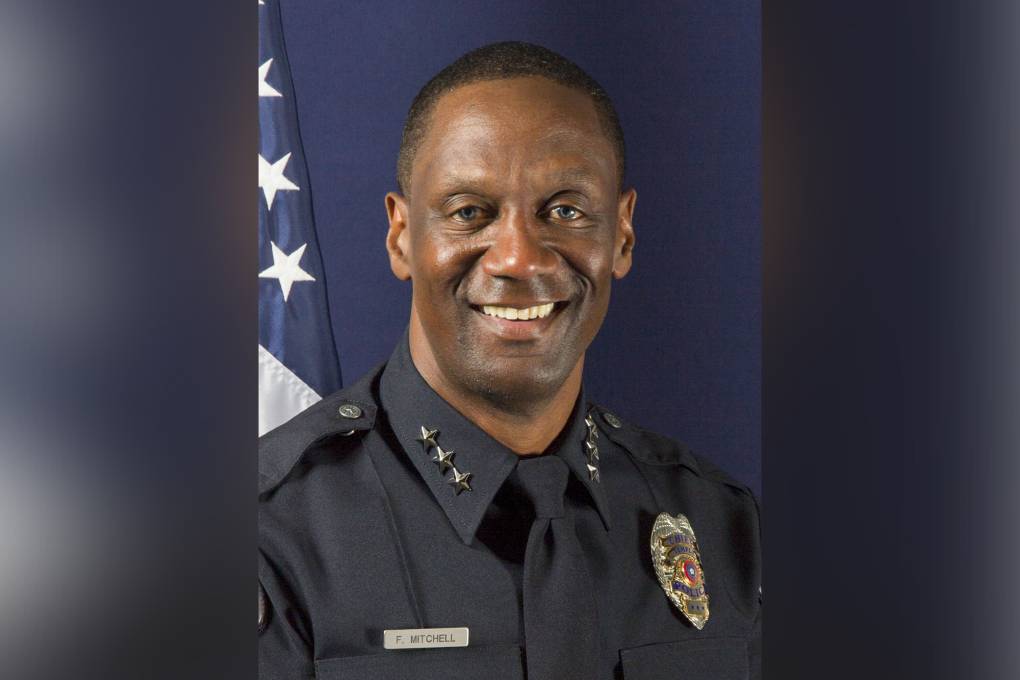
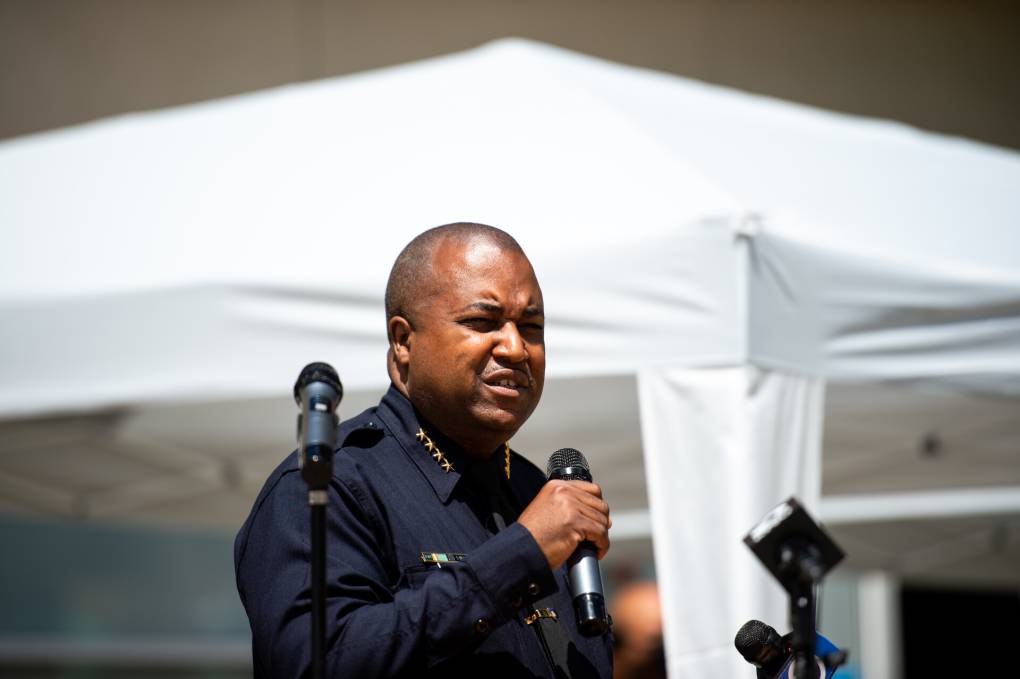
"caption": "The newly appointed Oakland Police Department Chief Floyd Mitchell speaks at a press conference at Oakland City Hall on March 27, 2024.",
"description": null,
"title": "240327-OPD CHIEF MITCHELL-MD-01-KQED",
"credit": "Martin do Nascimento/KQED",
"status": "inherit",
"altTag": null,
"isLoading": false,
"fetchFailed": false
},
"news_11980468": {
"type": "attachments",
"id": "news_11980468",
"meta": {
"index": "attachments_1716263798",
"site": "news",
"id": "11980468",
"found": true
},
"parent": 11980455,
"imgSizes": {
"twentyfourteen-full-width": {
"file": "https://cdn.kqed.org/wp-content/uploads/sites/10/2024/03/240322-Floyd-Mitchell-02-KQED-1038x576.jpeg",
"width": 1038,
"mimeType": "image/jpeg",
"height": 576
},
"thumbnail": {
"file": "https://cdn.kqed.org/wp-content/uploads/sites/10/2024/03/240322-Floyd-Mitchell-02-KQED-160x107.jpeg",
"width": 160,
"mimeType": "image/jpeg",
"height": 107
},
"post-thumbnail": {
"file": "https://cdn.kqed.org/wp-content/uploads/sites/10/2024/03/240322-Floyd-Mitchell-02-KQED-672x372.jpeg",
"width": 672,
"mimeType": "image/jpeg",
"height": 372
},
"kqedFullSize": {
"file": "https://cdn.kqed.org/wp-content/uploads/sites/10/2024/03/240322-Floyd-Mitchell-02-KQED.jpeg",
"width": 2000,
"height": 1333
},
"large": {
"file": "https://cdn.kqed.org/wp-content/uploads/sites/10/2024/03/240322-Floyd-Mitchell-02-KQED-1020x680.jpeg",
"width": 1020,
"mimeType": "image/jpeg",
"height": 680
},
"1536x1536": {
"file": "https://cdn.kqed.org/wp-content/uploads/sites/10/2024/03/240322-Floyd-Mitchell-02-KQED-1536x1024.jpeg",
"width": 1536,
"mimeType": "image/jpeg",
"height": 1024
},
"full-width": {
"file": "https://cdn.kqed.org/wp-content/uploads/sites/10/2024/03/240322-Floyd-Mitchell-02-KQED-1920x1280.jpeg",
"width": 1920,
"mimeType": "image/jpeg",
"height": 1280
},
"medium": {
"file": "https://cdn.kqed.org/wp-content/uploads/sites/10/2024/03/240322-Floyd-Mitchell-02-KQED-800x533.jpeg",
"width": 800,
"mimeType": "image/jpeg",
"height": 533
}
},
"publishDate": 1711125926,
"modified": 1711126059,
"caption": "Floyd Mitchell will be Oakland's new police chief, Mayor Sheng Thao Thao announced Friday. He most recently served as police chief of Lubbock, Texas.",
"description": null,
"title": "240322-Floyd-Mitchell-02-KQED",
"credit": "Courtesy of Lubbock Police Department",
"status": "inherit",
"altTag": "A headshot of a Black male police officer.",
"isLoading": false,
"fetchFailed": false
},
"news_11979893": {
"type": "attachments",
"id": "news_11979893",
"meta": {
"index": "attachments_1716263798",
"site": "news",
"id": "11979893",
"found": true
},
"parent": 11979891,
"imgSizes": {
"twentyfourteen-full-width": {
"file": "https://cdn.kqed.org/wp-content/uploads/sites/10/2024/03/download-1038x576.jpeg",
"width": 1038,
"mimeType": "image/jpeg",
"height": 576
},
"thumbnail": {
"file": "https://cdn.kqed.org/wp-content/uploads/sites/10/2024/03/download-160x107.jpeg",
"width": 160,
"mimeType": "image/jpeg",
"height": 107
},
"post-thumbnail": {
"file": "https://cdn.kqed.org/wp-content/uploads/sites/10/2024/03/download-672x372.jpeg",
"width": 672,
"mimeType": "image/jpeg",
"height": 372
},
"kqedFullSize": {
"file": "https://cdn.kqed.org/wp-content/uploads/sites/10/2024/03/download.jpeg",
"width": 1280,
"height": 853
},
"large": {
"file": "https://cdn.kqed.org/wp-content/uploads/sites/10/2024/03/download-1020x680.jpeg",
"width": 1020,
"mimeType": "image/jpeg",
"height": 680
},
"medium": {
"file": "https://cdn.kqed.org/wp-content/uploads/sites/10/2024/03/download-800x533.jpeg",
"width": 800,
"mimeType": "image/jpeg",
"height": 533
}
},
"publishDate": 1710809299,
"modified": 1710871537,
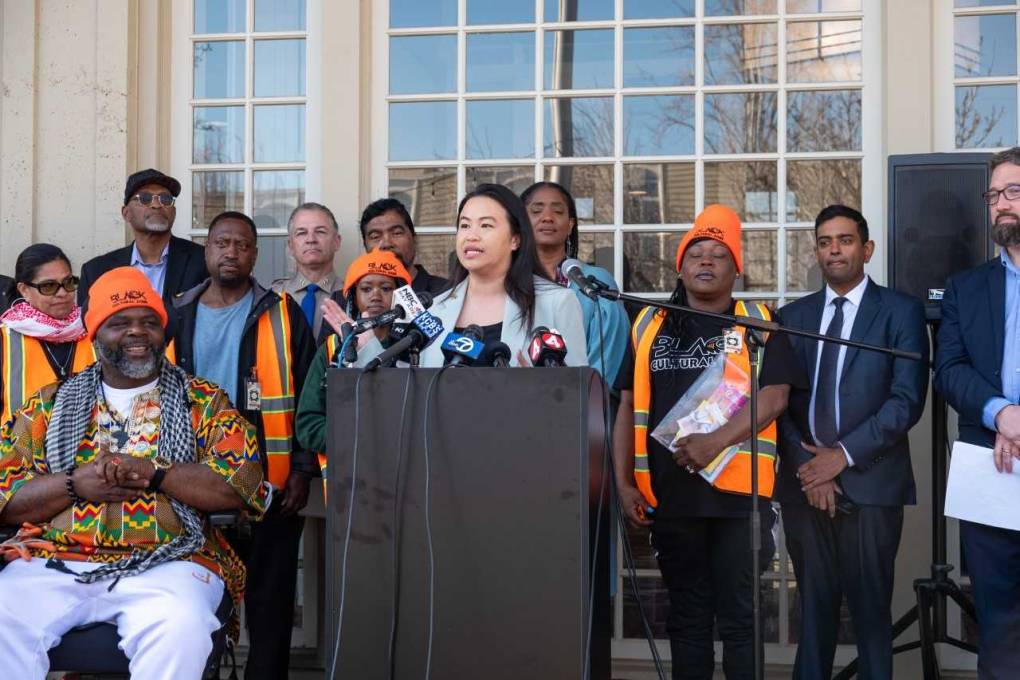
"caption": "At a press conference on March 18, Oakland Mayor Sheng Thao announced that crime along the Hegenberger corridor in Oakland had decreased.",
"description": null,
"title": "download",
"credit": "Nik Altenberg/KQED",
"status": "inherit",
"altTag": "An Asian woman stands at a podium surrounded by people in safety vests and suits.",
"isLoading": false,
"fetchFailed": false
},
"news_11977879": {
"type": "attachments",
"id": "news_11977879",
"meta": {
"index": "attachments_1716263798",
"site": "news",
"id": "11977879",
"found": true
},
"parent": 11977871,
"imgSizes": {
"twentyfourteen-full-width": {
"file": "https://cdn.kqed.org/wp-content/uploads/sites/10/2024/03/GettyImages-1467146112-1024x576.jpg",
"width": 1024,
"mimeType": "image/jpeg",
"height": 576
},
"thumbnail": {
"file": "https://cdn.kqed.org/wp-content/uploads/sites/10/2024/03/GettyImages-1467146112-160x113.jpg",
"width": 160,
"mimeType": "image/jpeg",
"height": 113
},
"post-thumbnail": {
"file": "https://cdn.kqed.org/wp-content/uploads/sites/10/2024/03/GettyImages-1467146112-672x372.jpg",
"width": 672,
"mimeType": "image/jpeg",
"height": 372
},
"kqedFullSize": {
"file": "https://cdn.kqed.org/wp-content/uploads/sites/10/2024/03/GettyImages-1467146112.jpg",
"width": 1024,
"height": 723
},
"large": {
"file": "https://cdn.kqed.org/wp-content/uploads/sites/10/2024/03/GettyImages-1467146112-1020x720.jpg",
"width": 1020,
"mimeType": "image/jpeg",
"height": 720
},
"medium": {
"file": "https://cdn.kqed.org/wp-content/uploads/sites/10/2024/03/GettyImages-1467146112-800x565.jpg",
"width": 800,
"mimeType": "image/jpeg",
"height": 565
}
},
"publishDate": 1709351658,
"modified": 1709351891,
"caption": "Oakland police investigate the scene after shooting an armed carjacking suspect on International Boulevard and 105th Avenue in East Oakland on Feb. 17, 2023. According to Oakland Police Department end-of-year data in 2023, incidents of violent crime in the city increased by 21% compared to the previous year, while robberies climbed 38% and motor vehicle theft jumped 45%.",
"description": null,
"title": "Oakland Police Shooting",
"credit": "Jane Tyska/Digital First Media/East Bay Times via Getty Images",
"status": "inherit",
"altTag": null,
"isLoading": false,
"fetchFailed": false
},
"news_11961924": {
"type": "attachments",
"id": "news_11961924",
"meta": {
"index": "attachments_1716263798",
"site": "news",
"id": "11961924",
"found": true
},
"parent": 11961919,
"imgSizes": {
"twentyfourteen-full-width": {
"file": "https://cdn.kqed.org/wp-content/uploads/sites/10/2023/09/GettyImages-1491552346-1038x576.jpg",
"width": 1038,
"mimeType": "image/jpeg",
"height": 576
},
"thumbnail": {
"file": "https://cdn.kqed.org/wp-content/uploads/sites/10/2023/09/GettyImages-1491552346-160x111.jpg",
"width": 160,
"mimeType": "image/jpeg",
"height": 111
},
"post-thumbnail": {
"file": "https://cdn.kqed.org/wp-content/uploads/sites/10/2023/09/GettyImages-1491552346-672x372.jpg",
"width": 672,
"mimeType": "image/jpeg",
"height": 372
},
"kqedFullSize": {
"file": "https://cdn.kqed.org/wp-content/uploads/sites/10/2023/09/GettyImages-1491552346-scaled.jpg",
"width": 2560,
"height": 1774
},
"2048x2048": {
"file": "https://cdn.kqed.org/wp-content/uploads/sites/10/2023/09/GettyImages-1491552346-2048x1419.jpg",
"width": 2048,
"mimeType": "image/jpeg",
"height": 1419
},
"large": {
"file": "https://cdn.kqed.org/wp-content/uploads/sites/10/2023/09/GettyImages-1491552346-1020x707.jpg",
"width": 1020,
"mimeType": "image/jpeg",
"height": 707
},
"1536x1536": {
"file": "https://cdn.kqed.org/wp-content/uploads/sites/10/2023/09/GettyImages-1491552346-1536x1064.jpg",
"width": 1536,
"mimeType": "image/jpeg",
"height": 1064
},
"full-width": {
"file": "https://cdn.kqed.org/wp-content/uploads/sites/10/2023/09/GettyImages-1491552346-1920x1330.jpg",
"width": 1920,
"mimeType": "image/jpeg",
"height": 1330
},
"medium": {
"file": "https://cdn.kqed.org/wp-content/uploads/sites/10/2023/09/GettyImages-1491552346-800x554.jpg",
"width": 800,
"mimeType": "image/jpeg",
"height": 554
}
},
"publishDate": 1695240988,
"modified": 1707444166,
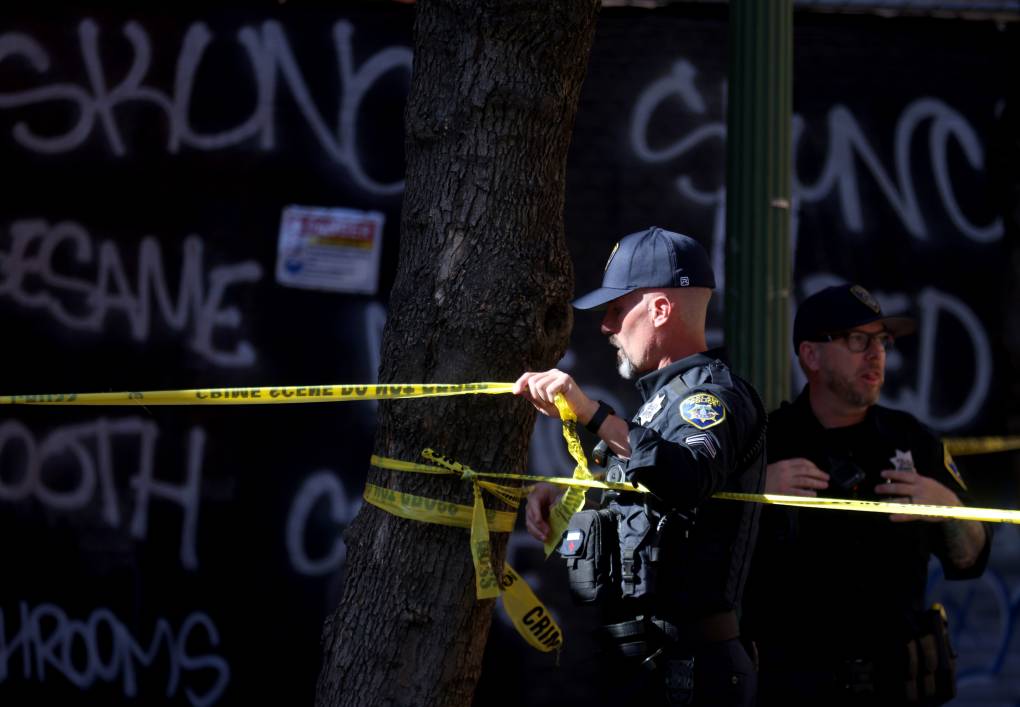
"caption": "Oakland police investigate a shooting in the Fruitvale Public Market plaza on May 16, 2023.",
"description": null,
"title": "Oakland Shooting",
"credit": "Jane Tyska/Digital First Media/East Bay Times via Getty Images",
"status": "inherit",
"altTag": "An Oakland police officer puts yellow crime tape around a sidewalk.",
"isLoading": false,
"fetchFailed": false
},
"news_11974994": {
"type": "attachments",
"id": "news_11974994",
"meta": {
"index": "attachments_1716263798",
"site": "news",
"id": "11974994",
"found": true
},
"parent": 11974985,
"imgSizes": {
"twentyfourteen-full-width": {
"file": "https://cdn.kqed.org/wp-content/uploads/sites/10/2024/02/044_Oakland_NAACPGeorgeFloyd_05252021_qut-1038x576.jpg",
"width": 1038,
"mimeType": "image/jpeg",
"height": 576
},
"thumbnail": {
"file": "https://cdn.kqed.org/wp-content/uploads/sites/10/2024/02/044_Oakland_NAACPGeorgeFloyd_05252021_qut-160x107.jpg",
"width": 160,
"mimeType": "image/jpeg",
"height": 107
},
"post-thumbnail": {
"file": "https://cdn.kqed.org/wp-content/uploads/sites/10/2024/02/044_Oakland_NAACPGeorgeFloyd_05252021_qut-672x372.jpg",
"width": 672,
"mimeType": "image/jpeg",
"height": 372
},
"kqedFullSize": {
"file": "https://cdn.kqed.org/wp-content/uploads/sites/10/2024/02/044_Oakland_NAACPGeorgeFloyd_05252021_qut.jpg",
"width": 1920,
"height": 1278
},
"large": {
"file": "https://cdn.kqed.org/wp-content/uploads/sites/10/2024/02/044_Oakland_NAACPGeorgeFloyd_05252021_qut-1020x679.jpg",
"width": 1020,
"mimeType": "image/jpeg",
"height": 679
},
"1536x1536": {
"file": "https://cdn.kqed.org/wp-content/uploads/sites/10/2024/02/044_Oakland_NAACPGeorgeFloyd_05252021_qut-1536x1022.jpg",
"width": 1536,
"mimeType": "image/jpeg",
"height": 1022
},
"medium": {
"file": "https://cdn.kqed.org/wp-content/uploads/sites/10/2024/02/044_Oakland_NAACPGeorgeFloyd_05252021_qut-800x533.jpg",
"width": 800,
"mimeType": "image/jpeg",
"height": 533
}
},
"publishDate": 1707335142,
"modified": 1707338737,
"caption": "Former Oakland Police Chief LeRonne Armstrong (pictured) is suing the city for wrongful termination. The lawsuit alleges that Mayor Sheng Thao fired him because she bowed to pressure from the federal monitor overseeing the police department since 2003. ",
"description": null,
"title": "044_Oakland_NAACPGeorgeFloyd_05252021_qut",
"credit": "Beth LaBerge/KQED",
"status": "inherit",
"altTag": "Former Oakland Police Chief LeRonne Armstrong speaks with a microphone in hand while in full uniform.",
"isLoading": false,
"fetchFailed": false
},
"news_11899213": {
"type": "attachments",
"id": "news_11899213",
"meta": {
"index": "attachments_1716263798",
"site": "news",
"id": "11899213",
"found": true
},
"parent": 11899157,
"imgSizes": {
"twentyfourteen-full-width": {
"file": "https://cdn.kqed.org/wp-content/uploads/sites/10/2021/12/chpstockimage-1038x576.jpeg",
"width": 1038,
"mimeType": "image/jpeg",
"height": 576
},
"thumbnail": {
"file": "https://cdn.kqed.org/wp-content/uploads/sites/10/2021/12/chpstockimage-160x111.jpeg",
"width": 160,
"mimeType": "image/jpeg",
"height": 111
},
"post-thumbnail": {
"file": "https://cdn.kqed.org/wp-content/uploads/sites/10/2021/12/chpstockimage-672x372.jpeg",
"width": 672,
"mimeType": "image/jpeg",
"height": 372
},
"kqedFullSize": {
"file": "https://cdn.kqed.org/wp-content/uploads/sites/10/2021/12/chpstockimage.jpeg",
"width": 1200,
"height": 830
},
"large": {
"file": "https://cdn.kqed.org/wp-content/uploads/sites/10/2021/12/chpstockimage-1020x706.jpeg",
"width": 1020,
"mimeType": "image/jpeg",
"height": 706
},
"medium": {
"file": "https://cdn.kqed.org/wp-content/uploads/sites/10/2021/12/chpstockimage-800x553.jpeg",
"width": 800,
"mimeType": "image/jpeg",
"height": 553
}
},
"publishDate": 1639605713,
"modified": 1707268896,
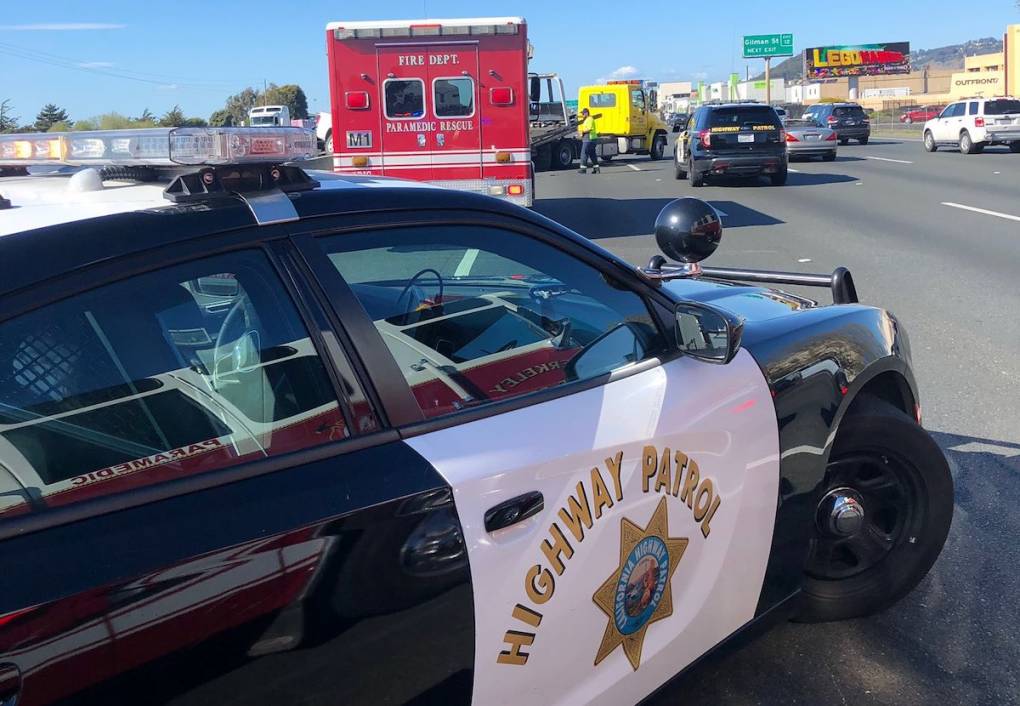
"caption": "A California Highway Patrol vehicle on Interstate 80 in Oakland, near the Berkeley border. ",
"description": null,
"title": "chpstockimage",
"credit": "Courtesy CHP",
"status": "inherit",
"altTag": "A car with black and white paint that reads \"Highway Patrol\" in gold letters is parked on the highway.",
"isLoading": false,
"fetchFailed": false
},
"news_11974489": {
"type": "attachments",
"id": "news_11974489",
"meta": {
"index": "attachments_1716263798",
"site": "news",
"id": "11974489",
"found": true
},
"title": "04052023_downtownoaklandreactivation 144_qut",
"publishDate": 1706825720,
"status": "inherit",
"parent": 11974485,
"modified": 1732226314,
"caption": "Oakland Mayor Sheng Thao listens to City Council President Nikki Fortunato Bas speak in front of city hall during a city-led “Welcome Back Wednesday” event to promote the recovery of the city’s downtown area on April 5, 2023.",
"credit": "Kori Suzuki/KQED",
"altTag": null,
"description": null,
"imgSizes": {
"medium": {
"file": "https://cdn.kqed.org/wp-content/uploads/sites/10/2024/02/04052023_downtownoaklandreactivation-144_qut-800x534.jpg",
"width": 800,
"height": 534,
"mimeType": "image/jpeg"
},
"large": {
"file": "https://cdn.kqed.org/wp-content/uploads/sites/10/2024/02/04052023_downtownoaklandreactivation-144_qut-1020x681.jpg",
"width": 1020,
"height": 681,
"mimeType": "image/jpeg"
},
"thumbnail": {
"file": "https://cdn.kqed.org/wp-content/uploads/sites/10/2024/02/04052023_downtownoaklandreactivation-144_qut-160x107.jpg",
"width": 160,
"height": 107,
"mimeType": "image/jpeg"
},
"1536x1536": {
"file": "https://cdn.kqed.org/wp-content/uploads/sites/10/2024/02/04052023_downtownoaklandreactivation-144_qut-1536x1026.jpg",
"width": 1536,
"height": 1026,
"mimeType": "image/jpeg"
},
"post-thumbnail": {
"file": "https://cdn.kqed.org/wp-content/uploads/sites/10/2024/02/04052023_downtownoaklandreactivation-144_qut-672x372.jpg",
"width": 672,
"height": 372,
"mimeType": "image/jpeg"
},
"twentyfourteen-full-width": {
"file": "https://cdn.kqed.org/wp-content/uploads/sites/10/2024/02/04052023_downtownoaklandreactivation-144_qut-1038x576.jpg",
"width": 1038,
"height": 576,
"mimeType": "image/jpeg"
},
"kqedFullSize": {
"file": "https://cdn.kqed.org/wp-content/uploads/sites/10/2024/02/04052023_downtownoaklandreactivation-144_qut.jpg",
"width": 1920,
"height": 1282
}
},
"isLoading": false,
"fetchFailed": false
},
"news_11971825": {
"type": "attachments",
"id": "news_11971825",
"meta": {
"index": "attachments_1716263798",
"site": "news",
"id": "11971825",
"found": true
},
"parent": 0,
"imgSizes": {
"twentyfourteen-full-width": {
"file": "https://cdn.kqed.org/wp-content/uploads/sites/10/2024/01/IMG_2333-1038x576.jpg",
"width": 1038,
"mimeType": "image/jpeg",
"height": 576
},
"thumbnail": {
"file": "https://cdn.kqed.org/wp-content/uploads/sites/10/2024/01/IMG_2333-160x120.jpg",
"width": 160,
"mimeType": "image/jpeg",
"height": 120
},
"post-thumbnail": {
"file": "https://cdn.kqed.org/wp-content/uploads/sites/10/2024/01/IMG_2333-672x372.jpg",
"width": 672,
"mimeType": "image/jpeg",
"height": 372
},
"kqedFullSize": {
"file": "https://cdn.kqed.org/wp-content/uploads/sites/10/2024/01/IMG_2333-scaled.jpg",
"width": 2560,
"height": 1920
},
"2048x2048": {
"file": "https://cdn.kqed.org/wp-content/uploads/sites/10/2024/01/IMG_2333-2048x1536.jpg",
"width": 2048,
"mimeType": "image/jpeg",
"height": 1536
},
"large": {
"file": "https://cdn.kqed.org/wp-content/uploads/sites/10/2024/01/IMG_2333-1020x765.jpg",
"width": 1020,
"mimeType": "image/jpeg",
"height": 765
},
"1536x1536": {
"file": "https://cdn.kqed.org/wp-content/uploads/sites/10/2024/01/IMG_2333-1536x1152.jpg",
"width": 1536,
"mimeType": "image/jpeg",
"height": 1152
},
"full-width": {
"file": "https://cdn.kqed.org/wp-content/uploads/sites/10/2024/01/IMG_2333-1920x1440.jpg",
"width": 1920,
"mimeType": "image/jpeg",
"height": 1440
},
"medium": {
"file": "https://cdn.kqed.org/wp-content/uploads/sites/10/2024/01/IMG_2333-800x600.jpg",
"width": 800,
"mimeType": "image/jpeg",
"height": 600
}
},
"publishDate": 1704502175,
"modified": 1704504093,
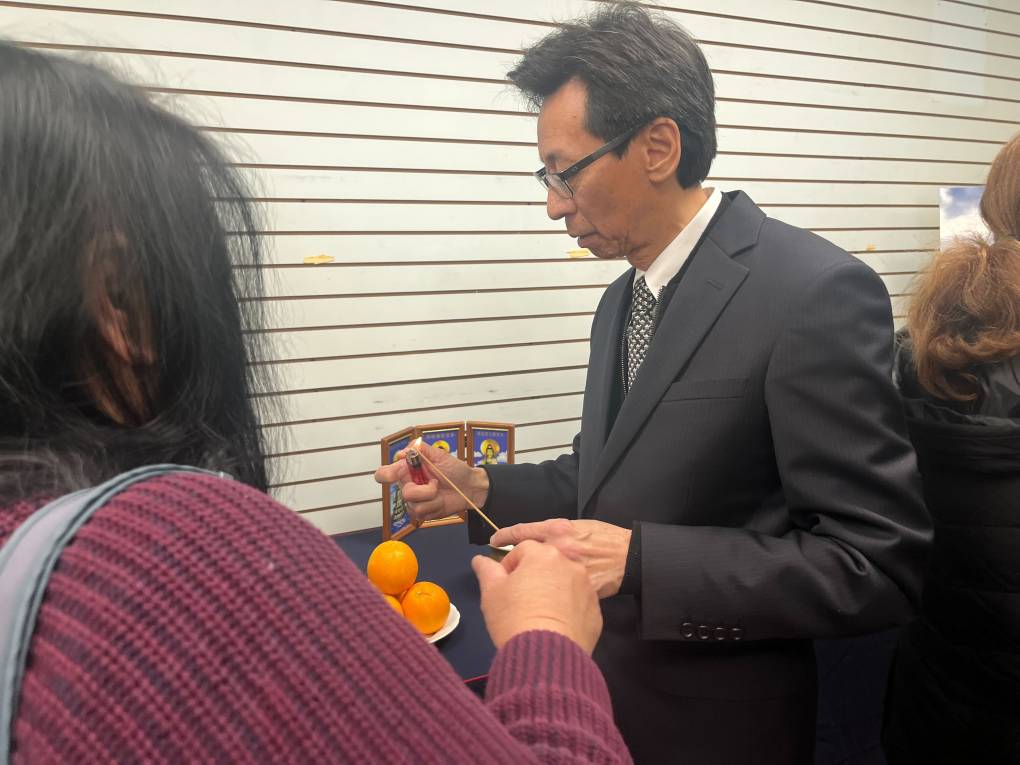
"caption": "Oakland Chinatown Chamber Foundation President Carl Chan lights an incense during a vigil on Jan. 5 for slain Oakland Police Officer Tuan Le. \n",
"description": null,
"title": "Tuan Le memorial 2",
"credit": null,
"status": "inherit",
"altTag": "A man lights an incense.",
"isLoading": false,
"fetchFailed": false
},
"news_11971245": {
"type": "attachments",
"id": "news_11971245",
"meta": {
"index": "attachments_1716263798",
"site": "news",
"id": "11971245",
"found": true
},
"parent": 11971175,
"imgSizes": {
"twentyfourteen-full-width": {
"file": "https://cdn.kqed.org/wp-content/uploads/sites/10/2023/12/Officer-Tuan-Le-1038x576.png",
"width": 1038,
"mimeType": "image/png",
"height": 576
},
"thumbnail": {
"file": "https://cdn.kqed.org/wp-content/uploads/sites/10/2023/12/Officer-Tuan-Le-160x107.png",
"width": 160,
"mimeType": "image/png",
"height": 107
},
"post-thumbnail": {
"file": "https://cdn.kqed.org/wp-content/uploads/sites/10/2023/12/Officer-Tuan-Le-672x372.png",
"width": 672,
"mimeType": "image/png",
"height": 372
},
"kqedFullSize": {
"file": "https://cdn.kqed.org/wp-content/uploads/sites/10/2023/12/Officer-Tuan-Le.png",
"width": 1800,
"height": 1200
},
"large": {
"file": "https://cdn.kqed.org/wp-content/uploads/sites/10/2023/12/Officer-Tuan-Le-1020x680.png",
"width": 1020,
"mimeType": "image/png",
"height": 680
},
"1536x1536": {
"file": "https://cdn.kqed.org/wp-content/uploads/sites/10/2023/12/Officer-Tuan-Le-1536x1024.png",
"width": 1536,
"mimeType": "image/png",
"height": 1024
},
"medium": {
"file": "https://cdn.kqed.org/wp-content/uploads/sites/10/2023/12/Officer-Tuan-Le-800x533.png",
"width": 800,
"mimeType": "image/png",
"height": 533
}
},
"publishDate": 1703913434,
"modified": 1704401434,
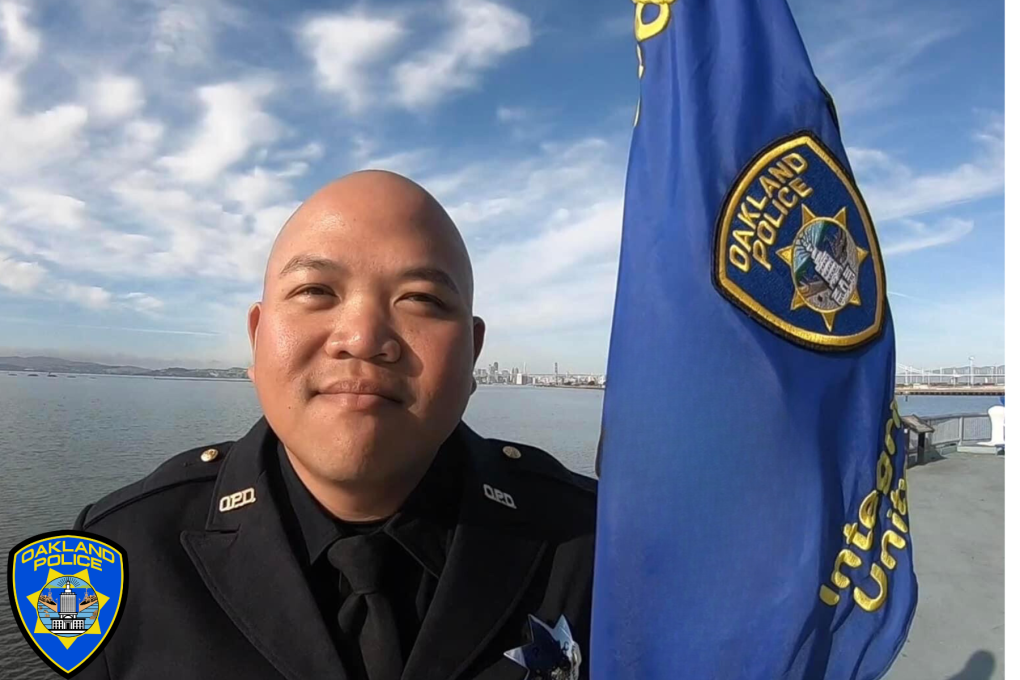
"caption": "Oakland police Officer Tuan Le, 36, who was fatally shot on the morning of Dec. 29, 2023, while responding to a burglary at a cannabis business near Jack London Square. He was rushed to Highland Hospital and pronounced dead several hours later.",
"description": null,
"title": "Officer-Tuan-Le",
"credit": "Courtesy of the Oakland Police Department",
"status": "inherit",
"altTag": "A close-up headshot of a young Asian Oakland police officer next to a blue OPD flag, with a large body of water in the background.",
"isLoading": false,
"fetchFailed": false
},
"news_11965592": {
"type": "attachments",
"id": "news_11965592",
"meta": {
"index": "attachments_1716263798",
"site": "news",
"id": "11965592",
"found": true
},
"parent": 0,
"imgSizes": {
"twentyfourteen-full-width": {
"file": "https://cdn.kqed.org/wp-content/uploads/sites/10/2023/10/20231024-MACRO-022-JY-KQED-1038x576.jpg",
"width": 1038,
"mimeType": "image/jpeg",
"height": 576
},
"thumbnail": {
"file": "https://cdn.kqed.org/wp-content/uploads/sites/10/2023/10/20231024-MACRO-022-JY-KQED-160x107.jpg",
"width": 160,
"mimeType": "image/jpeg",
"height": 107
},
"post-thumbnail": {
"file": "https://cdn.kqed.org/wp-content/uploads/sites/10/2023/10/20231024-MACRO-022-JY-KQED-672x372.jpg",
"width": 672,
"mimeType": "image/jpeg",
"height": 372
},
"kqedFullSize": {
"file": "https://cdn.kqed.org/wp-content/uploads/sites/10/2023/10/20231024-MACRO-022-JY-KQED.jpg",
"width": 2000,
"height": 1333
},
"large": {
"file": "https://cdn.kqed.org/wp-content/uploads/sites/10/2023/10/20231024-MACRO-022-JY-KQED-1020x680.jpg",
"width": 1020,
"mimeType": "image/jpeg",
"height": 680
},
"1536x1536": {
"file": "https://cdn.kqed.org/wp-content/uploads/sites/10/2023/10/20231024-MACRO-022-JY-KQED-1536x1024.jpg",
"width": 1536,
"mimeType": "image/jpeg",
"height": 1024
},
"full-width": {
"file": "https://cdn.kqed.org/wp-content/uploads/sites/10/2023/10/20231024-MACRO-022-JY-KQED-1920x1280.jpg",
"width": 1920,
"mimeType": "image/jpeg",
"height": 1280
},
"medium": {
"file": "https://cdn.kqed.org/wp-content/uploads/sites/10/2023/10/20231024-MACRO-022-JY-KQED-800x533.jpg",
"width": 800,
"mimeType": "image/jpeg",
"height": 533
}
},
"publishDate": 1698258536,
"modified": 1704231400,
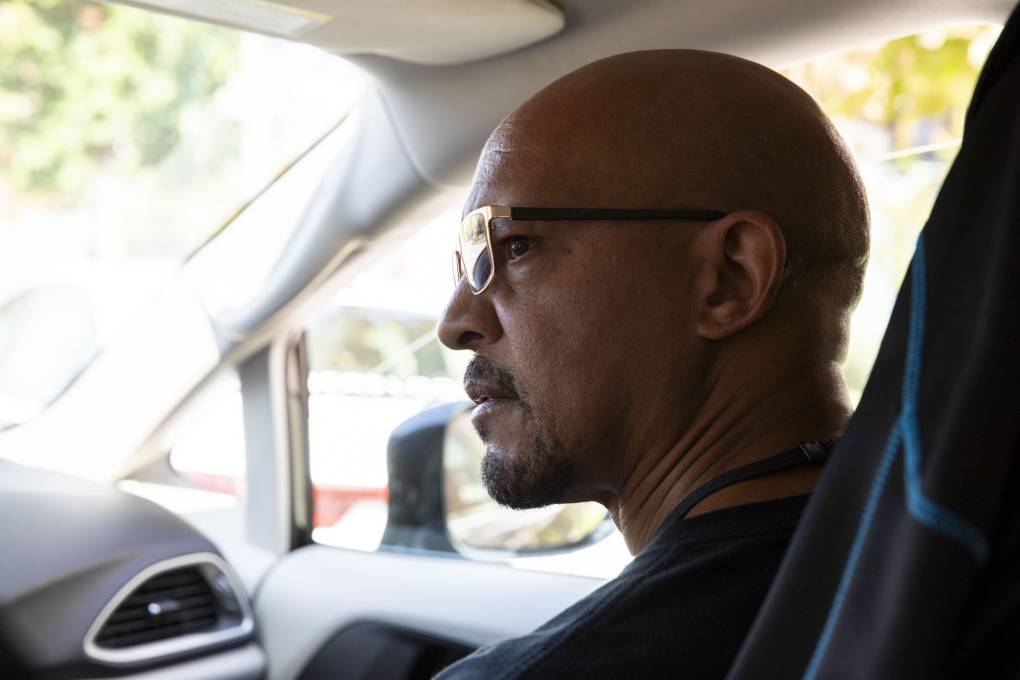
"caption": "Community Intervention Specialist Michael Thompson of the Mobile Assistance Community Responders of Oakland (MACRO) is seen inside the van after speaking with an unhoused person outside the Oakland Public Library in Oakland on Tuesday, Oct. 24, 2023. MACRO deploys their team members for non-emergent 911 calls in Oakland.",
"description": null,
"title": "MACRO",
"credit": "Juliana Yamada/KQED",
"status": "inherit",
"altTag": "A person with a bald head looks out the driver's side window of a car from the passenger seat.",
"isLoading": false,
"fetchFailed": false
}
},
"audioPlayerReducer": {
"postId": "stream_live",
"isPaused": true,
"isPlaying": false,
"pfsActive": false,
"pledgeModalIsOpen": true,
"playerDrawerIsOpen": false,
"liveAudioPlayStartedAt": 0,
"liveAudioPlayContext": ""
},
"authorsReducer": {
"kqednewsstaffandwires": {
"type": "authors",
"id": "237",
"meta": {
"index": "authors_1716337520",
"id": "237",
"found": true
},
"name": "KQED News Staff and Wires",
"firstName": "KQED News Staff and Wires",
"lastName": null,
"slug": "kqednewsstaffandwires",
"email": "onlinenewsstaff@kqed.org",
"display_author_email": false,
"staff_mastheads": [],
"title": null,
"bio": null,
"avatar": "https://secure.gravatar.com/avatar/72295af8ebbfbd19a4948f5271285664?s=600&d=blank&r=g",
"twitter": null,
"facebook": null,
"instagram": null,
"linkedin": null,
"sites": [
{
"site": "arts",
"roles": [
"contributor"
]
},
{
"site": "news",
"roles": [
"contributor"
]
},
{
"site": "lowdown",
"roles": [
"author"
]
},
{
"site": "stateofhealth",
"roles": [
"contributor"
]
},
{
"site": "food",
"roles": [
"author"
]
}
],
"headData": {
"title": "KQED News Staff and Wires | KQED",
"description": null,
"ogImgSrc": "https://secure.gravatar.com/avatar/72295af8ebbfbd19a4948f5271285664?s=600&d=blank&r=g",
"twImgSrc": "https://secure.gravatar.com/avatar/72295af8ebbfbd19a4948f5271285664?s=600&d=blank&r=g"
},
"isLoading": false,
"link": "/author/kqednewsstaffandwires"
},
"matthewgreen": {
"type": "authors",
"id": "1263",
"meta": {
"index": "authors_1716337520",
"id": "1263",
"found": true
},
"name": "Matthew Green",
"firstName": "Matthew",
"lastName": "Green",
"slug": "matthewgreen",
"email": "mgreen@kqed.org",
"display_author_email": false,
"staff_mastheads": [],
"title": "KQED Editor/Reporter",
"bio": "Matthew Green is a digital media producer for KQED News. He previously produced \u003ca href=\"http://www.kqed.org/lowdown\">The Lowdown\u003c/a>, KQED’s multimedia news education blog. Matthew's written for numerous Bay Area publications, including the Oakland Tribune and San Francisco Chronicle. He also taught journalism classes at Fremont High School in East Oakland.\r\n\r\nEmail: mgreen@kqed.org; Twitter: @MGreenKQED",
"avatar": "https://secure.gravatar.com/avatar/3bf498d1267ca02c8494f33d8cfc575e?s=600&d=blank&r=g",
"twitter": "MGreenKQED",
"facebook": null,
"instagram": null,
"linkedin": null,
"sites": [
{
"site": "news",
"roles": []
},
{
"site": "lowdown",
"roles": []
},
{
"site": "science",
"roles": []
},
{
"site": "education",
"roles": []
},
{
"site": "quest",
"roles": []
},
{
"site": "liveblog",
"roles": []
}
],
"headData": {
"title": "Matthew Green | KQED",
"description": "KQED Editor/Reporter",
"ogImgSrc": "https://secure.gravatar.com/avatar/3bf498d1267ca02c8494f33d8cfc575e?s=600&d=blank&r=g",
"twImgSrc": "https://secure.gravatar.com/avatar/3bf498d1267ca02c8494f33d8cfc575e?s=600&d=blank&r=g"
},
"isLoading": false,
"link": "/author/matthewgreen"
},
"ecruzguevarra": {
"type": "authors",
"id": "8654",
"meta": {
"index": "authors_1716337520",
"id": "8654",
"found": true
},
"name": "Ericka Cruz Guevarra",
"firstName": "Ericka",
"lastName": "Cruz Guevarra",
"slug": "ecruzguevarra",
"email": "ecruzguevarra@kqed.org",
"display_author_email": true,
"staff_mastheads": [
"news"
],
"title": "Producer, The Bay Podcast",
"bio": "Ericka Cruz Guevarra is host of \u003ca href=\"https://www.kqed.org/podcasts/thebay\">\u003cem>The Bay\u003c/em>\u003c/a> podcast at KQED. Before host, she was the show’s producer. Her work in that capacity includes a three-part reported series on policing in Vallejo, which won a 2020 excellence in journalism award from the Society of Professional Journalists. Ericka has worked as a breaking news reporter at Oregon Public Broadcasting, helped produce the Code Switch podcast, and was KQED’s inaugural Raul Ramirez Diversity Fund intern. She’s also an alumna of NPR’s Next Generation Radio program. Send her an email if you have strong feelings about whether Fairfield and Suisun City are the Bay. Ericka is represented by SAG-AFTRA.",
"avatar": "https://secure.gravatar.com/avatar/accefc1de4bafc7e234b69bcb9b6f6536c130fd84709bc3069ef11a78787e1bb?s=600&d=blank&r=g",
"twitter": "NotoriousECG",
"bluesky": null,
"facebook": null,
"instagram": null,
"linkedin": null,
"sites": [
{
"site": "arts",
"roles": [
"subscriber"
]
},
{
"site": "news",
"roles": [
"editor",
"manage_categories"
]
},
{
"site": "futureofyou",
"roles": [
"subscriber"
]
},
{
"site": "stateofhealth",
"roles": [
"subscriber"
]
},
{
"site": "science",
"roles": [
"editor"
]
},
{
"site": "forum",
"roles": [
"subscriber"
]
}
],
"headData": {
"title": "Ericka Cruz Guevarra | KQED",
"description": "Producer, The Bay Podcast",
"ogImgSrc": "https://secure.gravatar.com/avatar/accefc1de4bafc7e234b69bcb9b6f6536c130fd84709bc3069ef11a78787e1bb?s=600&d=blank&r=g",
"twImgSrc": "https://secure.gravatar.com/avatar/accefc1de4bafc7e234b69bcb9b6f6536c130fd84709bc3069ef11a78787e1bb?s=600&d=blank&r=g"
},
"isLoading": false,
"link": "/author/ecruzguevarra"
},
"amontecillo": {
"type": "authors",
"id": "11649",
"meta": {
"index": "authors_1716337520",
"id": "11649",
"found": true
},
"name": "Alan Montecillo",
"firstName": "Alan",
"lastName": "Montecillo",
"slug": "amontecillo",
"email": "amontecillo@kqed.org",
"display_author_email": false,
"staff_mastheads": [
"news"
],
"title": "KQED Contributor",
"bio": "Alan Montecillo is the senior editor of \u003cem>\u003ca href=\"http://kqed.org/thebay\">The Bay\u003c/a>, \u003c/em> KQED's local news podcast. Before moving to the Bay Area, he worked as a senior talk show producer for WILL in Champaign-Urbana, Illinois and at Oregon Public Broadcasting in Portland, Oregon. He has won journalism awards from the Society of Professional Journalists Northern California, the Public Media Journalists Association, The Signal Awards, and has also received a regional Edward R. Murrow award. Alan is a Filipino American from Hong Kong and a graduate of Reed College.",
"avatar": "https://secure.gravatar.com/avatar/268f53a2066899ea9efdd8a5900218b17c822d9862cbc9326cccec53ef41d349?s=600&d=blank&r=g",
"twitter": "alanmontecillo",
"bluesky": null,
"facebook": null,
"instagram": null,
"linkedin": null,
"sites": [
{
"site": "",
"roles": [
"editor"
]
},
{
"site": "news",
"roles": [
"editor",
"manage_categories"
]
}
],
"headData": {
"title": "Alan Montecillo | KQED",
"description": "KQED Contributor",
"ogImgSrc": "https://secure.gravatar.com/avatar/268f53a2066899ea9efdd8a5900218b17c822d9862cbc9326cccec53ef41d349?s=600&d=blank&r=g",
"twImgSrc": "https://secure.gravatar.com/avatar/268f53a2066899ea9efdd8a5900218b17c822d9862cbc9326cccec53ef41d349?s=600&d=blank&r=g"
},
"isLoading": false,
"link": "/author/amontecillo"
},
"jrodriguez": {
"type": "authors",
"id": "11690",
"meta": {
"index": "authors_1716337520",
"id": "11690",
"found": true
},
"name": "Joe Fitzgerald Rodriguez",
"firstName": "Joe",
"lastName": "Fitzgerald Rodriguez",
"slug": "jrodriguez",
"email": "jrodriguez@kqed.org",
"display_author_email": true,
"staff_mastheads": [
"news"
],
"title": "Reporter and Producer",
"bio": "Joe Fitzgerald Rodriguez is a reporter and digital producer for KQED covering politics. Joe most recently wrote for the \u003cem>San Francisco Examiner\u003c/em> as a political columnist covering The City. He was raised in San Francisco and has spent his reporting career in his beloved, foggy, city by the bay. Joe was 12-years-old when he conducted his first interview in journalism, grilling former San Francisco Mayor Willie Brown for the Marina Middle School newspaper, \u003cem>The Penguin Press, \u003c/em>and he continues to report on the San Francisco Bay Area to this day.",
"avatar": "https://secure.gravatar.com/avatar/2247beb0564c1e9c62228d5649d2edac?s=600&d=blank&r=g",
"twitter": "FitztheReporter",
"facebook": null,
"instagram": "https://www.instagram.com/fitzthereporter/",
"linkedin": null,
"sites": [
{
"site": "",
"roles": [
"editor"
]
},
{
"site": "arts",
"roles": [
"editor"
]
},
{
"site": "news",
"roles": [
"editor"
]
},
{
"site": "science",
"roles": [
"editor"
]
},
{
"site": "elections",
"roles": [
"editor"
]
},
{
"site": "liveblog",
"roles": [
"editor"
]
}
],
"headData": {
"title": "Joe Fitzgerald Rodriguez | KQED",
"description": "Reporter and Producer",
"ogImgSrc": "https://secure.gravatar.com/avatar/2247beb0564c1e9c62228d5649d2edac?s=600&d=blank&r=g",
"twImgSrc": "https://secure.gravatar.com/avatar/2247beb0564c1e9c62228d5649d2edac?s=600&d=blank&r=g"
},
"isLoading": false,
"link": "/author/jrodriguez"
},
"jlara": {
"type": "authors",
"id": "11761",
"meta": {
"index": "authors_1716337520",
"id": "11761",
"found": true
},
"name": "Juan Carlos Lara",
"firstName": "Juan Carlos",
"lastName": "Lara",
"slug": "jlara",
"email": "jlara@kqed.org",
"display_author_email": false,
"staff_mastheads": [],
"title": "KQED Contributor",
"bio": null,
"avatar": "https://secure.gravatar.com/avatar/19e2052b9b05657c5ff2af2121846e9c?s=600&d=blank&r=g",
"twitter": null,
"facebook": null,
"instagram": null,
"linkedin": null,
"sites": [
{
"site": "arts",
"roles": [
"editor"
]
},
{
"site": "news",
"roles": [
"editor"
]
},
{
"site": "forum",
"roles": [
"editor"
]
},
{
"site": "liveblog",
"roles": [
"contributor"
]
}
],
"headData": {
"title": "Juan Carlos Lara | KQED",
"description": "KQED Contributor",
"ogImgSrc": "https://secure.gravatar.com/avatar/19e2052b9b05657c5ff2af2121846e9c?s=600&d=blank&r=g",
"twImgSrc": "https://secure.gravatar.com/avatar/19e2052b9b05657c5ff2af2121846e9c?s=600&d=blank&r=g"
},
"isLoading": false,
"link": "/author/jlara"
},
"mesquinca": {
"type": "authors",
"id": "11802",
"meta": {
"index": "authors_1716337520",
"id": "11802",
"found": true
},
"name": "Maria Esquinca",
"firstName": "Maria",
"lastName": "Esquinca",
"slug": "mesquinca",
"email": "mesquinca@kqed.org",
"display_author_email": false,
"staff_mastheads": [],
"title": "Producer, The Bay",
"bio": "María Esquinca is a producer of The Bay. Before that, she was a New York Women’s Foundation IGNITE Fellow at Latino USA. She worked at Radio Bilingue where she covered the San Joaquin Valley. Maria has interned at WLRN, News 21, The New York Times Student Journalism Institute and at Crain’s Detroit Business as a Dow Jones News Fund Business Reporting Intern. She is an MFA graduate from the University of Miami. In 2017, she graduated from the Walter Cronkite School of Journalism and Mass Communication with a Master of Mass Communication. A fronteriza, she was born in Ciudad Juárez, Chihuahua, Mexico and grew up in El Paso, Texas.",
"avatar": "https://secure.gravatar.com/avatar/77cedba18aae91da775038ba06dcd8d0?s=600&d=blank&r=g",
"twitter": "@m_esquinca",
"facebook": null,
"instagram": null,
"linkedin": null,
"sites": [
{
"site": "news",
"roles": []
}
],
"headData": {
"title": "Maria Esquinca | KQED",
"description": "Producer, The Bay",
"ogImgSrc": "https://secure.gravatar.com/avatar/77cedba18aae91da775038ba06dcd8d0?s=600&d=blank&r=g",
"twImgSrc": "https://secure.gravatar.com/avatar/77cedba18aae91da775038ba06dcd8d0?s=600&d=blank&r=g"
},
"isLoading": false,
"link": "/author/mesquinca"
},
"sjohnson": {
"type": "authors",
"id": "11840",
"meta": {
"index": "authors_1716337520",
"id": "11840",
"found": true
},
"name": "Sydney Johnson",
"firstName": "Sydney",
"lastName": "Johnson",
"slug": "sjohnson",
"email": "sjohnson@kqed.org",
"display_author_email": false,
"staff_mastheads": [
"news"
],
"title": "KQED Reporter",
"bio": "Sydney Johnson is a general assignment reporter at KQED. She previously reported on public health and city government at the San Francisco Examiner, and before that, she covered statewide education policy for EdSource. Her reporting has won multiple local, state and national awards. Sydney is a graduate of the University of California, Berkeley and lives in San Francisco.",
"avatar": "https://secure.gravatar.com/avatar/97855f2719b72ad6190b7c535fe642c8?s=600&d=blank&r=g",
"twitter": "sydneyfjohnson",
"facebook": null,
"instagram": null,
"linkedin": null,
"sites": [
{
"site": "news",
"roles": [
"editor"
]
}
],
"headData": {
"title": "Sydney Johnson | KQED",
"description": "KQED Reporter",
"ogImgSrc": "https://secure.gravatar.com/avatar/97855f2719b72ad6190b7c535fe642c8?s=600&d=blank&r=g",
"twImgSrc": "https://secure.gravatar.com/avatar/97855f2719b72ad6190b7c535fe642c8?s=600&d=blank&r=g"
},
"isLoading": false,
"link": "/author/sjohnson"
},
"nkhan": {
"type": "authors",
"id": "11867",
"meta": {
"index": "authors_1716337520",
"id": "11867",
"found": true
},
"name": "Nisa Khan",
"firstName": "Nisa",
"lastName": "Khan",
"slug": "nkhan",
"email": "nkhan@kqed.org",
"display_author_email": false,
"staff_mastheads": [],
"title": "KQED Contributor",
"bio": "Nisa Khan is a reporter for KQED's Audience News Desk. She was formerly a data reporter at Michigan Radio. She earned a Bachelor of Science in Information from the University of Michigan and a Master of Arts in Communication from Stanford University.",
"avatar": "https://secure.gravatar.com/avatar/8720459eef081ff64582b3506b124d58523e80e120704a0cbd9892533c914991?s=600&d=blank&r=g",
"twitter": "mnisakhan",
"bluesky": null,
"facebook": null,
"instagram": null,
"linkedin": null,
"sites": [
{
"site": "arts",
"roles": [
"editor"
]
},
{
"site": "news",
"roles": [
"editor"
]
},
{
"site": "science",
"roles": [
"editor",
"author"
]
},
{
"site": "forum",
"roles": [
"editor"
]
},
{
"site": "liveblog",
"roles": [
"contributor"
]
}
],
"headData": {
"title": "Nisa Khan | KQED",
"description": "KQED Contributor",
"ogImgSrc": "https://secure.gravatar.com/avatar/8720459eef081ff64582b3506b124d58523e80e120704a0cbd9892533c914991?s=600&d=blank&r=g",
"twImgSrc": "https://secure.gravatar.com/avatar/8720459eef081ff64582b3506b124d58523e80e120704a0cbd9892533c914991?s=600&d=blank&r=g"
},
"isLoading": false,
"link": "/author/nkhan"
},
"naltenberg": {
"type": "authors",
"id": "11896",
"meta": {
"index": "authors_1716337520",
"id": "11896",
"found": true
},
"name": "Nik Altenberg",
"firstName": "Nik",
"lastName": "Altenberg",
"slug": "naltenberg",
"email": "naltenberg@kqed.org",
"display_author_email": false,
"staff_mastheads": [],
"title": "KQED Contributor",
"bio": "Nik Altenberg is an on-call reporter for KQED and a copy editor and fact checker for Santa Cruz Local. Nik’s reporting interests include policing, public health, environment, immigration, housing and the places where these issues intersect.",
"avatar": "https://secure.gravatar.com/avatar/e391b3a18ce4a53a7ca3f3065c74418b?s=600&d=blank&r=g",
"twitter": null,
"facebook": null,
"instagram": "https://www.instagram.com/nikaltenberg/",
"linkedin": null,
"sites": [
{
"site": "news",
"roles": []
}
],
"headData": {
"title": "Nik Altenberg | KQED",
"description": "KQED Contributor",
"ogImgSrc": "https://secure.gravatar.com/avatar/e391b3a18ce4a53a7ca3f3065c74418b?s=600&d=blank&r=g",
"twImgSrc": "https://secure.gravatar.com/avatar/e391b3a18ce4a53a7ca3f3065c74418b?s=600&d=blank&r=g"
},
"isLoading": false,
"link": "/author/naltenberg"
}
},
"pagesReducer": {
"news_tag_oakland-police-department": {
"type": "terms",
"id": "news_416",
"meta": {
"index": "terms_1716263798",
"site": "news",
"id": "416",
"score": 9.892363
},
"featImg": null,
"name": "Oakland Police Department",
"description": null,
"taxonomy": "tag",
"headData": {
"twImgId": null,
"twTitle": null,
"ogTitle": null,
"ogImgId": null,
"twDescription": null,
"description": null,
"title": "Oakland Police Department Archives | KQED News",
"ogDescription": null
},
"ttid": 425,
"slug": "oakland-police-department",
"isLoading": false,
"title": "Oakland Police Department",
"pageMeta": {
"site": "news",
"WpPageTemplate": "page-topic-editorial",
"currentPage": 5
},
"blocks": [
{
"blockName": "kqed/post-list",
"attrs": {
"layout": "cardArticle2",
"query": "posts/news?tag=oakland-police-department",
"seeMore": false,
"paginated": true,
"page": 5
}
},
{
"blockName": "kqed/ad"
}
]
}
},
"pfsSessionReducer": {},
"postsReducer": {
"stream_live": {
"type": "live",
"id": "stream_live",
"audioUrl": "https://streams.kqed.org/kqedradio",
"title": "Live Stream",
"excerpt": "Live Stream information currently unavailable.",
"link": "/radio",
"featImg": "",
"label": {
"name": "KQED Live",
"link": "/"
}
},
"stream_kqedNewscast": {
"type": "posts",
"id": "stream_kqedNewscast",
"audioUrl": "https://www.kqed.org/.stream/anon/radio/RDnews/newscast.mp3?_=1",
"title": "KQED Newscast",
"featImg": "",
"label": {
"name": "88.5 FM",
"link": "/"
}
},
"news_11985931": {
"type": "posts",
"id": "news_11985931",
"meta": {
"index": "posts_1716263798",
"site": "news",
"id": "11985931",
"score": null,
"sort": [
1715635854000
]
},
"parent": 0,
"labelTerm": {
"site": "news"
},
"blocks": [],
"publishDate": 1715635854,
"format": "standard",
"title": "Oakland's New Police Chief Starts First Week After Long, Contentious Search",
"headTitle": "Oakland’s New Police Chief Starts First Week After Long, Contentious Search | KQED",
"content": "\u003cp>Oakland’s new police chief started his post this week, taking the reins of a long-embattled department that did not have a permanent leader for more than a year.\u003c/p>\n\u003cp>Floyd Mitchell previously served as \u003ca href=\"https://www.kqed.org/news/11980455/oakland-mayor-sheng-thao-appoints-floyd-mitchell-as-new-police-chief\">the first Black police chief of Lubbock, Texas\u003c/a>, and is originally from Kansas City, Missouri, where \u003ca href=\"https://www.kqed.org/news/11981018/new-police-chief-floyd-mitchell-pledges-to-work-with-the-citizens-of-oakland-to-address-citys-challenges\">he said he spent most of his law enforcement career\u003c/a>.\u003c/p>\n\u003cp>On his first day on Monday, Mitchell addressed the next class of Oakland’s police academy.\u003c/p>\n\u003cp>“I have been in this profession probably longer than most of you have been alive. I’ve been in here for almost 35 years,” he said. “And this is one of the most honorable and greatest professions that you can choose.”\u003c/p>\n\u003cp>[ad fullwidth]\u003c/p>\n\u003cp>Mitchell said he will spend the rest of the week getting “brought up to speed on several different things going on within the Oakland Police Department and within this community.”\u003c/p>\n\u003cp>Mitchell takes over a police department \u003ca href=\"https://www.kqed.org/news/11958563/all-thats-old-is-new-again-opds-long-road-to-reform\">under federal oversight for two decades\u003c/a> due to a civil rights lawsuit over widespread officer misconduct.[aside postID=news_11979891 hero='https://cdn.kqed.org/wp-content/uploads/sites/10/2024/03/download-1020x680.jpeg']Early last year, Oakland Mayor Sheng Thao fired Chief LeRonne Armstrong over allegations that the police department improperly investigated misconduct charges against a sergeant accused of a hit-and-run collision in 2021 and discharging a firearm in an OPD elevator in 2022. In response, Armstrong filed a lawsuit \u003ca href=\"https://www.kqed.org/news/11974985/former-oakland-police-chief-leronne-armstrong-sues-city-for-wrongful-termination\">for wrongful termination in early February.\u003c/a>\u003c/p>\n\u003cp>The search for a new police chief took more than a year — \u003ca href=\"https://www.sfchronicle.com/eastbay/article/oakland-mayor-rejects-police-chief-candidates-18576741.php\">Thao rejected the first batch of nominees\u003c/a> (which included Armstrong) in December 2023, forcing the police commission to start its search over again.\u003c/p>\n\u003cp>“I know that he’s a strong leader, and I know that he’s a smart crime fighter who delivers results,” \u003ca href=\"https://www.kqed.org/news/11980455/oakland-mayor-sheng-thao-appoints-floyd-mitchell-as-new-police-chief\">Thao said of Mitchell in March\u003c/a>. “His commitment to proven crime-reduction strategies include proactive policing, and the most important part is the strong officer community engagement.”\u003c/p>\n\u003cp>Thao is currently facing \u003ca href=\"https://www.kqed.org/news/11981018/new-police-chief-floyd-mitchell-pledges-to-work-with-the-citizens-of-oakland-to-address-citys-challenges\">a recall effort\u003c/a>, with organizers criticizing Thao for failing to address issues related to public safety and for \u003ca href=\"https://oaklandside.org/2024/01/09/oakland-mayor-sheng-thao-recall-campaign/\">firing Armstrong\u003c/a>.\u003c/p>\n\u003cp>According to \u003cem>Oaklandside, \u003c/em>most of the money \u003ca href=\"https://oaklandside.org/2024/05/01/whos-funding-the-recall-campaign-against-oakland-mayor-sheng-thao/\">recall organizers \u003c/a>raised was from undisclosed donors and a San Francisco tech billionaire family \u003ca href=\"https://www.sfchronicle.com/sf/article/march-2024-prop-e-tech-money-conway-larsen-police-18570659.php\">focused on funding police ballot measures\u003c/a>.\u003c/p>\n\u003cp>\u003c/p>\n",
"stats": {
"hasVideo": false,
"hasChartOrMap": false,
"hasAudio": false,
"hasPolis": false,
"wordCount": 395,
"hasGoogleForm": false,
"hasGallery": false,
"hasHearkenModule": false,
"iframeSrcs": [],
"paragraphCount": 12
},
"modified": 1715708855,
"excerpt": "Floyd Mitchell now leads the Oakland Police Department, which has been under federal oversight for the past two decades.",
"headData": {
"twImgId": "",
"twTitle": "",
"ogTitle": "",
"ogImgId": "",
"twDescription": "",
"description": "Floyd Mitchell now leads the Oakland Police Department, which has been under federal oversight for the past two decades.",
"title": "Oakland's New Police Chief Starts First Week After Long, Contentious Search | KQED",
"ogDescription": "",
"schema": {
"@context": "https://schema.org",
"@type": "NewsArticle",
"headline": "Oakland's New Police Chief Starts First Week After Long, Contentious Search",
"datePublished": "2024-05-13T14:30:54-07:00",
"dateModified": "2024-05-14T10:47:35-07:00",
"image": "https://cdn.kqed.org/wp-content/uploads/2020/02/KQED-OG-Image@1x.png",
"isAccessibleForFree": "True",
"publisher": {
"@type": "NewsMediaOrganization",
"@id": "https://www.kqed.org/#organization",
"name": "KQED",
"logo": "https://cdn.kqed.org/wp-content/uploads/2020/02/KQED-OG-Image@1x.png",
"url": "https://www.kqed.org",
"sameAs": [
"https://www.facebook.com/KQED",
"https://twitter.com/KQED",
"https://www.instagram.com/kqed/",
"https://www.tiktok.com/@kqedofficial",
"https://www.linkedin.com/company/kqed",
"https://www.youtube.com/channel/UCeC0IOo7i1P_61zVUWbJ4nw"
]
}
}
},
"guestAuthors": [],
"slug": "oaklands-new-police-chief-starts-first-week-after-long-contentious-search",
"status": "publish",
"excludeFromSiteSearch": "Include",
"sticky": false,
"articleAge": "0",
"nprStoryId": "kqed-11985931",
"path": "/news/11985931/oaklands-new-police-chief-starts-first-week-after-long-contentious-search",
"audioTrackLength": null,
"parsedContent": [
{
"type": "contentString",
"content": "\u003cdiv class=\"post-body\">\u003cp>\u003cp>Oakland’s new police chief started his post this week, taking the reins of a long-embattled department that did not have a permanent leader for more than a year.\u003c/p>\n\u003cp>Floyd Mitchell previously served as \u003ca href=\"https://www.kqed.org/news/11980455/oakland-mayor-sheng-thao-appoints-floyd-mitchell-as-new-police-chief\">the first Black police chief of Lubbock, Texas\u003c/a>, and is originally from Kansas City, Missouri, where \u003ca href=\"https://www.kqed.org/news/11981018/new-police-chief-floyd-mitchell-pledges-to-work-with-the-citizens-of-oakland-to-address-citys-challenges\">he said he spent most of his law enforcement career\u003c/a>.\u003c/p>\n\u003cp>On his first day on Monday, Mitchell addressed the next class of Oakland’s police academy.\u003c/p>\n\u003cp>“I have been in this profession probably longer than most of you have been alive. I’ve been in here for almost 35 years,” he said. “And this is one of the most honorable and greatest professions that you can choose.”\u003c/p>\n\u003cp>\u003c/p>\u003c/div>",
"attributes": {
"named": {},
"numeric": []
}
},
{
"type": "component",
"content": "",
"name": "ad",
"attributes": {
"named": {
"label": "fullwidth"
},
"numeric": [
"fullwidth"
]
}
},
{
"type": "contentString",
"content": "\u003cdiv class=\"post-body\">\u003cp>\u003c/p>\n\u003cp>Mitchell said he will spend the rest of the week getting “brought up to speed on several different things going on within the Oakland Police Department and within this community.”\u003c/p>\n\u003cp>Mitchell takes over a police department \u003ca href=\"https://www.kqed.org/news/11958563/all-thats-old-is-new-again-opds-long-road-to-reform\">under federal oversight for two decades\u003c/a> due to a civil rights lawsuit over widespread officer misconduct.\u003c/p>\u003c/div>",
"attributes": {
"named": {},
"numeric": []
}
},
{
"type": "component",
"content": "",
"name": "aside",
"attributes": {
"named": {
"postid": "news_11979891",
"hero": "https://cdn.kqed.org/wp-content/uploads/sites/10/2024/03/download-1020x680.jpeg",
"label": ""
},
"numeric": []
}
},
{
"type": "contentString",
"content": "\u003cdiv class=\"post-body\">\u003cp>Early last year, Oakland Mayor Sheng Thao fired Chief LeRonne Armstrong over allegations that the police department improperly investigated misconduct charges against a sergeant accused of a hit-and-run collision in 2021 and discharging a firearm in an OPD elevator in 2022. In response, Armstrong filed a lawsuit \u003ca href=\"https://www.kqed.org/news/11974985/former-oakland-police-chief-leronne-armstrong-sues-city-for-wrongful-termination\">for wrongful termination in early February.\u003c/a>\u003c/p>\n\u003cp>The search for a new police chief took more than a year — \u003ca href=\"https://www.sfchronicle.com/eastbay/article/oakland-mayor-rejects-police-chief-candidates-18576741.php\">Thao rejected the first batch of nominees\u003c/a> (which included Armstrong) in December 2023, forcing the police commission to start its search over again.\u003c/p>\n\u003cp>“I know that he’s a strong leader, and I know that he’s a smart crime fighter who delivers results,” \u003ca href=\"https://www.kqed.org/news/11980455/oakland-mayor-sheng-thao-appoints-floyd-mitchell-as-new-police-chief\">Thao said of Mitchell in March\u003c/a>. “His commitment to proven crime-reduction strategies include proactive policing, and the most important part is the strong officer community engagement.”\u003c/p>\n\u003cp>Thao is currently facing \u003ca href=\"https://www.kqed.org/news/11981018/new-police-chief-floyd-mitchell-pledges-to-work-with-the-citizens-of-oakland-to-address-citys-challenges\">a recall effort\u003c/a>, with organizers criticizing Thao for failing to address issues related to public safety and for \u003ca href=\"https://oaklandside.org/2024/01/09/oakland-mayor-sheng-thao-recall-campaign/\">firing Armstrong\u003c/a>.\u003c/p>\n\u003cp>According to \u003cem>Oaklandside, \u003c/em>most of the money \u003ca href=\"https://oaklandside.org/2024/05/01/whos-funding-the-recall-campaign-against-oakland-mayor-sheng-thao/\">recall organizers \u003c/a>raised was from undisclosed donors and a San Francisco tech billionaire family \u003ca href=\"https://www.sfchronicle.com/sf/article/march-2024-prop-e-tech-money-conway-larsen-police-18570659.php\">focused on funding police ballot measures\u003c/a>.\u003c/p>\n\u003cp>\u003c/p>\n\u003c/div>\u003c/p>",
"attributes": {
"named": {},
"numeric": []
}
}
],
"link": "/news/11985931/oaklands-new-police-chief-starts-first-week-after-long-contentious-search",
"authors": [
"11867"
],
"categories": [
"news_8"
],
"tags": [
"news_27626",
"news_412",
"news_416",
"news_31962"
],
"featImg": "news_11981027",
"label": "news"
},
"news_11980455": {
"type": "posts",
"id": "news_11980455",
"meta": {
"index": "posts_1716263798",
"site": "news",
"id": "11980455",
"score": null,
"sort": [
1711126076000
]
},
"parent": 0,
"labelTerm": {
"site": "news"
},
"blocks": [],
"publishDate": 1711126076,
"format": "standard",
"title": "Oakland Mayor Sheng Thao Appoints Floyd Mitchell as New Police Chief",
"headTitle": "Oakland Mayor Sheng Thao Appoints Floyd Mitchell as New Police Chief | KQED",
"content": "\u003cp>\u003cem>Updated 2:45 p.m. Friday\u003c/em>\u003c/p>\n\u003cp>Mayor Sheng Thao on Friday morning announced the selection of Floyd Mitchell as Oakland’s new police chief, ending more than a year-long search for the top cop in a city that has struggled to control a sharp rise in crime.\u003c/p>\n\u003cp>Mitchell, who most recently served as the first Black police chief of the city of Lubbock, Texas, will take over a department that has been without a permanent leader since Thao \u003ca href=\"https://www.kqed.org/news/11974985/former-oakland-police-chief-leronne-armstrong-sues-city-for-wrongful-termination\">fired former Chief LeRonne Armstrong in February 2023\u003c/a>.\u003c/p>\n\u003cp>“I know that he’s a strong leader, and I know that he’s a smart crime fighter who delivers results,” Thao told KQED in an interview on Friday. “His commitment to proven crime-reduction strategies include proactive policing, and the most important part is the strong officer community engagement.”\u003c/p>\n\u003cp>Mitchell was \u003ca href=\"https://www.kqed.org/news/11977438/these-are-the-4-oakland-police-chief-candidates-mayor-sheng-thao-will-consider-for-the-job\">one of four candidates presented to the mayor last month\u003c/a> by the Oakland Police Commission following a long and often contentious search process. The Commission originally presented Thao with a group of three other candidates — including the fired Armstrong — that she \u003ca href=\"https://www.sfchronicle.com/eastbay/article/oakland-mayor-rejects-police-chief-candidates-18576741.php\">rejected\u003c/a>.\u003c/p>\n\u003cp>Among the second group of candidates, two finalists, including Mitchell, sat for long one-on-one interviews with the mayor.\u003c/p>\n\u003cp>[aside label=\"more Oakland police coverage\" tag=\"oakland-police-department\"]Thao said Mitchell’s track record on crime reduction in Texas “vaulted him to the top of the list.”\u003c/p>\n\u003cp>Mitchell will take over the department between late April and early May, the mayor’s office said.\u003c/p>\n\u003cp>A veteran of the U.S. Air Force, Mitchell began his policing career in Kansas City, Missouri, where he served as an officer for 25 years. He later became police chief of the city of Temple, Texas. In 2019, he took the top post in Lubbock, heading the city’s police department until he resigned in September 2023.\u003c/p>\n\u003cp>According to data released by the mayor’s office, Lubbock, which has a population of 260,000, saw overall crime decrease by about 5% in 2020 and 2021 before rising by about 7%. In the smaller town of Temple, the office said, crime fell each year he was chief.\u003c/p>\n\u003cp>“I want to work to get up to speed as quickly as I possibly can with each individual bureau of operation and their responsibility, so I can help them move forward,” Mitchell said at a \u003ca href=\"https://www.kqed.org/news/11977871/oakland-police-commission-survey-seeks-resident-input-on-opd-chief-candidates-after-public-forum\">recent community meeting with the four police chief candidates\u003c/a>.\u003c/p>\n\u003cp>“I think it’s vitally important to get feedback from the officers that have boots on the ground and determine from them where we excel and where we can do better work to address crime and quality of life issues.”\u003c/p>\n\u003cp>Mitchell comes to the department just over a year after Thao fired former Chief Armstrong following allegations that, under his watch, the department had failed to properly investigate two misconduct charges against a sergeant who was accused of a hit-and-run and of discharging a firearm in an elevator at police department headquarters.\u003c/p>\n\u003cp>Armstrong has since appealed his termination and \u003ca href=\"https://www.kqed.org/news/11974985/former-oakland-police-chief-leronne-armstrong-sues-city-for-wrongful-termination\">filed a lawsuit against Thao and the city of Oakland\u003c/a>.\u003c/p>\n\u003cp>“Public safety is the most important issue in Oakland. We have a dedicated police force that now has a new leader. I send my best wishes to Floyd Mitchell and offer any assistance he may desire,” Armstrong said in a statement. “This is my hometown. I want everyone to be safe and will do everything in my power, now as a private citizen, to assist in that goal.”\u003c/p>\n\u003cp>Critics of the mayor’s response to rising crime and to the lengthy search for a new police chief raised additional concerns about Mitchell’s record in Texas.\u003c/p>\n\u003cp>Former Alameda Superior Court Judge Brenda Harbin-Forte pointed to reports that the Lubbock Police Department abandoned more than 30,000 911 calls in 2022, double the amount from 2020, under Mitchell’s leadership.\u003c/p>\n\u003cp>“I am troubled by some of what he brings, particularly as it relates to 911 response times. He left his old job because of concerns with that. Oakland, as you know, has for months been trying to fix our 911 response time,” Harbin-Forte told KQED. “I hope he will be able to get up to speed and get Oakland up to speed on this.”\u003c/p>\n\u003cp>Mitchell \u003ca href=\"https://www.sfchronicle.com/eastbay/article/oakland-thao-names-floyd-mitchell-19326160.php\">told \u003cem>the San Francisco Chronicle\u003c/em>\u003c/a> he stepped down after his decisions in Lubbock were met with resistance.\u003c/p>\n\u003cp>Thao defended Mitchell’s record and her decision when asked about the 911 call response times in Lubbock.\u003c/p>\n\u003cp>[ad fullwidth]\u003c/p>\n\u003cp>“I asked Chief Mitchell directly about my concerns around the 911 calls. And to be quite honest, I was pretty impressed with his response,” Thao told KQED. “He didn’t make any excuses about the situation, but instead he really talked about what he learned from the experience and how he can bring that to the city of Oakland.”\u003c/p>\n\u003cp>He will also step into the office as Oakland faces an \u003ca href=\"https://cityofoakland2.app.box.com/s/sjiq7usfy27gy9dfe51hp8arz5l1ixad/folder/126124687343\">uptick in violent crime\u003c/a>, along with intensified calls from the public for stronger safety measures. The department is also currently tasked with completing a set of reforms mandated by federal courts to address its troubled history with police brutality.\u003c/p>\n\u003cp>Cat Brooks, co-founder of the Oakland-based Anti Police-Terror Project, said she was concerned that the department’s new leadership could encourage a shift toward more aggressive policing tactics that would disproportionately impact Oakland’s Black community.\u003c/p>\n\u003cp>“I’m concerned that might be a move he makes to quell the more conservative, carceral voices that have gotten louder in Oakland,” Brooks said, referring to calls by some residents to prioritize arrests over community-based alternatives to policing.\u003c/p>\n\u003cp>But Marsha Carpenter Peterson, chair of the Oakland Police Commission, said in a statement that her oversight body had found “only the most qualified candidates” for the mayor to consider.\u003c/p>\n\u003cp>“We look forward to working closely with Chief Mitchell to achieve the constitutional policing and reforms required to ensure fairness and justice for all the residents of Oakland,” she said.\u003c/p>\n\u003cp>Mitchell joins a department with a strikingly turbulent history that has \u003ca href=\"https://oaklandside.org/2024/01/08/hiring-oakland-police-chief-has-always-been-messy/\">churned through its top brass in recent years\u003c/a>. Since 2005, 12 permanent and interim chiefs have come and gone, including two who were fired and one who was forced to resign after just six days on the job.\u003c/p>\n\u003cp>Sgt. Huy Nguyen, president of the Oakland Police Officers’ Association, said his union was relieved that the department finally had a new permanent leader after more than a year of uncertainty.\u003c/p>\n\u003cp>“Oakland’s diligent police officers eagerly anticipate collaborating with Chief Mitchell in serving our community,” he said in a statement. “Despite challenges, our dedicated Oakland police officers continue to show up daily to serve our city’s residents.”\u003c/p>\n\u003cp>\u003cem>KQED reporter Juan Carlos Lara contributed to this story.\u003c/em>\u003c/p>\n\u003cp>[ad floatright]\u003c/p>\n",
"stats": {
"hasVideo": false,
"hasChartOrMap": false,
"hasAudio": false,
"hasPolis": false,
"wordCount": 1172,
"hasGoogleForm": false,
"hasGallery": false,
"hasHearkenModule": false,
"iframeSrcs": [],
"paragraphCount": 32
},
"modified": 1711167785,
"excerpt": "Mitchell, who most recently served as the first Black police chief of the city of Lubbock, Texas, will take over a department that has been without a permanent leader since Thao fired former Chief LeRonne Armstrong in February 2023.",
"headData": {
"twImgId": "",
"twTitle": "",
"ogTitle": "",
"ogImgId": "",
"twDescription": "",
"description": "Mitchell, who most recently served as the first Black police chief of the city of Lubbock, Texas, will take over a department that has been without a permanent leader since Thao fired former Chief LeRonne Armstrong in February 2023.",
"title": "Oakland Mayor Sheng Thao Appoints Floyd Mitchell as New Police Chief | KQED",
"ogDescription": "",
"schema": {
"@context": "https://schema.org",
"@type": "NewsArticle",
"headline": "Oakland Mayor Sheng Thao Appoints Floyd Mitchell as New Police Chief",
"datePublished": "2024-03-22T09:47:56-07:00",
"dateModified": "2024-03-22T21:23:05-07:00",
"image": "https://cdn.kqed.org/wp-content/uploads/2020/02/KQED-OG-Image@1x.png",
"isAccessibleForFree": "True",
"publisher": {
"@type": "NewsMediaOrganization",
"@id": "https://www.kqed.org/#organization",
"name": "KQED",
"logo": "https://cdn.kqed.org/wp-content/uploads/2020/02/KQED-OG-Image@1x.png",
"url": "https://www.kqed.org",
"sameAs": [
"https://www.facebook.com/KQED",
"https://twitter.com/KQED",
"https://www.instagram.com/kqed/",
"https://www.tiktok.com/@kqedofficial",
"https://www.linkedin.com/company/kqed",
"https://www.youtube.com/channel/UCeC0IOo7i1P_61zVUWbJ4nw"
]
}
}
},
"guestAuthors": [],
"slug": "oakland-mayor-sheng-thao-appoints-floyd-mitchell-as-new-police-chief",
"status": "publish",
"excludeFromSiteSearch": "Include",
"sticky": false,
"articleAge": "0",
"path": "/news/11980455/oakland-mayor-sheng-thao-appoints-floyd-mitchell-as-new-police-chief",
"audioTrackLength": null,
"parsedContent": [
{
"type": "contentString",
"content": "\u003cdiv class=\"post-body\">\u003cp>\u003cp>\u003cem>Updated 2:45 p.m. Friday\u003c/em>\u003c/p>\n\u003cp>Mayor Sheng Thao on Friday morning announced the selection of Floyd Mitchell as Oakland’s new police chief, ending more than a year-long search for the top cop in a city that has struggled to control a sharp rise in crime.\u003c/p>\n\u003cp>Mitchell, who most recently served as the first Black police chief of the city of Lubbock, Texas, will take over a department that has been without a permanent leader since Thao \u003ca href=\"https://www.kqed.org/news/11974985/former-oakland-police-chief-leronne-armstrong-sues-city-for-wrongful-termination\">fired former Chief LeRonne Armstrong in February 2023\u003c/a>.\u003c/p>\n\u003cp>“I know that he’s a strong leader, and I know that he’s a smart crime fighter who delivers results,” Thao told KQED in an interview on Friday. “His commitment to proven crime-reduction strategies include proactive policing, and the most important part is the strong officer community engagement.”\u003c/p>\n\u003cp>Mitchell was \u003ca href=\"https://www.kqed.org/news/11977438/these-are-the-4-oakland-police-chief-candidates-mayor-sheng-thao-will-consider-for-the-job\">one of four candidates presented to the mayor last month\u003c/a> by the Oakland Police Commission following a long and often contentious search process. The Commission originally presented Thao with a group of three other candidates — including the fired Armstrong — that she \u003ca href=\"https://www.sfchronicle.com/eastbay/article/oakland-mayor-rejects-police-chief-candidates-18576741.php\">rejected\u003c/a>.\u003c/p>\n\u003cp>Among the second group of candidates, two finalists, including Mitchell, sat for long one-on-one interviews with the mayor.\u003c/p>\n\u003cp>\u003c/p>\u003c/div>",
"attributes": {
"named": {},
"numeric": []
}
},
{
"type": "component",
"content": "",
"name": "aside",
"attributes": {
"named": {
"label": "more Oakland police coverage ",
"tag": "oakland-police-department"
},
"numeric": []
}
},
{
"type": "contentString",
"content": "\u003cdiv class=\"post-body\">\u003cp>Thao said Mitchell’s track record on crime reduction in Texas “vaulted him to the top of the list.”\u003c/p>\n\u003cp>Mitchell will take over the department between late April and early May, the mayor’s office said.\u003c/p>\n\u003cp>A veteran of the U.S. Air Force, Mitchell began his policing career in Kansas City, Missouri, where he served as an officer for 25 years. He later became police chief of the city of Temple, Texas. In 2019, he took the top post in Lubbock, heading the city’s police department until he resigned in September 2023.\u003c/p>\n\u003cp>According to data released by the mayor’s office, Lubbock, which has a population of 260,000, saw overall crime decrease by about 5% in 2020 and 2021 before rising by about 7%. In the smaller town of Temple, the office said, crime fell each year he was chief.\u003c/p>\n\u003cp>“I want to work to get up to speed as quickly as I possibly can with each individual bureau of operation and their responsibility, so I can help them move forward,” Mitchell said at a \u003ca href=\"https://www.kqed.org/news/11977871/oakland-police-commission-survey-seeks-resident-input-on-opd-chief-candidates-after-public-forum\">recent community meeting with the four police chief candidates\u003c/a>.\u003c/p>\n\u003cp>“I think it’s vitally important to get feedback from the officers that have boots on the ground and determine from them where we excel and where we can do better work to address crime and quality of life issues.”\u003c/p>\n\u003cp>Mitchell comes to the department just over a year after Thao fired former Chief Armstrong following allegations that, under his watch, the department had failed to properly investigate two misconduct charges against a sergeant who was accused of a hit-and-run and of discharging a firearm in an elevator at police department headquarters.\u003c/p>\n\u003cp>Armstrong has since appealed his termination and \u003ca href=\"https://www.kqed.org/news/11974985/former-oakland-police-chief-leronne-armstrong-sues-city-for-wrongful-termination\">filed a lawsuit against Thao and the city of Oakland\u003c/a>.\u003c/p>\n\u003cp>“Public safety is the most important issue in Oakland. We have a dedicated police force that now has a new leader. I send my best wishes to Floyd Mitchell and offer any assistance he may desire,” Armstrong said in a statement. “This is my hometown. I want everyone to be safe and will do everything in my power, now as a private citizen, to assist in that goal.”\u003c/p>\n\u003cp>Critics of the mayor’s response to rising crime and to the lengthy search for a new police chief raised additional concerns about Mitchell’s record in Texas.\u003c/p>\n\u003cp>Former Alameda Superior Court Judge Brenda Harbin-Forte pointed to reports that the Lubbock Police Department abandoned more than 30,000 911 calls in 2022, double the amount from 2020, under Mitchell’s leadership.\u003c/p>\n\u003cp>“I am troubled by some of what he brings, particularly as it relates to 911 response times. He left his old job because of concerns with that. Oakland, as you know, has for months been trying to fix our 911 response time,” Harbin-Forte told KQED. “I hope he will be able to get up to speed and get Oakland up to speed on this.”\u003c/p>\n\u003cp>Mitchell \u003ca href=\"https://www.sfchronicle.com/eastbay/article/oakland-thao-names-floyd-mitchell-19326160.php\">told \u003cem>the San Francisco Chronicle\u003c/em>\u003c/a> he stepped down after his decisions in Lubbock were met with resistance.\u003c/p>\n\u003cp>Thao defended Mitchell’s record and her decision when asked about the 911 call response times in Lubbock.\u003c/p>\n\u003cp>\u003c/p>\u003c/div>",
"attributes": {
"named": {},
"numeric": []
}
},
{
"type": "component",
"content": "",
"name": "ad",
"attributes": {
"named": {
"label": "fullwidth"
},
"numeric": [
"fullwidth"
]
}
},
{
"type": "contentString",
"content": "\u003cdiv class=\"post-body\">\u003cp>\u003c/p>\n\u003cp>“I asked Chief Mitchell directly about my concerns around the 911 calls. And to be quite honest, I was pretty impressed with his response,” Thao told KQED. “He didn’t make any excuses about the situation, but instead he really talked about what he learned from the experience and how he can bring that to the city of Oakland.”\u003c/p>\n\u003cp>He will also step into the office as Oakland faces an \u003ca href=\"https://cityofoakland2.app.box.com/s/sjiq7usfy27gy9dfe51hp8arz5l1ixad/folder/126124687343\">uptick in violent crime\u003c/a>, along with intensified calls from the public for stronger safety measures. The department is also currently tasked with completing a set of reforms mandated by federal courts to address its troubled history with police brutality.\u003c/p>\n\u003cp>Cat Brooks, co-founder of the Oakland-based Anti Police-Terror Project, said she was concerned that the department’s new leadership could encourage a shift toward more aggressive policing tactics that would disproportionately impact Oakland’s Black community.\u003c/p>\n\u003cp>“I’m concerned that might be a move he makes to quell the more conservative, carceral voices that have gotten louder in Oakland,” Brooks said, referring to calls by some residents to prioritize arrests over community-based alternatives to policing.\u003c/p>\n\u003cp>But Marsha Carpenter Peterson, chair of the Oakland Police Commission, said in a statement that her oversight body had found “only the most qualified candidates” for the mayor to consider.\u003c/p>\n\u003cp>“We look forward to working closely with Chief Mitchell to achieve the constitutional policing and reforms required to ensure fairness and justice for all the residents of Oakland,” she said.\u003c/p>\n\u003cp>Mitchell joins a department with a strikingly turbulent history that has \u003ca href=\"https://oaklandside.org/2024/01/08/hiring-oakland-police-chief-has-always-been-messy/\">churned through its top brass in recent years\u003c/a>. Since 2005, 12 permanent and interim chiefs have come and gone, including two who were fired and one who was forced to resign after just six days on the job.\u003c/p>\n\u003cp>Sgt. Huy Nguyen, president of the Oakland Police Officers’ Association, said his union was relieved that the department finally had a new permanent leader after more than a year of uncertainty.\u003c/p>\n\u003cp>“Oakland’s diligent police officers eagerly anticipate collaborating with Chief Mitchell in serving our community,” he said in a statement. “Despite challenges, our dedicated Oakland police officers continue to show up daily to serve our city’s residents.”\u003c/p>\n\u003cp>\u003cem>KQED reporter Juan Carlos Lara contributed to this story.\u003c/em>\u003c/p>\n\u003cp>\u003c/p>\u003c/div>",
"attributes": {
"named": {},
"numeric": []
}
},
{
"type": "component",
"content": "",
"name": "ad",
"attributes": {
"named": {
"label": "floatright"
},
"numeric": [
"floatright"
]
}
},
{
"type": "contentString",
"content": "\u003cdiv class=\"post-body\">\u003cp>\u003c/p>\n\u003c/div>\u003c/p>",
"attributes": {
"named": {},
"numeric": []
}
}
],
"link": "/news/11980455/oakland-mayor-sheng-thao-appoints-floyd-mitchell-as-new-police-chief",
"authors": [
"11840",
"1263"
],
"categories": [
"news_8"
],
"tags": [
"news_17725",
"news_27626",
"news_18",
"news_416",
"news_31962"
],
"featImg": "news_11980468",
"label": "news"
},
"news_11979891": {
"type": "posts",
"id": "news_11979891",
"meta": {
"index": "posts_1716263798",
"site": "news",
"id": "11979891",
"score": null,
"sort": [
1710849627000
]
},
"parent": 0,
"labelTerm": {
"site": "news"
},
"blocks": [],
"publishDate": 1710849627,
"format": "standard",
"title": "Crime-Reduction Efforts on Oakland's Hegenberger Corridor Showing 'Promising Results,' Mayor Thao Says",
"headTitle": "Crime-Reduction Efforts on Oakland’s Hegenberger Corridor Showing ‘Promising Results,’ Mayor Thao Says | KQED",
"content": "\u003cp>Crime along East Oakland’s troubled Hegenberger corridor, which leads to the Oakland International Airport, has decreased since last year amid a greater presence of law enforcement and more collaboration with community groups, Mayor Sheng Thao announced on Monday.\u003c/p>\n\u003cp>“We are seeing some promising results,” said Thao, flanked by law enforcement and business leaders at an event in front of the Oakland Airport Hilton hotel. “We are seeing that crimes — whether it’s burglaries, property crimes, homicides — all in this corridor, they are trending down.”\u003c/p>\n\u003cp>The multipronged effort includes an increased police presence in the area, the deployment of “safety ambassadors,” and a private security team hired to patrol various businesses along the corridor.\u003c/p>\n\u003cp>This all comes in response to public pressure after years of rampant car break-ins, carjackings and other crimes that have plagued the corridor that connects the airport to the rest of the city. Crime along Hegenberger Road drew national attention in January when In-N-Out Burger \u003ca href=\"https://www.ktvu.com/news/too-little-too-late-east-oaklanders-disappointed-in-n-out-is-closing\">announced\u003c/a> plans to close its only Oakland location, at the Hegenberger exit off Highway 880, citing crime concerns. The restaurant, set to close next week, will be the first location the chain has ever permanently shuttered in its 75-year history.\u003c/p>\n\u003cfigure id=\"attachment_11979892\" class=\"wp-caption aligncenter\" style=\"max-width: 1280px\">\u003ca href=\"https://ww2.kqed.org/news/2024/03/19/oakland-mayor-says-crime-reduction-efforts-on-airports-hegenberger-corridor-are-working/download-1-2/\" rel=\"attachment wp-att-11979892\">\u003cimg loading=\"lazy\" decoding=\"async\" class=\"size-full wp-image-11979892\" src=\"https://cdn.kqed.org/wp-content/uploads/sites/10/2024/03/download-1.jpeg\" alt=\"a sign outside an In n' Out restaurant says it's closing\" width=\"1280\" height=\"853\" srcset=\"https://cdn.kqed.org/wp-content/uploads/sites/10/2024/03/download-1.jpeg 1280w, https://cdn.kqed.org/wp-content/uploads/sites/10/2024/03/download-1-800x533.jpeg 800w, https://cdn.kqed.org/wp-content/uploads/sites/10/2024/03/download-1-1020x680.jpeg 1020w, https://cdn.kqed.org/wp-content/uploads/sites/10/2024/03/download-1-160x107.jpeg 160w\" sizes=\"(max-width: 1280px) 100vw, 1280px\">\u003c/a>\u003cfigcaption class=\"wp-caption-text\">In-N-Out Burger on Oakport Road, near Hegenberger Road, in January announced it would close its doors (after March 24), citing crime and safety concerns in the area.\u003c/figcaption>\u003c/figure>\n\u003cp>“We all know crime has caused significant impacts on a lot of our businesses, and specifically the tourism sector here in Oakland,” said Dhruv Patel, president of Ridgemont Hospitality, which owns multiple hotels near the airport. At the press conference, Patel said that things have been improving with the city’s focus on the neighborhood. “The increase in police, sheriff and CHP presence is welcomed by hoteliers, residents and tourists alike. The ambassador program will only continue to build on that and bolster our overall collective efforts.”\u003c/p>\n\u003cp>“In the past several months, we have seen an overall improvement along the corridor,” Patel said.\u003c/p>\n\u003cp>Oakland police said property crimes in the area have gone down since mid-2023.\u003c/p>\n\u003cp>[aside postID=news_11959799,news_11975161,news_11961919]“Currently, we have six foot-patrol officers and one sergeant dedicated to East Oakland,” said Angelica Mendoza, deputy chief of the Oakland Police Department. “Officers focus on enhancing security in shopping centers and gas stations within their respective areas.”\u003c/p>\n\u003cp>This is all part of a $2 million effort to fund safety improvements across the Hegenberger corridor, Fruitvale neighborhood and downtown Oakland. At a press conference last month at the Holiday Inn & Suites on Hegenberger Road, law enforcement and community leaders also \u003ca href=\"https://www.sfchronicle.com/crime/article/east-bay-crime-consortium-18667201.php\">announced\u003c/a> they would meet quarterly to coordinate strategies to reduce crime.\u003c/p>\n\u003cp>In February, \u003ca href=\"https://www.kqed.org/news/11974920/newsom-to-deploy-120-chp-officers-to-fight-crime-surge-in-oakland\">120 California Highway Patrol officers were deployed\u003c/a> to Oakland and elsewhere in Alameda County as part of a “surge operation” that resulted in scores of arrests and the recovery of hundreds of stolen vehicles.\u003c/p>\n\u003cp>“The CHP will continue to conduct unannounced surge operations alongside our law enforcement partner agencies in high-crime areas across the East Bay region,” said Don Goodbrand, CHP’s Golden Gate division commander. “Future searches will consist of 40 to 65 officers, in addition to the 72 that are currently assigned to the Oakland office for patrol.”\u003c/p>\n\u003cp>Oakland Councilmember Treva Reid, whose district includes the corridor, also highlighted the work of community safety ambassadors.\u003c/p>\n\u003cp>“The safety ambassador program was launched at a critical time here in East Oakland,” Reid said. “We all feel the weight of the public safety crisis. It has overwhelmed us in every corner of our city and throughout this region.”\u003c/p>\n\u003cp>The city launched the program last year and contracted the nonprofit Black Cultural Zone to employ 35 ambassadors in the area. Similar community ambassador programs were \u003ca href=\"https://www.kqed.org/news/11976748/oakland-mayors-announcement-of-3-5-million-public-safety-grant-disrupted-by-protesters-seeking-her-recall\">also launched last year\u003c/a> in Fruitvale and Chinatown.\u003c/p>\n\u003cp>“We have to have respectful, community-oriented policing if any of this is going to work,” said Greg Hodge, CEO of the nonprofit Brotherhood of Elders Network. “For years, the relationship with law enforcement in the Black community, shall I say, has not been good.”\u003c/p>\n\u003cp>He added: “This is a moment for us to get it right.”\u003c/p>\n\u003cp>[ad fullwidth]\u003c/p>\n\u003cp>\u003c/p>\n",
"stats": {
"hasVideo": false,
"hasChartOrMap": false,
"hasAudio": false,
"hasPolis": false,
"wordCount": 729,
"hasGoogleForm": false,
"hasGallery": false,
"hasHearkenModule": false,
"iframeSrcs": [],
"paragraphCount": 18
},
"modified": 1710871896,
"excerpt": "The multipronged effort to increase police presence and work with community leaders comes in response to years of frequent car break-ins and other crimes along the main road leading to Oakland International Airport.",
"headData": {
"twImgId": "",
"twTitle": "",
"ogTitle": "",
"ogImgId": "",
"twDescription": "",
"description": "The multipronged effort to increase police presence and work with community leaders comes in response to years of frequent car break-ins and other crimes along the main road leading to Oakland International Airport.",
"title": "Crime-Reduction Efforts on Oakland's Hegenberger Corridor Showing 'Promising Results,' Mayor Thao Says | KQED",
"ogDescription": "",
"schema": {
"@context": "https://schema.org",
"@type": "NewsArticle",
"headline": "Crime-Reduction Efforts on Oakland's Hegenberger Corridor Showing 'Promising Results,' Mayor Thao Says",
"datePublished": "2024-03-19T05:00:27-07:00",
"dateModified": "2024-03-19T11:11:36-07:00",
"image": "https://cdn.kqed.org/wp-content/uploads/2020/02/KQED-OG-Image@1x.png",
"isAccessibleForFree": "True",
"publisher": {
"@type": "NewsMediaOrganization",
"@id": "https://www.kqed.org/#organization",
"name": "KQED",
"logo": "https://cdn.kqed.org/wp-content/uploads/2020/02/KQED-OG-Image@1x.png",
"url": "https://www.kqed.org",
"sameAs": [
"https://www.facebook.com/KQED",
"https://twitter.com/KQED",
"https://www.instagram.com/kqed/",
"https://www.tiktok.com/@kqedofficial",
"https://www.linkedin.com/company/kqed",
"https://www.youtube.com/channel/UCeC0IOo7i1P_61zVUWbJ4nw"
]
}
}
},
"guestAuthors": [],
"slug": "oakland-mayor-says-crime-reduction-efforts-on-airports-hegenberger-corridor-are-working",
"status": "publish",
"excludeFromSiteSearch": "Include",
"sticky": false,
"articleAge": "0",
"path": "/news/11979891/oakland-mayor-says-crime-reduction-efforts-on-airports-hegenberger-corridor-are-working",
"audioTrackLength": null,
"parsedContent": [
{
"type": "contentString",
"content": "\u003cdiv class=\"post-body\">\u003cp>\u003cp>Crime along East Oakland’s troubled Hegenberger corridor, which leads to the Oakland International Airport, has decreased since last year amid a greater presence of law enforcement and more collaboration with community groups, Mayor Sheng Thao announced on Monday.\u003c/p>\n\u003cp>“We are seeing some promising results,” said Thao, flanked by law enforcement and business leaders at an event in front of the Oakland Airport Hilton hotel. “We are seeing that crimes — whether it’s burglaries, property crimes, homicides — all in this corridor, they are trending down.”\u003c/p>\n\u003cp>The multipronged effort includes an increased police presence in the area, the deployment of “safety ambassadors,” and a private security team hired to patrol various businesses along the corridor.\u003c/p>\n\u003cp>This all comes in response to public pressure after years of rampant car break-ins, carjackings and other crimes that have plagued the corridor that connects the airport to the rest of the city. Crime along Hegenberger Road drew national attention in January when In-N-Out Burger \u003ca href=\"https://www.ktvu.com/news/too-little-too-late-east-oaklanders-disappointed-in-n-out-is-closing\">announced\u003c/a> plans to close its only Oakland location, at the Hegenberger exit off Highway 880, citing crime concerns. The restaurant, set to close next week, will be the first location the chain has ever permanently shuttered in its 75-year history.\u003c/p>\n\u003cfigure id=\"attachment_11979892\" class=\"wp-caption aligncenter\" style=\"max-width: 1280px\">\u003ca href=\"https://ww2.kqed.org/news/2024/03/19/oakland-mayor-says-crime-reduction-efforts-on-airports-hegenberger-corridor-are-working/download-1-2/\" rel=\"attachment wp-att-11979892\">\u003cimg loading=\"lazy\" decoding=\"async\" class=\"size-full wp-image-11979892\" src=\"https://cdn.kqed.org/wp-content/uploads/sites/10/2024/03/download-1.jpeg\" alt=\"a sign outside an In n' Out restaurant says it's closing\" width=\"1280\" height=\"853\" srcset=\"https://cdn.kqed.org/wp-content/uploads/sites/10/2024/03/download-1.jpeg 1280w, https://cdn.kqed.org/wp-content/uploads/sites/10/2024/03/download-1-800x533.jpeg 800w, https://cdn.kqed.org/wp-content/uploads/sites/10/2024/03/download-1-1020x680.jpeg 1020w, https://cdn.kqed.org/wp-content/uploads/sites/10/2024/03/download-1-160x107.jpeg 160w\" sizes=\"(max-width: 1280px) 100vw, 1280px\">\u003c/a>\u003cfigcaption class=\"wp-caption-text\">In-N-Out Burger on Oakport Road, near Hegenberger Road, in January announced it would close its doors (after March 24), citing crime and safety concerns in the area.\u003c/figcaption>\u003c/figure>\n\u003cp>“We all know crime has caused significant impacts on a lot of our businesses, and specifically the tourism sector here in Oakland,” said Dhruv Patel, president of Ridgemont Hospitality, which owns multiple hotels near the airport. At the press conference, Patel said that things have been improving with the city’s focus on the neighborhood. “The increase in police, sheriff and CHP presence is welcomed by hoteliers, residents and tourists alike. The ambassador program will only continue to build on that and bolster our overall collective efforts.”\u003c/p>\n\u003cp>“In the past several months, we have seen an overall improvement along the corridor,” Patel said.\u003c/p>\n\u003cp>Oakland police said property crimes in the area have gone down since mid-2023.\u003c/p>\n\u003cp>\u003c/p>\u003c/div>",
"attributes": {
"named": {},
"numeric": []
}
},
{
"type": "component",
"content": "",
"name": "aside",
"attributes": {
"named": {
"postid": "news_11959799,news_11975161,news_11961919",
"label": ""
},
"numeric": []
}
},
{
"type": "contentString",
"content": "\u003cdiv class=\"post-body\">\u003cp>“Currently, we have six foot-patrol officers and one sergeant dedicated to East Oakland,” said Angelica Mendoza, deputy chief of the Oakland Police Department. “Officers focus on enhancing security in shopping centers and gas stations within their respective areas.”\u003c/p>\n\u003cp>This is all part of a $2 million effort to fund safety improvements across the Hegenberger corridor, Fruitvale neighborhood and downtown Oakland. At a press conference last month at the Holiday Inn & Suites on Hegenberger Road, law enforcement and community leaders also \u003ca href=\"https://www.sfchronicle.com/crime/article/east-bay-crime-consortium-18667201.php\">announced\u003c/a> they would meet quarterly to coordinate strategies to reduce crime.\u003c/p>\n\u003cp>In February, \u003ca href=\"https://www.kqed.org/news/11974920/newsom-to-deploy-120-chp-officers-to-fight-crime-surge-in-oakland\">120 California Highway Patrol officers were deployed\u003c/a> to Oakland and elsewhere in Alameda County as part of a “surge operation” that resulted in scores of arrests and the recovery of hundreds of stolen vehicles.\u003c/p>\n\u003cp>“The CHP will continue to conduct unannounced surge operations alongside our law enforcement partner agencies in high-crime areas across the East Bay region,” said Don Goodbrand, CHP’s Golden Gate division commander. “Future searches will consist of 40 to 65 officers, in addition to the 72 that are currently assigned to the Oakland office for patrol.”\u003c/p>\n\u003cp>Oakland Councilmember Treva Reid, whose district includes the corridor, also highlighted the work of community safety ambassadors.\u003c/p>\n\u003cp>“The safety ambassador program was launched at a critical time here in East Oakland,” Reid said. “We all feel the weight of the public safety crisis. It has overwhelmed us in every corner of our city and throughout this region.”\u003c/p>\n\u003cp>The city launched the program last year and contracted the nonprofit Black Cultural Zone to employ 35 ambassadors in the area. Similar community ambassador programs were \u003ca href=\"https://www.kqed.org/news/11976748/oakland-mayors-announcement-of-3-5-million-public-safety-grant-disrupted-by-protesters-seeking-her-recall\">also launched last year\u003c/a> in Fruitvale and Chinatown.\u003c/p>\n\u003cp>“We have to have respectful, community-oriented policing if any of this is going to work,” said Greg Hodge, CEO of the nonprofit Brotherhood of Elders Network. “For years, the relationship with law enforcement in the Black community, shall I say, has not been good.”\u003c/p>\n\u003cp>He added: “This is a moment for us to get it right.”\u003c/p>\n\u003cp>\u003c/p>\u003c/div>",
"attributes": {
"named": {},
"numeric": []
}
},
{
"type": "component",
"content": "",
"name": "ad",
"attributes": {
"named": {
"label": "fullwidth"
},
"numeric": [
"fullwidth"
]
}
},
{
"type": "contentString",
"content": "\u003cdiv class=\"post-body\">\u003cp>\u003c/p>\n\u003cp>\u003c/p>\n\u003c/div>\u003c/p>",
"attributes": {
"named": {},
"numeric": []
}
}
],
"link": "/news/11979891/oakland-mayor-says-crime-reduction-efforts-on-airports-hegenberger-corridor-are-working",
"authors": [
"11896"
],
"categories": [
"news_8"
],
"tags": [
"news_17626",
"news_33915",
"news_416",
"news_31962"
],
"featImg": "news_11979893",
"label": "news"
},
"news_11977871": {
"type": "posts",
"id": "news_11977871",
"meta": {
"index": "posts_1716263798",
"site": "news",
"id": "11977871",
"score": null,
"sort": [
1709388045000
]
},
"guestAuthors": [],
"slug": "oakland-police-commission-survey-seeks-resident-input-on-opd-chief-candidates-after-public-forum",
"title": "Oakland Police Commission Seeks Resident Input on OPD Chief Candidates After Public Forum",
"publishDate": 1709388045,
"format": "standard",
"headTitle": "Oakland Police Commission Seeks Resident Input on OPD Chief Candidates After Public Forum | KQED",
"labelTerm": {
"site": "news"
},
"content": "\u003cp>The Oakland Police Commission is seeking residents’ input after a public forum on Thursday where four police chief candidates shared their visions for the department.\u003c/p>\n\u003cp>During the meeting, the candidates answered questions about why they believed they were right for the job and how they would change the culture of a department with a long history of impropriety.\u003c/p>\n\u003cp>Although residents in attendance were not given time to ask questions or share comments during the meeting, Police Commission Chair Marsha Peterson invited them to fill out a survey where they could rank the candidates and share comments or concerns. Peterson said the results of the survey would be shared with Mayor Sheng Thao, who will make the final decision.\u003c/p>\n\u003cp>\u003ca href=\"https://docs.google.com/forms/d/e/1FAIpQLSdsDiljN_qgEN4vA6weGpM8UQXLRR4P-rL1YvSuTNZBH_cWBA/viewform\">The survey closes on Monday at noon\u003c/a>.\u003c/p>\n\u003cp>[ad fullwidth]\u003c/p>\n\u003cp>The first candidate to appear virtually Thursday night was Louis Molina, a former Las Vegas police chief and currently assistant deputy mayor for public safety in New York City. Others vying for the role include Lisa Davis, an assistant police chief of the Cincinnati Police Department; Abdul Pridgen, the former police chief in San Leandro; and Floyd Mitchell, a former police chief in Lubbock, Texas.\u003c/p>\n\u003cp>Pridgen was included in the previous list of entrants the Commission recommended to Mayor Thao late last year. She rejected the list entirely and asked the Commission to draw up new candidates.\u003c/p>\n\u003cp>Peterson addressed the reappearance of Pridgen’s name.\u003c/p>\n\u003cp>“One of the candidates tonight was on the list that we sent in December because we believe in the merit of his candidacy and because we understood that the mayor’s office was still interested in vetting him,” Peterson said.\u003c/p>\n\u003cp>The contentious search to fill the position’s vacancy has led some critics to attribute increases in certain types of crime in Oakland to the lack of a permanent chief.\u003c/p>\n\u003cp>[aside postID=news_11977438 hero='https://cdn.kqed.org/wp-content/uploads/sites/10/2024/02/GettyImages-1466896342-1020x680.jpg']In 2023, violent crime surged by 21%, compared to the previous year when the number of homicides plateaued at 120. Yet robberies spiked 38%, and motor vehicle theft jumped 45%, according to Oakland Police Department end-of-year data.\u003c/p>\n\u003cp>In a written statement, Mayor Thao’s office said she would “take the time that is necessary to select the person that will lead the Oakland Police Department.”\u003c/p>\n\u003cp>She did not rule out the possibility of once again rejecting the list in its entirety.\u003c/p>\n\u003cp>Dissatisfaction with how the city has handled crime has also contributed to recall efforts against both Mayor Thao and Alameda County District Attorney Pamela Price.\u003c/p>\n\u003cp>During the forum, many of the candidates shared common themes in their responses, such as a commitment to address residents’ concerns, collaborating with the Police Commission and federal monitor to complete the reform goals for the department — and a desire to boost officer morale.\u003c/p>\n\u003cp>Yet responses differed in their approaches to these goals.\u003c/p>\n\u003ch2>\u003cstrong>Louis Molina\u003c/strong>\u003c/h2>\n\u003cp>Molina emphasized the importance of not relying on police to solve every problem within a city. He said he would work with social service and public health agencies to divert cases of individuals suffering from mental health or substance abuse problems.\u003c/p>\n\u003cp>“When you come from a totally enforcement strategy to deal with crime and overly populating the justice system with individuals that are driven to that because of other issues, you’re not doing any help but having the person cycle through a justice system, when what they really need is more of a public health solution,” Molina said.\u003c/p>\n\u003cp>[pullquote align=\"right\" size=\"medium\" citation=\"Louis Molina\"]‘There’s going to be times where we’re going to make mistakes. And as chief, I will be leaning into those situations, and I will be transparent while at the same time respecting the investigative process and due process of individuals.’[/pullquote]The assistant deputy mayor also vowed to send more calls to the city’s \u003ca href=\"https://www.kqed.org/news/11971369/is-oaklands-community-response-team-a-successful-alternative-to-police\">MACRO office\u003c/a>, a community response program for nonviolent, non-emergency 911 calls.\u003c/p>\n\u003cp>When asked how he’d change the culture within Oakland’s troubled police department, Molina referenced his experience leading New York City’s Department of Corrections to demonstrate his ability to hold those accountable under his leadership. Molina said during his time there, he worked through a backlog of thousands of disciplinary cases and decided to “forcibly separate over 300 individuals from service.”\u003c/p>\n\u003cp>“Staff absenteeism dropped over 80%. Use of force dropped in our first year 14%. So there are a lot of positive outcomes that can happen when we have standards,” Molina said. “There’s going to be times where we’re going to make mistakes. And as chief, I will be leaning into those situations, and I will be transparent while at the same time respecting the investigative process and due process of individuals.”\u003c/p>\n\u003cp>\u003ca href=\"https://www.nytimes.com/2023/10/31/nyregion/louis-molina-deputy-mayor-safety.html\">\u003cem>The New York Times\u003c/em>\u003c/a> reported last year, however, that Molina was criticized by a federal monitor of the city’s jails for a perceived lack of transparency and active efforts to conceal certain incidents of violence under his watch.\u003c/p>\n\u003ch2>\u003cstrong>Lisa Davis\u003c/strong>\u003c/h2>\n\u003cp>In her responses, Davis focused on improving the experiences of police officers as a means of bringing positive change to the department. She began her remarks by offering her condolences to city police for the death of \u003ca href=\"https://www.kqed.org/news/11971175/oakland-police-officer-shot-and-killed-on-duty-near-jack-london-square\">Officer Tuan Le\u003c/a>, who was fatally shot while responding to a burglary call in late December.\u003c/p>\n\u003cp>In her first 100 days, Davis said she would engage in a listening tour with members of the community and the department to ensure a smooth transition.\u003c/p>\n\u003cp>“Organizational change is very hard inside of a police department. … and certainly, when you’re bringing in an outside chief to lead the department, it can be hard on the officers. So I think a couple of things have to be done,” Davis said. “And that is meeting the officers, addressing their concerns, addressing any rumors that they hear, and just letting them know what your expectations are, what your plan is for the department, and just being as transparent as you can be with them when doing that.”\u003c/p>\n\u003cp>[pullquote align=\"right\" size=\"medium\" citation=\"Lisa Davis\"]‘Morale is something that absolutely affects recruiting and retention. It affects officer wellness, all of those things. So morale has to be addressed.’[/pullquote]Davis said she believes there are three types of officers: About 10% are highly motivated and engaged, 80% aren’t very motivated but still do their jobs and 10% are never happy to be at work. She hopes to get the 80% reengaged.\u003c/p>\n\u003cp>“Morale is something that absolutely affects recruiting and retention. It affects officer wellness, all of those things. So morale has to be addressed,” Davis said.\u003c/p>\n\u003cp>She added that she intends to raise morale by giving officers support, training and resources essential to their roles while also minimizing the stigma associated with seeking counseling.\u003c/p>\n\u003cp>As she spoke, Davis also shared formative experiences with police during her childhood, including one traumatic incident when officers entered her home looking for her uncle.\u003c/p>\n\u003cp>“The next thing I know, I see my uncle flying off of the second-floor banister. They threw him over a set of stairs,” Davis said. “But I had other experiences with police. I had a school resource officer that was so kind and so involved in school that I knew all cops were not this way.”\u003c/p>\n\u003cp>She said these experiences propelled her to work in public service and also made her right for the job.\u003c/p>\n\u003ch2>\u003cstrong>Abdul Pridgen\u003c/strong>\u003c/h2>\n\u003cp>Pridgen pointed to his years of experience in various aspects of law enforcement, including as finance and personnel assistance chief in Fort Worth, Texas. There, Pridgen said he ensured the department never exceeded its budget and implemented recruiting strategies that led to an increase in diversity of over 80% in an academy class.\u003c/p>\n\u003cp>Of the four candidates, Pridgen is the only one who lives in the Bay Area or even the state, having most recently served as police chief in San Leandro.\u003c/p>\n\u003cp>[pullquote align=\"right\" size=\"medium\" citation=\"Abdul Pridgen\"]‘I’m a person of unimpeachable integrity with strong principles, and I always do the right thing. I’m fair, I’m honest, and I’m just. And that’s what I want my employees to do when they interact with people inside the department and outside the department.’[/pullquote]“I have been in California for six years, so I’m very familiar with the way California policing works, and I can hit the ground running in Oakland,” Pridgen said.\u003c/p>\n\u003cp>Pridgen said he would change OPD’s culture by focusing on accountability, including positive accountability — regularly recognizing officers for exceptional work and also leading by example.\u003c/p>\n\u003cp>“I’m a person of unimpeachable integrity with strong principles, and I always do the right thing,” Pridgen said. “I’m fair, I’m honest and I’m just. And that’s what I want my employees to do when they interact with people inside the department and outside the department.”\u003c/p>\n\u003cp>Pridgen also observed that officers are usually the ones within departments that are held accountable for wrongdoing, rather than higher-ups. He outlines an idea he called “trickle-down accountability.”\u003c/p>\n\u003cp>“When assistant chiefs and deputy chiefs and captains recognize that their missteps or their oversight to address things that are occurring with their direct reports will ultimately cause them to be held accountable, they’re more likely to hold those below them accountable,” Pridgen said.\u003c/p>\n\u003cp>It’s worth noting that \u003ca href=\"https://www.kqed.org/news/11977438/these-are-the-4-oakland-police-chief-candidates-mayor-sheng-thao-will-consider-for-the-job\">Pridgen resigned from his post in San Leandro\u003c/a> last week amid allegations that he violated department policies. City officials have not said which policies were violated.\u003c/p>\n\u003ch2>\u003cstrong>Floyd Mitchell\u003c/strong>\u003c/h2>\n\u003cp>Mitchell pointed to his background, growing up in a diverse metropolitan area with policing issues related to Black and brown communities, as instructive in helping him learn about “true constitutional and procedurally just policing.”\u003c/p>\n\u003cp>[pullquote align=\"right\" size=\"medium\" citation=\"Floyd Mitchell\"]‘I feel comfortable that I would be able to come into this situation and understand that all of us have our individual parts and pieces that we bring to the table in regards to how we hold people accountable and work together.’[/pullquote]Mitchell said in his time as police chief in the cities of Lubbock and Temple, Texas, he learned to work effectively with neighborhood and community groups like the NAACP.\u003c/p>\n\u003cp>Similar to Davis, Mitchell expressed belief in the idea that increased personal and professional support of officers will translate into better treatment of residents. Mitchell said he also believes that officers must be instilled with the idea that accountability is their responsibility.\u003c/p>\n\u003cp>“Our officers have to know that there is a duty to intervene. If they see someone violating policy, it’s their responsibility to make sure that that information is reported to their supervisor,” Mitchell said.\u003c/p>\n\u003cp>[aside label=\"Related Stories\" postID=\"news_11974985,news_11976748,news_11975161\"]Mitchell drew parallels between his experience with the Kansas City Police Department in Missouri and Oakland’s ongoing federal monitor’s work and civilian oversight provided by the Police Commission.\u003c/p>\n\u003cp>“I understand the process and all the parties that are involved in the Oakland pyramid,” Mitchell said. “I feel comfortable that I would be able to come into this situation and understand that all of us have our individual parts and pieces that we bring to the table in regards to how we hold people accountable and work together.”\u003c/p>\n\u003cp>Still, local reports indicate that Mitchell resigned from his recent position as chief shortly after \u003ca href=\"https://www.everythinglubbock.com/news/lpd-chief-to-be-subject-of-closed-door-city-council-meeting/\">a closed-door city council session\u003c/a> where he was the subject, although details of the meeting remain undisclosed. Under his leadership, Lubbock’s 911 response operations were also criticized for the increased number of abandoned calls, where callers hung up before reaching a dispatcher.\u003c/p>\n\u003cp>[ad floatright]\u003c/p>\n",
"blocks": [],
"excerpt": "The results of the Police Commission survey, which closes Monday, would be shared with Mayor Sheng Thao, who will decide who will be Oakland police chief.",
"status": "publish",
"parent": 0,
"modified": 1722643539,
"stats": {
"hasAudio": false,
"hasVideo": false,
"hasChartOrMap": false,
"iframeSrcs": [],
"hasGoogleForm": false,
"hasGallery": false,
"hasHearkenModule": false,
"hasPolis": false,
"paragraphCount": 47,
"wordCount": 2029
},
"headData": {
"title": "Oakland Police Commission Seeks Resident Input on OPD Chief Candidates After Public Forum | KQED",
"description": "The results of the Police Commission survey, which closes Monday, would be shared with Mayor Sheng Thao, who will decide who will be Oakland police chief.",
"ogTitle": "",
"ogDescription": "",
"ogImgId": "",
"twTitle": "",
"twDescription": "",
"twImgId": "",
"schema": {
"@context": "https://schema.org",
"@type": "NewsArticle",
"headline": "Oakland Police Commission Seeks Resident Input on OPD Chief Candidates After Public Forum",
"datePublished": "2024-03-02T06:00:45-08:00",
"dateModified": "2024-08-02T17:05:39-07:00",
"image": "https://cdn.kqed.org/wp-content/uploads/2020/02/KQED-OG-Image@1x.png",
"isAccessibleForFree": "True",
"publisher": {
"@type": "NewsMediaOrganization",
"@id": "https://www.kqed.org/#organization",
"name": "KQED",
"logo": "https://cdn.kqed.org/wp-content/uploads/2020/02/KQED-OG-Image@1x.png",
"url": "https://www.kqed.org",
"sameAs": [
"https://www.facebook.com/KQED",
"https://twitter.com/KQED",
"https://www.instagram.com/kqed/",
"https://www.tiktok.com/@kqedofficial",
"https://www.linkedin.com/company/kqed",
"https://www.youtube.com/channel/UCeC0IOo7i1P_61zVUWbJ4nw"
]
}
}
},
"sticky": false,
"excludeFromSiteSearch": "Include",
"articleAge": "0",
"path": "/news/11977871/oakland-police-commission-survey-seeks-resident-input-on-opd-chief-candidates-after-public-forum",
"audioTrackLength": null,
"parsedContent": [
{
"type": "contentString",
"content": "\u003cdiv class=\"post-body\">\u003cp>\u003cp>The Oakland Police Commission is seeking residents’ input after a public forum on Thursday where four police chief candidates shared their visions for the department.\u003c/p>\n\u003cp>During the meeting, the candidates answered questions about why they believed they were right for the job and how they would change the culture of a department with a long history of impropriety.\u003c/p>\n\u003cp>Although residents in attendance were not given time to ask questions or share comments during the meeting, Police Commission Chair Marsha Peterson invited them to fill out a survey where they could rank the candidates and share comments or concerns. Peterson said the results of the survey would be shared with Mayor Sheng Thao, who will make the final decision.\u003c/p>\n\u003cp>\u003ca href=\"https://docs.google.com/forms/d/e/1FAIpQLSdsDiljN_qgEN4vA6weGpM8UQXLRR4P-rL1YvSuTNZBH_cWBA/viewform\">The survey closes on Monday at noon\u003c/a>.\u003c/p>\n\u003cp>\u003c/p>\u003c/div>",
"attributes": {
"named": {},
"numeric": []
}
},
{
"type": "component",
"content": "",
"name": "ad",
"attributes": {
"named": {
"label": "fullwidth"
},
"numeric": [
"fullwidth"
]
}
},
{
"type": "contentString",
"content": "\u003cdiv class=\"post-body\">\u003cp>\u003c/p>\n\u003cp>The first candidate to appear virtually Thursday night was Louis Molina, a former Las Vegas police chief and currently assistant deputy mayor for public safety in New York City. Others vying for the role include Lisa Davis, an assistant police chief of the Cincinnati Police Department; Abdul Pridgen, the former police chief in San Leandro; and Floyd Mitchell, a former police chief in Lubbock, Texas.\u003c/p>\n\u003cp>Pridgen was included in the previous list of entrants the Commission recommended to Mayor Thao late last year. She rejected the list entirely and asked the Commission to draw up new candidates.\u003c/p>\n\u003cp>Peterson addressed the reappearance of Pridgen’s name.\u003c/p>\n\u003cp>“One of the candidates tonight was on the list that we sent in December because we believe in the merit of his candidacy and because we understood that the mayor’s office was still interested in vetting him,” Peterson said.\u003c/p>\n\u003cp>The contentious search to fill the position’s vacancy has led some critics to attribute increases in certain types of crime in Oakland to the lack of a permanent chief.\u003c/p>\n\u003cp>\u003c/p>\u003c/div>",
"attributes": {
"named": {},
"numeric": []
}
},
{
"type": "component",
"content": "",
"name": "aside",
"attributes": {
"named": {
"postid": "news_11977438",
"hero": "https://cdn.kqed.org/wp-content/uploads/sites/10/2024/02/GettyImages-1466896342-1020x680.jpg",
"label": ""
},
"numeric": []
}
},
{
"type": "contentString",
"content": "\u003cdiv class=\"post-body\">\u003cp>In 2023, violent crime surged by 21%, compared to the previous year when the number of homicides plateaued at 120. Yet robberies spiked 38%, and motor vehicle theft jumped 45%, according to Oakland Police Department end-of-year data.\u003c/p>\n\u003cp>In a written statement, Mayor Thao’s office said she would “take the time that is necessary to select the person that will lead the Oakland Police Department.”\u003c/p>\n\u003cp>She did not rule out the possibility of once again rejecting the list in its entirety.\u003c/p>\n\u003cp>Dissatisfaction with how the city has handled crime has also contributed to recall efforts against both Mayor Thao and Alameda County District Attorney Pamela Price.\u003c/p>\n\u003cp>During the forum, many of the candidates shared common themes in their responses, such as a commitment to address residents’ concerns, collaborating with the Police Commission and federal monitor to complete the reform goals for the department — and a desire to boost officer morale.\u003c/p>\n\u003cp>Yet responses differed in their approaches to these goals.\u003c/p>\n\u003ch2>\u003cstrong>Louis Molina\u003c/strong>\u003c/h2>\n\u003cp>Molina emphasized the importance of not relying on police to solve every problem within a city. He said he would work with social service and public health agencies to divert cases of individuals suffering from mental health or substance abuse problems.\u003c/p>\n\u003cp>“When you come from a totally enforcement strategy to deal with crime and overly populating the justice system with individuals that are driven to that because of other issues, you’re not doing any help but having the person cycle through a justice system, when what they really need is more of a public health solution,” Molina said.\u003c/p>\n\u003cp>\u003c/p>\u003c/div>",
"attributes": {
"named": {},
"numeric": []
}
},
{
"type": "component",
"content": "‘There’s going to be times where we’re going to make mistakes. And as chief, I will be leaning into those situations, and I will be transparent while at the same time respecting the investigative process and due process of individuals.’",
"name": "pullquote",
"attributes": {
"named": {
"align": "right",
"size": "medium",
"citation": "Louis Molina",
"label": ""
},
"numeric": []
}
},
{
"type": "contentString",
"content": "\u003cdiv class=\"post-body\">\u003cp>The assistant deputy mayor also vowed to send more calls to the city’s \u003ca href=\"https://www.kqed.org/news/11971369/is-oaklands-community-response-team-a-successful-alternative-to-police\">MACRO office\u003c/a>, a community response program for nonviolent, non-emergency 911 calls.\u003c/p>\n\u003cp>When asked how he’d change the culture within Oakland’s troubled police department, Molina referenced his experience leading New York City’s Department of Corrections to demonstrate his ability to hold those accountable under his leadership. Molina said during his time there, he worked through a backlog of thousands of disciplinary cases and decided to “forcibly separate over 300 individuals from service.”\u003c/p>\n\u003cp>“Staff absenteeism dropped over 80%. Use of force dropped in our first year 14%. So there are a lot of positive outcomes that can happen when we have standards,” Molina said. “There’s going to be times where we’re going to make mistakes. And as chief, I will be leaning into those situations, and I will be transparent while at the same time respecting the investigative process and due process of individuals.”\u003c/p>\n\u003cp>\u003ca href=\"https://www.nytimes.com/2023/10/31/nyregion/louis-molina-deputy-mayor-safety.html\">\u003cem>The New York Times\u003c/em>\u003c/a> reported last year, however, that Molina was criticized by a federal monitor of the city’s jails for a perceived lack of transparency and active efforts to conceal certain incidents of violence under his watch.\u003c/p>\n\u003ch2>\u003cstrong>Lisa Davis\u003c/strong>\u003c/h2>\n\u003cp>In her responses, Davis focused on improving the experiences of police officers as a means of bringing positive change to the department. She began her remarks by offering her condolences to city police for the death of \u003ca href=\"https://www.kqed.org/news/11971175/oakland-police-officer-shot-and-killed-on-duty-near-jack-london-square\">Officer Tuan Le\u003c/a>, who was fatally shot while responding to a burglary call in late December.\u003c/p>\n\u003cp>In her first 100 days, Davis said she would engage in a listening tour with members of the community and the department to ensure a smooth transition.\u003c/p>\n\u003cp>“Organizational change is very hard inside of a police department. … and certainly, when you’re bringing in an outside chief to lead the department, it can be hard on the officers. So I think a couple of things have to be done,” Davis said. “And that is meeting the officers, addressing their concerns, addressing any rumors that they hear, and just letting them know what your expectations are, what your plan is for the department, and just being as transparent as you can be with them when doing that.”\u003c/p>\n\u003cp>\u003c/p>\u003c/div>",
"attributes": {
"named": {},
"numeric": []
}
},
{
"type": "component",
"content": "‘Morale is something that absolutely affects recruiting and retention. It affects officer wellness, all of those things. So morale has to be addressed.’",
"name": "pullquote",
"attributes": {
"named": {
"align": "right",
"size": "medium",
"citation": "Lisa Davis",
"label": ""
},
"numeric": []
}
},
{
"type": "contentString",
"content": "\u003cdiv class=\"post-body\">\u003cp>Davis said she believes there are three types of officers: About 10% are highly motivated and engaged, 80% aren’t very motivated but still do their jobs and 10% are never happy to be at work. She hopes to get the 80% reengaged.\u003c/p>\n\u003cp>“Morale is something that absolutely affects recruiting and retention. It affects officer wellness, all of those things. So morale has to be addressed,” Davis said.\u003c/p>\n\u003cp>She added that she intends to raise morale by giving officers support, training and resources essential to their roles while also minimizing the stigma associated with seeking counseling.\u003c/p>\n\u003cp>As she spoke, Davis also shared formative experiences with police during her childhood, including one traumatic incident when officers entered her home looking for her uncle.\u003c/p>\n\u003cp>“The next thing I know, I see my uncle flying off of the second-floor banister. They threw him over a set of stairs,” Davis said. “But I had other experiences with police. I had a school resource officer that was so kind and so involved in school that I knew all cops were not this way.”\u003c/p>\n\u003cp>She said these experiences propelled her to work in public service and also made her right for the job.\u003c/p>\n\u003ch2>\u003cstrong>Abdul Pridgen\u003c/strong>\u003c/h2>\n\u003cp>Pridgen pointed to his years of experience in various aspects of law enforcement, including as finance and personnel assistance chief in Fort Worth, Texas. There, Pridgen said he ensured the department never exceeded its budget and implemented recruiting strategies that led to an increase in diversity of over 80% in an academy class.\u003c/p>\n\u003cp>Of the four candidates, Pridgen is the only one who lives in the Bay Area or even the state, having most recently served as police chief in San Leandro.\u003c/p>\n\u003cp>\u003c/p>\u003c/div>",
"attributes": {
"named": {},
"numeric": []
}
},
{
"type": "component",
"content": "‘I’m a person of unimpeachable integrity with strong principles, and I always do the right thing. I’m fair, I’m honest, and I’m just. And that’s what I want my employees to do when they interact with people inside the department and outside the department.’",
"name": "pullquote",
"attributes": {
"named": {
"align": "right",
"size": "medium",
"citation": "Abdul Pridgen",
"label": ""
},
"numeric": []
}
},
{
"type": "contentString",
"content": "\u003cdiv class=\"post-body\">\u003cp>“I have been in California for six years, so I’m very familiar with the way California policing works, and I can hit the ground running in Oakland,” Pridgen said.\u003c/p>\n\u003cp>Pridgen said he would change OPD’s culture by focusing on accountability, including positive accountability — regularly recognizing officers for exceptional work and also leading by example.\u003c/p>\n\u003cp>“I’m a person of unimpeachable integrity with strong principles, and I always do the right thing,” Pridgen said. “I’m fair, I’m honest and I’m just. And that’s what I want my employees to do when they interact with people inside the department and outside the department.”\u003c/p>\n\u003cp>Pridgen also observed that officers are usually the ones within departments that are held accountable for wrongdoing, rather than higher-ups. He outlines an idea he called “trickle-down accountability.”\u003c/p>\n\u003cp>“When assistant chiefs and deputy chiefs and captains recognize that their missteps or their oversight to address things that are occurring with their direct reports will ultimately cause them to be held accountable, they’re more likely to hold those below them accountable,” Pridgen said.\u003c/p>\n\u003cp>It’s worth noting that \u003ca href=\"https://www.kqed.org/news/11977438/these-are-the-4-oakland-police-chief-candidates-mayor-sheng-thao-will-consider-for-the-job\">Pridgen resigned from his post in San Leandro\u003c/a> last week amid allegations that he violated department policies. City officials have not said which policies were violated.\u003c/p>\n\u003ch2>\u003cstrong>Floyd Mitchell\u003c/strong>\u003c/h2>\n\u003cp>Mitchell pointed to his background, growing up in a diverse metropolitan area with policing issues related to Black and brown communities, as instructive in helping him learn about “true constitutional and procedurally just policing.”\u003c/p>\n\u003cp>\u003c/p>\u003c/div>",
"attributes": {
"named": {},
"numeric": []
}
},
{
"type": "component",
"content": "‘I feel comfortable that I would be able to come into this situation and understand that all of us have our individual parts and pieces that we bring to the table in regards to how we hold people accountable and work together.’",
"name": "pullquote",
"attributes": {
"named": {
"align": "right",
"size": "medium",
"citation": "Floyd Mitchell",
"label": ""
},
"numeric": []
}
},
{
"type": "contentString",
"content": "\u003cdiv class=\"post-body\">\u003cp>Mitchell said in his time as police chief in the cities of Lubbock and Temple, Texas, he learned to work effectively with neighborhood and community groups like the NAACP.\u003c/p>\n\u003cp>Similar to Davis, Mitchell expressed belief in the idea that increased personal and professional support of officers will translate into better treatment of residents. Mitchell said he also believes that officers must be instilled with the idea that accountability is their responsibility.\u003c/p>\n\u003cp>“Our officers have to know that there is a duty to intervene. If they see someone violating policy, it’s their responsibility to make sure that that information is reported to their supervisor,” Mitchell said.\u003c/p>\n\u003cp>\u003c/p>\u003c/div>",
"attributes": {
"named": {},
"numeric": []
}
},
{
"type": "component",
"content": "",
"name": "aside",
"attributes": {
"named": {
"label": "Related Stories ",
"postid": "news_11974985,news_11976748,news_11975161"
},
"numeric": []
}
},
{
"type": "contentString",
"content": "\u003cdiv class=\"post-body\">\u003cp>Mitchell drew parallels between his experience with the Kansas City Police Department in Missouri and Oakland’s ongoing federal monitor’s work and civilian oversight provided by the Police Commission.\u003c/p>\n\u003cp>“I understand the process and all the parties that are involved in the Oakland pyramid,” Mitchell said. “I feel comfortable that I would be able to come into this situation and understand that all of us have our individual parts and pieces that we bring to the table in regards to how we hold people accountable and work together.”\u003c/p>\n\u003cp>Still, local reports indicate that Mitchell resigned from his recent position as chief shortly after \u003ca href=\"https://www.everythinglubbock.com/news/lpd-chief-to-be-subject-of-closed-door-city-council-meeting/\">a closed-door city council session\u003c/a> where he was the subject, although details of the meeting remain undisclosed. Under his leadership, Lubbock’s 911 response operations were also criticized for the increased number of abandoned calls, where callers hung up before reaching a dispatcher.\u003c/p>\n\u003cp>\u003c/p>\u003c/div>",
"attributes": {
"named": {},
"numeric": []
}
},
{
"type": "component",
"content": "",
"name": "ad",
"attributes": {
"named": {
"label": "floatright"
},
"numeric": [
"floatright"
]
}
},
{
"type": "contentString",
"content": "\u003cdiv class=\"post-body\">\u003cp>\u003c/p>\n\u003c/div>\u003c/p>",
"attributes": {
"named": {},
"numeric": []
}
}
],
"link": "/news/11977871/oakland-police-commission-survey-seeks-resident-input-on-opd-chief-candidates-after-public-forum",
"authors": [
"11761"
],
"categories": [
"news_6188",
"news_8"
],
"tags": [
"news_27626",
"news_416",
"news_1526",
"news_31962"
],
"featImg": "news_11977879",
"label": "news"
},
"news_11975161": {
"type": "posts",
"id": "news_11975161",
"meta": {
"index": "posts_1716263798",
"site": "news",
"id": "11975161",
"score": null,
"sort": [
1707444368000
]
},
"parent": 0,
"labelTerm": {
"site": "news"
},
"blocks": [],
"publishDate": 1707444368,
"format": "standard",
"title": "Newsom to Send State Prosecutors to Oakland to Help Crack Down on Rising Crime",
"headTitle": "Newsom to Send State Prosecutors to Oakland to Help Crack Down on Rising Crime | KQED",
"content": "\u003cp>Gov. Gavin Newsom announced plans on Thursday to send state prosecutors to Oakland as part of his latest effort to crack down on rising crime in the city.\u003c/p>\n\u003cp>The move, in partnership with the state Attorney General’s Office, comes on the heels of the governor’s decision announced just days earlier to send \u003ca href=\"https://www.kqed.org/news/11974920/newsom-to-deploy-120-chp-officers-to-fight-crime-surge-in-oakland\">120 California Highway Patrol officers\u003c/a> to Oakland, where \u003ca href=\"https://cityofoakland2.app.box.com/s/sjiq7usfy27gy9dfe51hp8arz5l1ixad/file/1404598604813\">violent crimes\u003c/a> — including assaults, robberies and retail theft — have spiked even as they have been on the wane in many other California cities.\u003c/p>\n\u003cp>The additional attorneys will help the Alameda County District Attorney’s Office prosecute suspects arrested for “serious and complex crimes,” according to the governor’s office.\u003c/p>\n\u003cp>“An arrest isn’t enough,” Newsom said in a statement. “Justice demands that suspects are appropriately prosecuted. Whether it’s ‘\u003ca href=\"https://www.sfchronicle.com/sf/article/car-break-in-tips-18381721.php\">bipping\u003c/a>’ or carjacking, attempted murder or fentanyl trafficking, individuals must be held accountable for their crimes using the full and appropriate weight of the law.”\u003c/p>\n\u003cp>Facing criticism from conservatives over his handling of crime in the state, Newsom has recently toughened his stance on the issue, \u003ca href=\"https://www.gov.ca.gov/2024/01/09/property-crime-framework/\">last month calling for new legislation \u003c/a>to expand criminal penalties for property crimes — even as he has so far \u003ca href=\"https://www.politico.com/news/2024/01/09/newsoms-property-crime-package-sidesteps-prop-47-00134448#:~:text=The%20governor%20is%20asking%20for,a%20contentious%20voter%2Dpassed%20initiative.\">sidestepped demands to reform Proposition 47\u003c/a>, the 2014 measure that reduced certain drug and theft crimes from felonies to misdemeanors.\u003c/p>\n\u003cp>[ad fullwidth]\u003c/p>\n\u003cp>Alameda County District Attorney Pamela Price, who took office last year as a progressive reformer and now faces a recall campaign, said she appreciated the additional resources to prosecute some of the most prolific violent crimes, including those involving drug trafficking and auto theft.\u003c/p>\n\u003cp>She noted, however, that it is “regrettably, not a large operation” and likely would only include three Southern California-based prosecutors from the California National Guard, who she said were “very experienced” and would work under the direction of one of her senior attorneys.\u003c/p>\n\u003cp>“I think there’s a national perception that Oakland is in crisis,” Price told reporters on Thursday, noting that the offer of legal assistance was initiated by the governor’s office, not by her. “And as the governor pointed out, we’re experiencing a rise in crime. The crime rates here are excessive and they need to be dealt with.”[aside label=\"More on Oakland crime issues\" postID=\"news_11974920,news_11974485,news_11961919\"]Price said the governor’s decision is consistent with his plan to send additional CHP officers to the city, which is expected to lead to more arrests.\u003c/p>\n\u003cp>“We expected them to come here, and that was fine,” she said of the CHP officers. “And so as they are able to ramp up, when appropriate, the number of arrests, then, of course, we appreciate the support and the number of prosecutions.”\u003c/p>\n\u003cp>“We intend to tackle the crime activity as well as we can,” Price said, adding that she didn’t know exactly when the state prosecutors would start working in her office or how long they intended to stay.\u003c/p>\n\u003cp>But Alameda County public defender Brendon Woods called Newsom’s plan “a Band-Aid to fix a broken arm.”\u003c/p>\n\u003cp>“More prosecution, more police. They’re not the solution,” Woods said. “The solution here is more money for housing. Community-based organizations. Higher wages. Employment. Those are all things that have been proven to make our community safer.”\u003c/p>\n\u003cp>Woods said California had already tried ramping up prosecutions and harsher sentences, and doing that only led to mass incarceration and severe prison overcrowding.\u003c/p>\n\u003cp>“It’s more Black and brown people are going to be held in jails and prisons in cages. That’s what’s going to happen,” he said. “Just throwing more police and more DAs does make the public feel safer, but doesn’t actually create public safety.”\u003c/p>\n\u003cp>A spate of recent headlines has focused on the city’s \u003ca href=\"https://www.nytimes.com/2023/12/14/us/oakland-crime-economy-homelessness.html\">rising crime rates, \u003c/a>economic woes, and the ongoing efforts to recall both \u003ca href=\"https://www.kqed.org/news/11966518/pamela-price-recall-alameda-potential\">Price\u003c/a> and \u003ca href=\"https://oaklandside.org/2024/01/09/oakland-mayor-sheng-thao-recall-campaign/\">Mayor Sheng Thao\u003c/a> — largely over crime concerns.\u003c/p>\n\u003cp>Oakland has also been without a permanent police chief since February 2023, when Thao fired former chief LeRonne Armstrong \u003ca href=\"https://apnews.com/article/politics-oakland-b4c06e7d0bce29a4635ad2d3c40a04cc\">after a probe\u003c/a> found he mishandled two misconduct cases. Armstrong has since fought to get his job back, and on Monday, he \u003ca href=\"https://www.kqed.org/news/11974985/former-oakland-police-chief-leronne-armstrong-sues-city-for-wrongful-termination\">sued the city\u003c/a> and the mayor, arguing he was unlawfully terminated in retaliation for criticizing a federal court-appointed monitor overseeing his department.\u003c/p>\n\u003cp>Violent crime in Oakland increased by 21% in 2023, compared to the previous year — with the number of homicides plateauing at 120 — while robberies climbed 38% and motor vehicle theft jumped 45%, \u003ca href=\"https://cityofoakland2.app.box.com/s/sjiq7usfy27gy9dfe51hp8arz5l1ixad/file/1404598604813\">according to Oakland Police Department end-of-year data\u003c/a>.\u003c/p>\n\u003cp>“The criminal justice data makes it very clear that the thing that deters someone from committing crime is the belief that they will get caught if they commit it. Not so much that they will serve a longer sentence,” said Attorney General Rob Bonta, who previously represented Oakland in the state Assembly. “They don’t want to get caught. And so it’s important that there be accountability that’s swift and certain, that people get arrested for the crimes that they commit, and they be held accountable in a proportionate way for what they’ve done.”\u003c/p>\n\u003cp>\u003c/p>\n\u003cp>\u003cem>Correction (Feb. 9): The state prosecutors being sent to Oakland are expected to come from the California National Guard, not the Attorney General’s Office, as previously stated.\u003c/em>\u003c/p>\n\n",
"stats": {
"hasVideo": false,
"hasChartOrMap": false,
"hasAudio": false,
"hasPolis": false,
"wordCount": 942,
"hasGoogleForm": false,
"hasGallery": false,
"hasHearkenModule": false,
"iframeSrcs": [],
"paragraphCount": 21
},
"modified": 1707509949,
"excerpt": "The move comes on the heels of the governor's decision, announced just days earlier, to send 120 California Highway Patrol officers to help with targeted crackdowns in Oakland, where violent crimes have spiked in recent years.",
"headData": {
"twImgId": "",
"twTitle": "",
"ogTitle": "",
"ogImgId": "",
"twDescription": "",
"description": "The move comes on the heels of the governor's decision, announced just days earlier, to send 120 California Highway Patrol officers to help with targeted crackdowns in Oakland, where violent crimes have spiked in recent years.",
"title": "Newsom to Send State Prosecutors to Oakland to Help Crack Down on Rising Crime | KQED",
"ogDescription": "",
"schema": {
"@context": "https://schema.org",
"@type": "NewsArticle",
"headline": "Newsom to Send State Prosecutors to Oakland to Help Crack Down on Rising Crime",
"datePublished": "2024-02-08T18:06:08-08:00",
"dateModified": "2024-02-09T12:19:09-08:00",
"image": "https://cdn.kqed.org/wp-content/uploads/2020/02/KQED-OG-Image@1x.png",
"isAccessibleForFree": "True",
"publisher": {
"@type": "NewsMediaOrganization",
"@id": "https://www.kqed.org/#organization",
"name": "KQED",
"logo": "https://cdn.kqed.org/wp-content/uploads/2020/02/KQED-OG-Image@1x.png",
"url": "https://www.kqed.org",
"sameAs": [
"https://www.facebook.com/KQED",
"https://twitter.com/KQED",
"https://www.instagram.com/kqed/",
"https://www.tiktok.com/@kqedofficial",
"https://www.linkedin.com/company/kqed",
"https://www.youtube.com/channel/UCeC0IOo7i1P_61zVUWbJ4nw"
]
}
}
},
"guestAuthors": [],
"slug": "newsom-to-send-state-prosecutors-to-oakland-to-help-crack-down-on-rising-crime",
"status": "publish",
"excludeFromSiteSearch": "Include",
"sticky": false,
"articleAge": "0",
"path": "/news/11975161/newsom-to-send-state-prosecutors-to-oakland-to-help-crack-down-on-rising-crime",
"audioTrackLength": null,
"parsedContent": [
{
"type": "contentString",
"content": "\u003cdiv class=\"post-body\">\u003cp>\u003cp>Gov. Gavin Newsom announced plans on Thursday to send state prosecutors to Oakland as part of his latest effort to crack down on rising crime in the city.\u003c/p>\n\u003cp>The move, in partnership with the state Attorney General’s Office, comes on the heels of the governor’s decision announced just days earlier to send \u003ca href=\"https://www.kqed.org/news/11974920/newsom-to-deploy-120-chp-officers-to-fight-crime-surge-in-oakland\">120 California Highway Patrol officers\u003c/a> to Oakland, where \u003ca href=\"https://cityofoakland2.app.box.com/s/sjiq7usfy27gy9dfe51hp8arz5l1ixad/file/1404598604813\">violent crimes\u003c/a> — including assaults, robberies and retail theft — have spiked even as they have been on the wane in many other California cities.\u003c/p>\n\u003cp>The additional attorneys will help the Alameda County District Attorney’s Office prosecute suspects arrested for “serious and complex crimes,” according to the governor’s office.\u003c/p>\n\u003cp>“An arrest isn’t enough,” Newsom said in a statement. “Justice demands that suspects are appropriately prosecuted. Whether it’s ‘\u003ca href=\"https://www.sfchronicle.com/sf/article/car-break-in-tips-18381721.php\">bipping\u003c/a>’ or carjacking, attempted murder or fentanyl trafficking, individuals must be held accountable for their crimes using the full and appropriate weight of the law.”\u003c/p>\n\u003cp>Facing criticism from conservatives over his handling of crime in the state, Newsom has recently toughened his stance on the issue, \u003ca href=\"https://www.gov.ca.gov/2024/01/09/property-crime-framework/\">last month calling for new legislation \u003c/a>to expand criminal penalties for property crimes — even as he has so far \u003ca href=\"https://www.politico.com/news/2024/01/09/newsoms-property-crime-package-sidesteps-prop-47-00134448#:~:text=The%20governor%20is%20asking%20for,a%20contentious%20voter%2Dpassed%20initiative.\">sidestepped demands to reform Proposition 47\u003c/a>, the 2014 measure that reduced certain drug and theft crimes from felonies to misdemeanors.\u003c/p>\n\u003cp>\u003c/p>\u003c/div>",
"attributes": {
"named": {},
"numeric": []
}
},
{
"type": "component",
"content": "",
"name": "ad",
"attributes": {
"named": {
"label": "fullwidth"
},
"numeric": [
"fullwidth"
]
}
},
{
"type": "contentString",
"content": "\u003cdiv class=\"post-body\">\u003cp>\u003c/p>\n\u003cp>Alameda County District Attorney Pamela Price, who took office last year as a progressive reformer and now faces a recall campaign, said she appreciated the additional resources to prosecute some of the most prolific violent crimes, including those involving drug trafficking and auto theft.\u003c/p>\n\u003cp>She noted, however, that it is “regrettably, not a large operation” and likely would only include three Southern California-based prosecutors from the California National Guard, who she said were “very experienced” and would work under the direction of one of her senior attorneys.\u003c/p>\n\u003cp>“I think there’s a national perception that Oakland is in crisis,” Price told reporters on Thursday, noting that the offer of legal assistance was initiated by the governor’s office, not by her. “And as the governor pointed out, we’re experiencing a rise in crime. The crime rates here are excessive and they need to be dealt with.”\u003c/p>\u003c/div>",
"attributes": {
"named": {},
"numeric": []
}
},
{
"type": "component",
"content": "",
"name": "aside",
"attributes": {
"named": {
"label": "More on Oakland crime issues ",
"postid": "news_11974920,news_11974485,news_11961919"
},
"numeric": []
}
},
{
"type": "contentString",
"content": "\u003cdiv class=\"post-body\">\u003cp>Price said the governor’s decision is consistent with his plan to send additional CHP officers to the city, which is expected to lead to more arrests.\u003c/p>\n\u003cp>“We expected them to come here, and that was fine,” she said of the CHP officers. “And so as they are able to ramp up, when appropriate, the number of arrests, then, of course, we appreciate the support and the number of prosecutions.”\u003c/p>\n\u003cp>“We intend to tackle the crime activity as well as we can,” Price said, adding that she didn’t know exactly when the state prosecutors would start working in her office or how long they intended to stay.\u003c/p>\n\u003cp>But Alameda County public defender Brendon Woods called Newsom’s plan “a Band-Aid to fix a broken arm.”\u003c/p>\n\u003cp>“More prosecution, more police. They’re not the solution,” Woods said. “The solution here is more money for housing. Community-based organizations. Higher wages. Employment. Those are all things that have been proven to make our community safer.”\u003c/p>\n\u003cp>Woods said California had already tried ramping up prosecutions and harsher sentences, and doing that only led to mass incarceration and severe prison overcrowding.\u003c/p>\n\u003cp>“It’s more Black and brown people are going to be held in jails and prisons in cages. That’s what’s going to happen,” he said. “Just throwing more police and more DAs does make the public feel safer, but doesn’t actually create public safety.”\u003c/p>\n\u003cp>A spate of recent headlines has focused on the city’s \u003ca href=\"https://www.nytimes.com/2023/12/14/us/oakland-crime-economy-homelessness.html\">rising crime rates, \u003c/a>economic woes, and the ongoing efforts to recall both \u003ca href=\"https://www.kqed.org/news/11966518/pamela-price-recall-alameda-potential\">Price\u003c/a> and \u003ca href=\"https://oaklandside.org/2024/01/09/oakland-mayor-sheng-thao-recall-campaign/\">Mayor Sheng Thao\u003c/a> — largely over crime concerns.\u003c/p>\n\u003cp>Oakland has also been without a permanent police chief since February 2023, when Thao fired former chief LeRonne Armstrong \u003ca href=\"https://apnews.com/article/politics-oakland-b4c06e7d0bce29a4635ad2d3c40a04cc\">after a probe\u003c/a> found he mishandled two misconduct cases. Armstrong has since fought to get his job back, and on Monday, he \u003ca href=\"https://www.kqed.org/news/11974985/former-oakland-police-chief-leronne-armstrong-sues-city-for-wrongful-termination\">sued the city\u003c/a> and the mayor, arguing he was unlawfully terminated in retaliation for criticizing a federal court-appointed monitor overseeing his department.\u003c/p>\n\u003cp>Violent crime in Oakland increased by 21% in 2023, compared to the previous year — with the number of homicides plateauing at 120 — while robberies climbed 38% and motor vehicle theft jumped 45%, \u003ca href=\"https://cityofoakland2.app.box.com/s/sjiq7usfy27gy9dfe51hp8arz5l1ixad/file/1404598604813\">according to Oakland Police Department end-of-year data\u003c/a>.\u003c/p>\n\u003cp>“The criminal justice data makes it very clear that the thing that deters someone from committing crime is the belief that they will get caught if they commit it. Not so much that they will serve a longer sentence,” said Attorney General Rob Bonta, who previously represented Oakland in the state Assembly. “They don’t want to get caught. And so it’s important that there be accountability that’s swift and certain, that people get arrested for the crimes that they commit, and they be held accountable in a proportionate way for what they’ve done.”\u003c/p>\n\u003cp>\u003c/p>\n\u003cp>\u003cem>Correction (Feb. 9): The state prosecutors being sent to Oakland are expected to come from the California National Guard, not the Attorney General’s Office, as previously stated.\u003c/em>\u003c/p>\n\n\u003c/div>\u003c/p>",
"attributes": {
"named": {},
"numeric": []
}
}
],
"link": "/news/11975161/newsom-to-send-state-prosecutors-to-oakland-to-help-crack-down-on-rising-crime",
"authors": [
"1263",
"11761"
],
"categories": [
"news_8"
],
"tags": [
"news_17725",
"news_16",
"news_412",
"news_416",
"news_24461",
"news_3674"
],
"featImg": "news_11961924",
"label": "news"
},
"news_11974985": {
"type": "posts",
"id": "news_11974985",
"meta": {
"index": "posts_1716263798",
"site": "news",
"id": "11974985",
"score": null,
"sort": [
1707335840000
]
},
"guestAuthors": [],
"slug": "former-oakland-police-chief-leronne-armstrong-sues-city-for-wrongful-termination",
"title": "Former Oakland Police Chief LeRonne Armstrong Sues City for Wrongful Termination",
"publishDate": 1707335840,
"format": "standard",
"headTitle": "Former Oakland Police Chief LeRonne Armstrong Sues City for Wrongful Termination | KQED",
"labelTerm": {
"site": "news"
},
"content": "\u003cp>On Feb. 5, former Oakland Police Chief LeRonne Armstrong sued the city for wrongful termination. \u003ca href=\"https://cdn.kqed.org/wp-content/uploads/sites/10/2024/02/LeRonne-Armstrong-Lawsuit-Against-City-of-Oakland-and-Sheng-Thao-Filed-and-Stamped.pdf\">The lawsuit (PDF)\u003c/a>, filed in the Superior Court of California, County of Alameda, alleges Mayor Sheng Thao fired Armstrong because she bowed to pressure from the federal monitor overseeing the police department since 2003. Armstrong also claims that federal monitor, Robert Warshaw, is motivated by personal financial gain to keep the police department under oversight.\u003c/p>\n\u003cp>Armstrong, who became chief in 2021, is seeking an unspecified amount for damages and to be reinstated as chief.\u003c/p>\n\u003cp>[ad fullwidth]\u003c/p>\n\u003cp>\u003cstrong>Catch up fast:\u003c/strong> Thao placed Armstrong on paid administrative leave in January 2023 after allegations emerged that the police department improperly investigated misconduct charges against a sergeant who was accused of a hit-and-run collision in 2021 and discharging a firearm in an OPD elevator in 2022. That sergeant covered his tracks by throwing the bullet casing off of the Bay Bridge. Thao fired Armstrong in February 2023.\u003c/p>\n\u003cp>\u003cstrong>The context: \u003c/strong>A class-action lawsuit of 119 Oakland residents \u003ca href=\"https://www.kqed.org/forum/2010101891855/oakland-police-departments-brutality-corruption-and-cover-up-and-long-road-toward-reform\">exposed a group of police officers known as the Riders\u003c/a> for vicious, illegal beatings and tampering with evidence. The department was placed under federal oversight. Since oversight began, Oakland has had 13 chiefs, including Armstrong. [aside label='More on Oakland Police Department' tag='oakland-police-department']\u003cstrong>What we are watching:\u003c/strong> Thao declined to comment, but we’re interested to see if she changes her stance in the coming weeks. Will Warshaw comment on the lawsuit? In 2023, he said OPD was on the verge of emerging from oversight.\u003c/p>\n\u003cp>\u003cstrong>The search for a permanent chief:\u003c/strong> The Oakland Police Commission is tasked with delivering names of potential candidates to Thao. She rejected three names \u003ca href=\"https://www.nbcbayarea.com/news/local/oakland-mayor-sheng-thao-police-chief-candidates/3407450/\">sent in December\u003c/a>, which prompted the commission to restart its search.\u003c/p>\n\u003cp>\u003cstrong>The opposing view:\u003c/strong> A report by an administrative hearing officer \u003ca href=\"https://www.kqed.org/news/11961636/report-recommends-oakland-mayor-consider-reinstating-former-police-chief-leronne-armstrong\">found significant inaccuracies in the investigation\u003c/a> that led to Armstrong’s firing. Retired Judge Maria P. Rivera urged Thao to meet with Armstrong to discuss “the possibility of reinstatement.” Rivera disagreed that the federal monitor was motivated by financial gain, finding no evidence to substantiate his allegations.\u003c/p>\n\u003cp>\u003c/p>\n",
"blocks": [],
"excerpt": "LeRonne Armstrong, who became Oakland Police chief in 2021, is seeking an unspecified amount for damages and to be reinstated as chief.",
"status": "publish",
"parent": 0,
"modified": 1722643650,
"stats": {
"hasAudio": false,
"hasVideo": false,
"hasChartOrMap": false,
"iframeSrcs": [],
"hasGoogleForm": false,
"hasGallery": false,
"hasHearkenModule": false,
"hasPolis": false,
"paragraphCount": 8,
"wordCount": 354
},
"headData": {
"title": "Former Oakland Police Chief LeRonne Armstrong Sues City for Wrongful Termination | KQED",
"description": "LeRonne Armstrong, who became Oakland Police chief in 2021, is seeking an unspecified amount for damages and to be reinstated as chief.",
"ogTitle": "",
"ogDescription": "",
"ogImgId": "",
"twTitle": "",
"twDescription": "",
"twImgId": "",
"schema": {
"@context": "https://schema.org",
"@type": "NewsArticle",
"headline": "Former Oakland Police Chief LeRonne Armstrong Sues City for Wrongful Termination",
"datePublished": "2024-02-07T11:57:20-08:00",
"dateModified": "2024-08-02T17:07:30-07:00",
"image": "https://cdn.kqed.org/wp-content/uploads/2020/02/KQED-OG-Image@1x.png",
"isAccessibleForFree": "True",
"publisher": {
"@type": "NewsMediaOrganization",
"@id": "https://www.kqed.org/#organization",
"name": "KQED",
"logo": "https://cdn.kqed.org/wp-content/uploads/2020/02/KQED-OG-Image@1x.png",
"url": "https://www.kqed.org",
"sameAs": [
"https://www.facebook.com/KQED",
"https://twitter.com/KQED",
"https://www.instagram.com/kqed/",
"https://www.tiktok.com/@kqedofficial",
"https://www.linkedin.com/company/kqed",
"https://www.youtube.com/channel/UCeC0IOo7i1P_61zVUWbJ4nw"
]
}
}
},
"sticky": false,
"excludeFromSiteSearch": "Include",
"articleAge": "0",
"path": "/news/11974985/former-oakland-police-chief-leronne-armstrong-sues-city-for-wrongful-termination",
"audioTrackLength": null,
"parsedContent": [
{
"type": "contentString",
"content": "\u003cdiv class=\"post-body\">\u003cp>\u003cp>On Feb. 5, former Oakland Police Chief LeRonne Armstrong sued the city for wrongful termination. \u003ca href=\"https://cdn.kqed.org/wp-content/uploads/sites/10/2024/02/LeRonne-Armstrong-Lawsuit-Against-City-of-Oakland-and-Sheng-Thao-Filed-and-Stamped.pdf\">The lawsuit (PDF)\u003c/a>, filed in the Superior Court of California, County of Alameda, alleges Mayor Sheng Thao fired Armstrong because she bowed to pressure from the federal monitor overseeing the police department since 2003. Armstrong also claims that federal monitor, Robert Warshaw, is motivated by personal financial gain to keep the police department under oversight.\u003c/p>\n\u003cp>Armstrong, who became chief in 2021, is seeking an unspecified amount for damages and to be reinstated as chief.\u003c/p>\n\u003cp>\u003c/p>\u003c/div>",
"attributes": {
"named": {},
"numeric": []
}
},
{
"type": "component",
"content": "",
"name": "ad",
"attributes": {
"named": {
"label": "fullwidth"
},
"numeric": [
"fullwidth"
]
}
},
{
"type": "contentString",
"content": "\u003cdiv class=\"post-body\">\u003cp>\u003c/p>\n\u003cp>\u003cstrong>Catch up fast:\u003c/strong> Thao placed Armstrong on paid administrative leave in January 2023 after allegations emerged that the police department improperly investigated misconduct charges against a sergeant who was accused of a hit-and-run collision in 2021 and discharging a firearm in an OPD elevator in 2022. That sergeant covered his tracks by throwing the bullet casing off of the Bay Bridge. Thao fired Armstrong in February 2023.\u003c/p>\n\u003cp>\u003cstrong>The context: \u003c/strong>A class-action lawsuit of 119 Oakland residents \u003ca href=\"https://www.kqed.org/forum/2010101891855/oakland-police-departments-brutality-corruption-and-cover-up-and-long-road-toward-reform\">exposed a group of police officers known as the Riders\u003c/a> for vicious, illegal beatings and tampering with evidence. The department was placed under federal oversight. Since oversight began, Oakland has had 13 chiefs, including Armstrong. \u003c/p>\u003c/div>",
"attributes": {
"named": {},
"numeric": []
}
},
{
"type": "component",
"content": "",
"name": "aside",
"attributes": {
"named": {
"label": "More on Oakland Police Department ",
"tag": "oakland-police-department"
},
"numeric": []
}
},
{
"type": "contentString",
"content": "\u003cdiv class=\"post-body\">\u003cp>\u003cstrong>What we are watching:\u003c/strong> Thao declined to comment, but we’re interested to see if she changes her stance in the coming weeks. Will Warshaw comment on the lawsuit? In 2023, he said OPD was on the verge of emerging from oversight.\u003c/p>\n\u003cp>\u003cstrong>The search for a permanent chief:\u003c/strong> The Oakland Police Commission is tasked with delivering names of potential candidates to Thao. She rejected three names \u003ca href=\"https://www.nbcbayarea.com/news/local/oakland-mayor-sheng-thao-police-chief-candidates/3407450/\">sent in December\u003c/a>, which prompted the commission to restart its search.\u003c/p>\n\u003cp>\u003cstrong>The opposing view:\u003c/strong> A report by an administrative hearing officer \u003ca href=\"https://www.kqed.org/news/11961636/report-recommends-oakland-mayor-consider-reinstating-former-police-chief-leronne-armstrong\">found significant inaccuracies in the investigation\u003c/a> that led to Armstrong’s firing. Retired Judge Maria P. Rivera urged Thao to meet with Armstrong to discuss “the possibility of reinstatement.” Rivera disagreed that the federal monitor was motivated by financial gain, finding no evidence to substantiate his allegations.\u003c/p>\n\u003cp>\u003c/p>\n\u003c/div>\u003c/p>",
"attributes": {
"named": {},
"numeric": []
}
}
],
"link": "/news/11974985/former-oakland-police-chief-leronne-armstrong-sues-city-for-wrongful-termination",
"authors": [
"11690"
],
"categories": [
"news_8"
],
"tags": [
"news_416",
"news_116",
"news_31962"
],
"featImg": "news_11974994",
"label": "news"
},
"news_11974920": {
"type": "posts",
"id": "news_11974920",
"meta": {
"index": "posts_1716263798",
"site": "news",
"id": "11974920",
"score": null,
"sort": [
1707267589000
]
},
"parent": 0,
"labelTerm": {
"site": "news"
},
"blocks": [],
"publishDate": 1707267589,
"format": "standard",
"title": "Newsom to Deploy 120 CHP Officers to Fight Crime Surge in Oakland",
"headTitle": "Newsom to Deploy 120 CHP Officers to Fight Crime Surge in Oakland | KQED",
"content": "\u003cp>Gov. Gavin Newsom on Tuesday announced plans to deploy 120 California Highway Patrol officers in and around Oakland as part of a “surge operation” to crack down on theft and violent crime in the city and surrounding area.\u003c/p>\n\u003cp>“What’s happening in this beautiful city and surrounding area is alarming and unacceptable,” Newsom \u003ca href=\"https://www.gov.ca.gov/2024/02/06/chp-surge-east-bay/\">said in a statement\u003c/a>, noting that as crime has dropped in many cities across the state — including \u003ca href=\"https://www.sf.gov/news/san-franciscos-public-safety-efforts-deliver-results-decline-crime-rates\">San Francisco\u003c/a> and \u003ca href=\"https://mayor.lacity.gov/news/lapd-reports-homicides-and-violent-crime-down-2023-mayor-bass-highlights-comprehensive\">Los Angeles\u003c/a> — it has continued to climb in Oakland. “I’m sending the California Highway Patrol to assist local efforts to restore a sense of safety that the hardworking people of Oakland and the East Bay demand and deserve.”\u003c/p>\n\u003cp>The deployment will mark a nearly 900% increase in CHP personnel in Oakland and Alameda County, according to the statement, and amounts to almost 20% of the total number of OPD officers.\u003c/p>\n\u003cp>“Throughout the operation, the CHP’s efforts will include enforcement of auto theft, cargo theft, retail crime, and high-visibility proactive traffic enforcement in and around Oakland and Alameda County,” CHP spokesperson Jaime Coffee said. The strategy, he added, is to saturate the area with officers and investigators who will work directly with local law enforcement agencies.\u003c/p>\n\u003cp>“This will include CHP specialty units like narcotics-detecting K9 units and air support,” Coffee said. “CHP will also deploy license-plate reader technology to detect and recover stolen vehicles.”[aside label=\"More on Oakland crime issues\" postID=\"news_11974485,news_11961919,news_11928655\"]The governor’s move follows calls for assistance from a growing number of local organizations and politicians, including the Oakland Metropolitan Chamber of Commerce and Mayor Sheng Thao. Last month, a group of Oakland community leaders \u003ca href=\"https://www.kron4.com/news/bay-area/oakland-leaders-meet-with-gov-newsom-to-address-crime/\">traveled to Sacramento\u003c/a> to meet with the governor and request more crime-fighting resources.\u003c/p>\n\u003cp>A spate of recent headlines have focused on the city’s \u003ca href=\"https://www.nytimes.com/2023/12/14/us/oakland-crime-economy-homelessness.html\">rising crime rates, \u003c/a>economic woes, and the ongoing efforts to \u003ca href=\"https://oaklandside.org/2024/01/09/oakland-mayor-sheng-thao-recall-campaign/\">recall its mayor\u003c/a> and the \u003ca href=\"https://www.kqed.org/news/11966518/pamela-price-recall-alameda-potential\">county’s district attorney\u003c/a> — largely over crime concerns.\u003c/p>\n\u003cp>Violent crime in Oakland increased by 21% in 2023, compared to the previous year — with the number of homicides plateauing at 120 — while robberies climbed 38% and motor vehicle theft jumped 45%, \u003ca href=\"https://cityofoakland2.app.box.com/s/sjiq7usfy27gy9dfe51hp8arz5l1ixad/file/1404598604813\">according to Oakland Police Department end-of-year data\u003c/a>.\u003c/p>\n\u003cp>“The Oakland police has a ‘no chase’ policy. Most of the criminals, they are jumping from one city to another, and OPD cannot chase them,” said Carl Chan, president of the Oakland Chinatown Chamber of Commerce, who was among the group of community advocates that attended the January meeting with Newsom. “The CHP has the right to go into all the different cities within the state. So that is extremely helpful.”\u003c/p>\n\u003cp>The deployment also comes after the Newsom administration late last year distributed over $267 million in grants to local police and sheriff’s departments and district attorney’s offices throughout California to fight organized retail theft. But Oakland received none of that funding because \u003ca href=\"https://www.ktvu.com/news/emails-texts-help-explain-how-oakland-missed-out-on-millions-to-fight-retail-theft\">it missed the application deadline,\u003c/a> a blunder that Thao later said she, as mayor, took “full responsibility for.”\u003c/p>\n\u003cp>“The governor brought that up one, two, three times,” said Robert Harris of the Oakland NAACP, who was also at the January meeting. “He talked about the missed deadline, and then about 10 minutes later, he said the same thing over, ‘We’ve made that available to you, and you didn’t file.'”\u003c/p>\n\u003cp>Facing criticism from conservatives over his handling of crime in the state, Newsom has recently toughened his stance on the issue, \u003ca href=\"https://www.gov.ca.gov/2024/01/09/property-crime-framework/\">last month calling for new legislation \u003c/a>to expand criminal penalties for property crimes — even as he has so far \u003ca href=\"https://www.politico.com/news/2024/01/09/newsoms-property-crime-package-sidesteps-prop-47-00134448#:~:text=The%20governor%20is%20asking%20for,a%20contentious%20voter%2Dpassed%20initiative.\">sidestepped demands to reform Proposition 47\u003c/a>, the 2014 measure that reduced certain drug and theft crimes from felonies to misdemeanors.\u003c/p>\n\u003cp>The governor’s office last year also \u003ca href=\"https://www.sfchronicle.com/eastbay/article/california-approves-oakland-bid-for-chp-officers-18274937.php\">sent six CHP officers\u003c/a> and a sergeant to Oakland to help with traffic enforcement and extended a $1.2 million loan to the city to install automated license-plate readers, leading to the arrest of 100 suspected criminals and the recovery of 193 stolen vehicles, it said.\u003c/p>\n\u003cp>In Newsom’s Tuesday statement, Thao welcomed the additional help from the state. She said Oakland was “hard at work turning the tide” on the city’s crime surge by increasing police recruitment, expanding investigations, and investing in violence intervention programs.\u003c/p>\n\u003cp>[ad fullwidth]\u003c/p>\n\u003cp>“I’m grateful for Gov. Newsom for providing these critical law enforcement resources that are a game-changer in helping us hold more criminals accountable and make Oakland safer,” Thao said.\u003c/p>\n\u003cp>Still, the Anti Police-Terror Project, an Oakland-based criminal justice reform group, was quick to \u003ca href=\"https://www.sfchronicle.com/politics/article/newsom-oakland-police-california-18650181.php\">criticize Newsom’s plan\u003c/a>, calling it a misguided investment that, unlike smart prevention strategies, would do little to reduce violent crime in the city and instead further stoke tensions between law enforcement and communities of color.\u003c/p>\n\u003cp>And while Newsom’s statement underscored the need to bolster law enforcement in Oakland, it also listed community-based measures his administration has supported, some of which echo ideas proposed by the Oakland NAACP and other local groups.\u003c/p>\n\u003cp>“The state has also expanded opportunities for youth by transforming Oakland’s schools into community schools, mandating and funding after-school programs, awarding Oakland grants for youth coaches, establishing targeted college and career savings accounts, and providing tuition-free community college for students at Oakland community colleges,” the statement said.\u003c/p>\n\u003cp>Since 2019, it added, Alameda County has received over $1 billion from the state to boost affordable housing and over $200 million to address homelessness directly.\u003c/p>\n\u003cp>“We can see that the governor was very serious about what he was saying, and he’s delivering on what he said,” said Bishop Bob Jackson, senior pastor of Acts Full Gospel Church. “He really cares about Oakland, and we were really glad about that.”\u003c/p>\n\u003cp>\u003cem>This story includes reporting from KQED’s Matthew Green and Ruth Dusseault of Bay City News.\u003c/em>\u003c/p>\n\u003cp>\u003c/p>\n",
"stats": {
"hasVideo": false,
"hasChartOrMap": false,
"hasAudio": false,
"hasPolis": false,
"wordCount": 1029,
"hasGoogleForm": false,
"hasGallery": false,
"hasHearkenModule": false,
"iframeSrcs": [],
"paragraphCount": 22
},
"modified": 1707346236,
"excerpt": "The move to dramatically increase the number of California Highway Patrol officers in and around Oakland comes as the city struggles to stanch a significant rise in violent crime and retail theft.",
"headData": {
"twImgId": "",
"twTitle": "",
"ogTitle": "",
"ogImgId": "",
"twDescription": "",
"description": "The move to dramatically increase the number of California Highway Patrol officers in and around Oakland comes as the city struggles to stanch a significant rise in violent crime and retail theft.",
"title": "Newsom to Deploy 120 CHP Officers to Fight Crime Surge in Oakland | KQED",
"ogDescription": "",
"schema": {
"@context": "https://schema.org",
"@type": "NewsArticle",
"headline": "Newsom to Deploy 120 CHP Officers to Fight Crime Surge in Oakland",
"datePublished": "2024-02-06T16:59:49-08:00",
"dateModified": "2024-02-07T14:50:36-08:00",
"image": "https://cdn.kqed.org/wp-content/uploads/2020/02/KQED-OG-Image@1x.png",
"isAccessibleForFree": "True",
"publisher": {
"@type": "NewsMediaOrganization",
"@id": "https://www.kqed.org/#organization",
"name": "KQED",
"logo": "https://cdn.kqed.org/wp-content/uploads/2020/02/KQED-OG-Image@1x.png",
"url": "https://www.kqed.org",
"sameAs": [
"https://www.facebook.com/KQED",
"https://twitter.com/KQED",
"https://www.instagram.com/kqed/",
"https://www.tiktok.com/@kqedofficial",
"https://www.linkedin.com/company/kqed",
"https://www.youtube.com/channel/UCeC0IOo7i1P_61zVUWbJ4nw"
]
}
}
},
"guestAuthors": [],
"slug": "newsom-to-deploy-120-chp-officers-to-fight-crime-surge-in-oakland",
"status": "publish",
"excludeFromSiteSearch": "Include",
"sticky": false,
"articleAge": "0",
"path": "/news/11974920/newsom-to-deploy-120-chp-officers-to-fight-crime-surge-in-oakland",
"audioTrackLength": null,
"parsedContent": [
{
"type": "contentString",
"content": "\u003cdiv class=\"post-body\">\u003cp>\u003cp>Gov. Gavin Newsom on Tuesday announced plans to deploy 120 California Highway Patrol officers in and around Oakland as part of a “surge operation” to crack down on theft and violent crime in the city and surrounding area.\u003c/p>\n\u003cp>“What’s happening in this beautiful city and surrounding area is alarming and unacceptable,” Newsom \u003ca href=\"https://www.gov.ca.gov/2024/02/06/chp-surge-east-bay/\">said in a statement\u003c/a>, noting that as crime has dropped in many cities across the state — including \u003ca href=\"https://www.sf.gov/news/san-franciscos-public-safety-efforts-deliver-results-decline-crime-rates\">San Francisco\u003c/a> and \u003ca href=\"https://mayor.lacity.gov/news/lapd-reports-homicides-and-violent-crime-down-2023-mayor-bass-highlights-comprehensive\">Los Angeles\u003c/a> — it has continued to climb in Oakland. “I’m sending the California Highway Patrol to assist local efforts to restore a sense of safety that the hardworking people of Oakland and the East Bay demand and deserve.”\u003c/p>\n\u003cp>The deployment will mark a nearly 900% increase in CHP personnel in Oakland and Alameda County, according to the statement, and amounts to almost 20% of the total number of OPD officers.\u003c/p>\n\u003cp>“Throughout the operation, the CHP’s efforts will include enforcement of auto theft, cargo theft, retail crime, and high-visibility proactive traffic enforcement in and around Oakland and Alameda County,” CHP spokesperson Jaime Coffee said. The strategy, he added, is to saturate the area with officers and investigators who will work directly with local law enforcement agencies.\u003c/p>\n\u003cp>“This will include CHP specialty units like narcotics-detecting K9 units and air support,” Coffee said. “CHP will also deploy license-plate reader technology to detect and recover stolen vehicles.”\u003c/p>\u003c/div>",
"attributes": {
"named": {},
"numeric": []
}
},
{
"type": "component",
"content": "",
"name": "aside",
"attributes": {
"named": {
"label": "More on Oakland crime issues ",
"postid": "news_11974485,news_11961919,news_11928655"
},
"numeric": []
}
},
{
"type": "contentString",
"content": "\u003cdiv class=\"post-body\">\u003cp>The governor’s move follows calls for assistance from a growing number of local organizations and politicians, including the Oakland Metropolitan Chamber of Commerce and Mayor Sheng Thao. Last month, a group of Oakland community leaders \u003ca href=\"https://www.kron4.com/news/bay-area/oakland-leaders-meet-with-gov-newsom-to-address-crime/\">traveled to Sacramento\u003c/a> to meet with the governor and request more crime-fighting resources.\u003c/p>\n\u003cp>A spate of recent headlines have focused on the city’s \u003ca href=\"https://www.nytimes.com/2023/12/14/us/oakland-crime-economy-homelessness.html\">rising crime rates, \u003c/a>economic woes, and the ongoing efforts to \u003ca href=\"https://oaklandside.org/2024/01/09/oakland-mayor-sheng-thao-recall-campaign/\">recall its mayor\u003c/a> and the \u003ca href=\"https://www.kqed.org/news/11966518/pamela-price-recall-alameda-potential\">county’s district attorney\u003c/a> — largely over crime concerns.\u003c/p>\n\u003cp>Violent crime in Oakland increased by 21% in 2023, compared to the previous year — with the number of homicides plateauing at 120 — while robberies climbed 38% and motor vehicle theft jumped 45%, \u003ca href=\"https://cityofoakland2.app.box.com/s/sjiq7usfy27gy9dfe51hp8arz5l1ixad/file/1404598604813\">according to Oakland Police Department end-of-year data\u003c/a>.\u003c/p>\n\u003cp>“The Oakland police has a ‘no chase’ policy. Most of the criminals, they are jumping from one city to another, and OPD cannot chase them,” said Carl Chan, president of the Oakland Chinatown Chamber of Commerce, who was among the group of community advocates that attended the January meeting with Newsom. “The CHP has the right to go into all the different cities within the state. So that is extremely helpful.”\u003c/p>\n\u003cp>The deployment also comes after the Newsom administration late last year distributed over $267 million in grants to local police and sheriff’s departments and district attorney’s offices throughout California to fight organized retail theft. But Oakland received none of that funding because \u003ca href=\"https://www.ktvu.com/news/emails-texts-help-explain-how-oakland-missed-out-on-millions-to-fight-retail-theft\">it missed the application deadline,\u003c/a> a blunder that Thao later said she, as mayor, took “full responsibility for.”\u003c/p>\n\u003cp>“The governor brought that up one, two, three times,” said Robert Harris of the Oakland NAACP, who was also at the January meeting. “He talked about the missed deadline, and then about 10 minutes later, he said the same thing over, ‘We’ve made that available to you, and you didn’t file.'”\u003c/p>\n\u003cp>Facing criticism from conservatives over his handling of crime in the state, Newsom has recently toughened his stance on the issue, \u003ca href=\"https://www.gov.ca.gov/2024/01/09/property-crime-framework/\">last month calling for new legislation \u003c/a>to expand criminal penalties for property crimes — even as he has so far \u003ca href=\"https://www.politico.com/news/2024/01/09/newsoms-property-crime-package-sidesteps-prop-47-00134448#:~:text=The%20governor%20is%20asking%20for,a%20contentious%20voter%2Dpassed%20initiative.\">sidestepped demands to reform Proposition 47\u003c/a>, the 2014 measure that reduced certain drug and theft crimes from felonies to misdemeanors.\u003c/p>\n\u003cp>The governor’s office last year also \u003ca href=\"https://www.sfchronicle.com/eastbay/article/california-approves-oakland-bid-for-chp-officers-18274937.php\">sent six CHP officers\u003c/a> and a sergeant to Oakland to help with traffic enforcement and extended a $1.2 million loan to the city to install automated license-plate readers, leading to the arrest of 100 suspected criminals and the recovery of 193 stolen vehicles, it said.\u003c/p>\n\u003cp>In Newsom’s Tuesday statement, Thao welcomed the additional help from the state. She said Oakland was “hard at work turning the tide” on the city’s crime surge by increasing police recruitment, expanding investigations, and investing in violence intervention programs.\u003c/p>\n\u003cp>\u003c/p>\u003c/div>",
"attributes": {
"named": {},
"numeric": []
}
},
{
"type": "component",
"content": "",
"name": "ad",
"attributes": {
"named": {
"label": "fullwidth"
},
"numeric": [
"fullwidth"
]
}
},
{
"type": "contentString",
"content": "\u003cdiv class=\"post-body\">\u003cp>\u003c/p>\n\u003cp>“I’m grateful for Gov. Newsom for providing these critical law enforcement resources that are a game-changer in helping us hold more criminals accountable and make Oakland safer,” Thao said.\u003c/p>\n\u003cp>Still, the Anti Police-Terror Project, an Oakland-based criminal justice reform group, was quick to \u003ca href=\"https://www.sfchronicle.com/politics/article/newsom-oakland-police-california-18650181.php\">criticize Newsom’s plan\u003c/a>, calling it a misguided investment that, unlike smart prevention strategies, would do little to reduce violent crime in the city and instead further stoke tensions between law enforcement and communities of color.\u003c/p>\n\u003cp>And while Newsom’s statement underscored the need to bolster law enforcement in Oakland, it also listed community-based measures his administration has supported, some of which echo ideas proposed by the Oakland NAACP and other local groups.\u003c/p>\n\u003cp>“The state has also expanded opportunities for youth by transforming Oakland’s schools into community schools, mandating and funding after-school programs, awarding Oakland grants for youth coaches, establishing targeted college and career savings accounts, and providing tuition-free community college for students at Oakland community colleges,” the statement said.\u003c/p>\n\u003cp>Since 2019, it added, Alameda County has received over $1 billion from the state to boost affordable housing and over $200 million to address homelessness directly.\u003c/p>\n\u003cp>“We can see that the governor was very serious about what he was saying, and he’s delivering on what he said,” said Bishop Bob Jackson, senior pastor of Acts Full Gospel Church. “He really cares about Oakland, and we were really glad about that.”\u003c/p>\n\u003cp>\u003cem>This story includes reporting from KQED’s Matthew Green and Ruth Dusseault of Bay City News.\u003c/em>\u003c/p>\n\u003cp>\u003c/p>\n\u003c/div>\u003c/p>",
"attributes": {
"named": {},
"numeric": []
}
}
],
"link": "/news/11974920/newsom-to-deploy-120-chp-officers-to-fight-crime-surge-in-oakland",
"authors": [
"237"
],
"categories": [
"news_8"
],
"tags": [
"news_21546",
"news_17725",
"news_16",
"news_19903",
"news_416",
"news_31962"
],
"featImg": "news_11899213",
"label": "news"
},
"news_11974485": {
"type": "posts",
"id": "news_11974485",
"meta": {
"index": "posts_1716263798",
"site": "news",
"id": "11974485",
"score": null,
"sort": [
1706871624000
]
},
"guestAuthors": [],
"slug": "how-oaklands-marquee-gun-violence-prevention-program-broke-down",
"title": "How Oakland's Marquee Gun Violence Prevention Program Broke Down",
"publishDate": 1706871624,
"format": "audio",
"headTitle": "How Oakland’s Marquee Gun Violence Prevention Program Broke Down | KQED",
"labelTerm": {},
"content": "\u003cp class=\"p2\">\u003ca href=\"#episode-transcript\">\u003ci>View the full episode transcript.\u003c/i>\u003c/a>\u003c/p>\n\u003cp class=\"p2\">\u003cspan style=\"font-weight: 400\">From 2012–2019, Oakland’s Operation Ceasefire has been credited with helping the city reduce homicides by nearly half. At its height, it targeted the handful of individuals responsible for the bulk of gun violence and offered services.\u003c/span>\u003c/p>\n\u003cp>\u003cspan style=\"font-weight: 400\">But a recent audit requested by Mayor Sheng Thao revealed several factors that led to the breakdown of the program. Now, she wants to revive it.\u003c/span>\u003c/p>\n\u003cp>\u003c!-- iframe plugin v.4.3 wordpress.org/plugins/iframe/ -->\u003cbr>\n\u003ciframe loading=\"lazy\" frameborder=\"0\" height=\"200\" scrolling=\"no\" src=\"https://playlist.megaphone.fm/?e=KQINC2881307616\" width=\"100%\" class=\"iframe-class\">\u003c/iframe>\u003c/p>\n\u003ch2 id=\"episode-transcript\">Episode Transcript\u003c/h2>\n\u003cp class=\"p2\">\u003ci>This is a computer-generated transcript. While our team has reviewed it, there may be errors.\u003c/i>\u003c/p>\n\u003cp>[ad fullwidth]\u003c/p>\n\u003cp>\u003cstrong>Ericka Cruz Guevarra: \u003c/strong>I’m Ericka Cruz Guevarra, and welcome to the Bay. Local news to keep you rooted. Cities around the country have struggled with an uptick in gun violence since the pandemic, and Black and Latino communities were hit hardest by the end of last year, though, that violence was finally beginning to slow in major cities like Detroit and Saint Louis.\u003c/p>\n\u003cp>\u003cstrong>Ericka Cruz Guevarra: \u003c/strong>But not in Oakland, where 100 homicides were reported in 2023. What exactly fuels this violence is a complex question, but Oakland is offering one possible reason the breakdown of its marquee violence prevention program known as Operation Ceasefire.\u003c/p>\n\u003cp>\u003cstrong>Abené Clayton: \u003c/strong>Operation ceasefire was one of the prime groups that was credited with driving gun violence down by nearly half, about 46%.\u003c/p>\n\u003cp>\u003cstrong>Ericka Cruz Guevarra: \u003c/strong>Last month, a new audit requested by Mayor Shane Tao concluded the city of Oakland had made a mistake in letting Operation Cease Fire fizzle out today. The success and failure of Oakland’s operation cease fire.\u003c/p>\n\u003cp>\u003cstrong>Abené Clayton: \u003c/strong>The year that Operation Cease Fire started in Oakland, 126 people were killed, which is a multi-decade high for the city.\u003c/p>\n\u003cp>\u003cstrong>Ericka Cruz Guevarra: \u003c/strong>Abené Clayton is a reporter with the Guardian’s Guns and Lives in America project.\u003c/p>\n\u003cp>\u003cstrong>Abené Clayton: \u003c/strong>In 2012, Oakland launched Operation Cease Fire, and the goal was to use the intelligence that the police get from patrolling and arresting and kind of combine that with the opportunities in kind of community care that come from faith leaders, local activists, violence prevention professionals to target the very small amount of the population in Oakland, maybe less than 1% of people who are responsible for the majority of the gun violence at the time.\u003c/p>\n\u003cp>\u003cstrong>Ericka Cruz Guevarra: \u003c/strong>So it sounds like a particularly violent year in Oakland when Operation Cease Fire kind of took off. And you mentioned a few different groups there faith leaders, community leaders, and the police. Can you talk about who ran Operation Cease Fire and how did this work exactly? What did it mean to target these individuals in the community who were responsible for gun violence?\u003c/p>\n\u003cp>\u003cstrong>Abené Clayton: \u003c/strong>So it was a multi-pronged approach. Operation Ceasefire detail. Police would review shootings every week. They would discuss patterns if they noticed that a particular individual was killed. That could heighten the risk of retaliation. If there was a kind of concentration of shootings over the past week, they knew which groups, which individuals were most responsible for those most recent shootings.\u003c/p>\n\u003cp>\u003cstrong>Abené Clayton: \u003c/strong>At the same time, you had faith leaders and you had community workers who were organizing these things called ceasefire night walks, right where they would walk through some of the most pop in, if you will, areas usually in East or West Oakland with signs calling for peace, being these kind of visible ambassadors of violence prevention in their communities.\u003c/p>\n\u003cp>\u003cstrong>Abené Clayton: \u003c/strong>These two groups would kind of emerge during these meetings called Collins, which I think is one of the kind of most well known parts of the ceasefire strategy. Police would make contact with somebody, invite them to a place, usually a community center or a church where, as I mentioned, again, faith leaders and other violence prevention folks, people who may have been formerly incarcerated and are now out of prison, would all meet with the person, ask them to stop the shooting, let them know like we see you, we know what’s going on and this isn’t the lifestyle that you want.\u003c/p>\n\u003cp>\u003cstrong>Abené Clayton: \u003c/strong>And if the person was open, you know there were opportunities to link them with resources then and kind of get the ball rolling on whatever services they needed, you know, housing, job training, getting your GED.\u003c/p>\n\u003cp>\u003cstrong>Abené Clayton: \u003c/strong>There was always food, which I feel like is a really underestimated part of violence prevention. But every single violence interrupter I know says, if you’re going to have a meeting where you’re bringing in folks who you believe are part of the violence, make sure there are solid meals there that they can take home to their families. So there were several things that were built in to beginning the launch of Operation Ceasefire to make sure that trust was established and that that could lead to buy in for people who are genuinely hard to like, wrap your arms around somehow.\u003c/p>\n\u003cp>\u003cstrong>Ericka Cruz Guevarra: \u003c/strong>How successful was it at stopping gun violence in the city in its prime.\u003c/p>\n\u003cp>\u003cstrong>Abené Clayton: \u003c/strong>Pre-pandemic, between 2012 and really, 2019? Operation ceasefire was one of the prime groups that was credited with driving gun violence down by nearly half, about 46% in 2012, when ceasefire was launched, 126 people were killed and then within five years, that number went down to 72. In criminology, and when talking about gun violence, there’s a lot of hedging and a lot of hesitance to point to any one program. However, research does point to significant changes brought on by the program. I’m sure that’s not the reason for all of the lives that weren’t lost in those five years, but I don’t think we can undersell that. It was an important program.\u003c/p>\n\u003cp>\u003cstrong>Ericka Cruz Guevarra: \u003c/strong>So pretty successful program, it seems. When did things start to take a turn though for Operation Ceasefire?\u003c/p>\n\u003cp>\u003cstrong>Abené Clayton: \u003c/strong>So based on the audit that was produced, at the behest of Mayor Shengtao, there are kind of three main things that were brought up in 2016. There was a shift from the person based approach. And what I mean by that is going directly to people. And there was a change to place based prevention. Or officers would be in a general area or a particular neighborhood that was a hot spot at the moment. It’s kind of unclear what the specific impact was, but it does sound like it made it a little bit harder to reach the individuals who were responsible for the majority of the gun violence. And then fast forward to 2020, the pandemic hit and another major part of ceasefire strategy.\u003c/p>\n\u003cp>\u003cstrong>Abené Clayton: \u003c/strong>The in-person interaction was all but snuffed out. And we saw this with a number of violence prevention organizations. You know, you used to be able to find somebody who you were working with, trying to mentor at their job, and a lot of places shut down or people were working from home. It was unsafe. And finally, one of the things that has actually been a point of contention in 2021, the former chief of police, Lauren Armstrong, started a new unit that was aimed at boosting the city’s clearance rate. Right. So solving more homicides, which is an important part of the job.\u003c/p>\n\u003cp>\u003cstrong>Abené Clayton: \u003c/strong>However, the audit shows that the creation of that office pulled patrol units from those cease fire hotspots and diluted the presence of officers who knew the kind of cease fire ethos. There’s a certain level of BI in that those officers had and community insight that was taken from those areas. So those 3 or 4 things combined, as we’ve read in the audit and in some of the great coverage that’s come out of the audit, it rendered ceasefire pretty much a shell of its original self.\u003c/p>\n\u003cp>\u003cstrong>Ericka Cruz Guevarra: \u003c/strong>Coming up, why we’re talking about Operation Ceasefire now, and whether bringing it back can help make the city safer. Stay with us.\u003c/p>\n\u003cp>\u003cstrong>Ericka Cruz Guevarra: \u003c/strong>I know we’ve been talking about the the audit and of course, it is sort of the reason why we’re even talking about Operation Ceasefire, but also gun violence, as you’ve just been talking about, has gotten worse in Oakland over the years. Can you, I guess, just explain why there has been renewed attention to Operation Cease Fire in Oakland?\u003c/p>\n\u003cp>\u003cstrong>Abené Clayton: \u003c/strong>The mayor saw the level of gun violence that was happening and saw that it was continuing on, abated. And the statement that she put out just before the city council meeting where the audit was presented, she emphasized that like this did not happen overnight in public safety, the politics of crime are just something else in Oakland at the moment. And I you know, I can’t read her mind, but to think that it wouldn’t be politically advantageous to revive this. Marcie. Well known, nationally recognized gun violence prevention program. It kind of only makes sense to do that, especially if people are looking at you and laying all types of of crime, property, crime, violent crime directly at your feet.\u003c/p>\n\u003cp>\u003cstrong>Ericka Cruz Guevarra: \u003c/strong>What were the key takeaways from the audit? Like, what do they suggest the city do?\u003c/p>\n\u003cp>\u003cstrong>Abené Clayton: \u003c/strong>Sounds like the staffing levels need to rise once again. Coordination with the Office of Violence Prevention. That has seen its own changes. Just a greater level of coordination. The strategies are being discussed. How they’re going to approach people is being discussed. Beefing up life coaching and services and supports, which goes back to coordinating with the Office of Violence Prevention and so many of the groups that are in the city that provide these things but may operate in silos.\u003c/p>\n\u003cp>\u003cstrong>Ersie Joyner \u003c/strong>But what our audit says is that given the facts, what the city was doing, what took place, where we are now, we made a mistake.\u003c/p>\n\u003cp>\u003cstrong>Abené Clayton: \u003c/strong> RErsie Joyner was a longtime Oakland Police Department veteran. He had been with the department since the 90s, kind of seen all of the changes the city went through, and eventually became the head of Operation Cease Fire in the city.\u003c/p>\n\u003cp>\u003cstrong>Ersie Joyner: \u003c/strong>It was a strategy that not only was being successful in law enforcement, but more importantly, it was accepted by the community.\u003c/p>\n\u003cp>\u003cstrong>Abené Clayton: \u003c/strong>He spoke at the Oakland City Council meeting in mid-January. He said pretty plainly and learned that the city made a mistake. You know, it kind of allowed the operation cease fire to disintegrate for lack of a better term.\u003c/p>\n\u003cp>\u003cstrong>Ersie Joyner: \u003c/strong>And there’s nothing wrong with Eddie that we made a mistake in doing a course correction. But let’s go back to actually be a strategic, mindful and preventative and not just arresting people, but preventing people from being hurt.\u003c/p>\n\u003cp>\u003cstrong>Ericka Cruz Guevarra: \u003c/strong>How has Mayor Shengtao responded to the results of the audit?\u003c/p>\n\u003cp>\u003cstrong>Abené Clayton: \u003c/strong>Albany just three days after the City Council meeting where the audit was presented, she said that Operation Cease Fire would be fully staffed by that Saturday and that Saturday was the 20th. I mean, and it is important to mention that Shengtao was not the mayor when Oakland cease fire began. She was not even the mayor when this uptick in homicides started. She was quoted as saying that she’s taking responsibility for ensuring that staffing goes up, that there are checks on this group and that everything is running smooth.\u003c/p>\n\u003cp>\u003cstrong>Abené Clayton: \u003c/strong>It sounds like she wants to actively make sure that Operation Cease Fire gets fully back up and running as soon as possible, because the issue isn’t going anywhere. I do not know if that has happened because her communications people have yet to respond to my inquiry asking if the staffing levels reform. It’s not something I could find online. So it’s unclear at this present moment if we’re taking Mayor Tao out her word, it’s fully staffed and on its way to being operational. I wish I could confirm that, but, maybe they’ll hear this and call me back.\u003c/p>\n\u003cp>\u003cstrong>Ericka Cruz Guevarra: \u003c/strong>Assuming that maybe it is. I don’t imagine we’ll see results overnight. Overnight? How will we know? I guess, if it’s working again.\u003c/p>\n\u003cp>\u003cstrong>Abené Clayton: \u003c/strong>Yeah. I mean, I think there are a few markers we should keep our eye out for. What everybody wants to see is kind of a immediate drop in shootings, right? Of course. That is the ultimate goal is to stop bloodshed. That is one difficult two to measure and attribute to any one group. But with something like Operation Ceasefire, outside of what the police do to gather intelligence, to reach people, to have these, you know, ceasefire officers who are familiar with the goal and the ethos of the organization.\u003c/p>\n\u003cp>\u003cstrong>Abené Clayton: \u003c/strong>A big part of it is the relationships that are forged between those high risk people and violence intervention workers, between faith leaders. Right. And those relationships can lead to people putting the guns down. But it takes a while. Something I hear often is like, we are asking people to put their guns down, but what are we putting in their hands in return? It is complicated to try to figure out like, well, when are we going to see changes? It could take a generation, you know what I’m saying? And one thing that statistics can never capture is the 16 year old, who may have been ready to shoot somebody and never did.\u003c/p>\n\u003cp>\u003cstrong>Abené Clayton: \u003c/strong>I do hope to see more sort of like yearly and kind of regular reports about how many people are being reached, how many contacts were made, how many people were, you know, funneled into services, being able to keep track of those things over several years. Well, help us understand the violent crime trends that we that we may see, especially when it comes to homicides.\u003c/p>\n\u003cp>\u003cstrong>Ericka Cruz Guevarra: \u003c/strong>Abené, thank you so much as always.\u003c/p>\n\u003cp>\u003cstrong>Abené Clayton: \u003c/strong>Thank you for having me. It was a great time.\u003c/p>\n\u003cp>\u003cstrong>Ericka Cruz Guevarra: \u003c/strong>That was Abené Clayton, a reporter with the Guardian’s Guns and Lives in America project. This 40 minute conversation with Abené was cut down and edited by senior editor Alan Monteceillo. Maria Esquinca is our producer. She scored this episode and added the tape with extra production support from me. Music courtesy of Audio Network.\u003c/p>\n\u003cp>[ad floatright]\u003c/p>\n\u003cp>\u003cstrong>Ericka Cruz Guevarra: \u003c/strong>The rest of our podcast team at KQED includes Jen Chien, our director of podcasts, Katie Sprenger, our podcast operations manager, Cesar Saldana, our podcast engagement producer, Maha Sanad, our podcast engagement intern, and Holly Kernan, our chief content officer. The Bay is a production of listener supported KQED in San Francisco. I’m Ericka Cruz Guevarra. Thank you so much for listening. I’ll talk to you next time.\u003c/p>\n\n",
"blocks": [],
"excerpt": "Oakland’s Operation Ceasefire has been credited with helping the city reduce homicides by nearly half.",
"status": "publish",
"parent": 0,
"modified": 1721146702,
"stats": {
"hasAudio": true,
"hasVideo": false,
"hasChartOrMap": false,
"iframeSrcs": [],
"hasGoogleForm": false,
"hasGallery": false,
"hasHearkenModule": false,
"hasPolis": false,
"paragraphCount": 44,
"wordCount": 2582
},
"headData": {
"title": "How Oakland's Marquee Gun Violence Prevention Program Broke Down | KQED",
"description": "Oakland’s Operation Ceasefire has been credited with helping the city reduce homicides by nearly half.",
"ogTitle": "",
"ogDescription": "",
"ogImgId": "",
"twTitle": "",
"twDescription": "",
"twImgId": "",
"schema": {
"@context": "https://schema.org",
"@type": "NewsArticle",
"headline": "How Oakland's Marquee Gun Violence Prevention Program Broke Down",
"datePublished": "2024-02-02T03:00:24-08:00",
"dateModified": "2024-07-16T09:18:22-07:00",
"image": "https://cdn.kqed.org/wp-content/uploads/2020/02/KQED-OG-Image@1x.png",
"isAccessibleForFree": "True",
"publisher": {
"@type": "NewsMediaOrganization",
"@id": "https://www.kqed.org/#organization",
"name": "KQED",
"logo": "https://cdn.kqed.org/wp-content/uploads/2020/02/KQED-OG-Image@1x.png",
"url": "https://www.kqed.org",
"sameAs": [
"https://www.facebook.com/KQED",
"https://twitter.com/KQED",
"https://www.instagram.com/kqed/",
"https://www.tiktok.com/@kqedofficial",
"https://www.linkedin.com/company/kqed",
"https://www.youtube.com/channel/UCeC0IOo7i1P_61zVUWbJ4nw"
]
}
}
},
"source": "The Bay",
"sourceUrl": "https://www.kqed.org/podcasts/thebay",
"audioUrl": "https://www.podtrac.com/pts/redirect.mp3/chrt.fm/track/G6C7C3/traffic.megaphone.fm/KQINC2881307616.mp3?updated=1706825105",
"sticky": false,
"excludeFromSiteSearch": "Include",
"articleAge": "0",
"path": "/news/11974485/how-oaklands-marquee-gun-violence-prevention-program-broke-down",
"audioTrackLength": null,
"parsedContent": [
{
"type": "contentString",
"content": "\u003cdiv class=\"post-body\">\u003cp>\u003cp class=\"p2\">\u003ca href=\"#episode-transcript\">\u003ci>View the full episode transcript.\u003c/i>\u003c/a>\u003c/p>\n\u003cp class=\"p2\">\u003cspan style=\"font-weight: 400\">From 2012–2019, Oakland’s Operation Ceasefire has been credited with helping the city reduce homicides by nearly half. At its height, it targeted the handful of individuals responsible for the bulk of gun violence and offered services.\u003c/span>\u003c/p>\n\u003cp>\u003cspan style=\"font-weight: 400\">But a recent audit requested by Mayor Sheng Thao revealed several factors that led to the breakdown of the program. Now, she wants to revive it.\u003c/span>\u003c/p>\n\u003cp>\u003c!-- iframe plugin v.4.3 wordpress.org/plugins/iframe/ -->\u003cbr>\n\u003ciframe loading=\"lazy\" frameborder=\"0\" height=\"200\" scrolling=\"no\" src=\"https://playlist.megaphone.fm/?e=KQINC2881307616\" width=\"100%\" class=\"iframe-class\">\u003c/iframe>\u003c/div>",
"attributes": {
"named": {},
"numeric": []
}
},
{
"type": "contentString",
"content": "\u003cdiv class=\"post-content post-body\">\u003ch2 id=\"episode-transcript\">Episode Transcript\u003c/h2>\n\u003cp class=\"p2\">\u003ci>This is a computer-generated transcript. While our team has reviewed it, there may be errors.\u003c/i>\u003c/p>\n\u003cp>\u003c/p>\n\u003cp>\u003cstrong>Ericka Cruz Guevarra: \u003c/strong>I’m Ericka Cruz Guevarra, and welcome to the Bay. Local news to keep you rooted. Cities around the country have struggled with an uptick in gun violence since the pandemic, and Black and Latino communities were hit hardest by the end of last year, though, that violence was finally beginning to slow in major cities like Detroit and Saint Louis.\u003c/p>\n\u003cp>\u003cstrong>Ericka Cruz Guevarra: \u003c/strong>But not in Oakland, where 100 homicides were reported in 2023. What exactly fuels this violence is a complex question, but Oakland is offering one possible reason the breakdown of its marquee violence prevention program known as Operation Ceasefire.\u003c/p>\n\u003cp>\u003cstrong>Abené Clayton: \u003c/strong>Operation ceasefire was one of the prime groups that was credited with driving gun violence down by nearly half, about 46%.\u003c/p>\n\u003cp>\u003cstrong>Ericka Cruz Guevarra: \u003c/strong>Last month, a new audit requested by Mayor Shane Tao concluded the city of Oakland had made a mistake in letting Operation Cease Fire fizzle out today. The success and failure of Oakland’s operation cease fire.\u003c/p>\n\u003cp>\u003cstrong>Abené Clayton: \u003c/strong>The year that Operation Cease Fire started in Oakland, 126 people were killed, which is a multi-decade high for the city.\u003c/p>\n\u003cp>\u003cstrong>Ericka Cruz Guevarra: \u003c/strong>Abené Clayton is a reporter with the Guardian’s Guns and Lives in America project.\u003c/p>\n\u003cp>\u003cstrong>Abené Clayton: \u003c/strong>In 2012, Oakland launched Operation Cease Fire, and the goal was to use the intelligence that the police get from patrolling and arresting and kind of combine that with the opportunities in kind of community care that come from faith leaders, local activists, violence prevention professionals to target the very small amount of the population in Oakland, maybe less than 1% of people who are responsible for the majority of the gun violence at the time.\u003c/p>\n\u003cp>\u003cstrong>Ericka Cruz Guevarra: \u003c/strong>So it sounds like a particularly violent year in Oakland when Operation Cease Fire kind of took off. And you mentioned a few different groups there faith leaders, community leaders, and the police. Can you talk about who ran Operation Cease Fire and how did this work exactly? What did it mean to target these individuals in the community who were responsible for gun violence?\u003c/p>\n\u003cp>\u003cstrong>Abené Clayton: \u003c/strong>So it was a multi-pronged approach. Operation Ceasefire detail. Police would review shootings every week. They would discuss patterns if they noticed that a particular individual was killed. That could heighten the risk of retaliation. If there was a kind of concentration of shootings over the past week, they knew which groups, which individuals were most responsible for those most recent shootings.\u003c/p>\n\u003cp>\u003cstrong>Abené Clayton: \u003c/strong>At the same time, you had faith leaders and you had community workers who were organizing these things called ceasefire night walks, right where they would walk through some of the most pop in, if you will, areas usually in East or West Oakland with signs calling for peace, being these kind of visible ambassadors of violence prevention in their communities.\u003c/p>\n\u003cp>\u003cstrong>Abené Clayton: \u003c/strong>These two groups would kind of emerge during these meetings called Collins, which I think is one of the kind of most well known parts of the ceasefire strategy. Police would make contact with somebody, invite them to a place, usually a community center or a church where, as I mentioned, again, faith leaders and other violence prevention folks, people who may have been formerly incarcerated and are now out of prison, would all meet with the person, ask them to stop the shooting, let them know like we see you, we know what’s going on and this isn’t the lifestyle that you want.\u003c/p>\n\u003cp>\u003cstrong>Abené Clayton: \u003c/strong>And if the person was open, you know there were opportunities to link them with resources then and kind of get the ball rolling on whatever services they needed, you know, housing, job training, getting your GED.\u003c/p>\n\u003cp>\u003cstrong>Abené Clayton: \u003c/strong>There was always food, which I feel like is a really underestimated part of violence prevention. But every single violence interrupter I know says, if you’re going to have a meeting where you’re bringing in folks who you believe are part of the violence, make sure there are solid meals there that they can take home to their families. So there were several things that were built in to beginning the launch of Operation Ceasefire to make sure that trust was established and that that could lead to buy in for people who are genuinely hard to like, wrap your arms around somehow.\u003c/p>\n\u003cp>\u003cstrong>Ericka Cruz Guevarra: \u003c/strong>How successful was it at stopping gun violence in the city in its prime.\u003c/p>\n\u003cp>\u003cstrong>Abené Clayton: \u003c/strong>Pre-pandemic, between 2012 and really, 2019? Operation ceasefire was one of the prime groups that was credited with driving gun violence down by nearly half, about 46% in 2012, when ceasefire was launched, 126 people were killed and then within five years, that number went down to 72. In criminology, and when talking about gun violence, there’s a lot of hedging and a lot of hesitance to point to any one program. However, research does point to significant changes brought on by the program. I’m sure that’s not the reason for all of the lives that weren’t lost in those five years, but I don’t think we can undersell that. It was an important program.\u003c/p>\n\u003cp>\u003cstrong>Ericka Cruz Guevarra: \u003c/strong>So pretty successful program, it seems. When did things start to take a turn though for Operation Ceasefire?\u003c/p>\n\u003cp>\u003cstrong>Abené Clayton: \u003c/strong>So based on the audit that was produced, at the behest of Mayor Shengtao, there are kind of three main things that were brought up in 2016. There was a shift from the person based approach. And what I mean by that is going directly to people. And there was a change to place based prevention. Or officers would be in a general area or a particular neighborhood that was a hot spot at the moment. It’s kind of unclear what the specific impact was, but it does sound like it made it a little bit harder to reach the individuals who were responsible for the majority of the gun violence. And then fast forward to 2020, the pandemic hit and another major part of ceasefire strategy.\u003c/p>\n\u003cp>\u003cstrong>Abené Clayton: \u003c/strong>The in-person interaction was all but snuffed out. And we saw this with a number of violence prevention organizations. You know, you used to be able to find somebody who you were working with, trying to mentor at their job, and a lot of places shut down or people were working from home. It was unsafe. And finally, one of the things that has actually been a point of contention in 2021, the former chief of police, Lauren Armstrong, started a new unit that was aimed at boosting the city’s clearance rate. Right. So solving more homicides, which is an important part of the job.\u003c/p>\n\u003cp>\u003cstrong>Abené Clayton: \u003c/strong>However, the audit shows that the creation of that office pulled patrol units from those cease fire hotspots and diluted the presence of officers who knew the kind of cease fire ethos. There’s a certain level of BI in that those officers had and community insight that was taken from those areas. So those 3 or 4 things combined, as we’ve read in the audit and in some of the great coverage that’s come out of the audit, it rendered ceasefire pretty much a shell of its original self.\u003c/p>\n\u003cp>\u003cstrong>Ericka Cruz Guevarra: \u003c/strong>Coming up, why we’re talking about Operation Ceasefire now, and whether bringing it back can help make the city safer. Stay with us.\u003c/p>\n\u003cp>\u003cstrong>Ericka Cruz Guevarra: \u003c/strong>I know we’ve been talking about the the audit and of course, it is sort of the reason why we’re even talking about Operation Ceasefire, but also gun violence, as you’ve just been talking about, has gotten worse in Oakland over the years. Can you, I guess, just explain why there has been renewed attention to Operation Cease Fire in Oakland?\u003c/p>\n\u003cp>\u003cstrong>Abené Clayton: \u003c/strong>The mayor saw the level of gun violence that was happening and saw that it was continuing on, abated. And the statement that she put out just before the city council meeting where the audit was presented, she emphasized that like this did not happen overnight in public safety, the politics of crime are just something else in Oakland at the moment. And I you know, I can’t read her mind, but to think that it wouldn’t be politically advantageous to revive this. Marcie. Well known, nationally recognized gun violence prevention program. It kind of only makes sense to do that, especially if people are looking at you and laying all types of of crime, property, crime, violent crime directly at your feet.\u003c/p>\n\u003cp>\u003cstrong>Ericka Cruz Guevarra: \u003c/strong>What were the key takeaways from the audit? Like, what do they suggest the city do?\u003c/p>\n\u003cp>\u003cstrong>Abené Clayton: \u003c/strong>Sounds like the staffing levels need to rise once again. Coordination with the Office of Violence Prevention. That has seen its own changes. Just a greater level of coordination. The strategies are being discussed. How they’re going to approach people is being discussed. Beefing up life coaching and services and supports, which goes back to coordinating with the Office of Violence Prevention and so many of the groups that are in the city that provide these things but may operate in silos.\u003c/p>\n\u003cp>\u003cstrong>Ersie Joyner \u003c/strong>But what our audit says is that given the facts, what the city was doing, what took place, where we are now, we made a mistake.\u003c/p>\n\u003cp>\u003cstrong>Abené Clayton: \u003c/strong> RErsie Joyner was a longtime Oakland Police Department veteran. He had been with the department since the 90s, kind of seen all of the changes the city went through, and eventually became the head of Operation Cease Fire in the city.\u003c/p>\n\u003cp>\u003cstrong>Ersie Joyner: \u003c/strong>It was a strategy that not only was being successful in law enforcement, but more importantly, it was accepted by the community.\u003c/p>\n\u003cp>\u003cstrong>Abené Clayton: \u003c/strong>He spoke at the Oakland City Council meeting in mid-January. He said pretty plainly and learned that the city made a mistake. You know, it kind of allowed the operation cease fire to disintegrate for lack of a better term.\u003c/p>\n\u003cp>\u003cstrong>Ersie Joyner: \u003c/strong>And there’s nothing wrong with Eddie that we made a mistake in doing a course correction. But let’s go back to actually be a strategic, mindful and preventative and not just arresting people, but preventing people from being hurt.\u003c/p>\n\u003cp>\u003cstrong>Ericka Cruz Guevarra: \u003c/strong>How has Mayor Shengtao responded to the results of the audit?\u003c/p>\n\u003cp>\u003cstrong>Abené Clayton: \u003c/strong>Albany just three days after the City Council meeting where the audit was presented, she said that Operation Cease Fire would be fully staffed by that Saturday and that Saturday was the 20th. I mean, and it is important to mention that Shengtao was not the mayor when Oakland cease fire began. She was not even the mayor when this uptick in homicides started. She was quoted as saying that she’s taking responsibility for ensuring that staffing goes up, that there are checks on this group and that everything is running smooth.\u003c/p>\n\u003cp>\u003cstrong>Abené Clayton: \u003c/strong>It sounds like she wants to actively make sure that Operation Cease Fire gets fully back up and running as soon as possible, because the issue isn’t going anywhere. I do not know if that has happened because her communications people have yet to respond to my inquiry asking if the staffing levels reform. It’s not something I could find online. So it’s unclear at this present moment if we’re taking Mayor Tao out her word, it’s fully staffed and on its way to being operational. I wish I could confirm that, but, maybe they’ll hear this and call me back.\u003c/p>\n\u003cp>\u003cstrong>Ericka Cruz Guevarra: \u003c/strong>Assuming that maybe it is. I don’t imagine we’ll see results overnight. Overnight? How will we know? I guess, if it’s working again.\u003c/p>\n\u003cp>\u003cstrong>Abené Clayton: \u003c/strong>Yeah. I mean, I think there are a few markers we should keep our eye out for. What everybody wants to see is kind of a immediate drop in shootings, right? Of course. That is the ultimate goal is to stop bloodshed. That is one difficult two to measure and attribute to any one group. But with something like Operation Ceasefire, outside of what the police do to gather intelligence, to reach people, to have these, you know, ceasefire officers who are familiar with the goal and the ethos of the organization.\u003c/p>\n\u003cp>\u003cstrong>Abené Clayton: \u003c/strong>A big part of it is the relationships that are forged between those high risk people and violence intervention workers, between faith leaders. Right. And those relationships can lead to people putting the guns down. But it takes a while. Something I hear often is like, we are asking people to put their guns down, but what are we putting in their hands in return? It is complicated to try to figure out like, well, when are we going to see changes? It could take a generation, you know what I’m saying? And one thing that statistics can never capture is the 16 year old, who may have been ready to shoot somebody and never did.\u003c/p>\n\u003cp>\u003cstrong>Abené Clayton: \u003c/strong>I do hope to see more sort of like yearly and kind of regular reports about how many people are being reached, how many contacts were made, how many people were, you know, funneled into services, being able to keep track of those things over several years. Well, help us understand the violent crime trends that we that we may see, especially when it comes to homicides.\u003c/p>\n\u003cp>\u003cstrong>Ericka Cruz Guevarra: \u003c/strong>Abené, thank you so much as always.\u003c/p>\n\u003cp>\u003cstrong>Abené Clayton: \u003c/strong>Thank you for having me. It was a great time.\u003c/p>\n\u003cp>\u003cstrong>Ericka Cruz Guevarra: \u003c/strong>That was Abené Clayton, a reporter with the Guardian’s Guns and Lives in America project. This 40 minute conversation with Abené was cut down and edited by senior editor Alan Monteceillo. Maria Esquinca is our producer. She scored this episode and added the tape with extra production support from me. Music courtesy of Audio Network.\u003c/p>\n\u003cp>\u003c/p>\n\u003cp>\u003cstrong>Ericka Cruz Guevarra: \u003c/strong>The rest of our podcast team at KQED includes Jen Chien, our director of podcasts, Katie Sprenger, our podcast operations manager, Cesar Saldana, our podcast engagement producer, Maha Sanad, our podcast engagement intern, and Holly Kernan, our chief content officer. The Bay is a production of listener supported KQED in San Francisco. I’m Ericka Cruz Guevarra. Thank you so much for listening. I’ll talk to you next time.\u003c/p>\n\n\u003c/div>"
}
],
"link": "/news/11974485/how-oaklands-marquee-gun-violence-prevention-program-broke-down",
"authors": [
"8654",
"11649",
"11802"
],
"categories": [
"news_8"
],
"tags": [
"news_1103",
"news_416",
"news_22598"
],
"featImg": "news_11974489",
"label": "source_news_11974485"
},
"news_11971828": {
"type": "posts",
"id": "news_11971828",
"meta": {
"index": "posts_1716263798",
"site": "news",
"id": "11971828",
"score": null,
"sort": [
1704506102000
]
},
"guestAuthors": [],
"slug": "vigil-held-for-slain-oakland-police-officer-tuan-le",
"title": "Vigil Held for Slain Oakland Police Officer Tuan Le",
"publishDate": 1704506102,
"format": "standard",
"headTitle": "Vigil Held for Slain Oakland Police Officer Tuan Le | KQED",
"labelTerm": {
"site": "news"
},
"content": "\u003cp>Oakland community members held a vigil Friday morning for police Officer Tuan Le, one week after he was fatally shot while responding to a reported burglary.\u003c/p>\n\u003cp>Members of the Fa Yun Chan Temple recited a prayer for the deceased officer, who was Buddhist. Organizers set up a picture of Le smiling in his uniform alongside a table with traditional offerings of fruit, flowers and incense.\u003c/p>\n\u003cp>Those at the event spoke of Le’s commitment to his job and recalled attending his graduation from the police academy in 2020.\u003c/p>\n\u003cp>“He was very proud of being an Oakland police officer and he was very proud of protecting our community,” Alameda County Supervisor Lena Tam said.\u003c/p>\n\u003cp>The Oakland Chinatown Chamber Foundation organized the vigil. Carl Chan, the group’s president, said Le was a friendly and approachable presence in the city.\u003c/p>\n\u003cp>[ad fullwidth]\u003c/p>\n\u003cp>“He was not only a police officer but also a good friend of the community,” Chan said. “So today, we are so happy that many of us could have a chance to express our appreciation for Officer Le, but also to his family.”\u003c/p>\n\u003cp>Le was fatally shot in the early hours of Dec. 29 while responding to a reported burglary at a cannabis business.[aside postID=\"news_11971175,news_11971594,news_11971493\" label=\"Related Coverage\"]Two men charged with Le’s murder were arraigned in court Thursday morning. They are expected to appear again on Jan. 18 to enter their pleas.\u003c/p>\n\u003cp>Soon after the vigil, just over a dozen people rallied in front of Oakland City Hall. Some held signs calling for the recall of Oakland District Attorney Pamela Price or wore apparel supporting Donald Trump.\u003c/p>\n\u003cp>Organized by the group Citizens Unite, the rally called for city leadership to hire more police officers, punish criminals more harshly, and declare a state of emergency over crime in Oakland in light of Le’s death.\u003c/p>\n\u003cp>“These are the heroes, these are the people we call and rely on when we get in trouble. But our politicians are letting them die,” said Francisco Acosta, who participated in the rally.\u003c/p>\n\u003cp>Oakland City Councilmember Noel Gallo also attended. He supported the calls for Oakland Mayor Sheng Thao to declare a state of emergency, saying that would allow federal law enforcement to increase their presence in the city and speed up the process of appointing a new permanent police chief.\u003c/p>\n\u003cfigure id=\"attachment_11971826\" class=\"wp-caption aligncenter\" style=\"max-width: 2560px\">\u003cimg loading=\"lazy\" decoding=\"async\" class=\"size-full wp-image-11971826\" src=\"https://cdn.kqed.org/wp-content/uploads/sites/10/2024/01/IMG_2338-scaled.jpg\" alt=\"\" width=\"2560\" height=\"1920\" srcset=\"https://cdn.kqed.org/wp-content/uploads/sites/10/2024/01/IMG_2338-scaled.jpg 2560w, https://cdn.kqed.org/wp-content/uploads/sites/10/2024/01/IMG_2338-800x600.jpg 800w, https://cdn.kqed.org/wp-content/uploads/sites/10/2024/01/IMG_2338-1020x765.jpg 1020w, https://cdn.kqed.org/wp-content/uploads/sites/10/2024/01/IMG_2338-160x120.jpg 160w, https://cdn.kqed.org/wp-content/uploads/sites/10/2024/01/IMG_2338-1536x1152.jpg 1536w, https://cdn.kqed.org/wp-content/uploads/sites/10/2024/01/IMG_2338-2048x1536.jpg 2048w, https://cdn.kqed.org/wp-content/uploads/sites/10/2024/01/IMG_2338-1920x1440.jpg 1920w\" sizes=\"(max-width: 2560px) 100vw, 2560px\">\u003cfigcaption class=\"wp-caption-text\">Organizers set up a table with traditional offerings of fruit, flowers and incense.\u003c/figcaption>\u003c/figure>\n\u003cp>Oakland City Councilmember Carroll Fife pushed back on those assertions.\u003c/p>\n\u003cp>“Declaring a legal state of emergency is not something that will change the conditions on the street at all, and it’s actually disingenuous or ignorant to suggest otherwise,” Fife said in an interview with KQED. “I’m really exhausted with the politicization of pain. And I think individuals are weaponizing the pain and the trauma of Oakland residents to advance a political narrative.”\u003c/p>\n\u003cp>Fife also said an increased police presence on the streets of Oakland would not make the city safer.\u003c/p>\n\u003cp>\u003c/p>\n\u003cp>“I would argue that it is the defunding of social services that is creating chaos for underserved populations that creates the pain that we see. Because individuals who are never, who never have their needs met don’t give a s— about yours,” Fife said.\u003c/p>\n\n",
"blocks": [],
"excerpt": "Those at the vigil spoke of Officer Tuan Le's commitment to his job. 'He was very proud of being an Oakland police officer, and he was very proud of protecting our community.'",
"status": "publish",
"parent": 0,
"modified": 1722643658,
"stats": {
"hasAudio": false,
"hasVideo": false,
"hasChartOrMap": false,
"iframeSrcs": [],
"hasGoogleForm": false,
"hasGallery": false,
"hasHearkenModule": false,
"hasPolis": false,
"paragraphCount": 17,
"wordCount": 563
},
"headData": {
"title": "Vigil Held for Slain Oakland Police Officer Tuan Le | KQED",
"description": "Those at the vigil spoke of Officer Tuan Le's commitment to his job. 'He was very proud of being an Oakland police officer, and he was very proud of protecting our community.'",
"ogTitle": "",
"ogDescription": "",
"ogImgId": "",
"twTitle": "",
"twDescription": "",
"twImgId": "",
"schema": {
"@context": "https://schema.org",
"@type": "NewsArticle",
"headline": "Vigil Held for Slain Oakland Police Officer Tuan Le",
"datePublished": "2024-01-05T17:55:02-08:00",
"dateModified": "2024-08-02T17:07:38-07:00",
"image": "https://cdn.kqed.org/wp-content/uploads/2020/02/KQED-OG-Image@1x.png",
"isAccessibleForFree": "True",
"publisher": {
"@type": "NewsMediaOrganization",
"@id": "https://www.kqed.org/#organization",
"name": "KQED",
"logo": "https://cdn.kqed.org/wp-content/uploads/2020/02/KQED-OG-Image@1x.png",
"url": "https://www.kqed.org",
"sameAs": [
"https://www.facebook.com/KQED",
"https://twitter.com/KQED",
"https://www.instagram.com/kqed/",
"https://www.tiktok.com/@kqedofficial",
"https://www.linkedin.com/company/kqed",
"https://www.youtube.com/channel/UCeC0IOo7i1P_61zVUWbJ4nw"
]
}
}
},
"sticky": false,
"excludeFromSiteSearch": "Include",
"articleAge": "0",
"path": "/news/11971828/vigil-held-for-slain-oakland-police-officer-tuan-le",
"audioTrackLength": null,
"parsedContent": [
{
"type": "contentString",
"content": "\u003cdiv class=\"post-body\">\u003cp>\u003cp>Oakland community members held a vigil Friday morning for police Officer Tuan Le, one week after he was fatally shot while responding to a reported burglary.\u003c/p>\n\u003cp>Members of the Fa Yun Chan Temple recited a prayer for the deceased officer, who was Buddhist. Organizers set up a picture of Le smiling in his uniform alongside a table with traditional offerings of fruit, flowers and incense.\u003c/p>\n\u003cp>Those at the event spoke of Le’s commitment to his job and recalled attending his graduation from the police academy in 2020.\u003c/p>\n\u003cp>“He was very proud of being an Oakland police officer and he was very proud of protecting our community,” Alameda County Supervisor Lena Tam said.\u003c/p>\n\u003cp>The Oakland Chinatown Chamber Foundation organized the vigil. Carl Chan, the group’s president, said Le was a friendly and approachable presence in the city.\u003c/p>\n\u003cp>\u003c/p>\u003c/div>",
"attributes": {
"named": {},
"numeric": []
}
},
{
"type": "component",
"content": "",
"name": "ad",
"attributes": {
"named": {
"label": "fullwidth"
},
"numeric": [
"fullwidth"
]
}
},
{
"type": "contentString",
"content": "\u003cdiv class=\"post-body\">\u003cp>\u003c/p>\n\u003cp>“He was not only a police officer but also a good friend of the community,” Chan said. “So today, we are so happy that many of us could have a chance to express our appreciation for Officer Le, but also to his family.”\u003c/p>\n\u003cp>Le was fatally shot in the early hours of Dec. 29 while responding to a reported burglary at a cannabis business.\u003c/p>\u003c/div>",
"attributes": {
"named": {},
"numeric": []
}
},
{
"type": "component",
"content": "",
"name": "aside",
"attributes": {
"named": {
"postid": "news_11971175,news_11971594,news_11971493",
"label": "Related Coverage "
},
"numeric": []
}
},
{
"type": "contentString",
"content": "\u003cdiv class=\"post-body\">\u003cp>Two men charged with Le’s murder were arraigned in court Thursday morning. They are expected to appear again on Jan. 18 to enter their pleas.\u003c/p>\n\u003cp>Soon after the vigil, just over a dozen people rallied in front of Oakland City Hall. Some held signs calling for the recall of Oakland District Attorney Pamela Price or wore apparel supporting Donald Trump.\u003c/p>\n\u003cp>Organized by the group Citizens Unite, the rally called for city leadership to hire more police officers, punish criminals more harshly, and declare a state of emergency over crime in Oakland in light of Le’s death.\u003c/p>\n\u003cp>“These are the heroes, these are the people we call and rely on when we get in trouble. But our politicians are letting them die,” said Francisco Acosta, who participated in the rally.\u003c/p>\n\u003cp>Oakland City Councilmember Noel Gallo also attended. He supported the calls for Oakland Mayor Sheng Thao to declare a state of emergency, saying that would allow federal law enforcement to increase their presence in the city and speed up the process of appointing a new permanent police chief.\u003c/p>\n\u003cfigure id=\"attachment_11971826\" class=\"wp-caption aligncenter\" style=\"max-width: 2560px\">\u003cimg loading=\"lazy\" decoding=\"async\" class=\"size-full wp-image-11971826\" src=\"https://cdn.kqed.org/wp-content/uploads/sites/10/2024/01/IMG_2338-scaled.jpg\" alt=\"\" width=\"2560\" height=\"1920\" srcset=\"https://cdn.kqed.org/wp-content/uploads/sites/10/2024/01/IMG_2338-scaled.jpg 2560w, https://cdn.kqed.org/wp-content/uploads/sites/10/2024/01/IMG_2338-800x600.jpg 800w, https://cdn.kqed.org/wp-content/uploads/sites/10/2024/01/IMG_2338-1020x765.jpg 1020w, https://cdn.kqed.org/wp-content/uploads/sites/10/2024/01/IMG_2338-160x120.jpg 160w, https://cdn.kqed.org/wp-content/uploads/sites/10/2024/01/IMG_2338-1536x1152.jpg 1536w, https://cdn.kqed.org/wp-content/uploads/sites/10/2024/01/IMG_2338-2048x1536.jpg 2048w, https://cdn.kqed.org/wp-content/uploads/sites/10/2024/01/IMG_2338-1920x1440.jpg 1920w\" sizes=\"(max-width: 2560px) 100vw, 2560px\">\u003cfigcaption class=\"wp-caption-text\">Organizers set up a table with traditional offerings of fruit, flowers and incense.\u003c/figcaption>\u003c/figure>\n\u003cp>Oakland City Councilmember Carroll Fife pushed back on those assertions.\u003c/p>\n\u003cp>“Declaring a legal state of emergency is not something that will change the conditions on the street at all, and it’s actually disingenuous or ignorant to suggest otherwise,” Fife said in an interview with KQED. “I’m really exhausted with the politicization of pain. And I think individuals are weaponizing the pain and the trauma of Oakland residents to advance a political narrative.”\u003c/p>\n\u003cp>Fife also said an increased police presence on the streets of Oakland would not make the city safer.\u003c/p>\n\u003cp>\u003c/p>\n\u003cp>“I would argue that it is the defunding of social services that is creating chaos for underserved populations that creates the pain that we see. Because individuals who are never, who never have their needs met don’t give a s— about yours,” Fife said.\u003c/p>\n\n\u003c/div>\u003c/p>",
"attributes": {
"named": {},
"numeric": []
}
}
],
"link": "/news/11971828/vigil-held-for-slain-oakland-police-officer-tuan-le",
"authors": [
"11761"
],
"categories": [
"news_8"
],
"tags": [
"news_412",
"news_416",
"news_31962"
],
"featImg": "news_11971825",
"label": "news"
},
"news_11971493": {
"type": "posts",
"id": "news_11971493",
"meta": {
"index": "posts_1716263798",
"site": "news",
"id": "11971493",
"score": null,
"sort": [
1704321823000
]
},
"parent": 0,
"labelTerm": {
"site": "news"
},
"blocks": [],
"publishDate": 1704321823,
"format": "standard",
"title": "Oakland Police Announce Arrests in Killing of Undercover Officer",
"headTitle": "Oakland Police Announce Arrests in Killing of Undercover Officer | KQED",
"content": "\u003cp>Oakland police announced Tuesday several arrests have been made in the \u003ca href=\"https://www.kqed.org/news/11971175/oakland-police-officer-shot-and-killed-on-duty-near-jack-london-square\">shooting death of undercover Officer Tuan Le last week\u003c/a>. Le, 36, was shot multiple times in the early morning hours Friday while responding to a burglary call at a cannabis dispensary in the 400 block of Embarcadero. He died at a hospital at 8:44 a.m. that day.\u003c/p>\n\u003cp>According to Alameda County Jail booking records and multiple news organizations, a man named Mark Demetrious Sanders, 27, suspected in the killing of Officer Tuan Le, was arrested Tuesday in Livermore by Oakland police and the U.S. Marshals. Sanders was booked in Santa Rita Jail on charges of murder, assault with a firearm, burglary and conspiracy to commit burglary. The Oakland Police Department said on Wednesday that they haven’t officially released any names at this time, and there are additional suspects they have yet to arrest.\u003c/p>\n\u003cp>[aside postID=\"news_11971175\" label=\"Related Story\"]“In collaboration with our law enforcement partners, OPD has made significant progress in the investigation, resulting in several additional arrests over the weekend,” Oakland police said in a news release on Tuesday, adding that they made at least one arrest early Tuesday.\u003c/p>\n\u003cp>“This is just the beginning of a lengthy legal process; we are hopeful that it will start the healing for Officer Le’s grieving family and our entire OPD family,” police said in the news release. “We are committed to keeping you all informed throughout the investigation.”\u003c/p>\n\u003cp>According to OPD, the department is not releasing any names at this time because “this is an ongoing investigation, and we do not want to jeopardize our case. There are additional suspects we have yet to arrest.\u003c/p>\n\u003cp>[ad fullwidth]\u003c/p>\n\u003cp>Officers initially responded around 1 a.m. Friday to a report of a burglary at the dispensary but eventually left the scene, then returned at about 4:30 a.m. for a call of a second burglary at the same location. Officers saw multiple people leaving the scene, and at least one person fired multiple times, striking Le, who was working as a plainclothes officer and driving an unmarked vehicle. The four-year veteran of the department is survived by his wife and mother.\u003c/p>\n\u003cp>\u003c/p>\n\u003cp>\u003cem>This story includes reporting from KQED’s Tara Siler, Kiley Russell of Bay City News, and multiple news organizations.\u003c/em>\u003c/p>\n\n",
"stats": {
"hasVideo": false,
"hasChartOrMap": false,
"hasAudio": false,
"hasPolis": false,
"wordCount": 395,
"hasGoogleForm": false,
"hasGallery": false,
"hasHearkenModule": false,
"iframeSrcs": [],
"paragraphCount": 9
},
"modified": 1704323535,
"excerpt": "Oakland police announced several arrests have been made in the shooting death of undercover Officer Tuan Le last week.",
"headData": {
"twImgId": "",
"twTitle": "",
"ogTitle": "",
"ogImgId": "",
"twDescription": "",
"description": "Oakland police announced several arrests have been made in the shooting death of undercover Officer Tuan Le last week.",
"title": "Oakland Police Announce Arrests in Killing of Undercover Officer | KQED",
"ogDescription": "",
"schema": {
"@context": "https://schema.org",
"@type": "NewsArticle",
"headline": "Oakland Police Announce Arrests in Killing of Undercover Officer",
"datePublished": "2024-01-03T14:43:43-08:00",
"dateModified": "2024-01-03T15:12:15-08:00",
"image": "https://cdn.kqed.org/wp-content/uploads/2020/02/KQED-OG-Image@1x.png",
"isAccessibleForFree": "True",
"publisher": {
"@type": "NewsMediaOrganization",
"@id": "https://www.kqed.org/#organization",
"name": "KQED",
"logo": "https://cdn.kqed.org/wp-content/uploads/2020/02/KQED-OG-Image@1x.png",
"url": "https://www.kqed.org",
"sameAs": [
"https://www.facebook.com/KQED",
"https://twitter.com/KQED",
"https://www.instagram.com/kqed/",
"https://www.tiktok.com/@kqedofficial",
"https://www.linkedin.com/company/kqed",
"https://www.youtube.com/channel/UCeC0IOo7i1P_61zVUWbJ4nw"
]
}
}
},
"guestAuthors": [],
"slug": "oakland-police-announce-arrests-in-killing-of-undercover-officer",
"status": "publish",
"excludeFromSiteSearch": "Include",
"sticky": false,
"showOnAuthorArchivePages": "No",
"articleAge": "0",
"path": "/news/11971493/oakland-police-announce-arrests-in-killing-of-undercover-officer",
"audioTrackLength": null,
"parsedContent": [
{
"type": "contentString",
"content": "\u003cdiv class=\"post-body\">\u003cp>\u003cp>Oakland police announced Tuesday several arrests have been made in the \u003ca href=\"https://www.kqed.org/news/11971175/oakland-police-officer-shot-and-killed-on-duty-near-jack-london-square\">shooting death of undercover Officer Tuan Le last week\u003c/a>. Le, 36, was shot multiple times in the early morning hours Friday while responding to a burglary call at a cannabis dispensary in the 400 block of Embarcadero. He died at a hospital at 8:44 a.m. that day.\u003c/p>\n\u003cp>According to Alameda County Jail booking records and multiple news organizations, a man named Mark Demetrious Sanders, 27, suspected in the killing of Officer Tuan Le, was arrested Tuesday in Livermore by Oakland police and the U.S. Marshals. Sanders was booked in Santa Rita Jail on charges of murder, assault with a firearm, burglary and conspiracy to commit burglary. The Oakland Police Department said on Wednesday that they haven’t officially released any names at this time, and there are additional suspects they have yet to arrest.\u003c/p>\n\u003cp>\u003c/p>\u003c/div>",
"attributes": {
"named": {},
"numeric": []
}
},
{
"type": "component",
"content": "",
"name": "aside",
"attributes": {
"named": {
"postid": "news_11971175",
"label": "Related Story "
},
"numeric": []
}
},
{
"type": "contentString",
"content": "\u003cdiv class=\"post-body\">\u003cp>“In collaboration with our law enforcement partners, OPD has made significant progress in the investigation, resulting in several additional arrests over the weekend,” Oakland police said in a news release on Tuesday, adding that they made at least one arrest early Tuesday.\u003c/p>\n\u003cp>“This is just the beginning of a lengthy legal process; we are hopeful that it will start the healing for Officer Le’s grieving family and our entire OPD family,” police said in the news release. “We are committed to keeping you all informed throughout the investigation.”\u003c/p>\n\u003cp>According to OPD, the department is not releasing any names at this time because “this is an ongoing investigation, and we do not want to jeopardize our case. There are additional suspects we have yet to arrest.\u003c/p>\n\u003cp>\u003c/p>\u003c/div>",
"attributes": {
"named": {},
"numeric": []
}
},
{
"type": "component",
"content": "",
"name": "ad",
"attributes": {
"named": {
"label": "fullwidth"
},
"numeric": [
"fullwidth"
]
}
},
{
"type": "contentString",
"content": "\u003cdiv class=\"post-body\">\u003cp>\u003c/p>\n\u003cp>Officers initially responded around 1 a.m. Friday to a report of a burglary at the dispensary but eventually left the scene, then returned at about 4:30 a.m. for a call of a second burglary at the same location. Officers saw multiple people leaving the scene, and at least one person fired multiple times, striking Le, who was working as a plainclothes officer and driving an unmarked vehicle. The four-year veteran of the department is survived by his wife and mother.\u003c/p>\n\u003cp>\u003c/p>\n\u003cp>\u003cem>This story includes reporting from KQED’s Tara Siler, Kiley Russell of Bay City News, and multiple news organizations.\u003c/em>\u003c/p>\n\n\u003c/div>\u003c/p>",
"attributes": {
"named": {},
"numeric": []
}
}
],
"link": "/news/11971493/oakland-police-announce-arrests-in-killing-of-undercover-officer",
"authors": [
"237"
],
"categories": [
"news_8"
],
"tags": [
"news_27626",
"news_416"
],
"featImg": "news_11971245",
"label": "news"
},
"news_11971369": {
"type": "posts",
"id": "news_11971369",
"meta": {
"index": "posts_1716263798",
"site": "news",
"id": "11971369",
"score": null,
"sort": [
1704283214000
]
},
"guestAuthors": [],
"slug": "is-oaklands-community-response-team-a-successful-alternative-to-police",
"title": "Is Oakland's Community Response Team a Successful Alternative to Police?",
"publishDate": 1704283214,
"format": "standard",
"headTitle": "Is Oakland’s Community Response Team a Successful Alternative to Police? | KQED",
"labelTerm": {
"site": "news"
},
"content": "\u003cp>Jazz Armas and Michael Thompson discussed whether they would know the man yelling at people as they drove to Frank H. Ogawa Plaza in downtown Oakland in late October.\u003c/p>\n\u003cp>“I wonder if it’s Joshua,” Armas said as she pulled the van into the plaza just before noon.\u003c/p>\n\u003cp>Armas and Thompson saw Joshua lying on a bench in front of City Hall. After speaking with him, it became clear to them he wasn’t the person causing a disturbance. Armas handed Joshua a couple of bottles of water.\u003c/p>\n\u003cp>Then, a hollering came from across the plaza. “That’s our guy,” Armas said.\u003c/p>\n\u003cp>Armas and Thompson walked over to the man and asked if he was interested in resources to find housing. He wasn’t in the mood for assistance.\u003c/p>\n\u003cp>“He wanted to wrestle,” Thompson said, back in the van. “And I do not wanna wrestle.”\u003c/p>\n\u003cp>[ad fullwidth]\u003c/p>\n\u003cp>Armas and Thompson are part of Oakland’s fledgling civilian response team, the Mobile Assistance Community Responders of Oakland, or MACRO. They had responded to an email referral at Frank Ogawa Plaza.\u003c/p>\n\u003cp>For more than a decade, residents, activists, community groups and coalitions in Oakland have been asking for an alternative to law enforcement for situations where advocates say an armed response is neither necessary nor ideal. The killing of Joshua Pawlik, whom Oakland police officers fatally shot in March 2018, heightened demands. Pawlik, an unhoused person who was armed and apparently unconscious in a small space between two homes, was awakened by officers. As he stirred, police shot him 22 times.\u003c/p>\n\u003cp>MACRO was launched in April 2022 to divert some non-emergency 911 calls away from police. MACRO is part of the Oakland Fire Department, and teams usually have one responder trained in de-escalation and one EMT. MACRO can respond to non-violent and non-criminal situations, such as an unarmed person reportedly yelling but not threatening violence or someone sleeping in the doorway of a business.\u003c/p>\n\u003cfigure id=\"attachment_11971375\" class=\"wp-caption aligncenter\" style=\"max-width: 1920px\">\u003cimg loading=\"lazy\" decoding=\"async\" class=\"wp-image-11971375 size-full\" src=\"https://cdn.kqed.org/wp-content/uploads/sites/10/2024/01/MACRO01.jpg\" alt=\"A group of men speak outside of a vehicle. \" width=\"1920\" height=\"1280\" srcset=\"https://cdn.kqed.org/wp-content/uploads/sites/10/2024/01/MACRO01.jpg 1920w, https://cdn.kqed.org/wp-content/uploads/sites/10/2024/01/MACRO01-800x533.jpg 800w, https://cdn.kqed.org/wp-content/uploads/sites/10/2024/01/MACRO01-1020x680.jpg 1020w, https://cdn.kqed.org/wp-content/uploads/sites/10/2024/01/MACRO01-160x107.jpg 160w, https://cdn.kqed.org/wp-content/uploads/sites/10/2024/01/MACRO01-1536x1024.jpg 1536w\" sizes=\"(max-width: 1920px) 100vw, 1920px\">\u003cfigcaption class=\"wp-caption-text\">At MACRO’s headquarters, Elliott Jones, center, speaks with responders Tony Tran, left, and Raul Cedeno III as they end their shift on Sept. 19, 2023. \u003ccite>(Nik Altenberg/KQED)\u003c/cite>\u003c/figcaption>\u003c/figure>\n\u003cp>MACRO completed its 18-month pilot period in October and is expected to more than double its staff early this year, according to Elliott Jones, the program’s manager. Oakland’s 2023-25 budget includes funding for 42 positions for MACRO responders. KQED spent several weeks reporting on MACRO, including riding along with Armas and Thompson as they responded to calls in West Oakland, North Oakland and downtown.\u003c/p>\n\u003cp>There were only 11 responders on staff in early December. The low number means that some days, there is only one MACRO team covering the entire city. For six days in October, MACRO was “out of service for internal work,” Jones wrote in an email to a KQED reporter.\u003c/p>\n\u003cp>MACRO teams work seven days a week, starting at 6:30 a.m. and typically finishing at 1:45 p.m. Depending on staffing, MACRO will provide service until 10 p.m. up to three days a week.\u003c/p>\n\u003cp>According to a \u003ca href=\"https://cao-94612.s3.amazonaws.com/documents/USC_MACRO-Report-Edited_062120_2020-10-12-193923.pdf\">report commissioned by the Oakland City Council\u003c/a> in 2019 on the feasibility of implementing a mobile crisis intervention pilot modeled after a program in Eugene, Oregon, MACRO was envisioned as a 24-hour service. Jones said he has no timeline for when that may be possible. [pullquote size=\"medium\" align=\"right\" citation=\"Jazz Armas, community intervention specialist, Mobile Assistance Community Responders of Oakland (MACRO)\"]‘On our swing shifts when we work late ‘til like 9 or 10, it tends to be mostly dispatch calls. It can get a little messy.’[/pullquote]Critics say the program isn’t taking shape as expected and that it isn’t taking enough 911 calls. According to Armas, the number of calls transferred from 911 dispatch tend to “ramp up” after 6 p.m.\u003c/p>\n\u003cp>“On our swing shifts, when we work late ‘til like 9 or 10, it tends to be mostly dispatch calls,” she said. “It can get a little messy.”\u003c/p>\n\u003cp>Armas expressed some doubt about an overnight shift, saying that responders would be ineffective at outreach.\u003c/p>\n\u003cp>“We’re not going to walk through Snow Park to see if anybody needs help at 9 o’clock, right, but we can do it right now,” she said, referring to the grassy area on Lakeside Drive near Lake Merritt.\u003c/p>\n\u003cp>MACRO responders don’t respond to domestic violence-related calls, crimes in progress or enter homes. Responders are also not supposed to handle calls where an individual is reportedly threatening violence or is armed. But once on scene, it is largely up to the responders’ discretion when a situation crosses the line.\u003c/p>\n\u003cfigure id=\"attachment_11965588\" class=\"wp-caption aligncenter\" style=\"max-width: 2000px\">\u003cimg loading=\"lazy\" decoding=\"async\" class=\"size-full wp-image-11965588\" src=\"https://cdn.kqed.org/wp-content/uploads/sites/10/2023/10/20231024-MACRO-008-JY-KQED.jpg\" alt=\"A homeless encampment is seen through the windshield of a car.\" width=\"2000\" height=\"1333\" srcset=\"https://cdn.kqed.org/wp-content/uploads/sites/10/2023/10/20231024-MACRO-008-JY-KQED.jpg 2000w, https://cdn.kqed.org/wp-content/uploads/sites/10/2023/10/20231024-MACRO-008-JY-KQED-800x533.jpg 800w, https://cdn.kqed.org/wp-content/uploads/sites/10/2023/10/20231024-MACRO-008-JY-KQED-1020x680.jpg 1020w, https://cdn.kqed.org/wp-content/uploads/sites/10/2023/10/20231024-MACRO-008-JY-KQED-160x107.jpg 160w, https://cdn.kqed.org/wp-content/uploads/sites/10/2023/10/20231024-MACRO-008-JY-KQED-1536x1024.jpg 1536w, https://cdn.kqed.org/wp-content/uploads/sites/10/2023/10/20231024-MACRO-008-JY-KQED-1920x1280.jpg 1920w\" sizes=\"(max-width: 2000px) 100vw, 2000px\">\u003cfigcaption class=\"wp-caption-text\">Mobile Assistance Community Responders of Oakland (MACRO) EMT Jazziree Armas drives down Wood Street to canvas the area for people in need in Oakland on Tuesday, Oct. 24, 2023. When canvassing, MACRO team members look for unhoused individuals they’ve met previously to continue building relationships in the hopes that they will accept any offered help. \u003ccite>(Juliana Yamada/KQED)\u003c/cite>\u003c/figcaption>\u003c/figure>\n\u003cp>If someone has a knife, “we aren’t necessarily automatically threatened — unless they’re ready to use it,” said Armas, who grew up in East Oakland. “We have had knives pulled on us. One of my partners had a boxcutter on his neck.”\u003c/p>\n\u003cp>That’s when it’s time to call the police, Armas said. [pullquote size=\"medium\" align=\"right\" citation=\"Jazz Armas, community intervention specialist, MACRO\"]‘If the situation does, you know, go outside of our scope, it’s very important to know when something’s not your job.’[/pullquote]“If the situation does, you know, go outside of our scope, it’s very important to know when something’s not your job,” she said.\u003c/p>\n\u003cp>Responders sometimes call the police or a county mental health team for backup or to take over. Thompson described the man at Frank Ogawa Plaza as agitated and “not in a shared reality.”\u003c/p>\n\u003cp>It was “one of those in-between mental health concern calls where it doesn’t meet the high enough priority for us to call police,” Armas said.\u003c/p>\n\u003cp>For responders to be able to further address the situation, Armas said, people “have to be cooperative, they have to want and accept help.”\u003c/p>\n\u003ch2>Dispatching Calls to MACRO\u003c/h2>\n\u003cp>At the Oakland police 911 call center, dispatchers have been trained to forward a specific list of call types to MACRO, like disorderly juveniles or public indecency. When a call may be appropriate for MACRO but “does not quite fit the established criteria, the dispatcher will call MACRO to see if they are able to handle the call,” said Paul Chambers, a spokesman for the Oakland Police Department.\u003c/p>\n\u003cp>Dispatchers started transferring calls to MACRO in August 2022. Jones said he may have underestimated how much it would take to coordinate getting calls routed to MACRO.\u003c/p>\n\u003cfigure id=\"attachment_11965590\" class=\"wp-caption aligncenter\" style=\"max-width: 2000px\">\u003cimg loading=\"lazy\" decoding=\"async\" class=\"size-full wp-image-11965590\" src=\"https://cdn.kqed.org/wp-content/uploads/sites/10/2023/10/20231024-MACRO-015-JY-KQED.jpg\" alt=\"Two people en black shirts engage with a third unseen person sitting on a city sidewalk.\" width=\"2000\" height=\"1333\" srcset=\"https://cdn.kqed.org/wp-content/uploads/sites/10/2023/10/20231024-MACRO-015-JY-KQED.jpg 2000w, https://cdn.kqed.org/wp-content/uploads/sites/10/2023/10/20231024-MACRO-015-JY-KQED-800x533.jpg 800w, https://cdn.kqed.org/wp-content/uploads/sites/10/2023/10/20231024-MACRO-015-JY-KQED-1020x680.jpg 1020w, https://cdn.kqed.org/wp-content/uploads/sites/10/2023/10/20231024-MACRO-015-JY-KQED-160x107.jpg 160w, https://cdn.kqed.org/wp-content/uploads/sites/10/2023/10/20231024-MACRO-015-JY-KQED-1536x1024.jpg 1536w, https://cdn.kqed.org/wp-content/uploads/sites/10/2023/10/20231024-MACRO-015-JY-KQED-1920x1280.jpg 1920w\" sizes=\"(max-width: 2000px) 100vw, 2000px\">\u003cfigcaption class=\"wp-caption-text\">Community Intervention Specialist Michael Thompson (left) and EMT Jazziree Armas (right) of the Mobile Assistance Community Responders of Oakland (MACRO) speak with an unhoused person in Oakland on Tuesday, Oct. 24, 2023. \u003ccite>(Juliana Yamada/KQED)\u003c/cite>\u003c/figcaption>\u003c/figure>\n\u003cp>“If I could do one thing over again, I would have started with dispatch,” he said. “I would have really made it a point early on in the program to get dispatch totally bought in and onboard.”\u003c/p>\n\u003cp>Incorporating MACRO into the 911 dispatch center happened at a challenging time. Response times to 911 calls in Oakland have been the subject of multiple grand jury reports, and California could revoke the city’s right to field 911 calls if response times don’t improve by July. In September, Oakland leaders dedicated $2.5 million to hire more dispatchers and improve the center’s efficiency. On Dec. 5, KTVU \u003ca href=\"https://www.ktvu.com/news/oakland-called-out-for-overlooking-hundreds-of-police-dispatcher-apps\">reported\u003c/a> that hundreds of dispatcher applications had been ignored since 2022, leading to long hiring gaps.\u003c/p>\n\u003cp>Before 911 calls were routed to MACRO, the majority of responders’ work was outreach work, primarily by driving around looking for people who needed assistance or situations that could escalate to calling the police. Responders were also receiving email requests from residents. Data show that since starting to receive 911 referrals, outreach remains a central part of responders’ work.\u003c/p>\n\u003cp>\u003c!-- iframe plugin v.4.3 wordpress.org/plugins/iframe/ -->\u003cbr>\n\u003ciframe loading=\"lazy\" title=\"MACRO responses by call origin\" aria-label=\"Interactive area chart\" id=\"datawrapper-chart-NJdtu\" src=\"https://datawrapper.dwcdn.net/NJdtu/4/\" scrolling=\"no\" frameborder=\"0\" style=\"width: 0; min-width: 100% !important; border: none;\" height=\"400\" data-external=\"1\" width=\"100%\" class=\"iframe-class\">\u003c/iframe>\u003c/p>\n\u003cp>Armas said the outreach work is something she’s proud of, and it’s something Oakland needs. One day, while doing a wellness check, responders found an individual with an infected leg wound from being shot three days before.\u003c/p>\n\u003cp>“They weren’t looking for help, and nobody was looking for them,” Armas said.\u003c/p>\n\u003cp>Another time, Armas went to check on a person lying face down on a mattress near International Boulevard and Fifth Avenue.\u003c/p>\n\u003cp>“We go to try to wake him, and there was no response,” Armas said of the man who was dead. “We find a lot of stuff that nobody was even looking for.”\u003c/p>\n\u003cp>Critics say the outreach work is not what MACRO was designed to be doing.\u003c/p>\n\u003cp>Outreach to an unhoused person or receiving a request via email is “usually a situation that a police officer would never have been sent to begin with,” said Millie Cleveland, a member of MACRO’s advisory board who noted that residents requested a phone number for MACRO, not an email address. “The goal of MACRO is to take calls from the 911 system.”\u003c/p>\n\u003cfigure id=\"attachment_11965587\" class=\"wp-caption aligncenter\" style=\"max-width: 2000px\">\u003cimg loading=\"lazy\" decoding=\"async\" class=\"size-full wp-image-11965587\" src=\"https://cdn.kqed.org/wp-content/uploads/sites/10/2023/10/20231024-MACRO-005-JY-KQED.jpg\" alt=\"A person types into a laptop from the passenger seat of a car.\" width=\"2000\" height=\"1333\" srcset=\"https://cdn.kqed.org/wp-content/uploads/sites/10/2023/10/20231024-MACRO-005-JY-KQED.jpg 2000w, https://cdn.kqed.org/wp-content/uploads/sites/10/2023/10/20231024-MACRO-005-JY-KQED-800x533.jpg 800w, https://cdn.kqed.org/wp-content/uploads/sites/10/2023/10/20231024-MACRO-005-JY-KQED-1020x680.jpg 1020w, https://cdn.kqed.org/wp-content/uploads/sites/10/2023/10/20231024-MACRO-005-JY-KQED-160x107.jpg 160w, https://cdn.kqed.org/wp-content/uploads/sites/10/2023/10/20231024-MACRO-005-JY-KQED-1536x1024.jpg 1536w, https://cdn.kqed.org/wp-content/uploads/sites/10/2023/10/20231024-MACRO-005-JY-KQED-1920x1280.jpg 1920w\" sizes=\"(max-width: 2000px) 100vw, 2000px\">\u003cfigcaption class=\"wp-caption-text\">Community Intervention Specialist Michael Thompson of The Mobile Assistance Community Responders of Oakland (MACRO) fills out a report after responding to a call at Frank Ogawa Plaza in Oakland on Tuesday, Oct. 24, 2023. \u003ccite>(Juliana Yamada/KQED)\u003c/cite>\u003c/figcaption>\u003c/figure>\n\u003cp>Jones said getting the phone line set up isn’t a simple task, in part because it will require training fire department dispatchers on how to evaluate and assign incoming calls. All 911 calls go to the police dispatch center first. Calls appropriate for MACRO are routed to a fire dispatcher, who assigns it to a MACRO team.\u003c/p>\n\u003cp>Jones said he expects to have the number up and running early this year, which would take some pressure off the police dispatch center. A lot of people have stopped calling 911 for help with the types of calls MACRO would be able to take, according to Armas. She said she believes Oakland police often don’t have the capacity to respond to non-violent crimes.\u003c/p>\n\u003cp>“They’re not going to call because they know no one’s coming,” she said. “We also have to establish that now there is someone to call.”\u003c/p>\n\u003cp>After the 2019 feasibility report, the city council voted in 2020 to move forward with the program. After a failed shot at finding a contractor to run the program, in 2021 the city council moved to place the program in the fire department and expedite its launch.\u003cbr>\n[pullquote size=\"medium\" align=\"right\" citation=\"Elliott Jones, program manager, MACRO\"]‘Everything with MACRO happened so fast. I think that there was this desire from the community for everything to be here almost immediately.’[/pullquote]Jones, an Oakland native, felt the time crunch when he was hired.\u003c/p>\n\u003cp>“Everything with MACRO happened so fast. I think that there was this desire from the community for everything to be here almost immediately,” he said. “My second day on the job, I was asked to come to public safety committee, and one of the first questions was, ‘Well, when is the program launching?’”\u003c/p>\n\u003cp>Jones said Edward Reiskin, Oakland’s former city administrator, gave him a tight timeline.\u003c/p>\n\u003cp>“I remember being in a meeting and offering a couple of dates and him being like, ‘Nope, nope, we need this sooner,’” Jones said.\u003c/p>\n\u003cp>Almost immediately after launching, residents and city leaders were asking about expansion, according to Jones. MACRO launched as an 18-month pilot program in two high-needs areas, West Oakland and deep East Oakland. After three months, MACRO expanded to cover the whole city.\u003c/p>\n\u003cp>“Our team had the capability and the capacity to serve the city, the entire city,” Jones said. “So we quickly expanded to that, and council was supportive.”\u003c/p>\n\u003cp>From July to October 2023, MACRO teams recorded the most responses in downtown Oakland.\u003c/p>\n\u003cp>\u003c!-- iframe plugin v.4.3 wordpress.org/plugins/iframe/ -->\u003cbr>\n\u003ciframe loading=\"lazy\" title=\"MACRO responses by location and call origin\" aria-label=\"Table\" id=\"datawrapper-chart-qpImM\" src=\"https://datawrapper.dwcdn.net/qpImM/2/\" scrolling=\"no\" frameborder=\"0\" style=\"width: 0; min-width: 100% !important; border: none;\" height=\"315\" data-external=\"1\" width=\"100%\" class=\"iframe-class\">\u003c/iframe>\u003c/p>\n\u003cp>“If our businesses are calling, then we need to make sure that they’re being served because if we lose that tax revenue, that tax base, then the entire city would suffer,” said Oakland City Councilmember Carroll Fife, whose district includes downtown, West Oakland and Chinatown. “So that’s what I’m advocating for in terms of prioritization. But, you know, we have to figure out how to do that and how to do that equitably.”\u003c/p>\n\u003cp>The needs vary in different parts of the city, Armas said. [pullquote size=\"medium\" align=\"right\" citation=\"Oakland City Councilmember Carroll Fife\"]‘If our businesses are calling, then we need to make sure that they’re being served because if we lose that tax revenue, that tax base, then the entire city would suffer.’[/pullquote]“Further east, we don’t get calls of, you know, people kinda just existing,” she said. “We get more mental health crises, trespassing, indecent exposures, public intoxication, disorderly juveniles.”\u003c/p>\n\u003cp>Thompson said sometimes people may be using MACRO responders to essentially shoo homeless people away. “It can border on the line of you want us to come and make them go away,” he added.\u003c/p>\n\u003cp>Another email referral Armas and Thompson responded to in October was at the Golden Gate Branch of the Oakland Public Library on San Pablo Avenue. The request was a wellness check for a homeless woman who had bathed in the bathroom and then moved to the sidewalk in front of the library.\u003c/p>\n\u003cp>When they arrived, the woman brushed her wet hair with a comb. A few tote bags and suitcases were stacked beside her. She declined their help.\u003c/p>\n\u003cp>“She is not up to engaging,” Armas said. “But she’s OK.”\u003c/p>\n\u003cp>“But she’s OK,” Thompson repeated. “And it’s not illegal to be homeless.”\u003c/p>\n\u003cp>[ad floatright]\u003c/p>\n",
"blocks": [],
"excerpt": "Oakland's civilian response team, MACRO, launched in April 2022 to help field non-emergency 911 calls. MACRO addresses non-violent and non-criminal situations, such as disturbances or individuals in need, aiming to reduce police involvement.",
"status": "publish",
"parent": 0,
"modified": 1725922134,
"stats": {
"hasAudio": false,
"hasVideo": false,
"hasChartOrMap": true,
"iframeSrcs": [
"https://datawrapper.dwcdn.net/NJdtu/4/",
"https://datawrapper.dwcdn.net/qpImM/2/"
],
"hasGoogleForm": false,
"hasGallery": false,
"hasHearkenModule": false,
"hasPolis": false,
"paragraphCount": 54,
"wordCount": 2434
},
"headData": {
"title": "Is Oakland's Community Response Team a Successful Alternative to Police? | KQED",
"description": "Oakland's civilian response team, MACRO, launched in April 2022 to help field non-emergency 911 calls. MACRO addresses non-violent and non-criminal situations, such as disturbances or individuals in need, aiming to reduce police involvement.",
"ogTitle": "",
"ogDescription": "",
"ogImgId": "",
"twTitle": "",
"twDescription": "",
"twImgId": "",
"schema": {
"@context": "https://schema.org",
"@type": "NewsArticle",
"headline": "Is Oakland's Community Response Team a Successful Alternative to Police?",
"datePublished": "2024-01-03T04:00:14-08:00",
"dateModified": "2024-09-09T15:48:54-07:00",
"image": "https://cdn.kqed.org/wp-content/uploads/2020/02/KQED-OG-Image@1x.png",
"isAccessibleForFree": "True",
"publisher": {
"@type": "NewsMediaOrganization",
"@id": "https://www.kqed.org/#organization",
"name": "KQED",
"logo": "https://cdn.kqed.org/wp-content/uploads/2020/02/KQED-OG-Image@1x.png",
"url": "https://www.kqed.org",
"sameAs": [
"https://www.facebook.com/KQED",
"https://twitter.com/KQED",
"https://www.instagram.com/kqed/",
"https://www.tiktok.com/@kqedofficial",
"https://www.linkedin.com/company/kqed",
"https://www.youtube.com/channel/UCeC0IOo7i1P_61zVUWbJ4nw"
]
}
}
},
"sticky": false,
"excludeFromSiteSearch": "Include",
"showOnAuthorArchivePages": "No",
"articleAge": "0",
"path": "/news/11971369/is-oaklands-community-response-team-a-successful-alternative-to-police",
"audioTrackLength": null,
"parsedContent": [
{
"type": "contentString",
"content": "\u003cdiv class=\"post-body\">\u003cp>\u003cp>Jazz Armas and Michael Thompson discussed whether they would know the man yelling at people as they drove to Frank H. Ogawa Plaza in downtown Oakland in late October.\u003c/p>\n\u003cp>“I wonder if it’s Joshua,” Armas said as she pulled the van into the plaza just before noon.\u003c/p>\n\u003cp>Armas and Thompson saw Joshua lying on a bench in front of City Hall. After speaking with him, it became clear to them he wasn’t the person causing a disturbance. Armas handed Joshua a couple of bottles of water.\u003c/p>\n\u003cp>Then, a hollering came from across the plaza. “That’s our guy,” Armas said.\u003c/p>\n\u003cp>Armas and Thompson walked over to the man and asked if he was interested in resources to find housing. He wasn’t in the mood for assistance.\u003c/p>\n\u003cp>“He wanted to wrestle,” Thompson said, back in the van. “And I do not wanna wrestle.”\u003c/p>\n\u003cp>\u003c/p>\u003c/div>",
"attributes": {
"named": {},
"numeric": []
}
},
{
"type": "component",
"content": "",
"name": "ad",
"attributes": {
"named": {
"label": "fullwidth"
},
"numeric": [
"fullwidth"
]
}
},
{
"type": "contentString",
"content": "\u003cdiv class=\"post-body\">\u003cp>\u003c/p>\n\u003cp>Armas and Thompson are part of Oakland’s fledgling civilian response team, the Mobile Assistance Community Responders of Oakland, or MACRO. They had responded to an email referral at Frank Ogawa Plaza.\u003c/p>\n\u003cp>For more than a decade, residents, activists, community groups and coalitions in Oakland have been asking for an alternative to law enforcement for situations where advocates say an armed response is neither necessary nor ideal. The killing of Joshua Pawlik, whom Oakland police officers fatally shot in March 2018, heightened demands. Pawlik, an unhoused person who was armed and apparently unconscious in a small space between two homes, was awakened by officers. As he stirred, police shot him 22 times.\u003c/p>\n\u003cp>MACRO was launched in April 2022 to divert some non-emergency 911 calls away from police. MACRO is part of the Oakland Fire Department, and teams usually have one responder trained in de-escalation and one EMT. MACRO can respond to non-violent and non-criminal situations, such as an unarmed person reportedly yelling but not threatening violence or someone sleeping in the doorway of a business.\u003c/p>\n\u003cfigure id=\"attachment_11971375\" class=\"wp-caption aligncenter\" style=\"max-width: 1920px\">\u003cimg loading=\"lazy\" decoding=\"async\" class=\"wp-image-11971375 size-full\" src=\"https://cdn.kqed.org/wp-content/uploads/sites/10/2024/01/MACRO01.jpg\" alt=\"A group of men speak outside of a vehicle. \" width=\"1920\" height=\"1280\" srcset=\"https://cdn.kqed.org/wp-content/uploads/sites/10/2024/01/MACRO01.jpg 1920w, https://cdn.kqed.org/wp-content/uploads/sites/10/2024/01/MACRO01-800x533.jpg 800w, https://cdn.kqed.org/wp-content/uploads/sites/10/2024/01/MACRO01-1020x680.jpg 1020w, https://cdn.kqed.org/wp-content/uploads/sites/10/2024/01/MACRO01-160x107.jpg 160w, https://cdn.kqed.org/wp-content/uploads/sites/10/2024/01/MACRO01-1536x1024.jpg 1536w\" sizes=\"(max-width: 1920px) 100vw, 1920px\">\u003cfigcaption class=\"wp-caption-text\">At MACRO’s headquarters, Elliott Jones, center, speaks with responders Tony Tran, left, and Raul Cedeno III as they end their shift on Sept. 19, 2023. \u003ccite>(Nik Altenberg/KQED)\u003c/cite>\u003c/figcaption>\u003c/figure>\n\u003cp>MACRO completed its 18-month pilot period in October and is expected to more than double its staff early this year, according to Elliott Jones, the program’s manager. Oakland’s 2023-25 budget includes funding for 42 positions for MACRO responders. KQED spent several weeks reporting on MACRO, including riding along with Armas and Thompson as they responded to calls in West Oakland, North Oakland and downtown.\u003c/p>\n\u003cp>There were only 11 responders on staff in early December. The low number means that some days, there is only one MACRO team covering the entire city. For six days in October, MACRO was “out of service for internal work,” Jones wrote in an email to a KQED reporter.\u003c/p>\n\u003cp>MACRO teams work seven days a week, starting at 6:30 a.m. and typically finishing at 1:45 p.m. Depending on staffing, MACRO will provide service until 10 p.m. up to three days a week.\u003c/p>\n\u003cp>According to a \u003ca href=\"https://cao-94612.s3.amazonaws.com/documents/USC_MACRO-Report-Edited_062120_2020-10-12-193923.pdf\">report commissioned by the Oakland City Council\u003c/a> in 2019 on the feasibility of implementing a mobile crisis intervention pilot modeled after a program in Eugene, Oregon, MACRO was envisioned as a 24-hour service. Jones said he has no timeline for when that may be possible. \u003c/p>\u003c/div>",
"attributes": {
"named": {},
"numeric": []
}
},
{
"type": "component",
"content": "‘On our swing shifts when we work late ‘til like 9 or 10, it tends to be mostly dispatch calls. It can get a little messy.’",
"name": "pullquote",
"attributes": {
"named": {
"size": "medium",
"align": "right",
"citation": "Jazz Armas, community intervention specialist, Mobile Assistance Community Responders of Oakland (MACRO)",
"label": ""
},
"numeric": []
}
},
{
"type": "contentString",
"content": "\u003cdiv class=\"post-body\">\u003cp>Critics say the program isn’t taking shape as expected and that it isn’t taking enough 911 calls. According to Armas, the number of calls transferred from 911 dispatch tend to “ramp up” after 6 p.m.\u003c/p>\n\u003cp>“On our swing shifts, when we work late ‘til like 9 or 10, it tends to be mostly dispatch calls,” she said. “It can get a little messy.”\u003c/p>\n\u003cp>Armas expressed some doubt about an overnight shift, saying that responders would be ineffective at outreach.\u003c/p>\n\u003cp>“We’re not going to walk through Snow Park to see if anybody needs help at 9 o’clock, right, but we can do it right now,” she said, referring to the grassy area on Lakeside Drive near Lake Merritt.\u003c/p>\n\u003cp>MACRO responders don’t respond to domestic violence-related calls, crimes in progress or enter homes. Responders are also not supposed to handle calls where an individual is reportedly threatening violence or is armed. But once on scene, it is largely up to the responders’ discretion when a situation crosses the line.\u003c/p>\n\u003cfigure id=\"attachment_11965588\" class=\"wp-caption aligncenter\" style=\"max-width: 2000px\">\u003cimg loading=\"lazy\" decoding=\"async\" class=\"size-full wp-image-11965588\" src=\"https://cdn.kqed.org/wp-content/uploads/sites/10/2023/10/20231024-MACRO-008-JY-KQED.jpg\" alt=\"A homeless encampment is seen through the windshield of a car.\" width=\"2000\" height=\"1333\" srcset=\"https://cdn.kqed.org/wp-content/uploads/sites/10/2023/10/20231024-MACRO-008-JY-KQED.jpg 2000w, https://cdn.kqed.org/wp-content/uploads/sites/10/2023/10/20231024-MACRO-008-JY-KQED-800x533.jpg 800w, https://cdn.kqed.org/wp-content/uploads/sites/10/2023/10/20231024-MACRO-008-JY-KQED-1020x680.jpg 1020w, https://cdn.kqed.org/wp-content/uploads/sites/10/2023/10/20231024-MACRO-008-JY-KQED-160x107.jpg 160w, https://cdn.kqed.org/wp-content/uploads/sites/10/2023/10/20231024-MACRO-008-JY-KQED-1536x1024.jpg 1536w, https://cdn.kqed.org/wp-content/uploads/sites/10/2023/10/20231024-MACRO-008-JY-KQED-1920x1280.jpg 1920w\" sizes=\"(max-width: 2000px) 100vw, 2000px\">\u003cfigcaption class=\"wp-caption-text\">Mobile Assistance Community Responders of Oakland (MACRO) EMT Jazziree Armas drives down Wood Street to canvas the area for people in need in Oakland on Tuesday, Oct. 24, 2023. When canvassing, MACRO team members look for unhoused individuals they’ve met previously to continue building relationships in the hopes that they will accept any offered help. \u003ccite>(Juliana Yamada/KQED)\u003c/cite>\u003c/figcaption>\u003c/figure>\n\u003cp>If someone has a knife, “we aren’t necessarily automatically threatened — unless they’re ready to use it,” said Armas, who grew up in East Oakland. “We have had knives pulled on us. One of my partners had a boxcutter on his neck.”\u003c/p>\n\u003cp>That’s when it’s time to call the police, Armas said. \u003c/p>\u003c/div>",
"attributes": {
"named": {},
"numeric": []
}
},
{
"type": "component",
"content": "‘If the situation does, you know, go outside of our scope, it’s very important to know when something’s not your job.’",
"name": "pullquote",
"attributes": {
"named": {
"size": "medium",
"align": "right",
"citation": "Jazz Armas, community intervention specialist, MACRO",
"label": ""
},
"numeric": []
}
},
{
"type": "contentString",
"content": "\u003cdiv class=\"post-body\">\u003cp>“If the situation does, you know, go outside of our scope, it’s very important to know when something’s not your job,” she said.\u003c/p>\n\u003cp>Responders sometimes call the police or a county mental health team for backup or to take over. Thompson described the man at Frank Ogawa Plaza as agitated and “not in a shared reality.”\u003c/p>\n\u003cp>It was “one of those in-between mental health concern calls where it doesn’t meet the high enough priority for us to call police,” Armas said.\u003c/p>\n\u003cp>For responders to be able to further address the situation, Armas said, people “have to be cooperative, they have to want and accept help.”\u003c/p>\n\u003ch2>Dispatching Calls to MACRO\u003c/h2>\n\u003cp>At the Oakland police 911 call center, dispatchers have been trained to forward a specific list of call types to MACRO, like disorderly juveniles or public indecency. When a call may be appropriate for MACRO but “does not quite fit the established criteria, the dispatcher will call MACRO to see if they are able to handle the call,” said Paul Chambers, a spokesman for the Oakland Police Department.\u003c/p>\n\u003cp>Dispatchers started transferring calls to MACRO in August 2022. Jones said he may have underestimated how much it would take to coordinate getting calls routed to MACRO.\u003c/p>\n\u003cfigure id=\"attachment_11965590\" class=\"wp-caption aligncenter\" style=\"max-width: 2000px\">\u003cimg loading=\"lazy\" decoding=\"async\" class=\"size-full wp-image-11965590\" src=\"https://cdn.kqed.org/wp-content/uploads/sites/10/2023/10/20231024-MACRO-015-JY-KQED.jpg\" alt=\"Two people en black shirts engage with a third unseen person sitting on a city sidewalk.\" width=\"2000\" height=\"1333\" srcset=\"https://cdn.kqed.org/wp-content/uploads/sites/10/2023/10/20231024-MACRO-015-JY-KQED.jpg 2000w, https://cdn.kqed.org/wp-content/uploads/sites/10/2023/10/20231024-MACRO-015-JY-KQED-800x533.jpg 800w, https://cdn.kqed.org/wp-content/uploads/sites/10/2023/10/20231024-MACRO-015-JY-KQED-1020x680.jpg 1020w, https://cdn.kqed.org/wp-content/uploads/sites/10/2023/10/20231024-MACRO-015-JY-KQED-160x107.jpg 160w, https://cdn.kqed.org/wp-content/uploads/sites/10/2023/10/20231024-MACRO-015-JY-KQED-1536x1024.jpg 1536w, https://cdn.kqed.org/wp-content/uploads/sites/10/2023/10/20231024-MACRO-015-JY-KQED-1920x1280.jpg 1920w\" sizes=\"(max-width: 2000px) 100vw, 2000px\">\u003cfigcaption class=\"wp-caption-text\">Community Intervention Specialist Michael Thompson (left) and EMT Jazziree Armas (right) of the Mobile Assistance Community Responders of Oakland (MACRO) speak with an unhoused person in Oakland on Tuesday, Oct. 24, 2023. \u003ccite>(Juliana Yamada/KQED)\u003c/cite>\u003c/figcaption>\u003c/figure>\n\u003cp>“If I could do one thing over again, I would have started with dispatch,” he said. “I would have really made it a point early on in the program to get dispatch totally bought in and onboard.”\u003c/p>\n\u003cp>Incorporating MACRO into the 911 dispatch center happened at a challenging time. Response times to 911 calls in Oakland have been the subject of multiple grand jury reports, and California could revoke the city’s right to field 911 calls if response times don’t improve by July. In September, Oakland leaders dedicated $2.5 million to hire more dispatchers and improve the center’s efficiency. On Dec. 5, KTVU \u003ca href=\"https://www.ktvu.com/news/oakland-called-out-for-overlooking-hundreds-of-police-dispatcher-apps\">reported\u003c/a> that hundreds of dispatcher applications had been ignored since 2022, leading to long hiring gaps.\u003c/p>\n\u003cp>Before 911 calls were routed to MACRO, the majority of responders’ work was outreach work, primarily by driving around looking for people who needed assistance or situations that could escalate to calling the police. Responders were also receiving email requests from residents. Data show that since starting to receive 911 referrals, outreach remains a central part of responders’ work.\u003c/p>\n\u003cp>\u003c!-- iframe plugin v.4.3 wordpress.org/plugins/iframe/ -->\u003cbr>\n\u003ciframe loading=\"lazy\" title=\"MACRO responses by call origin\" aria-label=\"Interactive area chart\" id=\"datawrapper-chart-NJdtu\" src=\"https://datawrapper.dwcdn.net/NJdtu/4/\" scrolling=\"no\" frameborder=\"0\" style=\"width: 0; min-width: 100% !important; border: none;\" height=\"400\" data-external=\"1\" width=\"100%\" class=\"iframe-class\">\u003c/iframe>\u003c/p>\n\u003cp>Armas said the outreach work is something she’s proud of, and it’s something Oakland needs. One day, while doing a wellness check, responders found an individual with an infected leg wound from being shot three days before.\u003c/p>\n\u003cp>“They weren’t looking for help, and nobody was looking for them,” Armas said.\u003c/p>\n\u003cp>Another time, Armas went to check on a person lying face down on a mattress near International Boulevard and Fifth Avenue.\u003c/p>\n\u003cp>“We go to try to wake him, and there was no response,” Armas said of the man who was dead. “We find a lot of stuff that nobody was even looking for.”\u003c/p>\n\u003cp>Critics say the outreach work is not what MACRO was designed to be doing.\u003c/p>\n\u003cp>Outreach to an unhoused person or receiving a request via email is “usually a situation that a police officer would never have been sent to begin with,” said Millie Cleveland, a member of MACRO’s advisory board who noted that residents requested a phone number for MACRO, not an email address. “The goal of MACRO is to take calls from the 911 system.”\u003c/p>\n\u003cfigure id=\"attachment_11965587\" class=\"wp-caption aligncenter\" style=\"max-width: 2000px\">\u003cimg loading=\"lazy\" decoding=\"async\" class=\"size-full wp-image-11965587\" src=\"https://cdn.kqed.org/wp-content/uploads/sites/10/2023/10/20231024-MACRO-005-JY-KQED.jpg\" alt=\"A person types into a laptop from the passenger seat of a car.\" width=\"2000\" height=\"1333\" srcset=\"https://cdn.kqed.org/wp-content/uploads/sites/10/2023/10/20231024-MACRO-005-JY-KQED.jpg 2000w, https://cdn.kqed.org/wp-content/uploads/sites/10/2023/10/20231024-MACRO-005-JY-KQED-800x533.jpg 800w, https://cdn.kqed.org/wp-content/uploads/sites/10/2023/10/20231024-MACRO-005-JY-KQED-1020x680.jpg 1020w, https://cdn.kqed.org/wp-content/uploads/sites/10/2023/10/20231024-MACRO-005-JY-KQED-160x107.jpg 160w, https://cdn.kqed.org/wp-content/uploads/sites/10/2023/10/20231024-MACRO-005-JY-KQED-1536x1024.jpg 1536w, https://cdn.kqed.org/wp-content/uploads/sites/10/2023/10/20231024-MACRO-005-JY-KQED-1920x1280.jpg 1920w\" sizes=\"(max-width: 2000px) 100vw, 2000px\">\u003cfigcaption class=\"wp-caption-text\">Community Intervention Specialist Michael Thompson of The Mobile Assistance Community Responders of Oakland (MACRO) fills out a report after responding to a call at Frank Ogawa Plaza in Oakland on Tuesday, Oct. 24, 2023. \u003ccite>(Juliana Yamada/KQED)\u003c/cite>\u003c/figcaption>\u003c/figure>\n\u003cp>Jones said getting the phone line set up isn’t a simple task, in part because it will require training fire department dispatchers on how to evaluate and assign incoming calls. All 911 calls go to the police dispatch center first. Calls appropriate for MACRO are routed to a fire dispatcher, who assigns it to a MACRO team.\u003c/p>\n\u003cp>Jones said he expects to have the number up and running early this year, which would take some pressure off the police dispatch center. A lot of people have stopped calling 911 for help with the types of calls MACRO would be able to take, according to Armas. She said she believes Oakland police often don’t have the capacity to respond to non-violent crimes.\u003c/p>\n\u003cp>“They’re not going to call because they know no one’s coming,” she said. “We also have to establish that now there is someone to call.”\u003c/p>\n\u003cp>After the 2019 feasibility report, the city council voted in 2020 to move forward with the program. After a failed shot at finding a contractor to run the program, in 2021 the city council moved to place the program in the fire department and expedite its launch.\u003cbr>\n\u003c/p>\u003c/div>",
"attributes": {
"named": {},
"numeric": []
}
},
{
"type": "component",
"content": "‘Everything with MACRO happened so fast. I think that there was this desire from the community for everything to be here almost immediately.’",
"name": "pullquote",
"attributes": {
"named": {
"size": "medium",
"align": "right",
"citation": "Elliott Jones, program manager, MACRO",
"label": ""
},
"numeric": []
}
},
{
"type": "contentString",
"content": "\u003cdiv class=\"post-body\">\u003cp>Jones, an Oakland native, felt the time crunch when he was hired.\u003c/p>\n\u003cp>“Everything with MACRO happened so fast. I think that there was this desire from the community for everything to be here almost immediately,” he said. “My second day on the job, I was asked to come to public safety committee, and one of the first questions was, ‘Well, when is the program launching?’”\u003c/p>\n\u003cp>Jones said Edward Reiskin, Oakland’s former city administrator, gave him a tight timeline.\u003c/p>\n\u003cp>“I remember being in a meeting and offering a couple of dates and him being like, ‘Nope, nope, we need this sooner,’” Jones said.\u003c/p>\n\u003cp>Almost immediately after launching, residents and city leaders were asking about expansion, according to Jones. MACRO launched as an 18-month pilot program in two high-needs areas, West Oakland and deep East Oakland. After three months, MACRO expanded to cover the whole city.\u003c/p>\n\u003cp>“Our team had the capability and the capacity to serve the city, the entire city,” Jones said. “So we quickly expanded to that, and council was supportive.”\u003c/p>\n\u003cp>From July to October 2023, MACRO teams recorded the most responses in downtown Oakland.\u003c/p>\n\u003cp>\u003c!-- iframe plugin v.4.3 wordpress.org/plugins/iframe/ -->\u003cbr>\n\u003ciframe loading=\"lazy\" title=\"MACRO responses by location and call origin\" aria-label=\"Table\" id=\"datawrapper-chart-qpImM\" src=\"https://datawrapper.dwcdn.net/qpImM/2/\" scrolling=\"no\" frameborder=\"0\" style=\"width: 0; min-width: 100% !important; border: none;\" height=\"315\" data-external=\"1\" width=\"100%\" class=\"iframe-class\">\u003c/iframe>\u003c/p>\n\u003cp>“If our businesses are calling, then we need to make sure that they’re being served because if we lose that tax revenue, that tax base, then the entire city would suffer,” said Oakland City Councilmember Carroll Fife, whose district includes downtown, West Oakland and Chinatown. “So that’s what I’m advocating for in terms of prioritization. But, you know, we have to figure out how to do that and how to do that equitably.”\u003c/p>\n\u003cp>The needs vary in different parts of the city, Armas said. \u003c/p>\u003c/div>",
"attributes": {
"named": {},
"numeric": []
}
},
{
"type": "component",
"content": "‘If our businesses are calling, then we need to make sure that they’re being served because if we lose that tax revenue, that tax base, then the entire city would suffer.’",
"name": "pullquote",
"attributes": {
"named": {
"size": "medium",
"align": "right",
"citation": "Oakland City Councilmember Carroll Fife",
"label": ""
},
"numeric": []
}
},
{
"type": "contentString",
"content": "\u003cdiv class=\"post-body\">\u003cp>“Further east, we don’t get calls of, you know, people kinda just existing,” she said. “We get more mental health crises, trespassing, indecent exposures, public intoxication, disorderly juveniles.”\u003c/p>\n\u003cp>Thompson said sometimes people may be using MACRO responders to essentially shoo homeless people away. “It can border on the line of you want us to come and make them go away,” he added.\u003c/p>\n\u003cp>Another email referral Armas and Thompson responded to in October was at the Golden Gate Branch of the Oakland Public Library on San Pablo Avenue. The request was a wellness check for a homeless woman who had bathed in the bathroom and then moved to the sidewalk in front of the library.\u003c/p>\n\u003cp>When they arrived, the woman brushed her wet hair with a comb. A few tote bags and suitcases were stacked beside her. She declined their help.\u003c/p>\n\u003cp>“She is not up to engaging,” Armas said. “But she’s OK.”\u003c/p>\n\u003cp>“But she’s OK,” Thompson repeated. “And it’s not illegal to be homeless.”\u003c/p>\n\u003cp>\u003c/p>\u003c/div>",
"attributes": {
"named": {},
"numeric": []
}
},
{
"type": "component",
"content": "",
"name": "ad",
"attributes": {
"named": {
"label": "floatright"
},
"numeric": [
"floatright"
]
}
},
{
"type": "contentString",
"content": "\u003cdiv class=\"post-body\">\u003cp>\u003c/p>\n\u003c/div>\u003c/p>",
"attributes": {
"named": {},
"numeric": []
}
}
],
"link": "/news/11971369/is-oaklands-community-response-team-a-successful-alternative-to-police",
"authors": [
"11896"
],
"categories": [
"news_6266",
"news_8"
],
"tags": [
"news_20013",
"news_27626",
"news_1775",
"news_416"
],
"featImg": "news_11965592",
"label": "news"
},
"news_11971175": {
"type": "posts",
"id": "news_11971175",
"meta": {
"index": "posts_1716263798",
"site": "news",
"id": "11971175",
"score": null,
"sort": [
1703902936000
]
},
"guestAuthors": [],
"slug": "oakland-police-officer-shot-and-killed-on-duty-near-jack-london-square",
"title": "Oakland Police Officer Shot and Killed on Duty Near Jack London Square",
"publishDate": 1703902936,
"format": "standard",
"headTitle": "Oakland Police Officer Shot and Killed on Duty Near Jack London Square | KQED",
"labelTerm": {
"site": "news"
},
"content": "\u003cp>\u003cem>Updated 4:30 p.m. Saturday\u003c/em>\u003c/p>\n\u003cp>An Oakland police officer was shot and killed early Friday morning while responding to a burglary at a cannabis business near Jack London Square, police officials said.\u003c/p>\n\u003cp>The city late Friday identified the officer as Tuan Le, 36, who had been with the department for nearly four years and, over the last two, had served as a community resource officer in West Oakland.\u003c/p>\n\u003cp>“It is with profound sorrow that we announce the passing of Officer Tuan Le, a dedicated public servant, loving husband, and a cherished member of the Oakland community,” the city said \u003ca href=\"https://www.oaklandca.gov/news/in-loving-memory-of-officer-tuan-le\">in a statement\u003c/a>.\u003c/p>\n\u003cp>Le was part of an overnight burglary operation that responded to an initial burglary report at the business, on Embarcadero near Fifth Avenue, at around 1 a.m. Officers investigated but didn’t see anyone, said interim Police Chief Darren Allison.[aside label=\"more on Oakland police\" tag=\"oakland-police\"]Several hours later, just after 4:30 a.m., the team — of uniformed and plainclothes officers — responded to a second report at the same location, Allison said. This time, officers found multiple suspects fleeing the scene, at least one of whom opened fire, striking Le, who was wearing plain clothes and driving an unmarked car.\u003c/p>\n\u003cp>Le’s partners rushed him to Highland Hospital, but doctors were unable to resuscitate him. He was pronounced dead at 8:44 a.m., with family members and other officers by his side, Allison said.\u003c/p>\n\u003cp>“The dangers and demands of this profession are real and come with significant sacrifice,” Allison said during a Friday afternoon press briefing at the police department’s headquarters. “Sadly, today one of our officers paid the ultimate sacrifice.”\u003c/p>\n\u003cp>During the incident, officers did not return fire or make any arrests, and the assailants remained at large as of Friday afternoon, Allison said. But homicide detectives were following up on “a lot of actionable evidence,” he added, and urged anyone with information to contact the department.\u003c/p>\n\u003cp>“Many of our officers and specialized units are out there on the street right now engaged in following every lead that comes in seeking these suspects,” Barry Donelan, president of the Oakland Police Officers’ Association, told KQED on Saturday. “And let me just tell you, they are going to be successful. We are going to bring these folks to justice.”\u003c/p>\n\u003cp>Le’s death is the city’s 125th homicide of the year, he said.\u003c/p>\n\u003cp>Le was born in Saigon, Vietnam and later moved to Oakland where he became a naturalized citizen on Sept. 11, 2001, the city said in its statement. He graduated from Oakland’s 183rd police academy in February 2020.\u003c/p>\n\u003cp>As an officer in West Oakland, Le “devoted himself to strengthening the bond between law enforcement and the residents of Oakland,” the city said.\u003c/p>\n\u003cp>His death comes as Oakland grapples with an increase in violent crime, \u003ca href=\"https://cityofoakland2.app.box.com/s/sjiq7usfy27gy9dfe51hp8arz5l1ixad/file/1399143926072\">largely fueled by a steep rise in robberies \u003c/a>(up 37% compared to this time last year) and burglaries (up 24%). The city has also struggled for months to find a new permanent police chief to lead the department, after Mayor Sheng Thao \u003ca href=\"https://www.kqed.org/news/11961636/report-recommends-oakland-mayor-consider-reinstating-former-police-chief-leronne-armstrong\">fired former Chief LeRonne Armstrong\u003c/a> in February.\u003c/p>\n\u003cp>Thao called the killing “an assault on our city,” and pledged her administration would “work tirelessly” with law enforcement to find those responsible.\u003c/p>\n\u003cp>“I am truly devastated by this news, and I know that all of Oakland feels the impact of this loss,” she said at Friday’s press briefing. “This loss cuts deep. Many of our officers are hurting right now, and they’re going to need our support. Our community is in shock.”\u003c/p>\n\u003cp>“We are angry. We are united in mourning,” added Oakland City Administrator Jestin Johnson.\u003c/p>\n\u003cp>“This senseless murder underscores the courage and bravery of our officers,” he said, “and it demonstrates everyday that they arrive at work to serve and protect our community.”\u003c/p>\n\u003cp>Alameda County District Attorney Pamela Price, who at times has been a \u003ca href=\"https://www.mercurynews.com/2023/05/07/pamela-price-wants-to-reshape-alameda-countys-justice-system-so-far-its-been-messy/\">vocal critic of law enforcement\u003c/a>, called Le’s death “a tremendous tragedy,” and said her office stood ready to prosecute those responsible.\u003c/p>\n\u003cp>“The deadly violence that we have experienced in Oakland in recent years has no place in Alameda County,” she said in a statement. “The murder of this young officer is inexcusable.”\u003c/p>\n\u003cp>The incident marks the 54th time an Oakland police officer has been killed in the line of duty, according to the police union, and the first instance since March 2009, \u003ca href=\"https://www.eastbaytimes.com/2009/03/22/cop-shooter-was-frustrated-with-parole-system-was-person-of-interest-in-2007-homicide/\">when four officers were gunned down\u003c/a> by a single assailant.\u003c/p>\n\u003cp>\u003cem>KQED’s Katherine Monahan and Brian Krans contributed to this story.\u003c/em>\u003c/p>\n\u003cp>[ad fullwidth]\u003c/p>\n\u003cp>\u003c/p>\n",
"blocks": [],
"excerpt": "Tuan Le, 36, was shot and killed early Friday morning while responding to a reported robbery at a cannabis business close to the city's waterfront.",
"status": "publish",
"parent": 0,
"modified": 1730492357,
"stats": {
"hasAudio": false,
"hasVideo": false,
"hasChartOrMap": false,
"iframeSrcs": [],
"hasGoogleForm": false,
"hasGallery": false,
"hasHearkenModule": false,
"hasPolis": false,
"paragraphCount": 23,
"wordCount": 807
},
"headData": {
"title": "Oakland Police Officer Shot and Killed on Duty Near Jack London Square | KQED",
"description": "Tuan Le, 36, was shot and killed early Friday morning while responding to a reported robbery at a cannabis business close to the city's waterfront.",
"ogTitle": "",
"ogDescription": "",
"ogImgId": "",
"twTitle": "",
"twDescription": "",
"twImgId": "",
"schema": {
"@context": "https://schema.org",
"@type": "NewsArticle",
"headline": "Oakland Police Officer Shot and Killed on Duty Near Jack London Square",
"datePublished": "2023-12-29T18:22:16-08:00",
"dateModified": "2024-11-01T13:19:17-07:00",
"image": "https://cdn.kqed.org/wp-content/uploads/2020/02/KQED-OG-Image@1x.png",
"isAccessibleForFree": "True",
"publisher": {
"@type": "NewsMediaOrganization",
"@id": "https://www.kqed.org/#organization",
"name": "KQED",
"logo": "https://cdn.kqed.org/wp-content/uploads/2020/02/KQED-OG-Image@1x.png",
"url": "https://www.kqed.org",
"sameAs": [
"https://www.facebook.com/KQED",
"https://twitter.com/KQED",
"https://www.instagram.com/kqed/",
"https://www.tiktok.com/@kqedofficial",
"https://www.linkedin.com/company/kqed",
"https://www.youtube.com/channel/UCeC0IOo7i1P_61zVUWbJ4nw"
]
}
}
},
"sticky": false,
"excludeFromSiteSearch": "Include",
"articleAge": "0",
"path": "/news/11971175/oakland-police-officer-shot-and-killed-on-duty-near-jack-london-square",
"audioTrackLength": null,
"parsedContent": [
{
"type": "contentString",
"content": "\u003cdiv class=\"post-body\">\u003cp>\u003cp>\u003cem>Updated 4:30 p.m. Saturday\u003c/em>\u003c/p>\n\u003cp>An Oakland police officer was shot and killed early Friday morning while responding to a burglary at a cannabis business near Jack London Square, police officials said.\u003c/p>\n\u003cp>The city late Friday identified the officer as Tuan Le, 36, who had been with the department for nearly four years and, over the last two, had served as a community resource officer in West Oakland.\u003c/p>\n\u003cp>“It is with profound sorrow that we announce the passing of Officer Tuan Le, a dedicated public servant, loving husband, and a cherished member of the Oakland community,” the city said \u003ca href=\"https://www.oaklandca.gov/news/in-loving-memory-of-officer-tuan-le\">in a statement\u003c/a>.\u003c/p>\n\u003cp>Le was part of an overnight burglary operation that responded to an initial burglary report at the business, on Embarcadero near Fifth Avenue, at around 1 a.m. Officers investigated but didn’t see anyone, said interim Police Chief Darren Allison.\u003c/p>\u003c/div>",
"attributes": {
"named": {},
"numeric": []
}
},
{
"type": "component",
"content": "",
"name": "aside",
"attributes": {
"named": {
"label": "more on Oakland police ",
"tag": "oakland-police"
},
"numeric": []
}
},
{
"type": "contentString",
"content": "\u003cdiv class=\"post-body\">\u003cp>Several hours later, just after 4:30 a.m., the team — of uniformed and plainclothes officers — responded to a second report at the same location, Allison said. This time, officers found multiple suspects fleeing the scene, at least one of whom opened fire, striking Le, who was wearing plain clothes and driving an unmarked car.\u003c/p>\n\u003cp>Le’s partners rushed him to Highland Hospital, but doctors were unable to resuscitate him. He was pronounced dead at 8:44 a.m., with family members and other officers by his side, Allison said.\u003c/p>\n\u003cp>“The dangers and demands of this profession are real and come with significant sacrifice,” Allison said during a Friday afternoon press briefing at the police department’s headquarters. “Sadly, today one of our officers paid the ultimate sacrifice.”\u003c/p>\n\u003cp>During the incident, officers did not return fire or make any arrests, and the assailants remained at large as of Friday afternoon, Allison said. But homicide detectives were following up on “a lot of actionable evidence,” he added, and urged anyone with information to contact the department.\u003c/p>\n\u003cp>“Many of our officers and specialized units are out there on the street right now engaged in following every lead that comes in seeking these suspects,” Barry Donelan, president of the Oakland Police Officers’ Association, told KQED on Saturday. “And let me just tell you, they are going to be successful. We are going to bring these folks to justice.”\u003c/p>\n\u003cp>Le’s death is the city’s 125th homicide of the year, he said.\u003c/p>\n\u003cp>Le was born in Saigon, Vietnam and later moved to Oakland where he became a naturalized citizen on Sept. 11, 2001, the city said in its statement. He graduated from Oakland’s 183rd police academy in February 2020.\u003c/p>\n\u003cp>As an officer in West Oakland, Le “devoted himself to strengthening the bond between law enforcement and the residents of Oakland,” the city said.\u003c/p>\n\u003cp>His death comes as Oakland grapples with an increase in violent crime, \u003ca href=\"https://cityofoakland2.app.box.com/s/sjiq7usfy27gy9dfe51hp8arz5l1ixad/file/1399143926072\">largely fueled by a steep rise in robberies \u003c/a>(up 37% compared to this time last year) and burglaries (up 24%). The city has also struggled for months to find a new permanent police chief to lead the department, after Mayor Sheng Thao \u003ca href=\"https://www.kqed.org/news/11961636/report-recommends-oakland-mayor-consider-reinstating-former-police-chief-leronne-armstrong\">fired former Chief LeRonne Armstrong\u003c/a> in February.\u003c/p>\n\u003cp>Thao called the killing “an assault on our city,” and pledged her administration would “work tirelessly” with law enforcement to find those responsible.\u003c/p>\n\u003cp>“I am truly devastated by this news, and I know that all of Oakland feels the impact of this loss,” she said at Friday’s press briefing. “This loss cuts deep. Many of our officers are hurting right now, and they’re going to need our support. Our community is in shock.”\u003c/p>\n\u003cp>“We are angry. We are united in mourning,” added Oakland City Administrator Jestin Johnson.\u003c/p>\n\u003cp>“This senseless murder underscores the courage and bravery of our officers,” he said, “and it demonstrates everyday that they arrive at work to serve and protect our community.”\u003c/p>\n\u003cp>Alameda County District Attorney Pamela Price, who at times has been a \u003ca href=\"https://www.mercurynews.com/2023/05/07/pamela-price-wants-to-reshape-alameda-countys-justice-system-so-far-its-been-messy/\">vocal critic of law enforcement\u003c/a>, called Le’s death “a tremendous tragedy,” and said her office stood ready to prosecute those responsible.\u003c/p>\n\u003cp>“The deadly violence that we have experienced in Oakland in recent years has no place in Alameda County,” she said in a statement. “The murder of this young officer is inexcusable.”\u003c/p>\n\u003cp>The incident marks the 54th time an Oakland police officer has been killed in the line of duty, according to the police union, and the first instance since March 2009, \u003ca href=\"https://www.eastbaytimes.com/2009/03/22/cop-shooter-was-frustrated-with-parole-system-was-person-of-interest-in-2007-homicide/\">when four officers were gunned down\u003c/a> by a single assailant.\u003c/p>\n\u003cp>\u003cem>KQED’s Katherine Monahan and Brian Krans contributed to this story.\u003c/em>\u003c/p>\n\u003cp>\u003c/p>\u003c/div>",
"attributes": {
"named": {},
"numeric": []
}
},
{
"type": "component",
"content": "",
"name": "ad",
"attributes": {
"named": {
"label": "fullwidth"
},
"numeric": [
"fullwidth"
]
}
},
{
"type": "contentString",
"content": "\u003cdiv class=\"post-body\">\u003cp>\u003c/p>\n\u003cp>\u003c/p>\n\u003c/div>\u003c/p>",
"attributes": {
"named": {},
"numeric": []
}
}
],
"link": "/news/11971175/oakland-police-officer-shot-and-killed-on-duty-near-jack-london-square",
"authors": [
"1263"
],
"categories": [
"news_8"
],
"tags": [
"news_17725",
"news_27626",
"news_1393",
"news_412",
"news_416"
],
"featImg": "news_11971245",
"label": "news"
}
},
"podcastsReducer": {
"isFetching": false,
"fetchFailed": false,
"hasFetched": false,
"podcasts": {}
},
"radioProgramsReducer": {
"isFetching": false,
"fetchFailed": false,
"hasFetched": false,
"radioPrograms": {}
},
"radioSearchSegmentsReducer": {},
"programsReducer": {
"all-things-considered": {
"id": "all-things-considered",
"title": "All Things Considered",
"info": "Every weekday, \u003cem>All Things Considered\u003c/em> hosts Robert Siegel, Audie Cornish, Ari Shapiro, and Kelly McEvers present the program's trademark mix of news, interviews, commentaries, reviews, and offbeat features. Michel Martin hosts on the weekends.",
"airtime": "MON-FRI 1pm-2pm, 4:30pm-6:30pm\u003cbr />SAT-SUN 5pm-6pm",
"imageSrc": "https://cdn.kqed.org/wp-content/uploads/2024/04/All-Things-Considered-Podcast-Tile-360x360-1.jpg",
"officialWebsiteLink": "https://www.npr.org/programs/all-things-considered/",
"meta": {
"site": "news",
"source": "npr"
},
"link": "/radio/program/all-things-considered"
},
"american-suburb-podcast": {
"id": "american-suburb-podcast",
"title": "American Suburb: The Podcast",
"tagline": "The flip side of gentrification, told through one town",
"info": "Gentrification is changing cities across America, forcing people from neighborhoods they have long called home. Call them the displaced. Now those priced out of the Bay Area are looking for a better life in an unlikely place. American Suburb follows this migration to one California town along the Delta, 45 miles from San Francisco. But is this once sleepy suburb ready for them?",
"imageSrc": "https://cdn.kqed.org/wp-content/uploads/2024/04/American-Suburb-Podcast-Tile-703x703-1.jpg",
"officialWebsiteLink": "/news/series/american-suburb-podcast",
"meta": {
"site": "news",
"source": "kqed",
"order": 19
},
"link": "/news/series/american-suburb-podcast/",
"subscribe": {
"npr": "https://rpb3r.app.goo.gl/RBrW",
"apple": "https://itunes.apple.com/WebObjects/MZStore.woa/wa/viewPodcast?mt=2&id=1287748328",
"tuneIn": "https://tunein.com/radio/American-Suburb-p1086805/",
"rss": "https://ww2.kqed.org/news/series/american-suburb-podcast/feed/podcast",
"google": "https://podcasts.google.com/feed/aHR0cHM6Ly9mZWVkcy5tZWdhcGhvbmUuZm0vS1FJTkMzMDExODgxNjA5"
}
},
"baycurious": {
"id": "baycurious",
"title": "Bay Curious",
"tagline": "Exploring the Bay Area, one question at a time",
"info": "KQED’s new podcast, Bay Curious, gets to the bottom of the mysteries — both profound and peculiar — that give the Bay Area its unique identity. And we’ll do it with your help! You ask the questions. You decide what Bay Curious investigates. And you join us on the journey to find the answers.",
"imageSrc": "https://cdn.kqed.org/wp-content/uploads/2024/04/Bay-Curious-Podcast-Tile-703x703-1.jpg",
"imageAlt": "KQED Bay Curious",
"officialWebsiteLink": "/news/series/baycurious",
"meta": {
"site": "news",
"source": "kqed",
"order": 3
},
"link": "/podcasts/baycurious",
"subscribe": {
"apple": "https://podcasts.apple.com/us/podcast/bay-curious/id1172473406",
"npr": "https://www.npr.org/podcasts/500557090/bay-curious",
"rss": "https://ww2.kqed.org/news/category/bay-curious-podcast/feed/podcast",
"amazon": "https://music.amazon.com/podcasts/9a90d476-aa04-455d-9a4c-0871ed6216d4/bay-curious",
"stitcher": "https://www.stitcher.com/podcast/kqed/bay-curious",
"spotify": "https://open.spotify.com/show/6O76IdmhixfijmhTZLIJ8k"
}
},
"bbc-world-service": {
"id": "bbc-world-service",
"title": "BBC World Service",
"info": "The day's top stories from BBC News compiled twice daily in the week, once at weekends.",
"airtime": "MON-FRI 9pm-10pm, TUE-FRI 1am-2am",
"imageSrc": "https://cdn.kqed.org/wp-content/uploads/2024/04/BBC-World-Service-Podcast-Tile-360x360-1.jpg",
"officialWebsiteLink": "https://www.bbc.co.uk/sounds/play/live:bbc_world_service",
"meta": {
"site": "news",
"source": "BBC World Service"
},
"link": "/radio/program/bbc-world-service",
"subscribe": {
"apple": "https://itunes.apple.com/us/podcast/global-news-podcast/id135067274?mt=2",
"tuneIn": "https://tunein.com/radio/BBC-World-Service-p455581/",
"rss": "https://podcasts.files.bbci.co.uk/p02nq0gn.rss"
}
},
"californiareport": {
"id": "californiareport",
"title": "The California Report",
"tagline": "California, day by day",
"info": "KQED’s statewide radio news program providing daily coverage of issues, trends and public policy decisions.",
"imageSrc": "https://cdn.kqed.org/wp-content/uploads/2024/04/The-California-Report-Podcast-Tile-703x703-1.jpg",
"imageAlt": "KQED The California Report",
"officialWebsiteLink": "/californiareport",
"meta": {
"site": "news",
"source": "kqed",
"order": 8
},
"link": "/californiareport",
"subscribe": {
"apple": "https://podcasts.apple.com/us/podcast/kqeds-the-california-report/id79681292",
"amazon": "https://music.amazon.com/podcasts/26099305-72af-4542-9dde-ac1807fe36d5/kqed-s-the-california-report",
"npr": "https://www.npr.org/podcasts/432285393/the-california-report",
"stitcher": "https://www.stitcher.com/podcast/kqedfm-kqeds-the-california-report-podcast-8838",
"rss": "https://ww2.kqed.org/news/tag/tcram/feed/podcast"
}
},
"californiareportmagazine": {
"id": "californiareportmagazine",
"title": "The California Report Magazine",
"tagline": "Your state, your stories",
"info": "Every week, The California Report Magazine takes you on a road trip for the ears: to visit the places and meet the people who make California unique. The in-depth storytelling podcast from the California Report.",
"airtime": "FRI 4:30pm-5pm, 6:30pm-7pm, 11pm-11:30pm",
"imageSrc": "https://cdn.kqed.org/wp-content/uploads/2024/04/The-California-Report-Magazine-Podcast-Tile-703x703-1.jpg",
"imageAlt": "KQED The California Report Magazine",
"officialWebsiteLink": "/californiareportmagazine",
"meta": {
"site": "news",
"source": "kqed",
"order": 10
},
"link": "/californiareportmagazine",
"subscribe": {
"apple": "https://podcasts.apple.com/us/podcast/the-california-report-magazine/id1314750545",
"google": "https://podcasts.google.com/feed/aHR0cHM6Ly9mZWVkcy5tZWdhcGhvbmUuZm0vS1FJTkM3NjkwNjk1OTAz",
"npr": "https://www.npr.org/podcasts/564733126/the-california-report-magazine",
"stitcher": "https://www.stitcher.com/podcast/kqed/the-california-report-magazine",
"rss": "https://ww2.kqed.org/news/tag/tcrmag/feed/podcast"
}
},
"city-arts": {
"id": "city-arts",
"title": "City Arts & Lectures",
"info": "A one-hour radio program to hear celebrated writers, artists and thinkers address contemporary ideas and values, often discussing the creative process. Please note: tapes or transcripts are not available",
"imageSrc": "https://ww2.kqed.org/radio/wp-content/uploads/sites/50/2018/05/cityartsandlecture-300x300.jpg",
"officialWebsiteLink": "https://www.cityarts.net/",
"airtime": "SUN 1pm-2pm, TUE 10pm, WED 1am",
"meta": {
"site": "news",
"source": "City Arts & Lectures"
},
"link": "https://www.cityarts.net",
"subscribe": {
"tuneIn": "https://tunein.com/radio/City-Arts-and-Lectures-p692/",
"rss": "https://www.cityarts.net/feed/"
}
},
"closealltabs": {
"id": "closealltabs",
"title": "Close All Tabs",
"tagline": "Your irreverent guide to the trends redefining our world",
"info": "Close All Tabs breaks down how digital culture shapes our world through thoughtful insights and irreverent humor.",
"imageSrc": "https://cdn.kqed.org/wp-content/uploads/2025/02/CAT_2_Tile-scaled.jpg",
"imageAlt": "KQED Close All Tabs",
"officialWebsiteLink": "/podcasts/closealltabs",
"meta": {
"site": "news",
"source": "kqed",
"order": 1
},
"link": "/podcasts/closealltabs",
"subscribe": {
"apple": "https://podcasts.apple.com/us/podcast/close-all-tabs/id214663465",
"rss": "https://feeds.megaphone.fm/KQINC6993880386",
"amazon": "https://music.amazon.com/podcasts/92d9d4ac-67a3-4eed-b10a-fb45d45b1ef2/close-all-tabs",
"spotify": "https://open.spotify.com/show/6LAJFHnGK1pYXYzv6SIol6?si=deb0cae19813417c"
}
},
"code-switch-life-kit": {
"id": "code-switch-life-kit",
"title": "Code Switch / Life Kit",
"info": "\u003cem>Code Switch\u003c/em>, which listeners will hear in the first part of the hour, has fearless and much-needed conversations about race. Hosted by journalists of color, the show tackles the subject of race head-on, exploring how it impacts every part of society — from politics and pop culture to history, sports and more.\u003cbr />\u003cbr />\u003cem>Life Kit\u003c/em>, which will be in the second part of the hour, guides you through spaces and feelings no one prepares you for — from finances to mental health, from workplace microaggressions to imposter syndrome, from relationships to parenting. The show features experts with real world experience and shares their knowledge. Because everyone needs a little help being human.\u003cbr />\u003cbr />\u003ca href=\"https://www.npr.org/podcasts/510312/codeswitch\">\u003cem>Code Switch\u003c/em> offical site and podcast\u003c/a>\u003cbr />\u003ca href=\"https://www.npr.org/lifekit\">\u003cem>Life Kit\u003c/em> offical site and podcast\u003c/a>\u003cbr />",
"airtime": "SUN 9pm-10pm",
"imageSrc": "https://cdn.kqed.org/wp-content/uploads/2024/04/Code-Switch-Life-Kit-Podcast-Tile-360x360-1.jpg",
"meta": {
"site": "radio",
"source": "npr"
},
"link": "/radio/program/code-switch-life-kit",
"subscribe": {
"apple": "https://podcasts.apple.com/podcast/1112190608?mt=2&at=11l79Y&ct=nprdirectory",
"google": "https://podcasts.google.com/feed/aHR0cHM6Ly93d3cubnByLm9yZy9yc3MvcG9kY2FzdC5waHA_aWQ9NTEwMzEy",
"spotify": "https://open.spotify.com/show/3bExJ9JQpkwNhoHvaIIuyV",
"rss": "https://feeds.npr.org/510312/podcast.xml"
}
},
"commonwealth-club": {
"id": "commonwealth-club",
"title": "Commonwealth Club of California Podcast",
"info": "The Commonwealth Club of California is the nation's oldest and largest public affairs forum. As a non-partisan forum, The Club brings to the public airwaves diverse viewpoints on important topics. The Club's weekly radio broadcast - the oldest in the U.S., dating back to 1924 - is carried across the nation on public radio stations and is now podcasting. Our website archive features audio of our recent programs, as well as selected speeches from our long and distinguished history. This podcast feed is usually updated twice a week and is always un-edited.",
"airtime": "THU 10pm, FRI 1am",
"imageSrc": "https://cdn.kqed.org/wp-content/uploads/2024/04/Commonwealth-Club-Podcast-Tile-360x360-1.jpg",
"officialWebsiteLink": "https://www.commonwealthclub.org/podcasts",
"meta": {
"site": "news",
"source": "Commonwealth Club of California"
},
"link": "/radio/program/commonwealth-club",
"subscribe": {
"apple": "https://itunes.apple.com/us/podcast/commonwealth-club-of-california-podcast/id976334034?mt=2",
"google": "https://podcasts.google.com/feed/aHR0cDovL3d3dy5jb21tb253ZWFsdGhjbHViLm9yZy9hdWRpby9wb2RjYXN0L3dlZWtseS54bWw",
"tuneIn": "https://tunein.com/radio/Commonwealth-Club-of-California-p1060/"
}
},
"forum": {
"id": "forum",
"title": "Forum",
"tagline": "The conversation starts here",
"info": "KQED’s live call-in program discussing local, state, national and international issues, as well as in-depth interviews.",
"airtime": "MON-FRI 9am-11am, 10pm-11pm",
"imageSrc": "https://cdn.kqed.org/wp-content/uploads/2024/04/Forum-Podcast-Tile-703x703-1.jpg",
"imageAlt": "KQED Forum with Mina Kim and Alexis Madrigal",
"officialWebsiteLink": "/forum",
"meta": {
"site": "news",
"source": "kqed",
"order": 9
},
"link": "/forum",
"subscribe": {
"apple": "https://podcasts.apple.com/us/podcast/kqeds-forum/id73329719",
"google": "https://podcasts.google.com/feed/aHR0cHM6Ly9mZWVkcy5tZWdhcGhvbmUuZm0vS1FJTkM5NTU3MzgxNjMz",
"npr": "https://www.npr.org/podcasts/432307980/forum",
"stitcher": "https://www.stitcher.com/podcast/kqedfm-kqeds-forum-podcast",
"rss": "https://feeds.megaphone.fm/KQINC9557381633"
}
},
"freakonomics-radio": {
"id": "freakonomics-radio",
"title": "Freakonomics Radio",
"info": "Freakonomics Radio is a one-hour award-winning podcast and public-radio project hosted by Stephen Dubner, with co-author Steve Levitt as a regular guest. It is produced in partnership with WNYC.",
"imageSrc": "https://ww2.kqed.org/news/wp-content/uploads/sites/10/2018/05/freakonomicsRadio.png",
"officialWebsiteLink": "http://freakonomics.com/",
"airtime": "SUN 1am-2am, SAT 3pm-4pm",
"meta": {
"site": "radio",
"source": "WNYC"
},
"link": "/radio/program/freakonomics-radio",
"subscribe": {
"npr": "https://rpb3r.app.goo.gl/4s8b",
"apple": "https://itunes.apple.com/us/podcast/freakonomics-radio/id354668519",
"tuneIn": "https://tunein.com/podcasts/WNYC-Podcasts/Freakonomics-Radio-p272293/",
"rss": "https://feeds.feedburner.com/freakonomicsradio"
}
},
"fresh-air": {
"id": "fresh-air",
"title": "Fresh Air",
"info": "Hosted by Terry Gross, \u003cem>Fresh Air from WHYY\u003c/em> is the Peabody Award-winning weekday magazine of contemporary arts and issues. One of public radio's most popular programs, Fresh Air features intimate conversations with today's biggest luminaries.",
"airtime": "MON-FRI 7pm-8pm",
"imageSrc": "https://cdn.kqed.org/wp-content/uploads/2024/04/Fresh-Air-Podcast-Tile-360x360-1.jpg",
"officialWebsiteLink": "https://www.npr.org/programs/fresh-air/",
"meta": {
"site": "radio",
"source": "npr"
},
"link": "/radio/program/fresh-air",
"subscribe": {
"npr": "https://rpb3r.app.goo.gl/4s8b",
"apple": "https://itunes.apple.com/WebObjects/MZStore.woa/wa/viewPodcast?s=143441&mt=2&id=214089682&at=11l79Y&ct=nprdirectory",
"tuneIn": "https://tunein.com/radio/Fresh-Air-p17/",
"rss": "https://feeds.npr.org/381444908/podcast.xml"
}
},
"here-and-now": {
"id": "here-and-now",
"title": "Here & Now",
"info": "A live production of NPR and WBUR Boston, in collaboration with stations across the country, Here & Now reflects the fluid world of news as it's happening in the middle of the day, with timely, in-depth news, interviews and conversation. Hosted by Robin Young, Jeremy Hobson and Tonya Mosley.",
"airtime": "MON-THU 11am-12pm",
"imageSrc": "https://cdn.kqed.org/wp-content/uploads/2024/04/Here-And-Now-Podcast-Tile-360x360-1.jpg",
"officialWebsiteLink": "http://www.wbur.org/hereandnow",
"meta": {
"site": "news",
"source": "npr"
},
"link": "/radio/program/here-and-now",
"subsdcribe": {
"apple": "https://itunes.apple.com/WebObjects/MZStore.woa/wa/viewPodcast?mt=2&id=426698661",
"tuneIn": "https://tunein.com/radio/Here--Now-p211/",
"rss": "https://feeds.npr.org/510051/podcast.xml"
}
},
"hidden-brain": {
"id": "hidden-brain",
"title": "Hidden Brain",
"info": "Shankar Vedantam uses science and storytelling to reveal the unconscious patterns that drive human behavior, shape our choices and direct our relationships.",
"imageSrc": "https://ww2.kqed.org/radio/wp-content/uploads/sites/50/2018/05/hiddenbrain.jpg",
"officialWebsiteLink": "https://www.npr.org/series/423302056/hidden-brain",
"airtime": "SUN 7pm-8pm",
"meta": {
"site": "news",
"source": "NPR"
},
"link": "/radio/program/hidden-brain",
"subscribe": {
"apple": "https://itunes.apple.com/us/podcast/hidden-brain/id1028908750?mt=2",
"tuneIn": "https://tunein.com/podcasts/Science-Podcasts/Hidden-Brain-p787503/",
"rss": "https://feeds.npr.org/510308/podcast.xml"
}
},
"how-i-built-this": {
"id": "how-i-built-this",
"title": "How I Built This with Guy Raz",
"info": "Guy Raz dives into the stories behind some of the world's best known companies. How I Built This weaves a narrative journey about innovators, entrepreneurs and idealists—and the movements they built.",
"imageSrc": "https://ww2.kqed.org/news/wp-content/uploads/sites/10/2018/05/howIBuiltThis.png",
"officialWebsiteLink": "https://www.npr.org/podcasts/510313/how-i-built-this",
"airtime": "SUN 7:30pm-8pm",
"meta": {
"site": "news",
"source": "npr"
},
"link": "/radio/program/how-i-built-this",
"subscribe": {
"npr": "https://rpb3r.app.goo.gl/3zxy",
"apple": "https://itunes.apple.com/us/podcast/how-i-built-this-with-guy-raz/id1150510297?mt=2",
"tuneIn": "https://tunein.com/podcasts/Arts--Culture-Podcasts/How-I-Built-This-p910896/",
"rss": "https://feeds.npr.org/510313/podcast.xml"
}
},
"hyphenacion": {
"id": "hyphenacion",
"title": "Hyphenación",
"tagline": "Where conversation and cultura meet",
"info": "What kind of no sabo word is Hyphenación? For us, it’s about living within a hyphenation. Like being a third-gen Mexican-American from the Texas border now living that Bay Area Chicano life. Like Xorje! Each week we bring together a couple of hyphenated Latinos to talk all about personal life choices: family, careers, relationships, belonging … everything is on the table. ",
"imageSrc": "https://cdn.kqed.org/wp-content/uploads/2025/03/Hyphenacion_FinalAssets_PodcastTile.png",
"imageAlt": "KQED Hyphenación",
"officialWebsiteLink": "/podcasts/hyphenacion",
"meta": {
"site": "news",
"source": "kqed",
"order": 15
},
"link": "/podcasts/hyphenacion",
"subscribe": {
"apple": "https://podcasts.apple.com/us/podcast/hyphenaci%C3%B3n/id1191591838",
"spotify": "https://open.spotify.com/show/2p3Fifq96nw9BPcmFdIq0o?si=39209f7b25774f38",
"youtube": "https://www.youtube.com/c/kqedarts",
"amazon": "https://music.amazon.com/podcasts/6c3dd23c-93fb-4aab-97ba-1725fa6315f1/hyphenaci%C3%B3n",
"rss": "https://feeds.megaphone.fm/KQINC2275451163"
}
},
"jerrybrown": {
"id": "jerrybrown",
"title": "The Political Mind of Jerry Brown",
"tagline": "Lessons from a lifetime in politics",
"info": "The Political Mind of Jerry Brown brings listeners the wisdom of the former Governor, Mayor, and presidential candidate. Scott Shafer interviewed Brown for more than 40 hours, covering the former governor's life and half-century in the political game – and Brown has some lessons he'd like to share. ",
"imageSrc": "https://cdn.kqed.org/wp-content/uploads/2024/04/The-Political-Mind-of-Jerry-Brown-Podcast-Tile-703x703-1.jpg",
"imageAlt": "KQED The Political Mind of Jerry Brown",
"officialWebsiteLink": "/podcasts/jerrybrown",
"meta": {
"site": "news",
"source": "kqed",
"order": 18
},
"link": "/podcasts/jerrybrown",
"subscribe": {
"npr": "https://www.npr.org/podcasts/790253322/the-political-mind-of-jerry-brown",
"apple": "https://itunes.apple.com/us/podcast/id1492194549",
"rss": "https://ww2.kqed.org/news/series/jerrybrown/feed/podcast/",
"tuneIn": "http://tun.in/pjGcK",
"stitcher": "https://www.stitcher.com/podcast/kqed/the-political-mind-of-jerry-brown",
"spotify": "https://open.spotify.com/show/54C1dmuyFyKMFttY6X2j6r?si=K8SgRCoISNK6ZbjpXrX5-w",
"amazon": "https://music.amazon.com/podcasts/44420f75-3b0e-4301-ab3b-16da6b09e543/the-political-mind-of-jerry-brown"
}
},
"latino-usa": {
"id": "latino-usa",
"title": "Latino USA",
"airtime": "MON 1am-2am, SUN 6pm-7pm",
"info": "Latino USA, the radio journal of news and culture, is the only national, English-language radio program produced from a Latino perspective.",
"imageSrc": "https://ww2.kqed.org/radio/wp-content/uploads/sites/50/2018/04/latinoUsa.jpg",
"officialWebsiteLink": "http://latinousa.org/",
"meta": {
"site": "news",
"source": "npr"
},
"link": "/radio/program/latino-usa",
"subscribe": {
"npr": "https://rpb3r.app.goo.gl/xtTd",
"apple": "https://itunes.apple.com/WebObjects/MZStore.woa/wa/viewPodcast?s=143441&mt=2&id=79681317&at=11l79Y&ct=nprdirectory",
"tuneIn": "https://tunein.com/radio/Latino-USA-p621/",
"rss": "https://feeds.npr.org/510016/podcast.xml"
}
},
"marketplace": {
"id": "marketplace",
"title": "Marketplace",
"info": "Our flagship program, helmed by Kai Ryssdal, examines what the day in money delivered, through stories, conversations, newsworthy numbers and more. Updated Monday through Friday at about 3:30 p.m. PT.",
"airtime": "MON-FRI 4pm-4:30pm, MON-WED 6:30pm-7pm",
"imageSrc": "https://cdn.kqed.org/wp-content/uploads/2024/04/Marketplace-Podcast-Tile-360x360-1.jpg",
"officialWebsiteLink": "https://www.marketplace.org/",
"meta": {
"site": "news",
"source": "American Public Media"
},
"link": "/radio/program/marketplace",
"subscribe": {
"apple": "https://itunes.apple.com/WebObjects/MZStore.woa/wa/viewPodcast?s=143441&mt=2&id=201853034&at=11l79Y&ct=nprdirectory",
"tuneIn": "https://tunein.com/radio/APM-Marketplace-p88/",
"rss": "https://feeds.publicradio.org/public_feeds/marketplace-pm/rss/rss"
}
},
"masters-of-scale": {
"id": "masters-of-scale",
"title": "Masters of Scale",
"info": "Masters of Scale is an original podcast in which LinkedIn co-founder and Greylock Partner Reid Hoffman sets out to describe and prove theories that explain how great entrepreneurs take their companies from zero to a gazillion in ingenious fashion.",
"airtime": "Every other Wednesday June 12 through October 16 at 8pm (repeats Thursdays at 2am)",
"imageSrc": "https://cdn.kqed.org/wp-content/uploads/2024/04/Masters-of-Scale-Podcast-Tile-360x360-1.jpg",
"officialWebsiteLink": "https://mastersofscale.com/",
"meta": {
"site": "radio",
"source": "WaitWhat"
},
"link": "/radio/program/masters-of-scale",
"subscribe": {
"apple": "http://mastersofscale.app.link/",
"rss": "https://rss.art19.com/masters-of-scale"
}
},
"mindshift": {
"id": "mindshift",
"title": "MindShift",
"tagline": "A podcast about the future of learning and how we raise our kids",
"info": "The MindShift podcast explores the innovations in education that are shaping how kids learn. Hosts Ki Sung and Katrina Schwartz introduce listeners to educators, researchers, parents and students who are developing effective ways to improve how kids learn. We cover topics like how fed-up administrators are developing surprising tactics to deal with classroom disruptions; how listening to podcasts are helping kids develop reading skills; the consequences of overparenting; and why interdisciplinary learning can engage students on all ends of the traditional achievement spectrum. This podcast is part of the MindShift education site, a division of KQED News. KQED is an NPR/PBS member station based in San Francisco. You can also visit the MindShift website for episodes and supplemental blog posts or tweet us \u003ca href=\"https://twitter.com/MindShiftKQED\">@MindShiftKQED\u003c/a> or visit us at \u003ca href=\"/mindshift\">MindShift.KQED.org\u003c/a>",
"imageSrc": "https://cdn.kqed.org/wp-content/uploads/2024/04/Mindshift-Podcast-Tile-703x703-1.jpg",
"imageAlt": "KQED MindShift: How We Will Learn",
"officialWebsiteLink": "/mindshift/",
"meta": {
"site": "news",
"source": "kqed",
"order": 12
},
"link": "/podcasts/mindshift",
"subscribe": {
"apple": "https://podcasts.apple.com/us/podcast/mindshift-podcast/id1078765985",
"google": "https://podcasts.google.com/feed/aHR0cHM6Ly9mZWVkcy5tZWdhcGhvbmUuZm0vS1FJTkM1NzY0NjAwNDI5",
"npr": "https://www.npr.org/podcasts/464615685/mind-shift-podcast",
"stitcher": "https://www.stitcher.com/podcast/kqed/stories-teachers-share",
"spotify": "https://open.spotify.com/show/0MxSpNYZKNprFLCl7eEtyx"
}
},
"morning-edition": {
"id": "morning-edition",
"title": "Morning Edition",
"info": "\u003cem>Morning Edition\u003c/em> takes listeners around the country and the world with multi-faceted stories and commentaries every weekday. Hosts Steve Inskeep, David Greene and Rachel Martin bring you the latest breaking news and features to prepare you for the day.",
"airtime": "MON-FRI 3am-9am",
"imageSrc": "https://cdn.kqed.org/wp-content/uploads/2024/04/Morning-Edition-Podcast-Tile-360x360-1.jpg",
"officialWebsiteLink": "https://www.npr.org/programs/morning-edition/",
"meta": {
"site": "news",
"source": "npr"
},
"link": "/radio/program/morning-edition"
},
"onourwatch": {
"id": "onourwatch",
"title": "On Our Watch",
"tagline": "Deeply-reported investigative journalism",
"info": "For decades, the process for how police police themselves has been inconsistent – if not opaque. In some states, like California, these proceedings were completely hidden. After a new police transparency law unsealed scores of internal affairs files, our reporters set out to examine these cases and the shadow world of police discipline. On Our Watch brings listeners into the rooms where officers are questioned and witnesses are interrogated to find out who this system is really protecting. Is it the officers, or the public they've sworn to serve?",
"imageSrc": "https://cdn.kqed.org/wp-content/uploads/2024/04/On-Our-Watch-Podcast-Tile-703x703-1.jpg",
"imageAlt": "On Our Watch from NPR and KQED",
"officialWebsiteLink": "/podcasts/onourwatch",
"meta": {
"site": "news",
"source": "kqed",
"order": 11
},
"link": "/podcasts/onourwatch",
"subscribe": {
"apple": "https://podcasts.apple.com/podcast/id1567098962",
"google": "https://podcasts.google.com/feed/aHR0cHM6Ly9mZWVkcy5ucHIub3JnLzUxMDM2MC9wb2RjYXN0LnhtbD9zYz1nb29nbGVwb2RjYXN0cw",
"npr": "https://rpb3r.app.goo.gl/onourwatch",
"spotify": "https://open.spotify.com/show/0OLWoyizopu6tY1XiuX70x",
"tuneIn": "https://tunein.com/radio/On-Our-Watch-p1436229/",
"stitcher": "https://www.stitcher.com/show/on-our-watch",
"rss": "https://feeds.npr.org/510360/podcast.xml"
}
},
"on-the-media": {
"id": "on-the-media",
"title": "On The Media",
"info": "Our weekly podcast explores how the media 'sausage' is made, casts an incisive eye on fluctuations in the marketplace of ideas, and examines threats to the freedom of information and expression in America and abroad. For one hour a week, the show tries to lift the veil from the process of \"making media,\" especially news media, because it's through that lens that we see the world and the world sees us",
"airtime": "SUN 2pm-3pm, MON 12am-1am",
"imageSrc": "https://ww2.kqed.org/radio/wp-content/uploads/sites/50/2018/04/onTheMedia.png",
"officialWebsiteLink": "https://www.wnycstudios.org/shows/otm",
"meta": {
"site": "news",
"source": "wnyc"
},
"link": "/radio/program/on-the-media",
"subscribe": {
"apple": "https://itunes.apple.com/us/podcast/on-the-media/id73330715?mt=2",
"tuneIn": "https://tunein.com/radio/On-the-Media-p69/",
"rss": "http://feeds.wnyc.org/onthemedia"
}
},
"pbs-newshour": {
"id": "pbs-newshour",
"title": "PBS NewsHour",
"info": "Analysis, background reports and updates from the PBS NewsHour putting today's news in context.",
"airtime": "MON-FRI 3pm-4pm",
"imageSrc": "https://cdn.kqed.org/wp-content/uploads/2024/04/PBS-News-Hour-Podcast-Tile-360x360-1.jpg",
"officialWebsiteLink": "https://www.pbs.org/newshour/",
"meta": {
"site": "news",
"source": "pbs"
},
"link": "/radio/program/pbs-newshour",
"subscribe": {
"apple": "https://itunes.apple.com/us/podcast/pbs-newshour-full-show/id394432287?mt=2",
"tuneIn": "https://tunein.com/radio/PBS-NewsHour---Full-Show-p425698/",
"rss": "https://www.pbs.org/newshour/feeds/rss/podcasts/show"
}
},
"perspectives": {
"id": "perspectives",
"title": "Perspectives",
"tagline": "KQED's series of daily listener commentaries since 1991",
"info": "KQED's series of daily listener commentaries since 1991.",
"imageSrc": "https://cdn.kqed.org/wp-content/uploads/2025/01/Perspectives_Tile_Final.jpg",
"imageAlt": "KQED Perspectives",
"officialWebsiteLink": "/perspectives/",
"meta": {
"site": "radio",
"source": "kqed",
"order": 14
},
"link": "/perspectives",
"subscribe": {
"apple": "https://podcasts.apple.com/us/podcast/id73801135",
"npr": "https://www.npr.org/podcasts/432309616/perspectives",
"rss": "https://ww2.kqed.org/perspectives/category/perspectives/feed/",
"google": "https://podcasts.google.com/feed/aHR0cHM6Ly93dzIua3FlZC5vcmcvcGVyc3BlY3RpdmVzL2NhdGVnb3J5L3BlcnNwZWN0aXZlcy9mZWVkLw"
}
},
"planet-money": {
"id": "planet-money",
"title": "Planet Money",
"info": "The economy explained. Imagine you could call up a friend and say, Meet me at the bar and tell me what's going on with the economy. Now imagine that's actually a fun evening.",
"airtime": "SUN 3pm-4pm",
"imageSrc": "https://ww2.kqed.org/radio/wp-content/uploads/sites/50/2018/04/planetmoney.jpg",
"officialWebsiteLink": "https://www.npr.org/sections/money/",
"meta": {
"site": "news",
"source": "npr"
},
"link": "/radio/program/planet-money",
"subscribe": {
"npr": "https://rpb3r.app.goo.gl/M4f5",
"apple": "https://itunes.apple.com/us/podcast/planet-money/id290783428?mt=2",
"tuneIn": "https://tunein.com/podcasts/Business--Economics-Podcasts/Planet-Money-p164680/",
"rss": "https://feeds.npr.org/510289/podcast.xml"
}
},
"politicalbreakdown": {
"id": "politicalbreakdown",
"title": "Political Breakdown",
"tagline": "Politics from a personal perspective",
"info": "Political Breakdown is a new series that explores the political intersection of California and the nation. Each week hosts Scott Shafer and Marisa Lagos are joined with a new special guest to unpack politics -- with personality — and offer an insider’s glimpse at how politics happens.",
"airtime": "THU 6:30pm-7pm",
"imageSrc": "https://cdn.kqed.org/wp-content/uploads/2024/04/Political-Breakdown-2024-Podcast-Tile-703x703-1.jpg",
"imageAlt": "KQED Political Breakdown",
"officialWebsiteLink": "/podcasts/politicalbreakdown",
"meta": {
"site": "radio",
"source": "kqed",
"order": 5
},
"link": "/podcasts/politicalbreakdown",
"subscribe": {
"apple": "https://podcasts.apple.com/us/podcast/political-breakdown/id1327641087",
"amazon": "https://music.amazon.com/podcasts/e0c2d153-ad36-4c8d-901d-f1da6a724824/political-breakdown",
"npr": "https://www.npr.org/podcasts/572155894/political-breakdown",
"stitcher": "https://www.stitcher.com/podcast/kqed/political-breakdown",
"spotify": "https://open.spotify.com/show/07RVyIjIdk2WDuVehvBMoN",
"rss": "https://ww2.kqed.org/news/tag/political-breakdown/feed/podcast"
}
},
"possible": {
"id": "possible",
"title": "Possible",
"info": "Possible is hosted by entrepreneur Reid Hoffman and writer Aria Finger. Together in Possible, Hoffman and Finger lead enlightening discussions about building a brighter collective future. The show features interviews with visionary guests like Trevor Noah, Sam Altman and Janette Sadik-Khan. Possible paints an optimistic portrait of the world we can create through science, policy, business, art and our shared humanity. It asks: What if everything goes right for once? How can we get there? Each episode also includes a short fiction story generated by advanced AI GPT-4, serving as a thought-provoking springboard to speculate how humanity could leverage technology for good.",
"airtime": "SUN 2pm",
"imageSrc": "https://cdn.kqed.org/wp-content/uploads/2024/04/Possible-Podcast-Tile-360x360-1.jpg",
"officialWebsiteLink": "https://www.possible.fm/",
"meta": {
"site": "news",
"source": "Possible"
},
"link": "/radio/program/possible",
"subscribe": {
"apple": "https://podcasts.apple.com/us/podcast/possible/id1677184070",
"spotify": "https://open.spotify.com/show/730YpdUSNlMyPQwNnyjp4k"
}
},
"pri-the-world": {
"id": "pri-the-world",
"title": "PRI's The World: Latest Edition",
"info": "Each weekday, host Marco Werman and his team of producers bring you the world's most interesting stories in an hour of radio that reminds us just how small our planet really is.",
"airtime": "MON-FRI 2pm-3pm",
"imageSrc": "https://cdn.kqed.org/wp-content/uploads/2024/04/The-World-Podcast-Tile-360x360-1.jpg",
"officialWebsiteLink": "https://www.pri.org/programs/the-world",
"meta": {
"site": "news",
"source": "PRI"
},
"link": "/radio/program/pri-the-world",
"subscribe": {
"apple": "https://itunes.apple.com/us/podcast/pris-the-world-latest-edition/id278196007?mt=2",
"tuneIn": "https://tunein.com/podcasts/News--Politics-Podcasts/PRIs-The-World-p24/",
"rss": "http://feeds.feedburner.com/pri/theworld"
}
},
"radiolab": {
"id": "radiolab",
"title": "Radiolab",
"info": "A two-time Peabody Award-winner, Radiolab is an investigation told through sounds and stories, and centered around one big idea. In the Radiolab world, information sounds like music and science and culture collide. Hosted by Jad Abumrad and Robert Krulwich, the show is designed for listeners who demand skepticism, but appreciate wonder. WNYC Studios is the producer of other leading podcasts including Freakonomics Radio, Death, Sex & Money, On the Media and many more.",
"airtime": "SUN 12am-1am, SAT 2pm-3pm",
"imageSrc": "https://ww2.kqed.org/radio/wp-content/uploads/sites/50/2018/04/radiolab1400.png",
"officialWebsiteLink": "https://www.wnycstudios.org/shows/radiolab/",
"meta": {
"site": "science",
"source": "WNYC"
},
"link": "/radio/program/radiolab",
"subscribe": {
"apple": "https://itunes.apple.com/us/podcast/radiolab/id152249110?mt=2",
"tuneIn": "https://tunein.com/radio/RadioLab-p68032/",
"rss": "https://feeds.wnyc.org/radiolab"
}
},
"reveal": {
"id": "reveal",
"title": "Reveal",
"info": "Created by The Center for Investigative Reporting and PRX, Reveal is public radios first one-hour weekly radio show and podcast dedicated to investigative reporting. Credible, fact based and without a partisan agenda, Reveal combines the power and artistry of driveway moment storytelling with data-rich reporting on critically important issues. The result is stories that inform and inspire, arming our listeners with information to right injustices, hold the powerful accountable and improve lives.Reveal is hosted by Al Letson and showcases the award-winning work of CIR and newsrooms large and small across the nation. In a radio and podcast market crowded with choices, Reveal focuses on important and often surprising stories that illuminate the world for our listeners.",
"airtime": "SAT 4pm-5pm",
"imageSrc": "https://ww2.kqed.org/radio/wp-content/uploads/sites/50/2018/04/reveal300px.png",
"officialWebsiteLink": "https://www.revealnews.org/episodes/",
"meta": {
"site": "news",
"source": "npr"
},
"link": "/radio/program/reveal",
"subscribe": {
"apple": "https://itunes.apple.com/us/podcast/reveal/id886009669",
"tuneIn": "https://tunein.com/radio/Reveal-p679597/",
"rss": "http://feeds.revealradio.org/revealpodcast"
}
},
"rightnowish": {
"id": "rightnowish",
"title": "Rightnowish",
"tagline": "Art is where you find it",
"info": "Rightnowish digs into life in the Bay Area right now… ish. Journalist Pendarvis Harshaw takes us to galleries painted on the sides of liquor stores in West Oakland. We'll dance in warehouses in the Bayview, make smoothies with kids in South Berkeley, and listen to classical music in a 1984 Cutlass Supreme in Richmond. Every week, Pen talks to movers and shakers about how the Bay Area shapes what they create, and how they shape the place we call home.",
"imageSrc": "https://cdn.kqed.org/wp-content/uploads/2024/04/Rightnowish-Podcast-Tile-500x500-1.jpg",
"imageAlt": "KQED Rightnowish with Pendarvis Harshaw",
"officialWebsiteLink": "/podcasts/rightnowish",
"meta": {
"site": "arts",
"source": "kqed",
"order": 16
},
"link": "/podcasts/rightnowish",
"subscribe": {
"npr": "https://www.npr.org/podcasts/721590300/rightnowish",
"rss": "https://ww2.kqed.org/arts/programs/rightnowish/feed/podcast",
"apple": "https://podcasts.apple.com/us/podcast/rightnowish/id1482187648",
"stitcher": "https://www.stitcher.com/podcast/kqed/rightnowish",
"google": "https://podcasts.google.com/feed/aHR0cHM6Ly9mZWVkcy5tZWdhcGhvbmUuZm0vS1FJTkMxMjU5MTY3NDc4",
"spotify": "https://open.spotify.com/show/7kEJuafTzTVan7B78ttz1I"
}
},
"science-friday": {
"id": "science-friday",
"title": "Science Friday",
"info": "Science Friday is a weekly science talk show, broadcast live over public radio stations nationwide. Each week, the show focuses on science topics that are in the news and tries to bring an educated, balanced discussion to bear on the scientific issues at hand. Panels of expert guests join host Ira Flatow, a veteran science journalist, to discuss science and to take questions from listeners during the call-in portion of the program.",
"airtime": "FRI 11am-1pm",
"imageSrc": "https://cdn.kqed.org/wp-content/uploads/2024/04/Science-Friday-Podcast-Tile-360x360-1.jpg",
"officialWebsiteLink": "https://www.wnycstudios.org/shows/science-friday",
"meta": {
"site": "news",
"source": "npr"
},
"link": "/radio/program/science-friday",
"subscribe": {
"apple": "https://itunes.apple.com/WebObjects/MZStore.woa/wa/viewPodcast?s=143441&mt=2&id=73329284&at=11l79Y&ct=nprdirectory",
"tuneIn": "https://tunein.com/radio/Science-Friday-p394/",
"rss": "http://feeds.wnyc.org/science-friday"
}
},
"snap-judgment": {
"id": "snap-judgment",
"title": "Snap Judgment",
"tagline": "Real stories with killer beats",
"info": "The Snap Judgment radio show and podcast mixes real stories with killer beats to produce cinematic, dramatic radio. Snap's musical brand of storytelling dares listeners to see the world through the eyes of another. This is storytelling... with a BEAT!! Snap first aired on public radio stations nationwide in July 2010. Today, Snap Judgment airs on over 450 public radio stations and is brought to the airwaves by KQED & PRX.",
"airtime": "SAT 1pm-2pm, 9pm-10pm",
"imageSrc": "https://cdn.kqed.org/wp-content/uploads/2024/05/Snap-Judgment-Podcast-Tile-703x703-1.jpg",
"imageAlt": "KQED Snap Judgment",
"officialWebsiteLink": "https://snapjudgment.org",
"meta": {
"site": "arts",
"source": "kqed",
"order": 4
},
"link": "https://snapjudgment.org",
"subscribe": {
"apple": "https://podcasts.apple.com/us/podcast/snap-judgment/id283657561",
"npr": "https://www.npr.org/podcasts/449018144/snap-judgment",
"stitcher": "https://www.pandora.com/podcast/snap-judgment/PC:241?source=stitcher-sunset",
"spotify": "https://open.spotify.com/show/3Cct7ZWmxHNAtLgBTqjC5v",
"rss": "https://snap.feed.snapjudgment.org/"
}
},
"soldout": {
"id": "soldout",
"title": "SOLD OUT: Rethinking Housing in America",
"tagline": "A new future for housing",
"info": "Sold Out: Rethinking Housing in America",
"imageSrc": "https://cdn.kqed.org/wp-content/uploads/2024/04/Sold-Out-Podcast-Tile-703x703-1.jpg",
"imageAlt": "KQED Sold Out: Rethinking Housing in America",
"officialWebsiteLink": "/podcasts/soldout",
"meta": {
"site": "news",
"source": "kqed",
"order": 13
},
"link": "/podcasts/soldout",
"subscribe": {
"npr": "https://www.npr.org/podcasts/911586047/s-o-l-d-o-u-t-a-new-future-for-housing",
"apple": "https://podcasts.apple.com/us/podcast/introducing-sold-out-rethinking-housing-in-america/id1531354937",
"rss": "https://feeds.megaphone.fm/soldout",
"spotify": "https://open.spotify.com/show/38dTBSk2ISFoPiyYNoKn1X",
"stitcher": "https://www.stitcher.com/podcast/kqed/sold-out-rethinking-housing-in-america",
"tunein": "https://tunein.com/radio/SOLD-OUT-Rethinking-Housing-in-America-p1365871/"
}
},
"spooked": {
"id": "spooked",
"title": "Spooked",
"tagline": "True-life supernatural stories",
"info": "",
"imageSrc": "https://cdn.kqed.org/wp-content/uploads/2024/10/Spooked-Podcast-Tile-703x703-1.jpg",
"imageAlt": "KQED Spooked",
"officialWebsiteLink": "https://spookedpodcast.org/",
"meta": {
"site": "news",
"source": "kqed",
"order": 7
},
"link": "https://spookedpodcast.org/",
"subscribe": {
"apple": "https://podcasts.apple.com/us/podcast/spooked/id1279361017",
"npr": "https://www.npr.org/podcasts/549547848/snap-judgment-presents-spooked",
"spotify": "https://open.spotify.com/show/76571Rfl3m7PLJQZKQIGCT",
"rss": "https://feeds.simplecast.com/TBotaapn"
}
},
"tech-nation": {
"id": "tech-nation",
"title": "Tech Nation Radio Podcast",
"info": "Tech Nation is a weekly public radio program, hosted by Dr. Moira Gunn. Founded in 1993, it has grown from a simple interview show to a multi-faceted production, featuring conversations with noted technology and science leaders, and a weekly science and technology-related commentary.",
"airtime": "FRI 10pm",
"imageSrc": "https://cdn.kqed.org/wp-content/uploads/2024/04/Tech-Nation-Radio-Podcast-Tile-360x360-1.jpg",
"officialWebsiteLink": "http://technation.podomatic.com/",
"meta": {
"site": "science",
"source": "Tech Nation Media"
},
"link": "/radio/program/tech-nation",
"subscribe": {
"rss": "https://technation.podomatic.com/rss2.xml"
}
},
"ted-radio-hour": {
"id": "ted-radio-hour",
"title": "TED Radio Hour",
"info": "The TED Radio Hour is a journey through fascinating ideas, astonishing inventions, fresh approaches to old problems, and new ways to think and create.",
"airtime": "SUN 3pm-4pm, SAT 10pm-11pm",
"imageSrc": "https://ww2.kqed.org/radio/wp-content/uploads/sites/50/2018/04/tedRadioHour.jpg",
"officialWebsiteLink": "https://www.npr.org/programs/ted-radio-hour/?showDate=2018-06-22",
"meta": {
"site": "news",
"source": "npr"
},
"link": "/radio/program/ted-radio-hour",
"subscribe": {
"npr": "https://rpb3r.app.goo.gl/8vsS",
"apple": "https://itunes.apple.com/WebObjects/MZStore.woa/wa/viewPodcast?s=143441&mt=2&id=523121474&at=11l79Y&ct=nprdirectory",
"tuneIn": "https://tunein.com/radio/TED-Radio-Hour-p418021/",
"rss": "https://feeds.npr.org/510298/podcast.xml"
}
},
"thebay": {
"id": "thebay",
"title": "The Bay",
"tagline": "Local news to keep you rooted",
"info": "Host Devin Katayama walks you through the biggest story of the day with reporters and newsmakers.",
"imageSrc": "https://cdn.kqed.org/wp-content/uploads/2024/04/The-Bay-Podcast-Tile-703x703-1.jpg",
"imageAlt": "KQED The Bay",
"officialWebsiteLink": "/podcasts/thebay",
"meta": {
"site": "radio",
"source": "kqed",
"order": 2
},
"link": "/podcasts/thebay",
"subscribe": {
"apple": "https://podcasts.apple.com/us/podcast/the-bay/id1350043452",
"amazon": "https://music.amazon.com/podcasts/d800ea4c-7a2c-42f2-b861-edaf78a5db0b/the-bay",
"npr": "https://www.npr.org/podcasts/586725995/the-bay",
"stitcher": "https://www.stitcher.com/podcast/kqed/the-bay",
"spotify": "https://open.spotify.com/show/4BIKBKIujizLHlIlBNaAqQ",
"rss": "https://feeds.megaphone.fm/KQINC8259786327"
}
},
"thelatest": {
"id": "thelatest",
"title": "The Latest",
"tagline": "Trusted local news in real time",
"info": "",
"imageSrc": "https://cdn.kqed.org/wp-content/uploads/2025/05/The-Latest-2025-Podcast-Tile-703x703-1.jpg",
"imageAlt": "KQED The Latest",
"officialWebsiteLink": "/thelatest",
"meta": {
"site": "news",
"source": "kqed",
"order": 6
},
"link": "/thelatest",
"subscribe": {
"apple": "https://podcasts.apple.com/us/podcast/the-latest-from-kqed/id1197721799",
"npr": "https://www.npr.org/podcasts/1257949365/the-latest-from-k-q-e-d",
"spotify": "https://open.spotify.com/show/5KIIXMgM9GTi5AepwOYvIZ?si=bd3053fec7244dba",
"rss": "https://feeds.megaphone.fm/KQINC9137121918"
}
},
"theleap": {
"id": "theleap",
"title": "The Leap",
"tagline": "What if you closed your eyes, and jumped?",
"info": "Stories about people making dramatic, risky changes, told by award-winning public radio reporter Judy Campbell.",
"imageSrc": "https://cdn.kqed.org/wp-content/uploads/2024/04/The-Leap-Podcast-Tile-703x703-1.jpg",
"imageAlt": "KQED The Leap",
"officialWebsiteLink": "/podcasts/theleap",
"meta": {
"site": "news",
"source": "kqed",
"order": 17
},
"link": "/podcasts/theleap",
"subscribe": {
"apple": "https://podcasts.apple.com/us/podcast/the-leap/id1046668171",
"npr": "https://www.npr.org/podcasts/447248267/the-leap",
"stitcher": "https://www.stitcher.com/podcast/kqed/the-leap",
"spotify": "https://open.spotify.com/show/3sSlVHHzU0ytLwuGs1SD1U",
"rss": "https://ww2.kqed.org/news/programs/the-leap/feed/podcast"
}
},
"the-moth-radio-hour": {
"id": "the-moth-radio-hour",
"title": "The Moth Radio Hour",
"info": "Since its launch in 1997, The Moth has presented thousands of true stories, told live and without notes, to standing-room-only crowds worldwide. Moth storytellers stand alone, under a spotlight, with only a microphone and a roomful of strangers. The storyteller and the audience embark on a high-wire act of shared experience which is both terrifying and exhilarating. Since 2008, The Moth podcast has featured many of our favorite stories told live on Moth stages around the country. For information on all of our programs and live events, visit themoth.org.",
"airtime": "SAT 8pm-9pm and SUN 11am-12pm",
"imageSrc": "https://ww2.kqed.org/radio/wp-content/uploads/sites/50/2018/04/theMoth.jpg",
"officialWebsiteLink": "https://themoth.org/",
"meta": {
"site": "arts",
"source": "prx"
},
"link": "/radio/program/the-moth-radio-hour",
"subscribe": {
"apple": "https://itunes.apple.com/us/podcast/the-moth-podcast/id275699983?mt=2",
"tuneIn": "https://tunein.com/radio/The-Moth-p273888/",
"rss": "http://feeds.themoth.org/themothpodcast"
}
},
"the-new-yorker-radio-hour": {
"id": "the-new-yorker-radio-hour",
"title": "The New Yorker Radio Hour",
"info": "The New Yorker Radio Hour is a weekly program presented by the magazine's editor, David Remnick, and produced by WNYC Studios and The New Yorker. Each episode features a diverse mix of interviews, profiles, storytelling, and an occasional burst of humor inspired by the magazine, and shaped by its writers, artists, and editors. This isn't a radio version of a magazine, but something all its own, reflecting the rich possibilities of audio storytelling and conversation. Theme music for the show was composed and performed by Merrill Garbus of tUnE-YArDs.",
"airtime": "SAT 10am-11am",
"imageSrc": "https://cdn.kqed.org/wp-content/uploads/2024/04/The-New-Yorker-Podcast-Tile-360x360-1.jpg",
"officialWebsiteLink": "https://www.wnycstudios.org/shows/tnyradiohour",
"meta": {
"site": "arts",
"source": "WNYC"
},
"link": "/radio/program/the-new-yorker-radio-hour",
"subscribe": {
"apple": "https://itunes.apple.com/us/podcast/id1050430296",
"tuneIn": "https://tunein.com/podcasts/WNYC-Podcasts/New-Yorker-Radio-Hour-p803804/",
"rss": "https://feeds.feedburner.com/newyorkerradiohour"
}
},
"the-sam-sanders-show": {
"id": "the-sam-sanders-show",
"title": "The Sam Sanders Show",
"info": "One of public radio's most dynamic voices, Sam Sanders helped launch The NPR Politics Podcast and hosted NPR's hit show It's Been A Minute. Now, the award-winning host returns with something brand new, The Sam Sanders Show. Every week, Sam Sanders and friends dig into the culture that shapes our lives: what's driving the biggest trends, how artists really think, and even the memes you can't stop scrolling past. Sam is beloved for his way of unpacking the world and bringing you up close to fresh currents and engaging conversations. The Sam Sanders Show is smart, funny and always a good time.",
"airtime": "FRI 12-1pm AND SAT 11am-12pm",
"imageSrc": "https://cdn.kqed.org/wp-content/uploads/2025/11/The-Sam-Sanders-Show-Podcast-Tile-400x400-1.jpg",
"officialWebsiteLink": "https://www.kcrw.com/shows/the-sam-sanders-show/latest",
"meta": {
"site": "arts",
"source": "KCRW"
},
"link": "https://www.kcrw.com/shows/the-sam-sanders-show/latest",
"subscribe": {
"rss": "https://feed.cdnstream1.com/zjb/feed/download/ac/28/59/ac28594c-e1d0-4231-8728-61865cdc80e8.xml"
}
},
"the-splendid-table": {
"id": "the-splendid-table",
"title": "The Splendid Table",
"info": "\u003cem>The Splendid Table\u003c/em> hosts our nation's conversations about cooking, sustainability and food culture.",
"imageSrc": "https://cdn.kqed.org/wp-content/uploads/2024/04/The-Splendid-Table-Podcast-Tile-360x360-1.jpg",
"officialWebsiteLink": "https://www.splendidtable.org/",
"airtime": "SUN 10-11 pm",
"meta": {
"site": "radio",
"source": "npr"
},
"link": "/radio/program/the-splendid-table"
},
"this-american-life": {
"id": "this-american-life",
"title": "This American Life",
"info": "This American Life is a weekly public radio show, heard by 2.2 million people on more than 500 stations. Another 2.5 million people download the weekly podcast. It is hosted by Ira Glass, produced in collaboration with Chicago Public Media, delivered to stations by PRX The Public Radio Exchange, and has won all of the major broadcasting awards.",
"airtime": "SAT 12pm-1pm, 7pm-8pm",
"imageSrc": "https://ww2.kqed.org/radio/wp-content/uploads/sites/50/2018/04/thisAmericanLife.png",
"officialWebsiteLink": "https://www.thisamericanlife.org/",
"meta": {
"site": "news",
"source": "wbez"
},
"link": "/radio/program/this-american-life",
"subscribe": {
"apple": "https://itunes.apple.com/WebObjects/MZStore.woa/wa/viewPodcast?s=143441&mt=2&id=201671138&at=11l79Y&ct=nprdirectory",
"rss": "https://www.thisamericanlife.org/podcast/rss.xml"
}
},
"tinydeskradio": {
"id": "tinydeskradio",
"title": "Tiny Desk Radio",
"info": "We're bringing the best of Tiny Desk to the airwaves, only on public radio.",
"airtime": "SUN 8pm and SAT 9pm",
"imageSrc": "https://cdn.kqed.org/wp-content/uploads/2025/04/300x300-For-Member-Station-Logo-Tiny-Desk-Radio-@2x.png",
"officialWebsiteLink": "https://www.npr.org/series/g-s1-52030/tiny-desk-radio",
"meta": {
"site": "news",
"source": "npr"
},
"link": "/radio/program/tinydeskradio",
"subscribe": {
"rss": "https://feeds.npr.org/g-s1-52030/rss.xml"
}
},
"wait-wait-dont-tell-me": {
"id": "wait-wait-dont-tell-me",
"title": "Wait Wait... Don't Tell Me!",
"info": "Peter Sagal and Bill Kurtis host the weekly NPR News quiz show alongside some of the best and brightest news and entertainment personalities.",
"airtime": "SUN 10am-11am, SAT 11am-12pm, SAT 6pm-7pm",
"imageSrc": "https://cdn.kqed.org/wp-content/uploads/2024/04/Wait-Wait-Podcast-Tile-300x300-1.jpg",
"officialWebsiteLink": "https://www.npr.org/programs/wait-wait-dont-tell-me/",
"meta": {
"site": "news",
"source": "npr"
},
"link": "/radio/program/wait-wait-dont-tell-me",
"subscribe": {
"npr": "https://rpb3r.app.goo.gl/Xogv",
"apple": "https://itunes.apple.com/WebObjects/MZStore.woa/wa/viewPodcast?s=143441&mt=2&id=121493804&at=11l79Y&ct=nprdirectory",
"tuneIn": "https://tunein.com/radio/Wait-Wait-Dont-Tell-Me-p46/",
"rss": "https://feeds.npr.org/344098539/podcast.xml"
}
},
"weekend-edition-saturday": {
"id": "weekend-edition-saturday",
"title": "Weekend Edition Saturday",
"info": "Weekend Edition Saturday wraps up the week's news and offers a mix of analysis and features on a wide range of topics, including arts, sports, entertainment, and human interest stories. The two-hour program is hosted by NPR's Peabody Award-winning Scott Simon.",
"airtime": "SAT 5am-10am",
"imageSrc": "https://cdn.kqed.org/wp-content/uploads/2024/04/Weekend-Edition-Podcast-Tile-360x360-1.jpg",
"officialWebsiteLink": "https://www.npr.org/programs/weekend-edition-saturday/",
"meta": {
"site": "news",
"source": "npr"
},
"link": "/radio/program/weekend-edition-saturday"
},
"weekend-edition-sunday": {
"id": "weekend-edition-sunday",
"title": "Weekend Edition Sunday",
"info": "Weekend Edition Sunday features interviews with newsmakers, artists, scientists, politicians, musicians, writers, theologians and historians. The program has covered news events from Nelson Mandela's 1990 release from a South African prison to the capture of Saddam Hussein.",
"airtime": "SUN 5am-10am",
"imageSrc": "https://cdn.kqed.org/wp-content/uploads/2024/04/Weekend-Edition-Podcast-Tile-360x360-1.jpg",
"officialWebsiteLink": "https://www.npr.org/programs/weekend-edition-sunday/",
"meta": {
"site": "news",
"source": "npr"
},
"link": "/radio/program/weekend-edition-sunday"
}
},
"racesReducer": {},
"racesGenElectionReducer": {},
"racesGenElection2026Reducer": {},
"radioSchedulesReducer": {},
"listsReducer": {
"posts/news?tag=oakland-police-department": {
"isFetching": false,
"latestQuery": {
"from": 48,
"size": 12
},
"vitalsOnly": false,
"totalRequested": 12,
"isLoading": false,
"isLoadingMore": true,
"total": {
"value": 187,
"relation": "eq"
},
"items": [
"news_11985931",
"news_11980455",
"news_11979891",
"news_11977871",
"news_11975161",
"news_11974985",
"news_11974920",
"news_11974485",
"news_11971828",
"news_11971493",
"news_11971369",
"news_11971175"
],
"complete": true
}
},
"recallGuideReducer": {
"intros": {},
"policy": {},
"candidates": {}
},
"savedArticleReducer": {
"articles": [],
"status": {}
},
"newslettersReducer": {
"isFetching": false,
"fetchFailed": false,
"hasFetched": false,
"newsletters": {},
"isSubscribing": false,
"isUnsubscribing": false,
"subscribedNewsletters": {}
},
"termsReducer": {
"about": {
"name": "About",
"type": "terms",
"id": "about",
"slug": "about",
"link": "/about",
"taxonomy": "site"
},
"arts": {
"name": "Arts & Culture",
"grouping": [
"arts",
"pop",
"trulyca"
],
"description": "KQED Arts provides daily in-depth coverage of the Bay Area's music, art, film, performing arts, literature and arts news, as well as cultural commentary and criticism.",
"type": "terms",
"id": "arts",
"slug": "arts",
"link": "/arts",
"taxonomy": "site"
},
"artschool": {
"name": "Art School",
"parent": "arts",
"type": "terms",
"id": "artschool",
"slug": "artschool",
"link": "/artschool",
"taxonomy": "site"
},
"bayareabites": {
"name": "KQED food",
"grouping": [
"food",
"bayareabites",
"checkplease"
],
"parent": "food",
"type": "terms",
"id": "bayareabites",
"slug": "bayareabites",
"link": "/food",
"taxonomy": "site"
},
"bayareahiphop": {
"name": "Bay Area Hiphop",
"type": "terms",
"id": "bayareahiphop",
"slug": "bayareahiphop",
"link": "/bayareahiphop",
"taxonomy": "site"
},
"campaign21": {
"name": "Campaign 21",
"type": "terms",
"id": "campaign21",
"slug": "campaign21",
"link": "/campaign21",
"taxonomy": "site"
},
"careers": {
"name": "Careers",
"type": "terms",
"id": "careers",
"slug": "careers",
"link": "/careers",
"taxonomy": "site"
},
"checkplease": {
"name": "KQED food",
"grouping": [
"food",
"bayareabites",
"checkplease"
],
"parent": "food",
"type": "terms",
"id": "checkplease",
"slug": "checkplease",
"link": "/food",
"taxonomy": "site"
},
"education": {
"name": "Education",
"grouping": [
"education"
],
"type": "terms",
"id": "education",
"slug": "education",
"link": "/education",
"taxonomy": "site"
},
"elections": {
"name": "Elections",
"type": "terms",
"id": "elections",
"slug": "elections",
"link": "/elections",
"taxonomy": "site"
},
"events": {
"name": "Events",
"type": "terms",
"id": "events",
"slug": "events",
"link": "/events",
"taxonomy": "site"
},
"event": {
"name": "Event",
"alias": "events",
"type": "terms",
"id": "event",
"slug": "event",
"link": "/event",
"taxonomy": "site"
},
"filmschoolshorts": {
"name": "Film School Shorts",
"type": "terms",
"id": "filmschoolshorts",
"slug": "filmschoolshorts",
"link": "/filmschoolshorts",
"taxonomy": "site"
},
"food": {
"name": "KQED food",
"grouping": [
"food",
"bayareabites",
"checkplease"
],
"type": "terms",
"id": "food",
"slug": "food",
"link": "/food",
"taxonomy": "site"
},
"forum": {
"name": "Forum",
"relatedContentQuery": "posts/forum?",
"parent": "news",
"type": "terms",
"id": "forum",
"slug": "forum",
"link": "/forum",
"taxonomy": "site"
},
"futureofyou": {
"name": "Future of You",
"grouping": [
"science",
"futureofyou"
],
"parent": "science",
"type": "terms",
"id": "futureofyou",
"slug": "futureofyou",
"link": "/futureofyou",
"taxonomy": "site"
},
"jpepinheart": {
"name": "KQED food",
"relatedContentQuery": "posts/food,bayareabites,checkplease",
"parent": "food",
"type": "terms",
"id": "jpepinheart",
"slug": "jpepinheart",
"link": "/food",
"taxonomy": "site"
},
"liveblog": {
"name": "Live Blog",
"type": "terms",
"id": "liveblog",
"slug": "liveblog",
"link": "/liveblog",
"taxonomy": "site"
},
"livetv": {
"name": "Live TV",
"parent": "tv",
"type": "terms",
"id": "livetv",
"slug": "livetv",
"link": "/livetv",
"taxonomy": "site"
},
"lowdown": {
"name": "The Lowdown",
"relatedContentQuery": "posts/lowdown?",
"parent": "news",
"type": "terms",
"id": "lowdown",
"slug": "lowdown",
"link": "/lowdown",
"taxonomy": "site"
},
"mindshift": {
"name": "Mindshift",
"parent": "news",
"description": "MindShift explores the future of education by highlighting the innovative – and sometimes counterintuitive – ways educators and parents are helping all children succeed.",
"type": "terms",
"id": "mindshift",
"slug": "mindshift",
"link": "/mindshift",
"taxonomy": "site"
},
"news": {
"name": "News",
"grouping": [
"news",
"forum"
],
"type": "terms",
"id": "news",
"slug": "news",
"link": "/news",
"taxonomy": "site"
},
"newsletters": {
"name": "newsletters",
"type": "terms",
"id": "newsletters",
"slug": "newsletters",
"link": "/newsletters",
"taxonomy": "site"
},
"perspectives": {
"name": "Perspectives",
"parent": "radio",
"type": "terms",
"id": "perspectives",
"slug": "perspectives",
"link": "/perspectives",
"taxonomy": "site"
},
"podcasts": {
"name": "Podcasts",
"type": "terms",
"id": "podcasts",
"slug": "podcasts",
"link": "/podcasts",
"taxonomy": "site"
},
"pop": {
"name": "Pop",
"parent": "arts",
"type": "terms",
"id": "pop",
"slug": "pop",
"link": "/pop",
"taxonomy": "site"
},
"pressroom": {
"name": "Pressroom",
"type": "terms",
"id": "pressroom",
"slug": "pressroom",
"link": "/pressroom",
"taxonomy": "site"
},
"quest": {
"name": "Quest",
"parent": "science",
"type": "terms",
"id": "quest",
"slug": "quest",
"link": "/quest",
"taxonomy": "site"
},
"radio": {
"name": "Radio",
"grouping": [
"forum",
"perspectives"
],
"description": "Listen to KQED Public Radio – home of Forum and The California Report – on 88.5 FM in San Francisco, 89.3 FM in Sacramento, 88.3 FM in Santa Rosa and 88.1 FM in Martinez.",
"type": "terms",
"id": "radio",
"slug": "radio",
"link": "/radio",
"taxonomy": "site"
},
"root": {
"name": "KQED",
"image": "https://ww2.kqed.org/app/uploads/2020/02/KQED-OG-Image@1x.png",
"imageWidth": 1200,
"imageHeight": 630,
"headData": {
"title": "KQED | News, Radio, Podcasts, TV | Public Media for Northern California",
"description": "KQED provides public radio, television, and independent reporting on issues that matter to the Bay Area. We’re the NPR and PBS member station for Northern California."
},
"type": "terms",
"id": "root",
"slug": "root",
"link": "/root",
"taxonomy": "site"
},
"science": {
"name": "Science",
"grouping": [
"science",
"futureofyou"
],
"description": "KQED Science brings you award-winning science and environment coverage from the Bay Area and beyond.",
"type": "terms",
"id": "science",
"slug": "science",
"link": "/science",
"taxonomy": "site"
},
"stateofhealth": {
"name": "State of Health",
"parent": "science",
"type": "terms",
"id": "stateofhealth",
"slug": "stateofhealth",
"link": "/stateofhealth",
"taxonomy": "site"
},
"support": {
"name": "Support",
"type": "terms",
"id": "support",
"slug": "support",
"link": "/support",
"taxonomy": "site"
},
"thedolist": {
"name": "The Do List",
"parent": "arts",
"type": "terms",
"id": "thedolist",
"slug": "thedolist",
"link": "/thedolist",
"taxonomy": "site"
},
"trulyca": {
"name": "Truly CA",
"grouping": [
"arts",
"pop",
"trulyca"
],
"parent": "arts",
"type": "terms",
"id": "trulyca",
"slug": "trulyca",
"link": "/trulyca",
"taxonomy": "site"
},
"tv": {
"name": "TV",
"type": "terms",
"id": "tv",
"slug": "tv",
"link": "/tv",
"taxonomy": "site"
},
"voterguide": {
"name": "Voter Guide",
"parent": "elections",
"alias": "elections",
"type": "terms",
"id": "voterguide",
"slug": "voterguide",
"link": "/voterguide",
"taxonomy": "site"
},
"guiaelectoral": {
"name": "Guia Electoral",
"parent": "elections",
"alias": "elections",
"type": "terms",
"id": "guiaelectoral",
"slug": "guiaelectoral",
"link": "/guiaelectoral",
"taxonomy": "site"
},
"news_tag_oakland-police-department": {
"isLoading": true
},
"news_416": {
"type": "terms",
"id": "news_416",
"meta": {
"index": "terms_1716263798",
"site": "news",
"id": "416",
"found": true
},
"relationships": {},
"featImg": null,
"name": "Oakland Police Department",
"description": null,
"taxonomy": "tag",
"headData": {
"twImgId": null,
"twTitle": null,
"ogTitle": null,
"ogImgId": null,
"twDescription": null,
"description": null,
"title": "Oakland Police Department Archives | KQED News",
"ogDescription": null
},
"ttid": 425,
"slug": "oakland-police-department",
"isLoading": false,
"link": "/news/tag/oakland-police-department"
},
"source_news_11974485": {
"type": "terms",
"id": "source_news_11974485",
"meta": {
"override": true
},
"name": "The Bay",
"link": "https://www.kqed.org/podcasts/thebay",
"isLoading": false
},
"news_8": {
"type": "terms",
"id": "news_8",
"meta": {
"index": "terms_1716263798",
"site": "news",
"id": "8",
"found": true
},
"relationships": {},
"featImg": null,
"name": "News",
"description": null,
"taxonomy": "category",
"headData": {
"twImgId": null,
"twTitle": null,
"ogTitle": null,
"ogImgId": null,
"twDescription": null,
"description": null,
"title": "News Archives | KQED News",
"ogDescription": null
},
"ttid": 8,
"slug": "news",
"isLoading": false,
"link": "/news/category/news"
},
"news_27626": {
"type": "terms",
"id": "news_27626",
"meta": {
"index": "terms_1716263798",
"site": "news",
"id": "27626",
"found": true
},
"relationships": {},
"featImg": null,
"name": "featured-news",
"description": null,
"taxonomy": "tag",
"headData": {
"twImgId": null,
"twTitle": null,
"ogTitle": null,
"ogImgId": null,
"twDescription": null,
"description": null,
"title": "featured-news Archives | KQED News",
"ogDescription": null
},
"ttid": 27643,
"slug": "featured-news",
"isLoading": false,
"link": "/news/tag/featured-news"
},
"news_412": {
"type": "terms",
"id": "news_412",
"meta": {
"index": "terms_1716263798",
"site": "news",
"id": "412",
"found": true
},
"relationships": {},
"featImg": null,
"name": "Oakland police",
"description": null,
"taxonomy": "tag",
"headData": {
"twImgId": null,
"twTitle": null,
"ogTitle": null,
"ogImgId": null,
"twDescription": null,
"description": null,
"title": "Oakland police Archives | KQED News",
"ogDescription": null
},
"ttid": 421,
"slug": "oakland-police",
"isLoading": false,
"link": "/news/tag/oakland-police"
},
"news_31962": {
"type": "terms",
"id": "news_31962",
"meta": {
"index": "terms_1716263798",
"site": "news",
"id": "31962",
"found": true
},
"relationships": {},
"name": "Sheng Thao",
"slug": "sheng-thao",
"taxonomy": "tag",
"description": null,
"featImg": null,
"headData": {
"title": "Sheng Thao Archives | KQED News",
"description": null,
"ogTitle": null,
"ogDescription": null,
"ogImgId": null,
"twTitle": null,
"twDescription": null,
"twImgId": null
},
"ttid": 31979,
"isLoading": false,
"link": "/news/tag/sheng-thao"
},
"news_33733": {
"type": "terms",
"id": "news_33733",
"meta": {
"index": "terms_1716263798",
"site": "news",
"id": "33733",
"found": true
},
"relationships": {},
"featImg": null,
"name": "News",
"description": null,
"taxonomy": "interest",
"headData": {
"twImgId": null,
"twTitle": null,
"ogTitle": null,
"ogImgId": null,
"twDescription": null,
"description": null,
"title": "News Archives | KQED News",
"ogDescription": null
},
"ttid": 33750,
"slug": "news",
"isLoading": false,
"link": "/news/interest/news"
},
"news_33730": {
"type": "terms",
"id": "news_33730",
"meta": {
"index": "terms_1716263798",
"site": "news",
"id": "33730",
"found": true
},
"relationships": {},
"featImg": null,
"name": "Oakland",
"description": null,
"taxonomy": "interest",
"headData": {
"twImgId": null,
"twTitle": null,
"ogTitle": null,
"ogImgId": null,
"twDescription": null,
"description": null,
"title": "Oakland Archives | KQED News",
"ogDescription": null
},
"ttid": 33747,
"slug": "oakland",
"isLoading": false,
"link": "/news/interest/oakland"
},
"news_17725": {
"type": "terms",
"id": "news_17725",
"meta": {
"index": "terms_1716263798",
"site": "news",
"id": "17725",
"found": true
},
"relationships": {},
"featImg": null,
"name": "criminal justice",
"description": null,
"taxonomy": "tag",
"headData": {
"twImgId": null,
"twTitle": null,
"ogTitle": null,
"ogImgId": null,
"twDescription": null,
"description": null,
"title": "criminal justice Archives | KQED News",
"ogDescription": null
},
"ttid": 17759,
"slug": "criminal-justice",
"isLoading": false,
"link": "/news/tag/criminal-justice"
},
"news_17626": {
"type": "terms",
"id": "news_17626",
"meta": {
"index": "terms_1716263798",
"site": "news",
"id": "17626",
"found": true
},
"relationships": {},
"featImg": null,
"name": "crime",
"description": null,
"taxonomy": "tag",
"headData": {
"twImgId": null,
"twTitle": null,
"ogTitle": null,
"ogImgId": null,
"twDescription": null,
"description": null,
"title": "crime Archives | KQED News",
"ogDescription": null
},
"ttid": 17660,
"slug": "crime",
"isLoading": false,
"link": "/news/tag/crime"
},
"news_33915": {
"type": "terms",
"id": "news_33915",
"meta": {
"index": "terms_1716263798",
"site": "news",
"id": "33915",
"found": true
},
"relationships": {},
"featImg": null,
"name": "Oakland Airport",
"description": null,
"taxonomy": "tag",
"headData": {
"twImgId": null,
"twTitle": null,
"ogTitle": null,
"ogImgId": null,
"twDescription": null,
"description": null,
"title": "Oakland Airport Archives | KQED News",
"ogDescription": null
},
"ttid": 33932,
"slug": "oakland-airport",
"isLoading": false,
"link": "/news/tag/oakland-airport"
},
"news_6188": {
"type": "terms",
"id": "news_6188",
"meta": {
"index": "terms_1716263798",
"site": "news",
"id": "6188",
"found": true
},
"relationships": {},
"featImg": null,
"name": "Law and Justice",
"description": null,
"taxonomy": "category",
"headData": {
"twImgId": null,
"twTitle": null,
"ogTitle": null,
"ogImgId": null,
"twDescription": null,
"description": null,
"title": "Law and Justice Archives | KQED News",
"ogDescription": null
},
"ttid": 6212,
"slug": "law-and-justice",
"isLoading": false,
"link": "/news/category/law-and-justice"
},
"news_1526": {
"type": "terms",
"id": "news_1526",
"meta": {
"index": "terms_1716263798",
"site": "news",
"id": "1526",
"found": true
},
"relationships": {},
"featImg": null,
"name": "OPD",
"description": null,
"taxonomy": "tag",
"headData": {
"twImgId": null,
"twTitle": null,
"ogTitle": null,
"ogImgId": null,
"twDescription": null,
"description": null,
"title": "OPD Archives | KQED News",
"ogDescription": null
},
"ttid": 1538,
"slug": "opd",
"isLoading": false,
"link": "/news/tag/opd"
},
"news_16": {
"type": "terms",
"id": "news_16",
"meta": {
"index": "terms_1716263798",
"site": "news",
"id": "16",
"found": true
},
"relationships": {},
"featImg": null,
"name": "Gavin Newsom",
"description": null,
"taxonomy": "tag",
"headData": {
"twImgId": null,
"twTitle": null,
"ogTitle": null,
"ogImgId": null,
"twDescription": null,
"description": null,
"title": "Gavin Newsom Archives | KQED News",
"ogDescription": null
},
"ttid": 16,
"slug": "gavin-newsom",
"isLoading": false,
"link": "/news/tag/gavin-newsom"
},
"news_24461": {
"type": "terms",
"id": "news_24461",
"meta": {
"index": "terms_1716263798",
"site": "news",
"id": "24461",
"found": true
},
"relationships": {},
"name": "Pamela Price",
"slug": "pamela-price",
"taxonomy": "tag",
"description": null,
"featImg": null,
"headData": {
"title": "Pamela Price | KQED News",
"description": null,
"ogTitle": null,
"ogDescription": null,
"ogImgId": null,
"twTitle": null,
"twDescription": null,
"twImgId": null
},
"ttid": 24478,
"isLoading": false,
"link": "/news/tag/pamela-price"
},
"news_3674": {
"type": "terms",
"id": "news_3674",
"meta": {
"index": "terms_1716263798",
"site": "news",
"id": "3674",
"found": true
},
"relationships": {},
"featImg": null,
"name": "Rob Bonta",
"description": null,
"taxonomy": "tag",
"headData": {
"twImgId": null,
"twTitle": null,
"ogTitle": null,
"ogImgId": null,
"twDescription": null,
"description": null,
"title": "Rob Bonta Archives | KQED News",
"ogDescription": null
},
"ttid": 3692,
"slug": "rob-bonta",
"isLoading": false,
"link": "/news/tag/rob-bonta"
},
"news_116": {
"type": "terms",
"id": "news_116",
"meta": {
"index": "terms_1716263798",
"site": "news",
"id": "116",
"found": true
},
"relationships": {},
"featImg": null,
"name": "police",
"description": null,
"taxonomy": "tag",
"headData": {
"twImgId": null,
"twTitle": null,
"ogTitle": null,
"ogImgId": null,
"twDescription": null,
"description": null,
"title": "police Archives | KQED News",
"ogDescription": null
},
"ttid": 120,
"slug": "police",
"isLoading": false,
"link": "/news/tag/police"
},
"news_21546": {
"type": "terms",
"id": "news_21546",
"meta": {
"index": "terms_1716263798",
"site": "news",
"id": "21546",
"found": true
},
"relationships": {},
"featImg": null,
"name": "California Highway Patrol",
"description": null,
"taxonomy": "tag",
"headData": {
"twImgId": null,
"twTitle": null,
"ogTitle": null,
"ogImgId": null,
"twDescription": null,
"description": null,
"title": "California Highway Patrol Archives | KQED News",
"ogDescription": null
},
"ttid": 21563,
"slug": "california-highway-patrol",
"isLoading": false,
"link": "/news/tag/california-highway-patrol"
},
"news_19903": {
"type": "terms",
"id": "news_19903",
"meta": {
"index": "terms_1716263798",
"site": "news",
"id": "19903",
"found": true
},
"relationships": {},
"featImg": null,
"name": "law enforcement",
"description": null,
"taxonomy": "tag",
"headData": {
"twImgId": null,
"twTitle": null,
"ogTitle": null,
"ogImgId": null,
"twDescription": null,
"description": null,
"title": "law enforcement Archives | KQED News",
"ogDescription": null
},
"ttid": 19920,
"slug": "law-enforcement",
"isLoading": false,
"link": "/news/tag/law-enforcement"
},
"news_1103": {
"type": "terms",
"id": "news_1103",
"meta": {
"index": "terms_1716263798",
"site": "news",
"id": "1103",
"found": true
},
"relationships": {},
"featImg": null,
"name": "guns",
"description": null,
"taxonomy": "tag",
"headData": {
"twImgId": null,
"twTitle": null,
"ogTitle": null,
"ogImgId": null,
"twDescription": null,
"description": null,
"title": "guns Archives | KQED News",
"ogDescription": null
},
"ttid": 1114,
"slug": "guns",
"isLoading": false,
"link": "/news/tag/guns"
},
"news_22598": {
"type": "terms",
"id": "news_22598",
"meta": {
"index": "terms_1716263798",
"site": "news",
"id": "22598",
"found": true
},
"relationships": {},
"featImg": null,
"name": "The Bay",
"description": "\u003cimg class=\"alignnone size-medium wp-image-11638190\" src=\"https://ww2.kqed.org/news/wp-content/uploads/sites/10/2018/02/TheBay_1200x6301.png\" alt=\"\" />\r\n\u003cbr/>\r\n\r\nEvery good story starts local. So that’s where we start. \u003ci>The Bay\u003c/i> is storytelling for daily news. KQED host Devin Katayama talks with reporters to help us make sense of what’s happening in the Bay Area. One story. One conversation. One idea.\r\n\r\n\u003cstrong>Subscribe to The Bay:\u003c/strong>\r\n\r\n\u003ca href=\"https://itunes.apple.com/us/podcast/the-bay/id1350043452?mt=2\">\u003cimg src=\"https://ww2.kqed.org/news/wp-content/uploads/sites/10/2018/01/Listen_on_Apple_Podcasts_sRGB_US-e1515635079510.png\" />\u003c/a>",
"taxonomy": "tag",
"headData": {
"twImgId": null,
"twTitle": null,
"ogTitle": null,
"ogImgId": null,
"twDescription": null,
"description": "Every good story starts local. So that’s where we start. The Bay is storytelling for daily news. KQED host Devin Katayama talks with reporters to help us make sense of what’s happening in the Bay Area. One story. One conversation. One idea. Subscribe to The Bay:",
"title": "The Bay Archives | KQED News",
"ogDescription": null
},
"ttid": 22615,
"slug": "the-bay",
"isLoading": false,
"link": "/news/tag/the-bay"
},
"news_6266": {
"type": "terms",
"id": "news_6266",
"meta": {
"index": "terms_1716263798",
"site": "news",
"id": "6266",
"found": true
},
"relationships": {},
"featImg": null,
"name": "Housing",
"description": null,
"taxonomy": "category",
"headData": {
"twImgId": null,
"twTitle": null,
"ogTitle": null,
"ogImgId": null,
"twDescription": null,
"description": null,
"title": "Housing Archives | KQED News",
"ogDescription": null
},
"ttid": 6290,
"slug": "housing",
"isLoading": false,
"link": "/news/category/housing"
},
"news_20013": {
"type": "terms",
"id": "news_20013",
"meta": {
"index": "terms_1716263798",
"site": "news",
"id": "20013",
"found": true
},
"relationships": {},
"featImg": null,
"name": "education",
"description": null,
"taxonomy": "tag",
"headData": {
"twImgId": null,
"twTitle": null,
"ogTitle": null,
"ogImgId": null,
"twDescription": null,
"description": null,
"title": "education Archives | KQED News",
"ogDescription": null
},
"ttid": 20030,
"slug": "education",
"isLoading": false,
"link": "/news/tag/education"
},
"news_1775": {
"type": "terms",
"id": "news_1775",
"meta": {
"index": "terms_1716263798",
"site": "news",
"id": "1775",
"found": true
},
"relationships": {},
"featImg": null,
"name": "housing",
"description": null,
"taxonomy": "tag",
"headData": {
"twImgId": null,
"twTitle": null,
"ogTitle": null,
"ogImgId": null,
"twDescription": null,
"description": null,
"title": "housing Archives | KQED News",
"ogDescription": null
},
"ttid": 1790,
"slug": "housing",
"isLoading": false,
"link": "/news/tag/housing"
},
"news_1393": {
"type": "terms",
"id": "news_1393",
"meta": {
"index": "terms_1716263798",
"site": "news",
"id": "1393",
"found": true
},
"relationships": {},
"featImg": null,
"name": "homicide",
"description": null,
"taxonomy": "tag",
"headData": {
"twImgId": null,
"twTitle": null,
"ogTitle": null,
"ogImgId": null,
"twDescription": null,
"description": null,
"title": "homicide Archives | KQED News",
"ogDescription": null
},
"ttid": 1405,
"slug": "homicide",
"isLoading": false,
"link": "/news/tag/homicide"
}
},
"userPermissionsReducer": {
"wpLoggedIn": false
},
"eventsReducer": {},
"fssReducer": {},
"tvDailyScheduleReducer": {},
"tvWeeklyScheduleReducer": {},
"tvPrimetimeScheduleReducer": {},
"tvMonthlyScheduleReducer": {},
"userAccountReducer": {
"user": {
"email": null,
"emailStatus": "EMAIL_UNVALIDATED",
"loggedStatus": "LOGGED_OUT",
"loggingChecked": false,
"articles": [],
"firstName": null,
"lastName": null,
"phoneNumber": null,
"fetchingMembership": false,
"membershipError": false,
"memberships": [
{
"id": null,
"startDate": null,
"firstName": null,
"lastName": null,
"familyNumber": null,
"memberNumber": null,
"memberSince": null,
"expirationDate": null,
"pfsEligible": false,
"isSustaining": false,
"membershipLevel": "Prospect",
"membershipStatus": "Non Member",
"lastGiftDate": null,
"renewalDate": null,
"lastDonationAmount": null
}
]
},
"authModal": {
"isOpen": false,
"view": "LANDING_VIEW"
},
"error": null
},
"youthMediaReducer": {},
"checkPleaseReducer": {
"filterData": {
"region": {
"key": "Restaurant Region",
"filters": [
"Any Region"
]
},
"cuisine": {
"key": "Restaurant Cuisine",
"filters": [
"Any Cuisine"
]
}
},
"restaurantDataById": {},
"restaurantIdsSorted": [],
"error": null
},
"userAgentReducer": {
"userAgent": "Mozilla/5.0 AppleWebKit/537.36 (KHTML, like Gecko; compatible; ClaudeBot/1.0; +claudebot@anthropic.com)",
"isBot": true
},
"requestOutcomesReducer": {
"notFound": []
}
}