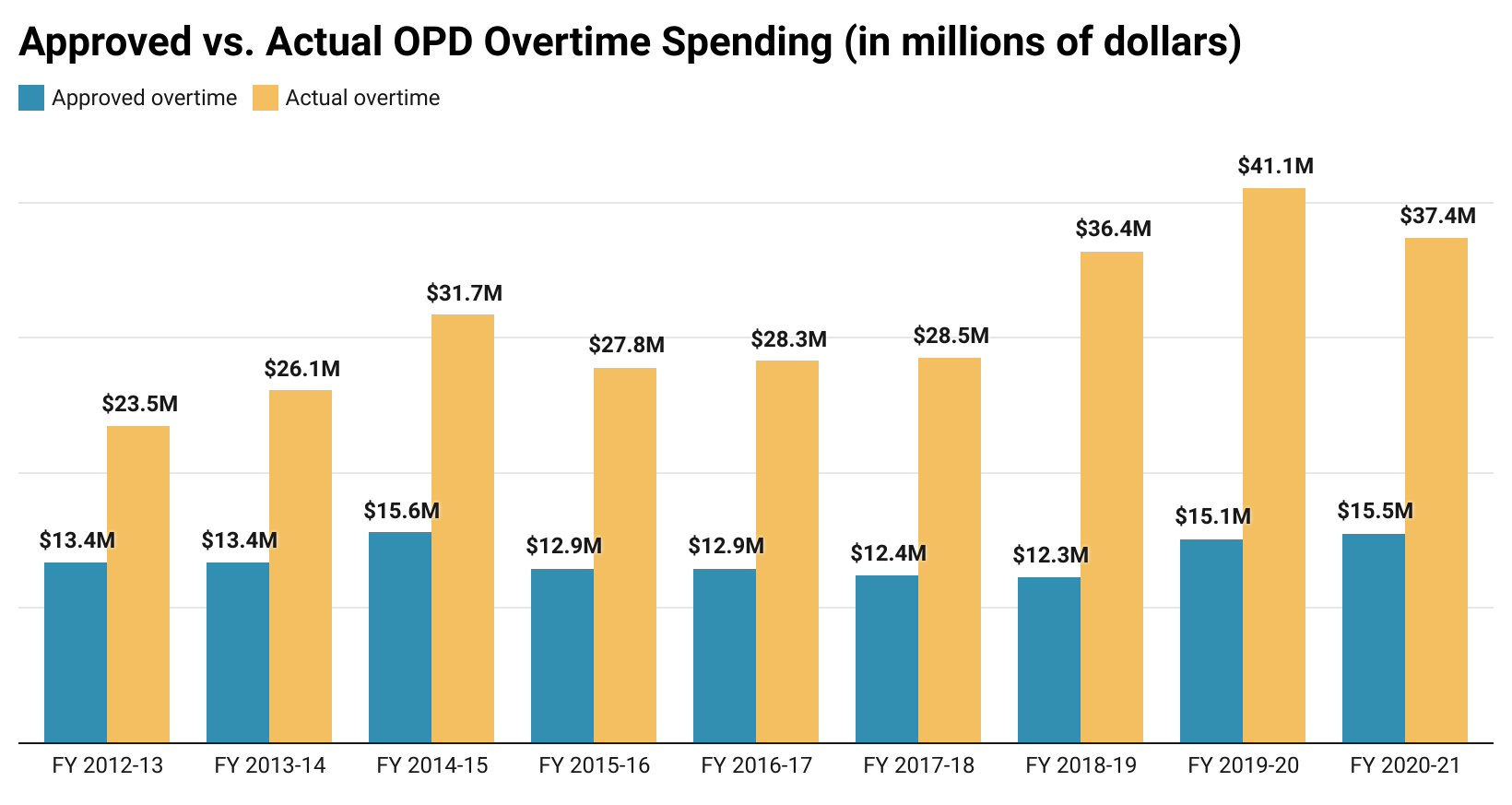
Oakland Mayor Libby Schaaf’s proposed budget for the coming fiscal year would nearly double the amount of money for police overtime, increasing the city’s law enforcement spending by almost 8% — even as city leaders last summer pledged to slash the department’s budget amid widespread racial justice protests.
Schaaf's proposed budget for the 2021-23 budget cycle, which she presented last Monday to the Oakland City Council, includes about $61 million over the next two years for police overtime — up from roughly $32 million in the last two-year budget cycle.
That would increase total police spending from about $317 million this fiscal year to $341 million starting in July — or roughly 41% of the city's general fund — and then up to nearly $352 million the year after.
Schaaf's proposal, which she says “aligns with historical spending,” comes after a year of already hefty police overtime expenditures. In the 2020 calendar year, the city spent more than $35 million on police overtime, enabling more than 100 officers to more than double their base salaries, which raised total police personnel costs well above $250 million.
Overtime Windfall
That year, 73 officers and 63 sergeants earned more than Schaaf herself, whose own compensation package, including pay and benefits, was $337,140, according to city salary data obtained through a public records request.
Topping that list was Officer Timothy S. Dolan, who was the highest compensated employee in the department and the second-highest in all of city government. On top of his reported 2020 base salary of $134,080, Dolan earned more than $301,000 in overtime pay. That put his total compensation package, including health care and payments the city made into his pension fund, at $589,809.
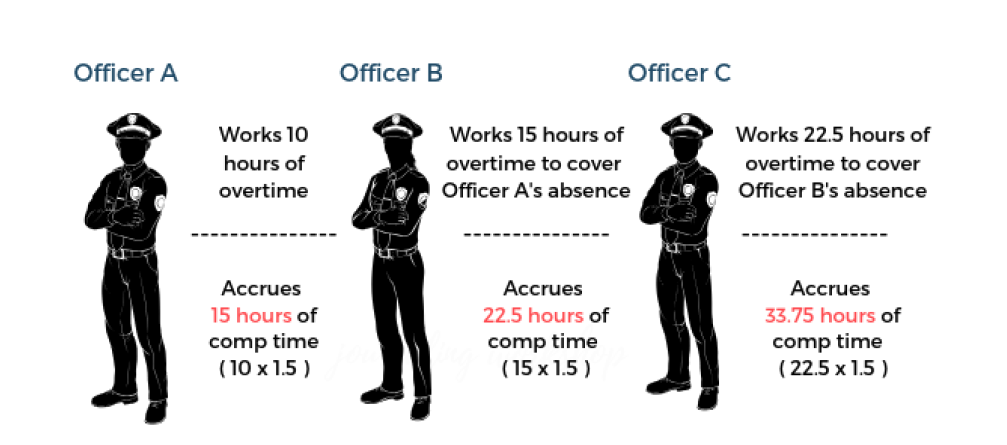
The city has investigated the possibility that some of the highest-earning Oakland Police Department employees were taking advantage of the overtime system, said Oakland City Administrator Ed Reiskin. But he said no abuse has been found, as far as he is aware. Rather, he pointed to short staffing as the primary driver of overtime spending.
“My concern isn’t one officer making a lot of money. That’s not inherently problematic,” Reiskin said. “If people are working so much that they can’t be effective and work safely, that’s my concern.”
Last year, 64 OPD employees made over $100,000 in overtime alone.
Records show that many OPD employees brought in significant portions of their income through overtime work, in addition to lump-sum payments and other types of compensation. The data show that 107 OPD employees were paid more than double their base salary in 2020, including 17 who were paid more than triple, and five who were paid about quadruple.
That includes Officer Malcolm E. Miller, who brought home $362,000 last year (not including benefits), though his base salary was only $82,925.
Miller, Dolan and all other police personnel named in this story did not respond to emails requesting comment. OPD also would not comment and declined our requests to interview the officers.
‘You’re Making a Choice’
Sgt. Barry Donelan, president of the Oakland Police Officers' Association, said logging this many overtime hours suggests that these top earners volunteered for many additional assignments. The department regularly sends out emails to staff looking for officers willing to work overtime on special details or at public events, like Oakland A’s games, he noted.