window.__IS_SSR__=true
window.__INITIAL_STATE__={
"attachmentsReducer": {
"audio_0": {
"type": "attachments",
"id": "audio_0",
"imgSizes": {
"kqedFullSize": {
"file": "https://ww2.kqed.org/news/wp-content/themes/KQED-unified/img/audio_bgs/background0.jpg"
}
}
},
"audio_1": {
"type": "attachments",
"id": "audio_1",
"imgSizes": {
"kqedFullSize": {
"file": "https://ww2.kqed.org/news/wp-content/themes/KQED-unified/img/audio_bgs/background1.jpg"
}
}
},
"audio_2": {
"type": "attachments",
"id": "audio_2",
"imgSizes": {
"kqedFullSize": {
"file": "https://ww2.kqed.org/news/wp-content/themes/KQED-unified/img/audio_bgs/background2.jpg"
}
}
},
"audio_3": {
"type": "attachments",
"id": "audio_3",
"imgSizes": {
"kqedFullSize": {
"file": "https://ww2.kqed.org/news/wp-content/themes/KQED-unified/img/audio_bgs/background3.jpg"
}
}
},
"audio_4": {
"type": "attachments",
"id": "audio_4",
"imgSizes": {
"kqedFullSize": {
"file": "https://ww2.kqed.org/news/wp-content/themes/KQED-unified/img/audio_bgs/background4.jpg"
}
}
},
"placeholder": {
"type": "attachments",
"id": "placeholder",
"imgSizes": {
"thumbnail": {
"file": "https://cdn.kqed.org/wp-content/uploads/2024/12/KQED-Default-Image-816638274-2000x1333-1-160x107.jpg",
"width": 160,
"height": 107,
"mimeType": "image/jpeg"
},
"medium": {
"file": "https://cdn.kqed.org/wp-content/uploads/2024/12/KQED-Default-Image-816638274-2000x1333-1-800x533.jpg",
"width": 800,
"height": 533,
"mimeType": "image/jpeg"
},
"medium_large": {
"file": "https://cdn.kqed.org/wp-content/uploads/2024/12/KQED-Default-Image-816638274-2000x1333-1-768x512.jpg",
"width": 768,
"height": 512,
"mimeType": "image/jpeg"
},
"large": {
"file": "https://cdn.kqed.org/wp-content/uploads/2024/12/KQED-Default-Image-816638274-2000x1333-1-1020x680.jpg",
"width": 1020,
"height": 680,
"mimeType": "image/jpeg"
},
"1536x1536": {
"file": "https://cdn.kqed.org/wp-content/uploads/2024/12/KQED-Default-Image-816638274-2000x1333-1-1536x1024.jpg",
"width": 1536,
"height": 1024,
"mimeType": "image/jpeg"
},
"fd-lrg": {
"file": "https://cdn.kqed.org/wp-content/uploads/2024/12/KQED-Default-Image-816638274-2000x1333-1-1536x1024.jpg",
"width": 1536,
"height": 1024,
"mimeType": "image/jpeg"
},
"fd-med": {
"file": "https://cdn.kqed.org/wp-content/uploads/2024/12/KQED-Default-Image-816638274-2000x1333-1-1020x680.jpg",
"width": 1020,
"height": 680,
"mimeType": "image/jpeg"
},
"fd-sm": {
"file": "https://cdn.kqed.org/wp-content/uploads/2024/12/KQED-Default-Image-816638274-2000x1333-1-800x533.jpg",
"width": 800,
"height": 533,
"mimeType": "image/jpeg"
},
"post-thumbnail": {
"file": "https://cdn.kqed.org/wp-content/uploads/2024/12/KQED-Default-Image-816638274-2000x1333-1-672x372.jpg",
"width": 672,
"height": 372,
"mimeType": "image/jpeg"
},
"twentyfourteen-full-width": {
"file": "https://cdn.kqed.org/wp-content/uploads/2024/12/KQED-Default-Image-816638274-2000x1333-1-1038x576.jpg",
"width": 1038,
"height": 576,
"mimeType": "image/jpeg"
},
"xxsmall": {
"file": "https://cdn.kqed.org/wp-content/uploads/2024/12/KQED-Default-Image-816638274-2000x1333-1-160x107.jpg",
"width": 160,
"height": 107,
"mimeType": "image/jpeg"
},
"xsmall": {
"file": "https://cdn.kqed.org/wp-content/uploads/2024/12/KQED-Default-Image-816638274-2000x1333-1-672x372.jpg",
"width": 672,
"height": 372,
"mimeType": "image/jpeg"
},
"small": {
"file": "https://cdn.kqed.org/wp-content/uploads/2024/12/KQED-Default-Image-816638274-2000x1333-1-672x372.jpg",
"width": 672,
"height": 372,
"mimeType": "image/jpeg"
},
"xlarge": {
"file": "https://cdn.kqed.org/wp-content/uploads/2024/12/KQED-Default-Image-816638274-2000x1333-1-1020x680.jpg",
"width": 1020,
"height": 680,
"mimeType": "image/jpeg"
},
"full-width": {
"file": "https://cdn.kqed.org/wp-content/uploads/2024/12/KQED-Default-Image-816638274-2000x1333-1-1920x1280.jpg",
"width": 1920,
"height": 1280,
"mimeType": "image/jpeg"
},
"guest-author-32": {
"file": "https://cdn.kqed.org/wp-content/uploads/2025/01/KQED-Default-Image-816638274-1333x1333-1-160x160.jpg",
"width": 32,
"height": 32,
"mimeType": "image/jpeg"
},
"guest-author-50": {
"file": "https://cdn.kqed.org/wp-content/uploads/2025/01/KQED-Default-Image-816638274-1333x1333-1-160x160.jpg",
"width": 50,
"height": 50,
"mimeType": "image/jpeg"
},
"guest-author-64": {
"file": "https://cdn.kqed.org/wp-content/uploads/2025/01/KQED-Default-Image-816638274-1333x1333-1-160x160.jpg",
"width": 64,
"height": 64,
"mimeType": "image/jpeg"
},
"guest-author-96": {
"file": "https://cdn.kqed.org/wp-content/uploads/2025/01/KQED-Default-Image-816638274-1333x1333-1-160x160.jpg",
"width": 96,
"height": 96,
"mimeType": "image/jpeg"
},
"guest-author-128": {
"file": "https://cdn.kqed.org/wp-content/uploads/2025/01/KQED-Default-Image-816638274-1333x1333-1-160x160.jpg",
"width": 128,
"height": 128,
"mimeType": "image/jpeg"
},
"detail": {
"file": "https://cdn.kqed.org/wp-content/uploads/2025/01/KQED-Default-Image-816638274-1333x1333-1-160x160.jpg",
"width": 160,
"height": 160,
"mimeType": "image/jpeg"
},
"kqedFullSize": {
"file": "https://cdn.kqed.org/wp-content/uploads/2024/12/KQED-Default-Image-816638274-2000x1333-1.jpg",
"width": 2000,
"height": 1333
}
}
},
"news_11812807": {
"type": "attachments",
"id": "news_11812807",
"meta": {
"index": "attachments_1716263798",
"site": "news",
"id": "11812807",
"found": true
},
"parent": 11812701,
"imgSizes": {
"apple_news_ca_landscape_5_5": {
"file": "https://ww2.kqed.org/app/uploads/sites/10/2020/04/otay-1044x720.png",
"width": 1044,
"mimeType": "image/png",
"height": 720
},
"apple_news_ca_square_4_0": {
"file": "https://ww2.kqed.org/app/uploads/sites/10/2020/04/otay-470x470.png",
"width": 470,
"mimeType": "image/png",
"height": 470
},
"twentyfourteen-full-width": {
"file": "https://ww2.kqed.org/app/uploads/sites/10/2020/04/otay-1038x576.png",
"width": 1038,
"mimeType": "image/png",
"height": 576
},
"thumbnail": {
"file": "https://ww2.kqed.org/app/uploads/sites/10/2020/04/otay-160x106.png",
"width": 160,
"mimeType": "image/png",
"height": 106
},
"post-thumbnail": {
"file": "https://ww2.kqed.org/app/uploads/sites/10/2020/04/otay-672x372.png",
"width": 672,
"mimeType": "image/png",
"height": 372
},
"kqedFullSize": {
"file": "https://ww2.kqed.org/app/uploads/sites/10/2020/04/otay.png",
"width": 1083,
"height": 720
},
"apple_news_ca_landscape_4_7": {
"file": "https://ww2.kqed.org/app/uploads/sites/10/2020/04/otay-632x474.png",
"width": 632,
"mimeType": "image/png",
"height": 474
},
"large": {
"file": "https://ww2.kqed.org/app/uploads/sites/10/2020/04/otay-1020x678.png",
"width": 1020,
"mimeType": "image/png",
"height": 678
},
"apple_news_ca_landscape_4_0": {
"file": "https://ww2.kqed.org/app/uploads/sites/10/2020/04/otay-536x402.png",
"width": 536,
"mimeType": "image/png",
"height": 402
},
"medium": {
"file": "https://ww2.kqed.org/app/uploads/sites/10/2020/04/otay-800x532.png",
"width": 800,
"mimeType": "image/png",
"height": 532
},
"apple_news_ca_portrait_4_0": {
"file": "https://ww2.kqed.org/app/uploads/sites/10/2020/04/otay-354x472.png",
"width": 354,
"mimeType": "image/png",
"height": 472
},
"apple_news_ca_portrait_9_7": {
"file": "https://ww2.kqed.org/app/uploads/sites/10/2020/04/otay-840x720.png",
"width": 840,
"mimeType": "image/png",
"height": 720
},
"apple_news_ca_portrait_4_7": {
"file": "https://ww2.kqed.org/app/uploads/sites/10/2020/04/otay-414x552.png",
"width": 414,
"mimeType": "image/png",
"height": 552
},
"apple_news_ca_portrait_5_5": {
"file": "https://ww2.kqed.org/app/uploads/sites/10/2020/04/otay-687x720.png",
"width": 687,
"mimeType": "image/png",
"height": 720
},
"apple_news_ca_square_4_7": {
"file": "https://ww2.kqed.org/app/uploads/sites/10/2020/04/otay-550x550.png",
"width": 550,
"mimeType": "image/png",
"height": 550
},
"apple_news_ca_square_5_5": {
"file": "https://ww2.kqed.org/app/uploads/sites/10/2020/04/otay-912x720.png",
"width": 912,
"mimeType": "image/png",
"height": 720
}
},
"publishDate": 1587102827,
"modified": 1587102935,
"caption": "Otay Mesa Detention Center, where 17 detainees and 14 staff members have tested positive for COVID-19, more than at any other immigration detention facility in the country.",
"description": null,
"title": "otay",
"credit": "Courtesy of CoreCivic",
"status": "inherit",
"isLoading": false,
"fetchFailed": false
},
"news_11812799": {
"type": "attachments",
"id": "news_11812799",
"meta": {
"index": "attachments_1716263798",
"site": "news",
"id": "11812799",
"found": true
},
"parent": 11812710,
"imgSizes": {
"apple_news_ca_landscape_5_5": {
"file": "https://ww2.kqed.org/app/uploads/sites/10/2020/04/1920_GettyImages-522274800-1-1044x783.jpg",
"width": 1044,
"mimeType": "image/jpeg",
"height": 783
},
"apple_news_ca_square_4_0": {
"file": "https://ww2.kqed.org/app/uploads/sites/10/2020/04/1920_GettyImages-522274800-1-470x470.jpg",
"width": 470,
"mimeType": "image/jpeg",
"height": 470
},
"twentyfourteen-full-width": {
"file": "https://ww2.kqed.org/app/uploads/sites/10/2020/04/1920_GettyImages-522274800-1-1038x576.jpg",
"width": 1038,
"mimeType": "image/jpeg",
"height": 576
},
"thumbnail": {
"file": "https://ww2.kqed.org/app/uploads/sites/10/2020/04/1920_GettyImages-522274800-1-160x107.jpg",
"width": 160,
"mimeType": "image/jpeg",
"height": 107
},
"post-thumbnail": {
"file": "https://ww2.kqed.org/app/uploads/sites/10/2020/04/1920_GettyImages-522274800-1-672x372.jpg",
"width": 672,
"mimeType": "image/jpeg",
"height": 372
},
"kqedFullSize": {
"file": "https://ww2.kqed.org/app/uploads/sites/10/2020/04/1920_GettyImages-522274800-1.jpg",
"width": 1920,
"height": 1280
},
"apple_news_ca_landscape_4_7": {
"file": "https://ww2.kqed.org/app/uploads/sites/10/2020/04/1920_GettyImages-522274800-1-632x474.jpg",
"width": 632,
"mimeType": "image/jpeg",
"height": 474
},
"large": {
"file": "https://ww2.kqed.org/app/uploads/sites/10/2020/04/1920_GettyImages-522274800-1-1020x680.jpg",
"width": 1020,
"mimeType": "image/jpeg",
"height": 680
},
"apple_news_ca_landscape_4_0": {
"file": "https://ww2.kqed.org/app/uploads/sites/10/2020/04/1920_GettyImages-522274800-1-536x402.jpg",
"width": 536,
"mimeType": "image/jpeg",
"height": 402
},
"apple_news_ca_portrait_12_9": {
"file": "https://ww2.kqed.org/app/uploads/sites/10/2020/04/1920_GettyImages-522274800-1-1122x1280.jpg",
"width": 1122,
"mimeType": "image/jpeg",
"height": 1280
},
"medium": {
"file": "https://ww2.kqed.org/app/uploads/sites/10/2020/04/1920_GettyImages-522274800-1-800x533.jpg",
"width": 800,
"mimeType": "image/jpeg",
"height": 533
},
"apple_news_ca_portrait_4_0": {
"file": "https://ww2.kqed.org/app/uploads/sites/10/2020/04/1920_GettyImages-522274800-1-354x472.jpg",
"width": 354,
"mimeType": "image/jpeg",
"height": 472
},
"apple_news_ca_portrait_9_7": {
"file": "https://ww2.kqed.org/app/uploads/sites/10/2020/04/1920_GettyImages-522274800-1-840x1120.jpg",
"width": 840,
"mimeType": "image/jpeg",
"height": 1120
},
"apple_news_ca_landscape_12_9": {
"file": "https://ww2.kqed.org/app/uploads/sites/10/2020/04/1920_GettyImages-522274800-1-1832x1280.jpg",
"width": 1832,
"mimeType": "image/jpeg",
"height": 1280
},
"apple_news_ca_square_9_7": {
"file": "https://ww2.kqed.org/app/uploads/sites/10/2020/04/1920_GettyImages-522274800-1-1104x1104.jpg",
"width": 1104,
"mimeType": "image/jpeg",
"height": 1104
},
"apple_news_ca_portrait_4_7": {
"file": "https://ww2.kqed.org/app/uploads/sites/10/2020/04/1920_GettyImages-522274800-1-414x552.jpg",
"width": 414,
"mimeType": "image/jpeg",
"height": 552
},
"apple_news_ca_square_12_9": {
"file": "https://ww2.kqed.org/app/uploads/sites/10/2020/04/1920_GettyImages-522274800-1-1472x1280.jpg",
"width": 1472,
"mimeType": "image/jpeg",
"height": 1280
},
"apple_news_ca_portrait_5_5": {
"file": "https://ww2.kqed.org/app/uploads/sites/10/2020/04/1920_GettyImages-522274800-1-687x916.jpg",
"width": 687,
"mimeType": "image/jpeg",
"height": 916
},
"full-width": {
"file": "https://ww2.kqed.org/app/uploads/sites/10/2020/04/1920_GettyImages-522274800-1-1920x1280.jpg",
"width": 1920,
"mimeType": "image/jpeg",
"height": 1280
},
"apple_news_ca_square_4_7": {
"file": "https://ww2.kqed.org/app/uploads/sites/10/2020/04/1920_GettyImages-522274800-1-550x550.jpg",
"width": 550,
"mimeType": "image/jpeg",
"height": 550
},
"apple_news_ca_landscape_9_7": {
"file": "https://ww2.kqed.org/app/uploads/sites/10/2020/04/1920_GettyImages-522274800-1-1376x1032.jpg",
"width": 1376,
"mimeType": "image/jpeg",
"height": 1032
},
"apple_news_ca_square_5_5": {
"file": "https://ww2.kqed.org/app/uploads/sites/10/2020/04/1920_GettyImages-522274800-1-912x912.jpg",
"width": 912,
"mimeType": "image/jpeg",
"height": 912
}
},
"publishDate": 1587101424,
"modified": 1587101551,
"caption": "“As an undocumented immigrant who was raised in California and call the Bay Area my home, thank you” wrote undocumented journalist and activist Jose Antonio Vargas on Twitter responding to Newsom’s announcement of a relief fund for undocumented immigrants. “Thank you for remembering that undocumented Californians are an inextricable part of our state.” \n",
"description": null,
"title": "1920_GettyImages-522274800",
"credit": "Alex Wong/Getty Images",
"status": "inherit",
"isLoading": false,
"fetchFailed": false
},
"news_11810767": {
"type": "attachments",
"id": "news_11810767",
"meta": {
"index": "attachments_1716263798",
"site": "news",
"id": "11810767",
"found": true
},
"parent": 11810638,
"imgSizes": {
"apple_news_ca_landscape_5_5": {
"file": "https://ww2.kqed.org/app/uploads/sites/10/2020/04/1920_RS6859_US_Dist_S_Cal-1044x783.jpg",
"width": 1044,
"mimeType": "image/jpeg",
"height": 783
},
"apple_news_ca_square_4_0": {
"file": "https://ww2.kqed.org/app/uploads/sites/10/2020/04/1920_RS6859_US_Dist_S_Cal-470x470.jpg",
"width": 470,
"mimeType": "image/jpeg",
"height": 470
},
"twentyfourteen-full-width": {
"file": "https://ww2.kqed.org/app/uploads/sites/10/2020/04/1920_RS6859_US_Dist_S_Cal-1038x576.jpg",
"width": 1038,
"mimeType": "image/jpeg",
"height": 576
},
"thumbnail": {
"file": "https://ww2.kqed.org/app/uploads/sites/10/2020/04/1920_RS6859_US_Dist_S_Cal-160x90.jpg",
"width": 160,
"mimeType": "image/jpeg",
"height": 90
},
"post-thumbnail": {
"file": "https://ww2.kqed.org/app/uploads/sites/10/2020/04/1920_RS6859_US_Dist_S_Cal-672x372.jpg",
"width": 672,
"mimeType": "image/jpeg",
"height": 372
},
"kqedFullSize": {
"file": "https://ww2.kqed.org/app/uploads/sites/10/2020/04/1920_RS6859_US_Dist_S_Cal.jpg",
"width": 1920,
"height": 1080
},
"apple_news_ca_landscape_4_7": {
"file": "https://ww2.kqed.org/app/uploads/sites/10/2020/04/1920_RS6859_US_Dist_S_Cal-632x474.jpg",
"width": 632,
"mimeType": "image/jpeg",
"height": 474
},
"large": {
"file": "https://ww2.kqed.org/app/uploads/sites/10/2020/04/1920_RS6859_US_Dist_S_Cal-1020x574.jpg",
"width": 1020,
"mimeType": "image/jpeg",
"height": 574
},
"apple_news_ca_landscape_4_0": {
"file": "https://ww2.kqed.org/app/uploads/sites/10/2020/04/1920_RS6859_US_Dist_S_Cal-536x402.jpg",
"width": 536,
"mimeType": "image/jpeg",
"height": 402
},
"apple_news_ca_portrait_12_9": {
"file": "https://ww2.kqed.org/app/uploads/sites/10/2020/04/1920_RS6859_US_Dist_S_Cal-1122x1080.jpg",
"width": 1122,
"mimeType": "image/jpeg",
"height": 1080
},
"medium": {
"file": "https://ww2.kqed.org/app/uploads/sites/10/2020/04/1920_RS6859_US_Dist_S_Cal-800x450.jpg",
"width": 800,
"mimeType": "image/jpeg",
"height": 450
},
"apple_news_ca_portrait_4_0": {
"file": "https://ww2.kqed.org/app/uploads/sites/10/2020/04/1920_RS6859_US_Dist_S_Cal-354x472.jpg",
"width": 354,
"mimeType": "image/jpeg",
"height": 472
},
"apple_news_ca_portrait_9_7": {
"file": "https://ww2.kqed.org/app/uploads/sites/10/2020/04/1920_RS6859_US_Dist_S_Cal-840x1080.jpg",
"width": 840,
"mimeType": "image/jpeg",
"height": 1080
},
"apple_news_ca_landscape_12_9": {
"file": "https://ww2.kqed.org/app/uploads/sites/10/2020/04/1920_RS6859_US_Dist_S_Cal-1832x1080.jpg",
"width": 1832,
"mimeType": "image/jpeg",
"height": 1080
},
"apple_news_ca_square_9_7": {
"file": "https://ww2.kqed.org/app/uploads/sites/10/2020/04/1920_RS6859_US_Dist_S_Cal-1104x1080.jpg",
"width": 1104,
"mimeType": "image/jpeg",
"height": 1080
},
"apple_news_ca_portrait_4_7": {
"file": "https://ww2.kqed.org/app/uploads/sites/10/2020/04/1920_RS6859_US_Dist_S_Cal-414x552.jpg",
"width": 414,
"mimeType": "image/jpeg",
"height": 552
},
"apple_news_ca_square_12_9": {
"file": "https://ww2.kqed.org/app/uploads/sites/10/2020/04/1920_RS6859_US_Dist_S_Cal-1472x1080.jpg",
"width": 1472,
"mimeType": "image/jpeg",
"height": 1080
},
"apple_news_ca_portrait_5_5": {
"file": "https://ww2.kqed.org/app/uploads/sites/10/2020/04/1920_RS6859_US_Dist_S_Cal-687x916.jpg",
"width": 687,
"mimeType": "image/jpeg",
"height": 916
},
"full-width": {
"file": "https://ww2.kqed.org/app/uploads/sites/10/2020/04/1920_RS6859_US_Dist_S_Cal-1920x1080.jpg",
"width": 1920,
"mimeType": "image/jpeg",
"height": 1080
},
"apple_news_ca_square_4_7": {
"file": "https://ww2.kqed.org/app/uploads/sites/10/2020/04/1920_RS6859_US_Dist_S_Cal-550x550.jpg",
"width": 550,
"mimeType": "image/jpeg",
"height": 550
},
"apple_news_ca_landscape_9_7": {
"file": "https://ww2.kqed.org/app/uploads/sites/10/2020/04/1920_RS6859_US_Dist_S_Cal-1376x1032.jpg",
"width": 1376,
"mimeType": "image/jpeg",
"height": 1032
},
"apple_news_ca_square_5_5": {
"file": "https://ww2.kqed.org/app/uploads/sites/10/2020/04/1920_RS6859_US_Dist_S_Cal-912x912.jpg",
"width": 912,
"mimeType": "image/jpeg",
"height": 912
}
},
"publishDate": 1586112179,
"modified": 1586112285,
"caption": "The Edward J. Schwartz Courthouse, in San Diego, California.",
"description": null,
"title": "1920_RS6859_US_Dist_S_Cal",
"credit": "Wikimedia Commons",
"status": "inherit",
"isLoading": false,
"fetchFailed": false
},
"news_11810080": {
"type": "attachments",
"id": "news_11810080",
"meta": {
"index": "attachments_1716263798",
"site": "news",
"id": "11810080",
"found": true
},
"parent": 11810060,
"imgSizes": {
"apple_news_ca_landscape_5_5": {
"file": "https://ww2.kqed.org/app/uploads/sites/10/2020/04/RS26107_jail-hallway-with-bars-01-11-17-qut-1044x783.jpg",
"width": 1044,
"mimeType": "image/jpeg",
"height": 783
},
"apple_news_ca_square_4_0": {
"file": "https://ww2.kqed.org/app/uploads/sites/10/2020/04/RS26107_jail-hallway-with-bars-01-11-17-qut-470x470.jpg",
"width": 470,
"mimeType": "image/jpeg",
"height": 470
},
"twentyfourteen-full-width": {
"file": "https://ww2.kqed.org/app/uploads/sites/10/2020/04/RS26107_jail-hallway-with-bars-01-11-17-qut-1038x576.jpg",
"width": 1038,
"mimeType": "image/jpeg",
"height": 576
},
"thumbnail": {
"file": "https://ww2.kqed.org/app/uploads/sites/10/2020/04/RS26107_jail-hallway-with-bars-01-11-17-qut-160x90.jpg",
"width": 160,
"mimeType": "image/jpeg",
"height": 90
},
"post-thumbnail": {
"file": "https://ww2.kqed.org/app/uploads/sites/10/2020/04/RS26107_jail-hallway-with-bars-01-11-17-qut-672x372.jpg",
"width": 672,
"mimeType": "image/jpeg",
"height": 372
},
"kqedFullSize": {
"file": "https://ww2.kqed.org/app/uploads/sites/10/2020/04/RS26107_jail-hallway-with-bars-01-11-17-qut.jpg",
"width": 1920,
"height": 1080
},
"apple_news_ca_landscape_4_7": {
"file": "https://ww2.kqed.org/app/uploads/sites/10/2020/04/RS26107_jail-hallway-with-bars-01-11-17-qut-632x474.jpg",
"width": 632,
"mimeType": "image/jpeg",
"height": 474
},
"large": {
"file": "https://ww2.kqed.org/app/uploads/sites/10/2020/04/RS26107_jail-hallway-with-bars-01-11-17-qut-1020x574.jpg",
"width": 1020,
"mimeType": "image/jpeg",
"height": 574
},
"apple_news_ca_landscape_4_0": {
"file": "https://ww2.kqed.org/app/uploads/sites/10/2020/04/RS26107_jail-hallway-with-bars-01-11-17-qut-536x402.jpg",
"width": 536,
"mimeType": "image/jpeg",
"height": 402
},
"apple_news_ca_portrait_12_9": {
"file": "https://ww2.kqed.org/app/uploads/sites/10/2020/04/RS26107_jail-hallway-with-bars-01-11-17-qut-1122x1080.jpg",
"width": 1122,
"mimeType": "image/jpeg",
"height": 1080
},
"medium": {
"file": "https://ww2.kqed.org/app/uploads/sites/10/2020/04/RS26107_jail-hallway-with-bars-01-11-17-qut-800x450.jpg",
"width": 800,
"mimeType": "image/jpeg",
"height": 450
},
"apple_news_ca_portrait_4_0": {
"file": "https://ww2.kqed.org/app/uploads/sites/10/2020/04/RS26107_jail-hallway-with-bars-01-11-17-qut-354x472.jpg",
"width": 354,
"mimeType": "image/jpeg",
"height": 472
},
"apple_news_ca_portrait_9_7": {
"file": "https://ww2.kqed.org/app/uploads/sites/10/2020/04/RS26107_jail-hallway-with-bars-01-11-17-qut-840x1080.jpg",
"width": 840,
"mimeType": "image/jpeg",
"height": 1080
},
"apple_news_ca_landscape_12_9": {
"file": "https://ww2.kqed.org/app/uploads/sites/10/2020/04/RS26107_jail-hallway-with-bars-01-11-17-qut-1832x1080.jpg",
"width": 1832,
"mimeType": "image/jpeg",
"height": 1080
},
"apple_news_ca_square_9_7": {
"file": "https://ww2.kqed.org/app/uploads/sites/10/2020/04/RS26107_jail-hallway-with-bars-01-11-17-qut-1104x1080.jpg",
"width": 1104,
"mimeType": "image/jpeg",
"height": 1080
},
"apple_news_ca_portrait_4_7": {
"file": "https://ww2.kqed.org/app/uploads/sites/10/2020/04/RS26107_jail-hallway-with-bars-01-11-17-qut-414x552.jpg",
"width": 414,
"mimeType": "image/jpeg",
"height": 552
},
"apple_news_ca_square_12_9": {
"file": "https://ww2.kqed.org/app/uploads/sites/10/2020/04/RS26107_jail-hallway-with-bars-01-11-17-qut-1472x1080.jpg",
"width": 1472,
"mimeType": "image/jpeg",
"height": 1080
},
"apple_news_ca_portrait_5_5": {
"file": "https://ww2.kqed.org/app/uploads/sites/10/2020/04/RS26107_jail-hallway-with-bars-01-11-17-qut-687x916.jpg",
"width": 687,
"mimeType": "image/jpeg",
"height": 916
},
"full-width": {
"file": "https://ww2.kqed.org/app/uploads/sites/10/2020/04/RS26107_jail-hallway-with-bars-01-11-17-qut-1920x1080.jpg",
"width": 1920,
"mimeType": "image/jpeg",
"height": 1080
},
"apple_news_ca_square_4_7": {
"file": "https://ww2.kqed.org/app/uploads/sites/10/2020/04/RS26107_jail-hallway-with-bars-01-11-17-qut-550x550.jpg",
"width": 550,
"mimeType": "image/jpeg",
"height": 550
},
"apple_news_ca_landscape_9_7": {
"file": "https://ww2.kqed.org/app/uploads/sites/10/2020/04/RS26107_jail-hallway-with-bars-01-11-17-qut-1376x1032.jpg",
"width": 1376,
"mimeType": "image/jpeg",
"height": 1032
},
"apple_news_ca_square_5_5": {
"file": "https://ww2.kqed.org/app/uploads/sites/10/2020/04/RS26107_jail-hallway-with-bars-01-11-17-qut-912x912.jpg",
"width": 912,
"mimeType": "image/jpeg",
"height": 912
}
},
"publishDate": 1585768338,
"modified": 1587587813,
"caption": "Inside the Yuba County Jail in Marysville, California, where an immigrant detainee with chronic health conditions is suing ICE to be released due to the coronavirus outbreak. ",
"description": "Inside the Yuba County Jail in Marysville, California, where an immigrant detainee with chronic health conditions is suing ICE to be released, due to the coronavirus outbreak. ",
"title": "RS26107_jail-hallway-with-bars-01-11-17-qut",
"credit": "Courtesy Rosen Bien Galvan & Grunfeld LLP",
"status": "inherit",
"isLoading": false,
"fetchFailed": false
},
"news_11809681": {
"type": "attachments",
"id": "news_11809681",
"meta": {
"index": "attachments_1716263798",
"site": "news",
"id": "11809681",
"found": true
},
"parent": 11809657,
"imgSizes": {
"apple_news_ca_landscape_5_5": {
"file": "https://ww2.kqed.org/app/uploads/sites/10/2020/03/RS42438_003_KQED_Richmond_UndocumentedWorkers_03302020-qut-1044x783.jpg",
"width": 1044,
"mimeType": "image/jpeg",
"height": 783
},
"apple_news_ca_square_4_0": {
"file": "https://ww2.kqed.org/app/uploads/sites/10/2020/03/RS42438_003_KQED_Richmond_UndocumentedWorkers_03302020-qut-470x470.jpg",
"width": 470,
"mimeType": "image/jpeg",
"height": 470
},
"twentyfourteen-full-width": {
"file": "https://ww2.kqed.org/app/uploads/sites/10/2020/03/RS42438_003_KQED_Richmond_UndocumentedWorkers_03302020-qut-1038x576.jpg",
"width": 1038,
"mimeType": "image/jpeg",
"height": 576
},
"thumbnail": {
"file": "https://ww2.kqed.org/app/uploads/sites/10/2020/03/RS42438_003_KQED_Richmond_UndocumentedWorkers_03302020-qut-160x107.jpg",
"width": 160,
"mimeType": "image/jpeg",
"height": 107
},
"post-thumbnail": {
"file": "https://ww2.kqed.org/app/uploads/sites/10/2020/03/RS42438_003_KQED_Richmond_UndocumentedWorkers_03302020-qut-672x372.jpg",
"width": 672,
"mimeType": "image/jpeg",
"height": 372
},
"kqedFullSize": {
"file": "https://ww2.kqed.org/app/uploads/sites/10/2020/03/RS42438_003_KQED_Richmond_UndocumentedWorkers_03302020-qut.jpg",
"width": 1920,
"height": 1280
},
"apple_news_ca_landscape_4_7": {
"file": "https://ww2.kqed.org/app/uploads/sites/10/2020/03/RS42438_003_KQED_Richmond_UndocumentedWorkers_03302020-qut-632x474.jpg",
"width": 632,
"mimeType": "image/jpeg",
"height": 474
},
"large": {
"file": "https://ww2.kqed.org/app/uploads/sites/10/2020/03/RS42438_003_KQED_Richmond_UndocumentedWorkers_03302020-qut-1020x680.jpg",
"width": 1020,
"mimeType": "image/jpeg",
"height": 680
},
"apple_news_ca_landscape_4_0": {
"file": "https://ww2.kqed.org/app/uploads/sites/10/2020/03/RS42438_003_KQED_Richmond_UndocumentedWorkers_03302020-qut-536x402.jpg",
"width": 536,
"mimeType": "image/jpeg",
"height": 402
},
"apple_news_ca_portrait_12_9": {
"file": "https://ww2.kqed.org/app/uploads/sites/10/2020/03/RS42438_003_KQED_Richmond_UndocumentedWorkers_03302020-qut-1122x1280.jpg",
"width": 1122,
"mimeType": "image/jpeg",
"height": 1280
},
"medium": {
"file": "https://ww2.kqed.org/app/uploads/sites/10/2020/03/RS42438_003_KQED_Richmond_UndocumentedWorkers_03302020-qut-800x533.jpg",
"width": 800,
"mimeType": "image/jpeg",
"height": 533
},
"apple_news_ca_portrait_4_0": {
"file": "https://ww2.kqed.org/app/uploads/sites/10/2020/03/RS42438_003_KQED_Richmond_UndocumentedWorkers_03302020-qut-354x472.jpg",
"width": 354,
"mimeType": "image/jpeg",
"height": 472
},
"apple_news_ca_portrait_9_7": {
"file": "https://ww2.kqed.org/app/uploads/sites/10/2020/03/RS42438_003_KQED_Richmond_UndocumentedWorkers_03302020-qut-840x1120.jpg",
"width": 840,
"mimeType": "image/jpeg",
"height": 1120
},
"apple_news_ca_landscape_12_9": {
"file": "https://ww2.kqed.org/app/uploads/sites/10/2020/03/RS42438_003_KQED_Richmond_UndocumentedWorkers_03302020-qut-1832x1280.jpg",
"width": 1832,
"mimeType": "image/jpeg",
"height": 1280
},
"apple_news_ca_square_9_7": {
"file": "https://ww2.kqed.org/app/uploads/sites/10/2020/03/RS42438_003_KQED_Richmond_UndocumentedWorkers_03302020-qut-1104x1104.jpg",
"width": 1104,
"mimeType": "image/jpeg",
"height": 1104
},
"apple_news_ca_portrait_4_7": {
"file": "https://ww2.kqed.org/app/uploads/sites/10/2020/03/RS42438_003_KQED_Richmond_UndocumentedWorkers_03302020-qut-414x552.jpg",
"width": 414,
"mimeType": "image/jpeg",
"height": 552
},
"apple_news_ca_square_12_9": {
"file": "https://ww2.kqed.org/app/uploads/sites/10/2020/03/RS42438_003_KQED_Richmond_UndocumentedWorkers_03302020-qut-1472x1280.jpg",
"width": 1472,
"mimeType": "image/jpeg",
"height": 1280
},
"apple_news_ca_portrait_5_5": {
"file": "https://ww2.kqed.org/app/uploads/sites/10/2020/03/RS42438_003_KQED_Richmond_UndocumentedWorkers_03302020-qut-687x916.jpg",
"width": 687,
"mimeType": "image/jpeg",
"height": 916
},
"full-width": {
"file": "https://ww2.kqed.org/app/uploads/sites/10/2020/03/RS42438_003_KQED_Richmond_UndocumentedWorkers_03302020-qut-1920x1280.jpg",
"width": 1920,
"mimeType": "image/jpeg",
"height": 1280
},
"apple_news_ca_square_4_7": {
"file": "https://ww2.kqed.org/app/uploads/sites/10/2020/03/RS42438_003_KQED_Richmond_UndocumentedWorkers_03302020-qut-550x550.jpg",
"width": 550,
"mimeType": "image/jpeg",
"height": 550
},
"apple_news_ca_landscape_9_7": {
"file": "https://ww2.kqed.org/app/uploads/sites/10/2020/03/RS42438_003_KQED_Richmond_UndocumentedWorkers_03302020-qut-1376x1032.jpg",
"width": 1376,
"mimeType": "image/jpeg",
"height": 1032
},
"apple_news_ca_square_5_5": {
"file": "https://ww2.kqed.org/app/uploads/sites/10/2020/03/RS42438_003_KQED_Richmond_UndocumentedWorkers_03302020-qut-912x912.jpg",
"width": 912,
"mimeType": "image/jpeg",
"height": 912
}
},
"publishDate": 1585611684,
"modified": 1585679738,
"caption": "Patricia, an undocumented immigrant from Honduras, stands near her home in Richmond, California, on March 30, 2020. Patricia lost her job weeks ago because of the coronavirus crisis but is unable to collect unemployment insurance benefits because of her immigration status. ",
"description": null,
"title": "Patricia in Richmond, Calif. on Mar. 30, 2020.",
"credit": "Beth LaBerge/KQED",
"status": "inherit",
"isLoading": false,
"fetchFailed": false
},
"news_11792502": {
"type": "attachments",
"id": "news_11792502",
"meta": {
"index": "attachments_1716263798",
"site": "news",
"id": "11792502",
"found": true
},
"title": "ICE family detention facility Dilley, TX",
"publishDate": 1576875307,
"status": "inherit",
"parent": 12070016,
"modified": 1768606576,
"caption": "ICE's largest detention facility for families in Dilley, Texas, can hold up to 2,400 people.",
"credit": "Julie Small/KQED",
"altTag": "Entrance to ICE family detention facility in Dilley, Texas.",
"description": "Up the driveway to the parking lot of the South Texas Family Residential Center. The facility, owned and operated by CoreCivic holds mothers with their children in ICE detention.",
"imgSizes": {
"thumbnail": {
"file": "https://cdn.kqed.org/wp-content/uploads/sites/10/2019/12/ICE-family-detention-facility-Dilley-TX-RS40580_IMG_8939-qut-160x120.jpg",
"width": 160,
"height": 120,
"mimeType": "image/jpeg"
},
"medium": {
"file": "https://cdn.kqed.org/wp-content/uploads/sites/10/2019/12/ICE-family-detention-facility-Dilley-TX-RS40580_IMG_8939-qut-800x600.jpg",
"width": 800,
"height": 600,
"mimeType": "image/jpeg"
},
"large": {
"file": "https://cdn.kqed.org/wp-content/uploads/sites/10/2019/12/ICE-family-detention-facility-Dilley-TX-RS40580_IMG_8939-qut-1020x765.jpg",
"width": 1020,
"height": 765,
"mimeType": "image/jpeg"
},
"complete_open_graph": {
"file": "https://cdn.kqed.org/wp-content/uploads/sites/10/2019/12/ICE-family-detention-facility-Dilley-TX-RS40580_IMG_8939-qut-1200x900.jpg",
"width": 1200,
"height": 900,
"mimeType": "image/jpeg"
},
"post-thumbnail": {
"file": "https://cdn.kqed.org/wp-content/uploads/sites/10/2019/12/ICE-family-detention-facility-Dilley-TX-RS40580_IMG_8939-qut-672x372.jpg",
"width": 672,
"height": 372,
"mimeType": "image/jpeg"
},
"twentyfourteen-full-width": {
"file": "https://cdn.kqed.org/wp-content/uploads/sites/10/2019/12/ICE-family-detention-facility-Dilley-TX-RS40580_IMG_8939-qut-1038x576.jpg",
"width": 1038,
"height": 576,
"mimeType": "image/jpeg"
},
"full-width": {
"file": "https://cdn.kqed.org/wp-content/uploads/sites/10/2019/12/ICE-family-detention-facility-Dilley-TX-RS40580_IMG_8939-qut-1920x1440.jpg",
"width": 1920,
"height": 1440,
"mimeType": "image/jpeg"
},
"apple_news_ca_landscape_12_9": {
"file": "https://cdn.kqed.org/wp-content/uploads/sites/10/2019/12/ICE-family-detention-facility-Dilley-TX-RS40580_IMG_8939-qut-1832x1374.jpg",
"width": 1832,
"height": 1374,
"mimeType": "image/jpeg"
},
"apple_news_ca_landscape_9_7": {
"file": "https://cdn.kqed.org/wp-content/uploads/sites/10/2019/12/ICE-family-detention-facility-Dilley-TX-RS40580_IMG_8939-qut-1376x1032.jpg",
"width": 1376,
"height": 1032,
"mimeType": "image/jpeg"
},
"apple_news_ca_landscape_5_5": {
"file": "https://cdn.kqed.org/wp-content/uploads/sites/10/2019/12/ICE-family-detention-facility-Dilley-TX-RS40580_IMG_8939-qut-1044x783.jpg",
"width": 1044,
"height": 783,
"mimeType": "image/jpeg"
},
"apple_news_ca_landscape_4_7": {
"file": "https://cdn.kqed.org/wp-content/uploads/sites/10/2019/12/ICE-family-detention-facility-Dilley-TX-RS40580_IMG_8939-qut-632x474.jpg",
"width": 632,
"height": 474,
"mimeType": "image/jpeg"
},
"apple_news_ca_landscape_4_0": {
"file": "https://cdn.kqed.org/wp-content/uploads/sites/10/2019/12/ICE-family-detention-facility-Dilley-TX-RS40580_IMG_8939-qut-536x402.jpg",
"width": 536,
"height": 402,
"mimeType": "image/jpeg"
},
"apple_news_ca_portrait_12_9": {
"file": "https://cdn.kqed.org/wp-content/uploads/sites/10/2019/12/ICE-family-detention-facility-Dilley-TX-RS40580_IMG_8939-qut-1122x1440.jpg",
"width": 1122,
"height": 1440,
"mimeType": "image/jpeg"
},
"apple_news_ca_portrait_9_7": {
"file": "https://cdn.kqed.org/wp-content/uploads/sites/10/2019/12/ICE-family-detention-facility-Dilley-TX-RS40580_IMG_8939-qut-840x1120.jpg",
"width": 840,
"height": 1120,
"mimeType": "image/jpeg"
},
"apple_news_ca_portrait_5_5": {
"file": "https://cdn.kqed.org/wp-content/uploads/sites/10/2019/12/ICE-family-detention-facility-Dilley-TX-RS40580_IMG_8939-qut-687x916.jpg",
"width": 687,
"height": 916,
"mimeType": "image/jpeg"
},
"apple_news_ca_portrait_4_7": {
"file": "https://cdn.kqed.org/wp-content/uploads/sites/10/2019/12/ICE-family-detention-facility-Dilley-TX-RS40580_IMG_8939-qut-414x552.jpg",
"width": 414,
"height": 552,
"mimeType": "image/jpeg"
},
"apple_news_ca_portrait_4_0": {
"file": "https://cdn.kqed.org/wp-content/uploads/sites/10/2019/12/ICE-family-detention-facility-Dilley-TX-RS40580_IMG_8939-qut-354x472.jpg",
"width": 354,
"height": 472,
"mimeType": "image/jpeg"
},
"apple_news_ca_square_12_9": {
"file": "https://cdn.kqed.org/wp-content/uploads/sites/10/2019/12/ICE-family-detention-facility-Dilley-TX-RS40580_IMG_8939-qut-1472x1440.jpg",
"width": 1472,
"height": 1440,
"mimeType": "image/jpeg"
},
"apple_news_ca_square_9_7": {
"file": "https://cdn.kqed.org/wp-content/uploads/sites/10/2019/12/ICE-family-detention-facility-Dilley-TX-RS40580_IMG_8939-qut-1104x1104.jpg",
"width": 1104,
"height": 1104,
"mimeType": "image/jpeg"
},
"apple_news_ca_square_5_5": {
"file": "https://cdn.kqed.org/wp-content/uploads/sites/10/2019/12/ICE-family-detention-facility-Dilley-TX-RS40580_IMG_8939-qut-912x912.jpg",
"width": 912,
"height": 912,
"mimeType": "image/jpeg"
},
"apple_news_ca_square_4_7": {
"file": "https://cdn.kqed.org/wp-content/uploads/sites/10/2019/12/ICE-family-detention-facility-Dilley-TX-RS40580_IMG_8939-qut-550x550.jpg",
"width": 550,
"height": 550,
"mimeType": "image/jpeg"
},
"apple_news_ca_square_4_0": {
"file": "https://cdn.kqed.org/wp-content/uploads/sites/10/2019/12/ICE-family-detention-facility-Dilley-TX-RS40580_IMG_8939-qut-470x470.jpg",
"width": 470,
"height": 470,
"mimeType": "image/jpeg"
},
"kqedFullSize": {
"file": "https://cdn.kqed.org/wp-content/uploads/sites/10/2019/12/ICE-family-detention-facility-Dilley-TX-RS40580_IMG_8939-qut.jpg",
"width": 1920,
"height": 1440
}
},
"isLoading": false,
"fetchFailed": false
},
"news_11729066": {
"type": "attachments",
"id": "news_11729066",
"meta": {
"index": "attachments_1716263798",
"site": "news",
"id": "11729066",
"found": true
},
"parent": 11728992,
"imgSizes": {
"twentyfourteen-full-width": {
"file": "https://ww2.kqed.org/app/uploads/sites/10/2019/02/GettyImages-450371283-1038x576.jpg",
"width": 1038,
"mimeType": "image/jpeg",
"height": 576
},
"thumbnail": {
"file": "https://ww2.kqed.org/app/uploads/sites/10/2019/02/GettyImages-450371283-160x107.jpg",
"width": 160,
"mimeType": "image/jpeg",
"height": 107
},
"post-thumbnail": {
"file": "https://ww2.kqed.org/app/uploads/sites/10/2019/02/GettyImages-450371283-672x372.jpg",
"width": 672,
"mimeType": "image/jpeg",
"height": 372
},
"kqedFullSize": {
"file": "https://ww2.kqed.org/app/uploads/sites/10/2019/02/GettyImages-450371283.jpg",
"width": 2048,
"height": 1365
},
"large": {
"file": "https://ww2.kqed.org/app/uploads/sites/10/2019/02/GettyImages-450371283-1020x680.jpg",
"width": 1020,
"mimeType": "image/jpeg",
"height": 680
},
"complete_open_graph": {
"file": "https://ww2.kqed.org/app/uploads/sites/10/2019/02/GettyImages-450371283-1200x800.jpg",
"width": 1200,
"mimeType": "image/jpeg",
"height": 800
},
"guest-author-50": {
"file": "https://ww2.kqed.org/app/uploads/sites/10/2019/02/GettyImages-450371283-50x50.jpg",
"width": 50,
"mimeType": "image/jpeg",
"height": 50
},
"guest-author-96": {
"file": "https://ww2.kqed.org/app/uploads/sites/10/2019/02/GettyImages-450371283-96x96.jpg",
"width": 96,
"mimeType": "image/jpeg",
"height": 96
},
"medium": {
"file": "https://ww2.kqed.org/app/uploads/sites/10/2019/02/GettyImages-450371283-800x533.jpg",
"width": 800,
"mimeType": "image/jpeg",
"height": 533
},
"guest-author-64": {
"file": "https://ww2.kqed.org/app/uploads/sites/10/2019/02/GettyImages-450371283-64x64.jpg",
"width": 64,
"mimeType": "image/jpeg",
"height": 64
},
"guest-author-32": {
"file": "https://ww2.kqed.org/app/uploads/sites/10/2019/02/GettyImages-450371283-32x32.jpg",
"width": 32,
"mimeType": "image/jpeg",
"height": 32
},
"full-width": {
"file": "https://ww2.kqed.org/app/uploads/sites/10/2019/02/GettyImages-450371283-1920x1280.jpg",
"width": 1920,
"mimeType": "image/jpeg",
"height": 1280
},
"detail": {
"file": "https://ww2.kqed.org/app/uploads/sites/10/2019/02/GettyImages-450371283-150x150.jpg",
"width": 150,
"mimeType": "image/jpeg",
"height": 150
},
"guest-author-128": {
"file": "https://ww2.kqed.org/app/uploads/sites/10/2019/02/GettyImages-450371283-128x128.jpg",
"width": 128,
"mimeType": "image/jpeg",
"height": 128
}
},
"publishDate": 1551211893,
"modified": 1551211976,
"caption": "Immigration detainees at the facility in Adelanto, California, which houses an average of 1,100 immigrants in custody pending a decision in their immigration cases or awaiting deportation. ",
"description": "Immigration detainees at the facility in Adelanto, California, which houses an average of 1,100 immigrants in custody pending a decision in their immigration cases or awaiting deportation. ",
"title": "ICE Holds Immigrants At Adelanto Detention Facility",
"credit": "John Moore/Getty Images",
"status": "inherit",
"isLoading": false,
"fetchFailed": false
},
"news_11808929": {
"type": "attachments",
"id": "news_11808929",
"meta": {
"index": "attachments_1716263798",
"site": "news",
"id": "11808929",
"found": true
},
"parent": 11808928,
"imgSizes": {
"apple_news_ca_landscape_5_5": {
"file": "https://ww2.kqed.org/app/uploads/sites/10/2020/03/chandra-1044x749.jpg",
"width": 1044,
"mimeType": "image/jpeg",
"height": 749
},
"apple_news_ca_square_4_0": {
"file": "https://ww2.kqed.org/app/uploads/sites/10/2020/03/chandra-470x470.jpg",
"width": 470,
"mimeType": "image/jpeg",
"height": 470
},
"twentyfourteen-full-width": {
"file": "https://ww2.kqed.org/app/uploads/sites/10/2020/03/chandra-1038x576.jpg",
"width": 1038,
"mimeType": "image/jpeg",
"height": 576
},
"thumbnail": {
"file": "https://ww2.kqed.org/app/uploads/sites/10/2020/03/chandra-160x97.jpg",
"width": 160,
"mimeType": "image/jpeg",
"height": 97
},
"post-thumbnail": {
"file": "https://ww2.kqed.org/app/uploads/sites/10/2020/03/chandra-672x372.jpg",
"width": 672,
"mimeType": "image/jpeg",
"height": 372
},
"kqedFullSize": {
"file": "https://ww2.kqed.org/app/uploads/sites/10/2020/03/chandra.jpg",
"width": 1233,
"height": 749
},
"apple_news_ca_landscape_4_7": {
"file": "https://ww2.kqed.org/app/uploads/sites/10/2020/03/chandra-632x474.jpg",
"width": 632,
"mimeType": "image/jpeg",
"height": 474
},
"large": {
"file": "https://ww2.kqed.org/app/uploads/sites/10/2020/03/chandra-1020x620.jpg",
"width": 1020,
"mimeType": "image/jpeg",
"height": 620
},
"apple_news_ca_landscape_4_0": {
"file": "https://ww2.kqed.org/app/uploads/sites/10/2020/03/chandra-536x402.jpg",
"width": 536,
"mimeType": "image/jpeg",
"height": 402
},
"apple_news_ca_portrait_12_9": {
"file": "https://ww2.kqed.org/app/uploads/sites/10/2020/03/chandra-1122x749.jpg",
"width": 1122,
"mimeType": "image/jpeg",
"height": 749
},
"medium": {
"file": "https://ww2.kqed.org/app/uploads/sites/10/2020/03/chandra-800x486.jpg",
"width": 800,
"mimeType": "image/jpeg",
"height": 486
},
"apple_news_ca_portrait_4_0": {
"file": "https://ww2.kqed.org/app/uploads/sites/10/2020/03/chandra-354x472.jpg",
"width": 354,
"mimeType": "image/jpeg",
"height": 472
},
"apple_news_ca_portrait_9_7": {
"file": "https://ww2.kqed.org/app/uploads/sites/10/2020/03/chandra-840x749.jpg",
"width": 840,
"mimeType": "image/jpeg",
"height": 749
},
"apple_news_ca_square_9_7": {
"file": "https://ww2.kqed.org/app/uploads/sites/10/2020/03/chandra-1104x749.jpg",
"width": 1104,
"mimeType": "image/jpeg",
"height": 749
},
"apple_news_ca_portrait_4_7": {
"file": "https://ww2.kqed.org/app/uploads/sites/10/2020/03/chandra-414x552.jpg",
"width": 414,
"mimeType": "image/jpeg",
"height": 552
},
"apple_news_ca_portrait_5_5": {
"file": "https://ww2.kqed.org/app/uploads/sites/10/2020/03/chandra-687x749.jpg",
"width": 687,
"mimeType": "image/jpeg",
"height": 749
},
"apple_news_ca_square_4_7": {
"file": "https://ww2.kqed.org/app/uploads/sites/10/2020/03/chandra-550x550.jpg",
"width": 550,
"mimeType": "image/jpeg",
"height": 550
},
"apple_news_ca_square_5_5": {
"file": "https://ww2.kqed.org/app/uploads/sites/10/2020/03/chandra-912x749.jpg",
"width": 912,
"mimeType": "image/jpeg",
"height": 749
}
},
"publishDate": 1585249804,
"modified": 1585249804,
"caption": null,
"description": null,
"title": "chandra",
"credit": null,
"status": "inherit",
"isLoading": false,
"fetchFailed": false
},
"news_11807835": {
"type": "attachments",
"id": "news_11807835",
"meta": {
"index": "attachments_1716263798",
"site": "news",
"id": "11807835",
"found": true
},
"parent": 11807734,
"imgSizes": {
"apple_news_ca_landscape_5_5": {
"file": "https://ww2.kqed.org/app/uploads/sites/10/2020/03/MARQUEE_721_A-1044x720.jpg",
"width": 1044,
"mimeType": "image/jpeg",
"height": 720
},
"apple_news_ca_square_4_0": {
"file": "https://ww2.kqed.org/app/uploads/sites/10/2020/03/MARQUEE_721_A-470x470.jpg",
"width": 470,
"mimeType": "image/jpeg",
"height": 470
},
"twentyfourteen-full-width": {
"file": "https://ww2.kqed.org/app/uploads/sites/10/2020/03/MARQUEE_721_A-1038x576.jpg",
"width": 1038,
"mimeType": "image/jpeg",
"height": 576
},
"thumbnail": {
"file": "https://ww2.kqed.org/app/uploads/sites/10/2020/03/MARQUEE_721_A-160x90.jpg",
"width": 160,
"mimeType": "image/jpeg",
"height": 90
},
"post-thumbnail": {
"file": "https://ww2.kqed.org/app/uploads/sites/10/2020/03/MARQUEE_721_A-672x372.jpg",
"width": 672,
"mimeType": "image/jpeg",
"height": 372
},
"kqedFullSize": {
"file": "https://ww2.kqed.org/app/uploads/sites/10/2020/03/MARQUEE_721_A.jpg",
"width": 1280,
"height": 720
},
"apple_news_ca_landscape_4_7": {
"file": "https://ww2.kqed.org/app/uploads/sites/10/2020/03/MARQUEE_721_A-632x474.jpg",
"width": 632,
"mimeType": "image/jpeg",
"height": 474
},
"large": {
"file": "https://ww2.kqed.org/app/uploads/sites/10/2020/03/MARQUEE_721_A-1020x574.jpg",
"width": 1020,
"mimeType": "image/jpeg",
"height": 574
},
"apple_news_ca_landscape_4_0": {
"file": "https://ww2.kqed.org/app/uploads/sites/10/2020/03/MARQUEE_721_A-536x402.jpg",
"width": 536,
"mimeType": "image/jpeg",
"height": 402
},
"apple_news_ca_portrait_12_9": {
"file": "https://ww2.kqed.org/app/uploads/sites/10/2020/03/MARQUEE_721_A-1122x720.jpg",
"width": 1122,
"mimeType": "image/jpeg",
"height": 720
},
"medium": {
"file": "https://ww2.kqed.org/app/uploads/sites/10/2020/03/MARQUEE_721_A-800x450.jpg",
"width": 800,
"mimeType": "image/jpeg",
"height": 450
},
"apple_news_ca_portrait_4_0": {
"file": "https://ww2.kqed.org/app/uploads/sites/10/2020/03/MARQUEE_721_A-354x472.jpg",
"width": 354,
"mimeType": "image/jpeg",
"height": 472
},
"apple_news_ca_portrait_9_7": {
"file": "https://ww2.kqed.org/app/uploads/sites/10/2020/03/MARQUEE_721_A-840x720.jpg",
"width": 840,
"mimeType": "image/jpeg",
"height": 720
},
"apple_news_ca_square_9_7": {
"file": "https://ww2.kqed.org/app/uploads/sites/10/2020/03/MARQUEE_721_A-1104x720.jpg",
"width": 1104,
"mimeType": "image/jpeg",
"height": 720
},
"apple_news_ca_portrait_4_7": {
"file": "https://ww2.kqed.org/app/uploads/sites/10/2020/03/MARQUEE_721_A-414x552.jpg",
"width": 414,
"mimeType": "image/jpeg",
"height": 552
},
"apple_news_ca_portrait_5_5": {
"file": "https://ww2.kqed.org/app/uploads/sites/10/2020/03/MARQUEE_721_A-687x720.jpg",
"width": 687,
"mimeType": "image/jpeg",
"height": 720
},
"apple_news_ca_square_4_7": {
"file": "https://ww2.kqed.org/app/uploads/sites/10/2020/03/MARQUEE_721_A-550x550.jpg",
"width": 550,
"mimeType": "image/jpeg",
"height": 550
},
"apple_news_ca_square_5_5": {
"file": "https://ww2.kqed.org/app/uploads/sites/10/2020/03/MARQUEE_721_A-912x720.jpg",
"width": 912,
"mimeType": "image/jpeg",
"height": 720
}
},
"publishDate": 1584741581,
"modified": 1584741581,
"caption": null,
"description": null,
"title": "MARQUEE_721_A",
"credit": null,
"status": "inherit",
"isLoading": false,
"fetchFailed": false
},
"news_11807354": {
"type": "attachments",
"id": "news_11807354",
"meta": {
"index": "attachments_1716263798",
"site": "news",
"id": "11807354",
"found": true
},
"parent": 11807353,
"imgSizes": {
"apple_news_ca_landscape_5_5": {
"file": "https://ww2.kqed.org/app/uploads/sites/10/2020/03/ap_20078701524862-0c62d5006443a1a076ed09c5d48d5291b63145e0-1044x783.jpg",
"width": 1044,
"mimeType": "image/jpeg",
"height": 783
},
"apple_news_ca_square_4_0": {
"file": "https://ww2.kqed.org/app/uploads/sites/10/2020/03/ap_20078701524862-0c62d5006443a1a076ed09c5d48d5291b63145e0-470x470.jpg",
"width": 470,
"mimeType": "image/jpeg",
"height": 470
},
"twentyfourteen-full-width": {
"file": "https://ww2.kqed.org/app/uploads/sites/10/2020/03/ap_20078701524862-0c62d5006443a1a076ed09c5d48d5291b63145e0-1038x576.jpg",
"width": 1038,
"mimeType": "image/jpeg",
"height": 576
},
"thumbnail": {
"file": "https://ww2.kqed.org/app/uploads/sites/10/2020/03/ap_20078701524862-0c62d5006443a1a076ed09c5d48d5291b63145e0-160x120.jpg",
"width": 160,
"mimeType": "image/jpeg",
"height": 120
},
"post-thumbnail": {
"file": "https://ww2.kqed.org/app/uploads/sites/10/2020/03/ap_20078701524862-0c62d5006443a1a076ed09c5d48d5291b63145e0-672x372.jpg",
"width": 672,
"mimeType": "image/jpeg",
"height": 372
},
"kqedFullSize": {
"file": "https://ww2.kqed.org/app/uploads/sites/10/2020/03/ap_20078701524862-0c62d5006443a1a076ed09c5d48d5291b63145e0-e1584575248149.jpg",
"width": 1920,
"height": 1438
},
"apple_news_ca_landscape_4_7": {
"file": "https://ww2.kqed.org/app/uploads/sites/10/2020/03/ap_20078701524862-0c62d5006443a1a076ed09c5d48d5291b63145e0-632x474.jpg",
"width": 632,
"mimeType": "image/jpeg",
"height": 474
},
"large": {
"file": "https://ww2.kqed.org/app/uploads/sites/10/2020/03/ap_20078701524862-0c62d5006443a1a076ed09c5d48d5291b63145e0-1020x764.jpg",
"width": 1020,
"mimeType": "image/jpeg",
"height": 764
},
"apple_news_ca_landscape_4_0": {
"file": "https://ww2.kqed.org/app/uploads/sites/10/2020/03/ap_20078701524862-0c62d5006443a1a076ed09c5d48d5291b63145e0-536x402.jpg",
"width": 536,
"mimeType": "image/jpeg",
"height": 402
},
"apple_news_ca_portrait_12_9": {
"file": "https://ww2.kqed.org/app/uploads/sites/10/2020/03/ap_20078701524862-0c62d5006443a1a076ed09c5d48d5291b63145e0-1122x1496.jpg",
"width": 1122,
"mimeType": "image/jpeg",
"height": 1496
},
"medium": {
"file": "https://ww2.kqed.org/app/uploads/sites/10/2020/03/ap_20078701524862-0c62d5006443a1a076ed09c5d48d5291b63145e0-800x599.jpg",
"width": 800,
"mimeType": "image/jpeg",
"height": 599
},
"apple_news_ca_portrait_4_0": {
"file": "https://ww2.kqed.org/app/uploads/sites/10/2020/03/ap_20078701524862-0c62d5006443a1a076ed09c5d48d5291b63145e0-354x472.jpg",
"width": 354,
"mimeType": "image/jpeg",
"height": 472
},
"apple_news_ca_portrait_9_7": {
"file": "https://ww2.kqed.org/app/uploads/sites/10/2020/03/ap_20078701524862-0c62d5006443a1a076ed09c5d48d5291b63145e0-840x1120.jpg",
"width": 840,
"mimeType": "image/jpeg",
"height": 1120
},
"apple_news_ca_landscape_12_9": {
"file": "https://ww2.kqed.org/app/uploads/sites/10/2020/03/ap_20078701524862-0c62d5006443a1a076ed09c5d48d5291b63145e0-1832x1374.jpg",
"width": 1832,
"mimeType": "image/jpeg",
"height": 1374
},
"apple_news_ca_square_9_7": {
"file": "https://ww2.kqed.org/app/uploads/sites/10/2020/03/ap_20078701524862-0c62d5006443a1a076ed09c5d48d5291b63145e0-1104x1104.jpg",
"width": 1104,
"mimeType": "image/jpeg",
"height": 1104
},
"apple_news_ca_portrait_4_7": {
"file": "https://ww2.kqed.org/app/uploads/sites/10/2020/03/ap_20078701524862-0c62d5006443a1a076ed09c5d48d5291b63145e0-414x552.jpg",
"width": 414,
"mimeType": "image/jpeg",
"height": 552
},
"apple_news_ca_square_12_9": {
"file": "https://ww2.kqed.org/app/uploads/sites/10/2020/03/ap_20078701524862-0c62d5006443a1a076ed09c5d48d5291b63145e0-1472x1472.jpg",
"width": 1472,
"mimeType": "image/jpeg",
"height": 1472
},
"apple_news_ca_portrait_5_5": {
"file": "https://ww2.kqed.org/app/uploads/sites/10/2020/03/ap_20078701524862-0c62d5006443a1a076ed09c5d48d5291b63145e0-687x916.jpg",
"width": 687,
"mimeType": "image/jpeg",
"height": 916
},
"full-width": {
"file": "https://ww2.kqed.org/app/uploads/sites/10/2020/03/ap_20078701524862-0c62d5006443a1a076ed09c5d48d5291b63145e0-1920x1438.jpg",
"width": 1920,
"mimeType": "image/jpeg",
"height": 1438
},
"apple_news_ca_square_4_7": {
"file": "https://ww2.kqed.org/app/uploads/sites/10/2020/03/ap_20078701524862-0c62d5006443a1a076ed09c5d48d5291b63145e0-550x550.jpg",
"width": 550,
"mimeType": "image/jpeg",
"height": 550
},
"apple_news_ca_landscape_9_7": {
"file": "https://ww2.kqed.org/app/uploads/sites/10/2020/03/ap_20078701524862-0c62d5006443a1a076ed09c5d48d5291b63145e0-1376x1032.jpg",
"width": 1376,
"mimeType": "image/jpeg",
"height": 1032
},
"apple_news_ca_square_5_5": {
"file": "https://ww2.kqed.org/app/uploads/sites/10/2020/03/ap_20078701524862-0c62d5006443a1a076ed09c5d48d5291b63145e0-912x912.jpg",
"width": 912,
"mimeType": "image/jpeg",
"height": 912
}
},
"publishDate": 1584575147,
"modified": 1584575243,
"caption": "Vehicles wait in line to cross into Canada at the Peace Bridge Plaza on March 18, 2020, in Buffalo N.Y. The Canada-U.S. border will be closed to non-essential traffic in both directions \"by mutual consent,\" President Donald Trump confirmed Wednesday, as efforts across the continent to contain the widening COVID-19 pandemic continued to upend daily life in North America.",
"description": "Vehicles wait in line to cross into Canada at the Peace Bridge Plaza on March 18, 2020, in Buffalo N.Y. The Canada-U.S. border will be closed to non-essential traffic in both directions \"by mutual consent,\" President Donald Trump confirmed Wednesday, as efforts across the continent to contain the widening COVID-19 pandemic continued to upend daily life in North America.",
"title": "Vehicles wait in line to cross into Canada at the Peace Bridge Plaza on March 18, 2020, in Buffalo N.Y. The Canada-U.S. border will be closed to non-essential traffic in both directions \"by mutual consent,\" President Donald Trump confirmed Wednesday, as efforts across the continent to contain the widening COVID-19 pandemic continued to upend daily life in North America.",
"credit": "Jeffrey T. Barnes/AP",
"status": "inherit",
"isLoading": false,
"fetchFailed": false
},
"news_11806276": {
"type": "attachments",
"id": "news_11806276",
"meta": {
"index": "attachments_1716263798",
"site": "news",
"id": "11806276",
"found": true
},
"parent": 11806242,
"imgSizes": {
"apple_news_ca_landscape_5_5": {
"file": "https://ww2.kqed.org/app/uploads/sites/10/2020/03/GettyImages-1204802549_1920x-1044x783.jpg",
"width": 1044,
"mimeType": "image/jpeg",
"height": 783
},
"apple_news_ca_square_4_0": {
"file": "https://ww2.kqed.org/app/uploads/sites/10/2020/03/GettyImages-1204802549_1920x-470x470.jpg",
"width": 470,
"mimeType": "image/jpeg",
"height": 470
},
"twentyfourteen-full-width": {
"file": "https://ww2.kqed.org/app/uploads/sites/10/2020/03/GettyImages-1204802549_1920x-1038x576.jpg",
"width": 1038,
"mimeType": "image/jpeg",
"height": 576
},
"thumbnail": {
"file": "https://ww2.kqed.org/app/uploads/sites/10/2020/03/GettyImages-1204802549_1920x-160x109.jpg",
"width": 160,
"mimeType": "image/jpeg",
"height": 109
},
"post-thumbnail": {
"file": "https://ww2.kqed.org/app/uploads/sites/10/2020/03/GettyImages-1204802549_1920x-672x372.jpg",
"width": 672,
"mimeType": "image/jpeg",
"height": 372
},
"kqedFullSize": {
"file": "https://ww2.kqed.org/app/uploads/sites/10/2020/03/GettyImages-1204802549_1920x.jpg",
"width": 1920,
"height": 1309
},
"apple_news_ca_landscape_4_7": {
"file": "https://ww2.kqed.org/app/uploads/sites/10/2020/03/GettyImages-1204802549_1920x-632x474.jpg",
"width": 632,
"mimeType": "image/jpeg",
"height": 474
},
"large": {
"file": "https://ww2.kqed.org/app/uploads/sites/10/2020/03/GettyImages-1204802549_1920x-1020x695.jpg",
"width": 1020,
"mimeType": "image/jpeg",
"height": 695
},
"apple_news_ca_landscape_4_0": {
"file": "https://ww2.kqed.org/app/uploads/sites/10/2020/03/GettyImages-1204802549_1920x-536x402.jpg",
"width": 536,
"mimeType": "image/jpeg",
"height": 402
},
"apple_news_ca_portrait_12_9": {
"file": "https://ww2.kqed.org/app/uploads/sites/10/2020/03/GettyImages-1204802549_1920x-1122x1309.jpg",
"width": 1122,
"mimeType": "image/jpeg",
"height": 1309
},
"medium": {
"file": "https://ww2.kqed.org/app/uploads/sites/10/2020/03/GettyImages-1204802549_1920x-800x545.jpg",
"width": 800,
"mimeType": "image/jpeg",
"height": 545
},
"apple_news_ca_portrait_4_0": {
"file": "https://ww2.kqed.org/app/uploads/sites/10/2020/03/GettyImages-1204802549_1920x-354x472.jpg",
"width": 354,
"mimeType": "image/jpeg",
"height": 472
},
"apple_news_ca_portrait_9_7": {
"file": "https://ww2.kqed.org/app/uploads/sites/10/2020/03/GettyImages-1204802549_1920x-840x1120.jpg",
"width": 840,
"mimeType": "image/jpeg",
"height": 1120
},
"apple_news_ca_landscape_12_9": {
"file": "https://ww2.kqed.org/app/uploads/sites/10/2020/03/GettyImages-1204802549_1920x-1832x1309.jpg",
"width": 1832,
"mimeType": "image/jpeg",
"height": 1309
},
"apple_news_ca_square_9_7": {
"file": "https://ww2.kqed.org/app/uploads/sites/10/2020/03/GettyImages-1204802549_1920x-1104x1104.jpg",
"width": 1104,
"mimeType": "image/jpeg",
"height": 1104
},
"apple_news_ca_portrait_4_7": {
"file": "https://ww2.kqed.org/app/uploads/sites/10/2020/03/GettyImages-1204802549_1920x-414x552.jpg",
"width": 414,
"mimeType": "image/jpeg",
"height": 552
},
"apple_news_ca_square_12_9": {
"file": "https://ww2.kqed.org/app/uploads/sites/10/2020/03/GettyImages-1204802549_1920x-1472x1309.jpg",
"width": 1472,
"mimeType": "image/jpeg",
"height": 1309
},
"apple_news_ca_portrait_5_5": {
"file": "https://ww2.kqed.org/app/uploads/sites/10/2020/03/GettyImages-1204802549_1920x-687x916.jpg",
"width": 687,
"mimeType": "image/jpeg",
"height": 916
},
"full-width": {
"file": "https://ww2.kqed.org/app/uploads/sites/10/2020/03/GettyImages-1204802549_1920x-1920x1309.jpg",
"width": 1920,
"mimeType": "image/jpeg",
"height": 1309
},
"apple_news_ca_square_4_7": {
"file": "https://ww2.kqed.org/app/uploads/sites/10/2020/03/GettyImages-1204802549_1920x-550x550.jpg",
"width": 550,
"mimeType": "image/jpeg",
"height": 550
},
"apple_news_ca_landscape_9_7": {
"file": "https://ww2.kqed.org/app/uploads/sites/10/2020/03/GettyImages-1204802549_1920x-1376x1032.jpg",
"width": 1376,
"mimeType": "image/jpeg",
"height": 1032
},
"apple_news_ca_square_5_5": {
"file": "https://ww2.kqed.org/app/uploads/sites/10/2020/03/GettyImages-1204802549_1920x-912x912.jpg",
"width": 912,
"mimeType": "image/jpeg",
"height": 912
}
},
"publishDate": 1583967727,
"modified": 1583967792,
"caption": "The justices' order, over a dissenting vote by Justice Sonia Sotomayor, overturns a lower court order that would have blocked the policy, at least for people arriving at the border crossings in Arizona and California.",
"description": "The justices' order, over a dissenting vote by Justice Sonia Sotomayor, overturns a lower court order that would have blocked the policy, at least for people arriving at the border crossings in Arizona and California.",
"title": "The justices' order, over a dissenting vote by Justice Sonia Sotomayor, overturns a lower court order that would have blocked the policy, at least for people arriving at the border crossings in Arizona and California.",
"credit": "Sandy Huffaker/Getty Images",
"status": "inherit",
"isLoading": false,
"fetchFailed": false
},
"news_11805605": {
"type": "attachments",
"id": "news_11805605",
"meta": {
"index": "attachments_1716263798",
"site": "news",
"id": "11805605",
"found": true
},
"parent": 11805331,
"imgSizes": {
"apple_news_ca_landscape_5_5": {
"file": "https://ww2.kqed.org/app/uploads/sites/10/2020/03/Armando-1044x783.jpg",
"width": 1044,
"mimeType": "image/jpeg",
"height": 783
},
"apple_news_ca_square_4_0": {
"file": "https://ww2.kqed.org/app/uploads/sites/10/2020/03/Armando-470x470.jpg",
"width": 470,
"mimeType": "image/jpeg",
"height": 470
},
"twentyfourteen-full-width": {
"file": "https://ww2.kqed.org/app/uploads/sites/10/2020/03/Armando-1038x576.jpg",
"width": 1038,
"mimeType": "image/jpeg",
"height": 576
},
"thumbnail": {
"file": "https://ww2.kqed.org/app/uploads/sites/10/2020/03/Armando-160x90.jpg",
"width": 160,
"mimeType": "image/jpeg",
"height": 90
},
"post-thumbnail": {
"file": "https://ww2.kqed.org/app/uploads/sites/10/2020/03/Armando-672x372.jpg",
"width": 672,
"mimeType": "image/jpeg",
"height": 372
},
"kqedFullSize": {
"file": "https://ww2.kqed.org/app/uploads/sites/10/2020/03/Armando.jpg",
"width": 1920,
"height": 1080
},
"apple_news_ca_landscape_4_7": {
"file": "https://ww2.kqed.org/app/uploads/sites/10/2020/03/Armando-632x474.jpg",
"width": 632,
"mimeType": "image/jpeg",
"height": 474
},
"large": {
"file": "https://ww2.kqed.org/app/uploads/sites/10/2020/03/Armando-1020x574.jpg",
"width": 1020,
"mimeType": "image/jpeg",
"height": 574
},
"apple_news_ca_landscape_4_0": {
"file": "https://ww2.kqed.org/app/uploads/sites/10/2020/03/Armando-536x402.jpg",
"width": 536,
"mimeType": "image/jpeg",
"height": 402
},
"apple_news_ca_portrait_12_9": {
"file": "https://ww2.kqed.org/app/uploads/sites/10/2020/03/Armando-1122x1080.jpg",
"width": 1122,
"mimeType": "image/jpeg",
"height": 1080
},
"medium": {
"file": "https://ww2.kqed.org/app/uploads/sites/10/2020/03/Armando-800x450.jpg",
"width": 800,
"mimeType": "image/jpeg",
"height": 450
},
"apple_news_ca_portrait_4_0": {
"file": "https://ww2.kqed.org/app/uploads/sites/10/2020/03/Armando-354x472.jpg",
"width": 354,
"mimeType": "image/jpeg",
"height": 472
},
"apple_news_ca_portrait_9_7": {
"file": "https://ww2.kqed.org/app/uploads/sites/10/2020/03/Armando-840x1080.jpg",
"width": 840,
"mimeType": "image/jpeg",
"height": 1080
},
"apple_news_ca_landscape_12_9": {
"file": "https://ww2.kqed.org/app/uploads/sites/10/2020/03/Armando-1832x1080.jpg",
"width": 1832,
"mimeType": "image/jpeg",
"height": 1080
},
"apple_news_ca_square_9_7": {
"file": "https://ww2.kqed.org/app/uploads/sites/10/2020/03/Armando-1104x1080.jpg",
"width": 1104,
"mimeType": "image/jpeg",
"height": 1080
},
"apple_news_ca_portrait_4_7": {
"file": "https://ww2.kqed.org/app/uploads/sites/10/2020/03/Armando-414x552.jpg",
"width": 414,
"mimeType": "image/jpeg",
"height": 552
},
"apple_news_ca_square_12_9": {
"file": "https://ww2.kqed.org/app/uploads/sites/10/2020/03/Armando-1472x1080.jpg",
"width": 1472,
"mimeType": "image/jpeg",
"height": 1080
},
"apple_news_ca_portrait_5_5": {
"file": "https://ww2.kqed.org/app/uploads/sites/10/2020/03/Armando-687x916.jpg",
"width": 687,
"mimeType": "image/jpeg",
"height": 916
},
"full-width": {
"file": "https://ww2.kqed.org/app/uploads/sites/10/2020/03/Armando-1920x1080.jpg",
"width": 1920,
"mimeType": "image/jpeg",
"height": 1080
},
"apple_news_ca_square_4_7": {
"file": "https://ww2.kqed.org/app/uploads/sites/10/2020/03/Armando-550x550.jpg",
"width": 550,
"mimeType": "image/jpeg",
"height": 550
},
"apple_news_ca_landscape_9_7": {
"file": "https://ww2.kqed.org/app/uploads/sites/10/2020/03/Armando-1376x1032.jpg",
"width": 1376,
"mimeType": "image/jpeg",
"height": 1032
},
"apple_news_ca_square_5_5": {
"file": "https://ww2.kqed.org/app/uploads/sites/10/2020/03/Armando-912x912.jpg",
"width": 912,
"mimeType": "image/jpeg",
"height": 912
}
},
"publishDate": 1583517762,
"modified": 1583525340,
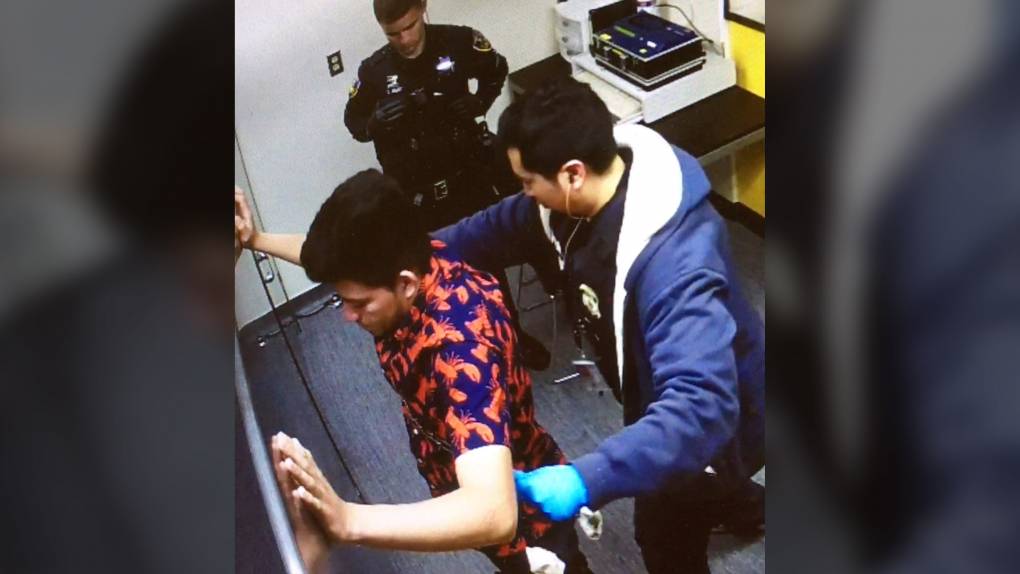
"caption": "In a Daly City video obtained by KQED, an ICE agent places chains on Jose Armando Escobar Lopez at a police station as an officer watches on May 11, 2019. Escobar Lopez, 21, filed a complaint against Daly City, alleging police transferred him to ICE in violation of the state's sanctuary law.",
"description": null,
"title": "Armando",
"credit": "Courtesy of Asian Law Caucus",
"status": "inherit",
"isLoading": false,
"fetchFailed": false
}
},
"audioPlayerReducer": {
"postId": "stream_live",
"isPaused": true,
"isPlaying": false,
"pfsActive": false,
"pledgeModalIsOpen": true,
"playerDrawerIsOpen": false,
"liveAudioPlayStartedAt": 0,
"liveAudioPlayContext": ""
},
"authorsReducer": {
"byline_news_11810060": {
"type": "authors",
"id": "byline_news_11810060",
"meta": {
"override": true
},
"slug": "byline_news_11810060",
"name": "Emily Kassie, \u003ca href=\"https://www.themarshallproject.org/2020/04/01/i-do-not-want-to-die-somewhere-like-this\">The Marshall Project\u003c/a>",
"isLoading": false
},
"byline_news_11807353": {
"type": "authors",
"id": "byline_news_11807353",
"meta": {
"override": true
},
"slug": "byline_news_11807353",
"name": "Joel Rose",
"isLoading": false
},
"byline_news_11806242": {
"type": "authors",
"id": "byline_news_11806242",
"meta": {
"override": true
},
"slug": "byline_news_11806242",
"name": "Mark Sherman\u003cbr />Associated Press",
"isLoading": false
},
"kqed": {
"type": "authors",
"id": "236",
"meta": {
"index": "authors_1716337520",
"id": "236",
"found": true
},
"name": "KQED News Staff",
"firstName": "KQED News Staff",
"lastName": null,
"slug": "kqed",
"email": "faq@kqed.org",
"display_author_email": false,
"staff_mastheads": [],
"title": null,
"bio": null,
"avatar": "https://secure.gravatar.com/avatar/ef0e801a68c4c54afa9180db14084167?s=600&d=blank&r=g",
"twitter": null,
"facebook": null,
"instagram": null,
"linkedin": null,
"sites": [
{
"site": "arts",
"roles": [
"contributor"
]
},
{
"site": "news",
"roles": [
"editor"
]
},
{
"site": "futureofyou",
"roles": [
"author"
]
}
],
"headData": {
"title": "KQED News Staff | KQED",
"description": null,
"ogImgSrc": "https://secure.gravatar.com/avatar/ef0e801a68c4c54afa9180db14084167?s=600&d=blank&r=g",
"twImgSrc": "https://secure.gravatar.com/avatar/ef0e801a68c4c54afa9180db14084167?s=600&d=blank&r=g"
},
"isLoading": false,
"link": "/author/kqed"
},
"kqednewsstaffandwires": {
"type": "authors",
"id": "237",
"meta": {
"index": "authors_1716337520",
"id": "237",
"found": true
},
"name": "KQED News Staff and Wires",
"firstName": "KQED News Staff and Wires",
"lastName": null,
"slug": "kqednewsstaffandwires",
"email": "onlinenewsstaff@kqed.org",
"display_author_email": false,
"staff_mastheads": [],
"title": null,
"bio": null,
"avatar": "https://secure.gravatar.com/avatar/72295af8ebbfbd19a4948f5271285664?s=600&d=blank&r=g",
"twitter": null,
"facebook": null,
"instagram": null,
"linkedin": null,
"sites": [
{
"site": "arts",
"roles": [
"contributor"
]
},
{
"site": "news",
"roles": [
"contributor"
]
},
{
"site": "lowdown",
"roles": [
"author"
]
},
{
"site": "stateofhealth",
"roles": [
"contributor"
]
},
{
"site": "food",
"roles": [
"author"
]
}
],
"headData": {
"title": "KQED News Staff and Wires | KQED",
"description": null,
"ogImgSrc": "https://secure.gravatar.com/avatar/72295af8ebbfbd19a4948f5271285664?s=600&d=blank&r=g",
"twImgSrc": "https://secure.gravatar.com/avatar/72295af8ebbfbd19a4948f5271285664?s=600&d=blank&r=g"
},
"isLoading": false,
"link": "/author/kqednewsstaffandwires"
},
"tychehendricks": {
"type": "authors",
"id": "259",
"meta": {
"index": "authors_1716337520",
"id": "259",
"found": true
},
"name": "Tyche Hendricks",
"firstName": "Tyche",
"lastName": "Hendricks",
"slug": "tychehendricks",
"email": "thendricks@kqed.org",
"display_author_email": true,
"staff_mastheads": [
"news"
],
"title": "KQED Senior Editor, Immigration",
"bio": "\u003cspan style=\"font-weight: 400;\">Tyche Hendricks is KQED’s senior editor for immigration, leading coverage of the policy and politics that affect California’s immigrant communities. Her work for KQED’s radio and online audiences is also carried on NPR and other national outlets. She has been recognized with awards from the Radio and Television News Directors Association, the Society for Professional Journalists; the Education Writers Association; the Best of the West and the National Federation of Community Broadcasters. Before joining KQED in 2010, Tyche spent more than a dozen years as a newspaper reporter, notably at the \u003c/span>\u003ci>\u003cspan style=\"font-weight: 400;\">San Francisco Chronicle\u003c/span>\u003c/i>\u003cspan style=\"font-weight: 400;\">. At different times she has covered criminal justice, government and politics and urban planning. Tyche has taught in the MFA Creative Writing program at the University of San Francisco and at UC Berkeley’s Graduate School of Journalism, where she was co-director of a national immigration symposium for professional journalists. She is the author of \u003c/span>\u003ci>\u003cspan style=\"font-weight: 400;\">The Wind Doesn't Need a Passport: Stories from the U.S.-Mexico Borderlands\u003c/span>\u003c/i>\u003cspan style=\"font-weight: 400;\"> (University of California Press). \u003c/span>",
"avatar": "https://secure.gravatar.com/avatar/b8ee458e2731c2d43df86882ce17267e?s=600&d=blank&r=g",
"twitter": "tychehendricks",
"facebook": null,
"instagram": null,
"linkedin": null,
"sites": [
{
"site": "news",
"roles": [
"editor"
]
},
{
"site": "stateofhealth",
"roles": [
"editor"
]
}
],
"headData": {
"title": "Tyche Hendricks | KQED",
"description": "KQED Senior Editor, Immigration",
"ogImgSrc": "https://secure.gravatar.com/avatar/b8ee458e2731c2d43df86882ce17267e?s=600&d=blank&r=g",
"twImgSrc": "https://secure.gravatar.com/avatar/b8ee458e2731c2d43df86882ce17267e?s=600&d=blank&r=g"
},
"isLoading": false,
"link": "/author/tychehendricks"
},
"fjhabvala": {
"type": "authors",
"id": "8659",
"meta": {
"index": "authors_1716337520",
"id": "8659",
"found": true
},
"name": "Farida Jhabvala Romero",
"firstName": "Farida",
"lastName": "Jhabvala Romero",
"slug": "fjhabvala",
"email": "fjhabvala@kqed.org",
"display_author_email": true,
"staff_mastheads": [
"news"
],
"title": "KQED Contributor",
"bio": "\u003cspan style=\"font-weight: 400;\">Farida Jhabvala Romero is a Labor Correspondent for KQED. She previously covered immigration. Farida was \u003ca href=\"https://www.ccnma.org/2022-most-influential-latina-journalists\">named\u003c/a> one of the 10 Most Influential Latina Journalists in California in 2022 by the California Chicano News Media Association. Her work has won awards from the Society of Professional Journalists (Northern California), as well as a national and regional Edward M. Murrow Award for the collaborative reporting projects “Dangerous Air” and “Graying California.” \u003c/span>\u003cspan style=\"font-weight: 400;\">Before joining KQED, Farida worked as a producer at Radio Bilingüe, a national public radio network. Farida earned her master’s degree in journalism from Stanford University.\u003c/span>",
"avatar": "https://secure.gravatar.com/avatar/c3ab27c5554b67b478f80971e515aa02?s=600&d=blank&r=g",
"twitter": "FaridaJhabvala",
"facebook": null,
"instagram": null,
"linkedin": "https://www.linkedin.com/in/faridajhabvala/",
"sites": [
{
"site": "news",
"roles": [
"editor"
]
},
{
"site": "stateofhealth",
"roles": [
"author"
]
}
],
"headData": {
"title": "Farida Jhabvala Romero | KQED",
"description": "KQED Contributor",
"ogImgSrc": "https://secure.gravatar.com/avatar/c3ab27c5554b67b478f80971e515aa02?s=600&d=blank&r=g",
"twImgSrc": "https://secure.gravatar.com/avatar/c3ab27c5554b67b478f80971e515aa02?s=600&d=blank&r=g"
},
"isLoading": false,
"link": "/author/fjhabvala"
}
},
"pagesReducer": {
"news_tag_immigration": {
"type": "terms",
"id": "news_20202",
"meta": {
"index": "terms_1716263798",
"site": "news",
"id": "20202",
"score": 6.9038835
},
"featImg": null,
"name": "immigration",
"description": null,
"taxonomy": "tag",
"headData": {
"twImgId": null,
"twTitle": null,
"ogTitle": null,
"ogImgId": null,
"twDescription": null,
"description": null,
"title": "immigration Archives | KQED News",
"ogDescription": null
},
"ttid": 20219,
"slug": "immigration",
"isLoading": false,
"title": "immigration",
"pageMeta": {
"site": "news",
"WpPageTemplate": "page-topic-editorial",
"currentPage": 65
},
"blocks": [
{
"blockName": "kqed/post-list",
"attrs": {
"layout": "cardArticle2",
"query": "posts/news?tag=immigration",
"seeMore": false,
"paginated": true,
"page": 65
}
},
{
"blockName": "kqed/ad"
}
]
}
},
"pfsSessionReducer": {},
"postsReducer": {
"stream_live": {
"type": "live",
"id": "stream_live",
"audioUrl": "https://streams.kqed.org/kqedradio",
"title": "Live Stream",
"excerpt": "Live Stream information currently unavailable.",
"link": "/radio",
"featImg": "",
"label": {
"name": "KQED Live",
"link": "/"
}
},
"stream_kqedNewscast": {
"type": "posts",
"id": "stream_kqedNewscast",
"audioUrl": "https://www.kqed.org/.stream/anon/radio/RDnews/newscast.mp3?_=1",
"title": "KQED Newscast",
"featImg": "",
"label": {
"name": "88.5 FM",
"link": "/"
}
},
"news_11812701": {
"type": "posts",
"id": "news_11812701",
"meta": {
"index": "posts_1716263798",
"site": "news",
"id": "11812701",
"score": null,
"sort": [
1587132318000
]
},
"guestAuthors": [],
"slug": "senators-want-to-know-if-ice-detainees-were-pepper-sprayed-after-requesting-masks",
"title": "Senators Want to Know if ICE Detainees Were Pepper Sprayed After Requesting Masks",
"publishDate": 1587132318,
"format": "audio",
"headTitle": "Senators Want to Know if ICE Detainees Were Pepper Sprayed After Requesting Masks | KQED",
"labelTerm": {},
"content": "\u003cp>Both U.S. senators from California are calling for an investigation into reports that detained women at a federal immigration facility in San Diego were pepper sprayed and handcuffed by guards after demanding protective masks.\u003c/p>\n\u003cp>Democratic Sens. Dianne Feinstein and Kamala Harris sent a letter Wednesday asking the U.S. Department of Homeland Security inspector general to look into “alarming reports of conduct by staff” during a recent incident at the Otay Mesa Detention Center.\u003c/p>\n\u003cp>The allegation comes amid mounting calls by public officials and advocates to release people from federal immigration detention facilities during the coronavirus pandemic to stem further spread of the disease.\u003c/p>\n\u003cp>Seventeen detainees at the Otay Mesa facility have already tested positive for COVID-19, along with 14 staff members from both U.S. Immigration and Customs Enforcement and private prison operator CoreCivic — far more cases than at any other ICE facility.\u003c/p>\n\u003cp>[pullquote align=\"right\" size=\"medium\" citation=\"Letter from Sens. Dianne Feinstein and Kamala Harris and Rep. Juan Vargas\"]‘People are fearful during this time, particularly those in U.S. custody who are especially vulnerable to infection but face limited access to information about how to protect themselves, limited ability to observe protective measures like social distancing and limited language access services.’[/pullquote]\u003c/p>\n\u003cp>They are among 100 inmates and 25 employees at two dozen ICE facilities nationwide who have contracted the virus, ICE \u003ca href=\"https://www.ice.gov/coronavirus\">reported\u003c/a> Thursday. No other ICE detention center in California has so far reported cases, although immigration lawyers say that few detainees are being tested for the coronavirus.\u003c/p>\n\u003cp>In their \u003ca href=\"https://www.harris.senate.gov/news/press-releases/harris-demands-dhs-oig-investigate-treatment-of-detained-individuals-at-otay-mesa-detention-center\">letter\u003c/a> to DHS Inspector General Joseph V. Cuffari, Feinstein and Harris — along with Democratic Rep. Juan Vargas whose district includes Otay Mesa — requested an immediate investigation into the April 10 incident, which reportedly began when guards told detainees they would have to sign documents in English in order to receive masks to protect against COVID-19.\u003c/p>\n\u003cp>“People are fearful during this time, particularly those in U.S. custody who are especially vulnerable to infection but face limited access to information about how to protect themselves, limited ability to observe protective measures like social distancing and limited language access services,” the three lawmakers wrote.\u003c/p>\n\u003cp>“These allegations are all the more troubling in light of your office’s consistent findings during the course of over two years that ICE has failed to adequately protect the health and safety of individuals in its custody.”\u003c/p>\n\u003cp>San Diego immigrant advocates told KQED that the Otay Mesa incident allegedly began after some female detainees cut up T-shirts to use as improvised masks and were then told by guards that they would have to sign liability release forms if they wanted real masks.\u003c/p>\n\u003cp>The form was provided in English only, and when one person translated its meaning, the women refused to sign, according to attorney Ian Seruelo, who represents one of the women, a Mexican asylum-seeker who has been detained for more than six months. Seruelo said his client told him a commotion ensued.\u003c/p>\n\u003cp>“That’s when they called in the male, stronger guards and pepper sprayed them,” said Seruelo. “[My client] said she was able to cover her face. She was handcuffed and taken to isolation. She saw two others handcuffed as well.”\u003c/p>\n\u003cp>[ad fullwidth]\u003c/p>\n\u003cp>Audio of the incident was also captured in a phone call recorded on April 10 by a volunteer with Pueblos Sin Fronteras, an immigration rights group, who was speaking with a detainee as the situation escalated.\u003c/p>\n\u003cp>On the recording, which was posted on \u003ca href=\"https://www.facebook.com/PuebloSF/videos/647580456025723/\">Facebook\u003c/a>, one of the women in Spanish says, “Please help us get out! They’re spraying pepper spray into the cells.”\u003c/p>\n\u003cp>Shortly after, she says, “They’re taking people out of the cells in handcuffs,” and then begins to shriek.\u003c/p>\n\u003cp>CoreCivic, the private prison operator that runs Otay Mesa under contract with ICE, denied that staff used force, and said in a statement, “regarding the pepper spray claim, those allegations are patently false.”\u003c/p>\n\u003cp>“The temporary removal of three detainees from one of the pods was in direct response to their being disruptive during the issuance of the face masks,” wrote Amanda Gilchrist, CoreCivic’s public affairs director. “At no time was any force used to remove these individuals, and they were returned to the pod a short while later.”\u003c/p>\n\u003cp>Gilchrist added that no signed waiver will be required to receive a mask, and that all detainees have been issued face masks. In her statement, she also said that CoreCivic is working with ICE medical staff to screen employees, disinfect surfaces, encourage social distancing and hand-washing and quarantine sick detainees and people they’ve had contact with.\u003c/p>\n\u003cp>But the company’s quarantine approach has raised concerns for another immigrant advocate. Attorney Dulce Garcia, executive director of the group Border Angels, said she’s been trying to post a bond for an asylum-seeker who has been approved for release but said officials told her he had to stay in his quarantined unit for 14 days, even though he’s not sick and hasn’t been tested for COVID-19.\u003c/p>\n\u003cp>“No one can get out of the cohort,” said Garcia. “Today we received notice that they moved someone who tested positive and had a fever last week into the cohort. Every time they put a new person in, the clock starts again. How will they ever get out?”\u003c/p>\n\u003cp>Garcia said her client has family in the U.S. with a home where he would be able to isolate himself upon his release. For now, she said, he is stuck in a unit with about 100 men sleeping in eight-person bunk rooms, eating together and sharing bathrooms.\u003c/p>\n\u003cp>“He’s afraid he’s going to die there,” said Garcia. “He’s desperate. He doesn’t know how to distance himself and he’s afraid everyone is going to give it to him.”\u003c/p>\n\u003cp>CoreCivic confirmed that housing pods at Otay Mesa with positive cases are under quarantine, and said “high-medical-risk detainees” are being separated. Gilchrist, the company spokeswoman, referred KQED to ICE for further comment, but they agency did not respond by press time.\u003c/p>\n\u003cp>ICE has reduced the number of people in custody nationally, from more than 38,000 three weeks ago to a total of just over 32,000 as of Saturday. There were 3,402 people in ICE’s four California detention facilities as of March 28, the most recent data available.\u003c/p>\n\u003cp>“Due to the unprecedented nature of COVID-19, U.S. Immigration and Customs Enforcement is reviewing cases of individuals in detention who may be vulnerable to the virus. Utilizing CDC guidance along with the advice of medical professionals, ICE may place individuals in a number of alternatives to detention options,” ICE said in a statement released by spokeswoman Paige Hughes.\u003c/p>\n\u003cp>Officials said they’ve released almost 700 medically-vulnerable immigrants, including pregnant women and people over 60.\u003c/p>\n\u003cp>[aside label=related coverage\" tag=\"immigration\"]Many of these releases have been ordered by courts responding to a series of lawsuits filed in recent week by advocates around the country. Federal judges in California have ordered the release of at least 10 ICE detainees. Courts have made similar rulings in Pennsylvania, New York, New Jersey and Massachusetts, and other cases are pending.\u003c/p>\n\u003cp>Some elected officials — including Harris and state Attorney General Xavier Becerra — are \u003ca href=\"https://oag.ca.gov/system/files/attachments/press-docs/4.13.20%20-%20Letter%20to%20DHS%20Acting%20Secretary.pdf\">asking ICE\u003c/a> to go further and release detainees who pose no threat to public safety. And this week, Sen. Cory Booker, D-New Jersey, and Rep. Pramila Jayapal, D-Washington, \u003ca href=\"https://www.booker.senate.gov/imo/media/doc/MDM20356.pdf\">introduced a bill \u003c/a>to move most inmates out of ICE detention and suspend most immigration enforcement during the current pandemic and future public health emergencies.\u003c/p>\n\u003cp>People in ICE custody are not serving criminal sentences; they are being held in administrative detention while awaiting hearings in immigration court. The detained population has swelled under President Trump, reaching more than 52,000 last spring.\u003c/p>\n\u003cp>Meanwhile lawyers for immigrants at Otay Mesa and other detention centers, including the large Mesa Verde ICE Processing Facility in Bakersfield, say their clients have launched hunger strikes to push for release or at least better protection.\u003c/p>\n\u003cp>In a recording made Saturday and obtained by KQED, Pablo Ramirez, a detained man at Mesa Verde, said he and others had started a hunger strike the day before.\u003c/p>\n\u003cp>“There’s virus in here. We have a feeling it might get in here,” said Ramirez. “They’re not treating us with the medical care that we need. They don’t test us for anything. They say they screen, but they don’t even take our temperatures.”\u003c/p>\n\u003cp>Susan Beaty, a lawyer with Oakland’s Centro Legal de la Raza, who is in touch with detained immigrants at Mesa Verde, said detainees there gave up their hunger strike after guards threatened to deny them access to the commissary, where they buy soap.\u003c/p>\n\u003cp>Seruelo, the San Diego immigration attorney, said he knew about 20 men at Otay Mesa who had started a hunger strike in early April to protest conditions during the outbreak. But he said most discontinued it after being placed in solitary confinement.\u003c/p>\n\u003cp>Meanwhile, he continues to push for the release of his client, the woman he said was pepper sprayed. The woman does not have any record of violence, he said, stressing that practically everyone released with an electronic ankle monitor shows up for court. He said his third request for her release, sent two weeks ago, has so far gone unanswered.\u003c/p>\n\u003cp>“ICE should really move quickly. It’s a very dangerous strain of virus,” said Seruelo. “I don’t understand why they are taking so much risk when we are talking about human lives here.”\u003c/p>\n\u003cp>[ad floatright]\u003c/p>\n",
"blocks": [],
"excerpt": "The controversy comes amid a swelling COVID-19 outbreak at a San Diego ICE detention center and mounting calls to release detainees during the pandemic.",
"status": "publish",
"parent": 0,
"modified": 1738715822,
"stats": {
"hasAudio": false,
"hasVideo": false,
"hasChartOrMap": false,
"iframeSrcs": [],
"hasGoogleForm": false,
"hasGallery": false,
"hasHearkenModule": false,
"hasPolis": false,
"paragraphCount": 38,
"wordCount": 1674
},
"headData": {
"title": "Senators Want to Know if ICE Detainees Were Pepper Sprayed After Requesting Masks | KQED",
"description": "The controversy comes amid a swelling COVID-19 outbreak at a San Diego ICE detention center and mounting calls to release detainees during the pandemic.",
"ogTitle": "",
"ogDescription": "",
"ogImgId": "",
"twTitle": "",
"twDescription": "",
"twImgId": "",
"schema": {
"@context": "https://schema.org",
"@type": "NewsArticle",
"headline": "Senators Want to Know if ICE Detainees Were Pepper Sprayed After Requesting Masks",
"datePublished": "2020-04-17T07:05:18-07:00",
"dateModified": "2025-02-04T16:37:02-08:00",
"image": "https://cdn.kqed.org/wp-content/uploads/2020/02/KQED-OG-Image@1x.png",
"isAccessibleForFree": "True",
"publisher": {
"@type": "NewsMediaOrganization",
"@id": "https://www.kqed.org/#organization",
"name": "KQED",
"logo": "https://cdn.kqed.org/wp-content/uploads/2020/02/KQED-OG-Image@1x.png",
"url": "https://www.kqed.org",
"sameAs": [
"https://www.facebook.com/KQED",
"https://twitter.com/KQED",
"https://www.instagram.com/kqed/",
"https://www.tiktok.com/@kqedofficial",
"https://www.linkedin.com/company/kqed",
"https://www.youtube.com/channel/UCeC0IOo7i1P_61zVUWbJ4nw"
]
}
}
},
"source": "coronavirus",
"sourceUrl": "https://www.kqed.org/coronavirus",
"audioUrl": "https://traffic.omny.fm/d/clips/0af137ef-751e-4b19-a055-aaef00d2d578/ffca7e9f-6831-41c5-bcaf-aaef00f5a073/e13d1bae-37a3-420a-8d9a-ab9f0107ffa2/audio.mp3",
"sticky": false,
"path": "/news/11812701/senators-want-to-know-if-ice-detainees-were-pepper-sprayed-after-requesting-masks",
"audioTrackLength": null,
"parsedContent": [
{
"type": "contentString",
"content": "\u003cdiv class=\"post-body\">\u003cp>\u003cp>Both U.S. senators from California are calling for an investigation into reports that detained women at a federal immigration facility in San Diego were pepper sprayed and handcuffed by guards after demanding protective masks.\u003c/p>\n\u003cp>Democratic Sens. Dianne Feinstein and Kamala Harris sent a letter Wednesday asking the U.S. Department of Homeland Security inspector general to look into “alarming reports of conduct by staff” during a recent incident at the Otay Mesa Detention Center.\u003c/p>\n\u003cp>The allegation comes amid mounting calls by public officials and advocates to release people from federal immigration detention facilities during the coronavirus pandemic to stem further spread of the disease.\u003c/p>\n\u003cp>Seventeen detainees at the Otay Mesa facility have already tested positive for COVID-19, along with 14 staff members from both U.S. Immigration and Customs Enforcement and private prison operator CoreCivic — far more cases than at any other ICE facility.\u003c/p>\n\u003cp>\u003c/p>\u003c/div>",
"attributes": {
"named": {},
"numeric": []
}
},
{
"type": "component",
"content": "‘People are fearful during this time, particularly those in U.S. custody who are especially vulnerable to infection but face limited access to information about how to protect themselves, limited ability to observe protective measures like social distancing and limited language access services.’",
"name": "pullquote",
"attributes": {
"named": {
"align": "right",
"size": "medium",
"citation": "Letter from Sens. Dianne Feinstein and Kamala Harris and Rep. Juan Vargas",
"label": ""
},
"numeric": []
}
},
{
"type": "contentString",
"content": "\u003cdiv class=\"post-body\">\u003cp>\u003c/p>\n\u003cp>They are among 100 inmates and 25 employees at two dozen ICE facilities nationwide who have contracted the virus, ICE \u003ca href=\"https://www.ice.gov/coronavirus\">reported\u003c/a> Thursday. No other ICE detention center in California has so far reported cases, although immigration lawyers say that few detainees are being tested for the coronavirus.\u003c/p>\n\u003cp>In their \u003ca href=\"https://www.harris.senate.gov/news/press-releases/harris-demands-dhs-oig-investigate-treatment-of-detained-individuals-at-otay-mesa-detention-center\">letter\u003c/a> to DHS Inspector General Joseph V. Cuffari, Feinstein and Harris — along with Democratic Rep. Juan Vargas whose district includes Otay Mesa — requested an immediate investigation into the April 10 incident, which reportedly began when guards told detainees they would have to sign documents in English in order to receive masks to protect against COVID-19.\u003c/p>\n\u003cp>“People are fearful during this time, particularly those in U.S. custody who are especially vulnerable to infection but face limited access to information about how to protect themselves, limited ability to observe protective measures like social distancing and limited language access services,” the three lawmakers wrote.\u003c/p>\n\u003cp>“These allegations are all the more troubling in light of your office’s consistent findings during the course of over two years that ICE has failed to adequately protect the health and safety of individuals in its custody.”\u003c/p>\n\u003cp>San Diego immigrant advocates told KQED that the Otay Mesa incident allegedly began after some female detainees cut up T-shirts to use as improvised masks and were then told by guards that they would have to sign liability release forms if they wanted real masks.\u003c/p>\n\u003cp>The form was provided in English only, and when one person translated its meaning, the women refused to sign, according to attorney Ian Seruelo, who represents one of the women, a Mexican asylum-seeker who has been detained for more than six months. Seruelo said his client told him a commotion ensued.\u003c/p>\n\u003cp>“That’s when they called in the male, stronger guards and pepper sprayed them,” said Seruelo. “[My client] said she was able to cover her face. She was handcuffed and taken to isolation. She saw two others handcuffed as well.”\u003c/p>\n\u003cp>\u003c/p>\u003c/div>",
"attributes": {
"named": {},
"numeric": []
}
},
{
"type": "component",
"content": "",
"name": "ad",
"attributes": {
"named": {
"label": "fullwidth"
},
"numeric": [
"fullwidth"
]
}
},
{
"type": "contentString",
"content": "\u003cdiv class=\"post-body\">\u003cp>\u003c/p>\n\u003cp>Audio of the incident was also captured in a phone call recorded on April 10 by a volunteer with Pueblos Sin Fronteras, an immigration rights group, who was speaking with a detainee as the situation escalated.\u003c/p>\n\u003cp>On the recording, which was posted on \u003ca href=\"https://www.facebook.com/PuebloSF/videos/647580456025723/\">Facebook\u003c/a>, one of the women in Spanish says, “Please help us get out! They’re spraying pepper spray into the cells.”\u003c/p>\n\u003cp>Shortly after, she says, “They’re taking people out of the cells in handcuffs,” and then begins to shriek.\u003c/p>\n\u003cp>CoreCivic, the private prison operator that runs Otay Mesa under contract with ICE, denied that staff used force, and said in a statement, “regarding the pepper spray claim, those allegations are patently false.”\u003c/p>\n\u003cp>“The temporary removal of three detainees from one of the pods was in direct response to their being disruptive during the issuance of the face masks,” wrote Amanda Gilchrist, CoreCivic’s public affairs director. “At no time was any force used to remove these individuals, and they were returned to the pod a short while later.”\u003c/p>\n\u003cp>Gilchrist added that no signed waiver will be required to receive a mask, and that all detainees have been issued face masks. In her statement, she also said that CoreCivic is working with ICE medical staff to screen employees, disinfect surfaces, encourage social distancing and hand-washing and quarantine sick detainees and people they’ve had contact with.\u003c/p>\n\u003cp>But the company’s quarantine approach has raised concerns for another immigrant advocate. Attorney Dulce Garcia, executive director of the group Border Angels, said she’s been trying to post a bond for an asylum-seeker who has been approved for release but said officials told her he had to stay in his quarantined unit for 14 days, even though he’s not sick and hasn’t been tested for COVID-19.\u003c/p>\n\u003cp>“No one can get out of the cohort,” said Garcia. “Today we received notice that they moved someone who tested positive and had a fever last week into the cohort. Every time they put a new person in, the clock starts again. How will they ever get out?”\u003c/p>\n\u003cp>Garcia said her client has family in the U.S. with a home where he would be able to isolate himself upon his release. For now, she said, he is stuck in a unit with about 100 men sleeping in eight-person bunk rooms, eating together and sharing bathrooms.\u003c/p>\n\u003cp>“He’s afraid he’s going to die there,” said Garcia. “He’s desperate. He doesn’t know how to distance himself and he’s afraid everyone is going to give it to him.”\u003c/p>\n\u003cp>CoreCivic confirmed that housing pods at Otay Mesa with positive cases are under quarantine, and said “high-medical-risk detainees” are being separated. Gilchrist, the company spokeswoman, referred KQED to ICE for further comment, but they agency did not respond by press time.\u003c/p>\n\u003cp>ICE has reduced the number of people in custody nationally, from more than 38,000 three weeks ago to a total of just over 32,000 as of Saturday. There were 3,402 people in ICE’s four California detention facilities as of March 28, the most recent data available.\u003c/p>\n\u003cp>“Due to the unprecedented nature of COVID-19, U.S. Immigration and Customs Enforcement is reviewing cases of individuals in detention who may be vulnerable to the virus. Utilizing CDC guidance along with the advice of medical professionals, ICE may place individuals in a number of alternatives to detention options,” ICE said in a statement released by spokeswoman Paige Hughes.\u003c/p>\n\u003cp>Officials said they’ve released almost 700 medically-vulnerable immigrants, including pregnant women and people over 60.\u003c/p>\n\u003cp>\u003c/p>\u003c/div>",
"attributes": {
"named": {},
"numeric": []
}
},
{
"type": "component",
"content": "",
"name": "aside",
"attributes": {
"named": {
"label": "related coverage\"",
"tag": "immigration"
},
"numeric": [
"coverage\""
]
}
},
{
"type": "contentString",
"content": "\u003cdiv class=\"post-body\">\u003cp>Many of these releases have been ordered by courts responding to a series of lawsuits filed in recent week by advocates around the country. Federal judges in California have ordered the release of at least 10 ICE detainees. Courts have made similar rulings in Pennsylvania, New York, New Jersey and Massachusetts, and other cases are pending.\u003c/p>\n\u003cp>Some elected officials — including Harris and state Attorney General Xavier Becerra — are \u003ca href=\"https://oag.ca.gov/system/files/attachments/press-docs/4.13.20%20-%20Letter%20to%20DHS%20Acting%20Secretary.pdf\">asking ICE\u003c/a> to go further and release detainees who pose no threat to public safety. And this week, Sen. Cory Booker, D-New Jersey, and Rep. Pramila Jayapal, D-Washington, \u003ca href=\"https://www.booker.senate.gov/imo/media/doc/MDM20356.pdf\">introduced a bill \u003c/a>to move most inmates out of ICE detention and suspend most immigration enforcement during the current pandemic and future public health emergencies.\u003c/p>\n\u003cp>People in ICE custody are not serving criminal sentences; they are being held in administrative detention while awaiting hearings in immigration court. The detained population has swelled under President Trump, reaching more than 52,000 last spring.\u003c/p>\n\u003cp>Meanwhile lawyers for immigrants at Otay Mesa and other detention centers, including the large Mesa Verde ICE Processing Facility in Bakersfield, say their clients have launched hunger strikes to push for release or at least better protection.\u003c/p>\n\u003cp>In a recording made Saturday and obtained by KQED, Pablo Ramirez, a detained man at Mesa Verde, said he and others had started a hunger strike the day before.\u003c/p>\n\u003cp>“There’s virus in here. We have a feeling it might get in here,” said Ramirez. “They’re not treating us with the medical care that we need. They don’t test us for anything. They say they screen, but they don’t even take our temperatures.”\u003c/p>\n\u003cp>Susan Beaty, a lawyer with Oakland’s Centro Legal de la Raza, who is in touch with detained immigrants at Mesa Verde, said detainees there gave up their hunger strike after guards threatened to deny them access to the commissary, where they buy soap.\u003c/p>\n\u003cp>Seruelo, the San Diego immigration attorney, said he knew about 20 men at Otay Mesa who had started a hunger strike in early April to protest conditions during the outbreak. But he said most discontinued it after being placed in solitary confinement.\u003c/p>\n\u003cp>Meanwhile, he continues to push for the release of his client, the woman he said was pepper sprayed. The woman does not have any record of violence, he said, stressing that practically everyone released with an electronic ankle monitor shows up for court. He said his third request for her release, sent two weeks ago, has so far gone unanswered.\u003c/p>\n\u003cp>“ICE should really move quickly. It’s a very dangerous strain of virus,” said Seruelo. “I don’t understand why they are taking so much risk when we are talking about human lives here.”\u003c/p>\n\u003cp>\u003c/p>\u003c/div>",
"attributes": {
"named": {},
"numeric": []
}
},
{
"type": "component",
"content": "",
"name": "ad",
"attributes": {
"named": {
"label": "floatright"
},
"numeric": [
"floatright"
]
}
},
{
"type": "contentString",
"content": "\u003cdiv class=\"post-body\">\u003cp>\u003c/p>\n\u003c/div>\u003c/p>",
"attributes": {
"named": {},
"numeric": []
}
}
],
"link": "/news/11812701/senators-want-to-know-if-ice-detainees-were-pepper-sprayed-after-requesting-masks",
"authors": [
"259"
],
"categories": [
"news_1169",
"news_8"
],
"tags": [
"news_27350",
"news_27504",
"news_274",
"news_21027",
"news_6884",
"news_20202",
"news_61",
"news_27797",
"news_23797",
"news_20378"
],
"featImg": "news_11812807",
"label": "source_news_11812701"
},
"news_11812710": {
"type": "posts",
"id": "news_11812710",
"meta": {
"index": "posts_1716263798",
"site": "news",
"id": "11812710",
"score": null,
"sort": [
1587132023000
]
},
"parent": 0,
"labelTerm": {},
"blocks": [],
"publishDate": 1587132023,
"format": "standard",
"disqusTitle": "More 'Peace of Mind' for Undocumented Californians, Still May Not Be Enough",
"title": "More 'Peace of Mind' for Undocumented Californians, Still May Not Be Enough",
"headTitle": "The California Report | KQED News",
"content": "\u003cp>Aurelio, a 41-year-old undocumented Oakland resident, has worked for 15 years as a server at a hotel. But a month ago, as California’s stay-at-home order pushed Aurelio’s employer and thousands of other businesses to close, he was furloughed with no pay.\u003c/p>\n\u003cp>The father of three kids hasn’t earned any income since. His family is relying on food pantries to get by, and won’t have the money to pay bills or rent, he said.\u003c/p>\n\u003cp>“I have faith that the economy will recover,” said Aurelio. “For now, I have hope that someone will help us make ends meet.”\u003c/p>\n\u003cp>That hope came closer to reality Wednesday, when Gov. Gavin Newsom \u003ca href=\"https://www.gov.ca.gov/2020/04/15/governor-newsom-announces-new-initiatives-to-support-california-workers-impacted-by-covid-19/\" target=\"_blank\" rel=\"noopener noreferrer\">announced that the state\u003c/a> is providing an unprecedented $75 million in cash payments to undocumented adults impacted by the COVID-19 pandemic.\u003c/p>\n\u003cp>Starting next month, undocumented Californians will be able to apply for a one-time emergency grant of $500 dollars per adult, with a cap of $1,000 per household.\u003c/p>\n\u003cp>[ad fullwidth]\u003c/p>\n\u003cp>The Disaster Relief Fund, which will be distributed through nonprofits, is expected to help roughly 150,000 people left out of unemployment insurance benefits and federal stimulus aid because of their immigration status.\u003c/p>\n\u003cp>“Every Californian, including our undocumented neighbors and friends, should know that California is here to support them during this crisis,” said Newsom in a statement. “We are all in this together.”\u003c/p>\n\u003cp>The governor also announced a network of private foundations, Grantmakers Concerned with Immigrants and Refugees (GCIR), an immigrant-focused philanthropy organization is\u003ca href=\"http://www.immigrantfundCA.org\" target=\"_blank\" rel=\"noopener noreferrer\"> raising\u003c/a> $50 million dollars to provide financial assistance to struggling unauthorized immigrants in the state.\u003c/p>\n\u003cp>An estimated 1.5 to nearly 2 million workers in California are undocumented, and many work in industries hard hit by shelter-in-place orders, such as leisure and hospitality.\u003c/p>\n\u003cp>A coalition of more than 120 immigrant and workers rights advocates \u003ca href=\"https://legalaidatwork.org/releases/undocumented_workers_fund/\" target=\"_blank\" rel=\"noopener noreferrer\">applauded\u003c/a> Newsom’s initiative as a “crucial stopgap for the survival of many immigrant families.” But they also said it won’t be enough to cover everyone who needs help.\u003c/p>\n\u003cp>“We need to do a lot more,” said Kim Ouillette, an attorney at Legal Aid at Work, a member of the Safety Net for All coalition. “A single one-time payment of $500 that's only going to be available for some portion of the workforce is not going to solve the problem that a huge portion of the undocumented workforce is out of work and has no means of support.”\u003c/p>\n\u003cp>In a \u003ca href=\"https://legalaidatwork.org/wp-content/uploads/2020/04/Undocumented-Workers-Advocacy-Letter.pdf\" target=\"_blank\" rel=\"noopener noreferrer\">letter\u003c/a>, the coalition called on Newsom to establish a fund that provides weekly payments of $600 to jobless undocumented immigrants until the emergency proclamation is lifted. The proposal is supported by the \u003ca href=\"https://twitter.com/LatinoCaucus/status/1244768784272863233/photo/1\" target=\"_blank\" rel=\"noopener noreferrer\">Latino\u003c/a> and Asian Pacific Islander Legislative Caucuses.\u003c/p>\n\u003cp>https://twitter.com/LatinoCaucus/status/1244768784272863233\u003c/p>\n\u003cp>Aurelio, the undocumented server in Oakland, has applied for cash assistance from \u003ca href=\"https://onefairwage.com/\" target=\"_blank\" rel=\"noopener noreferrer\">One Fair Wage\u003c/a>, which offers $213 for restaurant and other service workers impacted by the pandemic.\u003c/p>\n\u003cp>One Fair Wage has distributed more than $1 million and received 143,000 applications for relief nationwide, including more than 15,000 applications from California, said Saru Jayaraman, the organization’s president.\u003c/p>\n\u003cp>She called California’s plan to provide checks to undocumented immigrants “a huge step forward.”\u003c/p>\n\u003cp>“But even with our $213 and California's $500, this will not be enough for families to live on,” said Jayaraman. “We need universal unemployment insurance… and living wages when workers go back to work, so that they are in a better situation the next time a crisis occurs.” [aside tag=\"coronavirus, immigration\" label=\"More Coronavirus Coverage\"]\u003c/p>\n\u003cp>Aurelio, a dad to two U.S. citizen daughters, said he intends to apply for the state’s cash assistance.\u003c/p>\n\u003cp>“For me, as an undocumented person, it gives me more confidence and peace of mind to know that California cares about us,\" Aurelio said. \"Even though the federal government doesn’t care we contribute.”\u003c/p>\n\u003cp>Unauthorized immigrants in California collectively pay about $3 billion in state and local taxes each year, according to the nonprofit Institute on Taxation and Economic Policy.\u003c/p>\n\u003cp>To be eligible for aid from the Disaster Relief Fund, undocumented adults must have experienced hardship as a result of COVID-19 and not be eligible for federal emergency help.\u003c/p>\n\u003cp>The list of nonprofits that will screen applicants and provide them with checks will be available in May, said Scott Murray, a spokesman with the California Department of Social Services.\u003c/p>\n\u003cp>\u003c/p>\n\u003cp>The state has put together a \u003ca href=\"https://covid19.ca.gov/guide-immigrant-californians/\" target=\"_blank\" rel=\"noopener noreferrer\">guide\u003c/a> for immigrants in California with information about assistance related to COVID-19, including public benefits.\u003c/p>\n\n",
"disqusIdentifier": "11812710 https://ww2.kqed.org/news/?p=11812710",
"disqusUrl": "https://ww2.kqed.org/news/2020/04/17/more-peace-of-mind-for-undocumented-californians-still-may-not-be-enough/",
"stats": {
"hasVideo": false,
"hasChartOrMap": false,
"hasAudio": false,
"hasPolis": false,
"wordCount": 786,
"hasGoogleForm": false,
"hasGallery": false,
"hasHearkenModule": false,
"iframeSrcs": [],
"paragraphCount": 24
},
"modified": 1587149108,
"excerpt": "Starting next month, undocumented Californians will be able to apply for a one-time emergency grant of $500 dollars per adult. But some advocates say the money doesn't go far enough. ",
"headData": {
"twImgId": "",
"twTitle": "",
"ogTitle": "",
"ogImgId": "",
"twDescription": "",
"description": "Starting next month, undocumented Californians will be able to apply for a one-time emergency grant of $500 dollars per adult. But some advocates say the money doesn't go far enough. ",
"title": "More 'Peace of Mind' for Undocumented Californians, Still May Not Be Enough | KQED",
"ogDescription": "",
"schema": {
"@context": "https://schema.org",
"@type": "NewsArticle",
"headline": "More 'Peace of Mind' for Undocumented Californians, Still May Not Be Enough",
"datePublished": "2020-04-17T07:00:23-07:00",
"dateModified": "2020-04-17T11:45:08-07:00",
"image": "https://cdn.kqed.org/wp-content/uploads/2020/02/KQED-OG-Image@1x.png",
"isAccessibleForFree": "True",
"publisher": {
"@type": "NewsMediaOrganization",
"@id": "https://www.kqed.org/#organization",
"name": "KQED",
"logo": "https://cdn.kqed.org/wp-content/uploads/2020/02/KQED-OG-Image@1x.png",
"url": "https://www.kqed.org",
"sameAs": [
"https://www.facebook.com/KQED",
"https://twitter.com/KQED",
"https://www.instagram.com/kqed/",
"https://www.tiktok.com/@kqedofficial",
"https://www.linkedin.com/company/kqed",
"https://www.youtube.com/channel/UCeC0IOo7i1P_61zVUWbJ4nw"
]
}
}
},
"guestAuthors": [],
"slug": "more-peace-of-mind-for-undocumented-californians-still-may-not-be-enough",
"status": "publish",
"sourceUrl": "https://www.kqed.org/coronavirus",
"source": "coronavirus",
"path": "/news/11812710/more-peace-of-mind-for-undocumented-californians-still-may-not-be-enough",
"audioTrackLength": null,
"parsedContent": [
{
"type": "contentString",
"content": "\u003cdiv class=\"post-body\">\u003cp>\u003cp>Aurelio, a 41-year-old undocumented Oakland resident, has worked for 15 years as a server at a hotel. But a month ago, as California’s stay-at-home order pushed Aurelio’s employer and thousands of other businesses to close, he was furloughed with no pay.\u003c/p>\n\u003cp>The father of three kids hasn’t earned any income since. His family is relying on food pantries to get by, and won’t have the money to pay bills or rent, he said.\u003c/p>\n\u003cp>“I have faith that the economy will recover,” said Aurelio. “For now, I have hope that someone will help us make ends meet.”\u003c/p>\n\u003cp>That hope came closer to reality Wednesday, when Gov. Gavin Newsom \u003ca href=\"https://www.gov.ca.gov/2020/04/15/governor-newsom-announces-new-initiatives-to-support-california-workers-impacted-by-covid-19/\" target=\"_blank\" rel=\"noopener noreferrer\">announced that the state\u003c/a> is providing an unprecedented $75 million in cash payments to undocumented adults impacted by the COVID-19 pandemic.\u003c/p>\n\u003cp>Starting next month, undocumented Californians will be able to apply for a one-time emergency grant of $500 dollars per adult, with a cap of $1,000 per household.\u003c/p>\n\u003cp>\u003c/p>\u003c/div>",
"attributes": {
"named": {},
"numeric": []
}
},
{
"type": "component",
"content": "",
"name": "ad",
"attributes": {
"named": {
"label": "fullwidth"
},
"numeric": [
"fullwidth"
]
}
},
{
"type": "contentString",
"content": "\u003cdiv class=\"post-body\">\u003cp>\u003c/p>\n\u003cp>The Disaster Relief Fund, which will be distributed through nonprofits, is expected to help roughly 150,000 people left out of unemployment insurance benefits and federal stimulus aid because of their immigration status.\u003c/p>\n\u003cp>“Every Californian, including our undocumented neighbors and friends, should know that California is here to support them during this crisis,” said Newsom in a statement. “We are all in this together.”\u003c/p>\n\u003cp>The governor also announced a network of private foundations, Grantmakers Concerned with Immigrants and Refugees (GCIR), an immigrant-focused philanthropy organization is\u003ca href=\"http://www.immigrantfundCA.org\" target=\"_blank\" rel=\"noopener noreferrer\"> raising\u003c/a> $50 million dollars to provide financial assistance to struggling unauthorized immigrants in the state.\u003c/p>\n\u003cp>An estimated 1.5 to nearly 2 million workers in California are undocumented, and many work in industries hard hit by shelter-in-place orders, such as leisure and hospitality.\u003c/p>\n\u003cp>A coalition of more than 120 immigrant and workers rights advocates \u003ca href=\"https://legalaidatwork.org/releases/undocumented_workers_fund/\" target=\"_blank\" rel=\"noopener noreferrer\">applauded\u003c/a> Newsom’s initiative as a “crucial stopgap for the survival of many immigrant families.” But they also said it won’t be enough to cover everyone who needs help.\u003c/p>\n\u003cp>“We need to do a lot more,” said Kim Ouillette, an attorney at Legal Aid at Work, a member of the Safety Net for All coalition. “A single one-time payment of $500 that's only going to be available for some portion of the workforce is not going to solve the problem that a huge portion of the undocumented workforce is out of work and has no means of support.”\u003c/p>\n\u003cp>In a \u003ca href=\"https://legalaidatwork.org/wp-content/uploads/2020/04/Undocumented-Workers-Advocacy-Letter.pdf\" target=\"_blank\" rel=\"noopener noreferrer\">letter\u003c/a>, the coalition called on Newsom to establish a fund that provides weekly payments of $600 to jobless undocumented immigrants until the emergency proclamation is lifted. The proposal is supported by the \u003ca href=\"https://twitter.com/LatinoCaucus/status/1244768784272863233/photo/1\" target=\"_blank\" rel=\"noopener noreferrer\">Latino\u003c/a> and Asian Pacific Islander Legislative Caucuses.\u003c/p>\u003c/p>\u003c/div>",
"attributes": {
"named": {},
"numeric": []
}
},
{
"type": "component",
"content": "",
"name": "singleTwitterStatus",
"attributes": {
"named": {
"id": "1244768784272863233"
},
"numeric": []
}
},
{
"type": "contentString",
"content": "\u003cdiv class=\"post-body\">\u003cp>\n\u003cp>Aurelio, the undocumented server in Oakland, has applied for cash assistance from \u003ca href=\"https://onefairwage.com/\" target=\"_blank\" rel=\"noopener noreferrer\">One Fair Wage\u003c/a>, which offers $213 for restaurant and other service workers impacted by the pandemic.\u003c/p>\n\u003cp>One Fair Wage has distributed more than $1 million and received 143,000 applications for relief nationwide, including more than 15,000 applications from California, said Saru Jayaraman, the organization’s president.\u003c/p>\n\u003cp>She called California’s plan to provide checks to undocumented immigrants “a huge step forward.”\u003c/p>\n\u003cp>“But even with our $213 and California's $500, this will not be enough for families to live on,” said Jayaraman. “We need universal unemployment insurance… and living wages when workers go back to work, so that they are in a better situation the next time a crisis occurs.” \u003c/p>\u003c/div>",
"attributes": {
"named": {},
"numeric": []
}
},
{
"type": "component",
"content": "",
"name": "aside",
"attributes": {
"named": {
"tag": "coronavirus, immigration",
"label": "More Coronavirus Coverage "
},
"numeric": []
}
},
{
"type": "contentString",
"content": "\u003cdiv class=\"post-body\">\u003cp>\u003c/p>\n\u003cp>Aurelio, a dad to two U.S. citizen daughters, said he intends to apply for the state’s cash assistance.\u003c/p>\n\u003cp>“For me, as an undocumented person, it gives me more confidence and peace of mind to know that California cares about us,\" Aurelio said. \"Even though the federal government doesn’t care we contribute.”\u003c/p>\n\u003cp>Unauthorized immigrants in California collectively pay about $3 billion in state and local taxes each year, according to the nonprofit Institute on Taxation and Economic Policy.\u003c/p>\n\u003cp>To be eligible for aid from the Disaster Relief Fund, undocumented adults must have experienced hardship as a result of COVID-19 and not be eligible for federal emergency help.\u003c/p>\n\u003cp>The list of nonprofits that will screen applicants and provide them with checks will be available in May, said Scott Murray, a spokesman with the California Department of Social Services.\u003c/p>\n\u003cp>\u003c/p>\n\u003cp>The state has put together a \u003ca href=\"https://covid19.ca.gov/guide-immigrant-californians/\" target=\"_blank\" rel=\"noopener noreferrer\">guide\u003c/a> for immigrants in California with information about assistance related to COVID-19, including public benefits.\u003c/p>\n\n\u003c/div>\u003c/p>",
"attributes": {
"named": {},
"numeric": []
}
}
],
"link": "/news/11812710/more-peace-of-mind-for-undocumented-californians-still-may-not-be-enough",
"authors": [
"8659"
],
"programs": [
"news_72"
],
"categories": [
"news_1758",
"news_1169",
"news_6188",
"news_8"
],
"tags": [
"news_18538",
"news_27350",
"news_20202",
"news_25305"
],
"featImg": "news_11812799",
"label": "source_news_11812710"
},
"news_11810638": {
"type": "posts",
"id": "news_11810638",
"meta": {
"index": "posts_1716263798",
"site": "news",
"id": "11810638",
"score": null,
"sort": [
1586005203000
]
},
"guestAuthors": [],
"slug": "defense-attorneys-call-for-releases-from-san-diego-federal-jails-to-prevent-virus-spread",
"title": "Defense Attorneys Call for Releases From San Diego Federal Jails to Prevent Virus Spread",
"publishDate": 1586005203,
"format": "standard",
"headTitle": "Defense Attorneys Call for Releases From San Diego Federal Jails to Prevent Virus Spread | KQED",
"labelTerm": {},
"content": "\u003cp>\u003cem>Updated Monday, April 6, 2:30 pm\u003c/em>\u003c/p>\n\u003cp>Lawyers for defendants in federal court in San Diego — including hundreds of migrants charged with illegally crossing the U.S.-Mexico border — said their clients are at imminent risk from coronavirus in jail, and they’ve issued an urgent call for defendants to be released on bail.\u003c/p>\n\u003cp>“Jails are uniquely dangerous settings for COVID-19,” wrote Kathryn Nester, executive director of the Federal Defenders of San Diego, in a letter this week to Sen. Kamala Harris. “A COVID-19 crisis in our jails will greatly exacerbate the pandemic in our communities,” the letter said.\u003c/p>\n\u003cp>Nester told Harris that the U.S. Attorney’s Office in San Diego has consistently denied requests by defense attorneys to agree to bail for people charged with non-violent offenses, in spite of the risk of COVID-19 transmission in the region’s three federal detention facilities.\u003c/p>\n\u003cp>She asked the senator to pressure the U.S. Justice Department to release inmates awaiting trial and to take legislative action to speed up “the immediate release of as many inmates as possible.”\u003c/p>\n\u003cp>The call comes as coronavirus begins to surge through jails and prisons around the country, including 167 cases in Chicago’s Cook County Jail as of Thursday, and more than 239 at Riker’s Island in New York City by Friday.\u003c/p>\n\u003cp>California prison officials announced plans this week to \u003ca href=\"https://www.kqed.org/news/11810000/state-prisons-plan-early-release-of-3500-inmates-to-combat-coronavirus\" target=\"_blank\" rel=\"noopener noreferrer\">release almost 3,500 inmates\u003c/a> early to combat the spread of coronavirus.\u003c/p>\n\u003cp>And sheriffs in the Bay Area and beyond have also begun releasing some low-level inmates. San Francisco has \u003ca href=\"https://www.kqed.org/news/11809081/san-francisco-da-joins-growing-call-to-release-ice-detainees-during-pandemic\" target=\"_blank\" rel=\"noopener noreferrer\">reduced its jail population by 25%\u003c/a> in recent weeks, according to SF District Attorney Chesa Boudin.\u003c/p>\n\u003cp>Meanwhile, \u003ca href=\"https://www.kqed.org/news/11810060/ice-detainees-in-panic-over-coronavirus-await-ruling-on-release\" target=\"_blank\" rel=\"noopener noreferrer\">advocates for detained immigrants have filed lawsuits\u003c/a> around the country demanding U.S. Immigration and Customs Enforcement (ICE) release medically vulnerable people from ICE detention.\u003c/p>\n\u003cp>On Thursday, a federal judge ordered six people released from the Adelanto ICE Processing Center in San Bernardino County.\u003c/p>\n\u003cp>Harris is “exploring options,” to answer the defense attorneys’ plea for help, according to her aides.\u003c/p>\n\u003cp>“The allegations raised are deeply concerning,” Harris said in a statement.\u003c/p>\n\u003cp>“Prosecutors must make responsible charging decisions that eliminate unnecessary or excessive incarceration, especially during the coronavirus crisis,” she added, stating that the Justice Department must address the matter “urgently and re-evaluate how it is enforcing and detaining individuals.”\u003c/p>\n\u003cp>In San Diego, in response to the Federal Defenders’ charge that his office is ignoring the risk of COVID-19, San Diego’s U.S. Attorney Robert Brewer said federal prosecutors are taking an active role to protect health and safety.\u003c/p>\n\u003cp>Brewer said they are meeting regularly with stakeholders, including defense attorneys, court officials and the jails, to respond to the coronavirus crisis, and are working directly with the Federal Defenders to release scores of inmates willing to plead guilty and accept a sentence of “time served.”\u003c/p>\n\u003cp>[aside tag=\"coronavirus, covid-19\" label=\"More Coronavirus Coverage\"]\u003c/p>\n\u003cp>“We have dramatically reduced our intake of new, reactive cases while continuing to focus on our mission to protect the public,” wrote Brewer in a statement, adding, “prosecutions are continuing… but we have elected to issue \u003ca href=\"https://www.uscis.gov/legal-resources/notice-appear-policy-memorandum\" target=\"_blank\" rel=\"noopener noreferrer\">Notices to Appear\u003c/a> in federal court to many of those individuals rather than taking them into custody.”\u003c/p>\n\u003cp>The Federal Defenders office, a non-profit legal service provider, represents about 1,500 indigent people charged with federal crimes — about half of all those in San Diego’s federal court with a court-appointed lawyer. The vast majority of the organization’s clients are charged with non-violent offenses, and more than half face prosecution for immigration offenses such as illegal entry or illegal re-entry to the U.S., lawyers said.\u003c/p>\n\u003cp>Because of the COVID-19 pandemic, lawyers with the Federal Defenders of San Diego have stopped visiting clients in jail, and are meeting with them by phone.\u003c/p>\n\u003cp>In recent days, attorneys have been gathering information from clients about coronavirus conditions in San Diego’s three federal jails: the Metropolitan Correctional Center, run by the U.S. Bureau of Prisons; the Western Region Detention Facility, run by the private company GEO Group; and the Otay Mesa Detention Center, run by another private company CoreCivic.\u003c/p>\n\u003cp>So far 45 inmates have responded to the questionnaire, and most have voiced fear of the disease and offered evidence that the jails are under pressure from the pandemic, said Joshua Jones, senior litigator at Federal Defenders.\u003c/p>\n\u003cp>Among the concerns Jones documented:\u003c/p>\n\u003cul>\n\u003cli>Sleeping arrangements make social distancing impossible, including in dorm-style units at the Metropolitan Correctional Center where bunks are spaced “an arm’s distance” apart and people report being “packed like sardines;”\u003c/li>\n\u003cli>At meals and in TV rooms at the MCC and GEO Group facilities, people sit side by side, with up to eight people at a table;\u003c/li>\n\u003cli>To reach the dining hall at the Core Civic facility, 20-25 people are squeezed into a locked sally port, where they stand shoulder to shoulder;\u003c/li>\n\u003cli>Insufficient soap is provided at all three jails, showers and bathrooms are shared by dozens of people and not cleaned between uses;\u003c/li>\n\u003cli>The water was off for three days at the GEO Group facility recently;\u003c/li>\n\u003cli>Inmates at MCC report sick detainees coughing for days, with some spitting blood into open trash cans, and one man who had to be carried to the bathroom by fellow detainees;\u003c/li>\n\u003cli>Guards at the GEO Group facility continue to perform physical searches and pat-downs of inmates;\u003c/li>\n\u003cli>At least one guard at the Core Civic facility was diagnosed with COVID-19 and several inmates showed symptoms of the disease;\u003c/li>\n\u003cli>And some inmates do not want to report their symptoms for fear of being isolated in solitary confinement.\u003c/li>\n\u003c/ul>\n\u003cp>“There’s no way to prevent the fact that guards are coming in and out,” of the jails, said Jones. “Any introduction of COVID is going to spread like wildfire.”\u003c/p>\n\u003cp>Responding to the findings of the questionnaire, Ryan Gustin, public affairs manager for CoreCivic, said that the company had learned on April 2 that a second employee at the Otay Mesa Detention Center had tested positive for COVID-19. Gustin said that the worker’s last shift was on March 20 and the person was currently isolated at home under medical supervision.\u003c/p>\n\u003cp>“Notification was made to other employees or contractors who may have been in contact with the individual who tested positive,” said Gustin in a statement. “Any employees who are known to have had direct contact with this individual will be directed to self-quarantine at home for 14 days, as recommended by the CDC.\u003c/p>\n\u003cp>Gustin also pointed KQED to a CoreCivic \u003ca href=\"https://www.corecivic.com/en/corecivic-statement-on-covid-19-prevention\">statement\u003c/a> about COVID-19 prevention, which says the company began preparing in January. The company’s plan includes: screening inmates and employees when they enter a facility; encouraging staff and inmates to wash hands and maintain social distance; disinfecting surfaces and providing gloves to guards conducting searches.\u003c/p>\n\u003cblockquote class=\"\">\n\u003cdiv class=\"\">\n\u003cdiv class=\"WordSection1\">\u003c/div>\n\u003c/div>\n\u003c/blockquote>\n\u003cp>A GEO group spokesperson released a statement to KQED through the company’s public relations firm.\u003c/p>\n\u003cp>“We strongly reject these unfounded allegations, which we believe are being instigated by outside groups with political agendas,” the GEO statement said.\u003c/p>\n\u003cp>The public relations firm, Stutzman Public Affairs, also pointed to the company’s COVID-19 \u003ca href=\"https://www.geogroup.com/COVID19\" target=\"_blank\" rel=\"noopener noreferrer\">web page\u003c/a>, which says that GEO Group facilities are not overcrowded and provide access to regular hand-washing and round-the-clock health care.\u003c/p>\n\u003cp>The Bureau of Prisons did not respond to requests for comment.\u003c/p>\n\u003cp>[ad fullwidth]\u003c/p>\n\u003cp>[ad floatright]\u003c/p>\n",
"blocks": [],
"excerpt": "Lawyers report unsafe conditions that could spread COVID-19 in federal jails near the border, calling on Sen. Kamala Harris to intervene with the U.S. Justice Department.",
"status": "publish",
"parent": 0,
"modified": 1721103106,
"stats": {
"hasAudio": false,
"hasVideo": false,
"hasChartOrMap": false,
"iframeSrcs": [],
"hasGoogleForm": false,
"hasGallery": false,
"hasHearkenModule": false,
"hasPolis": false,
"paragraphCount": 32,
"wordCount": 1290
},
"headData": {
"title": "Defense Attorneys Call for Releases From San Diego Federal Jails to Prevent Virus Spread | KQED",
"description": "Lawyers report unsafe conditions that could spread COVID-19 in federal jails near the border, calling on Sen. Kamala Harris to intervene with the U.S. Justice Department.",
"ogTitle": "",
"ogDescription": "",
"ogImgId": "",
"twTitle": "",
"twDescription": "",
"twImgId": "",
"schema": {
"@context": "https://schema.org",
"@type": "NewsArticle",
"headline": "Defense Attorneys Call for Releases From San Diego Federal Jails to Prevent Virus Spread",
"datePublished": "2020-04-04T06:00:03-07:00",
"dateModified": "2024-07-15T21:11:46-07:00",
"image": "https://cdn.kqed.org/wp-content/uploads/2020/02/KQED-OG-Image@1x.png",
"isAccessibleForFree": "True",
"publisher": {
"@type": "NewsMediaOrganization",
"@id": "https://www.kqed.org/#organization",
"name": "KQED",
"logo": "https://cdn.kqed.org/wp-content/uploads/2020/02/KQED-OG-Image@1x.png",
"url": "https://www.kqed.org",
"sameAs": [
"https://www.facebook.com/KQED",
"https://twitter.com/KQED",
"https://www.instagram.com/kqed/",
"https://www.tiktok.com/@kqedofficial",
"https://www.linkedin.com/company/kqed",
"https://www.youtube.com/channel/UCeC0IOo7i1P_61zVUWbJ4nw"
]
}
}
},
"source": "Coronavirus",
"sourceUrl": "https://www.kqed.org/coronavirus",
"sticky": false,
"path": "/news/11810638/defense-attorneys-call-for-releases-from-san-diego-federal-jails-to-prevent-virus-spread",
"audioTrackLength": null,
"parsedContent": [
{
"type": "contentString",
"content": "\u003cdiv class=\"post-body\">\u003cp>\u003cp>\u003cem>Updated Monday, April 6, 2:30 pm\u003c/em>\u003c/p>\n\u003cp>Lawyers for defendants in federal court in San Diego — including hundreds of migrants charged with illegally crossing the U.S.-Mexico border — said their clients are at imminent risk from coronavirus in jail, and they’ve issued an urgent call for defendants to be released on bail.\u003c/p>\n\u003cp>“Jails are uniquely dangerous settings for COVID-19,” wrote Kathryn Nester, executive director of the Federal Defenders of San Diego, in a letter this week to Sen. Kamala Harris. “A COVID-19 crisis in our jails will greatly exacerbate the pandemic in our communities,” the letter said.\u003c/p>\n\u003cp>Nester told Harris that the U.S. Attorney’s Office in San Diego has consistently denied requests by defense attorneys to agree to bail for people charged with non-violent offenses, in spite of the risk of COVID-19 transmission in the region’s three federal detention facilities.\u003c/p>\n\u003cp>She asked the senator to pressure the U.S. Justice Department to release inmates awaiting trial and to take legislative action to speed up “the immediate release of as many inmates as possible.”\u003c/p>\n\u003cp>The call comes as coronavirus begins to surge through jails and prisons around the country, including 167 cases in Chicago’s Cook County Jail as of Thursday, and more than 239 at Riker’s Island in New York City by Friday.\u003c/p>\n\u003cp>California prison officials announced plans this week to \u003ca href=\"https://www.kqed.org/news/11810000/state-prisons-plan-early-release-of-3500-inmates-to-combat-coronavirus\" target=\"_blank\" rel=\"noopener noreferrer\">release almost 3,500 inmates\u003c/a> early to combat the spread of coronavirus.\u003c/p>\n\u003cp>And sheriffs in the Bay Area and beyond have also begun releasing some low-level inmates. San Francisco has \u003ca href=\"https://www.kqed.org/news/11809081/san-francisco-da-joins-growing-call-to-release-ice-detainees-during-pandemic\" target=\"_blank\" rel=\"noopener noreferrer\">reduced its jail population by 25%\u003c/a> in recent weeks, according to SF District Attorney Chesa Boudin.\u003c/p>\n\u003cp>Meanwhile, \u003ca href=\"https://www.kqed.org/news/11810060/ice-detainees-in-panic-over-coronavirus-await-ruling-on-release\" target=\"_blank\" rel=\"noopener noreferrer\">advocates for detained immigrants have filed lawsuits\u003c/a> around the country demanding U.S. Immigration and Customs Enforcement (ICE) release medically vulnerable people from ICE detention.\u003c/p>\n\u003cp>On Thursday, a federal judge ordered six people released from the Adelanto ICE Processing Center in San Bernardino County.\u003c/p>\n\u003cp>Harris is “exploring options,” to answer the defense attorneys’ plea for help, according to her aides.\u003c/p>\n\u003cp>“The allegations raised are deeply concerning,” Harris said in a statement.\u003c/p>\n\u003cp>“Prosecutors must make responsible charging decisions that eliminate unnecessary or excessive incarceration, especially during the coronavirus crisis,” she added, stating that the Justice Department must address the matter “urgently and re-evaluate how it is enforcing and detaining individuals.”\u003c/p>\n\u003cp>In San Diego, in response to the Federal Defenders’ charge that his office is ignoring the risk of COVID-19, San Diego’s U.S. Attorney Robert Brewer said federal prosecutors are taking an active role to protect health and safety.\u003c/p>\n\u003cp>Brewer said they are meeting regularly with stakeholders, including defense attorneys, court officials and the jails, to respond to the coronavirus crisis, and are working directly with the Federal Defenders to release scores of inmates willing to plead guilty and accept a sentence of “time served.”\u003c/p>\n\u003cp>\u003c/p>\u003c/div>",
"attributes": {
"named": {},
"numeric": []
}
},
{
"type": "component",
"content": "",
"name": "aside",
"attributes": {
"named": {
"tag": "coronavirus, covid-19",
"label": "More Coronavirus Coverage "
},
"numeric": []
}
},
{
"type": "contentString",
"content": "\u003cdiv class=\"post-body\">\u003cp>\u003c/p>\n\u003cp>“We have dramatically reduced our intake of new, reactive cases while continuing to focus on our mission to protect the public,” wrote Brewer in a statement, adding, “prosecutions are continuing… but we have elected to issue \u003ca href=\"https://www.uscis.gov/legal-resources/notice-appear-policy-memorandum\" target=\"_blank\" rel=\"noopener noreferrer\">Notices to Appear\u003c/a> in federal court to many of those individuals rather than taking them into custody.”\u003c/p>\n\u003cp>The Federal Defenders office, a non-profit legal service provider, represents about 1,500 indigent people charged with federal crimes — about half of all those in San Diego’s federal court with a court-appointed lawyer. The vast majority of the organization’s clients are charged with non-violent offenses, and more than half face prosecution for immigration offenses such as illegal entry or illegal re-entry to the U.S., lawyers said.\u003c/p>\n\u003cp>Because of the COVID-19 pandemic, lawyers with the Federal Defenders of San Diego have stopped visiting clients in jail, and are meeting with them by phone.\u003c/p>\n\u003cp>In recent days, attorneys have been gathering information from clients about coronavirus conditions in San Diego’s three federal jails: the Metropolitan Correctional Center, run by the U.S. Bureau of Prisons; the Western Region Detention Facility, run by the private company GEO Group; and the Otay Mesa Detention Center, run by another private company CoreCivic.\u003c/p>\n\u003cp>So far 45 inmates have responded to the questionnaire, and most have voiced fear of the disease and offered evidence that the jails are under pressure from the pandemic, said Joshua Jones, senior litigator at Federal Defenders.\u003c/p>\n\u003cp>Among the concerns Jones documented:\u003c/p>\n\u003cul>\n\u003cli>Sleeping arrangements make social distancing impossible, including in dorm-style units at the Metropolitan Correctional Center where bunks are spaced “an arm’s distance” apart and people report being “packed like sardines;”\u003c/li>\n\u003cli>At meals and in TV rooms at the MCC and GEO Group facilities, people sit side by side, with up to eight people at a table;\u003c/li>\n\u003cli>To reach the dining hall at the Core Civic facility, 20-25 people are squeezed into a locked sally port, where they stand shoulder to shoulder;\u003c/li>\n\u003cli>Insufficient soap is provided at all three jails, showers and bathrooms are shared by dozens of people and not cleaned between uses;\u003c/li>\n\u003cli>The water was off for three days at the GEO Group facility recently;\u003c/li>\n\u003cli>Inmates at MCC report sick detainees coughing for days, with some spitting blood into open trash cans, and one man who had to be carried to the bathroom by fellow detainees;\u003c/li>\n\u003cli>Guards at the GEO Group facility continue to perform physical searches and pat-downs of inmates;\u003c/li>\n\u003cli>At least one guard at the Core Civic facility was diagnosed with COVID-19 and several inmates showed symptoms of the disease;\u003c/li>\n\u003cli>And some inmates do not want to report their symptoms for fear of being isolated in solitary confinement.\u003c/li>\n\u003c/ul>\n\u003cp>“There’s no way to prevent the fact that guards are coming in and out,” of the jails, said Jones. “Any introduction of COVID is going to spread like wildfire.”\u003c/p>\n\u003cp>Responding to the findings of the questionnaire, Ryan Gustin, public affairs manager for CoreCivic, said that the company had learned on April 2 that a second employee at the Otay Mesa Detention Center had tested positive for COVID-19. Gustin said that the worker’s last shift was on March 20 and the person was currently isolated at home under medical supervision.\u003c/p>\n\u003cp>“Notification was made to other employees or contractors who may have been in contact with the individual who tested positive,” said Gustin in a statement. “Any employees who are known to have had direct contact with this individual will be directed to self-quarantine at home for 14 days, as recommended by the CDC.\u003c/p>\n\u003cp>Gustin also pointed KQED to a CoreCivic \u003ca href=\"https://www.corecivic.com/en/corecivic-statement-on-covid-19-prevention\">statement\u003c/a> about COVID-19 prevention, which says the company began preparing in January. The company’s plan includes: screening inmates and employees when they enter a facility; encouraging staff and inmates to wash hands and maintain social distance; disinfecting surfaces and providing gloves to guards conducting searches.\u003c/p>\n\u003cblockquote class=\"\">\n\u003cdiv class=\"\">\n\u003cdiv class=\"WordSection1\">\u003c/div>\n\u003c/div>\n\u003c/blockquote>\n\u003cp>A GEO group spokesperson released a statement to KQED through the company’s public relations firm.\u003c/p>\n\u003cp>“We strongly reject these unfounded allegations, which we believe are being instigated by outside groups with political agendas,” the GEO statement said.\u003c/p>\n\u003cp>The public relations firm, Stutzman Public Affairs, also pointed to the company’s COVID-19 \u003ca href=\"https://www.geogroup.com/COVID19\" target=\"_blank\" rel=\"noopener noreferrer\">web page\u003c/a>, which says that GEO Group facilities are not overcrowded and provide access to regular hand-washing and round-the-clock health care.\u003c/p>\n\u003cp>The Bureau of Prisons did not respond to requests for comment.\u003c/p>\n\u003cp>\u003c/p>\u003c/div>",
"attributes": {
"named": {},
"numeric": []
}
},
{
"type": "component",
"content": "",
"name": "ad",
"attributes": {
"named": {
"label": "fullwidth"
},
"numeric": [
"fullwidth"
]
}
},
{
"type": "contentString",
"content": "\u003cdiv class=\"post-body\">\u003cp>\u003c/p>\n\u003cp>\u003c/p>\u003c/div>",
"attributes": {
"named": {},
"numeric": []
}
},
{
"type": "component",
"content": "",
"name": "ad",
"attributes": {
"named": {
"label": "floatright"
},
"numeric": [
"floatright"
]
}
},
{
"type": "contentString",
"content": "\u003cdiv class=\"post-body\">\u003cp>\u003c/p>\n\u003c/div>\u003c/p>",
"attributes": {
"named": {},
"numeric": []
}
}
],
"link": "/news/11810638/defense-attorneys-call-for-releases-from-san-diego-federal-jails-to-prevent-virus-spread",
"authors": [
"259"
],
"categories": [
"news_1169",
"news_6188",
"news_8"
],
"tags": [
"news_18821",
"news_27350",
"news_27504",
"news_17725",
"news_27626",
"news_24238",
"news_20202",
"news_2069",
"news_61",
"news_4486",
"news_20058"
],
"featImg": "news_11810767",
"label": "source_news_11810638"
},
"news_11810060": {
"type": "posts",
"id": "news_11810060",
"meta": {
"index": "posts_1716263798",
"site": "news",
"id": "11810060",
"score": null,
"sort": [
1585768932000
]
},
"parent": 0,
"labelTerm": {},
"blocks": [],
"publishDate": 1585768932,
"format": "audio",
"disqusTitle": "ICE Detainees, In Panic Over Coronavirus, Await Ruling on Release",
"title": "ICE Detainees, In Panic Over Coronavirus, Await Ruling on Release",
"headTitle": "The Marshall Project | KQED News",
"content": "\u003cp>\u003cem>Updated Wednesday, April 1, 4:00 p.m.\u003c/em>\u003c/p>\n\u003cp>As cases of COVID-19 begin to show up in prisons, jails and immigration detention centers across the country, the almost 40,000 people who are being held while awaiting immigration hearings are starting to panic. In California, lawyers have \u003ca href=\"https://www.themarshallproject.org/documents/6823406-Ortu%C3%B1o-et-al-v-ICE-habeas-corpus-petition\">filed suit in federal court\u003c/a> seeking the release of 13 immigrant detainees who have chronic medical conditions and would be at high risk if they contract the novel coronavirus.\u003c/p>\n\u003cfigure id=\"attachment_11810085\" class=\"wp-caption alignright\" style=\"max-width: 1920px\">\u003cimg class=\"size-full wp-image-11810085\" src=\"https://ww2.kqed.org/app/uploads/sites/10/2020/04/2000x-e1585769177827.jpeg\" alt=\"\" width=\"1920\" height=\"1418\">\u003cfigcaption class=\"wp-caption-text\">Salomón Medina-Calderón, 56, who is being held at the Yuba County Jail, is one of 13 detainees suing ICE for their release due to the risk of the coronavirus. \u003ccite>(Courtesy of Guadalupe Medina)\u003c/cite>\u003c/figcaption>\u003c/figure>\n\u003cp>Salomón Medina-Calderón is one of the immigrants named in the lawsuit filed against U.S. Immigration and Customs Enforcement (ICE) by the American Civil Liberties Union of Northern California and other legal advocacy groups. Born in Mexico, he’s raised six children over his three decades in the U.S. At 56 years old, Medina-Calderón is nearly blind and has diabetes.\u003c/p>\n\u003cp>“I do not want to die somewhere like this, in an ICE detention center,” he said in Spanish. “My wish is, for (my) last moments — days or years, I don't know, it depends — to be with my family, to have an end close to my family.”\u003c/p>\n\u003cp>He’s being held in the Yuba County Jail, one of two immigration detention facilities in California cited in the lawsuit. The jail is in Marysville, about 40 miles north of Sacramento. It’s a blocky, beige facility holding both county jail inmates and nearly 150 immigrant detainees on Wednesday, according to ICE. There are 50 men in Medina-Calderón’s unit, according to Sgt. Jeff Palmer at the Yuba County Jail.\u003c/p>\n\u003cp>[ad fullwidth]\u003c/p>\n\u003cp>“In here, it’s a ticking time bomb,” Medina-Calderón said.\u003c/p>\n\u003cp>He described poor conditions in the facility including bad ventilation and a lack of soap.\u003c/p>\n\u003cp>“They just said, ‘Here, we’re leaving you with soap so that you clean your hands more frequently,’ ” said Medina-Calderón. “But that was two days ago today, and it was just two little bars of soap for 50 people. They were gone in a matter of hours.” [aside tag=\"immigration\" label=\"related coverage\"]\u003c/p>\n\u003cp>ICE provided a statement saying that soap and paper towels are available in all facilities and that it is following CDC guidelines. At the jail, Palmer said, “We have bars of soap we hand out to them on request.” The sergeant said he could not confirm specific sanitary protection measures in relation to the COVID-19 virus.\u003c/p>\n\u003cp>Medina-Calderón has been in detention for more than a year while his daughter Guadalupe Medina petitions for his green card. Now Medina, who’s a U.S. citizen and a high school English teacher, is fighting for her father’s immediate release.\u003c/p>\n\u003cp>“Every day I wake up thinking about him. Was he able to wash his hands? Are there any other inmates in there that are starting to have symptoms? The fact that we cannot do anything for him, it creates a lot of stress,” she said. “Every time he calls I wonder, is this the last time I’ll actually be speaking to my dad?”\u003c/p>\n\u003cp>Hayden Rodarte, of the Lawyers' Committee for Civil Rights of the San Francisco Bay Area, is one of the lawyers suing on behalf of Medina-Calderón and the other detainees. Rodarte fears they’ve run out of time.\u003c/p>\n\u003cp>“I think our chief concern is that it’s already too late. As the scenario gets worse and worse around the country, individuals will die, and the risk is higher for these individuals,” he said.\u003c/p>\n\u003cp>The coronavirus has so far not been reported in ICE facilities in California, but people held in other parts of the country are just as frightened as Medina-Calderón. [pullquote size='medium' align='right' citation='David, a detainee being held in New Jersey']'I’m afraid I can potentially lose my life. I don’t feel I deserve to die here.'[/pullquote]\u003c/p>\n\u003cp>As of Tuesday night, ICE said \u003ca href=\"https://www.ice.gov/coronavirus\">four people in its custody had tested positive for COVID-19\u003c/a>, all in New Jersey. At one jail, in Essex County, at least two guards and one ICE detainee have the virus, the agency said.\u003c/p>\n\u003cp>“It’s almost impossible to have social distancing since the beds are separated by one foot and a half,” said David, a detainee being held in New Jersey.\u003c/p>\n\u003cp>David asked not to use his last name for fear of retribution from ICE. He said he came to the U.S. from Guatemala when he was 16. He said his parents are American citizens and so is his son, who is about to turn 2.\u003c/p>\n\u003cp>“I’m missing a lot of time being with my son. I’m a responsible father, it's very sad,” he said.\u003c/p>\n\u003cp>A federal district court judge has ordered sick or elderly detainees released from the Essex County Correctional Facility, where David is held, and other \u003ca href=\"https://www.cnn.com/2020/03/27/politics/ice-release-immigrants-in-detention-coronavirus/index.html\">detention centers in New Jersey\u003c/a>. Courts have issued similar orders in \u003ca href=\"https://www.inquirer.com/news/immigration-detention-coronavirus-pennsylvania-ice-pike-clinton-york-county-20200331.html\">Pennsylvania\u003c/a>, \u003ca href=\"https://www.cbsnews.com/news/coronavirus-ice-releases-immigrants-lawmakers-federal-courts/\">Massachusetts\u003c/a> and \u003ca href=\"http://www.publiccounsel.org/tools/assets/files/1329.pdf\">California\u003c/a>, freeing some detainees with medical conditions.\u003c/p>\n\u003cp>David said his biggest fear is of dying in detention: “I’m afraid I can potentially lose my life. I don’t feel I deserve to die here.”\u003c/p>\n\u003cp>\u003c/p>\n\u003cp>\u003cem>This story was reported by Emily Kassie of the Marshall Project, a nonprofit newsroom covering the U.S. criminal justice system, in collaboration with KQED.\u003c/em>\u003c/p>\n\n",
"disqusIdentifier": "11810060 https://ww2.kqed.org/news/?p=11810060",
"disqusUrl": "https://ww2.kqed.org/news/2020/04/01/ice-detainees-in-panic-over-coronavirus-await-ruling-on-release/",
"stats": {
"hasVideo": false,
"hasChartOrMap": false,
"hasAudio": false,
"hasPolis": false,
"wordCount": 978,
"hasGoogleForm": false,
"hasGallery": false,
"hasHearkenModule": false,
"iframeSrcs": [],
"paragraphCount": 23
},
"modified": 1585872812,
"excerpt": "“I do not want to die somewhere like this,” said a California man who's a plaintiff in a suit asking ICE to release medically vulnerable immigrants at high risk during COVID-19 pandemic.\r\n",
"headData": {
"twImgId": "",
"twTitle": "",
"ogTitle": "",
"ogImgId": "",
"twDescription": "",
"description": "“I do not want to die somewhere like this,” said a California man who's a plaintiff in a suit asking ICE to release medically vulnerable immigrants at high risk during COVID-19 pandemic.\r\n",
"title": "ICE Detainees, In Panic Over Coronavirus, Await Ruling on Release | KQED",
"ogDescription": "",
"schema": {
"@context": "https://schema.org",
"@type": "NewsArticle",
"headline": "ICE Detainees, In Panic Over Coronavirus, Await Ruling on Release",
"datePublished": "2020-04-01T12:22:12-07:00",
"dateModified": "2020-04-02T17:13:32-07:00",
"image": "https://cdn.kqed.org/wp-content/uploads/2020/02/KQED-OG-Image@1x.png",
"isAccessibleForFree": "True",
"publisher": {
"@type": "NewsMediaOrganization",
"@id": "https://www.kqed.org/#organization",
"name": "KQED",
"logo": "https://cdn.kqed.org/wp-content/uploads/2020/02/KQED-OG-Image@1x.png",
"url": "https://www.kqed.org",
"sameAs": [
"https://www.facebook.com/KQED",
"https://twitter.com/KQED",
"https://www.instagram.com/kqed/",
"https://www.tiktok.com/@kqedofficial",
"https://www.linkedin.com/company/kqed",
"https://www.youtube.com/channel/UCeC0IOo7i1P_61zVUWbJ4nw"
]
}
}
},
"guestAuthors": [],
"slug": "ice-detainees-in-panic-over-coronavirus-await-ruling-on-release",
"status": "publish",
"sourceUrl": "https://www.themarshallproject.org",
"audioUrl": "https://traffic.omny.fm/d/clips/0af137ef-751e-4b19-a055-aaef00d2d578/ffca7e9f-6831-41c5-bcaf-aaef00f5a073/50712e24-40f8-479a-8677-ab90010febe4/audio.mp3",
"nprByline": "Emily Kassie, \u003ca href=\"https://www.themarshallproject.org/2020/04/01/i-do-not-want-to-die-somewhere-like-this\">The Marshall Project\u003c/a>",
"source": "The Marshall Project ",
"path": "/news/11810060/ice-detainees-in-panic-over-coronavirus-await-ruling-on-release",
"audioTrackLength": null,
"parsedContent": [
{
"type": "contentString",
"content": "\u003cdiv class=\"post-body\">\u003cp>\u003cp>\u003cem>Updated Wednesday, April 1, 4:00 p.m.\u003c/em>\u003c/p>\n\u003cp>As cases of COVID-19 begin to show up in prisons, jails and immigration detention centers across the country, the almost 40,000 people who are being held while awaiting immigration hearings are starting to panic. In California, lawyers have \u003ca href=\"https://www.themarshallproject.org/documents/6823406-Ortu%C3%B1o-et-al-v-ICE-habeas-corpus-petition\">filed suit in federal court\u003c/a> seeking the release of 13 immigrant detainees who have chronic medical conditions and would be at high risk if they contract the novel coronavirus.\u003c/p>\n\u003cfigure id=\"attachment_11810085\" class=\"wp-caption alignright\" style=\"max-width: 1920px\">\u003cimg class=\"size-full wp-image-11810085\" src=\"https://ww2.kqed.org/app/uploads/sites/10/2020/04/2000x-e1585769177827.jpeg\" alt=\"\" width=\"1920\" height=\"1418\">\u003cfigcaption class=\"wp-caption-text\">Salomón Medina-Calderón, 56, who is being held at the Yuba County Jail, is one of 13 detainees suing ICE for their release due to the risk of the coronavirus. \u003ccite>(Courtesy of Guadalupe Medina)\u003c/cite>\u003c/figcaption>\u003c/figure>\n\u003cp>Salomón Medina-Calderón is one of the immigrants named in the lawsuit filed against U.S. Immigration and Customs Enforcement (ICE) by the American Civil Liberties Union of Northern California and other legal advocacy groups. Born in Mexico, he’s raised six children over his three decades in the U.S. At 56 years old, Medina-Calderón is nearly blind and has diabetes.\u003c/p>\n\u003cp>“I do not want to die somewhere like this, in an ICE detention center,” he said in Spanish. “My wish is, for (my) last moments — days or years, I don't know, it depends — to be with my family, to have an end close to my family.”\u003c/p>\n\u003cp>He’s being held in the Yuba County Jail, one of two immigration detention facilities in California cited in the lawsuit. The jail is in Marysville, about 40 miles north of Sacramento. It’s a blocky, beige facility holding both county jail inmates and nearly 150 immigrant detainees on Wednesday, according to ICE. There are 50 men in Medina-Calderón’s unit, according to Sgt. Jeff Palmer at the Yuba County Jail.\u003c/p>\n\u003cp>\u003c/p>\u003c/div>",
"attributes": {
"named": {},
"numeric": []
}
},
{
"type": "component",
"content": "",
"name": "ad",
"attributes": {
"named": {
"label": "fullwidth"
},
"numeric": [
"fullwidth"
]
}
},
{
"type": "contentString",
"content": "\u003cdiv class=\"post-body\">\u003cp>\u003c/p>\n\u003cp>“In here, it’s a ticking time bomb,” Medina-Calderón said.\u003c/p>\n\u003cp>He described poor conditions in the facility including bad ventilation and a lack of soap.\u003c/p>\n\u003cp>“They just said, ‘Here, we’re leaving you with soap so that you clean your hands more frequently,’ ” said Medina-Calderón. “But that was two days ago today, and it was just two little bars of soap for 50 people. They were gone in a matter of hours.” \u003c/p>\u003c/div>",
"attributes": {
"named": {},
"numeric": []
}
},
{
"type": "component",
"content": "",
"name": "aside",
"attributes": {
"named": {
"tag": "immigration",
"label": "related coverage "
},
"numeric": []
}
},
{
"type": "contentString",
"content": "\u003cdiv class=\"post-body\">\u003cp>\u003c/p>\n\u003cp>ICE provided a statement saying that soap and paper towels are available in all facilities and that it is following CDC guidelines. At the jail, Palmer said, “We have bars of soap we hand out to them on request.” The sergeant said he could not confirm specific sanitary protection measures in relation to the COVID-19 virus.\u003c/p>\n\u003cp>Medina-Calderón has been in detention for more than a year while his daughter Guadalupe Medina petitions for his green card. Now Medina, who’s a U.S. citizen and a high school English teacher, is fighting for her father’s immediate release.\u003c/p>\n\u003cp>“Every day I wake up thinking about him. Was he able to wash his hands? Are there any other inmates in there that are starting to have symptoms? The fact that we cannot do anything for him, it creates a lot of stress,” she said. “Every time he calls I wonder, is this the last time I’ll actually be speaking to my dad?”\u003c/p>\n\u003cp>Hayden Rodarte, of the Lawyers' Committee for Civil Rights of the San Francisco Bay Area, is one of the lawyers suing on behalf of Medina-Calderón and the other detainees. Rodarte fears they’ve run out of time.\u003c/p>\n\u003cp>“I think our chief concern is that it’s already too late. As the scenario gets worse and worse around the country, individuals will die, and the risk is higher for these individuals,” he said.\u003c/p>\n\u003cp>The coronavirus has so far not been reported in ICE facilities in California, but people held in other parts of the country are just as frightened as Medina-Calderón. \u003c/p>\u003c/div>",
"attributes": {
"named": {},
"numeric": []
}
},
{
"type": "component",
"content": "'I’m afraid I can potentially lose my life. I don’t feel I deserve to die here.'",
"name": "pullquote",
"attributes": {
"named": {
"size": "medium",
"align": "right",
"citation": "David, a detainee being held in New Jersey",
"label": ""
},
"numeric": []
}
},
{
"type": "contentString",
"content": "\u003cdiv class=\"post-body\">\u003cp>\u003c/p>\n\u003cp>As of Tuesday night, ICE said \u003ca href=\"https://www.ice.gov/coronavirus\">four people in its custody had tested positive for COVID-19\u003c/a>, all in New Jersey. At one jail, in Essex County, at least two guards and one ICE detainee have the virus, the agency said.\u003c/p>\n\u003cp>“It’s almost impossible to have social distancing since the beds are separated by one foot and a half,” said David, a detainee being held in New Jersey.\u003c/p>\n\u003cp>David asked not to use his last name for fear of retribution from ICE. He said he came to the U.S. from Guatemala when he was 16. He said his parents are American citizens and so is his son, who is about to turn 2.\u003c/p>\n\u003cp>“I’m missing a lot of time being with my son. I’m a responsible father, it's very sad,” he said.\u003c/p>\n\u003cp>A federal district court judge has ordered sick or elderly detainees released from the Essex County Correctional Facility, where David is held, and other \u003ca href=\"https://www.cnn.com/2020/03/27/politics/ice-release-immigrants-in-detention-coronavirus/index.html\">detention centers in New Jersey\u003c/a>. Courts have issued similar orders in \u003ca href=\"https://www.inquirer.com/news/immigration-detention-coronavirus-pennsylvania-ice-pike-clinton-york-county-20200331.html\">Pennsylvania\u003c/a>, \u003ca href=\"https://www.cbsnews.com/news/coronavirus-ice-releases-immigrants-lawmakers-federal-courts/\">Massachusetts\u003c/a> and \u003ca href=\"http://www.publiccounsel.org/tools/assets/files/1329.pdf\">California\u003c/a>, freeing some detainees with medical conditions.\u003c/p>\n\u003cp>David said his biggest fear is of dying in detention: “I’m afraid I can potentially lose my life. I don’t feel I deserve to die here.”\u003c/p>\n\u003cp>\u003c/p>\n\u003cp>\u003cem>This story was reported by Emily Kassie of the Marshall Project, a nonprofit newsroom covering the U.S. criminal justice system, in collaboration with KQED.\u003c/em>\u003c/p>\n\n\u003c/div>\u003c/p>",
"attributes": {
"named": {},
"numeric": []
}
}
],
"link": "/news/11810060/ice-detainees-in-panic-over-coronavirus-await-ruling-on-release",
"authors": [
"byline_news_11810060"
],
"categories": [
"news_1169",
"news_6188",
"news_8"
],
"tags": [
"news_27350",
"news_27504",
"news_21027",
"news_6884",
"news_20202",
"news_25025"
],
"affiliates": [
"news_27702"
],
"featImg": "news_11810080",
"label": "source_news_11810060"
},
"news_11809657": {
"type": "posts",
"id": "news_11809657",
"meta": {
"index": "posts_1716263798",
"site": "news",
"id": "11809657",
"score": null,
"sort": [
1585659677000
]
},
"parent": 0,
"labelTerm": {},
"blocks": [],
"publishDate": 1585659677,
"format": "standard",
"disqusTitle": "New COVID-19 Relief Benefits Leave Out Millions Of Undocumented Immigrants",
"title": "New COVID-19 Relief Benefits Leave Out Millions Of Undocumented Immigrants",
"headTitle": "The California Report | KQED News",
"content": "\u003cp>For more than three years, Patricia cleaned homes in the Bay Area for a living. But as the coronavirus pandemic ramped up and shocked the California economy, she — like many others in the state — lost her job.\u003c/p>\n\u003cp>Now, the undocumented immigrant from Honduras spends her days confined to the room she rents out of a house in Richmond. As her savings have run out, she worries for her survival and that of five relatives in Honduras who depend on the income she can no longer send, she said.\u003c/p>\n\u003cp>“My fear is that this situation could last a lot longer. If I don’t have work, I don’t know how I’ll be able to eat and pay bills,” said Patricia in Spanish. (She requested KQED not use her real name because of her immigration status and to call her Patricia instead.)\u003c/p>\n\u003cp>The $2 trillion \u003ca href=\"https://www.npr.org/2020/03/26/821457551/whats-inside-the-senate-s-2-trillion-coronavirus-aid-package\">federal aid package\u003c/a> signed by President Trump last Friday will expand unemployment insurance and send cash to Americans hard hit by the coronavirus pandemic and economic downturn. But immigrants who lack work permits won’t benefit from those provisions.\u003c/p>\n\u003cp>Even though many undocumented workers collectively pay billions of dollars in taxes, they are excluded from unemployment insurance benefits — which require applicants to show federal work authorization.\u003c/p>\n\u003cp>[ad fullwidth]\u003c/p>\n\u003cp>Immigrants with Deferred Action for Childhood Arrivals and Temporary Protected Status get a valid Social Security number and \u003ca href=\"https://www.miamiherald.com/news/local/immigration/article241531211.html\" target=\"_blank\" rel=\"noopener noreferrer\">may be eligible\u003c/a> for unemployment aid and a check for as much as $1,200 per adult in the COVID-19 stimulus package.\u003c/p>\n\u003cp>State programs such as paid family leave and disability insurance are available to workers regardless of their immigration status. But those benefits don’t help the vast majority of undocumented workers who lost all income, said labor experts.\u003c/p>\n\u003cp>[pullquote size='medium' align='right' citation=\"Patricia, undocumented immigrant from Honduras\"]'I feel like I’ve been forgotten.'[/pullquote]\u003c/p>\n\u003cp>“I feel like I’ve been forgotten,” said Patricia, 29. “I don’t have the same options for help that legal residents can get.”\u003c/p>\n\u003cp>As the coronavirus crisis paralyzes parts of California’s economy and results in massive layoffs, workers who lack legal immigration status are particularly vulnerable, said Derek Schoonmaker, an attorney who directs the workers’ rights practice at Centro Legal de la Raza in Oakland.\u003c/p>\n\u003cp>Many of the state’s nearly 2 million undocumented workers labor in industries pummeled by the COVID-19 crisis, such as restaurants, hotels and the garment industry, he said.\u003c/p>\n\u003cp>“Undocumented workers are getting hit the hardest,” Schoonmaker said. “Many of those workers now without work are undocumented folks who have nowhere to turn for support.”\u003c/p>\n\u003cp>People who are desperate for income will venture out for work, said Schoonmaker, even if it means disregarding California’s stay-at-home order that public health officials say we need to control the spread of the virus.\u003c/p>\n\u003cp>“In order to enable people to stay at home, we need to make sure that everybody can meet their basic needs while they are at home,” Schoonmaker said.\u003c/p>\n\u003cfigure id=\"attachment_11809683\" class=\"wp-caption aligncenter\" style=\"max-width: 1920px\">\u003cimg class=\"wp-image-11809683 size-full\" src=\"https://ww2.kqed.org/app/uploads/sites/10/2020/03/RS42439_004_KQED_Richmond_UndocumentedWorkers_03302020-qut.jpg\" alt=\"\" width=\"1920\" height=\"1280\" srcset=\"https://ww2.kqed.org/app/uploads/sites/10/2020/03/RS42439_004_KQED_Richmond_UndocumentedWorkers_03302020-qut.jpg 1920w, https://ww2.kqed.org/app/uploads/sites/10/2020/03/RS42439_004_KQED_Richmond_UndocumentedWorkers_03302020-qut-160x107.jpg 160w, https://ww2.kqed.org/app/uploads/sites/10/2020/03/RS42439_004_KQED_Richmond_UndocumentedWorkers_03302020-qut-800x533.jpg 800w, https://ww2.kqed.org/app/uploads/sites/10/2020/03/RS42439_004_KQED_Richmond_UndocumentedWorkers_03302020-qut-1020x680.jpg 1020w\" sizes=\"(max-width: 1920px) 100vw, 1920px\">\u003cfigcaption class=\"wp-caption-text\">Patricia is one of nearly 2 million undocumented workers in California. These workers are particularly vulnerable as California's economy is hit by the coronavirus crisis. \u003ccite>(Beth LaBerge/KQED)\u003c/cite>\u003c/figcaption>\u003c/figure>\n\u003cp>Last week, more than 120 organizations called on Gov. Gavin Newsom and California legislative leaders to designate emergency funding to support undocumented residents and others who are ineligible for unemployment insurance benefits.\u003c/p>\n\u003cp>The request came in a \u003ca href=\"https://legalaidatwork.org/releases/covid19-newsom/\" target=\"_blank\" rel=\"noopener noreferrer\">letter\u003c/a> urging the state government to strengthen job protections so that employees who take time off to care for their health or a relative are not fired, a concern that — while highlighted by the current pandemic — low-wage workers have struggled with for years, said advocates.\u003c/p>\n\u003cp>The governor’s office declined to comment on the request. But state officials are considering alternatives to help residents left out of unemployment insurance, said Crystal Page, a spokeswoman with the state's Labor and Workforce Development Agency.\u003c/p>\n\u003cp>“We are coming together across agencies and industries to try to address the needs of those who may not qualify for other traditional programs, and meet this moment together,” said Page in an email.\u003c/p>\n\u003cp>Meanwhile, cities such as \u003ca href=\"https://sf.gov/give-city-respond-covid-19\" target=\"_blank\" rel=\"noopener noreferrer\">San Francisco\u003c/a>, \u003ca href=\"http://www.oaklandfund.org\" target=\"_blank\" rel=\"noopener noreferrer\">Oakland\u003c/a> and \u003ca href=\"https://www.sanjoseca.gov/your-government/departments-offices/mayor-and-city-council/mayor-s-office/silicon-valley-strong\" target=\"_blank\" rel=\"noopener noreferrer\">San Jose\u003c/a> are raising funds for nonprofits to give cash assistance and other services to impacted residents, regardless of immigration status (\u003ca href=\"#resources\">see resources below\u003c/a>).\u003c/p>\n\u003cp>[aside label=\"More Coverage\" tag=\"immigration\"]\u003c/p>\n\u003cp>San Francisco’s Give2SF COVID-19 Response and Recovery Fund, with more than $5 million in donations, will prioritize providing financial assistance for vulnerable residents and workers to pay for groceries, rent and other basic needs, said Mayor London Breed.\u003c/p>\n\u003cp>\"We are committed to supporting all San Franciscans during this incredibly challenging time, including those who are most vulnerable,\" said Breed in a statement.\u003c/p>\n\u003cp>In Contra Costa County, where Patricia lives, the Board of Supervisors will consider this week whether to advance millions of dollars to groups that serve undocumented and other residents, said county Supervisor John Gioia.\u003c/p>\n\u003cp>“We are trying generally to help those nonprofits to the extent we can continue to provide those really vital services,” Gioia said.\u003c/p>\n\u003cp>But he acknowledged a lot more resources will be needed to help people whose livelihoods have been wiped out by the health crisis and measures in place to try to halt it.\u003c/p>\n\u003cp>“We are going to be dealing with the negative impacts of this pandemic long after the pandemic ends,” Gioia said. “And there's going to be a need for a major public investment to make families whole.”\u003c/p>\n\u003cp>In California, undocumented residents contribute $3 billion annually in state and local taxes, \u003ca href=\"https://itep.org/undocumented-immigrants-tax-contributions-in-california-county-by-county-analysis/\" target=\"_blank\" rel=\"noopener noreferrer\">according to\u003c/a> the nonprofit Institute on Taxation and Economic Policy.\u003c/p>\n\u003cp>Immigrants who are not eligible for a Social Security number, including undocumented ones, can use an \u003ca href=\"https://www.americanimmigrationcouncil.org/research/facts-about-individual-tax-identification-number-itin\" target=\"_blank\" rel=\"noopener noreferrer\">Individual Tax Identification Number\u003c/a> to pay taxes. The federal government collected $13.7 billion from taxpayers using an ITIN in 2015, according to the Internal Revenue Service.\u003c/p>\n\u003cp>Patricia said she hopes some of the money she’s contributed in taxes using an ITIN can help support her during this crisis.\u003c/p>\n\u003cp>“It would be good if the state supported us, if they remembered us,” Patricia said. “We (undocumented) are very vulnerable.”\u003cbr>\n\u003ca id=\"resources\">\u003c/a>\u003c/p>\n\u003ch3>Cash assistance for undocumented workers\u003c/h3>\n\u003cp>You can find a list of relief funds offering financial assistance (in English and Spanish) \u003ca href=\"https://legalaidatwork.org/blog/relief-funds/\">here\u003c/a>.\u003c/p>\n\u003cp>Centro Legal de la Raza is planning on offering $500 in relief grants to impacted workers who live or work in Oakland. \u003ca href=\"https://www.centrolegal.org/our-fund/\">Apply here\u003c/a>.\u003c/p>\n\u003cp>Mission Asset Fund in San Francisco will offer $500 grants or zero-interest loans to impacted immigrant families, students and low-wage workers. \u003ca href=\"http://www.missionassetfund.org\">Applications\u003c/a> are scheduled to open on April 1.\u003c/p>\n\u003cp>The Silicon Valley Strong Fund offers cash assistance to residents of Santa Clara County. While $11 million in contributions have currently run out, those interested can \u003ca href=\"https://sacredheartcs.org/covid19/\">add their name\u003c/a> to a list in case more funds become available.\u003c/p>\n\u003ch3>For help referrals and other resources:\u003c/h3>\n\u003cp>The city of San Francisco encourages all workers and business owners impacted by the COVID-19 crisis to contact the Office of Economic and Workforce Development for assistance at 415-701-4817, email \u003ca href=\"mailto:workforce.connection@sfgov.org\" target=\"_top\" rel=\"noopener noreferrer\">workforce.connection@sfgov.org\u003c/a> or call the city’s 311 number.\u003c/p>\n\u003cp>Officials in Oakland and Contra Costa County recommend workers call 211, a free statewide number providing access to local community resources.\u003c/p>\n\u003cp>[ad floatright]\u003c/p>\n\u003cp>You can find more information on the state’s paid family leave and disability insurance \u003ca href=\"https://www.labor.ca.gov/coronavirus2019/\">here\u003c/a>.\u003c/p>\n\n",
"disqusIdentifier": "11809657 https://ww2.kqed.org/news/?p=11809657",
"disqusUrl": "https://ww2.kqed.org/news/2020/03/31/new-covid-19-relief-benefits-leaves-out-some-undocumented-immigrants/",
"stats": {
"hasVideo": false,
"hasChartOrMap": false,
"hasAudio": false,
"hasPolis": false,
"wordCount": 1268,
"hasGoogleForm": false,
"hasGallery": false,
"hasHearkenModule": false,
"iframeSrcs": [],
"paragraphCount": 39
},
"modified": 1585685849,
"excerpt": "The new $2 trillion federal aid package will expand unemployment insurance and send cash to Americans financially hit hard by the coronavirus pandemic. But undocumented immigrants won’t benefit from those provisions, even if they pay taxes.",
"headData": {
"twImgId": "",
"twTitle": "",
"ogTitle": "",
"ogImgId": "",
"twDescription": "",
"description": "A new $2 trillion aid package will send cash to Americans hit hard by the coronavirus pandemic. But undocumented immigrants won’t benefit, even if they pay taxes.",
"title": "New COVID-19 Relief Benefits Leave Out Millions Of Undocumented Immigrants | KQED",
"ogDescription": "",
"schema": {
"@context": "https://schema.org",
"@type": "NewsArticle",
"headline": "New COVID-19 Relief Benefits Leave Out Millions Of Undocumented Immigrants",
"datePublished": "2020-03-31T06:01:17-07:00",
"dateModified": "2020-03-31T13:17:29-07:00",
"image": "https://cdn.kqed.org/wp-content/uploads/2020/02/KQED-OG-Image@1x.png",
"isAccessibleForFree": "True",
"publisher": {
"@type": "NewsMediaOrganization",
"@id": "https://www.kqed.org/#organization",
"name": "KQED",
"logo": "https://cdn.kqed.org/wp-content/uploads/2020/02/KQED-OG-Image@1x.png",
"url": "https://www.kqed.org",
"sameAs": [
"https://www.facebook.com/KQED",
"https://twitter.com/KQED",
"https://www.instagram.com/kqed/",
"https://www.tiktok.com/@kqedofficial",
"https://www.linkedin.com/company/kqed",
"https://www.youtube.com/channel/UCeC0IOo7i1P_61zVUWbJ4nw"
]
}
}
},
"guestAuthors": [],
"slug": "new-covid-19-relief-benefits-leaves-out-some-undocumented-immigrants",
"status": "publish",
"sourceUrl": "http://www.kqed.org/coronavirus",
"audioUrl": "https://traffic.omny.fm/d/clips/0af137ef-751e-4b19-a055-aaef00d2d578/ffca7e9f-6831-41c5-bcaf-aaef00f5a073/a3824147-ea2b-4554-a4dc-ab8e013643f0/audio.mp3",
"source": "coronavirus",
"path": "/news/11809657/new-covid-19-relief-benefits-leaves-out-some-undocumented-immigrants",
"audioTrackLength": null,
"parsedContent": [
{
"type": "contentString",
"content": "\u003cdiv class=\"post-body\">\u003cp>\u003cp>For more than three years, Patricia cleaned homes in the Bay Area for a living. But as the coronavirus pandemic ramped up and shocked the California economy, she — like many others in the state — lost her job.\u003c/p>\n\u003cp>Now, the undocumented immigrant from Honduras spends her days confined to the room she rents out of a house in Richmond. As her savings have run out, she worries for her survival and that of five relatives in Honduras who depend on the income she can no longer send, she said.\u003c/p>\n\u003cp>“My fear is that this situation could last a lot longer. If I don’t have work, I don’t know how I’ll be able to eat and pay bills,” said Patricia in Spanish. (She requested KQED not use her real name because of her immigration status and to call her Patricia instead.)\u003c/p>\n\u003cp>The $2 trillion \u003ca href=\"https://www.npr.org/2020/03/26/821457551/whats-inside-the-senate-s-2-trillion-coronavirus-aid-package\">federal aid package\u003c/a> signed by President Trump last Friday will expand unemployment insurance and send cash to Americans hard hit by the coronavirus pandemic and economic downturn. But immigrants who lack work permits won’t benefit from those provisions.\u003c/p>\n\u003cp>Even though many undocumented workers collectively pay billions of dollars in taxes, they are excluded from unemployment insurance benefits — which require applicants to show federal work authorization.\u003c/p>\n\u003cp>\u003c/p>\u003c/div>",
"attributes": {
"named": {},
"numeric": []
}
},
{
"type": "component",
"content": "",
"name": "ad",
"attributes": {
"named": {
"label": "fullwidth"
},
"numeric": [
"fullwidth"
]
}
},
{
"type": "contentString",
"content": "\u003cdiv class=\"post-body\">\u003cp>\u003c/p>\n\u003cp>Immigrants with Deferred Action for Childhood Arrivals and Temporary Protected Status get a valid Social Security number and \u003ca href=\"https://www.miamiherald.com/news/local/immigration/article241531211.html\" target=\"_blank\" rel=\"noopener noreferrer\">may be eligible\u003c/a> for unemployment aid and a check for as much as $1,200 per adult in the COVID-19 stimulus package.\u003c/p>\n\u003cp>State programs such as paid family leave and disability insurance are available to workers regardless of their immigration status. But those benefits don’t help the vast majority of undocumented workers who lost all income, said labor experts.\u003c/p>\n\u003cp>\u003c/p>\u003c/div>",
"attributes": {
"named": {},
"numeric": []
}
},
{
"type": "component",
"content": "'I feel like I’ve been forgotten.'",
"name": "pullquote",
"attributes": {
"named": {
"size": "medium",
"align": "right",
"citation": "Patricia, undocumented immigrant from Honduras",
"label": ""
},
"numeric": []
}
},
{
"type": "contentString",
"content": "\u003cdiv class=\"post-body\">\u003cp>\u003c/p>\n\u003cp>“I feel like I’ve been forgotten,” said Patricia, 29. “I don’t have the same options for help that legal residents can get.”\u003c/p>\n\u003cp>As the coronavirus crisis paralyzes parts of California’s economy and results in massive layoffs, workers who lack legal immigration status are particularly vulnerable, said Derek Schoonmaker, an attorney who directs the workers’ rights practice at Centro Legal de la Raza in Oakland.\u003c/p>\n\u003cp>Many of the state’s nearly 2 million undocumented workers labor in industries pummeled by the COVID-19 crisis, such as restaurants, hotels and the garment industry, he said.\u003c/p>\n\u003cp>“Undocumented workers are getting hit the hardest,” Schoonmaker said. “Many of those workers now without work are undocumented folks who have nowhere to turn for support.”\u003c/p>\n\u003cp>People who are desperate for income will venture out for work, said Schoonmaker, even if it means disregarding California’s stay-at-home order that public health officials say we need to control the spread of the virus.\u003c/p>\n\u003cp>“In order to enable people to stay at home, we need to make sure that everybody can meet their basic needs while they are at home,” Schoonmaker said.\u003c/p>\n\u003cfigure id=\"attachment_11809683\" class=\"wp-caption aligncenter\" style=\"max-width: 1920px\">\u003cimg class=\"wp-image-11809683 size-full\" src=\"https://ww2.kqed.org/app/uploads/sites/10/2020/03/RS42439_004_KQED_Richmond_UndocumentedWorkers_03302020-qut.jpg\" alt=\"\" width=\"1920\" height=\"1280\" srcset=\"https://ww2.kqed.org/app/uploads/sites/10/2020/03/RS42439_004_KQED_Richmond_UndocumentedWorkers_03302020-qut.jpg 1920w, https://ww2.kqed.org/app/uploads/sites/10/2020/03/RS42439_004_KQED_Richmond_UndocumentedWorkers_03302020-qut-160x107.jpg 160w, https://ww2.kqed.org/app/uploads/sites/10/2020/03/RS42439_004_KQED_Richmond_UndocumentedWorkers_03302020-qut-800x533.jpg 800w, https://ww2.kqed.org/app/uploads/sites/10/2020/03/RS42439_004_KQED_Richmond_UndocumentedWorkers_03302020-qut-1020x680.jpg 1020w\" sizes=\"(max-width: 1920px) 100vw, 1920px\">\u003cfigcaption class=\"wp-caption-text\">Patricia is one of nearly 2 million undocumented workers in California. These workers are particularly vulnerable as California's economy is hit by the coronavirus crisis. \u003ccite>(Beth LaBerge/KQED)\u003c/cite>\u003c/figcaption>\u003c/figure>\n\u003cp>Last week, more than 120 organizations called on Gov. Gavin Newsom and California legislative leaders to designate emergency funding to support undocumented residents and others who are ineligible for unemployment insurance benefits.\u003c/p>\n\u003cp>The request came in a \u003ca href=\"https://legalaidatwork.org/releases/covid19-newsom/\" target=\"_blank\" rel=\"noopener noreferrer\">letter\u003c/a> urging the state government to strengthen job protections so that employees who take time off to care for their health or a relative are not fired, a concern that — while highlighted by the current pandemic — low-wage workers have struggled with for years, said advocates.\u003c/p>\n\u003cp>The governor’s office declined to comment on the request. But state officials are considering alternatives to help residents left out of unemployment insurance, said Crystal Page, a spokeswoman with the state's Labor and Workforce Development Agency.\u003c/p>\n\u003cp>“We are coming together across agencies and industries to try to address the needs of those who may not qualify for other traditional programs, and meet this moment together,” said Page in an email.\u003c/p>\n\u003cp>Meanwhile, cities such as \u003ca href=\"https://sf.gov/give-city-respond-covid-19\" target=\"_blank\" rel=\"noopener noreferrer\">San Francisco\u003c/a>, \u003ca href=\"http://www.oaklandfund.org\" target=\"_blank\" rel=\"noopener noreferrer\">Oakland\u003c/a> and \u003ca href=\"https://www.sanjoseca.gov/your-government/departments-offices/mayor-and-city-council/mayor-s-office/silicon-valley-strong\" target=\"_blank\" rel=\"noopener noreferrer\">San Jose\u003c/a> are raising funds for nonprofits to give cash assistance and other services to impacted residents, regardless of immigration status (\u003ca href=\"#resources\">see resources below\u003c/a>).\u003c/p>\n\u003cp>\u003c/p>\u003c/div>",
"attributes": {
"named": {},
"numeric": []
}
},
{
"type": "component",
"content": "",
"name": "aside",
"attributes": {
"named": {
"label": "More Coverage ",
"tag": "immigration"
},
"numeric": []
}
},
{
"type": "contentString",
"content": "\u003cdiv class=\"post-body\">\u003cp>\u003c/p>\n\u003cp>San Francisco’s Give2SF COVID-19 Response and Recovery Fund, with more than $5 million in donations, will prioritize providing financial assistance for vulnerable residents and workers to pay for groceries, rent and other basic needs, said Mayor London Breed.\u003c/p>\n\u003cp>\"We are committed to supporting all San Franciscans during this incredibly challenging time, including those who are most vulnerable,\" said Breed in a statement.\u003c/p>\n\u003cp>In Contra Costa County, where Patricia lives, the Board of Supervisors will consider this week whether to advance millions of dollars to groups that serve undocumented and other residents, said county Supervisor John Gioia.\u003c/p>\n\u003cp>“We are trying generally to help those nonprofits to the extent we can continue to provide those really vital services,” Gioia said.\u003c/p>\n\u003cp>But he acknowledged a lot more resources will be needed to help people whose livelihoods have been wiped out by the health crisis and measures in place to try to halt it.\u003c/p>\n\u003cp>“We are going to be dealing with the negative impacts of this pandemic long after the pandemic ends,” Gioia said. “And there's going to be a need for a major public investment to make families whole.”\u003c/p>\n\u003cp>In California, undocumented residents contribute $3 billion annually in state and local taxes, \u003ca href=\"https://itep.org/undocumented-immigrants-tax-contributions-in-california-county-by-county-analysis/\" target=\"_blank\" rel=\"noopener noreferrer\">according to\u003c/a> the nonprofit Institute on Taxation and Economic Policy.\u003c/p>\n\u003cp>Immigrants who are not eligible for a Social Security number, including undocumented ones, can use an \u003ca href=\"https://www.americanimmigrationcouncil.org/research/facts-about-individual-tax-identification-number-itin\" target=\"_blank\" rel=\"noopener noreferrer\">Individual Tax Identification Number\u003c/a> to pay taxes. The federal government collected $13.7 billion from taxpayers using an ITIN in 2015, according to the Internal Revenue Service.\u003c/p>\n\u003cp>Patricia said she hopes some of the money she’s contributed in taxes using an ITIN can help support her during this crisis.\u003c/p>\n\u003cp>“It would be good if the state supported us, if they remembered us,” Patricia said. “We (undocumented) are very vulnerable.”\u003cbr>\n\u003ca id=\"resources\">\u003c/a>\u003c/p>\n\u003ch3>Cash assistance for undocumented workers\u003c/h3>\n\u003cp>You can find a list of relief funds offering financial assistance (in English and Spanish) \u003ca href=\"https://legalaidatwork.org/blog/relief-funds/\">here\u003c/a>.\u003c/p>\n\u003cp>Centro Legal de la Raza is planning on offering $500 in relief grants to impacted workers who live or work in Oakland. \u003ca href=\"https://www.centrolegal.org/our-fund/\">Apply here\u003c/a>.\u003c/p>\n\u003cp>Mission Asset Fund in San Francisco will offer $500 grants or zero-interest loans to impacted immigrant families, students and low-wage workers. \u003ca href=\"http://www.missionassetfund.org\">Applications\u003c/a> are scheduled to open on April 1.\u003c/p>\n\u003cp>The Silicon Valley Strong Fund offers cash assistance to residents of Santa Clara County. While $11 million in contributions have currently run out, those interested can \u003ca href=\"https://sacredheartcs.org/covid19/\">add their name\u003c/a> to a list in case more funds become available.\u003c/p>\n\u003ch3>For help referrals and other resources:\u003c/h3>\n\u003cp>The city of San Francisco encourages all workers and business owners impacted by the COVID-19 crisis to contact the Office of Economic and Workforce Development for assistance at 415-701-4817, email \u003ca href=\"mailto:workforce.connection@sfgov.org\" target=\"_top\" rel=\"noopener noreferrer\">workforce.connection@sfgov.org\u003c/a> or call the city’s 311 number.\u003c/p>\n\u003cp>Officials in Oakland and Contra Costa County recommend workers call 211, a free statewide number providing access to local community resources.\u003c/p>\n\u003cp>\u003c/p>\u003c/div>",
"attributes": {
"named": {},
"numeric": []
}
},
{
"type": "component",
"content": "",
"name": "ad",
"attributes": {
"named": {
"label": "floatright"
},
"numeric": [
"floatright"
]
}
},
{
"type": "contentString",
"content": "\u003cdiv class=\"post-body\">\u003cp>\u003c/p>\n\u003cp>You can find more information on the state’s paid family leave and disability insurance \u003ca href=\"https://www.labor.ca.gov/coronavirus2019/\">here\u003c/a>.\u003c/p>\n\n\u003c/div>\u003c/p>",
"attributes": {
"named": {},
"numeric": []
}
}
],
"link": "/news/11809657/new-covid-19-relief-benefits-leaves-out-some-undocumented-immigrants",
"authors": [
"8659"
],
"programs": [
"news_72"
],
"categories": [
"news_457",
"news_1169",
"news_8",
"news_13"
],
"tags": [
"news_18538",
"news_27350",
"news_27504",
"news_27626",
"news_20202",
"news_25305",
"news_244"
],
"featImg": "news_11809681",
"label": "source_news_11809657"
},
"news_11809708": {
"type": "posts",
"id": "news_11809708",
"meta": {
"index": "posts_1716263798",
"site": "news",
"id": "11809708",
"score": null,
"sort": [
1585625426000
]
},
"guestAuthors": [],
"slug": "judge-orders-release-of-detained-migrant-children-to-halt-coronavirus-spread",
"title": "Judge Orders Release of Detained Migrant Children to Halt Coronavirus Spread",
"publishDate": 1585625426,
"format": "audio",
"headTitle": "Judge Orders Release of Detained Migrant Children to Halt Coronavirus Spread | KQED",
"labelTerm": {
"term": 72,
"site": "news"
},
"content": "\u003cp>\u003cem>Updated Tuesday, March 31, 12:20 p.m.\u003c/em>\u003c/p>\n\u003cp>With four children in immigration custody diagnosed with COVID-19, a federal judge in Los Angeles has ordered government officials to swiftly release the nearly 4,000 migrant children in their care.\u003c/p>\n\u003cp>U.S. District Court Judge Dolly M. Gee issued an \u003ca href=\"https://files.constantcontact.com/baccf499301/cd171d0c-09c7-4050-a8b0-4b640ca093c8.pdf\">order\u003c/a> Saturday evening that the Trump administration should “make every effort to promptly and safely release” migrant children from government custody. Gee said by April 6, federal officials must report to the court on their efforts to release children and reunify families.\u003c/p>\n\u003cp>The order came after a request from attorneys who, for more than 20 years, have represented children in immigration custody under a consent decree known as the \u003ca href=\"https://www.aila.org/infonet/flores-v-reno-settlement-agreement\">Flores Settlement Agreement\u003c/a>. Gee oversees compliance with the longstanding settlement, which protects the rights and the welfare of detained children.\u003c/p>\n\u003cp>“We are relieved for thousands of detained children that the court has intervened to keep these children as safe as possible during this COVID-19 health crisis,” said lead plaintiffs’ attorney Peter Schey, with the Center for Human Rights and Constitutional Law in Los Angeles. “Judge Dolly Gee’s order that the government must promptly release all children to available sponsors may save children’s lives.”\u003c/p>\n\u003cp>[ad fullwidth]\u003c/p>\n\u003cp>The ruling covers both unaccompanied children who are in the custody of the Office of Refugee Resettlement, part of the U.S. Department of Health and Human Services, as well as migrant children who are locked up with a parent in one of three so-called “family residential centers” operated by U.S. Immigration and Customs Enforcement.\u003c/p>\n\u003cp>In addition to the four children with COVID-19, all of them in an ORR shelter in New York, six staff members at three separate ORR facilities in New York also tested positive for COVID-19, as well as one staff member at a Texas facility and one ORR foster parent in Washington state, according to the refugee agency.\u003c/p>\n\u003cp>[aside label=\"More Coverage\" tag=\"immigration\"]\u003c/p>\n\u003cp>“ORR is currently locating and notifying anyone that may have been exposed at these care provider facilities,” Lydia Holt, a spokesperson with ORR, said in a statement. “Out of an abundance of caution, ORR has stopped placements of [unaccompanied migrant children] in the states of California, New York, and Washington. ORR is prioritizing local placements for all new referrals from [the U.S. Department of Homeland Security] to limit air travel when possible.”\u003c/p>\n\u003cp>In addition, Gee noted, at least one child in ICE custody is under quarantine and awaiting results of a COVID-19 test.\u003c/p>\n\u003cp>ORR currently has about 3,200 children in 107 shelters and other facilities around the country, a spokesperson said Monday. ICE reported 1,244 parents and children in its family detention facilities as of Monday, but would not say how many are children. In February 2020, ICE had 3,359 children in detention, according to Schey.\u003c/p>\n\u003cp>Gee noted that even before the coronavirus crisis, both agencies had spotty track records for promptly releasing children to live with family or sponsors while their immigration cases proceed.\u003c/p>\n\u003cp>Gee cited an analysis from late December that found that almost 12% of children in ORR’s care had been in custody for six months to a year. And she pointed to a report from legal advocates that, as of last week, in the ICE family facility in Dilley, Texas, “at least 22 minors have been detained more than 160 days, 10 have been detained for over 200 days, seven have been detained for more than 220 days, and one has been detained for 229 days.”\u003c/p>\n\u003cp>Gee had ruled previously that children should generally be released from jail-like settings not licensed for child care, including ICE family detention facilities, within 20 days. The Flores settlement requires children to be released “without unnecessary delay” to a parent or guardian, another relative or an approved sponsor.\u003c/p>\n\u003cp>[pullquote size='medium' align='left' citation=\"U.S. District Court Judge Dolly M. Gee\"]‘Because COVID-19 poses unprecedented threats to the safety of [migrant children in custody] and all who come in contact with them … the Court finds that any unexplained delay in releasing a child in ORR and ICE custody violates [the Flores settlement].’[/pullquote]\u003c/p>\n\u003cp>In her order Saturday night, Gee wrote: “Because COVID-19 poses unprecedented threats to the safety of [migrant children in custody] and all who come in contact with them … the Court finds that any unexplained delay in releasing a child in ORR and ICE custody violates [the Flores settlement]. …”\u003c/p>\n\u003cp>The judge’s order found that “ORR apparently still fails to address recommendations related to social distancing, personal hygiene, or personal protective equipment …” but said the refugee agency was taking steps to comply with guidelines from the Centers for Disease Control and Prevention.\u003c/p>\n\u003cp>By contrast, she wrote, ICE “appears deficient … .” She added, “Nor does the ICE Guidance recognize the potential psychological harm of quarantining or isolating children for the duration of this pandemic.”\u003c/p>\n\u003cp>Gee ordered officials at both ORR and ICE to submit to facility inspections, including videotaping of living conditions, and to report by April 9 on how full their facilities are, and whether they’re complying with public health guidance from the CDC.\u003c/p>\n\u003cp>\u003c/p>\n",
"blocks": [],
"excerpt": "The L.A.-based federal judge's ruling comes after four kids and eight caregivers in migrant children's care facilities tested positive for coronavirus infection.",
"status": "publish",
"parent": 0,
"modified": 1738715828,
"stats": {
"hasAudio": false,
"hasVideo": false,
"hasChartOrMap": false,
"iframeSrcs": [],
"hasGoogleForm": false,
"hasGallery": false,
"hasHearkenModule": false,
"hasPolis": false,
"paragraphCount": 21,
"wordCount": 904
},
"headData": {
"title": "Judge Orders Release of Detained Migrant Children to Halt Coronavirus Spread | KQED",
"description": "The L.A.-based federal judge's ruling comes after four kids and eight caregivers in migrant children's care facilities tested positive for coronavirus infection.",
"ogTitle": "",
"ogDescription": "",
"ogImgId": "",
"twTitle": "",
"twDescription": "",
"twImgId": "",
"schema": {
"@context": "https://schema.org",
"@type": "NewsArticle",
"headline": "Judge Orders Release of Detained Migrant Children to Halt Coronavirus Spread",
"datePublished": "2020-03-30T20:30:26-07:00",
"dateModified": "2025-02-04T16:37:08-08:00",
"image": "https://cdn.kqed.org/wp-content/uploads/2020/02/KQED-OG-Image@1x.png",
"isAccessibleForFree": "True",
"publisher": {
"@type": "NewsMediaOrganization",
"@id": "https://www.kqed.org/#organization",
"name": "KQED",
"logo": "https://cdn.kqed.org/wp-content/uploads/2020/02/KQED-OG-Image@1x.png",
"url": "https://www.kqed.org",
"sameAs": [
"https://www.facebook.com/KQED",
"https://twitter.com/KQED",
"https://www.instagram.com/kqed/",
"https://www.tiktok.com/@kqedofficial",
"https://www.linkedin.com/company/kqed",
"https://www.youtube.com/channel/UCeC0IOo7i1P_61zVUWbJ4nw"
]
}
}
},
"audioUrl": "https://www.kqed.org/.stream/anon/radio/RDnews/2020/03/HendricksJudgeOrdersRelease.mp3",
"sticky": false,
"path": "/news/11809708/judge-orders-release-of-detained-migrant-children-to-halt-coronavirus-spread",
"audioTrackLength": null,
"parsedContent": [
{
"type": "contentString",
"content": "\u003cdiv class=\"post-body\">\u003cp>\u003cp>\u003cem>Updated Tuesday, March 31, 12:20 p.m.\u003c/em>\u003c/p>\n\u003cp>With four children in immigration custody diagnosed with COVID-19, a federal judge in Los Angeles has ordered government officials to swiftly release the nearly 4,000 migrant children in their care.\u003c/p>\n\u003cp>U.S. District Court Judge Dolly M. Gee issued an \u003ca href=\"https://files.constantcontact.com/baccf499301/cd171d0c-09c7-4050-a8b0-4b640ca093c8.pdf\">order\u003c/a> Saturday evening that the Trump administration should “make every effort to promptly and safely release” migrant children from government custody. Gee said by April 6, federal officials must report to the court on their efforts to release children and reunify families.\u003c/p>\n\u003cp>The order came after a request from attorneys who, for more than 20 years, have represented children in immigration custody under a consent decree known as the \u003ca href=\"https://www.aila.org/infonet/flores-v-reno-settlement-agreement\">Flores Settlement Agreement\u003c/a>. Gee oversees compliance with the longstanding settlement, which protects the rights and the welfare of detained children.\u003c/p>\n\u003cp>“We are relieved for thousands of detained children that the court has intervened to keep these children as safe as possible during this COVID-19 health crisis,” said lead plaintiffs’ attorney Peter Schey, with the Center for Human Rights and Constitutional Law in Los Angeles. “Judge Dolly Gee’s order that the government must promptly release all children to available sponsors may save children’s lives.”\u003c/p>\n\u003cp>\u003c/p>\u003c/div>",
"attributes": {
"named": {},
"numeric": []
}
},
{
"type": "component",
"content": "",
"name": "ad",
"attributes": {
"named": {
"label": "fullwidth"
},
"numeric": [
"fullwidth"
]
}
},
{
"type": "contentString",
"content": "\u003cdiv class=\"post-body\">\u003cp>\u003c/p>\n\u003cp>The ruling covers both unaccompanied children who are in the custody of the Office of Refugee Resettlement, part of the U.S. Department of Health and Human Services, as well as migrant children who are locked up with a parent in one of three so-called “family residential centers” operated by U.S. Immigration and Customs Enforcement.\u003c/p>\n\u003cp>In addition to the four children with COVID-19, all of them in an ORR shelter in New York, six staff members at three separate ORR facilities in New York also tested positive for COVID-19, as well as one staff member at a Texas facility and one ORR foster parent in Washington state, according to the refugee agency.\u003c/p>\n\u003cp>\u003c/p>\u003c/div>",
"attributes": {
"named": {},
"numeric": []
}
},
{
"type": "component",
"content": "",
"name": "aside",
"attributes": {
"named": {
"label": "More Coverage ",
"tag": "immigration"
},
"numeric": []
}
},
{
"type": "contentString",
"content": "\u003cdiv class=\"post-body\">\u003cp>\u003c/p>\n\u003cp>“ORR is currently locating and notifying anyone that may have been exposed at these care provider facilities,” Lydia Holt, a spokesperson with ORR, said in a statement. “Out of an abundance of caution, ORR has stopped placements of [unaccompanied migrant children] in the states of California, New York, and Washington. ORR is prioritizing local placements for all new referrals from [the U.S. Department of Homeland Security] to limit air travel when possible.”\u003c/p>\n\u003cp>In addition, Gee noted, at least one child in ICE custody is under quarantine and awaiting results of a COVID-19 test.\u003c/p>\n\u003cp>ORR currently has about 3,200 children in 107 shelters and other facilities around the country, a spokesperson said Monday. ICE reported 1,244 parents and children in its family detention facilities as of Monday, but would not say how many are children. In February 2020, ICE had 3,359 children in detention, according to Schey.\u003c/p>\n\u003cp>Gee noted that even before the coronavirus crisis, both agencies had spotty track records for promptly releasing children to live with family or sponsors while their immigration cases proceed.\u003c/p>\n\u003cp>Gee cited an analysis from late December that found that almost 12% of children in ORR’s care had been in custody for six months to a year. And she pointed to a report from legal advocates that, as of last week, in the ICE family facility in Dilley, Texas, “at least 22 minors have been detained more than 160 days, 10 have been detained for over 200 days, seven have been detained for more than 220 days, and one has been detained for 229 days.”\u003c/p>\n\u003cp>Gee had ruled previously that children should generally be released from jail-like settings not licensed for child care, including ICE family detention facilities, within 20 days. The Flores settlement requires children to be released “without unnecessary delay” to a parent or guardian, another relative or an approved sponsor.\u003c/p>\n\u003cp>\u003c/p>\u003c/div>",
"attributes": {
"named": {},
"numeric": []
}
},
{
"type": "component",
"content": "‘Because COVID-19 poses unprecedented threats to the safety of [migrant children in custody] and all who come in contact with them … the Court finds that any unexplained delay in releasing a child in ORR and ICE custody violates [the Flores settlement].’",
"name": "pullquote",
"attributes": {
"named": {
"size": "medium",
"align": "left",
"citation": "U.S. District Court Judge Dolly M. Gee",
"label": ""
},
"numeric": []
}
},
{
"type": "contentString",
"content": "\u003cdiv class=\"post-body\">\u003cp>\u003c/p>\n\u003cp>In her order Saturday night, Gee wrote: “Because COVID-19 poses unprecedented threats to the safety of [migrant children in custody] and all who come in contact with them … the Court finds that any unexplained delay in releasing a child in ORR and ICE custody violates [the Flores settlement]. …”\u003c/p>\n\u003cp>The judge’s order found that “ORR apparently still fails to address recommendations related to social distancing, personal hygiene, or personal protective equipment …” but said the refugee agency was taking steps to comply with guidelines from the Centers for Disease Control and Prevention.\u003c/p>\n\u003cp>By contrast, she wrote, ICE “appears deficient … .” She added, “Nor does the ICE Guidance recognize the potential psychological harm of quarantining or isolating children for the duration of this pandemic.”\u003c/p>\n\u003cp>Gee ordered officials at both ORR and ICE to submit to facility inspections, including videotaping of living conditions, and to report by April 9 on how full their facilities are, and whether they’re complying with public health guidance from the CDC.\u003c/p>\n\u003cp>\u003c/p>\n\u003c/div>\u003c/p>",
"attributes": {
"named": {},
"numeric": []
}
}
],
"link": "/news/11809708/judge-orders-release-of-detained-migrant-children-to-halt-coronavirus-spread",
"authors": [
"259"
],
"programs": [
"news_72"
],
"categories": [
"news_1169",
"news_8",
"news_33520"
],
"tags": [
"news_24082",
"news_27350",
"news_27504",
"news_24254",
"news_21027",
"news_20202",
"news_23524",
"news_24712"
],
"featImg": "news_11792502",
"label": "news_72"
},
"news_11809081": {
"type": "posts",
"id": "news_11809081",
"meta": {
"index": "posts_1716263798",
"site": "news",
"id": "11809081",
"score": null,
"sort": [
1585310411000
]
},
"parent": 0,
"labelTerm": {
"site": "news",
"term": 72
},
"blocks": [],
"publishDate": 1585310411,
"format": "standard",
"disqusTitle": "San Francisco DA Joins Calls to Release ICE Detainees During Pandemic",
"title": "San Francisco DA Joins Calls to Release ICE Detainees During Pandemic",
"headTitle": "The California Report | KQED News",
"content": "\u003cp>San Francisco District Attorney Chesa Boudin called on Gov. Gavin Newsom Thursday to use his executive authority to shut down federal immigration detention centers in California to protect public health during the coronavirus pandemic.\u003c/p>\n\u003cp>The call came amid a growing outcry by medical experts, immigrant advocates and a former director of U.S. Immigration and Customs Enforcement (ICE) over the potential danger of COVID-19 in ICE detention facilities. And it followed a lawsuit filed by 13 medically vulnerable detained immigrants in California, calling on ICE to release them.\u003c/p>\n\u003cp>Also Thursday, U.S. Sen. Dianne Feinstein released a \u003ca href=\"https://www.feinstein.senate.gov/public/_cache/files/0/9/0979f829-5357-4445-bb38-b98f47830583/280AF56FBFEB41A5FBAD5C414F21993E.2020.03.25-doj-immigration-courts.pdf\">letter\u003c/a> she sent to Attorney General William Barr, calling for the U.S. Department of Justice to suspend all immigration court hearings during the pandemic.\u003c/p>\n\u003cp>Boudin said San Francisco has safely reduced its jail population by 25 percent over the past three weeks. And he said releasing some of the 38,000 people currently detained by ICE nationwide should be easier because immigration custody is a form of civil, not criminal, detention.\u003c/p>\n\u003cp>“When someone dies in immigration detention, their blood will be on our hands,” he said.\u003c/p>\n\u003cp>[ad fullwidth]\u003c/p>\n\u003cp>Boudin said he believes Newsom could use an executive order to ban the use of private detention centers. Four ICE facilities in California are operated by private prison companies.\u003c/p>\n\u003cp>He also called on the governor to order state prisons to stop handing over inmates to ICE, adding that California prisons hold approximately 11,000 people who, under current policy, will be handed over to ICE after they have served their criminal sentences.\u003c/p>\n\u003cp>“That’s a huge pipeline of people whose lives are being jeopardized during the coronavirus pandemic,” said Boudin.\u003c/p>\n\u003cp>Newsom’s press secretary Vicky Waters would not comment on whether the governor would consider such steps, but she said in a statement: “The federal government has exclusive authority over immigration law, but as we continue to grapple with the COVID-19 outbreak, we want everyone in the state to know that their health and welfare is our top priority.”\u003c/p>\n\u003cp>[pullquote size='medium' align='left' citation=\"Chesa Boudin, San Francisco District Attorney\"]'That’s a huge pipeline of people whose lives are being jeopardized during the coronavirus pandemic.'[/pullquote]\u003c/p>\n\u003cp>Meanwhile, advocates in California and across the country voiced concern that an outbreak of COVID-19 inside any of the nation’s 138 ICE detention facilities could affect not just the immigrants and staff inside, but also the families and communities that ICE employees return to at the end of their shifts, and the hospitals where patients from ICE facilities would be taken for care.\u003c/p>\n\u003cp>As of Thursday evening, ICE \u003ca href=\"https://www.ice.gov/covid19\">reported\u003c/a> two confirmed cases of COVID-19 among people held in detention in Newark and Hackensack, New Jersey. Three employees at ICE detention facilities also had confirmed cases — in Elizabeth, New Jersey, Aurora, Colorado and Houston, Texas.\u003c/p>\n\u003cp>“Crowded detention facilities are ideal incubators for disease, threatening the health not just of the detained, but of surrounding communities,” said Sandro Galea, dean of the Boston University School of Public Health. “To safeguard public health, nonviolent detainees should be released and allowed to self-isolate.”\u003c/p>\n\u003cp>That proposal was echoed by John Sandweg, a former acting director of ICE who served under President Barack Obama.\u003c/p>\n\u003cp>“The design of these facilities requires inmates to remain in close contact with one another — the opposite of the social distancing now recommended for stopping the spread of the lethal coronavirus,” Sandweg wrote in a \u003ca href=\"https://www.theatlantic.com/ideas/archive/2020/03/release-ice-detainees/608536/\">column\u003c/a> in The Atlantic earlier this week.\u003c/p>\n\u003cp>[aside label=\"More Coverage\" tag=\"coronavirus\"]\u003c/p>\n\u003cp>“By releasing from custody the thousands of detainees who pose no threat to public safety and do not constitute an unmanageable flight risk, ICE can reduce the overcrowding of its detention centers, and thus make them safer,” he said.\u003c/p>\n\u003cp>Infectious diseases have surged through ICE detention centers in the past, including an outbreak of mumps last year that sickened more than 900 inmates and staff at 57 facilities, \u003ca href=\"https://www.businessinsider.com/mumps-sickens-hundreds-of-detained-migrants-in-19-states-2019-8\">according to the Associated Press\u003c/a>.\u003c/p>\n\u003cp>Detention Watch Network, an advocacy group for immigrants in ICE custody, called for the immediate release of all detained immigrants.\u003c/p>\n\u003cp>Fearing coronavirus infection, 13 detained immigrants in California \u003ca href=\"https://www.aclunc.org/sites/default/files/Demands_ICE_Release_Immigrants_2020.03.24.pdf\">filed suit\u003c/a> against ICE last week in federal district court in San Francisco. The detainees are held in Yuba County Jail, in Marysville, and the Mesa Verde ICE Processing Facility, a private prison in Bakersfield operated by the GEO Group.\u003c/p>\n\u003cp>The plaintiffs called on ICE to release them because of their advanced age and underlying medical conditions — which they believe puts them at risk of death if they contract COVID-19. They said they are being held in crowded and unsanitary conditions where they are denied the ability to protect themselves.\u003c/p>\n\u003cp>One plaintiff, Sofia Bahena Ortuno, a 64-year-old farmworker and grandmother who said she suffers from hypothyroidism and diabetes, was released the same day the lawsuit was filed, according to her lawyers.\u003c/p>\n\u003cp>The lawsuit was filed by the American Civil Liberties Union, along with the Lawyers Committee for Civil Rights, the San Francisco Public Defender’s Office and Lakin & Wille, LLP. In recent days the ACLU has also brought suit on behalf of ICE detainees in Washington state, Massachusetts, Maryland and Pennsylvania.\u003c/p>\n\u003cp>ICE officials would not comment on the lawsuit or speak on the record about the fear among detainees and their advocates of COVID-19 outbreaks in detention. An ICE spokesman directed KQED to the \u003ca href=\"https://www.ice.gov/covid19\">agency's coronavirus webpage\u003c/a>.\u003c/p>\n\u003cp>The website states that “ICE epidemiologists have been tracking the outbreak, regularly updating infection prevention and control protocols, and issuing guidance to ICE Health Service Corps (IHSC) staff for the screening and management of potential exposure among detainees.”\u003c/p>\n\u003cp>ICE has suspended visits by friends and family members and “is actively working with state and local health partners to determine if any detainee requires additional testing or monitoring to combat the spread of the virus,” the website said.\u003c/p>\n\u003cp>[pullquote size='medium' align='left' citation=\"Sen. Dianne Feinstein\"]'Critical matters, such as bond hearings for adult detainees and emergency hearings for children, should be handled telephonically. The benefit of reducing the risk to public health outweighs pressing forward with non-critical matters during this pandemic.'[/pullquote]\u003c/p>\n\u003cp>Also on Thursday, lawyers representing children in immigration custody asked a federal judge in Los Angeles for an order requiring the government to release every child to a guardian within seven days or explain why it didn’t to a court-appointed monitor. The lawyers also asked the judge to require that children and families be held in “non-congregate” settings or else provide detained children and parents the ability to keep six feet of distance from others and to freely wash their hands with soap and water.\u003c/p>\n\u003cp>Meanwhile, Feinstein called on the U.S. Department of Justice and its Executive Office of Immigration Review (EOIR), to temporarily close the nation’s immigration courts for hearings.\u003c/p>\n\u003cp>“Critical matters, such as bond hearings for adult detainees and emergency hearings for children, should be handled telephonically,” wrote Feinstein. “The benefit of reducing the risk to public health outweighs pressing forward with non-critical matters during this pandemic.”\u003c/p>\n\u003cp>Her letter follows a similar call by the nation’s immigration judges, the ICE lawyers union and the American Immigration Lawyers Association.\u003c/p>\n\u003cp>Last week, the agency announced that it was suspending hearings through April 10 for people who are not in ICE detention. And on Monday, EOIR announced that hearings through April 23 would be postponed for asylum seekers forced to wait in Mexico under the U.S. government’s Migrant Protection Protocols.\u003c/p>\n\u003cp>On Thursday evening, the agency issued a statement saying EOIR’s current operations are in line with most other federal courts.\u003c/p>\n\u003cp>“Recognizing that cases of detained individuals may implicate unique constitutional concerns and raise particular issues of public safety, personal liberty, and due process, few federal courts have closed completely,” the statement said. “EOIR is similarly continuing to receive filings and to hold hearings for detained aliens while monitoring and minimizing risks presented by COVID-19.”\u003c/p>\n\u003cp>The agency said even though immigration courts are open, they are not conducting work that involves the presence of the general public. And EOIR is encouraging the use of video and telephone appearances at hearings and electronic filing or U.S. mail delivery of documents.\u003c/p>\n\u003cp>[ad floatright]\u003c/p>\n\u003cp>On Thursday, 55 of the nation’s 69 immigration courts \u003ca href=\"https://www.justice.gov/eoir/eoir-operational-status-during-coronavirus-pandemic\">remained open\u003c/a> in this manner.\u003c/p>\n\n",
"disqusIdentifier": "11809081 https://ww2.kqed.org/news/?p=11809081",
"disqusUrl": "https://ww2.kqed.org/news/2020/03/27/san-francisco-da-joins-growing-call-to-release-ice-detainees-during-pandemic/",
"stats": {
"hasVideo": false,
"hasChartOrMap": false,
"hasAudio": false,
"hasPolis": false,
"wordCount": 1434,
"hasGoogleForm": false,
"hasGallery": false,
"hasHearkenModule": false,
"iframeSrcs": [],
"paragraphCount": 38
},
"modified": 1585343025,
"excerpt": "Medically vulnerable immigrants have sued ICE to be released, and Sen. Dianne Feinstein is calling on immigration courts to close during the coronavirus crisis.",
"headData": {
"twImgId": "",
"twTitle": "",
"ogTitle": "",
"ogImgId": "",
"twDescription": "",
"description": "Medically vulnerable immigrants have sued ICE to be released, and Sen. Dianne Feinstein is calling on immigration courts to close during the coronavirus crisis.",
"title": "San Francisco DA Joins Calls to Release ICE Detainees During Pandemic | KQED",
"ogDescription": "",
"schema": {
"@context": "https://schema.org",
"@type": "NewsArticle",
"headline": "San Francisco DA Joins Calls to Release ICE Detainees During Pandemic",
"datePublished": "2020-03-27T05:00:11-07:00",
"dateModified": "2020-03-27T14:03:45-07:00",
"image": "https://cdn.kqed.org/wp-content/uploads/2020/02/KQED-OG-Image@1x.png",
"isAccessibleForFree": "True",
"publisher": {
"@type": "NewsMediaOrganization",
"@id": "https://www.kqed.org/#organization",
"name": "KQED",
"logo": "https://cdn.kqed.org/wp-content/uploads/2020/02/KQED-OG-Image@1x.png",
"url": "https://www.kqed.org",
"sameAs": [
"https://www.facebook.com/KQED",
"https://twitter.com/KQED",
"https://www.instagram.com/kqed/",
"https://www.tiktok.com/@kqedofficial",
"https://www.linkedin.com/company/kqed",
"https://www.youtube.com/channel/UCeC0IOo7i1P_61zVUWbJ4nw"
]
}
}
},
"guestAuthors": [],
"slug": "san-francisco-da-joins-growing-call-to-release-ice-detainees-during-pandemic",
"status": "publish",
"path": "/news/11809081/san-francisco-da-joins-growing-call-to-release-ice-detainees-during-pandemic",
"audioTrackLength": null,
"parsedContent": [
{
"type": "contentString",
"content": "\u003cdiv class=\"post-body\">\u003cp>\u003cp>San Francisco District Attorney Chesa Boudin called on Gov. Gavin Newsom Thursday to use his executive authority to shut down federal immigration detention centers in California to protect public health during the coronavirus pandemic.\u003c/p>\n\u003cp>The call came amid a growing outcry by medical experts, immigrant advocates and a former director of U.S. Immigration and Customs Enforcement (ICE) over the potential danger of COVID-19 in ICE detention facilities. And it followed a lawsuit filed by 13 medically vulnerable detained immigrants in California, calling on ICE to release them.\u003c/p>\n\u003cp>Also Thursday, U.S. Sen. Dianne Feinstein released a \u003ca href=\"https://www.feinstein.senate.gov/public/_cache/files/0/9/0979f829-5357-4445-bb38-b98f47830583/280AF56FBFEB41A5FBAD5C414F21993E.2020.03.25-doj-immigration-courts.pdf\">letter\u003c/a> she sent to Attorney General William Barr, calling for the U.S. Department of Justice to suspend all immigration court hearings during the pandemic.\u003c/p>\n\u003cp>Boudin said San Francisco has safely reduced its jail population by 25 percent over the past three weeks. And he said releasing some of the 38,000 people currently detained by ICE nationwide should be easier because immigration custody is a form of civil, not criminal, detention.\u003c/p>\n\u003cp>“When someone dies in immigration detention, their blood will be on our hands,” he said.\u003c/p>\n\u003cp>\u003c/p>\u003c/div>",
"attributes": {
"named": {},
"numeric": []
}
},
{
"type": "component",
"content": "",
"name": "ad",
"attributes": {
"named": {
"label": "fullwidth"
},
"numeric": [
"fullwidth"
]
}
},
{
"type": "contentString",
"content": "\u003cdiv class=\"post-body\">\u003cp>\u003c/p>\n\u003cp>Boudin said he believes Newsom could use an executive order to ban the use of private detention centers. Four ICE facilities in California are operated by private prison companies.\u003c/p>\n\u003cp>He also called on the governor to order state prisons to stop handing over inmates to ICE, adding that California prisons hold approximately 11,000 people who, under current policy, will be handed over to ICE after they have served their criminal sentences.\u003c/p>\n\u003cp>“That’s a huge pipeline of people whose lives are being jeopardized during the coronavirus pandemic,” said Boudin.\u003c/p>\n\u003cp>Newsom’s press secretary Vicky Waters would not comment on whether the governor would consider such steps, but she said in a statement: “The federal government has exclusive authority over immigration law, but as we continue to grapple with the COVID-19 outbreak, we want everyone in the state to know that their health and welfare is our top priority.”\u003c/p>\n\u003cp>\u003c/p>\u003c/div>",
"attributes": {
"named": {},
"numeric": []
}
},
{
"type": "component",
"content": "'That’s a huge pipeline of people whose lives are being jeopardized during the coronavirus pandemic.'",
"name": "pullquote",
"attributes": {
"named": {
"size": "medium",
"align": "left",
"citation": "Chesa Boudin, San Francisco District Attorney",
"label": ""
},
"numeric": []
}
},
{
"type": "contentString",
"content": "\u003cdiv class=\"post-body\">\u003cp>\u003c/p>\n\u003cp>Meanwhile, advocates in California and across the country voiced concern that an outbreak of COVID-19 inside any of the nation’s 138 ICE detention facilities could affect not just the immigrants and staff inside, but also the families and communities that ICE employees return to at the end of their shifts, and the hospitals where patients from ICE facilities would be taken for care.\u003c/p>\n\u003cp>As of Thursday evening, ICE \u003ca href=\"https://www.ice.gov/covid19\">reported\u003c/a> two confirmed cases of COVID-19 among people held in detention in Newark and Hackensack, New Jersey. Three employees at ICE detention facilities also had confirmed cases — in Elizabeth, New Jersey, Aurora, Colorado and Houston, Texas.\u003c/p>\n\u003cp>“Crowded detention facilities are ideal incubators for disease, threatening the health not just of the detained, but of surrounding communities,” said Sandro Galea, dean of the Boston University School of Public Health. “To safeguard public health, nonviolent detainees should be released and allowed to self-isolate.”\u003c/p>\n\u003cp>That proposal was echoed by John Sandweg, a former acting director of ICE who served under President Barack Obama.\u003c/p>\n\u003cp>“The design of these facilities requires inmates to remain in close contact with one another — the opposite of the social distancing now recommended for stopping the spread of the lethal coronavirus,” Sandweg wrote in a \u003ca href=\"https://www.theatlantic.com/ideas/archive/2020/03/release-ice-detainees/608536/\">column\u003c/a> in The Atlantic earlier this week.\u003c/p>\n\u003cp>\u003c/p>\u003c/div>",
"attributes": {
"named": {},
"numeric": []
}
},
{
"type": "component",
"content": "",
"name": "aside",
"attributes": {
"named": {
"label": "More Coverage ",
"tag": "coronavirus"
},
"numeric": []
}
},
{
"type": "contentString",
"content": "\u003cdiv class=\"post-body\">\u003cp>\u003c/p>\n\u003cp>“By releasing from custody the thousands of detainees who pose no threat to public safety and do not constitute an unmanageable flight risk, ICE can reduce the overcrowding of its detention centers, and thus make them safer,” he said.\u003c/p>\n\u003cp>Infectious diseases have surged through ICE detention centers in the past, including an outbreak of mumps last year that sickened more than 900 inmates and staff at 57 facilities, \u003ca href=\"https://www.businessinsider.com/mumps-sickens-hundreds-of-detained-migrants-in-19-states-2019-8\">according to the Associated Press\u003c/a>.\u003c/p>\n\u003cp>Detention Watch Network, an advocacy group for immigrants in ICE custody, called for the immediate release of all detained immigrants.\u003c/p>\n\u003cp>Fearing coronavirus infection, 13 detained immigrants in California \u003ca href=\"https://www.aclunc.org/sites/default/files/Demands_ICE_Release_Immigrants_2020.03.24.pdf\">filed suit\u003c/a> against ICE last week in federal district court in San Francisco. The detainees are held in Yuba County Jail, in Marysville, and the Mesa Verde ICE Processing Facility, a private prison in Bakersfield operated by the GEO Group.\u003c/p>\n\u003cp>The plaintiffs called on ICE to release them because of their advanced age and underlying medical conditions — which they believe puts them at risk of death if they contract COVID-19. They said they are being held in crowded and unsanitary conditions where they are denied the ability to protect themselves.\u003c/p>\n\u003cp>One plaintiff, Sofia Bahena Ortuno, a 64-year-old farmworker and grandmother who said she suffers from hypothyroidism and diabetes, was released the same day the lawsuit was filed, according to her lawyers.\u003c/p>\n\u003cp>The lawsuit was filed by the American Civil Liberties Union, along with the Lawyers Committee for Civil Rights, the San Francisco Public Defender’s Office and Lakin & Wille, LLP. In recent days the ACLU has also brought suit on behalf of ICE detainees in Washington state, Massachusetts, Maryland and Pennsylvania.\u003c/p>\n\u003cp>ICE officials would not comment on the lawsuit or speak on the record about the fear among detainees and their advocates of COVID-19 outbreaks in detention. An ICE spokesman directed KQED to the \u003ca href=\"https://www.ice.gov/covid19\">agency's coronavirus webpage\u003c/a>.\u003c/p>\n\u003cp>The website states that “ICE epidemiologists have been tracking the outbreak, regularly updating infection prevention and control protocols, and issuing guidance to ICE Health Service Corps (IHSC) staff for the screening and management of potential exposure among detainees.”\u003c/p>\n\u003cp>ICE has suspended visits by friends and family members and “is actively working with state and local health partners to determine if any detainee requires additional testing or monitoring to combat the spread of the virus,” the website said.\u003c/p>\n\u003cp>\u003c/p>\u003c/div>",
"attributes": {
"named": {},
"numeric": []
}
},
{
"type": "component",
"content": "'Critical matters, such as bond hearings for adult detainees and emergency hearings for children, should be handled telephonically. The benefit of reducing the risk to public health outweighs pressing forward with non-critical matters during this pandemic.'",
"name": "pullquote",
"attributes": {
"named": {
"size": "medium",
"align": "left",
"citation": "Sen. Dianne Feinstein",
"label": ""
},
"numeric": []
}
},
{
"type": "contentString",
"content": "\u003cdiv class=\"post-body\">\u003cp>\u003c/p>\n\u003cp>Also on Thursday, lawyers representing children in immigration custody asked a federal judge in Los Angeles for an order requiring the government to release every child to a guardian within seven days or explain why it didn’t to a court-appointed monitor. The lawyers also asked the judge to require that children and families be held in “non-congregate” settings or else provide detained children and parents the ability to keep six feet of distance from others and to freely wash their hands with soap and water.\u003c/p>\n\u003cp>Meanwhile, Feinstein called on the U.S. Department of Justice and its Executive Office of Immigration Review (EOIR), to temporarily close the nation’s immigration courts for hearings.\u003c/p>\n\u003cp>“Critical matters, such as bond hearings for adult detainees and emergency hearings for children, should be handled telephonically,” wrote Feinstein. “The benefit of reducing the risk to public health outweighs pressing forward with non-critical matters during this pandemic.”\u003c/p>\n\u003cp>Her letter follows a similar call by the nation’s immigration judges, the ICE lawyers union and the American Immigration Lawyers Association.\u003c/p>\n\u003cp>Last week, the agency announced that it was suspending hearings through April 10 for people who are not in ICE detention. And on Monday, EOIR announced that hearings through April 23 would be postponed for asylum seekers forced to wait in Mexico under the U.S. government’s Migrant Protection Protocols.\u003c/p>\n\u003cp>On Thursday evening, the agency issued a statement saying EOIR’s current operations are in line with most other federal courts.\u003c/p>\n\u003cp>“Recognizing that cases of detained individuals may implicate unique constitutional concerns and raise particular issues of public safety, personal liberty, and due process, few federal courts have closed completely,” the statement said. “EOIR is similarly continuing to receive filings and to hold hearings for detained aliens while monitoring and minimizing risks presented by COVID-19.”\u003c/p>\n\u003cp>The agency said even though immigration courts are open, they are not conducting work that involves the presence of the general public. And EOIR is encouraging the use of video and telephone appearances at hearings and electronic filing or U.S. mail delivery of documents.\u003c/p>\n\u003cp>\u003c/p>\u003c/div>",
"attributes": {
"named": {},
"numeric": []
}
},
{
"type": "component",
"content": "",
"name": "ad",
"attributes": {
"named": {
"label": "floatright"
},
"numeric": [
"floatright"
]
}
},
{
"type": "contentString",
"content": "\u003cdiv class=\"post-body\">\u003cp>\u003c/p>\n\u003cp>On Thursday, 55 of the nation’s 69 immigration courts \u003ca href=\"https://www.justice.gov/eoir/eoir-operational-status-during-coronavirus-pandemic\">remained open\u003c/a> in this manner.\u003c/p>\n\n\u003c/div>\u003c/p>",
"attributes": {
"named": {},
"numeric": []
}
}
],
"link": "/news/11809081/san-francisco-da-joins-growing-call-to-release-ice-detainees-during-pandemic",
"authors": [
"259"
],
"programs": [
"news_72"
],
"categories": [
"news_457",
"news_1169",
"news_6188",
"news_8"
],
"tags": [
"news_350",
"news_24162",
"news_27350",
"news_27504",
"news_274",
"news_16",
"news_6884",
"news_20202",
"news_6883",
"news_24941"
],
"featImg": "news_11729066",
"label": "news_72"
},
"news_11808928": {
"type": "posts",
"id": "news_11808928",
"meta": {
"index": "posts_1716263798",
"site": "news",
"id": "11808928",
"score": null,
"sort": [
1585249948000
]
},
"guestAuthors": [],
"slug": "mental-health-in-the-age-of-social-distancing-and-self-isolating",
"title": "Mental Health in the Age of Social Distancing and Self-Isolating",
"publishDate": 1585249948,
"format": "video",
"headTitle": "Mental Health in the Age of Social Distancing and Self-Isolating | KQED",
"labelTerm": {
"term": 7052,
"site": "news"
},
"content": "\u003cp>Commercial corridors that would normally be buzzing with activity were eerily quiet this week in the Bay Area. “Shelter-in-place” orders, along with a statewide ban on large gatherings, have upended how millions of us live, work and recreate. On top of all this, nearly all schools in California are closed, creating an additional challenge and stress for parents forced to work from home and cancel outings.\u003c/p>\n\u003cp>Guest:\u003c/p>\n\u003cp>Chandra Ghosh Ippen, child psychologist and associate director, Child Trauma Research Program, UCSF\u003c/p>\n\u003cp>[ad fullwidth]\u003c/p>\u003cp>\u003c/p>\n",
"blocks": [],
"excerpt": null,
"status": "publish",
"parent": 0,
"modified": 1721117044,
"stats": {
"hasAudio": false,
"hasVideo": false,
"hasChartOrMap": false,
"iframeSrcs": [],
"hasGoogleForm": false,
"hasGallery": false,
"hasHearkenModule": false,
"hasPolis": false,
"paragraphCount": 5,
"wordCount": 86
},
"headData": {
"title": "Mental Health in the Age of Social Distancing and Self-Isolating | KQED",
"description": "Commercial corridors that would normally be buzzing with activity were eerily quiet this week in the Bay Area. “Shelter-in-place” orders, along with a statewide ban on large gatherings, have upended how millions of us live, work and recreate. On top of all this, nearly all schools in California are closed, creating an additional challenge and",
"ogTitle": "",
"ogDescription": "",
"ogImgId": "",
"twTitle": "",
"twDescription": "",
"twImgId": "",
"schema": {
"@context": "https://schema.org",
"@type": "NewsArticle",
"headline": "Mental Health in the Age of Social Distancing and Self-Isolating",
"datePublished": "2020-03-26T12:12:28-07:00",
"dateModified": "2024-07-16T01:04:04-07:00",
"image": "https://cdn.kqed.org/wp-content/uploads/2020/02/KQED-OG-Image@1x.png",
"isAccessibleForFree": "True",
"publisher": {
"@type": "NewsMediaOrganization",
"@id": "https://www.kqed.org/#organization",
"name": "KQED",
"logo": "https://cdn.kqed.org/wp-content/uploads/2020/02/KQED-OG-Image@1x.png",
"url": "https://www.kqed.org",
"sameAs": [
"https://www.facebook.com/KQED",
"https://twitter.com/KQED",
"https://www.instagram.com/kqed/",
"https://www.tiktok.com/@kqedofficial",
"https://www.linkedin.com/company/kqed",
"https://www.youtube.com/channel/UCeC0IOo7i1P_61zVUWbJ4nw"
]
}
}
},
"videoEmbed": "https://youtu.be/wpu0SMZyuvY",
"sticky": false,
"path": "/news/11808928/mental-health-in-the-age-of-social-distancing-and-self-isolating",
"audioTrackLength": null,
"parsedContent": [
{
"type": "contentString",
"content": "\u003cdiv class=\"post-body\">\u003cp>\u003cp>Commercial corridors that would normally be buzzing with activity were eerily quiet this week in the Bay Area. “Shelter-in-place” orders, along with a statewide ban on large gatherings, have upended how millions of us live, work and recreate. On top of all this, nearly all schools in California are closed, creating an additional challenge and stress for parents forced to work from home and cancel outings.\u003c/p>\n\u003cp>Guest:\u003c/p>\n\u003cp>Chandra Ghosh Ippen, child psychologist and associate director, Child Trauma Research Program, UCSF\u003c/p>\n\u003cp>\u003c/p>\u003c/div>",
"attributes": {
"named": {},
"numeric": []
}
},
{
"type": "component",
"content": "",
"name": "ad",
"attributes": {
"named": {
"label": "fullwidth"
},
"numeric": [
"fullwidth"
]
}
},
{
"type": "contentString",
"content": "\u003cdiv class=\"post-body\">\u003cp>\u003c/p>\u003cp>\u003c/p>\n\u003c/div>\u003c/p>",
"attributes": {
"named": {},
"numeric": []
}
}
],
"link": "/news/11808928/mental-health-in-the-age-of-social-distancing-and-self-isolating",
"authors": [
"237"
],
"programs": [
"news_7052"
],
"categories": [
"news_457"
],
"tags": [
"news_1386",
"news_27350",
"news_20202",
"news_20052",
"news_2109",
"news_27638"
],
"featImg": "news_11808929",
"label": "news_7052"
},
"news_11807734": {
"type": "posts",
"id": "news_11807734",
"meta": {
"index": "posts_1716263798",
"site": "news",
"id": "11807734",
"score": null,
"sort": [
1584748878000
]
},
"guestAuthors": [],
"slug": "stay-at-home-order-federal-response-mental-health-and-coronavirus",
"title": "Stay at Home Order, Federal Response, Mental Health and Coronavirus",
"publishDate": 1584748878,
"format": "video",
"headTitle": "Stay at Home Order, Federal Response, Mental Health and Coronavirus | KQED",
"labelTerm": {
"term": 7052,
"site": "news"
},
"content": "\u003cp>\u003cb>Stay-at-Home Order for All California\u003cbr>\n\u003c/b>\u003cspan style=\"font-weight: 400\">On Thursday, Gov. Gavin Newsom ordered all California residents to stay at home as much as possible ”until further notice.” All nine Bay Area counties had already issued “shelter-in-place” directives to slow the spread of the coronavirus. Non-essential businesses such as gyms and bars have closed as restaurants offer takeout and delivery service only. Grocery stores, pharmacies and gas stations are some of the businesses allowed to stay open. In the Bay Area, Santa Clara County has been the hardest hit by the coronavirus, with at least 196 confirmed cases and eight deaths.\u003c/span>\u003cspan style=\"font-weight: 400\"> \u003c/span>\u003c/p>\n\u003cp>\u003cb>Guest:\u003c/b>\u003c/p>\n\u003cul>\n\u003cli style=\"font-weight: 400\">\u003cspan style=\"font-weight: 400\">Sam Liccardo, mayor of San Jose\u003c/span>\u003c/li>\n\u003c/ul>\n\u003cp>\u003cb>Congressman Ro Khanna on Federal Response to Coronavirus\u003cbr>\n\u003c/b>\u003cspan style=\"font-weight: 400\">The White House is working with Congress on a trillion-dollar stimulus plan to rescue the economy as airlines, hotels and other industries struggle to survive during the coronavirus crisis. Small businesses are also hurting, facing massive layoffs and possible closures. Among the federal aid being considered — corporate tax cuts and direct payments to most Americans. Meanwhile, coronavirus test kits remain out of reach for most people. Only 22 public health labs in California are testing for COVID-19 although private labs such as Quest Diagnostics are now also screening samples for the virus.\u003c/span>\u003c/p>\n\u003cp>\u003cb>Guest:\u003c/b>\u003cspan style=\"font-weight: 400\">–\u003c/span>\u003c/p>\n\u003cul>\n\u003cli style=\"font-weight: 400\">\u003cspan style=\"font-weight: 400\">U.S. Rep. Ro Khanna, D-Santa Clara\u003c/span>\u003c/li>\n\u003c/ul>\n\u003cp>\u003cb>Mental Health in the Age of Social Distancing and Self-Isolating\u003cbr>\n\u003c/b>\u003cspan style=\"font-weight: 400\">Commercial corridors that would normally be buzzing with activity were eerily quiet this week in the Bay Area. “Shelter-in-place” orders, along with a statewide ban on large gatherings, have upended how millions of us live, work and recreate. On top of all this, nearly all schools in California are closed, creating an additional challenge and stress for parents forced to work from home and cancel outings. \u003c/span>\u003c/p>\n\u003cp>[ad fullwidth]\u003c/p>\n\u003cp>\u003c/p>\n\u003cp>\u003cb>Guest:\u003c/b>\u003c/p>\n\u003cul>\n\u003cli style=\"font-weight: 400\">\u003cspan style=\"font-weight: 400\">Chandra Ghosh Ippen, child psychologist and associate director, Child Trauma Research Program, UCSF\u003c/span>\u003c/li>\n\u003c/ul>\n\n",
"blocks": [],
"excerpt": "On Thursday, Gov. Gavin Newsom ordered all California residents to stay at home as much as possible ”until further notice.”",
"status": "publish",
"parent": 0,
"modified": 1721117048,
"stats": {
"hasAudio": false,
"hasVideo": false,
"hasChartOrMap": false,
"iframeSrcs": [],
"hasGoogleForm": false,
"hasGallery": false,
"hasHearkenModule": false,
"hasPolis": false,
"paragraphCount": 8,
"wordCount": 326
},
"headData": {
"title": "Stay at Home Order, Federal Response, Mental Health and Coronavirus | KQED",
"description": "On Thursday, Gov. Gavin Newsom ordered all California residents to stay at home as much as possible ”until further notice.”",
"ogTitle": "",
"ogDescription": "",
"ogImgId": "",
"twTitle": "",
"twDescription": "",
"twImgId": "",
"schema": {
"@context": "https://schema.org",
"@type": "NewsArticle",
"headline": "Stay at Home Order, Federal Response, Mental Health and Coronavirus",
"datePublished": "2020-03-20T17:01:18-07:00",
"dateModified": "2024-07-16T01:04:08-07:00",
"image": "https://cdn.kqed.org/wp-content/uploads/2020/02/KQED-OG-Image@1x.png",
"isAccessibleForFree": "True",
"publisher": {
"@type": "NewsMediaOrganization",
"@id": "https://www.kqed.org/#organization",
"name": "KQED",
"logo": "https://cdn.kqed.org/wp-content/uploads/2020/02/KQED-OG-Image@1x.png",
"url": "https://www.kqed.org",
"sameAs": [
"https://www.facebook.com/KQED",
"https://twitter.com/KQED",
"https://www.instagram.com/kqed/",
"https://www.tiktok.com/@kqedofficial",
"https://www.linkedin.com/company/kqed",
"https://www.youtube.com/channel/UCeC0IOo7i1P_61zVUWbJ4nw"
]
}
}
},
"videoEmbed": "https://youtu.be/xjP4BGIhXNw",
"sticky": false,
"path": "/news/11807734/stay-at-home-order-federal-response-mental-health-and-coronavirus",
"audioTrackLength": null,
"parsedContent": [
{
"type": "contentString",
"content": "\u003cdiv class=\"post-body\">\u003cp>\u003cp>\u003cb>Stay-at-Home Order for All California\u003cbr>\n\u003c/b>\u003cspan style=\"font-weight: 400\">On Thursday, Gov. Gavin Newsom ordered all California residents to stay at home as much as possible ”until further notice.” All nine Bay Area counties had already issued “shelter-in-place” directives to slow the spread of the coronavirus. Non-essential businesses such as gyms and bars have closed as restaurants offer takeout and delivery service only. Grocery stores, pharmacies and gas stations are some of the businesses allowed to stay open. In the Bay Area, Santa Clara County has been the hardest hit by the coronavirus, with at least 196 confirmed cases and eight deaths.\u003c/span>\u003cspan style=\"font-weight: 400\"> \u003c/span>\u003c/p>\n\u003cp>\u003cb>Guest:\u003c/b>\u003c/p>\n\u003cul>\n\u003cli style=\"font-weight: 400\">\u003cspan style=\"font-weight: 400\">Sam Liccardo, mayor of San Jose\u003c/span>\u003c/li>\n\u003c/ul>\n\u003cp>\u003cb>Congressman Ro Khanna on Federal Response to Coronavirus\u003cbr>\n\u003c/b>\u003cspan style=\"font-weight: 400\">The White House is working with Congress on a trillion-dollar stimulus plan to rescue the economy as airlines, hotels and other industries struggle to survive during the coronavirus crisis. Small businesses are also hurting, facing massive layoffs and possible closures. Among the federal aid being considered — corporate tax cuts and direct payments to most Americans. Meanwhile, coronavirus test kits remain out of reach for most people. Only 22 public health labs in California are testing for COVID-19 although private labs such as Quest Diagnostics are now also screening samples for the virus.\u003c/span>\u003c/p>\n\u003cp>\u003cb>Guest:\u003c/b>\u003cspan style=\"font-weight: 400\">–\u003c/span>\u003c/p>\n\u003cul>\n\u003cli style=\"font-weight: 400\">\u003cspan style=\"font-weight: 400\">U.S. Rep. Ro Khanna, D-Santa Clara\u003c/span>\u003c/li>\n\u003c/ul>\n\u003cp>\u003cb>Mental Health in the Age of Social Distancing and Self-Isolating\u003cbr>\n\u003c/b>\u003cspan style=\"font-weight: 400\">Commercial corridors that would normally be buzzing with activity were eerily quiet this week in the Bay Area. “Shelter-in-place” orders, along with a statewide ban on large gatherings, have upended how millions of us live, work and recreate. On top of all this, nearly all schools in California are closed, creating an additional challenge and stress for parents forced to work from home and cancel outings. \u003c/span>\u003c/p>\n\u003cp>\u003c/p>\u003c/div>",
"attributes": {
"named": {},
"numeric": []
}
},
{
"type": "component",
"content": "",
"name": "ad",
"attributes": {
"named": {
"label": "fullwidth"
},
"numeric": [
"fullwidth"
]
}
},
{
"type": "contentString",
"content": "\u003cdiv class=\"post-body\">\u003cp>\u003c/p>\n\u003cp>\u003c/p>\n\u003cp>\u003cb>Guest:\u003c/b>\u003c/p>\n\u003cul>\n\u003cli style=\"font-weight: 400\">\u003cspan style=\"font-weight: 400\">Chandra Ghosh Ippen, child psychologist and associate director, Child Trauma Research Program, UCSF\u003c/span>\u003c/li>\n\u003c/ul>\n\n\u003c/div>\u003c/p>",
"attributes": {
"named": {},
"numeric": []
}
}
],
"link": "/news/11807734/stay-at-home-order-federal-response-mental-health-and-coronavirus",
"authors": [
"236"
],
"programs": [
"news_7052"
],
"categories": [
"news_1758",
"news_457",
"news_8",
"news_13",
"news_356"
],
"tags": [
"news_25806",
"news_27350",
"news_16",
"news_20202",
"news_20297",
"news_19177",
"news_6931",
"news_20562",
"news_2109",
"news_6238",
"news_6413",
"news_27638"
],
"featImg": "news_11807835",
"label": "news_7052"
},
"news_11807353": {
"type": "posts",
"id": "news_11807353",
"meta": {
"index": "posts_1716263798",
"site": "news",
"id": "11807353",
"score": null,
"sort": [
1584575582000
]
},
"guestAuthors": [],
"slug": "immigration-grinds-to-a-halt-as-trump-shuts-borders",
"title": "Immigration Grinds to a Halt as Trump Shuts Borders",
"publishDate": 1584575582,
"format": "standard",
"headTitle": "Immigration Grinds to a Halt as Trump Shuts Borders | KQED",
"labelTerm": {},
"content": "\u003cp>President Trump plans to seal off the U.S-Mexico border to migrants under a law intended to protect the country from communicable disease — a move that comes as the U.S. immigration system grinds to a halt in response to the growing coronavirus pandemic. \u003c/p>\n\u003cp>At a press conference Wednesday, Trump said the southern border would not close completely. But the move would allow the administration to quickly deport asylum-seekers and other migrants who cross the U.S.-Mexico border illegally without due process. \u003c/p>\n\u003cp>Meanwhile, the U.S. and Canada have\u003ca href=\"https://www.npr.org/2020/03/18/817459237/trump-blames-chinese-virus-as-coronavirus-speads-hurting-economy\"> agreed to close their mutual border\u003c/a> to all “non-essential” traffic, following earlier restrictions imposed by the Trump administration on travel from Europe and China. \u003c/p>\n\u003cp>The dramatic developments on the northern and southern borders come as immigration is being curtailed in other ways, too. \u003c/p>\n\u003cp>U.S. Immigration and Citizenship Services, the agency in charge of processing green card and citizenship applications as well as conducting asylum interviews, is closing its field offices to the public. Immigrants fighting deportation are having their cases postponed as some immigration courts are limiting dockets and others are closing. Refugee resettlement is temporarily suspended as well, according to the United Nations, because of the coronavirus pandemic.\u003c/p>\n\u003cp>[ad fullwidth]\u003c/p>\n\u003cp>There are about 100 confirmed cases of COVID-19 in Mexico, and about 600 in Canada, compared to nearly 8,000 cases in the United States. \u003c/p>\n\u003cp>Immigrant advocates accuse the Trump administration of exploiting the pandemic to advance its crackdown on asylum-seekers, and the partial closure of the southern border where thousands have amassed in Mexico is sure to draw legal challenges. \u003c/p>\n\u003cp>“President Trump has been falsely scapegoating immigrant communities in the name of public safety since he came into office,” said Michelle Brané at the Women’s Refugee Commission. “This rule would unquestionably violate both domestic and international law and is an abdication of our moral responsibility to protect vulnerable people.”\u003c/p>\n\u003cp>In addition, immigrant advocates and physicians who study detention facilities are calling on U.S. authorities to release detained immigrants who pose no threat to public safety — starting with detainees who have medical conditions that put them at high risk for severe complications from COVID-19.\u003c/p>\n\u003cp>In immigration detention, there’s no such thing as social distancing. Detainees often live together, in large rooms with rows of cots. Immigrant advocates say that makes detention centers ideal breeding grounds for the virus. \u003c/p>\n\u003cp>“It is a disaster that is waiting to happen,” said Eunice Cho, a lawyer with the American Civil Liberties Union, which filed a lawsuit this week seeking the release of immigrants with a range of medical conditions who are detained by U.S. Immigration and Customs Enforcement in Tacoma, Washington. \u003c/p>\n\u003cp>“Medical [problems] in ICE detention facilities are inadequate in normal times,” Cho said. “These are not normal times, and ICE needs to take stock of that.”\u003c/p>\n\u003cp>[aside label='Coronavirus Coverage' tag='coronavirus']ICE is currently holding \u003ca href=\"https://www.ice.gov/detention-management\">more than 37,000 immigrants\u003c/a> in its detention centers. Nearly half have been accused of no crime other than civil immigration violations, and many probably would not have been held under previous administrations.\u003c/p>\n\u003cp>Court cases involving ICE detainees will continue, despite \u003ca href=\"https://gothamist.com/news/attorneys-and-government-workers-call-shutting-down-immigration-courts\">calls to suspend all hearings\u003c/a> from the union representing immigration judges, prosecutors and immigration attorneys. Hearings for immigrants who are not in detention have been postponed until April. Immigration courts in New York, Atlanta, Houston and elsewhere will close.\u003c/p>\n\u003cp>In a statement, ICE says it is taking precautions to protect detainees. The agency has temporarily suspended social visits at all of its detention centers. As of Tuesday, ICE says, there were no confirmed cases of COVID-19 in its detention facilities. \u003c/p>\n\u003cp>But in New Jersey, one staffer at the Elizabeth Detention Center has voluntarily self-quarantined after feeling ill, and has been tested for the COVID-19.\u003c/p>\n\u003cp>“It would seem to be only a matter of time before the virus makes its way into these particular settings,” said Anwen Hughes, an attorney with the nonprofit Human Rights First who represents immigrants being held in Elizabeth.\u003c/p>\n\u003cp>“There’s the opposite of social distancing” at the facility, Hughes said. “It’s like social piling on.”\u003c/p>\n\u003cp>It’s not just immigrant advocates who want to see ICE detainees released. \u003c/p>\n\u003cp>“A lot of people think that, well, these are, you know, controlled locked facilities and you just lock them up and seal them off and the virus isn’t going to get in. Well, it’s not that simple,” said Dr. Josiah Rich, an epidemiologist at Brown University who studies infectious disease in correctional facilities. \u003c/p>\n\u003cp>It’s not just the detainees who are at risk if there’s an outbreak, Rich says, because an influx of sick detainees could overwhelm local medical facilities. \u003c/p>\n\u003cp>\u003c/p>\n\u003cp>“So you’ll have a whole group of people that are going to be infected because of rapid spread in that correctional and detention facility,” he said. “And then all of sudden, those people will get sick all at once.” \u003c/p>\n\u003cdiv class=\"fullattribution\">Copyright 2020 NPR. To see more, visit \u003ca href=\"https://www.npr.org\">NPR.org\u003c/a>.\u003cimg decoding=\"async\" src=\"https://www.google-analytics.com/__utm.gif?utmac=UA-5828686-4&utmdt=Immigration+Grinds+To+A+Halt+As+President+Trump+Shuts+Borders+&utme=8(APIKey)9(MDAxOTAwOTE4MDEyMTkxMDAzNjczZDljZA004)\">\u003c/div>\n\n",
"blocks": [],
"excerpt": "A day of dramatic developments on the northern and southern borders as the U.S. immigration system slows down in response to the growing coronavirus pandemic. ",
"status": "publish",
"parent": 0,
"modified": 1721120536,
"stats": {
"hasAudio": false,
"hasVideo": false,
"hasChartOrMap": false,
"iframeSrcs": [],
"hasGoogleForm": false,
"hasGallery": false,
"hasHearkenModule": false,
"hasPolis": false,
"paragraphCount": 24,
"wordCount": 871
},
"headData": {
"title": "Immigration Grinds to a Halt as Trump Shuts Borders | KQED",
"description": "A day of dramatic developments on U.S. borders as the nation's immigration system slows down in response to the growing coronavirus pandemic.",
"ogTitle": "",
"ogDescription": "",
"ogImgId": "",
"twTitle": "",
"twDescription": "",
"twImgId": "",
"socialDescription": "A day of dramatic developments on U.S. borders as the nation's immigration system slows down in response to the growing coronavirus pandemic.",
"schema": {
"@context": "https://schema.org",
"@type": "NewsArticle",
"headline": "Immigration Grinds to a Halt as Trump Shuts Borders",
"datePublished": "2020-03-18T16:53:02-07:00",
"dateModified": "2024-07-16T02:02:16-07:00",
"image": "https://cdn.kqed.org/wp-content/uploads/2020/02/KQED-OG-Image@1x.png",
"isAccessibleForFree": "True",
"publisher": {
"@type": "NewsMediaOrganization",
"@id": "https://www.kqed.org/#organization",
"name": "KQED",
"logo": "https://cdn.kqed.org/wp-content/uploads/2020/02/KQED-OG-Image@1x.png",
"url": "https://www.kqed.org",
"sameAs": [
"https://www.facebook.com/KQED",
"https://twitter.com/KQED",
"https://www.instagram.com/kqed/",
"https://www.tiktok.com/@kqedofficial",
"https://www.linkedin.com/company/kqed",
"https://www.youtube.com/channel/UCeC0IOo7i1P_61zVUWbJ4nw"
]
}
}
},
"source": "NPR",
"sourceUrl": "https://www.npr.org/",
"sticky": false,
"nprImageCredit": "Jeffrey T. Barnes",
"nprByline": "Joel Rose",
"nprImageAgency": "AP",
"nprStoryId": "817965714",
"nprApiLink": "http://api.npr.org/query?id=817965714&apiKey=MDAxOTAwOTE4MDEyMTkxMDAzNjczZDljZA004",
"nprHtmlLink": "https://www.npr.org/2020/03/18/817965714/immigration-grinds-to-a-halt-as-president-trump-shuts-borders?ft=nprml&f=817965714",
"nprRetrievedStory": "1",
"nprPubDate": "Wed, 18 Mar 2020 18:20:00 -0400",
"nprStoryDate": "Wed, 18 Mar 2020 17:26:07 -0400",
"nprLastModifiedDate": "Wed, 18 Mar 2020 18:20:58 -0400",
"path": "/news/11807353/immigration-grinds-to-a-halt-as-trump-shuts-borders",
"audioTrackLength": null,
"parsedContent": [
{
"type": "contentString",
"content": "\u003cdiv class=\"post-body\">\u003cp>\u003cp>President Trump plans to seal off the U.S-Mexico border to migrants under a law intended to protect the country from communicable disease — a move that comes as the U.S. immigration system grinds to a halt in response to the growing coronavirus pandemic. \u003c/p>\n\u003cp>At a press conference Wednesday, Trump said the southern border would not close completely. But the move would allow the administration to quickly deport asylum-seekers and other migrants who cross the U.S.-Mexico border illegally without due process. \u003c/p>\n\u003cp>Meanwhile, the U.S. and Canada have\u003ca href=\"https://www.npr.org/2020/03/18/817459237/trump-blames-chinese-virus-as-coronavirus-speads-hurting-economy\"> agreed to close their mutual border\u003c/a> to all “non-essential” traffic, following earlier restrictions imposed by the Trump administration on travel from Europe and China. \u003c/p>\n\u003cp>The dramatic developments on the northern and southern borders come as immigration is being curtailed in other ways, too. \u003c/p>\n\u003cp>U.S. Immigration and Citizenship Services, the agency in charge of processing green card and citizenship applications as well as conducting asylum interviews, is closing its field offices to the public. Immigrants fighting deportation are having their cases postponed as some immigration courts are limiting dockets and others are closing. Refugee resettlement is temporarily suspended as well, according to the United Nations, because of the coronavirus pandemic.\u003c/p>\n\u003cp>\u003c/p>\u003c/div>",
"attributes": {
"named": {},
"numeric": []
}
},
{
"type": "component",
"content": "",
"name": "ad",
"attributes": {
"named": {
"label": "fullwidth"
},
"numeric": [
"fullwidth"
]
}
},
{
"type": "contentString",
"content": "\u003cdiv class=\"post-body\">\u003cp>\u003c/p>\n\u003cp>There are about 100 confirmed cases of COVID-19 in Mexico, and about 600 in Canada, compared to nearly 8,000 cases in the United States. \u003c/p>\n\u003cp>Immigrant advocates accuse the Trump administration of exploiting the pandemic to advance its crackdown on asylum-seekers, and the partial closure of the southern border where thousands have amassed in Mexico is sure to draw legal challenges. \u003c/p>\n\u003cp>“President Trump has been falsely scapegoating immigrant communities in the name of public safety since he came into office,” said Michelle Brané at the Women’s Refugee Commission. “This rule would unquestionably violate both domestic and international law and is an abdication of our moral responsibility to protect vulnerable people.”\u003c/p>\n\u003cp>In addition, immigrant advocates and physicians who study detention facilities are calling on U.S. authorities to release detained immigrants who pose no threat to public safety — starting with detainees who have medical conditions that put them at high risk for severe complications from COVID-19.\u003c/p>\n\u003cp>In immigration detention, there’s no such thing as social distancing. Detainees often live together, in large rooms with rows of cots. Immigrant advocates say that makes detention centers ideal breeding grounds for the virus. \u003c/p>\n\u003cp>“It is a disaster that is waiting to happen,” said Eunice Cho, a lawyer with the American Civil Liberties Union, which filed a lawsuit this week seeking the release of immigrants with a range of medical conditions who are detained by U.S. Immigration and Customs Enforcement in Tacoma, Washington. \u003c/p>\n\u003cp>“Medical [problems] in ICE detention facilities are inadequate in normal times,” Cho said. “These are not normal times, and ICE needs to take stock of that.”\u003c/p>\n\u003cp>\u003c/p>\u003c/div>",
"attributes": {
"named": {},
"numeric": []
}
},
{
"type": "component",
"content": "",
"name": "aside",
"attributes": {
"named": {
"label": "Coronavirus Coverage ",
"tag": "coronavirus"
},
"numeric": []
}
},
{
"type": "contentString",
"content": "\u003cdiv class=\"post-body\">\u003cp>ICE is currently holding \u003ca href=\"https://www.ice.gov/detention-management\">more than 37,000 immigrants\u003c/a> in its detention centers. Nearly half have been accused of no crime other than civil immigration violations, and many probably would not have been held under previous administrations.\u003c/p>\n\u003cp>Court cases involving ICE detainees will continue, despite \u003ca href=\"https://gothamist.com/news/attorneys-and-government-workers-call-shutting-down-immigration-courts\">calls to suspend all hearings\u003c/a> from the union representing immigration judges, prosecutors and immigration attorneys. Hearings for immigrants who are not in detention have been postponed until April. Immigration courts in New York, Atlanta, Houston and elsewhere will close.\u003c/p>\n\u003cp>In a statement, ICE says it is taking precautions to protect detainees. The agency has temporarily suspended social visits at all of its detention centers. As of Tuesday, ICE says, there were no confirmed cases of COVID-19 in its detention facilities. \u003c/p>\n\u003cp>But in New Jersey, one staffer at the Elizabeth Detention Center has voluntarily self-quarantined after feeling ill, and has been tested for the COVID-19.\u003c/p>\n\u003cp>“It would seem to be only a matter of time before the virus makes its way into these particular settings,” said Anwen Hughes, an attorney with the nonprofit Human Rights First who represents immigrants being held in Elizabeth.\u003c/p>\n\u003cp>“There’s the opposite of social distancing” at the facility, Hughes said. “It’s like social piling on.”\u003c/p>\n\u003cp>It’s not just immigrant advocates who want to see ICE detainees released. \u003c/p>\n\u003cp>“A lot of people think that, well, these are, you know, controlled locked facilities and you just lock them up and seal them off and the virus isn’t going to get in. Well, it’s not that simple,” said Dr. Josiah Rich, an epidemiologist at Brown University who studies infectious disease in correctional facilities. \u003c/p>\n\u003cp>It’s not just the detainees who are at risk if there’s an outbreak, Rich says, because an influx of sick detainees could overwhelm local medical facilities. \u003c/p>\n\u003cp>\u003c/p>\n\u003cp>“So you’ll have a whole group of people that are going to be infected because of rapid spread in that correctional and detention facility,” he said. “And then all of sudden, those people will get sick all at once.” \u003c/p>\n\u003cdiv class=\"fullattribution\">Copyright 2020 NPR. To see more, visit \u003ca href=\"https://www.npr.org\">NPR.org\u003c/a>.\u003cimg decoding=\"async\" src=\"https://www.google-analytics.com/__utm.gif?utmac=UA-5828686-4&utmdt=Immigration+Grinds+To+A+Halt+As+President+Trump+Shuts+Borders+&utme=8(APIKey)9(MDAxOTAwOTE4MDEyMTkxMDAzNjczZDljZA004)\">\u003c/div>\n\n\u003c/div>\u003c/p>",
"attributes": {
"named": {},
"numeric": []
}
}
],
"link": "/news/11807353/immigration-grinds-to-a-halt-as-trump-shuts-borders",
"authors": [
"byline_news_11807353"
],
"categories": [
"news_457",
"news_1169",
"news_8",
"news_13"
],
"tags": [
"news_26233",
"news_23653",
"news_20458",
"news_18538",
"news_27350",
"news_27504",
"news_1323",
"news_20202",
"news_17968",
"news_21038"
],
"featImg": "news_11807354",
"label": "source_news_11807353"
},
"news_11806242": {
"type": "posts",
"id": "news_11806242",
"meta": {
"index": "posts_1716263798",
"site": "news",
"id": "11806242",
"score": null,
"sort": [
1583968647000
]
},
"parent": 0,
"labelTerm": {
"site": "news"
},
"blocks": [],
"publishDate": 1583968647,
"format": "standard",
"disqusTitle": "Justices Allow 'Remain in Mexico' Asylum Policy to Continue",
"title": "Justices Allow 'Remain in Mexico' Asylum Policy to Continue",
"headTitle": "KQED News",
"content": "\u003cp>The Supreme Court on Wednesday said it would allow the Trump administration to continue enforcing a policy that makes asylum-seekers wait in Mexico for U.S. court hearings, despite lower court rulings that the policy is probably illegal.\u003c/p>\n\u003cp>The justices' order, over a dissenting vote by Justice Sonia Sotomayor, overturns a lower court order that would have blocked the policy, at least for people arriving at the border crossings in Arizona and California.\u003c/p>\n\u003cp>The lower court order was set to take effect on Thursday. Instead, the \"\u003ca href=\"https://www.kqed.org/news/tag/remain-in-mexico\">Remain in Mexico\u003c/a>\" policy will remain in force while a lawsuit challenging it plays out in the courts, probably at least through the end of President Trump's term in January.\u003c/p>\n\u003cp>“We are heartbroken that 'Remain in Mexico,' a lethal policy that pushes thousands of vulnerable men, women, and children into dangerous situations without any access to due process, will remain in effect,” Jordan Cunnings, attorney at Innovation Law Lab — the main plaintiffs in the lawsuit challenging the order — said in a statement. [aside tag=\"remain-in-mexico\" label=\"related coverage\"]\u003c/p>\n\u003cp>“The United States has a longstanding tradition of providing safe haven to people fleeing persecution. Through programs like Remain in Mexico, the Trump Administration is abandoning our moral obligations and practically eliminating the rights of refugees.”\u003c/p>\n\u003cp>The next step for the administration is to file a formal appeal with the Supreme Court. But the justices may not even consider the appeal until the fall and, if the case is granted full review, arguments would not be held until early 2021.\u003c/p>\n\u003cp>The high court action is the latest instance of the justices siding with the administration to allow \u003ca href=\"https://www.kqed.org/news/11801856/9-ways-trump-has-overhauled-immigration-to-the-us\">Trump's immigration policies\u003c/a> to continue after lower courts had moved to halt them. Other cases include the travel ban on visitors from some largely Muslim countries, construction of the border wall and the \"wealth test\" for people seeking green cards. [ad fullwidth]\u003c/p>\n\u003cp>The 9th U.S. Circuit Court of Appeals in San Francisco has ruled that the asylum policy, known officially as \"Migrant Protection Protocols,\" probably is illegal under U.S. law to prevent sending people to countries where their lives or freedom would be threatened because of their race, religion, nationality, political beliefs or membership in a particular social group. \u003cspan style=\"font-weight: 400\">[pullquote size='medium' align='right' citation='Attorney Jordan Cunnings']'The United States has a longstanding tradition of providing safe haven to people fleeing persecution. Through programs like 'Remain in Mexico,' the Trump Administration is abandoning our moral obligations and practically eliminating the rights of refugees.'[/pullquote]\u003c/span>\u003c/p>\n\u003cp>About 60,000 asylum-seekers have been returned to Mexico to wait for their cases to wind through clogged U.S. immigration courts since the policy was introduced in January 2019 in San Diego, and later expanded across the border.\u003c/p>\n\u003cp>\"The Court of Appeals unequivocally declared this policy to be illegal. The Supreme Court should as well,\" said Judy Rabinovitz, an American Civil Liberties Union lawyer who represents asylum-seekers and immigrant advocacy groups in the case. \"Asylum-seekers face grave danger and irreversible harm every day this depraved policy remains in effect.\"\u003c/p>\n\u003cp>The Justice Department said the high court's order restores \"the government's ability to manage the Southwest border and to work cooperatively with the Mexican government to address illegal immigration.\"\u003c/p>\n\u003cp>Human Rights First, an advocacy group that opposes the policy, said it found more than 1,000 public reports of kidnappings, torture, rape and assaults of asylum-seekers returned to Mexico.\u003c/p>\n\u003cp>The administration said in court papers that more than 36,000 of the 60,000 cases had been resolved in immigration courts. Asylum has been granted in less than 1% of the cases that have been decided. Only 5% are represented by attorneys, many of whom are reluctant to visit clients in Mexico.\u003c/p>\n\u003cp>The administration had argued that thousands of immigrants would rush the border if the high court didn't step in.\u003c/p>\n\u003cp>\u003cem>KQED's Farida Jhabvala Romero contributed to this story.\u003c/em>\u003c/p>\n\u003cp>\u003c/p>\n",
"disqusIdentifier": "11806242 https://ww2.kqed.org/news/?p=11806242",
"disqusUrl": "https://ww2.kqed.org/news/2020/03/11/justices-allow-remain-in-mexico-asylum-policy-to-continue/",
"stats": {
"hasVideo": false,
"hasChartOrMap": false,
"hasAudio": false,
"hasPolis": false,
"wordCount": 666,
"hasGoogleForm": false,
"hasGallery": false,
"hasHearkenModule": false,
"iframeSrcs": [],
"paragraphCount": 16
},
"modified": 1583970217,
"excerpt": "The Supreme Court is allowing the Trump administration to continue enforcing a policy that makes asylum-seekers wait in Mexico for U.S. court hearings, despite lower court rulings that the policy probably is illegal.",
"headData": {
"twImgId": "",
"twTitle": "",
"ogTitle": "",
"ogImgId": "",
"twDescription": "",
"description": "The Supreme Court is allowing the Trump administration to continue enforcing a policy that makes asylum-seekers wait in Mexico for U.S. court hearings, despite lower court rulings that the policy probably is illegal.",
"title": "Justices Allow 'Remain in Mexico' Asylum Policy to Continue | KQED",
"ogDescription": "",
"schema": {
"@context": "https://schema.org",
"@type": "NewsArticle",
"headline": "Justices Allow 'Remain in Mexico' Asylum Policy to Continue",
"datePublished": "2020-03-11T16:17:27-07:00",
"dateModified": "2020-03-11T16:43:37-07:00",
"image": "https://cdn.kqed.org/wp-content/uploads/2020/02/KQED-OG-Image@1x.png",
"isAccessibleForFree": "True",
"publisher": {
"@type": "NewsMediaOrganization",
"@id": "https://www.kqed.org/#organization",
"name": "KQED",
"logo": "https://cdn.kqed.org/wp-content/uploads/2020/02/KQED-OG-Image@1x.png",
"url": "https://www.kqed.org",
"sameAs": [
"https://www.facebook.com/KQED",
"https://twitter.com/KQED",
"https://www.instagram.com/kqed/",
"https://www.tiktok.com/@kqedofficial",
"https://www.linkedin.com/company/kqed",
"https://www.youtube.com/channel/UCeC0IOo7i1P_61zVUWbJ4nw"
]
}
}
},
"guestAuthors": [],
"slug": "justices-allow-remain-in-mexico-asylum-policy-to-continue",
"status": "publish",
"nprByline": "Mark Sherman\u003cbr />Associated Press",
"path": "/news/11806242/justices-allow-remain-in-mexico-asylum-policy-to-continue",
"audioTrackLength": null,
"parsedContent": [
{
"type": "contentString",
"content": "\u003cdiv class=\"post-body\">\u003cp>\u003cp>The Supreme Court on Wednesday said it would allow the Trump administration to continue enforcing a policy that makes asylum-seekers wait in Mexico for U.S. court hearings, despite lower court rulings that the policy is probably illegal.\u003c/p>\n\u003cp>The justices' order, over a dissenting vote by Justice Sonia Sotomayor, overturns a lower court order that would have blocked the policy, at least for people arriving at the border crossings in Arizona and California.\u003c/p>\n\u003cp>The lower court order was set to take effect on Thursday. Instead, the \"\u003ca href=\"https://www.kqed.org/news/tag/remain-in-mexico\">Remain in Mexico\u003c/a>\" policy will remain in force while a lawsuit challenging it plays out in the courts, probably at least through the end of President Trump's term in January.\u003c/p>\n\u003cp>“We are heartbroken that 'Remain in Mexico,' a lethal policy that pushes thousands of vulnerable men, women, and children into dangerous situations without any access to due process, will remain in effect,” Jordan Cunnings, attorney at Innovation Law Lab — the main plaintiffs in the lawsuit challenging the order — said in a statement. \u003c/p>\u003c/div>",
"attributes": {
"named": {},
"numeric": []
}
},
{
"type": "component",
"content": "",
"name": "aside",
"attributes": {
"named": {
"tag": "remain-in-mexico",
"label": "related coverage "
},
"numeric": []
}
},
{
"type": "contentString",
"content": "\u003cdiv class=\"post-body\">\u003cp>\u003c/p>\n\u003cp>“The United States has a longstanding tradition of providing safe haven to people fleeing persecution. Through programs like Remain in Mexico, the Trump Administration is abandoning our moral obligations and practically eliminating the rights of refugees.”\u003c/p>\n\u003cp>The next step for the administration is to file a formal appeal with the Supreme Court. But the justices may not even consider the appeal until the fall and, if the case is granted full review, arguments would not be held until early 2021.\u003c/p>\n\u003cp>The high court action is the latest instance of the justices siding with the administration to allow \u003ca href=\"https://www.kqed.org/news/11801856/9-ways-trump-has-overhauled-immigration-to-the-us\">Trump's immigration policies\u003c/a> to continue after lower courts had moved to halt them. Other cases include the travel ban on visitors from some largely Muslim countries, construction of the border wall and the \"wealth test\" for people seeking green cards. \u003c/p>\u003c/div>",
"attributes": {
"named": {},
"numeric": []
}
},
{
"type": "component",
"content": "",
"name": "ad",
"attributes": {
"named": {
"label": "fullwidth"
},
"numeric": [
"fullwidth"
]
}
},
{
"type": "contentString",
"content": "\u003cdiv class=\"post-body\">\u003cp>\u003c/p>\n\u003cp>The 9th U.S. Circuit Court of Appeals in San Francisco has ruled that the asylum policy, known officially as \"Migrant Protection Protocols,\" probably is illegal under U.S. law to prevent sending people to countries where their lives or freedom would be threatened because of their race, religion, nationality, political beliefs or membership in a particular social group. \u003cspan style=\"font-weight: 400\">\u003c/p>\u003c/div>",
"attributes": {
"named": {},
"numeric": []
}
},
{
"type": "component",
"content": "'The United States has a longstanding tradition of providing safe haven to people fleeing persecution. Through programs like 'Remain in Mexico,' the Trump Administration is abandoning our moral obligations and practically eliminating the rights of refugees.'",
"name": "pullquote",
"attributes": {
"named": {
"size": "medium",
"align": "right",
"citation": "Attorney Jordan Cunnings",
"label": ""
},
"numeric": []
}
},
{
"type": "contentString",
"content": "\u003cdiv class=\"post-body\">\u003cp>\u003c/span>\u003c/p>\n\u003cp>About 60,000 asylum-seekers have been returned to Mexico to wait for their cases to wind through clogged U.S. immigration courts since the policy was introduced in January 2019 in San Diego, and later expanded across the border.\u003c/p>\n\u003cp>\"The Court of Appeals unequivocally declared this policy to be illegal. The Supreme Court should as well,\" said Judy Rabinovitz, an American Civil Liberties Union lawyer who represents asylum-seekers and immigrant advocacy groups in the case. \"Asylum-seekers face grave danger and irreversible harm every day this depraved policy remains in effect.\"\u003c/p>\n\u003cp>The Justice Department said the high court's order restores \"the government's ability to manage the Southwest border and to work cooperatively with the Mexican government to address illegal immigration.\"\u003c/p>\n\u003cp>Human Rights First, an advocacy group that opposes the policy, said it found more than 1,000 public reports of kidnappings, torture, rape and assaults of asylum-seekers returned to Mexico.\u003c/p>\n\u003cp>The administration said in court papers that more than 36,000 of the 60,000 cases had been resolved in immigration courts. Asylum has been granted in less than 1% of the cases that have been decided. Only 5% are represented by attorneys, many of whom are reluctant to visit clients in Mexico.\u003c/p>\n\u003cp>The administration had argued that thousands of immigrants would rush the border if the high court didn't step in.\u003c/p>\n\u003cp>\u003cem>KQED's Farida Jhabvala Romero contributed to this story.\u003c/em>\u003c/p>\n\u003cp>\u003c/p>\n\u003c/div>\u003c/p>",
"attributes": {
"named": {},
"numeric": []
}
}
],
"link": "/news/11806242/justices-allow-remain-in-mexico-asylum-policy-to-continue",
"authors": [
"byline_news_11806242"
],
"categories": [
"news_1169",
"news_6188",
"news_8"
],
"tags": [
"news_18538",
"news_20202",
"news_26112",
"news_1172"
],
"featImg": "news_11806276",
"label": "news"
},
"news_11805331": {
"type": "posts",
"id": "news_11805331",
"meta": {
"index": "posts_1716263798",
"site": "news",
"id": "11805331",
"score": null,
"sort": [
1583524613000
]
},
"parent": 0,
"labelTerm": {
"site": "news",
"term": 72
},
"blocks": [],
"publishDate": 1583524613,
"format": "standard",
"disqusTitle": "California Is a Sanctuary State, But Some Police Aren't Following the Law, Attorneys Say",
"title": "California Is a Sanctuary State, But Some Police Aren't Following the Law, Attorneys Say",
"headTitle": "The California Report | KQED News",
"content": "\u003cp>In Daly City last spring, police handed over an undocumented construction worker to immigration authorities after a routine traffic stop. The officer did not issue a traffic citation, but instead called U.S. Immigration and Customs Enforcement from his patrol car to report the man.\u003c/p>\n\u003cp>In Laguna Beach in 2018, police arrested a college student on suspicion of driving under the influence. They notified ICE and held him in a cell until two immigration agents arrived at the city jail, handcuffed him and drove him away.\u003c/p>\n\u003cp>Neither man had been convicted of any crimes, and both should have been protected under California’s sanctuary law, said lawyers representing them.\u003c/p>\n\u003cp>The incidents are among at least a dozen formal complaints alleging police, sheriffs or jail officials violated Senate Bill 54. Attorneys with the ACLU and the Asian Law Caucus say there could be many more cases.\u003c/p>\n\u003cp>\u003ca href=\"https://leginfo.legislature.ca.gov/faces/billNavClient.xhtml?bill_id=201720180SB54\">SB 54\u003c/a>, known as the California Values Act, limits local law enforcement’s cooperation with federal immigration authorities to cases of serious convicted criminals.\u003c/p>\n\u003cp>More than two years after SB 54 took effect, it remains controversial. This week, President Trump said the federal government will begin withholding law enforcement grants from sanctuary cities and states, after an appeals court in Manhattan ruled they have the authority to do so.\u003c/p>\n\u003cp>Last month, speaking before a sheriffs’ conference, U.S., Attorney General William Barr \u003ca href=\"https://www.justice.gov/opa/speech/attorney-general-william-p-barr-delivers-remarks-national-sheriffs-association-winter\" target=\"_blank\" rel=\"noopener noreferrer\">announced\u003c/a> a “significant escalation” in the federal government’s efforts to crack down on localities refusing to assist immigration enforcement.\u003c/p>\n\u003cp>In California, the Values Act has faced opposition from some local governments and a failed repeal initiative. The law has significantly decreased deportations from the state and protected potentially thousands of immigrants, but local law enforcement agencies don’t always comply, say attorneys tracking its implementation.\u003c/p>\n\u003cp>“California residents who are supposed to be protected by the law are not being protected in some cases,” said Jessica Bansal, an attorney with the ACLU of Southern California.\u003c/p>\n\u003cp>Law enforcement officials say they are trying their best to follow the law, but that it’s complex and confusing.\u003c/p>\n\u003ch3>\u003cstrong>Claim Alleges Laguna Beach Police Violated State Law\u003c/strong>\u003c/h3>\n\u003cp>Edgar Torres Gutierrez submitted a complaint in the fall of 2018. The college student has Deferred Action for Childhood Arrivals that protects him from deportation. But Laguna Beach police unlawfully turned him over to ICE on June 3, 2018, according to the administrative claim he filed with Bansal’s help.\u003c/p>\n\u003cp>Torres Gutierrez, now 29, had celebrated at the Pride Parade in Laguna Beach, where he lives, before he was arrested by a police officer on suspicion of DUI in the wee hours of the morning.\u003c/p>\n\u003cp>“I had a few drinks and I made a dumb mistake: I got in my vehicle and headed home,” said Torres Gutierrez, who attends Orange Coast College in Costa Mesa and has lived in the U.S. since age 3.\u003c/p>\n\u003cp>Torres Gutierrez, who had no criminal record at the time, was locked up at the Laguna Beach City Jail for about 15 hours. He expected to be released sooner, but ICE had filed a request for the jail to hold him, so immigration officials could arrest him there, he said.\u003c/p>\n\u003cp>Once two ICE agents arrived, they handcuffed him and drove him away in a van.\u003c/p>\n\u003cp>“It was scary. I was overwhelmed. I was confused,” said Torres Gutierrez, who didn’t understand why he was being arrested by ICE and erroneously feared the Trump administration had begun rounding up DACA recipients for deportation.\u003c/p>\n\u003cp>Under SB 54, California law enforcement may not detain people solely in response to a request by immigration authorities, or transfer people to ICE, unless those individuals were convicted of serious felonies or other crimes.\u003c/p>\n\u003cp>“The Laguna Beach police held him for hours past the point at which they should have released him,” Bansal said. “Local law enforcement agencies are not allowed to transfer people to ICE with limited exceptions. And none of those exceptions apply in this case.”\u003c/p>\n\u003cp>The ICE agents drove Torres Gutierrez to a federal building in Los Angeles, where he was interrogated, but eventually let go after they realized he had DACA, said Bansal.\u003c/p>\n\u003cp>In January, the city of Laguna Beach \u003ca href=\"https://www.law.uci.edu/news/press-releases/2020/irc-daca-settlement.html\">settled\u003c/a> with Torres Gutierrez, agreeing to pay him $18,750 in damages, and to show all officers in its police department a new training video, approved by the ACLU, for the next two years. The city did not admit to any wrongdoing.\u003c/p>\n\u003cfigure id=\"attachment_11805359\" class=\"wp-caption aligncenter\" style=\"max-width: 1920px\">\u003cimg class=\"size-full wp-image-11805359\" src=\"https://ww2.kqed.org/app/uploads/sites/10/2020/03/RS41823_IMG_6552-qut.jpg\" alt=\"\" width=\"1920\" height=\"1440\" srcset=\"https://ww2.kqed.org/app/uploads/sites/10/2020/03/RS41823_IMG_6552-qut.jpg 1920w, https://ww2.kqed.org/app/uploads/sites/10/2020/03/RS41823_IMG_6552-qut-160x120.jpg 160w, https://ww2.kqed.org/app/uploads/sites/10/2020/03/RS41823_IMG_6552-qut-800x600.jpg 800w, https://ww2.kqed.org/app/uploads/sites/10/2020/03/RS41823_IMG_6552-qut-1020x765.jpg 1020w, https://ww2.kqed.org/app/uploads/sites/10/2020/03/RS41823_IMG_6552-qut-1832x1374.jpg 1832w, https://ww2.kqed.org/app/uploads/sites/10/2020/03/RS41823_IMG_6552-qut-1376x1032.jpg 1376w, https://ww2.kqed.org/app/uploads/sites/10/2020/03/RS41823_IMG_6552-qut-1044x783.jpg 1044w, https://ww2.kqed.org/app/uploads/sites/10/2020/03/RS41823_IMG_6552-qut-632x474.jpg 632w, https://ww2.kqed.org/app/uploads/sites/10/2020/03/RS41823_IMG_6552-qut-536x402.jpg 536w\" sizes=\"(max-width: 1920px) 100vw, 1920px\">\u003cfigcaption class=\"wp-caption-text\">Edgar Torres Gutierrez, 29, works one of his jobs at a real estate agency in Lake Forest, California, on Feb. 24, 2020. The DACA recipient won a settlement agreement with the city of Laguna Beach over claims that police unlawfully turned him over to ICE. \u003ccite>(Courtesy of Robert Fraijo)\u003c/cite>\u003c/figcaption>\u003c/figure>\n\u003cp>Laguna Beach Police Chief Laura Farinella declined to comment.\u003c/p>\n\u003cp>“The terms of the settlement speak for themselves and we have nothing to add at this time,” Farinella said in a statement.\u003c/p>\n\u003cp>Torres Gutierrez pleaded to the misdemeanor of reckless driving, and paid a fine of about $1,500, he said. His DACA status means that — unlike others who allege violations of SB 54 — he is not fighting deportation.\u003c/p>\n\u003cp>“Other people might be too scared to even talk about this,” said Torres Gutierrez. “It's important for me to be vocal about this because it could help other people.”\u003c/p>\n\u003ch3>\u003cstrong>Daly City Police May Have Violated Sanctuary Law\u003c/strong>\u003c/h3>\n\u003cp>Jose Armando Escobar Lopez was not so lucky.\u003c/p>\n\u003cp>On May 11, 2019, the construction worker was driving home with his girlfriend when he was stopped by police.\u003c/p>\n\u003cp>Escobar Lopez, a 21-year-old undocumented immigrant from El Salvador, did not have a criminal record, but he did have a pending deportation order that spurred the Daly City police officer to call ICE from his patrol car.\u003c/p>\n\u003cp>SB 54 prohibits police and other law enforcement agencies from inquiring about a person’s immigration status, or using any resources for immigration enforcement.\u003c/p>\n\u003cp>“You're not supposed to be contacting ICE and reporting people you think are undocumented. That's also immigration enforcement,” said Angela Chan, policy director and a senior staff attorney with the Asian Law Caucus in San Francisco, who represents Escobar Lopez in his administrative claim against Daly City and its police department.\u003c/p>\n\u003cp>Police did not issue a traffic citation or explain why they arrested him, according to Escobar Lopez’s complaint.\u003c/p>\n\u003cp>He remained handcuffed at a Daly City police station for about two hours, the complaint said, until an officer transferred him to a room where an ICE agent met him and put chains around his waist.\u003c/p>\n\u003cp>“I was so anxious I felt like throwing up,” said Escobar Lopez in Spanish. He added that he feared imminent deportation. “I don’t want to say goodbye to my girlfriend, my brother, my mom, my dad. All my family is here.”\u003c/p>\n\u003cfigure id=\"attachment_11805360\" class=\"wp-caption aligncenter\" style=\"max-width: 640px\">\u003cimg class=\"wp-image-11805360 size-full\" src=\"https://ww2.kqed.org/app/uploads/sites/10/2020/03/RS41822_Photo-Armando-by-Angela-Chan-qut-1.jpg\" alt=\"\" width=\"640\" height=\"349\" srcset=\"https://ww2.kqed.org/app/uploads/sites/10/2020/03/RS41822_Photo-Armando-by-Angela-Chan-qut-1.jpg 640w, https://ww2.kqed.org/app/uploads/sites/10/2020/03/RS41822_Photo-Armando-by-Angela-Chan-qut-1-160x87.jpg 160w\" sizes=\"(max-width: 640px) 100vw, 640px\">\u003cfigcaption class=\"wp-caption-text\">Jose Armando Escobar Lopez speaks at a rally in San Francisco after his release from immigration detention on Aug. 9, 2019, as girlfriend Krisia Mondoza, his immigration attorney Jessica Yamane (right) and Carl Larsen Santos (left) listen. \u003ccite>(Courtesy of Angela Chan)\u003c/cite>\u003c/figcaption>\u003c/figure>\n\u003cp>ICE initially detained him at the Yuba County Jail and later transferred him to the Mesa Verde ICE Processing Center in Bakersfield, where he spent three months. He was released after immigration lawyer Jessica Yamane at Dolores Street Community Services in San Francisco intervened. He is currently fighting deportation.\u003c/p>\n\u003cp>The Daly City Police Department did not return KQED’s requests for comment on the case. But after public outcry, the city announced last summer it would investigate why police had detained Escobar Lopez and turned him over to ICE.\u003c/p>\n\u003cp>“These are people's lives that have been really significantly disrupted and in some cases ruined by violations of SB 54,” said Chan, who has filed additional complaints in the Bay Area since 2018.\u003c/p>\n\u003ch3>\u003cstrong>More Claims Across the State\u003c/strong>\u003c/h3>\n\u003cp>In addition to Daly City and Laguna Beach, 10 other administrative claims allege violations of SB 54 by police departments in \u003ca href=\"https://www.pe.com/2019/06/12/aclu-files-1-million-claim-against-corona-police-after-immigrant-is-deported/\" target=\"_blank\" rel=\"noopener noreferrer\">Corona\u003c/a>, \u003ca href=\"https://www.aclusocal.org/sites/default/files/aclu_socal_maldonado_aguilar_20200110_huntington_park_claim.pdf\" target=\"_blank\" rel=\"noopener noreferrer\">Huntington Park\u003c/a> and \u003ca href=\"https://www.aclusocal.org/sites/default/files/hernandez_roman_tustin_complaint_final_redacted.pdf\" target=\"_blank\" rel=\"noopener noreferrer\">Tustin\u003c/a>, near Los Angeles; as well as jail deputies in \u003ca href=\"https://www.aclunc.org/news/aclu-files-complaint-against-madera-county-violating-ca-values-act\" target=\"_blank\" rel=\"noopener noreferrer\">Madera\u003c/a> County, and sheriff departments in \u003ca href=\"https://www.eastbayexpress.com/oakland/alameda-sheriff-accused-of-violating-state-sanctuary-law/Content?oid=23673089&storyPage=2\" target=\"_blank\" rel=\"noopener noreferrer\">Alameda\u003c/a>, Contra Costa, Marin, \u003ca href=\"https://www.sacbee.com/news/local/article238039999.html\" target=\"_blank\" rel=\"noopener noreferrer\">Sacramento\u003c/a> and \u003ca href=\"https://www.aclusocal.org/sites/default/files/aclu_socal_hernandez_roman_20200110_oc_complaint_redacted.pdf\" target=\"_blank\" rel=\"noopener noreferrer\">Orange\u003c/a> counties. These complaints could be precursors to lawsuits.\u003c/p>\n\u003cp>More cases could go unreported. “There could certainly be situations where an individual was turned over to ICE so quickly and deported that we were not alerted,” Chan said. “Unfortunately, there are cases we likely don't know about.”\u003c/p>\n\u003cp>All the departments facing complaints declined to comment on the cases, sometimes citing pending investigations. But several stated that they followed the law.\u003c/p>\n\u003cp>“We have provided SB 54 protections to several hundred people since the law was passed,” said Ray Kelly, a spokesman with the Alameda County Sheriff’s Office. “We take this law very seriously and do everything possible to make sure those protections stay in place.”\u003c/p>\n\u003cp>The California Immigrant Policy Center \u003ca href=\"https://caimmigrant.org/wp-content/uploads/2019/10/Two-Years-of-Sanctuary-How-California-Law-Enforcement-Agencies-Continue-Working-with-ICE.pdf\" target=\"_blank\" rel=\"noopener noreferrer\">reported\u003c/a> last year that more than 30 law enforcement agencies across the state continued to collaborate with federal immigration authorities “to facilitate the deportation of individuals who may be protected if the Values Act were thoroughly implemented.” The report found law enforcement officials were still giving immigration agents unfettered access to jails and providing office space for them, in violation of SB 54. The report also found information was being given in other ways — such as publicly posting the release dates of incarcerated people.\u003c/p>\n\u003ch3>\u003cstrong>Understanding an 'Extremely Complicated' Law\u003c/strong>\u003c/h3>\n\u003cp>Critics of SB 54 say it has made it more difficult for police and sheriff's deputies to protect the public, in part because the law bars them from participating in task force operations with federal agencies if the primary goal is immigration enforcement.\u003c/p>\n\u003cp>“We want to be able to go after criminals, whether they are U.S. citizens or immigrants,” said Brian Marvel, president of the Peace Officers Research Association of California, which has about 75,000 members. “When you start hampering law enforcement's ability to go after predators ... I think that's an issue.”\u003c/p>\n\u003cp>Still, Marvel said officers are not intentionally disregarding the California Values Act, which he said is “extremely complicated.”\u003c/p>\n\u003cp>The law allows officers to hand over people to ICE if they have been convicted of numerous crimes such as assault and child abuse, but only if the person was convicted within the past five years for misdemeanors, and 15 years for felonies.\u003c/p>\n\u003cp>“Unless you have some thorough training and explanation behind what you can and can't do, I think it's difficult to make sure that you follow this thing 100 percent,” said Marvel, a San Diego police officer for 20 years.\u003c/p>\n\u003cp>Instructions on how officers should implement SB 54 are left to individual law enforcement agencies.\u003c/p>\n\u003cp>The Commission on Peace Officer Standards and Training, established by the California Legislature in 1959, does not provide any guidance on the California Values Act, and it doesn’t track whether individual officers have received that training, said Meagan Catafi, a spokeswoman for the commission.\u003c/p>\n\u003cfigure id=\"attachment_11805373\" class=\"wp-caption aligncenter\" style=\"max-width: 1920px\">\u003cimg class=\"size-full wp-image-11805373\" src=\"https://ww2.kqed.org/app/uploads/sites/10/2020/03/RS41825_IMG_1951-qut.jpg\" alt=\"\" width=\"1920\" height=\"1440\" srcset=\"https://ww2.kqed.org/app/uploads/sites/10/2020/03/RS41825_IMG_1951-qut.jpg 1920w, https://ww2.kqed.org/app/uploads/sites/10/2020/03/RS41825_IMG_1951-qut-160x120.jpg 160w, https://ww2.kqed.org/app/uploads/sites/10/2020/03/RS41825_IMG_1951-qut-800x600.jpg 800w, https://ww2.kqed.org/app/uploads/sites/10/2020/03/RS41825_IMG_1951-qut-1020x765.jpg 1020w, https://ww2.kqed.org/app/uploads/sites/10/2020/03/RS41825_IMG_1951-qut-1832x1374.jpg 1832w, https://ww2.kqed.org/app/uploads/sites/10/2020/03/RS41825_IMG_1951-qut-1376x1032.jpg 1376w, https://ww2.kqed.org/app/uploads/sites/10/2020/03/RS41825_IMG_1951-qut-1044x783.jpg 1044w, https://ww2.kqed.org/app/uploads/sites/10/2020/03/RS41825_IMG_1951-qut-632x474.jpg 632w, https://ww2.kqed.org/app/uploads/sites/10/2020/03/RS41825_IMG_1951-qut-536x402.jpg 536w\" sizes=\"(max-width: 1920px) 100vw, 1920px\">\u003cfigcaption class=\"wp-caption-text\">Jose Armando Escobar Lopez speaks with his attorney, Angela Chan, at the Asian Law Caucus in San Francisco, on Jan. 28, 2020. Escobar Lopez filed a complaint against Daly City alleging police violated SB 54 when they handed him over to ICE.\u003c/figcaption>\u003c/figure>\n\u003cp>Los Angeles Assemblyman Miguel Santiago, who co-authored SB 54, said law enforcement agencies should be fully compliant by now. If they are not, he said the California attorney general should investigate.\u003c/p>\n\u003cp>“We will not defend any police department who is in violation of SB 54. I mean, the message is very loud and clear. You have to follow the law,” Santiago said. “And quite frankly, if it is determined that there is any wrongdoing ... the A.G. has the ability to enforce that law.”\u003c/p>\n\u003cp>Attorney General Xavier Becerra’s office has issued \u003ca href=\"https://oag.ca.gov/sites/all/files/agweb/pdfs/law_enforcement/dle-18-01.pdf\" target=\"_blank\" rel=\"noopener noreferrer\">guidance\u003c/a> for law enforcement to comply. The office also collects and reports data from law enforcement agencies on the number of transfers to ICE, and participation on task forces with federal agencies, as required by the law.\u003c/p>\n\u003cp>But not all law enforcement agencies are giving this information to the state’s Department of Justice, according to a\u003ca href=\"https://openjustice.doj.ca.gov/resources/publications\" target=\"_blank\" rel=\"noopener noreferrer\"> report\u003c/a> by the Attorney General’s Office, released last week.\u003c/p>\n\u003cp>The Attorney General’s Office declined KQED interview requests and won’t say whether it is investigating cases of alleged violations of SB 54.\u003c/p>\n\u003cp>But Becerra is defending the law in state and federal court, including in a challenge by the Trump administration. Last April, a federal appeals court upheld the law, ruling it does not impede federal immigration enforcement. However, the U.S. Department of Justice asked the U.S. Supreme Court to strike it down. The justices are currently deciding whether to take up the case.\u003c/p>\n\u003cp>[aside tag=\"immigration, sanctuary\" label=\"More Related Stories\"]\u003c/p>\n\u003cp>Most of the 12 complaints filed by the ACLU or Asian Law Caucus attorneys ask cities and counties for monetary damages for the impacted individuals, most of whom are fighting deportation after their transfer to ICE. The complaints also seek changes to departments’ policies or training, said Chan.\u003c/p>\n\u003cp>Edgar Torres Gutierrez, the DACA recipient from Laguna Beach, said his experience further eroded his trust in the police. He said he hopes the settlement he achieved leads to changes.\u003c/p>\n\u003cp>“We're all part of this community and we rely on the police to serve and to protect. And that includes serving and protecting immigrants,” Torres Gutierrez said. “It's important that this is fixed.”\u003c/p>\n\u003cp>[ad fullwidth]\u003c/p>\n\u003cp>[ad floatright]\u003c/p>\n",
"disqusIdentifier": "11805331 https://ww2.kqed.org/news/?p=11805331",
"disqusUrl": "https://ww2.kqed.org/news/2020/03/06/california-is-a-sanctuary-state-but-some-police-arent-following-the-law-attorneys-say/",
"stats": {
"hasVideo": false,
"hasChartOrMap": false,
"hasAudio": false,
"hasPolis": false,
"wordCount": 2304,
"hasGoogleForm": false,
"hasGallery": false,
"hasHearkenModule": false,
"iframeSrcs": [],
"paragraphCount": 59
},
"modified": 1583540088,
"excerpt": "At least a dozen complaints allege California law enforcement agencies violated the state's sanctuary law.",
"headData": {
"twImgId": "",
"twTitle": "",
"ogTitle": "",
"ogImgId": "",
"twDescription": "",
"description": "At least a dozen complaints allege California law enforcement agencies violated the state's sanctuary law.",
"title": "California Is a Sanctuary State, But Some Police Aren't Following the Law, Attorneys Say | KQED",
"ogDescription": "",
"schema": {
"@context": "https://schema.org",
"@type": "NewsArticle",
"headline": "California Is a Sanctuary State, But Some Police Aren't Following the Law, Attorneys Say",
"datePublished": "2020-03-06T11:56:53-08:00",
"dateModified": "2020-03-06T16:14:48-08:00",
"image": "https://cdn.kqed.org/wp-content/uploads/2020/02/KQED-OG-Image@1x.png",
"isAccessibleForFree": "True",
"publisher": {
"@type": "NewsMediaOrganization",
"@id": "https://www.kqed.org/#organization",
"name": "KQED",
"logo": "https://cdn.kqed.org/wp-content/uploads/2020/02/KQED-OG-Image@1x.png",
"url": "https://www.kqed.org",
"sameAs": [
"https://www.facebook.com/KQED",
"https://twitter.com/KQED",
"https://www.instagram.com/kqed/",
"https://www.tiktok.com/@kqedofficial",
"https://www.linkedin.com/company/kqed",
"https://www.youtube.com/channel/UCeC0IOo7i1P_61zVUWbJ4nw"
]
}
}
},
"guestAuthors": [],
"slug": "california-is-a-sanctuary-state-but-some-police-arent-following-the-law-attorneys-say",
"status": "publish",
"audioUrl": "https://traffic.omny.fm/d/clips/0af137ef-751e-4b19-a055-aaef00d2d578/ffca7e9f-6831-41c5-bcaf-aaef00f5a073/8033234d-bad4-42c4-8b31-ab6f013219b8/audio.mp3",
"path": "/news/11805331/california-is-a-sanctuary-state-but-some-police-arent-following-the-law-attorneys-say",
"audioTrackLength": null,
"parsedContent": [
{
"type": "contentString",
"content": "\u003cdiv class=\"post-body\">\u003cp>\u003cp>In Daly City last spring, police handed over an undocumented construction worker to immigration authorities after a routine traffic stop. The officer did not issue a traffic citation, but instead called U.S. Immigration and Customs Enforcement from his patrol car to report the man.\u003c/p>\n\u003cp>In Laguna Beach in 2018, police arrested a college student on suspicion of driving under the influence. They notified ICE and held him in a cell until two immigration agents arrived at the city jail, handcuffed him and drove him away.\u003c/p>\n\u003cp>Neither man had been convicted of any crimes, and both should have been protected under California’s sanctuary law, said lawyers representing them.\u003c/p>\n\u003cp>The incidents are among at least a dozen formal complaints alleging police, sheriffs or jail officials violated Senate Bill 54. Attorneys with the ACLU and the Asian Law Caucus say there could be many more cases.\u003c/p>\n\u003cp>\u003ca href=\"https://leginfo.legislature.ca.gov/faces/billNavClient.xhtml?bill_id=201720180SB54\">SB 54\u003c/a>, known as the California Values Act, limits local law enforcement’s cooperation with federal immigration authorities to cases of serious convicted criminals.\u003c/p>\n\u003cp>More than two years after SB 54 took effect, it remains controversial. This week, President Trump said the federal government will begin withholding law enforcement grants from sanctuary cities and states, after an appeals court in Manhattan ruled they have the authority to do so.\u003c/p>\n\u003cp>Last month, speaking before a sheriffs’ conference, U.S., Attorney General William Barr \u003ca href=\"https://www.justice.gov/opa/speech/attorney-general-william-p-barr-delivers-remarks-national-sheriffs-association-winter\" target=\"_blank\" rel=\"noopener noreferrer\">announced\u003c/a> a “significant escalation” in the federal government’s efforts to crack down on localities refusing to assist immigration enforcement.\u003c/p>\n\u003cp>In California, the Values Act has faced opposition from some local governments and a failed repeal initiative. The law has significantly decreased deportations from the state and protected potentially thousands of immigrants, but local law enforcement agencies don’t always comply, say attorneys tracking its implementation.\u003c/p>\n\u003cp>“California residents who are supposed to be protected by the law are not being protected in some cases,” said Jessica Bansal, an attorney with the ACLU of Southern California.\u003c/p>\n\u003cp>Law enforcement officials say they are trying their best to follow the law, but that it’s complex and confusing.\u003c/p>\n\u003ch3>\u003cstrong>Claim Alleges Laguna Beach Police Violated State Law\u003c/strong>\u003c/h3>\n\u003cp>Edgar Torres Gutierrez submitted a complaint in the fall of 2018. The college student has Deferred Action for Childhood Arrivals that protects him from deportation. But Laguna Beach police unlawfully turned him over to ICE on June 3, 2018, according to the administrative claim he filed with Bansal’s help.\u003c/p>\n\u003cp>Torres Gutierrez, now 29, had celebrated at the Pride Parade in Laguna Beach, where he lives, before he was arrested by a police officer on suspicion of DUI in the wee hours of the morning.\u003c/p>\n\u003cp>“I had a few drinks and I made a dumb mistake: I got in my vehicle and headed home,” said Torres Gutierrez, who attends Orange Coast College in Costa Mesa and has lived in the U.S. since age 3.\u003c/p>\n\u003cp>Torres Gutierrez, who had no criminal record at the time, was locked up at the Laguna Beach City Jail for about 15 hours. He expected to be released sooner, but ICE had filed a request for the jail to hold him, so immigration officials could arrest him there, he said.\u003c/p>\n\u003cp>Once two ICE agents arrived, they handcuffed him and drove him away in a van.\u003c/p>\n\u003cp>“It was scary. I was overwhelmed. I was confused,” said Torres Gutierrez, who didn’t understand why he was being arrested by ICE and erroneously feared the Trump administration had begun rounding up DACA recipients for deportation.\u003c/p>\n\u003cp>Under SB 54, California law enforcement may not detain people solely in response to a request by immigration authorities, or transfer people to ICE, unless those individuals were convicted of serious felonies or other crimes.\u003c/p>\n\u003cp>“The Laguna Beach police held him for hours past the point at which they should have released him,” Bansal said. “Local law enforcement agencies are not allowed to transfer people to ICE with limited exceptions. And none of those exceptions apply in this case.”\u003c/p>\n\u003cp>The ICE agents drove Torres Gutierrez to a federal building in Los Angeles, where he was interrogated, but eventually let go after they realized he had DACA, said Bansal.\u003c/p>\n\u003cp>In January, the city of Laguna Beach \u003ca href=\"https://www.law.uci.edu/news/press-releases/2020/irc-daca-settlement.html\">settled\u003c/a> with Torres Gutierrez, agreeing to pay him $18,750 in damages, and to show all officers in its police department a new training video, approved by the ACLU, for the next two years. The city did not admit to any wrongdoing.\u003c/p>\n\u003cfigure id=\"attachment_11805359\" class=\"wp-caption aligncenter\" style=\"max-width: 1920px\">\u003cimg class=\"size-full wp-image-11805359\" src=\"https://ww2.kqed.org/app/uploads/sites/10/2020/03/RS41823_IMG_6552-qut.jpg\" alt=\"\" width=\"1920\" height=\"1440\" srcset=\"https://ww2.kqed.org/app/uploads/sites/10/2020/03/RS41823_IMG_6552-qut.jpg 1920w, https://ww2.kqed.org/app/uploads/sites/10/2020/03/RS41823_IMG_6552-qut-160x120.jpg 160w, https://ww2.kqed.org/app/uploads/sites/10/2020/03/RS41823_IMG_6552-qut-800x600.jpg 800w, https://ww2.kqed.org/app/uploads/sites/10/2020/03/RS41823_IMG_6552-qut-1020x765.jpg 1020w, https://ww2.kqed.org/app/uploads/sites/10/2020/03/RS41823_IMG_6552-qut-1832x1374.jpg 1832w, https://ww2.kqed.org/app/uploads/sites/10/2020/03/RS41823_IMG_6552-qut-1376x1032.jpg 1376w, https://ww2.kqed.org/app/uploads/sites/10/2020/03/RS41823_IMG_6552-qut-1044x783.jpg 1044w, https://ww2.kqed.org/app/uploads/sites/10/2020/03/RS41823_IMG_6552-qut-632x474.jpg 632w, https://ww2.kqed.org/app/uploads/sites/10/2020/03/RS41823_IMG_6552-qut-536x402.jpg 536w\" sizes=\"(max-width: 1920px) 100vw, 1920px\">\u003cfigcaption class=\"wp-caption-text\">Edgar Torres Gutierrez, 29, works one of his jobs at a real estate agency in Lake Forest, California, on Feb. 24, 2020. The DACA recipient won a settlement agreement with the city of Laguna Beach over claims that police unlawfully turned him over to ICE. \u003ccite>(Courtesy of Robert Fraijo)\u003c/cite>\u003c/figcaption>\u003c/figure>\n\u003cp>Laguna Beach Police Chief Laura Farinella declined to comment.\u003c/p>\n\u003cp>“The terms of the settlement speak for themselves and we have nothing to add at this time,” Farinella said in a statement.\u003c/p>\n\u003cp>Torres Gutierrez pleaded to the misdemeanor of reckless driving, and paid a fine of about $1,500, he said. His DACA status means that — unlike others who allege violations of SB 54 — he is not fighting deportation.\u003c/p>\n\u003cp>“Other people might be too scared to even talk about this,” said Torres Gutierrez. “It's important for me to be vocal about this because it could help other people.”\u003c/p>\n\u003ch3>\u003cstrong>Daly City Police May Have Violated Sanctuary Law\u003c/strong>\u003c/h3>\n\u003cp>Jose Armando Escobar Lopez was not so lucky.\u003c/p>\n\u003cp>On May 11, 2019, the construction worker was driving home with his girlfriend when he was stopped by police.\u003c/p>\n\u003cp>Escobar Lopez, a 21-year-old undocumented immigrant from El Salvador, did not have a criminal record, but he did have a pending deportation order that spurred the Daly City police officer to call ICE from his patrol car.\u003c/p>\n\u003cp>SB 54 prohibits police and other law enforcement agencies from inquiring about a person’s immigration status, or using any resources for immigration enforcement.\u003c/p>\n\u003cp>“You're not supposed to be contacting ICE and reporting people you think are undocumented. That's also immigration enforcement,” said Angela Chan, policy director and a senior staff attorney with the Asian Law Caucus in San Francisco, who represents Escobar Lopez in his administrative claim against Daly City and its police department.\u003c/p>\n\u003cp>Police did not issue a traffic citation or explain why they arrested him, according to Escobar Lopez’s complaint.\u003c/p>\n\u003cp>He remained handcuffed at a Daly City police station for about two hours, the complaint said, until an officer transferred him to a room where an ICE agent met him and put chains around his waist.\u003c/p>\n\u003cp>“I was so anxious I felt like throwing up,” said Escobar Lopez in Spanish. He added that he feared imminent deportation. “I don’t want to say goodbye to my girlfriend, my brother, my mom, my dad. All my family is here.”\u003c/p>\n\u003cfigure id=\"attachment_11805360\" class=\"wp-caption aligncenter\" style=\"max-width: 640px\">\u003cimg class=\"wp-image-11805360 size-full\" src=\"https://ww2.kqed.org/app/uploads/sites/10/2020/03/RS41822_Photo-Armando-by-Angela-Chan-qut-1.jpg\" alt=\"\" width=\"640\" height=\"349\" srcset=\"https://ww2.kqed.org/app/uploads/sites/10/2020/03/RS41822_Photo-Armando-by-Angela-Chan-qut-1.jpg 640w, https://ww2.kqed.org/app/uploads/sites/10/2020/03/RS41822_Photo-Armando-by-Angela-Chan-qut-1-160x87.jpg 160w\" sizes=\"(max-width: 640px) 100vw, 640px\">\u003cfigcaption class=\"wp-caption-text\">Jose Armando Escobar Lopez speaks at a rally in San Francisco after his release from immigration detention on Aug. 9, 2019, as girlfriend Krisia Mondoza, his immigration attorney Jessica Yamane (right) and Carl Larsen Santos (left) listen. \u003ccite>(Courtesy of Angela Chan)\u003c/cite>\u003c/figcaption>\u003c/figure>\n\u003cp>ICE initially detained him at the Yuba County Jail and later transferred him to the Mesa Verde ICE Processing Center in Bakersfield, where he spent three months. He was released after immigration lawyer Jessica Yamane at Dolores Street Community Services in San Francisco intervened. He is currently fighting deportation.\u003c/p>\n\u003cp>The Daly City Police Department did not return KQED’s requests for comment on the case. But after public outcry, the city announced last summer it would investigate why police had detained Escobar Lopez and turned him over to ICE.\u003c/p>\n\u003cp>“These are people's lives that have been really significantly disrupted and in some cases ruined by violations of SB 54,” said Chan, who has filed additional complaints in the Bay Area since 2018.\u003c/p>\n\u003ch3>\u003cstrong>More Claims Across the State\u003c/strong>\u003c/h3>\n\u003cp>In addition to Daly City and Laguna Beach, 10 other administrative claims allege violations of SB 54 by police departments in \u003ca href=\"https://www.pe.com/2019/06/12/aclu-files-1-million-claim-against-corona-police-after-immigrant-is-deported/\" target=\"_blank\" rel=\"noopener noreferrer\">Corona\u003c/a>, \u003ca href=\"https://www.aclusocal.org/sites/default/files/aclu_socal_maldonado_aguilar_20200110_huntington_park_claim.pdf\" target=\"_blank\" rel=\"noopener noreferrer\">Huntington Park\u003c/a> and \u003ca href=\"https://www.aclusocal.org/sites/default/files/hernandez_roman_tustin_complaint_final_redacted.pdf\" target=\"_blank\" rel=\"noopener noreferrer\">Tustin\u003c/a>, near Los Angeles; as well as jail deputies in \u003ca href=\"https://www.aclunc.org/news/aclu-files-complaint-against-madera-county-violating-ca-values-act\" target=\"_blank\" rel=\"noopener noreferrer\">Madera\u003c/a> County, and sheriff departments in \u003ca href=\"https://www.eastbayexpress.com/oakland/alameda-sheriff-accused-of-violating-state-sanctuary-law/Content?oid=23673089&storyPage=2\" target=\"_blank\" rel=\"noopener noreferrer\">Alameda\u003c/a>, Contra Costa, Marin, \u003ca href=\"https://www.sacbee.com/news/local/article238039999.html\" target=\"_blank\" rel=\"noopener noreferrer\">Sacramento\u003c/a> and \u003ca href=\"https://www.aclusocal.org/sites/default/files/aclu_socal_hernandez_roman_20200110_oc_complaint_redacted.pdf\" target=\"_blank\" rel=\"noopener noreferrer\">Orange\u003c/a> counties. These complaints could be precursors to lawsuits.\u003c/p>\n\u003cp>More cases could go unreported. “There could certainly be situations where an individual was turned over to ICE so quickly and deported that we were not alerted,” Chan said. “Unfortunately, there are cases we likely don't know about.”\u003c/p>\n\u003cp>All the departments facing complaints declined to comment on the cases, sometimes citing pending investigations. But several stated that they followed the law.\u003c/p>\n\u003cp>“We have provided SB 54 protections to several hundred people since the law was passed,” said Ray Kelly, a spokesman with the Alameda County Sheriff’s Office. “We take this law very seriously and do everything possible to make sure those protections stay in place.”\u003c/p>\n\u003cp>The California Immigrant Policy Center \u003ca href=\"https://caimmigrant.org/wp-content/uploads/2019/10/Two-Years-of-Sanctuary-How-California-Law-Enforcement-Agencies-Continue-Working-with-ICE.pdf\" target=\"_blank\" rel=\"noopener noreferrer\">reported\u003c/a> last year that more than 30 law enforcement agencies across the state continued to collaborate with federal immigration authorities “to facilitate the deportation of individuals who may be protected if the Values Act were thoroughly implemented.” The report found law enforcement officials were still giving immigration agents unfettered access to jails and providing office space for them, in violation of SB 54. The report also found information was being given in other ways — such as publicly posting the release dates of incarcerated people.\u003c/p>\n\u003ch3>\u003cstrong>Understanding an 'Extremely Complicated' Law\u003c/strong>\u003c/h3>\n\u003cp>Critics of SB 54 say it has made it more difficult for police and sheriff's deputies to protect the public, in part because the law bars them from participating in task force operations with federal agencies if the primary goal is immigration enforcement.\u003c/p>\n\u003cp>“We want to be able to go after criminals, whether they are U.S. citizens or immigrants,” said Brian Marvel, president of the Peace Officers Research Association of California, which has about 75,000 members. “When you start hampering law enforcement's ability to go after predators ... I think that's an issue.”\u003c/p>\n\u003cp>Still, Marvel said officers are not intentionally disregarding the California Values Act, which he said is “extremely complicated.”\u003c/p>\n\u003cp>The law allows officers to hand over people to ICE if they have been convicted of numerous crimes such as assault and child abuse, but only if the person was convicted within the past five years for misdemeanors, and 15 years for felonies.\u003c/p>\n\u003cp>“Unless you have some thorough training and explanation behind what you can and can't do, I think it's difficult to make sure that you follow this thing 100 percent,” said Marvel, a San Diego police officer for 20 years.\u003c/p>\n\u003cp>Instructions on how officers should implement SB 54 are left to individual law enforcement agencies.\u003c/p>\n\u003cp>The Commission on Peace Officer Standards and Training, established by the California Legislature in 1959, does not provide any guidance on the California Values Act, and it doesn’t track whether individual officers have received that training, said Meagan Catafi, a spokeswoman for the commission.\u003c/p>\n\u003cfigure id=\"attachment_11805373\" class=\"wp-caption aligncenter\" style=\"max-width: 1920px\">\u003cimg class=\"size-full wp-image-11805373\" src=\"https://ww2.kqed.org/app/uploads/sites/10/2020/03/RS41825_IMG_1951-qut.jpg\" alt=\"\" width=\"1920\" height=\"1440\" srcset=\"https://ww2.kqed.org/app/uploads/sites/10/2020/03/RS41825_IMG_1951-qut.jpg 1920w, https://ww2.kqed.org/app/uploads/sites/10/2020/03/RS41825_IMG_1951-qut-160x120.jpg 160w, https://ww2.kqed.org/app/uploads/sites/10/2020/03/RS41825_IMG_1951-qut-800x600.jpg 800w, https://ww2.kqed.org/app/uploads/sites/10/2020/03/RS41825_IMG_1951-qut-1020x765.jpg 1020w, https://ww2.kqed.org/app/uploads/sites/10/2020/03/RS41825_IMG_1951-qut-1832x1374.jpg 1832w, https://ww2.kqed.org/app/uploads/sites/10/2020/03/RS41825_IMG_1951-qut-1376x1032.jpg 1376w, https://ww2.kqed.org/app/uploads/sites/10/2020/03/RS41825_IMG_1951-qut-1044x783.jpg 1044w, https://ww2.kqed.org/app/uploads/sites/10/2020/03/RS41825_IMG_1951-qut-632x474.jpg 632w, https://ww2.kqed.org/app/uploads/sites/10/2020/03/RS41825_IMG_1951-qut-536x402.jpg 536w\" sizes=\"(max-width: 1920px) 100vw, 1920px\">\u003cfigcaption class=\"wp-caption-text\">Jose Armando Escobar Lopez speaks with his attorney, Angela Chan, at the Asian Law Caucus in San Francisco, on Jan. 28, 2020. Escobar Lopez filed a complaint against Daly City alleging police violated SB 54 when they handed him over to ICE.\u003c/figcaption>\u003c/figure>\n\u003cp>Los Angeles Assemblyman Miguel Santiago, who co-authored SB 54, said law enforcement agencies should be fully compliant by now. If they are not, he said the California attorney general should investigate.\u003c/p>\n\u003cp>“We will not defend any police department who is in violation of SB 54. I mean, the message is very loud and clear. You have to follow the law,” Santiago said. “And quite frankly, if it is determined that there is any wrongdoing ... the A.G. has the ability to enforce that law.”\u003c/p>\n\u003cp>Attorney General Xavier Becerra’s office has issued \u003ca href=\"https://oag.ca.gov/sites/all/files/agweb/pdfs/law_enforcement/dle-18-01.pdf\" target=\"_blank\" rel=\"noopener noreferrer\">guidance\u003c/a> for law enforcement to comply. The office also collects and reports data from law enforcement agencies on the number of transfers to ICE, and participation on task forces with federal agencies, as required by the law.\u003c/p>\n\u003cp>But not all law enforcement agencies are giving this information to the state’s Department of Justice, according to a\u003ca href=\"https://openjustice.doj.ca.gov/resources/publications\" target=\"_blank\" rel=\"noopener noreferrer\"> report\u003c/a> by the Attorney General’s Office, released last week.\u003c/p>\n\u003cp>The Attorney General’s Office declined KQED interview requests and won’t say whether it is investigating cases of alleged violations of SB 54.\u003c/p>\n\u003cp>But Becerra is defending the law in state and federal court, including in a challenge by the Trump administration. Last April, a federal appeals court upheld the law, ruling it does not impede federal immigration enforcement. However, the U.S. Department of Justice asked the U.S. Supreme Court to strike it down. The justices are currently deciding whether to take up the case.\u003c/p>\n\u003cp>\u003c/p>\u003c/div>",
"attributes": {
"named": {},
"numeric": []
}
},
{
"type": "component",
"content": "",
"name": "aside",
"attributes": {
"named": {
"tag": "immigration, sanctuary",
"label": "More Related Stories "
},
"numeric": []
}
},
{
"type": "contentString",
"content": "\u003cdiv class=\"post-body\">\u003cp>\u003c/p>\n\u003cp>Most of the 12 complaints filed by the ACLU or Asian Law Caucus attorneys ask cities and counties for monetary damages for the impacted individuals, most of whom are fighting deportation after their transfer to ICE. The complaints also seek changes to departments’ policies or training, said Chan.\u003c/p>\n\u003cp>Edgar Torres Gutierrez, the DACA recipient from Laguna Beach, said his experience further eroded his trust in the police. He said he hopes the settlement he achieved leads to changes.\u003c/p>\n\u003cp>“We're all part of this community and we rely on the police to serve and to protect. And that includes serving and protecting immigrants,” Torres Gutierrez said. “It's important that this is fixed.”\u003c/p>\n\u003cp>\u003c/p>\u003c/div>",
"attributes": {
"named": {},
"numeric": []
}
},
{
"type": "component",
"content": "",
"name": "ad",
"attributes": {
"named": {
"label": "fullwidth"
},
"numeric": [
"fullwidth"
]
}
},
{
"type": "contentString",
"content": "\u003cdiv class=\"post-body\">\u003cp>\u003c/p>\n\u003cp>\u003c/p>\u003c/div>",
"attributes": {
"named": {},
"numeric": []
}
},
{
"type": "component",
"content": "",
"name": "ad",
"attributes": {
"named": {
"label": "floatright"
},
"numeric": [
"floatright"
]
}
},
{
"type": "contentString",
"content": "\u003cdiv class=\"post-body\">\u003cp>\u003c/p>\n\u003c/div>\u003c/p>",
"attributes": {
"named": {},
"numeric": []
}
}
],
"link": "/news/11805331/california-is-a-sanctuary-state-but-some-police-arent-following-the-law-attorneys-say",
"authors": [
"8659"
],
"programs": [
"news_72"
],
"categories": [
"news_1169",
"news_8"
],
"tags": [
"news_20202",
"news_25296",
"news_23272",
"news_20750"
],
"featImg": "news_11805605",
"label": "news_72"
}
},
"podcastsReducer": {
"isFetching": false,
"fetchFailed": false,
"hasFetched": false,
"podcasts": {}
},
"radioProgramsReducer": {
"isFetching": false,
"fetchFailed": false,
"hasFetched": false,
"radioPrograms": {}
},
"programsReducer": {
"all-things-considered": {
"id": "all-things-considered",
"title": "All Things Considered",
"info": "Every weekday, \u003cem>All Things Considered\u003c/em> hosts Robert Siegel, Audie Cornish, Ari Shapiro, and Kelly McEvers present the program's trademark mix of news, interviews, commentaries, reviews, and offbeat features. Michel Martin hosts on the weekends.",
"airtime": "MON-FRI 1pm-2pm, 4:30pm-6:30pm\u003cbr />SAT-SUN 5pm-6pm",
"imageSrc": "https://cdn.kqed.org/wp-content/uploads/2024/04/All-Things-Considered-Podcast-Tile-360x360-1.jpg",
"officialWebsiteLink": "https://www.npr.org/programs/all-things-considered/",
"meta": {
"site": "news",
"source": "npr"
},
"link": "/radio/program/all-things-considered"
},
"american-suburb-podcast": {
"id": "american-suburb-podcast",
"title": "American Suburb: The Podcast",
"tagline": "The flip side of gentrification, told through one town",
"info": "Gentrification is changing cities across America, forcing people from neighborhoods they have long called home. Call them the displaced. Now those priced out of the Bay Area are looking for a better life in an unlikely place. American Suburb follows this migration to one California town along the Delta, 45 miles from San Francisco. But is this once sleepy suburb ready for them?",
"imageSrc": "https://cdn.kqed.org/wp-content/uploads/2024/04/American-Suburb-Podcast-Tile-703x703-1.jpg",
"officialWebsiteLink": "/news/series/american-suburb-podcast",
"meta": {
"site": "news",
"source": "kqed",
"order": 19
},
"link": "/news/series/american-suburb-podcast/",
"subscribe": {
"npr": "https://rpb3r.app.goo.gl/RBrW",
"apple": "https://itunes.apple.com/WebObjects/MZStore.woa/wa/viewPodcast?mt=2&id=1287748328",
"tuneIn": "https://tunein.com/radio/American-Suburb-p1086805/",
"rss": "https://ww2.kqed.org/news/series/american-suburb-podcast/feed/podcast",
"google": "https://podcasts.google.com/feed/aHR0cHM6Ly9mZWVkcy5tZWdhcGhvbmUuZm0vS1FJTkMzMDExODgxNjA5"
}
},
"baycurious": {
"id": "baycurious",
"title": "Bay Curious",
"tagline": "Exploring the Bay Area, one question at a time",
"info": "KQED’s new podcast, Bay Curious, gets to the bottom of the mysteries — both profound and peculiar — that give the Bay Area its unique identity. And we’ll do it with your help! You ask the questions. You decide what Bay Curious investigates. And you join us on the journey to find the answers.",
"imageSrc": "https://cdn.kqed.org/wp-content/uploads/2024/04/Bay-Curious-Podcast-Tile-703x703-1.jpg",
"imageAlt": "KQED Bay Curious",
"officialWebsiteLink": "/news/series/baycurious",
"meta": {
"site": "news",
"source": "kqed",
"order": 3
},
"link": "/podcasts/baycurious",
"subscribe": {
"apple": "https://podcasts.apple.com/us/podcast/bay-curious/id1172473406",
"npr": "https://www.npr.org/podcasts/500557090/bay-curious",
"rss": "https://ww2.kqed.org/news/category/bay-curious-podcast/feed/podcast",
"amazon": "https://music.amazon.com/podcasts/9a90d476-aa04-455d-9a4c-0871ed6216d4/bay-curious",
"stitcher": "https://www.stitcher.com/podcast/kqed/bay-curious",
"spotify": "https://open.spotify.com/show/6O76IdmhixfijmhTZLIJ8k"
}
},
"bbc-world-service": {
"id": "bbc-world-service",
"title": "BBC World Service",
"info": "The day's top stories from BBC News compiled twice daily in the week, once at weekends.",
"airtime": "MON-FRI 9pm-10pm, TUE-FRI 1am-2am",
"imageSrc": "https://cdn.kqed.org/wp-content/uploads/2024/04/BBC-World-Service-Podcast-Tile-360x360-1.jpg",
"officialWebsiteLink": "https://www.bbc.co.uk/sounds/play/live:bbc_world_service",
"meta": {
"site": "news",
"source": "BBC World Service"
},
"link": "/radio/program/bbc-world-service",
"subscribe": {
"apple": "https://itunes.apple.com/us/podcast/global-news-podcast/id135067274?mt=2",
"tuneIn": "https://tunein.com/radio/BBC-World-Service-p455581/",
"rss": "https://podcasts.files.bbci.co.uk/p02nq0gn.rss"
}
},
"californiareport": {
"id": "californiareport",
"title": "The California Report",
"tagline": "California, day by day",
"info": "KQED’s statewide radio news program providing daily coverage of issues, trends and public policy decisions.",
"imageSrc": "https://cdn.kqed.org/wp-content/uploads/2024/04/The-California-Report-Podcast-Tile-703x703-1.jpg",
"imageAlt": "KQED The California Report",
"officialWebsiteLink": "/californiareport",
"meta": {
"site": "news",
"source": "kqed",
"order": 8
},
"link": "/californiareport",
"subscribe": {
"apple": "https://podcasts.apple.com/us/podcast/kqeds-the-california-report/id79681292",
"amazon": "https://music.amazon.com/podcasts/26099305-72af-4542-9dde-ac1807fe36d5/kqed-s-the-california-report",
"npr": "https://www.npr.org/podcasts/432285393/the-california-report",
"stitcher": "https://www.stitcher.com/podcast/kqedfm-kqeds-the-california-report-podcast-8838",
"rss": "https://ww2.kqed.org/news/tag/tcram/feed/podcast"
}
},
"californiareportmagazine": {
"id": "californiareportmagazine",
"title": "The California Report Magazine",
"tagline": "Your state, your stories",
"info": "Every week, The California Report Magazine takes you on a road trip for the ears: to visit the places and meet the people who make California unique. The in-depth storytelling podcast from the California Report.",
"airtime": "FRI 4:30pm-5pm, 6:30pm-7pm, 11pm-11:30pm",
"imageSrc": "https://cdn.kqed.org/wp-content/uploads/2024/04/The-California-Report-Magazine-Podcast-Tile-703x703-1.jpg",
"imageAlt": "KQED The California Report Magazine",
"officialWebsiteLink": "/californiareportmagazine",
"meta": {
"site": "news",
"source": "kqed",
"order": 10
},
"link": "/californiareportmagazine",
"subscribe": {
"apple": "https://podcasts.apple.com/us/podcast/the-california-report-magazine/id1314750545",
"google": "https://podcasts.google.com/feed/aHR0cHM6Ly9mZWVkcy5tZWdhcGhvbmUuZm0vS1FJTkM3NjkwNjk1OTAz",
"npr": "https://www.npr.org/podcasts/564733126/the-california-report-magazine",
"stitcher": "https://www.stitcher.com/podcast/kqed/the-california-report-magazine",
"rss": "https://ww2.kqed.org/news/tag/tcrmag/feed/podcast"
}
},
"city-arts": {
"id": "city-arts",
"title": "City Arts & Lectures",
"info": "A one-hour radio program to hear celebrated writers, artists and thinkers address contemporary ideas and values, often discussing the creative process. Please note: tapes or transcripts are not available",
"imageSrc": "https://ww2.kqed.org/radio/wp-content/uploads/sites/50/2018/05/cityartsandlecture-300x300.jpg",
"officialWebsiteLink": "https://www.cityarts.net/",
"airtime": "SUN 1pm-2pm, TUE 10pm, WED 1am",
"meta": {
"site": "news",
"source": "City Arts & Lectures"
},
"link": "https://www.cityarts.net",
"subscribe": {
"tuneIn": "https://tunein.com/radio/City-Arts-and-Lectures-p692/",
"rss": "https://www.cityarts.net/feed/"
}
},
"closealltabs": {
"id": "closealltabs",
"title": "Close All Tabs",
"tagline": "Your irreverent guide to the trends redefining our world",
"info": "Close All Tabs breaks down how digital culture shapes our world through thoughtful insights and irreverent humor.",
"imageSrc": "https://cdn.kqed.org/wp-content/uploads/2025/02/CAT_2_Tile-scaled.jpg",
"imageAlt": "KQED Close All Tabs",
"officialWebsiteLink": "/podcasts/closealltabs",
"meta": {
"site": "news",
"source": "kqed",
"order": 1
},
"link": "/podcasts/closealltabs",
"subscribe": {
"apple": "https://podcasts.apple.com/us/podcast/close-all-tabs/id214663465",
"rss": "https://feeds.megaphone.fm/KQINC6993880386",
"amazon": "https://music.amazon.com/podcasts/92d9d4ac-67a3-4eed-b10a-fb45d45b1ef2/close-all-tabs",
"spotify": "https://open.spotify.com/show/6LAJFHnGK1pYXYzv6SIol6?si=deb0cae19813417c"
}
},
"code-switch-life-kit": {
"id": "code-switch-life-kit",
"title": "Code Switch / Life Kit",
"info": "\u003cem>Code Switch\u003c/em>, which listeners will hear in the first part of the hour, has fearless and much-needed conversations about race. Hosted by journalists of color, the show tackles the subject of race head-on, exploring how it impacts every part of society — from politics and pop culture to history, sports and more.\u003cbr />\u003cbr />\u003cem>Life Kit\u003c/em>, which will be in the second part of the hour, guides you through spaces and feelings no one prepares you for — from finances to mental health, from workplace microaggressions to imposter syndrome, from relationships to parenting. The show features experts with real world experience and shares their knowledge. Because everyone needs a little help being human.\u003cbr />\u003cbr />\u003ca href=\"https://www.npr.org/podcasts/510312/codeswitch\">\u003cem>Code Switch\u003c/em> offical site and podcast\u003c/a>\u003cbr />\u003ca href=\"https://www.npr.org/lifekit\">\u003cem>Life Kit\u003c/em> offical site and podcast\u003c/a>\u003cbr />",
"airtime": "SUN 9pm-10pm",
"imageSrc": "https://cdn.kqed.org/wp-content/uploads/2024/04/Code-Switch-Life-Kit-Podcast-Tile-360x360-1.jpg",
"meta": {
"site": "radio",
"source": "npr"
},
"link": "/radio/program/code-switch-life-kit",
"subscribe": {
"apple": "https://podcasts.apple.com/podcast/1112190608?mt=2&at=11l79Y&ct=nprdirectory",
"google": "https://podcasts.google.com/feed/aHR0cHM6Ly93d3cubnByLm9yZy9yc3MvcG9kY2FzdC5waHA_aWQ9NTEwMzEy",
"spotify": "https://open.spotify.com/show/3bExJ9JQpkwNhoHvaIIuyV",
"rss": "https://feeds.npr.org/510312/podcast.xml"
}
},
"commonwealth-club": {
"id": "commonwealth-club",
"title": "Commonwealth Club of California Podcast",
"info": "The Commonwealth Club of California is the nation's oldest and largest public affairs forum. As a non-partisan forum, The Club brings to the public airwaves diverse viewpoints on important topics. The Club's weekly radio broadcast - the oldest in the U.S., dating back to 1924 - is carried across the nation on public radio stations and is now podcasting. Our website archive features audio of our recent programs, as well as selected speeches from our long and distinguished history. This podcast feed is usually updated twice a week and is always un-edited.",
"airtime": "THU 10pm, FRI 1am",
"imageSrc": "https://cdn.kqed.org/wp-content/uploads/2024/04/Commonwealth-Club-Podcast-Tile-360x360-1.jpg",
"officialWebsiteLink": "https://www.commonwealthclub.org/podcasts",
"meta": {
"site": "news",
"source": "Commonwealth Club of California"
},
"link": "/radio/program/commonwealth-club",
"subscribe": {
"apple": "https://itunes.apple.com/us/podcast/commonwealth-club-of-california-podcast/id976334034?mt=2",
"google": "https://podcasts.google.com/feed/aHR0cDovL3d3dy5jb21tb253ZWFsdGhjbHViLm9yZy9hdWRpby9wb2RjYXN0L3dlZWtseS54bWw",
"tuneIn": "https://tunein.com/radio/Commonwealth-Club-of-California-p1060/"
}
},
"forum": {
"id": "forum",
"title": "Forum",
"tagline": "The conversation starts here",
"info": "KQED’s live call-in program discussing local, state, national and international issues, as well as in-depth interviews.",
"airtime": "MON-FRI 9am-11am, 10pm-11pm",
"imageSrc": "https://cdn.kqed.org/wp-content/uploads/2024/04/Forum-Podcast-Tile-703x703-1.jpg",
"imageAlt": "KQED Forum with Mina Kim and Alexis Madrigal",
"officialWebsiteLink": "/forum",
"meta": {
"site": "news",
"source": "kqed",
"order": 9
},
"link": "/forum",
"subscribe": {
"apple": "https://podcasts.apple.com/us/podcast/kqeds-forum/id73329719",
"google": "https://podcasts.google.com/feed/aHR0cHM6Ly9mZWVkcy5tZWdhcGhvbmUuZm0vS1FJTkM5NTU3MzgxNjMz",
"npr": "https://www.npr.org/podcasts/432307980/forum",
"stitcher": "https://www.stitcher.com/podcast/kqedfm-kqeds-forum-podcast",
"rss": "https://feeds.megaphone.fm/KQINC9557381633"
}
},
"freakonomics-radio": {
"id": "freakonomics-radio",
"title": "Freakonomics Radio",
"info": "Freakonomics Radio is a one-hour award-winning podcast and public-radio project hosted by Stephen Dubner, with co-author Steve Levitt as a regular guest. It is produced in partnership with WNYC.",
"imageSrc": "https://ww2.kqed.org/news/wp-content/uploads/sites/10/2018/05/freakonomicsRadio.png",
"officialWebsiteLink": "http://freakonomics.com/",
"airtime": "SUN 1am-2am, SAT 3pm-4pm",
"meta": {
"site": "radio",
"source": "WNYC"
},
"link": "/radio/program/freakonomics-radio",
"subscribe": {
"npr": "https://rpb3r.app.goo.gl/4s8b",
"apple": "https://itunes.apple.com/us/podcast/freakonomics-radio/id354668519",
"tuneIn": "https://tunein.com/podcasts/WNYC-Podcasts/Freakonomics-Radio-p272293/",
"rss": "https://feeds.feedburner.com/freakonomicsradio"
}
},
"fresh-air": {
"id": "fresh-air",
"title": "Fresh Air",
"info": "Hosted by Terry Gross, \u003cem>Fresh Air from WHYY\u003c/em> is the Peabody Award-winning weekday magazine of contemporary arts and issues. One of public radio's most popular programs, Fresh Air features intimate conversations with today's biggest luminaries.",
"airtime": "MON-FRI 7pm-8pm",
"imageSrc": "https://cdn.kqed.org/wp-content/uploads/2024/04/Fresh-Air-Podcast-Tile-360x360-1.jpg",
"officialWebsiteLink": "https://www.npr.org/programs/fresh-air/",
"meta": {
"site": "radio",
"source": "npr"
},
"link": "/radio/program/fresh-air",
"subscribe": {
"npr": "https://rpb3r.app.goo.gl/4s8b",
"apple": "https://itunes.apple.com/WebObjects/MZStore.woa/wa/viewPodcast?s=143441&mt=2&id=214089682&at=11l79Y&ct=nprdirectory",
"tuneIn": "https://tunein.com/radio/Fresh-Air-p17/",
"rss": "https://feeds.npr.org/381444908/podcast.xml"
}
},
"here-and-now": {
"id": "here-and-now",
"title": "Here & Now",
"info": "A live production of NPR and WBUR Boston, in collaboration with stations across the country, Here & Now reflects the fluid world of news as it's happening in the middle of the day, with timely, in-depth news, interviews and conversation. Hosted by Robin Young, Jeremy Hobson and Tonya Mosley.",
"airtime": "MON-THU 11am-12pm",
"imageSrc": "https://cdn.kqed.org/wp-content/uploads/2024/04/Here-And-Now-Podcast-Tile-360x360-1.jpg",
"officialWebsiteLink": "http://www.wbur.org/hereandnow",
"meta": {
"site": "news",
"source": "npr"
},
"link": "/radio/program/here-and-now",
"subsdcribe": {
"apple": "https://itunes.apple.com/WebObjects/MZStore.woa/wa/viewPodcast?mt=2&id=426698661",
"tuneIn": "https://tunein.com/radio/Here--Now-p211/",
"rss": "https://feeds.npr.org/510051/podcast.xml"
}
},
"hidden-brain": {
"id": "hidden-brain",
"title": "Hidden Brain",
"info": "Shankar Vedantam uses science and storytelling to reveal the unconscious patterns that drive human behavior, shape our choices and direct our relationships.",
"imageSrc": "https://ww2.kqed.org/radio/wp-content/uploads/sites/50/2018/05/hiddenbrain.jpg",
"officialWebsiteLink": "https://www.npr.org/series/423302056/hidden-brain",
"airtime": "SUN 7pm-8pm",
"meta": {
"site": "news",
"source": "NPR"
},
"link": "/radio/program/hidden-brain",
"subscribe": {
"apple": "https://itunes.apple.com/us/podcast/hidden-brain/id1028908750?mt=2",
"tuneIn": "https://tunein.com/podcasts/Science-Podcasts/Hidden-Brain-p787503/",
"rss": "https://feeds.npr.org/510308/podcast.xml"
}
},
"how-i-built-this": {
"id": "how-i-built-this",
"title": "How I Built This with Guy Raz",
"info": "Guy Raz dives into the stories behind some of the world's best known companies. How I Built This weaves a narrative journey about innovators, entrepreneurs and idealists—and the movements they built.",
"imageSrc": "https://ww2.kqed.org/news/wp-content/uploads/sites/10/2018/05/howIBuiltThis.png",
"officialWebsiteLink": "https://www.npr.org/podcasts/510313/how-i-built-this",
"airtime": "SUN 7:30pm-8pm",
"meta": {
"site": "news",
"source": "npr"
},
"link": "/radio/program/how-i-built-this",
"subscribe": {
"npr": "https://rpb3r.app.goo.gl/3zxy",
"apple": "https://itunes.apple.com/us/podcast/how-i-built-this-with-guy-raz/id1150510297?mt=2",
"tuneIn": "https://tunein.com/podcasts/Arts--Culture-Podcasts/How-I-Built-This-p910896/",
"rss": "https://feeds.npr.org/510313/podcast.xml"
}
},
"hyphenacion": {
"id": "hyphenacion",
"title": "Hyphenación",
"tagline": "Where conversation and cultura meet",
"info": "What kind of no sabo word is Hyphenación? For us, it’s about living within a hyphenation. Like being a third-gen Mexican-American from the Texas border now living that Bay Area Chicano life. Like Xorje! Each week we bring together a couple of hyphenated Latinos to talk all about personal life choices: family, careers, relationships, belonging … everything is on the table. ",
"imageSrc": "https://cdn.kqed.org/wp-content/uploads/2025/03/Hyphenacion_FinalAssets_PodcastTile.png",
"imageAlt": "KQED Hyphenación",
"officialWebsiteLink": "/podcasts/hyphenacion",
"meta": {
"site": "news",
"source": "kqed",
"order": 15
},
"link": "/podcasts/hyphenacion",
"subscribe": {
"apple": "https://podcasts.apple.com/us/podcast/hyphenaci%C3%B3n/id1191591838",
"spotify": "https://open.spotify.com/show/2p3Fifq96nw9BPcmFdIq0o?si=39209f7b25774f38",
"youtube": "https://www.youtube.com/c/kqedarts",
"amazon": "https://music.amazon.com/podcasts/6c3dd23c-93fb-4aab-97ba-1725fa6315f1/hyphenaci%C3%B3n",
"rss": "https://feeds.megaphone.fm/KQINC2275451163"
}
},
"jerrybrown": {
"id": "jerrybrown",
"title": "The Political Mind of Jerry Brown",
"tagline": "Lessons from a lifetime in politics",
"info": "The Political Mind of Jerry Brown brings listeners the wisdom of the former Governor, Mayor, and presidential candidate. Scott Shafer interviewed Brown for more than 40 hours, covering the former governor's life and half-century in the political game – and Brown has some lessons he'd like to share. ",
"imageSrc": "https://cdn.kqed.org/wp-content/uploads/2024/04/The-Political-Mind-of-Jerry-Brown-Podcast-Tile-703x703-1.jpg",
"imageAlt": "KQED The Political Mind of Jerry Brown",
"officialWebsiteLink": "/podcasts/jerrybrown",
"meta": {
"site": "news",
"source": "kqed",
"order": 18
},
"link": "/podcasts/jerrybrown",
"subscribe": {
"npr": "https://www.npr.org/podcasts/790253322/the-political-mind-of-jerry-brown",
"apple": "https://itunes.apple.com/us/podcast/id1492194549",
"rss": "https://ww2.kqed.org/news/series/jerrybrown/feed/podcast/",
"tuneIn": "http://tun.in/pjGcK",
"stitcher": "https://www.stitcher.com/podcast/kqed/the-political-mind-of-jerry-brown",
"spotify": "https://open.spotify.com/show/54C1dmuyFyKMFttY6X2j6r?si=K8SgRCoISNK6ZbjpXrX5-w",
"amazon": "https://music.amazon.com/podcasts/44420f75-3b0e-4301-ab3b-16da6b09e543/the-political-mind-of-jerry-brown"
}
},
"latino-usa": {
"id": "latino-usa",
"title": "Latino USA",
"airtime": "MON 1am-2am, SUN 6pm-7pm",
"info": "Latino USA, the radio journal of news and culture, is the only national, English-language radio program produced from a Latino perspective.",
"imageSrc": "https://ww2.kqed.org/radio/wp-content/uploads/sites/50/2018/04/latinoUsa.jpg",
"officialWebsiteLink": "http://latinousa.org/",
"meta": {
"site": "news",
"source": "npr"
},
"link": "/radio/program/latino-usa",
"subscribe": {
"npr": "https://rpb3r.app.goo.gl/xtTd",
"apple": "https://itunes.apple.com/WebObjects/MZStore.woa/wa/viewPodcast?s=143441&mt=2&id=79681317&at=11l79Y&ct=nprdirectory",
"tuneIn": "https://tunein.com/radio/Latino-USA-p621/",
"rss": "https://feeds.npr.org/510016/podcast.xml"
}
},
"marketplace": {
"id": "marketplace",
"title": "Marketplace",
"info": "Our flagship program, helmed by Kai Ryssdal, examines what the day in money delivered, through stories, conversations, newsworthy numbers and more. Updated Monday through Friday at about 3:30 p.m. PT.",
"airtime": "MON-FRI 4pm-4:30pm, MON-WED 6:30pm-7pm",
"imageSrc": "https://cdn.kqed.org/wp-content/uploads/2024/04/Marketplace-Podcast-Tile-360x360-1.jpg",
"officialWebsiteLink": "https://www.marketplace.org/",
"meta": {
"site": "news",
"source": "American Public Media"
},
"link": "/radio/program/marketplace",
"subscribe": {
"apple": "https://itunes.apple.com/WebObjects/MZStore.woa/wa/viewPodcast?s=143441&mt=2&id=201853034&at=11l79Y&ct=nprdirectory",
"tuneIn": "https://tunein.com/radio/APM-Marketplace-p88/",
"rss": "https://feeds.publicradio.org/public_feeds/marketplace-pm/rss/rss"
}
},
"masters-of-scale": {
"id": "masters-of-scale",
"title": "Masters of Scale",
"info": "Masters of Scale is an original podcast in which LinkedIn co-founder and Greylock Partner Reid Hoffman sets out to describe and prove theories that explain how great entrepreneurs take their companies from zero to a gazillion in ingenious fashion.",
"airtime": "Every other Wednesday June 12 through October 16 at 8pm (repeats Thursdays at 2am)",
"imageSrc": "https://cdn.kqed.org/wp-content/uploads/2024/04/Masters-of-Scale-Podcast-Tile-360x360-1.jpg",
"officialWebsiteLink": "https://mastersofscale.com/",
"meta": {
"site": "radio",
"source": "WaitWhat"
},
"link": "/radio/program/masters-of-scale",
"subscribe": {
"apple": "http://mastersofscale.app.link/",
"rss": "https://rss.art19.com/masters-of-scale"
}
},
"mindshift": {
"id": "mindshift",
"title": "MindShift",
"tagline": "A podcast about the future of learning and how we raise our kids",
"info": "The MindShift podcast explores the innovations in education that are shaping how kids learn. Hosts Ki Sung and Katrina Schwartz introduce listeners to educators, researchers, parents and students who are developing effective ways to improve how kids learn. We cover topics like how fed-up administrators are developing surprising tactics to deal with classroom disruptions; how listening to podcasts are helping kids develop reading skills; the consequences of overparenting; and why interdisciplinary learning can engage students on all ends of the traditional achievement spectrum. This podcast is part of the MindShift education site, a division of KQED News. KQED is an NPR/PBS member station based in San Francisco. You can also visit the MindShift website for episodes and supplemental blog posts or tweet us \u003ca href=\"https://twitter.com/MindShiftKQED\">@MindShiftKQED\u003c/a> or visit us at \u003ca href=\"/mindshift\">MindShift.KQED.org\u003c/a>",
"imageSrc": "https://cdn.kqed.org/wp-content/uploads/2024/04/Mindshift-Podcast-Tile-703x703-1.jpg",
"imageAlt": "KQED MindShift: How We Will Learn",
"officialWebsiteLink": "/mindshift/",
"meta": {
"site": "news",
"source": "kqed",
"order": 12
},
"link": "/podcasts/mindshift",
"subscribe": {
"apple": "https://podcasts.apple.com/us/podcast/mindshift-podcast/id1078765985",
"google": "https://podcasts.google.com/feed/aHR0cHM6Ly9mZWVkcy5tZWdhcGhvbmUuZm0vS1FJTkM1NzY0NjAwNDI5",
"npr": "https://www.npr.org/podcasts/464615685/mind-shift-podcast",
"stitcher": "https://www.stitcher.com/podcast/kqed/stories-teachers-share",
"spotify": "https://open.spotify.com/show/0MxSpNYZKNprFLCl7eEtyx"
}
},
"morning-edition": {
"id": "morning-edition",
"title": "Morning Edition",
"info": "\u003cem>Morning Edition\u003c/em> takes listeners around the country and the world with multi-faceted stories and commentaries every weekday. Hosts Steve Inskeep, David Greene and Rachel Martin bring you the latest breaking news and features to prepare you for the day.",
"airtime": "MON-FRI 3am-9am",
"imageSrc": "https://cdn.kqed.org/wp-content/uploads/2024/04/Morning-Edition-Podcast-Tile-360x360-1.jpg",
"officialWebsiteLink": "https://www.npr.org/programs/morning-edition/",
"meta": {
"site": "news",
"source": "npr"
},
"link": "/radio/program/morning-edition"
},
"onourwatch": {
"id": "onourwatch",
"title": "On Our Watch",
"tagline": "Deeply-reported investigative journalism",
"info": "For decades, the process for how police police themselves has been inconsistent – if not opaque. In some states, like California, these proceedings were completely hidden. After a new police transparency law unsealed scores of internal affairs files, our reporters set out to examine these cases and the shadow world of police discipline. On Our Watch brings listeners into the rooms where officers are questioned and witnesses are interrogated to find out who this system is really protecting. Is it the officers, or the public they've sworn to serve?",
"imageSrc": "https://cdn.kqed.org/wp-content/uploads/2024/04/On-Our-Watch-Podcast-Tile-703x703-1.jpg",
"imageAlt": "On Our Watch from NPR and KQED",
"officialWebsiteLink": "/podcasts/onourwatch",
"meta": {
"site": "news",
"source": "kqed",
"order": 11
},
"link": "/podcasts/onourwatch",
"subscribe": {
"apple": "https://podcasts.apple.com/podcast/id1567098962",
"google": "https://podcasts.google.com/feed/aHR0cHM6Ly9mZWVkcy5ucHIub3JnLzUxMDM2MC9wb2RjYXN0LnhtbD9zYz1nb29nbGVwb2RjYXN0cw",
"npr": "https://rpb3r.app.goo.gl/onourwatch",
"spotify": "https://open.spotify.com/show/0OLWoyizopu6tY1XiuX70x",
"tuneIn": "https://tunein.com/radio/On-Our-Watch-p1436229/",
"stitcher": "https://www.stitcher.com/show/on-our-watch",
"rss": "https://feeds.npr.org/510360/podcast.xml"
}
},
"on-the-media": {
"id": "on-the-media",
"title": "On The Media",
"info": "Our weekly podcast explores how the media 'sausage' is made, casts an incisive eye on fluctuations in the marketplace of ideas, and examines threats to the freedom of information and expression in America and abroad. For one hour a week, the show tries to lift the veil from the process of \"making media,\" especially news media, because it's through that lens that we see the world and the world sees us",
"airtime": "SUN 2pm-3pm, MON 12am-1am",
"imageSrc": "https://ww2.kqed.org/radio/wp-content/uploads/sites/50/2018/04/onTheMedia.png",
"officialWebsiteLink": "https://www.wnycstudios.org/shows/otm",
"meta": {
"site": "news",
"source": "wnyc"
},
"link": "/radio/program/on-the-media",
"subscribe": {
"apple": "https://itunes.apple.com/us/podcast/on-the-media/id73330715?mt=2",
"tuneIn": "https://tunein.com/radio/On-the-Media-p69/",
"rss": "http://feeds.wnyc.org/onthemedia"
}
},
"pbs-newshour": {
"id": "pbs-newshour",
"title": "PBS NewsHour",
"info": "Analysis, background reports and updates from the PBS NewsHour putting today's news in context.",
"airtime": "MON-FRI 3pm-4pm",
"imageSrc": "https://cdn.kqed.org/wp-content/uploads/2024/04/PBS-News-Hour-Podcast-Tile-360x360-1.jpg",
"officialWebsiteLink": "https://www.pbs.org/newshour/",
"meta": {
"site": "news",
"source": "pbs"
},
"link": "/radio/program/pbs-newshour",
"subscribe": {
"apple": "https://itunes.apple.com/us/podcast/pbs-newshour-full-show/id394432287?mt=2",
"tuneIn": "https://tunein.com/radio/PBS-NewsHour---Full-Show-p425698/",
"rss": "https://www.pbs.org/newshour/feeds/rss/podcasts/show"
}
},
"perspectives": {
"id": "perspectives",
"title": "Perspectives",
"tagline": "KQED's series of daily listener commentaries since 1991",
"info": "KQED's series of daily listener commentaries since 1991.",
"imageSrc": "https://cdn.kqed.org/wp-content/uploads/2025/01/Perspectives_Tile_Final.jpg",
"imageAlt": "KQED Perspectives",
"officialWebsiteLink": "/perspectives/",
"meta": {
"site": "radio",
"source": "kqed",
"order": 14
},
"link": "/perspectives",
"subscribe": {
"apple": "https://podcasts.apple.com/us/podcast/id73801135",
"npr": "https://www.npr.org/podcasts/432309616/perspectives",
"rss": "https://ww2.kqed.org/perspectives/category/perspectives/feed/",
"google": "https://podcasts.google.com/feed/aHR0cHM6Ly93dzIua3FlZC5vcmcvcGVyc3BlY3RpdmVzL2NhdGVnb3J5L3BlcnNwZWN0aXZlcy9mZWVkLw"
}
},
"planet-money": {
"id": "planet-money",
"title": "Planet Money",
"info": "The economy explained. Imagine you could call up a friend and say, Meet me at the bar and tell me what's going on with the economy. Now imagine that's actually a fun evening.",
"airtime": "SUN 3pm-4pm",
"imageSrc": "https://ww2.kqed.org/radio/wp-content/uploads/sites/50/2018/04/planetmoney.jpg",
"officialWebsiteLink": "https://www.npr.org/sections/money/",
"meta": {
"site": "news",
"source": "npr"
},
"link": "/radio/program/planet-money",
"subscribe": {
"npr": "https://rpb3r.app.goo.gl/M4f5",
"apple": "https://itunes.apple.com/us/podcast/planet-money/id290783428?mt=2",
"tuneIn": "https://tunein.com/podcasts/Business--Economics-Podcasts/Planet-Money-p164680/",
"rss": "https://feeds.npr.org/510289/podcast.xml"
}
},
"politicalbreakdown": {
"id": "politicalbreakdown",
"title": "Political Breakdown",
"tagline": "Politics from a personal perspective",
"info": "Political Breakdown is a new series that explores the political intersection of California and the nation. Each week hosts Scott Shafer and Marisa Lagos are joined with a new special guest to unpack politics -- with personality — and offer an insider’s glimpse at how politics happens.",
"airtime": "THU 6:30pm-7pm",
"imageSrc": "https://cdn.kqed.org/wp-content/uploads/2024/04/Political-Breakdown-2024-Podcast-Tile-703x703-1.jpg",
"imageAlt": "KQED Political Breakdown",
"officialWebsiteLink": "/podcasts/politicalbreakdown",
"meta": {
"site": "radio",
"source": "kqed",
"order": 5
},
"link": "/podcasts/politicalbreakdown",
"subscribe": {
"apple": "https://podcasts.apple.com/us/podcast/political-breakdown/id1327641087",
"amazon": "https://music.amazon.com/podcasts/e0c2d153-ad36-4c8d-901d-f1da6a724824/political-breakdown",
"npr": "https://www.npr.org/podcasts/572155894/political-breakdown",
"stitcher": "https://www.stitcher.com/podcast/kqed/political-breakdown",
"spotify": "https://open.spotify.com/show/07RVyIjIdk2WDuVehvBMoN",
"rss": "https://ww2.kqed.org/news/tag/political-breakdown/feed/podcast"
}
},
"possible": {
"id": "possible",
"title": "Possible",
"info": "Possible is hosted by entrepreneur Reid Hoffman and writer Aria Finger. Together in Possible, Hoffman and Finger lead enlightening discussions about building a brighter collective future. The show features interviews with visionary guests like Trevor Noah, Sam Altman and Janette Sadik-Khan. Possible paints an optimistic portrait of the world we can create through science, policy, business, art and our shared humanity. It asks: What if everything goes right for once? How can we get there? Each episode also includes a short fiction story generated by advanced AI GPT-4, serving as a thought-provoking springboard to speculate how humanity could leverage technology for good.",
"airtime": "SUN 2pm",
"imageSrc": "https://cdn.kqed.org/wp-content/uploads/2024/04/Possible-Podcast-Tile-360x360-1.jpg",
"officialWebsiteLink": "https://www.possible.fm/",
"meta": {
"site": "news",
"source": "Possible"
},
"link": "/radio/program/possible",
"subscribe": {
"apple": "https://podcasts.apple.com/us/podcast/possible/id1677184070",
"spotify": "https://open.spotify.com/show/730YpdUSNlMyPQwNnyjp4k"
}
},
"pri-the-world": {
"id": "pri-the-world",
"title": "PRI's The World: Latest Edition",
"info": "Each weekday, host Marco Werman and his team of producers bring you the world's most interesting stories in an hour of radio that reminds us just how small our planet really is.",
"airtime": "MON-FRI 2pm-3pm",
"imageSrc": "https://cdn.kqed.org/wp-content/uploads/2024/04/The-World-Podcast-Tile-360x360-1.jpg",
"officialWebsiteLink": "https://www.pri.org/programs/the-world",
"meta": {
"site": "news",
"source": "PRI"
},
"link": "/radio/program/pri-the-world",
"subscribe": {
"apple": "https://itunes.apple.com/us/podcast/pris-the-world-latest-edition/id278196007?mt=2",
"tuneIn": "https://tunein.com/podcasts/News--Politics-Podcasts/PRIs-The-World-p24/",
"rss": "http://feeds.feedburner.com/pri/theworld"
}
},
"radiolab": {
"id": "radiolab",
"title": "Radiolab",
"info": "A two-time Peabody Award-winner, Radiolab is an investigation told through sounds and stories, and centered around one big idea. In the Radiolab world, information sounds like music and science and culture collide. Hosted by Jad Abumrad and Robert Krulwich, the show is designed for listeners who demand skepticism, but appreciate wonder. WNYC Studios is the producer of other leading podcasts including Freakonomics Radio, Death, Sex & Money, On the Media and many more.",
"airtime": "SUN 12am-1am, SAT 2pm-3pm",
"imageSrc": "https://ww2.kqed.org/radio/wp-content/uploads/sites/50/2018/04/radiolab1400.png",
"officialWebsiteLink": "https://www.wnycstudios.org/shows/radiolab/",
"meta": {
"site": "science",
"source": "WNYC"
},
"link": "/radio/program/radiolab",
"subscribe": {
"apple": "https://itunes.apple.com/us/podcast/radiolab/id152249110?mt=2",
"tuneIn": "https://tunein.com/radio/RadioLab-p68032/",
"rss": "https://feeds.wnyc.org/radiolab"
}
},
"reveal": {
"id": "reveal",
"title": "Reveal",
"info": "Created by The Center for Investigative Reporting and PRX, Reveal is public radios first one-hour weekly radio show and podcast dedicated to investigative reporting. Credible, fact based and without a partisan agenda, Reveal combines the power and artistry of driveway moment storytelling with data-rich reporting on critically important issues. The result is stories that inform and inspire, arming our listeners with information to right injustices, hold the powerful accountable and improve lives.Reveal is hosted by Al Letson and showcases the award-winning work of CIR and newsrooms large and small across the nation. In a radio and podcast market crowded with choices, Reveal focuses on important and often surprising stories that illuminate the world for our listeners.",
"airtime": "SAT 4pm-5pm",
"imageSrc": "https://ww2.kqed.org/radio/wp-content/uploads/sites/50/2018/04/reveal300px.png",
"officialWebsiteLink": "https://www.revealnews.org/episodes/",
"meta": {
"site": "news",
"source": "npr"
},
"link": "/radio/program/reveal",
"subscribe": {
"apple": "https://itunes.apple.com/us/podcast/reveal/id886009669",
"tuneIn": "https://tunein.com/radio/Reveal-p679597/",
"rss": "http://feeds.revealradio.org/revealpodcast"
}
},
"rightnowish": {
"id": "rightnowish",
"title": "Rightnowish",
"tagline": "Art is where you find it",
"info": "Rightnowish digs into life in the Bay Area right now… ish. Journalist Pendarvis Harshaw takes us to galleries painted on the sides of liquor stores in West Oakland. We'll dance in warehouses in the Bayview, make smoothies with kids in South Berkeley, and listen to classical music in a 1984 Cutlass Supreme in Richmond. Every week, Pen talks to movers and shakers about how the Bay Area shapes what they create, and how they shape the place we call home.",
"imageSrc": "https://cdn.kqed.org/wp-content/uploads/2024/04/Rightnowish-Podcast-Tile-500x500-1.jpg",
"imageAlt": "KQED Rightnowish with Pendarvis Harshaw",
"officialWebsiteLink": "/podcasts/rightnowish",
"meta": {
"site": "arts",
"source": "kqed",
"order": 16
},
"link": "/podcasts/rightnowish",
"subscribe": {
"npr": "https://www.npr.org/podcasts/721590300/rightnowish",
"rss": "https://ww2.kqed.org/arts/programs/rightnowish/feed/podcast",
"apple": "https://podcasts.apple.com/us/podcast/rightnowish/id1482187648",
"stitcher": "https://www.stitcher.com/podcast/kqed/rightnowish",
"google": "https://podcasts.google.com/feed/aHR0cHM6Ly9mZWVkcy5tZWdhcGhvbmUuZm0vS1FJTkMxMjU5MTY3NDc4",
"spotify": "https://open.spotify.com/show/7kEJuafTzTVan7B78ttz1I"
}
},
"science-friday": {
"id": "science-friday",
"title": "Science Friday",
"info": "Science Friday is a weekly science talk show, broadcast live over public radio stations nationwide. Each week, the show focuses on science topics that are in the news and tries to bring an educated, balanced discussion to bear on the scientific issues at hand. Panels of expert guests join host Ira Flatow, a veteran science journalist, to discuss science and to take questions from listeners during the call-in portion of the program.",
"airtime": "FRI 11am-1pm",
"imageSrc": "https://cdn.kqed.org/wp-content/uploads/2024/04/Science-Friday-Podcast-Tile-360x360-1.jpg",
"officialWebsiteLink": "https://www.wnycstudios.org/shows/science-friday",
"meta": {
"site": "news",
"source": "npr"
},
"link": "/radio/program/science-friday",
"subscribe": {
"apple": "https://itunes.apple.com/WebObjects/MZStore.woa/wa/viewPodcast?s=143441&mt=2&id=73329284&at=11l79Y&ct=nprdirectory",
"tuneIn": "https://tunein.com/radio/Science-Friday-p394/",
"rss": "http://feeds.wnyc.org/science-friday"
}
},
"snap-judgment": {
"id": "snap-judgment",
"title": "Snap Judgment",
"tagline": "Real stories with killer beats",
"info": "The Snap Judgment radio show and podcast mixes real stories with killer beats to produce cinematic, dramatic radio. Snap's musical brand of storytelling dares listeners to see the world through the eyes of another. This is storytelling... with a BEAT!! Snap first aired on public radio stations nationwide in July 2010. Today, Snap Judgment airs on over 450 public radio stations and is brought to the airwaves by KQED & PRX.",
"airtime": "SAT 1pm-2pm, 9pm-10pm",
"imageSrc": "https://cdn.kqed.org/wp-content/uploads/2024/05/Snap-Judgment-Podcast-Tile-703x703-1.jpg",
"imageAlt": "KQED Snap Judgment",
"officialWebsiteLink": "https://snapjudgment.org",
"meta": {
"site": "arts",
"source": "kqed",
"order": 4
},
"link": "https://snapjudgment.org",
"subscribe": {
"apple": "https://podcasts.apple.com/us/podcast/snap-judgment/id283657561",
"npr": "https://www.npr.org/podcasts/449018144/snap-judgment",
"stitcher": "https://www.pandora.com/podcast/snap-judgment/PC:241?source=stitcher-sunset",
"spotify": "https://open.spotify.com/show/3Cct7ZWmxHNAtLgBTqjC5v",
"rss": "https://snap.feed.snapjudgment.org/"
}
},
"soldout": {
"id": "soldout",
"title": "SOLD OUT: Rethinking Housing in America",
"tagline": "A new future for housing",
"info": "Sold Out: Rethinking Housing in America",
"imageSrc": "https://cdn.kqed.org/wp-content/uploads/2024/04/Sold-Out-Podcast-Tile-703x703-1.jpg",
"imageAlt": "KQED Sold Out: Rethinking Housing in America",
"officialWebsiteLink": "/podcasts/soldout",
"meta": {
"site": "news",
"source": "kqed",
"order": 13
},
"link": "/podcasts/soldout",
"subscribe": {
"npr": "https://www.npr.org/podcasts/911586047/s-o-l-d-o-u-t-a-new-future-for-housing",
"apple": "https://podcasts.apple.com/us/podcast/introducing-sold-out-rethinking-housing-in-america/id1531354937",
"rss": "https://feeds.megaphone.fm/soldout",
"spotify": "https://open.spotify.com/show/38dTBSk2ISFoPiyYNoKn1X",
"stitcher": "https://www.stitcher.com/podcast/kqed/sold-out-rethinking-housing-in-america",
"tunein": "https://tunein.com/radio/SOLD-OUT-Rethinking-Housing-in-America-p1365871/"
}
},
"spooked": {
"id": "spooked",
"title": "Spooked",
"tagline": "True-life supernatural stories",
"info": "",
"imageSrc": "https://cdn.kqed.org/wp-content/uploads/2024/10/Spooked-Podcast-Tile-703x703-1.jpg",
"imageAlt": "KQED Spooked",
"officialWebsiteLink": "https://spookedpodcast.org/",
"meta": {
"site": "news",
"source": "kqed",
"order": 7
},
"link": "https://spookedpodcast.org/",
"subscribe": {
"apple": "https://podcasts.apple.com/us/podcast/spooked/id1279361017",
"npr": "https://www.npr.org/podcasts/549547848/snap-judgment-presents-spooked",
"spotify": "https://open.spotify.com/show/76571Rfl3m7PLJQZKQIGCT",
"rss": "https://feeds.simplecast.com/TBotaapn"
}
},
"tech-nation": {
"id": "tech-nation",
"title": "Tech Nation Radio Podcast",
"info": "Tech Nation is a weekly public radio program, hosted by Dr. Moira Gunn. Founded in 1993, it has grown from a simple interview show to a multi-faceted production, featuring conversations with noted technology and science leaders, and a weekly science and technology-related commentary.",
"airtime": "FRI 10pm",
"imageSrc": "https://cdn.kqed.org/wp-content/uploads/2024/04/Tech-Nation-Radio-Podcast-Tile-360x360-1.jpg",
"officialWebsiteLink": "http://technation.podomatic.com/",
"meta": {
"site": "science",
"source": "Tech Nation Media"
},
"link": "/radio/program/tech-nation",
"subscribe": {
"rss": "https://technation.podomatic.com/rss2.xml"
}
},
"ted-radio-hour": {
"id": "ted-radio-hour",
"title": "TED Radio Hour",
"info": "The TED Radio Hour is a journey through fascinating ideas, astonishing inventions, fresh approaches to old problems, and new ways to think and create.",
"airtime": "SUN 3pm-4pm, SAT 10pm-11pm",
"imageSrc": "https://ww2.kqed.org/radio/wp-content/uploads/sites/50/2018/04/tedRadioHour.jpg",
"officialWebsiteLink": "https://www.npr.org/programs/ted-radio-hour/?showDate=2018-06-22",
"meta": {
"site": "news",
"source": "npr"
},
"link": "/radio/program/ted-radio-hour",
"subscribe": {
"npr": "https://rpb3r.app.goo.gl/8vsS",
"apple": "https://itunes.apple.com/WebObjects/MZStore.woa/wa/viewPodcast?s=143441&mt=2&id=523121474&at=11l79Y&ct=nprdirectory",
"tuneIn": "https://tunein.com/radio/TED-Radio-Hour-p418021/",
"rss": "https://feeds.npr.org/510298/podcast.xml"
}
},
"thebay": {
"id": "thebay",
"title": "The Bay",
"tagline": "Local news to keep you rooted",
"info": "Host Devin Katayama walks you through the biggest story of the day with reporters and newsmakers.",
"imageSrc": "https://cdn.kqed.org/wp-content/uploads/2024/04/The-Bay-Podcast-Tile-703x703-1.jpg",
"imageAlt": "KQED The Bay",
"officialWebsiteLink": "/podcasts/thebay",
"meta": {
"site": "radio",
"source": "kqed",
"order": 2
},
"link": "/podcasts/thebay",
"subscribe": {
"apple": "https://podcasts.apple.com/us/podcast/the-bay/id1350043452",
"amazon": "https://music.amazon.com/podcasts/d800ea4c-7a2c-42f2-b861-edaf78a5db0b/the-bay",
"npr": "https://www.npr.org/podcasts/586725995/the-bay",
"stitcher": "https://www.stitcher.com/podcast/kqed/the-bay",
"spotify": "https://open.spotify.com/show/4BIKBKIujizLHlIlBNaAqQ",
"rss": "https://feeds.megaphone.fm/KQINC8259786327"
}
},
"thelatest": {
"id": "thelatest",
"title": "The Latest",
"tagline": "Trusted local news in real time",
"info": "",
"imageSrc": "https://cdn.kqed.org/wp-content/uploads/2025/05/The-Latest-2025-Podcast-Tile-703x703-1.jpg",
"imageAlt": "KQED The Latest",
"officialWebsiteLink": "/thelatest",
"meta": {
"site": "news",
"source": "kqed",
"order": 6
},
"link": "/thelatest",
"subscribe": {
"apple": "https://podcasts.apple.com/us/podcast/the-latest-from-kqed/id1197721799",
"npr": "https://www.npr.org/podcasts/1257949365/the-latest-from-k-q-e-d",
"spotify": "https://open.spotify.com/show/5KIIXMgM9GTi5AepwOYvIZ?si=bd3053fec7244dba",
"rss": "https://feeds.megaphone.fm/KQINC9137121918"
}
},
"theleap": {
"id": "theleap",
"title": "The Leap",
"tagline": "What if you closed your eyes, and jumped?",
"info": "Stories about people making dramatic, risky changes, told by award-winning public radio reporter Judy Campbell.",
"imageSrc": "https://cdn.kqed.org/wp-content/uploads/2024/04/The-Leap-Podcast-Tile-703x703-1.jpg",
"imageAlt": "KQED The Leap",
"officialWebsiteLink": "/podcasts/theleap",
"meta": {
"site": "news",
"source": "kqed",
"order": 17
},
"link": "/podcasts/theleap",
"subscribe": {
"apple": "https://podcasts.apple.com/us/podcast/the-leap/id1046668171",
"npr": "https://www.npr.org/podcasts/447248267/the-leap",
"stitcher": "https://www.stitcher.com/podcast/kqed/the-leap",
"spotify": "https://open.spotify.com/show/3sSlVHHzU0ytLwuGs1SD1U",
"rss": "https://ww2.kqed.org/news/programs/the-leap/feed/podcast"
}
},
"the-moth-radio-hour": {
"id": "the-moth-radio-hour",
"title": "The Moth Radio Hour",
"info": "Since its launch in 1997, The Moth has presented thousands of true stories, told live and without notes, to standing-room-only crowds worldwide. Moth storytellers stand alone, under a spotlight, with only a microphone and a roomful of strangers. The storyteller and the audience embark on a high-wire act of shared experience which is both terrifying and exhilarating. Since 2008, The Moth podcast has featured many of our favorite stories told live on Moth stages around the country. For information on all of our programs and live events, visit themoth.org.",
"airtime": "SAT 8pm-9pm and SUN 11am-12pm",
"imageSrc": "https://ww2.kqed.org/radio/wp-content/uploads/sites/50/2018/04/theMoth.jpg",
"officialWebsiteLink": "https://themoth.org/",
"meta": {
"site": "arts",
"source": "prx"
},
"link": "/radio/program/the-moth-radio-hour",
"subscribe": {
"apple": "https://itunes.apple.com/us/podcast/the-moth-podcast/id275699983?mt=2",
"tuneIn": "https://tunein.com/radio/The-Moth-p273888/",
"rss": "http://feeds.themoth.org/themothpodcast"
}
},
"the-new-yorker-radio-hour": {
"id": "the-new-yorker-radio-hour",
"title": "The New Yorker Radio Hour",
"info": "The New Yorker Radio Hour is a weekly program presented by the magazine's editor, David Remnick, and produced by WNYC Studios and The New Yorker. Each episode features a diverse mix of interviews, profiles, storytelling, and an occasional burst of humor inspired by the magazine, and shaped by its writers, artists, and editors. This isn't a radio version of a magazine, but something all its own, reflecting the rich possibilities of audio storytelling and conversation. Theme music for the show was composed and performed by Merrill Garbus of tUnE-YArDs.",
"airtime": "SAT 10am-11am",
"imageSrc": "https://cdn.kqed.org/wp-content/uploads/2024/04/The-New-Yorker-Podcast-Tile-360x360-1.jpg",
"officialWebsiteLink": "https://www.wnycstudios.org/shows/tnyradiohour",
"meta": {
"site": "arts",
"source": "WNYC"
},
"link": "/radio/program/the-new-yorker-radio-hour",
"subscribe": {
"apple": "https://itunes.apple.com/us/podcast/id1050430296",
"tuneIn": "https://tunein.com/podcasts/WNYC-Podcasts/New-Yorker-Radio-Hour-p803804/",
"rss": "https://feeds.feedburner.com/newyorkerradiohour"
}
},
"the-sam-sanders-show": {
"id": "the-sam-sanders-show",
"title": "The Sam Sanders Show",
"info": "One of public radio's most dynamic voices, Sam Sanders helped launch The NPR Politics Podcast and hosted NPR's hit show It's Been A Minute. Now, the award-winning host returns with something brand new, The Sam Sanders Show. Every week, Sam Sanders and friends dig into the culture that shapes our lives: what's driving the biggest trends, how artists really think, and even the memes you can't stop scrolling past. Sam is beloved for his way of unpacking the world and bringing you up close to fresh currents and engaging conversations. The Sam Sanders Show is smart, funny and always a good time.",
"airtime": "FRI 12-1pm AND SAT 11am-12pm",
"imageSrc": "https://cdn.kqed.org/wp-content/uploads/2025/11/The-Sam-Sanders-Show-Podcast-Tile-400x400-1.jpg",
"officialWebsiteLink": "https://www.kcrw.com/shows/the-sam-sanders-show/latest",
"meta": {
"site": "arts",
"source": "KCRW"
},
"link": "https://www.kcrw.com/shows/the-sam-sanders-show/latest",
"subscribe": {
"rss": "https://feed.cdnstream1.com/zjb/feed/download/ac/28/59/ac28594c-e1d0-4231-8728-61865cdc80e8.xml"
}
},
"the-splendid-table": {
"id": "the-splendid-table",
"title": "The Splendid Table",
"info": "\u003cem>The Splendid Table\u003c/em> hosts our nation's conversations about cooking, sustainability and food culture.",
"imageSrc": "https://cdn.kqed.org/wp-content/uploads/2024/04/The-Splendid-Table-Podcast-Tile-360x360-1.jpg",
"officialWebsiteLink": "https://www.splendidtable.org/",
"airtime": "SUN 10-11 pm",
"meta": {
"site": "radio",
"source": "npr"
},
"link": "/radio/program/the-splendid-table"
},
"this-american-life": {
"id": "this-american-life",
"title": "This American Life",
"info": "This American Life is a weekly public radio show, heard by 2.2 million people on more than 500 stations. Another 2.5 million people download the weekly podcast. It is hosted by Ira Glass, produced in collaboration with Chicago Public Media, delivered to stations by PRX The Public Radio Exchange, and has won all of the major broadcasting awards.",
"airtime": "SAT 12pm-1pm, 7pm-8pm",
"imageSrc": "https://ww2.kqed.org/radio/wp-content/uploads/sites/50/2018/04/thisAmericanLife.png",
"officialWebsiteLink": "https://www.thisamericanlife.org/",
"meta": {
"site": "news",
"source": "wbez"
},
"link": "/radio/program/this-american-life",
"subscribe": {
"apple": "https://itunes.apple.com/WebObjects/MZStore.woa/wa/viewPodcast?s=143441&mt=2&id=201671138&at=11l79Y&ct=nprdirectory",
"rss": "https://www.thisamericanlife.org/podcast/rss.xml"
}
},
"tinydeskradio": {
"id": "tinydeskradio",
"title": "Tiny Desk Radio",
"info": "We're bringing the best of Tiny Desk to the airwaves, only on public radio.",
"airtime": "SUN 8pm and SAT 9pm",
"imageSrc": "https://cdn.kqed.org/wp-content/uploads/2025/04/300x300-For-Member-Station-Logo-Tiny-Desk-Radio-@2x.png",
"officialWebsiteLink": "https://www.npr.org/series/g-s1-52030/tiny-desk-radio",
"meta": {
"site": "news",
"source": "npr"
},
"link": "/radio/program/tinydeskradio",
"subscribe": {
"rss": "https://feeds.npr.org/g-s1-52030/rss.xml"
}
},
"wait-wait-dont-tell-me": {
"id": "wait-wait-dont-tell-me",
"title": "Wait Wait... Don't Tell Me!",
"info": "Peter Sagal and Bill Kurtis host the weekly NPR News quiz show alongside some of the best and brightest news and entertainment personalities.",
"airtime": "SUN 10am-11am, SAT 11am-12pm, SAT 6pm-7pm",
"imageSrc": "https://cdn.kqed.org/wp-content/uploads/2024/04/Wait-Wait-Podcast-Tile-300x300-1.jpg",
"officialWebsiteLink": "https://www.npr.org/programs/wait-wait-dont-tell-me/",
"meta": {
"site": "news",
"source": "npr"
},
"link": "/radio/program/wait-wait-dont-tell-me",
"subscribe": {
"npr": "https://rpb3r.app.goo.gl/Xogv",
"apple": "https://itunes.apple.com/WebObjects/MZStore.woa/wa/viewPodcast?s=143441&mt=2&id=121493804&at=11l79Y&ct=nprdirectory",
"tuneIn": "https://tunein.com/radio/Wait-Wait-Dont-Tell-Me-p46/",
"rss": "https://feeds.npr.org/344098539/podcast.xml"
}
},
"weekend-edition-saturday": {
"id": "weekend-edition-saturday",
"title": "Weekend Edition Saturday",
"info": "Weekend Edition Saturday wraps up the week's news and offers a mix of analysis and features on a wide range of topics, including arts, sports, entertainment, and human interest stories. The two-hour program is hosted by NPR's Peabody Award-winning Scott Simon.",
"airtime": "SAT 5am-10am",
"imageSrc": "https://cdn.kqed.org/wp-content/uploads/2024/04/Weekend-Edition-Podcast-Tile-360x360-1.jpg",
"officialWebsiteLink": "https://www.npr.org/programs/weekend-edition-saturday/",
"meta": {
"site": "news",
"source": "npr"
},
"link": "/radio/program/weekend-edition-saturday"
},
"weekend-edition-sunday": {
"id": "weekend-edition-sunday",
"title": "Weekend Edition Sunday",
"info": "Weekend Edition Sunday features interviews with newsmakers, artists, scientists, politicians, musicians, writers, theologians and historians. The program has covered news events from Nelson Mandela's 1990 release from a South African prison to the capture of Saddam Hussein.",
"airtime": "SUN 5am-10am",
"imageSrc": "https://cdn.kqed.org/wp-content/uploads/2024/04/Weekend-Edition-Podcast-Tile-360x360-1.jpg",
"officialWebsiteLink": "https://www.npr.org/programs/weekend-edition-sunday/",
"meta": {
"site": "news",
"source": "npr"
},
"link": "/radio/program/weekend-edition-sunday"
}
},
"racesReducer": {},
"racesGenElectionReducer": {},
"racesGenElection2026Reducer": {},
"radioSchedulesReducer": {},
"listsReducer": {
"posts/news?tag=immigration": {
"isFetching": false,
"latestQuery": {
"from": 768,
"size": 12
},
"vitalsOnly": false,
"totalRequested": 12,
"isLoading": false,
"isLoadingMore": true,
"total": {
"value": 1098,
"relation": "eq"
},
"items": [
"news_11812701",
"news_11812710",
"news_11810638",
"news_11810060",
"news_11809657",
"news_11809708",
"news_11809081",
"news_11808928",
"news_11807734",
"news_11807353",
"news_11806242",
"news_11805331"
],
"complete": true
}
},
"recallGuideReducer": {
"intros": {},
"policy": {},
"candidates": {}
},
"savedArticleReducer": {
"articles": [],
"status": {}
},
"newslettersReducer": {
"isFetching": false,
"fetchFailed": false,
"hasFetched": false,
"newsletters": {},
"isSubscribing": false,
"isUnsubscribing": false,
"subscribedNewsletters": {}
},
"termsReducer": {
"about": {
"name": "About",
"type": "terms",
"id": "about",
"slug": "about",
"link": "/about",
"taxonomy": "site"
},
"arts": {
"name": "Arts & Culture",
"grouping": [
"arts",
"pop",
"trulyca"
],
"description": "KQED Arts provides daily in-depth coverage of the Bay Area's music, art, film, performing arts, literature and arts news, as well as cultural commentary and criticism.",
"type": "terms",
"id": "arts",
"slug": "arts",
"link": "/arts",
"taxonomy": "site"
},
"artschool": {
"name": "Art School",
"parent": "arts",
"type": "terms",
"id": "artschool",
"slug": "artschool",
"link": "/artschool",
"taxonomy": "site"
},
"bayareabites": {
"name": "KQED food",
"grouping": [
"food",
"bayareabites",
"checkplease"
],
"parent": "food",
"type": "terms",
"id": "bayareabites",
"slug": "bayareabites",
"link": "/food",
"taxonomy": "site"
},
"bayareahiphop": {
"name": "Bay Area Hiphop",
"type": "terms",
"id": "bayareahiphop",
"slug": "bayareahiphop",
"link": "/bayareahiphop",
"taxonomy": "site"
},
"campaign21": {
"name": "Campaign 21",
"type": "terms",
"id": "campaign21",
"slug": "campaign21",
"link": "/campaign21",
"taxonomy": "site"
},
"careers": {
"name": "Careers",
"type": "terms",
"id": "careers",
"slug": "careers",
"link": "/careers",
"taxonomy": "site"
},
"checkplease": {
"name": "KQED food",
"grouping": [
"food",
"bayareabites",
"checkplease"
],
"parent": "food",
"type": "terms",
"id": "checkplease",
"slug": "checkplease",
"link": "/food",
"taxonomy": "site"
},
"education": {
"name": "Education",
"grouping": [
"education"
],
"type": "terms",
"id": "education",
"slug": "education",
"link": "/education",
"taxonomy": "site"
},
"elections": {
"name": "Elections",
"type": "terms",
"id": "elections",
"slug": "elections",
"link": "/elections",
"taxonomy": "site"
},
"events": {
"name": "Events",
"type": "terms",
"id": "events",
"slug": "events",
"link": "/events",
"taxonomy": "site"
},
"event": {
"name": "Event",
"alias": "events",
"type": "terms",
"id": "event",
"slug": "event",
"link": "/event",
"taxonomy": "site"
},
"filmschoolshorts": {
"name": "Film School Shorts",
"type": "terms",
"id": "filmschoolshorts",
"slug": "filmschoolshorts",
"link": "/filmschoolshorts",
"taxonomy": "site"
},
"food": {
"name": "KQED food",
"grouping": [
"food",
"bayareabites",
"checkplease"
],
"type": "terms",
"id": "food",
"slug": "food",
"link": "/food",
"taxonomy": "site"
},
"forum": {
"name": "Forum",
"relatedContentQuery": "posts/forum?",
"parent": "news",
"type": "terms",
"id": "forum",
"slug": "forum",
"link": "/forum",
"taxonomy": "site"
},
"futureofyou": {
"name": "Future of You",
"grouping": [
"science",
"futureofyou"
],
"parent": "science",
"type": "terms",
"id": "futureofyou",
"slug": "futureofyou",
"link": "/futureofyou",
"taxonomy": "site"
},
"jpepinheart": {
"name": "KQED food",
"relatedContentQuery": "posts/food,bayareabites,checkplease",
"parent": "food",
"type": "terms",
"id": "jpepinheart",
"slug": "jpepinheart",
"link": "/food",
"taxonomy": "site"
},
"liveblog": {
"name": "Live Blog",
"type": "terms",
"id": "liveblog",
"slug": "liveblog",
"link": "/liveblog",
"taxonomy": "site"
},
"livetv": {
"name": "Live TV",
"parent": "tv",
"type": "terms",
"id": "livetv",
"slug": "livetv",
"link": "/livetv",
"taxonomy": "site"
},
"lowdown": {
"name": "The Lowdown",
"relatedContentQuery": "posts/lowdown?",
"parent": "news",
"type": "terms",
"id": "lowdown",
"slug": "lowdown",
"link": "/lowdown",
"taxonomy": "site"
},
"mindshift": {
"name": "Mindshift",
"parent": "news",
"description": "MindShift explores the future of education by highlighting the innovative – and sometimes counterintuitive – ways educators and parents are helping all children succeed.",
"type": "terms",
"id": "mindshift",
"slug": "mindshift",
"link": "/mindshift",
"taxonomy": "site"
},
"news": {
"name": "News",
"grouping": [
"news",
"forum"
],
"type": "terms",
"id": "news",
"slug": "news",
"link": "/news",
"taxonomy": "site"
},
"newsletters": {
"name": "newsletters",
"type": "terms",
"id": "newsletters",
"slug": "newsletters",
"link": "/newsletters",
"taxonomy": "site"
},
"perspectives": {
"name": "Perspectives",
"parent": "radio",
"type": "terms",
"id": "perspectives",
"slug": "perspectives",
"link": "/perspectives",
"taxonomy": "site"
},
"podcasts": {
"name": "Podcasts",
"type": "terms",
"id": "podcasts",
"slug": "podcasts",
"link": "/podcasts",
"taxonomy": "site"
},
"pop": {
"name": "Pop",
"parent": "arts",
"type": "terms",
"id": "pop",
"slug": "pop",
"link": "/pop",
"taxonomy": "site"
},
"pressroom": {
"name": "Pressroom",
"type": "terms",
"id": "pressroom",
"slug": "pressroom",
"link": "/pressroom",
"taxonomy": "site"
},
"quest": {
"name": "Quest",
"parent": "science",
"type": "terms",
"id": "quest",
"slug": "quest",
"link": "/quest",
"taxonomy": "site"
},
"radio": {
"name": "Radio",
"grouping": [
"forum",
"perspectives"
],
"description": "Listen to KQED Public Radio – home of Forum and The California Report – on 88.5 FM in San Francisco, 89.3 FM in Sacramento, 88.3 FM in Santa Rosa and 88.1 FM in Martinez.",
"type": "terms",
"id": "radio",
"slug": "radio",
"link": "/radio",
"taxonomy": "site"
},
"root": {
"name": "KQED",
"image": "https://ww2.kqed.org/app/uploads/2020/02/KQED-OG-Image@1x.png",
"imageWidth": 1200,
"imageHeight": 630,
"headData": {
"title": "KQED | News, Radio, Podcasts, TV | Public Media for Northern California",
"description": "KQED provides public radio, television, and independent reporting on issues that matter to the Bay Area. We’re the NPR and PBS member station for Northern California."
},
"type": "terms",
"id": "root",
"slug": "root",
"link": "/root",
"taxonomy": "site"
},
"science": {
"name": "Science",
"grouping": [
"science",
"futureofyou"
],
"description": "KQED Science brings you award-winning science and environment coverage from the Bay Area and beyond.",
"type": "terms",
"id": "science",
"slug": "science",
"link": "/science",
"taxonomy": "site"
},
"stateofhealth": {
"name": "State of Health",
"parent": "science",
"type": "terms",
"id": "stateofhealth",
"slug": "stateofhealth",
"link": "/stateofhealth",
"taxonomy": "site"
},
"support": {
"name": "Support",
"type": "terms",
"id": "support",
"slug": "support",
"link": "/support",
"taxonomy": "site"
},
"thedolist": {
"name": "The Do List",
"parent": "arts",
"type": "terms",
"id": "thedolist",
"slug": "thedolist",
"link": "/thedolist",
"taxonomy": "site"
},
"trulyca": {
"name": "Truly CA",
"grouping": [
"arts",
"pop",
"trulyca"
],
"parent": "arts",
"type": "terms",
"id": "trulyca",
"slug": "trulyca",
"link": "/trulyca",
"taxonomy": "site"
},
"tv": {
"name": "TV",
"type": "terms",
"id": "tv",
"slug": "tv",
"link": "/tv",
"taxonomy": "site"
},
"voterguide": {
"name": "Voter Guide",
"parent": "elections",
"alias": "elections",
"type": "terms",
"id": "voterguide",
"slug": "voterguide",
"link": "/voterguide",
"taxonomy": "site"
},
"guiaelectoral": {
"name": "Guia Electoral",
"parent": "elections",
"alias": "elections",
"type": "terms",
"id": "guiaelectoral",
"slug": "guiaelectoral",
"link": "/guiaelectoral",
"taxonomy": "site"
},
"news_tag_immigration": {
"isLoading": true
},
"news_20202": {
"type": "terms",
"id": "news_20202",
"meta": {
"index": "terms_1716263798",
"site": "news",
"id": "20202",
"found": true
},
"relationships": {},
"featImg": null,
"name": "immigration",
"description": null,
"taxonomy": "tag",
"headData": {
"twImgId": null,
"twTitle": null,
"ogTitle": null,
"ogImgId": null,
"twDescription": null,
"description": null,
"title": "immigration Archives | KQED News",
"ogDescription": null
},
"ttid": 20219,
"slug": "immigration",
"isLoading": false,
"link": "/news/tag/immigration"
},
"source_news_11812701": {
"type": "terms",
"id": "source_news_11812701",
"meta": {
"override": true
},
"name": "coronavirus",
"link": "https://www.kqed.org/coronavirus",
"isLoading": false
},
"source_news_11812710": {
"type": "terms",
"id": "source_news_11812710",
"meta": {
"override": true
},
"name": "coronavirus",
"link": "https://www.kqed.org/coronavirus",
"isLoading": false
},
"source_news_11810638": {
"type": "terms",
"id": "source_news_11810638",
"meta": {
"override": true
},
"name": "Coronavirus",
"link": "https://www.kqed.org/coronavirus",
"isLoading": false
},
"source_news_11810060": {
"type": "terms",
"id": "source_news_11810060",
"meta": {
"override": true
},
"name": "The Marshall Project ",
"link": "https://www.themarshallproject.org",
"isLoading": false
},
"source_news_11809657": {
"type": "terms",
"id": "source_news_11809657",
"meta": {
"override": true
},
"name": "coronavirus",
"link": "http://www.kqed.org/coronavirus",
"isLoading": false
},
"source_news_11807353": {
"type": "terms",
"id": "source_news_11807353",
"meta": {
"override": true
},
"name": "NPR",
"link": "https://www.npr.org/",
"isLoading": false
},
"news_1169": {
"type": "terms",
"id": "news_1169",
"meta": {
"index": "terms_1716263798",
"site": "news",
"id": "1169",
"found": true
},
"relationships": {},
"featImg": null,
"name": "Immigration",
"description": null,
"taxonomy": "category",
"headData": {
"twImgId": null,
"twTitle": null,
"ogTitle": null,
"ogImgId": null,
"twDescription": null,
"description": null,
"title": "Immigration Archives | KQED News",
"ogDescription": null
},
"ttid": 1180,
"slug": "immigration",
"isLoading": false,
"link": "/news/category/immigration"
},
"news_8": {
"type": "terms",
"id": "news_8",
"meta": {
"index": "terms_1716263798",
"site": "news",
"id": "8",
"found": true
},
"relationships": {},
"featImg": null,
"name": "News",
"description": null,
"taxonomy": "category",
"headData": {
"twImgId": null,
"twTitle": null,
"ogTitle": null,
"ogImgId": null,
"twDescription": null,
"description": null,
"title": "News Archives | KQED News",
"ogDescription": null
},
"ttid": 8,
"slug": "news",
"isLoading": false,
"link": "/news/category/news"
},
"news_27350": {
"type": "terms",
"id": "news_27350",
"meta": {
"index": "terms_1716263798",
"site": "news",
"id": "27350",
"found": true
},
"relationships": {},
"featImg": null,
"name": "coronavirus",
"description": null,
"taxonomy": "tag",
"headData": {
"twImgId": null,
"twTitle": null,
"ogTitle": null,
"ogImgId": null,
"twDescription": null,
"description": null,
"title": "coronavirus Archives | KQED News",
"ogDescription": null
},
"ttid": 27367,
"slug": "coronavirus",
"isLoading": false,
"link": "/news/tag/coronavirus"
},
"news_27504": {
"type": "terms",
"id": "news_27504",
"meta": {
"index": "terms_1716263798",
"site": "news",
"id": "27504",
"found": true
},
"relationships": {},
"featImg": null,
"name": "covid-19",
"description": null,
"taxonomy": "tag",
"headData": {
"twImgId": null,
"twTitle": null,
"ogTitle": null,
"ogImgId": null,
"twDescription": null,
"description": null,
"title": "covid-19 Archives | KQED News",
"ogDescription": null
},
"ttid": 27521,
"slug": "covid-19",
"isLoading": false,
"link": "/news/tag/covid-19"
},
"news_274": {
"type": "terms",
"id": "news_274",
"meta": {
"index": "terms_1716263798",
"site": "news",
"id": "274",
"found": true
},
"relationships": {},
"featImg": null,
"name": "Dianne Feinstein",
"description": null,
"taxonomy": "tag",
"headData": {
"twImgId": null,
"twTitle": null,
"ogTitle": null,
"ogImgId": null,
"twDescription": null,
"description": null,
"title": "Dianne Feinstein Archives | KQED News",
"ogDescription": null
},
"ttid": 282,
"slug": "dianne-feinstein",
"isLoading": false,
"link": "/news/tag/dianne-feinstein"
},
"news_21027": {
"type": "terms",
"id": "news_21027",
"meta": {
"index": "terms_1716263798",
"site": "news",
"id": "21027",
"found": true
},
"relationships": {},
"featImg": null,
"name": "ICE",
"description": null,
"taxonomy": "tag",
"headData": {
"twImgId": null,
"twTitle": null,
"ogTitle": null,
"ogImgId": null,
"twDescription": null,
"description": null,
"title": "ICE Archives | KQED News",
"ogDescription": null
},
"ttid": 21044,
"slug": "ice",
"isLoading": false,
"link": "/news/tag/ice"
},
"news_6884": {
"type": "terms",
"id": "news_6884",
"meta": {
"index": "terms_1716263798",
"site": "news",
"id": "6884",
"found": true
},
"relationships": {},
"featImg": null,
"name": "ICE detention",
"description": null,
"taxonomy": "tag",
"headData": {
"twImgId": null,
"twTitle": null,
"ogTitle": null,
"ogImgId": null,
"twDescription": null,
"description": null,
"title": "ICE detention Archives | KQED News",
"ogDescription": null
},
"ttid": 6908,
"slug": "ice-detention",
"isLoading": false,
"link": "/news/tag/ice-detention"
},
"news_61": {
"type": "terms",
"id": "news_61",
"meta": {
"index": "terms_1716263798",
"site": "news",
"id": "61",
"found": true
},
"relationships": {},
"name": "Kamala Harris",
"slug": "kamala-harris",
"taxonomy": "tag",
"description": "Browse all our stories on Vice President Kamala Harris, including archive coverage of her accomplishments — and controversies — during her time in Bay Area and California politics before 2020.\r\n\r\nThe Oakland-born, Berkeley-raised Harris was San Francisco district attorney from 2004–10, California attorney general from 2011–17 and United States senator for California from 2017–21. In 2020, she became the first woman, the first Black woman and the first South Asian woman to be elected to vice president.",
"featImg": null,
"headData": {
"title": "Kamala Harris Archives | KQED News",
"description": "Browse all our stories on Vice President Kamala Harris, including archive coverage of her accomplishments — and controversies — during her time in Bay Area and California politics before 2020. The Oakland-born, Berkeley-raised Harris was San Francisco district attorney from 2004–10, California attorney general from 2011–17 and United States senator for California from 2017–21. In 2020, she became the first woman, the first Black woman and the first South Asian woman to be elected to vice president.",
"ogTitle": null,
"ogDescription": null,
"ogImgId": null,
"twTitle": null,
"twDescription": null,
"twImgId": null
},
"ttid": 62,
"isLoading": false,
"link": "/news/tag/kamala-harris"
},
"news_27797": {
"type": "terms",
"id": "news_27797",
"meta": {
"index": "terms_1716263798",
"site": "news",
"id": "27797",
"found": true
},
"relationships": {},
"featImg": null,
"name": "Mesa Verde",
"description": null,
"taxonomy": "tag",
"headData": {
"twImgId": null,
"twTitle": null,
"ogTitle": null,
"ogImgId": null,
"twDescription": null,
"description": null,
"title": "Mesa Verde Archives | KQED News",
"ogDescription": null
},
"ttid": 27814,
"slug": "mesa-verde",
"isLoading": false,
"link": "/news/tag/mesa-verde"
},
"news_23797": {
"type": "terms",
"id": "news_23797",
"meta": {
"index": "terms_1716263798",
"site": "news",
"id": "23797",
"found": true
},
"relationships": {},
"featImg": null,
"name": "Otay Mesa",
"description": null,
"taxonomy": "tag",
"headData": {
"twImgId": null,
"twTitle": null,
"ogTitle": null,
"ogImgId": null,
"twDescription": null,
"description": null,
"title": "Otay Mesa Archives | KQED News",
"ogDescription": null
},
"ttid": 23814,
"slug": "otay-mesa",
"isLoading": false,
"link": "/news/tag/otay-mesa"
},
"news_20378": {
"type": "terms",
"id": "news_20378",
"meta": {
"index": "terms_1716263798",
"site": "news",
"id": "20378",
"found": true
},
"relationships": {},
"featImg": null,
"name": "Xavier Becerra",
"description": null,
"taxonomy": "tag",
"headData": {
"twImgId": null,
"twTitle": null,
"ogTitle": null,
"ogImgId": null,
"twDescription": null,
"description": null,
"title": "Xavier Becerra Archives | KQED News",
"ogDescription": null
},
"ttid": 20395,
"slug": "xavier-becerra",
"isLoading": false,
"link": "/news/tag/xavier-becerra"
},
"news_72": {
"type": "terms",
"id": "news_72",
"meta": {
"index": "terms_1716263798",
"site": "news",
"id": "72",
"found": true
},
"relationships": {},
"featImg": "https://ww2.kqed.org/app/uploads/sites/10/2014/10/TCR-2-Logo-Web-Banners-03.png",
"name": "The California Report",
"description": null,
"taxonomy": "program",
"headData": {
"twImgId": null,
"twTitle": null,
"ogTitle": null,
"ogImgId": null,
"twDescription": null,
"description": null,
"title": "The California Report Archives | KQED News",
"ogDescription": null
},
"ttid": 6969,
"slug": "the-california-report",
"isLoading": false,
"link": "/news/program/the-california-report"
},
"news_1758": {
"type": "terms",
"id": "news_1758",
"meta": {
"index": "terms_1716263798",
"site": "news",
"id": "1758",
"found": true
},
"relationships": {},
"featImg": null,
"name": "Economy",
"description": null,
"taxonomy": "category",
"headData": {
"twImgId": null,
"twTitle": null,
"ogTitle": null,
"ogImgId": null,
"twDescription": null,
"description": "Full coverage of the economy",
"title": "Economy Archives | KQED News",
"ogDescription": null
},
"ttid": 2648,
"slug": "economy",
"isLoading": false,
"link": "/news/category/economy"
},
"news_6188": {
"type": "terms",
"id": "news_6188",
"meta": {
"index": "terms_1716263798",
"site": "news",
"id": "6188",
"found": true
},
"relationships": {},
"featImg": null,
"name": "Law and Justice",
"description": null,
"taxonomy": "category",
"headData": {
"twImgId": null,
"twTitle": null,
"ogTitle": null,
"ogImgId": null,
"twDescription": null,
"description": null,
"title": "Law and Justice Archives | KQED News",
"ogDescription": null
},
"ttid": 6212,
"slug": "law-and-justice",
"isLoading": false,
"link": "/news/category/law-and-justice"
},
"news_18538": {
"type": "terms",
"id": "news_18538",
"meta": {
"index": "terms_1716263798",
"site": "news",
"id": "18538",
"found": true
},
"relationships": {},
"featImg": null,
"name": "California",
"description": null,
"taxonomy": "tag",
"headData": {
"twImgId": null,
"twTitle": null,
"ogTitle": null,
"ogImgId": null,
"twDescription": null,
"description": null,
"title": "California Archives | KQED News",
"ogDescription": null
},
"ttid": 31,
"slug": "california",
"isLoading": false,
"link": "/news/tag/california"
},
"news_25305": {
"type": "terms",
"id": "news_25305",
"meta": {
"index": "terms_1716263798",
"site": "news",
"id": "25305",
"found": true
},
"relationships": {},
"featImg": null,
"name": "undocumented immigrant",
"description": null,
"taxonomy": "tag",
"headData": {
"twImgId": null,
"twTitle": null,
"ogTitle": null,
"ogImgId": null,
"twDescription": null,
"description": null,
"title": "undocumented immigrant Archives | KQED News",
"ogDescription": null
},
"ttid": 25322,
"slug": "undocumented-immigrant",
"isLoading": false,
"link": "/news/tag/undocumented-immigrant"
},
"news_18821": {
"type": "terms",
"id": "news_18821",
"meta": {
"index": "terms_1716263798",
"site": "news",
"id": "18821",
"found": true
},
"relationships": {},
"featImg": null,
"name": "bail",
"description": null,
"taxonomy": "tag",
"headData": {
"twImgId": null,
"twTitle": null,
"ogTitle": null,
"ogImgId": null,
"twDescription": null,
"description": null,
"title": "bail Archives | KQED News",
"ogDescription": null
},
"ttid": 18838,
"slug": "bail",
"isLoading": false,
"link": "/news/tag/bail"
},
"news_17725": {
"type": "terms",
"id": "news_17725",
"meta": {
"index": "terms_1716263798",
"site": "news",
"id": "17725",
"found": true
},
"relationships": {},
"featImg": null,
"name": "criminal justice",
"description": null,
"taxonomy": "tag",
"headData": {
"twImgId": null,
"twTitle": null,
"ogTitle": null,
"ogImgId": null,
"twDescription": null,
"description": null,
"title": "criminal justice Archives | KQED News",
"ogDescription": null
},
"ttid": 17759,
"slug": "criminal-justice",
"isLoading": false,
"link": "/news/tag/criminal-justice"
},
"news_27626": {
"type": "terms",
"id": "news_27626",
"meta": {
"index": "terms_1716263798",
"site": "news",
"id": "27626",
"found": true
},
"relationships": {},
"featImg": null,
"name": "featured-news",
"description": null,
"taxonomy": "tag",
"headData": {
"twImgId": null,
"twTitle": null,
"ogTitle": null,
"ogImgId": null,
"twDescription": null,
"description": null,
"title": "featured-news Archives | KQED News",
"ogDescription": null
},
"ttid": 27643,
"slug": "featured-news",
"isLoading": false,
"link": "/news/tag/featured-news"
},
"news_24238": {
"type": "terms",
"id": "news_24238",
"meta": {
"index": "terms_1716263798",
"site": "news",
"id": "24238",
"found": true
},
"relationships": {},
"featImg": null,
"name": "GEO Group",
"description": null,
"taxonomy": "tag",
"headData": {
"twImgId": null,
"twTitle": null,
"ogTitle": null,
"ogImgId": null,
"twDescription": null,
"description": null,
"title": "GEO Group Archives | KQED News",
"ogDescription": null
},
"ttid": 24255,
"slug": "geo-group",
"isLoading": false,
"link": "/news/tag/geo-group"
},
"news_2069": {
"type": "terms",
"id": "news_2069",
"meta": {
"index": "terms_1716263798",
"site": "news",
"id": "2069",
"found": true
},
"relationships": {},
"featImg": null,
"name": "Jails",
"description": null,
"taxonomy": "tag",
"headData": {
"twImgId": null,
"twTitle": null,
"ogTitle": null,
"ogImgId": null,
"twDescription": null,
"description": null,
"title": "Jails Archives | KQED News",
"ogDescription": null
},
"ttid": 2084,
"slug": "jails",
"isLoading": false,
"link": "/news/tag/jails"
},
"news_4486": {
"type": "terms",
"id": "news_4486",
"meta": {
"index": "terms_1716263798",
"site": "news",
"id": "4486",
"found": true
},
"relationships": {},
"featImg": null,
"name": "San Diego",
"description": null,
"taxonomy": "tag",
"headData": {
"twImgId": null,
"twTitle": null,
"ogTitle": null,
"ogImgId": null,
"twDescription": null,
"description": null,
"title": "San Diego Archives | KQED News",
"ogDescription": null
},
"ttid": 4505,
"slug": "san-diego",
"isLoading": false,
"link": "/news/tag/san-diego"
},
"news_20058": {
"type": "terms",
"id": "news_20058",
"meta": {
"index": "terms_1716263798",
"site": "news",
"id": "20058",
"found": true
},
"relationships": {},
"featImg": null,
"name": "U.S. Department of Justice",
"description": null,
"taxonomy": "tag",
"headData": {
"twImgId": null,
"twTitle": null,
"ogTitle": null,
"ogImgId": null,
"twDescription": null,
"description": null,
"title": "U.S. Department of Justice Archives | KQED News",
"ogDescription": null
},
"ttid": 20075,
"slug": "u-s-department-of-justice",
"isLoading": false,
"link": "/news/tag/u-s-department-of-justice"
},
"news_25025": {
"type": "terms",
"id": "news_25025",
"meta": {
"index": "terms_1716263798",
"site": "news",
"id": "25025",
"found": true
},
"relationships": {},
"featImg": null,
"name": "Yuba County Jail",
"description": null,
"taxonomy": "tag",
"headData": {
"twImgId": null,
"twTitle": null,
"ogTitle": null,
"ogImgId": null,
"twDescription": null,
"description": null,
"title": "Yuba County Jail Archives | KQED News",
"ogDescription": null
},
"ttid": 25042,
"slug": "yuba-county-jail",
"isLoading": false,
"link": "/news/tag/yuba-county-jail"
},
"news_27702": {
"type": "terms",
"id": "news_27702",
"meta": {
"index": "terms_1716263798",
"site": "news",
"id": "27702",
"found": true
},
"relationships": {},
"featImg": null,
"name": "The Marshall Project",
"description": null,
"taxonomy": "affiliate",
"headData": {
"twImgId": null,
"twTitle": null,
"ogTitle": null,
"ogImgId": null,
"twDescription": null,
"description": null,
"title": "The Marshall Project Archives | KQED Arts",
"ogDescription": null
},
"ttid": 27719,
"slug": "the-marshall-project",
"isLoading": false,
"link": "/news/affiliate/the-marshall-project"
},
"news_457": {
"type": "terms",
"id": "news_457",
"meta": {
"index": "terms_1716263798",
"site": "news",
"id": "457",
"found": true
},
"relationships": {},
"featImg": null,
"name": "Health",
"description": null,
"taxonomy": "category",
"headData": {
"twImgId": null,
"twTitle": null,
"ogTitle": null,
"ogImgId": null,
"twDescription": null,
"description": null,
"title": "Health Archives | KQED News",
"ogDescription": null
},
"ttid": 16998,
"slug": "health",
"isLoading": false,
"link": "/news/category/health"
},
"news_13": {
"type": "terms",
"id": "news_13",
"meta": {
"index": "terms_1716263798",
"site": "news",
"id": "13",
"found": true
},
"relationships": {},
"name": "Politics",
"slug": "politics",
"taxonomy": "category",
"description": null,
"featImg": null,
"headData": {
"title": "Politics | KQED News",
"description": null,
"ogTitle": null,
"ogDescription": null,
"ogImgId": null,
"twTitle": null,
"twDescription": null,
"twImgId": null
},
"ttid": 13,
"isLoading": false,
"link": "/news/category/politics"
},
"news_244": {
"type": "terms",
"id": "news_244",
"meta": {
"index": "terms_1716263798",
"site": "news",
"id": "244",
"found": true
},
"relationships": {},
"featImg": null,
"name": "undocumented immigrants",
"description": null,
"taxonomy": "tag",
"headData": {
"twImgId": null,
"twTitle": null,
"ogTitle": null,
"ogImgId": null,
"twDescription": null,
"description": null,
"title": "undocumented immigrants Archives | KQED News",
"ogDescription": null
},
"ttid": 252,
"slug": "undocumented-immigrants",
"isLoading": false,
"link": "/news/tag/undocumented-immigrants"
},
"news_33520": {
"type": "terms",
"id": "news_33520",
"meta": {
"index": "terms_1716263798",
"site": "news",
"id": "33520",
"found": true
},
"relationships": {},
"featImg": null,
"name": "Podcast",
"description": null,
"taxonomy": "category",
"headData": {
"twImgId": null,
"twTitle": null,
"ogTitle": null,
"ogImgId": null,
"twDescription": null,
"description": null,
"title": "Podcast Archives | KQED News",
"ogDescription": null
},
"ttid": 33537,
"slug": "podcast",
"isLoading": false,
"link": "/news/category/podcast"
},
"news_24082": {
"type": "terms",
"id": "news_24082",
"meta": {
"index": "terms_1716263798",
"site": "news",
"id": "24082",
"found": true
},
"relationships": {},
"featImg": null,
"name": "child migrants",
"description": null,
"taxonomy": "tag",
"headData": {
"twImgId": null,
"twTitle": null,
"ogTitle": null,
"ogImgId": null,
"twDescription": null,
"description": null,
"title": "child migrants Archives | KQED News",
"ogDescription": null
},
"ttid": 24099,
"slug": "child-migrants",
"isLoading": false,
"link": "/news/tag/child-migrants"
},
"news_24254": {
"type": "terms",
"id": "news_24254",
"meta": {
"index": "terms_1716263798",
"site": "news",
"id": "24254",
"found": true
},
"relationships": {},
"featImg": null,
"name": "Flores Settlement",
"description": null,
"taxonomy": "tag",
"headData": {
"twImgId": null,
"twTitle": null,
"ogTitle": null,
"ogImgId": null,
"twDescription": null,
"description": null,
"title": "Flores Settlement Archives | KQED News",
"ogDescription": null
},
"ttid": 24271,
"slug": "flores-settlement",
"isLoading": false,
"link": "/news/tag/flores-settlement"
},
"news_23524": {
"type": "terms",
"id": "news_23524",
"meta": {
"index": "terms_1716263798",
"site": "news",
"id": "23524",
"found": true
},
"relationships": {},
"featImg": null,
"name": "migrant children",
"description": null,
"taxonomy": "tag",
"headData": {
"twImgId": null,
"twTitle": null,
"ogTitle": null,
"ogImgId": null,
"twDescription": null,
"description": null,
"title": "migrant children Archives | KQED News",
"ogDescription": null
},
"ttid": 23541,
"slug": "migrant-children",
"isLoading": false,
"link": "/news/tag/migrant-children"
},
"news_24712": {
"type": "terms",
"id": "news_24712",
"meta": {
"index": "terms_1716263798",
"site": "news",
"id": "24712",
"found": true
},
"relationships": {},
"featImg": null,
"name": "Office of Refugee Resettlement",
"description": null,
"taxonomy": "tag",
"headData": {
"twImgId": null,
"twTitle": null,
"ogTitle": null,
"ogImgId": null,
"twDescription": null,
"description": null,
"title": "Office of Refugee Resettlement Archives | KQED News",
"ogDescription": null
},
"ttid": 24729,
"slug": "office-of-refugee-resettlement",
"isLoading": false,
"link": "/news/tag/office-of-refugee-resettlement"
},
"news_350": {
"type": "terms",
"id": "news_350",
"meta": {
"index": "terms_1716263798",
"site": "news",
"id": "350",
"found": true
},
"relationships": {},
"featImg": null,
"name": "ACLU",
"description": null,
"taxonomy": "tag",
"headData": {
"twImgId": null,
"twTitle": null,
"ogTitle": null,
"ogImgId": null,
"twDescription": null,
"description": null,
"title": "ACLU Archives | KQED News",
"ogDescription": null
},
"ttid": 358,
"slug": "aclu",
"isLoading": false,
"link": "/news/tag/aclu"
},
"news_24162": {
"type": "terms",
"id": "news_24162",
"meta": {
"index": "terms_1716263798",
"site": "news",
"id": "24162",
"found": true
},
"relationships": {},
"featImg": null,
"name": "Chesa Boudin",
"description": null,
"taxonomy": "tag",
"headData": {
"twImgId": null,
"twTitle": null,
"ogTitle": null,
"ogImgId": null,
"twDescription": null,
"description": null,
"title": "Chesa Boudin Archives | KQED News",
"ogDescription": null
},
"ttid": 24179,
"slug": "chesa-boudin",
"isLoading": false,
"link": "/news/tag/chesa-boudin"
},
"news_16": {
"type": "terms",
"id": "news_16",
"meta": {
"index": "terms_1716263798",
"site": "news",
"id": "16",
"found": true
},
"relationships": {},
"featImg": null,
"name": "Gavin Newsom",
"description": null,
"taxonomy": "tag",
"headData": {
"twImgId": null,
"twTitle": null,
"ogTitle": null,
"ogImgId": null,
"twDescription": null,
"description": null,
"title": "Gavin Newsom Archives | KQED News",
"ogDescription": null
},
"ttid": 16,
"slug": "gavin-newsom",
"isLoading": false,
"link": "/news/tag/gavin-newsom"
},
"news_6883": {
"type": "terms",
"id": "news_6883",
"meta": {
"index": "terms_1716263798",
"site": "news",
"id": "6883",
"found": true
},
"relationships": {},
"featImg": null,
"name": "immigration courts",
"description": null,
"taxonomy": "tag",
"headData": {
"twImgId": null,
"twTitle": null,
"ogTitle": null,
"ogImgId": null,
"twDescription": null,
"description": null,
"title": "immigration courts Archives | KQED News",
"ogDescription": null
},
"ttid": 6907,
"slug": "immigration-courts",
"isLoading": false,
"link": "/news/tag/immigration-courts"
},
"news_24941": {
"type": "terms",
"id": "news_24941",
"meta": {
"index": "terms_1716263798",
"site": "news",
"id": "24941",
"found": true
},
"relationships": {},
"featImg": null,
"name": "Migrant Protection Protocols",
"description": null,
"taxonomy": "tag",
"headData": {
"twImgId": null,
"twTitle": null,
"ogTitle": null,
"ogImgId": null,
"twDescription": null,
"description": null,
"title": "Migrant Protection Protocols Archives | KQED News",
"ogDescription": null
},
"ttid": 24958,
"slug": "migrant-protection-protocols",
"isLoading": false,
"link": "/news/tag/migrant-protection-protocols"
},
"news_7052": {
"type": "terms",
"id": "news_7052",
"meta": {
"index": "terms_1716263798",
"site": "news",
"id": "7052",
"found": true
},
"relationships": {
"ogImgId": {
"data": {
"type": "attachments",
"id": "news_117396"
}
}
},
"featImg": "https://ww2.kqed.org/app/uploads/sites/10/2014/10/KQED-Newsroom-Logo-Web-Banners-051.png",
"name": "KQED Newsroom",
"description": null,
"taxonomy": "program",
"headData": {
"twImgId": null,
"twTitle": null,
"ogTitle": "KQED Newsroom",
"ogImgId": "news_117396",
"twDescription": null,
"description": "KQED Newsroom airs every Friday on KQED-9",
"title": "KQED Newsroom | KQED Arts",
"ogDescription": "KQED Newsroom is our weekly show highlighting the issues that matter most to the people of Northern California."
},
"ttid": 7078,
"slug": "kqed-newsroom",
"isLoading": false,
"link": "/news/program/kqed-newsroom"
},
"news_1386": {
"type": "terms",
"id": "news_1386",
"meta": {
"index": "terms_1716263798",
"site": "news",
"id": "1386",
"found": true
},
"relationships": {},
"featImg": null,
"name": "Bay Area",
"description": null,
"taxonomy": "tag",
"headData": {
"twImgId": null,
"twTitle": null,
"ogTitle": null,
"ogImgId": null,
"twDescription": null,
"description": null,
"title": "Bay Area Archives | KQED News",
"ogDescription": null
},
"ttid": 1398,
"slug": "bay-area",
"isLoading": false,
"link": "/news/tag/bay-area"
},
"news_20052": {
"type": "terms",
"id": "news_20052",
"meta": {
"index": "terms_1716263798",
"site": "news",
"id": "20052",
"found": true
},
"relationships": {},
"featImg": null,
"name": "KQED Newsroom Segments",
"description": null,
"taxonomy": "tag",
"headData": {
"twImgId": null,
"twTitle": null,
"ogTitle": null,
"ogImgId": null,
"twDescription": null,
"description": null,
"title": "KQED Newsroom Segments Archives | KQED News",
"ogDescription": null
},
"ttid": 20069,
"slug": "kqed-newsroom-video",
"isLoading": false,
"link": "/news/tag/kqed-newsroom-video"
},
"news_2109": {
"type": "terms",
"id": "news_2109",
"meta": {
"index": "terms_1716263798",
"site": "news",
"id": "2109",
"found": true
},
"relationships": {},
"featImg": null,
"name": "mental health",
"description": null,
"taxonomy": "tag",
"headData": {
"twImgId": null,
"twTitle": null,
"ogTitle": null,
"ogImgId": null,
"twDescription": null,
"description": null,
"title": "mental health Archives | KQED News",
"ogDescription": null
},
"ttid": 2124,
"slug": "mental-health",
"isLoading": false,
"link": "/news/tag/mental-health"
},
"news_27638": {
"type": "terms",
"id": "news_27638",
"meta": {
"index": "terms_1716263798",
"site": "news",
"id": "27638",
"found": true
},
"relationships": {},
"featImg": null,
"name": "shelter-in-place",
"description": null,
"taxonomy": "tag",
"headData": {
"twImgId": null,
"twTitle": null,
"ogTitle": null,
"ogImgId": null,
"twDescription": null,
"description": null,
"title": "shelter-in-place Archives | KQED News",
"ogDescription": null
},
"ttid": 27655,
"slug": "shelter-in-place",
"isLoading": false,
"link": "/news/tag/shelter-in-place"
},
"news_356": {
"type": "terms",
"id": "news_356",
"meta": {
"index": "terms_1716263798",
"site": "news",
"id": "356",
"found": true
},
"relationships": {},
"featImg": null,
"name": "Science",
"description": null,
"taxonomy": "category",
"headData": {
"twImgId": null,
"twTitle": null,
"ogTitle": null,
"ogImgId": null,
"twDescription": null,
"description": null,
"title": "Science Archives | KQED News",
"ogDescription": null
},
"ttid": 364,
"slug": "science",
"isLoading": false,
"link": "/news/category/science"
},
"news_25806": {
"type": "terms",
"id": "news_25806",
"meta": {
"index": "terms_1716263798",
"site": "news",
"id": "25806",
"found": true
},
"relationships": {},
"featImg": null,
"name": "anxiety",
"description": null,
"taxonomy": "tag",
"headData": {
"twImgId": null,
"twTitle": null,
"ogTitle": null,
"ogImgId": null,
"twDescription": null,
"description": null,
"title": "anxiety Archives | KQED News",
"ogDescription": null
},
"ttid": 25823,
"slug": "anxiety",
"isLoading": false,
"link": "/news/tag/anxiety"
},
"news_20297": {
"type": "terms",
"id": "news_20297",
"meta": {
"index": "terms_1716263798",
"site": "news",
"id": "20297",
"found": true
},
"relationships": {},
"featImg": "https://ww2.kqed.org/app/uploads/sites/10/2014/10/KQED-Newsroom-Logo-Web-Banners-051.png",
"name": "KQED Newsroom Full Episodes",
"description": null,
"taxonomy": "tag",
"headData": {
"twImgId": null,
"twTitle": null,
"ogTitle": null,
"ogImgId": null,
"twDescription": null,
"description": null,
"title": "KQED Newsroom Full Episodes Archives | KQED News",
"ogDescription": null
},
"ttid": 20314,
"slug": "kqed-newsroom-episode",
"isLoading": false,
"link": "/news/tag/kqed-newsroom-episode"
},
"news_19177": {
"type": "terms",
"id": "news_19177",
"meta": {
"index": "terms_1716263798",
"site": "news",
"id": "19177",
"found": true
},
"relationships": {},
"featImg": null,
"name": "kqed-newsroom-featured",
"description": null,
"taxonomy": "tag",
"headData": {
"twImgId": null,
"twTitle": null,
"ogTitle": null,
"ogImgId": null,
"twDescription": null,
"description": null,
"title": "kqed-newsroom-featured Archives | KQED News",
"ogDescription": null
},
"ttid": 19194,
"slug": "kqed-newsroom-featured",
"isLoading": false,
"link": "/news/tag/kqed-newsroom-featured"
},
"news_6931": {
"type": "terms",
"id": "news_6931",
"meta": {
"index": "terms_1716263798",
"site": "news",
"id": "6931",
"found": true
},
"relationships": {},
"featImg": null,
"name": "London Breed",
"description": null,
"taxonomy": "tag",
"headData": {
"twImgId": null,
"twTitle": null,
"ogTitle": null,
"ogImgId": null,
"twDescription": null,
"description": null,
"title": "London Breed Archives | KQED News",
"ogDescription": null
},
"ttid": 6955,
"slug": "london-breed",
"isLoading": false,
"link": "/news/tag/london-breed"
},
"news_20562": {
"type": "terms",
"id": "news_20562",
"meta": {
"index": "terms_1716263798",
"site": "news",
"id": "20562",
"found": true
},
"relationships": {},
"featImg": null,
"name": "Marisa Lagos",
"description": null,
"taxonomy": "tag",
"headData": {
"twImgId": null,
"twTitle": null,
"ogTitle": null,
"ogImgId": null,
"twDescription": null,
"description": null,
"title": "Marisa Lagos Archives | KQED News",
"ogDescription": null
},
"ttid": 20579,
"slug": "marisa-lagos",
"isLoading": false,
"link": "/news/tag/marisa-lagos"
},
"news_6238": {
"type": "terms",
"id": "news_6238",
"meta": {
"index": "terms_1716263798",
"site": "news",
"id": "6238",
"found": true
},
"relationships": {},
"featImg": null,
"name": "Ro Khanna",
"description": null,
"taxonomy": "tag",
"headData": {
"twImgId": null,
"twTitle": null,
"ogTitle": null,
"ogImgId": null,
"twDescription": null,
"description": null,
"title": "Ro Khanna Archives | KQED News",
"ogDescription": null
},
"ttid": 6262,
"slug": "ro-khanna",
"isLoading": false,
"link": "/news/tag/ro-khanna"
},
"news_6413": {
"type": "terms",
"id": "news_6413",
"meta": {
"index": "terms_1716263798",
"site": "news",
"id": "6413",
"found": true
},
"relationships": {},
"featImg": null,
"name": "Sam Liccardo",
"description": null,
"taxonomy": "tag",
"headData": {
"twImgId": null,
"twTitle": null,
"ogTitle": null,
"ogImgId": null,
"twDescription": null,
"description": null,
"title": "Sam Liccardo Archives | KQED News",
"ogDescription": null
},
"ttid": 6437,
"slug": "sam-liccardo",
"isLoading": false,
"link": "/news/tag/sam-liccardo"
},
"news_26233": {
"type": "terms",
"id": "news_26233",
"meta": {
"index": "terms_1716263798",
"site": "news",
"id": "26233",
"found": true
},
"relationships": {},
"featImg": null,
"name": "asylum seeker",
"description": null,
"taxonomy": "tag",
"headData": {
"twImgId": null,
"twTitle": null,
"ogTitle": null,
"ogImgId": null,
"twDescription": null,
"description": null,
"title": "asylum seeker Archives | KQED News",
"ogDescription": null
},
"ttid": 26250,
"slug": "asylum-seeker",
"isLoading": false,
"link": "/news/tag/asylum-seeker"
},
"news_23653": {
"type": "terms",
"id": "news_23653",
"meta": {
"index": "terms_1716263798",
"site": "news",
"id": "23653",
"found": true
},
"relationships": {},
"featImg": null,
"name": "Asylum-seekers",
"description": null,
"taxonomy": "tag",
"headData": {
"twImgId": null,
"twTitle": null,
"ogTitle": null,
"ogImgId": null,
"twDescription": null,
"description": null,
"title": "Asylum-seekers Archives | KQED News",
"ogDescription": null
},
"ttid": 23670,
"slug": "asylum-seekers",
"isLoading": false,
"link": "/news/tag/asylum-seekers"
},
"news_20458": {
"type": "terms",
"id": "news_20458",
"meta": {
"index": "terms_1716263798",
"site": "news",
"id": "20458",
"found": true
},
"relationships": {},
"featImg": null,
"name": "border",
"description": null,
"taxonomy": "tag",
"headData": {
"twImgId": null,
"twTitle": null,
"ogTitle": null,
"ogImgId": null,
"twDescription": null,
"description": null,
"title": "border Archives | KQED News",
"ogDescription": null
},
"ttid": 20475,
"slug": "border",
"isLoading": false,
"link": "/news/tag/border"
},
"news_1323": {
"type": "terms",
"id": "news_1323",
"meta": {
"index": "terms_1716263798",
"site": "news",
"id": "1323",
"found": true
},
"relationships": {},
"featImg": null,
"name": "Donald Trump",
"description": null,
"taxonomy": "tag",
"headData": {
"twImgId": null,
"twTitle": null,
"ogTitle": null,
"ogImgId": null,
"twDescription": null,
"description": null,
"title": "Donald Trump Archives | KQED News",
"ogDescription": null
},
"ttid": 1335,
"slug": "donald-trump",
"isLoading": false,
"link": "/news/tag/donald-trump"
},
"news_17968": {
"type": "terms",
"id": "news_17968",
"meta": {
"index": "terms_1716263798",
"site": "news",
"id": "17968",
"found": true
},
"relationships": {},
"name": "Politics",
"slug": "politics",
"taxonomy": "tag",
"description": null,
"featImg": null,
"headData": {
"title": "Politics | KQED News",
"description": null,
"ogTitle": null,
"ogDescription": null,
"ogImgId": null,
"twTitle": null,
"twDescription": null,
"twImgId": null
},
"ttid": 18002,
"isLoading": false,
"link": "/news/tag/politics"
},
"news_21038": {
"type": "terms",
"id": "news_21038",
"meta": {
"index": "terms_1716263798",
"site": "news",
"id": "21038",
"found": true
},
"relationships": {},
"featImg": null,
"name": "U.S. Mexico border",
"description": null,
"taxonomy": "tag",
"headData": {
"twImgId": null,
"twTitle": null,
"ogTitle": null,
"ogImgId": null,
"twDescription": null,
"description": null,
"title": "U.S. Mexico border Archives | KQED News",
"ogDescription": null
},
"ttid": 21055,
"slug": "u-s-mexico-border",
"isLoading": false,
"link": "/news/tag/u-s-mexico-border"
},
"news_26112": {
"type": "terms",
"id": "news_26112",
"meta": {
"index": "terms_1716263798",
"site": "news",
"id": "26112",
"found": true
},
"relationships": {},
"featImg": null,
"name": "Remain in Mexico",
"description": null,
"taxonomy": "tag",
"headData": {
"twImgId": null,
"twTitle": null,
"ogTitle": null,
"ogImgId": null,
"twDescription": null,
"description": null,
"title": "Remain in Mexico Archives | KQED News",
"ogDescription": null
},
"ttid": 26129,
"slug": "remain-in-mexico",
"isLoading": false,
"link": "/news/tag/remain-in-mexico"
},
"news_1172": {
"type": "terms",
"id": "news_1172",
"meta": {
"index": "terms_1716263798",
"site": "news",
"id": "1172",
"found": true
},
"relationships": {},
"featImg": null,
"name": "U.S. Supreme Court",
"description": null,
"taxonomy": "tag",
"headData": {
"twImgId": null,
"twTitle": null,
"ogTitle": null,
"ogImgId": null,
"twDescription": null,
"description": null,
"title": "U.S. Supreme Court Archives | KQED News",
"ogDescription": null
},
"ttid": 1183,
"slug": "u-s-supreme-court",
"isLoading": false,
"link": "/news/tag/u-s-supreme-court"
},
"news_25296": {
"type": "terms",
"id": "news_25296",
"meta": {
"index": "terms_1716263798",
"site": "news",
"id": "25296",
"found": true
},
"relationships": {},
"featImg": null,
"name": "migration",
"description": null,
"taxonomy": "tag",
"headData": {
"twImgId": null,
"twTitle": null,
"ogTitle": null,
"ogImgId": null,
"twDescription": null,
"description": null,
"title": "migration Archives | KQED News",
"ogDescription": null
},
"ttid": 25313,
"slug": "migration",
"isLoading": false,
"link": "/news/tag/migration"
},
"news_23272": {
"type": "terms",
"id": "news_23272",
"meta": {
"index": "terms_1716263798",
"site": "news",
"id": "23272",
"found": true
},
"relationships": {},
"featImg": null,
"name": "Sanctuary State",
"description": null,
"taxonomy": "tag",
"headData": {
"twImgId": null,
"twTitle": null,
"ogTitle": null,
"ogImgId": null,
"twDescription": null,
"description": null,
"title": "Sanctuary State Archives | KQED News",
"ogDescription": null
},
"ttid": 23289,
"slug": "sanctuary-state",
"isLoading": false,
"link": "/news/tag/sanctuary-state"
},
"news_20750": {
"type": "terms",
"id": "news_20750",
"meta": {
"index": "terms_1716263798",
"site": "news",
"id": "20750",
"found": true
},
"relationships": {},
"featImg": null,
"name": "SB 54",
"description": null,
"taxonomy": "tag",
"headData": {
"twImgId": null,
"twTitle": null,
"ogTitle": null,
"ogImgId": null,
"twDescription": null,
"description": null,
"title": "SB 54 Archives | KQED News",
"ogDescription": null
},
"ttid": 20767,
"slug": "sb-54",
"isLoading": false,
"link": "/news/tag/sb-54"
}
},
"userPermissionsReducer": {
"wpLoggedIn": false
},
"eventsReducer": {},
"fssReducer": {},
"tvDailyScheduleReducer": {},
"tvWeeklyScheduleReducer": {},
"tvPrimetimeScheduleReducer": {},
"tvMonthlyScheduleReducer": {},
"userAccountReducer": {
"user": {
"email": null,
"emailStatus": "EMAIL_UNVALIDATED",
"loggedStatus": "LOGGED_OUT",
"loggingChecked": false,
"articles": [],
"firstName": null,
"lastName": null,
"phoneNumber": null,
"fetchingMembership": false,
"membershipError": false,
"memberships": [
{
"id": null,
"startDate": null,
"firstName": null,
"lastName": null,
"familyNumber": null,
"memberNumber": null,
"memberSince": null,
"expirationDate": null,
"pfsEligible": false,
"isSustaining": false,
"membershipLevel": "Prospect",
"membershipStatus": "Non Member",
"lastGiftDate": null,
"renewalDate": null,
"lastDonationAmount": null
}
]
},
"authModal": {
"isOpen": false,
"view": "LANDING_VIEW"
},
"error": null
},
"youthMediaReducer": {},
"checkPleaseReducer": {
"filterData": {
"region": {
"key": "Restaurant Region",
"filters": [
"Any Region"
]
},
"cuisine": {
"key": "Restaurant Cuisine",
"filters": [
"Any Cuisine"
]
}
},
"restaurantDataById": {},
"restaurantIdsSorted": [],
"error": null
},
"userAgentReducer": {
"userAgent": "Mozilla/5.0 AppleWebKit/537.36 (KHTML, like Gecko; compatible; ClaudeBot/1.0; +claudebot@anthropic.com)",
"isBot": true
}
}