window.__IS_SSR__=true
window.__INITIAL_STATE__={
"attachmentsReducer": {
"audio_0": {
"type": "attachments",
"id": "audio_0",
"imgSizes": {
"kqedFullSize": {
"file": "https://ww2.kqed.org/news/wp-content/themes/KQED-unified/img/audio_bgs/background0.jpg"
}
}
},
"audio_1": {
"type": "attachments",
"id": "audio_1",
"imgSizes": {
"kqedFullSize": {
"file": "https://ww2.kqed.org/news/wp-content/themes/KQED-unified/img/audio_bgs/background1.jpg"
}
}
},
"audio_2": {
"type": "attachments",
"id": "audio_2",
"imgSizes": {
"kqedFullSize": {
"file": "https://ww2.kqed.org/news/wp-content/themes/KQED-unified/img/audio_bgs/background2.jpg"
}
}
},
"audio_3": {
"type": "attachments",
"id": "audio_3",
"imgSizes": {
"kqedFullSize": {
"file": "https://ww2.kqed.org/news/wp-content/themes/KQED-unified/img/audio_bgs/background3.jpg"
}
}
},
"audio_4": {
"type": "attachments",
"id": "audio_4",
"imgSizes": {
"kqedFullSize": {
"file": "https://ww2.kqed.org/news/wp-content/themes/KQED-unified/img/audio_bgs/background4.jpg"
}
}
},
"placeholder": {
"type": "attachments",
"id": "placeholder",
"imgSizes": {
"thumbnail": {
"file": "https://cdn.kqed.org/wp-content/uploads/2024/12/KQED-Default-Image-816638274-2000x1333-1-160x107.jpg",
"width": 160,
"height": 107,
"mimeType": "image/jpeg"
},
"medium": {
"file": "https://cdn.kqed.org/wp-content/uploads/2024/12/KQED-Default-Image-816638274-2000x1333-1-800x533.jpg",
"width": 800,
"height": 533,
"mimeType": "image/jpeg"
},
"medium_large": {
"file": "https://cdn.kqed.org/wp-content/uploads/2024/12/KQED-Default-Image-816638274-2000x1333-1-768x512.jpg",
"width": 768,
"height": 512,
"mimeType": "image/jpeg"
},
"large": {
"file": "https://cdn.kqed.org/wp-content/uploads/2024/12/KQED-Default-Image-816638274-2000x1333-1-1020x680.jpg",
"width": 1020,
"height": 680,
"mimeType": "image/jpeg"
},
"1536x1536": {
"file": "https://cdn.kqed.org/wp-content/uploads/2024/12/KQED-Default-Image-816638274-2000x1333-1-1536x1024.jpg",
"width": 1536,
"height": 1024,
"mimeType": "image/jpeg"
},
"fd-lrg": {
"file": "https://cdn.kqed.org/wp-content/uploads/2024/12/KQED-Default-Image-816638274-2000x1333-1-1536x1024.jpg",
"width": 1536,
"height": 1024,
"mimeType": "image/jpeg"
},
"fd-med": {
"file": "https://cdn.kqed.org/wp-content/uploads/2024/12/KQED-Default-Image-816638274-2000x1333-1-1020x680.jpg",
"width": 1020,
"height": 680,
"mimeType": "image/jpeg"
},
"fd-sm": {
"file": "https://cdn.kqed.org/wp-content/uploads/2024/12/KQED-Default-Image-816638274-2000x1333-1-800x533.jpg",
"width": 800,
"height": 533,
"mimeType": "image/jpeg"
},
"post-thumbnail": {
"file": "https://cdn.kqed.org/wp-content/uploads/2024/12/KQED-Default-Image-816638274-2000x1333-1-672x372.jpg",
"width": 672,
"height": 372,
"mimeType": "image/jpeg"
},
"twentyfourteen-full-width": {
"file": "https://cdn.kqed.org/wp-content/uploads/2024/12/KQED-Default-Image-816638274-2000x1333-1-1038x576.jpg",
"width": 1038,
"height": 576,
"mimeType": "image/jpeg"
},
"xxsmall": {
"file": "https://cdn.kqed.org/wp-content/uploads/2024/12/KQED-Default-Image-816638274-2000x1333-1-160x107.jpg",
"width": 160,
"height": 107,
"mimeType": "image/jpeg"
},
"xsmall": {
"file": "https://cdn.kqed.org/wp-content/uploads/2024/12/KQED-Default-Image-816638274-2000x1333-1-672x372.jpg",
"width": 672,
"height": 372,
"mimeType": "image/jpeg"
},
"small": {
"file": "https://cdn.kqed.org/wp-content/uploads/2024/12/KQED-Default-Image-816638274-2000x1333-1-672x372.jpg",
"width": 672,
"height": 372,
"mimeType": "image/jpeg"
},
"xlarge": {
"file": "https://cdn.kqed.org/wp-content/uploads/2024/12/KQED-Default-Image-816638274-2000x1333-1-1020x680.jpg",
"width": 1020,
"height": 680,
"mimeType": "image/jpeg"
},
"full-width": {
"file": "https://cdn.kqed.org/wp-content/uploads/2024/12/KQED-Default-Image-816638274-2000x1333-1-1920x1280.jpg",
"width": 1920,
"height": 1280,
"mimeType": "image/jpeg"
},
"guest-author-32": {
"file": "https://cdn.kqed.org/wp-content/uploads/2025/01/KQED-Default-Image-816638274-1333x1333-1-160x160.jpg",
"width": 32,
"height": 32,
"mimeType": "image/jpeg"
},
"guest-author-50": {
"file": "https://cdn.kqed.org/wp-content/uploads/2025/01/KQED-Default-Image-816638274-1333x1333-1-160x160.jpg",
"width": 50,
"height": 50,
"mimeType": "image/jpeg"
},
"guest-author-64": {
"file": "https://cdn.kqed.org/wp-content/uploads/2025/01/KQED-Default-Image-816638274-1333x1333-1-160x160.jpg",
"width": 64,
"height": 64,
"mimeType": "image/jpeg"
},
"guest-author-96": {
"file": "https://cdn.kqed.org/wp-content/uploads/2025/01/KQED-Default-Image-816638274-1333x1333-1-160x160.jpg",
"width": 96,
"height": 96,
"mimeType": "image/jpeg"
},
"guest-author-128": {
"file": "https://cdn.kqed.org/wp-content/uploads/2025/01/KQED-Default-Image-816638274-1333x1333-1-160x160.jpg",
"width": 128,
"height": 128,
"mimeType": "image/jpeg"
},
"detail": {
"file": "https://cdn.kqed.org/wp-content/uploads/2025/01/KQED-Default-Image-816638274-1333x1333-1-160x160.jpg",
"width": 160,
"height": 160,
"mimeType": "image/jpeg"
},
"kqedFullSize": {
"file": "https://cdn.kqed.org/wp-content/uploads/2024/12/KQED-Default-Image-816638274-2000x1333-1.jpg",
"width": 2000,
"height": 1333
}
}
},
"news_11900569": {
"type": "attachments",
"id": "news_11900569",
"meta": {
"index": "attachments_1716263798",
"site": "news",
"id": "11900569",
"found": true
},
"parent": 11900546,
"imgSizes": {
"twentyfourteen-full-width": {
"file": "https://ww2.kqed.org/app/uploads/sites/10/2021/12/PabloLopezMakesCalls1-1-1038x576.jpg",
"width": 1038,
"mimeType": "image/jpeg",
"height": 576
},
"thumbnail": {
"file": "https://ww2.kqed.org/app/uploads/sites/10/2021/12/PabloLopezMakesCalls1-1-160x107.jpg",
"width": 160,
"mimeType": "image/jpeg",
"height": 107
},
"post-thumbnail": {
"file": "https://ww2.kqed.org/app/uploads/sites/10/2021/12/PabloLopezMakesCalls1-1-672x372.jpg",
"width": 672,
"mimeType": "image/jpeg",
"height": 372
},
"kqedFullSize": {
"file": "https://ww2.kqed.org/app/uploads/sites/10/2021/12/PabloLopezMakesCalls1-1.jpg",
"width": 1920,
"height": 1279
},
"large": {
"file": "https://ww2.kqed.org/app/uploads/sites/10/2021/12/PabloLopezMakesCalls1-1-1020x679.jpg",
"width": 1020,
"mimeType": "image/jpeg",
"height": 679
},
"1536x1536": {
"file": "https://ww2.kqed.org/app/uploads/sites/10/2021/12/PabloLopezMakesCalls1-1-1536x1023.jpg",
"width": 1536,
"mimeType": "image/jpeg",
"height": 1023
},
"medium": {
"file": "https://ww2.kqed.org/app/uploads/sites/10/2021/12/PabloLopezMakesCalls1-1-800x533.jpg",
"width": 800,
"mimeType": "image/jpeg",
"height": 533
}
},
"publishDate": 1640906933,
"modified": 1640911642,
"caption": "Pablo López makes phone calls to immigration lawyers, looking for help with his asylum claim, as he stands on the balcony of a friend's apartment in Walnut Creek on Nov. 9, 2021. López says he fled political violence in Nicaragua and asked KQED to use a variation on his name to protect his identity because he fears for his family's safety — and his own if he were forced to return to Nicaragua.",
"description": "Pablo López makes phone calls to immigration lawyers, looking for help with his asylum claim, as he stands on the balcony of a friend's apartment in Walnut Creek on Nov. 9, 2021.",
"title": "PabloLopezMakesCalls1",
"credit": "Tyche Hendricks/KQED",
"status": "inherit",
"altTag": "A person has their back to the camera as they talk on the phone outside a house on a sunny day.",
"isLoading": false,
"fetchFailed": false
},
"news_11901592": {
"type": "attachments",
"id": "news_11901592",
"meta": {
"index": "attachments_1716263798",
"site": "news",
"id": "11901592",
"found": true
},
"parent": 11901435,
"imgSizes": {
"twentyfourteen-full-width": {
"file": "https://ww2.kqed.org/app/uploads/sites/10/2022/01/GettyImages-1340295697-1038x576.jpg",
"width": 1038,
"mimeType": "image/jpeg",
"height": 576
},
"thumbnail": {
"file": "https://ww2.kqed.org/app/uploads/sites/10/2022/01/GettyImages-1340295697-160x107.jpg",
"width": 160,
"mimeType": "image/jpeg",
"height": 107
},
"post-thumbnail": {
"file": "https://ww2.kqed.org/app/uploads/sites/10/2022/01/GettyImages-1340295697-672x372.jpg",
"width": 672,
"mimeType": "image/jpeg",
"height": 372
},
"kqedFullSize": {
"file": "https://ww2.kqed.org/app/uploads/sites/10/2022/01/GettyImages-1340295697-scaled.jpg",
"width": 2560,
"height": 1707
},
"2048x2048": {
"file": "https://ww2.kqed.org/app/uploads/sites/10/2022/01/GettyImages-1340295697-2048x1365.jpg",
"width": 2048,
"mimeType": "image/jpeg",
"height": 1365
},
"large": {
"file": "https://ww2.kqed.org/app/uploads/sites/10/2022/01/GettyImages-1340295697-1020x680.jpg",
"width": 1020,
"mimeType": "image/jpeg",
"height": 680
},
"1536x1536": {
"file": "https://ww2.kqed.org/app/uploads/sites/10/2022/01/GettyImages-1340295697-1536x1024.jpg",
"width": 1536,
"mimeType": "image/jpeg",
"height": 1024
},
"full-width": {
"file": "https://ww2.kqed.org/app/uploads/sites/10/2022/01/GettyImages-1340295697-1920x1280.jpg",
"width": 1920,
"mimeType": "image/jpeg",
"height": 1280
},
"medium": {
"file": "https://ww2.kqed.org/app/uploads/sites/10/2022/01/GettyImages-1340295697-800x533.jpg",
"width": 800,
"mimeType": "image/jpeg",
"height": 533
}
},
"publishDate": 1642031486,
"modified": 1664887968,
"caption": null,
"description": "A worker sorts ballots at the Santa Clara County registrar of voters office on September 14, 2021 in San Jose.",
"title": "Californians Head To The Polls To Vote In Recall Election",
"credit": "Justin Sullivan/Getty Images",
"status": "inherit",
"altTag": "The worker wears a face mask and stands in a room with many machines and stacks of envelopes.",
"isLoading": false,
"fetchFailed": false
},
"news_11901383": {
"type": "attachments",
"id": "news_11901383",
"meta": {
"index": "attachments_1716263798",
"site": "news",
"id": "11901383",
"found": true
},
"parent": 11901347,
"imgSizes": {
"twentyfourteen-full-width": {
"file": "https://ww2.kqed.org/app/uploads/sites/10/2022/01/RS5067_NurseChecksBloodPressure-1038x576.jpg",
"width": 1038,
"mimeType": "image/jpeg",
"height": 576
},
"thumbnail": {
"file": "https://ww2.kqed.org/app/uploads/sites/10/2022/01/RS5067_NurseChecksBloodPressure-160x107.jpg",
"width": 160,
"mimeType": "image/jpeg",
"height": 107
},
"post-thumbnail": {
"file": "https://ww2.kqed.org/app/uploads/sites/10/2022/01/RS5067_NurseChecksBloodPressure-672x372.jpg",
"width": 672,
"mimeType": "image/jpeg",
"height": 372
},
"kqedFullSize": {
"file": "https://ww2.kqed.org/app/uploads/sites/10/2022/01/RS5067_NurseChecksBloodPressure-scaled-e1641938626135.jpg",
"width": 1920,
"height": 1280
},
"2048x2048": {
"file": "https://ww2.kqed.org/app/uploads/sites/10/2022/01/RS5067_NurseChecksBloodPressure-2048x1365.jpg",
"width": 2048,
"mimeType": "image/jpeg",
"height": 1365
},
"large": {
"file": "https://ww2.kqed.org/app/uploads/sites/10/2022/01/RS5067_NurseChecksBloodPressure-1020x680.jpg",
"width": 1020,
"mimeType": "image/jpeg",
"height": 680
},
"1536x1536": {
"file": "https://ww2.kqed.org/app/uploads/sites/10/2022/01/RS5067_NurseChecksBloodPressure-1536x1024.jpg",
"width": 1536,
"mimeType": "image/jpeg",
"height": 1024
},
"full-width": {
"file": "https://ww2.kqed.org/app/uploads/sites/10/2022/01/RS5067_NurseChecksBloodPressure-1920x1280.jpg",
"width": 1920,
"mimeType": "image/jpeg",
"height": 1280
},
"medium": {
"file": "https://ww2.kqed.org/app/uploads/sites/10/2022/01/RS5067_NurseChecksBloodPressure-800x533.jpg",
"width": 800,
"mimeType": "image/jpeg",
"height": 533
}
},
"publishDate": 1641938608,
"modified": 1641938828,
"caption": "A nurse checks a patient's blood pressure at a free health screening event in Los Angeles. The Assembly began debate Tuesday on a bill to establish a universal health care system in the state, called CalCare. ",
"description": null,
"title": "Health Care Activists Offer Free Health Screenings In Los Angeles",
"credit": "David McNew/Getty Images",
"status": "inherit",
"altTag": "closeup shot of a nurse's hand operating a blood pressure monitoring device",
"isLoading": false,
"fetchFailed": false
},
"news_11900543": {
"type": "attachments",
"id": "news_11900543",
"meta": {
"index": "attachments_1716263798",
"site": "news",
"id": "11900543",
"found": true
},
"parent": 11900535,
"imgSizes": {
"twentyfourteen-full-width": {
"file": "https://ww2.kqed.org/app/uploads/sites/10/2021/12/RosaDiaz3-1038x576.jpg",
"width": 1038,
"mimeType": "image/jpeg",
"height": 576
},
"thumbnail": {
"file": "https://ww2.kqed.org/app/uploads/sites/10/2021/12/RosaDiaz3-160x114.jpg",
"width": 160,
"mimeType": "image/jpeg",
"height": 114
},
"post-thumbnail": {
"file": "https://ww2.kqed.org/app/uploads/sites/10/2021/12/RosaDiaz3-672x372.jpg",
"width": 672,
"mimeType": "image/jpeg",
"height": 372
},
"kqedFullSize": {
"file": "https://ww2.kqed.org/app/uploads/sites/10/2021/12/RosaDiaz3.jpg",
"width": 1200,
"height": 857
},
"large": {
"file": "https://ww2.kqed.org/app/uploads/sites/10/2021/12/RosaDiaz3-1020x728.jpg",
"width": 1020,
"mimeType": "image/jpeg",
"height": 728
},
"medium": {
"file": "https://ww2.kqed.org/app/uploads/sites/10/2021/12/RosaDiaz3-800x571.jpg",
"width": 800,
"mimeType": "image/jpeg",
"height": 571
}
},
"publishDate": 1640896703,
"modified": 1640896778,
"caption": "Sitting in her home in Colusa County on Dec. 29, 2021, Rosa Díaz holds the papers she was given by immigration officials when she fled Honduras and asked for asylum at the U.S. border. Díaz was ordered deported 'in absentia' when she missed a hearing in immigration court due to a clerical error in her address.",
"description": null,
"title": "RosaDiaz3",
"credit": "Courtesy of Rosa Díaz",
"status": "inherit",
"altTag": "A woman sits in a red plaid dress holding papers with a Christmas tree in the background.",
"isLoading": false,
"fetchFailed": false
},
"news_11899830": {
"type": "attachments",
"id": "news_11899830",
"meta": {
"index": "attachments_1716263798",
"site": "news",
"id": "11899830",
"found": true
},
"parent": 11899667,
"imgSizes": {
"twentyfourteen-full-width": {
"file": "https://ww2.kqed.org/app/uploads/sites/10/2021/12/024_SanLeandro_GabarFamily_09082021-1038x576.jpg",
"width": 1038,
"mimeType": "image/jpeg",
"height": 576
},
"thumbnail": {
"file": "https://ww2.kqed.org/app/uploads/sites/10/2021/12/024_SanLeandro_GabarFamily_09082021-160x107.jpg",
"width": 160,
"mimeType": "image/jpeg",
"height": 107
},
"post-thumbnail": {
"file": "https://ww2.kqed.org/app/uploads/sites/10/2021/12/024_SanLeandro_GabarFamily_09082021-672x372.jpg",
"width": 672,
"mimeType": "image/jpeg",
"height": 372
},
"kqedFullSize": {
"file": "https://ww2.kqed.org/app/uploads/sites/10/2021/12/024_SanLeandro_GabarFamily_09082021.jpg",
"width": 1920,
"height": 1280
},
"large": {
"file": "https://ww2.kqed.org/app/uploads/sites/10/2021/12/024_SanLeandro_GabarFamily_09082021-1020x680.jpg",
"width": 1020,
"mimeType": "image/jpeg",
"height": 680
},
"1536x1536": {
"file": "https://ww2.kqed.org/app/uploads/sites/10/2021/12/024_SanLeandro_GabarFamily_09082021-1536x1024.jpg",
"width": 1536,
"mimeType": "image/jpeg",
"height": 1024
},
"medium": {
"file": "https://ww2.kqed.org/app/uploads/sites/10/2021/12/024_SanLeandro_GabarFamily_09082021-800x533.jpg",
"width": 800,
"mimeType": "image/jpeg",
"height": 533
}
},
"publishDate": 1639969623,
"modified": 1640052552,
"caption": "While Nazia Gabar teaches English classes to women from Afghanistan who have resettled in the United States, her husband Hassam plays with their two children at their home in San Leandro on Sept. 8, 2021.",
"description": "While Nazia Gabar teaches English classes to women from Afghanistan who have resettled in the United States, her husband Hassam plays with their two children at their home in San Leandro on Sept. 8, 2021.",
"title": "024_SanLeandro_GabarFamily_09082021",
"credit": "Beth LaBerge/KQED",
"status": "inherit",
"altTag": "A man holds a child by the hands as the child flips upside down inside of a house. Another child plays nearby on the floor while a woman works on a computer at a kitchen table in the background.",
"isLoading": false,
"fetchFailed": false
},
"news_11899498": {
"type": "attachments",
"id": "news_11899498",
"meta": {
"index": "attachments_1716263798",
"site": "news",
"id": "11899498",
"found": true
},
"parent": 11899490,
"imgSizes": {
"twentyfourteen-full-width": {
"file": "https://ww2.kqed.org/app/uploads/sites/10/2021/12/RS52945_IMG_4596-qut-1038x576.jpg",
"width": 1038,
"mimeType": "image/jpeg",
"height": 576
},
"thumbnail": {
"file": "https://ww2.kqed.org/app/uploads/sites/10/2021/12/RS52945_IMG_4596-qut-160x120.jpg",
"width": 160,
"mimeType": "image/jpeg",
"height": 120
},
"post-thumbnail": {
"file": "https://ww2.kqed.org/app/uploads/sites/10/2021/12/RS52945_IMG_4596-qut-672x372.jpg",
"width": 672,
"mimeType": "image/jpeg",
"height": 372
},
"kqedFullSize": {
"file": "https://ww2.kqed.org/app/uploads/sites/10/2021/12/RS52945_IMG_4596-qut.jpg",
"width": 1920,
"height": 1440
},
"large": {
"file": "https://ww2.kqed.org/app/uploads/sites/10/2021/12/RS52945_IMG_4596-qut-1020x765.jpg",
"width": 1020,
"mimeType": "image/jpeg",
"height": 765
},
"1536x1536": {
"file": "https://ww2.kqed.org/app/uploads/sites/10/2021/12/RS52945_IMG_4596-qut-1536x1152.jpg",
"width": 1536,
"mimeType": "image/jpeg",
"height": 1152
},
"medium": {
"file": "https://ww2.kqed.org/app/uploads/sites/10/2021/12/RS52945_IMG_4596-qut-800x600.jpg",
"width": 800,
"mimeType": "image/jpeg",
"height": 600
}
},
"publishDate": 1639701546,
"modified": 1639789514,
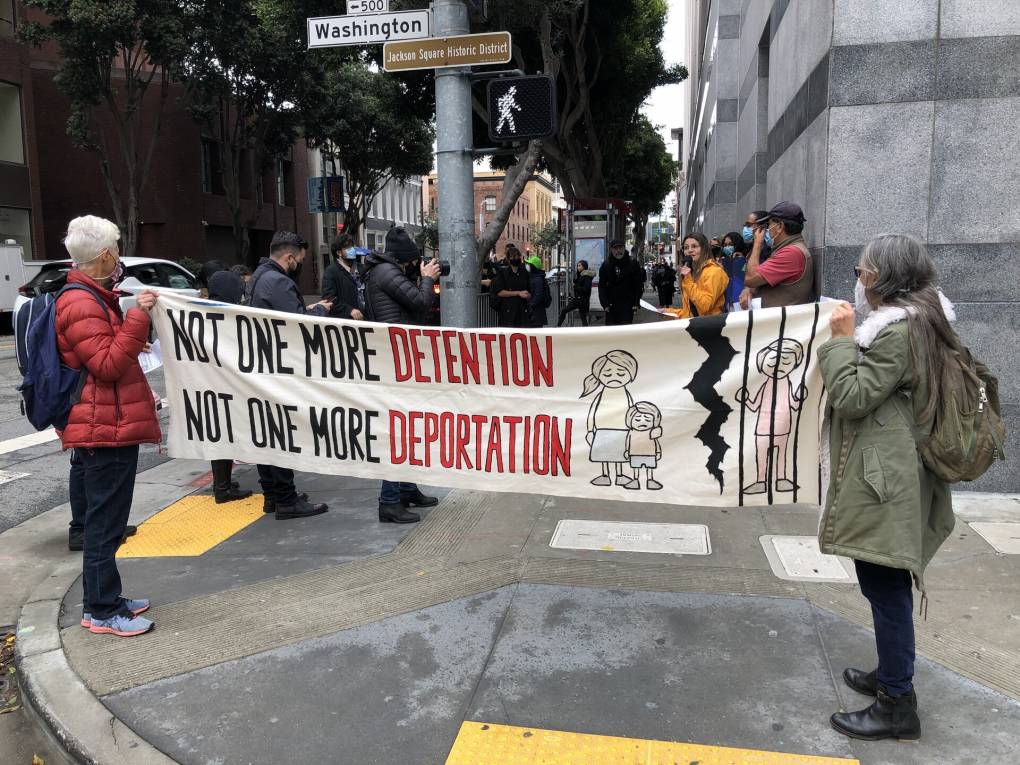
"caption": "A small group of protesters gather in front of ICE's offices in downtown San Francisco on Dec. 15, 2021, calling on the agency to terminate its immigrant-detention contract with Yuba County Jail.",
"description": "A small group of people gather by ICE's offices in San Francisco on Dec 15, 2021. They called on the agency to terminate its detention contract with Yuba County Jail.",
"title": "RS52945_IMG_4596-qut",
"credit": "Farida Jhabvala Romero/KQED",
"status": "inherit",
"altTag": "Two women hold a banner on a street corner that says 'Not One More Detention, Not One More Deportation.'",
"isLoading": false,
"fetchFailed": false
},
"news_11899567": {
"type": "attachments",
"id": "news_11899567",
"meta": {
"index": "attachments_1716263798",
"site": "news",
"id": "11899567",
"found": true
},
"parent": 11899566,
"imgSizes": {
"twentyfourteen-full-width": {
"file": "https://ww2.kqed.org/app/uploads/sites/10/2021/12/ap_19276669107972-4157dfa405bb5b5b5ae1512bc469aa8dc930c533-1038x576.jpg",
"width": 1038,
"mimeType": "image/jpeg",
"height": 576
},
"thumbnail": {
"file": "https://ww2.kqed.org/app/uploads/sites/10/2021/12/ap_19276669107972-4157dfa405bb5b5b5ae1512bc469aa8dc930c533-160x120.jpg",
"width": 160,
"mimeType": "image/jpeg",
"height": 120
},
"post-thumbnail": {
"file": "https://ww2.kqed.org/app/uploads/sites/10/2021/12/ap_19276669107972-4157dfa405bb5b5b5ae1512bc469aa8dc930c533-672x372.jpg",
"width": 672,
"mimeType": "image/jpeg",
"height": 372
},
"kqedFullSize": {
"file": "https://ww2.kqed.org/app/uploads/sites/10/2021/12/ap_19276669107972-4157dfa405bb5b5b5ae1512bc469aa8dc930c533-e1639768153780.jpg",
"width": 1920,
"height": 1440
},
"large": {
"file": "https://ww2.kqed.org/app/uploads/sites/10/2021/12/ap_19276669107972-4157dfa405bb5b5b5ae1512bc469aa8dc930c533-1020x765.jpg",
"width": 1020,
"mimeType": "image/jpeg",
"height": 765
},
"1536x1536": {
"file": "https://ww2.kqed.org/app/uploads/sites/10/2021/12/ap_19276669107972-4157dfa405bb5b5b5ae1512bc469aa8dc930c533-1536x1152.jpg",
"width": 1536,
"mimeType": "image/jpeg",
"height": 1152
},
"full-width": {
"file": "https://ww2.kqed.org/app/uploads/sites/10/2021/12/ap_19276669107972-4157dfa405bb5b5b5ae1512bc469aa8dc930c533-1920x1440.jpg",
"width": 1920,
"mimeType": "image/jpeg",
"height": 1440
},
"medium": {
"file": "https://ww2.kqed.org/app/uploads/sites/10/2021/12/ap_19276669107972-4157dfa405bb5b5b5ae1512bc469aa8dc930c533-800x600.jpg",
"width": 800,
"mimeType": "image/jpeg",
"height": 600
}
},
"publishDate": 1639765061,
"modified": 1639768778,
"caption": "Migrant youth line up to enter a tent at the Homestead Temporary Shelter for Unaccompanied Children in Homestead, Florida., in Feb. 2019. The American Civil Liberties Union and other attorneys filed a lawsuit in October 2019, on behalf of thousands of families separated at the U.S.-Mexico border.",
"description": "FILE- In this Feb. 19, 2019 file photo, children line up to enter a tent at the Homestead Temporary Shelter for Unaccompanied Children in Homestead, Fla. The American Civil Liberties Union is seeking potentially millions of dollars in damages on behalf of thousands of immigrant families who were separated at the U.S.-Mexico border. The ACLU and other attorneys filed a lawsuit Thursday, Oct. 3, 2019, against past and present Trump administration officials in federal court in Tucson alleging the government violated immigrants' rights and traumatized young children who were taken from their parents after crossing the border illegally. (AP Photo/Wilfredo Lee, File)",
"title": "ap_19276669107972-4157dfa405bb5b5b5ae1512bc469aa8dc930c533",
"credit": "Wilfredo Lee/AP",
"status": "inherit",
"altTag": "Children walk in a line past barricades toward a large white tent.",
"isLoading": false,
"fetchFailed": false
},
"news_11897902": {
"type": "attachments",
"id": "news_11897902",
"meta": {
"index": "attachments_1716263798",
"site": "news",
"id": "11897902",
"found": true
},
"parent": 11897897,
"imgSizes": {
"twentyfourteen-full-width": {
"file": "https://ww2.kqed.org/app/uploads/sites/10/2021/12/GettyImages-1236644051-1024x576.jpg",
"width": 1024,
"mimeType": "image/jpeg",
"height": 576
},
"thumbnail": {
"file": "https://ww2.kqed.org/app/uploads/sites/10/2021/12/GettyImages-1236644051-160x103.jpg",
"width": 160,
"mimeType": "image/jpeg",
"height": 103
},
"post-thumbnail": {
"file": "https://ww2.kqed.org/app/uploads/sites/10/2021/12/GettyImages-1236644051-672x372.jpg",
"width": 672,
"mimeType": "image/jpeg",
"height": 372
},
"kqedFullSize": {
"file": "https://ww2.kqed.org/app/uploads/sites/10/2021/12/GettyImages-1236644051.jpg",
"width": 1024,
"height": 661
},
"large": {
"file": "https://ww2.kqed.org/app/uploads/sites/10/2021/12/GettyImages-1236644051-1020x658.jpg",
"width": 1020,
"mimeType": "image/jpeg",
"height": 658
},
"medium": {
"file": "https://ww2.kqed.org/app/uploads/sites/10/2021/12/GettyImages-1236644051-800x516.jpg",
"width": 800,
"mimeType": "image/jpeg",
"height": 516
}
},
"publishDate": 1638484637,
"modified": 1638484767,
"caption": "Migrants heading in a caravan to the United States walk in Nuevo Morelos in Veracruz state, Mexico, on Nov. 18, 2021.",
"description": null,
"title": "MEXICO-US-MIGRATION-CARAVAN",
"credit": "Claudio Cruz/AFP via Getty",
"status": "inherit",
"altTag": "A crowd of people, including someone pushing a stroller, walk along a road.",
"isLoading": false,
"fetchFailed": false
},
"news_11897505": {
"type": "attachments",
"id": "news_11897505",
"meta": {
"index": "attachments_1716263798",
"site": "news",
"id": "11897505",
"found": true
},
"parent": 11897503,
"imgSizes": {
"twentyfourteen-full-width": {
"file": "https://ww2.kqed.org/app/uploads/sites/10/2021/11/IMG-5192-1038x576.jpeg",
"width": 1038,
"mimeType": "image/jpeg",
"height": 576
},
"thumbnail": {
"file": "https://ww2.kqed.org/app/uploads/sites/10/2021/11/IMG-5192-160x120.jpeg",
"width": 160,
"mimeType": "image/jpeg",
"height": 120
},
"post-thumbnail": {
"file": "https://ww2.kqed.org/app/uploads/sites/10/2021/11/IMG-5192-672x372.jpeg",
"width": 672,
"mimeType": "image/jpeg",
"height": 372
},
"kqedFullSize": {
"file": "https://ww2.kqed.org/app/uploads/sites/10/2021/11/IMG-5192.jpeg",
"width": 1280,
"height": 960
},
"large": {
"file": "https://ww2.kqed.org/app/uploads/sites/10/2021/11/IMG-5192-1020x765.jpeg",
"width": 1020,
"mimeType": "image/jpeg",
"height": 765
},
"medium": {
"file": "https://ww2.kqed.org/app/uploads/sites/10/2021/11/IMG-5192-800x600.jpeg",
"width": 800,
"mimeType": "image/jpeg",
"height": 600
}
},
"publishDate": 1638058270,
"modified": 1638058363,
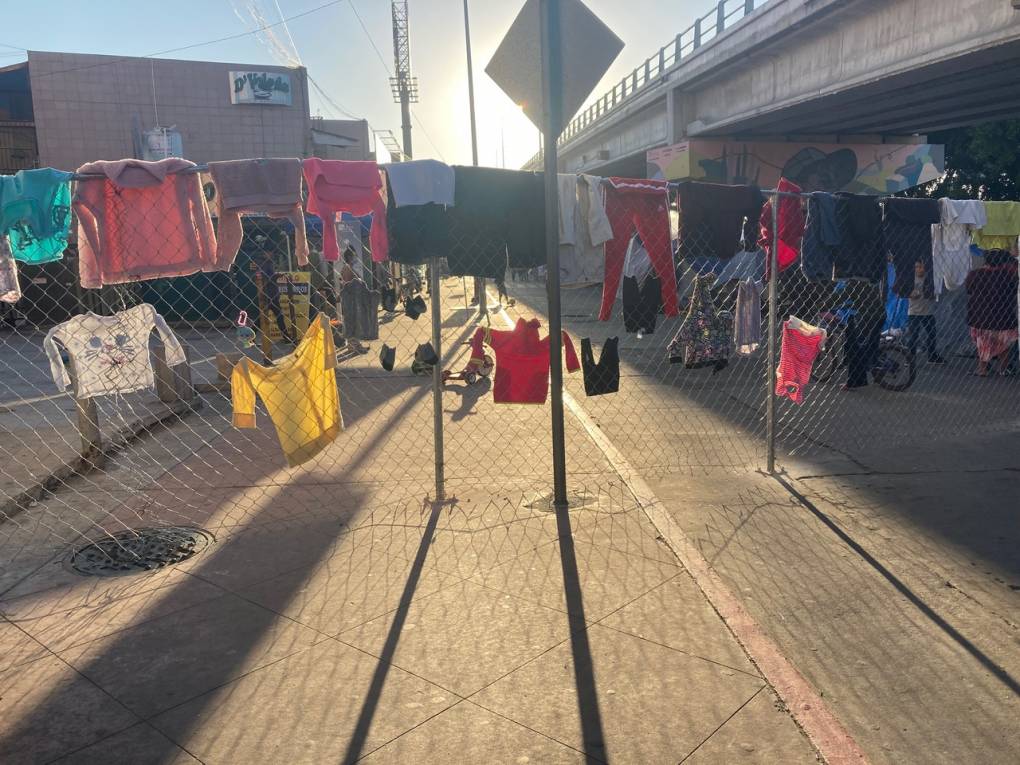
"caption": "Clothes hang to dry on a fence surrounding a migrant encampment just feet from the U.S.-Mexico border in Tijuana.",
"description": null,
"title": "Tijuana clothes.",
"credit": "Max Rivlin-Nadler",
"status": "inherit",
"altTag": "Clothes hang across the top of a chain-link fence in a photo taken as the sun was setting, gold-tinted light floods the concrete from behind the clothes. A freeway can be seen on the right side of the frame, in the background, a low building in the background to the left.",
"isLoading": false,
"fetchFailed": false
},
"news_11892132": {
"type": "attachments",
"id": "news_11892132",
"meta": {
"index": "attachments_1716263798",
"site": "news",
"id": "11892132",
"found": true
},
"parent": 11891987,
"imgSizes": {
"twentyfourteen-full-width": {
"file": "https://ww2.kqed.org/app/uploads/sites/10/2021/10/Mural-1038x576.jpg",
"width": 1038,
"mimeType": "image/jpeg",
"height": 576
},
"thumbnail": {
"file": "https://ww2.kqed.org/app/uploads/sites/10/2021/10/Mural-160x120.jpg",
"width": 160,
"mimeType": "image/jpeg",
"height": 120
},
"post-thumbnail": {
"file": "https://ww2.kqed.org/app/uploads/sites/10/2021/10/Mural-672x372.jpg",
"width": 672,
"mimeType": "image/jpeg",
"height": 372
},
"kqedFullSize": {
"file": "https://ww2.kqed.org/app/uploads/sites/10/2021/10/Mural-scaled.jpg",
"width": 2560,
"height": 1920
},
"2048x2048": {
"file": "https://ww2.kqed.org/app/uploads/sites/10/2021/10/Mural-2048x1536.jpg",
"width": 2048,
"mimeType": "image/jpeg",
"height": 1536
},
"large": {
"file": "https://ww2.kqed.org/app/uploads/sites/10/2021/10/Mural-1020x765.jpg",
"width": 1020,
"mimeType": "image/jpeg",
"height": 765
},
"1536x1536": {
"file": "https://ww2.kqed.org/app/uploads/sites/10/2021/10/Mural-1536x1152.jpg",
"width": 1536,
"mimeType": "image/jpeg",
"height": 1152
},
"full-width": {
"file": "https://ww2.kqed.org/app/uploads/sites/10/2021/10/Mural-1920x1440.jpg",
"width": 1920,
"mimeType": "image/jpeg",
"height": 1440
},
"medium": {
"file": "https://ww2.kqed.org/app/uploads/sites/10/2021/10/Mural-800x600.jpg",
"width": 800,
"mimeType": "image/jpeg",
"height": 600
}
},
"publishDate": 1634154177,
"modified": 1634154202,
"caption": "A large mural, titled “Fowl,” pays homage to Eureka's former Chinese residents. The mural was painted by Oakland artist Dave Kim.",
"description": null,
"title": "Mural",
"credit": "Photo by Héctor Alejandro Arzate",
"status": "inherit",
"altTag": null,
"isLoading": false,
"fetchFailed": false
},
"news_11892062": {
"type": "attachments",
"id": "news_11892062",
"meta": {
"index": "attachments_1716263798",
"site": "news",
"id": "11892062",
"found": true
},
"parent": 11892048,
"imgSizes": {
"twentyfourteen-full-width": {
"file": "https://ww2.kqed.org/app/uploads/sites/10/2021/10/GettyImages-1231562101-1038x576.jpg",
"width": 1038,
"mimeType": "image/jpeg",
"height": 576
},
"thumbnail": {
"file": "https://ww2.kqed.org/app/uploads/sites/10/2021/10/GettyImages-1231562101-160x107.jpg",
"width": 160,
"mimeType": "image/jpeg",
"height": 107
},
"post-thumbnail": {
"file": "https://ww2.kqed.org/app/uploads/sites/10/2021/10/GettyImages-1231562101-672x372.jpg",
"width": 672,
"mimeType": "image/jpeg",
"height": 372
},
"kqedFullSize": {
"file": "https://ww2.kqed.org/app/uploads/sites/10/2021/10/GettyImages-1231562101-scaled.jpg",
"width": 2560,
"height": 1707
},
"2048x2048": {
"file": "https://ww2.kqed.org/app/uploads/sites/10/2021/10/GettyImages-1231562101-2048x1365.jpg",
"width": 2048,
"mimeType": "image/jpeg",
"height": 1365
},
"large": {
"file": "https://ww2.kqed.org/app/uploads/sites/10/2021/10/GettyImages-1231562101-1020x680.jpg",
"width": 1020,
"mimeType": "image/jpeg",
"height": 680
},
"1536x1536": {
"file": "https://ww2.kqed.org/app/uploads/sites/10/2021/10/GettyImages-1231562101-1536x1024.jpg",
"width": 1536,
"mimeType": "image/jpeg",
"height": 1024
},
"full-width": {
"file": "https://ww2.kqed.org/app/uploads/sites/10/2021/10/GettyImages-1231562101-1920x1280.jpg",
"width": 1920,
"mimeType": "image/jpeg",
"height": 1280
},
"medium": {
"file": "https://ww2.kqed.org/app/uploads/sites/10/2021/10/GettyImages-1231562101-800x533.jpg",
"width": 800,
"mimeType": "image/jpeg",
"height": 533
}
},
"publishDate": 1634086897,
"modified": 1634148139,
"caption": "Activists gather for a 'Reunite Our Families Now' rally in Los Angeles on March 6, 2021, to protest continued deportations under President Joe Biden.",
"description": "Activists gather for a \"Reunite Our Families Now\" rally in Los Angeles, California on March 6, 2021, to protest continued deportations under President Joe Biden.",
"title": "US-IMMIGRATION-RALLY",
"credit": "Frederic J. Brown/AFP via Getty Images",
"status": "inherit",
"altTag": "Two protesters hold signs. One says, \"ICE Out: K-Town contra las redadas,\" or K-Town against mass deportations; the other says \"Stop Biden's Deportations.\"",
"isLoading": false,
"fetchFailed": false
}
},
"audioPlayerReducer": {
"postId": "stream_live",
"isPaused": true,
"isPlaying": false,
"pfsActive": false,
"pledgeModalIsOpen": true,
"playerDrawerIsOpen": false,
"liveAudioPlayStartedAt": 0,
"liveAudioPlayContext": ""
},
"authorsReducer": {
"byline_news_11899566": {
"type": "authors",
"id": "byline_news_11899566",
"meta": {
"override": true
},
"slug": "byline_news_11899566",
"name": "Joel Rose and Vanessa Romo",
"isLoading": false
},
"byline_news_11897897": {
"type": "authors",
"id": "byline_news_11897897",
"meta": {
"override": true
},
"slug": "byline_news_11897897",
"name": "Elliot Spagat\u003cbr>Associated Press",
"isLoading": false
},
"byline_news_11897503": {
"type": "authors",
"id": "byline_news_11897503",
"meta": {
"override": true
},
"slug": "byline_news_11897503",
"name": "Max Rivlin-Nadler",
"isLoading": false
},
"byline_news_11892048": {
"type": "authors",
"id": "byline_news_11892048",
"meta": {
"override": true
},
"slug": "byline_news_11892048",
"name": "\u003ca href=\"https://www.npr.org/people/14562108/bill-chappell\">Bill Chappell\u003c/a>",
"isLoading": false
},
"kqednewsstaffandwires": {
"type": "authors",
"id": "237",
"meta": {
"index": "authors_1716337520",
"id": "237",
"found": true
},
"name": "KQED News Staff and Wires",
"firstName": "KQED News Staff and Wires",
"lastName": null,
"slug": "kqednewsstaffandwires",
"email": "onlinenewsstaff@kqed.org",
"display_author_email": false,
"staff_mastheads": [],
"title": null,
"bio": null,
"avatar": "https://secure.gravatar.com/avatar/72295af8ebbfbd19a4948f5271285664?s=600&d=blank&r=g",
"twitter": null,
"facebook": null,
"instagram": null,
"linkedin": null,
"sites": [
{
"site": "arts",
"roles": [
"contributor"
]
},
{
"site": "news",
"roles": [
"contributor"
]
},
{
"site": "lowdown",
"roles": [
"author"
]
},
{
"site": "stateofhealth",
"roles": [
"contributor"
]
},
{
"site": "food",
"roles": [
"author"
]
}
],
"headData": {
"title": "KQED News Staff and Wires | KQED",
"description": null,
"ogImgSrc": "https://secure.gravatar.com/avatar/72295af8ebbfbd19a4948f5271285664?s=600&d=blank&r=g",
"twImgSrc": "https://secure.gravatar.com/avatar/72295af8ebbfbd19a4948f5271285664?s=600&d=blank&r=g"
},
"isLoading": false,
"link": "/author/kqednewsstaffandwires"
},
"tychehendricks": {
"type": "authors",
"id": "259",
"meta": {
"index": "authors_1716337520",
"id": "259",
"found": true
},
"name": "Tyche Hendricks",
"firstName": "Tyche",
"lastName": "Hendricks",
"slug": "tychehendricks",
"email": "thendricks@kqed.org",
"display_author_email": true,
"staff_mastheads": [
"news"
],
"title": "KQED Senior Editor, Immigration",
"bio": "\u003cspan style=\"font-weight: 400;\">Tyche Hendricks is KQED’s senior editor for immigration, leading coverage of the policy and politics that affect California’s immigrant communities. Her work for KQED’s radio and online audiences is also carried on NPR and other national outlets. She has been recognized with awards from the Radio and Television News Directors Association, the Society for Professional Journalists; the Education Writers Association; the Best of the West and the National Federation of Community Broadcasters. Before joining KQED in 2010, Tyche spent more than a dozen years as a newspaper reporter, notably at the \u003c/span>\u003ci>\u003cspan style=\"font-weight: 400;\">San Francisco Chronicle\u003c/span>\u003c/i>\u003cspan style=\"font-weight: 400;\">. At different times she has covered criminal justice, government and politics and urban planning. Tyche has taught in the MFA Creative Writing program at the University of San Francisco and at UC Berkeley’s Graduate School of Journalism, where she was co-director of a national immigration symposium for professional journalists. She is the author of \u003c/span>\u003ci>\u003cspan style=\"font-weight: 400;\">The Wind Doesn't Need a Passport: Stories from the U.S.-Mexico Borderlands\u003c/span>\u003c/i>\u003cspan style=\"font-weight: 400;\"> (University of California Press). \u003c/span>",
"avatar": "https://secure.gravatar.com/avatar/b8ee458e2731c2d43df86882ce17267e?s=600&d=blank&r=g",
"twitter": "tychehendricks",
"facebook": null,
"instagram": null,
"linkedin": null,
"sites": [
{
"site": "news",
"roles": [
"editor"
]
},
{
"site": "stateofhealth",
"roles": [
"editor"
]
}
],
"headData": {
"title": "Tyche Hendricks | KQED",
"description": "KQED Senior Editor, Immigration",
"ogImgSrc": "https://secure.gravatar.com/avatar/b8ee458e2731c2d43df86882ce17267e?s=600&d=blank&r=g",
"twImgSrc": "https://secure.gravatar.com/avatar/b8ee458e2731c2d43df86882ce17267e?s=600&d=blank&r=g"
},
"isLoading": false,
"link": "/author/tychehendricks"
},
"ecruzguevarra": {
"type": "authors",
"id": "8654",
"meta": {
"index": "authors_1716337520",
"id": "8654",
"found": true
},
"name": "Ericka Cruz Guevarra",
"firstName": "Ericka",
"lastName": "Cruz Guevarra",
"slug": "ecruzguevarra",
"email": "ecruzguevarra@kqed.org",
"display_author_email": true,
"staff_mastheads": [
"news"
],
"title": "Producer, The Bay Podcast",
"bio": "Ericka Cruz Guevarra is host of \u003ca href=\"https://www.kqed.org/podcasts/thebay\">\u003cem>The Bay\u003c/em>\u003c/a> podcast at KQED. Before host, she was the show’s producer. Her work in that capacity includes a three-part reported series on policing in Vallejo, which won a 2020 excellence in journalism award from the Society of Professional Journalists. Ericka has worked as a breaking news reporter at Oregon Public Broadcasting, helped produce the Code Switch podcast, and was KQED’s inaugural Raul Ramirez Diversity Fund intern. She’s also an alumna of NPR’s Next Generation Radio program. Send her an email if you have strong feelings about whether Fairfield and Suisun City are the Bay. Ericka is represented by SAG-AFTRA.",
"avatar": "https://secure.gravatar.com/avatar/25e5ab8d3d53fad2dcc7bb2b5c506b1a?s=600&d=blank&r=g",
"twitter": "NotoriousECG",
"facebook": null,
"instagram": null,
"linkedin": null,
"sites": [
{
"site": "arts",
"roles": [
"subscriber"
]
},
{
"site": "news",
"roles": [
"editor",
"manage_categories"
]
},
{
"site": "futureofyou",
"roles": [
"subscriber"
]
},
{
"site": "stateofhealth",
"roles": [
"subscriber"
]
},
{
"site": "science",
"roles": [
"editor"
]
},
{
"site": "forum",
"roles": [
"subscriber"
]
}
],
"headData": {
"title": "Ericka Cruz Guevarra | KQED",
"description": "Producer, The Bay Podcast",
"ogImgSrc": "https://secure.gravatar.com/avatar/25e5ab8d3d53fad2dcc7bb2b5c506b1a?s=600&d=blank&r=g",
"twImgSrc": "https://secure.gravatar.com/avatar/25e5ab8d3d53fad2dcc7bb2b5c506b1a?s=600&d=blank&r=g"
},
"isLoading": false,
"link": "/author/ecruzguevarra"
},
"fjhabvala": {
"type": "authors",
"id": "8659",
"meta": {
"index": "authors_1716337520",
"id": "8659",
"found": true
},
"name": "Farida Jhabvala Romero",
"firstName": "Farida",
"lastName": "Jhabvala Romero",
"slug": "fjhabvala",
"email": "fjhabvala@kqed.org",
"display_author_email": true,
"staff_mastheads": [
"news"
],
"title": "KQED Contributor",
"bio": "\u003cspan style=\"font-weight: 400;\">Farida Jhabvala Romero is a Labor Correspondent for KQED. She previously covered immigration. Farida was \u003ca href=\"https://www.ccnma.org/2022-most-influential-latina-journalists\">named\u003c/a> one of the 10 Most Influential Latina Journalists in California in 2022 by the California Chicano News Media Association. Her work has won awards from the Society of Professional Journalists (Northern California), as well as a national and regional Edward M. Murrow Award for the collaborative reporting projects “Dangerous Air” and “Graying California.” \u003c/span>\u003cspan style=\"font-weight: 400;\">Before joining KQED, Farida worked as a producer at Radio Bilingüe, a national public radio network. Farida earned her master’s degree in journalism from Stanford University.\u003c/span>",
"avatar": "https://secure.gravatar.com/avatar/c3ab27c5554b67b478f80971e515aa02?s=600&d=blank&r=g",
"twitter": "FaridaJhabvala",
"facebook": null,
"instagram": null,
"linkedin": "https://www.linkedin.com/in/faridajhabvala/",
"sites": [
{
"site": "news",
"roles": [
"editor"
]
},
{
"site": "stateofhealth",
"roles": [
"author"
]
}
],
"headData": {
"title": "Farida Jhabvala Romero | KQED",
"description": "KQED Contributor",
"ogImgSrc": "https://secure.gravatar.com/avatar/c3ab27c5554b67b478f80971e515aa02?s=600&d=blank&r=g",
"twImgSrc": "https://secure.gravatar.com/avatar/c3ab27c5554b67b478f80971e515aa02?s=600&d=blank&r=g"
},
"isLoading": false,
"link": "/author/fjhabvala"
},
"lsarah": {
"type": "authors",
"id": "11626",
"meta": {
"index": "authors_1716337520",
"id": "11626",
"found": true
},
"name": "Lakshmi Sarah",
"firstName": "Lakshmi",
"lastName": "Sarah",
"slug": "lsarah",
"email": "lsarah@kqed.org",
"display_author_email": false,
"staff_mastheads": [],
"title": "Digital Producer",
"bio": "Lakshmi Sarah is an educator, author and journalist with a focus on innovative storytelling. She has worked with newspapers, radio and magazines from Ahmedabad, India to Los Angeles, California. She has written and produced for Die Zeit, Global Voices, AJ+, KQED, Fusion Media Group and the New York Times.",
"avatar": "https://secure.gravatar.com/avatar/652dcaecd8b28826fc17a8b2d6bb4e93?s=600&d=blank&r=g",
"twitter": "lakitalki",
"facebook": null,
"instagram": "https://www.instagram.com/laki.talki/",
"linkedin": "https://www.linkedin.com/in/lakisarah/",
"sites": [
{
"site": "arts",
"roles": []
},
{
"site": "news",
"roles": []
},
{
"site": "bayareabites",
"roles": []
},
{
"site": "science",
"roles": []
}
],
"headData": {
"title": "Lakshmi Sarah | KQED",
"description": "Digital Producer",
"ogImgSrc": "https://secure.gravatar.com/avatar/652dcaecd8b28826fc17a8b2d6bb4e93?s=600&d=blank&r=g",
"twImgSrc": "https://secure.gravatar.com/avatar/652dcaecd8b28826fc17a8b2d6bb4e93?s=600&d=blank&r=g"
},
"isLoading": false,
"link": "/author/lsarah"
},
"hmcdede": {
"type": "authors",
"id": "11635",
"meta": {
"index": "authors_1716337520",
"id": "11635",
"found": true
},
"name": "Holly McDede",
"firstName": "Holly",
"lastName": "McDede",
"slug": "hmcdede",
"email": "hmcdede@KQED.org",
"display_author_email": false,
"staff_mastheads": [],
"title": "KQED Contributor",
"bio": null,
"avatar": "https://secure.gravatar.com/avatar/999d9bf31bb3a2f0511932d99526cb3e?s=600&d=blank&r=g",
"twitter": null,
"facebook": null,
"instagram": null,
"linkedin": null,
"sites": [
{
"site": "arts",
"roles": [
"editor"
]
},
{
"site": "news",
"roles": [
"edit_others_posts",
"editor"
]
},
{
"site": "science",
"roles": [
"editor"
]
},
{
"site": "forum",
"roles": [
"editor"
]
},
{
"site": "perspectives",
"roles": [
"administrator"
]
}
],
"headData": {
"title": "Holly McDede | KQED",
"description": "KQED Contributor",
"ogImgSrc": "https://secure.gravatar.com/avatar/999d9bf31bb3a2f0511932d99526cb3e?s=600&d=blank&r=g",
"twImgSrc": "https://secure.gravatar.com/avatar/999d9bf31bb3a2f0511932d99526cb3e?s=600&d=blank&r=g"
},
"isLoading": false,
"link": "/author/hmcdede"
},
"amontecillo": {
"type": "authors",
"id": "11649",
"meta": {
"index": "authors_1716337520",
"id": "11649",
"found": true
},
"name": "Alan Montecillo",
"firstName": "Alan",
"lastName": "Montecillo",
"slug": "amontecillo",
"email": "amontecillo@kqed.org",
"display_author_email": false,
"staff_mastheads": [
"news"
],
"title": "KQED Contributor",
"bio": "Alan Montecillo is the senior editor of \u003cem>\u003ca href=\"http://kqed.org/thebay\">The Bay\u003c/a>, \u003c/em> KQED's local news podcast. Before moving to the Bay Area, he worked as a senior talk show producer for WILL in Champaign-Urbana, Illinois and at Oregon Public Broadcasting in Portland, Oregon. He has won journalism awards from the Society of Professional Journalists Northern California, the Public Media Journalists Association, The Signal Awards, and has also received a regional Edward R. Murrow award. Alan is a Filipino American from Hong Kong and a graduate of Reed College.",
"avatar": "https://secure.gravatar.com/avatar/d5e4e7a76481969ccba76f4e2b5ccabc?s=600&d=blank&r=g",
"twitter": "alanmontecillo",
"facebook": null,
"instagram": null,
"linkedin": null,
"sites": [
{
"site": "",
"roles": [
"editor"
]
},
{
"site": "news",
"roles": [
"editor",
"manage_categories"
]
}
],
"headData": {
"title": "Alan Montecillo | KQED",
"description": "KQED Contributor",
"ogImgSrc": "https://secure.gravatar.com/avatar/d5e4e7a76481969ccba76f4e2b5ccabc?s=600&d=blank&r=g",
"twImgSrc": "https://secure.gravatar.com/avatar/d5e4e7a76481969ccba76f4e2b5ccabc?s=600&d=blank&r=g"
},
"isLoading": false,
"link": "/author/amontecillo"
},
"jrodriguez": {
"type": "authors",
"id": "11690",
"meta": {
"index": "authors_1716337520",
"id": "11690",
"found": true
},
"name": "Joe Fitzgerald Rodriguez",
"firstName": "Joe",
"lastName": "Fitzgerald Rodriguez",
"slug": "jrodriguez",
"email": "jrodriguez@kqed.org",
"display_author_email": true,
"staff_mastheads": [
"news"
],
"title": "Reporter and Producer",
"bio": "Joe Fitzgerald Rodriguez is a reporter and digital producer for KQED covering politics. Joe most recently wrote for the \u003cem>San Francisco Examiner\u003c/em> as a political columnist covering The City. He was raised in San Francisco and has spent his reporting career in his beloved, foggy, city by the bay. Joe was 12-years-old when he conducted his first interview in journalism, grilling former San Francisco Mayor Willie Brown for the Marina Middle School newspaper, \u003cem>The Penguin Press, \u003c/em>and he continues to report on the San Francisco Bay Area to this day.",
"avatar": "https://secure.gravatar.com/avatar/2247beb0564c1e9c62228d5649d2edac?s=600&d=blank&r=g",
"twitter": "FitztheReporter",
"facebook": null,
"instagram": "https://www.instagram.com/fitzthereporter/",
"linkedin": null,
"sites": [
{
"site": "",
"roles": [
"editor"
]
},
{
"site": "arts",
"roles": [
"editor"
]
},
{
"site": "news",
"roles": [
"editor"
]
},
{
"site": "science",
"roles": [
"editor"
]
},
{
"site": "elections",
"roles": [
"editor"
]
},
{
"site": "liveblog",
"roles": [
"editor"
]
}
],
"headData": {
"title": "Joe Fitzgerald Rodriguez | KQED",
"description": "Reporter and Producer",
"ogImgSrc": "https://secure.gravatar.com/avatar/2247beb0564c1e9c62228d5649d2edac?s=600&d=blank&r=g",
"twImgSrc": "https://secure.gravatar.com/avatar/2247beb0564c1e9c62228d5649d2edac?s=600&d=blank&r=g"
},
"isLoading": false,
"link": "/author/jrodriguez"
},
"ccabreralomeli": {
"type": "authors",
"id": "11708",
"meta": {
"index": "authors_1716337520",
"id": "11708",
"found": true
},
"name": "Carlos Cabrera-Lomelí",
"firstName": "Carlos",
"lastName": "Cabrera-Lomelí",
"slug": "ccabreralomeli",
"email": "ccabreralomeli@KQED.org",
"display_author_email": true,
"staff_mastheads": [
"news"
],
"title": "Community Reporter",
"bio": "Carlos Cabrera-Lomelí is a community reporter with KQED's digital engagement team. He also reports and co-produces for KQED's bilingual news hub KQED en Español. He grew up in San Francisco's Mission District and has previously worked with Univision, 48 Hills and REFORMA in Mexico City.",
"avatar": "https://secure.gravatar.com/avatar/e95ff80bb2eaf18a8f2af4dcf7ffb54b?s=600&d=mm&r=g",
"twitter": "@LomeliCabrera",
"facebook": null,
"instagram": null,
"linkedin": null,
"sites": [
{
"site": "arts",
"roles": [
"editor"
]
},
{
"site": "news",
"roles": [
"editor"
]
},
{
"site": "about",
"roles": [
"editor"
]
},
{
"site": "science",
"roles": [
"editor"
]
},
{
"site": "perspectives",
"roles": [
"editor"
]
},
{
"site": "elections",
"roles": [
"editor"
]
},
{
"site": "liveblog",
"roles": [
"contributor"
]
}
],
"headData": {
"title": "Carlos Cabrera-Lomelí | KQED",
"description": "Community Reporter",
"ogImgSrc": "https://secure.gravatar.com/avatar/e95ff80bb2eaf18a8f2af4dcf7ffb54b?s=600&d=mm&r=g",
"twImgSrc": "https://secure.gravatar.com/avatar/e95ff80bb2eaf18a8f2af4dcf7ffb54b?s=600&d=mm&r=g"
},
"isLoading": false,
"link": "/author/ccabreralomeli"
},
"harzate": {
"type": "authors",
"id": "11727",
"meta": {
"index": "authors_1716337520",
"id": "11727",
"found": true
},
"name": "Héctor Alejandro Arzate",
"firstName": "Héctor Alejandro",
"lastName": "Arzate",
"slug": "harzate",
"email": "harzate@kqed.org",
"display_author_email": false,
"staff_mastheads": [],
"title": "KQED Contributor",
"bio": null,
"avatar": "https://secure.gravatar.com/avatar/23c72c3afa19f2c6801c5db997a908d8?s=600&d=blank&r=g",
"twitter": null,
"facebook": null,
"instagram": null,
"linkedin": null,
"sites": [
{
"site": "news",
"roles": [
"author"
]
}
],
"headData": {
"title": "Héctor Alejandro Arzate | KQED",
"description": "KQED Contributor",
"ogImgSrc": "https://secure.gravatar.com/avatar/23c72c3afa19f2c6801c5db997a908d8?s=600&d=blank&r=g",
"twImgSrc": "https://secure.gravatar.com/avatar/23c72c3afa19f2c6801c5db997a908d8?s=600&d=blank&r=g"
},
"isLoading": false,
"link": "/author/harzate"
},
"cbeale": {
"type": "authors",
"id": "11749",
"meta": {
"index": "authors_1716337520",
"id": "11749",
"found": true
},
"name": "Christopher Beale",
"firstName": "Christopher",
"lastName": "Beale",
"slug": "cbeale",
"email": "cbeale@kqed.org",
"display_author_email": true,
"staff_mastheads": [
"news"
],
"title": "Engineer/Producer/Reporter",
"bio": "\u003ca href=\"https://linktr.ee/realchrisjbeale\" rel=\"noopener noreferrer\">Christopher J. Beale\u003c/a> is an award winning journalist, audio engineer, and media host living in San Francisco. \r\n\r\nChristopher works primarily as an audio engineer at KQED and serves as the sound designer for both the Bay Curious and Rightnowish podcasts. He is the host and producer of the LGBTQIA podcast and radio segment \u003ca href=\"https://stereotypespodcast.org\">Stereotypes\u003c/a>.",
"avatar": "https://secure.gravatar.com/avatar/dc485bf84788eb7e7414eb638e72407e?s=600&d=blank&r=g",
"twitter": "realchrisjbeale",
"facebook": null,
"instagram": "http://instagram.com/realchrisjbeale",
"linkedin": null,
"sites": [
{
"site": "arts",
"roles": [
"contributor"
]
},
{
"site": "news",
"roles": [
"editor"
]
},
{
"site": "forum",
"roles": [
"editor"
]
}
],
"headData": {
"title": "Christopher Beale | KQED",
"description": "Engineer/Producer/Reporter",
"ogImgSrc": "https://secure.gravatar.com/avatar/dc485bf84788eb7e7414eb638e72407e?s=600&d=blank&r=g",
"twImgSrc": "https://secure.gravatar.com/avatar/dc485bf84788eb7e7414eb638e72407e?s=600&d=blank&r=g"
},
"isLoading": false,
"link": "/author/cbeale"
}
},
"pagesReducer": {
"news_tag_immigration": {
"type": "terms",
"id": "news_20202",
"meta": {
"index": "terms_1716263798",
"site": "news",
"id": "20202",
"score": 6.9038835
},
"featImg": null,
"name": "immigration",
"description": null,
"taxonomy": "tag",
"headData": {
"twImgId": null,
"twTitle": null,
"ogTitle": null,
"ogImgId": null,
"twDescription": null,
"description": null,
"title": "immigration Archives | KQED News",
"ogDescription": null
},
"ttid": 20219,
"slug": "immigration",
"isLoading": false,
"title": "immigration",
"pageMeta": {
"site": "news",
"WpPageTemplate": "page-topic-editorial",
"currentPage": 51
},
"blocks": [
{
"blockName": "kqed/post-list",
"attrs": {
"layout": "cardArticle2",
"query": "posts/news?tag=immigration",
"seeMore": false,
"paginated": true,
"page": 51
}
},
{
"blockName": "kqed/ad"
}
]
}
},
"pfsSessionReducer": {},
"postsReducer": {
"stream_live": {
"type": "live",
"id": "stream_live",
"audioUrl": "https://streams.kqed.org/kqedradio",
"title": "Live Stream",
"excerpt": "Live Stream information currently unavailable.",
"link": "/radio",
"featImg": "",
"label": {
"name": "KQED Live",
"link": "/"
}
},
"stream_kqedNewscast": {
"type": "posts",
"id": "stream_kqedNewscast",
"audioUrl": "https://www.kqed.org/.stream/anon/radio/RDnews/newscast.mp3?_=1",
"title": "KQED Newscast",
"featImg": "",
"label": {
"name": "88.5 FM",
"link": "/"
}
},
"news_11901984": {
"type": "posts",
"id": "news_11901984",
"meta": {
"index": "posts_1716263798",
"site": "news",
"id": "11901984",
"score": null,
"sort": [
1642590029000
]
},
"parent": 0,
"labelTerm": {},
"blocks": [],
"publishDate": 1642590029,
"format": "audio",
"title": "For Asylum Seekers, Finding a Lawyer is Essential to Avoid Deportation",
"headTitle": "For Asylum Seekers, Finding a Lawyer is Essential to Avoid Deportation | KQED",
"content": "\u003cp>The U.S. currently has an immigration court backlog that surpasses 1.5 million cases — and that includes many people who are seeking asylum from violence or persecution in their home countries.\u003c/p>\n\u003cp>In northern California, asylum cases are typically heard at an immigration court in San Francisco’s Financial District. That’s where KQED immigration editor Tyche Hendricks met Pablo López, a Nicaraguan man living in Walnut Creek as he awaits his opportunity to make his case before an immigration judge. But a recent attempt by the Biden Administration to speed up asylum claims is putting pressure on people like Pablo to find a lawyer ASAP, to better his chances of winning his claim.\u003c/p>\n\u003cp>\u003cstrong>Guest: \u003c/strong>\u003ca href=\"https://twitter.com/tychehendricks\">Tyche Hendricks\u003c/a>, KQED immigration editor\u003c/p>\n\u003cp id=\"embed-code\" class=\"inconsolata\">\n\u003c!-- iframe plugin v.4.3 wordpress.org/plugins/iframe/ -->\u003cbr>\n\u003ciframe loading=\"lazy\" frameborder=\"0\" height=\"200\" scrolling=\"no\" src=\"https://playlist.megaphone.fm?e=KQINC5165988214&light=true\" width=\"100%\" class=\"iframe-class\">\u003c/iframe>\n\u003c/p>\n\u003cp>\u003cstrong>Links:\u003c/strong>\u003c/p>\n\u003cul>\n\u003cli>\u003ca href=\"https://www.kqed.org/news/11900546/i-hope-a-lawyer-will-answer-asylum-seekers-risk-deportation-in-expedited-process\" target=\"_blank\" rel=\"noopener noreferrer\">‘I Hope a Lawyer Will Answer’: Asylum Seekers Risk Deportation in Expedited Process\u003c/a>\u003c/li>\n\u003cli>\u003ca href=\"https://www.kqed.org/news/11900535/a-simple-paperwork-error-can-get-asylum-seekers-deported-rosa-diaz-got-lucky-on-a-lunch-break\" target=\"_blank\" rel=\"noopener noreferrer\">A Simple Paperwork Error Can Get Asylum Seekers Deported. Rosa Díaz Got Lucky on a Lunch Break\u003c/a>\u003c/li>\n\u003c/ul>\n\u003cp>\u003ci>Follow \u003c/i>\u003ca href=\"https://www.kqed.org/news/tag/the-bay\">\u003ci>The Bay\u003c/i>\u003c/a>\u003ci> to hear more local Bay Area stories like this one. New episodes are released Monday, Wednesday and Friday at 3 a.m. Find The Bay on \u003c/i>\u003ca href=\"https://podcasts.apple.com/us/podcast/the-bay/id1350043452?mt=2\">\u003ci>Apple Podcasts\u003c/i>\u003c/a>\u003ci>, \u003c/i>\u003ca href=\"https://open.spotify.com/show/4BIKBKIujizLHlIlBNaAqQ\">\u003ci>Spotify\u003c/i>\u003c/a>\u003ci>, \u003c/i>\u003ca href=\"https://www.stitcher.com/podcast/kqed/the-bay\">\u003ci>Stitcher\u003c/i>\u003c/a>\u003ci>, NPR One or via \u003c/i>\u003ca href=\"https://www.amazon.com/KQED-The-Bay-Flash-Briefing/dp/B07H6YYV23\">\u003ci>Alexa\u003c/i>\u003c/a>.\u003c/p>\n\u003cp>[ad fullwidth]\u003c/p>\n\u003cp>\u003cem> \u003c/em>\u003c/p>\n\u003cp> \u003c/p>\n\u003cp>\u003c/p>\n\u003cp> \u003c/p>\n\n",
"stats": {
"hasVideo": false,
"hasChartOrMap": false,
"hasAudio": true,
"hasPolis": false,
"wordCount": 203,
"hasGoogleForm": false,
"hasGallery": false,
"hasHearkenModule": false,
"iframeSrcs": [],
"paragraphCount": 7
},
"modified": 1700690877,
"excerpt": null,
"headData": {
"twImgId": "",
"twTitle": "",
"ogTitle": "",
"ogImgId": "",
"twDescription": "",
"description": "The U.S. currently has an immigration court backlog that surpasses 1.5 million cases — and that includes many people who are seeking asylum from violence or persecution in their home countries. In northern California, asylum cases are typically heard at an immigration court in San Francisco’s Financial District. That’s where KQED immigration editor Tyche Hendricks",
"title": "For Asylum Seekers, Finding a Lawyer is Essential to Avoid Deportation | KQED",
"ogDescription": "",
"schema": {
"@context": "https://schema.org",
"@type": "NewsArticle",
"headline": "For Asylum Seekers, Finding a Lawyer is Essential to Avoid Deportation",
"datePublished": "2022-01-19T03:00:29-08:00",
"dateModified": "2023-11-22T14:07:57-08:00",
"image": "https://cdn.kqed.org/wp-content/uploads/2020/02/KQED-OG-Image@1x.png",
"isAccessibleForFree": "True",
"publisher": {
"@type": "NewsMediaOrganization",
"@id": "https://www.kqed.org/#organization",
"name": "KQED",
"logo": "https://cdn.kqed.org/wp-content/uploads/2020/02/KQED-OG-Image@1x.png",
"url": "https://www.kqed.org",
"sameAs": [
"https://www.facebook.com/KQED",
"https://twitter.com/KQED",
"https://www.instagram.com/kqed/",
"https://www.tiktok.com/@kqedofficial",
"https://www.linkedin.com/company/kqed",
"https://www.youtube.com/channel/UCeC0IOo7i1P_61zVUWbJ4nw"
]
}
}
},
"guestAuthors": [],
"slug": "for-asylum-seekers-finding-a-lawyer",
"status": "publish",
"sourceUrl": "https://www.kqed.org/podcasts/thebay",
"audioUrl": "https://www.podtrac.com/pts/redirect.mp3/traffic.megaphone.fm/KQINC5165988214.mp3?updated=1642550532",
"excludeFromSiteSearch": "Include",
"source": "The Bay",
"path": "/news/11901984/for-asylum-seekers-finding-a-lawyer",
"audioTrackLength": null,
"parsedContent": [
{
"type": "contentString",
"content": "\u003cdiv class=\"post-body\">\u003cp>\u003cp>The U.S. currently has an immigration court backlog that surpasses 1.5 million cases — and that includes many people who are seeking asylum from violence or persecution in their home countries.\u003c/p>\n\u003cp>In northern California, asylum cases are typically heard at an immigration court in San Francisco’s Financial District. That’s where KQED immigration editor Tyche Hendricks met Pablo López, a Nicaraguan man living in Walnut Creek as he awaits his opportunity to make his case before an immigration judge. But a recent attempt by the Biden Administration to speed up asylum claims is putting pressure on people like Pablo to find a lawyer ASAP, to better his chances of winning his claim.\u003c/p>\n\u003cp>\u003cstrong>Guest: \u003c/strong>\u003ca href=\"https://twitter.com/tychehendricks\">Tyche Hendricks\u003c/a>, KQED immigration editor\u003c/p>\n\u003cp id=\"embed-code\" class=\"inconsolata\">\n\u003c!-- iframe plugin v.4.3 wordpress.org/plugins/iframe/ -->\u003cbr>\n\u003ciframe loading=\"lazy\" frameborder=\"0\" height=\"200\" scrolling=\"no\" src=\"https://playlist.megaphone.fm?e=KQINC5165988214&light=true\" width=\"100%\" class=\"iframe-class\">\u003c/iframe>\n\u003c/p>\n\u003cp>\u003cstrong>Links:\u003c/strong>\u003c/p>\n\u003cul>\n\u003cli>\u003ca href=\"https://www.kqed.org/news/11900546/i-hope-a-lawyer-will-answer-asylum-seekers-risk-deportation-in-expedited-process\" target=\"_blank\" rel=\"noopener noreferrer\">‘I Hope a Lawyer Will Answer’: Asylum Seekers Risk Deportation in Expedited Process\u003c/a>\u003c/li>\n\u003cli>\u003ca href=\"https://www.kqed.org/news/11900535/a-simple-paperwork-error-can-get-asylum-seekers-deported-rosa-diaz-got-lucky-on-a-lunch-break\" target=\"_blank\" rel=\"noopener noreferrer\">A Simple Paperwork Error Can Get Asylum Seekers Deported. Rosa Díaz Got Lucky on a Lunch Break\u003c/a>\u003c/li>\n\u003c/ul>\n\u003cp>\u003ci>Follow \u003c/i>\u003ca href=\"https://www.kqed.org/news/tag/the-bay\">\u003ci>The Bay\u003c/i>\u003c/a>\u003ci> to hear more local Bay Area stories like this one. New episodes are released Monday, Wednesday and Friday at 3 a.m. Find The Bay on \u003c/i>\u003ca href=\"https://podcasts.apple.com/us/podcast/the-bay/id1350043452?mt=2\">\u003ci>Apple Podcasts\u003c/i>\u003c/a>\u003ci>, \u003c/i>\u003ca href=\"https://open.spotify.com/show/4BIKBKIujizLHlIlBNaAqQ\">\u003ci>Spotify\u003c/i>\u003c/a>\u003ci>, \u003c/i>\u003ca href=\"https://www.stitcher.com/podcast/kqed/the-bay\">\u003ci>Stitcher\u003c/i>\u003c/a>\u003ci>, NPR One or via \u003c/i>\u003ca href=\"https://www.amazon.com/KQED-The-Bay-Flash-Briefing/dp/B07H6YYV23\">\u003ci>Alexa\u003c/i>\u003c/a>.\u003c/p>\n\u003cp>\u003c/p>\u003c/div>",
"attributes": {
"named": {},
"numeric": []
}
},
{
"type": "component",
"content": "",
"name": "ad",
"attributes": {
"named": {
"label": "fullwidth"
},
"numeric": [
"fullwidth"
]
}
},
{
"type": "contentString",
"content": "\u003cdiv class=\"post-body\">\u003cp>\u003c/p>\n\u003cp>\u003cem> \u003c/em>\u003c/p>\n\u003cp> \u003c/p>\n\u003cp>\u003c/p>\n\u003cp> \u003c/p>\n\n\u003c/div>\u003c/p>",
"attributes": {
"named": {},
"numeric": []
}
}
],
"link": "/news/11901984/for-asylum-seekers-finding-a-lawyer",
"authors": [
"8654",
"259",
"11749",
"11649"
],
"programs": [
"news_28779"
],
"categories": [
"news_8",
"news_33520"
],
"tags": [
"news_23087",
"news_20202",
"news_22598"
],
"featImg": "news_11900569",
"label": "source_news_11901984"
},
"news_11901435": {
"type": "posts",
"id": "news_11901435",
"meta": {
"index": "posts_1716263798",
"site": "news",
"id": "11901435",
"score": null,
"sort": [
1642034491000
]
},
"guestAuthors": [],
"slug": "give-us-a-chance-non-citizens-in-san-jose-could-potentially-be-allowed-to-vote",
"title": "'Give Us a Chance': Noncitizens in San José Could Potentially Be Allowed to Vote",
"publishDate": 1642034491,
"format": "standard",
"headTitle": "‘Give Us a Chance’: Noncitizens in San José Could Potentially Be Allowed to Vote | KQED",
"labelTerm": {
"site": "news"
},
"content": "\u003cp>San José has moved one step closer to giving noncitizens a voice in local elections. The city council voted Tuesday night to direct city officials to \u003ca href=\"https://sanjose.legistar.com/View.ashx?M=F&ID=10392078&GUID=03186749-1D75-44A8-B323-9BC603E838D6\">study the potential impacts of changing the city charter to allow noncitizens the right to vote in municipal elections\u003c/a>.\u003c/p>\n\u003cp>Once staff has completed the review, council members will decide whether to put the question to voters with a ballot measure for either this year’s June primary or November general election.\u003c/p>\n\u003cp>Tuesday’s decision invigorated organizers who have been working for years to enfranchise immigrants in San José, regardless of their citizenship status.\u003c/p>\n\u003cp>“This is a place where we live, where we grew up, where our children grew up,” said Esther Meléndez, a 30-year San José resident. She was one of about 200 people who called into the meeting in support of expanding voting rights.\u003c/p>\n\u003cp>“It is frustrating to not be able to vote for something that is important,” said Meléndez, who is a legal permanent resident in the process of obtaining citizenship.\u003c/p>\n\u003cp>[pullquote align=\"right\" size=\"medium\" citation=\"Esther Meléndez, San José resident and organizer\"]‘This is a place where we live, where we grew up, where our children grew up.’[/pullquote]The council’s decision comes at the conclusion of a year-long review of the city charter, led by an independent commission. Earlier this month, \u003ca href=\"https://sanjose.legistar.com/View.ashx?M=F&ID=10354189&GUID=F27DF619-F273-4C05-9292-E375FFA42E45\">the commission released its recommendations\u003c/a> — including allowing noncitizens to serve on city boards and holding mayoral elections in the same year as presidential elections.\u003c/p>\n\u003cp>The commission did not address the question of noncitizen voting. However, last week, two members of the council, Magdalena Carrasco and Sylvia Arenas, \u003ca href=\"https://sanjose.legistar.com/View.ashx?M=F&ID=10392078&GUID=03186749-1D75-44A8-B323-9BC603E838D6\">issued a memo recommending that city officials study expanding voting rights to noncitizen immigrants\u003c/a>, including those who lack legal authorization to be in the country. In a matter of days, a coalition of South Bay immigrant advocacy groups mobilized a large campaign to voice support at Tuesday’s meeting.\u003c/p>\n\u003cp>“This would be a step forward in acknowledging the contributions of our immigrant communities, who provide this country with labor and financial benefits through the taxes they contribute,” said José Servín, director of advocacy and communication with the nonprofit Services, Immigrant Rights and Education Network, which has pushed for years for the city to expand voter eligibility.\u003c/p>\n\u003cp>Roughly 40% of San José residents were born outside the United States, \u003ca href=\"https://www.census.gov/quickfacts/sanjosecitycalifornia\">according to recent U.S. Census figures\u003c/a>. While many have become naturalized citizens, many others have not. The share of foreign-born residents in San José is higher than in San Francisco and on par with New York City. San Francisco has allowed noncitizens to vote in school board elections since 2016. And in December, New York City granted legal immigrants the right to vote in all local elections. In addition, 11 municipalities in Maryland and two in Vermont permit noncitizen voting.\u003c/p>\n\u003cp>Major tech companies with headquarters in the city, such as Zoom and Adobe, depend heavily on foreign-born workers in both technology and service jobs. Immigrants also propel many essential services and thousands of small businesses and \u003ca href=\"https://www.kqed.org/sanjosefood\">power the city’s unique cultural and culinary landmarks\u003c/a>.[aside postID=\"arts_13904835\" hero=\"https://ww2.kqed.org/app/uploads/sites/2/2021/10/san-jose-illo_thien-pham-1920x1439.jpg\"]“Thanking our essential workers who are risking their lives … is meaningless if we don’t give them the rights, that I believe they deserve, to enact change in their own lives,” said Councilmember Carrasco during Tuesday’s meeting. She added that there are roughly 157,000 undocumented immigrants living and working in Santa Clara County who currently do not have a viable path to citizenship.\u003c/p>\n\u003cp>The lone dissenting vote Tuesday was cast by Councilmember Dev Davis, who is also a candidate for mayor. She argued that voting should be considered a right and responsibility exclusive to citizens.\u003c/p>\n\u003cp>“[Noncitizens] have allegiance to another country,” said Davis. “They, hopefully, wherever they come from, have the right to vote in that country.”\u003c/p>\n\u003cp>Other critics expressed concern that the measure only requires a person to have lived in San José for 30 consecutive days by election time to be eligible to vote — similar to the model adopted by New York City in their voter expansion.\u003c/p>\n\u003cp>“How does someone who’s been there for 30 days even know what’s going on politically?” Shane Patrick Connolly, chair of the Santa Clara County Republican Party, told KQED.\u003c/p>\n\u003cp>[aside label ='More Stories from the South Bay' tag='san-jose']“We have people who have lived in the community a long time who maybe haven’t gone through the citizenship process but here’s an incentive for them to do so, if you get to have a say through a vote,” he said.\u003c/p>\n\u003cp>Meléndez, the San José resident who spoke at Tuesday’s meeting, will become a naturalized citizen later this month. She says that she’s very excited about becoming an American citizen but shared her frustration that the process has taken years and that, in that time, she has lacked a voice in local government.\u003c/p>\n\u003cp>“Give us a chance,” she said, appealing to those reluctant to support voter expansion. “Give us a chance to share ideas, share what is needed to make sure that San José can be an even greater city.”\u003c/p>\n\u003cp>[ad fullwidth]\u003c/p>\n\u003cp>\u003c/p>\n",
"blocks": [],
"excerpt": "The San José City Council voted Tuesday night to direct city officials to study the potential impacts of changing the city charter to allow noncitizens the right to vote in municipal elections.",
"status": "publish",
"parent": 0,
"modified": 1729884156,
"stats": {
"hasAudio": false,
"hasVideo": false,
"hasChartOrMap": false,
"iframeSrcs": [],
"hasGoogleForm": false,
"hasGallery": false,
"hasHearkenModule": false,
"hasPolis": false,
"paragraphCount": 19,
"wordCount": 942
},
"headData": {
"title": "'Give Us a Chance': Noncitizens in San José Could Potentially Be Allowed to Vote | KQED",
"description": "The San José City Council voted Tuesday night to direct city officials to study the potential impacts of changing the city charter to allow noncitizens the right to vote in municipal elections.",
"ogTitle": "",
"ogDescription": "",
"ogImgId": "",
"twTitle": "",
"twDescription": "",
"twImgId": "",
"schema": {
"@context": "https://schema.org",
"@type": "NewsArticle",
"headline": "'Give Us a Chance': Noncitizens in San José Could Potentially Be Allowed to Vote",
"datePublished": "2022-01-12T16:41:31-08:00",
"dateModified": "2024-10-25T12:22:36-07:00",
"image": "https://cdn.kqed.org/wp-content/uploads/2020/02/KQED-OG-Image@1x.png",
"isAccessibleForFree": "True",
"publisher": {
"@type": "NewsMediaOrganization",
"@id": "https://www.kqed.org/#organization",
"name": "KQED",
"logo": "https://cdn.kqed.org/wp-content/uploads/2020/02/KQED-OG-Image@1x.png",
"url": "https://www.kqed.org",
"sameAs": [
"https://www.facebook.com/KQED",
"https://twitter.com/KQED",
"https://www.instagram.com/kqed/",
"https://www.tiktok.com/@kqedofficial",
"https://www.linkedin.com/company/kqed",
"https://www.youtube.com/channel/UCeC0IOo7i1P_61zVUWbJ4nw"
]
}
}
},
"sticky": false,
"excludeFromSiteSearch": "Include",
"path": "/news/11901435/give-us-a-chance-non-citizens-in-san-jose-could-potentially-be-allowed-to-vote",
"audioTrackLength": null,
"parsedContent": [
{
"type": "contentString",
"content": "\u003cdiv class=\"post-body\">\u003cp>\u003cp>San José has moved one step closer to giving noncitizens a voice in local elections. The city council voted Tuesday night to direct city officials to \u003ca href=\"https://sanjose.legistar.com/View.ashx?M=F&ID=10392078&GUID=03186749-1D75-44A8-B323-9BC603E838D6\">study the potential impacts of changing the city charter to allow noncitizens the right to vote in municipal elections\u003c/a>.\u003c/p>\n\u003cp>Once staff has completed the review, council members will decide whether to put the question to voters with a ballot measure for either this year’s June primary or November general election.\u003c/p>\n\u003cp>Tuesday’s decision invigorated organizers who have been working for years to enfranchise immigrants in San José, regardless of their citizenship status.\u003c/p>\n\u003cp>“This is a place where we live, where we grew up, where our children grew up,” said Esther Meléndez, a 30-year San José resident. She was one of about 200 people who called into the meeting in support of expanding voting rights.\u003c/p>\n\u003cp>“It is frustrating to not be able to vote for something that is important,” said Meléndez, who is a legal permanent resident in the process of obtaining citizenship.\u003c/p>\n\u003cp>\u003c/p>\u003c/div>",
"attributes": {
"named": {},
"numeric": []
}
},
{
"type": "component",
"content": "‘This is a place where we live, where we grew up, where our children grew up.’",
"name": "pullquote",
"attributes": {
"named": {
"align": "right",
"size": "medium",
"citation": "Esther Meléndez, San José resident and organizer",
"label": ""
},
"numeric": []
}
},
{
"type": "contentString",
"content": "\u003cdiv class=\"post-body\">\u003cp>The council’s decision comes at the conclusion of a year-long review of the city charter, led by an independent commission. Earlier this month, \u003ca href=\"https://sanjose.legistar.com/View.ashx?M=F&ID=10354189&GUID=F27DF619-F273-4C05-9292-E375FFA42E45\">the commission released its recommendations\u003c/a> — including allowing noncitizens to serve on city boards and holding mayoral elections in the same year as presidential elections.\u003c/p>\n\u003cp>The commission did not address the question of noncitizen voting. However, last week, two members of the council, Magdalena Carrasco and Sylvia Arenas, \u003ca href=\"https://sanjose.legistar.com/View.ashx?M=F&ID=10392078&GUID=03186749-1D75-44A8-B323-9BC603E838D6\">issued a memo recommending that city officials study expanding voting rights to noncitizen immigrants\u003c/a>, including those who lack legal authorization to be in the country. In a matter of days, a coalition of South Bay immigrant advocacy groups mobilized a large campaign to voice support at Tuesday’s meeting.\u003c/p>\n\u003cp>“This would be a step forward in acknowledging the contributions of our immigrant communities, who provide this country with labor and financial benefits through the taxes they contribute,” said José Servín, director of advocacy and communication with the nonprofit Services, Immigrant Rights and Education Network, which has pushed for years for the city to expand voter eligibility.\u003c/p>\n\u003cp>Roughly 40% of San José residents were born outside the United States, \u003ca href=\"https://www.census.gov/quickfacts/sanjosecitycalifornia\">according to recent U.S. Census figures\u003c/a>. While many have become naturalized citizens, many others have not. The share of foreign-born residents in San José is higher than in San Francisco and on par with New York City. San Francisco has allowed noncitizens to vote in school board elections since 2016. And in December, New York City granted legal immigrants the right to vote in all local elections. In addition, 11 municipalities in Maryland and two in Vermont permit noncitizen voting.\u003c/p>\n\u003cp>Major tech companies with headquarters in the city, such as Zoom and Adobe, depend heavily on foreign-born workers in both technology and service jobs. Immigrants also propel many essential services and thousands of small businesses and \u003ca href=\"https://www.kqed.org/sanjosefood\">power the city’s unique cultural and culinary landmarks\u003c/a>.\u003c/p>\u003c/div>",
"attributes": {
"named": {},
"numeric": []
}
},
{
"type": "component",
"content": "",
"name": "aside",
"attributes": {
"named": {
"postid": "arts_13904835",
"hero": "https://ww2.kqed.org/app/uploads/sites/2/2021/10/san-jose-illo_thien-pham-1920x1439.jpg",
"label": ""
},
"numeric": []
}
},
{
"type": "contentString",
"content": "\u003cdiv class=\"post-body\">\u003cp>“Thanking our essential workers who are risking their lives … is meaningless if we don’t give them the rights, that I believe they deserve, to enact change in their own lives,” said Councilmember Carrasco during Tuesday’s meeting. She added that there are roughly 157,000 undocumented immigrants living and working in Santa Clara County who currently do not have a viable path to citizenship.\u003c/p>\n\u003cp>The lone dissenting vote Tuesday was cast by Councilmember Dev Davis, who is also a candidate for mayor. She argued that voting should be considered a right and responsibility exclusive to citizens.\u003c/p>\n\u003cp>“[Noncitizens] have allegiance to another country,” said Davis. “They, hopefully, wherever they come from, have the right to vote in that country.”\u003c/p>\n\u003cp>Other critics expressed concern that the measure only requires a person to have lived in San José for 30 consecutive days by election time to be eligible to vote — similar to the model adopted by New York City in their voter expansion.\u003c/p>\n\u003cp>“How does someone who’s been there for 30 days even know what’s going on politically?” Shane Patrick Connolly, chair of the Santa Clara County Republican Party, told KQED.\u003c/p>\n\u003cp>\u003c/p>\u003c/div>",
"attributes": {
"named": {},
"numeric": []
}
},
{
"type": "component",
"content": "",
"name": "aside",
"attributes": {
"named": {
"label": "More Stories from the South Bay ",
"tag": "san-jose"
},
"numeric": []
}
},
{
"type": "contentString",
"content": "\u003cdiv class=\"post-body\">\u003cp>“We have people who have lived in the community a long time who maybe haven’t gone through the citizenship process but here’s an incentive for them to do so, if you get to have a say through a vote,” he said.\u003c/p>\n\u003cp>Meléndez, the San José resident who spoke at Tuesday’s meeting, will become a naturalized citizen later this month. She says that she’s very excited about becoming an American citizen but shared her frustration that the process has taken years and that, in that time, she has lacked a voice in local government.\u003c/p>\n\u003cp>“Give us a chance,” she said, appealing to those reluctant to support voter expansion. “Give us a chance to share ideas, share what is needed to make sure that San José can be an even greater city.”\u003c/p>\n\u003cp>\u003c/p>\u003c/div>",
"attributes": {
"named": {},
"numeric": []
}
},
{
"type": "component",
"content": "",
"name": "ad",
"attributes": {
"named": {
"label": "fullwidth"
},
"numeric": [
"fullwidth"
]
}
},
{
"type": "contentString",
"content": "\u003cdiv class=\"post-body\">\u003cp>\u003c/p>\n\u003cp>\u003c/p>\n\u003c/div>\u003c/p>",
"attributes": {
"named": {},
"numeric": []
}
}
],
"link": "/news/11901435/give-us-a-chance-non-citizens-in-san-jose-could-potentially-be-allowed-to-vote",
"authors": [
"11708"
],
"categories": [
"news_1169",
"news_28250",
"news_8"
],
"tags": [
"news_23394",
"news_27626",
"news_20611",
"news_20202",
"news_17968",
"news_6413",
"news_18541",
"news_20572"
],
"featImg": "news_11901592",
"label": "news"
},
"news_11901347": {
"type": "posts",
"id": "news_11901347",
"meta": {
"index": "posts_1716263798",
"site": "news",
"id": "11901347",
"score": null,
"sort": [
1641939350000
]
},
"guestAuthors": [],
"slug": "will-california-create-nations-first-universal-health-care-system",
"title": "Will California Create Nation's First Universal Health Care System?",
"publishDate": 1641939350,
"format": "standard",
"headTitle": "Will California Create Nation’s First Universal Health Care System? | KQED",
"labelTerm": {
"term": 72,
"site": "news"
},
"content": "\u003cp>\u003cem>Updated 2 p.m. Wednesday\u003c/em>\u003c/p>\n\u003cp>California Democrats on Tuesday took their first step toward abolishing the private health insurance market in the nation’s most populous state and replacing it with a government-run plan that they promised would never deny anyone the care they need.\u003c/p>\n\u003cp>But the proposal that cleared a legislative committee in the state Assembly is still a long way from becoming law. Assembly Bill 1400, \u003ca href=\"https://leginfo.legislature.ca.gov/faces/billNavClient.xhtml?bill_id=202120220AB1400\">which would create a universal health care system called CalCare\u003c/a>, faces strong opposition from powerful business interests who say it would cost too much. And even if it does become law, voters would have to approve a \u003ca href=\"https://leginfo.legislature.ca.gov/faces/billNavClient.xhtml?bill_id=202120220ACA11\">major income tax increase\u003c/a> to pay for it — a vote that might not happen until 2024.\u003c/p>\n\u003cp>Still, Democrats hailed Tuesday’s vote for jump-starting one of their long-stalled policy goals and signaling they won’t back away from a fight even during an election year. In an hours-long hearing, some lawmakers and advocates assailed a health care industry they say has benefited corporate interests at the expense of consumers.\u003c/p>\n\u003cp>Ady Barkan, a 38-year-old father of two, was diagnosed with ALS six years ago and now is mostly paralyzed. He testified at Tuesday’s hearing with the help of a computerized voice that spoke as he typed using technology that followed the movement of his eyes. Barkan said he has battled his private insurance carrier to get treatment he needed, including suing them to get a ventilator that keeps him alive.\u003c/p>\n\u003cp>[ad fullwidth]\u003c/p>\n\u003cp>“Even good health insurance, which I have, does not cover the cost of the care I need to survive,” he said.\u003c/p>\n\u003cp>The bill that advanced on Tuesday would create the universal health care system — CalCare — and set its rules. It cleared the Assembly Health Committee on an 11-3 vote. Republicans voted no, arguing the bill would cost too much and pay doctors and nurses less, potentially worsening a shortage of health care workers.\u003c/p>\n\u003cp>Assemblymember Ash Kalra, a Democrat from San Jos\u003cspan style=\"font-weight: 400\">é\u003c/span> and the author of the CalCare proposal, said Tuesday it could be 2024 before the tax increase proposal to pay for CalCare made it to the ballot.\u003c/p>\n\u003cp>An \u003ca href=\"https://calmatters.org/newsletters/whatmatters/2022/01/health-care-taxes-california/\">analysis from CalMatters\u003c/a> breaks down the proposed tax increase:\u003c/p>\n\u003cul>\n\u003cli>A 2.3% excise tax on businesses after their first $2 million in income\u003c/li>\n\u003cli>A 1.25% payroll tax on employers with 50-plus workers\u003c/li>\n\u003cli>An additional 1% payroll tax on wages for resident employees earning more than $49,900\u003c/li>\n\u003cli>A progressive income tax starting at 0.5% for Californians earning more than $149,500, up to 2.5% for people making about $2.5 million annually (with rates being adjusted for inflation)\u003c/li>\n\u003c/ul>\n\u003cp>The California Taxpayers Association, which opposes the plan, estimates it would raise taxes by about $163 billion per year.\u003c/p>\n\u003cp>“If government-run health care becomes law, millions of Californians will flee the state — either to avoid the $163 billion per year in new taxes or to escape the lengthy waits for care that will become the norm,” Assembly Republican Leader Marie Waldron said.\u003c/p>\n\u003cp>Even some Democrats who voted for the bill had sharp criticism for the proposal. Assemblymember Autumn Burke, a Democrat from Inglewood, said advancing the bill without a funding source made a mockery of the process.\u003c/p>\n\u003cp>“This bill has been sold to my community that it is going to change things now and that it is free. And neither one of those things are true,” she said.\u003c/p>\n\u003cp>Business groups, led by the California Chamber of Commerce, said the government-run health care system would be so expensive that the tax increase still wouldn’t be enough to pay for everything. In 2018, California’s total health care expenditures totaled $399.2 billion, accounting for 13.2% of the state’s gross domestic product, according to an analysis by the Healthy California for All Commission.\u003c/p>\n\u003cp>“Completely abolishing the current system in face of an unrelenting pandemic by annually taxing Californians hundreds of billions of dollars is not the solution,” said Preston Young, a policy advocate for the California Chamber of Commerce.\u003c/p>\n\u003cp>Kalra, the San Jos\u003cspan style=\"font-weight: 400\">é\u003c/span> Democrat and author of the proposal, said he knew opponents would focus on how much the plan would cost. But he said that argument distracts from the fact that Californians are already paying “the highest health tax in the world.”\u003c/p>\n\u003cp>“You may refer to it as premiums, deductibles, co-pays, denial of care,” Kalra said, saying none of those costs would exist under a universal health care system. “It’s clear as day they are being fleeced, and far too many understandably feel helpless about it.”\u003c/p>\n\u003cp>California’s health care system is paid for by multiple entities: patients, insurance companies, employers and government. But a universal health care system would be paid for by a single entity — the government, or the “single payer.”\u003c/p>\n\u003cp>A single-payer system has been a staple of California progressive political rhetoric for decades. But it’s not been easy to accomplish in a state where most people pay for private health insurance through their jobs. In 1994, voters overwhelmingly rejected a ballot initiative that would have created a universal health care system. Another attempt passed the state Senate in 2017, but it never got a vote in the state Assembly.\u003c/p>\n\u003cp>Questions about how to pay for a single-payer system have doomed previous plans. In 2011, Vermont enacted the nation’s first universal health care system in the country. But state officials abandoned it three years later because they said they couldn’t afford to pay for it.\u003c/p>\n\u003cp>[aside postID=news_11901253 hero='https://ww2.kqed.org/app/uploads/sites/10/2021/09/021_SanFrancisco_NewsomRecallEvent_09142021-1020x680.jpg']Gov. Gavin Newsom \u003ca href=\"https://calmatters.org/politics/2021/02/newsom-single-payer-health-care-dilemma/\">promised to do it when he ran for governor in 2018\u003c/a>, and voters elected him in a landslide. But in his first three years in office, Newsom has focused more on making sure everyone in California has health insurance. He has expanded Medi-Cal, the state’s health care program for lower-income Californians, to cover people 26 years old and younger and 50 years old and older, regardless of their immigration status. On Monday, \u003ca href=\"https://www.kqed.org/news/11901253/flush-with-cash-governor-newsom-wants-to-invest-in-pandemic-response-universal-health-access-fighting-inequality\">Newsom proposed extending Medi-Cal again, this time to all eligible Californians\u003c/a>, regardless of immigration status, older than 26 and younger than 50, at a potential cost of $2.7 billion per year.\u003c/p>\n\u003cp>Also on Monday, Newsom reiterated his support for a universal health care system, but declined to say whether he supported the plan in the Legislature \u003ca href=\"https://calmatters.org/newsletters/whatmatters/2022/01/california-health-insurance-newsom/\">because he said he had not read it\u003c/a>. Asked if he had “given up” on a universal health care system in California, Newsom pointed to a commission he founded that is examining such a system and how much it would cost.\u003c/p>\n\u003cp>He also said he’s working with President Joe Biden’s administration on the “flexibility” required for California to implement such a system.\u003c/p>\n\u003cp>“When you’re governor, you’ve got to be in the ‘how’ business,” Newsom said. “I believe in a single-payer financing model. The ‘how’ at the state level is the question that needs to be answered thoughtfully.”\u003c/p>\n\u003cp>[ad floatright]\u003c/p>\n\u003cp>\u003cem>This story includes reporting from Adam Beam of The Associated Press.\u003c/em>\u003c/p>\n\n",
"blocks": [],
"excerpt": "The Assembly on Tuesday took the first step toward establishing a universal health care system in the state, called CalCare. But it's a long way from becoming law.",
"status": "publish",
"parent": 0,
"modified": 1726005841,
"stats": {
"hasAudio": false,
"hasVideo": false,
"hasChartOrMap": false,
"iframeSrcs": [],
"hasGoogleForm": false,
"hasGallery": false,
"hasHearkenModule": false,
"hasPolis": false,
"paragraphCount": 27,
"wordCount": 1243
},
"headData": {
"title": "Will California Create Nation's First Universal Health Care System? | KQED",
"description": "The Assembly on Tuesday took the first step toward establishing a universal health care system in the state, called CalCare. But it's a long way from becoming law.",
"ogTitle": "",
"ogDescription": "",
"ogImgId": "",
"twTitle": "",
"twDescription": "",
"twImgId": "",
"schema": {
"@context": "https://schema.org",
"@type": "NewsArticle",
"headline": "Will California Create Nation's First Universal Health Care System?",
"datePublished": "2022-01-11T14:15:50-08:00",
"dateModified": "2024-09-10T15:04:01-07:00",
"image": "https://cdn.kqed.org/wp-content/uploads/2020/02/KQED-OG-Image@1x.png",
"isAccessibleForFree": "True",
"publisher": {
"@type": "NewsMediaOrganization",
"@id": "https://www.kqed.org/#organization",
"name": "KQED",
"logo": "https://cdn.kqed.org/wp-content/uploads/2020/02/KQED-OG-Image@1x.png",
"url": "https://www.kqed.org",
"sameAs": [
"https://www.facebook.com/KQED",
"https://twitter.com/KQED",
"https://www.instagram.com/kqed/",
"https://www.tiktok.com/@kqedofficial",
"https://www.linkedin.com/company/kqed",
"https://www.youtube.com/channel/UCeC0IOo7i1P_61zVUWbJ4nw"
]
}
}
},
"audioUrl": "https://traffic.omny.fm/d/clips/0af137ef-751e-4b19-a055-aaef00d2d578/ffca7e9f-6831-41c5-bcaf-aaef00f5a073/b966d5d9-9c66-445d-a0d5-ae1b0115cdd8/audio.mp3",
"sticky": false,
"excludeFromSiteSearch": "Include",
"showOnAuthorArchivePages": "No",
"path": "/news/11901347/will-california-create-nations-first-universal-health-care-system",
"audioTrackLength": null,
"parsedContent": [
{
"type": "contentString",
"content": "\u003cdiv class=\"post-body\">\u003cp>\u003cp>\u003cem>Updated 2 p.m. Wednesday\u003c/em>\u003c/p>\n\u003cp>California Democrats on Tuesday took their first step toward abolishing the private health insurance market in the nation’s most populous state and replacing it with a government-run plan that they promised would never deny anyone the care they need.\u003c/p>\n\u003cp>But the proposal that cleared a legislative committee in the state Assembly is still a long way from becoming law. Assembly Bill 1400, \u003ca href=\"https://leginfo.legislature.ca.gov/faces/billNavClient.xhtml?bill_id=202120220AB1400\">which would create a universal health care system called CalCare\u003c/a>, faces strong opposition from powerful business interests who say it would cost too much. And even if it does become law, voters would have to approve a \u003ca href=\"https://leginfo.legislature.ca.gov/faces/billNavClient.xhtml?bill_id=202120220ACA11\">major income tax increase\u003c/a> to pay for it — a vote that might not happen until 2024.\u003c/p>\n\u003cp>Still, Democrats hailed Tuesday’s vote for jump-starting one of their long-stalled policy goals and signaling they won’t back away from a fight even during an election year. In an hours-long hearing, some lawmakers and advocates assailed a health care industry they say has benefited corporate interests at the expense of consumers.\u003c/p>\n\u003cp>Ady Barkan, a 38-year-old father of two, was diagnosed with ALS six years ago and now is mostly paralyzed. He testified at Tuesday’s hearing with the help of a computerized voice that spoke as he typed using technology that followed the movement of his eyes. Barkan said he has battled his private insurance carrier to get treatment he needed, including suing them to get a ventilator that keeps him alive.\u003c/p>\n\u003cp>\u003c/p>\u003c/div>",
"attributes": {
"named": {},
"numeric": []
}
},
{
"type": "component",
"content": "",
"name": "ad",
"attributes": {
"named": {
"label": "fullwidth"
},
"numeric": [
"fullwidth"
]
}
},
{
"type": "contentString",
"content": "\u003cdiv class=\"post-body\">\u003cp>\u003c/p>\n\u003cp>“Even good health insurance, which I have, does not cover the cost of the care I need to survive,” he said.\u003c/p>\n\u003cp>The bill that advanced on Tuesday would create the universal health care system — CalCare — and set its rules. It cleared the Assembly Health Committee on an 11-3 vote. Republicans voted no, arguing the bill would cost too much and pay doctors and nurses less, potentially worsening a shortage of health care workers.\u003c/p>\n\u003cp>Assemblymember Ash Kalra, a Democrat from San Jos\u003cspan style=\"font-weight: 400\">é\u003c/span> and the author of the CalCare proposal, said Tuesday it could be 2024 before the tax increase proposal to pay for CalCare made it to the ballot.\u003c/p>\n\u003cp>An \u003ca href=\"https://calmatters.org/newsletters/whatmatters/2022/01/health-care-taxes-california/\">analysis from CalMatters\u003c/a> breaks down the proposed tax increase:\u003c/p>\n\u003cul>\n\u003cli>A 2.3% excise tax on businesses after their first $2 million in income\u003c/li>\n\u003cli>A 1.25% payroll tax on employers with 50-plus workers\u003c/li>\n\u003cli>An additional 1% payroll tax on wages for resident employees earning more than $49,900\u003c/li>\n\u003cli>A progressive income tax starting at 0.5% for Californians earning more than $149,500, up to 2.5% for people making about $2.5 million annually (with rates being adjusted for inflation)\u003c/li>\n\u003c/ul>\n\u003cp>The California Taxpayers Association, which opposes the plan, estimates it would raise taxes by about $163 billion per year.\u003c/p>\n\u003cp>“If government-run health care becomes law, millions of Californians will flee the state — either to avoid the $163 billion per year in new taxes or to escape the lengthy waits for care that will become the norm,” Assembly Republican Leader Marie Waldron said.\u003c/p>\n\u003cp>Even some Democrats who voted for the bill had sharp criticism for the proposal. Assemblymember Autumn Burke, a Democrat from Inglewood, said advancing the bill without a funding source made a mockery of the process.\u003c/p>\n\u003cp>“This bill has been sold to my community that it is going to change things now and that it is free. And neither one of those things are true,” she said.\u003c/p>\n\u003cp>Business groups, led by the California Chamber of Commerce, said the government-run health care system would be so expensive that the tax increase still wouldn’t be enough to pay for everything. In 2018, California’s total health care expenditures totaled $399.2 billion, accounting for 13.2% of the state’s gross domestic product, according to an analysis by the Healthy California for All Commission.\u003c/p>\n\u003cp>“Completely abolishing the current system in face of an unrelenting pandemic by annually taxing Californians hundreds of billions of dollars is not the solution,” said Preston Young, a policy advocate for the California Chamber of Commerce.\u003c/p>\n\u003cp>Kalra, the San Jos\u003cspan style=\"font-weight: 400\">é\u003c/span> Democrat and author of the proposal, said he knew opponents would focus on how much the plan would cost. But he said that argument distracts from the fact that Californians are already paying “the highest health tax in the world.”\u003c/p>\n\u003cp>“You may refer to it as premiums, deductibles, co-pays, denial of care,” Kalra said, saying none of those costs would exist under a universal health care system. “It’s clear as day they are being fleeced, and far too many understandably feel helpless about it.”\u003c/p>\n\u003cp>California’s health care system is paid for by multiple entities: patients, insurance companies, employers and government. But a universal health care system would be paid for by a single entity — the government, or the “single payer.”\u003c/p>\n\u003cp>A single-payer system has been a staple of California progressive political rhetoric for decades. But it’s not been easy to accomplish in a state where most people pay for private health insurance through their jobs. In 1994, voters overwhelmingly rejected a ballot initiative that would have created a universal health care system. Another attempt passed the state Senate in 2017, but it never got a vote in the state Assembly.\u003c/p>\n\u003cp>Questions about how to pay for a single-payer system have doomed previous plans. In 2011, Vermont enacted the nation’s first universal health care system in the country. But state officials abandoned it three years later because they said they couldn’t afford to pay for it.\u003c/p>\n\u003cp>\u003c/p>\u003c/div>",
"attributes": {
"named": {},
"numeric": []
}
},
{
"type": "component",
"content": "",
"name": "aside",
"attributes": {
"named": {
"postid": "news_11901253",
"hero": "https://ww2.kqed.org/app/uploads/sites/10/2021/09/021_SanFrancisco_NewsomRecallEvent_09142021-1020x680.jpg",
"label": ""
},
"numeric": []
}
},
{
"type": "contentString",
"content": "\u003cdiv class=\"post-body\">\u003cp>Gov. Gavin Newsom \u003ca href=\"https://calmatters.org/politics/2021/02/newsom-single-payer-health-care-dilemma/\">promised to do it when he ran for governor in 2018\u003c/a>, and voters elected him in a landslide. But in his first three years in office, Newsom has focused more on making sure everyone in California has health insurance. He has expanded Medi-Cal, the state’s health care program for lower-income Californians, to cover people 26 years old and younger and 50 years old and older, regardless of their immigration status. On Monday, \u003ca href=\"https://www.kqed.org/news/11901253/flush-with-cash-governor-newsom-wants-to-invest-in-pandemic-response-universal-health-access-fighting-inequality\">Newsom proposed extending Medi-Cal again, this time to all eligible Californians\u003c/a>, regardless of immigration status, older than 26 and younger than 50, at a potential cost of $2.7 billion per year.\u003c/p>\n\u003cp>Also on Monday, Newsom reiterated his support for a universal health care system, but declined to say whether he supported the plan in the Legislature \u003ca href=\"https://calmatters.org/newsletters/whatmatters/2022/01/california-health-insurance-newsom/\">because he said he had not read it\u003c/a>. Asked if he had “given up” on a universal health care system in California, Newsom pointed to a commission he founded that is examining such a system and how much it would cost.\u003c/p>\n\u003cp>He also said he’s working with President Joe Biden’s administration on the “flexibility” required for California to implement such a system.\u003c/p>\n\u003cp>“When you’re governor, you’ve got to be in the ‘how’ business,” Newsom said. “I believe in a single-payer financing model. The ‘how’ at the state level is the question that needs to be answered thoughtfully.”\u003c/p>\n\u003cp>\u003c/p>\u003c/div>",
"attributes": {
"named": {},
"numeric": []
}
},
{
"type": "component",
"content": "",
"name": "ad",
"attributes": {
"named": {
"label": "floatright"
},
"numeric": [
"floatright"
]
}
},
{
"type": "contentString",
"content": "\u003cdiv class=\"post-body\">\u003cp>\u003c/p>\n\u003cp>\u003cem>This story includes reporting from Adam Beam of The Associated Press.\u003c/em>\u003c/p>\n\n\u003c/div>\u003c/p>",
"attributes": {
"named": {},
"numeric": []
}
}
],
"link": "/news/11901347/will-california-create-nations-first-universal-health-care-system",
"authors": [
"237"
],
"programs": [
"news_72"
],
"categories": [
"news_457",
"news_8",
"news_13"
],
"tags": [
"news_18538",
"news_27626",
"news_16",
"news_18543",
"news_20202",
"news_2605",
"news_17968",
"news_22597"
],
"featImg": "news_11901383",
"label": "news_72"
},
"news_11900535": {
"type": "posts",
"id": "news_11900535",
"meta": {
"index": "posts_1716263798",
"site": "news",
"id": "11900535",
"score": null,
"sort": [
1641304831000
]
},
"parent": 0,
"labelTerm": {
"site": "news"
},
"blocks": [],
"publishDate": 1641304831,
"format": "audio",
"disqusTitle": "A Simple Paperwork Error Can Get Asylum Seekers Deported. Rosa Díaz Got Lucky on a Lunch Break",
"title": "A Simple Paperwork Error Can Get Asylum Seekers Deported. Rosa Díaz Got Lucky on a Lunch Break",
"headTitle": "KQED News",
"content": "\u003cp>Rosa Díaz vividly remembers the summer day in 2019 when she showed up for an appointment at the Sacramento office of U.S. Immigration and Customs Enforcement.\u003c/p>\n\u003cp>“The surprise I got on July 12 was that I was going to be deported,” she said, speaking in Spanish.\u003c/p>\n\u003cp>An ICE officer told her that a judge had ordered her removed from the country after she missed an immigration court hearing in Los Angeles the previous November. Díaz was stunned.\u003c/p>\n\u003cp>She had left Honduras with her three children in 2018 after police failed to protect her from an abusive partner who beat her close to death while she was pregnant with her youngest child. Over two weeks, they walked, got rides and took buses to the U.S. border, hoping to find protection. They were sent to an ICE family detention center in Texas for three weeks.\u003c/p>\n\u003cp>Before she was released from detention, Díaz, 40, gave ICE agents the phone number for her adult son, who lived in Maxwell, a town in rural Colusa County in the Sacramento Valley. Her son provided officials with his address, where his mom and siblings would be living. But the address ICE sent to the immigration court got botched: ICE listed the city as Los Angeles.\u003c/p>\n\u003cp>“I never received a notice of that hearing. If I had, I would have been there,” Díaz said. “My intention was to do things the right way.” [pullquote size=\"medium\" align=\"right\" citation=\"Rosa Díaz, asylum seeker from Honduras\"]'I never received a notice of that hearing. If I had, I would have been there.'[/pullquote]\u003c/p>\n\u003cp>When she was released from detention with a temporary status called “parole,” she was given a year before she had to check in with ICE. Díaz said she thought she had already been granted asylum.\u003c/p>\n\u003cp>“When a person first gets here, they don't know how things work, and nobody explained it to me,” she said.\u003c/p>\n\u003cp>The asylum process can be baffling, and, as Díaz learned, navigating it without a lawyer can be disastrous. Unlike in criminal cases, people in federal immigration court have no right to a court-appointed lawyer if they can’t find their own.\u003c/p>\n\u003cp>Like Díaz, thousands of newly arrived \u003ca href=\"https://trac.syr.edu/phptools/immigration/asylum/\">asylum seekers never get their day in court\u003c/a>. They can be tripped up by paperwork, and a clerical error can be enough to get them deported.\u003c/p>\n\u003cp>Last year a third of all immigrants in asylum cases did not have representation, according to data analyzed by the \u003ca href=\"https://trac.syr.edu/aboutTRACgeneral.html\" target=\"_blank\" rel=\"noopener noreferrer\">Transactional Records Access Clearinghouse\u003c/a>, or TRAC, a research center at Syracuse University. And over the past two decades, just 10% of asylum seekers without legal representation won their cases, while those with lawyers were nearly four times as likely to win protection, according to \u003ca href=\"https://trac.syr.edu/phptools/immigration/asyfile/\" target=\"_blank\" rel=\"noopener noreferrer\">TRAC’s data\u003c/a>.\u003c/p>\n\u003ch3>The luckiest lunch break\u003c/h3>\n\u003cp>After passing an initial asylum screening, Díaz and her kids were released from family detention on June 20, 2018, and told to check in with ICE before her one-year parole document expired. So on June 13, 2019, Díaz voluntarily went to the ICE office in Sacramento. She was instructed to return on June 20 with all her documents, which she did. That day, ICE officials put her in a GPS ankle monitor. On July 12, they summoned her again, and that’s when she learned she had been ordered deported “in absentia” by a Los Angeles immigration judge on Nov. 27, 2018.\u003c/p>\n\u003cp>ICE officials told Díaz they planned to deport her that same day. But first, the office was closing for lunch.\u003c/p>\n\u003cp>“I went outside, sat down and burst into tears,” Díaz said. “I cried because I had gotten all the way here with my three children and I couldn’t imagine taking them back to Honduras.”\u003c/p>\n\u003cp>A pair of immigrant rights advocates with \u003ca href=\"https://www.norcalresist.org/\" target=\"_blank\" rel=\"noopener noreferrer\">NorCal Resist\u003c/a> who were leafleting outside the ICE building stopped to check on Díaz, said Katie Fleming, director of the \u003ca href=\"https://www.crlaf.org/removal-defense-representation\" target=\"_blank\" rel=\"noopener noreferrer\">removal defense program\u003c/a> at the California Rural Legal Assistance Foundation in Sacramento. The advocates drove her to Fleming’s office and made an urgent plea for legal help.\u003c/p>\n\u003cp>“We were able to talk to her and then advocate with ICE to give her a few more days to be able to try to reopen that removal proceeding because she did not know about it,” Fleming said.\u003c/p>\n\u003cp>The swift response by the activists and lawyers was an incredible stroke of luck for Díaz. Attorneys succeeded in reopening her case. And in March, with Fleming representing her, she won asylum for herself and her children.\u003c/p>\n\u003cp>But what Díaz experienced is common for asylum seekers without a lawyer. Fleming said Díaz’s case shows how even people with legitimate claims to asylum can be ordered deported without getting a chance to make their case to a judge.\u003c/p>\n\u003cp>“She didn’t understand, as most people don’t, what the next process entailed in terms of applying for asylum,” she continued. “She didn’t realize that going to an ICE office is different from going to court.”\u003c/p>\n\u003cp>[pullquote size='large' align='right']Judge Phan turned to a towering stack of blue folders for those not present. Then she signed deportation orders for 23 people who failed to appear.[/pullquote]\u003c/p>\n\u003cp>Immigrant rights advocates have long argued for universal access to counsel for people in removal proceedings. In a \u003ca href=\"https://www.americanbar.org/content/dam/aba/administrative/immigration/achieving_americas_immigration_promise.pdf\" target=\"_blank\" rel=\"noopener noreferrer\">January 2021 report\u003c/a>, the American Bar Association made a series of recommendations for how the incoming administration of President Joe Biden could make the immigration system more fair and efficient by providing government funding for lawyers, among other things.\u003c/p>\n\u003cp>The stakes for people who are deported can include persecution, torture and death, the report noted.\u003c/p>\n\u003cp>“Unrepresented individuals in removal proceedings are inherently disadvantaged in an adversarial system in which the government is always represented by an experienced attorney,” the report warned.\u003c/p>\n\u003cp>The \u003ca href=\"https://www.whitehouse.gov/briefing-room/statements-releases/2021/07/27/fact-sheet-the-biden-administration-blueprint-for-a-fair-orderly-and-humane-immigration-system/\" target=\"_blank\" rel=\"noopener noreferrer\">Biden administration has asked Congress\u003c/a> to budget $15 million to provide representation to families and children, and $23 million for legal orientation programs, but Congress has yet to act.\u003c/p>\n\u003ch3>Deported in absentia\u003c/h3>\n\u003cp>When a person fails to appear for a hearing in immigration court, they can be ordered removed from the country in absentia. That’s what happened to Díaz, and it’s been happening with alarming regularity at San Francisco’s immigration court, according to Milli Atkinson, who runs the \u003ca href=\"https://www.sfbar.org/jdc/immigrant-legal-defense/\" target=\"_blank\" rel=\"noopener noreferrer\">Immigrant Legal Defense Program\u003c/a> at the Bar Association of San Francisco.\u003c/p>\n\u003cp>Atkinson said judges handed out scores of deportation orders in absentia from August to November under a new system ostensibly aimed at correcting bad addresses when mail was returned as undeliverable.\u003c/p>\n\u003cp>“What the court started doing in August is purposely taking cases that they knew people were unlikely to get their mail and rescheduling their hearing and sending a new notice out to an address that the court knows is incorrect,” Atkinson said. “Some of the judges were just reading off their names and their case numbers and ordering them removed in bunches, without looking at the individual file, making sure the information was all correct and really making no attempt to contact the individuals.”\u003c/p>\n\u003cp>It’s a self-defeating system, Atkinson said, because most immigrants never get the new notice, so they miss their new court date.\u003c/p>\n\u003cp>She acknowledged that it’s the responsibility of individuals to notify the court within five days every time they move. But many people in removal proceedings are checking in regularly with ICE under a supervision program, she said.\u003c/p>\n\u003cp>“A lot of times ICE and the government attorneys have information about where these people are and what their current addresses are, and they have no legal obligation to share those with the court,” she said.[aside postID=news_11886227]At one “returned notice” hearing in San Francisco in late October, Judge Susan Phan had 31 cases on her afternoon docket, but only six of the people were present.\u003c/p>\n\u003cp>One woman in the courtroom was Nichol Valencia, a fluent English speaker originally from the Philippines who’s married to a U.S. Coast Guard officer. She said she learned that her December hearing date had been rescheduled for October when she checked the court’s website, concerned that COVID-19 might interfere with court business.\u003c/p>\n\u003cp>“We called you in today because we were concerned you were not getting hearing notices,” Phan told Valencia. “Even though you submitted your new address to the ICE officer, you have to separately submit it to the court.”\u003c/p>\n\u003cp>“I did submit a blue form to the court,” responded Valencia, who again provided her new address.\u003c/p>\n\u003cp>After scheduling a new hearing for Valencia in February, Judge Phan turned to a towering stack of blue folders for those not present. She rescheduled two cases, telling the ICE prosecutor he needed to provide more evidence. Then Phan signed deportation orders for 23 people who failed to appear.\u003c/p>\n\u003cp>Atkinson said she thinks the new system was an effort to cope with the court’s massive backlog, which recently surpassed 1.5 million cases. [aside postID=news_11883227]\u003c/p>\n\u003cp>“This was a way to help some cases get back on track that might have otherwise lost contact with the court, but the actual result is they’re deporting people in very high numbers,” she said.\u003c/p>\n\u003cp>In November, Atkinson sent a letter on behalf of a group of Bay Area legal advocates to the presiding judge for the San Francisco court expressing “grave concerns” about the returned notice dockets, arguing they violate the constitutional due process rights of people who are ordered deported in absentia.\u003c/p>\n\u003cp>In addition, the letter said, the COVID-19 pandemic has caused housing instability for many immigrants and restricted their access to legal services, two reasons the court should be more understanding.\u003c/p>\n\u003cp>In December, an official for the court system replied, calling the approach a “longstanding practice” for immigration courts throughout the country.\u003c/p>\n\u003cp>Courts “routinely create dockets for cases with returned hearing notices for efficiency and docket management,” wrote Alexis Fooshé, the communications and legislative affairs division chief of the Executive Office for Immigration Review. “Like every case before the court, immigration judges make decisions based on the specific and unique factors of each case in accordance with applicable law.”[aside tag=\"immigration, migration\" label=\"Related Coverage\"]Atkinson said if people in immigration proceedings had the right to court-appointed counsel, attorneys would help with the simple but essential task of keeping contact information current.\u003c/p>\n\u003cp>“And all of your mail would go to the lawyer’s office, so that would be a huge problem solved right there,” she said.\u003c/p>\n\u003cp>Díaz did not have a lawyer to sort out the mess caused when ICE erroneously entered her brother’s address. She’s grateful that the two advocates stopped to help when they saw her weeping outside the Sacramento ICE office.\u003c/p>\n\u003cp>“If they hadn’t been there, I wouldn’t be here,” she said. “I’d be back in my country and God knows what would have happened to me there.”\u003c/p>\n\u003cp>[ad fullwidth]\u003c/p>\n\u003cp>[ad floatright]\u003c/p>\n",
"disqusIdentifier": "11900535 https://ww2.kqed.org/news/?p=11900535",
"disqusUrl": "https://ww2.kqed.org/news/2022/01/04/a-simple-paperwork-error-can-get-asylum-seekers-deported-rosa-diaz-got-lucky-on-a-lunch-break/",
"stats": {
"hasVideo": false,
"hasChartOrMap": false,
"hasAudio": false,
"hasPolis": false,
"wordCount": 1932,
"hasGoogleForm": false,
"hasGallery": false,
"hasHearkenModule": false,
"iframeSrcs": [],
"paragraphCount": 45
},
"modified": 1662486872,
"excerpt": "Navigating immigration court can be bewildering — but without a lawyer, it can be disastrous, and some newly arrived asylum seekers never even get their day in court. One woman, Rosa Díaz, got lucky.",
"headData": {
"twImgId": "",
"twTitle": "",
"ogTitle": "",
"ogImgId": "",
"twDescription": "",
"description": "Navigating immigration court can be bewildering — but without a lawyer, it can be disastrous, and some newly arrived asylum seekers never even get their day in court. One woman, Rosa Díaz, got lucky.",
"title": "A Simple Paperwork Error Can Get Asylum Seekers Deported. Rosa Díaz Got Lucky on a Lunch Break | KQED",
"ogDescription": "",
"schema": {
"@context": "https://schema.org",
"@type": "NewsArticle",
"headline": "A Simple Paperwork Error Can Get Asylum Seekers Deported. Rosa Díaz Got Lucky on a Lunch Break",
"datePublished": "2022-01-04T06:00:31-08:00",
"dateModified": "2022-09-06T10:54:32-07:00",
"image": "https://cdn.kqed.org/wp-content/uploads/2020/02/KQED-OG-Image@1x.png",
"isAccessibleForFree": "True",
"publisher": {
"@type": "NewsMediaOrganization",
"@id": "https://www.kqed.org/#organization",
"name": "KQED",
"logo": "https://cdn.kqed.org/wp-content/uploads/2020/02/KQED-OG-Image@1x.png",
"url": "https://www.kqed.org",
"sameAs": [
"https://www.facebook.com/KQED",
"https://twitter.com/KQED",
"https://www.instagram.com/kqed/",
"https://www.tiktok.com/@kqedofficial",
"https://www.linkedin.com/company/kqed",
"https://www.youtube.com/channel/UCeC0IOo7i1P_61zVUWbJ4nw"
]
}
}
},
"guestAuthors": [],
"slug": "a-simple-paperwork-error-can-get-asylum-seekers-deported-rosa-diaz-got-lucky-on-a-lunch-break",
"status": "publish",
"audioUrl": "https://traffic.omny.fm/d/clips/0af137ef-751e-4b19-a055-aaef00d2d578/ffca7e9f-6831-4[…]f-aaef00f5a073/ca3e7708-155d-436a-8ba7-ae0501329ede/audio.mp3",
"excludeFromSiteSearch": "Include",
"path": "/news/11900535/a-simple-paperwork-error-can-get-asylum-seekers-deported-rosa-diaz-got-lucky-on-a-lunch-break",
"audioTrackLength": null,
"parsedContent": [
{
"type": "contentString",
"content": "\u003cdiv class=\"post-body\">\u003cp>\u003cp>Rosa Díaz vividly remembers the summer day in 2019 when she showed up for an appointment at the Sacramento office of U.S. Immigration and Customs Enforcement.\u003c/p>\n\u003cp>“The surprise I got on July 12 was that I was going to be deported,” she said, speaking in Spanish.\u003c/p>\n\u003cp>An ICE officer told her that a judge had ordered her removed from the country after she missed an immigration court hearing in Los Angeles the previous November. Díaz was stunned.\u003c/p>\n\u003cp>She had left Honduras with her three children in 2018 after police failed to protect her from an abusive partner who beat her close to death while she was pregnant with her youngest child. Over two weeks, they walked, got rides and took buses to the U.S. border, hoping to find protection. They were sent to an ICE family detention center in Texas for three weeks.\u003c/p>\n\u003cp>Before she was released from detention, Díaz, 40, gave ICE agents the phone number for her adult son, who lived in Maxwell, a town in rural Colusa County in the Sacramento Valley. Her son provided officials with his address, where his mom and siblings would be living. But the address ICE sent to the immigration court got botched: ICE listed the city as Los Angeles.\u003c/p>\n\u003cp>“I never received a notice of that hearing. If I had, I would have been there,” Díaz said. “My intention was to do things the right way.” \u003c/p>\u003c/div>",
"attributes": {
"named": {},
"numeric": []
}
},
{
"type": "component",
"content": "'I never received a notice of that hearing. If I had, I would have been there.'",
"name": "pullquote",
"attributes": {
"named": {
"size": "medium",
"align": "right",
"citation": "Rosa Díaz, asylum seeker from Honduras",
"label": ""
},
"numeric": []
}
},
{
"type": "contentString",
"content": "\u003cdiv class=\"post-body\">\u003cp>\u003c/p>\n\u003cp>When she was released from detention with a temporary status called “parole,” she was given a year before she had to check in with ICE. Díaz said she thought she had already been granted asylum.\u003c/p>\n\u003cp>“When a person first gets here, they don't know how things work, and nobody explained it to me,” she said.\u003c/p>\n\u003cp>The asylum process can be baffling, and, as Díaz learned, navigating it without a lawyer can be disastrous. Unlike in criminal cases, people in federal immigration court have no right to a court-appointed lawyer if they can’t find their own.\u003c/p>\n\u003cp>Like Díaz, thousands of newly arrived \u003ca href=\"https://trac.syr.edu/phptools/immigration/asylum/\">asylum seekers never get their day in court\u003c/a>. They can be tripped up by paperwork, and a clerical error can be enough to get them deported.\u003c/p>\n\u003cp>Last year a third of all immigrants in asylum cases did not have representation, according to data analyzed by the \u003ca href=\"https://trac.syr.edu/aboutTRACgeneral.html\" target=\"_blank\" rel=\"noopener noreferrer\">Transactional Records Access Clearinghouse\u003c/a>, or TRAC, a research center at Syracuse University. And over the past two decades, just 10% of asylum seekers without legal representation won their cases, while those with lawyers were nearly four times as likely to win protection, according to \u003ca href=\"https://trac.syr.edu/phptools/immigration/asyfile/\" target=\"_blank\" rel=\"noopener noreferrer\">TRAC’s data\u003c/a>.\u003c/p>\n\u003ch3>The luckiest lunch break\u003c/h3>\n\u003cp>After passing an initial asylum screening, Díaz and her kids were released from family detention on June 20, 2018, and told to check in with ICE before her one-year parole document expired. So on June 13, 2019, Díaz voluntarily went to the ICE office in Sacramento. She was instructed to return on June 20 with all her documents, which she did. That day, ICE officials put her in a GPS ankle monitor. On July 12, they summoned her again, and that’s when she learned she had been ordered deported “in absentia” by a Los Angeles immigration judge on Nov. 27, 2018.\u003c/p>\n\u003cp>ICE officials told Díaz they planned to deport her that same day. But first, the office was closing for lunch.\u003c/p>\n\u003cp>“I went outside, sat down and burst into tears,” Díaz said. “I cried because I had gotten all the way here with my three children and I couldn’t imagine taking them back to Honduras.”\u003c/p>\n\u003cp>A pair of immigrant rights advocates with \u003ca href=\"https://www.norcalresist.org/\" target=\"_blank\" rel=\"noopener noreferrer\">NorCal Resist\u003c/a> who were leafleting outside the ICE building stopped to check on Díaz, said Katie Fleming, director of the \u003ca href=\"https://www.crlaf.org/removal-defense-representation\" target=\"_blank\" rel=\"noopener noreferrer\">removal defense program\u003c/a> at the California Rural Legal Assistance Foundation in Sacramento. The advocates drove her to Fleming’s office and made an urgent plea for legal help.\u003c/p>\n\u003cp>“We were able to talk to her and then advocate with ICE to give her a few more days to be able to try to reopen that removal proceeding because she did not know about it,” Fleming said.\u003c/p>\n\u003cp>The swift response by the activists and lawyers was an incredible stroke of luck for Díaz. Attorneys succeeded in reopening her case. And in March, with Fleming representing her, she won asylum for herself and her children.\u003c/p>\n\u003cp>But what Díaz experienced is common for asylum seekers without a lawyer. Fleming said Díaz’s case shows how even people with legitimate claims to asylum can be ordered deported without getting a chance to make their case to a judge.\u003c/p>\n\u003cp>“She didn’t understand, as most people don’t, what the next process entailed in terms of applying for asylum,” she continued. “She didn’t realize that going to an ICE office is different from going to court.”\u003c/p>\n\u003cp>\u003c/p>\u003c/div>",
"attributes": {
"named": {},
"numeric": []
}
},
{
"type": "component",
"content": "Judge Phan turned to a towering stack of blue folders for those not present. Then she signed deportation orders for 23 people who failed to appear.",
"name": "pullquote",
"attributes": {
"named": {
"size": "large",
"align": "right",
"label": ""
},
"numeric": []
}
},
{
"type": "contentString",
"content": "\u003cdiv class=\"post-body\">\u003cp>\u003c/p>\n\u003cp>Immigrant rights advocates have long argued for universal access to counsel for people in removal proceedings. In a \u003ca href=\"https://www.americanbar.org/content/dam/aba/administrative/immigration/achieving_americas_immigration_promise.pdf\" target=\"_blank\" rel=\"noopener noreferrer\">January 2021 report\u003c/a>, the American Bar Association made a series of recommendations for how the incoming administration of President Joe Biden could make the immigration system more fair and efficient by providing government funding for lawyers, among other things.\u003c/p>\n\u003cp>The stakes for people who are deported can include persecution, torture and death, the report noted.\u003c/p>\n\u003cp>“Unrepresented individuals in removal proceedings are inherently disadvantaged in an adversarial system in which the government is always represented by an experienced attorney,” the report warned.\u003c/p>\n\u003cp>The \u003ca href=\"https://www.whitehouse.gov/briefing-room/statements-releases/2021/07/27/fact-sheet-the-biden-administration-blueprint-for-a-fair-orderly-and-humane-immigration-system/\" target=\"_blank\" rel=\"noopener noreferrer\">Biden administration has asked Congress\u003c/a> to budget $15 million to provide representation to families and children, and $23 million for legal orientation programs, but Congress has yet to act.\u003c/p>\n\u003ch3>Deported in absentia\u003c/h3>\n\u003cp>When a person fails to appear for a hearing in immigration court, they can be ordered removed from the country in absentia. That’s what happened to Díaz, and it’s been happening with alarming regularity at San Francisco’s immigration court, according to Milli Atkinson, who runs the \u003ca href=\"https://www.sfbar.org/jdc/immigrant-legal-defense/\" target=\"_blank\" rel=\"noopener noreferrer\">Immigrant Legal Defense Program\u003c/a> at the Bar Association of San Francisco.\u003c/p>\n\u003cp>Atkinson said judges handed out scores of deportation orders in absentia from August to November under a new system ostensibly aimed at correcting bad addresses when mail was returned as undeliverable.\u003c/p>\n\u003cp>“What the court started doing in August is purposely taking cases that they knew people were unlikely to get their mail and rescheduling their hearing and sending a new notice out to an address that the court knows is incorrect,” Atkinson said. “Some of the judges were just reading off their names and their case numbers and ordering them removed in bunches, without looking at the individual file, making sure the information was all correct and really making no attempt to contact the individuals.”\u003c/p>\n\u003cp>It’s a self-defeating system, Atkinson said, because most immigrants never get the new notice, so they miss their new court date.\u003c/p>\n\u003cp>She acknowledged that it’s the responsibility of individuals to notify the court within five days every time they move. But many people in removal proceedings are checking in regularly with ICE under a supervision program, she said.\u003c/p>\n\u003cp>“A lot of times ICE and the government attorneys have information about where these people are and what their current addresses are, and they have no legal obligation to share those with the court,” she said.\u003c/p>\u003c/div>",
"attributes": {
"named": {},
"numeric": []
}
},
{
"type": "component",
"content": "",
"name": "aside",
"attributes": {
"named": {
"postid": "news_11886227",
"label": ""
},
"numeric": []
}
},
{
"type": "contentString",
"content": "\u003cdiv class=\"post-body\">\u003cp>At one “returned notice” hearing in San Francisco in late October, Judge Susan Phan had 31 cases on her afternoon docket, but only six of the people were present.\u003c/p>\n\u003cp>One woman in the courtroom was Nichol Valencia, a fluent English speaker originally from the Philippines who’s married to a U.S. Coast Guard officer. She said she learned that her December hearing date had been rescheduled for October when she checked the court’s website, concerned that COVID-19 might interfere with court business.\u003c/p>\n\u003cp>“We called you in today because we were concerned you were not getting hearing notices,” Phan told Valencia. “Even though you submitted your new address to the ICE officer, you have to separately submit it to the court.”\u003c/p>\n\u003cp>“I did submit a blue form to the court,” responded Valencia, who again provided her new address.\u003c/p>\n\u003cp>After scheduling a new hearing for Valencia in February, Judge Phan turned to a towering stack of blue folders for those not present. She rescheduled two cases, telling the ICE prosecutor he needed to provide more evidence. Then Phan signed deportation orders for 23 people who failed to appear.\u003c/p>\n\u003cp>Atkinson said she thinks the new system was an effort to cope with the court’s massive backlog, which recently surpassed 1.5 million cases. \u003c/p>\u003c/div>",
"attributes": {
"named": {},
"numeric": []
}
},
{
"type": "component",
"content": "",
"name": "aside",
"attributes": {
"named": {
"postid": "news_11883227",
"label": ""
},
"numeric": []
}
},
{
"type": "contentString",
"content": "\u003cdiv class=\"post-body\">\u003cp>\u003c/p>\n\u003cp>“This was a way to help some cases get back on track that might have otherwise lost contact with the court, but the actual result is they’re deporting people in very high numbers,” she said.\u003c/p>\n\u003cp>In November, Atkinson sent a letter on behalf of a group of Bay Area legal advocates to the presiding judge for the San Francisco court expressing “grave concerns” about the returned notice dockets, arguing they violate the constitutional due process rights of people who are ordered deported in absentia.\u003c/p>\n\u003cp>In addition, the letter said, the COVID-19 pandemic has caused housing instability for many immigrants and restricted their access to legal services, two reasons the court should be more understanding.\u003c/p>\n\u003cp>In December, an official for the court system replied, calling the approach a “longstanding practice” for immigration courts throughout the country.\u003c/p>\n\u003cp>Courts “routinely create dockets for cases with returned hearing notices for efficiency and docket management,” wrote Alexis Fooshé, the communications and legislative affairs division chief of the Executive Office for Immigration Review. “Like every case before the court, immigration judges make decisions based on the specific and unique factors of each case in accordance with applicable law.”\u003c/p>\u003c/div>",
"attributes": {
"named": {},
"numeric": []
}
},
{
"type": "component",
"content": "",
"name": "aside",
"attributes": {
"named": {
"tag": "immigration, migration",
"label": "Related Coverage "
},
"numeric": []
}
},
{
"type": "contentString",
"content": "\u003cdiv class=\"post-body\">\u003cp>Atkinson said if people in immigration proceedings had the right to court-appointed counsel, attorneys would help with the simple but essential task of keeping contact information current.\u003c/p>\n\u003cp>“And all of your mail would go to the lawyer’s office, so that would be a huge problem solved right there,” she said.\u003c/p>\n\u003cp>Díaz did not have a lawyer to sort out the mess caused when ICE erroneously entered her brother’s address. She’s grateful that the two advocates stopped to help when they saw her weeping outside the Sacramento ICE office.\u003c/p>\n\u003cp>“If they hadn’t been there, I wouldn’t be here,” she said. “I’d be back in my country and God knows what would have happened to me there.”\u003c/p>\n\u003cp>\u003c/p>\u003c/div>",
"attributes": {
"named": {},
"numeric": []
}
},
{
"type": "component",
"content": "",
"name": "ad",
"attributes": {
"named": {
"label": "fullwidth"
},
"numeric": [
"fullwidth"
]
}
},
{
"type": "contentString",
"content": "\u003cdiv class=\"post-body\">\u003cp>\u003c/p>\n\u003cp>\u003c/p>\u003c/div>",
"attributes": {
"named": {},
"numeric": []
}
},
{
"type": "component",
"content": "",
"name": "ad",
"attributes": {
"named": {
"label": "floatright"
},
"numeric": [
"floatright"
]
}
},
{
"type": "contentString",
"content": "\u003cdiv class=\"post-body\">\u003cp>\u003c/p>\n\u003c/div>\u003c/p>",
"attributes": {
"named": {},
"numeric": []
}
}
],
"link": "/news/11900535/a-simple-paperwork-error-can-get-asylum-seekers-deported-rosa-diaz-got-lucky-on-a-lunch-break",
"authors": [
"259"
],
"categories": [
"news_1169",
"news_6188",
"news_28250",
"news_8"
],
"tags": [
"news_23087",
"news_19542",
"news_29720",
"news_27626",
"news_21027",
"news_20202",
"news_25409",
"news_25296",
"news_38"
],
"featImg": "news_11900543",
"label": "news"
},
"news_11900546": {
"type": "posts",
"id": "news_11900546",
"meta": {
"index": "posts_1716263798",
"site": "news",
"id": "11900546",
"score": null,
"sort": [
1641204019000
]
},
"guestAuthors": [],
"slug": "i-hope-a-lawyer-will-answer-asylum-seekers-risk-deportation-in-expedited-process",
"title": "'I Hope a Lawyer Will Answer': Asylum-Seekers Risk Deportation in Expedited Process",
"publishDate": 1641204019,
"format": "standard",
"headTitle": "‘I Hope a Lawyer Will Answer’: Asylum-Seekers Risk Deportation in Expedited Process | KQED",
"labelTerm": {
"site": "news"
},
"content": "\u003cp>Pablo López sat on the small balcony of an apartment in a Walnut Creek housing complex, dialing phone numbers for legal aid groups across the Bay Area.\u003c/p>\n\u003cp>Just above his head, the freshly washed Chick-fil-A uniforms of his housemates were hanging to dry. He was focused on a printed list of nonprofit legal service groups and private immigration attorneys, hoping that one of them might help him make his case for asylum in the United States.\u003c/p>\n\u003cp>He doesn’t have long to find an attorney because his case falls under the expedited asylum process created in May by the Biden administration for recently arrived families. The aim of the so-called “dedicated docket” is \u003ca href=\"https://www.justice.gov/opa/pr/dhs-and-doj-announce-dedicated-docket-process-more-efficient-immigration-hearings\">to resolve asylum cases more quickly\u003c/a>, with a loose goal of a judge issuing a decision within 300 days of the initial court appearance.\u003c/p>\n\u003cp>It’s an effort to prevent such cases from slipping into an immigration court backlog that recently surpassed 1.5 million cases.\u003c/p>\n\u003cp>[aside postID=\"news_11883227\" hero=\"https://ww2.kqed.org/app/uploads/sites/10/2021/07/GettyImages-1150824330-1020x680.jpg\"]“Families who have recently arrived should not languish in a multiyear backlog,” said Homeland Security Secretary Alejandro Mayorkas when the program was launched.\u003c/p>\n\u003cp>But without legal help, López and thousands like him must navigate an unfamiliar system on their own — and face deportation if they fail.\u003c/p>\n\u003cp>The two-bedroom apartment in Walnut Creek is the home of an old friend from Nicaragua. López and his 12-year-old son have been bunking in the living room since they arrived in July. The guest room is occupied by a family of four who also fled political violence in Nicaragua last summer.\u003c/p>\n\u003cp>López said he and his son abruptly left their town in the Nicaraguan mountains after local government officials came to his house and tried to strong-arm him into working for the reelection campaign of President Daniel Ortega, flashing a gun and threatening to kill him if he resisted.\u003c/p>\n\u003cp>“In the next town over, they beat people up and took them away, and nobody knew where they’d gone,” said López, speaking in Spanish, of Ortega’s supporters.\u003c/p>\n\u003cp>We’re using a variation on his name to protect his identity because he fears for his family’s safety — and his own if he were forced to return to Nicaragua.\u003c/p>\n\u003cp>López, 37, said he was never involved in politics. Instead, he worked in construction to support his parents, his wife and two kids.\u003c/p>\n\u003cp>He wishes he could send money home to the wife and toddler he had to leave behind, but the cash he earns from odd jobs is just enough to feed him and his son. He said his wife tells him she and their daughter are fine, but he’s not convinced. Ortega’s supporters have been asking his family and his neighbors about his whereabouts.\u003c/p>\n\u003cp>The journey north took a month, and López and his son traveled much of it on foot, resting in migrant shelters when they could find them.\u003c/p>\n\u003cp>[aside postID=\"news_11886227\" hero=\"https://ww2.kqed.org/app/uploads/sites/10/2021/08/RS51127_010_SanJose_Immigration_08232021-qut-1020x680.jpg\"]One night they were on a bus somewhere in central Mexico, López said, when Mexican police officers stopped the bus and made him and other Central American migrants get off. Then the officers took all their money before allowing them to continue on their journey.\u003c/p>\n\u003cp>“So when we reached the border, we had nothing, no money. We were hungry,” he said. “The hardest thing was not being able to care for my son. I had to beg people for food and water. That’s how we made it.”\u003c/p>\n\u003cp>They were held for three days by U.S. Customs and Border Protection in Arizona, then released with a notice to appear in immigration court.\u003c/p>\n\u003ch3>The ups and downs of the ‘rocket docket’\u003c/h3>\n\u003cp>Both the Obama and Trump administrations implemented versions of an expedited “rocket docket” to handle the growing number of asylum seekers arriving at the U.S.-Mexico border. The Trump administration, in particular, stripped away due-process protections, and well over 90% of cases ended in a deportation order, \u003ca href=\"https://www.migrationpolicy.org/news/due-process-questions-rocket-dockets-family-migrants\">according to analysis by the nonpartisan Migration Policy Institute\u003c/a>.\u003c/p>\n\u003cp>Advocates say the current system has more safeguards for migrant families and isn’t placing them in detention facilities, but the accelerated pace still makes it tough for asylum seekers like López to find legal representation.\u003c/p>\n\u003cp>People in the federal immigration court system do not have the right to a court-appointed lawyer if they can’t find their own, unlike defendants in criminal court. Last year, \u003ca href=\"https://trac.syr.edu/phptools/immigration/asyfile/\">a third of all immigrants in asylum cases did not have representation\u003c/a>, according to \u003ca href=\"https://trac.syr.edu/aboutTRACgeneral.html\">data analyzed by the Transactional Records Access Clearinghouse\u003c/a>, or TRAC, a research center at Syracuse University.\u003c/p>\n\u003cp>[pullquote size='large' align='right']People in the federal immigration court system do not have the right to a court-appointed lawyer if they can’t find their own, unlike defendants in criminal court.[/pullquote]The Biden administration has taken steps to increase access to lawyers, \u003ca href=\"https://www.whitehouse.gov/briefing-room/statements-releases/2021/07/27/fact-sheet-the-biden-administration-blueprint-for-a-fair-orderly-and-humane-immigration-system/\">including asking Congress to budget $15 million to provide representation to families and children\u003c/a>, as well as $23 million for legal orientation programs. But Congress has yet to act.\u003c/p>\n\u003cp>The stakes are high. Over the last two decades, just 10% of asylum seekers without legal representation won their cases, \u003ca href=\"https://trac.syr.edu/phptools/immigration/asyfile/\">while those with lawyers were nearly four times as likely to win protection\u003c/a>, according to TRAC’s data.\u003c/p>\n\u003ch3>\u003cstrong>An impossible situation\u003c/strong>\u003c/h3>\n\u003cp>López said he calls lawyers every day. He’s spoken to at least half a dozen. Most say they’re overloaded.\u003c/p>\n\u003cp>He said one private attorney quoted him a fee of $17,000, money he simply doesn’t have. Mostly, though, he’s gotten voicemail.\u003c/p>\n\u003cp>“I know it’s better to have a lawyer because there’s a higher chance of winning asylum that way,” said López. “But the judge said she’s going to move my case forward even if I don’t have one.”\u003c/p>\n\u003cp>In late October, López went before an immigration judge in San Francisco and told her he’d had no luck finding a lawyer. He had been to court twice before, and both times the judge had given him a few more weeks to try.\u003c/p>\n\u003cp>The third time she granted him three months, setting his next hearing for Jan. 26. But if he didn’t bring a completed asylum application to court next time, she said, she would deem his asylum claim abandoned and order him and his son deported.\u003c/p>\n\u003cp>López, who speaks only Spanish, has no idea how to complete the detailed, \u003ca href=\"https://www.uscis.gov/sites/default/files/document/forms/i-589.pdf\">12-page asylum application form in English\u003c/a>. But that’s the necessary first step to explain why he fears persecution, one of the five legal grounds — race, religion, nationality, political opinion or membership in a particular social group — for seeking asylum.\u003c/p>\n\u003cp>Johanna Torres, an immigration attorney with a private practice in San Leandro, met López in October. Once a week, she fills in as “attorney of the day” at the San Francisco court as part of a Bar Association of San Francisco program to give immigrants basic legal guidance.\u003c/p>\n\u003cp>Torres gave López the handout with the phone numbers he’s been calling. She said attorneys are not allowed to help with asylum forms unless they officially represent the person. Without help, she knows, the process is bewildering.\u003c/p>\n\u003cfigure id=\"attachment_11900568\" class=\"wp-caption alignnone\" style=\"max-width: 1917px\">\u003cimg loading=\"lazy\" decoding=\"async\" class=\"size-full wp-image-11900568\" src=\"https://ww2.kqed.org/app/uploads/sites/10/2021/12/JohannaTorres2.jpg\" alt=\"A person sits at their desk in an office, facing a monitor.\" width=\"1917\" height=\"1279\" srcset=\"https://cdn.kqed.org/wp-content/uploads/sites/10/2021/12/JohannaTorres2.jpg 1917w, https://cdn.kqed.org/wp-content/uploads/sites/10/2021/12/JohannaTorres2-800x534.jpg 800w, https://cdn.kqed.org/wp-content/uploads/sites/10/2021/12/JohannaTorres2-1020x681.jpg 1020w, https://cdn.kqed.org/wp-content/uploads/sites/10/2021/12/JohannaTorres2-160x107.jpg 160w, https://cdn.kqed.org/wp-content/uploads/sites/10/2021/12/JohannaTorres2-1536x1025.jpg 1536w\" sizes=\"auto, (max-width: 1917px) 100vw, 1917px\">\u003cfigcaption class=\"wp-caption-text\">Immigration attorney Johanna Torres says it’s hard for lawyers to take on asylum seekers like López because the fast-track “dedicated docket” doesn’t allow enough time to prepare their cases. With a shortage of lawyers and no right to court-appointed counsel, Torres, seen here in her San Leandro office on Nov. 15, 2021, says asylum seekers are in “an impossible situation.” \u003ccite>(Tyche Hendricks/KQED)\u003c/cite>\u003c/figcaption>\u003c/figure>\n\u003cp>“I put myself in their position,” she said. “I’m in a country that’s speaking a language that I don’t understand and I’m afraid of going back to whatever country I’m from. And they’re like, ‘Fill out this application that’s in a different language. I know you don’t know anyone. You don’t have the money to hire anyone. But if you don’t bring it, then we’re going to have to deport you.’ It’s an impossible situation for them.”\u003c/p>\n\u003cp>Torres knows about the political repression in Nicaragua, \u003ca href=\"https://www.npr.org/2021/11/05/1052968032/having-jailed-opposition-candidates-daniel-ortega-is-set-to-win-nicaragua-presid\">where Ortega jailed seven opposition candidates in the lead-up to his reelection in November\u003c/a>. She believes López could be in serious peril if he were returned there.\u003c/p>\n\u003cp>But she and other immigration lawyers say the swift pace of the dedicated docket makes it tricky for attorneys to accept clients like López.\u003c/p>\n\u003cp>“I do not have the resources to complete a case in two months,” she said. “It’s harder for [asylum seekers] to find representation because it’s hard for us to take on cases that are that fast.”\u003cbr>\n[ad fullwidth]\u003c/p>\n\u003ch3>\u003cstrong>Room for improvement\u003c/strong>\u003c/h3>\n\u003cp>A spokesperson for the Executive Office for Immigration Review, as the federal immigration court system is known, said that while the goal of the dedicated docket is to resolve cases in less than a year, judges do have leeway to give immigrants more time to look for a lawyer. In a statement, she said “fairness will not be compromised.”\u003c/p>\n\u003cp>Torres said she thinks the dedicated docket was Biden’s corrective to the Trump administration’s controversial strategy of holding court in tents erected at the border where immigration lawyers can be scarce.\u003c/p>\n\u003cp>[pullquote align=\"right\" size=\"medium\" citation=\"Johanna Torres, immigration attorney\"]‘I don’t know if the people that are being named to supervise this actually know what’s happening in the trenches.’[/pullquote]“I think we’re doing better than under the previous administration,” Torres said. “But there’s a lot of room for improvement, and I don’t know if the people that are being named to supervise this actually know what’s happening in the trenches.”\u003c/p>\n\u003cp>Mimi Tsankov, president of the National Association of Immigration Judges, said she’s also concerned about fairness.\u003c/p>\n\u003cp>“Fair notice and access to counsel, adequate time periods within which to seek representation — [that’s] certainly an important component of providing due process,” she said.\u003c/p>\n\u003cp>Tsankov said she’s encouraged that the director of EOIR sent a memo to the judges in November instructing them to work closely with the pro bono lawyers in their area to “accommodate and facilitate” getting free legal services to more immigrants in deportation proceedings.\u003c/p>\n\u003cp>[aside label ='Related Coverage' tag='immigration']Still, \u003ca href=\"https://trac.syr.edu/phptools/immigration/asyfile/\">the number of people seeking asylum has grown in recent years\u003c/a>. Without more federal funds or a mandate to ensure every person in immigration court has representation, such initiatives are likely to fall short.\u003c/p>\n\u003cp>López paced the tiny balcony at his friend’s place in Walnut Creek as the sun sank low in the sky, repeatedly dialing the numbers on his list. Inside the apartment, his son and the children of the other newly arrived family played on the couch. The mother of those kids prepared tortillas for supper as ranchera music played on the radio.\u003c/p>\n\u003cp>“I hope a lawyer will answer,” López said. “The journey was hard, and crossing Mexico was dangerous. But we’ve come this far, with God’s help.”\u003cbr>\n[ad fullwidth]\u003c/p>\n\u003cp>[ad floatright]\u003c/p>\n",
"blocks": [],
"excerpt": "To cut down backlogs in courts, the federal government has expedited the asylum process. But that leaves less time for asylum seekers to find legal representation.",
"status": "publish",
"parent": 0,
"modified": 1738715744,
"stats": {
"hasAudio": false,
"hasVideo": false,
"hasChartOrMap": false,
"iframeSrcs": [],
"hasGoogleForm": false,
"hasGallery": false,
"hasHearkenModule": false,
"hasPolis": false,
"paragraphCount": 43,
"wordCount": 2029
},
"headData": {
"title": "'I Hope a Lawyer Will Answer': Asylum-Seekers Risk Deportation in Expedited Process | KQED",
"description": "To cut down backlogs in courts, the federal government has expedited the asylum process. But that leaves less time for asylum seekers to find legal representation.",
"ogTitle": "",
"ogDescription": "",
"ogImgId": "",
"twTitle": "",
"twDescription": "",
"twImgId": "",
"schema": {
"@context": "https://schema.org",
"@type": "NewsArticle",
"headline": "'I Hope a Lawyer Will Answer': Asylum-Seekers Risk Deportation in Expedited Process",
"datePublished": "2022-01-03T02:00:19-08:00",
"dateModified": "2025-02-04T16:35:44-08:00",
"image": "https://cdn.kqed.org/wp-content/uploads/2020/02/KQED-OG-Image@1x.png",
"isAccessibleForFree": "True",
"publisher": {
"@type": "NewsMediaOrganization",
"@id": "https://www.kqed.org/#organization",
"name": "KQED",
"logo": "https://cdn.kqed.org/wp-content/uploads/2020/02/KQED-OG-Image@1x.png",
"url": "https://www.kqed.org",
"sameAs": [
"https://www.facebook.com/KQED",
"https://twitter.com/KQED",
"https://www.instagram.com/kqed/",
"https://www.tiktok.com/@kqedofficial",
"https://www.linkedin.com/company/kqed",
"https://www.youtube.com/channel/UCeC0IOo7i1P_61zVUWbJ4nw"
]
}
}
},
"audioUrl": "https://traffic.omny.fm/d/clips/0af137ef-751e-4b19-a055-aaef00d2d578/ffca7e9f-6831-41c5-bcaf-aaef00f5a073/49ec84a6-b757-4fcb-911e-ae04013527fc/audio.mp3",
"sticky": false,
"excludeFromSiteSearch": "Include",
"path": "/news/11900546/i-hope-a-lawyer-will-answer-asylum-seekers-risk-deportation-in-expedited-process",
"audioTrackLength": null,
"parsedContent": [
{
"type": "contentString",
"content": "\u003cdiv class=\"post-body\">\u003cp>\u003cp>Pablo López sat on the small balcony of an apartment in a Walnut Creek housing complex, dialing phone numbers for legal aid groups across the Bay Area.\u003c/p>\n\u003cp>Just above his head, the freshly washed Chick-fil-A uniforms of his housemates were hanging to dry. He was focused on a printed list of nonprofit legal service groups and private immigration attorneys, hoping that one of them might help him make his case for asylum in the United States.\u003c/p>\n\u003cp>He doesn’t have long to find an attorney because his case falls under the expedited asylum process created in May by the Biden administration for recently arrived families. The aim of the so-called “dedicated docket” is \u003ca href=\"https://www.justice.gov/opa/pr/dhs-and-doj-announce-dedicated-docket-process-more-efficient-immigration-hearings\">to resolve asylum cases more quickly\u003c/a>, with a loose goal of a judge issuing a decision within 300 days of the initial court appearance.\u003c/p>\n\u003cp>It’s an effort to prevent such cases from slipping into an immigration court backlog that recently surpassed 1.5 million cases.\u003c/p>\n\u003cp>\u003c/p>\u003c/div>",
"attributes": {
"named": {},
"numeric": []
}
},
{
"type": "component",
"content": "",
"name": "aside",
"attributes": {
"named": {
"postid": "news_11883227",
"hero": "https://ww2.kqed.org/app/uploads/sites/10/2021/07/GettyImages-1150824330-1020x680.jpg",
"label": ""
},
"numeric": []
}
},
{
"type": "contentString",
"content": "\u003cdiv class=\"post-body\">\u003cp>“Families who have recently arrived should not languish in a multiyear backlog,” said Homeland Security Secretary Alejandro Mayorkas when the program was launched.\u003c/p>\n\u003cp>But without legal help, López and thousands like him must navigate an unfamiliar system on their own — and face deportation if they fail.\u003c/p>\n\u003cp>The two-bedroom apartment in Walnut Creek is the home of an old friend from Nicaragua. López and his 12-year-old son have been bunking in the living room since they arrived in July. The guest room is occupied by a family of four who also fled political violence in Nicaragua last summer.\u003c/p>\n\u003cp>López said he and his son abruptly left their town in the Nicaraguan mountains after local government officials came to his house and tried to strong-arm him into working for the reelection campaign of President Daniel Ortega, flashing a gun and threatening to kill him if he resisted.\u003c/p>\n\u003cp>“In the next town over, they beat people up and took them away, and nobody knew where they’d gone,” said López, speaking in Spanish, of Ortega’s supporters.\u003c/p>\n\u003cp>We’re using a variation on his name to protect his identity because he fears for his family’s safety — and his own if he were forced to return to Nicaragua.\u003c/p>\n\u003cp>López, 37, said he was never involved in politics. Instead, he worked in construction to support his parents, his wife and two kids.\u003c/p>\n\u003cp>He wishes he could send money home to the wife and toddler he had to leave behind, but the cash he earns from odd jobs is just enough to feed him and his son. He said his wife tells him she and their daughter are fine, but he’s not convinced. Ortega’s supporters have been asking his family and his neighbors about his whereabouts.\u003c/p>\n\u003cp>The journey north took a month, and López and his son traveled much of it on foot, resting in migrant shelters when they could find them.\u003c/p>\n\u003cp>\u003c/p>\u003c/div>",
"attributes": {
"named": {},
"numeric": []
}
},
{
"type": "component",
"content": "",
"name": "aside",
"attributes": {
"named": {
"postid": "news_11886227",
"hero": "https://ww2.kqed.org/app/uploads/sites/10/2021/08/RS51127_010_SanJose_Immigration_08232021-qut-1020x680.jpg",
"label": ""
},
"numeric": []
}
},
{
"type": "contentString",
"content": "\u003cdiv class=\"post-body\">\u003cp>One night they were on a bus somewhere in central Mexico, López said, when Mexican police officers stopped the bus and made him and other Central American migrants get off. Then the officers took all their money before allowing them to continue on their journey.\u003c/p>\n\u003cp>“So when we reached the border, we had nothing, no money. We were hungry,” he said. “The hardest thing was not being able to care for my son. I had to beg people for food and water. That’s how we made it.”\u003c/p>\n\u003cp>They were held for three days by U.S. Customs and Border Protection in Arizona, then released with a notice to appear in immigration court.\u003c/p>\n\u003ch3>The ups and downs of the ‘rocket docket’\u003c/h3>\n\u003cp>Both the Obama and Trump administrations implemented versions of an expedited “rocket docket” to handle the growing number of asylum seekers arriving at the U.S.-Mexico border. The Trump administration, in particular, stripped away due-process protections, and well over 90% of cases ended in a deportation order, \u003ca href=\"https://www.migrationpolicy.org/news/due-process-questions-rocket-dockets-family-migrants\">according to analysis by the nonpartisan Migration Policy Institute\u003c/a>.\u003c/p>\n\u003cp>Advocates say the current system has more safeguards for migrant families and isn’t placing them in detention facilities, but the accelerated pace still makes it tough for asylum seekers like López to find legal representation.\u003c/p>\n\u003cp>People in the federal immigration court system do not have the right to a court-appointed lawyer if they can’t find their own, unlike defendants in criminal court. Last year, \u003ca href=\"https://trac.syr.edu/phptools/immigration/asyfile/\">a third of all immigrants in asylum cases did not have representation\u003c/a>, according to \u003ca href=\"https://trac.syr.edu/aboutTRACgeneral.html\">data analyzed by the Transactional Records Access Clearinghouse\u003c/a>, or TRAC, a research center at Syracuse University.\u003c/p>\n\u003cp>\u003c/p>\u003c/div>",
"attributes": {
"named": {},
"numeric": []
}
},
{
"type": "component",
"content": "People in the federal immigration court system do not have the right to a court-appointed lawyer if they can’t find their own, unlike defendants in criminal court.",
"name": "pullquote",
"attributes": {
"named": {
"size": "large",
"align": "right",
"label": ""
},
"numeric": []
}
},
{
"type": "contentString",
"content": "\u003cdiv class=\"post-body\">\u003cp>The Biden administration has taken steps to increase access to lawyers, \u003ca href=\"https://www.whitehouse.gov/briefing-room/statements-releases/2021/07/27/fact-sheet-the-biden-administration-blueprint-for-a-fair-orderly-and-humane-immigration-system/\">including asking Congress to budget $15 million to provide representation to families and children\u003c/a>, as well as $23 million for legal orientation programs. But Congress has yet to act.\u003c/p>\n\u003cp>The stakes are high. Over the last two decades, just 10% of asylum seekers without legal representation won their cases, \u003ca href=\"https://trac.syr.edu/phptools/immigration/asyfile/\">while those with lawyers were nearly four times as likely to win protection\u003c/a>, according to TRAC’s data.\u003c/p>\n\u003ch3>\u003cstrong>An impossible situation\u003c/strong>\u003c/h3>\n\u003cp>López said he calls lawyers every day. He’s spoken to at least half a dozen. Most say they’re overloaded.\u003c/p>\n\u003cp>He said one private attorney quoted him a fee of $17,000, money he simply doesn’t have. Mostly, though, he’s gotten voicemail.\u003c/p>\n\u003cp>“I know it’s better to have a lawyer because there’s a higher chance of winning asylum that way,” said López. “But the judge said she’s going to move my case forward even if I don’t have one.”\u003c/p>\n\u003cp>In late October, López went before an immigration judge in San Francisco and told her he’d had no luck finding a lawyer. He had been to court twice before, and both times the judge had given him a few more weeks to try.\u003c/p>\n\u003cp>The third time she granted him three months, setting his next hearing for Jan. 26. But if he didn’t bring a completed asylum application to court next time, she said, she would deem his asylum claim abandoned and order him and his son deported.\u003c/p>\n\u003cp>López, who speaks only Spanish, has no idea how to complete the detailed, \u003ca href=\"https://www.uscis.gov/sites/default/files/document/forms/i-589.pdf\">12-page asylum application form in English\u003c/a>. But that’s the necessary first step to explain why he fears persecution, one of the five legal grounds — race, religion, nationality, political opinion or membership in a particular social group — for seeking asylum.\u003c/p>\n\u003cp>Johanna Torres, an immigration attorney with a private practice in San Leandro, met López in October. Once a week, she fills in as “attorney of the day” at the San Francisco court as part of a Bar Association of San Francisco program to give immigrants basic legal guidance.\u003c/p>\n\u003cp>Torres gave López the handout with the phone numbers he’s been calling. She said attorneys are not allowed to help with asylum forms unless they officially represent the person. Without help, she knows, the process is bewildering.\u003c/p>\n\u003cfigure id=\"attachment_11900568\" class=\"wp-caption alignnone\" style=\"max-width: 1917px\">\u003cimg loading=\"lazy\" decoding=\"async\" class=\"size-full wp-image-11900568\" src=\"https://ww2.kqed.org/app/uploads/sites/10/2021/12/JohannaTorres2.jpg\" alt=\"A person sits at their desk in an office, facing a monitor.\" width=\"1917\" height=\"1279\" srcset=\"https://cdn.kqed.org/wp-content/uploads/sites/10/2021/12/JohannaTorres2.jpg 1917w, https://cdn.kqed.org/wp-content/uploads/sites/10/2021/12/JohannaTorres2-800x534.jpg 800w, https://cdn.kqed.org/wp-content/uploads/sites/10/2021/12/JohannaTorres2-1020x681.jpg 1020w, https://cdn.kqed.org/wp-content/uploads/sites/10/2021/12/JohannaTorres2-160x107.jpg 160w, https://cdn.kqed.org/wp-content/uploads/sites/10/2021/12/JohannaTorres2-1536x1025.jpg 1536w\" sizes=\"auto, (max-width: 1917px) 100vw, 1917px\">\u003cfigcaption class=\"wp-caption-text\">Immigration attorney Johanna Torres says it’s hard for lawyers to take on asylum seekers like López because the fast-track “dedicated docket” doesn’t allow enough time to prepare their cases. With a shortage of lawyers and no right to court-appointed counsel, Torres, seen here in her San Leandro office on Nov. 15, 2021, says asylum seekers are in “an impossible situation.” \u003ccite>(Tyche Hendricks/KQED)\u003c/cite>\u003c/figcaption>\u003c/figure>\n\u003cp>“I put myself in their position,” she said. “I’m in a country that’s speaking a language that I don’t understand and I’m afraid of going back to whatever country I’m from. And they’re like, ‘Fill out this application that’s in a different language. I know you don’t know anyone. You don’t have the money to hire anyone. But if you don’t bring it, then we’re going to have to deport you.’ It’s an impossible situation for them.”\u003c/p>\n\u003cp>Torres knows about the political repression in Nicaragua, \u003ca href=\"https://www.npr.org/2021/11/05/1052968032/having-jailed-opposition-candidates-daniel-ortega-is-set-to-win-nicaragua-presid\">where Ortega jailed seven opposition candidates in the lead-up to his reelection in November\u003c/a>. She believes López could be in serious peril if he were returned there.\u003c/p>\n\u003cp>But she and other immigration lawyers say the swift pace of the dedicated docket makes it tricky for attorneys to accept clients like López.\u003c/p>\n\u003cp>“I do not have the resources to complete a case in two months,” she said. “It’s harder for [asylum seekers] to find representation because it’s hard for us to take on cases that are that fast.”\u003cbr>\n\u003c/p>\u003c/div>",
"attributes": {
"named": {},
"numeric": []
}
},
{
"type": "component",
"content": "",
"name": "ad",
"attributes": {
"named": {
"label": "fullwidth"
},
"numeric": [
"fullwidth"
]
}
},
{
"type": "contentString",
"content": "\u003cdiv class=\"post-body\">\u003cp>\u003c/p>\n\u003ch3>\u003cstrong>Room for improvement\u003c/strong>\u003c/h3>\n\u003cp>A spokesperson for the Executive Office for Immigration Review, as the federal immigration court system is known, said that while the goal of the dedicated docket is to resolve cases in less than a year, judges do have leeway to give immigrants more time to look for a lawyer. In a statement, she said “fairness will not be compromised.”\u003c/p>\n\u003cp>Torres said she thinks the dedicated docket was Biden’s corrective to the Trump administration’s controversial strategy of holding court in tents erected at the border where immigration lawyers can be scarce.\u003c/p>\n\u003cp>\u003c/p>\u003c/div>",
"attributes": {
"named": {},
"numeric": []
}
},
{
"type": "component",
"content": "‘I don’t know if the people that are being named to supervise this actually know what’s happening in the trenches.’",
"name": "pullquote",
"attributes": {
"named": {
"align": "right",
"size": "medium",
"citation": "Johanna Torres, immigration attorney",
"label": ""
},
"numeric": []
}
},
{
"type": "contentString",
"content": "\u003cdiv class=\"post-body\">\u003cp>“I think we’re doing better than under the previous administration,” Torres said. “But there’s a lot of room for improvement, and I don’t know if the people that are being named to supervise this actually know what’s happening in the trenches.”\u003c/p>\n\u003cp>Mimi Tsankov, president of the National Association of Immigration Judges, said she’s also concerned about fairness.\u003c/p>\n\u003cp>“Fair notice and access to counsel, adequate time periods within which to seek representation — [that’s] certainly an important component of providing due process,” she said.\u003c/p>\n\u003cp>Tsankov said she’s encouraged that the director of EOIR sent a memo to the judges in November instructing them to work closely with the pro bono lawyers in their area to “accommodate and facilitate” getting free legal services to more immigrants in deportation proceedings.\u003c/p>\n\u003cp>\u003c/p>\u003c/div>",
"attributes": {
"named": {},
"numeric": []
}
},
{
"type": "component",
"content": "",
"name": "aside",
"attributes": {
"named": {
"label": "Related Coverage ",
"tag": "immigration"
},
"numeric": []
}
},
{
"type": "contentString",
"content": "\u003cdiv class=\"post-body\">\u003cp>Still, \u003ca href=\"https://trac.syr.edu/phptools/immigration/asyfile/\">the number of people seeking asylum has grown in recent years\u003c/a>. Without more federal funds or a mandate to ensure every person in immigration court has representation, such initiatives are likely to fall short.\u003c/p>\n\u003cp>López paced the tiny balcony at his friend’s place in Walnut Creek as the sun sank low in the sky, repeatedly dialing the numbers on his list. Inside the apartment, his son and the children of the other newly arrived family played on the couch. The mother of those kids prepared tortillas for supper as ranchera music played on the radio.\u003c/p>\n\u003cp>“I hope a lawyer will answer,” López said. “The journey was hard, and crossing Mexico was dangerous. But we’ve come this far, with God’s help.”\u003cbr>\n\u003c/p>\u003c/div>",
"attributes": {
"named": {},
"numeric": []
}
},
{
"type": "component",
"content": "",
"name": "ad",
"attributes": {
"named": {
"label": "fullwidth"
},
"numeric": [
"fullwidth"
]
}
},
{
"type": "contentString",
"content": "\u003cdiv class=\"post-body\">\u003cp>\u003c/p>\n\u003cp>\u003c/p>\u003c/div>",
"attributes": {
"named": {},
"numeric": []
}
},
{
"type": "component",
"content": "",
"name": "ad",
"attributes": {
"named": {
"label": "floatright"
},
"numeric": [
"floatright"
]
}
},
{
"type": "contentString",
"content": "\u003cdiv class=\"post-body\">\u003cp>\u003c/p>\n\u003c/div>\u003c/p>",
"attributes": {
"named": {},
"numeric": []
}
}
],
"link": "/news/11900546/i-hope-a-lawyer-will-answer-asylum-seekers-risk-deportation-in-expedited-process",
"authors": [
"259"
],
"categories": [
"news_1169",
"news_6188",
"news_8"
],
"tags": [
"news_27626",
"news_21027",
"news_20202",
"news_6883",
"news_21791",
"news_24303",
"news_2281"
],
"featImg": "news_11900569",
"label": "news"
},
"news_11898843": {
"type": "posts",
"id": "news_11898843",
"meta": {
"index": "posts_1716263798",
"site": "news",
"id": "11898843",
"score": null,
"sort": [
1639856798000
]
},
"guestAuthors": [],
"slug": "theres-a-lot-thats-not-working-within-the-system-afghan-evacuees-struggle-with-housing-and-immigration-bureaucracy",
"title": "'There's a Lot That's Not Working Within the System': Afghan Evacuees Struggle with Housing and Immigration Hurdles",
"publishDate": 1639856798,
"format": "standard",
"headTitle": "‘There’s a Lot That’s Not Working Within the System’: Afghan Evacuees Struggle with Housing and Immigration Hurdles | KQED",
"labelTerm": {
"site": "news"
},
"content": "\u003cp>\u003cstrong>Skip to:\u003c/strong>\u003c/p>\n\u003cul>\n\u003cli>\u003cstrong>\u003ca href=\"#locations\">How to help, and how to find help\u003c/a>\u003c/strong>\u003c/li>\n\u003c/ul>\n\u003cp>Over four months since the fall of Kabul, some Afghan evacuees are still working to find a sense of stability here in the Bay Area.\u003c/p>\n\u003cp>For some families, it’s an ongoing search for an affordable home and a job. For others, like Sadaat, it’s fighting with bureaucracy to obtain the necessary paperwork for their loved ones in Afghanistan to join them.\u003c/p>\n\u003cp>Sadaat arrived in the Bay Area on Oct. 21 — flying from Abu Dhabi with her three children, ages 8, 10 and 12. She preferred to use a pseudonym for fear of Taliban retaliation against her husband and other family members who are still in Afghanistan.\u003c/p>\n\u003cp>[pullquote align=\"right\" size=\"medium\" citation=\"Sadaat, Afghan evacuee in the Bay Area\"]‘It’s not easy to survive in this country. We have been already waiting for three years and still — such a messy situation.’[/pullquote]Before leaving her country, Sadaat worked for a U.S. Agency for International Development, or USAID, project on agricultural development.\u003c/p>\n\u003cp>She received her visa in August before Kabul fell to the Taliban, but her husband was still waiting for his paperwork. She waited another two months, leaving the country with her children. Now she’s in Fremont.\u003c/p>\n\u003cp>“I’m here with my three children, I’m just struggling with that — finding resources and finding different sources to help me out. How can I get him out of there?” she told KQED.\u003c/p>\n\u003cp>She said her husband had previously worked with the U.S. government, and now he has to live in hiding from the Taliban regime.\u003c/p>\n\u003cp>“He’s not living a normal life,” Sadaat said. But she acknowledges that caring for three kids by herself in the U.S. is also far from normal.\u003c/p>\n\u003cp>Since she has to take her kids to school and pick them up, Sadaat hasn’t been able to find a job. Her brother lives in Fremont and has been helping her move around the city until she can get her own license and car to drive.\u003c/p>\n\u003cp>“It’s not easy to survive in this country,” she said. “We have been already waiting for three years and still — such a messy situation.”\u003c/p>\n\u003cp>“This pending situation is very frustrating for me,” Sadaat said. Her kids are having trouble focusing as well, living in a new country without their father.\u003c/p>\n\u003cp>[aside postID=\"news_11890467\" hero=\"https://ww2.kqed.org/app/uploads/sites/10/2021/09/019_EastBay_JFCSAfghanResettlement_09102021-1020x680.jpg\"]Aminah Abdullah, who is the charity coordinator at the Pleasanton \u003ca href=\"https://mcceastbay.org/\" target=\"_blank\" rel=\"noopener noreferrer\">Muslim Community Center in the East Bay\u003c/a> (MCC), says that for many recently arrived evacuees, the biggest challenge is housing, and once housing is secured, everything else becomes easier. To help bridge the gap and provide food, MCC has been \u003ca href=\"https://mcceastbay.org/event/afghan-refugee-food-drive/2021-11-05/\" target=\"_blank\" rel=\"noopener noreferrer\">coordinating food drop-offs\u003c/a> for families who are in need of support, many of whom are waiting for state benefits to kick in.\u003c/p>\n\u003cp>Abdullah said they’re also asking for used cars so they can fix them up for families. “A lot of people are working from home now. They might have an extra vehicle they no longer need. They could donate it to MCC and we would fix it up if needed and pass it along to a refugee family,” she said.\u003c/p>\n\u003cp>MCC works with refugee resettlement organizations like the International Rescue Committee and Jewish Family and Community Services East Bay who assist with housing and support in the first few months of arrival.\u003c/p>\n\u003ch3>Searching for stability\u003c/h3>\n\u003cp>For M. Shakir, who left Kabul with her husband and 4-year-old son, the journey since mid-August has been long and slow.\u003c/p>\n\u003cp>After sleeping on the floor overnight at the airport in Kabul, they left Afghanistan Aug. 17, landed in Qatar and were then moved to Germany. After five days, Shakir said, they arrived in Washington, D.C., and from there were moved to \u003ca href=\"https://www.keranews.org/texas-news/2021-09-23/fort-bliss-builds-village-for-afghan-evacuees\" target=\"_blank\" rel=\"noopener noreferrer\">Fort Bliss in Texas\u003c/a>, where about 10,000 evacuees were placed, with 100 people to a tent.\u003c/p>\n\u003cp>“It was really hard … I must say terrible,” she said. At Fort Bliss they lived in a tent with several families, but she said that hygiene was very poor. After staying there for two and a half months, they left to move in with relatives in Fremont.\u003c/p>\n\u003cp>[aside postID=\"news_11887630\" hero=\"https://ww2.kqed.org/app/uploads/sites/10/2021/09/RS51403_018_Fremont_MaiwandMarket_08272021-qut.jpg\"]But within the first week of their arrival, they were told by a manager of the building complex that there was an occupancy limit and they would need to leave.\u003c/p>\n\u003cp>Now they have to move again.\u003c/p>\n\u003cp>But the financial support they receive from the government is not enough to provide a security deposit, and some places ask for a credit history, something they also don’t have.\u003c/p>\n\u003cp>“We are totally lost in this situation,” she said and added that some landlords were asking for a five-month deposit on a one-bedroom apartment.\u003c/p>\n\u003cp>Back in Afghanistan, Shakir said, her husband was a contract worker for U.S.-based companies and they were in the process of applying for a \u003ca href=\"https://travel.state.gov/content/travel/en/us-visas/immigrate/special-immg-visa-afghans-employed-us-gov.html\" target=\"_blank\" rel=\"noopener noreferrer\">special immigrant visa\u003c/a> (SIV) when they left, but she said they applied for humanitarian parole and have received approval to stay for now.\u003c/p>\n\u003cp>In many cases, \u003ca href=\"https://immigrationforum.org/article/explainer-humanitarian-parole-and-the-afghan-evacuation/\" target=\"_blank\" rel=\"noopener noreferrer\">humanitarian parole\u003c/a> was seen as a temporary workaround that would allow individuals to enter and stay in the U.S. without a visa for “urgent humanitarian reasons.”\u003c/p>\n\u003cp>Legal and community groups say they expect to file at least 30,000 humanitarian parole applications, but nationwide only about 100 applications have been approved since July.\u003c/p>\n\u003cp>For Shakir, who received temporary status under humanitarian parole, it hasn’t solved all of the challenges. Her CalFresh card stopped working, so the family needs help with food in addition to housing.\u003c/p>\n\u003cp>“We waited for four weeks and it didn’t arrive at our mail address. Then they said, ‘Wait, one week more.’ We waited one week more. Still, it didn’t arrive,” she explained. “Then they said, ‘OK, you apply for replacement.’ We applied for a replacement again.”\u003c/p>\n\u003cp>[pullquote align=\"right\" size=\"medium\" citation=\"Shakir, Afghan evacuee in the Bay Area\"]‘We don’t want to be a load on the government. We have experience. We can work, you know?’[/pullquote]For now, this has meant they are forgoing meals so their son has enough to eat and they rely on family members for assistance.\u003c/p>\n\u003cp>“We are affected and sometimes we feel very heavy,” she said.\u003c/p>\n\u003cp>“We had a good life there back in Kabul, in Afghanistan … life before was quite amazing. Like my husband was a civil engineer. And also he had his own business,” she said. Shakir was a professor at a university, teaching management.\u003c/p>\n\u003cp>“We don’t want to be a load on the government. We have experience. We can work, you know?” she said.\u003cbr>\n[ad fullwidth]\u003c/p>\n\u003ch3>The ongoing humanitarian parole backlog\u003c/h3>\n\u003cp>\u003ca href=\"https://www.nasirilaw.com/\" target=\"_blank\" rel=\"noopener noreferrer\">Spojmie Nasiri\u003c/a>, an immigration attorney in the Bay Area, said she began frantically filing humanitarian parole petitions for people seeking to evacuate Afghanistan soon after the Taliban takeover.\u003c/p>\n\u003cp>For those in Afghanistan, “humanitarian parole is the last resort,” she said. “The unicorn of seeking relief into the U.S. The criteria has always been very stringent.”\u003c/p>\n\u003cp>Because the U.S. embassy in Kabul is closed down, Afghans need to travel to another country with an operating American embassy or consulate to be approved for humanitarian parole.\u003c/p>\n\u003cp>[aside postID=\"news_11885170\" hero=\"https://ww2.kqed.org/app/uploads/sites/10/2021/08/RS51188_GettyImages-1336534302-qut-1020x681.jpg\"]“And we all know that with the dire situation in Afghanistan, particular minority groups, women judges, lawyers, other groups that are targeted by the Taliban are in dire danger right now and are living in Afghanistan either in safe houses or in hiding,” Nasiri said.\u003c/p>\n\u003cp>“And how are they going to possibly go to a third country that is not issuing visas?”\u003c/p>\n\u003cp>Immigration attorneys working with clients in Afghanistan are calling for the U.S. government to lower the requirements for humanitarian parole.\u003c/p>\n\u003cp>Paris Etemadi Scott, the legal director of the Pars Equality Center in San Jos\u003cspan style=\"font-weight: 400\">é\u003c/span>, said one of her clients in Afghanistan has been moving constantly to stay safe because his experience as a contractor for the American government and education in the U.S. puts him at imminent risk.\u003c/p>\n\u003cp>Scott explains that even this client is likely to have his application for humanitarian parole denied because it would be so difficult to get a third party to corroborate that he is at risk of imminent harm.\u003c/p>\n\u003cp>“This is a very high evidentiary standard, basically asking Afghans who are in hiding, who don’t have enough to eat, to try to find a person to write a statement specifically naming them and the risk of harm they’re suffering,” she said.\u003c/p>\n\u003cp>“Potentially going to Taliban and asking them to notarize the statement. And that’s just, that’s basically tantamount to abandoning our Afghan allies.”\u003c/p>\n\u003cp>https://twitter.com/project_anar/status/1470834153146904579\u003c/p>\n\u003cp>She and other advocates are calling for an Afghan parole program with a criteria based on general risk rather than showing evidence for individual harm. “At this stage, it just seems like the U.S. is washing its hands of Afghanistan and just moving on,” Scott said.\u003c/p>\n\u003cp>Kyra Lilien, director of the immigration legal services program at Jewish Family and Community Services East Bay, said while the organization has resettled 300 people in the Bay Area over the last four months, none of her clients has been approved for humanitarian parole.\u003c/p>\n\u003cp>[pullquote align=\"right\" size=\"medium\" citation=\"Jane Pak, co-executive director, Refugee and Immigrant Transitions\"]‘What’s been beautiful is how the communities have been coming together in solidarity … doing everything they can to volunteer, to raise resources, to welcome people.’[/pullquote]“The question of the hour is, what other option is there? And really, there is none,” Lilien said. “There’s sort of the false option that the U.S government is advancing, which is that Afghans should find their own way out of Afghanistan somehow.”\u003c/p>\n\u003cp>On Dec. 13, over 200 organizations sent \u003ca href=\"https://docs.google.com/document/d/1TchmLvdvWUwQlUsblvNd_65TahuAkTSKlKcpKCfOBSI/edit\" target=\"_blank\" rel=\"noopener noreferrer\">a letter\u003c/a> to the Biden administration regarding humanitarian parole denials for Afghans. The letter, spearheaded by \u003ca href=\"https://www.projectanar.org/225-organizations-slam-uscis-policy-on-afghans-seeking-humanitarian-protections\" target=\"_blank\" rel=\"noopener noreferrer\">Project ANAR\u003c/a> (Afghan Network for Advocacy and Resources), marks the second appeal by the group to the White House and members of Congress. According to The Wall Street Journal, \u003ca href=\"https://www.wsj.com/articles/more-than-60-000-interpreters-visa-applicants-remain-in-afghanistan-11639689706?mod=panda_wsj_author_alert\" target=\"_blank\" rel=\"noopener noreferrer\">60,000 visa applicants remain in Afghanistan\u003c/a>.\u003c/p>\n\u003cp>For Jane Pak, co-executive director at \u003ca href=\"https://www.reftrans.org/\" target=\"_blank\" rel=\"noopener noreferrer\">Refugee and Immigrant Transitions\u003c/a> in Oakland, it’s been hard to see the different parts of the system that don’t connect — from people in Afghanistan being told to apply for humanitarian parole without the structure in place to do so — to what appears to be blanket rejections of applicants already in the United States.\u003c/p>\n\u003cp>[aside label ='Related Coverage' tag='immigration']“All these efforts to do the right thing are met by systemic flaws that are damaging and hurtful,” she said.\u003c/p>\n\u003cp>Although dealing with all the immigration hurdles has been very difficult, Pak said, the support from the already settled Bay Area Afghan community has been a source of joy and warmth.\u003c/p>\n\u003cp>“What’s been beautiful is how the communities have been coming together in solidarity,” she said, “doing everything they can to volunteer, to raise resources, to welcome people who are here.”\u003c/p>\n\u003cp>But she said, at the root of it, “there’s a lot that’s not working within the system … and I just want to call attention to that.”\u003c/p>\n\u003ch3>\u003ca id=\"locations\">\u003c/a>Resources\u003c/h3>\n\u003cp>\u003cstrong>Legal assistance \u003c/strong>\u003c/p>\n\u003cul>\n\u003cli>\u003ca href=\"https://parsequalitycenter.org/\" target=\"_blank\" rel=\"noopener noreferrer\">PARS Equality Center\u003c/a>\u003c/li>\n\u003cli>\u003ca href=\"http://sf-cairs.org/\" target=\"_blank\" rel=\"noopener noreferrer\">San Francisco Coalition of Asylee, Immigrant, and Refugee Services\u003c/a>\u003c/li>\n\u003cli>\u003ca href=\"https://www.facebook.com/EastBayRefugeeandImmigrantForum/\" target=\"_blank\" rel=\"noopener noreferrer\">East Bay Refugee and Immigrant Forum\u003c/a>\u003c/li>\n\u003cli>Immigrant Legal Services \u003ca href=\"https://www.sanjoseca.gov/home/showpublisheddocument/48721/637118335366670000\" target=\"_blank\" rel=\"noopener noreferrer\">referral list\u003c/a> from the City of San Jos\u003cspan style=\"font-weight: 400\">é\u003c/span>\u003c/li>\n\u003c/ul>\n\u003cp>\u003cstrong>Food assistance\u003c/strong>\u003c/p>\n\u003cul>\n\u003cli>\u003ca href=\"https://docs.google.com/forms/d/e/1FAIpQLSdaTTNOrXKdD98sdbtsowmPJGT2G461-rQIo2OfUyJu3y9Kag/viewform\" target=\"_blank\" rel=\"noopener noreferrer\">Request food assistance (from MCC East Bay).\u003c/a>\u003c/li>\n\u003c/ul>\n\u003cp>\u003cstrong>Volunteer with the Muslim Community Center\u003c/strong>\u003c/p>\n\u003cul>\n\u003cli>Sign up to \u003ca href=\"https://docs.google.com/forms/d/e/1FAIpQLSe7r0ER-PDEeHRYlt9fSRqOF3kdfmVmc4cgAYtQ4KeyVgYfYw/viewform\" target=\"_blank\" rel=\"noopener noreferrer\">volunteer\u003c/a> with the food pantry.\u003c/li>\n\u003cli>\u003ca href=\"https://mcceastbay.org/donate-furniture/\">Donate furniture\u003c/a> in like-new condition.\u003c/li>\n\u003cli>Learn more about \u003ca href=\"https://mcceastbay.org/vehicle-donation/\" target=\"_blank\" rel=\"noopener noreferrer\">donating used cars\u003c/a>.\u003c/li>\n\u003cli>\u003ca href=\"https://mcceastbay.org/vehicle-donation/\">Share housing or employment referrals\u003c/a> and/or to indicate willingness to co-sign a lease.\u003c/li>\n\u003c/ul>\n\u003cp>\u003cstrong>Resources in all Bay Area counties\u003c/strong>\u003cbr>\nDial 211 for \u003ca href=\"https://www.211bayarea.org/\" target=\"_blank\" rel=\"noopener noreferrer\">United Way’s resource line\u003c/a> (150 languages).\u003cbr>\n[ad fullwidth]\u003c/p>\n\u003cp>[ad floatright]\u003c/p>\n",
"blocks": [],
"excerpt": "Over four months since the fall of Kabul, some Afghan evacuees are still working to find a sense of stability here in the Bay Area — but hurdles in securing legal residency aren't helping.",
"status": "publish",
"parent": 0,
"modified": 1721158052,
"stats": {
"hasAudio": false,
"hasVideo": false,
"hasChartOrMap": false,
"iframeSrcs": [],
"hasGoogleForm": false,
"hasGallery": false,
"hasHearkenModule": false,
"hasPolis": false,
"paragraphCount": 55,
"wordCount": 2115
},
"headData": {
"title": "'There's a Lot That's Not Working Within the System': Afghan Evacuees Struggle with Housing and Immigration Hurdles | KQED",
"description": "Over four months since the fall of Kabul, some Afghan evacuees are still working to find a sense of stability here in the Bay Area — but hurdles in securing legal residency aren't helping.",
"ogTitle": "",
"ogDescription": "",
"ogImgId": "",
"twTitle": "",
"twDescription": "",
"twImgId": "",
"schema": {
"@context": "https://schema.org",
"@type": "NewsArticle",
"headline": "'There's a Lot That's Not Working Within the System': Afghan Evacuees Struggle with Housing and Immigration Hurdles",
"datePublished": "2021-12-18T11:46:38-08:00",
"dateModified": "2024-07-16T12:27:32-07:00",
"image": "https://cdn.kqed.org/wp-content/uploads/2020/02/KQED-OG-Image@1x.png",
"isAccessibleForFree": "True",
"publisher": {
"@type": "NewsMediaOrganization",
"@id": "https://www.kqed.org/#organization",
"name": "KQED",
"logo": "https://cdn.kqed.org/wp-content/uploads/2020/02/KQED-OG-Image@1x.png",
"url": "https://www.kqed.org",
"sameAs": [
"https://www.facebook.com/KQED",
"https://twitter.com/KQED",
"https://www.instagram.com/kqed/",
"https://www.tiktok.com/@kqedofficial",
"https://www.linkedin.com/company/kqed",
"https://www.youtube.com/channel/UCeC0IOo7i1P_61zVUWbJ4nw"
]
}
}
},
"sticky": false,
"excludeFromSiteSearch": "Include",
"path": "/news/11898843/theres-a-lot-thats-not-working-within-the-system-afghan-evacuees-struggle-with-housing-and-immigration-bureaucracy",
"audioTrackLength": null,
"parsedContent": [
{
"type": "contentString",
"content": "\u003cdiv class=\"post-body\">\u003cp>\u003cp>\u003cstrong>Skip to:\u003c/strong>\u003c/p>\n\u003cul>\n\u003cli>\u003cstrong>\u003ca href=\"#locations\">How to help, and how to find help\u003c/a>\u003c/strong>\u003c/li>\n\u003c/ul>\n\u003cp>Over four months since the fall of Kabul, some Afghan evacuees are still working to find a sense of stability here in the Bay Area.\u003c/p>\n\u003cp>For some families, it’s an ongoing search for an affordable home and a job. For others, like Sadaat, it’s fighting with bureaucracy to obtain the necessary paperwork for their loved ones in Afghanistan to join them.\u003c/p>\n\u003cp>Sadaat arrived in the Bay Area on Oct. 21 — flying from Abu Dhabi with her three children, ages 8, 10 and 12. She preferred to use a pseudonym for fear of Taliban retaliation against her husband and other family members who are still in Afghanistan.\u003c/p>\n\u003cp>\u003c/p>\u003c/div>",
"attributes": {
"named": {},
"numeric": []
}
},
{
"type": "component",
"content": "‘It’s not easy to survive in this country. We have been already waiting for three years and still — such a messy situation.’",
"name": "pullquote",
"attributes": {
"named": {
"align": "right",
"size": "medium",
"citation": "Sadaat, Afghan evacuee in the Bay Area",
"label": ""
},
"numeric": []
}
},
{
"type": "contentString",
"content": "\u003cdiv class=\"post-body\">\u003cp>Before leaving her country, Sadaat worked for a U.S. Agency for International Development, or USAID, project on agricultural development.\u003c/p>\n\u003cp>She received her visa in August before Kabul fell to the Taliban, but her husband was still waiting for his paperwork. She waited another two months, leaving the country with her children. Now she’s in Fremont.\u003c/p>\n\u003cp>“I’m here with my three children, I’m just struggling with that — finding resources and finding different sources to help me out. How can I get him out of there?” she told KQED.\u003c/p>\n\u003cp>She said her husband had previously worked with the U.S. government, and now he has to live in hiding from the Taliban regime.\u003c/p>\n\u003cp>“He’s not living a normal life,” Sadaat said. But she acknowledges that caring for three kids by herself in the U.S. is also far from normal.\u003c/p>\n\u003cp>Since she has to take her kids to school and pick them up, Sadaat hasn’t been able to find a job. Her brother lives in Fremont and has been helping her move around the city until she can get her own license and car to drive.\u003c/p>\n\u003cp>“It’s not easy to survive in this country,” she said. “We have been already waiting for three years and still — such a messy situation.”\u003c/p>\n\u003cp>“This pending situation is very frustrating for me,” Sadaat said. Her kids are having trouble focusing as well, living in a new country without their father.\u003c/p>\n\u003cp>\u003c/p>\u003c/div>",
"attributes": {
"named": {},
"numeric": []
}
},
{
"type": "component",
"content": "",
"name": "aside",
"attributes": {
"named": {
"postid": "news_11890467",
"hero": "https://ww2.kqed.org/app/uploads/sites/10/2021/09/019_EastBay_JFCSAfghanResettlement_09102021-1020x680.jpg",
"label": ""
},
"numeric": []
}
},
{
"type": "contentString",
"content": "\u003cdiv class=\"post-body\">\u003cp>Aminah Abdullah, who is the charity coordinator at the Pleasanton \u003ca href=\"https://mcceastbay.org/\" target=\"_blank\" rel=\"noopener noreferrer\">Muslim Community Center in the East Bay\u003c/a> (MCC), says that for many recently arrived evacuees, the biggest challenge is housing, and once housing is secured, everything else becomes easier. To help bridge the gap and provide food, MCC has been \u003ca href=\"https://mcceastbay.org/event/afghan-refugee-food-drive/2021-11-05/\" target=\"_blank\" rel=\"noopener noreferrer\">coordinating food drop-offs\u003c/a> for families who are in need of support, many of whom are waiting for state benefits to kick in.\u003c/p>\n\u003cp>Abdullah said they’re also asking for used cars so they can fix them up for families. “A lot of people are working from home now. They might have an extra vehicle they no longer need. They could donate it to MCC and we would fix it up if needed and pass it along to a refugee family,” she said.\u003c/p>\n\u003cp>MCC works with refugee resettlement organizations like the International Rescue Committee and Jewish Family and Community Services East Bay who assist with housing and support in the first few months of arrival.\u003c/p>\n\u003ch3>Searching for stability\u003c/h3>\n\u003cp>For M. Shakir, who left Kabul with her husband and 4-year-old son, the journey since mid-August has been long and slow.\u003c/p>\n\u003cp>After sleeping on the floor overnight at the airport in Kabul, they left Afghanistan Aug. 17, landed in Qatar and were then moved to Germany. After five days, Shakir said, they arrived in Washington, D.C., and from there were moved to \u003ca href=\"https://www.keranews.org/texas-news/2021-09-23/fort-bliss-builds-village-for-afghan-evacuees\" target=\"_blank\" rel=\"noopener noreferrer\">Fort Bliss in Texas\u003c/a>, where about 10,000 evacuees were placed, with 100 people to a tent.\u003c/p>\n\u003cp>“It was really hard … I must say terrible,” she said. At Fort Bliss they lived in a tent with several families, but she said that hygiene was very poor. After staying there for two and a half months, they left to move in with relatives in Fremont.\u003c/p>\n\u003cp>\u003c/p>\u003c/div>",
"attributes": {
"named": {},
"numeric": []
}
},
{
"type": "component",
"content": "",
"name": "aside",
"attributes": {
"named": {
"postid": "news_11887630",
"hero": "https://ww2.kqed.org/app/uploads/sites/10/2021/09/RS51403_018_Fremont_MaiwandMarket_08272021-qut.jpg",
"label": ""
},
"numeric": []
}
},
{
"type": "contentString",
"content": "\u003cdiv class=\"post-body\">\u003cp>But within the first week of their arrival, they were told by a manager of the building complex that there was an occupancy limit and they would need to leave.\u003c/p>\n\u003cp>Now they have to move again.\u003c/p>\n\u003cp>But the financial support they receive from the government is not enough to provide a security deposit, and some places ask for a credit history, something they also don’t have.\u003c/p>\n\u003cp>“We are totally lost in this situation,” she said and added that some landlords were asking for a five-month deposit on a one-bedroom apartment.\u003c/p>\n\u003cp>Back in Afghanistan, Shakir said, her husband was a contract worker for U.S.-based companies and they were in the process of applying for a \u003ca href=\"https://travel.state.gov/content/travel/en/us-visas/immigrate/special-immg-visa-afghans-employed-us-gov.html\" target=\"_blank\" rel=\"noopener noreferrer\">special immigrant visa\u003c/a> (SIV) when they left, but she said they applied for humanitarian parole and have received approval to stay for now.\u003c/p>\n\u003cp>In many cases, \u003ca href=\"https://immigrationforum.org/article/explainer-humanitarian-parole-and-the-afghan-evacuation/\" target=\"_blank\" rel=\"noopener noreferrer\">humanitarian parole\u003c/a> was seen as a temporary workaround that would allow individuals to enter and stay in the U.S. without a visa for “urgent humanitarian reasons.”\u003c/p>\n\u003cp>Legal and community groups say they expect to file at least 30,000 humanitarian parole applications, but nationwide only about 100 applications have been approved since July.\u003c/p>\n\u003cp>For Shakir, who received temporary status under humanitarian parole, it hasn’t solved all of the challenges. Her CalFresh card stopped working, so the family needs help with food in addition to housing.\u003c/p>\n\u003cp>“We waited for four weeks and it didn’t arrive at our mail address. Then they said, ‘Wait, one week more.’ We waited one week more. Still, it didn’t arrive,” she explained. “Then they said, ‘OK, you apply for replacement.’ We applied for a replacement again.”\u003c/p>\n\u003cp>\u003c/p>\u003c/div>",
"attributes": {
"named": {},
"numeric": []
}
},
{
"type": "component",
"content": "‘We don’t want to be a load on the government. We have experience. We can work, you know?’",
"name": "pullquote",
"attributes": {
"named": {
"align": "right",
"size": "medium",
"citation": "Shakir, Afghan evacuee in the Bay Area",
"label": ""
},
"numeric": []
}
},
{
"type": "contentString",
"content": "\u003cdiv class=\"post-body\">\u003cp>For now, this has meant they are forgoing meals so their son has enough to eat and they rely on family members for assistance.\u003c/p>\n\u003cp>“We are affected and sometimes we feel very heavy,” she said.\u003c/p>\n\u003cp>“We had a good life there back in Kabul, in Afghanistan … life before was quite amazing. Like my husband was a civil engineer. And also he had his own business,” she said. Shakir was a professor at a university, teaching management.\u003c/p>\n\u003cp>“We don’t want to be a load on the government. We have experience. We can work, you know?” she said.\u003cbr>\n\u003c/p>\u003c/div>",
"attributes": {
"named": {},
"numeric": []
}
},
{
"type": "component",
"content": "",
"name": "ad",
"attributes": {
"named": {
"label": "fullwidth"
},
"numeric": [
"fullwidth"
]
}
},
{
"type": "contentString",
"content": "\u003cdiv class=\"post-body\">\u003cp>\u003c/p>\n\u003ch3>The ongoing humanitarian parole backlog\u003c/h3>\n\u003cp>\u003ca href=\"https://www.nasirilaw.com/\" target=\"_blank\" rel=\"noopener noreferrer\">Spojmie Nasiri\u003c/a>, an immigration attorney in the Bay Area, said she began frantically filing humanitarian parole petitions for people seeking to evacuate Afghanistan soon after the Taliban takeover.\u003c/p>\n\u003cp>For those in Afghanistan, “humanitarian parole is the last resort,” she said. “The unicorn of seeking relief into the U.S. The criteria has always been very stringent.”\u003c/p>\n\u003cp>Because the U.S. embassy in Kabul is closed down, Afghans need to travel to another country with an operating American embassy or consulate to be approved for humanitarian parole.\u003c/p>\n\u003cp>\u003c/p>\u003c/div>",
"attributes": {
"named": {},
"numeric": []
}
},
{
"type": "component",
"content": "",
"name": "aside",
"attributes": {
"named": {
"postid": "news_11885170",
"hero": "https://ww2.kqed.org/app/uploads/sites/10/2021/08/RS51188_GettyImages-1336534302-qut-1020x681.jpg",
"label": ""
},
"numeric": []
}
},
{
"type": "contentString",
"content": "\u003cdiv class=\"post-body\">\u003cp>“And we all know that with the dire situation in Afghanistan, particular minority groups, women judges, lawyers, other groups that are targeted by the Taliban are in dire danger right now and are living in Afghanistan either in safe houses or in hiding,” Nasiri said.\u003c/p>\n\u003cp>“And how are they going to possibly go to a third country that is not issuing visas?”\u003c/p>\n\u003cp>Immigration attorneys working with clients in Afghanistan are calling for the U.S. government to lower the requirements for humanitarian parole.\u003c/p>\n\u003cp>Paris Etemadi Scott, the legal director of the Pars Equality Center in San Jos\u003cspan style=\"font-weight: 400\">é\u003c/span>, said one of her clients in Afghanistan has been moving constantly to stay safe because his experience as a contractor for the American government and education in the U.S. puts him at imminent risk.\u003c/p>\n\u003cp>Scott explains that even this client is likely to have his application for humanitarian parole denied because it would be so difficult to get a third party to corroborate that he is at risk of imminent harm.\u003c/p>\n\u003cp>“This is a very high evidentiary standard, basically asking Afghans who are in hiding, who don’t have enough to eat, to try to find a person to write a statement specifically naming them and the risk of harm they’re suffering,” she said.\u003c/p>\n\u003cp>“Potentially going to Taliban and asking them to notarize the statement. And that’s just, that’s basically tantamount to abandoning our Afghan allies.”\u003c/p>\u003c/p>\u003c/div>",
"attributes": {
"named": {},
"numeric": []
}
},
{
"type": "component",
"content": "",
"name": "singleTwitterStatus",
"attributes": {
"named": {
"id": "1470834153146904579"
},
"numeric": []
}
},
{
"type": "contentString",
"content": "\u003cdiv class=\"post-body\">\u003cp>\n\u003cp>She and other advocates are calling for an Afghan parole program with a criteria based on general risk rather than showing evidence for individual harm. “At this stage, it just seems like the U.S. is washing its hands of Afghanistan and just moving on,” Scott said.\u003c/p>\n\u003cp>Kyra Lilien, director of the immigration legal services program at Jewish Family and Community Services East Bay, said while the organization has resettled 300 people in the Bay Area over the last four months, none of her clients has been approved for humanitarian parole.\u003c/p>\n\u003cp>\u003c/p>\u003c/div>",
"attributes": {
"named": {},
"numeric": []
}
},
{
"type": "component",
"content": "‘What’s been beautiful is how the communities have been coming together in solidarity … doing everything they can to volunteer, to raise resources, to welcome people.’",
"name": "pullquote",
"attributes": {
"named": {
"align": "right",
"size": "medium",
"citation": "Jane Pak, co-executive director, Refugee and Immigrant Transitions",
"label": ""
},
"numeric": []
}
},
{
"type": "contentString",
"content": "\u003cdiv class=\"post-body\">\u003cp>“The question of the hour is, what other option is there? And really, there is none,” Lilien said. “There’s sort of the false option that the U.S government is advancing, which is that Afghans should find their own way out of Afghanistan somehow.”\u003c/p>\n\u003cp>On Dec. 13, over 200 organizations sent \u003ca href=\"https://docs.google.com/document/d/1TchmLvdvWUwQlUsblvNd_65TahuAkTSKlKcpKCfOBSI/edit\" target=\"_blank\" rel=\"noopener noreferrer\">a letter\u003c/a> to the Biden administration regarding humanitarian parole denials for Afghans. The letter, spearheaded by \u003ca href=\"https://www.projectanar.org/225-organizations-slam-uscis-policy-on-afghans-seeking-humanitarian-protections\" target=\"_blank\" rel=\"noopener noreferrer\">Project ANAR\u003c/a> (Afghan Network for Advocacy and Resources), marks the second appeal by the group to the White House and members of Congress. According to The Wall Street Journal, \u003ca href=\"https://www.wsj.com/articles/more-than-60-000-interpreters-visa-applicants-remain-in-afghanistan-11639689706?mod=panda_wsj_author_alert\" target=\"_blank\" rel=\"noopener noreferrer\">60,000 visa applicants remain in Afghanistan\u003c/a>.\u003c/p>\n\u003cp>For Jane Pak, co-executive director at \u003ca href=\"https://www.reftrans.org/\" target=\"_blank\" rel=\"noopener noreferrer\">Refugee and Immigrant Transitions\u003c/a> in Oakland, it’s been hard to see the different parts of the system that don’t connect — from people in Afghanistan being told to apply for humanitarian parole without the structure in place to do so — to what appears to be blanket rejections of applicants already in the United States.\u003c/p>\n\u003cp>\u003c/p>\u003c/div>",
"attributes": {
"named": {},
"numeric": []
}
},
{
"type": "component",
"content": "",
"name": "aside",
"attributes": {
"named": {
"label": "Related Coverage ",
"tag": "immigration"
},
"numeric": []
}
},
{
"type": "contentString",
"content": "\u003cdiv class=\"post-body\">\u003cp>“All these efforts to do the right thing are met by systemic flaws that are damaging and hurtful,” she said.\u003c/p>\n\u003cp>Although dealing with all the immigration hurdles has been very difficult, Pak said, the support from the already settled Bay Area Afghan community has been a source of joy and warmth.\u003c/p>\n\u003cp>“What’s been beautiful is how the communities have been coming together in solidarity,” she said, “doing everything they can to volunteer, to raise resources, to welcome people who are here.”\u003c/p>\n\u003cp>But she said, at the root of it, “there’s a lot that’s not working within the system … and I just want to call attention to that.”\u003c/p>\n\u003ch3>\u003ca id=\"locations\">\u003c/a>Resources\u003c/h3>\n\u003cp>\u003cstrong>Legal assistance \u003c/strong>\u003c/p>\n\u003cul>\n\u003cli>\u003ca href=\"https://parsequalitycenter.org/\" target=\"_blank\" rel=\"noopener noreferrer\">PARS Equality Center\u003c/a>\u003c/li>\n\u003cli>\u003ca href=\"http://sf-cairs.org/\" target=\"_blank\" rel=\"noopener noreferrer\">San Francisco Coalition of Asylee, Immigrant, and Refugee Services\u003c/a>\u003c/li>\n\u003cli>\u003ca href=\"https://www.facebook.com/EastBayRefugeeandImmigrantForum/\" target=\"_blank\" rel=\"noopener noreferrer\">East Bay Refugee and Immigrant Forum\u003c/a>\u003c/li>\n\u003cli>Immigrant Legal Services \u003ca href=\"https://www.sanjoseca.gov/home/showpublisheddocument/48721/637118335366670000\" target=\"_blank\" rel=\"noopener noreferrer\">referral list\u003c/a> from the City of San Jos\u003cspan style=\"font-weight: 400\">é\u003c/span>\u003c/li>\n\u003c/ul>\n\u003cp>\u003cstrong>Food assistance\u003c/strong>\u003c/p>\n\u003cul>\n\u003cli>\u003ca href=\"https://docs.google.com/forms/d/e/1FAIpQLSdaTTNOrXKdD98sdbtsowmPJGT2G461-rQIo2OfUyJu3y9Kag/viewform\" target=\"_blank\" rel=\"noopener noreferrer\">Request food assistance (from MCC East Bay).\u003c/a>\u003c/li>\n\u003c/ul>\n\u003cp>\u003cstrong>Volunteer with the Muslim Community Center\u003c/strong>\u003c/p>\n\u003cul>\n\u003cli>Sign up to \u003ca href=\"https://docs.google.com/forms/d/e/1FAIpQLSe7r0ER-PDEeHRYlt9fSRqOF3kdfmVmc4cgAYtQ4KeyVgYfYw/viewform\" target=\"_blank\" rel=\"noopener noreferrer\">volunteer\u003c/a> with the food pantry.\u003c/li>\n\u003cli>\u003ca href=\"https://mcceastbay.org/donate-furniture/\">Donate furniture\u003c/a> in like-new condition.\u003c/li>\n\u003cli>Learn more about \u003ca href=\"https://mcceastbay.org/vehicle-donation/\" target=\"_blank\" rel=\"noopener noreferrer\">donating used cars\u003c/a>.\u003c/li>\n\u003cli>\u003ca href=\"https://mcceastbay.org/vehicle-donation/\">Share housing or employment referrals\u003c/a> and/or to indicate willingness to co-sign a lease.\u003c/li>\n\u003c/ul>\n\u003cp>\u003cstrong>Resources in all Bay Area counties\u003c/strong>\u003cbr>\nDial 211 for \u003ca href=\"https://www.211bayarea.org/\" target=\"_blank\" rel=\"noopener noreferrer\">United Way’s resource line\u003c/a> (150 languages).\u003cbr>\n\u003c/p>\u003c/div>",
"attributes": {
"named": {},
"numeric": []
}
},
{
"type": "component",
"content": "",
"name": "ad",
"attributes": {
"named": {
"label": "fullwidth"
},
"numeric": [
"fullwidth"
]
}
},
{
"type": "contentString",
"content": "\u003cdiv class=\"post-body\">\u003cp>\u003c/p>\n\u003cp>\u003c/p>\u003c/div>",
"attributes": {
"named": {},
"numeric": []
}
},
{
"type": "component",
"content": "",
"name": "ad",
"attributes": {
"named": {
"label": "floatright"
},
"numeric": [
"floatright"
]
}
},
{
"type": "contentString",
"content": "\u003cdiv class=\"post-body\">\u003cp>\u003c/p>\n\u003c/div>\u003c/p>",
"attributes": {
"named": {},
"numeric": []
}
}
],
"link": "/news/11898843/theres-a-lot-thats-not-working-within-the-system-afghan-evacuees-struggle-with-housing-and-immigration-bureaucracy",
"authors": [
"11626",
"11690",
"11635"
],
"categories": [
"news_1169",
"news_6188",
"news_28250",
"news_8",
"news_13"
],
"tags": [
"news_29800",
"news_29803",
"news_19537",
"news_27626",
"news_66",
"news_20202"
],
"featImg": "news_11899830",
"label": "news"
},
"news_11899490": {
"type": "posts",
"id": "news_11899490",
"meta": {
"index": "posts_1716263798",
"site": "news",
"id": "11899490",
"score": null,
"sort": [
1639786385000
]
},
"parent": 0,
"labelTerm": {
"site": "news"
},
"blocks": [],
"publishDate": 1639786385,
"format": "standard",
"disqusTitle": "Protesters Demand ICE Stop Using Yuba Jail to Detain Immigrants",
"title": "Protesters Demand ICE Stop Using Yuba Jail to Detain Immigrants",
"headTitle": "KQED News",
"content": "\u003cp>Chanting, “Shut it down! Shut it down!,” more than a dozen protesters gathered this week in downtown San Francisco to demand the Biden administration permanently stop detaining immigrants at a county jail north of Sacramento that they say has a long history of dangerous confinement conditions.\u003c/p>\n\u003cp>Yuba County Jail in Marysville is the only remaining public facility in California that gets paid by U.S. Immigration and Customs Enforcement to lock up immigrants fighting deportation.\u003c/p>\n\u003cp>“Detention is always bad, but especially at Yuba County Jail, because of its history of mental health neglect, of medical neglect, of, unfortunately, tragic deaths,” said Laura Duarte Bateman, communications manager with the California Collaborative for Immigrant Justice, which organized Wednesday’s protest outside ICE’s San Francisco offices.[pullquote align=\"right\" size=\"medium\" citation=\"Ricardo Vasquez Cruz, a Salvadoran immigrant who was detained at Yuba County Jail\"]'What I experienced, I don't want another human being to live through that.'[/pullquote]“We’ve seen that, for more than 40 years, they’ve had these really horrible conditions,” she added.\u003c/p>\n\u003cp>The jail has been under the supervision of a federal court since 1979. A consent decree that was negotiated beforehand between the county and attorneys representing people incarcerated in the jail required the facility to improve conditions, including by providing timely medical care and access to exercise and recreation.\u003c/p>\n\u003cp>In 2019, four decades after it went into effect, the consent decree was amended to reflect current issues with the jail. But a recent monitoring report by the original attorneys concluded \u003ca href=\"https://rbgg.com/yuba-county-jail-monitoring-report-again-finds-county-not-in-compliance-with-amended-consent-decree/\">the jail is still not in full compliance\u003c/a>.\u003c/p>\n\u003cp>[ad fullwidth]\u003c/p>\n\u003cp>The report found a number of violations, including a failure to follow intake protocols at the jail, which may have contributed to one person’s death, and the ongoing practice of placing people with serious mental illness in segregated housing units on a long-term basis.\u003c/p>\n\u003cfigure id=\"attachment_11899496\" class=\"wp-caption aligncenter\" style=\"max-width: 1920px\">\u003ca href=\"https://ww2.kqed.org/app/uploads/sites/10/2021/12/RS52944_IMG_4617-qut.jpg\">\u003cimg class=\"wp-image-11899496 size-full\" src=\"https://ww2.kqed.org/app/uploads/sites/10/2021/12/RS52944_IMG_4617-qut.jpg\" alt=\"A woman speaks into a microphone, in front of two other women holding a banner that says '¡Somos 11!'\" width=\"1920\" height=\"1440\" srcset=\"https://ww2.kqed.org/app/uploads/sites/10/2021/12/RS52944_IMG_4617-qut.jpg 1920w, https://ww2.kqed.org/app/uploads/sites/10/2021/12/RS52944_IMG_4617-qut-800x600.jpg 800w, https://ww2.kqed.org/app/uploads/sites/10/2021/12/RS52944_IMG_4617-qut-1020x765.jpg 1020w, https://ww2.kqed.org/app/uploads/sites/10/2021/12/RS52944_IMG_4617-qut-160x120.jpg 160w, https://ww2.kqed.org/app/uploads/sites/10/2021/12/RS52944_IMG_4617-qut-1536x1152.jpg 1536w\" sizes=\"(max-width: 1920px) 100vw, 1920px\">\u003c/a>\u003cfigcaption class=\"wp-caption-text\">Laura Duarte Bateman speaks to protesters in front of ICE's offices in San Francisco on Dec. 15, 2021. On her right is Miguel Araujo, 73, who was held by ICE at the Yuba County Jail in 2018 and continues to fight deportation. \u003ccite>(Farida Jhabvala Romero/KQED)\u003c/cite>\u003c/figcaption>\u003c/figure>\n\u003cp>In April 2020, the jail held 144 immigrants as part of its arrangement with ICE. But all the \u003ca href=\"https://www.kqed.org/news/11835611/ice-detainees-at-yuba-jail-press-for-covid-19-protections\">detainees were released during the pandemic\u003c/a>, partly as a result of another federal judge’s orders aimed at preventing a COVID-19 outbreak at the facility.\u003c/p>\n\u003cp>Yet, ICE is still on the hook to pay Yuba County at least $23,720 a day as part of their agreement, even though no detainees are currently being held there, according to the Yuba County Sheriff’s Department.\u003c/p>\n\u003cp>That expenditure was criticized as an “obvious waste of resources” by two dozen Democratic members of Congress from California who in October \u003ca href=\"https://lofgren.house.gov/sites/lofgren.house.gov/files/CA%20ICE%20Detention%20Letter.pdf\">expressed their grievances in a letter\u003c/a> to U.S. Department of Homeland Security Secretary Alejandro Mayorkas, whose agency oversees ICE. The lawmakers urged Mayorkas to take immediate steps to end ICE’s contracts with both the jail and two privately run detention centers in the state.\u003c/p>\n\u003cp>[aside label=\"related coverage\" tag=\"immigration\"]“Those detained at Yuba have experienced a lack of medical care, broken hygiene facilities, unsanitary conditions including mold and insects, spoiled food, and excessive use of solitary confinement, leading to repeat protests and hunger strikes, when formal complaints were mishandled,” the letter, signed by Rep. Zoe Lofgren, D-San José, and other lawmakers, said.\u003c/p>\n\u003cp>Mayorkas has not yet replied, said a staffer for Lofgren, who chairs the House Judiciary Subcommittee on Immigration and Citizenship.\u003c/p>\n\u003cp>ICE has not sent any new individuals to the Yuba jail since July 2020, said Kelly Wells, an immigration attorney with the San Francisco Public Defender’s Office who represented detainees in a \u003ca href=\"https://www.aclunc.org/our-work/legal-docket/zepeda-rivas-v-jennings-immigration-detention\">lawsuit\u003c/a> that forced ICE officials to release dozens of people during the pandemic.\u003c/p>\n\u003cp>“ICE is able to conduct its operations without using this facility,” said Wells, whose clients include a \u003ca href=\"https://www.kqed.org/news/11856995/they-didnt-listen-to-us-ice-detainee-who-waged-hunger-strikes-for-covid-19-protections-gets-virus\">young asylum-seeker who waged hunger strikes\u003c/a> at the jail. “So why would you go back to using a facility that can’t comply with people’s constitutional rights in normal times, much less with the heightened level of care they need when there’s a pandemic?”\u003c/p>\n\u003cp>An ICE spokesperson declined to comment on why no individuals are currently held at the jail or whether the agency plans to detain people at the facility anytime soon, as advocates fear.\u003c/p>\n\u003cp>Duarte Bateman, of the California Collaborative for Immigrant Justice, and local immigration attorneys say they believe ICE is planning to restart intakes at Yuba because the agency has requested that an immigration court in San Francisco — whose jurisdiction includes the Yuba facility — reserve time in judges’ schedules to consider new cases of people who would be detained at the jail.\u003c/p>\n\u003cp>But Yuba County Jail is not expecting any ICE detainees this week, said Leslie Carbah, a spokesperson with the Yuba County Sheriff’s Office.\u003c/p>\n\u003cp>“The simple answer is they haven’t needed the housing here,” she said. “However, we are able to accept detainees for housing when ICE has detainees in need of housing.”\u003c/p>\n\u003cp>Carbah defended conditions at the facility and maintained that while some deficiencies have been noted during inspections by state and federal authorities, they have been quickly rectified.\u003c/p>\n\u003cfigure id=\"attachment_11899497\" class=\"wp-caption aligncenter\" style=\"max-width: 1920px\">\u003cimg class=\"wp-image-11899497 size-full\" src=\"https://ww2.kqed.org/app/uploads/sites/10/2021/12/RS52946_IMG_4652-qut.jpg\" alt=\"A man wearing a jacket and a scarf on a street in San Francisco, with a small group of protesters behind him.\" width=\"1920\" height=\"1440\" srcset=\"https://ww2.kqed.org/app/uploads/sites/10/2021/12/RS52946_IMG_4652-qut.jpg 1920w, https://ww2.kqed.org/app/uploads/sites/10/2021/12/RS52946_IMG_4652-qut-800x600.jpg 800w, https://ww2.kqed.org/app/uploads/sites/10/2021/12/RS52946_IMG_4652-qut-1020x765.jpg 1020w, https://ww2.kqed.org/app/uploads/sites/10/2021/12/RS52946_IMG_4652-qut-160x120.jpg 160w, https://ww2.kqed.org/app/uploads/sites/10/2021/12/RS52946_IMG_4652-qut-1536x1152.jpg 1536w\" sizes=\"(max-width: 1920px) 100vw, 1920px\">\u003cfigcaption class=\"wp-caption-text\">Salvadoran immigrant Ricardo Vasquez Cruz at a protest near ICE's offices in San Francisco on Dec. 15, 2021. Vasquez Cruz, 46, was detained by ICE at Yuba County Jail for more than three years, he said, and released on Oct. 27, 2021. \u003ccite>(Farida Jhabvala Romero/KQED)\u003c/cite>\u003c/figcaption>\u003c/figure>\n\u003cp>“We have 24/7 medical and mental health care available for those in our custody, and the men and women who work in the Yuba County Jail provide a high level of service,” she said.\u003c/p>\n\u003cp>Nearly 22,000 people were detained in ICE facilities across the country as of Dec. 5, down from more than 27,000 reported in June, according to researchers at Syracuse University. The data shows that \u003ca href=\"https://trac.syr.edu/immigration/quickfacts/\">75% of those detained have no criminal record\u003c/a>, while many others have only minor violations, such as traffic infractions.\u003c/p>\n\u003cp>ICE says it must lock up people fighting deportation to ensure they appear for their court hearings. Detention resources are “focused on those who represent a danger to persons or property, for whom detention is mandatory by law, or who may be a flight risk,” said Alethea Smock, the ICE spokesperson.\u003c/p>\n\u003cp>ICE ensures that detainees in its custody “reside in safe, secure and humane environments and under appropriate conditions of confinement,” she added, quoting the agency’s \u003ca href=\"https://www.ice.gov/detain/detention-management\">website\u003c/a>.\u003c/p>\n\u003cp>In theory, civil immigration detention should not be punitive, since the people held by ICE are not serving criminal sentences.\u003c/p>\n\u003cp>But Ricardo Vasquez Cruz, a Salvadoran immigrant who in October became the \u003ca href=\"https://sfpublicdefender.org/news/2021/10/breaking-last-person-in-ice-custody-at-the-yuba-county-jail-released-after-pressure-from-advocates-attorneys-and-members-of-congress/\">last detainee\u003c/a> released from the Yuba jail, said his experience there felt like a punishment — with poor medical care available to treat his diabetes and meals that made his stomach hurt.\u003c/p>\n\u003cp>The father of a 19-year-old U.S. citizen, Vasquez Cruz said he was often locked up in a cell for more than 20 hours a day, and struggled to get soap and other basic necessities.\u003c/p>\n\u003cp>[ad floatright]\u003c/p>\n\u003cp>“What I experienced, I don’t want another human being to live through that,” Vasquez Cruz, 46, told KQED in Spanish, after joining Wednesday’s protest. “Thank God I was able to bear it, but I don’t know if other people can.”[pullquote]\u003c/p>\n\n",
"disqusIdentifier": "11899490 https://ww2.kqed.org/news/?p=11899490",
"disqusUrl": "https://ww2.kqed.org/news/2021/12/17/protestors-demand-ice-stop-using-yuba-jail-to-detain-undocumented-migrants/",
"stats": {
"hasVideo": false,
"hasChartOrMap": false,
"hasAudio": false,
"hasPolis": false,
"wordCount": 1284,
"hasGoogleForm": false,
"hasGallery": false,
"hasHearkenModule": false,
"iframeSrcs": [],
"paragraphCount": 28
},
"modified": 1639791534,
"excerpt": "Yuba County Jail in Marysville is the only remaining public facility in California that receives funds from U.S. Immigration and Customs Enforcement to detain immigrants.",
"headData": {
"twImgId": "",
"twTitle": "",
"ogTitle": "",
"ogImgId": "",
"twDescription": "",
"description": "Yuba County Jail in Marysville is the only remaining public facility in California that receives funds from U.S. Immigration and Customs Enforcement to detain immigrants.",
"title": "Protesters Demand ICE Stop Using Yuba Jail to Detain Immigrants | KQED",
"ogDescription": "",
"schema": {
"@context": "https://schema.org",
"@type": "NewsArticle",
"headline": "Protesters Demand ICE Stop Using Yuba Jail to Detain Immigrants",
"datePublished": "2021-12-17T16:13:05-08:00",
"dateModified": "2021-12-17T17:38:54-08:00",
"image": "https://cdn.kqed.org/wp-content/uploads/2020/02/KQED-OG-Image@1x.png",
"isAccessibleForFree": "True",
"publisher": {
"@type": "NewsMediaOrganization",
"@id": "https://www.kqed.org/#organization",
"name": "KQED",
"logo": "https://cdn.kqed.org/wp-content/uploads/2020/02/KQED-OG-Image@1x.png",
"url": "https://www.kqed.org",
"sameAs": [
"https://www.facebook.com/KQED",
"https://twitter.com/KQED",
"https://www.instagram.com/kqed/",
"https://www.tiktok.com/@kqedofficial",
"https://www.linkedin.com/company/kqed",
"https://www.youtube.com/channel/UCeC0IOo7i1P_61zVUWbJ4nw"
]
}
}
},
"guestAuthors": [],
"slug": "protestors-demand-ice-stop-using-yuba-jail-to-detain-undocumented-migrants",
"status": "publish",
"audioUrl": "https://traffic.omny.fm/d/clips/0af137ef-751e-4b19-a055-aaef00d2d578/ffca7e9f-6831-4[…]f-aaef00f5a073/937e2a71-6a12-4096-9dbd-ae000117ca2e/audio.mp3",
"excludeFromSiteSearch": "Include",
"path": "/news/11899490/protestors-demand-ice-stop-using-yuba-jail-to-detain-undocumented-migrants",
"audioTrackLength": null,
"parsedContent": [
{
"type": "contentString",
"content": "\u003cdiv class=\"post-body\">\u003cp>\u003cp>Chanting, “Shut it down! Shut it down!,” more than a dozen protesters gathered this week in downtown San Francisco to demand the Biden administration permanently stop detaining immigrants at a county jail north of Sacramento that they say has a long history of dangerous confinement conditions.\u003c/p>\n\u003cp>Yuba County Jail in Marysville is the only remaining public facility in California that gets paid by U.S. Immigration and Customs Enforcement to lock up immigrants fighting deportation.\u003c/p>\n\u003cp>“Detention is always bad, but especially at Yuba County Jail, because of its history of mental health neglect, of medical neglect, of, unfortunately, tragic deaths,” said Laura Duarte Bateman, communications manager with the California Collaborative for Immigrant Justice, which organized Wednesday’s protest outside ICE’s San Francisco offices.\u003c/p>\u003c/div>",
"attributes": {
"named": {},
"numeric": []
}
},
{
"type": "component",
"content": "'What I experienced, I don't want another human being to live through that.'",
"name": "pullquote",
"attributes": {
"named": {
"align": "right",
"size": "medium",
"citation": "Ricardo Vasquez Cruz, a Salvadoran immigrant who was detained at Yuba County Jail",
"label": ""
},
"numeric": []
}
},
{
"type": "contentString",
"content": "\u003cdiv class=\"post-body\">\u003cp>“We’ve seen that, for more than 40 years, they’ve had these really horrible conditions,” she added.\u003c/p>\n\u003cp>The jail has been under the supervision of a federal court since 1979. A consent decree that was negotiated beforehand between the county and attorneys representing people incarcerated in the jail required the facility to improve conditions, including by providing timely medical care and access to exercise and recreation.\u003c/p>\n\u003cp>In 2019, four decades after it went into effect, the consent decree was amended to reflect current issues with the jail. But a recent monitoring report by the original attorneys concluded \u003ca href=\"https://rbgg.com/yuba-county-jail-monitoring-report-again-finds-county-not-in-compliance-with-amended-consent-decree/\">the jail is still not in full compliance\u003c/a>.\u003c/p>\n\u003cp>\u003c/p>\u003c/div>",
"attributes": {
"named": {},
"numeric": []
}
},
{
"type": "component",
"content": "",
"name": "ad",
"attributes": {
"named": {
"label": "fullwidth"
},
"numeric": [
"fullwidth"
]
}
},
{
"type": "contentString",
"content": "\u003cdiv class=\"post-body\">\u003cp>\u003c/p>\n\u003cp>The report found a number of violations, including a failure to follow intake protocols at the jail, which may have contributed to one person’s death, and the ongoing practice of placing people with serious mental illness in segregated housing units on a long-term basis.\u003c/p>\n\u003cfigure id=\"attachment_11899496\" class=\"wp-caption aligncenter\" style=\"max-width: 1920px\">\u003ca href=\"https://ww2.kqed.org/app/uploads/sites/10/2021/12/RS52944_IMG_4617-qut.jpg\">\u003cimg class=\"wp-image-11899496 size-full\" src=\"https://ww2.kqed.org/app/uploads/sites/10/2021/12/RS52944_IMG_4617-qut.jpg\" alt=\"A woman speaks into a microphone, in front of two other women holding a banner that says '¡Somos 11!'\" width=\"1920\" height=\"1440\" srcset=\"https://ww2.kqed.org/app/uploads/sites/10/2021/12/RS52944_IMG_4617-qut.jpg 1920w, https://ww2.kqed.org/app/uploads/sites/10/2021/12/RS52944_IMG_4617-qut-800x600.jpg 800w, https://ww2.kqed.org/app/uploads/sites/10/2021/12/RS52944_IMG_4617-qut-1020x765.jpg 1020w, https://ww2.kqed.org/app/uploads/sites/10/2021/12/RS52944_IMG_4617-qut-160x120.jpg 160w, https://ww2.kqed.org/app/uploads/sites/10/2021/12/RS52944_IMG_4617-qut-1536x1152.jpg 1536w\" sizes=\"(max-width: 1920px) 100vw, 1920px\">\u003c/a>\u003cfigcaption class=\"wp-caption-text\">Laura Duarte Bateman speaks to protesters in front of ICE's offices in San Francisco on Dec. 15, 2021. On her right is Miguel Araujo, 73, who was held by ICE at the Yuba County Jail in 2018 and continues to fight deportation. \u003ccite>(Farida Jhabvala Romero/KQED)\u003c/cite>\u003c/figcaption>\u003c/figure>\n\u003cp>In April 2020, the jail held 144 immigrants as part of its arrangement with ICE. But all the \u003ca href=\"https://www.kqed.org/news/11835611/ice-detainees-at-yuba-jail-press-for-covid-19-protections\">detainees were released during the pandemic\u003c/a>, partly as a result of another federal judge’s orders aimed at preventing a COVID-19 outbreak at the facility.\u003c/p>\n\u003cp>Yet, ICE is still on the hook to pay Yuba County at least $23,720 a day as part of their agreement, even though no detainees are currently being held there, according to the Yuba County Sheriff’s Department.\u003c/p>\n\u003cp>That expenditure was criticized as an “obvious waste of resources” by two dozen Democratic members of Congress from California who in October \u003ca href=\"https://lofgren.house.gov/sites/lofgren.house.gov/files/CA%20ICE%20Detention%20Letter.pdf\">expressed their grievances in a letter\u003c/a> to U.S. Department of Homeland Security Secretary Alejandro Mayorkas, whose agency oversees ICE. The lawmakers urged Mayorkas to take immediate steps to end ICE’s contracts with both the jail and two privately run detention centers in the state.\u003c/p>\n\u003cp>\u003c/p>\u003c/div>",
"attributes": {
"named": {},
"numeric": []
}
},
{
"type": "component",
"content": "",
"name": "aside",
"attributes": {
"named": {
"label": "related coverage ",
"tag": "immigration"
},
"numeric": []
}
},
{
"type": "contentString",
"content": "\u003cdiv class=\"post-body\">\u003cp>“Those detained at Yuba have experienced a lack of medical care, broken hygiene facilities, unsanitary conditions including mold and insects, spoiled food, and excessive use of solitary confinement, leading to repeat protests and hunger strikes, when formal complaints were mishandled,” the letter, signed by Rep. Zoe Lofgren, D-San José, and other lawmakers, said.\u003c/p>\n\u003cp>Mayorkas has not yet replied, said a staffer for Lofgren, who chairs the House Judiciary Subcommittee on Immigration and Citizenship.\u003c/p>\n\u003cp>ICE has not sent any new individuals to the Yuba jail since July 2020, said Kelly Wells, an immigration attorney with the San Francisco Public Defender’s Office who represented detainees in a \u003ca href=\"https://www.aclunc.org/our-work/legal-docket/zepeda-rivas-v-jennings-immigration-detention\">lawsuit\u003c/a> that forced ICE officials to release dozens of people during the pandemic.\u003c/p>\n\u003cp>“ICE is able to conduct its operations without using this facility,” said Wells, whose clients include a \u003ca href=\"https://www.kqed.org/news/11856995/they-didnt-listen-to-us-ice-detainee-who-waged-hunger-strikes-for-covid-19-protections-gets-virus\">young asylum-seeker who waged hunger strikes\u003c/a> at the jail. “So why would you go back to using a facility that can’t comply with people’s constitutional rights in normal times, much less with the heightened level of care they need when there’s a pandemic?”\u003c/p>\n\u003cp>An ICE spokesperson declined to comment on why no individuals are currently held at the jail or whether the agency plans to detain people at the facility anytime soon, as advocates fear.\u003c/p>\n\u003cp>Duarte Bateman, of the California Collaborative for Immigrant Justice, and local immigration attorneys say they believe ICE is planning to restart intakes at Yuba because the agency has requested that an immigration court in San Francisco — whose jurisdiction includes the Yuba facility — reserve time in judges’ schedules to consider new cases of people who would be detained at the jail.\u003c/p>\n\u003cp>But Yuba County Jail is not expecting any ICE detainees this week, said Leslie Carbah, a spokesperson with the Yuba County Sheriff’s Office.\u003c/p>\n\u003cp>“The simple answer is they haven’t needed the housing here,” she said. “However, we are able to accept detainees for housing when ICE has detainees in need of housing.”\u003c/p>\n\u003cp>Carbah defended conditions at the facility and maintained that while some deficiencies have been noted during inspections by state and federal authorities, they have been quickly rectified.\u003c/p>\n\u003cfigure id=\"attachment_11899497\" class=\"wp-caption aligncenter\" style=\"max-width: 1920px\">\u003cimg class=\"wp-image-11899497 size-full\" src=\"https://ww2.kqed.org/app/uploads/sites/10/2021/12/RS52946_IMG_4652-qut.jpg\" alt=\"A man wearing a jacket and a scarf on a street in San Francisco, with a small group of protesters behind him.\" width=\"1920\" height=\"1440\" srcset=\"https://ww2.kqed.org/app/uploads/sites/10/2021/12/RS52946_IMG_4652-qut.jpg 1920w, https://ww2.kqed.org/app/uploads/sites/10/2021/12/RS52946_IMG_4652-qut-800x600.jpg 800w, https://ww2.kqed.org/app/uploads/sites/10/2021/12/RS52946_IMG_4652-qut-1020x765.jpg 1020w, https://ww2.kqed.org/app/uploads/sites/10/2021/12/RS52946_IMG_4652-qut-160x120.jpg 160w, https://ww2.kqed.org/app/uploads/sites/10/2021/12/RS52946_IMG_4652-qut-1536x1152.jpg 1536w\" sizes=\"(max-width: 1920px) 100vw, 1920px\">\u003cfigcaption class=\"wp-caption-text\">Salvadoran immigrant Ricardo Vasquez Cruz at a protest near ICE's offices in San Francisco on Dec. 15, 2021. Vasquez Cruz, 46, was detained by ICE at Yuba County Jail for more than three years, he said, and released on Oct. 27, 2021. \u003ccite>(Farida Jhabvala Romero/KQED)\u003c/cite>\u003c/figcaption>\u003c/figure>\n\u003cp>“We have 24/7 medical and mental health care available for those in our custody, and the men and women who work in the Yuba County Jail provide a high level of service,” she said.\u003c/p>\n\u003cp>Nearly 22,000 people were detained in ICE facilities across the country as of Dec. 5, down from more than 27,000 reported in June, according to researchers at Syracuse University. The data shows that \u003ca href=\"https://trac.syr.edu/immigration/quickfacts/\">75% of those detained have no criminal record\u003c/a>, while many others have only minor violations, such as traffic infractions.\u003c/p>\n\u003cp>ICE says it must lock up people fighting deportation to ensure they appear for their court hearings. Detention resources are “focused on those who represent a danger to persons or property, for whom detention is mandatory by law, or who may be a flight risk,” said Alethea Smock, the ICE spokesperson.\u003c/p>\n\u003cp>ICE ensures that detainees in its custody “reside in safe, secure and humane environments and under appropriate conditions of confinement,” she added, quoting the agency’s \u003ca href=\"https://www.ice.gov/detain/detention-management\">website\u003c/a>.\u003c/p>\n\u003cp>In theory, civil immigration detention should not be punitive, since the people held by ICE are not serving criminal sentences.\u003c/p>\n\u003cp>But Ricardo Vasquez Cruz, a Salvadoran immigrant who in October became the \u003ca href=\"https://sfpublicdefender.org/news/2021/10/breaking-last-person-in-ice-custody-at-the-yuba-county-jail-released-after-pressure-from-advocates-attorneys-and-members-of-congress/\">last detainee\u003c/a> released from the Yuba jail, said his experience there felt like a punishment — with poor medical care available to treat his diabetes and meals that made his stomach hurt.\u003c/p>\n\u003cp>The father of a 19-year-old U.S. citizen, Vasquez Cruz said he was often locked up in a cell for more than 20 hours a day, and struggled to get soap and other basic necessities.\u003c/p>\n\u003cp>\u003c/p>\u003c/div>",
"attributes": {
"named": {},
"numeric": []
}
},
{
"type": "component",
"content": "",
"name": "ad",
"attributes": {
"named": {
"label": "floatright"
},
"numeric": [
"floatright"
]
}
},
{
"type": "contentString",
"content": "\u003cdiv class=\"post-body\">\u003cp>\u003c/p>\n\u003cp>“What I experienced, I don’t want another human being to live through that,” Vasquez Cruz, 46, told KQED in Spanish, after joining Wednesday’s protest. “Thank God I was able to bear it, but I don’t know if other people can.”\u003c/p>\u003c/div>",
"attributes": {
"named": {},
"numeric": []
}
},
{
"type": "component",
"content": "",
"name": "pullquote",
"attributes": {
"named": {
"label": ""
},
"numeric": []
}
},
{
"type": "contentString",
"content": "\u003cdiv class=\"post-body\">\u003cp>\u003c/p>\n\n\u003c/div>\u003c/p>",
"attributes": {
"named": {},
"numeric": []
}
}
],
"link": "/news/11899490/protestors-demand-ice-stop-using-yuba-jail-to-detain-undocumented-migrants",
"authors": [
"8659"
],
"categories": [
"news_1169",
"news_8"
],
"tags": [
"news_21027",
"news_6884",
"news_20202",
"news_20529",
"news_25025"
],
"featImg": "news_11899498",
"label": "news"
},
"news_11899566": {
"type": "posts",
"id": "news_11899566",
"meta": {
"index": "posts_1716263798",
"site": "news",
"id": "11899566",
"score": null,
"sort": [
1639769941000
]
},
"guestAuthors": [],
"slug": "justice-department-breaks-off-talks-on-compensation-for-migrant-families-separated-at-us-mexico-border",
"title": "Justice Department Breaks Off Talks on Compensation for Migrant Families Separated at US-Mexico Border",
"publishDate": 1639769941,
"format": "standard",
"headTitle": "Justice Department Breaks Off Talks on Compensation for Migrant Families Separated at US-Mexico Border | KQED",
"labelTerm": {},
"content": "\u003cp>The U.S. Department of Justice has broken off negotiations to pay monetary damages to families who were forcibly separated at the border during the Trump administration.\u003c/p>\n\u003cp>The negotiations, which began in the early months of the Biden administration, \u003ca href=\"https://www.kqed.org/news/tag/family-separations\">and have been reported on extensively by KQED\u003c/a>, were aimed at settling claims brought by migrant families who were separated by U.S. authorities while seeking to enter the country for asylum and other reasons — as part of the previous administration’s “zero tolerance” policy.\u003c/p>\n\u003cp>But government officials abruptly pulled the plug on all settlement talks on Thursday, Lee Gelernt, a lawyer at the American Civil Liberties Union and one of the lead negotiators, told NPR.\u003c/p>\n\u003cp>[pullquote align=\"right\" size=\"medium\" citation=\"Lee Gelernt, ACLU attorney representing migrant families\"]‘We can see no reason for this other than this administration does not want to use any political capital to help these children. History will not judge this decision kindly.’[/pullquote]Gelernt said the Justice Department did not explain why it was walking away from the talks.\u003c/p>\n\u003cp>“We can see no reason for this other than this administration does not want to use any political capital to help these children,” Gelernt said. “History will not judge this decision kindly.”\u003c/p>\n\u003cp>In a statement, the Department of Justice said the parties have been unable to reach a settlement, but “we remain committed to engaging with the plaintiffs and to bringing justice to the victims of this abhorrent policy.”\u003c/p>\n\u003cp>The \u003ca href=\"https://www.npr.org/2021/01/27/961048895/justice-department-rescinds-trumps-zero-tolerance-immigration-policy\">controversial immigration policy was dismantled\u003c/a> within Biden’s first week as president.\u003c/p>\n\u003cp>In all, the Trump administration separated more than 5,000 families who crossed into the U.S. without visas. Under the policy, adults who entered the U.S. from the southern border were prosecuted for illegal entry. Because children cannot be imprisoned with adults, they were taken into separate federal facilities.\u003c/p>\n\u003cp>Government reports ultimately found the administration had no clear plan nor had it allocated resources to help reunite parents or guardians with their children when it implemented its zero-tolerance policy. Hundreds of families remain separated, and many more say they are still suffering the effects of the separation. And more than 100 have brought claims seeking monetary damages from the government, Gelernt said.\u003c/p>\n\u003cp>Republicans and Democrats eventually appeared united against the draconian policy, calling it a humanitarian failure. President Biden called it a “moral and national shame.” And settlement talks proceeded quietly behind closed doors for several months — until October, when The Wall Street Journal \u003ca href=\"https://www.wsj.com/articles/biden-administration-in-talks-to-pay-hundreds-of-millions-to-immigrant-families-separated-at-border-11635447591?page=1\">broke the story\u003c/a> that financial compensation amounts could reach as high as $450,000 per person in some cases.\u003cbr>\n[ad fullwidth]\u003cbr>\nAt that point, the negotiations became a political liability for Biden and his administration, who came under fire by Republicans.\u003c/p>\n\u003cp>Lawyers representing families who’d been torn apart, have insisted most settlement amounts would be far lower. But the story generated enormous outrage among GOP members, who tried to link the issue to the soaring number of arrests at the southern border. They argued that giving large cash settlements to migrant families would encourage more illegal immigration.\u003c/p>\n\u003cp>In a Department of Homeland Security \u003ca href=\"https://www.c-span.org/video/?516002-1/department-homeland-security-oversight-hearing\">hearing \u003c/a>on immigration last month, Sen. Chuck Grassley, R-Iowa, said he takes the entire concept of compensation as a personal affront.\u003c/p>\n\u003cp>“As you can imagine, many Americans think it’s a pretty outrageous idea to offer massive taxpayer-funded payments to illegal immigrants who broke our laws,” Grassley told DHS secretary Alejandro Mayorkas, blaming the Biden administration for the current immigration crisis.\u003c/p>\n\u003cp>Grassley noted that the families of service members who die on active duty receive a tax repayment of $100,000. “Under what circumstances, if any, do you think it’s appropriate for an illegal immigrant who broke our laws to receive more money from the government than the family of a fallen service member?” he asked.\u003c/p>\n\u003cp>Biden administration officials and the president himself were asked frequently about the settlement talks, which appear likely to become a midterm election-year issue in 2022.[aside label=\"related coverage\" tag=\"family-separations\"]Lawyers representing the families say they’re deeply disappointed and contend everyone who was a victim of the zero-tolerance approach deserves recompense, including financial settlements. They also say the government could easily wind up spending even more money fighting these cases than if it had simply reached a settlement.\u003c/p>\n\u003cp>The Women’s Refugee Commission condemned the Justice Department’s move to pull out of the negotiations.\u003c/p>\n\u003cp>“This move is a shameful, profound betrayal of the government’s responsibility to redress the harms of this heinous policy,” Katharina Obser, director of the group’s Migrant Rights and Justice program, said in a statement.\u003c/p>\n\u003cp>“While the U.S. can never undo what happened, we expected the Biden administration to engage in good faith with efforts for redress and repair,” she said, adding that “the cruelty of intentionally tearing families apart inflicted unspeakable and permanent trauma on children and their parents coming to the U.S. border seeking safety.”\u003c/p>\n\u003cp>Kathryn Hampton, deputy director of the Physicians for Human Rights Asylum Program, also noted the long-term effects of the separation on children. The organization has \u003ca href=\"https://journals.plos.org/plosone/article?id=10.1371/journal.pone.0259576\">documented\u003c/a> the psychological harms and trauma many have suffered, including PTSD, depression and anxiety.\u003c/p>\n\u003cp>“Instead of bowing to right-wing ideologues, the Biden administration should pursue justice and accountability for the deeply traumatized children and parents who endured these atrocious acts perpetrated by the United States government,” Hampton said in a statement.\u003c/p>\n\u003cp>The Biden administration says it will continue to identify and reunify families that were separated under the Trump administration.\u003c/p>\n\u003cp>Meanwhile, the ACLU is in negotiations with the administration over other issues, including the possibility of legal status for separated families. Those talks will continue, Gelernt said — but the termination of financial negotiations won’t make them any easier.\u003c/p>\n\u003cdiv class=\"fullattribution\">\u003cem>Copyright 2021 NPR. To see more, visit npr.org.\u003cimg decoding=\"async\" src=\"https://www.google-analytics.com/__utm.gif?utmac=UA-5828686-4&utmdt=Justice+Department+breaks+off+talks+on+compensation+for+separated+families+&utme=8(APIKey)9(MDAxOTAwOTE4MDEyMTkxMDAzNjczZDljZA004)\">\u003c/em>\u003c/div>\n\u003cp>\u003c/p>\n",
"blocks": [],
"excerpt": "The U.S. has left negotiations on paying monetary damages to families who were forcibly separated by U.S. authorities, under the Trump administration, while seeking to enter the country at the southern border.",
"status": "publish",
"parent": 0,
"modified": 1739475023,
"stats": {
"hasAudio": false,
"hasVideo": false,
"hasChartOrMap": false,
"iframeSrcs": [],
"hasGoogleForm": false,
"hasGallery": false,
"hasHearkenModule": false,
"hasPolis": false,
"paragraphCount": 23,
"wordCount": 1010
},
"headData": {
"title": "Justice Department Breaks Off Talks on Compensation for Migrant Families Separated at US-Mexico Border | KQED",
"description": "The U.S. has left negotiations on paying monetary damages to families who were forcibly separated by U.S. authorities, under the Trump administration, while seeking to enter the country at the southern border.",
"ogTitle": "",
"ogDescription": "",
"ogImgId": "",
"twTitle": "",
"twDescription": "",
"twImgId": "",
"schema": {
"@context": "https://schema.org",
"@type": "NewsArticle",
"headline": "Justice Department Breaks Off Talks on Compensation for Migrant Families Separated at US-Mexico Border",
"datePublished": "2021-12-17T11:39:01-08:00",
"dateModified": "2025-02-13T11:30:23-08:00",
"image": "https://cdn.kqed.org/wp-content/uploads/2020/02/KQED-OG-Image@1x.png",
"isAccessibleForFree": "True",
"publisher": {
"@type": "NewsMediaOrganization",
"@id": "https://www.kqed.org/#organization",
"name": "KQED",
"logo": "https://cdn.kqed.org/wp-content/uploads/2020/02/KQED-OG-Image@1x.png",
"url": "https://www.kqed.org",
"sameAs": [
"https://www.facebook.com/KQED",
"https://twitter.com/KQED",
"https://www.instagram.com/kqed/",
"https://www.tiktok.com/@kqedofficial",
"https://www.linkedin.com/company/kqed",
"https://www.youtube.com/channel/UCeC0IOo7i1P_61zVUWbJ4nw"
]
}
}
},
"source": "NPR",
"sourceUrl": "https://www.npr.org/",
"sticky": false,
"nprImageCredit": "Wilfredo Lee",
"nprByline": "Joel Rose and Vanessa Romo",
"nprImageAgency": "AP",
"nprStoryId": "1065044185",
"nprApiLink": "http://api.npr.org/query?id=1065044185&apiKey=MDAxOTAwOTE4MDEyMTkxMDAzNjczZDljZA004",
"nprHtmlLink": "https://www.npr.org/2021/12/16/1065044185/justice-department-breaks-off-talks-on-compensation-for-separated-families?ft=nprml&f=1065044185",
"nprRetrievedStory": "1",
"nprPubDate": "Thu, 16 Dec 2021 22:10:00 -0500",
"nprStoryDate": "Thu, 16 Dec 2021 21:13:45 -0500",
"nprLastModifiedDate": "Thu, 16 Dec 2021 22:10:39 -0500",
"excludeFromSiteSearch": "Include",
"showOnAuthorArchivePages": "No",
"path": "/news/11899566/justice-department-breaks-off-talks-on-compensation-for-migrant-families-separated-at-us-mexico-border",
"audioTrackLength": null,
"parsedContent": [
{
"type": "contentString",
"content": "\u003cdiv class=\"post-body\">\u003cp>\u003cp>The U.S. Department of Justice has broken off negotiations to pay monetary damages to families who were forcibly separated at the border during the Trump administration.\u003c/p>\n\u003cp>The negotiations, which began in the early months of the Biden administration, \u003ca href=\"https://www.kqed.org/news/tag/family-separations\">and have been reported on extensively by KQED\u003c/a>, were aimed at settling claims brought by migrant families who were separated by U.S. authorities while seeking to enter the country for asylum and other reasons — as part of the previous administration’s “zero tolerance” policy.\u003c/p>\n\u003cp>But government officials abruptly pulled the plug on all settlement talks on Thursday, Lee Gelernt, a lawyer at the American Civil Liberties Union and one of the lead negotiators, told NPR.\u003c/p>\n\u003cp>\u003c/p>\u003c/div>",
"attributes": {
"named": {},
"numeric": []
}
},
{
"type": "component",
"content": "‘We can see no reason for this other than this administration does not want to use any political capital to help these children. History will not judge this decision kindly.’",
"name": "pullquote",
"attributes": {
"named": {
"align": "right",
"size": "medium",
"citation": "Lee Gelernt, ACLU attorney representing migrant families",
"label": ""
},
"numeric": []
}
},
{
"type": "contentString",
"content": "\u003cdiv class=\"post-body\">\u003cp>Gelernt said the Justice Department did not explain why it was walking away from the talks.\u003c/p>\n\u003cp>“We can see no reason for this other than this administration does not want to use any political capital to help these children,” Gelernt said. “History will not judge this decision kindly.”\u003c/p>\n\u003cp>In a statement, the Department of Justice said the parties have been unable to reach a settlement, but “we remain committed to engaging with the plaintiffs and to bringing justice to the victims of this abhorrent policy.”\u003c/p>\n\u003cp>The \u003ca href=\"https://www.npr.org/2021/01/27/961048895/justice-department-rescinds-trumps-zero-tolerance-immigration-policy\">controversial immigration policy was dismantled\u003c/a> within Biden’s first week as president.\u003c/p>\n\u003cp>In all, the Trump administration separated more than 5,000 families who crossed into the U.S. without visas. Under the policy, adults who entered the U.S. from the southern border were prosecuted for illegal entry. Because children cannot be imprisoned with adults, they were taken into separate federal facilities.\u003c/p>\n\u003cp>Government reports ultimately found the administration had no clear plan nor had it allocated resources to help reunite parents or guardians with their children when it implemented its zero-tolerance policy. Hundreds of families remain separated, and many more say they are still suffering the effects of the separation. And more than 100 have brought claims seeking monetary damages from the government, Gelernt said.\u003c/p>\n\u003cp>Republicans and Democrats eventually appeared united against the draconian policy, calling it a humanitarian failure. President Biden called it a “moral and national shame.” And settlement talks proceeded quietly behind closed doors for several months — until October, when The Wall Street Journal \u003ca href=\"https://www.wsj.com/articles/biden-administration-in-talks-to-pay-hundreds-of-millions-to-immigrant-families-separated-at-border-11635447591?page=1\">broke the story\u003c/a> that financial compensation amounts could reach as high as $450,000 per person in some cases.\u003cbr>\n\u003c/p>\u003c/div>",
"attributes": {
"named": {},
"numeric": []
}
},
{
"type": "component",
"content": "",
"name": "ad",
"attributes": {
"named": {
"label": "fullwidth"
},
"numeric": [
"fullwidth"
]
}
},
{
"type": "contentString",
"content": "\u003cdiv class=\"post-body\">\u003cp>\u003cbr>\nAt that point, the negotiations became a political liability for Biden and his administration, who came under fire by Republicans.\u003c/p>\n\u003cp>Lawyers representing families who’d been torn apart, have insisted most settlement amounts would be far lower. But the story generated enormous outrage among GOP members, who tried to link the issue to the soaring number of arrests at the southern border. They argued that giving large cash settlements to migrant families would encourage more illegal immigration.\u003c/p>\n\u003cp>In a Department of Homeland Security \u003ca href=\"https://www.c-span.org/video/?516002-1/department-homeland-security-oversight-hearing\">hearing \u003c/a>on immigration last month, Sen. Chuck Grassley, R-Iowa, said he takes the entire concept of compensation as a personal affront.\u003c/p>\n\u003cp>“As you can imagine, many Americans think it’s a pretty outrageous idea to offer massive taxpayer-funded payments to illegal immigrants who broke our laws,” Grassley told DHS secretary Alejandro Mayorkas, blaming the Biden administration for the current immigration crisis.\u003c/p>\n\u003cp>Grassley noted that the families of service members who die on active duty receive a tax repayment of $100,000. “Under what circumstances, if any, do you think it’s appropriate for an illegal immigrant who broke our laws to receive more money from the government than the family of a fallen service member?” he asked.\u003c/p>\n\u003cp>Biden administration officials and the president himself were asked frequently about the settlement talks, which appear likely to become a midterm election-year issue in 2022.\u003c/p>\u003c/div>",
"attributes": {
"named": {},
"numeric": []
}
},
{
"type": "component",
"content": "",
"name": "aside",
"attributes": {
"named": {
"label": "related coverage ",
"tag": "family-separations"
},
"numeric": []
}
},
{
"type": "contentString",
"content": "\u003cdiv class=\"post-body\">\u003cp>Lawyers representing the families say they’re deeply disappointed and contend everyone who was a victim of the zero-tolerance approach deserves recompense, including financial settlements. They also say the government could easily wind up spending even more money fighting these cases than if it had simply reached a settlement.\u003c/p>\n\u003cp>The Women’s Refugee Commission condemned the Justice Department’s move to pull out of the negotiations.\u003c/p>\n\u003cp>“This move is a shameful, profound betrayal of the government’s responsibility to redress the harms of this heinous policy,” Katharina Obser, director of the group’s Migrant Rights and Justice program, said in a statement.\u003c/p>\n\u003cp>“While the U.S. can never undo what happened, we expected the Biden administration to engage in good faith with efforts for redress and repair,” she said, adding that “the cruelty of intentionally tearing families apart inflicted unspeakable and permanent trauma on children and their parents coming to the U.S. border seeking safety.”\u003c/p>\n\u003cp>Kathryn Hampton, deputy director of the Physicians for Human Rights Asylum Program, also noted the long-term effects of the separation on children. The organization has \u003ca href=\"https://journals.plos.org/plosone/article?id=10.1371/journal.pone.0259576\">documented\u003c/a> the psychological harms and trauma many have suffered, including PTSD, depression and anxiety.\u003c/p>\n\u003cp>“Instead of bowing to right-wing ideologues, the Biden administration should pursue justice and accountability for the deeply traumatized children and parents who endured these atrocious acts perpetrated by the United States government,” Hampton said in a statement.\u003c/p>\n\u003cp>The Biden administration says it will continue to identify and reunify families that were separated under the Trump administration.\u003c/p>\n\u003cp>Meanwhile, the ACLU is in negotiations with the administration over other issues, including the possibility of legal status for separated families. Those talks will continue, Gelernt said — but the termination of financial negotiations won’t make them any easier.\u003c/p>\n\u003cdiv class=\"fullattribution\">\u003cem>Copyright 2021 NPR. To see more, visit npr.org.\u003cimg decoding=\"async\" src=\"https://www.google-analytics.com/__utm.gif?utmac=UA-5828686-4&utmdt=Justice+Department+breaks+off+talks+on+compensation+for+separated+families+&utme=8(APIKey)9(MDAxOTAwOTE4MDEyMTkxMDAzNjczZDljZA004)\">\u003c/em>\u003c/div>\n\u003cp>\u003c/p>\n\u003c/div>\u003c/p>",
"attributes": {
"named": {},
"numeric": []
}
}
],
"link": "/news/11899566/justice-department-breaks-off-talks-on-compensation-for-migrant-families-separated-at-us-mexico-border",
"authors": [
"byline_news_11899566"
],
"categories": [
"news_1169",
"news_8"
],
"tags": [
"news_23653",
"news_23456",
"news_20202",
"news_21038"
],
"featImg": "news_11899567",
"label": "source_news_11899566"
},
"news_11897897": {
"type": "posts",
"id": "news_11897897",
"meta": {
"index": "posts_1716263798",
"site": "news",
"id": "11897897",
"score": null,
"sort": [
1638486128000
]
},
"parent": 0,
"labelTerm": {
"site": "news"
},
"blocks": [],
"publishDate": 1638486128,
"format": "standard",
"disqusTitle": "US Resumes Trump-Era Policy Forcing Asylum-Seekers, Many in California, to Wait in Mexico",
"title": "US Resumes Trump-Era Policy Forcing Asylum-Seekers, Many in California, to Wait in Mexico",
"headTitle": "KQED News",
"content": "\u003cp>Migrants seeking to enter the United States will again have to stay in Mexico while they await immigration hearings, as the Biden administration reluctantly announced plans Thursday to reinstate the Trump-era policy and agreed to Mexico’s conditions for resuming it.\u003c/p>\n\u003cp>The move likely will affect thousands of migrants currently awaiting hearings in the California border cities of San Diego and Calexico, two of the seven locations being targeted. Migrants waiting in Nogales, Arizona, and the Texas border cities of Brownsville, Eagle Pass, El Paso and Laredo also will be relocated to Mexico, with the removal process expected to begin in one of those locations on Monday.\u003c/p>\n\u003cp>Revival of the “Remain in Mexico” policy comes even as the Biden administration maneuvers to end it in a way that survives legal scrutiny. President Joe Biden suspended the policy on \u003ca href=\"https://apnews.com/article/joe-biden-inauguration-day-one-d6637de1ce993d272108337c1030b79d\">his first day in office\u003c/a>, but a lawsuit by Texas and Missouri forced him to put it back into effect, subject to Mexico's acceptance.\u003c/p>\n\u003cp>Mexico’s foreign relations secretary said in light of U.S. concessions, Mexico will allow returns, expected to begin next week, “for humanitarian reasons and for temporary stays.”\u003c/p>\n\u003cp>Mexico's conditions for cooperation include COVID-19 vaccinations for all eligible migrants, more protection in dangerous Mexican border cities, better access to attorneys and quicker resolution of cases.\u003c/p>\n\u003cp>[ad fullwidth]\u003c/p>\n\u003cp>About 70,000 asylum-seekers have been subject to the policy, which President Donald Trump introduced in January 2019.\u003c/p>\n\u003cp>Illegal border crossings \u003ca href=\"https://www.cbp.gov/newsroom/stats/southwest-land-border-encounters\">fell sharply\u003c/a> after Mexico, facing Trump’s threat of higher tariffs, acquiesced in 2019 to the policy’s rapid expansion. Asylum-seekers experienced major violence while waiting in Mexico and faced a slew of legal obstacles, such as access to attorneys and case information.\u003c/p>\n\u003cp>The administration also has kept in place another Trump-era policy that allows it to return Central Americans to Mexico on the grounds of preventing the spread of COVID-19.\u003c/p>\n\u003cp>The Homeland Security Department \u003ca href=\"https://www.dhs.gov/news/2021/12/02/dhs-justice-and-state-prepare-court-ordered-reimplementation-mpp\">said Thursday\u003c/a> that it was acting to comply with a court order but that Secretary Alejandro Mayorkas believes the policy “has endemic flaws, imposed unjustifiable human costs, pulled resources and personnel away from other priority efforts, and failed to address the root causes of irregular migration.”\u003c/p>\n\u003cp>“Deeply flawed,” White House press secretary Jen Psaki said Thursday when describing the policy. “That's why we stopped enrolling individuals in the program on Day One, and subsequently issued a memorandum in June terminating the program.”\u003c/p>\n\u003cp>The administration issued another memo in October, trying again, unsuccessfully, to end the program.[aside label=\"related coverage\" tag=\"immigration\"]The dual announcements follow intense discussions between the U.S. and Mexico after U.S. District Judge Matthew Kacsmaryk, a Trump appointee based in Amarillo, Texas, ordered the policy reinstated, subject to Mexico's participation.\u003c/p>\n\u003cp>The policy's new iteration, outlined in a briefing for reporters and a court filing Thursday, promises major additions and changes that Mexico demanded.\u003c/p>\n\u003cp>Adult migrants subject to the policy will get the Johnson & Johnson COVID-19 vaccine, which requires only one shot. Children who are eligible under U.S. guidelines will get the Pfizer shot, with second shots when they come to the U.S. for their first hearings.\u003c/p>\n\u003cp>The U.S. will try to complete cases within 180 days, in response to Mexico's concerns that they will languish. The U.S. Justice Department is assigning 22 immigration judges to work on these cases exclusively.\u003c/p>\n\u003cp>U.S. authorities will ask migrants if they fear being returned to Mexico instead of relying on them to raise concerns unprompted. If the migrants express fear, they will be screened and have 24 hours to find an attorney or a representative.\u003c/p>\n\u003cp>The Biden administration is working to ensure migrants' safety when they travel to and from court, including within Mexico. Some migrants returned from Eagle Pass, Laredo and Brownsville, which border Mexican cities with particularly high rates of violent crime, will be moved to locations with less violent crime further inside Mexico.\u003c/p>\n\u003cp>The policy will apply to migrants from Western Hemisphere countries. U.S. officials haven't said how many will be processed daily.\u003c/p>\n\u003cp>Migrants will have an opportunity to meet with attorneys before each hearing. The U.S. State Department is working with Mexico on locations for video and phone access to attorneys in the U.S.\u003c/p>\n\u003cp>The changes mirror many conditions that Mexico laid out last week.\u003c/p>\n\u003cp>\"Vulnerable\" people will be exempt, including unaccompanied children, pregnant people, physically or mentally ill people, older people, Indigenous people and members of the LGBTQ+ community.\u003c/p>\n\u003cp>“The Mexican government reaffirms its commitment to migrant rights as well as to safe, orderly, regulated migration,” Mexico’s foreign relations secretary said in a statement Thursday, confirming that the country accepted the Biden administration's changes and additions.\u003c/p>\n\u003cp>Blas Nuñez-Neto, acting U.S. homeland security assistant secretary for border and immigration policy, said in the court filing that the administration shares Mexico's concerns.\u003c/p>\n\u003cp>Mexico also is seeking money from the U.S. for shelters and other organizations to substantially increase support for migrants waiting in Mexico for their U.S. asylum hearings.\u003c/p>\n\u003cp>The office of Texas Attorney General Ken Paxton didn't immediately respond to a request for comment. Last month, the judge denied his request to declare that the Biden administration was flouting the court order.\u003c/p>\n\u003cp>Paxton and Missouri Attorney General Eric Schmitt urged the judge to force the federal government “to live up to their duties by following the blueprint they previously followed.”\u003c/p>\n\u003cp>Many U.S.-based legal aid groups that have represented asylum-seekers waiting in Mexico say they will no longer take such cases, raising questions about how the U.S. can satisfy Mexico’s insistence on better access to counsel. But administration officials say they believe there are enough other lawyers who will represent asylum-seekers sent back to Mexico.\u003c/p>\n\u003cp>Many immigration advocates say the policy is beyond repair.\u003c/p>\n\u003cp>“The ‘Remain in Mexico’ policy was a humanitarian disaster when it was first implemented, and it is doomed to be so again,” said Eleanor Acer, senior director for refugee protection at Human Rights First, which has \u003ca href=\"https://www.humanrightsfirst.org/sites/default/files/PubliclyReportedMPPAttacks2.19.2021.pdf\">documented violence\u003c/a> against asylum-seekers while they were waiting in Mexico.\u003c/p>\n\u003cp>The U.N. refugee agency also renewed longstanding concerns on migrant safety and rights.\u003c/p>\n\u003cp>“The announced adjustments to the policy are not sufficient to address these fundamental concerns,” the U.N. high commissioner for refugees said \u003ca href=\"https://www.unhcr.org/news/press/2021/12/61a8eeef4/unhcr-comment-reinstatement-policy-endangers-asylum-seekers.html\">in a statement.\u003c/a>\u003c/p>\n\u003cp>[ad floatright]\u003c/p>\n\u003cp>\u003cem>Associated Press writer Darlene Superville contributed to this report.\u003c/em>\u003c/p>\n\n",
"disqusIdentifier": "11897897 https://ww2.kqed.org/news/?p=11897897",
"disqusUrl": "https://ww2.kqed.org/news/2021/12/02/us-resumes-trump-era-policy-forcing-asylum-seekers-many-in-california-to-wait-in-mexico/",
"stats": {
"hasVideo": false,
"hasChartOrMap": false,
"hasAudio": false,
"hasPolis": false,
"wordCount": 1110,
"hasGoogleForm": false,
"hasGallery": false,
"hasHearkenModule": false,
"iframeSrcs": [],
"paragraphCount": 33
},
"modified": 1638492136,
"excerpt": "The reinstatement of the policy, which President Donald Trump introduced in January 2019 and President Joe Biden suspended on his first day in office, likely will affect thousands of migrants currently awaiting hearings in seven border cities, including San Diego and Calexico.",
"headData": {
"twImgId": "",
"twTitle": "",
"ogTitle": "",
"ogImgId": "",
"twDescription": "",
"description": "The reinstatement of the policy, which President Donald Trump introduced in January 2019 and President Joe Biden suspended on his first day in office, likely will affect thousands of migrants currently awaiting hearings in seven border cities, including San Diego and Calexico.",
"title": "US Resumes Trump-Era Policy Forcing Asylum-Seekers, Many in California, to Wait in Mexico | KQED",
"ogDescription": "",
"schema": {
"@context": "https://schema.org",
"@type": "NewsArticle",
"headline": "US Resumes Trump-Era Policy Forcing Asylum-Seekers, Many in California, to Wait in Mexico",
"datePublished": "2021-12-02T15:02:08-08:00",
"dateModified": "2021-12-02T16:42:16-08:00",
"image": "https://cdn.kqed.org/wp-content/uploads/2020/02/KQED-OG-Image@1x.png",
"isAccessibleForFree": "True",
"publisher": {
"@type": "NewsMediaOrganization",
"@id": "https://www.kqed.org/#organization",
"name": "KQED",
"logo": "https://cdn.kqed.org/wp-content/uploads/2020/02/KQED-OG-Image@1x.png",
"url": "https://www.kqed.org",
"sameAs": [
"https://www.facebook.com/KQED",
"https://twitter.com/KQED",
"https://www.instagram.com/kqed/",
"https://www.tiktok.com/@kqedofficial",
"https://www.linkedin.com/company/kqed",
"https://www.youtube.com/channel/UCeC0IOo7i1P_61zVUWbJ4nw"
]
}
}
},
"guestAuthors": [],
"slug": "us-resumes-trump-era-policy-forcing-asylum-seekers-many-in-california-to-wait-in-mexico",
"status": "publish",
"nprByline": "Elliot Spagat\u003cbr>Associated Press",
"excludeFromSiteSearch": "Include",
"showOnAuthorArchivePages": "No",
"path": "/news/11897897/us-resumes-trump-era-policy-forcing-asylum-seekers-many-in-california-to-wait-in-mexico",
"audioTrackLength": null,
"parsedContent": [
{
"type": "contentString",
"content": "\u003cdiv class=\"post-body\">\u003cp>\u003cp>Migrants seeking to enter the United States will again have to stay in Mexico while they await immigration hearings, as the Biden administration reluctantly announced plans Thursday to reinstate the Trump-era policy and agreed to Mexico’s conditions for resuming it.\u003c/p>\n\u003cp>The move likely will affect thousands of migrants currently awaiting hearings in the California border cities of San Diego and Calexico, two of the seven locations being targeted. Migrants waiting in Nogales, Arizona, and the Texas border cities of Brownsville, Eagle Pass, El Paso and Laredo also will be relocated to Mexico, with the removal process expected to begin in one of those locations on Monday.\u003c/p>\n\u003cp>Revival of the “Remain in Mexico” policy comes even as the Biden administration maneuvers to end it in a way that survives legal scrutiny. President Joe Biden suspended the policy on \u003ca href=\"https://apnews.com/article/joe-biden-inauguration-day-one-d6637de1ce993d272108337c1030b79d\">his first day in office\u003c/a>, but a lawsuit by Texas and Missouri forced him to put it back into effect, subject to Mexico's acceptance.\u003c/p>\n\u003cp>Mexico’s foreign relations secretary said in light of U.S. concessions, Mexico will allow returns, expected to begin next week, “for humanitarian reasons and for temporary stays.”\u003c/p>\n\u003cp>Mexico's conditions for cooperation include COVID-19 vaccinations for all eligible migrants, more protection in dangerous Mexican border cities, better access to attorneys and quicker resolution of cases.\u003c/p>\n\u003cp>\u003c/p>\u003c/div>",
"attributes": {
"named": {},
"numeric": []
}
},
{
"type": "component",
"content": "",
"name": "ad",
"attributes": {
"named": {
"label": "fullwidth"
},
"numeric": [
"fullwidth"
]
}
},
{
"type": "contentString",
"content": "\u003cdiv class=\"post-body\">\u003cp>\u003c/p>\n\u003cp>About 70,000 asylum-seekers have been subject to the policy, which President Donald Trump introduced in January 2019.\u003c/p>\n\u003cp>Illegal border crossings \u003ca href=\"https://www.cbp.gov/newsroom/stats/southwest-land-border-encounters\">fell sharply\u003c/a> after Mexico, facing Trump’s threat of higher tariffs, acquiesced in 2019 to the policy’s rapid expansion. Asylum-seekers experienced major violence while waiting in Mexico and faced a slew of legal obstacles, such as access to attorneys and case information.\u003c/p>\n\u003cp>The administration also has kept in place another Trump-era policy that allows it to return Central Americans to Mexico on the grounds of preventing the spread of COVID-19.\u003c/p>\n\u003cp>The Homeland Security Department \u003ca href=\"https://www.dhs.gov/news/2021/12/02/dhs-justice-and-state-prepare-court-ordered-reimplementation-mpp\">said Thursday\u003c/a> that it was acting to comply with a court order but that Secretary Alejandro Mayorkas believes the policy “has endemic flaws, imposed unjustifiable human costs, pulled resources and personnel away from other priority efforts, and failed to address the root causes of irregular migration.”\u003c/p>\n\u003cp>“Deeply flawed,” White House press secretary Jen Psaki said Thursday when describing the policy. “That's why we stopped enrolling individuals in the program on Day One, and subsequently issued a memorandum in June terminating the program.”\u003c/p>\n\u003cp>The administration issued another memo in October, trying again, unsuccessfully, to end the program.\u003c/p>\u003c/div>",
"attributes": {
"named": {},
"numeric": []
}
},
{
"type": "component",
"content": "",
"name": "aside",
"attributes": {
"named": {
"label": "related coverage ",
"tag": "immigration"
},
"numeric": []
}
},
{
"type": "contentString",
"content": "\u003cdiv class=\"post-body\">\u003cp>The dual announcements follow intense discussions between the U.S. and Mexico after U.S. District Judge Matthew Kacsmaryk, a Trump appointee based in Amarillo, Texas, ordered the policy reinstated, subject to Mexico's participation.\u003c/p>\n\u003cp>The policy's new iteration, outlined in a briefing for reporters and a court filing Thursday, promises major additions and changes that Mexico demanded.\u003c/p>\n\u003cp>Adult migrants subject to the policy will get the Johnson & Johnson COVID-19 vaccine, which requires only one shot. Children who are eligible under U.S. guidelines will get the Pfizer shot, with second shots when they come to the U.S. for their first hearings.\u003c/p>\n\u003cp>The U.S. will try to complete cases within 180 days, in response to Mexico's concerns that they will languish. The U.S. Justice Department is assigning 22 immigration judges to work on these cases exclusively.\u003c/p>\n\u003cp>U.S. authorities will ask migrants if they fear being returned to Mexico instead of relying on them to raise concerns unprompted. If the migrants express fear, they will be screened and have 24 hours to find an attorney or a representative.\u003c/p>\n\u003cp>The Biden administration is working to ensure migrants' safety when they travel to and from court, including within Mexico. Some migrants returned from Eagle Pass, Laredo and Brownsville, which border Mexican cities with particularly high rates of violent crime, will be moved to locations with less violent crime further inside Mexico.\u003c/p>\n\u003cp>The policy will apply to migrants from Western Hemisphere countries. U.S. officials haven't said how many will be processed daily.\u003c/p>\n\u003cp>Migrants will have an opportunity to meet with attorneys before each hearing. The U.S. State Department is working with Mexico on locations for video and phone access to attorneys in the U.S.\u003c/p>\n\u003cp>The changes mirror many conditions that Mexico laid out last week.\u003c/p>\n\u003cp>\"Vulnerable\" people will be exempt, including unaccompanied children, pregnant people, physically or mentally ill people, older people, Indigenous people and members of the LGBTQ+ community.\u003c/p>\n\u003cp>“The Mexican government reaffirms its commitment to migrant rights as well as to safe, orderly, regulated migration,” Mexico’s foreign relations secretary said in a statement Thursday, confirming that the country accepted the Biden administration's changes and additions.\u003c/p>\n\u003cp>Blas Nuñez-Neto, acting U.S. homeland security assistant secretary for border and immigration policy, said in the court filing that the administration shares Mexico's concerns.\u003c/p>\n\u003cp>Mexico also is seeking money from the U.S. for shelters and other organizations to substantially increase support for migrants waiting in Mexico for their U.S. asylum hearings.\u003c/p>\n\u003cp>The office of Texas Attorney General Ken Paxton didn't immediately respond to a request for comment. Last month, the judge denied his request to declare that the Biden administration was flouting the court order.\u003c/p>\n\u003cp>Paxton and Missouri Attorney General Eric Schmitt urged the judge to force the federal government “to live up to their duties by following the blueprint they previously followed.”\u003c/p>\n\u003cp>Many U.S.-based legal aid groups that have represented asylum-seekers waiting in Mexico say they will no longer take such cases, raising questions about how the U.S. can satisfy Mexico’s insistence on better access to counsel. But administration officials say they believe there are enough other lawyers who will represent asylum-seekers sent back to Mexico.\u003c/p>\n\u003cp>Many immigration advocates say the policy is beyond repair.\u003c/p>\n\u003cp>“The ‘Remain in Mexico’ policy was a humanitarian disaster when it was first implemented, and it is doomed to be so again,” said Eleanor Acer, senior director for refugee protection at Human Rights First, which has \u003ca href=\"https://www.humanrightsfirst.org/sites/default/files/PubliclyReportedMPPAttacks2.19.2021.pdf\">documented violence\u003c/a> against asylum-seekers while they were waiting in Mexico.\u003c/p>\n\u003cp>The U.N. refugee agency also renewed longstanding concerns on migrant safety and rights.\u003c/p>\n\u003cp>“The announced adjustments to the policy are not sufficient to address these fundamental concerns,” the U.N. high commissioner for refugees said \u003ca href=\"https://www.unhcr.org/news/press/2021/12/61a8eeef4/unhcr-comment-reinstatement-policy-endangers-asylum-seekers.html\">in a statement.\u003c/a>\u003c/p>\n\u003cp>\u003c/p>\u003c/div>",
"attributes": {
"named": {},
"numeric": []
}
},
{
"type": "component",
"content": "",
"name": "ad",
"attributes": {
"named": {
"label": "floatright"
},
"numeric": [
"floatright"
]
}
},
{
"type": "contentString",
"content": "\u003cdiv class=\"post-body\">\u003cp>\u003c/p>\n\u003cp>\u003cem>Associated Press writer Darlene Superville contributed to this report.\u003c/em>\u003c/p>\n\n\u003c/div>\u003c/p>",
"attributes": {
"named": {},
"numeric": []
}
}
],
"link": "/news/11897897/us-resumes-trump-era-policy-forcing-asylum-seekers-many-in-california-to-wait-in-mexico",
"authors": [
"byline_news_11897897"
],
"categories": [
"news_1169",
"news_8"
],
"tags": [
"news_23653",
"news_1323",
"news_20202",
"news_717",
"news_23978",
"news_26112"
],
"featImg": "news_11897902",
"label": "news"
},
"news_11897503": {
"type": "posts",
"id": "news_11897503",
"meta": {
"index": "posts_1716263798",
"site": "news",
"id": "11897503",
"score": null,
"sort": [
1638198040000
]
},
"guestAuthors": [],
"slug": "in-tijuana-desperate-asylum-seekers-prepare-for-the-return-of-remain-in-mexico",
"title": "In Tijuana, Desperate Asylum Seekers Prepare for the Return of 'Remain in Mexico'",
"publishDate": 1638198040,
"format": "standard",
"headTitle": "In Tijuana, Desperate Asylum Seekers Prepare for the Return of ‘Remain in Mexico’ | KQED",
"labelTerm": {
"term": 72,
"site": "news"
},
"content": "\u003cp>Perched on a wall near her tent, just feet from the border wall separating Tijuana and San Diego, Chantal tells me she fled Honduras two years ago because she was kicked out of her home by her father and later beaten on the streets because of her gender identity.\u003c/p>\n\u003cp>The 23-year-old transgender woman, who wouldn’t give her full name because she’s afraid of being tracked down by Honduran gangs, has been living in a crowded migrant encampment in Tijuana for a month. And she’s intent on seeking asylum in the United States. She says she has family in the U.S., but that’s not why she’s trying to get there.\u003c/p>\n\u003cp>“They don’t approve of me either, because they’re very Christian,” she says, explaining that her gender identity isn’t in line with their beliefs.\u003c/p>\n\u003cp>In Mexico, Chantal says she was briefly abducted by a gang and has been beaten up on the streets of Tijuana.\u003c/p>\n\u003cp>“It’s very dangerous to be waiting in Mexico, just as dangerous as it was living in Honduras,” she tells me.\u003c/p>\n\u003cp>[ad fullwidth]\u003c/p>\n\u003cp>She’s been trying to enter the United States for months, but each time she’s been turned back because of a U.S. policy known as Title 42. That WWII-era public health statute, meant to prevent the spread of communicable disease, has been deployed during the pandemic to block almost all people — including most asylum seekers — from crossing the border without authorization.\u003c/p>\n\u003cp>Chantal is still hoping to find safety in the U.S. At this point, though, the only route she can see is through the resumption of one of the most dangerous policies of the Trump administration, known as “Remain in Mexico.”\u003c/p>\n\u003cp>From January 2019 to March 2020, more than 60,000 migrants were placed under Remain in Mexico, officially called the \u003ca href=\"https://www.dhs.gov/news/2019/01/24/migrant-protection-protocols\">Migrant Protection Protocols\u003c/a>, or MPP. The policy consigned many of these asylum seekers to waiting months in makeshift camps in Mexican cities with high crime rates along the border. [aside tag=\"immigration\" label=\"More coverage\"]\u003c/p>\n\u003cp>During that time, the group Human Rights First counted \u003ca href=\"https://www.humanrightsfirst.org/sites/default/files/PubliclyReportedMPPAttacks2.19.2021.pdf\">more than 1,500 reports of rape, murder and other violence against asylum seekers\u003c/a> in the program.\u003c/p>\n\u003cp>“People are living in conditions that are best described as prolonged episodes of The Hunger Games, while trying to fight their case,” said Nicole Ramos, a lawyer with Al Otro Lado, one of the few groups that provides legal services to migrants in Tijuana.\u003c/p>\n\u003cp>Waiting in Mexican border cities is not only dangerous, she says, but makes it almost impossible to find legal representation in the United States. \u003ca href=\"https://www.americanimmigrationcouncil.org/research/migrant-protection-protocols#:~:text=Through%20the%20end%20of%20December,experienced%20extreme%20danger%20in%20Mexico.\">Only 7% of MPP asylum seekers had a lawyer\u003c/a>, contributing to less than 1% of migrants actually winning their asylum cases while enrolled in Remain in Mexico. By contrast, \u003ca href=\"https://trac.syr.edu/phptools/immigration/asylum/\">closer to a third of asylum seekers overall won their cases during the same period\u003c/a>.\u003c/p>\n\u003cp>President Joe Biden campaigned on ending the MPP program, and in June his Secretary of Homeland Security issued a memo rescinding the program.\u003c/p>\n\u003cp>Several states, including Texas, challenged the rescission in federal court. And in August, a Trump-appointed federal judge sided with the states and ordered the Biden administration to restart the program as soon as possible. The U.S. Supreme Court refused to intervene, allowing the Texas ruling to go into effect.\u003c/p>\n\u003cp>While \u003ca href=\"https://www.dhs.gov/news/2021/10/29/dhs-issues-new-memo-terminate-mpp\">the Biden administration continues trying to terminate the program\u003c/a> in a way that will satisfy the courts, Homeland Security officials are also taking steps to reimplement Remain in Mexico, as ordered.\u003c/p>\n\u003cp>Last month, in an attempt to make the program as humane as possible, they convened a meeting with Al Otro Lado and other immigrant legal aid groups and asked them to provide assistance to asylum seekers in MPP. The organizations refused and walked out of the meeting.\u003c/p>\n\u003cp>“We are not going to touch that program,” Ramos said. “We feel like our resources are better used conducting human rights monitoring and interviews … and looking at ways to destroy the program.”\u003c/p>\n\u003cp>Federal officials, meanwhile, have been negotiating with the Mexican government to resume receiving migrants under MPP in the next few weeks.\u003c/p>\n\u003cp>Lawyers in San Diego say they’ve been told by federal officials that immigration judges have been designated and courtrooms have already been set aside.\u003c/p>\n\u003cp>Kate Clark, the lead immigration attorney with Jewish Family Service of San Diego, says the resumption of a program they oppose leaves legal service providers in a difficult spot.\u003c/p>\n\u003cp>“You can’t make an inhumane program humane,” she said. “That’s the hard line for us.”\u003c/p>\n\u003cp>But there may be ways her organization will get involved to help asylum seekers who end up in the program. Once migrants are placed in Remain in Mexico, she says, there are a few things lawyers can try to get them out of the program and into the U.S., in spite of Title 42, to continue their asylum cases from a safer location.\u003c/p>\n\u003cp>“Whether in the future we’re involved with submitting parole requests … that’s something for us to consider,” Clark said.[pullquote size=\"medium\" align=\"right\" citation=\"Nicole Ramos, attorney\"]‘People are living in conditions that are best described as prolonged episodes of The Hunger Games, while trying to fight their case.’[/pullquote]\u003c/p>\n\u003cp>At the Casa del Migrante shelter that sits on a hill beside the Tijuana River, lawyer Kathy Kruger says she will provide people with legal assistance if they are placed in Remain in Mexico. She works with migrants each day and knows their options are limited, and, she says, over the past two years, they’ve been given a lot of false hope about the asylum system along the border.\u003c/p>\n\u003cp>Earlier this year, the Biden administration began allowing people who had been in the original Remain in Mexico program to enter the U.S. and continue pursuing asylum from there. That approach ended with the Texas judge’s ruling this summer.\u003c/p>\n\u003cp>Now with Title 42, the public health policy, still blocking would-be asylum seekers from getting across the border, Kruger says she understands that some migrants may see a renewed Remain in Mexico program as their only hope to eventually win protection in the U.S.\u003c/p>\n\u003cp>“If they still want to do it, you just have to try to facilitate them for a smooth way of doing it,” Kruger said. “Everything that they went through made them take that decision.”\u003c/p>\n\u003cp>At the Tijuana migrant encampment, Chantal and others feel time is running out. There are plans to close the camp in the coming weeks and a fence has been built around it, meaning that no new migrants can enter the encampment, which has existed since February.\u003c/p>\n\u003cp>Chantal says she needs to take a step, any step, to begin her asylum claim.\u003c/p>\n\u003cp>“If there’s asylum in the United States, then I have to ask for it,” she says.\u003c/p>\n\u003cp>She pulls out her phone to show me what she looks like when she feels most comfortable. In the photo, she’s wearing makeup, and a long dress. In Mexico, though, she’s sticking to a sweatshirt and jeans, and just a little eye shadow, trying to keep a low profile and avoid being attacked.\u003c/p>\n\u003cp>“I want to dress like a woman, but I can’t here,” she tells me.\u003c/p>\n\u003cp>[ad floatright]\u003c/p>\n\u003cp>She knows that entering the Remain in Mexico program won’t get her out of Tijuana immediately, but it may be the only concrete step she has right now.\u003c/p>\n\n",
"blocks": [],
"excerpt": "As the controversial Trump-era program seems on the verge of restarting, migrants and their advocates are split about what to do.",
"status": "publish",
"parent": 0,
"modified": 1738777503,
"stats": {
"hasAudio": false,
"hasVideo": false,
"hasChartOrMap": false,
"iframeSrcs": [],
"hasGoogleForm": false,
"hasGallery": false,
"hasHearkenModule": false,
"hasPolis": false,
"paragraphCount": 34,
"wordCount": 1303
},
"headData": {
"title": "In Tijuana, Desperate Asylum Seekers Prepare for the Return of 'Remain in Mexico' | KQED",
"description": "As the controversial Trump-era program seems on the verge of restarting, migrants and their advocates are split about what to do.",
"ogTitle": "",
"ogDescription": "",
"ogImgId": "",
"twTitle": "",
"twDescription": "",
"twImgId": "",
"schema": {
"@context": "https://schema.org",
"@type": "NewsArticle",
"headline": "In Tijuana, Desperate Asylum Seekers Prepare for the Return of 'Remain in Mexico'",
"datePublished": "2021-11-29T07:00:40-08:00",
"dateModified": "2025-02-05T09:45:03-08:00",
"image": "https://cdn.kqed.org/wp-content/uploads/2020/02/KQED-OG-Image@1x.png",
"isAccessibleForFree": "True",
"publisher": {
"@type": "NewsMediaOrganization",
"@id": "https://www.kqed.org/#organization",
"name": "KQED",
"logo": "https://cdn.kqed.org/wp-content/uploads/2020/02/KQED-OG-Image@1x.png",
"url": "https://www.kqed.org",
"sameAs": [
"https://www.facebook.com/KQED",
"https://twitter.com/KQED",
"https://www.instagram.com/kqed/",
"https://www.tiktok.com/@kqedofficial",
"https://www.linkedin.com/company/kqed",
"https://www.youtube.com/channel/UCeC0IOo7i1P_61zVUWbJ4nw"
]
}
}
},
"audioUrl": "https://traffic.omny.fm/d/clips/0af137ef-751e-4b19-a055-aaef00d2d578/ffca7e9f-6831-4[…]f-aaef00f5a073/a22fad07-d24c-4f30-96c9-adef010fd881/audio.mp3",
"sticky": false,
"nprByline": "Max Rivlin-Nadler",
"excludeFromSiteSearch": "Include",
"showOnAuthorArchivePages": "No",
"path": "/news/11897503/in-tijuana-desperate-asylum-seekers-prepare-for-the-return-of-remain-in-mexico",
"audioTrackLength": null,
"parsedContent": [
{
"type": "contentString",
"content": "\u003cdiv class=\"post-body\">\u003cp>\u003cp>Perched on a wall near her tent, just feet from the border wall separating Tijuana and San Diego, Chantal tells me she fled Honduras two years ago because she was kicked out of her home by her father and later beaten on the streets because of her gender identity.\u003c/p>\n\u003cp>The 23-year-old transgender woman, who wouldn’t give her full name because she’s afraid of being tracked down by Honduran gangs, has been living in a crowded migrant encampment in Tijuana for a month. And she’s intent on seeking asylum in the United States. She says she has family in the U.S., but that’s not why she’s trying to get there.\u003c/p>\n\u003cp>“They don’t approve of me either, because they’re very Christian,” she says, explaining that her gender identity isn’t in line with their beliefs.\u003c/p>\n\u003cp>In Mexico, Chantal says she was briefly abducted by a gang and has been beaten up on the streets of Tijuana.\u003c/p>\n\u003cp>“It’s very dangerous to be waiting in Mexico, just as dangerous as it was living in Honduras,” she tells me.\u003c/p>\n\u003cp>\u003c/p>\u003c/div>",
"attributes": {
"named": {},
"numeric": []
}
},
{
"type": "component",
"content": "",
"name": "ad",
"attributes": {
"named": {
"label": "fullwidth"
},
"numeric": [
"fullwidth"
]
}
},
{
"type": "contentString",
"content": "\u003cdiv class=\"post-body\">\u003cp>\u003c/p>\n\u003cp>She’s been trying to enter the United States for months, but each time she’s been turned back because of a U.S. policy known as Title 42. That WWII-era public health statute, meant to prevent the spread of communicable disease, has been deployed during the pandemic to block almost all people — including most asylum seekers — from crossing the border without authorization.\u003c/p>\n\u003cp>Chantal is still hoping to find safety in the U.S. At this point, though, the only route she can see is through the resumption of one of the most dangerous policies of the Trump administration, known as “Remain in Mexico.”\u003c/p>\n\u003cp>From January 2019 to March 2020, more than 60,000 migrants were placed under Remain in Mexico, officially called the \u003ca href=\"https://www.dhs.gov/news/2019/01/24/migrant-protection-protocols\">Migrant Protection Protocols\u003c/a>, or MPP. The policy consigned many of these asylum seekers to waiting months in makeshift camps in Mexican cities with high crime rates along the border. \u003c/p>\u003c/div>",
"attributes": {
"named": {},
"numeric": []
}
},
{
"type": "component",
"content": "",
"name": "aside",
"attributes": {
"named": {
"tag": "immigration",
"label": "More coverage "
},
"numeric": []
}
},
{
"type": "contentString",
"content": "\u003cdiv class=\"post-body\">\u003cp>\u003c/p>\n\u003cp>During that time, the group Human Rights First counted \u003ca href=\"https://www.humanrightsfirst.org/sites/default/files/PubliclyReportedMPPAttacks2.19.2021.pdf\">more than 1,500 reports of rape, murder and other violence against asylum seekers\u003c/a> in the program.\u003c/p>\n\u003cp>“People are living in conditions that are best described as prolonged episodes of The Hunger Games, while trying to fight their case,” said Nicole Ramos, a lawyer with Al Otro Lado, one of the few groups that provides legal services to migrants in Tijuana.\u003c/p>\n\u003cp>Waiting in Mexican border cities is not only dangerous, she says, but makes it almost impossible to find legal representation in the United States. \u003ca href=\"https://www.americanimmigrationcouncil.org/research/migrant-protection-protocols#:~:text=Through%20the%20end%20of%20December,experienced%20extreme%20danger%20in%20Mexico.\">Only 7% of MPP asylum seekers had a lawyer\u003c/a>, contributing to less than 1% of migrants actually winning their asylum cases while enrolled in Remain in Mexico. By contrast, \u003ca href=\"https://trac.syr.edu/phptools/immigration/asylum/\">closer to a third of asylum seekers overall won their cases during the same period\u003c/a>.\u003c/p>\n\u003cp>President Joe Biden campaigned on ending the MPP program, and in June his Secretary of Homeland Security issued a memo rescinding the program.\u003c/p>\n\u003cp>Several states, including Texas, challenged the rescission in federal court. And in August, a Trump-appointed federal judge sided with the states and ordered the Biden administration to restart the program as soon as possible. The U.S. Supreme Court refused to intervene, allowing the Texas ruling to go into effect.\u003c/p>\n\u003cp>While \u003ca href=\"https://www.dhs.gov/news/2021/10/29/dhs-issues-new-memo-terminate-mpp\">the Biden administration continues trying to terminate the program\u003c/a> in a way that will satisfy the courts, Homeland Security officials are also taking steps to reimplement Remain in Mexico, as ordered.\u003c/p>\n\u003cp>Last month, in an attempt to make the program as humane as possible, they convened a meeting with Al Otro Lado and other immigrant legal aid groups and asked them to provide assistance to asylum seekers in MPP. The organizations refused and walked out of the meeting.\u003c/p>\n\u003cp>“We are not going to touch that program,” Ramos said. “We feel like our resources are better used conducting human rights monitoring and interviews … and looking at ways to destroy the program.”\u003c/p>\n\u003cp>Federal officials, meanwhile, have been negotiating with the Mexican government to resume receiving migrants under MPP in the next few weeks.\u003c/p>\n\u003cp>Lawyers in San Diego say they’ve been told by federal officials that immigration judges have been designated and courtrooms have already been set aside.\u003c/p>\n\u003cp>Kate Clark, the lead immigration attorney with Jewish Family Service of San Diego, says the resumption of a program they oppose leaves legal service providers in a difficult spot.\u003c/p>\n\u003cp>“You can’t make an inhumane program humane,” she said. “That’s the hard line for us.”\u003c/p>\n\u003cp>But there may be ways her organization will get involved to help asylum seekers who end up in the program. Once migrants are placed in Remain in Mexico, she says, there are a few things lawyers can try to get them out of the program and into the U.S., in spite of Title 42, to continue their asylum cases from a safer location.\u003c/p>\n\u003cp>“Whether in the future we’re involved with submitting parole requests … that’s something for us to consider,” Clark said.\u003c/p>\u003c/div>",
"attributes": {
"named": {},
"numeric": []
}
},
{
"type": "component",
"content": "‘People are living in conditions that are best described as prolonged episodes of The Hunger Games, while trying to fight their case.’",
"name": "pullquote",
"attributes": {
"named": {
"size": "medium",
"align": "right",
"citation": "Nicole Ramos, attorney",
"label": ""
},
"numeric": []
}
},
{
"type": "contentString",
"content": "\u003cdiv class=\"post-body\">\u003cp>\u003c/p>\n\u003cp>At the Casa del Migrante shelter that sits on a hill beside the Tijuana River, lawyer Kathy Kruger says she will provide people with legal assistance if they are placed in Remain in Mexico. She works with migrants each day and knows their options are limited, and, she says, over the past two years, they’ve been given a lot of false hope about the asylum system along the border.\u003c/p>\n\u003cp>Earlier this year, the Biden administration began allowing people who had been in the original Remain in Mexico program to enter the U.S. and continue pursuing asylum from there. That approach ended with the Texas judge’s ruling this summer.\u003c/p>\n\u003cp>Now with Title 42, the public health policy, still blocking would-be asylum seekers from getting across the border, Kruger says she understands that some migrants may see a renewed Remain in Mexico program as their only hope to eventually win protection in the U.S.\u003c/p>\n\u003cp>“If they still want to do it, you just have to try to facilitate them for a smooth way of doing it,” Kruger said. “Everything that they went through made them take that decision.”\u003c/p>\n\u003cp>At the Tijuana migrant encampment, Chantal and others feel time is running out. There are plans to close the camp in the coming weeks and a fence has been built around it, meaning that no new migrants can enter the encampment, which has existed since February.\u003c/p>\n\u003cp>Chantal says she needs to take a step, any step, to begin her asylum claim.\u003c/p>\n\u003cp>“If there’s asylum in the United States, then I have to ask for it,” she says.\u003c/p>\n\u003cp>She pulls out her phone to show me what she looks like when she feels most comfortable. In the photo, she’s wearing makeup, and a long dress. In Mexico, though, she’s sticking to a sweatshirt and jeans, and just a little eye shadow, trying to keep a low profile and avoid being attacked.\u003c/p>\n\u003cp>“I want to dress like a woman, but I can’t here,” she tells me.\u003c/p>\n\u003cp>\u003c/p>\u003c/div>",
"attributes": {
"named": {},
"numeric": []
}
},
{
"type": "component",
"content": "",
"name": "ad",
"attributes": {
"named": {
"label": "floatright"
},
"numeric": [
"floatright"
]
}
},
{
"type": "contentString",
"content": "\u003cdiv class=\"post-body\">\u003cp>\u003c/p>\n\u003cp>She knows that entering the Remain in Mexico program won’t get her out of Tijuana immediately, but it may be the only concrete step she has right now.\u003c/p>\n\n\u003c/div>\u003c/p>",
"attributes": {
"named": {},
"numeric": []
}
}
],
"link": "/news/11897503/in-tijuana-desperate-asylum-seekers-prepare-for-the-return-of-remain-in-mexico",
"authors": [
"byline_news_11897503"
],
"programs": [
"news_72"
],
"categories": [
"news_1169",
"news_8",
"news_33520"
],
"tags": [
"news_23087",
"news_26233",
"news_20202",
"news_717",
"news_24941",
"news_26112",
"news_21998",
"news_2486"
],
"featImg": "news_11897505",
"label": "news_72"
},
"news_11891987": {
"type": "posts",
"id": "news_11891987",
"meta": {
"index": "posts_1716263798",
"site": "news",
"id": "11891987",
"score": null,
"sort": [
1634341727000
]
},
"guestAuthors": [],
"slug": "chinese-immigrants-were-forced-out-of-eureka-in-1885-heres-how-locals-are-making-that-history-known",
"title": "Chinese Immigrants Were Forced Out of Eureka in 1885 — Here's How Locals Are Making That History Known",
"publishDate": 1634341727,
"format": "standard",
"headTitle": "Chinese Immigrants Were Forced Out of Eureka in 1885 — Here’s How Locals Are Making That History Known | KQED",
"labelTerm": {
"term": 26731,
"site": "news"
},
"content": "\u003cp>Chinese immigrants have played a pivotal role in shaping California throughout its history. During the mid-1860s, they built infrastructure like railroads and boosted economies with their businesses. Their efforts led to flourishing Chinatowns in cities like San Francisco and San Jose.\u003c/p>\n\u003cp>But by 1882, anti-Chinese sentiment and policy \u003ca href=\"https://www.kqed.org/news/11877801/san-jose-had-5-chinatowns-why-did-they-vanish\">forced many out of the communities\u003c/a> they helped build. In Humboldt County, nearly all Chinese residents of Eureka were expelled in 1885.\u003c/p>\n\u003cp>Today, in Eureka, a small California port town just south of the Oregon border, local Chinese Americans and their allies are fighting to bring a more complete local history to the surface.\u003c/p>\n\u003cp>“There used to be a Chinatown here,” said Brieanne Mirjah D’Souza, the coordinator for the\u003ca href=\"https://hapihumboldt.org/Eureka-Chinatown-Project\"> Eureka Chinatown Project\u003c/a>. “Not only a Chinatown, but a thriving, vibrant Chinatown, and it’s no longer here. We don’t even talk about it.”\u003c/p>\n\u003cp>D’Souza, who is Chinese American and West Indian, has been organizing to memorialize the city’s Chinatown. The historic block, which is bounded by F and E Streets, was home to hundreds of immigrants who came to work in Northern California before they were forced out by a mob of white settlers.\u003c/p>\n\u003cfigure id=\"attachment_11892110\" class=\"wp-caption alignnone\" style=\"max-width: 800px\">\u003cimg loading=\"lazy\" decoding=\"async\" class=\"size-medium wp-image-11892110\" src=\"https://ww2.kqed.org/app/uploads/sites/10/2021/10/ChinatownDocuments-800x600.jpg\" alt=\"\" width=\"800\" height=\"600\" srcset=\"https://cdn.kqed.org/wp-content/uploads/sites/10/2021/10/ChinatownDocuments-800x600.jpg 800w, https://cdn.kqed.org/wp-content/uploads/sites/10/2021/10/ChinatownDocuments-1020x765.jpg 1020w, https://cdn.kqed.org/wp-content/uploads/sites/10/2021/10/ChinatownDocuments-160x120.jpg 160w, https://cdn.kqed.org/wp-content/uploads/sites/10/2021/10/ChinatownDocuments-1536x1152.jpg 1536w, https://cdn.kqed.org/wp-content/uploads/sites/10/2021/10/ChinatownDocuments-2048x1536.jpg 2048w, https://cdn.kqed.org/wp-content/uploads/sites/10/2021/10/ChinatownDocuments-1920x1440.jpg 1920w\" sizes=\"(max-width: 800px) 100vw, 800px\">\u003cfigcaption class=\"wp-caption-text\">A photo of a Chinese vendor carrying his goods is displayed inside the Clarke Historical Museum. \u003ccite>(Photo by Héctor Alejandro Arzate)\u003c/cite>\u003c/figcaption>\u003c/figure>\n\u003cp>“We just wanted to put up a plaque saying Chinatown was here,” D’Souza said. “We were here, and we helped build modern-day Humboldt County and Eureka as we know it.”\u003c/p>\n\u003cp>[ad fullwidth]\u003c/p>\n\u003cp>With support from the city and the local\u003ca href=\"http://www.clarkemuseum.org/\"> Clarke Historical Museum\u003c/a> the effort has grown way beyond a simple plaque, D’Souza said. In late August, the city unveiled a large mural, titled “Fowl,” to pay homage to its former Chinese residents. The work was painted by Oakland artist Dave Kim and features a large mandarin duck, the silhouette of the former Chinatown, and a portrait of Ben Chin, a Chinese American Army veteran who opened Eureka’s Canton Cafe in 1954.\u003c/p>\n\u003ch3>\u003cstrong>The Eureka plan\u003c/strong>\u003c/h3>\n\u003cp>On February 6, 1885, Eureka Councilmember David Kendall was walking near Chinatown when he was shot and killed in the crossfire of a shootout. Soon after, a crowd of about 300 mostly white people gathered at the city’s Centennial Hall. According to Katie Buesch, the director of the Clarke Historical Museum, the crowd grew angry and blamed Chinese “gangsters” for Kendall’s death.\u003c/p>\n\u003cp>“There was a precedent around the West to do things like burn down Chinatowns with the residents inside, running people out of town, boycotting Chinese businesses or employers who employed Chinese workers,” Buesch said. “Eureka went a different route.”\u003c/p>\n\u003cfigure id=\"attachment_11892118\" class=\"wp-caption alignnone\" style=\"max-width: 800px\">\u003cimg loading=\"lazy\" decoding=\"async\" class=\"size-medium wp-image-11892118\" src=\"https://ww2.kqed.org/app/uploads/sites/10/2021/10/BueschePoints-800x600.jpg\" alt=\"\" width=\"800\" height=\"600\" srcset=\"https://cdn.kqed.org/wp-content/uploads/sites/10/2021/10/BueschePoints-800x600.jpg 800w, https://cdn.kqed.org/wp-content/uploads/sites/10/2021/10/BueschePoints-1020x765.jpg 1020w, https://cdn.kqed.org/wp-content/uploads/sites/10/2021/10/BueschePoints-160x120.jpg 160w, https://cdn.kqed.org/wp-content/uploads/sites/10/2021/10/BueschePoints-1536x1152.jpg 1536w, https://cdn.kqed.org/wp-content/uploads/sites/10/2021/10/BueschePoints-2048x1536.jpg 2048w, https://cdn.kqed.org/wp-content/uploads/sites/10/2021/10/BueschePoints-1920x1440.jpg 1920w\" sizes=\"(max-width: 800px) 100vw, 800px\">\u003cfigcaption class=\"wp-caption-text\">Buesch reviews a modified Sanborn map from May 1886. The Sanborn Map Company made detailed maps of cities to determine risks for insuring businesses against fire. \u003ccite>(Photo by Héctor Alejandro Arzate)\u003c/cite>\u003c/figcaption>\u003c/figure>\n\u003cp>A local white businessman who owned most of the block pleaded with the mob to spare his buildings. Instead, the crowd formed a committee of fifteen local leaders, which ordered all Chinese residents to leave Eureka within 48 hours. They arranged for ships to take the entire community down to the port of San Francisco and threatened anybody who stayed.\u003c/p>\n\u003cp>According to Buesch, the mob set up gallows nearby with signs that threatened to hang all who remained. She said they also hung effigies made to look like Chinese people.\u003c/p>\n\u003cp>“It’s called the ‘Eureka Plan,’ and it was replicated in many parts of Humboldt County and also in other areas around the West,” Buesch said. “It was touted as really successful, this ‘nonviolent’ way of removing people from places where they’ve lived for decades or many years, in some cases.”\u003c/p>\n\u003cfigure id=\"attachment_11892103\" class=\"wp-caption alignnone\" style=\"max-width: 800px\">\u003cimg loading=\"lazy\" decoding=\"async\" class=\"size-medium wp-image-11892103\" src=\"https://ww2.kqed.org/app/uploads/sites/10/2021/10/ChinatownLeft1885-800x541.jpg\" alt=\"\" width=\"800\" height=\"541\" srcset=\"https://cdn.kqed.org/wp-content/uploads/sites/10/2021/10/ChinatownLeft1885-800x541.jpg 800w, https://cdn.kqed.org/wp-content/uploads/sites/10/2021/10/ChinatownLeft1885-1020x690.jpg 1020w, https://cdn.kqed.org/wp-content/uploads/sites/10/2021/10/ChinatownLeft1885-160x108.jpg 160w, https://cdn.kqed.org/wp-content/uploads/sites/10/2021/10/ChinatownLeft1885-1536x1038.jpg 1536w, https://cdn.kqed.org/wp-content/uploads/sites/10/2021/10/ChinatownLeft1885-2048x1384.jpg 2048w, https://cdn.kqed.org/wp-content/uploads/sites/10/2021/10/ChinatownLeft1885-1920x1298.jpg 1920w\" sizes=\"(max-width: 800px) 100vw, 800px\">\u003cfigcaption class=\"wp-caption-text\">A black and white photo of Eureka’s Chinatown after its residents were forced out in 1885. \u003ccite>(Photo provided by the Clarke Historical Museum)\u003c/cite>\u003c/figcaption>\u003c/figure>\n\u003cp>Anti-Chinese expulsions and riots are well documented throughout the West, but Buesch said many of the details in Eureka have long been one-sided as a result of local newspapers celebrating the event for its nonviolence.\u003c/p>\n\u003cp>“It’s a much deeper story and one that’s plagued with lots of issues around finding historical documents that really tell you the full accurate story,” Buesch said. “But how can it be nonviolent if you’re forcibly removing people?”\u003c/p>\n\u003ch3>\u003cstrong>\u003cem>Wing Hing v. Eureka\u003c/em>, and the legacy of Charlie Moon\u003c/strong>\u003c/h3>\n\u003cfigure id=\"attachment_11892143\" class=\"wp-caption alignnone\" style=\"max-width: 767px\">\u003cimg loading=\"lazy\" decoding=\"async\" class=\"size-full wp-image-11892143\" src=\"https://ww2.kqed.org/app/uploads/sites/10/2021/10/WingHingpage1-e1634160892536.png\" alt=\"\" width=\"767\" height=\"1279\" srcset=\"https://cdn.kqed.org/wp-content/uploads/sites/10/2021/10/WingHingpage1-e1634160892536.png 767w, https://cdn.kqed.org/wp-content/uploads/sites/10/2021/10/WingHingpage1-e1634160892536-160x267.png 160w\" sizes=\"(max-width: 767px) 100vw, 767px\">\u003cfigcaption class=\"wp-caption-text\">The first page of Wing Hing v. The City of Eureka. The court case was brought on by 53 Chinese residents who were expelled from Eureka. \u003ccite>(Special Collections Digitized Publications at Humboldt State University)\u003c/cite>\u003c/figcaption>\u003c/figure>\n\u003cp>Many of the displaced Chinese residents were business owners who were forced to leave their property and savings behind, according to some historical documents. Rather than resign themselves to the financial loss, 53 residents filed a lawsuit for reparations — \u003ca href=\"https://digitalcommons.humboldt.edu/archivepub/11/\">Wing Hing v. Eureka\u003c/a>.\u003c/p>\n\u003cp>“It was the first lawsuit for reparations filed by Chinese residents against a city, and it was a very big deal that it happened at all,” Buesch said. “The Chinese were found to not own any property because they weren’t legal citizens of the United States. So the case was thrown out against the city and the reparations were not made.”\u003c/p>\n\u003cp>Although the lawsuit was unsuccessful, Buesch said the resistance made by Chinese immigrants throughout Humboldt County is a crucial part of history that’s often left out. Meanwhile, D’Souza said other individuals who stood their ground should be celebrated, including one man named Charlie Moon.\u003c/p>\n\u003cp>“He represents the Chinese people that stayed behind, that resisted and fought back in some way,” said D’Souza. “And that’s so important because this isn’t a victim story.”\u003c/p>\n\u003cp>Like many immigrants who moved to Humboldt County, Moon found work in manual labor during the late 1800s, earning his keep as a ranch hand for a man named Tom Bair nearby in Redwood Creek. But soon after the expulsion, some men got word that Moon was still in Humboldt County.\u003c/p>\n\u003cp>According to Buesch, the men showed up to the ranch carrying weapons and demanded that Bair give Moon up. Bair stood up for Moon.\u003c/p>\n\u003cp>“The story goes that Tom Bair picks up a shotgun and said, ‘If you want, Charlie, you’ve got to get through me first,’” Buesch said.\u003c/p>\n\u003cp>Charlie Moon never left Humboldt County. When Bair and his wife died, Moon raised the couple’s children. He married a Native Chilula woman named Minnie Tom. Many of their descendants, like Yolanda Latham, still live in the area.\u003c/p>\n\u003cp>Latham said her great-great-great-grandfather — and others like him — built Humboldt County.\u003c/p>\n\u003cfigure id=\"attachment_11892105\" class=\"wp-caption alignnone\" style=\"max-width: 800px\">\u003cimg loading=\"lazy\" decoding=\"async\" class=\"size-medium wp-image-11892105\" src=\"https://ww2.kqed.org/app/uploads/sites/10/2021/10/image0-800x1067.jpeg\" alt=\"\" width=\"800\" height=\"1067\" srcset=\"https://cdn.kqed.org/wp-content/uploads/sites/10/2021/10/image0-800x1067.jpeg 800w, https://cdn.kqed.org/wp-content/uploads/sites/10/2021/10/image0-1020x1360.jpeg 1020w, https://cdn.kqed.org/wp-content/uploads/sites/10/2021/10/image0-160x213.jpeg 160w, https://cdn.kqed.org/wp-content/uploads/sites/10/2021/10/image0-1152x1536.jpeg 1152w, https://cdn.kqed.org/wp-content/uploads/sites/10/2021/10/image0.jpeg 1512w\" sizes=\"(max-width: 800px) 100vw, 800px\">\u003cfigcaption class=\"wp-caption-text\">Charlie Moon poses for a photo. Date unknown. \u003ccite>(Photo provided by Yolanda Latham)\u003c/cite>\u003c/figcaption>\u003c/figure>\n\u003cp>“When you look around Humboldt County or any county in California, you have to ask yourself, how did they get that?” Latham said. “That was on the backs of the Chinese and the workers and the Native Americans that they had to move out of the way or use.”\u003c/p>\n\u003cp>Latham said she sees Moon as a survivor. Still, she can’t help but think of the hardships he and his family went through.\u003c/p>\n\u003cp>“I would love to say Charlie Moon had an amazing story, but he worked hard and he probably saw a lot of hard things and had to go through a lot of difficult moments,” Latham said.\u003c/p>\n\u003ch3>\u003cstrong>69 years later, Ben Chin\u003c/strong>\u003c/h3>\n\u003cp>Latham commends the Eureka Chinatown Project for its effort to acknowledge the hard truths in Humboldt’s past. She said it’s an especially crucial story to tell at a time of renewed anti-Asian violence throughout the country.\u003c/p>\n\u003cp>“It’s like a beaming light that needs to be put on Humboldt County and the counties around here,” Latham said. “I think we need to be honest about the history. We need to be truthful about it and accept it. What’s done is done, but at least acknowledge it and memorialize it so that it’s not dismissed.”\u003c/p>\n\u003cp>D’Souza said Humboldt County Chinese American history did not end after the expulsion. In 1954, a Chinese American Army veteran named Ben Chin moved to Eureka and opened up Canton Cafe. Although he wasn’t part of the group of residents who were forced out in 1885, he is thought to be the first Chinese American to settle in Eureka after nearly 70 years.\u003c/p>\n\u003cp>“He was the first to kind of come back and publicly say ‘I am Chinese, here is my Chinese restaurant and come and enjoy it,’” D’Souza said. “He did face a lot of discrimination when he came back. A lot of threats, a lot of just people badgering him, telling him to leave and close up shop. And he resisted. He stayed. That was a very courageous thing for him to do.”\u003c/p>\n\u003cp>Chin went on to open multiple restaurants in Eureka despite the hardships he faced. He died in 2019.\u003c/p>\n\u003cp>Today, less than three percent of Humboldt County identifies as Asian American. According to the \u003ca href=\"https://www.census.gov/quickfacts/fact/table/humboldtcountycalifornia,US/RHI425219\">latest census data\u003c/a>, that’s slightly fewer than 4,000 people in the entire county.\u003c/p>\n\u003cp>Some cities, like \u003ca href=\"https://www.kqed.org/news/11890341/san-jose-to-apologize-for-the-1887-burning-of-the-citys-chinatown\">San Jose, are apologizing for destroying Chinatowns\u003c/a> and displacing their residents. D’Souza said Eureka has not taken that action.\u003c/p>\n\u003cp>“We’ve not received a formal apology in terms of the expulsion of 1885 and the decades of discrimination after that,” D’Souza said. “It’s so important to be able to see your culture and your history reflected in your community. And until this mural went up or until the Chinatown project really started, I can’t really say that I felt that way.”\u003c/p>\n\u003cp>She sees the support she’s received from local leaders as a tangible step in the right direction.\u003c/p>\n\u003cfigure id=\"attachment_11892117\" class=\"wp-caption alignnone\" style=\"max-width: 800px\">\u003cimg loading=\"lazy\" decoding=\"async\" class=\"size-medium wp-image-11892117\" src=\"https://ww2.kqed.org/app/uploads/sites/10/2021/10/Brieanne-800x600.jpg\" alt=\"\" width=\"800\" height=\"600\" srcset=\"https://cdn.kqed.org/wp-content/uploads/sites/10/2021/10/Brieanne-800x600.jpg 800w, https://cdn.kqed.org/wp-content/uploads/sites/10/2021/10/Brieanne-1020x765.jpg 1020w, https://cdn.kqed.org/wp-content/uploads/sites/10/2021/10/Brieanne-160x120.jpg 160w, https://cdn.kqed.org/wp-content/uploads/sites/10/2021/10/Brieanne-1536x1152.jpg 1536w, https://cdn.kqed.org/wp-content/uploads/sites/10/2021/10/Brieanne-2048x1536.jpg 2048w, https://cdn.kqed.org/wp-content/uploads/sites/10/2021/10/Brieanne-1920x1440.jpg 1920w\" sizes=\"(max-width: 800px) 100vw, 800px\">\u003cfigcaption class=\"wp-caption-text\">Brieanne Mirjah D’Souza, project coordinator for the Eureka Chinatown Project, points at a map of Eureka. \u003ccite>(Photo by Héctor Alejandro Arzate)\u003c/cite>\u003c/figcaption>\u003c/figure>\n\u003cp>The Eureka Chinatown Project plans on establishing a new monument on the block within the next year. They are also working with the city to rename the alley after Charlie Moon. Eventually, they want to implement Chinese history in the local school curriculum. As a new mother, D’Souza said she’s hopeful for what the future holds for her son.\u003c/p>\n\u003cp>[ad floatright]\u003c/p>\n\u003cp>“I’m excited for my son to be able to grow up one day and be able to come here and see this,” she said, “to feel included and to be part of the story being told in our community.”\u003c/p>\n\n",
"blocks": [],
"excerpt": "Local leaders gave residents of Eureka's Chinatown 48 hours to leave and threatened anybody who stayed.",
"status": "publish",
"parent": 0,
"modified": 1721115935,
"stats": {
"hasAudio": false,
"hasVideo": false,
"hasChartOrMap": false,
"iframeSrcs": [],
"hasGoogleForm": false,
"hasGallery": false,
"hasHearkenModule": false,
"hasPolis": false,
"paragraphCount": 39,
"wordCount": 1857
},
"headData": {
"title": "Chinese Immigrants Were Forced Out of Eureka in 1885 — Here's How Locals Are Making That History Known | KQED",
"description": "Local leaders gave residents of Eureka's Chinatown 48 hours to leave and threatened anybody who stayed.",
"ogTitle": "",
"ogDescription": "",
"ogImgId": "",
"twTitle": "",
"twDescription": "",
"twImgId": "",
"schema": {
"@context": "https://schema.org",
"@type": "NewsArticle",
"headline": "Chinese Immigrants Were Forced Out of Eureka in 1885 — Here's How Locals Are Making That History Known",
"datePublished": "2021-10-15T16:48:47-07:00",
"dateModified": "2024-07-16T00:45:35-07:00",
"image": "https://cdn.kqed.org/wp-content/uploads/2020/02/KQED-OG-Image@1x.png",
"isAccessibleForFree": "True",
"publisher": {
"@type": "NewsMediaOrganization",
"@id": "https://www.kqed.org/#organization",
"name": "KQED",
"logo": "https://cdn.kqed.org/wp-content/uploads/2020/02/KQED-OG-Image@1x.png",
"url": "https://www.kqed.org",
"sameAs": [
"https://www.facebook.com/KQED",
"https://twitter.com/KQED",
"https://www.instagram.com/kqed/",
"https://www.tiktok.com/@kqedofficial",
"https://www.linkedin.com/company/kqed",
"https://www.youtube.com/channel/UCeC0IOo7i1P_61zVUWbJ4nw"
]
}
}
},
"audioUrl": "https://traffic.omny.fm/d/clips/0af137ef-751e-4b19-a055-aaef00d2d578/ffca7e9f-6831-41c5-bcaf-aaef00f5a073/dcbc3108-22ed-443d-8f36-adc20164bfcc/audio.mp3",
"sticky": false,
"path": "/news/11891987/chinese-immigrants-were-forced-out-of-eureka-in-1885-heres-how-locals-are-making-that-history-known",
"audioTrackLength": null,
"parsedContent": [
{
"type": "contentString",
"content": "\u003cdiv class=\"post-body\">\u003cp>\u003cp>Chinese immigrants have played a pivotal role in shaping California throughout its history. During the mid-1860s, they built infrastructure like railroads and boosted economies with their businesses. Their efforts led to flourishing Chinatowns in cities like San Francisco and San Jose.\u003c/p>\n\u003cp>But by 1882, anti-Chinese sentiment and policy \u003ca href=\"https://www.kqed.org/news/11877801/san-jose-had-5-chinatowns-why-did-they-vanish\">forced many out of the communities\u003c/a> they helped build. In Humboldt County, nearly all Chinese residents of Eureka were expelled in 1885.\u003c/p>\n\u003cp>Today, in Eureka, a small California port town just south of the Oregon border, local Chinese Americans and their allies are fighting to bring a more complete local history to the surface.\u003c/p>\n\u003cp>“There used to be a Chinatown here,” said Brieanne Mirjah D’Souza, the coordinator for the\u003ca href=\"https://hapihumboldt.org/Eureka-Chinatown-Project\"> Eureka Chinatown Project\u003c/a>. “Not only a Chinatown, but a thriving, vibrant Chinatown, and it’s no longer here. We don’t even talk about it.”\u003c/p>\n\u003cp>D’Souza, who is Chinese American and West Indian, has been organizing to memorialize the city’s Chinatown. The historic block, which is bounded by F and E Streets, was home to hundreds of immigrants who came to work in Northern California before they were forced out by a mob of white settlers.\u003c/p>\n\u003cfigure id=\"attachment_11892110\" class=\"wp-caption alignnone\" style=\"max-width: 800px\">\u003cimg loading=\"lazy\" decoding=\"async\" class=\"size-medium wp-image-11892110\" src=\"https://ww2.kqed.org/app/uploads/sites/10/2021/10/ChinatownDocuments-800x600.jpg\" alt=\"\" width=\"800\" height=\"600\" srcset=\"https://cdn.kqed.org/wp-content/uploads/sites/10/2021/10/ChinatownDocuments-800x600.jpg 800w, https://cdn.kqed.org/wp-content/uploads/sites/10/2021/10/ChinatownDocuments-1020x765.jpg 1020w, https://cdn.kqed.org/wp-content/uploads/sites/10/2021/10/ChinatownDocuments-160x120.jpg 160w, https://cdn.kqed.org/wp-content/uploads/sites/10/2021/10/ChinatownDocuments-1536x1152.jpg 1536w, https://cdn.kqed.org/wp-content/uploads/sites/10/2021/10/ChinatownDocuments-2048x1536.jpg 2048w, https://cdn.kqed.org/wp-content/uploads/sites/10/2021/10/ChinatownDocuments-1920x1440.jpg 1920w\" sizes=\"(max-width: 800px) 100vw, 800px\">\u003cfigcaption class=\"wp-caption-text\">A photo of a Chinese vendor carrying his goods is displayed inside the Clarke Historical Museum. \u003ccite>(Photo by Héctor Alejandro Arzate)\u003c/cite>\u003c/figcaption>\u003c/figure>\n\u003cp>“We just wanted to put up a plaque saying Chinatown was here,” D’Souza said. “We were here, and we helped build modern-day Humboldt County and Eureka as we know it.”\u003c/p>\n\u003cp>\u003c/p>\u003c/div>",
"attributes": {
"named": {},
"numeric": []
}
},
{
"type": "component",
"content": "",
"name": "ad",
"attributes": {
"named": {
"label": "fullwidth"
},
"numeric": [
"fullwidth"
]
}
},
{
"type": "contentString",
"content": "\u003cdiv class=\"post-body\">\u003cp>\u003c/p>\n\u003cp>With support from the city and the local\u003ca href=\"http://www.clarkemuseum.org/\"> Clarke Historical Museum\u003c/a> the effort has grown way beyond a simple plaque, D’Souza said. In late August, the city unveiled a large mural, titled “Fowl,” to pay homage to its former Chinese residents. The work was painted by Oakland artist Dave Kim and features a large mandarin duck, the silhouette of the former Chinatown, and a portrait of Ben Chin, a Chinese American Army veteran who opened Eureka’s Canton Cafe in 1954.\u003c/p>\n\u003ch3>\u003cstrong>The Eureka plan\u003c/strong>\u003c/h3>\n\u003cp>On February 6, 1885, Eureka Councilmember David Kendall was walking near Chinatown when he was shot and killed in the crossfire of a shootout. Soon after, a crowd of about 300 mostly white people gathered at the city’s Centennial Hall. According to Katie Buesch, the director of the Clarke Historical Museum, the crowd grew angry and blamed Chinese “gangsters” for Kendall’s death.\u003c/p>\n\u003cp>“There was a precedent around the West to do things like burn down Chinatowns with the residents inside, running people out of town, boycotting Chinese businesses or employers who employed Chinese workers,” Buesch said. “Eureka went a different route.”\u003c/p>\n\u003cfigure id=\"attachment_11892118\" class=\"wp-caption alignnone\" style=\"max-width: 800px\">\u003cimg loading=\"lazy\" decoding=\"async\" class=\"size-medium wp-image-11892118\" src=\"https://ww2.kqed.org/app/uploads/sites/10/2021/10/BueschePoints-800x600.jpg\" alt=\"\" width=\"800\" height=\"600\" srcset=\"https://cdn.kqed.org/wp-content/uploads/sites/10/2021/10/BueschePoints-800x600.jpg 800w, https://cdn.kqed.org/wp-content/uploads/sites/10/2021/10/BueschePoints-1020x765.jpg 1020w, https://cdn.kqed.org/wp-content/uploads/sites/10/2021/10/BueschePoints-160x120.jpg 160w, https://cdn.kqed.org/wp-content/uploads/sites/10/2021/10/BueschePoints-1536x1152.jpg 1536w, https://cdn.kqed.org/wp-content/uploads/sites/10/2021/10/BueschePoints-2048x1536.jpg 2048w, https://cdn.kqed.org/wp-content/uploads/sites/10/2021/10/BueschePoints-1920x1440.jpg 1920w\" sizes=\"(max-width: 800px) 100vw, 800px\">\u003cfigcaption class=\"wp-caption-text\">Buesch reviews a modified Sanborn map from May 1886. The Sanborn Map Company made detailed maps of cities to determine risks for insuring businesses against fire. \u003ccite>(Photo by Héctor Alejandro Arzate)\u003c/cite>\u003c/figcaption>\u003c/figure>\n\u003cp>A local white businessman who owned most of the block pleaded with the mob to spare his buildings. Instead, the crowd formed a committee of fifteen local leaders, which ordered all Chinese residents to leave Eureka within 48 hours. They arranged for ships to take the entire community down to the port of San Francisco and threatened anybody who stayed.\u003c/p>\n\u003cp>According to Buesch, the mob set up gallows nearby with signs that threatened to hang all who remained. She said they also hung effigies made to look like Chinese people.\u003c/p>\n\u003cp>“It’s called the ‘Eureka Plan,’ and it was replicated in many parts of Humboldt County and also in other areas around the West,” Buesch said. “It was touted as really successful, this ‘nonviolent’ way of removing people from places where they’ve lived for decades or many years, in some cases.”\u003c/p>\n\u003cfigure id=\"attachment_11892103\" class=\"wp-caption alignnone\" style=\"max-width: 800px\">\u003cimg loading=\"lazy\" decoding=\"async\" class=\"size-medium wp-image-11892103\" src=\"https://ww2.kqed.org/app/uploads/sites/10/2021/10/ChinatownLeft1885-800x541.jpg\" alt=\"\" width=\"800\" height=\"541\" srcset=\"https://cdn.kqed.org/wp-content/uploads/sites/10/2021/10/ChinatownLeft1885-800x541.jpg 800w, https://cdn.kqed.org/wp-content/uploads/sites/10/2021/10/ChinatownLeft1885-1020x690.jpg 1020w, https://cdn.kqed.org/wp-content/uploads/sites/10/2021/10/ChinatownLeft1885-160x108.jpg 160w, https://cdn.kqed.org/wp-content/uploads/sites/10/2021/10/ChinatownLeft1885-1536x1038.jpg 1536w, https://cdn.kqed.org/wp-content/uploads/sites/10/2021/10/ChinatownLeft1885-2048x1384.jpg 2048w, https://cdn.kqed.org/wp-content/uploads/sites/10/2021/10/ChinatownLeft1885-1920x1298.jpg 1920w\" sizes=\"(max-width: 800px) 100vw, 800px\">\u003cfigcaption class=\"wp-caption-text\">A black and white photo of Eureka’s Chinatown after its residents were forced out in 1885. \u003ccite>(Photo provided by the Clarke Historical Museum)\u003c/cite>\u003c/figcaption>\u003c/figure>\n\u003cp>Anti-Chinese expulsions and riots are well documented throughout the West, but Buesch said many of the details in Eureka have long been one-sided as a result of local newspapers celebrating the event for its nonviolence.\u003c/p>\n\u003cp>“It’s a much deeper story and one that’s plagued with lots of issues around finding historical documents that really tell you the full accurate story,” Buesch said. “But how can it be nonviolent if you’re forcibly removing people?”\u003c/p>\n\u003ch3>\u003cstrong>\u003cem>Wing Hing v. Eureka\u003c/em>, and the legacy of Charlie Moon\u003c/strong>\u003c/h3>\n\u003cfigure id=\"attachment_11892143\" class=\"wp-caption alignnone\" style=\"max-width: 767px\">\u003cimg loading=\"lazy\" decoding=\"async\" class=\"size-full wp-image-11892143\" src=\"https://ww2.kqed.org/app/uploads/sites/10/2021/10/WingHingpage1-e1634160892536.png\" alt=\"\" width=\"767\" height=\"1279\" srcset=\"https://cdn.kqed.org/wp-content/uploads/sites/10/2021/10/WingHingpage1-e1634160892536.png 767w, https://cdn.kqed.org/wp-content/uploads/sites/10/2021/10/WingHingpage1-e1634160892536-160x267.png 160w\" sizes=\"(max-width: 767px) 100vw, 767px\">\u003cfigcaption class=\"wp-caption-text\">The first page of Wing Hing v. The City of Eureka. The court case was brought on by 53 Chinese residents who were expelled from Eureka. \u003ccite>(Special Collections Digitized Publications at Humboldt State University)\u003c/cite>\u003c/figcaption>\u003c/figure>\n\u003cp>Many of the displaced Chinese residents were business owners who were forced to leave their property and savings behind, according to some historical documents. Rather than resign themselves to the financial loss, 53 residents filed a lawsuit for reparations — \u003ca href=\"https://digitalcommons.humboldt.edu/archivepub/11/\">Wing Hing v. Eureka\u003c/a>.\u003c/p>\n\u003cp>“It was the first lawsuit for reparations filed by Chinese residents against a city, and it was a very big deal that it happened at all,” Buesch said. “The Chinese were found to not own any property because they weren’t legal citizens of the United States. So the case was thrown out against the city and the reparations were not made.”\u003c/p>\n\u003cp>Although the lawsuit was unsuccessful, Buesch said the resistance made by Chinese immigrants throughout Humboldt County is a crucial part of history that’s often left out. Meanwhile, D’Souza said other individuals who stood their ground should be celebrated, including one man named Charlie Moon.\u003c/p>\n\u003cp>“He represents the Chinese people that stayed behind, that resisted and fought back in some way,” said D’Souza. “And that’s so important because this isn’t a victim story.”\u003c/p>\n\u003cp>Like many immigrants who moved to Humboldt County, Moon found work in manual labor during the late 1800s, earning his keep as a ranch hand for a man named Tom Bair nearby in Redwood Creek. But soon after the expulsion, some men got word that Moon was still in Humboldt County.\u003c/p>\n\u003cp>According to Buesch, the men showed up to the ranch carrying weapons and demanded that Bair give Moon up. Bair stood up for Moon.\u003c/p>\n\u003cp>“The story goes that Tom Bair picks up a shotgun and said, ‘If you want, Charlie, you’ve got to get through me first,’” Buesch said.\u003c/p>\n\u003cp>Charlie Moon never left Humboldt County. When Bair and his wife died, Moon raised the couple’s children. He married a Native Chilula woman named Minnie Tom. Many of their descendants, like Yolanda Latham, still live in the area.\u003c/p>\n\u003cp>Latham said her great-great-great-grandfather — and others like him — built Humboldt County.\u003c/p>\n\u003cfigure id=\"attachment_11892105\" class=\"wp-caption alignnone\" style=\"max-width: 800px\">\u003cimg loading=\"lazy\" decoding=\"async\" class=\"size-medium wp-image-11892105\" src=\"https://ww2.kqed.org/app/uploads/sites/10/2021/10/image0-800x1067.jpeg\" alt=\"\" width=\"800\" height=\"1067\" srcset=\"https://cdn.kqed.org/wp-content/uploads/sites/10/2021/10/image0-800x1067.jpeg 800w, https://cdn.kqed.org/wp-content/uploads/sites/10/2021/10/image0-1020x1360.jpeg 1020w, https://cdn.kqed.org/wp-content/uploads/sites/10/2021/10/image0-160x213.jpeg 160w, https://cdn.kqed.org/wp-content/uploads/sites/10/2021/10/image0-1152x1536.jpeg 1152w, https://cdn.kqed.org/wp-content/uploads/sites/10/2021/10/image0.jpeg 1512w\" sizes=\"(max-width: 800px) 100vw, 800px\">\u003cfigcaption class=\"wp-caption-text\">Charlie Moon poses for a photo. Date unknown. \u003ccite>(Photo provided by Yolanda Latham)\u003c/cite>\u003c/figcaption>\u003c/figure>\n\u003cp>“When you look around Humboldt County or any county in California, you have to ask yourself, how did they get that?” Latham said. “That was on the backs of the Chinese and the workers and the Native Americans that they had to move out of the way or use.”\u003c/p>\n\u003cp>Latham said she sees Moon as a survivor. Still, she can’t help but think of the hardships he and his family went through.\u003c/p>\n\u003cp>“I would love to say Charlie Moon had an amazing story, but he worked hard and he probably saw a lot of hard things and had to go through a lot of difficult moments,” Latham said.\u003c/p>\n\u003ch3>\u003cstrong>69 years later, Ben Chin\u003c/strong>\u003c/h3>\n\u003cp>Latham commends the Eureka Chinatown Project for its effort to acknowledge the hard truths in Humboldt’s past. She said it’s an especially crucial story to tell at a time of renewed anti-Asian violence throughout the country.\u003c/p>\n\u003cp>“It’s like a beaming light that needs to be put on Humboldt County and the counties around here,” Latham said. “I think we need to be honest about the history. We need to be truthful about it and accept it. What’s done is done, but at least acknowledge it and memorialize it so that it’s not dismissed.”\u003c/p>\n\u003cp>D’Souza said Humboldt County Chinese American history did not end after the expulsion. In 1954, a Chinese American Army veteran named Ben Chin moved to Eureka and opened up Canton Cafe. Although he wasn’t part of the group of residents who were forced out in 1885, he is thought to be the first Chinese American to settle in Eureka after nearly 70 years.\u003c/p>\n\u003cp>“He was the first to kind of come back and publicly say ‘I am Chinese, here is my Chinese restaurant and come and enjoy it,’” D’Souza said. “He did face a lot of discrimination when he came back. A lot of threats, a lot of just people badgering him, telling him to leave and close up shop. And he resisted. He stayed. That was a very courageous thing for him to do.”\u003c/p>\n\u003cp>Chin went on to open multiple restaurants in Eureka despite the hardships he faced. He died in 2019.\u003c/p>\n\u003cp>Today, less than three percent of Humboldt County identifies as Asian American. According to the \u003ca href=\"https://www.census.gov/quickfacts/fact/table/humboldtcountycalifornia,US/RHI425219\">latest census data\u003c/a>, that’s slightly fewer than 4,000 people in the entire county.\u003c/p>\n\u003cp>Some cities, like \u003ca href=\"https://www.kqed.org/news/11890341/san-jose-to-apologize-for-the-1887-burning-of-the-citys-chinatown\">San Jose, are apologizing for destroying Chinatowns\u003c/a> and displacing their residents. D’Souza said Eureka has not taken that action.\u003c/p>\n\u003cp>“We’ve not received a formal apology in terms of the expulsion of 1885 and the decades of discrimination after that,” D’Souza said. “It’s so important to be able to see your culture and your history reflected in your community. And until this mural went up or until the Chinatown project really started, I can’t really say that I felt that way.”\u003c/p>\n\u003cp>She sees the support she’s received from local leaders as a tangible step in the right direction.\u003c/p>\n\u003cfigure id=\"attachment_11892117\" class=\"wp-caption alignnone\" style=\"max-width: 800px\">\u003cimg loading=\"lazy\" decoding=\"async\" class=\"size-medium wp-image-11892117\" src=\"https://ww2.kqed.org/app/uploads/sites/10/2021/10/Brieanne-800x600.jpg\" alt=\"\" width=\"800\" height=\"600\" srcset=\"https://cdn.kqed.org/wp-content/uploads/sites/10/2021/10/Brieanne-800x600.jpg 800w, https://cdn.kqed.org/wp-content/uploads/sites/10/2021/10/Brieanne-1020x765.jpg 1020w, https://cdn.kqed.org/wp-content/uploads/sites/10/2021/10/Brieanne-160x120.jpg 160w, https://cdn.kqed.org/wp-content/uploads/sites/10/2021/10/Brieanne-1536x1152.jpg 1536w, https://cdn.kqed.org/wp-content/uploads/sites/10/2021/10/Brieanne-2048x1536.jpg 2048w, https://cdn.kqed.org/wp-content/uploads/sites/10/2021/10/Brieanne-1920x1440.jpg 1920w\" sizes=\"(max-width: 800px) 100vw, 800px\">\u003cfigcaption class=\"wp-caption-text\">Brieanne Mirjah D’Souza, project coordinator for the Eureka Chinatown Project, points at a map of Eureka. \u003ccite>(Photo by Héctor Alejandro Arzate)\u003c/cite>\u003c/figcaption>\u003c/figure>\n\u003cp>The Eureka Chinatown Project plans on establishing a new monument on the block within the next year. They are also working with the city to rename the alley after Charlie Moon. Eventually, they want to implement Chinese history in the local school curriculum. As a new mother, D’Souza said she’s hopeful for what the future holds for her son.\u003c/p>\n\u003cp>\u003c/p>\u003c/div>",
"attributes": {
"named": {},
"numeric": []
}
},
{
"type": "component",
"content": "",
"name": "ad",
"attributes": {
"named": {
"label": "floatright"
},
"numeric": [
"floatright"
]
}
},
{
"type": "contentString",
"content": "\u003cdiv class=\"post-body\">\u003cp>\u003c/p>\n\u003cp>“I’m excited for my son to be able to grow up one day and be able to come here and see this,” she said, “to feel included and to be part of the story being told in our community.”\u003c/p>\n\n\u003c/div>\u003c/p>",
"attributes": {
"named": {},
"numeric": []
}
}
],
"link": "/news/11891987/chinese-immigrants-were-forced-out-of-eureka-in-1885-heres-how-locals-are-making-that-history-known",
"authors": [
"11727"
],
"programs": [
"news_26731"
],
"categories": [
"news_1169",
"news_8"
],
"tags": [
"news_18538",
"news_20397",
"news_393",
"news_23078",
"news_23152",
"news_17725",
"news_30049",
"news_5923",
"news_20202"
],
"featImg": "news_11892132",
"label": "news_26731"
},
"news_11892048": {
"type": "posts",
"id": "news_11892048",
"meta": {
"index": "posts_1716263798",
"site": "news",
"id": "11892048",
"score": null,
"sort": [
1634087443000
]
},
"guestAuthors": [],
"slug": "biden-administration-orders-ice-to-stop-mass-raids-on-immigrants-workplaces",
"title": "Biden Administration Orders ICE to Stop Mass Raids on Immigrants' Workplaces",
"publishDate": 1634087443,
"format": "standard",
"headTitle": "Biden Administration Orders ICE to Stop Mass Raids on Immigrants’ Workplaces | KQED",
"labelTerm": {
"term": 253,
"site": "news"
},
"content": "\u003cp>Immigration and Customs Enforcement agents will no longer conduct mass raids on workplaces where undocumented immigrants are employed, according to a new order by Homeland Security Secretary Alejandro Mayorkas.\u003c/p>\n\u003cp>[pullquote align=\"right\" size=\"medium\" citation=\"Alejandro Mayorkas, homeland security secretary\"]‘We will not tolerate unscrupulous employers who exploit unauthorized workers.’[/pullquote]The real problem, Mayorkas said in a memorandum released Tuesday, are “exploitative employers,” not unauthorized workers.\u003c/p>\n\u003cp>Trump-era raids became tools for suppression, DHS says\u003c/p>\n\u003cp>“Under the previous administration, these resource-intensive operations resulted in the simultaneous arrest of hundreds of workers,” DHS said about the change. While the raids attracted attention and made headlines, the agency says they “were used as a tool by exploitative employers to suppress and retaliate against workers’ assertion of labor laws.”\u003cbr>\n[ad fullwidth]\u003cbr>\nThe announcement is part of a shift in strategy under the Biden administration that puts a new emphasis on going after businesses and employers that violate labor laws. In addition to halting mass raids, it supports the idea of exercising prosecutorial discretion to spare workers from charges if they witness or are the victims of abuse or exploitation in the workplace.\u003c/p>\n\u003cp>“We will not tolerate unscrupulous employers who exploit unauthorized workers, conduct illegal activities, or impose unsafe working conditions,” Mayorkas said in a news release about the shift.\u003c/p>\n\u003cp>“By adopting policies that focus on the most unscrupulous employers,” he said, “we will protect workers as well as legitimate American businesses.”\u003c/p>\n\u003cp>Immigration advocacy groups welcomed the policy shift, although groups such as the National Partnership for New Americans also renewed their call for permanent reform, including legal protections for millions of undocumented immigrants brought to the U.S. as children and those with temporary protected status.\u003c/p>\n\u003cp>[aside label ='More Coverage' tag='immigration']“We also ask Congress to act courageously and swiftly to include funds in the reconciliation package to provide a pathway to citizenship for Dreamers, TPS holders, farm workers and essential workers,” said Nicole Melaku, the group’s executive director, in an email to NPR.\u003c/p>\n\u003cp>During the Trump administration, ICE carried out several massive workplace raids that the then-president touted as a centerpiece of his crackdown on undocumented immigration. One operation in 2018 resulted in the arrest of 146 employees at a meat processing company in northeast Ohio.\u003c/p>\n\u003cp>That raid was followed by an operation in August 2019 in which ICE agents arrested approximately 680 people at food processing plants in Mississippi.\u003c/p>\n\u003cp>Around that same period, \u003ca href=\"https://www.kqed.org/news/11760782/attorneys-at-least-22-immigrants-arrested-in-bay-area-this-week-as-thousands-fear-ice-raids\">immigration attorneys shared with KQED\u003c/a> that at least 22 people were arrested by immigration authorities in the Bay Area within the span of a week.\u003c/p>\n\u003cp>In 2017, \u003ca href=\"https://www.kqed.org/news/11805331/california-is-a-sanctuary-state-but-some-police-arent-following-the-law-attorneys-say\">California became a so-called “sanctuary state”\u003c/a> after it passed SB 54, which limits local law enforcement’s ability to cooperate with federal immigration authorities to cases of serious convicted criminals and to inquire about an individual’s immigration status.\u003c/p>\n\u003cp>\u003cem>This post includes reporting from KQED’s Farida Jhabvala Romero.\u003c/em>\u003c/p>\n\u003cp>[ad fullwidth]\u003c/p>\n\u003cp>\u003c/p>\n",
"blocks": [],
"excerpt": "ICE agents will no longer conduct mass raids on workplaces where undocumented immigrants are employed, according to federal officials who added that they will focus on investigating \"exploitative employers.\"",
"status": "publish",
"parent": 0,
"modified": 1740182295,
"stats": {
"hasAudio": false,
"hasVideo": false,
"hasChartOrMap": false,
"iframeSrcs": [],
"hasGoogleForm": false,
"hasGallery": false,
"hasHearkenModule": false,
"hasPolis": false,
"paragraphCount": 15,
"wordCount": 510
},
"headData": {
"title": "Biden Administration Orders ICE to Stop Mass Raids on Immigrants' Workplaces | KQED",
"description": "ICE agents will no longer conduct mass raids on workplaces where undocumented immigrants are employed, according to federal officials who added that they will focus on investigating "exploitative employers."",
"ogTitle": "",
"ogDescription": "",
"ogImgId": "",
"twTitle": "",
"twDescription": "",
"twImgId": "",
"schema": {
"@context": "https://schema.org",
"@type": "NewsArticle",
"headline": "Biden Administration Orders ICE to Stop Mass Raids on Immigrants' Workplaces",
"datePublished": "2021-10-12T18:10:43-07:00",
"dateModified": "2025-02-21T15:58:15-08:00",
"image": "https://cdn.kqed.org/wp-content/uploads/2020/02/KQED-OG-Image@1x.png",
"isAccessibleForFree": "True",
"publisher": {
"@type": "NewsMediaOrganization",
"@id": "https://www.kqed.org/#organization",
"name": "KQED",
"logo": "https://cdn.kqed.org/wp-content/uploads/2020/02/KQED-OG-Image@1x.png",
"url": "https://www.kqed.org",
"sameAs": [
"https://www.facebook.com/KQED",
"https://twitter.com/KQED",
"https://www.instagram.com/kqed/",
"https://www.tiktok.com/@kqedofficial",
"https://www.linkedin.com/company/kqed",
"https://www.youtube.com/channel/UCeC0IOo7i1P_61zVUWbJ4nw"
]
}
}
},
"sticky": false,
"nprByline": "\u003ca href=\"https://www.npr.org/people/14562108/bill-chappell\">Bill Chappell\u003c/a>",
"path": "/news/11892048/biden-administration-orders-ice-to-stop-mass-raids-on-immigrants-workplaces",
"audioTrackLength": null,
"parsedContent": [
{
"type": "contentString",
"content": "\u003cdiv class=\"post-body\">\u003cp>\u003cp>Immigration and Customs Enforcement agents will no longer conduct mass raids on workplaces where undocumented immigrants are employed, according to a new order by Homeland Security Secretary Alejandro Mayorkas.\u003c/p>\n\u003cp>\u003c/p>\u003c/div>",
"attributes": {
"named": {},
"numeric": []
}
},
{
"type": "component",
"content": "‘We will not tolerate unscrupulous employers who exploit unauthorized workers.’",
"name": "pullquote",
"attributes": {
"named": {
"align": "right",
"size": "medium",
"citation": "Alejandro Mayorkas, homeland security secretary",
"label": ""
},
"numeric": []
}
},
{
"type": "contentString",
"content": "\u003cdiv class=\"post-body\">\u003cp>The real problem, Mayorkas said in a memorandum released Tuesday, are “exploitative employers,” not unauthorized workers.\u003c/p>\n\u003cp>Trump-era raids became tools for suppression, DHS says\u003c/p>\n\u003cp>“Under the previous administration, these resource-intensive operations resulted in the simultaneous arrest of hundreds of workers,” DHS said about the change. While the raids attracted attention and made headlines, the agency says they “were used as a tool by exploitative employers to suppress and retaliate against workers’ assertion of labor laws.”\u003cbr>\n\u003c/p>\u003c/div>",
"attributes": {
"named": {},
"numeric": []
}
},
{
"type": "component",
"content": "",
"name": "ad",
"attributes": {
"named": {
"label": "fullwidth"
},
"numeric": [
"fullwidth"
]
}
},
{
"type": "contentString",
"content": "\u003cdiv class=\"post-body\">\u003cp>\u003cbr>\nThe announcement is part of a shift in strategy under the Biden administration that puts a new emphasis on going after businesses and employers that violate labor laws. In addition to halting mass raids, it supports the idea of exercising prosecutorial discretion to spare workers from charges if they witness or are the victims of abuse or exploitation in the workplace.\u003c/p>\n\u003cp>“We will not tolerate unscrupulous employers who exploit unauthorized workers, conduct illegal activities, or impose unsafe working conditions,” Mayorkas said in a news release about the shift.\u003c/p>\n\u003cp>“By adopting policies that focus on the most unscrupulous employers,” he said, “we will protect workers as well as legitimate American businesses.”\u003c/p>\n\u003cp>Immigration advocacy groups welcomed the policy shift, although groups such as the National Partnership for New Americans also renewed their call for permanent reform, including legal protections for millions of undocumented immigrants brought to the U.S. as children and those with temporary protected status.\u003c/p>\n\u003cp>\u003c/p>\u003c/div>",
"attributes": {
"named": {},
"numeric": []
}
},
{
"type": "component",
"content": "",
"name": "aside",
"attributes": {
"named": {
"label": "More Coverage ",
"tag": "immigration"
},
"numeric": []
}
},
{
"type": "contentString",
"content": "\u003cdiv class=\"post-body\">\u003cp>“We also ask Congress to act courageously and swiftly to include funds in the reconciliation package to provide a pathway to citizenship for Dreamers, TPS holders, farm workers and essential workers,” said Nicole Melaku, the group’s executive director, in an email to NPR.\u003c/p>\n\u003cp>During the Trump administration, ICE carried out several massive workplace raids that the then-president touted as a centerpiece of his crackdown on undocumented immigration. One operation in 2018 resulted in the arrest of 146 employees at a meat processing company in northeast Ohio.\u003c/p>\n\u003cp>That raid was followed by an operation in August 2019 in which ICE agents arrested approximately 680 people at food processing plants in Mississippi.\u003c/p>\n\u003cp>Around that same period, \u003ca href=\"https://www.kqed.org/news/11760782/attorneys-at-least-22-immigrants-arrested-in-bay-area-this-week-as-thousands-fear-ice-raids\">immigration attorneys shared with KQED\u003c/a> that at least 22 people were arrested by immigration authorities in the Bay Area within the span of a week.\u003c/p>\n\u003cp>In 2017, \u003ca href=\"https://www.kqed.org/news/11805331/california-is-a-sanctuary-state-but-some-police-arent-following-the-law-attorneys-say\">California became a so-called “sanctuary state”\u003c/a> after it passed SB 54, which limits local law enforcement’s ability to cooperate with federal immigration authorities to cases of serious convicted criminals and to inquire about an individual’s immigration status.\u003c/p>\n\u003cp>\u003cem>This post includes reporting from KQED’s Farida Jhabvala Romero.\u003c/em>\u003c/p>\n\u003cp>\u003c/p>\u003c/div>",
"attributes": {
"named": {},
"numeric": []
}
},
{
"type": "component",
"content": "",
"name": "ad",
"attributes": {
"named": {
"label": "fullwidth"
},
"numeric": [
"fullwidth"
]
}
},
{
"type": "contentString",
"content": "\u003cdiv class=\"post-body\">\u003cp>\u003c/p>\n\u003cp>\u003c/p>\n\u003c/div>\u003c/p>",
"attributes": {
"named": {},
"numeric": []
}
}
],
"link": "/news/11892048/biden-administration-orders-ice-to-stop-mass-raids-on-immigrants-workplaces",
"authors": [
"byline_news_11892048"
],
"categories": [
"news_1169",
"news_8"
],
"tags": [
"news_29052",
"news_18123",
"news_21143",
"news_21027",
"news_20202",
"news_19904",
"news_20529"
],
"affiliates": [
"news_253"
],
"featImg": "news_11892062",
"label": "news_253"
}
},
"podcastsReducer": {
"isFetching": false,
"fetchFailed": false,
"hasFetched": false,
"podcasts": {}
},
"radioProgramsReducer": {
"isFetching": false,
"fetchFailed": false,
"hasFetched": false,
"radioPrograms": {}
},
"programsReducer": {
"all-things-considered": {
"id": "all-things-considered",
"title": "All Things Considered",
"info": "Every weekday, \u003cem>All Things Considered\u003c/em> hosts Robert Siegel, Audie Cornish, Ari Shapiro, and Kelly McEvers present the program's trademark mix of news, interviews, commentaries, reviews, and offbeat features. Michel Martin hosts on the weekends.",
"airtime": "MON-FRI 1pm-2pm, 4:30pm-6:30pm\u003cbr />SAT-SUN 5pm-6pm",
"imageSrc": "https://cdn.kqed.org/wp-content/uploads/2024/04/All-Things-Considered-Podcast-Tile-360x360-1.jpg",
"officialWebsiteLink": "https://www.npr.org/programs/all-things-considered/",
"meta": {
"site": "news",
"source": "npr"
},
"link": "/radio/program/all-things-considered"
},
"american-suburb-podcast": {
"id": "american-suburb-podcast",
"title": "American Suburb: The Podcast",
"tagline": "The flip side of gentrification, told through one town",
"info": "Gentrification is changing cities across America, forcing people from neighborhoods they have long called home. Call them the displaced. Now those priced out of the Bay Area are looking for a better life in an unlikely place. American Suburb follows this migration to one California town along the Delta, 45 miles from San Francisco. But is this once sleepy suburb ready for them?",
"imageSrc": "https://cdn.kqed.org/wp-content/uploads/2024/04/American-Suburb-Podcast-Tile-703x703-1.jpg",
"officialWebsiteLink": "/news/series/american-suburb-podcast",
"meta": {
"site": "news",
"source": "kqed",
"order": 19
},
"link": "/news/series/american-suburb-podcast/",
"subscribe": {
"npr": "https://rpb3r.app.goo.gl/RBrW",
"apple": "https://itunes.apple.com/WebObjects/MZStore.woa/wa/viewPodcast?mt=2&id=1287748328",
"tuneIn": "https://tunein.com/radio/American-Suburb-p1086805/",
"rss": "https://ww2.kqed.org/news/series/american-suburb-podcast/feed/podcast",
"google": "https://podcasts.google.com/feed/aHR0cHM6Ly9mZWVkcy5tZWdhcGhvbmUuZm0vS1FJTkMzMDExODgxNjA5"
}
},
"baycurious": {
"id": "baycurious",
"title": "Bay Curious",
"tagline": "Exploring the Bay Area, one question at a time",
"info": "KQED’s new podcast, Bay Curious, gets to the bottom of the mysteries — both profound and peculiar — that give the Bay Area its unique identity. And we’ll do it with your help! You ask the questions. You decide what Bay Curious investigates. And you join us on the journey to find the answers.",
"imageSrc": "https://cdn.kqed.org/wp-content/uploads/2024/04/Bay-Curious-Podcast-Tile-703x703-1.jpg",
"imageAlt": "KQED Bay Curious",
"officialWebsiteLink": "/news/series/baycurious",
"meta": {
"site": "news",
"source": "kqed",
"order": 3
},
"link": "/podcasts/baycurious",
"subscribe": {
"apple": "https://podcasts.apple.com/us/podcast/bay-curious/id1172473406",
"npr": "https://www.npr.org/podcasts/500557090/bay-curious",
"rss": "https://ww2.kqed.org/news/category/bay-curious-podcast/feed/podcast",
"amazon": "https://music.amazon.com/podcasts/9a90d476-aa04-455d-9a4c-0871ed6216d4/bay-curious",
"stitcher": "https://www.stitcher.com/podcast/kqed/bay-curious",
"spotify": "https://open.spotify.com/show/6O76IdmhixfijmhTZLIJ8k"
}
},
"bbc-world-service": {
"id": "bbc-world-service",
"title": "BBC World Service",
"info": "The day's top stories from BBC News compiled twice daily in the week, once at weekends.",
"airtime": "MON-FRI 9pm-10pm, TUE-FRI 1am-2am",
"imageSrc": "https://cdn.kqed.org/wp-content/uploads/2024/04/BBC-World-Service-Podcast-Tile-360x360-1.jpg",
"officialWebsiteLink": "https://www.bbc.co.uk/sounds/play/live:bbc_world_service",
"meta": {
"site": "news",
"source": "BBC World Service"
},
"link": "/radio/program/bbc-world-service",
"subscribe": {
"apple": "https://itunes.apple.com/us/podcast/global-news-podcast/id135067274?mt=2",
"tuneIn": "https://tunein.com/radio/BBC-World-Service-p455581/",
"rss": "https://podcasts.files.bbci.co.uk/p02nq0gn.rss"
}
},
"californiareport": {
"id": "californiareport",
"title": "The California Report",
"tagline": "California, day by day",
"info": "KQED’s statewide radio news program providing daily coverage of issues, trends and public policy decisions.",
"imageSrc": "https://cdn.kqed.org/wp-content/uploads/2024/04/The-California-Report-Podcast-Tile-703x703-1.jpg",
"imageAlt": "KQED The California Report",
"officialWebsiteLink": "/californiareport",
"meta": {
"site": "news",
"source": "kqed",
"order": 8
},
"link": "/californiareport",
"subscribe": {
"apple": "https://podcasts.apple.com/us/podcast/kqeds-the-california-report/id79681292",
"amazon": "https://music.amazon.com/podcasts/26099305-72af-4542-9dde-ac1807fe36d5/kqed-s-the-california-report",
"npr": "https://www.npr.org/podcasts/432285393/the-california-report",
"stitcher": "https://www.stitcher.com/podcast/kqedfm-kqeds-the-california-report-podcast-8838",
"rss": "https://ww2.kqed.org/news/tag/tcram/feed/podcast"
}
},
"californiareportmagazine": {
"id": "californiareportmagazine",
"title": "The California Report Magazine",
"tagline": "Your state, your stories",
"info": "Every week, The California Report Magazine takes you on a road trip for the ears: to visit the places and meet the people who make California unique. The in-depth storytelling podcast from the California Report.",
"airtime": "FRI 4:30pm-5pm, 6:30pm-7pm, 11pm-11:30pm",
"imageSrc": "https://cdn.kqed.org/wp-content/uploads/2024/04/The-California-Report-Magazine-Podcast-Tile-703x703-1.jpg",
"imageAlt": "KQED The California Report Magazine",
"officialWebsiteLink": "/californiareportmagazine",
"meta": {
"site": "news",
"source": "kqed",
"order": 10
},
"link": "/californiareportmagazine",
"subscribe": {
"apple": "https://podcasts.apple.com/us/podcast/the-california-report-magazine/id1314750545",
"google": "https://podcasts.google.com/feed/aHR0cHM6Ly9mZWVkcy5tZWdhcGhvbmUuZm0vS1FJTkM3NjkwNjk1OTAz",
"npr": "https://www.npr.org/podcasts/564733126/the-california-report-magazine",
"stitcher": "https://www.stitcher.com/podcast/kqed/the-california-report-magazine",
"rss": "https://ww2.kqed.org/news/tag/tcrmag/feed/podcast"
}
},
"city-arts": {
"id": "city-arts",
"title": "City Arts & Lectures",
"info": "A one-hour radio program to hear celebrated writers, artists and thinkers address contemporary ideas and values, often discussing the creative process. Please note: tapes or transcripts are not available",
"imageSrc": "https://ww2.kqed.org/radio/wp-content/uploads/sites/50/2018/05/cityartsandlecture-300x300.jpg",
"officialWebsiteLink": "https://www.cityarts.net/",
"airtime": "SUN 1pm-2pm, TUE 10pm, WED 1am",
"meta": {
"site": "news",
"source": "City Arts & Lectures"
},
"link": "https://www.cityarts.net",
"subscribe": {
"tuneIn": "https://tunein.com/radio/City-Arts-and-Lectures-p692/",
"rss": "https://www.cityarts.net/feed/"
}
},
"closealltabs": {
"id": "closealltabs",
"title": "Close All Tabs",
"tagline": "Your irreverent guide to the trends redefining our world",
"info": "Close All Tabs breaks down how digital culture shapes our world through thoughtful insights and irreverent humor.",
"imageSrc": "https://cdn.kqed.org/wp-content/uploads/2025/02/CAT_2_Tile-scaled.jpg",
"imageAlt": "KQED Close All Tabs",
"officialWebsiteLink": "/podcasts/closealltabs",
"meta": {
"site": "news",
"source": "kqed",
"order": 1
},
"link": "/podcasts/closealltabs",
"subscribe": {
"apple": "https://podcasts.apple.com/us/podcast/close-all-tabs/id214663465",
"rss": "https://feeds.megaphone.fm/KQINC6993880386",
"amazon": "https://music.amazon.com/podcasts/92d9d4ac-67a3-4eed-b10a-fb45d45b1ef2/close-all-tabs",
"spotify": "https://open.spotify.com/show/6LAJFHnGK1pYXYzv6SIol6?si=deb0cae19813417c"
}
},
"code-switch-life-kit": {
"id": "code-switch-life-kit",
"title": "Code Switch / Life Kit",
"info": "\u003cem>Code Switch\u003c/em>, which listeners will hear in the first part of the hour, has fearless and much-needed conversations about race. Hosted by journalists of color, the show tackles the subject of race head-on, exploring how it impacts every part of society — from politics and pop culture to history, sports and more.\u003cbr />\u003cbr />\u003cem>Life Kit\u003c/em>, which will be in the second part of the hour, guides you through spaces and feelings no one prepares you for — from finances to mental health, from workplace microaggressions to imposter syndrome, from relationships to parenting. The show features experts with real world experience and shares their knowledge. Because everyone needs a little help being human.\u003cbr />\u003cbr />\u003ca href=\"https://www.npr.org/podcasts/510312/codeswitch\">\u003cem>Code Switch\u003c/em> offical site and podcast\u003c/a>\u003cbr />\u003ca href=\"https://www.npr.org/lifekit\">\u003cem>Life Kit\u003c/em> offical site and podcast\u003c/a>\u003cbr />",
"airtime": "SUN 9pm-10pm",
"imageSrc": "https://cdn.kqed.org/wp-content/uploads/2024/04/Code-Switch-Life-Kit-Podcast-Tile-360x360-1.jpg",
"meta": {
"site": "radio",
"source": "npr"
},
"link": "/radio/program/code-switch-life-kit",
"subscribe": {
"apple": "https://podcasts.apple.com/podcast/1112190608?mt=2&at=11l79Y&ct=nprdirectory",
"google": "https://podcasts.google.com/feed/aHR0cHM6Ly93d3cubnByLm9yZy9yc3MvcG9kY2FzdC5waHA_aWQ9NTEwMzEy",
"spotify": "https://open.spotify.com/show/3bExJ9JQpkwNhoHvaIIuyV",
"rss": "https://feeds.npr.org/510312/podcast.xml"
}
},
"commonwealth-club": {
"id": "commonwealth-club",
"title": "Commonwealth Club of California Podcast",
"info": "The Commonwealth Club of California is the nation's oldest and largest public affairs forum. As a non-partisan forum, The Club brings to the public airwaves diverse viewpoints on important topics. The Club's weekly radio broadcast - the oldest in the U.S., dating back to 1924 - is carried across the nation on public radio stations and is now podcasting. Our website archive features audio of our recent programs, as well as selected speeches from our long and distinguished history. This podcast feed is usually updated twice a week and is always un-edited.",
"airtime": "THU 10pm, FRI 1am",
"imageSrc": "https://cdn.kqed.org/wp-content/uploads/2024/04/Commonwealth-Club-Podcast-Tile-360x360-1.jpg",
"officialWebsiteLink": "https://www.commonwealthclub.org/podcasts",
"meta": {
"site": "news",
"source": "Commonwealth Club of California"
},
"link": "/radio/program/commonwealth-club",
"subscribe": {
"apple": "https://itunes.apple.com/us/podcast/commonwealth-club-of-california-podcast/id976334034?mt=2",
"google": "https://podcasts.google.com/feed/aHR0cDovL3d3dy5jb21tb253ZWFsdGhjbHViLm9yZy9hdWRpby9wb2RjYXN0L3dlZWtseS54bWw",
"tuneIn": "https://tunein.com/radio/Commonwealth-Club-of-California-p1060/"
}
},
"forum": {
"id": "forum",
"title": "Forum",
"tagline": "The conversation starts here",
"info": "KQED’s live call-in program discussing local, state, national and international issues, as well as in-depth interviews.",
"airtime": "MON-FRI 9am-11am, 10pm-11pm",
"imageSrc": "https://cdn.kqed.org/wp-content/uploads/2024/04/Forum-Podcast-Tile-703x703-1.jpg",
"imageAlt": "KQED Forum with Mina Kim and Alexis Madrigal",
"officialWebsiteLink": "/forum",
"meta": {
"site": "news",
"source": "kqed",
"order": 9
},
"link": "/forum",
"subscribe": {
"apple": "https://podcasts.apple.com/us/podcast/kqeds-forum/id73329719",
"google": "https://podcasts.google.com/feed/aHR0cHM6Ly9mZWVkcy5tZWdhcGhvbmUuZm0vS1FJTkM5NTU3MzgxNjMz",
"npr": "https://www.npr.org/podcasts/432307980/forum",
"stitcher": "https://www.stitcher.com/podcast/kqedfm-kqeds-forum-podcast",
"rss": "https://feeds.megaphone.fm/KQINC9557381633"
}
},
"freakonomics-radio": {
"id": "freakonomics-radio",
"title": "Freakonomics Radio",
"info": "Freakonomics Radio is a one-hour award-winning podcast and public-radio project hosted by Stephen Dubner, with co-author Steve Levitt as a regular guest. It is produced in partnership with WNYC.",
"imageSrc": "https://ww2.kqed.org/news/wp-content/uploads/sites/10/2018/05/freakonomicsRadio.png",
"officialWebsiteLink": "http://freakonomics.com/",
"airtime": "SUN 1am-2am, SAT 3pm-4pm",
"meta": {
"site": "radio",
"source": "WNYC"
},
"link": "/radio/program/freakonomics-radio",
"subscribe": {
"npr": "https://rpb3r.app.goo.gl/4s8b",
"apple": "https://itunes.apple.com/us/podcast/freakonomics-radio/id354668519",
"tuneIn": "https://tunein.com/podcasts/WNYC-Podcasts/Freakonomics-Radio-p272293/",
"rss": "https://feeds.feedburner.com/freakonomicsradio"
}
},
"fresh-air": {
"id": "fresh-air",
"title": "Fresh Air",
"info": "Hosted by Terry Gross, \u003cem>Fresh Air from WHYY\u003c/em> is the Peabody Award-winning weekday magazine of contemporary arts and issues. One of public radio's most popular programs, Fresh Air features intimate conversations with today's biggest luminaries.",
"airtime": "MON-FRI 7pm-8pm",
"imageSrc": "https://cdn.kqed.org/wp-content/uploads/2024/04/Fresh-Air-Podcast-Tile-360x360-1.jpg",
"officialWebsiteLink": "https://www.npr.org/programs/fresh-air/",
"meta": {
"site": "radio",
"source": "npr"
},
"link": "/radio/program/fresh-air",
"subscribe": {
"npr": "https://rpb3r.app.goo.gl/4s8b",
"apple": "https://itunes.apple.com/WebObjects/MZStore.woa/wa/viewPodcast?s=143441&mt=2&id=214089682&at=11l79Y&ct=nprdirectory",
"tuneIn": "https://tunein.com/radio/Fresh-Air-p17/",
"rss": "https://feeds.npr.org/381444908/podcast.xml"
}
},
"here-and-now": {
"id": "here-and-now",
"title": "Here & Now",
"info": "A live production of NPR and WBUR Boston, in collaboration with stations across the country, Here & Now reflects the fluid world of news as it's happening in the middle of the day, with timely, in-depth news, interviews and conversation. Hosted by Robin Young, Jeremy Hobson and Tonya Mosley.",
"airtime": "MON-THU 11am-12pm",
"imageSrc": "https://cdn.kqed.org/wp-content/uploads/2024/04/Here-And-Now-Podcast-Tile-360x360-1.jpg",
"officialWebsiteLink": "http://www.wbur.org/hereandnow",
"meta": {
"site": "news",
"source": "npr"
},
"link": "/radio/program/here-and-now",
"subsdcribe": {
"apple": "https://itunes.apple.com/WebObjects/MZStore.woa/wa/viewPodcast?mt=2&id=426698661",
"tuneIn": "https://tunein.com/radio/Here--Now-p211/",
"rss": "https://feeds.npr.org/510051/podcast.xml"
}
},
"hidden-brain": {
"id": "hidden-brain",
"title": "Hidden Brain",
"info": "Shankar Vedantam uses science and storytelling to reveal the unconscious patterns that drive human behavior, shape our choices and direct our relationships.",
"imageSrc": "https://ww2.kqed.org/radio/wp-content/uploads/sites/50/2018/05/hiddenbrain.jpg",
"officialWebsiteLink": "https://www.npr.org/series/423302056/hidden-brain",
"airtime": "SUN 7pm-8pm",
"meta": {
"site": "news",
"source": "NPR"
},
"link": "/radio/program/hidden-brain",
"subscribe": {
"apple": "https://itunes.apple.com/us/podcast/hidden-brain/id1028908750?mt=2",
"tuneIn": "https://tunein.com/podcasts/Science-Podcasts/Hidden-Brain-p787503/",
"rss": "https://feeds.npr.org/510308/podcast.xml"
}
},
"how-i-built-this": {
"id": "how-i-built-this",
"title": "How I Built This with Guy Raz",
"info": "Guy Raz dives into the stories behind some of the world's best known companies. How I Built This weaves a narrative journey about innovators, entrepreneurs and idealists—and the movements they built.",
"imageSrc": "https://ww2.kqed.org/news/wp-content/uploads/sites/10/2018/05/howIBuiltThis.png",
"officialWebsiteLink": "https://www.npr.org/podcasts/510313/how-i-built-this",
"airtime": "SUN 7:30pm-8pm",
"meta": {
"site": "news",
"source": "npr"
},
"link": "/radio/program/how-i-built-this",
"subscribe": {
"npr": "https://rpb3r.app.goo.gl/3zxy",
"apple": "https://itunes.apple.com/us/podcast/how-i-built-this-with-guy-raz/id1150510297?mt=2",
"tuneIn": "https://tunein.com/podcasts/Arts--Culture-Podcasts/How-I-Built-This-p910896/",
"rss": "https://feeds.npr.org/510313/podcast.xml"
}
},
"hyphenacion": {
"id": "hyphenacion",
"title": "Hyphenación",
"tagline": "Where conversation and cultura meet",
"info": "What kind of no sabo word is Hyphenación? For us, it’s about living within a hyphenation. Like being a third-gen Mexican-American from the Texas border now living that Bay Area Chicano life. Like Xorje! Each week we bring together a couple of hyphenated Latinos to talk all about personal life choices: family, careers, relationships, belonging … everything is on the table. ",
"imageSrc": "https://cdn.kqed.org/wp-content/uploads/2025/03/Hyphenacion_FinalAssets_PodcastTile.png",
"imageAlt": "KQED Hyphenación",
"officialWebsiteLink": "/podcasts/hyphenacion",
"meta": {
"site": "news",
"source": "kqed",
"order": 15
},
"link": "/podcasts/hyphenacion",
"subscribe": {
"apple": "https://podcasts.apple.com/us/podcast/hyphenaci%C3%B3n/id1191591838",
"spotify": "https://open.spotify.com/show/2p3Fifq96nw9BPcmFdIq0o?si=39209f7b25774f38",
"youtube": "https://www.youtube.com/c/kqedarts",
"amazon": "https://music.amazon.com/podcasts/6c3dd23c-93fb-4aab-97ba-1725fa6315f1/hyphenaci%C3%B3n",
"rss": "https://feeds.megaphone.fm/KQINC2275451163"
}
},
"jerrybrown": {
"id": "jerrybrown",
"title": "The Political Mind of Jerry Brown",
"tagline": "Lessons from a lifetime in politics",
"info": "The Political Mind of Jerry Brown brings listeners the wisdom of the former Governor, Mayor, and presidential candidate. Scott Shafer interviewed Brown for more than 40 hours, covering the former governor's life and half-century in the political game – and Brown has some lessons he'd like to share. ",
"imageSrc": "https://cdn.kqed.org/wp-content/uploads/2024/04/The-Political-Mind-of-Jerry-Brown-Podcast-Tile-703x703-1.jpg",
"imageAlt": "KQED The Political Mind of Jerry Brown",
"officialWebsiteLink": "/podcasts/jerrybrown",
"meta": {
"site": "news",
"source": "kqed",
"order": 18
},
"link": "/podcasts/jerrybrown",
"subscribe": {
"npr": "https://www.npr.org/podcasts/790253322/the-political-mind-of-jerry-brown",
"apple": "https://itunes.apple.com/us/podcast/id1492194549",
"rss": "https://ww2.kqed.org/news/series/jerrybrown/feed/podcast/",
"tuneIn": "http://tun.in/pjGcK",
"stitcher": "https://www.stitcher.com/podcast/kqed/the-political-mind-of-jerry-brown",
"spotify": "https://open.spotify.com/show/54C1dmuyFyKMFttY6X2j6r?si=K8SgRCoISNK6ZbjpXrX5-w",
"amazon": "https://music.amazon.com/podcasts/44420f75-3b0e-4301-ab3b-16da6b09e543/the-political-mind-of-jerry-brown"
}
},
"latino-usa": {
"id": "latino-usa",
"title": "Latino USA",
"airtime": "MON 1am-2am, SUN 6pm-7pm",
"info": "Latino USA, the radio journal of news and culture, is the only national, English-language radio program produced from a Latino perspective.",
"imageSrc": "https://ww2.kqed.org/radio/wp-content/uploads/sites/50/2018/04/latinoUsa.jpg",
"officialWebsiteLink": "http://latinousa.org/",
"meta": {
"site": "news",
"source": "npr"
},
"link": "/radio/program/latino-usa",
"subscribe": {
"npr": "https://rpb3r.app.goo.gl/xtTd",
"apple": "https://itunes.apple.com/WebObjects/MZStore.woa/wa/viewPodcast?s=143441&mt=2&id=79681317&at=11l79Y&ct=nprdirectory",
"tuneIn": "https://tunein.com/radio/Latino-USA-p621/",
"rss": "https://feeds.npr.org/510016/podcast.xml"
}
},
"marketplace": {
"id": "marketplace",
"title": "Marketplace",
"info": "Our flagship program, helmed by Kai Ryssdal, examines what the day in money delivered, through stories, conversations, newsworthy numbers and more. Updated Monday through Friday at about 3:30 p.m. PT.",
"airtime": "MON-FRI 4pm-4:30pm, MON-WED 6:30pm-7pm",
"imageSrc": "https://cdn.kqed.org/wp-content/uploads/2024/04/Marketplace-Podcast-Tile-360x360-1.jpg",
"officialWebsiteLink": "https://www.marketplace.org/",
"meta": {
"site": "news",
"source": "American Public Media"
},
"link": "/radio/program/marketplace",
"subscribe": {
"apple": "https://itunes.apple.com/WebObjects/MZStore.woa/wa/viewPodcast?s=143441&mt=2&id=201853034&at=11l79Y&ct=nprdirectory",
"tuneIn": "https://tunein.com/radio/APM-Marketplace-p88/",
"rss": "https://feeds.publicradio.org/public_feeds/marketplace-pm/rss/rss"
}
},
"masters-of-scale": {
"id": "masters-of-scale",
"title": "Masters of Scale",
"info": "Masters of Scale is an original podcast in which LinkedIn co-founder and Greylock Partner Reid Hoffman sets out to describe and prove theories that explain how great entrepreneurs take their companies from zero to a gazillion in ingenious fashion.",
"airtime": "Every other Wednesday June 12 through October 16 at 8pm (repeats Thursdays at 2am)",
"imageSrc": "https://cdn.kqed.org/wp-content/uploads/2024/04/Masters-of-Scale-Podcast-Tile-360x360-1.jpg",
"officialWebsiteLink": "https://mastersofscale.com/",
"meta": {
"site": "radio",
"source": "WaitWhat"
},
"link": "/radio/program/masters-of-scale",
"subscribe": {
"apple": "http://mastersofscale.app.link/",
"rss": "https://rss.art19.com/masters-of-scale"
}
},
"mindshift": {
"id": "mindshift",
"title": "MindShift",
"tagline": "A podcast about the future of learning and how we raise our kids",
"info": "The MindShift podcast explores the innovations in education that are shaping how kids learn. Hosts Ki Sung and Katrina Schwartz introduce listeners to educators, researchers, parents and students who are developing effective ways to improve how kids learn. We cover topics like how fed-up administrators are developing surprising tactics to deal with classroom disruptions; how listening to podcasts are helping kids develop reading skills; the consequences of overparenting; and why interdisciplinary learning can engage students on all ends of the traditional achievement spectrum. This podcast is part of the MindShift education site, a division of KQED News. KQED is an NPR/PBS member station based in San Francisco. You can also visit the MindShift website for episodes and supplemental blog posts or tweet us \u003ca href=\"https://twitter.com/MindShiftKQED\">@MindShiftKQED\u003c/a> or visit us at \u003ca href=\"/mindshift\">MindShift.KQED.org\u003c/a>",
"imageSrc": "https://cdn.kqed.org/wp-content/uploads/2024/04/Mindshift-Podcast-Tile-703x703-1.jpg",
"imageAlt": "KQED MindShift: How We Will Learn",
"officialWebsiteLink": "/mindshift/",
"meta": {
"site": "news",
"source": "kqed",
"order": 12
},
"link": "/podcasts/mindshift",
"subscribe": {
"apple": "https://podcasts.apple.com/us/podcast/mindshift-podcast/id1078765985",
"google": "https://podcasts.google.com/feed/aHR0cHM6Ly9mZWVkcy5tZWdhcGhvbmUuZm0vS1FJTkM1NzY0NjAwNDI5",
"npr": "https://www.npr.org/podcasts/464615685/mind-shift-podcast",
"stitcher": "https://www.stitcher.com/podcast/kqed/stories-teachers-share",
"spotify": "https://open.spotify.com/show/0MxSpNYZKNprFLCl7eEtyx"
}
},
"morning-edition": {
"id": "morning-edition",
"title": "Morning Edition",
"info": "\u003cem>Morning Edition\u003c/em> takes listeners around the country and the world with multi-faceted stories and commentaries every weekday. Hosts Steve Inskeep, David Greene and Rachel Martin bring you the latest breaking news and features to prepare you for the day.",
"airtime": "MON-FRI 3am-9am",
"imageSrc": "https://cdn.kqed.org/wp-content/uploads/2024/04/Morning-Edition-Podcast-Tile-360x360-1.jpg",
"officialWebsiteLink": "https://www.npr.org/programs/morning-edition/",
"meta": {
"site": "news",
"source": "npr"
},
"link": "/radio/program/morning-edition"
},
"onourwatch": {
"id": "onourwatch",
"title": "On Our Watch",
"tagline": "Deeply-reported investigative journalism",
"info": "For decades, the process for how police police themselves has been inconsistent – if not opaque. In some states, like California, these proceedings were completely hidden. After a new police transparency law unsealed scores of internal affairs files, our reporters set out to examine these cases and the shadow world of police discipline. On Our Watch brings listeners into the rooms where officers are questioned and witnesses are interrogated to find out who this system is really protecting. Is it the officers, or the public they've sworn to serve?",
"imageSrc": "https://cdn.kqed.org/wp-content/uploads/2024/04/On-Our-Watch-Podcast-Tile-703x703-1.jpg",
"imageAlt": "On Our Watch from NPR and KQED",
"officialWebsiteLink": "/podcasts/onourwatch",
"meta": {
"site": "news",
"source": "kqed",
"order": 11
},
"link": "/podcasts/onourwatch",
"subscribe": {
"apple": "https://podcasts.apple.com/podcast/id1567098962",
"google": "https://podcasts.google.com/feed/aHR0cHM6Ly9mZWVkcy5ucHIub3JnLzUxMDM2MC9wb2RjYXN0LnhtbD9zYz1nb29nbGVwb2RjYXN0cw",
"npr": "https://rpb3r.app.goo.gl/onourwatch",
"spotify": "https://open.spotify.com/show/0OLWoyizopu6tY1XiuX70x",
"tuneIn": "https://tunein.com/radio/On-Our-Watch-p1436229/",
"stitcher": "https://www.stitcher.com/show/on-our-watch",
"rss": "https://feeds.npr.org/510360/podcast.xml"
}
},
"on-the-media": {
"id": "on-the-media",
"title": "On The Media",
"info": "Our weekly podcast explores how the media 'sausage' is made, casts an incisive eye on fluctuations in the marketplace of ideas, and examines threats to the freedom of information and expression in America and abroad. For one hour a week, the show tries to lift the veil from the process of \"making media,\" especially news media, because it's through that lens that we see the world and the world sees us",
"airtime": "SUN 2pm-3pm, MON 12am-1am",
"imageSrc": "https://ww2.kqed.org/radio/wp-content/uploads/sites/50/2018/04/onTheMedia.png",
"officialWebsiteLink": "https://www.wnycstudios.org/shows/otm",
"meta": {
"site": "news",
"source": "wnyc"
},
"link": "/radio/program/on-the-media",
"subscribe": {
"apple": "https://itunes.apple.com/us/podcast/on-the-media/id73330715?mt=2",
"tuneIn": "https://tunein.com/radio/On-the-Media-p69/",
"rss": "http://feeds.wnyc.org/onthemedia"
}
},
"pbs-newshour": {
"id": "pbs-newshour",
"title": "PBS NewsHour",
"info": "Analysis, background reports and updates from the PBS NewsHour putting today's news in context.",
"airtime": "MON-FRI 3pm-4pm",
"imageSrc": "https://cdn.kqed.org/wp-content/uploads/2024/04/PBS-News-Hour-Podcast-Tile-360x360-1.jpg",
"officialWebsiteLink": "https://www.pbs.org/newshour/",
"meta": {
"site": "news",
"source": "pbs"
},
"link": "/radio/program/pbs-newshour",
"subscribe": {
"apple": "https://itunes.apple.com/us/podcast/pbs-newshour-full-show/id394432287?mt=2",
"tuneIn": "https://tunein.com/radio/PBS-NewsHour---Full-Show-p425698/",
"rss": "https://www.pbs.org/newshour/feeds/rss/podcasts/show"
}
},
"perspectives": {
"id": "perspectives",
"title": "Perspectives",
"tagline": "KQED's series of daily listener commentaries since 1991",
"info": "KQED's series of daily listener commentaries since 1991.",
"imageSrc": "https://cdn.kqed.org/wp-content/uploads/2025/01/Perspectives_Tile_Final.jpg",
"imageAlt": "KQED Perspectives",
"officialWebsiteLink": "/perspectives/",
"meta": {
"site": "radio",
"source": "kqed",
"order": 14
},
"link": "/perspectives",
"subscribe": {
"apple": "https://podcasts.apple.com/us/podcast/id73801135",
"npr": "https://www.npr.org/podcasts/432309616/perspectives",
"rss": "https://ww2.kqed.org/perspectives/category/perspectives/feed/",
"google": "https://podcasts.google.com/feed/aHR0cHM6Ly93dzIua3FlZC5vcmcvcGVyc3BlY3RpdmVzL2NhdGVnb3J5L3BlcnNwZWN0aXZlcy9mZWVkLw"
}
},
"planet-money": {
"id": "planet-money",
"title": "Planet Money",
"info": "The economy explained. Imagine you could call up a friend and say, Meet me at the bar and tell me what's going on with the economy. Now imagine that's actually a fun evening.",
"airtime": "SUN 3pm-4pm",
"imageSrc": "https://ww2.kqed.org/radio/wp-content/uploads/sites/50/2018/04/planetmoney.jpg",
"officialWebsiteLink": "https://www.npr.org/sections/money/",
"meta": {
"site": "news",
"source": "npr"
},
"link": "/radio/program/planet-money",
"subscribe": {
"npr": "https://rpb3r.app.goo.gl/M4f5",
"apple": "https://itunes.apple.com/us/podcast/planet-money/id290783428?mt=2",
"tuneIn": "https://tunein.com/podcasts/Business--Economics-Podcasts/Planet-Money-p164680/",
"rss": "https://feeds.npr.org/510289/podcast.xml"
}
},
"politicalbreakdown": {
"id": "politicalbreakdown",
"title": "Political Breakdown",
"tagline": "Politics from a personal perspective",
"info": "Political Breakdown is a new series that explores the political intersection of California and the nation. Each week hosts Scott Shafer and Marisa Lagos are joined with a new special guest to unpack politics -- with personality — and offer an insider’s glimpse at how politics happens.",
"airtime": "THU 6:30pm-7pm",
"imageSrc": "https://cdn.kqed.org/wp-content/uploads/2024/04/Political-Breakdown-2024-Podcast-Tile-703x703-1.jpg",
"imageAlt": "KQED Political Breakdown",
"officialWebsiteLink": "/podcasts/politicalbreakdown",
"meta": {
"site": "radio",
"source": "kqed",
"order": 5
},
"link": "/podcasts/politicalbreakdown",
"subscribe": {
"apple": "https://podcasts.apple.com/us/podcast/political-breakdown/id1327641087",
"amazon": "https://music.amazon.com/podcasts/e0c2d153-ad36-4c8d-901d-f1da6a724824/political-breakdown",
"npr": "https://www.npr.org/podcasts/572155894/political-breakdown",
"stitcher": "https://www.stitcher.com/podcast/kqed/political-breakdown",
"spotify": "https://open.spotify.com/show/07RVyIjIdk2WDuVehvBMoN",
"rss": "https://ww2.kqed.org/news/tag/political-breakdown/feed/podcast"
}
},
"possible": {
"id": "possible",
"title": "Possible",
"info": "Possible is hosted by entrepreneur Reid Hoffman and writer Aria Finger. Together in Possible, Hoffman and Finger lead enlightening discussions about building a brighter collective future. The show features interviews with visionary guests like Trevor Noah, Sam Altman and Janette Sadik-Khan. Possible paints an optimistic portrait of the world we can create through science, policy, business, art and our shared humanity. It asks: What if everything goes right for once? How can we get there? Each episode also includes a short fiction story generated by advanced AI GPT-4, serving as a thought-provoking springboard to speculate how humanity could leverage technology for good.",
"airtime": "SUN 2pm",
"imageSrc": "https://cdn.kqed.org/wp-content/uploads/2024/04/Possible-Podcast-Tile-360x360-1.jpg",
"officialWebsiteLink": "https://www.possible.fm/",
"meta": {
"site": "news",
"source": "Possible"
},
"link": "/radio/program/possible",
"subscribe": {
"apple": "https://podcasts.apple.com/us/podcast/possible/id1677184070",
"spotify": "https://open.spotify.com/show/730YpdUSNlMyPQwNnyjp4k"
}
},
"pri-the-world": {
"id": "pri-the-world",
"title": "PRI's The World: Latest Edition",
"info": "Each weekday, host Marco Werman and his team of producers bring you the world's most interesting stories in an hour of radio that reminds us just how small our planet really is.",
"airtime": "MON-FRI 2pm-3pm",
"imageSrc": "https://cdn.kqed.org/wp-content/uploads/2024/04/The-World-Podcast-Tile-360x360-1.jpg",
"officialWebsiteLink": "https://www.pri.org/programs/the-world",
"meta": {
"site": "news",
"source": "PRI"
},
"link": "/radio/program/pri-the-world",
"subscribe": {
"apple": "https://itunes.apple.com/us/podcast/pris-the-world-latest-edition/id278196007?mt=2",
"tuneIn": "https://tunein.com/podcasts/News--Politics-Podcasts/PRIs-The-World-p24/",
"rss": "http://feeds.feedburner.com/pri/theworld"
}
},
"radiolab": {
"id": "radiolab",
"title": "Radiolab",
"info": "A two-time Peabody Award-winner, Radiolab is an investigation told through sounds and stories, and centered around one big idea. In the Radiolab world, information sounds like music and science and culture collide. Hosted by Jad Abumrad and Robert Krulwich, the show is designed for listeners who demand skepticism, but appreciate wonder. WNYC Studios is the producer of other leading podcasts including Freakonomics Radio, Death, Sex & Money, On the Media and many more.",
"airtime": "SUN 12am-1am, SAT 2pm-3pm",
"imageSrc": "https://ww2.kqed.org/radio/wp-content/uploads/sites/50/2018/04/radiolab1400.png",
"officialWebsiteLink": "https://www.wnycstudios.org/shows/radiolab/",
"meta": {
"site": "science",
"source": "WNYC"
},
"link": "/radio/program/radiolab",
"subscribe": {
"apple": "https://itunes.apple.com/us/podcast/radiolab/id152249110?mt=2",
"tuneIn": "https://tunein.com/radio/RadioLab-p68032/",
"rss": "https://feeds.wnyc.org/radiolab"
}
},
"reveal": {
"id": "reveal",
"title": "Reveal",
"info": "Created by The Center for Investigative Reporting and PRX, Reveal is public radios first one-hour weekly radio show and podcast dedicated to investigative reporting. Credible, fact based and without a partisan agenda, Reveal combines the power and artistry of driveway moment storytelling with data-rich reporting on critically important issues. The result is stories that inform and inspire, arming our listeners with information to right injustices, hold the powerful accountable and improve lives.Reveal is hosted by Al Letson and showcases the award-winning work of CIR and newsrooms large and small across the nation. In a radio and podcast market crowded with choices, Reveal focuses on important and often surprising stories that illuminate the world for our listeners.",
"airtime": "SAT 4pm-5pm",
"imageSrc": "https://ww2.kqed.org/radio/wp-content/uploads/sites/50/2018/04/reveal300px.png",
"officialWebsiteLink": "https://www.revealnews.org/episodes/",
"meta": {
"site": "news",
"source": "npr"
},
"link": "/radio/program/reveal",
"subscribe": {
"apple": "https://itunes.apple.com/us/podcast/reveal/id886009669",
"tuneIn": "https://tunein.com/radio/Reveal-p679597/",
"rss": "http://feeds.revealradio.org/revealpodcast"
}
},
"rightnowish": {
"id": "rightnowish",
"title": "Rightnowish",
"tagline": "Art is where you find it",
"info": "Rightnowish digs into life in the Bay Area right now… ish. Journalist Pendarvis Harshaw takes us to galleries painted on the sides of liquor stores in West Oakland. We'll dance in warehouses in the Bayview, make smoothies with kids in South Berkeley, and listen to classical music in a 1984 Cutlass Supreme in Richmond. Every week, Pen talks to movers and shakers about how the Bay Area shapes what they create, and how they shape the place we call home.",
"imageSrc": "https://cdn.kqed.org/wp-content/uploads/2024/04/Rightnowish-Podcast-Tile-500x500-1.jpg",
"imageAlt": "KQED Rightnowish with Pendarvis Harshaw",
"officialWebsiteLink": "/podcasts/rightnowish",
"meta": {
"site": "arts",
"source": "kqed",
"order": 16
},
"link": "/podcasts/rightnowish",
"subscribe": {
"npr": "https://www.npr.org/podcasts/721590300/rightnowish",
"rss": "https://ww2.kqed.org/arts/programs/rightnowish/feed/podcast",
"apple": "https://podcasts.apple.com/us/podcast/rightnowish/id1482187648",
"stitcher": "https://www.stitcher.com/podcast/kqed/rightnowish",
"google": "https://podcasts.google.com/feed/aHR0cHM6Ly9mZWVkcy5tZWdhcGhvbmUuZm0vS1FJTkMxMjU5MTY3NDc4",
"spotify": "https://open.spotify.com/show/7kEJuafTzTVan7B78ttz1I"
}
},
"science-friday": {
"id": "science-friday",
"title": "Science Friday",
"info": "Science Friday is a weekly science talk show, broadcast live over public radio stations nationwide. Each week, the show focuses on science topics that are in the news and tries to bring an educated, balanced discussion to bear on the scientific issues at hand. Panels of expert guests join host Ira Flatow, a veteran science journalist, to discuss science and to take questions from listeners during the call-in portion of the program.",
"airtime": "FRI 11am-1pm",
"imageSrc": "https://cdn.kqed.org/wp-content/uploads/2024/04/Science-Friday-Podcast-Tile-360x360-1.jpg",
"officialWebsiteLink": "https://www.wnycstudios.org/shows/science-friday",
"meta": {
"site": "news",
"source": "npr"
},
"link": "/radio/program/science-friday",
"subscribe": {
"apple": "https://itunes.apple.com/WebObjects/MZStore.woa/wa/viewPodcast?s=143441&mt=2&id=73329284&at=11l79Y&ct=nprdirectory",
"tuneIn": "https://tunein.com/radio/Science-Friday-p394/",
"rss": "http://feeds.wnyc.org/science-friday"
}
},
"snap-judgment": {
"id": "snap-judgment",
"title": "Snap Judgment",
"tagline": "Real stories with killer beats",
"info": "The Snap Judgment radio show and podcast mixes real stories with killer beats to produce cinematic, dramatic radio. Snap's musical brand of storytelling dares listeners to see the world through the eyes of another. This is storytelling... with a BEAT!! Snap first aired on public radio stations nationwide in July 2010. Today, Snap Judgment airs on over 450 public radio stations and is brought to the airwaves by KQED & PRX.",
"airtime": "SAT 1pm-2pm, 9pm-10pm",
"imageSrc": "https://cdn.kqed.org/wp-content/uploads/2024/05/Snap-Judgment-Podcast-Tile-703x703-1.jpg",
"imageAlt": "KQED Snap Judgment",
"officialWebsiteLink": "https://snapjudgment.org",
"meta": {
"site": "arts",
"source": "kqed",
"order": 4
},
"link": "https://snapjudgment.org",
"subscribe": {
"apple": "https://podcasts.apple.com/us/podcast/snap-judgment/id283657561",
"npr": "https://www.npr.org/podcasts/449018144/snap-judgment",
"stitcher": "https://www.pandora.com/podcast/snap-judgment/PC:241?source=stitcher-sunset",
"spotify": "https://open.spotify.com/show/3Cct7ZWmxHNAtLgBTqjC5v",
"rss": "https://snap.feed.snapjudgment.org/"
}
},
"soldout": {
"id": "soldout",
"title": "SOLD OUT: Rethinking Housing in America",
"tagline": "A new future for housing",
"info": "Sold Out: Rethinking Housing in America",
"imageSrc": "https://cdn.kqed.org/wp-content/uploads/2024/04/Sold-Out-Podcast-Tile-703x703-1.jpg",
"imageAlt": "KQED Sold Out: Rethinking Housing in America",
"officialWebsiteLink": "/podcasts/soldout",
"meta": {
"site": "news",
"source": "kqed",
"order": 13
},
"link": "/podcasts/soldout",
"subscribe": {
"npr": "https://www.npr.org/podcasts/911586047/s-o-l-d-o-u-t-a-new-future-for-housing",
"apple": "https://podcasts.apple.com/us/podcast/introducing-sold-out-rethinking-housing-in-america/id1531354937",
"rss": "https://feeds.megaphone.fm/soldout",
"spotify": "https://open.spotify.com/show/38dTBSk2ISFoPiyYNoKn1X",
"stitcher": "https://www.stitcher.com/podcast/kqed/sold-out-rethinking-housing-in-america",
"tunein": "https://tunein.com/radio/SOLD-OUT-Rethinking-Housing-in-America-p1365871/"
}
},
"spooked": {
"id": "spooked",
"title": "Spooked",
"tagline": "True-life supernatural stories",
"info": "",
"imageSrc": "https://cdn.kqed.org/wp-content/uploads/2024/10/Spooked-Podcast-Tile-703x703-1.jpg",
"imageAlt": "KQED Spooked",
"officialWebsiteLink": "https://spookedpodcast.org/",
"meta": {
"site": "news",
"source": "kqed",
"order": 7
},
"link": "https://spookedpodcast.org/",
"subscribe": {
"apple": "https://podcasts.apple.com/us/podcast/spooked/id1279361017",
"npr": "https://www.npr.org/podcasts/549547848/snap-judgment-presents-spooked",
"spotify": "https://open.spotify.com/show/76571Rfl3m7PLJQZKQIGCT",
"rss": "https://feeds.simplecast.com/TBotaapn"
}
},
"tech-nation": {
"id": "tech-nation",
"title": "Tech Nation Radio Podcast",
"info": "Tech Nation is a weekly public radio program, hosted by Dr. Moira Gunn. Founded in 1993, it has grown from a simple interview show to a multi-faceted production, featuring conversations with noted technology and science leaders, and a weekly science and technology-related commentary.",
"airtime": "FRI 10pm",
"imageSrc": "https://cdn.kqed.org/wp-content/uploads/2024/04/Tech-Nation-Radio-Podcast-Tile-360x360-1.jpg",
"officialWebsiteLink": "http://technation.podomatic.com/",
"meta": {
"site": "science",
"source": "Tech Nation Media"
},
"link": "/radio/program/tech-nation",
"subscribe": {
"rss": "https://technation.podomatic.com/rss2.xml"
}
},
"ted-radio-hour": {
"id": "ted-radio-hour",
"title": "TED Radio Hour",
"info": "The TED Radio Hour is a journey through fascinating ideas, astonishing inventions, fresh approaches to old problems, and new ways to think and create.",
"airtime": "SUN 3pm-4pm, SAT 10pm-11pm",
"imageSrc": "https://ww2.kqed.org/radio/wp-content/uploads/sites/50/2018/04/tedRadioHour.jpg",
"officialWebsiteLink": "https://www.npr.org/programs/ted-radio-hour/?showDate=2018-06-22",
"meta": {
"site": "news",
"source": "npr"
},
"link": "/radio/program/ted-radio-hour",
"subscribe": {
"npr": "https://rpb3r.app.goo.gl/8vsS",
"apple": "https://itunes.apple.com/WebObjects/MZStore.woa/wa/viewPodcast?s=143441&mt=2&id=523121474&at=11l79Y&ct=nprdirectory",
"tuneIn": "https://tunein.com/radio/TED-Radio-Hour-p418021/",
"rss": "https://feeds.npr.org/510298/podcast.xml"
}
},
"thebay": {
"id": "thebay",
"title": "The Bay",
"tagline": "Local news to keep you rooted",
"info": "Host Devin Katayama walks you through the biggest story of the day with reporters and newsmakers.",
"imageSrc": "https://cdn.kqed.org/wp-content/uploads/2024/04/The-Bay-Podcast-Tile-703x703-1.jpg",
"imageAlt": "KQED The Bay",
"officialWebsiteLink": "/podcasts/thebay",
"meta": {
"site": "radio",
"source": "kqed",
"order": 2
},
"link": "/podcasts/thebay",
"subscribe": {
"apple": "https://podcasts.apple.com/us/podcast/the-bay/id1350043452",
"amazon": "https://music.amazon.com/podcasts/d800ea4c-7a2c-42f2-b861-edaf78a5db0b/the-bay",
"npr": "https://www.npr.org/podcasts/586725995/the-bay",
"stitcher": "https://www.stitcher.com/podcast/kqed/the-bay",
"spotify": "https://open.spotify.com/show/4BIKBKIujizLHlIlBNaAqQ",
"rss": "https://feeds.megaphone.fm/KQINC8259786327"
}
},
"thelatest": {
"id": "thelatest",
"title": "The Latest",
"tagline": "Trusted local news in real time",
"info": "",
"imageSrc": "https://cdn.kqed.org/wp-content/uploads/2025/05/The-Latest-2025-Podcast-Tile-703x703-1.jpg",
"imageAlt": "KQED The Latest",
"officialWebsiteLink": "/thelatest",
"meta": {
"site": "news",
"source": "kqed",
"order": 6
},
"link": "/thelatest",
"subscribe": {
"apple": "https://podcasts.apple.com/us/podcast/the-latest-from-kqed/id1197721799",
"npr": "https://www.npr.org/podcasts/1257949365/the-latest-from-k-q-e-d",
"spotify": "https://open.spotify.com/show/5KIIXMgM9GTi5AepwOYvIZ?si=bd3053fec7244dba",
"rss": "https://feeds.megaphone.fm/KQINC9137121918"
}
},
"theleap": {
"id": "theleap",
"title": "The Leap",
"tagline": "What if you closed your eyes, and jumped?",
"info": "Stories about people making dramatic, risky changes, told by award-winning public radio reporter Judy Campbell.",
"imageSrc": "https://cdn.kqed.org/wp-content/uploads/2024/04/The-Leap-Podcast-Tile-703x703-1.jpg",
"imageAlt": "KQED The Leap",
"officialWebsiteLink": "/podcasts/theleap",
"meta": {
"site": "news",
"source": "kqed",
"order": 17
},
"link": "/podcasts/theleap",
"subscribe": {
"apple": "https://podcasts.apple.com/us/podcast/the-leap/id1046668171",
"npr": "https://www.npr.org/podcasts/447248267/the-leap",
"stitcher": "https://www.stitcher.com/podcast/kqed/the-leap",
"spotify": "https://open.spotify.com/show/3sSlVHHzU0ytLwuGs1SD1U",
"rss": "https://ww2.kqed.org/news/programs/the-leap/feed/podcast"
}
},
"the-moth-radio-hour": {
"id": "the-moth-radio-hour",
"title": "The Moth Radio Hour",
"info": "Since its launch in 1997, The Moth has presented thousands of true stories, told live and without notes, to standing-room-only crowds worldwide. Moth storytellers stand alone, under a spotlight, with only a microphone and a roomful of strangers. The storyteller and the audience embark on a high-wire act of shared experience which is both terrifying and exhilarating. Since 2008, The Moth podcast has featured many of our favorite stories told live on Moth stages around the country. For information on all of our programs and live events, visit themoth.org.",
"airtime": "SAT 8pm-9pm and SUN 11am-12pm",
"imageSrc": "https://ww2.kqed.org/radio/wp-content/uploads/sites/50/2018/04/theMoth.jpg",
"officialWebsiteLink": "https://themoth.org/",
"meta": {
"site": "arts",
"source": "prx"
},
"link": "/radio/program/the-moth-radio-hour",
"subscribe": {
"apple": "https://itunes.apple.com/us/podcast/the-moth-podcast/id275699983?mt=2",
"tuneIn": "https://tunein.com/radio/The-Moth-p273888/",
"rss": "http://feeds.themoth.org/themothpodcast"
}
},
"the-new-yorker-radio-hour": {
"id": "the-new-yorker-radio-hour",
"title": "The New Yorker Radio Hour",
"info": "The New Yorker Radio Hour is a weekly program presented by the magazine's editor, David Remnick, and produced by WNYC Studios and The New Yorker. Each episode features a diverse mix of interviews, profiles, storytelling, and an occasional burst of humor inspired by the magazine, and shaped by its writers, artists, and editors. This isn't a radio version of a magazine, but something all its own, reflecting the rich possibilities of audio storytelling and conversation. Theme music for the show was composed and performed by Merrill Garbus of tUnE-YArDs.",
"airtime": "SAT 10am-11am",
"imageSrc": "https://cdn.kqed.org/wp-content/uploads/2024/04/The-New-Yorker-Podcast-Tile-360x360-1.jpg",
"officialWebsiteLink": "https://www.wnycstudios.org/shows/tnyradiohour",
"meta": {
"site": "arts",
"source": "WNYC"
},
"link": "/radio/program/the-new-yorker-radio-hour",
"subscribe": {
"apple": "https://itunes.apple.com/us/podcast/id1050430296",
"tuneIn": "https://tunein.com/podcasts/WNYC-Podcasts/New-Yorker-Radio-Hour-p803804/",
"rss": "https://feeds.feedburner.com/newyorkerradiohour"
}
},
"the-sam-sanders-show": {
"id": "the-sam-sanders-show",
"title": "The Sam Sanders Show",
"info": "One of public radio's most dynamic voices, Sam Sanders helped launch The NPR Politics Podcast and hosted NPR's hit show It's Been A Minute. Now, the award-winning host returns with something brand new, The Sam Sanders Show. Every week, Sam Sanders and friends dig into the culture that shapes our lives: what's driving the biggest trends, how artists really think, and even the memes you can't stop scrolling past. Sam is beloved for his way of unpacking the world and bringing you up close to fresh currents and engaging conversations. The Sam Sanders Show is smart, funny and always a good time.",
"airtime": "FRI 12-1pm AND SAT 11am-12pm",
"imageSrc": "https://cdn.kqed.org/wp-content/uploads/2025/11/The-Sam-Sanders-Show-Podcast-Tile-400x400-1.jpg",
"officialWebsiteLink": "https://www.kcrw.com/shows/the-sam-sanders-show/latest",
"meta": {
"site": "arts",
"source": "KCRW"
},
"link": "https://www.kcrw.com/shows/the-sam-sanders-show/latest",
"subscribe": {
"rss": "https://feed.cdnstream1.com/zjb/feed/download/ac/28/59/ac28594c-e1d0-4231-8728-61865cdc80e8.xml"
}
},
"the-splendid-table": {
"id": "the-splendid-table",
"title": "The Splendid Table",
"info": "\u003cem>The Splendid Table\u003c/em> hosts our nation's conversations about cooking, sustainability and food culture.",
"imageSrc": "https://cdn.kqed.org/wp-content/uploads/2024/04/The-Splendid-Table-Podcast-Tile-360x360-1.jpg",
"officialWebsiteLink": "https://www.splendidtable.org/",
"airtime": "SUN 10-11 pm",
"meta": {
"site": "radio",
"source": "npr"
},
"link": "/radio/program/the-splendid-table"
},
"this-american-life": {
"id": "this-american-life",
"title": "This American Life",
"info": "This American Life is a weekly public radio show, heard by 2.2 million people on more than 500 stations. Another 2.5 million people download the weekly podcast. It is hosted by Ira Glass, produced in collaboration with Chicago Public Media, delivered to stations by PRX The Public Radio Exchange, and has won all of the major broadcasting awards.",
"airtime": "SAT 12pm-1pm, 7pm-8pm",
"imageSrc": "https://ww2.kqed.org/radio/wp-content/uploads/sites/50/2018/04/thisAmericanLife.png",
"officialWebsiteLink": "https://www.thisamericanlife.org/",
"meta": {
"site": "news",
"source": "wbez"
},
"link": "/radio/program/this-american-life",
"subscribe": {
"apple": "https://itunes.apple.com/WebObjects/MZStore.woa/wa/viewPodcast?s=143441&mt=2&id=201671138&at=11l79Y&ct=nprdirectory",
"rss": "https://www.thisamericanlife.org/podcast/rss.xml"
}
},
"tinydeskradio": {
"id": "tinydeskradio",
"title": "Tiny Desk Radio",
"info": "We're bringing the best of Tiny Desk to the airwaves, only on public radio.",
"airtime": "SUN 8pm and SAT 9pm",
"imageSrc": "https://cdn.kqed.org/wp-content/uploads/2025/04/300x300-For-Member-Station-Logo-Tiny-Desk-Radio-@2x.png",
"officialWebsiteLink": "https://www.npr.org/series/g-s1-52030/tiny-desk-radio",
"meta": {
"site": "news",
"source": "npr"
},
"link": "/radio/program/tinydeskradio",
"subscribe": {
"rss": "https://feeds.npr.org/g-s1-52030/rss.xml"
}
},
"wait-wait-dont-tell-me": {
"id": "wait-wait-dont-tell-me",
"title": "Wait Wait... Don't Tell Me!",
"info": "Peter Sagal and Bill Kurtis host the weekly NPR News quiz show alongside some of the best and brightest news and entertainment personalities.",
"airtime": "SUN 10am-11am, SAT 11am-12pm, SAT 6pm-7pm",
"imageSrc": "https://cdn.kqed.org/wp-content/uploads/2024/04/Wait-Wait-Podcast-Tile-300x300-1.jpg",
"officialWebsiteLink": "https://www.npr.org/programs/wait-wait-dont-tell-me/",
"meta": {
"site": "news",
"source": "npr"
},
"link": "/radio/program/wait-wait-dont-tell-me",
"subscribe": {
"npr": "https://rpb3r.app.goo.gl/Xogv",
"apple": "https://itunes.apple.com/WebObjects/MZStore.woa/wa/viewPodcast?s=143441&mt=2&id=121493804&at=11l79Y&ct=nprdirectory",
"tuneIn": "https://tunein.com/radio/Wait-Wait-Dont-Tell-Me-p46/",
"rss": "https://feeds.npr.org/344098539/podcast.xml"
}
},
"weekend-edition-saturday": {
"id": "weekend-edition-saturday",
"title": "Weekend Edition Saturday",
"info": "Weekend Edition Saturday wraps up the week's news and offers a mix of analysis and features on a wide range of topics, including arts, sports, entertainment, and human interest stories. The two-hour program is hosted by NPR's Peabody Award-winning Scott Simon.",
"airtime": "SAT 5am-10am",
"imageSrc": "https://cdn.kqed.org/wp-content/uploads/2024/04/Weekend-Edition-Podcast-Tile-360x360-1.jpg",
"officialWebsiteLink": "https://www.npr.org/programs/weekend-edition-saturday/",
"meta": {
"site": "news",
"source": "npr"
},
"link": "/radio/program/weekend-edition-saturday"
},
"weekend-edition-sunday": {
"id": "weekend-edition-sunday",
"title": "Weekend Edition Sunday",
"info": "Weekend Edition Sunday features interviews with newsmakers, artists, scientists, politicians, musicians, writers, theologians and historians. The program has covered news events from Nelson Mandela's 1990 release from a South African prison to the capture of Saddam Hussein.",
"airtime": "SUN 5am-10am",
"imageSrc": "https://cdn.kqed.org/wp-content/uploads/2024/04/Weekend-Edition-Podcast-Tile-360x360-1.jpg",
"officialWebsiteLink": "https://www.npr.org/programs/weekend-edition-sunday/",
"meta": {
"site": "news",
"source": "npr"
},
"link": "/radio/program/weekend-edition-sunday"
}
},
"racesReducer": {},
"racesGenElectionReducer": {},
"racesGenElection2026Reducer": {},
"radioSchedulesReducer": {},
"listsReducer": {
"posts/news?tag=immigration": {
"isFetching": false,
"latestQuery": {
"from": 600,
"size": 12
},
"vitalsOnly": false,
"totalRequested": 12,
"isLoading": false,
"isLoadingMore": true,
"total": {
"value": 1098,
"relation": "eq"
},
"items": [
"news_11901984",
"news_11901435",
"news_11901347",
"news_11900535",
"news_11900546",
"news_11898843",
"news_11899490",
"news_11899566",
"news_11897897",
"news_11897503",
"news_11891987",
"news_11892048"
],
"complete": true
}
},
"recallGuideReducer": {
"intros": {},
"policy": {},
"candidates": {}
},
"savedArticleReducer": {
"articles": [],
"status": {}
},
"newslettersReducer": {
"isFetching": false,
"fetchFailed": false,
"hasFetched": false,
"newsletters": {},
"isSubscribing": false,
"isUnsubscribing": false,
"subscribedNewsletters": {}
},
"termsReducer": {
"about": {
"name": "About",
"type": "terms",
"id": "about",
"slug": "about",
"link": "/about",
"taxonomy": "site"
},
"arts": {
"name": "Arts & Culture",
"grouping": [
"arts",
"pop",
"trulyca"
],
"description": "KQED Arts provides daily in-depth coverage of the Bay Area's music, art, film, performing arts, literature and arts news, as well as cultural commentary and criticism.",
"type": "terms",
"id": "arts",
"slug": "arts",
"link": "/arts",
"taxonomy": "site"
},
"artschool": {
"name": "Art School",
"parent": "arts",
"type": "terms",
"id": "artschool",
"slug": "artschool",
"link": "/artschool",
"taxonomy": "site"
},
"bayareabites": {
"name": "KQED food",
"grouping": [
"food",
"bayareabites",
"checkplease"
],
"parent": "food",
"type": "terms",
"id": "bayareabites",
"slug": "bayareabites",
"link": "/food",
"taxonomy": "site"
},
"bayareahiphop": {
"name": "Bay Area Hiphop",
"type": "terms",
"id": "bayareahiphop",
"slug": "bayareahiphop",
"link": "/bayareahiphop",
"taxonomy": "site"
},
"campaign21": {
"name": "Campaign 21",
"type": "terms",
"id": "campaign21",
"slug": "campaign21",
"link": "/campaign21",
"taxonomy": "site"
},
"careers": {
"name": "Careers",
"type": "terms",
"id": "careers",
"slug": "careers",
"link": "/careers",
"taxonomy": "site"
},
"checkplease": {
"name": "KQED food",
"grouping": [
"food",
"bayareabites",
"checkplease"
],
"parent": "food",
"type": "terms",
"id": "checkplease",
"slug": "checkplease",
"link": "/food",
"taxonomy": "site"
},
"education": {
"name": "Education",
"grouping": [
"education"
],
"type": "terms",
"id": "education",
"slug": "education",
"link": "/education",
"taxonomy": "site"
},
"elections": {
"name": "Elections",
"type": "terms",
"id": "elections",
"slug": "elections",
"link": "/elections",
"taxonomy": "site"
},
"events": {
"name": "Events",
"type": "terms",
"id": "events",
"slug": "events",
"link": "/events",
"taxonomy": "site"
},
"event": {
"name": "Event",
"alias": "events",
"type": "terms",
"id": "event",
"slug": "event",
"link": "/event",
"taxonomy": "site"
},
"filmschoolshorts": {
"name": "Film School Shorts",
"type": "terms",
"id": "filmschoolshorts",
"slug": "filmschoolshorts",
"link": "/filmschoolshorts",
"taxonomy": "site"
},
"food": {
"name": "KQED food",
"grouping": [
"food",
"bayareabites",
"checkplease"
],
"type": "terms",
"id": "food",
"slug": "food",
"link": "/food",
"taxonomy": "site"
},
"forum": {
"name": "Forum",
"relatedContentQuery": "posts/forum?",
"parent": "news",
"type": "terms",
"id": "forum",
"slug": "forum",
"link": "/forum",
"taxonomy": "site"
},
"futureofyou": {
"name": "Future of You",
"grouping": [
"science",
"futureofyou"
],
"parent": "science",
"type": "terms",
"id": "futureofyou",
"slug": "futureofyou",
"link": "/futureofyou",
"taxonomy": "site"
},
"jpepinheart": {
"name": "KQED food",
"relatedContentQuery": "posts/food,bayareabites,checkplease",
"parent": "food",
"type": "terms",
"id": "jpepinheart",
"slug": "jpepinheart",
"link": "/food",
"taxonomy": "site"
},
"liveblog": {
"name": "Live Blog",
"type": "terms",
"id": "liveblog",
"slug": "liveblog",
"link": "/liveblog",
"taxonomy": "site"
},
"livetv": {
"name": "Live TV",
"parent": "tv",
"type": "terms",
"id": "livetv",
"slug": "livetv",
"link": "/livetv",
"taxonomy": "site"
},
"lowdown": {
"name": "The Lowdown",
"relatedContentQuery": "posts/lowdown?",
"parent": "news",
"type": "terms",
"id": "lowdown",
"slug": "lowdown",
"link": "/lowdown",
"taxonomy": "site"
},
"mindshift": {
"name": "Mindshift",
"parent": "news",
"description": "MindShift explores the future of education by highlighting the innovative – and sometimes counterintuitive – ways educators and parents are helping all children succeed.",
"type": "terms",
"id": "mindshift",
"slug": "mindshift",
"link": "/mindshift",
"taxonomy": "site"
},
"news": {
"name": "News",
"grouping": [
"news",
"forum"
],
"type": "terms",
"id": "news",
"slug": "news",
"link": "/news",
"taxonomy": "site"
},
"newsletters": {
"name": "newsletters",
"type": "terms",
"id": "newsletters",
"slug": "newsletters",
"link": "/newsletters",
"taxonomy": "site"
},
"perspectives": {
"name": "Perspectives",
"parent": "radio",
"type": "terms",
"id": "perspectives",
"slug": "perspectives",
"link": "/perspectives",
"taxonomy": "site"
},
"podcasts": {
"name": "Podcasts",
"type": "terms",
"id": "podcasts",
"slug": "podcasts",
"link": "/podcasts",
"taxonomy": "site"
},
"pop": {
"name": "Pop",
"parent": "arts",
"type": "terms",
"id": "pop",
"slug": "pop",
"link": "/pop",
"taxonomy": "site"
},
"pressroom": {
"name": "Pressroom",
"type": "terms",
"id": "pressroom",
"slug": "pressroom",
"link": "/pressroom",
"taxonomy": "site"
},
"quest": {
"name": "Quest",
"parent": "science",
"type": "terms",
"id": "quest",
"slug": "quest",
"link": "/quest",
"taxonomy": "site"
},
"radio": {
"name": "Radio",
"grouping": [
"forum",
"perspectives"
],
"description": "Listen to KQED Public Radio – home of Forum and The California Report – on 88.5 FM in San Francisco, 89.3 FM in Sacramento, 88.3 FM in Santa Rosa and 88.1 FM in Martinez.",
"type": "terms",
"id": "radio",
"slug": "radio",
"link": "/radio",
"taxonomy": "site"
},
"root": {
"name": "KQED",
"image": "https://ww2.kqed.org/app/uploads/2020/02/KQED-OG-Image@1x.png",
"imageWidth": 1200,
"imageHeight": 630,
"headData": {
"title": "KQED | News, Radio, Podcasts, TV | Public Media for Northern California",
"description": "KQED provides public radio, television, and independent reporting on issues that matter to the Bay Area. We’re the NPR and PBS member station for Northern California."
},
"type": "terms",
"id": "root",
"slug": "root",
"link": "/root",
"taxonomy": "site"
},
"science": {
"name": "Science",
"grouping": [
"science",
"futureofyou"
],
"description": "KQED Science brings you award-winning science and environment coverage from the Bay Area and beyond.",
"type": "terms",
"id": "science",
"slug": "science",
"link": "/science",
"taxonomy": "site"
},
"stateofhealth": {
"name": "State of Health",
"parent": "science",
"type": "terms",
"id": "stateofhealth",
"slug": "stateofhealth",
"link": "/stateofhealth",
"taxonomy": "site"
},
"support": {
"name": "Support",
"type": "terms",
"id": "support",
"slug": "support",
"link": "/support",
"taxonomy": "site"
},
"thedolist": {
"name": "The Do List",
"parent": "arts",
"type": "terms",
"id": "thedolist",
"slug": "thedolist",
"link": "/thedolist",
"taxonomy": "site"
},
"trulyca": {
"name": "Truly CA",
"grouping": [
"arts",
"pop",
"trulyca"
],
"parent": "arts",
"type": "terms",
"id": "trulyca",
"slug": "trulyca",
"link": "/trulyca",
"taxonomy": "site"
},
"tv": {
"name": "TV",
"type": "terms",
"id": "tv",
"slug": "tv",
"link": "/tv",
"taxonomy": "site"
},
"voterguide": {
"name": "Voter Guide",
"parent": "elections",
"alias": "elections",
"type": "terms",
"id": "voterguide",
"slug": "voterguide",
"link": "/voterguide",
"taxonomy": "site"
},
"guiaelectoral": {
"name": "Guia Electoral",
"parent": "elections",
"alias": "elections",
"type": "terms",
"id": "guiaelectoral",
"slug": "guiaelectoral",
"link": "/guiaelectoral",
"taxonomy": "site"
},
"news_tag_immigration": {
"isLoading": true
},
"news_20202": {
"type": "terms",
"id": "news_20202",
"meta": {
"index": "terms_1716263798",
"site": "news",
"id": "20202",
"found": true
},
"relationships": {},
"featImg": null,
"name": "immigration",
"description": null,
"taxonomy": "tag",
"headData": {
"twImgId": null,
"twTitle": null,
"ogTitle": null,
"ogImgId": null,
"twDescription": null,
"description": null,
"title": "immigration Archives | KQED News",
"ogDescription": null
},
"ttid": 20219,
"slug": "immigration",
"isLoading": false,
"link": "/news/tag/immigration"
},
"source_news_11901984": {
"type": "terms",
"id": "source_news_11901984",
"meta": {
"override": true
},
"name": "The Bay",
"link": "https://www.kqed.org/podcasts/thebay",
"isLoading": false
},
"source_news_11899566": {
"type": "terms",
"id": "source_news_11899566",
"meta": {
"override": true
},
"name": "NPR",
"link": "https://www.npr.org/",
"isLoading": false
},
"news_28779": {
"type": "terms",
"id": "news_28779",
"meta": {
"index": "terms_1716263798",
"site": "news",
"id": "28779",
"found": true
},
"relationships": {},
"featImg": null,
"name": "The Bay",
"description": null,
"taxonomy": "program",
"headData": {
"twImgId": null,
"twTitle": null,
"ogTitle": null,
"ogImgId": null,
"twDescription": null,
"description": "The Bay is a daily news and culture program from KQED that covers the latest headlines, trends, and stories that matter to the Bay Area.",
"title": "The Bay Area Archives | KQED",
"ogDescription": null
},
"ttid": 28796,
"slug": "the-bay",
"isLoading": false,
"link": "/news/program/the-bay"
},
"news_8": {
"type": "terms",
"id": "news_8",
"meta": {
"index": "terms_1716263798",
"site": "news",
"id": "8",
"found": true
},
"relationships": {},
"featImg": null,
"name": "News",
"description": null,
"taxonomy": "category",
"headData": {
"twImgId": null,
"twTitle": null,
"ogTitle": null,
"ogImgId": null,
"twDescription": null,
"description": null,
"title": "News Archives | KQED News",
"ogDescription": null
},
"ttid": 8,
"slug": "news",
"isLoading": false,
"link": "/news/category/news"
},
"news_33520": {
"type": "terms",
"id": "news_33520",
"meta": {
"index": "terms_1716263798",
"site": "news",
"id": "33520",
"found": true
},
"relationships": {},
"featImg": null,
"name": "Podcast",
"description": null,
"taxonomy": "category",
"headData": {
"twImgId": null,
"twTitle": null,
"ogTitle": null,
"ogImgId": null,
"twDescription": null,
"description": null,
"title": "Podcast Archives | KQED News",
"ogDescription": null
},
"ttid": 33537,
"slug": "podcast",
"isLoading": false,
"link": "/news/category/podcast"
},
"news_23087": {
"type": "terms",
"id": "news_23087",
"meta": {
"index": "terms_1716263798",
"site": "news",
"id": "23087",
"found": true
},
"relationships": {},
"featImg": null,
"name": "Asylum",
"description": null,
"taxonomy": "tag",
"headData": {
"twImgId": null,
"twTitle": null,
"ogTitle": null,
"ogImgId": null,
"twDescription": null,
"description": null,
"title": "Asylum Archives | KQED News",
"ogDescription": null
},
"ttid": 23104,
"slug": "asylum",
"isLoading": false,
"link": "/news/tag/asylum"
},
"news_22598": {
"type": "terms",
"id": "news_22598",
"meta": {
"index": "terms_1716263798",
"site": "news",
"id": "22598",
"found": true
},
"relationships": {},
"featImg": null,
"name": "The Bay",
"description": "\u003cimg class=\"alignnone size-medium wp-image-11638190\" src=\"https://ww2.kqed.org/news/wp-content/uploads/sites/10/2018/02/TheBay_1200x6301.png\" alt=\"\" />\r\n\u003cbr/>\r\n\r\nEvery good story starts local. So that’s where we start. \u003ci>The Bay\u003c/i> is storytelling for daily news. KQED host Devin Katayama talks with reporters to help us make sense of what’s happening in the Bay Area. One story. One conversation. One idea.\r\n\r\n\u003cstrong>Subscribe to The Bay:\u003c/strong>\r\n\r\n\u003ca href=\"https://itunes.apple.com/us/podcast/the-bay/id1350043452?mt=2\">\u003cimg src=\"https://ww2.kqed.org/news/wp-content/uploads/sites/10/2018/01/Listen_on_Apple_Podcasts_sRGB_US-e1515635079510.png\" />\u003c/a>",
"taxonomy": "tag",
"headData": {
"twImgId": null,
"twTitle": null,
"ogTitle": null,
"ogImgId": null,
"twDescription": null,
"description": "Every good story starts local. So that’s where we start. The Bay is storytelling for daily news. KQED host Devin Katayama talks with reporters to help us make sense of what’s happening in the Bay Area. One story. One conversation. One idea. Subscribe to The Bay:",
"title": "The Bay Archives | KQED News",
"ogDescription": null
},
"ttid": 22615,
"slug": "the-bay",
"isLoading": false,
"link": "/news/tag/the-bay"
},
"news_1169": {
"type": "terms",
"id": "news_1169",
"meta": {
"index": "terms_1716263798",
"site": "news",
"id": "1169",
"found": true
},
"relationships": {},
"featImg": null,
"name": "Immigration",
"description": null,
"taxonomy": "category",
"headData": {
"twImgId": null,
"twTitle": null,
"ogTitle": null,
"ogImgId": null,
"twDescription": null,
"description": null,
"title": "Immigration Archives | KQED News",
"ogDescription": null
},
"ttid": 1180,
"slug": "immigration",
"isLoading": false,
"link": "/news/category/immigration"
},
"news_28250": {
"type": "terms",
"id": "news_28250",
"meta": {
"index": "terms_1716263798",
"site": "news",
"id": "28250",
"found": true
},
"relationships": {},
"featImg": null,
"name": "Local",
"description": null,
"taxonomy": "category",
"headData": {
"twImgId": null,
"twTitle": null,
"ogTitle": null,
"ogImgId": null,
"twDescription": null,
"description": null,
"title": "Local Archives | KQED News",
"ogDescription": null
},
"ttid": 28267,
"slug": "local",
"isLoading": false,
"link": "/news/category/local"
},
"news_23394": {
"type": "terms",
"id": "news_23394",
"meta": {
"index": "terms_1716263798",
"site": "news",
"id": "23394",
"found": true
},
"relationships": {},
"featImg": null,
"name": "elections",
"description": null,
"taxonomy": "tag",
"headData": {
"twImgId": null,
"twTitle": null,
"ogTitle": null,
"ogImgId": null,
"twDescription": null,
"description": null,
"title": "elections Archives | KQED News",
"ogDescription": null
},
"ttid": 23411,
"slug": "elections",
"isLoading": false,
"link": "/news/tag/elections"
},
"news_27626": {
"type": "terms",
"id": "news_27626",
"meta": {
"index": "terms_1716263798",
"site": "news",
"id": "27626",
"found": true
},
"relationships": {},
"featImg": null,
"name": "featured-news",
"description": null,
"taxonomy": "tag",
"headData": {
"twImgId": null,
"twTitle": null,
"ogTitle": null,
"ogImgId": null,
"twDescription": null,
"description": null,
"title": "featured-news Archives | KQED News",
"ogDescription": null
},
"ttid": 27643,
"slug": "featured-news",
"isLoading": false,
"link": "/news/tag/featured-news"
},
"news_20611": {
"type": "terms",
"id": "news_20611",
"meta": {
"index": "terms_1716263798",
"site": "news",
"id": "20611",
"found": true
},
"relationships": {},
"featImg": null,
"name": "immigrant",
"description": null,
"taxonomy": "tag",
"headData": {
"twImgId": null,
"twTitle": null,
"ogTitle": null,
"ogImgId": null,
"twDescription": null,
"description": null,
"title": "immigrant Archives | KQED News",
"ogDescription": null
},
"ttid": 20628,
"slug": "immigrant",
"isLoading": false,
"link": "/news/tag/immigrant"
},
"news_17968": {
"type": "terms",
"id": "news_17968",
"meta": {
"index": "terms_1716263798",
"site": "news",
"id": "17968",
"found": true
},
"relationships": {},
"name": "Politics",
"slug": "politics",
"taxonomy": "tag",
"description": null,
"featImg": null,
"headData": {
"title": "Politics | KQED News",
"description": null,
"ogTitle": null,
"ogDescription": null,
"ogImgId": null,
"twTitle": null,
"twDescription": null,
"twImgId": null
},
"ttid": 18002,
"isLoading": false,
"link": "/news/tag/politics"
},
"news_6413": {
"type": "terms",
"id": "news_6413",
"meta": {
"index": "terms_1716263798",
"site": "news",
"id": "6413",
"found": true
},
"relationships": {},
"featImg": null,
"name": "Sam Liccardo",
"description": null,
"taxonomy": "tag",
"headData": {
"twImgId": null,
"twTitle": null,
"ogTitle": null,
"ogImgId": null,
"twDescription": null,
"description": null,
"title": "Sam Liccardo Archives | KQED News",
"ogDescription": null
},
"ttid": 6437,
"slug": "sam-liccardo",
"isLoading": false,
"link": "/news/tag/sam-liccardo"
},
"news_18541": {
"type": "terms",
"id": "news_18541",
"meta": {
"index": "terms_1716263798",
"site": "news",
"id": "18541",
"found": true
},
"relationships": {},
"featImg": null,
"name": "San Jose",
"description": null,
"taxonomy": "tag",
"headData": {
"twImgId": null,
"twTitle": null,
"ogTitle": null,
"ogImgId": null,
"twDescription": null,
"description": null,
"title": "San Jose Archives | KQED News",
"ogDescription": null
},
"ttid": 91,
"slug": "san-jose",
"isLoading": false,
"link": "/news/tag/san-jose"
},
"news_20572": {
"type": "terms",
"id": "news_20572",
"meta": {
"index": "terms_1716263798",
"site": "news",
"id": "20572",
"found": true
},
"relationships": {},
"featImg": null,
"name": "voter registration",
"description": null,
"taxonomy": "tag",
"headData": {
"twImgId": null,
"twTitle": null,
"ogTitle": null,
"ogImgId": null,
"twDescription": null,
"description": null,
"title": "voter registration Archives | KQED News",
"ogDescription": null
},
"ttid": 20589,
"slug": "voter-registration",
"isLoading": false,
"link": "/news/tag/voter-registration"
},
"news_72": {
"type": "terms",
"id": "news_72",
"meta": {
"index": "terms_1716263798",
"site": "news",
"id": "72",
"found": true
},
"relationships": {},
"featImg": "https://ww2.kqed.org/app/uploads/sites/10/2014/10/TCR-2-Logo-Web-Banners-03.png",
"name": "The California Report",
"description": null,
"taxonomy": "program",
"headData": {
"twImgId": null,
"twTitle": null,
"ogTitle": null,
"ogImgId": null,
"twDescription": null,
"description": null,
"title": "The California Report Archives | KQED News",
"ogDescription": null
},
"ttid": 6969,
"slug": "the-california-report",
"isLoading": false,
"link": "/news/program/the-california-report"
},
"news_457": {
"type": "terms",
"id": "news_457",
"meta": {
"index": "terms_1716263798",
"site": "news",
"id": "457",
"found": true
},
"relationships": {},
"featImg": null,
"name": "Health",
"description": null,
"taxonomy": "category",
"headData": {
"twImgId": null,
"twTitle": null,
"ogTitle": null,
"ogImgId": null,
"twDescription": null,
"description": null,
"title": "Health Archives | KQED News",
"ogDescription": null
},
"ttid": 16998,
"slug": "health",
"isLoading": false,
"link": "/news/category/health"
},
"news_13": {
"type": "terms",
"id": "news_13",
"meta": {
"index": "terms_1716263798",
"site": "news",
"id": "13",
"found": true
},
"relationships": {},
"name": "Politics",
"slug": "politics",
"taxonomy": "category",
"description": null,
"featImg": null,
"headData": {
"title": "Politics | KQED News",
"description": null,
"ogTitle": null,
"ogDescription": null,
"ogImgId": null,
"twTitle": null,
"twDescription": null,
"twImgId": null
},
"ttid": 13,
"isLoading": false,
"link": "/news/category/politics"
},
"news_18538": {
"type": "terms",
"id": "news_18538",
"meta": {
"index": "terms_1716263798",
"site": "news",
"id": "18538",
"found": true
},
"relationships": {},
"featImg": null,
"name": "California",
"description": null,
"taxonomy": "tag",
"headData": {
"twImgId": null,
"twTitle": null,
"ogTitle": null,
"ogImgId": null,
"twDescription": null,
"description": null,
"title": "California Archives | KQED News",
"ogDescription": null
},
"ttid": 31,
"slug": "california",
"isLoading": false,
"link": "/news/tag/california"
},
"news_16": {
"type": "terms",
"id": "news_16",
"meta": {
"index": "terms_1716263798",
"site": "news",
"id": "16",
"found": true
},
"relationships": {},
"featImg": null,
"name": "Gavin Newsom",
"description": null,
"taxonomy": "tag",
"headData": {
"twImgId": null,
"twTitle": null,
"ogTitle": null,
"ogImgId": null,
"twDescription": null,
"description": null,
"title": "Gavin Newsom Archives | KQED News",
"ogDescription": null
},
"ttid": 16,
"slug": "gavin-newsom",
"isLoading": false,
"link": "/news/tag/gavin-newsom"
},
"news_18543": {
"type": "terms",
"id": "news_18543",
"meta": {
"index": "terms_1716263798",
"site": "news",
"id": "18543",
"found": true
},
"relationships": {},
"featImg": null,
"name": "Health",
"description": null,
"taxonomy": "tag",
"headData": {
"twImgId": null,
"twTitle": null,
"ogTitle": null,
"ogImgId": null,
"twDescription": null,
"description": null,
"title": "Health Archives | KQED News",
"ogDescription": null
},
"ttid": 466,
"slug": "health",
"isLoading": false,
"link": "/news/tag/health"
},
"news_2605": {
"type": "terms",
"id": "news_2605",
"meta": {
"index": "terms_1716263798",
"site": "news",
"id": "2605",
"found": true
},
"relationships": {},
"featImg": null,
"name": "Medi-Cal",
"description": null,
"taxonomy": "tag",
"headData": {
"twImgId": null,
"twTitle": null,
"ogTitle": null,
"ogImgId": null,
"twDescription": null,
"description": null,
"title": "Medi-Cal Archives | KQED News",
"ogDescription": null
},
"ttid": 2621,
"slug": "medi-cal",
"isLoading": false,
"link": "/news/tag/medi-cal"
},
"news_22597": {
"type": "terms",
"id": "news_22597",
"meta": {
"index": "terms_1716263798",
"site": "news",
"id": "22597",
"found": true
},
"relationships": {},
"featImg": null,
"name": "single payer",
"description": null,
"taxonomy": "tag",
"headData": {
"twImgId": null,
"twTitle": null,
"ogTitle": null,
"ogImgId": null,
"twDescription": null,
"description": null,
"title": "single payer Archives | KQED News",
"ogDescription": null
},
"ttid": 22614,
"slug": "single-payer",
"isLoading": false,
"link": "/news/tag/single-payer"
},
"news_6188": {
"type": "terms",
"id": "news_6188",
"meta": {
"index": "terms_1716263798",
"site": "news",
"id": "6188",
"found": true
},
"relationships": {},
"featImg": null,
"name": "Law and Justice",
"description": null,
"taxonomy": "category",
"headData": {
"twImgId": null,
"twTitle": null,
"ogTitle": null,
"ogImgId": null,
"twDescription": null,
"description": null,
"title": "Law and Justice Archives | KQED News",
"ogDescription": null
},
"ttid": 6212,
"slug": "law-and-justice",
"isLoading": false,
"link": "/news/category/law-and-justice"
},
"news_19542": {
"type": "terms",
"id": "news_19542",
"meta": {
"index": "terms_1716263798",
"site": "news",
"id": "19542",
"found": true
},
"relationships": {},
"featImg": null,
"name": "featured",
"description": null,
"taxonomy": "tag",
"headData": {
"twImgId": null,
"twTitle": null,
"ogTitle": null,
"ogImgId": null,
"twDescription": null,
"description": null,
"title": "featured Archives | KQED News",
"ogDescription": null
},
"ttid": 19559,
"slug": "featured",
"isLoading": false,
"link": "/news/tag/featured"
},
"news_21027": {
"type": "terms",
"id": "news_21027",
"meta": {
"index": "terms_1716263798",
"site": "news",
"id": "21027",
"found": true
},
"relationships": {},
"featImg": null,
"name": "ICE",
"description": null,
"taxonomy": "tag",
"headData": {
"twImgId": null,
"twTitle": null,
"ogTitle": null,
"ogImgId": null,
"twDescription": null,
"description": null,
"title": "ICE Archives | KQED News",
"ogDescription": null
},
"ttid": 21044,
"slug": "ice",
"isLoading": false,
"link": "/news/tag/ice"
},
"news_25409": {
"type": "terms",
"id": "news_25409",
"meta": {
"index": "terms_1716263798",
"site": "news",
"id": "25409",
"found": true
},
"relationships": {},
"featImg": null,
"name": "Latinx",
"description": null,
"taxonomy": "tag",
"headData": {
"twImgId": null,
"twTitle": null,
"ogTitle": null,
"ogImgId": null,
"twDescription": null,
"description": null,
"title": "Latinx Archives | KQED News",
"ogDescription": null
},
"ttid": 25426,
"slug": "latinx",
"isLoading": false,
"link": "/news/tag/latinx"
},
"news_25296": {
"type": "terms",
"id": "news_25296",
"meta": {
"index": "terms_1716263798",
"site": "news",
"id": "25296",
"found": true
},
"relationships": {},
"featImg": null,
"name": "migration",
"description": null,
"taxonomy": "tag",
"headData": {
"twImgId": null,
"twTitle": null,
"ogTitle": null,
"ogImgId": null,
"twDescription": null,
"description": null,
"title": "migration Archives | KQED News",
"ogDescription": null
},
"ttid": 25313,
"slug": "migration",
"isLoading": false,
"link": "/news/tag/migration"
},
"news_38": {
"type": "terms",
"id": "news_38",
"meta": {
"index": "terms_1716263798",
"site": "news",
"id": "38",
"found": true
},
"relationships": {},
"featImg": null,
"name": "San Francisco",
"description": null,
"taxonomy": "tag",
"headData": {
"twImgId": null,
"twTitle": null,
"ogTitle": null,
"ogImgId": null,
"twDescription": null,
"description": null,
"title": "San Francisco Archives | KQED News",
"ogDescription": null
},
"ttid": 58,
"slug": "san-francisco",
"isLoading": false,
"link": "/news/tag/san-francisco"
},
"news_6883": {
"type": "terms",
"id": "news_6883",
"meta": {
"index": "terms_1716263798",
"site": "news",
"id": "6883",
"found": true
},
"relationships": {},
"featImg": null,
"name": "immigration courts",
"description": null,
"taxonomy": "tag",
"headData": {
"twImgId": null,
"twTitle": null,
"ogTitle": null,
"ogImgId": null,
"twDescription": null,
"description": null,
"title": "immigration courts Archives | KQED News",
"ogDescription": null
},
"ttid": 6907,
"slug": "immigration-courts",
"isLoading": false,
"link": "/news/tag/immigration-courts"
},
"news_21791": {
"type": "terms",
"id": "news_21791",
"meta": {
"index": "terms_1716263798",
"site": "news",
"id": "21791",
"found": true
},
"relationships": {},
"featImg": null,
"name": "immigration enforcement",
"description": null,
"taxonomy": "tag",
"headData": {
"twImgId": null,
"twTitle": null,
"ogTitle": null,
"ogImgId": null,
"twDescription": null,
"description": null,
"title": "immigration enforcement Archives | KQED News",
"ogDescription": null
},
"ttid": 21808,
"slug": "immigration-enforcement",
"isLoading": false,
"link": "/news/tag/immigration-enforcement"
},
"news_24303": {
"type": "terms",
"id": "news_24303",
"meta": {
"index": "terms_1716263798",
"site": "news",
"id": "24303",
"found": true
},
"relationships": {},
"featImg": null,
"name": "immigration policy",
"description": null,
"taxonomy": "tag",
"headData": {
"twImgId": null,
"twTitle": null,
"ogTitle": null,
"ogImgId": null,
"twDescription": null,
"description": null,
"title": "immigration policy Archives | KQED News",
"ogDescription": null
},
"ttid": 24320,
"slug": "immigration-policy",
"isLoading": false,
"link": "/news/tag/immigration-policy"
},
"news_2281": {
"type": "terms",
"id": "news_2281",
"meta": {
"index": "terms_1716263798",
"site": "news",
"id": "2281",
"found": true
},
"relationships": {},
"featImg": null,
"name": "Walnut Creek",
"description": null,
"taxonomy": "tag",
"headData": {
"twImgId": null,
"twTitle": null,
"ogTitle": null,
"ogImgId": null,
"twDescription": null,
"description": null,
"title": "Walnut Creek Archives | KQED News",
"ogDescription": null
},
"ttid": 2296,
"slug": "walnut-creek",
"isLoading": false,
"link": "/news/tag/walnut-creek"
},
"news_29800": {
"type": "terms",
"id": "news_29800",
"meta": {
"index": "terms_1716263798",
"site": "news",
"id": "29800",
"found": true
},
"relationships": {},
"name": "afghan american",
"slug": "afghan-american",
"taxonomy": "tag",
"description": null,
"featImg": null,
"headData": {
"title": "afghan american | KQED News",
"description": null,
"ogTitle": null,
"ogDescription": null,
"ogImgId": null,
"twTitle": null,
"twDescription": null,
"twImgId": null,
"metaRobotsNoIndex": "noindex"
},
"ttid": 29817,
"isLoading": false,
"link": "/news/tag/afghan-american"
},
"news_29803": {
"type": "terms",
"id": "news_29803",
"meta": {
"index": "terms_1716263798",
"site": "news",
"id": "29803",
"found": true
},
"relationships": {},
"featImg": null,
"name": "Afghan refugees",
"description": null,
"taxonomy": "tag",
"headData": {
"twImgId": null,
"twTitle": null,
"ogTitle": null,
"ogImgId": null,
"twDescription": null,
"description": null,
"title": "Afghan refugees Archives | KQED News",
"ogDescription": null
},
"ttid": 29820,
"slug": "afghan-refugees",
"isLoading": false,
"link": "/news/tag/afghan-refugees"
},
"news_19537": {
"type": "terms",
"id": "news_19537",
"meta": {
"index": "terms_1716263798",
"site": "news",
"id": "19537",
"found": true
},
"relationships": {},
"featImg": null,
"name": "Afghanistan",
"description": null,
"taxonomy": "tag",
"headData": {
"twImgId": null,
"twTitle": null,
"ogTitle": null,
"ogImgId": null,
"twDescription": null,
"description": null,
"title": "Afghanistan Archives | KQED News",
"ogDescription": null
},
"ttid": 19554,
"slug": "afghanistan",
"isLoading": false,
"link": "/news/tag/afghanistan"
},
"news_66": {
"type": "terms",
"id": "news_66",
"meta": {
"index": "terms_1716263798",
"site": "news",
"id": "66",
"found": true
},
"relationships": {},
"featImg": null,
"name": "Fremont",
"description": null,
"taxonomy": "tag",
"headData": {
"twImgId": null,
"twTitle": null,
"ogTitle": null,
"ogImgId": null,
"twDescription": null,
"description": null,
"title": "Fremont Archives | KQED News",
"ogDescription": null
},
"ttid": 67,
"slug": "fremont",
"isLoading": false,
"link": "/news/tag/fremont"
},
"news_6884": {
"type": "terms",
"id": "news_6884",
"meta": {
"index": "terms_1716263798",
"site": "news",
"id": "6884",
"found": true
},
"relationships": {},
"featImg": null,
"name": "ICE detention",
"description": null,
"taxonomy": "tag",
"headData": {
"twImgId": null,
"twTitle": null,
"ogTitle": null,
"ogImgId": null,
"twDescription": null,
"description": null,
"title": "ICE detention Archives | KQED News",
"ogDescription": null
},
"ttid": 6908,
"slug": "ice-detention",
"isLoading": false,
"link": "/news/tag/ice-detention"
},
"news_20529": {
"type": "terms",
"id": "news_20529",
"meta": {
"index": "terms_1716263798",
"site": "news",
"id": "20529",
"found": true
},
"relationships": {},
"featImg": null,
"name": "U.S. Immigration and Customs Enforcement",
"description": null,
"taxonomy": "tag",
"headData": {
"twImgId": null,
"twTitle": null,
"ogTitle": null,
"ogImgId": null,
"twDescription": null,
"description": null,
"title": "U.S. Immigration and Customs Enforcement Archives | KQED News",
"ogDescription": null
},
"ttid": 20546,
"slug": "u-s-immigration-and-customs-enforcement",
"isLoading": false,
"link": "/news/tag/u-s-immigration-and-customs-enforcement"
},
"news_25025": {
"type": "terms",
"id": "news_25025",
"meta": {
"index": "terms_1716263798",
"site": "news",
"id": "25025",
"found": true
},
"relationships": {},
"featImg": null,
"name": "Yuba County Jail",
"description": null,
"taxonomy": "tag",
"headData": {
"twImgId": null,
"twTitle": null,
"ogTitle": null,
"ogImgId": null,
"twDescription": null,
"description": null,
"title": "Yuba County Jail Archives | KQED News",
"ogDescription": null
},
"ttid": 25042,
"slug": "yuba-county-jail",
"isLoading": false,
"link": "/news/tag/yuba-county-jail"
},
"news_23653": {
"type": "terms",
"id": "news_23653",
"meta": {
"index": "terms_1716263798",
"site": "news",
"id": "23653",
"found": true
},
"relationships": {},
"featImg": null,
"name": "Asylum-seekers",
"description": null,
"taxonomy": "tag",
"headData": {
"twImgId": null,
"twTitle": null,
"ogTitle": null,
"ogImgId": null,
"twDescription": null,
"description": null,
"title": "Asylum-seekers Archives | KQED News",
"ogDescription": null
},
"ttid": 23670,
"slug": "asylum-seekers",
"isLoading": false,
"link": "/news/tag/asylum-seekers"
},
"news_23456": {
"type": "terms",
"id": "news_23456",
"meta": {
"index": "terms_1716263798",
"site": "news",
"id": "23456",
"found": true
},
"relationships": {},
"featImg": null,
"name": "family separation",
"description": null,
"taxonomy": "tag",
"headData": {
"twImgId": null,
"twTitle": null,
"ogTitle": null,
"ogImgId": null,
"twDescription": null,
"description": null,
"title": "family separation Archives | KQED News",
"ogDescription": null
},
"ttid": 23473,
"slug": "family-separation",
"isLoading": false,
"link": "/news/tag/family-separation"
},
"news_21038": {
"type": "terms",
"id": "news_21038",
"meta": {
"index": "terms_1716263798",
"site": "news",
"id": "21038",
"found": true
},
"relationships": {},
"featImg": null,
"name": "U.S. Mexico border",
"description": null,
"taxonomy": "tag",
"headData": {
"twImgId": null,
"twTitle": null,
"ogTitle": null,
"ogImgId": null,
"twDescription": null,
"description": null,
"title": "U.S. Mexico border Archives | KQED News",
"ogDescription": null
},
"ttid": 21055,
"slug": "u-s-mexico-border",
"isLoading": false,
"link": "/news/tag/u-s-mexico-border"
},
"news_1323": {
"type": "terms",
"id": "news_1323",
"meta": {
"index": "terms_1716263798",
"site": "news",
"id": "1323",
"found": true
},
"relationships": {},
"featImg": null,
"name": "Donald Trump",
"description": null,
"taxonomy": "tag",
"headData": {
"twImgId": null,
"twTitle": null,
"ogTitle": null,
"ogImgId": null,
"twDescription": null,
"description": null,
"title": "Donald Trump Archives | KQED News",
"ogDescription": null
},
"ttid": 1335,
"slug": "donald-trump",
"isLoading": false,
"link": "/news/tag/donald-trump"
},
"news_717": {
"type": "terms",
"id": "news_717",
"meta": {
"index": "terms_1716263798",
"site": "news",
"id": "717",
"found": true
},
"relationships": {},
"featImg": null,
"name": "Joe Biden",
"description": null,
"taxonomy": "tag",
"headData": {
"twImgId": null,
"twTitle": null,
"ogTitle": null,
"ogImgId": null,
"twDescription": null,
"description": null,
"title": "Joe Biden Archives | KQED News",
"ogDescription": null
},
"ttid": 726,
"slug": "joe-biden",
"isLoading": false,
"link": "/news/tag/joe-biden"
},
"news_23978": {
"type": "terms",
"id": "news_23978",
"meta": {
"index": "terms_1716263798",
"site": "news",
"id": "23978",
"found": true
},
"relationships": {},
"featImg": null,
"name": "migrants",
"description": null,
"taxonomy": "tag",
"headData": {
"twImgId": null,
"twTitle": null,
"ogTitle": null,
"ogImgId": null,
"twDescription": null,
"description": null,
"title": "migrants Archives | KQED News",
"ogDescription": null
},
"ttid": 23995,
"slug": "migrants",
"isLoading": false,
"link": "/news/tag/migrants"
},
"news_26112": {
"type": "terms",
"id": "news_26112",
"meta": {
"index": "terms_1716263798",
"site": "news",
"id": "26112",
"found": true
},
"relationships": {},
"featImg": null,
"name": "Remain in Mexico",
"description": null,
"taxonomy": "tag",
"headData": {
"twImgId": null,
"twTitle": null,
"ogTitle": null,
"ogImgId": null,
"twDescription": null,
"description": null,
"title": "Remain in Mexico Archives | KQED News",
"ogDescription": null
},
"ttid": 26129,
"slug": "remain-in-mexico",
"isLoading": false,
"link": "/news/tag/remain-in-mexico"
},
"news_26233": {
"type": "terms",
"id": "news_26233",
"meta": {
"index": "terms_1716263798",
"site": "news",
"id": "26233",
"found": true
},
"relationships": {},
"featImg": null,
"name": "asylum seeker",
"description": null,
"taxonomy": "tag",
"headData": {
"twImgId": null,
"twTitle": null,
"ogTitle": null,
"ogImgId": null,
"twDescription": null,
"description": null,
"title": "asylum seeker Archives | KQED News",
"ogDescription": null
},
"ttid": 26250,
"slug": "asylum-seeker",
"isLoading": false,
"link": "/news/tag/asylum-seeker"
},
"news_24941": {
"type": "terms",
"id": "news_24941",
"meta": {
"index": "terms_1716263798",
"site": "news",
"id": "24941",
"found": true
},
"relationships": {},
"featImg": null,
"name": "Migrant Protection Protocols",
"description": null,
"taxonomy": "tag",
"headData": {
"twImgId": null,
"twTitle": null,
"ogTitle": null,
"ogImgId": null,
"twDescription": null,
"description": null,
"title": "Migrant Protection Protocols Archives | KQED News",
"ogDescription": null
},
"ttid": 24958,
"slug": "migrant-protection-protocols",
"isLoading": false,
"link": "/news/tag/migrant-protection-protocols"
},
"news_21998": {
"type": "terms",
"id": "news_21998",
"meta": {
"index": "terms_1716263798",
"site": "news",
"id": "21998",
"found": true
},
"relationships": {},
"featImg": null,
"name": "TCRAM",
"description": null,
"taxonomy": "tag",
"headData": {
"twImgId": null,
"twTitle": null,
"ogTitle": null,
"ogImgId": null,
"twDescription": null,
"description": null,
"title": "TCRAM Archives | KQED News",
"ogDescription": null
},
"ttid": 22015,
"slug": "tcram",
"isLoading": false,
"link": "/news/tag/tcram"
},
"news_2486": {
"type": "terms",
"id": "news_2486",
"meta": {
"index": "terms_1716263798",
"site": "news",
"id": "2486",
"found": true
},
"relationships": {},
"featImg": null,
"name": "transgender",
"description": null,
"taxonomy": "tag",
"headData": {
"twImgId": null,
"twTitle": null,
"ogTitle": null,
"ogImgId": null,
"twDescription": null,
"description": null,
"title": "transgender Archives | KQED News",
"ogDescription": null
},
"ttid": 2501,
"slug": "transgender",
"isLoading": false,
"link": "/news/tag/transgender"
},
"news_26731": {
"type": "terms",
"id": "news_26731",
"meta": {
"index": "terms_1716263798",
"site": "news",
"id": "26731",
"found": true
},
"relationships": {},
"featImg": null,
"name": "The California Report Magazine",
"description": null,
"taxonomy": "program",
"headData": {
"twImgId": null,
"twTitle": null,
"ogTitle": null,
"ogImgId": null,
"twDescription": null,
"description": null,
"title": "The California Report Magazine Archives | KQED News",
"ogDescription": null
},
"ttid": 26748,
"slug": "the-california-report-magazine",
"isLoading": false,
"link": "/news/program/the-california-report-magazine"
},
"news_20397": {
"type": "terms",
"id": "news_20397",
"meta": {
"index": "terms_1716263798",
"site": "news",
"id": "20397",
"found": true
},
"relationships": {},
"featImg": null,
"name": "California history",
"description": null,
"taxonomy": "tag",
"headData": {
"twImgId": null,
"twTitle": null,
"ogTitle": null,
"ogImgId": null,
"twDescription": null,
"description": null,
"title": "California history Archives | KQED News",
"ogDescription": null
},
"ttid": 20414,
"slug": "california-history",
"isLoading": false,
"link": "/news/tag/california-history"
},
"news_393": {
"type": "terms",
"id": "news_393",
"meta": {
"index": "terms_1716263798",
"site": "news",
"id": "393",
"found": true
},
"relationships": {},
"featImg": null,
"name": "Chinatown",
"description": null,
"taxonomy": "tag",
"headData": {
"twImgId": null,
"twTitle": null,
"ogTitle": null,
"ogImgId": null,
"twDescription": null,
"description": null,
"title": "Chinatown Archives | KQED News",
"ogDescription": null
},
"ttid": 401,
"slug": "chinatown",
"isLoading": false,
"link": "/news/tag/chinatown"
},
"news_23078": {
"type": "terms",
"id": "news_23078",
"meta": {
"index": "terms_1716263798",
"site": "news",
"id": "23078",
"found": true
},
"relationships": {},
"featImg": null,
"name": "Chinese Americans",
"description": null,
"taxonomy": "tag",
"headData": {
"twImgId": null,
"twTitle": null,
"ogTitle": null,
"ogImgId": null,
"twDescription": null,
"description": null,
"title": "Chinese Americans Archives | KQED News",
"ogDescription": null
},
"ttid": 23095,
"slug": "chinese-americans",
"isLoading": false,
"link": "/news/tag/chinese-americans"
},
"news_23152": {
"type": "terms",
"id": "news_23152",
"meta": {
"index": "terms_1716263798",
"site": "news",
"id": "23152",
"found": true
},
"relationships": {},
"featImg": null,
"name": "Chinese immigrants",
"description": null,
"taxonomy": "tag",
"headData": {
"twImgId": null,
"twTitle": null,
"ogTitle": null,
"ogImgId": null,
"twDescription": null,
"description": null,
"title": "Chinese immigrants Archives | KQED News",
"ogDescription": null
},
"ttid": 23169,
"slug": "chinese-immigrants",
"isLoading": false,
"link": "/news/tag/chinese-immigrants"
},
"news_17725": {
"type": "terms",
"id": "news_17725",
"meta": {
"index": "terms_1716263798",
"site": "news",
"id": "17725",
"found": true
},
"relationships": {},
"featImg": null,
"name": "criminal justice",
"description": null,
"taxonomy": "tag",
"headData": {
"twImgId": null,
"twTitle": null,
"ogTitle": null,
"ogImgId": null,
"twDescription": null,
"description": null,
"title": "criminal justice Archives | KQED News",
"ogDescription": null
},
"ttid": 17759,
"slug": "criminal-justice",
"isLoading": false,
"link": "/news/tag/criminal-justice"
},
"news_30049": {
"type": "terms",
"id": "news_30049",
"meta": {
"index": "terms_1716263798",
"site": "news",
"id": "30049",
"found": true
},
"relationships": {},
"name": "Eureka",
"slug": "eureka",
"taxonomy": "tag",
"description": null,
"featImg": null,
"headData": {
"title": "Eureka | KQED News",
"description": null,
"ogTitle": null,
"ogDescription": null,
"ogImgId": null,
"twTitle": null,
"twDescription": null,
"twImgId": null,
"metaRobotsNoIndex": "noindex"
},
"ttid": 30066,
"isLoading": false,
"link": "/news/tag/eureka"
},
"news_5923": {
"type": "terms",
"id": "news_5923",
"meta": {
"index": "terms_1716263798",
"site": "news",
"id": "5923",
"found": true
},
"relationships": {},
"featImg": null,
"name": "Humboldt County",
"description": null,
"taxonomy": "tag",
"headData": {
"twImgId": null,
"twTitle": null,
"ogTitle": null,
"ogImgId": null,
"twDescription": null,
"description": null,
"title": "Humboldt County Archives | KQED News",
"ogDescription": null
},
"ttid": 5947,
"slug": "humboldt-county",
"isLoading": false,
"link": "/news/tag/humboldt-county"
},
"news_29052": {
"type": "terms",
"id": "news_29052",
"meta": {
"index": "terms_1716263798",
"site": "news",
"id": "29052",
"found": true
},
"relationships": {},
"featImg": null,
"name": "biden administration",
"description": null,
"taxonomy": "tag",
"headData": {
"twImgId": null,
"twTitle": null,
"ogTitle": null,
"ogImgId": null,
"twDescription": null,
"description": null,
"title": "biden administration Archives | KQED News",
"ogDescription": null
},
"ttid": 29069,
"slug": "biden-administration",
"isLoading": false,
"link": "/news/tag/biden-administration"
},
"news_18123": {
"type": "terms",
"id": "news_18123",
"meta": {
"index": "terms_1716263798",
"site": "news",
"id": "18123",
"found": true
},
"relationships": {},
"featImg": null,
"name": "deportation",
"description": null,
"taxonomy": "tag",
"headData": {
"twImgId": null,
"twTitle": null,
"ogTitle": null,
"ogImgId": null,
"twDescription": null,
"description": null,
"title": "deportation Archives | KQED News",
"ogDescription": null
},
"ttid": 18157,
"slug": "deportation",
"isLoading": false,
"link": "/news/tag/deportation"
},
"news_21143": {
"type": "terms",
"id": "news_21143",
"meta": {
"index": "terms_1716263798",
"site": "news",
"id": "21143",
"found": true
},
"relationships": {},
"featImg": null,
"name": "Deportees",
"description": null,
"taxonomy": "tag",
"headData": {
"twImgId": null,
"twTitle": null,
"ogTitle": null,
"ogImgId": null,
"twDescription": null,
"description": null,
"title": "Deportees Archives | KQED News",
"ogDescription": null
},
"ttid": 21160,
"slug": "deportees",
"isLoading": false,
"link": "/news/tag/deportees"
},
"news_19904": {
"type": "terms",
"id": "news_19904",
"meta": {
"index": "terms_1716263798",
"site": "news",
"id": "19904",
"found": true
},
"relationships": {},
"name": "Labor",
"slug": "labor",
"taxonomy": "tag",
"description": null,
"featImg": null,
"headData": {
"title": "Labor | KQED News",
"description": null,
"ogTitle": null,
"ogDescription": null,
"ogImgId": null,
"twTitle": null,
"twDescription": null,
"twImgId": null
},
"ttid": 19921,
"isLoading": false,
"link": "/news/tag/labor"
},
"news_253": {
"type": "terms",
"id": "news_253",
"meta": {
"index": "terms_1716263798",
"site": "news",
"id": "253",
"found": true
},
"relationships": {},
"featImg": null,
"name": "NPR",
"description": null,
"taxonomy": "affiliate",
"headData": {
"twImgId": null,
"twTitle": null,
"ogTitle": null,
"ogImgId": null,
"twDescription": null,
"description": "KQED is the NPR station for the Bay Area, providing award-winning news, programming, and community engagement.",
"title": "NPR Archives - Get the Latest News and Reports from California | KQED",
"ogDescription": null
},
"ttid": 7083,
"slug": "npr",
"isLoading": false,
"link": "/news/affiliate/npr"
}
},
"userPermissionsReducer": {
"wpLoggedIn": false
},
"eventsReducer": {},
"fssReducer": {},
"tvDailyScheduleReducer": {},
"tvWeeklyScheduleReducer": {},
"tvPrimetimeScheduleReducer": {},
"tvMonthlyScheduleReducer": {},
"userAccountReducer": {
"user": {
"email": null,
"emailStatus": "EMAIL_UNVALIDATED",
"loggedStatus": "LOGGED_OUT",
"loggingChecked": false,
"articles": [],
"firstName": null,
"lastName": null,
"phoneNumber": null,
"fetchingMembership": false,
"membershipError": false,
"memberships": [
{
"id": null,
"startDate": null,
"firstName": null,
"lastName": null,
"familyNumber": null,
"memberNumber": null,
"memberSince": null,
"expirationDate": null,
"pfsEligible": false,
"isSustaining": false,
"membershipLevel": "Prospect",
"membershipStatus": "Non Member",
"lastGiftDate": null,
"renewalDate": null,
"lastDonationAmount": null
}
]
},
"authModal": {
"isOpen": false,
"view": "LANDING_VIEW"
},
"error": null
},
"youthMediaReducer": {},
"checkPleaseReducer": {
"filterData": {
"region": {
"key": "Restaurant Region",
"filters": [
"Any Region"
]
},
"cuisine": {
"key": "Restaurant Cuisine",
"filters": [
"Any Cuisine"
]
}
},
"restaurantDataById": {},
"restaurantIdsSorted": [],
"error": null
},
"userAgentReducer": {
"userAgent": "Mozilla/5.0 AppleWebKit/537.36 (KHTML, like Gecko; compatible; ClaudeBot/1.0; +claudebot@anthropic.com)",
"isBot": true
}
}