window.__IS_SSR__=true
window.__INITIAL_STATE__={
"attachmentsReducer": {
"audio_0": {
"type": "attachments",
"id": "audio_0",
"imgSizes": {
"kqedFullSize": {
"file": "https://ww2.kqed.org/news/wp-content/themes/KQED-unified/img/audio_bgs/background0.jpg"
}
}
},
"audio_1": {
"type": "attachments",
"id": "audio_1",
"imgSizes": {
"kqedFullSize": {
"file": "https://ww2.kqed.org/news/wp-content/themes/KQED-unified/img/audio_bgs/background1.jpg"
}
}
},
"audio_2": {
"type": "attachments",
"id": "audio_2",
"imgSizes": {
"kqedFullSize": {
"file": "https://ww2.kqed.org/news/wp-content/themes/KQED-unified/img/audio_bgs/background2.jpg"
}
}
},
"audio_3": {
"type": "attachments",
"id": "audio_3",
"imgSizes": {
"kqedFullSize": {
"file": "https://ww2.kqed.org/news/wp-content/themes/KQED-unified/img/audio_bgs/background3.jpg"
}
}
},
"audio_4": {
"type": "attachments",
"id": "audio_4",
"imgSizes": {
"kqedFullSize": {
"file": "https://ww2.kqed.org/news/wp-content/themes/KQED-unified/img/audio_bgs/background4.jpg"
}
}
},
"placeholder": {
"type": "attachments",
"id": "placeholder",
"imgSizes": {
"thumbnail": {
"file": "https://cdn.kqed.org/wp-content/uploads/2024/12/KQED-Default-Image-816638274-2000x1333-1-160x107.jpg",
"width": 160,
"height": 107,
"mimeType": "image/jpeg"
},
"medium": {
"file": "https://cdn.kqed.org/wp-content/uploads/2024/12/KQED-Default-Image-816638274-2000x1333-1-800x533.jpg",
"width": 800,
"height": 533,
"mimeType": "image/jpeg"
},
"medium_large": {
"file": "https://cdn.kqed.org/wp-content/uploads/2024/12/KQED-Default-Image-816638274-2000x1333-1-768x512.jpg",
"width": 768,
"height": 512,
"mimeType": "image/jpeg"
},
"large": {
"file": "https://cdn.kqed.org/wp-content/uploads/2024/12/KQED-Default-Image-816638274-2000x1333-1-1020x680.jpg",
"width": 1020,
"height": 680,
"mimeType": "image/jpeg"
},
"1536x1536": {
"file": "https://cdn.kqed.org/wp-content/uploads/2024/12/KQED-Default-Image-816638274-2000x1333-1-1536x1024.jpg",
"width": 1536,
"height": 1024,
"mimeType": "image/jpeg"
},
"fd-lrg": {
"file": "https://cdn.kqed.org/wp-content/uploads/2024/12/KQED-Default-Image-816638274-2000x1333-1-1536x1024.jpg",
"width": 1536,
"height": 1024,
"mimeType": "image/jpeg"
},
"fd-med": {
"file": "https://cdn.kqed.org/wp-content/uploads/2024/12/KQED-Default-Image-816638274-2000x1333-1-1020x680.jpg",
"width": 1020,
"height": 680,
"mimeType": "image/jpeg"
},
"fd-sm": {
"file": "https://cdn.kqed.org/wp-content/uploads/2024/12/KQED-Default-Image-816638274-2000x1333-1-800x533.jpg",
"width": 800,
"height": 533,
"mimeType": "image/jpeg"
},
"post-thumbnail": {
"file": "https://cdn.kqed.org/wp-content/uploads/2024/12/KQED-Default-Image-816638274-2000x1333-1-672x372.jpg",
"width": 672,
"height": 372,
"mimeType": "image/jpeg"
},
"twentyfourteen-full-width": {
"file": "https://cdn.kqed.org/wp-content/uploads/2024/12/KQED-Default-Image-816638274-2000x1333-1-1038x576.jpg",
"width": 1038,
"height": 576,
"mimeType": "image/jpeg"
},
"xxsmall": {
"file": "https://cdn.kqed.org/wp-content/uploads/2024/12/KQED-Default-Image-816638274-2000x1333-1-160x107.jpg",
"width": 160,
"height": 107,
"mimeType": "image/jpeg"
},
"xsmall": {
"file": "https://cdn.kqed.org/wp-content/uploads/2024/12/KQED-Default-Image-816638274-2000x1333-1-672x372.jpg",
"width": 672,
"height": 372,
"mimeType": "image/jpeg"
},
"small": {
"file": "https://cdn.kqed.org/wp-content/uploads/2024/12/KQED-Default-Image-816638274-2000x1333-1-672x372.jpg",
"width": 672,
"height": 372,
"mimeType": "image/jpeg"
},
"xlarge": {
"file": "https://cdn.kqed.org/wp-content/uploads/2024/12/KQED-Default-Image-816638274-2000x1333-1-1020x680.jpg",
"width": 1020,
"height": 680,
"mimeType": "image/jpeg"
},
"full-width": {
"file": "https://cdn.kqed.org/wp-content/uploads/2024/12/KQED-Default-Image-816638274-2000x1333-1-1920x1280.jpg",
"width": 1920,
"height": 1280,
"mimeType": "image/jpeg"
},
"guest-author-32": {
"file": "https://cdn.kqed.org/wp-content/uploads/2025/01/KQED-Default-Image-816638274-1333x1333-1-160x160.jpg",
"width": 32,
"height": 32,
"mimeType": "image/jpeg"
},
"guest-author-50": {
"file": "https://cdn.kqed.org/wp-content/uploads/2025/01/KQED-Default-Image-816638274-1333x1333-1-160x160.jpg",
"width": 50,
"height": 50,
"mimeType": "image/jpeg"
},
"guest-author-64": {
"file": "https://cdn.kqed.org/wp-content/uploads/2025/01/KQED-Default-Image-816638274-1333x1333-1-160x160.jpg",
"width": 64,
"height": 64,
"mimeType": "image/jpeg"
},
"guest-author-96": {
"file": "https://cdn.kqed.org/wp-content/uploads/2025/01/KQED-Default-Image-816638274-1333x1333-1-160x160.jpg",
"width": 96,
"height": 96,
"mimeType": "image/jpeg"
},
"guest-author-128": {
"file": "https://cdn.kqed.org/wp-content/uploads/2025/01/KQED-Default-Image-816638274-1333x1333-1-160x160.jpg",
"width": 128,
"height": 128,
"mimeType": "image/jpeg"
},
"detail": {
"file": "https://cdn.kqed.org/wp-content/uploads/2025/01/KQED-Default-Image-816638274-1333x1333-1-160x160.jpg",
"width": 160,
"height": 160,
"mimeType": "image/jpeg"
},
"kqedFullSize": {
"file": "https://cdn.kqed.org/wp-content/uploads/2024/12/KQED-Default-Image-816638274-2000x1333-1.jpg",
"width": 2000,
"height": 1333
}
}
},
"news_11871239": {
"type": "attachments",
"id": "news_11871239",
"meta": {
"index": "attachments_1716263798",
"site": "news",
"id": "11871239",
"found": true
},
"parent": 11870309,
"imgSizes": {
"twentyfourteen-full-width": {
"file": "https://ww2.kqed.org/app/uploads/sites/10/2021/04/RS48814_006_Berkeley_EthnicStudiesDanaMoran_04232021-qut-1038x576.jpg",
"width": 1038,
"mimeType": "image/jpeg",
"height": 576
},
"thumbnail": {
"file": "https://ww2.kqed.org/app/uploads/sites/10/2021/04/RS48814_006_Berkeley_EthnicStudiesDanaMoran_04232021-qut-160x107.jpg",
"width": 160,
"mimeType": "image/jpeg",
"height": 107
},
"post-thumbnail": {
"file": "https://ww2.kqed.org/app/uploads/sites/10/2021/04/RS48814_006_Berkeley_EthnicStudiesDanaMoran_04232021-qut-672x372.jpg",
"width": 672,
"mimeType": "image/jpeg",
"height": 372
},
"kqedFullSize": {
"file": "https://ww2.kqed.org/app/uploads/sites/10/2021/04/RS48814_006_Berkeley_EthnicStudiesDanaMoran_04232021-qut.jpg",
"width": 1920,
"height": 1280
},
"large": {
"file": "https://ww2.kqed.org/app/uploads/sites/10/2021/04/RS48814_006_Berkeley_EthnicStudiesDanaMoran_04232021-qut-1020x680.jpg",
"width": 1020,
"mimeType": "image/jpeg",
"height": 680
},
"1536x1536": {
"file": "https://ww2.kqed.org/app/uploads/sites/10/2021/04/RS48814_006_Berkeley_EthnicStudiesDanaMoran_04232021-qut-1536x1024.jpg",
"width": 1536,
"mimeType": "image/jpeg",
"height": 1024
},
"medium": {
"file": "https://ww2.kqed.org/app/uploads/sites/10/2021/04/RS48814_006_Berkeley_EthnicStudiesDanaMoran_04232021-qut-800x533.jpg",
"width": 800,
"mimeType": "image/jpeg",
"height": 533
}
},
"publishDate": 1619474800,
"modified": 1626474552,
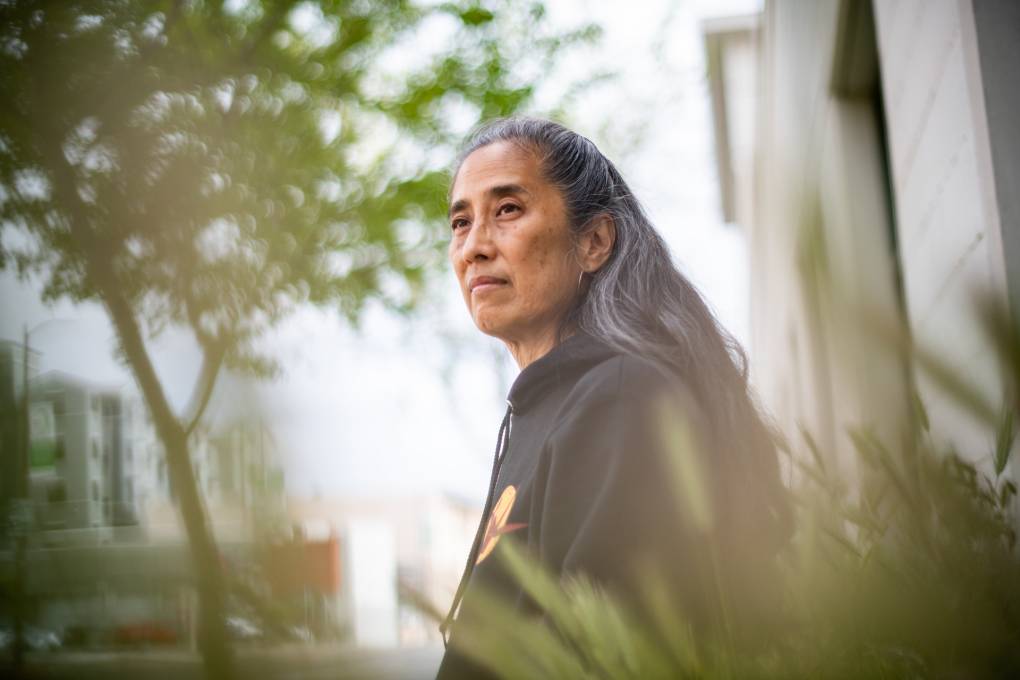
"caption": "Berkeley Unified School District teacher Dana Moran, pictured outside Berkeley High School. Moran has taught ethnic studies at Berkeley High since 1993.",
"description": "Berkeley Unified School District teacher Dana Moran, pictured outside Berkeley High. Moran has taught ethnic studies at Berkeley High since 1993.",
"title": "RS48814_006_Berkeley_EthnicStudiesDanaMoran_04232021-qut",
"credit": "Beth LaBerge/KQED",
"status": "inherit",
"altTag": null,
"isLoading": false,
"fetchFailed": false
},
"news_11881205": {
"type": "attachments",
"id": "news_11881205",
"meta": {
"index": "attachments_1716263798",
"site": "news",
"id": "11881205",
"found": true
},
"parent": 11881139,
"imgSizes": {
"twentyfourteen-full-width": {
"file": "https://ww2.kqed.org/app/uploads/sites/10/2021/07/Carissa-Moore-1038x576.jpg",
"width": 1038,
"mimeType": "image/jpeg",
"height": 576
},
"thumbnail": {
"file": "https://ww2.kqed.org/app/uploads/sites/10/2021/07/Carissa-Moore-160x106.jpg",
"width": 160,
"mimeType": "image/jpeg",
"height": 106
},
"post-thumbnail": {
"file": "https://ww2.kqed.org/app/uploads/sites/10/2021/07/Carissa-Moore-672x372.jpg",
"width": 672,
"mimeType": "image/jpeg",
"height": 372
},
"kqedFullSize": {
"file": "https://ww2.kqed.org/app/uploads/sites/10/2021/07/Carissa-Moore.jpg",
"width": 1920,
"height": 1272
},
"large": {
"file": "https://ww2.kqed.org/app/uploads/sites/10/2021/07/Carissa-Moore-1020x676.jpg",
"width": 1020,
"mimeType": "image/jpeg",
"height": 676
},
"1536x1536": {
"file": "https://ww2.kqed.org/app/uploads/sites/10/2021/07/Carissa-Moore-1536x1018.jpg",
"width": 1536,
"mimeType": "image/jpeg",
"height": 1018
},
"medium": {
"file": "https://ww2.kqed.org/app/uploads/sites/10/2021/07/Carissa-Moore-800x530.jpg",
"width": 800,
"mimeType": "image/jpeg",
"height": 530
}
},
"publishDate": 1626294923,
"modified": 1626295593,
"caption": "Carissa Moore, reigning female world champion pictured here at a competition in April, is also the only Olympic surfer who is ethnically Hawaiian. The Summer Games in Tokyo serve as a proxy for unresolved tension and resentment, according to the Native Hawaiians who lament that surfing and their identity have been culturally appropriated by white outsiders who now stand to benefit the most from the $10 billion industry.",
"description": null,
"title": "Carissa-Moore",
"credit": "Cameron Spencer/Getty Images",
"status": "inherit",
"altTag": null,
"isLoading": false,
"fetchFailed": false
},
"news_11881050": {
"type": "attachments",
"id": "news_11881050",
"meta": {
"index": "attachments_1716263798",
"site": "news",
"id": "11881050",
"found": true
},
"parent": 11881047,
"imgSizes": {
"twentyfourteen-full-width": {
"file": "https://ww2.kqed.org/app/uploads/sites/10/2021/07/070821_FamilyLeave_AW_sized_08-1-1038x576.jpg",
"width": 1038,
"mimeType": "image/jpeg",
"height": 576
},
"thumbnail": {
"file": "https://ww2.kqed.org/app/uploads/sites/10/2021/07/070821_FamilyLeave_AW_sized_08-1-160x107.jpg",
"width": 160,
"mimeType": "image/jpeg",
"height": 107
},
"post-thumbnail": {
"file": "https://ww2.kqed.org/app/uploads/sites/10/2021/07/070821_FamilyLeave_AW_sized_08-1-672x372.jpg",
"width": 672,
"mimeType": "image/jpeg",
"height": 372
},
"kqedFullSize": {
"file": "https://ww2.kqed.org/app/uploads/sites/10/2021/07/070821_FamilyLeave_AW_sized_08-1.jpg",
"width": 1410,
"height": 939
},
"large": {
"file": "https://ww2.kqed.org/app/uploads/sites/10/2021/07/070821_FamilyLeave_AW_sized_08-1-1020x679.jpg",
"width": 1020,
"mimeType": "image/jpeg",
"height": 679
},
"medium": {
"file": "https://ww2.kqed.org/app/uploads/sites/10/2021/07/070821_FamilyLeave_AW_sized_08-1-800x533.jpg",
"width": 800,
"mimeType": "image/jpeg",
"height": 533
}
},
"publishDate": 1626205890,
"modified": 1626289655,
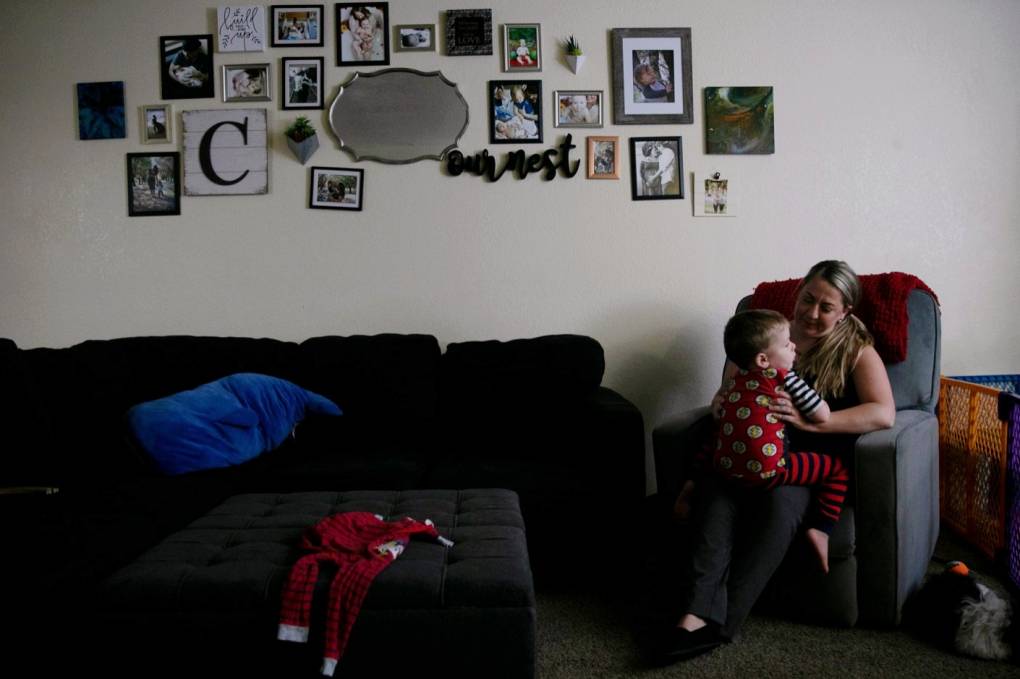
"caption": "Miranda Griswold cuddles her 3-year-old, Rhys, before bedtime at their Merced home on July 8, 2021. 'Six weeks is nothing,' Griswold said of the current family leave allotment. 'It’s barely time to recover [from C-section] and on top of navigating breast feeding.'",
"description": "Miranda Griswold cuddles her three-year-old, Rhys, before bedtime at their Merced home on July 8, 2021. “Six weeks is nothing,” Griswold said of the current family leave allotment. “It’s barely time to recover [from C-section] and on top of navigating breast feeding.”",
"title": "070821_FamilyLeave_AW_sized_08 (1)",
"credit": "Anne Wernikoff/CalMatters",
"status": "inherit",
"altTag": "An adult with blond hair sits on a couch and carries an infant. Both are in a dark living room. There are many photos hung on the wall besides them.",
"isLoading": false,
"fetchFailed": false
},
"news_11881037": {
"type": "attachments",
"id": "news_11881037",
"meta": {
"index": "attachments_1716263798",
"site": "news",
"id": "11881037",
"found": true
},
"parent": 11881024,
"imgSizes": {
"twentyfourteen-full-width": {
"file": "https://ww2.kqed.org/app/uploads/sites/10/2021/07/E6MsI5GWYAII6lC-1038x576.jpg",
"width": 1038,
"mimeType": "image/jpeg",
"height": 576
},
"thumbnail": {
"file": "https://ww2.kqed.org/app/uploads/sites/10/2021/07/E6MsI5GWYAII6lC-160x107.jpg",
"width": 160,
"mimeType": "image/jpeg",
"height": 107
},
"post-thumbnail": {
"file": "https://ww2.kqed.org/app/uploads/sites/10/2021/07/E6MsI5GWYAII6lC-672x372.jpg",
"width": 672,
"mimeType": "image/jpeg",
"height": 372
},
"kqedFullSize": {
"file": "https://ww2.kqed.org/app/uploads/sites/10/2021/07/E6MsI5GWYAII6lC-scaled.jpg",
"width": 2560,
"height": 1706
},
"2048x2048": {
"file": "https://ww2.kqed.org/app/uploads/sites/10/2021/07/E6MsI5GWYAII6lC-2048x1365.jpg",
"width": 2048,
"mimeType": "image/jpeg",
"height": 1365
},
"large": {
"file": "https://ww2.kqed.org/app/uploads/sites/10/2021/07/E6MsI5GWYAII6lC-1020x680.jpg",
"width": 1020,
"mimeType": "image/jpeg",
"height": 680
},
"1536x1536": {
"file": "https://ww2.kqed.org/app/uploads/sites/10/2021/07/E6MsI5GWYAII6lC-1536x1024.jpg",
"width": 1536,
"mimeType": "image/jpeg",
"height": 1024
},
"full-width": {
"file": "https://ww2.kqed.org/app/uploads/sites/10/2021/07/E6MsI5GWYAII6lC-1920x1280.jpg",
"width": 1920,
"mimeType": "image/jpeg",
"height": 1280
},
"medium": {
"file": "https://ww2.kqed.org/app/uploads/sites/10/2021/07/E6MsI5GWYAII6lC-800x533.jpg",
"width": 800,
"mimeType": "image/jpeg",
"height": 533
}
},
"publishDate": 1626203159,
"modified": 1626203469,
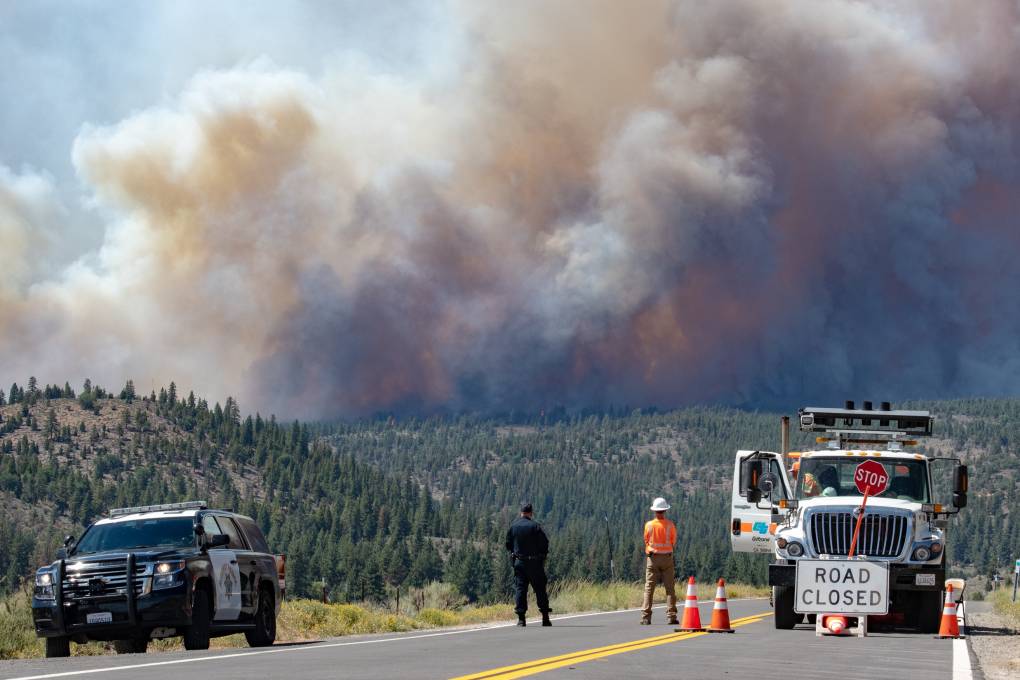
"caption": "The Beckwourth Complex Fire reached more than 92,000 acres on Tuesday, July 13, 2021 and has prompted evacuations in Lassen County near the California-Nevada border. The U.S. Department of Defense has provided C-130 MAFFS-equipped aircraft to help control the fire.",
"description": "The Beckwourth Complex Fire reached more than 92,000 acres on Tuesday, July 13, 2021 and has prompted evacuations in Lassen County near the California-Nevada border. The U.S. Department of Defense has provided C-130 MAFFS-equipped aircraft to help control the fire.",
"title": "E6MsI5GWYAII6lC",
"credit": "Courtesy of the U.S. Department of Defense",
"status": "inherit",
"altTag": "Two people stand in the middle of the road as they watch the horizon where massive plumes of smoke have grown caused by the Beckwourth Fire Complex.",
"isLoading": false,
"fetchFailed": false
},
"news_11880915": {
"type": "attachments",
"id": "news_11880915",
"meta": {
"index": "attachments_1716263798",
"site": "news",
"id": "11880915",
"found": true
},
"parent": 11880904,
"imgSizes": {
"twentyfourteen-full-width": {
"file": "https://ww2.kqed.org/app/uploads/sites/10/2021/07/California-farmworkers-trafficking-scaled-1-1038x576.jpeg",
"width": 1038,
"mimeType": "image/jpeg",
"height": 576
},
"thumbnail": {
"file": "https://ww2.kqed.org/app/uploads/sites/10/2021/07/California-farmworkers-trafficking-scaled-1-160x100.jpeg",
"width": 160,
"mimeType": "image/jpeg",
"height": 100
},
"post-thumbnail": {
"file": "https://ww2.kqed.org/app/uploads/sites/10/2021/07/California-farmworkers-trafficking-scaled-1-672x372.jpeg",
"width": 672,
"mimeType": "image/jpeg",
"height": 372
},
"kqedFullSize": {
"file": "https://ww2.kqed.org/app/uploads/sites/10/2021/07/California-farmworkers-trafficking-scaled-1.jpeg",
"width": 2048,
"height": 1281
},
"large": {
"file": "https://ww2.kqed.org/app/uploads/sites/10/2021/07/California-farmworkers-trafficking-scaled-1-1020x638.jpeg",
"width": 1020,
"mimeType": "image/jpeg",
"height": 638
},
"1536x1536": {
"file": "https://ww2.kqed.org/app/uploads/sites/10/2021/07/California-farmworkers-trafficking-scaled-1-1536x961.jpeg",
"width": 1536,
"mimeType": "image/jpeg",
"height": 961
},
"full-width": {
"file": "https://ww2.kqed.org/app/uploads/sites/10/2021/07/California-farmworkers-trafficking-scaled-1-1920x1201.jpeg",
"width": 1920,
"mimeType": "image/jpeg",
"height": 1201
},
"medium": {
"file": "https://ww2.kqed.org/app/uploads/sites/10/2021/07/California-farmworkers-trafficking-scaled-1-800x500.jpeg",
"width": 800,
"mimeType": "image/jpeg",
"height": 500
}
},
"publishDate": 1626118883,
"modified": 1626129687,
"caption": "Fieldworkers are photographed picking strawberries on April 25, 2020.",
"description": null,
"title": "California-farmworkers-trafficking-scaled",
"credit": "David Rodriguez/The Salinas Californian",
"status": "inherit",
"altTag": null,
"isLoading": false,
"fetchFailed": false
},
"news_11880825": {
"type": "attachments",
"id": "news_11880825",
"meta": {
"index": "attachments_1716263798",
"site": "news",
"id": "11880825",
"found": true
},
"parent": 11880813,
"imgSizes": {
"twentyfourteen-full-width": {
"file": "https://ww2.kqed.org/app/uploads/sites/10/2021/07/GettyImages-1228116006-1-1038x576.jpg",
"width": 1038,
"mimeType": "image/jpeg",
"height": 576
},
"thumbnail": {
"file": "https://ww2.kqed.org/app/uploads/sites/10/2021/07/GettyImages-1228116006-1-160x107.jpg",
"width": 160,
"mimeType": "image/jpeg",
"height": 107
},
"post-thumbnail": {
"file": "https://ww2.kqed.org/app/uploads/sites/10/2021/07/GettyImages-1228116006-1-672x372.jpg",
"width": 672,
"mimeType": "image/jpeg",
"height": 372
},
"kqedFullSize": {
"file": "https://ww2.kqed.org/app/uploads/sites/10/2021/07/GettyImages-1228116006-1.jpg",
"width": 1920,
"height": 1280
},
"large": {
"file": "https://ww2.kqed.org/app/uploads/sites/10/2021/07/GettyImages-1228116006-1-1020x680.jpg",
"width": 1020,
"mimeType": "image/jpeg",
"height": 680
},
"1536x1536": {
"file": "https://ww2.kqed.org/app/uploads/sites/10/2021/07/GettyImages-1228116006-1-1536x1024.jpg",
"width": 1536,
"mimeType": "image/jpeg",
"height": 1024
},
"medium": {
"file": "https://ww2.kqed.org/app/uploads/sites/10/2021/07/GettyImages-1228116006-1-800x533.jpg",
"width": 800,
"mimeType": "image/jpeg",
"height": 533
}
},
"publishDate": 1625961929,
"modified": 1626112992,
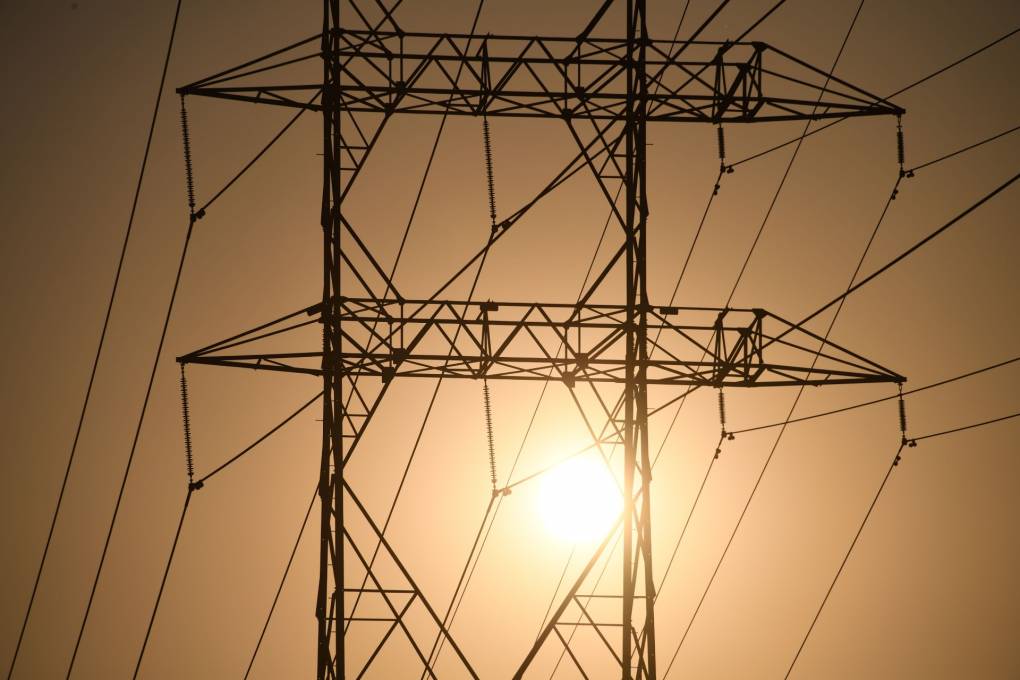
"caption": "Electrical power line towers are seen in Los Angeles on Aug. 19, 2020 during a triple-digit heat wave gripping the area.",
"description": "Electrical power line towers are seen in Los Angeles, California, August 19, 2020 during a triple-digit heatwave gripping the area.",
"title": "GettyImages-1228116006 (1)",
"credit": "Robyn Beck/AFP via Getty Images",
"status": "inherit",
"altTag": null,
"isLoading": false,
"fetchFailed": false
},
"news_11880719": {
"type": "attachments",
"id": "news_11880719",
"meta": {
"index": "attachments_1716263798",
"site": "news",
"id": "11880719",
"found": true
},
"parent": 11880716,
"imgSizes": {
"twentyfourteen-full-width": {
"file": "https://ww2.kqed.org/app/uploads/sites/10/2021/07/GettyImages-1314060367-1038x576.jpg",
"width": 1038,
"mimeType": "image/jpeg",
"height": 576
},
"thumbnail": {
"file": "https://ww2.kqed.org/app/uploads/sites/10/2021/07/GettyImages-1314060367-160x107.jpg",
"width": 160,
"mimeType": "image/jpeg",
"height": 107
},
"post-thumbnail": {
"file": "https://ww2.kqed.org/app/uploads/sites/10/2021/07/GettyImages-1314060367-672x372.jpg",
"width": 672,
"mimeType": "image/jpeg",
"height": 372
},
"kqedFullSize": {
"file": "https://ww2.kqed.org/app/uploads/sites/10/2021/07/GettyImages-1314060367.jpg",
"width": 1920,
"height": 1280
},
"large": {
"file": "https://ww2.kqed.org/app/uploads/sites/10/2021/07/GettyImages-1314060367-1020x680.jpg",
"width": 1020,
"mimeType": "image/jpeg",
"height": 680
},
"1536x1536": {
"file": "https://ww2.kqed.org/app/uploads/sites/10/2021/07/GettyImages-1314060367-1536x1024.jpg",
"width": 1536,
"mimeType": "image/jpeg",
"height": 1024
},
"medium": {
"file": "https://ww2.kqed.org/app/uploads/sites/10/2021/07/GettyImages-1314060367-800x533.jpg",
"width": 800,
"mimeType": "image/jpeg",
"height": 533
}
},
"publishDate": 1625849839,
"modified": 1643813540,
"caption": null,
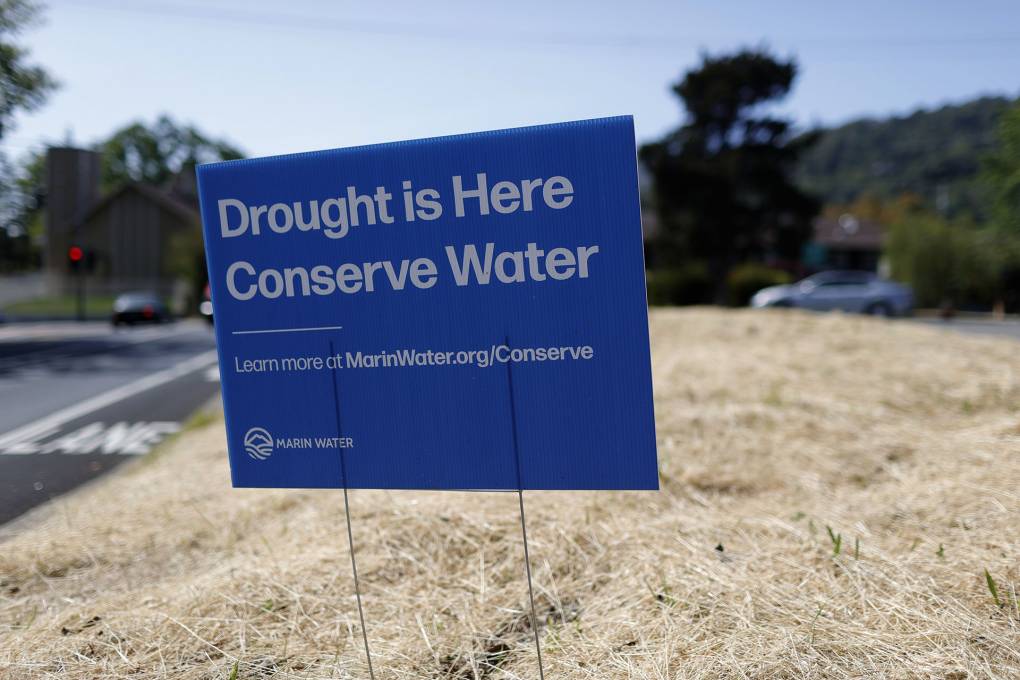
"description": "A sign advocating water conservation is posted in a field of dry grass on April 23, 2021 in San Anselmo, California. Gov. Gavin Newsom on Thursday asked people and businesses in the state to voluntarily cut water usage by 15%.",
"title": "Marin County First In California To Issue Water Use Restrictions To Combat Current Drought",
"credit": "Justin Sullivan/Getty Images",
"status": "inherit",
"altTag": null,
"isLoading": false,
"fetchFailed": false
},
"news_11880429": {
"type": "attachments",
"id": "news_11880429",
"meta": {
"index": "attachments_1716263798",
"site": "news",
"id": "11880429",
"found": true
},
"parent": 11880422,
"imgSizes": {
"twentyfourteen-full-width": {
"file": "https://ww2.kqed.org/app/uploads/sites/10/2021/07/06302021_Underpass_PU_Sized_03-1038x576.jpg",
"width": 1038,
"mimeType": "image/jpeg",
"height": 576
},
"thumbnail": {
"file": "https://ww2.kqed.org/app/uploads/sites/10/2021/07/06302021_Underpass_PU_Sized_03-160x107.jpg",
"width": 160,
"mimeType": "image/jpeg",
"height": 107
},
"post-thumbnail": {
"file": "https://ww2.kqed.org/app/uploads/sites/10/2021/07/06302021_Underpass_PU_Sized_03-672x372.jpg",
"width": 672,
"mimeType": "image/jpeg",
"height": 372
},
"kqedFullSize": {
"file": "https://ww2.kqed.org/app/uploads/sites/10/2021/07/06302021_Underpass_PU_Sized_03.jpg",
"width": 1275,
"height": 850
},
"large": {
"file": "https://ww2.kqed.org/app/uploads/sites/10/2021/07/06302021_Underpass_PU_Sized_03-1020x680.jpg",
"width": 1020,
"mimeType": "image/jpeg",
"height": 680
},
"medium": {
"file": "https://ww2.kqed.org/app/uploads/sites/10/2021/07/06302021_Underpass_PU_Sized_03-800x533.jpg",
"width": 800,
"mimeType": "image/jpeg",
"height": 533
}
},
"publishDate": 1625603722,
"modified": 1625604477,
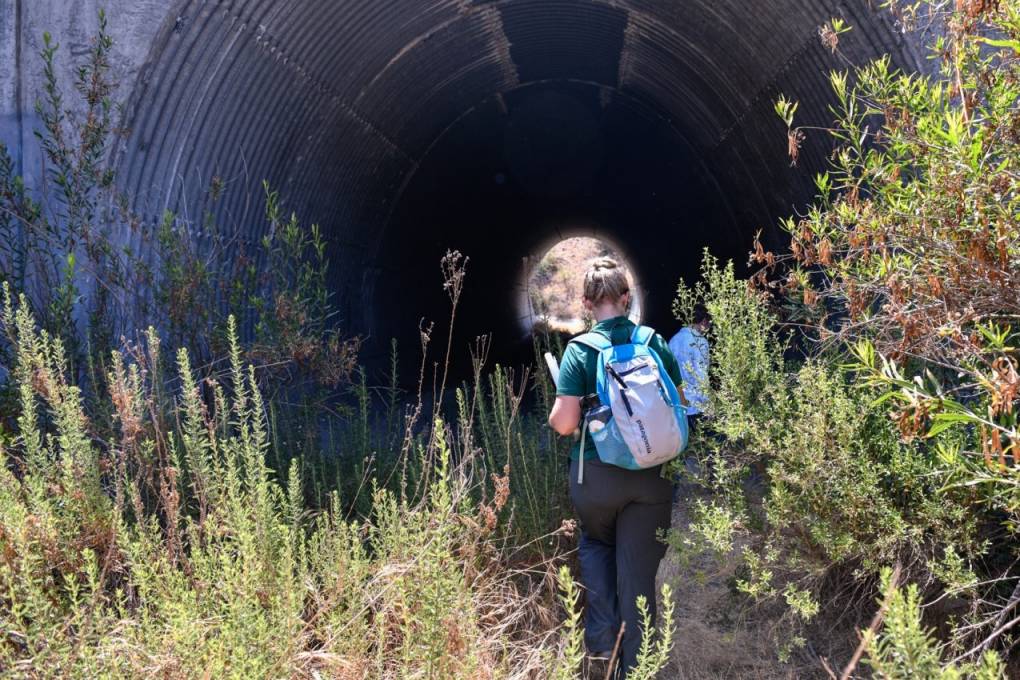
"caption": "Michelle Mariscal, an ecologist for the Puente Hills Habitat Preservation Authority, walks into the Harbor Boulevard Wildlife Underpass in La Habra Heights, on June 30, 2021. \"This is the wildlife's gateway to the open space on either side of this busy road,\" Mariscal said. \"The animals to the underpass are able to live longer lives.\"",
"description": "Michelle Mariscal, an ecologist for the Puente Hills Habitat Preservation Authority, walks into the Harbor Boulevard Wildlife Underpass in La Habra Heights, on June 30, 2021.",
"title": "06302021_Underpass_PU_Sized_03",
"credit": "Pablo Unzueta for CalMatters",
"status": "inherit",
"altTag": "A person walks into a tunnel. Their face is turned away from us.",
"isLoading": false,
"fetchFailed": false
},
"news_11880216": {
"type": "attachments",
"id": "news_11880216",
"meta": {
"index": "attachments_1716263798",
"site": "news",
"id": "11880216",
"found": true
},
"parent": 11879719,
"imgSizes": {
"twentyfourteen-full-width": {
"file": "https://ww2.kqed.org/app/uploads/sites/10/2021/07/received_949030718975633-1038x576.jpeg",
"width": 1038,
"mimeType": "image/jpeg",
"height": 576
},
"thumbnail": {
"file": "https://ww2.kqed.org/app/uploads/sites/10/2021/07/received_949030718975633-160x107.jpeg",
"width": 160,
"mimeType": "image/jpeg",
"height": 107
},
"post-thumbnail": {
"file": "https://ww2.kqed.org/app/uploads/sites/10/2021/07/received_949030718975633-672x372.jpeg",
"width": 672,
"mimeType": "image/jpeg",
"height": 372
},
"kqedFullSize": {
"file": "https://ww2.kqed.org/app/uploads/sites/10/2021/07/received_949030718975633.jpeg",
"width": 1740,
"height": 1160
},
"large": {
"file": "https://ww2.kqed.org/app/uploads/sites/10/2021/07/received_949030718975633-1020x680.jpeg",
"width": 1020,
"mimeType": "image/jpeg",
"height": 680
},
"1536x1536": {
"file": "https://ww2.kqed.org/app/uploads/sites/10/2021/07/received_949030718975633-1536x1024.jpeg",
"width": 1536,
"mimeType": "image/jpeg",
"height": 1024
},
"medium": {
"file": "https://ww2.kqed.org/app/uploads/sites/10/2021/07/received_949030718975633-800x533.jpeg",
"width": 800,
"mimeType": "image/jpeg",
"height": 533
}
},
"publishDate": 1625185825,
"modified": 1625186271,
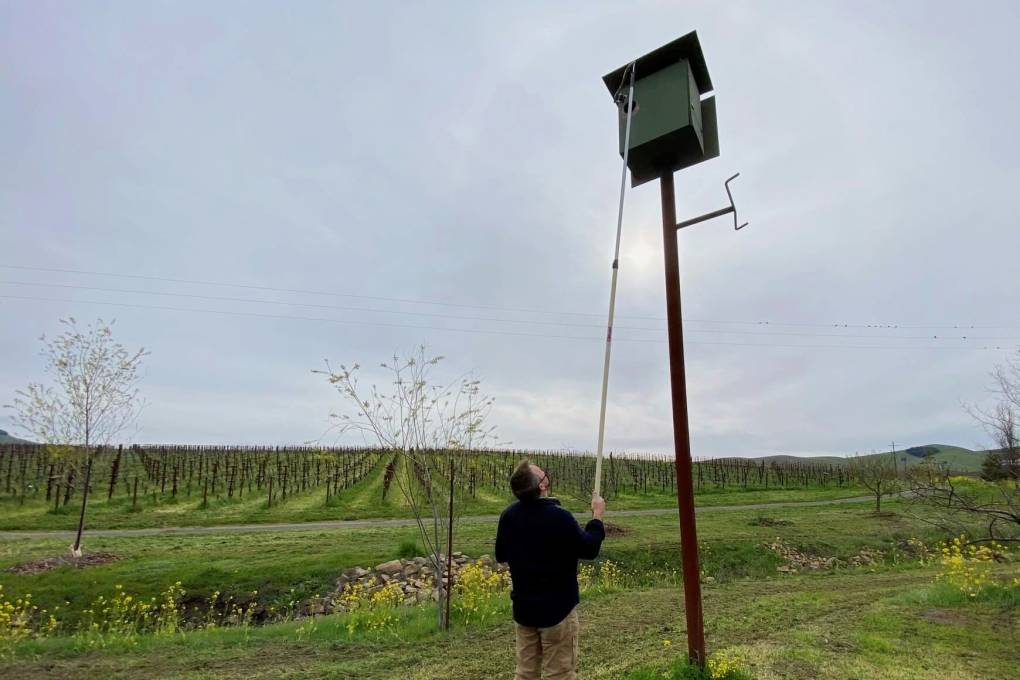
"caption": "Researcher Matt Johnson uses a painter's pole that is attached to a GoPro camera connected to his phone to check for nests and eggs in a barn owl box. There are 20 similar boxes on this Napa County vineyard. By tracking the behavior of the owls in each box, Johnson can better understand where to place more boxes.",
"description": "Researcher Matt Johnson uses a painter's pole that is attached to a GoPro camera connected to his phone to check for nests and eggs in a barn owl box. There are 20 similar boxes on this Napa County vineyard.",
"title": "received_949030718975633",
"credit": "Lisa Morehouse/KQED",
"status": "inherit",
"altTag": "A person holds a painter's pole and GoPro camera connected to his phone to check for nests and eggs in a barn owl box. Behind this person, there are files covered in vineyards.",
"isLoading": false,
"fetchFailed": false
},
"news_11873406": {
"type": "attachments",
"id": "news_11873406",
"meta": {
"index": "attachments_1716263798",
"site": "news",
"id": "11873406",
"found": true
},
"parent": 11873396,
"imgSizes": {
"twentyfourteen-full-width": {
"file": "https://ww2.kqed.org/app/uploads/sites/10/2021/05/RS48514_023_BoulderCreek_FireVictims_04092021-qut-1038x576.jpeg",
"width": 1038,
"mimeType": "image/jpeg",
"height": 576
},
"thumbnail": {
"file": "https://ww2.kqed.org/app/uploads/sites/10/2021/05/RS48514_023_BoulderCreek_FireVictims_04092021-qut-160x107.jpeg",
"width": 160,
"mimeType": "image/jpeg",
"height": 107
},
"post-thumbnail": {
"file": "https://ww2.kqed.org/app/uploads/sites/10/2021/05/RS48514_023_BoulderCreek_FireVictims_04092021-qut-672x372.jpeg",
"width": 672,
"mimeType": "image/jpeg",
"height": 372
},
"kqedFullSize": {
"file": "https://ww2.kqed.org/app/uploads/sites/10/2021/05/RS48514_023_BoulderCreek_FireVictims_04092021-qut.jpeg",
"width": 1920,
"height": 1280
},
"large": {
"file": "https://ww2.kqed.org/app/uploads/sites/10/2021/05/RS48514_023_BoulderCreek_FireVictims_04092021-qut-1020x680.jpeg",
"width": 1020,
"mimeType": "image/jpeg",
"height": 680
},
"1536x1536": {
"file": "https://ww2.kqed.org/app/uploads/sites/10/2021/05/RS48514_023_BoulderCreek_FireVictims_04092021-qut-1536x1024.jpeg",
"width": 1536,
"mimeType": "image/jpeg",
"height": 1024
},
"medium": {
"file": "https://ww2.kqed.org/app/uploads/sites/10/2021/05/RS48514_023_BoulderCreek_FireVictims_04092021-qut-800x533.jpeg",
"width": 800,
"mimeType": "image/jpeg",
"height": 533
}
},
"publishDate": 1620853983,
"modified": 1625099664,
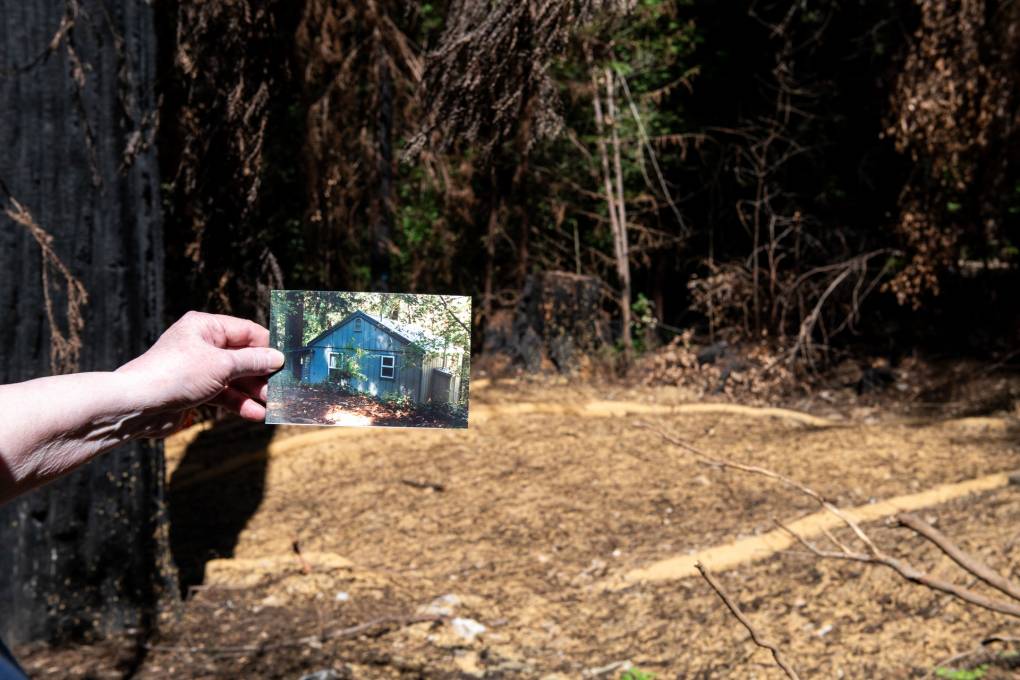
"caption": "Catherine Wilson holds a photo of her rental cabin in Boulder Creek at the the site where it stood before it was destroyed during the CZU Lightning Complex fires last August.",
"description": "Catherine Wilson holds a photo of her rental cabin in Boulder Creek at the the site where it stood before it was destroyed during the CZU Lightning Complex Fires last August.",
"title": "RS48514_023_BoulderCreek_FireVictims_04092021-qut",
"credit": "Beth LaBerge/KQED",
"status": "inherit",
"altTag": null,
"isLoading": false,
"fetchFailed": false
},
"news_11879979": {
"type": "attachments",
"id": "news_11879979",
"meta": {
"index": "attachments_1716263798",
"site": "news",
"id": "11879979",
"found": true
},
"parent": 11879958,
"imgSizes": {
"twentyfourteen-full-width": {
"file": "https://ww2.kqed.org/app/uploads/sites/10/2021/06/IMG_20210603_082449-1038x576.jpg",
"width": 1038,
"mimeType": "image/jpeg",
"height": 576
},
"thumbnail": {
"file": "https://ww2.kqed.org/app/uploads/sites/10/2021/06/IMG_20210603_082449-160x120.jpg",
"width": 160,
"mimeType": "image/jpeg",
"height": 120
},
"post-thumbnail": {
"file": "https://ww2.kqed.org/app/uploads/sites/10/2021/06/IMG_20210603_082449-672x372.jpg",
"width": 672,
"mimeType": "image/jpeg",
"height": 372
},
"kqedFullSize": {
"file": "https://ww2.kqed.org/app/uploads/sites/10/2021/06/IMG_20210603_082449.jpg",
"width": 1536,
"height": 1152
},
"large": {
"file": "https://ww2.kqed.org/app/uploads/sites/10/2021/06/IMG_20210603_082449-1020x765.jpg",
"width": 1020,
"mimeType": "image/jpeg",
"height": 765
},
"medium": {
"file": "https://ww2.kqed.org/app/uploads/sites/10/2021/06/IMG_20210603_082449-800x600.jpg",
"width": 800,
"mimeType": "image/jpeg",
"height": 600
}
},
"publishDate": 1625085638,
"modified": 1625092042,
"caption": "Due to COVID-19, public events in California were canceled through the spring and summer of 2020 and many mariachi had to start performing at gatherings that defied the state's shelter-in-place restrictions in order to survive. But accepting these type of jobs put them at greater risk of contracting COVID-19.",
"description": "Due to COVID-19, public events in California were cancelled through the spring and summer of 2020 and many mariachi had to start performing at gatherings that defied the state's shelter-in-place restrictions in order to survive. But accepting these type of jobs put them at greater risk of contracting COVID-19.",
"title": "IMG_20210603_082449",
"credit": "Courtesy of Mariachi Nuevo Guadalajara",
"status": "inherit",
"altTag": "A group of mariachis stand against a wall with their instruments in their hands.",
"isLoading": false,
"fetchFailed": false
},
"news_11879739": {
"type": "attachments",
"id": "news_11879739",
"meta": {
"index": "attachments_1716263798",
"site": "news",
"id": "11879739",
"found": true
},
"parent": 11879725,
"imgSizes": {
"twentyfourteen-full-width": {
"file": "https://ww2.kqed.org/app/uploads/sites/10/2021/06/RS46911_017_SanJose_AntiEvictionProtest_01272021-qut-1038x576.jpg",
"width": 1038,
"mimeType": "image/jpeg",
"height": 576
},
"thumbnail": {
"file": "https://ww2.kqed.org/app/uploads/sites/10/2021/06/RS46911_017_SanJose_AntiEvictionProtest_01272021-qut-160x107.jpg",
"width": 160,
"mimeType": "image/jpeg",
"height": 107
},
"post-thumbnail": {
"file": "https://ww2.kqed.org/app/uploads/sites/10/2021/06/RS46911_017_SanJose_AntiEvictionProtest_01272021-qut-672x372.jpg",
"width": 672,
"mimeType": "image/jpeg",
"height": 372
},
"kqedFullSize": {
"file": "https://ww2.kqed.org/app/uploads/sites/10/2021/06/RS46911_017_SanJose_AntiEvictionProtest_01272021-qut.jpg",
"width": 1920,
"height": 1280
},
"large": {
"file": "https://ww2.kqed.org/app/uploads/sites/10/2021/06/RS46911_017_SanJose_AntiEvictionProtest_01272021-qut-1020x680.jpg",
"width": 1020,
"mimeType": "image/jpeg",
"height": 680
},
"1536x1536": {
"file": "https://ww2.kqed.org/app/uploads/sites/10/2021/06/RS46911_017_SanJose_AntiEvictionProtest_01272021-qut-1536x1024.jpg",
"width": 1536,
"mimeType": "image/jpeg",
"height": 1024
},
"medium": {
"file": "https://ww2.kqed.org/app/uploads/sites/10/2021/06/RS46911_017_SanJose_AntiEvictionProtest_01272021-qut-800x533.jpg",
"width": 800,
"mimeType": "image/jpeg",
"height": 533
}
},
"publishDate": 1624994714,
"modified": 1624994770,
"caption": "An anti-eviction protester stands in front of Santa Clara County Superior Court on Jan. 27, 2021, during a demonstration calling for stronger statewide eviction protections.",
"description": null,
"title": "RS46911_017_SanJose_AntiEvictionProtest_01272021-qut",
"credit": "Beth LaBerge/KQED",
"status": "inherit",
"altTag": null,
"isLoading": false,
"fetchFailed": false
}
},
"audioPlayerReducer": {
"postId": "stream_live",
"isPaused": true,
"isPlaying": false,
"pfsActive": false,
"pledgeModalIsOpen": true,
"playerDrawerIsOpen": false,
"liveAudioPlayStartedAt": 0,
"liveAudioPlayContext": ""
},
"authorsReducer": {
"byline_news_11881139": {
"type": "authors",
"id": "byline_news_11881139",
"meta": {
"override": true
},
"slug": "byline_news_11881139",
"name": "\u003ca href=\"http://twitter.com/_sallyho\">Sally Ho\u003c/a> \u003cbr> The Associated Press",
"isLoading": false
},
"byline_news_11881047": {
"type": "authors",
"id": "byline_news_11881047",
"meta": {
"override": true
},
"slug": "byline_news_11881047",
"name": "\u003ca href=\"https://calmatters.org/author/sameea-kamal/\">Sameea Kamal\u003c/a>",
"isLoading": false
},
"byline_news_11881024": {
"type": "authors",
"id": "byline_news_11881024",
"meta": {
"override": true
},
"slug": "byline_news_11881024",
"name": "John Antczak and Christopher Weber \u003cbr>Associated Press",
"isLoading": false
},
"byline_news_11880904": {
"type": "authors",
"id": "byline_news_11880904",
"meta": {
"override": true
},
"slug": "byline_news_11880904",
"name": "Kate Cimini",
"isLoading": false
},
"byline_news_11880716": {
"type": "authors",
"id": "byline_news_11880716",
"meta": {
"override": true
},
"slug": "byline_news_11880716",
"name": "Adam Beam\u003cbr>Associated Press",
"isLoading": false
},
"byline_news_11880422": {
"type": "authors",
"id": "byline_news_11880422",
"meta": {
"override": true
},
"slug": "byline_news_11880422",
"name": "\u003ca href=\"https://calmatters.org/author/marissa-garcia/\">Marissa Garcia\u003c/a>",
"isLoading": false
},
"byline_news_11879958": {
"type": "authors",
"id": "byline_news_11879958",
"meta": {
"override": true
},
"slug": "byline_news_11879958",
"name": "\u003ca href=\"https://calmatters.org/author/jacqueline-garcia/\">Jacqueline Garcia\u003c/a>",
"isLoading": false
},
"lmorehouse": {
"type": "authors",
"id": "3229",
"meta": {
"index": "authors_1716337520",
"id": "3229",
"found": true
},
"name": "Lisa Morehouse",
"firstName": "Lisa",
"lastName": "Morehouse",
"slug": "lmorehouse",
"email": "morehouse.lisa@gmail.com",
"display_author_email": false,
"staff_mastheads": [],
"title": "KQED Contributor",
"bio": "Lisa Morehouse is an award-winning public radio and print journalist, who has filed for National Public Radio, American Public Media, KQED Public Radio, Edutopia, and McSweeney’s. Her reporting has taken her from Samoan traveling circuses to Mississippi Delta classrooms to the homes of Lao refugees in rural Iowa. In addition to reporting, she teaches radio production to at-risk youth in the Bay Area. Her series \u003ca href=\"http://afterthegoldrushradio.com/\">After the Gold Rush\u003c/a> featured the changing industries, populations and identities of rural towns throughout California. She’s now producing \u003ca href=\"http://www.californiafoodways.com/\">California Foodways\u003c/a>, a series exploring the intersections of food, culture, economics, history and labor. Follow along on the \u003ca href=\"https://www.facebook.com/californiafoodways?ref=hl\">Facebook page\u003c/a> or on Twitter @cafoodways.",
"avatar": "https://secure.gravatar.com/avatar/dae74b002a6e256f39abb19d6f5acaea?s=600&d=blank&r=g",
"twitter": null,
"facebook": null,
"instagram": null,
"linkedin": null,
"sites": [
{
"site": "",
"roles": [
"editor"
]
},
{
"site": "news",
"roles": [
"author"
]
}
],
"headData": {
"title": "Lisa Morehouse | KQED",
"description": "KQED Contributor",
"ogImgSrc": "https://secure.gravatar.com/avatar/dae74b002a6e256f39abb19d6f5acaea?s=600&d=blank&r=g",
"twImgSrc": "https://secure.gravatar.com/avatar/dae74b002a6e256f39abb19d6f5acaea?s=600&d=blank&r=g"
},
"isLoading": false,
"link": "/author/lmorehouse"
},
"lsarah": {
"type": "authors",
"id": "11626",
"meta": {
"index": "authors_1716337520",
"id": "11626",
"found": true
},
"name": "Lakshmi Sarah",
"firstName": "Lakshmi",
"lastName": "Sarah",
"slug": "lsarah",
"email": "lsarah@kqed.org",
"display_author_email": false,
"staff_mastheads": [],
"title": "Digital Producer",
"bio": "Lakshmi Sarah is an educator, author and journalist with a focus on innovative storytelling. She has worked with newspapers, radio and magazines from Ahmedabad, India to Los Angeles, California. She has written and produced for Die Zeit, Global Voices, AJ+, KQED, Fusion Media Group and the New York Times.",
"avatar": "https://secure.gravatar.com/avatar/652dcaecd8b28826fc17a8b2d6bb4e93?s=600&d=blank&r=g",
"twitter": "lakitalki",
"facebook": null,
"instagram": "https://www.instagram.com/laki.talki/",
"linkedin": "https://www.linkedin.com/in/lakisarah/",
"sites": [
{
"site": "arts",
"roles": []
},
{
"site": "news",
"roles": []
},
{
"site": "bayareabites",
"roles": []
},
{
"site": "science",
"roles": []
}
],
"headData": {
"title": "Lakshmi Sarah | KQED",
"description": "Digital Producer",
"ogImgSrc": "https://secure.gravatar.com/avatar/652dcaecd8b28826fc17a8b2d6bb4e93?s=600&d=blank&r=g",
"twImgSrc": "https://secure.gravatar.com/avatar/652dcaecd8b28826fc17a8b2d6bb4e93?s=600&d=blank&r=g"
},
"isLoading": false,
"link": "/author/lsarah"
},
"msolomon": {
"type": "authors",
"id": "11651",
"meta": {
"index": "authors_1716337520",
"id": "11651",
"found": true
},
"name": "Molly Solomon",
"firstName": "Molly",
"lastName": "Solomon",
"slug": "msolomon",
"email": "msolomon@KQED.org",
"display_author_email": false,
"staff_mastheads": [
"news"
],
"title": "Senior Editor",
"bio": "Molly Solomon is the senior editor of KQED's California Politics and Government Desk. Previously, she was the station's editor-at-large, with a focus on editing early childhood education, politics, and criminal justice. Before that, she managed and edited statewide election coverage for The California Newsroom, a collaboration of local public radio stations, CalMatters and NPR. Molly joined KQED in 2019 to launch the station’s housing affordability desk, where she reported on homelessness, evictions and is the co-host of KQED’s housing podcast, SOLD OUT: Rethinking Housing in America. Before that, she was the Southwest Washington Bureau Chief for Oregon Public Broadcasting and a reporter at Hawaii Public Radio. Her stories have aired on NPR’s \u003cem>Morning Edition\u003c/em>, \u003cem>All Things Considered\u003c/em>, \u003cem>Here & Now\u003c/em>, \u003cem>Science Friday\u003c/em> and \u003cem>Marketplace\u003c/em>. Molly's award-winning reporting has been honored by the Best of the West, Edward R. Murrow awards, Society of Professional Journalists, National Headliner Awards, and the Asian American Journalists Association. Born and raised in Berkeley, Molly is a big fan of burritos and her scruffy terrier, Ollie.",
"avatar": "https://secure.gravatar.com/avatar/9ad9794616923d81c9a79897161545bd?s=600&d=blank&r=g",
"twitter": "solomonout",
"facebook": null,
"instagram": null,
"linkedin": null,
"sites": [
{
"site": "news",
"roles": [
"editor"
]
},
{
"site": "science",
"roles": [
"editor"
]
}
],
"headData": {
"title": "Molly Solomon | KQED",
"description": "Senior Editor",
"ogImgSrc": "https://secure.gravatar.com/avatar/9ad9794616923d81c9a79897161545bd?s=600&d=blank&r=g",
"twImgSrc": "https://secure.gravatar.com/avatar/9ad9794616923d81c9a79897161545bd?s=600&d=blank&r=g"
},
"isLoading": false,
"link": "/author/msolomon"
},
"ebaldassari": {
"type": "authors",
"id": "11652",
"meta": {
"index": "authors_1716337520",
"id": "11652",
"found": true
},
"name": "Erin Baldassari",
"firstName": "Erin",
"lastName": "Baldassari",
"slug": "ebaldassari",
"email": "ebaldassari@KQED.org",
"display_author_email": true,
"staff_mastheads": [
"news"
],
"title": "Staff Writer",
"bio": "Erin Baldassari covers housing for KQED. She's a former print journalist and most recently worked as the transportation reporter for the \u003cem>Mercury News\u003c/em> and \u003cem>East Bay Times. \u003c/em>There, she focused on how the Bay Area’s housing shortage has changed the way people move around the region. She also served on the \u003cem>East Bay Times\u003c/em>’ 2017 Pulitzer Prize-winning team for coverage of the Ghost Ship Fire in Oakland. Prior to that, Erin worked as a breaking news and general assignment reporter for a variety of outlets in the Bay Area and the greater Boston area. A Tufts University alumna, Erin grew up in the foothills of the Sierra Nevada mountains and in Sonoma County. She is a life-long KQED listener.",
"avatar": "https://secure.gravatar.com/avatar/660ce35d088ca54ad606d7e941abc652?s=600&d=mm&r=g",
"twitter": "e_baldi",
"facebook": null,
"instagram": null,
"linkedin": null,
"sites": [
{
"site": "news",
"roles": [
"edit_others_posts",
"editor"
]
},
{
"site": "science",
"roles": [
"editor"
]
},
{
"site": "liveblog",
"roles": [
"editor"
]
}
],
"headData": {
"title": "Erin Baldassari | KQED",
"description": "Staff Writer",
"ogImgSrc": "https://secure.gravatar.com/avatar/660ce35d088ca54ad606d7e941abc652?s=600&d=mm&r=g",
"twImgSrc": "https://secure.gravatar.com/avatar/660ce35d088ca54ad606d7e941abc652?s=600&d=mm&r=g"
},
"isLoading": false,
"link": "/author/ebaldassari"
},
"jrodriguez": {
"type": "authors",
"id": "11690",
"meta": {
"index": "authors_1716337520",
"id": "11690",
"found": true
},
"name": "Joe Fitzgerald Rodriguez",
"firstName": "Joe",
"lastName": "Fitzgerald Rodriguez",
"slug": "jrodriguez",
"email": "jrodriguez@kqed.org",
"display_author_email": true,
"staff_mastheads": [
"news"
],
"title": "Reporter and Producer",
"bio": "Joe Fitzgerald Rodriguez is a reporter and digital producer for KQED covering politics. Joe most recently wrote for the \u003cem>San Francisco Examiner\u003c/em> as a political columnist covering The City. He was raised in San Francisco and has spent his reporting career in his beloved, foggy, city by the bay. Joe was 12-years-old when he conducted his first interview in journalism, grilling former San Francisco Mayor Willie Brown for the Marina Middle School newspaper, \u003cem>The Penguin Press, \u003c/em>and he continues to report on the San Francisco Bay Area to this day.",
"avatar": "https://secure.gravatar.com/avatar/2247beb0564c1e9c62228d5649d2edac?s=600&d=blank&r=g",
"twitter": "FitztheReporter",
"facebook": null,
"instagram": "https://www.instagram.com/fitzthereporter/",
"linkedin": null,
"sites": [
{
"site": "",
"roles": [
"editor"
]
},
{
"site": "arts",
"roles": [
"editor"
]
},
{
"site": "news",
"roles": [
"editor"
]
},
{
"site": "science",
"roles": [
"editor"
]
},
{
"site": "elections",
"roles": [
"editor"
]
},
{
"site": "liveblog",
"roles": [
"editor"
]
}
],
"headData": {
"title": "Joe Fitzgerald Rodriguez | KQED",
"description": "Reporter and Producer",
"ogImgSrc": "https://secure.gravatar.com/avatar/2247beb0564c1e9c62228d5649d2edac?s=600&d=blank&r=g",
"twImgSrc": "https://secure.gravatar.com/avatar/2247beb0564c1e9c62228d5649d2edac?s=600&d=blank&r=g"
},
"isLoading": false,
"link": "/author/jrodriguez"
},
"ehung": {
"type": "authors",
"id": "11730",
"meta": {
"index": "authors_1716337520",
"id": "11730",
"found": true
},
"name": "Emily Hung",
"firstName": "Emily",
"lastName": "Hung",
"slug": "ehung",
"email": "ehung@kqed.org",
"display_author_email": false,
"staff_mastheads": [],
"title": "KQED Contributor",
"bio": null,
"avatar": "https://secure.gravatar.com/avatar/a7f01e26e3d60d4e8a1d5d22bca0618b?s=600&d=blank&r=g",
"twitter": "emilyhung_",
"facebook": null,
"instagram": null,
"linkedin": null,
"sites": [
{
"site": "news",
"roles": [
"author"
]
},
{
"site": "forum",
"roles": [
"editor"
]
},
{
"site": "perspectives",
"roles": [
"administrator"
]
}
],
"headData": {
"title": "Emily Hung | KQED",
"description": "KQED Contributor",
"ogImgSrc": "https://secure.gravatar.com/avatar/a7f01e26e3d60d4e8a1d5d22bca0618b?s=600&d=blank&r=g",
"twImgSrc": "https://secure.gravatar.com/avatar/a7f01e26e3d60d4e8a1d5d22bca0618b?s=600&d=blank&r=g"
},
"isLoading": false,
"link": "/author/ehung"
}
},
"pagesReducer": {
"news_tag_california": {
"type": "terms",
"id": "news_18538",
"meta": {
"index": "terms_1716263798",
"site": "news",
"id": "18538",
"score": 6.8450828
},
"featImg": null,
"name": "California",
"description": null,
"taxonomy": "tag",
"headData": {
"twImgId": null,
"twTitle": null,
"ogTitle": null,
"ogImgId": null,
"twDescription": null,
"description": null,
"title": "California Archives | KQED News",
"ogDescription": null
},
"ttid": 31,
"slug": "california",
"isLoading": false,
"title": "California",
"pageMeta": {
"site": "news",
"WpPageTemplate": "page-topic-editorial",
"currentPage": 177
},
"blocks": [
{
"blockName": "kqed/post-list",
"attrs": {
"layout": "cardArticle2",
"query": "posts/news?tag=california",
"seeMore": false,
"paginated": true,
"page": 177
}
},
{
"blockName": "kqed/ad"
}
]
}
},
"pfsSessionReducer": {},
"postsReducer": {
"stream_live": {
"type": "live",
"id": "stream_live",
"audioUrl": "https://streams.kqed.org/kqedradio",
"title": "Live Stream",
"excerpt": "Live Stream information currently unavailable.",
"link": "/radio",
"featImg": "",
"label": {
"name": "KQED Live",
"link": "/"
}
},
"stream_kqedNewscast": {
"type": "posts",
"id": "stream_kqedNewscast",
"audioUrl": "https://www.kqed.org/.stream/anon/radio/RDnews/newscast.mp3?_=1",
"title": "KQED Newscast",
"featImg": "",
"label": {
"name": "88.5 FM",
"link": "/"
}
},
"news_11870309": {
"type": "posts",
"id": "news_11870309",
"meta": {
"index": "posts_1716263798",
"site": "news",
"id": "11870309",
"score": null,
"sort": [
1626469649000
]
},
"guestAuthors": [],
"slug": "as-high-school-ethnic-studies-bill-advances-some-bay-area-schools-are-ahead-of-the-curve",
"title": "As High School Ethnic Studies Bill Advances, Some Bay Area Schools Are Ahead of the Curve",
"publishDate": 1626469649,
"format": "standard",
"headTitle": "As High School Ethnic Studies Bill Advances, Some Bay Area Schools Are Ahead of the Curve | KQED",
"labelTerm": {
"site": "news"
},
"content": "\u003cp>A bill that cleared another hurdle in the Legislature this week would make a one-semester ethnic studies class a graduation requirement for California high school students, beginning with those graduating in the 2029-30 school year.\u003c/p>\n\u003cp>\u003ca href=\"https://leginfo.legislature.ca.gov/faces/billTextClient.xhtml?bill_id=202120220AB101\">Assembly Bill 101\u003c/a>, authored by Assemblymember Jose Medina, D-Riverside, would require public schools to offer at least one ethnic studies course starting in the 2025-26 school year. The Senate Education Committee passed the measure Wednesday by a 4-2 vote. It heads to the Senate Appropriations Committee next month. If the Senate passes the bill — which was already approved by the Assembly on May 27 — Gov. Gavin Newsom could sign it into law by Oct. 10.\u003c/p>\n\u003cp>The measure was first introduced in January 2019 as \u003ca href=\"https://leginfo.legislature.ca.gov/faces/billTextClient.xhtml?bill_id=201920200AB331\">AB 331\u003c/a>, but Newsom \u003ca href=\"https://edsource.org/2020/gov-newsom-vetoes-requirement-for-ethnic-studies-course-in-high-school/640877\">unexpectedly vetoed\u003c/a> it last September, saying the ethnic studies model curriculum needed revising. Medina reintroduced the bill as AB 101 in December — and the California State Board of Education passed an \u003ca href=\"https://edsource.org/2021/after-8-hours-250-plus-speakers-california-board-adopts-ethnic-studies-model-curriculum/651641\">ethnic studies model curriculum\u003c/a> in March.\u003c/p>\n\u003cp>[aside postID=news_11865712]The model curriculum is voluntary for school districts to adopt and is intended to build upon classes already offered in high schools across the state. It will serve as a guide for schools and lays out the goals and principles of ethnic studies, suggested lesson plans, and instructional approaches.\u003c/p>\n\u003cp>State Superintendent of Public Instruction Tony Thurmond said in March that he recognized the importance of introducing a non-ethnocentric curriculum that would teach students of color about their history.\u003c/p>\n\u003cp>“After the killing of George Floyd, we sought to provide support to our students for the trauma that the nation, that the world had witnessed,” Thurmond said. “Our students said to us that they wanted to see representations of themselves. They asked us why they didn’t learn about their own histories in school.”\u003c/p>\n\u003cp>AB 101 has the support of organizations such as the California Teachers Association, the Hispanic Association of Colleges and Universities and GENup, a student-led advocacy group.\u003c/p>\n\u003cp>“It’s a big step, no doubt,” Medina said during Wednesday’s hearing. “I think it is something that is overdue in the state and in this country.”\u003c/p>\n\u003cp>[ad fullwidth]\u003c/p>\n\u003cp>Republican Sen. Brian Dahle, who sits on the education committee and represents the state’s far-northeastern region, worries AB 101 would put rural school districts at a disadvantage as they might not have the resources or expertise to put together an ethnic studies curriculum.\u003c/p>\n\u003cp>“This bill is going to come into law, and then there’s not going to be anything other than what has been proposed,” Dahle said during the hearing. “Let’s talk about the timing of this bill and what curriculum will be available for the thousands of school districts in our state that don’t have the resources to come up with this type of well-balanced curriculum.”\u003c/p>\n\u003cp>In response, Medina said the bill would give school districts about four years to come up with a curriculum and pointed to the over-900-page state ethnic studies model curriculum districts can utilize.\u003c/p>\n\u003ch3>Districts already moving ahead with ethnic studies\u003c/h3>\n\u003cp>Some school districts in the Bay Area and across the state aren’t waiting for AB 101. The Los Gatos-Saratoga Union High School District is set to pilot its first ethnic studies class this fall — a course asking first-year students to examine power structures in topics like race, nationality, ethnicity and socioeconomic and cultural groups in the U.S.\u003c/p>\n\u003cp>[aside postID=news_11830384 hero='https://ww2.kqed.org/app/uploads/sites/10/2020/07/1495678.750x-672x372.png']At Saratoga High School, first-year students will have the option of taking either the new ethnic studies class or world geography for a semester.\u003c/p>\n\u003cp>Mike Davey, a social studies teacher at Saratoga High, co-created the ethnic studies class. He said he hopes students who take it can continue to address issues they’ll learn about, such as systemic racism and white privilege, throughout the rest of high school — and he emphasized the importance of allowing students to judge facts for themselves.\u003c/p>\n\u003cp>“Some kids may not believe [systemic racism and white privilege exist] when they come in, but if you give facts and say, ‘You be the judge of these facts,’ then hopefully they understand the problem,” Davey said. “And then they can work on a solution.”\u003c/p>\n\u003cp>Davey said his team drew on resources from experts, including the Oakland-based Equal Justice Society, an advocacy group focused on school discipline, the school-to-prison pipeline and inequities in the criminal justice system.\u003c/p>\n\u003cp>The San Francisco Unified School District \u003ca href=\"https://www.sfusd.edu/about-sfusd/sfusd-news/current-news-sfusd/sfusd-adds-ethnic-studies-graduation-requirement\">announced in March\u003c/a> it will make at least two semesters of an ethnic studies class mandatory in its schools starting with the class of 2028.\u003c/p>\n\u003cp>The Los Angeles Unified School District — the largest in the state — and the Fresno Unified School District also have announced plans to require an ethnic studies course for graduation. LAUSD \u003ca href=\"https://abc7.com/lausd-los-angeles-board-of-education-unified-school-district-ethnic-studies/6390045/\">will require the course\u003c/a> as a graduation requirement by the 2023-24 school year, and \u003ca href=\"https://www.fresnobee.com/news/local/education-lab/article244950637.html\">FUSD\u003c/a> will require it beginning this upcoming school year.\u003c/p>\n\u003cp>But at least one Bay Area high school has required an ethnic studies class long before current statewide efforts gained steam.\u003c/p>\n\u003ch3>Lessons from Berkeley High, ethnic studies vanguard\u003c/h3>\n\u003cfigure id=\"attachment_11881446\" class=\"wp-caption aligncenter\" style=\"max-width: 1920px\">\u003cimg loading=\"lazy\" decoding=\"async\" class=\"wp-image-11881446 size-full\" src=\"https://ww2.kqed.org/app/uploads/sites/10/2021/07/RS48817_009_Berkeley_EthnicStudiesDanaMoran_04232021-qut.jpg\" alt=\"A woman, hands in her sweatshirt pocket, stands outside the windowed front of a school.\" width=\"1920\" height=\"1280\" srcset=\"https://cdn.kqed.org/wp-content/uploads/sites/10/2021/07/RS48817_009_Berkeley_EthnicStudiesDanaMoran_04232021-qut.jpg 1920w, https://cdn.kqed.org/wp-content/uploads/sites/10/2021/07/RS48817_009_Berkeley_EthnicStudiesDanaMoran_04232021-qut-800x533.jpg 800w, https://cdn.kqed.org/wp-content/uploads/sites/10/2021/07/RS48817_009_Berkeley_EthnicStudiesDanaMoran_04232021-qut-1020x680.jpg 1020w, https://cdn.kqed.org/wp-content/uploads/sites/10/2021/07/RS48817_009_Berkeley_EthnicStudiesDanaMoran_04232021-qut-160x107.jpg 160w, https://cdn.kqed.org/wp-content/uploads/sites/10/2021/07/RS48817_009_Berkeley_EthnicStudiesDanaMoran_04232021-qut-1536x1024.jpg 1536w\" sizes=\"(max-width: 1920px) 100vw, 1920px\">\u003cfigcaption class=\"wp-caption-text\">Berkeley Unified School District teacher Dana Moran, pictured outside Berkeley High School in April. Moran has taught ethnic studies at Berkeley High since 1993. \u003ccite>(Beth LaBerge/KQED)\u003c/cite>\u003c/figcaption>\u003c/figure>\n\u003cp>At Berkeley High School, ethnic studies has been a mandatory class for ninth grade students since 1990, after a group of parents, students and teachers fought to make the class a district requirement.\u003c/p>\n\u003cp>The ethnic studies class focuses on culture, race and immigration through sociological, political and historical lenses. It encourages students to make personal connections while investigating the history of current politics and global dynamics and themes of systemic racism.\u003c/p>\n\u003cp>Dana Moran has been teaching ethnic studies at Berkeley High since 1993, and is now one of seven teachers who currently head seven separate ethnic studies courses.\u003c/p>\n\u003cp>“In 1990, the board decided to make it a requirement for graduation, but they had no curriculum and no teachers,” she said. “It was given basically to every teacher who had a free period, so English teachers and the baseball and football coaches were both given an ethnic studies section. And it was, I think, a pretty unmitigated disaster at that point.”\u003c/p>\n\u003cp>Three years after the board made ethnic studies a requirement, Berkeley High’s principal made it his mission to hire a group of teachers for the class. Moran was one of them.\u003c/p>\n\u003cp>[pullquote size=\"medium\" align=\"right\" citation=\"Abby Sanchez, Berkeley High graduate\"]‘[Ethnic studies] really helped me understand the history of the United States, not as a country that once was oppressive, and then changed — but rather how oppression has been part of U.S. history and still is.’[/pullquote]The class curricula undergo frequent revisions, and Moran said what is currently being taught at the school is very similar to the state’s ethnic studies model curriculum. But because ethnic studies is a one-semester class, there is not enough time to cover all the topics listed in the model curriculum.\u003c/p>\n\u003cp>Moran acknowledged it is not possible to comprehensively dive into every racial group that Berkeley High’s body is composed of in one semester, but said the classes aim to be as inclusive as possible.\u003c/p>\n\u003cp>“We certainly invite students to check if we’re wrong or add things if they know something,” she said. “We try to make space for students to jump in and add things they know, want to say or feel like needs to be contributed.”\u003c/p>\n\u003cp>Abby Sanchez, who graduated from Berkeley High in 2020 and now attends Barnard College in New York, took the ethnic studies class during her first year of high school with Courtney Anderson, a former Berkeley High teacher.\u003c/p>\n\u003cp>She said some of the topics she learned about for the first time had a big impact on her, topics including Jim Crow segregation laws, the war on drugs and housing accessibility for people of color, in addition to the history of \u003ca href=\"https://www.kqed.org/lowdown/18486/redlining\">redlining\u003c/a> in the Bay Area.\u003c/p>\n\u003cp>“It really helped me understand the history of the United States, not as a country that once was oppressive, and then changed,” Sanchez said, “but rather, how oppression has been part of U.S. history and still is.”\u003c/p>\n\u003cp>[aside label='More Education Coverage' tag='education']The class also involved discussion on more sensitive issues.\u003c/p>\n\u003cp>“I learned about Mexican repatriation, and as a Mexican-identifying person, it’s so hard to learn that,” she said, referring to the forced deportation of hundreds of thousands of Mexicans and Mexican Americans during the Great Depression, most of whom were U.S. citizens. “But, all my classmates were learning it with me. There were no classmates that were like, ‘Oh, this didn’t exist. This didn’t happen.’”\u003c/p>\n\u003cp>Sanchez also said that unlike a regular history class, she thought the ethnic studies course helped bridge a gap in historical context between when slavery began in the U.S. up until today.\u003c/p>\n\u003cp>“In comparison to the AP U.S. history class, there is so much more about lives today, so much more about the history of oppressed peoples and their story, because they’re neglected in everyday academia,” she said. “It’s so easy to silence them, and then we just forget that it happened as a generation because we didn’t experience it. This class was really an important way to make sure their stories continue to be told.”\u003c/p>\n\u003cp>Mexica Greco, who graduated from Berkeley High in June and plans to attend St. Olaf College in Minnesota this fall, also took Anderson’s ethnic studies class her freshman year. Greco describes herself as mixed race, but predominantly Asian. She said she had been exposed before to many of the topics that were covered in the class.\u003c/p>\n\u003cp>“I’m a person of color, and my mom is an immigrant,” she said. “I’ve learned about my history from my mom and my dad, but I remember my classmates not really knowing much and sometimes asking me questions.”\u003c/p>\n\u003cfigure id=\"attachment_11881502\" class=\"wp-caption alignright\" style=\"max-width: 1685px\">\u003cimg loading=\"lazy\" decoding=\"async\" class=\"size-full wp-image-11881502\" src=\"https://ww2.kqed.org/app/uploads/sites/10/2021/07/Greco.jpg\" alt=\"\" width=\"1685\" height=\"1953\" srcset=\"https://cdn.kqed.org/wp-content/uploads/sites/10/2021/07/Greco.jpg 1685w, https://cdn.kqed.org/wp-content/uploads/sites/10/2021/07/Greco-800x927.jpg 800w, https://cdn.kqed.org/wp-content/uploads/sites/10/2021/07/Greco-1020x1182.jpg 1020w, https://cdn.kqed.org/wp-content/uploads/sites/10/2021/07/Greco-160x185.jpg 160w, https://cdn.kqed.org/wp-content/uploads/sites/10/2021/07/Greco-1325x1536.jpg 1325w\" sizes=\"(max-width: 1685px) 100vw, 1685px\">\u003cfigcaption class=\"wp-caption-text\">Mexica Greco graduated from Berkeley High in June. She plans to attend St. Olaf College in Minnesota this fall. \u003ccite>(Courtesy Mexica Greco)\u003c/cite>\u003c/figcaption>\u003c/figure>\n\u003cp>Greco said the class has made her more aware of the inequities that exist in society, to an extent, but she thinks it should be offered to upperclassmen as opposed to freshmen.\u003c/p>\n\u003cp>“Just because it was a freshman class, it wasn’t as serious as it could have been,” Greco said. “If I took this class as a senior, I would have been able to understand a lot more. I personally think it was good in the moment for what it is, but a lot more could have been covered for an older group of kids.”\u003c/p>\n\u003ch3>Could Ethnic Studies Courses Actually Improve Student Outcomes?\u003c/h3>\n\u003cp>A \u003ca href=\"https://cepa.stanford.edu/content/causal-effects-cultural-relevance-evidence-ethnic-studies-curriculum\">2017 study\u003c/a> published by Thomas Dee, professor at Stanford University, and Emily Penner, assistant professor of education at UC Irvine, reinforces the growing movement for schools to offer ethnic studies.\u003c/p>\n\u003cp>The study looked at outcomes for students of a ninth grade ethnic studies pilot class at several SFUSD high schools beginning in 2010.\u003c/p>\n\u003cp>Students whose eighth grade GPA was below 2.0 were, by default, assigned to the ethnic studies class during their freshman year with the choice of opting out. The study observed end-of-ninth grade outcomes for these students, which Dee said was predictive of high school persistence, such as attendance, credit accumulation, GPA and graduation.\u003c/p>\n\u003cp>Dee and Penner’s study saw a jump in attendance and GPA, in addition to greater credit accumulation for students who took the ethnic studies class relative to those who were less likely to take the course.\u003c/p>\n\u003cp>“This evidence is suggesting that there’s considerable power in innovative curriculum and pedagogy, like those embedded in ethnic studies,” Dee said. “It’s probably been as influential as any research I’ve ever done. San Francisco Unified went to scale with their ethnic studies course in the wake of our findings. And I think it’s fair to say they contributed to some of the momentum for ethnic studies throughout California.”\u003c/p>\n\u003cp>Dee and Penner have continued to track high school completion and college entrance outcomes for all students in the original study over the years.\u003c/p>\n\u003cp>“We’re going beyond the immediate grade nine outcomes to seeing if ethnic studies leads to an increase in educational attainment, in particular, high school completion,” Dee said. “It’s so important because one of the most well-documented facts in education policy is that graduating from high school has substantial, long-run benefits for kids.”\u003c/p>\n\u003cp>The results are expected to be released in a research publication in the coming months.\u003c/p>\n\u003cp>“I think the ethnic studies model curriculum will show its most promise in places where districts take the model curriculum as a point of departure both for adapting the curriculum to their local circumstances and to supporting teacher capacity to deliver it,” Dee said.\u003c/p>\n\u003cp>[ad floatright]\u003c/p>\n",
"blocks": [],
"excerpt": "A bill to make ethnic studies a California high school graduation requirement cleared another hurdle this week. Some Bay Area schools are already moving forward with classes — and others have offered them for decades.",
"status": "publish",
"parent": 0,
"modified": 1721129694,
"stats": {
"hasAudio": false,
"hasVideo": false,
"hasChartOrMap": false,
"iframeSrcs": [],
"hasGoogleForm": false,
"hasGallery": false,
"hasHearkenModule": false,
"hasPolis": false,
"paragraphCount": 49,
"wordCount": 2266
},
"headData": {
"title": "As High School Ethnic Studies Bill Advances, Some Bay Area Schools Are Ahead of the Curve | KQED",
"description": "A bill to make ethnic studies a California high school graduation requirement cleared another hurdle this week. Some Bay Area schools are already moving forward with classes — and others have offered them for decades.",
"ogTitle": "",
"ogDescription": "",
"ogImgId": "",
"twTitle": "",
"twDescription": "",
"twImgId": "",
"schema": {
"@context": "https://schema.org",
"@type": "NewsArticle",
"headline": "As High School Ethnic Studies Bill Advances, Some Bay Area Schools Are Ahead of the Curve",
"datePublished": "2021-07-16T14:07:29-07:00",
"dateModified": "2024-07-16T04:34:54-07:00",
"image": "https://cdn.kqed.org/wp-content/uploads/2020/02/KQED-OG-Image@1x.png",
"isAccessibleForFree": "True",
"publisher": {
"@type": "NewsMediaOrganization",
"@id": "https://www.kqed.org/#organization",
"name": "KQED",
"logo": "https://cdn.kqed.org/wp-content/uploads/2020/02/KQED-OG-Image@1x.png",
"url": "https://www.kqed.org",
"sameAs": [
"https://www.facebook.com/KQED",
"https://twitter.com/KQED",
"https://www.instagram.com/kqed/",
"https://www.tiktok.com/@kqedofficial",
"https://www.linkedin.com/company/kqed",
"https://www.youtube.com/channel/UCeC0IOo7i1P_61zVUWbJ4nw"
]
}
}
},
"sticky": false,
"path": "/news/11870309/as-high-school-ethnic-studies-bill-advances-some-bay-area-schools-are-ahead-of-the-curve",
"audioTrackLength": null,
"parsedContent": [
{
"type": "contentString",
"content": "\u003cdiv class=\"post-body\">\u003cp>\u003cp>A bill that cleared another hurdle in the Legislature this week would make a one-semester ethnic studies class a graduation requirement for California high school students, beginning with those graduating in the 2029-30 school year.\u003c/p>\n\u003cp>\u003ca href=\"https://leginfo.legislature.ca.gov/faces/billTextClient.xhtml?bill_id=202120220AB101\">Assembly Bill 101\u003c/a>, authored by Assemblymember Jose Medina, D-Riverside, would require public schools to offer at least one ethnic studies course starting in the 2025-26 school year. The Senate Education Committee passed the measure Wednesday by a 4-2 vote. It heads to the Senate Appropriations Committee next month. If the Senate passes the bill — which was already approved by the Assembly on May 27 — Gov. Gavin Newsom could sign it into law by Oct. 10.\u003c/p>\n\u003cp>The measure was first introduced in January 2019 as \u003ca href=\"https://leginfo.legislature.ca.gov/faces/billTextClient.xhtml?bill_id=201920200AB331\">AB 331\u003c/a>, but Newsom \u003ca href=\"https://edsource.org/2020/gov-newsom-vetoes-requirement-for-ethnic-studies-course-in-high-school/640877\">unexpectedly vetoed\u003c/a> it last September, saying the ethnic studies model curriculum needed revising. Medina reintroduced the bill as AB 101 in December — and the California State Board of Education passed an \u003ca href=\"https://edsource.org/2021/after-8-hours-250-plus-speakers-california-board-adopts-ethnic-studies-model-curriculum/651641\">ethnic studies model curriculum\u003c/a> in March.\u003c/p>\n\u003cp>\u003c/p>\u003c/div>",
"attributes": {
"named": {},
"numeric": []
}
},
{
"type": "component",
"content": "",
"name": "aside",
"attributes": {
"named": {
"postid": "news_11865712",
"label": ""
},
"numeric": []
}
},
{
"type": "contentString",
"content": "\u003cdiv class=\"post-body\">\u003cp>The model curriculum is voluntary for school districts to adopt and is intended to build upon classes already offered in high schools across the state. It will serve as a guide for schools and lays out the goals and principles of ethnic studies, suggested lesson plans, and instructional approaches.\u003c/p>\n\u003cp>State Superintendent of Public Instruction Tony Thurmond said in March that he recognized the importance of introducing a non-ethnocentric curriculum that would teach students of color about their history.\u003c/p>\n\u003cp>“After the killing of George Floyd, we sought to provide support to our students for the trauma that the nation, that the world had witnessed,” Thurmond said. “Our students said to us that they wanted to see representations of themselves. They asked us why they didn’t learn about their own histories in school.”\u003c/p>\n\u003cp>AB 101 has the support of organizations such as the California Teachers Association, the Hispanic Association of Colleges and Universities and GENup, a student-led advocacy group.\u003c/p>\n\u003cp>“It’s a big step, no doubt,” Medina said during Wednesday’s hearing. “I think it is something that is overdue in the state and in this country.”\u003c/p>\n\u003cp>\u003c/p>\u003c/div>",
"attributes": {
"named": {},
"numeric": []
}
},
{
"type": "component",
"content": "",
"name": "ad",
"attributes": {
"named": {
"label": "fullwidth"
},
"numeric": [
"fullwidth"
]
}
},
{
"type": "contentString",
"content": "\u003cdiv class=\"post-body\">\u003cp>\u003c/p>\n\u003cp>Republican Sen. Brian Dahle, who sits on the education committee and represents the state’s far-northeastern region, worries AB 101 would put rural school districts at a disadvantage as they might not have the resources or expertise to put together an ethnic studies curriculum.\u003c/p>\n\u003cp>“This bill is going to come into law, and then there’s not going to be anything other than what has been proposed,” Dahle said during the hearing. “Let’s talk about the timing of this bill and what curriculum will be available for the thousands of school districts in our state that don’t have the resources to come up with this type of well-balanced curriculum.”\u003c/p>\n\u003cp>In response, Medina said the bill would give school districts about four years to come up with a curriculum and pointed to the over-900-page state ethnic studies model curriculum districts can utilize.\u003c/p>\n\u003ch3>Districts already moving ahead with ethnic studies\u003c/h3>\n\u003cp>Some school districts in the Bay Area and across the state aren’t waiting for AB 101. The Los Gatos-Saratoga Union High School District is set to pilot its first ethnic studies class this fall — a course asking first-year students to examine power structures in topics like race, nationality, ethnicity and socioeconomic and cultural groups in the U.S.\u003c/p>\n\u003cp>\u003c/p>\u003c/div>",
"attributes": {
"named": {},
"numeric": []
}
},
{
"type": "component",
"content": "",
"name": "aside",
"attributes": {
"named": {
"postid": "news_11830384",
"hero": "https://ww2.kqed.org/app/uploads/sites/10/2020/07/1495678.750x-672x372.png",
"label": ""
},
"numeric": []
}
},
{
"type": "contentString",
"content": "\u003cdiv class=\"post-body\">\u003cp>At Saratoga High School, first-year students will have the option of taking either the new ethnic studies class or world geography for a semester.\u003c/p>\n\u003cp>Mike Davey, a social studies teacher at Saratoga High, co-created the ethnic studies class. He said he hopes students who take it can continue to address issues they’ll learn about, such as systemic racism and white privilege, throughout the rest of high school — and he emphasized the importance of allowing students to judge facts for themselves.\u003c/p>\n\u003cp>“Some kids may not believe [systemic racism and white privilege exist] when they come in, but if you give facts and say, ‘You be the judge of these facts,’ then hopefully they understand the problem,” Davey said. “And then they can work on a solution.”\u003c/p>\n\u003cp>Davey said his team drew on resources from experts, including the Oakland-based Equal Justice Society, an advocacy group focused on school discipline, the school-to-prison pipeline and inequities in the criminal justice system.\u003c/p>\n\u003cp>The San Francisco Unified School District \u003ca href=\"https://www.sfusd.edu/about-sfusd/sfusd-news/current-news-sfusd/sfusd-adds-ethnic-studies-graduation-requirement\">announced in March\u003c/a> it will make at least two semesters of an ethnic studies class mandatory in its schools starting with the class of 2028.\u003c/p>\n\u003cp>The Los Angeles Unified School District — the largest in the state — and the Fresno Unified School District also have announced plans to require an ethnic studies course for graduation. LAUSD \u003ca href=\"https://abc7.com/lausd-los-angeles-board-of-education-unified-school-district-ethnic-studies/6390045/\">will require the course\u003c/a> as a graduation requirement by the 2023-24 school year, and \u003ca href=\"https://www.fresnobee.com/news/local/education-lab/article244950637.html\">FUSD\u003c/a> will require it beginning this upcoming school year.\u003c/p>\n\u003cp>But at least one Bay Area high school has required an ethnic studies class long before current statewide efforts gained steam.\u003c/p>\n\u003ch3>Lessons from Berkeley High, ethnic studies vanguard\u003c/h3>\n\u003cfigure id=\"attachment_11881446\" class=\"wp-caption aligncenter\" style=\"max-width: 1920px\">\u003cimg loading=\"lazy\" decoding=\"async\" class=\"wp-image-11881446 size-full\" src=\"https://ww2.kqed.org/app/uploads/sites/10/2021/07/RS48817_009_Berkeley_EthnicStudiesDanaMoran_04232021-qut.jpg\" alt=\"A woman, hands in her sweatshirt pocket, stands outside the windowed front of a school.\" width=\"1920\" height=\"1280\" srcset=\"https://cdn.kqed.org/wp-content/uploads/sites/10/2021/07/RS48817_009_Berkeley_EthnicStudiesDanaMoran_04232021-qut.jpg 1920w, https://cdn.kqed.org/wp-content/uploads/sites/10/2021/07/RS48817_009_Berkeley_EthnicStudiesDanaMoran_04232021-qut-800x533.jpg 800w, https://cdn.kqed.org/wp-content/uploads/sites/10/2021/07/RS48817_009_Berkeley_EthnicStudiesDanaMoran_04232021-qut-1020x680.jpg 1020w, https://cdn.kqed.org/wp-content/uploads/sites/10/2021/07/RS48817_009_Berkeley_EthnicStudiesDanaMoran_04232021-qut-160x107.jpg 160w, https://cdn.kqed.org/wp-content/uploads/sites/10/2021/07/RS48817_009_Berkeley_EthnicStudiesDanaMoran_04232021-qut-1536x1024.jpg 1536w\" sizes=\"(max-width: 1920px) 100vw, 1920px\">\u003cfigcaption class=\"wp-caption-text\">Berkeley Unified School District teacher Dana Moran, pictured outside Berkeley High School in April. Moran has taught ethnic studies at Berkeley High since 1993. \u003ccite>(Beth LaBerge/KQED)\u003c/cite>\u003c/figcaption>\u003c/figure>\n\u003cp>At Berkeley High School, ethnic studies has been a mandatory class for ninth grade students since 1990, after a group of parents, students and teachers fought to make the class a district requirement.\u003c/p>\n\u003cp>The ethnic studies class focuses on culture, race and immigration through sociological, political and historical lenses. It encourages students to make personal connections while investigating the history of current politics and global dynamics and themes of systemic racism.\u003c/p>\n\u003cp>Dana Moran has been teaching ethnic studies at Berkeley High since 1993, and is now one of seven teachers who currently head seven separate ethnic studies courses.\u003c/p>\n\u003cp>“In 1990, the board decided to make it a requirement for graduation, but they had no curriculum and no teachers,” she said. “It was given basically to every teacher who had a free period, so English teachers and the baseball and football coaches were both given an ethnic studies section. And it was, I think, a pretty unmitigated disaster at that point.”\u003c/p>\n\u003cp>Three years after the board made ethnic studies a requirement, Berkeley High’s principal made it his mission to hire a group of teachers for the class. Moran was one of them.\u003c/p>\n\u003cp>\u003c/p>\u003c/div>",
"attributes": {
"named": {},
"numeric": []
}
},
{
"type": "component",
"content": "‘[Ethnic studies] really helped me understand the history of the United States, not as a country that once was oppressive, and then changed — but rather how oppression has been part of U.S. history and still is.’",
"name": "pullquote",
"attributes": {
"named": {
"size": "medium",
"align": "right",
"citation": "Abby Sanchez, Berkeley High graduate",
"label": ""
},
"numeric": []
}
},
{
"type": "contentString",
"content": "\u003cdiv class=\"post-body\">\u003cp>The class curricula undergo frequent revisions, and Moran said what is currently being taught at the school is very similar to the state’s ethnic studies model curriculum. But because ethnic studies is a one-semester class, there is not enough time to cover all the topics listed in the model curriculum.\u003c/p>\n\u003cp>Moran acknowledged it is not possible to comprehensively dive into every racial group that Berkeley High’s body is composed of in one semester, but said the classes aim to be as inclusive as possible.\u003c/p>\n\u003cp>“We certainly invite students to check if we’re wrong or add things if they know something,” she said. “We try to make space for students to jump in and add things they know, want to say or feel like needs to be contributed.”\u003c/p>\n\u003cp>Abby Sanchez, who graduated from Berkeley High in 2020 and now attends Barnard College in New York, took the ethnic studies class during her first year of high school with Courtney Anderson, a former Berkeley High teacher.\u003c/p>\n\u003cp>She said some of the topics she learned about for the first time had a big impact on her, topics including Jim Crow segregation laws, the war on drugs and housing accessibility for people of color, in addition to the history of \u003ca href=\"https://www.kqed.org/lowdown/18486/redlining\">redlining\u003c/a> in the Bay Area.\u003c/p>\n\u003cp>“It really helped me understand the history of the United States, not as a country that once was oppressive, and then changed,” Sanchez said, “but rather, how oppression has been part of U.S. history and still is.”\u003c/p>\n\u003cp>\u003c/p>\u003c/div>",
"attributes": {
"named": {},
"numeric": []
}
},
{
"type": "component",
"content": "",
"name": "aside",
"attributes": {
"named": {
"label": "More Education Coverage ",
"tag": "education"
},
"numeric": []
}
},
{
"type": "contentString",
"content": "\u003cdiv class=\"post-body\">\u003cp>The class also involved discussion on more sensitive issues.\u003c/p>\n\u003cp>“I learned about Mexican repatriation, and as a Mexican-identifying person, it’s so hard to learn that,” she said, referring to the forced deportation of hundreds of thousands of Mexicans and Mexican Americans during the Great Depression, most of whom were U.S. citizens. “But, all my classmates were learning it with me. There were no classmates that were like, ‘Oh, this didn’t exist. This didn’t happen.’”\u003c/p>\n\u003cp>Sanchez also said that unlike a regular history class, she thought the ethnic studies course helped bridge a gap in historical context between when slavery began in the U.S. up until today.\u003c/p>\n\u003cp>“In comparison to the AP U.S. history class, there is so much more about lives today, so much more about the history of oppressed peoples and their story, because they’re neglected in everyday academia,” she said. “It’s so easy to silence them, and then we just forget that it happened as a generation because we didn’t experience it. This class was really an important way to make sure their stories continue to be told.”\u003c/p>\n\u003cp>Mexica Greco, who graduated from Berkeley High in June and plans to attend St. Olaf College in Minnesota this fall, also took Anderson’s ethnic studies class her freshman year. Greco describes herself as mixed race, but predominantly Asian. She said she had been exposed before to many of the topics that were covered in the class.\u003c/p>\n\u003cp>“I’m a person of color, and my mom is an immigrant,” she said. “I’ve learned about my history from my mom and my dad, but I remember my classmates not really knowing much and sometimes asking me questions.”\u003c/p>\n\u003cfigure id=\"attachment_11881502\" class=\"wp-caption alignright\" style=\"max-width: 1685px\">\u003cimg loading=\"lazy\" decoding=\"async\" class=\"size-full wp-image-11881502\" src=\"https://ww2.kqed.org/app/uploads/sites/10/2021/07/Greco.jpg\" alt=\"\" width=\"1685\" height=\"1953\" srcset=\"https://cdn.kqed.org/wp-content/uploads/sites/10/2021/07/Greco.jpg 1685w, https://cdn.kqed.org/wp-content/uploads/sites/10/2021/07/Greco-800x927.jpg 800w, https://cdn.kqed.org/wp-content/uploads/sites/10/2021/07/Greco-1020x1182.jpg 1020w, https://cdn.kqed.org/wp-content/uploads/sites/10/2021/07/Greco-160x185.jpg 160w, https://cdn.kqed.org/wp-content/uploads/sites/10/2021/07/Greco-1325x1536.jpg 1325w\" sizes=\"(max-width: 1685px) 100vw, 1685px\">\u003cfigcaption class=\"wp-caption-text\">Mexica Greco graduated from Berkeley High in June. She plans to attend St. Olaf College in Minnesota this fall. \u003ccite>(Courtesy Mexica Greco)\u003c/cite>\u003c/figcaption>\u003c/figure>\n\u003cp>Greco said the class has made her more aware of the inequities that exist in society, to an extent, but she thinks it should be offered to upperclassmen as opposed to freshmen.\u003c/p>\n\u003cp>“Just because it was a freshman class, it wasn’t as serious as it could have been,” Greco said. “If I took this class as a senior, I would have been able to understand a lot more. I personally think it was good in the moment for what it is, but a lot more could have been covered for an older group of kids.”\u003c/p>\n\u003ch3>Could Ethnic Studies Courses Actually Improve Student Outcomes?\u003c/h3>\n\u003cp>A \u003ca href=\"https://cepa.stanford.edu/content/causal-effects-cultural-relevance-evidence-ethnic-studies-curriculum\">2017 study\u003c/a> published by Thomas Dee, professor at Stanford University, and Emily Penner, assistant professor of education at UC Irvine, reinforces the growing movement for schools to offer ethnic studies.\u003c/p>\n\u003cp>The study looked at outcomes for students of a ninth grade ethnic studies pilot class at several SFUSD high schools beginning in 2010.\u003c/p>\n\u003cp>Students whose eighth grade GPA was below 2.0 were, by default, assigned to the ethnic studies class during their freshman year with the choice of opting out. The study observed end-of-ninth grade outcomes for these students, which Dee said was predictive of high school persistence, such as attendance, credit accumulation, GPA and graduation.\u003c/p>\n\u003cp>Dee and Penner’s study saw a jump in attendance and GPA, in addition to greater credit accumulation for students who took the ethnic studies class relative to those who were less likely to take the course.\u003c/p>\n\u003cp>“This evidence is suggesting that there’s considerable power in innovative curriculum and pedagogy, like those embedded in ethnic studies,” Dee said. “It’s probably been as influential as any research I’ve ever done. San Francisco Unified went to scale with their ethnic studies course in the wake of our findings. And I think it’s fair to say they contributed to some of the momentum for ethnic studies throughout California.”\u003c/p>\n\u003cp>Dee and Penner have continued to track high school completion and college entrance outcomes for all students in the original study over the years.\u003c/p>\n\u003cp>“We’re going beyond the immediate grade nine outcomes to seeing if ethnic studies leads to an increase in educational attainment, in particular, high school completion,” Dee said. “It’s so important because one of the most well-documented facts in education policy is that graduating from high school has substantial, long-run benefits for kids.”\u003c/p>\n\u003cp>The results are expected to be released in a research publication in the coming months.\u003c/p>\n\u003cp>“I think the ethnic studies model curriculum will show its most promise in places where districts take the model curriculum as a point of departure both for adapting the curriculum to their local circumstances and to supporting teacher capacity to deliver it,” Dee said.\u003c/p>\n\u003cp>\u003c/p>\u003c/div>",
"attributes": {
"named": {},
"numeric": []
}
},
{
"type": "component",
"content": "",
"name": "ad",
"attributes": {
"named": {
"label": "floatright"
},
"numeric": [
"floatright"
]
}
},
{
"type": "contentString",
"content": "\u003cdiv class=\"post-body\">\u003cp>\u003c/p>\n\u003c/div>\u003c/p>",
"attributes": {
"named": {},
"numeric": []
}
}
],
"link": "/news/11870309/as-high-school-ethnic-studies-bill-advances-some-bay-area-schools-are-ahead-of-the-curve",
"authors": [
"11730"
],
"categories": [
"news_18540",
"news_8"
],
"tags": [
"news_1101",
"news_18538",
"news_20013",
"news_19203",
"news_20219",
"news_19216",
"news_3946",
"news_1290"
],
"featImg": "news_11871239",
"label": "news"
},
"news_11881139": {
"type": "posts",
"id": "news_11881139",
"meta": {
"index": "posts_1716263798",
"site": "news",
"id": "11881139",
"score": null,
"sort": [
1626298826000
]
},
"guestAuthors": [],
"slug": "the-wounds-go-back-really-far-olympic-surfing-exposes-whitewashed-native-hawaiian-roots",
"title": "'The Wounds Go Back Really Far': Olympic Surfing Exposes Whitewashed Native Hawaiian Roots",
"publishDate": 1626298826,
"format": "standard",
"headTitle": "‘The Wounds Go Back Really Far’: Olympic Surfing Exposes Whitewashed Native Hawaiian Roots | KQED",
"labelTerm": {
"site": "news"
},
"content": "\u003cp>For some Native Hawaiians, surfing’s Olympic debut is both a celebration of a cultural touchstone invented by their ancestors, and an extension of the racial indignities seared into the history of the game and their homeland.\u003c/p>\n\u003cp>The Tokyo Summer Games, which open July 23, serve as a proxy for that unresolved tension and resentment, according to the ethnic Hawaiians who lament that surfing and their identity have been culturally appropriated by white outsiders who now stand to benefit the most from the $10 billion industry.\u003c/p>\n\u003cp>“You had Native Hawaiians in the background being a part of the development of it and just not being really recognized,” said Isaiah Helekunihi Walker, a Hawaii historian and activist. “There’s an element of them taking over. That’s when there’s no more aloha.”\u003c/p>\n\u003cp>The Indigenous people of Hawaii traditionally viewed the act of stylishly riding ocean waves on a board for fun and competition as a spiritual art form and egalitarian national pastime that connected them to the land and sea.\u003c/p>\n\u003cp>White European settlers who first learned of the sport when they arrived to the island both vilified and capitalized on the sport. Christian missionaries disapproved of the nudity on display, yet white businessmen later ran a whites-only surf club on Waikiki beach.\u003c/p>\n\u003cp>[pullquote size=\"medium\" align=\"right\" citation=\"Carissa Moore, reigning female world champion and the only ethnically Hawaiian Olympic surfer\"]‘The hurt and the wounds go back really far. I usually compete under the Hawaii flag all year … I think that I can still represent both [the U.S. and Hawaii], even if I’m not wearing the flag on my sleeve. I’m wearing it on my heart.’[/pullquote]Today, white people are still seen as the leaders and authorities of the sport globally, as surfing’s evolution is now a legacy shaped by white perspectives: from practically Native Hawaiian birthright to censured water activity, and California counterculture symbol to global professional sports league.\u003c/p>\n\u003cp>Imagine if the Hollywood version of yoga became an Olympic sport, and by default overshadowed its roots in India, whitewashing the original cultural flavor into a white Californian trope.\u003c/p>\n\u003cp>“It’s the paradox and hypocrisy of colonization,” said Walker, a BYU-Hawaii history professor who is Native Hawaiian.\u003c/p>\n\u003cp>[ad fullwidth]\u003c/p>\n\u003cp>White settlers first arrived on the island in the 1700s, bringing with them disease that nearly wiped out the Native Hawaiian population, conquest to take over the land and its bounty of natural resources, and racist attitudes that relegated the Indigenous population to second-class citizenship.\u003c/p>\n\u003cp>Though it was three Native Hawaiian princes who first showed off surfing to the mainland in 1885 during a visit to Santa Cruz, white businessmen are credited with selling surfing and Hawaii as an exotic tourism commodity for the wealthy. That trajectory has since manifested into a professional sports league largely fronted by white athletes.\u003c/p>\n\u003cfigure id=\"attachment_11765719\" class=\"wp-caption alignright\" style=\"max-width: 240px\">\u003cimg loading=\"lazy\" decoding=\"async\" src=\"https://ww2.kqed.org/app/uploads/sites/10/2019/08/RS38279_three-princes-qut.jpg\" alt=\"\" width=\"240\" height=\"407\" class=\"size-full wp-image-11765719\" srcset=\"https://cdn.kqed.org/wp-content/uploads/sites/10/2019/08/RS38279_three-princes-qut.jpg 240w, https://cdn.kqed.org/wp-content/uploads/sites/10/2019/08/RS38279_three-princes-qut-160x271.jpg 160w\" sizes=\"(max-width: 240px) 100vw, 240px\">\u003cfigcaption class=\"wp-caption-text\">Three Hawaiian princes – brothers David Kawānanakoa, Edward Keliʻiahonui and Jonah Kalanianaʻole – pictured while students at St. Matthews Hall in San Mateo. In July of 1885, they rode the first waves ever surfed in California. \u003ccite>(Courtesy of Hawaii State Archives)\u003c/cite>\u003c/figcaption>\u003c/figure>\n\u003cp>But the Native Hawaiians never gave up their sport, and by the 1970s, there was a full-blown racial clash around surfing with well-documented fights in the ocean. The issue pitted Native Hawaiians and some white residents who grew up among them against the white Californian and Australian surfers who sought to exclude locals from the world’s best waves on their very own turf.\u003c/p>\n\u003cp>An infamous brawl involved a trash-talking Australian surfer named Wayne “Rabbit” Bartholomew, who was battered and humbled by the locals. The surfing world’s reverence for Hawaii and Native Hawaiians was cemented. Bartholomew would go on to run the Association of Surfing Professionals, an earlier iteration of the current pro league.\u003c/p>\n\u003cp>“I treaded lightly in light of what they went through because there was an internalization that this is something that was stolen from them,” said Richard Schmidt, who was among the white Californian pro surfers on the scene in that era. “You’re never a complete surfer until you prove yourself in Hawaii.”\u003c/p>\n\u003cp>Yet critics say the business and branding aspect of the sport and lifestyle largely remained white-centered.\u003c/p>\n\u003cp>“When surfing started to become really popular, that triggered money and that triggered business people and things we’d never thought we’d have to deal with as people who surf in Hawaii,” said Walter Ritte, a longtime Native Hawaiian activist. “There’s no doubt that the control is not here in Hawaii.”\u003c/p>\n\u003ch3>A Hawaii Kingdom National Team?\u003c/h3>\n\u003cp>The effort to take back surfing’s narrative is why sovereignty activists applied for a Hawaii Kingdom national team to compete at the Olympics. Their longshot request hinges on the fact that they say there was no ratified treaty that ever formally dissolved Hawaii’s autonomy. The United States annexed Hawaii in 1898 after the overthrow of the Hawaiian monarchy by U.S.-backed forces in 1893.\u003c/p>\n\u003cp>A statement from the International Olympic Committee, which has ignored the request, noted only that applicants must be an “independent state recognized by the international community.”\u003c/p>\n\u003cp>[aside postID=news_11765699]This geopolitical dynamic will be on display when Carissa Moore and John John Florence are in the surf zone to compete for the U.S. \u003c/p>\n\u003cp>Neither is eager to discuss their views on the matter but they are two of professional surfing’s biggest stars who have long competed under the Hawaii flag in the pro league, as the World Surf League recognizes Hawaii as a “sovereign surfing nation.” Moore as the reigning female world champion is also the only Olympic surfer who is ethnically Hawaiian. \u003c/p>\n\u003cp>“The hurt and the wounds go back really far,” Moore said. “I usually compete under the Hawaii flag all year with the WSL. … For me, that’s not a huge focus right now. I think that I can still represent both, even if I’m not wearing the flag on my sleeve. I’m wearing it on my heart.”\u003c/p>\n\u003cfigure id=\"attachment_11881222\" class=\"wp-caption aligncenter\" style=\"max-width: 1920px\">\u003cimg loading=\"lazy\" decoding=\"async\" src=\"https://ww2.kqed.org/app/uploads/sites/10/2021/07/RS50220_GettyImages-1176261337-qut.jpg\" alt=\"\" width=\"1920\" height=\"1308\" class=\"size-full wp-image-11881222\" srcset=\"https://cdn.kqed.org/wp-content/uploads/sites/10/2021/07/RS50220_GettyImages-1176261337-qut.jpg 1920w, https://cdn.kqed.org/wp-content/uploads/sites/10/2021/07/RS50220_GettyImages-1176261337-qut-800x545.jpg 800w, https://cdn.kqed.org/wp-content/uploads/sites/10/2021/07/RS50220_GettyImages-1176261337-qut-1020x695.jpg 1020w, https://cdn.kqed.org/wp-content/uploads/sites/10/2021/07/RS50220_GettyImages-1176261337-qut-160x109.jpg 160w, https://cdn.kqed.org/wp-content/uploads/sites/10/2021/07/RS50220_GettyImages-1176261337-qut-1536x1046.jpg 1536w\" sizes=\"(max-width: 1920px) 100vw, 1920px\">\u003cfigcaption class=\"wp-caption-text\">Carissa Moore, pictured during a 2019 competition in Lemoore, California. \u003ccite>(Sean M. Haffey/Getty Images)\u003c/cite>\u003c/figcaption>\u003c/figure>\n\u003cp>Tatiana Weston-Webb, a white woman who grew up in Hawaii and will surf for her mother’s native Brazil at the Olympics, said Native Hawaiians deserve more recognition but rejected the idea that they are disrespected.\u003c/p>\n\u003cp>“I don’t think that they’re being overshadowed,” Weston-Webb said. “It just depends on how you look at the situation.”\u003c/p>\n\u003cp>Fernando Aguerre as president of the International Surfing Association, the Olympic governing body for surfing, pledged to honor Hawaii and Duke Kahanamoku, the godfather of modern surfing, during the Games. Like many surfing industry leaders, Aguerre, who is from Argentina, invokes the legend of Kahanamoku often, even noting that he named his son after the Native Hawaiian icon.\u003c/p>\n\u003cfigure id=\"attachment_11881214\" class=\"wp-caption aligncenter\" style=\"max-width: 800px\">\u003cimg loading=\"lazy\" decoding=\"async\" src=\"https://ww2.kqed.org/app/uploads/sites/10/2021/07/Duke_Kahanamoku.jpg\" alt=\"\" width=\"800\" height=\"717\" class=\"size-full wp-image-11881214\" srcset=\"https://cdn.kqed.org/wp-content/uploads/sites/10/2021/07/Duke_Kahanamoku.jpg 800w, https://cdn.kqed.org/wp-content/uploads/sites/10/2021/07/Duke_Kahanamoku-160x143.jpg 160w\" sizes=\"(max-width: 800px) 100vw, 800px\">\u003cfigcaption class=\"wp-caption-text\">Duke Kahanamoku, a Native Hawaiian swimmer who won five Olympic medals and is known as the godfather of modern surfing who introduced the sport in exhibitions in Australia and California, pictured circa 1912. \u003ccite>(Wikimedia Commons)\u003c/cite>\u003c/figcaption>\u003c/figure>\n\u003cp>Kahanamoku was an Olympic swimmer who won five medals and introduced the sport via surfing exhibitions in places like California, New Jersey, Australia, New Zealand and Europe. He lobbied the IOC at the 1912 Summer Games in Stockholm to include it in the Olympics, and was the ultimate waterman, whose legacy also includes popularizing flutter swimming kicks and spreading the concept of lifeguarding and water rescue to the masses. \u003c/p>\n\u003cp>“Everything we do has a connection to Hawaii. I think it’s impossible to detach Hawaiianness from surfing,” Aguerre said. “The ocean doesn’t really care about hate, war or governments. Surfing is that way, too.” \u003c/p>\n\u003cp>Didi Robello, a descendant of Kahanamoku, said none of his family members have been contacted to participate in any Olympic celebrations. He said his grand-uncle’s name and legacy are exploited, which has become a great source of pain for the family because the trademark rights to the Kahanamoku name are owned by outsiders.\u003c/p>\n\u003cp>“We’re getting ripped off,” Robello said. “It’s embarrassing.”\u003c/p>\n\u003cp>[ad floatright]\u003c/p>\n",
"blocks": [],
"excerpt": "The Olympics serve as a proxy for unresolved tension and resentment, according to the Native Hawaiians who lament cultural appropriation by white outsiders who stand to benefit the most from the $10 billion industry.",
"status": "publish",
"parent": 0,
"modified": 1721157516,
"stats": {
"hasAudio": false,
"hasVideo": false,
"hasChartOrMap": false,
"iframeSrcs": [],
"hasGoogleForm": false,
"hasGallery": false,
"hasHearkenModule": false,
"hasPolis": false,
"paragraphCount": 29,
"wordCount": 1419
},
"headData": {
"title": "'The Wounds Go Back Really Far': Olympic Surfing Exposes Whitewashed Native Hawaiian Roots | KQED",
"description": "The Olympics serve as a proxy for unresolved tension and resentment, according to the Native Hawaiians who lament cultural appropriation by white outsiders who stand to benefit the most from the $10 billion industry.",
"ogTitle": "",
"ogDescription": "",
"ogImgId": "",
"twTitle": "",
"twDescription": "",
"twImgId": "",
"schema": {
"@context": "https://schema.org",
"@type": "NewsArticle",
"headline": "'The Wounds Go Back Really Far': Olympic Surfing Exposes Whitewashed Native Hawaiian Roots",
"datePublished": "2021-07-14T14:40:26-07:00",
"dateModified": "2024-07-16T12:18:36-07:00",
"image": "https://cdn.kqed.org/wp-content/uploads/2020/02/KQED-OG-Image@1x.png",
"isAccessibleForFree": "True",
"publisher": {
"@type": "NewsMediaOrganization",
"@id": "https://www.kqed.org/#organization",
"name": "KQED",
"logo": "https://cdn.kqed.org/wp-content/uploads/2020/02/KQED-OG-Image@1x.png",
"url": "https://www.kqed.org",
"sameAs": [
"https://www.facebook.com/KQED",
"https://twitter.com/KQED",
"https://www.instagram.com/kqed/",
"https://www.tiktok.com/@kqedofficial",
"https://www.linkedin.com/company/kqed",
"https://www.youtube.com/channel/UCeC0IOo7i1P_61zVUWbJ4nw"
]
}
}
},
"sticky": false,
"nprByline": "\u003ca href=\"http://twitter.com/_sallyho\">Sally Ho\u003c/a> \u003cbr> The Associated Press",
"path": "/news/11881139/the-wounds-go-back-really-far-olympic-surfing-exposes-whitewashed-native-hawaiian-roots",
"audioTrackLength": null,
"parsedContent": [
{
"type": "contentString",
"content": "\u003cdiv class=\"post-body\">\u003cp>\u003cp>For some Native Hawaiians, surfing’s Olympic debut is both a celebration of a cultural touchstone invented by their ancestors, and an extension of the racial indignities seared into the history of the game and their homeland.\u003c/p>\n\u003cp>The Tokyo Summer Games, which open July 23, serve as a proxy for that unresolved tension and resentment, according to the ethnic Hawaiians who lament that surfing and their identity have been culturally appropriated by white outsiders who now stand to benefit the most from the $10 billion industry.\u003c/p>\n\u003cp>“You had Native Hawaiians in the background being a part of the development of it and just not being really recognized,” said Isaiah Helekunihi Walker, a Hawaii historian and activist. “There’s an element of them taking over. That’s when there’s no more aloha.”\u003c/p>\n\u003cp>The Indigenous people of Hawaii traditionally viewed the act of stylishly riding ocean waves on a board for fun and competition as a spiritual art form and egalitarian national pastime that connected them to the land and sea.\u003c/p>\n\u003cp>White European settlers who first learned of the sport when they arrived to the island both vilified and capitalized on the sport. Christian missionaries disapproved of the nudity on display, yet white businessmen later ran a whites-only surf club on Waikiki beach.\u003c/p>\n\u003cp>\u003c/p>\u003c/div>",
"attributes": {
"named": {},
"numeric": []
}
},
{
"type": "component",
"content": "‘The hurt and the wounds go back really far. I usually compete under the Hawaii flag all year … I think that I can still represent both [the U.S. and Hawaii], even if I’m not wearing the flag on my sleeve. I’m wearing it on my heart.’",
"name": "pullquote",
"attributes": {
"named": {
"size": "medium",
"align": "right",
"citation": "Carissa Moore, reigning female world champion and the only ethnically Hawaiian Olympic surfer",
"label": ""
},
"numeric": []
}
},
{
"type": "contentString",
"content": "\u003cdiv class=\"post-body\">\u003cp>Today, white people are still seen as the leaders and authorities of the sport globally, as surfing’s evolution is now a legacy shaped by white perspectives: from practically Native Hawaiian birthright to censured water activity, and California counterculture symbol to global professional sports league.\u003c/p>\n\u003cp>Imagine if the Hollywood version of yoga became an Olympic sport, and by default overshadowed its roots in India, whitewashing the original cultural flavor into a white Californian trope.\u003c/p>\n\u003cp>“It’s the paradox and hypocrisy of colonization,” said Walker, a BYU-Hawaii history professor who is Native Hawaiian.\u003c/p>\n\u003cp>\u003c/p>\u003c/div>",
"attributes": {
"named": {},
"numeric": []
}
},
{
"type": "component",
"content": "",
"name": "ad",
"attributes": {
"named": {
"label": "fullwidth"
},
"numeric": [
"fullwidth"
]
}
},
{
"type": "contentString",
"content": "\u003cdiv class=\"post-body\">\u003cp>\u003c/p>\n\u003cp>White settlers first arrived on the island in the 1700s, bringing with them disease that nearly wiped out the Native Hawaiian population, conquest to take over the land and its bounty of natural resources, and racist attitudes that relegated the Indigenous population to second-class citizenship.\u003c/p>\n\u003cp>Though it was three Native Hawaiian princes who first showed off surfing to the mainland in 1885 during a visit to Santa Cruz, white businessmen are credited with selling surfing and Hawaii as an exotic tourism commodity for the wealthy. That trajectory has since manifested into a professional sports league largely fronted by white athletes.\u003c/p>\n\u003cfigure id=\"attachment_11765719\" class=\"wp-caption alignright\" style=\"max-width: 240px\">\u003cimg loading=\"lazy\" decoding=\"async\" src=\"https://ww2.kqed.org/app/uploads/sites/10/2019/08/RS38279_three-princes-qut.jpg\" alt=\"\" width=\"240\" height=\"407\" class=\"size-full wp-image-11765719\" srcset=\"https://cdn.kqed.org/wp-content/uploads/sites/10/2019/08/RS38279_three-princes-qut.jpg 240w, https://cdn.kqed.org/wp-content/uploads/sites/10/2019/08/RS38279_three-princes-qut-160x271.jpg 160w\" sizes=\"(max-width: 240px) 100vw, 240px\">\u003cfigcaption class=\"wp-caption-text\">Three Hawaiian princes – brothers David Kawānanakoa, Edward Keliʻiahonui and Jonah Kalanianaʻole – pictured while students at St. Matthews Hall in San Mateo. In July of 1885, they rode the first waves ever surfed in California. \u003ccite>(Courtesy of Hawaii State Archives)\u003c/cite>\u003c/figcaption>\u003c/figure>\n\u003cp>But the Native Hawaiians never gave up their sport, and by the 1970s, there was a full-blown racial clash around surfing with well-documented fights in the ocean. The issue pitted Native Hawaiians and some white residents who grew up among them against the white Californian and Australian surfers who sought to exclude locals from the world’s best waves on their very own turf.\u003c/p>\n\u003cp>An infamous brawl involved a trash-talking Australian surfer named Wayne “Rabbit” Bartholomew, who was battered and humbled by the locals. The surfing world’s reverence for Hawaii and Native Hawaiians was cemented. Bartholomew would go on to run the Association of Surfing Professionals, an earlier iteration of the current pro league.\u003c/p>\n\u003cp>“I treaded lightly in light of what they went through because there was an internalization that this is something that was stolen from them,” said Richard Schmidt, who was among the white Californian pro surfers on the scene in that era. “You’re never a complete surfer until you prove yourself in Hawaii.”\u003c/p>\n\u003cp>Yet critics say the business and branding aspect of the sport and lifestyle largely remained white-centered.\u003c/p>\n\u003cp>“When surfing started to become really popular, that triggered money and that triggered business people and things we’d never thought we’d have to deal with as people who surf in Hawaii,” said Walter Ritte, a longtime Native Hawaiian activist. “There’s no doubt that the control is not here in Hawaii.”\u003c/p>\n\u003ch3>A Hawaii Kingdom National Team?\u003c/h3>\n\u003cp>The effort to take back surfing’s narrative is why sovereignty activists applied for a Hawaii Kingdom national team to compete at the Olympics. Their longshot request hinges on the fact that they say there was no ratified treaty that ever formally dissolved Hawaii’s autonomy. The United States annexed Hawaii in 1898 after the overthrow of the Hawaiian monarchy by U.S.-backed forces in 1893.\u003c/p>\n\u003cp>A statement from the International Olympic Committee, which has ignored the request, noted only that applicants must be an “independent state recognized by the international community.”\u003c/p>\n\u003cp>\u003c/p>\u003c/div>",
"attributes": {
"named": {},
"numeric": []
}
},
{
"type": "component",
"content": "",
"name": "aside",
"attributes": {
"named": {
"postid": "news_11765699",
"label": ""
},
"numeric": []
}
},
{
"type": "contentString",
"content": "\u003cdiv class=\"post-body\">\u003cp>This geopolitical dynamic will be on display when Carissa Moore and John John Florence are in the surf zone to compete for the U.S. \u003c/p>\n\u003cp>Neither is eager to discuss their views on the matter but they are two of professional surfing’s biggest stars who have long competed under the Hawaii flag in the pro league, as the World Surf League recognizes Hawaii as a “sovereign surfing nation.” Moore as the reigning female world champion is also the only Olympic surfer who is ethnically Hawaiian. \u003c/p>\n\u003cp>“The hurt and the wounds go back really far,” Moore said. “I usually compete under the Hawaii flag all year with the WSL. … For me, that’s not a huge focus right now. I think that I can still represent both, even if I’m not wearing the flag on my sleeve. I’m wearing it on my heart.”\u003c/p>\n\u003cfigure id=\"attachment_11881222\" class=\"wp-caption aligncenter\" style=\"max-width: 1920px\">\u003cimg loading=\"lazy\" decoding=\"async\" src=\"https://ww2.kqed.org/app/uploads/sites/10/2021/07/RS50220_GettyImages-1176261337-qut.jpg\" alt=\"\" width=\"1920\" height=\"1308\" class=\"size-full wp-image-11881222\" srcset=\"https://cdn.kqed.org/wp-content/uploads/sites/10/2021/07/RS50220_GettyImages-1176261337-qut.jpg 1920w, https://cdn.kqed.org/wp-content/uploads/sites/10/2021/07/RS50220_GettyImages-1176261337-qut-800x545.jpg 800w, https://cdn.kqed.org/wp-content/uploads/sites/10/2021/07/RS50220_GettyImages-1176261337-qut-1020x695.jpg 1020w, https://cdn.kqed.org/wp-content/uploads/sites/10/2021/07/RS50220_GettyImages-1176261337-qut-160x109.jpg 160w, https://cdn.kqed.org/wp-content/uploads/sites/10/2021/07/RS50220_GettyImages-1176261337-qut-1536x1046.jpg 1536w\" sizes=\"(max-width: 1920px) 100vw, 1920px\">\u003cfigcaption class=\"wp-caption-text\">Carissa Moore, pictured during a 2019 competition in Lemoore, California. \u003ccite>(Sean M. Haffey/Getty Images)\u003c/cite>\u003c/figcaption>\u003c/figure>\n\u003cp>Tatiana Weston-Webb, a white woman who grew up in Hawaii and will surf for her mother’s native Brazil at the Olympics, said Native Hawaiians deserve more recognition but rejected the idea that they are disrespected.\u003c/p>\n\u003cp>“I don’t think that they’re being overshadowed,” Weston-Webb said. “It just depends on how you look at the situation.”\u003c/p>\n\u003cp>Fernando Aguerre as president of the International Surfing Association, the Olympic governing body for surfing, pledged to honor Hawaii and Duke Kahanamoku, the godfather of modern surfing, during the Games. Like many surfing industry leaders, Aguerre, who is from Argentina, invokes the legend of Kahanamoku often, even noting that he named his son after the Native Hawaiian icon.\u003c/p>\n\u003cfigure id=\"attachment_11881214\" class=\"wp-caption aligncenter\" style=\"max-width: 800px\">\u003cimg loading=\"lazy\" decoding=\"async\" src=\"https://ww2.kqed.org/app/uploads/sites/10/2021/07/Duke_Kahanamoku.jpg\" alt=\"\" width=\"800\" height=\"717\" class=\"size-full wp-image-11881214\" srcset=\"https://cdn.kqed.org/wp-content/uploads/sites/10/2021/07/Duke_Kahanamoku.jpg 800w, https://cdn.kqed.org/wp-content/uploads/sites/10/2021/07/Duke_Kahanamoku-160x143.jpg 160w\" sizes=\"(max-width: 800px) 100vw, 800px\">\u003cfigcaption class=\"wp-caption-text\">Duke Kahanamoku, a Native Hawaiian swimmer who won five Olympic medals and is known as the godfather of modern surfing who introduced the sport in exhibitions in Australia and California, pictured circa 1912. \u003ccite>(Wikimedia Commons)\u003c/cite>\u003c/figcaption>\u003c/figure>\n\u003cp>Kahanamoku was an Olympic swimmer who won five medals and introduced the sport via surfing exhibitions in places like California, New Jersey, Australia, New Zealand and Europe. He lobbied the IOC at the 1912 Summer Games in Stockholm to include it in the Olympics, and was the ultimate waterman, whose legacy also includes popularizing flutter swimming kicks and spreading the concept of lifeguarding and water rescue to the masses. \u003c/p>\n\u003cp>“Everything we do has a connection to Hawaii. I think it’s impossible to detach Hawaiianness from surfing,” Aguerre said. “The ocean doesn’t really care about hate, war or governments. Surfing is that way, too.” \u003c/p>\n\u003cp>Didi Robello, a descendant of Kahanamoku, said none of his family members have been contacted to participate in any Olympic celebrations. He said his grand-uncle’s name and legacy are exploited, which has become a great source of pain for the family because the trademark rights to the Kahanamoku name are owned by outsiders.\u003c/p>\n\u003cp>“We’re getting ripped off,” Robello said. “It’s embarrassing.”\u003c/p>\n\u003cp>\u003c/p>\u003c/div>",
"attributes": {
"named": {},
"numeric": []
}
},
{
"type": "component",
"content": "",
"name": "ad",
"attributes": {
"named": {
"label": "floatright"
},
"numeric": [
"floatright"
]
}
},
{
"type": "contentString",
"content": "\u003cdiv class=\"post-body\">\u003cp>\u003c/p>\n\u003c/div>\u003c/p>",
"attributes": {
"named": {},
"numeric": []
}
}
],
"link": "/news/11881139/the-wounds-go-back-really-far-olympic-surfing-exposes-whitewashed-native-hawaiian-roots",
"authors": [
"byline_news_11881139"
],
"categories": [
"news_8",
"news_10"
],
"tags": [
"news_18538",
"news_160",
"news_20219",
"news_721",
"news_34078",
"news_1071"
],
"featImg": "news_11881205",
"label": "news"
},
"news_11881047": {
"type": "posts",
"id": "news_11881047",
"meta": {
"index": "posts_1716263798",
"site": "news",
"id": "11881047",
"score": null,
"sort": [
1626222635000
]
},
"parent": 0,
"labelTerm": {},
"blocks": [],
"publishDate": 1626222635,
"format": "standard",
"disqusTitle": "For Some Californians, Family Leave Is 'Unattainable.' This Bill Seeks to Change That",
"title": "For Some Californians, Family Leave Is 'Unattainable.' This Bill Seeks to Change That",
"headTitle": "CALmatters | KQED News",
"content": "\u003cp>Miranda Griswold and her partner were thrilled to grow their family when they had their first child in 2018. The less thrilling part: adding baby costs to their existing expenses — alimony payments, student loans and credit card bills.\u003c/p>\n\u003cp>Griswold had a C-section and her doctor recommended she stay at her Merced home for six weeks of recovery time. Her fiance, who works at a commercial printing press, returned to work after one week of vacation because they couldn’t afford for him to take more time off using family leave, which would replace only 60% of his wages.\u003c/p>\n\u003cp>“There was no way we could make that percentage work,” said Griswold.\u003c/p>\n\u003cp>[pullquote align=\"right\" size=\"medium\" citation=\"Assemblymember Lorena Gonzalez\"]'I think it is cruel that ... we actually deduct the 1.2% from their paycheck and yet we are dangling something that is unattainable if you can’t afford it.'[/pullquote]That’s the case for many workers in California. Assemblymember Lorena Gonzalez, a Democrat from San Diego County, authored a bill this year to increase that percentage — making it more realistic for low-income earners to use the leave that they’re required to fund with 1.2% of every paycheck.\u003c/p>\n\u003cp>Assembly Bill 123, which the Assembly \u003ca href=\"https://leginfo.legislature.ca.gov/faces/billVotesClient.xhtml?bill_id=202120220AB123\">passed on a 65-0 vote\u003c/a> in May and is now in the Senate, would \u003ca href=\"https://leginfo.legislature.ca.gov/faces/billTextClient.xhtml?bill_id=202120220AB123\">increase the wage replacement rate\u003c/a> from at least 60% to 90% of a worker’s highest quarterly earnings in the past 18 months.\u003c/p>\n\u003cp>“I think it is cruel that we actually deduct the 1.2% from their paycheck and yet we are dangling something that is unattainable if you can’t afford it,” Gonzalez said in an interview.\u003cbr>\n[ad fullwidth]\u003cbr>\nUnder current law, California’s paid family leave is often being used by those who can more easily afford going without full pay.\u003c/p>\n\u003cp>Workers making less than $20,000 a year filed nearly 48,000 family leave claims in 2019, only slightly more than the 46,000 filed by those earning $100,000 or more a year, \u003ca href=\"https://www.edd.ca.gov/about_edd/pdf/Impact-of-Increasing-the-State-Disability-Insurance-Wage-Replacement.pdf\">according to the state Employment Development Department\u003c/a> (EDD). And between 2017 and 2019, the \u003ca href=\"https://www.edd.ca.gov/about_edd/pdf/Impact-of-Increasing-the-State-Disability-Insurance-Wage-Replacement.pdf\">number of claims from the lowest-wage workers declined\u003c/a> while claims by workers of every other income group increased, with claims from the highest earners rising most of all, by one-third.\u003c/p>\n\u003cp>\u003c!-- iframe plugin v.4.3 wordpress.org/plugins/iframe/ -->\u003cbr>\n\u003ciframe src=\"https://e.infogram.com/85faf7d8-12f0-4a13-96eb-d87eb3d4c7f7?src=embed\" title=\"Paid family leave claims\" width=\"800\" height=\"750\" scrolling=\"no\" frameborder=\"0\" style=\"border:none;\" allowfullscreen=\"allowfullscreen\" class=\"iframe-class\">\u003c/iframe>\u003c/p>\n\u003cp>In total in 2019, the state paid nearly $1.1 billion in family leave benefits, including $287 million to those making $100,000 or more a year. The maximum benefit is $1,300 a week, for as long as eight weeks. \u003c/p>\n\u003ch3>Expanding Access to Leave\u003c/h3>\n\u003cp>AB 123 is the latest in a series of efforts to make paid family leave a more financially realistic option for more employees.\u003c/p>\n\u003cp>In 2002, California became the first state to adopt a family leave benefit. It was included as an expansion of the state’s disability insurance program, compensating employees who took time off to care for a seriously ill family member or to bond with a new child.\u003c/p>\n\u003cp>[pullquote align=\"right\" size=\"medium\" citation=\"Jill Thompson, Audrey Irmas Project for Women and Girls’ Rights at Public Counsel\"]'I almost feel like low-wage workers are subsidizing the rest of us because they’re paying into the system but not reaping the benefits.'[/pullquote]In 2016, then-Assemblymember Jimmy Gomez of Los Angeles authored a bill to \u003ca href=\"https://leginfo.legislature.ca.gov/faces/billTextClient.xhtml?bill_id=201520160AB908\">increase wage replacements based on income\u003c/a>: 70% for those earning below one-third of the state average, and 60% for those who earn more.\u003c/p>\n\u003cp>In 2019, Gov. Gavin Newsom extended the amount of time employees could take off from six to eight weeks. And last year, he \u003ca href=\"https://leginfo.legislature.ca.gov/faces/billTextClient.xhtml?bill_id=201920200SB1383\">signed a bill\u003c/a> authored by Sen. Hannah-Beth Jackson of Santa Barbara, which expanded the law requiring large employers to \u003ca href=\"https://calmatters.org/politics/2020/09/family-leave-bill-working-moms/\">grant 12 weeks of unpaid leave\u003c/a> to any employer with at least five workers.\u003c/p>\n\u003cp>The wage replacement rates in the 2016 law were due to expire on Jan. 1, 2022. In the budget deal last month between Newsom and the Legislature, the higher rates were extended to Jan. 1, 2023.\u003c/p>\n\u003cp>The wage replacement of at least 90% was also advocated in a December 2020 report from the California Health and Human Services Agency \u003ca href=\"https://cdn-west-prod-chhs-01.dsh.ca.gov/chhs/uploads/2020/12/01104743/Master-Plan-for-Early-Learning-and-Care-Making-California-For-All-Kids-FINAL.pdf\">outlining a revamp of the state’s early learning and child care system\u003c/a>.\u003c/p>\n\u003cp>Jill Thompson, directing attorney of the Audrey Irmas Project for Women and Girls’ Rights at Public Counsel, said she would like to see the higher benefits available for at least the lowest-wage earners.\u003c/p>\n\u003cp>“I almost feel like low-wage workers are subsidizing the rest of us because they’re paying into the system but not reaping the benefits,” she said.\u003c/p>\n\u003cp>Now, full-time workers at small businesses making California’s current minimum wage of $13 an hour get $6.24 a week deducted from their paycheck for family leave. Their pay before taxes is $520 a week, which means a weekly benefit of $364 under current law.\u003c/p>\n\u003cp>“That amount is under the poverty line,” Thompson said. “They’re expected to live under the poverty limit? No wonder people don’t do it. It’s not viable.”\u003c/p>\n\u003cp>\u003c!-- iframe plugin v.4.3 wordpress.org/plugins/iframe/ -->\u003cbr>\n\u003ciframe src=\"https://e.infogram.com/eb949d75-af4b-4094-82b1-12bbcd53b706?src=embed\" title=\"Paid family leave for different employees\" width=\"800\" height=\"843\" scrolling=\"no\" frameborder=\"0\" style=\"border:none;\" allowfullscreen=\"allowfullscreen\" class=\"iframe-class\">\u003c/iframe>\u003c/p>\n\u003ch3>Paid Family Leave in Real Life\u003c/h3>\n\u003cp>For Jerry Sandoval, a 36-year old San Diego resident, the 60% wage replacement was not enough. He made about $1,000 a week in 2014 and took paid family leave after the birth of his daughter. But he went back to work after getting his first reduced paycheck.\u003c/p>\n\u003cp>Sandoval, who now helps advocate for increased wages with the California Work and Family Coalition, recalls his hustle as a new father, working in a hotel by day and a graveyard shift at a casino at night. For a few hours in between, he’d go home to spend time with his baby.\u003c/p>\n\u003cp>“It’s tough. You don’t realize how hard it is until you go through it,” he said. “I do feel like in the future, if I ever have to use paid leave, I want to be able to take full advantage of it.”\u003c/p>\n\u003cp>Even for higher wage-earners, the coronavirus pandemic added new layers of financial difficulty to trying to take California’s paid family leave.\u003c/p>\n\u003cp>Arissa Palmer, 44, of Orange, brought her mother-in-law for a visit from Maryland before the pandemic but she was unable to fly back. She suffers from dementia and needs care 24 hours a day. But with a mortgage to pay and a household to maintain, neither Palmer nor her husband could afford to take leave or hire someone to take care of her.\u003c/p>\n\u003cfigure id=\"attachment_11881098\" class=\"wp-caption alignnone\" style=\"max-width: 1024px\">\u003cimg class=\"size-full wp-image-11881098\" src=\"https://ww2.kqed.org/app/uploads/sites/10/2021/07/070821_FamilyLeave_AW_sized_10.jpg\" alt=\"Two adults are sitting on the couch, looking at a baby, who is resting on the lap of one of the adults. Another young child plays with a dog on the carpet not too far from them.\" width=\"1024\" height=\"682\" srcset=\"https://ww2.kqed.org/app/uploads/sites/10/2021/07/070821_FamilyLeave_AW_sized_10.jpg 1024w, https://ww2.kqed.org/app/uploads/sites/10/2021/07/070821_FamilyLeave_AW_sized_10-800x533.jpg 800w, https://ww2.kqed.org/app/uploads/sites/10/2021/07/070821_FamilyLeave_AW_sized_10-1020x679.jpg 1020w, https://ww2.kqed.org/app/uploads/sites/10/2021/07/070821_FamilyLeave_AW_sized_10-160x107.jpg 160w\" sizes=\"(max-width: 1024px) 100vw, 1024px\">\u003cfigcaption class=\"wp-caption-text\">Miranda Griswold dresses 23-month-old Jax for bed with her fiance, Matt Calhoun, while 3-year-old Rhys plays with the family dog at their Merced home on July 8, 2021. 'What are we doing to our families?' asked Griswold of the current family leave policy, and adds, 'there’s no support.' \u003ccite>(Anne Wernikoff/CalMatters)\u003c/cite>\u003c/figcaption>\u003c/figure>\n\u003cp>“We didn’t even know if it was safe to have someone in the home caring for her — and honestly, couldn’t even afford it,” she said.\u003c/p>\n\u003cp>Palmer switched jobs so she could work from home. She serves as the executive director of BreastfeedLA, which has been advocating for the passage of the bill alongside the Work and Family Coalition.\u003c/p>\n\u003cp>“Allowing that paid time where parents and the babies can learn to get to know each other and learn each other’s cues is so important,” she said.\u003c/p>\n\u003cfigure id=\"attachment_11881099\" class=\"wp-caption alignnone\" style=\"max-width: 1024px\">\u003cimg src=\"https://ww2.kqed.org/app/uploads/sites/10/2021/07/070821_FamilyLeave_AW_sized_04.jpg\" alt=\"The camera views at the arm of a child who plays with a toy train. The toy train is red and made of wood and moves around wooden railroad tracks that are set in a circle.\" width=\"1024\" height=\"682\" class=\"size-full wp-image-11881099\" srcset=\"https://ww2.kqed.org/app/uploads/sites/10/2021/07/070821_FamilyLeave_AW_sized_04.jpg 1024w, https://ww2.kqed.org/app/uploads/sites/10/2021/07/070821_FamilyLeave_AW_sized_04-800x533.jpg 800w, https://ww2.kqed.org/app/uploads/sites/10/2021/07/070821_FamilyLeave_AW_sized_04-1020x679.jpg 1020w, https://ww2.kqed.org/app/uploads/sites/10/2021/07/070821_FamilyLeave_AW_sized_04-160x107.jpg 160w\" sizes=\"(max-width: 1024px) 100vw, 1024px\">\u003cfigcaption class=\"wp-caption-text\">Matt Calhoun, plays with this son Rhys, 3, at their Merced home on July 8, 2021. Calhoun was only able to afford to take one week off from his job at a printing press when Rhys was born in 2018. \u003ccite>(Anne Wernikoff/CalMatters)\u003c/cite>\u003c/figcaption>\u003c/figure>\n\u003ch3>Looking at the Bottom Line\u003c/h3>\n\u003cp>The bill does not increase employer contributions; instead, it increases the amount that employees pay into the state family leave fund from each paycheck.\u003c/p>\n\u003cp>While businesses will adapt and accommodate leaves as needed, the bill may be a bad deal for employees, according to the Central Valley Business Federation.\u003c/p>\n\u003cp>[pullquote align=\"right\" size=\"medium\" citation=\"Clint Olivier, Business Federation of the Central Valley\"]'The state says, well, this is such a small amount of money the worker won’t be able to feel it. But the situation on the ground is much different.'[/pullquote]“In terms of this legislation, it’s a tax increase on everyday Californians, and so many workers in the state of California are having a hard time making ends meet with the cost of things going up,” said Clint Olivier, CEO of the federation, which represents about 70 businesses and associations across five counties, including Chevron and the California Association of Food Banks.\u003c/p>\n\u003cp>The bill would increase worker contributions by 0.1% to 0.2% per year, which Olivier estimates will be about $300 out of workers’ paychecks by 2025.\u003c/p>\n\u003cp>“The state says, well, this is such a small amount of money the worker won’t be able to feel it. But the situation on the ground is much different,” Olivier told CalMatters. “It begs the question: Who is in a better place to determine how that money is spent, the individual or the state? And so I believe it’s the individual.”\u003c/p>\n\u003cp>Miranda Griswold and her partner had their second child in 2019, when they had fewer debts to pay off. Her fiance picked up extra shifts beforehand, so his paychecks would be higher and he could take the full six weeks off.\u003c/p>\n\u003cp>“We still ended up having to save a ton to make up the difference. Rent is still due, bills are still due,” she said. “On the one hand I almost feel grateful that we got what we did. Having two kids, there’s no way I could have done it by myself.”\u003c/p>\n\u003cp>“At least California offers this,” she said. “But for a lot of families, it’s still not enough.”\u003cbr>\n[ad fullwidth]\u003c/p>\n\u003cp>[ad floatright]\u003c/p>\n",
"disqusIdentifier": "11881047 https://ww2.kqed.org/news/?p=11881047",
"disqusUrl": "https://ww2.kqed.org/news/2021/07/13/low-wage-workers-in-california-cant-afford-to-take-family-leave/",
"stats": {
"hasVideo": false,
"hasChartOrMap": true,
"hasAudio": false,
"hasPolis": false,
"wordCount": 1707,
"hasGoogleForm": false,
"hasGallery": false,
"hasHearkenModule": false,
"iframeSrcs": [
"https://e.infogram.com/85faf7d8-12f0-4a13-96eb-d87eb3d4c7f7",
"https://e.infogram.com/eb949d75-af4b-4094-82b1-12bbcd53b706"
],
"paragraphCount": 37
},
"modified": 1626289702,
"excerpt": "AB 123 would increase the wage replacement rate for employees in California who go on family leave. Currently, family leave is deducted from the paychecks of Californians.",
"headData": {
"twImgId": "",
"twTitle": "",
"ogTitle": "",
"ogImgId": "",
"twDescription": "",
"description": "AB 123 would increase the wage replacement rate for employees in California who go on family leave. Currently, family leave is deducted from the paychecks of Californians.",
"title": "For Some Californians, Family Leave Is 'Unattainable.' This Bill Seeks to Change That | KQED",
"ogDescription": "",
"schema": {
"@context": "https://schema.org",
"@type": "NewsArticle",
"headline": "For Some Californians, Family Leave Is 'Unattainable.' This Bill Seeks to Change That",
"datePublished": "2021-07-13T17:30:35-07:00",
"dateModified": "2021-07-14T12:08:22-07:00",
"image": "https://cdn.kqed.org/wp-content/uploads/2020/02/KQED-OG-Image@1x.png",
"isAccessibleForFree": "True",
"publisher": {
"@type": "NewsMediaOrganization",
"@id": "https://www.kqed.org/#organization",
"name": "KQED",
"logo": "https://cdn.kqed.org/wp-content/uploads/2020/02/KQED-OG-Image@1x.png",
"url": "https://www.kqed.org",
"sameAs": [
"https://www.facebook.com/KQED",
"https://twitter.com/KQED",
"https://www.instagram.com/kqed/",
"https://www.tiktok.com/@kqedofficial",
"https://www.linkedin.com/company/kqed",
"https://www.youtube.com/channel/UCeC0IOo7i1P_61zVUWbJ4nw"
]
}
}
},
"guestAuthors": [],
"slug": "low-wage-workers-in-california-cant-afford-to-take-family-leave",
"status": "publish",
"sourceUrl": "https://calmatters.org/",
"nprByline": "\u003ca href=\"https://calmatters.org/author/sameea-kamal/\">Sameea Kamal\u003c/a>",
"source": "CalMatters",
"path": "/news/11881047/low-wage-workers-in-california-cant-afford-to-take-family-leave",
"audioTrackLength": null,
"parsedContent": [
{
"type": "contentString",
"content": "\u003cdiv class=\"post-body\">\u003cp>\u003cp>Miranda Griswold and her partner were thrilled to grow their family when they had their first child in 2018. The less thrilling part: adding baby costs to their existing expenses — alimony payments, student loans and credit card bills.\u003c/p>\n\u003cp>Griswold had a C-section and her doctor recommended she stay at her Merced home for six weeks of recovery time. Her fiance, who works at a commercial printing press, returned to work after one week of vacation because they couldn’t afford for him to take more time off using family leave, which would replace only 60% of his wages.\u003c/p>\n\u003cp>“There was no way we could make that percentage work,” said Griswold.\u003c/p>\n\u003cp>\u003c/p>\u003c/div>",
"attributes": {
"named": {},
"numeric": []
}
},
{
"type": "component",
"content": "'I think it is cruel that ... we actually deduct the 1.2% from their paycheck and yet we are dangling something that is unattainable if you can’t afford it.'",
"name": "pullquote",
"attributes": {
"named": {
"align": "right",
"size": "medium",
"citation": "Assemblymember Lorena Gonzalez",
"label": ""
},
"numeric": []
}
},
{
"type": "contentString",
"content": "\u003cdiv class=\"post-body\">\u003cp>That’s the case for many workers in California. Assemblymember Lorena Gonzalez, a Democrat from San Diego County, authored a bill this year to increase that percentage — making it more realistic for low-income earners to use the leave that they’re required to fund with 1.2% of every paycheck.\u003c/p>\n\u003cp>Assembly Bill 123, which the Assembly \u003ca href=\"https://leginfo.legislature.ca.gov/faces/billVotesClient.xhtml?bill_id=202120220AB123\">passed on a 65-0 vote\u003c/a> in May and is now in the Senate, would \u003ca href=\"https://leginfo.legislature.ca.gov/faces/billTextClient.xhtml?bill_id=202120220AB123\">increase the wage replacement rate\u003c/a> from at least 60% to 90% of a worker’s highest quarterly earnings in the past 18 months.\u003c/p>\n\u003cp>“I think it is cruel that we actually deduct the 1.2% from their paycheck and yet we are dangling something that is unattainable if you can’t afford it,” Gonzalez said in an interview.\u003cbr>\n\u003c/p>\u003c/div>",
"attributes": {
"named": {},
"numeric": []
}
},
{
"type": "component",
"content": "",
"name": "ad",
"attributes": {
"named": {
"label": "fullwidth"
},
"numeric": [
"fullwidth"
]
}
},
{
"type": "contentString",
"content": "\u003cdiv class=\"post-body\">\u003cp>\u003cbr>\nUnder current law, California’s paid family leave is often being used by those who can more easily afford going without full pay.\u003c/p>\n\u003cp>Workers making less than $20,000 a year filed nearly 48,000 family leave claims in 2019, only slightly more than the 46,000 filed by those earning $100,000 or more a year, \u003ca href=\"https://www.edd.ca.gov/about_edd/pdf/Impact-of-Increasing-the-State-Disability-Insurance-Wage-Replacement.pdf\">according to the state Employment Development Department\u003c/a> (EDD). And between 2017 and 2019, the \u003ca href=\"https://www.edd.ca.gov/about_edd/pdf/Impact-of-Increasing-the-State-Disability-Insurance-Wage-Replacement.pdf\">number of claims from the lowest-wage workers declined\u003c/a> while claims by workers of every other income group increased, with claims from the highest earners rising most of all, by one-third.\u003c/p>\n\u003cp>\u003c!-- iframe plugin v.4.3 wordpress.org/plugins/iframe/ -->\u003cbr>\n\u003ciframe src=\"https://e.infogram.com/85faf7d8-12f0-4a13-96eb-d87eb3d4c7f7?src=embed\" title=\"Paid family leave claims\" width=\"800\" height=\"750\" scrolling=\"no\" frameborder=\"0\" style=\"border:none;\" allowfullscreen=\"allowfullscreen\" class=\"iframe-class\">\u003c/iframe>\u003c/p>\n\u003cp>In total in 2019, the state paid nearly $1.1 billion in family leave benefits, including $287 million to those making $100,000 or more a year. The maximum benefit is $1,300 a week, for as long as eight weeks. \u003c/p>\n\u003ch3>Expanding Access to Leave\u003c/h3>\n\u003cp>AB 123 is the latest in a series of efforts to make paid family leave a more financially realistic option for more employees.\u003c/p>\n\u003cp>In 2002, California became the first state to adopt a family leave benefit. It was included as an expansion of the state’s disability insurance program, compensating employees who took time off to care for a seriously ill family member or to bond with a new child.\u003c/p>\n\u003cp>\u003c/p>\u003c/div>",
"attributes": {
"named": {},
"numeric": []
}
},
{
"type": "component",
"content": "'I almost feel like low-wage workers are subsidizing the rest of us because they’re paying into the system but not reaping the benefits.'",
"name": "pullquote",
"attributes": {
"named": {
"align": "right",
"size": "medium",
"citation": "Jill Thompson, Audrey Irmas Project for Women and Girls’ Rights at Public Counsel",
"label": ""
},
"numeric": []
}
},
{
"type": "contentString",
"content": "\u003cdiv class=\"post-body\">\u003cp>In 2016, then-Assemblymember Jimmy Gomez of Los Angeles authored a bill to \u003ca href=\"https://leginfo.legislature.ca.gov/faces/billTextClient.xhtml?bill_id=201520160AB908\">increase wage replacements based on income\u003c/a>: 70% for those earning below one-third of the state average, and 60% for those who earn more.\u003c/p>\n\u003cp>In 2019, Gov. Gavin Newsom extended the amount of time employees could take off from six to eight weeks. And last year, he \u003ca href=\"https://leginfo.legislature.ca.gov/faces/billTextClient.xhtml?bill_id=201920200SB1383\">signed a bill\u003c/a> authored by Sen. Hannah-Beth Jackson of Santa Barbara, which expanded the law requiring large employers to \u003ca href=\"https://calmatters.org/politics/2020/09/family-leave-bill-working-moms/\">grant 12 weeks of unpaid leave\u003c/a> to any employer with at least five workers.\u003c/p>\n\u003cp>The wage replacement rates in the 2016 law were due to expire on Jan. 1, 2022. In the budget deal last month between Newsom and the Legislature, the higher rates were extended to Jan. 1, 2023.\u003c/p>\n\u003cp>The wage replacement of at least 90% was also advocated in a December 2020 report from the California Health and Human Services Agency \u003ca href=\"https://cdn-west-prod-chhs-01.dsh.ca.gov/chhs/uploads/2020/12/01104743/Master-Plan-for-Early-Learning-and-Care-Making-California-For-All-Kids-FINAL.pdf\">outlining a revamp of the state’s early learning and child care system\u003c/a>.\u003c/p>\n\u003cp>Jill Thompson, directing attorney of the Audrey Irmas Project for Women and Girls’ Rights at Public Counsel, said she would like to see the higher benefits available for at least the lowest-wage earners.\u003c/p>\n\u003cp>“I almost feel like low-wage workers are subsidizing the rest of us because they’re paying into the system but not reaping the benefits,” she said.\u003c/p>\n\u003cp>Now, full-time workers at small businesses making California’s current minimum wage of $13 an hour get $6.24 a week deducted from their paycheck for family leave. Their pay before taxes is $520 a week, which means a weekly benefit of $364 under current law.\u003c/p>\n\u003cp>“That amount is under the poverty line,” Thompson said. “They’re expected to live under the poverty limit? No wonder people don’t do it. It’s not viable.”\u003c/p>\n\u003cp>\u003c!-- iframe plugin v.4.3 wordpress.org/plugins/iframe/ -->\u003cbr>\n\u003ciframe src=\"https://e.infogram.com/eb949d75-af4b-4094-82b1-12bbcd53b706?src=embed\" title=\"Paid family leave for different employees\" width=\"800\" height=\"843\" scrolling=\"no\" frameborder=\"0\" style=\"border:none;\" allowfullscreen=\"allowfullscreen\" class=\"iframe-class\">\u003c/iframe>\u003c/p>\n\u003ch3>Paid Family Leave in Real Life\u003c/h3>\n\u003cp>For Jerry Sandoval, a 36-year old San Diego resident, the 60% wage replacement was not enough. He made about $1,000 a week in 2014 and took paid family leave after the birth of his daughter. But he went back to work after getting his first reduced paycheck.\u003c/p>\n\u003cp>Sandoval, who now helps advocate for increased wages with the California Work and Family Coalition, recalls his hustle as a new father, working in a hotel by day and a graveyard shift at a casino at night. For a few hours in between, he’d go home to spend time with his baby.\u003c/p>\n\u003cp>“It’s tough. You don’t realize how hard it is until you go through it,” he said. “I do feel like in the future, if I ever have to use paid leave, I want to be able to take full advantage of it.”\u003c/p>\n\u003cp>Even for higher wage-earners, the coronavirus pandemic added new layers of financial difficulty to trying to take California’s paid family leave.\u003c/p>\n\u003cp>Arissa Palmer, 44, of Orange, brought her mother-in-law for a visit from Maryland before the pandemic but she was unable to fly back. She suffers from dementia and needs care 24 hours a day. But with a mortgage to pay and a household to maintain, neither Palmer nor her husband could afford to take leave or hire someone to take care of her.\u003c/p>\n\u003cfigure id=\"attachment_11881098\" class=\"wp-caption alignnone\" style=\"max-width: 1024px\">\u003cimg class=\"size-full wp-image-11881098\" src=\"https://ww2.kqed.org/app/uploads/sites/10/2021/07/070821_FamilyLeave_AW_sized_10.jpg\" alt=\"Two adults are sitting on the couch, looking at a baby, who is resting on the lap of one of the adults. Another young child plays with a dog on the carpet not too far from them.\" width=\"1024\" height=\"682\" srcset=\"https://ww2.kqed.org/app/uploads/sites/10/2021/07/070821_FamilyLeave_AW_sized_10.jpg 1024w, https://ww2.kqed.org/app/uploads/sites/10/2021/07/070821_FamilyLeave_AW_sized_10-800x533.jpg 800w, https://ww2.kqed.org/app/uploads/sites/10/2021/07/070821_FamilyLeave_AW_sized_10-1020x679.jpg 1020w, https://ww2.kqed.org/app/uploads/sites/10/2021/07/070821_FamilyLeave_AW_sized_10-160x107.jpg 160w\" sizes=\"(max-width: 1024px) 100vw, 1024px\">\u003cfigcaption class=\"wp-caption-text\">Miranda Griswold dresses 23-month-old Jax for bed with her fiance, Matt Calhoun, while 3-year-old Rhys plays with the family dog at their Merced home on July 8, 2021. 'What are we doing to our families?' asked Griswold of the current family leave policy, and adds, 'there’s no support.' \u003ccite>(Anne Wernikoff/CalMatters)\u003c/cite>\u003c/figcaption>\u003c/figure>\n\u003cp>“We didn’t even know if it was safe to have someone in the home caring for her — and honestly, couldn’t even afford it,” she said.\u003c/p>\n\u003cp>Palmer switched jobs so she could work from home. She serves as the executive director of BreastfeedLA, which has been advocating for the passage of the bill alongside the Work and Family Coalition.\u003c/p>\n\u003cp>“Allowing that paid time where parents and the babies can learn to get to know each other and learn each other’s cues is so important,” she said.\u003c/p>\n\u003cfigure id=\"attachment_11881099\" class=\"wp-caption alignnone\" style=\"max-width: 1024px\">\u003cimg src=\"https://ww2.kqed.org/app/uploads/sites/10/2021/07/070821_FamilyLeave_AW_sized_04.jpg\" alt=\"The camera views at the arm of a child who plays with a toy train. The toy train is red and made of wood and moves around wooden railroad tracks that are set in a circle.\" width=\"1024\" height=\"682\" class=\"size-full wp-image-11881099\" srcset=\"https://ww2.kqed.org/app/uploads/sites/10/2021/07/070821_FamilyLeave_AW_sized_04.jpg 1024w, https://ww2.kqed.org/app/uploads/sites/10/2021/07/070821_FamilyLeave_AW_sized_04-800x533.jpg 800w, https://ww2.kqed.org/app/uploads/sites/10/2021/07/070821_FamilyLeave_AW_sized_04-1020x679.jpg 1020w, https://ww2.kqed.org/app/uploads/sites/10/2021/07/070821_FamilyLeave_AW_sized_04-160x107.jpg 160w\" sizes=\"(max-width: 1024px) 100vw, 1024px\">\u003cfigcaption class=\"wp-caption-text\">Matt Calhoun, plays with this son Rhys, 3, at their Merced home on July 8, 2021. Calhoun was only able to afford to take one week off from his job at a printing press when Rhys was born in 2018. \u003ccite>(Anne Wernikoff/CalMatters)\u003c/cite>\u003c/figcaption>\u003c/figure>\n\u003ch3>Looking at the Bottom Line\u003c/h3>\n\u003cp>The bill does not increase employer contributions; instead, it increases the amount that employees pay into the state family leave fund from each paycheck.\u003c/p>\n\u003cp>While businesses will adapt and accommodate leaves as needed, the bill may be a bad deal for employees, according to the Central Valley Business Federation.\u003c/p>\n\u003cp>\u003c/p>\u003c/div>",
"attributes": {
"named": {},
"numeric": []
}
},
{
"type": "component",
"content": "'The state says, well, this is such a small amount of money the worker won’t be able to feel it. But the situation on the ground is much different.'",
"name": "pullquote",
"attributes": {
"named": {
"align": "right",
"size": "medium",
"citation": "Clint Olivier, Business Federation of the Central Valley",
"label": ""
},
"numeric": []
}
},
{
"type": "contentString",
"content": "\u003cdiv class=\"post-body\">\u003cp>“In terms of this legislation, it’s a tax increase on everyday Californians, and so many workers in the state of California are having a hard time making ends meet with the cost of things going up,” said Clint Olivier, CEO of the federation, which represents about 70 businesses and associations across five counties, including Chevron and the California Association of Food Banks.\u003c/p>\n\u003cp>The bill would increase worker contributions by 0.1% to 0.2% per year, which Olivier estimates will be about $300 out of workers’ paychecks by 2025.\u003c/p>\n\u003cp>“The state says, well, this is such a small amount of money the worker won’t be able to feel it. But the situation on the ground is much different,” Olivier told CalMatters. “It begs the question: Who is in a better place to determine how that money is spent, the individual or the state? And so I believe it’s the individual.”\u003c/p>\n\u003cp>Miranda Griswold and her partner had their second child in 2019, when they had fewer debts to pay off. Her fiance picked up extra shifts beforehand, so his paychecks would be higher and he could take the full six weeks off.\u003c/p>\n\u003cp>“We still ended up having to save a ton to make up the difference. Rent is still due, bills are still due,” she said. “On the one hand I almost feel grateful that we got what we did. Having two kids, there’s no way I could have done it by myself.”\u003c/p>\n\u003cp>“At least California offers this,” she said. “But for a lot of families, it’s still not enough.”\u003cbr>\n\u003c/p>\u003c/div>",
"attributes": {
"named": {},
"numeric": []
}
},
{
"type": "component",
"content": "",
"name": "ad",
"attributes": {
"named": {
"label": "fullwidth"
},
"numeric": [
"fullwidth"
]
}
},
{
"type": "contentString",
"content": "\u003cdiv class=\"post-body\">\u003cp>\u003c/p>\n\u003cp>\u003c/p>\u003c/div>",
"attributes": {
"named": {},
"numeric": []
}
},
{
"type": "component",
"content": "",
"name": "ad",
"attributes": {
"named": {
"label": "floatright"
},
"numeric": [
"floatright"
]
}
},
{
"type": "contentString",
"content": "\u003cdiv class=\"post-body\">\u003cp>\u003c/p>\n\u003c/div>\u003c/p>",
"attributes": {
"named": {},
"numeric": []
}
}
],
"link": "/news/11881047/low-wage-workers-in-california-cant-afford-to-take-family-leave",
"authors": [
"byline_news_11881047"
],
"categories": [
"news_457",
"news_8"
],
"tags": [
"news_29671",
"news_18538",
"news_28339",
"news_18143",
"news_18919",
"news_29670",
"news_26062",
"news_25405",
"news_25523"
],
"affiliates": [
"news_18481"
],
"featImg": "news_11881050",
"label": "source_news_11881047"
},
"news_11881024": {
"type": "posts",
"id": "news_11881024",
"meta": {
"index": "posts_1716263798",
"site": "news",
"id": "11881024",
"score": null,
"sort": [
1626203698000
]
},
"guestAuthors": [],
"slug": "we-are-under-extreme-weather-conditions-wildfires-rage-from-california-to-alaska",
"title": "'We Are Under Extreme Weather Conditions': Wildfires Rage From California to Alaska",
"publishDate": 1626203698,
"format": "standard",
"headTitle": "‘We Are Under Extreme Weather Conditions’: Wildfires Rage From California to Alaska | KQED",
"labelTerm": {
"site": "news"
},
"content": "\u003cp>Wildfires that torched homes and forced thousands to evacuate burned across 10 parched Western states on Tuesday, and the largest, in Oregon, threatened a portion of California’s power supply.\u003c/p>\n\u003cp>Nearly 60 wildfires tore through bone-dry timber and brush from Alaska to Wyoming, according to the \u003ca href=\"https://www.nifc.gov/fire-information/nfn\">National Interagency Fire Center\u003c/a>. Arizona, Idaho and Montana accounted for more than half of the large active fires.\u003c/p>\n\u003cp>The fires erupted as the West was in the grip of the second bout of dangerously high temperatures in just a few weeks. A climate change-fueled megadrought also is contributing to conditions that make fires \u003ca href=\"https://apnews.com/article/business-health-government-and-politics-fires-environment-and-nature-29b3eb2572c64109ecce45258a93f78c\">even more dangerous\u003c/a>, scientists say.\u003c/p>\n\u003cp>[pullquote align=\"right\" size=\"medium\" citation=\"Daniel Omdal, fire spokesman\"]‘We are under extreme weather conditions. The humidity is low, the fuels are highly flammable and all those provide conditions for significant fire activity.’[/pullquote]The National Weather Service said the heat wave had peaked in many areas, and remaining excessive heat warnings were expected to expire by Tuesday night.\u003c/p>\n\u003cp>“While we are eagerly anticipating a cooling trend over the next few days, we still have another hot day to get through,” the Medford, Oregon, weather office said.\u003c/p>\n\u003cp>The largest fire in the United States was burning in rural southwestern Oregon. The Bootleg Fire — which has ravaged about 316 square miles, an area more than twice the size of Portland — threatened some 2,000 homes, state fire officials said. It had burned about 21 homes homes as well as other minor structures, fire spokesman Daniel Omdal said Tuesday.\u003c/p>\n\u003cblockquote class=\"twitter-tweet\">\n\u003cp dir=\"ltr\" lang=\"en\">The California Fire & Rescue Mutual Aid System at work! \u003ca href=\"https://twitter.com/Cal_OES?ref_src=twsrc%5Etfw\">@Cal_OES\u003c/a> is sending two additional strike teams up north to battle the \u003ca href=\"https://twitter.com/hashtag/BootlegFire?src=hash&ref_src=twsrc%5Etfw\">#BootlegFire\u003c/a>\u003cbr>\nRead more here: \u003ca href=\"https://t.co/gDMOEAgU14\">https://t.co/gDMOEAgU14\u003c/a> \u003ca href=\"https://t.co/CSpu8IcIIb\">pic.twitter.com/CSpu8IcIIb\u003c/a>\u003c/p>\n\u003cp>— Cal OES (@Cal_OES) \u003ca href=\"https://twitter.com/Cal_OES/status/1414043559687118851?ref_src=twsrc%5Etfw\">July 11, 2021\u003c/a>\u003c/p>\u003c/blockquote>\n\u003cp>Firefighters were struggling to build containment lines and hadn’t managed to surround any of the fire burning in the Fremont-Winema National Forest, near the Klamath County town of Sprague River.\u003c/p>\n\u003cp>“We are under extreme weather conditions. The humidity is low, the fuels are highly flammable and all those provide conditions for significant fire activity,” Omdal said.\u003c/p>\n\u003cp>The fire disrupted service on three transmission lines providing up to 5,500 megawatts of electricity to California, and California’s power grid operator asked for voluntary power conservation Monday evening. The operator reported that more than 44,500 megawatts were available Tuesday.\u003c/p>\n\u003cp>In Northern California, a combined pair of lightning-ignited blazes dubbed the Beckwourth Complex was 26% surrounded after days of battling flames in windy, hot and dry weather that sapped moisture from vegetation. Evacuation orders were in place for more than 3,000 residents of remote northern areas and neighboring Nevada.\u003c/p>\n\u003cblockquote class=\"twitter-tweet\">\n\u003cp dir=\"ltr\" lang=\"en\">Two Nevada Air Guard C-130 planes equipped with \u003ca href=\"https://twitter.com/forestservice?ref_src=twsrc%5Etfw\">@forestservice\u003c/a> Modular Airborne Fire Fighting System \u003ca href=\"https://twitter.com/hashtag/MAFFS?src=hash&ref_src=twsrc%5Etfw\">#MAFFS\u003c/a> are battling the Beckwourth Complex Fire in Plumas County about 50 miles northwest of Reno. \u003ca href=\"https://twitter.com/146AirliftWing?ref_src=twsrc%5Etfw\">@146AirliftWing\u003c/a> is also assisting with aircraft. \u003ca href=\"https://twitter.com/AEGMAFFS?ref_src=twsrc%5Etfw\">@AEGMAFFS\u003c/a> \u003ca href=\"https://t.co/2N6hYeE2kp\">pic.twitter.com/2N6hYeE2kp\u003c/a>\u003c/p>\n\u003cp>— Nevada Guard (@NVNationalGuard) \u003ca href=\"https://twitter.com/NVNationalGuard/status/1413234571190013952?ref_src=twsrc%5Etfw\">July 8, 2021\u003c/a>\u003c/p>\u003c/blockquote>\n\u003cp>There were reports of burned homes, but damage was still being tallied. The blaze had scorched more than 145 square miles of land, including in Plumas National Forest, and containment jumped to 46%.\u003c/p>\n\u003cp>A fire that began Sunday in the Sierra Nevada south of Yosemite National Park grew to nearly 15 square miles but containment increased to 15%. Four unspecified buildings were destroyed.\u003c/p>\n\u003cp>Elsewhere, a forest fire started during lightning storms in southeast Washington grew to 86 square miles. It was 20% contained Monday.\u003c/p>\n\u003cp>Another fire west of Winthrop, Washington, closed the scenic North Cascades Highway, the most northern route through the Cascade Range. The road provides access to North Cascades National Park and the Ross Lake National Recreation Area.\u003c/p>\n\u003cp>In Idaho, Gov. Brad Little mobilized the National Guard to help fight twin lightning-sparked fires that have together charred nearly 24 square miles of dry timber in the remote, drought-stricken region.\u003c/p>\n\u003cp>\u003cem>Associated Press journalist Julie Walker contributed to this report from New York.\u003c/em>\u003c/p>\n\u003cp>[ad fullwidth]\u003c/p>\n\u003cp>\u003c/p>\n",
"blocks": [],
"excerpt": "Low humidity and high temperatures are fueling dozens of wildfires across the Western United States, disrupting energy infrastructure.",
"status": "publish",
"parent": 0,
"modified": 1727905500,
"stats": {
"hasAudio": false,
"hasVideo": false,
"hasChartOrMap": false,
"iframeSrcs": [],
"hasGoogleForm": false,
"hasGallery": false,
"hasHearkenModule": false,
"hasPolis": false,
"paragraphCount": 20,
"wordCount": 674
},
"headData": {
"title": "'We Are Under Extreme Weather Conditions': Wildfires Rage From California to Alaska | KQED",
"description": "Low humidity and high temperatures are fueling dozens of wildfires across the Western United States, disrupting energy infrastructure.",
"ogTitle": "",
"ogDescription": "",
"ogImgId": "",
"twTitle": "",
"twDescription": "",
"twImgId": "",
"schema": {
"@context": "https://schema.org",
"@type": "NewsArticle",
"headline": "'We Are Under Extreme Weather Conditions': Wildfires Rage From California to Alaska",
"datePublished": "2021-07-13T12:14:58-07:00",
"dateModified": "2024-10-02T14:45:00-07:00",
"image": "https://cdn.kqed.org/wp-content/uploads/2020/02/KQED-OG-Image@1x.png",
"isAccessibleForFree": "True",
"publisher": {
"@type": "NewsMediaOrganization",
"@id": "https://www.kqed.org/#organization",
"name": "KQED",
"logo": "https://cdn.kqed.org/wp-content/uploads/2020/02/KQED-OG-Image@1x.png",
"url": "https://www.kqed.org",
"sameAs": [
"https://www.facebook.com/KQED",
"https://twitter.com/KQED",
"https://www.instagram.com/kqed/",
"https://www.tiktok.com/@kqedofficial",
"https://www.linkedin.com/company/kqed",
"https://www.youtube.com/channel/UCeC0IOo7i1P_61zVUWbJ4nw"
]
}
}
},
"sticky": false,
"nprByline": "John Antczak and Christopher Weber \u003cbr>Associated Press",
"path": "/news/11881024/we-are-under-extreme-weather-conditions-wildfires-rage-from-california-to-alaska",
"audioTrackLength": null,
"parsedContent": [
{
"type": "contentString",
"content": "\u003cdiv class=\"post-body\">\u003cp>\u003cp>Wildfires that torched homes and forced thousands to evacuate burned across 10 parched Western states on Tuesday, and the largest, in Oregon, threatened a portion of California’s power supply.\u003c/p>\n\u003cp>Nearly 60 wildfires tore through bone-dry timber and brush from Alaska to Wyoming, according to the \u003ca href=\"https://www.nifc.gov/fire-information/nfn\">National Interagency Fire Center\u003c/a>. Arizona, Idaho and Montana accounted for more than half of the large active fires.\u003c/p>\n\u003cp>The fires erupted as the West was in the grip of the second bout of dangerously high temperatures in just a few weeks. A climate change-fueled megadrought also is contributing to conditions that make fires \u003ca href=\"https://apnews.com/article/business-health-government-and-politics-fires-environment-and-nature-29b3eb2572c64109ecce45258a93f78c\">even more dangerous\u003c/a>, scientists say.\u003c/p>\n\u003cp>\u003c/p>\u003c/div>",
"attributes": {
"named": {},
"numeric": []
}
},
{
"type": "component",
"content": "‘We are under extreme weather conditions. The humidity is low, the fuels are highly flammable and all those provide conditions for significant fire activity.’",
"name": "pullquote",
"attributes": {
"named": {
"align": "right",
"size": "medium",
"citation": "Daniel Omdal, fire spokesman",
"label": ""
},
"numeric": []
}
},
{
"type": "contentString",
"content": "\u003cdiv class=\"post-body\">\u003cp>The National Weather Service said the heat wave had peaked in many areas, and remaining excessive heat warnings were expected to expire by Tuesday night.\u003c/p>\n\u003cp>“While we are eagerly anticipating a cooling trend over the next few days, we still have another hot day to get through,” the Medford, Oregon, weather office said.\u003c/p>\n\u003cp>The largest fire in the United States was burning in rural southwestern Oregon. The Bootleg Fire — which has ravaged about 316 square miles, an area more than twice the size of Portland — threatened some 2,000 homes, state fire officials said. It had burned about 21 homes homes as well as other minor structures, fire spokesman Daniel Omdal said Tuesday.\u003c/p>\n\u003cblockquote class=\"twitter-tweet\">\n\u003cp dir=\"ltr\" lang=\"en\">The California Fire & Rescue Mutual Aid System at work! \u003ca href=\"https://twitter.com/Cal_OES?ref_src=twsrc%5Etfw\">@Cal_OES\u003c/a> is sending two additional strike teams up north to battle the \u003ca href=\"https://twitter.com/hashtag/BootlegFire?src=hash&ref_src=twsrc%5Etfw\">#BootlegFire\u003c/a>\u003cbr>\nRead more here: \u003ca href=\"https://t.co/gDMOEAgU14\">https://t.co/gDMOEAgU14\u003c/a> \u003ca href=\"https://t.co/CSpu8IcIIb\">pic.twitter.com/CSpu8IcIIb\u003c/a>\u003c/p>\n\u003cp>— Cal OES (@Cal_OES) \u003ca href=\"https://twitter.com/Cal_OES/status/1414043559687118851?ref_src=twsrc%5Etfw\">July 11, 2021\u003c/a>\u003c/p>\u003c/blockquote>\n\u003cp>Firefighters were struggling to build containment lines and hadn’t managed to surround any of the fire burning in the Fremont-Winema National Forest, near the Klamath County town of Sprague River.\u003c/p>\n\u003cp>“We are under extreme weather conditions. The humidity is low, the fuels are highly flammable and all those provide conditions for significant fire activity,” Omdal said.\u003c/p>\n\u003cp>The fire disrupted service on three transmission lines providing up to 5,500 megawatts of electricity to California, and California’s power grid operator asked for voluntary power conservation Monday evening. The operator reported that more than 44,500 megawatts were available Tuesday.\u003c/p>\n\u003cp>In Northern California, a combined pair of lightning-ignited blazes dubbed the Beckwourth Complex was 26% surrounded after days of battling flames in windy, hot and dry weather that sapped moisture from vegetation. Evacuation orders were in place for more than 3,000 residents of remote northern areas and neighboring Nevada.\u003c/p>\n\u003cblockquote class=\"twitter-tweet\">\n\u003cp dir=\"ltr\" lang=\"en\">Two Nevada Air Guard C-130 planes equipped with \u003ca href=\"https://twitter.com/forestservice?ref_src=twsrc%5Etfw\">@forestservice\u003c/a> Modular Airborne Fire Fighting System \u003ca href=\"https://twitter.com/hashtag/MAFFS?src=hash&ref_src=twsrc%5Etfw\">#MAFFS\u003c/a> are battling the Beckwourth Complex Fire in Plumas County about 50 miles northwest of Reno. \u003ca href=\"https://twitter.com/146AirliftWing?ref_src=twsrc%5Etfw\">@146AirliftWing\u003c/a> is also assisting with aircraft. \u003ca href=\"https://twitter.com/AEGMAFFS?ref_src=twsrc%5Etfw\">@AEGMAFFS\u003c/a> \u003ca href=\"https://t.co/2N6hYeE2kp\">pic.twitter.com/2N6hYeE2kp\u003c/a>\u003c/p>\n\u003cp>— Nevada Guard (@NVNationalGuard) \u003ca href=\"https://twitter.com/NVNationalGuard/status/1413234571190013952?ref_src=twsrc%5Etfw\">July 8, 2021\u003c/a>\u003c/p>\u003c/blockquote>\n\u003cp>There were reports of burned homes, but damage was still being tallied. The blaze had scorched more than 145 square miles of land, including in Plumas National Forest, and containment jumped to 46%.\u003c/p>\n\u003cp>A fire that began Sunday in the Sierra Nevada south of Yosemite National Park grew to nearly 15 square miles but containment increased to 15%. Four unspecified buildings were destroyed.\u003c/p>\n\u003cp>Elsewhere, a forest fire started during lightning storms in southeast Washington grew to 86 square miles. It was 20% contained Monday.\u003c/p>\n\u003cp>Another fire west of Winthrop, Washington, closed the scenic North Cascades Highway, the most northern route through the Cascade Range. The road provides access to North Cascades National Park and the Ross Lake National Recreation Area.\u003c/p>\n\u003cp>In Idaho, Gov. Brad Little mobilized the National Guard to help fight twin lightning-sparked fires that have together charred nearly 24 square miles of dry timber in the remote, drought-stricken region.\u003c/p>\n\u003cp>\u003cem>Associated Press journalist Julie Walker contributed to this report from New York.\u003c/em>\u003c/p>\n\u003cp>\u003c/p>\u003c/div>",
"attributes": {
"named": {},
"numeric": []
}
},
{
"type": "component",
"content": "",
"name": "ad",
"attributes": {
"named": {
"label": "fullwidth"
},
"numeric": [
"fullwidth"
]
}
},
{
"type": "contentString",
"content": "\u003cdiv class=\"post-body\">\u003cp>\u003c/p>\n\u003cp>\u003c/p>\n\u003c/div>\u003c/p>",
"attributes": {
"named": {},
"numeric": []
}
}
],
"link": "/news/11881024/we-are-under-extreme-weather-conditions-wildfires-rage-from-california-to-alaska",
"authors": [
"byline_news_11881024"
],
"categories": [
"news_34165",
"news_8"
],
"tags": [
"news_18538",
"news_19204",
"news_1024",
"news_4463"
],
"featImg": "news_11881037",
"label": "news"
},
"news_11880904": {
"type": "posts",
"id": "news_11880904",
"meta": {
"index": "posts_1716263798",
"site": "news",
"id": "11880904",
"score": null,
"sort": [
1626125297000
]
},
"parent": 0,
"labelTerm": {},
"blocks": [],
"publishDate": 1626125297,
"format": "standard",
"title": "Why a Supreme Court Decision Could Mean an Increase in Human Trafficking of Farmworkers",
"headTitle": "Why a Supreme Court Decision Could Mean an Increase in Human Trafficking of Farmworkers | KQED",
"content": "\u003cp>In June 2018, two Monterey County site inspectors visited a Salinas cannabis farm, where they encountered a small group of farmworkers who they suspected had been trafficked.\u003c/p>\n\u003cp>The farmworkers, who spoke no English, took off running when Monterey County Resource Management Agency officials approached them. They couldn’t go far, though — the cultivation site was fenced in. The farmworkers seemed terrified, the county’s prosecuting attorney later said.\u003c/p>\n\u003cp>Their behavior was unusual enough that inspectors called the Monterey County Sheriff’s Office, who sent deputies to investigate.\u003c/p>\n\u003cp>It soon became clear the dozen or so Hmong farmworkers, employed by labor contractor Levi Trimmigration, were living in substandard housing: metal shipping containers furnished only with camping equipment. They had no running water, no ventilation and slept on camping cots.\u003c/p>\n\u003cp>According to the \u003ca href=\"https://oag.ca.gov/human-trafficking/what-is\" target=\"_blank\" rel=\"noopener noreferrer\">National Human Trafficking Hotline\u003c/a>, California is one of the most prominent sites of human trafficking in the U.S. In 2018, of the nearly 11,000 cases reported nationally, more than 1,600 came from California. About 150 of those cases were reports of labor trafficking.\u003c/p>\n\u003cp>[ad fullwidth]\u003c/p>\n\u003cp>A recent U.S. Supreme Court decision on private property rights has human trafficking experts, including former law enforcement officers, advocates and attorneys, worried that trafficked laborers will now be left without anyone looking out for them. These advocates say union organizers are among the first to recognize signs of labor trafficking.\u003c/p>\n\u003cp>In the \u003ca href=\"https://www.thecalifornian.com/story/news/2021/06/23/supreme-court-invalidates-cali-rule-allowing-unions-grower-property/5321224001/\" target=\"_blank\" rel=\"noopener noreferrer\">Cedar Point Nursery v Hassid\u003c/a> decision, announced in late June, the Supreme Court decided to uphold private property rights over organizing rights, prohibiting California union organizers from fields and bunkhouses.\u003c/p>\n\u003cp>The conservative majority held that the access regulations allowed “physical invasion” of the land without compensation.\u003c/p>\n\u003cp>Increasingly, many farmworkers are indigenous Mexicans. In many cases, they do not speak, read or write English or Spanish, and may be unaware of their rights while working in the U.S. That makes them vulnerable to labor abuses or trafficking.\u003c/p>\n\u003cp>“A lot of these workers are living in labor camps owned by the employer, are transported to and from their worksites, and these folks are isolated,” said Elizabeth Strater, United Farm Workers director of strategic campaigns. “They never leave their employers’ property. In some instances, they are isolated by design.”\u003c/p>\n\u003ch3>What Is Labor Trafficking?\u003c/h3>\n\u003cp>Labor trafficking is a form of human trafficking. It involves forcing or coercing someone to provide labor or services, such as picking produce in the fields or washing dishes in a restaurant.\u003c/p>\n\u003cp>California’s Department of Justice estimates that up to 17,500 trafficking victims are brought into the country annually. Men, women, entire families and children as young as 5 years old have been found to be victims of labor trafficking in agriculture, working as migrant or seasonal farmworkers harvesting and packing crops or raising animals, according to the National Human Trafficking Hotline.\u003c/p>\n\u003cp>Given its enormous agricultural sector, Monterey County Deputy District Attorney Greg Peterson said the county is likely a leading county for labor trafficking. However, experts say it is significantly underreported and under-enforced in comparison to sex trafficking.\u003c/p>\n\u003cp>“I believe that labor trafficking is hiding in plain sight,” said Stephany Powell, director of law enforcement training and survivor services for the National Center on Sexual Exploitation. “How many times do we drive past agricultural places and see people picking cherries or vegetables? Your assumption is if they’re out there doing that in plain sight that it must be OK. You aren’t even thinking that these people are underpaid, not being paid at all or are being kept in living conditions that no one would live in.”\u003cbr>\n[pullquote size=\"right\" align=\"right\" citation=\"Stephany Powell, director of law enforcement training and survivor services for the National Center on Sexual Exploitation\"]‘I believe that labor trafficking is hiding in plain sight. How many times do we drive past agricultural places and see people picking cherries or vegetables? Your assumption is if they’re out there doing that in plain sight that it must be OK. You aren’t even thinking that these people are underpaid, not being paid at all or are being kept in living conditions that no one would live in.’\u003cbr>\n[/pullquote]\u003cbr>\n“We’re seeing it, but we don’t know what we’re seeing.”\u003c/p>\n\u003cp>Derek Marsh, assistant director of Vanguard University’s Global Center for Women and Justice, has done anti-trafficking work since the early 2000s, when he worked as a deputy chief in Orange County’s Westminster Police Department.\u003c/p>\n\u003cp>“Unfortunately, labor trafficking on the whole is not well recognized or prosecuted,” Marsh said. “Because sex trafficking is so egregious, both federal and local officials focus on that, to the exclusion of labor trafficking.”\u003c/p>\n\u003ch3>Sowing Seeds of Fear\u003c/h3>\n\u003cp>Labor trafficking is notoriously difficult to spot and can take many forms. Migrant farmworkers — like the Hmong workers found living in shipping containers alongside the Salinas cannabis field — are vulnerable to labor abuses.\u003c/p>\n\u003cp>In some cases, captors confiscate workers’ passports, visas or drivers’ licenses, and tell victims they have to work to earn them back. In others, they might force victims to live or work in unsafe or unsanitary conditions or promise a rate of pay they never deliver on.\u003c/p>\n\u003cp>Captors sow fear in the minds of workers to control them, Marsh said. They may tell farmworkers that if they speak with the authorities about their circumstances, they will be deported, or they’ll never see their families again.\u003c/p>\n\u003cp>“If a human trafficker is doing their job, they’ve convinced these people they can’t go to the authorities, they’ll lose their status, they’ll go to jail,” said Peterson, who prosecuted the Levi Trimmigration case. “They’ve worked to convince them they’re not safe and they need the traffickers to help them.”\u003c/p>\n\u003cp>At least 80% of labor trafficking victims have come to the U.S. legally, and it’s only through victimization that they lose their status as workers, Marsh said.\u003c/p>\n\u003cp>People who have experienced labor trafficking can suffer complex post-traumatic stress disorder after a series of traumatic experiences like the day-in and day-out of being trafficked. Meanwhile, companies that traffic people often enjoy significant profits off their labor. Marsh added that forced labor, which often comes with long hours and unsanitary conditions, could translate into food safety issues for consumers.[aside tag=\"migration, labor, farmworker\" label=\"More Related Stories\"]\u003c/p>\n\u003cp>“If you have a slave force, you don’t have to pay what the market demands,” Marsh said. “As a business person, you are not going to be competitive with competitors doing that, because their costs are lower.”\u003c/p>\n\u003cp>Language barriers, employer-provided housing, employment-dependent visas and work located in remote fields create significant barriers for farmworkers who feel they are being exploited, said Powell, with the National Center on Sexual Exploitation.\u003c/p>\n\u003cp>“The only information they get is from the people that have them in captivity … so having the labor unions giving them information, there’s another watchful eye,” she said. “Now, they’re not invisible.”\u003c/p>\n\u003cp>While Marsh said he had not heard of many incidences of union organizers identifying labor trafficking, it is important that farmworkers have regular contact with people — such as organizers — who could identify signs of trafficking.\u003c/p>\n\u003cp>“In my mind, the more eyes, the merrier,” he said. “It makes sure operations are transparent and they have informed employees.”\u003c/p>\n\u003cfigure id=\"attachment_11880911\" class=\"wp-caption aligncenter\" style=\"max-width: 800px\">\u003cimg loading=\"lazy\" decoding=\"async\" class=\"size-medium wp-image-11880911\" src=\"https://ww2.kqed.org/app/uploads/sites/10/2021/07/GUESTWORKER-COVID-OUTBREAK-FIELD-scaled-1-800x460.jpeg\" alt=\"\" width=\"800\" height=\"460\" srcset=\"https://cdn.kqed.org/wp-content/uploads/sites/10/2021/07/GUESTWORKER-COVID-OUTBREAK-FIELD-scaled-1-800x460.jpeg 800w, https://cdn.kqed.org/wp-content/uploads/sites/10/2021/07/GUESTWORKER-COVID-OUTBREAK-FIELD-scaled-1-1020x587.jpeg 1020w, https://cdn.kqed.org/wp-content/uploads/sites/10/2021/07/GUESTWORKER-COVID-OUTBREAK-FIELD-scaled-1-160x92.jpeg 160w, https://cdn.kqed.org/wp-content/uploads/sites/10/2021/07/GUESTWORKER-COVID-OUTBREAK-FIELD-scaled-1-1536x884.jpeg 1536w, https://cdn.kqed.org/wp-content/uploads/sites/10/2021/07/GUESTWORKER-COVID-OUTBREAK-FIELD-scaled-1.jpeg 1568w\" sizes=\"(max-width: 800px) 100vw, 800px\">\u003cfigcaption class=\"wp-caption-text\">Farmworkers pick strawberries in Watsonville, Calif., on Wednesday, July 29, 2020. \u003ccite>(David Rodriguez/The Salinas Californian)\u003c/cite>\u003c/figcaption>\u003c/figure>\n\u003ch3>Beyond a Reasonable Doubt\u003c/h3>\n\u003cp>Experts agree that labor trafficking is notoriously difficult to prosecute.\u003c/p>\n\u003cp>In many cases, traumatized victims are reluctant to speak with police, and when they do, their stories don’t always match up. Additionally, people from outside the U.S. who have been trafficked often want to go home rather than participate in a years-long lawsuit.\u003c/p>\n\u003cp>Many counties have followed Santa Clara and Alameda counties’ leads by focusing on charging for workers’ compensation violations and fraud, Peterson said.\u003c/p>\n\u003cp>“That is the easiest way to go after people we suspect of human trafficking but don’t have the evidence to go after them,” he said. “If they’re keeping them captive, they’re probably not compensating them properly and are doing anything (they can) under the table.”\u003c/p>\n\u003cp>Although officials suspected Levi Trimmigration owners Eesai and Chang Lee Levi of trafficking the Hmong workers, they were charged only with withholding pay from workers, Peterson said.\u003c/p>\n\u003cp>“I didn’t think we could prove it beyond a reasonable doubt,” he said. “It really showed me just how challenging these cases can be.”\u003c/p>\n\u003cp>[ad floatright]\u003c/p>\n\u003cp>\u003cem>This article is part of the \u003ca href=\"https://calmatters.org/projects/california-divide/\" target=\"_blank\" rel=\"noopener noreferrer\">California Divide\u003c/a>, a collaboration among newsrooms examining income inequality and economic survival in California.\u003c/em>\u003c/p>\n\n",
"stats": {
"hasVideo": false,
"hasChartOrMap": false,
"hasAudio": false,
"hasPolis": false,
"wordCount": 1520,
"hasGoogleForm": false,
"hasGallery": false,
"hasHearkenModule": false,
"iframeSrcs": [],
"paragraphCount": 36
},
"modified": 1701974541,
"excerpt": "Experts say the Supreme Court decision to restrict union organizers from farms could have an unintended consequence: an increase in labor trafficking of farmworkers.",
"headData": {
"twImgId": "",
"twTitle": "",
"ogTitle": "",
"ogImgId": "",
"twDescription": "",
"description": "Experts say the Supreme Court decision to restrict union organizers from farms could have an unintended consequence: an increase in labor trafficking of farmworkers.",
"title": "Why a Supreme Court Decision Could Mean an Increase in Human Trafficking of Farmworkers | KQED",
"ogDescription": "",
"schema": {
"@context": "https://schema.org",
"@type": "NewsArticle",
"headline": "Why a Supreme Court Decision Could Mean an Increase in Human Trafficking of Farmworkers",
"datePublished": "2021-07-12T14:28:17-07:00",
"dateModified": "2023-12-07T10:42:21-08:00",
"image": "https://cdn.kqed.org/wp-content/uploads/2020/02/KQED-OG-Image@1x.png",
"isAccessibleForFree": "True",
"publisher": {
"@type": "NewsMediaOrganization",
"@id": "https://www.kqed.org/#organization",
"name": "KQED",
"logo": "https://cdn.kqed.org/wp-content/uploads/2020/02/KQED-OG-Image@1x.png",
"url": "https://www.kqed.org",
"sameAs": [
"https://www.facebook.com/KQED",
"https://twitter.com/KQED",
"https://www.instagram.com/kqed/",
"https://www.tiktok.com/@kqedofficial",
"https://www.linkedin.com/company/kqed",
"https://www.youtube.com/channel/UCeC0IOo7i1P_61zVUWbJ4nw"
]
}
}
},
"guestAuthors": [],
"slug": "why-a-supreme-court-decision-could-mean-an-increase-in-human-trafficking-of-farmworkers",
"status": "publish",
"sourceUrl": "https://calmatters.org/",
"nprByline": "Kate Cimini",
"sticky": false,
"source": "CalMatters",
"path": "/news/11880904/why-a-supreme-court-decision-could-mean-an-increase-in-human-trafficking-of-farmworkers",
"audioTrackLength": null,
"parsedContent": [
{
"type": "contentString",
"content": "\u003cdiv class=\"post-body\">\u003cp>\u003cp>In June 2018, two Monterey County site inspectors visited a Salinas cannabis farm, where they encountered a small group of farmworkers who they suspected had been trafficked.\u003c/p>\n\u003cp>The farmworkers, who spoke no English, took off running when Monterey County Resource Management Agency officials approached them. They couldn’t go far, though — the cultivation site was fenced in. The farmworkers seemed terrified, the county’s prosecuting attorney later said.\u003c/p>\n\u003cp>Their behavior was unusual enough that inspectors called the Monterey County Sheriff’s Office, who sent deputies to investigate.\u003c/p>\n\u003cp>It soon became clear the dozen or so Hmong farmworkers, employed by labor contractor Levi Trimmigration, were living in substandard housing: metal shipping containers furnished only with camping equipment. They had no running water, no ventilation and slept on camping cots.\u003c/p>\n\u003cp>According to the \u003ca href=\"https://oag.ca.gov/human-trafficking/what-is\" target=\"_blank\" rel=\"noopener noreferrer\">National Human Trafficking Hotline\u003c/a>, California is one of the most prominent sites of human trafficking in the U.S. In 2018, of the nearly 11,000 cases reported nationally, more than 1,600 came from California. About 150 of those cases were reports of labor trafficking.\u003c/p>\n\u003cp>\u003c/p>\u003c/div>",
"attributes": {
"named": {},
"numeric": []
}
},
{
"type": "component",
"content": "",
"name": "ad",
"attributes": {
"named": {
"label": "fullwidth"
},
"numeric": [
"fullwidth"
]
}
},
{
"type": "contentString",
"content": "\u003cdiv class=\"post-body\">\u003cp>\u003c/p>\n\u003cp>A recent U.S. Supreme Court decision on private property rights has human trafficking experts, including former law enforcement officers, advocates and attorneys, worried that trafficked laborers will now be left without anyone looking out for them. These advocates say union organizers are among the first to recognize signs of labor trafficking.\u003c/p>\n\u003cp>In the \u003ca href=\"https://www.thecalifornian.com/story/news/2021/06/23/supreme-court-invalidates-cali-rule-allowing-unions-grower-property/5321224001/\" target=\"_blank\" rel=\"noopener noreferrer\">Cedar Point Nursery v Hassid\u003c/a> decision, announced in late June, the Supreme Court decided to uphold private property rights over organizing rights, prohibiting California union organizers from fields and bunkhouses.\u003c/p>\n\u003cp>The conservative majority held that the access regulations allowed “physical invasion” of the land without compensation.\u003c/p>\n\u003cp>Increasingly, many farmworkers are indigenous Mexicans. In many cases, they do not speak, read or write English or Spanish, and may be unaware of their rights while working in the U.S. That makes them vulnerable to labor abuses or trafficking.\u003c/p>\n\u003cp>“A lot of these workers are living in labor camps owned by the employer, are transported to and from their worksites, and these folks are isolated,” said Elizabeth Strater, United Farm Workers director of strategic campaigns. “They never leave their employers’ property. In some instances, they are isolated by design.”\u003c/p>\n\u003ch3>What Is Labor Trafficking?\u003c/h3>\n\u003cp>Labor trafficking is a form of human trafficking. It involves forcing or coercing someone to provide labor or services, such as picking produce in the fields or washing dishes in a restaurant.\u003c/p>\n\u003cp>California’s Department of Justice estimates that up to 17,500 trafficking victims are brought into the country annually. Men, women, entire families and children as young as 5 years old have been found to be victims of labor trafficking in agriculture, working as migrant or seasonal farmworkers harvesting and packing crops or raising animals, according to the National Human Trafficking Hotline.\u003c/p>\n\u003cp>Given its enormous agricultural sector, Monterey County Deputy District Attorney Greg Peterson said the county is likely a leading county for labor trafficking. However, experts say it is significantly underreported and under-enforced in comparison to sex trafficking.\u003c/p>\n\u003cp>“I believe that labor trafficking is hiding in plain sight,” said Stephany Powell, director of law enforcement training and survivor services for the National Center on Sexual Exploitation. “How many times do we drive past agricultural places and see people picking cherries or vegetables? Your assumption is if they’re out there doing that in plain sight that it must be OK. You aren’t even thinking that these people are underpaid, not being paid at all or are being kept in living conditions that no one would live in.”\u003cbr>\n\u003c/p>\u003c/div>",
"attributes": {
"named": {},
"numeric": []
}
},
{
"type": "component",
"content": "‘I believe that labor trafficking is hiding in plain sight. How many times do we drive past agricultural places and see people picking cherries or vegetables? Your assumption is if they’re out there doing that in plain sight that it must be OK. You aren’t even thinking that these people are underpaid, not being paid at all or are being kept in living conditions that no one would live in.’\u003cbr>\n",
"name": "pullquote",
"attributes": {
"named": {
"size": "right",
"align": "right",
"citation": "Stephany Powell, director of law enforcement training and survivor services for the National Center on Sexual Exploitation",
"label": ""
},
"numeric": []
}
},
{
"type": "contentString",
"content": "\u003cdiv class=\"post-body\">\u003cp>\u003cbr>\n“We’re seeing it, but we don’t know what we’re seeing.”\u003c/p>\n\u003cp>Derek Marsh, assistant director of Vanguard University’s Global Center for Women and Justice, has done anti-trafficking work since the early 2000s, when he worked as a deputy chief in Orange County’s Westminster Police Department.\u003c/p>\n\u003cp>“Unfortunately, labor trafficking on the whole is not well recognized or prosecuted,” Marsh said. “Because sex trafficking is so egregious, both federal and local officials focus on that, to the exclusion of labor trafficking.”\u003c/p>\n\u003ch3>Sowing Seeds of Fear\u003c/h3>\n\u003cp>Labor trafficking is notoriously difficult to spot and can take many forms. Migrant farmworkers — like the Hmong workers found living in shipping containers alongside the Salinas cannabis field — are vulnerable to labor abuses.\u003c/p>\n\u003cp>In some cases, captors confiscate workers’ passports, visas or drivers’ licenses, and tell victims they have to work to earn them back. In others, they might force victims to live or work in unsafe or unsanitary conditions or promise a rate of pay they never deliver on.\u003c/p>\n\u003cp>Captors sow fear in the minds of workers to control them, Marsh said. They may tell farmworkers that if they speak with the authorities about their circumstances, they will be deported, or they’ll never see their families again.\u003c/p>\n\u003cp>“If a human trafficker is doing their job, they’ve convinced these people they can’t go to the authorities, they’ll lose their status, they’ll go to jail,” said Peterson, who prosecuted the Levi Trimmigration case. “They’ve worked to convince them they’re not safe and they need the traffickers to help them.”\u003c/p>\n\u003cp>At least 80% of labor trafficking victims have come to the U.S. legally, and it’s only through victimization that they lose their status as workers, Marsh said.\u003c/p>\n\u003cp>People who have experienced labor trafficking can suffer complex post-traumatic stress disorder after a series of traumatic experiences like the day-in and day-out of being trafficked. Meanwhile, companies that traffic people often enjoy significant profits off their labor. Marsh added that forced labor, which often comes with long hours and unsanitary conditions, could translate into food safety issues for consumers.\u003c/p>\u003c/div>",
"attributes": {
"named": {},
"numeric": []
}
},
{
"type": "component",
"content": "",
"name": "aside",
"attributes": {
"named": {
"tag": "migration, labor, farmworker",
"label": "More Related Stories "
},
"numeric": []
}
},
{
"type": "contentString",
"content": "\u003cdiv class=\"post-body\">\u003cp>\u003c/p>\n\u003cp>“If you have a slave force, you don’t have to pay what the market demands,” Marsh said. “As a business person, you are not going to be competitive with competitors doing that, because their costs are lower.”\u003c/p>\n\u003cp>Language barriers, employer-provided housing, employment-dependent visas and work located in remote fields create significant barriers for farmworkers who feel they are being exploited, said Powell, with the National Center on Sexual Exploitation.\u003c/p>\n\u003cp>“The only information they get is from the people that have them in captivity … so having the labor unions giving them information, there’s another watchful eye,” she said. “Now, they’re not invisible.”\u003c/p>\n\u003cp>While Marsh said he had not heard of many incidences of union organizers identifying labor trafficking, it is important that farmworkers have regular contact with people — such as organizers — who could identify signs of trafficking.\u003c/p>\n\u003cp>“In my mind, the more eyes, the merrier,” he said. “It makes sure operations are transparent and they have informed employees.”\u003c/p>\n\u003cfigure id=\"attachment_11880911\" class=\"wp-caption aligncenter\" style=\"max-width: 800px\">\u003cimg loading=\"lazy\" decoding=\"async\" class=\"size-medium wp-image-11880911\" src=\"https://ww2.kqed.org/app/uploads/sites/10/2021/07/GUESTWORKER-COVID-OUTBREAK-FIELD-scaled-1-800x460.jpeg\" alt=\"\" width=\"800\" height=\"460\" srcset=\"https://cdn.kqed.org/wp-content/uploads/sites/10/2021/07/GUESTWORKER-COVID-OUTBREAK-FIELD-scaled-1-800x460.jpeg 800w, https://cdn.kqed.org/wp-content/uploads/sites/10/2021/07/GUESTWORKER-COVID-OUTBREAK-FIELD-scaled-1-1020x587.jpeg 1020w, https://cdn.kqed.org/wp-content/uploads/sites/10/2021/07/GUESTWORKER-COVID-OUTBREAK-FIELD-scaled-1-160x92.jpeg 160w, https://cdn.kqed.org/wp-content/uploads/sites/10/2021/07/GUESTWORKER-COVID-OUTBREAK-FIELD-scaled-1-1536x884.jpeg 1536w, https://cdn.kqed.org/wp-content/uploads/sites/10/2021/07/GUESTWORKER-COVID-OUTBREAK-FIELD-scaled-1.jpeg 1568w\" sizes=\"(max-width: 800px) 100vw, 800px\">\u003cfigcaption class=\"wp-caption-text\">Farmworkers pick strawberries in Watsonville, Calif., on Wednesday, July 29, 2020. \u003ccite>(David Rodriguez/The Salinas Californian)\u003c/cite>\u003c/figcaption>\u003c/figure>\n\u003ch3>Beyond a Reasonable Doubt\u003c/h3>\n\u003cp>Experts agree that labor trafficking is notoriously difficult to prosecute.\u003c/p>\n\u003cp>In many cases, traumatized victims are reluctant to speak with police, and when they do, their stories don’t always match up. Additionally, people from outside the U.S. who have been trafficked often want to go home rather than participate in a years-long lawsuit.\u003c/p>\n\u003cp>Many counties have followed Santa Clara and Alameda counties’ leads by focusing on charging for workers’ compensation violations and fraud, Peterson said.\u003c/p>\n\u003cp>“That is the easiest way to go after people we suspect of human trafficking but don’t have the evidence to go after them,” he said. “If they’re keeping them captive, they’re probably not compensating them properly and are doing anything (they can) under the table.”\u003c/p>\n\u003cp>Although officials suspected Levi Trimmigration owners Eesai and Chang Lee Levi of trafficking the Hmong workers, they were charged only with withholding pay from workers, Peterson said.\u003c/p>\n\u003cp>“I didn’t think we could prove it beyond a reasonable doubt,” he said. “It really showed me just how challenging these cases can be.”\u003c/p>\n\u003cp>\u003c/p>\u003c/div>",
"attributes": {
"named": {},
"numeric": []
}
},
{
"type": "component",
"content": "",
"name": "ad",
"attributes": {
"named": {
"label": "floatright"
},
"numeric": [
"floatright"
]
}
},
{
"type": "contentString",
"content": "\u003cdiv class=\"post-body\">\u003cp>\u003c/p>\n\u003cp>\u003cem>This article is part of the \u003ca href=\"https://calmatters.org/projects/california-divide/\" target=\"_blank\" rel=\"noopener noreferrer\">California Divide\u003c/a>, a collaboration among newsrooms examining income inequality and economic survival in California.\u003c/em>\u003c/p>\n\n\u003c/div>\u003c/p>",
"attributes": {
"named": {},
"numeric": []
}
}
],
"link": "/news/11880904/why-a-supreme-court-decision-could-mean-an-increase-in-human-trafficking-of-farmworkers",
"authors": [
"byline_news_11880904"
],
"categories": [
"news_1758",
"news_24114",
"news_1169",
"news_8",
"news_13"
],
"tags": [
"news_18538",
"news_19904",
"news_29663"
],
"featImg": "news_11880915",
"label": "source_news_11880904"
},
"news_11880813": {
"type": "posts",
"id": "news_11880813",
"meta": {
"index": "posts_1716263798",
"site": "news",
"id": "11880813",
"score": null,
"sort": [
1625963371000
]
},
"guestAuthors": [],
"slug": "growing-oregon-wildfire-threatens-ca-electric-transmission-lines-state-issues-grid-warning",
"title": "Growing Oregon Wildfire Threatens California Transmission Lines, State Issues Grid Warning",
"publishDate": 1625963371,
"format": "standard",
"headTitle": "Growing Oregon Wildfire Threatens California Transmission Lines, State Issues Grid Warning | KQED",
"labelTerm": {
"site": "news"
},
"content": "\u003cp>\u003cem>Updated July 11, 1:30 p.m.\u003c/em>\u003c/p>\n\u003cp>Southern Oregon’s Bootleg Fire has grown to more than 143,000 acres as of Sunday morning, doubling in size from Saturday, when California energy officials warned it was encroaching on power transmission lines to the state.\u003c/p>\n\u003cp>Still, officials breathed a sigh of relief Sunday as flex alert warnings asking the public to conserve energy were successful. Those energy demands grew in the face of the wildfire, which blocked access to 5,500 megawatts of power, and as rising heat threatened to tax the state’s energy reserves.\u003c/p>\n\u003cp>The California Independent System Operator, which oversees the transmission of bulk electricity in the state, said there would be no flex alert on Sunday. Grid conditions were expected to be “stable” Sunday, California ISO said in a tweet.\u003c/p>\n\u003cp>“CA, you did it! Your efforts helped keep the grid stable,” the agency wrote on Twitter.\u003c/p>\n\u003cp>[ad fullwidth]\u003c/p>\n\u003cp>Threats to the grid aren’t over yet, however. In the wake of growing wildfires and an ongoing heat wave, Gov. Gavin Newsom signed an executive order Saturday to allow the use of auxiliary ship engines to relieve pressure on California’s electric grid. This is in addition to his move Friday to allow the use of other backup energy reserves.\u003c/p>\n\u003cp>And while Sunday was expected to be relatively calm in terms of energy demands, California ISO warned demand is expected to increase again after the weekend — and asked the public to “remain vigilant” in case the state needs to conserve energy Monday.\u003c/p>\n\u003cp>\u003cstrong>Original Post\u003c/strong>\u003c/p>\n\u003cp>Fearing the threat of wildfires to transmission lines amid a sweltering heat wave, California electricity grid operators issued a call to the public to conserve energy from 4 p.m. to 9 p.m. Saturday to prevent rolling blackouts statewide.\u003c/p>\n\u003cp>With temperatures rising across the state’s inland regions, California’s electric grid netted a new threat Friday night as southern Oregon’s Bootleg Fire doubled in size \u003ca href=\"https://inciweb.nwcg.gov/incident/7609/\">to nearly 76,000 acres,\u003c/a> encroaching dangerously close to transmission lines used to import electricity from other states to California.\u003c/p>\n\u003cp>[pullquote size=\"medium\" align=\"right\" citation=\"Elliot Mainzer, California Independent System Operator\"]‘California has a significant amount of additional capacity it needs to put into the system here in the years ahead to adapt to these changing patterns of load, and temperatures, and heat, and even the potential for extended drought.’[/pullquote]\u003c/p>\n\u003cp>The California Independent System Operator also forecast a potential shortfall of capacity due to the Bootleg Fire and issued a grid warning from 5 p.m. to 9 p.m. Saturday night. That warning indicates California ISO, which operates California’s bulk electricity grid, anticipates using its electricity reserves, and allows them to request emergency assistance and emergency demand programs if needed.\u003c/p>\n\u003cp>California has lost access to 5,500 megawatts of power due to the fire’s impacts on a grid interconnection between California and Oregon, California ISO CEO Elliot Mainzer said in a press conference Saturday afternoon. To put that into context, during one of two rolling blackouts called last year, the loss of just 248 megawatts at a plant in the Central Valley \u003ca href=\"https://www.kqed.org/news/11842647/what-caused-augusts-rolling-blackouts-experts-say-its-still-not-totally-clear\">was the final tipping point into an emergency\u003c/a>.\u003c/p>\n\u003cp>“That’s a significant portion of the state’s power supply,” Mainzer said. “I really want to emphasize, we are asking a lot of consumers, but we’ve been using every tool at our disposal to keep the lights on.”\u003c/p>\n\u003cp>This year’s statewide energy issues have been exacerbated by wildfires unlike last year, when California ISO admitted that \u003ca href=\"https://www.kqed.org/news/11878348/during-rolling-blackouts-last-summer-california-kept-exporting-power-out-of-state-theres-still-no-permanent-fix\">it was exporting energy to other states as demand peaked in California\u003c/a>. That prompted ISO to call the first rolling blackouts in 19 years on two evenings in August.\u003c/p>\n\u003cp>In an effort to free up additional energy resources quickly, Gov. Gavin Newsom\u003ca href=\"https://www.gov.ca.gov/wp-content/uploads/2021/07/Extreme-Heat-Proc-7-8-21.pdf\"> signed an emergency proclamation Friday\u003c/a> to suspend some permitting requirements that would allow backup power generation to be used to alleviate demands on the energy grid.\u003c/p>\n\u003cp>https://twitter.com/California_ISO/status/1413951294151303168\u003c/p>\n\u003cp>As Californians deal with triple-digit heat Saturday, the National Weather Service has issued an excessive heat warning for much of the interior region of Northern California that will last through tomorrow night.\u003c/p>\n\u003cp>NWS meteorologist Brayden Murdock said it’s important for people to be thinking ahead to lower electricity use as much as possible.\u003c/p>\n\u003cp>“Not only are we dealing with hazardous heat during the day, but pretty warm nights are probably leading to people putting extra stress on their systems to get rid of that heat,” Murdock said.\u003c/p>\n\u003cp>California ISO said data showed demand for electricity did drop Friday after they issued a flex alert that day, showing Californians were conserving in the face of a growing heat wave. But the Bootleg Fire’s growth posed an “imminent threat” to transmission lines between California and Oregon.\u003c/p>\n\u003cp>https://twitter.com/lilyjamali/status/1413952288872296448\u003c/p>\n\u003cp>Those transmission lines also import power into another electric grid that helps power Nevada.\u003c/p>\n\u003cp>The Bootleg Fire may not be contained for another two weeks, according to California ISO. California dispatched two strike teams with wildland engines to help Oregon officials battle the flames.\u003c/p>\n\u003cp>But two weeks isn’t the only span of time to worry about. Mainzer, the California ISO CEO, told the press Saturday that California needs to think ahead about how to shore up its energy in the new reality of ever-growing wildfires and heat.\u003c/p>\n\u003cp>“I think all of us recognize,” he said, “that California has a significant amount of additional capacity it needs to put into the system here in the years ahead to adapt to these changing patterns of load, and temperatures, and heat, and even the potential for extended drought.”\u003c/p>\n\u003cp>“We need to get away from the edge (capacity-wise) where we are now, but it will take some time,” he added.\u003c/p>\n\u003cp>Wildfire season has seen challenges arise across the state, as the Beckwourth Complex of fires in California’s northeast saw nearly 200 square miles of the Plumas National Forest closed, and forced evacuations across state lines into Nevada on Friday.\u003c/p>\n\u003cp>The Beckwourth Complex, which began as two lightning-caused fires in Plumas National Forest, showed “extreme behavior,” fire information officer Lisa Cox said Friday evening.\u003c/p>\n\u003cp>https://twitter.com/CAPublicHealth/status/1413211388982579201\u003c/p>\n\u003cp>Hot rising air formed a gigantic, smoky pyrocumulus cloud that reached thousands of feet high and created its own lightning, Cox said. And spot fires caused by embers leapt up to a mile ahead of the northeastern flank — too far for firefighters to safely battle.\u003c/p>\n\u003cp>Winds up to about 20 mph on ridge tops were funneling flames up draws and canyons full of dry fuel, where “it can actually pick up speed,” Cox said.\u003c/p>\n\u003cp>Nearly 1,000 firefighters were aided by aircraft but the blaze was expected to continue leaping through trees and chaparral that already are bone-dry because of low humidity and the heat wave forecaste to continue through the weekend.\u003c/p>\n\u003cp>[ad floatright]\u003c/p>\n\u003cp>\u003cem>KQED’s Emily Hung and The Associated Press contributed to this report.\u003c/em>\u003c/p>\n\n",
"blocks": [],
"excerpt": "Oregon's Bootleg Fire may not be contained for another two weeks, according to the California Independent System Operator.",
"status": "publish",
"parent": 0,
"modified": 1721126077,
"stats": {
"hasAudio": false,
"hasVideo": false,
"hasChartOrMap": false,
"iframeSrcs": [],
"hasGoogleForm": false,
"hasGallery": false,
"hasHearkenModule": false,
"hasPolis": false,
"paragraphCount": 33,
"wordCount": 1208
},
"headData": {
"title": "Growing Oregon Wildfire Threatens California Transmission Lines, State Issues Grid Warning | KQED",
"description": "Oregon's Bootleg Fire may not be contained for another two weeks, according to the California Independent System Operator.",
"ogTitle": "",
"ogDescription": "",
"ogImgId": "",
"twTitle": "",
"twDescription": "",
"twImgId": "",
"schema": {
"@context": "https://schema.org",
"@type": "NewsArticle",
"headline": "Growing Oregon Wildfire Threatens California Transmission Lines, State Issues Grid Warning",
"datePublished": "2021-07-10T17:29:31-07:00",
"dateModified": "2024-07-16T03:34:37-07:00",
"image": "https://cdn.kqed.org/wp-content/uploads/2020/02/KQED-OG-Image@1x.png",
"isAccessibleForFree": "True",
"publisher": {
"@type": "NewsMediaOrganization",
"@id": "https://www.kqed.org/#organization",
"name": "KQED",
"logo": "https://cdn.kqed.org/wp-content/uploads/2020/02/KQED-OG-Image@1x.png",
"url": "https://www.kqed.org",
"sameAs": [
"https://www.facebook.com/KQED",
"https://twitter.com/KQED",
"https://www.instagram.com/kqed/",
"https://www.tiktok.com/@kqedofficial",
"https://www.linkedin.com/company/kqed",
"https://www.youtube.com/channel/UCeC0IOo7i1P_61zVUWbJ4nw"
]
}
}
},
"sticky": false,
"path": "/news/11880813/growing-oregon-wildfire-threatens-ca-electric-transmission-lines-state-issues-grid-warning",
"audioTrackLength": null,
"parsedContent": [
{
"type": "contentString",
"content": "\u003cdiv class=\"post-body\">\u003cp>\u003cp>\u003cem>Updated July 11, 1:30 p.m.\u003c/em>\u003c/p>\n\u003cp>Southern Oregon’s Bootleg Fire has grown to more than 143,000 acres as of Sunday morning, doubling in size from Saturday, when California energy officials warned it was encroaching on power transmission lines to the state.\u003c/p>\n\u003cp>Still, officials breathed a sigh of relief Sunday as flex alert warnings asking the public to conserve energy were successful. Those energy demands grew in the face of the wildfire, which blocked access to 5,500 megawatts of power, and as rising heat threatened to tax the state’s energy reserves.\u003c/p>\n\u003cp>The California Independent System Operator, which oversees the transmission of bulk electricity in the state, said there would be no flex alert on Sunday. Grid conditions were expected to be “stable” Sunday, California ISO said in a tweet.\u003c/p>\n\u003cp>“CA, you did it! Your efforts helped keep the grid stable,” the agency wrote on Twitter.\u003c/p>\n\u003cp>\u003c/p>\u003c/div>",
"attributes": {
"named": {},
"numeric": []
}
},
{
"type": "component",
"content": "",
"name": "ad",
"attributes": {
"named": {
"label": "fullwidth"
},
"numeric": [
"fullwidth"
]
}
},
{
"type": "contentString",
"content": "\u003cdiv class=\"post-body\">\u003cp>\u003c/p>\n\u003cp>Threats to the grid aren’t over yet, however. In the wake of growing wildfires and an ongoing heat wave, Gov. Gavin Newsom signed an executive order Saturday to allow the use of auxiliary ship engines to relieve pressure on California’s electric grid. This is in addition to his move Friday to allow the use of other backup energy reserves.\u003c/p>\n\u003cp>And while Sunday was expected to be relatively calm in terms of energy demands, California ISO warned demand is expected to increase again after the weekend — and asked the public to “remain vigilant” in case the state needs to conserve energy Monday.\u003c/p>\n\u003cp>\u003cstrong>Original Post\u003c/strong>\u003c/p>\n\u003cp>Fearing the threat of wildfires to transmission lines amid a sweltering heat wave, California electricity grid operators issued a call to the public to conserve energy from 4 p.m. to 9 p.m. Saturday to prevent rolling blackouts statewide.\u003c/p>\n\u003cp>With temperatures rising across the state’s inland regions, California’s electric grid netted a new threat Friday night as southern Oregon’s Bootleg Fire doubled in size \u003ca href=\"https://inciweb.nwcg.gov/incident/7609/\">to nearly 76,000 acres,\u003c/a> encroaching dangerously close to transmission lines used to import electricity from other states to California.\u003c/p>\n\u003cp>\u003c/p>\u003c/div>",
"attributes": {
"named": {},
"numeric": []
}
},
{
"type": "component",
"content": "‘California has a significant amount of additional capacity it needs to put into the system here in the years ahead to adapt to these changing patterns of load, and temperatures, and heat, and even the potential for extended drought.’",
"name": "pullquote",
"attributes": {
"named": {
"size": "medium",
"align": "right",
"citation": "Elliot Mainzer, California Independent System Operator",
"label": ""
},
"numeric": []
}
},
{
"type": "contentString",
"content": "\u003cdiv class=\"post-body\">\u003cp>\u003c/p>\n\u003cp>The California Independent System Operator also forecast a potential shortfall of capacity due to the Bootleg Fire and issued a grid warning from 5 p.m. to 9 p.m. Saturday night. That warning indicates California ISO, which operates California’s bulk electricity grid, anticipates using its electricity reserves, and allows them to request emergency assistance and emergency demand programs if needed.\u003c/p>\n\u003cp>California has lost access to 5,500 megawatts of power due to the fire’s impacts on a grid interconnection between California and Oregon, California ISO CEO Elliot Mainzer said in a press conference Saturday afternoon. To put that into context, during one of two rolling blackouts called last year, the loss of just 248 megawatts at a plant in the Central Valley \u003ca href=\"https://www.kqed.org/news/11842647/what-caused-augusts-rolling-blackouts-experts-say-its-still-not-totally-clear\">was the final tipping point into an emergency\u003c/a>.\u003c/p>\n\u003cp>“That’s a significant portion of the state’s power supply,” Mainzer said. “I really want to emphasize, we are asking a lot of consumers, but we’ve been using every tool at our disposal to keep the lights on.”\u003c/p>\n\u003cp>This year’s statewide energy issues have been exacerbated by wildfires unlike last year, when California ISO admitted that \u003ca href=\"https://www.kqed.org/news/11878348/during-rolling-blackouts-last-summer-california-kept-exporting-power-out-of-state-theres-still-no-permanent-fix\">it was exporting energy to other states as demand peaked in California\u003c/a>. That prompted ISO to call the first rolling blackouts in 19 years on two evenings in August.\u003c/p>\n\u003cp>In an effort to free up additional energy resources quickly, Gov. Gavin Newsom\u003ca href=\"https://www.gov.ca.gov/wp-content/uploads/2021/07/Extreme-Heat-Proc-7-8-21.pdf\"> signed an emergency proclamation Friday\u003c/a> to suspend some permitting requirements that would allow backup power generation to be used to alleviate demands on the energy grid.\u003c/p>\u003c/p>\u003c/div>",
"attributes": {
"named": {},
"numeric": []
}
},
{
"type": "component",
"content": "",
"name": "singleTwitterStatus",
"attributes": {
"named": {
"id": "1413951294151303168"
},
"numeric": []
}
},
{
"type": "contentString",
"content": "\u003cdiv class=\"post-body\">\u003cp>\n\u003cp>As Californians deal with triple-digit heat Saturday, the National Weather Service has issued an excessive heat warning for much of the interior region of Northern California that will last through tomorrow night.\u003c/p>\n\u003cp>NWS meteorologist Brayden Murdock said it’s important for people to be thinking ahead to lower electricity use as much as possible.\u003c/p>\n\u003cp>“Not only are we dealing with hazardous heat during the day, but pretty warm nights are probably leading to people putting extra stress on their systems to get rid of that heat,” Murdock said.\u003c/p>\n\u003cp>California ISO said data showed demand for electricity did drop Friday after they issued a flex alert that day, showing Californians were conserving in the face of a growing heat wave. But the Bootleg Fire’s growth posed an “imminent threat” to transmission lines between California and Oregon.\u003c/p>\u003c/p>\u003c/div>",
"attributes": {
"named": {},
"numeric": []
}
},
{
"type": "component",
"content": "",
"name": "singleTwitterStatus",
"attributes": {
"named": {
"id": "1413952288872296448"
},
"numeric": []
}
},
{
"type": "contentString",
"content": "\u003cdiv class=\"post-body\">\u003cp>\n\u003cp>Those transmission lines also import power into another electric grid that helps power Nevada.\u003c/p>\n\u003cp>The Bootleg Fire may not be contained for another two weeks, according to California ISO. California dispatched two strike teams with wildland engines to help Oregon officials battle the flames.\u003c/p>\n\u003cp>But two weeks isn’t the only span of time to worry about. Mainzer, the California ISO CEO, told the press Saturday that California needs to think ahead about how to shore up its energy in the new reality of ever-growing wildfires and heat.\u003c/p>\n\u003cp>“I think all of us recognize,” he said, “that California has a significant amount of additional capacity it needs to put into the system here in the years ahead to adapt to these changing patterns of load, and temperatures, and heat, and even the potential for extended drought.”\u003c/p>\n\u003cp>“We need to get away from the edge (capacity-wise) where we are now, but it will take some time,” he added.\u003c/p>\n\u003cp>Wildfire season has seen challenges arise across the state, as the Beckwourth Complex of fires in California’s northeast saw nearly 200 square miles of the Plumas National Forest closed, and forced evacuations across state lines into Nevada on Friday.\u003c/p>\n\u003cp>The Beckwourth Complex, which began as two lightning-caused fires in Plumas National Forest, showed “extreme behavior,” fire information officer Lisa Cox said Friday evening.\u003c/p>\u003c/p>\u003c/div>",
"attributes": {
"named": {},
"numeric": []
}
},
{
"type": "component",
"content": "",
"name": "singleTwitterStatus",
"attributes": {
"named": {
"id": "1413211388982579201"
},
"numeric": []
}
},
{
"type": "contentString",
"content": "\u003cdiv class=\"post-body\">\u003cp>\n\u003cp>Hot rising air formed a gigantic, smoky pyrocumulus cloud that reached thousands of feet high and created its own lightning, Cox said. And spot fires caused by embers leapt up to a mile ahead of the northeastern flank — too far for firefighters to safely battle.\u003c/p>\n\u003cp>Winds up to about 20 mph on ridge tops were funneling flames up draws and canyons full of dry fuel, where “it can actually pick up speed,” Cox said.\u003c/p>\n\u003cp>Nearly 1,000 firefighters were aided by aircraft but the blaze was expected to continue leaping through trees and chaparral that already are bone-dry because of low humidity and the heat wave forecaste to continue through the weekend.\u003c/p>\n\u003cp>\u003c/p>\u003c/div>",
"attributes": {
"named": {},
"numeric": []
}
},
{
"type": "component",
"content": "",
"name": "ad",
"attributes": {
"named": {
"label": "floatright"
},
"numeric": [
"floatright"
]
}
},
{
"type": "contentString",
"content": "\u003cdiv class=\"post-body\">\u003cp>\u003c/p>\n\u003cp>\u003cem>KQED’s Emily Hung and The Associated Press contributed to this report.\u003c/em>\u003c/p>\n\n\u003c/div>\u003c/p>",
"attributes": {
"named": {},
"numeric": []
}
}
],
"link": "/news/11880813/growing-oregon-wildfire-threatens-ca-electric-transmission-lines-state-issues-grid-warning",
"authors": [
"11690"
],
"categories": [
"news_19906",
"news_28250",
"news_8",
"news_356"
],
"tags": [
"news_28410",
"news_18538",
"news_29147",
"news_21973",
"news_27626",
"news_16",
"news_20592",
"news_28700",
"news_4463"
],
"featImg": "news_11880825",
"label": "news"
},
"news_11880716": {
"type": "posts",
"id": "news_11880716",
"meta": {
"index": "posts_1716263798",
"site": "news",
"id": "11880716",
"score": null,
"sort": [
1625853200000
]
},
"guestAuthors": [],
"slug": "during-jaw-dropping-california-drought-governor-asks-state-to-limit-water-use",
"title": "During 'Jaw-Dropping' California Drought, Governor Asks State to Limit Water Use",
"publishDate": 1625853200,
"format": "standard",
"headTitle": "During ‘Jaw-Dropping’ California Drought, Governor Asks State to Limit Water Use | KQED",
"labelTerm": {
"site": "news"
},
"content": "\u003cp>Gov. Gavin Newsom on Thursday asked people and businesses in the state to voluntarily cut how much water they use by 15% as the Western United States weathers a drought that is rapidly emptying reservoirs relied on for agriculture, drinking water and fish habitat.\u003c/p>\n\u003cp>The \u003ca href=\"https://www.gov.ca.gov/2021/07/08/as-drought-conditions-intensify-governor-newsom-calls-on-californians-to-take-simple-actions-to-conserve-water/\" target=\"_blank\" rel=\"noopener noreferrer\">governor’s office said\u003c/a> if Californians reduce their water usage by 15%, it could save enough to supply 1.7 million households for a year.\u003c/p>\n\u003cp>Newsom, who is facing a \u003ca href=\"https://www.kqed.org/news/11880180/california-recall-election-set-for-sept-14\" target=\"_blank\" rel=\"noopener noreferrer\">recall election in September\u003c/a>, has so far refrained from ordering any mandatory water restrictions.\u003c/p>\n\u003cp>The governor’s plea for voluntary reduction in water use demonstrates the growing challenges of a drought that will only worsen throughout the \u003ca href=\"https://apnews.com/article/climate-change-science-cd3e6dcb4d2490ed8c2ddcd3c54f69ab\" target=\"_blank\" rel=\"noopener noreferrer\">summer\u003c/a> and fall and is tied to more intense wildfires and heat waves. Temperatures in parts of the region are spiking again this week as firefighters battle \u003ca href=\"https://apnews.com/article/ca-state-wire-california-fires-wildfires-4a22f9e6c31ebe2bef033586d8386f68\" target=\"_blank\" rel=\"noopener noreferrer\">several wildfires\u003c/a> in Northern California and \u003ca href=\"https://apnews.com/article/or-state-wire-oregon-wildfires-fires-22d608785b85d39b0fe8607d2af29177\" target=\"_blank\" rel=\"noopener noreferrer\">other states\u003c/a> but are less extreme than the \u003ca href=\"https://apnews.com/article/climate-climate-change-science-environment-and-nature-935be069af34aad472074d42097af85e\" target=\"_blank\" rel=\"noopener noreferrer\">record heat wave\u003c/a> that may have caused hundreds of deaths in the \u003ca href=\"https://apnews.com/article/business-science-health-government-and-politics-environment-and-nature-ecea3ed406610f352f5e3f64850b32f0\" target=\"_blank\" rel=\"noopener noreferrer\">Pacific Northwest\u003c/a> and British Columbia in late June.\u003c/p>\n\u003cp>[aside postID=science_1975707 hero='https://ww2.kqed.org/app/uploads/sites/35/2021/07/RS50215_GettyImages-1233516072-qut-1020x680.jpg']\u003ca href=\"https://apnews.com/article/california-droughts-government-and-politics-science-business-76709d5854394905e0f46880ed6dab9c\" target=\"_blank\" rel=\"noopener noreferrer\">California’s most important reservoirs\u003c/a> are already at dangerously low levels and will likely reach historic lows later this year. Lake Oroville in Northern California is at 30% capacity, and state officials worry water levels could get so low they might have to shut down a hydroelectric plant later this year. Along the Russian River, officials fear Lake Mendocino could empty later this year.\u003c/p>\n\u003cp>“This is jaw-dropping, what’s happening in the West Coast of the United States,” Newsom said Thursday during a news conference at Lopez Lake, a reservoir in San Luis Obispo County formed by a dam on the Arroyo Grande Creek that is at 34% capacity.\u003c/p>\n\u003cp>A historic drought tied to climate change is gripping the U.S. West and comes just a few years after California declared its last dry spell over in 2016. The earlier drought in California depleted groundwater supplies and changed how people use water, with many people and businesses ripping out landscaping and replacing it with more drought-tolerant plants.\u003c/p>\n\u003cp>Compared to before the previous drought, urban water usage in California is down an average of 16%. But scientists say this drought is already hotter and drier than the earlier one, accelerating the impact on people and the environment.\u003c/p>\n\u003cp>California’s Mediterranean climate means it doesn’t get significant rain or snow until the winter. The state relies on snowmelt in the mountains to fill its reservoirs in the spring, which then provide water for farms, homes and fish throughout the year.\u003c/p>\n\u003cp>Some big storms in January made officials optimistic about avoiding water shortages this year. But the soil was so dry that instead of melting into runoff to fill rivers and reservoirs, much of the snow in the mountains instead seeped into the ground.\u003c/p>\n\u003cp>[ad fullwidth]\u003c/p>\n\u003cp>“What we didn’t understand was we had this deepening and intensifying drought underground,” said Karla Nemeth, director of the California Department of Water Resources. “It really is the speed at which the compounding effects of climate change in soil moisture and ambient temperatures have made this drought a very different kind of drought. It’s no longer a slow-moving train wreck.”\u003c/p>\n\u003cp>Given how low California’s reservoirs already are, Nemeth said Newsom’s request for people to use less water is about planning for next year. The governor is asking for voluntary conservation efforts, such as taking shorter showers, running dishwashers only when they are full and reducing the frequency of watering lawns.\u003c/p>\n\u003cp>Barbara Barrigan-Parrilla, executive director of Restore the Delta, a grassroots organization seeking to protect the San Francisco Bay Delta and its surrounding communities, called Newsom’s response “too little, too late.” She said her group and others warned the state at the end of 2020 to prepare for the drought, and added that Newsom has been given “bad advice” by state officials.\u003c/p>\n\u003cp>“They let too much of the water out of the system for industrial agriculture users,” she said. “Our water resources and public trust resources like salmon fisheries have been squandered for almonds and other unsustainable crops.”\u003c/p>\n\u003cp>Farmers, meanwhile, have complained about their water allocations being severely cut this year. Nemeth said the state released water from Lake Oroville largely to satisfy water quality requirements in the Sacramento-San Joaquin Delta, formed by those two river systems that feed into the San Francisco Bay.\u003c/p>\n\u003cp>[aside tag=\"drought\" label=\"More drought coverage\"]“We released more than we had planned because much of that water never made it to the delta — it was diverted by other water users instead,” she said.\u003c/p>\n\u003cp>Some local governments already have imposed mandatory water restrictions. And in Oregon, Gov. Kate Brown \u003ca href=\"https://apnews.com/article/or-state-wire-droughts-dee2206521e42d939984b3ba7ab41aa1\" target=\"_blank\" rel=\"noopener noreferrer\">directed state agencies\u003c/a> this week to stop watering lawns, washing windows at their offices and running fountains that don’t recirculate water.\u003c/p>\n\u003cp>In Nevada, \u003ca href=\"https://apnews.com/article/nevada-droughts-government-and-politics-environment-and-nature-3bc619e46f902b2ebb77245fcf54e22a\" target=\"_blank\" rel=\"noopener noreferrer\">a new law\u003c/a> bans nearly a third of grass in the Las Vegas area, targeting ornamental turf at places like office parks and street medians. The ban does not apply to single-family homes, parks and golf courses.\u003c/p>\n\u003cp>In California, Newsom on Thursday also added nine more counties to an emergency drought proclamation, which now covers 50 of the state’s 58 counties and 42% of the state’s population. The newly added counties are Inyo, Marin, Mono, Monterey, San Luis Obispo, San Mateo, Santa Barbara, Santa Clara and Santa Cruz.\u003c/p>\n\u003cp>Counties included in the proclamation are eligible for various state actions, including suspension of some environmental regulations.\u003c/p>\n\u003cp>Large cities, including Los Angeles, San Diego and San Francisco, are not included in the proclamation. But Newsom is still asking people who live in heavily populated areas to reduce their water consumption because they rely on rivers and reservoirs in drought-stricken areas for much of their supply.\u003c/p>\n\u003cp>\u003cem>KQED’s Tara Siler contributed to this report.\u003c/em>\u003c/p>\n\u003cp>\u003c/p>\n",
"blocks": [],
"excerpt": "Gov. Gavin Newsom on Thursday asked people and businesses in the state to voluntarily cut water usage by 15% as the Western United States weathers a drought that is rapidly emptying reservoirs relied on for agriculture, drinking water and fish habitat.",
"status": "publish",
"parent": 0,
"modified": 1727905513,
"stats": {
"hasAudio": false,
"hasVideo": false,
"hasChartOrMap": false,
"iframeSrcs": [],
"hasGoogleForm": false,
"hasGallery": false,
"hasHearkenModule": false,
"hasPolis": false,
"paragraphCount": 24,
"wordCount": 1020
},
"headData": {
"title": "During 'Jaw-Dropping' California Drought, Governor Asks State to Limit Water Use | KQED",
"description": "Gov. Gavin Newsom on Thursday asked people and businesses in the state to voluntarily cut water usage by 15% as the Western United States weathers a drought that is rapidly emptying reservoirs relied on for agriculture, drinking water and fish habitat.",
"ogTitle": "",
"ogDescription": "",
"ogImgId": "",
"twTitle": "",
"twDescription": "",
"twImgId": "",
"schema": {
"@context": "https://schema.org",
"@type": "NewsArticle",
"headline": "During 'Jaw-Dropping' California Drought, Governor Asks State to Limit Water Use",
"datePublished": "2021-07-09T10:53:20-07:00",
"dateModified": "2024-10-02T14:45:13-07:00",
"image": "https://cdn.kqed.org/wp-content/uploads/2020/02/KQED-OG-Image@1x.png",
"isAccessibleForFree": "True",
"publisher": {
"@type": "NewsMediaOrganization",
"@id": "https://www.kqed.org/#organization",
"name": "KQED",
"logo": "https://cdn.kqed.org/wp-content/uploads/2020/02/KQED-OG-Image@1x.png",
"url": "https://www.kqed.org",
"sameAs": [
"https://www.facebook.com/KQED",
"https://twitter.com/KQED",
"https://www.instagram.com/kqed/",
"https://www.tiktok.com/@kqedofficial",
"https://www.linkedin.com/company/kqed",
"https://www.youtube.com/channel/UCeC0IOo7i1P_61zVUWbJ4nw"
]
}
}
},
"sticky": false,
"nprByline": "Adam Beam\u003cbr>Associated Press",
"path": "/news/11880716/during-jaw-dropping-california-drought-governor-asks-state-to-limit-water-use",
"audioTrackLength": null,
"parsedContent": [
{
"type": "contentString",
"content": "\u003cdiv class=\"post-body\">\u003cp>\u003cp>Gov. Gavin Newsom on Thursday asked people and businesses in the state to voluntarily cut how much water they use by 15% as the Western United States weathers a drought that is rapidly emptying reservoirs relied on for agriculture, drinking water and fish habitat.\u003c/p>\n\u003cp>The \u003ca href=\"https://www.gov.ca.gov/2021/07/08/as-drought-conditions-intensify-governor-newsom-calls-on-californians-to-take-simple-actions-to-conserve-water/\" target=\"_blank\" rel=\"noopener noreferrer\">governor’s office said\u003c/a> if Californians reduce their water usage by 15%, it could save enough to supply 1.7 million households for a year.\u003c/p>\n\u003cp>Newsom, who is facing a \u003ca href=\"https://www.kqed.org/news/11880180/california-recall-election-set-for-sept-14\" target=\"_blank\" rel=\"noopener noreferrer\">recall election in September\u003c/a>, has so far refrained from ordering any mandatory water restrictions.\u003c/p>\n\u003cp>The governor’s plea for voluntary reduction in water use demonstrates the growing challenges of a drought that will only worsen throughout the \u003ca href=\"https://apnews.com/article/climate-change-science-cd3e6dcb4d2490ed8c2ddcd3c54f69ab\" target=\"_blank\" rel=\"noopener noreferrer\">summer\u003c/a> and fall and is tied to more intense wildfires and heat waves. Temperatures in parts of the region are spiking again this week as firefighters battle \u003ca href=\"https://apnews.com/article/ca-state-wire-california-fires-wildfires-4a22f9e6c31ebe2bef033586d8386f68\" target=\"_blank\" rel=\"noopener noreferrer\">several wildfires\u003c/a> in Northern California and \u003ca href=\"https://apnews.com/article/or-state-wire-oregon-wildfires-fires-22d608785b85d39b0fe8607d2af29177\" target=\"_blank\" rel=\"noopener noreferrer\">other states\u003c/a> but are less extreme than the \u003ca href=\"https://apnews.com/article/climate-climate-change-science-environment-and-nature-935be069af34aad472074d42097af85e\" target=\"_blank\" rel=\"noopener noreferrer\">record heat wave\u003c/a> that may have caused hundreds of deaths in the \u003ca href=\"https://apnews.com/article/business-science-health-government-and-politics-environment-and-nature-ecea3ed406610f352f5e3f64850b32f0\" target=\"_blank\" rel=\"noopener noreferrer\">Pacific Northwest\u003c/a> and British Columbia in late June.\u003c/p>\n\u003cp>\u003c/p>\u003c/div>",
"attributes": {
"named": {},
"numeric": []
}
},
{
"type": "component",
"content": "",
"name": "aside",
"attributes": {
"named": {
"postid": "science_1975707",
"hero": "https://ww2.kqed.org/app/uploads/sites/35/2021/07/RS50215_GettyImages-1233516072-qut-1020x680.jpg",
"label": ""
},
"numeric": []
}
},
{
"type": "contentString",
"content": "\u003cdiv class=\"post-body\">\u003cp>\u003ca href=\"https://apnews.com/article/california-droughts-government-and-politics-science-business-76709d5854394905e0f46880ed6dab9c\" target=\"_blank\" rel=\"noopener noreferrer\">California’s most important reservoirs\u003c/a> are already at dangerously low levels and will likely reach historic lows later this year. Lake Oroville in Northern California is at 30% capacity, and state officials worry water levels could get so low they might have to shut down a hydroelectric plant later this year. Along the Russian River, officials fear Lake Mendocino could empty later this year.\u003c/p>\n\u003cp>“This is jaw-dropping, what’s happening in the West Coast of the United States,” Newsom said Thursday during a news conference at Lopez Lake, a reservoir in San Luis Obispo County formed by a dam on the Arroyo Grande Creek that is at 34% capacity.\u003c/p>\n\u003cp>A historic drought tied to climate change is gripping the U.S. West and comes just a few years after California declared its last dry spell over in 2016. The earlier drought in California depleted groundwater supplies and changed how people use water, with many people and businesses ripping out landscaping and replacing it with more drought-tolerant plants.\u003c/p>\n\u003cp>Compared to before the previous drought, urban water usage in California is down an average of 16%. But scientists say this drought is already hotter and drier than the earlier one, accelerating the impact on people and the environment.\u003c/p>\n\u003cp>California’s Mediterranean climate means it doesn’t get significant rain or snow until the winter. The state relies on snowmelt in the mountains to fill its reservoirs in the spring, which then provide water for farms, homes and fish throughout the year.\u003c/p>\n\u003cp>Some big storms in January made officials optimistic about avoiding water shortages this year. But the soil was so dry that instead of melting into runoff to fill rivers and reservoirs, much of the snow in the mountains instead seeped into the ground.\u003c/p>\n\u003cp>\u003c/p>\u003c/div>",
"attributes": {
"named": {},
"numeric": []
}
},
{
"type": "component",
"content": "",
"name": "ad",
"attributes": {
"named": {
"label": "fullwidth"
},
"numeric": [
"fullwidth"
]
}
},
{
"type": "contentString",
"content": "\u003cdiv class=\"post-body\">\u003cp>\u003c/p>\n\u003cp>“What we didn’t understand was we had this deepening and intensifying drought underground,” said Karla Nemeth, director of the California Department of Water Resources. “It really is the speed at which the compounding effects of climate change in soil moisture and ambient temperatures have made this drought a very different kind of drought. It’s no longer a slow-moving train wreck.”\u003c/p>\n\u003cp>Given how low California’s reservoirs already are, Nemeth said Newsom’s request for people to use less water is about planning for next year. The governor is asking for voluntary conservation efforts, such as taking shorter showers, running dishwashers only when they are full and reducing the frequency of watering lawns.\u003c/p>\n\u003cp>Barbara Barrigan-Parrilla, executive director of Restore the Delta, a grassroots organization seeking to protect the San Francisco Bay Delta and its surrounding communities, called Newsom’s response “too little, too late.” She said her group and others warned the state at the end of 2020 to prepare for the drought, and added that Newsom has been given “bad advice” by state officials.\u003c/p>\n\u003cp>“They let too much of the water out of the system for industrial agriculture users,” she said. “Our water resources and public trust resources like salmon fisheries have been squandered for almonds and other unsustainable crops.”\u003c/p>\n\u003cp>Farmers, meanwhile, have complained about their water allocations being severely cut this year. Nemeth said the state released water from Lake Oroville largely to satisfy water quality requirements in the Sacramento-San Joaquin Delta, formed by those two river systems that feed into the San Francisco Bay.\u003c/p>\n\u003cp>\u003c/p>\u003c/div>",
"attributes": {
"named": {},
"numeric": []
}
},
{
"type": "component",
"content": "",
"name": "aside",
"attributes": {
"named": {
"tag": "drought",
"label": "More drought coverage "
},
"numeric": []
}
},
{
"type": "contentString",
"content": "\u003cdiv class=\"post-body\">\u003cp>“We released more than we had planned because much of that water never made it to the delta — it was diverted by other water users instead,” she said.\u003c/p>\n\u003cp>Some local governments already have imposed mandatory water restrictions. And in Oregon, Gov. Kate Brown \u003ca href=\"https://apnews.com/article/or-state-wire-droughts-dee2206521e42d939984b3ba7ab41aa1\" target=\"_blank\" rel=\"noopener noreferrer\">directed state agencies\u003c/a> this week to stop watering lawns, washing windows at their offices and running fountains that don’t recirculate water.\u003c/p>\n\u003cp>In Nevada, \u003ca href=\"https://apnews.com/article/nevada-droughts-government-and-politics-environment-and-nature-3bc619e46f902b2ebb77245fcf54e22a\" target=\"_blank\" rel=\"noopener noreferrer\">a new law\u003c/a> bans nearly a third of grass in the Las Vegas area, targeting ornamental turf at places like office parks and street medians. The ban does not apply to single-family homes, parks and golf courses.\u003c/p>\n\u003cp>In California, Newsom on Thursday also added nine more counties to an emergency drought proclamation, which now covers 50 of the state’s 58 counties and 42% of the state’s population. The newly added counties are Inyo, Marin, Mono, Monterey, San Luis Obispo, San Mateo, Santa Barbara, Santa Clara and Santa Cruz.\u003c/p>\n\u003cp>Counties included in the proclamation are eligible for various state actions, including suspension of some environmental regulations.\u003c/p>\n\u003cp>Large cities, including Los Angeles, San Diego and San Francisco, are not included in the proclamation. But Newsom is still asking people who live in heavily populated areas to reduce their water consumption because they rely on rivers and reservoirs in drought-stricken areas for much of their supply.\u003c/p>\n\u003cp>\u003cem>KQED’s Tara Siler contributed to this report.\u003c/em>\u003c/p>\n\u003cp>\u003c/p>\n\u003c/div>\u003c/p>",
"attributes": {
"named": {},
"numeric": []
}
}
],
"link": "/news/11880716/during-jaw-dropping-california-drought-governor-asks-state-to-limit-water-use",
"authors": [
"byline_news_11880716"
],
"categories": [
"news_34165",
"news_19906",
"news_8",
"news_13"
],
"tags": [
"news_18538",
"news_18022",
"news_19204",
"news_17601",
"news_18578",
"news_6442"
],
"featImg": "news_11880719",
"label": "news"
},
"news_11880422": {
"type": "posts",
"id": "news_11880422",
"meta": {
"index": "posts_1716263798",
"site": "news",
"id": "11880422",
"score": null,
"sort": [
1625611365000
]
},
"parent": 0,
"labelTerm": {},
"blocks": [],
"publishDate": 1625611365,
"format": "standard",
"disqusTitle": "A $61 Million Bet to Keep Wildlife Safe and Off California's Highways",
"title": "A $61 Million Bet to Keep Wildlife Safe and Off California's Highways",
"headTitle": "CALmatters | KQED News",
"content": "\u003cp>It’d be just another normal day, nearly 17 feet above Highway 101 in Agoura Hills.\u003c/p>\n\u003cp>A southern alligator lizard and a western toad hide from the heat in the greenery of restored native vegetation. Mountain lion cubs pounce on rocks and spring into the nearby canyons. The sun glints on the feathers of a golden eagle soaring overhead.\u003c/p>\n\u003cp>This is the scene environmentalists hope will someday become reality on a massive overpass above the 10-lane freeway that cuts through the Santa Monica Mountains near Los Angeles. The project known as the Liberty Canyon Wildlife Crossing is one step closer to happening now that Gov. Gavin Newsom has signed \u003ca href=\"https://leginfo.legislature.ca.gov/faces/billNavClient.xhtml?bill_id=202120220AB128\">a budget that includes $7 million to help build it\u003c/a> — and another $54.5 million for similar projects in other parts of the state.\u003c/p>\n\u003cp>[pullquote align=\"right\" size=\"medium\" citation=\"Fraser Shilling, Road Ecology Center at UC Davis\"]'We’re not an environmental state ... We don’t have environmental-based legislation that is resulting in protection of wildlife.'[/pullquote]It’s part of a larger nationwide push to build \u003ca href=\"https://www.nytimes.com/interactive/2021/05/31/climate/wildlife-crossings-animals.html\">special bridges and tunnels that help animals\u003c/a> safely cross busy roads and freeways. The goal is two-fold: to give species at risk the space they need to find mates, and to reduce the number of car crashes that imperil both wildlife and humans.\u003c/p>\n\u003cp>About 7,000 vehicle crashes a year on California highways involve large wildlife, such as deer, according to 2018 data from the Road Ecology Center at UC Davis. That’s nearly 20 crashes a day, at least. Many are likely unreported.\u003c/p>\n\u003cp>And they aren’t cheap — for the drivers or the government. Between 2015 and 2018, \u003ca href=\"https://roadecology.ucdavis.edu/files/content/projects/2019%20WVC%20Report%20%28for%202018%20data%29.pdf#page=2\">wildlife crashes have cost more than $1 billion\u003c/a>. The expenses include car damage, personal injuries, emergency response, traffic impacts, lost work and the clean up.\u003c/p>\n\u003cp>Highways aren’t just crash sites for the deer caught in the headlights; they’re also a great divide that can threaten the future of an entire species.\u003c/p>\n\u003cp>That’s because highways cut through critical habitat, making it impossible for animals from one side to breed with animals on the other. This leads to inbreeding and deformities that result from dwindling genetic diversity.\u003c/p>\n\u003cp>Wildlife crossings can help.\u003c/p>\n\u003cfigure id=\"attachment_11880433\" class=\"wp-caption alignnone\" style=\"max-width: 1024px\">\u003cimg class=\"size-full wp-image-11880433\" src=\"https://ww2.kqed.org/app/uploads/sites/10/2021/07/courtesy_LibertyCanyonCrossing_NWF_01.jpg\" alt=\"An artist rendering of what a wildlife tunnel could look like. There is a bridge of land and wildlife that goes over a freeway.\" width=\"1024\" height=\"663\" srcset=\"https://ww2.kqed.org/app/uploads/sites/10/2021/07/courtesy_LibertyCanyonCrossing_NWF_01.jpg 1024w, https://ww2.kqed.org/app/uploads/sites/10/2021/07/courtesy_LibertyCanyonCrossing_NWF_01-800x518.jpg 800w, https://ww2.kqed.org/app/uploads/sites/10/2021/07/courtesy_LibertyCanyonCrossing_NWF_01-1020x660.jpg 1020w, https://ww2.kqed.org/app/uploads/sites/10/2021/07/courtesy_LibertyCanyonCrossing_NWF_01-160x104.jpg 160w\" sizes=\"(max-width: 1024px) 100vw, 1024px\">\u003cfigcaption class=\"wp-caption-text\">An artist rendering of the Liberty Canyon Wildlife Crossing, which would help restore connectivity in the Santa Monica Mountain range, buffering mountain lions from extinction. \u003ccite>(Courtesy of National Wildlife Federation/Living Habitats)\u003c/cite>\u003c/figcaption>\u003c/figure>\n\u003cp>Utah saw a \u003ca href=\"https://pubs.er.usgs.gov/publication/70003789\">98.5% reduction in deer mortalities\u003c/a> when it built two animal underpasses on a stretch of highway that blocked traditional migratory routes. In Colorado, wildlife-vehicle \u003ca href=\"https://www.codot.gov/business/process-improvement/larger-process-improvement-efforts/a-safe-crossing-colorado2019s-collaborative-research-project-for-wildlife-vehicle-mitigation\">collisions dropped by 89%\u003c/a> after the state built two bridges to help mule deer and elk safely cross a highway. Arizona, Florida, Montana, Oregon, New Mexico, Washington and Wyoming have also built successful wildlife crossings.\u003c/p>\n\u003cp>But what about California?\u003c/p>\n\u003cp>Despite its environmentally aware reputation, the Golden State lags in building these crossings. The Liberty Canyon overpass would be California’s first bridge on the state highway system designed specifically for fostering wildlife connectivity. And even with the new funding, it’s still years away from completion.\u003c/p>\n\u003cp>“We’re not an environmental state,” said Fraser Shilling, co-director of the \u003ca href=\"https://roadecology.ucdavis.edu/\">Road Ecology Center at UC Davis\u003c/a>. “We don’t have environmental-based legislation that is resulting in protection of wildlife.”\u003c/p>\n\u003cp>This year, however, conservationists are encouraged by action at the state Capitol. A bill making its way through the Legislature would \u003ca href=\"https://leginfo.legislature.ca.gov/faces/billNavClient.xhtml?bill_id=202120220SB790\">encourage the state transportation agency to build more wildlife crossings\u003c/a>.\u003c/p>\n\u003cp>And the budget lawmakers passed last month includes new funding \u003ca href=\"https://leginfo.legislature.ca.gov/faces/billNavClient.xhtml?bill_id=202120220SB129\">to build animal overpasses and underpasses\u003c/a>. In addition to the $7 million for the bridge at Liberty Canyon, it also includes $2 million to build a tunnel for deer and mountain lions to pass under Highway 17 in the Santa Cruz Mountains, plus $52.5 million for other wildlife crossings that have yet to be identified.\u003c/p>\n\u003cfigure id=\"attachment_11880435\" class=\"wp-caption alignnone\" style=\"max-width: 1024px\">\u003cimg class=\"wp-image-11880435 size-full\" src=\"https://ww2.kqed.org/app/uploads/sites/10/2021/07/06302021_Underpass_PU_Sized_10.jpg\" alt=\"A hand holds up a large piece of paper with many footprints of different sizes.\" width=\"1024\" height=\"682\" srcset=\"https://ww2.kqed.org/app/uploads/sites/10/2021/07/06302021_Underpass_PU_Sized_10.jpg 1024w, https://ww2.kqed.org/app/uploads/sites/10/2021/07/06302021_Underpass_PU_Sized_10-800x533.jpg 800w, https://ww2.kqed.org/app/uploads/sites/10/2021/07/06302021_Underpass_PU_Sized_10-1020x679.jpg 1020w, https://ww2.kqed.org/app/uploads/sites/10/2021/07/06302021_Underpass_PU_Sized_10-160x107.jpg 160w\" sizes=\"(max-width: 1024px) 100vw, 1024px\">\u003cfigcaption class=\"wp-caption-text\">Michelle Mariscal, an ecologist for the Puente Hills Habitat Preservation Authority, holds a sheet that assists in identifying wildlife using the Harbor Boulevard Wildlife Underpass in La Habra Heights, on June 30, 2021. \u003ccite>(Pablo Unzueta for CalMatters)\u003c/cite>\u003c/figcaption>\u003c/figure>\n\u003cp>Wildlife crossings have gained support across the political spectrum — both from environmentalists as well as groups that advocate for hunters. Even though he disagrees with California’s ban on hunting mountain lions, Dan Whisenhunt, chief executive officer at the California Deer Association, supports building more overpasses and underpasses.\u003c/p>\n\u003cp>“This is one time that politics is listening to common sense ... because nobody loses in this,” Whisenhunt said. “It could be somebody from Los Angeles or San Francisco or out of state, traveling on Highway 395, and they’re going to have the benefit of that crossing because there’s not going to be the deer running across the road.”\u003c/p>\n\u003cp>Near Lake Tahoe, for instance, three underpasses help mule deer safely wander below Highway 395. In Los Angeles County, the Harbor Boulevard Wildlife Underpass is a metal corrugated tunnel directing coyotes, deer and bobcats under the road. In Orange County, a corridor \u003ca href=\"https://www.latimes.com/california/story/2021-01-29/progress-made-on-crucial-wildlife-corridor-connecting-o-c-coast-with-cleveland-national-forest\">will provide a safe route\u003c/a> for gray foxes, bobcats, coyotes and other creatures to travel between the Santa Ana Mountains and the coast.\u003c/p>\n\u003cp>Underpasses are generally cheaper than overpasses, and some animals, such as deer, prefer them.\u003c/p>\n\u003cp>Mountain lions, however, prefer overpasses. A desire to protect them from extinction has led to the years-long push to build the Liberty Canyon Wildlife Crossing. Expected to be complete in late 2025, this project will be the largest wildlife passage in the world.\u003c/p>\n\u003cp>https://www.youtube.com/watch?v=l6Z4qXratvQ\u003c/p>\n\u003ch3>Preventing an 'Extinction Vortex'\u003c/h3>\n\u003cp>Mountain lions in the Santa Ana and Santa Monica mountains face a 99% chance of extinction within the next 50 years, and genetic isolation is to blame.\u003c/p>\n\u003cp>“They’re inbreeding with each other, and they face this extinction vortex,” said Mari Galloway, the California program manager at Wildlands Network. “It’s shown in this kinked tail.”\u003c/p>\n\u003cp>The kinked tail is a familiar omen. A few decades ago, fewer than 30 mountain lions remained in Florida. Isolated by highways, they were breeding in too small of circles. The proof was in the tail: When on the edge of extinction, the ends of the tails were bent out of shape.\u003c/p>\n\u003cp>[aside postID=\"news_11879719\" hero=\"https://ww2.kqed.org/app/uploads/sites/10/2021/07/received_949030718975633-1020x680.jpeg\"]“What they need is genetic connectivity, and so Liberty Canyon will provide more opportunities for outside mountain lions to come in and really give that gene pool a boost and diversity,” said Tiffany Yap, senior scientist at the Center for Biological Diversity in San Francisco. “Not only is that crossing really key for mountain lions, but it would help an incredible amount of biodiversity in the area.”\u003c/p>\n\u003cp>Connecting one side of the mountain range to the other, the crossing would provide a safe passageway for mountain lions as well as gopher snakes, mule deer and desert cottontail rabbits.\u003c/p>\n\u003cp>The project — expected to cost $87 million — is being funded with public and private dollars, including $250,000 from the Leonardo DiCaprio Foundation and $25 million from the Annenberg Foundation.\u003c/p>\n\u003cp>“We’re not just relying on the state,” said Beth Pratt, regional executive director at the National Wildlife Federation.\u003c/p>\n\u003cp>The investments not only buoy conservation efforts, but also make highways safer and financially self-sustaining. In Placerville, in the Sierra Nevada foothills, a tunnel under Highway 50 cost $1.3 million to build.\u003c/p>\n\u003cp>“The project is pretty close to having paid for itself already by reducing collisions with deer,” said Shilling, the UC Davis ecologist.\u003cbr>\n[ad fullwidth]\u003c/p>\n\u003ch3>Bringing Stakeholders on Board\u003c/h3>\n\u003cp>Money, however, isn’t the only problem. Even if consistent funding went to wildlife crossings, actually building them can get complicated.\u003c/p>\n\u003cp>That’s because California’s transportation planners — under pressure to serve growing communities and alleviate traffic — haven’t had much incentive to build tunnels and bridges for animals. State Sen. Henry Stern wants to change that.\u003c/p>\n\u003cp>“We’ve got all these big statewide goals around biodiversity and protecting natural lands and conserving open space,” the Malibu Democrat said. “But we thought we needed to do something ... that really integrated wildlife connectivity and habitat connectivity into the transportation planning process.”\u003c/p>\n\u003cp>Stern’s Senate Bill 790 \u003ca href=\"https://leginfo.legislature.ca.gov/faces/billNavClient.xhtml?bill_id=202120220SB790\">creates an incentive system\u003c/a> that allows Caltrans, the agency that builds roads and freeways, to get credits from the state if it retrofits highways with new wildlife crossings.\u003c/p>\n\u003cp>In the future, when Caltrans builds transportation projects that may have adverse environmental impacts, the department can draw upon these mitigation credits from building wildlife crossings. The concept is similar to other environmental programs that encourage companies to offset some of their pollution by paying for ecological benefits.\u003c/p>\n\u003cp>The bill passed the Senate with overwhelming bipartisan support and is now being considered in the Assembly.\u003c/p>\n\u003cp>[aside label ='Related Coverage' tag='science']The bill would also grant mitigation credits to Caltrans when its projects protect species listed under the California Endangered Species Act. Since October 2020, some mountain lions in Southern California and the Central Coast \u003ca href=\"https://calmatters.org/commentary/my-turn/2020/04/its-time-to-protect-californias-mountain-lions/\">have been granted temporary legal protection under the act\u003c/a>, while the state Department of Fish and Wildlife reviews whether \u003ca href=\"https://wildlife.ca.gov/Conservation/Mammals/Mountain-Lion\">they should be listed as threatened\u003c/a>.\u003c/p>\n\u003cp>That means if Stern’s bill becomes law, projects such as Liberty Canyon could receive a boost because Caltrans could receive mitigation credits for building a crossing that helps mountain lions.\u003c/p>\n\u003cp>This issue also represents an opportunity for Newsom to advance his family legacy of mountain lion conservation. More than 30 years ago, his father William Newsom championed the ballot measure that banned hunting the species in California. The governor remembers licking envelopes to help promote his father’s hunting ban, he \u003ca href=\"https://www.sacbee.com/news/politics-government/capitol-alert/article240676261.html\">told The Sacramento Bee last year\u003c/a>.\u003c/p>\n\u003cp>Stern talked with Newsom about his connection to mountain lions when they toured the site for the Liberty Canyon Wildlife Crossing almost two years ago.\u003c/p>\n\u003cp>“This is how he and a lot of other people connect to nature,” Stern said. “He was out there with his dad helping get the original mountain lion ballot initiative passed ... and he wanted to run around in the wilderness with me ... and you could tell, it woke up the kid in him.”\u003cbr>\n[ad fullwidth]\u003c/p>\n\u003cp>[ad floatright]\u003c/p>\n",
"disqusIdentifier": "11880422 https://ww2.kqed.org/news/?p=11880422",
"disqusUrl": "https://ww2.kqed.org/news/2021/07/06/a-61-million-bet-to-keep-wildlife-safe-and-off-californias-highways/",
"stats": {
"hasVideo": true,
"hasChartOrMap": false,
"hasAudio": false,
"hasPolis": false,
"wordCount": 1756,
"hasGoogleForm": false,
"hasGallery": false,
"hasHearkenModule": false,
"iframeSrcs": [],
"paragraphCount": 41
},
"modified": 1625613387,
"excerpt": "Large animals cause 20 crashes a day on California highways. Experts say special bridges and tunnels can improve highway safety and protect endangered species.",
"headData": {
"twImgId": "",
"twTitle": "",
"ogTitle": "",
"ogImgId": "",
"twDescription": "",
"description": "Large animals cause 20 crashes a day on California highways. Experts say special bridges and tunnels can improve highway safety and protect endangered species.",
"title": "A $61 Million Bet to Keep Wildlife Safe and Off California's Highways | KQED",
"ogDescription": "",
"schema": {
"@context": "https://schema.org",
"@type": "NewsArticle",
"headline": "A $61 Million Bet to Keep Wildlife Safe and Off California's Highways",
"datePublished": "2021-07-06T15:42:45-07:00",
"dateModified": "2021-07-06T16:16:27-07:00",
"image": "https://cdn.kqed.org/wp-content/uploads/2020/02/KQED-OG-Image@1x.png",
"isAccessibleForFree": "True",
"publisher": {
"@type": "NewsMediaOrganization",
"@id": "https://www.kqed.org/#organization",
"name": "KQED",
"logo": "https://cdn.kqed.org/wp-content/uploads/2020/02/KQED-OG-Image@1x.png",
"url": "https://www.kqed.org",
"sameAs": [
"https://www.facebook.com/KQED",
"https://twitter.com/KQED",
"https://www.instagram.com/kqed/",
"https://www.tiktok.com/@kqedofficial",
"https://www.linkedin.com/company/kqed",
"https://www.youtube.com/channel/UCeC0IOo7i1P_61zVUWbJ4nw"
]
}
}
},
"guestAuthors": [],
"slug": "a-61-million-bet-to-keep-wildlife-safe-and-off-californias-highways",
"status": "publish",
"nprByline": "\u003ca href=\"https://calmatters.org/author/marissa-garcia/\">Marissa Garcia\u003c/a>",
"source": "CalMatters",
"path": "/news/11880422/a-61-million-bet-to-keep-wildlife-safe-and-off-californias-highways",
"audioTrackLength": null,
"parsedContent": [
{
"type": "contentString",
"content": "\u003cdiv class=\"post-body\">\u003cp>\u003cp>It’d be just another normal day, nearly 17 feet above Highway 101 in Agoura Hills.\u003c/p>\n\u003cp>A southern alligator lizard and a western toad hide from the heat in the greenery of restored native vegetation. Mountain lion cubs pounce on rocks and spring into the nearby canyons. The sun glints on the feathers of a golden eagle soaring overhead.\u003c/p>\n\u003cp>This is the scene environmentalists hope will someday become reality on a massive overpass above the 10-lane freeway that cuts through the Santa Monica Mountains near Los Angeles. The project known as the Liberty Canyon Wildlife Crossing is one step closer to happening now that Gov. Gavin Newsom has signed \u003ca href=\"https://leginfo.legislature.ca.gov/faces/billNavClient.xhtml?bill_id=202120220AB128\">a budget that includes $7 million to help build it\u003c/a> — and another $54.5 million for similar projects in other parts of the state.\u003c/p>\n\u003cp>\u003c/p>\u003c/div>",
"attributes": {
"named": {},
"numeric": []
}
},
{
"type": "component",
"content": "'We’re not an environmental state ... We don’t have environmental-based legislation that is resulting in protection of wildlife.'",
"name": "pullquote",
"attributes": {
"named": {
"align": "right",
"size": "medium",
"citation": "Fraser Shilling, Road Ecology Center at UC Davis",
"label": ""
},
"numeric": []
}
},
{
"type": "contentString",
"content": "\u003cdiv class=\"post-body\">\u003cp>It’s part of a larger nationwide push to build \u003ca href=\"https://www.nytimes.com/interactive/2021/05/31/climate/wildlife-crossings-animals.html\">special bridges and tunnels that help animals\u003c/a> safely cross busy roads and freeways. The goal is two-fold: to give species at risk the space they need to find mates, and to reduce the number of car crashes that imperil both wildlife and humans.\u003c/p>\n\u003cp>About 7,000 vehicle crashes a year on California highways involve large wildlife, such as deer, according to 2018 data from the Road Ecology Center at UC Davis. That’s nearly 20 crashes a day, at least. Many are likely unreported.\u003c/p>\n\u003cp>And they aren’t cheap — for the drivers or the government. Between 2015 and 2018, \u003ca href=\"https://roadecology.ucdavis.edu/files/content/projects/2019%20WVC%20Report%20%28for%202018%20data%29.pdf#page=2\">wildlife crashes have cost more than $1 billion\u003c/a>. The expenses include car damage, personal injuries, emergency response, traffic impacts, lost work and the clean up.\u003c/p>\n\u003cp>Highways aren’t just crash sites for the deer caught in the headlights; they’re also a great divide that can threaten the future of an entire species.\u003c/p>\n\u003cp>That’s because highways cut through critical habitat, making it impossible for animals from one side to breed with animals on the other. This leads to inbreeding and deformities that result from dwindling genetic diversity.\u003c/p>\n\u003cp>Wildlife crossings can help.\u003c/p>\n\u003cfigure id=\"attachment_11880433\" class=\"wp-caption alignnone\" style=\"max-width: 1024px\">\u003cimg class=\"size-full wp-image-11880433\" src=\"https://ww2.kqed.org/app/uploads/sites/10/2021/07/courtesy_LibertyCanyonCrossing_NWF_01.jpg\" alt=\"An artist rendering of what a wildlife tunnel could look like. There is a bridge of land and wildlife that goes over a freeway.\" width=\"1024\" height=\"663\" srcset=\"https://ww2.kqed.org/app/uploads/sites/10/2021/07/courtesy_LibertyCanyonCrossing_NWF_01.jpg 1024w, https://ww2.kqed.org/app/uploads/sites/10/2021/07/courtesy_LibertyCanyonCrossing_NWF_01-800x518.jpg 800w, https://ww2.kqed.org/app/uploads/sites/10/2021/07/courtesy_LibertyCanyonCrossing_NWF_01-1020x660.jpg 1020w, https://ww2.kqed.org/app/uploads/sites/10/2021/07/courtesy_LibertyCanyonCrossing_NWF_01-160x104.jpg 160w\" sizes=\"(max-width: 1024px) 100vw, 1024px\">\u003cfigcaption class=\"wp-caption-text\">An artist rendering of the Liberty Canyon Wildlife Crossing, which would help restore connectivity in the Santa Monica Mountain range, buffering mountain lions from extinction. \u003ccite>(Courtesy of National Wildlife Federation/Living Habitats)\u003c/cite>\u003c/figcaption>\u003c/figure>\n\u003cp>Utah saw a \u003ca href=\"https://pubs.er.usgs.gov/publication/70003789\">98.5% reduction in deer mortalities\u003c/a> when it built two animal underpasses on a stretch of highway that blocked traditional migratory routes. In Colorado, wildlife-vehicle \u003ca href=\"https://www.codot.gov/business/process-improvement/larger-process-improvement-efforts/a-safe-crossing-colorado2019s-collaborative-research-project-for-wildlife-vehicle-mitigation\">collisions dropped by 89%\u003c/a> after the state built two bridges to help mule deer and elk safely cross a highway. Arizona, Florida, Montana, Oregon, New Mexico, Washington and Wyoming have also built successful wildlife crossings.\u003c/p>\n\u003cp>But what about California?\u003c/p>\n\u003cp>Despite its environmentally aware reputation, the Golden State lags in building these crossings. The Liberty Canyon overpass would be California’s first bridge on the state highway system designed specifically for fostering wildlife connectivity. And even with the new funding, it’s still years away from completion.\u003c/p>\n\u003cp>“We’re not an environmental state,” said Fraser Shilling, co-director of the \u003ca href=\"https://roadecology.ucdavis.edu/\">Road Ecology Center at UC Davis\u003c/a>. “We don’t have environmental-based legislation that is resulting in protection of wildlife.”\u003c/p>\n\u003cp>This year, however, conservationists are encouraged by action at the state Capitol. A bill making its way through the Legislature would \u003ca href=\"https://leginfo.legislature.ca.gov/faces/billNavClient.xhtml?bill_id=202120220SB790\">encourage the state transportation agency to build more wildlife crossings\u003c/a>.\u003c/p>\n\u003cp>And the budget lawmakers passed last month includes new funding \u003ca href=\"https://leginfo.legislature.ca.gov/faces/billNavClient.xhtml?bill_id=202120220SB129\">to build animal overpasses and underpasses\u003c/a>. In addition to the $7 million for the bridge at Liberty Canyon, it also includes $2 million to build a tunnel for deer and mountain lions to pass under Highway 17 in the Santa Cruz Mountains, plus $52.5 million for other wildlife crossings that have yet to be identified.\u003c/p>\n\u003cfigure id=\"attachment_11880435\" class=\"wp-caption alignnone\" style=\"max-width: 1024px\">\u003cimg class=\"wp-image-11880435 size-full\" src=\"https://ww2.kqed.org/app/uploads/sites/10/2021/07/06302021_Underpass_PU_Sized_10.jpg\" alt=\"A hand holds up a large piece of paper with many footprints of different sizes.\" width=\"1024\" height=\"682\" srcset=\"https://ww2.kqed.org/app/uploads/sites/10/2021/07/06302021_Underpass_PU_Sized_10.jpg 1024w, https://ww2.kqed.org/app/uploads/sites/10/2021/07/06302021_Underpass_PU_Sized_10-800x533.jpg 800w, https://ww2.kqed.org/app/uploads/sites/10/2021/07/06302021_Underpass_PU_Sized_10-1020x679.jpg 1020w, https://ww2.kqed.org/app/uploads/sites/10/2021/07/06302021_Underpass_PU_Sized_10-160x107.jpg 160w\" sizes=\"(max-width: 1024px) 100vw, 1024px\">\u003cfigcaption class=\"wp-caption-text\">Michelle Mariscal, an ecologist for the Puente Hills Habitat Preservation Authority, holds a sheet that assists in identifying wildlife using the Harbor Boulevard Wildlife Underpass in La Habra Heights, on June 30, 2021. \u003ccite>(Pablo Unzueta for CalMatters)\u003c/cite>\u003c/figcaption>\u003c/figure>\n\u003cp>Wildlife crossings have gained support across the political spectrum — both from environmentalists as well as groups that advocate for hunters. Even though he disagrees with California’s ban on hunting mountain lions, Dan Whisenhunt, chief executive officer at the California Deer Association, supports building more overpasses and underpasses.\u003c/p>\n\u003cp>“This is one time that politics is listening to common sense ... because nobody loses in this,” Whisenhunt said. “It could be somebody from Los Angeles or San Francisco or out of state, traveling on Highway 395, and they’re going to have the benefit of that crossing because there’s not going to be the deer running across the road.”\u003c/p>\n\u003cp>Near Lake Tahoe, for instance, three underpasses help mule deer safely wander below Highway 395. In Los Angeles County, the Harbor Boulevard Wildlife Underpass is a metal corrugated tunnel directing coyotes, deer and bobcats under the road. In Orange County, a corridor \u003ca href=\"https://www.latimes.com/california/story/2021-01-29/progress-made-on-crucial-wildlife-corridor-connecting-o-c-coast-with-cleveland-national-forest\">will provide a safe route\u003c/a> for gray foxes, bobcats, coyotes and other creatures to travel between the Santa Ana Mountains and the coast.\u003c/p>\n\u003cp>Underpasses are generally cheaper than overpasses, and some animals, such as deer, prefer them.\u003c/p>\n\u003cp>Mountain lions, however, prefer overpasses. A desire to protect them from extinction has led to the years-long push to build the Liberty Canyon Wildlife Crossing. Expected to be complete in late 2025, this project will be the largest wildlife passage in the world.\u003c/p>\u003c/p>\u003cp>\u003cspan class='utils-parseShortcode-shortcodes-__youtubeShortcode__embedYoutube'>\n \u003cspan class='utils-parseShortcode-shortcodes-__youtubeShortcode__embedYoutubeInside'>\n \u003ciframe\n loading='lazy'\n class='utils-parseShortcode-shortcodes-__youtubeShortcode__youtubePlayer'\n type='text/html'\n src='//www.youtube.com/embed/l6Z4qXratvQ'\n title='//www.youtube.com/embed/l6Z4qXratvQ'\n allowfullscreen='true'\n style='border:0;'>\u003c/iframe>\n \u003c/span>\n \u003c/span>\u003c/p>\u003cp>\u003ch3>Preventing an 'Extinction Vortex'\u003c/h3>\n\u003cp>Mountain lions in the Santa Ana and Santa Monica mountains face a 99% chance of extinction within the next 50 years, and genetic isolation is to blame.\u003c/p>\n\u003cp>“They’re inbreeding with each other, and they face this extinction vortex,” said Mari Galloway, the California program manager at Wildlands Network. “It’s shown in this kinked tail.”\u003c/p>\n\u003cp>The kinked tail is a familiar omen. A few decades ago, fewer than 30 mountain lions remained in Florida. Isolated by highways, they were breeding in too small of circles. The proof was in the tail: When on the edge of extinction, the ends of the tails were bent out of shape.\u003c/p>\n\u003cp>\u003c/p>\u003c/div>",
"attributes": {
"named": {},
"numeric": []
}
},
{
"type": "component",
"content": "",
"name": "aside",
"attributes": {
"named": {
"postid": "news_11879719",
"hero": "https://ww2.kqed.org/app/uploads/sites/10/2021/07/received_949030718975633-1020x680.jpeg",
"label": ""
},
"numeric": []
}
},
{
"type": "contentString",
"content": "\u003cdiv class=\"post-body\">\u003cp>“What they need is genetic connectivity, and so Liberty Canyon will provide more opportunities for outside mountain lions to come in and really give that gene pool a boost and diversity,” said Tiffany Yap, senior scientist at the Center for Biological Diversity in San Francisco. “Not only is that crossing really key for mountain lions, but it would help an incredible amount of biodiversity in the area.”\u003c/p>\n\u003cp>Connecting one side of the mountain range to the other, the crossing would provide a safe passageway for mountain lions as well as gopher snakes, mule deer and desert cottontail rabbits.\u003c/p>\n\u003cp>The project — expected to cost $87 million — is being funded with public and private dollars, including $250,000 from the Leonardo DiCaprio Foundation and $25 million from the Annenberg Foundation.\u003c/p>\n\u003cp>“We’re not just relying on the state,” said Beth Pratt, regional executive director at the National Wildlife Federation.\u003c/p>\n\u003cp>The investments not only buoy conservation efforts, but also make highways safer and financially self-sustaining. In Placerville, in the Sierra Nevada foothills, a tunnel under Highway 50 cost $1.3 million to build.\u003c/p>\n\u003cp>“The project is pretty close to having paid for itself already by reducing collisions with deer,” said Shilling, the UC Davis ecologist.\u003cbr>\n\u003c/p>\u003c/div>",
"attributes": {
"named": {},
"numeric": []
}
},
{
"type": "component",
"content": "",
"name": "ad",
"attributes": {
"named": {
"label": "fullwidth"
},
"numeric": [
"fullwidth"
]
}
},
{
"type": "contentString",
"content": "\u003cdiv class=\"post-body\">\u003cp>\u003c/p>\n\u003ch3>Bringing Stakeholders on Board\u003c/h3>\n\u003cp>Money, however, isn’t the only problem. Even if consistent funding went to wildlife crossings, actually building them can get complicated.\u003c/p>\n\u003cp>That’s because California’s transportation planners — under pressure to serve growing communities and alleviate traffic — haven’t had much incentive to build tunnels and bridges for animals. State Sen. Henry Stern wants to change that.\u003c/p>\n\u003cp>“We’ve got all these big statewide goals around biodiversity and protecting natural lands and conserving open space,” the Malibu Democrat said. “But we thought we needed to do something ... that really integrated wildlife connectivity and habitat connectivity into the transportation planning process.”\u003c/p>\n\u003cp>Stern’s Senate Bill 790 \u003ca href=\"https://leginfo.legislature.ca.gov/faces/billNavClient.xhtml?bill_id=202120220SB790\">creates an incentive system\u003c/a> that allows Caltrans, the agency that builds roads and freeways, to get credits from the state if it retrofits highways with new wildlife crossings.\u003c/p>\n\u003cp>In the future, when Caltrans builds transportation projects that may have adverse environmental impacts, the department can draw upon these mitigation credits from building wildlife crossings. The concept is similar to other environmental programs that encourage companies to offset some of their pollution by paying for ecological benefits.\u003c/p>\n\u003cp>The bill passed the Senate with overwhelming bipartisan support and is now being considered in the Assembly.\u003c/p>\n\u003cp>\u003c/p>\u003c/div>",
"attributes": {
"named": {},
"numeric": []
}
},
{
"type": "component",
"content": "",
"name": "aside",
"attributes": {
"named": {
"label": "Related Coverage ",
"tag": "science"
},
"numeric": []
}
},
{
"type": "contentString",
"content": "\u003cdiv class=\"post-body\">\u003cp>The bill would also grant mitigation credits to Caltrans when its projects protect species listed under the California Endangered Species Act. Since October 2020, some mountain lions in Southern California and the Central Coast \u003ca href=\"https://calmatters.org/commentary/my-turn/2020/04/its-time-to-protect-californias-mountain-lions/\">have been granted temporary legal protection under the act\u003c/a>, while the state Department of Fish and Wildlife reviews whether \u003ca href=\"https://wildlife.ca.gov/Conservation/Mammals/Mountain-Lion\">they should be listed as threatened\u003c/a>.\u003c/p>\n\u003cp>That means if Stern’s bill becomes law, projects such as Liberty Canyon could receive a boost because Caltrans could receive mitigation credits for building a crossing that helps mountain lions.\u003c/p>\n\u003cp>This issue also represents an opportunity for Newsom to advance his family legacy of mountain lion conservation. More than 30 years ago, his father William Newsom championed the ballot measure that banned hunting the species in California. The governor remembers licking envelopes to help promote his father’s hunting ban, he \u003ca href=\"https://www.sacbee.com/news/politics-government/capitol-alert/article240676261.html\">told The Sacramento Bee last year\u003c/a>.\u003c/p>\n\u003cp>Stern talked with Newsom about his connection to mountain lions when they toured the site for the Liberty Canyon Wildlife Crossing almost two years ago.\u003c/p>\n\u003cp>“This is how he and a lot of other people connect to nature,” Stern said. “He was out there with his dad helping get the original mountain lion ballot initiative passed ... and he wanted to run around in the wilderness with me ... and you could tell, it woke up the kid in him.”\u003cbr>\n\u003c/p>\u003c/div>",
"attributes": {
"named": {},
"numeric": []
}
},
{
"type": "component",
"content": "",
"name": "ad",
"attributes": {
"named": {
"label": "fullwidth"
},
"numeric": [
"fullwidth"
]
}
},
{
"type": "contentString",
"content": "\u003cdiv class=\"post-body\">\u003cp>\u003c/p>\n\u003cp>\u003c/p>\u003c/div>",
"attributes": {
"named": {},
"numeric": []
}
},
{
"type": "component",
"content": "",
"name": "ad",
"attributes": {
"named": {
"label": "floatright"
},
"numeric": [
"floatright"
]
}
},
{
"type": "contentString",
"content": "\u003cdiv class=\"post-body\">\u003cp>\u003c/p>\n\u003c/div>\u003c/p>",
"attributes": {
"named": {},
"numeric": []
}
}
],
"link": "/news/11880422/a-61-million-bet-to-keep-wildlife-safe-and-off-californias-highways",
"authors": [
"byline_news_11880422"
],
"categories": [
"news_19906",
"news_8",
"news_356"
],
"tags": [
"news_18132",
"news_18538",
"news_21074",
"news_1421"
],
"affiliates": [
"news_18481"
],
"featImg": "news_11880429",
"label": "source_news_11880422"
},
"news_11879719": {
"type": "posts",
"id": "news_11879719",
"meta": {
"index": "posts_1716263798",
"site": "news",
"id": "11879719",
"score": null,
"sort": [
1625230847000
]
},
"parent": 0,
"labelTerm": {},
"blocks": [],
"publishDate": 1625230847,
"format": "audio",
"title": "Owls, Swallows and Bluebirds: The Secret Allies of Farmers",
"headTitle": "Owls, Swallows and Bluebirds: The Secret Allies of Farmers | KQED",
"content": "\u003cp>Dennis Tamura never set out to be a bird-watcher.\u003c/p>\n\u003cp>He’s been a farmer for over 35 years, and he and his wife grow organic vegetables and flowers on Blue Heron Farms outside Watsonville. But birds have become a part of the farm’s ecosystem.\u003c/p>\n\u003cp>About 15 years ago, a bird-loving neighbor put up small wooden bird boxes on the fence posts that line Blue Heron Farms, and Tamura just started noticing the tree swallows and Western bluebirds that came to visit. Today, he points out a fluffy baby tree swallow, its comically large yellow mouth peeking out of a hole in the box.\u003c/p>\n\u003cp>“The parents come by and you’ll see that their mouth is always wide open. ‘Hey, come on! I’m hungry!’ ” he said with a laugh. “It’s always kind of fun to watch.”\u003c/p>\n\u003cfigure id=\"attachment_11880219\" class=\"wp-caption alignnone\" style=\"max-width: 1919px\">\u003cimg loading=\"lazy\" decoding=\"async\" class=\"wp-image-11880219 size-full\" src=\"https://ww2.kqed.org/app/uploads/sites/10/2021/07/RS50180_IMG_6868-qut.jpg\" alt=\"A person stands in a field looking off camera.\" width=\"1919\" height=\"1280\" srcset=\"https://cdn.kqed.org/wp-content/uploads/sites/10/2021/07/RS50180_IMG_6868-qut.jpg 1919w, https://cdn.kqed.org/wp-content/uploads/sites/10/2021/07/RS50180_IMG_6868-qut-800x534.jpg 800w, https://cdn.kqed.org/wp-content/uploads/sites/10/2021/07/RS50180_IMG_6868-qut-1020x680.jpg 1020w, https://cdn.kqed.org/wp-content/uploads/sites/10/2021/07/RS50180_IMG_6868-qut-160x107.jpg 160w, https://cdn.kqed.org/wp-content/uploads/sites/10/2021/07/RS50180_IMG_6868-qut-1536x1025.jpg 1536w\" sizes=\"(max-width: 1919px) 100vw, 1919px\">\u003cfigcaption class=\"wp-caption-text\">Farmer Dennis Tamura stands in one of his farm’s fields on June 10, 2021. Tamura says having the barn owls, tree swallows and Western bluebirds nest in boxes on his farm has done more than just offer pest control. They help him see his farm more deeply. \u003ccite>(Lisa Morehouse/KQED)\u003c/cite>\u003c/figcaption>\u003c/figure>\n\u003cp>“Their habit is to just fly and dart around pretty low because they’re snagging insects on the fly. And then they swoop in and feed — boom — immediately, and then they turn around and go back out,” he said.\u003c/p>\n\u003cp>Just like he described, a handsome tree swallow, with its white belly and iridescent blue back, flew low over the crops, then turned toward a bird box.\u003c/p>\n\u003cp>“They feed them instantaneously. It’s pretty interesting,” he said.\u003c/p>\n\u003cp>Without landing, the parent put an insect in the baby’s mouth.\u003c/p>\n\u003cp>One insect Tamura worries about is the flea beetle, which loves eating plants from the Brassica family, like broccoli and bok choy. Some of the damage caused by the flea beetles is just cosmetic, he said. “But sometimes they can outright kill plants.”\u003c/p>\n\u003cp>Right around this time of year, when the birds begin to leave, he said, “I notice that there’s a lot more flea beetle damage.”\u003c/p>\n\u003cp>So the birds help with pest insects, and they’re getting something back from the farm.\u003cbr>\n[ad fullwidth]\u003c/p>\n\u003ch3>Important Allies\u003c/h3>\n\u003cp>Those bird boxes are simple, but they’re important. \u003ca href=\"https://www.scientificamerican.com/article/silent-skies-billions-of-north-american-birds-have-vanished/\">Pesticide use and habitat\u003c/a> loss shrunk the bird population in North America by almost\u003ca href=\"https://science.sciencemag.org/content/366/6461/120\"> 3 billion\u003c/a> since 1970. That’s nearly a 30% drop. The whole ecosystem feels that loss, since birds pollinate plants, and, like on this farm, control pest insects.\u003c/p>\n\u003cp>Birds like tree swallows and Western bluebirds would naturally build nests in tree cavities, but the plywood boxes all over the farm are a good substitute.\u003c/p>\n\u003cp>They also work well for barn owls. In his barn, Tamura pointed out the one box where barn owls have nested the last eight years or so, and help control his top rodent problem.\u003c/p>\n\u003cp>“There are a lot of gophers. I mean, we trap them but there’s no way we’re going to get them all,” Tamura said.\u003c/p>\n\u003cfigure id=\"attachment_11880227\" class=\"wp-caption alignnone\" style=\"max-width: 1821px\">\u003cimg loading=\"lazy\" decoding=\"async\" class=\"size-full wp-image-11880227\" src=\"https://ww2.kqed.org/app/uploads/sites/10/2021/07/RS50182_IMG_6870-qut.jpg\" alt=\"A small colorful bird flies its way to a bird box.\" width=\"1821\" height=\"1215\" srcset=\"https://cdn.kqed.org/wp-content/uploads/sites/10/2021/07/RS50182_IMG_6870-qut.jpg 1821w, https://cdn.kqed.org/wp-content/uploads/sites/10/2021/07/RS50182_IMG_6870-qut-800x534.jpg 800w, https://cdn.kqed.org/wp-content/uploads/sites/10/2021/07/RS50182_IMG_6870-qut-1020x681.jpg 1020w, https://cdn.kqed.org/wp-content/uploads/sites/10/2021/07/RS50182_IMG_6870-qut-160x107.jpg 160w, https://cdn.kqed.org/wp-content/uploads/sites/10/2021/07/RS50182_IMG_6870-qut-1536x1025.jpg 1536w\" sizes=\"(max-width: 1821px) 100vw, 1821px\">\u003cfigcaption class=\"wp-caption-text\">On Blue Heron Farms, an adult tree swallow feeds its baby on June 10, 2021. The swallows swoop low over the fields picking off insects mid-flight. Often, they’re feeding their young flea beetles, insects that can cause damage to crops. \u003ccite>(Lisa Morehouse/KQED)\u003c/cite>\u003c/figcaption>\u003c/figure>\n\u003cp>White droppings and clumps of regurgitated gopher cover the barn floor. Owls eat their prey whole and cough up the fur and bones, which they can’t digest.\u003c/p>\n\u003cp>Taking a look at the mess left behind by the birds, Tamura said, “Well, they eat a lot of gophers. It’s pretty astounding.”\u003c/p>\n\u003cp>[aside label ='Related Coverage' tag='environment']Jo Ann Baumgartner runs \u003ca href=\"https://www.wildfarmalliance.org/\">Wild Farm Alliance\u003c/a>, a nonprofit that helps farmers support, and benefit from, wild nature. The organization has developed a \u003ca href=\"https://storymaps.arcgis.com/stories/5f2c1d71822c4cb8a9ebade1206fc0d5\">Songbird Farm Trail\u003c/a> to map locations with bird boxes, monitor changes in bird population and encourage more participation.\u003c/p>\n\u003cp>“We want to see a million bird boxes,” she said. She added little metal tags to the bird boxes on Blue Heron Farm, and will observe bird behavior here. Monitoring bird life in boxes will add to the growing citizen science and academic research about beneficial birds.\u003c/p>\n\u003cp>These studies used to be common, Baumgartner said. “Back in the 1880s, the precursor to the USDA started studying how important birds were for eating pest insects and rodents. They asked farmers to shoot birds, which you could never do today, and pickle their stomachs and mail them in.”\u003c/p>\n\u003cp>These researchers studied the birds’ stomach contents, she explains, which led to a flurry of research papers published afterward on this topic.\u003c/p>\n\u003cp>When pesticides gained wide use, Baumgartner said, these studies fell by the wayside. But, over the last two decades, researchers have started to study once again the benefits birds provide to farms.\u003c/p>\n\u003cp>Matt Johnson, professor at Humboldt State University, spends his days studying the relationship between birds and farms.\u003c/p>\n\u003cp>[pullquote align=\"right\" size=\"medium\" citation=\"Matt Johnson, professor at Humboldt State University\"]‘A lot of that habitat is gone and has been replaced by vineyards.’[/pullquote]He said that in Napa County, where he conducts his research, “the \u003ca href=\"https://www.suscolcouncil.org/about-us/firstpeopleshistory/\">Wappo\u003c/a> were the indigenous people here. They managed this place with a lot of traditional fire, keeping it an open grassland, with huge oaks that the first European colonizers waxed poetic about.”\u003c/p>\n\u003cp>But he added, “a lot of that habitat is gone and has been replaced by vineyards.”\u003c/p>\n\u003cfigure id=\"attachment_11880232\" class=\"wp-caption alignnone\" style=\"max-width: 1863px\">\u003cimg loading=\"lazy\" decoding=\"async\" class=\"size-full wp-image-11880232\" src=\"https://ww2.kqed.org/app/uploads/sites/10/2021/07/RS50177_IMG_5369-qut.jpg\" alt=\"A man stands outside, next to a bird box. On one hand, he has his cellphone, on the other one he holds a very long pole.\" width=\"1863\" height=\"1243\" srcset=\"https://cdn.kqed.org/wp-content/uploads/sites/10/2021/07/RS50177_IMG_5369-qut.jpg 1863w, https://cdn.kqed.org/wp-content/uploads/sites/10/2021/07/RS50177_IMG_5369-qut-800x534.jpg 800w, https://cdn.kqed.org/wp-content/uploads/sites/10/2021/07/RS50177_IMG_5369-qut-1020x681.jpg 1020w, https://cdn.kqed.org/wp-content/uploads/sites/10/2021/07/RS50177_IMG_5369-qut-160x107.jpg 160w, https://cdn.kqed.org/wp-content/uploads/sites/10/2021/07/RS50177_IMG_5369-qut-1536x1025.jpg 1536w\" sizes=\"(max-width: 1863px) 100vw, 1863px\">\u003cfigcaption class=\"wp-caption-text\">Matt Johnson checks on his phone the live images transmitted from a GoPro camera to monitor the activity of the barn owls inside the bird boxes on March 14, 2021. \u003ccite>(Lisa Morehouse/KQED)\u003c/cite>\u003c/figcaption>\u003c/figure>\n\u003cp>Johnson drove through a vineyard in American Canyon, stopping to check owl boxes for nests or eggs. He got out of his truck and walked towards an owl box about 15 feet off the ground and pointed out the scratches on the outside of the hole, a good sign that there’d been recent activity.\u003c/p>\n\u003cp>Quietly approaching the box, he extended a painter’s pole with a GoPro camera attached to the top, which connects to his phone. Slipping the GoPro into the box, Johnson looked at his phone to get a view of what’s inside.\u003c/p>\n\u003cp>“Male and female,” he whispered. “I can see an egg underneath the female. I’m going to get out of there.”\u003c/p>\n\u003cp>People have built birdhouses for centuries, and Johnson says that farmers from Chile to South Africa put up barn owl boxes because they’ve seen barn owls eat rodents on their farms.\u003c/p>\n\u003cp>“They don’t necessarily need a lot of scientific evidence to show that this is working. They’re seeing it on the ground,” he said. The academic research on the impact of owls on farms, however, was slim, so Johnson began the \u003ca href=\"https://www.owlresearchinstitute.org/barn-owl-research\">Barn Owl Research Project\u003c/a> in 2015.\u003c/p>\n\u003cp>“Now we have some scientific evidence,” he said.\u003c/p>\n\u003cfigure id=\"attachment_11880228\" class=\"wp-caption alignnone\" style=\"max-width: 1919px\">\u003cimg loading=\"lazy\" decoding=\"async\" class=\"wp-image-11880228 size-full\" src=\"https://ww2.kqed.org/app/uploads/sites/10/2021/07/RS50186_IMG_6722-qut.jpg\" alt=\"Images of barn owls in their boxes captured by the team at Barn Owl Research Humboldt State University.\" width=\"1919\" height=\"1279\" srcset=\"https://cdn.kqed.org/wp-content/uploads/sites/10/2021/07/RS50186_IMG_6722-qut.jpg 1919w, https://cdn.kqed.org/wp-content/uploads/sites/10/2021/07/RS50186_IMG_6722-qut-800x533.jpg 800w, https://cdn.kqed.org/wp-content/uploads/sites/10/2021/07/RS50186_IMG_6722-qut-1020x680.jpg 1020w, https://cdn.kqed.org/wp-content/uploads/sites/10/2021/07/RS50186_IMG_6722-qut-160x107.jpg 160w, https://cdn.kqed.org/wp-content/uploads/sites/10/2021/07/RS50186_IMG_6722-qut-1536x1024.jpg 1536w\" sizes=\"(max-width: 1919px) 100vw, 1919px\">\u003cfigcaption class=\"wp-caption-text\">Matt Johnson’s research team places cameras near the bird boxes it manages to keep track of the behavior of the birds. This is the inside of one of the boxes. \u003ccite>(Courtesy of Matt Johnson)\u003c/cite>\u003c/figcaption>\u003c/figure>\n\u003cp>Johnson’s team installed infrared cameras in owl boxes all over Napa Valley to monitor what owls hunted at night, and placed GPS trackers on owls to see where they hunted.\u003c/p>\n\u003cp>[pullquote align=\"right\" size=\"medium\" citation=\"Matt Johnson, professor at Humboldt State University\"]‘They don’t necessarily need a lot of scientific evidence to show that this is working. They’re seeing it on the ground.’[/pullquote]“Our estimate is that a family of barn owls removes 3,400 rodents from the landscape every year,” Johnson said. “So some of these farms, like this one that has 20 occupied boxes, you’re talking about 70,000 rodents removed every year.”\u003c/p>\n\u003cp>Their research showed that one-third of these rodents came directly from vineyards.\u003c/p>\n\u003cp>This vineyard was started by the man who helped put California wines on the map.\u003c/p>\n\u003cp>In the mid-’70s, Miljenko “Mike” Grgich was the winemaker for Chateau Montelena, \u003ca href=\"https://www.vivino.com/wine-news/the-day-california-wine-beat-the-french-and-shocked-the-world#:~:text=The%20Day%20California%20Wine%20Beat%20the%20French%20and%20Shocked%20the%20World,-By%20Michelle%20Locke&text=In%201976%2C%20Napa%20Valley's%20Chateau,wine%2C%E2%80%9D%20declared%20Robert%20Parker.\">the vineyard that beat French wine\u003c/a> in a taste test that became known as the Judgement of Paris. He went on to start \u003ca href=\"https://www.grgich.com/our-story/\">Grgich Hills Estate\u003c/a>, where his nephew, \u003ca href=\"https://www.grgich.com/our-story/people/\">Ivo Jeramaz\u003c/a>, continues the winemaking tradition.\u003c/p>\n\u003cp>While Johnson checked the barn owl boxes, Jeramaz walked by and said he’d love to add more to his vineyards. Johnson explained that after analyzing this season’s data, his team can point out new locations that owls would probably like.\u003c/p>\n\u003ch3>\u003cstrong>‘Conservation With People’\u003c/strong>\u003c/h3>\n\u003cp>A few weeks later, Johnson met up with three grad students at another Napa vineyard to collect data and place ID bands on barn owls to study them for years to come.\u003c/p>\n\u003cp>They walked down to a box, wearing headlamps. First, they checked the owl box. Next, they set a trap for an adult returning to feed its young. The box is designed, Johnson explained, so that when an owl enters it, a little door swings shut and LED lights turn on.\u003c/p>\n\u003cp>After a short wait, they all see movement. “So an adult owl flew in,” said Johnson. “We think it might be the female. She landed on the box and she’s … .”\u003c/p>\n\u003cp>Before he finished his sentence, the light turned on. “Oh, there she is. She’s inside! Let’s go!”\u003c/p>\n\u003cp>The team quickly walked down to the box, set up a ladder and listened in to the parent feeding baby owls.\u003c/p>\n\u003cp>Making sure the adult didn’t escape from the side door, Johnson asked one of the graduate students to shine a light inside the box while he reached in with a gloved hand to grab the owl’s feet and pull it from the box.\u003c/p>\n\u003cp>The owl appeared, with its white wings spread wide out from its heart-shaped face. They put a little hood over its head to calm it down.\u003c/p>\n\u003cfigure id=\"attachment_11880230\" class=\"wp-caption alignnone\" style=\"max-width: 1919px\">\u003cimg loading=\"lazy\" decoding=\"async\" class=\"wp-image-11880230 size-full\" src=\"https://ww2.kqed.org/app/uploads/sites/10/2021/07/RS50178_IMG_5447-qut.jpg\" alt=\"A person ties an ID band around the leg of a barn owl at night.\" width=\"1919\" height=\"1280\" srcset=\"https://cdn.kqed.org/wp-content/uploads/sites/10/2021/07/RS50178_IMG_5447-qut.jpg 1919w, https://cdn.kqed.org/wp-content/uploads/sites/10/2021/07/RS50178_IMG_5447-qut-800x534.jpg 800w, https://cdn.kqed.org/wp-content/uploads/sites/10/2021/07/RS50178_IMG_5447-qut-1020x680.jpg 1020w, https://cdn.kqed.org/wp-content/uploads/sites/10/2021/07/RS50178_IMG_5447-qut-160x107.jpg 160w, https://cdn.kqed.org/wp-content/uploads/sites/10/2021/07/RS50178_IMG_5447-qut-1536x1025.jpg 1536w\" sizes=\"(max-width: 1919px) 100vw, 1919px\">\u003cfigcaption class=\"wp-caption-text\">Laura Echávez, member of Matt Johnson’s research team, attaches a USGS metal ID band on a barn owl on March 30, 2021. After carefully taking measurements, the team makes sure to return each owl to its birdbox. \u003ccite>(Lisa Morehouse/KQED)\u003c/cite>\u003c/figcaption>\u003c/figure>\n\u003cp>When they got back to the truck, graduate student \u003ca href=\"https://wildlife.humboldt.edu/graduate-students/laura-ech%C3%A1vez\">Laura Echávez\u003c/a> said that the next step is to take a metal band issued by the U.S. Geological Survey and place it around the foot of the owl.\u003c/p>\n\u003cp>She held the owl with confidence and tenderness, talking to it softly as she secured the metal band. “Can you lift your head a little buddy?” she said. “There, perfect.”\u003c/p>\n\u003cp>Then, after about 20 minutes of taking measurements and photos for their research, the team returned the owl to the box.\u003c/p>\n\u003cp>Johnson hopes his team’s research can highlight the reciprocal relationship between farmers and wildlife.\u003c/p>\n\u003cp>Barn owls are one species that depend on oak trees, using the big cavities around the tree’s trunk to build nests. But with the growth of the vineyards and other development, many oak trees in this valley have disappeared.\u003c/p>\n\u003cp>“When farmers put up these nesting boxes, it’s amazing,” Johnson said.\u003c/p>\n\u003cp>“There’s an old conservation model where the idea is that we need to protect nature from people, and just lock it away and keep people out,” he explained. The flip side would be conserving nature exclusively for people.\u003c/p>\n\u003cp>“Neither of those is really quite right. I think we should think about conservation \u003ci>with\u003c/i> people, you know, understanding that we are part of the ecosystem and we do things that negatively affect some species,” Johnson said. “We can also do some things that help species survive and they in return can help us.”\u003c/p>\n\u003cfigure id=\"attachment_11880229\" class=\"wp-caption alignnone\" style=\"max-width: 1919px\">\u003cimg loading=\"lazy\" decoding=\"async\" class=\"wp-image-11880229 size-full\" src=\"https://ww2.kqed.org/app/uploads/sites/10/2021/07/RS50187_IMG_7141-qut.jpg\" alt=\"A group of infant owls gather inside a birdbox.\" width=\"1919\" height=\"1280\" srcset=\"https://cdn.kqed.org/wp-content/uploads/sites/10/2021/07/RS50187_IMG_7141-qut.jpg 1919w, https://cdn.kqed.org/wp-content/uploads/sites/10/2021/07/RS50187_IMG_7141-qut-800x534.jpg 800w, https://cdn.kqed.org/wp-content/uploads/sites/10/2021/07/RS50187_IMG_7141-qut-1020x680.jpg 1020w, https://cdn.kqed.org/wp-content/uploads/sites/10/2021/07/RS50187_IMG_7141-qut-160x107.jpg 160w, https://cdn.kqed.org/wp-content/uploads/sites/10/2021/07/RS50187_IMG_7141-qut-1536x1025.jpg 1536w\" sizes=\"(max-width: 1919px) 100vw, 1919px\">\u003cfigcaption class=\"wp-caption-text\">Researcher Matt Johnson explains that through his research he’s learned more about how much birds contribute to the well-being of humans, and ways humans can give back. A group of infant barn owls gather inside one of the bird boxes, in an image captured by the Humboldt State University barn owl research team. \u003ccite>(Courtesy of Matt Johnson)\u003c/cite>\u003c/figcaption>\u003c/figure>\n\u003ch3>‘They’re Welcome to Be Here’\u003c/h3>\n\u003cp>Back at Blue Heron Farms outside Watsonville, farmer Dennis Tamura says that having the barn owls, tree swallows and Western bluebirds nest in boxes on his farm has done more than just offer pest control — they help him see his farm more deeply.\u003c/p>\n\u003cp>“Seeing what you’re looking at, it’s different than just looking and watching,” he said.\u003c/p>\n\u003cp>“They’re welcome to be here because there’s plenty of food, as far as I can tell. For me, they just enhance the whole environment. And obviously they do some help for us.”\u003c/p>\n\u003cp>And, I pointed out, he provides a home for them.\u003c/p>\n\u003cp>“Yeah,” he said with a laugh, “I guess you could say that.”\u003c/p>\n\u003cp>That seems like a pretty fair trade.\u003c/p>\n\u003chr>\n\u003cp>\u003cem>This piece was produced in collaboration with the\u003ca href=\"http://thefern.org/\"> Food & Environment Reporting Network\u003c/a>, a nonprofit, investigative news organization. The author produced the story while in residence at \u003ca href=\"https://tskw.org/#\">The Studios of Key West\u003c/a>.\u003c/em>\u003cbr>\n[ad fullwidth]\u003c/p>\n\u003cp>[ad floatright]\u003c/p>\n",
"stats": {
"hasVideo": false,
"hasChartOrMap": false,
"hasAudio": false,
"hasPolis": false,
"wordCount": 2294,
"hasGoogleForm": false,
"hasGallery": false,
"hasHearkenModule": false,
"iframeSrcs": [],
"paragraphCount": 60
},
"modified": 1701974790,
"excerpt": "Both farmers and researchers are learning more about the role birds can play in farms, like controlling pests. ",
"headData": {
"twImgId": "",
"twTitle": "Owls, Swallows and Bluebirds: The Secret Allies of Farmers",
"ogTitle": "Owls, Swallows and Bluebirds: The Secret Allies of Farmers",
"ogImgId": "",
"twDescription": "",
"description": "Both farmers and researchers are learning more about the role birds can play in farms, like controlling pests. ",
"title": "Owls, Swallows and Bluebirds: The Secret Allies of Farmers | KQED",
"ogDescription": "",
"schema": {
"@context": "https://schema.org",
"@type": "NewsArticle",
"headline": "Owls, Swallows and Bluebirds: The Secret Allies of Farmers",
"datePublished": "2021-07-02T06:00:47-07:00",
"dateModified": "2023-12-07T10:46:30-08:00",
"image": "https://cdn.kqed.org/wp-content/uploads/2020/02/KQED-OG-Image@1x.png",
"isAccessibleForFree": "True",
"publisher": {
"@type": "NewsMediaOrganization",
"@id": "https://www.kqed.org/#organization",
"name": "KQED",
"logo": "https://cdn.kqed.org/wp-content/uploads/2020/02/KQED-OG-Image@1x.png",
"url": "https://www.kqed.org",
"sameAs": [
"https://www.facebook.com/KQED",
"https://twitter.com/KQED",
"https://www.instagram.com/kqed/",
"https://www.tiktok.com/@kqedofficial",
"https://www.linkedin.com/company/kqed",
"https://www.youtube.com/channel/UCeC0IOo7i1P_61zVUWbJ4nw"
]
}
}
},
"guestAuthors": [],
"slug": "owls-swallows-and-bluebirds-the-secret-allies-of-bay-area-farmers",
"status": "publish",
"sourceUrl": "https://www.kqed.org/news/program/the-california-report-magazine",
"audioUrl": "https://traffic.omny.fm/d/clips/0af137ef-751e-4b19-a055-aaef00d2d578/ffca7e9f-6831-41c5-bcaf-aaef00f5a073/437367f6-7cb4-43cf-b3fb-ad5901800b41/audio.mp3",
"sticky": false,
"source": "The California Report Magazine",
"path": "/news/11879719/owls-swallows-and-bluebirds-the-secret-allies-of-bay-area-farmers",
"audioTrackLength": null,
"parsedContent": [
{
"type": "contentString",
"content": "\u003cdiv class=\"post-body\">\u003cp>\u003cp>Dennis Tamura never set out to be a bird-watcher.\u003c/p>\n\u003cp>He’s been a farmer for over 35 years, and he and his wife grow organic vegetables and flowers on Blue Heron Farms outside Watsonville. But birds have become a part of the farm’s ecosystem.\u003c/p>\n\u003cp>About 15 years ago, a bird-loving neighbor put up small wooden bird boxes on the fence posts that line Blue Heron Farms, and Tamura just started noticing the tree swallows and Western bluebirds that came to visit. Today, he points out a fluffy baby tree swallow, its comically large yellow mouth peeking out of a hole in the box.\u003c/p>\n\u003cp>“The parents come by and you’ll see that their mouth is always wide open. ‘Hey, come on! I’m hungry!’ ” he said with a laugh. “It’s always kind of fun to watch.”\u003c/p>\n\u003cfigure id=\"attachment_11880219\" class=\"wp-caption alignnone\" style=\"max-width: 1919px\">\u003cimg loading=\"lazy\" decoding=\"async\" class=\"wp-image-11880219 size-full\" src=\"https://ww2.kqed.org/app/uploads/sites/10/2021/07/RS50180_IMG_6868-qut.jpg\" alt=\"A person stands in a field looking off camera.\" width=\"1919\" height=\"1280\" srcset=\"https://cdn.kqed.org/wp-content/uploads/sites/10/2021/07/RS50180_IMG_6868-qut.jpg 1919w, https://cdn.kqed.org/wp-content/uploads/sites/10/2021/07/RS50180_IMG_6868-qut-800x534.jpg 800w, https://cdn.kqed.org/wp-content/uploads/sites/10/2021/07/RS50180_IMG_6868-qut-1020x680.jpg 1020w, https://cdn.kqed.org/wp-content/uploads/sites/10/2021/07/RS50180_IMG_6868-qut-160x107.jpg 160w, https://cdn.kqed.org/wp-content/uploads/sites/10/2021/07/RS50180_IMG_6868-qut-1536x1025.jpg 1536w\" sizes=\"(max-width: 1919px) 100vw, 1919px\">\u003cfigcaption class=\"wp-caption-text\">Farmer Dennis Tamura stands in one of his farm’s fields on June 10, 2021. Tamura says having the barn owls, tree swallows and Western bluebirds nest in boxes on his farm has done more than just offer pest control. They help him see his farm more deeply. \u003ccite>(Lisa Morehouse/KQED)\u003c/cite>\u003c/figcaption>\u003c/figure>\n\u003cp>“Their habit is to just fly and dart around pretty low because they’re snagging insects on the fly. And then they swoop in and feed — boom — immediately, and then they turn around and go back out,” he said.\u003c/p>\n\u003cp>Just like he described, a handsome tree swallow, with its white belly and iridescent blue back, flew low over the crops, then turned toward a bird box.\u003c/p>\n\u003cp>“They feed them instantaneously. It’s pretty interesting,” he said.\u003c/p>\n\u003cp>Without landing, the parent put an insect in the baby’s mouth.\u003c/p>\n\u003cp>One insect Tamura worries about is the flea beetle, which loves eating plants from the Brassica family, like broccoli and bok choy. Some of the damage caused by the flea beetles is just cosmetic, he said. “But sometimes they can outright kill plants.”\u003c/p>\n\u003cp>Right around this time of year, when the birds begin to leave, he said, “I notice that there’s a lot more flea beetle damage.”\u003c/p>\n\u003cp>So the birds help with pest insects, and they’re getting something back from the farm.\u003cbr>\n\u003c/p>\u003c/div>",
"attributes": {
"named": {},
"numeric": []
}
},
{
"type": "component",
"content": "",
"name": "ad",
"attributes": {
"named": {
"label": "fullwidth"
},
"numeric": [
"fullwidth"
]
}
},
{
"type": "contentString",
"content": "\u003cdiv class=\"post-body\">\u003cp>\u003c/p>\n\u003ch3>Important Allies\u003c/h3>\n\u003cp>Those bird boxes are simple, but they’re important. \u003ca href=\"https://www.scientificamerican.com/article/silent-skies-billions-of-north-american-birds-have-vanished/\">Pesticide use and habitat\u003c/a> loss shrunk the bird population in North America by almost\u003ca href=\"https://science.sciencemag.org/content/366/6461/120\"> 3 billion\u003c/a> since 1970. That’s nearly a 30% drop. The whole ecosystem feels that loss, since birds pollinate plants, and, like on this farm, control pest insects.\u003c/p>\n\u003cp>Birds like tree swallows and Western bluebirds would naturally build nests in tree cavities, but the plywood boxes all over the farm are a good substitute.\u003c/p>\n\u003cp>They also work well for barn owls. In his barn, Tamura pointed out the one box where barn owls have nested the last eight years or so, and help control his top rodent problem.\u003c/p>\n\u003cp>“There are a lot of gophers. I mean, we trap them but there’s no way we’re going to get them all,” Tamura said.\u003c/p>\n\u003cfigure id=\"attachment_11880227\" class=\"wp-caption alignnone\" style=\"max-width: 1821px\">\u003cimg loading=\"lazy\" decoding=\"async\" class=\"size-full wp-image-11880227\" src=\"https://ww2.kqed.org/app/uploads/sites/10/2021/07/RS50182_IMG_6870-qut.jpg\" alt=\"A small colorful bird flies its way to a bird box.\" width=\"1821\" height=\"1215\" srcset=\"https://cdn.kqed.org/wp-content/uploads/sites/10/2021/07/RS50182_IMG_6870-qut.jpg 1821w, https://cdn.kqed.org/wp-content/uploads/sites/10/2021/07/RS50182_IMG_6870-qut-800x534.jpg 800w, https://cdn.kqed.org/wp-content/uploads/sites/10/2021/07/RS50182_IMG_6870-qut-1020x681.jpg 1020w, https://cdn.kqed.org/wp-content/uploads/sites/10/2021/07/RS50182_IMG_6870-qut-160x107.jpg 160w, https://cdn.kqed.org/wp-content/uploads/sites/10/2021/07/RS50182_IMG_6870-qut-1536x1025.jpg 1536w\" sizes=\"(max-width: 1821px) 100vw, 1821px\">\u003cfigcaption class=\"wp-caption-text\">On Blue Heron Farms, an adult tree swallow feeds its baby on June 10, 2021. The swallows swoop low over the fields picking off insects mid-flight. Often, they’re feeding their young flea beetles, insects that can cause damage to crops. \u003ccite>(Lisa Morehouse/KQED)\u003c/cite>\u003c/figcaption>\u003c/figure>\n\u003cp>White droppings and clumps of regurgitated gopher cover the barn floor. Owls eat their prey whole and cough up the fur and bones, which they can’t digest.\u003c/p>\n\u003cp>Taking a look at the mess left behind by the birds, Tamura said, “Well, they eat a lot of gophers. It’s pretty astounding.”\u003c/p>\n\u003cp>\u003c/p>\u003c/div>",
"attributes": {
"named": {},
"numeric": []
}
},
{
"type": "component",
"content": "",
"name": "aside",
"attributes": {
"named": {
"label": "Related Coverage ",
"tag": "environment"
},
"numeric": []
}
},
{
"type": "contentString",
"content": "\u003cdiv class=\"post-body\">\u003cp>Jo Ann Baumgartner runs \u003ca href=\"https://www.wildfarmalliance.org/\">Wild Farm Alliance\u003c/a>, a nonprofit that helps farmers support, and benefit from, wild nature. The organization has developed a \u003ca href=\"https://storymaps.arcgis.com/stories/5f2c1d71822c4cb8a9ebade1206fc0d5\">Songbird Farm Trail\u003c/a> to map locations with bird boxes, monitor changes in bird population and encourage more participation.\u003c/p>\n\u003cp>“We want to see a million bird boxes,” she said. She added little metal tags to the bird boxes on Blue Heron Farm, and will observe bird behavior here. Monitoring bird life in boxes will add to the growing citizen science and academic research about beneficial birds.\u003c/p>\n\u003cp>These studies used to be common, Baumgartner said. “Back in the 1880s, the precursor to the USDA started studying how important birds were for eating pest insects and rodents. They asked farmers to shoot birds, which you could never do today, and pickle their stomachs and mail them in.”\u003c/p>\n\u003cp>These researchers studied the birds’ stomach contents, she explains, which led to a flurry of research papers published afterward on this topic.\u003c/p>\n\u003cp>When pesticides gained wide use, Baumgartner said, these studies fell by the wayside. But, over the last two decades, researchers have started to study once again the benefits birds provide to farms.\u003c/p>\n\u003cp>Matt Johnson, professor at Humboldt State University, spends his days studying the relationship between birds and farms.\u003c/p>\n\u003cp>\u003c/p>\u003c/div>",
"attributes": {
"named": {},
"numeric": []
}
},
{
"type": "component",
"content": "‘A lot of that habitat is gone and has been replaced by vineyards.’",
"name": "pullquote",
"attributes": {
"named": {
"align": "right",
"size": "medium",
"citation": "Matt Johnson, professor at Humboldt State University",
"label": ""
},
"numeric": []
}
},
{
"type": "contentString",
"content": "\u003cdiv class=\"post-body\">\u003cp>He said that in Napa County, where he conducts his research, “the \u003ca href=\"https://www.suscolcouncil.org/about-us/firstpeopleshistory/\">Wappo\u003c/a> were the indigenous people here. They managed this place with a lot of traditional fire, keeping it an open grassland, with huge oaks that the first European colonizers waxed poetic about.”\u003c/p>\n\u003cp>But he added, “a lot of that habitat is gone and has been replaced by vineyards.”\u003c/p>\n\u003cfigure id=\"attachment_11880232\" class=\"wp-caption alignnone\" style=\"max-width: 1863px\">\u003cimg loading=\"lazy\" decoding=\"async\" class=\"size-full wp-image-11880232\" src=\"https://ww2.kqed.org/app/uploads/sites/10/2021/07/RS50177_IMG_5369-qut.jpg\" alt=\"A man stands outside, next to a bird box. On one hand, he has his cellphone, on the other one he holds a very long pole.\" width=\"1863\" height=\"1243\" srcset=\"https://cdn.kqed.org/wp-content/uploads/sites/10/2021/07/RS50177_IMG_5369-qut.jpg 1863w, https://cdn.kqed.org/wp-content/uploads/sites/10/2021/07/RS50177_IMG_5369-qut-800x534.jpg 800w, https://cdn.kqed.org/wp-content/uploads/sites/10/2021/07/RS50177_IMG_5369-qut-1020x681.jpg 1020w, https://cdn.kqed.org/wp-content/uploads/sites/10/2021/07/RS50177_IMG_5369-qut-160x107.jpg 160w, https://cdn.kqed.org/wp-content/uploads/sites/10/2021/07/RS50177_IMG_5369-qut-1536x1025.jpg 1536w\" sizes=\"(max-width: 1863px) 100vw, 1863px\">\u003cfigcaption class=\"wp-caption-text\">Matt Johnson checks on his phone the live images transmitted from a GoPro camera to monitor the activity of the barn owls inside the bird boxes on March 14, 2021. \u003ccite>(Lisa Morehouse/KQED)\u003c/cite>\u003c/figcaption>\u003c/figure>\n\u003cp>Johnson drove through a vineyard in American Canyon, stopping to check owl boxes for nests or eggs. He got out of his truck and walked towards an owl box about 15 feet off the ground and pointed out the scratches on the outside of the hole, a good sign that there’d been recent activity.\u003c/p>\n\u003cp>Quietly approaching the box, he extended a painter’s pole with a GoPro camera attached to the top, which connects to his phone. Slipping the GoPro into the box, Johnson looked at his phone to get a view of what’s inside.\u003c/p>\n\u003cp>“Male and female,” he whispered. “I can see an egg underneath the female. I’m going to get out of there.”\u003c/p>\n\u003cp>People have built birdhouses for centuries, and Johnson says that farmers from Chile to South Africa put up barn owl boxes because they’ve seen barn owls eat rodents on their farms.\u003c/p>\n\u003cp>“They don’t necessarily need a lot of scientific evidence to show that this is working. They’re seeing it on the ground,” he said. The academic research on the impact of owls on farms, however, was slim, so Johnson began the \u003ca href=\"https://www.owlresearchinstitute.org/barn-owl-research\">Barn Owl Research Project\u003c/a> in 2015.\u003c/p>\n\u003cp>“Now we have some scientific evidence,” he said.\u003c/p>\n\u003cfigure id=\"attachment_11880228\" class=\"wp-caption alignnone\" style=\"max-width: 1919px\">\u003cimg loading=\"lazy\" decoding=\"async\" class=\"wp-image-11880228 size-full\" src=\"https://ww2.kqed.org/app/uploads/sites/10/2021/07/RS50186_IMG_6722-qut.jpg\" alt=\"Images of barn owls in their boxes captured by the team at Barn Owl Research Humboldt State University.\" width=\"1919\" height=\"1279\" srcset=\"https://cdn.kqed.org/wp-content/uploads/sites/10/2021/07/RS50186_IMG_6722-qut.jpg 1919w, https://cdn.kqed.org/wp-content/uploads/sites/10/2021/07/RS50186_IMG_6722-qut-800x533.jpg 800w, https://cdn.kqed.org/wp-content/uploads/sites/10/2021/07/RS50186_IMG_6722-qut-1020x680.jpg 1020w, https://cdn.kqed.org/wp-content/uploads/sites/10/2021/07/RS50186_IMG_6722-qut-160x107.jpg 160w, https://cdn.kqed.org/wp-content/uploads/sites/10/2021/07/RS50186_IMG_6722-qut-1536x1024.jpg 1536w\" sizes=\"(max-width: 1919px) 100vw, 1919px\">\u003cfigcaption class=\"wp-caption-text\">Matt Johnson’s research team places cameras near the bird boxes it manages to keep track of the behavior of the birds. This is the inside of one of the boxes. \u003ccite>(Courtesy of Matt Johnson)\u003c/cite>\u003c/figcaption>\u003c/figure>\n\u003cp>Johnson’s team installed infrared cameras in owl boxes all over Napa Valley to monitor what owls hunted at night, and placed GPS trackers on owls to see where they hunted.\u003c/p>\n\u003cp>\u003c/p>\u003c/div>",
"attributes": {
"named": {},
"numeric": []
}
},
{
"type": "component",
"content": "‘They don’t necessarily need a lot of scientific evidence to show that this is working. They’re seeing it on the ground.’",
"name": "pullquote",
"attributes": {
"named": {
"align": "right",
"size": "medium",
"citation": "Matt Johnson, professor at Humboldt State University",
"label": ""
},
"numeric": []
}
},
{
"type": "contentString",
"content": "\u003cdiv class=\"post-body\">\u003cp>“Our estimate is that a family of barn owls removes 3,400 rodents from the landscape every year,” Johnson said. “So some of these farms, like this one that has 20 occupied boxes, you’re talking about 70,000 rodents removed every year.”\u003c/p>\n\u003cp>Their research showed that one-third of these rodents came directly from vineyards.\u003c/p>\n\u003cp>This vineyard was started by the man who helped put California wines on the map.\u003c/p>\n\u003cp>In the mid-’70s, Miljenko “Mike” Grgich was the winemaker for Chateau Montelena, \u003ca href=\"https://www.vivino.com/wine-news/the-day-california-wine-beat-the-french-and-shocked-the-world#:~:text=The%20Day%20California%20Wine%20Beat%20the%20French%20and%20Shocked%20the%20World,-By%20Michelle%20Locke&text=In%201976%2C%20Napa%20Valley's%20Chateau,wine%2C%E2%80%9D%20declared%20Robert%20Parker.\">the vineyard that beat French wine\u003c/a> in a taste test that became known as the Judgement of Paris. He went on to start \u003ca href=\"https://www.grgich.com/our-story/\">Grgich Hills Estate\u003c/a>, where his nephew, \u003ca href=\"https://www.grgich.com/our-story/people/\">Ivo Jeramaz\u003c/a>, continues the winemaking tradition.\u003c/p>\n\u003cp>While Johnson checked the barn owl boxes, Jeramaz walked by and said he’d love to add more to his vineyards. Johnson explained that after analyzing this season’s data, his team can point out new locations that owls would probably like.\u003c/p>\n\u003ch3>\u003cstrong>‘Conservation With People’\u003c/strong>\u003c/h3>\n\u003cp>A few weeks later, Johnson met up with three grad students at another Napa vineyard to collect data and place ID bands on barn owls to study them for years to come.\u003c/p>\n\u003cp>They walked down to a box, wearing headlamps. First, they checked the owl box. Next, they set a trap for an adult returning to feed its young. The box is designed, Johnson explained, so that when an owl enters it, a little door swings shut and LED lights turn on.\u003c/p>\n\u003cp>After a short wait, they all see movement. “So an adult owl flew in,” said Johnson. “We think it might be the female. She landed on the box and she’s … .”\u003c/p>\n\u003cp>Before he finished his sentence, the light turned on. “Oh, there she is. She’s inside! Let’s go!”\u003c/p>\n\u003cp>The team quickly walked down to the box, set up a ladder and listened in to the parent feeding baby owls.\u003c/p>\n\u003cp>Making sure the adult didn’t escape from the side door, Johnson asked one of the graduate students to shine a light inside the box while he reached in with a gloved hand to grab the owl’s feet and pull it from the box.\u003c/p>\n\u003cp>The owl appeared, with its white wings spread wide out from its heart-shaped face. They put a little hood over its head to calm it down.\u003c/p>\n\u003cfigure id=\"attachment_11880230\" class=\"wp-caption alignnone\" style=\"max-width: 1919px\">\u003cimg loading=\"lazy\" decoding=\"async\" class=\"wp-image-11880230 size-full\" src=\"https://ww2.kqed.org/app/uploads/sites/10/2021/07/RS50178_IMG_5447-qut.jpg\" alt=\"A person ties an ID band around the leg of a barn owl at night.\" width=\"1919\" height=\"1280\" srcset=\"https://cdn.kqed.org/wp-content/uploads/sites/10/2021/07/RS50178_IMG_5447-qut.jpg 1919w, https://cdn.kqed.org/wp-content/uploads/sites/10/2021/07/RS50178_IMG_5447-qut-800x534.jpg 800w, https://cdn.kqed.org/wp-content/uploads/sites/10/2021/07/RS50178_IMG_5447-qut-1020x680.jpg 1020w, https://cdn.kqed.org/wp-content/uploads/sites/10/2021/07/RS50178_IMG_5447-qut-160x107.jpg 160w, https://cdn.kqed.org/wp-content/uploads/sites/10/2021/07/RS50178_IMG_5447-qut-1536x1025.jpg 1536w\" sizes=\"(max-width: 1919px) 100vw, 1919px\">\u003cfigcaption class=\"wp-caption-text\">Laura Echávez, member of Matt Johnson’s research team, attaches a USGS metal ID band on a barn owl on March 30, 2021. After carefully taking measurements, the team makes sure to return each owl to its birdbox. \u003ccite>(Lisa Morehouse/KQED)\u003c/cite>\u003c/figcaption>\u003c/figure>\n\u003cp>When they got back to the truck, graduate student \u003ca href=\"https://wildlife.humboldt.edu/graduate-students/laura-ech%C3%A1vez\">Laura Echávez\u003c/a> said that the next step is to take a metal band issued by the U.S. Geological Survey and place it around the foot of the owl.\u003c/p>\n\u003cp>She held the owl with confidence and tenderness, talking to it softly as she secured the metal band. “Can you lift your head a little buddy?” she said. “There, perfect.”\u003c/p>\n\u003cp>Then, after about 20 minutes of taking measurements and photos for their research, the team returned the owl to the box.\u003c/p>\n\u003cp>Johnson hopes his team’s research can highlight the reciprocal relationship between farmers and wildlife.\u003c/p>\n\u003cp>Barn owls are one species that depend on oak trees, using the big cavities around the tree’s trunk to build nests. But with the growth of the vineyards and other development, many oak trees in this valley have disappeared.\u003c/p>\n\u003cp>“When farmers put up these nesting boxes, it’s amazing,” Johnson said.\u003c/p>\n\u003cp>“There’s an old conservation model where the idea is that we need to protect nature from people, and just lock it away and keep people out,” he explained. The flip side would be conserving nature exclusively for people.\u003c/p>\n\u003cp>“Neither of those is really quite right. I think we should think about conservation \u003ci>with\u003c/i> people, you know, understanding that we are part of the ecosystem and we do things that negatively affect some species,” Johnson said. “We can also do some things that help species survive and they in return can help us.”\u003c/p>\n\u003cfigure id=\"attachment_11880229\" class=\"wp-caption alignnone\" style=\"max-width: 1919px\">\u003cimg loading=\"lazy\" decoding=\"async\" class=\"wp-image-11880229 size-full\" src=\"https://ww2.kqed.org/app/uploads/sites/10/2021/07/RS50187_IMG_7141-qut.jpg\" alt=\"A group of infant owls gather inside a birdbox.\" width=\"1919\" height=\"1280\" srcset=\"https://cdn.kqed.org/wp-content/uploads/sites/10/2021/07/RS50187_IMG_7141-qut.jpg 1919w, https://cdn.kqed.org/wp-content/uploads/sites/10/2021/07/RS50187_IMG_7141-qut-800x534.jpg 800w, https://cdn.kqed.org/wp-content/uploads/sites/10/2021/07/RS50187_IMG_7141-qut-1020x680.jpg 1020w, https://cdn.kqed.org/wp-content/uploads/sites/10/2021/07/RS50187_IMG_7141-qut-160x107.jpg 160w, https://cdn.kqed.org/wp-content/uploads/sites/10/2021/07/RS50187_IMG_7141-qut-1536x1025.jpg 1536w\" sizes=\"(max-width: 1919px) 100vw, 1919px\">\u003cfigcaption class=\"wp-caption-text\">Researcher Matt Johnson explains that through his research he’s learned more about how much birds contribute to the well-being of humans, and ways humans can give back. A group of infant barn owls gather inside one of the bird boxes, in an image captured by the Humboldt State University barn owl research team. \u003ccite>(Courtesy of Matt Johnson)\u003c/cite>\u003c/figcaption>\u003c/figure>\n\u003ch3>‘They’re Welcome to Be Here’\u003c/h3>\n\u003cp>Back at Blue Heron Farms outside Watsonville, farmer Dennis Tamura says that having the barn owls, tree swallows and Western bluebirds nest in boxes on his farm has done more than just offer pest control — they help him see his farm more deeply.\u003c/p>\n\u003cp>“Seeing what you’re looking at, it’s different than just looking and watching,” he said.\u003c/p>\n\u003cp>“They’re welcome to be here because there’s plenty of food, as far as I can tell. For me, they just enhance the whole environment. And obviously they do some help for us.”\u003c/p>\n\u003cp>And, I pointed out, he provides a home for them.\u003c/p>\n\u003cp>“Yeah,” he said with a laugh, “I guess you could say that.”\u003c/p>\n\u003cp>That seems like a pretty fair trade.\u003c/p>\n\u003chr>\n\u003cp>\u003cem>This piece was produced in collaboration with the\u003ca href=\"http://thefern.org/\"> Food & Environment Reporting Network\u003c/a>, a nonprofit, investigative news organization. The author produced the story while in residence at \u003ca href=\"https://tskw.org/#\">The Studios of Key West\u003c/a>.\u003c/em>\u003cbr>\n\u003c/p>\u003c/div>",
"attributes": {
"named": {},
"numeric": []
}
},
{
"type": "component",
"content": "",
"name": "ad",
"attributes": {
"named": {
"label": "fullwidth"
},
"numeric": [
"fullwidth"
]
}
},
{
"type": "contentString",
"content": "\u003cdiv class=\"post-body\">\u003cp>\u003c/p>\n\u003cp>\u003c/p>\u003c/div>",
"attributes": {
"named": {},
"numeric": []
}
},
{
"type": "component",
"content": "",
"name": "ad",
"attributes": {
"named": {
"label": "floatright"
},
"numeric": [
"floatright"
]
}
},
{
"type": "contentString",
"content": "\u003cdiv class=\"post-body\">\u003cp>\u003c/p>\n\u003c/div>\u003c/p>",
"attributes": {
"named": {},
"numeric": []
}
}
],
"link": "/news/11879719/owls-swallows-and-bluebirds-the-secret-allies-of-bay-area-farmers",
"authors": [
"3229"
],
"programs": [
"news_72",
"news_26731"
],
"series": [
"news_17045"
],
"categories": [
"news_19906",
"news_24114",
"news_8",
"news_356"
],
"tags": [
"news_2426",
"news_18538",
"news_28519",
"news_21074",
"news_20023",
"news_18163",
"news_28199",
"news_6565",
"news_29648",
"news_20851",
"news_3800",
"news_1275"
],
"featImg": "news_11880216",
"label": "source_news_11879719"
},
"news_11873396": {
"type": "posts",
"id": "news_11873396",
"meta": {
"index": "posts_1716263798",
"site": "news",
"id": "11873396",
"score": null,
"sort": [
1625144483000
]
},
"guestAuthors": [],
"slug": "i-cant-abandon-this-community-months-after-czu-fires-survivors-struggle-to-rebuild",
"title": "'I Can't Abandon This Community': Months After CZU Fires, Survivors Struggle to Rebuild",
"publishDate": 1625144483,
"format": "standard",
"headTitle": "‘I Can’t Abandon This Community’: Months After CZU Fires, Survivors Struggle to Rebuild | KQED",
"labelTerm": {
"site": "news"
},
"content": "\u003cp>[dropcap]S[/dropcap]ylvie Fraley describes the home she lived in with her mother and younger sister in the Santa Cruz Mountains community of Bonny Doon as “incredibly unique.” Her mom, Leigh-Anne Lehrman said “it was built by hippies, for sure.” Not only was it a beautiful home, but it had become a community gathering space — the place every high school after-prom party was hosted, every graduation, and every birthday, even special occasions for those outside their family.\u003c/p>\n\u003cp>On the night of Aug. 15, 2020, the power went out at Fraley’s home as rare \u003ca href=\"https://www.kqed.org/news/11833586/photos-rare-august-thunderstorm-sees-lightning-streak-across-bay-area\" target=\"_blank\" rel=\"noopener noreferrer\">lightning storms\u003c/a> approached. Then 18 years old, she was home with her younger sister while her mom stayed in Woodside undergoing cancer treatment. Fraley, bored without electricity, busied herself by walking through the house collecting items, just in case they would need to leave — if the lightning storms ignited a fire.\u003c/p>\n\u003cp>“The only reason we took anything was because I was bored and had nothing else to do except to walk through the house and put stuff in a trash bag,” she said.\u003c/p>\n\u003cp>The family is familiar with fire — in 2017, Fraley’s grandfather lost his North Bay home in the deadly and massively destructive \u003ca href=\"https://www.kqed.org/news/tag/tubbs-fire/\">Tubbs Fire\u003c/a>. Still, when Fraley and her sister left in the early hours of Aug. 16, after her mom sent a neighbor to look for them, they fully expected to return.\u003c/p>\n\u003cp>By the time many people woke up on Aug. 16, the widespread lightning storms had ignited numerous fires in and around the Santa Cruz Mountains, blazes that would later become known as the CZU Lightning Complex fires. In a March 2021 community meeting, Cal Fire said the CZU fires were the largest in the recorded history of Santa Cruz County. They killed one person, forced the evacuation of over 77,000 people in Santa Cruz and San Mateo counties and destroyed 911 homes.\u003c/p>\n\u003cp>[ad fullwidth]\u003c/p>\n\u003cp>Not long after the CZU fires began, just a few miles away from Fraley’s home in the San Lorenzo Valley, Antoñia Bradford rushed around her house gathering her kids and dogs while frantically texting her husband who was in San Jose.\u003c/p>\n\u003cp>“I packed up my five kids and my two dogs and grabbed my father’s ashes and some paintings,” Bradford said, but, “the way that we were reading things, the fire was moving away from us.”\u003c/p>\n\u003cp>A couple of days later, Bradford’s home – and Fraley’s – had been transformed into rubble and ash.\u003c/p>\n\u003ch3>‘I Can’t Abandon This Community’\u003c/h3>\n\u003cp>Over 10 months after the CZU fires, many are still working to process and rebuild their lives — both physically and emotionally.\u003c/p>\n\u003cp>Bradford, who has lived in the Santa Cruz Mountains for 13 years and appreciates how down-to-earth people are, is still mourning the losses. But she is committed to staying and rebuilding.\u003c/p>\n\u003cp>“I can’t even express how challenging it is. The grief is so deep,” she said. “I can’t abandon this community.”\u003c/p>\n\u003cp>[pullquote size=\"medium\" align=\"right\" citation=\"Leigh-Anne Lehrman, CZU fires survivor\"]‘Of all the things we lost in 2020, and there were a lot of them, the thing that I miss the most — that I don’t think I’ll ever, ever replicate in my life — is our community up there.’[/pullquote]A few days before KQED spoke to her, Bradford said a neighbor had dropped off soup for her — someone she had never met before. “The people here are amazing, and I feel like I would be really hard pressed to find that anywhere else.”\u003c/p>\n\u003cp>Leigh-Anne Lehrman, Fraley’s mom, ranked the loss of community as the one she feels most keenly.\u003c/p>\n\u003cp>“Of all the things we lost in 2020, and there were a lot of them, the thing that I miss the most — that I don’t think I’ll ever, ever replicate in my life — is our community up there,” she said.\u003c/p>\n\u003ch3>Priced Out\u003c/h3>\n\u003cp>Fraley and Lehrman, who were renters, said they were priced out after losing their home to the CZU fires. Lehrman said they had a hard time finding a place, even though they had financial assistance in the form of insurance money.\u003c/p>\n\u003cp>“The rent’s just shot up,” she said, adding that they were lucky to have found the place they did.\u003c/p>\n\u003cp>Lehrman said it was the 40th place she contacted before someone responded. If they didn’t have the insurance money, she said there’s no way they would be able to afford it. Since the fire, she’s been renting a place in Aptos for $6,500 per month. The Bonny Doon home she rented before it burned cost $3,000 per month.\u003c/p>\n\u003cp>But it’s not just the cost of rent that’s kept her away from her close-knit community. Lehrman said she hasn’t been back to the neighborhood since the fires for personal reasons. “I’ve chosen not to ever go back up there,” she said. She doesn’t want to ruin the memories she has.\u003c/p>\n\u003ch3>‘Gone in an Instant’ – Loss of Home, and Income\u003c/h3>\n\u003cp>For others, the fires took away not only a home, but a source of income.\u003c/p>\n\u003cp>“I am 76 years old, disabled, a lung cancer survivor, and I will probably end up living in a trailer,” said CZU fires survivor Catherine Wilson. She has owned her home since she was 23. “I worked my whole life to have the property I had in Boulder Creek,” she said.\u003c/p>\n\u003cp>[pullquote size=\"medium\" align=\"right\" citation=\"Catherine Wilson, CZU fires survivor\"]‘I believe that people who can’t afford to rebuild will sell for what they can get, and this county will become a county of rich people.’[/pullquote]Wilson’s property consists of a third of an acre with an 800-square-foot one-bedroom house that she used as her own residence, and a smaller one-bedroom cabin she rented out. Both structures were completely destroyed by fire. She told KQED she had no mortgage payments and said the cabin rent basically served as her pension.\u003c/p>\n\u003cp>Wilson had insurance for both structures – but despite receiving policy limits for both homes, she said it may not be enough to rebuild even one structure. Even if she is able to rebuild one house, she said she’ll probably have to sell because she’s lost her income.\u003c/p>\n\u003cfigure id=\"attachment_11873799\" class=\"wp-caption aligncenter\" style=\"max-width: 1920px\">\u003cimg loading=\"lazy\" decoding=\"async\" class=\"size-full wp-image-11873799\" src=\"https://ww2.kqed.org/app/uploads/sites/10/2021/05/RS48509_018_BoulderCreek_FireVictims_04092021-qut.jpeg\" alt=\"\" width=\"1920\" height=\"1280\" srcset=\"https://cdn.kqed.org/wp-content/uploads/sites/10/2021/05/RS48509_018_BoulderCreek_FireVictims_04092021-qut.jpeg 1920w, https://cdn.kqed.org/wp-content/uploads/sites/10/2021/05/RS48509_018_BoulderCreek_FireVictims_04092021-qut-800x533.jpeg 800w, https://cdn.kqed.org/wp-content/uploads/sites/10/2021/05/RS48509_018_BoulderCreek_FireVictims_04092021-qut-1020x680.jpeg 1020w, https://cdn.kqed.org/wp-content/uploads/sites/10/2021/05/RS48509_018_BoulderCreek_FireVictims_04092021-qut-160x107.jpeg 160w, https://cdn.kqed.org/wp-content/uploads/sites/10/2021/05/RS48509_018_BoulderCreek_FireVictims_04092021-qut-1536x1024.jpeg 1536w\" sizes=\"(max-width: 1920px) 100vw, 1920px\">\u003cfigcaption class=\"wp-caption-text\">Catherine Wilson stands on the Boulder Creek property where her home and a smaller cabin once stood, on April 9, 2021. Both were destroyed by the CZU fires last August. \u003ccite>(Beth LaBerge/KQED)\u003c/cite>\u003c/figcaption>\u003c/figure>\n\u003cp>Wilson applied to the Federal Emergency Management Agency for assistance, but got sent to the Small Business Administration since FEMA said she was a business.\u003c/p>\n\u003cp>The SBA then bounced her back and forth between its homeowner and business sides.\u003c/p>\n\u003cp>“I qualified for $40,000 but it had to be spent only on personal property and only after I have used my insurance proceeds,” she said. “Here’s the thing: I need a house before I can buy any personal property to put into it.”\u003c/p>\n\u003cfigure id=\"attachment_11873445\" class=\"wp-caption aligncenter\" style=\"max-width: 1920px\">\u003cimg loading=\"lazy\" decoding=\"async\" class=\"size-full wp-image-11873445\" src=\"https://ww2.kqed.org/app/uploads/sites/10/2021/05/RS48498_007_BoulderCreek_FireVictims_04092021-qut.jpeg\" alt=\"\" width=\"1920\" height=\"1280\" srcset=\"https://cdn.kqed.org/wp-content/uploads/sites/10/2021/05/RS48498_007_BoulderCreek_FireVictims_04092021-qut.jpeg 1920w, https://cdn.kqed.org/wp-content/uploads/sites/10/2021/05/RS48498_007_BoulderCreek_FireVictims_04092021-qut-800x533.jpeg 800w, https://cdn.kqed.org/wp-content/uploads/sites/10/2021/05/RS48498_007_BoulderCreek_FireVictims_04092021-qut-1020x680.jpeg 1020w, https://cdn.kqed.org/wp-content/uploads/sites/10/2021/05/RS48498_007_BoulderCreek_FireVictims_04092021-qut-160x107.jpeg 160w, https://cdn.kqed.org/wp-content/uploads/sites/10/2021/05/RS48498_007_BoulderCreek_FireVictims_04092021-qut-1536x1024.jpeg 1536w\" sizes=\"(max-width: 1920px) 100vw, 1920px\">\u003cfigcaption class=\"wp-caption-text\">Catherine Wilson holds the only item she was able to recover from her home – a sword – after the CZU fires destroyed both her home and her rental cabin last August. \u003ccite>(Beth LaBerge/KQED)\u003c/cite>\u003c/figcaption>\u003c/figure>\n\u003cp>Wilson is continuing to work on the rebuilding process, but she’s not sure if she’ll ever be able to get back to the life she had before — a secure residence she could live in, and a small income from her rental property that provided enough to live on.\u003c/p>\n\u003cp>“It took me 50 years to get those things,” she said. “And they were gone in an instant.”\u003c/p>\n\u003ch3>Challenges to Rebuilding\u003c/h3>\n\u003cp>Wilson said there are many CZU fire survivors worse off than she is, and she worries that for many, the county approvals and regulations necessary to rebuild will prove insurmountable barriers.\u003c/p>\n\u003cp>“I believe that people who can’t afford to rebuild will sell for what they can get, and this county will become a county of rich people,” Wilson said.\u003c/p>\n\u003cp>Because of the challenging topography of the Santa Cruz Mountains, many fire survivors must undergo a geologic survey of their properties – conducted by the county – before they can rebuild.\u003c/p>\n\u003cp>“The fire-burned soil doesn’t hold together and doesn’t cling to the hillside,” said Kirsten Flynn, a fire survivor who has been working to rebuild a family home in Boulder Creek that was used as a rental for the last few years.\u003c/p>\n\u003cp>Jason Hoppin, communications manager for Santa Cruz County, echoed Flynn in describing how after a big fire, the ground is unable to absorb water and rainfall can create rivers of mud and debris flows, “which have the capability of taking out cars, houses and lives — anything in its path.” So these geologic surveys are essential to ensure the ground is ready to be rebuilt on.\u003c/p>\n\u003cp>Hoppin said the risk from debris flow can be greater than the fire itself. A more in-depth explanation of debris flow can be found on the \u003ca href=\"https://www.santacruzcounty.us/FireRecovery/DebrisFlow.aspx\" target=\"_blank\" rel=\"noopener noreferrer\">county website\u003c/a>.\u003c/p>\n\u003cp>For Flynn and many others hoping to rebuild, the geologic surveys have delayed them from moving to the next step in the process. Depending on the complexity of a property, survey fees can add up to thousands of dollars.\u003c/p>\n\u003cp>[pullquote size=\"medium\" align=\"right\" citation=\"Kirsten Flynn, CZU fire survivor on the complicated rebuilding process\"]‘It’s like the worst game of Chutes and Ladders you have ever played.’[/pullquote]In addition to the geologic survey, homeowners must also pass a county-conducted fire safety check to ensure the fire department would be able to safely access the building in a future emergency, in addition to an environmental health assessment.\u003c/p>\n\u003cp>Flynn said the fire safety, environmental and geologic pre-clearances cost her $1,254. But for final clearances it can cost much more. Bradford said costs can skyrocket to over $5,000 if the county requires advanced surveys by an outside geologist in addition to the county review fee.\u003c/p>\n\u003cp>“There’s issues beyond what we can control,” Flynn said. “It’s not like just getting a plan and building something.”\u003c/p>\n\u003cp>To make things slightly more complicated, the environmental health assessment is conducted by the same overburdened county department that has been handling the county’s response to COVID.\u003c/p>\n\u003cp>“A catastrophe [the fire] occurred, on top of a global pandemic,” said Flynn. “For different reasons. The county is struggling and the fire victims are struggling.”\u003c/p>\n\u003cp>In an effort to clearly track all of the labyrinthine steps she’s had to go through, Flynn created a graphic to share with others.\u003c/p>\n\u003cp>“It’s like the worst game of Chutes and Ladders you have ever played,” she said, describing the nightmare process of getting all the checks needed to rebuild.\u003c/p>\n\u003cfigure id=\"attachment_11876469\" class=\"wp-caption aligncenter\" style=\"max-width: 631px\">\u003cimg loading=\"lazy\" decoding=\"async\" class=\"size-full wp-image-11876469\" src=\"https://ww2.kqed.org/app/uploads/sites/10/2021/06/Flow-chart-to-rebuild7.jpeg\" alt=\"\" width=\"631\" height=\"481\" srcset=\"https://cdn.kqed.org/wp-content/uploads/sites/10/2021/06/Flow-chart-to-rebuild7.jpeg 631w, https://cdn.kqed.org/wp-content/uploads/sites/10/2021/06/Flow-chart-to-rebuild7-160x122.jpeg 160w\" sizes=\"(max-width: 631px) 100vw, 631px\">\u003cfigcaption class=\"wp-caption-text\">CZU fires survivor Kirsten Flynn created this flow chart to illustrate the complexity of the rebuilding process. \u003ccite>(Courtesy of Kirsten Flynn)\u003c/cite>\u003c/figcaption>\u003c/figure>\n\u003cp>For others, like Brian and Emma Dean, who lost their Boulder Creek home to the CZU fires, the cost of materials is proving another barrier to rebuilding.\u003c/p>\n\u003cp>The Deans got insurance money and are in the process of rebuilding – but because of the significant increase in the cost of lumber (\u003ca href=\"https://markets.businessinsider.com/news/stocks/lumber-price-outlook-futures-shortage-demand-commodity-inflation-2021-6-1030537230\" target=\"_blank\" rel=\"noopener noreferrer\">up 400% at some points over the past year\u003c/a>), the insurance doesn’t cover their current rebuilding cost estimate.\u003c/p>\n\u003cp>At the beginning of June, Brian Dean estimated they’re short up to $300,000 – almost double the original rebuilding estimate they received. They’re waiting for lumber prices to go down before they attempt to rebuild.\u003c/p>\n\u003cfigure id=\"attachment_11873449\" class=\"wp-caption alignnone\" style=\"max-width: 800px\">\u003cimg loading=\"lazy\" decoding=\"async\" class=\"size-medium wp-image-11873449\" src=\"https://ww2.kqed.org/app/uploads/sites/10/2021/05/RS48497_006_BoulderCreek_FireVictims_04092021-qut-800x533.jpeg\" alt=\"\" width=\"800\" height=\"533\" srcset=\"https://cdn.kqed.org/wp-content/uploads/sites/10/2021/05/RS48497_006_BoulderCreek_FireVictims_04092021-qut-800x533.jpeg 800w, https://cdn.kqed.org/wp-content/uploads/sites/10/2021/05/RS48497_006_BoulderCreek_FireVictims_04092021-qut-1020x680.jpeg 1020w, https://cdn.kqed.org/wp-content/uploads/sites/10/2021/05/RS48497_006_BoulderCreek_FireVictims_04092021-qut-160x107.jpeg 160w, https://cdn.kqed.org/wp-content/uploads/sites/10/2021/05/RS48497_006_BoulderCreek_FireVictims_04092021-qut-1536x1024.jpeg 1536w, https://cdn.kqed.org/wp-content/uploads/sites/10/2021/05/RS48497_006_BoulderCreek_FireVictims_04092021-qut.jpeg 1920w\" sizes=\"(max-width: 800px) 100vw, 800px\">\u003cfigcaption class=\"wp-caption-text\">Brian and Emma Dean hold a photo of their house at the property in Boulder Creek on April 9, 2021, where the home stood before it was destroyed by the CZU Lighting Complex fire. \u003ccite>(Beth LaBerge/KQED)\u003c/cite>\u003c/figcaption>\u003c/figure>\n\u003cp>On top of all of this are proposed \u003ca href=\"https://www.santacruzsentinel.com/2021/03/06/santa-cruz-community-pushes-for-answers-on-fire-regulations/\" target=\"_blank\" rel=\"noopener noreferrer\">draft fire safety rules from the state\u003c/a>.\u003c/p>\n\u003cp>When finalized, those regulations could significantly impact how fire survivors across the state can rebuild. In the Santa Cruz Mountains, the regulations could result in new guidelines on how wide the region’s notoriously narrow, winding residential roads need to be in order to safely accommodate emergency vehicles – and additional costs could wind up being the responsibility of homeowners. Public comment on the draft regulations \u003ca href=\"https://www.santacruzsentinel.com/2021/04/27/coast-line-comment-period-opened-on-fire-safe-regs/\">just closed on June 22\u003c/a>.\u003c/p>\n\u003cp>“My fear is that the longer you wait, the more politics there will be,” Brian Dean said.\u003c/p>\n\u003ch3>Preparing for the Future\u003c/h3>\n\u003cp>As California’s drought continues to worsen and temperatures increase over the summer, fuel moisture levels in many areas are far lower than usual for this time of year. Researchers who have been \u003ca href=\"https://www.kqed.org/science/1975505/bone-dry-bay-area-forests-portend-fierce-fire-season\" target=\"_blank\" rel=\"noopener noreferrer\">measuring moisture levels\u003c/a> in the forest and chaparral of the Santa Cruz Mountains said levels are lower than they’ve ever seen since they began measuring eight years ago.\u003c/p>\n\u003cp>[aside postID=science_1975505 hero='https://ww2.kqed.org/app/uploads/sites/35/2021/06/RS50133_GettyImages-610889522-qut-1020x627.jpg']In mid-April, Santa Cruz County launched a new \u003ca href=\"http://www.santacruzcounty.us/OR3.aspx\" target=\"_blank\" rel=\"noopener noreferrer\">disaster preparedness website\u003c/a>, which provides resources and information on ongoing recovery efforts, as well as how to prepare for a disaster. The site will also be a home for information on county efforts on climate change.\u003c/p>\n\u003cp>Cal Fire Deputy Chief Nate Armstrong said San Mateo and Santa Cruz counties have taken proactive steps regarding prevention efforts. And one of the biggest local efforts is through education, including \u003ca href=\"https://www.facebook.com/watch/live/?v=311054987312700&ref=watch_permalink\" target=\"_blank\" rel=\"noopener noreferrer\">online webinars\u003c/a> as well as an increase in defensible space inspectors.\u003c/p>\n\u003cp>For Bradford, who is still mourning the loss of her home while working to rebuild, she would like to see more community efforts for fire preparation. With this in mind, she started a \u003ca href=\"https://www.facebook.com/groups/735503167085946\" target=\"_blank\" rel=\"noopener noreferrer\">Facebook group\u003c/a> dedicated to fire prevention in the Santa Cruz Mountains.\u003c/p>\n\u003cp>“We’re choosing to live here,” she said. “We need to be proactive about what fire safety means and really engaging with nature.”\u003c/p>\n\u003cp>Bradford feels like the county and state have already forgotten the people that lost everything.\u003c/p>\n\u003cp>“Part of my anxiety around all of this — I’m not seeing a proactive stance taken by the state, taken by the county to protect us,” she said.\u003c/p>\n\u003cp>\u003cstrong>Resources:\u003c/strong>\u003c/p>\n\u003cul>\n\u003cli>Santa Cruz County \u003ca href=\"http://www.santacruzcounty.us/OR3.aspx\" target=\"_blank\" rel=\"noopener noreferrer\">disaster preparedness website\u003c/a>\u003c/li>\n\u003cli>How to Help: \u003ca href=\"http://www.santacruzcounty.us/OR3/About/HowYouCanHelp.aspx\" target=\"_blank\" rel=\"noopener noreferrer\">Information on donating and volunteering\u003c/a>\u003c/li>\n\u003cli>Facebook \u003ca href=\"https://www.facebook.com/groups/680978849295753\" target=\"_blank\" rel=\"noopener noreferrer\">SLV Support Group for Home Loss-CZU Lightning Complex fires\u003c/a>.\u003c/li>\n\u003c/ul>\n\u003cp>\u003cem>KQED’s David Marks contributed to this story.\u003c/em>\u003c/p>\n\u003cp>[ad floatright]\u003c/p>\n",
"blocks": [],
"excerpt": "Over 10 months since the CZU fires, many in the Santa Cruz Mountains are still working to process and rebuild their lives — both physically and emotionally.",
"status": "publish",
"parent": 0,
"modified": 1726001038,
"stats": {
"hasAudio": false,
"hasVideo": false,
"hasChartOrMap": false,
"iframeSrcs": [],
"hasGoogleForm": false,
"hasGallery": false,
"hasHearkenModule": false,
"hasPolis": false,
"paragraphCount": 58,
"wordCount": 2520
},
"headData": {
"title": "'I Can't Abandon This Community': Months After CZU Fires, Survivors Struggle to Rebuild | KQED",
"description": "Over 10 months since the CZU fires, many in the Santa Cruz Mountains are still working to process and rebuild their lives — both physically and emotionally.",
"ogTitle": "",
"ogDescription": "",
"ogImgId": "",
"twTitle": "",
"twDescription": "",
"twImgId": "",
"schema": {
"@context": "https://schema.org",
"@type": "NewsArticle",
"headline": "'I Can't Abandon This Community': Months After CZU Fires, Survivors Struggle to Rebuild",
"datePublished": "2021-07-01T06:01:23-07:00",
"dateModified": "2024-09-10T13:43:58-07:00",
"image": "https://cdn.kqed.org/wp-content/uploads/2020/02/KQED-OG-Image@1x.png",
"isAccessibleForFree": "True",
"publisher": {
"@type": "NewsMediaOrganization",
"@id": "https://www.kqed.org/#organization",
"name": "KQED",
"logo": "https://cdn.kqed.org/wp-content/uploads/2020/02/KQED-OG-Image@1x.png",
"url": "https://www.kqed.org",
"sameAs": [
"https://www.facebook.com/KQED",
"https://twitter.com/KQED",
"https://www.instagram.com/kqed/",
"https://www.tiktok.com/@kqedofficial",
"https://www.linkedin.com/company/kqed",
"https://www.youtube.com/channel/UCeC0IOo7i1P_61zVUWbJ4nw"
]
}
}
},
"sticky": false,
"path": "/news/11873396/i-cant-abandon-this-community-months-after-czu-fires-survivors-struggle-to-rebuild",
"audioTrackLength": null,
"parsedContent": [
{
"type": "contentString",
"content": "\u003cdiv class=\"post-body\">\u003cp>\u003cp>\u003c/p>\u003cp>\u003cspan class=\"utils-parseShortcode-shortcodes-__dropcapShortcode__dropcap\">S\u003c/span>\u003c/p>\u003cp>ylvie Fraley describes the home she lived in with her mother and younger sister in the Santa Cruz Mountains community of Bonny Doon as “incredibly unique.” Her mom, Leigh-Anne Lehrman said “it was built by hippies, for sure.” Not only was it a beautiful home, but it had become a community gathering space — the place every high school after-prom party was hosted, every graduation, and every birthday, even special occasions for those outside their family.\u003c/p>\n\u003cp>On the night of Aug. 15, 2020, the power went out at Fraley’s home as rare \u003ca href=\"https://www.kqed.org/news/11833586/photos-rare-august-thunderstorm-sees-lightning-streak-across-bay-area\" target=\"_blank\" rel=\"noopener noreferrer\">lightning storms\u003c/a> approached. Then 18 years old, she was home with her younger sister while her mom stayed in Woodside undergoing cancer treatment. Fraley, bored without electricity, busied herself by walking through the house collecting items, just in case they would need to leave — if the lightning storms ignited a fire.\u003c/p>\n\u003cp>“The only reason we took anything was because I was bored and had nothing else to do except to walk through the house and put stuff in a trash bag,” she said.\u003c/p>\n\u003cp>The family is familiar with fire — in 2017, Fraley’s grandfather lost his North Bay home in the deadly and massively destructive \u003ca href=\"https://www.kqed.org/news/tag/tubbs-fire/\">Tubbs Fire\u003c/a>. Still, when Fraley and her sister left in the early hours of Aug. 16, after her mom sent a neighbor to look for them, they fully expected to return.\u003c/p>\n\u003cp>By the time many people woke up on Aug. 16, the widespread lightning storms had ignited numerous fires in and around the Santa Cruz Mountains, blazes that would later become known as the CZU Lightning Complex fires. In a March 2021 community meeting, Cal Fire said the CZU fires were the largest in the recorded history of Santa Cruz County. They killed one person, forced the evacuation of over 77,000 people in Santa Cruz and San Mateo counties and destroyed 911 homes.\u003c/p>\n\u003cp>\u003c/p>\u003c/div>",
"attributes": {
"named": {},
"numeric": []
}
},
{
"type": "component",
"content": "",
"name": "ad",
"attributes": {
"named": {
"label": "fullwidth"
},
"numeric": [
"fullwidth"
]
}
},
{
"type": "contentString",
"content": "\u003cdiv class=\"post-body\">\u003cp>\u003c/p>\n\u003cp>Not long after the CZU fires began, just a few miles away from Fraley’s home in the San Lorenzo Valley, Antoñia Bradford rushed around her house gathering her kids and dogs while frantically texting her husband who was in San Jose.\u003c/p>\n\u003cp>“I packed up my five kids and my two dogs and grabbed my father’s ashes and some paintings,” Bradford said, but, “the way that we were reading things, the fire was moving away from us.”\u003c/p>\n\u003cp>A couple of days later, Bradford’s home – and Fraley’s – had been transformed into rubble and ash.\u003c/p>\n\u003ch3>‘I Can’t Abandon This Community’\u003c/h3>\n\u003cp>Over 10 months after the CZU fires, many are still working to process and rebuild their lives — both physically and emotionally.\u003c/p>\n\u003cp>Bradford, who has lived in the Santa Cruz Mountains for 13 years and appreciates how down-to-earth people are, is still mourning the losses. But she is committed to staying and rebuilding.\u003c/p>\n\u003cp>“I can’t even express how challenging it is. The grief is so deep,” she said. “I can’t abandon this community.”\u003c/p>\n\u003cp>\u003c/p>\u003c/div>",
"attributes": {
"named": {},
"numeric": []
}
},
{
"type": "component",
"content": "‘Of all the things we lost in 2020, and there were a lot of them, the thing that I miss the most — that I don’t think I’ll ever, ever replicate in my life — is our community up there.’",
"name": "pullquote",
"attributes": {
"named": {
"size": "medium",
"align": "right",
"citation": "Leigh-Anne Lehrman, CZU fires survivor",
"label": ""
},
"numeric": []
}
},
{
"type": "contentString",
"content": "\u003cdiv class=\"post-body\">\u003cp>A few days before KQED spoke to her, Bradford said a neighbor had dropped off soup for her — someone she had never met before. “The people here are amazing, and I feel like I would be really hard pressed to find that anywhere else.”\u003c/p>\n\u003cp>Leigh-Anne Lehrman, Fraley’s mom, ranked the loss of community as the one she feels most keenly.\u003c/p>\n\u003cp>“Of all the things we lost in 2020, and there were a lot of them, the thing that I miss the most — that I don’t think I’ll ever, ever replicate in my life — is our community up there,” she said.\u003c/p>\n\u003ch3>Priced Out\u003c/h3>\n\u003cp>Fraley and Lehrman, who were renters, said they were priced out after losing their home to the CZU fires. Lehrman said they had a hard time finding a place, even though they had financial assistance in the form of insurance money.\u003c/p>\n\u003cp>“The rent’s just shot up,” she said, adding that they were lucky to have found the place they did.\u003c/p>\n\u003cp>Lehrman said it was the 40th place she contacted before someone responded. If they didn’t have the insurance money, she said there’s no way they would be able to afford it. Since the fire, she’s been renting a place in Aptos for $6,500 per month. The Bonny Doon home she rented before it burned cost $3,000 per month.\u003c/p>\n\u003cp>But it’s not just the cost of rent that’s kept her away from her close-knit community. Lehrman said she hasn’t been back to the neighborhood since the fires for personal reasons. “I’ve chosen not to ever go back up there,” she said. She doesn’t want to ruin the memories she has.\u003c/p>\n\u003ch3>‘Gone in an Instant’ – Loss of Home, and Income\u003c/h3>\n\u003cp>For others, the fires took away not only a home, but a source of income.\u003c/p>\n\u003cp>“I am 76 years old, disabled, a lung cancer survivor, and I will probably end up living in a trailer,” said CZU fires survivor Catherine Wilson. She has owned her home since she was 23. “I worked my whole life to have the property I had in Boulder Creek,” she said.\u003c/p>\n\u003cp>\u003c/p>\u003c/div>",
"attributes": {
"named": {},
"numeric": []
}
},
{
"type": "component",
"content": "‘I believe that people who can’t afford to rebuild will sell for what they can get, and this county will become a county of rich people.’",
"name": "pullquote",
"attributes": {
"named": {
"size": "medium",
"align": "right",
"citation": "Catherine Wilson, CZU fires survivor",
"label": ""
},
"numeric": []
}
},
{
"type": "contentString",
"content": "\u003cdiv class=\"post-body\">\u003cp>Wilson’s property consists of a third of an acre with an 800-square-foot one-bedroom house that she used as her own residence, and a smaller one-bedroom cabin she rented out. Both structures were completely destroyed by fire. She told KQED she had no mortgage payments and said the cabin rent basically served as her pension.\u003c/p>\n\u003cp>Wilson had insurance for both structures – but despite receiving policy limits for both homes, she said it may not be enough to rebuild even one structure. Even if she is able to rebuild one house, she said she’ll probably have to sell because she’s lost her income.\u003c/p>\n\u003cfigure id=\"attachment_11873799\" class=\"wp-caption aligncenter\" style=\"max-width: 1920px\">\u003cimg loading=\"lazy\" decoding=\"async\" class=\"size-full wp-image-11873799\" src=\"https://ww2.kqed.org/app/uploads/sites/10/2021/05/RS48509_018_BoulderCreek_FireVictims_04092021-qut.jpeg\" alt=\"\" width=\"1920\" height=\"1280\" srcset=\"https://cdn.kqed.org/wp-content/uploads/sites/10/2021/05/RS48509_018_BoulderCreek_FireVictims_04092021-qut.jpeg 1920w, https://cdn.kqed.org/wp-content/uploads/sites/10/2021/05/RS48509_018_BoulderCreek_FireVictims_04092021-qut-800x533.jpeg 800w, https://cdn.kqed.org/wp-content/uploads/sites/10/2021/05/RS48509_018_BoulderCreek_FireVictims_04092021-qut-1020x680.jpeg 1020w, https://cdn.kqed.org/wp-content/uploads/sites/10/2021/05/RS48509_018_BoulderCreek_FireVictims_04092021-qut-160x107.jpeg 160w, https://cdn.kqed.org/wp-content/uploads/sites/10/2021/05/RS48509_018_BoulderCreek_FireVictims_04092021-qut-1536x1024.jpeg 1536w\" sizes=\"(max-width: 1920px) 100vw, 1920px\">\u003cfigcaption class=\"wp-caption-text\">Catherine Wilson stands on the Boulder Creek property where her home and a smaller cabin once stood, on April 9, 2021. Both were destroyed by the CZU fires last August. \u003ccite>(Beth LaBerge/KQED)\u003c/cite>\u003c/figcaption>\u003c/figure>\n\u003cp>Wilson applied to the Federal Emergency Management Agency for assistance, but got sent to the Small Business Administration since FEMA said she was a business.\u003c/p>\n\u003cp>The SBA then bounced her back and forth between its homeowner and business sides.\u003c/p>\n\u003cp>“I qualified for $40,000 but it had to be spent only on personal property and only after I have used my insurance proceeds,” she said. “Here’s the thing: I need a house before I can buy any personal property to put into it.”\u003c/p>\n\u003cfigure id=\"attachment_11873445\" class=\"wp-caption aligncenter\" style=\"max-width: 1920px\">\u003cimg loading=\"lazy\" decoding=\"async\" class=\"size-full wp-image-11873445\" src=\"https://ww2.kqed.org/app/uploads/sites/10/2021/05/RS48498_007_BoulderCreek_FireVictims_04092021-qut.jpeg\" alt=\"\" width=\"1920\" height=\"1280\" srcset=\"https://cdn.kqed.org/wp-content/uploads/sites/10/2021/05/RS48498_007_BoulderCreek_FireVictims_04092021-qut.jpeg 1920w, https://cdn.kqed.org/wp-content/uploads/sites/10/2021/05/RS48498_007_BoulderCreek_FireVictims_04092021-qut-800x533.jpeg 800w, https://cdn.kqed.org/wp-content/uploads/sites/10/2021/05/RS48498_007_BoulderCreek_FireVictims_04092021-qut-1020x680.jpeg 1020w, https://cdn.kqed.org/wp-content/uploads/sites/10/2021/05/RS48498_007_BoulderCreek_FireVictims_04092021-qut-160x107.jpeg 160w, https://cdn.kqed.org/wp-content/uploads/sites/10/2021/05/RS48498_007_BoulderCreek_FireVictims_04092021-qut-1536x1024.jpeg 1536w\" sizes=\"(max-width: 1920px) 100vw, 1920px\">\u003cfigcaption class=\"wp-caption-text\">Catherine Wilson holds the only item she was able to recover from her home – a sword – after the CZU fires destroyed both her home and her rental cabin last August. \u003ccite>(Beth LaBerge/KQED)\u003c/cite>\u003c/figcaption>\u003c/figure>\n\u003cp>Wilson is continuing to work on the rebuilding process, but she’s not sure if she’ll ever be able to get back to the life she had before — a secure residence she could live in, and a small income from her rental property that provided enough to live on.\u003c/p>\n\u003cp>“It took me 50 years to get those things,” she said. “And they were gone in an instant.”\u003c/p>\n\u003ch3>Challenges to Rebuilding\u003c/h3>\n\u003cp>Wilson said there are many CZU fire survivors worse off than she is, and she worries that for many, the county approvals and regulations necessary to rebuild will prove insurmountable barriers.\u003c/p>\n\u003cp>“I believe that people who can’t afford to rebuild will sell for what they can get, and this county will become a county of rich people,” Wilson said.\u003c/p>\n\u003cp>Because of the challenging topography of the Santa Cruz Mountains, many fire survivors must undergo a geologic survey of their properties – conducted by the county – before they can rebuild.\u003c/p>\n\u003cp>“The fire-burned soil doesn’t hold together and doesn’t cling to the hillside,” said Kirsten Flynn, a fire survivor who has been working to rebuild a family home in Boulder Creek that was used as a rental for the last few years.\u003c/p>\n\u003cp>Jason Hoppin, communications manager for Santa Cruz County, echoed Flynn in describing how after a big fire, the ground is unable to absorb water and rainfall can create rivers of mud and debris flows, “which have the capability of taking out cars, houses and lives — anything in its path.” So these geologic surveys are essential to ensure the ground is ready to be rebuilt on.\u003c/p>\n\u003cp>Hoppin said the risk from debris flow can be greater than the fire itself. A more in-depth explanation of debris flow can be found on the \u003ca href=\"https://www.santacruzcounty.us/FireRecovery/DebrisFlow.aspx\" target=\"_blank\" rel=\"noopener noreferrer\">county website\u003c/a>.\u003c/p>\n\u003cp>For Flynn and many others hoping to rebuild, the geologic surveys have delayed them from moving to the next step in the process. Depending on the complexity of a property, survey fees can add up to thousands of dollars.\u003c/p>\n\u003cp>\u003c/p>\u003c/div>",
"attributes": {
"named": {},
"numeric": []
}
},
{
"type": "component",
"content": "‘It’s like the worst game of Chutes and Ladders you have ever played.’",
"name": "pullquote",
"attributes": {
"named": {
"size": "medium",
"align": "right",
"citation": "Kirsten Flynn, CZU fire survivor on the complicated rebuilding process",
"label": ""
},
"numeric": []
}
},
{
"type": "contentString",
"content": "\u003cdiv class=\"post-body\">\u003cp>In addition to the geologic survey, homeowners must also pass a county-conducted fire safety check to ensure the fire department would be able to safely access the building in a future emergency, in addition to an environmental health assessment.\u003c/p>\n\u003cp>Flynn said the fire safety, environmental and geologic pre-clearances cost her $1,254. But for final clearances it can cost much more. Bradford said costs can skyrocket to over $5,000 if the county requires advanced surveys by an outside geologist in addition to the county review fee.\u003c/p>\n\u003cp>“There’s issues beyond what we can control,” Flynn said. “It’s not like just getting a plan and building something.”\u003c/p>\n\u003cp>To make things slightly more complicated, the environmental health assessment is conducted by the same overburdened county department that has been handling the county’s response to COVID.\u003c/p>\n\u003cp>“A catastrophe [the fire] occurred, on top of a global pandemic,” said Flynn. “For different reasons. The county is struggling and the fire victims are struggling.”\u003c/p>\n\u003cp>In an effort to clearly track all of the labyrinthine steps she’s had to go through, Flynn created a graphic to share with others.\u003c/p>\n\u003cp>“It’s like the worst game of Chutes and Ladders you have ever played,” she said, describing the nightmare process of getting all the checks needed to rebuild.\u003c/p>\n\u003cfigure id=\"attachment_11876469\" class=\"wp-caption aligncenter\" style=\"max-width: 631px\">\u003cimg loading=\"lazy\" decoding=\"async\" class=\"size-full wp-image-11876469\" src=\"https://ww2.kqed.org/app/uploads/sites/10/2021/06/Flow-chart-to-rebuild7.jpeg\" alt=\"\" width=\"631\" height=\"481\" srcset=\"https://cdn.kqed.org/wp-content/uploads/sites/10/2021/06/Flow-chart-to-rebuild7.jpeg 631w, https://cdn.kqed.org/wp-content/uploads/sites/10/2021/06/Flow-chart-to-rebuild7-160x122.jpeg 160w\" sizes=\"(max-width: 631px) 100vw, 631px\">\u003cfigcaption class=\"wp-caption-text\">CZU fires survivor Kirsten Flynn created this flow chart to illustrate the complexity of the rebuilding process. \u003ccite>(Courtesy of Kirsten Flynn)\u003c/cite>\u003c/figcaption>\u003c/figure>\n\u003cp>For others, like Brian and Emma Dean, who lost their Boulder Creek home to the CZU fires, the cost of materials is proving another barrier to rebuilding.\u003c/p>\n\u003cp>The Deans got insurance money and are in the process of rebuilding – but because of the significant increase in the cost of lumber (\u003ca href=\"https://markets.businessinsider.com/news/stocks/lumber-price-outlook-futures-shortage-demand-commodity-inflation-2021-6-1030537230\" target=\"_blank\" rel=\"noopener noreferrer\">up 400% at some points over the past year\u003c/a>), the insurance doesn’t cover their current rebuilding cost estimate.\u003c/p>\n\u003cp>At the beginning of June, Brian Dean estimated they’re short up to $300,000 – almost double the original rebuilding estimate they received. They’re waiting for lumber prices to go down before they attempt to rebuild.\u003c/p>\n\u003cfigure id=\"attachment_11873449\" class=\"wp-caption alignnone\" style=\"max-width: 800px\">\u003cimg loading=\"lazy\" decoding=\"async\" class=\"size-medium wp-image-11873449\" src=\"https://ww2.kqed.org/app/uploads/sites/10/2021/05/RS48497_006_BoulderCreek_FireVictims_04092021-qut-800x533.jpeg\" alt=\"\" width=\"800\" height=\"533\" srcset=\"https://cdn.kqed.org/wp-content/uploads/sites/10/2021/05/RS48497_006_BoulderCreek_FireVictims_04092021-qut-800x533.jpeg 800w, https://cdn.kqed.org/wp-content/uploads/sites/10/2021/05/RS48497_006_BoulderCreek_FireVictims_04092021-qut-1020x680.jpeg 1020w, https://cdn.kqed.org/wp-content/uploads/sites/10/2021/05/RS48497_006_BoulderCreek_FireVictims_04092021-qut-160x107.jpeg 160w, https://cdn.kqed.org/wp-content/uploads/sites/10/2021/05/RS48497_006_BoulderCreek_FireVictims_04092021-qut-1536x1024.jpeg 1536w, https://cdn.kqed.org/wp-content/uploads/sites/10/2021/05/RS48497_006_BoulderCreek_FireVictims_04092021-qut.jpeg 1920w\" sizes=\"(max-width: 800px) 100vw, 800px\">\u003cfigcaption class=\"wp-caption-text\">Brian and Emma Dean hold a photo of their house at the property in Boulder Creek on April 9, 2021, where the home stood before it was destroyed by the CZU Lighting Complex fire. \u003ccite>(Beth LaBerge/KQED)\u003c/cite>\u003c/figcaption>\u003c/figure>\n\u003cp>On top of all of this are proposed \u003ca href=\"https://www.santacruzsentinel.com/2021/03/06/santa-cruz-community-pushes-for-answers-on-fire-regulations/\" target=\"_blank\" rel=\"noopener noreferrer\">draft fire safety rules from the state\u003c/a>.\u003c/p>\n\u003cp>When finalized, those regulations could significantly impact how fire survivors across the state can rebuild. In the Santa Cruz Mountains, the regulations could result in new guidelines on how wide the region’s notoriously narrow, winding residential roads need to be in order to safely accommodate emergency vehicles – and additional costs could wind up being the responsibility of homeowners. Public comment on the draft regulations \u003ca href=\"https://www.santacruzsentinel.com/2021/04/27/coast-line-comment-period-opened-on-fire-safe-regs/\">just closed on June 22\u003c/a>.\u003c/p>\n\u003cp>“My fear is that the longer you wait, the more politics there will be,” Brian Dean said.\u003c/p>\n\u003ch3>Preparing for the Future\u003c/h3>\n\u003cp>As California’s drought continues to worsen and temperatures increase over the summer, fuel moisture levels in many areas are far lower than usual for this time of year. Researchers who have been \u003ca href=\"https://www.kqed.org/science/1975505/bone-dry-bay-area-forests-portend-fierce-fire-season\" target=\"_blank\" rel=\"noopener noreferrer\">measuring moisture levels\u003c/a> in the forest and chaparral of the Santa Cruz Mountains said levels are lower than they’ve ever seen since they began measuring eight years ago.\u003c/p>\n\u003cp>\u003c/p>\u003c/div>",
"attributes": {
"named": {},
"numeric": []
}
},
{
"type": "component",
"content": "",
"name": "aside",
"attributes": {
"named": {
"postid": "science_1975505",
"hero": "https://ww2.kqed.org/app/uploads/sites/35/2021/06/RS50133_GettyImages-610889522-qut-1020x627.jpg",
"label": ""
},
"numeric": []
}
},
{
"type": "contentString",
"content": "\u003cdiv class=\"post-body\">\u003cp>In mid-April, Santa Cruz County launched a new \u003ca href=\"http://www.santacruzcounty.us/OR3.aspx\" target=\"_blank\" rel=\"noopener noreferrer\">disaster preparedness website\u003c/a>, which provides resources and information on ongoing recovery efforts, as well as how to prepare for a disaster. The site will also be a home for information on county efforts on climate change.\u003c/p>\n\u003cp>Cal Fire Deputy Chief Nate Armstrong said San Mateo and Santa Cruz counties have taken proactive steps regarding prevention efforts. And one of the biggest local efforts is through education, including \u003ca href=\"https://www.facebook.com/watch/live/?v=311054987312700&ref=watch_permalink\" target=\"_blank\" rel=\"noopener noreferrer\">online webinars\u003c/a> as well as an increase in defensible space inspectors.\u003c/p>\n\u003cp>For Bradford, who is still mourning the loss of her home while working to rebuild, she would like to see more community efforts for fire preparation. With this in mind, she started a \u003ca href=\"https://www.facebook.com/groups/735503167085946\" target=\"_blank\" rel=\"noopener noreferrer\">Facebook group\u003c/a> dedicated to fire prevention in the Santa Cruz Mountains.\u003c/p>\n\u003cp>“We’re choosing to live here,” she said. “We need to be proactive about what fire safety means and really engaging with nature.”\u003c/p>\n\u003cp>Bradford feels like the county and state have already forgotten the people that lost everything.\u003c/p>\n\u003cp>“Part of my anxiety around all of this — I’m not seeing a proactive stance taken by the state, taken by the county to protect us,” she said.\u003c/p>\n\u003cp>\u003cstrong>Resources:\u003c/strong>\u003c/p>\n\u003cul>\n\u003cli>Santa Cruz County \u003ca href=\"http://www.santacruzcounty.us/OR3.aspx\" target=\"_blank\" rel=\"noopener noreferrer\">disaster preparedness website\u003c/a>\u003c/li>\n\u003cli>How to Help: \u003ca href=\"http://www.santacruzcounty.us/OR3/About/HowYouCanHelp.aspx\" target=\"_blank\" rel=\"noopener noreferrer\">Information on donating and volunteering\u003c/a>\u003c/li>\n\u003cli>Facebook \u003ca href=\"https://www.facebook.com/groups/680978849295753\" target=\"_blank\" rel=\"noopener noreferrer\">SLV Support Group for Home Loss-CZU Lightning Complex fires\u003c/a>.\u003c/li>\n\u003c/ul>\n\u003cp>\u003cem>KQED’s David Marks contributed to this story.\u003c/em>\u003c/p>\n\u003cp>\u003c/p>\u003c/div>",
"attributes": {
"named": {},
"numeric": []
}
},
{
"type": "component",
"content": "",
"name": "ad",
"attributes": {
"named": {
"label": "floatright"
},
"numeric": [
"floatright"
]
}
},
{
"type": "contentString",
"content": "\u003cdiv class=\"post-body\">\u003cp>\u003c/p>\n\u003c/div>\u003c/p>",
"attributes": {
"named": {},
"numeric": []
}
}
],
"link": "/news/11873396/i-cant-abandon-this-community-months-after-czu-fires-survivors-struggle-to-rebuild",
"authors": [
"11626"
],
"categories": [
"news_34165",
"news_1758",
"news_19906",
"news_6266",
"news_28250",
"news_8"
],
"tags": [
"news_3921",
"news_18538",
"news_255",
"news_28442",
"news_212",
"news_1775",
"news_19192",
"news_721",
"news_4463"
],
"featImg": "news_11873406",
"label": "news"
},
"news_11879958": {
"type": "posts",
"id": "news_11879958",
"meta": {
"index": "posts_1716263798",
"site": "news",
"id": "11879958",
"score": null,
"sort": [
1625086846000
]
},
"guestAuthors": [],
"slug": "how-covid-19-swept-californias-mariachis",
"title": "How COVID-19 Swept California’s Mariachis",
"publishDate": 1625086846,
"format": "standard",
"headTitle": "How COVID-19 Swept California’s Mariachis | KQED",
"labelTerm": {},
"content": "\u003cp>\u003ca href=\"https://calmatters.org/calmatters-en-espanol/2021/06/california-mariachis-covid-2/\">\u003cem>Leer en español\u003c/em>\u003c/a>\u003c/p>\n\u003cp>Hundreds of mariachis come to Boyle Heights in Los Angeles from across the United States and Mexico in search of work. They gather at Mariachi Plaza, a small park with a bandstand and kiosk that holds a special place in their hearts because it was donated by the Mexican state of Jalisco, the birthplace of this music. They wait for people to call or stop by to hire them.\u003c/p>\n\u003cp>But the pandemic hit mariachi bands brutally. Most work dried up as events were canceled through the spring and summer of 2020.\u003c/p>\n\u003cp>Some musicians performed at gatherings that defied California’s shelter-in-place rules and social distancing protocols. Without any other source of income, musicians felt they had no choice but to accept jobs even at the risk of coronavirus exposure.\u003c/p>\n\u003cp>More than 50 mariachi musicians have died of COVID-19 over the past year, said Israel Moreno, president of the Organization of Independent Mariachis of California (OMICAL) in Boyle Heights.\u003c/p>\n\u003cp>[aside postID=\"news_11850782\" hero=\"https://ww2.kqed.org/app/uploads/sites/10/2020/12/RS46378_009_KQED_Oakland_OurLadyofGuadalupeDay_12122020-qut-800x533.jpg\"]About 80% of the group’s roughly 270 members have gotten infected, he said. OMICAL members have rallied to collect donations of food and money, and the group has helped grieving families.\u003c/p>\n\u003cp>“We would give a box of food to the mariachis every week,” Moreno said. “For those who passed away we would look for their families to let them know or helped with donations to repatriate the body to their country.”\u003c/p>\n\u003cp>Business has picked up for mariachis since the worst days of the pandemic. But it will take a long time for the community to fully recover from the physical, emotional and financial damage.\u003cbr>\n[ad fullwidth]\u003c/p>\n\u003ch3>“I Thought We Were Going to Be OK”\u003c/h3>\n\u003cp>Alex Cisneros has worked as a mariachi for over 25 years. He is proud to say he has supported his family with this job.\u003c/p>\n\u003cp>Cisneros, the leader of Mariachi Nuevo Guadalajara, said the band was hired to perform at a house event in celebration of Father’s Day last June. There was a crowd of a few dozen people. At the time, the state prohibited gatherings but police didn’t enforce the rule at residences.\u003c/p>\n\u003cp>[pullquote align=\"right\" size=\"medium\" citation=\"Alex Cisneros, leader of Mariachi Nuevo Guadalajara\"]‘There were so many people when I arrived that doctors told me I was still breathing and that they couldn’t take me in.’[/pullquote]Three days before the event, the six musicians who planned to attend got tested for the coronavirus to make sure they were not infected. All of them tested negative.\u003c/p>\n\u003cp>“I thought we were going to be OK,” said Cisneros, who plays the violin and sings.\u003c/p>\n\u003cp>When they arrived at the party, they tried to keep some distance from the crowd. But as they continued to play, guests pushed in closer.\u003c/p>\n\u003cp>“We kept moving back but there was a point where we couldn’t move anymore,” Cisneros said.\u003c/p>\n\u003cp>Singing and playing brass instruments such as trumpets, a mariachi staple, are considered especially risky for coronavirus transmission because they \u003ca href=\"https://www.health.state.mn.us/diseases/coronavirus/musicguide.pdf\">release respiratory particles\u003c/a> through the air.\u003c/p>\n\u003cp>As he was driving home, Cisneros felt a dry cough and his throat hurt. Initially he ignored the symptoms, thinking his throat was sore from singing.\u003c/p>\n\u003cp>He went to bed, but by the next day he had fever, diarrhea and extreme pain in his bones. He was shivering and vomited. He called his bandmates and cautioned them.\u003c/p>\n\u003cp>As days passed, his health deteriorated. His headaches worsened and he started having harsh pain in his lungs. When he could no longer handle the pain, he went to a hospital near his home in Boyle Heights.\u003c/p>\n\u003cp>[aside label ='Related Coverage' tag='coronavirus']“But there were so many people when I arrived that doctors told me I was still breathing and that they couldn’t take me in,” he said. “While I was at the hospital I had a strong headache and pain on my left arm. I thought at that moment I was going to die.”\u003c/p>\n\u003cp>He tested positive for the coronavirus, but, unable to get proper medical care at the hospital, Cisneros went home. His whole family became infected. They were sick for about two months, but their symptoms were lighter than his.\u003c/p>\n\u003cp>Cisneros said that when the pandemic started, a friend who was part of another group but had no job started working with his band. A few months later, the man died of COVID. Cisneros said the news was devastating for him, but he’s thankful that Mariachi Nuevo Guadalajara did not suffer major losses.\u003c/p>\n\u003ch3>Back to Work — Performing at Funerals\u003c/h3>\n\u003cp>The hiring of mariachis began increasing last fall. But instead of happy celebrations, most jobs were to play at funerals. For a while at the beginning of this year, some bands played at one funeral, or more, almost every day.\u003c/p>\n\u003cp>[pullquote align=\"right\" size=\"medium\" citation=\"Francisco Hernandez, violinist\"]‘I really try to hold my own tears when I see them because their tears are real when they cry for their loved ones.’[/pullquote]“Recently we played in a funeral at Rose Hills cemetery and we counted in a perimeter of about 100 meters eight funerals,” Israel Moreno said.\u003c/p>\n\u003cp>Francisco Hernandez, violinist of Mariachi Los Potrillos and vice president of OMICAL, said the worst part of playing at funerals is seeing a child mourn a parent or a grandparent.\u003c/p>\n\u003cp>“I really try to hold my own tears when I see them because their tears are real when they cry for their loved ones,” said Hernandez.\u003c/p>\n\u003cp>Hernandez said there has been so much demand to play at funerals that mariachis wish there were more hours during the day.\u003c/p>\n\u003cp>California dropped \u003ca href=\"https://calmatters.org/politics/2021/06/california-reopening-june/\">mask mandates on June 15\u003c/a>. Cisneros said his band is booked mainly on weekends, and he is grateful that he has been able to go back to work.\u003c/p>\n\u003cp>But nearly a year after he contracted COVID-19, he still suffers from its effects. Although medical experts \u003ca href=\"https://health.clevelandclinic.org/when-should-you-get-vaccinated-if-youve-had-covid-19/\">encourage\u003c/a> people who’ve had COVID to get vaccinated, even if they have persistent symptoms, Cisneros has put it off because he fears he’ll have a bad reaction.\u003c/p>\n\u003cp>“I still have throat pain, my lungs hurt and I think even my kidneys got damaged … I have a lot of headaches, too,” he said. “I forget things a lot, my body aches and my bones hurt a lot when it’s cold.”\u003c/p>\n\u003chr>\n\u003cp>\u003cem>This article is part of \u003ca href=\"https://calmatters.org/projects/the-california-divide/\">The California Divide\u003c/a>, a collaboration among newsrooms examining income inequity and economic survival in California. It was published by the USC Center for Health Journalism in collaboration with La Opinión.\u003c/em>\u003cbr>\n[ad fullwidth]\u003c/p>\n\u003cp>[ad floatright]\u003c/p>\n",
"blocks": [],
"excerpt": "For most of the pandemic, mariachi bands in California have not been able to perform at live events. In order to survive, many have had to turn to private gatherings that put them at greater risk of coronavirus.",
"status": "publish",
"parent": 0,
"modified": 1721127760,
"stats": {
"hasAudio": false,
"hasVideo": false,
"hasChartOrMap": false,
"iframeSrcs": [],
"hasGoogleForm": false,
"hasGallery": false,
"hasHearkenModule": false,
"hasPolis": false,
"paragraphCount": 31,
"wordCount": 1154
},
"headData": {
"title": "How COVID-19 Swept California’s Mariachis | KQED",
"description": "For most of the pandemic, mariachi bands in California have not been able to perform at live events. In order to survive, many have had to turn to private gatherings that put them at greater risk of coronavirus.",
"ogTitle": "",
"ogDescription": "",
"ogImgId": "",
"twTitle": "",
"twDescription": "",
"twImgId": "",
"schema": {
"@context": "https://schema.org",
"@type": "NewsArticle",
"headline": "How COVID-19 Swept California’s Mariachis",
"datePublished": "2021-06-30T14:00:46-07:00",
"dateModified": "2024-07-16T04:02:40-07:00",
"image": "https://cdn.kqed.org/wp-content/uploads/2020/02/KQED-OG-Image@1x.png",
"isAccessibleForFree": "True",
"publisher": {
"@type": "NewsMediaOrganization",
"@id": "https://www.kqed.org/#organization",
"name": "KQED",
"logo": "https://cdn.kqed.org/wp-content/uploads/2020/02/KQED-OG-Image@1x.png",
"url": "https://www.kqed.org",
"sameAs": [
"https://www.facebook.com/KQED",
"https://twitter.com/KQED",
"https://www.instagram.com/kqed/",
"https://www.tiktok.com/@kqedofficial",
"https://www.linkedin.com/company/kqed",
"https://www.youtube.com/channel/UCeC0IOo7i1P_61zVUWbJ4nw"
]
}
}
},
"source": "CalMatters",
"sticky": false,
"nprByline": "\u003ca href=\"https://calmatters.org/author/jacqueline-garcia/\">Jacqueline Garcia\u003c/a>",
"path": "/news/11879958/how-covid-19-swept-californias-mariachis",
"audioTrackLength": null,
"parsedContent": [
{
"type": "contentString",
"content": "\u003cdiv class=\"post-body\">\u003cp>\u003cp>\u003ca href=\"https://calmatters.org/calmatters-en-espanol/2021/06/california-mariachis-covid-2/\">\u003cem>Leer en español\u003c/em>\u003c/a>\u003c/p>\n\u003cp>Hundreds of mariachis come to Boyle Heights in Los Angeles from across the United States and Mexico in search of work. They gather at Mariachi Plaza, a small park with a bandstand and kiosk that holds a special place in their hearts because it was donated by the Mexican state of Jalisco, the birthplace of this music. They wait for people to call or stop by to hire them.\u003c/p>\n\u003cp>But the pandemic hit mariachi bands brutally. Most work dried up as events were canceled through the spring and summer of 2020.\u003c/p>\n\u003cp>Some musicians performed at gatherings that defied California’s shelter-in-place rules and social distancing protocols. Without any other source of income, musicians felt they had no choice but to accept jobs even at the risk of coronavirus exposure.\u003c/p>\n\u003cp>More than 50 mariachi musicians have died of COVID-19 over the past year, said Israel Moreno, president of the Organization of Independent Mariachis of California (OMICAL) in Boyle Heights.\u003c/p>\n\u003cp>\u003c/p>\u003c/div>",
"attributes": {
"named": {},
"numeric": []
}
},
{
"type": "component",
"content": "",
"name": "aside",
"attributes": {
"named": {
"postid": "news_11850782",
"hero": "https://ww2.kqed.org/app/uploads/sites/10/2020/12/RS46378_009_KQED_Oakland_OurLadyofGuadalupeDay_12122020-qut-800x533.jpg",
"label": ""
},
"numeric": []
}
},
{
"type": "contentString",
"content": "\u003cdiv class=\"post-body\">\u003cp>About 80% of the group’s roughly 270 members have gotten infected, he said. OMICAL members have rallied to collect donations of food and money, and the group has helped grieving families.\u003c/p>\n\u003cp>“We would give a box of food to the mariachis every week,” Moreno said. “For those who passed away we would look for their families to let them know or helped with donations to repatriate the body to their country.”\u003c/p>\n\u003cp>Business has picked up for mariachis since the worst days of the pandemic. But it will take a long time for the community to fully recover from the physical, emotional and financial damage.\u003cbr>\n\u003c/p>\u003c/div>",
"attributes": {
"named": {},
"numeric": []
}
},
{
"type": "component",
"content": "",
"name": "ad",
"attributes": {
"named": {
"label": "fullwidth"
},
"numeric": [
"fullwidth"
]
}
},
{
"type": "contentString",
"content": "\u003cdiv class=\"post-body\">\u003cp>\u003c/p>\n\u003ch3>“I Thought We Were Going to Be OK”\u003c/h3>\n\u003cp>Alex Cisneros has worked as a mariachi for over 25 years. He is proud to say he has supported his family with this job.\u003c/p>\n\u003cp>Cisneros, the leader of Mariachi Nuevo Guadalajara, said the band was hired to perform at a house event in celebration of Father’s Day last June. There was a crowd of a few dozen people. At the time, the state prohibited gatherings but police didn’t enforce the rule at residences.\u003c/p>\n\u003cp>\u003c/p>\u003c/div>",
"attributes": {
"named": {},
"numeric": []
}
},
{
"type": "component",
"content": "‘There were so many people when I arrived that doctors told me I was still breathing and that they couldn’t take me in.’",
"name": "pullquote",
"attributes": {
"named": {
"align": "right",
"size": "medium",
"citation": "Alex Cisneros, leader of Mariachi Nuevo Guadalajara",
"label": ""
},
"numeric": []
}
},
{
"type": "contentString",
"content": "\u003cdiv class=\"post-body\">\u003cp>Three days before the event, the six musicians who planned to attend got tested for the coronavirus to make sure they were not infected. All of them tested negative.\u003c/p>\n\u003cp>“I thought we were going to be OK,” said Cisneros, who plays the violin and sings.\u003c/p>\n\u003cp>When they arrived at the party, they tried to keep some distance from the crowd. But as they continued to play, guests pushed in closer.\u003c/p>\n\u003cp>“We kept moving back but there was a point where we couldn’t move anymore,” Cisneros said.\u003c/p>\n\u003cp>Singing and playing brass instruments such as trumpets, a mariachi staple, are considered especially risky for coronavirus transmission because they \u003ca href=\"https://www.health.state.mn.us/diseases/coronavirus/musicguide.pdf\">release respiratory particles\u003c/a> through the air.\u003c/p>\n\u003cp>As he was driving home, Cisneros felt a dry cough and his throat hurt. Initially he ignored the symptoms, thinking his throat was sore from singing.\u003c/p>\n\u003cp>He went to bed, but by the next day he had fever, diarrhea and extreme pain in his bones. He was shivering and vomited. He called his bandmates and cautioned them.\u003c/p>\n\u003cp>As days passed, his health deteriorated. His headaches worsened and he started having harsh pain in his lungs. When he could no longer handle the pain, he went to a hospital near his home in Boyle Heights.\u003c/p>\n\u003cp>\u003c/p>\u003c/div>",
"attributes": {
"named": {},
"numeric": []
}
},
{
"type": "component",
"content": "",
"name": "aside",
"attributes": {
"named": {
"label": "Related Coverage ",
"tag": "coronavirus"
},
"numeric": []
}
},
{
"type": "contentString",
"content": "\u003cdiv class=\"post-body\">\u003cp>“But there were so many people when I arrived that doctors told me I was still breathing and that they couldn’t take me in,” he said. “While I was at the hospital I had a strong headache and pain on my left arm. I thought at that moment I was going to die.”\u003c/p>\n\u003cp>He tested positive for the coronavirus, but, unable to get proper medical care at the hospital, Cisneros went home. His whole family became infected. They were sick for about two months, but their symptoms were lighter than his.\u003c/p>\n\u003cp>Cisneros said that when the pandemic started, a friend who was part of another group but had no job started working with his band. A few months later, the man died of COVID. Cisneros said the news was devastating for him, but he’s thankful that Mariachi Nuevo Guadalajara did not suffer major losses.\u003c/p>\n\u003ch3>Back to Work — Performing at Funerals\u003c/h3>\n\u003cp>The hiring of mariachis began increasing last fall. But instead of happy celebrations, most jobs were to play at funerals. For a while at the beginning of this year, some bands played at one funeral, or more, almost every day.\u003c/p>\n\u003cp>\u003c/p>\u003c/div>",
"attributes": {
"named": {},
"numeric": []
}
},
{
"type": "component",
"content": "‘I really try to hold my own tears when I see them because their tears are real when they cry for their loved ones.’",
"name": "pullquote",
"attributes": {
"named": {
"align": "right",
"size": "medium",
"citation": "Francisco Hernandez, violinist",
"label": ""
},
"numeric": []
}
},
{
"type": "contentString",
"content": "\u003cdiv class=\"post-body\">\u003cp>“Recently we played in a funeral at Rose Hills cemetery and we counted in a perimeter of about 100 meters eight funerals,” Israel Moreno said.\u003c/p>\n\u003cp>Francisco Hernandez, violinist of Mariachi Los Potrillos and vice president of OMICAL, said the worst part of playing at funerals is seeing a child mourn a parent or a grandparent.\u003c/p>\n\u003cp>“I really try to hold my own tears when I see them because their tears are real when they cry for their loved ones,” said Hernandez.\u003c/p>\n\u003cp>Hernandez said there has been so much demand to play at funerals that mariachis wish there were more hours during the day.\u003c/p>\n\u003cp>California dropped \u003ca href=\"https://calmatters.org/politics/2021/06/california-reopening-june/\">mask mandates on June 15\u003c/a>. Cisneros said his band is booked mainly on weekends, and he is grateful that he has been able to go back to work.\u003c/p>\n\u003cp>But nearly a year after he contracted COVID-19, he still suffers from its effects. Although medical experts \u003ca href=\"https://health.clevelandclinic.org/when-should-you-get-vaccinated-if-youve-had-covid-19/\">encourage\u003c/a> people who’ve had COVID to get vaccinated, even if they have persistent symptoms, Cisneros has put it off because he fears he’ll have a bad reaction.\u003c/p>\n\u003cp>“I still have throat pain, my lungs hurt and I think even my kidneys got damaged … I have a lot of headaches, too,” he said. “I forget things a lot, my body aches and my bones hurt a lot when it’s cold.”\u003c/p>\n\u003chr>\n\u003cp>\u003cem>This article is part of \u003ca href=\"https://calmatters.org/projects/the-california-divide/\">The California Divide\u003c/a>, a collaboration among newsrooms examining income inequity and economic survival in California. It was published by the USC Center for Health Journalism in collaboration with La Opinión.\u003c/em>\u003cbr>\n\u003c/p>\u003c/div>",
"attributes": {
"named": {},
"numeric": []
}
},
{
"type": "component",
"content": "",
"name": "ad",
"attributes": {
"named": {
"label": "fullwidth"
},
"numeric": [
"fullwidth"
]
}
},
{
"type": "contentString",
"content": "\u003cdiv class=\"post-body\">\u003cp>\u003c/p>\n\u003cp>\u003c/p>\u003c/div>",
"attributes": {
"named": {},
"numeric": []
}
},
{
"type": "component",
"content": "",
"name": "ad",
"attributes": {
"named": {
"label": "floatright"
},
"numeric": [
"floatright"
]
}
},
{
"type": "contentString",
"content": "\u003cdiv class=\"post-body\">\u003cp>\u003c/p>\n\u003c/div>\u003c/p>",
"attributes": {
"named": {},
"numeric": []
}
}
],
"link": "/news/11879958/how-covid-19-swept-californias-mariachis",
"authors": [
"byline_news_11879958"
],
"categories": [
"news_8"
],
"tags": [
"news_18538",
"news_22772",
"news_27350",
"news_27980",
"news_27504",
"news_4",
"news_21258",
"news_1425"
],
"featImg": "news_11879979",
"label": "source_news_11879958"
},
"news_11879725": {
"type": "posts",
"id": "news_11879725",
"meta": {
"index": "posts_1716263798",
"site": "news",
"id": "11879725",
"score": null,
"sort": [
1625058008000
]
},
"guestAuthors": [],
"slug": "california-passed-an-eviction-moratorium-more-than-1000-people-were-evicted-anyway-in-the-bay-area",
"title": "Santa Clara, Contra Costa Top Bay Area Counties With Most Evictions During Pandemic",
"publishDate": 1625058008,
"format": "standard",
"headTitle": "Santa Clara, Contra Costa Top Bay Area Counties With Most Evictions During Pandemic | KQED",
"labelTerm": {
"site": "news"
},
"content": "\u003cp>\u003cem>Corrections: We adjusted our overall number of evictions after removing 6 duplicate records and 5 evictions at commercial properties.\u003c/em>\u003c/p>\n\u003cp>As California’s eviction protections neared their expiration on June 30 and concern rose about a wave of evictions, the governor signed legislation this week to \u003ca href=\"https://www.kqed.org/news/11879337/california-to-extend-eviction-moratorium-with-rent-relief-and-back-rent-for-tenants\" target=\"_blank\" rel=\"noopener noreferrer\">extend the moratorium\u003c/a>, allowing more time to get relief into the hands of struggling renters and landlords.\u003c/p>\n\u003cp>But even as the state and local moratoriums have been in place during the pandemic, more than 1,000 Bay Area residents were evicted from their homes, according to an analysis of public records from sheriff’s offices in nine counties.\u003c/p>\n\u003cp>The data includes only instances when sheriff’s deputies were called to physically remove someone from their home, which experts say represents only a small fraction of total evictions.\u003c/p>\n\u003cp>But the data — compiled and analyzed by KQED and researchers at UC Berkeley’s Urban Displacement Project — provides insight into where those evictions are happening, who is most vulnerable and the effectiveness of tenant protections.\u003c/p>\n\u003ctable style=\"border-spacing: 10px;border: thin solid grey\">\n\u003ctbody>\n\u003ctr>\n\u003ctd>\n\u003ch2>\u003ca href=\"https://www.kqed.org/news/11879725\">See Where People Were Evicted in the Bay Area\u003c/a>\u003c/h2>\n\u003cp>Click on the map below to see how many people were evicted from March 19, 2020 to March 31, 2021 by county, city or census tract.\u003cbr>\n\u003ca href=\"https://shiny.demog.berkeley.edu/alexramiller/kqed-evictions/\">\u003cimg loading=\"lazy\" decoding=\"async\" class=\"aligncenter size-medium wp-image-11879745\" src=\"https://ww2.kqed.org/app/uploads/sites/10/2021/06/Screen-Shot-2021-06-29-at-12.57.34-PM-800x408.png\" alt=\"\" width=\"800\" height=\"408\" srcset=\"https://cdn.kqed.org/wp-content/uploads/sites/10/2021/06/Screen-Shot-2021-06-29-at-12.57.34-PM-800x408.png 800w, https://cdn.kqed.org/wp-content/uploads/sites/10/2021/06/Screen-Shot-2021-06-29-at-12.57.34-PM-160x82.png 160w, https://cdn.kqed.org/wp-content/uploads/sites/10/2021/06/Screen-Shot-2021-06-29-at-12.57.34-PM.png 981w\" sizes=\"(max-width: 800px) 100vw, 800px\">\u003c/a>\u003c/p>\u003c/td>\n\u003c/tr>\n\u003c/tbody>\n\u003c/table>\n\u003cp>Roughly half of the 1,012 lockouts occurred in two counties, with 270 in Santa Clara County and 227 in Contra Costa County. Comparatively, in Alameda County, which has half a million more residents than in Contra Costa, sheriff’s deputies performed 25 lockouts, the lowest of all nine counties.\u003c/p>\n\u003cp>The disparity is largely due to differences in protections for tenants that county and city officials enacted during the pandemic, said Anne Tamiko Omura, the executive director of the Eviction Defense Center. The legal services organization counsels tenants in Alameda County and parts of Contra Costa County.\u003c/p>\n\u003cp>“It quantifies what we experience day in and day out,” she said, “which is the huge disparity between tenants who live in Alameda and Contra Costa counties.”\u003c/p>\n\u003cp>Alameda County \u003ca href=\"http://www.acgov.org/cda/hcd/documents/Item27O-2020-41.pdf\" target=\"_blank\" rel=\"noopener noreferrer\">allows only evictions\u003c/a> for health and safety violations or if a landlord is taking their property off the rental market, Tamiko Omura said, making its moratorium one of the strongest in the state. By contrast, Contra Costa’s tenant protections are more narrowly focused on blocking evictions for nonpayment of rent. It allows other evictions, including, for instance, breaches of the lease or nuisance allegations.\u003c/p>\n\u003cp>The same is true in Santa Clara County, said Caryn Hreha, a staff attorney at the Law Foundation of Silicon Valley. Hreha said her office now mostly sees nuisance claims as the grounds cited for an eviction, in part because it’s one of the few ways landlords can evict tenants.\u003c/p>\n\u003cp>“We have cases where it’s the sound of running and jumping from children because it happens frequently, backyards that aren’t cleaned up, parking disputes over who is parking in what spots,” Hreha said. “Those are things landlords are calling nuisances, and those are the cases that are going forward.”\u003c/p>\n\u003cp>\u003c!-- iframe plugin v.4.3 wordpress.org/plugins/iframe/ -->\u003cbr>\n\u003ciframe loading=\"lazy\" title=\"Where Bay Area Sheriffs Evicted People in the Pandemic's First Year \" aria-label=\"Bar Chart\" id=\"datawrapper-chart-DRkC1\" src=\"https://datawrapper.dwcdn.net/DRkC1/7/\" scrolling=\"no\" frameborder=\"0\" style=\"width: 0; min-width: 100% !important; border: none;\" height=\"450\" width=\"100%\" class=\"iframe-class\">\u003c/iframe>\u003c/p>\n\u003cp>The data also points to racial disparities in evictions, said Tim Thomas, research director at UC Berkeley’s Urban Displacement Project. He estimates that Black renters were twice as likely to be evicted than white renters, a finding that is \u003ca href=\"https://journals.sagepub.com/doi/full/10.1177/23780231211009983\" target=\"_blank\" rel=\"noopener noreferrer\">in keeping with national studies\u003c/a>.\u003c/p>\n\u003cp>The data does not include racial demographic information for the people who were evicted. But Thomas and graduate student Alex Ramiller used an algorithm that combines last names with neighborhood demographic information and applied it to 658 eviction records to predict the race of an individual evicted.\u003c/p>\n\u003cp>Tenants who were evicted were also more likely to be living in neighborhoods that have higher poverty rates, lower median rents and have slightly higher levels of rent burden — meaning renters pay more than a third of their income toward rent.[aside postID='news_11879040' label='Bay Area Eviction Dashboard']\u003c/p>\n\u003cp>What is most startling about the data KQED collected, Thomas said, was that it pointed to the effectiveness of Alameda County’s tenant protections. The Urban Displacement Project on Monday released a \u003ca href=\"https://www.urbandisplacement.org/us-regions/housing-precarity-risk-model\">new map and modeling tool to predict where residents are most at risk of eviction\u003c/a>.\u003c/p>\n\u003cp>Tenants in parts of West and East Oakland, Hayward and elsewhere in Alameda County were at high risk of eviction because of the levels of poverty, unemployment and rent burden among residents, Thomas said. But sheriff lockouts remained low.\u003c/p>\n\u003cp>“If that doesn’t make you a believer that policy has an impact,” Thomas said, “I don’t know what will.”\u003c/p>\n\u003ch2>As Coronavirus Cases Surged, So Did Lockouts\u003c/h2>\n\u003cp>Across the Bay Area, sheriff’s lockouts began picking up in the fall, jumping from 39 in September to 104 in October. They peaked in December with 171, as a \u003ca href=\"https://www.sfchronicle.com/projects/coronavirus-map/\" target=\"_blank\" rel=\"noopener noreferrer\">deadly surge in coronavirus cases\u003c/a> was sweeping the region.\u003c/p>\n\u003cp>Suzanne Dershowitz, a housing policy attorney at Legal Aid of Sonoma County, said the uptick in lockouts might be attributed to the expiration of the Judicial Council of California’s eviction moratorium. It was in effect between \u003ca href=\"https://newsroom.courts.ca.gov/news/judicial-council-adopts-new-rules-lower-jail-population-suspend-evictions-and-foreclosures\" target=\"_blank\" rel=\"noopener noreferrer\">April 6\u003c/a> and \u003ca href=\"https://www.kqed.org/news/11833268/california-eviction-moratorium-to-end-on-sept-1-court-says\" target=\"_blank\" rel=\"noopener noreferrer\">Aug. 31\u003c/a> last year and prohibited eviction cases from moving forward, except for health and safety violations.\u003c/p>\n\u003cp>When the Judicial Council’s order expired, the California Legislature \u003ca href=\"https://www.kqed.org/news/11836164/statewide-eviction-protections-approved-by-state-lawmakers-but-tenant-groups-still-fear-eviction-wave\" target=\"_blank\" rel=\"noopener noreferrer\">enacted new statewide tenant protections\u003c/a>, which went into effect on Sept. 1. The law, Assembly Bill 3088, prohibited evictions for nonpayment of rent if the tenant could demonstrate they lost income due to the pandemic.\u003c/p>\n\u003cp>But it left other grounds for eviction in place, such as when an owner wants to remove a property from the rental market, or move themselves or a family member into the property. It also allows evictions for nuisance claims, breaches of the lease or health and safety allegations.\u003c/p>\n\u003cp>“That was a big turning point for us,” Dershowitz said. “As soon as (the Judicial Council’s order) was lifted and the state law went into effect, we saw evictions taking place that had previously been protected.”\u003c/p>\n\u003cp>\u003c!-- iframe plugin v.4.3 wordpress.org/plugins/iframe/ -->\u003cbr>\n\u003ciframe loading=\"lazy\" title=\"People Evicted by Bay Area Sheriffs Since the Start of the Pandemic\" aria-label=\"Interactive line chart\" id=\"datawrapper-chart-lXcNW\" src=\"https://datawrapper.dwcdn.net/lXcNW/7/\" scrolling=\"no\" frameborder=\"0\" style=\"width: 0; min-width: 100% !important; border: none;\" height=\"400\" width=\"100%\" class=\"iframe-class\">\u003c/iframe>\u003cbr>\n[datawrapper]\u003c/p>\n\u003cp>Cases that had been put on hold during the first months of the pandemic began to move forward, and new cases that were now permitted under the new state rules were added to the queue, said the Eviction Defense Center’s Anne Tamiko Omura.\u003c/p>\n\u003cp>“I don’t think it’s a coincidence that the peak happened a couple months after the courts reopened,” she said.\u003c/p>\n\u003cp>After KQED reported its first findings in January on sheriff’s lockouts, Dershowitz said her organization, along with others, were able to successfully lobby the Sonoma County Board of Supervisors to amend the county’s existing tenant protections. The legislation, \u003ca href=\"https://sonomacounty.ca.gov/CAO/Press-Releases/Supervisors-strengthen-protections-regarding-evictions-and-sick-leave-during-pandemic/\" target=\"_blank\" rel=\"noopener noreferrer\">adopted Feb. 9\u003c/a>, added protections for more tenants by only allowing evictions when a landlord wants to remove a property from the rental market and for health and safety violations.\u003c/p>\n\u003cp>“The argument we were making was a public health argument,” Dershowtiz said, “that evictions for nonpayment of rent spreads COVID just as much as an eviction for a lease violation.”\u003c/p>\n\u003cp>The new legislation appears to have had some impact. Sheriff’s lockouts in Sonoma County decreased nearly 60% between January and March of this year, dropping from 37 to 16, according to records from the Sonoma County Sheriff’s Office.\u003cbr>\n[ad fullwidth]\u003c/p>\n\u003ch2>Protections for Renters, Pressure on Landlords\u003c/h2>\n\u003cp>Despite the more than 1,000 sheriff lockouts across the Bay Area, evictions were significantly down from previous years, tenant attorneys said. Pre-pandemic eviction numbers are not widely available, but in Contra Costa County, for example, the \u003ca href=\"http://64.166.146.245/docs/2020/BOS/20200414_1601/41623_Sheriff%27s%20Department%20Eviction%20Report.pdf\" target=\"_blank\" rel=\"noopener noreferrer\">Sheriff’s Office reported\u003c/a> enforcing roughly 30 evictions per week in the 18 months prior to the pandemic, compared to an average 4.5 per week between March 19, 2020 and March 31, 2021.\u003c/p>\n\u003cp>“It’s historic, the levels of protections” for tenants, said Dershowitz. “All of our clients have been impacted by COVID in one way or another, and these protections have been absolutely critical to keeping clients housed.”\u003c/p>\n\u003cp>[pullquote align='right' citation='Jim Siegel']‘Everybody always thinks landlords are rich, but we have lots of expenses.’[/pullquote]But not having the option of evicting tenants has also put some landlords in a bind. Jim Siegel operates 10 rental units across six properties in San Francisco and Sonoma counties. He said he’s owed roughly $150,300 from tenants who haven’t paid rent and said he plans to evict some of them if they aren’t able to pay the back rent once the state and local moratoriums lift.\u003c/p>\n\u003cp>He owns a retail store in San Francisco that reduced its hours significantly, and he said he had to go on unemployment as a result.\u003c/p>\n\u003cp>“Everybody always thinks landlords are rich, but we have lots of expenses,” Siegel said. “We have mortgages, property taxes, insurance, utilities, we have upkeep on the buildings.”\u003c/p>\n\u003cp>Paying all those costs has bled his bank account, Siegel said. He had been using any profit from his buildings to fund his retirement. Now, he said he’ll have to keep working for another couple years.\u003c/p>\n\u003cp>“To keep continually extending the eviction moratorium, it’s just making the tenants’ debt worse,” Siegel said. “Eventually, there will be a reckoning day.”\u003c/p>\n\u003cfigure id=\"attachment_11879729\" class=\"wp-caption aligncenter\" style=\"max-width: 1920px\">\u003ca href=\"https://ww2.kqed.org/app/uploads/sites/10/2021/06/RS46914_020_SanJose_AntiEvictionProtest_01272021-qut.jpg\">\u003cimg loading=\"lazy\" decoding=\"async\" class=\"size-full wp-image-11879729\" src=\"https://ww2.kqed.org/app/uploads/sites/10/2021/06/RS46914_020_SanJose_AntiEvictionProtest_01272021-qut.jpg\" alt=\"\" width=\"1920\" height=\"1280\" srcset=\"https://cdn.kqed.org/wp-content/uploads/sites/10/2021/06/RS46914_020_SanJose_AntiEvictionProtest_01272021-qut.jpg 1920w, https://cdn.kqed.org/wp-content/uploads/sites/10/2021/06/RS46914_020_SanJose_AntiEvictionProtest_01272021-qut-800x533.jpg 800w, https://cdn.kqed.org/wp-content/uploads/sites/10/2021/06/RS46914_020_SanJose_AntiEvictionProtest_01272021-qut-1020x680.jpg 1020w, https://cdn.kqed.org/wp-content/uploads/sites/10/2021/06/RS46914_020_SanJose_AntiEvictionProtest_01272021-qut-160x107.jpg 160w, https://cdn.kqed.org/wp-content/uploads/sites/10/2021/06/RS46914_020_SanJose_AntiEvictionProtest_01272021-qut-1536x1024.jpg 1536w\" sizes=\"(max-width: 1920px) 100vw, 1920px\">\u003c/a>\u003cfigcaption class=\"wp-caption-text\">Protesters rally in front of Santa Clara County Superior Court in San Jose on Jan. 27, 2021, demanding stronger state eviction protections. \u003ccite>(Beth LaBerge/KQED)\u003c/cite>\u003c/figcaption>\u003c/figure>\n\u003cp>Siegel and his tenants in San Francisco and Sonoma counties have applied for rent relief but haven’t received any response.\u003c/p>\n\u003cp>Rent relief has been slow to go out across the state. Cities and counties are administering about half of the $5.2 billion in federal stimulus funds dedicated to rent relief in California, and the state’s Department of Housing and Community Development is administering the other half.\u003cbr>\n[aside label=\"Statewide Evictions\" link1=\"https://calmatters.org/housing/2021/07/california-eviction-moratorium-tenants/,CalMatters: Where Are Tenants Falling Through the Cracks of California Eviction Ban?\"]\u003cbr>\nBut according to the department, as of Tuesday, the state had received 92,749 completed applications for its portion of the rent relief program, requesting more than $722 million in rental assistance. The state had paid out a little more than $73 million — or about 10% of the requested amount — to 6,610 households.\u003c/p>\n\u003cp>With the passage of AB 832, the latest extension of the statewide eviction moratorium through Sept. 30, Tamiko Omura said she’s hopeful those extra months will allow enough time to get the money into the hands of renters and landlords.\u003c/p>\n\u003cp>“I just hope we can forestall all of these evictions long enough,” she said, “to get the bulk of this money pushed out.”\u003c/p>\n\u003chr>\n\u003ch2>How We Did It\u003c/h2>\n\u003cp>When the state enacted its first statewide tenant protections, AB 3088, in September 2020, the housing desk at KQED started wondering: What happens when the moratoriums end?\u003c/p>\n\u003cp>\u003ca href=\"https://calmatters.org/\">CalMatters\u003c/a> had \u003ca href=\"https://calmatters.org/housing/2020/08/californians-evicted-coronavirus-pandemic/?_gl=1*1fnj54d*_ga*NzM2MjI2MTgyLjE1NzM2MDYwNzk\">gathered eviction data from 44 county sheriff’s departments\u003c/a> across California and shared that with KQED and other newsrooms in August 2020. The data included sheriff lockouts from March through June of 2020.\u003c/p>\n\u003cp>KQED reporters began requesting monthly sheriff lockout data from Alameda, Contra Costa, Marin, Napa, San Francisco, San Mateo, Santa Clara, Solano and Sonoma counties for lockouts beginning in July 2020. We have continued submitting records requests every month since.\u003cbr>\n[aside tag='evictions' label='Evictions']\u003c/p>\n\u003cp>A sheriff lockout is a court order to physically remove tenants from a household after they have lost their eviction case. Tenant attorneys say it represents only a small fraction of total evictions since most tenants agree to leave the house or apartment before sheriff’s deputies are called. But it is one of the few ways to determine how many evictions are taking place and provides information about who was evicted and where those evictions have occurred. \u003c/p>\n\u003cp>In most cases, the data provided by the sheriff’s offices included the names of people being evicted and the landlord, the address, and the date of the lockout. The data does not include information about why someone was evicted (i.e., breach of lease, non-payment of rent, nuisance, owner move-in, etc.). We are not publishing people’s names or record level data.\u003c/p>\n\u003cp>KQED and researchers at the Urban Displacement Project converted the records into data and cleaned the results, omitting where possible any lockouts for commercial buildings, duplicate records, cancelled and stayed lockouts. In cases where sheriff’s offices included “post and mail” and “personal” service records, we only included “personal” records. This means that a sheriff’s deputies physically showed up at someone’s home to remove them, whereas “post and mail” indicates the sheriff’s deputies posted a notice for an upcoming eviction on someone’s door. \u003c/p>\n\u003cp>Then Urban Displacement researchers used an algorithm that combines last names with neighborhood demographic information to determine the likely race and ethnicity of evictees. This algorithm has been used to estimate eviction data without race by academics at \u003ca href=\"https://evictions.study/washington/\">UC Berkeley\u003c/a> and \u003ca href=\"https://evictionlab.org/demographics-of-eviction/\">Princeton\u003c/a>.\u003c/p>\n\u003cp>The Urban Displacement Project researchers also used data from the American Community Survey to analyze the characteristics of the neighborhoods where evictions occurred, including median rent, median household income and the racial demographics of residents in those neighborhoods.\u003c/p>\n\u003cp>\u003ca href=\"https://docs.google.com/spreadsheets/d/1osuqwVOt8GcqD_cKmpqS8Y1ZGHrADZgy-sFu1sq48EE/edit#gid=224868833\">You can download aggregated data here.\u003c/a>\u003c/p>\n\u003cp>[ad floatright]\u003c/p>\n",
"blocks": [],
"excerpt": "More than 1,000 people were evicted across the Bay Area during the pandemic’s first year, according to an analysis of public records from sheriff's offices in nine counties. ",
"status": "publish",
"parent": 0,
"modified": 1726006299,
"stats": {
"hasAudio": false,
"hasVideo": false,
"hasChartOrMap": true,
"iframeSrcs": [
"https://datawrapper.dwcdn.net/DRkC1/7/",
"https://datawrapper.dwcdn.net/lXcNW/7/"
],
"hasGoogleForm": false,
"hasGallery": false,
"hasHearkenModule": false,
"hasPolis": false,
"paragraphCount": 51,
"wordCount": 2267
},
"headData": {
"title": "Santa Clara, Contra Costa Top Bay Area Counties With Most Evictions During Pandemic | KQED",
"description": "More than 1,000 people were evicted across the Bay Area during the pandemic’s first year, according to an analysis of public records from sheriff's offices in nine counties. ",
"ogTitle": "",
"ogDescription": "",
"ogImgId": "",
"twTitle": "",
"twDescription": "",
"twImgId": "",
"schema": {
"@context": "https://schema.org",
"@type": "NewsArticle",
"headline": "Santa Clara, Contra Costa Top Bay Area Counties With Most Evictions During Pandemic",
"datePublished": "2021-06-30T06:00:08-07:00",
"dateModified": "2024-09-10T15:11:39-07:00",
"image": "https://cdn.kqed.org/wp-content/uploads/2020/02/KQED-OG-Image@1x.png",
"isAccessibleForFree": "True",
"publisher": {
"@type": "NewsMediaOrganization",
"@id": "https://www.kqed.org/#organization",
"name": "KQED",
"logo": "https://cdn.kqed.org/wp-content/uploads/2020/02/KQED-OG-Image@1x.png",
"url": "https://www.kqed.org",
"sameAs": [
"https://www.facebook.com/KQED",
"https://twitter.com/KQED",
"https://www.instagram.com/kqed/",
"https://www.tiktok.com/@kqedofficial",
"https://www.linkedin.com/company/kqed",
"https://www.youtube.com/channel/UCeC0IOo7i1P_61zVUWbJ4nw"
]
}
}
},
"sticky": false,
"excludeFromSiteSearch": "Include",
"path": "/news/11879725/california-passed-an-eviction-moratorium-more-than-1000-people-were-evicted-anyway-in-the-bay-area",
"audioTrackLength": null,
"parsedContent": [
{
"type": "contentString",
"content": "\u003cdiv class=\"post-body\">\u003cp>\u003cp>\u003cem>Corrections: We adjusted our overall number of evictions after removing 6 duplicate records and 5 evictions at commercial properties.\u003c/em>\u003c/p>\n\u003cp>As California’s eviction protections neared their expiration on June 30 and concern rose about a wave of evictions, the governor signed legislation this week to \u003ca href=\"https://www.kqed.org/news/11879337/california-to-extend-eviction-moratorium-with-rent-relief-and-back-rent-for-tenants\" target=\"_blank\" rel=\"noopener noreferrer\">extend the moratorium\u003c/a>, allowing more time to get relief into the hands of struggling renters and landlords.\u003c/p>\n\u003cp>But even as the state and local moratoriums have been in place during the pandemic, more than 1,000 Bay Area residents were evicted from their homes, according to an analysis of public records from sheriff’s offices in nine counties.\u003c/p>\n\u003cp>The data includes only instances when sheriff’s deputies were called to physically remove someone from their home, which experts say represents only a small fraction of total evictions.\u003c/p>\n\u003cp>But the data — compiled and analyzed by KQED and researchers at UC Berkeley’s Urban Displacement Project — provides insight into where those evictions are happening, who is most vulnerable and the effectiveness of tenant protections.\u003c/p>\n\u003ctable style=\"border-spacing: 10px;border: thin solid grey\">\n\u003ctbody>\n\u003ctr>\n\u003ctd>\n\u003ch2>\u003ca href=\"https://www.kqed.org/news/11879725\">See Where People Were Evicted in the Bay Area\u003c/a>\u003c/h2>\n\u003cp>Click on the map below to see how many people were evicted from March 19, 2020 to March 31, 2021 by county, city or census tract.\u003cbr>\n\u003ca href=\"https://shiny.demog.berkeley.edu/alexramiller/kqed-evictions/\">\u003cimg loading=\"lazy\" decoding=\"async\" class=\"aligncenter size-medium wp-image-11879745\" src=\"https://ww2.kqed.org/app/uploads/sites/10/2021/06/Screen-Shot-2021-06-29-at-12.57.34-PM-800x408.png\" alt=\"\" width=\"800\" height=\"408\" srcset=\"https://cdn.kqed.org/wp-content/uploads/sites/10/2021/06/Screen-Shot-2021-06-29-at-12.57.34-PM-800x408.png 800w, https://cdn.kqed.org/wp-content/uploads/sites/10/2021/06/Screen-Shot-2021-06-29-at-12.57.34-PM-160x82.png 160w, https://cdn.kqed.org/wp-content/uploads/sites/10/2021/06/Screen-Shot-2021-06-29-at-12.57.34-PM.png 981w\" sizes=\"(max-width: 800px) 100vw, 800px\">\u003c/a>\u003c/p>\u003c/td>\n\u003c/tr>\n\u003c/tbody>\n\u003c/table>\n\u003cp>Roughly half of the 1,012 lockouts occurred in two counties, with 270 in Santa Clara County and 227 in Contra Costa County. Comparatively, in Alameda County, which has half a million more residents than in Contra Costa, sheriff’s deputies performed 25 lockouts, the lowest of all nine counties.\u003c/p>\n\u003cp>The disparity is largely due to differences in protections for tenants that county and city officials enacted during the pandemic, said Anne Tamiko Omura, the executive director of the Eviction Defense Center. The legal services organization counsels tenants in Alameda County and parts of Contra Costa County.\u003c/p>\n\u003cp>“It quantifies what we experience day in and day out,” she said, “which is the huge disparity between tenants who live in Alameda and Contra Costa counties.”\u003c/p>\n\u003cp>Alameda County \u003ca href=\"http://www.acgov.org/cda/hcd/documents/Item27O-2020-41.pdf\" target=\"_blank\" rel=\"noopener noreferrer\">allows only evictions\u003c/a> for health and safety violations or if a landlord is taking their property off the rental market, Tamiko Omura said, making its moratorium one of the strongest in the state. By contrast, Contra Costa’s tenant protections are more narrowly focused on blocking evictions for nonpayment of rent. It allows other evictions, including, for instance, breaches of the lease or nuisance allegations.\u003c/p>\n\u003cp>The same is true in Santa Clara County, said Caryn Hreha, a staff attorney at the Law Foundation of Silicon Valley. Hreha said her office now mostly sees nuisance claims as the grounds cited for an eviction, in part because it’s one of the few ways landlords can evict tenants.\u003c/p>\n\u003cp>“We have cases where it’s the sound of running and jumping from children because it happens frequently, backyards that aren’t cleaned up, parking disputes over who is parking in what spots,” Hreha said. “Those are things landlords are calling nuisances, and those are the cases that are going forward.”\u003c/p>\n\u003cp>\u003c!-- iframe plugin v.4.3 wordpress.org/plugins/iframe/ -->\u003cbr>\n\u003ciframe loading=\"lazy\" title=\"Where Bay Area Sheriffs Evicted People in the Pandemic's First Year \" aria-label=\"Bar Chart\" id=\"datawrapper-chart-DRkC1\" src=\"https://datawrapper.dwcdn.net/DRkC1/7/\" scrolling=\"no\" frameborder=\"0\" style=\"width: 0; min-width: 100% !important; border: none;\" height=\"450\" width=\"100%\" class=\"iframe-class\">\u003c/iframe>\u003c/p>\n\u003cp>The data also points to racial disparities in evictions, said Tim Thomas, research director at UC Berkeley’s Urban Displacement Project. He estimates that Black renters were twice as likely to be evicted than white renters, a finding that is \u003ca href=\"https://journals.sagepub.com/doi/full/10.1177/23780231211009983\" target=\"_blank\" rel=\"noopener noreferrer\">in keeping with national studies\u003c/a>.\u003c/p>\n\u003cp>The data does not include racial demographic information for the people who were evicted. But Thomas and graduate student Alex Ramiller used an algorithm that combines last names with neighborhood demographic information and applied it to 658 eviction records to predict the race of an individual evicted.\u003c/p>\n\u003cp>Tenants who were evicted were also more likely to be living in neighborhoods that have higher poverty rates, lower median rents and have slightly higher levels of rent burden — meaning renters pay more than a third of their income toward rent.\u003c/p>\u003c/div>",
"attributes": {
"named": {},
"numeric": []
}
},
{
"type": "component",
"content": "",
"name": "aside",
"attributes": {
"named": {
"postid": "news_11879040",
"label": "Bay Area Eviction Dashboard "
},
"numeric": []
}
},
{
"type": "contentString",
"content": "\u003cdiv class=\"post-body\">\u003cp>\u003c/p>\n\u003cp>What is most startling about the data KQED collected, Thomas said, was that it pointed to the effectiveness of Alameda County’s tenant protections. The Urban Displacement Project on Monday released a \u003ca href=\"https://www.urbandisplacement.org/us-regions/housing-precarity-risk-model\">new map and modeling tool to predict where residents are most at risk of eviction\u003c/a>.\u003c/p>\n\u003cp>Tenants in parts of West and East Oakland, Hayward and elsewhere in Alameda County were at high risk of eviction because of the levels of poverty, unemployment and rent burden among residents, Thomas said. But sheriff lockouts remained low.\u003c/p>\n\u003cp>“If that doesn’t make you a believer that policy has an impact,” Thomas said, “I don’t know what will.”\u003c/p>\n\u003ch2>As Coronavirus Cases Surged, So Did Lockouts\u003c/h2>\n\u003cp>Across the Bay Area, sheriff’s lockouts began picking up in the fall, jumping from 39 in September to 104 in October. They peaked in December with 171, as a \u003ca href=\"https://www.sfchronicle.com/projects/coronavirus-map/\" target=\"_blank\" rel=\"noopener noreferrer\">deadly surge in coronavirus cases\u003c/a> was sweeping the region.\u003c/p>\n\u003cp>Suzanne Dershowitz, a housing policy attorney at Legal Aid of Sonoma County, said the uptick in lockouts might be attributed to the expiration of the Judicial Council of California’s eviction moratorium. It was in effect between \u003ca href=\"https://newsroom.courts.ca.gov/news/judicial-council-adopts-new-rules-lower-jail-population-suspend-evictions-and-foreclosures\" target=\"_blank\" rel=\"noopener noreferrer\">April 6\u003c/a> and \u003ca href=\"https://www.kqed.org/news/11833268/california-eviction-moratorium-to-end-on-sept-1-court-says\" target=\"_blank\" rel=\"noopener noreferrer\">Aug. 31\u003c/a> last year and prohibited eviction cases from moving forward, except for health and safety violations.\u003c/p>\n\u003cp>When the Judicial Council’s order expired, the California Legislature \u003ca href=\"https://www.kqed.org/news/11836164/statewide-eviction-protections-approved-by-state-lawmakers-but-tenant-groups-still-fear-eviction-wave\" target=\"_blank\" rel=\"noopener noreferrer\">enacted new statewide tenant protections\u003c/a>, which went into effect on Sept. 1. The law, Assembly Bill 3088, prohibited evictions for nonpayment of rent if the tenant could demonstrate they lost income due to the pandemic.\u003c/p>\n\u003cp>But it left other grounds for eviction in place, such as when an owner wants to remove a property from the rental market, or move themselves or a family member into the property. It also allows evictions for nuisance claims, breaches of the lease or health and safety allegations.\u003c/p>\n\u003cp>“That was a big turning point for us,” Dershowitz said. “As soon as (the Judicial Council’s order) was lifted and the state law went into effect, we saw evictions taking place that had previously been protected.”\u003c/p>\n\u003cp>\u003c!-- iframe plugin v.4.3 wordpress.org/plugins/iframe/ -->\u003cbr>\n\u003ciframe loading=\"lazy\" title=\"People Evicted by Bay Area Sheriffs Since the Start of the Pandemic\" aria-label=\"Interactive line chart\" id=\"datawrapper-chart-lXcNW\" src=\"https://datawrapper.dwcdn.net/lXcNW/7/\" scrolling=\"no\" frameborder=\"0\" style=\"width: 0; min-width: 100% !important; border: none;\" height=\"400\" width=\"100%\" class=\"iframe-class\">\u003c/iframe>\u003cbr>\n\u003c/p>\u003c/div>",
"attributes": {
"named": {},
"numeric": []
}
},
{
"type": "component",
"content": "",
"name": "datawrapper",
"attributes": {
"named": {
"label": ""
},
"numeric": []
}
},
{
"type": "contentString",
"content": "\u003cdiv class=\"post-body\">\u003cp>\u003c/p>\n\u003cp>Cases that had been put on hold during the first months of the pandemic began to move forward, and new cases that were now permitted under the new state rules were added to the queue, said the Eviction Defense Center’s Anne Tamiko Omura.\u003c/p>\n\u003cp>“I don’t think it’s a coincidence that the peak happened a couple months after the courts reopened,” she said.\u003c/p>\n\u003cp>After KQED reported its first findings in January on sheriff’s lockouts, Dershowitz said her organization, along with others, were able to successfully lobby the Sonoma County Board of Supervisors to amend the county’s existing tenant protections. The legislation, \u003ca href=\"https://sonomacounty.ca.gov/CAO/Press-Releases/Supervisors-strengthen-protections-regarding-evictions-and-sick-leave-during-pandemic/\" target=\"_blank\" rel=\"noopener noreferrer\">adopted Feb. 9\u003c/a>, added protections for more tenants by only allowing evictions when a landlord wants to remove a property from the rental market and for health and safety violations.\u003c/p>\n\u003cp>“The argument we were making was a public health argument,” Dershowtiz said, “that evictions for nonpayment of rent spreads COVID just as much as an eviction for a lease violation.”\u003c/p>\n\u003cp>The new legislation appears to have had some impact. Sheriff’s lockouts in Sonoma County decreased nearly 60% between January and March of this year, dropping from 37 to 16, according to records from the Sonoma County Sheriff’s Office.\u003cbr>\n\u003c/p>\u003c/div>",
"attributes": {
"named": {},
"numeric": []
}
},
{
"type": "component",
"content": "",
"name": "ad",
"attributes": {
"named": {
"label": "fullwidth"
},
"numeric": [
"fullwidth"
]
}
},
{
"type": "contentString",
"content": "\u003cdiv class=\"post-body\">\u003cp>\u003c/p>\n\u003ch2>Protections for Renters, Pressure on Landlords\u003c/h2>\n\u003cp>Despite the more than 1,000 sheriff lockouts across the Bay Area, evictions were significantly down from previous years, tenant attorneys said. Pre-pandemic eviction numbers are not widely available, but in Contra Costa County, for example, the \u003ca href=\"http://64.166.146.245/docs/2020/BOS/20200414_1601/41623_Sheriff%27s%20Department%20Eviction%20Report.pdf\" target=\"_blank\" rel=\"noopener noreferrer\">Sheriff’s Office reported\u003c/a> enforcing roughly 30 evictions per week in the 18 months prior to the pandemic, compared to an average 4.5 per week between March 19, 2020 and March 31, 2021.\u003c/p>\n\u003cp>“It’s historic, the levels of protections” for tenants, said Dershowitz. “All of our clients have been impacted by COVID in one way or another, and these protections have been absolutely critical to keeping clients housed.”\u003c/p>\n\u003cp>\u003c/p>\u003c/div>",
"attributes": {
"named": {},
"numeric": []
}
},
{
"type": "component",
"content": "‘Everybody always thinks landlords are rich, but we have lots of expenses.’",
"name": "pullquote",
"attributes": {
"named": {
"align": "right",
"citation": "Jim Siegel",
"label": ""
},
"numeric": []
}
},
{
"type": "contentString",
"content": "\u003cdiv class=\"post-body\">\u003cp>But not having the option of evicting tenants has also put some landlords in a bind. Jim Siegel operates 10 rental units across six properties in San Francisco and Sonoma counties. He said he’s owed roughly $150,300 from tenants who haven’t paid rent and said he plans to evict some of them if they aren’t able to pay the back rent once the state and local moratoriums lift.\u003c/p>\n\u003cp>He owns a retail store in San Francisco that reduced its hours significantly, and he said he had to go on unemployment as a result.\u003c/p>\n\u003cp>“Everybody always thinks landlords are rich, but we have lots of expenses,” Siegel said. “We have mortgages, property taxes, insurance, utilities, we have upkeep on the buildings.”\u003c/p>\n\u003cp>Paying all those costs has bled his bank account, Siegel said. He had been using any profit from his buildings to fund his retirement. Now, he said he’ll have to keep working for another couple years.\u003c/p>\n\u003cp>“To keep continually extending the eviction moratorium, it’s just making the tenants’ debt worse,” Siegel said. “Eventually, there will be a reckoning day.”\u003c/p>\n\u003cfigure id=\"attachment_11879729\" class=\"wp-caption aligncenter\" style=\"max-width: 1920px\">\u003ca href=\"https://ww2.kqed.org/app/uploads/sites/10/2021/06/RS46914_020_SanJose_AntiEvictionProtest_01272021-qut.jpg\">\u003cimg loading=\"lazy\" decoding=\"async\" class=\"size-full wp-image-11879729\" src=\"https://ww2.kqed.org/app/uploads/sites/10/2021/06/RS46914_020_SanJose_AntiEvictionProtest_01272021-qut.jpg\" alt=\"\" width=\"1920\" height=\"1280\" srcset=\"https://cdn.kqed.org/wp-content/uploads/sites/10/2021/06/RS46914_020_SanJose_AntiEvictionProtest_01272021-qut.jpg 1920w, https://cdn.kqed.org/wp-content/uploads/sites/10/2021/06/RS46914_020_SanJose_AntiEvictionProtest_01272021-qut-800x533.jpg 800w, https://cdn.kqed.org/wp-content/uploads/sites/10/2021/06/RS46914_020_SanJose_AntiEvictionProtest_01272021-qut-1020x680.jpg 1020w, https://cdn.kqed.org/wp-content/uploads/sites/10/2021/06/RS46914_020_SanJose_AntiEvictionProtest_01272021-qut-160x107.jpg 160w, https://cdn.kqed.org/wp-content/uploads/sites/10/2021/06/RS46914_020_SanJose_AntiEvictionProtest_01272021-qut-1536x1024.jpg 1536w\" sizes=\"(max-width: 1920px) 100vw, 1920px\">\u003c/a>\u003cfigcaption class=\"wp-caption-text\">Protesters rally in front of Santa Clara County Superior Court in San Jose on Jan. 27, 2021, demanding stronger state eviction protections. \u003ccite>(Beth LaBerge/KQED)\u003c/cite>\u003c/figcaption>\u003c/figure>\n\u003cp>Siegel and his tenants in San Francisco and Sonoma counties have applied for rent relief but haven’t received any response.\u003c/p>\n\u003cp>Rent relief has been slow to go out across the state. Cities and counties are administering about half of the $5.2 billion in federal stimulus funds dedicated to rent relief in California, and the state’s Department of Housing and Community Development is administering the other half.\u003cbr>\n\u003c/p>\u003c/div>",
"attributes": {
"named": {},
"numeric": []
}
},
{
"type": "component",
"content": "",
"name": "aside",
"attributes": {
"named": {
"label": "Statewide Evictions ",
"link1": "https://calmatters.org/housing/2021/07/california-eviction-moratorium-tenants/,CalMatters: Where Are Tenants Falling Through the Cracks of California Eviction Ban?"
},
"numeric": []
}
},
{
"type": "contentString",
"content": "\u003cdiv class=\"post-body\">\u003cp>\u003cbr>\nBut according to the department, as of Tuesday, the state had received 92,749 completed applications for its portion of the rent relief program, requesting more than $722 million in rental assistance. The state had paid out a little more than $73 million — or about 10% of the requested amount — to 6,610 households.\u003c/p>\n\u003cp>With the passage of AB 832, the latest extension of the statewide eviction moratorium through Sept. 30, Tamiko Omura said she’s hopeful those extra months will allow enough time to get the money into the hands of renters and landlords.\u003c/p>\n\u003cp>“I just hope we can forestall all of these evictions long enough,” she said, “to get the bulk of this money pushed out.”\u003c/p>\n\u003chr>\n\u003ch2>How We Did It\u003c/h2>\n\u003cp>When the state enacted its first statewide tenant protections, AB 3088, in September 2020, the housing desk at KQED started wondering: What happens when the moratoriums end?\u003c/p>\n\u003cp>\u003ca href=\"https://calmatters.org/\">CalMatters\u003c/a> had \u003ca href=\"https://calmatters.org/housing/2020/08/californians-evicted-coronavirus-pandemic/?_gl=1*1fnj54d*_ga*NzM2MjI2MTgyLjE1NzM2MDYwNzk\">gathered eviction data from 44 county sheriff’s departments\u003c/a> across California and shared that with KQED and other newsrooms in August 2020. The data included sheriff lockouts from March through June of 2020.\u003c/p>\n\u003cp>KQED reporters began requesting monthly sheriff lockout data from Alameda, Contra Costa, Marin, Napa, San Francisco, San Mateo, Santa Clara, Solano and Sonoma counties for lockouts beginning in July 2020. We have continued submitting records requests every month since.\u003cbr>\n\u003c/p>\u003c/div>",
"attributes": {
"named": {},
"numeric": []
}
},
{
"type": "component",
"content": "",
"name": "aside",
"attributes": {
"named": {
"tag": "evictions",
"label": "Evictions "
},
"numeric": []
}
},
{
"type": "contentString",
"content": "\u003cdiv class=\"post-body\">\u003cp>\u003c/p>\n\u003cp>A sheriff lockout is a court order to physically remove tenants from a household after they have lost their eviction case. Tenant attorneys say it represents only a small fraction of total evictions since most tenants agree to leave the house or apartment before sheriff’s deputies are called. But it is one of the few ways to determine how many evictions are taking place and provides information about who was evicted and where those evictions have occurred. \u003c/p>\n\u003cp>In most cases, the data provided by the sheriff’s offices included the names of people being evicted and the landlord, the address, and the date of the lockout. The data does not include information about why someone was evicted (i.e., breach of lease, non-payment of rent, nuisance, owner move-in, etc.). We are not publishing people’s names or record level data.\u003c/p>\n\u003cp>KQED and researchers at the Urban Displacement Project converted the records into data and cleaned the results, omitting where possible any lockouts for commercial buildings, duplicate records, cancelled and stayed lockouts. In cases where sheriff’s offices included “post and mail” and “personal” service records, we only included “personal” records. This means that a sheriff’s deputies physically showed up at someone’s home to remove them, whereas “post and mail” indicates the sheriff’s deputies posted a notice for an upcoming eviction on someone’s door. \u003c/p>\n\u003cp>Then Urban Displacement researchers used an algorithm that combines last names with neighborhood demographic information to determine the likely race and ethnicity of evictees. This algorithm has been used to estimate eviction data without race by academics at \u003ca href=\"https://evictions.study/washington/\">UC Berkeley\u003c/a> and \u003ca href=\"https://evictionlab.org/demographics-of-eviction/\">Princeton\u003c/a>.\u003c/p>\n\u003cp>The Urban Displacement Project researchers also used data from the American Community Survey to analyze the characteristics of the neighborhoods where evictions occurred, including median rent, median household income and the racial demographics of residents in those neighborhoods.\u003c/p>\n\u003cp>\u003ca href=\"https://docs.google.com/spreadsheets/d/1osuqwVOt8GcqD_cKmpqS8Y1ZGHrADZgy-sFu1sq48EE/edit#gid=224868833\">You can download aggregated data here.\u003c/a>\u003c/p>\n\u003cp>\u003c/p>\u003c/div>",
"attributes": {
"named": {},
"numeric": []
}
},
{
"type": "component",
"content": "",
"name": "ad",
"attributes": {
"named": {
"label": "floatright"
},
"numeric": [
"floatright"
]
}
},
{
"type": "contentString",
"content": "\u003cdiv class=\"post-body\">\u003cp>\u003c/p>\n\u003c/div>\u003c/p>",
"attributes": {
"named": {},
"numeric": []
}
}
],
"link": "/news/11879725/california-passed-an-eviction-moratorium-more-than-1000-people-were-evicted-anyway-in-the-bay-area",
"authors": [
"11652",
"11651"
],
"categories": [
"news_457",
"news_6266",
"news_8"
],
"tags": [
"news_3921",
"news_18538",
"news_18372",
"news_18543",
"news_1775"
],
"featImg": "news_11879739",
"label": "news"
}
},
"podcastsReducer": {
"isFetching": false,
"fetchFailed": false,
"hasFetched": false,
"podcasts": {}
},
"radioProgramsReducer": {
"isFetching": false,
"fetchFailed": false,
"hasFetched": false,
"radioPrograms": {}
},
"programsReducer": {
"all-things-considered": {
"id": "all-things-considered",
"title": "All Things Considered",
"info": "Every weekday, \u003cem>All Things Considered\u003c/em> hosts Robert Siegel, Audie Cornish, Ari Shapiro, and Kelly McEvers present the program's trademark mix of news, interviews, commentaries, reviews, and offbeat features. Michel Martin hosts on the weekends.",
"airtime": "MON-FRI 1pm-2pm, 4:30pm-6:30pm\u003cbr />SAT-SUN 5pm-6pm",
"imageSrc": "https://cdn.kqed.org/wp-content/uploads/2024/04/All-Things-Considered-Podcast-Tile-360x360-1.jpg",
"officialWebsiteLink": "https://www.npr.org/programs/all-things-considered/",
"meta": {
"site": "news",
"source": "npr"
},
"link": "/radio/program/all-things-considered"
},
"american-suburb-podcast": {
"id": "american-suburb-podcast",
"title": "American Suburb: The Podcast",
"tagline": "The flip side of gentrification, told through one town",
"info": "Gentrification is changing cities across America, forcing people from neighborhoods they have long called home. Call them the displaced. Now those priced out of the Bay Area are looking for a better life in an unlikely place. American Suburb follows this migration to one California town along the Delta, 45 miles from San Francisco. But is this once sleepy suburb ready for them?",
"imageSrc": "https://cdn.kqed.org/wp-content/uploads/2024/04/American-Suburb-Podcast-Tile-703x703-1.jpg",
"officialWebsiteLink": "/news/series/american-suburb-podcast",
"meta": {
"site": "news",
"source": "kqed",
"order": 19
},
"link": "/news/series/american-suburb-podcast/",
"subscribe": {
"npr": "https://rpb3r.app.goo.gl/RBrW",
"apple": "https://itunes.apple.com/WebObjects/MZStore.woa/wa/viewPodcast?mt=2&id=1287748328",
"tuneIn": "https://tunein.com/radio/American-Suburb-p1086805/",
"rss": "https://ww2.kqed.org/news/series/american-suburb-podcast/feed/podcast",
"google": "https://podcasts.google.com/feed/aHR0cHM6Ly9mZWVkcy5tZWdhcGhvbmUuZm0vS1FJTkMzMDExODgxNjA5"
}
},
"baycurious": {
"id": "baycurious",
"title": "Bay Curious",
"tagline": "Exploring the Bay Area, one question at a time",
"info": "KQED’s new podcast, Bay Curious, gets to the bottom of the mysteries — both profound and peculiar — that give the Bay Area its unique identity. And we’ll do it with your help! You ask the questions. You decide what Bay Curious investigates. And you join us on the journey to find the answers.",
"imageSrc": "https://cdn.kqed.org/wp-content/uploads/2024/04/Bay-Curious-Podcast-Tile-703x703-1.jpg",
"imageAlt": "KQED Bay Curious",
"officialWebsiteLink": "/news/series/baycurious",
"meta": {
"site": "news",
"source": "kqed",
"order": 3
},
"link": "/podcasts/baycurious",
"subscribe": {
"apple": "https://podcasts.apple.com/us/podcast/bay-curious/id1172473406",
"npr": "https://www.npr.org/podcasts/500557090/bay-curious",
"rss": "https://ww2.kqed.org/news/category/bay-curious-podcast/feed/podcast",
"amazon": "https://music.amazon.com/podcasts/9a90d476-aa04-455d-9a4c-0871ed6216d4/bay-curious",
"stitcher": "https://www.stitcher.com/podcast/kqed/bay-curious",
"spotify": "https://open.spotify.com/show/6O76IdmhixfijmhTZLIJ8k"
}
},
"bbc-world-service": {
"id": "bbc-world-service",
"title": "BBC World Service",
"info": "The day's top stories from BBC News compiled twice daily in the week, once at weekends.",
"airtime": "MON-FRI 9pm-10pm, TUE-FRI 1am-2am",
"imageSrc": "https://cdn.kqed.org/wp-content/uploads/2024/04/BBC-World-Service-Podcast-Tile-360x360-1.jpg",
"officialWebsiteLink": "https://www.bbc.co.uk/sounds/play/live:bbc_world_service",
"meta": {
"site": "news",
"source": "BBC World Service"
},
"link": "/radio/program/bbc-world-service",
"subscribe": {
"apple": "https://itunes.apple.com/us/podcast/global-news-podcast/id135067274?mt=2",
"tuneIn": "https://tunein.com/radio/BBC-World-Service-p455581/",
"rss": "https://podcasts.files.bbci.co.uk/p02nq0gn.rss"
}
},
"californiareport": {
"id": "californiareport",
"title": "The California Report",
"tagline": "California, day by day",
"info": "KQED’s statewide radio news program providing daily coverage of issues, trends and public policy decisions.",
"imageSrc": "https://cdn.kqed.org/wp-content/uploads/2024/04/The-California-Report-Podcast-Tile-703x703-1.jpg",
"imageAlt": "KQED The California Report",
"officialWebsiteLink": "/californiareport",
"meta": {
"site": "news",
"source": "kqed",
"order": 8
},
"link": "/californiareport",
"subscribe": {
"apple": "https://podcasts.apple.com/us/podcast/kqeds-the-california-report/id79681292",
"amazon": "https://music.amazon.com/podcasts/26099305-72af-4542-9dde-ac1807fe36d5/kqed-s-the-california-report",
"npr": "https://www.npr.org/podcasts/432285393/the-california-report",
"stitcher": "https://www.stitcher.com/podcast/kqedfm-kqeds-the-california-report-podcast-8838",
"rss": "https://ww2.kqed.org/news/tag/tcram/feed/podcast"
}
},
"californiareportmagazine": {
"id": "californiareportmagazine",
"title": "The California Report Magazine",
"tagline": "Your state, your stories",
"info": "Every week, The California Report Magazine takes you on a road trip for the ears: to visit the places and meet the people who make California unique. The in-depth storytelling podcast from the California Report.",
"airtime": "FRI 4:30pm-5pm, 6:30pm-7pm, 11pm-11:30pm",
"imageSrc": "https://cdn.kqed.org/wp-content/uploads/2024/04/The-California-Report-Magazine-Podcast-Tile-703x703-1.jpg",
"imageAlt": "KQED The California Report Magazine",
"officialWebsiteLink": "/californiareportmagazine",
"meta": {
"site": "news",
"source": "kqed",
"order": 10
},
"link": "/californiareportmagazine",
"subscribe": {
"apple": "https://podcasts.apple.com/us/podcast/the-california-report-magazine/id1314750545",
"google": "https://podcasts.google.com/feed/aHR0cHM6Ly9mZWVkcy5tZWdhcGhvbmUuZm0vS1FJTkM3NjkwNjk1OTAz",
"npr": "https://www.npr.org/podcasts/564733126/the-california-report-magazine",
"stitcher": "https://www.stitcher.com/podcast/kqed/the-california-report-magazine",
"rss": "https://ww2.kqed.org/news/tag/tcrmag/feed/podcast"
}
},
"city-arts": {
"id": "city-arts",
"title": "City Arts & Lectures",
"info": "A one-hour radio program to hear celebrated writers, artists and thinkers address contemporary ideas and values, often discussing the creative process. Please note: tapes or transcripts are not available",
"imageSrc": "https://ww2.kqed.org/radio/wp-content/uploads/sites/50/2018/05/cityartsandlecture-300x300.jpg",
"officialWebsiteLink": "https://www.cityarts.net/",
"airtime": "SUN 1pm-2pm, TUE 10pm, WED 1am",
"meta": {
"site": "news",
"source": "City Arts & Lectures"
},
"link": "https://www.cityarts.net",
"subscribe": {
"tuneIn": "https://tunein.com/radio/City-Arts-and-Lectures-p692/",
"rss": "https://www.cityarts.net/feed/"
}
},
"closealltabs": {
"id": "closealltabs",
"title": "Close All Tabs",
"tagline": "Your irreverent guide to the trends redefining our world",
"info": "Close All Tabs breaks down how digital culture shapes our world through thoughtful insights and irreverent humor.",
"imageSrc": "https://cdn.kqed.org/wp-content/uploads/2025/02/CAT_2_Tile-scaled.jpg",
"imageAlt": "KQED Close All Tabs",
"officialWebsiteLink": "/podcasts/closealltabs",
"meta": {
"site": "news",
"source": "kqed",
"order": 1
},
"link": "/podcasts/closealltabs",
"subscribe": {
"apple": "https://podcasts.apple.com/us/podcast/close-all-tabs/id214663465",
"rss": "https://feeds.megaphone.fm/KQINC6993880386",
"amazon": "https://music.amazon.com/podcasts/92d9d4ac-67a3-4eed-b10a-fb45d45b1ef2/close-all-tabs",
"spotify": "https://open.spotify.com/show/6LAJFHnGK1pYXYzv6SIol6?si=deb0cae19813417c"
}
},
"code-switch-life-kit": {
"id": "code-switch-life-kit",
"title": "Code Switch / Life Kit",
"info": "\u003cem>Code Switch\u003c/em>, which listeners will hear in the first part of the hour, has fearless and much-needed conversations about race. Hosted by journalists of color, the show tackles the subject of race head-on, exploring how it impacts every part of society — from politics and pop culture to history, sports and more.\u003cbr />\u003cbr />\u003cem>Life Kit\u003c/em>, which will be in the second part of the hour, guides you through spaces and feelings no one prepares you for — from finances to mental health, from workplace microaggressions to imposter syndrome, from relationships to parenting. The show features experts with real world experience and shares their knowledge. Because everyone needs a little help being human.\u003cbr />\u003cbr />\u003ca href=\"https://www.npr.org/podcasts/510312/codeswitch\">\u003cem>Code Switch\u003c/em> offical site and podcast\u003c/a>\u003cbr />\u003ca href=\"https://www.npr.org/lifekit\">\u003cem>Life Kit\u003c/em> offical site and podcast\u003c/a>\u003cbr />",
"airtime": "SUN 9pm-10pm",
"imageSrc": "https://cdn.kqed.org/wp-content/uploads/2024/04/Code-Switch-Life-Kit-Podcast-Tile-360x360-1.jpg",
"meta": {
"site": "radio",
"source": "npr"
},
"link": "/radio/program/code-switch-life-kit",
"subscribe": {
"apple": "https://podcasts.apple.com/podcast/1112190608?mt=2&at=11l79Y&ct=nprdirectory",
"google": "https://podcasts.google.com/feed/aHR0cHM6Ly93d3cubnByLm9yZy9yc3MvcG9kY2FzdC5waHA_aWQ9NTEwMzEy",
"spotify": "https://open.spotify.com/show/3bExJ9JQpkwNhoHvaIIuyV",
"rss": "https://feeds.npr.org/510312/podcast.xml"
}
},
"commonwealth-club": {
"id": "commonwealth-club",
"title": "Commonwealth Club of California Podcast",
"info": "The Commonwealth Club of California is the nation's oldest and largest public affairs forum. As a non-partisan forum, The Club brings to the public airwaves diverse viewpoints on important topics. The Club's weekly radio broadcast - the oldest in the U.S., dating back to 1924 - is carried across the nation on public radio stations and is now podcasting. Our website archive features audio of our recent programs, as well as selected speeches from our long and distinguished history. This podcast feed is usually updated twice a week and is always un-edited.",
"airtime": "THU 10pm, FRI 1am",
"imageSrc": "https://cdn.kqed.org/wp-content/uploads/2024/04/Commonwealth-Club-Podcast-Tile-360x360-1.jpg",
"officialWebsiteLink": "https://www.commonwealthclub.org/podcasts",
"meta": {
"site": "news",
"source": "Commonwealth Club of California"
},
"link": "/radio/program/commonwealth-club",
"subscribe": {
"apple": "https://itunes.apple.com/us/podcast/commonwealth-club-of-california-podcast/id976334034?mt=2",
"google": "https://podcasts.google.com/feed/aHR0cDovL3d3dy5jb21tb253ZWFsdGhjbHViLm9yZy9hdWRpby9wb2RjYXN0L3dlZWtseS54bWw",
"tuneIn": "https://tunein.com/radio/Commonwealth-Club-of-California-p1060/"
}
},
"forum": {
"id": "forum",
"title": "Forum",
"tagline": "The conversation starts here",
"info": "KQED’s live call-in program discussing local, state, national and international issues, as well as in-depth interviews.",
"airtime": "MON-FRI 9am-11am, 10pm-11pm",
"imageSrc": "https://cdn.kqed.org/wp-content/uploads/2024/04/Forum-Podcast-Tile-703x703-1.jpg",
"imageAlt": "KQED Forum with Mina Kim and Alexis Madrigal",
"officialWebsiteLink": "/forum",
"meta": {
"site": "news",
"source": "kqed",
"order": 9
},
"link": "/forum",
"subscribe": {
"apple": "https://podcasts.apple.com/us/podcast/kqeds-forum/id73329719",
"google": "https://podcasts.google.com/feed/aHR0cHM6Ly9mZWVkcy5tZWdhcGhvbmUuZm0vS1FJTkM5NTU3MzgxNjMz",
"npr": "https://www.npr.org/podcasts/432307980/forum",
"stitcher": "https://www.stitcher.com/podcast/kqedfm-kqeds-forum-podcast",
"rss": "https://feeds.megaphone.fm/KQINC9557381633"
}
},
"freakonomics-radio": {
"id": "freakonomics-radio",
"title": "Freakonomics Radio",
"info": "Freakonomics Radio is a one-hour award-winning podcast and public-radio project hosted by Stephen Dubner, with co-author Steve Levitt as a regular guest. It is produced in partnership with WNYC.",
"imageSrc": "https://ww2.kqed.org/news/wp-content/uploads/sites/10/2018/05/freakonomicsRadio.png",
"officialWebsiteLink": "http://freakonomics.com/",
"airtime": "SUN 1am-2am, SAT 3pm-4pm",
"meta": {
"site": "radio",
"source": "WNYC"
},
"link": "/radio/program/freakonomics-radio",
"subscribe": {
"npr": "https://rpb3r.app.goo.gl/4s8b",
"apple": "https://itunes.apple.com/us/podcast/freakonomics-radio/id354668519",
"tuneIn": "https://tunein.com/podcasts/WNYC-Podcasts/Freakonomics-Radio-p272293/",
"rss": "https://feeds.feedburner.com/freakonomicsradio"
}
},
"fresh-air": {
"id": "fresh-air",
"title": "Fresh Air",
"info": "Hosted by Terry Gross, \u003cem>Fresh Air from WHYY\u003c/em> is the Peabody Award-winning weekday magazine of contemporary arts and issues. One of public radio's most popular programs, Fresh Air features intimate conversations with today's biggest luminaries.",
"airtime": "MON-FRI 7pm-8pm",
"imageSrc": "https://cdn.kqed.org/wp-content/uploads/2024/04/Fresh-Air-Podcast-Tile-360x360-1.jpg",
"officialWebsiteLink": "https://www.npr.org/programs/fresh-air/",
"meta": {
"site": "radio",
"source": "npr"
},
"link": "/radio/program/fresh-air",
"subscribe": {
"npr": "https://rpb3r.app.goo.gl/4s8b",
"apple": "https://itunes.apple.com/WebObjects/MZStore.woa/wa/viewPodcast?s=143441&mt=2&id=214089682&at=11l79Y&ct=nprdirectory",
"tuneIn": "https://tunein.com/radio/Fresh-Air-p17/",
"rss": "https://feeds.npr.org/381444908/podcast.xml"
}
},
"here-and-now": {
"id": "here-and-now",
"title": "Here & Now",
"info": "A live production of NPR and WBUR Boston, in collaboration with stations across the country, Here & Now reflects the fluid world of news as it's happening in the middle of the day, with timely, in-depth news, interviews and conversation. Hosted by Robin Young, Jeremy Hobson and Tonya Mosley.",
"airtime": "MON-THU 11am-12pm",
"imageSrc": "https://cdn.kqed.org/wp-content/uploads/2024/04/Here-And-Now-Podcast-Tile-360x360-1.jpg",
"officialWebsiteLink": "http://www.wbur.org/hereandnow",
"meta": {
"site": "news",
"source": "npr"
},
"link": "/radio/program/here-and-now",
"subsdcribe": {
"apple": "https://itunes.apple.com/WebObjects/MZStore.woa/wa/viewPodcast?mt=2&id=426698661",
"tuneIn": "https://tunein.com/radio/Here--Now-p211/",
"rss": "https://feeds.npr.org/510051/podcast.xml"
}
},
"hidden-brain": {
"id": "hidden-brain",
"title": "Hidden Brain",
"info": "Shankar Vedantam uses science and storytelling to reveal the unconscious patterns that drive human behavior, shape our choices and direct our relationships.",
"imageSrc": "https://ww2.kqed.org/radio/wp-content/uploads/sites/50/2018/05/hiddenbrain.jpg",
"officialWebsiteLink": "https://www.npr.org/series/423302056/hidden-brain",
"airtime": "SUN 7pm-8pm",
"meta": {
"site": "news",
"source": "NPR"
},
"link": "/radio/program/hidden-brain",
"subscribe": {
"apple": "https://itunes.apple.com/us/podcast/hidden-brain/id1028908750?mt=2",
"tuneIn": "https://tunein.com/podcasts/Science-Podcasts/Hidden-Brain-p787503/",
"rss": "https://feeds.npr.org/510308/podcast.xml"
}
},
"how-i-built-this": {
"id": "how-i-built-this",
"title": "How I Built This with Guy Raz",
"info": "Guy Raz dives into the stories behind some of the world's best known companies. How I Built This weaves a narrative journey about innovators, entrepreneurs and idealists—and the movements they built.",
"imageSrc": "https://ww2.kqed.org/news/wp-content/uploads/sites/10/2018/05/howIBuiltThis.png",
"officialWebsiteLink": "https://www.npr.org/podcasts/510313/how-i-built-this",
"airtime": "SUN 7:30pm-8pm",
"meta": {
"site": "news",
"source": "npr"
},
"link": "/radio/program/how-i-built-this",
"subscribe": {
"npr": "https://rpb3r.app.goo.gl/3zxy",
"apple": "https://itunes.apple.com/us/podcast/how-i-built-this-with-guy-raz/id1150510297?mt=2",
"tuneIn": "https://tunein.com/podcasts/Arts--Culture-Podcasts/How-I-Built-This-p910896/",
"rss": "https://feeds.npr.org/510313/podcast.xml"
}
},
"hyphenacion": {
"id": "hyphenacion",
"title": "Hyphenación",
"tagline": "Where conversation and cultura meet",
"info": "What kind of no sabo word is Hyphenación? For us, it’s about living within a hyphenation. Like being a third-gen Mexican-American from the Texas border now living that Bay Area Chicano life. Like Xorje! Each week we bring together a couple of hyphenated Latinos to talk all about personal life choices: family, careers, relationships, belonging … everything is on the table. ",
"imageSrc": "https://cdn.kqed.org/wp-content/uploads/2025/03/Hyphenacion_FinalAssets_PodcastTile.png",
"imageAlt": "KQED Hyphenación",
"officialWebsiteLink": "/podcasts/hyphenacion",
"meta": {
"site": "news",
"source": "kqed",
"order": 15
},
"link": "/podcasts/hyphenacion",
"subscribe": {
"apple": "https://podcasts.apple.com/us/podcast/hyphenaci%C3%B3n/id1191591838",
"spotify": "https://open.spotify.com/show/2p3Fifq96nw9BPcmFdIq0o?si=39209f7b25774f38",
"youtube": "https://www.youtube.com/c/kqedarts",
"amazon": "https://music.amazon.com/podcasts/6c3dd23c-93fb-4aab-97ba-1725fa6315f1/hyphenaci%C3%B3n",
"rss": "https://feeds.megaphone.fm/KQINC2275451163"
}
},
"jerrybrown": {
"id": "jerrybrown",
"title": "The Political Mind of Jerry Brown",
"tagline": "Lessons from a lifetime in politics",
"info": "The Political Mind of Jerry Brown brings listeners the wisdom of the former Governor, Mayor, and presidential candidate. Scott Shafer interviewed Brown for more than 40 hours, covering the former governor's life and half-century in the political game – and Brown has some lessons he'd like to share. ",
"imageSrc": "https://cdn.kqed.org/wp-content/uploads/2024/04/The-Political-Mind-of-Jerry-Brown-Podcast-Tile-703x703-1.jpg",
"imageAlt": "KQED The Political Mind of Jerry Brown",
"officialWebsiteLink": "/podcasts/jerrybrown",
"meta": {
"site": "news",
"source": "kqed",
"order": 18
},
"link": "/podcasts/jerrybrown",
"subscribe": {
"npr": "https://www.npr.org/podcasts/790253322/the-political-mind-of-jerry-brown",
"apple": "https://itunes.apple.com/us/podcast/id1492194549",
"rss": "https://ww2.kqed.org/news/series/jerrybrown/feed/podcast/",
"tuneIn": "http://tun.in/pjGcK",
"stitcher": "https://www.stitcher.com/podcast/kqed/the-political-mind-of-jerry-brown",
"spotify": "https://open.spotify.com/show/54C1dmuyFyKMFttY6X2j6r?si=K8SgRCoISNK6ZbjpXrX5-w",
"amazon": "https://music.amazon.com/podcasts/44420f75-3b0e-4301-ab3b-16da6b09e543/the-political-mind-of-jerry-brown"
}
},
"latino-usa": {
"id": "latino-usa",
"title": "Latino USA",
"airtime": "MON 1am-2am, SUN 6pm-7pm",
"info": "Latino USA, the radio journal of news and culture, is the only national, English-language radio program produced from a Latino perspective.",
"imageSrc": "https://ww2.kqed.org/radio/wp-content/uploads/sites/50/2018/04/latinoUsa.jpg",
"officialWebsiteLink": "http://latinousa.org/",
"meta": {
"site": "news",
"source": "npr"
},
"link": "/radio/program/latino-usa",
"subscribe": {
"npr": "https://rpb3r.app.goo.gl/xtTd",
"apple": "https://itunes.apple.com/WebObjects/MZStore.woa/wa/viewPodcast?s=143441&mt=2&id=79681317&at=11l79Y&ct=nprdirectory",
"tuneIn": "https://tunein.com/radio/Latino-USA-p621/",
"rss": "https://feeds.npr.org/510016/podcast.xml"
}
},
"marketplace": {
"id": "marketplace",
"title": "Marketplace",
"info": "Our flagship program, helmed by Kai Ryssdal, examines what the day in money delivered, through stories, conversations, newsworthy numbers and more. Updated Monday through Friday at about 3:30 p.m. PT.",
"airtime": "MON-FRI 4pm-4:30pm, MON-WED 6:30pm-7pm",
"imageSrc": "https://cdn.kqed.org/wp-content/uploads/2024/04/Marketplace-Podcast-Tile-360x360-1.jpg",
"officialWebsiteLink": "https://www.marketplace.org/",
"meta": {
"site": "news",
"source": "American Public Media"
},
"link": "/radio/program/marketplace",
"subscribe": {
"apple": "https://itunes.apple.com/WebObjects/MZStore.woa/wa/viewPodcast?s=143441&mt=2&id=201853034&at=11l79Y&ct=nprdirectory",
"tuneIn": "https://tunein.com/radio/APM-Marketplace-p88/",
"rss": "https://feeds.publicradio.org/public_feeds/marketplace-pm/rss/rss"
}
},
"masters-of-scale": {
"id": "masters-of-scale",
"title": "Masters of Scale",
"info": "Masters of Scale is an original podcast in which LinkedIn co-founder and Greylock Partner Reid Hoffman sets out to describe and prove theories that explain how great entrepreneurs take their companies from zero to a gazillion in ingenious fashion.",
"airtime": "Every other Wednesday June 12 through October 16 at 8pm (repeats Thursdays at 2am)",
"imageSrc": "https://cdn.kqed.org/wp-content/uploads/2024/04/Masters-of-Scale-Podcast-Tile-360x360-1.jpg",
"officialWebsiteLink": "https://mastersofscale.com/",
"meta": {
"site": "radio",
"source": "WaitWhat"
},
"link": "/radio/program/masters-of-scale",
"subscribe": {
"apple": "http://mastersofscale.app.link/",
"rss": "https://rss.art19.com/masters-of-scale"
}
},
"mindshift": {
"id": "mindshift",
"title": "MindShift",
"tagline": "A podcast about the future of learning and how we raise our kids",
"info": "The MindShift podcast explores the innovations in education that are shaping how kids learn. Hosts Ki Sung and Katrina Schwartz introduce listeners to educators, researchers, parents and students who are developing effective ways to improve how kids learn. We cover topics like how fed-up administrators are developing surprising tactics to deal with classroom disruptions; how listening to podcasts are helping kids develop reading skills; the consequences of overparenting; and why interdisciplinary learning can engage students on all ends of the traditional achievement spectrum. This podcast is part of the MindShift education site, a division of KQED News. KQED is an NPR/PBS member station based in San Francisco. You can also visit the MindShift website for episodes and supplemental blog posts or tweet us \u003ca href=\"https://twitter.com/MindShiftKQED\">@MindShiftKQED\u003c/a> or visit us at \u003ca href=\"/mindshift\">MindShift.KQED.org\u003c/a>",
"imageSrc": "https://cdn.kqed.org/wp-content/uploads/2024/04/Mindshift-Podcast-Tile-703x703-1.jpg",
"imageAlt": "KQED MindShift: How We Will Learn",
"officialWebsiteLink": "/mindshift/",
"meta": {
"site": "news",
"source": "kqed",
"order": 12
},
"link": "/podcasts/mindshift",
"subscribe": {
"apple": "https://podcasts.apple.com/us/podcast/mindshift-podcast/id1078765985",
"google": "https://podcasts.google.com/feed/aHR0cHM6Ly9mZWVkcy5tZWdhcGhvbmUuZm0vS1FJTkM1NzY0NjAwNDI5",
"npr": "https://www.npr.org/podcasts/464615685/mind-shift-podcast",
"stitcher": "https://www.stitcher.com/podcast/kqed/stories-teachers-share",
"spotify": "https://open.spotify.com/show/0MxSpNYZKNprFLCl7eEtyx"
}
},
"morning-edition": {
"id": "morning-edition",
"title": "Morning Edition",
"info": "\u003cem>Morning Edition\u003c/em> takes listeners around the country and the world with multi-faceted stories and commentaries every weekday. Hosts Steve Inskeep, David Greene and Rachel Martin bring you the latest breaking news and features to prepare you for the day.",
"airtime": "MON-FRI 3am-9am",
"imageSrc": "https://cdn.kqed.org/wp-content/uploads/2024/04/Morning-Edition-Podcast-Tile-360x360-1.jpg",
"officialWebsiteLink": "https://www.npr.org/programs/morning-edition/",
"meta": {
"site": "news",
"source": "npr"
},
"link": "/radio/program/morning-edition"
},
"onourwatch": {
"id": "onourwatch",
"title": "On Our Watch",
"tagline": "Deeply-reported investigative journalism",
"info": "For decades, the process for how police police themselves has been inconsistent – if not opaque. In some states, like California, these proceedings were completely hidden. After a new police transparency law unsealed scores of internal affairs files, our reporters set out to examine these cases and the shadow world of police discipline. On Our Watch brings listeners into the rooms where officers are questioned and witnesses are interrogated to find out who this system is really protecting. Is it the officers, or the public they've sworn to serve?",
"imageSrc": "https://cdn.kqed.org/wp-content/uploads/2024/04/On-Our-Watch-Podcast-Tile-703x703-1.jpg",
"imageAlt": "On Our Watch from NPR and KQED",
"officialWebsiteLink": "/podcasts/onourwatch",
"meta": {
"site": "news",
"source": "kqed",
"order": 11
},
"link": "/podcasts/onourwatch",
"subscribe": {
"apple": "https://podcasts.apple.com/podcast/id1567098962",
"google": "https://podcasts.google.com/feed/aHR0cHM6Ly9mZWVkcy5ucHIub3JnLzUxMDM2MC9wb2RjYXN0LnhtbD9zYz1nb29nbGVwb2RjYXN0cw",
"npr": "https://rpb3r.app.goo.gl/onourwatch",
"spotify": "https://open.spotify.com/show/0OLWoyizopu6tY1XiuX70x",
"tuneIn": "https://tunein.com/radio/On-Our-Watch-p1436229/",
"stitcher": "https://www.stitcher.com/show/on-our-watch",
"rss": "https://feeds.npr.org/510360/podcast.xml"
}
},
"on-the-media": {
"id": "on-the-media",
"title": "On The Media",
"info": "Our weekly podcast explores how the media 'sausage' is made, casts an incisive eye on fluctuations in the marketplace of ideas, and examines threats to the freedom of information and expression in America and abroad. For one hour a week, the show tries to lift the veil from the process of \"making media,\" especially news media, because it's through that lens that we see the world and the world sees us",
"airtime": "SUN 2pm-3pm, MON 12am-1am",
"imageSrc": "https://ww2.kqed.org/radio/wp-content/uploads/sites/50/2018/04/onTheMedia.png",
"officialWebsiteLink": "https://www.wnycstudios.org/shows/otm",
"meta": {
"site": "news",
"source": "wnyc"
},
"link": "/radio/program/on-the-media",
"subscribe": {
"apple": "https://itunes.apple.com/us/podcast/on-the-media/id73330715?mt=2",
"tuneIn": "https://tunein.com/radio/On-the-Media-p69/",
"rss": "http://feeds.wnyc.org/onthemedia"
}
},
"pbs-newshour": {
"id": "pbs-newshour",
"title": "PBS NewsHour",
"info": "Analysis, background reports and updates from the PBS NewsHour putting today's news in context.",
"airtime": "MON-FRI 3pm-4pm",
"imageSrc": "https://cdn.kqed.org/wp-content/uploads/2024/04/PBS-News-Hour-Podcast-Tile-360x360-1.jpg",
"officialWebsiteLink": "https://www.pbs.org/newshour/",
"meta": {
"site": "news",
"source": "pbs"
},
"link": "/radio/program/pbs-newshour",
"subscribe": {
"apple": "https://itunes.apple.com/us/podcast/pbs-newshour-full-show/id394432287?mt=2",
"tuneIn": "https://tunein.com/radio/PBS-NewsHour---Full-Show-p425698/",
"rss": "https://www.pbs.org/newshour/feeds/rss/podcasts/show"
}
},
"perspectives": {
"id": "perspectives",
"title": "Perspectives",
"tagline": "KQED's series of daily listener commentaries since 1991",
"info": "KQED's series of daily listener commentaries since 1991.",
"imageSrc": "https://cdn.kqed.org/wp-content/uploads/2025/01/Perspectives_Tile_Final.jpg",
"imageAlt": "KQED Perspectives",
"officialWebsiteLink": "/perspectives/",
"meta": {
"site": "radio",
"source": "kqed",
"order": 14
},
"link": "/perspectives",
"subscribe": {
"apple": "https://podcasts.apple.com/us/podcast/id73801135",
"npr": "https://www.npr.org/podcasts/432309616/perspectives",
"rss": "https://ww2.kqed.org/perspectives/category/perspectives/feed/",
"google": "https://podcasts.google.com/feed/aHR0cHM6Ly93dzIua3FlZC5vcmcvcGVyc3BlY3RpdmVzL2NhdGVnb3J5L3BlcnNwZWN0aXZlcy9mZWVkLw"
}
},
"planet-money": {
"id": "planet-money",
"title": "Planet Money",
"info": "The economy explained. Imagine you could call up a friend and say, Meet me at the bar and tell me what's going on with the economy. Now imagine that's actually a fun evening.",
"airtime": "SUN 3pm-4pm",
"imageSrc": "https://ww2.kqed.org/radio/wp-content/uploads/sites/50/2018/04/planetmoney.jpg",
"officialWebsiteLink": "https://www.npr.org/sections/money/",
"meta": {
"site": "news",
"source": "npr"
},
"link": "/radio/program/planet-money",
"subscribe": {
"npr": "https://rpb3r.app.goo.gl/M4f5",
"apple": "https://itunes.apple.com/us/podcast/planet-money/id290783428?mt=2",
"tuneIn": "https://tunein.com/podcasts/Business--Economics-Podcasts/Planet-Money-p164680/",
"rss": "https://feeds.npr.org/510289/podcast.xml"
}
},
"politicalbreakdown": {
"id": "politicalbreakdown",
"title": "Political Breakdown",
"tagline": "Politics from a personal perspective",
"info": "Political Breakdown is a new series that explores the political intersection of California and the nation. Each week hosts Scott Shafer and Marisa Lagos are joined with a new special guest to unpack politics -- with personality — and offer an insider’s glimpse at how politics happens.",
"airtime": "THU 6:30pm-7pm",
"imageSrc": "https://cdn.kqed.org/wp-content/uploads/2024/04/Political-Breakdown-2024-Podcast-Tile-703x703-1.jpg",
"imageAlt": "KQED Political Breakdown",
"officialWebsiteLink": "/podcasts/politicalbreakdown",
"meta": {
"site": "radio",
"source": "kqed",
"order": 5
},
"link": "/podcasts/politicalbreakdown",
"subscribe": {
"apple": "https://podcasts.apple.com/us/podcast/political-breakdown/id1327641087",
"amazon": "https://music.amazon.com/podcasts/e0c2d153-ad36-4c8d-901d-f1da6a724824/political-breakdown",
"npr": "https://www.npr.org/podcasts/572155894/political-breakdown",
"stitcher": "https://www.stitcher.com/podcast/kqed/political-breakdown",
"spotify": "https://open.spotify.com/show/07RVyIjIdk2WDuVehvBMoN",
"rss": "https://ww2.kqed.org/news/tag/political-breakdown/feed/podcast"
}
},
"possible": {
"id": "possible",
"title": "Possible",
"info": "Possible is hosted by entrepreneur Reid Hoffman and writer Aria Finger. Together in Possible, Hoffman and Finger lead enlightening discussions about building a brighter collective future. The show features interviews with visionary guests like Trevor Noah, Sam Altman and Janette Sadik-Khan. Possible paints an optimistic portrait of the world we can create through science, policy, business, art and our shared humanity. It asks: What if everything goes right for once? How can we get there? Each episode also includes a short fiction story generated by advanced AI GPT-4, serving as a thought-provoking springboard to speculate how humanity could leverage technology for good.",
"airtime": "SUN 2pm",
"imageSrc": "https://cdn.kqed.org/wp-content/uploads/2024/04/Possible-Podcast-Tile-360x360-1.jpg",
"officialWebsiteLink": "https://www.possible.fm/",
"meta": {
"site": "news",
"source": "Possible"
},
"link": "/radio/program/possible",
"subscribe": {
"apple": "https://podcasts.apple.com/us/podcast/possible/id1677184070",
"spotify": "https://open.spotify.com/show/730YpdUSNlMyPQwNnyjp4k"
}
},
"pri-the-world": {
"id": "pri-the-world",
"title": "PRI's The World: Latest Edition",
"info": "Each weekday, host Marco Werman and his team of producers bring you the world's most interesting stories in an hour of radio that reminds us just how small our planet really is.",
"airtime": "MON-FRI 2pm-3pm",
"imageSrc": "https://cdn.kqed.org/wp-content/uploads/2024/04/The-World-Podcast-Tile-360x360-1.jpg",
"officialWebsiteLink": "https://www.pri.org/programs/the-world",
"meta": {
"site": "news",
"source": "PRI"
},
"link": "/radio/program/pri-the-world",
"subscribe": {
"apple": "https://itunes.apple.com/us/podcast/pris-the-world-latest-edition/id278196007?mt=2",
"tuneIn": "https://tunein.com/podcasts/News--Politics-Podcasts/PRIs-The-World-p24/",
"rss": "http://feeds.feedburner.com/pri/theworld"
}
},
"radiolab": {
"id": "radiolab",
"title": "Radiolab",
"info": "A two-time Peabody Award-winner, Radiolab is an investigation told through sounds and stories, and centered around one big idea. In the Radiolab world, information sounds like music and science and culture collide. Hosted by Jad Abumrad and Robert Krulwich, the show is designed for listeners who demand skepticism, but appreciate wonder. WNYC Studios is the producer of other leading podcasts including Freakonomics Radio, Death, Sex & Money, On the Media and many more.",
"airtime": "SUN 12am-1am, SAT 2pm-3pm",
"imageSrc": "https://ww2.kqed.org/radio/wp-content/uploads/sites/50/2018/04/radiolab1400.png",
"officialWebsiteLink": "https://www.wnycstudios.org/shows/radiolab/",
"meta": {
"site": "science",
"source": "WNYC"
},
"link": "/radio/program/radiolab",
"subscribe": {
"apple": "https://itunes.apple.com/us/podcast/radiolab/id152249110?mt=2",
"tuneIn": "https://tunein.com/radio/RadioLab-p68032/",
"rss": "https://feeds.wnyc.org/radiolab"
}
},
"reveal": {
"id": "reveal",
"title": "Reveal",
"info": "Created by The Center for Investigative Reporting and PRX, Reveal is public radios first one-hour weekly radio show and podcast dedicated to investigative reporting. Credible, fact based and without a partisan agenda, Reveal combines the power and artistry of driveway moment storytelling with data-rich reporting on critically important issues. The result is stories that inform and inspire, arming our listeners with information to right injustices, hold the powerful accountable and improve lives.Reveal is hosted by Al Letson and showcases the award-winning work of CIR and newsrooms large and small across the nation. In a radio and podcast market crowded with choices, Reveal focuses on important and often surprising stories that illuminate the world for our listeners.",
"airtime": "SAT 4pm-5pm",
"imageSrc": "https://ww2.kqed.org/radio/wp-content/uploads/sites/50/2018/04/reveal300px.png",
"officialWebsiteLink": "https://www.revealnews.org/episodes/",
"meta": {
"site": "news",
"source": "npr"
},
"link": "/radio/program/reveal",
"subscribe": {
"apple": "https://itunes.apple.com/us/podcast/reveal/id886009669",
"tuneIn": "https://tunein.com/radio/Reveal-p679597/",
"rss": "http://feeds.revealradio.org/revealpodcast"
}
},
"rightnowish": {
"id": "rightnowish",
"title": "Rightnowish",
"tagline": "Art is where you find it",
"info": "Rightnowish digs into life in the Bay Area right now… ish. Journalist Pendarvis Harshaw takes us to galleries painted on the sides of liquor stores in West Oakland. We'll dance in warehouses in the Bayview, make smoothies with kids in South Berkeley, and listen to classical music in a 1984 Cutlass Supreme in Richmond. Every week, Pen talks to movers and shakers about how the Bay Area shapes what they create, and how they shape the place we call home.",
"imageSrc": "https://cdn.kqed.org/wp-content/uploads/2024/04/Rightnowish-Podcast-Tile-500x500-1.jpg",
"imageAlt": "KQED Rightnowish with Pendarvis Harshaw",
"officialWebsiteLink": "/podcasts/rightnowish",
"meta": {
"site": "arts",
"source": "kqed",
"order": 16
},
"link": "/podcasts/rightnowish",
"subscribe": {
"npr": "https://www.npr.org/podcasts/721590300/rightnowish",
"rss": "https://ww2.kqed.org/arts/programs/rightnowish/feed/podcast",
"apple": "https://podcasts.apple.com/us/podcast/rightnowish/id1482187648",
"stitcher": "https://www.stitcher.com/podcast/kqed/rightnowish",
"google": "https://podcasts.google.com/feed/aHR0cHM6Ly9mZWVkcy5tZWdhcGhvbmUuZm0vS1FJTkMxMjU5MTY3NDc4",
"spotify": "https://open.spotify.com/show/7kEJuafTzTVan7B78ttz1I"
}
},
"science-friday": {
"id": "science-friday",
"title": "Science Friday",
"info": "Science Friday is a weekly science talk show, broadcast live over public radio stations nationwide. Each week, the show focuses on science topics that are in the news and tries to bring an educated, balanced discussion to bear on the scientific issues at hand. Panels of expert guests join host Ira Flatow, a veteran science journalist, to discuss science and to take questions from listeners during the call-in portion of the program.",
"airtime": "FRI 11am-1pm",
"imageSrc": "https://cdn.kqed.org/wp-content/uploads/2024/04/Science-Friday-Podcast-Tile-360x360-1.jpg",
"officialWebsiteLink": "https://www.wnycstudios.org/shows/science-friday",
"meta": {
"site": "news",
"source": "npr"
},
"link": "/radio/program/science-friday",
"subscribe": {
"apple": "https://itunes.apple.com/WebObjects/MZStore.woa/wa/viewPodcast?s=143441&mt=2&id=73329284&at=11l79Y&ct=nprdirectory",
"tuneIn": "https://tunein.com/radio/Science-Friday-p394/",
"rss": "http://feeds.wnyc.org/science-friday"
}
},
"snap-judgment": {
"id": "snap-judgment",
"title": "Snap Judgment",
"tagline": "Real stories with killer beats",
"info": "The Snap Judgment radio show and podcast mixes real stories with killer beats to produce cinematic, dramatic radio. Snap's musical brand of storytelling dares listeners to see the world through the eyes of another. This is storytelling... with a BEAT!! Snap first aired on public radio stations nationwide in July 2010. Today, Snap Judgment airs on over 450 public radio stations and is brought to the airwaves by KQED & PRX.",
"airtime": "SAT 1pm-2pm, 9pm-10pm",
"imageSrc": "https://cdn.kqed.org/wp-content/uploads/2024/05/Snap-Judgment-Podcast-Tile-703x703-1.jpg",
"imageAlt": "KQED Snap Judgment",
"officialWebsiteLink": "https://snapjudgment.org",
"meta": {
"site": "arts",
"source": "kqed",
"order": 4
},
"link": "https://snapjudgment.org",
"subscribe": {
"apple": "https://podcasts.apple.com/us/podcast/snap-judgment/id283657561",
"npr": "https://www.npr.org/podcasts/449018144/snap-judgment",
"stitcher": "https://www.pandora.com/podcast/snap-judgment/PC:241?source=stitcher-sunset",
"spotify": "https://open.spotify.com/show/3Cct7ZWmxHNAtLgBTqjC5v",
"rss": "https://snap.feed.snapjudgment.org/"
}
},
"soldout": {
"id": "soldout",
"title": "SOLD OUT: Rethinking Housing in America",
"tagline": "A new future for housing",
"info": "Sold Out: Rethinking Housing in America",
"imageSrc": "https://cdn.kqed.org/wp-content/uploads/2024/04/Sold-Out-Podcast-Tile-703x703-1.jpg",
"imageAlt": "KQED Sold Out: Rethinking Housing in America",
"officialWebsiteLink": "/podcasts/soldout",
"meta": {
"site": "news",
"source": "kqed",
"order": 13
},
"link": "/podcasts/soldout",
"subscribe": {
"npr": "https://www.npr.org/podcasts/911586047/s-o-l-d-o-u-t-a-new-future-for-housing",
"apple": "https://podcasts.apple.com/us/podcast/introducing-sold-out-rethinking-housing-in-america/id1531354937",
"rss": "https://feeds.megaphone.fm/soldout",
"spotify": "https://open.spotify.com/show/38dTBSk2ISFoPiyYNoKn1X",
"stitcher": "https://www.stitcher.com/podcast/kqed/sold-out-rethinking-housing-in-america",
"tunein": "https://tunein.com/radio/SOLD-OUT-Rethinking-Housing-in-America-p1365871/"
}
},
"spooked": {
"id": "spooked",
"title": "Spooked",
"tagline": "True-life supernatural stories",
"info": "",
"imageSrc": "https://cdn.kqed.org/wp-content/uploads/2024/10/Spooked-Podcast-Tile-703x703-1.jpg",
"imageAlt": "KQED Spooked",
"officialWebsiteLink": "https://spookedpodcast.org/",
"meta": {
"site": "news",
"source": "kqed",
"order": 7
},
"link": "https://spookedpodcast.org/",
"subscribe": {
"apple": "https://podcasts.apple.com/us/podcast/spooked/id1279361017",
"npr": "https://www.npr.org/podcasts/549547848/snap-judgment-presents-spooked",
"spotify": "https://open.spotify.com/show/76571Rfl3m7PLJQZKQIGCT",
"rss": "https://feeds.simplecast.com/TBotaapn"
}
},
"tech-nation": {
"id": "tech-nation",
"title": "Tech Nation Radio Podcast",
"info": "Tech Nation is a weekly public radio program, hosted by Dr. Moira Gunn. Founded in 1993, it has grown from a simple interview show to a multi-faceted production, featuring conversations with noted technology and science leaders, and a weekly science and technology-related commentary.",
"airtime": "FRI 10pm",
"imageSrc": "https://cdn.kqed.org/wp-content/uploads/2024/04/Tech-Nation-Radio-Podcast-Tile-360x360-1.jpg",
"officialWebsiteLink": "http://technation.podomatic.com/",
"meta": {
"site": "science",
"source": "Tech Nation Media"
},
"link": "/radio/program/tech-nation",
"subscribe": {
"rss": "https://technation.podomatic.com/rss2.xml"
}
},
"ted-radio-hour": {
"id": "ted-radio-hour",
"title": "TED Radio Hour",
"info": "The TED Radio Hour is a journey through fascinating ideas, astonishing inventions, fresh approaches to old problems, and new ways to think and create.",
"airtime": "SUN 3pm-4pm, SAT 10pm-11pm",
"imageSrc": "https://ww2.kqed.org/radio/wp-content/uploads/sites/50/2018/04/tedRadioHour.jpg",
"officialWebsiteLink": "https://www.npr.org/programs/ted-radio-hour/?showDate=2018-06-22",
"meta": {
"site": "news",
"source": "npr"
},
"link": "/radio/program/ted-radio-hour",
"subscribe": {
"npr": "https://rpb3r.app.goo.gl/8vsS",
"apple": "https://itunes.apple.com/WebObjects/MZStore.woa/wa/viewPodcast?s=143441&mt=2&id=523121474&at=11l79Y&ct=nprdirectory",
"tuneIn": "https://tunein.com/radio/TED-Radio-Hour-p418021/",
"rss": "https://feeds.npr.org/510298/podcast.xml"
}
},
"thebay": {
"id": "thebay",
"title": "The Bay",
"tagline": "Local news to keep you rooted",
"info": "Host Devin Katayama walks you through the biggest story of the day with reporters and newsmakers.",
"imageSrc": "https://cdn.kqed.org/wp-content/uploads/2024/04/The-Bay-Podcast-Tile-703x703-1.jpg",
"imageAlt": "KQED The Bay",
"officialWebsiteLink": "/podcasts/thebay",
"meta": {
"site": "radio",
"source": "kqed",
"order": 2
},
"link": "/podcasts/thebay",
"subscribe": {
"apple": "https://podcasts.apple.com/us/podcast/the-bay/id1350043452",
"amazon": "https://music.amazon.com/podcasts/d800ea4c-7a2c-42f2-b861-edaf78a5db0b/the-bay",
"npr": "https://www.npr.org/podcasts/586725995/the-bay",
"stitcher": "https://www.stitcher.com/podcast/kqed/the-bay",
"spotify": "https://open.spotify.com/show/4BIKBKIujizLHlIlBNaAqQ",
"rss": "https://feeds.megaphone.fm/KQINC8259786327"
}
},
"thelatest": {
"id": "thelatest",
"title": "The Latest",
"tagline": "Trusted local news in real time",
"info": "",
"imageSrc": "https://cdn.kqed.org/wp-content/uploads/2025/05/The-Latest-2025-Podcast-Tile-703x703-1.jpg",
"imageAlt": "KQED The Latest",
"officialWebsiteLink": "/thelatest",
"meta": {
"site": "news",
"source": "kqed",
"order": 6
},
"link": "/thelatest",
"subscribe": {
"apple": "https://podcasts.apple.com/us/podcast/the-latest-from-kqed/id1197721799",
"npr": "https://www.npr.org/podcasts/1257949365/the-latest-from-k-q-e-d",
"spotify": "https://open.spotify.com/show/5KIIXMgM9GTi5AepwOYvIZ?si=bd3053fec7244dba",
"rss": "https://feeds.megaphone.fm/KQINC9137121918"
}
},
"theleap": {
"id": "theleap",
"title": "The Leap",
"tagline": "What if you closed your eyes, and jumped?",
"info": "Stories about people making dramatic, risky changes, told by award-winning public radio reporter Judy Campbell.",
"imageSrc": "https://cdn.kqed.org/wp-content/uploads/2024/04/The-Leap-Podcast-Tile-703x703-1.jpg",
"imageAlt": "KQED The Leap",
"officialWebsiteLink": "/podcasts/theleap",
"meta": {
"site": "news",
"source": "kqed",
"order": 17
},
"link": "/podcasts/theleap",
"subscribe": {
"apple": "https://podcasts.apple.com/us/podcast/the-leap/id1046668171",
"npr": "https://www.npr.org/podcasts/447248267/the-leap",
"stitcher": "https://www.stitcher.com/podcast/kqed/the-leap",
"spotify": "https://open.spotify.com/show/3sSlVHHzU0ytLwuGs1SD1U",
"rss": "https://ww2.kqed.org/news/programs/the-leap/feed/podcast"
}
},
"the-moth-radio-hour": {
"id": "the-moth-radio-hour",
"title": "The Moth Radio Hour",
"info": "Since its launch in 1997, The Moth has presented thousands of true stories, told live and without notes, to standing-room-only crowds worldwide. Moth storytellers stand alone, under a spotlight, with only a microphone and a roomful of strangers. The storyteller and the audience embark on a high-wire act of shared experience which is both terrifying and exhilarating. Since 2008, The Moth podcast has featured many of our favorite stories told live on Moth stages around the country. For information on all of our programs and live events, visit themoth.org.",
"airtime": "SAT 8pm-9pm and SUN 11am-12pm",
"imageSrc": "https://ww2.kqed.org/radio/wp-content/uploads/sites/50/2018/04/theMoth.jpg",
"officialWebsiteLink": "https://themoth.org/",
"meta": {
"site": "arts",
"source": "prx"
},
"link": "/radio/program/the-moth-radio-hour",
"subscribe": {
"apple": "https://itunes.apple.com/us/podcast/the-moth-podcast/id275699983?mt=2",
"tuneIn": "https://tunein.com/radio/The-Moth-p273888/",
"rss": "http://feeds.themoth.org/themothpodcast"
}
},
"the-new-yorker-radio-hour": {
"id": "the-new-yorker-radio-hour",
"title": "The New Yorker Radio Hour",
"info": "The New Yorker Radio Hour is a weekly program presented by the magazine's editor, David Remnick, and produced by WNYC Studios and The New Yorker. Each episode features a diverse mix of interviews, profiles, storytelling, and an occasional burst of humor inspired by the magazine, and shaped by its writers, artists, and editors. This isn't a radio version of a magazine, but something all its own, reflecting the rich possibilities of audio storytelling and conversation. Theme music for the show was composed and performed by Merrill Garbus of tUnE-YArDs.",
"airtime": "SAT 10am-11am",
"imageSrc": "https://cdn.kqed.org/wp-content/uploads/2024/04/The-New-Yorker-Podcast-Tile-360x360-1.jpg",
"officialWebsiteLink": "https://www.wnycstudios.org/shows/tnyradiohour",
"meta": {
"site": "arts",
"source": "WNYC"
},
"link": "/radio/program/the-new-yorker-radio-hour",
"subscribe": {
"apple": "https://itunes.apple.com/us/podcast/id1050430296",
"tuneIn": "https://tunein.com/podcasts/WNYC-Podcasts/New-Yorker-Radio-Hour-p803804/",
"rss": "https://feeds.feedburner.com/newyorkerradiohour"
}
},
"the-sam-sanders-show": {
"id": "the-sam-sanders-show",
"title": "The Sam Sanders Show",
"info": "One of public radio's most dynamic voices, Sam Sanders helped launch The NPR Politics Podcast and hosted NPR's hit show It's Been A Minute. Now, the award-winning host returns with something brand new, The Sam Sanders Show. Every week, Sam Sanders and friends dig into the culture that shapes our lives: what's driving the biggest trends, how artists really think, and even the memes you can't stop scrolling past. Sam is beloved for his way of unpacking the world and bringing you up close to fresh currents and engaging conversations. The Sam Sanders Show is smart, funny and always a good time.",
"airtime": "FRI 12-1pm AND SAT 11am-12pm",
"imageSrc": "https://cdn.kqed.org/wp-content/uploads/2025/11/The-Sam-Sanders-Show-Podcast-Tile-400x400-1.jpg",
"officialWebsiteLink": "https://www.kcrw.com/shows/the-sam-sanders-show/latest",
"meta": {
"site": "arts",
"source": "KCRW"
},
"link": "https://www.kcrw.com/shows/the-sam-sanders-show/latest",
"subscribe": {
"rss": "https://feed.cdnstream1.com/zjb/feed/download/ac/28/59/ac28594c-e1d0-4231-8728-61865cdc80e8.xml"
}
},
"the-splendid-table": {
"id": "the-splendid-table",
"title": "The Splendid Table",
"info": "\u003cem>The Splendid Table\u003c/em> hosts our nation's conversations about cooking, sustainability and food culture.",
"imageSrc": "https://cdn.kqed.org/wp-content/uploads/2024/04/The-Splendid-Table-Podcast-Tile-360x360-1.jpg",
"officialWebsiteLink": "https://www.splendidtable.org/",
"airtime": "SUN 10-11 pm",
"meta": {
"site": "radio",
"source": "npr"
},
"link": "/radio/program/the-splendid-table"
},
"this-american-life": {
"id": "this-american-life",
"title": "This American Life",
"info": "This American Life is a weekly public radio show, heard by 2.2 million people on more than 500 stations. Another 2.5 million people download the weekly podcast. It is hosted by Ira Glass, produced in collaboration with Chicago Public Media, delivered to stations by PRX The Public Radio Exchange, and has won all of the major broadcasting awards.",
"airtime": "SAT 12pm-1pm, 7pm-8pm",
"imageSrc": "https://ww2.kqed.org/radio/wp-content/uploads/sites/50/2018/04/thisAmericanLife.png",
"officialWebsiteLink": "https://www.thisamericanlife.org/",
"meta": {
"site": "news",
"source": "wbez"
},
"link": "/radio/program/this-american-life",
"subscribe": {
"apple": "https://itunes.apple.com/WebObjects/MZStore.woa/wa/viewPodcast?s=143441&mt=2&id=201671138&at=11l79Y&ct=nprdirectory",
"rss": "https://www.thisamericanlife.org/podcast/rss.xml"
}
},
"tinydeskradio": {
"id": "tinydeskradio",
"title": "Tiny Desk Radio",
"info": "We're bringing the best of Tiny Desk to the airwaves, only on public radio.",
"airtime": "SUN 8pm and SAT 9pm",
"imageSrc": "https://cdn.kqed.org/wp-content/uploads/2025/04/300x300-For-Member-Station-Logo-Tiny-Desk-Radio-@2x.png",
"officialWebsiteLink": "https://www.npr.org/series/g-s1-52030/tiny-desk-radio",
"meta": {
"site": "news",
"source": "npr"
},
"link": "/radio/program/tinydeskradio",
"subscribe": {
"rss": "https://feeds.npr.org/g-s1-52030/rss.xml"
}
},
"wait-wait-dont-tell-me": {
"id": "wait-wait-dont-tell-me",
"title": "Wait Wait... Don't Tell Me!",
"info": "Peter Sagal and Bill Kurtis host the weekly NPR News quiz show alongside some of the best and brightest news and entertainment personalities.",
"airtime": "SUN 10am-11am, SAT 11am-12pm, SAT 6pm-7pm",
"imageSrc": "https://cdn.kqed.org/wp-content/uploads/2024/04/Wait-Wait-Podcast-Tile-300x300-1.jpg",
"officialWebsiteLink": "https://www.npr.org/programs/wait-wait-dont-tell-me/",
"meta": {
"site": "news",
"source": "npr"
},
"link": "/radio/program/wait-wait-dont-tell-me",
"subscribe": {
"npr": "https://rpb3r.app.goo.gl/Xogv",
"apple": "https://itunes.apple.com/WebObjects/MZStore.woa/wa/viewPodcast?s=143441&mt=2&id=121493804&at=11l79Y&ct=nprdirectory",
"tuneIn": "https://tunein.com/radio/Wait-Wait-Dont-Tell-Me-p46/",
"rss": "https://feeds.npr.org/344098539/podcast.xml"
}
},
"weekend-edition-saturday": {
"id": "weekend-edition-saturday",
"title": "Weekend Edition Saturday",
"info": "Weekend Edition Saturday wraps up the week's news and offers a mix of analysis and features on a wide range of topics, including arts, sports, entertainment, and human interest stories. The two-hour program is hosted by NPR's Peabody Award-winning Scott Simon.",
"airtime": "SAT 5am-10am",
"imageSrc": "https://cdn.kqed.org/wp-content/uploads/2024/04/Weekend-Edition-Podcast-Tile-360x360-1.jpg",
"officialWebsiteLink": "https://www.npr.org/programs/weekend-edition-saturday/",
"meta": {
"site": "news",
"source": "npr"
},
"link": "/radio/program/weekend-edition-saturday"
},
"weekend-edition-sunday": {
"id": "weekend-edition-sunday",
"title": "Weekend Edition Sunday",
"info": "Weekend Edition Sunday features interviews with newsmakers, artists, scientists, politicians, musicians, writers, theologians and historians. The program has covered news events from Nelson Mandela's 1990 release from a South African prison to the capture of Saddam Hussein.",
"airtime": "SUN 5am-10am",
"imageSrc": "https://cdn.kqed.org/wp-content/uploads/2024/04/Weekend-Edition-Podcast-Tile-360x360-1.jpg",
"officialWebsiteLink": "https://www.npr.org/programs/weekend-edition-sunday/",
"meta": {
"site": "news",
"source": "npr"
},
"link": "/radio/program/weekend-edition-sunday"
}
},
"racesReducer": {},
"racesGenElectionReducer": {},
"racesGenElection2026Reducer": {},
"radioSchedulesReducer": {},
"listsReducer": {
"posts/news?tag=california": {
"isFetching": false,
"latestQuery": {
"from": 2112,
"size": 12
},
"vitalsOnly": false,
"totalRequested": 12,
"isLoading": false,
"isLoadingMore": true,
"total": {
"value": 2771,
"relation": "eq"
},
"items": [
"news_11870309",
"news_11881139",
"news_11881047",
"news_11881024",
"news_11880904",
"news_11880813",
"news_11880716",
"news_11880422",
"news_11879719",
"news_11873396",
"news_11879958",
"news_11879725"
],
"complete": true
}
},
"recallGuideReducer": {
"intros": {},
"policy": {},
"candidates": {}
},
"savedArticleReducer": {
"articles": [],
"status": {}
},
"newslettersReducer": {
"isFetching": false,
"fetchFailed": false,
"hasFetched": false,
"newsletters": {},
"isSubscribing": false,
"isUnsubscribing": false,
"subscribedNewsletters": {}
},
"termsReducer": {
"about": {
"name": "About",
"type": "terms",
"id": "about",
"slug": "about",
"link": "/about",
"taxonomy": "site"
},
"arts": {
"name": "Arts & Culture",
"grouping": [
"arts",
"pop",
"trulyca"
],
"description": "KQED Arts provides daily in-depth coverage of the Bay Area's music, art, film, performing arts, literature and arts news, as well as cultural commentary and criticism.",
"type": "terms",
"id": "arts",
"slug": "arts",
"link": "/arts",
"taxonomy": "site"
},
"artschool": {
"name": "Art School",
"parent": "arts",
"type": "terms",
"id": "artschool",
"slug": "artschool",
"link": "/artschool",
"taxonomy": "site"
},
"bayareabites": {
"name": "KQED food",
"grouping": [
"food",
"bayareabites",
"checkplease"
],
"parent": "food",
"type": "terms",
"id": "bayareabites",
"slug": "bayareabites",
"link": "/food",
"taxonomy": "site"
},
"bayareahiphop": {
"name": "Bay Area Hiphop",
"type": "terms",
"id": "bayareahiphop",
"slug": "bayareahiphop",
"link": "/bayareahiphop",
"taxonomy": "site"
},
"campaign21": {
"name": "Campaign 21",
"type": "terms",
"id": "campaign21",
"slug": "campaign21",
"link": "/campaign21",
"taxonomy": "site"
},
"careers": {
"name": "Careers",
"type": "terms",
"id": "careers",
"slug": "careers",
"link": "/careers",
"taxonomy": "site"
},
"checkplease": {
"name": "KQED food",
"grouping": [
"food",
"bayareabites",
"checkplease"
],
"parent": "food",
"type": "terms",
"id": "checkplease",
"slug": "checkplease",
"link": "/food",
"taxonomy": "site"
},
"education": {
"name": "Education",
"grouping": [
"education"
],
"type": "terms",
"id": "education",
"slug": "education",
"link": "/education",
"taxonomy": "site"
},
"elections": {
"name": "Elections",
"type": "terms",
"id": "elections",
"slug": "elections",
"link": "/elections",
"taxonomy": "site"
},
"events": {
"name": "Events",
"type": "terms",
"id": "events",
"slug": "events",
"link": "/events",
"taxonomy": "site"
},
"event": {
"name": "Event",
"alias": "events",
"type": "terms",
"id": "event",
"slug": "event",
"link": "/event",
"taxonomy": "site"
},
"filmschoolshorts": {
"name": "Film School Shorts",
"type": "terms",
"id": "filmschoolshorts",
"slug": "filmschoolshorts",
"link": "/filmschoolshorts",
"taxonomy": "site"
},
"food": {
"name": "KQED food",
"grouping": [
"food",
"bayareabites",
"checkplease"
],
"type": "terms",
"id": "food",
"slug": "food",
"link": "/food",
"taxonomy": "site"
},
"forum": {
"name": "Forum",
"relatedContentQuery": "posts/forum?",
"parent": "news",
"type": "terms",
"id": "forum",
"slug": "forum",
"link": "/forum",
"taxonomy": "site"
},
"futureofyou": {
"name": "Future of You",
"grouping": [
"science",
"futureofyou"
],
"parent": "science",
"type": "terms",
"id": "futureofyou",
"slug": "futureofyou",
"link": "/futureofyou",
"taxonomy": "site"
},
"jpepinheart": {
"name": "KQED food",
"relatedContentQuery": "posts/food,bayareabites,checkplease",
"parent": "food",
"type": "terms",
"id": "jpepinheart",
"slug": "jpepinheart",
"link": "/food",
"taxonomy": "site"
},
"liveblog": {
"name": "Live Blog",
"type": "terms",
"id": "liveblog",
"slug": "liveblog",
"link": "/liveblog",
"taxonomy": "site"
},
"livetv": {
"name": "Live TV",
"parent": "tv",
"type": "terms",
"id": "livetv",
"slug": "livetv",
"link": "/livetv",
"taxonomy": "site"
},
"lowdown": {
"name": "The Lowdown",
"relatedContentQuery": "posts/lowdown?",
"parent": "news",
"type": "terms",
"id": "lowdown",
"slug": "lowdown",
"link": "/lowdown",
"taxonomy": "site"
},
"mindshift": {
"name": "Mindshift",
"parent": "news",
"description": "MindShift explores the future of education by highlighting the innovative – and sometimes counterintuitive – ways educators and parents are helping all children succeed.",
"type": "terms",
"id": "mindshift",
"slug": "mindshift",
"link": "/mindshift",
"taxonomy": "site"
},
"news": {
"name": "News",
"grouping": [
"news",
"forum"
],
"type": "terms",
"id": "news",
"slug": "news",
"link": "/news",
"taxonomy": "site"
},
"newsletters": {
"name": "newsletters",
"type": "terms",
"id": "newsletters",
"slug": "newsletters",
"link": "/newsletters",
"taxonomy": "site"
},
"perspectives": {
"name": "Perspectives",
"parent": "radio",
"type": "terms",
"id": "perspectives",
"slug": "perspectives",
"link": "/perspectives",
"taxonomy": "site"
},
"podcasts": {
"name": "Podcasts",
"type": "terms",
"id": "podcasts",
"slug": "podcasts",
"link": "/podcasts",
"taxonomy": "site"
},
"pop": {
"name": "Pop",
"parent": "arts",
"type": "terms",
"id": "pop",
"slug": "pop",
"link": "/pop",
"taxonomy": "site"
},
"pressroom": {
"name": "Pressroom",
"type": "terms",
"id": "pressroom",
"slug": "pressroom",
"link": "/pressroom",
"taxonomy": "site"
},
"quest": {
"name": "Quest",
"parent": "science",
"type": "terms",
"id": "quest",
"slug": "quest",
"link": "/quest",
"taxonomy": "site"
},
"radio": {
"name": "Radio",
"grouping": [
"forum",
"perspectives"
],
"description": "Listen to KQED Public Radio – home of Forum and The California Report – on 88.5 FM in San Francisco, 89.3 FM in Sacramento, 88.3 FM in Santa Rosa and 88.1 FM in Martinez.",
"type": "terms",
"id": "radio",
"slug": "radio",
"link": "/radio",
"taxonomy": "site"
},
"root": {
"name": "KQED",
"image": "https://ww2.kqed.org/app/uploads/2020/02/KQED-OG-Image@1x.png",
"imageWidth": 1200,
"imageHeight": 630,
"headData": {
"title": "KQED | News, Radio, Podcasts, TV | Public Media for Northern California",
"description": "KQED provides public radio, television, and independent reporting on issues that matter to the Bay Area. We’re the NPR and PBS member station for Northern California."
},
"type": "terms",
"id": "root",
"slug": "root",
"link": "/root",
"taxonomy": "site"
},
"science": {
"name": "Science",
"grouping": [
"science",
"futureofyou"
],
"description": "KQED Science brings you award-winning science and environment coverage from the Bay Area and beyond.",
"type": "terms",
"id": "science",
"slug": "science",
"link": "/science",
"taxonomy": "site"
},
"stateofhealth": {
"name": "State of Health",
"parent": "science",
"type": "terms",
"id": "stateofhealth",
"slug": "stateofhealth",
"link": "/stateofhealth",
"taxonomy": "site"
},
"support": {
"name": "Support",
"type": "terms",
"id": "support",
"slug": "support",
"link": "/support",
"taxonomy": "site"
},
"thedolist": {
"name": "The Do List",
"parent": "arts",
"type": "terms",
"id": "thedolist",
"slug": "thedolist",
"link": "/thedolist",
"taxonomy": "site"
},
"trulyca": {
"name": "Truly CA",
"grouping": [
"arts",
"pop",
"trulyca"
],
"parent": "arts",
"type": "terms",
"id": "trulyca",
"slug": "trulyca",
"link": "/trulyca",
"taxonomy": "site"
},
"tv": {
"name": "TV",
"type": "terms",
"id": "tv",
"slug": "tv",
"link": "/tv",
"taxonomy": "site"
},
"voterguide": {
"name": "Voter Guide",
"parent": "elections",
"alias": "elections",
"type": "terms",
"id": "voterguide",
"slug": "voterguide",
"link": "/voterguide",
"taxonomy": "site"
},
"guiaelectoral": {
"name": "Guia Electoral",
"parent": "elections",
"alias": "elections",
"type": "terms",
"id": "guiaelectoral",
"slug": "guiaelectoral",
"link": "/guiaelectoral",
"taxonomy": "site"
},
"news_tag_california": {
"isLoading": true
},
"news_18538": {
"type": "terms",
"id": "news_18538",
"meta": {
"index": "terms_1716263798",
"site": "news",
"id": "18538",
"found": true
},
"relationships": {},
"featImg": null,
"name": "California",
"description": null,
"taxonomy": "tag",
"headData": {
"twImgId": null,
"twTitle": null,
"ogTitle": null,
"ogImgId": null,
"twDescription": null,
"description": null,
"title": "California Archives | KQED News",
"ogDescription": null
},
"ttid": 31,
"slug": "california",
"isLoading": false,
"link": "/news/tag/california"
},
"source_news_11881047": {
"type": "terms",
"id": "source_news_11881047",
"meta": {
"override": true
},
"name": "CalMatters",
"link": "https://calmatters.org/",
"isLoading": false
},
"source_news_11880904": {
"type": "terms",
"id": "source_news_11880904",
"meta": {
"override": true
},
"name": "CalMatters",
"link": "https://calmatters.org/",
"isLoading": false
},
"source_news_11880422": {
"type": "terms",
"id": "source_news_11880422",
"meta": {
"override": true
},
"name": "CalMatters",
"isLoading": false
},
"source_news_11879719": {
"type": "terms",
"id": "source_news_11879719",
"meta": {
"override": true
},
"name": "The California Report Magazine",
"link": "https://www.kqed.org/news/program/the-california-report-magazine",
"isLoading": false
},
"source_news_11879958": {
"type": "terms",
"id": "source_news_11879958",
"meta": {
"override": true
},
"name": "CalMatters",
"isLoading": false
},
"news_18540": {
"type": "terms",
"id": "news_18540",
"meta": {
"index": "terms_1716263798",
"site": "news",
"id": "18540",
"found": true
},
"relationships": {},
"featImg": null,
"name": "Education",
"description": null,
"taxonomy": "category",
"headData": {
"twImgId": null,
"twTitle": null,
"ogTitle": null,
"ogImgId": null,
"twDescription": null,
"description": null,
"title": "Education Archives | KQED News",
"ogDescription": null
},
"ttid": 2595,
"slug": "education",
"isLoading": false,
"link": "/news/category/education"
},
"news_8": {
"type": "terms",
"id": "news_8",
"meta": {
"index": "terms_1716263798",
"site": "news",
"id": "8",
"found": true
},
"relationships": {},
"featImg": null,
"name": "News",
"description": null,
"taxonomy": "category",
"headData": {
"twImgId": null,
"twTitle": null,
"ogTitle": null,
"ogImgId": null,
"twDescription": null,
"description": null,
"title": "News Archives | KQED News",
"ogDescription": null
},
"ttid": 8,
"slug": "news",
"isLoading": false,
"link": "/news/category/news"
},
"news_1101": {
"type": "terms",
"id": "news_1101",
"meta": {
"index": "terms_1716263798",
"site": "news",
"id": "1101",
"found": true
},
"relationships": {},
"featImg": null,
"name": "Berkeley High School",
"description": null,
"taxonomy": "tag",
"headData": {
"twImgId": null,
"twTitle": null,
"ogTitle": null,
"ogImgId": null,
"twDescription": null,
"description": null,
"title": "Berkeley High School Archives | KQED News",
"ogDescription": null
},
"ttid": 1112,
"slug": "berkeley-high-school",
"isLoading": false,
"link": "/news/tag/berkeley-high-school"
},
"news_20013": {
"type": "terms",
"id": "news_20013",
"meta": {
"index": "terms_1716263798",
"site": "news",
"id": "20013",
"found": true
},
"relationships": {},
"featImg": null,
"name": "education",
"description": null,
"taxonomy": "tag",
"headData": {
"twImgId": null,
"twTitle": null,
"ogTitle": null,
"ogImgId": null,
"twDescription": null,
"description": null,
"title": "education Archives | KQED News",
"ogDescription": null
},
"ttid": 20030,
"slug": "education",
"isLoading": false,
"link": "/news/tag/education"
},
"news_19203": {
"type": "terms",
"id": "news_19203",
"meta": {
"index": "terms_1716263798",
"site": "news",
"id": "19203",
"found": true
},
"relationships": {},
"featImg": null,
"name": "ethnic studies",
"description": null,
"taxonomy": "tag",
"headData": {
"twImgId": null,
"twTitle": null,
"ogTitle": null,
"ogImgId": null,
"twDescription": null,
"description": null,
"title": "ethnic studies Archives | KQED News",
"ogDescription": null
},
"ttid": 19220,
"slug": "ethnic-studies",
"isLoading": false,
"link": "/news/tag/ethnic-studies"
},
"news_20219": {
"type": "terms",
"id": "news_20219",
"meta": {
"index": "terms_1716263798",
"site": "news",
"id": "20219",
"found": true
},
"relationships": {},
"featImg": null,
"name": "race",
"description": null,
"taxonomy": "tag",
"headData": {
"twImgId": null,
"twTitle": null,
"ogTitle": null,
"ogImgId": null,
"twDescription": null,
"description": null,
"title": "race Archives | KQED News",
"ogDescription": null
},
"ttid": 20236,
"slug": "race",
"isLoading": false,
"link": "/news/tag/race"
},
"news_19216": {
"type": "terms",
"id": "news_19216",
"meta": {
"index": "terms_1716263798",
"site": "news",
"id": "19216",
"found": true
},
"relationships": {},
"featImg": null,
"name": "racism",
"description": null,
"taxonomy": "tag",
"headData": {
"twImgId": null,
"twTitle": null,
"ogTitle": null,
"ogImgId": null,
"twDescription": null,
"description": null,
"title": "racism Archives | KQED News",
"ogDescription": null
},
"ttid": 19233,
"slug": "racism",
"isLoading": false,
"link": "/news/tag/racism"
},
"news_3946": {
"type": "terms",
"id": "news_3946",
"meta": {
"index": "terms_1716263798",
"site": "news",
"id": "3946",
"found": true
},
"relationships": {},
"featImg": null,
"name": "San Francisco Unified School District",
"description": null,
"taxonomy": "tag",
"headData": {
"twImgId": null,
"twTitle": null,
"ogTitle": null,
"ogImgId": null,
"twDescription": null,
"description": null,
"title": "San Francisco Unified School District Archives | KQED News",
"ogDescription": null
},
"ttid": 3965,
"slug": "san-francisco-unified-school-district",
"isLoading": false,
"link": "/news/tag/san-francisco-unified-school-district"
},
"news_1290": {
"type": "terms",
"id": "news_1290",
"meta": {
"index": "terms_1716263798",
"site": "news",
"id": "1290",
"found": true
},
"relationships": {},
"featImg": null,
"name": "SFUSD",
"description": null,
"taxonomy": "tag",
"headData": {
"twImgId": null,
"twTitle": null,
"ogTitle": null,
"ogImgId": null,
"twDescription": null,
"description": null,
"title": "SFUSD Archives | KQED News",
"ogDescription": null
},
"ttid": 1302,
"slug": "sfusd",
"isLoading": false,
"link": "/news/tag/sfusd"
},
"news_10": {
"type": "terms",
"id": "news_10",
"meta": {
"index": "terms_1716263798",
"site": "news",
"id": "10",
"found": true
},
"relationships": {},
"featImg": null,
"name": "Sports",
"description": null,
"taxonomy": "category",
"headData": {
"twImgId": null,
"twTitle": null,
"ogTitle": null,
"ogImgId": null,
"twDescription": null,
"description": null,
"title": "Sports Archives | KQED News",
"ogDescription": null
},
"ttid": 10,
"slug": "sports",
"isLoading": false,
"link": "/news/category/sports"
},
"news_160": {
"type": "terms",
"id": "news_160",
"meta": {
"index": "terms_1716263798",
"site": "news",
"id": "160",
"found": true
},
"relationships": {},
"featImg": null,
"name": "history",
"description": null,
"taxonomy": "tag",
"headData": {
"twImgId": null,
"twTitle": null,
"ogTitle": null,
"ogImgId": null,
"twDescription": null,
"description": null,
"title": "history Archives | KQED News",
"ogDescription": null
},
"ttid": 167,
"slug": "history",
"isLoading": false,
"link": "/news/tag/history"
},
"news_721": {
"type": "terms",
"id": "news_721",
"meta": {
"index": "terms_1716263798",
"site": "news",
"id": "721",
"found": true
},
"relationships": {},
"featImg": null,
"name": "Santa Cruz",
"description": null,
"taxonomy": "tag",
"headData": {
"twImgId": null,
"twTitle": null,
"ogTitle": null,
"ogImgId": null,
"twDescription": null,
"description": null,
"title": "Santa Cruz Archives | KQED News",
"ogDescription": null
},
"ttid": 730,
"slug": "santa-cruz",
"isLoading": false,
"link": "/news/tag/santa-cruz"
},
"news_34078": {
"type": "terms",
"id": "news_34078",
"meta": {
"index": "terms_1716263798",
"site": "news",
"id": "34078",
"found": true
},
"relationships": {},
"featImg": null,
"name": "sports",
"description": null,
"taxonomy": "tag",
"headData": {
"twImgId": null,
"twTitle": null,
"ogTitle": null,
"ogImgId": null,
"twDescription": null,
"description": null,
"title": "sports Archives | KQED News",
"ogDescription": null
},
"ttid": 34095,
"slug": "sports",
"isLoading": false,
"link": "/news/tag/sports"
},
"news_1071": {
"type": "terms",
"id": "news_1071",
"meta": {
"index": "terms_1716263798",
"site": "news",
"id": "1071",
"found": true
},
"relationships": {},
"featImg": null,
"name": "surfing",
"description": null,
"taxonomy": "tag",
"headData": {
"twImgId": null,
"twTitle": null,
"ogTitle": null,
"ogImgId": null,
"twDescription": null,
"description": null,
"title": "surfing Archives | KQED News",
"ogDescription": null
},
"ttid": 1082,
"slug": "surfing",
"isLoading": false,
"link": "/news/tag/surfing"
},
"news_457": {
"type": "terms",
"id": "news_457",
"meta": {
"index": "terms_1716263798",
"site": "news",
"id": "457",
"found": true
},
"relationships": {},
"featImg": null,
"name": "Health",
"description": null,
"taxonomy": "category",
"headData": {
"twImgId": null,
"twTitle": null,
"ogTitle": null,
"ogImgId": null,
"twDescription": null,
"description": null,
"title": "Health Archives | KQED News",
"ogDescription": null
},
"ttid": 16998,
"slug": "health",
"isLoading": false,
"link": "/news/category/health"
},
"news_28339": {
"type": "terms",
"id": "news_28339",
"meta": {
"index": "terms_1716263798",
"site": "news",
"id": "28339",
"found": true
},
"relationships": {},
"featImg": null,
"name": "EDD",
"description": null,
"taxonomy": "tag",
"headData": {
"twImgId": null,
"twTitle": null,
"ogTitle": null,
"ogImgId": null,
"twDescription": null,
"description": null,
"title": "EDD Archives | KQED News",
"ogDescription": null
},
"ttid": 28356,
"slug": "edd",
"isLoading": false,
"link": "/news/tag/edd"
},
"news_18143": {
"type": "terms",
"id": "news_18143",
"meta": {
"index": "terms_1716263798",
"site": "news",
"id": "18143",
"found": true
},
"relationships": {},
"featImg": null,
"name": "family",
"description": null,
"taxonomy": "tag",
"headData": {
"twImgId": null,
"twTitle": null,
"ogTitle": null,
"ogImgId": null,
"twDescription": null,
"description": null,
"title": "family Archives | KQED News",
"ogDescription": null
},
"ttid": 18177,
"slug": "family",
"isLoading": false,
"link": "/news/tag/family"
},
"news_18919": {
"type": "terms",
"id": "news_18919",
"meta": {
"index": "terms_1716263798",
"site": "news",
"id": "18919",
"found": true
},
"relationships": {},
"featImg": null,
"name": "family leave",
"description": null,
"taxonomy": "tag",
"headData": {
"twImgId": null,
"twTitle": null,
"ogTitle": null,
"ogImgId": null,
"twDescription": null,
"description": null,
"title": "family leave Archives | KQED News",
"ogDescription": null
},
"ttid": 18936,
"slug": "family-leave",
"isLoading": false,
"link": "/news/tag/family-leave"
},
"news_26062": {
"type": "terms",
"id": "news_26062",
"meta": {
"index": "terms_1716263798",
"site": "news",
"id": "26062",
"found": true
},
"relationships": {},
"featImg": null,
"name": "lorena gonzalez",
"description": null,
"taxonomy": "tag",
"headData": {
"twImgId": null,
"twTitle": null,
"ogTitle": null,
"ogImgId": null,
"twDescription": null,
"description": null,
"title": "lorena gonzalez Archives | KQED News",
"ogDescription": null
},
"ttid": 26079,
"slug": "lorena-gonzalez",
"isLoading": false,
"link": "/news/tag/lorena-gonzalez"
},
"news_25405": {
"type": "terms",
"id": "news_25405",
"meta": {
"index": "terms_1716263798",
"site": "news",
"id": "25405",
"found": true
},
"relationships": {},
"featImg": null,
"name": "Paid Family Leave",
"description": null,
"taxonomy": "tag",
"headData": {
"twImgId": null,
"twTitle": null,
"ogTitle": null,
"ogImgId": null,
"twDescription": null,
"description": null,
"title": "Paid Family Leave Archives | KQED News",
"ogDescription": null
},
"ttid": 25422,
"slug": "paid-family-leave",
"isLoading": false,
"link": "/news/tag/paid-family-leave"
},
"news_25523": {
"type": "terms",
"id": "news_25523",
"meta": {
"index": "terms_1716263798",
"site": "news",
"id": "25523",
"found": true
},
"relationships": {},
"featImg": null,
"name": "student loans",
"description": null,
"taxonomy": "tag",
"headData": {
"twImgId": null,
"twTitle": null,
"ogTitle": null,
"ogImgId": null,
"twDescription": null,
"description": null,
"title": "student loans Archives | KQED News",
"ogDescription": null
},
"ttid": 25540,
"slug": "student-loans",
"isLoading": false,
"link": "/news/tag/student-loans"
},
"news_18481": {
"type": "terms",
"id": "news_18481",
"meta": {
"index": "terms_1716263798",
"site": "news",
"id": "18481",
"found": true
},
"relationships": {},
"featImg": null,
"name": "CALmatters",
"description": null,
"taxonomy": "affiliate",
"headData": {
"twImgId": null,
"twTitle": null,
"ogTitle": null,
"ogImgId": null,
"twDescription": null,
"description": null,
"title": "CALmatters Archives | KQED Arts",
"ogDescription": null
},
"ttid": 18515,
"slug": "calmatters",
"isLoading": false,
"link": "/news/affiliate/calmatters"
},
"news_34165": {
"type": "terms",
"id": "news_34165",
"meta": {
"index": "terms_1716263798",
"site": "news",
"id": "34165",
"found": true
},
"relationships": {},
"name": "Climate",
"slug": "climate",
"taxonomy": "category",
"description": null,
"featImg": null,
"headData": {
"title": "Climate Archives | KQED News",
"description": null,
"ogTitle": null,
"ogDescription": null,
"ogImgId": null,
"twTitle": null,
"twDescription": null,
"twImgId": null
},
"ttid": 34182,
"isLoading": false,
"link": "/news/category/climate"
},
"news_19204": {
"type": "terms",
"id": "news_19204",
"meta": {
"index": "terms_1716263798",
"site": "news",
"id": "19204",
"found": true
},
"relationships": {},
"featImg": null,
"name": "climate",
"description": null,
"taxonomy": "tag",
"headData": {
"twImgId": null,
"twTitle": null,
"ogTitle": null,
"ogImgId": null,
"twDescription": null,
"description": null,
"title": "climate Archives | KQED News",
"ogDescription": null
},
"ttid": 19221,
"slug": "climate",
"isLoading": false,
"link": "/news/tag/climate"
},
"news_1024": {
"type": "terms",
"id": "news_1024",
"meta": {
"index": "terms_1716263798",
"site": "news",
"id": "1024",
"found": true
},
"relationships": {},
"featImg": null,
"name": "oregon",
"description": null,
"taxonomy": "tag",
"headData": {
"twImgId": null,
"twTitle": null,
"ogTitle": null,
"ogImgId": null,
"twDescription": null,
"description": null,
"title": "oregon Archives | KQED News",
"ogDescription": null
},
"ttid": 1034,
"slug": "oregon",
"isLoading": false,
"link": "/news/tag/oregon"
},
"news_4463": {
"type": "terms",
"id": "news_4463",
"meta": {
"index": "terms_1716263798",
"site": "news",
"id": "4463",
"found": true
},
"relationships": {},
"featImg": null,
"name": "wildfires",
"description": null,
"taxonomy": "tag",
"headData": {
"twImgId": null,
"twTitle": null,
"ogTitle": null,
"ogImgId": null,
"twDescription": null,
"description": null,
"title": "wildfires Archives | KQED News",
"ogDescription": null
},
"ttid": 4482,
"slug": "wildfires",
"isLoading": false,
"link": "/news/tag/wildfires"
},
"news_1758": {
"type": "terms",
"id": "news_1758",
"meta": {
"index": "terms_1716263798",
"site": "news",
"id": "1758",
"found": true
},
"relationships": {},
"featImg": null,
"name": "Economy",
"description": null,
"taxonomy": "category",
"headData": {
"twImgId": null,
"twTitle": null,
"ogTitle": null,
"ogImgId": null,
"twDescription": null,
"description": "Full coverage of the economy",
"title": "Economy Archives | KQED News",
"ogDescription": null
},
"ttid": 2648,
"slug": "economy",
"isLoading": false,
"link": "/news/category/economy"
},
"news_24114": {
"type": "terms",
"id": "news_24114",
"meta": {
"index": "terms_1716263798",
"site": "news",
"id": "24114",
"found": true
},
"relationships": {},
"featImg": null,
"name": "Food",
"description": null,
"taxonomy": "category",
"headData": {
"twImgId": null,
"twTitle": null,
"ogTitle": null,
"ogImgId": null,
"twDescription": null,
"description": null,
"title": "Food Archives | KQED News",
"ogDescription": null
},
"ttid": 24131,
"slug": "food",
"isLoading": false,
"link": "/news/category/food"
},
"news_1169": {
"type": "terms",
"id": "news_1169",
"meta": {
"index": "terms_1716263798",
"site": "news",
"id": "1169",
"found": true
},
"relationships": {},
"featImg": null,
"name": "Immigration",
"description": null,
"taxonomy": "category",
"headData": {
"twImgId": null,
"twTitle": null,
"ogTitle": null,
"ogImgId": null,
"twDescription": null,
"description": null,
"title": "Immigration Archives | KQED News",
"ogDescription": null
},
"ttid": 1180,
"slug": "immigration",
"isLoading": false,
"link": "/news/category/immigration"
},
"news_13": {
"type": "terms",
"id": "news_13",
"meta": {
"index": "terms_1716263798",
"site": "news",
"id": "13",
"found": true
},
"relationships": {},
"name": "Politics",
"slug": "politics",
"taxonomy": "category",
"description": null,
"featImg": null,
"headData": {
"title": "Politics | KQED News",
"description": null,
"ogTitle": null,
"ogDescription": null,
"ogImgId": null,
"twTitle": null,
"twDescription": null,
"twImgId": null
},
"ttid": 13,
"isLoading": false,
"link": "/news/category/politics"
},
"news_19904": {
"type": "terms",
"id": "news_19904",
"meta": {
"index": "terms_1716263798",
"site": "news",
"id": "19904",
"found": true
},
"relationships": {},
"name": "Labor",
"slug": "labor",
"taxonomy": "tag",
"description": null,
"featImg": null,
"headData": {
"title": "Labor | KQED News",
"description": null,
"ogTitle": null,
"ogDescription": null,
"ogImgId": null,
"twTitle": null,
"twDescription": null,
"twImgId": null
},
"ttid": 19921,
"isLoading": false,
"link": "/news/tag/labor"
},
"news_19906": {
"type": "terms",
"id": "news_19906",
"meta": {
"index": "terms_1716263798",
"site": "news",
"id": "19906",
"found": true
},
"relationships": {},
"featImg": null,
"name": "Environment",
"description": null,
"taxonomy": "category",
"headData": {
"twImgId": null,
"twTitle": null,
"ogTitle": null,
"ogImgId": null,
"twDescription": null,
"description": null,
"title": "Environment Archives | KQED News",
"ogDescription": null
},
"ttid": 19923,
"slug": "environment",
"isLoading": false,
"link": "/news/category/environment"
},
"news_28250": {
"type": "terms",
"id": "news_28250",
"meta": {
"index": "terms_1716263798",
"site": "news",
"id": "28250",
"found": true
},
"relationships": {},
"featImg": null,
"name": "Local",
"description": null,
"taxonomy": "category",
"headData": {
"twImgId": null,
"twTitle": null,
"ogTitle": null,
"ogImgId": null,
"twDescription": null,
"description": null,
"title": "Local Archives | KQED News",
"ogDescription": null
},
"ttid": 28267,
"slug": "local",
"isLoading": false,
"link": "/news/category/local"
},
"news_356": {
"type": "terms",
"id": "news_356",
"meta": {
"index": "terms_1716263798",
"site": "news",
"id": "356",
"found": true
},
"relationships": {},
"featImg": null,
"name": "Science",
"description": null,
"taxonomy": "category",
"headData": {
"twImgId": null,
"twTitle": null,
"ogTitle": null,
"ogImgId": null,
"twDescription": null,
"description": null,
"title": "Science Archives | KQED News",
"ogDescription": null
},
"ttid": 364,
"slug": "science",
"isLoading": false,
"link": "/news/category/science"
},
"news_28410": {
"type": "terms",
"id": "news_28410",
"meta": {
"index": "terms_1716263798",
"site": "news",
"id": "28410",
"found": true
},
"relationships": {},
"featImg": null,
"name": "CAISO",
"description": null,
"taxonomy": "tag",
"headData": {
"twImgId": null,
"twTitle": null,
"ogTitle": null,
"ogImgId": null,
"twDescription": null,
"description": null,
"title": "CAISO Archives | KQED News",
"ogDescription": null
},
"ttid": 28427,
"slug": "caiso",
"isLoading": false,
"link": "/news/tag/caiso"
},
"news_29147": {
"type": "terms",
"id": "news_29147",
"meta": {
"index": "terms_1716263798",
"site": "news",
"id": "29147",
"found": true
},
"relationships": {},
"featImg": null,
"name": "California Power Grid",
"description": null,
"taxonomy": "tag",
"headData": {
"twImgId": null,
"twTitle": null,
"ogTitle": null,
"ogImgId": null,
"twDescription": null,
"description": null,
"title": "California Power Grid Archives | KQED News",
"ogDescription": null
},
"ttid": 29164,
"slug": "california-power-grid",
"isLoading": false,
"link": "/news/tag/california-power-grid"
},
"news_21973": {
"type": "terms",
"id": "news_21973",
"meta": {
"index": "terms_1716263798",
"site": "news",
"id": "21973",
"found": true
},
"relationships": {},
"featImg": null,
"name": "energy",
"description": null,
"taxonomy": "tag",
"headData": {
"twImgId": null,
"twTitle": null,
"ogTitle": null,
"ogImgId": null,
"twDescription": null,
"description": null,
"title": "energy Archives | KQED News",
"ogDescription": null
},
"ttid": 21990,
"slug": "energy",
"isLoading": false,
"link": "/news/tag/energy"
},
"news_27626": {
"type": "terms",
"id": "news_27626",
"meta": {
"index": "terms_1716263798",
"site": "news",
"id": "27626",
"found": true
},
"relationships": {},
"featImg": null,
"name": "featured-news",
"description": null,
"taxonomy": "tag",
"headData": {
"twImgId": null,
"twTitle": null,
"ogTitle": null,
"ogImgId": null,
"twDescription": null,
"description": null,
"title": "featured-news Archives | KQED News",
"ogDescription": null
},
"ttid": 27643,
"slug": "featured-news",
"isLoading": false,
"link": "/news/tag/featured-news"
},
"news_16": {
"type": "terms",
"id": "news_16",
"meta": {
"index": "terms_1716263798",
"site": "news",
"id": "16",
"found": true
},
"relationships": {},
"featImg": null,
"name": "Gavin Newsom",
"description": null,
"taxonomy": "tag",
"headData": {
"twImgId": null,
"twTitle": null,
"ogTitle": null,
"ogImgId": null,
"twDescription": null,
"description": null,
"title": "Gavin Newsom Archives | KQED News",
"ogDescription": null
},
"ttid": 16,
"slug": "gavin-newsom",
"isLoading": false,
"link": "/news/tag/gavin-newsom"
},
"news_20592": {
"type": "terms",
"id": "news_20592",
"meta": {
"index": "terms_1716263798",
"site": "news",
"id": "20592",
"found": true
},
"relationships": {},
"featImg": null,
"name": "power",
"description": null,
"taxonomy": "tag",
"headData": {
"twImgId": null,
"twTitle": null,
"ogTitle": null,
"ogImgId": null,
"twDescription": null,
"description": null,
"title": "power Archives | KQED News",
"ogDescription": null
},
"ttid": 20609,
"slug": "power",
"isLoading": false,
"link": "/news/tag/power"
},
"news_28700": {
"type": "terms",
"id": "news_28700",
"meta": {
"index": "terms_1716263798",
"site": "news",
"id": "28700",
"found": true
},
"relationships": {},
"featImg": null,
"name": "rolling blackouts",
"description": null,
"taxonomy": "tag",
"headData": {
"twImgId": null,
"twTitle": null,
"ogTitle": null,
"ogImgId": null,
"twDescription": null,
"description": null,
"title": "rolling blackouts Archives | KQED News",
"ogDescription": null
},
"ttid": 28717,
"slug": "rolling-blackouts",
"isLoading": false,
"link": "/news/tag/rolling-blackouts"
},
"news_18022": {
"type": "terms",
"id": "news_18022",
"meta": {
"index": "terms_1716263798",
"site": "news",
"id": "18022",
"found": true
},
"relationships": {},
"featImg": null,
"name": "California Drought",
"description": null,
"taxonomy": "tag",
"headData": {
"twImgId": null,
"twTitle": null,
"ogTitle": null,
"ogImgId": null,
"twDescription": null,
"description": null,
"title": "California Drought Archives | KQED News",
"ogDescription": null
},
"ttid": 18056,
"slug": "california-drought",
"isLoading": false,
"link": "/news/tag/california-drought"
},
"news_17601": {
"type": "terms",
"id": "news_17601",
"meta": {
"index": "terms_1716263798",
"site": "news",
"id": "17601",
"found": true
},
"relationships": {},
"featImg": null,
"name": "Drought",
"description": null,
"taxonomy": "tag",
"headData": {
"twImgId": null,
"twTitle": null,
"ogTitle": null,
"ogImgId": null,
"twDescription": null,
"description": null,
"title": "Drought Archives | KQED News",
"ogDescription": null
},
"ttid": 17635,
"slug": "drought",
"isLoading": false,
"link": "/news/tag/drought"
},
"news_18578": {
"type": "terms",
"id": "news_18578",
"meta": {
"index": "terms_1716263798",
"site": "news",
"id": "18578",
"found": true
},
"relationships": {},
"featImg": null,
"name": "heat wave",
"description": null,
"taxonomy": "tag",
"headData": {
"twImgId": null,
"twTitle": null,
"ogTitle": null,
"ogImgId": null,
"twDescription": null,
"description": null,
"title": "heat wave Archives | KQED News",
"ogDescription": null
},
"ttid": 18595,
"slug": "heat-wave",
"isLoading": false,
"link": "/news/tag/heat-wave"
},
"news_6442": {
"type": "terms",
"id": "news_6442",
"meta": {
"index": "terms_1716263798",
"site": "news",
"id": "6442",
"found": true
},
"relationships": {},
"featImg": null,
"name": "water conservation",
"description": null,
"taxonomy": "tag",
"headData": {
"twImgId": null,
"twTitle": null,
"ogTitle": null,
"ogImgId": null,
"twDescription": null,
"description": null,
"title": "water conservation Archives | KQED News",
"ogDescription": null
},
"ttid": 6466,
"slug": "water-conservation",
"isLoading": false,
"link": "/news/tag/water-conservation"
},
"news_18132": {
"type": "terms",
"id": "news_18132",
"meta": {
"index": "terms_1716263798",
"site": "news",
"id": "18132",
"found": true
},
"relationships": {},
"featImg": null,
"name": "animals",
"description": null,
"taxonomy": "tag",
"headData": {
"twImgId": null,
"twTitle": null,
"ogTitle": null,
"ogImgId": null,
"twDescription": null,
"description": null,
"title": "animals Archives | KQED News",
"ogDescription": null
},
"ttid": 18166,
"slug": "animals",
"isLoading": false,
"link": "/news/tag/animals"
},
"news_21074": {
"type": "terms",
"id": "news_21074",
"meta": {
"index": "terms_1716263798",
"site": "news",
"id": "21074",
"found": true
},
"relationships": {},
"featImg": null,
"name": "Conservation",
"description": null,
"taxonomy": "tag",
"headData": {
"twImgId": null,
"twTitle": null,
"ogTitle": null,
"ogImgId": null,
"twDescription": null,
"description": null,
"title": "Conservation Archives | KQED News",
"ogDescription": null
},
"ttid": 21091,
"slug": "conservation",
"isLoading": false,
"link": "/news/tag/conservation"
},
"news_1421": {
"type": "terms",
"id": "news_1421",
"meta": {
"index": "terms_1716263798",
"site": "news",
"id": "1421",
"found": true
},
"relationships": {},
"featImg": null,
"name": "wildlife",
"description": null,
"taxonomy": "tag",
"headData": {
"twImgId": null,
"twTitle": null,
"ogTitle": null,
"ogImgId": null,
"twDescription": null,
"description": null,
"title": "wildlife Archives | KQED News",
"ogDescription": null
},
"ttid": 1433,
"slug": "wildlife",
"isLoading": false,
"link": "/news/tag/wildlife"
},
"news_72": {
"type": "terms",
"id": "news_72",
"meta": {
"index": "terms_1716263798",
"site": "news",
"id": "72",
"found": true
},
"relationships": {},
"featImg": "https://ww2.kqed.org/app/uploads/sites/10/2014/10/TCR-2-Logo-Web-Banners-03.png",
"name": "The California Report",
"description": null,
"taxonomy": "program",
"headData": {
"twImgId": null,
"twTitle": null,
"ogTitle": null,
"ogImgId": null,
"twDescription": null,
"description": null,
"title": "The California Report Archives | KQED News",
"ogDescription": null
},
"ttid": 6969,
"slug": "the-california-report",
"isLoading": false,
"link": "/news/program/the-california-report"
},
"news_26731": {
"type": "terms",
"id": "news_26731",
"meta": {
"index": "terms_1716263798",
"site": "news",
"id": "26731",
"found": true
},
"relationships": {},
"featImg": null,
"name": "The California Report Magazine",
"description": null,
"taxonomy": "program",
"headData": {
"twImgId": null,
"twTitle": null,
"ogTitle": null,
"ogImgId": null,
"twDescription": null,
"description": null,
"title": "The California Report Magazine Archives | KQED News",
"ogDescription": null
},
"ttid": 26748,
"slug": "the-california-report-magazine",
"isLoading": false,
"link": "/news/program/the-california-report-magazine"
},
"news_17045": {
"type": "terms",
"id": "news_17045",
"meta": {
"index": "terms_1716263798",
"site": "news",
"id": "17045",
"found": true
},
"relationships": {},
"featImg": null,
"name": "California Foodways",
"description": "\u003ca href=\"http://www.californiafoodways.com/\" target=\"_blank\">California Foodways\u003c/a> is a series by independent producer Lisa Morehouse. She's traveling county by county reporting on people and places at the intersection of food, culture, history and economy.\r\n\r\nFollow the series on \u003ca href=\"https://www.facebook.com/californiafoodways\">Facebook\u003c/a> and Twitter \u003ca href=\"https://twitter.com/cafoodways\">@cafoodways.\r\n\u003c/a>\r\n\u003cem>Funded in part by \u003ca href=\"http://www.calhum.org/\">Cal Humanities\u003c/a>.\u003c/em>",
"taxonomy": "series",
"headData": {
"twImgId": null,
"twTitle": null,
"ogTitle": null,
"ogImgId": null,
"twDescription": null,
"description": "California Foodways is a series by independent producer Lisa Morehouse. She's traveling county by county reporting on people and places at the intersection of food, culture, history and economy. Follow the series on Facebook and Twitter @cafoodways. Funded in part by Cal Humanities.",
"title": "California Foodways Archives | KQED News",
"ogDescription": null
},
"ttid": 17073,
"slug": "california-foodways",
"isLoading": false,
"link": "/news/series/california-foodways"
},
"news_2426": {
"type": "terms",
"id": "news_2426",
"meta": {
"index": "terms_1716263798",
"site": "news",
"id": "2426",
"found": true
},
"relationships": {},
"featImg": null,
"name": "birds",
"description": null,
"taxonomy": "tag",
"headData": {
"twImgId": null,
"twTitle": null,
"ogTitle": null,
"ogImgId": null,
"twDescription": null,
"description": null,
"title": "birds Archives | KQED News",
"ogDescription": null
},
"ttid": 2441,
"slug": "birds",
"isLoading": false,
"link": "/news/tag/birds"
},
"news_28519": {
"type": "terms",
"id": "news_28519",
"meta": {
"index": "terms_1716263798",
"site": "news",
"id": "28519",
"found": true
},
"relationships": {},
"featImg": null,
"name": "California Report Magazine",
"description": null,
"taxonomy": "tag",
"headData": {
"twImgId": null,
"twTitle": null,
"ogTitle": null,
"ogImgId": null,
"twDescription": null,
"description": null,
"title": "California Report Magazine Archives | KQED News",
"ogDescription": null
},
"ttid": 28536,
"slug": "california-report-magazine",
"isLoading": false,
"link": "/news/tag/california-report-magazine"
},
"news_20023": {
"type": "terms",
"id": "news_20023",
"meta": {
"index": "terms_1716263798",
"site": "news",
"id": "20023",
"found": true
},
"relationships": {},
"featImg": null,
"name": "environment",
"description": null,
"taxonomy": "tag",
"headData": {
"twImgId": null,
"twTitle": null,
"ogTitle": null,
"ogImgId": null,
"twDescription": null,
"description": null,
"title": "environment Archives | KQED News",
"ogDescription": null
},
"ttid": 20040,
"slug": "environment",
"isLoading": false,
"link": "/news/tag/environment"
},
"news_18163": {
"type": "terms",
"id": "news_18163",
"meta": {
"index": "terms_1716263798",
"site": "news",
"id": "18163",
"found": true
},
"relationships": {},
"featImg": null,
"name": "Farmers",
"description": null,
"taxonomy": "tag",
"headData": {
"twImgId": null,
"twTitle": null,
"ogTitle": null,
"ogImgId": null,
"twDescription": null,
"description": null,
"title": "Farmers Archives | KQED News",
"ogDescription": null
},
"ttid": 18197,
"slug": "farmers",
"isLoading": false,
"link": "/news/tag/farmers"
},
"news_28199": {
"type": "terms",
"id": "news_28199",
"meta": {
"index": "terms_1716263798",
"site": "news",
"id": "28199",
"found": true
},
"relationships": {},
"featImg": null,
"name": "featured-science",
"description": null,
"taxonomy": "tag",
"headData": {
"twImgId": null,
"twTitle": null,
"ogTitle": null,
"ogImgId": null,
"twDescription": null,
"description": null,
"title": "featured-science Archives | KQED News",
"ogDescription": null
},
"ttid": 28216,
"slug": "featured-science",
"isLoading": false,
"link": "/news/tag/featured-science"
},
"news_6565": {
"type": "terms",
"id": "news_6565",
"meta": {
"index": "terms_1716263798",
"site": "news",
"id": "6565",
"found": true
},
"relationships": {},
"featImg": null,
"name": "Napa County",
"description": null,
"taxonomy": "tag",
"headData": {
"twImgId": null,
"twTitle": null,
"ogTitle": null,
"ogImgId": null,
"twDescription": null,
"description": null,
"title": "Napa County Archives | KQED News",
"ogDescription": null
},
"ttid": 6589,
"slug": "napa-county",
"isLoading": false,
"link": "/news/tag/napa-county"
},
"news_20851": {
"type": "terms",
"id": "news_20851",
"meta": {
"index": "terms_1716263798",
"site": "news",
"id": "20851",
"found": true
},
"relationships": {},
"featImg": null,
"name": "The California Report",
"description": null,
"taxonomy": "tag",
"headData": {
"twImgId": null,
"twTitle": null,
"ogTitle": null,
"ogImgId": null,
"twDescription": null,
"description": null,
"title": "The California Report Archives | KQED News",
"ogDescription": null
},
"ttid": 20868,
"slug": "the-california-report",
"isLoading": false,
"link": "/news/tag/the-california-report"
},
"news_3800": {
"type": "terms",
"id": "news_3800",
"meta": {
"index": "terms_1716263798",
"site": "news",
"id": "3800",
"found": true
},
"relationships": {},
"featImg": null,
"name": "vineyards",
"description": null,
"taxonomy": "tag",
"headData": {
"twImgId": null,
"twTitle": null,
"ogTitle": null,
"ogImgId": null,
"twDescription": null,
"description": null,
"title": "vineyards Archives | KQED News",
"ogDescription": null
},
"ttid": 3819,
"slug": "vineyards",
"isLoading": false,
"link": "/news/tag/vineyards"
},
"news_1275": {
"type": "terms",
"id": "news_1275",
"meta": {
"index": "terms_1716263798",
"site": "news",
"id": "1275",
"found": true
},
"relationships": {},
"featImg": null,
"name": "wine",
"description": null,
"taxonomy": "tag",
"headData": {
"twImgId": null,
"twTitle": null,
"ogTitle": null,
"ogImgId": null,
"twDescription": null,
"description": null,
"title": "wine Archives | KQED News",
"ogDescription": null
},
"ttid": 1287,
"slug": "wine",
"isLoading": false,
"link": "/news/tag/wine"
},
"news_6266": {
"type": "terms",
"id": "news_6266",
"meta": {
"index": "terms_1716263798",
"site": "news",
"id": "6266",
"found": true
},
"relationships": {},
"featImg": null,
"name": "Housing",
"description": null,
"taxonomy": "category",
"headData": {
"twImgId": null,
"twTitle": null,
"ogTitle": null,
"ogImgId": null,
"twDescription": null,
"description": null,
"title": "Housing Archives | KQED News",
"ogDescription": null
},
"ttid": 6290,
"slug": "housing",
"isLoading": false,
"link": "/news/category/housing"
},
"news_3921": {
"type": "terms",
"id": "news_3921",
"meta": {
"index": "terms_1716263798",
"site": "news",
"id": "3921",
"found": true
},
"relationships": {},
"featImg": null,
"name": "affordable housing",
"description": null,
"taxonomy": "tag",
"headData": {
"twImgId": null,
"twTitle": null,
"ogTitle": null,
"ogImgId": null,
"twDescription": null,
"description": null,
"title": "affordable housing Archives | KQED News",
"ogDescription": null
},
"ttid": 3940,
"slug": "affordable-housing",
"isLoading": false,
"link": "/news/tag/affordable-housing"
},
"news_255": {
"type": "terms",
"id": "news_255",
"meta": {
"index": "terms_1716263798",
"site": "news",
"id": "255",
"found": true
},
"relationships": {},
"featImg": null,
"name": "climate change",
"description": null,
"taxonomy": "tag",
"headData": {
"twImgId": null,
"twTitle": null,
"ogTitle": null,
"ogImgId": null,
"twDescription": null,
"description": null,
"title": "climate change Archives | KQED News",
"ogDescription": null
},
"ttid": 263,
"slug": "climate-change",
"isLoading": false,
"link": "/news/tag/climate-change"
},
"news_28442": {
"type": "terms",
"id": "news_28442",
"meta": {
"index": "terms_1716263798",
"site": "news",
"id": "28442",
"found": true
},
"relationships": {},
"featImg": null,
"name": "CZULightningcomplex",
"description": null,
"taxonomy": "tag",
"headData": {
"twImgId": null,
"twTitle": null,
"ogTitle": null,
"ogImgId": null,
"twDescription": null,
"description": null,
"title": "CZULightningcomplex Archives | KQED News",
"ogDescription": null
},
"ttid": 28459,
"slug": "czulightningcomplex",
"isLoading": false,
"link": "/news/tag/czulightningcomplex"
},
"news_212": {
"type": "terms",
"id": "news_212",
"meta": {
"index": "terms_1716263798",
"site": "news",
"id": "212",
"found": true
},
"relationships": {},
"featImg": null,
"name": "Fire",
"description": null,
"taxonomy": "tag",
"headData": {
"twImgId": null,
"twTitle": null,
"ogTitle": null,
"ogImgId": null,
"twDescription": null,
"description": null,
"title": "Fire Archives | KQED News",
"ogDescription": null
},
"ttid": 220,
"slug": "fire",
"isLoading": false,
"link": "/news/tag/fire"
},
"news_1775": {
"type": "terms",
"id": "news_1775",
"meta": {
"index": "terms_1716263798",
"site": "news",
"id": "1775",
"found": true
},
"relationships": {},
"featImg": null,
"name": "housing",
"description": null,
"taxonomy": "tag",
"headData": {
"twImgId": null,
"twTitle": null,
"ogTitle": null,
"ogImgId": null,
"twDescription": null,
"description": null,
"title": "housing Archives | KQED News",
"ogDescription": null
},
"ttid": 1790,
"slug": "housing",
"isLoading": false,
"link": "/news/tag/housing"
},
"news_19192": {
"type": "terms",
"id": "news_19192",
"meta": {
"index": "terms_1716263798",
"site": "news",
"id": "19192",
"found": true
},
"relationships": {},
"featImg": null,
"name": "San Mateo",
"description": null,
"taxonomy": "tag",
"headData": {
"twImgId": null,
"twTitle": null,
"ogTitle": null,
"ogImgId": null,
"twDescription": null,
"description": null,
"title": "San Mateo Archives | KQED News",
"ogDescription": null
},
"ttid": 19209,
"slug": "san-mateo",
"isLoading": false,
"link": "/news/tag/san-mateo"
},
"news_22772": {
"type": "terms",
"id": "news_22772",
"meta": {
"index": "terms_1716263798",
"site": "news",
"id": "22772",
"found": true
},
"relationships": {},
"featImg": null,
"name": "CALmatters",
"description": null,
"taxonomy": "tag",
"headData": {
"twImgId": null,
"twTitle": null,
"ogTitle": null,
"ogImgId": null,
"twDescription": null,
"description": null,
"title": "CALmatters Archives | KQED News",
"ogDescription": null
},
"ttid": 22789,
"slug": "calmatters",
"isLoading": false,
"link": "/news/tag/calmatters"
},
"news_27350": {
"type": "terms",
"id": "news_27350",
"meta": {
"index": "terms_1716263798",
"site": "news",
"id": "27350",
"found": true
},
"relationships": {},
"featImg": null,
"name": "coronavirus",
"description": null,
"taxonomy": "tag",
"headData": {
"twImgId": null,
"twTitle": null,
"ogTitle": null,
"ogImgId": null,
"twDescription": null,
"description": null,
"title": "coronavirus Archives | KQED News",
"ogDescription": null
},
"ttid": 27367,
"slug": "coronavirus",
"isLoading": false,
"link": "/news/tag/coronavirus"
},
"news_27980": {
"type": "terms",
"id": "news_27980",
"meta": {
"index": "terms_1716263798",
"site": "news",
"id": "27980",
"found": true
},
"relationships": {},
"featImg": null,
"name": "Coronavirus deaths",
"description": null,
"taxonomy": "tag",
"headData": {
"twImgId": null,
"twTitle": null,
"ogTitle": null,
"ogImgId": null,
"twDescription": null,
"description": null,
"title": "Coronavirus deaths Archives | KQED News",
"ogDescription": null
},
"ttid": 27997,
"slug": "coronavirus-deaths",
"isLoading": false,
"link": "/news/tag/coronavirus-deaths"
},
"news_27504": {
"type": "terms",
"id": "news_27504",
"meta": {
"index": "terms_1716263798",
"site": "news",
"id": "27504",
"found": true
},
"relationships": {},
"featImg": null,
"name": "covid-19",
"description": null,
"taxonomy": "tag",
"headData": {
"twImgId": null,
"twTitle": null,
"ogTitle": null,
"ogImgId": null,
"twDescription": null,
"description": null,
"title": "covid-19 Archives | KQED News",
"ogDescription": null
},
"ttid": 27521,
"slug": "covid-19",
"isLoading": false,
"link": "/news/tag/covid-19"
},
"news_4": {
"type": "terms",
"id": "news_4",
"meta": {
"index": "terms_1716263798",
"site": "news",
"id": "4",
"found": true
},
"relationships": {},
"featImg": null,
"name": "los angeles",
"description": null,
"taxonomy": "tag",
"headData": {
"twImgId": null,
"twTitle": null,
"ogTitle": null,
"ogImgId": null,
"twDescription": null,
"description": null,
"title": "los angeles Archives | KQED News",
"ogDescription": null
},
"ttid": 4,
"slug": "los-angeles",
"isLoading": false,
"link": "/news/tag/los-angeles"
},
"news_21258": {
"type": "terms",
"id": "news_21258",
"meta": {
"index": "terms_1716263798",
"site": "news",
"id": "21258",
"found": true
},
"relationships": {},
"featImg": null,
"name": "Mariachi",
"description": null,
"taxonomy": "tag",
"headData": {
"twImgId": null,
"twTitle": null,
"ogTitle": null,
"ogImgId": null,
"twDescription": null,
"description": null,
"title": "Mariachi Archives | KQED News",
"ogDescription": null
},
"ttid": 21275,
"slug": "mariachi",
"isLoading": false,
"link": "/news/tag/mariachi"
},
"news_1425": {
"type": "terms",
"id": "news_1425",
"meta": {
"index": "terms_1716263798",
"site": "news",
"id": "1425",
"found": true
},
"relationships": {},
"featImg": null,
"name": "music",
"description": null,
"taxonomy": "tag",
"headData": {
"twImgId": null,
"twTitle": null,
"ogTitle": null,
"ogImgId": null,
"twDescription": null,
"description": null,
"title": "music Archives | KQED News",
"ogDescription": null
},
"ttid": 1437,
"slug": "music",
"isLoading": false,
"link": "/news/tag/music"
},
"news_18372": {
"type": "terms",
"id": "news_18372",
"meta": {
"index": "terms_1716263798",
"site": "news",
"id": "18372",
"found": true
},
"relationships": {},
"featImg": null,
"name": "evictions",
"description": null,
"taxonomy": "tag",
"headData": {
"twImgId": null,
"twTitle": null,
"ogTitle": null,
"ogImgId": null,
"twDescription": null,
"description": null,
"title": "evictions Archives | KQED News",
"ogDescription": null
},
"ttid": 18406,
"slug": "evictions",
"isLoading": false,
"link": "/news/tag/evictions"
},
"news_18543": {
"type": "terms",
"id": "news_18543",
"meta": {
"index": "terms_1716263798",
"site": "news",
"id": "18543",
"found": true
},
"relationships": {},
"featImg": null,
"name": "Health",
"description": null,
"taxonomy": "tag",
"headData": {
"twImgId": null,
"twTitle": null,
"ogTitle": null,
"ogImgId": null,
"twDescription": null,
"description": null,
"title": "Health Archives | KQED News",
"ogDescription": null
},
"ttid": 466,
"slug": "health",
"isLoading": false,
"link": "/news/tag/health"
}
},
"userPermissionsReducer": {
"wpLoggedIn": false
},
"eventsReducer": {},
"fssReducer": {},
"tvDailyScheduleReducer": {},
"tvWeeklyScheduleReducer": {},
"tvPrimetimeScheduleReducer": {},
"tvMonthlyScheduleReducer": {},
"userAccountReducer": {
"user": {
"email": null,
"emailStatus": "EMAIL_UNVALIDATED",
"loggedStatus": "LOGGED_OUT",
"loggingChecked": false,
"articles": [],
"firstName": null,
"lastName": null,
"phoneNumber": null,
"fetchingMembership": false,
"membershipError": false,
"memberships": [
{
"id": null,
"startDate": null,
"firstName": null,
"lastName": null,
"familyNumber": null,
"memberNumber": null,
"memberSince": null,
"expirationDate": null,
"pfsEligible": false,
"isSustaining": false,
"membershipLevel": "Prospect",
"membershipStatus": "Non Member",
"lastGiftDate": null,
"renewalDate": null,
"lastDonationAmount": null
}
]
},
"authModal": {
"isOpen": false,
"view": "LANDING_VIEW"
},
"error": null
},
"youthMediaReducer": {},
"checkPleaseReducer": {
"filterData": {
"region": {
"key": "Restaurant Region",
"filters": [
"Any Region"
]
},
"cuisine": {
"key": "Restaurant Cuisine",
"filters": [
"Any Cuisine"
]
}
},
"restaurantDataById": {},
"restaurantIdsSorted": [],
"error": null
},
"userAgentReducer": {
"userAgent": "Mozilla/5.0 AppleWebKit/537.36 (KHTML, like Gecko; compatible; ClaudeBot/1.0; +claudebot@anthropic.com)",
"isBot": true
}
}