window.__IS_SSR__=true
window.__INITIAL_STATE__={
"attachmentsReducer": {
"audio_0": {
"type": "attachments",
"id": "audio_0",
"imgSizes": {
"kqedFullSize": {
"file": "https://ww2.kqed.org/news/wp-content/themes/KQED-unified/img/audio_bgs/background0.jpg"
}
}
},
"audio_1": {
"type": "attachments",
"id": "audio_1",
"imgSizes": {
"kqedFullSize": {
"file": "https://ww2.kqed.org/news/wp-content/themes/KQED-unified/img/audio_bgs/background1.jpg"
}
}
},
"audio_2": {
"type": "attachments",
"id": "audio_2",
"imgSizes": {
"kqedFullSize": {
"file": "https://ww2.kqed.org/news/wp-content/themes/KQED-unified/img/audio_bgs/background2.jpg"
}
}
},
"audio_3": {
"type": "attachments",
"id": "audio_3",
"imgSizes": {
"kqedFullSize": {
"file": "https://ww2.kqed.org/news/wp-content/themes/KQED-unified/img/audio_bgs/background3.jpg"
}
}
},
"audio_4": {
"type": "attachments",
"id": "audio_4",
"imgSizes": {
"kqedFullSize": {
"file": "https://ww2.kqed.org/news/wp-content/themes/KQED-unified/img/audio_bgs/background4.jpg"
}
}
},
"placeholder": {
"type": "attachments",
"id": "placeholder",
"imgSizes": {
"thumbnail": {
"file": "https://cdn.kqed.org/wp-content/uploads/2024/12/KQED-Default-Image-816638274-2000x1333-1-160x107.jpg",
"width": 160,
"height": 107,
"mimeType": "image/jpeg"
},
"medium": {
"file": "https://cdn.kqed.org/wp-content/uploads/2024/12/KQED-Default-Image-816638274-2000x1333-1-800x533.jpg",
"width": 800,
"height": 533,
"mimeType": "image/jpeg"
},
"medium_large": {
"file": "https://cdn.kqed.org/wp-content/uploads/2024/12/KQED-Default-Image-816638274-2000x1333-1-768x512.jpg",
"width": 768,
"height": 512,
"mimeType": "image/jpeg"
},
"large": {
"file": "https://cdn.kqed.org/wp-content/uploads/2024/12/KQED-Default-Image-816638274-2000x1333-1-1020x680.jpg",
"width": 1020,
"height": 680,
"mimeType": "image/jpeg"
},
"1536x1536": {
"file": "https://cdn.kqed.org/wp-content/uploads/2024/12/KQED-Default-Image-816638274-2000x1333-1-1536x1024.jpg",
"width": 1536,
"height": 1024,
"mimeType": "image/jpeg"
},
"fd-lrg": {
"file": "https://cdn.kqed.org/wp-content/uploads/2024/12/KQED-Default-Image-816638274-2000x1333-1-1536x1024.jpg",
"width": 1536,
"height": 1024,
"mimeType": "image/jpeg"
},
"fd-med": {
"file": "https://cdn.kqed.org/wp-content/uploads/2024/12/KQED-Default-Image-816638274-2000x1333-1-1020x680.jpg",
"width": 1020,
"height": 680,
"mimeType": "image/jpeg"
},
"fd-sm": {
"file": "https://cdn.kqed.org/wp-content/uploads/2024/12/KQED-Default-Image-816638274-2000x1333-1-800x533.jpg",
"width": 800,
"height": 533,
"mimeType": "image/jpeg"
},
"post-thumbnail": {
"file": "https://cdn.kqed.org/wp-content/uploads/2024/12/KQED-Default-Image-816638274-2000x1333-1-672x372.jpg",
"width": 672,
"height": 372,
"mimeType": "image/jpeg"
},
"twentyfourteen-full-width": {
"file": "https://cdn.kqed.org/wp-content/uploads/2024/12/KQED-Default-Image-816638274-2000x1333-1-1038x576.jpg",
"width": 1038,
"height": 576,
"mimeType": "image/jpeg"
},
"xxsmall": {
"file": "https://cdn.kqed.org/wp-content/uploads/2024/12/KQED-Default-Image-816638274-2000x1333-1-160x107.jpg",
"width": 160,
"height": 107,
"mimeType": "image/jpeg"
},
"xsmall": {
"file": "https://cdn.kqed.org/wp-content/uploads/2024/12/KQED-Default-Image-816638274-2000x1333-1-672x372.jpg",
"width": 672,
"height": 372,
"mimeType": "image/jpeg"
},
"small": {
"file": "https://cdn.kqed.org/wp-content/uploads/2024/12/KQED-Default-Image-816638274-2000x1333-1-672x372.jpg",
"width": 672,
"height": 372,
"mimeType": "image/jpeg"
},
"xlarge": {
"file": "https://cdn.kqed.org/wp-content/uploads/2024/12/KQED-Default-Image-816638274-2000x1333-1-1020x680.jpg",
"width": 1020,
"height": 680,
"mimeType": "image/jpeg"
},
"full-width": {
"file": "https://cdn.kqed.org/wp-content/uploads/2024/12/KQED-Default-Image-816638274-2000x1333-1-1920x1280.jpg",
"width": 1920,
"height": 1280,
"mimeType": "image/jpeg"
},
"guest-author-32": {
"file": "https://cdn.kqed.org/wp-content/uploads/2025/01/KQED-Default-Image-816638274-1333x1333-1-160x160.jpg",
"width": 32,
"height": 32,
"mimeType": "image/jpeg"
},
"guest-author-50": {
"file": "https://cdn.kqed.org/wp-content/uploads/2025/01/KQED-Default-Image-816638274-1333x1333-1-160x160.jpg",
"width": 50,
"height": 50,
"mimeType": "image/jpeg"
},
"guest-author-64": {
"file": "https://cdn.kqed.org/wp-content/uploads/2025/01/KQED-Default-Image-816638274-1333x1333-1-160x160.jpg",
"width": 64,
"height": 64,
"mimeType": "image/jpeg"
},
"guest-author-96": {
"file": "https://cdn.kqed.org/wp-content/uploads/2025/01/KQED-Default-Image-816638274-1333x1333-1-160x160.jpg",
"width": 96,
"height": 96,
"mimeType": "image/jpeg"
},
"guest-author-128": {
"file": "https://cdn.kqed.org/wp-content/uploads/2025/01/KQED-Default-Image-816638274-1333x1333-1-160x160.jpg",
"width": 128,
"height": 128,
"mimeType": "image/jpeg"
},
"detail": {
"file": "https://cdn.kqed.org/wp-content/uploads/2025/01/KQED-Default-Image-816638274-1333x1333-1-160x160.jpg",
"width": 160,
"height": 160,
"mimeType": "image/jpeg"
},
"kqedFullSize": {
"file": "https://cdn.kqed.org/wp-content/uploads/2024/12/KQED-Default-Image-816638274-2000x1333-1.jpg",
"width": 2000,
"height": 1333
}
}
},
"news_11903286": {
"type": "attachments",
"id": "news_11903286",
"meta": {
"index": "attachments_1716263798",
"site": "news",
"id": "11903286",
"found": true
},
"parent": 11903223,
"imgSizes": {
"twentyfourteen-full-width": {
"file": "https://ww2.kqed.org/app/uploads/sites/10/2022/01/cynthia-1038x576.jpg",
"width": 1038,
"mimeType": "image/jpeg",
"height": 576
},
"thumbnail": {
"file": "https://ww2.kqed.org/app/uploads/sites/10/2022/01/cynthia-160x90.jpg",
"width": 160,
"mimeType": "image/jpeg",
"height": 90
},
"post-thumbnail": {
"file": "https://ww2.kqed.org/app/uploads/sites/10/2022/01/cynthia-672x372.jpg",
"width": 672,
"mimeType": "image/jpeg",
"height": 372
},
"kqedFullSize": {
"file": "https://ww2.kqed.org/app/uploads/sites/10/2022/01/cynthia.jpg",
"width": 1280,
"height": 720
},
"large": {
"file": "https://ww2.kqed.org/app/uploads/sites/10/2022/01/cynthia-1020x574.jpg",
"width": 1020,
"mimeType": "image/jpeg",
"height": 574
},
"medium": {
"file": "https://ww2.kqed.org/app/uploads/sites/10/2022/01/cynthia-800x450.jpg",
"width": 800,
"mimeType": "image/jpeg",
"height": 450
}
},
"publishDate": 1643410977,
"modified": 1643410977,
"caption": null,
"description": null,
"title": "cynthia",
"credit": null,
"status": "inherit",
"altTag": null,
"isLoading": false,
"fetchFailed": false
},
"news_11902826": {
"type": "attachments",
"id": "news_11902826",
"meta": {
"index": "attachments_1716263798",
"site": "news",
"id": "11902826",
"found": true
},
"parent": 0,
"imgSizes": {
"twentyfourteen-full-width": {
"file": "https://ww2.kqed.org/app/uploads/sites/10/2022/01/MotyPortrait-1038x576.jpg",
"width": 1038,
"mimeType": "image/jpeg",
"height": 576
},
"thumbnail": {
"file": "https://ww2.kqed.org/app/uploads/sites/10/2022/01/MotyPortrait-160x127.jpg",
"width": 160,
"mimeType": "image/jpeg",
"height": 127
},
"post-thumbnail": {
"file": "https://ww2.kqed.org/app/uploads/sites/10/2022/01/MotyPortrait-672x372.jpg",
"width": 672,
"mimeType": "image/jpeg",
"height": 372
},
"kqedFullSize": {
"file": "https://ww2.kqed.org/app/uploads/sites/10/2022/01/MotyPortrait.jpg",
"width": 1920,
"height": 1519
},
"large": {
"file": "https://ww2.kqed.org/app/uploads/sites/10/2022/01/MotyPortrait-1020x807.jpg",
"width": 1020,
"mimeType": "image/jpeg",
"height": 807
},
"1536x1536": {
"file": "https://ww2.kqed.org/app/uploads/sites/10/2022/01/MotyPortrait-1536x1215.jpg",
"width": 1536,
"mimeType": "image/jpeg",
"height": 1215
},
"medium": {
"file": "https://ww2.kqed.org/app/uploads/sites/10/2022/01/MotyPortrait-800x633.jpg",
"width": 800,
"mimeType": "image/jpeg",
"height": 633
}
},
"publishDate": 1643241351,
"modified": 1643323014,
"caption": "The outcome of the Feb. 1 recall election of Shasta County Supervisor Leonard Moty could say a lot about the future of California's Republican Party.",
"description": "The outcome of the Feb. 1 recall election of Shasta County Supervisor Leonard Moty could say a lot about the future of California's Republican Party.",
"title": "MotyPortrait",
"credit": "Scott Shafer/KQED",
"status": "inherit",
"altTag": "man with white hair and plaid shirt stands outside in front of brick wall with parking lot in background",
"isLoading": false,
"fetchFailed": false
},
"news_11902679": {
"type": "attachments",
"id": "news_11902679",
"meta": {
"index": "attachments_1716263798",
"site": "news",
"id": "11902679",
"found": true
},
"parent": 11902591,
"imgSizes": {
"twentyfourteen-full-width": {
"file": "https://ww2.kqed.org/app/uploads/sites/10/2022/01/RS53271_iStock-491407268-qut-1038x576.jpg",
"width": 1038,
"mimeType": "image/jpeg",
"height": 576
},
"thumbnail": {
"file": "https://ww2.kqed.org/app/uploads/sites/10/2022/01/RS53271_iStock-491407268-qut-160x93.jpg",
"width": 160,
"mimeType": "image/jpeg",
"height": 93
},
"post-thumbnail": {
"file": "https://ww2.kqed.org/app/uploads/sites/10/2022/01/RS53271_iStock-491407268-qut-672x372.jpg",
"width": 672,
"mimeType": "image/jpeg",
"height": 372
},
"kqedFullSize": {
"file": "https://ww2.kqed.org/app/uploads/sites/10/2022/01/RS53271_iStock-491407268-qut.jpg",
"width": 1920,
"height": 1112
},
"large": {
"file": "https://ww2.kqed.org/app/uploads/sites/10/2022/01/RS53271_iStock-491407268-qut-1020x591.jpg",
"width": 1020,
"mimeType": "image/jpeg",
"height": 591
},
"1536x1536": {
"file": "https://ww2.kqed.org/app/uploads/sites/10/2022/01/RS53271_iStock-491407268-qut-1536x890.jpg",
"width": 1536,
"mimeType": "image/jpeg",
"height": 890
},
"medium": {
"file": "https://ww2.kqed.org/app/uploads/sites/10/2022/01/RS53271_iStock-491407268-qut-800x463.jpg",
"width": 800,
"mimeType": "image/jpeg",
"height": 463
}
},
"publishDate": 1643156071,
"modified": 1643162310,
"caption": "Doctor opposition to single-payer health care in California may seem counterintuitive — but it's nothing new. Dr. Micah Johnson, author of 'Medicare for All: A Citizen's Guide,' says doctors have been 'double agents' in the debate, and are most concerned with changes to their pay and autonomy.",
"description": "Doctor opposition to single-payer health care in California may seem counterintuitive - but it's nothing new. Dr. Micah Johnson, author of 'Medicare For All: A Citizen’s Guide,' says doctors have been 'double agents' in the debate, and are most concerned with changes to their pay and autonomy.",
"title": "Doctor with stethoscope",
"credit": "Getty Images",
"status": "inherit",
"altTag": "generic photo of person wearing white doctors coat, standing with arms firmly crossed holding stethoscope",
"isLoading": false,
"fetchFailed": false
},
"news_11705559": {
"type": "attachments",
"id": "news_11705559",
"meta": {
"index": "attachments_1716263798",
"site": "news",
"id": "11705559",
"found": true
},
"parent": 11705460,
"imgSizes": {
"twentyfourteen-full-width": {
"file": "https://ww2.kqed.org/app/uploads/sites/10/2018/11/RS7516_RS4844_GunStoreHandgun-e1541888825944-1038x576.jpg",
"width": 1038,
"mimeType": "image/jpeg",
"height": 576
},
"thumbnail": {
"file": "https://ww2.kqed.org/app/uploads/sites/10/2018/11/RS7516_RS4844_GunStoreHandgun-e1541888825944-160x112.jpg",
"width": 160,
"mimeType": "image/jpeg",
"height": 112
},
"post-thumbnail": {
"file": "https://ww2.kqed.org/app/uploads/sites/10/2018/11/RS7516_RS4844_GunStoreHandgun-e1541888825944-672x372.jpg",
"width": 672,
"mimeType": "image/jpeg",
"height": 372
},
"kqedFullSize": {
"file": "https://ww2.kqed.org/app/uploads/sites/10/2018/11/RS7516_RS4844_GunStoreHandgun-e1541888825944.jpg",
"width": 1920,
"height": 1338
},
"large": {
"file": "https://ww2.kqed.org/app/uploads/sites/10/2018/11/RS7516_RS4844_GunStoreHandgun-e1541888825944-1020x711.jpg",
"width": 1020,
"mimeType": "image/jpeg",
"height": 711
},
"complete_open_graph": {
"file": "https://ww2.kqed.org/app/uploads/sites/10/2018/11/RS7516_RS4844_GunStoreHandgun-e1541888825944-1200x836.jpg",
"width": 1200,
"mimeType": "image/jpeg",
"height": 836
},
"guest-author-50": {
"file": "https://ww2.kqed.org/app/uploads/sites/10/2018/11/RS7516_RS4844_GunStoreHandgun-e1541888825944-50x50.jpg",
"width": 50,
"mimeType": "image/jpeg",
"height": 50
},
"guest-author-96": {
"file": "https://ww2.kqed.org/app/uploads/sites/10/2018/11/RS7516_RS4844_GunStoreHandgun-e1541888825944-96x96.jpg",
"width": 96,
"mimeType": "image/jpeg",
"height": 96
},
"medium": {
"file": "https://ww2.kqed.org/app/uploads/sites/10/2018/11/RS7516_RS4844_GunStoreHandgun-e1541888825944-800x558.jpg",
"width": 800,
"mimeType": "image/jpeg",
"height": 558
},
"guest-author-64": {
"file": "https://ww2.kqed.org/app/uploads/sites/10/2018/11/RS7516_RS4844_GunStoreHandgun-e1541888825944-64x64.jpg",
"width": 64,
"mimeType": "image/jpeg",
"height": 64
},
"guest-author-32": {
"file": "https://ww2.kqed.org/app/uploads/sites/10/2018/11/RS7516_RS4844_GunStoreHandgun-e1541888825944-32x32.jpg",
"width": 32,
"mimeType": "image/jpeg",
"height": 32
},
"full-width": {
"file": "https://ww2.kqed.org/app/uploads/sites/10/2018/11/RS7516_RS4844_GunStoreHandgun-e1541888825944-1920x1338.jpg",
"width": 1920,
"mimeType": "image/jpeg",
"height": 1338
},
"detail": {
"file": "https://ww2.kqed.org/app/uploads/sites/10/2018/11/RS7516_RS4844_GunStoreHandgun-e1541888825944-150x150.jpg",
"width": 150,
"mimeType": "image/jpeg",
"height": 150
},
"guest-author-128": {
"file": "https://ww2.kqed.org/app/uploads/sites/10/2018/11/RS7516_RS4844_GunStoreHandgun-e1541888825944-128x128.jpg",
"width": 128,
"mimeType": "image/jpeg",
"height": 128
}
},
"publishDate": 1541888712,
"modified": 1643147933,
"caption": "California leads the nation in highest number of mass shooting deaths, but that ranking belies the fact that California has one of the nation's lowest overall rates of gun deaths per capita.",
"description": "California leads the nation in highest number of mass shooting deaths, but that ranking belies the fact that California has one of the nation’s lowest overall gun deaths per capita.",
"title": "A man chooses a gun at the Gun Gallery i",
"credit": "Gabriel Bouys/AFP/Getty Images",
"status": "inherit",
"altTag": "A person holds a handgun with both hands with other firearms in the background.",
"isLoading": false,
"fetchFailed": false
},
"news_11902354": {
"type": "attachments",
"id": "news_11902354",
"meta": {
"index": "attachments_1716263798",
"site": "news",
"id": "11902354",
"found": true
},
"parent": 11902321,
"imgSizes": {
"twentyfourteen-full-width": {
"file": "https://ww2.kqed.org/app/uploads/sites/10/2022/01/On-the-bench_Early-1990s_Credit-to-LaDoris-Cordell-1038x576.jpg",
"width": 1038,
"mimeType": "image/jpeg",
"height": 576
},
"thumbnail": {
"file": "https://ww2.kqed.org/app/uploads/sites/10/2022/01/On-the-bench_Early-1990s_Credit-to-LaDoris-Cordell-160x98.jpg",
"width": 160,
"mimeType": "image/jpeg",
"height": 98
},
"post-thumbnail": {
"file": "https://ww2.kqed.org/app/uploads/sites/10/2022/01/On-the-bench_Early-1990s_Credit-to-LaDoris-Cordell-672x372.jpg",
"width": 672,
"mimeType": "image/jpeg",
"height": 372
},
"kqedFullSize": {
"file": "https://ww2.kqed.org/app/uploads/sites/10/2022/01/On-the-bench_Early-1990s_Credit-to-LaDoris-Cordell-scaled.jpg",
"width": 2560,
"height": 1560
},
"2048x2048": {
"file": "https://ww2.kqed.org/app/uploads/sites/10/2022/01/On-the-bench_Early-1990s_Credit-to-LaDoris-Cordell-2048x1248.jpg",
"width": 2048,
"mimeType": "image/jpeg",
"height": 1248
},
"large": {
"file": "https://ww2.kqed.org/app/uploads/sites/10/2022/01/On-the-bench_Early-1990s_Credit-to-LaDoris-Cordell-1020x622.jpg",
"width": 1020,
"mimeType": "image/jpeg",
"height": 622
},
"1536x1536": {
"file": "https://ww2.kqed.org/app/uploads/sites/10/2022/01/On-the-bench_Early-1990s_Credit-to-LaDoris-Cordell-1536x936.jpg",
"width": 1536,
"mimeType": "image/jpeg",
"height": 936
},
"full-width": {
"file": "https://ww2.kqed.org/app/uploads/sites/10/2022/01/On-the-bench_Early-1990s_Credit-to-LaDoris-Cordell-1920x1170.jpg",
"width": 1920,
"mimeType": "image/jpeg",
"height": 1170
},
"medium": {
"file": "https://ww2.kqed.org/app/uploads/sites/10/2022/01/On-the-bench_Early-1990s_Credit-to-LaDoris-Cordell-800x488.jpg",
"width": 800,
"mimeType": "image/jpeg",
"height": 488
}
},
"publishDate": 1642800741,
"modified": 1642800741,
"caption": null,
"description": null,
"title": "On the bench_Early 1990s_Credit to LaDoris Cordell",
"credit": null,
"status": "inherit",
"altTag": null,
"isLoading": false,
"fetchFailed": false
},
"news_11902156": {
"type": "attachments",
"id": "news_11902156",
"meta": {
"index": "attachments_1716263798",
"site": "news",
"id": "11902156",
"found": true
},
"parent": 11902140,
"imgSizes": {
"twentyfourteen-full-width": {
"file": "https://ww2.kqed.org/app/uploads/sites/10/2022/01/121521-Calley-Garay-Illustration-MG-CM-01-1038x576.jpeg",
"width": 1038,
"mimeType": "image/jpeg",
"height": 576
},
"thumbnail": {
"file": "https://ww2.kqed.org/app/uploads/sites/10/2022/01/121521-Calley-Garay-Illustration-MG-CM-01-160x107.jpeg",
"width": 160,
"mimeType": "image/jpeg",
"height": 107
},
"post-thumbnail": {
"file": "https://ww2.kqed.org/app/uploads/sites/10/2022/01/121521-Calley-Garay-Illustration-MG-CM-01-672x372.jpeg",
"width": 672,
"mimeType": "image/jpeg",
"height": 372
},
"kqedFullSize": {
"file": "https://ww2.kqed.org/app/uploads/sites/10/2022/01/121521-Calley-Garay-Illustration-MG-CM-01.jpeg",
"width": 2000,
"height": 1333
},
"large": {
"file": "https://ww2.kqed.org/app/uploads/sites/10/2022/01/121521-Calley-Garay-Illustration-MG-CM-01-1020x680.jpeg",
"width": 1020,
"mimeType": "image/jpeg",
"height": 680
},
"1536x1536": {
"file": "https://ww2.kqed.org/app/uploads/sites/10/2022/01/121521-Calley-Garay-Illustration-MG-CM-01-1536x1024.jpeg",
"width": 1536,
"mimeType": "image/jpeg",
"height": 1024
},
"full-width": {
"file": "https://ww2.kqed.org/app/uploads/sites/10/2022/01/121521-Calley-Garay-Illustration-MG-CM-01-1920x1280.jpeg",
"width": 1920,
"mimeType": "image/jpeg",
"height": 1280
},
"medium": {
"file": "https://ww2.kqed.org/app/uploads/sites/10/2022/01/121521-Calley-Garay-Illustration-MG-CM-01-800x533.jpeg",
"width": 800,
"mimeType": "image/jpeg",
"height": 533
}
},
"publishDate": 1642710960,
"modified": 1642814638,
"caption": "A Dec. 15, 2021, photo collage of Calley Garay, who was killed by her husband.",
"description": null,
"title": "121521-Calley-Garay-Illustration-MG-CM-01",
"credit": "CalMatters",
"status": "inherit",
"altTag": "Three photos of a woman.",
"isLoading": false,
"fetchFailed": false
},
"news_11902175": {
"type": "attachments",
"id": "news_11902175",
"meta": {
"index": "attachments_1716263798",
"site": "news",
"id": "11902175",
"found": true
},
"parent": 11902149,
"imgSizes": {
"twentyfourteen-full-width": {
"file": "https://ww2.kqed.org/app/uploads/sites/10/2022/01/RS53217_034_Richmond_LifelongCOVIDClinic_01192022-qut-1038x576.jpg",
"width": 1038,
"mimeType": "image/jpeg",
"height": 576
},
"thumbnail": {
"file": "https://ww2.kqed.org/app/uploads/sites/10/2022/01/RS53217_034_Richmond_LifelongCOVIDClinic_01192022-qut-160x107.jpg",
"width": 160,
"mimeType": "image/jpeg",
"height": 107
},
"post-thumbnail": {
"file": "https://ww2.kqed.org/app/uploads/sites/10/2022/01/RS53217_034_Richmond_LifelongCOVIDClinic_01192022-qut-672x372.jpg",
"width": 672,
"mimeType": "image/jpeg",
"height": 372
},
"kqedFullSize": {
"file": "https://ww2.kqed.org/app/uploads/sites/10/2022/01/RS53217_034_Richmond_LifelongCOVIDClinic_01192022-qut.jpg",
"width": 1920,
"height": 1280
},
"large": {
"file": "https://ww2.kqed.org/app/uploads/sites/10/2022/01/RS53217_034_Richmond_LifelongCOVIDClinic_01192022-qut-1020x680.jpg",
"width": 1020,
"mimeType": "image/jpeg",
"height": 680
},
"1536x1536": {
"file": "https://ww2.kqed.org/app/uploads/sites/10/2022/01/RS53217_034_Richmond_LifelongCOVIDClinic_01192022-qut-1536x1024.jpg",
"width": 1536,
"mimeType": "image/jpeg",
"height": 1024
},
"medium": {
"file": "https://ww2.kqed.org/app/uploads/sites/10/2022/01/RS53217_034_Richmond_LifelongCOVIDClinic_01192022-qut-800x533.jpg",
"width": 800,
"mimeType": "image/jpeg",
"height": 533
}
},
"publishDate": 1642715022,
"modified": 1642730431,
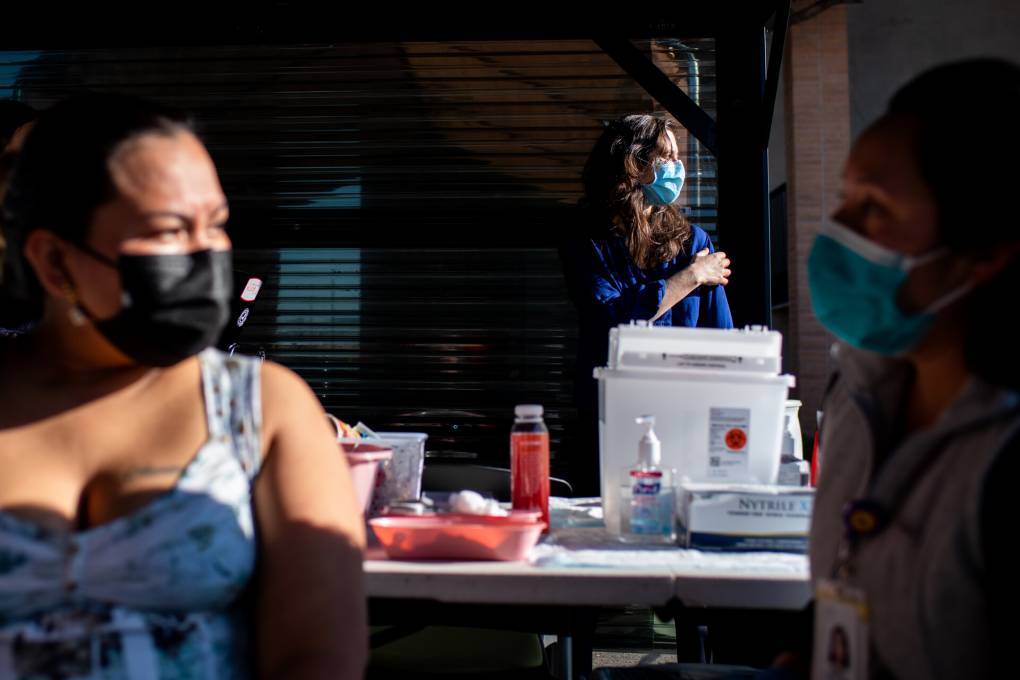
"caption": "Renna Khuner-Haber (center), who coordinates LifeLong Medical's testing sites in Richmond and San Pablo, talks with staff, as a registered nurse (right) talks with a patient at LifeLong's Brookside San Pablo Health Center on Jan. 19, 2022.",
"description": null,
"title": "RS53217_034_Richmond_LifelongCOVIDClinic_01192022-qut",
"credit": "Beth LaBerge/KQED",
"status": "inherit",
"altTag": "Two seated, masked women - a nurse and patient - talk in sunlit foreground as another masked woman stands in the background",
"isLoading": false,
"fetchFailed": false
},
"news_11902095": {
"type": "attachments",
"id": "news_11902095",
"meta": {
"index": "attachments_1716263798",
"site": "news",
"id": "11902095",
"found": true
},
"parent": 11902084,
"imgSizes": {
"twentyfourteen-full-width": {
"file": "https://ww2.kqed.org/app/uploads/sites/10/2022/01/KQED-Dembosky-New-Bill-Would-Raise-Penalties-Health-Insurers-Pay-When-They-Break-the-Law-iStock-BrianAJackson-1038x576.jpg",
"width": 1038,
"mimeType": "image/jpeg",
"height": 576
},
"thumbnail": {
"file": "https://ww2.kqed.org/app/uploads/sites/10/2022/01/KQED-Dembosky-New-Bill-Would-Raise-Penalties-Health-Insurers-Pay-When-They-Break-the-Law-iStock-BrianAJackson-160x107.jpg",
"width": 160,
"mimeType": "image/jpeg",
"height": 107
},
"post-thumbnail": {
"file": "https://ww2.kqed.org/app/uploads/sites/10/2022/01/KQED-Dembosky-New-Bill-Would-Raise-Penalties-Health-Insurers-Pay-When-They-Break-the-Law-iStock-BrianAJackson-672x372.jpg",
"width": 672,
"mimeType": "image/jpeg",
"height": 372
},
"kqedFullSize": {
"file": "https://ww2.kqed.org/app/uploads/sites/10/2022/01/KQED-Dembosky-New-Bill-Would-Raise-Penalties-Health-Insurers-Pay-When-They-Break-the-Law-iStock-BrianAJackson-e1642648714951.jpg",
"width": 1920,
"height": 1280
},
"2048x2048": {
"file": "https://ww2.kqed.org/app/uploads/sites/10/2022/01/KQED-Dembosky-New-Bill-Would-Raise-Penalties-Health-Insurers-Pay-When-They-Break-the-Law-iStock-BrianAJackson-2048x1365.jpg",
"width": 2048,
"mimeType": "image/jpeg",
"height": 1365
},
"large": {
"file": "https://ww2.kqed.org/app/uploads/sites/10/2022/01/KQED-Dembosky-New-Bill-Would-Raise-Penalties-Health-Insurers-Pay-When-They-Break-the-Law-iStock-BrianAJackson-1020x680.jpg",
"width": 1020,
"mimeType": "image/jpeg",
"height": 680
},
"1536x1536": {
"file": "https://ww2.kqed.org/app/uploads/sites/10/2022/01/KQED-Dembosky-New-Bill-Would-Raise-Penalties-Health-Insurers-Pay-When-They-Break-the-Law-iStock-BrianAJackson-1536x1024.jpg",
"width": 1536,
"mimeType": "image/jpeg",
"height": 1024
},
"full-width": {
"file": "https://ww2.kqed.org/app/uploads/sites/10/2022/01/KQED-Dembosky-New-Bill-Would-Raise-Penalties-Health-Insurers-Pay-When-They-Break-the-Law-iStock-BrianAJackson-1920x1280.jpg",
"width": 1920,
"mimeType": "image/jpeg",
"height": 1280
},
"medium": {
"file": "https://ww2.kqed.org/app/uploads/sites/10/2022/01/KQED-Dembosky-New-Bill-Would-Raise-Penalties-Health-Insurers-Pay-When-They-Break-the-Law-iStock-BrianAJackson-800x533.jpg",
"width": 800,
"mimeType": "image/jpeg",
"height": 533
}
},
"publishDate": 1642648688,
"modified": 1642648764,
"caption": null,
"description": null,
"title": null,
"credit": "BrianAJackson/iStock",
"status": "inherit",
"altTag": "Stethoscope, calculator and medical bills stock image",
"isLoading": false,
"fetchFailed": false
},
"news_11901529": {
"type": "attachments",
"id": "news_11901529",
"meta": {
"index": "attachments_1716263798",
"site": "news",
"id": "11901529",
"found": true
},
"parent": 11901484,
"imgSizes": {
"twentyfourteen-full-width": {
"file": "https://ww2.kqed.org/app/uploads/sites/10/2022/01/RS47516_GettyImages-1229643858-qut-1038x576.jpg",
"width": 1038,
"mimeType": "image/jpeg",
"height": 576
},
"thumbnail": {
"file": "https://ww2.kqed.org/app/uploads/sites/10/2022/01/RS47516_GettyImages-1229643858-qut-160x90.jpg",
"width": 160,
"mimeType": "image/jpeg",
"height": 90
},
"post-thumbnail": {
"file": "https://ww2.kqed.org/app/uploads/sites/10/2022/01/RS47516_GettyImages-1229643858-qut-672x372.jpg",
"width": 672,
"mimeType": "image/jpeg",
"height": 372
},
"kqedFullSize": {
"file": "https://ww2.kqed.org/app/uploads/sites/10/2022/01/RS47516_GettyImages-1229643858-qut.jpg",
"width": 1920,
"height": 1075
},
"large": {
"file": "https://ww2.kqed.org/app/uploads/sites/10/2022/01/RS47516_GettyImages-1229643858-qut-1020x571.jpg",
"width": 1020,
"mimeType": "image/jpeg",
"height": 571
},
"1536x1536": {
"file": "https://ww2.kqed.org/app/uploads/sites/10/2022/01/RS47516_GettyImages-1229643858-qut-1536x860.jpg",
"width": 1536,
"mimeType": "image/jpeg",
"height": 860
},
"medium": {
"file": "https://ww2.kqed.org/app/uploads/sites/10/2022/01/RS47516_GettyImages-1229643858-qut-800x448.jpg",
"width": 800,
"mimeType": "image/jpeg",
"height": 448
}
},
"publishDate": 1642024547,
"modified": 1649432437,
"caption": null,
"description": "Students work on laptops at a school in La Puente, in Los Angeles County, in the fall of 2020. A comprehensive survey from the Oakland-based research and advocacy organization Children Now found that learning loss disparities during the pandemic continue to haunt the state's children.",
"title": "US-HEALTH-VIRUS-epidemic",
"credit": "Frederic J. Brown/AFP via Getty Images",
"status": "inherit",
"altTag": "side profile view of two young students, wearing masks while working at classroom desks",
"isLoading": false,
"fetchFailed": false
},
"news_11901383": {
"type": "attachments",
"id": "news_11901383",
"meta": {
"index": "attachments_1716263798",
"site": "news",
"id": "11901383",
"found": true
},
"parent": 11901347,
"imgSizes": {
"twentyfourteen-full-width": {
"file": "https://ww2.kqed.org/app/uploads/sites/10/2022/01/RS5067_NurseChecksBloodPressure-1038x576.jpg",
"width": 1038,
"mimeType": "image/jpeg",
"height": 576
},
"thumbnail": {
"file": "https://ww2.kqed.org/app/uploads/sites/10/2022/01/RS5067_NurseChecksBloodPressure-160x107.jpg",
"width": 160,
"mimeType": "image/jpeg",
"height": 107
},
"post-thumbnail": {
"file": "https://ww2.kqed.org/app/uploads/sites/10/2022/01/RS5067_NurseChecksBloodPressure-672x372.jpg",
"width": 672,
"mimeType": "image/jpeg",
"height": 372
},
"kqedFullSize": {
"file": "https://ww2.kqed.org/app/uploads/sites/10/2022/01/RS5067_NurseChecksBloodPressure-scaled-e1641938626135.jpg",
"width": 1920,
"height": 1280
},
"2048x2048": {
"file": "https://ww2.kqed.org/app/uploads/sites/10/2022/01/RS5067_NurseChecksBloodPressure-2048x1365.jpg",
"width": 2048,
"mimeType": "image/jpeg",
"height": 1365
},
"large": {
"file": "https://ww2.kqed.org/app/uploads/sites/10/2022/01/RS5067_NurseChecksBloodPressure-1020x680.jpg",
"width": 1020,
"mimeType": "image/jpeg",
"height": 680
},
"1536x1536": {
"file": "https://ww2.kqed.org/app/uploads/sites/10/2022/01/RS5067_NurseChecksBloodPressure-1536x1024.jpg",
"width": 1536,
"mimeType": "image/jpeg",
"height": 1024
},
"full-width": {
"file": "https://ww2.kqed.org/app/uploads/sites/10/2022/01/RS5067_NurseChecksBloodPressure-1920x1280.jpg",
"width": 1920,
"mimeType": "image/jpeg",
"height": 1280
},
"medium": {
"file": "https://ww2.kqed.org/app/uploads/sites/10/2022/01/RS5067_NurseChecksBloodPressure-800x533.jpg",
"width": 800,
"mimeType": "image/jpeg",
"height": 533
}
},
"publishDate": 1641938608,
"modified": 1641938828,
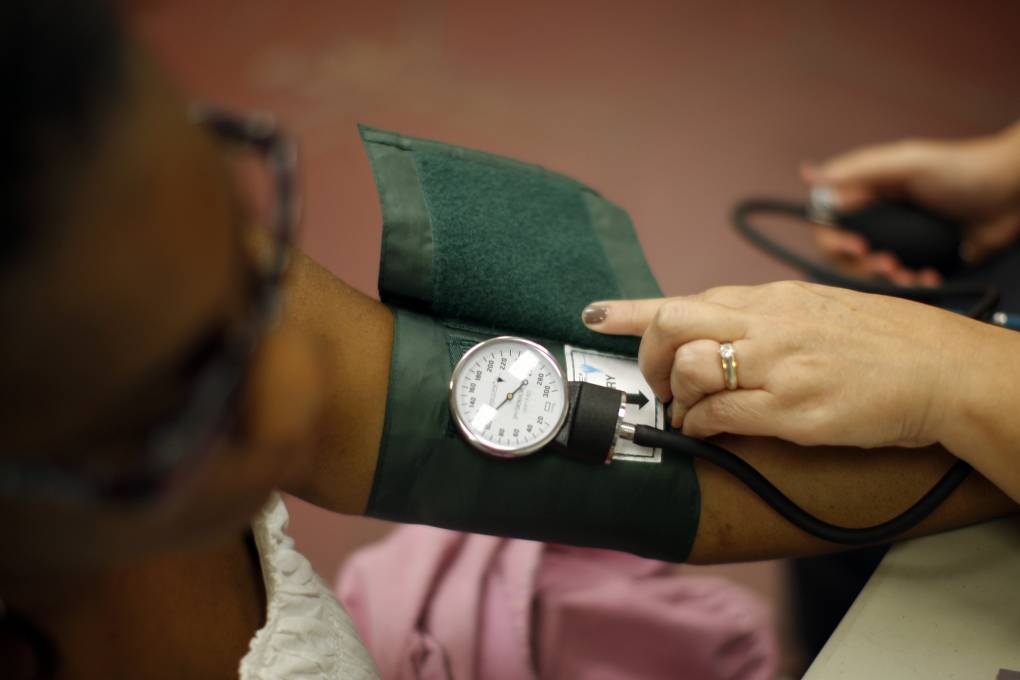
"caption": "A nurse checks a patient's blood pressure at a free health screening event in Los Angeles. The Assembly began debate Tuesday on a bill to establish a universal health care system in the state, called CalCare. ",
"description": null,
"title": "Health Care Activists Offer Free Health Screenings In Los Angeles",
"credit": "David McNew/Getty Images",
"status": "inherit",
"altTag": "closeup shot of a nurse's hand operating a blood pressure monitoring device",
"isLoading": false,
"fetchFailed": false
},
"news_11901120": {
"type": "attachments",
"id": "news_11901120",
"meta": {
"index": "attachments_1716263798",
"site": "news",
"id": "11901120",
"found": true
},
"parent": 11901101,
"imgSizes": {
"twentyfourteen-full-width": {
"file": "https://ww2.kqed.org/app/uploads/sites/10/2022/01/RS50699_004_SanFrancisco_COVIDVaccinations_08172021-qut-1038x576.jpg",
"width": 1038,
"mimeType": "image/jpeg",
"height": 576
},
"thumbnail": {
"file": "https://ww2.kqed.org/app/uploads/sites/10/2022/01/RS50699_004_SanFrancisco_COVIDVaccinations_08172021-qut-160x107.jpg",
"width": 160,
"mimeType": "image/jpeg",
"height": 107
},
"post-thumbnail": {
"file": "https://ww2.kqed.org/app/uploads/sites/10/2022/01/RS50699_004_SanFrancisco_COVIDVaccinations_08172021-qut-672x372.jpg",
"width": 672,
"mimeType": "image/jpeg",
"height": 372
},
"kqedFullSize": {
"file": "https://ww2.kqed.org/app/uploads/sites/10/2022/01/RS50699_004_SanFrancisco_COVIDVaccinations_08172021-qut.jpg",
"width": 1920,
"height": 1280
},
"large": {
"file": "https://ww2.kqed.org/app/uploads/sites/10/2022/01/RS50699_004_SanFrancisco_COVIDVaccinations_08172021-qut-1020x680.jpg",
"width": 1020,
"mimeType": "image/jpeg",
"height": 680
},
"1536x1536": {
"file": "https://ww2.kqed.org/app/uploads/sites/10/2022/01/RS50699_004_SanFrancisco_COVIDVaccinations_08172021-qut-1536x1024.jpg",
"width": 1536,
"mimeType": "image/jpeg",
"height": 1024
},
"medium": {
"file": "https://ww2.kqed.org/app/uploads/sites/10/2022/01/RS50699_004_SanFrancisco_COVIDVaccinations_08172021-qut-800x533.jpg",
"width": 800,
"mimeType": "image/jpeg",
"height": 533
}
},
"publishDate": 1641590560,
"modified": 1641601398,
"caption": "A registered nurse administers a COVID-19 vaccine at the Southeast Health Center in San Francisco's Bayview neighborhood on Aug. 17, 2021.",
"description": null,
"title": "RS50699_004_SanFrancisco_COVIDVaccinations_08172021-qut",
"credit": "Beth LaBerge/KQED",
"status": "inherit",
"altTag": "A masked nurse leans over to give a COVID vaccine dose to a man sitting down wearing a mask.",
"isLoading": false,
"fetchFailed": false
},
"news_11900932": {
"type": "attachments",
"id": "news_11900932",
"meta": {
"index": "attachments_1716263798",
"site": "news",
"id": "11900932",
"found": true
},
"parent": 11900856,
"imgSizes": {
"twentyfourteen-full-width": {
"file": "https://ww2.kqed.org/app/uploads/sites/10/2022/01/PaoAndHolmesDiptych-1038x576.jpg",
"width": 1038,
"mimeType": "image/jpeg",
"height": 576
},
"thumbnail": {
"file": "https://ww2.kqed.org/app/uploads/sites/10/2022/01/PaoAndHolmesDiptych-160x87.jpg",
"width": 160,
"mimeType": "image/jpeg",
"height": 87
},
"post-thumbnail": {
"file": "https://ww2.kqed.org/app/uploads/sites/10/2022/01/PaoAndHolmesDiptych-672x372.jpg",
"width": 672,
"mimeType": "image/jpeg",
"height": 372
},
"kqedFullSize": {
"file": "https://ww2.kqed.org/app/uploads/sites/10/2022/01/PaoAndHolmesDiptych.jpg",
"width": 1920,
"height": 1048
},
"large": {
"file": "https://ww2.kqed.org/app/uploads/sites/10/2022/01/PaoAndHolmesDiptych-1020x557.jpg",
"width": 1020,
"mimeType": "image/jpeg",
"height": 557
},
"1536x1536": {
"file": "https://ww2.kqed.org/app/uploads/sites/10/2022/01/PaoAndHolmesDiptych-1536x838.jpg",
"width": 1536,
"mimeType": "image/jpeg",
"height": 838
},
"medium": {
"file": "https://ww2.kqed.org/app/uploads/sites/10/2022/01/PaoAndHolmesDiptych-800x437.jpg",
"width": 800,
"mimeType": "image/jpeg",
"height": 437
}
},
"publishDate": 1641431068,
"modified": 1641433146,
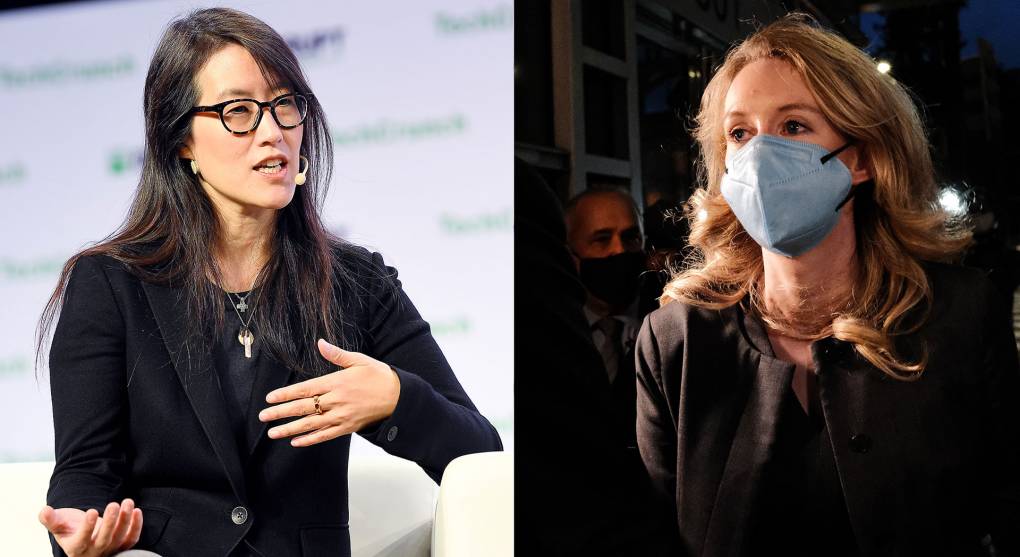
"caption": "Ellen Pao (left), co-founder and CEO of Project Include and former CEO of Reddit, said she was concerned that Elizabeth Holmes's fraud conviction would give investors 'an excuse to continue to avoid investing in women.' Holmes, the former CEO of Theranos (right), leaves a San José courthouse following her fraud conviction on Jan. 3, 2022. ",
"description": "Ellen Pao, co-founder and CEO of Project Include and former CEO of Reddit, said she was concerned that Elizabeth Holmes's fraud conviction would give investors 'an excuse to continue to avoid investing in women.' Holmes, the former CEO of Theranos (right), leaves a San Jose courthouse following her fraud conviction on Jan. 3. ",
"title": "PaoAndHolmesDiptych",
"credit": "Steve Jennings/Getty Images, David Odisho/Getty Images",
"status": "inherit",
"altTag": "side-by-side photos of Ellen Pao, left, speaking at a conference, and Elizabeth Holmes, right, leaving court after her conviction",
"isLoading": false,
"fetchFailed": false
}
},
"audioPlayerReducer": {
"postId": "stream_live",
"isPaused": true,
"isPlaying": false,
"pfsActive": false,
"pledgeModalIsOpen": true,
"playerDrawerIsOpen": false,
"liveAudioPlayStartedAt": 0,
"liveAudioPlayContext": ""
},
"authorsReducer": {
"byline_news_11902602": {
"type": "authors",
"id": "byline_news_11902602",
"meta": {
"override": true
},
"slug": "byline_news_11902602",
"name": "Olga R. Rodriguez and Juliet Williams\u003cbr>The Associated Press",
"isLoading": false
},
"byline_news_11902140": {
"type": "authors",
"id": "byline_news_11902140",
"meta": {
"override": true
},
"slug": "byline_news_11902140",
"name": "\u003ca href=\"https://calmatters.org/author/robert-lewis/\">Robert Lewis\u003c/a>\u003cbr>\u003ca href=\"https://calmatters.org/\">CalMatters\u003c/a>",
"isLoading": false
},
"byline_news_11901484": {
"type": "authors",
"id": "byline_news_11901484",
"meta": {
"override": true
},
"slug": "byline_news_11901484",
"name": "\u003ca href=\"https://edsource.org/author/cjones\">Carolyn Jones\u003c/a>",
"isLoading": false
},
"byline_news_11901101": {
"type": "authors",
"id": "byline_news_11901101",
"meta": {
"override": true
},
"slug": "byline_news_11901101",
"name": "\u003ca href=\"https://calmatters.org/author/kristen-hwang/\">Kristen Hwang\u003c/a> and \u003ca href=\"https://calmatters.org/author/anaibarra/\">Ana B. Ibarra\u003c/a>",
"isLoading": false
},
"dmarks": {
"type": "authors",
"id": "182",
"meta": {
"index": "authors_1716337520",
"id": "182",
"found": true
},
"name": "David Marks",
"firstName": "David",
"lastName": "Marks",
"slug": "dmarks",
"email": "dmarks@kqed.org",
"display_author_email": false,
"staff_mastheads": [],
"title": "KQED Editor",
"bio": "David Marks is a senior digital editor for KQED News. \u003c/a>Reach him at dmarks@kqed.org.",
"avatar": "https://secure.gravatar.com/avatar/b88bd6227ce6cb96ae33fefaf42b2a29?s=600&d=mm&r=g",
"twitter": "divadskram",
"facebook": null,
"instagram": null,
"linkedin": null,
"sites": [
{
"site": "news",
"roles": []
},
{
"site": "science",
"roles": []
},
{
"site": "perspectives",
"roles": []
},
{
"site": "liveblog",
"roles": []
}
],
"headData": {
"title": "David Marks | KQED",
"description": "KQED Editor",
"ogImgSrc": "https://secure.gravatar.com/avatar/b88bd6227ce6cb96ae33fefaf42b2a29?s=600&d=mm&r=g",
"twImgSrc": "https://secure.gravatar.com/avatar/b88bd6227ce6cb96ae33fefaf42b2a29?s=600&d=mm&r=g"
},
"isLoading": false,
"link": "/author/dmarks"
},
"kqed": {
"type": "authors",
"id": "236",
"meta": {
"index": "authors_1716337520",
"id": "236",
"found": true
},
"name": "KQED News Staff",
"firstName": "KQED News Staff",
"lastName": null,
"slug": "kqed",
"email": "faq@kqed.org",
"display_author_email": false,
"staff_mastheads": [],
"title": null,
"bio": null,
"avatar": "https://secure.gravatar.com/avatar/ef0e801a68c4c54afa9180db14084167?s=600&d=blank&r=g",
"twitter": null,
"facebook": null,
"instagram": null,
"linkedin": null,
"sites": [
{
"site": "arts",
"roles": [
"contributor"
]
},
{
"site": "news",
"roles": [
"editor"
]
},
{
"site": "futureofyou",
"roles": [
"author"
]
}
],
"headData": {
"title": "KQED News Staff | KQED",
"description": null,
"ogImgSrc": "https://secure.gravatar.com/avatar/ef0e801a68c4c54afa9180db14084167?s=600&d=blank&r=g",
"twImgSrc": "https://secure.gravatar.com/avatar/ef0e801a68c4c54afa9180db14084167?s=600&d=blank&r=g"
},
"isLoading": false,
"link": "/author/kqed"
},
"kqednewsstaffandwires": {
"type": "authors",
"id": "237",
"meta": {
"index": "authors_1716337520",
"id": "237",
"found": true
},
"name": "KQED News Staff and Wires",
"firstName": "KQED News Staff and Wires",
"lastName": null,
"slug": "kqednewsstaffandwires",
"email": "onlinenewsstaff@kqed.org",
"display_author_email": false,
"staff_mastheads": [],
"title": null,
"bio": null,
"avatar": "https://secure.gravatar.com/avatar/72295af8ebbfbd19a4948f5271285664?s=600&d=blank&r=g",
"twitter": null,
"facebook": null,
"instagram": null,
"linkedin": null,
"sites": [
{
"site": "arts",
"roles": [
"contributor"
]
},
{
"site": "news",
"roles": [
"contributor"
]
},
{
"site": "lowdown",
"roles": [
"author"
]
},
{
"site": "stateofhealth",
"roles": [
"contributor"
]
},
{
"site": "food",
"roles": [
"author"
]
}
],
"headData": {
"title": "KQED News Staff and Wires | KQED",
"description": null,
"ogImgSrc": "https://secure.gravatar.com/avatar/72295af8ebbfbd19a4948f5271285664?s=600&d=blank&r=g",
"twImgSrc": "https://secure.gravatar.com/avatar/72295af8ebbfbd19a4948f5271285664?s=600&d=blank&r=g"
},
"isLoading": false,
"link": "/author/kqednewsstaffandwires"
},
"scottshafer": {
"type": "authors",
"id": "255",
"meta": {
"index": "authors_1716337520",
"id": "255",
"found": true
},
"name": "Scott Shafer",
"firstName": "Scott",
"lastName": "Shafer",
"slug": "scottshafer",
"email": "sshafer@kqed.org",
"display_author_email": false,
"staff_mastheads": [
"news"
],
"title": "KQED Contributor",
"bio": "Scott Shafer is a senior editor with the KQED Politics and Government desk. He is co-host of Political Breakdown, the award-winning radio show and podcast with a personal take on the world of politics. Scott came to KQED in 1998 to host the statewide\u003cem> California Report\u003c/em>. Prior to that he had extended stints in politics and government\u003cem>.\u003c/em> He uses that inside experience at KQED in his, reporting, hosting and analysis for the politics desk. Scott collaborated \u003cem>Political Breakdown a\u003c/em>nd on \u003cem>The Political Mind of Jerry Brown, \u003c/em>an eight-part series about the life and extraordinary political career of the former governor. For fun, he plays water polo with the San Francisco Tsunami.",
"avatar": "https://secure.gravatar.com/avatar/a62ebae45b79d7aed1a39a0e3bf68104?s=600&d=blank&r=g",
"twitter": "scottshafer",
"bluesky": null,
"facebook": null,
"instagram": null,
"linkedin": null,
"sites": [
{
"site": "news",
"roles": [
"editor"
]
},
{
"site": "stateofhealth",
"roles": [
"author"
]
},
{
"site": "science",
"roles": [
"author"
]
},
{
"site": "forum",
"roles": [
"subscriber"
]
},
{
"site": "liveblog",
"roles": [
"author"
]
}
],
"headData": {
"title": "Scott Shafer | KQED",
"description": "KQED Contributor",
"ogImgSrc": "https://secure.gravatar.com/avatar/a62ebae45b79d7aed1a39a0e3bf68104?s=600&d=blank&r=g",
"twImgSrc": "https://secure.gravatar.com/avatar/a62ebae45b79d7aed1a39a0e3bf68104?s=600&d=blank&r=g"
},
"isLoading": false,
"link": "/author/scottshafer"
},
"adembosky": {
"type": "authors",
"id": "3205",
"meta": {
"index": "authors_1716337520",
"id": "3205",
"found": true
},
"name": "April Dembosky",
"firstName": "April",
"lastName": "Dembosky",
"slug": "adembosky",
"email": "adembosky@kqed.org",
"display_author_email": false,
"staff_mastheads": [
"news",
"science"
],
"title": "KQED Health Correspondent",
"bio": "April Dembosky is the health correspondent for KQED News and a regular contributor to NPR. She specializes in covering altered states of mind, from postpartum depression to methamphetamine-induced psychosis to the insanity defense. Her investigative series on insurance companies sidestepping mental health laws won multiple awards, including first place in beat reporting from the national Association of Health Care Journalists. She is the recipient of numerous other prizes and fellowships, including a national Edward R. Murrow award for investigative reporting, a Society of Professional Journalists award for long-form storytelling, and a Carter Center Fellowship for Mental Health Journalism.\r\n\r\nDembosky reported and produced \u003cem>Soundtrack of Silence\u003c/em>, an audio documentary about music and memory that is currently being made into a feature film by Paramount Pictures.\r\n\r\nBefore joining KQED in 2013, Dembosky covered technology and Silicon Valley for \u003cem>The Financial Times of London,\u003c/em> and contributed business and arts stories to \u003cem>Marketplace \u003c/em>and \u003cem>The New York Times.\u003c/em> She got her undergraduate degree in philosophy from Smith College and her master's in journalism from the University of California, Berkeley. She is a classically trained violinist and proud alum of the first symphony orchestra at Burning Man.",
"avatar": "https://secure.gravatar.com/avatar/ef92999be4ceb9ea60701e7dc276f813?s=600&d=blank&r=g",
"twitter": "adembosky",
"facebook": null,
"instagram": null,
"linkedin": null,
"sites": [
{
"site": "arts",
"roles": [
"author"
]
},
{
"site": "news",
"roles": [
"editor"
]
},
{
"site": "futureofyou",
"roles": [
"author"
]
},
{
"site": "stateofhealth",
"roles": [
"editor"
]
},
{
"site": "science",
"roles": [
"editor"
]
},
{
"site": "forum",
"roles": [
"editor"
]
}
],
"headData": {
"title": "April Dembosky | KQED",
"description": "KQED Health Correspondent",
"ogImgSrc": "https://secure.gravatar.com/avatar/ef92999be4ceb9ea60701e7dc276f813?s=600&d=blank&r=g",
"twImgSrc": "https://secure.gravatar.com/avatar/ef92999be4ceb9ea60701e7dc276f813?s=600&d=blank&r=g"
},
"isLoading": false,
"link": "/author/adembosky"
},
"rdillon": {
"type": "authors",
"id": "11495",
"meta": {
"index": "authors_1716337520",
"id": "11495",
"found": true
},
"name": "Raquel Maria Dillon",
"firstName": "Raquel Maria",
"lastName": "Dillon",
"slug": "rdillon",
"email": "rdillon@kqed.org",
"display_author_email": false,
"staff_mastheads": [],
"title": null,
"bio": "Raquel Maria Dillon was a reporter and host for KQED News. Previously, she produced the daily statewide California Report, edited newscasts, and covered health and education stories. Before returning to the Bay Area in 2016, she worked in Los Angeles as a wire reporter and one-woman-band video journalist for the Associated Press, where she shot, edited and reported breaking news and features across the West. Her work has appeared online and in print around the globe, and also on NPR’s Morning Edition, All Things Considered, Here and Now, Marketplace, On The Media, and Studio 360. She previously edited and mentored up-and-coming reporters at KALW, produced social videos for Timeline.com, and was a local TV news videographer for KTVU and digital producer for KNTV. She got her start as a Radio News Trainee at KQED, produced a weekly public affairs roundtable show for OPB, and covered health and politics at New Hampshire Public Radio. She has a BA in political science from Barnard College and a MA in video journalism from UC Berkeley, where she was awarded the Faith Fancher Scholarship and a Student Emmy. She has received numerous local awards from the Associated Press and the Society of Professional Journalists.",
"avatar": "https://secure.gravatar.com/avatar/b8e02ae982913d0950df605910267c1b?s=600&d=blank&r=g",
"twitter": "RaquelMDillon",
"facebook": null,
"instagram": null,
"linkedin": null,
"sites": [
{
"site": "news",
"roles": [
"subscriber"
]
},
{
"site": "stateofhealth",
"roles": [
"editor"
]
},
{
"site": "science",
"roles": [
"editor"
]
},
{
"site": "forum",
"roles": [
"editor"
]
}
],
"headData": {
"title": "Raquel Maria Dillon | KQED",
"description": null,
"ogImgSrc": "https://secure.gravatar.com/avatar/b8e02ae982913d0950df605910267c1b?s=600&d=blank&r=g",
"twImgSrc": "https://secure.gravatar.com/avatar/b8e02ae982913d0950df605910267c1b?s=600&d=blank&r=g"
},
"isLoading": false,
"link": "/author/rdillon"
},
"nnavarro": {
"type": "authors",
"id": "11756",
"meta": {
"index": "authors_1716337520",
"id": "11756",
"found": true
},
"name": "Natalia Navarro",
"firstName": "Natalia",
"lastName": "Navarro",
"slug": "nnavarro",
"email": "nnavarro@kqed.org",
"display_author_email": true,
"staff_mastheads": [
"news"
],
"title": "Afternoon News Anchor",
"bio": "Natalia Navarro is KQED's afternoon radio news anchor. She came to KQED in 2021 from Colorado Public Radio, where she was a reporter and host. She has received several awards for her work covering daily and breaking news from professional organizations such as the San Francisco Press Club, Society of Professional Journalists and the Colorado Broadcasters Association. Natalia is originally from Tucson, Arizona, where she got her start in journalism writing for the Arizona Daily Star, Arizona Public Media and the Tucson Weekly. Natalia earned her bachelor's degree in journalism and economics, and her master's degree in journalism from the University of Arizona.",
"avatar": "https://secure.gravatar.com/avatar/45f866ea8b5c52bf1fa4c236dd0c03c2?s=600&d=blank&r=g",
"twitter": "@NataliaVNavarro",
"facebook": null,
"instagram": null,
"linkedin": null,
"sites": [
{
"site": "news",
"roles": [
"editor"
]
}
],
"headData": {
"title": "Natalia Navarro | KQED",
"description": "Afternoon News Anchor",
"ogImgSrc": "https://secure.gravatar.com/avatar/45f866ea8b5c52bf1fa4c236dd0c03c2?s=600&d=blank&r=g",
"twImgSrc": "https://secure.gravatar.com/avatar/45f866ea8b5c52bf1fa4c236dd0c03c2?s=600&d=blank&r=g"
},
"isLoading": false,
"link": "/author/nnavarro"
}
},
"pagesReducer": {
"news_tag_california": {
"type": "terms",
"id": "news_18538",
"meta": {
"index": "terms_1716263798",
"site": "news",
"id": "18538",
"score": 6.8456903
},
"featImg": null,
"name": "California",
"description": null,
"taxonomy": "tag",
"headData": {
"twImgId": null,
"twTitle": null,
"ogTitle": null,
"ogImgId": null,
"twDescription": null,
"description": null,
"title": "California Archives | KQED News",
"ogDescription": null
},
"ttid": 31,
"slug": "california",
"isLoading": false,
"title": "California",
"pageMeta": {
"site": "news",
"WpPageTemplate": "page-topic-editorial",
"currentPage": 170
},
"blocks": [
{
"blockName": "kqed/post-list",
"attrs": {
"layout": "cardArticle2",
"query": "posts/news?tag=california",
"seeMore": false,
"paginated": true,
"page": 170
}
},
{
"blockName": "kqed/ad"
}
]
}
},
"pfsSessionReducer": {},
"postsReducer": {
"stream_live": {
"type": "live",
"id": "stream_live",
"audioUrl": "https://streams.kqed.org/kqedradio",
"title": "Live Stream",
"excerpt": "Live Stream information currently unavailable.",
"link": "/radio",
"featImg": "",
"label": {
"name": "KQED Live",
"link": "/"
}
},
"stream_kqedNewscast": {
"type": "posts",
"id": "stream_kqedNewscast",
"audioUrl": "https://www.kqed.org/.stream/anon/radio/RDnews/newscast.mp3?_=1",
"title": "KQED Newscast",
"featImg": "",
"label": {
"name": "88.5 FM",
"link": "/"
}
},
"news_11903223": {
"type": "posts",
"id": "news_11903223",
"meta": {
"index": "posts_1716263798",
"site": "news",
"id": "11903223",
"score": null,
"sort": [
1643423386000
]
},
"guestAuthors": [],
"slug": "teacher-burnout-this-week-in-california-news",
"title": "Teacher Burnout | This Week in California News",
"publishDate": 1643423386,
"format": "video",
"headTitle": "Teacher Burnout | This Week in California News | KQED",
"labelTerm": {
"term": 7052,
"site": "news"
},
"content": "\u003cp>\u003cb>Pandemic and Teacher Burnout\u003cbr>\n\u003c/b>\u003cspan style=\"font-weight: 400\">The COVID-19 pandemic has placed incredible pressure on our school systems and on teachers in particular, who say they’re experiencing burnout like never before. Many of the teachers we talked to say their workload — which wasn’t light even before the pandemic — has become gargantuan. Even as schools are already struggling with major staffing shortages, study after study finds that teachers are contemplating quitting in record numbers. \u003c/span>\u003c/p>\n\u003cp>\u003cspan style=\"font-weight: 400\">Guest:\u003c/span>\u003c/p>\n\u003cul>\n\u003cli style=\"font-weight: 400\">\u003cspan style=\"font-weight: 400\">Beatrice Viramontes, Teach for America Bay Area executive director\u003c/span>\u003c/li>\n\u003c/ul>\n\u003cp>\u003cb>This Week in California News and Politics\u003cbr>\n\u003c/b>\u003cspan style=\"font-weight: 400\">This week, the city of San Jose made bold moves to increase gun control, hundreds of acres of land were returned to Native Americans, and U.S. House Speaker Nancy Pelosi announced she’ll seek another term in office. Our panel of reporters considers the week’s big stories in California.\u003c/span>\u003c/p>\n\u003cp>\u003cspan style=\"font-weight: 400\">Guests:\u003c/span>\u003c/p>\n\u003cul>\n\u003cli style=\"font-weight: 400\">\u003cspan style=\"font-weight: 400\">Marisa Lagos, KQED politics and government correspondent \u003c/span>\u003c/li>\n\u003cli style=\"font-weight: 400\">\u003cspan style=\"font-weight: 400\">Adhiti Bandlamudi, KQED Silicon Valley reporter\u003c/span>\u003c/li>\n\u003c/ul>\n\u003cp>\u003cb>Something Beautiful: East Bay Vivarium\u003cbr>\n\u003c/b>\u003cspan style=\"font-weight: 400\">This week’s Something Beautiful should perhaps be called Something Slithery. At the East Bay Vivarium you can find all kinds of snakes and lizards and even a massive komodo dragon. There are also tarantulas and scorpions for the braver among us! \u003c/span>\u003c/p>\n\u003cp>[ad fullwidth]\u003c/p>\u003cp>\u003c/p>\n",
"blocks": [],
"excerpt": null,
"status": "publish",
"parent": 0,
"modified": 1721128239,
"stats": {
"hasAudio": false,
"hasVideo": false,
"hasChartOrMap": false,
"iframeSrcs": [],
"hasGoogleForm": false,
"hasGallery": false,
"hasHearkenModule": false,
"hasPolis": false,
"paragraphCount": 7,
"wordCount": 213
},
"headData": {
"title": "Teacher Burnout | This Week in California News | KQED",
"description": "Pandemic and Teacher Burnout The COVID-19 pandemic has placed incredible pressure on our school systems and on teachers in particular, who say they’re experiencing burnout like never before. Many of the teachers we talked to say their workload — which wasn’t light even before the pandemic — has become gargantuan. Even as schools are already",
"ogTitle": "",
"ogDescription": "",
"ogImgId": "",
"twTitle": "",
"twDescription": "",
"twImgId": "",
"schema": {
"@context": "https://schema.org",
"@type": "NewsArticle",
"headline": "Teacher Burnout | This Week in California News",
"datePublished": "2022-01-28T18:29:46-08:00",
"dateModified": "2024-07-16T04:10:39-07:00",
"image": "https://cdn.kqed.org/wp-content/uploads/2020/02/KQED-OG-Image@1x.png",
"isAccessibleForFree": "True",
"publisher": {
"@type": "NewsMediaOrganization",
"@id": "https://www.kqed.org/#organization",
"name": "KQED",
"logo": "https://cdn.kqed.org/wp-content/uploads/2020/02/KQED-OG-Image@1x.png",
"url": "https://www.kqed.org",
"sameAs": [
"https://www.facebook.com/KQED",
"https://twitter.com/KQED",
"https://www.instagram.com/kqed/",
"https://www.tiktok.com/@kqedofficial",
"https://www.linkedin.com/company/kqed",
"https://www.youtube.com/channel/UCeC0IOo7i1P_61zVUWbJ4nw"
]
}
}
},
"videoEmbed": "https://youtu.be/sLkqnQ_AaSM",
"sticky": false,
"excludeFromSiteSearch": "Include",
"path": "/news/11903223/teacher-burnout-this-week-in-california-news",
"audioTrackLength": null,
"parsedContent": [
{
"type": "contentString",
"content": "\u003cdiv class=\"post-body\">\u003cp>\u003cp>\u003cb>Pandemic and Teacher Burnout\u003cbr>\n\u003c/b>\u003cspan style=\"font-weight: 400\">The COVID-19 pandemic has placed incredible pressure on our school systems and on teachers in particular, who say they’re experiencing burnout like never before. Many of the teachers we talked to say their workload — which wasn’t light even before the pandemic — has become gargantuan. Even as schools are already struggling with major staffing shortages, study after study finds that teachers are contemplating quitting in record numbers. \u003c/span>\u003c/p>\n\u003cp>\u003cspan style=\"font-weight: 400\">Guest:\u003c/span>\u003c/p>\n\u003cul>\n\u003cli style=\"font-weight: 400\">\u003cspan style=\"font-weight: 400\">Beatrice Viramontes, Teach for America Bay Area executive director\u003c/span>\u003c/li>\n\u003c/ul>\n\u003cp>\u003cb>This Week in California News and Politics\u003cbr>\n\u003c/b>\u003cspan style=\"font-weight: 400\">This week, the city of San Jose made bold moves to increase gun control, hundreds of acres of land were returned to Native Americans, and U.S. House Speaker Nancy Pelosi announced she’ll seek another term in office. Our panel of reporters considers the week’s big stories in California.\u003c/span>\u003c/p>\n\u003cp>\u003cspan style=\"font-weight: 400\">Guests:\u003c/span>\u003c/p>\n\u003cul>\n\u003cli style=\"font-weight: 400\">\u003cspan style=\"font-weight: 400\">Marisa Lagos, KQED politics and government correspondent \u003c/span>\u003c/li>\n\u003cli style=\"font-weight: 400\">\u003cspan style=\"font-weight: 400\">Adhiti Bandlamudi, KQED Silicon Valley reporter\u003c/span>\u003c/li>\n\u003c/ul>\n\u003cp>\u003cb>Something Beautiful: East Bay Vivarium\u003cbr>\n\u003c/b>\u003cspan style=\"font-weight: 400\">This week’s Something Beautiful should perhaps be called Something Slithery. At the East Bay Vivarium you can find all kinds of snakes and lizards and even a massive komodo dragon. There are also tarantulas and scorpions for the braver among us! \u003c/span>\u003c/p>\n\u003cp>\u003c/p>\u003c/div>",
"attributes": {
"named": {},
"numeric": []
}
},
{
"type": "component",
"content": "",
"name": "ad",
"attributes": {
"named": {
"label": "fullwidth"
},
"numeric": [
"fullwidth"
]
}
},
{
"type": "contentString",
"content": "\u003cdiv class=\"post-body\">\u003cp>\u003c/p>\u003cp>\u003c/p>\n\u003c/div>\u003c/p>",
"attributes": {
"named": {},
"numeric": []
}
}
],
"link": "/news/11903223/teacher-burnout-this-week-in-california-news",
"authors": [
"236"
],
"programs": [
"news_7052"
],
"categories": [
"news_19906",
"news_457",
"news_8",
"news_13",
"news_356"
],
"tags": [
"news_27510",
"news_18538",
"news_27504",
"news_20562",
"news_177",
"news_1262",
"news_18541"
],
"featImg": "news_11903286",
"label": "news_7052"
},
"news_11902718": {
"type": "posts",
"id": "news_11902718",
"meta": {
"index": "posts_1716263798",
"site": "news",
"id": "11902718",
"score": null,
"sort": [
1643362523000
]
},
"guestAuthors": [],
"slug": "militia-led-recall-targets-republican-supervisor-in-shasta-county",
"title": "A Militia-Led Recall Is Targeting a Shasta County Supervisor – Who's a Republican",
"publishDate": 1643362523,
"format": "audio",
"headTitle": "A Militia-Led Recall Is Targeting a Shasta County Supervisor – Who’s a Republican | KQED",
"labelTerm": {
"term": 72,
"site": "news"
},
"content": "\u003cp>\u003cstrong>Update, Feb. 8:\u003c/strong> Results of the February 1st election are not official yet and there is still a small number of ballots to count. As of Tuesday, the results were 56% Yes to the Recall and 44% opposed.\u003c/p>\n\u003cp>\u003cstrong>Original Story:\u003cbr>\n\u003c/strong>In rural Shasta County, about three hours north of Sacramento, a Republican county supervisor is the target of a recall election initiated by local militia members and backed by a coalition of Second Amendment supporters, COVID-19 mandate opponents and the State of Jefferson movement, which supports breaking away from California to form its own state.\u003c/p>\n\u003cp>The outcome of the Feb. 1 election could determine how far right the local government in this deeply conservative county will move.\u003c/p>\n\u003cp>The target of the recall is District 2 County Supervisor Leonard Moty, who once served as police chief in his hometown of Redding, the county seat. Moty was targeted by angry residents who felt he and two of his fellow supervisors did not push back hard enough on state COVID-19 restrictions that closed businesses and required masks. Some also bristled at mandatory vaccines for health workers.\u003c/p>\n\u003cp>Despite the anger expressed by residents, Shasta County has never strictly enforced a mask mandate or fined businesses that ignored orders to close.\u003c/p>\n\u003cp>Mandatory mask rules and coronavirus vaccinations are not very popular in Shasta County, where Donald Trump won 65% of the vote in 2020. Like residents of many rural California counties, people in Shasta are strongly Republican, many of them suspicious of government.\u003c/p>\n\u003cp>The pandemic has been the match that lit a fire here, with angry community members packing county supervisors’ meetings a few months after the pandemic began.\u003c/p>\n\u003cp>[pullquote size=\"medium\" align=\"right\" citation=\"Leonard Moty, Shasta County supervisor\"]‘This feels very much to me like the Nazi Party in the early ’30s of Germany, where, you know, they came out with their brown shirts and they intimidated people. They bullied them into silence.’[/pullquote]At one such meeting in August of 2020, Carlos Zapata, a former Marine and member of a local militia group, warned supervisors not to enforce pandemic mandates, which he said were hurting businesses and schoolchildren.\u003c/p>\n\u003cp>“It’s not going to be peaceful much longer, OK? And this isn’t a threat. I’m not a criminal. I’ve never been a criminal. But I’m telling you good citizens are going to turn to real-concerned and revolutionary citizens real soon,” Zapata warned.\u003c/p>\n\u003cp>He slammed supervisors for not representing local values.\u003c/p>\n\u003cp>“In Shasta County, we’re supposed to be red country up here, not blue country,” he said. “Take your masks off. Quit muzzling yourself. Join us. Fight with us against what’s going on in Sacramento.”\u003c/p>\n\u003cp>Last year \u003ca href=\"https://www.latimes.com/california/story/2021-06-29/militia-member-two-others-charged-in-northern-california-attack-on-blm-activist\">Zapata was charged with misdemeanor battery\u003c/a> and disturbing the peace after an altercation with a Black Lives Matter activist. A jury found Zapata not guilty of the battery charge, but the trial added to his notoriety in Shasta County.\u003c/p>\n\u003cfigure id=\"attachment_11903021\" class=\"wp-caption aligncenter\" style=\"max-width: 1109px\">\u003cimg loading=\"lazy\" decoding=\"async\" class=\"wp-image-11903021 size-full\" src=\"https://ww2.kqed.org/app/uploads/sites/10/2022/01/Proudboys.jpg\" alt=\"man wearing sunglasses and mask and yellow and black 'proud boys' t-shirt makes the 'ok' symbol\" width=\"1109\" height=\"1157\" srcset=\"https://cdn.kqed.org/wp-content/uploads/sites/10/2022/01/Proudboys.jpg 1109w, https://cdn.kqed.org/wp-content/uploads/sites/10/2022/01/Proudboys-800x835.jpg 800w, https://cdn.kqed.org/wp-content/uploads/sites/10/2022/01/Proudboys-1020x1064.jpg 1020w, https://cdn.kqed.org/wp-content/uploads/sites/10/2022/01/Proudboys-160x167.jpg 160w\" sizes=\"(max-width: 1109px) 100vw, 1109px\">\u003cfigcaption class=\"wp-caption-text\">A member of the Proud Boys — \u003ca href=\"https://www.splcenter.org/fighting-hate/extremist-files/group/proud-boys\">which the Southern Poverty Law Center has designated a hate group\u003c/a> — flashes the \u003ca href=\"https://www.splcenter.org/hatewatch/2018/09/18/ok-sign-white-power-symbol-or-just-right-wing-troll\">“OK” symbol\u003c/a> at a demonstration in support of Carlos Zapata at his arraignment on July 12, 2021. \u003ccite>(Courtesy Doni Chamberlain)\u003c/cite>\u003c/figcaption>\u003c/figure>\n\u003cp>In October, the county registrar of voters certified that Zapata and his followers had collected enough valid signatures to force a recall election for Supervisor Moty.\u003c/p>\n\u003ch3>‘It’s very alarming and shocking to me’\u003c/h3>\n\u003cp>Over breakfast recently at Corbett’s Restaurant in Redding, the 68-year-old Republican supervisor said he hardly recognizes the county he’s lived in his whole life.\u003c/p>\n\u003cp>“It’s a very giving, caring community and that’s what’s so shocking,” Moty said, referring to the anger and threatening tone of recall backers. “But it just goes to show you that a small group of individuals can really change the character of your hometown, depending on what people allow them to do.”\u003c/p>\n\u003cp>The soft-spoken Moty, who describes himself as a “Reagan Republican,” said he and others in the county have been subjected to threats.\u003c/p>\n\u003cp>“Some of these people on the recall side have made comments on Facebook that they know where you live, they know the name of your dog. They know what kind of car you drive. Those are very not-so-veiled threats,” he said. “It’s very alarming and shocking to me.”\u003c/p>\n\u003cp>The recall campaign is flush with at least $450,000 in contributions from Reverge Anselmo, a former Shasta County businessperson who once tangled with the board of supervisors. That’s a huge sum of money for this tiny county, let alone District 2, which has fewer than 22,000 registered voters.\u003c/p>\n\u003cp>Over the past year, as the recall gained steam, Moty has faced personal threats aimed at him, his family and his supporters.\u003c/p>\n\u003cp>“This feels very much to me like the Nazi Party in the early ’30s of Germany, where, you know, they came out with their brown shirts and they intimidated people. They bullied them into silence,” he said.\u003c/p>\n\u003cp>[ad fullwidth]\u003c/p>\n\u003cp>Woody Clendenen, leader of the militia chapter here and a key figure in the recall, owns the Cottonwood Barber Shop, a gathering place for like-minded customers who say they’re fed up by being told what to do by Sacramento. The barbershop is across the street from the Cottonwood militia headquarters.\u003c/p>\n\u003cfigure id=\"attachment_11902831\" class=\"wp-caption aligncenter\" style=\"max-width: 1920px\">\u003cimg loading=\"lazy\" decoding=\"async\" class=\"size-full wp-image-11902831\" src=\"https://ww2.kqed.org/app/uploads/sites/10/2022/01/WoodyBarbershop.jpg\" alt=\"Barber combs man's hair with backdrop of confederate flag in the window, along with various bumper stickers including 'Build El Wall' and 'not a liberal' \" width=\"1920\" height=\"1440\" srcset=\"https://cdn.kqed.org/wp-content/uploads/sites/10/2022/01/WoodyBarbershop.jpg 1920w, https://cdn.kqed.org/wp-content/uploads/sites/10/2022/01/WoodyBarbershop-800x600.jpg 800w, https://cdn.kqed.org/wp-content/uploads/sites/10/2022/01/WoodyBarbershop-1020x765.jpg 1020w, https://cdn.kqed.org/wp-content/uploads/sites/10/2022/01/WoodyBarbershop-160x120.jpg 160w, https://cdn.kqed.org/wp-content/uploads/sites/10/2022/01/WoodyBarbershop-1536x1152.jpg 1536w\" sizes=\"(max-width: 1920px) 100vw, 1920px\">\u003cfigcaption class=\"wp-caption-text\">Woody Clendenen trims a customer’s hair at the Cottonwood Barber Shop in Shasta County. Clendenen, a key figure in the effort to recall Republican county Supervisor Leonard Moty, said ‘probably half’ of his customers are armed at any given time. The barbershop proudly displays a confederate flag in the window. \u003ccite>(Scott Shafer/KQED)\u003c/cite>\u003c/figcaption>\u003c/figure>\n\u003cp>As he cut a customer’s hair recently, Clendenen described what triggered the recall.\u003c/p>\n\u003cp>“The fact that the board kept going along with Newsom’s mandates on the businesses and on the schools, even though the local people were against it, you know, and overwhelmingly.”\u003c/p>\n\u003cp>Trimmer in hand, Clendenen said it isn’t just the pandemic that fueled the recall, but also the county’s strong gun culture and the feeling Supervisor Moty doesn’t support the Second Amendment enough for this pro-gun county.\u003c/p>\n\u003cp>“Right now, anytime you’re in my barbershop, probably half the guys in here are armed, you know,” Clendenen said, as a half dozen customers waited their turn, many nodding their approval.\u003c/p>\n\u003cp>The way he sees it, recalling Moty will shift control of the county board more to his liking.\u003c/p>\n\u003cp>“We can do all kinds of things like, well, we’ll work on getting rid of the head of the Shasta County schools. We’ll get rid of the DA here. She’s no good,” he added.\u003c/p>\n\u003cp>On a recent weekday afternoon in Redding, pedestrians strolled across the Sundial Bridge. Fishermen cast their lines into the Sacramento River below, the snowcapped peak of Mt. Shasta in the distance.\u003c/p>\n\u003cp>The recall election was not on the radar of many voters KQED spoke to, but longtime resident Sharon Jens called it a big waste of money.\u003c/p>\n\u003cp>“I think it’s just very sad that we all can’t work together to keep our community safe,” Jens said. “It’s like a mob mentality at this point.”\u003c/p>\n\u003cp>But resident Michelle Gallagher said the county’s attempts to contain the pandemic have gone too far.\u003c/p>\n\u003cp>“I understand why people are upset. I understand why people are angry, and I think change is good and change is necessary,” she said, adding that she supports the recall.\u003c/p>\n\u003cp>That view is echoed by Patrick Jones, one of the county supervisors who supports the Moty recall.\u003c/p>\n\u003cp>“Here in conservative Shasta County, it’s a course correction. And I think that’s what it’s all coming down to,” Jones said.\u003c/p>\n\u003cp>Jones has helped stir up angry residents. Earlier this year he held an unofficial supervisors’ meeting with recall supporters outside, after the county building where meetings usually occur was closed over public safety and health concerns. But he denies the recall is made up of people who want to essentially overthrow the government.\u003c/p>\n\u003cp>“You know, we’ve been demonized as radicals and various things like this,” Jones said. “We are not. We are just simply business owners. We’re mothers, we’re fathers, we’re grandmothers, we’re grandfathers — and we want to return to a county where we grew up: a safe, prosperous county that we can be proud of.”\u003c/p>\n\u003ch3>‘It doesn’t matter how transparent we make the process’\u003c/h3>\n\u003cp>County Registrar of Voters Cathy Darling Allen is overseeing the Feb. 1 recall election. She said since Donald Trump promoted the lie that the 2020 election was rigged against him, voters have been questioning the integrity of her office.\u003c/p>\n\u003cp>“And it doesn’t matter how transparent we make the process, it doesn’t matter how accountable we are,” Allen said. “There is just a really deep-seated distrust of government, and this is part of that.”\u003c/p>\n\u003cfigure id=\"attachment_11902829\" class=\"wp-caption aligncenter\" style=\"max-width: 1920px\">\u003cimg loading=\"lazy\" decoding=\"async\" class=\"size-full wp-image-11902829\" src=\"https://ww2.kqed.org/app/uploads/sites/10/2022/01/AllenPortrait.jpg\" alt=\"Woman stands outside, squinting, in front of window of county building, with 'ballot drop off' sign visible\" width=\"1920\" height=\"2197\" srcset=\"https://cdn.kqed.org/wp-content/uploads/sites/10/2022/01/AllenPortrait.jpg 1920w, https://cdn.kqed.org/wp-content/uploads/sites/10/2022/01/AllenPortrait-800x915.jpg 800w, https://cdn.kqed.org/wp-content/uploads/sites/10/2022/01/AllenPortrait-1020x1167.jpg 1020w, https://cdn.kqed.org/wp-content/uploads/sites/10/2022/01/AllenPortrait-160x183.jpg 160w, https://cdn.kqed.org/wp-content/uploads/sites/10/2022/01/AllenPortrait-1342x1536.jpg 1342w, https://cdn.kqed.org/wp-content/uploads/sites/10/2022/01/AllenPortrait-1790x2048.jpg 1790w\" sizes=\"(max-width: 1920px) 100vw, 1920px\">\u003cfigcaption class=\"wp-caption-text\">Shasta County Registrar of Voters Cathy Darling Allen is concerned that whichever side loses next week’s recall election of Supervisor Moty will not trust the results. \u003ccite>(Scott Shafer/KQED)\u003c/cite>\u003c/figcaption>\u003c/figure>\n\u003cp>The California Republican Party has officially stayed out of the Shasta County recall. But GOP consultant Mike Madrid, a strong critic of the party’s drift to the right, said the outcome of this recall will say a lot about the party’s future.\u003c/p>\n\u003cp>“I think it’s very fair, very accurate to say that this is sort of a canary in the coal mine to see what is the likely direction of the state party in the coming years,” Madrid said.\u003c/p>\n\u003cp>Recall target Leonard Moty said the outcome of this election is about much more than just his job.\u003c/p>\n\u003cp>“We’re fighting to find out if we’re going to become this extremist county with a bunch of bullies and thugs who threaten people who don’t agree with them,” Moty said.\u003c/p>\n\u003cp>On Tuesday, Shasta County voters will decide on whether to recall Moty.\u003c/p>\n\u003cp>[ad floatright]\u003c/p>\n",
"blocks": [],
"excerpt": "The outcome of the Feb. 1 recall election of Leonard Moty could say a lot about the future of California's Republican Party.",
"status": "publish",
"parent": 0,
"modified": 1721126893,
"stats": {
"hasAudio": false,
"hasVideo": false,
"hasChartOrMap": false,
"iframeSrcs": [],
"hasGoogleForm": false,
"hasGallery": false,
"hasHearkenModule": false,
"hasPolis": false,
"paragraphCount": 45,
"wordCount": 1769
},
"headData": {
"title": "A Militia-Led Recall Is Targeting a Shasta County Supervisor – Who's a Republican | KQED",
"description": "The outcome of the Feb. 1 recall election of Leonard Moty could say a lot about the future of California's Republican Party.",
"ogTitle": "",
"ogDescription": "",
"ogImgId": "",
"twTitle": "",
"twDescription": "",
"twImgId": "",
"schema": {
"@context": "https://schema.org",
"@type": "NewsArticle",
"headline": "A Militia-Led Recall Is Targeting a Shasta County Supervisor – Who's a Republican",
"datePublished": "2022-01-28T01:35:23-08:00",
"dateModified": "2024-07-16T03:48:13-07:00",
"image": "https://cdn.kqed.org/wp-content/uploads/2020/02/KQED-OG-Image@1x.png",
"isAccessibleForFree": "True",
"publisher": {
"@type": "NewsMediaOrganization",
"@id": "https://www.kqed.org/#organization",
"name": "KQED",
"logo": "https://cdn.kqed.org/wp-content/uploads/2020/02/KQED-OG-Image@1x.png",
"url": "https://www.kqed.org",
"sameAs": [
"https://www.facebook.com/KQED",
"https://twitter.com/KQED",
"https://www.instagram.com/kqed/",
"https://www.tiktok.com/@kqedofficial",
"https://www.linkedin.com/company/kqed",
"https://www.youtube.com/channel/UCeC0IOo7i1P_61zVUWbJ4nw"
]
}
}
},
"audioUrl": "https://traffic.omny.fm/d/clips/0af137ef-751e-4b19-a055-aaef00d2d578/ffca7e9f-6831-41c5-bcaf-aaef00f5a073/6063a39c-5242-4a34-bfe3-ae2b0123dda9/audio.mp3",
"sticky": false,
"excludeFromSiteSearch": "Include",
"path": "/news/11902718/militia-led-recall-targets-republican-supervisor-in-shasta-county",
"audioTrackLength": null,
"parsedContent": [
{
"type": "contentString",
"content": "\u003cdiv class=\"post-body\">\u003cp>\u003cp>\u003cstrong>Update, Feb. 8:\u003c/strong> Results of the February 1st election are not official yet and there is still a small number of ballots to count. As of Tuesday, the results were 56% Yes to the Recall and 44% opposed.\u003c/p>\n\u003cp>\u003cstrong>Original Story:\u003cbr>\n\u003c/strong>In rural Shasta County, about three hours north of Sacramento, a Republican county supervisor is the target of a recall election initiated by local militia members and backed by a coalition of Second Amendment supporters, COVID-19 mandate opponents and the State of Jefferson movement, which supports breaking away from California to form its own state.\u003c/p>\n\u003cp>The outcome of the Feb. 1 election could determine how far right the local government in this deeply conservative county will move.\u003c/p>\n\u003cp>The target of the recall is District 2 County Supervisor Leonard Moty, who once served as police chief in his hometown of Redding, the county seat. Moty was targeted by angry residents who felt he and two of his fellow supervisors did not push back hard enough on state COVID-19 restrictions that closed businesses and required masks. Some also bristled at mandatory vaccines for health workers.\u003c/p>\n\u003cp>Despite the anger expressed by residents, Shasta County has never strictly enforced a mask mandate or fined businesses that ignored orders to close.\u003c/p>\n\u003cp>Mandatory mask rules and coronavirus vaccinations are not very popular in Shasta County, where Donald Trump won 65% of the vote in 2020. Like residents of many rural California counties, people in Shasta are strongly Republican, many of them suspicious of government.\u003c/p>\n\u003cp>The pandemic has been the match that lit a fire here, with angry community members packing county supervisors’ meetings a few months after the pandemic began.\u003c/p>\n\u003cp>\u003c/p>\u003c/div>",
"attributes": {
"named": {},
"numeric": []
}
},
{
"type": "component",
"content": "‘This feels very much to me like the Nazi Party in the early ’30s of Germany, where, you know, they came out with their brown shirts and they intimidated people. They bullied them into silence.’",
"name": "pullquote",
"attributes": {
"named": {
"size": "medium",
"align": "right",
"citation": "Leonard Moty, Shasta County supervisor",
"label": ""
},
"numeric": []
}
},
{
"type": "contentString",
"content": "\u003cdiv class=\"post-body\">\u003cp>At one such meeting in August of 2020, Carlos Zapata, a former Marine and member of a local militia group, warned supervisors not to enforce pandemic mandates, which he said were hurting businesses and schoolchildren.\u003c/p>\n\u003cp>“It’s not going to be peaceful much longer, OK? And this isn’t a threat. I’m not a criminal. I’ve never been a criminal. But I’m telling you good citizens are going to turn to real-concerned and revolutionary citizens real soon,” Zapata warned.\u003c/p>\n\u003cp>He slammed supervisors for not representing local values.\u003c/p>\n\u003cp>“In Shasta County, we’re supposed to be red country up here, not blue country,” he said. “Take your masks off. Quit muzzling yourself. Join us. Fight with us against what’s going on in Sacramento.”\u003c/p>\n\u003cp>Last year \u003ca href=\"https://www.latimes.com/california/story/2021-06-29/militia-member-two-others-charged-in-northern-california-attack-on-blm-activist\">Zapata was charged with misdemeanor battery\u003c/a> and disturbing the peace after an altercation with a Black Lives Matter activist. A jury found Zapata not guilty of the battery charge, but the trial added to his notoriety in Shasta County.\u003c/p>\n\u003cfigure id=\"attachment_11903021\" class=\"wp-caption aligncenter\" style=\"max-width: 1109px\">\u003cimg loading=\"lazy\" decoding=\"async\" class=\"wp-image-11903021 size-full\" src=\"https://ww2.kqed.org/app/uploads/sites/10/2022/01/Proudboys.jpg\" alt=\"man wearing sunglasses and mask and yellow and black 'proud boys' t-shirt makes the 'ok' symbol\" width=\"1109\" height=\"1157\" srcset=\"https://cdn.kqed.org/wp-content/uploads/sites/10/2022/01/Proudboys.jpg 1109w, https://cdn.kqed.org/wp-content/uploads/sites/10/2022/01/Proudboys-800x835.jpg 800w, https://cdn.kqed.org/wp-content/uploads/sites/10/2022/01/Proudboys-1020x1064.jpg 1020w, https://cdn.kqed.org/wp-content/uploads/sites/10/2022/01/Proudboys-160x167.jpg 160w\" sizes=\"(max-width: 1109px) 100vw, 1109px\">\u003cfigcaption class=\"wp-caption-text\">A member of the Proud Boys — \u003ca href=\"https://www.splcenter.org/fighting-hate/extremist-files/group/proud-boys\">which the Southern Poverty Law Center has designated a hate group\u003c/a> — flashes the \u003ca href=\"https://www.splcenter.org/hatewatch/2018/09/18/ok-sign-white-power-symbol-or-just-right-wing-troll\">“OK” symbol\u003c/a> at a demonstration in support of Carlos Zapata at his arraignment on July 12, 2021. \u003ccite>(Courtesy Doni Chamberlain)\u003c/cite>\u003c/figcaption>\u003c/figure>\n\u003cp>In October, the county registrar of voters certified that Zapata and his followers had collected enough valid signatures to force a recall election for Supervisor Moty.\u003c/p>\n\u003ch3>‘It’s very alarming and shocking to me’\u003c/h3>\n\u003cp>Over breakfast recently at Corbett’s Restaurant in Redding, the 68-year-old Republican supervisor said he hardly recognizes the county he’s lived in his whole life.\u003c/p>\n\u003cp>“It’s a very giving, caring community and that’s what’s so shocking,” Moty said, referring to the anger and threatening tone of recall backers. “But it just goes to show you that a small group of individuals can really change the character of your hometown, depending on what people allow them to do.”\u003c/p>\n\u003cp>The soft-spoken Moty, who describes himself as a “Reagan Republican,” said he and others in the county have been subjected to threats.\u003c/p>\n\u003cp>“Some of these people on the recall side have made comments on Facebook that they know where you live, they know the name of your dog. They know what kind of car you drive. Those are very not-so-veiled threats,” he said. “It’s very alarming and shocking to me.”\u003c/p>\n\u003cp>The recall campaign is flush with at least $450,000 in contributions from Reverge Anselmo, a former Shasta County businessperson who once tangled with the board of supervisors. That’s a huge sum of money for this tiny county, let alone District 2, which has fewer than 22,000 registered voters.\u003c/p>\n\u003cp>Over the past year, as the recall gained steam, Moty has faced personal threats aimed at him, his family and his supporters.\u003c/p>\n\u003cp>“This feels very much to me like the Nazi Party in the early ’30s of Germany, where, you know, they came out with their brown shirts and they intimidated people. They bullied them into silence,” he said.\u003c/p>\n\u003cp>\u003c/p>\u003c/div>",
"attributes": {
"named": {},
"numeric": []
}
},
{
"type": "component",
"content": "",
"name": "ad",
"attributes": {
"named": {
"label": "fullwidth"
},
"numeric": [
"fullwidth"
]
}
},
{
"type": "contentString",
"content": "\u003cdiv class=\"post-body\">\u003cp>\u003c/p>\n\u003cp>Woody Clendenen, leader of the militia chapter here and a key figure in the recall, owns the Cottonwood Barber Shop, a gathering place for like-minded customers who say they’re fed up by being told what to do by Sacramento. The barbershop is across the street from the Cottonwood militia headquarters.\u003c/p>\n\u003cfigure id=\"attachment_11902831\" class=\"wp-caption aligncenter\" style=\"max-width: 1920px\">\u003cimg loading=\"lazy\" decoding=\"async\" class=\"size-full wp-image-11902831\" src=\"https://ww2.kqed.org/app/uploads/sites/10/2022/01/WoodyBarbershop.jpg\" alt=\"Barber combs man's hair with backdrop of confederate flag in the window, along with various bumper stickers including 'Build El Wall' and 'not a liberal' \" width=\"1920\" height=\"1440\" srcset=\"https://cdn.kqed.org/wp-content/uploads/sites/10/2022/01/WoodyBarbershop.jpg 1920w, https://cdn.kqed.org/wp-content/uploads/sites/10/2022/01/WoodyBarbershop-800x600.jpg 800w, https://cdn.kqed.org/wp-content/uploads/sites/10/2022/01/WoodyBarbershop-1020x765.jpg 1020w, https://cdn.kqed.org/wp-content/uploads/sites/10/2022/01/WoodyBarbershop-160x120.jpg 160w, https://cdn.kqed.org/wp-content/uploads/sites/10/2022/01/WoodyBarbershop-1536x1152.jpg 1536w\" sizes=\"(max-width: 1920px) 100vw, 1920px\">\u003cfigcaption class=\"wp-caption-text\">Woody Clendenen trims a customer’s hair at the Cottonwood Barber Shop in Shasta County. Clendenen, a key figure in the effort to recall Republican county Supervisor Leonard Moty, said ‘probably half’ of his customers are armed at any given time. The barbershop proudly displays a confederate flag in the window. \u003ccite>(Scott Shafer/KQED)\u003c/cite>\u003c/figcaption>\u003c/figure>\n\u003cp>As he cut a customer’s hair recently, Clendenen described what triggered the recall.\u003c/p>\n\u003cp>“The fact that the board kept going along with Newsom’s mandates on the businesses and on the schools, even though the local people were against it, you know, and overwhelmingly.”\u003c/p>\n\u003cp>Trimmer in hand, Clendenen said it isn’t just the pandemic that fueled the recall, but also the county’s strong gun culture and the feeling Supervisor Moty doesn’t support the Second Amendment enough for this pro-gun county.\u003c/p>\n\u003cp>“Right now, anytime you’re in my barbershop, probably half the guys in here are armed, you know,” Clendenen said, as a half dozen customers waited their turn, many nodding their approval.\u003c/p>\n\u003cp>The way he sees it, recalling Moty will shift control of the county board more to his liking.\u003c/p>\n\u003cp>“We can do all kinds of things like, well, we’ll work on getting rid of the head of the Shasta County schools. We’ll get rid of the DA here. She’s no good,” he added.\u003c/p>\n\u003cp>On a recent weekday afternoon in Redding, pedestrians strolled across the Sundial Bridge. Fishermen cast their lines into the Sacramento River below, the snowcapped peak of Mt. Shasta in the distance.\u003c/p>\n\u003cp>The recall election was not on the radar of many voters KQED spoke to, but longtime resident Sharon Jens called it a big waste of money.\u003c/p>\n\u003cp>“I think it’s just very sad that we all can’t work together to keep our community safe,” Jens said. “It’s like a mob mentality at this point.”\u003c/p>\n\u003cp>But resident Michelle Gallagher said the county’s attempts to contain the pandemic have gone too far.\u003c/p>\n\u003cp>“I understand why people are upset. I understand why people are angry, and I think change is good and change is necessary,” she said, adding that she supports the recall.\u003c/p>\n\u003cp>That view is echoed by Patrick Jones, one of the county supervisors who supports the Moty recall.\u003c/p>\n\u003cp>“Here in conservative Shasta County, it’s a course correction. And I think that’s what it’s all coming down to,” Jones said.\u003c/p>\n\u003cp>Jones has helped stir up angry residents. Earlier this year he held an unofficial supervisors’ meeting with recall supporters outside, after the county building where meetings usually occur was closed over public safety and health concerns. But he denies the recall is made up of people who want to essentially overthrow the government.\u003c/p>\n\u003cp>“You know, we’ve been demonized as radicals and various things like this,” Jones said. “We are not. We are just simply business owners. We’re mothers, we’re fathers, we’re grandmothers, we’re grandfathers — and we want to return to a county where we grew up: a safe, prosperous county that we can be proud of.”\u003c/p>\n\u003ch3>‘It doesn’t matter how transparent we make the process’\u003c/h3>\n\u003cp>County Registrar of Voters Cathy Darling Allen is overseeing the Feb. 1 recall election. She said since Donald Trump promoted the lie that the 2020 election was rigged against him, voters have been questioning the integrity of her office.\u003c/p>\n\u003cp>“And it doesn’t matter how transparent we make the process, it doesn’t matter how accountable we are,” Allen said. “There is just a really deep-seated distrust of government, and this is part of that.”\u003c/p>\n\u003cfigure id=\"attachment_11902829\" class=\"wp-caption aligncenter\" style=\"max-width: 1920px\">\u003cimg loading=\"lazy\" decoding=\"async\" class=\"size-full wp-image-11902829\" src=\"https://ww2.kqed.org/app/uploads/sites/10/2022/01/AllenPortrait.jpg\" alt=\"Woman stands outside, squinting, in front of window of county building, with 'ballot drop off' sign visible\" width=\"1920\" height=\"2197\" srcset=\"https://cdn.kqed.org/wp-content/uploads/sites/10/2022/01/AllenPortrait.jpg 1920w, https://cdn.kqed.org/wp-content/uploads/sites/10/2022/01/AllenPortrait-800x915.jpg 800w, https://cdn.kqed.org/wp-content/uploads/sites/10/2022/01/AllenPortrait-1020x1167.jpg 1020w, https://cdn.kqed.org/wp-content/uploads/sites/10/2022/01/AllenPortrait-160x183.jpg 160w, https://cdn.kqed.org/wp-content/uploads/sites/10/2022/01/AllenPortrait-1342x1536.jpg 1342w, https://cdn.kqed.org/wp-content/uploads/sites/10/2022/01/AllenPortrait-1790x2048.jpg 1790w\" sizes=\"(max-width: 1920px) 100vw, 1920px\">\u003cfigcaption class=\"wp-caption-text\">Shasta County Registrar of Voters Cathy Darling Allen is concerned that whichever side loses next week’s recall election of Supervisor Moty will not trust the results. \u003ccite>(Scott Shafer/KQED)\u003c/cite>\u003c/figcaption>\u003c/figure>\n\u003cp>The California Republican Party has officially stayed out of the Shasta County recall. But GOP consultant Mike Madrid, a strong critic of the party’s drift to the right, said the outcome of this recall will say a lot about the party’s future.\u003c/p>\n\u003cp>“I think it’s very fair, very accurate to say that this is sort of a canary in the coal mine to see what is the likely direction of the state party in the coming years,” Madrid said.\u003c/p>\n\u003cp>Recall target Leonard Moty said the outcome of this election is about much more than just his job.\u003c/p>\n\u003cp>“We’re fighting to find out if we’re going to become this extremist county with a bunch of bullies and thugs who threaten people who don’t agree with them,” Moty said.\u003c/p>\n\u003cp>On Tuesday, Shasta County voters will decide on whether to recall Moty.\u003c/p>\n\u003cp>\u003c/p>\u003c/div>",
"attributes": {
"named": {},
"numeric": []
}
},
{
"type": "component",
"content": "",
"name": "ad",
"attributes": {
"named": {
"label": "floatright"
},
"numeric": [
"floatright"
]
}
},
{
"type": "contentString",
"content": "\u003cdiv class=\"post-body\">\u003cp>\u003c/p>\n\u003c/div>\u003c/p>",
"attributes": {
"named": {},
"numeric": []
}
}
],
"link": "/news/11902718/militia-led-recall-targets-republican-supervisor-in-shasta-county",
"authors": [
"255"
],
"programs": [
"news_72"
],
"categories": [
"news_8",
"news_13"
],
"tags": [
"news_18538",
"news_1323",
"news_29026",
"news_27626",
"news_1103",
"news_17968",
"news_21509",
"news_22895"
],
"featImg": "news_11902826",
"label": "news_72"
},
"news_11902591": {
"type": "posts",
"id": "news_11902591",
"meta": {
"index": "posts_1716263798",
"site": "news",
"id": "11902591",
"score": null,
"sort": [
1643202119000
]
},
"guestAuthors": [],
"slug": "why-do-so-many-doctors-oppose-single-payer-health-care",
"title": "Why Do So Many Doctors Oppose Single-Payer Health Care?",
"publishDate": 1643202119,
"format": "audio",
"headTitle": "Why Do So Many Doctors Oppose Single-Payer Health Care? | KQED",
"labelTerm": {
"term": 72,
"site": "news"
},
"content": "\u003cp>Legislation that \u003ca href=\"https://www.kqed.org/news/11901347/will-california-create-nations-first-universal-health-care-system\">would help create a single-payer health care system in California\u003c/a>, the first of its kind in the nation, faces a crucial test in the next week. The bill — \u003ca href=\"https://leginfo.legislature.ca.gov/faces/billNavClient.xhtml?bill_id=202120220AB1400\" target=\"_blank\" rel=\"noopener noreferrer\">AB 1400\u003c/a> — must pass the full Assembly by Jan. 31, or it’s dead.\u003c/p>\n\u003cp>The California Nurses Association, the state’s nurses union, is leading the effort to pass AB 1400. But the state’s largest association of doctors, the California Medical Association, opposes the bill.\u003c/p>\n\u003cp>“It will disrupt people’s health care at the worst possible time,” said Ned Wigglesworth, a spokesperson for Protect California Health Care, a coalition formed to oppose AB 1400. The coalition includes the California Medical Association as a member.\u003c/p>\n\u003cp>“It will force all 40 million Californians into a new untested state government program and will prohibit them from being able to choose private coverage even if they want it,” he said.\u003c/p>\n\u003cp>In nearly all previous attempts to create a single-payer health system in the United States, the fiercest objections have come from doctors, said \u003ca href=\"https://medicareforallbook.com/\" target=\"_blank\" rel=\"noopener noreferrer\">Dr. Micah Johnson, co-author of the book “Medicare for All: A Citizen’s Guide”\u003c/a> and a practicing internal medicine physician in Boston.\u003c/p>\n\u003cp>Doctor opposition to single-payer may seem counterintuitive — but Johnson said doctors cannot help but view health reform through the lens of what’s best for them as well as what’s best for their patients. To the extent they’re most concerned with changes to their own pay and autonomy, Johnson called doctors “double agents in the health reform debate for the last century.”\u003c/p>\n\u003cp>Johnson spoke with KQED’s April Dembosky about the history of physician opposition to single-payer.\u003c/p>\n\u003cp>\u003cem>The following interview has been edited for length and clarity.\u003c/em>\u003c/p>\n\u003cp>[ad fullwidth]\u003c/p>\n\u003cp>\u003cstrong>April Dembosky: In your book, you call doctors the “perennial opponents of health reform.” What events led you to draw that conclusion? \u003c/strong>\u003c/p>\n\u003cp>\u003cstrong>Dr. Micah Johnson\u003c/strong>: Doctors have had a century-long history in the health reform debate, usually as the opponents. That started back in the 1910s during the progressive era of reforms. This is after Germany, in 1883, had passed health insurance. In 1911, Great Britain had passed health insurance. It seemed clear that the U.S. would be following suit. And initially, it looked like doctors and the American Medical Association were going to be supporters of the bill. But as the discussions unfolded, doctors turned.\u003c/p>\n\u003cp>\u003cstrong>What were their concerns?\u003c/strong>\u003c/p>\n\u003cp>The top one is really their own pay. And the second one is their autonomy in the practice of medicine. Going back to the 1910s and also in the 1940s, there’s this fear that if there is a universal public insurance plan, doctors are going to get paid less.\u003c/p>\n\u003cp>[pullquote size=\"medium\" align=\"right\" citation=\"Dr. Micah Johnson, physician and author\"]‘I think doctors have been double agents in the health reform debate for the last century … We wear the hat of medical experts, people who know a lot about what’s best for patients, and we also wear a hat that’s just our own personal financial interest.’[/pullquote]The most striking example is Harry Truman’s health care proposal in the 1940s. This is the first and really only time a sitting U.S. president gave a full-throated endorsement of a single-payer-style, truly universal national health insurance plan.\u003c/p>\n\u003cp>The American Medical Association were the top opponents of the plan. They hired a PR firm called Campaigns Inc. that rose to fame in California, helping to defeat a statewide universal health insurance plan. The American Medical Association put an incredible amount of money behind this at the time: $3.5 million. In today’s dollars, that’s about $40 million. It was the largest lobbying campaign the nation had ever seen — and it worked.\u003c/p>\n\u003cp>So at the beginning, the public was in support of this national health insurance plan. But then support dwindled over the years — and the vast majority of people had heard of the AMA’s opposition to the plan.\u003c/p>\n\u003cp>\u003cstrong>When I talk to doctors who are opposed to the single-payer proposals right now, they say their top concerns are their patients. \u003c/strong>\u003c/p>\n\u003cp>I think doctors have been double agents in the health reform debate for the last century.\u003c/p>\n\u003cp>We wear two hats in these conversations. We wear the hat of medical experts, people who know a lot about what’s best for patients, and we also wear a hat that’s just our own personal financial interest. I think these things can often get confused and, you know, can be leveraged against each other.\u003c/p>\n\u003cp>\u003cstrong>In the early ’60s, there was an early attempt to create a Medicare program for seniors, and back then, doctors hired \u003ca href=\"https://www.youtube.com/watch?v=AYrlDlrLDSQ\" target=\"_blank\" rel=\"noopener noreferrer\">actor Ronald Reagan to speak out\u003c/a> against the idea. He said, “One of the traditional methods of imposing state-ism or socialism on a people, has been by way of medicine. It’s very easy to disguise a medical program as a humanitarian project.”\u003c/strong>\u003c/p>\n\u003cp>Definitely a remarkable moment in the history of health reform, and even though Medicare passed, Ronald Reagan was also elected in a landslide in 1980 and ended up presiding over the Medicare program. So we have all these ironies in health reform.\u003c/p>\n\u003cp>[aside postID=news_11901347 hero='https://ww2.kqed.org/app/uploads/sites/10/2022/01/RS5067_NurseChecksBloodPressure-1020x680.jpg']\u003cstrong>How has doctors’ thinking evolved from the early 20th century to the Medicare days, to now? \u003c/strong>\u003c/p>\n\u003cp>I think we’re really seeing an evolution.\u003c/p>\n\u003cp>First, in seeing doctors support the Affordable Care Act in 2008, 2009. And then over the last 10 years, we’ve seen a lot of very interesting developments.\u003c/p>\n\u003cp>For one, a majority of doctors in most polls now support single-payer health care. Secondly, we’ve seen at the American Medical Association that there’s some internal debate about what the stance is going to be. In recent years, at one of the AMA’s big meetings, it was actually the medical student chapter that brought up a resolution to try to remove the AMA’s opposition to single-payer health care — and it very narrowly failed.\u003c/p>\n\u003cp>It got 47% support. So the AMA still opposes single-payer, but we can see signs that things are changing.\u003c/p>\n\u003cp>[ad floatright]\u003c/p>\n",
"blocks": [],
"excerpt": "Doctor opposition to single-payer in California may seem counterintuitive — but it's nothing new. Dr. Micah Johnson, author of 'Medicare for All: A Citizen's Guide,' says doctors are 'double agents' in the health care debate, and are most concerned with changes to their pay and autonomy.",
"status": "publish",
"parent": 0,
"modified": 1726005812,
"stats": {
"hasAudio": false,
"hasVideo": false,
"hasChartOrMap": false,
"iframeSrcs": [],
"hasGoogleForm": false,
"hasGallery": false,
"hasHearkenModule": false,
"hasPolis": false,
"paragraphCount": 27,
"wordCount": 1089
},
"headData": {
"title": "Why Do So Many Doctors Oppose Single-Payer Health Care? | KQED",
"description": "Doctor opposition to single-payer in California may seem counterintuitive — but it's nothing new. Dr. Micah Johnson, author of 'Medicare for All: A Citizen's Guide,' says doctors are 'double agents' in the health care debate, and are most concerned with changes to their pay and autonomy.",
"ogTitle": "",
"ogDescription": "",
"ogImgId": "",
"twTitle": "",
"twDescription": "",
"twImgId": "",
"schema": {
"@context": "https://schema.org",
"@type": "NewsArticle",
"headline": "Why Do So Many Doctors Oppose Single-Payer Health Care?",
"datePublished": "2022-01-26T05:01:59-08:00",
"dateModified": "2024-09-10T15:03:32-07:00",
"image": "https://cdn.kqed.org/wp-content/uploads/2020/02/KQED-OG-Image@1x.png",
"isAccessibleForFree": "True",
"publisher": {
"@type": "NewsMediaOrganization",
"@id": "https://www.kqed.org/#organization",
"name": "KQED",
"logo": "https://cdn.kqed.org/wp-content/uploads/2020/02/KQED-OG-Image@1x.png",
"url": "https://www.kqed.org",
"sameAs": [
"https://www.facebook.com/KQED",
"https://twitter.com/KQED",
"https://www.instagram.com/kqed/",
"https://www.tiktok.com/@kqedofficial",
"https://www.linkedin.com/company/kqed",
"https://www.youtube.com/channel/UCeC0IOo7i1P_61zVUWbJ4nw"
]
}
}
},
"audioUrl": "https://traffic.omny.fm/d/clips/0af137ef-751e-4b19-a055-aaef00d2d578/ffca7e9f-6831-41c5-bcaf-aaef00f5a073/00d2d454-591e-4c96-a803-ae28011298b7/audio.mp3",
"sticky": false,
"excludeFromSiteSearch": "Include",
"path": "/news/11902591/why-do-so-many-doctors-oppose-single-payer-health-care",
"audioTrackLength": null,
"parsedContent": [
{
"type": "contentString",
"content": "\u003cdiv class=\"post-body\">\u003cp>\u003cp>Legislation that \u003ca href=\"https://www.kqed.org/news/11901347/will-california-create-nations-first-universal-health-care-system\">would help create a single-payer health care system in California\u003c/a>, the first of its kind in the nation, faces a crucial test in the next week. The bill — \u003ca href=\"https://leginfo.legislature.ca.gov/faces/billNavClient.xhtml?bill_id=202120220AB1400\" target=\"_blank\" rel=\"noopener noreferrer\">AB 1400\u003c/a> — must pass the full Assembly by Jan. 31, or it’s dead.\u003c/p>\n\u003cp>The California Nurses Association, the state’s nurses union, is leading the effort to pass AB 1400. But the state’s largest association of doctors, the California Medical Association, opposes the bill.\u003c/p>\n\u003cp>“It will disrupt people’s health care at the worst possible time,” said Ned Wigglesworth, a spokesperson for Protect California Health Care, a coalition formed to oppose AB 1400. The coalition includes the California Medical Association as a member.\u003c/p>\n\u003cp>“It will force all 40 million Californians into a new untested state government program and will prohibit them from being able to choose private coverage even if they want it,” he said.\u003c/p>\n\u003cp>In nearly all previous attempts to create a single-payer health system in the United States, the fiercest objections have come from doctors, said \u003ca href=\"https://medicareforallbook.com/\" target=\"_blank\" rel=\"noopener noreferrer\">Dr. Micah Johnson, co-author of the book “Medicare for All: A Citizen’s Guide”\u003c/a> and a practicing internal medicine physician in Boston.\u003c/p>\n\u003cp>Doctor opposition to single-payer may seem counterintuitive — but Johnson said doctors cannot help but view health reform through the lens of what’s best for them as well as what’s best for their patients. To the extent they’re most concerned with changes to their own pay and autonomy, Johnson called doctors “double agents in the health reform debate for the last century.”\u003c/p>\n\u003cp>Johnson spoke with KQED’s April Dembosky about the history of physician opposition to single-payer.\u003c/p>\n\u003cp>\u003cem>The following interview has been edited for length and clarity.\u003c/em>\u003c/p>\n\u003cp>\u003c/p>\u003c/div>",
"attributes": {
"named": {},
"numeric": []
}
},
{
"type": "component",
"content": "",
"name": "ad",
"attributes": {
"named": {
"label": "fullwidth"
},
"numeric": [
"fullwidth"
]
}
},
{
"type": "contentString",
"content": "\u003cdiv class=\"post-body\">\u003cp>\u003c/p>\n\u003cp>\u003cstrong>April Dembosky: In your book, you call doctors the “perennial opponents of health reform.” What events led you to draw that conclusion? \u003c/strong>\u003c/p>\n\u003cp>\u003cstrong>Dr. Micah Johnson\u003c/strong>: Doctors have had a century-long history in the health reform debate, usually as the opponents. That started back in the 1910s during the progressive era of reforms. This is after Germany, in 1883, had passed health insurance. In 1911, Great Britain had passed health insurance. It seemed clear that the U.S. would be following suit. And initially, it looked like doctors and the American Medical Association were going to be supporters of the bill. But as the discussions unfolded, doctors turned.\u003c/p>\n\u003cp>\u003cstrong>What were their concerns?\u003c/strong>\u003c/p>\n\u003cp>The top one is really their own pay. And the second one is their autonomy in the practice of medicine. Going back to the 1910s and also in the 1940s, there’s this fear that if there is a universal public insurance plan, doctors are going to get paid less.\u003c/p>\n\u003cp>\u003c/p>\u003c/div>",
"attributes": {
"named": {},
"numeric": []
}
},
{
"type": "component",
"content": "‘I think doctors have been double agents in the health reform debate for the last century … We wear the hat of medical experts, people who know a lot about what’s best for patients, and we also wear a hat that’s just our own personal financial interest.’",
"name": "pullquote",
"attributes": {
"named": {
"size": "medium",
"align": "right",
"citation": "Dr. Micah Johnson, physician and author",
"label": ""
},
"numeric": []
}
},
{
"type": "contentString",
"content": "\u003cdiv class=\"post-body\">\u003cp>The most striking example is Harry Truman’s health care proposal in the 1940s. This is the first and really only time a sitting U.S. president gave a full-throated endorsement of a single-payer-style, truly universal national health insurance plan.\u003c/p>\n\u003cp>The American Medical Association were the top opponents of the plan. They hired a PR firm called Campaigns Inc. that rose to fame in California, helping to defeat a statewide universal health insurance plan. The American Medical Association put an incredible amount of money behind this at the time: $3.5 million. In today’s dollars, that’s about $40 million. It was the largest lobbying campaign the nation had ever seen — and it worked.\u003c/p>\n\u003cp>So at the beginning, the public was in support of this national health insurance plan. But then support dwindled over the years — and the vast majority of people had heard of the AMA’s opposition to the plan.\u003c/p>\n\u003cp>\u003cstrong>When I talk to doctors who are opposed to the single-payer proposals right now, they say their top concerns are their patients. \u003c/strong>\u003c/p>\n\u003cp>I think doctors have been double agents in the health reform debate for the last century.\u003c/p>\n\u003cp>We wear two hats in these conversations. We wear the hat of medical experts, people who know a lot about what’s best for patients, and we also wear a hat that’s just our own personal financial interest. I think these things can often get confused and, you know, can be leveraged against each other.\u003c/p>\n\u003cp>\u003cstrong>In the early ’60s, there was an early attempt to create a Medicare program for seniors, and back then, doctors hired \u003ca href=\"https://www.youtube.com/watch?v=AYrlDlrLDSQ\" target=\"_blank\" rel=\"noopener noreferrer\">actor Ronald Reagan to speak out\u003c/a> against the idea. He said, “One of the traditional methods of imposing state-ism or socialism on a people, has been by way of medicine. It’s very easy to disguise a medical program as a humanitarian project.”\u003c/strong>\u003c/p>\n\u003cp>Definitely a remarkable moment in the history of health reform, and even though Medicare passed, Ronald Reagan was also elected in a landslide in 1980 and ended up presiding over the Medicare program. So we have all these ironies in health reform.\u003c/p>\n\u003cp>\u003c/p>\u003c/div>",
"attributes": {
"named": {},
"numeric": []
}
},
{
"type": "component",
"content": "",
"name": "aside",
"attributes": {
"named": {
"postid": "news_11901347",
"hero": "https://ww2.kqed.org/app/uploads/sites/10/2022/01/RS5067_NurseChecksBloodPressure-1020x680.jpg",
"label": ""
},
"numeric": []
}
},
{
"type": "contentString",
"content": "\u003cdiv class=\"post-body\">\u003cp>\u003cstrong>How has doctors’ thinking evolved from the early 20th century to the Medicare days, to now? \u003c/strong>\u003c/p>\n\u003cp>I think we’re really seeing an evolution.\u003c/p>\n\u003cp>First, in seeing doctors support the Affordable Care Act in 2008, 2009. And then over the last 10 years, we’ve seen a lot of very interesting developments.\u003c/p>\n\u003cp>For one, a majority of doctors in most polls now support single-payer health care. Secondly, we’ve seen at the American Medical Association that there’s some internal debate about what the stance is going to be. In recent years, at one of the AMA’s big meetings, it was actually the medical student chapter that brought up a resolution to try to remove the AMA’s opposition to single-payer health care — and it very narrowly failed.\u003c/p>\n\u003cp>It got 47% support. So the AMA still opposes single-payer, but we can see signs that things are changing.\u003c/p>\n\u003cp>\u003c/p>\u003c/div>",
"attributes": {
"named": {},
"numeric": []
}
},
{
"type": "component",
"content": "",
"name": "ad",
"attributes": {
"named": {
"label": "floatright"
},
"numeric": [
"floatright"
]
}
},
{
"type": "contentString",
"content": "\u003cdiv class=\"post-body\">\u003cp>\u003c/p>\n\u003c/div>\u003c/p>",
"attributes": {
"named": {},
"numeric": []
}
}
],
"link": "/news/11902591/why-do-so-many-doctors-oppose-single-payer-health-care",
"authors": [
"3205"
],
"programs": [
"news_72"
],
"categories": [
"news_457",
"news_8"
],
"tags": [
"news_18538",
"news_17606",
"news_27626",
"news_18543",
"news_22597"
],
"featImg": "news_11902679",
"label": "news_72"
},
"news_11902602": {
"type": "posts",
"id": "news_11902602",
"meta": {
"index": "posts_1716263798",
"site": "news",
"id": "11902602",
"score": null,
"sort": [
1643138704000
]
},
"guestAuthors": [],
"slug": "san-jose-could-become-first-u-s-city-to-require-gun-liability-insurance",
"title": "San Jose Becomes First U.S. City to Require Gun Liability Insurance",
"publishDate": 1643138704,
"format": "standard",
"headTitle": "San Jose Becomes First U.S. City to Require Gun Liability Insurance | KQED",
"labelTerm": {
"site": "news"
},
"content": "\u003cp>\u003cem>Updated 11:05 a.m. Wednesday\u003c/em>\u003c/p>\n\u003cp>The San Jose City Council voted Tuesday night to require gun owners to carry liability insurance in what’s believed to be the first ordinance of its kind in the United States. The city council overwhelmingly approved the ordinance despite opposition from gun owners who said it would violate their Second Amendment rights and promised to sue. The ordinance follows a trend of other Democratic-led cities that have sought to rein in violence through stricter rules.\u003c/p>\n\u003cp>Gun owners would also be required to pay an estimated $25 fee, which would be collected by a yet-to-be-named nonprofit and doled out to community groups to be used for firearm safety education and training, suicide prevention, domestic violence services and mental health services.\u003c/p>\n\u003cp>“Tonight, San José became the first city in the United States to enact an ordinance to require gun owners to purchase liability insurance, and to invest funds generated from fees paid by gun owners into evidence-based initiatives to reduce gun violence and gun harm,” said Liccardo in a \u003ca href=\"https://www.sanjoseca.gov/Home/Components/News/News/3707/4699\">news release\u003c/a>. “Thank you to my council colleagues who continue to show their commitment to reducing gun violence and its devastation in our community.”\u003c/p>\n\u003cp>In light of the newly passed ordinance, the \u003ca href=\"https://www.dhillonlaw.com\" target=\"_blank\" rel=\"noopener noreferrer\">Dhillon Law Group\u003c/a> and the \u003ca href=\"https://nationalgunrights.org\" target=\"_blank\" rel=\"noopener noreferrer\">National Association for Gun Rights\u003c/a> hosted a press conference today announcing its lawsuit filed late Tuesday night against the city of San Jose.\u003c/p>\n\u003cp>The ordinance is part of a broad gun control plan that Liccardo announced following the May 26 mass shooting at the Santa Clara Valley Transportation Authority rail yard that left nine people dead, including the employee who opened fire on his colleagues, then killed himself.[pullquote size=\"medium\" align=\"right\" citation=\"San Jose Mayor Sam Liccardo\"]‘Tonight, San José became the first city in the United States to enact an ordinance to require gun owners to purchase liability insurance, and to invest funds generated from fees paid by gun owners into evidence-based initiatives to reduce gun violence and gun harm.’[/pullquote]\u003c/p>\n\u003cp>Having liability insurance would encourage the people in the 55,000 households in San Jose who legally own at least one registered gun to have gun safes, install trigger locks and take gun safety classes, Liccardo said.\u003c/p>\n\u003cp>The liability insurance would cover losses or damages resulting from any negligent or accidental use of the firearm, including death, injury or property damage, according to the ordinance. If a gun is stolen or lost, the owner of the firearm would be considered liable until the theft or loss is reported to authorities.[aside postID=\"news_11889092,news_11879635,news_11876982\" label=\"Related Posts\"]The requirement won’t apply to current and retired law enforcement officers or those with a license to carry concealed weapons.\u003c/p>\n\u003cp>Gun owners who don’t have insurance won’t lose their guns or face any criminal charges, the mayor said. However, those who don’t insure their weapons would face unspecified fines.\u003c/p>\n\u003cp>Sam Paredes, executive director of Gun Owners of California, said his group will sue if the proposal takes effect, calling it “totally unconstitutional in any configuration.”\u003c/p>\n\u003cp>“We have freedom of religion. You can’t tax religion. We have freedom of association. We can gather together and we can’t be taxed,” he said. “The same is true with the Second Amendment. You can’t put preconditions on it.”\u003c/p>\n\u003cp>Liccardo said gun violence costs San Jose taxpayers $40 million a year in emergency response services.\u003c/p>\n\u003cp>“The Second Amendment protects every citizen’s right to own and possess a gun. It does not mandate that taxpayers subsidize that right,” Liccardo said. He said some attorneys have already offered to defend the city pro bono.\u003c/p>\n\u003cp>An increasing number of violent crimes nationwide also are being attributed to “ghost guns,” the untraceable firearms made from build-it-yourself kits that can be assembled in minutes. At an hours-long meeting, critics argued that the fee and liability requirements violated their right to bear arms and would do nothing to stop gun crimes, including the use of “ghost guns.”\u003c/p>\n\u003cp>“You cannot tax a constitutional right. This does nothing to reduce crime,” one speaker said.\u003c/p>\n\u003cp>The ordinance didn’t address the massive problem of illegally obtained weapons that are stolen or purchased without background checks.\u003c/p>\n\u003cp>Liccardo acknowledged those concerns.\u003c/p>\n\u003cp>“This won’t stop mass shootings and keep bad people from committing violent crime,” the mayor said, but added most gun deaths nationally are from suicide, accidental shootings or other causes and even many homicides stem from domestic violence.\u003c/p>\n\u003cp>In 2019, ghost guns were associated with a fraction of gun-related deaths in San Francisco, but the following year, nearly 50% of guns recovered in homicide cases were ghost guns, San Francisco District Attorney Chesa Boudin said. In Los Angeles, the police department said the number of ghost guns it seized had increased by about 400% since 2017.\u003c/p>\n\u003cp>The San Jose Police Department could not say how many of the more than 200 gunfire deaths and injuries annually involved firearms obtained illegally.\u003c/p>\n\u003cp>\u003cem>This story will be updated.\u003c/em>\u003c/p>\n\u003cp>[ad fullwidth]\u003c/p>\n\u003cp>\u003c/p>\n",
"blocks": [],
"excerpt": "Gun owners in San Jose would be required to carry liability insurance and pay a fee that officials say would be the first of its kind in the country.",
"status": "publish",
"parent": 0,
"modified": 1721130973,
"stats": {
"hasAudio": false,
"hasVideo": false,
"hasChartOrMap": false,
"iframeSrcs": [],
"hasGoogleForm": false,
"hasGallery": false,
"hasHearkenModule": false,
"hasPolis": false,
"paragraphCount": 23,
"wordCount": 887
},
"headData": {
"title": "San Jose Becomes First U.S. City to Require Gun Liability Insurance | KQED",
"description": "Gun owners in San Jose would be required to carry liability insurance and pay a fee that officials say would be the first of its kind in the country.",
"ogTitle": "",
"ogDescription": "",
"ogImgId": "",
"twTitle": "",
"twDescription": "",
"twImgId": "",
"schema": {
"@context": "https://schema.org",
"@type": "NewsArticle",
"headline": "San Jose Becomes First U.S. City to Require Gun Liability Insurance",
"datePublished": "2022-01-25T11:25:04-08:00",
"dateModified": "2024-07-16T04:56:13-07:00",
"image": "https://cdn.kqed.org/wp-content/uploads/2020/02/KQED-OG-Image@1x.png",
"isAccessibleForFree": "True",
"publisher": {
"@type": "NewsMediaOrganization",
"@id": "https://www.kqed.org/#organization",
"name": "KQED",
"logo": "https://cdn.kqed.org/wp-content/uploads/2020/02/KQED-OG-Image@1x.png",
"url": "https://www.kqed.org",
"sameAs": [
"https://www.facebook.com/KQED",
"https://twitter.com/KQED",
"https://www.instagram.com/kqed/",
"https://www.tiktok.com/@kqedofficial",
"https://www.linkedin.com/company/kqed",
"https://www.youtube.com/channel/UCeC0IOo7i1P_61zVUWbJ4nw"
]
}
}
},
"sticky": false,
"nprByline": "Olga R. Rodriguez and Juliet Williams\u003cbr>The Associated Press",
"excludeFromSiteSearch": "Include",
"showOnAuthorArchivePages": "No",
"path": "/news/11902602/san-jose-could-become-first-u-s-city-to-require-gun-liability-insurance",
"audioTrackLength": null,
"parsedContent": [
{
"type": "contentString",
"content": "\u003cdiv class=\"post-body\">\u003cp>\u003cp>\u003cem>Updated 11:05 a.m. Wednesday\u003c/em>\u003c/p>\n\u003cp>The San Jose City Council voted Tuesday night to require gun owners to carry liability insurance in what’s believed to be the first ordinance of its kind in the United States. The city council overwhelmingly approved the ordinance despite opposition from gun owners who said it would violate their Second Amendment rights and promised to sue. The ordinance follows a trend of other Democratic-led cities that have sought to rein in violence through stricter rules.\u003c/p>\n\u003cp>Gun owners would also be required to pay an estimated $25 fee, which would be collected by a yet-to-be-named nonprofit and doled out to community groups to be used for firearm safety education and training, suicide prevention, domestic violence services and mental health services.\u003c/p>\n\u003cp>“Tonight, San José became the first city in the United States to enact an ordinance to require gun owners to purchase liability insurance, and to invest funds generated from fees paid by gun owners into evidence-based initiatives to reduce gun violence and gun harm,” said Liccardo in a \u003ca href=\"https://www.sanjoseca.gov/Home/Components/News/News/3707/4699\">news release\u003c/a>. “Thank you to my council colleagues who continue to show their commitment to reducing gun violence and its devastation in our community.”\u003c/p>\n\u003cp>In light of the newly passed ordinance, the \u003ca href=\"https://www.dhillonlaw.com\" target=\"_blank\" rel=\"noopener noreferrer\">Dhillon Law Group\u003c/a> and the \u003ca href=\"https://nationalgunrights.org\" target=\"_blank\" rel=\"noopener noreferrer\">National Association for Gun Rights\u003c/a> hosted a press conference today announcing its lawsuit filed late Tuesday night against the city of San Jose.\u003c/p>\n\u003cp>The ordinance is part of a broad gun control plan that Liccardo announced following the May 26 mass shooting at the Santa Clara Valley Transportation Authority rail yard that left nine people dead, including the employee who opened fire on his colleagues, then killed himself.\u003c/p>\u003c/div>",
"attributes": {
"named": {},
"numeric": []
}
},
{
"type": "component",
"content": "‘Tonight, San José became the first city in the United States to enact an ordinance to require gun owners to purchase liability insurance, and to invest funds generated from fees paid by gun owners into evidence-based initiatives to reduce gun violence and gun harm.’",
"name": "pullquote",
"attributes": {
"named": {
"size": "medium",
"align": "right",
"citation": "San Jose Mayor Sam Liccardo",
"label": ""
},
"numeric": []
}
},
{
"type": "contentString",
"content": "\u003cdiv class=\"post-body\">\u003cp>\u003c/p>\n\u003cp>Having liability insurance would encourage the people in the 55,000 households in San Jose who legally own at least one registered gun to have gun safes, install trigger locks and take gun safety classes, Liccardo said.\u003c/p>\n\u003cp>The liability insurance would cover losses or damages resulting from any negligent or accidental use of the firearm, including death, injury or property damage, according to the ordinance. If a gun is stolen or lost, the owner of the firearm would be considered liable until the theft or loss is reported to authorities.\u003c/p>\u003c/div>",
"attributes": {
"named": {},
"numeric": []
}
},
{
"type": "component",
"content": "",
"name": "aside",
"attributes": {
"named": {
"postid": "news_11889092,news_11879635,news_11876982",
"label": "Related Posts "
},
"numeric": []
}
},
{
"type": "contentString",
"content": "\u003cdiv class=\"post-body\">\u003cp>The requirement won’t apply to current and retired law enforcement officers or those with a license to carry concealed weapons.\u003c/p>\n\u003cp>Gun owners who don’t have insurance won’t lose their guns or face any criminal charges, the mayor said. However, those who don’t insure their weapons would face unspecified fines.\u003c/p>\n\u003cp>Sam Paredes, executive director of Gun Owners of California, said his group will sue if the proposal takes effect, calling it “totally unconstitutional in any configuration.”\u003c/p>\n\u003cp>“We have freedom of religion. You can’t tax religion. We have freedom of association. We can gather together and we can’t be taxed,” he said. “The same is true with the Second Amendment. You can’t put preconditions on it.”\u003c/p>\n\u003cp>Liccardo said gun violence costs San Jose taxpayers $40 million a year in emergency response services.\u003c/p>\n\u003cp>“The Second Amendment protects every citizen’s right to own and possess a gun. It does not mandate that taxpayers subsidize that right,” Liccardo said. He said some attorneys have already offered to defend the city pro bono.\u003c/p>\n\u003cp>An increasing number of violent crimes nationwide also are being attributed to “ghost guns,” the untraceable firearms made from build-it-yourself kits that can be assembled in minutes. At an hours-long meeting, critics argued that the fee and liability requirements violated their right to bear arms and would do nothing to stop gun crimes, including the use of “ghost guns.”\u003c/p>\n\u003cp>“You cannot tax a constitutional right. This does nothing to reduce crime,” one speaker said.\u003c/p>\n\u003cp>The ordinance didn’t address the massive problem of illegally obtained weapons that are stolen or purchased without background checks.\u003c/p>\n\u003cp>Liccardo acknowledged those concerns.\u003c/p>\n\u003cp>“This won’t stop mass shootings and keep bad people from committing violent crime,” the mayor said, but added most gun deaths nationally are from suicide, accidental shootings or other causes and even many homicides stem from domestic violence.\u003c/p>\n\u003cp>In 2019, ghost guns were associated with a fraction of gun-related deaths in San Francisco, but the following year, nearly 50% of guns recovered in homicide cases were ghost guns, San Francisco District Attorney Chesa Boudin said. In Los Angeles, the police department said the number of ghost guns it seized had increased by about 400% since 2017.\u003c/p>\n\u003cp>The San Jose Police Department could not say how many of the more than 200 gunfire deaths and injuries annually involved firearms obtained illegally.\u003c/p>\n\u003cp>\u003cem>This story will be updated.\u003c/em>\u003c/p>\n\u003cp>\u003c/p>\u003c/div>",
"attributes": {
"named": {},
"numeric": []
}
},
{
"type": "component",
"content": "",
"name": "ad",
"attributes": {
"named": {
"label": "fullwidth"
},
"numeric": [
"fullwidth"
]
}
},
{
"type": "contentString",
"content": "\u003cdiv class=\"post-body\">\u003cp>\u003c/p>\n\u003cp>\u003c/p>\n\u003c/div>\u003c/p>",
"attributes": {
"named": {},
"numeric": []
}
}
],
"link": "/news/11902602/san-jose-could-become-first-u-s-city-to-require-gun-liability-insurance",
"authors": [
"byline_news_11902602"
],
"categories": [
"news_6188",
"news_8"
],
"tags": [
"news_18538",
"news_17725",
"news_27626",
"news_1103",
"news_6413",
"news_18541",
"news_20675",
"news_29553"
],
"featImg": "news_11705559",
"label": "news"
},
"news_11902321": {
"type": "posts",
"id": "news_11902321",
"meta": {
"index": "posts_1716263798",
"site": "news",
"id": "11902321",
"score": null,
"sort": [
1642815158000
]
},
"guestAuthors": [],
"slug": "covid-19-judge-ladoris-cordell-this-week-in-california",
"title": "COVID-19 | Judge LaDoris Cordell | This Week in California",
"publishDate": 1642815158,
"format": "video",
"headTitle": "COVID-19 | Judge LaDoris Cordell | This Week in California | KQED",
"labelTerm": {
"term": 7052,
"site": "news"
},
"content": "\u003cp>\u003cb>COVID-19 Update\u003cbr>\n\u003c/b>\u003cspan style=\"font-weight: 400\">This week, California logged 7 million cases of the coronavirus since the beginning of the pandemic – adding 1 million cases in just one week. Still, there are signs that the omicron surge is starting to climb down from its peak, as test positivity rates dropped from a high of 23% to 20%. But hospitals are still scrambling and death rates are still nearly double what they were a month ago.\u003c/span>\u003c/p>\n\u003cp>\u003cspan style=\"font-weight: 400\">Guest:\u003c/span>\u003c/p>\n\u003cul>\n\u003cli style=\"font-weight: 400\">\u003cspan style=\"font-weight: 400\">Dr. Matt Willis, Marin County public health officer\u003c/span>\u003c/li>\n\u003c/ul>\n\u003cp>\u003cb>Judge LaDoris Cordell’s “Her Honor”\u003cbr>\n\u003c/b>\u003cspan style=\"font-weight: 400\">Judge LaDoris Hazzard Cordell shattered glass ceilings when she became the first African American female judge in Northern California. Cordell, now retired, is calling out America’s criminal justice system for racial and ethnic bias, which study after study has also highlighted. She says the courts regularly and unfairly punish people of color more severely than white people and she has plenty of ideas for how to fix the system. Cordell shares her insights in her recent book, “\u003c/span>\u003cspan style=\"font-weight: 400\">Her Honor: My Life on the Bench… What Works, What’s Broken, and How to Change It.”\u003c/span>\u003c/p>\n\u003cp>\u003cspan style=\"font-weight: 400\">Guest:\u003c/span>\u003c/p>\n\u003cul>\n\u003cli style=\"font-weight: 400\">\u003cspan style=\"font-weight: 400\">Judge LaDoris Cordell, author, “Her Honor” \u003c/span>\u003c/li>\n\u003c/ul>\n\u003cp>\u003cb>This Week in California News & Politics\u003cbr>\n\u003c/b>\u003cspan style=\"font-weight: 400\">Despite the good news that COVID cases may be declining, the impact of the pandemic continues to be felt everywhere. Gov. Gavin Newsom and some lawmakers are looking to ramp up work-place COVID vaccine mandates and even remove the personal belief exemption. The issue of whether or not to require vaccination is also playing a role in the state Assembly race for David Chiu’s seat, which he vacated to take the job of San Francisco’s City Attorney.\u003c/span>\u003c/p>\n\u003cp>[ad fullwidth]\u003c/p>\n\u003cp>\u003cspan style=\"font-weight: 400\">Guests:\u003c/span>\u003c/p>\n\u003cul>\n\u003cli style=\"font-weight: 400\">\u003cspan style=\"font-weight: 400\">Guy Marzorati, KQED politics and government reporter\u003c/span>\u003c/li>\n\u003cli style=\"font-weight: 400\">\u003cspan style=\"font-weight: 400\">Brian Watt, KQED morning edition host\u003c/span>\u003c/li>\n\u003c/ul>\n\u003cp>\u003c/p>\n\u003cp>\u003cb>Something Beautiful: Art of the Brick\u003cbr>\n\u003c/b>\u003cspan style=\"font-weight: 400\">This week’s look at Something Beautiful is the “Art of the Brick,” an exhibition featuring more than 70 sculptures made from more than 1 million LEGO bricks by artist Nathan\u003c/span> \u003cspan style=\"font-weight: 400\">Sawaya.\u003c/span>\u003c/p>\n\n",
"blocks": [],
"excerpt": null,
"status": "publish",
"parent": 0,
"modified": 1722644400,
"stats": {
"hasAudio": false,
"hasVideo": false,
"hasChartOrMap": false,
"iframeSrcs": [],
"hasGoogleForm": false,
"hasGallery": false,
"hasHearkenModule": false,
"hasPolis": false,
"paragraphCount": 9,
"wordCount": 348
},
"headData": {
"title": "COVID-19 | Judge LaDoris Cordell | This Week in California | KQED",
"description": "COVID-19 Update This week, California logged 7 million cases of the coronavirus since the beginning of the pandemic – adding 1 million cases in just one week. Still, there are signs that the omicron surge is starting to climb down from its peak, as test positivity rates dropped from a high of 23% to 20%. But hospitals are still scrambling and death rates are still nearly double what they were a month ago. Guest: Dr. Matt Willis, Marin County public health officer Judge LaDoris Cordell’s “Her Honor” Judge LaDoris Hazzard Cordell shattered glass ceilings when she became the first African",
"ogTitle": "",
"ogDescription": "",
"ogImgId": "",
"twTitle": "",
"twDescription": "",
"twImgId": "",
"schema": {
"@context": "https://schema.org",
"@type": "NewsArticle",
"headline": "COVID-19 | Judge LaDoris Cordell | This Week in California",
"datePublished": "2022-01-21T17:32:38-08:00",
"dateModified": "2024-08-02T17:20:00-07:00",
"image": "https://cdn.kqed.org/wp-content/uploads/2020/02/KQED-OG-Image@1x.png",
"isAccessibleForFree": "True",
"publisher": {
"@type": "NewsMediaOrganization",
"@id": "https://www.kqed.org/#organization",
"name": "KQED",
"logo": "https://cdn.kqed.org/wp-content/uploads/2020/02/KQED-OG-Image@1x.png",
"url": "https://www.kqed.org",
"sameAs": [
"https://www.facebook.com/KQED",
"https://twitter.com/KQED",
"https://www.instagram.com/kqed/",
"https://www.tiktok.com/@kqedofficial",
"https://www.linkedin.com/company/kqed",
"https://www.youtube.com/channel/UCeC0IOo7i1P_61zVUWbJ4nw"
]
}
}
},
"videoEmbed": "https://youtu.be/Dm5za6vkMI0",
"sticky": false,
"excludeFromSiteSearch": "Include",
"path": "/news/11902321/covid-19-judge-ladoris-cordell-this-week-in-california",
"audioTrackLength": null,
"parsedContent": [
{
"type": "contentString",
"content": "\u003cdiv class=\"post-body\">\u003cp>\u003cp>\u003cb>COVID-19 Update\u003cbr>\n\u003c/b>\u003cspan style=\"font-weight: 400\">This week, California logged 7 million cases of the coronavirus since the beginning of the pandemic – adding 1 million cases in just one week. Still, there are signs that the omicron surge is starting to climb down from its peak, as test positivity rates dropped from a high of 23% to 20%. But hospitals are still scrambling and death rates are still nearly double what they were a month ago.\u003c/span>\u003c/p>\n\u003cp>\u003cspan style=\"font-weight: 400\">Guest:\u003c/span>\u003c/p>\n\u003cul>\n\u003cli style=\"font-weight: 400\">\u003cspan style=\"font-weight: 400\">Dr. Matt Willis, Marin County public health officer\u003c/span>\u003c/li>\n\u003c/ul>\n\u003cp>\u003cb>Judge LaDoris Cordell’s “Her Honor”\u003cbr>\n\u003c/b>\u003cspan style=\"font-weight: 400\">Judge LaDoris Hazzard Cordell shattered glass ceilings when she became the first African American female judge in Northern California. Cordell, now retired, is calling out America’s criminal justice system for racial and ethnic bias, which study after study has also highlighted. She says the courts regularly and unfairly punish people of color more severely than white people and she has plenty of ideas for how to fix the system. Cordell shares her insights in her recent book, “\u003c/span>\u003cspan style=\"font-weight: 400\">Her Honor: My Life on the Bench… What Works, What’s Broken, and How to Change It.”\u003c/span>\u003c/p>\n\u003cp>\u003cspan style=\"font-weight: 400\">Guest:\u003c/span>\u003c/p>\n\u003cul>\n\u003cli style=\"font-weight: 400\">\u003cspan style=\"font-weight: 400\">Judge LaDoris Cordell, author, “Her Honor” \u003c/span>\u003c/li>\n\u003c/ul>\n\u003cp>\u003cb>This Week in California News & Politics\u003cbr>\n\u003c/b>\u003cspan style=\"font-weight: 400\">Despite the good news that COVID cases may be declining, the impact of the pandemic continues to be felt everywhere. Gov. Gavin Newsom and some lawmakers are looking to ramp up work-place COVID vaccine mandates and even remove the personal belief exemption. The issue of whether or not to require vaccination is also playing a role in the state Assembly race for David Chiu’s seat, which he vacated to take the job of San Francisco’s City Attorney.\u003c/span>\u003c/p>\n\u003cp>\u003c/p>\u003c/div>",
"attributes": {
"named": {},
"numeric": []
}
},
{
"type": "component",
"content": "",
"name": "ad",
"attributes": {
"named": {
"label": "fullwidth"
},
"numeric": [
"fullwidth"
]
}
},
{
"type": "contentString",
"content": "\u003cdiv class=\"post-body\">\u003cp>\u003c/p>\n\u003cp>\u003cspan style=\"font-weight: 400\">Guests:\u003c/span>\u003c/p>\n\u003cul>\n\u003cli style=\"font-weight: 400\">\u003cspan style=\"font-weight: 400\">Guy Marzorati, KQED politics and government reporter\u003c/span>\u003c/li>\n\u003cli style=\"font-weight: 400\">\u003cspan style=\"font-weight: 400\">Brian Watt, KQED morning edition host\u003c/span>\u003c/li>\n\u003c/ul>\n\u003cp>\u003c/p>\n\u003cp>\u003cb>Something Beautiful: Art of the Brick\u003cbr>\n\u003c/b>\u003cspan style=\"font-weight: 400\">This week’s look at Something Beautiful is the “Art of the Brick,” an exhibition featuring more than 70 sculptures made from more than 1 million LEGO bricks by artist Nathan\u003c/span> \u003cspan style=\"font-weight: 400\">Sawaya.\u003c/span>\u003c/p>\n\n\u003c/div>\u003c/p>",
"attributes": {
"named": {},
"numeric": []
}
}
],
"link": "/news/11902321/covid-19-judge-ladoris-cordell-this-week-in-california",
"authors": [
"236"
],
"programs": [
"news_7052"
],
"categories": [
"news_223",
"news_1758",
"news_457",
"news_6188",
"news_13",
"news_356"
],
"tags": [
"news_17681",
"news_26437",
"news_18538",
"news_27504",
"news_167",
"news_16",
"news_23289",
"news_3729",
"news_5930",
"news_30305"
],
"featImg": "news_11902354",
"label": "news_7052"
},
"news_11902140": {
"type": "posts",
"id": "news_11902140",
"meta": {
"index": "posts_1716263798",
"site": "news",
"id": "11902140",
"score": null,
"sort": [
1642800444000
]
},
"parent": 0,
"labelTerm": {
"site": "news",
"term": 26731
},
"blocks": [],
"publishDate": 1642800444,
"format": "audio",
"disqusTitle": "'He Will Find Me': The Story of a Woman, Her Killer, and How California Courts Fail to Disarm Abusers",
"title": "'He Will Find Me': The Story of a Woman, Her Killer, and How California Courts Fail to Disarm Abusers",
"headTitle": "The California Report Magazine | KQED News",
"content": "\u003cp>[dropcap]E[/dropcap]ighteen miles south of the Central Valley home that was her prison, down Highway 99 past almond orchards and trucks overloaded with hay bales, sits the Madera County Superior Court. The four-story steel structure with its light granite exterior boasts 10 courtrooms, large flat-screen monitors and a glass-skinned atrium. The \u003ca href=\"https://www.courts.ca.gov/facilities-madera.htm\">courthouse opened in 2015\u003c/a> in this county of 160,000, part of a decades-long effort to shift funding and oversight of local courts to the state and ensure equal access to justice for all Californians.\u003c/p>\n\u003cp>“The Madera Courthouse was designed to demonstrate the transparency and dignity of democracy, providing a place to facilitate the workings of the American ideals of justice,” the \u003ca href=\"https://www.acmartin.com/portfolio/madera-county-courthouse\">architect’s website\u003c/a> says.\u003c/p>\n\u003cp>Calley Garay, a 32-year-old mother of three young boys, came here in June 2020 seeking protection against a husband she said was abusive.\u003c/p>\n\u003cp>Julio Garay warned her that a restraining order was nothing more than a piece of paper and wouldn’t keep him away, court records say.\u003c/p>\n\u003cp>But the beatings were getting worse, the threats more ominous, and local law enforcement was still investigating her allegations. She needed help. So, planning for a new life with her children free from his control, Calley filled out the standard domestic violence restraining order request. Hers was one of \u003ca href=\"https://www.courts.ca.gov/documents/2021-Court-Statistics-Report.pdf\">72,000 such forms\u003c/a> Californians — mostly women — filed statewide that fiscal year, including 211 in Madera County.\u003c/p>\n\u003cp>\u003cem>We are now married or registered domestic partners.\u003c/em> Check.\u003c/p>\n\u003cp>\u003cem>We are the parents together of a child or children under 18.\u003c/em> Check.\u003c/p>\n\u003cp>\u003cem>I believe the person…owns or possesses guns, firearms, or ammunition.\u003c/em> Check.\u003c/p>\n\u003cp>The answer to that last question on Calley’s form told the court her case could be particularly dangerous. Research shows the presence of a firearm increases the likelihood \u003ca href=\"https://jhu.pure.elsevier.com/en/publications/armed-prohibited-and-violent-at-home-implementation-and-enforceme\">domestic violence will turn deadly\u003c/a>. It’s why people who are the subject of a restraining order in California — even a temporary one — aren’t allowed to have guns. \u003ca href=\"https://leginfo.legislature.ca.gov/faces/codes_displaySection.xhtml?lawCode=FAM§ionNum=6389.\">By law\u003c/a>, they are supposed to surrender their weapons to law enforcement or a licensed dealer within 24 hours of being served.\u003c/p>\n\u003cp>And if a simple check box wasn’t enough to grab a judge’s attention, Calley attached to the form more than a dozen pages of horror, including descriptions of assaults and photos of bruises on her leg, back and chest.\u003c/p>\n\u003cp>[pullquote size=\"medium\" align=\"right\" citation=\"Calley Garay, in court documents\"]'He has always told me that a restraining order is not bulletproof and that he will find me.'[/pullquote]Through it all was mention of a gun — a gun in his pocket when he yelled at her outside their son’s school. A gun when he threatened to take her into the orchards and kill her.\u003c/p>\n\u003cp>What happened to Calley Garay — a story that culminated in the Madera courthouse last November — is about more than one woman. It’s about California’s inability to disarm abusers, a longstanding failure that judges, advocates and law enforcement have been warning about for years.\u003c/p>\n\u003cp>CalMatters spent months combing through government reports, reviewing case files in various counties, and interviewing people across the state. The reporting shows that equal access to justice is still elusive. The protections domestic abuse survivors get from the courts vary widely, depending on where they live or the judge handling their case.\u003c/p>\n\u003cp>And California, with arguably the toughest gun control measures in the country, too often struggles to enforce those laws.\u003c/p>\n\u003cp>In July, \u003ca href=\"https://calmatters.org/justice/2021/07/california-gun-law-failing/\">CalMatters reported\u003c/a> on the state Justice Department’s difficulty clearing a backlog of cases in its Armed and Prohibited Persons System, a database of known gun owners who are barred from having firearms because of a conviction or other court order. At the start of last year, 24,000 people were in the system, including nearly 4,600 because of a restraining order. Those are just the people California knows have guns. It doesn’t include the many people — like Julio Garay — whom abuse survivors say possess unregistered firearms.\u003c/p>\n\u003cp>In her request for a restraining order, Calley ended her description of a May 7, 2020, attack — the one that drove her to leave — by telling the court about fear.\u003c/p>\n\u003cp>“He has always told me that a restraining order is not bulletproof and that he will find me,” she wrote.\u003c/p>\n\u003cp>A month later, he did.\u003c/p>\n\u003ch2 style=\"text-align: center;\">I\u003c/h2>\n\u003cp>Calley Jean Garay realized she had to escape in May of 2020. Everything was getting worse.\u003c/p>\n\u003cp>The beatings were frequent and with whatever was at hand: June 2019, a belt. August 2019, a steel-toe boot. November 2019, a screwdriver. February 2020, a fire poker. May 2020, a black metal bar. In one attack, her 6-foot, 260-pound husband hit her so hard with a hair brush that it broke and flew behind her dresser.\u003c/p>\n\u003cp>CalMatters pieced together Calley’s story through interviews, state and federal court filings and sworn testimony. An attorney for Julio Garay said his client wouldn’t talk for this article.\u003c/p>\n\u003cp>Records show that almost anything could set him off. A misplaced receipt, coffee that was too hot, a truck that wouldn’t start. The first time he hit her — punching her glasses off her face while sitting in a Taco Bell drive-thru in December 2012, shortly after they'd started dating — was after arguing on the phone with his prior wife. Another time he beat Calley because some men had cheated him in a car deal and Julio blamed her for not having his back.\u003c/p>\n\u003cp>[aside postID=\"news_11898155,news_11890534,news_11877217\" label=\"Related Stories\"]Calley said he had a signal when he felt she was disobeying him and a beating was coming. He’d start tapping his foot on the ground.\u003c/p>\n\u003cp>If she stayed, there was only one way it was going to end.\u003c/p>\n\u003cp>“She was terrified that she was going to die if she didn’t get out of there and her kids were going to be killed as well,” said Sarah Rodriguez, 37, Calley’s cousin, who grew up with her in Chowchilla, a city of 18,000.\u003c/p>\n\u003cp>Rodriguez’s mother, Terry Bassett, lived near the Garays in the quiet neighborhood of well-kept single-family homes. Bassett’s son was in the front yard in early May of 2020 when Calley — who might have lived a world away for how little she saw of the family by then — made a quick U-turn in front of him and told him to have her aunt come by to talk, Rodriguez said.\u003c/p>\n\u003cp>That conversation kicked off a flurry of calls and activity in Calley’s large family. They were getting their girl back, but she needed help.\u003c/p>\n\u003cp>Rodriguez said she and her mother rented a black Toyota SUV out of town and parked it away from the house. They reached out to a local victim services organization, which helped arrange for a hotel room for Calley and the boys, then ages 1, 4, and nearly 6.\u003c/p>\n\u003cp>The day of the escape would be May 15, 2020, when Julio, a truck driver for Save Mart, was working in Monterey. There would be a window between 3 a.m. and 5 a.m. when he wouldn’t be checking in by phone to make sure she was home.\u003c/p>\n\u003cfigure id=\"attachment_11902155\" class=\"wp-caption aligncenter\" style=\"max-width: 800px\">\u003ca href=\"https://ww2.kqed.org/app/uploads/sites/10/2022/01/111521-Julio-Garay-Mugshot-CM-Background-01-.jpeg\">\u003cimg class=\"size-medium wp-image-11902155\" src=\"https://ww2.kqed.org/app/uploads/sites/10/2022/01/111521-Julio-Garay-Mugshot-CM-Background-01--800x533.jpeg\" alt=\"A mugshot of a man with a black shirt in Madera County Department of Corrections.\" width=\"800\" height=\"533\" srcset=\"https://ww2.kqed.org/app/uploads/sites/10/2022/01/111521-Julio-Garay-Mugshot-CM-Background-01--800x533.jpeg 800w, https://ww2.kqed.org/app/uploads/sites/10/2022/01/111521-Julio-Garay-Mugshot-CM-Background-01--1020x680.jpeg 1020w, https://ww2.kqed.org/app/uploads/sites/10/2022/01/111521-Julio-Garay-Mugshot-CM-Background-01--160x107.jpeg 160w, https://ww2.kqed.org/app/uploads/sites/10/2022/01/111521-Julio-Garay-Mugshot-CM-Background-01--1536x1024.jpeg 1536w, https://ww2.kqed.org/app/uploads/sites/10/2022/01/111521-Julio-Garay-Mugshot-CM-Background-01--2048x1366.jpeg 2048w, https://ww2.kqed.org/app/uploads/sites/10/2022/01/111521-Julio-Garay-Mugshot-CM-Background-01--1920x1280.jpeg 1920w\" sizes=\"(max-width: 800px) 100vw, 800px\">\u003c/a>\u003cfigcaption class=\"wp-caption-text\">Julio Garay’s booking photo from the Madera County Department of Corrections. \u003ccite>(courtesy of the Madera County district attorney’s office)\u003c/cite>\u003c/figcaption>\u003c/figure>\n\u003cp>Bassett stood by the front window in the dark early morning, waiting to see Calley come out of the house. But the time began to tick away: 4 a.m. ... 5 a.m. ... 5:30.\u003c/p>\n\u003cp>Bassett was in constant contact with Rodriguez. They wondered if they should knock on the door. But what if he’d come back?\u003c/p>\n\u003cp>Calley had tried to escape once before in 2015, the year the couple married. She went to the Chowchilla police and had criminal domestic violence charges filed against him. She also sought a restraining order from the family court in Madera, alleging he threatened to shoot her head “clean off.” But she had a 1-year-old son and was pregnant with a second, and gave up on the restraining order, records show. Calley’s family believes he found out where she was hiding and forced her home.\u003c/p>\n\u003cp>Julio took a plea deal in the criminal case. The same day in 2016 that she was in a Fresno hospital giving birth, he was in a Madera courtroom pleading no contest to disturbing the peace “by loud and unreasonable noise.” He got off without jail time.\u003c/p>\n\u003cp>At 6 a.m. on May 15, 2020, Calley finally emerged from the house. It turned out, she had forgotten to pack Julio chips in his lunch and he’d called to yell at her, telling her he was going to put her in the morgue, Rodriguez said.\u003c/p>\n\u003cp>The aunt rushed over, and they loaded the three sleepy boys into the rented SUV and drove straight to the Chowchilla police station.\u003c/p>\n\u003cp>Officer Ernest Escalera took the report. Over the course of an hour, she told him about the assaults and how Julio had warned that a restraining order wasn’t bulletproof, he would later testify.\u003c/p>\n\u003cp>“She was crying and stated that he was going to try and kill her,” Escalera said. They did the interview in the lobby of the station because of COVID and Calley seemed distracted — watching the passing cars and saying she expected to see him. A female sergeant took photos of the bruises over Calley’s body.\u003c/p>\n\u003cp>The family then drove Calley and the children to the hotel.\u003c/p>\n\u003ch2>Threats. Beatings. Escape plans. Secret hotel rooms\u003c/h2>\n\u003cp>This is the reality for domestic violence survivors every day across California. Many, like Calley, connect with a local nonprofit to help navigate the justice system.\u003c/p>\n\u003cp>In Sacramento County, these survivors end up on the third floor of a modern office building, at the \u003ca href=\"https://www.sacramentofjc.org/\">Sacramento Regional Family Justice Center\u003c/a>. Like the victim services organization that helped Calley, this is where police and prosecutors in the capital city often refer abuse survivors for everything from counseling and shelter to filling out court forms and legal advice. The center is conveniently located above the county’s child support services and across the street from family court.\u003c/p>\n\u003cp>Some people end up here on their own. In fact, many women and men experiencing abuse choose not to involve law enforcement for a variety of reasons, experts say, including fear of police, concern about the impact on child support, and the risk of further antagonizing a dangerous partner. Instead, they might seek only protection via a family court-issued domestic violence restraining order. That means a family court judge might be the only official to ask about a gun and try to ensure an abuser is disarmed.\u003c/p>\n\u003cp>On a recent morning at the Sacramento office, a handful of women sat in a waiting room for their turn to speak with a counselor or attorney. Inside, others were in private rooms — named after domestic violence homicide victims — sharing their tales of abuse and getting help filling out a state form called a \u003ca href=\"https://www.courts.ca.gov/documents/dv100.pdf\">DV-100\u003c/a>, the court system’s restraining order request form. A golden Labradoodle named Buddy wandered the office, trained to nuzzle up to those in emotional distress.\u003c/p>\n\u003cp>The office sees as many as three dozen people each day, mostly women. Hanging from the ceiling in one wing of the suite are stuffed sea creatures that a detective brought in, a cheerful addition for the kids who often accompany the abuse survivors and who sometimes must share their own stories in special interview rooms.\u003c/p>\n\u003cfigure id=\"attachment_11902182\" class=\"wp-caption aligncenter\" style=\"max-width: 1200px\">\u003cimg class=\"size-full wp-image-11902182\" src=\"https://ww2.kqed.org/app/uploads/sites/10/2022/01/20211101_CalMatters_FamilyJusticeCenter_A_23-2.jpg\" alt=\"A box filled with papers.\" width=\"1200\" height=\"801\" srcset=\"https://ww2.kqed.org/app/uploads/sites/10/2022/01/20211101_CalMatters_FamilyJusticeCenter_A_23-2.jpg 1200w, https://ww2.kqed.org/app/uploads/sites/10/2022/01/20211101_CalMatters_FamilyJusticeCenter_A_23-2-800x534.jpg 800w, https://ww2.kqed.org/app/uploads/sites/10/2022/01/20211101_CalMatters_FamilyJusticeCenter_A_23-2-1020x681.jpg 1020w, https://ww2.kqed.org/app/uploads/sites/10/2022/01/20211101_CalMatters_FamilyJusticeCenter_A_23-2-160x107.jpg 160w\" sizes=\"(max-width: 1200px) 100vw, 1200px\">\u003cfigcaption class=\"wp-caption-text\">A box of past temporary restraining orders from the court waiting to be picked up by clients at the Sacramento Regional Family Justice Center in Sacramento on Nov. 1, 2021. The center provides support for survivors of domestic violence and elder abuse. \u003ccite>(Salgu Wissmath/CalMatters)\u003c/cite>\u003c/figcaption>\u003c/figure>\n\u003cp>The center’s case managers and attorneys always ask new clients whether their abuser has guns and to make sure to include that information on restraining order request forms, said Faith Whitmore, the center’s chief executive officer.\u003c/p>\n\u003cp>But, she said, judges there don’t seem to follow up — failing to ask detailed questions or use their power to try to force abusers to comply. Among those powers: Family courts are empowered to hold hearings to check on the status of guns, and judges can hold abusers in contempt if a firearm isn’t surrendered.\u003c/p>\n\u003cp>Whitmore acknowledged it can be difficult for courts to know whether an abuser is actually armed. Many guns are unregistered, invisible in a background check. And sometimes victims believe there’s a gun but lack proof.\u003c/p>\n\u003cp>Still, the stakes are so high the courts should be trying harder — asking questions, holding hearings, checking for receipts, she said.\u003c/p>\n\u003cp>“If it is the law — and there’s a reason there is a law and the courts are the ones to enforce that — it seems that throwing up one’s hands should not be the default response,” Whitmore said.\u003c/p>\n\u003cp>[pullquote size=\"medium\" align=\"right\" citation=\"Ayano Wolff, attorney, Legal Aid Foundation of Los Angeles\"]'We haven’t seen any kind of proactive approach from the courts to ensure that the individual has relinquished their guns.'[/pullquote]Social worker Yolanda Torres sat in on two recent cases in which victims alleged their abusers were armed. In one case, the gun was surrendered, Torres said. In the other, the abuser claimed to have sold the gun but “there was no follow-through,” she said — the court simply took the man’s word and moved on.\u003c/p>\n\u003cp>In Southern California, attorneys working with people experiencing domestic violence tell a similar story.\u003c/p>\n\u003cp>“We haven’t seen any kind of proactive approach from the courts to ensure that the individual has relinquished their guns,” said Ayano Wolff, an attorney with the \u003ca href=\"https://lafla.org/\">Legal Aid Foundation of Los Angeles\u003c/a>, or LAFLA.\u003c/p>\n\u003cp>California has no statewide statistics on how often armed abusers violate a restraining order and kill their partner, though it appears to be rare. The state Justice Department identifies about 50 \u003ca href=\"https://data-openjustice.doj.ca.gov/sites/default/files/2021-06/Homicide%20In%20CA%202020.pdf\">domestic violence-related homicides\u003c/a> each year in which the killer used a firearm. That’s compared to nearly 80,000 restraining order requests. More common appears to be the kind of terror CalMatters heard about in January from one of LAFLA’s clients, a 24-year-old woman who was staying at a domestic violence shelter after getting a restraining order against her husband.\u003c/p>\n\u003cp>The woman didn’t want her name used out of fear for her safety. But case filings showed that she told the court her husband had multiple guns and had threatened her with them.\u003c/p>\n\u003cp>“I have never done anything bad in my life,” she said through an interpreter, sobbing. “This man has made my life hell. I want justice.”\u003c/p>\n\u003cp>Nine months after that interview, she still was too fearful to use her name. Nothing in the court records indicates that her abuser, who admitted to having guns, has surrendered them.\u003c/p>\n\u003cp>One of her attorneys, Brenton Inouye, said it’s not surprising: “It’s really spotty as to whether it gets enforced or not.”\u003c/p>\n\u003ch2>Years of warnings about flaws in the system\u003c/h2>\n\u003cp>Judges, law enforcement professionals and advocates have been warning for years about such flaws in the system.\u003c/p>\n\u003cp>A 2005 report from a state attorney general’s task force indicated that California was \u003ca href=\"http://www.ncdsv.org/images/CA-AG_DVKeepingThePromiseVictimSafetyAndBattererAccountability_6-2005.pdf\">failing to disarm abusers\u003c/a>.\u003c/p>\n\u003cp>A state court system task force in 2008 found that people seeking restraining orders “erroneously believe that when the court orders the restrained person to relinquish firearms, either law enforcement or the courts will take steps to ensure that the order is followed.” Instead, the \u003ca href=\"https://www.courts.ca.gov/documents/dvpp_rec_guidelines.pdf\">onus is on gun owners\u003c/a> to comply, the report said.\u003c/p>\n\u003cp>A 2019 report from Sacramento County’s Domestic Violence Death Review Team flagged the issue, saying “proactive enforcement” of firearm relinquishment orders was \u003ca href=\"https://www.sacda.org/wp-content/uploads/2020/07/DVDRT-2019.pdf\">“currently nonexistent.”\u003c/a>\u003c/p>\n\u003cp>And last year, \u003ca href=\"https://lhc.ca.gov/\">California’s independent watchdog commission\u003c/a> said the state could \u003ca href=\"https://lhc.ca.gov/sites/lhc.ca.gov/files/Reports/256/Report256.pdf\">do more to recover guns\u003c/a> from abusers it knows possess registered firearms.\u003c/p>\n\u003cp>The focus has led to some changes, including laws aimed at identifying armed abusers. But experts say it’s not enough. Much of the problem — and potential solution — lies with family courts.\u003c/p>\n\u003cp>State law requires the courts to do\u003ca href=\"https://leginfo.legislature.ca.gov/faces/codes_displaySection.xhtml?lawCode=FAM§ionNum=6306.\"> a background check\u003c/a> on alleged abusers before issuing a restraining order, including a search for legally purchased firearms. \u003ca href=\"https://leginfo.legislature.ca.gov/faces/billNavClient.xhtml?bill_id=201120120SB1433\">The requirement\u003c/a> only applies to courts with the resources to afford such background checks, and the state Judicial Council — the court system’s policy-making body — was legislatively tasked with determining which courts couldn’t comply. But as \u003ca href=\"https://calmatters.org/justice/2021/07/california-gun-law-failing/\">CalMatters reported\u003c/a> in July, that analysis was never done.\u003c/p>\n\u003cp>The council provided a statement to CalMatters, saying, “The council does not have a mandate to track which superior courts are conducting the background checks related to firearms relinquishment nor the authority to ensure enforcement of the relinquishment provisions.\"\u003c/p>\n\u003cp>Only 28 superior courts — fewer than half — have access to the state Justice Department’s web portal that would allow them to see whether an alleged abuser owns a legally purchased weapon, according to the attorney general’s office. While some courts told CalMatters their local sheriff’s office checks firearm registration for them, others acknowledged they don’t regularly get such records.\u003c/p>\n\u003cp>And even when courts do get information that an alleged abuser is armed with a registered — or unregistered — firearm, judges often fail to confirm that the guns are surrendered or to punish individuals who refuse to comply, interviews and case filings show.\u003c/p>\n\u003cp>“We have to come up with a better way of doing this. The honor system is not working,” said Paul Durenberger, a retired Sacramento County prosecutor who was in charge of his office’s family violence bureau.\u003c/p>\n\u003ch2 style=\"text-align: center;\">II\u003c/h2>\n\u003cp>The day after Calley made her report to Chowchilla police in May 2020, Julio Garay was arrested for assault, domestic violence, child abuse and making threats. The district attorney’s office didn’t immediately file charges.\u003c/p>\n\u003cp>Julio bailed out and was placed on the non-complaint calendar. That meant law enforcement would keep investigating and prosecutors could charge him before his scheduled court date of July 13.\u003c/p>\n\u003cp>On June 9, Chowchilla detective Brian Boivie went to the shelter to interview Calley. She told him about more instances of abuse, including some involving a gun, he later testified.\u003c/p>\n\u003cp>She told the detective that in November 2018, Julio returned home from the grocery store angry that their credit card was declined. He began beating her and then loaded her and the kids into the car and drove northwest out of Chowchilla just across the Merced County line.\u003c/p>\n\u003cp>She said Julio pulled into an orchard, angling the car so it would be easy to drive away. He grabbed a handgun and told her to get out.\u003c/p>\n\u003cp>“He then exited the vehicle himself with the firearm in his hand and pulled her out of the … passenger side of the vehicle and began kicking her and hitting her and forcing her down to her knees at the back of the vehicle,” Boivie testified she told him. “He mentioned that he was going to splatter her brains all over the kids, so tell them goodbye.”\u003c/p>\n\u003cp>He put the gun to the side of her head and pulled the trigger.\u003c/p>\n\u003cp>“She knew that the trigger was pulled because she heard the metal-on-metal click,” Boivie said.\u003c/p>\n\u003cp>CalMatters was unable to find evidence that Calley’s story about the orchard increased the urgency with which law enforcement approached the case. The Chowchilla Police Department denied requests for an interview and records because of ongoing court proceedings.\u003c/p>\n\u003cp>The department did not get any search warrants after her domestic violence complaints, law enforcement officials said.\u003c/p>\n\u003cp>The police did get Calley an emergency protective order after her initial May 15 report to police, which is a short-term restraining order that threatens abusers with criminal charges if they don’t stay away from the protected party.\u003c/p>\n\u003cp>On the form, filled out by a police officer, a box is checked stating that firearms were “searched for.”\u003c/p>\n\u003cp>It’s unclear what that means. The Chowchilla police chief declined to say. He called CalMatters’s questions about what his department did to disarm Julio Garay and why the investigation seemed to take so long “offensive.”\u003c/p>\n\u003cp>By mid-June, Calley was still in limbo, living at a shelter and reconnecting with family.\u003c/p>\n\u003cp>The Chowchilla Police Department, a small agency with one detective, was still looking into the abuse allegations — an investigation now in its fourth week — and the emergency protective order was set to expire.\u003c/p>\n\u003cp>A few days after her June 9 interview with Detective Boivie, Calley Garay turned to the family court in the hope a restraining order might protect her from her husband and his gun.\u003c/p>\n\u003ch2>How many weapons are surrendered after restraining orders? There's no data\u003c/h2>\n\u003cp>California has no data on how often alleged abusers surrender their weapons after a restraining order. The state court administration doesn’t track such information.\u003c/p>\n\u003cp>CalMatters asked the Los Angeles Superior Court, which handles a quarter of restraining order requests in the state, for records of domestic violence restraining order cases to attempt to compile such data. The court declined, saying it “does not fulfill individual data requests.”\u003c/p>\n\u003cp>CalMatters was able to review cases in four jurisdictions with more advanced case management systems. In Orange County, for instance, the search identified 219 domestic violence restraining order requests filed the same month that Calley Garay filed her request in Madera County.\u003c/p>\n\u003cp>The Orange County records show that in 25 cases, an allegedly armed abuser was ordered to stay away from someone — either temporarily or for as long as a few years — and turn in any firearms or ammunition they owned while the order was in effect.\u003c/p>\n\u003cp>In only one of those cases did the restrained party file paperwork indicating they had turned in guns. (In several instances, the accused abuser wasn’t formally served and the temporary order expired.)\u003c/p>\n\u003cfigure id=\"attachment_11902184\" class=\"wp-caption aligncenter\" style=\"max-width: 1920px\">\u003cimg class=\"size-full wp-image-11902184\" src=\"https://ww2.kqed.org/app/uploads/sites/10/2022/01/20211101_CalMatters_FamilyJusticeCenter_A_21-2-e1642798644210.jpg\" alt='A box of papers that says \"Confidential.\"' width=\"1920\" height=\"1282\">\u003cfigcaption class=\"wp-caption-text\">A box of past temporary restraining orders from the court waiting to be picked up by clients at the Sacramento Regional Family Justice Center in Sacramento on Nov. 1, 2021. \u003ccite>(Salgu Wissmath/CalMatters)\u003c/cite>\u003c/figcaption>\u003c/figure>\n\u003cp>Among the individuals who didn’t was a 28-year-old Garden Grove man who allegedly texted his ex-girlfriend, threatening to shoot into her house, and later drove by firing into the air, according to her request for a restraining order (CalMatters doesn’t name victims without their consent). The court granted the ex-girlfriend a full restraining order. Court records show the man didn’t attend the hearing, and there’s nothing in the file indicating the court followed up on the gun allegations.\u003c/p>\n\u003cp>A 30-year-old Pasadena man did attend the hearing on his ex-girlfriend’s restraining order request. She accused him of texting “I have my gun, so if you want to involve your brother, I’ll shoot to kill.”\u003c/p>\n\u003cp>“I’m going to execute you today. You’ll be gone forever. The minute you come outside, I’m going to shoot you,” he texted.\u003c/p>\n\u003cp>A transcript of the hearing shows the judge asked the man for his side of the story.\u003c/p>\n\u003cp>“Your Honor, I don’t dispute anything that she said,” the man stated. Despite the admission, the judge didn’t ask a single question about the supposed gun, nor did the judge tell the man he had to surrender his firearms.\u003c/p>\n\u003cp>[pullquote size=\"medium\" align=\"right\" citation=\"Jane Stoever, director, Domestic Violence Clinic at UC Irvine School of Law\"]'For there to be that many cases of known firearms in the home and then that lack of follow-through when there is an opportunity for safety — we're failing.'[/pullquote]A month after that hearing, the man allegedly violated the order by contacting her again. He was charged criminally with violating the restraining order 11 times from late July through August of 2020. The case is still open.\u003c/p>\n\u003cp>CalMatters also reviewed cases from the first two weeks of 2020 to see whether there was a difference pre-pandemic. In nine cases where judges issued a full restraining order after a hearing against someone accused of being armed, none of the files included proof that any guns were surrendered.\u003c/p>\n\u003cp>“It’s devastating to hear this,” said Jane Stoever, a law professor who directs the Domestic Violence Clinic at UC Irvine School of Law. “For there to be that many cases of known firearms in the home and then that lack of follow-through when there is an opportunity for safety — we’re failing.”\u003c/p>\n\u003cp>CalMatters provided the list of cases and questions to the Orange County Superior Court.\u003c/p>\n\u003cp>A spokesperson returned written responses, saying judges are limited in what they can do without evidence and that the court is “not an investigating or prosecuting agency.”\u003c/p>\n\u003cp>“The Court has no enforcement authority. This is a basic fact of the Constitutional separation of powers,” according to the statement. \"Judges may hold [a] review hearing, if it is brought to their attention by law enforcement or one of the parties that a restrained person has a firearm.”\u003c/p>\n\u003cp>A court spokesperson declined to talk about specific cases.\u003c/p>\n\u003ch2 style=\"text-align: center;\">III\u003c/h2>\n\u003cp>When Calley Garay filled out the restraining order request form, she checked the boxes saying Julio had a firearm and that he’d threatened her with it. And she included 11 single-spaced pages of abuse allegations, including the story about him putting a gun to her head in the orchard.\u003c/p>\n\u003cp>The court immediately issued a temporary restraining order, which told Julio he couldn’t have guns or ammunition and told him to surrender them to a licensed dealer or to law enforcement.\u003c/p>\n\u003cp>“The judge will ask you for proof that you did so,” the order stated.\u003c/p>\n\u003cp>Three days later, on June 15, a hearing took place in front of Judge Brian Austin, a former police officer elected to the bench in 2018.\u003c/p>\n\u003cp>A transcript of the proceedings shows there was talk about custody and hearing dates.\u003c/p>\n\u003cfigure id=\"attachment_11902152\" class=\"wp-caption aligncenter\" style=\"max-width: 1920px\">\u003cimg class=\"size-full wp-image-11902152\" src=\"https://ww2.kqed.org/app/uploads/sites/10/2022/01/092821_JulioGaray_LV_sized_01-e1642798946208.jpg\" alt='The outside of a building that says \"Superior Court of California County of Madera.\"' width=\"1920\" height=\"1280\">\u003cfigcaption class=\"wp-caption-text\">Madera County Superior Court. \u003ccite>(Larry Valenzuela/CalMatters)\u003c/cite>\u003c/figcaption>\u003c/figure>\n\u003cp>The judge — who had indicated on the record that he reviewed Calley’s filing — asked just one question about guns.\u003c/p>\n\u003cp>“Sir, there’s no information that you have any guns or firearms or ammunition. Do you think you have any of these items?” the judge asked.\u003c/p>\n\u003cp>“No,” Julio Garay replied.\u003c/p>\n\u003cp>Judge Austin declined to comment for this story, citing ongoing court proceedings.\u003c/p>\n\u003cp>The next hearing was July 6. The judge asked no questions about the gun; the issue of firearms didn’t come up, according to a transcript of the hearing.\u003c/p>\n\u003cp>The judge continued the case to the end of the month and told Julio that he still had to stay away from Calley and the kids. In the courtroom, Julio turned in his seat toward his wife, a witness later testified. He started tapping his foot.\u003c/p>\n\u003cp>There was not a third hearing.\u003c/p>\n\u003ch2>Some courts do better than others\u003c/h2>\n\u003cp>Even the advocates acknowledge that family courts are limited. Judges aren’t law enforcement officers; they don’t go out to search people’s homes. And experts say many don’t have enough resources to do more, given the volume of cases.\u003c/p>\n\u003cp>Still, some courts do have clear protocols to at least attempt to enforce firearm relinquishment orders.\u003c/p>\n\u003cp>Take Mendocino County on California’s North Coast. CalMatters reviewed 19 cases filed in Mendocino County’s Superior Court the same month that Calley filed her request in Madera. The records reveal a clear and consistent process for handling firearm relinquishment in restraining order cases.\u003c/p>\n\u003cp>Cindee Mayfield has been a Mendocino County judge for almost 24 years, including 10 in family court. She praised the state Judicial Council for educating judges about firearm issues and said such training encouraged her to develop her court’s approach.\u003c/p>\n\u003cp>After a temporary restraining order is issued or a hearing set, her court does a background check on an alleged abuser, looking for registered firearms. The search is noted in every case docket. If there is a registered firearm, or the person asking for the order indicates the abuser is armed, the judge will ask about alleged guns at a hearing to make a record of the issue. If alleged abusers deny owning a gun, the court has them sign a statement under penalty of perjury saying they don’t have guns. If there is evidence of a gun and no proof of surrender, the judge holds a special hearing.\u003c/p>\n\u003cp>In the three cases CalMatters found where the court issued a full restraining order against an allegedly armed abuser, two of the men filed proof they surrendered guns. In the third case, Mayfield held a special hearing because the man didn’t file such proof.\u003c/p>\n\u003cp>Mendocino is a rural county where hunting and ranching are a way of life, so the issue comes up often, Mayfield said.\u003c/p>\n\u003cp>“We have a lot of people that do have registered firearms,” she said. “They’re sometimes kind of loath to give them up. And so sometimes we do have to do follow-up hearings with people just to verify the fact they’ve complied with the law.”\u003c/p>\n\u003cp>Mayfield said it’s important to have clear, consistent policies.\u003c/p>\n\u003cp>“I do kind of feel bad sometimes because they want them for wildlife or snakes or what have you on their ranches,” she said. “But it’s like, at this point for the next three years, I’m sorry, you’re just not going to have guns because it’s not safe.”\u003c/p>\n\u003cp>The Legislature has made some efforts to force all courts to act more like Mendocino. A 2019 bill would have required family court judges \u003ca href=\"https://leginfo.legislature.ca.gov/faces/billVersionsCompareClient.xhtml?bill_id=201920200AB465&cversion=20190AB46597AMD\">to hold special hearings\u003c/a> on firearm relinquishment, among other changes. As it stands, such \u003ca href=\"https://www.courts.ca.gov/cms/rules/index.cfm?title=five&linkid=rule5_495\">hearings are optional\u003c/a> in family court. (Criminal court judges can also issue protective orders when an abuser is charged with a crime. Those criminal court judges don’t have the same discretion and \u003ca href=\"https://www.courts.ca.gov/cms/rules/index.cfm?title=four&linkid=rule4_700\">must hold hearings\u003c/a> on firearms if they believe the subject of such a protective order is armed.)\u003c/p>\n\u003cp>The Judicial Council \u003ca href=\"https://leginfo.legislature.ca.gov/faces/billAnalysisClient.xhtml?bill_id=201920200AB465\">opposed the bill\u003c/a>, saying it presented “workload challenges” and that significant procedural changes could affect court operations and lead to delays. The bill was ultimately gutted and replaced with something else.\u003c/p>\n\u003cp>Lawmakers came back at the issue this past year. The Judicial Council worked with the author to resolve “the procedural problems” of the prior legislation, according to the council’s statement. \u003ca href=\"https://leginfo.legislature.ca.gov/faces/billNavClient.xhtml?bill_id=202120220SB320\">That bill\u003c/a> — a more modest effort that still doesn’t require special firearm hearings — passed without council opposition.\u003c/p>\n\u003ch2 style=\"text-align: center;\">IV\u003c/h2>\n\u003cp>Julio’s 2020 date to appear before a criminal court judge was pushed back from mid-July to Sept. 14 because law enforcement needed time to interview the children, according to the district attorney. In texts to her cousin Rodriguez, Calley expressed frustration at the pace, mentioning COVID-related delays and including an angry, swearing emoji.\u003c/p>\n\u003cp>With her husband still out there and armed, Calley and the kids stayed holed up in a secret shelter outside the city, her family said.\u003c/p>\n\u003cp>“They were together,” her mother, Jodie Williams, said in a recent interview. “That’s all that mattered.”\u003c/p>\n\u003cp>Text messages between Calley and Rodriguez show the young mother’s hope for the future.\u003c/p>\n\u003cp>“Today we are celebrating freedom in many ways!!!” Calley wrote on July 4, 2020.\u003c/p>\n\u003cp>In another, she texted: “All the things he wouldn’t let me wear,” along with a photo of earrings, makeup and nail polish.\u003c/p>\n\u003cp>Calley was searching for apartments out of the area, near police stations, in case he ever came looking for her, Rodriguez said. And despite life in hiding, she was taking care of herself. She’d lost weight and scheduled a doctor’s appointment at Camarena Health in Madera for July 14, records show.\u003c/p>\n\u003cp>The day before that appointment, a receptionist at the health center called the number in the clinic’s system to confirm the date and time.\u003c/p>\n\u003cp>A man answered.\u003c/p>\n\u003cp>Julio hung up his cellphone after telling the receptionist that he would take a message for his wife. Calley would be at Camarena Health on East Almond Avenue in Madera at 1:15 p.m. the next day. He started getting his affairs in order. There wasn’t much time.\u003c/p>\n\u003cp>From a friend, he borrowed a white Chevy pickup truck with a pink crown decal in the back window and a dent on the rear passenger side. The morning of July 14, 2020, he arrived at the county clerk’s office right when it opened at 8 a.m. Visitor logs show he was the fifth person in the door.\u003c/p>\n\u003cp>There, he filed paperwork to have the home he was living in transferred to his adult daughter from a prior marriage. Then he went to an auto parts store to buy car window shades, which he’d need for what he did next.\u003c/p>\n\u003cp>Julio drove into the parking lot on East Almond Avenue sometime before 10:45 a.m. That’s when an administrative assistant at a dialysis center, which shares a parking lot with Camarena, went to Starbucks. The worker later testified that he saw a white pickup parked next to his and a man sitting behind the wheel.\u003c/p>\n\u003cp>The truck was backed into a spot and Julio had a clear view of the health center door. The window shades would have obscured his face from passersby but also shielded him from the midday sun. He sat there for hours in the 90-degree heat.\u003c/p>\n\u003cp>Sometime after 1 p.m., he watched the 2007 white Toyota Sienna minivan pull up and let Calley out with their two youngest boys, who were wearing matching jersey-style T-shirts, red with black sleeves. He saw her walk in and watched the minivan pull away to get gas and then return a short time later, parking a few spaces from the front doors of the clinic.\u003c/p>\n\u003cp>His oldest son, then 6, was in the parked minivan, a victim services worker in the driver seat. They talked about the boy’s favorite TV show until he fell asleep.\u003c/p>\n\u003cp>At 2:28 p.m, Calley exited the health center holding her 1-year-old in one arm with the 4-year-old walking next to her. She opened the sliding door on the passenger side so the older boy could get in. She leaned in to put the 1-year-old in his car seat.\u003c/p>\n\u003cp>Calley must have heard something because she whipped her head around. She shouted, “No,” before scrambling into the van, shielding her boys from their father, who was running toward them with a .380 pistol, arm outstretched, firing.\u003c/p>\n\u003cp>Julio Garay fired six times, hitting his wife in the head and chest — at one point placing his hand on the car for support as he leaned into the vehicle. Calley died between the front seat and middle row, her children in their car seats.\u003c/p>\n\u003ch2 style=\"text-align: center;\">Coda\u003c/h2>\n\u003cp>Police tracked Julio’s phone to a motel in Marina, two hours away in Monterey County. The local police there, including a SWAT team, arrested Julio that night. He surrendered peacefully.\u003c/p>\n\u003cp>The Madera police and district attorney’s office threw a team of skilled, veteran investigators at the case. In the end, they recovered an overwhelming amount of evidence. There were fingerprints, enhanced video showing the crown decal on the borrowed truck captured by the health center’s surveillance camera, partial DNA.\u003c/p>\n\u003cp>They searched the home where Calley and Julio lived, finding the broken hair brush behind a dresser — right where Calley had told them it flew during a beating. They got Julio’s adult son from a previous marriage to talk about the time Julio allegedly took that wife into the orchards and threatened to shoot her — just like the threat Calley had reported. And they talked to the girlfriend of another adult son who told them about Julio showing off a .380 pistol — the same caliber as the murder weapon. All of it corroborated what Calley had told them more than a month before.\u003c/p>\n\u003cp>All of it was too late.\u003c/p>\n\u003cp>A top prosecutor in the district attorney’s office, Eric DuTemple, expertly laid out the evidence over the course of three weeks, starting in late September. Julio Garay didn’t testify in his own defense, and family members, who attended the trial, declined to participate in this story. The jury deliberated for a day before finding Julio Garay guilty on all counts and enhancements. He was sentenced to life in prison without the possibility of parole.\u003c/p>\n\u003cfigure id=\"attachment_11902154\" class=\"wp-caption aligncenter\" style=\"max-width: 1920px\">\u003cimg class=\"size-full wp-image-11902154\" src=\"https://ww2.kqed.org/app/uploads/sites/10/2022/01/092821_JulioGaray_LV_sized_11-e1642799754505.jpg\" alt=\"A man wearing a white button down shirt and mask is sitting with his elbows on a desk.\" width=\"1920\" height=\"1280\">\u003cfigcaption class=\"wp-caption-text\">Julio Garay listens to testimonies with his tattoo of his wife’s name, Calley, visible on his hand inside the Madera County Superior Court in Madera, Sept. 29, 2021. \u003ccite>(Larry Valenzuela/CalMatters)\u003c/cite>\u003c/figcaption>\u003c/figure>\n\u003cp>After the verdict, Calley’s mom, Jodie Williams, stood outside the courthouse and talked about her daughter.\u003c/p>\n\u003cp>“She loved to laugh, and she was just a good kid. She’s a really good kid. Really beautiful spirit,” Williams said. “She gave her life for her children.”\u003c/p>\n\u003cp>\u003ca href=\"https://www.fresnobee.com/news/local/article248131480.html\">Calley’s death spurred legislation\u003c/a> aimed at protecting medical, education and other records from abusers. There’s been no discussion, however, about why Julio was armed and how to better disarm abusers.\u003c/p>\n\u003cp>After the conviction, Madera District Attorney Sally Moreno — a former police officer and Army reservist — talked about the case. As in many areas, domestic violence is a big problem in the community, she said.\u003c/p>\n\u003cp>“It’s been a rising issue the last several years. But it’s always an issue,” she said. “And it’s always going on in the background.”\u003c/p>\n\u003cfigure id=\"attachment_11902157\" class=\"wp-caption aligncenter\" style=\"max-width: 1920px\">\u003cimg class=\"size-full wp-image-11902157\" src=\"https://ww2.kqed.org/app/uploads/sites/10/2022/01/Sanchez-32-scaled-e1642799856229.jpg\" alt=\"Three women stand together with one woman in the middle with her arms around the other two.\" width=\"1920\" height=\"1445\">\u003cfigcaption class=\"wp-caption-text\">Jodie Williams, Calley's mother (left), and friends begin to cry as speakers remember Calley in October 2021. \u003ccite>(Zaydee Sanchez/CalMatters)\u003c/cite>\u003c/figcaption>\u003c/figure>\n\u003cp>Moreno spent years working domestic violence cases. Convictions are tough because the abuse often happens in private and witnesses sometimes stop cooperating. Moreno said she and the office did some soul-searching after the killing.\u003c/p>\n\u003cp>“We did look at it and it was painful to tear it apart and to hope that we hadn’t failed her somewhere,” Moreno said, adding that she doesn’t think they could have done anything to prevent the tragedy, given the lengths to which Julio was prepared to go.\u003c/p>\n\u003cp>She said there was no way to keep him in custody and the more serious allegations — which would have gotten him a longer prison sentence — took time to investigate.\u003c/p>\n\u003cp>She also said retrieving guns can be difficult. Law enforcement needs probable cause to get a warrant. And the sad reality is that “there are enough guns on the street and whatnot that if somebody wants to get a gun, they’re going to be able to do it.”\u003c/p>\n\u003cp>“We’d like to be able to confiscate people’s guns, but we have a long history of respecting people’s homes and property,” she said. “And so there’s a lot of hurdles to go over before we do those things, and the law tries to balance that.”\u003c/p>\n\u003cp>Law enforcement never was able to find Julio’s gun, which the prosecutor DuTemple mused during trial “is probably at the bottom of Monterey Bay right now.”\u003c/p>\n\u003cp>Law enforcement did find open boxes of bullets in Julio’s Cadillac Escalade with its vanity plate “GARAY1” when they arrested him in Marina.\u003c/p>\n\u003cp>They also found a manila folder on the floorboard behind the console. Inside was a copy of the domestic violence restraining order signed by a Madera County Superior Court judge — just a piece of paper after all.\u003c/p>\n\u003cfigure id=\"attachment_11902192\" class=\"wp-caption aligncenter\" style=\"max-width: 1100px\">\u003cimg class=\"size-full wp-image-11902192\" src=\"https://ww2.kqed.org/app/uploads/sites/10/2022/01/Sanchez-5-2-e1642799963885.jpg\" alt='A fence with balloons that says \"Calley Jean Strong.\"' width=\"1100\" height=\"733\">\u003cfigcaption class=\"wp-caption-text\">At a domestic violence awareness rally, balloons spell out \"Calley Jean Strong,\" in honor of Calley Garay, on Oct. 23, 2021. \u003ccite>(Zaydee Sanchez/CalMatters)\u003c/cite>\u003c/figcaption>\u003c/figure>\n\u003cp>\u003cem>If you or a loved one is experiencing domestic violence and need help, call the National Domestic Violence Hotline at (800) 799-SAFE (7233) or the California Partnership to End Domestic Violence at (916) 444-7163. You can also find local organizations in California at \u003c/em>\u003ca href=\"https://www.cpedv.org/domestic-violence-organizations-california\">\u003cem>this site\u003c/em>\u003c/a>\u003cem>.\u003c/em>\u003c/p>\n\u003cp>\u003cem>Outgunned, a CalMatters series, is supported by a grant from the Cohn family.\u003c/em>\u003c/p>\n\u003cp>[ad fullwidth]\u003c/p>\n\u003cp>[ad floatright]\u003c/p>\n",
"disqusIdentifier": "11902140 https://ww2.kqed.org/news/?p=11902140",
"disqusUrl": "https://ww2.kqed.org/news/2022/01/21/he-will-find-me-the-story-of-a-woman-her-killer-and-how-california-courts-fail-to-disarm-abusers/",
"stats": {
"hasVideo": false,
"hasChartOrMap": false,
"hasAudio": false,
"hasPolis": false,
"wordCount": 6985,
"hasGoogleForm": false,
"hasGallery": false,
"hasHearkenModule": false,
"iframeSrcs": [],
"paragraphCount": 166
},
"modified": 1643737516,
"excerpt": "When California judges fail to ask detailed questions or use their power to disarm abusers, domestic violence survivors can face potentially deadly consequences.",
"headData": {
"twImgId": "",
"twTitle": "",
"ogTitle": "",
"ogImgId": "",
"twDescription": "",
"description": "When California judges fail to ask detailed questions or use their power to disarm abusers, domestic violence survivors can face potentially deadly consequences.",
"title": "'He Will Find Me': The Story of a Woman, Her Killer, and How California Courts Fail to Disarm Abusers | KQED",
"ogDescription": "",
"schema": {
"@context": "https://schema.org",
"@type": "NewsArticle",
"headline": "'He Will Find Me': The Story of a Woman, Her Killer, and How California Courts Fail to Disarm Abusers",
"datePublished": "2022-01-21T13:27:24-08:00",
"dateModified": "2022-02-01T09:45:16-08:00",
"image": "https://cdn.kqed.org/wp-content/uploads/2020/02/KQED-OG-Image@1x.png",
"isAccessibleForFree": "True",
"publisher": {
"@type": "NewsMediaOrganization",
"@id": "https://www.kqed.org/#organization",
"name": "KQED",
"logo": "https://cdn.kqed.org/wp-content/uploads/2020/02/KQED-OG-Image@1x.png",
"url": "https://www.kqed.org",
"sameAs": [
"https://www.facebook.com/KQED",
"https://twitter.com/KQED",
"https://www.instagram.com/kqed/",
"https://www.tiktok.com/@kqedofficial",
"https://www.linkedin.com/company/kqed",
"https://www.youtube.com/channel/UCeC0IOo7i1P_61zVUWbJ4nw"
]
}
}
},
"guestAuthors": [],
"slug": "he-will-find-me-the-story-of-a-woman-her-killer-and-how-california-courts-fail-to-disarm-abusers",
"status": "publish",
"audioUrl": "https://traffic.omny.fm/d/clips/0af137ef-751e-4b19-a055-aaef00d2d578/ffca7e9f-6831-41c5-bcaf-aaef00f5a073/f2cab76e-aeb1-4c5e-b156-ae24017629ad/audio.mp3",
"nprByline": "\u003ca href=\"https://calmatters.org/author/robert-lewis/\">Robert Lewis\u003c/a>\u003cbr>\u003ca href=\"https://calmatters.org/\">CalMatters\u003c/a>",
"excludeFromSiteSearch": "Include",
"showOnAuthorArchivePages": "No",
"path": "/news/11902140/he-will-find-me-the-story-of-a-woman-her-killer-and-how-california-courts-fail-to-disarm-abusers",
"audioTrackLength": null,
"parsedContent": [
{
"type": "contentString",
"content": "\u003cdiv class=\"post-body\">\u003cp>\u003cp>\u003c/p>\u003cp>\u003cspan class=\"utils-parseShortcode-shortcodes-__dropcapShortcode__dropcap\">E\u003c/span>\u003c/p>\u003cp>ighteen miles south of the Central Valley home that was her prison, down Highway 99 past almond orchards and trucks overloaded with hay bales, sits the Madera County Superior Court. The four-story steel structure with its light granite exterior boasts 10 courtrooms, large flat-screen monitors and a glass-skinned atrium. The \u003ca href=\"https://www.courts.ca.gov/facilities-madera.htm\">courthouse opened in 2015\u003c/a> in this county of 160,000, part of a decades-long effort to shift funding and oversight of local courts to the state and ensure equal access to justice for all Californians.\u003c/p>\n\u003cp>“The Madera Courthouse was designed to demonstrate the transparency and dignity of democracy, providing a place to facilitate the workings of the American ideals of justice,” the \u003ca href=\"https://www.acmartin.com/portfolio/madera-county-courthouse\">architect’s website\u003c/a> says.\u003c/p>\n\u003cp>Calley Garay, a 32-year-old mother of three young boys, came here in June 2020 seeking protection against a husband she said was abusive.\u003c/p>\n\u003cp>Julio Garay warned her that a restraining order was nothing more than a piece of paper and wouldn’t keep him away, court records say.\u003c/p>\n\u003cp>But the beatings were getting worse, the threats more ominous, and local law enforcement was still investigating her allegations. She needed help. So, planning for a new life with her children free from his control, Calley filled out the standard domestic violence restraining order request. Hers was one of \u003ca href=\"https://www.courts.ca.gov/documents/2021-Court-Statistics-Report.pdf\">72,000 such forms\u003c/a> Californians — mostly women — filed statewide that fiscal year, including 211 in Madera County.\u003c/p>\n\u003cp>\u003cem>We are now married or registered domestic partners.\u003c/em> Check.\u003c/p>\n\u003cp>\u003cem>We are the parents together of a child or children under 18.\u003c/em> Check.\u003c/p>\n\u003cp>\u003cem>I believe the person…owns or possesses guns, firearms, or ammunition.\u003c/em> Check.\u003c/p>\n\u003cp>The answer to that last question on Calley’s form told the court her case could be particularly dangerous. Research shows the presence of a firearm increases the likelihood \u003ca href=\"https://jhu.pure.elsevier.com/en/publications/armed-prohibited-and-violent-at-home-implementation-and-enforceme\">domestic violence will turn deadly\u003c/a>. It’s why people who are the subject of a restraining order in California — even a temporary one — aren’t allowed to have guns. \u003ca href=\"https://leginfo.legislature.ca.gov/faces/codes_displaySection.xhtml?lawCode=FAM§ionNum=6389.\">By law\u003c/a>, they are supposed to surrender their weapons to law enforcement or a licensed dealer within 24 hours of being served.\u003c/p>\n\u003cp>And if a simple check box wasn’t enough to grab a judge’s attention, Calley attached to the form more than a dozen pages of horror, including descriptions of assaults and photos of bruises on her leg, back and chest.\u003c/p>\n\u003cp>\u003c/p>\u003c/div>",
"attributes": {
"named": {},
"numeric": []
}
},
{
"type": "component",
"content": "'He has always told me that a restraining order is not bulletproof and that he will find me.'",
"name": "pullquote",
"attributes": {
"named": {
"size": "medium",
"align": "right",
"citation": "Calley Garay, in court documents",
"label": ""
},
"numeric": []
}
},
{
"type": "contentString",
"content": "\u003cdiv class=\"post-body\">\u003cp>Through it all was mention of a gun — a gun in his pocket when he yelled at her outside their son’s school. A gun when he threatened to take her into the orchards and kill her.\u003c/p>\n\u003cp>What happened to Calley Garay — a story that culminated in the Madera courthouse last November — is about more than one woman. It’s about California’s inability to disarm abusers, a longstanding failure that judges, advocates and law enforcement have been warning about for years.\u003c/p>\n\u003cp>CalMatters spent months combing through government reports, reviewing case files in various counties, and interviewing people across the state. The reporting shows that equal access to justice is still elusive. The protections domestic abuse survivors get from the courts vary widely, depending on where they live or the judge handling their case.\u003c/p>\n\u003cp>And California, with arguably the toughest gun control measures in the country, too often struggles to enforce those laws.\u003c/p>\n\u003cp>In July, \u003ca href=\"https://calmatters.org/justice/2021/07/california-gun-law-failing/\">CalMatters reported\u003c/a> on the state Justice Department’s difficulty clearing a backlog of cases in its Armed and Prohibited Persons System, a database of known gun owners who are barred from having firearms because of a conviction or other court order. At the start of last year, 24,000 people were in the system, including nearly 4,600 because of a restraining order. Those are just the people California knows have guns. It doesn’t include the many people — like Julio Garay — whom abuse survivors say possess unregistered firearms.\u003c/p>\n\u003cp>In her request for a restraining order, Calley ended her description of a May 7, 2020, attack — the one that drove her to leave — by telling the court about fear.\u003c/p>\n\u003cp>“He has always told me that a restraining order is not bulletproof and that he will find me,” she wrote.\u003c/p>\n\u003cp>A month later, he did.\u003c/p>\n\u003ch2 style=\"text-align: center;\">I\u003c/h2>\n\u003cp>Calley Jean Garay realized she had to escape in May of 2020. Everything was getting worse.\u003c/p>\n\u003cp>The beatings were frequent and with whatever was at hand: June 2019, a belt. August 2019, a steel-toe boot. November 2019, a screwdriver. February 2020, a fire poker. May 2020, a black metal bar. In one attack, her 6-foot, 260-pound husband hit her so hard with a hair brush that it broke and flew behind her dresser.\u003c/p>\n\u003cp>CalMatters pieced together Calley’s story through interviews, state and federal court filings and sworn testimony. An attorney for Julio Garay said his client wouldn’t talk for this article.\u003c/p>\n\u003cp>Records show that almost anything could set him off. A misplaced receipt, coffee that was too hot, a truck that wouldn’t start. The first time he hit her — punching her glasses off her face while sitting in a Taco Bell drive-thru in December 2012, shortly after they'd started dating — was after arguing on the phone with his prior wife. Another time he beat Calley because some men had cheated him in a car deal and Julio blamed her for not having his back.\u003c/p>\n\u003cp>\u003c/p>\u003c/div>",
"attributes": {
"named": {},
"numeric": []
}
},
{
"type": "component",
"content": "",
"name": "aside",
"attributes": {
"named": {
"postid": "news_11898155,news_11890534,news_11877217",
"label": "Related Stories "
},
"numeric": []
}
},
{
"type": "contentString",
"content": "\u003cdiv class=\"post-body\">\u003cp>Calley said he had a signal when he felt she was disobeying him and a beating was coming. He’d start tapping his foot on the ground.\u003c/p>\n\u003cp>If she stayed, there was only one way it was going to end.\u003c/p>\n\u003cp>“She was terrified that she was going to die if she didn’t get out of there and her kids were going to be killed as well,” said Sarah Rodriguez, 37, Calley’s cousin, who grew up with her in Chowchilla, a city of 18,000.\u003c/p>\n\u003cp>Rodriguez’s mother, Terry Bassett, lived near the Garays in the quiet neighborhood of well-kept single-family homes. Bassett’s son was in the front yard in early May of 2020 when Calley — who might have lived a world away for how little she saw of the family by then — made a quick U-turn in front of him and told him to have her aunt come by to talk, Rodriguez said.\u003c/p>\n\u003cp>That conversation kicked off a flurry of calls and activity in Calley’s large family. They were getting their girl back, but she needed help.\u003c/p>\n\u003cp>Rodriguez said she and her mother rented a black Toyota SUV out of town and parked it away from the house. They reached out to a local victim services organization, which helped arrange for a hotel room for Calley and the boys, then ages 1, 4, and nearly 6.\u003c/p>\n\u003cp>The day of the escape would be May 15, 2020, when Julio, a truck driver for Save Mart, was working in Monterey. There would be a window between 3 a.m. and 5 a.m. when he wouldn’t be checking in by phone to make sure she was home.\u003c/p>\n\u003cfigure id=\"attachment_11902155\" class=\"wp-caption aligncenter\" style=\"max-width: 800px\">\u003ca href=\"https://ww2.kqed.org/app/uploads/sites/10/2022/01/111521-Julio-Garay-Mugshot-CM-Background-01-.jpeg\">\u003cimg class=\"size-medium wp-image-11902155\" src=\"https://ww2.kqed.org/app/uploads/sites/10/2022/01/111521-Julio-Garay-Mugshot-CM-Background-01--800x533.jpeg\" alt=\"A mugshot of a man with a black shirt in Madera County Department of Corrections.\" width=\"800\" height=\"533\" srcset=\"https://ww2.kqed.org/app/uploads/sites/10/2022/01/111521-Julio-Garay-Mugshot-CM-Background-01--800x533.jpeg 800w, https://ww2.kqed.org/app/uploads/sites/10/2022/01/111521-Julio-Garay-Mugshot-CM-Background-01--1020x680.jpeg 1020w, https://ww2.kqed.org/app/uploads/sites/10/2022/01/111521-Julio-Garay-Mugshot-CM-Background-01--160x107.jpeg 160w, https://ww2.kqed.org/app/uploads/sites/10/2022/01/111521-Julio-Garay-Mugshot-CM-Background-01--1536x1024.jpeg 1536w, https://ww2.kqed.org/app/uploads/sites/10/2022/01/111521-Julio-Garay-Mugshot-CM-Background-01--2048x1366.jpeg 2048w, https://ww2.kqed.org/app/uploads/sites/10/2022/01/111521-Julio-Garay-Mugshot-CM-Background-01--1920x1280.jpeg 1920w\" sizes=\"(max-width: 800px) 100vw, 800px\">\u003c/a>\u003cfigcaption class=\"wp-caption-text\">Julio Garay’s booking photo from the Madera County Department of Corrections. \u003ccite>(courtesy of the Madera County district attorney’s office)\u003c/cite>\u003c/figcaption>\u003c/figure>\n\u003cp>Bassett stood by the front window in the dark early morning, waiting to see Calley come out of the house. But the time began to tick away: 4 a.m. ... 5 a.m. ... 5:30.\u003c/p>\n\u003cp>Bassett was in constant contact with Rodriguez. They wondered if they should knock on the door. But what if he’d come back?\u003c/p>\n\u003cp>Calley had tried to escape once before in 2015, the year the couple married. She went to the Chowchilla police and had criminal domestic violence charges filed against him. She also sought a restraining order from the family court in Madera, alleging he threatened to shoot her head “clean off.” But she had a 1-year-old son and was pregnant with a second, and gave up on the restraining order, records show. Calley’s family believes he found out where she was hiding and forced her home.\u003c/p>\n\u003cp>Julio took a plea deal in the criminal case. The same day in 2016 that she was in a Fresno hospital giving birth, he was in a Madera courtroom pleading no contest to disturbing the peace “by loud and unreasonable noise.” He got off without jail time.\u003c/p>\n\u003cp>At 6 a.m. on May 15, 2020, Calley finally emerged from the house. It turned out, she had forgotten to pack Julio chips in his lunch and he’d called to yell at her, telling her he was going to put her in the morgue, Rodriguez said.\u003c/p>\n\u003cp>The aunt rushed over, and they loaded the three sleepy boys into the rented SUV and drove straight to the Chowchilla police station.\u003c/p>\n\u003cp>Officer Ernest Escalera took the report. Over the course of an hour, she told him about the assaults and how Julio had warned that a restraining order wasn’t bulletproof, he would later testify.\u003c/p>\n\u003cp>“She was crying and stated that he was going to try and kill her,” Escalera said. They did the interview in the lobby of the station because of COVID and Calley seemed distracted — watching the passing cars and saying she expected to see him. A female sergeant took photos of the bruises over Calley’s body.\u003c/p>\n\u003cp>The family then drove Calley and the children to the hotel.\u003c/p>\n\u003ch2>Threats. Beatings. Escape plans. Secret hotel rooms\u003c/h2>\n\u003cp>This is the reality for domestic violence survivors every day across California. Many, like Calley, connect with a local nonprofit to help navigate the justice system.\u003c/p>\n\u003cp>In Sacramento County, these survivors end up on the third floor of a modern office building, at the \u003ca href=\"https://www.sacramentofjc.org/\">Sacramento Regional Family Justice Center\u003c/a>. Like the victim services organization that helped Calley, this is where police and prosecutors in the capital city often refer abuse survivors for everything from counseling and shelter to filling out court forms and legal advice. The center is conveniently located above the county’s child support services and across the street from family court.\u003c/p>\n\u003cp>Some people end up here on their own. In fact, many women and men experiencing abuse choose not to involve law enforcement for a variety of reasons, experts say, including fear of police, concern about the impact on child support, and the risk of further antagonizing a dangerous partner. Instead, they might seek only protection via a family court-issued domestic violence restraining order. That means a family court judge might be the only official to ask about a gun and try to ensure an abuser is disarmed.\u003c/p>\n\u003cp>On a recent morning at the Sacramento office, a handful of women sat in a waiting room for their turn to speak with a counselor or attorney. Inside, others were in private rooms — named after domestic violence homicide victims — sharing their tales of abuse and getting help filling out a state form called a \u003ca href=\"https://www.courts.ca.gov/documents/dv100.pdf\">DV-100\u003c/a>, the court system’s restraining order request form. A golden Labradoodle named Buddy wandered the office, trained to nuzzle up to those in emotional distress.\u003c/p>\n\u003cp>The office sees as many as three dozen people each day, mostly women. Hanging from the ceiling in one wing of the suite are stuffed sea creatures that a detective brought in, a cheerful addition for the kids who often accompany the abuse survivors and who sometimes must share their own stories in special interview rooms.\u003c/p>\n\u003cfigure id=\"attachment_11902182\" class=\"wp-caption aligncenter\" style=\"max-width: 1200px\">\u003cimg class=\"size-full wp-image-11902182\" src=\"https://ww2.kqed.org/app/uploads/sites/10/2022/01/20211101_CalMatters_FamilyJusticeCenter_A_23-2.jpg\" alt=\"A box filled with papers.\" width=\"1200\" height=\"801\" srcset=\"https://ww2.kqed.org/app/uploads/sites/10/2022/01/20211101_CalMatters_FamilyJusticeCenter_A_23-2.jpg 1200w, https://ww2.kqed.org/app/uploads/sites/10/2022/01/20211101_CalMatters_FamilyJusticeCenter_A_23-2-800x534.jpg 800w, https://ww2.kqed.org/app/uploads/sites/10/2022/01/20211101_CalMatters_FamilyJusticeCenter_A_23-2-1020x681.jpg 1020w, https://ww2.kqed.org/app/uploads/sites/10/2022/01/20211101_CalMatters_FamilyJusticeCenter_A_23-2-160x107.jpg 160w\" sizes=\"(max-width: 1200px) 100vw, 1200px\">\u003cfigcaption class=\"wp-caption-text\">A box of past temporary restraining orders from the court waiting to be picked up by clients at the Sacramento Regional Family Justice Center in Sacramento on Nov. 1, 2021. The center provides support for survivors of domestic violence and elder abuse. \u003ccite>(Salgu Wissmath/CalMatters)\u003c/cite>\u003c/figcaption>\u003c/figure>\n\u003cp>The center’s case managers and attorneys always ask new clients whether their abuser has guns and to make sure to include that information on restraining order request forms, said Faith Whitmore, the center’s chief executive officer.\u003c/p>\n\u003cp>But, she said, judges there don’t seem to follow up — failing to ask detailed questions or use their power to try to force abusers to comply. Among those powers: Family courts are empowered to hold hearings to check on the status of guns, and judges can hold abusers in contempt if a firearm isn’t surrendered.\u003c/p>\n\u003cp>Whitmore acknowledged it can be difficult for courts to know whether an abuser is actually armed. Many guns are unregistered, invisible in a background check. And sometimes victims believe there’s a gun but lack proof.\u003c/p>\n\u003cp>Still, the stakes are so high the courts should be trying harder — asking questions, holding hearings, checking for receipts, she said.\u003c/p>\n\u003cp>“If it is the law — and there’s a reason there is a law and the courts are the ones to enforce that — it seems that throwing up one’s hands should not be the default response,” Whitmore said.\u003c/p>\n\u003cp>\u003c/p>\u003c/div>",
"attributes": {
"named": {},
"numeric": []
}
},
{
"type": "component",
"content": "'We haven’t seen any kind of proactive approach from the courts to ensure that the individual has relinquished their guns.'",
"name": "pullquote",
"attributes": {
"named": {
"size": "medium",
"align": "right",
"citation": "Ayano Wolff, attorney, Legal Aid Foundation of Los Angeles",
"label": ""
},
"numeric": []
}
},
{
"type": "contentString",
"content": "\u003cdiv class=\"post-body\">\u003cp>Social worker Yolanda Torres sat in on two recent cases in which victims alleged their abusers were armed. In one case, the gun was surrendered, Torres said. In the other, the abuser claimed to have sold the gun but “there was no follow-through,” she said — the court simply took the man’s word and moved on.\u003c/p>\n\u003cp>In Southern California, attorneys working with people experiencing domestic violence tell a similar story.\u003c/p>\n\u003cp>“We haven’t seen any kind of proactive approach from the courts to ensure that the individual has relinquished their guns,” said Ayano Wolff, an attorney with the \u003ca href=\"https://lafla.org/\">Legal Aid Foundation of Los Angeles\u003c/a>, or LAFLA.\u003c/p>\n\u003cp>California has no statewide statistics on how often armed abusers violate a restraining order and kill their partner, though it appears to be rare. The state Justice Department identifies about 50 \u003ca href=\"https://data-openjustice.doj.ca.gov/sites/default/files/2021-06/Homicide%20In%20CA%202020.pdf\">domestic violence-related homicides\u003c/a> each year in which the killer used a firearm. That’s compared to nearly 80,000 restraining order requests. More common appears to be the kind of terror CalMatters heard about in January from one of LAFLA’s clients, a 24-year-old woman who was staying at a domestic violence shelter after getting a restraining order against her husband.\u003c/p>\n\u003cp>The woman didn’t want her name used out of fear for her safety. But case filings showed that she told the court her husband had multiple guns and had threatened her with them.\u003c/p>\n\u003cp>“I have never done anything bad in my life,” she said through an interpreter, sobbing. “This man has made my life hell. I want justice.”\u003c/p>\n\u003cp>Nine months after that interview, she still was too fearful to use her name. Nothing in the court records indicates that her abuser, who admitted to having guns, has surrendered them.\u003c/p>\n\u003cp>One of her attorneys, Brenton Inouye, said it’s not surprising: “It’s really spotty as to whether it gets enforced or not.”\u003c/p>\n\u003ch2>Years of warnings about flaws in the system\u003c/h2>\n\u003cp>Judges, law enforcement professionals and advocates have been warning for years about such flaws in the system.\u003c/p>\n\u003cp>A 2005 report from a state attorney general’s task force indicated that California was \u003ca href=\"http://www.ncdsv.org/images/CA-AG_DVKeepingThePromiseVictimSafetyAndBattererAccountability_6-2005.pdf\">failing to disarm abusers\u003c/a>.\u003c/p>\n\u003cp>A state court system task force in 2008 found that people seeking restraining orders “erroneously believe that when the court orders the restrained person to relinquish firearms, either law enforcement or the courts will take steps to ensure that the order is followed.” Instead, the \u003ca href=\"https://www.courts.ca.gov/documents/dvpp_rec_guidelines.pdf\">onus is on gun owners\u003c/a> to comply, the report said.\u003c/p>\n\u003cp>A 2019 report from Sacramento County’s Domestic Violence Death Review Team flagged the issue, saying “proactive enforcement” of firearm relinquishment orders was \u003ca href=\"https://www.sacda.org/wp-content/uploads/2020/07/DVDRT-2019.pdf\">“currently nonexistent.”\u003c/a>\u003c/p>\n\u003cp>And last year, \u003ca href=\"https://lhc.ca.gov/\">California’s independent watchdog commission\u003c/a> said the state could \u003ca href=\"https://lhc.ca.gov/sites/lhc.ca.gov/files/Reports/256/Report256.pdf\">do more to recover guns\u003c/a> from abusers it knows possess registered firearms.\u003c/p>\n\u003cp>The focus has led to some changes, including laws aimed at identifying armed abusers. But experts say it’s not enough. Much of the problem — and potential solution — lies with family courts.\u003c/p>\n\u003cp>State law requires the courts to do\u003ca href=\"https://leginfo.legislature.ca.gov/faces/codes_displaySection.xhtml?lawCode=FAM§ionNum=6306.\"> a background check\u003c/a> on alleged abusers before issuing a restraining order, including a search for legally purchased firearms. \u003ca href=\"https://leginfo.legislature.ca.gov/faces/billNavClient.xhtml?bill_id=201120120SB1433\">The requirement\u003c/a> only applies to courts with the resources to afford such background checks, and the state Judicial Council — the court system’s policy-making body — was legislatively tasked with determining which courts couldn’t comply. But as \u003ca href=\"https://calmatters.org/justice/2021/07/california-gun-law-failing/\">CalMatters reported\u003c/a> in July, that analysis was never done.\u003c/p>\n\u003cp>The council provided a statement to CalMatters, saying, “The council does not have a mandate to track which superior courts are conducting the background checks related to firearms relinquishment nor the authority to ensure enforcement of the relinquishment provisions.\"\u003c/p>\n\u003cp>Only 28 superior courts — fewer than half — have access to the state Justice Department’s web portal that would allow them to see whether an alleged abuser owns a legally purchased weapon, according to the attorney general’s office. While some courts told CalMatters their local sheriff’s office checks firearm registration for them, others acknowledged they don’t regularly get such records.\u003c/p>\n\u003cp>And even when courts do get information that an alleged abuser is armed with a registered — or unregistered — firearm, judges often fail to confirm that the guns are surrendered or to punish individuals who refuse to comply, interviews and case filings show.\u003c/p>\n\u003cp>“We have to come up with a better way of doing this. The honor system is not working,” said Paul Durenberger, a retired Sacramento County prosecutor who was in charge of his office’s family violence bureau.\u003c/p>\n\u003ch2 style=\"text-align: center;\">II\u003c/h2>\n\u003cp>The day after Calley made her report to Chowchilla police in May 2020, Julio Garay was arrested for assault, domestic violence, child abuse and making threats. The district attorney’s office didn’t immediately file charges.\u003c/p>\n\u003cp>Julio bailed out and was placed on the non-complaint calendar. That meant law enforcement would keep investigating and prosecutors could charge him before his scheduled court date of July 13.\u003c/p>\n\u003cp>On June 9, Chowchilla detective Brian Boivie went to the shelter to interview Calley. She told him about more instances of abuse, including some involving a gun, he later testified.\u003c/p>\n\u003cp>She told the detective that in November 2018, Julio returned home from the grocery store angry that their credit card was declined. He began beating her and then loaded her and the kids into the car and drove northwest out of Chowchilla just across the Merced County line.\u003c/p>\n\u003cp>She said Julio pulled into an orchard, angling the car so it would be easy to drive away. He grabbed a handgun and told her to get out.\u003c/p>\n\u003cp>“He then exited the vehicle himself with the firearm in his hand and pulled her out of the … passenger side of the vehicle and began kicking her and hitting her and forcing her down to her knees at the back of the vehicle,” Boivie testified she told him. “He mentioned that he was going to splatter her brains all over the kids, so tell them goodbye.”\u003c/p>\n\u003cp>He put the gun to the side of her head and pulled the trigger.\u003c/p>\n\u003cp>“She knew that the trigger was pulled because she heard the metal-on-metal click,” Boivie said.\u003c/p>\n\u003cp>CalMatters was unable to find evidence that Calley’s story about the orchard increased the urgency with which law enforcement approached the case. The Chowchilla Police Department denied requests for an interview and records because of ongoing court proceedings.\u003c/p>\n\u003cp>The department did not get any search warrants after her domestic violence complaints, law enforcement officials said.\u003c/p>\n\u003cp>The police did get Calley an emergency protective order after her initial May 15 report to police, which is a short-term restraining order that threatens abusers with criminal charges if they don’t stay away from the protected party.\u003c/p>\n\u003cp>On the form, filled out by a police officer, a box is checked stating that firearms were “searched for.”\u003c/p>\n\u003cp>It’s unclear what that means. The Chowchilla police chief declined to say. He called CalMatters’s questions about what his department did to disarm Julio Garay and why the investigation seemed to take so long “offensive.”\u003c/p>\n\u003cp>By mid-June, Calley was still in limbo, living at a shelter and reconnecting with family.\u003c/p>\n\u003cp>The Chowchilla Police Department, a small agency with one detective, was still looking into the abuse allegations — an investigation now in its fourth week — and the emergency protective order was set to expire.\u003c/p>\n\u003cp>A few days after her June 9 interview with Detective Boivie, Calley Garay turned to the family court in the hope a restraining order might protect her from her husband and his gun.\u003c/p>\n\u003ch2>How many weapons are surrendered after restraining orders? There's no data\u003c/h2>\n\u003cp>California has no data on how often alleged abusers surrender their weapons after a restraining order. The state court administration doesn’t track such information.\u003c/p>\n\u003cp>CalMatters asked the Los Angeles Superior Court, which handles a quarter of restraining order requests in the state, for records of domestic violence restraining order cases to attempt to compile such data. The court declined, saying it “does not fulfill individual data requests.”\u003c/p>\n\u003cp>CalMatters was able to review cases in four jurisdictions with more advanced case management systems. In Orange County, for instance, the search identified 219 domestic violence restraining order requests filed the same month that Calley Garay filed her request in Madera County.\u003c/p>\n\u003cp>The Orange County records show that in 25 cases, an allegedly armed abuser was ordered to stay away from someone — either temporarily or for as long as a few years — and turn in any firearms or ammunition they owned while the order was in effect.\u003c/p>\n\u003cp>In only one of those cases did the restrained party file paperwork indicating they had turned in guns. (In several instances, the accused abuser wasn’t formally served and the temporary order expired.)\u003c/p>\n\u003cfigure id=\"attachment_11902184\" class=\"wp-caption aligncenter\" style=\"max-width: 1920px\">\u003cimg class=\"size-full wp-image-11902184\" src=\"https://ww2.kqed.org/app/uploads/sites/10/2022/01/20211101_CalMatters_FamilyJusticeCenter_A_21-2-e1642798644210.jpg\" alt='A box of papers that says \"Confidential.\"' width=\"1920\" height=\"1282\">\u003cfigcaption class=\"wp-caption-text\">A box of past temporary restraining orders from the court waiting to be picked up by clients at the Sacramento Regional Family Justice Center in Sacramento on Nov. 1, 2021. \u003ccite>(Salgu Wissmath/CalMatters)\u003c/cite>\u003c/figcaption>\u003c/figure>\n\u003cp>Among the individuals who didn’t was a 28-year-old Garden Grove man who allegedly texted his ex-girlfriend, threatening to shoot into her house, and later drove by firing into the air, according to her request for a restraining order (CalMatters doesn’t name victims without their consent). The court granted the ex-girlfriend a full restraining order. Court records show the man didn’t attend the hearing, and there’s nothing in the file indicating the court followed up on the gun allegations.\u003c/p>\n\u003cp>A 30-year-old Pasadena man did attend the hearing on his ex-girlfriend’s restraining order request. She accused him of texting “I have my gun, so if you want to involve your brother, I’ll shoot to kill.”\u003c/p>\n\u003cp>“I’m going to execute you today. You’ll be gone forever. The minute you come outside, I’m going to shoot you,” he texted.\u003c/p>\n\u003cp>A transcript of the hearing shows the judge asked the man for his side of the story.\u003c/p>\n\u003cp>“Your Honor, I don’t dispute anything that she said,” the man stated. Despite the admission, the judge didn’t ask a single question about the supposed gun, nor did the judge tell the man he had to surrender his firearms.\u003c/p>\n\u003cp>\u003c/p>\u003c/div>",
"attributes": {
"named": {},
"numeric": []
}
},
{
"type": "component",
"content": "'For there to be that many cases of known firearms in the home and then that lack of follow-through when there is an opportunity for safety — we're failing.'",
"name": "pullquote",
"attributes": {
"named": {
"size": "medium",
"align": "right",
"citation": "Jane Stoever, director, Domestic Violence Clinic at UC Irvine School of Law",
"label": ""
},
"numeric": []
}
},
{
"type": "contentString",
"content": "\u003cdiv class=\"post-body\">\u003cp>A month after that hearing, the man allegedly violated the order by contacting her again. He was charged criminally with violating the restraining order 11 times from late July through August of 2020. The case is still open.\u003c/p>\n\u003cp>CalMatters also reviewed cases from the first two weeks of 2020 to see whether there was a difference pre-pandemic. In nine cases where judges issued a full restraining order after a hearing against someone accused of being armed, none of the files included proof that any guns were surrendered.\u003c/p>\n\u003cp>“It’s devastating to hear this,” said Jane Stoever, a law professor who directs the Domestic Violence Clinic at UC Irvine School of Law. “For there to be that many cases of known firearms in the home and then that lack of follow-through when there is an opportunity for safety — we’re failing.”\u003c/p>\n\u003cp>CalMatters provided the list of cases and questions to the Orange County Superior Court.\u003c/p>\n\u003cp>A spokesperson returned written responses, saying judges are limited in what they can do without evidence and that the court is “not an investigating or prosecuting agency.”\u003c/p>\n\u003cp>“The Court has no enforcement authority. This is a basic fact of the Constitutional separation of powers,” according to the statement. \"Judges may hold [a] review hearing, if it is brought to their attention by law enforcement or one of the parties that a restrained person has a firearm.”\u003c/p>\n\u003cp>A court spokesperson declined to talk about specific cases.\u003c/p>\n\u003ch2 style=\"text-align: center;\">III\u003c/h2>\n\u003cp>When Calley Garay filled out the restraining order request form, she checked the boxes saying Julio had a firearm and that he’d threatened her with it. And she included 11 single-spaced pages of abuse allegations, including the story about him putting a gun to her head in the orchard.\u003c/p>\n\u003cp>The court immediately issued a temporary restraining order, which told Julio he couldn’t have guns or ammunition and told him to surrender them to a licensed dealer or to law enforcement.\u003c/p>\n\u003cp>“The judge will ask you for proof that you did so,” the order stated.\u003c/p>\n\u003cp>Three days later, on June 15, a hearing took place in front of Judge Brian Austin, a former police officer elected to the bench in 2018.\u003c/p>\n\u003cp>A transcript of the proceedings shows there was talk about custody and hearing dates.\u003c/p>\n\u003cfigure id=\"attachment_11902152\" class=\"wp-caption aligncenter\" style=\"max-width: 1920px\">\u003cimg class=\"size-full wp-image-11902152\" src=\"https://ww2.kqed.org/app/uploads/sites/10/2022/01/092821_JulioGaray_LV_sized_01-e1642798946208.jpg\" alt='The outside of a building that says \"Superior Court of California County of Madera.\"' width=\"1920\" height=\"1280\">\u003cfigcaption class=\"wp-caption-text\">Madera County Superior Court. \u003ccite>(Larry Valenzuela/CalMatters)\u003c/cite>\u003c/figcaption>\u003c/figure>\n\u003cp>The judge — who had indicated on the record that he reviewed Calley’s filing — asked just one question about guns.\u003c/p>\n\u003cp>“Sir, there’s no information that you have any guns or firearms or ammunition. Do you think you have any of these items?” the judge asked.\u003c/p>\n\u003cp>“No,” Julio Garay replied.\u003c/p>\n\u003cp>Judge Austin declined to comment for this story, citing ongoing court proceedings.\u003c/p>\n\u003cp>The next hearing was July 6. The judge asked no questions about the gun; the issue of firearms didn’t come up, according to a transcript of the hearing.\u003c/p>\n\u003cp>The judge continued the case to the end of the month and told Julio that he still had to stay away from Calley and the kids. In the courtroom, Julio turned in his seat toward his wife, a witness later testified. He started tapping his foot.\u003c/p>\n\u003cp>There was not a third hearing.\u003c/p>\n\u003ch2>Some courts do better than others\u003c/h2>\n\u003cp>Even the advocates acknowledge that family courts are limited. Judges aren’t law enforcement officers; they don’t go out to search people’s homes. And experts say many don’t have enough resources to do more, given the volume of cases.\u003c/p>\n\u003cp>Still, some courts do have clear protocols to at least attempt to enforce firearm relinquishment orders.\u003c/p>\n\u003cp>Take Mendocino County on California’s North Coast. CalMatters reviewed 19 cases filed in Mendocino County’s Superior Court the same month that Calley filed her request in Madera. The records reveal a clear and consistent process for handling firearm relinquishment in restraining order cases.\u003c/p>\n\u003cp>Cindee Mayfield has been a Mendocino County judge for almost 24 years, including 10 in family court. She praised the state Judicial Council for educating judges about firearm issues and said such training encouraged her to develop her court’s approach.\u003c/p>\n\u003cp>After a temporary restraining order is issued or a hearing set, her court does a background check on an alleged abuser, looking for registered firearms. The search is noted in every case docket. If there is a registered firearm, or the person asking for the order indicates the abuser is armed, the judge will ask about alleged guns at a hearing to make a record of the issue. If alleged abusers deny owning a gun, the court has them sign a statement under penalty of perjury saying they don’t have guns. If there is evidence of a gun and no proof of surrender, the judge holds a special hearing.\u003c/p>\n\u003cp>In the three cases CalMatters found where the court issued a full restraining order against an allegedly armed abuser, two of the men filed proof they surrendered guns. In the third case, Mayfield held a special hearing because the man didn’t file such proof.\u003c/p>\n\u003cp>Mendocino is a rural county where hunting and ranching are a way of life, so the issue comes up often, Mayfield said.\u003c/p>\n\u003cp>“We have a lot of people that do have registered firearms,” she said. “They’re sometimes kind of loath to give them up. And so sometimes we do have to do follow-up hearings with people just to verify the fact they’ve complied with the law.”\u003c/p>\n\u003cp>Mayfield said it’s important to have clear, consistent policies.\u003c/p>\n\u003cp>“I do kind of feel bad sometimes because they want them for wildlife or snakes or what have you on their ranches,” she said. “But it’s like, at this point for the next three years, I’m sorry, you’re just not going to have guns because it’s not safe.”\u003c/p>\n\u003cp>The Legislature has made some efforts to force all courts to act more like Mendocino. A 2019 bill would have required family court judges \u003ca href=\"https://leginfo.legislature.ca.gov/faces/billVersionsCompareClient.xhtml?bill_id=201920200AB465&cversion=20190AB46597AMD\">to hold special hearings\u003c/a> on firearm relinquishment, among other changes. As it stands, such \u003ca href=\"https://www.courts.ca.gov/cms/rules/index.cfm?title=five&linkid=rule5_495\">hearings are optional\u003c/a> in family court. (Criminal court judges can also issue protective orders when an abuser is charged with a crime. Those criminal court judges don’t have the same discretion and \u003ca href=\"https://www.courts.ca.gov/cms/rules/index.cfm?title=four&linkid=rule4_700\">must hold hearings\u003c/a> on firearms if they believe the subject of such a protective order is armed.)\u003c/p>\n\u003cp>The Judicial Council \u003ca href=\"https://leginfo.legislature.ca.gov/faces/billAnalysisClient.xhtml?bill_id=201920200AB465\">opposed the bill\u003c/a>, saying it presented “workload challenges” and that significant procedural changes could affect court operations and lead to delays. The bill was ultimately gutted and replaced with something else.\u003c/p>\n\u003cp>Lawmakers came back at the issue this past year. The Judicial Council worked with the author to resolve “the procedural problems” of the prior legislation, according to the council’s statement. \u003ca href=\"https://leginfo.legislature.ca.gov/faces/billNavClient.xhtml?bill_id=202120220SB320\">That bill\u003c/a> — a more modest effort that still doesn’t require special firearm hearings — passed without council opposition.\u003c/p>\n\u003ch2 style=\"text-align: center;\">IV\u003c/h2>\n\u003cp>Julio’s 2020 date to appear before a criminal court judge was pushed back from mid-July to Sept. 14 because law enforcement needed time to interview the children, according to the district attorney. In texts to her cousin Rodriguez, Calley expressed frustration at the pace, mentioning COVID-related delays and including an angry, swearing emoji.\u003c/p>\n\u003cp>With her husband still out there and armed, Calley and the kids stayed holed up in a secret shelter outside the city, her family said.\u003c/p>\n\u003cp>“They were together,” her mother, Jodie Williams, said in a recent interview. “That’s all that mattered.”\u003c/p>\n\u003cp>Text messages between Calley and Rodriguez show the young mother’s hope for the future.\u003c/p>\n\u003cp>“Today we are celebrating freedom in many ways!!!” Calley wrote on July 4, 2020.\u003c/p>\n\u003cp>In another, she texted: “All the things he wouldn’t let me wear,” along with a photo of earrings, makeup and nail polish.\u003c/p>\n\u003cp>Calley was searching for apartments out of the area, near police stations, in case he ever came looking for her, Rodriguez said. And despite life in hiding, she was taking care of herself. She’d lost weight and scheduled a doctor’s appointment at Camarena Health in Madera for July 14, records show.\u003c/p>\n\u003cp>The day before that appointment, a receptionist at the health center called the number in the clinic’s system to confirm the date and time.\u003c/p>\n\u003cp>A man answered.\u003c/p>\n\u003cp>Julio hung up his cellphone after telling the receptionist that he would take a message for his wife. Calley would be at Camarena Health on East Almond Avenue in Madera at 1:15 p.m. the next day. He started getting his affairs in order. There wasn’t much time.\u003c/p>\n\u003cp>From a friend, he borrowed a white Chevy pickup truck with a pink crown decal in the back window and a dent on the rear passenger side. The morning of July 14, 2020, he arrived at the county clerk’s office right when it opened at 8 a.m. Visitor logs show he was the fifth person in the door.\u003c/p>\n\u003cp>There, he filed paperwork to have the home he was living in transferred to his adult daughter from a prior marriage. Then he went to an auto parts store to buy car window shades, which he’d need for what he did next.\u003c/p>\n\u003cp>Julio drove into the parking lot on East Almond Avenue sometime before 10:45 a.m. That’s when an administrative assistant at a dialysis center, which shares a parking lot with Camarena, went to Starbucks. The worker later testified that he saw a white pickup parked next to his and a man sitting behind the wheel.\u003c/p>\n\u003cp>The truck was backed into a spot and Julio had a clear view of the health center door. The window shades would have obscured his face from passersby but also shielded him from the midday sun. He sat there for hours in the 90-degree heat.\u003c/p>\n\u003cp>Sometime after 1 p.m., he watched the 2007 white Toyota Sienna minivan pull up and let Calley out with their two youngest boys, who were wearing matching jersey-style T-shirts, red with black sleeves. He saw her walk in and watched the minivan pull away to get gas and then return a short time later, parking a few spaces from the front doors of the clinic.\u003c/p>\n\u003cp>His oldest son, then 6, was in the parked minivan, a victim services worker in the driver seat. They talked about the boy’s favorite TV show until he fell asleep.\u003c/p>\n\u003cp>At 2:28 p.m, Calley exited the health center holding her 1-year-old in one arm with the 4-year-old walking next to her. She opened the sliding door on the passenger side so the older boy could get in. She leaned in to put the 1-year-old in his car seat.\u003c/p>\n\u003cp>Calley must have heard something because she whipped her head around. She shouted, “No,” before scrambling into the van, shielding her boys from their father, who was running toward them with a .380 pistol, arm outstretched, firing.\u003c/p>\n\u003cp>Julio Garay fired six times, hitting his wife in the head and chest — at one point placing his hand on the car for support as he leaned into the vehicle. Calley died between the front seat and middle row, her children in their car seats.\u003c/p>\n\u003ch2 style=\"text-align: center;\">Coda\u003c/h2>\n\u003cp>Police tracked Julio’s phone to a motel in Marina, two hours away in Monterey County. The local police there, including a SWAT team, arrested Julio that night. He surrendered peacefully.\u003c/p>\n\u003cp>The Madera police and district attorney’s office threw a team of skilled, veteran investigators at the case. In the end, they recovered an overwhelming amount of evidence. There were fingerprints, enhanced video showing the crown decal on the borrowed truck captured by the health center’s surveillance camera, partial DNA.\u003c/p>\n\u003cp>They searched the home where Calley and Julio lived, finding the broken hair brush behind a dresser — right where Calley had told them it flew during a beating. They got Julio’s adult son from a previous marriage to talk about the time Julio allegedly took that wife into the orchards and threatened to shoot her — just like the threat Calley had reported. And they talked to the girlfriend of another adult son who told them about Julio showing off a .380 pistol — the same caliber as the murder weapon. All of it corroborated what Calley had told them more than a month before.\u003c/p>\n\u003cp>All of it was too late.\u003c/p>\n\u003cp>A top prosecutor in the district attorney’s office, Eric DuTemple, expertly laid out the evidence over the course of three weeks, starting in late September. Julio Garay didn’t testify in his own defense, and family members, who attended the trial, declined to participate in this story. The jury deliberated for a day before finding Julio Garay guilty on all counts and enhancements. He was sentenced to life in prison without the possibility of parole.\u003c/p>\n\u003cfigure id=\"attachment_11902154\" class=\"wp-caption aligncenter\" style=\"max-width: 1920px\">\u003cimg class=\"size-full wp-image-11902154\" src=\"https://ww2.kqed.org/app/uploads/sites/10/2022/01/092821_JulioGaray_LV_sized_11-e1642799754505.jpg\" alt=\"A man wearing a white button down shirt and mask is sitting with his elbows on a desk.\" width=\"1920\" height=\"1280\">\u003cfigcaption class=\"wp-caption-text\">Julio Garay listens to testimonies with his tattoo of his wife’s name, Calley, visible on his hand inside the Madera County Superior Court in Madera, Sept. 29, 2021. \u003ccite>(Larry Valenzuela/CalMatters)\u003c/cite>\u003c/figcaption>\u003c/figure>\n\u003cp>After the verdict, Calley’s mom, Jodie Williams, stood outside the courthouse and talked about her daughter.\u003c/p>\n\u003cp>“She loved to laugh, and she was just a good kid. She’s a really good kid. Really beautiful spirit,” Williams said. “She gave her life for her children.”\u003c/p>\n\u003cp>\u003ca href=\"https://www.fresnobee.com/news/local/article248131480.html\">Calley’s death spurred legislation\u003c/a> aimed at protecting medical, education and other records from abusers. There’s been no discussion, however, about why Julio was armed and how to better disarm abusers.\u003c/p>\n\u003cp>After the conviction, Madera District Attorney Sally Moreno — a former police officer and Army reservist — talked about the case. As in many areas, domestic violence is a big problem in the community, she said.\u003c/p>\n\u003cp>“It’s been a rising issue the last several years. But it’s always an issue,” she said. “And it’s always going on in the background.”\u003c/p>\n\u003cfigure id=\"attachment_11902157\" class=\"wp-caption aligncenter\" style=\"max-width: 1920px\">\u003cimg class=\"size-full wp-image-11902157\" src=\"https://ww2.kqed.org/app/uploads/sites/10/2022/01/Sanchez-32-scaled-e1642799856229.jpg\" alt=\"Three women stand together with one woman in the middle with her arms around the other two.\" width=\"1920\" height=\"1445\">\u003cfigcaption class=\"wp-caption-text\">Jodie Williams, Calley's mother (left), and friends begin to cry as speakers remember Calley in October 2021. \u003ccite>(Zaydee Sanchez/CalMatters)\u003c/cite>\u003c/figcaption>\u003c/figure>\n\u003cp>Moreno spent years working domestic violence cases. Convictions are tough because the abuse often happens in private and witnesses sometimes stop cooperating. Moreno said she and the office did some soul-searching after the killing.\u003c/p>\n\u003cp>“We did look at it and it was painful to tear it apart and to hope that we hadn’t failed her somewhere,” Moreno said, adding that she doesn’t think they could have done anything to prevent the tragedy, given the lengths to which Julio was prepared to go.\u003c/p>\n\u003cp>She said there was no way to keep him in custody and the more serious allegations — which would have gotten him a longer prison sentence — took time to investigate.\u003c/p>\n\u003cp>She also said retrieving guns can be difficult. Law enforcement needs probable cause to get a warrant. And the sad reality is that “there are enough guns on the street and whatnot that if somebody wants to get a gun, they’re going to be able to do it.”\u003c/p>\n\u003cp>“We’d like to be able to confiscate people’s guns, but we have a long history of respecting people’s homes and property,” she said. “And so there’s a lot of hurdles to go over before we do those things, and the law tries to balance that.”\u003c/p>\n\u003cp>Law enforcement never was able to find Julio’s gun, which the prosecutor DuTemple mused during trial “is probably at the bottom of Monterey Bay right now.”\u003c/p>\n\u003cp>Law enforcement did find open boxes of bullets in Julio’s Cadillac Escalade with its vanity plate “GARAY1” when they arrested him in Marina.\u003c/p>\n\u003cp>They also found a manila folder on the floorboard behind the console. Inside was a copy of the domestic violence restraining order signed by a Madera County Superior Court judge — just a piece of paper after all.\u003c/p>\n\u003cfigure id=\"attachment_11902192\" class=\"wp-caption aligncenter\" style=\"max-width: 1100px\">\u003cimg class=\"size-full wp-image-11902192\" src=\"https://ww2.kqed.org/app/uploads/sites/10/2022/01/Sanchez-5-2-e1642799963885.jpg\" alt='A fence with balloons that says \"Calley Jean Strong.\"' width=\"1100\" height=\"733\">\u003cfigcaption class=\"wp-caption-text\">At a domestic violence awareness rally, balloons spell out \"Calley Jean Strong,\" in honor of Calley Garay, on Oct. 23, 2021. \u003ccite>(Zaydee Sanchez/CalMatters)\u003c/cite>\u003c/figcaption>\u003c/figure>\n\u003cp>\u003cem>If you or a loved one is experiencing domestic violence and need help, call the National Domestic Violence Hotline at (800) 799-SAFE (7233) or the California Partnership to End Domestic Violence at (916) 444-7163. You can also find local organizations in California at \u003c/em>\u003ca href=\"https://www.cpedv.org/domestic-violence-organizations-california\">\u003cem>this site\u003c/em>\u003c/a>\u003cem>.\u003c/em>\u003c/p>\n\u003cp>\u003cem>Outgunned, a CalMatters series, is supported by a grant from the Cohn family.\u003c/em>\u003c/p>\n\u003cp>\u003c/p>\u003c/div>",
"attributes": {
"named": {},
"numeric": []
}
},
{
"type": "component",
"content": "",
"name": "ad",
"attributes": {
"named": {
"label": "fullwidth"
},
"numeric": [
"fullwidth"
]
}
},
{
"type": "contentString",
"content": "\u003cdiv class=\"post-body\">\u003cp>\u003c/p>\n\u003cp>\u003c/p>\u003c/div>",
"attributes": {
"named": {},
"numeric": []
}
},
{
"type": "component",
"content": "",
"name": "ad",
"attributes": {
"named": {
"label": "floatright"
},
"numeric": [
"floatright"
]
}
},
{
"type": "contentString",
"content": "\u003cdiv class=\"post-body\">\u003cp>\u003c/p>\n\u003c/div>\u003c/p>",
"attributes": {
"named": {},
"numeric": []
}
}
],
"link": "/news/11902140/he-will-find-me-the-story-of-a-woman-her-killer-and-how-california-courts-fail-to-disarm-abusers",
"authors": [
"byline_news_11902140"
],
"programs": [
"news_26731"
],
"categories": [
"news_6188",
"news_8"
],
"tags": [
"news_3144",
"news_18538",
"news_30537",
"news_17825",
"news_18283",
"news_17759",
"news_30536",
"news_19903",
"news_3574"
],
"affiliates": [
"news_18481"
],
"featImg": "news_11902156",
"label": "news_26731"
},
"news_11902149": {
"type": "posts",
"id": "news_11902149",
"meta": {
"index": "posts_1716263798",
"site": "news",
"id": "11902149",
"score": null,
"sort": [
1642770086000
]
},
"guestAuthors": [],
"slug": "community-covid-clinics-fill-crucial-need-in-underserved-communities-but-are-strapped-for-resources",
"title": "Community COVID Clinics Fill Crucial Need in Underserved Communities — But Are Strapped for Resources",
"publishDate": 1642770086,
"format": "audio",
"headTitle": "Community COVID Clinics Fill Crucial Need in Underserved Communities — But Are Strapped for Resources | KQED",
"labelTerm": {
"term": 72,
"site": "news"
},
"content": "\u003cp>Alejandra Felix, a house cleaner and grandmother from Richmond, had a cough and a sore throat. So she did the responsible thing in COVID times and called in sick.\u003c/p>\n\u003cp>Her symptoms were mild, but she wanted to get tested for COVID before she went back to work, so as not to spread the virus. She works for herself, and wants to keep her clients’ trust.\u003c/p>\n\u003cp>“First I need to know that I’ve taken all the precautions. I need to be sure it’s only a flu,” she says.\u003c/p>\n\u003cp>Felix had spent all morning driving around to pharmacies in Richmond and surrounding cities, looking for rapid antigen tests. There were none to be found.\u003c/p>\n\u003cp>The COVID testing site at her neighborhood clinic, LifeLong Medical Care, was fully booked. She called and called but waited so long on hold that she got discouraged and hung up. For Felix, a week with no work means losing up to $800 in income.\u003c/p>\n\u003cp>[ad fullwidth]\u003c/p>\n\u003cp>“That’s a lot because I need it to pay the bills,” she says with a nervous laugh. “I feel desperate because I have to cancel all my work this week. If they give me an appointment it’ll be tomorrow or the next day, so I have to cancel everything.”\u003c/p>\n\u003cp>[pullquote size=\"medium\" align=\"right\" citation=\"Renna Khuner-Haber, program manager, LifeLong Medical Care\"]‘Demand is through the roof. We don’t have staffing … [and] it’s so hard to prioritize. Everyone is coming because they were exposed, symptomatic, or needing to return to work or school. Everybody is top priority.’[/pullquote]Across the country, the spread of omicron has people scrambling to get tested for COVID. The lines are long, appointments get scooped up fast, and rapid antigen tests are hard to find. This problem is hitting essential workers — often people of color — particularly hard. Unlike many office workers, they can’t work from home, and their companies haven’t stockpiled tests. The result is lost wages, or risking infecting co-workers or family members.\u003c/p>\n\u003cp>Renna Khuner-Haber, who coordinates LifeLong Medical’s testing sites in the East Bay, including the Richmond facility, says the people who most need convenient home tests can’t get them. The disparity is glaring, especially in the Bay Area, where tech companies send boxes of rapid antigen tests to workers who have the option to work from home in a surge.\u003c/p>\n\u003cp>“Rapid tests — they’re not cheap. If you have a family of 10 people and everyone needs a rapid test and they’re each $10, that’s $100 right there. To test everyone twice, that adds up,” she says.\u003c/p>\n\u003cfigure id=\"attachment_11902203\" class=\"wp-caption aligncenter\" style=\"max-width: 1920px\">\u003cimg loading=\"lazy\" decoding=\"async\" class=\"size-full wp-image-11902203\" src=\"https://ww2.kqed.org/app/uploads/sites/10/2022/01/RS53220_037_Richmond_LifelongCOVIDClinic_01192022-qut.jpg\" alt=\"masked woman facing camera gestures with hands while masked woman with pink hair facing away from camera listens\" width=\"1920\" height=\"1280\" srcset=\"https://cdn.kqed.org/wp-content/uploads/sites/10/2022/01/RS53220_037_Richmond_LifelongCOVIDClinic_01192022-qut.jpg 1920w, https://cdn.kqed.org/wp-content/uploads/sites/10/2022/01/RS53220_037_Richmond_LifelongCOVIDClinic_01192022-qut-800x533.jpg 800w, https://cdn.kqed.org/wp-content/uploads/sites/10/2022/01/RS53220_037_Richmond_LifelongCOVIDClinic_01192022-qut-1020x680.jpg 1020w, https://cdn.kqed.org/wp-content/uploads/sites/10/2022/01/RS53220_037_Richmond_LifelongCOVIDClinic_01192022-qut-160x107.jpg 160w, https://cdn.kqed.org/wp-content/uploads/sites/10/2022/01/RS53220_037_Richmond_LifelongCOVIDClinic_01192022-qut-1536x1024.jpg 1536w\" sizes=\"auto, (max-width: 1920px) 100vw, 1920px\">\u003cfigcaption class=\"wp-caption-text\">Program manager Renna Khuner-Haber (center) speaks with medical assistant Jenna Tran at a COVID-19 vaccination clinic outside LifeLong Medical Care’s health center in San Pablo on Jan. 19, 2022. \u003ccite>(Beth LaBerge/KQED)\u003c/cite>\u003c/figcaption>\u003c/figure>\n\u003ch3>Community testing sites try to fill the gaps\u003c/h3>\n\u003cp>One solution that’s filling in the gaps is small neighborhood clinics like LifeLong Medical’s three testing sites in Richmond, San Pablo and East Oakland, which specifically serve lower-income communities, including Medi-Cal patients, Spanish-speaking immigrants, and essential workers who risk COVID exposure at their jobs.\u003c/p>\n\u003cp>[pullquote size=\"medium\" align=\"right\" citation=\"José Castro, LifeLong Medical patient\"]‘I need to have a negative test to be confident that I don’t transmit it to anyone at the job site. Also, my oldest son needs a test to go back to school.’[/pullquote]Since the beginning of the year, the demand for testing at the Richmond clinic has ballooned.\u003c/p>\n\u003cp>LifeLong’s COVID hotline also is getting about 1,000 COVID calls daily, up from about 250 in the fall.\u003c/p>\n\u003cp>José Castro was one of those callers. His whole family had the sniffles, so he brought his wife and three children, ages 3, 5, and 14, to get tested. He works as a house painter and spent the previous day driving all the way to San Francisco, trying to find a test.\u003c/p>\n\u003cp>“I waited about an hour or 90 minutes on the phone [with LifeLong] and finally got through to get an appointment. I need to have a negative test to be confident that I’m not positive so I don’t transmit it to anyone at the job site,” he says in Spanish. “Also, my oldest son needs a test to go back to school.”\u003c/p>\n\u003cp>Another LifeLong patient, Victoria Martin, works as a dental hygienist and was worried about being exposed after someone tested positive at work. She was frustrated to have caught a cold — hopefully not COVID — even after she canceled holiday plans.\u003c/p>\n\u003cp>“It’s very scary. I came here yesterday and made an appointment for today,” she says. “You try to stay safe by staying in a close circle and not going out, and then someone in your bubble gets it and what can you do?”\u003c/p>\n\u003ch3>Reaching underserved communities, but struggling to scale up\u003c/h3>\n\u003cp>LifeLong’s Richmond site can test only 60 people daily and can’t scale up. Compare that to a county site a 15-minute drive away in Berkeley run by a private lab, which can do up to 1,000 tests per day.\u003c/p>\n\u003cp>During the surge, these smaller clinics have been swamped, struggling to keep up with demand. Yet public health officials say the small scale is by design — a feature, not a flaw.\u003c/p>\n\u003cfigure id=\"attachment_11902211\" class=\"wp-caption aligncenter\" style=\"max-width: 1920px\">\u003cimg loading=\"lazy\" decoding=\"async\" class=\"size-full wp-image-11902211\" src=\"https://ww2.kqed.org/app/uploads/sites/10/2022/01/RS53202_018_Richmond_LifelongCOVIDClinic_01192022-qut.jpg\" alt=\"nurse clothed in full PPE administers COVID test through a car window while just the mouth and nose of a vehicle occupant are visible\" width=\"1920\" height=\"1280\" srcset=\"https://cdn.kqed.org/wp-content/uploads/sites/10/2022/01/RS53202_018_Richmond_LifelongCOVIDClinic_01192022-qut.jpg 1920w, https://cdn.kqed.org/wp-content/uploads/sites/10/2022/01/RS53202_018_Richmond_LifelongCOVIDClinic_01192022-qut-800x533.jpg 800w, https://cdn.kqed.org/wp-content/uploads/sites/10/2022/01/RS53202_018_Richmond_LifelongCOVIDClinic_01192022-qut-1020x680.jpg 1020w, https://cdn.kqed.org/wp-content/uploads/sites/10/2022/01/RS53202_018_Richmond_LifelongCOVIDClinic_01192022-qut-160x107.jpg 160w, https://cdn.kqed.org/wp-content/uploads/sites/10/2022/01/RS53202_018_Richmond_LifelongCOVIDClinic_01192022-qut-1536x1024.jpg 1536w\" sizes=\"auto, (max-width: 1920px) 100vw, 1920px\">\u003cfigcaption class=\"wp-caption-text\">Luciana Suelzle tests a family for COVID-19 at LifeLong Medical Care’s William Jenkins Health Center in Richmond on Jan. 19, 2022. \u003ccite>(Beth LaBerge/KQED)\u003c/cite>\u003c/figcaption>\u003c/figure>\n\u003cp>“It’s not always about quantity. But if we’re reaching those who have no other way to access testing resources, then we’re achieving our goal,” says Dr. Jocelyn Freeman Garrick, who leads COVID testing for Alameda County’s public health department.\u003c/p>\n\u003cp>With demand up 400% at county testing locations, Freeman Garrick says these smaller sites do what larger ones can’t: serve marginalized neighborhoods.\u003c/p>\n\u003cp>“We found at those smaller sites, their percent positivity rate was much higher than the general population. So the number [of tests] may be small, but that’s a pivotal role,” in serving people whose jobs and living situations put them at risk, Freeman Garrick says.\u003c/p>\n\u003cp>[pullquote size=\"medium\" align=\"right\" citation=\"Dr. Carina Marquez, co-founder, Unidos en Salud\"]‘These sites are for communities who don’t have health care and where people might not trust other sites.’[/pullquote]Another group in San Francisco’s Mission district, called \u003ca href=\"https://unitedinhealth.org/\">Unidos en Salud\u003c/a>, also provides COVID testing and vaccinations to undocumented people, essential workers, recent immigrants and the uninsured, through a partnership with UCSF and the Latino Task Force.\u003c/p>\n\u003cp>“These sites are for communities who don’t have health care and where people might not trust other sites,” says Dr. Carina Marquez, who founded the partnership. Still, she adds: “Size does matter when you’re in a surge.”\u003c/p>\n\u003cp>At Unidos’s Mission testing site, the number of daily tests rose from about 200 in early December to about 980 in early January as omicron hit and people spilled over from private and county-run sites in better-resourced parts of the city.\u003c/p>\n\u003cp>Her organization has decided not to require appointments, even though it’s a challenge to manage the line that stretches around the block.\u003c/p>\n\u003cfigure id=\"attachment_11902230\" class=\"wp-caption aligncenter\" style=\"max-width: 1920px\">\u003cimg loading=\"lazy\" decoding=\"async\" class=\"size-full wp-image-11902230\" src=\"https://ww2.kqed.org/app/uploads/sites/10/2022/01/RS46108_016_KQED_SanFrancisco_COVIDTesting_11302020-qut.jpg\" alt=\"nurse in full PPE prepares to swab man wearing a mask facing away from camera, outside in sunlight\" width=\"1920\" height=\"1280\" srcset=\"https://cdn.kqed.org/wp-content/uploads/sites/10/2022/01/RS46108_016_KQED_SanFrancisco_COVIDTesting_11302020-qut.jpg 1920w, https://cdn.kqed.org/wp-content/uploads/sites/10/2022/01/RS46108_016_KQED_SanFrancisco_COVIDTesting_11302020-qut-800x533.jpg 800w, https://cdn.kqed.org/wp-content/uploads/sites/10/2022/01/RS46108_016_KQED_SanFrancisco_COVIDTesting_11302020-qut-1020x680.jpg 1020w, https://cdn.kqed.org/wp-content/uploads/sites/10/2022/01/RS46108_016_KQED_SanFrancisco_COVIDTesting_11302020-qut-160x107.jpg 160w, https://cdn.kqed.org/wp-content/uploads/sites/10/2022/01/RS46108_016_KQED_SanFrancisco_COVIDTesting_11302020-qut-1536x1024.jpg 1536w\" sizes=\"auto, (max-width: 1920px) 100vw, 1920px\">\u003cfigcaption class=\"wp-caption-text\">Health care worker Olga Duran tests a patient for COVID-19 at an Unidos En Salud testing site on 24th and Mission streets in San Francisco on Nov. 30, 2020. Unidos en Salud (United in Health) is a collaboration between UCSF and the Latino Task Force to help working class, immigrant families through COVID-19. \u003ccite>(Beth LaBerge/KQED)\u003c/cite>\u003c/figcaption>\u003c/figure>\n\u003cp>At LifeLong, after a lull in demand since late summer, it’s been hard to meet the community’s testing needs.\u003c/p>\n\u003cp>“We’re in a moment in the surge where demand is through the roof. We don’t have staffing and we were never built to do that,” Khuner-Haber says. “It’s so hard to prioritize. Everyone is coming because they were exposed, symptomatic or needing to return to work or school. Everybody is top priority.”\u003c/p>\n\u003cp>With some of her employees calling in sick, Khuner-Haber has struggled to stay fully staffed and hire culturally competent, Spanish-speaking staff, who are essential to building trust with patients.\u003c/p>\n\u003ch3>Strapped for resources\u003c/h3>\n\u003cp>Andie Martinez Patterson, a vice president with the California Primary Care Association, says mission-minded health clinics need more resources so they can hire more staff.\u003c/p>\n\u003cp>“The point for health centers is that we are open-door access for anybody and in particular for vulnerable and underserved, disenfranchised populations,” she says. “It is the moral imperative in the mission of why community health centers exist.”\u003c/p>\n\u003cp>[pullquote size=\"medium\" align=\"right\" citation=\"Andie Martinez Patterson, vice president, California Primary Care Association\"]‘We are not reimbursed anywhere close to what we’re reimbursed for in the typical primary care setting. So in effect … you lose money immediately to achieve the moral imperative.’[/pullquote]Martinez Patterson says neighborhood clinics have stepped into testing and vaccination as part of their role as primary care providers.\u003c/p>\n\u003cp>But because these clinics primarily serve recipients of Medi-Cal — California’s Medicaid program — they’re not reimbursed at the same rates as other testing centers, many of which negotiated large contracts with county health departments.\u003c/p>\n\u003cp>“We are not reimbursed anywhere close to what we’re reimbursed for in the typical primary care setting. So you, in effect, take staff, you lose money immediately to achieve the moral imperative,” she says. If Medi-Cal reimbursed more, she says, clinics could hire more staff and serve more people.\u003c/p>\n\u003cp>The state provides tests and vaccines to these sites, but she argues that the current payment structure in a fee-for-service environment means clinics lose money when providing life-saving vaccines and COVID tests.\u003c/p>\n\u003cp>COVID is a chance to restart the policy conversation about how health centers get paid, so they can be part of the response to public health disasters in the future, Martinez Patterson says.\u003c/p>\n\u003cp>[aside label='COVID Resources' tag='coronavirus-resources-and-explainers']\u003c/p>\n\u003ch3>Easy testing access and follow-up care are critical\u003c/h3>\n\u003cp>There’s a big need for easy access to testing in the neighborhoods served by community clinics because the mostly lower-income Latino immigrant families who live there are more likely to live in multigenerational households, where one sick family member could expose more vulnerable ones.\u003c/p>\n\u003cp>That was Alejandra Felix’s situation. There are seven people living in her home, including her daughter, and a grandson who’s too young to get vaccinated.\u003c/p>\n\u003cp>“There’s a baby in my house. That’s why I’m worried. I wear gloves and a mask in my own home, because I want to protect the baby,” she says. When she got sick, she stopped cooking for her family and sent her husband to sleep on the living room couch.\u003c/p>\n\u003cp>Says Marquez from Unidos en Salud, “Easy walk-up access to testing is critical. You want a situation where you can bring the whole family down and get tested. … Testing should be low-barrier, easy to access, with no online registration, where people can wait in line and get results quickly. Then they need to get linked to care.”\u003c/p>\n\u003cfigure id=\"attachment_11902233\" class=\"wp-caption aligncenter\" style=\"max-width: 1920px\">\u003cimg loading=\"lazy\" decoding=\"async\" class=\"size-full wp-image-11902233\" src=\"https://ww2.kqed.org/app/uploads/sites/10/2022/01/RS53191_004_Richmond_LifelongCOVIDClinic_01192022-qut.jpg\" alt=\"masked woman stands looking down at another masked nurse seated at a portable table, under tents at an outdoor COVID vaccination clinic\" width=\"1920\" height=\"1280\" srcset=\"https://cdn.kqed.org/wp-content/uploads/sites/10/2022/01/RS53191_004_Richmond_LifelongCOVIDClinic_01192022-qut.jpg 1920w, https://cdn.kqed.org/wp-content/uploads/sites/10/2022/01/RS53191_004_Richmond_LifelongCOVIDClinic_01192022-qut-800x533.jpg 800w, https://cdn.kqed.org/wp-content/uploads/sites/10/2022/01/RS53191_004_Richmond_LifelongCOVIDClinic_01192022-qut-1020x680.jpg 1020w, https://cdn.kqed.org/wp-content/uploads/sites/10/2022/01/RS53191_004_Richmond_LifelongCOVIDClinic_01192022-qut-160x107.jpg 160w, https://cdn.kqed.org/wp-content/uploads/sites/10/2022/01/RS53191_004_Richmond_LifelongCOVIDClinic_01192022-qut-1536x1024.jpg 1536w\" sizes=\"auto, (max-width: 1920px) 100vw, 1920px\">\u003cfigcaption class=\"wp-caption-text\">Griselda Ramirez-Escamilla (center right), who runs LifeLong Medical’s urgent care center, speaks with medical assistant Jenna Tran in Richmond on Jan. 19, 2022. Ramirez-Escamilla says this surge is taking an emotional toll on her small staff. \u003ccite>(Beth LaBerge/KQED)\u003c/cite>\u003c/figcaption>\u003c/figure>\n\u003cp>Unidos also provides follow-up care to people who test positive, offering financial assistance, food, cleaning supplies and more medical care when appropriate.\u003c/p>\n\u003cp>“Sometimes people need guidance on how to isolate in crowded households, when they can go back to work and what to do on Day Five. Vulnerable workers and families want to prevent transmission, but a positive test has so many implications for them,” says Marquez.\u003c/p>\n\u003cp>[aside postID=news_11860883 hero='https://ww2.kqed.org/app/uploads/sites/10/2021/02/SanJose_COVIDTesting-1038x576.jpg']To improve testing access, Marquez sees potential in the \u003ca href=\"https://www.kqed.org/news/11860883/trusted-leaders-are-fighting-covid-19-vaccine-fears-in-black-and-latino-communities\">promotora model\u003c/a>, where community members are trained to conduct rapid antigen tests and counsel people, then can be called in to help deal with surges.\u003c/p>\n\u003cp>Primary care providers, schools and clinics also can be proactive in distributing at-home tests to their patients.\u003c/p>\n\u003cp>Meanwhile, staff at small community clinics are just trying to keep up with the surge. At LifeLong Medical, Griselda Ramirez-Escamilla, who runs the clinic’s urgent care center, says this surge is taking an emotional toll on her small staff.\u003c/p>\n\u003cp>“We get tired and we just got to step aside, take a breath. There are times where we cry a little,” she says, tearing up. “It’s hard! And we show up every morning. We have times where we do break down, but it’s just the nature of it. We have to lift our spirits and keep moving.”\u003c/p>\n\u003cp>Gaby Perez, a 24-year-old Richmond resident, knows how COVID can endanger multigenerational households — she lives with her 6-year-old son and her parents.\u003c/p>\n\u003cp>“Once somebody tests positive, it’s like there’s no way of getting away from it, unless you go to another home, but everyone you know has older relatives or little kids there, too,” she says. “You got to use the same bathroom, same bedroom, same kitchen. There’s not really a way around it.”\u003c/p>\n\u003cp>After her father got COVID last summer, Perez says she was inspired to switch careers to serve her community. She’s now a medical assistant at LifeLong Medical, with plans to become a nurse.\u003c/p>\n\u003cp>[ad floatright]\u003c/p>\n",
"blocks": [],
"excerpt": "Clinics like LifeLong Medical in Richmond provide crucial services to lower-income communities, including immigrants and essential workers who risk COVID exposure at work. But they're overwhelmed, and reimbursed at a far lower rate than other providers.",
"status": "publish",
"parent": 0,
"modified": 1738186496,
"stats": {
"hasAudio": false,
"hasVideo": false,
"hasChartOrMap": false,
"iframeSrcs": [],
"hasGoogleForm": false,
"hasGallery": false,
"hasHearkenModule": false,
"hasPolis": false,
"paragraphCount": 51,
"wordCount": 2397
},
"headData": {
"title": "Community COVID Clinics Fill Crucial Need in Underserved Communities — But Are Strapped for Resources | KQED",
"description": "Clinics like LifeLong Medical in Richmond provide crucial services to lower-income communities, including immigrants and essential workers who risk COVID exposure at work. But they're overwhelmed, and reimbursed at a far lower rate than other providers.",
"ogTitle": "",
"ogDescription": "",
"ogImgId": "",
"twTitle": "",
"twDescription": "",
"twImgId": "",
"schema": {
"@context": "https://schema.org",
"@type": "NewsArticle",
"headline": "Community COVID Clinics Fill Crucial Need in Underserved Communities — But Are Strapped for Resources",
"datePublished": "2022-01-21T05:01:26-08:00",
"dateModified": "2025-01-29T13:34:56-08:00",
"image": "https://cdn.kqed.org/wp-content/uploads/2020/02/KQED-OG-Image@1x.png",
"isAccessibleForFree": "True",
"publisher": {
"@type": "NewsMediaOrganization",
"@id": "https://www.kqed.org/#organization",
"name": "KQED",
"logo": "https://cdn.kqed.org/wp-content/uploads/2020/02/KQED-OG-Image@1x.png",
"url": "https://www.kqed.org",
"sameAs": [
"https://www.facebook.com/KQED",
"https://twitter.com/KQED",
"https://www.instagram.com/kqed/",
"https://www.tiktok.com/@kqedofficial",
"https://www.linkedin.com/company/kqed",
"https://www.youtube.com/channel/UCeC0IOo7i1P_61zVUWbJ4nw"
]
}
}
},
"audioUrl": "https://traffic.omny.fm/d/clips/0af137ef-751e-4b19-a055-aaef00d2d578/ffca7e9f-6831-41c5-bcaf-aaef00f5a073/a2f822fc-ad3a-409c-8257-ae16010539f5/audio.mp3",
"sticky": false,
"excludeFromSiteSearch": "Include",
"path": "/news/11902149/community-covid-clinics-fill-crucial-need-in-underserved-communities-but-are-strapped-for-resources",
"audioTrackLength": null,
"parsedContent": [
{
"type": "contentString",
"content": "\u003cdiv class=\"post-body\">\u003cp>\u003cp>Alejandra Felix, a house cleaner and grandmother from Richmond, had a cough and a sore throat. So she did the responsible thing in COVID times and called in sick.\u003c/p>\n\u003cp>Her symptoms were mild, but she wanted to get tested for COVID before she went back to work, so as not to spread the virus. She works for herself, and wants to keep her clients’ trust.\u003c/p>\n\u003cp>“First I need to know that I’ve taken all the precautions. I need to be sure it’s only a flu,” she says.\u003c/p>\n\u003cp>Felix had spent all morning driving around to pharmacies in Richmond and surrounding cities, looking for rapid antigen tests. There were none to be found.\u003c/p>\n\u003cp>The COVID testing site at her neighborhood clinic, LifeLong Medical Care, was fully booked. She called and called but waited so long on hold that she got discouraged and hung up. For Felix, a week with no work means losing up to $800 in income.\u003c/p>\n\u003cp>\u003c/p>\u003c/div>",
"attributes": {
"named": {},
"numeric": []
}
},
{
"type": "component",
"content": "",
"name": "ad",
"attributes": {
"named": {
"label": "fullwidth"
},
"numeric": [
"fullwidth"
]
}
},
{
"type": "contentString",
"content": "\u003cdiv class=\"post-body\">\u003cp>\u003c/p>\n\u003cp>“That’s a lot because I need it to pay the bills,” she says with a nervous laugh. “I feel desperate because I have to cancel all my work this week. If they give me an appointment it’ll be tomorrow or the next day, so I have to cancel everything.”\u003c/p>\n\u003cp>\u003c/p>\u003c/div>",
"attributes": {
"named": {},
"numeric": []
}
},
{
"type": "component",
"content": "‘Demand is through the roof. We don’t have staffing … [and] it’s so hard to prioritize. Everyone is coming because they were exposed, symptomatic, or needing to return to work or school. Everybody is top priority.’",
"name": "pullquote",
"attributes": {
"named": {
"size": "medium",
"align": "right",
"citation": "Renna Khuner-Haber, program manager, LifeLong Medical Care",
"label": ""
},
"numeric": []
}
},
{
"type": "contentString",
"content": "\u003cdiv class=\"post-body\">\u003cp>Across the country, the spread of omicron has people scrambling to get tested for COVID. The lines are long, appointments get scooped up fast, and rapid antigen tests are hard to find. This problem is hitting essential workers — often people of color — particularly hard. Unlike many office workers, they can’t work from home, and their companies haven’t stockpiled tests. The result is lost wages, or risking infecting co-workers or family members.\u003c/p>\n\u003cp>Renna Khuner-Haber, who coordinates LifeLong Medical’s testing sites in the East Bay, including the Richmond facility, says the people who most need convenient home tests can’t get them. The disparity is glaring, especially in the Bay Area, where tech companies send boxes of rapid antigen tests to workers who have the option to work from home in a surge.\u003c/p>\n\u003cp>“Rapid tests — they’re not cheap. If you have a family of 10 people and everyone needs a rapid test and they’re each $10, that’s $100 right there. To test everyone twice, that adds up,” she says.\u003c/p>\n\u003cfigure id=\"attachment_11902203\" class=\"wp-caption aligncenter\" style=\"max-width: 1920px\">\u003cimg loading=\"lazy\" decoding=\"async\" class=\"size-full wp-image-11902203\" src=\"https://ww2.kqed.org/app/uploads/sites/10/2022/01/RS53220_037_Richmond_LifelongCOVIDClinic_01192022-qut.jpg\" alt=\"masked woman facing camera gestures with hands while masked woman with pink hair facing away from camera listens\" width=\"1920\" height=\"1280\" srcset=\"https://cdn.kqed.org/wp-content/uploads/sites/10/2022/01/RS53220_037_Richmond_LifelongCOVIDClinic_01192022-qut.jpg 1920w, https://cdn.kqed.org/wp-content/uploads/sites/10/2022/01/RS53220_037_Richmond_LifelongCOVIDClinic_01192022-qut-800x533.jpg 800w, https://cdn.kqed.org/wp-content/uploads/sites/10/2022/01/RS53220_037_Richmond_LifelongCOVIDClinic_01192022-qut-1020x680.jpg 1020w, https://cdn.kqed.org/wp-content/uploads/sites/10/2022/01/RS53220_037_Richmond_LifelongCOVIDClinic_01192022-qut-160x107.jpg 160w, https://cdn.kqed.org/wp-content/uploads/sites/10/2022/01/RS53220_037_Richmond_LifelongCOVIDClinic_01192022-qut-1536x1024.jpg 1536w\" sizes=\"auto, (max-width: 1920px) 100vw, 1920px\">\u003cfigcaption class=\"wp-caption-text\">Program manager Renna Khuner-Haber (center) speaks with medical assistant Jenna Tran at a COVID-19 vaccination clinic outside LifeLong Medical Care’s health center in San Pablo on Jan. 19, 2022. \u003ccite>(Beth LaBerge/KQED)\u003c/cite>\u003c/figcaption>\u003c/figure>\n\u003ch3>Community testing sites try to fill the gaps\u003c/h3>\n\u003cp>One solution that’s filling in the gaps is small neighborhood clinics like LifeLong Medical’s three testing sites in Richmond, San Pablo and East Oakland, which specifically serve lower-income communities, including Medi-Cal patients, Spanish-speaking immigrants, and essential workers who risk COVID exposure at their jobs.\u003c/p>\n\u003cp>\u003c/p>\u003c/div>",
"attributes": {
"named": {},
"numeric": []
}
},
{
"type": "component",
"content": "‘I need to have a negative test to be confident that I don’t transmit it to anyone at the job site. Also, my oldest son needs a test to go back to school.’",
"name": "pullquote",
"attributes": {
"named": {
"size": "medium",
"align": "right",
"citation": "José Castro, LifeLong Medical patient",
"label": ""
},
"numeric": []
}
},
{
"type": "contentString",
"content": "\u003cdiv class=\"post-body\">\u003cp>Since the beginning of the year, the demand for testing at the Richmond clinic has ballooned.\u003c/p>\n\u003cp>LifeLong’s COVID hotline also is getting about 1,000 COVID calls daily, up from about 250 in the fall.\u003c/p>\n\u003cp>José Castro was one of those callers. His whole family had the sniffles, so he brought his wife and three children, ages 3, 5, and 14, to get tested. He works as a house painter and spent the previous day driving all the way to San Francisco, trying to find a test.\u003c/p>\n\u003cp>“I waited about an hour or 90 minutes on the phone [with LifeLong] and finally got through to get an appointment. I need to have a negative test to be confident that I’m not positive so I don’t transmit it to anyone at the job site,” he says in Spanish. “Also, my oldest son needs a test to go back to school.”\u003c/p>\n\u003cp>Another LifeLong patient, Victoria Martin, works as a dental hygienist and was worried about being exposed after someone tested positive at work. She was frustrated to have caught a cold — hopefully not COVID — even after she canceled holiday plans.\u003c/p>\n\u003cp>“It’s very scary. I came here yesterday and made an appointment for today,” she says. “You try to stay safe by staying in a close circle and not going out, and then someone in your bubble gets it and what can you do?”\u003c/p>\n\u003ch3>Reaching underserved communities, but struggling to scale up\u003c/h3>\n\u003cp>LifeLong’s Richmond site can test only 60 people daily and can’t scale up. Compare that to a county site a 15-minute drive away in Berkeley run by a private lab, which can do up to 1,000 tests per day.\u003c/p>\n\u003cp>During the surge, these smaller clinics have been swamped, struggling to keep up with demand. Yet public health officials say the small scale is by design — a feature, not a flaw.\u003c/p>\n\u003cfigure id=\"attachment_11902211\" class=\"wp-caption aligncenter\" style=\"max-width: 1920px\">\u003cimg loading=\"lazy\" decoding=\"async\" class=\"size-full wp-image-11902211\" src=\"https://ww2.kqed.org/app/uploads/sites/10/2022/01/RS53202_018_Richmond_LifelongCOVIDClinic_01192022-qut.jpg\" alt=\"nurse clothed in full PPE administers COVID test through a car window while just the mouth and nose of a vehicle occupant are visible\" width=\"1920\" height=\"1280\" srcset=\"https://cdn.kqed.org/wp-content/uploads/sites/10/2022/01/RS53202_018_Richmond_LifelongCOVIDClinic_01192022-qut.jpg 1920w, https://cdn.kqed.org/wp-content/uploads/sites/10/2022/01/RS53202_018_Richmond_LifelongCOVIDClinic_01192022-qut-800x533.jpg 800w, https://cdn.kqed.org/wp-content/uploads/sites/10/2022/01/RS53202_018_Richmond_LifelongCOVIDClinic_01192022-qut-1020x680.jpg 1020w, https://cdn.kqed.org/wp-content/uploads/sites/10/2022/01/RS53202_018_Richmond_LifelongCOVIDClinic_01192022-qut-160x107.jpg 160w, https://cdn.kqed.org/wp-content/uploads/sites/10/2022/01/RS53202_018_Richmond_LifelongCOVIDClinic_01192022-qut-1536x1024.jpg 1536w\" sizes=\"auto, (max-width: 1920px) 100vw, 1920px\">\u003cfigcaption class=\"wp-caption-text\">Luciana Suelzle tests a family for COVID-19 at LifeLong Medical Care’s William Jenkins Health Center in Richmond on Jan. 19, 2022. \u003ccite>(Beth LaBerge/KQED)\u003c/cite>\u003c/figcaption>\u003c/figure>\n\u003cp>“It’s not always about quantity. But if we’re reaching those who have no other way to access testing resources, then we’re achieving our goal,” says Dr. Jocelyn Freeman Garrick, who leads COVID testing for Alameda County’s public health department.\u003c/p>\n\u003cp>With demand up 400% at county testing locations, Freeman Garrick says these smaller sites do what larger ones can’t: serve marginalized neighborhoods.\u003c/p>\n\u003cp>“We found at those smaller sites, their percent positivity rate was much higher than the general population. So the number [of tests] may be small, but that’s a pivotal role,” in serving people whose jobs and living situations put them at risk, Freeman Garrick says.\u003c/p>\n\u003cp>\u003c/p>\u003c/div>",
"attributes": {
"named": {},
"numeric": []
}
},
{
"type": "component",
"content": "‘These sites are for communities who don’t have health care and where people might not trust other sites.’",
"name": "pullquote",
"attributes": {
"named": {
"size": "medium",
"align": "right",
"citation": "Dr. Carina Marquez, co-founder, Unidos en Salud",
"label": ""
},
"numeric": []
}
},
{
"type": "contentString",
"content": "\u003cdiv class=\"post-body\">\u003cp>Another group in San Francisco’s Mission district, called \u003ca href=\"https://unitedinhealth.org/\">Unidos en Salud\u003c/a>, also provides COVID testing and vaccinations to undocumented people, essential workers, recent immigrants and the uninsured, through a partnership with UCSF and the Latino Task Force.\u003c/p>\n\u003cp>“These sites are for communities who don’t have health care and where people might not trust other sites,” says Dr. Carina Marquez, who founded the partnership. Still, she adds: “Size does matter when you’re in a surge.”\u003c/p>\n\u003cp>At Unidos’s Mission testing site, the number of daily tests rose from about 200 in early December to about 980 in early January as omicron hit and people spilled over from private and county-run sites in better-resourced parts of the city.\u003c/p>\n\u003cp>Her organization has decided not to require appointments, even though it’s a challenge to manage the line that stretches around the block.\u003c/p>\n\u003cfigure id=\"attachment_11902230\" class=\"wp-caption aligncenter\" style=\"max-width: 1920px\">\u003cimg loading=\"lazy\" decoding=\"async\" class=\"size-full wp-image-11902230\" src=\"https://ww2.kqed.org/app/uploads/sites/10/2022/01/RS46108_016_KQED_SanFrancisco_COVIDTesting_11302020-qut.jpg\" alt=\"nurse in full PPE prepares to swab man wearing a mask facing away from camera, outside in sunlight\" width=\"1920\" height=\"1280\" srcset=\"https://cdn.kqed.org/wp-content/uploads/sites/10/2022/01/RS46108_016_KQED_SanFrancisco_COVIDTesting_11302020-qut.jpg 1920w, https://cdn.kqed.org/wp-content/uploads/sites/10/2022/01/RS46108_016_KQED_SanFrancisco_COVIDTesting_11302020-qut-800x533.jpg 800w, https://cdn.kqed.org/wp-content/uploads/sites/10/2022/01/RS46108_016_KQED_SanFrancisco_COVIDTesting_11302020-qut-1020x680.jpg 1020w, https://cdn.kqed.org/wp-content/uploads/sites/10/2022/01/RS46108_016_KQED_SanFrancisco_COVIDTesting_11302020-qut-160x107.jpg 160w, https://cdn.kqed.org/wp-content/uploads/sites/10/2022/01/RS46108_016_KQED_SanFrancisco_COVIDTesting_11302020-qut-1536x1024.jpg 1536w\" sizes=\"auto, (max-width: 1920px) 100vw, 1920px\">\u003cfigcaption class=\"wp-caption-text\">Health care worker Olga Duran tests a patient for COVID-19 at an Unidos En Salud testing site on 24th and Mission streets in San Francisco on Nov. 30, 2020. Unidos en Salud (United in Health) is a collaboration between UCSF and the Latino Task Force to help working class, immigrant families through COVID-19. \u003ccite>(Beth LaBerge/KQED)\u003c/cite>\u003c/figcaption>\u003c/figure>\n\u003cp>At LifeLong, after a lull in demand since late summer, it’s been hard to meet the community’s testing needs.\u003c/p>\n\u003cp>“We’re in a moment in the surge where demand is through the roof. We don’t have staffing and we were never built to do that,” Khuner-Haber says. “It’s so hard to prioritize. Everyone is coming because they were exposed, symptomatic or needing to return to work or school. Everybody is top priority.”\u003c/p>\n\u003cp>With some of her employees calling in sick, Khuner-Haber has struggled to stay fully staffed and hire culturally competent, Spanish-speaking staff, who are essential to building trust with patients.\u003c/p>\n\u003ch3>Strapped for resources\u003c/h3>\n\u003cp>Andie Martinez Patterson, a vice president with the California Primary Care Association, says mission-minded health clinics need more resources so they can hire more staff.\u003c/p>\n\u003cp>“The point for health centers is that we are open-door access for anybody and in particular for vulnerable and underserved, disenfranchised populations,” she says. “It is the moral imperative in the mission of why community health centers exist.”\u003c/p>\n\u003cp>\u003c/p>\u003c/div>",
"attributes": {
"named": {},
"numeric": []
}
},
{
"type": "component",
"content": "‘We are not reimbursed anywhere close to what we’re reimbursed for in the typical primary care setting. So in effect … you lose money immediately to achieve the moral imperative.’",
"name": "pullquote",
"attributes": {
"named": {
"size": "medium",
"align": "right",
"citation": "Andie Martinez Patterson, vice president, California Primary Care Association",
"label": ""
},
"numeric": []
}
},
{
"type": "contentString",
"content": "\u003cdiv class=\"post-body\">\u003cp>Martinez Patterson says neighborhood clinics have stepped into testing and vaccination as part of their role as primary care providers.\u003c/p>\n\u003cp>But because these clinics primarily serve recipients of Medi-Cal — California’s Medicaid program — they’re not reimbursed at the same rates as other testing centers, many of which negotiated large contracts with county health departments.\u003c/p>\n\u003cp>“We are not reimbursed anywhere close to what we’re reimbursed for in the typical primary care setting. So you, in effect, take staff, you lose money immediately to achieve the moral imperative,” she says. If Medi-Cal reimbursed more, she says, clinics could hire more staff and serve more people.\u003c/p>\n\u003cp>The state provides tests and vaccines to these sites, but she argues that the current payment structure in a fee-for-service environment means clinics lose money when providing life-saving vaccines and COVID tests.\u003c/p>\n\u003cp>COVID is a chance to restart the policy conversation about how health centers get paid, so they can be part of the response to public health disasters in the future, Martinez Patterson says.\u003c/p>\n\u003cp>\u003c/p>\u003c/div>",
"attributes": {
"named": {},
"numeric": []
}
},
{
"type": "component",
"content": "",
"name": "aside",
"attributes": {
"named": {
"label": "COVID Resources ",
"tag": "coronavirus-resources-and-explainers"
},
"numeric": []
}
},
{
"type": "contentString",
"content": "\u003cdiv class=\"post-body\">\u003cp>\u003c/p>\n\u003ch3>Easy testing access and follow-up care are critical\u003c/h3>\n\u003cp>There’s a big need for easy access to testing in the neighborhoods served by community clinics because the mostly lower-income Latino immigrant families who live there are more likely to live in multigenerational households, where one sick family member could expose more vulnerable ones.\u003c/p>\n\u003cp>That was Alejandra Felix’s situation. There are seven people living in her home, including her daughter, and a grandson who’s too young to get vaccinated.\u003c/p>\n\u003cp>“There’s a baby in my house. That’s why I’m worried. I wear gloves and a mask in my own home, because I want to protect the baby,” she says. When she got sick, she stopped cooking for her family and sent her husband to sleep on the living room couch.\u003c/p>\n\u003cp>Says Marquez from Unidos en Salud, “Easy walk-up access to testing is critical. You want a situation where you can bring the whole family down and get tested. … Testing should be low-barrier, easy to access, with no online registration, where people can wait in line and get results quickly. Then they need to get linked to care.”\u003c/p>\n\u003cfigure id=\"attachment_11902233\" class=\"wp-caption aligncenter\" style=\"max-width: 1920px\">\u003cimg loading=\"lazy\" decoding=\"async\" class=\"size-full wp-image-11902233\" src=\"https://ww2.kqed.org/app/uploads/sites/10/2022/01/RS53191_004_Richmond_LifelongCOVIDClinic_01192022-qut.jpg\" alt=\"masked woman stands looking down at another masked nurse seated at a portable table, under tents at an outdoor COVID vaccination clinic\" width=\"1920\" height=\"1280\" srcset=\"https://cdn.kqed.org/wp-content/uploads/sites/10/2022/01/RS53191_004_Richmond_LifelongCOVIDClinic_01192022-qut.jpg 1920w, https://cdn.kqed.org/wp-content/uploads/sites/10/2022/01/RS53191_004_Richmond_LifelongCOVIDClinic_01192022-qut-800x533.jpg 800w, https://cdn.kqed.org/wp-content/uploads/sites/10/2022/01/RS53191_004_Richmond_LifelongCOVIDClinic_01192022-qut-1020x680.jpg 1020w, https://cdn.kqed.org/wp-content/uploads/sites/10/2022/01/RS53191_004_Richmond_LifelongCOVIDClinic_01192022-qut-160x107.jpg 160w, https://cdn.kqed.org/wp-content/uploads/sites/10/2022/01/RS53191_004_Richmond_LifelongCOVIDClinic_01192022-qut-1536x1024.jpg 1536w\" sizes=\"auto, (max-width: 1920px) 100vw, 1920px\">\u003cfigcaption class=\"wp-caption-text\">Griselda Ramirez-Escamilla (center right), who runs LifeLong Medical’s urgent care center, speaks with medical assistant Jenna Tran in Richmond on Jan. 19, 2022. Ramirez-Escamilla says this surge is taking an emotional toll on her small staff. \u003ccite>(Beth LaBerge/KQED)\u003c/cite>\u003c/figcaption>\u003c/figure>\n\u003cp>Unidos also provides follow-up care to people who test positive, offering financial assistance, food, cleaning supplies and more medical care when appropriate.\u003c/p>\n\u003cp>“Sometimes people need guidance on how to isolate in crowded households, when they can go back to work and what to do on Day Five. Vulnerable workers and families want to prevent transmission, but a positive test has so many implications for them,” says Marquez.\u003c/p>\n\u003cp>\u003c/p>\u003c/div>",
"attributes": {
"named": {},
"numeric": []
}
},
{
"type": "component",
"content": "",
"name": "aside",
"attributes": {
"named": {
"postid": "news_11860883",
"hero": "https://ww2.kqed.org/app/uploads/sites/10/2021/02/SanJose_COVIDTesting-1038x576.jpg",
"label": ""
},
"numeric": []
}
},
{
"type": "contentString",
"content": "\u003cdiv class=\"post-body\">\u003cp>To improve testing access, Marquez sees potential in the \u003ca href=\"https://www.kqed.org/news/11860883/trusted-leaders-are-fighting-covid-19-vaccine-fears-in-black-and-latino-communities\">promotora model\u003c/a>, where community members are trained to conduct rapid antigen tests and counsel people, then can be called in to help deal with surges.\u003c/p>\n\u003cp>Primary care providers, schools and clinics also can be proactive in distributing at-home tests to their patients.\u003c/p>\n\u003cp>Meanwhile, staff at small community clinics are just trying to keep up with the surge. At LifeLong Medical, Griselda Ramirez-Escamilla, who runs the clinic’s urgent care center, says this surge is taking an emotional toll on her small staff.\u003c/p>\n\u003cp>“We get tired and we just got to step aside, take a breath. There are times where we cry a little,” she says, tearing up. “It’s hard! And we show up every morning. We have times where we do break down, but it’s just the nature of it. We have to lift our spirits and keep moving.”\u003c/p>\n\u003cp>Gaby Perez, a 24-year-old Richmond resident, knows how COVID can endanger multigenerational households — she lives with her 6-year-old son and her parents.\u003c/p>\n\u003cp>“Once somebody tests positive, it’s like there’s no way of getting away from it, unless you go to another home, but everyone you know has older relatives or little kids there, too,” she says. “You got to use the same bathroom, same bedroom, same kitchen. There’s not really a way around it.”\u003c/p>\n\u003cp>After her father got COVID last summer, Perez says she was inspired to switch careers to serve her community. She’s now a medical assistant at LifeLong Medical, with plans to become a nurse.\u003c/p>\n\u003cp>\u003c/p>\u003c/div>",
"attributes": {
"named": {},
"numeric": []
}
},
{
"type": "component",
"content": "",
"name": "ad",
"attributes": {
"named": {
"label": "floatright"
},
"numeric": [
"floatright"
]
}
},
{
"type": "contentString",
"content": "\u003cdiv class=\"post-body\">\u003cp>\u003c/p>\n\u003c/div>\u003c/p>",
"attributes": {
"named": {},
"numeric": []
}
}
],
"link": "/news/11902149/community-covid-clinics-fill-crucial-need-in-underserved-communities-but-are-strapped-for-resources",
"authors": [
"11495"
],
"programs": [
"news_72"
],
"categories": [
"news_457",
"news_8",
"news_33520"
],
"tags": [
"news_18538",
"news_27350",
"news_27646",
"news_29123",
"news_27698",
"news_27626",
"news_18543",
"news_2605",
"news_579",
"news_23011"
],
"featImg": "news_11902175",
"label": "news_72"
},
"news_11902084": {
"type": "posts",
"id": "news_11902084",
"meta": {
"index": "posts_1716263798",
"site": "news",
"id": "11902084",
"score": null,
"sort": [
1642654834000
]
},
"guestAuthors": [],
"slug": "updating-fines-set-in-1975-new-bill-would-raise-penalties-health-insurers-pay-when-they-break-the-law",
"title": "Updating Fines Set in 1975: New Bill Would Raise Penalties Health Insurers Pay When They Break the Law",
"publishDate": 1642654834,
"format": "audio",
"headTitle": "Updating Fines Set in 1975: New Bill Would Raise Penalties Health Insurers Pay When They Break the Law | KQED",
"labelTerm": {
"term": 72,
"site": "news"
},
"content": "\u003cp>California has some of the strongest patient health protections in the country, but they often carry such weak enforcement power that insurance companies find it cheaper to pay the fines for violating the law than to provide the health care patients are entitled to under it.\u003c/p>\n\u003cp>A new bill introduced Wednesday aims to change that by increasing the minimum penalties insurers have to pay for violations by a factor of 10, from $2,500 to $25,000.\u003c/p>\n\u003cp>“That will create a stronger incentive to follow the law and not just look at fines as a nuisance or a cost of doing business,” said Sen. Scott Wiener, D-San Francisco, author of the bill, \u003ca href=\"https://leginfo.legislature.ca.gov/faces/billNavClient.xhtml?bill_id=202120220SB858\" target=\"_blank\" rel=\"noopener noreferrer\">SB 858\u003c/a>.\u003c/p>\n\u003cp>Some of the original fine amounts were set in 1975, when, Wiener notes, the price of gasoline was around $0.59 a gallon\u003cspan style=\"font-weight: 400\"> and chicken was $0.59 a pound\u003c/span>. Meanwhile, in the last two decades, average monthly health premiums in California have quadrupled.\u003c/p>\n\u003cp>It’s only fair that the penalties insurers face rise in step with premium increases and inflation, says Diana Douglas, policy manager for \u003ca href=\"https://health-access.org/about-us/staff/\">Health Access\u003c/a>, a consumer advocacy group sponsoring the legislation.\u003c/p>\n\u003cp>[ad fullwidth]\u003c/p>\n\u003cp>The bill also would give state regulators greater flexibility when they assess fines. In addition to raising the floor for penalties and tying them to premiums, the bill would allow regulators to consider factors like: an insurer’s financial status, including profits and reserves; the insurer’s history of violations; the cost of the care that was denied; and the harm to patients, in coming up with a fine that is meaningful enough to deter denials of care.\u003c/p>\n\u003cp>“What we don’t want is to keep seeing plans making this determination that to provide this coverage would cost $100,000, but the penalty is only $2,000,” Douglas said.\u003c/p>\n\u003cp>The California Association of Health Plans, a trade group for insurance companies, declined to comment on the legislation Wednesday, saying it needed more time to review it.\u003c/p>\n\u003cp>Sen. Wiener also introduced a second bill Wednesday, \u003ca href=\"https://leginfo.legislature.ca.gov/faces/billNavClient.xhtml?bill_id=202120220SB853\" target=\"_blank\" rel=\"noopener noreferrer\">SB 853\u003c/a>, that would make it easier for patients to access specialty drugs. In cases where insurers deny coverage of an expensive drug and the patient appeals the decision, Wiener wants to make sure patients can still get the drug while they wait the weeks or months for the appeal to be resolved.\u003c/p>\n\u003cp>“If you are a patient who is having serious health problems and you need that medicine now, it’s unreasonable to say, ‘Hey, you need to wait potentially months for this appeal to run its course,’” Wiener said.\u003c/p>\n\u003cp>\u003c/p>\n\u003cp>Under the proposal, insurers would have to cover the cost of the drug pending appeal, and if the denial of the drug were ultimately upheld, insurers could not try to recoup the cost of covering it temporarily.\u003c/p>\n\n",
"blocks": [],
"excerpt": "Senate Bill 858 would increase the minimum penalties against health care insurers to $25,000. It's a 10-fold increase from the $2,500 minimum set in 1975.",
"status": "publish",
"parent": 0,
"modified": 1738186502,
"stats": {
"hasAudio": false,
"hasVideo": false,
"hasChartOrMap": false,
"iframeSrcs": [],
"hasGoogleForm": false,
"hasGallery": false,
"hasHearkenModule": false,
"hasPolis": false,
"paragraphCount": 13,
"wordCount": 476
},
"headData": {
"title": "Updating Fines Set in 1975: New Bill Would Raise Penalties Health Insurers Pay When They Break the Law | KQED",
"description": "Senate Bill 858 would increase the minimum penalties against healthcare insurers to $25,000. It’s a ten-fold increase from the $2,500 minimum set in 1975.",
"ogTitle": "",
"ogDescription": "",
"ogImgId": "",
"twTitle": "",
"twDescription": "",
"twImgId": "",
"socialDescription": "Senate Bill 858 would increase the minimum penalties against healthcare insurers to $25,000. It’s a ten-fold increase from the $2,500 minimum set in 1975.",
"schema": {
"@context": "https://schema.org",
"@type": "NewsArticle",
"headline": "Updating Fines Set in 1975: New Bill Would Raise Penalties Health Insurers Pay When They Break the Law",
"datePublished": "2022-01-19T21:00:34-08:00",
"dateModified": "2025-01-29T13:35:02-08:00",
"image": "https://cdn.kqed.org/wp-content/uploads/2020/02/KQED-OG-Image@1x.png",
"isAccessibleForFree": "True",
"publisher": {
"@type": "NewsMediaOrganization",
"@id": "https://www.kqed.org/#organization",
"name": "KQED",
"logo": "https://cdn.kqed.org/wp-content/uploads/2020/02/KQED-OG-Image@1x.png",
"url": "https://www.kqed.org",
"sameAs": [
"https://www.facebook.com/KQED",
"https://twitter.com/KQED",
"https://www.instagram.com/kqed/",
"https://www.tiktok.com/@kqedofficial",
"https://www.linkedin.com/company/kqed",
"https://www.youtube.com/channel/UCeC0IOo7i1P_61zVUWbJ4nw"
]
}
}
},
"audioUrl": "https://traffic.omny.fm/d/clips/0af137ef-751e-4b19-a055-aaef00d2d578/ffca7e9f-6831-41c5-bcaf-aaef00f5a073/325ff441-4f82-4988-8f61-ae23011d55bf/audio.mp3",
"sticky": false,
"subhead": "Proposed legislation would allow state regulators to consider an insurer's financial status, history of violations, and the premiums they charge when issuing fines.",
"excludeFromSiteSearch": "Include",
"path": "/news/11902084/updating-fines-set-in-1975-new-bill-would-raise-penalties-health-insurers-pay-when-they-break-the-law",
"audioTrackLength": null,
"parsedContent": [
{
"type": "contentString",
"content": "\u003cdiv class=\"post-body\">\u003cp>\u003cp>California has some of the strongest patient health protections in the country, but they often carry such weak enforcement power that insurance companies find it cheaper to pay the fines for violating the law than to provide the health care patients are entitled to under it.\u003c/p>\n\u003cp>A new bill introduced Wednesday aims to change that by increasing the minimum penalties insurers have to pay for violations by a factor of 10, from $2,500 to $25,000.\u003c/p>\n\u003cp>“That will create a stronger incentive to follow the law and not just look at fines as a nuisance or a cost of doing business,” said Sen. Scott Wiener, D-San Francisco, author of the bill, \u003ca href=\"https://leginfo.legislature.ca.gov/faces/billNavClient.xhtml?bill_id=202120220SB858\" target=\"_blank\" rel=\"noopener noreferrer\">SB 858\u003c/a>.\u003c/p>\n\u003cp>Some of the original fine amounts were set in 1975, when, Wiener notes, the price of gasoline was around $0.59 a gallon\u003cspan style=\"font-weight: 400\"> and chicken was $0.59 a pound\u003c/span>. Meanwhile, in the last two decades, average monthly health premiums in California have quadrupled.\u003c/p>\n\u003cp>It’s only fair that the penalties insurers face rise in step with premium increases and inflation, says Diana Douglas, policy manager for \u003ca href=\"https://health-access.org/about-us/staff/\">Health Access\u003c/a>, a consumer advocacy group sponsoring the legislation.\u003c/p>\n\u003cp>\u003c/p>\u003c/div>",
"attributes": {
"named": {},
"numeric": []
}
},
{
"type": "component",
"content": "",
"name": "ad",
"attributes": {
"named": {
"label": "fullwidth"
},
"numeric": [
"fullwidth"
]
}
},
{
"type": "contentString",
"content": "\u003cdiv class=\"post-body\">\u003cp>\u003c/p>\n\u003cp>The bill also would give state regulators greater flexibility when they assess fines. In addition to raising the floor for penalties and tying them to premiums, the bill would allow regulators to consider factors like: an insurer’s financial status, including profits and reserves; the insurer’s history of violations; the cost of the care that was denied; and the harm to patients, in coming up with a fine that is meaningful enough to deter denials of care.\u003c/p>\n\u003cp>“What we don’t want is to keep seeing plans making this determination that to provide this coverage would cost $100,000, but the penalty is only $2,000,” Douglas said.\u003c/p>\n\u003cp>The California Association of Health Plans, a trade group for insurance companies, declined to comment on the legislation Wednesday, saying it needed more time to review it.\u003c/p>\n\u003cp>Sen. Wiener also introduced a second bill Wednesday, \u003ca href=\"https://leginfo.legislature.ca.gov/faces/billNavClient.xhtml?bill_id=202120220SB853\" target=\"_blank\" rel=\"noopener noreferrer\">SB 853\u003c/a>, that would make it easier for patients to access specialty drugs. In cases where insurers deny coverage of an expensive drug and the patient appeals the decision, Wiener wants to make sure patients can still get the drug while they wait the weeks or months for the appeal to be resolved.\u003c/p>\n\u003cp>“If you are a patient who is having serious health problems and you need that medicine now, it’s unreasonable to say, ‘Hey, you need to wait potentially months for this appeal to run its course,’” Wiener said.\u003c/p>\n\u003cp>\u003c/p>\n\u003cp>Under the proposal, insurers would have to cover the cost of the drug pending appeal, and if the denial of the drug were ultimately upheld, insurers could not try to recoup the cost of covering it temporarily.\u003c/p>\n\n\u003c/div>\u003c/p>",
"attributes": {
"named": {},
"numeric": []
}
}
],
"link": "/news/11902084/updating-fines-set-in-1975-new-bill-would-raise-penalties-health-insurers-pay-when-they-break-the-law",
"authors": [
"3205"
],
"programs": [
"news_72"
],
"categories": [
"news_457",
"news_8",
"news_33520"
],
"tags": [
"news_18538",
"news_27626",
"news_18543",
"news_1054"
],
"featImg": "news_11902095",
"label": "news_72"
},
"news_11901484": {
"type": "posts",
"id": "news_11901484",
"meta": {
"index": "posts_1716263798",
"site": "news",
"id": "11901484",
"score": null,
"sort": [
1642028176000
]
},
"parent": 0,
"labelTerm": {},
"blocks": [],
"publishDate": 1642028176,
"format": "standard",
"disqusTitle": "Survey Finds 'Grim' Results for California Kids' Well-Being",
"title": "Survey Finds 'Grim' Results for California Kids' Well-Being",
"headTitle": "KQED News",
"content": "\u003cp>The COVID pandemic, wildfires, economic uncertainty and persistent racial injustices have upended nearly every aspect of children’s lives in California, according to one of the first comprehensive surveys of young people’s overall well-being since the pandemic began.\u003c/p>\n\u003cp>The \u003ca href=\"https://www.childrennow.org/portfolio-posts/2022-california-childrens-report-card/\">2022 California Children's Report Card\u003c/a>, released Wednesday by the Oakland-based research and advocacy organization Children Now, offers a glimpse into the struggles — and victories — children have experienced as the pandemic approaches the end of its second year. Education, child care, physical and mental health, homelessness, poverty, juvenile justice and food security are among the topics explored in the report, which issues A through F letter grades based on data and state policies.\u003c/p>\n\u003cp>“For years, policymakers have been saying, ‘Of course, of course, kids are a priority,’ but what we know is, that it’s not enough,” said Ted Lempert, president of Children Now, which has been compiling the annual surveys since 1990.\u003c/p>\n\u003cp>“The situation is especially grim because of the pandemic, and children have to be our No. 1, No. 2 and No. 3 top priorities. Not ensuring that our children are healthy and educated will have an enormous impact on our economy and our democracy. ... It’s doable. We just have to do it.”\u003c/p>\n\u003cp>[ad fullwidth]\u003c/p>\n\u003cp>Of particular concern is the disparity in learning loss during last year’s school closures. Using \u003ca href=\"https://edpolicyinca.org/sites/default/files/2021-06/i_ch_jun2021_2.pdf\">data from Policy Analysis for California Education\u003c/a>, the report shows that English learners, students from lower-income families, Native American, Black and Latino students lost far more ground academically in math and English language arts than their white and Asian peers.\u003c/p>\n\u003cp>\u003c!-- iframe plugin v.4.3 wordpress.org/plugins/iframe/ -->\u003cbr>\n\u003ciframe title=\"Students experiencing pandemic learning lag by race/ethnicity\" aria-label=\"Split Bars\" id=\"datawrapper-chart-lWI0V\" src=\"https://datawrapper.dwcdn.net/lWI0V/3/\" scrolling=\"no\" frameborder=\"0\" style=\"border: none;\" width=\"1000\" height=\"264\" class=\"iframe-class\">\u003c/iframe>\u003c/p>\n\u003cp>Native American students and English learners, for example, had lost nearly four months of learning compared with just over a week for Asian students. The data is based on third through eighth graders’ scores on interim assessments given in fall 2020 compared with the previous year.\u003c/p>\n\u003cp>\u003c!-- iframe plugin v.4.3 wordpress.org/plugins/iframe/ -->\u003cbr>\n\u003ciframe title=\"Students experiencing pandemic learning lag by economic and English learner status\" aria-label=\"Split Bars\" id=\"datawrapper-chart-m1Vzf\" src=\"https://datawrapper.dwcdn.net/m1Vzf/4/\" scrolling=\"no\" frameborder=\"0\" style=\"border: none;\" width=\"1000\" height=\"259\" class=\"iframe-class\">\u003c/iframe>\u003c/p>\n\u003cp>The reason for the disparity is uneven quality in distance learning programs, limited access to technology and the disproportionate impact of the pandemic on lower-income families, according to the report.\u003c/p>\n\u003ch3>Surge in suicides among Black youth\u003c/h3>\n\u003cp>Another noteworthy statistic is the surge in suicides among Black youth. According to the report, the suicide rate among Black 10- to 24-year-olds has more than doubled since 2014 while the rate among other groups has remained steady or dropped. In 2020, 12 of every 100,000 Black young people died by suicide, compared with a statewide average for all racial groups of just over 6 of every 100,000 young people.\u003c/p>\n\u003cp>While disturbing, the numbers are not a shock, said Lisa Andrews, a director at the California College Guidance Initiative and a counseling professor at the University of La Verne. The spotlight on racial injustice, as well as continuing violence against Black people, has contributed to ongoing trauma among Black youth, she said.\u003c/p>\n\u003cp>A cultural stigma associated with mental illness and a shortage of Black counselors, meanwhile, has prevented too many young Black people from seeking help, she added.\u003c/p>\n\u003cp>[aside postID=news_11895538 hero='https://ww2.kqed.org/app/uploads/sites/10/2021/11/Oak_Tech_008-1200x750-1-1020x638.jpeg']Schools and other organizations can do a better job addressing mental health challenges among Black young people, she said.\u003c/p>\n\u003cp>“Teachers can say, ‘Hey, how’re you doing?,’ and just spend a few minutes talking about life,” Andrews said. “If students know that someone is concerned, someone cares, it can make a big difference.”\u003c/p>\n\u003cp>\u003ca href=\"https://www.kqed.org/arts/13881725/where-to-find-affordable-culturally-competent-therapy-in-bay-area-and-beyond\">\u003cstrong>Check out our updated list of affordable and culturally competent mental health services in the Bay Area.\u003c/strong>\u003c/a>\u003c/p>\n\u003ch3>Some good news\u003c/h3>\n\u003cp>The expansion of transitional kindergarten was a bright spot in the report. California got an A- for its investment in transitional kindergarten for all 4-year-olds, but it needs to do more to ensure that all children have access to early childhood education, the report said. Transitional kindergarten classes should have smaller student-to-teacher ratios and better-trained teachers, and affordable preschool needs to be available for every 3-year-old.\u003c/p>\n\u003cp>Another bright spot was health insurance. California “has made remarkable progress toward ensuring health coverage for every child” by expanding Medi-Cal to undocumented children and youth age 19 to 25, the report said.\u003c/p>\n\u003cp>But even with health insurance, too many children aren’t getting basic medical care, the report said. In some cases, the premiums are still too high for parents to afford, or families don’t know what services they’re eligible for, or health care providers aren’t offering services in a timely way. The report gave California a D- for its health care oversight and accountability.\u003c/p>\n\u003cp>This is a particular concern during the pandemic, according to the report.\u003c/p>\n\u003cp>[aside label='More Education Coverage' tag='education']Increased student engagement was a reason for optimism. More students registered to vote — and voted when they became eligible — after California allowed 16- and-17-year-olds to preregister last year, and took the lead in national movements centered on social justice, climate change and other issues. Nearly half of California’s 18- to 24-year-olds voted in 2020, above the national average and up from 37% in 2012.\u003c/p>\n\u003cp>“When young people are engaged and empowered, they can be integral partners in shaping the policies that impact their lives,” the report said.\u003c/p>\n\u003cp>But overall, California needs to do much more to support young people, especially regarding their mental health, Lempert said. He noted that California lags behind most other states in the number of adults on school campuses, including teachers, counselors, tutors, social workers, nurses and psychologists. While the state has been boosting funding for schools for years, it hasn’t been enough to keep up with students’ needs, he said.\u003c/p>\n\u003cp>“We’ve been sounding the alarm about this for a while,” he said. “This is unacceptable. And the result is incredibly detrimental to kids. We’re behind other states in so many areas, and there is no excuse for that.”\u003c/p>\n\u003cp>\u003cem>\u003ca href=\"https://edsource.org/2022/grim-outlook-for-california-childrens-well-being-report-finds/665747\">This story was originally published by EdSource.\u003c/a>\u003c/em>\u003c/p>\n\u003cp>\u003c/p>\n",
"disqusIdentifier": "11901484 https://ww2.kqed.org/news/?p=11901484",
"disqusUrl": "https://ww2.kqed.org/news/2022/01/12/survey-finds-grim-results-for-california-kids-well-being/",
"stats": {
"hasVideo": false,
"hasChartOrMap": true,
"hasAudio": false,
"hasPolis": false,
"wordCount": 1035,
"hasGoogleForm": false,
"hasGallery": false,
"hasHearkenModule": false,
"iframeSrcs": [
"https://datawrapper.dwcdn.net/lWI0V/3/",
"https://datawrapper.dwcdn.net/m1Vzf/4/"
],
"paragraphCount": 26
},
"modified": 1642028176,
"excerpt": "COVID, wildfires and persistent racial injustices have upended nearly every aspect of children's lives in California, according to one of the first comprehensive surveys of young people's overall well-being since the pandemic began.",
"headData": {
"twImgId": "",
"twTitle": "",
"ogTitle": "",
"ogImgId": "",
"twDescription": "",
"description": "COVID, wildfires and persistent racial injustices have upended nearly every aspect of children's lives in California, according to one of the first comprehensive surveys of young people's overall well-being since the pandemic began.",
"title": "Survey Finds 'Grim' Results for California Kids' Well-Being | KQED",
"ogDescription": "",
"schema": {
"@context": "https://schema.org",
"@type": "NewsArticle",
"headline": "Survey Finds 'Grim' Results for California Kids' Well-Being",
"datePublished": "2022-01-12T14:56:16-08:00",
"dateModified": "2022-01-12T14:56:16-08:00",
"image": "https://cdn.kqed.org/wp-content/uploads/2020/02/KQED-OG-Image@1x.png",
"isAccessibleForFree": "True",
"publisher": {
"@type": "NewsMediaOrganization",
"@id": "https://www.kqed.org/#organization",
"name": "KQED",
"logo": "https://cdn.kqed.org/wp-content/uploads/2020/02/KQED-OG-Image@1x.png",
"url": "https://www.kqed.org",
"sameAs": [
"https://www.facebook.com/KQED",
"https://twitter.com/KQED",
"https://www.instagram.com/kqed/",
"https://www.tiktok.com/@kqedofficial",
"https://www.linkedin.com/company/kqed",
"https://www.youtube.com/channel/UCeC0IOo7i1P_61zVUWbJ4nw"
]
}
}
},
"guestAuthors": [],
"slug": "survey-finds-grim-results-for-california-kids-well-being",
"status": "publish",
"sourceUrl": "https://edsource.org/",
"nprByline": "\u003ca href=\"https://edsource.org/author/cjones\">Carolyn Jones\u003c/a>",
"excludeFromSiteSearch": "Include",
"source": "EdSource",
"showOnAuthorArchivePages": "No",
"path": "/news/11901484/survey-finds-grim-results-for-california-kids-well-being",
"audioTrackLength": null,
"parsedContent": [
{
"type": "contentString",
"content": "\u003cdiv class=\"post-body\">\u003cp>\u003cp>The COVID pandemic, wildfires, economic uncertainty and persistent racial injustices have upended nearly every aspect of children’s lives in California, according to one of the first comprehensive surveys of young people’s overall well-being since the pandemic began.\u003c/p>\n\u003cp>The \u003ca href=\"https://www.childrennow.org/portfolio-posts/2022-california-childrens-report-card/\">2022 California Children's Report Card\u003c/a>, released Wednesday by the Oakland-based research and advocacy organization Children Now, offers a glimpse into the struggles — and victories — children have experienced as the pandemic approaches the end of its second year. Education, child care, physical and mental health, homelessness, poverty, juvenile justice and food security are among the topics explored in the report, which issues A through F letter grades based on data and state policies.\u003c/p>\n\u003cp>“For years, policymakers have been saying, ‘Of course, of course, kids are a priority,’ but what we know is, that it’s not enough,” said Ted Lempert, president of Children Now, which has been compiling the annual surveys since 1990.\u003c/p>\n\u003cp>“The situation is especially grim because of the pandemic, and children have to be our No. 1, No. 2 and No. 3 top priorities. Not ensuring that our children are healthy and educated will have an enormous impact on our economy and our democracy. ... It’s doable. We just have to do it.”\u003c/p>\n\u003cp>\u003c/p>\u003c/div>",
"attributes": {
"named": {},
"numeric": []
}
},
{
"type": "component",
"content": "",
"name": "ad",
"attributes": {
"named": {
"label": "fullwidth"
},
"numeric": [
"fullwidth"
]
}
},
{
"type": "contentString",
"content": "\u003cdiv class=\"post-body\">\u003cp>\u003c/p>\n\u003cp>Of particular concern is the disparity in learning loss during last year’s school closures. Using \u003ca href=\"https://edpolicyinca.org/sites/default/files/2021-06/i_ch_jun2021_2.pdf\">data from Policy Analysis for California Education\u003c/a>, the report shows that English learners, students from lower-income families, Native American, Black and Latino students lost far more ground academically in math and English language arts than their white and Asian peers.\u003c/p>\n\u003cp>\u003c!-- iframe plugin v.4.3 wordpress.org/plugins/iframe/ -->\u003cbr>\n\u003ciframe title=\"Students experiencing pandemic learning lag by race/ethnicity\" aria-label=\"Split Bars\" id=\"datawrapper-chart-lWI0V\" src=\"https://datawrapper.dwcdn.net/lWI0V/3/\" scrolling=\"no\" frameborder=\"0\" style=\"border: none;\" width=\"1000\" height=\"264\" class=\"iframe-class\">\u003c/iframe>\u003c/p>\n\u003cp>Native American students and English learners, for example, had lost nearly four months of learning compared with just over a week for Asian students. The data is based on third through eighth graders’ scores on interim assessments given in fall 2020 compared with the previous year.\u003c/p>\n\u003cp>\u003c!-- iframe plugin v.4.3 wordpress.org/plugins/iframe/ -->\u003cbr>\n\u003ciframe title=\"Students experiencing pandemic learning lag by economic and English learner status\" aria-label=\"Split Bars\" id=\"datawrapper-chart-m1Vzf\" src=\"https://datawrapper.dwcdn.net/m1Vzf/4/\" scrolling=\"no\" frameborder=\"0\" style=\"border: none;\" width=\"1000\" height=\"259\" class=\"iframe-class\">\u003c/iframe>\u003c/p>\n\u003cp>The reason for the disparity is uneven quality in distance learning programs, limited access to technology and the disproportionate impact of the pandemic on lower-income families, according to the report.\u003c/p>\n\u003ch3>Surge in suicides among Black youth\u003c/h3>\n\u003cp>Another noteworthy statistic is the surge in suicides among Black youth. According to the report, the suicide rate among Black 10- to 24-year-olds has more than doubled since 2014 while the rate among other groups has remained steady or dropped. In 2020, 12 of every 100,000 Black young people died by suicide, compared with a statewide average for all racial groups of just over 6 of every 100,000 young people.\u003c/p>\n\u003cp>While disturbing, the numbers are not a shock, said Lisa Andrews, a director at the California College Guidance Initiative and a counseling professor at the University of La Verne. The spotlight on racial injustice, as well as continuing violence against Black people, has contributed to ongoing trauma among Black youth, she said.\u003c/p>\n\u003cp>A cultural stigma associated with mental illness and a shortage of Black counselors, meanwhile, has prevented too many young Black people from seeking help, she added.\u003c/p>\n\u003cp>\u003c/p>\u003c/div>",
"attributes": {
"named": {},
"numeric": []
}
},
{
"type": "component",
"content": "",
"name": "aside",
"attributes": {
"named": {
"postid": "news_11895538",
"hero": "https://ww2.kqed.org/app/uploads/sites/10/2021/11/Oak_Tech_008-1200x750-1-1020x638.jpeg",
"label": ""
},
"numeric": []
}
},
{
"type": "contentString",
"content": "\u003cdiv class=\"post-body\">\u003cp>Schools and other organizations can do a better job addressing mental health challenges among Black young people, she said.\u003c/p>\n\u003cp>“Teachers can say, ‘Hey, how’re you doing?,’ and just spend a few minutes talking about life,” Andrews said. “If students know that someone is concerned, someone cares, it can make a big difference.”\u003c/p>\n\u003cp>\u003ca href=\"https://www.kqed.org/arts/13881725/where-to-find-affordable-culturally-competent-therapy-in-bay-area-and-beyond\">\u003cstrong>Check out our updated list of affordable and culturally competent mental health services in the Bay Area.\u003c/strong>\u003c/a>\u003c/p>\n\u003ch3>Some good news\u003c/h3>\n\u003cp>The expansion of transitional kindergarten was a bright spot in the report. California got an A- for its investment in transitional kindergarten for all 4-year-olds, but it needs to do more to ensure that all children have access to early childhood education, the report said. Transitional kindergarten classes should have smaller student-to-teacher ratios and better-trained teachers, and affordable preschool needs to be available for every 3-year-old.\u003c/p>\n\u003cp>Another bright spot was health insurance. California “has made remarkable progress toward ensuring health coverage for every child” by expanding Medi-Cal to undocumented children and youth age 19 to 25, the report said.\u003c/p>\n\u003cp>But even with health insurance, too many children aren’t getting basic medical care, the report said. In some cases, the premiums are still too high for parents to afford, or families don’t know what services they’re eligible for, or health care providers aren’t offering services in a timely way. The report gave California a D- for its health care oversight and accountability.\u003c/p>\n\u003cp>This is a particular concern during the pandemic, according to the report.\u003c/p>\n\u003cp>\u003c/p>\u003c/div>",
"attributes": {
"named": {},
"numeric": []
}
},
{
"type": "component",
"content": "",
"name": "aside",
"attributes": {
"named": {
"label": "More Education Coverage ",
"tag": "education"
},
"numeric": []
}
},
{
"type": "contentString",
"content": "\u003cdiv class=\"post-body\">\u003cp>Increased student engagement was a reason for optimism. More students registered to vote — and voted when they became eligible — after California allowed 16- and-17-year-olds to preregister last year, and took the lead in national movements centered on social justice, climate change and other issues. Nearly half of California’s 18- to 24-year-olds voted in 2020, above the national average and up from 37% in 2012.\u003c/p>\n\u003cp>“When young people are engaged and empowered, they can be integral partners in shaping the policies that impact their lives,” the report said.\u003c/p>\n\u003cp>But overall, California needs to do much more to support young people, especially regarding their mental health, Lempert said. He noted that California lags behind most other states in the number of adults on school campuses, including teachers, counselors, tutors, social workers, nurses and psychologists. While the state has been boosting funding for schools for years, it hasn’t been enough to keep up with students’ needs, he said.\u003c/p>\n\u003cp>“We’ve been sounding the alarm about this for a while,” he said. “This is unacceptable. And the result is incredibly detrimental to kids. We’re behind other states in so many areas, and there is no excuse for that.”\u003c/p>\n\u003cp>\u003cem>\u003ca href=\"https://edsource.org/2022/grim-outlook-for-california-childrens-well-being-report-finds/665747\">This story was originally published by EdSource.\u003c/a>\u003c/em>\u003c/p>\n\u003cp>\u003c/p>\n\u003c/div>\u003c/p>",
"attributes": {
"named": {},
"numeric": []
}
}
],
"link": "/news/11901484/survey-finds-grim-results-for-california-kids-well-being",
"authors": [
"byline_news_11901484"
],
"categories": [
"news_18540",
"news_457",
"news_8"
],
"tags": [
"news_18538",
"news_2043",
"news_3306",
"news_20013"
],
"featImg": "news_11901529",
"label": "source_news_11901484"
},
"news_11901347": {
"type": "posts",
"id": "news_11901347",
"meta": {
"index": "posts_1716263798",
"site": "news",
"id": "11901347",
"score": null,
"sort": [
1641939350000
]
},
"guestAuthors": [],
"slug": "will-california-create-nations-first-universal-health-care-system",
"title": "Will California Create Nation's First Universal Health Care System?",
"publishDate": 1641939350,
"format": "standard",
"headTitle": "Will California Create Nation’s First Universal Health Care System? | KQED",
"labelTerm": {
"term": 72,
"site": "news"
},
"content": "\u003cp>\u003cem>Updated 2 p.m. Wednesday\u003c/em>\u003c/p>\n\u003cp>California Democrats on Tuesday took their first step toward abolishing the private health insurance market in the nation’s most populous state and replacing it with a government-run plan that they promised would never deny anyone the care they need.\u003c/p>\n\u003cp>But the proposal that cleared a legislative committee in the state Assembly is still a long way from becoming law. Assembly Bill 1400, \u003ca href=\"https://leginfo.legislature.ca.gov/faces/billNavClient.xhtml?bill_id=202120220AB1400\">which would create a universal health care system called CalCare\u003c/a>, faces strong opposition from powerful business interests who say it would cost too much. And even if it does become law, voters would have to approve a \u003ca href=\"https://leginfo.legislature.ca.gov/faces/billNavClient.xhtml?bill_id=202120220ACA11\">major income tax increase\u003c/a> to pay for it — a vote that might not happen until 2024.\u003c/p>\n\u003cp>Still, Democrats hailed Tuesday’s vote for jump-starting one of their long-stalled policy goals and signaling they won’t back away from a fight even during an election year. In an hours-long hearing, some lawmakers and advocates assailed a health care industry they say has benefited corporate interests at the expense of consumers.\u003c/p>\n\u003cp>Ady Barkan, a 38-year-old father of two, was diagnosed with ALS six years ago and now is mostly paralyzed. He testified at Tuesday’s hearing with the help of a computerized voice that spoke as he typed using technology that followed the movement of his eyes. Barkan said he has battled his private insurance carrier to get treatment he needed, including suing them to get a ventilator that keeps him alive.\u003c/p>\n\u003cp>[ad fullwidth]\u003c/p>\n\u003cp>“Even good health insurance, which I have, does not cover the cost of the care I need to survive,” he said.\u003c/p>\n\u003cp>The bill that advanced on Tuesday would create the universal health care system — CalCare — and set its rules. It cleared the Assembly Health Committee on an 11-3 vote. Republicans voted no, arguing the bill would cost too much and pay doctors and nurses less, potentially worsening a shortage of health care workers.\u003c/p>\n\u003cp>Assemblymember Ash Kalra, a Democrat from San Jos\u003cspan style=\"font-weight: 400\">é\u003c/span> and the author of the CalCare proposal, said Tuesday it could be 2024 before the tax increase proposal to pay for CalCare made it to the ballot.\u003c/p>\n\u003cp>An \u003ca href=\"https://calmatters.org/newsletters/whatmatters/2022/01/health-care-taxes-california/\">analysis from CalMatters\u003c/a> breaks down the proposed tax increase:\u003c/p>\n\u003cul>\n\u003cli>A 2.3% excise tax on businesses after their first $2 million in income\u003c/li>\n\u003cli>A 1.25% payroll tax on employers with 50-plus workers\u003c/li>\n\u003cli>An additional 1% payroll tax on wages for resident employees earning more than $49,900\u003c/li>\n\u003cli>A progressive income tax starting at 0.5% for Californians earning more than $149,500, up to 2.5% for people making about $2.5 million annually (with rates being adjusted for inflation)\u003c/li>\n\u003c/ul>\n\u003cp>The California Taxpayers Association, which opposes the plan, estimates it would raise taxes by about $163 billion per year.\u003c/p>\n\u003cp>“If government-run health care becomes law, millions of Californians will flee the state — either to avoid the $163 billion per year in new taxes or to escape the lengthy waits for care that will become the norm,” Assembly Republican Leader Marie Waldron said.\u003c/p>\n\u003cp>Even some Democrats who voted for the bill had sharp criticism for the proposal. Assemblymember Autumn Burke, a Democrat from Inglewood, said advancing the bill without a funding source made a mockery of the process.\u003c/p>\n\u003cp>“This bill has been sold to my community that it is going to change things now and that it is free. And neither one of those things are true,” she said.\u003c/p>\n\u003cp>Business groups, led by the California Chamber of Commerce, said the government-run health care system would be so expensive that the tax increase still wouldn’t be enough to pay for everything. In 2018, California’s total health care expenditures totaled $399.2 billion, accounting for 13.2% of the state’s gross domestic product, according to an analysis by the Healthy California for All Commission.\u003c/p>\n\u003cp>“Completely abolishing the current system in face of an unrelenting pandemic by annually taxing Californians hundreds of billions of dollars is not the solution,” said Preston Young, a policy advocate for the California Chamber of Commerce.\u003c/p>\n\u003cp>Kalra, the San Jos\u003cspan style=\"font-weight: 400\">é\u003c/span> Democrat and author of the proposal, said he knew opponents would focus on how much the plan would cost. But he said that argument distracts from the fact that Californians are already paying “the highest health tax in the world.”\u003c/p>\n\u003cp>“You may refer to it as premiums, deductibles, co-pays, denial of care,” Kalra said, saying none of those costs would exist under a universal health care system. “It’s clear as day they are being fleeced, and far too many understandably feel helpless about it.”\u003c/p>\n\u003cp>California’s health care system is paid for by multiple entities: patients, insurance companies, employers and government. But a universal health care system would be paid for by a single entity — the government, or the “single payer.”\u003c/p>\n\u003cp>A single-payer system has been a staple of California progressive political rhetoric for decades. But it’s not been easy to accomplish in a state where most people pay for private health insurance through their jobs. In 1994, voters overwhelmingly rejected a ballot initiative that would have created a universal health care system. Another attempt passed the state Senate in 2017, but it never got a vote in the state Assembly.\u003c/p>\n\u003cp>Questions about how to pay for a single-payer system have doomed previous plans. In 2011, Vermont enacted the nation’s first universal health care system in the country. But state officials abandoned it three years later because they said they couldn’t afford to pay for it.\u003c/p>\n\u003cp>[aside postID=news_11901253 hero='https://ww2.kqed.org/app/uploads/sites/10/2021/09/021_SanFrancisco_NewsomRecallEvent_09142021-1020x680.jpg']Gov. Gavin Newsom \u003ca href=\"https://calmatters.org/politics/2021/02/newsom-single-payer-health-care-dilemma/\">promised to do it when he ran for governor in 2018\u003c/a>, and voters elected him in a landslide. But in his first three years in office, Newsom has focused more on making sure everyone in California has health insurance. He has expanded Medi-Cal, the state’s health care program for lower-income Californians, to cover people 26 years old and younger and 50 years old and older, regardless of their immigration status. On Monday, \u003ca href=\"https://www.kqed.org/news/11901253/flush-with-cash-governor-newsom-wants-to-invest-in-pandemic-response-universal-health-access-fighting-inequality\">Newsom proposed extending Medi-Cal again, this time to all eligible Californians\u003c/a>, regardless of immigration status, older than 26 and younger than 50, at a potential cost of $2.7 billion per year.\u003c/p>\n\u003cp>Also on Monday, Newsom reiterated his support for a universal health care system, but declined to say whether he supported the plan in the Legislature \u003ca href=\"https://calmatters.org/newsletters/whatmatters/2022/01/california-health-insurance-newsom/\">because he said he had not read it\u003c/a>. Asked if he had “given up” on a universal health care system in California, Newsom pointed to a commission he founded that is examining such a system and how much it would cost.\u003c/p>\n\u003cp>He also said he’s working with President Joe Biden’s administration on the “flexibility” required for California to implement such a system.\u003c/p>\n\u003cp>“When you’re governor, you’ve got to be in the ‘how’ business,” Newsom said. “I believe in a single-payer financing model. The ‘how’ at the state level is the question that needs to be answered thoughtfully.”\u003c/p>\n\u003cp>[ad floatright]\u003c/p>\n\u003cp>\u003cem>This story includes reporting from Adam Beam of The Associated Press.\u003c/em>\u003c/p>\n\n",
"blocks": [],
"excerpt": "The Assembly on Tuesday took the first step toward establishing a universal health care system in the state, called CalCare. But it's a long way from becoming law.",
"status": "publish",
"parent": 0,
"modified": 1726005841,
"stats": {
"hasAudio": false,
"hasVideo": false,
"hasChartOrMap": false,
"iframeSrcs": [],
"hasGoogleForm": false,
"hasGallery": false,
"hasHearkenModule": false,
"hasPolis": false,
"paragraphCount": 27,
"wordCount": 1243
},
"headData": {
"title": "Will California Create Nation's First Universal Health Care System? | KQED",
"description": "The Assembly on Tuesday took the first step toward establishing a universal health care system in the state, called CalCare. But it's a long way from becoming law.",
"ogTitle": "",
"ogDescription": "",
"ogImgId": "",
"twTitle": "",
"twDescription": "",
"twImgId": "",
"schema": {
"@context": "https://schema.org",
"@type": "NewsArticle",
"headline": "Will California Create Nation's First Universal Health Care System?",
"datePublished": "2022-01-11T14:15:50-08:00",
"dateModified": "2024-09-10T15:04:01-07:00",
"image": "https://cdn.kqed.org/wp-content/uploads/2020/02/KQED-OG-Image@1x.png",
"isAccessibleForFree": "True",
"publisher": {
"@type": "NewsMediaOrganization",
"@id": "https://www.kqed.org/#organization",
"name": "KQED",
"logo": "https://cdn.kqed.org/wp-content/uploads/2020/02/KQED-OG-Image@1x.png",
"url": "https://www.kqed.org",
"sameAs": [
"https://www.facebook.com/KQED",
"https://twitter.com/KQED",
"https://www.instagram.com/kqed/",
"https://www.tiktok.com/@kqedofficial",
"https://www.linkedin.com/company/kqed",
"https://www.youtube.com/channel/UCeC0IOo7i1P_61zVUWbJ4nw"
]
}
}
},
"audioUrl": "https://traffic.omny.fm/d/clips/0af137ef-751e-4b19-a055-aaef00d2d578/ffca7e9f-6831-41c5-bcaf-aaef00f5a073/b966d5d9-9c66-445d-a0d5-ae1b0115cdd8/audio.mp3",
"sticky": false,
"excludeFromSiteSearch": "Include",
"showOnAuthorArchivePages": "No",
"path": "/news/11901347/will-california-create-nations-first-universal-health-care-system",
"audioTrackLength": null,
"parsedContent": [
{
"type": "contentString",
"content": "\u003cdiv class=\"post-body\">\u003cp>\u003cp>\u003cem>Updated 2 p.m. Wednesday\u003c/em>\u003c/p>\n\u003cp>California Democrats on Tuesday took their first step toward abolishing the private health insurance market in the nation’s most populous state and replacing it with a government-run plan that they promised would never deny anyone the care they need.\u003c/p>\n\u003cp>But the proposal that cleared a legislative committee in the state Assembly is still a long way from becoming law. Assembly Bill 1400, \u003ca href=\"https://leginfo.legislature.ca.gov/faces/billNavClient.xhtml?bill_id=202120220AB1400\">which would create a universal health care system called CalCare\u003c/a>, faces strong opposition from powerful business interests who say it would cost too much. And even if it does become law, voters would have to approve a \u003ca href=\"https://leginfo.legislature.ca.gov/faces/billNavClient.xhtml?bill_id=202120220ACA11\">major income tax increase\u003c/a> to pay for it — a vote that might not happen until 2024.\u003c/p>\n\u003cp>Still, Democrats hailed Tuesday’s vote for jump-starting one of their long-stalled policy goals and signaling they won’t back away from a fight even during an election year. In an hours-long hearing, some lawmakers and advocates assailed a health care industry they say has benefited corporate interests at the expense of consumers.\u003c/p>\n\u003cp>Ady Barkan, a 38-year-old father of two, was diagnosed with ALS six years ago and now is mostly paralyzed. He testified at Tuesday’s hearing with the help of a computerized voice that spoke as he typed using technology that followed the movement of his eyes. Barkan said he has battled his private insurance carrier to get treatment he needed, including suing them to get a ventilator that keeps him alive.\u003c/p>\n\u003cp>\u003c/p>\u003c/div>",
"attributes": {
"named": {},
"numeric": []
}
},
{
"type": "component",
"content": "",
"name": "ad",
"attributes": {
"named": {
"label": "fullwidth"
},
"numeric": [
"fullwidth"
]
}
},
{
"type": "contentString",
"content": "\u003cdiv class=\"post-body\">\u003cp>\u003c/p>\n\u003cp>“Even good health insurance, which I have, does not cover the cost of the care I need to survive,” he said.\u003c/p>\n\u003cp>The bill that advanced on Tuesday would create the universal health care system — CalCare — and set its rules. It cleared the Assembly Health Committee on an 11-3 vote. Republicans voted no, arguing the bill would cost too much and pay doctors and nurses less, potentially worsening a shortage of health care workers.\u003c/p>\n\u003cp>Assemblymember Ash Kalra, a Democrat from San Jos\u003cspan style=\"font-weight: 400\">é\u003c/span> and the author of the CalCare proposal, said Tuesday it could be 2024 before the tax increase proposal to pay for CalCare made it to the ballot.\u003c/p>\n\u003cp>An \u003ca href=\"https://calmatters.org/newsletters/whatmatters/2022/01/health-care-taxes-california/\">analysis from CalMatters\u003c/a> breaks down the proposed tax increase:\u003c/p>\n\u003cul>\n\u003cli>A 2.3% excise tax on businesses after their first $2 million in income\u003c/li>\n\u003cli>A 1.25% payroll tax on employers with 50-plus workers\u003c/li>\n\u003cli>An additional 1% payroll tax on wages for resident employees earning more than $49,900\u003c/li>\n\u003cli>A progressive income tax starting at 0.5% for Californians earning more than $149,500, up to 2.5% for people making about $2.5 million annually (with rates being adjusted for inflation)\u003c/li>\n\u003c/ul>\n\u003cp>The California Taxpayers Association, which opposes the plan, estimates it would raise taxes by about $163 billion per year.\u003c/p>\n\u003cp>“If government-run health care becomes law, millions of Californians will flee the state — either to avoid the $163 billion per year in new taxes or to escape the lengthy waits for care that will become the norm,” Assembly Republican Leader Marie Waldron said.\u003c/p>\n\u003cp>Even some Democrats who voted for the bill had sharp criticism for the proposal. Assemblymember Autumn Burke, a Democrat from Inglewood, said advancing the bill without a funding source made a mockery of the process.\u003c/p>\n\u003cp>“This bill has been sold to my community that it is going to change things now and that it is free. And neither one of those things are true,” she said.\u003c/p>\n\u003cp>Business groups, led by the California Chamber of Commerce, said the government-run health care system would be so expensive that the tax increase still wouldn’t be enough to pay for everything. In 2018, California’s total health care expenditures totaled $399.2 billion, accounting for 13.2% of the state’s gross domestic product, according to an analysis by the Healthy California for All Commission.\u003c/p>\n\u003cp>“Completely abolishing the current system in face of an unrelenting pandemic by annually taxing Californians hundreds of billions of dollars is not the solution,” said Preston Young, a policy advocate for the California Chamber of Commerce.\u003c/p>\n\u003cp>Kalra, the San Jos\u003cspan style=\"font-weight: 400\">é\u003c/span> Democrat and author of the proposal, said he knew opponents would focus on how much the plan would cost. But he said that argument distracts from the fact that Californians are already paying “the highest health tax in the world.”\u003c/p>\n\u003cp>“You may refer to it as premiums, deductibles, co-pays, denial of care,” Kalra said, saying none of those costs would exist under a universal health care system. “It’s clear as day they are being fleeced, and far too many understandably feel helpless about it.”\u003c/p>\n\u003cp>California’s health care system is paid for by multiple entities: patients, insurance companies, employers and government. But a universal health care system would be paid for by a single entity — the government, or the “single payer.”\u003c/p>\n\u003cp>A single-payer system has been a staple of California progressive political rhetoric for decades. But it’s not been easy to accomplish in a state where most people pay for private health insurance through their jobs. In 1994, voters overwhelmingly rejected a ballot initiative that would have created a universal health care system. Another attempt passed the state Senate in 2017, but it never got a vote in the state Assembly.\u003c/p>\n\u003cp>Questions about how to pay for a single-payer system have doomed previous plans. In 2011, Vermont enacted the nation’s first universal health care system in the country. But state officials abandoned it three years later because they said they couldn’t afford to pay for it.\u003c/p>\n\u003cp>\u003c/p>\u003c/div>",
"attributes": {
"named": {},
"numeric": []
}
},
{
"type": "component",
"content": "",
"name": "aside",
"attributes": {
"named": {
"postid": "news_11901253",
"hero": "https://ww2.kqed.org/app/uploads/sites/10/2021/09/021_SanFrancisco_NewsomRecallEvent_09142021-1020x680.jpg",
"label": ""
},
"numeric": []
}
},
{
"type": "contentString",
"content": "\u003cdiv class=\"post-body\">\u003cp>Gov. Gavin Newsom \u003ca href=\"https://calmatters.org/politics/2021/02/newsom-single-payer-health-care-dilemma/\">promised to do it when he ran for governor in 2018\u003c/a>, and voters elected him in a landslide. But in his first three years in office, Newsom has focused more on making sure everyone in California has health insurance. He has expanded Medi-Cal, the state’s health care program for lower-income Californians, to cover people 26 years old and younger and 50 years old and older, regardless of their immigration status. On Monday, \u003ca href=\"https://www.kqed.org/news/11901253/flush-with-cash-governor-newsom-wants-to-invest-in-pandemic-response-universal-health-access-fighting-inequality\">Newsom proposed extending Medi-Cal again, this time to all eligible Californians\u003c/a>, regardless of immigration status, older than 26 and younger than 50, at a potential cost of $2.7 billion per year.\u003c/p>\n\u003cp>Also on Monday, Newsom reiterated his support for a universal health care system, but declined to say whether he supported the plan in the Legislature \u003ca href=\"https://calmatters.org/newsletters/whatmatters/2022/01/california-health-insurance-newsom/\">because he said he had not read it\u003c/a>. Asked if he had “given up” on a universal health care system in California, Newsom pointed to a commission he founded that is examining such a system and how much it would cost.\u003c/p>\n\u003cp>He also said he’s working with President Joe Biden’s administration on the “flexibility” required for California to implement such a system.\u003c/p>\n\u003cp>“When you’re governor, you’ve got to be in the ‘how’ business,” Newsom said. “I believe in a single-payer financing model. The ‘how’ at the state level is the question that needs to be answered thoughtfully.”\u003c/p>\n\u003cp>\u003c/p>\u003c/div>",
"attributes": {
"named": {},
"numeric": []
}
},
{
"type": "component",
"content": "",
"name": "ad",
"attributes": {
"named": {
"label": "floatright"
},
"numeric": [
"floatright"
]
}
},
{
"type": "contentString",
"content": "\u003cdiv class=\"post-body\">\u003cp>\u003c/p>\n\u003cp>\u003cem>This story includes reporting from Adam Beam of The Associated Press.\u003c/em>\u003c/p>\n\n\u003c/div>\u003c/p>",
"attributes": {
"named": {},
"numeric": []
}
}
],
"link": "/news/11901347/will-california-create-nations-first-universal-health-care-system",
"authors": [
"237"
],
"programs": [
"news_72"
],
"categories": [
"news_457",
"news_8",
"news_13"
],
"tags": [
"news_18538",
"news_27626",
"news_16",
"news_18543",
"news_20202",
"news_2605",
"news_17968",
"news_22597"
],
"featImg": "news_11901383",
"label": "news_72"
},
"news_11901101": {
"type": "posts",
"id": "news_11901101",
"meta": {
"index": "posts_1716263798",
"site": "news",
"id": "11901101",
"score": null,
"sort": [
1641601768000
]
},
"guestAuthors": [],
"slug": "fewer-than-40-of-californians-have-gotten-a-booster-in-most-counties-and-its-not-about-availability",
"title": "Fewer Than 40% of Californians Have Gotten a Booster in Most Counties — And It's Not About Availability",
"publishDate": 1641601768,
"format": "standard",
"headTitle": "Fewer Than 40% of Californians Have Gotten a Booster in Most Counties — And It’s Not About Availability | KQED",
"labelTerm": {},
"content": "\u003cp>Hospitals are at capacity. COVID-19 infections are at record highs. Testing lines stretch for hours. Yet even as the omicron variant batters the state, only 38% of vaccinated Californians have gotten a booster shot.\u003c/p>\n\u003cp>As with initial vaccinations, acceptance of the booster shot has varied throughout California: Counties in the far north and rural areas continue to see lower numbers, with as few as 23% of vaccinated people getting a booster in Mariposa, Colusa and Merced counties, according to a CalMatters analysis of \u003ca href=\"https://data.ca.gov/dataset/covid-19-vaccine-progress-dashboard-data\">state data\u003c/a>.\u003c/p>\n\u003cp>The Bay Area boasts the highest rate, at 55%, although only three counties have more than half of their vaccinated populations boosted: San Francisco, Marin and San Mateo. In 19 California counties, fewer than a third of eligible residents are boosted.\u003c/p>\n\u003cp>In Imperial County — the border community that \u003ca href=\"https://calmatters.org/health/coronavirus/2021/08/imperial-county-vaccination-rate/\">led the state in vaccination rates\u003c/a> last spring after it was hit hard by the virus — only a quarter of eligible residents have gotten a booster shot. The health officer there blames “pandemic fatigue.”\u003c/p>\n\u003cp>[ad fullwidth]\u003c/p>\n\u003cp>“I do think there’s been some fatigue after nearly two years of this pandemic, not just in Imperial County, but everywhere,” said County Health Officer Dr. Stephen Munday. “People want to get back to their normal lives. They want to go to work, they want to take care of their families. It’s kind of like, well, gosh, I got my two doses, why do I have to get another one?”\u003c/p>\n\u003cp>It’s not just in rural counties where a majority of people haven’t yet gotten the extra shot: Los Angeles, Kern, Santa Barbara and 28 other counties have lower booster rates than the 38% statewide average. Major population centers such as San Diego, San Bernardino and Riverside are lagging behind.\u003c/p>\n\u003cp>[aside postID=news_11890031 hero='https://ww2.kqed.org/app/uploads/sites/10/2021/10/RS52992_GettyImages-1237563534-qut-1038x576.jpg']State and federal recommendations for booster shots have changed several times, making them difficult for the public to follow. Current guidance advises a booster for all adults, while children as young as 12 can only get an additional Pfizer shot. Immunocompromised children as young as 5 also are eligible for another Pfizer dose.\u003c/p>\n\u003cp>Studies show an additional dose can double protection against infection and is highly effective in preventing severe disease and hospitalization even against the omicron variant, said UCSF epidemiologist George Rutherford.\u003c/p>\n\u003cp>“Run, don’t walk, to go get your boosters,” Fresno County Health Officer Dr. Rais Vohra said.\u003c/p>\n\u003cp>Most older adults throughout the state have listened to the advice: Nearly 64% have been boosted. In Marin County, as many as 80% of those 65 and older have been boosted, and only four counties have boosted fewer than half of their older populations.\u003c/p>\n\u003cp>\u003c!-- iframe plugin v.4.3 wordpress.org/plugins/iframe/ -->\u003cbr>\n\u003ciframe loading=\"lazy\" src=\"https://flo.uri.sh/visualisation/8321358/embed#?secret=xq5ApaV3LC\" data-secret=\"xq5ApaV3LC\" frameborder=\"0\" scrolling=\"no\" height=\"575\" width=\"800\" class=\"iframe-class\">\u003c/iframe>\u003c/p>\n\u003cp>But for younger Californians, getting an additional dose is far less common. Only 47% of those age 50-64 have been boosted. Forty-four counties have boosted fewer than half their populations in this age group.\u003c/p>\n\u003cp>“The case spikes are being driven by the unvaccinated, which are 25 to 45 years old, largely,” Rutherford said. “That’s where we’re seeing the majority of cases, and that’s where the majority of unvaccinated or under-vaccinated people are.”\u003c/p>\n\u003cp>Unlike early in the pandemic when vaccines were limited, the slow booster uptake has little to do with availability. “There’s a very robust supply,” said Imperial County Health Officer Munday.\u003c/p>\n\u003cp>According to the state health department, California’s stockpile currently has \u003ca href=\"https://covid19.ca.gov/vaccination-progress-data/\">5.6 million available doses\u003c/a> — a 39-day supply. \u003ca href=\"https://myturn.ca.gov/\">MyTurn\u003c/a>, the state’s vaccination portal, recently added booster appointments for children age 12-15.\u003c/p>\n\u003cp>“Omicron is here. We can’t abandon the tools that have allowed California to be one of the safest states throughout the pandemic. Those are vaccines and boosters,” Health and Human Services Secretary Dr. Mark Ghaly said during an update Wednesday.\u003c/p>\n\u003cp>Total hospitalizations are approaching 51,000 people, a number just shy of the peak capacity reached during last winter’s surge. Approximately \u003ca href=\"https://calmatters.org/health/coronavirus/2020/04/california-coronavirus-covid-patient-hospitalization-data-icu/\">8,000 of those patients represent COVID-19 cases\u003c/a>.\u003c/p>\n\u003cp>“To those who haven’t been vaccinated at all: Get your vaccine as quickly as you can. And those who have been vaccinated but haven’t been boosted, please consider getting boosted,” Ghaly said.\u003c/p>\n\u003cp>[aside postID=news_11900736 hero='https://ww2.kqed.org/app/uploads/sites/10/2022/01/Screen-Shot-2022-01-07-at-12.57.01-PM-1020x777.png']In Fresno, where COVID-19 has prompted deployment of the National Guard, many health care workers are unable to work due to COVID-19 exposure or infection, further straining their hospital system, officials said.\u003c/p>\n\u003cp>Only a third of eligible residents in Fresno County are currently boosted, according to state data.\u003c/p>\n\u003cp>“The boosted vaccination population is fending off the omicron infections really quickly,” Vohra said. “For the unvaccinated folks, they basically are the ones who are super vulnerable, and those are the ones we’re worried about because they’re the ones that land in the hospitals and ICU.”\u003c/p>\n\u003cp>North of Fresno, officials in sparsely populated Mariposa County are relying heavily on the state’s MyTurn portal to distribute booster shots. Fewer than a quarter of eligible residents have been boosted.\u003c/p>\n\u003cp>County Health Officer Dr. Eric Sergienko said mass vaccination clinics have subsided due to decreased demand, fewer resources and privacy concerns in their small community.\u003c/p>\n\u003cp>“Rather than doing clinics with hundreds, we have clinics through MyTurn that are booked out with 30 to 100 people at our scheduled clinics on Tuesdays and Thursday,” Sergienko said.\u003c/p>\n\u003cp>Cases and hospitalizations in Mariposa County have trended younger with a majority of cases occurring among those age 20-40 and a majority of hospitalizations among unvaccinated people age 40-55, department spokesperson Lizz Darcy said.\u003c/p>\n\u003cp>The statewide surge in infections and hospitalizations is expected to peak during the third week of January, experts say. Hospitalizations remain substantially \u003ca href=\"https://calmatters.org/health/coronavirus/2020/04/california-coronavirus-covid-patient-hospitalization-data-icu/\">below pre-vaccine levels.\u003c/a>\u003c/p>\n\u003cp>Community organizations and health centers, which have been at the forefront of vaccine education and distribution, say interest in the booster has increased during this current surge.\u003c/p>\n\u003cp>“It seems our community is much more receptive to receiving the booster than they were originally to get the first dose,” said Bryant Macias, emergency relief supervisor at the United Farm Workers Foundation, which has advocated for priority doses for farmworkers and \u003ca href=\"https://calmatters.org/health/coronavirus/2021/03/california-farmworkers-vaccine-obstacles/\">helped organize clinics\u003c/a>.\u003c/p>\n\u003cp>“The main challenges we have identified are individuals not knowing how long they need to wait before getting the booster shot, whether or not they can get a booster that is different from their initial vaccine, and some folks only wanting the booster if it’s the same kind as their initial dose.”\u003c/p>\n\u003cp>In agricultural counties, like those in the Central Valley, workplace vaccine clinics played an important role in increasing access last spring. Those events for boosters may not be as visible yet because it’s the off season for many crops. But they’re in the plans, said Irene de Barraicua, director of operations with Líderes Campesinas, a nonprofit network of farmworkers based in Oxnard.\u003c/p>\n\u003cp>“We’ve heard from counties and workgroups that are enthusiastic about continuing these efforts,” she said.\u003c/p>\n\u003cp>[ad floatright]\u003c/p>\n",
"blocks": [],
"excerpt": "In 19 California counties, fewer than a third of residents vaccinated against COVID are boosted. In some counties, it's fewer than 25%. One health official blames 'pandemic fatigue.'",
"status": "publish",
"parent": 0,
"modified": 1740614123,
"stats": {
"hasAudio": false,
"hasVideo": false,
"hasChartOrMap": true,
"iframeSrcs": [
"https://flo.uri.sh/visualisation/8321358/embed#"
],
"hasGoogleForm": false,
"hasGallery": false,
"hasHearkenModule": false,
"hasPolis": false,
"paragraphCount": 33,
"wordCount": 1247
},
"headData": {
"title": "Fewer Than 40% of Californians Have Gotten a Booster in Most Counties — And It's Not About Availability | KQED",
"description": "In 19 California counties, fewer than a third of residents vaccinated against COVID are boosted. In some counties, it's fewer than 25%. One health official blames 'pandemic fatigue.'",
"ogTitle": "",
"ogDescription": "",
"ogImgId": "",
"twTitle": "",
"twDescription": "",
"twImgId": "",
"schema": {
"@context": "https://schema.org",
"@type": "NewsArticle",
"headline": "Fewer Than 40% of Californians Have Gotten a Booster in Most Counties — And It's Not About Availability",
"datePublished": "2022-01-07T16:29:28-08:00",
"dateModified": "2025-02-26T15:55:23-08:00",
"image": "https://cdn.kqed.org/wp-content/uploads/2020/02/KQED-OG-Image@1x.png",
"isAccessibleForFree": "True",
"publisher": {
"@type": "NewsMediaOrganization",
"@id": "https://www.kqed.org/#organization",
"name": "KQED",
"logo": "https://cdn.kqed.org/wp-content/uploads/2020/02/KQED-OG-Image@1x.png",
"url": "https://www.kqed.org",
"sameAs": [
"https://www.facebook.com/KQED",
"https://twitter.com/KQED",
"https://www.instagram.com/kqed/",
"https://www.tiktok.com/@kqedofficial",
"https://www.linkedin.com/company/kqed",
"https://www.youtube.com/channel/UCeC0IOo7i1P_61zVUWbJ4nw"
]
}
}
},
"source": "Calmatters",
"sourceUrl": "https://calmatters.org/",
"sticky": false,
"nprByline": "\u003ca href=\"https://calmatters.org/author/kristen-hwang/\">Kristen Hwang\u003c/a> and \u003ca href=\"https://calmatters.org/author/anaibarra/\">Ana B. Ibarra\u003c/a>",
"excludeFromSiteSearch": "Include",
"showOnAuthorArchivePages": "No",
"path": "/news/11901101/fewer-than-40-of-californians-have-gotten-a-booster-in-most-counties-and-its-not-about-availability",
"audioTrackLength": null,
"parsedContent": [
{
"type": "contentString",
"content": "\u003cdiv class=\"post-body\">\u003cp>\u003cp>Hospitals are at capacity. COVID-19 infections are at record highs. Testing lines stretch for hours. Yet even as the omicron variant batters the state, only 38% of vaccinated Californians have gotten a booster shot.\u003c/p>\n\u003cp>As with initial vaccinations, acceptance of the booster shot has varied throughout California: Counties in the far north and rural areas continue to see lower numbers, with as few as 23% of vaccinated people getting a booster in Mariposa, Colusa and Merced counties, according to a CalMatters analysis of \u003ca href=\"https://data.ca.gov/dataset/covid-19-vaccine-progress-dashboard-data\">state data\u003c/a>.\u003c/p>\n\u003cp>The Bay Area boasts the highest rate, at 55%, although only three counties have more than half of their vaccinated populations boosted: San Francisco, Marin and San Mateo. In 19 California counties, fewer than a third of eligible residents are boosted.\u003c/p>\n\u003cp>In Imperial County — the border community that \u003ca href=\"https://calmatters.org/health/coronavirus/2021/08/imperial-county-vaccination-rate/\">led the state in vaccination rates\u003c/a> last spring after it was hit hard by the virus — only a quarter of eligible residents have gotten a booster shot. The health officer there blames “pandemic fatigue.”\u003c/p>\n\u003cp>\u003c/p>\u003c/div>",
"attributes": {
"named": {},
"numeric": []
}
},
{
"type": "component",
"content": "",
"name": "ad",
"attributes": {
"named": {
"label": "fullwidth"
},
"numeric": [
"fullwidth"
]
}
},
{
"type": "contentString",
"content": "\u003cdiv class=\"post-body\">\u003cp>\u003c/p>\n\u003cp>“I do think there’s been some fatigue after nearly two years of this pandemic, not just in Imperial County, but everywhere,” said County Health Officer Dr. Stephen Munday. “People want to get back to their normal lives. They want to go to work, they want to take care of their families. It’s kind of like, well, gosh, I got my two doses, why do I have to get another one?”\u003c/p>\n\u003cp>It’s not just in rural counties where a majority of people haven’t yet gotten the extra shot: Los Angeles, Kern, Santa Barbara and 28 other counties have lower booster rates than the 38% statewide average. Major population centers such as San Diego, San Bernardino and Riverside are lagging behind.\u003c/p>\n\u003cp>\u003c/p>\u003c/div>",
"attributes": {
"named": {},
"numeric": []
}
},
{
"type": "component",
"content": "",
"name": "aside",
"attributes": {
"named": {
"postid": "news_11890031",
"hero": "https://ww2.kqed.org/app/uploads/sites/10/2021/10/RS52992_GettyImages-1237563534-qut-1038x576.jpg",
"label": ""
},
"numeric": []
}
},
{
"type": "contentString",
"content": "\u003cdiv class=\"post-body\">\u003cp>State and federal recommendations for booster shots have changed several times, making them difficult for the public to follow. Current guidance advises a booster for all adults, while children as young as 12 can only get an additional Pfizer shot. Immunocompromised children as young as 5 also are eligible for another Pfizer dose.\u003c/p>\n\u003cp>Studies show an additional dose can double protection against infection and is highly effective in preventing severe disease and hospitalization even against the omicron variant, said UCSF epidemiologist George Rutherford.\u003c/p>\n\u003cp>“Run, don’t walk, to go get your boosters,” Fresno County Health Officer Dr. Rais Vohra said.\u003c/p>\n\u003cp>Most older adults throughout the state have listened to the advice: Nearly 64% have been boosted. In Marin County, as many as 80% of those 65 and older have been boosted, and only four counties have boosted fewer than half of their older populations.\u003c/p>\n\u003cp>\u003c!-- iframe plugin v.4.3 wordpress.org/plugins/iframe/ -->\u003cbr>\n\u003ciframe loading=\"lazy\" src=\"https://flo.uri.sh/visualisation/8321358/embed#?secret=xq5ApaV3LC\" data-secret=\"xq5ApaV3LC\" frameborder=\"0\" scrolling=\"no\" height=\"575\" width=\"800\" class=\"iframe-class\">\u003c/iframe>\u003c/p>\n\u003cp>But for younger Californians, getting an additional dose is far less common. Only 47% of those age 50-64 have been boosted. Forty-four counties have boosted fewer than half their populations in this age group.\u003c/p>\n\u003cp>“The case spikes are being driven by the unvaccinated, which are 25 to 45 years old, largely,” Rutherford said. “That’s where we’re seeing the majority of cases, and that’s where the majority of unvaccinated or under-vaccinated people are.”\u003c/p>\n\u003cp>Unlike early in the pandemic when vaccines were limited, the slow booster uptake has little to do with availability. “There’s a very robust supply,” said Imperial County Health Officer Munday.\u003c/p>\n\u003cp>According to the state health department, California’s stockpile currently has \u003ca href=\"https://covid19.ca.gov/vaccination-progress-data/\">5.6 million available doses\u003c/a> — a 39-day supply. \u003ca href=\"https://myturn.ca.gov/\">MyTurn\u003c/a>, the state’s vaccination portal, recently added booster appointments for children age 12-15.\u003c/p>\n\u003cp>“Omicron is here. We can’t abandon the tools that have allowed California to be one of the safest states throughout the pandemic. Those are vaccines and boosters,” Health and Human Services Secretary Dr. Mark Ghaly said during an update Wednesday.\u003c/p>\n\u003cp>Total hospitalizations are approaching 51,000 people, a number just shy of the peak capacity reached during last winter’s surge. Approximately \u003ca href=\"https://calmatters.org/health/coronavirus/2020/04/california-coronavirus-covid-patient-hospitalization-data-icu/\">8,000 of those patients represent COVID-19 cases\u003c/a>.\u003c/p>\n\u003cp>“To those who haven’t been vaccinated at all: Get your vaccine as quickly as you can. And those who have been vaccinated but haven’t been boosted, please consider getting boosted,” Ghaly said.\u003c/p>\n\u003cp>\u003c/p>\u003c/div>",
"attributes": {
"named": {},
"numeric": []
}
},
{
"type": "component",
"content": "",
"name": "aside",
"attributes": {
"named": {
"postid": "news_11900736",
"hero": "https://ww2.kqed.org/app/uploads/sites/10/2022/01/Screen-Shot-2022-01-07-at-12.57.01-PM-1020x777.png",
"label": ""
},
"numeric": []
}
},
{
"type": "contentString",
"content": "\u003cdiv class=\"post-body\">\u003cp>In Fresno, where COVID-19 has prompted deployment of the National Guard, many health care workers are unable to work due to COVID-19 exposure or infection, further straining their hospital system, officials said.\u003c/p>\n\u003cp>Only a third of eligible residents in Fresno County are currently boosted, according to state data.\u003c/p>\n\u003cp>“The boosted vaccination population is fending off the omicron infections really quickly,” Vohra said. “For the unvaccinated folks, they basically are the ones who are super vulnerable, and those are the ones we’re worried about because they’re the ones that land in the hospitals and ICU.”\u003c/p>\n\u003cp>North of Fresno, officials in sparsely populated Mariposa County are relying heavily on the state’s MyTurn portal to distribute booster shots. Fewer than a quarter of eligible residents have been boosted.\u003c/p>\n\u003cp>County Health Officer Dr. Eric Sergienko said mass vaccination clinics have subsided due to decreased demand, fewer resources and privacy concerns in their small community.\u003c/p>\n\u003cp>“Rather than doing clinics with hundreds, we have clinics through MyTurn that are booked out with 30 to 100 people at our scheduled clinics on Tuesdays and Thursday,” Sergienko said.\u003c/p>\n\u003cp>Cases and hospitalizations in Mariposa County have trended younger with a majority of cases occurring among those age 20-40 and a majority of hospitalizations among unvaccinated people age 40-55, department spokesperson Lizz Darcy said.\u003c/p>\n\u003cp>The statewide surge in infections and hospitalizations is expected to peak during the third week of January, experts say. Hospitalizations remain substantially \u003ca href=\"https://calmatters.org/health/coronavirus/2020/04/california-coronavirus-covid-patient-hospitalization-data-icu/\">below pre-vaccine levels.\u003c/a>\u003c/p>\n\u003cp>Community organizations and health centers, which have been at the forefront of vaccine education and distribution, say interest in the booster has increased during this current surge.\u003c/p>\n\u003cp>“It seems our community is much more receptive to receiving the booster than they were originally to get the first dose,” said Bryant Macias, emergency relief supervisor at the United Farm Workers Foundation, which has advocated for priority doses for farmworkers and \u003ca href=\"https://calmatters.org/health/coronavirus/2021/03/california-farmworkers-vaccine-obstacles/\">helped organize clinics\u003c/a>.\u003c/p>\n\u003cp>“The main challenges we have identified are individuals not knowing how long they need to wait before getting the booster shot, whether or not they can get a booster that is different from their initial vaccine, and some folks only wanting the booster if it’s the same kind as their initial dose.”\u003c/p>\n\u003cp>In agricultural counties, like those in the Central Valley, workplace vaccine clinics played an important role in increasing access last spring. Those events for boosters may not be as visible yet because it’s the off season for many crops. But they’re in the plans, said Irene de Barraicua, director of operations with Líderes Campesinas, a nonprofit network of farmworkers based in Oxnard.\u003c/p>\n\u003cp>“We’ve heard from counties and workgroups that are enthusiastic about continuing these efforts,” she said.\u003c/p>\n\u003cp>\u003c/p>\u003c/div>",
"attributes": {
"named": {},
"numeric": []
}
},
{
"type": "component",
"content": "",
"name": "ad",
"attributes": {
"named": {
"label": "floatright"
},
"numeric": [
"floatright"
]
}
},
{
"type": "contentString",
"content": "\u003cdiv class=\"post-body\">\u003cp>\u003c/p>\n\u003c/div>\u003c/p>",
"attributes": {
"named": {},
"numeric": []
}
}
],
"link": "/news/11901101/fewer-than-40-of-californians-have-gotten-a-booster-in-most-counties-and-its-not-about-availability",
"authors": [
"byline_news_11901101"
],
"categories": [
"news_457",
"news_8"
],
"tags": [
"news_29759",
"news_18538",
"news_27350",
"news_27989",
"news_28801",
"news_18543",
"news_981"
],
"affiliates": [
"news_18481"
],
"featImg": "news_11901120",
"label": "source_news_11901101"
},
"news_11900856": {
"type": "posts",
"id": "news_11900856",
"meta": {
"index": "posts_1716263798",
"site": "news",
"id": "11900856",
"score": null,
"sort": [
1641463286000
]
},
"guestAuthors": [],
"slug": "hold-more-men-accountable-ellen-pao-on-what-silicon-valley-should-learn-from-elizabeth-holmess-conviction",
"title": "'Hold More Men Accountable': Ellen Pao on What Silicon Valley Should Learn from Elizabeth Holmes's Conviction",
"publishDate": 1641463286,
"format": "audio",
"headTitle": "‘Hold More Men Accountable’: Ellen Pao on What Silicon Valley Should Learn from Elizabeth Holmes’s Conviction | KQED",
"labelTerm": {
"site": "news"
},
"content": "\u003cp>Silicon Valley is full of charismatic, high-flying start-up founders like former Theranos CEO Elizabeth Holmes, but very few of them are women.\u003c/p>\n\u003cp>Shady dealings and even outright fraud also are not unknown in the tech industry, but high-profile prosecutions of executives — like the one that led to \u003ca href=\"https://www.kqed.org/science/1978159/former-theranos-ceo-elizabeth-holmes-is-found-guilty-on-4-counts-in-her-fraud-trial\">Holmes’s conviction on four counts of fraud this week\u003c/a> — are relatively rare.\u003c/p>\n\u003cp>Ellen Pao, a tech investor and former CEO of Reddit, who has fought sexism in the venture capital industry, now heads \u003ca href=\"https://projectinclude.org/\">Project Include\u003c/a>, a nonprofit focused on building lasting diversity and inclusion in the tech industry.\u003c/p>\n\u003cp>In September, Pao wrote a \u003ca href=\"https://www.nytimes.com/2021/09/15/opinion/elizabeth-holmes-trial-sexism.html\">New York Times opinion piece\u003c/a> questioning why Holmes in particular was being held accountable while many male executives in Silicon Valley tend to avoid accountability for the “questionable, unethical, even dangerous behavior [that] has run rampant in the male-dominated world of tech start-ups.” And some of the men who are made to answer for their actions often return to lucrative roles in the industry, she said.\u003c/p>\n\u003cp>KQED spoke with Pao this week about Holmes’s conviction, and whether she thinks it will affect the barriers of entry for women in the industry.\u003c/p>\n\u003cp>[ad fullwidth]\u003c/p>\n\u003cp>\u003cem>This interview has been edited for length and clarity.\u003c/em>\u003c/p>\n\u003cp>\u003cstrong>What did you think of this week’s verdict? Were you surprised by it? \u003c/strong>\u003c/p>\n\u003cp>Well, I was expecting a conviction. I’m glad that there was a conviction. I think it’s important to hold CEOs accountable for their actions, and my main problem with this prosecution is that it’s been one of the few prosecutions, and I wish more CEOs were held accountable for their actions as well.\u003c/p>\n\u003cp>\u003cstrong>In your opinion piece, you say Holmes should be held accountable for her actions, but that it’s also sexist to not do the same for prominent male tech leaders. Are there particular examples that you were thinking of when you wrote that? \u003c/strong>\u003c/p>\n\u003cp>I think it’s both in the broader context where we see it’s harder for women to get funding. It’s harder for especially women of color, Black women, Latinx women to get funding. So in that context, you see that women are often treated differently than men. And then all of a sudden you see a woman CEO being prosecuted.\u003c/p>\n\u003cp>But yet we look at all of the harm that’s been caused by companies like Facebook — the genocide incited in Myanmar — the scandals at Uber, where there’s accusations of harassment, of price gouging, of actual sexual assaults. And neither Mark Zuckerberg nor Travis Kalanick have faced any significant legal consequences, much less any kind of attempts to hold them personally accountable. The consequences, I believe, have only been to Facebook and to Uber as companies, and not to them as individuals for their leadership roles in these problems.\u003c/p>\n\u003cp>I’ve gotten so much flak for calling out Juul, which has caused so much harm in creating this youth nicotine epidemic. And it’s been called out for marketing its products as safe for children, for convincing kids to market to other kids, according to some of the information that came out in a congressional investigation. And … [w]e haven’t seen Kevin Burns, that [former] CEO who’s no longer there, be held accountable in any way. I hope we see other agencies really looking at this Theranos conviction as the start of holding many companies and many of their CEOs accountable.[pullquote size=\"medium\" align=\"right\" citation=\"Ellen Pao, tech investor and former Reddit CEO\"]‘It doesn’t mean that [Holmes] shouldn’t be held accountable. I just think we need to hold more men accountable. But the reaction where people felt so threatened by this callout of sexism in the industry, it makes me feel that for some, it’s going to be an excuse to continue to avoid investing in women. They already don’t invest in women, so that’s not going to be a big change.’[/pullquote]\u003c/p>\n\u003cp>\u003cstrong>Did you feel the coverage of the trial itself was different because Holmes was a woman? \u003c/strong>\u003c/p>\n\u003cp>I could not believe the number of articles about her appearance, about what she was wearing, about her hair and how she should change and what was her voice going to sound like. There was so much attention paid to her appearance and her demeanor that you don’t see and, you know, you don’t hear about or read about in other accounts of trials.\u003c/p>\n\u003cp>\u003cstrong>Why are women CEOs and start-up founders relatively rare in Silicon Valley? \u003c/strong>\u003c/p>\n\u003cp>I think there is a systemic sexism in the valley that comes from its origins — it was started by a group of white men who came out of the semiconductor industry. They hired a bunch of their friends who were white men, and all of a sudden that became the model. And even when I was in venture capital, the person that I worked for said, ‘Oh, we’re looking for men who are young and who have dropped out of school,’ and they wanted those men to be the people that we looked for and invested in.\u003c/p>\n\u003cp>And all of a sudden, you have this self-fulfilling prophecy where the only people that you’re investing in are these white 26-year-old men, and then they, lo and behold, are the only ones who are successful because they’re the only ones who are given the opportunities. And then for those venture capitalists, they feel like, ‘Oh, look, my pattern-matching held true. I’m going to double down on this theory I have that only white men who are 26-year-olds are going to be successful, and it keeps turning out to be true because that’s the only type of person that I invest in.’\u003c/p>\n\u003cp>So there’s a lot of this fixed mindset around who can be successful and who looks like a leader and who acts like a leader. [aside label='Theranos Coverage' tag='theranos']\u003cstrong>Do you think the Holmes trial and the high-profile conviction will affect the barriers of entry for women in the industry? \u003c/strong>\u003c/p>\n\u003cp>It’s been interesting to read the feedback from the column that I wrote. So many men were so angry with me, saying things like, “No, look, what she did was completely wrong, and she did something that was totally different from what these other people are doing. She is a terrible evil person!” Because they just don’t want to address the fact that actually we are holding her to a different standard.\u003c/p>\n\u003cp>It doesn’t mean that she shouldn’t be held accountable. I just think we need to hold more men accountable. But the reaction where people felt so threatened by this callout of sexism in the industry, it makes me feel that for some, it’s going to be an excuse to continue to avoid investing in women. They already don’t invest in women, so that’s not going to be a big change. But it’s just going to be slower to change these folks because they’ve just found another excuse to hold on to the past.\u003c/p>\n\u003cp>\u003cstrong>What can the tech and investment industry do to improve the situation for women and give them more of a chance to found and lead companies? \u003c/strong>\u003c/p>\n\u003cp>I have been pushing so hard, and through Project Include as well, for people to \u003cem>measure\u003c/em> — measure the demographics of who you are investing in. Not just by how many companies have a founder who is a woman or a founder who is Black. Really look at the percentage of founders, and also look at the percentage of dollars going in, because there are many venture capital firms that will invest in [some of these] companies, but not very much money. And the big dollars — you know, the $100 million investments — are still going to white men.\u003c/p>\n\u003cp>So let’s look for the distribution of dollars and the demographics of the founders and the demographics of the CEOs and really look for: Where are you today? Where do you want to be? And how are you going to get there?\u003c/p>\n\u003cp>There’s too much of these vanity metrics where you’re looking at … numbers that look better optically but aren’t actually showing the level of the lack of funding [to] different groups. We should be really looking at the real numbers, for venture capital firms, but also for companies. And investors should be looking at those numbers, too, not just in venture capital firms, but the limited partners that invest in venture capital firms. I wish they would hold the firms that they’re putting their money into more accountable.\u003c/p>\n\u003cp>[ad floatright]\u003c/p>\n",
"blocks": [],
"excerpt": "KQED spoke with the tech investor and former Reddit CEO about Elizabeth Holmes's conviction, and whether it will affect barriers of entry for women in the tech industry.",
"status": "publish",
"parent": 0,
"modified": 1740181007,
"stats": {
"hasAudio": false,
"hasVideo": false,
"hasChartOrMap": false,
"iframeSrcs": [],
"hasGoogleForm": false,
"hasGallery": false,
"hasHearkenModule": false,
"hasPolis": false,
"paragraphCount": 26,
"wordCount": 1523
},
"headData": {
"title": "'Hold More Men Accountable': Ellen Pao on What Silicon Valley Should Learn from Elizabeth Holmes's Conviction | KQED",
"description": "KQED spoke with the tech investor and former Reddit CEO about Elizabeth Holmes's conviction, and whether it will affect barriers of entry for women in the tech industry.",
"ogTitle": "",
"ogDescription": "",
"ogImgId": "",
"twTitle": "",
"twDescription": "",
"twImgId": "",
"schema": {
"@context": "https://schema.org",
"@type": "NewsArticle",
"headline": "'Hold More Men Accountable': Ellen Pao on What Silicon Valley Should Learn from Elizabeth Holmes's Conviction",
"datePublished": "2022-01-06T02:01:26-08:00",
"dateModified": "2025-02-21T15:36:47-08:00",
"image": "https://cdn.kqed.org/wp-content/uploads/2020/02/KQED-OG-Image@1x.png",
"isAccessibleForFree": "True",
"publisher": {
"@type": "NewsMediaOrganization",
"@id": "https://www.kqed.org/#organization",
"name": "KQED",
"logo": "https://cdn.kqed.org/wp-content/uploads/2020/02/KQED-OG-Image@1x.png",
"url": "https://www.kqed.org",
"sameAs": [
"https://www.facebook.com/KQED",
"https://twitter.com/KQED",
"https://www.instagram.com/kqed/",
"https://www.tiktok.com/@kqedofficial",
"https://www.linkedin.com/company/kqed",
"https://www.youtube.com/channel/UCeC0IOo7i1P_61zVUWbJ4nw"
]
}
}
},
"audioUrl": "https://www.kqed.org/.stream/anon/radio/RDnews/2022/01/430NewscastEllenPaoEXTENDED220104.mp3",
"sticky": false,
"excludeFromSiteSearch": "Include",
"path": "/news/11900856/hold-more-men-accountable-ellen-pao-on-what-silicon-valley-should-learn-from-elizabeth-holmess-conviction",
"audioTrackLength": null,
"parsedContent": [
{
"type": "contentString",
"content": "\u003cdiv class=\"post-body\">\u003cp>\u003cp>Silicon Valley is full of charismatic, high-flying start-up founders like former Theranos CEO Elizabeth Holmes, but very few of them are women.\u003c/p>\n\u003cp>Shady dealings and even outright fraud also are not unknown in the tech industry, but high-profile prosecutions of executives — like the one that led to \u003ca href=\"https://www.kqed.org/science/1978159/former-theranos-ceo-elizabeth-holmes-is-found-guilty-on-4-counts-in-her-fraud-trial\">Holmes’s conviction on four counts of fraud this week\u003c/a> — are relatively rare.\u003c/p>\n\u003cp>Ellen Pao, a tech investor and former CEO of Reddit, who has fought sexism in the venture capital industry, now heads \u003ca href=\"https://projectinclude.org/\">Project Include\u003c/a>, a nonprofit focused on building lasting diversity and inclusion in the tech industry.\u003c/p>\n\u003cp>In September, Pao wrote a \u003ca href=\"https://www.nytimes.com/2021/09/15/opinion/elizabeth-holmes-trial-sexism.html\">New York Times opinion piece\u003c/a> questioning why Holmes in particular was being held accountable while many male executives in Silicon Valley tend to avoid accountability for the “questionable, unethical, even dangerous behavior [that] has run rampant in the male-dominated world of tech start-ups.” And some of the men who are made to answer for their actions often return to lucrative roles in the industry, she said.\u003c/p>\n\u003cp>KQED spoke with Pao this week about Holmes’s conviction, and whether she thinks it will affect the barriers of entry for women in the industry.\u003c/p>\n\u003cp>\u003c/p>\u003c/div>",
"attributes": {
"named": {},
"numeric": []
}
},
{
"type": "component",
"content": "",
"name": "ad",
"attributes": {
"named": {
"label": "fullwidth"
},
"numeric": [
"fullwidth"
]
}
},
{
"type": "contentString",
"content": "\u003cdiv class=\"post-body\">\u003cp>\u003c/p>\n\u003cp>\u003cem>This interview has been edited for length and clarity.\u003c/em>\u003c/p>\n\u003cp>\u003cstrong>What did you think of this week’s verdict? Were you surprised by it? \u003c/strong>\u003c/p>\n\u003cp>Well, I was expecting a conviction. I’m glad that there was a conviction. I think it’s important to hold CEOs accountable for their actions, and my main problem with this prosecution is that it’s been one of the few prosecutions, and I wish more CEOs were held accountable for their actions as well.\u003c/p>\n\u003cp>\u003cstrong>In your opinion piece, you say Holmes should be held accountable for her actions, but that it’s also sexist to not do the same for prominent male tech leaders. Are there particular examples that you were thinking of when you wrote that? \u003c/strong>\u003c/p>\n\u003cp>I think it’s both in the broader context where we see it’s harder for women to get funding. It’s harder for especially women of color, Black women, Latinx women to get funding. So in that context, you see that women are often treated differently than men. And then all of a sudden you see a woman CEO being prosecuted.\u003c/p>\n\u003cp>But yet we look at all of the harm that’s been caused by companies like Facebook — the genocide incited in Myanmar — the scandals at Uber, where there’s accusations of harassment, of price gouging, of actual sexual assaults. And neither Mark Zuckerberg nor Travis Kalanick have faced any significant legal consequences, much less any kind of attempts to hold them personally accountable. The consequences, I believe, have only been to Facebook and to Uber as companies, and not to them as individuals for their leadership roles in these problems.\u003c/p>\n\u003cp>I’ve gotten so much flak for calling out Juul, which has caused so much harm in creating this youth nicotine epidemic. And it’s been called out for marketing its products as safe for children, for convincing kids to market to other kids, according to some of the information that came out in a congressional investigation. And … [w]e haven’t seen Kevin Burns, that [former] CEO who’s no longer there, be held accountable in any way. I hope we see other agencies really looking at this Theranos conviction as the start of holding many companies and many of their CEOs accountable.\u003c/p>\u003c/div>",
"attributes": {
"named": {},
"numeric": []
}
},
{
"type": "component",
"content": "‘It doesn’t mean that [Holmes] shouldn’t be held accountable. I just think we need to hold more men accountable. But the reaction where people felt so threatened by this callout of sexism in the industry, it makes me feel that for some, it’s going to be an excuse to continue to avoid investing in women. They already don’t invest in women, so that’s not going to be a big change.’",
"name": "pullquote",
"attributes": {
"named": {
"size": "medium",
"align": "right",
"citation": "Ellen Pao, tech investor and former Reddit CEO",
"label": ""
},
"numeric": []
}
},
{
"type": "contentString",
"content": "\u003cdiv class=\"post-body\">\u003cp>\u003c/p>\n\u003cp>\u003cstrong>Did you feel the coverage of the trial itself was different because Holmes was a woman? \u003c/strong>\u003c/p>\n\u003cp>I could not believe the number of articles about her appearance, about what she was wearing, about her hair and how she should change and what was her voice going to sound like. There was so much attention paid to her appearance and her demeanor that you don’t see and, you know, you don’t hear about or read about in other accounts of trials.\u003c/p>\n\u003cp>\u003cstrong>Why are women CEOs and start-up founders relatively rare in Silicon Valley? \u003c/strong>\u003c/p>\n\u003cp>I think there is a systemic sexism in the valley that comes from its origins — it was started by a group of white men who came out of the semiconductor industry. They hired a bunch of their friends who were white men, and all of a sudden that became the model. And even when I was in venture capital, the person that I worked for said, ‘Oh, we’re looking for men who are young and who have dropped out of school,’ and they wanted those men to be the people that we looked for and invested in.\u003c/p>\n\u003cp>And all of a sudden, you have this self-fulfilling prophecy where the only people that you’re investing in are these white 26-year-old men, and then they, lo and behold, are the only ones who are successful because they’re the only ones who are given the opportunities. And then for those venture capitalists, they feel like, ‘Oh, look, my pattern-matching held true. I’m going to double down on this theory I have that only white men who are 26-year-olds are going to be successful, and it keeps turning out to be true because that’s the only type of person that I invest in.’\u003c/p>\n\u003cp>So there’s a lot of this fixed mindset around who can be successful and who looks like a leader and who acts like a leader. \u003c/p>\u003c/div>",
"attributes": {
"named": {},
"numeric": []
}
},
{
"type": "component",
"content": "",
"name": "aside",
"attributes": {
"named": {
"label": "Theranos Coverage ",
"tag": "theranos"
},
"numeric": []
}
},
{
"type": "contentString",
"content": "\u003cdiv class=\"post-body\">\u003cp>\u003cstrong>Do you think the Holmes trial and the high-profile conviction will affect the barriers of entry for women in the industry? \u003c/strong>\u003c/p>\n\u003cp>It’s been interesting to read the feedback from the column that I wrote. So many men were so angry with me, saying things like, “No, look, what she did was completely wrong, and she did something that was totally different from what these other people are doing. She is a terrible evil person!” Because they just don’t want to address the fact that actually we are holding her to a different standard.\u003c/p>\n\u003cp>It doesn’t mean that she shouldn’t be held accountable. I just think we need to hold more men accountable. But the reaction where people felt so threatened by this callout of sexism in the industry, it makes me feel that for some, it’s going to be an excuse to continue to avoid investing in women. They already don’t invest in women, so that’s not going to be a big change. But it’s just going to be slower to change these folks because they’ve just found another excuse to hold on to the past.\u003c/p>\n\u003cp>\u003cstrong>What can the tech and investment industry do to improve the situation for women and give them more of a chance to found and lead companies? \u003c/strong>\u003c/p>\n\u003cp>I have been pushing so hard, and through Project Include as well, for people to \u003cem>measure\u003c/em> — measure the demographics of who you are investing in. Not just by how many companies have a founder who is a woman or a founder who is Black. Really look at the percentage of founders, and also look at the percentage of dollars going in, because there are many venture capital firms that will invest in [some of these] companies, but not very much money. And the big dollars — you know, the $100 million investments — are still going to white men.\u003c/p>\n\u003cp>So let’s look for the distribution of dollars and the demographics of the founders and the demographics of the CEOs and really look for: Where are you today? Where do you want to be? And how are you going to get there?\u003c/p>\n\u003cp>There’s too much of these vanity metrics where you’re looking at … numbers that look better optically but aren’t actually showing the level of the lack of funding [to] different groups. We should be really looking at the real numbers, for venture capital firms, but also for companies. And investors should be looking at those numbers, too, not just in venture capital firms, but the limited partners that invest in venture capital firms. I wish they would hold the firms that they’re putting their money into more accountable.\u003c/p>\n\u003cp>\u003c/p>\u003c/div>",
"attributes": {
"named": {},
"numeric": []
}
},
{
"type": "component",
"content": "",
"name": "ad",
"attributes": {
"named": {
"label": "floatright"
},
"numeric": [
"floatright"
]
}
},
{
"type": "contentString",
"content": "\u003cdiv class=\"post-body\">\u003cp>\u003c/p>\n\u003c/div>\u003c/p>",
"attributes": {
"named": {},
"numeric": []
}
}
],
"link": "/news/11900856/hold-more-men-accountable-ellen-pao-on-what-silicon-valley-should-learn-from-elizabeth-holmess-conviction",
"authors": [
"11756",
"182"
],
"categories": [
"news_457",
"news_6188",
"news_8",
"news_248"
],
"tags": [
"news_18538",
"news_23479",
"news_27626",
"news_20088",
"news_4849",
"news_1631",
"news_19239",
"news_2833"
],
"featImg": "news_11900932",
"label": "news"
}
},
"podcastsReducer": {
"isFetching": false,
"fetchFailed": false,
"hasFetched": false,
"podcasts": {}
},
"radioProgramsReducer": {
"isFetching": false,
"fetchFailed": false,
"hasFetched": false,
"radioPrograms": {}
},
"programsReducer": {
"all-things-considered": {
"id": "all-things-considered",
"title": "All Things Considered",
"info": "Every weekday, \u003cem>All Things Considered\u003c/em> hosts Robert Siegel, Audie Cornish, Ari Shapiro, and Kelly McEvers present the program's trademark mix of news, interviews, commentaries, reviews, and offbeat features. Michel Martin hosts on the weekends.",
"airtime": "MON-FRI 1pm-2pm, 4:30pm-6:30pm\u003cbr />SAT-SUN 5pm-6pm",
"imageSrc": "https://cdn.kqed.org/wp-content/uploads/2024/04/All-Things-Considered-Podcast-Tile-360x360-1.jpg",
"officialWebsiteLink": "https://www.npr.org/programs/all-things-considered/",
"meta": {
"site": "news",
"source": "npr"
},
"link": "/radio/program/all-things-considered"
},
"american-suburb-podcast": {
"id": "american-suburb-podcast",
"title": "American Suburb: The Podcast",
"tagline": "The flip side of gentrification, told through one town",
"info": "Gentrification is changing cities across America, forcing people from neighborhoods they have long called home. Call them the displaced. Now those priced out of the Bay Area are looking for a better life in an unlikely place. American Suburb follows this migration to one California town along the Delta, 45 miles from San Francisco. But is this once sleepy suburb ready for them?",
"imageSrc": "https://cdn.kqed.org/wp-content/uploads/2024/04/American-Suburb-Podcast-Tile-703x703-1.jpg",
"officialWebsiteLink": "/news/series/american-suburb-podcast",
"meta": {
"site": "news",
"source": "kqed",
"order": 19
},
"link": "/news/series/american-suburb-podcast/",
"subscribe": {
"npr": "https://rpb3r.app.goo.gl/RBrW",
"apple": "https://itunes.apple.com/WebObjects/MZStore.woa/wa/viewPodcast?mt=2&id=1287748328",
"tuneIn": "https://tunein.com/radio/American-Suburb-p1086805/",
"rss": "https://ww2.kqed.org/news/series/american-suburb-podcast/feed/podcast",
"google": "https://podcasts.google.com/feed/aHR0cHM6Ly9mZWVkcy5tZWdhcGhvbmUuZm0vS1FJTkMzMDExODgxNjA5"
}
},
"baycurious": {
"id": "baycurious",
"title": "Bay Curious",
"tagline": "Exploring the Bay Area, one question at a time",
"info": "KQED’s new podcast, Bay Curious, gets to the bottom of the mysteries — both profound and peculiar — that give the Bay Area its unique identity. And we’ll do it with your help! You ask the questions. You decide what Bay Curious investigates. And you join us on the journey to find the answers.",
"imageSrc": "https://cdn.kqed.org/wp-content/uploads/2024/04/Bay-Curious-Podcast-Tile-703x703-1.jpg",
"imageAlt": "KQED Bay Curious",
"officialWebsiteLink": "/news/series/baycurious",
"meta": {
"site": "news",
"source": "kqed",
"order": 3
},
"link": "/podcasts/baycurious",
"subscribe": {
"apple": "https://podcasts.apple.com/us/podcast/bay-curious/id1172473406",
"npr": "https://www.npr.org/podcasts/500557090/bay-curious",
"rss": "https://ww2.kqed.org/news/category/bay-curious-podcast/feed/podcast",
"amazon": "https://music.amazon.com/podcasts/9a90d476-aa04-455d-9a4c-0871ed6216d4/bay-curious",
"stitcher": "https://www.stitcher.com/podcast/kqed/bay-curious",
"spotify": "https://open.spotify.com/show/6O76IdmhixfijmhTZLIJ8k"
}
},
"bbc-world-service": {
"id": "bbc-world-service",
"title": "BBC World Service",
"info": "The day's top stories from BBC News compiled twice daily in the week, once at weekends.",
"airtime": "MON-FRI 9pm-10pm, TUE-FRI 1am-2am",
"imageSrc": "https://cdn.kqed.org/wp-content/uploads/2024/04/BBC-World-Service-Podcast-Tile-360x360-1.jpg",
"officialWebsiteLink": "https://www.bbc.co.uk/sounds/play/live:bbc_world_service",
"meta": {
"site": "news",
"source": "BBC World Service"
},
"link": "/radio/program/bbc-world-service",
"subscribe": {
"apple": "https://itunes.apple.com/us/podcast/global-news-podcast/id135067274?mt=2",
"tuneIn": "https://tunein.com/radio/BBC-World-Service-p455581/",
"rss": "https://podcasts.files.bbci.co.uk/p02nq0gn.rss"
}
},
"californiareport": {
"id": "californiareport",
"title": "The California Report",
"tagline": "California, day by day",
"info": "KQED’s statewide radio news program providing daily coverage of issues, trends and public policy decisions.",
"imageSrc": "https://cdn.kqed.org/wp-content/uploads/2024/04/The-California-Report-Podcast-Tile-703x703-1.jpg",
"imageAlt": "KQED The California Report",
"officialWebsiteLink": "/californiareport",
"meta": {
"site": "news",
"source": "kqed",
"order": 8
},
"link": "/californiareport",
"subscribe": {
"apple": "https://podcasts.apple.com/us/podcast/kqeds-the-california-report/id79681292",
"amazon": "https://music.amazon.com/podcasts/26099305-72af-4542-9dde-ac1807fe36d5/kqed-s-the-california-report",
"npr": "https://www.npr.org/podcasts/432285393/the-california-report",
"stitcher": "https://www.stitcher.com/podcast/kqedfm-kqeds-the-california-report-podcast-8838",
"rss": "https://ww2.kqed.org/news/tag/tcram/feed/podcast"
}
},
"californiareportmagazine": {
"id": "californiareportmagazine",
"title": "The California Report Magazine",
"tagline": "Your state, your stories",
"info": "Every week, The California Report Magazine takes you on a road trip for the ears: to visit the places and meet the people who make California unique. The in-depth storytelling podcast from the California Report.",
"airtime": "FRI 4:30pm-5pm, 6:30pm-7pm, 11pm-11:30pm",
"imageSrc": "https://cdn.kqed.org/wp-content/uploads/2024/04/The-California-Report-Magazine-Podcast-Tile-703x703-1.jpg",
"imageAlt": "KQED The California Report Magazine",
"officialWebsiteLink": "/californiareportmagazine",
"meta": {
"site": "news",
"source": "kqed",
"order": 10
},
"link": "/californiareportmagazine",
"subscribe": {
"apple": "https://podcasts.apple.com/us/podcast/the-california-report-magazine/id1314750545",
"google": "https://podcasts.google.com/feed/aHR0cHM6Ly9mZWVkcy5tZWdhcGhvbmUuZm0vS1FJTkM3NjkwNjk1OTAz",
"npr": "https://www.npr.org/podcasts/564733126/the-california-report-magazine",
"stitcher": "https://www.stitcher.com/podcast/kqed/the-california-report-magazine",
"rss": "https://ww2.kqed.org/news/tag/tcrmag/feed/podcast"
}
},
"city-arts": {
"id": "city-arts",
"title": "City Arts & Lectures",
"info": "A one-hour radio program to hear celebrated writers, artists and thinkers address contemporary ideas and values, often discussing the creative process. Please note: tapes or transcripts are not available",
"imageSrc": "https://ww2.kqed.org/radio/wp-content/uploads/sites/50/2018/05/cityartsandlecture-300x300.jpg",
"officialWebsiteLink": "https://www.cityarts.net/",
"airtime": "SUN 1pm-2pm, TUE 10pm, WED 1am",
"meta": {
"site": "news",
"source": "City Arts & Lectures"
},
"link": "https://www.cityarts.net",
"subscribe": {
"tuneIn": "https://tunein.com/radio/City-Arts-and-Lectures-p692/",
"rss": "https://www.cityarts.net/feed/"
}
},
"closealltabs": {
"id": "closealltabs",
"title": "Close All Tabs",
"tagline": "Your irreverent guide to the trends redefining our world",
"info": "Close All Tabs breaks down how digital culture shapes our world through thoughtful insights and irreverent humor.",
"imageSrc": "https://cdn.kqed.org/wp-content/uploads/2025/02/CAT_2_Tile-scaled.jpg",
"imageAlt": "KQED Close All Tabs",
"officialWebsiteLink": "/podcasts/closealltabs",
"meta": {
"site": "news",
"source": "kqed",
"order": 1
},
"link": "/podcasts/closealltabs",
"subscribe": {
"apple": "https://podcasts.apple.com/us/podcast/close-all-tabs/id214663465",
"rss": "https://feeds.megaphone.fm/KQINC6993880386",
"amazon": "https://music.amazon.com/podcasts/92d9d4ac-67a3-4eed-b10a-fb45d45b1ef2/close-all-tabs",
"spotify": "https://open.spotify.com/show/6LAJFHnGK1pYXYzv6SIol6?si=deb0cae19813417c"
}
},
"code-switch-life-kit": {
"id": "code-switch-life-kit",
"title": "Code Switch / Life Kit",
"info": "\u003cem>Code Switch\u003c/em>, which listeners will hear in the first part of the hour, has fearless and much-needed conversations about race. Hosted by journalists of color, the show tackles the subject of race head-on, exploring how it impacts every part of society — from politics and pop culture to history, sports and more.\u003cbr />\u003cbr />\u003cem>Life Kit\u003c/em>, which will be in the second part of the hour, guides you through spaces and feelings no one prepares you for — from finances to mental health, from workplace microaggressions to imposter syndrome, from relationships to parenting. The show features experts with real world experience and shares their knowledge. Because everyone needs a little help being human.\u003cbr />\u003cbr />\u003ca href=\"https://www.npr.org/podcasts/510312/codeswitch\">\u003cem>Code Switch\u003c/em> offical site and podcast\u003c/a>\u003cbr />\u003ca href=\"https://www.npr.org/lifekit\">\u003cem>Life Kit\u003c/em> offical site and podcast\u003c/a>\u003cbr />",
"airtime": "SUN 9pm-10pm",
"imageSrc": "https://cdn.kqed.org/wp-content/uploads/2024/04/Code-Switch-Life-Kit-Podcast-Tile-360x360-1.jpg",
"meta": {
"site": "radio",
"source": "npr"
},
"link": "/radio/program/code-switch-life-kit",
"subscribe": {
"apple": "https://podcasts.apple.com/podcast/1112190608?mt=2&at=11l79Y&ct=nprdirectory",
"google": "https://podcasts.google.com/feed/aHR0cHM6Ly93d3cubnByLm9yZy9yc3MvcG9kY2FzdC5waHA_aWQ9NTEwMzEy",
"spotify": "https://open.spotify.com/show/3bExJ9JQpkwNhoHvaIIuyV",
"rss": "https://feeds.npr.org/510312/podcast.xml"
}
},
"commonwealth-club": {
"id": "commonwealth-club",
"title": "Commonwealth Club of California Podcast",
"info": "The Commonwealth Club of California is the nation's oldest and largest public affairs forum. As a non-partisan forum, The Club brings to the public airwaves diverse viewpoints on important topics. The Club's weekly radio broadcast - the oldest in the U.S., dating back to 1924 - is carried across the nation on public radio stations and is now podcasting. Our website archive features audio of our recent programs, as well as selected speeches from our long and distinguished history. This podcast feed is usually updated twice a week and is always un-edited.",
"airtime": "THU 10pm, FRI 1am",
"imageSrc": "https://cdn.kqed.org/wp-content/uploads/2024/04/Commonwealth-Club-Podcast-Tile-360x360-1.jpg",
"officialWebsiteLink": "https://www.commonwealthclub.org/podcasts",
"meta": {
"site": "news",
"source": "Commonwealth Club of California"
},
"link": "/radio/program/commonwealth-club",
"subscribe": {
"apple": "https://itunes.apple.com/us/podcast/commonwealth-club-of-california-podcast/id976334034?mt=2",
"google": "https://podcasts.google.com/feed/aHR0cDovL3d3dy5jb21tb253ZWFsdGhjbHViLm9yZy9hdWRpby9wb2RjYXN0L3dlZWtseS54bWw",
"tuneIn": "https://tunein.com/radio/Commonwealth-Club-of-California-p1060/"
}
},
"forum": {
"id": "forum",
"title": "Forum",
"tagline": "The conversation starts here",
"info": "KQED’s live call-in program discussing local, state, national and international issues, as well as in-depth interviews.",
"airtime": "MON-FRI 9am-11am, 10pm-11pm",
"imageSrc": "https://cdn.kqed.org/wp-content/uploads/2024/04/Forum-Podcast-Tile-703x703-1.jpg",
"imageAlt": "KQED Forum with Mina Kim and Alexis Madrigal",
"officialWebsiteLink": "/forum",
"meta": {
"site": "news",
"source": "kqed",
"order": 9
},
"link": "/forum",
"subscribe": {
"apple": "https://podcasts.apple.com/us/podcast/kqeds-forum/id73329719",
"google": "https://podcasts.google.com/feed/aHR0cHM6Ly9mZWVkcy5tZWdhcGhvbmUuZm0vS1FJTkM5NTU3MzgxNjMz",
"npr": "https://www.npr.org/podcasts/432307980/forum",
"stitcher": "https://www.stitcher.com/podcast/kqedfm-kqeds-forum-podcast",
"rss": "https://feeds.megaphone.fm/KQINC9557381633"
}
},
"freakonomics-radio": {
"id": "freakonomics-radio",
"title": "Freakonomics Radio",
"info": "Freakonomics Radio is a one-hour award-winning podcast and public-radio project hosted by Stephen Dubner, with co-author Steve Levitt as a regular guest. It is produced in partnership with WNYC.",
"imageSrc": "https://ww2.kqed.org/news/wp-content/uploads/sites/10/2018/05/freakonomicsRadio.png",
"officialWebsiteLink": "http://freakonomics.com/",
"airtime": "SUN 1am-2am, SAT 3pm-4pm",
"meta": {
"site": "radio",
"source": "WNYC"
},
"link": "/radio/program/freakonomics-radio",
"subscribe": {
"npr": "https://rpb3r.app.goo.gl/4s8b",
"apple": "https://itunes.apple.com/us/podcast/freakonomics-radio/id354668519",
"tuneIn": "https://tunein.com/podcasts/WNYC-Podcasts/Freakonomics-Radio-p272293/",
"rss": "https://feeds.feedburner.com/freakonomicsradio"
}
},
"fresh-air": {
"id": "fresh-air",
"title": "Fresh Air",
"info": "Hosted by Terry Gross, \u003cem>Fresh Air from WHYY\u003c/em> is the Peabody Award-winning weekday magazine of contemporary arts and issues. One of public radio's most popular programs, Fresh Air features intimate conversations with today's biggest luminaries.",
"airtime": "MON-FRI 7pm-8pm",
"imageSrc": "https://cdn.kqed.org/wp-content/uploads/2024/04/Fresh-Air-Podcast-Tile-360x360-1.jpg",
"officialWebsiteLink": "https://www.npr.org/programs/fresh-air/",
"meta": {
"site": "radio",
"source": "npr"
},
"link": "/radio/program/fresh-air",
"subscribe": {
"npr": "https://rpb3r.app.goo.gl/4s8b",
"apple": "https://itunes.apple.com/WebObjects/MZStore.woa/wa/viewPodcast?s=143441&mt=2&id=214089682&at=11l79Y&ct=nprdirectory",
"tuneIn": "https://tunein.com/radio/Fresh-Air-p17/",
"rss": "https://feeds.npr.org/381444908/podcast.xml"
}
},
"here-and-now": {
"id": "here-and-now",
"title": "Here & Now",
"info": "A live production of NPR and WBUR Boston, in collaboration with stations across the country, Here & Now reflects the fluid world of news as it's happening in the middle of the day, with timely, in-depth news, interviews and conversation. Hosted by Robin Young, Jeremy Hobson and Tonya Mosley.",
"airtime": "MON-THU 11am-12pm",
"imageSrc": "https://cdn.kqed.org/wp-content/uploads/2024/04/Here-And-Now-Podcast-Tile-360x360-1.jpg",
"officialWebsiteLink": "http://www.wbur.org/hereandnow",
"meta": {
"site": "news",
"source": "npr"
},
"link": "/radio/program/here-and-now",
"subsdcribe": {
"apple": "https://itunes.apple.com/WebObjects/MZStore.woa/wa/viewPodcast?mt=2&id=426698661",
"tuneIn": "https://tunein.com/radio/Here--Now-p211/",
"rss": "https://feeds.npr.org/510051/podcast.xml"
}
},
"hidden-brain": {
"id": "hidden-brain",
"title": "Hidden Brain",
"info": "Shankar Vedantam uses science and storytelling to reveal the unconscious patterns that drive human behavior, shape our choices and direct our relationships.",
"imageSrc": "https://ww2.kqed.org/radio/wp-content/uploads/sites/50/2018/05/hiddenbrain.jpg",
"officialWebsiteLink": "https://www.npr.org/series/423302056/hidden-brain",
"airtime": "SUN 7pm-8pm",
"meta": {
"site": "news",
"source": "NPR"
},
"link": "/radio/program/hidden-brain",
"subscribe": {
"apple": "https://itunes.apple.com/us/podcast/hidden-brain/id1028908750?mt=2",
"tuneIn": "https://tunein.com/podcasts/Science-Podcasts/Hidden-Brain-p787503/",
"rss": "https://feeds.npr.org/510308/podcast.xml"
}
},
"how-i-built-this": {
"id": "how-i-built-this",
"title": "How I Built This with Guy Raz",
"info": "Guy Raz dives into the stories behind some of the world's best known companies. How I Built This weaves a narrative journey about innovators, entrepreneurs and idealists—and the movements they built.",
"imageSrc": "https://ww2.kqed.org/news/wp-content/uploads/sites/10/2018/05/howIBuiltThis.png",
"officialWebsiteLink": "https://www.npr.org/podcasts/510313/how-i-built-this",
"airtime": "SUN 7:30pm-8pm",
"meta": {
"site": "news",
"source": "npr"
},
"link": "/radio/program/how-i-built-this",
"subscribe": {
"npr": "https://rpb3r.app.goo.gl/3zxy",
"apple": "https://itunes.apple.com/us/podcast/how-i-built-this-with-guy-raz/id1150510297?mt=2",
"tuneIn": "https://tunein.com/podcasts/Arts--Culture-Podcasts/How-I-Built-This-p910896/",
"rss": "https://feeds.npr.org/510313/podcast.xml"
}
},
"hyphenacion": {
"id": "hyphenacion",
"title": "Hyphenación",
"tagline": "Where conversation and cultura meet",
"info": "What kind of no sabo word is Hyphenación? For us, it’s about living within a hyphenation. Like being a third-gen Mexican-American from the Texas border now living that Bay Area Chicano life. Like Xorje! Each week we bring together a couple of hyphenated Latinos to talk all about personal life choices: family, careers, relationships, belonging … everything is on the table. ",
"imageSrc": "https://cdn.kqed.org/wp-content/uploads/2025/03/Hyphenacion_FinalAssets_PodcastTile.png",
"imageAlt": "KQED Hyphenación",
"officialWebsiteLink": "/podcasts/hyphenacion",
"meta": {
"site": "news",
"source": "kqed",
"order": 15
},
"link": "/podcasts/hyphenacion",
"subscribe": {
"apple": "https://podcasts.apple.com/us/podcast/hyphenaci%C3%B3n/id1191591838",
"spotify": "https://open.spotify.com/show/2p3Fifq96nw9BPcmFdIq0o?si=39209f7b25774f38",
"youtube": "https://www.youtube.com/c/kqedarts",
"amazon": "https://music.amazon.com/podcasts/6c3dd23c-93fb-4aab-97ba-1725fa6315f1/hyphenaci%C3%B3n",
"rss": "https://feeds.megaphone.fm/KQINC2275451163"
}
},
"jerrybrown": {
"id": "jerrybrown",
"title": "The Political Mind of Jerry Brown",
"tagline": "Lessons from a lifetime in politics",
"info": "The Political Mind of Jerry Brown brings listeners the wisdom of the former Governor, Mayor, and presidential candidate. Scott Shafer interviewed Brown for more than 40 hours, covering the former governor's life and half-century in the political game – and Brown has some lessons he'd like to share. ",
"imageSrc": "https://cdn.kqed.org/wp-content/uploads/2024/04/The-Political-Mind-of-Jerry-Brown-Podcast-Tile-703x703-1.jpg",
"imageAlt": "KQED The Political Mind of Jerry Brown",
"officialWebsiteLink": "/podcasts/jerrybrown",
"meta": {
"site": "news",
"source": "kqed",
"order": 18
},
"link": "/podcasts/jerrybrown",
"subscribe": {
"npr": "https://www.npr.org/podcasts/790253322/the-political-mind-of-jerry-brown",
"apple": "https://itunes.apple.com/us/podcast/id1492194549",
"rss": "https://ww2.kqed.org/news/series/jerrybrown/feed/podcast/",
"tuneIn": "http://tun.in/pjGcK",
"stitcher": "https://www.stitcher.com/podcast/kqed/the-political-mind-of-jerry-brown",
"spotify": "https://open.spotify.com/show/54C1dmuyFyKMFttY6X2j6r?si=K8SgRCoISNK6ZbjpXrX5-w",
"amazon": "https://music.amazon.com/podcasts/44420f75-3b0e-4301-ab3b-16da6b09e543/the-political-mind-of-jerry-brown"
}
},
"latino-usa": {
"id": "latino-usa",
"title": "Latino USA",
"airtime": "MON 1am-2am, SUN 6pm-7pm",
"info": "Latino USA, the radio journal of news and culture, is the only national, English-language radio program produced from a Latino perspective.",
"imageSrc": "https://ww2.kqed.org/radio/wp-content/uploads/sites/50/2018/04/latinoUsa.jpg",
"officialWebsiteLink": "http://latinousa.org/",
"meta": {
"site": "news",
"source": "npr"
},
"link": "/radio/program/latino-usa",
"subscribe": {
"npr": "https://rpb3r.app.goo.gl/xtTd",
"apple": "https://itunes.apple.com/WebObjects/MZStore.woa/wa/viewPodcast?s=143441&mt=2&id=79681317&at=11l79Y&ct=nprdirectory",
"tuneIn": "https://tunein.com/radio/Latino-USA-p621/",
"rss": "https://feeds.npr.org/510016/podcast.xml"
}
},
"marketplace": {
"id": "marketplace",
"title": "Marketplace",
"info": "Our flagship program, helmed by Kai Ryssdal, examines what the day in money delivered, through stories, conversations, newsworthy numbers and more. Updated Monday through Friday at about 3:30 p.m. PT.",
"airtime": "MON-FRI 4pm-4:30pm, MON-WED 6:30pm-7pm",
"imageSrc": "https://cdn.kqed.org/wp-content/uploads/2024/04/Marketplace-Podcast-Tile-360x360-1.jpg",
"officialWebsiteLink": "https://www.marketplace.org/",
"meta": {
"site": "news",
"source": "American Public Media"
},
"link": "/radio/program/marketplace",
"subscribe": {
"apple": "https://itunes.apple.com/WebObjects/MZStore.woa/wa/viewPodcast?s=143441&mt=2&id=201853034&at=11l79Y&ct=nprdirectory",
"tuneIn": "https://tunein.com/radio/APM-Marketplace-p88/",
"rss": "https://feeds.publicradio.org/public_feeds/marketplace-pm/rss/rss"
}
},
"masters-of-scale": {
"id": "masters-of-scale",
"title": "Masters of Scale",
"info": "Masters of Scale is an original podcast in which LinkedIn co-founder and Greylock Partner Reid Hoffman sets out to describe and prove theories that explain how great entrepreneurs take their companies from zero to a gazillion in ingenious fashion.",
"airtime": "Every other Wednesday June 12 through October 16 at 8pm (repeats Thursdays at 2am)",
"imageSrc": "https://cdn.kqed.org/wp-content/uploads/2024/04/Masters-of-Scale-Podcast-Tile-360x360-1.jpg",
"officialWebsiteLink": "https://mastersofscale.com/",
"meta": {
"site": "radio",
"source": "WaitWhat"
},
"link": "/radio/program/masters-of-scale",
"subscribe": {
"apple": "http://mastersofscale.app.link/",
"rss": "https://rss.art19.com/masters-of-scale"
}
},
"mindshift": {
"id": "mindshift",
"title": "MindShift",
"tagline": "A podcast about the future of learning and how we raise our kids",
"info": "The MindShift podcast explores the innovations in education that are shaping how kids learn. Hosts Ki Sung and Katrina Schwartz introduce listeners to educators, researchers, parents and students who are developing effective ways to improve how kids learn. We cover topics like how fed-up administrators are developing surprising tactics to deal with classroom disruptions; how listening to podcasts are helping kids develop reading skills; the consequences of overparenting; and why interdisciplinary learning can engage students on all ends of the traditional achievement spectrum. This podcast is part of the MindShift education site, a division of KQED News. KQED is an NPR/PBS member station based in San Francisco. You can also visit the MindShift website for episodes and supplemental blog posts or tweet us \u003ca href=\"https://twitter.com/MindShiftKQED\">@MindShiftKQED\u003c/a> or visit us at \u003ca href=\"/mindshift\">MindShift.KQED.org\u003c/a>",
"imageSrc": "https://cdn.kqed.org/wp-content/uploads/2024/04/Mindshift-Podcast-Tile-703x703-1.jpg",
"imageAlt": "KQED MindShift: How We Will Learn",
"officialWebsiteLink": "/mindshift/",
"meta": {
"site": "news",
"source": "kqed",
"order": 12
},
"link": "/podcasts/mindshift",
"subscribe": {
"apple": "https://podcasts.apple.com/us/podcast/mindshift-podcast/id1078765985",
"google": "https://podcasts.google.com/feed/aHR0cHM6Ly9mZWVkcy5tZWdhcGhvbmUuZm0vS1FJTkM1NzY0NjAwNDI5",
"npr": "https://www.npr.org/podcasts/464615685/mind-shift-podcast",
"stitcher": "https://www.stitcher.com/podcast/kqed/stories-teachers-share",
"spotify": "https://open.spotify.com/show/0MxSpNYZKNprFLCl7eEtyx"
}
},
"morning-edition": {
"id": "morning-edition",
"title": "Morning Edition",
"info": "\u003cem>Morning Edition\u003c/em> takes listeners around the country and the world with multi-faceted stories and commentaries every weekday. Hosts Steve Inskeep, David Greene and Rachel Martin bring you the latest breaking news and features to prepare you for the day.",
"airtime": "MON-FRI 3am-9am",
"imageSrc": "https://cdn.kqed.org/wp-content/uploads/2024/04/Morning-Edition-Podcast-Tile-360x360-1.jpg",
"officialWebsiteLink": "https://www.npr.org/programs/morning-edition/",
"meta": {
"site": "news",
"source": "npr"
},
"link": "/radio/program/morning-edition"
},
"onourwatch": {
"id": "onourwatch",
"title": "On Our Watch",
"tagline": "Deeply-reported investigative journalism",
"info": "For decades, the process for how police police themselves has been inconsistent – if not opaque. In some states, like California, these proceedings were completely hidden. After a new police transparency law unsealed scores of internal affairs files, our reporters set out to examine these cases and the shadow world of police discipline. On Our Watch brings listeners into the rooms where officers are questioned and witnesses are interrogated to find out who this system is really protecting. Is it the officers, or the public they've sworn to serve?",
"imageSrc": "https://cdn.kqed.org/wp-content/uploads/2024/04/On-Our-Watch-Podcast-Tile-703x703-1.jpg",
"imageAlt": "On Our Watch from NPR and KQED",
"officialWebsiteLink": "/podcasts/onourwatch",
"meta": {
"site": "news",
"source": "kqed",
"order": 11
},
"link": "/podcasts/onourwatch",
"subscribe": {
"apple": "https://podcasts.apple.com/podcast/id1567098962",
"google": "https://podcasts.google.com/feed/aHR0cHM6Ly9mZWVkcy5ucHIub3JnLzUxMDM2MC9wb2RjYXN0LnhtbD9zYz1nb29nbGVwb2RjYXN0cw",
"npr": "https://rpb3r.app.goo.gl/onourwatch",
"spotify": "https://open.spotify.com/show/0OLWoyizopu6tY1XiuX70x",
"tuneIn": "https://tunein.com/radio/On-Our-Watch-p1436229/",
"stitcher": "https://www.stitcher.com/show/on-our-watch",
"rss": "https://feeds.npr.org/510360/podcast.xml"
}
},
"on-the-media": {
"id": "on-the-media",
"title": "On The Media",
"info": "Our weekly podcast explores how the media 'sausage' is made, casts an incisive eye on fluctuations in the marketplace of ideas, and examines threats to the freedom of information and expression in America and abroad. For one hour a week, the show tries to lift the veil from the process of \"making media,\" especially news media, because it's through that lens that we see the world and the world sees us",
"airtime": "SUN 2pm-3pm, MON 12am-1am",
"imageSrc": "https://ww2.kqed.org/radio/wp-content/uploads/sites/50/2018/04/onTheMedia.png",
"officialWebsiteLink": "https://www.wnycstudios.org/shows/otm",
"meta": {
"site": "news",
"source": "wnyc"
},
"link": "/radio/program/on-the-media",
"subscribe": {
"apple": "https://itunes.apple.com/us/podcast/on-the-media/id73330715?mt=2",
"tuneIn": "https://tunein.com/radio/On-the-Media-p69/",
"rss": "http://feeds.wnyc.org/onthemedia"
}
},
"pbs-newshour": {
"id": "pbs-newshour",
"title": "PBS NewsHour",
"info": "Analysis, background reports and updates from the PBS NewsHour putting today's news in context.",
"airtime": "MON-FRI 3pm-4pm",
"imageSrc": "https://cdn.kqed.org/wp-content/uploads/2024/04/PBS-News-Hour-Podcast-Tile-360x360-1.jpg",
"officialWebsiteLink": "https://www.pbs.org/newshour/",
"meta": {
"site": "news",
"source": "pbs"
},
"link": "/radio/program/pbs-newshour",
"subscribe": {
"apple": "https://itunes.apple.com/us/podcast/pbs-newshour-full-show/id394432287?mt=2",
"tuneIn": "https://tunein.com/radio/PBS-NewsHour---Full-Show-p425698/",
"rss": "https://www.pbs.org/newshour/feeds/rss/podcasts/show"
}
},
"perspectives": {
"id": "perspectives",
"title": "Perspectives",
"tagline": "KQED's series of daily listener commentaries since 1991",
"info": "KQED's series of daily listener commentaries since 1991.",
"imageSrc": "https://cdn.kqed.org/wp-content/uploads/2025/01/Perspectives_Tile_Final.jpg",
"imageAlt": "KQED Perspectives",
"officialWebsiteLink": "/perspectives/",
"meta": {
"site": "radio",
"source": "kqed",
"order": 14
},
"link": "/perspectives",
"subscribe": {
"apple": "https://podcasts.apple.com/us/podcast/id73801135",
"npr": "https://www.npr.org/podcasts/432309616/perspectives",
"rss": "https://ww2.kqed.org/perspectives/category/perspectives/feed/",
"google": "https://podcasts.google.com/feed/aHR0cHM6Ly93dzIua3FlZC5vcmcvcGVyc3BlY3RpdmVzL2NhdGVnb3J5L3BlcnNwZWN0aXZlcy9mZWVkLw"
}
},
"planet-money": {
"id": "planet-money",
"title": "Planet Money",
"info": "The economy explained. Imagine you could call up a friend and say, Meet me at the bar and tell me what's going on with the economy. Now imagine that's actually a fun evening.",
"airtime": "SUN 3pm-4pm",
"imageSrc": "https://ww2.kqed.org/radio/wp-content/uploads/sites/50/2018/04/planetmoney.jpg",
"officialWebsiteLink": "https://www.npr.org/sections/money/",
"meta": {
"site": "news",
"source": "npr"
},
"link": "/radio/program/planet-money",
"subscribe": {
"npr": "https://rpb3r.app.goo.gl/M4f5",
"apple": "https://itunes.apple.com/us/podcast/planet-money/id290783428?mt=2",
"tuneIn": "https://tunein.com/podcasts/Business--Economics-Podcasts/Planet-Money-p164680/",
"rss": "https://feeds.npr.org/510289/podcast.xml"
}
},
"politicalbreakdown": {
"id": "politicalbreakdown",
"title": "Political Breakdown",
"tagline": "Politics from a personal perspective",
"info": "Political Breakdown is a new series that explores the political intersection of California and the nation. Each week hosts Scott Shafer and Marisa Lagos are joined with a new special guest to unpack politics -- with personality — and offer an insider’s glimpse at how politics happens.",
"airtime": "THU 6:30pm-7pm",
"imageSrc": "https://cdn.kqed.org/wp-content/uploads/2024/04/Political-Breakdown-2024-Podcast-Tile-703x703-1.jpg",
"imageAlt": "KQED Political Breakdown",
"officialWebsiteLink": "/podcasts/politicalbreakdown",
"meta": {
"site": "radio",
"source": "kqed",
"order": 5
},
"link": "/podcasts/politicalbreakdown",
"subscribe": {
"apple": "https://podcasts.apple.com/us/podcast/political-breakdown/id1327641087",
"amazon": "https://music.amazon.com/podcasts/e0c2d153-ad36-4c8d-901d-f1da6a724824/political-breakdown",
"npr": "https://www.npr.org/podcasts/572155894/political-breakdown",
"stitcher": "https://www.stitcher.com/podcast/kqed/political-breakdown",
"spotify": "https://open.spotify.com/show/07RVyIjIdk2WDuVehvBMoN",
"rss": "https://ww2.kqed.org/news/tag/political-breakdown/feed/podcast"
}
},
"possible": {
"id": "possible",
"title": "Possible",
"info": "Possible is hosted by entrepreneur Reid Hoffman and writer Aria Finger. Together in Possible, Hoffman and Finger lead enlightening discussions about building a brighter collective future. The show features interviews with visionary guests like Trevor Noah, Sam Altman and Janette Sadik-Khan. Possible paints an optimistic portrait of the world we can create through science, policy, business, art and our shared humanity. It asks: What if everything goes right for once? How can we get there? Each episode also includes a short fiction story generated by advanced AI GPT-4, serving as a thought-provoking springboard to speculate how humanity could leverage technology for good.",
"airtime": "SUN 2pm",
"imageSrc": "https://cdn.kqed.org/wp-content/uploads/2024/04/Possible-Podcast-Tile-360x360-1.jpg",
"officialWebsiteLink": "https://www.possible.fm/",
"meta": {
"site": "news",
"source": "Possible"
},
"link": "/radio/program/possible",
"subscribe": {
"apple": "https://podcasts.apple.com/us/podcast/possible/id1677184070",
"spotify": "https://open.spotify.com/show/730YpdUSNlMyPQwNnyjp4k"
}
},
"pri-the-world": {
"id": "pri-the-world",
"title": "PRI's The World: Latest Edition",
"info": "Each weekday, host Marco Werman and his team of producers bring you the world's most interesting stories in an hour of radio that reminds us just how small our planet really is.",
"airtime": "MON-FRI 2pm-3pm",
"imageSrc": "https://cdn.kqed.org/wp-content/uploads/2024/04/The-World-Podcast-Tile-360x360-1.jpg",
"officialWebsiteLink": "https://www.pri.org/programs/the-world",
"meta": {
"site": "news",
"source": "PRI"
},
"link": "/radio/program/pri-the-world",
"subscribe": {
"apple": "https://itunes.apple.com/us/podcast/pris-the-world-latest-edition/id278196007?mt=2",
"tuneIn": "https://tunein.com/podcasts/News--Politics-Podcasts/PRIs-The-World-p24/",
"rss": "http://feeds.feedburner.com/pri/theworld"
}
},
"radiolab": {
"id": "radiolab",
"title": "Radiolab",
"info": "A two-time Peabody Award-winner, Radiolab is an investigation told through sounds and stories, and centered around one big idea. In the Radiolab world, information sounds like music and science and culture collide. Hosted by Jad Abumrad and Robert Krulwich, the show is designed for listeners who demand skepticism, but appreciate wonder. WNYC Studios is the producer of other leading podcasts including Freakonomics Radio, Death, Sex & Money, On the Media and many more.",
"airtime": "SUN 12am-1am, SAT 2pm-3pm",
"imageSrc": "https://ww2.kqed.org/radio/wp-content/uploads/sites/50/2018/04/radiolab1400.png",
"officialWebsiteLink": "https://www.wnycstudios.org/shows/radiolab/",
"meta": {
"site": "science",
"source": "WNYC"
},
"link": "/radio/program/radiolab",
"subscribe": {
"apple": "https://itunes.apple.com/us/podcast/radiolab/id152249110?mt=2",
"tuneIn": "https://tunein.com/radio/RadioLab-p68032/",
"rss": "https://feeds.wnyc.org/radiolab"
}
},
"reveal": {
"id": "reveal",
"title": "Reveal",
"info": "Created by The Center for Investigative Reporting and PRX, Reveal is public radios first one-hour weekly radio show and podcast dedicated to investigative reporting. Credible, fact based and without a partisan agenda, Reveal combines the power and artistry of driveway moment storytelling with data-rich reporting on critically important issues. The result is stories that inform and inspire, arming our listeners with information to right injustices, hold the powerful accountable and improve lives.Reveal is hosted by Al Letson and showcases the award-winning work of CIR and newsrooms large and small across the nation. In a radio and podcast market crowded with choices, Reveal focuses on important and often surprising stories that illuminate the world for our listeners.",
"airtime": "SAT 4pm-5pm",
"imageSrc": "https://ww2.kqed.org/radio/wp-content/uploads/sites/50/2018/04/reveal300px.png",
"officialWebsiteLink": "https://www.revealnews.org/episodes/",
"meta": {
"site": "news",
"source": "npr"
},
"link": "/radio/program/reveal",
"subscribe": {
"apple": "https://itunes.apple.com/us/podcast/reveal/id886009669",
"tuneIn": "https://tunein.com/radio/Reveal-p679597/",
"rss": "http://feeds.revealradio.org/revealpodcast"
}
},
"rightnowish": {
"id": "rightnowish",
"title": "Rightnowish",
"tagline": "Art is where you find it",
"info": "Rightnowish digs into life in the Bay Area right now… ish. Journalist Pendarvis Harshaw takes us to galleries painted on the sides of liquor stores in West Oakland. We'll dance in warehouses in the Bayview, make smoothies with kids in South Berkeley, and listen to classical music in a 1984 Cutlass Supreme in Richmond. Every week, Pen talks to movers and shakers about how the Bay Area shapes what they create, and how they shape the place we call home.",
"imageSrc": "https://cdn.kqed.org/wp-content/uploads/2024/04/Rightnowish-Podcast-Tile-500x500-1.jpg",
"imageAlt": "KQED Rightnowish with Pendarvis Harshaw",
"officialWebsiteLink": "/podcasts/rightnowish",
"meta": {
"site": "arts",
"source": "kqed",
"order": 16
},
"link": "/podcasts/rightnowish",
"subscribe": {
"npr": "https://www.npr.org/podcasts/721590300/rightnowish",
"rss": "https://ww2.kqed.org/arts/programs/rightnowish/feed/podcast",
"apple": "https://podcasts.apple.com/us/podcast/rightnowish/id1482187648",
"stitcher": "https://www.stitcher.com/podcast/kqed/rightnowish",
"google": "https://podcasts.google.com/feed/aHR0cHM6Ly9mZWVkcy5tZWdhcGhvbmUuZm0vS1FJTkMxMjU5MTY3NDc4",
"spotify": "https://open.spotify.com/show/7kEJuafTzTVan7B78ttz1I"
}
},
"science-friday": {
"id": "science-friday",
"title": "Science Friday",
"info": "Science Friday is a weekly science talk show, broadcast live over public radio stations nationwide. Each week, the show focuses on science topics that are in the news and tries to bring an educated, balanced discussion to bear on the scientific issues at hand. Panels of expert guests join host Ira Flatow, a veteran science journalist, to discuss science and to take questions from listeners during the call-in portion of the program.",
"airtime": "FRI 11am-1pm",
"imageSrc": "https://cdn.kqed.org/wp-content/uploads/2024/04/Science-Friday-Podcast-Tile-360x360-1.jpg",
"officialWebsiteLink": "https://www.wnycstudios.org/shows/science-friday",
"meta": {
"site": "news",
"source": "npr"
},
"link": "/radio/program/science-friday",
"subscribe": {
"apple": "https://itunes.apple.com/WebObjects/MZStore.woa/wa/viewPodcast?s=143441&mt=2&id=73329284&at=11l79Y&ct=nprdirectory",
"tuneIn": "https://tunein.com/radio/Science-Friday-p394/",
"rss": "http://feeds.wnyc.org/science-friday"
}
},
"snap-judgment": {
"id": "snap-judgment",
"title": "Snap Judgment",
"tagline": "Real stories with killer beats",
"info": "The Snap Judgment radio show and podcast mixes real stories with killer beats to produce cinematic, dramatic radio. Snap's musical brand of storytelling dares listeners to see the world through the eyes of another. This is storytelling... with a BEAT!! Snap first aired on public radio stations nationwide in July 2010. Today, Snap Judgment airs on over 450 public radio stations and is brought to the airwaves by KQED & PRX.",
"airtime": "SAT 1pm-2pm, 9pm-10pm",
"imageSrc": "https://cdn.kqed.org/wp-content/uploads/2024/05/Snap-Judgment-Podcast-Tile-703x703-1.jpg",
"imageAlt": "KQED Snap Judgment",
"officialWebsiteLink": "https://snapjudgment.org",
"meta": {
"site": "arts",
"source": "kqed",
"order": 4
},
"link": "https://snapjudgment.org",
"subscribe": {
"apple": "https://podcasts.apple.com/us/podcast/snap-judgment/id283657561",
"npr": "https://www.npr.org/podcasts/449018144/snap-judgment",
"stitcher": "https://www.pandora.com/podcast/snap-judgment/PC:241?source=stitcher-sunset",
"spotify": "https://open.spotify.com/show/3Cct7ZWmxHNAtLgBTqjC5v",
"rss": "https://snap.feed.snapjudgment.org/"
}
},
"soldout": {
"id": "soldout",
"title": "SOLD OUT: Rethinking Housing in America",
"tagline": "A new future for housing",
"info": "Sold Out: Rethinking Housing in America",
"imageSrc": "https://cdn.kqed.org/wp-content/uploads/2024/04/Sold-Out-Podcast-Tile-703x703-1.jpg",
"imageAlt": "KQED Sold Out: Rethinking Housing in America",
"officialWebsiteLink": "/podcasts/soldout",
"meta": {
"site": "news",
"source": "kqed",
"order": 13
},
"link": "/podcasts/soldout",
"subscribe": {
"npr": "https://www.npr.org/podcasts/911586047/s-o-l-d-o-u-t-a-new-future-for-housing",
"apple": "https://podcasts.apple.com/us/podcast/introducing-sold-out-rethinking-housing-in-america/id1531354937",
"rss": "https://feeds.megaphone.fm/soldout",
"spotify": "https://open.spotify.com/show/38dTBSk2ISFoPiyYNoKn1X",
"stitcher": "https://www.stitcher.com/podcast/kqed/sold-out-rethinking-housing-in-america",
"tunein": "https://tunein.com/radio/SOLD-OUT-Rethinking-Housing-in-America-p1365871/"
}
},
"spooked": {
"id": "spooked",
"title": "Spooked",
"tagline": "True-life supernatural stories",
"info": "",
"imageSrc": "https://cdn.kqed.org/wp-content/uploads/2024/10/Spooked-Podcast-Tile-703x703-1.jpg",
"imageAlt": "KQED Spooked",
"officialWebsiteLink": "https://spookedpodcast.org/",
"meta": {
"site": "news",
"source": "kqed",
"order": 7
},
"link": "https://spookedpodcast.org/",
"subscribe": {
"apple": "https://podcasts.apple.com/us/podcast/spooked/id1279361017",
"npr": "https://www.npr.org/podcasts/549547848/snap-judgment-presents-spooked",
"spotify": "https://open.spotify.com/show/76571Rfl3m7PLJQZKQIGCT",
"rss": "https://feeds.simplecast.com/TBotaapn"
}
},
"tech-nation": {
"id": "tech-nation",
"title": "Tech Nation Radio Podcast",
"info": "Tech Nation is a weekly public radio program, hosted by Dr. Moira Gunn. Founded in 1993, it has grown from a simple interview show to a multi-faceted production, featuring conversations with noted technology and science leaders, and a weekly science and technology-related commentary.",
"airtime": "FRI 10pm",
"imageSrc": "https://cdn.kqed.org/wp-content/uploads/2024/04/Tech-Nation-Radio-Podcast-Tile-360x360-1.jpg",
"officialWebsiteLink": "http://technation.podomatic.com/",
"meta": {
"site": "science",
"source": "Tech Nation Media"
},
"link": "/radio/program/tech-nation",
"subscribe": {
"rss": "https://technation.podomatic.com/rss2.xml"
}
},
"ted-radio-hour": {
"id": "ted-radio-hour",
"title": "TED Radio Hour",
"info": "The TED Radio Hour is a journey through fascinating ideas, astonishing inventions, fresh approaches to old problems, and new ways to think and create.",
"airtime": "SUN 3pm-4pm, SAT 10pm-11pm",
"imageSrc": "https://ww2.kqed.org/radio/wp-content/uploads/sites/50/2018/04/tedRadioHour.jpg",
"officialWebsiteLink": "https://www.npr.org/programs/ted-radio-hour/?showDate=2018-06-22",
"meta": {
"site": "news",
"source": "npr"
},
"link": "/radio/program/ted-radio-hour",
"subscribe": {
"npr": "https://rpb3r.app.goo.gl/8vsS",
"apple": "https://itunes.apple.com/WebObjects/MZStore.woa/wa/viewPodcast?s=143441&mt=2&id=523121474&at=11l79Y&ct=nprdirectory",
"tuneIn": "https://tunein.com/radio/TED-Radio-Hour-p418021/",
"rss": "https://feeds.npr.org/510298/podcast.xml"
}
},
"thebay": {
"id": "thebay",
"title": "The Bay",
"tagline": "Local news to keep you rooted",
"info": "Host Devin Katayama walks you through the biggest story of the day with reporters and newsmakers.",
"imageSrc": "https://cdn.kqed.org/wp-content/uploads/2024/04/The-Bay-Podcast-Tile-703x703-1.jpg",
"imageAlt": "KQED The Bay",
"officialWebsiteLink": "/podcasts/thebay",
"meta": {
"site": "radio",
"source": "kqed",
"order": 2
},
"link": "/podcasts/thebay",
"subscribe": {
"apple": "https://podcasts.apple.com/us/podcast/the-bay/id1350043452",
"amazon": "https://music.amazon.com/podcasts/d800ea4c-7a2c-42f2-b861-edaf78a5db0b/the-bay",
"npr": "https://www.npr.org/podcasts/586725995/the-bay",
"stitcher": "https://www.stitcher.com/podcast/kqed/the-bay",
"spotify": "https://open.spotify.com/show/4BIKBKIujizLHlIlBNaAqQ",
"rss": "https://feeds.megaphone.fm/KQINC8259786327"
}
},
"thelatest": {
"id": "thelatest",
"title": "The Latest",
"tagline": "Trusted local news in real time",
"info": "",
"imageSrc": "https://cdn.kqed.org/wp-content/uploads/2025/05/The-Latest-2025-Podcast-Tile-703x703-1.jpg",
"imageAlt": "KQED The Latest",
"officialWebsiteLink": "/thelatest",
"meta": {
"site": "news",
"source": "kqed",
"order": 6
},
"link": "/thelatest",
"subscribe": {
"apple": "https://podcasts.apple.com/us/podcast/the-latest-from-kqed/id1197721799",
"npr": "https://www.npr.org/podcasts/1257949365/the-latest-from-k-q-e-d",
"spotify": "https://open.spotify.com/show/5KIIXMgM9GTi5AepwOYvIZ?si=bd3053fec7244dba",
"rss": "https://feeds.megaphone.fm/KQINC9137121918"
}
},
"theleap": {
"id": "theleap",
"title": "The Leap",
"tagline": "What if you closed your eyes, and jumped?",
"info": "Stories about people making dramatic, risky changes, told by award-winning public radio reporter Judy Campbell.",
"imageSrc": "https://cdn.kqed.org/wp-content/uploads/2024/04/The-Leap-Podcast-Tile-703x703-1.jpg",
"imageAlt": "KQED The Leap",
"officialWebsiteLink": "/podcasts/theleap",
"meta": {
"site": "news",
"source": "kqed",
"order": 17
},
"link": "/podcasts/theleap",
"subscribe": {
"apple": "https://podcasts.apple.com/us/podcast/the-leap/id1046668171",
"npr": "https://www.npr.org/podcasts/447248267/the-leap",
"stitcher": "https://www.stitcher.com/podcast/kqed/the-leap",
"spotify": "https://open.spotify.com/show/3sSlVHHzU0ytLwuGs1SD1U",
"rss": "https://ww2.kqed.org/news/programs/the-leap/feed/podcast"
}
},
"the-moth-radio-hour": {
"id": "the-moth-radio-hour",
"title": "The Moth Radio Hour",
"info": "Since its launch in 1997, The Moth has presented thousands of true stories, told live and without notes, to standing-room-only crowds worldwide. Moth storytellers stand alone, under a spotlight, with only a microphone and a roomful of strangers. The storyteller and the audience embark on a high-wire act of shared experience which is both terrifying and exhilarating. Since 2008, The Moth podcast has featured many of our favorite stories told live on Moth stages around the country. For information on all of our programs and live events, visit themoth.org.",
"airtime": "SAT 8pm-9pm and SUN 11am-12pm",
"imageSrc": "https://ww2.kqed.org/radio/wp-content/uploads/sites/50/2018/04/theMoth.jpg",
"officialWebsiteLink": "https://themoth.org/",
"meta": {
"site": "arts",
"source": "prx"
},
"link": "/radio/program/the-moth-radio-hour",
"subscribe": {
"apple": "https://itunes.apple.com/us/podcast/the-moth-podcast/id275699983?mt=2",
"tuneIn": "https://tunein.com/radio/The-Moth-p273888/",
"rss": "http://feeds.themoth.org/themothpodcast"
}
},
"the-new-yorker-radio-hour": {
"id": "the-new-yorker-radio-hour",
"title": "The New Yorker Radio Hour",
"info": "The New Yorker Radio Hour is a weekly program presented by the magazine's editor, David Remnick, and produced by WNYC Studios and The New Yorker. Each episode features a diverse mix of interviews, profiles, storytelling, and an occasional burst of humor inspired by the magazine, and shaped by its writers, artists, and editors. This isn't a radio version of a magazine, but something all its own, reflecting the rich possibilities of audio storytelling and conversation. Theme music for the show was composed and performed by Merrill Garbus of tUnE-YArDs.",
"airtime": "SAT 10am-11am",
"imageSrc": "https://cdn.kqed.org/wp-content/uploads/2024/04/The-New-Yorker-Podcast-Tile-360x360-1.jpg",
"officialWebsiteLink": "https://www.wnycstudios.org/shows/tnyradiohour",
"meta": {
"site": "arts",
"source": "WNYC"
},
"link": "/radio/program/the-new-yorker-radio-hour",
"subscribe": {
"apple": "https://itunes.apple.com/us/podcast/id1050430296",
"tuneIn": "https://tunein.com/podcasts/WNYC-Podcasts/New-Yorker-Radio-Hour-p803804/",
"rss": "https://feeds.feedburner.com/newyorkerradiohour"
}
},
"the-sam-sanders-show": {
"id": "the-sam-sanders-show",
"title": "The Sam Sanders Show",
"info": "One of public radio's most dynamic voices, Sam Sanders helped launch The NPR Politics Podcast and hosted NPR's hit show It's Been A Minute. Now, the award-winning host returns with something brand new, The Sam Sanders Show. Every week, Sam Sanders and friends dig into the culture that shapes our lives: what's driving the biggest trends, how artists really think, and even the memes you can't stop scrolling past. Sam is beloved for his way of unpacking the world and bringing you up close to fresh currents and engaging conversations. The Sam Sanders Show is smart, funny and always a good time.",
"airtime": "FRI 12-1pm AND SAT 11am-12pm",
"imageSrc": "https://cdn.kqed.org/wp-content/uploads/2025/11/The-Sam-Sanders-Show-Podcast-Tile-400x400-1.jpg",
"officialWebsiteLink": "https://www.kcrw.com/shows/the-sam-sanders-show/latest",
"meta": {
"site": "arts",
"source": "KCRW"
},
"link": "https://www.kcrw.com/shows/the-sam-sanders-show/latest",
"subscribe": {
"rss": "https://feed.cdnstream1.com/zjb/feed/download/ac/28/59/ac28594c-e1d0-4231-8728-61865cdc80e8.xml"
}
},
"the-splendid-table": {
"id": "the-splendid-table",
"title": "The Splendid Table",
"info": "\u003cem>The Splendid Table\u003c/em> hosts our nation's conversations about cooking, sustainability and food culture.",
"imageSrc": "https://cdn.kqed.org/wp-content/uploads/2024/04/The-Splendid-Table-Podcast-Tile-360x360-1.jpg",
"officialWebsiteLink": "https://www.splendidtable.org/",
"airtime": "SUN 10-11 pm",
"meta": {
"site": "radio",
"source": "npr"
},
"link": "/radio/program/the-splendid-table"
},
"this-american-life": {
"id": "this-american-life",
"title": "This American Life",
"info": "This American Life is a weekly public radio show, heard by 2.2 million people on more than 500 stations. Another 2.5 million people download the weekly podcast. It is hosted by Ira Glass, produced in collaboration with Chicago Public Media, delivered to stations by PRX The Public Radio Exchange, and has won all of the major broadcasting awards.",
"airtime": "SAT 12pm-1pm, 7pm-8pm",
"imageSrc": "https://ww2.kqed.org/radio/wp-content/uploads/sites/50/2018/04/thisAmericanLife.png",
"officialWebsiteLink": "https://www.thisamericanlife.org/",
"meta": {
"site": "news",
"source": "wbez"
},
"link": "/radio/program/this-american-life",
"subscribe": {
"apple": "https://itunes.apple.com/WebObjects/MZStore.woa/wa/viewPodcast?s=143441&mt=2&id=201671138&at=11l79Y&ct=nprdirectory",
"rss": "https://www.thisamericanlife.org/podcast/rss.xml"
}
},
"tinydeskradio": {
"id": "tinydeskradio",
"title": "Tiny Desk Radio",
"info": "We're bringing the best of Tiny Desk to the airwaves, only on public radio.",
"airtime": "SUN 8pm and SAT 9pm",
"imageSrc": "https://cdn.kqed.org/wp-content/uploads/2025/04/300x300-For-Member-Station-Logo-Tiny-Desk-Radio-@2x.png",
"officialWebsiteLink": "https://www.npr.org/series/g-s1-52030/tiny-desk-radio",
"meta": {
"site": "news",
"source": "npr"
},
"link": "/radio/program/tinydeskradio",
"subscribe": {
"rss": "https://feeds.npr.org/g-s1-52030/rss.xml"
}
},
"wait-wait-dont-tell-me": {
"id": "wait-wait-dont-tell-me",
"title": "Wait Wait... Don't Tell Me!",
"info": "Peter Sagal and Bill Kurtis host the weekly NPR News quiz show alongside some of the best and brightest news and entertainment personalities.",
"airtime": "SUN 10am-11am, SAT 11am-12pm, SAT 6pm-7pm",
"imageSrc": "https://cdn.kqed.org/wp-content/uploads/2024/04/Wait-Wait-Podcast-Tile-300x300-1.jpg",
"officialWebsiteLink": "https://www.npr.org/programs/wait-wait-dont-tell-me/",
"meta": {
"site": "news",
"source": "npr"
},
"link": "/radio/program/wait-wait-dont-tell-me",
"subscribe": {
"npr": "https://rpb3r.app.goo.gl/Xogv",
"apple": "https://itunes.apple.com/WebObjects/MZStore.woa/wa/viewPodcast?s=143441&mt=2&id=121493804&at=11l79Y&ct=nprdirectory",
"tuneIn": "https://tunein.com/radio/Wait-Wait-Dont-Tell-Me-p46/",
"rss": "https://feeds.npr.org/344098539/podcast.xml"
}
},
"weekend-edition-saturday": {
"id": "weekend-edition-saturday",
"title": "Weekend Edition Saturday",
"info": "Weekend Edition Saturday wraps up the week's news and offers a mix of analysis and features on a wide range of topics, including arts, sports, entertainment, and human interest stories. The two-hour program is hosted by NPR's Peabody Award-winning Scott Simon.",
"airtime": "SAT 5am-10am",
"imageSrc": "https://cdn.kqed.org/wp-content/uploads/2024/04/Weekend-Edition-Podcast-Tile-360x360-1.jpg",
"officialWebsiteLink": "https://www.npr.org/programs/weekend-edition-saturday/",
"meta": {
"site": "news",
"source": "npr"
},
"link": "/radio/program/weekend-edition-saturday"
},
"weekend-edition-sunday": {
"id": "weekend-edition-sunday",
"title": "Weekend Edition Sunday",
"info": "Weekend Edition Sunday features interviews with newsmakers, artists, scientists, politicians, musicians, writers, theologians and historians. The program has covered news events from Nelson Mandela's 1990 release from a South African prison to the capture of Saddam Hussein.",
"airtime": "SUN 5am-10am",
"imageSrc": "https://cdn.kqed.org/wp-content/uploads/2024/04/Weekend-Edition-Podcast-Tile-360x360-1.jpg",
"officialWebsiteLink": "https://www.npr.org/programs/weekend-edition-sunday/",
"meta": {
"site": "news",
"source": "npr"
},
"link": "/radio/program/weekend-edition-sunday"
}
},
"racesReducer": {},
"racesGenElectionReducer": {},
"racesGenElection2026Reducer": {},
"radioSchedulesReducer": {},
"listsReducer": {
"posts/news?tag=california": {
"isFetching": false,
"latestQuery": {
"from": 2028,
"size": 12
},
"vitalsOnly": false,
"totalRequested": 12,
"isLoading": false,
"isLoadingMore": true,
"total": {
"value": 2771,
"relation": "eq"
},
"items": [
"news_11903223",
"news_11902718",
"news_11902591",
"news_11902602",
"news_11902321",
"news_11902140",
"news_11902149",
"news_11902084",
"news_11901484",
"news_11901347",
"news_11901101",
"news_11900856"
],
"complete": true
}
},
"recallGuideReducer": {
"intros": {},
"policy": {},
"candidates": {}
},
"savedArticleReducer": {
"articles": [],
"status": {}
},
"newslettersReducer": {
"isFetching": false,
"fetchFailed": false,
"hasFetched": false,
"newsletters": {},
"isSubscribing": false,
"isUnsubscribing": false,
"subscribedNewsletters": {}
},
"termsReducer": {
"about": {
"name": "About",
"type": "terms",
"id": "about",
"slug": "about",
"link": "/about",
"taxonomy": "site"
},
"arts": {
"name": "Arts & Culture",
"grouping": [
"arts",
"pop",
"trulyca"
],
"description": "KQED Arts provides daily in-depth coverage of the Bay Area's music, art, film, performing arts, literature and arts news, as well as cultural commentary and criticism.",
"type": "terms",
"id": "arts",
"slug": "arts",
"link": "/arts",
"taxonomy": "site"
},
"artschool": {
"name": "Art School",
"parent": "arts",
"type": "terms",
"id": "artschool",
"slug": "artschool",
"link": "/artschool",
"taxonomy": "site"
},
"bayareabites": {
"name": "KQED food",
"grouping": [
"food",
"bayareabites",
"checkplease"
],
"parent": "food",
"type": "terms",
"id": "bayareabites",
"slug": "bayareabites",
"link": "/food",
"taxonomy": "site"
},
"bayareahiphop": {
"name": "Bay Area Hiphop",
"type": "terms",
"id": "bayareahiphop",
"slug": "bayareahiphop",
"link": "/bayareahiphop",
"taxonomy": "site"
},
"campaign21": {
"name": "Campaign 21",
"type": "terms",
"id": "campaign21",
"slug": "campaign21",
"link": "/campaign21",
"taxonomy": "site"
},
"careers": {
"name": "Careers",
"type": "terms",
"id": "careers",
"slug": "careers",
"link": "/careers",
"taxonomy": "site"
},
"checkplease": {
"name": "KQED food",
"grouping": [
"food",
"bayareabites",
"checkplease"
],
"parent": "food",
"type": "terms",
"id": "checkplease",
"slug": "checkplease",
"link": "/food",
"taxonomy": "site"
},
"education": {
"name": "Education",
"grouping": [
"education"
],
"type": "terms",
"id": "education",
"slug": "education",
"link": "/education",
"taxonomy": "site"
},
"elections": {
"name": "Elections",
"type": "terms",
"id": "elections",
"slug": "elections",
"link": "/elections",
"taxonomy": "site"
},
"events": {
"name": "Events",
"type": "terms",
"id": "events",
"slug": "events",
"link": "/events",
"taxonomy": "site"
},
"event": {
"name": "Event",
"alias": "events",
"type": "terms",
"id": "event",
"slug": "event",
"link": "/event",
"taxonomy": "site"
},
"filmschoolshorts": {
"name": "Film School Shorts",
"type": "terms",
"id": "filmschoolshorts",
"slug": "filmschoolshorts",
"link": "/filmschoolshorts",
"taxonomy": "site"
},
"food": {
"name": "KQED food",
"grouping": [
"food",
"bayareabites",
"checkplease"
],
"type": "terms",
"id": "food",
"slug": "food",
"link": "/food",
"taxonomy": "site"
},
"forum": {
"name": "Forum",
"relatedContentQuery": "posts/forum?",
"parent": "news",
"type": "terms",
"id": "forum",
"slug": "forum",
"link": "/forum",
"taxonomy": "site"
},
"futureofyou": {
"name": "Future of You",
"grouping": [
"science",
"futureofyou"
],
"parent": "science",
"type": "terms",
"id": "futureofyou",
"slug": "futureofyou",
"link": "/futureofyou",
"taxonomy": "site"
},
"jpepinheart": {
"name": "KQED food",
"relatedContentQuery": "posts/food,bayareabites,checkplease",
"parent": "food",
"type": "terms",
"id": "jpepinheart",
"slug": "jpepinheart",
"link": "/food",
"taxonomy": "site"
},
"liveblog": {
"name": "Live Blog",
"type": "terms",
"id": "liveblog",
"slug": "liveblog",
"link": "/liveblog",
"taxonomy": "site"
},
"livetv": {
"name": "Live TV",
"parent": "tv",
"type": "terms",
"id": "livetv",
"slug": "livetv",
"link": "/livetv",
"taxonomy": "site"
},
"lowdown": {
"name": "The Lowdown",
"relatedContentQuery": "posts/lowdown?",
"parent": "news",
"type": "terms",
"id": "lowdown",
"slug": "lowdown",
"link": "/lowdown",
"taxonomy": "site"
},
"mindshift": {
"name": "Mindshift",
"parent": "news",
"description": "MindShift explores the future of education by highlighting the innovative – and sometimes counterintuitive – ways educators and parents are helping all children succeed.",
"type": "terms",
"id": "mindshift",
"slug": "mindshift",
"link": "/mindshift",
"taxonomy": "site"
},
"news": {
"name": "News",
"grouping": [
"news",
"forum"
],
"type": "terms",
"id": "news",
"slug": "news",
"link": "/news",
"taxonomy": "site"
},
"newsletters": {
"name": "newsletters",
"type": "terms",
"id": "newsletters",
"slug": "newsletters",
"link": "/newsletters",
"taxonomy": "site"
},
"perspectives": {
"name": "Perspectives",
"parent": "radio",
"type": "terms",
"id": "perspectives",
"slug": "perspectives",
"link": "/perspectives",
"taxonomy": "site"
},
"podcasts": {
"name": "Podcasts",
"type": "terms",
"id": "podcasts",
"slug": "podcasts",
"link": "/podcasts",
"taxonomy": "site"
},
"pop": {
"name": "Pop",
"parent": "arts",
"type": "terms",
"id": "pop",
"slug": "pop",
"link": "/pop",
"taxonomy": "site"
},
"pressroom": {
"name": "Pressroom",
"type": "terms",
"id": "pressroom",
"slug": "pressroom",
"link": "/pressroom",
"taxonomy": "site"
},
"quest": {
"name": "Quest",
"parent": "science",
"type": "terms",
"id": "quest",
"slug": "quest",
"link": "/quest",
"taxonomy": "site"
},
"radio": {
"name": "Radio",
"grouping": [
"forum",
"perspectives"
],
"description": "Listen to KQED Public Radio – home of Forum and The California Report – on 88.5 FM in San Francisco, 89.3 FM in Sacramento, 88.3 FM in Santa Rosa and 88.1 FM in Martinez.",
"type": "terms",
"id": "radio",
"slug": "radio",
"link": "/radio",
"taxonomy": "site"
},
"root": {
"name": "KQED",
"image": "https://ww2.kqed.org/app/uploads/2020/02/KQED-OG-Image@1x.png",
"imageWidth": 1200,
"imageHeight": 630,
"headData": {
"title": "KQED | News, Radio, Podcasts, TV | Public Media for Northern California",
"description": "KQED provides public radio, television, and independent reporting on issues that matter to the Bay Area. We’re the NPR and PBS member station for Northern California."
},
"type": "terms",
"id": "root",
"slug": "root",
"link": "/root",
"taxonomy": "site"
},
"science": {
"name": "Science",
"grouping": [
"science",
"futureofyou"
],
"description": "KQED Science brings you award-winning science and environment coverage from the Bay Area and beyond.",
"type": "terms",
"id": "science",
"slug": "science",
"link": "/science",
"taxonomy": "site"
},
"stateofhealth": {
"name": "State of Health",
"parent": "science",
"type": "terms",
"id": "stateofhealth",
"slug": "stateofhealth",
"link": "/stateofhealth",
"taxonomy": "site"
},
"support": {
"name": "Support",
"type": "terms",
"id": "support",
"slug": "support",
"link": "/support",
"taxonomy": "site"
},
"thedolist": {
"name": "The Do List",
"parent": "arts",
"type": "terms",
"id": "thedolist",
"slug": "thedolist",
"link": "/thedolist",
"taxonomy": "site"
},
"trulyca": {
"name": "Truly CA",
"grouping": [
"arts",
"pop",
"trulyca"
],
"parent": "arts",
"type": "terms",
"id": "trulyca",
"slug": "trulyca",
"link": "/trulyca",
"taxonomy": "site"
},
"tv": {
"name": "TV",
"type": "terms",
"id": "tv",
"slug": "tv",
"link": "/tv",
"taxonomy": "site"
},
"voterguide": {
"name": "Voter Guide",
"parent": "elections",
"alias": "elections",
"type": "terms",
"id": "voterguide",
"slug": "voterguide",
"link": "/voterguide",
"taxonomy": "site"
},
"guiaelectoral": {
"name": "Guia Electoral",
"parent": "elections",
"alias": "elections",
"type": "terms",
"id": "guiaelectoral",
"slug": "guiaelectoral",
"link": "/guiaelectoral",
"taxonomy": "site"
},
"news_tag_california": {
"isLoading": true
},
"news_18538": {
"type": "terms",
"id": "news_18538",
"meta": {
"index": "terms_1716263798",
"site": "news",
"id": "18538",
"found": true
},
"relationships": {},
"featImg": null,
"name": "California",
"description": null,
"taxonomy": "tag",
"headData": {
"twImgId": null,
"twTitle": null,
"ogTitle": null,
"ogImgId": null,
"twDescription": null,
"description": null,
"title": "California Archives | KQED News",
"ogDescription": null
},
"ttid": 31,
"slug": "california",
"isLoading": false,
"link": "/news/tag/california"
},
"source_news_11901484": {
"type": "terms",
"id": "source_news_11901484",
"meta": {
"override": true
},
"name": "EdSource",
"link": "https://edsource.org/",
"isLoading": false
},
"source_news_11901101": {
"type": "terms",
"id": "source_news_11901101",
"meta": {
"override": true
},
"name": "Calmatters",
"link": "https://calmatters.org/",
"isLoading": false
},
"news_7052": {
"type": "terms",
"id": "news_7052",
"meta": {
"index": "terms_1716263798",
"site": "news",
"id": "7052",
"found": true
},
"relationships": {
"ogImgId": {
"data": {
"type": "attachments",
"id": "news_117396"
}
}
},
"featImg": "https://ww2.kqed.org/app/uploads/sites/10/2014/10/KQED-Newsroom-Logo-Web-Banners-051.png",
"name": "KQED Newsroom",
"description": null,
"taxonomy": "program",
"headData": {
"twImgId": null,
"twTitle": null,
"ogTitle": "KQED Newsroom",
"ogImgId": "news_117396",
"twDescription": null,
"description": "KQED Newsroom airs every Friday on KQED-9",
"title": "KQED Newsroom | KQED Arts",
"ogDescription": "KQED Newsroom is our weekly show highlighting the issues that matter most to the people of Northern California."
},
"ttid": 7078,
"slug": "kqed-newsroom",
"isLoading": false,
"link": "/news/program/kqed-newsroom"
},
"news_19906": {
"type": "terms",
"id": "news_19906",
"meta": {
"index": "terms_1716263798",
"site": "news",
"id": "19906",
"found": true
},
"relationships": {},
"featImg": null,
"name": "Environment",
"description": null,
"taxonomy": "category",
"headData": {
"twImgId": null,
"twTitle": null,
"ogTitle": null,
"ogImgId": null,
"twDescription": null,
"description": null,
"title": "Environment Archives | KQED News",
"ogDescription": null
},
"ttid": 19923,
"slug": "environment",
"isLoading": false,
"link": "/news/category/environment"
},
"news_457": {
"type": "terms",
"id": "news_457",
"meta": {
"index": "terms_1716263798",
"site": "news",
"id": "457",
"found": true
},
"relationships": {},
"featImg": null,
"name": "Health",
"description": null,
"taxonomy": "category",
"headData": {
"twImgId": null,
"twTitle": null,
"ogTitle": null,
"ogImgId": null,
"twDescription": null,
"description": null,
"title": "Health Archives | KQED News",
"ogDescription": null
},
"ttid": 16998,
"slug": "health",
"isLoading": false,
"link": "/news/category/health"
},
"news_8": {
"type": "terms",
"id": "news_8",
"meta": {
"index": "terms_1716263798",
"site": "news",
"id": "8",
"found": true
},
"relationships": {},
"featImg": null,
"name": "News",
"description": null,
"taxonomy": "category",
"headData": {
"twImgId": null,
"twTitle": null,
"ogTitle": null,
"ogImgId": null,
"twDescription": null,
"description": null,
"title": "News Archives | KQED News",
"ogDescription": null
},
"ttid": 8,
"slug": "news",
"isLoading": false,
"link": "/news/category/news"
},
"news_13": {
"type": "terms",
"id": "news_13",
"meta": {
"index": "terms_1716263798",
"site": "news",
"id": "13",
"found": true
},
"relationships": {},
"name": "Politics",
"slug": "politics",
"taxonomy": "category",
"description": null,
"featImg": null,
"headData": {
"title": "Politics | KQED News",
"description": null,
"ogTitle": null,
"ogDescription": null,
"ogImgId": null,
"twTitle": null,
"twDescription": null,
"twImgId": null
},
"ttid": 13,
"isLoading": false,
"link": "/news/category/politics"
},
"news_356": {
"type": "terms",
"id": "news_356",
"meta": {
"index": "terms_1716263798",
"site": "news",
"id": "356",
"found": true
},
"relationships": {},
"featImg": null,
"name": "Science",
"description": null,
"taxonomy": "category",
"headData": {
"twImgId": null,
"twTitle": null,
"ogTitle": null,
"ogImgId": null,
"twDescription": null,
"description": null,
"title": "Science Archives | KQED News",
"ogDescription": null
},
"ttid": 364,
"slug": "science",
"isLoading": false,
"link": "/news/category/science"
},
"news_27510": {
"type": "terms",
"id": "news_27510",
"meta": {
"index": "terms_1716263798",
"site": "news",
"id": "27510",
"found": true
},
"relationships": {},
"featImg": null,
"name": "Adhiti Bandlamudi",
"description": null,
"taxonomy": "tag",
"headData": {
"twImgId": null,
"twTitle": null,
"ogTitle": null,
"ogImgId": null,
"twDescription": null,
"description": null,
"title": "Adhiti Bandlamudi Archives | KQED News",
"ogDescription": null
},
"ttid": 27527,
"slug": "adhiti-bandlamudi",
"isLoading": false,
"link": "/news/tag/adhiti-bandlamudi"
},
"news_27504": {
"type": "terms",
"id": "news_27504",
"meta": {
"index": "terms_1716263798",
"site": "news",
"id": "27504",
"found": true
},
"relationships": {},
"featImg": null,
"name": "covid-19",
"description": null,
"taxonomy": "tag",
"headData": {
"twImgId": null,
"twTitle": null,
"ogTitle": null,
"ogImgId": null,
"twDescription": null,
"description": null,
"title": "covid-19 Archives | KQED News",
"ogDescription": null
},
"ttid": 27521,
"slug": "covid-19",
"isLoading": false,
"link": "/news/tag/covid-19"
},
"news_20562": {
"type": "terms",
"id": "news_20562",
"meta": {
"index": "terms_1716263798",
"site": "news",
"id": "20562",
"found": true
},
"relationships": {},
"featImg": null,
"name": "Marisa Lagos",
"description": null,
"taxonomy": "tag",
"headData": {
"twImgId": null,
"twTitle": null,
"ogTitle": null,
"ogImgId": null,
"twDescription": null,
"description": null,
"title": "Marisa Lagos Archives | KQED News",
"ogDescription": null
},
"ttid": 20579,
"slug": "marisa-lagos",
"isLoading": false,
"link": "/news/tag/marisa-lagos"
},
"news_177": {
"type": "terms",
"id": "news_177",
"meta": {
"index": "terms_1716263798",
"site": "news",
"id": "177",
"found": true
},
"relationships": {},
"featImg": null,
"name": "Nancy Pelosi",
"description": null,
"taxonomy": "tag",
"headData": {
"twImgId": null,
"twTitle": null,
"ogTitle": null,
"ogImgId": null,
"twDescription": null,
"description": null,
"title": "Nancy Pelosi Archives | KQED News",
"ogDescription": null
},
"ttid": 184,
"slug": "nancy-pelosi",
"isLoading": false,
"link": "/news/tag/nancy-pelosi"
},
"news_1262": {
"type": "terms",
"id": "news_1262",
"meta": {
"index": "terms_1716263798",
"site": "news",
"id": "1262",
"found": true
},
"relationships": {},
"featImg": null,
"name": "native americans",
"description": null,
"taxonomy": "tag",
"headData": {
"twImgId": null,
"twTitle": null,
"ogTitle": null,
"ogImgId": null,
"twDescription": null,
"description": null,
"title": "native americans Archives | KQED News",
"ogDescription": null
},
"ttid": 1274,
"slug": "native-americans",
"isLoading": false,
"link": "/news/tag/native-americans"
},
"news_18541": {
"type": "terms",
"id": "news_18541",
"meta": {
"index": "terms_1716263798",
"site": "news",
"id": "18541",
"found": true
},
"relationships": {},
"featImg": null,
"name": "San Jose",
"description": null,
"taxonomy": "tag",
"headData": {
"twImgId": null,
"twTitle": null,
"ogTitle": null,
"ogImgId": null,
"twDescription": null,
"description": null,
"title": "San Jose Archives | KQED News",
"ogDescription": null
},
"ttid": 91,
"slug": "san-jose",
"isLoading": false,
"link": "/news/tag/san-jose"
},
"news_72": {
"type": "terms",
"id": "news_72",
"meta": {
"index": "terms_1716263798",
"site": "news",
"id": "72",
"found": true
},
"relationships": {},
"featImg": "https://ww2.kqed.org/app/uploads/sites/10/2014/10/TCR-2-Logo-Web-Banners-03.png",
"name": "The California Report",
"description": null,
"taxonomy": "program",
"headData": {
"twImgId": null,
"twTitle": null,
"ogTitle": null,
"ogImgId": null,
"twDescription": null,
"description": null,
"title": "The California Report Archives | KQED News",
"ogDescription": null
},
"ttid": 6969,
"slug": "the-california-report",
"isLoading": false,
"link": "/news/program/the-california-report"
},
"news_1323": {
"type": "terms",
"id": "news_1323",
"meta": {
"index": "terms_1716263798",
"site": "news",
"id": "1323",
"found": true
},
"relationships": {},
"featImg": null,
"name": "Donald Trump",
"description": null,
"taxonomy": "tag",
"headData": {
"twImgId": null,
"twTitle": null,
"ogTitle": null,
"ogImgId": null,
"twDescription": null,
"description": null,
"title": "Donald Trump Archives | KQED News",
"ogDescription": null
},
"ttid": 1335,
"slug": "donald-trump",
"isLoading": false,
"link": "/news/tag/donald-trump"
},
"news_29026": {
"type": "terms",
"id": "news_29026",
"meta": {
"index": "terms_1716263798",
"site": "news",
"id": "29026",
"found": true
},
"relationships": {},
"featImg": null,
"name": "extremism",
"description": null,
"taxonomy": "tag",
"headData": {
"twImgId": null,
"twTitle": null,
"ogTitle": null,
"ogImgId": null,
"twDescription": null,
"description": null,
"title": "extremism Archives | KQED News",
"ogDescription": null
},
"ttid": 29043,
"slug": "extremism",
"isLoading": false,
"link": "/news/tag/extremism"
},
"news_27626": {
"type": "terms",
"id": "news_27626",
"meta": {
"index": "terms_1716263798",
"site": "news",
"id": "27626",
"found": true
},
"relationships": {},
"featImg": null,
"name": "featured-news",
"description": null,
"taxonomy": "tag",
"headData": {
"twImgId": null,
"twTitle": null,
"ogTitle": null,
"ogImgId": null,
"twDescription": null,
"description": null,
"title": "featured-news Archives | KQED News",
"ogDescription": null
},
"ttid": 27643,
"slug": "featured-news",
"isLoading": false,
"link": "/news/tag/featured-news"
},
"news_1103": {
"type": "terms",
"id": "news_1103",
"meta": {
"index": "terms_1716263798",
"site": "news",
"id": "1103",
"found": true
},
"relationships": {},
"featImg": null,
"name": "guns",
"description": null,
"taxonomy": "tag",
"headData": {
"twImgId": null,
"twTitle": null,
"ogTitle": null,
"ogImgId": null,
"twDescription": null,
"description": null,
"title": "guns Archives | KQED News",
"ogDescription": null
},
"ttid": 1114,
"slug": "guns",
"isLoading": false,
"link": "/news/tag/guns"
},
"news_17968": {
"type": "terms",
"id": "news_17968",
"meta": {
"index": "terms_1716263798",
"site": "news",
"id": "17968",
"found": true
},
"relationships": {},
"name": "Politics",
"slug": "politics",
"taxonomy": "tag",
"description": null,
"featImg": null,
"headData": {
"title": "Politics | KQED News",
"description": null,
"ogTitle": null,
"ogDescription": null,
"ogImgId": null,
"twTitle": null,
"twDescription": null,
"twImgId": null
},
"ttid": 18002,
"isLoading": false,
"link": "/news/tag/politics"
},
"news_21509": {
"type": "terms",
"id": "news_21509",
"meta": {
"index": "terms_1716263798",
"site": "news",
"id": "21509",
"found": true
},
"relationships": {},
"featImg": null,
"name": "recall",
"description": null,
"taxonomy": "tag",
"headData": {
"twImgId": null,
"twTitle": null,
"ogTitle": null,
"ogImgId": null,
"twDescription": null,
"description": null,
"title": "recall Archives | KQED News",
"ogDescription": null
},
"ttid": 21526,
"slug": "recall",
"isLoading": false,
"link": "/news/tag/recall"
},
"news_22895": {
"type": "terms",
"id": "news_22895",
"meta": {
"index": "terms_1716263798",
"site": "news",
"id": "22895",
"found": true
},
"relationships": {},
"featImg": null,
"name": "Shasta County",
"description": null,
"taxonomy": "tag",
"headData": {
"twImgId": null,
"twTitle": null,
"ogTitle": null,
"ogImgId": null,
"twDescription": null,
"description": null,
"title": "Shasta County Archives | KQED News",
"ogDescription": null
},
"ttid": 22912,
"slug": "shasta-county",
"isLoading": false,
"link": "/news/tag/shasta-county"
},
"news_17606": {
"type": "terms",
"id": "news_17606",
"meta": {
"index": "terms_1716263798",
"site": "news",
"id": "17606",
"found": true
},
"relationships": {},
"featImg": null,
"name": "doctors",
"description": null,
"taxonomy": "tag",
"headData": {
"twImgId": null,
"twTitle": null,
"ogTitle": null,
"ogImgId": null,
"twDescription": null,
"description": null,
"title": "doctors Archives | KQED News",
"ogDescription": null
},
"ttid": 17640,
"slug": "doctors",
"isLoading": false,
"link": "/news/tag/doctors"
},
"news_18543": {
"type": "terms",
"id": "news_18543",
"meta": {
"index": "terms_1716263798",
"site": "news",
"id": "18543",
"found": true
},
"relationships": {},
"featImg": null,
"name": "Health",
"description": null,
"taxonomy": "tag",
"headData": {
"twImgId": null,
"twTitle": null,
"ogTitle": null,
"ogImgId": null,
"twDescription": null,
"description": null,
"title": "Health Archives | KQED News",
"ogDescription": null
},
"ttid": 466,
"slug": "health",
"isLoading": false,
"link": "/news/tag/health"
},
"news_22597": {
"type": "terms",
"id": "news_22597",
"meta": {
"index": "terms_1716263798",
"site": "news",
"id": "22597",
"found": true
},
"relationships": {},
"featImg": null,
"name": "single payer",
"description": null,
"taxonomy": "tag",
"headData": {
"twImgId": null,
"twTitle": null,
"ogTitle": null,
"ogImgId": null,
"twDescription": null,
"description": null,
"title": "single payer Archives | KQED News",
"ogDescription": null
},
"ttid": 22614,
"slug": "single-payer",
"isLoading": false,
"link": "/news/tag/single-payer"
},
"news_6188": {
"type": "terms",
"id": "news_6188",
"meta": {
"index": "terms_1716263798",
"site": "news",
"id": "6188",
"found": true
},
"relationships": {},
"featImg": null,
"name": "Law and Justice",
"description": null,
"taxonomy": "category",
"headData": {
"twImgId": null,
"twTitle": null,
"ogTitle": null,
"ogImgId": null,
"twDescription": null,
"description": null,
"title": "Law and Justice Archives | KQED News",
"ogDescription": null
},
"ttid": 6212,
"slug": "law-and-justice",
"isLoading": false,
"link": "/news/category/law-and-justice"
},
"news_17725": {
"type": "terms",
"id": "news_17725",
"meta": {
"index": "terms_1716263798",
"site": "news",
"id": "17725",
"found": true
},
"relationships": {},
"featImg": null,
"name": "criminal justice",
"description": null,
"taxonomy": "tag",
"headData": {
"twImgId": null,
"twTitle": null,
"ogTitle": null,
"ogImgId": null,
"twDescription": null,
"description": null,
"title": "criminal justice Archives | KQED News",
"ogDescription": null
},
"ttid": 17759,
"slug": "criminal-justice",
"isLoading": false,
"link": "/news/tag/criminal-justice"
},
"news_6413": {
"type": "terms",
"id": "news_6413",
"meta": {
"index": "terms_1716263798",
"site": "news",
"id": "6413",
"found": true
},
"relationships": {},
"featImg": null,
"name": "Sam Liccardo",
"description": null,
"taxonomy": "tag",
"headData": {
"twImgId": null,
"twTitle": null,
"ogTitle": null,
"ogImgId": null,
"twDescription": null,
"description": null,
"title": "Sam Liccardo Archives | KQED News",
"ogDescription": null
},
"ttid": 6437,
"slug": "sam-liccardo",
"isLoading": false,
"link": "/news/tag/sam-liccardo"
},
"news_20675": {
"type": "terms",
"id": "news_20675",
"meta": {
"index": "terms_1716263798",
"site": "news",
"id": "20675",
"found": true
},
"relationships": {},
"featImg": null,
"name": "VTA",
"description": null,
"taxonomy": "tag",
"headData": {
"twImgId": null,
"twTitle": null,
"ogTitle": null,
"ogImgId": null,
"twDescription": null,
"description": null,
"title": "VTA Archives | KQED News",
"ogDescription": null
},
"ttid": 20692,
"slug": "vta",
"isLoading": false,
"link": "/news/tag/vta"
},
"news_29553": {
"type": "terms",
"id": "news_29553",
"meta": {
"index": "terms_1716263798",
"site": "news",
"id": "29553",
"found": true
},
"relationships": {},
"featImg": null,
"name": "VTA shooting",
"description": null,
"taxonomy": "tag",
"headData": {
"twImgId": null,
"twTitle": null,
"ogTitle": null,
"ogImgId": null,
"twDescription": null,
"description": null,
"title": "VTA shooting Archives | KQED News",
"ogDescription": null
},
"ttid": 29570,
"slug": "vta-shooting",
"isLoading": false,
"link": "/news/tag/vta-shooting"
},
"news_223": {
"type": "terms",
"id": "news_223",
"meta": {
"index": "terms_1716263798",
"site": "news",
"id": "223",
"found": true
},
"relationships": {},
"featImg": null,
"name": "Arts and Culture",
"description": null,
"taxonomy": "category",
"headData": {
"twImgId": null,
"twTitle": null,
"ogTitle": null,
"ogImgId": null,
"twDescription": null,
"description": null,
"title": "Arts and Culture Archives | KQED News",
"ogDescription": null
},
"ttid": 231,
"slug": "arts-and-culture",
"isLoading": false,
"link": "/news/category/arts-and-culture"
},
"news_1758": {
"type": "terms",
"id": "news_1758",
"meta": {
"index": "terms_1716263798",
"site": "news",
"id": "1758",
"found": true
},
"relationships": {},
"featImg": null,
"name": "Economy",
"description": null,
"taxonomy": "category",
"headData": {
"twImgId": null,
"twTitle": null,
"ogTitle": null,
"ogImgId": null,
"twDescription": null,
"description": "Full coverage of the economy",
"title": "Economy Archives | KQED News",
"ogDescription": null
},
"ttid": 2648,
"slug": "economy",
"isLoading": false,
"link": "/news/category/economy"
},
"news_17681": {
"type": "terms",
"id": "news_17681",
"meta": {
"index": "terms_1716263798",
"site": "news",
"id": "17681",
"found": true
},
"relationships": {},
"name": "49ers",
"slug": "49ers",
"taxonomy": "tag",
"description": null,
"featImg": null,
"headData": {
"title": "49ers | KQED News",
"description": null,
"ogTitle": null,
"ogDescription": null,
"ogImgId": null,
"twTitle": null,
"twDescription": null,
"twImgId": null
},
"ttid": 17715,
"isLoading": false,
"link": "/news/tag/49ers"
},
"news_26437": {
"type": "terms",
"id": "news_26437",
"meta": {
"index": "terms_1716263798",
"site": "news",
"id": "26437",
"found": true
},
"relationships": {},
"featImg": null,
"name": "Brian Watt",
"description": null,
"taxonomy": "tag",
"headData": {
"twImgId": null,
"twTitle": null,
"ogTitle": null,
"ogImgId": null,
"twDescription": null,
"description": null,
"title": "Brian Watt Archives | KQED News",
"ogDescription": null
},
"ttid": 26454,
"slug": "brian-watt",
"isLoading": false,
"link": "/news/tag/brian-watt"
},
"news_167": {
"type": "terms",
"id": "news_167",
"meta": {
"index": "terms_1716263798",
"site": "news",
"id": "167",
"found": true
},
"relationships": {},
"featImg": null,
"name": "David Chiu",
"description": null,
"taxonomy": "tag",
"headData": {
"twImgId": null,
"twTitle": null,
"ogTitle": null,
"ogImgId": null,
"twDescription": null,
"description": null,
"title": "David Chiu Archives | KQED News",
"ogDescription": null
},
"ttid": 174,
"slug": "david-chiu",
"isLoading": false,
"link": "/news/tag/david-chiu"
},
"news_16": {
"type": "terms",
"id": "news_16",
"meta": {
"index": "terms_1716263798",
"site": "news",
"id": "16",
"found": true
},
"relationships": {},
"featImg": null,
"name": "Gavin Newsom",
"description": null,
"taxonomy": "tag",
"headData": {
"twImgId": null,
"twTitle": null,
"ogTitle": null,
"ogImgId": null,
"twDescription": null,
"description": null,
"title": "Gavin Newsom Archives | KQED News",
"ogDescription": null
},
"ttid": 16,
"slug": "gavin-newsom",
"isLoading": false,
"link": "/news/tag/gavin-newsom"
},
"news_23289": {
"type": "terms",
"id": "news_23289",
"meta": {
"index": "terms_1716263798",
"site": "news",
"id": "23289",
"found": true
},
"relationships": {},
"featImg": null,
"name": "Guy Marzorati",
"description": null,
"taxonomy": "tag",
"headData": {
"twImgId": null,
"twTitle": null,
"ogTitle": null,
"ogImgId": null,
"twDescription": null,
"description": null,
"title": "Guy Marzorati Archives | KQED News",
"ogDescription": null
},
"ttid": 23306,
"slug": "guy-marzorati",
"isLoading": false,
"link": "/news/tag/guy-marzorati"
},
"news_3729": {
"type": "terms",
"id": "news_3729",
"meta": {
"index": "terms_1716263798",
"site": "news",
"id": "3729",
"found": true
},
"relationships": {},
"featImg": null,
"name": "Marin County",
"description": null,
"taxonomy": "tag",
"headData": {
"twImgId": null,
"twTitle": null,
"ogTitle": null,
"ogImgId": null,
"twDescription": null,
"description": null,
"title": "Marin County Archives | KQED News",
"ogDescription": null
},
"ttid": 3747,
"slug": "marin-county",
"isLoading": false,
"link": "/news/tag/marin-county"
},
"news_5930": {
"type": "terms",
"id": "news_5930",
"meta": {
"index": "terms_1716263798",
"site": "news",
"id": "5930",
"found": true
},
"relationships": {},
"featImg": null,
"name": "Northern California",
"description": null,
"taxonomy": "tag",
"headData": {
"twImgId": null,
"twTitle": null,
"ogTitle": null,
"ogImgId": null,
"twDescription": null,
"description": null,
"title": "Northern California Archives | KQED News",
"ogDescription": null
},
"ttid": 5954,
"slug": "northern-california",
"isLoading": false,
"link": "/news/tag/northern-california"
},
"news_30305": {
"type": "terms",
"id": "news_30305",
"meta": {
"index": "terms_1716263798",
"site": "news",
"id": "30305",
"found": true
},
"relationships": {},
"featImg": null,
"name": "omicron",
"description": null,
"taxonomy": "tag",
"headData": {
"twImgId": null,
"twTitle": null,
"ogTitle": null,
"ogImgId": null,
"twDescription": null,
"description": null,
"title": "omicron Archives | KQED News",
"ogDescription": null
},
"ttid": 30322,
"slug": "omicron",
"isLoading": false,
"link": "/news/tag/omicron"
},
"news_26731": {
"type": "terms",
"id": "news_26731",
"meta": {
"index": "terms_1716263798",
"site": "news",
"id": "26731",
"found": true
},
"relationships": {},
"featImg": null,
"name": "The California Report Magazine",
"description": null,
"taxonomy": "program",
"headData": {
"twImgId": null,
"twTitle": null,
"ogTitle": null,
"ogImgId": null,
"twDescription": null,
"description": null,
"title": "The California Report Magazine Archives | KQED News",
"ogDescription": null
},
"ttid": 26748,
"slug": "the-california-report-magazine",
"isLoading": false,
"link": "/news/program/the-california-report-magazine"
},
"news_3144": {
"type": "terms",
"id": "news_3144",
"meta": {
"index": "terms_1716263798",
"site": "news",
"id": "3144",
"found": true
},
"relationships": {},
"name": "abuse",
"slug": "abuse",
"taxonomy": "tag",
"description": null,
"featImg": null,
"headData": {
"title": "abuse | KQED News",
"description": null,
"ogTitle": null,
"ogDescription": null,
"ogImgId": null,
"twTitle": null,
"twDescription": null,
"twImgId": null,
"metaRobotsNoIndex": "noindex"
},
"ttid": 3162,
"isLoading": false,
"link": "/news/tag/abuse"
},
"news_17825": {
"type": "terms",
"id": "news_17825",
"meta": {
"index": "terms_1716263798",
"site": "news",
"id": "17825",
"found": true
},
"relationships": {},
"featImg": null,
"name": "courts",
"description": null,
"taxonomy": "tag",
"headData": {
"twImgId": null,
"twTitle": null,
"ogTitle": null,
"ogImgId": null,
"twDescription": null,
"description": null,
"title": "courts Archives | KQED News",
"ogDescription": null
},
"ttid": 17859,
"slug": "courts",
"isLoading": false,
"link": "/news/tag/courts"
},
"news_18283": {
"type": "terms",
"id": "news_18283",
"meta": {
"index": "terms_1716263798",
"site": "news",
"id": "18283",
"found": true
},
"relationships": {},
"featImg": null,
"name": "domestic abuse",
"description": null,
"taxonomy": "tag",
"headData": {
"twImgId": null,
"twTitle": null,
"ogTitle": null,
"ogImgId": null,
"twDescription": null,
"description": null,
"title": "domestic abuse Archives | KQED News",
"ogDescription": null
},
"ttid": 18317,
"slug": "domestic-abuse",
"isLoading": false,
"link": "/news/tag/domestic-abuse"
},
"news_17759": {
"type": "terms",
"id": "news_17759",
"meta": {
"index": "terms_1716263798",
"site": "news",
"id": "17759",
"found": true
},
"relationships": {},
"featImg": null,
"name": "domestic violence",
"description": null,
"taxonomy": "tag",
"headData": {
"twImgId": null,
"twTitle": null,
"ogTitle": null,
"ogImgId": null,
"twDescription": null,
"description": null,
"title": "domestic violence Archives | KQED News",
"ogDescription": null
},
"ttid": 17793,
"slug": "domestic-violence",
"isLoading": false,
"link": "/news/tag/domestic-violence"
},
"news_19903": {
"type": "terms",
"id": "news_19903",
"meta": {
"index": "terms_1716263798",
"site": "news",
"id": "19903",
"found": true
},
"relationships": {},
"featImg": null,
"name": "law enforcement",
"description": null,
"taxonomy": "tag",
"headData": {
"twImgId": null,
"twTitle": null,
"ogTitle": null,
"ogImgId": null,
"twDescription": null,
"description": null,
"title": "law enforcement Archives | KQED News",
"ogDescription": null
},
"ttid": 19920,
"slug": "law-enforcement",
"isLoading": false,
"link": "/news/tag/law-enforcement"
},
"news_3574": {
"type": "terms",
"id": "news_3574",
"meta": {
"index": "terms_1716263798",
"site": "news",
"id": "3574",
"found": true
},
"relationships": {},
"featImg": null,
"name": "murder",
"description": null,
"taxonomy": "tag",
"headData": {
"twImgId": null,
"twTitle": null,
"ogTitle": null,
"ogImgId": null,
"twDescription": null,
"description": null,
"title": "murder Archives | KQED News",
"ogDescription": null
},
"ttid": 3592,
"slug": "murder",
"isLoading": false,
"link": "/news/tag/murder"
},
"news_18481": {
"type": "terms",
"id": "news_18481",
"meta": {
"index": "terms_1716263798",
"site": "news",
"id": "18481",
"found": true
},
"relationships": {},
"featImg": null,
"name": "CALmatters",
"description": null,
"taxonomy": "affiliate",
"headData": {
"twImgId": null,
"twTitle": null,
"ogTitle": null,
"ogImgId": null,
"twDescription": null,
"description": null,
"title": "CALmatters Archives | KQED Arts",
"ogDescription": null
},
"ttid": 18515,
"slug": "calmatters",
"isLoading": false,
"link": "/news/affiliate/calmatters"
},
"news_33520": {
"type": "terms",
"id": "news_33520",
"meta": {
"index": "terms_1716263798",
"site": "news",
"id": "33520",
"found": true
},
"relationships": {},
"featImg": null,
"name": "Podcast",
"description": null,
"taxonomy": "category",
"headData": {
"twImgId": null,
"twTitle": null,
"ogTitle": null,
"ogImgId": null,
"twDescription": null,
"description": null,
"title": "Podcast Archives | KQED News",
"ogDescription": null
},
"ttid": 33537,
"slug": "podcast",
"isLoading": false,
"link": "/news/category/podcast"
},
"news_27350": {
"type": "terms",
"id": "news_27350",
"meta": {
"index": "terms_1716263798",
"site": "news",
"id": "27350",
"found": true
},
"relationships": {},
"featImg": null,
"name": "coronavirus",
"description": null,
"taxonomy": "tag",
"headData": {
"twImgId": null,
"twTitle": null,
"ogTitle": null,
"ogImgId": null,
"twDescription": null,
"description": null,
"title": "coronavirus Archives | KQED News",
"ogDescription": null
},
"ttid": 27367,
"slug": "coronavirus",
"isLoading": false,
"link": "/news/tag/coronavirus"
},
"news_27646": {
"type": "terms",
"id": "news_27646",
"meta": {
"index": "terms_1716263798",
"site": "news",
"id": "27646",
"found": true
},
"relationships": {},
"featImg": null,
"name": "coronavirus testing",
"description": null,
"taxonomy": "tag",
"headData": {
"twImgId": null,
"twTitle": null,
"ogTitle": null,
"ogImgId": null,
"twDescription": null,
"description": null,
"title": "coronavirus testing Archives | KQED News",
"ogDescription": null
},
"ttid": 27663,
"slug": "coronavirus-testing",
"isLoading": false,
"link": "/news/tag/coronavirus-testing"
},
"news_29123": {
"type": "terms",
"id": "news_29123",
"meta": {
"index": "terms_1716263798",
"site": "news",
"id": "29123",
"found": true
},
"relationships": {},
"featImg": null,
"name": "covid testing",
"description": null,
"taxonomy": "tag",
"headData": {
"twImgId": null,
"twTitle": null,
"ogTitle": null,
"ogImgId": null,
"twDescription": null,
"description": null,
"title": "covid testing Archives | KQED News",
"ogDescription": null
},
"ttid": 29140,
"slug": "covid-testing",
"isLoading": false,
"link": "/news/tag/covid-testing"
},
"news_27698": {
"type": "terms",
"id": "news_27698",
"meta": {
"index": "terms_1716263798",
"site": "news",
"id": "27698",
"found": true
},
"relationships": {},
"featImg": null,
"name": "essential workers",
"description": null,
"taxonomy": "tag",
"headData": {
"twImgId": null,
"twTitle": null,
"ogTitle": null,
"ogImgId": null,
"twDescription": null,
"description": null,
"title": "essential workers Archives | KQED News",
"ogDescription": null
},
"ttid": 27715,
"slug": "essential-workers",
"isLoading": false,
"link": "/news/tag/essential-workers"
},
"news_2605": {
"type": "terms",
"id": "news_2605",
"meta": {
"index": "terms_1716263798",
"site": "news",
"id": "2605",
"found": true
},
"relationships": {},
"featImg": null,
"name": "Medi-Cal",
"description": null,
"taxonomy": "tag",
"headData": {
"twImgId": null,
"twTitle": null,
"ogTitle": null,
"ogImgId": null,
"twDescription": null,
"description": null,
"title": "Medi-Cal Archives | KQED News",
"ogDescription": null
},
"ttid": 2621,
"slug": "medi-cal",
"isLoading": false,
"link": "/news/tag/medi-cal"
},
"news_579": {
"type": "terms",
"id": "news_579",
"meta": {
"index": "terms_1716263798",
"site": "news",
"id": "579",
"found": true
},
"relationships": {},
"featImg": null,
"name": "Richmond",
"description": null,
"taxonomy": "tag",
"headData": {
"twImgId": null,
"twTitle": null,
"ogTitle": null,
"ogImgId": null,
"twDescription": null,
"description": null,
"title": "Richmond Archives | KQED News",
"ogDescription": null
},
"ttid": 2717,
"slug": "richmond",
"isLoading": false,
"link": "/news/tag/richmond"
},
"news_23011": {
"type": "terms",
"id": "news_23011",
"meta": {
"index": "terms_1716263798",
"site": "news",
"id": "23011",
"found": true
},
"relationships": {},
"featImg": null,
"name": "San Pablo",
"description": null,
"taxonomy": "tag",
"headData": {
"twImgId": null,
"twTitle": null,
"ogTitle": null,
"ogImgId": null,
"twDescription": null,
"description": null,
"title": "San Pablo Archives | KQED News",
"ogDescription": null
},
"ttid": 23028,
"slug": "san-pablo",
"isLoading": false,
"link": "/news/tag/san-pablo"
},
"news_1054": {
"type": "terms",
"id": "news_1054",
"meta": {
"index": "terms_1716263798",
"site": "news",
"id": "1054",
"found": true
},
"relationships": {},
"featImg": null,
"name": "health insurance",
"description": null,
"taxonomy": "tag",
"headData": {
"twImgId": null,
"twTitle": null,
"ogTitle": null,
"ogImgId": null,
"twDescription": null,
"description": null,
"title": "health insurance Archives | KQED News",
"ogDescription": null
},
"ttid": 1065,
"slug": "health-insurance",
"isLoading": false,
"link": "/news/tag/health-insurance"
},
"news_18540": {
"type": "terms",
"id": "news_18540",
"meta": {
"index": "terms_1716263798",
"site": "news",
"id": "18540",
"found": true
},
"relationships": {},
"featImg": null,
"name": "Education",
"description": null,
"taxonomy": "category",
"headData": {
"twImgId": null,
"twTitle": null,
"ogTitle": null,
"ogImgId": null,
"twDescription": null,
"description": null,
"title": "Education Archives | KQED News",
"ogDescription": null
},
"ttid": 2595,
"slug": "education",
"isLoading": false,
"link": "/news/category/education"
},
"news_2043": {
"type": "terms",
"id": "news_2043",
"meta": {
"index": "terms_1716263798",
"site": "news",
"id": "2043",
"found": true
},
"relationships": {},
"featImg": null,
"name": "children",
"description": null,
"taxonomy": "tag",
"headData": {
"twImgId": null,
"twTitle": null,
"ogTitle": null,
"ogImgId": null,
"twDescription": null,
"description": null,
"title": "children Archives | KQED News",
"ogDescription": null
},
"ttid": 2058,
"slug": "children",
"isLoading": false,
"link": "/news/tag/children"
},
"news_3306": {
"type": "terms",
"id": "news_3306",
"meta": {
"index": "terms_1716263798",
"site": "news",
"id": "3306",
"found": true
},
"relationships": {},
"featImg": null,
"name": "Children Now",
"description": null,
"taxonomy": "tag",
"headData": {
"twImgId": null,
"twTitle": null,
"ogTitle": null,
"ogImgId": null,
"twDescription": null,
"description": null,
"title": "Children Now Archives | KQED News",
"ogDescription": null
},
"ttid": 3324,
"slug": "children-now",
"isLoading": false,
"link": "/news/tag/children-now"
},
"news_20013": {
"type": "terms",
"id": "news_20013",
"meta": {
"index": "terms_1716263798",
"site": "news",
"id": "20013",
"found": true
},
"relationships": {},
"featImg": null,
"name": "education",
"description": null,
"taxonomy": "tag",
"headData": {
"twImgId": null,
"twTitle": null,
"ogTitle": null,
"ogImgId": null,
"twDescription": null,
"description": null,
"title": "education Archives | KQED News",
"ogDescription": null
},
"ttid": 20030,
"slug": "education",
"isLoading": false,
"link": "/news/tag/education"
},
"news_20202": {
"type": "terms",
"id": "news_20202",
"meta": {
"index": "terms_1716263798",
"site": "news",
"id": "20202",
"found": true
},
"relationships": {},
"featImg": null,
"name": "immigration",
"description": null,
"taxonomy": "tag",
"headData": {
"twImgId": null,
"twTitle": null,
"ogTitle": null,
"ogImgId": null,
"twDescription": null,
"description": null,
"title": "immigration Archives | KQED News",
"ogDescription": null
},
"ttid": 20219,
"slug": "immigration",
"isLoading": false,
"link": "/news/tag/immigration"
},
"news_29759": {
"type": "terms",
"id": "news_29759",
"meta": {
"index": "terms_1716263798",
"site": "news",
"id": "29759",
"found": true
},
"relationships": {},
"featImg": null,
"name": "booster shot",
"description": null,
"taxonomy": "tag",
"headData": {
"twImgId": null,
"twTitle": null,
"ogTitle": null,
"ogImgId": null,
"twDescription": null,
"description": null,
"title": "booster shot Archives | KQED News",
"ogDescription": null
},
"ttid": 29776,
"slug": "booster-shot",
"isLoading": false,
"link": "/news/tag/booster-shot"
},
"news_27989": {
"type": "terms",
"id": "news_27989",
"meta": {
"index": "terms_1716263798",
"site": "news",
"id": "27989",
"found": true
},
"relationships": {},
"featImg": null,
"name": "covid",
"description": null,
"taxonomy": "tag",
"headData": {
"twImgId": null,
"twTitle": null,
"ogTitle": null,
"ogImgId": null,
"twDescription": null,
"description": null,
"title": "covid Archives | KQED News",
"ogDescription": null
},
"ttid": 28006,
"slug": "covid",
"isLoading": false,
"link": "/news/tag/covid"
},
"news_28801": {
"type": "terms",
"id": "news_28801",
"meta": {
"index": "terms_1716263798",
"site": "news",
"id": "28801",
"found": true
},
"relationships": {},
"name": "COVID vaccines",
"slug": "covid-vaccines",
"taxonomy": "tag",
"description": null,
"featImg": null,
"headData": {
"title": "COVID vaccines | KQED News",
"description": null,
"ogTitle": null,
"ogDescription": null,
"ogImgId": null,
"twTitle": null,
"twDescription": null,
"twImgId": null
},
"ttid": 28818,
"isLoading": false,
"link": "/news/tag/covid-vaccines"
},
"news_981": {
"type": "terms",
"id": "news_981",
"meta": {
"index": "terms_1716263798",
"site": "news",
"id": "981",
"found": true
},
"relationships": {},
"name": "Vaccines",
"slug": "vaccines",
"taxonomy": "tag",
"description": null,
"featImg": null,
"headData": {
"title": "Vaccines | KQED News",
"description": null,
"ogTitle": null,
"ogDescription": null,
"ogImgId": null,
"twTitle": null,
"twDescription": null,
"twImgId": null
},
"ttid": 991,
"isLoading": false,
"link": "/news/tag/vaccines"
},
"news_248": {
"type": "terms",
"id": "news_248",
"meta": {
"index": "terms_1716263798",
"site": "news",
"id": "248",
"found": true
},
"relationships": {},
"featImg": null,
"name": "Technology",
"description": null,
"taxonomy": "category",
"headData": {
"twImgId": null,
"twTitle": null,
"ogTitle": null,
"ogImgId": null,
"twDescription": null,
"description": null,
"title": "Technology Archives | KQED News",
"ogDescription": null
},
"ttid": 256,
"slug": "technology",
"isLoading": false,
"link": "/news/category/technology"
},
"news_23479": {
"type": "terms",
"id": "news_23479",
"meta": {
"index": "terms_1716263798",
"site": "news",
"id": "23479",
"found": true
},
"relationships": {},
"name": "elizabeth holmes",
"slug": "elizabeth-holmes",
"taxonomy": "tag",
"description": null,
"featImg": null,
"headData": {
"title": "elizabeth holmes | KQED News",
"description": null,
"ogTitle": null,
"ogDescription": null,
"ogImgId": null,
"twTitle": null,
"twDescription": null,
"twImgId": null,
"metaRobotsNoIndex": "noindex"
},
"ttid": 23496,
"isLoading": false,
"link": "/news/tag/elizabeth-holmes"
},
"news_20088": {
"type": "terms",
"id": "news_20088",
"meta": {
"index": "terms_1716263798",
"site": "news",
"id": "20088",
"found": true
},
"relationships": {},
"featImg": null,
"name": "sexism",
"description": null,
"taxonomy": "tag",
"headData": {
"twImgId": null,
"twTitle": null,
"ogTitle": null,
"ogImgId": null,
"twDescription": null,
"description": null,
"title": "sexism Archives | KQED News",
"ogDescription": null
},
"ttid": 20105,
"slug": "sexism",
"isLoading": false,
"link": "/news/tag/sexism"
},
"news_4849": {
"type": "terms",
"id": "news_4849",
"meta": {
"index": "terms_1716263798",
"site": "news",
"id": "4849",
"found": true
},
"relationships": {},
"featImg": null,
"name": "startups",
"description": null,
"taxonomy": "tag",
"headData": {
"twImgId": null,
"twTitle": null,
"ogTitle": null,
"ogImgId": null,
"twDescription": null,
"description": null,
"title": "startups Archives | KQED News",
"ogDescription": null
},
"ttid": 4868,
"slug": "startups",
"isLoading": false,
"link": "/news/tag/startups"
},
"news_1631": {
"type": "terms",
"id": "news_1631",
"meta": {
"index": "terms_1716263798",
"site": "news",
"id": "1631",
"found": true
},
"relationships": {},
"name": "Technology",
"slug": "technology",
"taxonomy": "tag",
"description": null,
"featImg": null,
"headData": {
"title": "Technology | KQED News",
"description": null,
"ogTitle": null,
"ogDescription": null,
"ogImgId": null,
"twTitle": null,
"twDescription": null,
"twImgId": null
},
"ttid": 1643,
"isLoading": false,
"link": "/news/tag/technology"
},
"news_19239": {
"type": "terms",
"id": "news_19239",
"meta": {
"index": "terms_1716263798",
"site": "news",
"id": "19239",
"found": true
},
"relationships": {},
"featImg": null,
"name": "Theranos",
"description": null,
"taxonomy": "tag",
"headData": {
"twImgId": null,
"twTitle": null,
"ogTitle": null,
"ogImgId": null,
"twDescription": null,
"description": null,
"title": "Theranos Archives | KQED News",
"ogDescription": null
},
"ttid": 19256,
"slug": "theranos",
"isLoading": false,
"link": "/news/tag/theranos"
},
"news_2833": {
"type": "terms",
"id": "news_2833",
"meta": {
"index": "terms_1716263798",
"site": "news",
"id": "2833",
"found": true
},
"relationships": {},
"featImg": null,
"name": "women",
"description": null,
"taxonomy": "tag",
"headData": {
"twImgId": null,
"twTitle": null,
"ogTitle": null,
"ogImgId": null,
"twDescription": null,
"description": null,
"title": "women Archives | KQED News",
"ogDescription": null
},
"ttid": 2851,
"slug": "women",
"isLoading": false,
"link": "/news/tag/women"
}
},
"userPermissionsReducer": {
"wpLoggedIn": false
},
"eventsReducer": {},
"fssReducer": {},
"tvDailyScheduleReducer": {},
"tvWeeklyScheduleReducer": {},
"tvPrimetimeScheduleReducer": {},
"tvMonthlyScheduleReducer": {},
"userAccountReducer": {
"user": {
"email": null,
"emailStatus": "EMAIL_UNVALIDATED",
"loggedStatus": "LOGGED_OUT",
"loggingChecked": false,
"articles": [],
"firstName": null,
"lastName": null,
"phoneNumber": null,
"fetchingMembership": false,
"membershipError": false,
"memberships": [
{
"id": null,
"startDate": null,
"firstName": null,
"lastName": null,
"familyNumber": null,
"memberNumber": null,
"memberSince": null,
"expirationDate": null,
"pfsEligible": false,
"isSustaining": false,
"membershipLevel": "Prospect",
"membershipStatus": "Non Member",
"lastGiftDate": null,
"renewalDate": null,
"lastDonationAmount": null
}
]
},
"authModal": {
"isOpen": false,
"view": "LANDING_VIEW"
},
"error": null
},
"youthMediaReducer": {},
"checkPleaseReducer": {
"filterData": {
"region": {
"key": "Restaurant Region",
"filters": [
"Any Region"
]
},
"cuisine": {
"key": "Restaurant Cuisine",
"filters": [
"Any Cuisine"
]
}
},
"restaurantDataById": {},
"restaurantIdsSorted": [],
"error": null
},
"userAgentReducer": {
"userAgent": "Mozilla/5.0 AppleWebKit/537.36 (KHTML, like Gecko; compatible; ClaudeBot/1.0; +claudebot@anthropic.com)",
"isBot": true
}
}