window.__IS_SSR__=true
window.__INITIAL_STATE__={
"attachmentsReducer": {
"audio_0": {
"type": "attachments",
"id": "audio_0",
"imgSizes": {
"kqedFullSize": {
"file": "https://ww2.kqed.org/news/wp-content/themes/KQED-unified/img/audio_bgs/background0.jpg"
}
}
},
"audio_1": {
"type": "attachments",
"id": "audio_1",
"imgSizes": {
"kqedFullSize": {
"file": "https://ww2.kqed.org/news/wp-content/themes/KQED-unified/img/audio_bgs/background1.jpg"
}
}
},
"audio_2": {
"type": "attachments",
"id": "audio_2",
"imgSizes": {
"kqedFullSize": {
"file": "https://ww2.kqed.org/news/wp-content/themes/KQED-unified/img/audio_bgs/background2.jpg"
}
}
},
"audio_3": {
"type": "attachments",
"id": "audio_3",
"imgSizes": {
"kqedFullSize": {
"file": "https://ww2.kqed.org/news/wp-content/themes/KQED-unified/img/audio_bgs/background3.jpg"
}
}
},
"audio_4": {
"type": "attachments",
"id": "audio_4",
"imgSizes": {
"kqedFullSize": {
"file": "https://ww2.kqed.org/news/wp-content/themes/KQED-unified/img/audio_bgs/background4.jpg"
}
}
},
"placeholder": {
"type": "attachments",
"id": "placeholder",
"imgSizes": {
"thumbnail": {
"file": "https://cdn.kqed.org/wp-content/uploads/2024/12/KQED-Default-Image-816638274-2000x1333-1-160x107.jpg",
"width": 160,
"height": 107,
"mimeType": "image/jpeg"
},
"medium": {
"file": "https://cdn.kqed.org/wp-content/uploads/2024/12/KQED-Default-Image-816638274-2000x1333-1-800x533.jpg",
"width": 800,
"height": 533,
"mimeType": "image/jpeg"
},
"medium_large": {
"file": "https://cdn.kqed.org/wp-content/uploads/2024/12/KQED-Default-Image-816638274-2000x1333-1-768x512.jpg",
"width": 768,
"height": 512,
"mimeType": "image/jpeg"
},
"large": {
"file": "https://cdn.kqed.org/wp-content/uploads/2024/12/KQED-Default-Image-816638274-2000x1333-1-1020x680.jpg",
"width": 1020,
"height": 680,
"mimeType": "image/jpeg"
},
"1536x1536": {
"file": "https://cdn.kqed.org/wp-content/uploads/2024/12/KQED-Default-Image-816638274-2000x1333-1-1536x1024.jpg",
"width": 1536,
"height": 1024,
"mimeType": "image/jpeg"
},
"fd-lrg": {
"file": "https://cdn.kqed.org/wp-content/uploads/2024/12/KQED-Default-Image-816638274-2000x1333-1-1536x1024.jpg",
"width": 1536,
"height": 1024,
"mimeType": "image/jpeg"
},
"fd-med": {
"file": "https://cdn.kqed.org/wp-content/uploads/2024/12/KQED-Default-Image-816638274-2000x1333-1-1020x680.jpg",
"width": 1020,
"height": 680,
"mimeType": "image/jpeg"
},
"fd-sm": {
"file": "https://cdn.kqed.org/wp-content/uploads/2024/12/KQED-Default-Image-816638274-2000x1333-1-800x533.jpg",
"width": 800,
"height": 533,
"mimeType": "image/jpeg"
},
"post-thumbnail": {
"file": "https://cdn.kqed.org/wp-content/uploads/2024/12/KQED-Default-Image-816638274-2000x1333-1-672x372.jpg",
"width": 672,
"height": 372,
"mimeType": "image/jpeg"
},
"twentyfourteen-full-width": {
"file": "https://cdn.kqed.org/wp-content/uploads/2024/12/KQED-Default-Image-816638274-2000x1333-1-1038x576.jpg",
"width": 1038,
"height": 576,
"mimeType": "image/jpeg"
},
"xxsmall": {
"file": "https://cdn.kqed.org/wp-content/uploads/2024/12/KQED-Default-Image-816638274-2000x1333-1-160x107.jpg",
"width": 160,
"height": 107,
"mimeType": "image/jpeg"
},
"xsmall": {
"file": "https://cdn.kqed.org/wp-content/uploads/2024/12/KQED-Default-Image-816638274-2000x1333-1-672x372.jpg",
"width": 672,
"height": 372,
"mimeType": "image/jpeg"
},
"small": {
"file": "https://cdn.kqed.org/wp-content/uploads/2024/12/KQED-Default-Image-816638274-2000x1333-1-672x372.jpg",
"width": 672,
"height": 372,
"mimeType": "image/jpeg"
},
"xlarge": {
"file": "https://cdn.kqed.org/wp-content/uploads/2024/12/KQED-Default-Image-816638274-2000x1333-1-1020x680.jpg",
"width": 1020,
"height": 680,
"mimeType": "image/jpeg"
},
"full-width": {
"file": "https://cdn.kqed.org/wp-content/uploads/2024/12/KQED-Default-Image-816638274-2000x1333-1-1920x1280.jpg",
"width": 1920,
"height": 1280,
"mimeType": "image/jpeg"
},
"guest-author-32": {
"file": "https://cdn.kqed.org/wp-content/uploads/2025/01/KQED-Default-Image-816638274-1333x1333-1-160x160.jpg",
"width": 32,
"height": 32,
"mimeType": "image/jpeg"
},
"guest-author-50": {
"file": "https://cdn.kqed.org/wp-content/uploads/2025/01/KQED-Default-Image-816638274-1333x1333-1-160x160.jpg",
"width": 50,
"height": 50,
"mimeType": "image/jpeg"
},
"guest-author-64": {
"file": "https://cdn.kqed.org/wp-content/uploads/2025/01/KQED-Default-Image-816638274-1333x1333-1-160x160.jpg",
"width": 64,
"height": 64,
"mimeType": "image/jpeg"
},
"guest-author-96": {
"file": "https://cdn.kqed.org/wp-content/uploads/2025/01/KQED-Default-Image-816638274-1333x1333-1-160x160.jpg",
"width": 96,
"height": 96,
"mimeType": "image/jpeg"
},
"guest-author-128": {
"file": "https://cdn.kqed.org/wp-content/uploads/2025/01/KQED-Default-Image-816638274-1333x1333-1-160x160.jpg",
"width": 128,
"height": 128,
"mimeType": "image/jpeg"
},
"detail": {
"file": "https://cdn.kqed.org/wp-content/uploads/2025/01/KQED-Default-Image-816638274-1333x1333-1-160x160.jpg",
"width": 160,
"height": 160,
"mimeType": "image/jpeg"
},
"kqedFullSize": {
"file": "https://cdn.kqed.org/wp-content/uploads/2024/12/KQED-Default-Image-816638274-2000x1333-1.jpg",
"width": 2000,
"height": 1333
}
}
},
"news_12020112": {
"type": "attachments",
"id": "news_12020112",
"meta": {
"index": "attachments_1716263798",
"site": "news",
"id": "12020112",
"found": true
},
"title": "Drivers course along the Embarcadero in San Francisco, Calif., on Thursday, November 12, 2015. The city of San Francisco is considering installing new speed cameras on several major thoroughfares",
"publishDate": 1735838540,
"status": "inherit",
"parent": 12020110,
"modified": 1735945282,
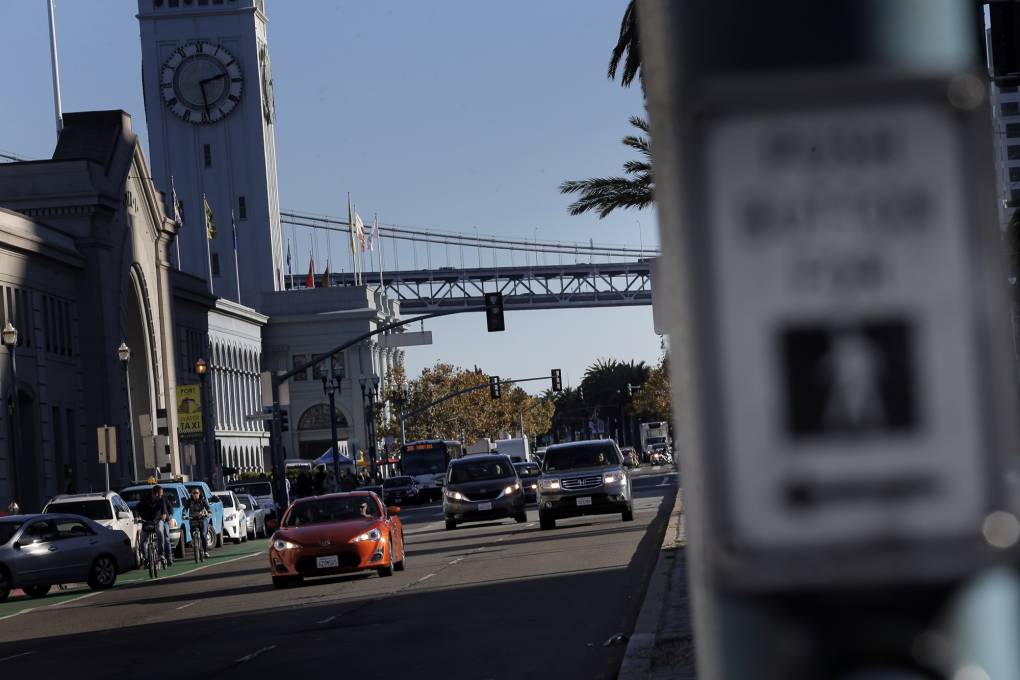
"caption": "Drivers course along the Embarcadero in San Francisco, California, on Nov. 12, 2015. San Francisco is on track to be the first city in California to install automated speed-enforcement cameras. It comes after the city’s highest traffic death toll in nearly two decades.",
"credit": "Carlos Avila Gonzalez/The San Francisco Chronicle via Getty Images",
"altTag": null,
"description": null,
"imgSizes": {
"medium": {
"file": "https://cdn.kqed.org/wp-content/uploads/sites/10/2025/01/SpeedCamerasSFGetty-800x533.jpg",
"width": 800,
"height": 533,
"mimeType": "image/jpeg"
},
"large": {
"file": "https://cdn.kqed.org/wp-content/uploads/sites/10/2025/01/SpeedCamerasSFGetty-1020x680.jpg",
"width": 1020,
"height": 680,
"mimeType": "image/jpeg"
},
"thumbnail": {
"file": "https://cdn.kqed.org/wp-content/uploads/sites/10/2025/01/SpeedCamerasSFGetty-160x107.jpg",
"width": 160,
"height": 107,
"mimeType": "image/jpeg"
},
"1536x1536": {
"file": "https://cdn.kqed.org/wp-content/uploads/sites/10/2025/01/SpeedCamerasSFGetty-1536x1024.jpg",
"width": 1536,
"height": 1024,
"mimeType": "image/jpeg"
},
"post-thumbnail": {
"file": "https://cdn.kqed.org/wp-content/uploads/sites/10/2025/01/SpeedCamerasSFGetty-672x372.jpg",
"width": 672,
"height": 372,
"mimeType": "image/jpeg"
},
"twentyfourteen-full-width": {
"file": "https://cdn.kqed.org/wp-content/uploads/sites/10/2025/01/SpeedCamerasSFGetty-1038x576.jpg",
"width": 1038,
"height": 576,
"mimeType": "image/jpeg"
},
"full-width": {
"file": "https://cdn.kqed.org/wp-content/uploads/sites/10/2025/01/SpeedCamerasSFGetty-1920x1280.jpg",
"width": 1920,
"height": 1280,
"mimeType": "image/jpeg"
},
"kqedFullSize": {
"file": "https://cdn.kqed.org/wp-content/uploads/sites/10/2025/01/SpeedCamerasSFGetty.jpg",
"width": 2000,
"height": 1333
}
},
"isLoading": false,
"fetchFailed": false
},
"news_12015647": {
"type": "attachments",
"id": "news_12015647",
"meta": {
"index": "attachments_1716263798",
"site": "news",
"id": "12015647",
"found": true
},
"title": "241122-StormHitsBayArea-38-BL",
"publishDate": 1732316223,
"status": "inherit",
"parent": 0,
"modified": 1732316241,
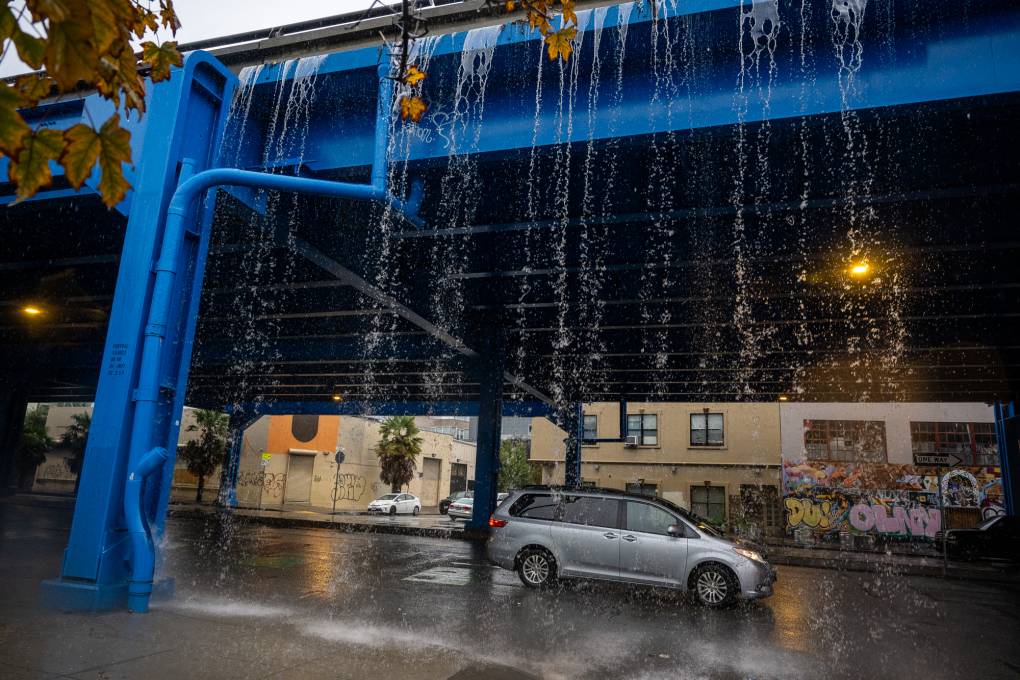
"caption": "Water spills over the Highway 101 overpass in San Francisco on Nov. 22, 2024, during a storm bringing heavy rain and strong winds to the Bay Area.",
"credit": "Beth LaBerge/KQED",
"altTag": null,
"description": null,
"imgSizes": {
"medium": {
"file": "https://cdn.kqed.org/wp-content/uploads/sites/10/2024/11/241122-StormHitsBayArea-38-BL-800x533.jpg",
"width": 800,
"height": 533,
"mimeType": "image/jpeg"
},
"large": {
"file": "https://cdn.kqed.org/wp-content/uploads/sites/10/2024/11/241122-StormHitsBayArea-38-BL-1020x680.jpg",
"width": 1020,
"height": 680,
"mimeType": "image/jpeg"
},
"thumbnail": {
"file": "https://cdn.kqed.org/wp-content/uploads/sites/10/2024/11/241122-StormHitsBayArea-38-BL-160x107.jpg",
"width": 160,
"height": 107,
"mimeType": "image/jpeg"
},
"1536x1536": {
"file": "https://cdn.kqed.org/wp-content/uploads/sites/10/2024/11/241122-StormHitsBayArea-38-BL-1536x1024.jpg",
"width": 1536,
"height": 1024,
"mimeType": "image/jpeg"
},
"post-thumbnail": {
"file": "https://cdn.kqed.org/wp-content/uploads/sites/10/2024/11/241122-StormHitsBayArea-38-BL-672x372.jpg",
"width": 672,
"height": 372,
"mimeType": "image/jpeg"
},
"twentyfourteen-full-width": {
"file": "https://cdn.kqed.org/wp-content/uploads/sites/10/2024/11/241122-StormHitsBayArea-38-BL-1038x576.jpg",
"width": 1038,
"height": 576,
"mimeType": "image/jpeg"
},
"full-width": {
"file": "https://cdn.kqed.org/wp-content/uploads/sites/10/2024/11/241122-StormHitsBayArea-38-BL-1920x1280.jpg",
"width": 1920,
"height": 1280,
"mimeType": "image/jpeg"
},
"kqedFullSize": {
"file": "https://cdn.kqed.org/wp-content/uploads/sites/10/2024/11/241122-StormHitsBayArea-38-BL.jpg",
"width": 2000,
"height": 1333
}
},
"isLoading": false,
"fetchFailed": false
},
"news_12018643": {
"type": "attachments",
"id": "news_12018643",
"meta": {
"index": "attachments_1716263798",
"site": "news",
"id": "12018643",
"found": true
},
"title": "APTOPIX Cash App Founder Killed",
"publishDate": 1734462416,
"status": "inherit",
"parent": 12018609,
"modified": 1734462445,
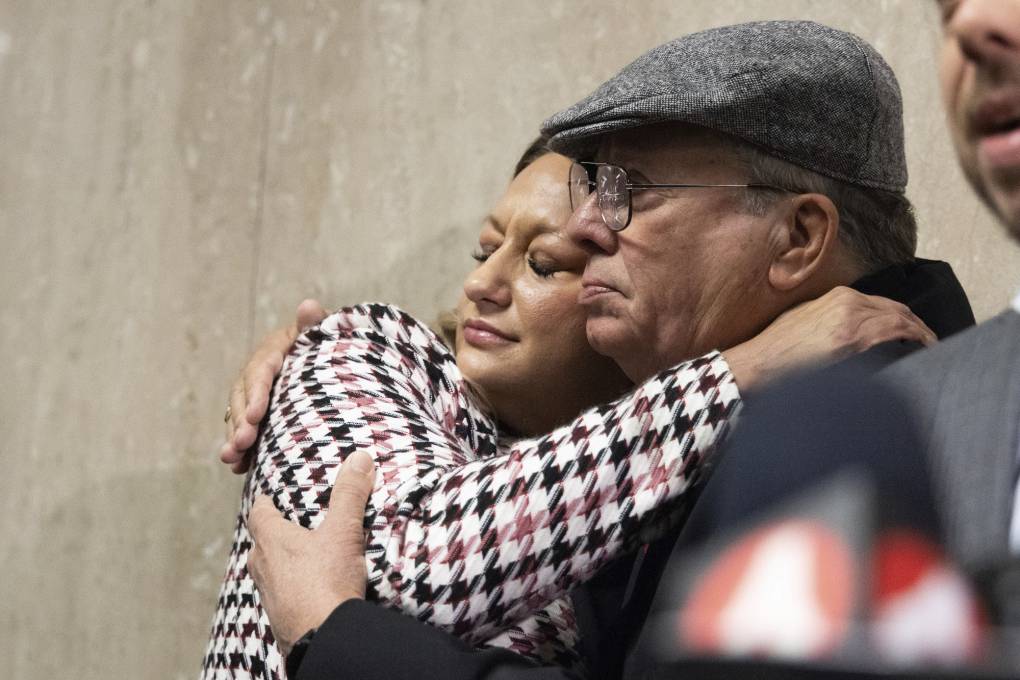
"caption": "Bob Lee's ex wife, Krista Lee, is embraced by Rick Lee, Bob Lee's father, at the Hall of Justice following Nima Momeni's murder trial, Tuesday, Dec. 17, 2024, in San Francisco.",
"credit": "Benjamin Fanjoy/AP Photo",
"altTag": null,
"description": null,
"imgSizes": {
"medium": {
"file": "https://cdn.kqed.org/wp-content/uploads/sites/10/2024/12/Nima-Momeni-Trial-AP-2-800x534.jpg",
"width": 800,
"height": 534,
"mimeType": "image/jpeg"
},
"large": {
"file": "https://cdn.kqed.org/wp-content/uploads/sites/10/2024/12/Nima-Momeni-Trial-AP-2-1020x680.jpg",
"width": 1020,
"height": 680,
"mimeType": "image/jpeg"
},
"thumbnail": {
"file": "https://cdn.kqed.org/wp-content/uploads/sites/10/2024/12/Nima-Momeni-Trial-AP-2-160x107.jpg",
"width": 160,
"height": 107,
"mimeType": "image/jpeg"
},
"1536x1536": {
"file": "https://cdn.kqed.org/wp-content/uploads/sites/10/2024/12/Nima-Momeni-Trial-AP-2-1536x1025.jpg",
"width": 1536,
"height": 1025,
"mimeType": "image/jpeg"
},
"post-thumbnail": {
"file": "https://cdn.kqed.org/wp-content/uploads/sites/10/2024/12/Nima-Momeni-Trial-AP-2-672x372.jpg",
"width": 672,
"height": 372,
"mimeType": "image/jpeg"
},
"twentyfourteen-full-width": {
"file": "https://cdn.kqed.org/wp-content/uploads/sites/10/2024/12/Nima-Momeni-Trial-AP-2-1038x576.jpg",
"width": 1038,
"height": 576,
"mimeType": "image/jpeg"
},
"full-width": {
"file": "https://cdn.kqed.org/wp-content/uploads/sites/10/2024/12/Nima-Momeni-Trial-AP-2-1920x1281.jpg",
"width": 1920,
"height": 1281,
"mimeType": "image/jpeg"
},
"kqedFullSize": {
"file": "https://cdn.kqed.org/wp-content/uploads/sites/10/2024/12/Nima-Momeni-Trial-AP-2.jpg",
"width": 2000,
"height": 1334
}
},
"isLoading": false,
"fetchFailed": false
},
"news_12018591": {
"type": "attachments",
"id": "news_12018591",
"meta": {
"index": "attachments_1716263798",
"site": "news",
"id": "12018591",
"found": true
},
"title": "20241216_SFStormCleanup_GC-17",
"publishDate": 1734399275,
"status": "inherit",
"parent": 0,
"modified": 1734437888,
"caption": "Dianna Stammerjohn searches for an owl’s nest at the site of a fallen pine tree, caused by last weekend’s storm, by the Bison Paddock, in the Outter Richmond neighborhood of San Francisco’s Golden Gate Park on Dec. 16, 2024. Stammerjohn said the owls had been nesting there for years.",
"credit": "Gina Castro/KQED",
"altTag": null,
"description": null,
"imgSizes": {
"medium": {
"file": "https://cdn.kqed.org/wp-content/uploads/sites/10/2024/12/20241216_SFStormCleanup_GC-17-800x533.jpg",
"width": 800,
"height": 533,
"mimeType": "image/jpeg"
},
"large": {
"file": "https://cdn.kqed.org/wp-content/uploads/sites/10/2024/12/20241216_SFStormCleanup_GC-17-1020x679.jpg",
"width": 1020,
"height": 679,
"mimeType": "image/jpeg"
},
"thumbnail": {
"file": "https://cdn.kqed.org/wp-content/uploads/sites/10/2024/12/20241216_SFStormCleanup_GC-17-160x107.jpg",
"width": 160,
"height": 107,
"mimeType": "image/jpeg"
},
"1536x1536": {
"file": "https://cdn.kqed.org/wp-content/uploads/sites/10/2024/12/20241216_SFStormCleanup_GC-17-1536x1023.jpg",
"width": 1536,
"height": 1023,
"mimeType": "image/jpeg"
},
"post-thumbnail": {
"file": "https://cdn.kqed.org/wp-content/uploads/sites/10/2024/12/20241216_SFStormCleanup_GC-17-672x372.jpg",
"width": 672,
"height": 372,
"mimeType": "image/jpeg"
},
"twentyfourteen-full-width": {
"file": "https://cdn.kqed.org/wp-content/uploads/sites/10/2024/12/20241216_SFStormCleanup_GC-17-1038x576.jpg",
"width": 1038,
"height": 576,
"mimeType": "image/jpeg"
},
"full-width": {
"file": "https://cdn.kqed.org/wp-content/uploads/sites/10/2024/12/20241216_SFStormCleanup_GC-17-1920x1279.jpg",
"width": 1920,
"height": 1279,
"mimeType": "image/jpeg"
},
"kqedFullSize": {
"file": "https://cdn.kqed.org/wp-content/uploads/sites/10/2024/12/20241216_SFStormCleanup_GC-17.jpg",
"width": 2000,
"height": 1332
}
},
"isLoading": false,
"fetchFailed": false
},
"news_12016880": {
"type": "attachments",
"id": "news_12016880",
"meta": {
"index": "attachments_1716263798",
"site": "news",
"id": "12016880",
"found": true
},
"title": "Tsunami Warning",
"publishDate": 1733433844,
"status": "inherit",
"parent": 0,
"modified": 1734387284,
"caption": "A state police vehicle patrols at Brickyard Cove in Berkeley, California, on Thursday, Dec. 5, 2024. Officials recommended evacuation of coastal areas due to a tsunami warning, that was later lifted.",
"credit": "David M. Barreda/KQED",
"altTag": null,
"description": null,
"imgSizes": {
"medium": {
"file": "https://cdn.kqed.org/wp-content/uploads/sites/10/2024/12/20241205_Tsunami-Warning_DMB_0666-800x533.jpg",
"width": 800,
"height": 533,
"mimeType": "image/jpeg"
},
"large": {
"file": "https://cdn.kqed.org/wp-content/uploads/sites/10/2024/12/20241205_Tsunami-Warning_DMB_0666-1020x679.jpg",
"width": 1020,
"height": 679,
"mimeType": "image/jpeg"
},
"thumbnail": {
"file": "https://cdn.kqed.org/wp-content/uploads/sites/10/2024/12/20241205_Tsunami-Warning_DMB_0666-160x107.jpg",
"width": 160,
"height": 107,
"mimeType": "image/jpeg"
},
"1536x1536": {
"file": "https://cdn.kqed.org/wp-content/uploads/sites/10/2024/12/20241205_Tsunami-Warning_DMB_0666-1536x1023.jpg",
"width": 1536,
"height": 1023,
"mimeType": "image/jpeg"
},
"post-thumbnail": {
"file": "https://cdn.kqed.org/wp-content/uploads/sites/10/2024/12/20241205_Tsunami-Warning_DMB_0666-672x372.jpg",
"width": 672,
"height": 372,
"mimeType": "image/jpeg"
},
"twentyfourteen-full-width": {
"file": "https://cdn.kqed.org/wp-content/uploads/sites/10/2024/12/20241205_Tsunami-Warning_DMB_0666-1038x576.jpg",
"width": 1038,
"height": 576,
"mimeType": "image/jpeg"
},
"full-width": {
"file": "https://cdn.kqed.org/wp-content/uploads/sites/10/2024/12/20241205_Tsunami-Warning_DMB_0666-1920x1279.jpg",
"width": 1920,
"height": 1279,
"mimeType": "image/jpeg"
},
"kqedFullSize": {
"file": "https://cdn.kqed.org/wp-content/uploads/sites/10/2024/12/20241205_Tsunami-Warning_DMB_0666.jpg",
"width": 2000,
"height": 1332
}
},
"isLoading": false,
"fetchFailed": false
},
"news_12015569": {
"type": "attachments",
"id": "news_12015569",
"meta": {
"index": "attachments_1716263798",
"site": "news",
"id": "12015569",
"found": true
},
"title": "241122-StormHitsBayArea-04-BL",
"publishDate": 1732303370,
"status": "inherit",
"parent": 0,
"modified": 1732303410,
"caption": "A vehicle drives through a flooded parking lot in Marin City on Nov. 22, 2024, during a storm bringing heavy rain and strong winds to the Bay Area.",
"credit": "Beth LaBerge/KQED",
"altTag": null,
"description": null,
"imgSizes": {
"medium": {
"file": "https://cdn.kqed.org/wp-content/uploads/sites/10/2024/11/241122-StormHitsBayArea-04-BL-800x533.jpg",
"width": 800,
"height": 533,
"mimeType": "image/jpeg"
},
"large": {
"file": "https://cdn.kqed.org/wp-content/uploads/sites/10/2024/11/241122-StormHitsBayArea-04-BL-1020x680.jpg",
"width": 1020,
"height": 680,
"mimeType": "image/jpeg"
},
"thumbnail": {
"file": "https://cdn.kqed.org/wp-content/uploads/sites/10/2024/11/241122-StormHitsBayArea-04-BL-160x107.jpg",
"width": 160,
"height": 107,
"mimeType": "image/jpeg"
},
"1536x1536": {
"file": "https://cdn.kqed.org/wp-content/uploads/sites/10/2024/11/241122-StormHitsBayArea-04-BL-1536x1024.jpg",
"width": 1536,
"height": 1024,
"mimeType": "image/jpeg"
},
"post-thumbnail": {
"file": "https://cdn.kqed.org/wp-content/uploads/sites/10/2024/11/241122-StormHitsBayArea-04-BL-672x372.jpg",
"width": 672,
"height": 372,
"mimeType": "image/jpeg"
},
"twentyfourteen-full-width": {
"file": "https://cdn.kqed.org/wp-content/uploads/sites/10/2024/11/241122-StormHitsBayArea-04-BL-1038x576.jpg",
"width": 1038,
"height": 576,
"mimeType": "image/jpeg"
},
"full-width": {
"file": "https://cdn.kqed.org/wp-content/uploads/sites/10/2024/11/241122-StormHitsBayArea-04-BL-1920x1280.jpg",
"width": 1920,
"height": 1280,
"mimeType": "image/jpeg"
},
"kqedFullSize": {
"file": "https://cdn.kqed.org/wp-content/uploads/sites/10/2024/11/241122-StormHitsBayArea-04-BL.jpg",
"width": 2000,
"height": 1333
}
},
"isLoading": false,
"fetchFailed": false
},
"news_12018300": {
"type": "attachments",
"id": "news_12018300",
"meta": {
"index": "attachments_1716263798",
"site": "news",
"id": "12018300",
"found": true
},
"title": "BartVideo_0002",
"publishDate": 1734134593,
"status": "inherit",
"parent": 12055781,
"modified": 1757717352,
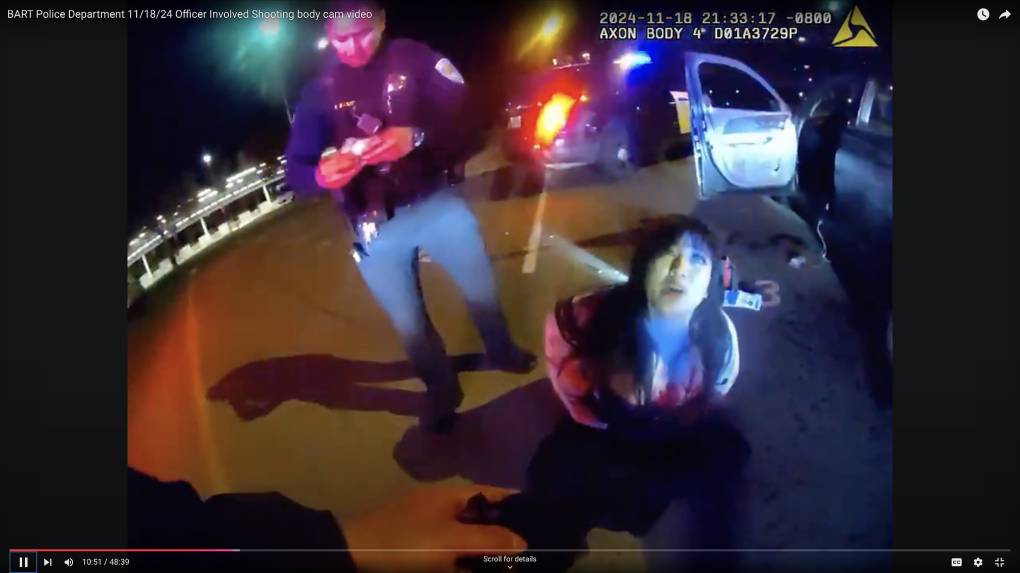
"caption": "A still from BART Police body camera footage released on Dec. 13, 2024, where an officer fired a gun at an individual before detaining them on Monday, Nov. 18, 2024, in the Union City Station parking lot.",
"credit": "Courtesy of BART",
"altTag": null,
"description": null,
"imgSizes": {
"medium": {
"file": "https://cdn.kqed.org/wp-content/uploads/sites/10/2024/12/BartVideo_0002-800x450.jpg",
"width": 800,
"height": 450,
"mimeType": "image/jpeg"
},
"large": {
"file": "https://cdn.kqed.org/wp-content/uploads/sites/10/2024/12/BartVideo_0002-1020x573.jpg",
"width": 1020,
"height": 573,
"mimeType": "image/jpeg"
},
"thumbnail": {
"file": "https://cdn.kqed.org/wp-content/uploads/sites/10/2024/12/BartVideo_0002-160x90.jpg",
"width": 160,
"height": 90,
"mimeType": "image/jpeg"
},
"1536x1536": {
"file": "https://cdn.kqed.org/wp-content/uploads/sites/10/2024/12/BartVideo_0002-1536x863.jpg",
"width": 1536,
"height": 863,
"mimeType": "image/jpeg"
},
"post-thumbnail": {
"file": "https://cdn.kqed.org/wp-content/uploads/sites/10/2024/12/BartVideo_0002-672x372.jpg",
"width": 672,
"height": 372,
"mimeType": "image/jpeg"
},
"twentyfourteen-full-width": {
"file": "https://cdn.kqed.org/wp-content/uploads/sites/10/2024/12/BartVideo_0002-1038x576.jpg",
"width": 1038,
"height": 576,
"mimeType": "image/jpeg"
},
"full-width": {
"file": "https://cdn.kqed.org/wp-content/uploads/sites/10/2024/12/BartVideo_0002-1920x1079.jpg",
"width": 1920,
"height": 1079,
"mimeType": "image/jpeg"
},
"kqedFullSize": {
"file": "https://cdn.kqed.org/wp-content/uploads/sites/10/2024/12/BartVideo_0002.jpg",
"width": 2000,
"height": 1124
}
},
"isLoading": false,
"fetchFailed": false
},
"news_12018119": {
"type": "attachments",
"id": "news_12018119",
"meta": {
"index": "attachments_1716263798",
"site": "news",
"id": "12018119",
"found": true
},
"title": "240412-OAKAirport-007-BL_qed (1)",
"publishDate": 1734112139,
"status": "inherit",
"parent": 12018113,
"modified": 1734112156,
"caption": "Signs direct passengers to terminals at Oakland International Airport in Oakland on April 12, 2024.",
"credit": "Beth LaBerge/KQED",
"altTag": null,
"description": null,
"imgSizes": {
"medium": {
"file": "https://cdn.kqed.org/wp-content/uploads/sites/10/2024/12/240412-OAKAirport-007-BL_qed-1-800x533.jpg",
"width": 800,
"height": 533,
"mimeType": "image/jpeg"
},
"large": {
"file": "https://cdn.kqed.org/wp-content/uploads/sites/10/2024/12/240412-OAKAirport-007-BL_qed-1-1020x680.jpg",
"width": 1020,
"height": 680,
"mimeType": "image/jpeg"
},
"thumbnail": {
"file": "https://cdn.kqed.org/wp-content/uploads/sites/10/2024/12/240412-OAKAirport-007-BL_qed-1-160x107.jpg",
"width": 160,
"height": 107,
"mimeType": "image/jpeg"
},
"1536x1536": {
"file": "https://cdn.kqed.org/wp-content/uploads/sites/10/2024/12/240412-OAKAirport-007-BL_qed-1-1536x1024.jpg",
"width": 1536,
"height": 1024,
"mimeType": "image/jpeg"
},
"post-thumbnail": {
"file": "https://cdn.kqed.org/wp-content/uploads/sites/10/2024/12/240412-OAKAirport-007-BL_qed-1-672x372.jpg",
"width": 672,
"height": 372,
"mimeType": "image/jpeg"
},
"twentyfourteen-full-width": {
"file": "https://cdn.kqed.org/wp-content/uploads/sites/10/2024/12/240412-OAKAirport-007-BL_qed-1-1038x576.jpg",
"width": 1038,
"height": 576,
"mimeType": "image/jpeg"
},
"full-width": {
"file": "https://cdn.kqed.org/wp-content/uploads/sites/10/2024/12/240412-OAKAirport-007-BL_qed-1-1920x1280.jpg",
"width": 1920,
"height": 1280,
"mimeType": "image/jpeg"
},
"kqedFullSize": {
"file": "https://cdn.kqed.org/wp-content/uploads/sites/10/2024/12/240412-OAKAirport-007-BL_qed-1.jpg",
"width": 1999,
"height": 1333
}
},
"isLoading": false,
"fetchFailed": false
},
"news_12015608": {
"type": "attachments",
"id": "news_12015608",
"meta": {
"index": "attachments_1716263798",
"site": "news",
"id": "12015608",
"found": true
},
"title": "241122-StormHitsBayArea-21-BL",
"publishDate": 1732310382,
"status": "inherit",
"parent": 0,
"modified": 1732310412,
"caption": "A person walks their dog on Haight Street in San Francisco on Nov. 22, 2024, during a storm bringing heavy rain and strong winds to the Bay Area.",
"credit": "Beth LaBerge/KQED",
"altTag": null,
"description": null,
"imgSizes": {
"medium": {
"file": "https://cdn.kqed.org/wp-content/uploads/sites/10/2024/11/241122-StormHitsBayArea-21-BL-800x533.jpg",
"width": 800,
"height": 533,
"mimeType": "image/jpeg"
},
"large": {
"file": "https://cdn.kqed.org/wp-content/uploads/sites/10/2024/11/241122-StormHitsBayArea-21-BL-1020x680.jpg",
"width": 1020,
"height": 680,
"mimeType": "image/jpeg"
},
"thumbnail": {
"file": "https://cdn.kqed.org/wp-content/uploads/sites/10/2024/11/241122-StormHitsBayArea-21-BL-160x107.jpg",
"width": 160,
"height": 107,
"mimeType": "image/jpeg"
},
"1536x1536": {
"file": "https://cdn.kqed.org/wp-content/uploads/sites/10/2024/11/241122-StormHitsBayArea-21-BL-1536x1024.jpg",
"width": 1536,
"height": 1024,
"mimeType": "image/jpeg"
},
"post-thumbnail": {
"file": "https://cdn.kqed.org/wp-content/uploads/sites/10/2024/11/241122-StormHitsBayArea-21-BL-672x372.jpg",
"width": 672,
"height": 372,
"mimeType": "image/jpeg"
},
"twentyfourteen-full-width": {
"file": "https://cdn.kqed.org/wp-content/uploads/sites/10/2024/11/241122-StormHitsBayArea-21-BL-1038x576.jpg",
"width": 1038,
"height": 576,
"mimeType": "image/jpeg"
},
"full-width": {
"file": "https://cdn.kqed.org/wp-content/uploads/sites/10/2024/11/241122-StormHitsBayArea-21-BL-1920x1280.jpg",
"width": 1920,
"height": 1280,
"mimeType": "image/jpeg"
},
"kqedFullSize": {
"file": "https://cdn.kqed.org/wp-content/uploads/sites/10/2024/11/241122-StormHitsBayArea-21-BL.jpg",
"width": 2000,
"height": 1333
}
},
"isLoading": false,
"fetchFailed": false
},
"news_11664162": {
"type": "attachments",
"id": "news_11664162",
"meta": {
"index": "attachments_1716263798",
"site": "news",
"id": "11664162",
"found": true
},
"title": "HarmeetDhillon",
"publishDate": 1524511368,
"status": "inherit",
"parent": 11664139,
"modified": 1733942941,
"caption": "Harmeet Dhillon, a trial lawyer and member of the Republican National Committee. Rather than compromise with Democrats, she says GOP state lawmakers should heighten their opposition.",
"credit": "Bert Johnson/KQED",
"altTag": "Harmeet Dhillon, trial lawyer and member of the Republican National Committee. Rather than compromise with Democrats, she says GOP state lawmakers should heighten their opposition.",
"description": "Harmeet Dhillon, trial lawyer and member of the Republican National Committee. Rather than compromise with Democrats, she says GOP state lawmakers should heighten their opposition.",
"imgSizes": {
"thumbnail": {
"file": "https://cdn.kqed.org/wp-content/uploads/sites/10/2018/04/HarmeetDhillon-160x108.jpg",
"width": 160,
"height": 108,
"mimeType": "image/jpeg"
},
"medium": {
"file": "https://cdn.kqed.org/wp-content/uploads/sites/10/2018/04/HarmeetDhillon-800x538.jpg",
"width": 800,
"height": 538,
"mimeType": "image/jpeg"
},
"large": {
"file": "https://cdn.kqed.org/wp-content/uploads/sites/10/2018/04/HarmeetDhillon-1020x685.jpg",
"width": 1020,
"height": 685,
"mimeType": "image/jpeg"
},
"complete_open_graph": {
"file": "https://cdn.kqed.org/wp-content/uploads/sites/10/2018/04/HarmeetDhillon-1200x806.jpg",
"width": 1200,
"height": 806,
"mimeType": "image/jpeg"
},
"fd-lrg": {
"file": "https://cdn.kqed.org/wp-content/uploads/sites/10/2018/04/HarmeetDhillon-1920x1290.jpg",
"width": 1920,
"height": 1290,
"mimeType": "image/jpeg"
},
"fd-med": {
"file": "https://cdn.kqed.org/wp-content/uploads/sites/10/2018/04/HarmeetDhillon-1180x793.jpg",
"width": 1180,
"height": 793,
"mimeType": "image/jpeg"
},
"fd-sm": {
"file": "https://cdn.kqed.org/wp-content/uploads/sites/10/2018/04/HarmeetDhillon-960x645.jpg",
"width": 960,
"height": 645,
"mimeType": "image/jpeg"
},
"post-thumbnail": {
"file": "https://cdn.kqed.org/wp-content/uploads/sites/10/2018/04/HarmeetDhillon-672x372.jpg",
"width": 672,
"height": 372,
"mimeType": "image/jpeg"
},
"twentyfourteen-full-width": {
"file": "https://cdn.kqed.org/wp-content/uploads/sites/10/2018/04/HarmeetDhillon-1038x576.jpg",
"width": 1038,
"height": 576,
"mimeType": "image/jpeg"
},
"xxsmall": {
"file": "https://cdn.kqed.org/wp-content/uploads/sites/10/2018/04/HarmeetDhillon-240x161.jpg",
"width": 240,
"height": 161,
"mimeType": "image/jpeg"
},
"xsmall": {
"file": "https://cdn.kqed.org/wp-content/uploads/sites/10/2018/04/HarmeetDhillon-375x252.jpg",
"width": 375,
"height": 252,
"mimeType": "image/jpeg"
},
"small": {
"file": "https://cdn.kqed.org/wp-content/uploads/sites/10/2018/04/HarmeetDhillon-520x349.jpg",
"width": 520,
"height": 349,
"mimeType": "image/jpeg"
},
"xlarge": {
"file": "https://cdn.kqed.org/wp-content/uploads/sites/10/2018/04/HarmeetDhillon-1180x793.jpg",
"width": 1180,
"height": 793,
"mimeType": "image/jpeg"
},
"full-width": {
"file": "https://cdn.kqed.org/wp-content/uploads/sites/10/2018/04/HarmeetDhillon-1920x1290.jpg",
"width": 1920,
"height": 1290,
"mimeType": "image/jpeg"
},
"guest-author-32": {
"file": "https://cdn.kqed.org/wp-content/uploads/sites/10/2018/04/HarmeetDhillon-32x32.jpg",
"width": 32,
"height": 32,
"mimeType": "image/jpeg"
},
"guest-author-50": {
"file": "https://cdn.kqed.org/wp-content/uploads/sites/10/2018/04/HarmeetDhillon-50x50.jpg",
"width": 50,
"height": 50,
"mimeType": "image/jpeg"
},
"guest-author-64": {
"file": "https://cdn.kqed.org/wp-content/uploads/sites/10/2018/04/HarmeetDhillon-64x64.jpg",
"width": 64,
"height": 64,
"mimeType": "image/jpeg"
},
"guest-author-96": {
"file": "https://cdn.kqed.org/wp-content/uploads/sites/10/2018/04/HarmeetDhillon-96x96.jpg",
"width": 96,
"height": 96,
"mimeType": "image/jpeg"
},
"guest-author-128": {
"file": "https://cdn.kqed.org/wp-content/uploads/sites/10/2018/04/HarmeetDhillon-128x128.jpg",
"width": 128,
"height": 128,
"mimeType": "image/jpeg"
},
"detail": {
"file": "https://cdn.kqed.org/wp-content/uploads/sites/10/2018/04/HarmeetDhillon-150x150.jpg",
"width": 150,
"height": 150,
"mimeType": "image/jpeg"
},
"kqedFullSize": {
"file": "https://cdn.kqed.org/wp-content/uploads/sites/10/2018/04/HarmeetDhillon.jpg",
"width": 1920,
"height": 1290
}
},
"isLoading": false,
"fetchFailed": false
},
"news_12017032": {
"type": "attachments",
"id": "news_12017032",
"meta": {
"index": "attachments_1716263798",
"site": "news",
"id": "12017032",
"found": true
},
"title": "170111_KingTide_bhs14",
"publishDate": 1733514269,
"status": "inherit",
"parent": 12016813,
"modified": 1733514313,
"caption": "Walkways along Pier 14 at the San Francisco Embarcadero begin to flood during the high point of a king tide on Jan. 11, 2017.",
"credit": "Brittany Hosea-Small/KQED",
"altTag": null,
"description": null,
"imgSizes": {
"medium": {
"file": "https://cdn.kqed.org/wp-content/uploads/sites/10/2024/12/170111_KingTide_bhs14-800x533.jpg",
"width": 800,
"height": 533,
"mimeType": "image/jpeg"
},
"large": {
"file": "https://cdn.kqed.org/wp-content/uploads/sites/10/2024/12/170111_KingTide_bhs14-1020x680.jpg",
"width": 1020,
"height": 680,
"mimeType": "image/jpeg"
},
"thumbnail": {
"file": "https://cdn.kqed.org/wp-content/uploads/sites/10/2024/12/170111_KingTide_bhs14-160x107.jpg",
"width": 160,
"height": 107,
"mimeType": "image/jpeg"
},
"1536x1536": {
"file": "https://cdn.kqed.org/wp-content/uploads/sites/10/2024/12/170111_KingTide_bhs14-1536x1024.jpg",
"width": 1536,
"height": 1024,
"mimeType": "image/jpeg"
},
"post-thumbnail": {
"file": "https://cdn.kqed.org/wp-content/uploads/sites/10/2024/12/170111_KingTide_bhs14-672x372.jpg",
"width": 672,
"height": 372,
"mimeType": "image/jpeg"
},
"twentyfourteen-full-width": {
"file": "https://cdn.kqed.org/wp-content/uploads/sites/10/2024/12/170111_KingTide_bhs14-1038x576.jpg",
"width": 1038,
"height": 576,
"mimeType": "image/jpeg"
},
"kqedFullSize": {
"file": "https://cdn.kqed.org/wp-content/uploads/sites/10/2024/12/170111_KingTide_bhs14.jpg",
"width": 1920,
"height": 1280
}
},
"isLoading": false,
"fetchFailed": false
},
"news_12016905": {
"type": "attachments",
"id": "news_12016905",
"meta": {
"index": "attachments_1716263798",
"site": "news",
"id": "12016905",
"found": true
},
"title": "EarthquakeSukeyLewis",
"publishDate": 1733436901,
"status": "inherit",
"parent": 0,
"modified": 1733436945,
"caption": "Ray's Food Place in Fortuna, California, on Dec. 5, 2024.",
"credit": "Sukey Lewis/KQED",
"altTag": null,
"description": null,
"imgSizes": {
"medium": {
"file": "https://cdn.kqed.org/wp-content/uploads/sites/10/2024/12/EarthquakeSukeyLewis-800x600.jpg",
"width": 800,
"height": 600,
"mimeType": "image/jpeg"
},
"large": {
"file": "https://cdn.kqed.org/wp-content/uploads/sites/10/2024/12/EarthquakeSukeyLewis-1020x765.jpg",
"width": 1020,
"height": 765,
"mimeType": "image/jpeg"
},
"thumbnail": {
"file": "https://cdn.kqed.org/wp-content/uploads/sites/10/2024/12/EarthquakeSukeyLewis-160x120.jpg",
"width": 160,
"height": 120,
"mimeType": "image/jpeg"
},
"1536x1536": {
"file": "https://cdn.kqed.org/wp-content/uploads/sites/10/2024/12/EarthquakeSukeyLewis-1536x1152.jpg",
"width": 1536,
"height": 1152,
"mimeType": "image/jpeg"
},
"post-thumbnail": {
"file": "https://cdn.kqed.org/wp-content/uploads/sites/10/2024/12/EarthquakeSukeyLewis-672x372.jpg",
"width": 672,
"height": 372,
"mimeType": "image/jpeg"
},
"twentyfourteen-full-width": {
"file": "https://cdn.kqed.org/wp-content/uploads/sites/10/2024/12/EarthquakeSukeyLewis-1038x576.jpg",
"width": 1038,
"height": 576,
"mimeType": "image/jpeg"
},
"full-width": {
"file": "https://cdn.kqed.org/wp-content/uploads/sites/10/2024/12/EarthquakeSukeyLewis-1920x1440.jpg",
"width": 1920,
"height": 1440,
"mimeType": "image/jpeg"
},
"kqedFullSize": {
"file": "https://cdn.kqed.org/wp-content/uploads/sites/10/2024/12/EarthquakeSukeyLewis.jpg",
"width": 2000,
"height": 1500
}
},
"isLoading": false,
"fetchFailed": false
}
},
"audioPlayerReducer": {
"postId": "stream_live",
"isPaused": true,
"isPlaying": false,
"pfsActive": false,
"pledgeModalIsOpen": true,
"playerDrawerIsOpen": false,
"liveAudioPlayStartedAt": 0,
"liveAudioPlayContext": ""
},
"authorsReducer": {
"danbrekke": {
"type": "authors",
"id": "222",
"meta": {
"index": "authors_1716337520",
"id": "222",
"found": true
},
"name": "Dan Brekke",
"firstName": "Dan",
"lastName": "Brekke",
"slug": "danbrekke",
"email": "dbrekke@kqed.org",
"display_author_email": true,
"staff_mastheads": [
"news",
"science"
],
"title": "KQED Editor and Reporter",
"bio": "Dan Brekke is a reporter and editor for KQED News, responsible for coverage of topics ranging from California water issues to the Bay Area's transportation challenges. In a newsroom career that began in Chicago in 1972, Dan has worked for \u003cem>The San Francisco Examiner,\u003c/em> Wired and TechTV and has been published in The New York Times, The New York Times Magazine, Business 2.0, Salon and elsewhere.\r\n\r\nSince joining KQED in 2007, Dan has reported, edited and produced both radio and online features and breaking news pieces. He has shared as both editor and reporter in four Society of Professional Journalists Norcal Excellence in Journalism awards and one Edward R. Murrow regional award. He was chosen for a spring 2017 residency at the Mesa Refuge to advance his research on California salmon.\r\n\r\nEmail Dan at: \u003ca href=\"mailto:dbrekke@kqed.org\">dbrekke@kqed.org\u003c/a>\r\n\r\n\u003cstrong>Twitter:\u003c/strong> \u003ca href=\"https://twitter.com/danbrekke\" rel=\"noopener noreferrer\">twitter.com/danbrekke\u003c/a>\r\n\u003cstrong>Facebook:\u003c/strong> \u003ca href=\"https://www.facebook.com/danbrekke\" rel=\"noopener noreferrer\">www.facebook.com/danbrekke\u003c/a>\r\n\u003cstrong>LinkedIn:\u003c/strong> \u003ca href=\"https://www.linkedin.com/in/danbrekke\" rel=\"noopener noreferrer\">www.linkedin.com/in/danbrekke\u003c/a>",
"avatar": "https://secure.gravatar.com/avatar/c8126230345efca3f7aa89b1a402be45?s=600&d=mm&r=g",
"twitter": "danbrekke",
"facebook": null,
"instagram": "https://www.instagram.com/dan.brekke/",
"linkedin": "https://www.linkedin.com/in/danbrekke/",
"sites": [
{
"site": "news",
"roles": [
"administrator",
"create_posts"
]
},
{
"site": "stateofhealth",
"roles": [
"editor"
]
},
{
"site": "science",
"roles": [
"editor"
]
},
{
"site": "quest",
"roles": [
"contributor"
]
},
{
"site": "food",
"roles": [
"contributor"
]
},
{
"site": "forum",
"roles": [
"contributor"
]
},
{
"site": "liveblog",
"roles": [
"editor"
]
}
],
"headData": {
"title": "Dan Brekke | KQED",
"description": "KQED Editor and Reporter",
"ogImgSrc": "https://secure.gravatar.com/avatar/c8126230345efca3f7aa89b1a402be45?s=600&d=mm&r=g",
"twImgSrc": "https://secure.gravatar.com/avatar/c8126230345efca3f7aa89b1a402be45?s=600&d=mm&r=g"
},
"isLoading": false,
"link": "/author/danbrekke"
},
"mlagos": {
"type": "authors",
"id": "3239",
"meta": {
"index": "authors_1716337520",
"id": "3239",
"found": true
},
"name": "Marisa Lagos",
"firstName": "Marisa",
"lastName": "Lagos",
"slug": "mlagos",
"email": "mlagos@kqed.org",
"display_author_email": false,
"staff_mastheads": [
"news"
],
"title": "KQED Contributor",
"bio": "Marisa Lagos is a correspondent for KQED’s California Politics and Government Desk and co-hosts the award-winning show and podcast, Political Breakdown. At KQED, Lagos also conducts reporting, analysis and investigations into state, local and national politics for radio, TV, online and onstage. In 2022, she and co-host, Scott Shafer, moderated the only gubernatorial debate in California. In 2020, the \u003ci>Washington Post\u003c/i> named her one of the top political journalists in California; she was nominated for a Peabody and won several other awards for her work investigating the 2017 California wildfires. She has worked at the \u003ci>San Francisco Chronicle\u003c/i>, \u003ci>San Francisco Examiner\u003c/i> and \u003ci>Los Angeles Times\u003c/i>. A UC Santa Barbara graduate, she lives in San Francisco with her two sons and husband.",
"avatar": "https://secure.gravatar.com/avatar/a261a0d3696fc066871ef96b85b5e7d2?s=600&d=blank&r=g",
"twitter": "@mlagos",
"facebook": null,
"instagram": null,
"linkedin": null,
"sites": [
{
"site": "arts",
"roles": [
"author"
]
},
{
"site": "news",
"roles": [
"editor"
]
},
{
"site": "science",
"roles": [
"editor"
]
},
{
"site": "forum",
"roles": [
"author"
]
},
{
"site": "liveblog",
"roles": [
"author"
]
}
],
"headData": {
"title": "Marisa Lagos | KQED",
"description": "KQED Contributor",
"ogImgSrc": "https://secure.gravatar.com/avatar/a261a0d3696fc066871ef96b85b5e7d2?s=600&d=blank&r=g",
"twImgSrc": "https://secure.gravatar.com/avatar/a261a0d3696fc066871ef96b85b5e7d2?s=600&d=blank&r=g"
},
"isLoading": false,
"link": "/author/mlagos"
},
"eromero": {
"type": "authors",
"id": "11746",
"meta": {
"index": "authors_1716337520",
"id": "11746",
"found": true
},
"name": "Ezra David Romero",
"firstName": "Ezra David",
"lastName": "Romero",
"slug": "eromero",
"email": "eromero@kqed.org",
"display_author_email": true,
"staff_mastheads": [
"news",
"science"
],
"title": "Climate Reporter",
"bio": "Ezra David Romero is a climate reporter for KQED News. He covers the absence and excess of water in the Bay Area — think sea level rise, flooding and drought. For nearly a decade he’s covered how warming temperatures are altering the lives of Californians. He’s reported on farmers worried their pistachio trees aren’t getting enough sleep, families desperate for water, scientists studying dying giant sequoias, and alongside firefighters containing wildfires. His work has appeared on local stations across California and nationally on public radio shows like Morning Edition, Here and Now, All Things Considered and Science Friday. ",
"avatar": "https://secure.gravatar.com/avatar/c76404d287c10ed40224227551ac36e24352c7306f106632caf6fead76f8801f?s=600&d=blank&r=g",
"twitter": "ezraromero",
"bluesky": null,
"facebook": null,
"instagram": null,
"linkedin": null,
"sites": [
{
"site": "arts",
"roles": [
"editor"
]
},
{
"site": "news",
"roles": [
"editor"
]
},
{
"site": "science",
"roles": [
"editor"
]
},
{
"site": "liveblog",
"roles": [
"author"
]
}
],
"headData": {
"title": "Ezra David Romero | KQED",
"description": "Climate Reporter",
"ogImgSrc": "https://secure.gravatar.com/avatar/c76404d287c10ed40224227551ac36e24352c7306f106632caf6fead76f8801f?s=600&d=blank&r=g",
"twImgSrc": "https://secure.gravatar.com/avatar/c76404d287c10ed40224227551ac36e24352c7306f106632caf6fead76f8801f?s=600&d=blank&r=g"
},
"isLoading": false,
"link": "/author/eromero"
},
"jservantez": {
"type": "authors",
"id": "11909",
"meta": {
"index": "authors_1716337520",
"id": "11909",
"found": true
},
"name": "Jared Servantez",
"firstName": "Jared",
"lastName": "Servantez",
"slug": "jservantez",
"email": "jservantez@kqed.org",
"display_author_email": true,
"staff_mastheads": [
"news"
],
"title": "KQED Contributor",
"bio": "Jared Servantez is the editor of KQED's Express Desk, leading the newsroom's online breaking news operation. He most recently worked for the Los Angeles Times, where he served as a breaking news editor, the Metro Desk's night editor, and a copy editor. Jared is a graduate of the USC Annenberg School for Communication and Journalism.",
"avatar": "https://secure.gravatar.com/avatar/f0e317c67bb498c3f077f033d1cc79e62f3bc1303fa20a14e8880d31fbe7e01e?s=600&d=blank&r=g",
"twitter": "jservantez",
"bluesky": null,
"facebook": null,
"instagram": null,
"linkedin": null,
"sites": [
{
"site": "news",
"roles": [
"editor"
]
},
{
"site": "science",
"roles": [
"editor",
"author"
]
},
{
"site": "liveblog",
"roles": [
"editor"
]
}
],
"headData": {
"title": "Jared Servantez | KQED",
"description": "KQED Contributor",
"ogImgSrc": "https://secure.gravatar.com/avatar/f0e317c67bb498c3f077f033d1cc79e62f3bc1303fa20a14e8880d31fbe7e01e?s=600&d=blank&r=g",
"twImgSrc": "https://secure.gravatar.com/avatar/f0e317c67bb498c3f077f033d1cc79e62f3bc1303fa20a14e8880d31fbe7e01e?s=600&d=blank&r=g"
},
"isLoading": false,
"link": "/author/jservantez"
},
"kdebenedetti": {
"type": "authors",
"id": "11913",
"meta": {
"index": "authors_1716337520",
"id": "11913",
"found": true
},
"name": "Katie DeBenedetti",
"firstName": "Katie",
"lastName": "DeBenedetti",
"slug": "kdebenedetti",
"email": "kdebenedetti@kqed.org",
"display_author_email": false,
"staff_mastheads": [
"news",
"science"
],
"title": "KQED Contributor",
"bio": "Katie DeBenedetti is a digital reporter covering daily news for the Express Desk. Prior to joining KQED as a culture reporting intern in January 2024, she covered education and city government for the Napa Valley Register.",
"avatar": "https://secure.gravatar.com/avatar/6e31073cb8f7e4214ab03f42771d0f45?s=600&d=blank&r=g",
"twitter": null,
"facebook": null,
"instagram": null,
"linkedin": null,
"sites": [
{
"site": "news",
"roles": [
"author"
]
},
{
"site": "science",
"roles": [
"author"
]
},
{
"site": "liveblog",
"roles": [
"author"
]
}
],
"headData": {
"title": "Katie DeBenedetti | KQED",
"description": "KQED Contributor",
"ogImgSrc": "https://secure.gravatar.com/avatar/6e31073cb8f7e4214ab03f42771d0f45?s=600&d=blank&r=g",
"twImgSrc": "https://secure.gravatar.com/avatar/6e31073cb8f7e4214ab03f42771d0f45?s=600&d=blank&r=g"
},
"isLoading": false,
"link": "/author/kdebenedetti"
},
"rcooke": {
"type": "authors",
"id": "11921",
"meta": {
"index": "authors_1716337520",
"id": "11921",
"found": true
},
"name": "Riley Cooke",
"firstName": "Riley",
"lastName": "Cooke",
"slug": "rcooke",
"email": "rcooke@kqed.org",
"display_author_email": true,
"staff_mastheads": [
"news"
],
"title": "KQED Contributor",
"bio": "Riley is a senior at UC Berkeley, where she studies political science and journalism. Her work has appeared in SFGate, NBC Bay Area, Local News Matters and more. She enjoys reporting on politics, housing and homelessness — and using as many em dashes as her editors will allow.",
"avatar": "https://secure.gravatar.com/avatar/792f98c126cc5e270a8a96f77f7224ea?s=600&d=blank&r=g",
"twitter": "rrileycooke",
"facebook": null,
"instagram": null,
"linkedin": null,
"sites": [
{
"site": "arts",
"roles": [
"author"
]
},
{
"site": "news",
"roles": [
"author"
]
}
],
"headData": {
"title": "Riley Cooke | KQED",
"description": "KQED Contributor",
"ogImgSrc": "https://secure.gravatar.com/avatar/792f98c126cc5e270a8a96f77f7224ea?s=600&d=blank&r=g",
"twImgSrc": "https://secure.gravatar.com/avatar/792f98c126cc5e270a8a96f77f7224ea?s=600&d=blank&r=g"
},
"isLoading": false,
"link": "/author/rcooke"
},
"bkrans": {
"type": "authors",
"id": "11923",
"meta": {
"index": "authors_1716337520",
"id": "11923",
"found": true
},
"name": "Brian Krans",
"firstName": "Brian",
"lastName": "Krans",
"slug": "bkrans",
"email": "bkrans@kqed.org",
"display_author_email": false,
"staff_mastheads": [
"news"
],
"title": "KQED Contributing Reporter",
"bio": "Brian Krans is an award-winning local news and investigative reporter who has been proudly working as a general assignment reporter for KQED since August 2023. He lives in Richmond, where he also reports on air pollution for Richmondside. He is also a founding member of the Vallejo Sun.",
"avatar": "https://secure.gravatar.com/avatar/d1014d604089314a94807d2c4f2d3e06?s=600&d=blank&r=g",
"twitter": "citizenkrans",
"facebook": null,
"instagram": null,
"linkedin": null,
"sites": [
{
"site": "news",
"roles": [
"editor"
]
}
],
"headData": {
"title": "Brian Krans | KQED",
"description": "KQED Contributing Reporter",
"ogImgSrc": "https://secure.gravatar.com/avatar/d1014d604089314a94807d2c4f2d3e06?s=600&d=blank&r=g",
"twImgSrc": "https://secure.gravatar.com/avatar/d1014d604089314a94807d2c4f2d3e06?s=600&d=blank&r=g"
},
"isLoading": false,
"link": "/author/bkrans"
}
},
"pagesReducer": {
"news_tag_bay-area": {
"type": "terms",
"id": "news_1386",
"meta": {
"index": "terms_1716263798",
"site": "news",
"id": "1386",
"score": 7.788453
},
"featImg": null,
"name": "Bay Area",
"description": null,
"taxonomy": "tag",
"headData": {
"twImgId": null,
"twTitle": null,
"ogTitle": null,
"ogImgId": null,
"twDescription": null,
"description": null,
"title": "Bay Area Archives | KQED News",
"ogDescription": null
},
"ttid": 1398,
"slug": "bay-area",
"isLoading": false,
"title": "Bay Area",
"pageMeta": {
"site": "news",
"WpPageTemplate": "page-topic-editorial",
"currentPage": 81
},
"blocks": [
{
"blockName": "kqed/post-list",
"attrs": {
"layout": "cardArticle2",
"query": "posts/news?tag=bay-area",
"seeMore": false,
"paginated": true,
"page": 81
}
},
{
"blockName": "kqed/ad"
}
]
}
},
"pfsSessionReducer": {},
"postsReducer": {
"stream_live": {
"type": "live",
"id": "stream_live",
"audioUrl": "https://streams.kqed.org/kqedradio",
"title": "Live Stream",
"excerpt": "Live Stream information currently unavailable.",
"link": "/radio",
"featImg": "",
"label": {
"name": "KQED Live",
"link": "/"
}
},
"stream_kqedNewscast": {
"type": "posts",
"id": "stream_kqedNewscast",
"audioUrl": "https://www.kqed.org/.stream/anon/radio/RDnews/newscast.mp3?_=1",
"title": "KQED Newscast",
"featImg": "",
"label": {
"name": "88.5 FM",
"link": "/"
}
},
"news_12020110": {
"type": "posts",
"id": "news_12020110",
"meta": {
"index": "posts_1716263798",
"site": "news",
"id": "12020110",
"score": null,
"sort": [
1735925971000
]
},
"guestAuthors": [],
"slug": "sf-speed-cameras-coming-march-will-they-help-cut-traffic-deaths",
"title": "SF’s Speed Cameras Are Coming in March. Will They Help Cut Traffic Deaths?",
"publishDate": 1735925971,
"format": "standard",
"headTitle": "SF’s Speed Cameras Are Coming in March. Will They Help Cut Traffic Deaths? | KQED",
"labelTerm": {
"site": "news"
},
"content": "\u003cp>After a delay, San Francisco is on track to be the first city in California to install automated speed-enforcement cameras, realizing a goal long sought by street safety advocates frustrated by the city’s lack of progress on its long-term goal of \u003ca href=\"https://www.kqed.org/news/12010882/tragic-sf-pedestrian-death-raises-question-vision-zero-failure\">eliminating traffic deaths and serious injuries\u003c/a>.\u003c/p>\n\u003cp>City officials say the cameras will begin operating on a warning-only basis in mid-March — nearly a year and a half after Gov. Gavin Newsom signed \u003ca href=\"https://leginfo.legislature.ca.gov/faces/billNavClient.xhtml?bill_id=202320240AB645\">a bill\u003c/a> authorizing the devices in San Francisco, Oakland, San José, Los Angeles, Long Beach and Glendale. All except San Francisco are still in the planning stages for camera deployment.\u003c/p>\n\u003cp>San Francisco’s 33 cameras are set to arrive in the wake of the city’s highest traffic death toll in nearly two decades. In 2024, the year San Francisco aimed to eliminate traffic deaths under Vision Zero, 41 people died in vehicle collisions. Twenty-four pedestrians were among those killed.\u003c/p>\n\u003cp>The spike in fatalities has led to widespread calls for the city to intensify its traffic safety efforts, as activists, the public and some members of the Board of Supervisors chide the \u003ca href=\"https://www.kqed.org/news/tag/sfmta\">Municipal Transportation Agency\u003c/a> for falling behind on its ambitious “quick build” program to rapidly improve conditions for people walking and rolling at more than 900 locations across the city by the end of 2024.\u003c/p>\n\u003cp>[ad fullwidth]\u003c/p>\n\u003cp>About three-fourths of the projects, including improving crosswalks and resetting traffic signals to give pedestrians more time to cross, have been finished, and 15% are in progress.\u003c/p>\n\u003cp>“There is a problem when we articulate a public goal and are very clear about it and respond to people who are concerned about whether we can make that goal and over and over again to reassure them that we can — and then don’t,” Supervisor Rafael Mandelman said at the Dec. 17 meeting of the San Francisco County Transportation Authority Board. “That’s something that I think drives our public a little nuts.”\u003c/p>\n\u003cp>Mandelman asked Shannon Hake, the SFMTA’s Vision Zero program manager, why the cameras are deploying in March after the agency had set a target of February.\u003c/p>\n\u003cp>[aside postID=news_12019378 hero='https://cdn.kqed.org/wp-content/uploads/sites/10/2024/12/GettyImages-182664622-1020x535.jpg']\u003c/p>\n\u003cp>“Are we sure they’re going in March?” he asked.\u003c/p>\n\u003cp>Hake attributed the extended deployment timeline to factors like identifying a contractor to run the system, completing electrical and structural engineering and working out an agreement with the city’s Public Works agency to mount the cameras on light poles.\u003c/p>\n\u003cp>With that work done, Hake said, “I am very, very confident that these will be launching in March.”\u003c/p>\n\u003cp>Between now and then, drivers will see signs that the cameras are coming to \u003ca href=\"https://www.sfmta.com/media/38680/download?inline\">the 33 locations\u003c/a> the city has identified as having at least one significant traffic safety risk, including a history of injury collisions or a high incidence of speeding.\u003c/p>\n\u003cp>Camera installation and testing are scheduled for February, along with a state-required public information campaign featuring warning signs near camera locations.\u003c/p>\n\u003cp>For the first 60 days after cameras begin operating in March, drivers who exceed posted speed limits in the camera zones by at least 11 mph will receive no-fee warning notices. Citations with penalties ranging from $50 up to $500 will be issued starting in mid-May.\u003c/p>\n\u003cp>The penalty schedule, included in the program’s authorizing legislation:\u003c/p>\n\u003cul>\n\u003cli>$50 for driving 11 to 15 mph over the posted speed limit\u003c/li>\n\u003cli>$100 for driving 16 to 25 mph over the posted speed limit\u003c/li>\n\u003cli>$200 for driving 26 mph or more over the posted speed limit\u003c/li>\n\u003cli>$500 for driving at a speed of 100 mph or more.\u003c/li>\n\u003c/ul>\n\u003cp>Under terms of Assembly Bill 645, citations carry civil penalties only, will not be assessed as a DMV penalty point and won’t result in the DMV suspending or revoking a driver’s license.\u003c/p>\n\u003cp>Jodie Medeiros, executive director of AB 645 co-sponsor Walk San Francisco, said she’s confident that cameras will be “a game-changer” for traffic safety in the city.\u003c/p>\n\u003cp>She pointed to Philadelphia, where \u003ca href=\"https://visionzerophl.com/wp-content/uploads/2024/05/Automated-Speed-Enforcement-Expansion-Report-05-2024.pdf\">officials say\u003c/a> speed cameras installed along one notoriously dangerous corridor have reduced speeding by 95% at the locations where the devices are present. Fatal and serious injury crashes throughout the corridor fell by 21% after the cameras began operating. Collisions involving pedestrians were cut in half.\u003c/p>\n\u003cp>“That’s exactly the type of results we want to see in San Francisco,” Medeiros said.\u003c/p>\n\u003cp>She said that while she doesn’t want to see the deployment timeline slip any further, city officials deserve credit for getting cameras up and running before any of the other authorized cities did.\u003c/p>\n\u003cp>“San Francisco is leading the pack in that way, and I think that’s something that we should be proud of,” she said.\u003c/p>\n\u003cp>\u003c/p>\n",
"blocks": [],
"excerpt": "San Francisco is on track to be the first city in California to install automated speed-enforcement cameras. It comes after the city’s highest traffic death toll in nearly two decades.",
"status": "publish",
"parent": 0,
"modified": 1735945331,
"stats": {
"hasAudio": false,
"hasVideo": false,
"hasChartOrMap": false,
"iframeSrcs": [],
"hasGoogleForm": false,
"hasGallery": false,
"hasHearkenModule": false,
"hasPolis": false,
"paragraphCount": 23,
"wordCount": 832
},
"headData": {
"title": "SF’s Speed Cameras Are Coming in March. Will They Help Cut Traffic Deaths? | KQED",
"description": "San Francisco is on track to be the first city in California to install automated speed-enforcement cameras. It comes after the city’s highest traffic death toll in nearly two decades.",
"ogTitle": "",
"ogDescription": "",
"ogImgId": "",
"twTitle": "",
"twDescription": "",
"twImgId": "",
"schema": {
"@context": "https://schema.org",
"@type": "NewsArticle",
"headline": "SF’s Speed Cameras Are Coming in March. Will They Help Cut Traffic Deaths?",
"datePublished": "2025-01-03T09:39:31-08:00",
"dateModified": "2025-01-03T15:02:11-08:00",
"image": "https://cdn.kqed.org/wp-content/uploads/2020/02/KQED-OG-Image@1x.png",
"isAccessibleForFree": "True",
"publisher": {
"@type": "NewsMediaOrganization",
"@id": "https://www.kqed.org/#organization",
"name": "KQED",
"logo": "https://cdn.kqed.org/wp-content/uploads/2020/02/KQED-OG-Image@1x.png",
"url": "https://www.kqed.org",
"sameAs": [
"https://www.facebook.com/KQED",
"https://twitter.com/KQED",
"https://www.instagram.com/kqed/",
"https://www.tiktok.com/@kqedofficial",
"https://www.linkedin.com/company/kqed",
"https://www.youtube.com/channel/UCeC0IOo7i1P_61zVUWbJ4nw"
]
}
}
},
"sticky": false,
"nprStoryId": "kqed-12020110",
"excludeFromSiteSearch": "Include",
"articleAge": "0",
"path": "/news/12020110/sf-speed-cameras-coming-march-will-they-help-cut-traffic-deaths",
"audioTrackLength": null,
"parsedContent": [
{
"type": "contentString",
"content": "\u003cdiv class=\"post-body\">\u003cp>\u003cp>After a delay, San Francisco is on track to be the first city in California to install automated speed-enforcement cameras, realizing a goal long sought by street safety advocates frustrated by the city’s lack of progress on its long-term goal of \u003ca href=\"https://www.kqed.org/news/12010882/tragic-sf-pedestrian-death-raises-question-vision-zero-failure\">eliminating traffic deaths and serious injuries\u003c/a>.\u003c/p>\n\u003cp>City officials say the cameras will begin operating on a warning-only basis in mid-March — nearly a year and a half after Gov. Gavin Newsom signed \u003ca href=\"https://leginfo.legislature.ca.gov/faces/billNavClient.xhtml?bill_id=202320240AB645\">a bill\u003c/a> authorizing the devices in San Francisco, Oakland, San José, Los Angeles, Long Beach and Glendale. All except San Francisco are still in the planning stages for camera deployment.\u003c/p>\n\u003cp>San Francisco’s 33 cameras are set to arrive in the wake of the city’s highest traffic death toll in nearly two decades. In 2024, the year San Francisco aimed to eliminate traffic deaths under Vision Zero, 41 people died in vehicle collisions. Twenty-four pedestrians were among those killed.\u003c/p>\n\u003cp>The spike in fatalities has led to widespread calls for the city to intensify its traffic safety efforts, as activists, the public and some members of the Board of Supervisors chide the \u003ca href=\"https://www.kqed.org/news/tag/sfmta\">Municipal Transportation Agency\u003c/a> for falling behind on its ambitious “quick build” program to rapidly improve conditions for people walking and rolling at more than 900 locations across the city by the end of 2024.\u003c/p>\n\u003cp>\u003c/p>\u003c/div>",
"attributes": {
"named": {},
"numeric": []
}
},
{
"type": "component",
"content": "",
"name": "ad",
"attributes": {
"named": {
"label": "fullwidth"
},
"numeric": [
"fullwidth"
]
}
},
{
"type": "contentString",
"content": "\u003cdiv class=\"post-body\">\u003cp>\u003c/p>\n\u003cp>About three-fourths of the projects, including improving crosswalks and resetting traffic signals to give pedestrians more time to cross, have been finished, and 15% are in progress.\u003c/p>\n\u003cp>“There is a problem when we articulate a public goal and are very clear about it and respond to people who are concerned about whether we can make that goal and over and over again to reassure them that we can — and then don’t,” Supervisor Rafael Mandelman said at the Dec. 17 meeting of the San Francisco County Transportation Authority Board. “That’s something that I think drives our public a little nuts.”\u003c/p>\n\u003cp>Mandelman asked Shannon Hake, the SFMTA’s Vision Zero program manager, why the cameras are deploying in March after the agency had set a target of February.\u003c/p>\n\u003cp>\u003c/p>\u003c/div>",
"attributes": {
"named": {},
"numeric": []
}
},
{
"type": "component",
"content": "",
"name": "aside",
"attributes": {
"named": {
"postid": "news_12019378",
"hero": "https://cdn.kqed.org/wp-content/uploads/sites/10/2024/12/GettyImages-182664622-1020x535.jpg",
"label": ""
},
"numeric": []
}
},
{
"type": "contentString",
"content": "\u003cdiv class=\"post-body\">\u003cp>\u003c/p>\n\u003cp>“Are we sure they’re going in March?” he asked.\u003c/p>\n\u003cp>Hake attributed the extended deployment timeline to factors like identifying a contractor to run the system, completing electrical and structural engineering and working out an agreement with the city’s Public Works agency to mount the cameras on light poles.\u003c/p>\n\u003cp>With that work done, Hake said, “I am very, very confident that these will be launching in March.”\u003c/p>\n\u003cp>Between now and then, drivers will see signs that the cameras are coming to \u003ca href=\"https://www.sfmta.com/media/38680/download?inline\">the 33 locations\u003c/a> the city has identified as having at least one significant traffic safety risk, including a history of injury collisions or a high incidence of speeding.\u003c/p>\n\u003cp>Camera installation and testing are scheduled for February, along with a state-required public information campaign featuring warning signs near camera locations.\u003c/p>\n\u003cp>For the first 60 days after cameras begin operating in March, drivers who exceed posted speed limits in the camera zones by at least 11 mph will receive no-fee warning notices. Citations with penalties ranging from $50 up to $500 will be issued starting in mid-May.\u003c/p>\n\u003cp>The penalty schedule, included in the program’s authorizing legislation:\u003c/p>\n\u003cul>\n\u003cli>$50 for driving 11 to 15 mph over the posted speed limit\u003c/li>\n\u003cli>$100 for driving 16 to 25 mph over the posted speed limit\u003c/li>\n\u003cli>$200 for driving 26 mph or more over the posted speed limit\u003c/li>\n\u003cli>$500 for driving at a speed of 100 mph or more.\u003c/li>\n\u003c/ul>\n\u003cp>Under terms of Assembly Bill 645, citations carry civil penalties only, will not be assessed as a DMV penalty point and won’t result in the DMV suspending or revoking a driver’s license.\u003c/p>\n\u003cp>Jodie Medeiros, executive director of AB 645 co-sponsor Walk San Francisco, said she’s confident that cameras will be “a game-changer” for traffic safety in the city.\u003c/p>\n\u003cp>She pointed to Philadelphia, where \u003ca href=\"https://visionzerophl.com/wp-content/uploads/2024/05/Automated-Speed-Enforcement-Expansion-Report-05-2024.pdf\">officials say\u003c/a> speed cameras installed along one notoriously dangerous corridor have reduced speeding by 95% at the locations where the devices are present. Fatal and serious injury crashes throughout the corridor fell by 21% after the cameras began operating. Collisions involving pedestrians were cut in half.\u003c/p>\n\u003cp>“That’s exactly the type of results we want to see in San Francisco,” Medeiros said.\u003c/p>\n\u003cp>She said that while she doesn’t want to see the deployment timeline slip any further, city officials deserve credit for getting cameras up and running before any of the other authorized cities did.\u003c/p>\n\u003cp>“San Francisco is leading the pack in that way, and I think that’s something that we should be proud of,” she said.\u003c/p>\n\u003cp>\u003c/p>\n\u003c/div>\u003c/p>",
"attributes": {
"named": {},
"numeric": []
}
}
],
"link": "/news/12020110/sf-speed-cameras-coming-march-will-they-help-cut-traffic-deaths",
"authors": [
"222"
],
"categories": [
"news_31795",
"news_8",
"news_1397"
],
"tags": [
"news_32939",
"news_1386",
"news_18538",
"news_17768",
"news_27626",
"news_19903",
"news_34054",
"news_38",
"news_18541",
"news_20517"
],
"featImg": "news_12020112",
"label": "news"
},
"news_12019330": {
"type": "posts",
"id": "news_12019330",
"meta": {
"index": "posts_1716263798",
"site": "news",
"id": "12019330",
"score": null,
"sort": [
1734726420000
]
},
"guestAuthors": [],
"slug": "bay-area-braces-days-rain-clear-christmas",
"title": "‘The Storm Door Is Open’: Bay Area Braces for Days of Rain, but a Clear Christmas",
"publishDate": 1734726420,
"format": "standard",
"headTitle": "‘The Storm Door Is Open’: Bay Area Braces for Days of Rain, but a Clear Christmas | KQED",
"labelTerm": {
"site": "news"
},
"content": "\u003cp>Forecasters expect four back-to-back storms to hit the Bay Area starting Saturday, potentially complicating \u003ca href=\"https://www.kqed.org/news/11937204/lake-tahoe-weather-forecast-road-conditions-snow-chains\">holiday travel\u003c/a>. But there is one ray of sunshine: The National Weather Service suggests Christmas Day could dawn clear skies for most of the region.\u003c/p>\n\u003cp>“However, the return of the rain isn’t too far off, and the day after Christmas, we will start to see another potentially impactful storm system,” said Dial Hoang, a meteorologist with the weather service’s Bay Area office.\u003c/p>\n\u003cp>The heaviest rain will be in the North Bay, where two small storms could each dump as much as an inch and a half of rain this weekend. Most of the region will see around a quarter of an inch of rain.\u003c/p>\n\u003cp>[ad fullwidth]\u003c/p>\n\u003cp>“The storm door is opening,” Hoang said. “Rainfall over the weekend will only increase flooding concerns throughout the North Bay and, to a lesser extent, the rest of the region.”\u003c/p>\n\u003cp>The weather service warns holiday travelers to take caution through the weekend and next week.\u003c/p>\n\u003cp>“If you’re traveling for the holiday, be prepared for wet roads and give yourself some extra time to get where you need to go,” said Cynthia Palmer, a meteorologist with the weather service’s Bay Area office.\u003c/p>\n\u003cp>While the first two storms don’t appear to have much flood potential, the weather service’s outlook suggests the systems will saturate soils, priming the region for potential flooding during the second and third storms next week.\u003c/p>\n\u003cp>[aside postID=news_11937204 hero='https://cdn.kqed.org/wp-content/uploads/sites/10/2024/02/GettyImages-1244621245_qut-672x372.jpg']\u003c/p>\n\u003cp>“As soils approach saturation, it is more likely that trees will fall, mud and rock will slide, and creeks and streams will rise,” weather forecasters wrote in the outlook.\u003c/p>\n\u003cp>The weather service is monitoring several waterways for flooding: the Russian River, the Napa River, the Guadalupe River, the San Lorenzo River and the Carmel River.\u003c/p>\n\u003cp>“The first two storms are going to be nice little soakers for the area, but the storm that could have more significant rainfall starts Monday,” Palmer said.\u003c/p>\n\u003cp>The third storm starting Monday could drop 2 1/2 inches of rain, and a fourth storm beginning late Wednesday could drop as much as 3 1/2 inches. Palmer said she isn’t comfortable characterizing next week’s storms as atmospheric rivers but said they will have “more moisture on tap” than the first two.\u003c/p>\n\u003cp>The agency also expects winds to increase with the passage of each system, with gusts of up to 45 mph at higher elevations. The weather service has also issued a high surf advisory from 6 a.m. Saturday through 4 p.m. Sunday, and a potential high surf warning for large breaking waves on Monday and Tuesday.\u003c/p>\n\u003cp>As for the rest of the month and into early January, Palmer said there’s a high chance of above-normal precipitation.\u003c/p>\n\u003cp>“For the better part of the next two weeks, we could potentially be wet, so just be ready,” she said.\u003c/p>\n\u003cp>\u003c/p>\n",
"blocks": [],
"excerpt": "Forecasters expect four back-to-back storms to hit the Bay Area starting Saturday, with more significant rainfall starting early next week before a Christmas reprieve.",
"status": "publish",
"parent": 0,
"modified": 1734744889,
"stats": {
"hasAudio": false,
"hasVideo": false,
"hasChartOrMap": false,
"iframeSrcs": [],
"hasGoogleForm": false,
"hasGallery": false,
"hasHearkenModule": false,
"hasPolis": false,
"paragraphCount": 17,
"wordCount": 526
},
"headData": {
"title": "‘The Storm Door Is Open’: Bay Area Braces for Days of Rain, but a Clear Christmas | KQED",
"description": "Forecasters expect four back-to-back storms to hit the Bay Area starting Saturday, with more significant rainfall starting early next week before a Christmas reprieve.",
"ogTitle": "",
"ogDescription": "",
"ogImgId": "",
"twTitle": "",
"twDescription": "",
"twImgId": "",
"schema": {
"@context": "https://schema.org",
"@type": "NewsArticle",
"headline": "‘The Storm Door Is Open’: Bay Area Braces for Days of Rain, but a Clear Christmas",
"datePublished": "2024-12-20T12:27:00-08:00",
"dateModified": "2024-12-20T17:34:49-08:00",
"image": "https://cdn.kqed.org/wp-content/uploads/2020/02/KQED-OG-Image@1x.png",
"isAccessibleForFree": "True",
"publisher": {
"@type": "NewsMediaOrganization",
"@id": "https://www.kqed.org/#organization",
"name": "KQED",
"logo": "https://cdn.kqed.org/wp-content/uploads/2020/02/KQED-OG-Image@1x.png",
"url": "https://www.kqed.org",
"sameAs": [
"https://www.facebook.com/KQED",
"https://twitter.com/KQED",
"https://www.instagram.com/kqed/",
"https://www.tiktok.com/@kqedofficial",
"https://www.linkedin.com/company/kqed",
"https://www.youtube.com/channel/UCeC0IOo7i1P_61zVUWbJ4nw"
]
}
}
},
"sticky": false,
"nprStoryId": "kqed-12019330",
"excludeFromSiteSearch": "Include",
"articleAge": "0",
"path": "/news/12019330/bay-area-braces-days-rain-clear-christmas",
"audioTrackLength": null,
"parsedContent": [
{
"type": "contentString",
"content": "\u003cdiv class=\"post-body\">\u003cp>\u003cp>Forecasters expect four back-to-back storms to hit the Bay Area starting Saturday, potentially complicating \u003ca href=\"https://www.kqed.org/news/11937204/lake-tahoe-weather-forecast-road-conditions-snow-chains\">holiday travel\u003c/a>. But there is one ray of sunshine: The National Weather Service suggests Christmas Day could dawn clear skies for most of the region.\u003c/p>\n\u003cp>“However, the return of the rain isn’t too far off, and the day after Christmas, we will start to see another potentially impactful storm system,” said Dial Hoang, a meteorologist with the weather service’s Bay Area office.\u003c/p>\n\u003cp>The heaviest rain will be in the North Bay, where two small storms could each dump as much as an inch and a half of rain this weekend. Most of the region will see around a quarter of an inch of rain.\u003c/p>\n\u003cp>\u003c/p>\u003c/div>",
"attributes": {
"named": {},
"numeric": []
}
},
{
"type": "component",
"content": "",
"name": "ad",
"attributes": {
"named": {
"label": "fullwidth"
},
"numeric": [
"fullwidth"
]
}
},
{
"type": "contentString",
"content": "\u003cdiv class=\"post-body\">\u003cp>\u003c/p>\n\u003cp>“The storm door is opening,” Hoang said. “Rainfall over the weekend will only increase flooding concerns throughout the North Bay and, to a lesser extent, the rest of the region.”\u003c/p>\n\u003cp>The weather service warns holiday travelers to take caution through the weekend and next week.\u003c/p>\n\u003cp>“If you’re traveling for the holiday, be prepared for wet roads and give yourself some extra time to get where you need to go,” said Cynthia Palmer, a meteorologist with the weather service’s Bay Area office.\u003c/p>\n\u003cp>While the first two storms don’t appear to have much flood potential, the weather service’s outlook suggests the systems will saturate soils, priming the region for potential flooding during the second and third storms next week.\u003c/p>\n\u003cp>\u003c/p>\u003c/div>",
"attributes": {
"named": {},
"numeric": []
}
},
{
"type": "component",
"content": "",
"name": "aside",
"attributes": {
"named": {
"postid": "news_11937204",
"hero": "https://cdn.kqed.org/wp-content/uploads/sites/10/2024/02/GettyImages-1244621245_qut-672x372.jpg",
"label": ""
},
"numeric": []
}
},
{
"type": "contentString",
"content": "\u003cdiv class=\"post-body\">\u003cp>\u003c/p>\n\u003cp>“As soils approach saturation, it is more likely that trees will fall, mud and rock will slide, and creeks and streams will rise,” weather forecasters wrote in the outlook.\u003c/p>\n\u003cp>The weather service is monitoring several waterways for flooding: the Russian River, the Napa River, the Guadalupe River, the San Lorenzo River and the Carmel River.\u003c/p>\n\u003cp>“The first two storms are going to be nice little soakers for the area, but the storm that could have more significant rainfall starts Monday,” Palmer said.\u003c/p>\n\u003cp>The third storm starting Monday could drop 2 1/2 inches of rain, and a fourth storm beginning late Wednesday could drop as much as 3 1/2 inches. Palmer said she isn’t comfortable characterizing next week’s storms as atmospheric rivers but said they will have “more moisture on tap” than the first two.\u003c/p>\n\u003cp>The agency also expects winds to increase with the passage of each system, with gusts of up to 45 mph at higher elevations. The weather service has also issued a high surf advisory from 6 a.m. Saturday through 4 p.m. Sunday, and a potential high surf warning for large breaking waves on Monday and Tuesday.\u003c/p>\n\u003cp>As for the rest of the month and into early January, Palmer said there’s a high chance of above-normal precipitation.\u003c/p>\n\u003cp>“For the better part of the next two weeks, we could potentially be wet, so just be ready,” she said.\u003c/p>\n\u003cp>\u003c/p>\n\u003c/div>\u003c/p>",
"attributes": {
"named": {},
"numeric": []
}
}
],
"link": "/news/12019330/bay-area-braces-days-rain-clear-christmas",
"authors": [
"11746"
],
"categories": [
"news_34165",
"news_8",
"news_356"
],
"tags": [
"news_1386",
"news_28199",
"news_30125",
"news_3"
],
"featImg": "news_12015647",
"label": "news"
},
"news_12018609": {
"type": "posts",
"id": "news_12018609",
"meta": {
"index": "posts_1716263798",
"site": "news",
"id": "12018609",
"score": null,
"sort": [
1734459828000
]
},
"guestAuthors": [],
"slug": "sf-jury-convicts-nima-momeni-2nd-degree-murder-killing-tech-founder-bob-lee",
"title": "SF Jury Convicts Nima Momeni of 2nd-Degree Murder in Killing of Tech Founder Bob Lee",
"publishDate": 1734459828,
"format": "standard",
"headTitle": "SF Jury Convicts Nima Momeni of 2nd-Degree Murder in Killing of Tech Founder Bob Lee | KQED",
"labelTerm": {
"site": "news"
},
"content": "\u003cp>\u003cem>Updated 11:08 a.m. Tuesday\u003c/em>\u003c/p>\n\u003cp>A \u003ca href=\"https://www.kqed.org/news/tag/san-francisco\">San Francisco\u003c/a> jury on Tuesday found Nima Momeni guilty of second-degree murder for the killing of Cash App founder Bob Lee.\u003c/p>\n\u003cp>The fatal stabbing of Lee, 43, in downtown San Francisco last year attracted national media attention — first as the city’s critics held it up as an example of dangerous lawlessness on the streets, and then, as a sensational inside look at the lives of the Bay Area’s rich and techy as the murder trial unfolded.\u003c/p>\n\u003cp>Throughout the six-week trial, the defense and prosecution painted very different pictures of the early hours of April 4, 2023, when Lee was stabbed twice in the chest and once in the hip in the Rincon Hill neighborhood.\u003c/p>\n\u003cp>[ad fullwidth]\u003c/p>\n\u003cp>“We’re extremely thankful to the district attorney’s office, we’re extremely thankful to the jury, so we think justice was done today,” Lee’s brother, Timothy Oliver Lee, told reporters outside the courtroom on Tuesday. He said that while the family was hoping for a first-degree murder conviction, their ultimate hope was that “Bob’s kids do not have to see [Momeni] on the streets again.”\u003c/p>\n\u003cp>Momeni’s defense team had argued that it was Lee who pulled the paring knife out on a deserted, downtown street. They asserted that he was enraged after Momeni, a former Emeryville tech consultant, made an off-hand “joke” about his parenting, the \u003cem>San Francisco Chronicle\u003c/em> has \u003ca href=\"https://www.sfchronicle.com/crime/article/nima-momeni-murder-trial-bob-lee-stabbing-19936914.php\">reported\u003c/a>. On the stand, Momeni said he flipped the blade on Lee in self-defense.\u003c/p>\n\u003cfigure id=\"attachment_12018622\" class=\"wp-caption aligncenter\" style=\"max-width: 2000px\">\u003cimg loading=\"lazy\" decoding=\"async\" class=\"size-full wp-image-12018622\" src=\"https://cdn.kqed.org/wp-content/uploads/sites/10/2024/12/Nima-Momeni-Trial-AP.jpg\" alt=\"\" width=\"2000\" height=\"1333\" srcset=\"https://cdn.kqed.org/wp-content/uploads/sites/10/2024/12/Nima-Momeni-Trial-AP.jpg 2000w, https://cdn.kqed.org/wp-content/uploads/sites/10/2024/12/Nima-Momeni-Trial-AP-800x533.jpg 800w, https://cdn.kqed.org/wp-content/uploads/sites/10/2024/12/Nima-Momeni-Trial-AP-1020x680.jpg 1020w, https://cdn.kqed.org/wp-content/uploads/sites/10/2024/12/Nima-Momeni-Trial-AP-160x107.jpg 160w, https://cdn.kqed.org/wp-content/uploads/sites/10/2024/12/Nima-Momeni-Trial-AP-1536x1024.jpg 1536w, https://cdn.kqed.org/wp-content/uploads/sites/10/2024/12/Nima-Momeni-Trial-AP-1920x1280.jpg 1920w\" sizes=\"auto, (max-width: 2000px) 100vw, 2000px\">\u003cfigcaption class=\"wp-caption-text\">Defense attorneys Saam Zangeneh, center left, and Bradford Cohen, center right, speak to reporters after exiting the courtroom at the Hall of Justice for the murder trial of Nima Momeni, on Tuesday, Dec. 3, 2024, in San Francisco. \u003ccite>(Godofredo A. Vásquez/AP Photo)\u003c/cite>\u003c/figcaption>\u003c/figure>\n\u003cp>According to his autopsy, Lee had cocaine, alcohol and ketamine in his system when he died. The defense argued that his cocaine use could have aided the angry outburst.\u003c/p>\n\u003cp>The prosecution disputed this story, instead positing that Momeni stabbed Lee three times in an angry rage. According to the \u003cem>Chronicle\u003c/em>, the night before the altercation, they say Lee was with Momeni’s sister, Khazar Momeni, who was his friend and possibly a romantic interest.\u003c/p>\n\u003cp>According to prosecutors, Momeni’s sister called him in tears from the apartment of a convicted drug dealer Lee had taken her to. She testified that after Lee left the dealer’s apartment, she was given shots of GHB and abused while unconscious.\u003c/p>\n\u003cp>[aside postID=news_12017333 hero='https://cdn.kqed.org/wp-content/uploads/sites/10/2024/12/LuigiMangioneAP1-1020x680.jpg']\u003c/p>\n\u003cp>Assistant District Attorneys Dane Reinstedt and Omid Talai told the jury that hours after picking his sister up, Momeni and his sister were socializing with Lee. Momeni allegedly offered Lee a ride home from Millenium Tower, where Khazar and her husband live, and then stabbed him out of rage over the situation.\u003c/p>\n\u003cp>Genetic testing on the knife showed Lee’s DNA on the blade, while 99% of the DNA on the handle matched Momeni, the \u003cem>Chronicle \u003c/em>reported.\u003c/p>\n\u003cp>District Attorney Brooke Jenkins said the trial and its outcome disproved the “doom loop” narrative of danger on the streets of San Francisco that some high-profile critics pushed in the days after Lee’s shocking death.\u003c/p>\n\u003cp>“Elon Musk took to Twitter to make it seem like there was lawlessness in San Francisco,” she said, adding that as her office dug into the case, they found that the situation was very different than first portrayed. “We are a city committed to accountability, we are a city committed to public safety.”\u003c/p>\n\u003cp>The six-man, six-woman jury deliberated over the case for seven days before reaching a verdict late Monday afternoon and returning to court for the announcement Tuesday morning. They unanimously decided Momeni was not guilty of first-degree murder, instead finding him guilty of second-degree murder with the use of a dangerous weapon. The verdict carries a prison sentence of 16 years to life.\u003c/p>\n\u003cp>Lee’s ex-wife, Krista Lee, and their two children were in the courtroom. She said after the verdict was read that Momeni’s family “has blood on their hands.”\u003c/p>\n\u003cp>Mahnaz Tayarani Babai, Momeni’s mother, did not answer many questions after the announcement, instead asking reporters: “If you were me, how would you [be] do[ing]?”\u003c/p>\n\u003cp>\u003cem>KQED’s \u003ca href=\"https://www.kqed.org/author/shossaini\">Sara Hossaini\u003c/a> contributed to this report.\u003c/em>\u003c/p>\n\u003cp>\u003c/p>\n",
"blocks": [],
"excerpt": "The killing of Cash App founder Bob Lee in downtown San Francisco drew national media attention throughout a six-week trial.",
"status": "publish",
"parent": 0,
"modified": 1734462619,
"stats": {
"hasAudio": false,
"hasVideo": false,
"hasChartOrMap": false,
"iframeSrcs": [],
"hasGoogleForm": false,
"hasGallery": false,
"hasHearkenModule": false,
"hasPolis": false,
"paragraphCount": 20,
"wordCount": 770
},
"headData": {
"title": "SF Jury Convicts Nima Momeni of 2nd-Degree Murder in Killing of Tech Founder Bob Lee | KQED",
"description": "The killing of Cash App founder Bob Lee in downtown San Francisco drew national media attention throughout a six-week trial.",
"ogTitle": "",
"ogDescription": "",
"ogImgId": "",
"twTitle": "",
"twDescription": "",
"twImgId": "",
"schema": {
"@context": "https://schema.org",
"@type": "NewsArticle",
"headline": "SF Jury Convicts Nima Momeni of 2nd-Degree Murder in Killing of Tech Founder Bob Lee",
"datePublished": "2024-12-17T10:23:48-08:00",
"dateModified": "2024-12-17T11:10:19-08:00",
"image": "https://cdn.kqed.org/wp-content/uploads/2020/02/KQED-OG-Image@1x.png",
"isAccessibleForFree": "True",
"publisher": {
"@type": "NewsMediaOrganization",
"@id": "https://www.kqed.org/#organization",
"name": "KQED",
"logo": "https://cdn.kqed.org/wp-content/uploads/2020/02/KQED-OG-Image@1x.png",
"url": "https://www.kqed.org",
"sameAs": [
"https://www.facebook.com/KQED",
"https://twitter.com/KQED",
"https://www.instagram.com/kqed/",
"https://www.tiktok.com/@kqedofficial",
"https://www.linkedin.com/company/kqed",
"https://www.youtube.com/channel/UCeC0IOo7i1P_61zVUWbJ4nw"
]
}
}
},
"sticky": false,
"nprStoryId": "kqed-12018609",
"excludeFromSiteSearch": "Include",
"articleAge": "0",
"path": "/news/12018609/sf-jury-convicts-nima-momeni-2nd-degree-murder-killing-tech-founder-bob-lee",
"audioTrackLength": null,
"parsedContent": [
{
"type": "contentString",
"content": "\u003cdiv class=\"post-body\">\u003cp>\u003cp>\u003cem>Updated 11:08 a.m. Tuesday\u003c/em>\u003c/p>\n\u003cp>A \u003ca href=\"https://www.kqed.org/news/tag/san-francisco\">San Francisco\u003c/a> jury on Tuesday found Nima Momeni guilty of second-degree murder for the killing of Cash App founder Bob Lee.\u003c/p>\n\u003cp>The fatal stabbing of Lee, 43, in downtown San Francisco last year attracted national media attention — first as the city’s critics held it up as an example of dangerous lawlessness on the streets, and then, as a sensational inside look at the lives of the Bay Area’s rich and techy as the murder trial unfolded.\u003c/p>\n\u003cp>Throughout the six-week trial, the defense and prosecution painted very different pictures of the early hours of April 4, 2023, when Lee was stabbed twice in the chest and once in the hip in the Rincon Hill neighborhood.\u003c/p>\n\u003cp>\u003c/p>\u003c/div>",
"attributes": {
"named": {},
"numeric": []
}
},
{
"type": "component",
"content": "",
"name": "ad",
"attributes": {
"named": {
"label": "fullwidth"
},
"numeric": [
"fullwidth"
]
}
},
{
"type": "contentString",
"content": "\u003cdiv class=\"post-body\">\u003cp>\u003c/p>\n\u003cp>“We’re extremely thankful to the district attorney’s office, we’re extremely thankful to the jury, so we think justice was done today,” Lee’s brother, Timothy Oliver Lee, told reporters outside the courtroom on Tuesday. He said that while the family was hoping for a first-degree murder conviction, their ultimate hope was that “Bob’s kids do not have to see [Momeni] on the streets again.”\u003c/p>\n\u003cp>Momeni’s defense team had argued that it was Lee who pulled the paring knife out on a deserted, downtown street. They asserted that he was enraged after Momeni, a former Emeryville tech consultant, made an off-hand “joke” about his parenting, the \u003cem>San Francisco Chronicle\u003c/em> has \u003ca href=\"https://www.sfchronicle.com/crime/article/nima-momeni-murder-trial-bob-lee-stabbing-19936914.php\">reported\u003c/a>. On the stand, Momeni said he flipped the blade on Lee in self-defense.\u003c/p>\n\u003cfigure id=\"attachment_12018622\" class=\"wp-caption aligncenter\" style=\"max-width: 2000px\">\u003cimg loading=\"lazy\" decoding=\"async\" class=\"size-full wp-image-12018622\" src=\"https://cdn.kqed.org/wp-content/uploads/sites/10/2024/12/Nima-Momeni-Trial-AP.jpg\" alt=\"\" width=\"2000\" height=\"1333\" srcset=\"https://cdn.kqed.org/wp-content/uploads/sites/10/2024/12/Nima-Momeni-Trial-AP.jpg 2000w, https://cdn.kqed.org/wp-content/uploads/sites/10/2024/12/Nima-Momeni-Trial-AP-800x533.jpg 800w, https://cdn.kqed.org/wp-content/uploads/sites/10/2024/12/Nima-Momeni-Trial-AP-1020x680.jpg 1020w, https://cdn.kqed.org/wp-content/uploads/sites/10/2024/12/Nima-Momeni-Trial-AP-160x107.jpg 160w, https://cdn.kqed.org/wp-content/uploads/sites/10/2024/12/Nima-Momeni-Trial-AP-1536x1024.jpg 1536w, https://cdn.kqed.org/wp-content/uploads/sites/10/2024/12/Nima-Momeni-Trial-AP-1920x1280.jpg 1920w\" sizes=\"auto, (max-width: 2000px) 100vw, 2000px\">\u003cfigcaption class=\"wp-caption-text\">Defense attorneys Saam Zangeneh, center left, and Bradford Cohen, center right, speak to reporters after exiting the courtroom at the Hall of Justice for the murder trial of Nima Momeni, on Tuesday, Dec. 3, 2024, in San Francisco. \u003ccite>(Godofredo A. Vásquez/AP Photo)\u003c/cite>\u003c/figcaption>\u003c/figure>\n\u003cp>According to his autopsy, Lee had cocaine, alcohol and ketamine in his system when he died. The defense argued that his cocaine use could have aided the angry outburst.\u003c/p>\n\u003cp>The prosecution disputed this story, instead positing that Momeni stabbed Lee three times in an angry rage. According to the \u003cem>Chronicle\u003c/em>, the night before the altercation, they say Lee was with Momeni’s sister, Khazar Momeni, who was his friend and possibly a romantic interest.\u003c/p>\n\u003cp>According to prosecutors, Momeni’s sister called him in tears from the apartment of a convicted drug dealer Lee had taken her to. She testified that after Lee left the dealer’s apartment, she was given shots of GHB and abused while unconscious.\u003c/p>\n\u003cp>\u003c/p>\u003c/div>",
"attributes": {
"named": {},
"numeric": []
}
},
{
"type": "component",
"content": "",
"name": "aside",
"attributes": {
"named": {
"postid": "news_12017333",
"hero": "https://cdn.kqed.org/wp-content/uploads/sites/10/2024/12/LuigiMangioneAP1-1020x680.jpg",
"label": ""
},
"numeric": []
}
},
{
"type": "contentString",
"content": "\u003cdiv class=\"post-body\">\u003cp>\u003c/p>\n\u003cp>Assistant District Attorneys Dane Reinstedt and Omid Talai told the jury that hours after picking his sister up, Momeni and his sister were socializing with Lee. Momeni allegedly offered Lee a ride home from Millenium Tower, where Khazar and her husband live, and then stabbed him out of rage over the situation.\u003c/p>\n\u003cp>Genetic testing on the knife showed Lee’s DNA on the blade, while 99% of the DNA on the handle matched Momeni, the \u003cem>Chronicle \u003c/em>reported.\u003c/p>\n\u003cp>District Attorney Brooke Jenkins said the trial and its outcome disproved the “doom loop” narrative of danger on the streets of San Francisco that some high-profile critics pushed in the days after Lee’s shocking death.\u003c/p>\n\u003cp>“Elon Musk took to Twitter to make it seem like there was lawlessness in San Francisco,” she said, adding that as her office dug into the case, they found that the situation was very different than first portrayed. “We are a city committed to accountability, we are a city committed to public safety.”\u003c/p>\n\u003cp>The six-man, six-woman jury deliberated over the case for seven days before reaching a verdict late Monday afternoon and returning to court for the announcement Tuesday morning. They unanimously decided Momeni was not guilty of first-degree murder, instead finding him guilty of second-degree murder with the use of a dangerous weapon. The verdict carries a prison sentence of 16 years to life.\u003c/p>\n\u003cp>Lee’s ex-wife, Krista Lee, and their two children were in the courtroom. She said after the verdict was read that Momeni’s family “has blood on their hands.”\u003c/p>\n\u003cp>Mahnaz Tayarani Babai, Momeni’s mother, did not answer many questions after the announcement, instead asking reporters: “If you were me, how would you [be] do[ing]?”\u003c/p>\n\u003cp>\u003cem>KQED’s \u003ca href=\"https://www.kqed.org/author/shossaini\">Sara Hossaini\u003c/a> contributed to this report.\u003c/em>\u003c/p>\n\u003cp>\u003c/p>\n\u003c/div>\u003c/p>",
"attributes": {
"named": {},
"numeric": []
}
}
],
"link": "/news/12018609/sf-jury-convicts-nima-momeni-2nd-degree-murder-killing-tech-founder-bob-lee",
"authors": [
"11913"
],
"categories": [
"news_31795",
"news_34167",
"news_8"
],
"tags": [
"news_1386",
"news_17626",
"news_17725",
"news_27626",
"news_38",
"news_1631"
],
"featImg": "news_12018643",
"label": "news"
},
"news_12018475": {
"type": "posts",
"id": "news_12018475",
"meta": {
"index": "posts_1716263798",
"site": "news",
"id": "12018475",
"score": null,
"sort": [
1734449421000
]
},
"guestAuthors": [],
"slug": "no-tornado-sf-crews-still-working-clear-hundreds-downed-trees",
"title": "No Tornado in SF, But Crews Are Still Working to Clear Hundreds of Downed Trees",
"publishDate": 1734449421,
"format": "standard",
"headTitle": "No Tornado in SF, But Crews Are Still Working to Clear Hundreds of Downed Trees | KQED",
"labelTerm": {
"site": "news"
},
"content": "\u003cp>San Franciscans woken up early Saturday by \u003ca href=\"https://www.kqed.org/news/12018356/the-tornado-warning-is-over-heres-why-it-was-issued\">a tornado warning\u003c/a> might have hoped it was just a bad dream, but even though a twister never touched down in the city, destructive winds and rain weren’t a passing nightmare.\u003c/p>\n\u003cp>Crews are still clearing downed trees and repairing damage after the storm, which produced gusts of up to 80 mph through Golden Gate Park and the Richmond District, according to the National Weather Service. The Department of Public Works is fielding more than 350 reports of fallen and damaged trees on city streets, and the Recreation and Parks Department estimates that up to 100 more were downed throughout its parks.\u003c/p>\n\u003cp>Golden Gate Park and the Mission District were hit particularly hard, according to department spokespeople.\u003c/p>\n\u003cp>[ad fullwidth]\u003c/p>\n\u003cp>“About 50 to 100 trees fell across the whole park system, and about half of those at least were in the west end of Golden Gate Park,” said Tamara Aparton, the parks department’s communications director. “It was a really violent storm in the west end, and it knocked down a lot of really big trees.”\u003c/p>\n\u003cp>There was some damage to the outer paddock of the park’s \u003ca href=\"https://www.kqed.org/news/11495697/whats-with-the-bison-in-golden-gate-park\">beloved bison pasture\u003c/a>, but Aparton said the inner paddock remained intact, and all of the bison were safe.\u003c/p>\n\u003cp>In the Richmond District, water seeped into the gym at George Washington High School after a rooftop skylight was damaged, according to San Francisco school district spokesperson Laura Dudnick. On Monday, she said the facilities team was working to repair and clean the space.\u003c/p>\n\u003cfigure id=\"attachment_12018590\" class=\"wp-caption aligncenter\" style=\"max-width: 2000px\">\u003cimg loading=\"lazy\" decoding=\"async\" class=\"size-full wp-image-12018590\" src=\"https://cdn.kqed.org/wp-content/uploads/sites/10/2024/12/20241216_SFStormCleanup_GC-9.jpg\" alt=\"\" width=\"2000\" height=\"1333\" srcset=\"https://cdn.kqed.org/wp-content/uploads/sites/10/2024/12/20241216_SFStormCleanup_GC-9.jpg 2000w, https://cdn.kqed.org/wp-content/uploads/sites/10/2024/12/20241216_SFStormCleanup_GC-9-800x533.jpg 800w, https://cdn.kqed.org/wp-content/uploads/sites/10/2024/12/20241216_SFStormCleanup_GC-9-1020x680.jpg 1020w, https://cdn.kqed.org/wp-content/uploads/sites/10/2024/12/20241216_SFStormCleanup_GC-9-160x107.jpg 160w, https://cdn.kqed.org/wp-content/uploads/sites/10/2024/12/20241216_SFStormCleanup_GC-9-1536x1024.jpg 1536w, https://cdn.kqed.org/wp-content/uploads/sites/10/2024/12/20241216_SFStormCleanup_GC-9-1920x1280.jpg 1920w\" sizes=\"auto, (max-width: 2000px) 100vw, 2000px\">\u003cfigcaption class=\"wp-caption-text\">A San Francisco Parks and Recreation worker wraps red caution tape around a tree stump by the bison paddock in Golden Gate Park in San Francisco on Dec. 16, 2024. \u003ccite>(Gina Castro/KQED)\u003c/cite>\u003c/figcaption>\u003c/figure>\n\u003cp>On the other side of the city, crews have been clearing hard-hit streets and sidewalks in the Mission District. Fallen street trees broke windows, wrecked cars and landed on some buildings, and the Department of Public Works is also handling damaged fencing and pavement, spokesperson Rachel Gordon said.\u003c/p>\n\u003cp>Utility infrastructure was also damaged in the storm, which had 100,000 customers without power at its peak, according to PG&E. The company did not yet have a tally of the damage on Monday.\u003c/p>\n\u003cp>No injuries have been reported to either the public works or parks department.\u003c/p>\n\u003cp>[aside postID=news_12018025 hero='https://cdn.kqed.org/wp-content/uploads/sites/10/2024/12/20241205_Tsunami-Warning_DMB_0666-1020x679.jpg']\u003c/p>\n\u003cp>In addition to many downed trees in the Mission, an entire cluster near San Jose Avenue between Noe Valley and Bernal Heights came down at once, causing a road closure on Saturday.\u003c/p>\n\u003cp>“The big culprit really is wind and then saturated ground,” she said. “If the ground is really wet, there’s not a lot for the roots to grip onto, so they’re more vulnerable to damage, and [that’s] when large limbs come down.”\u003c/p>\n\u003cp>While the total number of downed trees in this storm wasn’t unusually high, city officials said their cleanup would take at least a few more days.\u003c/p>\n\u003cp>“We have no magic wand to make the fallen trees and the branches disappear,” Gordon told KQED. “There are real people who are going out to pick them up and move them away.”\u003c/p>\n\u003cp>She said crews had been out before dawn and late into the night clearing trees. When a full tree falls, it needs to be chopped into smaller pieces before it can be moved, while trees that are still partially standing have to be chipped away.\u003c/p>\n\u003cp>“We have gotten the major incidents cleared, but we still have asked for a little bit of patience,” Gordon said. “It might take several more days at least to get all of the green waste picked up and cleared away.”\u003c/p>\n\u003cp>\u003cem>KQED’s \u003c/em>\u003ca href=\"https://www.kqed.org/author/shossaini\">\u003cem>Sara Hossaini\u003c/em>\u003c/a>\u003cem> contributed to this report.\u003c/em>\u003c/p>\n\u003cp>\u003c/p>\n",
"blocks": [],
"excerpt": "San Francisco parks and public works officials combined said they’re dealing with at least 450 downed and damaged trees, especially in Golden Gate Park and the Mission District.",
"status": "publish",
"parent": 0,
"modified": 1734460086,
"stats": {
"hasAudio": false,
"hasVideo": false,
"hasChartOrMap": false,
"iframeSrcs": [],
"hasGoogleForm": false,
"hasGallery": false,
"hasHearkenModule": false,
"hasPolis": false,
"paragraphCount": 19,
"wordCount": 659
},
"headData": {
"title": "No Tornado in SF, But Crews Are Still Working to Clear Hundreds of Downed Trees | KQED",
"description": "San Francisco parks and public works officials combined said they’re dealing with at least 450 downed and damaged trees, especially in Golden Gate Park and the Mission District.",
"ogTitle": "",
"ogDescription": "",
"ogImgId": "",
"twTitle": "",
"twDescription": "",
"twImgId": "",
"schema": {
"@context": "https://schema.org",
"@type": "NewsArticle",
"headline": "No Tornado in SF, But Crews Are Still Working to Clear Hundreds of Downed Trees",
"datePublished": "2024-12-17T07:30:21-08:00",
"dateModified": "2024-12-17T10:28:06-08:00",
"image": "https://cdn.kqed.org/wp-content/uploads/2020/02/KQED-OG-Image@1x.png",
"isAccessibleForFree": "True",
"publisher": {
"@type": "NewsMediaOrganization",
"@id": "https://www.kqed.org/#organization",
"name": "KQED",
"logo": "https://cdn.kqed.org/wp-content/uploads/2020/02/KQED-OG-Image@1x.png",
"url": "https://www.kqed.org",
"sameAs": [
"https://www.facebook.com/KQED",
"https://twitter.com/KQED",
"https://www.instagram.com/kqed/",
"https://www.tiktok.com/@kqedofficial",
"https://www.linkedin.com/company/kqed",
"https://www.youtube.com/channel/UCeC0IOo7i1P_61zVUWbJ4nw"
]
}
}
},
"sticky": false,
"nprStoryId": "kqed-12018475",
"excludeFromSiteSearch": "Include",
"articleAge": "0",
"path": "/news/12018475/no-tornado-sf-crews-still-working-clear-hundreds-downed-trees",
"audioTrackLength": null,
"parsedContent": [
{
"type": "contentString",
"content": "\u003cdiv class=\"post-body\">\u003cp>\u003cp>San Franciscans woken up early Saturday by \u003ca href=\"https://www.kqed.org/news/12018356/the-tornado-warning-is-over-heres-why-it-was-issued\">a tornado warning\u003c/a> might have hoped it was just a bad dream, but even though a twister never touched down in the city, destructive winds and rain weren’t a passing nightmare.\u003c/p>\n\u003cp>Crews are still clearing downed trees and repairing damage after the storm, which produced gusts of up to 80 mph through Golden Gate Park and the Richmond District, according to the National Weather Service. The Department of Public Works is fielding more than 350 reports of fallen and damaged trees on city streets, and the Recreation and Parks Department estimates that up to 100 more were downed throughout its parks.\u003c/p>\n\u003cp>Golden Gate Park and the Mission District were hit particularly hard, according to department spokespeople.\u003c/p>\n\u003cp>\u003c/p>\u003c/div>",
"attributes": {
"named": {},
"numeric": []
}
},
{
"type": "component",
"content": "",
"name": "ad",
"attributes": {
"named": {
"label": "fullwidth"
},
"numeric": [
"fullwidth"
]
}
},
{
"type": "contentString",
"content": "\u003cdiv class=\"post-body\">\u003cp>\u003c/p>\n\u003cp>“About 50 to 100 trees fell across the whole park system, and about half of those at least were in the west end of Golden Gate Park,” said Tamara Aparton, the parks department’s communications director. “It was a really violent storm in the west end, and it knocked down a lot of really big trees.”\u003c/p>\n\u003cp>There was some damage to the outer paddock of the park’s \u003ca href=\"https://www.kqed.org/news/11495697/whats-with-the-bison-in-golden-gate-park\">beloved bison pasture\u003c/a>, but Aparton said the inner paddock remained intact, and all of the bison were safe.\u003c/p>\n\u003cp>In the Richmond District, water seeped into the gym at George Washington High School after a rooftop skylight was damaged, according to San Francisco school district spokesperson Laura Dudnick. On Monday, she said the facilities team was working to repair and clean the space.\u003c/p>\n\u003cfigure id=\"attachment_12018590\" class=\"wp-caption aligncenter\" style=\"max-width: 2000px\">\u003cimg loading=\"lazy\" decoding=\"async\" class=\"size-full wp-image-12018590\" src=\"https://cdn.kqed.org/wp-content/uploads/sites/10/2024/12/20241216_SFStormCleanup_GC-9.jpg\" alt=\"\" width=\"2000\" height=\"1333\" srcset=\"https://cdn.kqed.org/wp-content/uploads/sites/10/2024/12/20241216_SFStormCleanup_GC-9.jpg 2000w, https://cdn.kqed.org/wp-content/uploads/sites/10/2024/12/20241216_SFStormCleanup_GC-9-800x533.jpg 800w, https://cdn.kqed.org/wp-content/uploads/sites/10/2024/12/20241216_SFStormCleanup_GC-9-1020x680.jpg 1020w, https://cdn.kqed.org/wp-content/uploads/sites/10/2024/12/20241216_SFStormCleanup_GC-9-160x107.jpg 160w, https://cdn.kqed.org/wp-content/uploads/sites/10/2024/12/20241216_SFStormCleanup_GC-9-1536x1024.jpg 1536w, https://cdn.kqed.org/wp-content/uploads/sites/10/2024/12/20241216_SFStormCleanup_GC-9-1920x1280.jpg 1920w\" sizes=\"auto, (max-width: 2000px) 100vw, 2000px\">\u003cfigcaption class=\"wp-caption-text\">A San Francisco Parks and Recreation worker wraps red caution tape around a tree stump by the bison paddock in Golden Gate Park in San Francisco on Dec. 16, 2024. \u003ccite>(Gina Castro/KQED)\u003c/cite>\u003c/figcaption>\u003c/figure>\n\u003cp>On the other side of the city, crews have been clearing hard-hit streets and sidewalks in the Mission District. Fallen street trees broke windows, wrecked cars and landed on some buildings, and the Department of Public Works is also handling damaged fencing and pavement, spokesperson Rachel Gordon said.\u003c/p>\n\u003cp>Utility infrastructure was also damaged in the storm, which had 100,000 customers without power at its peak, according to PG&E. The company did not yet have a tally of the damage on Monday.\u003c/p>\n\u003cp>No injuries have been reported to either the public works or parks department.\u003c/p>\n\u003cp>\u003c/p>\u003c/div>",
"attributes": {
"named": {},
"numeric": []
}
},
{
"type": "component",
"content": "",
"name": "aside",
"attributes": {
"named": {
"postid": "news_12018025",
"hero": "https://cdn.kqed.org/wp-content/uploads/sites/10/2024/12/20241205_Tsunami-Warning_DMB_0666-1020x679.jpg",
"label": ""
},
"numeric": []
}
},
{
"type": "contentString",
"content": "\u003cdiv class=\"post-body\">\u003cp>\u003c/p>\n\u003cp>In addition to many downed trees in the Mission, an entire cluster near San Jose Avenue between Noe Valley and Bernal Heights came down at once, causing a road closure on Saturday.\u003c/p>\n\u003cp>“The big culprit really is wind and then saturated ground,” she said. “If the ground is really wet, there’s not a lot for the roots to grip onto, so they’re more vulnerable to damage, and [that’s] when large limbs come down.”\u003c/p>\n\u003cp>While the total number of downed trees in this storm wasn’t unusually high, city officials said their cleanup would take at least a few more days.\u003c/p>\n\u003cp>“We have no magic wand to make the fallen trees and the branches disappear,” Gordon told KQED. “There are real people who are going out to pick them up and move them away.”\u003c/p>\n\u003cp>She said crews had been out before dawn and late into the night clearing trees. When a full tree falls, it needs to be chopped into smaller pieces before it can be moved, while trees that are still partially standing have to be chipped away.\u003c/p>\n\u003cp>“We have gotten the major incidents cleared, but we still have asked for a little bit of patience,” Gordon said. “It might take several more days at least to get all of the green waste picked up and cleared away.”\u003c/p>\n\u003cp>\u003cem>KQED’s \u003c/em>\u003ca href=\"https://www.kqed.org/author/shossaini\">\u003cem>Sara Hossaini\u003c/em>\u003c/a>\u003cem> contributed to this report.\u003c/em>\u003c/p>\n\u003cp>\u003c/p>\n\u003c/div>\u003c/p>",
"attributes": {
"named": {},
"numeric": []
}
}
],
"link": "/news/12018475/no-tornado-sf-crews-still-working-clear-hundreds-downed-trees",
"authors": [
"11913"
],
"categories": [
"news_31795",
"news_34165",
"news_8"
],
"tags": [
"news_20061",
"news_1386",
"news_18538",
"news_19204",
"news_255",
"news_3431",
"news_823",
"news_5270",
"news_30125",
"news_38",
"news_2595",
"news_3"
],
"featImg": "news_12018591",
"label": "news"
},
"news_12018025": {
"type": "posts",
"id": "news_12018025",
"meta": {
"index": "posts_1716263798",
"site": "news",
"id": "12018025",
"score": null,
"sort": [
1734387444000
]
},
"guestAuthors": [],
"slug": "berkeley-defends-tsunami-evacuations-amid-concerns-warnings",
"title": "Berkeley Defends Tsunami Evacuations Amid Concerns of ‘Crying Wolf’ With Warnings",
"publishDate": 1734387444,
"format": "standard",
"headTitle": "Berkeley Defends Tsunami Evacuations Amid Concerns of ‘Crying Wolf’ With Warnings | KQED",
"labelTerm": {
"site": "news"
},
"content": "\u003cp>When a 7.0-magnitude earthquake struck off the Humboldt County coast this month, and federal forecasters \u003ca href=\"https://www.kqed.org/news/12016827/pair-of-large-earthquakes-rattle-northern-california-and-trigger-tsunami-warning\">warned that a tsunami would arrive\u003c/a> in the Bay Area within 80 minutes, officials throughout the region scrambled to respond.\u003c/p>\n\u003cp>Several cities and counties warned residents they should head for higher ground.\u003c/p>\n\u003cp>Berkeley went further. Guided by \u003ca href=\"https://maps.conservation.ca.gov/cgs/informationwarehouse/ts_evacuation/\">an inundation map\u003c/a> from the California Geological Survey representing the worst-case flooding impacts from a potential tsunami, the city issued a mandatory evacuation order for areas along its bay shore. Emergency speakers blared warnings. Police and fire personnel cleared people from the waterfront. Schools and businesses, including some outside the danger zone, emptied.\u003c/p>\n\u003cp>[ad fullwidth]\u003c/p>\n\u003cp>But just as all these steps were completed, the National Tsunami Warning Center — which had forecast a tsunami of at least 3 feet — canceled the alert when it became apparent there was no threat anywhere along the coast.\u003c/p>\n\u003cp>Now, Berkeley officials are defending the aggressiveness of their response to the Dec. 5 alert while saying they’d like to see \u003ca href=\"https://www.kqed.org/news/12017058/how-confusion-over-californias-tsunami-warning-shows-limits-us-forecasting\">improvements in how tsunami warnings are handled\u003c/a> in the future.\u003c/p>\n\u003cfigure id=\"attachment_12016878\" class=\"wp-caption aligncenter\" style=\"max-width: 2000px\">\u003cimg loading=\"lazy\" decoding=\"async\" class=\"wp-image-12016878 size-full\" src=\"https://cdn.kqed.org/wp-content/uploads/sites/10/2024/12/20241205_Tsunami-Warning_DMB_0542.jpg\" alt=\"People look out over a railing into an open space.\" width=\"2000\" height=\"1332\" srcset=\"https://cdn.kqed.org/wp-content/uploads/sites/10/2024/12/20241205_Tsunami-Warning_DMB_0542.jpg 2000w, https://cdn.kqed.org/wp-content/uploads/sites/10/2024/12/20241205_Tsunami-Warning_DMB_0542-800x533.jpg 800w, https://cdn.kqed.org/wp-content/uploads/sites/10/2024/12/20241205_Tsunami-Warning_DMB_0542-1020x679.jpg 1020w, https://cdn.kqed.org/wp-content/uploads/sites/10/2024/12/20241205_Tsunami-Warning_DMB_0542-160x107.jpg 160w, https://cdn.kqed.org/wp-content/uploads/sites/10/2024/12/20241205_Tsunami-Warning_DMB_0542-1536x1023.jpg 1536w, https://cdn.kqed.org/wp-content/uploads/sites/10/2024/12/20241205_Tsunami-Warning_DMB_0542-1920x1279.jpg 1920w\" sizes=\"auto, (max-width: 2000px) 100vw, 2000px\">\u003cfigcaption class=\"wp-caption-text\">People watch for signs of a tsunami from an overlook point at Brickyard Cove in Berkeley on Thursday, Dec. 5, 2024. \u003ccite>(David M. Barreda/KQED)\u003c/cite>\u003c/figcaption>\u003c/figure>\n\u003cp>The city recognizes that the evacuation order raised concerns about “over-alerting and crying wolf,” Sarah Lana, Berkeley’s emergency manager, said in an interview last week. “I know that some people are concerned that the tsunami didn’t come, and we recognize that it’s a very significant impact to people, to their families, to their businesses, to do a big evacuation.”\u003c/p>\n\u003cp>It’s a question that has taken on renewed importance for emergency response officials after San Franciscans were jolted awake by \u003ca href=\"https://www.kqed.org/news/12018356/the-tornado-warning-is-over-heres-why-it-was-issued\">a tornado warning\u003c/a> on Saturday morning — the Bay Area’s second wireless emergency alert in as many weeks. That warning again left many wondering how they were supposed to respond to such an unfamiliar alert for the area.\u003c/p>\n\u003cp>“Regardless of the final determination of what kind of storm it was, residents were understandably anxious to receive an alert about something we don’t associate with our region,” the San Francisco Department of Emergency Management \u003ca href=\"https://x.com/SF_emergency/status/1868087841802338321/photo/1\">said in a statement\u003c/a>. “Heightening the concern is the fact that this is the second WEA in the past two weeks for hazards with low probability like tornados and tsunamis.”\u003c/p>\n\u003cp>[aside postID=news_12018468 hero='https://cdn.kqed.org/wp-content/uploads/sites/10/2024/11/241122-StormHitsBayArea-04-BL-1020x680.jpg']\u003c/p>\n\u003cp>Lana said several factors came together to prompt Berkeley’s tsunami evacuation order, including that the National Tsunami Warning Center had issued its highest level of alert and that the state’s inundation map showed a serious threat to West Berkeley. The location of the earthquake, about 225 miles northwest of the Golden Gate, was also crucial.\u003c/p>\n\u003cp>“This earthquake was so close, relatively speaking, to the Bay Area that the processes for measuring and confirming this tsunami were just not fast enough for us to be able to wait on taking action,” Lana said.\u003c/p>\n\u003cp>Places such as San Francisco, San Mateo County, Alameda County and the city of Fremont warned residents to head for higher ground after the tsunami warning but did not roll out widespread evacuation orders like Berkeley.\u003c/p>\n\u003cp>Lana said it’s important for emergency officials to be able to act even “with not all the information they need.” That means trusting guidance from federal and state sources about potential threats.\u003c/p>\n\u003cp>“They’ve been working very hard on providing guidance that we can implement quickly when the time comes. And that’s what we opted to do,” she said.\u003c/p>\n\u003cp>In the aftermath, Lana said she’s talked to federal officials about the need for \u003ca href=\"https://www.kqed.org/news/12016934/qa-imperfect-science-behind-tsunami-warnings\">more precise warnings\u003c/a>.\u003c/p>\n\u003cp>“I have expressed those concerns to our partners at the National Oceanic and Atmospheric Administration,” she said. “I think this is a place where we just need to be able to support our government scientists and making the changes that we all want to make and they also want to make.”\u003c/p>\n\u003cp>Lana said the city will continue to lean toward the side of caution to keep residents safe.\u003c/p>\n\u003cp>“It’s important that if we have the potential for people to be in danger and that we have that information, that we act quickly,” Lana said. “And hopefully, it’s for just a warning that doesn’t materialize. But, you know, one of these days, it’s not going to be a warning. It’s going to be a real thing.”\u003c/p>\n\u003cp>\u003c/p>\n",
"blocks": [],
"excerpt": "Berkeley officials also said they’d like to see improvements in how tsunami warnings are handled. The city’s aggressive response was based on a broad federal warning and a 'worst-case' state inundation map.",
"status": "publish",
"parent": 0,
"modified": 1734389148,
"stats": {
"hasAudio": false,
"hasVideo": false,
"hasChartOrMap": false,
"iframeSrcs": [],
"hasGoogleForm": false,
"hasGallery": false,
"hasHearkenModule": false,
"hasPolis": false,
"paragraphCount": 20,
"wordCount": 796
},
"headData": {
"title": "Berkeley Defends Tsunami Evacuations Amid Concerns of ‘Crying Wolf’ With Warnings | KQED",
"description": "Berkeley officials also said they’d like to see improvements in how tsunami warnings are handled. The city’s aggressive response was based on a broad federal warning and a 'worst-case' state inundation map.",
"ogTitle": "",
"ogDescription": "",
"ogImgId": "",
"twTitle": "",
"twDescription": "",
"twImgId": "",
"schema": {
"@context": "https://schema.org",
"@type": "NewsArticle",
"headline": "Berkeley Defends Tsunami Evacuations Amid Concerns of ‘Crying Wolf’ With Warnings",
"datePublished": "2024-12-16T14:17:24-08:00",
"dateModified": "2024-12-16T14:45:48-08:00",
"image": "https://cdn.kqed.org/wp-content/uploads/2020/02/KQED-OG-Image@1x.png",
"isAccessibleForFree": "True",
"publisher": {
"@type": "NewsMediaOrganization",
"@id": "https://www.kqed.org/#organization",
"name": "KQED",
"logo": "https://cdn.kqed.org/wp-content/uploads/2020/02/KQED-OG-Image@1x.png",
"url": "https://www.kqed.org",
"sameAs": [
"https://www.facebook.com/KQED",
"https://twitter.com/KQED",
"https://www.instagram.com/kqed/",
"https://www.tiktok.com/@kqedofficial",
"https://www.linkedin.com/company/kqed",
"https://www.youtube.com/channel/UCeC0IOo7i1P_61zVUWbJ4nw"
]
}
}
},
"sticky": false,
"nprStoryId": "kqed-12018025",
"excludeFromSiteSearch": "Include",
"articleAge": "0",
"path": "/news/12018025/berkeley-defends-tsunami-evacuations-amid-concerns-warnings",
"audioTrackLength": null,
"parsedContent": [
{
"type": "contentString",
"content": "\u003cdiv class=\"post-body\">\u003cp>\u003cp>When a 7.0-magnitude earthquake struck off the Humboldt County coast this month, and federal forecasters \u003ca href=\"https://www.kqed.org/news/12016827/pair-of-large-earthquakes-rattle-northern-california-and-trigger-tsunami-warning\">warned that a tsunami would arrive\u003c/a> in the Bay Area within 80 minutes, officials throughout the region scrambled to respond.\u003c/p>\n\u003cp>Several cities and counties warned residents they should head for higher ground.\u003c/p>\n\u003cp>Berkeley went further. Guided by \u003ca href=\"https://maps.conservation.ca.gov/cgs/informationwarehouse/ts_evacuation/\">an inundation map\u003c/a> from the California Geological Survey representing the worst-case flooding impacts from a potential tsunami, the city issued a mandatory evacuation order for areas along its bay shore. Emergency speakers blared warnings. Police and fire personnel cleared people from the waterfront. Schools and businesses, including some outside the danger zone, emptied.\u003c/p>\n\u003cp>\u003c/p>\u003c/div>",
"attributes": {
"named": {},
"numeric": []
}
},
{
"type": "component",
"content": "",
"name": "ad",
"attributes": {
"named": {
"label": "fullwidth"
},
"numeric": [
"fullwidth"
]
}
},
{
"type": "contentString",
"content": "\u003cdiv class=\"post-body\">\u003cp>\u003c/p>\n\u003cp>But just as all these steps were completed, the National Tsunami Warning Center — which had forecast a tsunami of at least 3 feet — canceled the alert when it became apparent there was no threat anywhere along the coast.\u003c/p>\n\u003cp>Now, Berkeley officials are defending the aggressiveness of their response to the Dec. 5 alert while saying they’d like to see \u003ca href=\"https://www.kqed.org/news/12017058/how-confusion-over-californias-tsunami-warning-shows-limits-us-forecasting\">improvements in how tsunami warnings are handled\u003c/a> in the future.\u003c/p>\n\u003cfigure id=\"attachment_12016878\" class=\"wp-caption aligncenter\" style=\"max-width: 2000px\">\u003cimg loading=\"lazy\" decoding=\"async\" class=\"wp-image-12016878 size-full\" src=\"https://cdn.kqed.org/wp-content/uploads/sites/10/2024/12/20241205_Tsunami-Warning_DMB_0542.jpg\" alt=\"People look out over a railing into an open space.\" width=\"2000\" height=\"1332\" srcset=\"https://cdn.kqed.org/wp-content/uploads/sites/10/2024/12/20241205_Tsunami-Warning_DMB_0542.jpg 2000w, https://cdn.kqed.org/wp-content/uploads/sites/10/2024/12/20241205_Tsunami-Warning_DMB_0542-800x533.jpg 800w, https://cdn.kqed.org/wp-content/uploads/sites/10/2024/12/20241205_Tsunami-Warning_DMB_0542-1020x679.jpg 1020w, https://cdn.kqed.org/wp-content/uploads/sites/10/2024/12/20241205_Tsunami-Warning_DMB_0542-160x107.jpg 160w, https://cdn.kqed.org/wp-content/uploads/sites/10/2024/12/20241205_Tsunami-Warning_DMB_0542-1536x1023.jpg 1536w, https://cdn.kqed.org/wp-content/uploads/sites/10/2024/12/20241205_Tsunami-Warning_DMB_0542-1920x1279.jpg 1920w\" sizes=\"auto, (max-width: 2000px) 100vw, 2000px\">\u003cfigcaption class=\"wp-caption-text\">People watch for signs of a tsunami from an overlook point at Brickyard Cove in Berkeley on Thursday, Dec. 5, 2024. \u003ccite>(David M. Barreda/KQED)\u003c/cite>\u003c/figcaption>\u003c/figure>\n\u003cp>The city recognizes that the evacuation order raised concerns about “over-alerting and crying wolf,” Sarah Lana, Berkeley’s emergency manager, said in an interview last week. “I know that some people are concerned that the tsunami didn’t come, and we recognize that it’s a very significant impact to people, to their families, to their businesses, to do a big evacuation.”\u003c/p>\n\u003cp>It’s a question that has taken on renewed importance for emergency response officials after San Franciscans were jolted awake by \u003ca href=\"https://www.kqed.org/news/12018356/the-tornado-warning-is-over-heres-why-it-was-issued\">a tornado warning\u003c/a> on Saturday morning — the Bay Area’s second wireless emergency alert in as many weeks. That warning again left many wondering how they were supposed to respond to such an unfamiliar alert for the area.\u003c/p>\n\u003cp>“Regardless of the final determination of what kind of storm it was, residents were understandably anxious to receive an alert about something we don’t associate with our region,” the San Francisco Department of Emergency Management \u003ca href=\"https://x.com/SF_emergency/status/1868087841802338321/photo/1\">said in a statement\u003c/a>. “Heightening the concern is the fact that this is the second WEA in the past two weeks for hazards with low probability like tornados and tsunamis.”\u003c/p>\n\u003cp>\u003c/p>\u003c/div>",
"attributes": {
"named": {},
"numeric": []
}
},
{
"type": "component",
"content": "",
"name": "aside",
"attributes": {
"named": {
"postid": "news_12018468",
"hero": "https://cdn.kqed.org/wp-content/uploads/sites/10/2024/11/241122-StormHitsBayArea-04-BL-1020x680.jpg",
"label": ""
},
"numeric": []
}
},
{
"type": "contentString",
"content": "\u003cdiv class=\"post-body\">\u003cp>\u003c/p>\n\u003cp>Lana said several factors came together to prompt Berkeley’s tsunami evacuation order, including that the National Tsunami Warning Center had issued its highest level of alert and that the state’s inundation map showed a serious threat to West Berkeley. The location of the earthquake, about 225 miles northwest of the Golden Gate, was also crucial.\u003c/p>\n\u003cp>“This earthquake was so close, relatively speaking, to the Bay Area that the processes for measuring and confirming this tsunami were just not fast enough for us to be able to wait on taking action,” Lana said.\u003c/p>\n\u003cp>Places such as San Francisco, San Mateo County, Alameda County and the city of Fremont warned residents to head for higher ground after the tsunami warning but did not roll out widespread evacuation orders like Berkeley.\u003c/p>\n\u003cp>Lana said it’s important for emergency officials to be able to act even “with not all the information they need.” That means trusting guidance from federal and state sources about potential threats.\u003c/p>\n\u003cp>“They’ve been working very hard on providing guidance that we can implement quickly when the time comes. And that’s what we opted to do,” she said.\u003c/p>\n\u003cp>In the aftermath, Lana said she’s talked to federal officials about the need for \u003ca href=\"https://www.kqed.org/news/12016934/qa-imperfect-science-behind-tsunami-warnings\">more precise warnings\u003c/a>.\u003c/p>\n\u003cp>“I have expressed those concerns to our partners at the National Oceanic and Atmospheric Administration,” she said. “I think this is a place where we just need to be able to support our government scientists and making the changes that we all want to make and they also want to make.”\u003c/p>\n\u003cp>Lana said the city will continue to lean toward the side of caution to keep residents safe.\u003c/p>\n\u003cp>“It’s important that if we have the potential for people to be in danger and that we have that information, that we act quickly,” Lana said. “And hopefully, it’s for just a warning that doesn’t materialize. But, you know, one of these days, it’s not going to be a warning. It’s going to be a real thing.”\u003c/p>\n\u003cp>\u003c/p>\n\u003c/div>\u003c/p>",
"attributes": {
"named": {},
"numeric": []
}
}
],
"link": "/news/12018025/berkeley-defends-tsunami-evacuations-amid-concerns-warnings",
"authors": [
"222"
],
"categories": [
"news_31795",
"news_34165",
"news_8"
],
"tags": [
"news_1386",
"news_129",
"news_18538",
"news_19204",
"news_27626",
"news_3431",
"news_1013",
"news_3"
],
"featImg": "news_12016880",
"label": "news"
},
"news_12018468": {
"type": "posts",
"id": "news_12018468",
"meta": {
"index": "posts_1716263798",
"site": "news",
"id": "12018468",
"score": null,
"sort": [
1734376394000
]
},
"guestAuthors": [],
"slug": "more-rain-passes-through-bay-area-stronger-storm-coming-by-weekend",
"title": "More Rain Passes Through Bay Area, With a Stronger Storm Coming by Weekend",
"publishDate": 1734376394,
"format": "standard",
"headTitle": "More Rain Passes Through Bay Area, With a Stronger Storm Coming by Weekend | KQED",
"labelTerm": {
"site": "news"
},
"content": "\u003cp>Though it might not look like it based on the gray rain clouds gathering outside your window Monday morning, this week’s weather is expected to be a brief reprieve from \u003ca href=\"https://www.kqed.org/news/12017880/bay-area-braces-quadruple-threat-rain-wind-surf-king-tides\">the Bay Area’s rainy fall\u003c/a>.\u003c/p>\n\u003cp>After a fairly weak storm passes through on Monday, the Bay Area will have dry, and even some sunny, weather through the end of the work week. This weekend, a stronger rain system is on the horizon, threatening to complicate last-minute holiday shopping and travel.\u003c/p>\n\u003cp>Light rain began in the North Bay early Monday and is traveling south to San Francisco and the South Bay. Meteorologists say it won’t bring rainfall totals anywhere near the records broken last month.\u003c/p>\n\u003cp>[ad fullwidth]\u003c/p>\n\u003cp>Higher-elevation areas of the North Bay could get up to three-quarters of an inch, while just up to a quarter of an inch is expected elsewhere.\u003c/p>\n\u003cp>Showers should start to taper off in the evening, according to National Weather Service meteorologist Crystal Oudit. Enjoy the week of dry, slightly warmer weather, she recommended, since the Bay Area could be getting a gray, wet Christmas this year.\u003c/p>\n\u003cp>https://twitter.com/NWSBayArea/status/1868525828914794860\u003c/p>\n\u003cp>“It does look like rain’s going to return, possibly Saturday into the weekend, and then we do see a signal for a chance for wet weather for the week of Christmas,” she told KQED.\u003c/p>\n\u003cp>It’s too soon to make out many specifics about this weekend’s storm, Oudit said.\u003c/p>\n\u003cp>[aside postID=news_12018406 hero='https://cdn.kqed.org/wp-content/uploads/sites/10/2024/12/470133176_916398103956314_89174337297673206_n-1020x765.jpg']\u003c/p>\n\u003cp>So far, the incoming system looks stronger than Monday’s scattered showers, but it doesn’t look set up to rival last weekend’s heavy rain and strong winds — including a \u003ca href=\"https://www.kqed.org/news/12018406/tornado-hits-santa-cruz-county\">tornado in Santa Cruz County\u003c/a> and San Francisco’s \u003ca href=\"https://www.kqed.org/news/12018356/the-tornado-warning-is-over-heres-why-it-was-issued\">first citywide tornado warning\u003c/a> — or November’s \u003ca href=\"https://www.kqed.org/news/12015275/another-strong-storm-to-slam-california-raising-flood-risk-in-north-bay\">double atmospheric rivers\u003c/a>.\u003c/p>\n\u003cp>The National Weather Service is forecasting “unsettled and wet weather,” and although Oudit said it’s not yet being categorized as an atmospheric river, this is the season for those particularly wet events.\u003c/p>\n\u003cp>“For the North Bay, what we have in our forecast from Saturday to Monday [is] anywhere between 2 to 3 1/2 inches,” she said. “At higher terrain, you can see up to 4 inches.”\u003c/p>\n\u003cp>There could be some gusty winds, but no concerning speeds are expected so far.\u003c/p>\n\u003cp>\u003c/p>\n",
"blocks": [],
"excerpt": "After Northern California was slammed by an intense storm last weekend, Monday’s light rain will be followed by dry, even sunny, weather until a stronger rain system on the horizon.",
"status": "publish",
"parent": 0,
"modified": 1734378350,
"stats": {
"hasAudio": false,
"hasVideo": false,
"hasChartOrMap": false,
"iframeSrcs": [],
"hasGoogleForm": false,
"hasGallery": false,
"hasHearkenModule": false,
"hasPolis": false,
"paragraphCount": 14,
"wordCount": 417
},
"headData": {
"title": "More Rain Passes Through Bay Area, With a Stronger Storm Coming by Weekend | KQED",
"description": "After Northern California was slammed by an intense storm last weekend, Monday’s light rain will be followed by dry, even sunny, weather until a stronger rain system on the horizon.",
"ogTitle": "",
"ogDescription": "",
"ogImgId": "",
"twTitle": "",
"twDescription": "",
"twImgId": "",
"schema": {
"@context": "https://schema.org",
"@type": "NewsArticle",
"headline": "More Rain Passes Through Bay Area, With a Stronger Storm Coming by Weekend",
"datePublished": "2024-12-16T11:13:14-08:00",
"dateModified": "2024-12-16T11:45:50-08:00",
"image": "https://cdn.kqed.org/wp-content/uploads/2020/02/KQED-OG-Image@1x.png",
"isAccessibleForFree": "True",
"publisher": {
"@type": "NewsMediaOrganization",
"@id": "https://www.kqed.org/#organization",
"name": "KQED",
"logo": "https://cdn.kqed.org/wp-content/uploads/2020/02/KQED-OG-Image@1x.png",
"url": "https://www.kqed.org",
"sameAs": [
"https://www.facebook.com/KQED",
"https://twitter.com/KQED",
"https://www.instagram.com/kqed/",
"https://www.tiktok.com/@kqedofficial",
"https://www.linkedin.com/company/kqed",
"https://www.youtube.com/channel/UCeC0IOo7i1P_61zVUWbJ4nw"
]
}
}
},
"sticky": false,
"nprStoryId": "kqed-12018468",
"excludeFromSiteSearch": "Include",
"articleAge": "0",
"path": "/news/12018468/more-rain-passes-through-bay-area-stronger-storm-coming-by-weekend",
"audioTrackLength": null,
"parsedContent": [
{
"type": "contentString",
"content": "\u003cdiv class=\"post-body\">\u003cp>\u003cp>Though it might not look like it based on the gray rain clouds gathering outside your window Monday morning, this week’s weather is expected to be a brief reprieve from \u003ca href=\"https://www.kqed.org/news/12017880/bay-area-braces-quadruple-threat-rain-wind-surf-king-tides\">the Bay Area’s rainy fall\u003c/a>.\u003c/p>\n\u003cp>After a fairly weak storm passes through on Monday, the Bay Area will have dry, and even some sunny, weather through the end of the work week. This weekend, a stronger rain system is on the horizon, threatening to complicate last-minute holiday shopping and travel.\u003c/p>\n\u003cp>Light rain began in the North Bay early Monday and is traveling south to San Francisco and the South Bay. Meteorologists say it won’t bring rainfall totals anywhere near the records broken last month.\u003c/p>\n\u003cp>\u003c/p>\u003c/div>",
"attributes": {
"named": {},
"numeric": []
}
},
{
"type": "component",
"content": "",
"name": "ad",
"attributes": {
"named": {
"label": "fullwidth"
},
"numeric": [
"fullwidth"
]
}
},
{
"type": "contentString",
"content": "\u003cdiv class=\"post-body\">\u003cp>\u003c/p>\n\u003cp>Higher-elevation areas of the North Bay could get up to three-quarters of an inch, while just up to a quarter of an inch is expected elsewhere.\u003c/p>\n\u003cp>Showers should start to taper off in the evening, according to National Weather Service meteorologist Crystal Oudit. Enjoy the week of dry, slightly warmer weather, she recommended, since the Bay Area could be getting a gray, wet Christmas this year.\u003c/p>\u003c/p>\u003c/div>",
"attributes": {
"named": {},
"numeric": []
}
},
{
"type": "component",
"content": "",
"name": "singleTwitterStatus",
"attributes": {
"named": {
"id": "1868525828914794860"
},
"numeric": []
}
},
{
"type": "contentString",
"content": "\u003cdiv class=\"post-body\">\u003cp>\n\u003cp>“It does look like rain’s going to return, possibly Saturday into the weekend, and then we do see a signal for a chance for wet weather for the week of Christmas,” she told KQED.\u003c/p>\n\u003cp>It’s too soon to make out many specifics about this weekend’s storm, Oudit said.\u003c/p>\n\u003cp>\u003c/p>\u003c/div>",
"attributes": {
"named": {},
"numeric": []
}
},
{
"type": "component",
"content": "",
"name": "aside",
"attributes": {
"named": {
"postid": "news_12018406",
"hero": "https://cdn.kqed.org/wp-content/uploads/sites/10/2024/12/470133176_916398103956314_89174337297673206_n-1020x765.jpg",
"label": ""
},
"numeric": []
}
},
{
"type": "contentString",
"content": "\u003cdiv class=\"post-body\">\u003cp>\u003c/p>\n\u003cp>So far, the incoming system looks stronger than Monday’s scattered showers, but it doesn’t look set up to rival last weekend’s heavy rain and strong winds — including a \u003ca href=\"https://www.kqed.org/news/12018406/tornado-hits-santa-cruz-county\">tornado in Santa Cruz County\u003c/a> and San Francisco’s \u003ca href=\"https://www.kqed.org/news/12018356/the-tornado-warning-is-over-heres-why-it-was-issued\">first citywide tornado warning\u003c/a> — or November’s \u003ca href=\"https://www.kqed.org/news/12015275/another-strong-storm-to-slam-california-raising-flood-risk-in-north-bay\">double atmospheric rivers\u003c/a>.\u003c/p>\n\u003cp>The National Weather Service is forecasting “unsettled and wet weather,” and although Oudit said it’s not yet being categorized as an atmospheric river, this is the season for those particularly wet events.\u003c/p>\n\u003cp>“For the North Bay, what we have in our forecast from Saturday to Monday [is] anywhere between 2 to 3 1/2 inches,” she said. “At higher terrain, you can see up to 4 inches.”\u003c/p>\n\u003cp>There could be some gusty winds, but no concerning speeds are expected so far.\u003c/p>\n\u003cp>\u003c/p>\n\u003c/div>\u003c/p>",
"attributes": {
"named": {},
"numeric": []
}
}
],
"link": "/news/12018468/more-rain-passes-through-bay-area-stronger-storm-coming-by-weekend",
"authors": [
"11913"
],
"categories": [
"news_31795",
"news_34165",
"news_8"
],
"tags": [
"news_20061",
"news_1386",
"news_19204",
"news_255",
"news_18352",
"news_27626",
"news_28199",
"news_3431",
"news_34054",
"news_30125",
"news_38",
"news_1083",
"news_3"
],
"featImg": "news_12015569",
"label": "news"
},
"news_12018194": {
"type": "posts",
"id": "news_12018194",
"meta": {
"index": "posts_1716263798",
"site": "news",
"id": "12018194",
"score": null,
"sort": [
1734135353000
]
},
"guestAuthors": [],
"slug": "video-bart-police-shooting-shows-woman-try-drive-off-after-tense-stop",
"title": "Video of BART Police Shooting Shows Woman Try to Drive Off After Tense Stop",
"publishDate": 1734135353,
"format": "standard",
"headTitle": "Video of BART Police Shooting Shows Woman Try to Drive Off After Tense Stop | KQED",
"labelTerm": {
"site": "news"
},
"content": "\u003cp>Body camera footage released by \u003ca href=\"https://www.kqed.org/news/tag/bart\">BART\u003c/a> police on Friday showed an officer shooting at a woman three times last month at the Union City station parking lot. Just over five minutes before the shooting, the traffic stop nearly ended without incident.\u003c/p>\n\u003cp>Jasmine Gao, 32, survived the shooting. The officer was identified as Nicholas Poblete, who has been with BART for over six years and is currently assigned to its Operations Bureau, the department’s release said.\u003c/p>\n\u003cp>Officers responded to the station on \u003ca href=\"https://www.kqed.org/news/12014947/bart-police-shoot-injure-person-at-union-city-station\">the night of Nov. 18\u003c/a> for a report of reckless driving, according to BART’s release, but the body camera footage shows that they determined Gao wasn’t responsible. After the officers began to question her over expired registration, Gao “displayed erratic behavior,” did not comply when officers asked her to get out of her car, then rolled up her window and accelerated forward when an officer reached into the car, the department said.\u003c/p>\n\u003cp>\u003ca href=\"https://www.youtube.com/watch?v=eSGnU9yxT-w&rco=1\">The video\u003c/a> shows Gao express several times how fearful she was when police accused her of doing donuts while she was parked in a parking lot. She becomes increasingly agitated as Poblete grows more stern and demands she get out of her car.\u003c/p>\n\u003cp>[ad fullwidth]\u003c/p>\n\u003cp>Gao was treated at a hospital and later discharged. BART’s announcement didn’t say how many times Gao had been shot and where other than “in the upper torso.”\u003c/p>\n\u003cp>As with all police shootings, the case has been referred to the Alameda County District Attorney’s Office to determine whether Poblete, Gao or an unnamed second officer at the scene should face criminal charges.\u003c/p>\n\u003cp>“Due to the seriousness of this incident, we have retained an experienced third-party investigator to conduct the internal administrative investigation to ensure an unbiased and objective review,” BART Police Chief Kevin Franklin said in a statement. “BART remains committed to continuous improvement and ensuring the actions of our police officers meet the highest of standards.”\u003c/p>\n\u003cfigure id=\"attachment_12018301\" class=\"wp-caption aligncenter\" style=\"max-width: 2000px\">\u003cimg loading=\"lazy\" decoding=\"async\" class=\"size-full wp-image-12018301\" src=\"https://cdn.kqed.org/wp-content/uploads/sites/10/2024/12/BartVideo_0005.jpg\" alt=\"\" width=\"2000\" height=\"1124\" srcset=\"https://cdn.kqed.org/wp-content/uploads/sites/10/2024/12/BartVideo_0005.jpg 2000w, https://cdn.kqed.org/wp-content/uploads/sites/10/2024/12/BartVideo_0005-800x450.jpg 800w, https://cdn.kqed.org/wp-content/uploads/sites/10/2024/12/BartVideo_0005-1020x573.jpg 1020w, https://cdn.kqed.org/wp-content/uploads/sites/10/2024/12/BartVideo_0005-160x90.jpg 160w, https://cdn.kqed.org/wp-content/uploads/sites/10/2024/12/BartVideo_0005-1536x863.jpg 1536w, https://cdn.kqed.org/wp-content/uploads/sites/10/2024/12/BartVideo_0005-1920x1079.jpg 1920w\" sizes=\"auto, (max-width: 2000px) 100vw, 2000px\">\u003cfigcaption class=\"wp-caption-text\">A still from BART Police body-worn camera footage released on Dec. 13, 2024, where an officer fired a gun at an individual before detaining them on Monday, Nov. 18, 2024, in the Union City Station parking lot. \u003ccite>(Courtesy of BART)\u003c/cite>\u003c/figcaption>\u003c/figure>\n\u003cp>Russell Bloom, BART’s independent police auditor, said his office responded to the scene of the shooting to monitor BART’s investigation, but as of Friday, his office has not received any complaint of misconduct in connection with the shooting.\u003c/p>\n\u003cp>Bloom said he’s working with Franklin to ensure the independent auditor’s office has the same access as the third-party investigators that BART police brought in, as it’s “a departure from our standard approach to monitoring investigations conducted by the BPD Internal Affairs Unit.”\u003c/p>\n\u003cp>“Our goal is to ensure that any investigation of this shooting is objective, thorough, fair, and timely,” Bloom said.\u003c/p>\n\u003cp>Poblete has been placed on administrative leave during the investigation, BART said.\u003c/p>\n\u003ch2>What the body camera shows\u003c/h2>\n\u003cp>The time code on the body camera when the footage starts reads 9:24 p.m. on Nov. 18 as Poblete stops his SUV behind a dark-colored sedan with tinted windows. An unnamed officer stops his SUV off to the front of the sedan. The parking lot is largely empty, but Poblete leaves his emergency lights flashing.\u003c/p>\n\u003cp>“Roll down your back windows, please,” Poblete yells as he walks toward the car and shines a flashlight into the driver’s side window.\u003c/p>\n\u003cp>“Sorry, no,” Gao responds, her head poking out of the window. “There’s no one here,” she says as she rolls down the window, saying she was parked because she was talking to a friend on the phone.\u003c/p>\n\u003cp>Poblete tells her they are investigating a complaint of a car matching hers doing donuts in the parking lot.\u003c/p>\n\u003cp>“I don’t know how to do donuts,” she says. “I’m not that good at driving.”\u003c/p>\n\u003cp>After a few minutes of back-and-forth — during which the woman says her name is Raisa Gao — the other officer touches Gao’s front driver’s side tire. “Yeah, it’s not hot,” he says.\u003c/p>\n\u003cp>“All right. Have a good night, ma’am,” Poblete says as he turns away.\u003c/p>\n\u003cp>“Sorry,” the other officer says.\u003c/p>\n\u003cp>Poblete takes a few steps away and then turns back, telling Gao that his dispatcher says her registration expired. “I do have to address that,” he says.\u003c/p>\n\u003cp>“Oh, no, I just went to the DMV,” Gao says, immediately becoming defensive and flustered.\u003c/p>\n\u003cp>As Poblete tries to tell her about her registration being invalid, she repeatedly interrupts and asks whether she can go home nearby.\u003c/p>\n\u003cp>[aside postID=news_12014947 hero='https://cdn.kqed.org/wp-content/uploads/sites/10/2024/11/20161217_144416_qed-1020x765.jpg']\u003c/p>\n\u003cp>“I’m just nervous because of all the lights,” she says, gesturing to the flashing emergency lights around her.\u003c/p>\n\u003cp>Poblete again asks for her driver’s license, registration and proof of insurance.\u003c/p>\n\u003cp>“Don’t scare me right now,” she says. “I’m really tired.”\u003c/p>\n\u003cp>Poblete’s tone grows more stern as he says that he doesn’t like her interrupting him and that she is required to give him the documents he requested. Gao becomes increasingly flustered.\u003c/p>\n\u003cp>“Do me a favor, ma’am,” Poblete says. “Because you’re freaking out…”\u003c/p>\n\u003cp>“It’s because you’re cops,” Gao says, “and I’m just in a parking lot.”\u003c/p>\n\u003cp>“Can you turn off your vehicle and then can I see your keys? Please?”\u003c/p>\n\u003cp>“No,” Gao says. “That’s illegal.”\u003c/p>\n\u003cp>“No, it’s not,” Poblete says.\u003c/p>\n\u003cp>Gao then snatches her ID out of Poblete’s hand, and he reaches into the car and grabs Gao by the arm. “Get out of the vehicle,” he says repeatedly.\u003c/p>\n\u003cp>“Stop!” The two struggle for about 30 seconds.\u003c/p>\n\u003cp>“Ma’am, I’m going to pepper spray you,” Poblete says.\u003c/p>\n\u003cp>“No! Stop! You’re scaring me!” she says, putting the keys in the ignition as Poblete continues to hold onto her arm.\u003c/p>\n\u003cp>“Ma’am, I’m going to shoo…” Poblete says as Gao’s window rolls up and she drives away.\u003c/p>\n\u003cp>Poblete fires three times at the car. It stops a short distance away in the same parking lot. Poblete calls in “shots fired,” gets into his SUV, drives closer to Gao’s vehicle, then parks and stands with his door open, gun pointed at Gao.\u003c/p>\n\u003cp>Gao, bleeding as the two officers approach her open car door, cries, “Oh my God! What did you do to me? I’m just a girl!”\u003c/p>\n\u003cp>They cuff her hands behind her back and attempt to give her medical aid.\u003c/p>\n\u003cp>“You’re killing me,” she says. “I didn’t even do anything. Why would you hurt me?”\u003c/p>\n\u003cp>A crowd of people begins to gather as Gao yells out for someone to call her mother and rolls on the ground.\u003c/p>\n\u003cp>“Stop!” Poblete yells at her. “We’re trying to help you! You keep on moving. You’re gonna keep on bleeding! We’re trying to save your life!”\u003c/p>\n\u003cp>“Why did you shoot her?” one onlooker yells.\u003c/p>\n\u003cp>More officers arrive as they try to find Gao’s wounds. In the background, people in the crowd yell at officers as they wait for medical help.\u003c/p>\n\u003cp>When it does, a paramedic says the handcuffs on Gao need to come off so they can properly treat her.\u003c/p>\n\u003cp>[ad floatright]\u003c/p>\n",
"blocks": [],
"excerpt": "BART released body camera footage and says it hired a third-party investigator to review the shooting of a 32-year-old woman at its Union City station. ",
"status": "publish",
"parent": 0,
"modified": 1734138588,
"stats": {
"hasAudio": false,
"hasVideo": false,
"hasChartOrMap": false,
"iframeSrcs": [],
"hasGoogleForm": false,
"hasGallery": false,
"hasHearkenModule": false,
"hasPolis": false,
"paragraphCount": 48,
"wordCount": 1339
},
"headData": {
"title": "Video of BART Police Shooting Shows Woman Try to Drive Off After Tense Stop | KQED",
"description": "BART released body camera footage and says it hired a third-party investigator to review the shooting of a 32-year-old woman at its Union City station. ",
"ogTitle": "",
"ogDescription": "",
"ogImgId": "",
"twTitle": "",
"twDescription": "",
"twImgId": "",
"schema": {
"@context": "https://schema.org",
"@type": "NewsArticle",
"headline": "Video of BART Police Shooting Shows Woman Try to Drive Off After Tense Stop",
"datePublished": "2024-12-13T16:15:53-08:00",
"dateModified": "2024-12-13T17:09:48-08:00",
"image": "https://cdn.kqed.org/wp-content/uploads/2020/02/KQED-OG-Image@1x.png",
"isAccessibleForFree": "True",
"publisher": {
"@type": "NewsMediaOrganization",
"@id": "https://www.kqed.org/#organization",
"name": "KQED",
"logo": "https://cdn.kqed.org/wp-content/uploads/2020/02/KQED-OG-Image@1x.png",
"url": "https://www.kqed.org",
"sameAs": [
"https://www.facebook.com/KQED",
"https://twitter.com/KQED",
"https://www.instagram.com/kqed/",
"https://www.tiktok.com/@kqedofficial",
"https://www.linkedin.com/company/kqed",
"https://www.youtube.com/channel/UCeC0IOo7i1P_61zVUWbJ4nw"
]
}
}
},
"sticky": false,
"nprStoryId": "kqed-12018194",
"excludeFromSiteSearch": "Include",
"articleAge": "0",
"path": "/news/12018194/video-bart-police-shooting-shows-woman-try-drive-off-after-tense-stop",
"audioTrackLength": null,
"parsedContent": [
{
"type": "contentString",
"content": "\u003cdiv class=\"post-body\">\u003cp>\u003cp>Body camera footage released by \u003ca href=\"https://www.kqed.org/news/tag/bart\">BART\u003c/a> police on Friday showed an officer shooting at a woman three times last month at the Union City station parking lot. Just over five minutes before the shooting, the traffic stop nearly ended without incident.\u003c/p>\n\u003cp>Jasmine Gao, 32, survived the shooting. The officer was identified as Nicholas Poblete, who has been with BART for over six years and is currently assigned to its Operations Bureau, the department’s release said.\u003c/p>\n\u003cp>Officers responded to the station on \u003ca href=\"https://www.kqed.org/news/12014947/bart-police-shoot-injure-person-at-union-city-station\">the night of Nov. 18\u003c/a> for a report of reckless driving, according to BART’s release, but the body camera footage shows that they determined Gao wasn’t responsible. After the officers began to question her over expired registration, Gao “displayed erratic behavior,” did not comply when officers asked her to get out of her car, then rolled up her window and accelerated forward when an officer reached into the car, the department said.\u003c/p>\n\u003cp>\u003ca href=\"https://www.youtube.com/watch?v=eSGnU9yxT-w&rco=1\">The video\u003c/a> shows Gao express several times how fearful she was when police accused her of doing donuts while she was parked in a parking lot. She becomes increasingly agitated as Poblete grows more stern and demands she get out of her car.\u003c/p>\n\u003cp>\u003c/p>\u003c/div>",
"attributes": {
"named": {},
"numeric": []
}
},
{
"type": "component",
"content": "",
"name": "ad",
"attributes": {
"named": {
"label": "fullwidth"
},
"numeric": [
"fullwidth"
]
}
},
{
"type": "contentString",
"content": "\u003cdiv class=\"post-body\">\u003cp>\u003c/p>\n\u003cp>Gao was treated at a hospital and later discharged. BART’s announcement didn’t say how many times Gao had been shot and where other than “in the upper torso.”\u003c/p>\n\u003cp>As with all police shootings, the case has been referred to the Alameda County District Attorney’s Office to determine whether Poblete, Gao or an unnamed second officer at the scene should face criminal charges.\u003c/p>\n\u003cp>“Due to the seriousness of this incident, we have retained an experienced third-party investigator to conduct the internal administrative investigation to ensure an unbiased and objective review,” BART Police Chief Kevin Franklin said in a statement. “BART remains committed to continuous improvement and ensuring the actions of our police officers meet the highest of standards.”\u003c/p>\n\u003cfigure id=\"attachment_12018301\" class=\"wp-caption aligncenter\" style=\"max-width: 2000px\">\u003cimg loading=\"lazy\" decoding=\"async\" class=\"size-full wp-image-12018301\" src=\"https://cdn.kqed.org/wp-content/uploads/sites/10/2024/12/BartVideo_0005.jpg\" alt=\"\" width=\"2000\" height=\"1124\" srcset=\"https://cdn.kqed.org/wp-content/uploads/sites/10/2024/12/BartVideo_0005.jpg 2000w, https://cdn.kqed.org/wp-content/uploads/sites/10/2024/12/BartVideo_0005-800x450.jpg 800w, https://cdn.kqed.org/wp-content/uploads/sites/10/2024/12/BartVideo_0005-1020x573.jpg 1020w, https://cdn.kqed.org/wp-content/uploads/sites/10/2024/12/BartVideo_0005-160x90.jpg 160w, https://cdn.kqed.org/wp-content/uploads/sites/10/2024/12/BartVideo_0005-1536x863.jpg 1536w, https://cdn.kqed.org/wp-content/uploads/sites/10/2024/12/BartVideo_0005-1920x1079.jpg 1920w\" sizes=\"auto, (max-width: 2000px) 100vw, 2000px\">\u003cfigcaption class=\"wp-caption-text\">A still from BART Police body-worn camera footage released on Dec. 13, 2024, where an officer fired a gun at an individual before detaining them on Monday, Nov. 18, 2024, in the Union City Station parking lot. \u003ccite>(Courtesy of BART)\u003c/cite>\u003c/figcaption>\u003c/figure>\n\u003cp>Russell Bloom, BART’s independent police auditor, said his office responded to the scene of the shooting to monitor BART’s investigation, but as of Friday, his office has not received any complaint of misconduct in connection with the shooting.\u003c/p>\n\u003cp>Bloom said he’s working with Franklin to ensure the independent auditor’s office has the same access as the third-party investigators that BART police brought in, as it’s “a departure from our standard approach to monitoring investigations conducted by the BPD Internal Affairs Unit.”\u003c/p>\n\u003cp>“Our goal is to ensure that any investigation of this shooting is objective, thorough, fair, and timely,” Bloom said.\u003c/p>\n\u003cp>Poblete has been placed on administrative leave during the investigation, BART said.\u003c/p>\n\u003ch2>What the body camera shows\u003c/h2>\n\u003cp>The time code on the body camera when the footage starts reads 9:24 p.m. on Nov. 18 as Poblete stops his SUV behind a dark-colored sedan with tinted windows. An unnamed officer stops his SUV off to the front of the sedan. The parking lot is largely empty, but Poblete leaves his emergency lights flashing.\u003c/p>\n\u003cp>“Roll down your back windows, please,” Poblete yells as he walks toward the car and shines a flashlight into the driver’s side window.\u003c/p>\n\u003cp>“Sorry, no,” Gao responds, her head poking out of the window. “There’s no one here,” she says as she rolls down the window, saying she was parked because she was talking to a friend on the phone.\u003c/p>\n\u003cp>Poblete tells her they are investigating a complaint of a car matching hers doing donuts in the parking lot.\u003c/p>\n\u003cp>“I don’t know how to do donuts,” she says. “I’m not that good at driving.”\u003c/p>\n\u003cp>After a few minutes of back-and-forth — during which the woman says her name is Raisa Gao — the other officer touches Gao’s front driver’s side tire. “Yeah, it’s not hot,” he says.\u003c/p>\n\u003cp>“All right. Have a good night, ma’am,” Poblete says as he turns away.\u003c/p>\n\u003cp>“Sorry,” the other officer says.\u003c/p>\n\u003cp>Poblete takes a few steps away and then turns back, telling Gao that his dispatcher says her registration expired. “I do have to address that,” he says.\u003c/p>\n\u003cp>“Oh, no, I just went to the DMV,” Gao says, immediately becoming defensive and flustered.\u003c/p>\n\u003cp>As Poblete tries to tell her about her registration being invalid, she repeatedly interrupts and asks whether she can go home nearby.\u003c/p>\n\u003cp>\u003c/p>\u003c/div>",
"attributes": {
"named": {},
"numeric": []
}
},
{
"type": "component",
"content": "",
"name": "aside",
"attributes": {
"named": {
"postid": "news_12014947",
"hero": "https://cdn.kqed.org/wp-content/uploads/sites/10/2024/11/20161217_144416_qed-1020x765.jpg",
"label": ""
},
"numeric": []
}
},
{
"type": "contentString",
"content": "\u003cdiv class=\"post-body\">\u003cp>\u003c/p>\n\u003cp>“I’m just nervous because of all the lights,” she says, gesturing to the flashing emergency lights around her.\u003c/p>\n\u003cp>Poblete again asks for her driver’s license, registration and proof of insurance.\u003c/p>\n\u003cp>“Don’t scare me right now,” she says. “I’m really tired.”\u003c/p>\n\u003cp>Poblete’s tone grows more stern as he says that he doesn’t like her interrupting him and that she is required to give him the documents he requested. Gao becomes increasingly flustered.\u003c/p>\n\u003cp>“Do me a favor, ma’am,” Poblete says. “Because you’re freaking out…”\u003c/p>\n\u003cp>“It’s because you’re cops,” Gao says, “and I’m just in a parking lot.”\u003c/p>\n\u003cp>“Can you turn off your vehicle and then can I see your keys? Please?”\u003c/p>\n\u003cp>“No,” Gao says. “That’s illegal.”\u003c/p>\n\u003cp>“No, it’s not,” Poblete says.\u003c/p>\n\u003cp>Gao then snatches her ID out of Poblete’s hand, and he reaches into the car and grabs Gao by the arm. “Get out of the vehicle,” he says repeatedly.\u003c/p>\n\u003cp>“Stop!” The two struggle for about 30 seconds.\u003c/p>\n\u003cp>“Ma’am, I’m going to pepper spray you,” Poblete says.\u003c/p>\n\u003cp>“No! Stop! You’re scaring me!” she says, putting the keys in the ignition as Poblete continues to hold onto her arm.\u003c/p>\n\u003cp>“Ma’am, I’m going to shoo…” Poblete says as Gao’s window rolls up and she drives away.\u003c/p>\n\u003cp>Poblete fires three times at the car. It stops a short distance away in the same parking lot. Poblete calls in “shots fired,” gets into his SUV, drives closer to Gao’s vehicle, then parks and stands with his door open, gun pointed at Gao.\u003c/p>\n\u003cp>Gao, bleeding as the two officers approach her open car door, cries, “Oh my God! What did you do to me? I’m just a girl!”\u003c/p>\n\u003cp>They cuff her hands behind her back and attempt to give her medical aid.\u003c/p>\n\u003cp>“You’re killing me,” she says. “I didn’t even do anything. Why would you hurt me?”\u003c/p>\n\u003cp>A crowd of people begins to gather as Gao yells out for someone to call her mother and rolls on the ground.\u003c/p>\n\u003cp>“Stop!” Poblete yells at her. “We’re trying to help you! You keep on moving. You’re gonna keep on bleeding! We’re trying to save your life!”\u003c/p>\n\u003cp>“Why did you shoot her?” one onlooker yells.\u003c/p>\n\u003cp>More officers arrive as they try to find Gao’s wounds. In the background, people in the crowd yell at officers as they wait for medical help.\u003c/p>\n\u003cp>When it does, a paramedic says the handcuffs on Gao need to come off so they can properly treat her.\u003c/p>\n\u003cp>\u003c/p>\u003c/div>",
"attributes": {
"named": {},
"numeric": []
}
},
{
"type": "component",
"content": "",
"name": "ad",
"attributes": {
"named": {
"label": "floatright"
},
"numeric": [
"floatright"
]
}
},
{
"type": "contentString",
"content": "\u003cdiv class=\"post-body\">\u003cp>\u003c/p>\n\u003c/div>\u003c/p>",
"attributes": {
"named": {},
"numeric": []
}
}
],
"link": "/news/12018194/video-bart-police-shooting-shows-woman-try-drive-off-after-tense-stop",
"authors": [
"11923"
],
"categories": [
"news_31795",
"news_8",
"news_1397"
],
"tags": [
"news_269",
"news_1386",
"news_17626",
"news_18352",
"news_22850",
"news_22456",
"news_1533",
"news_20517"
],
"featImg": "news_12018300",
"label": "news"
},
"news_12018113": {
"type": "posts",
"id": "news_12018113",
"meta": {
"index": "posts_1716263798",
"site": "news",
"id": "12018113",
"score": null,
"sort": [
1734125819000
]
},
"guestAuthors": [],
"slug": "oakland-airport-puts-up-fight-keep-san-francisco-bay-new-name",
"title": "Oakland Airport Puts Up a Fight to Keep ‘San Francisco Bay’ in Its New Name",
"publishDate": 1734125819,
"format": "standard",
"headTitle": "Oakland Airport Puts Up a Fight to Keep ‘San Francisco Bay’ in Its New Name | KQED",
"labelTerm": {
"site": "news"
},
"content": "\u003cp>The Port of Oakland is appealing a federal court order that temporarily \u003ca href=\"https://www.kqed.org/news/12014130/judge-blocks-oakland-from-using-san-francisco-bay-in-airport-name\">blocked its controversial name change\u003c/a> for the city’s airport.\u003c/p>\n\u003cp>The appeal, filed Thursday in U.S. District Court, is the latest shot in a months-long legal battle over the new name: “San Francisco Bay Oakland International Airport.” At the heart of the litigation is whether San Francisco International Airport has the sole right to use “San Francisco” in its name.\u003c/p>\n\u003cp>“The Port is appealing because Bay Area travelers deserve adequate choices among airports in the same metro region that are allowed to compete on a level playing field,” the Port of Oakland wrote in a statement.\u003c/p>\n\u003cp>[ad fullwidth]\u003c/p>\n\u003cp>Oakland officials voted to \u003ca href=\"https://www.kqed.org/news/11982744/oakland-officials-to-proceed-with-controversial-move-to-rename-airport\">approve the new name\u003c/a> in April, but San Francisco quickly filed a lawsuit alleging it \u003ca href=\"https://www.kqed.org/news/11983384/san-francisco-sues-oakland-over-plan-to-change-airport-name\">infringed on SFO’s trademark\u003c/a>.\u003c/p>\n\u003cp>“Regrettably, for both San Francisco and Oakland, the Port of Oakland seems intent on spending even more public resources defending a name that confuses travelers and infringes on San Francisco’s trademark,” said Jen Kwart, a spokesperson for the San Francisco city attorney’s office.\u003c/p>\n\u003cp>[aside postID=news_12017271 hero='https://cdn.kqed.org/wp-content/uploads/sites/10/2024/12/CalTrainSFGetty-1020x680.jpg']\u003c/p>\n\u003cp>Although U.S. Magistrate Judge Thomas Hixson found little evidence for the argument that the name change would confuse passengers, his \u003ca href=\"https://s3.documentcloud.org/documents/25290393/ccsf-v-city-of-oakland-airport-name-dispute-241112.pdf\">preliminary injunction\u003c/a> issued last month blocks the OAK name change while the lawsuit weaves through the legal system on the basis that it would falsely imply an affiliation to SFO.\u003c/p>\n\u003cp>“The port has taken San Francisco’s valuable mark and applied it to a smaller, less successful, and lower-rated airport,” Hixson wrote in the Nov. 12 ruling for the preliminary injunction.\u003c/p>\n\u003cp>The Port of Oakland said it has spent years developing distinct branding for OAK and hopes to demonstrate through the appeal that SFO “did not present factual or legal evidence sufficient to support the court’s temporary prohibition.”\u003c/p>\n\u003cp>“San Francisco is trying to relegate OAK and Oakland to second-class citizens. The Port has no interest in passing off OAK as SFO,” Port of Oakland attorney Mary Richardson said in a statement. “OAK is distinctly and proudly Oakland.”\u003c/p>\n\u003cp>The appeal will play out in the U.S. District Court for the Northern District of California over the next several months.\u003c/p>\n\u003cp>\u003c/p>\n",
"blocks": [],
"excerpt": "Oakland port officials filed an appeal this week after a federal judge ordered them to stop using the name “San Francisco Bay Oakland International Airport” while a lawsuit plays out. ",
"status": "publish",
"parent": 0,
"modified": 1734126802,
"stats": {
"hasAudio": false,
"hasVideo": false,
"hasChartOrMap": false,
"iframeSrcs": [],
"hasGoogleForm": false,
"hasGallery": false,
"hasHearkenModule": false,
"hasPolis": false,
"paragraphCount": 13,
"wordCount": 404
},
"headData": {
"title": "Oakland Airport Puts Up a Fight to Keep ‘San Francisco Bay’ in Its New Name | KQED",
"description": "Oakland port officials filed an appeal this week after a federal judge ordered them to stop using the name “San Francisco Bay Oakland International Airport” while a lawsuit plays out. ",
"ogTitle": "",
"ogDescription": "",
"ogImgId": "",
"twTitle": "",
"twDescription": "",
"twImgId": "",
"schema": {
"@context": "https://schema.org",
"@type": "NewsArticle",
"headline": "Oakland Airport Puts Up a Fight to Keep ‘San Francisco Bay’ in Its New Name",
"datePublished": "2024-12-13T13:36:59-08:00",
"dateModified": "2024-12-13T13:53:22-08:00",
"image": "https://cdn.kqed.org/wp-content/uploads/2020/02/KQED-OG-Image@1x.png",
"isAccessibleForFree": "True",
"publisher": {
"@type": "NewsMediaOrganization",
"@id": "https://www.kqed.org/#organization",
"name": "KQED",
"logo": "https://cdn.kqed.org/wp-content/uploads/2020/02/KQED-OG-Image@1x.png",
"url": "https://www.kqed.org",
"sameAs": [
"https://www.facebook.com/KQED",
"https://twitter.com/KQED",
"https://www.instagram.com/kqed/",
"https://www.tiktok.com/@kqedofficial",
"https://www.linkedin.com/company/kqed",
"https://www.youtube.com/channel/UCeC0IOo7i1P_61zVUWbJ4nw"
]
}
}
},
"sticky": false,
"nprStoryId": "kqed-12018113",
"excludeFromSiteSearch": "Include",
"articleAge": "0",
"path": "/news/12018113/oakland-airport-puts-up-fight-keep-san-francisco-bay-new-name",
"audioTrackLength": null,
"parsedContent": [
{
"type": "contentString",
"content": "\u003cdiv class=\"post-body\">\u003cp>\u003cp>The Port of Oakland is appealing a federal court order that temporarily \u003ca href=\"https://www.kqed.org/news/12014130/judge-blocks-oakland-from-using-san-francisco-bay-in-airport-name\">blocked its controversial name change\u003c/a> for the city’s airport.\u003c/p>\n\u003cp>The appeal, filed Thursday in U.S. District Court, is the latest shot in a months-long legal battle over the new name: “San Francisco Bay Oakland International Airport.” At the heart of the litigation is whether San Francisco International Airport has the sole right to use “San Francisco” in its name.\u003c/p>\n\u003cp>“The Port is appealing because Bay Area travelers deserve adequate choices among airports in the same metro region that are allowed to compete on a level playing field,” the Port of Oakland wrote in a statement.\u003c/p>\n\u003cp>\u003c/p>\u003c/div>",
"attributes": {
"named": {},
"numeric": []
}
},
{
"type": "component",
"content": "",
"name": "ad",
"attributes": {
"named": {
"label": "fullwidth"
},
"numeric": [
"fullwidth"
]
}
},
{
"type": "contentString",
"content": "\u003cdiv class=\"post-body\">\u003cp>\u003c/p>\n\u003cp>Oakland officials voted to \u003ca href=\"https://www.kqed.org/news/11982744/oakland-officials-to-proceed-with-controversial-move-to-rename-airport\">approve the new name\u003c/a> in April, but San Francisco quickly filed a lawsuit alleging it \u003ca href=\"https://www.kqed.org/news/11983384/san-francisco-sues-oakland-over-plan-to-change-airport-name\">infringed on SFO’s trademark\u003c/a>.\u003c/p>\n\u003cp>“Regrettably, for both San Francisco and Oakland, the Port of Oakland seems intent on spending even more public resources defending a name that confuses travelers and infringes on San Francisco’s trademark,” said Jen Kwart, a spokesperson for the San Francisco city attorney’s office.\u003c/p>\n\u003cp>\u003c/p>\u003c/div>",
"attributes": {
"named": {},
"numeric": []
}
},
{
"type": "component",
"content": "",
"name": "aside",
"attributes": {
"named": {
"postid": "news_12017271",
"hero": "https://cdn.kqed.org/wp-content/uploads/sites/10/2024/12/CalTrainSFGetty-1020x680.jpg",
"label": ""
},
"numeric": []
}
},
{
"type": "contentString",
"content": "\u003cdiv class=\"post-body\">\u003cp>\u003c/p>\n\u003cp>Although U.S. Magistrate Judge Thomas Hixson found little evidence for the argument that the name change would confuse passengers, his \u003ca href=\"https://s3.documentcloud.org/documents/25290393/ccsf-v-city-of-oakland-airport-name-dispute-241112.pdf\">preliminary injunction\u003c/a> issued last month blocks the OAK name change while the lawsuit weaves through the legal system on the basis that it would falsely imply an affiliation to SFO.\u003c/p>\n\u003cp>“The port has taken San Francisco’s valuable mark and applied it to a smaller, less successful, and lower-rated airport,” Hixson wrote in the Nov. 12 ruling for the preliminary injunction.\u003c/p>\n\u003cp>The Port of Oakland said it has spent years developing distinct branding for OAK and hopes to demonstrate through the appeal that SFO “did not present factual or legal evidence sufficient to support the court’s temporary prohibition.”\u003c/p>\n\u003cp>“San Francisco is trying to relegate OAK and Oakland to second-class citizens. The Port has no interest in passing off OAK as SFO,” Port of Oakland attorney Mary Richardson said in a statement. “OAK is distinctly and proudly Oakland.”\u003c/p>\n\u003cp>The appeal will play out in the U.S. District Court for the Northern District of California over the next several months.\u003c/p>\n\u003cp>\u003c/p>\n\u003c/div>\u003c/p>",
"attributes": {
"named": {},
"numeric": []
}
}
],
"link": "/news/12018113/oakland-airport-puts-up-fight-keep-san-francisco-bay-new-name",
"authors": [
"11921"
],
"categories": [
"news_28250",
"news_8",
"news_1397"
],
"tags": [
"news_1386",
"news_167",
"news_34054",
"news_33915",
"news_38",
"news_20517"
],
"featImg": "news_12018119",
"label": "news"
},
"news_12017880": {
"type": "posts",
"id": "news_12017880",
"meta": {
"index": "posts_1716263798",
"site": "news",
"id": "12017880",
"score": null,
"sort": [
1734040856000
]
},
"guestAuthors": [],
"slug": "bay-area-braces-quadruple-threat-rain-wind-surf-king-tides",
"title": "Bay Area Braces for Quadruple Threat: Rain, Wind, Surf and King Tides",
"publishDate": 1734040856,
"format": "standard",
"headTitle": "Bay Area Braces for Quadruple Threat: Rain, Wind, Surf and King Tides | KQED",
"labelTerm": {
"site": "news"
},
"content": "\u003cp>The Bay Area is bracing for a quadfecta of environmental conditions this week — heavy rain, strong winds, high surf and \u003ca href=\"https://www.kqed.org/news/12014611/king-tide-back-bay-area-heres-what-you-can-expect#:~:text=%E2%80%9CKing%20tide%E2%80%9D%20is%20not%20a,feet%20at%205:38%20p.m.\">king tides\u003c/a> — that will create blustery conditions and potential flooding across the region.\u003c/p>\n\u003cp>“It’s like everything all at once,” said Nicole Sarment, a meteorologist with the National Weather Service’s Bay Area office.\u003c/p>\n\u003cp>After Wednesday night brought moderate rain, Sarment said the Bay Area will get a short reprieve before a larger, windy, wet storm settles over the region late Friday through Saturday.\u003c/p>\n\u003cp>[ad fullwidth]\u003c/p>\n\u003cp>Sarment foresees flooding due to heavy rain, high surf and king tides. Starting Friday, according to the weather service’s \u003ca href=\"https://forecast.weather.gov/product.php?format=ci&glossary=1&issuedby=mtr&product=afd&site=mtr&version=1\">online forecast discussion\u003c/a>, “there are going to be poor conditions everywhere, especially on the water or at the beach.”\u003c/p>\n\u003cp>“The storm door is now opening up for us,” said Rick Canepa, a meteorologist with the weather service’s Bay Area office. “We’re still in the early stages of the winter season. So it’s a bit of a tough call, but there’s plenty of potential ahead of us.”\u003c/p>\n\u003cfigure id=\"attachment_12016722\" class=\"wp-caption aligncenter\" style=\"max-width: 2000px\">\u003cimg loading=\"lazy\" decoding=\"async\" class=\"size-full wp-image-12016722\" src=\"https://cdn.kqed.org/wp-content/uploads/sites/10/2024/12/20241122_NorcalStorm_GC-15_qed.jpg\" alt=\"\" width=\"2000\" height=\"1333\" srcset=\"https://cdn.kqed.org/wp-content/uploads/sites/10/2024/12/20241122_NorcalStorm_GC-15_qed.jpg 2000w, https://cdn.kqed.org/wp-content/uploads/sites/10/2024/12/20241122_NorcalStorm_GC-15_qed-800x533.jpg 800w, https://cdn.kqed.org/wp-content/uploads/sites/10/2024/12/20241122_NorcalStorm_GC-15_qed-1020x680.jpg 1020w, https://cdn.kqed.org/wp-content/uploads/sites/10/2024/12/20241122_NorcalStorm_GC-15_qed-160x107.jpg 160w, https://cdn.kqed.org/wp-content/uploads/sites/10/2024/12/20241122_NorcalStorm_GC-15_qed-1536x1024.jpg 1536w, https://cdn.kqed.org/wp-content/uploads/sites/10/2024/12/20241122_NorcalStorm_GC-15_qed-1920x1280.jpg 1920w\" sizes=\"auto, (max-width: 2000px) 100vw, 2000px\">\u003cfigcaption class=\"wp-caption-text\">Rohnert Park Expressway flooded due to heavy rainfall during an atmospheric river storm affecting the Bay Area on Nov. 22, 2024. \u003ccite>(Gina Castro/KQED)\u003c/cite>\u003c/figcaption>\u003c/figure>\n\u003cp>Lowland parts of the region will likely receive about an inch of rain during the 24-hour storm, but the North Bay is of top concern because up to 5 inches of rain could fall at the highest elevations, Sarment said.\u003c/p>\n\u003cp>“The North Bay just got hammered with an atmospheric river a few weeks ago, so their soils are a lot more saturated,” she said.\u003c/p>\n\u003cp>Saturated soil is unable to absorb as much rainwater, leading to more runoff during a heavy storm and raising the flood risk for rivers, streams and roadways.\u003c/p>\n\u003cp>[aside postID=news_12016813 hero='https://cdn.kqed.org/wp-content/uploads/sites/10/2024/12/170111_KingTide_bhs14-1020x680.jpg']\u003c/p>\n\u003cp>A flood watch is in effect from 2 p.m. Friday through Saturday afternoon for the North Bay. Three Sonoma County waterways could flood: Laguna de Santa Rosa, the Russian River and Mark West Creek.\u003c/p>\n\u003cp>“If a thunderstorm or really heavy showers were to develop, that poses a risk for flooding,” Sarment said.\u003c/p>\n\u003cp>King tides — caused by \u003ca href=\"https://www.kqed.org/science/1955598/king-tides-are-here-why-they-happen-and-what-they-teach-us\">a stronger than normal gravitational pull\u003c/a> when the sun, moon and Earth align — could push water up the coast and bayshore with high-tide levels between \u003ca href=\"https://www.coastal.ca.gov/kingtides/participate.html#tidemap\">5 and 12 feet through Monday\u003c/a>. On top of the higher tides, the weather service has issued a high surf advisory from 1 p.m. Thursday through 4 p.m. Saturday with large breaking waves on the order of 18 to 22 feet.\u003c/p>\n\u003cp>“Because the tide overall is going to be higher, those bigger waves will be able to run up the beach farther,” Sarment said. “Overall, it’s not going to be a good weekend to go out and about.”\u003c/p>\n\u003cp>The higher tides increase flooding risk in places like San Francisco’s Embarcadero and the Mill Valley–Sausalito Bike Path in Marin County. The highest tides could reach nearly 12 feet on Saturday north of San José’s bayshore community of Alviso, according to the California King Tides Project.\u003c/p>\n\u003cp>The California Coastal Commission asks the public \u003ca href=\"https://www.coastal.ca.gov/kingtides/#:~:text=The%20next%20California%20King%20Tide,December%2013%2D15%2C%202024.&text=Sign%20up%20to%20receive%20email,the%20highest%20tides%20of%20today.\">to submit photos of waves and rising groundwater\u003c/a> during this weekend’s king tides. The images will be used by climate scientists and government officials “to validate sea level rise models and assess local vulnerabilities to erosion and flooding,” the commission wrote in a press release.\u003c/p>\n\u003cp>Conditions will improve on Sunday before a third round of rain moves through the Bay Area on Monday, but Sarment said impacts from next week’s system look minor so far.\u003c/p>\n\u003cp>There is some good news for the not-so-distant future: After next week’s storm, she said, the region will “have better weather” just in time for the Christmas holiday.\u003c/p>\n\u003cp>\u003c/p>\n",
"blocks": [],
"excerpt": "A storm hitting Northern California will bring heavy rain, strong winds and high surf into the weekend — and combined with king tides, forecasters are warning of potential flooding.",
"status": "publish",
"parent": 0,
"modified": 1738793650,
"stats": {
"hasAudio": false,
"hasVideo": false,
"hasChartOrMap": false,
"iframeSrcs": [],
"hasGoogleForm": false,
"hasGallery": false,
"hasHearkenModule": false,
"hasPolis": false,
"paragraphCount": 19,
"wordCount": 677
},
"headData": {
"title": "Bay Area Braces for Quadruple Threat: Rain, Wind, Surf and King Tides | KQED",
"description": "A storm hitting Northern California will bring heavy rain, strong winds and high surf into the weekend — and combined with king tides, forecasters are warning of potential flooding.",
"ogTitle": "",
"ogDescription": "",
"ogImgId": "",
"twTitle": "",
"twDescription": "",
"twImgId": "",
"schema": {
"@context": "https://schema.org",
"@type": "NewsArticle",
"headline": "Bay Area Braces for Quadruple Threat: Rain, Wind, Surf and King Tides",
"datePublished": "2024-12-12T14:00:56-08:00",
"dateModified": "2025-02-05T14:14:10-08:00",
"image": "https://cdn.kqed.org/wp-content/uploads/2020/02/KQED-OG-Image@1x.png",
"isAccessibleForFree": "True",
"publisher": {
"@type": "NewsMediaOrganization",
"@id": "https://www.kqed.org/#organization",
"name": "KQED",
"logo": "https://cdn.kqed.org/wp-content/uploads/2020/02/KQED-OG-Image@1x.png",
"url": "https://www.kqed.org",
"sameAs": [
"https://www.facebook.com/KQED",
"https://twitter.com/KQED",
"https://www.instagram.com/kqed/",
"https://www.tiktok.com/@kqedofficial",
"https://www.linkedin.com/company/kqed",
"https://www.youtube.com/channel/UCeC0IOo7i1P_61zVUWbJ4nw"
]
}
}
},
"sticky": false,
"nprStoryId": "kqed-12017880",
"excludeFromSiteSearch": "Include",
"articleAge": "0",
"path": "/news/12017880/bay-area-braces-quadruple-threat-rain-wind-surf-king-tides",
"audioTrackLength": null,
"parsedContent": [
{
"type": "contentString",
"content": "\u003cdiv class=\"post-body\">\u003cp>\u003cp>The Bay Area is bracing for a quadfecta of environmental conditions this week — heavy rain, strong winds, high surf and \u003ca href=\"https://www.kqed.org/news/12014611/king-tide-back-bay-area-heres-what-you-can-expect#:~:text=%E2%80%9CKing%20tide%E2%80%9D%20is%20not%20a,feet%20at%205:38%20p.m.\">king tides\u003c/a> — that will create blustery conditions and potential flooding across the region.\u003c/p>\n\u003cp>“It’s like everything all at once,” said Nicole Sarment, a meteorologist with the National Weather Service’s Bay Area office.\u003c/p>\n\u003cp>After Wednesday night brought moderate rain, Sarment said the Bay Area will get a short reprieve before a larger, windy, wet storm settles over the region late Friday through Saturday.\u003c/p>\n\u003cp>\u003c/p>\u003c/div>",
"attributes": {
"named": {},
"numeric": []
}
},
{
"type": "component",
"content": "",
"name": "ad",
"attributes": {
"named": {
"label": "fullwidth"
},
"numeric": [
"fullwidth"
]
}
},
{
"type": "contentString",
"content": "\u003cdiv class=\"post-body\">\u003cp>\u003c/p>\n\u003cp>Sarment foresees flooding due to heavy rain, high surf and king tides. Starting Friday, according to the weather service’s \u003ca href=\"https://forecast.weather.gov/product.php?format=ci&glossary=1&issuedby=mtr&product=afd&site=mtr&version=1\">online forecast discussion\u003c/a>, “there are going to be poor conditions everywhere, especially on the water or at the beach.”\u003c/p>\n\u003cp>“The storm door is now opening up for us,” said Rick Canepa, a meteorologist with the weather service’s Bay Area office. “We’re still in the early stages of the winter season. So it’s a bit of a tough call, but there’s plenty of potential ahead of us.”\u003c/p>\n\u003cfigure id=\"attachment_12016722\" class=\"wp-caption aligncenter\" style=\"max-width: 2000px\">\u003cimg loading=\"lazy\" decoding=\"async\" class=\"size-full wp-image-12016722\" src=\"https://cdn.kqed.org/wp-content/uploads/sites/10/2024/12/20241122_NorcalStorm_GC-15_qed.jpg\" alt=\"\" width=\"2000\" height=\"1333\" srcset=\"https://cdn.kqed.org/wp-content/uploads/sites/10/2024/12/20241122_NorcalStorm_GC-15_qed.jpg 2000w, https://cdn.kqed.org/wp-content/uploads/sites/10/2024/12/20241122_NorcalStorm_GC-15_qed-800x533.jpg 800w, https://cdn.kqed.org/wp-content/uploads/sites/10/2024/12/20241122_NorcalStorm_GC-15_qed-1020x680.jpg 1020w, https://cdn.kqed.org/wp-content/uploads/sites/10/2024/12/20241122_NorcalStorm_GC-15_qed-160x107.jpg 160w, https://cdn.kqed.org/wp-content/uploads/sites/10/2024/12/20241122_NorcalStorm_GC-15_qed-1536x1024.jpg 1536w, https://cdn.kqed.org/wp-content/uploads/sites/10/2024/12/20241122_NorcalStorm_GC-15_qed-1920x1280.jpg 1920w\" sizes=\"auto, (max-width: 2000px) 100vw, 2000px\">\u003cfigcaption class=\"wp-caption-text\">Rohnert Park Expressway flooded due to heavy rainfall during an atmospheric river storm affecting the Bay Area on Nov. 22, 2024. \u003ccite>(Gina Castro/KQED)\u003c/cite>\u003c/figcaption>\u003c/figure>\n\u003cp>Lowland parts of the region will likely receive about an inch of rain during the 24-hour storm, but the North Bay is of top concern because up to 5 inches of rain could fall at the highest elevations, Sarment said.\u003c/p>\n\u003cp>“The North Bay just got hammered with an atmospheric river a few weeks ago, so their soils are a lot more saturated,” she said.\u003c/p>\n\u003cp>Saturated soil is unable to absorb as much rainwater, leading to more runoff during a heavy storm and raising the flood risk for rivers, streams and roadways.\u003c/p>\n\u003cp>\u003c/p>\u003c/div>",
"attributes": {
"named": {},
"numeric": []
}
},
{
"type": "component",
"content": "",
"name": "aside",
"attributes": {
"named": {
"postid": "news_12016813",
"hero": "https://cdn.kqed.org/wp-content/uploads/sites/10/2024/12/170111_KingTide_bhs14-1020x680.jpg",
"label": ""
},
"numeric": []
}
},
{
"type": "contentString",
"content": "\u003cdiv class=\"post-body\">\u003cp>\u003c/p>\n\u003cp>A flood watch is in effect from 2 p.m. Friday through Saturday afternoon for the North Bay. Three Sonoma County waterways could flood: Laguna de Santa Rosa, the Russian River and Mark West Creek.\u003c/p>\n\u003cp>“If a thunderstorm or really heavy showers were to develop, that poses a risk for flooding,” Sarment said.\u003c/p>\n\u003cp>King tides — caused by \u003ca href=\"https://www.kqed.org/science/1955598/king-tides-are-here-why-they-happen-and-what-they-teach-us\">a stronger than normal gravitational pull\u003c/a> when the sun, moon and Earth align — could push water up the coast and bayshore with high-tide levels between \u003ca href=\"https://www.coastal.ca.gov/kingtides/participate.html#tidemap\">5 and 12 feet through Monday\u003c/a>. On top of the higher tides, the weather service has issued a high surf advisory from 1 p.m. Thursday through 4 p.m. Saturday with large breaking waves on the order of 18 to 22 feet.\u003c/p>\n\u003cp>“Because the tide overall is going to be higher, those bigger waves will be able to run up the beach farther,” Sarment said. “Overall, it’s not going to be a good weekend to go out and about.”\u003c/p>\n\u003cp>The higher tides increase flooding risk in places like San Francisco’s Embarcadero and the Mill Valley–Sausalito Bike Path in Marin County. The highest tides could reach nearly 12 feet on Saturday north of San José’s bayshore community of Alviso, according to the California King Tides Project.\u003c/p>\n\u003cp>The California Coastal Commission asks the public \u003ca href=\"https://www.coastal.ca.gov/kingtides/#:~:text=The%20next%20California%20King%20Tide,December%2013%2D15%2C%202024.&text=Sign%20up%20to%20receive%20email,the%20highest%20tides%20of%20today.\">to submit photos of waves and rising groundwater\u003c/a> during this weekend’s king tides. The images will be used by climate scientists and government officials “to validate sea level rise models and assess local vulnerabilities to erosion and flooding,” the commission wrote in a press release.\u003c/p>\n\u003cp>Conditions will improve on Sunday before a third round of rain moves through the Bay Area on Monday, but Sarment said impacts from next week’s system look minor so far.\u003c/p>\n\u003cp>There is some good news for the not-so-distant future: After next week’s storm, she said, the region will “have better weather” just in time for the Christmas holiday.\u003c/p>\n\u003cp>\u003c/p>\n\u003c/div>\u003c/p>",
"attributes": {
"named": {},
"numeric": []
}
}
],
"link": "/news/12017880/bay-area-braces-quadruple-threat-rain-wind-surf-king-tides",
"authors": [
"11746"
],
"categories": [
"news_34165",
"news_28250",
"news_8"
],
"tags": [
"news_1386",
"news_19204",
"news_27626",
"news_28199",
"news_3431",
"news_30125",
"news_38",
"news_3187",
"news_3"
],
"featImg": "news_12015608",
"label": "news"
},
"news_12017430": {
"type": "posts",
"id": "news_12017430",
"meta": {
"index": "posts_1716263798",
"site": "news",
"id": "12017430",
"score": null,
"sort": [
1733937851000
]
},
"guestAuthors": [],
"slug": "trump-taps-harmeet-dhillon-sf-attorney-vocal-supporter-top-civil-rights-post",
"title": "Trump Taps Harmeet Dhillon, SF Attorney and Vocal Supporter, for Top Civil Rights Post",
"publishDate": 1733937851,
"format": "standard",
"headTitle": "Trump Taps Harmeet Dhillon, SF Attorney and Vocal Supporter, for Top Civil Rights Post | KQED",
"labelTerm": {
"site": "news"
},
"content": "\u003cp>President-elect \u003ca href=\"https://www.kqed.org/news/tag/donald-trump\">Donald Trump\u003c/a> has tapped San Francisco lawyer and Republican activist Harmeet Dhillon to head the civil rights division at the U.S. Department of Justice. Dhillon, a longtime GOP booster who unsuccessfully ran for Republican National Committee chair last year, has been a vocal supporter of Trump — but she was passed over for this same job during Trump’s first term.\u003c/p>\n\u003cp>In recent years, Dhillon \u003ca href=\"https://www.kqed.org/news/11814049/conservative-group-sues-gov-newsom-over-coronavirus-relief-for-undocumented-workers\">filed lawsuits\u003c/a> that endeared her to Republican activists, including targeting Big Tech, \u003ca href=\"https://www.reuters.com/legal/government/biden-vaccine-rule-faces-roster-top-conservative-lawyers-6th-circuit-2021-11-19/\">pandemic restrictions like vaccine mandates \u003c/a>and transgender rights. A favorite on right-wing cable news, she also parroted unfounded questions about the COVID-19 vaccine’s safety during its rollout as she became one of the most high-profile lawyers pushing back against the mandates.\u003c/p>\n\u003cp>And she \u003ca href=\"https://www.washingtonpost.com/national-security/2024/12/10/trump-civil-rights-justice-department-dhillon/\">embraced Trump’s baseless denial of the 2020 election results \u003c/a>with gusto as a legal adviser to his campaign, urging the Supreme Court to intervene.\u003c/p>\n\u003cp>[ad fullwidth]\u003c/p>\n\u003cp>In his social media post announcing her nomination, Trump wrote that Dhillon has “stood up consistently to protect our cherished Civil Liberties, including taking on Big Tech for censoring our Free Speech, representing Christians who were prevented from praying together during COVID, and suing corporations who use woke policies to discriminate against their workers.”\u003c/p>\n\u003cp>But civil rights groups like The Leadership Conference on Civil and Human Rights slammed the pick. Maya Wiley, president and CEO of the conference, said her nomination is “yet another clear sign that this administration seeks to advance ideological viewpoints over the rights and protections that protect every person in this country” and that Dhillon has “focused her career on diminishing civil rights, rather than enforcing or protecting them.”\u003c/p>\n\u003cp>[aside postID=news_12017426 hero='https://cdn.kqed.org/wp-content/uploads/sites/10/2022/02/GettyImages-1341705984-1020x680.jpg']\u003c/p>\n\u003cp>Dhillon was born to a Sikh family in India and grew up in North Carolina, as she \u003ca href=\"https://www.kqed.org/news/11656135/trump-in-california-and-harmeet-dhillon-on-life-as-a-san-francisco-republican\">told KQED’s Political Breakdown\u003c/a> in 2018. The family moved to Durham when Dhillon was 6 — she said when the family relocated there, “We didn’t know what the [Ku Klux] Klan was or any of that good stuff.”\u003c/p>\n\u003cp>“My dad and brother wore turbans. And there was one other Sikh family and one Hindu family in the town, all doctors and their kids. And, you know, we stood out [with] our different names and, you know, different styles, I guess. And so there was a lot of bullying and teasing and so forth,” she said.\u003c/p>\n\u003cp>Dhillon said she was introverted and turned her focus toward academics, starting high school at age 12 and college at 16.\u003c/p>\n\u003cp>She became editor-in-chief of the Dartmouth Review and often clashed with the school’s administration, turning at one point to the ACLU for help. After she got a law degree, she made her name legally defending Sikhs from attacks after 9/11.\u003c/p>\n\u003cp>“After 9/11, we had a lot of people being harassed, frankly, by law enforcement, FBI, national security forces and profiling. We had a lot of hate crimes against Sikhs,” she said. “It was life and death. People like my brother who wears a turban, we’re getting called Osama bin Laden at, you know, the Giants games. It was a pretty scary time for people of color from our communities.\u003c/p>\n\u003cp>She later sat on the ACLU of Northern California board for several years, but more recently, has been critical of the civil rights group.\u003c/p>\n\u003cp>In 2018, she told Political Breakdown she was likely passed over for the civil rights position because Trump’s team was looking for people with deeper ties to Washington — “what I would call the swamp.”\u003c/p>\n\u003cp>\u003c/p>\n",
"blocks": [],
"excerpt": "San Francisco lawyer and Republican activist Harmeet Dhillon has filed lawsuits targeting pandemic restrictions and transgender rights and embraced Trump’s 2020 election denial.",
"status": "publish",
"parent": 0,
"modified": 1733943249,
"stats": {
"hasAudio": false,
"hasVideo": false,
"hasChartOrMap": false,
"iframeSrcs": [],
"hasGoogleForm": false,
"hasGallery": false,
"hasHearkenModule": false,
"hasPolis": false,
"paragraphCount": 15,
"wordCount": 629
},
"headData": {
"title": "Trump Taps Harmeet Dhillon, SF Attorney and Vocal Supporter, for Top Civil Rights Post | KQED",
"description": "San Francisco lawyer and Republican activist Harmeet Dhillon has filed lawsuits targeting pandemic restrictions and transgender rights and embraced Trump’s 2020 election denial.",
"ogTitle": "",
"ogDescription": "",
"ogImgId": "",
"twTitle": "",
"twDescription": "",
"twImgId": "",
"schema": {
"@context": "https://schema.org",
"@type": "NewsArticle",
"headline": "Trump Taps Harmeet Dhillon, SF Attorney and Vocal Supporter, for Top Civil Rights Post",
"datePublished": "2024-12-11T09:24:11-08:00",
"dateModified": "2024-12-11T10:54:09-08:00",
"image": "https://cdn.kqed.org/wp-content/uploads/2020/02/KQED-OG-Image@1x.png",
"isAccessibleForFree": "True",
"publisher": {
"@type": "NewsMediaOrganization",
"@id": "https://www.kqed.org/#organization",
"name": "KQED",
"logo": "https://cdn.kqed.org/wp-content/uploads/2020/02/KQED-OG-Image@1x.png",
"url": "https://www.kqed.org",
"sameAs": [
"https://www.facebook.com/KQED",
"https://twitter.com/KQED",
"https://www.instagram.com/kqed/",
"https://www.tiktok.com/@kqedofficial",
"https://www.linkedin.com/company/kqed",
"https://www.youtube.com/channel/UCeC0IOo7i1P_61zVUWbJ4nw"
]
}
}
},
"sticky": false,
"nprStoryId": "kqed-12017430",
"excludeFromSiteSearch": "Include",
"articleAge": "0",
"path": "/news/12017430/trump-taps-harmeet-dhillon-sf-attorney-vocal-supporter-top-civil-rights-post",
"audioTrackLength": null,
"parsedContent": [
{
"type": "contentString",
"content": "\u003cdiv class=\"post-body\">\u003cp>\u003cp>President-elect \u003ca href=\"https://www.kqed.org/news/tag/donald-trump\">Donald Trump\u003c/a> has tapped San Francisco lawyer and Republican activist Harmeet Dhillon to head the civil rights division at the U.S. Department of Justice. Dhillon, a longtime GOP booster who unsuccessfully ran for Republican National Committee chair last year, has been a vocal supporter of Trump — but she was passed over for this same job during Trump’s first term.\u003c/p>\n\u003cp>In recent years, Dhillon \u003ca href=\"https://www.kqed.org/news/11814049/conservative-group-sues-gov-newsom-over-coronavirus-relief-for-undocumented-workers\">filed lawsuits\u003c/a> that endeared her to Republican activists, including targeting Big Tech, \u003ca href=\"https://www.reuters.com/legal/government/biden-vaccine-rule-faces-roster-top-conservative-lawyers-6th-circuit-2021-11-19/\">pandemic restrictions like vaccine mandates \u003c/a>and transgender rights. A favorite on right-wing cable news, she also parroted unfounded questions about the COVID-19 vaccine’s safety during its rollout as she became one of the most high-profile lawyers pushing back against the mandates.\u003c/p>\n\u003cp>And she \u003ca href=\"https://www.washingtonpost.com/national-security/2024/12/10/trump-civil-rights-justice-department-dhillon/\">embraced Trump’s baseless denial of the 2020 election results \u003c/a>with gusto as a legal adviser to his campaign, urging the Supreme Court to intervene.\u003c/p>\n\u003cp>\u003c/p>\u003c/div>",
"attributes": {
"named": {},
"numeric": []
}
},
{
"type": "component",
"content": "",
"name": "ad",
"attributes": {
"named": {
"label": "fullwidth"
},
"numeric": [
"fullwidth"
]
}
},
{
"type": "contentString",
"content": "\u003cdiv class=\"post-body\">\u003cp>\u003c/p>\n\u003cp>In his social media post announcing her nomination, Trump wrote that Dhillon has “stood up consistently to protect our cherished Civil Liberties, including taking on Big Tech for censoring our Free Speech, representing Christians who were prevented from praying together during COVID, and suing corporations who use woke policies to discriminate against their workers.”\u003c/p>\n\u003cp>But civil rights groups like The Leadership Conference on Civil and Human Rights slammed the pick. Maya Wiley, president and CEO of the conference, said her nomination is “yet another clear sign that this administration seeks to advance ideological viewpoints over the rights and protections that protect every person in this country” and that Dhillon has “focused her career on diminishing civil rights, rather than enforcing or protecting them.”\u003c/p>\n\u003cp>\u003c/p>\u003c/div>",
"attributes": {
"named": {},
"numeric": []
}
},
{
"type": "component",
"content": "",
"name": "aside",
"attributes": {
"named": {
"postid": "news_12017426",
"hero": "https://cdn.kqed.org/wp-content/uploads/sites/10/2022/02/GettyImages-1341705984-1020x680.jpg",
"label": ""
},
"numeric": []
}
},
{
"type": "contentString",
"content": "\u003cdiv class=\"post-body\">\u003cp>\u003c/p>\n\u003cp>Dhillon was born to a Sikh family in India and grew up in North Carolina, as she \u003ca href=\"https://www.kqed.org/news/11656135/trump-in-california-and-harmeet-dhillon-on-life-as-a-san-francisco-republican\">told KQED’s Political Breakdown\u003c/a> in 2018. The family moved to Durham when Dhillon was 6 — she said when the family relocated there, “We didn’t know what the [Ku Klux] Klan was or any of that good stuff.”\u003c/p>\n\u003cp>“My dad and brother wore turbans. And there was one other Sikh family and one Hindu family in the town, all doctors and their kids. And, you know, we stood out [with] our different names and, you know, different styles, I guess. And so there was a lot of bullying and teasing and so forth,” she said.\u003c/p>\n\u003cp>Dhillon said she was introverted and turned her focus toward academics, starting high school at age 12 and college at 16.\u003c/p>\n\u003cp>She became editor-in-chief of the Dartmouth Review and often clashed with the school’s administration, turning at one point to the ACLU for help. After she got a law degree, she made her name legally defending Sikhs from attacks after 9/11.\u003c/p>\n\u003cp>“After 9/11, we had a lot of people being harassed, frankly, by law enforcement, FBI, national security forces and profiling. We had a lot of hate crimes against Sikhs,” she said. “It was life and death. People like my brother who wears a turban, we’re getting called Osama bin Laden at, you know, the Giants games. It was a pretty scary time for people of color from our communities.\u003c/p>\n\u003cp>She later sat on the ACLU of Northern California board for several years, but more recently, has been critical of the civil rights group.\u003c/p>\n\u003cp>In 2018, she told Political Breakdown she was likely passed over for the civil rights position because Trump’s team was looking for people with deeper ties to Washington — “what I would call the swamp.”\u003c/p>\n\u003cp>\u003c/p>\n\u003c/div>\u003c/p>",
"attributes": {
"named": {},
"numeric": []
}
}
],
"link": "/news/12017430/trump-taps-harmeet-dhillon-sf-attorney-vocal-supporter-top-civil-rights-post",
"authors": [
"3239"
],
"categories": [
"news_31795",
"news_8",
"news_13"
],
"tags": [
"news_1386",
"news_18538",
"news_1323",
"news_34377",
"news_20359",
"news_17968"
],
"featImg": "news_11664162",
"label": "news"
},
"news_12016813": {
"type": "posts",
"id": "news_12016813",
"meta": {
"index": "posts_1716263798",
"site": "news",
"id": "12016813",
"score": null,
"sort": [
1733515146000
]
},
"guestAuthors": [],
"slug": "bay-area-now-has-first-ever-regional-sea-level-rise-plan",
"title": "The Bay Area Now Has Its First-Ever Regional Sea Level Rise Plan",
"publishDate": 1733515146,
"format": "standard",
"headTitle": "The Bay Area Now Has Its First-Ever Regional Sea Level Rise Plan | KQED",
"labelTerm": {
"site": "news"
},
"content": "\u003cp>In a first for the Bay Area, the region has \u003ca href=\"https://www.kqed.org/science/1994406/landmark-bay-area-regional-plan-to-combat-sea-level-rise-unveiled\">a finalized plan to protect the more than 400 miles of bayshore\u003c/a> from the chaos that sea level rise could unleash — waterlogged freeways, submerged neighborhoods, inundated airports and sunken train lines.\u003c/p>\n\u003cp>However, for the effort to succeed, more than 50 cities and counties that ring the San Francisco Bay need to get on board and follow the guidance.\u003c/p>\n\u003cp>“The plan will require more effort from the localities because more effort is required if we’re going to survive this and avoid major damage,” said Zachary Wasserman, chair of the Bay Conservation and Development Commission. “We’re all going to have to make efforts to address this very real threat.”\u003c/p>\n\u003cp>[ad fullwidth]\u003c/p>\n\u003cp>The commission voted unanimously to approve the \u003ca href=\"https://www.bayadapt.org/regional-shoreline-adaptation-plan/\">Regional Shoreline Adaptation Plan\u003c/a> Thursday evening, and it was quickly celebrated by state officials.\u003c/p>\n\u003cp>“Local agencies in the bay will now have access to the latest science and best practices they need to develop their own plans to adapt to rising sea levels,” Wade Crowfoot, California’s Natural Resources secretary, said in a statement.\u003c/p>\n\u003cfigure id=\"attachment_12016815\" class=\"wp-caption aligncenter\" style=\"max-width: 1920px\">\u003cimg loading=\"lazy\" decoding=\"async\" class=\"size-full wp-image-12016815\" src=\"https://cdn.kqed.org/wp-content/uploads/sites/10/2024/12/170111_KingTide_bhs10.jpg\" alt=\"\" width=\"1920\" height=\"1280\" srcset=\"https://cdn.kqed.org/wp-content/uploads/sites/10/2024/12/170111_KingTide_bhs10.jpg 1920w, https://cdn.kqed.org/wp-content/uploads/sites/10/2024/12/170111_KingTide_bhs10-800x533.jpg 800w, https://cdn.kqed.org/wp-content/uploads/sites/10/2024/12/170111_KingTide_bhs10-1020x680.jpg 1020w, https://cdn.kqed.org/wp-content/uploads/sites/10/2024/12/170111_KingTide_bhs10-160x107.jpg 160w, https://cdn.kqed.org/wp-content/uploads/sites/10/2024/12/170111_KingTide_bhs10-1536x1024.jpg 1536w\" sizes=\"auto, (max-width: 1920px) 100vw, 1920px\">\u003cfigcaption class=\"wp-caption-text\">Portions of San Francisco’s Embarcadero flood during a king tide on Jan. 11, 2017. \u003ccite>(Brittany Hosea-Small/KQED)\u003c/cite>\u003c/figcaption>\u003c/figure>\n\u003cp>The San Francisco Bay accounts for a third of California’s coastline, and state regulators expect it to experience “two-thirds of the state’s total economic damage from sea-level rise.” They estimate it will cost \u003ca href=\"https://mtc.ca.gov/sites/default/files/documents/2023-07/SLR_Framework_Final_Report.pdf\">$110 billion to construct all the seawalls, levees, marshes and other adaptation projects (PDF)\u003c/a> to protect the 400 miles of bay shoreline. But they believe it would cost the region far more — $230 billion — if it did nothing.\u003c/p>\n\u003cp>Since the 1880s, the Pacific Ocean has risen by about 8 inches along the West Coast, but state scientists predict more than a foot of bay rise by 2050 and more than 6 feet by the end of the century in the worst-case scenario.\u003c/p>\n\u003cp>The Bay Area is home to giant tech companies, major highways, the majority of the state’s wetlands, international airports and nearly 8 million people, but so far its planning for sea level rise has been governed by a patchwork of rules and overseen by numerous agencies and localities.\u003c/p>\n\u003cp>The nearly 200 pages of new guidance documents are meant to spur big cities like San Francisco and small towns like Tiburon on Richardson Bay to address future sea level rise by 2034. \u003ca href=\"https://www.kqed.org/science/1984830/california-mandates-coastal-cities-plan-for-future-sea-level-rise\">SB 272\u003c/a>, which California passed into law last year, requires all coastal jurisdictions to create sea level rise plans based on the best available science. But the law stops short of punishing cities that don’t comply.\u003c/p>\n\u003cfigure id=\"attachment_12017033\" class=\"wp-caption aligncenter\" style=\"max-width: 2000px\">\u003cimg loading=\"lazy\" decoding=\"async\" class=\"size-full wp-image-12017033\" src=\"https://cdn.kqed.org/wp-content/uploads/sites/10/2024/12/SeaLevel_008_qed.jpg\" alt=\"\" width=\"2000\" height=\"1333\" srcset=\"https://cdn.kqed.org/wp-content/uploads/sites/10/2024/12/SeaLevel_008_qed.jpg 2000w, https://cdn.kqed.org/wp-content/uploads/sites/10/2024/12/SeaLevel_008_qed-800x533.jpg 800w, https://cdn.kqed.org/wp-content/uploads/sites/10/2024/12/SeaLevel_008_qed-1020x680.jpg 1020w, https://cdn.kqed.org/wp-content/uploads/sites/10/2024/12/SeaLevel_008_qed-160x107.jpg 160w, https://cdn.kqed.org/wp-content/uploads/sites/10/2024/12/SeaLevel_008_qed-1536x1024.jpg 1536w, https://cdn.kqed.org/wp-content/uploads/sites/10/2024/12/SeaLevel_008_qed-1920x1280.jpg 1920w\" sizes=\"auto, (max-width: 2000px) 100vw, 2000px\">\u003cfigcaption class=\"wp-caption-text\">Lindy Lowe, the resilience program director at the Port of San Francisco, points out and explains the upcoming changes proposed outside of the Ferry Building to address sea level rise in San Francisco, on May 1, 2018. \u003ccite>(Lauren Hanussak/KQED)\u003c/cite>\u003c/figcaption>\u003c/figure>\n\u003cp>Environmental groups think the guidelines don’t go far enough to protect their interests, and business groups said the plan missed an opportunity to outline how private equity could help meet the region’s goals.\u003c/p>\n\u003cp>Some environmental advocates, including the Sierra Club’s San Francisco Bay Chapter, pushed over the last few weeks to add teeth to the guidelines and include language to enforce the plan rather than just provide direction. More than 40 local climate and environmental groups issued a statement \u003ca href=\"https://www.sierraclub.org/sf-bay-alive/joint-statement-bcdc-urging-support-robust-rsap\">urging the state agency to “strengthen the plan,”\u003c/a> and 650 residents signed a petition calling for the same. Regulators debated whether to alter the guidelines but ultimately changed very little.\u003c/p>\n\u003cp>Arthur Feinstein, who chairs the Sierra Club’s Coordinated Bay Alive Committee, said he’s disappointed that the new plan “weakened some standards” around preserving undeveloped shoreline lands and nature-based sea level rise adaptation strategies.\u003c/p>\n\u003cp>“They could have gone back and said that you must \u003cem>apply\u003c/em> these standards instead of you must \u003cem>consider\u003c/em> these standards,” Feinstein said. “That alone would change how it’s going to be implemented because it’s so much more forceful.”[aside postID=news_12009607 hero='https://cdn.kqed.org/wp-content/uploads/sites/10/2024/10/240214-CoastalCommission-50-BL_qed-1020x680.jpg']Up until the vote, regulators tweaked amendments on how cities could comply with the guidelines and not negatively impact the environment. BCDC Commissioner Andrew Gunther, who represents the Regional Water Quality Control Board, called it a “generational scale accomplishment” while acknowledging that he doesn’t “expect this document to be perfect.”\u003c/p>\n\u003cp>In several places, the commission changed wording to encourage the use of nature-based solutions and how adaptation strategies that could significantly affect resources — plans that could pollute the bay, disrupt contaminated sites or reduce surface water movement — should “to the greatest extent feasible be avoided.”\u003c/p>\n\u003cp>State regulators are attempting to set a unified path for the entire Bay Area with what they describe as “strong guidance” and “carrots.” The plan includes incentives for cities that follow the guidelines by putting them at the top of the list for project funding.\u003c/p>\n\u003cp>“The stick is rising sea levels,” Wasserman said, adding that enforcement is outside BCDC’s jurisdiction set by the Legislature. He said advocates need to bring concerns to their elected officials if they want strong enforcement or mandates.\u003c/p>\n\u003cfigure id=\"attachment_12017035\" class=\"wp-caption aligncenter\" style=\"max-width: 2000px\">\u003cimg loading=\"lazy\" decoding=\"async\" class=\"size-full wp-image-12017035\" src=\"https://cdn.kqed.org/wp-content/uploads/sites/10/2024/12/IMG_8912_Edit_qed.jpg\" alt=\"\" width=\"2000\" height=\"1333\" srcset=\"https://cdn.kqed.org/wp-content/uploads/sites/10/2024/12/IMG_8912_Edit_qed.jpg 2000w, https://cdn.kqed.org/wp-content/uploads/sites/10/2024/12/IMG_8912_Edit_qed-800x533.jpg 800w, https://cdn.kqed.org/wp-content/uploads/sites/10/2024/12/IMG_8912_Edit_qed-1020x680.jpg 1020w, https://cdn.kqed.org/wp-content/uploads/sites/10/2024/12/IMG_8912_Edit_qed-160x107.jpg 160w, https://cdn.kqed.org/wp-content/uploads/sites/10/2024/12/IMG_8912_Edit_qed-1536x1024.jpg 1536w, https://cdn.kqed.org/wp-content/uploads/sites/10/2024/12/IMG_8912_Edit_qed-1920x1280.jpg 1920w\" sizes=\"auto, (max-width: 2000px) 100vw, 2000px\">\u003cfigcaption class=\"wp-caption-text\">The wetlands of Area 4 in Newark, Alameda County, on Aug. 13, 2021. The area has been slated for residential development, but the area’s conservationists say that climate change’s rising sea levels could flood those homes over the next several decades. \u003ccite>(Joyce Tsai/KQED)\u003c/cite>\u003c/figcaption>\u003c/figure>\n\u003cp>At least one city official expressed concern that the regional plan is too complex. Danielle Mieler, the city of Alameda’s sustainability and resilience manager, said she is worried “some of the requirements are beyond what is reasonable or necessary for cities to develop a robust shoreline adaptation plan.”\u003c/p>\n\u003cp>In a letter to BCDC, five business groups, including the Bay Area Council, called the plan a major milestone for the Bay Area and thanked the state agency for providing “flexibility for local jurisdictions” by “removing prescriptive ‘must’ language” from the guidance so localities “can tailor their adaptation strategies.”\u003c/p>\n\u003cp>But the groups wrote they “remain anxious about the plan’s approach to development.” They also noted that the plan doesn’t “leverage private capital,” which they call a “missed opportunity” to fund regional change.\u003c/p>\n\u003cp>“We need more than first steps; we need big, urgent leaps to protect the region and solve our $110 billion shoreline resilience price tag, which can’t be done without historic private sector investments in our shoreline,” Adrian Covert, senior vice president of public policy for the Bay Area Council, said in a statement.\u003c/p>\n\u003cfigure id=\"attachment_12017037\" class=\"wp-caption aligncenter\" style=\"max-width: 1999px\">\u003cimg loading=\"lazy\" decoding=\"async\" class=\"size-full wp-image-12017037\" src=\"https://cdn.kqed.org/wp-content/uploads/sites/10/2024/12/SeaLevel_005_qed.jpg\" alt=\"\" width=\"1999\" height=\"1333\" srcset=\"https://cdn.kqed.org/wp-content/uploads/sites/10/2024/12/SeaLevel_005_qed.jpg 1999w, https://cdn.kqed.org/wp-content/uploads/sites/10/2024/12/SeaLevel_005_qed-800x533.jpg 800w, https://cdn.kqed.org/wp-content/uploads/sites/10/2024/12/SeaLevel_005_qed-1020x680.jpg 1020w, https://cdn.kqed.org/wp-content/uploads/sites/10/2024/12/SeaLevel_005_qed-160x107.jpg 160w, https://cdn.kqed.org/wp-content/uploads/sites/10/2024/12/SeaLevel_005_qed-1536x1024.jpg 1536w, https://cdn.kqed.org/wp-content/uploads/sites/10/2024/12/SeaLevel_005_qed-1920x1280.jpg 1920w\" sizes=\"auto, (max-width: 1999px) 100vw, 1999px\">\u003cfigcaption class=\"wp-caption-text\">A sign stating ‘slippery when wet subject to flooding and water surge’ at the Embarcadero’s seawall between the bustling city and water in San Francisco, on May 1, 2018. \u003ccite>(Lauren Hanussak/KQED)\u003c/cite>\u003c/figcaption>\u003c/figure>\n\u003cp>Wasserman pushed back on this idea and said the regional plan “is not the right place to do that.” He said the agency is pursuing a range of ways to encourage private financing and a separate study could address private equity.\u003c/p>\n\u003cp>The sprawling guidelines are meant to shepherd cities and counties as they create thorough plans for protecting shorelines. Solutions could include human-made or natural barriers to keep water out and relocating built infrastructure away from the water’s edge.\u003c/p>\n\u003cp>The agency split the new plan into eight topic areas, including ecosystem health and transit to development.[aside postID=science_1994596 hero='https://cdn.kqed.org/wp-content/uploads/sites/35/2024/10/20241002_PajaroLeveeGroundbreak_GC-32-1020x680.jpg']When cities or counties submit developmental plans, BCDC asks for vulnerability assessments for four different sea level rise scenarios ranging from just under a foot up to 6.6 feet. Each assessment should address coastal flood hazards, including tidal inundation and storm surge from a 100-year storm.\u003c/p>\n\u003cp>For the first time BCDC is requesting all local plans to consider how sea level rise will push up groundwater into communities while also examining how flooding could inundate contaminated sites. The staff made this decision after Bay Area scientists highlighted in recent years how \u003ca href=\"https://www.kqed.org/news/11938215/new-study-finds-rising-groundwater-is-a-major-bay-area-flooding-risk\">rising groundwater will affect communities decades before seas lap over shorelines\u003c/a>.\u003c/p>\n\u003cp>“We understand that it’s going to impact the way that people adapt, and we’re asking them to identify what’s vulnerable in their communities,” said Dana Brechwald, assistant planning director for climate adaptation with BCDC.\u003c/p>\n\u003cp>But cities won’t have to go at planning alone; Brechwald said the agency is gearing up for an influx of requests for help. BCDC is working with the Ocean Protection Council for grants of up to $1.5 million and said the \u003ca href=\"https://www.kqed.org/news/12012256/californias-10-billion-climate-bond-ahead-with-a-strong-lead\">recently passed state climate bond\u003c/a> could “give another influx of money into the grant program.” The noncompetitive grant program also includes technical assistance to help communities with fewer resources access funding.\u003c/p>\n\u003cp>“It’s really first come, first serve as long as you meet the requirements, and the technical assistance program is designed to help cities get to that point,” Brechwald said.\u003c/p>\n\u003cp>As for which areas need the work first, Brechwald said a BCDC analysis found hot spots in San Rafael, Corte Madera, Napa, Martinez, Suisun City, Oakland, San Francisco, San José, Mountain View, Redwood City and East Palo Alto.\u003c/p>\n\u003cp>[ad floatright]\u003c/p>\n",
"blocks": [],
"excerpt": "California state regulators approved the plan to protect the bayshore from sea level rise, but success will hinge on the buy-in of cities and counties around the Bay Area.",
"status": "publish",
"parent": 0,
"modified": 1733519284,
"stats": {
"hasAudio": false,
"hasVideo": false,
"hasChartOrMap": false,
"iframeSrcs": [],
"hasGoogleForm": false,
"hasGallery": false,
"hasHearkenModule": false,
"hasPolis": false,
"paragraphCount": 30,
"wordCount": 1629
},
"headData": {
"title": "The Bay Area Now Has Its First-Ever Regional Sea Level Rise Plan | KQED",
"description": "California state regulators approved the plan to protect the bayshore from sea level rise, but success will hinge on the buy-in of cities and counties around the Bay Area.",
"ogTitle": "",
"ogDescription": "",
"ogImgId": "",
"twTitle": "",
"twDescription": "",
"twImgId": "",
"schema": {
"@context": "https://schema.org",
"@type": "NewsArticle",
"headline": "The Bay Area Now Has Its First-Ever Regional Sea Level Rise Plan",
"datePublished": "2024-12-06T11:59:06-08:00",
"dateModified": "2024-12-06T13:08:04-08:00",
"image": "https://cdn.kqed.org/wp-content/uploads/2020/02/KQED-OG-Image@1x.png",
"isAccessibleForFree": "True",
"publisher": {
"@type": "NewsMediaOrganization",
"@id": "https://www.kqed.org/#organization",
"name": "KQED",
"logo": "https://cdn.kqed.org/wp-content/uploads/2020/02/KQED-OG-Image@1x.png",
"url": "https://www.kqed.org",
"sameAs": [
"https://www.facebook.com/KQED",
"https://twitter.com/KQED",
"https://www.instagram.com/kqed/",
"https://www.tiktok.com/@kqedofficial",
"https://www.linkedin.com/company/kqed",
"https://www.youtube.com/channel/UCeC0IOo7i1P_61zVUWbJ4nw"
]
}
}
},
"sticky": false,
"nprStoryId": "kqed-12016813",
"excludeFromSiteSearch": "Include",
"articleAge": "0",
"path": "/news/12016813/bay-area-now-has-first-ever-regional-sea-level-rise-plan",
"audioTrackLength": null,
"parsedContent": [
{
"type": "contentString",
"content": "\u003cdiv class=\"post-body\">\u003cp>\u003cp>In a first for the Bay Area, the region has \u003ca href=\"https://www.kqed.org/science/1994406/landmark-bay-area-regional-plan-to-combat-sea-level-rise-unveiled\">a finalized plan to protect the more than 400 miles of bayshore\u003c/a> from the chaos that sea level rise could unleash — waterlogged freeways, submerged neighborhoods, inundated airports and sunken train lines.\u003c/p>\n\u003cp>However, for the effort to succeed, more than 50 cities and counties that ring the San Francisco Bay need to get on board and follow the guidance.\u003c/p>\n\u003cp>“The plan will require more effort from the localities because more effort is required if we’re going to survive this and avoid major damage,” said Zachary Wasserman, chair of the Bay Conservation and Development Commission. “We’re all going to have to make efforts to address this very real threat.”\u003c/p>\n\u003cp>\u003c/p>\u003c/div>",
"attributes": {
"named": {},
"numeric": []
}
},
{
"type": "component",
"content": "",
"name": "ad",
"attributes": {
"named": {
"label": "fullwidth"
},
"numeric": [
"fullwidth"
]
}
},
{
"type": "contentString",
"content": "\u003cdiv class=\"post-body\">\u003cp>\u003c/p>\n\u003cp>The commission voted unanimously to approve the \u003ca href=\"https://www.bayadapt.org/regional-shoreline-adaptation-plan/\">Regional Shoreline Adaptation Plan\u003c/a> Thursday evening, and it was quickly celebrated by state officials.\u003c/p>\n\u003cp>“Local agencies in the bay will now have access to the latest science and best practices they need to develop their own plans to adapt to rising sea levels,” Wade Crowfoot, California’s Natural Resources secretary, said in a statement.\u003c/p>\n\u003cfigure id=\"attachment_12016815\" class=\"wp-caption aligncenter\" style=\"max-width: 1920px\">\u003cimg loading=\"lazy\" decoding=\"async\" class=\"size-full wp-image-12016815\" src=\"https://cdn.kqed.org/wp-content/uploads/sites/10/2024/12/170111_KingTide_bhs10.jpg\" alt=\"\" width=\"1920\" height=\"1280\" srcset=\"https://cdn.kqed.org/wp-content/uploads/sites/10/2024/12/170111_KingTide_bhs10.jpg 1920w, https://cdn.kqed.org/wp-content/uploads/sites/10/2024/12/170111_KingTide_bhs10-800x533.jpg 800w, https://cdn.kqed.org/wp-content/uploads/sites/10/2024/12/170111_KingTide_bhs10-1020x680.jpg 1020w, https://cdn.kqed.org/wp-content/uploads/sites/10/2024/12/170111_KingTide_bhs10-160x107.jpg 160w, https://cdn.kqed.org/wp-content/uploads/sites/10/2024/12/170111_KingTide_bhs10-1536x1024.jpg 1536w\" sizes=\"auto, (max-width: 1920px) 100vw, 1920px\">\u003cfigcaption class=\"wp-caption-text\">Portions of San Francisco’s Embarcadero flood during a king tide on Jan. 11, 2017. \u003ccite>(Brittany Hosea-Small/KQED)\u003c/cite>\u003c/figcaption>\u003c/figure>\n\u003cp>The San Francisco Bay accounts for a third of California’s coastline, and state regulators expect it to experience “two-thirds of the state’s total economic damage from sea-level rise.” They estimate it will cost \u003ca href=\"https://mtc.ca.gov/sites/default/files/documents/2023-07/SLR_Framework_Final_Report.pdf\">$110 billion to construct all the seawalls, levees, marshes and other adaptation projects (PDF)\u003c/a> to protect the 400 miles of bay shoreline. But they believe it would cost the region far more — $230 billion — if it did nothing.\u003c/p>\n\u003cp>Since the 1880s, the Pacific Ocean has risen by about 8 inches along the West Coast, but state scientists predict more than a foot of bay rise by 2050 and more than 6 feet by the end of the century in the worst-case scenario.\u003c/p>\n\u003cp>The Bay Area is home to giant tech companies, major highways, the majority of the state’s wetlands, international airports and nearly 8 million people, but so far its planning for sea level rise has been governed by a patchwork of rules and overseen by numerous agencies and localities.\u003c/p>\n\u003cp>The nearly 200 pages of new guidance documents are meant to spur big cities like San Francisco and small towns like Tiburon on Richardson Bay to address future sea level rise by 2034. \u003ca href=\"https://www.kqed.org/science/1984830/california-mandates-coastal-cities-plan-for-future-sea-level-rise\">SB 272\u003c/a>, which California passed into law last year, requires all coastal jurisdictions to create sea level rise plans based on the best available science. But the law stops short of punishing cities that don’t comply.\u003c/p>\n\u003cfigure id=\"attachment_12017033\" class=\"wp-caption aligncenter\" style=\"max-width: 2000px\">\u003cimg loading=\"lazy\" decoding=\"async\" class=\"size-full wp-image-12017033\" src=\"https://cdn.kqed.org/wp-content/uploads/sites/10/2024/12/SeaLevel_008_qed.jpg\" alt=\"\" width=\"2000\" height=\"1333\" srcset=\"https://cdn.kqed.org/wp-content/uploads/sites/10/2024/12/SeaLevel_008_qed.jpg 2000w, https://cdn.kqed.org/wp-content/uploads/sites/10/2024/12/SeaLevel_008_qed-800x533.jpg 800w, https://cdn.kqed.org/wp-content/uploads/sites/10/2024/12/SeaLevel_008_qed-1020x680.jpg 1020w, https://cdn.kqed.org/wp-content/uploads/sites/10/2024/12/SeaLevel_008_qed-160x107.jpg 160w, https://cdn.kqed.org/wp-content/uploads/sites/10/2024/12/SeaLevel_008_qed-1536x1024.jpg 1536w, https://cdn.kqed.org/wp-content/uploads/sites/10/2024/12/SeaLevel_008_qed-1920x1280.jpg 1920w\" sizes=\"auto, (max-width: 2000px) 100vw, 2000px\">\u003cfigcaption class=\"wp-caption-text\">Lindy Lowe, the resilience program director at the Port of San Francisco, points out and explains the upcoming changes proposed outside of the Ferry Building to address sea level rise in San Francisco, on May 1, 2018. \u003ccite>(Lauren Hanussak/KQED)\u003c/cite>\u003c/figcaption>\u003c/figure>\n\u003cp>Environmental groups think the guidelines don’t go far enough to protect their interests, and business groups said the plan missed an opportunity to outline how private equity could help meet the region’s goals.\u003c/p>\n\u003cp>Some environmental advocates, including the Sierra Club’s San Francisco Bay Chapter, pushed over the last few weeks to add teeth to the guidelines and include language to enforce the plan rather than just provide direction. More than 40 local climate and environmental groups issued a statement \u003ca href=\"https://www.sierraclub.org/sf-bay-alive/joint-statement-bcdc-urging-support-robust-rsap\">urging the state agency to “strengthen the plan,”\u003c/a> and 650 residents signed a petition calling for the same. Regulators debated whether to alter the guidelines but ultimately changed very little.\u003c/p>\n\u003cp>Arthur Feinstein, who chairs the Sierra Club’s Coordinated Bay Alive Committee, said he’s disappointed that the new plan “weakened some standards” around preserving undeveloped shoreline lands and nature-based sea level rise adaptation strategies.\u003c/p>\n\u003cp>“They could have gone back and said that you must \u003cem>apply\u003c/em> these standards instead of you must \u003cem>consider\u003c/em> these standards,” Feinstein said. “That alone would change how it’s going to be implemented because it’s so much more forceful.”\u003c/p>\u003c/div>",
"attributes": {
"named": {},
"numeric": []
}
},
{
"type": "component",
"content": "",
"name": "aside",
"attributes": {
"named": {
"postid": "news_12009607",
"hero": "https://cdn.kqed.org/wp-content/uploads/sites/10/2024/10/240214-CoastalCommission-50-BL_qed-1020x680.jpg",
"label": ""
},
"numeric": []
}
},
{
"type": "contentString",
"content": "\u003cdiv class=\"post-body\">\u003cp>Up until the vote, regulators tweaked amendments on how cities could comply with the guidelines and not negatively impact the environment. BCDC Commissioner Andrew Gunther, who represents the Regional Water Quality Control Board, called it a “generational scale accomplishment” while acknowledging that he doesn’t “expect this document to be perfect.”\u003c/p>\n\u003cp>In several places, the commission changed wording to encourage the use of nature-based solutions and how adaptation strategies that could significantly affect resources — plans that could pollute the bay, disrupt contaminated sites or reduce surface water movement — should “to the greatest extent feasible be avoided.”\u003c/p>\n\u003cp>State regulators are attempting to set a unified path for the entire Bay Area with what they describe as “strong guidance” and “carrots.” The plan includes incentives for cities that follow the guidelines by putting them at the top of the list for project funding.\u003c/p>\n\u003cp>“The stick is rising sea levels,” Wasserman said, adding that enforcement is outside BCDC’s jurisdiction set by the Legislature. He said advocates need to bring concerns to their elected officials if they want strong enforcement or mandates.\u003c/p>\n\u003cfigure id=\"attachment_12017035\" class=\"wp-caption aligncenter\" style=\"max-width: 2000px\">\u003cimg loading=\"lazy\" decoding=\"async\" class=\"size-full wp-image-12017035\" src=\"https://cdn.kqed.org/wp-content/uploads/sites/10/2024/12/IMG_8912_Edit_qed.jpg\" alt=\"\" width=\"2000\" height=\"1333\" srcset=\"https://cdn.kqed.org/wp-content/uploads/sites/10/2024/12/IMG_8912_Edit_qed.jpg 2000w, https://cdn.kqed.org/wp-content/uploads/sites/10/2024/12/IMG_8912_Edit_qed-800x533.jpg 800w, https://cdn.kqed.org/wp-content/uploads/sites/10/2024/12/IMG_8912_Edit_qed-1020x680.jpg 1020w, https://cdn.kqed.org/wp-content/uploads/sites/10/2024/12/IMG_8912_Edit_qed-160x107.jpg 160w, https://cdn.kqed.org/wp-content/uploads/sites/10/2024/12/IMG_8912_Edit_qed-1536x1024.jpg 1536w, https://cdn.kqed.org/wp-content/uploads/sites/10/2024/12/IMG_8912_Edit_qed-1920x1280.jpg 1920w\" sizes=\"auto, (max-width: 2000px) 100vw, 2000px\">\u003cfigcaption class=\"wp-caption-text\">The wetlands of Area 4 in Newark, Alameda County, on Aug. 13, 2021. The area has been slated for residential development, but the area’s conservationists say that climate change’s rising sea levels could flood those homes over the next several decades. \u003ccite>(Joyce Tsai/KQED)\u003c/cite>\u003c/figcaption>\u003c/figure>\n\u003cp>At least one city official expressed concern that the regional plan is too complex. Danielle Mieler, the city of Alameda’s sustainability and resilience manager, said she is worried “some of the requirements are beyond what is reasonable or necessary for cities to develop a robust shoreline adaptation plan.”\u003c/p>\n\u003cp>In a letter to BCDC, five business groups, including the Bay Area Council, called the plan a major milestone for the Bay Area and thanked the state agency for providing “flexibility for local jurisdictions” by “removing prescriptive ‘must’ language” from the guidance so localities “can tailor their adaptation strategies.”\u003c/p>\n\u003cp>But the groups wrote they “remain anxious about the plan’s approach to development.” They also noted that the plan doesn’t “leverage private capital,” which they call a “missed opportunity” to fund regional change.\u003c/p>\n\u003cp>“We need more than first steps; we need big, urgent leaps to protect the region and solve our $110 billion shoreline resilience price tag, which can’t be done without historic private sector investments in our shoreline,” Adrian Covert, senior vice president of public policy for the Bay Area Council, said in a statement.\u003c/p>\n\u003cfigure id=\"attachment_12017037\" class=\"wp-caption aligncenter\" style=\"max-width: 1999px\">\u003cimg loading=\"lazy\" decoding=\"async\" class=\"size-full wp-image-12017037\" src=\"https://cdn.kqed.org/wp-content/uploads/sites/10/2024/12/SeaLevel_005_qed.jpg\" alt=\"\" width=\"1999\" height=\"1333\" srcset=\"https://cdn.kqed.org/wp-content/uploads/sites/10/2024/12/SeaLevel_005_qed.jpg 1999w, https://cdn.kqed.org/wp-content/uploads/sites/10/2024/12/SeaLevel_005_qed-800x533.jpg 800w, https://cdn.kqed.org/wp-content/uploads/sites/10/2024/12/SeaLevel_005_qed-1020x680.jpg 1020w, https://cdn.kqed.org/wp-content/uploads/sites/10/2024/12/SeaLevel_005_qed-160x107.jpg 160w, https://cdn.kqed.org/wp-content/uploads/sites/10/2024/12/SeaLevel_005_qed-1536x1024.jpg 1536w, https://cdn.kqed.org/wp-content/uploads/sites/10/2024/12/SeaLevel_005_qed-1920x1280.jpg 1920w\" sizes=\"auto, (max-width: 1999px) 100vw, 1999px\">\u003cfigcaption class=\"wp-caption-text\">A sign stating ‘slippery when wet subject to flooding and water surge’ at the Embarcadero’s seawall between the bustling city and water in San Francisco, on May 1, 2018. \u003ccite>(Lauren Hanussak/KQED)\u003c/cite>\u003c/figcaption>\u003c/figure>\n\u003cp>Wasserman pushed back on this idea and said the regional plan “is not the right place to do that.” He said the agency is pursuing a range of ways to encourage private financing and a separate study could address private equity.\u003c/p>\n\u003cp>The sprawling guidelines are meant to shepherd cities and counties as they create thorough plans for protecting shorelines. Solutions could include human-made or natural barriers to keep water out and relocating built infrastructure away from the water’s edge.\u003c/p>\n\u003cp>The agency split the new plan into eight topic areas, including ecosystem health and transit to development.\u003c/p>\u003c/div>",
"attributes": {
"named": {},
"numeric": []
}
},
{
"type": "component",
"content": "",
"name": "aside",
"attributes": {
"named": {
"postid": "science_1994596",
"hero": "https://cdn.kqed.org/wp-content/uploads/sites/35/2024/10/20241002_PajaroLeveeGroundbreak_GC-32-1020x680.jpg",
"label": ""
},
"numeric": []
}
},
{
"type": "contentString",
"content": "\u003cdiv class=\"post-body\">\u003cp>When cities or counties submit developmental plans, BCDC asks for vulnerability assessments for four different sea level rise scenarios ranging from just under a foot up to 6.6 feet. Each assessment should address coastal flood hazards, including tidal inundation and storm surge from a 100-year storm.\u003c/p>\n\u003cp>For the first time BCDC is requesting all local plans to consider how sea level rise will push up groundwater into communities while also examining how flooding could inundate contaminated sites. The staff made this decision after Bay Area scientists highlighted in recent years how \u003ca href=\"https://www.kqed.org/news/11938215/new-study-finds-rising-groundwater-is-a-major-bay-area-flooding-risk\">rising groundwater will affect communities decades before seas lap over shorelines\u003c/a>.\u003c/p>\n\u003cp>“We understand that it’s going to impact the way that people adapt, and we’re asking them to identify what’s vulnerable in their communities,” said Dana Brechwald, assistant planning director for climate adaptation with BCDC.\u003c/p>\n\u003cp>But cities won’t have to go at planning alone; Brechwald said the agency is gearing up for an influx of requests for help. BCDC is working with the Ocean Protection Council for grants of up to $1.5 million and said the \u003ca href=\"https://www.kqed.org/news/12012256/californias-10-billion-climate-bond-ahead-with-a-strong-lead\">recently passed state climate bond\u003c/a> could “give another influx of money into the grant program.” The noncompetitive grant program also includes technical assistance to help communities with fewer resources access funding.\u003c/p>\n\u003cp>“It’s really first come, first serve as long as you meet the requirements, and the technical assistance program is designed to help cities get to that point,” Brechwald said.\u003c/p>\n\u003cp>As for which areas need the work first, Brechwald said a BCDC analysis found hot spots in San Rafael, Corte Madera, Napa, Martinez, Suisun City, Oakland, San Francisco, San José, Mountain View, Redwood City and East Palo Alto.\u003c/p>\n\u003cp>\u003c/p>\u003c/div>",
"attributes": {
"named": {},
"numeric": []
}
},
{
"type": "component",
"content": "",
"name": "ad",
"attributes": {
"named": {
"label": "floatright"
},
"numeric": [
"floatright"
]
}
},
{
"type": "contentString",
"content": "\u003cdiv class=\"post-body\">\u003cp>\u003c/p>\n\u003c/div>\u003c/p>",
"attributes": {
"named": {},
"numeric": []
}
}
],
"link": "/news/12016813/bay-area-now-has-first-ever-regional-sea-level-rise-plan",
"authors": [
"11746"
],
"categories": [
"news_31795",
"news_34165",
"news_8",
"news_356"
],
"tags": [
"news_1386",
"news_19204",
"news_255",
"news_27626",
"news_28199",
"news_38",
"news_2181"
],
"featImg": "news_12017032",
"label": "news"
},
"news_12016827": {
"type": "posts",
"id": "news_12016827",
"meta": {
"index": "posts_1716263798",
"site": "news",
"id": "12016827",
"score": null,
"sort": [
1733440245000
]
},
"guestAuthors": [],
"slug": "pair-of-large-earthquakes-rattle-northern-california-and-trigger-tsunami-warning",
"title": "California Tsunami Warning Triggered by Quake Was No False Alarm, Officials Say",
"publishDate": 1733440245,
"format": "standard",
"headTitle": "California Tsunami Warning Triggered by Quake Was No False Alarm, Officials Say | KQED",
"labelTerm": {
"site": "news"
},
"content": "\u003cp>\u003cem>Updated 3:30 p.m., Thursday\u003c/em>\u003c/p>\n\u003cp>A widespread tsunami warning that was triggered by a magnitude 7.0 earthquake Thursday morning set off an hour of scrambled evacuation efforts across coastal Northern California before it was canceled.\u003c/p>\n\u003cp>Shaking from the large quake, which struck at 10:44 a.m. off the coast of Humboldt County, was felt across Northern California and the Bay Area, and it prompted early warning alerts on cellphones. It was followed by at least two dozen smaller aftershocks in the area, \u003ca href=\"https://earthquake.usgs.gov/earthquakes/map/?currentFeatureId=nc75095671&extent=35.78217,-127.19971&extent=42.87596,-110.70923\">according to the U.S. Geological Survey\u003c/a>.\u003c/p>\n\u003cp>By 11:55 a.m., the National Tsunami Warning Center called off the warning, which had covered the Bay Area and other coastal areas stretching from Santa Cruz County to Oregon.\u003c/p>\n\u003cp>[ad fullwidth]\u003c/p>\n\u003cp>In that hour, though, the seemingly dire messages led to a mix of confusion and indifference throughout the Bay Area as people, and their local leaders, tried to figure out what to make of a widespread tsunami warning. Emergency alerts blared on cellphones across Northern California, and officials rushed to order evacuations for coastal areas in the tsunami risk zone, including \u003ca href=\"https://local.nixle.com/alert/11314267/?sub_id=0\">West Berkeley\u003c/a> and \u003ca href=\"https://x.com/ilike_mike/status/1864749582057640250\">parts of Del Norte County\u003c/a>. Schools in Oakland were sheltering in place, and one campus in West Oakland was evacuated.\u003c/p>\n\u003cp>BART halted service in the Transbay Tube for about 45 minutes, and even Salesforce Tower and other downtown San Francisco buildings were in the process of being cleared out, a representative for Pier 39 said before the tsunami warning was canceled.\u003c/p>\n\u003cfigure id=\"attachment_12016885\" class=\"wp-caption aligncenter\" style=\"max-width: 2000px\">\u003cimg loading=\"lazy\" decoding=\"async\" class=\"size-full wp-image-12016885\" src=\"https://cdn.kqed.org/wp-content/uploads/sites/10/2024/12/20241205-Tsunami-JY-007.jpg\" alt=\"\" width=\"2000\" height=\"1332\" srcset=\"https://cdn.kqed.org/wp-content/uploads/sites/10/2024/12/20241205-Tsunami-JY-007.jpg 2000w, https://cdn.kqed.org/wp-content/uploads/sites/10/2024/12/20241205-Tsunami-JY-007-800x533.jpg 800w, https://cdn.kqed.org/wp-content/uploads/sites/10/2024/12/20241205-Tsunami-JY-007-1020x679.jpg 1020w, https://cdn.kqed.org/wp-content/uploads/sites/10/2024/12/20241205-Tsunami-JY-007-160x107.jpg 160w, https://cdn.kqed.org/wp-content/uploads/sites/10/2024/12/20241205-Tsunami-JY-007-1536x1023.jpg 1536w, https://cdn.kqed.org/wp-content/uploads/sites/10/2024/12/20241205-Tsunami-JY-007-1920x1279.jpg 1920w\" sizes=\"auto, (max-width: 2000px) 100vw, 2000px\">\u003cfigcaption class=\"wp-caption-text\">A SFFD firefighter warns surfers in the water to evacuate for a tsunami warning at Ocean Beach in San Francisco on Thursday, Dec. 5, 2024. \u003ccite>(Juliana Yamada/KQED)\u003c/cite>\u003c/figcaption>\u003c/figure>\n\u003cp>After the initial shock — and tsunami warning — had passed, San Francisco officials urged residents to use the morning’s events as an opportunity to prepare for aftershocks and future earthquakes.\u003c/p>\n\u003cp>“We want to make sure that folks don’t clarify today as a false alarm,” said Justin Schorr, a rescue captain with the San Francisco Fire Department. “The alert issued today was the highest level of tsunami warning that we have. If we weren’t prepared today to evacuate inland or to higher ground, this gives us a great opportunity to be prepared for next time.”\u003c/p>\n\u003cp>During the warning, San Francisco \u003ca href=\"https://x.com/LondonBreed/status/1864758048012554283\">urged residents\u003c/a> to move at least a block inland off the coast, and the San Francisco Zoo evacuated its guests.\u003c/p>\n\u003cp>Meanwhile, dozens of people \u003ca href=\"https://x.com/dannydiekroeger/status/1864751979819602406\">gathered at Fort Mason\u003c/a> to get an up-close look at the anticipated waves from 50 feet above sea level. None came, but Schorr said that doesn’t mean the city is totally in the clear.\u003c/p>\n\u003cp>\u003ca href=\"https://cdn.kqed.org/wp-content/uploads/sites/10/2024/12/pbgTA-.png\">\u003cimg loading=\"lazy\" decoding=\"async\" class=\"aligncenter size-large wp-image-12017008\" src=\"https://cdn.kqed.org/wp-content/uploads/sites/10/2024/12/pbgTA--1020x782.png\" alt=\"\" width=\"640\" height=\"491\" srcset=\"https://cdn.kqed.org/wp-content/uploads/sites/10/2024/12/pbgTA--1020x782.png 1020w, https://cdn.kqed.org/wp-content/uploads/sites/10/2024/12/pbgTA--800x614.png 800w, https://cdn.kqed.org/wp-content/uploads/sites/10/2024/12/pbgTA--160x123.png 160w, https://cdn.kqed.org/wp-content/uploads/sites/10/2024/12/pbgTA--1536x1178.png 1536w, https://cdn.kqed.org/wp-content/uploads/sites/10/2024/12/pbgTA-.png 1812w\" sizes=\"auto, (max-width: 640px) 100vw, 640px\">\u003c/a>“Our biggest concern right now is aftershocks, and there could be a significant aftershock that triggers another tsunami warning,” he said.\u003c/p>\n\u003cp>The city’s tsunami evacuation zones are mapped out at \u003ca href=\"https://www.sf72.org/hazard/tsunamis\">sf72.org\u003c/a>, Schorr noted, adding that people should make a plan for where they’ll go if they find themselves within one in the future.\u003c/p>\n\u003cp>The largest areas where evacuations are necessary during tsunami warnings are along Ocean Beach in the Sunset, throughout the Marina as far in as Chestnut Street in some places, and portions of North Beach and the Financial District. But in general, the city — and much of the Bay Area at large — \u003ca href=\"https://www.kqed.org/news/10628782/what-would-really-happen-if-a-tsunami-hit-san-francisco\">isn’t at a huge risk\u003c/a>.\u003c/p>\n\u003cp>Along Fourth Street in Berkeley, an outdoor shopping strip not far from the San Francisco Bay, stores closed temporarily, but business was mostly back to normal shortly after city officials lifted the evacuation order. Several shoppers were unconcerned.\u003c/p>\n\u003cp>San Pablo resident Edna Garcia was shopping in REI when she was told she needed to leave. “It was kind of — not scary, but unusual, right?” she said. “I’m one of those people who are just, ‘Don’t freak out.’ If it’s gonna happen, it’s gonna happen.”[aside postID=news_10628782 hero='https://cdn.kqed.org/wp-content/uploads/sites/10/2015/08/sanandreasmovie.jpg']Richmond resident Lee Glickstein was waiting at the Genius Bar in the Apple Store when the evacuation order came. He left the store, but remained in the area.\u003c/p>\n\u003cp>“I just had to wait around,” he said. “No big deal.”\u003c/p>\n\u003cp>The earthquake’s epicenter was about 40 miles from the community of Petrolia, at a depth of 0.37 miles. It occurred where three tectonic plates meet — the Pacific, North American and Juan de Fuca plates. That’s “historically the most seismically active part of California,” seismologist Lucy Jones said in a \u003ca href=\"https://bsky.app/profile/drlucyjones.bsky.social/post/3lclgtdia222w\">social media post\u003c/a>.\u003c/p>\n\u003cp>Minutes later, another significant earthquake — initially reported as a magnitude 5.8 but later revised down to 4.1 — was reported at 10:47 a.m., centered near the border of Sonoma and Lake counties. It struck several miles off the San Andreas Fault, where the Pacific and North American plates converge.\u003c/p>\n\u003cp>Though the tsunami warning fizzled out without any significant surge in the Bay Area, residents and businesses on the North Coast reported some minor damage from the 7.0 earthquake. Authorities in Humboldt County did not immediately have information on damage to structures or roads, but Caroline Titus, who lives in the small city of Ferndale, said she almost immediately recognized the quake as a big one.\u003c/p>\n\u003cp>“I ran outside, saw my little Honda Fit jumping up and down in the driveway, and then my instincts kicked in,” she said.\u003c/p>\n\u003cp>https://twitter.com/caroline95536/status/1864749359742804200\u003c/p>\n\u003cp>Titus lives just off of Ferndale’s commercial district and walked through many of its stores shortly after the quake hit. There didn’t appear to be any buildings with window or structure damage, she said, but cans were rolling on the floor of the Main Street grocery store, and glasses had shattered behind the bar at a local pub.\u003c/p>\n\u003cp>Across the street at the local cemetery, some headstones had been knocked out of place or repositioned.\u003c/p>\n\u003cp>“Just stuff off shelves, in our house it’s just a mess, lots of glass broken,” Titus said. “We’re pretty good about making sure that we don’t have heavy stuff up high, but it still all comes down and cupboards open.”\u003c/p>\n\u003cp>In Fortuna, about 50 miles from the epicenter of the quake, Ray’s Food Place had minimal damage that shut down the grocery store for a few hours. Manager Brandon Giordano estimated that about $30,000 worth of merchandise was being swept up by other shop employees, including shattered bottles of salad dressing, cans of tomato sauce and jars of pickles.\u003c/p>\n\u003cfigure id=\"attachment_11935962\" class=\"wp-caption aligncenter\" style=\"max-width: 1920px\">\u003cimg loading=\"lazy\" decoding=\"async\" class=\"size-full wp-image-11935962\" src=\"https://cdn.kqed.org/wp-content/uploads/sites/10/2022/12/AP22354568302608-e1671554137455.jpg\" alt=\"Buckled road after an earthquake\" width=\"1920\" height=\"1280\">\u003cfigcaption class=\"wp-caption-text\">A 1,320-foot-long concrete arch bridge that spans the Eel River near Fortuna in Humboldt County was damaged and closed on Tuesday, Dec. 20, 2022, following an early morning 6.4 magnitude earthquake that rattled the region. \u003ccite>(Courtesy Caltrans District 1)\u003c/cite>\u003c/figcaption>\u003c/figure>\n\u003cp>He said the impact wasn’t nearly as bad as the \u003ca href=\"https://www.kqed.org/news/11935961/magnitude-6-4-earthquake-shakes-humboldt-county-many-without-power\">magnitude 6.4 earthquake\u003c/a> that rocked the town in December 2022 and its aftershock on New Year’s Day in 2023.\u003c/p>\n\u003cp>“We’re not going to have to shut down other than temporarily to clean up some mess,” he told KQED. “We’re hoping to be open for the public in about half an hour. Overall, not nearly as bad, but definitely a scare.”\u003c/p>\n\u003cp>Gary Goade, a city building official doing inspections in Fortuna after the shaking subsided, said most buildings he had been to seemed to sustain less damage than in recent quakes. There was some damage to personal items and sheetrock, but he hadn’t seen anything dangerous.\u003c/p>\n\u003cp>“We got real lucky,” he said. “It really moved around here, but most everything where we normally see damage happening to here didn’t happen.”\u003c/p>\n\u003cp>About 10 miles south in Rio Dell, City Manager Kyle Knopp said there was similarly little damage, though one middle school campus had a gas leak that sent students home. The leak at Monument Middle School is now closed off.\u003c/p>\n\u003cp>Power also went out throughout much of the town, and a large crack broke down the road that connects Rio Dell to Fortuna and Ferndale.\u003c/p>\n\u003cp>“We’re working on that, but the road is still passable at this time and there’s no rain in the forecast,” Knopp told KQED. If rain does get into the crack, it could cause further problems.\u003c/p>\n\u003cp>He reiterated Goade’s thankfulness that the damage seemed minimal.\u003c/p>\n\u003cp>“December is becoming earthquake season here, unfortunately,” Knopp said. “Hopefully with the mathematical odds of that, it’ll give December a break for the next three or four decades, but we’ll find out.”\u003c/p>\n\u003cp>\u003cem>KQED’s \u003ca href=\"https://www.kqed.org/author/kevinstark\">Kevin Stark\u003c/a>, \u003ca href=\"https://www.kqed.org/author/ebaldassari\">Erin Baldassari\u003c/a>, \u003ca href=\"https://www.kqed.org/author/danbrekke\">Dan Brekke\u003c/a>, \u003ca href=\"https://www.kqed.org/author/gzada\">Gilare Zada\u003c/a> and \u003ca href=\"https://www.kqed.org/author/slewis\">Sukey Lewis\u003c/a> contributed to this report\u003c/em>.\u003c/p>\n\u003cp>[ad floatright]\u003c/p>\n",
"blocks": [],
"excerpt": "A magnitude 7.0 earthquake was reported at 10:44 a.m. off the coast of Humboldt County, setting off an hour of scrambled evacuation efforts across coastal Northern California.\r\n",
"status": "publish",
"parent": 0,
"modified": 1733507296,
"stats": {
"hasAudio": false,
"hasVideo": false,
"hasChartOrMap": false,
"iframeSrcs": [],
"hasGoogleForm": false,
"hasGallery": false,
"hasHearkenModule": false,
"hasPolis": false,
"paragraphCount": 36,
"wordCount": 1509
},
"headData": {
"title": "California Tsunami Warning Triggered by Quake Was No False Alarm, Officials Say | KQED",
"description": "A magnitude 7.0 earthquake was reported at 10:44 a.m. off the coast of Humboldt County, setting off an hour of scrambled evacuation efforts across coastal Northern California.\r\n",
"ogTitle": "",
"ogDescription": "",
"ogImgId": "",
"twTitle": "",
"twDescription": "",
"twImgId": "",
"schema": {
"@context": "https://schema.org",
"@type": "NewsArticle",
"headline": "California Tsunami Warning Triggered by Quake Was No False Alarm, Officials Say",
"datePublished": "2024-12-05T15:10:45-08:00",
"dateModified": "2024-12-06T09:48:16-08:00",
"image": "https://cdn.kqed.org/wp-content/uploads/2020/02/KQED-OG-Image@1x.png",
"isAccessibleForFree": "True",
"publisher": {
"@type": "NewsMediaOrganization",
"@id": "https://www.kqed.org/#organization",
"name": "KQED",
"logo": "https://cdn.kqed.org/wp-content/uploads/2020/02/KQED-OG-Image@1x.png",
"url": "https://www.kqed.org",
"sameAs": [
"https://www.facebook.com/KQED",
"https://twitter.com/KQED",
"https://www.instagram.com/kqed/",
"https://www.tiktok.com/@kqedofficial",
"https://www.linkedin.com/company/kqed",
"https://www.youtube.com/channel/UCeC0IOo7i1P_61zVUWbJ4nw"
]
}
}
},
"sticky": false,
"nprStoryId": "kqed-12016827",
"excludeFromSiteSearch": "Include",
"articleAge": "0",
"path": "/news/12016827/pair-of-large-earthquakes-rattle-northern-california-and-trigger-tsunami-warning",
"audioTrackLength": null,
"parsedContent": [
{
"type": "contentString",
"content": "\u003cdiv class=\"post-body\">\u003cp>\u003cp>\u003cem>Updated 3:30 p.m., Thursday\u003c/em>\u003c/p>\n\u003cp>A widespread tsunami warning that was triggered by a magnitude 7.0 earthquake Thursday morning set off an hour of scrambled evacuation efforts across coastal Northern California before it was canceled.\u003c/p>\n\u003cp>Shaking from the large quake, which struck at 10:44 a.m. off the coast of Humboldt County, was felt across Northern California and the Bay Area, and it prompted early warning alerts on cellphones. It was followed by at least two dozen smaller aftershocks in the area, \u003ca href=\"https://earthquake.usgs.gov/earthquakes/map/?currentFeatureId=nc75095671&extent=35.78217,-127.19971&extent=42.87596,-110.70923\">according to the U.S. Geological Survey\u003c/a>.\u003c/p>\n\u003cp>By 11:55 a.m., the National Tsunami Warning Center called off the warning, which had covered the Bay Area and other coastal areas stretching from Santa Cruz County to Oregon.\u003c/p>\n\u003cp>\u003c/p>\u003c/div>",
"attributes": {
"named": {},
"numeric": []
}
},
{
"type": "component",
"content": "",
"name": "ad",
"attributes": {
"named": {
"label": "fullwidth"
},
"numeric": [
"fullwidth"
]
}
},
{
"type": "contentString",
"content": "\u003cdiv class=\"post-body\">\u003cp>\u003c/p>\n\u003cp>In that hour, though, the seemingly dire messages led to a mix of confusion and indifference throughout the Bay Area as people, and their local leaders, tried to figure out what to make of a widespread tsunami warning. Emergency alerts blared on cellphones across Northern California, and officials rushed to order evacuations for coastal areas in the tsunami risk zone, including \u003ca href=\"https://local.nixle.com/alert/11314267/?sub_id=0\">West Berkeley\u003c/a> and \u003ca href=\"https://x.com/ilike_mike/status/1864749582057640250\">parts of Del Norte County\u003c/a>. Schools in Oakland were sheltering in place, and one campus in West Oakland was evacuated.\u003c/p>\n\u003cp>BART halted service in the Transbay Tube for about 45 minutes, and even Salesforce Tower and other downtown San Francisco buildings were in the process of being cleared out, a representative for Pier 39 said before the tsunami warning was canceled.\u003c/p>\n\u003cfigure id=\"attachment_12016885\" class=\"wp-caption aligncenter\" style=\"max-width: 2000px\">\u003cimg loading=\"lazy\" decoding=\"async\" class=\"size-full wp-image-12016885\" src=\"https://cdn.kqed.org/wp-content/uploads/sites/10/2024/12/20241205-Tsunami-JY-007.jpg\" alt=\"\" width=\"2000\" height=\"1332\" srcset=\"https://cdn.kqed.org/wp-content/uploads/sites/10/2024/12/20241205-Tsunami-JY-007.jpg 2000w, https://cdn.kqed.org/wp-content/uploads/sites/10/2024/12/20241205-Tsunami-JY-007-800x533.jpg 800w, https://cdn.kqed.org/wp-content/uploads/sites/10/2024/12/20241205-Tsunami-JY-007-1020x679.jpg 1020w, https://cdn.kqed.org/wp-content/uploads/sites/10/2024/12/20241205-Tsunami-JY-007-160x107.jpg 160w, https://cdn.kqed.org/wp-content/uploads/sites/10/2024/12/20241205-Tsunami-JY-007-1536x1023.jpg 1536w, https://cdn.kqed.org/wp-content/uploads/sites/10/2024/12/20241205-Tsunami-JY-007-1920x1279.jpg 1920w\" sizes=\"auto, (max-width: 2000px) 100vw, 2000px\">\u003cfigcaption class=\"wp-caption-text\">A SFFD firefighter warns surfers in the water to evacuate for a tsunami warning at Ocean Beach in San Francisco on Thursday, Dec. 5, 2024. \u003ccite>(Juliana Yamada/KQED)\u003c/cite>\u003c/figcaption>\u003c/figure>\n\u003cp>After the initial shock — and tsunami warning — had passed, San Francisco officials urged residents to use the morning’s events as an opportunity to prepare for aftershocks and future earthquakes.\u003c/p>\n\u003cp>“We want to make sure that folks don’t clarify today as a false alarm,” said Justin Schorr, a rescue captain with the San Francisco Fire Department. “The alert issued today was the highest level of tsunami warning that we have. If we weren’t prepared today to evacuate inland or to higher ground, this gives us a great opportunity to be prepared for next time.”\u003c/p>\n\u003cp>During the warning, San Francisco \u003ca href=\"https://x.com/LondonBreed/status/1864758048012554283\">urged residents\u003c/a> to move at least a block inland off the coast, and the San Francisco Zoo evacuated its guests.\u003c/p>\n\u003cp>Meanwhile, dozens of people \u003ca href=\"https://x.com/dannydiekroeger/status/1864751979819602406\">gathered at Fort Mason\u003c/a> to get an up-close look at the anticipated waves from 50 feet above sea level. None came, but Schorr said that doesn’t mean the city is totally in the clear.\u003c/p>\n\u003cp>\u003ca href=\"https://cdn.kqed.org/wp-content/uploads/sites/10/2024/12/pbgTA-.png\">\u003cimg loading=\"lazy\" decoding=\"async\" class=\"aligncenter size-large wp-image-12017008\" src=\"https://cdn.kqed.org/wp-content/uploads/sites/10/2024/12/pbgTA--1020x782.png\" alt=\"\" width=\"640\" height=\"491\" srcset=\"https://cdn.kqed.org/wp-content/uploads/sites/10/2024/12/pbgTA--1020x782.png 1020w, https://cdn.kqed.org/wp-content/uploads/sites/10/2024/12/pbgTA--800x614.png 800w, https://cdn.kqed.org/wp-content/uploads/sites/10/2024/12/pbgTA--160x123.png 160w, https://cdn.kqed.org/wp-content/uploads/sites/10/2024/12/pbgTA--1536x1178.png 1536w, https://cdn.kqed.org/wp-content/uploads/sites/10/2024/12/pbgTA-.png 1812w\" sizes=\"auto, (max-width: 640px) 100vw, 640px\">\u003c/a>“Our biggest concern right now is aftershocks, and there could be a significant aftershock that triggers another tsunami warning,” he said.\u003c/p>\n\u003cp>The city’s tsunami evacuation zones are mapped out at \u003ca href=\"https://www.sf72.org/hazard/tsunamis\">sf72.org\u003c/a>, Schorr noted, adding that people should make a plan for where they’ll go if they find themselves within one in the future.\u003c/p>\n\u003cp>The largest areas where evacuations are necessary during tsunami warnings are along Ocean Beach in the Sunset, throughout the Marina as far in as Chestnut Street in some places, and portions of North Beach and the Financial District. But in general, the city — and much of the Bay Area at large — \u003ca href=\"https://www.kqed.org/news/10628782/what-would-really-happen-if-a-tsunami-hit-san-francisco\">isn’t at a huge risk\u003c/a>.\u003c/p>\n\u003cp>Along Fourth Street in Berkeley, an outdoor shopping strip not far from the San Francisco Bay, stores closed temporarily, but business was mostly back to normal shortly after city officials lifted the evacuation order. Several shoppers were unconcerned.\u003c/p>\n\u003cp>San Pablo resident Edna Garcia was shopping in REI when she was told she needed to leave. “It was kind of — not scary, but unusual, right?” she said. “I’m one of those people who are just, ‘Don’t freak out.’ If it’s gonna happen, it’s gonna happen.”\u003c/p>\u003c/div>",
"attributes": {
"named": {},
"numeric": []
}
},
{
"type": "component",
"content": "",
"name": "aside",
"attributes": {
"named": {
"postid": "news_10628782",
"hero": "https://cdn.kqed.org/wp-content/uploads/sites/10/2015/08/sanandreasmovie.jpg",
"label": ""
},
"numeric": []
}
},
{
"type": "contentString",
"content": "\u003cdiv class=\"post-body\">\u003cp>Richmond resident Lee Glickstein was waiting at the Genius Bar in the Apple Store when the evacuation order came. He left the store, but remained in the area.\u003c/p>\n\u003cp>“I just had to wait around,” he said. “No big deal.”\u003c/p>\n\u003cp>The earthquake’s epicenter was about 40 miles from the community of Petrolia, at a depth of 0.37 miles. It occurred where three tectonic plates meet — the Pacific, North American and Juan de Fuca plates. That’s “historically the most seismically active part of California,” seismologist Lucy Jones said in a \u003ca href=\"https://bsky.app/profile/drlucyjones.bsky.social/post/3lclgtdia222w\">social media post\u003c/a>.\u003c/p>\n\u003cp>Minutes later, another significant earthquake — initially reported as a magnitude 5.8 but later revised down to 4.1 — was reported at 10:47 a.m., centered near the border of Sonoma and Lake counties. It struck several miles off the San Andreas Fault, where the Pacific and North American plates converge.\u003c/p>\n\u003cp>Though the tsunami warning fizzled out without any significant surge in the Bay Area, residents and businesses on the North Coast reported some minor damage from the 7.0 earthquake. Authorities in Humboldt County did not immediately have information on damage to structures or roads, but Caroline Titus, who lives in the small city of Ferndale, said she almost immediately recognized the quake as a big one.\u003c/p>\n\u003cp>“I ran outside, saw my little Honda Fit jumping up and down in the driveway, and then my instincts kicked in,” she said.\u003c/p>\u003c/p>\u003c/div>",
"attributes": {
"named": {},
"numeric": []
}
},
{
"type": "component",
"content": "",
"name": "singleTwitterStatus",
"attributes": {
"named": {
"id": "1864749359742804200"
},
"numeric": []
}
},
{
"type": "contentString",
"content": "\u003cdiv class=\"post-body\">\u003cp>\n\u003cp>Titus lives just off of Ferndale’s commercial district and walked through many of its stores shortly after the quake hit. There didn’t appear to be any buildings with window or structure damage, she said, but cans were rolling on the floor of the Main Street grocery store, and glasses had shattered behind the bar at a local pub.\u003c/p>\n\u003cp>Across the street at the local cemetery, some headstones had been knocked out of place or repositioned.\u003c/p>\n\u003cp>“Just stuff off shelves, in our house it’s just a mess, lots of glass broken,” Titus said. “We’re pretty good about making sure that we don’t have heavy stuff up high, but it still all comes down and cupboards open.”\u003c/p>\n\u003cp>In Fortuna, about 50 miles from the epicenter of the quake, Ray’s Food Place had minimal damage that shut down the grocery store for a few hours. Manager Brandon Giordano estimated that about $30,000 worth of merchandise was being swept up by other shop employees, including shattered bottles of salad dressing, cans of tomato sauce and jars of pickles.\u003c/p>\n\u003cfigure id=\"attachment_11935962\" class=\"wp-caption aligncenter\" style=\"max-width: 1920px\">\u003cimg loading=\"lazy\" decoding=\"async\" class=\"size-full wp-image-11935962\" src=\"https://cdn.kqed.org/wp-content/uploads/sites/10/2022/12/AP22354568302608-e1671554137455.jpg\" alt=\"Buckled road after an earthquake\" width=\"1920\" height=\"1280\">\u003cfigcaption class=\"wp-caption-text\">A 1,320-foot-long concrete arch bridge that spans the Eel River near Fortuna in Humboldt County was damaged and closed on Tuesday, Dec. 20, 2022, following an early morning 6.4 magnitude earthquake that rattled the region. \u003ccite>(Courtesy Caltrans District 1)\u003c/cite>\u003c/figcaption>\u003c/figure>\n\u003cp>He said the impact wasn’t nearly as bad as the \u003ca href=\"https://www.kqed.org/news/11935961/magnitude-6-4-earthquake-shakes-humboldt-county-many-without-power\">magnitude 6.4 earthquake\u003c/a> that rocked the town in December 2022 and its aftershock on New Year’s Day in 2023.\u003c/p>\n\u003cp>“We’re not going to have to shut down other than temporarily to clean up some mess,” he told KQED. “We’re hoping to be open for the public in about half an hour. Overall, not nearly as bad, but definitely a scare.”\u003c/p>\n\u003cp>Gary Goade, a city building official doing inspections in Fortuna after the shaking subsided, said most buildings he had been to seemed to sustain less damage than in recent quakes. There was some damage to personal items and sheetrock, but he hadn’t seen anything dangerous.\u003c/p>\n\u003cp>“We got real lucky,” he said. “It really moved around here, but most everything where we normally see damage happening to here didn’t happen.”\u003c/p>\n\u003cp>About 10 miles south in Rio Dell, City Manager Kyle Knopp said there was similarly little damage, though one middle school campus had a gas leak that sent students home. The leak at Monument Middle School is now closed off.\u003c/p>\n\u003cp>Power also went out throughout much of the town, and a large crack broke down the road that connects Rio Dell to Fortuna and Ferndale.\u003c/p>\n\u003cp>“We’re working on that, but the road is still passable at this time and there’s no rain in the forecast,” Knopp told KQED. If rain does get into the crack, it could cause further problems.\u003c/p>\n\u003cp>He reiterated Goade’s thankfulness that the damage seemed minimal.\u003c/p>\n\u003cp>“December is becoming earthquake season here, unfortunately,” Knopp said. “Hopefully with the mathematical odds of that, it’ll give December a break for the next three or four decades, but we’ll find out.”\u003c/p>\n\u003cp>\u003cem>KQED’s \u003ca href=\"https://www.kqed.org/author/kevinstark\">Kevin Stark\u003c/a>, \u003ca href=\"https://www.kqed.org/author/ebaldassari\">Erin Baldassari\u003c/a>, \u003ca href=\"https://www.kqed.org/author/danbrekke\">Dan Brekke\u003c/a>, \u003ca href=\"https://www.kqed.org/author/gzada\">Gilare Zada\u003c/a> and \u003ca href=\"https://www.kqed.org/author/slewis\">Sukey Lewis\u003c/a> contributed to this report\u003c/em>.\u003c/p>\n\u003cp>\u003c/p>\u003c/div>",
"attributes": {
"named": {},
"numeric": []
}
},
{
"type": "component",
"content": "",
"name": "ad",
"attributes": {
"named": {
"label": "floatright"
},
"numeric": [
"floatright"
]
}
},
{
"type": "contentString",
"content": "\u003cdiv class=\"post-body\">\u003cp>\u003c/p>\n\u003c/div>\u003c/p>",
"attributes": {
"named": {},
"numeric": []
}
}
],
"link": "/news/12016827/pair-of-large-earthquakes-rattle-northern-california-and-trigger-tsunami-warning",
"authors": [
"11909",
"11913"
],
"categories": [
"news_31795",
"news_8"
],
"tags": [
"news_1386",
"news_18538",
"news_1012",
"news_27626",
"news_22456",
"news_1013"
],
"featImg": "news_12016905",
"label": "news"
}
},
"podcastsReducer": {
"isFetching": false,
"fetchFailed": false,
"hasFetched": false,
"podcasts": {}
},
"radioProgramsReducer": {
"isFetching": false,
"fetchFailed": false,
"hasFetched": false,
"radioPrograms": {}
},
"radioSearchSegmentsReducer": {},
"programsReducer": {
"all-things-considered": {
"id": "all-things-considered",
"title": "All Things Considered",
"info": "Every weekday, \u003cem>All Things Considered\u003c/em> hosts Robert Siegel, Audie Cornish, Ari Shapiro, and Kelly McEvers present the program's trademark mix of news, interviews, commentaries, reviews, and offbeat features. Michel Martin hosts on the weekends.",
"airtime": "MON-FRI 1pm-2pm, 4:30pm-6:30pm\u003cbr />SAT-SUN 5pm-6pm",
"imageSrc": "https://cdn.kqed.org/wp-content/uploads/2024/04/All-Things-Considered-Podcast-Tile-360x360-1.jpg",
"officialWebsiteLink": "https://www.npr.org/programs/all-things-considered/",
"meta": {
"site": "news",
"source": "npr"
},
"link": "/radio/program/all-things-considered"
},
"american-suburb-podcast": {
"id": "american-suburb-podcast",
"title": "American Suburb: The Podcast",
"tagline": "The flip side of gentrification, told through one town",
"info": "Gentrification is changing cities across America, forcing people from neighborhoods they have long called home. Call them the displaced. Now those priced out of the Bay Area are looking for a better life in an unlikely place. American Suburb follows this migration to one California town along the Delta, 45 miles from San Francisco. But is this once sleepy suburb ready for them?",
"imageSrc": "https://cdn.kqed.org/wp-content/uploads/2024/04/American-Suburb-Podcast-Tile-703x703-1.jpg",
"officialWebsiteLink": "/news/series/american-suburb-podcast",
"meta": {
"site": "news",
"source": "kqed",
"order": 19
},
"link": "/news/series/american-suburb-podcast/",
"subscribe": {
"npr": "https://rpb3r.app.goo.gl/RBrW",
"apple": "https://itunes.apple.com/WebObjects/MZStore.woa/wa/viewPodcast?mt=2&id=1287748328",
"tuneIn": "https://tunein.com/radio/American-Suburb-p1086805/",
"rss": "https://ww2.kqed.org/news/series/american-suburb-podcast/feed/podcast",
"google": "https://podcasts.google.com/feed/aHR0cHM6Ly9mZWVkcy5tZWdhcGhvbmUuZm0vS1FJTkMzMDExODgxNjA5"
}
},
"baycurious": {
"id": "baycurious",
"title": "Bay Curious",
"tagline": "Exploring the Bay Area, one question at a time",
"info": "KQED’s new podcast, Bay Curious, gets to the bottom of the mysteries — both profound and peculiar — that give the Bay Area its unique identity. And we’ll do it with your help! You ask the questions. You decide what Bay Curious investigates. And you join us on the journey to find the answers.",
"imageSrc": "https://cdn.kqed.org/wp-content/uploads/2024/04/Bay-Curious-Podcast-Tile-703x703-1.jpg",
"imageAlt": "KQED Bay Curious",
"officialWebsiteLink": "/news/series/baycurious",
"meta": {
"site": "news",
"source": "kqed",
"order": 3
},
"link": "/podcasts/baycurious",
"subscribe": {
"apple": "https://podcasts.apple.com/us/podcast/bay-curious/id1172473406",
"npr": "https://www.npr.org/podcasts/500557090/bay-curious",
"rss": "https://ww2.kqed.org/news/category/bay-curious-podcast/feed/podcast",
"amazon": "https://music.amazon.com/podcasts/9a90d476-aa04-455d-9a4c-0871ed6216d4/bay-curious",
"stitcher": "https://www.stitcher.com/podcast/kqed/bay-curious",
"spotify": "https://open.spotify.com/show/6O76IdmhixfijmhTZLIJ8k"
}
},
"bbc-world-service": {
"id": "bbc-world-service",
"title": "BBC World Service",
"info": "The day's top stories from BBC News compiled twice daily in the week, once at weekends.",
"airtime": "MON-FRI 9pm-10pm, TUE-FRI 1am-2am",
"imageSrc": "https://cdn.kqed.org/wp-content/uploads/2024/04/BBC-World-Service-Podcast-Tile-360x360-1.jpg",
"officialWebsiteLink": "https://www.bbc.co.uk/sounds/play/live:bbc_world_service",
"meta": {
"site": "news",
"source": "BBC World Service"
},
"link": "/radio/program/bbc-world-service",
"subscribe": {
"apple": "https://itunes.apple.com/us/podcast/global-news-podcast/id135067274?mt=2",
"tuneIn": "https://tunein.com/radio/BBC-World-Service-p455581/",
"rss": "https://podcasts.files.bbci.co.uk/p02nq0gn.rss"
}
},
"californiareport": {
"id": "californiareport",
"title": "The California Report",
"tagline": "California, day by day",
"info": "KQED’s statewide radio news program providing daily coverage of issues, trends and public policy decisions.",
"imageSrc": "https://cdn.kqed.org/wp-content/uploads/2024/04/The-California-Report-Podcast-Tile-703x703-1.jpg",
"imageAlt": "KQED The California Report",
"officialWebsiteLink": "/californiareport",
"meta": {
"site": "news",
"source": "kqed",
"order": 8
},
"link": "/californiareport",
"subscribe": {
"apple": "https://podcasts.apple.com/us/podcast/kqeds-the-california-report/id79681292",
"amazon": "https://music.amazon.com/podcasts/26099305-72af-4542-9dde-ac1807fe36d5/kqed-s-the-california-report",
"npr": "https://www.npr.org/podcasts/432285393/the-california-report",
"stitcher": "https://www.stitcher.com/podcast/kqedfm-kqeds-the-california-report-podcast-8838",
"rss": "https://ww2.kqed.org/news/tag/tcram/feed/podcast"
}
},
"californiareportmagazine": {
"id": "californiareportmagazine",
"title": "The California Report Magazine",
"tagline": "Your state, your stories",
"info": "Every week, The California Report Magazine takes you on a road trip for the ears: to visit the places and meet the people who make California unique. The in-depth storytelling podcast from the California Report.",
"airtime": "FRI 4:30pm-5pm, 6:30pm-7pm, 11pm-11:30pm",
"imageSrc": "https://cdn.kqed.org/wp-content/uploads/2024/04/The-California-Report-Magazine-Podcast-Tile-703x703-1.jpg",
"imageAlt": "KQED The California Report Magazine",
"officialWebsiteLink": "/californiareportmagazine",
"meta": {
"site": "news",
"source": "kqed",
"order": 10
},
"link": "/californiareportmagazine",
"subscribe": {
"apple": "https://podcasts.apple.com/us/podcast/the-california-report-magazine/id1314750545",
"google": "https://podcasts.google.com/feed/aHR0cHM6Ly9mZWVkcy5tZWdhcGhvbmUuZm0vS1FJTkM3NjkwNjk1OTAz",
"npr": "https://www.npr.org/podcasts/564733126/the-california-report-magazine",
"stitcher": "https://www.stitcher.com/podcast/kqed/the-california-report-magazine",
"rss": "https://ww2.kqed.org/news/tag/tcrmag/feed/podcast"
}
},
"city-arts": {
"id": "city-arts",
"title": "City Arts & Lectures",
"info": "A one-hour radio program to hear celebrated writers, artists and thinkers address contemporary ideas and values, often discussing the creative process. Please note: tapes or transcripts are not available",
"imageSrc": "https://ww2.kqed.org/radio/wp-content/uploads/sites/50/2018/05/cityartsandlecture-300x300.jpg",
"officialWebsiteLink": "https://www.cityarts.net/",
"airtime": "SUN 1pm-2pm, TUE 10pm, WED 1am",
"meta": {
"site": "news",
"source": "City Arts & Lectures"
},
"link": "https://www.cityarts.net",
"subscribe": {
"tuneIn": "https://tunein.com/radio/City-Arts-and-Lectures-p692/",
"rss": "https://www.cityarts.net/feed/"
}
},
"closealltabs": {
"id": "closealltabs",
"title": "Close All Tabs",
"tagline": "Your irreverent guide to the trends redefining our world",
"info": "Close All Tabs breaks down how digital culture shapes our world through thoughtful insights and irreverent humor.",
"imageSrc": "https://cdn.kqed.org/wp-content/uploads/2025/02/CAT_2_Tile-scaled.jpg",
"imageAlt": "KQED Close All Tabs",
"officialWebsiteLink": "/podcasts/closealltabs",
"meta": {
"site": "news",
"source": "kqed",
"order": 1
},
"link": "/podcasts/closealltabs",
"subscribe": {
"apple": "https://podcasts.apple.com/us/podcast/close-all-tabs/id214663465",
"rss": "https://feeds.megaphone.fm/KQINC6993880386",
"amazon": "https://music.amazon.com/podcasts/92d9d4ac-67a3-4eed-b10a-fb45d45b1ef2/close-all-tabs",
"spotify": "https://open.spotify.com/show/6LAJFHnGK1pYXYzv6SIol6?si=deb0cae19813417c"
}
},
"code-switch-life-kit": {
"id": "code-switch-life-kit",
"title": "Code Switch / Life Kit",
"info": "\u003cem>Code Switch\u003c/em>, which listeners will hear in the first part of the hour, has fearless and much-needed conversations about race. Hosted by journalists of color, the show tackles the subject of race head-on, exploring how it impacts every part of society — from politics and pop culture to history, sports and more.\u003cbr />\u003cbr />\u003cem>Life Kit\u003c/em>, which will be in the second part of the hour, guides you through spaces and feelings no one prepares you for — from finances to mental health, from workplace microaggressions to imposter syndrome, from relationships to parenting. The show features experts with real world experience and shares their knowledge. Because everyone needs a little help being human.\u003cbr />\u003cbr />\u003ca href=\"https://www.npr.org/podcasts/510312/codeswitch\">\u003cem>Code Switch\u003c/em> offical site and podcast\u003c/a>\u003cbr />\u003ca href=\"https://www.npr.org/lifekit\">\u003cem>Life Kit\u003c/em> offical site and podcast\u003c/a>\u003cbr />",
"airtime": "SUN 9pm-10pm",
"imageSrc": "https://cdn.kqed.org/wp-content/uploads/2024/04/Code-Switch-Life-Kit-Podcast-Tile-360x360-1.jpg",
"meta": {
"site": "radio",
"source": "npr"
},
"link": "/radio/program/code-switch-life-kit",
"subscribe": {
"apple": "https://podcasts.apple.com/podcast/1112190608?mt=2&at=11l79Y&ct=nprdirectory",
"google": "https://podcasts.google.com/feed/aHR0cHM6Ly93d3cubnByLm9yZy9yc3MvcG9kY2FzdC5waHA_aWQ9NTEwMzEy",
"spotify": "https://open.spotify.com/show/3bExJ9JQpkwNhoHvaIIuyV",
"rss": "https://feeds.npr.org/510312/podcast.xml"
}
},
"commonwealth-club": {
"id": "commonwealth-club",
"title": "Commonwealth Club of California Podcast",
"info": "The Commonwealth Club of California is the nation's oldest and largest public affairs forum. As a non-partisan forum, The Club brings to the public airwaves diverse viewpoints on important topics. The Club's weekly radio broadcast - the oldest in the U.S., dating back to 1924 - is carried across the nation on public radio stations and is now podcasting. Our website archive features audio of our recent programs, as well as selected speeches from our long and distinguished history. This podcast feed is usually updated twice a week and is always un-edited.",
"airtime": "THU 10pm, FRI 1am",
"imageSrc": "https://cdn.kqed.org/wp-content/uploads/2024/04/Commonwealth-Club-Podcast-Tile-360x360-1.jpg",
"officialWebsiteLink": "https://www.commonwealthclub.org/podcasts",
"meta": {
"site": "news",
"source": "Commonwealth Club of California"
},
"link": "/radio/program/commonwealth-club",
"subscribe": {
"apple": "https://itunes.apple.com/us/podcast/commonwealth-club-of-california-podcast/id976334034?mt=2",
"google": "https://podcasts.google.com/feed/aHR0cDovL3d3dy5jb21tb253ZWFsdGhjbHViLm9yZy9hdWRpby9wb2RjYXN0L3dlZWtseS54bWw",
"tuneIn": "https://tunein.com/radio/Commonwealth-Club-of-California-p1060/"
}
},
"forum": {
"id": "forum",
"title": "Forum",
"tagline": "The conversation starts here",
"info": "KQED’s live call-in program discussing local, state, national and international issues, as well as in-depth interviews.",
"airtime": "MON-FRI 9am-11am, 10pm-11pm",
"imageSrc": "https://cdn.kqed.org/wp-content/uploads/2024/04/Forum-Podcast-Tile-703x703-1.jpg",
"imageAlt": "KQED Forum with Mina Kim and Alexis Madrigal",
"officialWebsiteLink": "/forum",
"meta": {
"site": "news",
"source": "kqed",
"order": 9
},
"link": "/forum",
"subscribe": {
"apple": "https://podcasts.apple.com/us/podcast/kqeds-forum/id73329719",
"google": "https://podcasts.google.com/feed/aHR0cHM6Ly9mZWVkcy5tZWdhcGhvbmUuZm0vS1FJTkM5NTU3MzgxNjMz",
"npr": "https://www.npr.org/podcasts/432307980/forum",
"stitcher": "https://www.stitcher.com/podcast/kqedfm-kqeds-forum-podcast",
"rss": "https://feeds.megaphone.fm/KQINC9557381633"
}
},
"freakonomics-radio": {
"id": "freakonomics-radio",
"title": "Freakonomics Radio",
"info": "Freakonomics Radio is a one-hour award-winning podcast and public-radio project hosted by Stephen Dubner, with co-author Steve Levitt as a regular guest. It is produced in partnership with WNYC.",
"imageSrc": "https://ww2.kqed.org/news/wp-content/uploads/sites/10/2018/05/freakonomicsRadio.png",
"officialWebsiteLink": "http://freakonomics.com/",
"airtime": "SUN 1am-2am, SAT 3pm-4pm",
"meta": {
"site": "radio",
"source": "WNYC"
},
"link": "/radio/program/freakonomics-radio",
"subscribe": {
"npr": "https://rpb3r.app.goo.gl/4s8b",
"apple": "https://itunes.apple.com/us/podcast/freakonomics-radio/id354668519",
"tuneIn": "https://tunein.com/podcasts/WNYC-Podcasts/Freakonomics-Radio-p272293/",
"rss": "https://feeds.feedburner.com/freakonomicsradio"
}
},
"fresh-air": {
"id": "fresh-air",
"title": "Fresh Air",
"info": "Hosted by Terry Gross, \u003cem>Fresh Air from WHYY\u003c/em> is the Peabody Award-winning weekday magazine of contemporary arts and issues. One of public radio's most popular programs, Fresh Air features intimate conversations with today's biggest luminaries.",
"airtime": "MON-FRI 7pm-8pm",
"imageSrc": "https://cdn.kqed.org/wp-content/uploads/2024/04/Fresh-Air-Podcast-Tile-360x360-1.jpg",
"officialWebsiteLink": "https://www.npr.org/programs/fresh-air/",
"meta": {
"site": "radio",
"source": "npr"
},
"link": "/radio/program/fresh-air",
"subscribe": {
"npr": "https://rpb3r.app.goo.gl/4s8b",
"apple": "https://itunes.apple.com/WebObjects/MZStore.woa/wa/viewPodcast?s=143441&mt=2&id=214089682&at=11l79Y&ct=nprdirectory",
"tuneIn": "https://tunein.com/radio/Fresh-Air-p17/",
"rss": "https://feeds.npr.org/381444908/podcast.xml"
}
},
"here-and-now": {
"id": "here-and-now",
"title": "Here & Now",
"info": "A live production of NPR and WBUR Boston, in collaboration with stations across the country, Here & Now reflects the fluid world of news as it's happening in the middle of the day, with timely, in-depth news, interviews and conversation. Hosted by Robin Young, Jeremy Hobson and Tonya Mosley.",
"airtime": "MON-THU 11am-12pm",
"imageSrc": "https://cdn.kqed.org/wp-content/uploads/2024/04/Here-And-Now-Podcast-Tile-360x360-1.jpg",
"officialWebsiteLink": "http://www.wbur.org/hereandnow",
"meta": {
"site": "news",
"source": "npr"
},
"link": "/radio/program/here-and-now",
"subsdcribe": {
"apple": "https://itunes.apple.com/WebObjects/MZStore.woa/wa/viewPodcast?mt=2&id=426698661",
"tuneIn": "https://tunein.com/radio/Here--Now-p211/",
"rss": "https://feeds.npr.org/510051/podcast.xml"
}
},
"hidden-brain": {
"id": "hidden-brain",
"title": "Hidden Brain",
"info": "Shankar Vedantam uses science and storytelling to reveal the unconscious patterns that drive human behavior, shape our choices and direct our relationships.",
"imageSrc": "https://ww2.kqed.org/radio/wp-content/uploads/sites/50/2018/05/hiddenbrain.jpg",
"officialWebsiteLink": "https://www.npr.org/series/423302056/hidden-brain",
"airtime": "SUN 7pm-8pm",
"meta": {
"site": "news",
"source": "NPR"
},
"link": "/radio/program/hidden-brain",
"subscribe": {
"apple": "https://itunes.apple.com/us/podcast/hidden-brain/id1028908750?mt=2",
"tuneIn": "https://tunein.com/podcasts/Science-Podcasts/Hidden-Brain-p787503/",
"rss": "https://feeds.npr.org/510308/podcast.xml"
}
},
"how-i-built-this": {
"id": "how-i-built-this",
"title": "How I Built This with Guy Raz",
"info": "Guy Raz dives into the stories behind some of the world's best known companies. How I Built This weaves a narrative journey about innovators, entrepreneurs and idealists—and the movements they built.",
"imageSrc": "https://ww2.kqed.org/news/wp-content/uploads/sites/10/2018/05/howIBuiltThis.png",
"officialWebsiteLink": "https://www.npr.org/podcasts/510313/how-i-built-this",
"airtime": "SUN 7:30pm-8pm",
"meta": {
"site": "news",
"source": "npr"
},
"link": "/radio/program/how-i-built-this",
"subscribe": {
"npr": "https://rpb3r.app.goo.gl/3zxy",
"apple": "https://itunes.apple.com/us/podcast/how-i-built-this-with-guy-raz/id1150510297?mt=2",
"tuneIn": "https://tunein.com/podcasts/Arts--Culture-Podcasts/How-I-Built-This-p910896/",
"rss": "https://feeds.npr.org/510313/podcast.xml"
}
},
"hyphenacion": {
"id": "hyphenacion",
"title": "Hyphenación",
"tagline": "Where conversation and cultura meet",
"info": "What kind of no sabo word is Hyphenación? For us, it’s about living within a hyphenation. Like being a third-gen Mexican-American from the Texas border now living that Bay Area Chicano life. Like Xorje! Each week we bring together a couple of hyphenated Latinos to talk all about personal life choices: family, careers, relationships, belonging … everything is on the table. ",
"imageSrc": "https://cdn.kqed.org/wp-content/uploads/2025/03/Hyphenacion_FinalAssets_PodcastTile.png",
"imageAlt": "KQED Hyphenación",
"officialWebsiteLink": "/podcasts/hyphenacion",
"meta": {
"site": "news",
"source": "kqed",
"order": 15
},
"link": "/podcasts/hyphenacion",
"subscribe": {
"apple": "https://podcasts.apple.com/us/podcast/hyphenaci%C3%B3n/id1191591838",
"spotify": "https://open.spotify.com/show/2p3Fifq96nw9BPcmFdIq0o?si=39209f7b25774f38",
"youtube": "https://www.youtube.com/c/kqedarts",
"amazon": "https://music.amazon.com/podcasts/6c3dd23c-93fb-4aab-97ba-1725fa6315f1/hyphenaci%C3%B3n",
"rss": "https://feeds.megaphone.fm/KQINC2275451163"
}
},
"jerrybrown": {
"id": "jerrybrown",
"title": "The Political Mind of Jerry Brown",
"tagline": "Lessons from a lifetime in politics",
"info": "The Political Mind of Jerry Brown brings listeners the wisdom of the former Governor, Mayor, and presidential candidate. Scott Shafer interviewed Brown for more than 40 hours, covering the former governor's life and half-century in the political game – and Brown has some lessons he'd like to share. ",
"imageSrc": "https://cdn.kqed.org/wp-content/uploads/2024/04/The-Political-Mind-of-Jerry-Brown-Podcast-Tile-703x703-1.jpg",
"imageAlt": "KQED The Political Mind of Jerry Brown",
"officialWebsiteLink": "/podcasts/jerrybrown",
"meta": {
"site": "news",
"source": "kqed",
"order": 18
},
"link": "/podcasts/jerrybrown",
"subscribe": {
"npr": "https://www.npr.org/podcasts/790253322/the-political-mind-of-jerry-brown",
"apple": "https://itunes.apple.com/us/podcast/id1492194549",
"rss": "https://ww2.kqed.org/news/series/jerrybrown/feed/podcast/",
"tuneIn": "http://tun.in/pjGcK",
"stitcher": "https://www.stitcher.com/podcast/kqed/the-political-mind-of-jerry-brown",
"spotify": "https://open.spotify.com/show/54C1dmuyFyKMFttY6X2j6r?si=K8SgRCoISNK6ZbjpXrX5-w",
"amazon": "https://music.amazon.com/podcasts/44420f75-3b0e-4301-ab3b-16da6b09e543/the-political-mind-of-jerry-brown"
}
},
"latino-usa": {
"id": "latino-usa",
"title": "Latino USA",
"airtime": "MON 1am-2am, SUN 6pm-7pm",
"info": "Latino USA, the radio journal of news and culture, is the only national, English-language radio program produced from a Latino perspective.",
"imageSrc": "https://ww2.kqed.org/radio/wp-content/uploads/sites/50/2018/04/latinoUsa.jpg",
"officialWebsiteLink": "http://latinousa.org/",
"meta": {
"site": "news",
"source": "npr"
},
"link": "/radio/program/latino-usa",
"subscribe": {
"npr": "https://rpb3r.app.goo.gl/xtTd",
"apple": "https://itunes.apple.com/WebObjects/MZStore.woa/wa/viewPodcast?s=143441&mt=2&id=79681317&at=11l79Y&ct=nprdirectory",
"tuneIn": "https://tunein.com/radio/Latino-USA-p621/",
"rss": "https://feeds.npr.org/510016/podcast.xml"
}
},
"marketplace": {
"id": "marketplace",
"title": "Marketplace",
"info": "Our flagship program, helmed by Kai Ryssdal, examines what the day in money delivered, through stories, conversations, newsworthy numbers and more. Updated Monday through Friday at about 3:30 p.m. PT.",
"airtime": "MON-FRI 4pm-4:30pm, MON-WED 6:30pm-7pm",
"imageSrc": "https://cdn.kqed.org/wp-content/uploads/2024/04/Marketplace-Podcast-Tile-360x360-1.jpg",
"officialWebsiteLink": "https://www.marketplace.org/",
"meta": {
"site": "news",
"source": "American Public Media"
},
"link": "/radio/program/marketplace",
"subscribe": {
"apple": "https://itunes.apple.com/WebObjects/MZStore.woa/wa/viewPodcast?s=143441&mt=2&id=201853034&at=11l79Y&ct=nprdirectory",
"tuneIn": "https://tunein.com/radio/APM-Marketplace-p88/",
"rss": "https://feeds.publicradio.org/public_feeds/marketplace-pm/rss/rss"
}
},
"masters-of-scale": {
"id": "masters-of-scale",
"title": "Masters of Scale",
"info": "Masters of Scale is an original podcast in which LinkedIn co-founder and Greylock Partner Reid Hoffman sets out to describe and prove theories that explain how great entrepreneurs take their companies from zero to a gazillion in ingenious fashion.",
"airtime": "Every other Wednesday June 12 through October 16 at 8pm (repeats Thursdays at 2am)",
"imageSrc": "https://cdn.kqed.org/wp-content/uploads/2024/04/Masters-of-Scale-Podcast-Tile-360x360-1.jpg",
"officialWebsiteLink": "https://mastersofscale.com/",
"meta": {
"site": "radio",
"source": "WaitWhat"
},
"link": "/radio/program/masters-of-scale",
"subscribe": {
"apple": "http://mastersofscale.app.link/",
"rss": "https://rss.art19.com/masters-of-scale"
}
},
"mindshift": {
"id": "mindshift",
"title": "MindShift",
"tagline": "A podcast about the future of learning and how we raise our kids",
"info": "The MindShift podcast explores the innovations in education that are shaping how kids learn. Hosts Ki Sung and Katrina Schwartz introduce listeners to educators, researchers, parents and students who are developing effective ways to improve how kids learn. We cover topics like how fed-up administrators are developing surprising tactics to deal with classroom disruptions; how listening to podcasts are helping kids develop reading skills; the consequences of overparenting; and why interdisciplinary learning can engage students on all ends of the traditional achievement spectrum. This podcast is part of the MindShift education site, a division of KQED News. KQED is an NPR/PBS member station based in San Francisco. You can also visit the MindShift website for episodes and supplemental blog posts or tweet us \u003ca href=\"https://twitter.com/MindShiftKQED\">@MindShiftKQED\u003c/a> or visit us at \u003ca href=\"/mindshift\">MindShift.KQED.org\u003c/a>",
"imageSrc": "https://cdn.kqed.org/wp-content/uploads/2024/04/Mindshift-Podcast-Tile-703x703-1.jpg",
"imageAlt": "KQED MindShift: How We Will Learn",
"officialWebsiteLink": "/mindshift/",
"meta": {
"site": "news",
"source": "kqed",
"order": 12
},
"link": "/podcasts/mindshift",
"subscribe": {
"apple": "https://podcasts.apple.com/us/podcast/mindshift-podcast/id1078765985",
"google": "https://podcasts.google.com/feed/aHR0cHM6Ly9mZWVkcy5tZWdhcGhvbmUuZm0vS1FJTkM1NzY0NjAwNDI5",
"npr": "https://www.npr.org/podcasts/464615685/mind-shift-podcast",
"stitcher": "https://www.stitcher.com/podcast/kqed/stories-teachers-share",
"spotify": "https://open.spotify.com/show/0MxSpNYZKNprFLCl7eEtyx"
}
},
"morning-edition": {
"id": "morning-edition",
"title": "Morning Edition",
"info": "\u003cem>Morning Edition\u003c/em> takes listeners around the country and the world with multi-faceted stories and commentaries every weekday. Hosts Steve Inskeep, David Greene and Rachel Martin bring you the latest breaking news and features to prepare you for the day.",
"airtime": "MON-FRI 3am-9am",
"imageSrc": "https://cdn.kqed.org/wp-content/uploads/2024/04/Morning-Edition-Podcast-Tile-360x360-1.jpg",
"officialWebsiteLink": "https://www.npr.org/programs/morning-edition/",
"meta": {
"site": "news",
"source": "npr"
},
"link": "/radio/program/morning-edition"
},
"onourwatch": {
"id": "onourwatch",
"title": "On Our Watch",
"tagline": "Deeply-reported investigative journalism",
"info": "For decades, the process for how police police themselves has been inconsistent – if not opaque. In some states, like California, these proceedings were completely hidden. After a new police transparency law unsealed scores of internal affairs files, our reporters set out to examine these cases and the shadow world of police discipline. On Our Watch brings listeners into the rooms where officers are questioned and witnesses are interrogated to find out who this system is really protecting. Is it the officers, or the public they've sworn to serve?",
"imageSrc": "https://cdn.kqed.org/wp-content/uploads/2024/04/On-Our-Watch-Podcast-Tile-703x703-1.jpg",
"imageAlt": "On Our Watch from NPR and KQED",
"officialWebsiteLink": "/podcasts/onourwatch",
"meta": {
"site": "news",
"source": "kqed",
"order": 11
},
"link": "/podcasts/onourwatch",
"subscribe": {
"apple": "https://podcasts.apple.com/podcast/id1567098962",
"google": "https://podcasts.google.com/feed/aHR0cHM6Ly9mZWVkcy5ucHIub3JnLzUxMDM2MC9wb2RjYXN0LnhtbD9zYz1nb29nbGVwb2RjYXN0cw",
"npr": "https://rpb3r.app.goo.gl/onourwatch",
"spotify": "https://open.spotify.com/show/0OLWoyizopu6tY1XiuX70x",
"tuneIn": "https://tunein.com/radio/On-Our-Watch-p1436229/",
"stitcher": "https://www.stitcher.com/show/on-our-watch",
"rss": "https://feeds.npr.org/510360/podcast.xml"
}
},
"on-the-media": {
"id": "on-the-media",
"title": "On The Media",
"info": "Our weekly podcast explores how the media 'sausage' is made, casts an incisive eye on fluctuations in the marketplace of ideas, and examines threats to the freedom of information and expression in America and abroad. For one hour a week, the show tries to lift the veil from the process of \"making media,\" especially news media, because it's through that lens that we see the world and the world sees us",
"airtime": "SUN 2pm-3pm, MON 12am-1am",
"imageSrc": "https://ww2.kqed.org/radio/wp-content/uploads/sites/50/2018/04/onTheMedia.png",
"officialWebsiteLink": "https://www.wnycstudios.org/shows/otm",
"meta": {
"site": "news",
"source": "wnyc"
},
"link": "/radio/program/on-the-media",
"subscribe": {
"apple": "https://itunes.apple.com/us/podcast/on-the-media/id73330715?mt=2",
"tuneIn": "https://tunein.com/radio/On-the-Media-p69/",
"rss": "http://feeds.wnyc.org/onthemedia"
}
},
"pbs-newshour": {
"id": "pbs-newshour",
"title": "PBS NewsHour",
"info": "Analysis, background reports and updates from the PBS NewsHour putting today's news in context.",
"airtime": "MON-FRI 3pm-4pm",
"imageSrc": "https://cdn.kqed.org/wp-content/uploads/2024/04/PBS-News-Hour-Podcast-Tile-360x360-1.jpg",
"officialWebsiteLink": "https://www.pbs.org/newshour/",
"meta": {
"site": "news",
"source": "pbs"
},
"link": "/radio/program/pbs-newshour",
"subscribe": {
"apple": "https://itunes.apple.com/us/podcast/pbs-newshour-full-show/id394432287?mt=2",
"tuneIn": "https://tunein.com/radio/PBS-NewsHour---Full-Show-p425698/",
"rss": "https://www.pbs.org/newshour/feeds/rss/podcasts/show"
}
},
"perspectives": {
"id": "perspectives",
"title": "Perspectives",
"tagline": "KQED's series of daily listener commentaries since 1991",
"info": "KQED's series of daily listener commentaries since 1991.",
"imageSrc": "https://cdn.kqed.org/wp-content/uploads/2025/01/Perspectives_Tile_Final.jpg",
"imageAlt": "KQED Perspectives",
"officialWebsiteLink": "/perspectives/",
"meta": {
"site": "radio",
"source": "kqed",
"order": 14
},
"link": "/perspectives",
"subscribe": {
"apple": "https://podcasts.apple.com/us/podcast/id73801135",
"npr": "https://www.npr.org/podcasts/432309616/perspectives",
"rss": "https://ww2.kqed.org/perspectives/category/perspectives/feed/",
"google": "https://podcasts.google.com/feed/aHR0cHM6Ly93dzIua3FlZC5vcmcvcGVyc3BlY3RpdmVzL2NhdGVnb3J5L3BlcnNwZWN0aXZlcy9mZWVkLw"
}
},
"planet-money": {
"id": "planet-money",
"title": "Planet Money",
"info": "The economy explained. Imagine you could call up a friend and say, Meet me at the bar and tell me what's going on with the economy. Now imagine that's actually a fun evening.",
"airtime": "SUN 3pm-4pm",
"imageSrc": "https://ww2.kqed.org/radio/wp-content/uploads/sites/50/2018/04/planetmoney.jpg",
"officialWebsiteLink": "https://www.npr.org/sections/money/",
"meta": {
"site": "news",
"source": "npr"
},
"link": "/radio/program/planet-money",
"subscribe": {
"npr": "https://rpb3r.app.goo.gl/M4f5",
"apple": "https://itunes.apple.com/us/podcast/planet-money/id290783428?mt=2",
"tuneIn": "https://tunein.com/podcasts/Business--Economics-Podcasts/Planet-Money-p164680/",
"rss": "https://feeds.npr.org/510289/podcast.xml"
}
},
"politicalbreakdown": {
"id": "politicalbreakdown",
"title": "Political Breakdown",
"tagline": "Politics from a personal perspective",
"info": "Political Breakdown is a new series that explores the political intersection of California and the nation. Each week hosts Scott Shafer and Marisa Lagos are joined with a new special guest to unpack politics -- with personality — and offer an insider’s glimpse at how politics happens.",
"airtime": "THU 6:30pm-7pm",
"imageSrc": "https://cdn.kqed.org/wp-content/uploads/2024/04/Political-Breakdown-2024-Podcast-Tile-703x703-1.jpg",
"imageAlt": "KQED Political Breakdown",
"officialWebsiteLink": "/podcasts/politicalbreakdown",
"meta": {
"site": "radio",
"source": "kqed",
"order": 5
},
"link": "/podcasts/politicalbreakdown",
"subscribe": {
"apple": "https://podcasts.apple.com/us/podcast/political-breakdown/id1327641087",
"amazon": "https://music.amazon.com/podcasts/e0c2d153-ad36-4c8d-901d-f1da6a724824/political-breakdown",
"npr": "https://www.npr.org/podcasts/572155894/political-breakdown",
"stitcher": "https://www.stitcher.com/podcast/kqed/political-breakdown",
"spotify": "https://open.spotify.com/show/07RVyIjIdk2WDuVehvBMoN",
"rss": "https://ww2.kqed.org/news/tag/political-breakdown/feed/podcast"
}
},
"possible": {
"id": "possible",
"title": "Possible",
"info": "Possible is hosted by entrepreneur Reid Hoffman and writer Aria Finger. Together in Possible, Hoffman and Finger lead enlightening discussions about building a brighter collective future. The show features interviews with visionary guests like Trevor Noah, Sam Altman and Janette Sadik-Khan. Possible paints an optimistic portrait of the world we can create through science, policy, business, art and our shared humanity. It asks: What if everything goes right for once? How can we get there? Each episode also includes a short fiction story generated by advanced AI GPT-4, serving as a thought-provoking springboard to speculate how humanity could leverage technology for good.",
"airtime": "SUN 2pm",
"imageSrc": "https://cdn.kqed.org/wp-content/uploads/2024/04/Possible-Podcast-Tile-360x360-1.jpg",
"officialWebsiteLink": "https://www.possible.fm/",
"meta": {
"site": "news",
"source": "Possible"
},
"link": "/radio/program/possible",
"subscribe": {
"apple": "https://podcasts.apple.com/us/podcast/possible/id1677184070",
"spotify": "https://open.spotify.com/show/730YpdUSNlMyPQwNnyjp4k"
}
},
"pri-the-world": {
"id": "pri-the-world",
"title": "PRI's The World: Latest Edition",
"info": "Each weekday, host Marco Werman and his team of producers bring you the world's most interesting stories in an hour of radio that reminds us just how small our planet really is.",
"airtime": "MON-FRI 2pm-3pm",
"imageSrc": "https://cdn.kqed.org/wp-content/uploads/2024/04/The-World-Podcast-Tile-360x360-1.jpg",
"officialWebsiteLink": "https://www.pri.org/programs/the-world",
"meta": {
"site": "news",
"source": "PRI"
},
"link": "/radio/program/pri-the-world",
"subscribe": {
"apple": "https://itunes.apple.com/us/podcast/pris-the-world-latest-edition/id278196007?mt=2",
"tuneIn": "https://tunein.com/podcasts/News--Politics-Podcasts/PRIs-The-World-p24/",
"rss": "http://feeds.feedburner.com/pri/theworld"
}
},
"radiolab": {
"id": "radiolab",
"title": "Radiolab",
"info": "A two-time Peabody Award-winner, Radiolab is an investigation told through sounds and stories, and centered around one big idea. In the Radiolab world, information sounds like music and science and culture collide. Hosted by Jad Abumrad and Robert Krulwich, the show is designed for listeners who demand skepticism, but appreciate wonder. WNYC Studios is the producer of other leading podcasts including Freakonomics Radio, Death, Sex & Money, On the Media and many more.",
"airtime": "SUN 12am-1am, SAT 2pm-3pm",
"imageSrc": "https://ww2.kqed.org/radio/wp-content/uploads/sites/50/2018/04/radiolab1400.png",
"officialWebsiteLink": "https://www.wnycstudios.org/shows/radiolab/",
"meta": {
"site": "science",
"source": "WNYC"
},
"link": "/radio/program/radiolab",
"subscribe": {
"apple": "https://itunes.apple.com/us/podcast/radiolab/id152249110?mt=2",
"tuneIn": "https://tunein.com/radio/RadioLab-p68032/",
"rss": "https://feeds.wnyc.org/radiolab"
}
},
"reveal": {
"id": "reveal",
"title": "Reveal",
"info": "Created by The Center for Investigative Reporting and PRX, Reveal is public radios first one-hour weekly radio show and podcast dedicated to investigative reporting. Credible, fact based and without a partisan agenda, Reveal combines the power and artistry of driveway moment storytelling with data-rich reporting on critically important issues. The result is stories that inform and inspire, arming our listeners with information to right injustices, hold the powerful accountable and improve lives.Reveal is hosted by Al Letson and showcases the award-winning work of CIR and newsrooms large and small across the nation. In a radio and podcast market crowded with choices, Reveal focuses on important and often surprising stories that illuminate the world for our listeners.",
"airtime": "SAT 4pm-5pm",
"imageSrc": "https://ww2.kqed.org/radio/wp-content/uploads/sites/50/2018/04/reveal300px.png",
"officialWebsiteLink": "https://www.revealnews.org/episodes/",
"meta": {
"site": "news",
"source": "npr"
},
"link": "/radio/program/reveal",
"subscribe": {
"apple": "https://itunes.apple.com/us/podcast/reveal/id886009669",
"tuneIn": "https://tunein.com/radio/Reveal-p679597/",
"rss": "http://feeds.revealradio.org/revealpodcast"
}
},
"rightnowish": {
"id": "rightnowish",
"title": "Rightnowish",
"tagline": "Art is where you find it",
"info": "Rightnowish digs into life in the Bay Area right now… ish. Journalist Pendarvis Harshaw takes us to galleries painted on the sides of liquor stores in West Oakland. We'll dance in warehouses in the Bayview, make smoothies with kids in South Berkeley, and listen to classical music in a 1984 Cutlass Supreme in Richmond. Every week, Pen talks to movers and shakers about how the Bay Area shapes what they create, and how they shape the place we call home.",
"imageSrc": "https://cdn.kqed.org/wp-content/uploads/2024/04/Rightnowish-Podcast-Tile-500x500-1.jpg",
"imageAlt": "KQED Rightnowish with Pendarvis Harshaw",
"officialWebsiteLink": "/podcasts/rightnowish",
"meta": {
"site": "arts",
"source": "kqed",
"order": 16
},
"link": "/podcasts/rightnowish",
"subscribe": {
"npr": "https://www.npr.org/podcasts/721590300/rightnowish",
"rss": "https://ww2.kqed.org/arts/programs/rightnowish/feed/podcast",
"apple": "https://podcasts.apple.com/us/podcast/rightnowish/id1482187648",
"stitcher": "https://www.stitcher.com/podcast/kqed/rightnowish",
"google": "https://podcasts.google.com/feed/aHR0cHM6Ly9mZWVkcy5tZWdhcGhvbmUuZm0vS1FJTkMxMjU5MTY3NDc4",
"spotify": "https://open.spotify.com/show/7kEJuafTzTVan7B78ttz1I"
}
},
"science-friday": {
"id": "science-friday",
"title": "Science Friday",
"info": "Science Friday is a weekly science talk show, broadcast live over public radio stations nationwide. Each week, the show focuses on science topics that are in the news and tries to bring an educated, balanced discussion to bear on the scientific issues at hand. Panels of expert guests join host Ira Flatow, a veteran science journalist, to discuss science and to take questions from listeners during the call-in portion of the program.",
"airtime": "FRI 11am-1pm",
"imageSrc": "https://cdn.kqed.org/wp-content/uploads/2024/04/Science-Friday-Podcast-Tile-360x360-1.jpg",
"officialWebsiteLink": "https://www.wnycstudios.org/shows/science-friday",
"meta": {
"site": "news",
"source": "npr"
},
"link": "/radio/program/science-friday",
"subscribe": {
"apple": "https://itunes.apple.com/WebObjects/MZStore.woa/wa/viewPodcast?s=143441&mt=2&id=73329284&at=11l79Y&ct=nprdirectory",
"tuneIn": "https://tunein.com/radio/Science-Friday-p394/",
"rss": "http://feeds.wnyc.org/science-friday"
}
},
"snap-judgment": {
"id": "snap-judgment",
"title": "Snap Judgment",
"tagline": "Real stories with killer beats",
"info": "The Snap Judgment radio show and podcast mixes real stories with killer beats to produce cinematic, dramatic radio. Snap's musical brand of storytelling dares listeners to see the world through the eyes of another. This is storytelling... with a BEAT!! Snap first aired on public radio stations nationwide in July 2010. Today, Snap Judgment airs on over 450 public radio stations and is brought to the airwaves by KQED & PRX.",
"airtime": "SAT 1pm-2pm, 9pm-10pm",
"imageSrc": "https://cdn.kqed.org/wp-content/uploads/2024/05/Snap-Judgment-Podcast-Tile-703x703-1.jpg",
"imageAlt": "KQED Snap Judgment",
"officialWebsiteLink": "https://snapjudgment.org",
"meta": {
"site": "arts",
"source": "kqed",
"order": 4
},
"link": "https://snapjudgment.org",
"subscribe": {
"apple": "https://podcasts.apple.com/us/podcast/snap-judgment/id283657561",
"npr": "https://www.npr.org/podcasts/449018144/snap-judgment",
"stitcher": "https://www.pandora.com/podcast/snap-judgment/PC:241?source=stitcher-sunset",
"spotify": "https://open.spotify.com/show/3Cct7ZWmxHNAtLgBTqjC5v",
"rss": "https://snap.feed.snapjudgment.org/"
}
},
"soldout": {
"id": "soldout",
"title": "SOLD OUT: Rethinking Housing in America",
"tagline": "A new future for housing",
"info": "Sold Out: Rethinking Housing in America",
"imageSrc": "https://cdn.kqed.org/wp-content/uploads/2024/04/Sold-Out-Podcast-Tile-703x703-1.jpg",
"imageAlt": "KQED Sold Out: Rethinking Housing in America",
"officialWebsiteLink": "/podcasts/soldout",
"meta": {
"site": "news",
"source": "kqed",
"order": 13
},
"link": "/podcasts/soldout",
"subscribe": {
"npr": "https://www.npr.org/podcasts/911586047/s-o-l-d-o-u-t-a-new-future-for-housing",
"apple": "https://podcasts.apple.com/us/podcast/introducing-sold-out-rethinking-housing-in-america/id1531354937",
"rss": "https://feeds.megaphone.fm/soldout",
"spotify": "https://open.spotify.com/show/38dTBSk2ISFoPiyYNoKn1X",
"stitcher": "https://www.stitcher.com/podcast/kqed/sold-out-rethinking-housing-in-america",
"tunein": "https://tunein.com/radio/SOLD-OUT-Rethinking-Housing-in-America-p1365871/"
}
},
"spooked": {
"id": "spooked",
"title": "Spooked",
"tagline": "True-life supernatural stories",
"info": "",
"imageSrc": "https://cdn.kqed.org/wp-content/uploads/2024/10/Spooked-Podcast-Tile-703x703-1.jpg",
"imageAlt": "KQED Spooked",
"officialWebsiteLink": "https://spookedpodcast.org/",
"meta": {
"site": "news",
"source": "kqed",
"order": 7
},
"link": "https://spookedpodcast.org/",
"subscribe": {
"apple": "https://podcasts.apple.com/us/podcast/spooked/id1279361017",
"npr": "https://www.npr.org/podcasts/549547848/snap-judgment-presents-spooked",
"spotify": "https://open.spotify.com/show/76571Rfl3m7PLJQZKQIGCT",
"rss": "https://feeds.simplecast.com/TBotaapn"
}
},
"tech-nation": {
"id": "tech-nation",
"title": "Tech Nation Radio Podcast",
"info": "Tech Nation is a weekly public radio program, hosted by Dr. Moira Gunn. Founded in 1993, it has grown from a simple interview show to a multi-faceted production, featuring conversations with noted technology and science leaders, and a weekly science and technology-related commentary.",
"airtime": "FRI 10pm",
"imageSrc": "https://cdn.kqed.org/wp-content/uploads/2024/04/Tech-Nation-Radio-Podcast-Tile-360x360-1.jpg",
"officialWebsiteLink": "http://technation.podomatic.com/",
"meta": {
"site": "science",
"source": "Tech Nation Media"
},
"link": "/radio/program/tech-nation",
"subscribe": {
"rss": "https://technation.podomatic.com/rss2.xml"
}
},
"ted-radio-hour": {
"id": "ted-radio-hour",
"title": "TED Radio Hour",
"info": "The TED Radio Hour is a journey through fascinating ideas, astonishing inventions, fresh approaches to old problems, and new ways to think and create.",
"airtime": "SUN 3pm-4pm, SAT 10pm-11pm",
"imageSrc": "https://ww2.kqed.org/radio/wp-content/uploads/sites/50/2018/04/tedRadioHour.jpg",
"officialWebsiteLink": "https://www.npr.org/programs/ted-radio-hour/?showDate=2018-06-22",
"meta": {
"site": "news",
"source": "npr"
},
"link": "/radio/program/ted-radio-hour",
"subscribe": {
"npr": "https://rpb3r.app.goo.gl/8vsS",
"apple": "https://itunes.apple.com/WebObjects/MZStore.woa/wa/viewPodcast?s=143441&mt=2&id=523121474&at=11l79Y&ct=nprdirectory",
"tuneIn": "https://tunein.com/radio/TED-Radio-Hour-p418021/",
"rss": "https://feeds.npr.org/510298/podcast.xml"
}
},
"thebay": {
"id": "thebay",
"title": "The Bay",
"tagline": "Local news to keep you rooted",
"info": "Host Devin Katayama walks you through the biggest story of the day with reporters and newsmakers.",
"imageSrc": "https://cdn.kqed.org/wp-content/uploads/2024/04/The-Bay-Podcast-Tile-703x703-1.jpg",
"imageAlt": "KQED The Bay",
"officialWebsiteLink": "/podcasts/thebay",
"meta": {
"site": "radio",
"source": "kqed",
"order": 2
},
"link": "/podcasts/thebay",
"subscribe": {
"apple": "https://podcasts.apple.com/us/podcast/the-bay/id1350043452",
"amazon": "https://music.amazon.com/podcasts/d800ea4c-7a2c-42f2-b861-edaf78a5db0b/the-bay",
"npr": "https://www.npr.org/podcasts/586725995/the-bay",
"stitcher": "https://www.stitcher.com/podcast/kqed/the-bay",
"spotify": "https://open.spotify.com/show/4BIKBKIujizLHlIlBNaAqQ",
"rss": "https://feeds.megaphone.fm/KQINC8259786327"
}
},
"thelatest": {
"id": "thelatest",
"title": "The Latest",
"tagline": "Trusted local news in real time",
"info": "",
"imageSrc": "https://cdn.kqed.org/wp-content/uploads/2025/05/The-Latest-2025-Podcast-Tile-703x703-1.jpg",
"imageAlt": "KQED The Latest",
"officialWebsiteLink": "/thelatest",
"meta": {
"site": "news",
"source": "kqed",
"order": 6
},
"link": "/thelatest",
"subscribe": {
"apple": "https://podcasts.apple.com/us/podcast/the-latest-from-kqed/id1197721799",
"npr": "https://www.npr.org/podcasts/1257949365/the-latest-from-k-q-e-d",
"spotify": "https://open.spotify.com/show/5KIIXMgM9GTi5AepwOYvIZ?si=bd3053fec7244dba",
"rss": "https://feeds.megaphone.fm/KQINC9137121918"
}
},
"theleap": {
"id": "theleap",
"title": "The Leap",
"tagline": "What if you closed your eyes, and jumped?",
"info": "Stories about people making dramatic, risky changes, told by award-winning public radio reporter Judy Campbell.",
"imageSrc": "https://cdn.kqed.org/wp-content/uploads/2024/04/The-Leap-Podcast-Tile-703x703-1.jpg",
"imageAlt": "KQED The Leap",
"officialWebsiteLink": "/podcasts/theleap",
"meta": {
"site": "news",
"source": "kqed",
"order": 17
},
"link": "/podcasts/theleap",
"subscribe": {
"apple": "https://podcasts.apple.com/us/podcast/the-leap/id1046668171",
"npr": "https://www.npr.org/podcasts/447248267/the-leap",
"stitcher": "https://www.stitcher.com/podcast/kqed/the-leap",
"spotify": "https://open.spotify.com/show/3sSlVHHzU0ytLwuGs1SD1U",
"rss": "https://ww2.kqed.org/news/programs/the-leap/feed/podcast"
}
},
"the-moth-radio-hour": {
"id": "the-moth-radio-hour",
"title": "The Moth Radio Hour",
"info": "Since its launch in 1997, The Moth has presented thousands of true stories, told live and without notes, to standing-room-only crowds worldwide. Moth storytellers stand alone, under a spotlight, with only a microphone and a roomful of strangers. The storyteller and the audience embark on a high-wire act of shared experience which is both terrifying and exhilarating. Since 2008, The Moth podcast has featured many of our favorite stories told live on Moth stages around the country. For information on all of our programs and live events, visit themoth.org.",
"airtime": "SAT 8pm-9pm and SUN 11am-12pm",
"imageSrc": "https://ww2.kqed.org/radio/wp-content/uploads/sites/50/2018/04/theMoth.jpg",
"officialWebsiteLink": "https://themoth.org/",
"meta": {
"site": "arts",
"source": "prx"
},
"link": "/radio/program/the-moth-radio-hour",
"subscribe": {
"apple": "https://itunes.apple.com/us/podcast/the-moth-podcast/id275699983?mt=2",
"tuneIn": "https://tunein.com/radio/The-Moth-p273888/",
"rss": "http://feeds.themoth.org/themothpodcast"
}
},
"the-new-yorker-radio-hour": {
"id": "the-new-yorker-radio-hour",
"title": "The New Yorker Radio Hour",
"info": "The New Yorker Radio Hour is a weekly program presented by the magazine's editor, David Remnick, and produced by WNYC Studios and The New Yorker. Each episode features a diverse mix of interviews, profiles, storytelling, and an occasional burst of humor inspired by the magazine, and shaped by its writers, artists, and editors. This isn't a radio version of a magazine, but something all its own, reflecting the rich possibilities of audio storytelling and conversation. Theme music for the show was composed and performed by Merrill Garbus of tUnE-YArDs.",
"airtime": "SAT 10am-11am",
"imageSrc": "https://cdn.kqed.org/wp-content/uploads/2024/04/The-New-Yorker-Podcast-Tile-360x360-1.jpg",
"officialWebsiteLink": "https://www.wnycstudios.org/shows/tnyradiohour",
"meta": {
"site": "arts",
"source": "WNYC"
},
"link": "/radio/program/the-new-yorker-radio-hour",
"subscribe": {
"apple": "https://itunes.apple.com/us/podcast/id1050430296",
"tuneIn": "https://tunein.com/podcasts/WNYC-Podcasts/New-Yorker-Radio-Hour-p803804/",
"rss": "https://feeds.feedburner.com/newyorkerradiohour"
}
},
"the-sam-sanders-show": {
"id": "the-sam-sanders-show",
"title": "The Sam Sanders Show",
"info": "One of public radio's most dynamic voices, Sam Sanders helped launch The NPR Politics Podcast and hosted NPR's hit show It's Been A Minute. Now, the award-winning host returns with something brand new, The Sam Sanders Show. Every week, Sam Sanders and friends dig into the culture that shapes our lives: what's driving the biggest trends, how artists really think, and even the memes you can't stop scrolling past. Sam is beloved for his way of unpacking the world and bringing you up close to fresh currents and engaging conversations. The Sam Sanders Show is smart, funny and always a good time.",
"airtime": "FRI 12-1pm AND SAT 11am-12pm",
"imageSrc": "https://cdn.kqed.org/wp-content/uploads/2025/11/The-Sam-Sanders-Show-Podcast-Tile-400x400-1.jpg",
"officialWebsiteLink": "https://www.kcrw.com/shows/the-sam-sanders-show/latest",
"meta": {
"site": "arts",
"source": "KCRW"
},
"link": "https://www.kcrw.com/shows/the-sam-sanders-show/latest",
"subscribe": {
"rss": "https://feed.cdnstream1.com/zjb/feed/download/ac/28/59/ac28594c-e1d0-4231-8728-61865cdc80e8.xml"
}
},
"the-splendid-table": {
"id": "the-splendid-table",
"title": "The Splendid Table",
"info": "\u003cem>The Splendid Table\u003c/em> hosts our nation's conversations about cooking, sustainability and food culture.",
"imageSrc": "https://cdn.kqed.org/wp-content/uploads/2024/04/The-Splendid-Table-Podcast-Tile-360x360-1.jpg",
"officialWebsiteLink": "https://www.splendidtable.org/",
"airtime": "SUN 10-11 pm",
"meta": {
"site": "radio",
"source": "npr"
},
"link": "/radio/program/the-splendid-table"
},
"this-american-life": {
"id": "this-american-life",
"title": "This American Life",
"info": "This American Life is a weekly public radio show, heard by 2.2 million people on more than 500 stations. Another 2.5 million people download the weekly podcast. It is hosted by Ira Glass, produced in collaboration with Chicago Public Media, delivered to stations by PRX The Public Radio Exchange, and has won all of the major broadcasting awards.",
"airtime": "SAT 12pm-1pm, 7pm-8pm",
"imageSrc": "https://ww2.kqed.org/radio/wp-content/uploads/sites/50/2018/04/thisAmericanLife.png",
"officialWebsiteLink": "https://www.thisamericanlife.org/",
"meta": {
"site": "news",
"source": "wbez"
},
"link": "/radio/program/this-american-life",
"subscribe": {
"apple": "https://itunes.apple.com/WebObjects/MZStore.woa/wa/viewPodcast?s=143441&mt=2&id=201671138&at=11l79Y&ct=nprdirectory",
"rss": "https://www.thisamericanlife.org/podcast/rss.xml"
}
},
"tinydeskradio": {
"id": "tinydeskradio",
"title": "Tiny Desk Radio",
"info": "We're bringing the best of Tiny Desk to the airwaves, only on public radio.",
"airtime": "SUN 8pm and SAT 9pm",
"imageSrc": "https://cdn.kqed.org/wp-content/uploads/2025/04/300x300-For-Member-Station-Logo-Tiny-Desk-Radio-@2x.png",
"officialWebsiteLink": "https://www.npr.org/series/g-s1-52030/tiny-desk-radio",
"meta": {
"site": "news",
"source": "npr"
},
"link": "/radio/program/tinydeskradio",
"subscribe": {
"rss": "https://feeds.npr.org/g-s1-52030/rss.xml"
}
},
"wait-wait-dont-tell-me": {
"id": "wait-wait-dont-tell-me",
"title": "Wait Wait... Don't Tell Me!",
"info": "Peter Sagal and Bill Kurtis host the weekly NPR News quiz show alongside some of the best and brightest news and entertainment personalities.",
"airtime": "SUN 10am-11am, SAT 11am-12pm, SAT 6pm-7pm",
"imageSrc": "https://cdn.kqed.org/wp-content/uploads/2024/04/Wait-Wait-Podcast-Tile-300x300-1.jpg",
"officialWebsiteLink": "https://www.npr.org/programs/wait-wait-dont-tell-me/",
"meta": {
"site": "news",
"source": "npr"
},
"link": "/radio/program/wait-wait-dont-tell-me",
"subscribe": {
"npr": "https://rpb3r.app.goo.gl/Xogv",
"apple": "https://itunes.apple.com/WebObjects/MZStore.woa/wa/viewPodcast?s=143441&mt=2&id=121493804&at=11l79Y&ct=nprdirectory",
"tuneIn": "https://tunein.com/radio/Wait-Wait-Dont-Tell-Me-p46/",
"rss": "https://feeds.npr.org/344098539/podcast.xml"
}
},
"weekend-edition-saturday": {
"id": "weekend-edition-saturday",
"title": "Weekend Edition Saturday",
"info": "Weekend Edition Saturday wraps up the week's news and offers a mix of analysis and features on a wide range of topics, including arts, sports, entertainment, and human interest stories. The two-hour program is hosted by NPR's Peabody Award-winning Scott Simon.",
"airtime": "SAT 5am-10am",
"imageSrc": "https://cdn.kqed.org/wp-content/uploads/2024/04/Weekend-Edition-Podcast-Tile-360x360-1.jpg",
"officialWebsiteLink": "https://www.npr.org/programs/weekend-edition-saturday/",
"meta": {
"site": "news",
"source": "npr"
},
"link": "/radio/program/weekend-edition-saturday"
},
"weekend-edition-sunday": {
"id": "weekend-edition-sunday",
"title": "Weekend Edition Sunday",
"info": "Weekend Edition Sunday features interviews with newsmakers, artists, scientists, politicians, musicians, writers, theologians and historians. The program has covered news events from Nelson Mandela's 1990 release from a South African prison to the capture of Saddam Hussein.",
"airtime": "SUN 5am-10am",
"imageSrc": "https://cdn.kqed.org/wp-content/uploads/2024/04/Weekend-Edition-Podcast-Tile-360x360-1.jpg",
"officialWebsiteLink": "https://www.npr.org/programs/weekend-edition-sunday/",
"meta": {
"site": "news",
"source": "npr"
},
"link": "/radio/program/weekend-edition-sunday"
}
},
"racesReducer": {},
"racesGenElectionReducer": {},
"racesGenElection2026Reducer": {},
"radioSchedulesReducer": {},
"listsReducer": {
"posts/news?tag=bay-area": {
"isFetching": false,
"latestQuery": {
"from": 960,
"size": 12
},
"vitalsOnly": false,
"totalRequested": 12,
"isLoading": false,
"isLoadingMore": true,
"total": {
"value": 1216,
"relation": "eq"
},
"items": [
"news_12020110",
"news_12019330",
"news_12018609",
"news_12018475",
"news_12018025",
"news_12018468",
"news_12018194",
"news_12018113",
"news_12017880",
"news_12017430",
"news_12016813",
"news_12016827"
],
"complete": true
}
},
"recallGuideReducer": {
"intros": {},
"policy": {},
"candidates": {}
},
"savedArticleReducer": {
"articles": [],
"status": {}
},
"newslettersReducer": {
"isFetching": false,
"fetchFailed": false,
"hasFetched": false,
"newsletters": {},
"isSubscribing": false,
"isUnsubscribing": false,
"subscribedNewsletters": {}
},
"termsReducer": {
"about": {
"name": "About",
"type": "terms",
"id": "about",
"slug": "about",
"link": "/about",
"taxonomy": "site"
},
"arts": {
"name": "Arts & Culture",
"grouping": [
"arts",
"pop",
"trulyca"
],
"description": "KQED Arts provides daily in-depth coverage of the Bay Area's music, art, film, performing arts, literature and arts news, as well as cultural commentary and criticism.",
"type": "terms",
"id": "arts",
"slug": "arts",
"link": "/arts",
"taxonomy": "site"
},
"artschool": {
"name": "Art School",
"parent": "arts",
"type": "terms",
"id": "artschool",
"slug": "artschool",
"link": "/artschool",
"taxonomy": "site"
},
"bayareabites": {
"name": "KQED food",
"grouping": [
"food",
"bayareabites",
"checkplease"
],
"parent": "food",
"type": "terms",
"id": "bayareabites",
"slug": "bayareabites",
"link": "/food",
"taxonomy": "site"
},
"bayareahiphop": {
"name": "Bay Area Hiphop",
"type": "terms",
"id": "bayareahiphop",
"slug": "bayareahiphop",
"link": "/bayareahiphop",
"taxonomy": "site"
},
"campaign21": {
"name": "Campaign 21",
"type": "terms",
"id": "campaign21",
"slug": "campaign21",
"link": "/campaign21",
"taxonomy": "site"
},
"careers": {
"name": "Careers",
"type": "terms",
"id": "careers",
"slug": "careers",
"link": "/careers",
"taxonomy": "site"
},
"checkplease": {
"name": "KQED food",
"grouping": [
"food",
"bayareabites",
"checkplease"
],
"parent": "food",
"type": "terms",
"id": "checkplease",
"slug": "checkplease",
"link": "/food",
"taxonomy": "site"
},
"education": {
"name": "Education",
"grouping": [
"education"
],
"type": "terms",
"id": "education",
"slug": "education",
"link": "/education",
"taxonomy": "site"
},
"elections": {
"name": "Elections",
"type": "terms",
"id": "elections",
"slug": "elections",
"link": "/elections",
"taxonomy": "site"
},
"events": {
"name": "Events",
"type": "terms",
"id": "events",
"slug": "events",
"link": "/events",
"taxonomy": "site"
},
"event": {
"name": "Event",
"alias": "events",
"type": "terms",
"id": "event",
"slug": "event",
"link": "/event",
"taxonomy": "site"
},
"filmschoolshorts": {
"name": "Film School Shorts",
"type": "terms",
"id": "filmschoolshorts",
"slug": "filmschoolshorts",
"link": "/filmschoolshorts",
"taxonomy": "site"
},
"food": {
"name": "KQED food",
"grouping": [
"food",
"bayareabites",
"checkplease"
],
"type": "terms",
"id": "food",
"slug": "food",
"link": "/food",
"taxonomy": "site"
},
"forum": {
"name": "Forum",
"relatedContentQuery": "posts/forum?",
"parent": "news",
"type": "terms",
"id": "forum",
"slug": "forum",
"link": "/forum",
"taxonomy": "site"
},
"futureofyou": {
"name": "Future of You",
"grouping": [
"science",
"futureofyou"
],
"parent": "science",
"type": "terms",
"id": "futureofyou",
"slug": "futureofyou",
"link": "/futureofyou",
"taxonomy": "site"
},
"jpepinheart": {
"name": "KQED food",
"relatedContentQuery": "posts/food,bayareabites,checkplease",
"parent": "food",
"type": "terms",
"id": "jpepinheart",
"slug": "jpepinheart",
"link": "/food",
"taxonomy": "site"
},
"liveblog": {
"name": "Live Blog",
"type": "terms",
"id": "liveblog",
"slug": "liveblog",
"link": "/liveblog",
"taxonomy": "site"
},
"livetv": {
"name": "Live TV",
"parent": "tv",
"type": "terms",
"id": "livetv",
"slug": "livetv",
"link": "/livetv",
"taxonomy": "site"
},
"lowdown": {
"name": "The Lowdown",
"relatedContentQuery": "posts/lowdown?",
"parent": "news",
"type": "terms",
"id": "lowdown",
"slug": "lowdown",
"link": "/lowdown",
"taxonomy": "site"
},
"mindshift": {
"name": "Mindshift",
"parent": "news",
"description": "MindShift explores the future of education by highlighting the innovative – and sometimes counterintuitive – ways educators and parents are helping all children succeed.",
"type": "terms",
"id": "mindshift",
"slug": "mindshift",
"link": "/mindshift",
"taxonomy": "site"
},
"news": {
"name": "News",
"grouping": [
"news",
"forum"
],
"type": "terms",
"id": "news",
"slug": "news",
"link": "/news",
"taxonomy": "site"
},
"newsletters": {
"name": "newsletters",
"type": "terms",
"id": "newsletters",
"slug": "newsletters",
"link": "/newsletters",
"taxonomy": "site"
},
"perspectives": {
"name": "Perspectives",
"parent": "radio",
"type": "terms",
"id": "perspectives",
"slug": "perspectives",
"link": "/perspectives",
"taxonomy": "site"
},
"podcasts": {
"name": "Podcasts",
"type": "terms",
"id": "podcasts",
"slug": "podcasts",
"link": "/podcasts",
"taxonomy": "site"
},
"pop": {
"name": "Pop",
"parent": "arts",
"type": "terms",
"id": "pop",
"slug": "pop",
"link": "/pop",
"taxonomy": "site"
},
"pressroom": {
"name": "Pressroom",
"type": "terms",
"id": "pressroom",
"slug": "pressroom",
"link": "/pressroom",
"taxonomy": "site"
},
"quest": {
"name": "Quest",
"parent": "science",
"type": "terms",
"id": "quest",
"slug": "quest",
"link": "/quest",
"taxonomy": "site"
},
"radio": {
"name": "Radio",
"grouping": [
"forum",
"perspectives"
],
"description": "Listen to KQED Public Radio – home of Forum and The California Report – on 88.5 FM in San Francisco, 89.3 FM in Sacramento, 88.3 FM in Santa Rosa and 88.1 FM in Martinez.",
"type": "terms",
"id": "radio",
"slug": "radio",
"link": "/radio",
"taxonomy": "site"
},
"root": {
"name": "KQED",
"image": "https://ww2.kqed.org/app/uploads/2020/02/KQED-OG-Image@1x.png",
"imageWidth": 1200,
"imageHeight": 630,
"headData": {
"title": "KQED | News, Radio, Podcasts, TV | Public Media for Northern California",
"description": "KQED provides public radio, television, and independent reporting on issues that matter to the Bay Area. We’re the NPR and PBS member station for Northern California."
},
"type": "terms",
"id": "root",
"slug": "root",
"link": "/root",
"taxonomy": "site"
},
"science": {
"name": "Science",
"grouping": [
"science",
"futureofyou"
],
"description": "KQED Science brings you award-winning science and environment coverage from the Bay Area and beyond.",
"type": "terms",
"id": "science",
"slug": "science",
"link": "/science",
"taxonomy": "site"
},
"stateofhealth": {
"name": "State of Health",
"parent": "science",
"type": "terms",
"id": "stateofhealth",
"slug": "stateofhealth",
"link": "/stateofhealth",
"taxonomy": "site"
},
"support": {
"name": "Support",
"type": "terms",
"id": "support",
"slug": "support",
"link": "/support",
"taxonomy": "site"
},
"thedolist": {
"name": "The Do List",
"parent": "arts",
"type": "terms",
"id": "thedolist",
"slug": "thedolist",
"link": "/thedolist",
"taxonomy": "site"
},
"trulyca": {
"name": "Truly CA",
"grouping": [
"arts",
"pop",
"trulyca"
],
"parent": "arts",
"type": "terms",
"id": "trulyca",
"slug": "trulyca",
"link": "/trulyca",
"taxonomy": "site"
},
"tv": {
"name": "TV",
"type": "terms",
"id": "tv",
"slug": "tv",
"link": "/tv",
"taxonomy": "site"
},
"voterguide": {
"name": "Voter Guide",
"parent": "elections",
"alias": "elections",
"type": "terms",
"id": "voterguide",
"slug": "voterguide",
"link": "/voterguide",
"taxonomy": "site"
},
"guiaelectoral": {
"name": "Guia Electoral",
"parent": "elections",
"alias": "elections",
"type": "terms",
"id": "guiaelectoral",
"slug": "guiaelectoral",
"link": "/guiaelectoral",
"taxonomy": "site"
},
"news_tag_bay-area": {
"isLoading": true
},
"news_1386": {
"type": "terms",
"id": "news_1386",
"meta": {
"index": "terms_1716263798",
"site": "news",
"id": "1386",
"found": true
},
"relationships": {},
"featImg": null,
"name": "Bay Area",
"description": null,
"taxonomy": "tag",
"headData": {
"twImgId": null,
"twTitle": null,
"ogTitle": null,
"ogImgId": null,
"twDescription": null,
"description": null,
"title": "Bay Area Archives | KQED News",
"ogDescription": null
},
"ttid": 1398,
"slug": "bay-area",
"isLoading": false,
"link": "/news/tag/bay-area"
},
"news_31795": {
"type": "terms",
"id": "news_31795",
"meta": {
"index": "terms_1716263798",
"site": "news",
"id": "31795",
"found": true
},
"relationships": {},
"featImg": null,
"name": "California",
"description": null,
"taxonomy": "category",
"headData": {
"twImgId": null,
"twTitle": null,
"ogTitle": null,
"ogImgId": null,
"twDescription": null,
"description": null,
"title": "California Archives | KQED News",
"ogDescription": null
},
"ttid": 31812,
"slug": "california",
"isLoading": false,
"link": "/news/category/california"
},
"news_8": {
"type": "terms",
"id": "news_8",
"meta": {
"index": "terms_1716263798",
"site": "news",
"id": "8",
"found": true
},
"relationships": {},
"featImg": null,
"name": "News",
"description": null,
"taxonomy": "category",
"headData": {
"twImgId": null,
"twTitle": null,
"ogTitle": null,
"ogImgId": null,
"twDescription": null,
"description": null,
"title": "News Archives | KQED News",
"ogDescription": null
},
"ttid": 8,
"slug": "news",
"isLoading": false,
"link": "/news/category/news"
},
"news_1397": {
"type": "terms",
"id": "news_1397",
"meta": {
"index": "terms_1716263798",
"site": "news",
"id": "1397",
"found": true
},
"relationships": {},
"featImg": null,
"name": "Transportation",
"description": null,
"taxonomy": "category",
"headData": {
"twImgId": null,
"twTitle": null,
"ogTitle": null,
"ogImgId": null,
"twDescription": null,
"description": null,
"title": "Transportation Archives | KQED News",
"ogDescription": null
},
"ttid": 1409,
"slug": "transportation",
"isLoading": false,
"link": "/news/category/transportation"
},
"news_32939": {
"type": "terms",
"id": "news_32939",
"meta": {
"index": "terms_1716263798",
"site": "news",
"id": "32939",
"found": true
},
"relationships": {},
"featImg": null,
"name": "automated speeding tickets",
"description": null,
"taxonomy": "tag",
"headData": {
"twImgId": null,
"twTitle": null,
"ogTitle": null,
"ogImgId": null,
"twDescription": null,
"description": null,
"title": "automated speeding tickets Archives | KQED News",
"ogDescription": null
},
"ttid": 32956,
"slug": "automated-speeding-tickets",
"isLoading": false,
"link": "/news/tag/automated-speeding-tickets"
},
"news_18538": {
"type": "terms",
"id": "news_18538",
"meta": {
"index": "terms_1716263798",
"site": "news",
"id": "18538",
"found": true
},
"relationships": {},
"featImg": null,
"name": "California",
"description": null,
"taxonomy": "tag",
"headData": {
"twImgId": null,
"twTitle": null,
"ogTitle": null,
"ogImgId": null,
"twDescription": null,
"description": null,
"title": "California Archives | KQED News",
"ogDescription": null
},
"ttid": 31,
"slug": "california",
"isLoading": false,
"link": "/news/tag/california"
},
"news_17768": {
"type": "terms",
"id": "news_17768",
"meta": {
"index": "terms_1716263798",
"site": "news",
"id": "17768",
"found": true
},
"relationships": {},
"featImg": null,
"name": "commuting",
"description": null,
"taxonomy": "tag",
"headData": {
"twImgId": null,
"twTitle": null,
"ogTitle": null,
"ogImgId": null,
"twDescription": null,
"description": null,
"title": "commuting Archives | KQED News",
"ogDescription": null
},
"ttid": 17802,
"slug": "commuting",
"isLoading": false,
"link": "/news/tag/commuting"
},
"news_27626": {
"type": "terms",
"id": "news_27626",
"meta": {
"index": "terms_1716263798",
"site": "news",
"id": "27626",
"found": true
},
"relationships": {},
"featImg": null,
"name": "featured-news",
"description": null,
"taxonomy": "tag",
"headData": {
"twImgId": null,
"twTitle": null,
"ogTitle": null,
"ogImgId": null,
"twDescription": null,
"description": null,
"title": "featured-news Archives | KQED News",
"ogDescription": null
},
"ttid": 27643,
"slug": "featured-news",
"isLoading": false,
"link": "/news/tag/featured-news"
},
"news_19903": {
"type": "terms",
"id": "news_19903",
"meta": {
"index": "terms_1716263798",
"site": "news",
"id": "19903",
"found": true
},
"relationships": {},
"featImg": null,
"name": "law enforcement",
"description": null,
"taxonomy": "tag",
"headData": {
"twImgId": null,
"twTitle": null,
"ogTitle": null,
"ogImgId": null,
"twDescription": null,
"description": null,
"title": "law enforcement Archives | KQED News",
"ogDescription": null
},
"ttid": 19920,
"slug": "law-enforcement",
"isLoading": false,
"link": "/news/tag/law-enforcement"
},
"news_34054": {
"type": "terms",
"id": "news_34054",
"meta": {
"index": "terms_1716263798",
"site": "news",
"id": "34054",
"found": true
},
"relationships": {},
"featImg": null,
"name": "oakland",
"description": null,
"taxonomy": "tag",
"headData": {
"twImgId": null,
"twTitle": null,
"ogTitle": null,
"ogImgId": null,
"twDescription": null,
"description": null,
"title": "oakland Archives | KQED News",
"ogDescription": null
},
"ttid": 34071,
"slug": "oakland",
"isLoading": false,
"link": "/news/tag/oakland"
},
"news_38": {
"type": "terms",
"id": "news_38",
"meta": {
"index": "terms_1716263798",
"site": "news",
"id": "38",
"found": true
},
"relationships": {},
"featImg": null,
"name": "San Francisco",
"description": null,
"taxonomy": "tag",
"headData": {
"twImgId": null,
"twTitle": null,
"ogTitle": null,
"ogImgId": null,
"twDescription": null,
"description": null,
"title": "San Francisco Archives | KQED News",
"ogDescription": null
},
"ttid": 58,
"slug": "san-francisco",
"isLoading": false,
"link": "/news/tag/san-francisco"
},
"news_18541": {
"type": "terms",
"id": "news_18541",
"meta": {
"index": "terms_1716263798",
"site": "news",
"id": "18541",
"found": true
},
"relationships": {},
"featImg": null,
"name": "San Jose",
"description": null,
"taxonomy": "tag",
"headData": {
"twImgId": null,
"twTitle": null,
"ogTitle": null,
"ogImgId": null,
"twDescription": null,
"description": null,
"title": "San Jose Archives | KQED News",
"ogDescription": null
},
"ttid": 91,
"slug": "san-jose",
"isLoading": false,
"link": "/news/tag/san-jose"
},
"news_20517": {
"type": "terms",
"id": "news_20517",
"meta": {
"index": "terms_1716263798",
"site": "news",
"id": "20517",
"found": true
},
"relationships": {},
"featImg": null,
"name": "transportation",
"description": null,
"taxonomy": "tag",
"headData": {
"twImgId": null,
"twTitle": null,
"ogTitle": null,
"ogImgId": null,
"twDescription": null,
"description": null,
"title": "transportation Archives | KQED News",
"ogDescription": null
},
"ttid": 20534,
"slug": "transportation",
"isLoading": false,
"link": "/news/tag/transportation"
},
"news_33738": {
"type": "terms",
"id": "news_33738",
"meta": {
"index": "terms_1716263798",
"site": "news",
"id": "33738",
"found": true
},
"relationships": {},
"featImg": null,
"name": "California",
"description": null,
"taxonomy": "interest",
"headData": {
"twImgId": null,
"twTitle": null,
"ogTitle": null,
"ogImgId": null,
"twDescription": null,
"description": null,
"title": "California Archives | KQED News",
"ogDescription": null
},
"ttid": 33755,
"slug": "california",
"isLoading": false,
"link": "/news/interest/california"
},
"news_33733": {
"type": "terms",
"id": "news_33733",
"meta": {
"index": "terms_1716263798",
"site": "news",
"id": "33733",
"found": true
},
"relationships": {},
"featImg": null,
"name": "News",
"description": null,
"taxonomy": "interest",
"headData": {
"twImgId": null,
"twTitle": null,
"ogTitle": null,
"ogImgId": null,
"twDescription": null,
"description": null,
"title": "News Archives | KQED News",
"ogDescription": null
},
"ttid": 33750,
"slug": "news",
"isLoading": false,
"link": "/news/interest/news"
},
"news_33732": {
"type": "terms",
"id": "news_33732",
"meta": {
"index": "terms_1716263798",
"site": "news",
"id": "33732",
"found": true
},
"relationships": {},
"featImg": null,
"name": "Technology",
"description": null,
"taxonomy": "interest",
"headData": {
"twImgId": null,
"twTitle": null,
"ogTitle": null,
"ogImgId": null,
"twDescription": null,
"description": null,
"title": "Technology Archives | KQED News",
"ogDescription": null
},
"ttid": 33749,
"slug": "technology",
"isLoading": false,
"link": "/news/interest/technology"
},
"news_34165": {
"type": "terms",
"id": "news_34165",
"meta": {
"index": "terms_1716263798",
"site": "news",
"id": "34165",
"found": true
},
"relationships": {},
"name": "Climate",
"slug": "climate",
"taxonomy": "category",
"description": null,
"featImg": null,
"headData": {
"title": "Climate Archives | KQED News",
"description": null,
"ogTitle": null,
"ogDescription": null,
"ogImgId": null,
"twTitle": null,
"twDescription": null,
"twImgId": null
},
"ttid": 34182,
"isLoading": false,
"link": "/news/category/climate"
},
"news_356": {
"type": "terms",
"id": "news_356",
"meta": {
"index": "terms_1716263798",
"site": "news",
"id": "356",
"found": true
},
"relationships": {},
"featImg": null,
"name": "Science",
"description": null,
"taxonomy": "category",
"headData": {
"twImgId": null,
"twTitle": null,
"ogTitle": null,
"ogImgId": null,
"twDescription": null,
"description": null,
"title": "Science Archives | KQED News",
"ogDescription": null
},
"ttid": 364,
"slug": "science",
"isLoading": false,
"link": "/news/category/science"
},
"news_28199": {
"type": "terms",
"id": "news_28199",
"meta": {
"index": "terms_1716263798",
"site": "news",
"id": "28199",
"found": true
},
"relationships": {},
"featImg": null,
"name": "featured-science",
"description": null,
"taxonomy": "tag",
"headData": {
"twImgId": null,
"twTitle": null,
"ogTitle": null,
"ogImgId": null,
"twDescription": null,
"description": null,
"title": "featured-science Archives | KQED News",
"ogDescription": null
},
"ttid": 28216,
"slug": "featured-science",
"isLoading": false,
"link": "/news/tag/featured-science"
},
"news_30125": {
"type": "terms",
"id": "news_30125",
"meta": {
"index": "terms_1716263798",
"site": "news",
"id": "30125",
"found": true
},
"relationships": {},
"featImg": null,
"name": "rain storm",
"description": null,
"taxonomy": "tag",
"headData": {
"twImgId": null,
"twTitle": null,
"ogTitle": null,
"ogImgId": null,
"twDescription": null,
"description": null,
"title": "rain storm Archives | KQED News",
"ogDescription": null
},
"ttid": 30142,
"slug": "rain-storm",
"isLoading": false,
"link": "/news/tag/rain-storm"
},
"news_3": {
"type": "terms",
"id": "news_3",
"meta": {
"index": "terms_1716263798",
"site": "news",
"id": "3",
"found": true
},
"relationships": {},
"featImg": null,
"name": "weather",
"description": null,
"taxonomy": "tag",
"headData": {
"twImgId": null,
"twTitle": null,
"ogTitle": null,
"ogImgId": null,
"twDescription": null,
"description": null,
"title": "weather Archives | KQED News",
"ogDescription": null
},
"ttid": 3,
"slug": "weather",
"isLoading": false,
"link": "/news/tag/weather"
},
"news_33750": {
"type": "terms",
"id": "news_33750",
"meta": {
"index": "terms_1716263798",
"site": "news",
"id": "33750",
"found": true
},
"relationships": {},
"featImg": null,
"name": "Climate",
"description": null,
"taxonomy": "interest",
"headData": {
"twImgId": null,
"twTitle": null,
"ogTitle": null,
"ogImgId": null,
"twDescription": null,
"description": null,
"title": "Climate Archives | KQED News",
"ogDescription": null
},
"ttid": 33767,
"slug": "climate",
"isLoading": false,
"link": "/news/interest/climate"
},
"news_34167": {
"type": "terms",
"id": "news_34167",
"meta": {
"index": "terms_1716263798",
"site": "news",
"id": "34167",
"found": true
},
"relationships": {},
"name": "Criminal Justice",
"slug": "criminal-justice",
"taxonomy": "category",
"description": null,
"featImg": null,
"headData": {
"title": "Criminal Justice Archives | KQED News",
"description": null,
"ogTitle": null,
"ogDescription": null,
"ogImgId": null,
"twTitle": null,
"twDescription": null,
"twImgId": null
},
"ttid": 34184,
"isLoading": false,
"link": "/news/category/criminal-justice"
},
"news_17626": {
"type": "terms",
"id": "news_17626",
"meta": {
"index": "terms_1716263798",
"site": "news",
"id": "17626",
"found": true
},
"relationships": {},
"featImg": null,
"name": "crime",
"description": null,
"taxonomy": "tag",
"headData": {
"twImgId": null,
"twTitle": null,
"ogTitle": null,
"ogImgId": null,
"twDescription": null,
"description": null,
"title": "crime Archives | KQED News",
"ogDescription": null
},
"ttid": 17660,
"slug": "crime",
"isLoading": false,
"link": "/news/tag/crime"
},
"news_17725": {
"type": "terms",
"id": "news_17725",
"meta": {
"index": "terms_1716263798",
"site": "news",
"id": "17725",
"found": true
},
"relationships": {},
"featImg": null,
"name": "criminal justice",
"description": null,
"taxonomy": "tag",
"headData": {
"twImgId": null,
"twTitle": null,
"ogTitle": null,
"ogImgId": null,
"twDescription": null,
"description": null,
"title": "criminal justice Archives | KQED News",
"ogDescription": null
},
"ttid": 17759,
"slug": "criminal-justice",
"isLoading": false,
"link": "/news/tag/criminal-justice"
},
"news_1631": {
"type": "terms",
"id": "news_1631",
"meta": {
"index": "terms_1716263798",
"site": "news",
"id": "1631",
"found": true
},
"relationships": {},
"name": "Technology",
"slug": "technology",
"taxonomy": "tag",
"description": null,
"featImg": null,
"headData": {
"title": "Technology | KQED News",
"description": null,
"ogTitle": null,
"ogDescription": null,
"ogImgId": null,
"twTitle": null,
"twDescription": null,
"twImgId": null
},
"ttid": 1643,
"isLoading": false,
"link": "/news/tag/technology"
},
"news_33745": {
"type": "terms",
"id": "news_33745",
"meta": {
"index": "terms_1716263798",
"site": "news",
"id": "33745",
"found": true
},
"relationships": {},
"featImg": null,
"name": "Criminal Justice",
"description": null,
"taxonomy": "interest",
"headData": {
"twImgId": null,
"twTitle": null,
"ogTitle": null,
"ogImgId": null,
"twDescription": null,
"description": null,
"title": "Criminal Justice Archives | KQED News",
"ogDescription": null
},
"ttid": 33762,
"slug": "criminal-justice",
"isLoading": false,
"link": "/news/interest/criminal-justice"
},
"news_33729": {
"type": "terms",
"id": "news_33729",
"meta": {
"index": "terms_1716263798",
"site": "news",
"id": "33729",
"found": true
},
"relationships": {},
"featImg": null,
"name": "San Francisco",
"description": null,
"taxonomy": "interest",
"headData": {
"twImgId": null,
"twTitle": null,
"ogTitle": null,
"ogImgId": null,
"twDescription": null,
"description": null,
"title": "San Francisco Archives | KQED News",
"ogDescription": null
},
"ttid": 33746,
"slug": "san-francisco",
"isLoading": false,
"link": "/news/interest/san-francisco"
},
"news_20061": {
"type": "terms",
"id": "news_20061",
"meta": {
"index": "terms_1716263798",
"site": "news",
"id": "20061",
"found": true
},
"relationships": {},
"featImg": null,
"name": "Atmospheric River",
"description": null,
"taxonomy": "tag",
"headData": {
"twImgId": null,
"twTitle": null,
"ogTitle": null,
"ogImgId": null,
"twDescription": null,
"description": null,
"title": "Atmospheric River Archives | KQED News",
"ogDescription": null
},
"ttid": 20078,
"slug": "atmospheric-river",
"isLoading": false,
"link": "/news/tag/atmospheric-river"
},
"news_19204": {
"type": "terms",
"id": "news_19204",
"meta": {
"index": "terms_1716263798",
"site": "news",
"id": "19204",
"found": true
},
"relationships": {},
"featImg": null,
"name": "climate",
"description": null,
"taxonomy": "tag",
"headData": {
"twImgId": null,
"twTitle": null,
"ogTitle": null,
"ogImgId": null,
"twDescription": null,
"description": null,
"title": "climate Archives | KQED News",
"ogDescription": null
},
"ttid": 19221,
"slug": "climate",
"isLoading": false,
"link": "/news/tag/climate"
},
"news_255": {
"type": "terms",
"id": "news_255",
"meta": {
"index": "terms_1716263798",
"site": "news",
"id": "255",
"found": true
},
"relationships": {},
"featImg": null,
"name": "climate change",
"description": null,
"taxonomy": "tag",
"headData": {
"twImgId": null,
"twTitle": null,
"ogTitle": null,
"ogImgId": null,
"twDescription": null,
"description": null,
"title": "climate change Archives | KQED News",
"ogDescription": null
},
"ttid": 263,
"slug": "climate-change",
"isLoading": false,
"link": "/news/tag/climate-change"
},
"news_3431": {
"type": "terms",
"id": "news_3431",
"meta": {
"index": "terms_1716263798",
"site": "news",
"id": "3431",
"found": true
},
"relationships": {},
"name": "Flooding",
"slug": "flooding",
"taxonomy": "tag",
"description": null,
"featImg": null,
"headData": {
"title": "Flooding | KQED News",
"description": null,
"ogTitle": null,
"ogDescription": null,
"ogImgId": null,
"twTitle": null,
"twDescription": null,
"twImgId": null
},
"ttid": 3449,
"isLoading": false,
"link": "/news/tag/flooding"
},
"news_823": {
"type": "terms",
"id": "news_823",
"meta": {
"index": "terms_1716263798",
"site": "news",
"id": "823",
"found": true
},
"relationships": {},
"featImg": null,
"name": "Golden Gate Park",
"description": null,
"taxonomy": "tag",
"headData": {
"twImgId": null,
"twTitle": null,
"ogTitle": null,
"ogImgId": null,
"twDescription": null,
"description": null,
"title": "Golden Gate Park Archives | KQED News",
"ogDescription": null
},
"ttid": 833,
"slug": "golden-gate-park",
"isLoading": false,
"link": "/news/tag/golden-gate-park"
},
"news_5270": {
"type": "terms",
"id": "news_5270",
"meta": {
"index": "terms_1716263798",
"site": "news",
"id": "5270",
"found": true
},
"relationships": {},
"featImg": null,
"name": "Mission District",
"description": null,
"taxonomy": "tag",
"headData": {
"twImgId": null,
"twTitle": null,
"ogTitle": null,
"ogImgId": null,
"twDescription": null,
"description": null,
"title": "Mission District Archives | KQED News",
"ogDescription": null
},
"ttid": 5292,
"slug": "mission-district",
"isLoading": false,
"link": "/news/tag/mission-district"
},
"news_2595": {
"type": "terms",
"id": "news_2595",
"meta": {
"index": "terms_1716263798",
"site": "news",
"id": "2595",
"found": true
},
"relationships": {},
"featImg": null,
"name": "trees",
"description": null,
"taxonomy": "tag",
"headData": {
"twImgId": null,
"twTitle": null,
"ogTitle": null,
"ogImgId": null,
"twDescription": null,
"description": null,
"title": "trees Archives | KQED News",
"ogDescription": null
},
"ttid": 2611,
"slug": "trees",
"isLoading": false,
"link": "/news/tag/trees"
},
"news_129": {
"type": "terms",
"id": "news_129",
"meta": {
"index": "terms_1716263798",
"site": "news",
"id": "129",
"found": true
},
"relationships": {},
"featImg": null,
"name": "Berkeley",
"description": null,
"taxonomy": "tag",
"headData": {
"twImgId": null,
"twTitle": null,
"ogTitle": null,
"ogImgId": null,
"twDescription": null,
"description": null,
"title": "Berkeley Archives | KQED News",
"ogDescription": null
},
"ttid": 133,
"slug": "berkeley",
"isLoading": false,
"link": "/news/tag/berkeley"
},
"news_1013": {
"type": "terms",
"id": "news_1013",
"meta": {
"index": "terms_1716263798",
"site": "news",
"id": "1013",
"found": true
},
"relationships": {},
"featImg": null,
"name": "tsunami",
"description": null,
"taxonomy": "tag",
"headData": {
"twImgId": null,
"twTitle": null,
"ogTitle": null,
"ogImgId": null,
"twDescription": null,
"description": null,
"title": "tsunami Archives | KQED News",
"ogDescription": null
},
"ttid": 1023,
"slug": "tsunami",
"isLoading": false,
"link": "/news/tag/tsunami"
},
"news_33742": {
"type": "terms",
"id": "news_33742",
"meta": {
"index": "terms_1716263798",
"site": "news",
"id": "33742",
"found": true
},
"relationships": {},
"featImg": null,
"name": "Berkeley",
"description": null,
"taxonomy": "interest",
"headData": {
"twImgId": null,
"twTitle": null,
"ogTitle": null,
"ogImgId": null,
"twDescription": null,
"description": null,
"title": "Berkeley Archives | KQED News",
"ogDescription": null
},
"ttid": 33759,
"slug": "berkeley",
"isLoading": false,
"link": "/news/interest/berkeley"
},
"news_18352": {
"type": "terms",
"id": "news_18352",
"meta": {
"index": "terms_1716263798",
"site": "news",
"id": "18352",
"found": true
},
"relationships": {},
"featImg": null,
"name": "East Bay",
"description": null,
"taxonomy": "tag",
"headData": {
"twImgId": null,
"twTitle": null,
"ogTitle": null,
"ogImgId": null,
"twDescription": null,
"description": null,
"title": "East Bay Archives | KQED News",
"ogDescription": null
},
"ttid": 18386,
"slug": "east-bay",
"isLoading": false,
"link": "/news/tag/east-bay"
},
"news_1083": {
"type": "terms",
"id": "news_1083",
"meta": {
"index": "terms_1716263798",
"site": "news",
"id": "1083",
"found": true
},
"relationships": {},
"featImg": null,
"name": "storm",
"description": null,
"taxonomy": "tag",
"headData": {
"twImgId": null,
"twTitle": null,
"ogTitle": null,
"ogImgId": null,
"twDescription": null,
"description": null,
"title": "storm Archives | KQED News",
"ogDescription": null
},
"ttid": 1094,
"slug": "storm",
"isLoading": false,
"link": "/news/tag/storm"
},
"news_269": {
"type": "terms",
"id": "news_269",
"meta": {
"index": "terms_1716263798",
"site": "news",
"id": "269",
"found": true
},
"relationships": {},
"featImg": null,
"name": "BART",
"description": null,
"taxonomy": "tag",
"headData": {
"twImgId": null,
"twTitle": null,
"ogTitle": null,
"ogImgId": null,
"twDescription": null,
"description": null,
"title": "BART Archives | KQED News",
"ogDescription": null
},
"ttid": 277,
"slug": "bart",
"isLoading": false,
"link": "/news/tag/bart"
},
"news_22850": {
"type": "terms",
"id": "news_22850",
"meta": {
"index": "terms_1716263798",
"site": "news",
"id": "22850",
"found": true
},
"relationships": {},
"featImg": null,
"name": "Police shooting",
"description": null,
"taxonomy": "tag",
"headData": {
"twImgId": null,
"twTitle": null,
"ogTitle": null,
"ogImgId": null,
"twDescription": null,
"description": null,
"title": "Police shooting Archives | KQED News",
"ogDescription": null
},
"ttid": 22867,
"slug": "police-shooting",
"isLoading": false,
"link": "/news/tag/police-shooting"
},
"news_22456": {
"type": "terms",
"id": "news_22456",
"meta": {
"index": "terms_1716263798",
"site": "news",
"id": "22456",
"found": true
},
"relationships": {},
"featImg": null,
"name": "public safety",
"description": null,
"taxonomy": "tag",
"headData": {
"twImgId": null,
"twTitle": null,
"ogTitle": null,
"ogImgId": null,
"twDescription": null,
"description": null,
"title": "public safety Archives | KQED News",
"ogDescription": null
},
"ttid": 22473,
"slug": "public-safety",
"isLoading": false,
"link": "/news/tag/public-safety"
},
"news_1533": {
"type": "terms",
"id": "news_1533",
"meta": {
"index": "terms_1716263798",
"site": "news",
"id": "1533",
"found": true
},
"relationships": {},
"featImg": null,
"name": "public transportation",
"description": null,
"taxonomy": "tag",
"headData": {
"twImgId": null,
"twTitle": null,
"ogTitle": null,
"ogImgId": null,
"twDescription": null,
"description": null,
"title": "public transportation Archives | KQED News",
"ogDescription": null
},
"ttid": 1545,
"slug": "public-transportation",
"isLoading": false,
"link": "/news/tag/public-transportation"
},
"news_33741": {
"type": "terms",
"id": "news_33741",
"meta": {
"index": "terms_1716263798",
"site": "news",
"id": "33741",
"found": true
},
"relationships": {},
"featImg": null,
"name": "East Bay",
"description": null,
"taxonomy": "interest",
"headData": {
"twImgId": null,
"twTitle": null,
"ogTitle": null,
"ogImgId": null,
"twDescription": null,
"description": null,
"title": "East Bay Archives | KQED News",
"ogDescription": null
},
"ttid": 33758,
"slug": "east-bay",
"isLoading": false,
"link": "/news/interest/east-bay"
},
"news_28250": {
"type": "terms",
"id": "news_28250",
"meta": {
"index": "terms_1716263798",
"site": "news",
"id": "28250",
"found": true
},
"relationships": {},
"featImg": null,
"name": "Local",
"description": null,
"taxonomy": "category",
"headData": {
"twImgId": null,
"twTitle": null,
"ogTitle": null,
"ogImgId": null,
"twDescription": null,
"description": null,
"title": "Local Archives | KQED News",
"ogDescription": null
},
"ttid": 28267,
"slug": "local",
"isLoading": false,
"link": "/news/category/local"
},
"news_167": {
"type": "terms",
"id": "news_167",
"meta": {
"index": "terms_1716263798",
"site": "news",
"id": "167",
"found": true
},
"relationships": {},
"featImg": null,
"name": "David Chiu",
"description": null,
"taxonomy": "tag",
"headData": {
"twImgId": null,
"twTitle": null,
"ogTitle": null,
"ogImgId": null,
"twDescription": null,
"description": null,
"title": "David Chiu Archives | KQED News",
"ogDescription": null
},
"ttid": 174,
"slug": "david-chiu",
"isLoading": false,
"link": "/news/tag/david-chiu"
},
"news_33915": {
"type": "terms",
"id": "news_33915",
"meta": {
"index": "terms_1716263798",
"site": "news",
"id": "33915",
"found": true
},
"relationships": {},
"featImg": null,
"name": "Oakland Airport",
"description": null,
"taxonomy": "tag",
"headData": {
"twImgId": null,
"twTitle": null,
"ogTitle": null,
"ogImgId": null,
"twDescription": null,
"description": null,
"title": "Oakland Airport Archives | KQED News",
"ogDescription": null
},
"ttid": 33932,
"slug": "oakland-airport",
"isLoading": false,
"link": "/news/tag/oakland-airport"
},
"news_33730": {
"type": "terms",
"id": "news_33730",
"meta": {
"index": "terms_1716263798",
"site": "news",
"id": "33730",
"found": true
},
"relationships": {},
"featImg": null,
"name": "Oakland",
"description": null,
"taxonomy": "interest",
"headData": {
"twImgId": null,
"twTitle": null,
"ogTitle": null,
"ogImgId": null,
"twDescription": null,
"description": null,
"title": "Oakland Archives | KQED News",
"ogDescription": null
},
"ttid": 33747,
"slug": "oakland",
"isLoading": false,
"link": "/news/interest/oakland"
},
"news_3187": {
"type": "terms",
"id": "news_3187",
"meta": {
"index": "terms_1716263798",
"site": "news",
"id": "3187",
"found": true
},
"relationships": {},
"featImg": null,
"name": "science",
"description": null,
"taxonomy": "tag",
"headData": {
"twImgId": null,
"twTitle": null,
"ogTitle": null,
"ogImgId": null,
"twDescription": null,
"description": null,
"title": "science Archives | KQED News",
"ogDescription": null
},
"ttid": 3205,
"slug": "science-2",
"isLoading": false,
"link": "/news/tag/science-2"
},
"news_13": {
"type": "terms",
"id": "news_13",
"meta": {
"index": "terms_1716263798",
"site": "news",
"id": "13",
"found": true
},
"relationships": {},
"name": "Politics",
"slug": "politics",
"taxonomy": "category",
"description": null,
"featImg": null,
"headData": {
"title": "Politics | KQED News",
"description": null,
"ogTitle": null,
"ogDescription": null,
"ogImgId": null,
"twTitle": null,
"twDescription": null,
"twImgId": null
},
"ttid": 13,
"isLoading": false,
"link": "/news/category/politics"
},
"news_1323": {
"type": "terms",
"id": "news_1323",
"meta": {
"index": "terms_1716263798",
"site": "news",
"id": "1323",
"found": true
},
"relationships": {},
"featImg": null,
"name": "Donald Trump",
"description": null,
"taxonomy": "tag",
"headData": {
"twImgId": null,
"twTitle": null,
"ogTitle": null,
"ogImgId": null,
"twDescription": null,
"description": null,
"title": "Donald Trump Archives | KQED News",
"ogDescription": null
},
"ttid": 1335,
"slug": "donald-trump",
"isLoading": false,
"link": "/news/tag/donald-trump"
},
"news_34377": {
"type": "terms",
"id": "news_34377",
"meta": {
"index": "terms_1716263798",
"site": "news",
"id": "34377",
"found": true
},
"relationships": {},
"name": "featured-politics",
"slug": "featured-politics",
"taxonomy": "tag",
"description": null,
"featImg": null,
"headData": {
"title": "featured-politics Archives | KQED News",
"description": null,
"ogTitle": null,
"ogDescription": null,
"ogImgId": null,
"twTitle": null,
"twDescription": null,
"twImgId": null
},
"ttid": 34394,
"isLoading": false,
"link": "/news/tag/featured-politics"
},
"news_20359": {
"type": "terms",
"id": "news_20359",
"meta": {
"index": "terms_1716263798",
"site": "news",
"id": "20359",
"found": true
},
"relationships": {},
"featImg": null,
"name": "Harmeet Dhillon",
"description": null,
"taxonomy": "tag",
"headData": {
"twImgId": null,
"twTitle": null,
"ogTitle": null,
"ogImgId": null,
"twDescription": null,
"description": null,
"title": "Harmeet Dhillon Archives | KQED News",
"ogDescription": null
},
"ttid": 20376,
"slug": "harmeet-dhillon",
"isLoading": false,
"link": "/news/tag/harmeet-dhillon"
},
"news_17968": {
"type": "terms",
"id": "news_17968",
"meta": {
"index": "terms_1716263798",
"site": "news",
"id": "17968",
"found": true
},
"relationships": {},
"name": "Politics",
"slug": "politics",
"taxonomy": "tag",
"description": null,
"featImg": null,
"headData": {
"title": "Politics | KQED News",
"description": null,
"ogTitle": null,
"ogDescription": null,
"ogImgId": null,
"twTitle": null,
"twDescription": null,
"twImgId": null
},
"ttid": 18002,
"isLoading": false,
"link": "/news/tag/politics"
},
"news_33734": {
"type": "terms",
"id": "news_33734",
"meta": {
"index": "terms_1716263798",
"site": "news",
"id": "33734",
"found": true
},
"relationships": {},
"featImg": null,
"name": "Local Politics",
"description": null,
"taxonomy": "interest",
"headData": {
"twImgId": null,
"twTitle": null,
"ogTitle": null,
"ogImgId": null,
"twDescription": null,
"description": null,
"title": "Local Politics Archives | KQED News",
"ogDescription": null
},
"ttid": 33751,
"slug": "local-politics",
"isLoading": false,
"link": "/news/interest/local-politics"
},
"news_2181": {
"type": "terms",
"id": "news_2181",
"meta": {
"index": "terms_1716263798",
"site": "news",
"id": "2181",
"found": true
},
"relationships": {},
"featImg": null,
"name": "sea-level rise",
"description": null,
"taxonomy": "tag",
"headData": {
"twImgId": null,
"twTitle": null,
"ogTitle": null,
"ogImgId": null,
"twDescription": null,
"description": null,
"title": "sea-level rise Archives | KQED News",
"ogDescription": null
},
"ttid": 2196,
"slug": "sea-level-rise",
"isLoading": false,
"link": "/news/tag/sea-level-rise"
},
"news_1012": {
"type": "terms",
"id": "news_1012",
"meta": {
"index": "terms_1716263798",
"site": "news",
"id": "1012",
"found": true
},
"relationships": {},
"featImg": null,
"name": "earthquake",
"description": null,
"taxonomy": "tag",
"headData": {
"twImgId": null,
"twTitle": null,
"ogTitle": null,
"ogImgId": null,
"twDescription": null,
"description": null,
"title": "earthquake Archives | KQED News",
"ogDescription": null
},
"ttid": 1022,
"slug": "earthquake",
"isLoading": false,
"link": "/news/tag/earthquake"
},
"news_33743": {
"type": "terms",
"id": "news_33743",
"meta": {
"index": "terms_1716263798",
"site": "news",
"id": "33743",
"found": true
},
"relationships": {},
"featImg": null,
"name": "North Bay",
"description": null,
"taxonomy": "interest",
"headData": {
"twImgId": null,
"twTitle": null,
"ogTitle": null,
"ogImgId": null,
"twDescription": null,
"description": null,
"title": "North Bay Archives | KQED News",
"ogDescription": null
},
"ttid": 33760,
"slug": "north-bay",
"isLoading": false,
"link": "/news/interest/north-bay"
}
},
"userPermissionsReducer": {
"wpLoggedIn": false
},
"eventsReducer": {},
"fssReducer": {},
"tvDailyScheduleReducer": {},
"tvWeeklyScheduleReducer": {},
"tvPrimetimeScheduleReducer": {},
"tvMonthlyScheduleReducer": {},
"userAccountReducer": {
"user": {
"email": null,
"emailStatus": "EMAIL_UNVALIDATED",
"loggedStatus": "LOGGED_OUT",
"loggingChecked": false,
"articles": [],
"firstName": null,
"lastName": null,
"phoneNumber": null,
"fetchingMembership": false,
"membershipError": false,
"memberships": [
{
"id": null,
"startDate": null,
"firstName": null,
"lastName": null,
"familyNumber": null,
"memberNumber": null,
"memberSince": null,
"expirationDate": null,
"pfsEligible": false,
"isSustaining": false,
"membershipLevel": "Prospect",
"membershipStatus": "Non Member",
"lastGiftDate": null,
"renewalDate": null,
"lastDonationAmount": null
}
]
},
"authModal": {
"isOpen": false,
"view": "LANDING_VIEW"
},
"error": null
},
"youthMediaReducer": {},
"checkPleaseReducer": {
"filterData": {
"region": {
"key": "Restaurant Region",
"filters": [
"Any Region"
]
},
"cuisine": {
"key": "Restaurant Cuisine",
"filters": [
"Any Cuisine"
]
}
},
"restaurantDataById": {},
"restaurantIdsSorted": [],
"error": null
},
"userAgentReducer": {
"userAgent": "Mozilla/5.0 AppleWebKit/537.36 (KHTML, like Gecko; compatible; ClaudeBot/1.0; +claudebot@anthropic.com)",
"isBot": true
},
"requestOutcomesReducer": {
"notFound": []
}
}