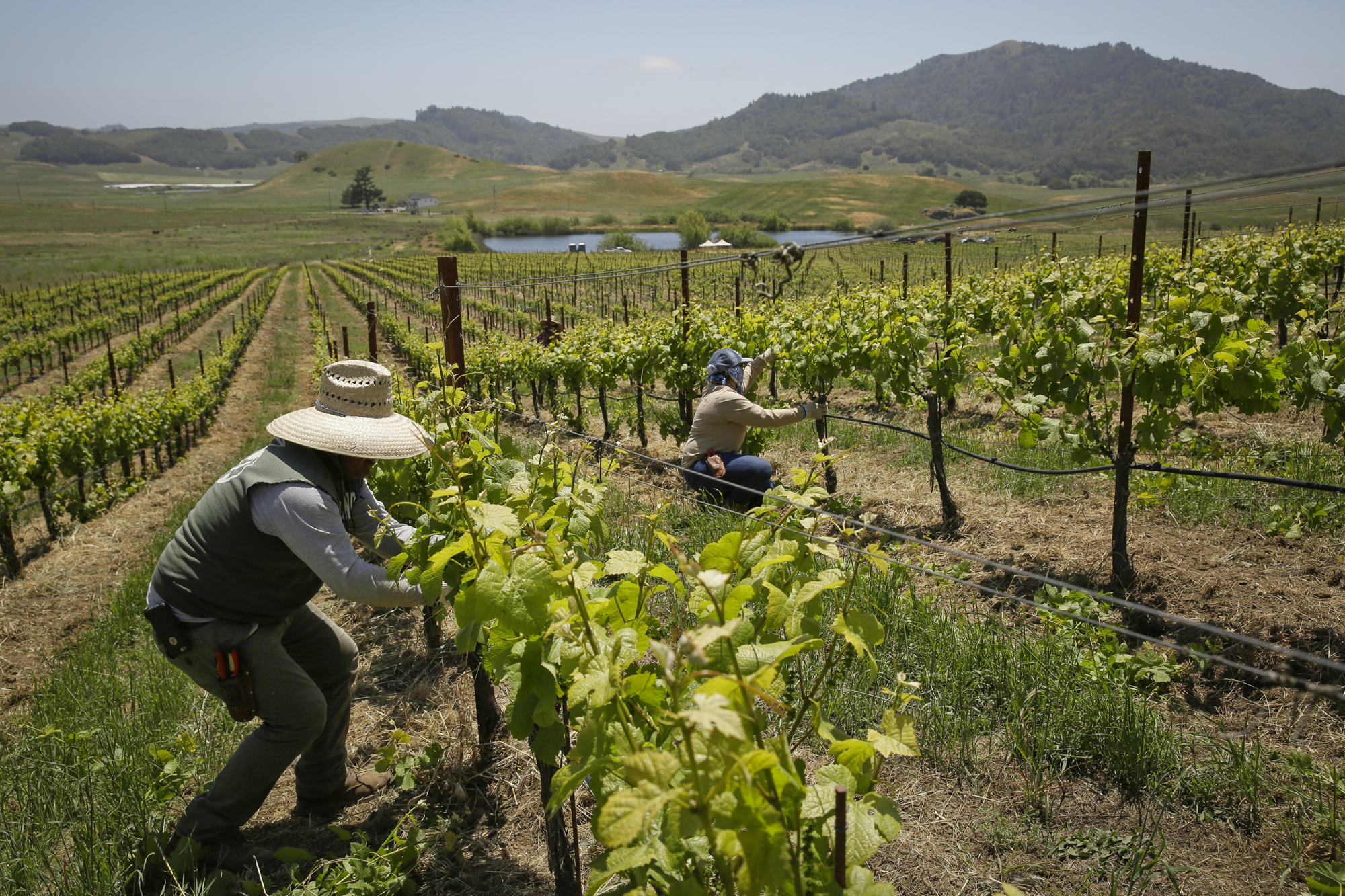
Twenty-one immigrant farmworkers will collectively receive $328,077 from their former employer, Mauritson Farms, a Sonoma County vineyard company, after the grower reached a settlement with state labor regulators earlier this summer. Officials with the California Agricultural Labor Relations Board (ALRB) announced in July that their investigation determined Mauritson Farms retaliated against the workers — who were in the U.S. on H-2A visas — after they spoke up about unsafe conditions in the fields.
Such incidents of employer retaliation against workers who speak up are unfortunately not rare. In the agriculture industry, many workers get punished by their boss — or the person that connected them to employment — after they request a better or safer workplace.
Jump straight to specific advice:
- What’s considered ‘unsafe working conditions’ for farmworkers?
- What is retaliation by an employer?
- Do these protections still apply for undocumented employees?
- Which agencies enforce labor rules in California?
- I believe my employer retaliated against me for speaking up about conditions at work. What should I do?
- I am nervous about my immigration situation if I report what happened at work. What are my options?
In California, it is illegal for an employer to retaliate against their employee, regardless of their immigration or documentation status. But that still doesn’t prevent some growers from punishing workers that speak up.
That’s why we have created this guide to inform farmworkers about their rights and protections. When you work in the fields, even if you are in the United States without documentation, your employer needs to respect your rights — and this is how they can be held accountable if they don’t.
What’s considered unsafe working conditions for farmworkers?
California has a complex set of rules for what a safe working environment is in the agriculture industry (PDF), which cover things like worker safety during wildfires, handling farm machinery, and even in the case of dairies and grain facilities, how to prevent accidents in confined spaces.
Regardless of how hot it is, employers must always provide farmworkers with enough drinking water near their stations. Each employee should have access to at least one quart of water every hour. And even if folks bring their own water bottles, employers must still have enough water available on site.
When temperatures rise above 80 degrees, employers must also provide an area with enough shade to accommodate every worker on-site. On days hotter than 95 degrees, supervisors must check in with laborers consistently throughout the day and ensure workers take breaks that are at least 10 minutes long every 2 hours to prevent overheating. Just “offering” these breaks is not sufficient.
These heat-safety rules apply to workers in all industries, not just the agricultural sector.
What is retaliation by an employer?
In California, retaliation means when an employer fires, punishes or cuts the wages or hours of a worker because that individual sought to improve their working conditions. This includes cases of growers refusing to rehire seasonal workers for the next harvest after they have spoken up.
Asking your boss to improve working conditions doesn’t have to be something big like organizing a strike or a march. It can also include:
- Asking for more water and shade to be provided on very hot days.
- Asking for equipment necessary to keep you safe when working in the fields.
- Pointing out that some of your wages are missing.
If there is a law concerning your safety, your labor rights or your wages that your employer is not following, you should be able to talk about it with your boss freely and safely.
Do these protections still apply for undocumented employees?
Yes. California’s safety rules benefit all workers, regardless of their immigration status. Your employer cannot use your immigration status as a reason to exclude you from safety protections.