window.__IS_SSR__=true
window.__INITIAL_STATE__={
"attachmentsReducer": {
"audio_0": {
"type": "attachments",
"id": "audio_0",
"imgSizes": {
"kqedFullSize": {
"file": "https://ww2.kqed.org/news/wp-content/themes/KQED-unified/img/audio_bgs/background0.jpg"
}
}
},
"audio_1": {
"type": "attachments",
"id": "audio_1",
"imgSizes": {
"kqedFullSize": {
"file": "https://ww2.kqed.org/news/wp-content/themes/KQED-unified/img/audio_bgs/background1.jpg"
}
}
},
"audio_2": {
"type": "attachments",
"id": "audio_2",
"imgSizes": {
"kqedFullSize": {
"file": "https://ww2.kqed.org/news/wp-content/themes/KQED-unified/img/audio_bgs/background2.jpg"
}
}
},
"audio_3": {
"type": "attachments",
"id": "audio_3",
"imgSizes": {
"kqedFullSize": {
"file": "https://ww2.kqed.org/news/wp-content/themes/KQED-unified/img/audio_bgs/background3.jpg"
}
}
},
"audio_4": {
"type": "attachments",
"id": "audio_4",
"imgSizes": {
"kqedFullSize": {
"file": "https://ww2.kqed.org/news/wp-content/themes/KQED-unified/img/audio_bgs/background4.jpg"
}
}
},
"placeholder": {
"type": "attachments",
"id": "placeholder",
"imgSizes": {
"thumbnail": {
"file": "https://cdn.kqed.org/wp-content/uploads/2024/12/KQED-Default-Image-816638274-2000x1333-1-160x107.jpg",
"width": 160,
"height": 107,
"mimeType": "image/jpeg"
},
"medium": {
"file": "https://cdn.kqed.org/wp-content/uploads/2024/12/KQED-Default-Image-816638274-2000x1333-1-800x533.jpg",
"width": 800,
"height": 533,
"mimeType": "image/jpeg"
},
"medium_large": {
"file": "https://cdn.kqed.org/wp-content/uploads/2024/12/KQED-Default-Image-816638274-2000x1333-1-768x512.jpg",
"width": 768,
"height": 512,
"mimeType": "image/jpeg"
},
"large": {
"file": "https://cdn.kqed.org/wp-content/uploads/2024/12/KQED-Default-Image-816638274-2000x1333-1-1020x680.jpg",
"width": 1020,
"height": 680,
"mimeType": "image/jpeg"
},
"1536x1536": {
"file": "https://cdn.kqed.org/wp-content/uploads/2024/12/KQED-Default-Image-816638274-2000x1333-1-1536x1024.jpg",
"width": 1536,
"height": 1024,
"mimeType": "image/jpeg"
},
"fd-lrg": {
"file": "https://cdn.kqed.org/wp-content/uploads/2024/12/KQED-Default-Image-816638274-2000x1333-1-1536x1024.jpg",
"width": 1536,
"height": 1024,
"mimeType": "image/jpeg"
},
"fd-med": {
"file": "https://cdn.kqed.org/wp-content/uploads/2024/12/KQED-Default-Image-816638274-2000x1333-1-1020x680.jpg",
"width": 1020,
"height": 680,
"mimeType": "image/jpeg"
},
"fd-sm": {
"file": "https://cdn.kqed.org/wp-content/uploads/2024/12/KQED-Default-Image-816638274-2000x1333-1-800x533.jpg",
"width": 800,
"height": 533,
"mimeType": "image/jpeg"
},
"post-thumbnail": {
"file": "https://cdn.kqed.org/wp-content/uploads/2024/12/KQED-Default-Image-816638274-2000x1333-1-672x372.jpg",
"width": 672,
"height": 372,
"mimeType": "image/jpeg"
},
"twentyfourteen-full-width": {
"file": "https://cdn.kqed.org/wp-content/uploads/2024/12/KQED-Default-Image-816638274-2000x1333-1-1038x576.jpg",
"width": 1038,
"height": 576,
"mimeType": "image/jpeg"
},
"xxsmall": {
"file": "https://cdn.kqed.org/wp-content/uploads/2024/12/KQED-Default-Image-816638274-2000x1333-1-160x107.jpg",
"width": 160,
"height": 107,
"mimeType": "image/jpeg"
},
"xsmall": {
"file": "https://cdn.kqed.org/wp-content/uploads/2024/12/KQED-Default-Image-816638274-2000x1333-1-672x372.jpg",
"width": 672,
"height": 372,
"mimeType": "image/jpeg"
},
"small": {
"file": "https://cdn.kqed.org/wp-content/uploads/2024/12/KQED-Default-Image-816638274-2000x1333-1-672x372.jpg",
"width": 672,
"height": 372,
"mimeType": "image/jpeg"
},
"xlarge": {
"file": "https://cdn.kqed.org/wp-content/uploads/2024/12/KQED-Default-Image-816638274-2000x1333-1-1020x680.jpg",
"width": 1020,
"height": 680,
"mimeType": "image/jpeg"
},
"full-width": {
"file": "https://cdn.kqed.org/wp-content/uploads/2024/12/KQED-Default-Image-816638274-2000x1333-1-1920x1280.jpg",
"width": 1920,
"height": 1280,
"mimeType": "image/jpeg"
},
"guest-author-32": {
"file": "https://cdn.kqed.org/wp-content/uploads/2025/01/KQED-Default-Image-816638274-1333x1333-1-160x160.jpg",
"width": 32,
"height": 32,
"mimeType": "image/jpeg"
},
"guest-author-50": {
"file": "https://cdn.kqed.org/wp-content/uploads/2025/01/KQED-Default-Image-816638274-1333x1333-1-160x160.jpg",
"width": 50,
"height": 50,
"mimeType": "image/jpeg"
},
"guest-author-64": {
"file": "https://cdn.kqed.org/wp-content/uploads/2025/01/KQED-Default-Image-816638274-1333x1333-1-160x160.jpg",
"width": 64,
"height": 64,
"mimeType": "image/jpeg"
},
"guest-author-96": {
"file": "https://cdn.kqed.org/wp-content/uploads/2025/01/KQED-Default-Image-816638274-1333x1333-1-160x160.jpg",
"width": 96,
"height": 96,
"mimeType": "image/jpeg"
},
"guest-author-128": {
"file": "https://cdn.kqed.org/wp-content/uploads/2025/01/KQED-Default-Image-816638274-1333x1333-1-160x160.jpg",
"width": 128,
"height": 128,
"mimeType": "image/jpeg"
},
"detail": {
"file": "https://cdn.kqed.org/wp-content/uploads/2025/01/KQED-Default-Image-816638274-1333x1333-1-160x160.jpg",
"width": 160,
"height": 160,
"mimeType": "image/jpeg"
},
"kqedFullSize": {
"file": "https://cdn.kqed.org/wp-content/uploads/2024/12/KQED-Default-Image-816638274-2000x1333-1.jpg",
"width": 2000,
"height": 1333
}
}
},
"news_11902230": {
"type": "attachments",
"id": "news_11902230",
"meta": {
"index": "attachments_1716263798",
"site": "news",
"id": "11902230",
"found": true
},
"parent": 11902149,
"imgSizes": {
"twentyfourteen-full-width": {
"file": "https://ww2.kqed.org/app/uploads/sites/10/2022/01/RS46108_016_KQED_SanFrancisco_COVIDTesting_11302020-qut-1038x576.jpg",
"width": 1038,
"mimeType": "image/jpeg",
"height": 576
},
"thumbnail": {
"file": "https://ww2.kqed.org/app/uploads/sites/10/2022/01/RS46108_016_KQED_SanFrancisco_COVIDTesting_11302020-qut-160x107.jpg",
"width": 160,
"mimeType": "image/jpeg",
"height": 107
},
"post-thumbnail": {
"file": "https://ww2.kqed.org/app/uploads/sites/10/2022/01/RS46108_016_KQED_SanFrancisco_COVIDTesting_11302020-qut-672x372.jpg",
"width": 672,
"mimeType": "image/jpeg",
"height": 372
},
"kqedFullSize": {
"file": "https://ww2.kqed.org/app/uploads/sites/10/2022/01/RS46108_016_KQED_SanFrancisco_COVIDTesting_11302020-qut.jpg",
"width": 1920,
"height": 1280
},
"large": {
"file": "https://ww2.kqed.org/app/uploads/sites/10/2022/01/RS46108_016_KQED_SanFrancisco_COVIDTesting_11302020-qut-1020x680.jpg",
"width": 1020,
"mimeType": "image/jpeg",
"height": 680
},
"1536x1536": {
"file": "https://ww2.kqed.org/app/uploads/sites/10/2022/01/RS46108_016_KQED_SanFrancisco_COVIDTesting_11302020-qut-1536x1024.jpg",
"width": 1536,
"mimeType": "image/jpeg",
"height": 1024
},
"medium": {
"file": "https://ww2.kqed.org/app/uploads/sites/10/2022/01/RS46108_016_KQED_SanFrancisco_COVIDTesting_11302020-qut-800x533.jpg",
"width": 800,
"mimeType": "image/jpeg",
"height": 533
}
},
"publishDate": 1642722284,
"modified": 1676430999,
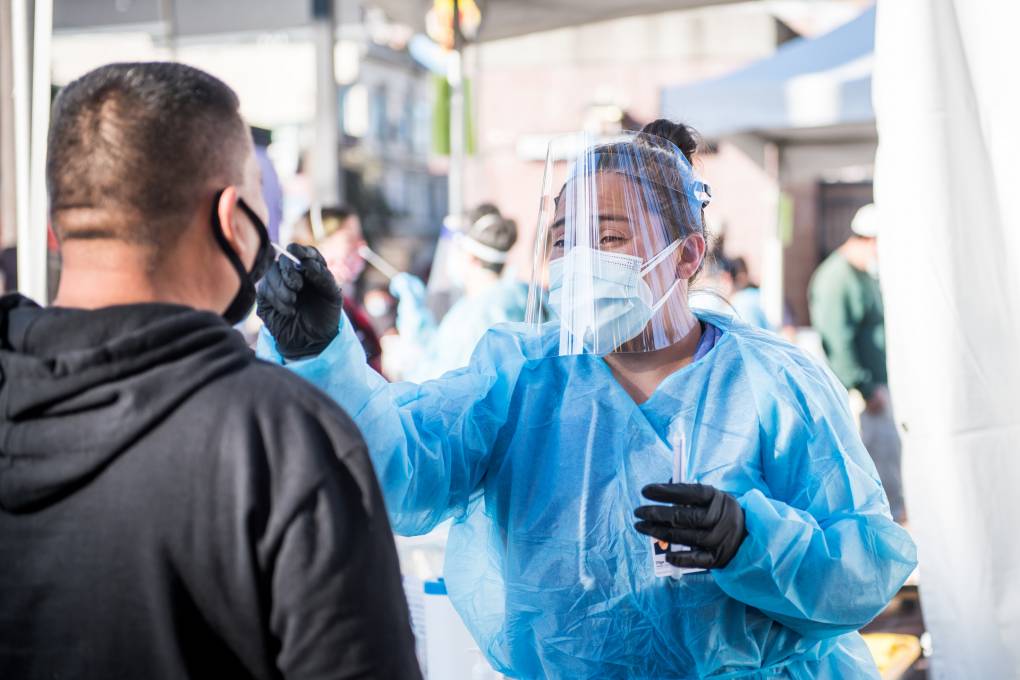
"caption": "Health care worker Olga Duran tests a patient for COVID at a Unidos en Salud testing site on 24th and Mission streets in San Francisco on Nov. 30, 2020.",
"description": null,
"title": "RS46108_016_KQED_SanFrancisco_COVIDTesting_11302020-qut",
"credit": "Beth LaBerge/KQED",
"status": "inherit",
"altTag": "A nurse in full PPE prepares to swab man wearing a mask facing away from camera, outside in sunlight",
"isLoading": false,
"fetchFailed": false
},
"news_11939831": {
"type": "attachments",
"id": "news_11939831",
"meta": {
"index": "attachments_1716263798",
"site": "news",
"id": "11939831",
"found": true
},
"parent": 11939819,
"imgSizes": {
"twentyfourteen-full-width": {
"file": "https://ww2.kqed.org/app/uploads/sites/10/2023/01/082422_MonkeyPoxClinicFresno_LV__012-CM-1-1038x576.jpg",
"width": 1038,
"mimeType": "image/jpeg",
"height": 576
},
"thumbnail": {
"file": "https://ww2.kqed.org/app/uploads/sites/10/2023/01/082422_MonkeyPoxClinicFresno_LV__012-CM-1-160x107.jpg",
"width": 160,
"mimeType": "image/jpeg",
"height": 107
},
"post-thumbnail": {
"file": "https://ww2.kqed.org/app/uploads/sites/10/2023/01/082422_MonkeyPoxClinicFresno_LV__012-CM-1-672x372.jpg",
"width": 672,
"mimeType": "image/jpeg",
"height": 372
},
"kqedFullSize": {
"file": "https://ww2.kqed.org/app/uploads/sites/10/2023/01/082422_MonkeyPoxClinicFresno_LV__012-CM-1.jpg",
"width": 2000,
"height": 1333
},
"large": {
"file": "https://ww2.kqed.org/app/uploads/sites/10/2023/01/082422_MonkeyPoxClinicFresno_LV__012-CM-1-1020x680.jpg",
"width": 1020,
"mimeType": "image/jpeg",
"height": 680
},
"1536x1536": {
"file": "https://ww2.kqed.org/app/uploads/sites/10/2023/01/082422_MonkeyPoxClinicFresno_LV__012-CM-1-1536x1024.jpg",
"width": 1536,
"mimeType": "image/jpeg",
"height": 1024
},
"full-width": {
"file": "https://ww2.kqed.org/app/uploads/sites/10/2023/01/082422_MonkeyPoxClinicFresno_LV__012-CM-1-1920x1280.jpg",
"width": 1920,
"mimeType": "image/jpeg",
"height": 1280
},
"medium": {
"file": "https://ww2.kqed.org/app/uploads/sites/10/2023/01/082422_MonkeyPoxClinicFresno_LV__012-CM-1-800x533.jpg",
"width": 800,
"mimeType": "image/jpeg",
"height": 533
}
},
"publishDate": 1675192657,
"modified": 1675198086,
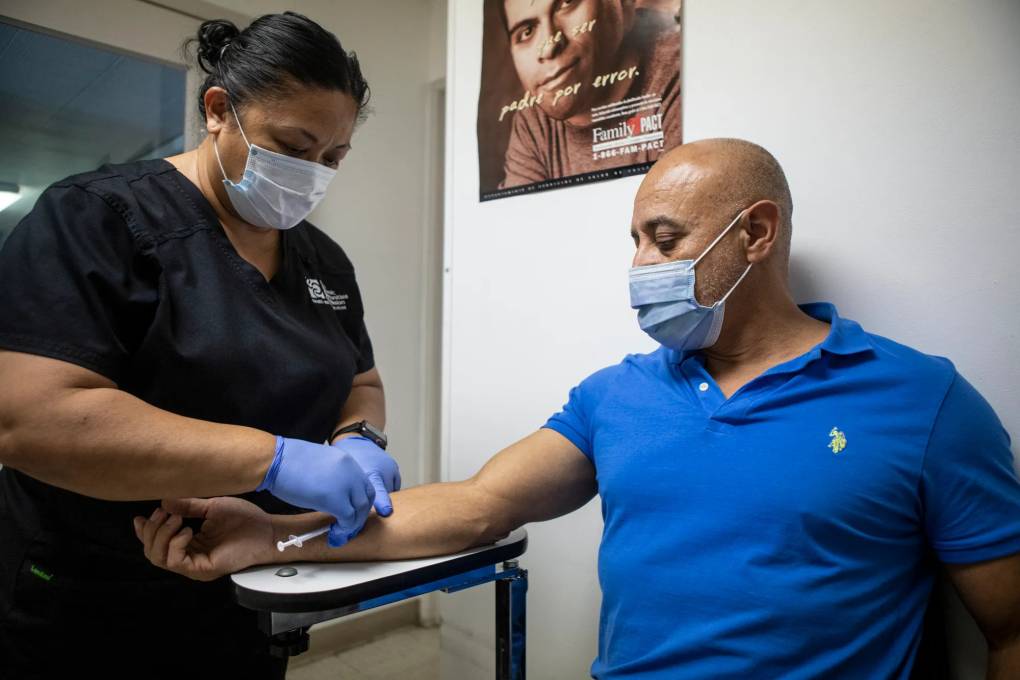
"caption": "Fresno resident Gonzalo Garcia receives the mpox vaccine on Aug. 24, 2022.",
"description": null,
"title": "082422_MonkeyPoxClinicFresno_LV__012-CM-1",
"credit": "Larry Valenzuela/CalMatters/CatchLight Local",
"status": "inherit",
"altTag": "a man in a blue shirt wearing a mask receives a vaccine shot from a nurse with black hair in a dark blue shirt",
"isLoading": false,
"fetchFailed": false
},
"news_11938627": {
"type": "attachments",
"id": "news_11938627",
"meta": {
"index": "attachments_1716263798",
"site": "news",
"id": "11938627",
"found": true
},
"parent": 11938623,
"imgSizes": {
"twentyfourteen-full-width": {
"file": "https://ww2.kqed.org/app/uploads/sites/10/2023/01/pexels-ono-kosuki-6000108-1038x576.jpg",
"width": 1038,
"mimeType": "image/jpeg",
"height": 576
},
"thumbnail": {
"file": "https://ww2.kqed.org/app/uploads/sites/10/2023/01/pexels-ono-kosuki-6000108-160x107.jpg",
"width": 160,
"mimeType": "image/jpeg",
"height": 107
},
"post-thumbnail": {
"file": "https://ww2.kqed.org/app/uploads/sites/10/2023/01/pexels-ono-kosuki-6000108-672x372.jpg",
"width": 672,
"mimeType": "image/jpeg",
"height": 372
},
"kqedFullSize": {
"file": "https://ww2.kqed.org/app/uploads/sites/10/2023/01/pexels-ono-kosuki-6000108.jpg",
"width": 1920,
"height": 1280
},
"large": {
"file": "https://ww2.kqed.org/app/uploads/sites/10/2023/01/pexels-ono-kosuki-6000108-1020x680.jpg",
"width": 1020,
"mimeType": "image/jpeg",
"height": 680
},
"1536x1536": {
"file": "https://ww2.kqed.org/app/uploads/sites/10/2023/01/pexels-ono-kosuki-6000108-1536x1024.jpg",
"width": 1536,
"mimeType": "image/jpeg",
"height": 1024
},
"medium": {
"file": "https://ww2.kqed.org/app/uploads/sites/10/2023/01/pexels-ono-kosuki-6000108-800x533.jpg",
"width": 800,
"mimeType": "image/jpeg",
"height": 533
}
},
"publishDate": 1674170892,
"modified": 1674171007,
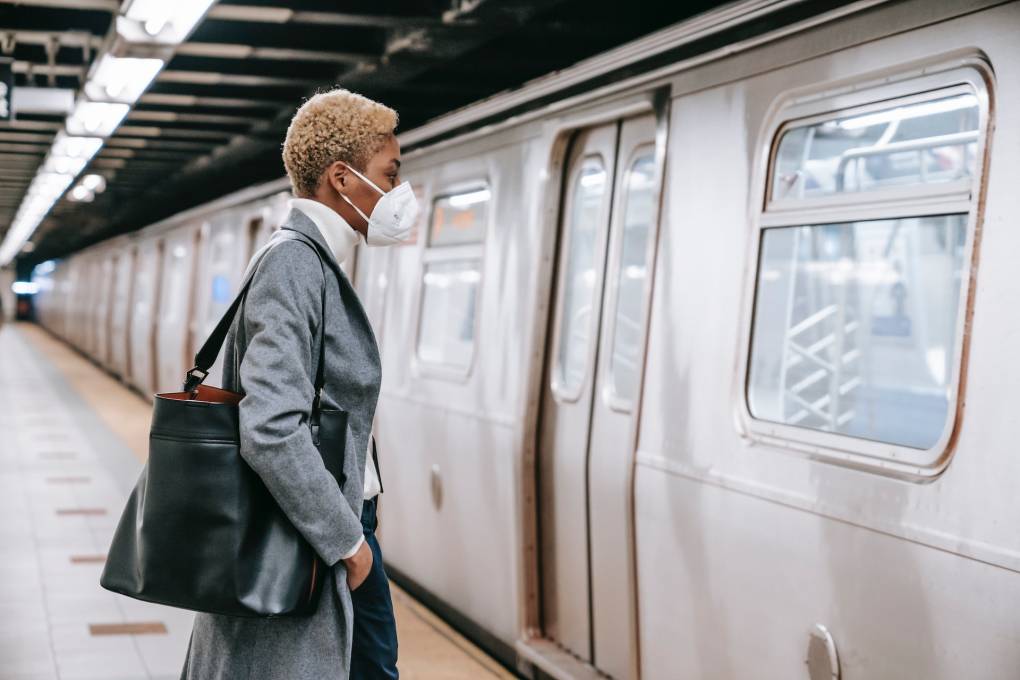
"caption": "What do you need to know about COVID in 2023?",
"description": null,
"title": "pexels-ono-kosuki-6000108",
"credit": "Ono Kosuki/Pexels",
"status": "inherit",
"altTag": "A person with dark skin and blonde hair wearing a white N95 mask and a sharp grey business-style overcoat waits on a subway platform as a train approaches",
"isLoading": false,
"fetchFailed": false
},
"news_11935454": {
"type": "attachments",
"id": "news_11935454",
"meta": {
"index": "attachments_1716263798",
"site": "news",
"id": "11935454",
"found": true
},
"parent": 11924327,
"imgSizes": {
"twentyfourteen-full-width": {
"file": "https://ww2.kqed.org/app/uploads/sites/10/2022/12/RS61679_GettyImages-1241629214-qut-1038x576.jpg",
"width": 1038,
"mimeType": "image/jpeg",
"height": 576
},
"thumbnail": {
"file": "https://ww2.kqed.org/app/uploads/sites/10/2022/12/RS61679_GettyImages-1241629214-qut-160x107.jpg",
"width": 160,
"mimeType": "image/jpeg",
"height": 107
},
"post-thumbnail": {
"file": "https://ww2.kqed.org/app/uploads/sites/10/2022/12/RS61679_GettyImages-1241629214-qut-672x372.jpg",
"width": 672,
"mimeType": "image/jpeg",
"height": 372
},
"kqedFullSize": {
"file": "https://ww2.kqed.org/app/uploads/sites/10/2022/12/RS61679_GettyImages-1241629214-qut.jpg",
"width": 1920,
"height": 1280
},
"large": {
"file": "https://ww2.kqed.org/app/uploads/sites/10/2022/12/RS61679_GettyImages-1241629214-qut-1020x680.jpg",
"width": 1020,
"mimeType": "image/jpeg",
"height": 680
},
"1536x1536": {
"file": "https://ww2.kqed.org/app/uploads/sites/10/2022/12/RS61679_GettyImages-1241629214-qut-1536x1024.jpg",
"width": 1536,
"mimeType": "image/jpeg",
"height": 1024
},
"medium": {
"file": "https://ww2.kqed.org/app/uploads/sites/10/2022/12/RS61679_GettyImages-1241629214-qut-800x533.jpg",
"width": 800,
"mimeType": "image/jpeg",
"height": 533
}
},
"publishDate": 1671149319,
"modified": 1671149486,
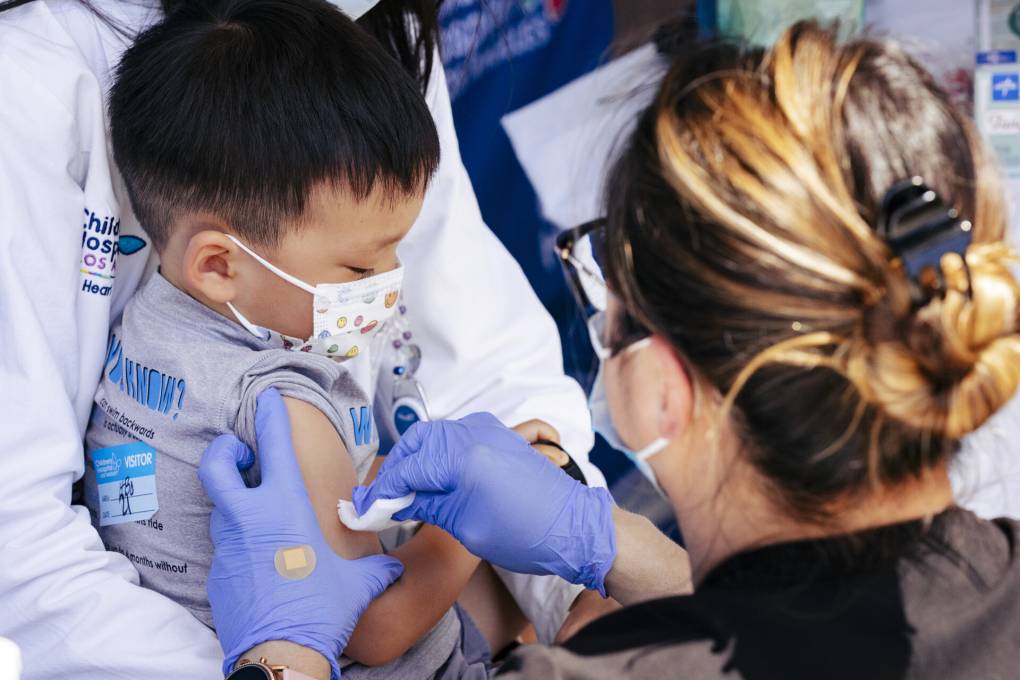
"caption": "Children's Hospital Los Angeles nurse Monica Lopez prepares to administer the Pfizer COVID-19 vaccine to Callum Diaz-Cheng, 3, son of CHLA Cardiologist Dr. Jennifer Su and one of the hospital's first children under five to receive the shot, on Tuesday, June 21, 2022 in Los Angeles, CA. ",
"description": null,
"title": "Vaccines For Children Under Five",
"credit": "Wesley Lapointe / Los Angeles Times via Getty Images",
"status": "inherit",
"altTag": "A small Asian child wearing a spotted face mask sits on the lap of an unseen person wearing a white coat, while a medical professional wearing blue surgical gloves leans over them and swabs their arm.",
"isLoading": false,
"fetchFailed": false
},
"news_11932984": {
"type": "attachments",
"id": "news_11932984",
"meta": {
"index": "attachments_1716263798",
"site": "news",
"id": "11932984",
"found": true
},
"parent": 11932956,
"imgSizes": {
"twentyfourteen-full-width": {
"file": "https://ww2.kqed.org/app/uploads/sites/10/2022/11/pexels-fauxels-3184183-1038x576.jpg",
"width": 1038,
"mimeType": "image/jpeg",
"height": 576
},
"thumbnail": {
"file": "https://ww2.kqed.org/app/uploads/sites/10/2022/11/pexels-fauxels-3184183-160x107.jpg",
"width": 160,
"mimeType": "image/jpeg",
"height": 107
},
"post-thumbnail": {
"file": "https://ww2.kqed.org/app/uploads/sites/10/2022/11/pexels-fauxels-3184183-672x372.jpg",
"width": 672,
"mimeType": "image/jpeg",
"height": 372
},
"kqedFullSize": {
"file": "https://ww2.kqed.org/app/uploads/sites/10/2022/11/pexels-fauxels-3184183.jpg",
"width": 1920,
"height": 1281
},
"large": {
"file": "https://ww2.kqed.org/app/uploads/sites/10/2022/11/pexels-fauxels-3184183-1020x681.jpg",
"width": 1020,
"mimeType": "image/jpeg",
"height": 681
},
"1536x1536": {
"file": "https://ww2.kqed.org/app/uploads/sites/10/2022/11/pexels-fauxels-3184183-1536x1025.jpg",
"width": 1536,
"mimeType": "image/jpeg",
"height": 1025
},
"medium": {
"file": "https://ww2.kqed.org/app/uploads/sites/10/2022/11/pexels-fauxels-3184183-800x534.jpg",
"width": 800,
"mimeType": "image/jpeg",
"height": 534
}
},
"publishDate": 1669077580,
"modified": 1701193692,
"caption": "With the holiday season comes the threat of respiratory viruses like COVID. ",
"description": null,
"title": "covid-rsv-flu-thanksgiving",
"credit": "fauxels via Pexels",
"status": "inherit",
"altTag": "A shot taken from above of a group of people around a table, eating dinner and raising their glasses in a toast.",
"isLoading": false,
"fetchFailed": false
},
"news_11926000": {
"type": "attachments",
"id": "news_11926000",
"meta": {
"index": "attachments_1716263798",
"site": "news",
"id": "11926000",
"found": true
},
"parent": 11925957,
"imgSizes": {
"thumbnail": {
"file": "https://ww2.kqed.org/app/uploads/sites/10/2022/09/GettyImages-1310510237-160x107.jpg",
"width": 160,
"mimeType": "image/jpeg",
"height": 107
},
"post-thumbnail": {
"file": "https://ww2.kqed.org/app/uploads/sites/10/2022/09/GettyImages-1310510237-672x372.jpg",
"width": 672,
"mimeType": "image/jpeg",
"height": 372
},
"kqedFullSize": {
"file": "https://ww2.kqed.org/app/uploads/sites/10/2022/09/GettyImages-1310510237.jpg",
"width": 724,
"height": 483
}
},
"publishDate": 1663353738,
"modified": 1663356488,
"caption": "As vaccination rates reach 80% statewide, and testing for the omicron subvariant proves ineffective, California has lifted vaccine mandates for educational staff.",
"description": "Teacher writing 'vaccine' on the blackboard at the front of a classroom speaking to a masked group of students about the Covid-19 vaccination.",
"title": "Speaking to students about vaccinations",
"credit": "FatCamera/Getty Images",
"status": "inherit",
"altTag": "A teacher writes the word \"vaccine\" on a blackboard as students in the foreground look on in the classroom.",
"isLoading": false,
"fetchFailed": false
},
"news_11925828": {
"type": "attachments",
"id": "news_11925828",
"meta": {
"index": "attachments_1716263798",
"site": "news",
"id": "11925828",
"found": true
},
"parent": 11925585,
"imgSizes": {
"twentyfourteen-full-width": {
"file": "https://ww2.kqed.org/app/uploads/sites/10/2022/09/GettyImages-1422321173-1024x576.jpg",
"width": 1024,
"mimeType": "image/jpeg",
"height": 576
},
"thumbnail": {
"file": "https://ww2.kqed.org/app/uploads/sites/10/2022/09/GettyImages-1422321173-160x107.jpg",
"width": 160,
"mimeType": "image/jpeg",
"height": 107
},
"post-thumbnail": {
"file": "https://ww2.kqed.org/app/uploads/sites/10/2022/09/GettyImages-1422321173-672x372.jpg",
"width": 672,
"mimeType": "image/jpeg",
"height": 372
},
"kqedFullSize": {
"file": "https://ww2.kqed.org/app/uploads/sites/10/2022/09/GettyImages-1422321173.jpg",
"width": 1024,
"height": 683
},
"large": {
"file": "https://ww2.kqed.org/app/uploads/sites/10/2022/09/GettyImages-1422321173-1020x680.jpg",
"width": 1020,
"mimeType": "image/jpeg",
"height": 680
},
"medium": {
"file": "https://ww2.kqed.org/app/uploads/sites/10/2022/09/GettyImages-1422321173-800x534.jpg",
"width": 800,
"mimeType": "image/jpeg",
"height": 534
}
},
"publishDate": 1663277250,
"modified": 1663281884,
"caption": "Margaret LaRaviere gets an influenza vaccine during an event hosted by the Chicago Department of Public Health at the Southwest Senior Center on Sept. 9, 2022, in Chicago.",
"description": null,
"title": "COVID-19 Omicron Booster Shots Administered Along With Other Vaccines At Chicago Senior Center",
"credit": "Scott Olson/Getty Images",
"status": "inherit",
"altTag": "A woman wearing a face mask and a black sleeveless shirt sits as hands wearing blue gloves inject a syringe into her arm while holding the arm in place.",
"isLoading": false,
"fetchFailed": false
},
"news_11924779": {
"type": "attachments",
"id": "news_11924779",
"meta": {
"index": "attachments_1716263798",
"site": "news",
"id": "11924779",
"found": true
},
"parent": 11924456,
"imgSizes": {
"twentyfourteen-full-width": {
"file": "https://ww2.kqed.org/app/uploads/sites/10/2022/09/GettyImages-567364821-scaled-e1662504725917-1038x576.jpg",
"width": 1038,
"mimeType": "image/jpeg",
"height": 576
},
"thumbnail": {
"file": "https://ww2.kqed.org/app/uploads/sites/10/2022/09/GettyImages-567364821-scaled-e1662504725917-160x109.jpg",
"width": 160,
"mimeType": "image/jpeg",
"height": 109
},
"post-thumbnail": {
"file": "https://ww2.kqed.org/app/uploads/sites/10/2022/09/GettyImages-567364821-scaled-e1662504725917-672x372.jpg",
"width": 672,
"mimeType": "image/jpeg",
"height": 372
},
"kqedFullSize": {
"file": "https://ww2.kqed.org/app/uploads/sites/10/2022/09/GettyImages-567364821-scaled-e1662504725917.jpg",
"width": 2329,
"height": 1580
},
"2048x2048": {
"file": "https://ww2.kqed.org/app/uploads/sites/10/2022/09/GettyImages-567364821-scaled-e1662504725917-2048x1389.jpg",
"width": 2048,
"mimeType": "image/jpeg",
"height": 1389
},
"large": {
"file": "https://ww2.kqed.org/app/uploads/sites/10/2022/09/GettyImages-567364821-scaled-e1662504725917-1020x692.jpg",
"width": 1020,
"mimeType": "image/jpeg",
"height": 692
},
"1536x1536": {
"file": "https://ww2.kqed.org/app/uploads/sites/10/2022/09/GettyImages-567364821-scaled-e1662504725917-1536x1042.jpg",
"width": 1536,
"mimeType": "image/jpeg",
"height": 1042
},
"full-width": {
"file": "https://ww2.kqed.org/app/uploads/sites/10/2022/09/GettyImages-567364821-scaled-e1662504725917-1920x1303.jpg",
"width": 1920,
"mimeType": "image/jpeg",
"height": 1303
},
"medium": {
"file": "https://ww2.kqed.org/app/uploads/sites/10/2022/09/GettyImages-567364821-scaled-e1662504725917-800x543.jpg",
"width": 800,
"mimeType": "image/jpeg",
"height": 543
}
},
"publishDate": 1662504670,
"modified": 1662508756,
"caption": "Dr. Monica Asnani (right) says goodbye to Kristian Richard, 1, being held by his mother, Natasha, after the baby was given an MMR vaccine at the Medical Arts Pediatric Medical Group in Los Angeles in 2015.",
"description": "Dr. Monica Asnani, right, says goodbye to Kristian Richard, 1, being held by his mother Natasha, after the baby was given an MMR vaccine at the Medical Arts Pediatric Med Group on Wilshire Blvd. in Los Angeles in 2015. ",
"title": "vaccine child",
"credit": "Mel Melcon/Los Angeles Times via Getty Images",
"status": "inherit",
"altTag": "A woman on the right with brown skin, shoulder-length black hair and wearing a red sweater reaches a hand out to touch the arm of a one-year-old child being held in his mothers arms. The child has coffee-and-cream skin and dark curly hair and wears a black sweater over a white onesie. The woman and child are smiling at each other. The mothers face is obscured as she holds her baby. She has dark hair and is wearing a white suit coat over a black dress.",
"isLoading": false,
"fetchFailed": false
},
"news_11924336": {
"type": "attachments",
"id": "news_11924336",
"meta": {
"index": "attachments_1716263798",
"site": "news",
"id": "11924336",
"found": true
},
"parent": 11924322,
"imgSizes": {
"twentyfourteen-full-width": {
"file": "https://ww2.kqed.org/app/uploads/sites/10/2022/08/Teen-Vaccine-1038x576.jpg",
"width": 1038,
"mimeType": "image/jpeg",
"height": 576
},
"thumbnail": {
"file": "https://ww2.kqed.org/app/uploads/sites/10/2022/08/Teen-Vaccine-160x107.jpg",
"width": 160,
"mimeType": "image/jpeg",
"height": 107
},
"post-thumbnail": {
"file": "https://ww2.kqed.org/app/uploads/sites/10/2022/08/Teen-Vaccine-672x372.jpg",
"width": 672,
"mimeType": "image/jpeg",
"height": 372
},
"kqedFullSize": {
"file": "https://ww2.kqed.org/app/uploads/sites/10/2022/08/Teen-Vaccine.jpg",
"width": 1980,
"height": 1320
},
"large": {
"file": "https://ww2.kqed.org/app/uploads/sites/10/2022/08/Teen-Vaccine-1020x680.jpg",
"width": 1020,
"mimeType": "image/jpeg",
"height": 680
},
"1536x1536": {
"file": "https://ww2.kqed.org/app/uploads/sites/10/2022/08/Teen-Vaccine-1536x1024.jpg",
"width": 1536,
"mimeType": "image/jpeg",
"height": 1024
},
"full-width": {
"file": "https://ww2.kqed.org/app/uploads/sites/10/2022/08/Teen-Vaccine-1920x1280.jpg",
"width": 1920,
"mimeType": "image/jpeg",
"height": 1280
},
"medium": {
"file": "https://ww2.kqed.org/app/uploads/sites/10/2022/08/Teen-Vaccine-800x533.jpg",
"width": 800,
"mimeType": "image/jpeg",
"height": 533
}
},
"publishDate": 1661989566,
"modified": 1661993993,
"caption": "Audrey Romero, 16, receives a first dose of the Pfizer COVID-19 vaccine at a mobile vaccination clinic at the Weingart East Los Angeles YMCA on May 14, 2021, in Los Angeles. ",
"description": "Audrey Romero, 16, receives a first dose of the Pfizer Covid-19 vaccine at a mobile vaccination clinic at the Weingart East Los Angeles YMCA on May 14, 2021 in Los Angeles, California. ",
"title": "Teen Vaccine",
"credit": "Patrick T. Fallon/AFP via Getty Images",
"status": "inherit",
"altTag": null,
"isLoading": false,
"fetchFailed": false
},
"news_11923267": {
"type": "attachments",
"id": "news_11923267",
"meta": {
"index": "attachments_1716263798",
"site": "news",
"id": "11923267",
"found": true
},
"parent": 11923263,
"imgSizes": {
"twentyfourteen-full-width": {
"file": "https://ww2.kqed.org/app/uploads/sites/10/2022/08/students-walking_1940x1295-1200x750-1-1038x576.jpg",
"width": 1038,
"mimeType": "image/jpeg",
"height": 576
},
"thumbnail": {
"file": "https://ww2.kqed.org/app/uploads/sites/10/2022/08/students-walking_1940x1295-1200x750-1-160x100.jpg",
"width": 160,
"mimeType": "image/jpeg",
"height": 100
},
"post-thumbnail": {
"file": "https://ww2.kqed.org/app/uploads/sites/10/2022/08/students-walking_1940x1295-1200x750-1-672x372.jpg",
"width": 672,
"mimeType": "image/jpeg",
"height": 372
},
"kqedFullSize": {
"file": "https://ww2.kqed.org/app/uploads/sites/10/2022/08/students-walking_1940x1295-1200x750-1.jpg",
"width": 1200,
"height": 750
},
"large": {
"file": "https://ww2.kqed.org/app/uploads/sites/10/2022/08/students-walking_1940x1295-1200x750-1-1020x638.jpg",
"width": 1020,
"mimeType": "image/jpeg",
"height": 638
},
"medium": {
"file": "https://ww2.kqed.org/app/uploads/sites/10/2022/08/students-walking_1940x1295-1200x750-1-800x500.jpg",
"width": 800,
"mimeType": "image/jpeg",
"height": 500
}
},
"publishDate": 1661282603,
"modified": 1661282656,
"caption": "Cal State Los Angeles students return to campus after summer break.",
"description": null,
"title": "students-walking_1940x1295-1200x750",
"credit": "Erik Adams/EdSource",
"status": "inherit",
"altTag": "students walk with backpacks around a college campus",
"isLoading": false,
"fetchFailed": false
},
"news_11922419": {
"type": "attachments",
"id": "news_11922419",
"meta": {
"index": "attachments_1716263798",
"site": "news",
"id": "11922419",
"found": true
},
"parent": 11922286,
"imgSizes": {
"twentyfourteen-full-width": {
"file": "https://ww2.kqed.org/app/uploads/sites/10/2022/08/pexels-polina-tankilevitch-4440608-1038x576.jpg",
"width": 1038,
"mimeType": "image/jpeg",
"height": 576
},
"thumbnail": {
"file": "https://ww2.kqed.org/app/uploads/sites/10/2022/08/pexels-polina-tankilevitch-4440608-160x107.jpg",
"width": 160,
"mimeType": "image/jpeg",
"height": 107
},
"post-thumbnail": {
"file": "https://ww2.kqed.org/app/uploads/sites/10/2022/08/pexels-polina-tankilevitch-4440608-672x372.jpg",
"width": 672,
"mimeType": "image/jpeg",
"height": 372
},
"kqedFullSize": {
"file": "https://ww2.kqed.org/app/uploads/sites/10/2022/08/pexels-polina-tankilevitch-4440608-scaled.jpg",
"width": 2560,
"height": 1707
},
"2048x2048": {
"file": "https://ww2.kqed.org/app/uploads/sites/10/2022/08/pexels-polina-tankilevitch-4440608-2048x1365.jpg",
"width": 2048,
"mimeType": "image/jpeg",
"height": 1365
},
"large": {
"file": "https://ww2.kqed.org/app/uploads/sites/10/2022/08/pexels-polina-tankilevitch-4440608-1020x680.jpg",
"width": 1020,
"mimeType": "image/jpeg",
"height": 680
},
"1536x1536": {
"file": "https://ww2.kqed.org/app/uploads/sites/10/2022/08/pexels-polina-tankilevitch-4440608-1536x1024.jpg",
"width": 1536,
"mimeType": "image/jpeg",
"height": 1024
},
"full-width": {
"file": "https://ww2.kqed.org/app/uploads/sites/10/2022/08/pexels-polina-tankilevitch-4440608-1920x1280.jpg",
"width": 1920,
"mimeType": "image/jpeg",
"height": 1280
},
"medium": {
"file": "https://ww2.kqed.org/app/uploads/sites/10/2022/08/pexels-polina-tankilevitch-4440608-800x533.jpg",
"width": 800,
"mimeType": "image/jpeg",
"height": 533
}
},
"publishDate": 1660340477,
"modified": 1660340623,
"caption": "If you’re sharing a home with someone with an active monkeypox infection — or if you yourself have monkeypox and want to keep those you live with safe — being aware of how monkeypox can spread within a home and taking the appropriate measures is the best way to stop the virus spreading.",
"description": "If you’re sharing a home with someone with an active monkeypox infection — or if you yourself have monkeypox and want to keep those you live with safe — being aware of how monkeypox can spread within a home and taking the appropriate measures is the best way to stop the virus spreading.",
"title": "pexels-polina-tankilevitch-4440608",
"credit": "Polina Tankilevitch/Pexels",
"status": "inherit",
"altTag": "A person cleans a table with a rag in an indoor space and holds a spray nozzle with their other hand.",
"isLoading": false,
"fetchFailed": false
},
"news_11920604": {
"type": "attachments",
"id": "news_11920604",
"meta": {
"index": "attachments_1716263798",
"site": "news",
"id": "11920604",
"found": true
},
"parent": 0,
"imgSizes": {
"twentyfourteen-full-width": {
"file": "https://ww2.kqed.org/app/uploads/sites/10/2022/07/RS57399_GettyImages-1408879341-qut-1038x576.jpg",
"width": 1038,
"mimeType": "image/jpeg",
"height": 576
},
"thumbnail": {
"file": "https://ww2.kqed.org/app/uploads/sites/10/2022/07/RS57399_GettyImages-1408879341-qut-160x120.jpg",
"width": 160,
"mimeType": "image/jpeg",
"height": 120
},
"post-thumbnail": {
"file": "https://ww2.kqed.org/app/uploads/sites/10/2022/07/RS57399_GettyImages-1408879341-qut-672x372.jpg",
"width": 672,
"mimeType": "image/jpeg",
"height": 372
},
"kqedFullSize": {
"file": "https://ww2.kqed.org/app/uploads/sites/10/2022/07/RS57399_GettyImages-1408879341-qut.jpg",
"width": 1920,
"height": 1440
},
"large": {
"file": "https://ww2.kqed.org/app/uploads/sites/10/2022/07/RS57399_GettyImages-1408879341-qut-1020x765.jpg",
"width": 1020,
"mimeType": "image/jpeg",
"height": 765
},
"1536x1536": {
"file": "https://ww2.kqed.org/app/uploads/sites/10/2022/07/RS57399_GettyImages-1408879341-qut-1536x1152.jpg",
"width": 1536,
"mimeType": "image/jpeg",
"height": 1152
},
"medium": {
"file": "https://ww2.kqed.org/app/uploads/sites/10/2022/07/RS57399_GettyImages-1408879341-qut-800x600.jpg",
"width": 800,
"mimeType": "image/jpeg",
"height": 600
}
},
"publishDate": 1658947307,
"modified": 1663110578,
"caption": null,
"description": "A vial of the MPX vaccine is displayed by a medical professional at a vaccination site.",
"title": "monkeypox-vaccine-near-me",
"credit": "James Carbone/Newsday RM via Getty Images",
"status": "inherit",
"altTag": "A right hand with nails painted red and a bandaid visible on the tip of the third finger holds a vial of the monkeypox vaccine Jynneos. The cap of the vial is bright yellow, and the label is white with blue lettering.",
"isLoading": false,
"fetchFailed": false
}
},
"audioPlayerReducer": {
"postId": "stream_live",
"isPaused": true,
"isPlaying": false,
"pfsActive": false,
"pledgeModalIsOpen": true,
"playerDrawerIsOpen": false,
"liveAudioPlayStartedAt": 0,
"liveAudioPlayContext": ""
},
"authorsReducer": {
"byline_news_11939819": {
"type": "authors",
"id": "byline_news_11939819",
"meta": {
"override": true
},
"slug": "byline_news_11939819",
"name": "\u003ca href=\"https://calmatters.org/author/kristen-hwang/\">Kristen Hwang\u003c/a>",
"isLoading": false
},
"byline_news_11925957": {
"type": "authors",
"id": "byline_news_11925957",
"meta": {
"override": true
},
"slug": "byline_news_11925957",
"name": "\u003ca href=\"https://edsource.org/author/dlambert\">Diana Lambert\u003c/a>",
"isLoading": false
},
"byline_news_11924456": {
"type": "authors",
"id": "byline_news_11924456",
"meta": {
"override": true
},
"slug": "byline_news_11924456",
"name": "Diana Lambert",
"isLoading": false
},
"byline_news_11924322": {
"type": "authors",
"id": "byline_news_11924322",
"meta": {
"override": true
},
"slug": "byline_news_11924322",
"name": "Don Thompson, Associated Press",
"isLoading": false
},
"byline_news_11923263": {
"type": "authors",
"id": "byline_news_11923263",
"meta": {
"override": true
},
"slug": "byline_news_11923263",
"name": "\u003ca href=\"https://edsource.org/author/mburke\">Michael Burke\u003c/a> and \u003ca href=\"https://edsource.org/author/asmith\">Ashley A. Smith\u003c/a>",
"isLoading": false
},
"carlysevern": {
"type": "authors",
"id": "3243",
"meta": {
"index": "authors_1716337520",
"id": "3243",
"found": true
},
"name": "Carly Severn",
"firstName": "Carly",
"lastName": "Severn",
"slug": "carlysevern",
"email": "csevern@kqed.org",
"display_author_email": false,
"staff_mastheads": [
"news"
],
"title": "Senior Editor, Audience News ",
"bio": "Carly is KQED's Senior Editor of Audience News on the Digital News team, and has reported for the California Report Magazine, Bay Curious and KQED Arts. She's formerly the host of \u003ca href=\"http://ww2.kqed.org/pop/category/the-cooler/\" rel=\"noopener noreferrer\">The Cooler\u003c/a> podcast.",
"avatar": "https://secure.gravatar.com/avatar/54037bf5c128fe678f0ef26cec97a93f2e7f220a22d7285703328f12c42c1b1d?s=600&d=blank&r=g",
"twitter": "teacupinthebay",
"bluesky": null,
"facebook": null,
"instagram": null,
"linkedin": null,
"sites": [
{
"site": "",
"roles": [
"editor"
]
},
{
"site": "arts",
"roles": [
"editor"
]
},
{
"site": "news",
"roles": [
"administrator"
]
},
{
"site": "pop",
"roles": [
"editor"
]
},
{
"site": "futureofyou",
"roles": [
"editor"
]
},
{
"site": "about",
"roles": [
"administrator"
]
},
{
"site": "mindshift",
"roles": [
"editor"
]
},
{
"site": "bayareabites",
"roles": [
"editor"
]
},
{
"site": "stateofhealth",
"roles": [
"editor"
]
},
{
"site": "science",
"roles": [
"editor"
]
},
{
"site": "food",
"roles": [
"contributor"
]
},
{
"site": "forum",
"roles": [
"editor"
]
},
{
"site": "perspectives",
"roles": [
"administrator"
]
},
{
"site": "liveblog",
"roles": [
"editor"
]
}
],
"headData": {
"title": "Carly Severn | KQED",
"description": "Senior Editor, Audience News ",
"ogImgSrc": "https://secure.gravatar.com/avatar/54037bf5c128fe678f0ef26cec97a93f2e7f220a22d7285703328f12c42c1b1d?s=600&d=blank&r=g",
"twImgSrc": "https://secure.gravatar.com/avatar/54037bf5c128fe678f0ef26cec97a93f2e7f220a22d7285703328f12c42c1b1d?s=600&d=blank&r=g"
},
"isLoading": false,
"link": "/author/carlysevern"
},
"bwatt": {
"type": "authors",
"id": "11238",
"meta": {
"index": "authors_1716337520",
"id": "11238",
"found": true
},
"name": "Brian Watt",
"firstName": "Brian",
"lastName": "Watt",
"slug": "bwatt",
"email": "bwatt@KQED.org",
"display_author_email": false,
"staff_mastheads": [
"news"
],
"title": "Morning News Anchor",
"bio": "Brian Watt is KQED's morning radio news anchor. He joined the KQED News team in April of 2016. Prior to that, he worked as a Reporter for KPCC in Los Angeles and a producer at \u003cem>Marketplace.\u003c/em>\r\n\r\nDuring eight years at KPCC, Brian covered business and economics, and his work won several awards. In 2008, he won the Los Angeles Press Club’s first-place award for Business and Financial Reporting, Broadcast. He’s also received honorable mention and been first runner up for the Press Club’s Radio Journalist of the Year. He won two Golden Mike awards from the Radio and TV News Association of Southern California.\r\n\r\nBrian holds degrees in theater from Yale University and the Sorbonne, and has worked as an actor in France, Italy, Brazil, Hungary and . . . Hollywood. He appeared in a few television shows, including \u003cem>The West Wing, Judging Amy\u003c/em> and \u003cem>The District.\u003c/em>\r\n\r\nEmail: bwatt@KQED.org Twitter: @RadioBWatt",
"avatar": "https://secure.gravatar.com/avatar/55393ff57ed34e2be773ba4789dd6a19?s=600&d=blank&r=g",
"twitter": "@RadioBWatt",
"facebook": null,
"instagram": null,
"linkedin": null,
"sites": [
{
"site": "arts",
"roles": [
"contributor"
]
},
{
"site": "news",
"roles": [
"editor"
]
}
],
"headData": {
"title": "Brian Watt | KQED",
"description": "Morning News Anchor",
"ogImgSrc": "https://secure.gravatar.com/avatar/55393ff57ed34e2be773ba4789dd6a19?s=600&d=blank&r=g",
"twImgSrc": "https://secure.gravatar.com/avatar/55393ff57ed34e2be773ba4789dd6a19?s=600&d=blank&r=g"
},
"isLoading": false,
"link": "/author/bwatt"
},
"ccabreralomeli": {
"type": "authors",
"id": "11708",
"meta": {
"index": "authors_1716337520",
"id": "11708",
"found": true
},
"name": "Carlos Cabrera-Lomelí",
"firstName": "Carlos",
"lastName": "Cabrera-Lomelí",
"slug": "ccabreralomeli",
"email": "ccabreralomeli@KQED.org",
"display_author_email": true,
"staff_mastheads": [
"news"
],
"title": "Community Reporter",
"bio": "Carlos Cabrera-Lomelí is a community reporter with KQED's digital engagement team. He also reports and co-produces for KQED's bilingual news hub KQED en Español. He grew up in San Francisco's Mission District and has previously worked with Univision, 48 Hills and REFORMA in Mexico City.",
"avatar": "https://secure.gravatar.com/avatar/c309be9665e484f887b818c89e273ecc673004f426f36b24d00a4d813a2e0518?s=600&d=blank&r=g",
"twitter": "@LomeliCabrera",
"bluesky": null,
"facebook": null,
"instagram": null,
"linkedin": null,
"sites": [
{
"site": "arts",
"roles": [
"editor"
]
},
{
"site": "news",
"roles": [
"editor"
]
},
{
"site": "about",
"roles": [
"editor"
]
},
{
"site": "science",
"roles": [
"editor"
]
},
{
"site": "perspectives",
"roles": [
"editor"
]
},
{
"site": "elections",
"roles": [
"editor"
]
},
{
"site": "liveblog",
"roles": [
"contributor"
]
}
],
"headData": {
"title": "Carlos Cabrera-Lomelí | KQED",
"description": "Community Reporter",
"ogImgSrc": "https://secure.gravatar.com/avatar/c309be9665e484f887b818c89e273ecc673004f426f36b24d00a4d813a2e0518?s=600&d=blank&r=g",
"twImgSrc": "https://secure.gravatar.com/avatar/c309be9665e484f887b818c89e273ecc673004f426f36b24d00a4d813a2e0518?s=600&d=blank&r=g"
},
"isLoading": false,
"link": "/author/ccabreralomeli"
},
"agonzalez": {
"type": "authors",
"id": "11724",
"meta": {
"index": "authors_1716337520",
"id": "11724",
"found": true
},
"name": "Alexander Gonzalez",
"firstName": "Alexander",
"lastName": "Gonzalez",
"slug": "agonzalez",
"email": "AlexanderGonzalez@KQED.org",
"display_author_email": false,
"staff_mastheads": [
"news"
],
"title": "KQED Contributor",
"bio": null,
"avatar": "https://secure.gravatar.com/avatar/9e291ed34e154df4c662edf858b641d70b4859939bfe40be478408f9dfd057d2?s=600&d=blank&r=g",
"twitter": null,
"bluesky": null,
"facebook": null,
"instagram": null,
"linkedin": null,
"sites": [
{
"site": "arts",
"roles": [
"editor"
]
},
{
"site": "news",
"roles": [
"editor"
]
},
{
"site": "science",
"roles": [
"editor"
]
}
],
"headData": {
"title": "Alexander Gonzalez | KQED",
"description": "KQED Contributor",
"ogImgSrc": "https://secure.gravatar.com/avatar/9e291ed34e154df4c662edf858b641d70b4859939bfe40be478408f9dfd057d2?s=600&d=blank&r=g",
"twImgSrc": "https://secure.gravatar.com/avatar/9e291ed34e154df4c662edf858b641d70b4859939bfe40be478408f9dfd057d2?s=600&d=blank&r=g"
},
"isLoading": false,
"link": "/author/agonzalez"
}
},
"pagesReducer": {
"news_tag_vaccines": {
"type": "terms",
"id": "news_981",
"meta": {
"index": "terms_1716263798",
"site": "news",
"id": "981",
"score": 8.668567
},
"name": "Vaccines",
"slug": "vaccines",
"taxonomy": "tag",
"description": null,
"featImg": null,
"headData": {
"title": "Vaccines | KQED News",
"description": null,
"ogTitle": null,
"ogDescription": null,
"ogImgId": null,
"twTitle": null,
"twDescription": null,
"twImgId": null
},
"ttid": 991,
"isLoading": false,
"title": "Vaccines",
"pageMeta": {
"site": "news",
"WpPageTemplate": "page-topic-editorial",
"currentPage": 3
},
"blocks": [
{
"blockName": "kqed/post-list",
"attrs": {
"layout": "cardArticle2",
"query": "posts/news?tag=vaccines",
"seeMore": false,
"paginated": true,
"page": 3
}
},
{
"blockName": "kqed/ad"
}
]
}
},
"pfsSessionReducer": {},
"postsReducer": {
"stream_live": {
"type": "live",
"id": "stream_live",
"audioUrl": "https://streams.kqed.org/kqedradio",
"title": "Live Stream",
"excerpt": "Live Stream information currently unavailable.",
"link": "/radio",
"featImg": "",
"label": {
"name": "KQED Live",
"link": "/"
}
},
"stream_kqedNewscast": {
"type": "posts",
"id": "stream_kqedNewscast",
"audioUrl": "https://www.kqed.org/.stream/anon/radio/RDnews/newscast.mp3?_=1",
"title": "KQED Newscast",
"featImg": "",
"label": {
"name": "88.5 FM",
"link": "/"
}
},
"news_11941075": {
"type": "posts",
"id": "news_11941075",
"meta": {
"index": "posts_1716263798",
"site": "news",
"id": "11941075",
"score": null,
"sort": [
1677604534000
]
},
"guestAuthors": [],
"slug": "californias-covid-emergency-ends-feb-28-what-does-that-actually-mean-for-you",
"title": "California's COVID State of Emergency Ends Today. What Does That Actually Mean for You?",
"publishDate": 1677604534,
"format": "standard",
"headTitle": "California’s COVID State of Emergency Ends Today. What Does That Actually Mean for You? | KQED",
"labelTerm": {
"site": "news"
},
"content": "\u003cp>Today, \u003ca href=\"https://www.kqed.org/news/11929285/newsom-to-end-californias-covid-state-of-emergency-in-february\">California’s COVID-19 state of emergency officially comes to an end\u003c/a>.\u003c/p>\n\u003cp>Since March 2020, this statewide emergency declaration has given Gov. Gavin Newsom the power to suspend or change laws in California to fight the spread of COVID. Now, after almost three years, the state is winding down its state of emergency.\u003c/p>\n\u003cul>\n\u003cli>\u003cstrong>Jump to: \u003ca href=\"#calfreshmedical\">What you need to know if use CalFresh or Medi-Cal\u003c/a>\u003c/strong>\u003c/li>\n\u003c/ul>\n\u003cp>The move has been characterized as \u003ca href=\"https://apnews.com/article/health-california-covid-gavin-newsom-government-and-politics-0a013cc71e580d33fe59f93bc6c2b16e\">“a symbolic end” to the pandemic in California\u003c/a>, and a “decision [that] will have little practical impact on most people’s lives.” And it’s certainly true that most of the pandemic-related orders Newsom has issued since March 2020 — almost 600 of them — have been lifted.\u003c/p>\n\u003cp>https://twitter.com/TeacupInTheBay/status/1623832514744942592\u003c/p>\n\u003cp>But it’s not entirely accurate to say that this move will have \u003ci>zero \u003c/i>implications for California and the way COVID is handled — and perceived. Added to the mix is the fact that even if people are aware that the state of emergency is ending, they might not really know exactly what that entails — or how it could affect them personally.\u003c/p>\n\u003cp>So what \u003ci>does\u003c/i> California ending its state of emergency mean for you?\u003c/p>\n\u003ch2>The federal state of emergency is ending, too — which also affects Californians\u003c/h2>\n\u003cp>In January, the White House announced that \u003ca href=\"https://www.npr.org/2023/01/30/1152702709/covid-emergency-declarations-end-white-house\">the federal state of emergency for COVID will end on May 11\u003c/a> — over two months after California ends its own. And to complicate matters a little more, there are actually \u003ci>two \u003c/i>federal emergencies ending May 11: the national emergency, and the public health emergency.[aside postID=news_11940562 hero='https://ww2.kqed.org/app/uploads/sites/10/2023/02/RS62644_GettyImages-1237599780-qut-1020x680.jpg']\u003c/p>\n\u003cp>The end of these national emergencies will have big effects upon nationwide funding for COVID vaccines and testing.\u003c/p>\n\u003cp>Thanks to laws that have been passed in California in the last few years (more on this below), Californians will at least be able to keep a lot \u003ci>more \u003c/i>COVID coverage than folks living in other states. But May 11 is a date people in California still need to know, because some of those laws are tied to the end of the national-level declarations.\u003c/p>\n\u003cp>Looking beyond the end of both the statewide emergency and the nationwide public health declaration, Gov. Newsom’s office says his administration intends to seek lawmakers’ approval to actually preserve two of the emergency provisions enabled by the 2020 state of emergency in California. These specifically deal with allowing different health care workers to perform certain COVID-related functions (for nurses, it’s dispensing COVID medications like Paxlovid; for lab workers, it’s processing COVID tests on their own).\u003c/p>\n\u003ch2>For insured people in California, most COVID coverage won’t change — yet\u003c/h2>\n\u003cp>California has recently enacted several laws that force insurers to keep covering COVID care even after the state and federal states of emergency wind down.\u003c/p>\n\u003cp>State Senate Bill 510 requires insurers in California to keep covering COVID costs like testing and vaccination after the national emergency ends. On the national level, the White House’s COVID-19 Response Coordinator Dr. Ashish K. Jha has promised that COVID vaccines will remain free in the U.S. for insured people as a preventive service covered under the Affordable Care Act of 2010.\u003c/p>\n\u003cp>Meanwhile, another California law — \u003ca href=\"https://leginfo.legislature.ca.gov/faces/billTextClient.xhtml?bill_id=202120220SB1473\">State Bill 1473\u003c/a> — requires insurers to not only keep covering the costs of COVID therapeutic treatments like Paxlovid, but also to keep reimbursing their members for the costs of up to eight over-the-counter COVID tests a month. But this law only keeps the current situation in place until six months after the \u003ca href=\"https://www.latimes.com/california/story/2023-02-07/with-covid-emergency-ending-will-i-have-to-pay-for-tests\">end of the federal emergency on Nov. 11\u003c/a>.[aside postID=news_11902122 hero='https://ww2.kqed.org/app/uploads/sites/10/2022/01/RS53229_GettyImages-1237664205-qut-1536x1065.jpg']After that date, if you want Paxlovid or to \u003ca href=\"https://www.kqed.org/news/11902122/at-home-covid-test-reimbursement-from-blue-shield-to-kaiser-how-to-get-your-health-insurance-to-pay-you-back\">get reimbursed for COVID tests by an insurer\u003c/a>, you’ll have to make sure you are obtaining these services “in-network.” And at this stage of the year, specific details about what that’ll look like in practice come November are lacking.\u003c/p>\n\u003ch2>For uninsured people, COVID care will probably get (even) more confusing\u003c/h2>\n\u003cp>As with so many aspects of the pandemic, it looks like things will become less clear — and often plain harder — for uninsured folks. Jha has given assurances that “\u003ca href=\"https://twitter.com/AshishKJha46/status/1620836123630239750\">[o]n May 12, you can still walk into a pharmacy and get your bivalent vaccine. For free\u003c/a>,” and that the same will hold for obtaining Paxlovid.\u003c/p>\n\u003cp>But he also wrote that, longer term, “likely over the summer or early fall,” the country would “transition from US government distributed vaccines and treatments to those purchased through the regular healthcare system,” and that the White House was “committed to ensuring that vaccines and treatments are accessible and not prohibitively expensive for uninsured Americans.”\u003c/p>\n\u003cp>Which does not necessarily mean they will be free.\u003c/p>\n\u003ch2>Some California cities also have their own public health emergencies — with their own effects\u003c/h2>\n\u003cp>California ending its state of emergency may well spur the remaining cities that have kept their own states of emergencies to end theirs, too — which may have effects of their own upon residents.\u003c/p>\n\u003cp>For example, San Francisco also still has its own \u003ca href=\"https://sf.gov/resource/2022/public-health-emergency-declarations\">Public Health Emergency Declaration for COVID\u003c/a> in effect, and several programs for San Francisco residents (and people who work in the city) are dependent on that declaration being in effect. But on Thursday, San Francisco officials announced that the city’s public health emergency would be coming to an end at the same time as the state’s, on Feb. 28.\u003c/p>\n\u003cp>Among the impacts of this decision: As of Oct. 1, 2022, \u003ca href=\"https://sfgov.org/olse/public-health-emergency-leave-ordinance\">San Francisco’s Public Health Emergency Leave (PHEL)\u003c/a> offers employees who work for certain San Francisco employers \u003ca href=\"https://www.kqed.org/news/11904834/covid-sick-pay-in-california-how-to-claim-this-new-paid-leave\">up to 80 hours of paid leave for COVID-related reasons\u003c/a>. Now that San Francisco’s public health emergency is ending at the end of February, city residents and workers will no longer be able to claim this paid sick leave for COVID starting March 1.\u003c/p>\n\u003cfigure id=\"attachment_11938425\" class=\"wp-caption alignnone\" style=\"max-width: 1920px\">\u003cimg loading=\"lazy\" decoding=\"async\" class=\"size-full wp-image-11938425\" src=\"https://ww2.kqed.org/app/uploads/sites/10/2022/12/RS50546_014_SanFrancisco_IndoorMasks_07302021-qut-1.jpg\" alt=\"A person in an orange shirt and black mask and black-rimmed glasses operates a tablet-style cash register.\" width=\"1920\" height=\"1280\" srcset=\"https://cdn.kqed.org/wp-content/uploads/sites/10/2022/12/RS50546_014_SanFrancisco_IndoorMasks_07302021-qut-1.jpg 1920w, https://cdn.kqed.org/wp-content/uploads/sites/10/2022/12/RS50546_014_SanFrancisco_IndoorMasks_07302021-qut-1-800x533.jpg 800w, https://cdn.kqed.org/wp-content/uploads/sites/10/2022/12/RS50546_014_SanFrancisco_IndoorMasks_07302021-qut-1-1020x680.jpg 1020w, https://cdn.kqed.org/wp-content/uploads/sites/10/2022/12/RS50546_014_SanFrancisco_IndoorMasks_07302021-qut-1-160x107.jpg 160w, https://cdn.kqed.org/wp-content/uploads/sites/10/2022/12/RS50546_014_SanFrancisco_IndoorMasks_07302021-qut-1-1536x1024.jpg 1536w\" sizes=\"auto, (max-width: 1920px) 100vw, 1920px\">\u003cfigcaption class=\"wp-caption-text\">An employee at La Copa Loca Gelato rings up a customer at the shop in San Francisco on July 30, 2021. \u003ccite>(Beth LaBerge/KQED)\u003c/cite>\u003c/figcaption>\u003c/figure>\n\u003ch2>Not everyone thinks this is a good idea\u003c/h2>\n\u003cp>In the announcement about California ending its state of emergency on Feb. 28, administration officials acknowledged the crucial role played by these emergency powers in fighting the pandemic — but framed the expiration as a logical step that was coming at the right time.\u003c/p>\n\u003cp>Gov. Newsom called the state of emergency “an effective and necessary tool that we utilized to protect our state,” saying that now, “with the operational preparedness that we’ve built up and the measures that we’ll continue to employ moving forward, California is ready to phase out this tool.” Dr. Mark Ghaly, secretary of the California Health and Human Services Agency, spoke of California moving “into this next phase” with the winding down of the state of emergency, and how “the infrastructure and processes we’ve invested in and built up will provide us the tools to manage any ups and downs in the future.”\u003c/p>\n\u003cp>But some disagree it’s the right time to end the state’s emergency powers. Carmela Coyle, head of the California Hospital Association, told \u003cem>The New York Times\u003c/em> earlier this month that \u003ca href=\"https://www.nytimes.com/2023/02/02/us/california-covid-state-of-emergency-ending.html\">February was “a terrible time to end the public health emergency,”\u003c/a> because of ongoing strain on California’s hospitals.\u003c/p>\n\u003cp>Coyle said that Newsom’s emergency declaration had helped state hospitals better cope with high numbers of patients — by permitting facilities to temporarily expand treatment spaces to deal with larger numbers of patients — and also staffing shortages, by allowing hospitals to hire workers from out of state.\u003c/p>\n\u003cp>[ad fullwidth]\u003c/p>\n\u003cp>“The discontinuation of those declarations of emergency has to be thoughtfully planned and transitioned,” Coyle told \u003cem>The New York Times\u003c/em>. “Otherwise, it leaves hospitals caught in the middle in this debate of whether the pandemic is over or not.”\u003c/p>\n\u003cp>Speaking to KQED Forum this month, UCSF infectious disease specialist Dr. Peter Chin-Hong struck a cautious note, saying that while he believed it is essentially “the right time” for California and the White House to end these emergency declarations, there were still “repercussions that we have to be prepared for.”\u003c/p>\n\u003cp>“In a fractured medical health care system, I’m worried that people are going to fall between the cracks,” said Chin-Hong, noting that Californians would still be “generally, decently protected as a people, compared to other areas” in the U.S. “The biggest worry that I have is that it will be confusing,” he said, pointing to the potential for contradictory signals around COVID testing, vaccination and treatment among people who don’t know whether they’ll face steep out-of-pocket costs for this care and might just give up trying to access it.\u003c/p>\n\u003cp>Chin-Hong also acknowledged the risks of how the states of emergency ending could falsely signal to the general public that COVID no longer posed them — or others — any threat. “The worst thing,” he said, would be “that people think that it means that it’s all over until next winter.”\u003c/p>\n\u003cp>And finally, just to make everything even \u003ci>more \u003c/i>complex …\u003c/p>\n\u003cfigure id=\"attachment_11940585\" class=\"wp-caption alignnone\" style=\"max-width: 1920px\">\u003cimg loading=\"lazy\" decoding=\"async\" class=\"size-full wp-image-11940585\" src=\"https://ww2.kqed.org/app/uploads/sites/10/2023/02/RS62643_GettyImages-1239425766-qut.jpg\" alt=\"A sign taped to a brick wall saying COVID 19\" width=\"1920\" height=\"1290\" srcset=\"https://cdn.kqed.org/wp-content/uploads/sites/10/2023/02/RS62643_GettyImages-1239425766-qut.jpg 1920w, https://cdn.kqed.org/wp-content/uploads/sites/10/2023/02/RS62643_GettyImages-1239425766-qut-800x538.jpg 800w, https://cdn.kqed.org/wp-content/uploads/sites/10/2023/02/RS62643_GettyImages-1239425766-qut-1020x685.jpg 1020w, https://cdn.kqed.org/wp-content/uploads/sites/10/2023/02/RS62643_GettyImages-1239425766-qut-160x108.jpg 160w, https://cdn.kqed.org/wp-content/uploads/sites/10/2023/02/RS62643_GettyImages-1239425766-qut-1536x1032.jpg 1536w\" sizes=\"auto, (max-width: 1920px) 100vw, 1920px\">\u003cfigcaption class=\"wp-caption-text\">Lines for COVID testing and vaccinations are now nonexistent at Jessie Turner Health and Fitness in Fontana on Tuesday, March 22, 2022. Federal funding is running out for COVID relief measures, calling into question what will happen to clinics, testing and other COVID-related funding measures. \u003ccite>(Will Lester/MediaNews Group/Inland Valley Daily Bulletin via Getty Images)\u003c/cite>\u003c/figcaption>\u003c/figure>\n\u003ch2>\u003ca id=\"calfreshmedical\">\u003c/a>Several other COVID programs are ending in California — but that’s not (entirely) due to the state of emergency\u003c/h2>\n\u003cp>There are a number of pandemic-related programs and support schemes that are winding down alongside the ending of California’s (and the nation’s) states of emergency, but they are not 100% related to those expirations — at least, not directly. Among them:\u003c/p>\n\u003ch2>COVID testing sites are shutting down\u003c/h2>\n\u003cp>Large-scale testing sites have been a crucial part of counties’ ability to slow the spread of COVID over the last few years — and these states of emergency have played a key role in funding these facilities. Now, a large portion of funding for free COVID testing (and vaccination) clinics will come to an end, meaning not only that costs for individuals for these services could rise, but also the sites themselves are starting to shutter. And the sites that remain open will have to look to the future of county-level funding after the state and federal supplies are gone.\u003c/p>\n\u003cp>But officials say the end of California’s state of emergency is not the sole reason many of these facilities are closing. San Francisco’s free drive-up testing site on Alemany Blvd., for example, is being closed due to a combination of reduced funding and “low demand,” according to San Francisco health officials. \u003ca href=\"https://www.kqed.org/news/11940562/how-to-find-a-free-covid-test-near-you-in-2023-because-its-getting-harder\">Find a COVID testing site near you.\u003c/a>\u003c/p>\n\u003cp>The California Department of Public Health’s post-state of emergency “\u003ca href=\"https://www.gov.ca.gov/wp-content/uploads/2022/10/SMARTER-Plan-Progress-Update-FINAL-10.12.2022_jb.pdf?emrc=eed198\">SMARTER Plan (PDF)\u003c/a>” says that as far as schools are concerned, the agency has “completed the distribution of 8.4 million over-the-counter antigen tests for end of school year and summer testing, and an additional 10.6 million for the return from summer break testing.”\u003c/p>\n\u003ch2>California is ending its vaccine mandate for schoolchildren\u003c/h2>\n\u003cp>In 2021, Gov. Newsom announced the policy mandating COVID vaccination for schoolchildren — adding it as one of the (multiple) vaccinations families would need to prove for a child to attend school. There was uncertainty over whether this policy would be extended, and on Feb. 3 the California Department of Health finally announced that the state’s schoolkids would not now have to get a COVID vaccine, and that the department was “not currently exploring emergency rulemaking to add COVID-19 to the list of required school vaccinations,” adding, “but we continue to strongly recommend COVID-19 immunization for students and staff to keep everyone safer in the classroom.”\u003c/p>\n\u003cp>Because the policy itself originated from the state Department of Public Health, it wasn’t itself affected directly by California’s emergency declaration being lifted. But early this month, just before the change was announced, state public health officials told EdSource in an email that the end of California’s state of emergency \u003ci>was\u003c/i> \u003ca href=\"https://edsource.org/2023/california-ends-plans-for-kids-covid-vaccine-mandate/685077?campaign_id=49&emc=edit_ca_20230203&instance_id=84396&nl=california-today®i_id=79933371&segment_id=124294&te=1&user_id=730d7bc2f6e57d075af70f58c76999e6\">effectively going to end any plan to add COVID vaccinations to the required-vaccines list for schoolchildren\u003c/a>.\u003c/p>\n\u003ch2>CalFresh is ending extra payments\u003c/h2>\n\u003cp>[aside postID=news_11940602 hero='https://ww2.kqed.org/app/uploads/sites/10/2023/02/GettyImages-1219595595.jpg']During the pandemic, folks using CalFresh — California’s version of the federal Supplemental Nutrition Assistance Program (SNAP) food benefits program for lower-income families — have been receiving extra funds, called “emergency allotments.”\u003c/p>\n\u003cp>This increase was at least $95 in CalFresh benefits per month. But \u003ca href=\"https://cdss.ca.gov/calfreshcovid19\">these extra CalFresh funds will now cease on Feb. 28\u003c/a> — not because they’re tied to California’s state of emergency, but because of the federal Consolidated Appropriations Act of 2023, which ends the pandemic-era release of these extra funds to households across the United States.\u003c/p>\n\u003ch2>Medi-Cal will no longer automatically renew enrollment\u003c/h2>\n\u003cp>When COVID hit, Congress signed \u003ca href=\"https://www.congress.gov/bill/116th-congress/house-bill/6201/text\">a bill that required Medicaid programs around the U.S. — known as Medi-Cal in California — to keep their members continuously enrolled\u003c/a>, in exchange for higher federal funding. This has meant that during the pandemic, Medi-Cal has not been permitted to drop people who would otherwise not qualify for the program if they tried to sign up fresh.\u003c/p>\n\u003cp>But now, the same act that means the end of CalFresh’s extra payments (see above) is bringing an end to the Medi-Cal requirement to automatically renew its members. This means that starting in April, \u003ca href=\"https://californiahealthline.org/news/article/medicaid-unwinding-coverage-loss-california-post-pandemic/\">the state will begin to remove folks who no longer qualify\u003c/a> — and require Medi-Cal members to manually renew their coverage, which they haven’t had to do for the last few years.\u003c/p>\n\u003cp>Over 15 million Californians are enrolled in Medi-Cal, and \u003ca href=\"https://www.dhcs.ca.gov/Documents/PHE-UOP/Medi-Cal-COVID-19-PHE-Unwinding-Plan.pdf\">the state forecasts that up to 3 million people could lose their coverage (PDF)\u003c/a> if they fail to reenroll or no longer qualify. If you’re on Medi-Cal, the state recommends that you \u003ca href=\"https://www.dhcs.ca.gov/Pages/Keep-Your-Medi-Cal.aspx\">make sure Medi-Cal has your up-to-date contact details\u003c/a>, sign up for email and text alerts and watch for the renewal form hitting your mailbox in the coming weeks.\u003c/p>\n\u003cp>\u003cem>This story has been updated. An earlier version of this story was published on Feb. 15.\u003c/em>\u003c/p>\n\u003cp>[ad floatright]\u003c/p>\n",
"blocks": [],
"excerpt": "On Feb. 28, California’s COVID-19 state of emergency officially comes to an end. Since March 2020, this statewide emergency declaration has given Gov. Newsom the power to suspend or change laws in California to fight the spread of COVID.",
"status": "publish",
"parent": 0,
"modified": 1740699476,
"stats": {
"hasAudio": false,
"hasVideo": false,
"hasChartOrMap": false,
"iframeSrcs": [],
"hasGoogleForm": false,
"hasGallery": false,
"hasHearkenModule": false,
"hasPolis": false,
"paragraphCount": 41,
"wordCount": 2538
},
"headData": {
"title": "California's COVID State of Emergency Ends Today. What Does That Actually Mean for You? | KQED",
"description": "On Feb. 28, California’s COVID-19 state of emergency officially comes to an end. Since March 2020, this statewide emergency declaration has given Gov. Newsom the power to suspend or change laws in California to fight the spread of COVID.",
"ogTitle": "",
"ogDescription": "",
"ogImgId": "",
"twTitle": "",
"twDescription": "",
"twImgId": "",
"schema": {
"@context": "https://schema.org",
"@type": "NewsArticle",
"headline": "California's COVID State of Emergency Ends Today. What Does That Actually Mean for You?",
"datePublished": "2023-02-28T09:15:34-08:00",
"dateModified": "2025-02-27T15:37:56-08:00",
"image": "https://cdn.kqed.org/wp-content/uploads/2020/02/KQED-OG-Image@1x.png",
"isAccessibleForFree": "True",
"publisher": {
"@type": "NewsMediaOrganization",
"@id": "https://www.kqed.org/#organization",
"name": "KQED",
"logo": "https://cdn.kqed.org/wp-content/uploads/2020/02/KQED-OG-Image@1x.png",
"url": "https://www.kqed.org",
"sameAs": [
"https://www.facebook.com/KQED",
"https://twitter.com/KQED",
"https://www.instagram.com/kqed/",
"https://www.tiktok.com/@kqedofficial",
"https://www.linkedin.com/company/kqed",
"https://www.youtube.com/channel/UCeC0IOo7i1P_61zVUWbJ4nw"
]
}
}
},
"sticky": false,
"excludeFromSiteSearch": "Include",
"articleAge": "0",
"path": "/news/11941075/californias-covid-emergency-ends-feb-28-what-does-that-actually-mean-for-you",
"audioTrackLength": null,
"parsedContent": [
{
"type": "contentString",
"content": "\u003cdiv class=\"post-body\">\u003cp>\u003cp>Today, \u003ca href=\"https://www.kqed.org/news/11929285/newsom-to-end-californias-covid-state-of-emergency-in-february\">California’s COVID-19 state of emergency officially comes to an end\u003c/a>.\u003c/p>\n\u003cp>Since March 2020, this statewide emergency declaration has given Gov. Gavin Newsom the power to suspend or change laws in California to fight the spread of COVID. Now, after almost three years, the state is winding down its state of emergency.\u003c/p>\n\u003cul>\n\u003cli>\u003cstrong>Jump to: \u003ca href=\"#calfreshmedical\">What you need to know if use CalFresh or Medi-Cal\u003c/a>\u003c/strong>\u003c/li>\n\u003c/ul>\n\u003cp>The move has been characterized as \u003ca href=\"https://apnews.com/article/health-california-covid-gavin-newsom-government-and-politics-0a013cc71e580d33fe59f93bc6c2b16e\">“a symbolic end” to the pandemic in California\u003c/a>, and a “decision [that] will have little practical impact on most people’s lives.” And it’s certainly true that most of the pandemic-related orders Newsom has issued since March 2020 — almost 600 of them — have been lifted.\u003c/p>\u003c/p>\u003c/div>",
"attributes": {
"named": {},
"numeric": []
}
},
{
"type": "component",
"content": "",
"name": "singleTwitterStatus",
"attributes": {
"named": {
"id": "1623832514744942592"
},
"numeric": []
}
},
{
"type": "contentString",
"content": "\u003cdiv class=\"post-body\">\u003cp>\n\u003cp>But it’s not entirely accurate to say that this move will have \u003ci>zero \u003c/i>implications for California and the way COVID is handled — and perceived. Added to the mix is the fact that even if people are aware that the state of emergency is ending, they might not really know exactly what that entails — or how it could affect them personally.\u003c/p>\n\u003cp>So what \u003ci>does\u003c/i> California ending its state of emergency mean for you?\u003c/p>\n\u003ch2>The federal state of emergency is ending, too — which also affects Californians\u003c/h2>\n\u003cp>In January, the White House announced that \u003ca href=\"https://www.npr.org/2023/01/30/1152702709/covid-emergency-declarations-end-white-house\">the federal state of emergency for COVID will end on May 11\u003c/a> — over two months after California ends its own. And to complicate matters a little more, there are actually \u003ci>two \u003c/i>federal emergencies ending May 11: the national emergency, and the public health emergency.\u003c/p>\u003c/div>",
"attributes": {
"named": {},
"numeric": []
}
},
{
"type": "component",
"content": "",
"name": "aside",
"attributes": {
"named": {
"postid": "news_11940562",
"hero": "https://ww2.kqed.org/app/uploads/sites/10/2023/02/RS62644_GettyImages-1237599780-qut-1020x680.jpg",
"label": ""
},
"numeric": []
}
},
{
"type": "contentString",
"content": "\u003cdiv class=\"post-body\">\u003cp>\u003c/p>\n\u003cp>The end of these national emergencies will have big effects upon nationwide funding for COVID vaccines and testing.\u003c/p>\n\u003cp>Thanks to laws that have been passed in California in the last few years (more on this below), Californians will at least be able to keep a lot \u003ci>more \u003c/i>COVID coverage than folks living in other states. But May 11 is a date people in California still need to know, because some of those laws are tied to the end of the national-level declarations.\u003c/p>\n\u003cp>Looking beyond the end of both the statewide emergency and the nationwide public health declaration, Gov. Newsom’s office says his administration intends to seek lawmakers’ approval to actually preserve two of the emergency provisions enabled by the 2020 state of emergency in California. These specifically deal with allowing different health care workers to perform certain COVID-related functions (for nurses, it’s dispensing COVID medications like Paxlovid; for lab workers, it’s processing COVID tests on their own).\u003c/p>\n\u003ch2>For insured people in California, most COVID coverage won’t change — yet\u003c/h2>\n\u003cp>California has recently enacted several laws that force insurers to keep covering COVID care even after the state and federal states of emergency wind down.\u003c/p>\n\u003cp>State Senate Bill 510 requires insurers in California to keep covering COVID costs like testing and vaccination after the national emergency ends. On the national level, the White House’s COVID-19 Response Coordinator Dr. Ashish K. Jha has promised that COVID vaccines will remain free in the U.S. for insured people as a preventive service covered under the Affordable Care Act of 2010.\u003c/p>\n\u003cp>Meanwhile, another California law — \u003ca href=\"https://leginfo.legislature.ca.gov/faces/billTextClient.xhtml?bill_id=202120220SB1473\">State Bill 1473\u003c/a> — requires insurers to not only keep covering the costs of COVID therapeutic treatments like Paxlovid, but also to keep reimbursing their members for the costs of up to eight over-the-counter COVID tests a month. But this law only keeps the current situation in place until six months after the \u003ca href=\"https://www.latimes.com/california/story/2023-02-07/with-covid-emergency-ending-will-i-have-to-pay-for-tests\">end of the federal emergency on Nov. 11\u003c/a>.\u003c/p>\u003c/div>",
"attributes": {
"named": {},
"numeric": []
}
},
{
"type": "component",
"content": "",
"name": "aside",
"attributes": {
"named": {
"postid": "news_11902122",
"hero": "https://ww2.kqed.org/app/uploads/sites/10/2022/01/RS53229_GettyImages-1237664205-qut-1536x1065.jpg",
"label": ""
},
"numeric": []
}
},
{
"type": "contentString",
"content": "\u003cdiv class=\"post-body\">\u003cp>After that date, if you want Paxlovid or to \u003ca href=\"https://www.kqed.org/news/11902122/at-home-covid-test-reimbursement-from-blue-shield-to-kaiser-how-to-get-your-health-insurance-to-pay-you-back\">get reimbursed for COVID tests by an insurer\u003c/a>, you’ll have to make sure you are obtaining these services “in-network.” And at this stage of the year, specific details about what that’ll look like in practice come November are lacking.\u003c/p>\n\u003ch2>For uninsured people, COVID care will probably get (even) more confusing\u003c/h2>\n\u003cp>As with so many aspects of the pandemic, it looks like things will become less clear — and often plain harder — for uninsured folks. Jha has given assurances that “\u003ca href=\"https://twitter.com/AshishKJha46/status/1620836123630239750\">[o]n May 12, you can still walk into a pharmacy and get your bivalent vaccine. For free\u003c/a>,” and that the same will hold for obtaining Paxlovid.\u003c/p>\n\u003cp>But he also wrote that, longer term, “likely over the summer or early fall,” the country would “transition from US government distributed vaccines and treatments to those purchased through the regular healthcare system,” and that the White House was “committed to ensuring that vaccines and treatments are accessible and not prohibitively expensive for uninsured Americans.”\u003c/p>\n\u003cp>Which does not necessarily mean they will be free.\u003c/p>\n\u003ch2>Some California cities also have their own public health emergencies — with their own effects\u003c/h2>\n\u003cp>California ending its state of emergency may well spur the remaining cities that have kept their own states of emergencies to end theirs, too — which may have effects of their own upon residents.\u003c/p>\n\u003cp>For example, San Francisco also still has its own \u003ca href=\"https://sf.gov/resource/2022/public-health-emergency-declarations\">Public Health Emergency Declaration for COVID\u003c/a> in effect, and several programs for San Francisco residents (and people who work in the city) are dependent on that declaration being in effect. But on Thursday, San Francisco officials announced that the city’s public health emergency would be coming to an end at the same time as the state’s, on Feb. 28.\u003c/p>\n\u003cp>Among the impacts of this decision: As of Oct. 1, 2022, \u003ca href=\"https://sfgov.org/olse/public-health-emergency-leave-ordinance\">San Francisco’s Public Health Emergency Leave (PHEL)\u003c/a> offers employees who work for certain San Francisco employers \u003ca href=\"https://www.kqed.org/news/11904834/covid-sick-pay-in-california-how-to-claim-this-new-paid-leave\">up to 80 hours of paid leave for COVID-related reasons\u003c/a>. Now that San Francisco’s public health emergency is ending at the end of February, city residents and workers will no longer be able to claim this paid sick leave for COVID starting March 1.\u003c/p>\n\u003cfigure id=\"attachment_11938425\" class=\"wp-caption alignnone\" style=\"max-width: 1920px\">\u003cimg loading=\"lazy\" decoding=\"async\" class=\"size-full wp-image-11938425\" src=\"https://ww2.kqed.org/app/uploads/sites/10/2022/12/RS50546_014_SanFrancisco_IndoorMasks_07302021-qut-1.jpg\" alt=\"A person in an orange shirt and black mask and black-rimmed glasses operates a tablet-style cash register.\" width=\"1920\" height=\"1280\" srcset=\"https://cdn.kqed.org/wp-content/uploads/sites/10/2022/12/RS50546_014_SanFrancisco_IndoorMasks_07302021-qut-1.jpg 1920w, https://cdn.kqed.org/wp-content/uploads/sites/10/2022/12/RS50546_014_SanFrancisco_IndoorMasks_07302021-qut-1-800x533.jpg 800w, https://cdn.kqed.org/wp-content/uploads/sites/10/2022/12/RS50546_014_SanFrancisco_IndoorMasks_07302021-qut-1-1020x680.jpg 1020w, https://cdn.kqed.org/wp-content/uploads/sites/10/2022/12/RS50546_014_SanFrancisco_IndoorMasks_07302021-qut-1-160x107.jpg 160w, https://cdn.kqed.org/wp-content/uploads/sites/10/2022/12/RS50546_014_SanFrancisco_IndoorMasks_07302021-qut-1-1536x1024.jpg 1536w\" sizes=\"auto, (max-width: 1920px) 100vw, 1920px\">\u003cfigcaption class=\"wp-caption-text\">An employee at La Copa Loca Gelato rings up a customer at the shop in San Francisco on July 30, 2021. \u003ccite>(Beth LaBerge/KQED)\u003c/cite>\u003c/figcaption>\u003c/figure>\n\u003ch2>Not everyone thinks this is a good idea\u003c/h2>\n\u003cp>In the announcement about California ending its state of emergency on Feb. 28, administration officials acknowledged the crucial role played by these emergency powers in fighting the pandemic — but framed the expiration as a logical step that was coming at the right time.\u003c/p>\n\u003cp>Gov. Newsom called the state of emergency “an effective and necessary tool that we utilized to protect our state,” saying that now, “with the operational preparedness that we’ve built up and the measures that we’ll continue to employ moving forward, California is ready to phase out this tool.” Dr. Mark Ghaly, secretary of the California Health and Human Services Agency, spoke of California moving “into this next phase” with the winding down of the state of emergency, and how “the infrastructure and processes we’ve invested in and built up will provide us the tools to manage any ups and downs in the future.”\u003c/p>\n\u003cp>But some disagree it’s the right time to end the state’s emergency powers. Carmela Coyle, head of the California Hospital Association, told \u003cem>The New York Times\u003c/em> earlier this month that \u003ca href=\"https://www.nytimes.com/2023/02/02/us/california-covid-state-of-emergency-ending.html\">February was “a terrible time to end the public health emergency,”\u003c/a> because of ongoing strain on California’s hospitals.\u003c/p>\n\u003cp>Coyle said that Newsom’s emergency declaration had helped state hospitals better cope with high numbers of patients — by permitting facilities to temporarily expand treatment spaces to deal with larger numbers of patients — and also staffing shortages, by allowing hospitals to hire workers from out of state.\u003c/p>\n\u003cp>\u003c/p>\u003c/div>",
"attributes": {
"named": {},
"numeric": []
}
},
{
"type": "component",
"content": "",
"name": "ad",
"attributes": {
"named": {
"label": "fullwidth"
},
"numeric": [
"fullwidth"
]
}
},
{
"type": "contentString",
"content": "\u003cdiv class=\"post-body\">\u003cp>\u003c/p>\n\u003cp>“The discontinuation of those declarations of emergency has to be thoughtfully planned and transitioned,” Coyle told \u003cem>The New York Times\u003c/em>. “Otherwise, it leaves hospitals caught in the middle in this debate of whether the pandemic is over or not.”\u003c/p>\n\u003cp>Speaking to KQED Forum this month, UCSF infectious disease specialist Dr. Peter Chin-Hong struck a cautious note, saying that while he believed it is essentially “the right time” for California and the White House to end these emergency declarations, there were still “repercussions that we have to be prepared for.”\u003c/p>\n\u003cp>“In a fractured medical health care system, I’m worried that people are going to fall between the cracks,” said Chin-Hong, noting that Californians would still be “generally, decently protected as a people, compared to other areas” in the U.S. “The biggest worry that I have is that it will be confusing,” he said, pointing to the potential for contradictory signals around COVID testing, vaccination and treatment among people who don’t know whether they’ll face steep out-of-pocket costs for this care and might just give up trying to access it.\u003c/p>\n\u003cp>Chin-Hong also acknowledged the risks of how the states of emergency ending could falsely signal to the general public that COVID no longer posed them — or others — any threat. “The worst thing,” he said, would be “that people think that it means that it’s all over until next winter.”\u003c/p>\n\u003cp>And finally, just to make everything even \u003ci>more \u003c/i>complex …\u003c/p>\n\u003cfigure id=\"attachment_11940585\" class=\"wp-caption alignnone\" style=\"max-width: 1920px\">\u003cimg loading=\"lazy\" decoding=\"async\" class=\"size-full wp-image-11940585\" src=\"https://ww2.kqed.org/app/uploads/sites/10/2023/02/RS62643_GettyImages-1239425766-qut.jpg\" alt=\"A sign taped to a brick wall saying COVID 19\" width=\"1920\" height=\"1290\" srcset=\"https://cdn.kqed.org/wp-content/uploads/sites/10/2023/02/RS62643_GettyImages-1239425766-qut.jpg 1920w, https://cdn.kqed.org/wp-content/uploads/sites/10/2023/02/RS62643_GettyImages-1239425766-qut-800x538.jpg 800w, https://cdn.kqed.org/wp-content/uploads/sites/10/2023/02/RS62643_GettyImages-1239425766-qut-1020x685.jpg 1020w, https://cdn.kqed.org/wp-content/uploads/sites/10/2023/02/RS62643_GettyImages-1239425766-qut-160x108.jpg 160w, https://cdn.kqed.org/wp-content/uploads/sites/10/2023/02/RS62643_GettyImages-1239425766-qut-1536x1032.jpg 1536w\" sizes=\"auto, (max-width: 1920px) 100vw, 1920px\">\u003cfigcaption class=\"wp-caption-text\">Lines for COVID testing and vaccinations are now nonexistent at Jessie Turner Health and Fitness in Fontana on Tuesday, March 22, 2022. Federal funding is running out for COVID relief measures, calling into question what will happen to clinics, testing and other COVID-related funding measures. \u003ccite>(Will Lester/MediaNews Group/Inland Valley Daily Bulletin via Getty Images)\u003c/cite>\u003c/figcaption>\u003c/figure>\n\u003ch2>\u003ca id=\"calfreshmedical\">\u003c/a>Several other COVID programs are ending in California — but that’s not (entirely) due to the state of emergency\u003c/h2>\n\u003cp>There are a number of pandemic-related programs and support schemes that are winding down alongside the ending of California’s (and the nation’s) states of emergency, but they are not 100% related to those expirations — at least, not directly. Among them:\u003c/p>\n\u003ch2>COVID testing sites are shutting down\u003c/h2>\n\u003cp>Large-scale testing sites have been a crucial part of counties’ ability to slow the spread of COVID over the last few years — and these states of emergency have played a key role in funding these facilities. Now, a large portion of funding for free COVID testing (and vaccination) clinics will come to an end, meaning not only that costs for individuals for these services could rise, but also the sites themselves are starting to shutter. And the sites that remain open will have to look to the future of county-level funding after the state and federal supplies are gone.\u003c/p>\n\u003cp>But officials say the end of California’s state of emergency is not the sole reason many of these facilities are closing. San Francisco’s free drive-up testing site on Alemany Blvd., for example, is being closed due to a combination of reduced funding and “low demand,” according to San Francisco health officials. \u003ca href=\"https://www.kqed.org/news/11940562/how-to-find-a-free-covid-test-near-you-in-2023-because-its-getting-harder\">Find a COVID testing site near you.\u003c/a>\u003c/p>\n\u003cp>The California Department of Public Health’s post-state of emergency “\u003ca href=\"https://www.gov.ca.gov/wp-content/uploads/2022/10/SMARTER-Plan-Progress-Update-FINAL-10.12.2022_jb.pdf?emrc=eed198\">SMARTER Plan (PDF)\u003c/a>” says that as far as schools are concerned, the agency has “completed the distribution of 8.4 million over-the-counter antigen tests for end of school year and summer testing, and an additional 10.6 million for the return from summer break testing.”\u003c/p>\n\u003ch2>California is ending its vaccine mandate for schoolchildren\u003c/h2>\n\u003cp>In 2021, Gov. Newsom announced the policy mandating COVID vaccination for schoolchildren — adding it as one of the (multiple) vaccinations families would need to prove for a child to attend school. There was uncertainty over whether this policy would be extended, and on Feb. 3 the California Department of Health finally announced that the state’s schoolkids would not now have to get a COVID vaccine, and that the department was “not currently exploring emergency rulemaking to add COVID-19 to the list of required school vaccinations,” adding, “but we continue to strongly recommend COVID-19 immunization for students and staff to keep everyone safer in the classroom.”\u003c/p>\n\u003cp>Because the policy itself originated from the state Department of Public Health, it wasn’t itself affected directly by California’s emergency declaration being lifted. But early this month, just before the change was announced, state public health officials told EdSource in an email that the end of California’s state of emergency \u003ci>was\u003c/i> \u003ca href=\"https://edsource.org/2023/california-ends-plans-for-kids-covid-vaccine-mandate/685077?campaign_id=49&emc=edit_ca_20230203&instance_id=84396&nl=california-today®i_id=79933371&segment_id=124294&te=1&user_id=730d7bc2f6e57d075af70f58c76999e6\">effectively going to end any plan to add COVID vaccinations to the required-vaccines list for schoolchildren\u003c/a>.\u003c/p>\n\u003ch2>CalFresh is ending extra payments\u003c/h2>\n\u003cp>\u003c/p>\u003c/div>",
"attributes": {
"named": {},
"numeric": []
}
},
{
"type": "component",
"content": "",
"name": "aside",
"attributes": {
"named": {
"postid": "news_11940602",
"hero": "https://ww2.kqed.org/app/uploads/sites/10/2023/02/GettyImages-1219595595.jpg",
"label": ""
},
"numeric": []
}
},
{
"type": "contentString",
"content": "\u003cdiv class=\"post-body\">\u003cp>During the pandemic, folks using CalFresh — California’s version of the federal Supplemental Nutrition Assistance Program (SNAP) food benefits program for lower-income families — have been receiving extra funds, called “emergency allotments.”\u003c/p>\n\u003cp>This increase was at least $95 in CalFresh benefits per month. But \u003ca href=\"https://cdss.ca.gov/calfreshcovid19\">these extra CalFresh funds will now cease on Feb. 28\u003c/a> — not because they’re tied to California’s state of emergency, but because of the federal Consolidated Appropriations Act of 2023, which ends the pandemic-era release of these extra funds to households across the United States.\u003c/p>\n\u003ch2>Medi-Cal will no longer automatically renew enrollment\u003c/h2>\n\u003cp>When COVID hit, Congress signed \u003ca href=\"https://www.congress.gov/bill/116th-congress/house-bill/6201/text\">a bill that required Medicaid programs around the U.S. — known as Medi-Cal in California — to keep their members continuously enrolled\u003c/a>, in exchange for higher federal funding. This has meant that during the pandemic, Medi-Cal has not been permitted to drop people who would otherwise not qualify for the program if they tried to sign up fresh.\u003c/p>\n\u003cp>But now, the same act that means the end of CalFresh’s extra payments (see above) is bringing an end to the Medi-Cal requirement to automatically renew its members. This means that starting in April, \u003ca href=\"https://californiahealthline.org/news/article/medicaid-unwinding-coverage-loss-california-post-pandemic/\">the state will begin to remove folks who no longer qualify\u003c/a> — and require Medi-Cal members to manually renew their coverage, which they haven’t had to do for the last few years.\u003c/p>\n\u003cp>Over 15 million Californians are enrolled in Medi-Cal, and \u003ca href=\"https://www.dhcs.ca.gov/Documents/PHE-UOP/Medi-Cal-COVID-19-PHE-Unwinding-Plan.pdf\">the state forecasts that up to 3 million people could lose their coverage (PDF)\u003c/a> if they fail to reenroll or no longer qualify. If you’re on Medi-Cal, the state recommends that you \u003ca href=\"https://www.dhcs.ca.gov/Pages/Keep-Your-Medi-Cal.aspx\">make sure Medi-Cal has your up-to-date contact details\u003c/a>, sign up for email and text alerts and watch for the renewal form hitting your mailbox in the coming weeks.\u003c/p>\n\u003cp>\u003cem>This story has been updated. An earlier version of this story was published on Feb. 15.\u003c/em>\u003c/p>\n\u003cp>\u003c/p>\u003c/div>",
"attributes": {
"named": {},
"numeric": []
}
},
{
"type": "component",
"content": "",
"name": "ad",
"attributes": {
"named": {
"label": "floatright"
},
"numeric": [
"floatright"
]
}
},
{
"type": "contentString",
"content": "\u003cdiv class=\"post-body\">\u003cp>\u003c/p>\n\u003c/div>\u003c/p>",
"attributes": {
"named": {},
"numeric": []
}
}
],
"link": "/news/11941075/californias-covid-emergency-ends-feb-28-what-does-that-actually-mean-for-you",
"authors": [
"3243"
],
"categories": [
"news_457",
"news_8"
],
"tags": [
"news_22578",
"news_1153",
"news_29029",
"news_27989",
"news_29122",
"news_27626",
"news_981"
],
"featImg": "news_11902230",
"label": "news"
},
"news_11939819": {
"type": "posts",
"id": "news_11939819",
"meta": {
"index": "posts_1716263798",
"site": "news",
"id": "11939819",
"score": null,
"sort": [
1675200181000
]
},
"parent": 0,
"labelTerm": {
"site": "news",
"term": 18481
},
"blocks": [],
"publishDate": 1675200181,
"format": "standard",
"title": "When Mpox Hit, Community Clinics Stepped In. Why Hasn't the Government Paid Them Back Yet?",
"headTitle": "CALmatters | KQED News",
"content": "\u003cp>Seven months ago, California battled its second widespread infectious disease outbreak in as many years — \u003ca href=\"https://www.who.int/news/item/28-11-2022-who-recommends-new-name-for-monkeypox-disease#:~:text=Following%20a%20series%20of%20consultations,%E2%80%9Cmonkeypox%E2%80%9D%20is%20phased%20out.\">mpox, formerly referred to as monkeypox\u003c/a>. Cases spread exponentially, primarily among the state’s male LGBTQ population, and officials \u003ca href=\"https://calmatters.org/health/2022/08/california-monkeypox-2/\">struggled to roll out limited vaccine supplies\u003c/a> from the federal government.\u003c/p>\n\u003cp>Community clinics and LGBTQ health centers opened mass mpox vaccination sites as quickly as possible and clamored for assistance from local and legislative leaders, but oftentimes \u003ca href=\"https://calmatters.org/health/2022/08/california-monkeypox/\">red tape at both the federal and state levels\u003c/a> hampered a speedy response.\u003c/p>\n\u003cp>[aside label=\"Related Stories\" postID=\"news_11920455,news_11926465,news_11921709\"]Today, as the federal government ends its mpox state of emergency, those clinics say bureaucracy is once again standing in the way. State and federal reimbursement for services — potentially in the millions of dollars — has not been approved and likely won’t be for months.\u003c/p>\n\u003cp>“I’m not clear what the holdup is,” said Craig Pulsipher, former associate director of government affairs at APLA Health, a clinic in Los Angeles specializing in LGBTQ populations. APLA Health administered more than 4,000 vaccines and was one of the largest vaccinators in the city. It received an \u003ca href=\"https://www.cdph.ca.gov/Programs/CID/DOA/CDPH%20Document%20Library/MPX-CBO-Grant-RFA-Awardees_ADA.pdf\">$83,000 grant for mpox work (PDF)\u003c/a> from the state Office of AIDS, but dedicated “hundreds of thousands of dollars” to vaccination and shifted funding from other programs to the response effort.\u003c/p>\n\u003cp>The Legislature released \u003ca href=\"https://www.sfchronicle.com/politics/article/California-will-pour-money-into-fight-against-17405442.php\">$41 million in emergency funding\u003c/a> for mpox response efforts last year, half of which has stayed with the state Department of Public Health. Approximately $1.4 million went to community organizations helping directly with vaccine efforts, but organizations say it’s not nearly enough to cover their costs.\u003c/p>\n\u003cp>Although the vaccine itself was given to states free-of-charge from the federal stockpile, community organizations dispensing the shots still had to invest staff time, equipment and other resources to respond. Typically, shots and other minor procedures are billed as part of a “provider visit,” but that requires being seen by a doctor, which doesn’t happen during the kind of mass vaccine drives that became commonplace for COVID-19 and mpox.\u003c/p>\n\u003cp>Instead, the state must \u003ca href=\"https://www.dhcs.ca.gov/formsandpubs/laws/Documents/SPA-22-0062-Pending.pdf\">petition the federal government (PDF)\u003c/a> to use Medi-Cal dollars for standalone vaccine reimbursement to try to recoup some of the labor expenses. Medi-Cal is the state’s insurance program for patients with lower incomes, and it’s funded through state and federal dollars.[pullquote align=\"right\" size=\"medium\" citation=\"Dr. Ward Carpenter, chief health officer, Los Angeles LGBT Center\"]'The virus isn't gone. It's not surging right now, but it's not gone, so we're at risk of a resurgence.'[/pullquote]“This was everything we did for probably three months,” said Dr. Ward Carpenter, chief health officer with the Los Angeles LGBT Center. “We were barely able to keep our urgent care visits open for non-mpox related things. ... It was at least as busy as the early days of COVID if not more so.”\u003c/p>\n\u003cp>The LGBT Center doled out more than 6,500 vaccines, Carpenter said, and has more than $500,000 in outstanding expenses. It received an $116,000 mpox grant from the AIDS office in November.\u003c/p>\n\u003cp>In September, California’s Department of Health Care Services submitted a federal \u003ca href=\"https://www.dhcs.ca.gov/formsandpubs/laws/Documents/SPA-22-0062-Pending.pdf\">request for reimbursement (PDF)\u003c/a>. Shortly after, members of California’s Congressional delegation, led by Democratic Rep. Jimmy Gomez of Los Angeles, \u003ca href=\"https://gomez.house.gov/news/documentsingle.aspx?DocumentID=2698\">sent a letter\u003c/a> to the U.S. Health and Human Services branch urging timely approval of the request. Community clinics, which often serve as safety nets for underrepresented patients and those with lower incomes, have little financial wiggle room and already had to \u003ca href=\"https://calmatters.org/health/coronavirus/2022/03/california-covid-vaccines-community-clinics-payment/\">wait two years for COVID-19 payment\u003c/a>.\u003c/p>\n\u003cp>“Your rapid and urgent attention to these requests will help to ensure that critical providers and community clinics in our districts are able to continue their vital work,” the letter read.\u003c/p>\n\u003cp>Pulsipher said in November that Gomez’s office asked APLA Health if additional pressure on federal partners would be helpful, but the organization turned him down at the time because state officials were confident the approval was coming soon.\u003c/p>\n\u003cp>“What we heard from [the state Department of Health Care Services] was they were moving forward and that pressure wouldn’t be needed,” Pulsipher said. “It has yet to be approved.”\u003c/p>\n\u003cfigure id=\"attachment_11921529\" class=\"wp-caption aligncenter\" style=\"max-width: 800px\">\u003ca href=\"https://ww2.kqed.org/app/uploads/sites/10/2022/08/RS57502_007_KQED_MonkeypoxVaccineLineSFGen_08012022-qut.jpg\">\u003cimg decoding=\"async\" loading=\"lazy\" class=\"size-medium wp-image-11921529\" src=\"https://ww2.kqed.org/app/uploads/sites/10/2022/08/RS57502_007_KQED_MonkeypoxVaccineLineSFGen_08012022-qut-800x533.jpg\" alt=\"People lined up to get the monkeypox vaccine.\" width=\"800\" height=\"533\" srcset=\"https://ww2.kqed.org/app/uploads/sites/10/2022/08/RS57502_007_KQED_MonkeypoxVaccineLineSFGen_08012022-qut-800x533.jpg 800w, https://ww2.kqed.org/app/uploads/sites/10/2022/08/RS57502_007_KQED_MonkeypoxVaccineLineSFGen_08012022-qut-1020x680.jpg 1020w, https://ww2.kqed.org/app/uploads/sites/10/2022/08/RS57502_007_KQED_MonkeypoxVaccineLineSFGen_08012022-qut-160x107.jpg 160w, https://ww2.kqed.org/app/uploads/sites/10/2022/08/RS57502_007_KQED_MonkeypoxVaccineLineSFGen_08012022-qut-1536x1024.jpg 1536w, https://ww2.kqed.org/app/uploads/sites/10/2022/08/RS57502_007_KQED_MonkeypoxVaccineLineSFGen_08012022-qut.jpg 1920w\" sizes=\"(max-width: 800px) 100vw, 800px\">\u003c/a>\u003cfigcaption class=\"wp-caption-text\">Hundreds of people wait in a walk-in line for an mpox vaccine at Zuckerberg San Francisco General Hospital on Monday, Aug. 1, 2022. \u003ccite>(Beth LaBerge/KQED)\u003c/cite>\u003c/figcaption>\u003c/figure>\n\u003cp>The department told CalMatters in a statement that the federal government must approve California’s plan to use Medi-Cal dollars for mpox reimbursement. The federal government sent the state comments and revisions to the plan in December with a 90-day review window, which potentially pushes the timeline for clinics to receive checks past March. Although clinics will eventually be able to ask for payment for services they provided as far back as August, when mpox was at its height, the more time that goes by, the less likely overburdened staff will be able to bill retroactively, Pulsipher said.\u003c/p>\n\u003cp>“It is extremely time-intensive to go back and submit those claims,” he said. “Some clinics will do that and some probably won’t.”\u003c/p>\n\u003ch2>Mpox outbreak today\u003c/h2>\n\u003cp>California reported its \u003ca href=\"https://calmatters.org/health/2022/05/monkeypox-california/\">first mpox case in Sacramento last May\u003c/a>. What began as an isolated travel-related infection quickly ballooned into a statewide outbreak, which \u003ca href=\"https://www.cdph.ca.gov/Programs/CID/DCDC/Pages/Mpox-Data.aspx\">peaked in August at 145 cases in one day\u003c/a>, according to state data. More than 5,700 cases have been reported in California, the most of any state, including the \u003ca href=\"https://www.google.com/search?q=california+monkeypox+deaths&ei=SUTUY5rpG7OfkPIPnZuy4Ao&ved=0ahUKEwjasef32uj8AhWzD0QIHZ2NDKwQ4dUDCBA&uact=5&oq=california+monkeypox+deaths&gs_lcp=Cgxnd3Mtd2l6LXNlcnAQAzIGCAAQFhAeMgYIABAWEB4yBQgAEIYDMgUIABCGAzIFCAAQhgM6CggAEEcQ1gQQsAM6DQgAEEcQ1gQQyQMQsANKBAhBGABKBAhGGABQpAFYpAFg2ANoAXABeACAAWeIAWeSAQMwLjGYAQCgAQHIAQjAAQE&sclient=gws-wiz-serp\">country’s first death\u003c/a>.\u003c/p>\n\u003cp>“It would be hard to kind of overstate how frantic and frenetic and all-consuming it was at that point versus now,” Carpenter said.\u003c/p>\n\u003cp>In stark contrast, there were two cases reported on Jan. 10, the most recent date data was available.\u003c/p>\n\u003cp>Although state officials have not set an end date for California’s state of emergency, the Department of Public Health plans to roll routine surveillance and response duties into its Sexually Transmitted Disease Control Branch and Office of AIDS, according to an unsigned email from its media department.\u003c/p>\n\u003cp>“As cases decline, the outbreak comes under control, and the public health components for a robust response are fully operational, there should be no impact to providers, [local health jurisdictions], or patients of ending the state of emergency,” the email said.\u003c/p>\n\u003cp>[ad fullwidth]\u003c/p>\n\u003cp>But the end of the emergency does not mean “the end of disease,” Carpenter said. Plenty of LA's LGBT Center patients are vaccinated during routine doctor’s visits, often having been unaware of the outbreak and the need for protection.\u003c/p>\n\u003cp>“The virus isn’t gone. It’s not surging right now, but it’s not gone, so we’re at risk of a resurgence,” Carpenter said.\u003c/p>\n\u003cp>Pulsipher, with APLA Health, said his organization is still working hard to educate and vaccinate Black and Latino patients, who often face the greatest health care barriers — even though the expense for that work will likely never be reimbursed.\u003c/p>\n\u003cp>“It’s important to remain vigilant,” he said, “to continue outreach and education, continue to reach folks that aren’t vaccinated and to recognize the inequities around vaccine uptake.”\u003c/p>\n\u003cp>Black and Latino Californians account for \u003ca href=\"https://www.cdph.ca.gov/Programs/CID/DCDC/Pages/Mpox-Data.aspx\">58% of all mpox cases but only 33% of all vaccinations\u003c/a>, according to state data.\u003c/p>\n\u003cp>“What has become so clear between COVID and mpox is that one person’s poor access to health care affects all of us,” Carpenter said. “That’s, again, why we are not putting these vaccines down and going back to business as usual. Even within our own community we know that we still have a lot more work to do.”\u003c/p>\n\u003cp>[ad floatright]\u003c/p>\n",
"stats": {
"hasVideo": false,
"hasChartOrMap": false,
"hasAudio": false,
"hasPolis": false,
"wordCount": 1333,
"hasGoogleForm": false,
"hasGallery": false,
"hasHearkenModule": false,
"iframeSrcs": [],
"paragraphCount": 27
},
"modified": 1675200181,
"excerpt": "Cash-strapped LGBTQ health centers provided thousands of mpox vaccines under a state of emergency, but as cases wane, the promised reimbursements have been mired in red tape.",
"headData": {
"twImgId": "",
"twTitle": "",
"ogTitle": "",
"ogImgId": "",
"twDescription": "",
"description": "Cash-strapped LGBTQ health centers provided thousands of mpox vaccines under a state of emergency, but as cases wane, the promised reimbursements have been mired in red tape.",
"title": "When Mpox Hit, Community Clinics Stepped In. Why Hasn't the Government Paid Them Back Yet? | KQED",
"ogDescription": "",
"schema": {
"@context": "https://schema.org",
"@type": "NewsArticle",
"headline": "When Mpox Hit, Community Clinics Stepped In. Why Hasn't the Government Paid Them Back Yet?",
"datePublished": "2023-01-31T13:23:01-08:00",
"dateModified": "2023-01-31T13:23:01-08:00",
"image": "https://cdn.kqed.org/wp-content/uploads/2020/02/KQED-OG-Image@1x.png",
"isAccessibleForFree": "True",
"publisher": {
"@type": "NewsMediaOrganization",
"@id": "https://www.kqed.org/#organization",
"name": "KQED",
"logo": "https://cdn.kqed.org/wp-content/uploads/2020/02/KQED-OG-Image@1x.png",
"url": "https://www.kqed.org",
"sameAs": [
"https://www.facebook.com/KQED",
"https://twitter.com/KQED",
"https://www.instagram.com/kqed/",
"https://www.tiktok.com/@kqedofficial",
"https://www.linkedin.com/company/kqed",
"https://www.youtube.com/channel/UCeC0IOo7i1P_61zVUWbJ4nw"
]
}
}
},
"guestAuthors": [],
"slug": "when-mpox-hit-community-clinics-stepped-in-why-hasnt-the-government-paid-them-back-yet",
"status": "publish",
"nprByline": "\u003ca href=\"https://calmatters.org/author/kristen-hwang/\">Kristen Hwang\u003c/a>",
"excludeFromSiteSearch": "Include",
"showOnAuthorArchivePages": "No",
"articleAge": "0",
"path": "/news/11939819/when-mpox-hit-community-clinics-stepped-in-why-hasnt-the-government-paid-them-back-yet",
"audioTrackLength": null,
"parsedContent": [
{
"type": "contentString",
"content": "\u003cdiv class=\"post-body\">\u003cp>\u003cp>Seven months ago, California battled its second widespread infectious disease outbreak in as many years — \u003ca href=\"https://www.who.int/news/item/28-11-2022-who-recommends-new-name-for-monkeypox-disease#:~:text=Following%20a%20series%20of%20consultations,%E2%80%9Cmonkeypox%E2%80%9D%20is%20phased%20out.\">mpox, formerly referred to as monkeypox\u003c/a>. Cases spread exponentially, primarily among the state’s male LGBTQ population, and officials \u003ca href=\"https://calmatters.org/health/2022/08/california-monkeypox-2/\">struggled to roll out limited vaccine supplies\u003c/a> from the federal government.\u003c/p>\n\u003cp>Community clinics and LGBTQ health centers opened mass mpox vaccination sites as quickly as possible and clamored for assistance from local and legislative leaders, but oftentimes \u003ca href=\"https://calmatters.org/health/2022/08/california-monkeypox/\">red tape at both the federal and state levels\u003c/a> hampered a speedy response.\u003c/p>\n\u003cp>\u003c/p>\u003c/div>",
"attributes": {
"named": {},
"numeric": []
}
},
{
"type": "component",
"content": "",
"name": "aside",
"attributes": {
"named": {
"label": "Related Stories ",
"postid": "news_11920455,news_11926465,news_11921709"
},
"numeric": []
}
},
{
"type": "contentString",
"content": "\u003cdiv class=\"post-body\">\u003cp>Today, as the federal government ends its mpox state of emergency, those clinics say bureaucracy is once again standing in the way. State and federal reimbursement for services — potentially in the millions of dollars — has not been approved and likely won’t be for months.\u003c/p>\n\u003cp>“I’m not clear what the holdup is,” said Craig Pulsipher, former associate director of government affairs at APLA Health, a clinic in Los Angeles specializing in LGBTQ populations. APLA Health administered more than 4,000 vaccines and was one of the largest vaccinators in the city. It received an \u003ca href=\"https://www.cdph.ca.gov/Programs/CID/DOA/CDPH%20Document%20Library/MPX-CBO-Grant-RFA-Awardees_ADA.pdf\">$83,000 grant for mpox work (PDF)\u003c/a> from the state Office of AIDS, but dedicated “hundreds of thousands of dollars” to vaccination and shifted funding from other programs to the response effort.\u003c/p>\n\u003cp>The Legislature released \u003ca href=\"https://www.sfchronicle.com/politics/article/California-will-pour-money-into-fight-against-17405442.php\">$41 million in emergency funding\u003c/a> for mpox response efforts last year, half of which has stayed with the state Department of Public Health. Approximately $1.4 million went to community organizations helping directly with vaccine efforts, but organizations say it’s not nearly enough to cover their costs.\u003c/p>\n\u003cp>Although the vaccine itself was given to states free-of-charge from the federal stockpile, community organizations dispensing the shots still had to invest staff time, equipment and other resources to respond. Typically, shots and other minor procedures are billed as part of a “provider visit,” but that requires being seen by a doctor, which doesn’t happen during the kind of mass vaccine drives that became commonplace for COVID-19 and mpox.\u003c/p>\n\u003cp>Instead, the state must \u003ca href=\"https://www.dhcs.ca.gov/formsandpubs/laws/Documents/SPA-22-0062-Pending.pdf\">petition the federal government (PDF)\u003c/a> to use Medi-Cal dollars for standalone vaccine reimbursement to try to recoup some of the labor expenses. Medi-Cal is the state’s insurance program for patients with lower incomes, and it’s funded through state and federal dollars.\u003c/p>\u003c/div>",
"attributes": {
"named": {},
"numeric": []
}
},
{
"type": "component",
"content": "'The virus isn't gone. It's not surging right now, but it's not gone, so we're at risk of a resurgence.'",
"name": "pullquote",
"attributes": {
"named": {
"align": "right",
"size": "medium",
"citation": "Dr. Ward Carpenter, chief health officer, Los Angeles LGBT Center",
"label": ""
},
"numeric": []
}
},
{
"type": "contentString",
"content": "\u003cdiv class=\"post-body\">\u003cp>“This was everything we did for probably three months,” said Dr. Ward Carpenter, chief health officer with the Los Angeles LGBT Center. “We were barely able to keep our urgent care visits open for non-mpox related things. ... It was at least as busy as the early days of COVID if not more so.”\u003c/p>\n\u003cp>The LGBT Center doled out more than 6,500 vaccines, Carpenter said, and has more than $500,000 in outstanding expenses. It received an $116,000 mpox grant from the AIDS office in November.\u003c/p>\n\u003cp>In September, California’s Department of Health Care Services submitted a federal \u003ca href=\"https://www.dhcs.ca.gov/formsandpubs/laws/Documents/SPA-22-0062-Pending.pdf\">request for reimbursement (PDF)\u003c/a>. Shortly after, members of California’s Congressional delegation, led by Democratic Rep. Jimmy Gomez of Los Angeles, \u003ca href=\"https://gomez.house.gov/news/documentsingle.aspx?DocumentID=2698\">sent a letter\u003c/a> to the U.S. Health and Human Services branch urging timely approval of the request. Community clinics, which often serve as safety nets for underrepresented patients and those with lower incomes, have little financial wiggle room and already had to \u003ca href=\"https://calmatters.org/health/coronavirus/2022/03/california-covid-vaccines-community-clinics-payment/\">wait two years for COVID-19 payment\u003c/a>.\u003c/p>\n\u003cp>“Your rapid and urgent attention to these requests will help to ensure that critical providers and community clinics in our districts are able to continue their vital work,” the letter read.\u003c/p>\n\u003cp>Pulsipher said in November that Gomez’s office asked APLA Health if additional pressure on federal partners would be helpful, but the organization turned him down at the time because state officials were confident the approval was coming soon.\u003c/p>\n\u003cp>“What we heard from [the state Department of Health Care Services] was they were moving forward and that pressure wouldn’t be needed,” Pulsipher said. “It has yet to be approved.”\u003c/p>\n\u003cfigure id=\"attachment_11921529\" class=\"wp-caption aligncenter\" style=\"max-width: 800px\">\u003ca href=\"https://ww2.kqed.org/app/uploads/sites/10/2022/08/RS57502_007_KQED_MonkeypoxVaccineLineSFGen_08012022-qut.jpg\">\u003cimg decoding=\"async\" loading=\"lazy\" class=\"size-medium wp-image-11921529\" src=\"https://ww2.kqed.org/app/uploads/sites/10/2022/08/RS57502_007_KQED_MonkeypoxVaccineLineSFGen_08012022-qut-800x533.jpg\" alt=\"People lined up to get the monkeypox vaccine.\" width=\"800\" height=\"533\" srcset=\"https://ww2.kqed.org/app/uploads/sites/10/2022/08/RS57502_007_KQED_MonkeypoxVaccineLineSFGen_08012022-qut-800x533.jpg 800w, https://ww2.kqed.org/app/uploads/sites/10/2022/08/RS57502_007_KQED_MonkeypoxVaccineLineSFGen_08012022-qut-1020x680.jpg 1020w, https://ww2.kqed.org/app/uploads/sites/10/2022/08/RS57502_007_KQED_MonkeypoxVaccineLineSFGen_08012022-qut-160x107.jpg 160w, https://ww2.kqed.org/app/uploads/sites/10/2022/08/RS57502_007_KQED_MonkeypoxVaccineLineSFGen_08012022-qut-1536x1024.jpg 1536w, https://ww2.kqed.org/app/uploads/sites/10/2022/08/RS57502_007_KQED_MonkeypoxVaccineLineSFGen_08012022-qut.jpg 1920w\" sizes=\"(max-width: 800px) 100vw, 800px\">\u003c/a>\u003cfigcaption class=\"wp-caption-text\">Hundreds of people wait in a walk-in line for an mpox vaccine at Zuckerberg San Francisco General Hospital on Monday, Aug. 1, 2022. \u003ccite>(Beth LaBerge/KQED)\u003c/cite>\u003c/figcaption>\u003c/figure>\n\u003cp>The department told CalMatters in a statement that the federal government must approve California’s plan to use Medi-Cal dollars for mpox reimbursement. The federal government sent the state comments and revisions to the plan in December with a 90-day review window, which potentially pushes the timeline for clinics to receive checks past March. Although clinics will eventually be able to ask for payment for services they provided as far back as August, when mpox was at its height, the more time that goes by, the less likely overburdened staff will be able to bill retroactively, Pulsipher said.\u003c/p>\n\u003cp>“It is extremely time-intensive to go back and submit those claims,” he said. “Some clinics will do that and some probably won’t.”\u003c/p>\n\u003ch2>Mpox outbreak today\u003c/h2>\n\u003cp>California reported its \u003ca href=\"https://calmatters.org/health/2022/05/monkeypox-california/\">first mpox case in Sacramento last May\u003c/a>. What began as an isolated travel-related infection quickly ballooned into a statewide outbreak, which \u003ca href=\"https://www.cdph.ca.gov/Programs/CID/DCDC/Pages/Mpox-Data.aspx\">peaked in August at 145 cases in one day\u003c/a>, according to state data. More than 5,700 cases have been reported in California, the most of any state, including the \u003ca href=\"https://www.google.com/search?q=california+monkeypox+deaths&ei=SUTUY5rpG7OfkPIPnZuy4Ao&ved=0ahUKEwjasef32uj8AhWzD0QIHZ2NDKwQ4dUDCBA&uact=5&oq=california+monkeypox+deaths&gs_lcp=Cgxnd3Mtd2l6LXNlcnAQAzIGCAAQFhAeMgYIABAWEB4yBQgAEIYDMgUIABCGAzIFCAAQhgM6CggAEEcQ1gQQsAM6DQgAEEcQ1gQQyQMQsANKBAhBGABKBAhGGABQpAFYpAFg2ANoAXABeACAAWeIAWeSAQMwLjGYAQCgAQHIAQjAAQE&sclient=gws-wiz-serp\">country’s first death\u003c/a>.\u003c/p>\n\u003cp>“It would be hard to kind of overstate how frantic and frenetic and all-consuming it was at that point versus now,” Carpenter said.\u003c/p>\n\u003cp>In stark contrast, there were two cases reported on Jan. 10, the most recent date data was available.\u003c/p>\n\u003cp>Although state officials have not set an end date for California’s state of emergency, the Department of Public Health plans to roll routine surveillance and response duties into its Sexually Transmitted Disease Control Branch and Office of AIDS, according to an unsigned email from its media department.\u003c/p>\n\u003cp>“As cases decline, the outbreak comes under control, and the public health components for a robust response are fully operational, there should be no impact to providers, [local health jurisdictions], or patients of ending the state of emergency,” the email said.\u003c/p>\n\u003cp>\u003c/p>\u003c/div>",
"attributes": {
"named": {},
"numeric": []
}
},
{
"type": "component",
"content": "",
"name": "ad",
"attributes": {
"named": {
"label": "fullwidth"
},
"numeric": [
"fullwidth"
]
}
},
{
"type": "contentString",
"content": "\u003cdiv class=\"post-body\">\u003cp>\u003c/p>\n\u003cp>But the end of the emergency does not mean “the end of disease,” Carpenter said. Plenty of LA's LGBT Center patients are vaccinated during routine doctor’s visits, often having been unaware of the outbreak and the need for protection.\u003c/p>\n\u003cp>“The virus isn’t gone. It’s not surging right now, but it’s not gone, so we’re at risk of a resurgence,” Carpenter said.\u003c/p>\n\u003cp>Pulsipher, with APLA Health, said his organization is still working hard to educate and vaccinate Black and Latino patients, who often face the greatest health care barriers — even though the expense for that work will likely never be reimbursed.\u003c/p>\n\u003cp>“It’s important to remain vigilant,” he said, “to continue outreach and education, continue to reach folks that aren’t vaccinated and to recognize the inequities around vaccine uptake.”\u003c/p>\n\u003cp>Black and Latino Californians account for \u003ca href=\"https://www.cdph.ca.gov/Programs/CID/DCDC/Pages/Mpox-Data.aspx\">58% of all mpox cases but only 33% of all vaccinations\u003c/a>, according to state data.\u003c/p>\n\u003cp>“What has become so clear between COVID and mpox is that one person’s poor access to health care affects all of us,” Carpenter said. “That’s, again, why we are not putting these vaccines down and going back to business as usual. Even within our own community we know that we still have a lot more work to do.”\u003c/p>\n\u003cp>\u003c/p>\u003c/div>",
"attributes": {
"named": {},
"numeric": []
}
},
{
"type": "component",
"content": "",
"name": "ad",
"attributes": {
"named": {
"label": "floatright"
},
"numeric": [
"floatright"
]
}
},
{
"type": "contentString",
"content": "\u003cdiv class=\"post-body\">\u003cp>\u003c/p>\n\u003c/div>\u003c/p>",
"attributes": {
"named": {},
"numeric": []
}
}
],
"link": "/news/11939819/when-mpox-hit-community-clinics-stepped-in-why-hasnt-the-government-paid-them-back-yet",
"authors": [
"byline_news_11939819"
],
"categories": [
"news_31795",
"news_457",
"news_8"
],
"tags": [
"news_1153",
"news_20003",
"news_32353",
"news_981"
],
"affiliates": [
"news_18481"
],
"featImg": "news_11939831",
"label": "news_18481"
},
"news_11938623": {
"type": "posts",
"id": "news_11938623",
"meta": {
"index": "posts_1716263798",
"site": "news",
"id": "11938623",
"score": null,
"sort": [
1674223254000
]
},
"parent": 0,
"labelTerm": {
"site": "news"
},
"blocks": [],
"publishDate": 1674223254,
"format": "standard",
"title": "What Do You Need to Know About COVID in 2023?",
"headTitle": "KQED News",
"content": "\u003cp>As unbelievable as it might seem, we're now approaching a fourth year of the COVID pandemic.\u003c/p>\n\u003cp>And while the coronavirus is still very much with us, navigating life with COVID might feel quite different for you in 2023 than it did in previous years.\u003c/p>\n\u003cp>Perhaps you're facing new, confusing challenges without clear answers. We'd like to assist with that. So:\u003cstrong> What do you need to know?\u003c/strong>\u003c/p>\n\u003cp>You might be wondering:\u003c/p>\n\u003cul>\n\u003cli>What's the latest on COVID variants, and how worried should I be?\u003c/li>\n\u003cli>When might the next round of COVID boosters be here?\u003c/li>\n\u003cli>What do we know about long COVID and how it's affecting the Bay Area?\u003c/li>\n\u003cli>How can people — especially workers — navigate returning to shared indoor spaces, and what kinds of protections still exist?\u003c/li>\n\u003c/ul>\n\u003cp>No matter the topic, share your question with us in the Google Form below. You may see your question featured — and answered — on KQED.org, KQED Public Radio or our social media. We've also left space for you to tell us anything you want to share about how COVID has affected your life. You can stay anonymous if you want to.\u003c/p>\n\u003cp>https://docs.google.com/forms/d/e/1FAIpQLScNhCXWDUmb3AeOpu6259r2ivjMlQi8FhfR9Cu_w4pzDAuqaw/viewform?embedded=true\u003c/p>\n\u003cp>We won't be able to respond to every question personally, but what you share with us will help us make our coverage more useful and relevant to you and the people you know. We always appreciate your time and energy in helping us serve our communities.\u003c/p>\n\u003cp>[ad fullwidth]\u003c/p>\n\u003cp>\u003c/p>\n",
"stats": {
"hasVideo": false,
"hasChartOrMap": false,
"hasAudio": false,
"hasPolis": false,
"wordCount": 256,
"hasGoogleForm": true,
"hasGallery": false,
"hasHearkenModule": false,
"iframeSrcs": [],
"paragraphCount": 8
},
"modified": 1674178902,
"excerpt": "Navigating life with COVID might feel quite different in 2023 than in previous years. Share your questions about COVID and we'll try to answer them.",
"headData": {
"twImgId": "",
"twTitle": "",
"ogTitle": "",
"ogImgId": "",
"twDescription": "",
"description": "Navigating life with COVID might feel quite different in 2023 than in previous years. Share your questions about COVID and we'll try to answer them.",
"title": "What Do You Need to Know About COVID in 2023? | KQED",
"ogDescription": "",
"schema": {
"@context": "https://schema.org",
"@type": "NewsArticle",
"headline": "What Do You Need to Know About COVID in 2023?",
"datePublished": "2023-01-20T06:00:54-08:00",
"dateModified": "2023-01-19T17:41:42-08:00",
"image": "https://cdn.kqed.org/wp-content/uploads/2020/02/KQED-OG-Image@1x.png",
"isAccessibleForFree": "True",
"publisher": {
"@type": "NewsMediaOrganization",
"@id": "https://www.kqed.org/#organization",
"name": "KQED",
"logo": "https://cdn.kqed.org/wp-content/uploads/2020/02/KQED-OG-Image@1x.png",
"url": "https://www.kqed.org",
"sameAs": [
"https://www.facebook.com/KQED",
"https://twitter.com/KQED",
"https://www.instagram.com/kqed/",
"https://www.tiktok.com/@kqedofficial",
"https://www.linkedin.com/company/kqed",
"https://www.youtube.com/channel/UCeC0IOo7i1P_61zVUWbJ4nw"
]
}
}
},
"guestAuthors": [],
"slug": "what-do-you-need-to-know-about-covid-in-2023",
"status": "publish",
"excludeFromSiteSearch": "Include",
"articleAge": "0",
"path": "/news/11938623/what-do-you-need-to-know-about-covid-in-2023",
"audioTrackLength": null,
"parsedContent": [
{
"type": "contentString",
"content": "\u003cdiv class=\"post-body\">\u003cp>\u003cp>As unbelievable as it might seem, we're now approaching a fourth year of the COVID pandemic.\u003c/p>\n\u003cp>And while the coronavirus is still very much with us, navigating life with COVID might feel quite different for you in 2023 than it did in previous years.\u003c/p>\n\u003cp>Perhaps you're facing new, confusing challenges without clear answers. We'd like to assist with that. So:\u003cstrong> What do you need to know?\u003c/strong>\u003c/p>\n\u003cp>You might be wondering:\u003c/p>\n\u003cul>\n\u003cli>What's the latest on COVID variants, and how worried should I be?\u003c/li>\n\u003cli>When might the next round of COVID boosters be here?\u003c/li>\n\u003cli>What do we know about long COVID and how it's affecting the Bay Area?\u003c/li>\n\u003cli>How can people — especially workers — navigate returning to shared indoor spaces, and what kinds of protections still exist?\u003c/li>\n\u003c/ul>\n\u003cp>No matter the topic, share your question with us in the Google Form below. You may see your question featured — and answered — on KQED.org, KQED Public Radio or our social media. We've also left space for you to tell us anything you want to share about how COVID has affected your life. You can stay anonymous if you want to.\u003c/p>\u003c/p>\u003cp>\u003cdiv class='utils-parseShortcode-shortcodes-__shortcodes__shortcodeWrapper'>\n \u003ciframe\n src='https://docs.google.com/forms/d/e/1FAIpQLScNhCXWDUmb3AeOpu6259r2ivjMlQi8FhfR9Cu_w4pzDAuqaw/viewform?embedded=true?embedded=true'\n title='https://docs.google.com/forms/d/e/1FAIpQLScNhCXWDUmb3AeOpu6259r2ivjMlQi8FhfR9Cu_w4pzDAuqaw/viewform?embedded=true'\n width='760' height='500'\n frameborder='0'\n marginheight='0' marginwidth='0'>\u003c/iframe>\u003c/div>\u003c/p>\u003cp>\u003cp>We won't be able to respond to every question personally, but what you share with us will help us make our coverage more useful and relevant to you and the people you know. We always appreciate your time and energy in helping us serve our communities.\u003c/p>\n\u003cp>\u003c/p>\u003c/div>",
"attributes": {
"named": {},
"numeric": []
}
},
{
"type": "component",
"content": "",
"name": "ad",
"attributes": {
"named": {
"label": "fullwidth"
},
"numeric": [
"fullwidth"
]
}
},
{
"type": "contentString",
"content": "\u003cdiv class=\"post-body\">\u003cp>\u003c/p>\n\u003cp>\u003c/p>\n\u003c/div>\u003c/p>",
"attributes": {
"named": {},
"numeric": []
}
}
],
"link": "/news/11938623/what-do-you-need-to-know-about-covid-in-2023",
"authors": [
"3243"
],
"categories": [
"news_8"
],
"tags": [
"news_29029",
"news_27989",
"news_981"
],
"featImg": "news_11938627",
"label": "news"
},
"news_11924327": {
"type": "posts",
"id": "news_11924327",
"meta": {
"index": "posts_1716263798",
"site": "news",
"id": "11924327",
"score": null,
"sort": [
1671149115000
]
},
"guestAuthors": [],
"slug": "where-can-i-find-a-new-omicron-covid-booster-shot-near-me",
"title": "Where Can I Find a Bivalent COVID Booster Shot Near Me (Now for Kids Under 5, Too)?",
"publishDate": 1671149115,
"format": "image",
"headTitle": "Where Can I Find a Bivalent COVID Booster Shot Near Me (Now for Kids Under 5, Too)? | KQED",
"labelTerm": {
"site": "news"
},
"content": "\u003cp>\u003ca href=\"https://www.cdc.gov/media/releases/2022/s0901-covid-19-booster.html\">New Moderna and Pfizer booster shots of the reformulated COVID-19 vaccine are available \u003c/a>— and Bay Area residents are being urged to get boosted ahead of the holidays amid a sharp rise in infection rates.\u003c/p>\n\u003cp>The updated booster shots, called bivalent vaccines and sometimes referred to as “the omicron booster,” target both the original strain of the coronavirus and the widespread BA.4/BA.5 omicron subvariants that have largely evaded previous boosters. \u003ca href=\"https://www.cdc.gov/media/releases/2022/s0901-covid-19-booster.html\">These new booster shots “can help restore protection\u003c/a> that has waned since previous vaccination and were designed to provide broader protection against newer variants,” said CDC Director Rochelle Walensky when initially authorizing the shots in September.\u003c/p>\n\u003ch2>\u003ca id=\"boosterskids\">\u003c/a>Bivalent boosters now authorized for kids under 5\u003c/h2>\n\u003cp>The latest update: As of Dec. 9, \u003ca href=\"https://www.cdc.gov/media/releases/2022/s1209-covid-vaccine.html\">these boosters are also available for children age 6 months up to 5 years old\u003c/a>. (Bivalent boosters were made available for people age 12 and up in September, and to children age 5 and older in October.)\u003c/p>\n\u003cp>What should you know about finding a bivalent booster for kids under 5?\u003c/p>\n\u003cul>\n\u003cli>\u003cstrong>Jump to: \u003c/strong>\u003cstrong>\u003ca href=\"#where\">Where can I find a bivalent COVID booster shot near me?\u003c/a>\u003c/strong>\u003c/li>\n\u003c/ul>\n\u003cp>\u003cstrong>A child under 5 who has had three doses of the Pfizer vaccine can’t get a bivalent booster (yet).\u003c/strong>\u003c/p>\n\u003cp>If your child is under age 5 and has completed their three-dose primary series with the original (monovalent) Pfizer COVID vaccine, they’re \u003cem>not\u003c/em> eligible for a bivalent booster dose at this time.\u003c/p>\n\u003cp>The Food and Drug Administration’s statement says that’s because “\u003ca href=\"https://www.fda.gov/news-events/press-announcements/coronavirus-covid-19-update-fda-authorizes-updated-bivalent-covid-19-vaccines-children-down-6-months\">children in this age group who already completed their [Pfizer] primary series would still be expected to have protection\u003c/a> against the most serious outcomes from the currently circulating omicron variant.” The agency says it expects “data to support giving an updated bivalent booster dose for these children” to arrive in January.\u003c/p>\n\u003cp>What if a child under 5 has started their Pfizer primary series but hasn’t had all three doses? In that case, the FDA says that child will get the bivalent booster \u003cem>as\u003c/em> their third dose, to replace the previously planned third dose of monovalent vaccine.\u003c/p>\n\u003cp>\u003cstrong>You won’t find a bivalent booster for kids under 3 at a pharmacy.\u003c/strong>\u003c/p>\n\u003cp>The state says that pharmacies aren’t authorized to vaccinate children age 2 and under.\u003c/p>\n\u003cp>This means that unless your child is age 3 or older, you won’t be able to get their updated booster (or any COVID shot) at a pharmacy.\u003c/p>\n\u003cp>The exception to this is CVS’s MinuteClinics, which are staffed by providers who \u003cem>can\u003c/em> administer a COVID booster or primary series vaccine to kids age 18 months and older. But CVS’s regular pharmacies will only offer a bivalent booster to kids age 5 and older (not 3, like other pharmacies).\u003c/p>\n\u003cp>This means that if your child is between 6 months and 18 months, you’ll need to find a bivalent booster appointment for them through My Turn, through your county or through your pediatrician instead of at a pharmacy. \u003ca href=\"#where\">Jump to how you can make an appointment for a bivalent COVID booster shot.\u003c/a>\u003c/p>\n\u003cp>\u003cstrong>Kids under 5 should stay with the vaccine brand they initially received (for now).\u003c/strong>\u003c/p>\n\u003cp>Yes, \u003ca href=\"#mix\">“mixing and match” the new COVID boosters \u003c/a>(that is, receiving a different vaccine brand for your bivalent booster from the one you got for your primary vaccine series) has been deemed fine for other age groups. But the CDC’s statement authorizing these boosters recommends that children under 5 get the \u003cem>same\u003c/em> brand for their booster:\u003c/p>\n\u003cblockquote>\u003cp>Children ages 6 months through 5 years who previously completed a Moderna primary series are eligible to receive a Moderna bivalent booster 2 months after their final primary series dose. Children ages 6 months through 4 years who are currently completing a Pfizer primary series will receive a Pfizer bivalent vaccine as their third primary dose.\u003c/p>\u003c/blockquote>\n\u003cp>This means that in \u003ca href=\"#where\">making an appointment for the bivalent COVID booster shot for a child under age 5\u003c/a>, you’ll need to be extra-certain that the pharmacy or clinic is offering the vaccine brand you need. You may find that certain locations are low on supply of a particular brand, or are awaiting shipments.\u003c/p>\n\u003cp>\u003cstrong>Booster appointments for kids under 5 may take a while to become available.\u003c/strong>\u003c/p>\n\u003cp>As the most recently approved age group authorized to receive these updated omicron boosters, you may find that not all pharmacies are offering appointments yet for this age group. \u003ca href=\"https://myturn.ca.gov/\">The state’s My Turn website\u003c/a> can also be slow to provide scheduling options for a newly approved age group. If one pharmacy chain or clinic or website isn’t offering the appointments you’re seeking, you may have to look at other locations if you’re looking for a shot ASAP.\u003c/p>\n\u003cp>Read more about\u003ca href=\"#where\"> where you can find a bivalent COVID booster shot \u003c/a>for a child age 6 months to 5 years.\u003c/p>\n\u003ch2>Officials: Get your booster now\u003c/h2>\n\u003cp>Uptake on the bivalent booster has been relatively low, despite the shots being available for over three months. According to the state’s data, \u003ca href=\"https://covid19.ca.gov/vaccination-progress-data/#overview\">only 18% of eligible Californians have received their updated omicron booster\u003c/a>.\u003c/p>\n\u003cfigure id=\"attachment_11935447\" class=\"wp-caption alignnone\" style=\"max-width: 1633px\">\u003cimg loading=\"lazy\" decoding=\"async\" class=\"size-full wp-image-11935447\" src=\"https://ww2.kqed.org/app/uploads/sites/10/2022/12/Bivalent-Booster-Rates.png\" alt=\"\" width=\"1633\" height=\"830\" srcset=\"https://cdn.kqed.org/wp-content/uploads/sites/10/2022/12/Bivalent-Booster-Rates.png 1633w, https://cdn.kqed.org/wp-content/uploads/sites/10/2022/12/Bivalent-Booster-Rates-800x407.png 800w, https://cdn.kqed.org/wp-content/uploads/sites/10/2022/12/Bivalent-Booster-Rates-1020x518.png 1020w, https://cdn.kqed.org/wp-content/uploads/sites/10/2022/12/Bivalent-Booster-Rates-160x81.png 160w, https://cdn.kqed.org/wp-content/uploads/sites/10/2022/12/Bivalent-Booster-Rates-1536x781.png 1536w\" sizes=\"auto, (max-width: 1633px) 100vw, 1633px\">\u003cfigcaption class=\"wp-caption-text\">Source: California Department of Public Health (data as of Dec. 13, 2022) \u003ccite>(Matthew Green/KQED)\u003c/cite>\u003c/figcaption>\u003c/figure>\n\u003cp>The calls for increased awareness around bivalent booster shots comes as \u003ca href=\"https://www.npr.org/sections/health-shots/2022/11/22/1137649962/experts-are-concerned-thanksgiving-gatherings-could-accelerate-a-tripledemic\">the United States experiences a so-called “tripledemic” of respiratory viruses\u003c/a>: COVID, flu and respiratory syncytial virus (RSV). \u003ca href=\"https://www.kqed.org/news/11925585/when-should-you-get-your-2022-flu-shot#flushotnearme\">Find out where to get a flu shot near you\u003c/a>, with our without insurance. There is currently no vaccine for RSV.\u003c/p>\n\u003cp>On Dec. 6, public health officials in Santa Clara County urged residents to seek out not just the updated bivalent booster but also their flu shot. In a statement, county officials noted a “sharp increase” in COVID levels detected in wastewater by the county’s monitoring program, calling the numbers “a stark reminder for everyone eligible to get vaccinated against both flu and COVID as soon as possible, especially in advance of the holidays.” For context, county officials noted that COVID levels in the particular Palo Alto sewer shed were “higher than they were in January 2022, at the height of the Omicron surge last winter.”\u003c/p>\n\u003cp>Santa Clara officials also noted the “steady rise” of hospitalized patients who were COVID-positive, rising from 98 cases on Nov. 1 to 218 cases by Dec. 2 in Santa Clara County alone. Dr. Sara Cody, health officer and director of public health for the county of Santa Clara, called the most recent COVID surge “not unexpected,” in the context of previous surges over the winter holidays in 2020 and 2021.\u003c/p>\n\u003cp>In addition to encouraging residents to seek out their bivalent COVID booster and their flu shot, Cody also noted that Santa Clara public health officials “continue to strongly recommend testing before gathering and wearing a mask indoors in public settings.”\u003c/p>\n\u003cp>Marin has the highest bivalent booster uptake in the Bay Area so far, while Solano has the lowest rates locally. Check \u003ca href=\"https://covid19.ca.gov/vaccination-progress-data/#overview\">what percentage of people in your county have got their bivalent booster\u003c/a>.\u003c/p>\n\u003cp>\u003cstrong>Jump to:\u003c/strong>\u003c/p>\n\u003cul>\n\u003cli>\u003cstrong>\u003ca href=\"#eligiblebooster\">Who is eligible for new COVID boosters?\u003c/a>\u003c/strong>\u003c/li>\n\u003cli>\u003cstrong>\u003ca href=\"#mix\">Can I “mix and match” the new COVID boosters?\u003c/a>\u003c/strong>\u003c/li>\n\u003cli>\u003cstrong>\u003ca href=\"#where\">Where can I find the new COVID booster shot near me?\u003c/a>\u003c/strong>\u003c/li>\n\u003c/ul>\n\u003cp>Keep reading for what you need to know about the new COVID booster shots from Pfizer and Moderna. And remember, whichever shot you get, all COVID vaccinations are free, with or without health insurance.\u003c/p>\n\u003cp>You also will not be asked about your immigration status or be required to show any proof of citizenship. \u003ca href=\"https://www.uscis.gov/green-card/green-card-processes-and-procedures/public-charge/public-charge-resources\">Getting a COVID vaccine does not make you a public charge\u003c/a> and won’t affect any current or future green card applications.\u003c/p>\n\u003cp>Remember, too: If you work in California for an employer with 26 or more employees, \u003ca href=\"https://www.kqed.org/news/11904834/covid-sick-pay-in-california-how-to-claim-this-new-paid-leave\">you are eligible for up to 80 hours of COVID-related paid sick leave\u003c/a> until Dec. 31. This includes time off to get your updated COVID booster or to recover from any side effects — or to take a family member to get their new COVID booster, or care for them while they recover. The law expires at the end of the month, but if you’re eligible and have begun to claim COVID sick pay on or before the deadline, you can continue claiming this paid leave into January. \u003ca href=\"https://www.kqed.org/news/11904834/covid-sick-pay-in-california-how-to-claim-this-new-paid-leave\">Read more about California’s paid COVID-related leave.\u003c/a>\u003c/p>\n\u003ch2>\u003ca id=\"eligiblebooster\">\u003c/a>Who can get a new omicron COVID booster?\u003c/h2>\n\u003cp>As of Dec. 9, anyone age 6 months and up who got their last COVID vaccine shot at least two months ago — whether that was their primary vaccination series or their last booster shot — can get an updated COVID booster. But there’s specific guidance for different age groups.\u003c/p>\n\u003cp>\u003cstrong>Children age 6 months to 5 years:\u003c/strong>\u003c/p>\n\u003cp>\u003ca href=\"#boosterskids\">Jump to more information about bivalent boosters for children under 5.\u003c/a>\u003c/p>\n\u003cp>\u003cstrong>Ages 5 and up:\u003c/strong>\u003c/p>\n\u003cp>The new Pfizer booster is available to those age 5 and older who have had their primary vaccination series.\u003c/p>\n\u003cp>The new Moderna booster is available to people age 6 and older who have had their primary series.\u003c/p>\n\u003cp>People age 12 and older will get a full-sized, adult dose of either the Pfizer or Moderna booster. Kids age 5–11 will get a third of an adult dose for their Pfizer bivalent booster, and a half-sized dose of Moderna’s bivalent booster is on offer for kids age 6–11.\u003c/p>\n\u003cp>\u003ca href=\"https://www.npr.org/sections/health-shots/2022/09/01/1120560488/cdc-advisers-back-new-booster-shots-to-fight-omicron\">NPR reports that many vaccine experts are advising that people wait at least four months\u003c/a> since either their last shot or their last COVID infection for the boosters to be most effective. And, of course, with all matters relating to your health, it’s best to speak directly to your health care provider about the best options available to you.\u003c/p>\n\u003ch2>\u003ca id=\"mix\">\u003c/a>Can I ‘mix and match’ COVID vaccines for my booster shot?\u003c/h2>\n\u003cp>Yes, everyone except the under-5 age group \u003cem>can\u003c/em> “mix and match” brands, regardless of whether you originally got Pfizer, Moderna or Johnson and Johnson shots for your primary vaccine series or your booster(s) after that.\u003c/p>\n\u003cp>So, for instance, someone 5 or older who originally got the Moderna vaccine can now get a new booster from either Moderna or Pfizer — and vice versa.\u003c/p>\n\u003cp>\u003ca href=\"#boosterskids\">Jump to more information about bivalent boosters for children under 5.\u003c/a>\u003c/p>\n\u003cfigure id=\"attachment_11890214\" class=\"wp-caption alignnone\" style=\"max-width: 2560px\">\u003cimg loading=\"lazy\" decoding=\"async\" class=\"size-full wp-image-11890214\" src=\"https://ww2.kqed.org/app/uploads/sites/10/2021/09/GettyImages-1234768670-scaled.jpg\" alt=\"A man sitting on a large porch lifts up his sleeve as he awaits his vaccine, beside a woman in an orange safety vest preparing the vaccine.\" width=\"2560\" height=\"1703\" srcset=\"https://cdn.kqed.org/wp-content/uploads/sites/10/2021/09/GettyImages-1234768670-scaled.jpg 2560w, https://cdn.kqed.org/wp-content/uploads/sites/10/2021/09/GettyImages-1234768670-800x532.jpg 800w, https://cdn.kqed.org/wp-content/uploads/sites/10/2021/09/GettyImages-1234768670-1020x679.jpg 1020w, https://cdn.kqed.org/wp-content/uploads/sites/10/2021/09/GettyImages-1234768670-160x106.jpg 160w, https://cdn.kqed.org/wp-content/uploads/sites/10/2021/09/GettyImages-1234768670-1536x1022.jpg 1536w, https://cdn.kqed.org/wp-content/uploads/sites/10/2021/09/GettyImages-1234768670-2048x1362.jpg 2048w, https://cdn.kqed.org/wp-content/uploads/sites/10/2021/09/GettyImages-1234768670-1920x1277.jpg 1920w\" sizes=\"auto, (max-width: 2560px) 100vw, 2560px\">\u003cfigcaption class=\"wp-caption-text\">A nurse prepares a first dose of the Pfizer coronavirus vaccine for Jose Luis Sánchez at a clinic in Pasadena, on Aug. 19, 2021. The clinic was one of the first in the city to offer ‘supplemental’ third coronavirus shots to people with immunological conditions, according to organizers. \u003ccite>(Robyn Beck/AFP via Getty Images)\u003c/cite>\u003c/figcaption>\u003c/figure>\n\u003ch2>\u003ca id=\"where\">\u003c/a>Where can I find a new Pfizer or Moderna booster shot?\u003c/h2>\n\u003cp>Don’t assume you’ll be proactively contacted about getting the new COVID-19 booster.\u003c/p>\n\u003cp>Remember that a certain location may only be offering a certain type of new booster, whether that’s Moderna or Pfizer. So be sure that the location you’re walking into or making an appointment for offers the type of vaccine you need or want, particularly if you’re trying to find a bivalent booster for a child. \u003ca href=\"#mix\">Read more about “mixing and matching” COVID vaccine boosters.\u003c/a>\u003c/p>\n\u003cp>Also make sure the appointment you schedule for your new booster is at least two months after your last COVID vaccine shot, or your last COVID infection. When you’re making an appointment for a booster shot, you’ll likely be asked for the date of your last COVID vaccine dose or booster dose to ensure you’re not getting your shot too soon.\u003c/p>\n\u003cfigure id=\"attachment_11890217\" class=\"wp-caption alignnone\" style=\"max-width: 2560px\">\u003ca href=\"#mix\">\u003cimg loading=\"lazy\" decoding=\"async\" class=\"wp-image-11890217 size-full\" src=\"https://ww2.kqed.org/app/uploads/sites/10/2021/09/GettyImages-1234768450-scaled.jpg\" alt=\"A close-up of a hand gripping a vaccination card and writing on it with a pen.\" width=\"2560\" height=\"1704\" srcset=\"https://cdn.kqed.org/wp-content/uploads/sites/10/2021/09/GettyImages-1234768450-scaled.jpg 2560w, https://cdn.kqed.org/wp-content/uploads/sites/10/2021/09/GettyImages-1234768450-800x532.jpg 800w, https://cdn.kqed.org/wp-content/uploads/sites/10/2021/09/GettyImages-1234768450-1020x679.jpg 1020w, https://cdn.kqed.org/wp-content/uploads/sites/10/2021/09/GettyImages-1234768450-160x106.jpg 160w, https://cdn.kqed.org/wp-content/uploads/sites/10/2021/09/GettyImages-1234768450-1536x1022.jpg 1536w, https://cdn.kqed.org/wp-content/uploads/sites/10/2021/09/GettyImages-1234768450-2048x1363.jpg 2048w, https://cdn.kqed.org/wp-content/uploads/sites/10/2021/09/GettyImages-1234768450-1920x1278.jpg 1920w\" sizes=\"auto, (max-width: 2560px) 100vw, 2560px\">\u003c/a>\u003cfigcaption class=\"wp-caption-text\">A nurse marks a coronavirus vaccination card with a third, booster dose of Pfizer, at a vaccine clinic in Pasadena, on Aug. 19, 2021. \u003ccite>(Robyn Beck/AFP via Getty Images))\u003c/cite>\u003c/figcaption>\u003c/figure>\n\u003cp>\u003cstrong>1. Find a Moderna or Pfizer booster shot through a local pharmacy.\u003c/strong>\u003c/p>\n\u003cp>Pharmacies are usually the first place that new booster shots become available. Several pharmacy chains are offering online appointments for them, and some also offer walk-in appointments with no prescheduling required.\u003c/p>\n\u003cp>Remember that pharmacies can’t vaccinate kids under 3, with the exception of CVS MinuteClinics, who are permitted to vaccinate kids as young as 18 months old. \u003ca href=\"#boosterskids\">Jump to more information about bivalent boosters for children under 5.\u003c/a>\u003c/p>\n\u003cul>\n\u003cli>\u003ca href=\"https://www.cvs.com/immunizations/covid-19-vaccine?icid=cvs-home-hero1-banner-1-link2-coronavirus-vaccine\">CVS COVID-19 vaccine appointments \u003c/a>\u003c/li>\n\u003cli>\u003ca href=\"https://www.riteaid.com/pharmacy/covid-qualifier?utm_source=state&utm_medium=web&utm_campaign=Covid19&utm_content=Covid19scheduler_CA_2_12_21\">Rite Aid COVID-19 vaccine appointments\u003c/a>\u003c/li>\n\u003cli>\u003ca href=\"https://www.mhealthappointments.com/covidappt\">Safeway (Albertsons) COVID-19 vaccine appointments\u003c/a>\u003c/li>\n\u003cli>\u003ca href=\"https://www.walgreens.com/findcare/vaccination/covid-19?ban=covid_vaccine_landing_schedule\">Walgreens COVID-19 vaccine appointments\u003c/a>, or call (800) WALGREENS/(800) 925-4733\u003c/li>\n\u003cli>\u003ca href=\"https://www.costco.com/covid-vaccine.html\">Costco’s COVID-19 vaccine appointments\u003c/a>\u003c/li>\n\u003c/ul>\n\u003cp>\u003cstrong>2. Find a Moderna or Pfizer booster shot through My Turn.\u003c/strong>\u003c/p>\n\u003cp>\u003ca href=\"https://myturn.ca.gov/\">My Turn is the state’s site\u003c/a> for Californians to schedule vaccination appointments, as supplies allow. You can also try to \u003ca href=\"https://myturn.ca.gov/clinic.html\">find walk-in appointments through My Turn\u003c/a>. Bivalent booster appointments for children under 5 are not yet available on My Turn, as of Dec. 15.\u003c/p>\n\u003cp>\u003ca href=\"https://myturn.ca.gov/\">If you visit the My Turn page\u003c/a>, select “Make an Appointment.” My Turn will ask for your information, and the ZIP code or location you’d like to use to search for vaccine appointments. You can give your home location, or input other locations to see which sites might be available farther away.\u003c/p>\n\u003cp>You don’t need to be a resident or a worker in the particular county where your preferred vaccination site is located, according to the California Department of Public Health (CDPH), which manages My Turn. So don’t worry if the site suggests appointments in a different county.\u003c/p>\n\u003cp>[ad fullwidth]\u003c/p>\n\u003cp>If you can’t travel to a clinic for your booster shot because of health or transportation issues, you can note this when registering on My Turn, and a representative from the CDPH is supposed to call you to arrange an in-home visit or transportation.\u003c/p>\n\u003cp>If you’re trying to find an appointment at a certain location and can’t see it in the search results, try searching on My Turn for that site’s \u003cem>exact\u003c/em> ZIP code, rather than your own. Remember that if you’re not seeing a specific site in the search results, it might just be because of low supply or lack of available appointments. Most of the results may also likely be pharmacy locations, with a handful of public health clinics mixed in, so make sure to look through the list carefully to find your preferred provider.\u003c/p>\n\u003cp>My Turn will ask you to provide a cellphone number and an email address. The state says this is so you can use two-factor authentication to confirm your identity and make your appointment, and to prevent bots from automatically scooping up available appointments online.\u003c/p>\n\u003cp>If you don’t have an email address or a cellphone number, or you have questions, you can call the California COVID-19 hotline at (833) 422-4255 (Monday-Friday 8 a.m.-8 p.m., Saturday and Sunday 8 a.m.-5 p.m PT) and sign up over the phone. Both English-speaking and Spanish-speaking operators are available. Callers needing information in other languages will be connected to a translation service that offers assistance in over 250 languages.\u003c/p>\n\u003cfigure id=\"attachment_11889661\" class=\"wp-caption alignnone\" style=\"max-width: 1920px\">\u003cimg loading=\"lazy\" decoding=\"async\" class=\"size-full wp-image-11889661\" src=\"https://ww2.kqed.org/app/uploads/sites/10/2021/09/michigan_shot_gettyimages-1234850852-8f2a1402d5a0ab808313f55bdac52f950c8ad974-scaled-e1632414475184.jpg\" alt=\"Blue-gloved hands administer a vaccine into a shoulder.\" width=\"1920\" height=\"1440\">\u003cfigcaption class=\"wp-caption-text\">Rufus Peoples receives his booster dose of the Pfizer-BioNTech coronavirus vaccine during an Oakland County Health Department vaccination clinic at the Southfield Pavilion on Aug. 24, 2021, in Southfield, Michigan. \u003ccite>(Emily Elconin/Getty Images)\u003c/cite>\u003c/figcaption>\u003c/figure>\n\u003cp>\u003cstrong>3. Find a Moderna or Pfizer booster shot through your county.\u003c/strong>\u003c/p>\n\u003cp>\u003ca href=\"https://www.kqed.org/news/11855623/where-can-i-get-a-covid-19-vaccine-in-the-bay-area-your-questions-answered#county\">Visit your county’s public health website \u003c/a>to learn how your county is vaccinating its residents. If the county you work in is different from your county of residence, it’s likely you can get vaccinated in either county. The availability of vaccination appointments in your county will be based on the number of doses it has received from the state.\u003c/p>\n\u003cp>You can also sign up to receive notifications via email from your county to be alerted when appointments become available. \u003ca href=\"https://www.kqed.org/news/11855623/where-can-i-get-a-covid-19-vaccine-in-the-bay-area-your-questions-answered#county\">Find your Bay Area county in our list.\u003c/a>\u003c/p>\n\u003cp>\u003cstrong>4. Find a Moderna or Pfizer booster shot through your health care provider.\u003c/strong>\u003c/p>\n\u003cp>If you have health insurance, check with your provider to see whether they can offer you a booster shot. If you don’t have health insurance but get medical care through a city- or county-run provider, you should check with that location to see whether they can offer you the booster.\u003c/p>\n\u003cp>In addition to trying to talk with your health care provider directly, check the website of your provider to see whether it’s offering the ability to make appointments, and sign up for their vaccine notifications if that’s an option.\u003c/p>\n\u003cp>\u003cem>A version of this story was originally published on December 6.\u003c/em>\u003c/p>\n\u003cp>[ad floatright]\u003c/p>\n",
"blocks": [],
"excerpt": "New omicron bivalent booster shots for kids under 5 are now available. Here's where to find an updated COVID booster near you.",
"status": "publish",
"parent": 0,
"modified": 1740615313,
"stats": {
"hasAudio": false,
"hasVideo": false,
"hasChartOrMap": false,
"iframeSrcs": [],
"hasGoogleForm": false,
"hasGallery": false,
"hasHearkenModule": false,
"hasPolis": false,
"paragraphCount": 64,
"wordCount": 2836
},
"headData": {
"title": "Where Can I Find a Bivalent COVID Booster Shot Near Me (Now for Kids Under 5, Too)? | KQED",
"description": "New omicron bivalent booster shots for kids under 5 are now available. Here's where to find an updated COVID booster near you.",
"ogTitle": "",
"ogDescription": "",
"ogImgId": "",
"twTitle": "",
"twDescription": "",
"twImgId": "",
"schema": {
"@context": "https://schema.org",
"@type": "NewsArticle",
"headline": "Where Can I Find a Bivalent COVID Booster Shot Near Me (Now for Kids Under 5, Too)?",
"datePublished": "2022-12-15T16:05:15-08:00",
"dateModified": "2025-02-26T16:15:13-08:00",
"image": "https://cdn.kqed.org/wp-content/uploads/2020/02/KQED-OG-Image@1x.png",
"isAccessibleForFree": "True",
"publisher": {
"@type": "NewsMediaOrganization",
"@id": "https://www.kqed.org/#organization",
"name": "KQED",
"logo": "https://cdn.kqed.org/wp-content/uploads/2020/02/KQED-OG-Image@1x.png",
"url": "https://www.kqed.org",
"sameAs": [
"https://www.facebook.com/KQED",
"https://twitter.com/KQED",
"https://www.instagram.com/kqed/",
"https://www.tiktok.com/@kqedofficial",
"https://www.linkedin.com/company/kqed",
"https://www.youtube.com/channel/UCeC0IOo7i1P_61zVUWbJ4nw"
]
}
}
},
"sticky": false,
"excludeFromSiteSearch": "Include",
"articleAge": "0",
"path": "/news/11924327/where-can-i-find-a-new-omicron-covid-booster-shot-near-me",
"audioTrackLength": null,
"parsedContent": [
{
"type": "contentString",
"content": "\u003cdiv class=\"post-body\">\u003cp>\u003cp>\u003ca href=\"https://www.cdc.gov/media/releases/2022/s0901-covid-19-booster.html\">New Moderna and Pfizer booster shots of the reformulated COVID-19 vaccine are available \u003c/a>— and Bay Area residents are being urged to get boosted ahead of the holidays amid a sharp rise in infection rates.\u003c/p>\n\u003cp>The updated booster shots, called bivalent vaccines and sometimes referred to as “the omicron booster,” target both the original strain of the coronavirus and the widespread BA.4/BA.5 omicron subvariants that have largely evaded previous boosters. \u003ca href=\"https://www.cdc.gov/media/releases/2022/s0901-covid-19-booster.html\">These new booster shots “can help restore protection\u003c/a> that has waned since previous vaccination and were designed to provide broader protection against newer variants,” said CDC Director Rochelle Walensky when initially authorizing the shots in September.\u003c/p>\n\u003ch2>\u003ca id=\"boosterskids\">\u003c/a>Bivalent boosters now authorized for kids under 5\u003c/h2>\n\u003cp>The latest update: As of Dec. 9, \u003ca href=\"https://www.cdc.gov/media/releases/2022/s1209-covid-vaccine.html\">these boosters are also available for children age 6 months up to 5 years old\u003c/a>. (Bivalent boosters were made available for people age 12 and up in September, and to children age 5 and older in October.)\u003c/p>\n\u003cp>What should you know about finding a bivalent booster for kids under 5?\u003c/p>\n\u003cul>\n\u003cli>\u003cstrong>Jump to: \u003c/strong>\u003cstrong>\u003ca href=\"#where\">Where can I find a bivalent COVID booster shot near me?\u003c/a>\u003c/strong>\u003c/li>\n\u003c/ul>\n\u003cp>\u003cstrong>A child under 5 who has had three doses of the Pfizer vaccine can’t get a bivalent booster (yet).\u003c/strong>\u003c/p>\n\u003cp>If your child is under age 5 and has completed their three-dose primary series with the original (monovalent) Pfizer COVID vaccine, they’re \u003cem>not\u003c/em> eligible for a bivalent booster dose at this time.\u003c/p>\n\u003cp>The Food and Drug Administration’s statement says that’s because “\u003ca href=\"https://www.fda.gov/news-events/press-announcements/coronavirus-covid-19-update-fda-authorizes-updated-bivalent-covid-19-vaccines-children-down-6-months\">children in this age group who already completed their [Pfizer] primary series would still be expected to have protection\u003c/a> against the most serious outcomes from the currently circulating omicron variant.” The agency says it expects “data to support giving an updated bivalent booster dose for these children” to arrive in January.\u003c/p>\n\u003cp>What if a child under 5 has started their Pfizer primary series but hasn’t had all three doses? In that case, the FDA says that child will get the bivalent booster \u003cem>as\u003c/em> their third dose, to replace the previously planned third dose of monovalent vaccine.\u003c/p>\n\u003cp>\u003cstrong>You won’t find a bivalent booster for kids under 3 at a pharmacy.\u003c/strong>\u003c/p>\n\u003cp>The state says that pharmacies aren’t authorized to vaccinate children age 2 and under.\u003c/p>\n\u003cp>This means that unless your child is age 3 or older, you won’t be able to get their updated booster (or any COVID shot) at a pharmacy.\u003c/p>\n\u003cp>The exception to this is CVS’s MinuteClinics, which are staffed by providers who \u003cem>can\u003c/em> administer a COVID booster or primary series vaccine to kids age 18 months and older. But CVS’s regular pharmacies will only offer a bivalent booster to kids age 5 and older (not 3, like other pharmacies).\u003c/p>\n\u003cp>This means that if your child is between 6 months and 18 months, you’ll need to find a bivalent booster appointment for them through My Turn, through your county or through your pediatrician instead of at a pharmacy. \u003ca href=\"#where\">Jump to how you can make an appointment for a bivalent COVID booster shot.\u003c/a>\u003c/p>\n\u003cp>\u003cstrong>Kids under 5 should stay with the vaccine brand they initially received (for now).\u003c/strong>\u003c/p>\n\u003cp>Yes, \u003ca href=\"#mix\">“mixing and match” the new COVID boosters \u003c/a>(that is, receiving a different vaccine brand for your bivalent booster from the one you got for your primary vaccine series) has been deemed fine for other age groups. But the CDC’s statement authorizing these boosters recommends that children under 5 get the \u003cem>same\u003c/em> brand for their booster:\u003c/p>\n\u003cblockquote>\u003cp>Children ages 6 months through 5 years who previously completed a Moderna primary series are eligible to receive a Moderna bivalent booster 2 months after their final primary series dose. Children ages 6 months through 4 years who are currently completing a Pfizer primary series will receive a Pfizer bivalent vaccine as their third primary dose.\u003c/p>\u003c/blockquote>\n\u003cp>This means that in \u003ca href=\"#where\">making an appointment for the bivalent COVID booster shot for a child under age 5\u003c/a>, you’ll need to be extra-certain that the pharmacy or clinic is offering the vaccine brand you need. You may find that certain locations are low on supply of a particular brand, or are awaiting shipments.\u003c/p>\n\u003cp>\u003cstrong>Booster appointments for kids under 5 may take a while to become available.\u003c/strong>\u003c/p>\n\u003cp>As the most recently approved age group authorized to receive these updated omicron boosters, you may find that not all pharmacies are offering appointments yet for this age group. \u003ca href=\"https://myturn.ca.gov/\">The state’s My Turn website\u003c/a> can also be slow to provide scheduling options for a newly approved age group. If one pharmacy chain or clinic or website isn’t offering the appointments you’re seeking, you may have to look at other locations if you’re looking for a shot ASAP.\u003c/p>\n\u003cp>Read more about\u003ca href=\"#where\"> where you can find a bivalent COVID booster shot \u003c/a>for a child age 6 months to 5 years.\u003c/p>\n\u003ch2>Officials: Get your booster now\u003c/h2>\n\u003cp>Uptake on the bivalent booster has been relatively low, despite the shots being available for over three months. According to the state’s data, \u003ca href=\"https://covid19.ca.gov/vaccination-progress-data/#overview\">only 18% of eligible Californians have received their updated omicron booster\u003c/a>.\u003c/p>\n\u003cfigure id=\"attachment_11935447\" class=\"wp-caption alignnone\" style=\"max-width: 1633px\">\u003cimg loading=\"lazy\" decoding=\"async\" class=\"size-full wp-image-11935447\" src=\"https://ww2.kqed.org/app/uploads/sites/10/2022/12/Bivalent-Booster-Rates.png\" alt=\"\" width=\"1633\" height=\"830\" srcset=\"https://cdn.kqed.org/wp-content/uploads/sites/10/2022/12/Bivalent-Booster-Rates.png 1633w, https://cdn.kqed.org/wp-content/uploads/sites/10/2022/12/Bivalent-Booster-Rates-800x407.png 800w, https://cdn.kqed.org/wp-content/uploads/sites/10/2022/12/Bivalent-Booster-Rates-1020x518.png 1020w, https://cdn.kqed.org/wp-content/uploads/sites/10/2022/12/Bivalent-Booster-Rates-160x81.png 160w, https://cdn.kqed.org/wp-content/uploads/sites/10/2022/12/Bivalent-Booster-Rates-1536x781.png 1536w\" sizes=\"auto, (max-width: 1633px) 100vw, 1633px\">\u003cfigcaption class=\"wp-caption-text\">Source: California Department of Public Health (data as of Dec. 13, 2022) \u003ccite>(Matthew Green/KQED)\u003c/cite>\u003c/figcaption>\u003c/figure>\n\u003cp>The calls for increased awareness around bivalent booster shots comes as \u003ca href=\"https://www.npr.org/sections/health-shots/2022/11/22/1137649962/experts-are-concerned-thanksgiving-gatherings-could-accelerate-a-tripledemic\">the United States experiences a so-called “tripledemic” of respiratory viruses\u003c/a>: COVID, flu and respiratory syncytial virus (RSV). \u003ca href=\"https://www.kqed.org/news/11925585/when-should-you-get-your-2022-flu-shot#flushotnearme\">Find out where to get a flu shot near you\u003c/a>, with our without insurance. There is currently no vaccine for RSV.\u003c/p>\n\u003cp>On Dec. 6, public health officials in Santa Clara County urged residents to seek out not just the updated bivalent booster but also their flu shot. In a statement, county officials noted a “sharp increase” in COVID levels detected in wastewater by the county’s monitoring program, calling the numbers “a stark reminder for everyone eligible to get vaccinated against both flu and COVID as soon as possible, especially in advance of the holidays.” For context, county officials noted that COVID levels in the particular Palo Alto sewer shed were “higher than they were in January 2022, at the height of the Omicron surge last winter.”\u003c/p>\n\u003cp>Santa Clara officials also noted the “steady rise” of hospitalized patients who were COVID-positive, rising from 98 cases on Nov. 1 to 218 cases by Dec. 2 in Santa Clara County alone. Dr. Sara Cody, health officer and director of public health for the county of Santa Clara, called the most recent COVID surge “not unexpected,” in the context of previous surges over the winter holidays in 2020 and 2021.\u003c/p>\n\u003cp>In addition to encouraging residents to seek out their bivalent COVID booster and their flu shot, Cody also noted that Santa Clara public health officials “continue to strongly recommend testing before gathering and wearing a mask indoors in public settings.”\u003c/p>\n\u003cp>Marin has the highest bivalent booster uptake in the Bay Area so far, while Solano has the lowest rates locally. Check \u003ca href=\"https://covid19.ca.gov/vaccination-progress-data/#overview\">what percentage of people in your county have got their bivalent booster\u003c/a>.\u003c/p>\n\u003cp>\u003cstrong>Jump to:\u003c/strong>\u003c/p>\n\u003cul>\n\u003cli>\u003cstrong>\u003ca href=\"#eligiblebooster\">Who is eligible for new COVID boosters?\u003c/a>\u003c/strong>\u003c/li>\n\u003cli>\u003cstrong>\u003ca href=\"#mix\">Can I “mix and match” the new COVID boosters?\u003c/a>\u003c/strong>\u003c/li>\n\u003cli>\u003cstrong>\u003ca href=\"#where\">Where can I find the new COVID booster shot near me?\u003c/a>\u003c/strong>\u003c/li>\n\u003c/ul>\n\u003cp>Keep reading for what you need to know about the new COVID booster shots from Pfizer and Moderna. And remember, whichever shot you get, all COVID vaccinations are free, with or without health insurance.\u003c/p>\n\u003cp>You also will not be asked about your immigration status or be required to show any proof of citizenship. \u003ca href=\"https://www.uscis.gov/green-card/green-card-processes-and-procedures/public-charge/public-charge-resources\">Getting a COVID vaccine does not make you a public charge\u003c/a> and won’t affect any current or future green card applications.\u003c/p>\n\u003cp>Remember, too: If you work in California for an employer with 26 or more employees, \u003ca href=\"https://www.kqed.org/news/11904834/covid-sick-pay-in-california-how-to-claim-this-new-paid-leave\">you are eligible for up to 80 hours of COVID-related paid sick leave\u003c/a> until Dec. 31. This includes time off to get your updated COVID booster or to recover from any side effects — or to take a family member to get their new COVID booster, or care for them while they recover. The law expires at the end of the month, but if you’re eligible and have begun to claim COVID sick pay on or before the deadline, you can continue claiming this paid leave into January. \u003ca href=\"https://www.kqed.org/news/11904834/covid-sick-pay-in-california-how-to-claim-this-new-paid-leave\">Read more about California’s paid COVID-related leave.\u003c/a>\u003c/p>\n\u003ch2>\u003ca id=\"eligiblebooster\">\u003c/a>Who can get a new omicron COVID booster?\u003c/h2>\n\u003cp>As of Dec. 9, anyone age 6 months and up who got their last COVID vaccine shot at least two months ago — whether that was their primary vaccination series or their last booster shot — can get an updated COVID booster. But there’s specific guidance for different age groups.\u003c/p>\n\u003cp>\u003cstrong>Children age 6 months to 5 years:\u003c/strong>\u003c/p>\n\u003cp>\u003ca href=\"#boosterskids\">Jump to more information about bivalent boosters for children under 5.\u003c/a>\u003c/p>\n\u003cp>\u003cstrong>Ages 5 and up:\u003c/strong>\u003c/p>\n\u003cp>The new Pfizer booster is available to those age 5 and older who have had their primary vaccination series.\u003c/p>\n\u003cp>The new Moderna booster is available to people age 6 and older who have had their primary series.\u003c/p>\n\u003cp>People age 12 and older will get a full-sized, adult dose of either the Pfizer or Moderna booster. Kids age 5–11 will get a third of an adult dose for their Pfizer bivalent booster, and a half-sized dose of Moderna’s bivalent booster is on offer for kids age 6–11.\u003c/p>\n\u003cp>\u003ca href=\"https://www.npr.org/sections/health-shots/2022/09/01/1120560488/cdc-advisers-back-new-booster-shots-to-fight-omicron\">NPR reports that many vaccine experts are advising that people wait at least four months\u003c/a> since either their last shot or their last COVID infection for the boosters to be most effective. And, of course, with all matters relating to your health, it’s best to speak directly to your health care provider about the best options available to you.\u003c/p>\n\u003ch2>\u003ca id=\"mix\">\u003c/a>Can I ‘mix and match’ COVID vaccines for my booster shot?\u003c/h2>\n\u003cp>Yes, everyone except the under-5 age group \u003cem>can\u003c/em> “mix and match” brands, regardless of whether you originally got Pfizer, Moderna or Johnson and Johnson shots for your primary vaccine series or your booster(s) after that.\u003c/p>\n\u003cp>So, for instance, someone 5 or older who originally got the Moderna vaccine can now get a new booster from either Moderna or Pfizer — and vice versa.\u003c/p>\n\u003cp>\u003ca href=\"#boosterskids\">Jump to more information about bivalent boosters for children under 5.\u003c/a>\u003c/p>\n\u003cfigure id=\"attachment_11890214\" class=\"wp-caption alignnone\" style=\"max-width: 2560px\">\u003cimg loading=\"lazy\" decoding=\"async\" class=\"size-full wp-image-11890214\" src=\"https://ww2.kqed.org/app/uploads/sites/10/2021/09/GettyImages-1234768670-scaled.jpg\" alt=\"A man sitting on a large porch lifts up his sleeve as he awaits his vaccine, beside a woman in an orange safety vest preparing the vaccine.\" width=\"2560\" height=\"1703\" srcset=\"https://cdn.kqed.org/wp-content/uploads/sites/10/2021/09/GettyImages-1234768670-scaled.jpg 2560w, https://cdn.kqed.org/wp-content/uploads/sites/10/2021/09/GettyImages-1234768670-800x532.jpg 800w, https://cdn.kqed.org/wp-content/uploads/sites/10/2021/09/GettyImages-1234768670-1020x679.jpg 1020w, https://cdn.kqed.org/wp-content/uploads/sites/10/2021/09/GettyImages-1234768670-160x106.jpg 160w, https://cdn.kqed.org/wp-content/uploads/sites/10/2021/09/GettyImages-1234768670-1536x1022.jpg 1536w, https://cdn.kqed.org/wp-content/uploads/sites/10/2021/09/GettyImages-1234768670-2048x1362.jpg 2048w, https://cdn.kqed.org/wp-content/uploads/sites/10/2021/09/GettyImages-1234768670-1920x1277.jpg 1920w\" sizes=\"auto, (max-width: 2560px) 100vw, 2560px\">\u003cfigcaption class=\"wp-caption-text\">A nurse prepares a first dose of the Pfizer coronavirus vaccine for Jose Luis Sánchez at a clinic in Pasadena, on Aug. 19, 2021. The clinic was one of the first in the city to offer ‘supplemental’ third coronavirus shots to people with immunological conditions, according to organizers. \u003ccite>(Robyn Beck/AFP via Getty Images)\u003c/cite>\u003c/figcaption>\u003c/figure>\n\u003ch2>\u003ca id=\"where\">\u003c/a>Where can I find a new Pfizer or Moderna booster shot?\u003c/h2>\n\u003cp>Don’t assume you’ll be proactively contacted about getting the new COVID-19 booster.\u003c/p>\n\u003cp>Remember that a certain location may only be offering a certain type of new booster, whether that’s Moderna or Pfizer. So be sure that the location you’re walking into or making an appointment for offers the type of vaccine you need or want, particularly if you’re trying to find a bivalent booster for a child. \u003ca href=\"#mix\">Read more about “mixing and matching” COVID vaccine boosters.\u003c/a>\u003c/p>\n\u003cp>Also make sure the appointment you schedule for your new booster is at least two months after your last COVID vaccine shot, or your last COVID infection. When you’re making an appointment for a booster shot, you’ll likely be asked for the date of your last COVID vaccine dose or booster dose to ensure you’re not getting your shot too soon.\u003c/p>\n\u003cfigure id=\"attachment_11890217\" class=\"wp-caption alignnone\" style=\"max-width: 2560px\">\u003ca href=\"#mix\">\u003cimg loading=\"lazy\" decoding=\"async\" class=\"wp-image-11890217 size-full\" src=\"https://ww2.kqed.org/app/uploads/sites/10/2021/09/GettyImages-1234768450-scaled.jpg\" alt=\"A close-up of a hand gripping a vaccination card and writing on it with a pen.\" width=\"2560\" height=\"1704\" srcset=\"https://cdn.kqed.org/wp-content/uploads/sites/10/2021/09/GettyImages-1234768450-scaled.jpg 2560w, https://cdn.kqed.org/wp-content/uploads/sites/10/2021/09/GettyImages-1234768450-800x532.jpg 800w, https://cdn.kqed.org/wp-content/uploads/sites/10/2021/09/GettyImages-1234768450-1020x679.jpg 1020w, https://cdn.kqed.org/wp-content/uploads/sites/10/2021/09/GettyImages-1234768450-160x106.jpg 160w, https://cdn.kqed.org/wp-content/uploads/sites/10/2021/09/GettyImages-1234768450-1536x1022.jpg 1536w, https://cdn.kqed.org/wp-content/uploads/sites/10/2021/09/GettyImages-1234768450-2048x1363.jpg 2048w, https://cdn.kqed.org/wp-content/uploads/sites/10/2021/09/GettyImages-1234768450-1920x1278.jpg 1920w\" sizes=\"auto, (max-width: 2560px) 100vw, 2560px\">\u003c/a>\u003cfigcaption class=\"wp-caption-text\">A nurse marks a coronavirus vaccination card with a third, booster dose of Pfizer, at a vaccine clinic in Pasadena, on Aug. 19, 2021. \u003ccite>(Robyn Beck/AFP via Getty Images))\u003c/cite>\u003c/figcaption>\u003c/figure>\n\u003cp>\u003cstrong>1. Find a Moderna or Pfizer booster shot through a local pharmacy.\u003c/strong>\u003c/p>\n\u003cp>Pharmacies are usually the first place that new booster shots become available. Several pharmacy chains are offering online appointments for them, and some also offer walk-in appointments with no prescheduling required.\u003c/p>\n\u003cp>Remember that pharmacies can’t vaccinate kids under 3, with the exception of CVS MinuteClinics, who are permitted to vaccinate kids as young as 18 months old. \u003ca href=\"#boosterskids\">Jump to more information about bivalent boosters for children under 5.\u003c/a>\u003c/p>\n\u003cul>\n\u003cli>\u003ca href=\"https://www.cvs.com/immunizations/covid-19-vaccine?icid=cvs-home-hero1-banner-1-link2-coronavirus-vaccine\">CVS COVID-19 vaccine appointments \u003c/a>\u003c/li>\n\u003cli>\u003ca href=\"https://www.riteaid.com/pharmacy/covid-qualifier?utm_source=state&utm_medium=web&utm_campaign=Covid19&utm_content=Covid19scheduler_CA_2_12_21\">Rite Aid COVID-19 vaccine appointments\u003c/a>\u003c/li>\n\u003cli>\u003ca href=\"https://www.mhealthappointments.com/covidappt\">Safeway (Albertsons) COVID-19 vaccine appointments\u003c/a>\u003c/li>\n\u003cli>\u003ca href=\"https://www.walgreens.com/findcare/vaccination/covid-19?ban=covid_vaccine_landing_schedule\">Walgreens COVID-19 vaccine appointments\u003c/a>, or call (800) WALGREENS/(800) 925-4733\u003c/li>\n\u003cli>\u003ca href=\"https://www.costco.com/covid-vaccine.html\">Costco’s COVID-19 vaccine appointments\u003c/a>\u003c/li>\n\u003c/ul>\n\u003cp>\u003cstrong>2. Find a Moderna or Pfizer booster shot through My Turn.\u003c/strong>\u003c/p>\n\u003cp>\u003ca href=\"https://myturn.ca.gov/\">My Turn is the state’s site\u003c/a> for Californians to schedule vaccination appointments, as supplies allow. You can also try to \u003ca href=\"https://myturn.ca.gov/clinic.html\">find walk-in appointments through My Turn\u003c/a>. Bivalent booster appointments for children under 5 are not yet available on My Turn, as of Dec. 15.\u003c/p>\n\u003cp>\u003ca href=\"https://myturn.ca.gov/\">If you visit the My Turn page\u003c/a>, select “Make an Appointment.” My Turn will ask for your information, and the ZIP code or location you’d like to use to search for vaccine appointments. You can give your home location, or input other locations to see which sites might be available farther away.\u003c/p>\n\u003cp>You don’t need to be a resident or a worker in the particular county where your preferred vaccination site is located, according to the California Department of Public Health (CDPH), which manages My Turn. So don’t worry if the site suggests appointments in a different county.\u003c/p>\n\u003cp>\u003c/p>\u003c/div>",
"attributes": {
"named": {},
"numeric": []
}
},
{
"type": "component",
"content": "",
"name": "ad",
"attributes": {
"named": {
"label": "fullwidth"
},
"numeric": [
"fullwidth"
]
}
},
{
"type": "contentString",
"content": "\u003cdiv class=\"post-body\">\u003cp>\u003c/p>\n\u003cp>If you can’t travel to a clinic for your booster shot because of health or transportation issues, you can note this when registering on My Turn, and a representative from the CDPH is supposed to call you to arrange an in-home visit or transportation.\u003c/p>\n\u003cp>If you’re trying to find an appointment at a certain location and can’t see it in the search results, try searching on My Turn for that site’s \u003cem>exact\u003c/em> ZIP code, rather than your own. Remember that if you’re not seeing a specific site in the search results, it might just be because of low supply or lack of available appointments. Most of the results may also likely be pharmacy locations, with a handful of public health clinics mixed in, so make sure to look through the list carefully to find your preferred provider.\u003c/p>\n\u003cp>My Turn will ask you to provide a cellphone number and an email address. The state says this is so you can use two-factor authentication to confirm your identity and make your appointment, and to prevent bots from automatically scooping up available appointments online.\u003c/p>\n\u003cp>If you don’t have an email address or a cellphone number, or you have questions, you can call the California COVID-19 hotline at (833) 422-4255 (Monday-Friday 8 a.m.-8 p.m., Saturday and Sunday 8 a.m.-5 p.m PT) and sign up over the phone. Both English-speaking and Spanish-speaking operators are available. Callers needing information in other languages will be connected to a translation service that offers assistance in over 250 languages.\u003c/p>\n\u003cfigure id=\"attachment_11889661\" class=\"wp-caption alignnone\" style=\"max-width: 1920px\">\u003cimg loading=\"lazy\" decoding=\"async\" class=\"size-full wp-image-11889661\" src=\"https://ww2.kqed.org/app/uploads/sites/10/2021/09/michigan_shot_gettyimages-1234850852-8f2a1402d5a0ab808313f55bdac52f950c8ad974-scaled-e1632414475184.jpg\" alt=\"Blue-gloved hands administer a vaccine into a shoulder.\" width=\"1920\" height=\"1440\">\u003cfigcaption class=\"wp-caption-text\">Rufus Peoples receives his booster dose of the Pfizer-BioNTech coronavirus vaccine during an Oakland County Health Department vaccination clinic at the Southfield Pavilion on Aug. 24, 2021, in Southfield, Michigan. \u003ccite>(Emily Elconin/Getty Images)\u003c/cite>\u003c/figcaption>\u003c/figure>\n\u003cp>\u003cstrong>3. Find a Moderna or Pfizer booster shot through your county.\u003c/strong>\u003c/p>\n\u003cp>\u003ca href=\"https://www.kqed.org/news/11855623/where-can-i-get-a-covid-19-vaccine-in-the-bay-area-your-questions-answered#county\">Visit your county’s public health website \u003c/a>to learn how your county is vaccinating its residents. If the county you work in is different from your county of residence, it’s likely you can get vaccinated in either county. The availability of vaccination appointments in your county will be based on the number of doses it has received from the state.\u003c/p>\n\u003cp>You can also sign up to receive notifications via email from your county to be alerted when appointments become available. \u003ca href=\"https://www.kqed.org/news/11855623/where-can-i-get-a-covid-19-vaccine-in-the-bay-area-your-questions-answered#county\">Find your Bay Area county in our list.\u003c/a>\u003c/p>\n\u003cp>\u003cstrong>4. Find a Moderna or Pfizer booster shot through your health care provider.\u003c/strong>\u003c/p>\n\u003cp>If you have health insurance, check with your provider to see whether they can offer you a booster shot. If you don’t have health insurance but get medical care through a city- or county-run provider, you should check with that location to see whether they can offer you the booster.\u003c/p>\n\u003cp>In addition to trying to talk with your health care provider directly, check the website of your provider to see whether it’s offering the ability to make appointments, and sign up for their vaccine notifications if that’s an option.\u003c/p>\n\u003cp>\u003cem>A version of this story was originally published on December 6.\u003c/em>\u003c/p>\n\u003cp>\u003c/p>\u003c/div>",
"attributes": {
"named": {},
"numeric": []
}
},
{
"type": "component",
"content": "",
"name": "ad",
"attributes": {
"named": {
"label": "floatright"
},
"numeric": [
"floatright"
]
}
},
{
"type": "contentString",
"content": "\u003cdiv class=\"post-body\">\u003cp>\u003c/p>\n\u003c/div>\u003c/p>",
"attributes": {
"named": {},
"numeric": []
}
}
],
"link": "/news/11924327/where-can-i-find-a-new-omicron-covid-booster-shot-near-me",
"authors": [
"3243"
],
"categories": [
"news_457",
"news_8"
],
"tags": [
"news_29914",
"news_27350",
"news_29029",
"news_27989",
"news_28801",
"news_981"
],
"featImg": "news_11935454",
"label": "news"
},
"news_11932956": {
"type": "posts",
"id": "news_11932956",
"meta": {
"index": "posts_1716263798",
"site": "news",
"id": "11932956",
"score": null,
"sort": [
1669133126000
]
},
"guestAuthors": [],
"slug": "covid-19-flu-and-rsv-why-families-need-a-plan-for-thanksgiving-and-beyond",
"title": "COVID-19, Flu and RSV: Why Families Need a Plan for Thanksgiving and Beyond",
"publishDate": 1669133126,
"format": "standard",
"headTitle": "COVID-19, Flu and RSV: Why Families Need a Plan for Thanksgiving and Beyond | KQED",
"labelTerm": {
"site": "news"
},
"content": "\u003cp>As Thanksgiving fast approaches and the holiday season gets underway, California public health leaders are urging folks to bolster protections against a triple threat of respiratory viruses: RSV (respiratory syncytial virus), flu and COVID-19.\u003c/p>\n\u003cp>“In every category that we track — whether it’s test positivity, case rate numbers, wastewater surveillance, hospitalizations — we’re seeing increases for RSV, flu and COVID,” said Dr. Mark Ghaly, secretary of California Health and Human Services, during a news conference last week.\u003c/p>\n\u003cp>According to Ghaly, COVID transmission — both in test positivity and case rates — was up by 25% over the past one to two weeks.\u003c/p>\n\u003cp>This is further compounded by an alarming uptick in cases of flu and RSV, \u003ca href=\"https://www.kqed.org/science/1980524/bay-area-childrens-hospitals-strained-as-rsv-surge-arrives\">a respiratory virus that primarily affects infants and has been straining hospitals across the region\u003c/a>.\u003c/p>\n\u003cp>Another concerning statewide trend? The vaccine uptake for the bivalent booster is low. \u003ca href=\"https://covid19.ca.gov/vaccination-progress-data/#overview\">Only around 16% of eligible Californians have gotten a second booster.\u003c/a>\u003cspan style=\"font-weight: 400;\">[aside postID='news_11924327,news_11914514' label='Resources for staying safe this holiday season']\u003c/span>\u003c/p>\n\u003cp>“I think people are kind of tired of talking about getting boosted, and this is another reason why we need to talk about this,” said Dr. Kavita Trivedi, communicable disease controller for Alameda County’s public health department. “We know that these boosters are still really good at preventing severe disease and hospitalization.”\u003c/p>\n\u003cp>Along with rapid testing and the expansion of treatment options like Paxlovid, boosters can help lower the risk of gathering together, said Dr. Mychi Nguyen, chief medical officer at Asian Health Services, a community health provider with sites across Oakland.\u003c/p>\n\u003cp>“I would tell folks, ‘Have a plan,'” for gathering over the holidays, she said. “It’s very important to make one before, during and after.”\u003c/p>\n\u003cp>Nguyen talked with KQED’s Brian Watt about how to reduce the health risks of gathering this Thanksgiving — for yourself and your loved ones. Keep reading for the highlights of their conversation, which have been edited for length and clarity.\u003c/p>\n\u003cp>\u003cstrong>BRIAN WATT: Are you concerned hospitals and clinics will be overwhelmed in the coming weeks?\u003c/strong>\u003c/p>\n\u003cp>\u003cstrong>DR. MYCHI NGUYEN:\u003c/strong> As we’re approaching the holiday season, we do expect respiratory viruses to increase as people gather with their loved ones and celebrate more.\u003c/p>\n\u003cp>We know that both flu and RSV are circulating earlier this year, with right now not a lot of folks getting boosters or their flu shots. And with the workforce shortage, we’re seeing that hospitals are getting overwhelmed with the number of cases.\u003cspan style=\"font-weight: 400;\">[pullquote size='medium' align='right' citation=\"Dr. Mychi Nguyen, chief medical officer, Asian Health Services\"]‘I would say ‘yes’ to celebrating — with some precautions.’[/pullquote]\u003c/span>\u003cstrong>Given all this, is it a good idea for folks to be getting together for Thanksgiving — in the way we’re used to doing that?\u003c/strong>\u003c/p>\n\u003cp>I would say “yes” to celebrating — with some precautions.\u003c/p>\n\u003cp>I would recommend that folks get tested the morning of, if you’re going to have a holiday dinner. And limit your interactions with folks the weeks and days coming up for the holidays. Something that you may consider is limiting your interactions in crowds.\u003c/p>\n\u003cp>We know that in California — in the Bay Area in particular — if you can have good weather, dine outdoors if possible. Or if it is indoors, have really good ventilation.\u003c/p>\n\u003cp>And even despite your best efforts, if someone does get ill or if you have symptoms, then make sure that you \u003ca href=\"https://www.kqed.org/news/11914514/if-you-get-covid-should-you-try-to-get-paxlovid-heres-how-with-or-without-health-insurance\">get tested right away and seek treatment\u003c/a>.\u003c/p>\n\u003cp>\u003cstrong>Is COVID testing something you should factor into a plan?\u003c/strong>\u003c/p>\n\u003cp>Yes, you don’t want to be the dreaded spreader, especially to a vulnerable loved one. So I would recommend testing the day of or the morning of, if you’re going to gather later that day.\u003c/p>\n\u003cp>It will allow for folks who do test positive to know right away — even if you don’t have symptoms — to know to stay home, and probably join in via Zoom, or other ways. And if you’re \u003cem>having\u003c/em> symptoms, if you’re feeling ill, definitely stay home and don’t gather and find other ways to celebrate.\u003c/p>\n\u003cp>\u003cstrong>If you do get infected with COVID, tell us more about the treatment options.\u003c/strong>\u003c/p>\n\u003cp>As soon as you have symptoms, it is important to test right away, and \u003ca href=\"https://www.kqed.org/news/11914514/if-you-get-covid-should-you-try-to-get-paxlovid-heres-how-with-or-without-health-insurance\">if you are positive, it’s important to seek treatment\u003c/a>. Most adults and some children 12 years and above are eligible. And a lot of folks do not know that they’re eligible for treatment.\u003cspan style=\"font-weight: 400;\">[pullquote size='medium' align='right' citation=\"Dr. Mychi Nguyen, chief medical officer, Asian Health Services\"]‘You don’t want to be the dreaded spreader, especially to a vulnerable loved one. So I would recommend testing the day of or the morning of, if you’re going to gather later that day.’[/pullquote]\u003c/span>Treatment and the medications can prevent risk of hospitalizations and death up to 88%. You must act quickly for the effectiveness to take. It’s usually within the first five to seven days of symptom onset. Treatment is free.\u003c/p>\n\u003cp>\u003cstrong>How useful is it to get boosted right before the holidays? Are we talking about some immediate protection if someone goes and gets boosted right away?\u003c/strong>\u003c/p>\n\u003cp>Full immunity will occur in about two weeks. So really, as we’re approaching the holidays, \u003ca href=\"https://www.kqed.org/news/11924327/where-can-i-find-a-new-omicron-covid-booster-shot-near-me\">getting vaccinated as soon as possible is very important\u003c/a>.\u003c/p>\n\u003cp>\u003cstrong>You mentioned not a lot of folks have gotten their booster. Do you get this sense as well that there is vaccine fatigue?\u003c/strong>\u003c/p>\n\u003cp>There is a sense of vaccine fatigue that I’m seeing in the clinic. One of the things that I do [with patients] is exploring \u003cem>why\u003c/em>.\u003c/p>\n\u003cp>Some of the concerns are perhaps side effects. And so I would ask them what happened at their previous vaccination, and we would talk about making a plan if there’s some pain or a fever.\u003c/p>\n\u003cp>Usually those symptoms last for a couple days. We tell folks that getting COVID creates potentially more illness and [they] also [could] develop long COVID. And so the short-term benefits outweigh a lot of getting sick from COVID long-term.\u003c/p>\n\u003cp>\u003cstrong>Is it concerning that you’re still hearing some of this hesitation as we enter the third year of this pandemic?\u003c/strong>\u003c/p>\n\u003cp>It is concerning. One thing that we know is that COVID is still with us. It is something that we are learning to live with, and it is very different from before.\u003c/p>\n\u003cp>We are in a much better place with vaccines, with testing, with treatment and really getting that information out there. Those strategies should continue to be strategies that help to fight against COVID.\u003c/p>\n\u003cp>[ad fullwidth]\u003c/p>\n\u003cp>\u003cstrong>How do you get the word out at this moment about the importance of getting the bivalent booster? What is this outreach looking like on the ground?\u003c/strong>\u003c/p>\n\u003cp>At Asian Health Services, we serve patients in English and 14 Asian languages. And we know that if folks do not have access in language, it is very, very difficult to even get testing, or vaccinations, or treatment or to learn how to prevent or take care of themselves if they do get sick. So we really provide that cultural competency, that language outreach in different ethnic media. We send patient newsletters. We go and do outreach into the community, and make sure that websites are translated into the different languages.\u003c/p>\n\u003cp>One thing we also know is that in addition to the language barrier, there is a digital divide. Anyone who has helped a family member navigate online accounts or get to a website knows that if you are not tech-savvy, you can get left behind in terms of accessing a lot of these resources.\u003c/p>\n\u003cp>[ad floatright]\u003c/p>\n",
"blocks": [],
"excerpt": "As the holidays approach, California public health leaders are urging folks to bolster protections against the triple threat of RSV, flu and COVID-19.",
"status": "publish",
"parent": 0,
"modified": 1726005112,
"stats": {
"hasAudio": false,
"hasVideo": false,
"hasChartOrMap": false,
"iframeSrcs": [],
"hasGoogleForm": false,
"hasGallery": false,
"hasHearkenModule": false,
"hasPolis": false,
"paragraphCount": 35,
"wordCount": 1327
},
"headData": {
"title": "COVID-19, Flu and RSV: Why Families Need a Plan for Thanksgiving and Beyond | KQED",
"description": "As the holidays approach, California public health leaders are urging folks to bolster protections against the triple threat of RSV, flu and COVID-19.",
"ogTitle": "",
"ogDescription": "",
"ogImgId": "",
"twTitle": "",
"twDescription": "",
"twImgId": "",
"schema": {
"@context": "https://schema.org",
"@type": "NewsArticle",
"headline": "COVID-19, Flu and RSV: Why Families Need a Plan for Thanksgiving and Beyond",
"datePublished": "2022-11-22T08:05:26-08:00",
"dateModified": "2024-09-10T14:51:52-07:00",
"image": "https://cdn.kqed.org/wp-content/uploads/2020/02/KQED-OG-Image@1x.png",
"isAccessibleForFree": "True",
"publisher": {
"@type": "NewsMediaOrganization",
"@id": "https://www.kqed.org/#organization",
"name": "KQED",
"logo": "https://cdn.kqed.org/wp-content/uploads/2020/02/KQED-OG-Image@1x.png",
"url": "https://www.kqed.org",
"sameAs": [
"https://www.facebook.com/KQED",
"https://twitter.com/KQED",
"https://www.instagram.com/kqed/",
"https://www.tiktok.com/@kqedofficial",
"https://www.linkedin.com/company/kqed",
"https://www.youtube.com/channel/UCeC0IOo7i1P_61zVUWbJ4nw"
]
}
}
},
"audioUrl": "https://traffic.omny.fm/d/clips/0af137ef-751e-4b19-a055-aaef00d2d578/ffca7e9f-6831-41c5-bcaf-aaef00f5a073/53a1d1df-7614-4a2c-8c03-af5501411b43/audio.mp3",
"sticky": false,
"excludeFromSiteSearch": "Include",
"path": "/news/11932956/covid-19-flu-and-rsv-why-families-need-a-plan-for-thanksgiving-and-beyond",
"audioTrackLength": null,
"parsedContent": [
{
"type": "contentString",
"content": "\u003cdiv class=\"post-body\">\u003cp>\u003cp>As Thanksgiving fast approaches and the holiday season gets underway, California public health leaders are urging folks to bolster protections against a triple threat of respiratory viruses: RSV (respiratory syncytial virus), flu and COVID-19.\u003c/p>\n\u003cp>“In every category that we track — whether it’s test positivity, case rate numbers, wastewater surveillance, hospitalizations — we’re seeing increases for RSV, flu and COVID,” said Dr. Mark Ghaly, secretary of California Health and Human Services, during a news conference last week.\u003c/p>\n\u003cp>According to Ghaly, COVID transmission — both in test positivity and case rates — was up by 25% over the past one to two weeks.\u003c/p>\n\u003cp>This is further compounded by an alarming uptick in cases of flu and RSV, \u003ca href=\"https://www.kqed.org/science/1980524/bay-area-childrens-hospitals-strained-as-rsv-surge-arrives\">a respiratory virus that primarily affects infants and has been straining hospitals across the region\u003c/a>.\u003c/p>\n\u003cp>Another concerning statewide trend? The vaccine uptake for the bivalent booster is low. \u003ca href=\"https://covid19.ca.gov/vaccination-progress-data/#overview\">Only around 16% of eligible Californians have gotten a second booster.\u003c/a>\u003cspan style=\"font-weight: 400;\">\u003c/p>\u003c/div>",
"attributes": {
"named": {},
"numeric": []
}
},
{
"type": "component",
"content": "",
"name": "aside",
"attributes": {
"named": {
"postid": "news_11924327,news_11914514",
"label": "Resources for staying safe this holiday season "
},
"numeric": []
}
},
{
"type": "contentString",
"content": "\u003cdiv class=\"post-body\">\u003cp>\u003c/span>\u003c/p>\n\u003cp>“I think people are kind of tired of talking about getting boosted, and this is another reason why we need to talk about this,” said Dr. Kavita Trivedi, communicable disease controller for Alameda County’s public health department. “We know that these boosters are still really good at preventing severe disease and hospitalization.”\u003c/p>\n\u003cp>Along with rapid testing and the expansion of treatment options like Paxlovid, boosters can help lower the risk of gathering together, said Dr. Mychi Nguyen, chief medical officer at Asian Health Services, a community health provider with sites across Oakland.\u003c/p>\n\u003cp>“I would tell folks, ‘Have a plan,'” for gathering over the holidays, she said. “It’s very important to make one before, during and after.”\u003c/p>\n\u003cp>Nguyen talked with KQED’s Brian Watt about how to reduce the health risks of gathering this Thanksgiving — for yourself and your loved ones. Keep reading for the highlights of their conversation, which have been edited for length and clarity.\u003c/p>\n\u003cp>\u003cstrong>BRIAN WATT: Are you concerned hospitals and clinics will be overwhelmed in the coming weeks?\u003c/strong>\u003c/p>\n\u003cp>\u003cstrong>DR. MYCHI NGUYEN:\u003c/strong> As we’re approaching the holiday season, we do expect respiratory viruses to increase as people gather with their loved ones and celebrate more.\u003c/p>\n\u003cp>We know that both flu and RSV are circulating earlier this year, with right now not a lot of folks getting boosters or their flu shots. And with the workforce shortage, we’re seeing that hospitals are getting overwhelmed with the number of cases.\u003cspan style=\"font-weight: 400;\">\u003c/p>\u003c/div>",
"attributes": {
"named": {},
"numeric": []
}
},
{
"type": "component",
"content": "‘I would say ‘yes’ to celebrating — with some precautions.’",
"name": "pullquote",
"attributes": {
"named": {
"size": "medium",
"align": "right",
"citation": "Dr. Mychi Nguyen, chief medical officer, Asian Health Services",
"label": ""
},
"numeric": []
}
},
{
"type": "contentString",
"content": "\u003cdiv class=\"post-body\">\u003cp>\u003c/span>\u003cstrong>Given all this, is it a good idea for folks to be getting together for Thanksgiving — in the way we’re used to doing that?\u003c/strong>\u003c/p>\n\u003cp>I would say “yes” to celebrating — with some precautions.\u003c/p>\n\u003cp>I would recommend that folks get tested the morning of, if you’re going to have a holiday dinner. And limit your interactions with folks the weeks and days coming up for the holidays. Something that you may consider is limiting your interactions in crowds.\u003c/p>\n\u003cp>We know that in California — in the Bay Area in particular — if you can have good weather, dine outdoors if possible. Or if it is indoors, have really good ventilation.\u003c/p>\n\u003cp>And even despite your best efforts, if someone does get ill or if you have symptoms, then make sure that you \u003ca href=\"https://www.kqed.org/news/11914514/if-you-get-covid-should-you-try-to-get-paxlovid-heres-how-with-or-without-health-insurance\">get tested right away and seek treatment\u003c/a>.\u003c/p>\n\u003cp>\u003cstrong>Is COVID testing something you should factor into a plan?\u003c/strong>\u003c/p>\n\u003cp>Yes, you don’t want to be the dreaded spreader, especially to a vulnerable loved one. So I would recommend testing the day of or the morning of, if you’re going to gather later that day.\u003c/p>\n\u003cp>It will allow for folks who do test positive to know right away — even if you don’t have symptoms — to know to stay home, and probably join in via Zoom, or other ways. And if you’re \u003cem>having\u003c/em> symptoms, if you’re feeling ill, definitely stay home and don’t gather and find other ways to celebrate.\u003c/p>\n\u003cp>\u003cstrong>If you do get infected with COVID, tell us more about the treatment options.\u003c/strong>\u003c/p>\n\u003cp>As soon as you have symptoms, it is important to test right away, and \u003ca href=\"https://www.kqed.org/news/11914514/if-you-get-covid-should-you-try-to-get-paxlovid-heres-how-with-or-without-health-insurance\">if you are positive, it’s important to seek treatment\u003c/a>. Most adults and some children 12 years and above are eligible. And a lot of folks do not know that they’re eligible for treatment.\u003cspan style=\"font-weight: 400;\">\u003c/p>\u003c/div>",
"attributes": {
"named": {},
"numeric": []
}
},
{
"type": "component",
"content": "‘You don’t want to be the dreaded spreader, especially to a vulnerable loved one. So I would recommend testing the day of or the morning of, if you’re going to gather later that day.’",
"name": "pullquote",
"attributes": {
"named": {
"size": "medium",
"align": "right",
"citation": "Dr. Mychi Nguyen, chief medical officer, Asian Health Services",
"label": ""
},
"numeric": []
}
},
{
"type": "contentString",
"content": "\u003cdiv class=\"post-body\">\u003cp>\u003c/span>Treatment and the medications can prevent risk of hospitalizations and death up to 88%. You must act quickly for the effectiveness to take. It’s usually within the first five to seven days of symptom onset. Treatment is free.\u003c/p>\n\u003cp>\u003cstrong>How useful is it to get boosted right before the holidays? Are we talking about some immediate protection if someone goes and gets boosted right away?\u003c/strong>\u003c/p>\n\u003cp>Full immunity will occur in about two weeks. So really, as we’re approaching the holidays, \u003ca href=\"https://www.kqed.org/news/11924327/where-can-i-find-a-new-omicron-covid-booster-shot-near-me\">getting vaccinated as soon as possible is very important\u003c/a>.\u003c/p>\n\u003cp>\u003cstrong>You mentioned not a lot of folks have gotten their booster. Do you get this sense as well that there is vaccine fatigue?\u003c/strong>\u003c/p>\n\u003cp>There is a sense of vaccine fatigue that I’m seeing in the clinic. One of the things that I do [with patients] is exploring \u003cem>why\u003c/em>.\u003c/p>\n\u003cp>Some of the concerns are perhaps side effects. And so I would ask them what happened at their previous vaccination, and we would talk about making a plan if there’s some pain or a fever.\u003c/p>\n\u003cp>Usually those symptoms last for a couple days. We tell folks that getting COVID creates potentially more illness and [they] also [could] develop long COVID. And so the short-term benefits outweigh a lot of getting sick from COVID long-term.\u003c/p>\n\u003cp>\u003cstrong>Is it concerning that you’re still hearing some of this hesitation as we enter the third year of this pandemic?\u003c/strong>\u003c/p>\n\u003cp>It is concerning. One thing that we know is that COVID is still with us. It is something that we are learning to live with, and it is very different from before.\u003c/p>\n\u003cp>We are in a much better place with vaccines, with testing, with treatment and really getting that information out there. Those strategies should continue to be strategies that help to fight against COVID.\u003c/p>\n\u003cp>\u003c/p>\u003c/div>",
"attributes": {
"named": {},
"numeric": []
}
},
{
"type": "component",
"content": "",
"name": "ad",
"attributes": {
"named": {
"label": "fullwidth"
},
"numeric": [
"fullwidth"
]
}
},
{
"type": "contentString",
"content": "\u003cdiv class=\"post-body\">\u003cp>\u003c/p>\n\u003cp>\u003cstrong>How do you get the word out at this moment about the importance of getting the bivalent booster? What is this outreach looking like on the ground?\u003c/strong>\u003c/p>\n\u003cp>At Asian Health Services, we serve patients in English and 14 Asian languages. And we know that if folks do not have access in language, it is very, very difficult to even get testing, or vaccinations, or treatment or to learn how to prevent or take care of themselves if they do get sick. So we really provide that cultural competency, that language outreach in different ethnic media. We send patient newsletters. We go and do outreach into the community, and make sure that websites are translated into the different languages.\u003c/p>\n\u003cp>One thing we also know is that in addition to the language barrier, there is a digital divide. Anyone who has helped a family member navigate online accounts or get to a website knows that if you are not tech-savvy, you can get left behind in terms of accessing a lot of these resources.\u003c/p>\n\u003cp>\u003c/p>\u003c/div>",
"attributes": {
"named": {},
"numeric": []
}
},
{
"type": "component",
"content": "",
"name": "ad",
"attributes": {
"named": {
"label": "floatright"
},
"numeric": [
"floatright"
]
}
},
{
"type": "contentString",
"content": "\u003cdiv class=\"post-body\">\u003cp>\u003c/p>\n\u003c/div>\u003c/p>",
"attributes": {
"named": {},
"numeric": []
}
}
],
"link": "/news/11932956/covid-19-flu-and-rsv-why-families-need-a-plan-for-thanksgiving-and-beyond",
"authors": [
"11724",
"11238"
],
"categories": [
"news_457",
"news_8"
],
"tags": [
"news_30445",
"news_29029",
"news_27989",
"news_27626",
"news_22326",
"news_18543",
"news_19960",
"news_981"
],
"featImg": "news_11932984",
"label": "news"
},
"news_11925957": {
"type": "posts",
"id": "news_11925957",
"meta": {
"index": "posts_1716263798",
"site": "news",
"id": "11925957",
"score": null,
"sort": [
1663356625000
]
},
"guestAuthors": [],
"slug": "california-lifts-vaccine-mandate-for-school-staff",
"title": "California Lifts Vaccine Mandate for School Staff",
"publishDate": 1663356625,
"format": "standard",
"headTitle": "California Lifts Vaccine Mandate for School Staff | KQED",
"labelTerm": {},
"content": "\u003cp>Teachers and other school staff who have not been vaccinated against COVID-19 will no longer have to be tested weekly to remain on campuses after this week.\u003c/p>\n\u003cp>On Tuesday, State Public Health Officer Dr. Tomás Aragón rescinded a public health order requiring that all school employees show proof of vaccination or be tested at least weekly. The new policy is effective September 17.\u003c/p>\n\u003cp>The decision was made to align state and federal health guidance and because most Californians have been vaccinated against the virus, he said.[aside label='related articles' tag='vaccine']“We’ve entered a phase of the pandemic where the majority of people in these workplace settings are vaccinated, and our youngest Californians are now eligible for vaccination, too, which protects all of our communities against severe illness, hospitalization and death,” Aragón said. “While unvaccinated individuals remain at greatest risk of serious health consequences from COVID-19 infection, weekly testing of unvaccinated groups is no longer slowing the spread as it did earlier in the pandemic due to the more infectious omicron variants.”\u003c/p>\n\u003cp>Currently, 80% of California residents 12 years of age and older have had the first two vaccinations that make up the primary series of vaccines, according to a press release from the health department. Just under half have received their first booster. The department did not say how many California residents have had the second booster.\u003c/p>\n\u003cp>Despite those high vaccination numbers, omicron subvariants have infected vaccinated as well as unvaccinated people, although vaccinated people are less likely to be infected or to become seriously ill.[pullquote size=\"medium\" align=\"right\" citation=\"Dr. Tomás Aragón, California public health officer\"]‘Weekly testing of unvaccinated groups is no longer slowing the spread as it did earlier in the pandemic due to the more infectious omicron variants.’[/pullquote]“Consequently, mandated testing of the small number of unvaccinated workers is not effectively preventing disease transmission as with the original COVID-19 virus and prior variants earlier in the pandemic,” Aragón said.\u003c/p>\n\u003cp>Vaccinations targeting the omicron variant are currently available, and department officials urge California residents to stay up to date on their COVID-19 vaccines to protect themselves and slow the spread of the disease in their communities.\u003c/p>\n\u003cp>Last August, California became \u003ca href=\"https://www.cdph.ca.gov/Programs/CID/DCDC/Pages/COVID-19/Order-of-the-State-Public-Health-Officer-Vaccine-Verification-for-Workers-in-Schools.aspx\">the first state in the nation to require all school staff to be fully vaccinated\u003c/a> for COVID-19 or to be tested weekly, although several individual school districts in the state had already instituted that requirement.\u003c/p>\n\u003cp>The decision to mandate vaccines for school staff was made after conversations with school districts, labor unions and public health officers, according to Gov. Gavin Newsom.\u003c/p>\n\u003cp>“Since the beginning of this pandemic, we’ve relied on science and public health guidance to keep our students and school communities safe,” said Lisa Gardiner, spokesperson for the California Teachers Association, in a statement today. “This moment is no different, as COVID-19 continues to evolve and more students and Californians are now vaccinated. We continue to support local decisions that include the voice and expertise of local educators and families in determining best practices for the safety of school communities.”\u003c/p>\n\u003cp>[ad fullwidth]\u003c/p>\n\u003cp>\u003ca href=\"https://edsource.org/2022/state-lifts-vaccine-mandate-for-school-staff/678020\">\u003cem>This story originally appeared in EdSource.\u003c/em>\u003c/a>\u003c/p>\n\u003cp>\u003c/p>\n",
"blocks": [],
"excerpt": null,
"status": "publish",
"parent": 0,
"modified": 1740699484,
"stats": {
"hasAudio": false,
"hasVideo": false,
"hasChartOrMap": false,
"iframeSrcs": [],
"hasGoogleForm": false,
"hasGallery": false,
"hasHearkenModule": false,
"hasPolis": false,
"paragraphCount": 12,
"wordCount": 551
},
"headData": {
"title": "California Lifts Vaccine Mandate for School Staff | KQED",
"description": "Teachers and other school staff who have not been vaccinated against COVID-19 will no longer have to be tested weekly to remain on campuses after this week. On Tuesday, State Public Health Officer Dr. Tomás Aragón rescinded a public health order requiring that all school employees show proof of vaccination or be tested at least weekly. The new policy is effective September 17. The decision was made to align state and federal health guidance and because most Californians have been vaccinated against the virus, he said.“We’ve entered a phase of the pandemic where the majority of people in these workplace",
"ogTitle": "",
"ogDescription": "",
"ogImgId": "",
"twTitle": "",
"twDescription": "",
"twImgId": "",
"schema": {
"@context": "https://schema.org",
"@type": "NewsArticle",
"headline": "California Lifts Vaccine Mandate for School Staff",
"datePublished": "2022-09-16T12:30:25-07:00",
"dateModified": "2025-02-27T15:38:04-08:00",
"image": "https://cdn.kqed.org/wp-content/uploads/2020/02/KQED-OG-Image@1x.png",
"isAccessibleForFree": "True",
"publisher": {
"@type": "NewsMediaOrganization",
"@id": "https://www.kqed.org/#organization",
"name": "KQED",
"logo": "https://cdn.kqed.org/wp-content/uploads/2020/02/KQED-OG-Image@1x.png",
"url": "https://www.kqed.org",
"sameAs": [
"https://www.facebook.com/KQED",
"https://twitter.com/KQED",
"https://www.instagram.com/kqed/",
"https://www.tiktok.com/@kqedofficial",
"https://www.linkedin.com/company/kqed",
"https://www.youtube.com/channel/UCeC0IOo7i1P_61zVUWbJ4nw"
]
}
}
},
"source": "EdSource",
"sourceUrl": "https://edsource.org/",
"sticky": false,
"nprByline": "\u003ca href=\"https://edsource.org/author/dlambert\">Diana Lambert\u003c/a>",
"excludeFromSiteSearch": "Include",
"showOnAuthorArchivePages": "No",
"path": "/news/11925957/california-lifts-vaccine-mandate-for-school-staff",
"audioTrackLength": null,
"parsedContent": [
{
"type": "contentString",
"content": "\u003cdiv class=\"post-body\">\u003cp>\u003cp>Teachers and other school staff who have not been vaccinated against COVID-19 will no longer have to be tested weekly to remain on campuses after this week.\u003c/p>\n\u003cp>On Tuesday, State Public Health Officer Dr. Tomás Aragón rescinded a public health order requiring that all school employees show proof of vaccination or be tested at least weekly. The new policy is effective September 17.\u003c/p>\n\u003cp>The decision was made to align state and federal health guidance and because most Californians have been vaccinated against the virus, he said.\u003c/p>\u003c/div>",
"attributes": {
"named": {},
"numeric": []
}
},
{
"type": "component",
"content": "",
"name": "aside",
"attributes": {
"named": {
"label": "related articles ",
"tag": "vaccine"
},
"numeric": []
}
},
{
"type": "contentString",
"content": "\u003cdiv class=\"post-body\">\u003cp>“We’ve entered a phase of the pandemic where the majority of people in these workplace settings are vaccinated, and our youngest Californians are now eligible for vaccination, too, which protects all of our communities against severe illness, hospitalization and death,” Aragón said. “While unvaccinated individuals remain at greatest risk of serious health consequences from COVID-19 infection, weekly testing of unvaccinated groups is no longer slowing the spread as it did earlier in the pandemic due to the more infectious omicron variants.”\u003c/p>\n\u003cp>Currently, 80% of California residents 12 years of age and older have had the first two vaccinations that make up the primary series of vaccines, according to a press release from the health department. Just under half have received their first booster. The department did not say how many California residents have had the second booster.\u003c/p>\n\u003cp>Despite those high vaccination numbers, omicron subvariants have infected vaccinated as well as unvaccinated people, although vaccinated people are less likely to be infected or to become seriously ill.\u003c/p>\u003c/div>",
"attributes": {
"named": {},
"numeric": []
}
},
{
"type": "component",
"content": "‘Weekly testing of unvaccinated groups is no longer slowing the spread as it did earlier in the pandemic due to the more infectious omicron variants.’",
"name": "pullquote",
"attributes": {
"named": {
"size": "medium",
"align": "right",
"citation": "Dr. Tomás Aragón, California public health officer",
"label": ""
},
"numeric": []
}
},
{
"type": "contentString",
"content": "\u003cdiv class=\"post-body\">\u003cp>“Consequently, mandated testing of the small number of unvaccinated workers is not effectively preventing disease transmission as with the original COVID-19 virus and prior variants earlier in the pandemic,” Aragón said.\u003c/p>\n\u003cp>Vaccinations targeting the omicron variant are currently available, and department officials urge California residents to stay up to date on their COVID-19 vaccines to protect themselves and slow the spread of the disease in their communities.\u003c/p>\n\u003cp>Last August, California became \u003ca href=\"https://www.cdph.ca.gov/Programs/CID/DCDC/Pages/COVID-19/Order-of-the-State-Public-Health-Officer-Vaccine-Verification-for-Workers-in-Schools.aspx\">the first state in the nation to require all school staff to be fully vaccinated\u003c/a> for COVID-19 or to be tested weekly, although several individual school districts in the state had already instituted that requirement.\u003c/p>\n\u003cp>The decision to mandate vaccines for school staff was made after conversations with school districts, labor unions and public health officers, according to Gov. Gavin Newsom.\u003c/p>\n\u003cp>“Since the beginning of this pandemic, we’ve relied on science and public health guidance to keep our students and school communities safe,” said Lisa Gardiner, spokesperson for the California Teachers Association, in a statement today. “This moment is no different, as COVID-19 continues to evolve and more students and Californians are now vaccinated. We continue to support local decisions that include the voice and expertise of local educators and families in determining best practices for the safety of school communities.”\u003c/p>\n\u003cp>\u003c/p>\u003c/div>",
"attributes": {
"named": {},
"numeric": []
}
},
{
"type": "component",
"content": "",
"name": "ad",
"attributes": {
"named": {
"label": "fullwidth"
},
"numeric": [
"fullwidth"
]
}
},
{
"type": "contentString",
"content": "\u003cdiv class=\"post-body\">\u003cp>\u003c/p>\n\u003cp>\u003ca href=\"https://edsource.org/2022/state-lifts-vaccine-mandate-for-school-staff/678020\">\u003cem>This story originally appeared in EdSource.\u003c/em>\u003c/a>\u003c/p>\n\u003cp>\u003c/p>\n\u003c/div>\u003c/p>",
"attributes": {
"named": {},
"numeric": []
}
}
],
"link": "/news/11925957/california-lifts-vaccine-mandate-for-school-staff",
"authors": [
"byline_news_11925957"
],
"categories": [
"news_18540",
"news_457",
"news_8"
],
"tags": [
"news_27989",
"news_30305",
"news_19960",
"news_2998",
"news_981"
],
"featImg": "news_11926000",
"label": "source_news_11925957"
},
"news_11925585": {
"type": "posts",
"id": "news_11925585",
"meta": {
"index": "posts_1716263798",
"site": "news",
"id": "11925585",
"score": null,
"sort": [
1663285046000
]
},
"guestAuthors": [],
"slug": "when-should-you-get-your-2022-flu-shot",
"title": "When Should You Get Your 2022 Flu Shot?",
"publishDate": 1663285046,
"format": "image",
"headTitle": "When Should You Get Your 2022 Flu Shot? | KQED",
"labelTerm": {
"site": "news"
},
"content": "\u003cp>\u003cem>Updated 11 a.m. Wednesday, September 21\u003c/em>\u003c/p>\n\u003cp>Even as the COVID-19 pandemic continues to claim lives across the country, the flu remains a potentially serious threat to your health.\u003c/p>\n\u003cp>Jump straight to:\u003c/p>\n\u003cul>\n\u003cli>\u003cstrong>\u003ca href=\"#whenflushot\">When should I get my flu shot?\u003c/a>\u003c/strong>\u003c/li>\n\u003cli>\u003cstrong>\u003ca href=\"#boosterflushot\">Can I get a COVID booster and my flu shot at the same time?\u003c/a>\u003c/strong>\u003c/li>\n\u003cli>\u003cstrong>\u003ca href=\"#highrisk\">Which flu shot should I get if I’m 65 and older, I’m pregnant, or I need a shot for my kids?\u003c/a>\u003c/strong>\u003c/li>\n\u003cli>\u003cstrong>\u003ca href=\"#flushotnearme\">Where can I get a flu shot, with or without insurance?\u003c/a>\u003c/strong>\u003c/li>\n\u003c/ul>\n\u003cp>The Centers for Disease Control and Prevention estimates that, annually, the flu caused 140,000-710,000 hospitalizations and 12,000-52,000 deaths between 2010 and 2020. But the organization says that \u003ca href=\"https://www.cdc.gov/flu/fluvaxview/coverage-2021estimates.htm\">in the 2020-2021 flu season, only around half of adults got a flu shot\u003c/a>.\u003c/p>\n\u003cp>Getting a flu vaccine can prevent you from getting sick with the flu, which is a draining, unpleasant experience even if your symptoms are not severe. And if you \u003cem>do\u003c/em> get the flu, having a flu shot can also stop you from getting sick enough to have to go to the hospital (and be exposed to all the COVID risks hospital settings can bring).\u003c/p>\n\u003cp>The CDC says the flu vaccine also offers other potential health impacts, such as being associated with \u003ca class=\"tp-link-policy\" href=\"https://pubmed.ncbi.nlm.nih.gov/24150467/\" data-domain-ext=\"gov\">lower rates of certain cardiac events\u003c/a> for people who have heart disease. It’s also the best, safest way not only to protect \u003cem>yourself\u003c/em> against the influenza virus, but also to minimize the chance you will spread it to others — folks who could be at far higher risk for serious complications or even death if they were to become infected. \u003ca href=\"https://www.cdc.gov/flu/vaccines-work/vaccineeffect.htm\">Read more from the CDC about what the flu shot can do for you.\u003c/a>\u003c/p>\n\u003cp>And read on to find out whether you should be getting your flu shot right now, and where to find free or low-cost flu shot options near you.\u003c/p>\n\u003ch2>Will this flu season be bad?\u003c/h2>\n\u003cp>It’s true that \u003ca href=\"https://www.cdc.gov/flu/season/faq-flu-season-2020-2021.htm\">2020 saw a record-low number of flu cases\u003c/a> — most likely due to widespread mask-wearing, increased hygiene, social distancing and remote work and school.\u003c/p>\n\u003cp>Last year’s flu season also “didn’t surge in the numbers that people expected,” said UCSF professor of medicine Dr. Peter Chin-Hong — but “it did drag on for much longer.” Whereas a typical flu season peaks in February, Chin-Hong said that last year’s “went from October of 2021 to June of 2022 — so, a much longer tail than usually we would expect.”\u003c/p>\n\u003cp>So what about this winter’s flu risks? Chin-Hong said he and other medical professionals are “worried for several reasons.”\u003c/p>\n\u003cp>Along with the lifting of COVID restrictions, there’s the fact that \u003ca href=\"https://www.nbcnews.com/health/health-news/australia-flu-season-warning-sign-us-this-year-rcna40123\">Australia has just had its worst flu season in five years\u003c/a>. Because the continent’s winter happens during the United States’ summer, Australia’s flu season is traditionally an indicator of how bad ours might be — and, of concern, it was as “robust as any of the pre-pandemic flu seasons,” said Chin-Hong.\u003c/p>\n\u003cp>Dr. Michael Kim, vice president of medical affairs for MarinHealth, echoes these particular worries in the context of the lifting of COVID safety measures.\u003c/p>\n\u003cp>“I think we’re all concerned that flu season this year might be particularly severe, especially since people are not masking as much, as well as people haven’t been exposed to flu as much in the last couple of years,” said Kim.\u003c/p>\n\u003ch2>\u003ca id=\"whenflushot\">\u003c/a>Should I get a flu shot now, or wait?\u003c/h2>\n\u003cp>The recommendations medical professionals make about when to get a flu shot are based on the fact that it takes about two weeks after you get vaccinated for antibodies to develop and provide protection against the flu.\u003c/p>\n\u003cp>This flu season, the CDC says that September and October are “generally good times to be vaccinated against flu,” and that “\u003ca href=\"https://www.cdc.gov/flu/season/faq-flu-season-2022-2023.htm\">ideally, everyone should be vaccinated by the end of October\u003c/a>.”\u003c/p>\n\u003cfigure id=\"attachment_11838737\" class=\"wp-caption alignnone\" style=\"max-width: 1900px\">\u003cimg loading=\"lazy\" decoding=\"async\" class=\"size-full wp-image-11838737\" src=\"https://ww2.kqed.org/app/uploads/sites/10/2020/09/shots2.png\" alt=\"\" width=\"1900\" height=\"1267\" srcset=\"https://cdn.kqed.org/wp-content/uploads/sites/10/2020/09/shots2.png 1900w, https://cdn.kqed.org/wp-content/uploads/sites/10/2020/09/shots2-800x533.png 800w, https://cdn.kqed.org/wp-content/uploads/sites/10/2020/09/shots2-1020x680.png 1020w, https://cdn.kqed.org/wp-content/uploads/sites/10/2020/09/shots2-160x107.png 160w, https://cdn.kqed.org/wp-content/uploads/sites/10/2020/09/shots2-1536x1024.png 1536w\" sizes=\"auto, (max-width: 1900px) 100vw, 1900px\">\u003cfigcaption class=\"wp-caption-text\">It takes two weeks after your flu shot for your body to develop the antibodies it needs to protect you from the flu virus. \u003ccite>(Queen's University/Flickr)\u003c/cite>\u003c/figcaption>\u003c/figure>\n\u003cp>Yes, there’s evidence, says Chin-Hong, that \u003ca href=\"https://pubmed.ncbi.nlm.nih.gov/28039340/\">your risk of getting the flu increases every month after your flu shot, due to the antibodies waning over time\u003c/a>.\u003c/p>\n\u003cp>But when medical professionals talk about strategically “waiting” to get a flu shot, they’re aiming that advice at those who are at particularly high risk for more serious complications related to the flu. That includes people over 65, those with chronic medical conditions, people who are pregnant or planning a pregnancy, and kids under 5.\u003c/p>\n\u003cp>Delaying inoculations for these populations is based on the idea of getting the shot at a time Chin-Hong calls “the sweet spot,” around mid-to-late October. Two weeks later, right around early November, the antibodies should have developed, just as flu season is getting serious. Think of it as getting the “biggest bang for your buck,” he said.\u003c/p>\n\u003cp>So if you’re in one of those vulnerable categories? Yes, you can think about waiting, says Chin-Hong. People over 65 might also consider requesting the special flu vaccines for this age group — read more about this below. As with all health matters, if you’re looking for advice, it’s best to consult your health care provider or someone you see regularly for your medical needs.\u003c/p>\n\u003cp>And what if you’re under 65, not pregnant and don’t have other risk factors for severe flu? If you can truly trust yourself to plan ahead and not forget to make the appointment, “getting it before the end of October is probably the best,” said Chin-Hong. But remember: Not only are you human and it might slip your mind, but predictions about how the flu season might behave are just that — predictions. The timing of this year’s flu season might surprise us, and throw previous notions of a “best time” to get the vaccine into disarray.\u003c/p>\n\u003cp>“Just like we can’t predict the next COVID surge, we don’t know if influenza will have a different pattern this year,” said Chin-Hong, noting how Australia’s particularly bad flu season started earlier than expected. So take that “October rule” with “a grain of salt,” he advised, and “get it [your flu shot] when you get it.”\u003c/p>\n\u003cp>What if you plan to get your flu shot in October with the best of intentions, but you still forget? If November 1 comes and goes and you realize you haven’t been vaccinated, all is not lost — since the CDC says that “vaccination after October can still provide protection during the peak of flu season,” which is usually February.\u003c/p>\n\u003cp>In other words, just go get the shot already — whenever that may be.\u003c/p>\n\u003cp>\u003cimg loading=\"lazy\" decoding=\"async\" class=\"alignnone size-full wp-image-11838740\" src=\"https://ww2.kqed.org/app/uploads/sites/10/2020/09/shots3.png\" alt=\"\" width=\"1900\" height=\"1267\" srcset=\"https://cdn.kqed.org/wp-content/uploads/sites/10/2020/09/shots3.png 1900w, https://cdn.kqed.org/wp-content/uploads/sites/10/2020/09/shots3-800x533.png 800w, https://cdn.kqed.org/wp-content/uploads/sites/10/2020/09/shots3-1020x680.png 1020w, https://cdn.kqed.org/wp-content/uploads/sites/10/2020/09/shots3-160x107.png 160w, https://cdn.kqed.org/wp-content/uploads/sites/10/2020/09/shots3-1536x1024.png 1536w\" sizes=\"auto, (max-width: 1900px) 100vw, 1900px\">\u003c/p>\n\u003ch2>\u003ca id=\"boosterflushot\">\u003c/a>Can I get my COVID booster and my flu shot at the same time?\u003c/h2>\n\u003cp>Yes, you can. Ashish Jha, White House COVID response coordinator, went so far in a September 6 briefing as to tell the audience “\u003ca href=\"https://www.whitehouse.gov/briefing-room/press-briefings/2022/09/06/press-briefing-by-white-house-covid-19-response-team-and-public-health-officials-88/\">I really believe this is why God gave us two arms\u003c/a> — one for the flu shot and the other one for the COVID shot.”\u003c/p>\n\u003cp>That “COVID shot” is the newly available COVID booster — that is, the \u003ca href=\"https://www.cdc.gov/media/releases/2022/s0901-covid-19-booster.html\">new Moderna and Pfizer booster shots of the reformulated COVID-19 vaccine\u003c/a>. The updated shots, called bivalent vaccines, target both the original strain of the coronavirus and the widespread BA.4/BA.5 omicron subvariants that have largely evaded previous boosters.\u003c/p>\n\u003cp>Anyone age 12 and up who got their last COVID vaccine shot at least two months ago — whether that was their primary vaccination series or their last booster shot — can now get an updated COVID booster. \u003ca href=\"https://www.kqed.org/news/11924327/where-can-i-find-a-new-omicron-covid-booster-shot-near-me\">Read more about how to find an updated COVID booster near you.\u003c/a>\u003c/p>\n\u003cp>\u003ca href=\"https://www.cdc.gov/flu/season/faq-flu-season-2022-2023.htm#Flu-Vaccine-and-COVID-19-Vaccine-Coadministration\">The CDC confirms that it’s safe to get both the flu shot and the bivalent COVID booster at the same time\u003c/a> “if you are eligible and the timing coincides.” Several pharmacy chains are prompting those making an online appointment for a bivalent COVID booster to also “add on” a flu shot at the same time.\u003c/p>\n\u003cp>Getting both shots simultaneously certainly offers you convenience, said Chin-Hong: “It’s one-stop shopping and again: out of sight, out of mind.”\u003c/p>\n\u003cp>The only thing that might give you pause about getting your COVID bivalent booster and your flu shot: If you want to get your booster ASAP, some experts believe that \u003ca href=\"https://www.statnews.com/2022/09/09/doubling-up-on-covid-booster-flu-shot-may-have-downside/\">it might be slightly too early right now to get your flu shot\u003c/a>, considering how immunity from the vaccine wanes. That said, other medical professionals say that \u003ca href=\"https://www.statnews.com/2022/09/09/doubling-up-on-covid-booster-flu-shot-may-have-downside/\">the benefits of folks remembering to actually \u003cem>get\u003c/em> both their booster and their flu shot probably outweigh the downsides\u003c/a>, even if it means the timing of their flu vaccine is a little early.\u003c/p>\n\u003cp>Chin-Hong reiterated that “if you really wanted to optimize” the timing of your flu shot, yes, “sometime in October \u003cem>is\u003c/em> probably the best.” But ultimately, he says that just \u003cem>getting\u003c/em> the shots is better than not getting them at all.\u003c/p>\n\u003ch2>\u003ca id=\"highrisk\">\u003c/a>If I have risk factors for severe flu, what kind of flu shot should I get?\u003c/h2>\n\u003cp>If you’re age 65 or older, there’s something new for you to know this flu season: There are now three types of flu vaccines it’s recommended you get, because they’ll be even more effective for you than a regular flu shot.\u003c/p>\n\u003cp>Chin-Hong said folks in this age group should seek out these three types of vaccines because you’ll be getting “essentially a high-dose shot” or a vaccine that contains an “adjuvant” — which, in simple terms, “makes the flu shot more powerful in terms of waking up the immune system,” he said. \u003ca href=\"https://www.cdc.gov/flu/prevent/keyfacts.htm\">Read more about the three kinds of flu shots available to people age 65 and older.\u003c/a>\u003c/p>\n\u003cp>Pregnant people can get a regular flu shot, although there are some types of flu vaccine that are off-limits to pregnant people. The CDC says that getting vaccinated when you’re pregnant will not only help protect you from the flu, but also — if your baby is born during the immunity period — protect your infant in the first few months of their life, when they’re too young to get vaccinated themselves.\u003c/p>\n\u003cp>This benefit to the baby is also the reason that pregnant people are one of the few groups who might want to consider getting a flu shot \u003cem>early\u003c/em>, instead of waiting — to ensure their baby isn’t left completely unprotected for those first six months after birth, when they can’t get a vaccine. \u003ca href=\"https://www.cdc.gov/flu/prevent/keyfacts.htm\">Read more about the benefits of getting a flu shot if you’re pregnant.\u003c/a>\u003c/p>\n\u003cp>Children age 6 months and older can get a regular dose of the flu shot. \u003ca href=\"https://www.cdc.gov/flu/highrisk/children-high-risk.htm\">Flu can be particularly dangerous for kids\u003c/a>, and the CDC says that a 2022 study showed that flu vaccination reduced children’s risk of severe, life-threatening influenza by 75%.\u003c/p>\n\u003ch2>\u003ca id=\"flushotnearme\">\u003c/a>Where can I get a flu shot if I have insurance?\u003c/h2>\n\u003cp>If you have health insurance, a flu shot is available without extra cost as a preventive service from your usual health care provider, or at most pharmacies (see below).\u003c/p>\n\u003cp>It’s a good idea to wear a mask, maintain social distancing wherever possible while waiting for your shot, and dress in a top with sleeves you can easily pull up to your shoulder, to make receiving the injection even easier (and quicker).\u003c/p>\n\u003cp>\u003cstrong>Common places to find a flu shot appointment, walk-in site or drive-thru flu shot:\u003c/strong>\u003c/p>\n\u003cul>\n\u003cli>\u003ca href=\"https://www.vaccines.gov/find-vaccines/\">CDC’s Find Flu Vaccines tool\u003c/a>\u003c/li>\n\u003cli>\u003ca href=\"https://mydoctor.kaiserpermanente.org/ncal/cold-and-flu/prevention#/prevention\">Kaiser Permanente flu shots (Northern California) \u003c/a>\u003c/li>\n\u003cli>\u003ca href=\"https://www.cvs.com/immunizations/flu\">CVS flu shots\u003c/a>\u003c/li>\n\u003cli>\u003ca href=\"https://www.walgreens.com/topic/pharmacy/seasonal-flu.jsp?ban=flu_fy21_influenzapage\">Walgreens flu shots \u003c/a>\u003c/li>\n\u003cli>\u003ca href=\"https://www.riteaid.com/pharmacy/scheduler\">Rite Aid flu shots\u003c/a>\u003c/li>\n\u003cli>\u003ca href=\"https://www.costco.com/Pharmacy/adult-immunization-program.html\">Costco Pharmacy flu shots\u003c/a>\u003c/li>\n\u003cli>\u003ca href=\"https://www.albertsons.com/pharmacy/pharmacy-services/immunizations.html\">Albertsons (Safeway) flu shots\u003c/a>\u003c/li>\n\u003c/ul>\n\u003ch2>Where can I get a flu shot if I \u003cem>don’t\u003c/em> have health insurance?\u003c/h2>\n\u003cp>If you want a flu shot but don’t have health insurance, you can get the vaccine free of charge from several providers and community clinics around the Bay Area. (You can also technically use these free services even if you do have insurance, but you may consider choosing to free up these particular resources for those who are not covered.)\u003c/p>\n\u003cp>Your county’s own public health department may also be offering flu shots.\u003c/p>\n\u003cp>\u003cstrong>Places to get a free or low-cost flu shot in the Bay Area include:\u003c/strong>\u003c/p>\n\u003cul>\n\u003cli>\u003ca href=\"https://www.sfcdcp.org/aitc/aitc-regular-prices-low-cost-or-free-vaccines/\">San Francisco Department of Public Health’s AITC clinic\u003c/a> (offers a pay-what-you-can option, and says nobody will be refused for inability to pay)\u003c/li>\n\u003cli>\u003ca href=\"https://cchealth.org/immunization/clinics.php#Uninsured\">Contra Costa Public Health Immunization Clinic\u003c/a> (flu shots are $15 for adults over 19, but fees may be waived if you’re unable to pay)\u003c/li>\n\u003cli>\u003ca href=\"https://acphd.org/clinics/\">Alameda County Immunization Clinics\u003c/a>\u003c/li>\n\u003c/ul>\n\u003cp>\u003cspan style=\"font-weight: 400\">[ad fullwidth]\u003c/span>\u003c/p>\n\u003ch2>And a reminder … the flu vaccine can’t give you the flu\u003c/h2>\n\u003cp>The virus that the flu shot contains has been inactivated or severely weakened, so \u003ca href=\"https://www.cdc.gov/flu/prevent/misconceptions.htm#:~:text=Can%20a%20flu%20vaccine%20give,protein%20from%20the%20flu%20virus.\">you just aren’t physically able to get the flu from your flu shot\u003c/a>, confirms the CDC.\u003c/p>\n\u003cp>\u003ca href=\"https://www.cdc.gov/flu/prevent/general.htm#side-effects\">The flu vaccine can cause side effects\u003c/a> like any medical product, but they’re “\u003ca href=\"https://www.cdc.gov/flu/prevent/general.htm\">generally mild and go away on their own within a few days\u003c/a>,” the agency says.\u003c/p>\n\u003cp>Common flu shot side effects can include soreness or swelling at the injection site, headache, fever, nausea and muscle aches. (But not the flu.)\u003c/p>\n\u003cp>\u003cem>This story contains reporting by KQED’s Alexander Gonzalez.\u003c/em>\u003c/p>\n\u003cp>[ad floatright]\u003c/p>\n",
"blocks": [],
"excerpt": "Should you be getting your 2022 flu shot right now? Plus: Where to find free and low-cost flu shots near you.",
"status": "publish",
"parent": 0,
"modified": 1738185338,
"stats": {
"hasAudio": false,
"hasVideo": false,
"hasChartOrMap": false,
"iframeSrcs": [],
"hasGoogleForm": false,
"hasGallery": false,
"hasHearkenModule": false,
"hasPolis": false,
"paragraphCount": 48,
"wordCount": 2338
},
"headData": {
"title": "When Should You Get Your 2022 Flu Shot? | KQED",
"description": "Should you be getting your flu shot right now? Plus: where to find free and low-cost flu shots near you in the Bay Area, without an apppointment.",
"ogTitle": "",
"ogDescription": "",
"ogImgId": "",
"twTitle": "",
"twDescription": "",
"twImgId": "",
"socialDescription": "Should you be getting your flu shot right now? Plus: where to find free and low-cost flu shots near you in the Bay Area, without an apppointment.",
"schema": {
"@context": "https://schema.org",
"@type": "NewsArticle",
"headline": "When Should You Get Your 2022 Flu Shot?",
"datePublished": "2022-09-15T16:37:26-07:00",
"dateModified": "2025-01-29T13:15:38-08:00",
"image": "https://cdn.kqed.org/wp-content/uploads/2020/02/KQED-OG-Image@1x.png",
"isAccessibleForFree": "True",
"publisher": {
"@type": "NewsMediaOrganization",
"@id": "https://www.kqed.org/#organization",
"name": "KQED",
"logo": "https://cdn.kqed.org/wp-content/uploads/2020/02/KQED-OG-Image@1x.png",
"url": "https://www.kqed.org",
"sameAs": [
"https://www.facebook.com/KQED",
"https://twitter.com/KQED",
"https://www.instagram.com/kqed/",
"https://www.tiktok.com/@kqedofficial",
"https://www.linkedin.com/company/kqed",
"https://www.youtube.com/channel/UCeC0IOo7i1P_61zVUWbJ4nw"
]
}
}
},
"sticky": false,
"excludeFromSiteSearch": "Include",
"path": "/news/11925585/when-should-you-get-your-2022-flu-shot",
"audioTrackLength": null,
"parsedContent": [
{
"type": "contentString",
"content": "\u003cdiv class=\"post-body\">\u003cp>\u003cp>\u003cem>Updated 11 a.m. Wednesday, September 21\u003c/em>\u003c/p>\n\u003cp>Even as the COVID-19 pandemic continues to claim lives across the country, the flu remains a potentially serious threat to your health.\u003c/p>\n\u003cp>Jump straight to:\u003c/p>\n\u003cul>\n\u003cli>\u003cstrong>\u003ca href=\"#whenflushot\">When should I get my flu shot?\u003c/a>\u003c/strong>\u003c/li>\n\u003cli>\u003cstrong>\u003ca href=\"#boosterflushot\">Can I get a COVID booster and my flu shot at the same time?\u003c/a>\u003c/strong>\u003c/li>\n\u003cli>\u003cstrong>\u003ca href=\"#highrisk\">Which flu shot should I get if I’m 65 and older, I’m pregnant, or I need a shot for my kids?\u003c/a>\u003c/strong>\u003c/li>\n\u003cli>\u003cstrong>\u003ca href=\"#flushotnearme\">Where can I get a flu shot, with or without insurance?\u003c/a>\u003c/strong>\u003c/li>\n\u003c/ul>\n\u003cp>The Centers for Disease Control and Prevention estimates that, annually, the flu caused 140,000-710,000 hospitalizations and 12,000-52,000 deaths between 2010 and 2020. But the organization says that \u003ca href=\"https://www.cdc.gov/flu/fluvaxview/coverage-2021estimates.htm\">in the 2020-2021 flu season, only around half of adults got a flu shot\u003c/a>.\u003c/p>\n\u003cp>Getting a flu vaccine can prevent you from getting sick with the flu, which is a draining, unpleasant experience even if your symptoms are not severe. And if you \u003cem>do\u003c/em> get the flu, having a flu shot can also stop you from getting sick enough to have to go to the hospital (and be exposed to all the COVID risks hospital settings can bring).\u003c/p>\n\u003cp>The CDC says the flu vaccine also offers other potential health impacts, such as being associated with \u003ca class=\"tp-link-policy\" href=\"https://pubmed.ncbi.nlm.nih.gov/24150467/\" data-domain-ext=\"gov\">lower rates of certain cardiac events\u003c/a> for people who have heart disease. It’s also the best, safest way not only to protect \u003cem>yourself\u003c/em> against the influenza virus, but also to minimize the chance you will spread it to others — folks who could be at far higher risk for serious complications or even death if they were to become infected. \u003ca href=\"https://www.cdc.gov/flu/vaccines-work/vaccineeffect.htm\">Read more from the CDC about what the flu shot can do for you.\u003c/a>\u003c/p>\n\u003cp>And read on to find out whether you should be getting your flu shot right now, and where to find free or low-cost flu shot options near you.\u003c/p>\n\u003ch2>Will this flu season be bad?\u003c/h2>\n\u003cp>It’s true that \u003ca href=\"https://www.cdc.gov/flu/season/faq-flu-season-2020-2021.htm\">2020 saw a record-low number of flu cases\u003c/a> — most likely due to widespread mask-wearing, increased hygiene, social distancing and remote work and school.\u003c/p>\n\u003cp>Last year’s flu season also “didn’t surge in the numbers that people expected,” said UCSF professor of medicine Dr. Peter Chin-Hong — but “it did drag on for much longer.” Whereas a typical flu season peaks in February, Chin-Hong said that last year’s “went from October of 2021 to June of 2022 — so, a much longer tail than usually we would expect.”\u003c/p>\n\u003cp>So what about this winter’s flu risks? Chin-Hong said he and other medical professionals are “worried for several reasons.”\u003c/p>\n\u003cp>Along with the lifting of COVID restrictions, there’s the fact that \u003ca href=\"https://www.nbcnews.com/health/health-news/australia-flu-season-warning-sign-us-this-year-rcna40123\">Australia has just had its worst flu season in five years\u003c/a>. Because the continent’s winter happens during the United States’ summer, Australia’s flu season is traditionally an indicator of how bad ours might be — and, of concern, it was as “robust as any of the pre-pandemic flu seasons,” said Chin-Hong.\u003c/p>\n\u003cp>Dr. Michael Kim, vice president of medical affairs for MarinHealth, echoes these particular worries in the context of the lifting of COVID safety measures.\u003c/p>\n\u003cp>“I think we’re all concerned that flu season this year might be particularly severe, especially since people are not masking as much, as well as people haven’t been exposed to flu as much in the last couple of years,” said Kim.\u003c/p>\n\u003ch2>\u003ca id=\"whenflushot\">\u003c/a>Should I get a flu shot now, or wait?\u003c/h2>\n\u003cp>The recommendations medical professionals make about when to get a flu shot are based on the fact that it takes about two weeks after you get vaccinated for antibodies to develop and provide protection against the flu.\u003c/p>\n\u003cp>This flu season, the CDC says that September and October are “generally good times to be vaccinated against flu,” and that “\u003ca href=\"https://www.cdc.gov/flu/season/faq-flu-season-2022-2023.htm\">ideally, everyone should be vaccinated by the end of October\u003c/a>.”\u003c/p>\n\u003cfigure id=\"attachment_11838737\" class=\"wp-caption alignnone\" style=\"max-width: 1900px\">\u003cimg loading=\"lazy\" decoding=\"async\" class=\"size-full wp-image-11838737\" src=\"https://ww2.kqed.org/app/uploads/sites/10/2020/09/shots2.png\" alt=\"\" width=\"1900\" height=\"1267\" srcset=\"https://cdn.kqed.org/wp-content/uploads/sites/10/2020/09/shots2.png 1900w, https://cdn.kqed.org/wp-content/uploads/sites/10/2020/09/shots2-800x533.png 800w, https://cdn.kqed.org/wp-content/uploads/sites/10/2020/09/shots2-1020x680.png 1020w, https://cdn.kqed.org/wp-content/uploads/sites/10/2020/09/shots2-160x107.png 160w, https://cdn.kqed.org/wp-content/uploads/sites/10/2020/09/shots2-1536x1024.png 1536w\" sizes=\"auto, (max-width: 1900px) 100vw, 1900px\">\u003cfigcaption class=\"wp-caption-text\">It takes two weeks after your flu shot for your body to develop the antibodies it needs to protect you from the flu virus. \u003ccite>(Queen's University/Flickr)\u003c/cite>\u003c/figcaption>\u003c/figure>\n\u003cp>Yes, there’s evidence, says Chin-Hong, that \u003ca href=\"https://pubmed.ncbi.nlm.nih.gov/28039340/\">your risk of getting the flu increases every month after your flu shot, due to the antibodies waning over time\u003c/a>.\u003c/p>\n\u003cp>But when medical professionals talk about strategically “waiting” to get a flu shot, they’re aiming that advice at those who are at particularly high risk for more serious complications related to the flu. That includes people over 65, those with chronic medical conditions, people who are pregnant or planning a pregnancy, and kids under 5.\u003c/p>\n\u003cp>Delaying inoculations for these populations is based on the idea of getting the shot at a time Chin-Hong calls “the sweet spot,” around mid-to-late October. Two weeks later, right around early November, the antibodies should have developed, just as flu season is getting serious. Think of it as getting the “biggest bang for your buck,” he said.\u003c/p>\n\u003cp>So if you’re in one of those vulnerable categories? Yes, you can think about waiting, says Chin-Hong. People over 65 might also consider requesting the special flu vaccines for this age group — read more about this below. As with all health matters, if you’re looking for advice, it’s best to consult your health care provider or someone you see regularly for your medical needs.\u003c/p>\n\u003cp>And what if you’re under 65, not pregnant and don’t have other risk factors for severe flu? If you can truly trust yourself to plan ahead and not forget to make the appointment, “getting it before the end of October is probably the best,” said Chin-Hong. But remember: Not only are you human and it might slip your mind, but predictions about how the flu season might behave are just that — predictions. The timing of this year’s flu season might surprise us, and throw previous notions of a “best time” to get the vaccine into disarray.\u003c/p>\n\u003cp>“Just like we can’t predict the next COVID surge, we don’t know if influenza will have a different pattern this year,” said Chin-Hong, noting how Australia’s particularly bad flu season started earlier than expected. So take that “October rule” with “a grain of salt,” he advised, and “get it [your flu shot] when you get it.”\u003c/p>\n\u003cp>What if you plan to get your flu shot in October with the best of intentions, but you still forget? If November 1 comes and goes and you realize you haven’t been vaccinated, all is not lost — since the CDC says that “vaccination after October can still provide protection during the peak of flu season,” which is usually February.\u003c/p>\n\u003cp>In other words, just go get the shot already — whenever that may be.\u003c/p>\n\u003cp>\u003cimg loading=\"lazy\" decoding=\"async\" class=\"alignnone size-full wp-image-11838740\" src=\"https://ww2.kqed.org/app/uploads/sites/10/2020/09/shots3.png\" alt=\"\" width=\"1900\" height=\"1267\" srcset=\"https://cdn.kqed.org/wp-content/uploads/sites/10/2020/09/shots3.png 1900w, https://cdn.kqed.org/wp-content/uploads/sites/10/2020/09/shots3-800x533.png 800w, https://cdn.kqed.org/wp-content/uploads/sites/10/2020/09/shots3-1020x680.png 1020w, https://cdn.kqed.org/wp-content/uploads/sites/10/2020/09/shots3-160x107.png 160w, https://cdn.kqed.org/wp-content/uploads/sites/10/2020/09/shots3-1536x1024.png 1536w\" sizes=\"auto, (max-width: 1900px) 100vw, 1900px\">\u003c/p>\n\u003ch2>\u003ca id=\"boosterflushot\">\u003c/a>Can I get my COVID booster and my flu shot at the same time?\u003c/h2>\n\u003cp>Yes, you can. Ashish Jha, White House COVID response coordinator, went so far in a September 6 briefing as to tell the audience “\u003ca href=\"https://www.whitehouse.gov/briefing-room/press-briefings/2022/09/06/press-briefing-by-white-house-covid-19-response-team-and-public-health-officials-88/\">I really believe this is why God gave us two arms\u003c/a> — one for the flu shot and the other one for the COVID shot.”\u003c/p>\n\u003cp>That “COVID shot” is the newly available COVID booster — that is, the \u003ca href=\"https://www.cdc.gov/media/releases/2022/s0901-covid-19-booster.html\">new Moderna and Pfizer booster shots of the reformulated COVID-19 vaccine\u003c/a>. The updated shots, called bivalent vaccines, target both the original strain of the coronavirus and the widespread BA.4/BA.5 omicron subvariants that have largely evaded previous boosters.\u003c/p>\n\u003cp>Anyone age 12 and up who got their last COVID vaccine shot at least two months ago — whether that was their primary vaccination series or their last booster shot — can now get an updated COVID booster. \u003ca href=\"https://www.kqed.org/news/11924327/where-can-i-find-a-new-omicron-covid-booster-shot-near-me\">Read more about how to find an updated COVID booster near you.\u003c/a>\u003c/p>\n\u003cp>\u003ca href=\"https://www.cdc.gov/flu/season/faq-flu-season-2022-2023.htm#Flu-Vaccine-and-COVID-19-Vaccine-Coadministration\">The CDC confirms that it’s safe to get both the flu shot and the bivalent COVID booster at the same time\u003c/a> “if you are eligible and the timing coincides.” Several pharmacy chains are prompting those making an online appointment for a bivalent COVID booster to also “add on” a flu shot at the same time.\u003c/p>\n\u003cp>Getting both shots simultaneously certainly offers you convenience, said Chin-Hong: “It’s one-stop shopping and again: out of sight, out of mind.”\u003c/p>\n\u003cp>The only thing that might give you pause about getting your COVID bivalent booster and your flu shot: If you want to get your booster ASAP, some experts believe that \u003ca href=\"https://www.statnews.com/2022/09/09/doubling-up-on-covid-booster-flu-shot-may-have-downside/\">it might be slightly too early right now to get your flu shot\u003c/a>, considering how immunity from the vaccine wanes. That said, other medical professionals say that \u003ca href=\"https://www.statnews.com/2022/09/09/doubling-up-on-covid-booster-flu-shot-may-have-downside/\">the benefits of folks remembering to actually \u003cem>get\u003c/em> both their booster and their flu shot probably outweigh the downsides\u003c/a>, even if it means the timing of their flu vaccine is a little early.\u003c/p>\n\u003cp>Chin-Hong reiterated that “if you really wanted to optimize” the timing of your flu shot, yes, “sometime in October \u003cem>is\u003c/em> probably the best.” But ultimately, he says that just \u003cem>getting\u003c/em> the shots is better than not getting them at all.\u003c/p>\n\u003ch2>\u003ca id=\"highrisk\">\u003c/a>If I have risk factors for severe flu, what kind of flu shot should I get?\u003c/h2>\n\u003cp>If you’re age 65 or older, there’s something new for you to know this flu season: There are now three types of flu vaccines it’s recommended you get, because they’ll be even more effective for you than a regular flu shot.\u003c/p>\n\u003cp>Chin-Hong said folks in this age group should seek out these three types of vaccines because you’ll be getting “essentially a high-dose shot” or a vaccine that contains an “adjuvant” — which, in simple terms, “makes the flu shot more powerful in terms of waking up the immune system,” he said. \u003ca href=\"https://www.cdc.gov/flu/prevent/keyfacts.htm\">Read more about the three kinds of flu shots available to people age 65 and older.\u003c/a>\u003c/p>\n\u003cp>Pregnant people can get a regular flu shot, although there are some types of flu vaccine that are off-limits to pregnant people. The CDC says that getting vaccinated when you’re pregnant will not only help protect you from the flu, but also — if your baby is born during the immunity period — protect your infant in the first few months of their life, when they’re too young to get vaccinated themselves.\u003c/p>\n\u003cp>This benefit to the baby is also the reason that pregnant people are one of the few groups who might want to consider getting a flu shot \u003cem>early\u003c/em>, instead of waiting — to ensure their baby isn’t left completely unprotected for those first six months after birth, when they can’t get a vaccine. \u003ca href=\"https://www.cdc.gov/flu/prevent/keyfacts.htm\">Read more about the benefits of getting a flu shot if you’re pregnant.\u003c/a>\u003c/p>\n\u003cp>Children age 6 months and older can get a regular dose of the flu shot. \u003ca href=\"https://www.cdc.gov/flu/highrisk/children-high-risk.htm\">Flu can be particularly dangerous for kids\u003c/a>, and the CDC says that a 2022 study showed that flu vaccination reduced children’s risk of severe, life-threatening influenza by 75%.\u003c/p>\n\u003ch2>\u003ca id=\"flushotnearme\">\u003c/a>Where can I get a flu shot if I have insurance?\u003c/h2>\n\u003cp>If you have health insurance, a flu shot is available without extra cost as a preventive service from your usual health care provider, or at most pharmacies (see below).\u003c/p>\n\u003cp>It’s a good idea to wear a mask, maintain social distancing wherever possible while waiting for your shot, and dress in a top with sleeves you can easily pull up to your shoulder, to make receiving the injection even easier (and quicker).\u003c/p>\n\u003cp>\u003cstrong>Common places to find a flu shot appointment, walk-in site or drive-thru flu shot:\u003c/strong>\u003c/p>\n\u003cul>\n\u003cli>\u003ca href=\"https://www.vaccines.gov/find-vaccines/\">CDC’s Find Flu Vaccines tool\u003c/a>\u003c/li>\n\u003cli>\u003ca href=\"https://mydoctor.kaiserpermanente.org/ncal/cold-and-flu/prevention#/prevention\">Kaiser Permanente flu shots (Northern California) \u003c/a>\u003c/li>\n\u003cli>\u003ca href=\"https://www.cvs.com/immunizations/flu\">CVS flu shots\u003c/a>\u003c/li>\n\u003cli>\u003ca href=\"https://www.walgreens.com/topic/pharmacy/seasonal-flu.jsp?ban=flu_fy21_influenzapage\">Walgreens flu shots \u003c/a>\u003c/li>\n\u003cli>\u003ca href=\"https://www.riteaid.com/pharmacy/scheduler\">Rite Aid flu shots\u003c/a>\u003c/li>\n\u003cli>\u003ca href=\"https://www.costco.com/Pharmacy/adult-immunization-program.html\">Costco Pharmacy flu shots\u003c/a>\u003c/li>\n\u003cli>\u003ca href=\"https://www.albertsons.com/pharmacy/pharmacy-services/immunizations.html\">Albertsons (Safeway) flu shots\u003c/a>\u003c/li>\n\u003c/ul>\n\u003ch2>Where can I get a flu shot if I \u003cem>don’t\u003c/em> have health insurance?\u003c/h2>\n\u003cp>If you want a flu shot but don’t have health insurance, you can get the vaccine free of charge from several providers and community clinics around the Bay Area. (You can also technically use these free services even if you do have insurance, but you may consider choosing to free up these particular resources for those who are not covered.)\u003c/p>\n\u003cp>Your county’s own public health department may also be offering flu shots.\u003c/p>\n\u003cp>\u003cstrong>Places to get a free or low-cost flu shot in the Bay Area include:\u003c/strong>\u003c/p>\n\u003cul>\n\u003cli>\u003ca href=\"https://www.sfcdcp.org/aitc/aitc-regular-prices-low-cost-or-free-vaccines/\">San Francisco Department of Public Health’s AITC clinic\u003c/a> (offers a pay-what-you-can option, and says nobody will be refused for inability to pay)\u003c/li>\n\u003cli>\u003ca href=\"https://cchealth.org/immunization/clinics.php#Uninsured\">Contra Costa Public Health Immunization Clinic\u003c/a> (flu shots are $15 for adults over 19, but fees may be waived if you’re unable to pay)\u003c/li>\n\u003cli>\u003ca href=\"https://acphd.org/clinics/\">Alameda County Immunization Clinics\u003c/a>\u003c/li>\n\u003c/ul>\n\u003cp>\u003cspan style=\"font-weight: 400\">\u003c/p>\u003c/div>",
"attributes": {
"named": {},
"numeric": []
}
},
{
"type": "component",
"content": "",
"name": "ad",
"attributes": {
"named": {
"label": "fullwidth"
},
"numeric": [
"fullwidth"
]
}
},
{
"type": "contentString",
"content": "\u003cdiv class=\"post-body\">\u003cp>\u003c/span>\u003c/p>\n\u003ch2>And a reminder … the flu vaccine can’t give you the flu\u003c/h2>\n\u003cp>The virus that the flu shot contains has been inactivated or severely weakened, so \u003ca href=\"https://www.cdc.gov/flu/prevent/misconceptions.htm#:~:text=Can%20a%20flu%20vaccine%20give,protein%20from%20the%20flu%20virus.\">you just aren’t physically able to get the flu from your flu shot\u003c/a>, confirms the CDC.\u003c/p>\n\u003cp>\u003ca href=\"https://www.cdc.gov/flu/prevent/general.htm#side-effects\">The flu vaccine can cause side effects\u003c/a> like any medical product, but they’re “\u003ca href=\"https://www.cdc.gov/flu/prevent/general.htm\">generally mild and go away on their own within a few days\u003c/a>,” the agency says.\u003c/p>\n\u003cp>Common flu shot side effects can include soreness or swelling at the injection site, headache, fever, nausea and muscle aches. (But not the flu.)\u003c/p>\n\u003cp>\u003cem>This story contains reporting by KQED’s Alexander Gonzalez.\u003c/em>\u003c/p>\n\u003cp>\u003c/p>\u003c/div>",
"attributes": {
"named": {},
"numeric": []
}
},
{
"type": "component",
"content": "",
"name": "ad",
"attributes": {
"named": {
"label": "floatright"
},
"numeric": [
"floatright"
]
}
},
{
"type": "contentString",
"content": "\u003cdiv class=\"post-body\">\u003cp>\u003c/p>\n\u003c/div>\u003c/p>",
"attributes": {
"named": {},
"numeric": []
}
}
],
"link": "/news/11925585/when-should-you-get-your-2022-flu-shot",
"authors": [
"3243"
],
"categories": [
"news_457",
"news_8"
],
"tags": [
"news_27504",
"news_22326",
"news_18543",
"news_22327",
"news_981"
],
"featImg": "news_11925828",
"label": "news"
},
"news_11924456": {
"type": "posts",
"id": "news_11924456",
"meta": {
"index": "posts_1716263798",
"site": "news",
"id": "11924456",
"score": null,
"sort": [
1662510142000
]
},
"guestAuthors": [],
"slug": "thousands-of-california-children-are-missing-vaccinations-required-for-school",
"title": "Thousands of California Children Are Missing Vaccinations Required for School",
"publishDate": 1662510142,
"format": "standard",
"headTitle": "Thousands of California Children Are Missing Vaccinations Required for School | KQED",
"labelTerm": {},
"content": "\u003cp>Falling childhood vaccination rates during the pandemic meant that thousands of students were unable to start the school year on a campus because they did not have the immunizations required by the state.\u003c/p>\n\u003cp>More than \u003ca href=\"https://www.cdph.ca.gov/Programs/OPA/Pages/NR22-118.aspx\">1 in 8 California students age 4 to 6 did not have their measles, mumps and rubella vaccination\u003c/a> — one of \u003ca href=\"https://edsource.org/2019/what-schools-and-parents-need-to-know-about-the-new-vaccination-law/82242\">10 vaccinations California requires\u003c/a> — before school started this year, according to the California Department of Public Health. That means that there could potentially be many more students who haven’t had other required vaccinations that could put them at risk of being sent home.\u003c/p>\n\u003cp>Experts attribute the decrease in the number of vaccinated children to families falling behind on wellness checkups during the pandemic, vaccine fatigue and increased vaccine hesitancy. In at least one community, vaccine supply has become an issue. [aside label=\"Related Stories\" postID=news_11924322,news_11899840,news_11911266]Childhood vaccination rates plummeted after school campuses closed in March 2020 because of COVID-19 concerns. In the more than two years since, the number of children who have all the required vaccinations to attend school has increased, but not to pre-pandemic levels. In the beginning of the 2019-20 school year, 94.3% of prospective kindergartners had all the vaccines required to begin school. In April 2020, \u003ca href=\"https://edsource.org/2020/california-immunization-rates-drop-40-percent-during-pandemic/633594\">childhood immunizations fell 40% over the same month the previous year\u003c/a>.\u003c/p>\n\u003cp>Over the next two years, some parents, fearful of exposing their children to COVID, skipped child wellness appointments where vaccinations are often given, said Catherine Flores Martin, executive director of the California Immunization Coalition. Some children received COVID vaccinations at pharmacies or clinics where technicians did not check to see whether they needed other vaccinations, she said.\u003c/p>\n\u003cp>Parents are still playing catchup on vaccinations, and some are so overwhelmed with the number of vaccinations since the COVID-19 pandemic began that they have vaccination fatigue, said Richard Dang, president of the California Pharmacists Association and an assistant professor at the University of Southern California.\u003c/p>\n\u003cp>[ad fullwidth]\u003c/p>\n\u003cp>Growing vaccine hesitancy since the COVID-19 pandemic began may be another reason for the decline in the state’s vaccination rate.\u003c/p>\n\u003cp>“Looking at the nationwide sentiment when it comes to vaccinations, there appears to be a slight uptick in vaccine hesitancy,” Dang said. “Some of the hesitancy from the COVID vaccine is bleeding over to the other vaccinations.”\u003c/p>\n\u003cp>Martin agreed, saying, “I think there are some parents who may have given it a second thought, when they had not in the past.”\u003c/p>\n\u003cp>In Placerville, a limited supply of vaccines at doctors’ offices and pharmacies is keeping students from getting needed vaccinations, said Eric Bonniksen, superintendent of the Placerville Union School District. There are other districts in the state that are also having supply problems, Bonniksen said.\u003c/p>\n\u003cp>“We had families having to make appointments three to six weeks out because none of our providers have any on hand and the deliveries are coming in very slow,” he said.\u003c/p>\n\u003cp>In Orange County, some parents are submitting homeopathic vaccine records to school clerks as proof of vaccination, said Pamela Kahn, coordinator for health and wellness for the Orange County Department of Education. These do not meet the state requirement, she said.\u003c/p>\n\u003cp>Although some school front office staff, unsure whether to accept the records, have asked for guidance, others did not and accepted the records, Kahn said.\u003c/p>\n\u003cp>School leaders can allay parents’ fears over vaccines by hosting informational sessions on vaccinations, sending vaccine information home or giving parents access to trusted professionals, like nurses and doctors, who can speak to them about their concerns, Dang said.\u003c/p>\n\u003cp>Most school districts hold vaccination clinics to help families get children up to date on their immunizations. Some have even offered prizes or other incentives to get it done, Martin said.\u003c/p>\n\u003ch2>Families who don’t want to vaccinate have a few options\u003c/h2>\n\u003cp>Parents who do not want to vaccinate their children can obtain a medical exemption or have their children evaluated and enrolled in special education services if they want them to stay on campus. They can also homeschool them or enroll them in an independent study program without classroom instruction.\u003c/p>\n\u003cp>Students with some required vaccinations can be admitted to school conditionally until they get caught up on all their vaccinations, but students without at least one dose of polio; diphtheria, tetanus and pertussis; measles; hepatitis B; and varicella (chicken pox) vaccinations are not permitted to attend school on campuses.\u003c/p>\n\u003cp>Students enrolled conditionally must adhere to \u003ca href=\"https://www.cdc.gov/vaccines/schedules/hcp/imz/catchup.html\">Centers for Disease Control and Prevention catchup schedules\u003c/a>, while unhoused students must receive all required immunizations as soon as possible after beginning school.\u003c/p>\n\u003cp>This year San Juan Unified, which serves 39,442 students in Sacramento County, excluded 55 students from classroom instruction at the beginning of the school year because they lacked the required vaccinations. The students and their families had been contacted regularly by school officials and the district’s health service office and offered immunization resources, according to Raj Rai, director of communications for the district.\u003c/p>\n\u003cp>Health and attendance clerks at each school in the district track students who are enrolled conditionally to ensure they are getting immunizations in accordance with state catchup schedules, Rai said. Currently, the district has 411 students enrolled conditionally.\u003c/p>\n\u003cp>San Diego Unified officials weren’t sure last week how many of their students would have to be excluded from school when classes began this week. But Susan Barndollar, executive director of nursing and wellness for the district, thinks a year is enough time for families to have caught up on required immunizations.\u003c/p>\n\u003cp>“We are notifying people as we speak,” she said.\u003c/p>\n\u003cp>To ensure all students can enroll in school, the district held vaccination clinics themselves and with community partners. District staff members are also helping families to connect with medical providers. San Diego Unified has held parent meetings on Zoom featuring medical professionals who answered questions about many health issues, including vaccinations.\u003c/p>\n\u003cp>Barndollar doesn’t think there has been a lot of vaccine hesitancy among district families. The district lost only 20 students after the 2015 law passed making it more difficult to get a medical waiver to avoid vaccinations, she said.\u003c/p>\n\u003cp>“We encourage everyone to go to the California Department of Public Health website, go to your family doctor or your school health clinic to get information,” she said. “We encourage people to talk. They can tell us where they are getting their information, and then we can help.”\u003c/p>\n\u003cp>The decline in California’s vaccination rate follows years of improved vaccination rates for children after state laws were passed that require students to be vaccinated against certain diseases to attend schools and child care centers.\u003c/p>\n\u003cp>Schools and licensed child care centers are required to enforce immunization requirements, maintain the immunization records of all children enrolled and report students’ immunization status to the California Department of Public Health. \u003ca href=\"https://www.cdph.ca.gov/Programs/CID/DCDC/Pages/Immunization/School/reporting-audit.aspx\">Schools are audited by the state\u003c/a> regularly. Those who don’t comply with state law are required to pay back the average daily attendance funding they received for children who were not vaccinated or enrolled conditionally, Barndollar said.\u003c/p>\n\u003ch2>Some students missed vaccine checkpoints during distance learning\u003c/h2>\n\u003cp>Some districts didn’t enforce vaccination requirements when schools were shut down during the pandemic, meaning some students may have missed a vaccination checkpoint. This could potentially allow some students to avoid vaccinations for as long as six years.\u003c/p>\n\u003cp>“That has been a huge concern for advocates and school nurses,” Martin said.\u003c/p>\n\u003cp>San Diego Unified did track vaccinations when their schools closed in 2020. School nurses sent out reminders about vaccination mandates and deadlines. When schools reopened, San Diego Unified didn’t just check the vaccination records at the usual checkpoints; they also checked the records of any student who had not attended school on a campus, even if they had attended virtually.\u003c/p>\n\u003cp>Los Angeles Unified, the state’s largest school district, had 91.9% of its students fully vaccinated as of August 24. In a district with 430,000 students, that means that more than 30,000 students may not have all their vaccinations.\u003c/p>\n\u003cp>“Our nursing department continues to diligently track and monitor immunization rates and encourages compliance,” said a district spokesperson. “Per California law, students cannot enroll if they are not compliant. If they are noncompliant, they are given a notification of what immunizations are due, with a 10-day grace period to get the missing vaccines. We continue to closely monitor this issue and work with families to get to a 100% compliance rate.”\u003c/p>\n\u003ch2>Vaccine rates aren’t falling in all districts\u003c/h2>\n\u003cp>Despite the overall bad news about declining vaccinations, some districts have managed to keep vaccination rates high.\u003c/p>\n\u003cp>In the tiny Konocti Unified School District in Lake County, where 99% of the 3,600 students in the district are fully vaccinated this school year, Chris Schoeneman, assistant superintendent, hasn’t seen much resistance from parents to vaccinations.\u003c/p>\n\u003cp>“We do not allow students to start unless they have been immunized,” he said. “That line in the sand is important. Most of the time the main issue is parents making it a priority and then, when we make it a priority for them, they get on board quickly and easily.”\u003c/p>\n\u003cp>The district’s nursing staff and a local hospital also host a Saturday immunization clinic to help catch students up on their vaccinations.\u003c/p>\n\u003cp>It is important to protect children from diseases like measles and polio, traces of which have shown up in wastewater in New York and Great Britain, Martin said. California’s last large measles outbreak in 2015 was largely among unvaccinated individuals, she said.\u003c/p>\n\u003cp>“These diseases are still with us,” she said. “We haven’t eradicated these diseases. We were close, but we did not.”\u003c/p>\n\u003cp>The best way parents can keep their children safe from diseases is to make sure they are current on their immunizations and have their regular wellness checkups, Martin said.\u003c/p>\n\u003cp>Ninety-five percent of children at a school must be immunized to prevent transmission of disease in a community, according to the state Department of Public Health.\u003c/p>\n\u003cp>“I think it is important that we get our parents on board for these childhood vaccines,” Dang said. “We have been using them for many, many years, and they have been working.”\u003c/p>\n\u003cp>[ad floatright]\u003c/p>\n\u003cp>\u003cem>\u003ca href=\"https://edsource.org/2022/thousands-without-childhood-vaccinations-unable-to-return-to-school/677507\">This story was first published by EdSource.\u003c/a>\u003c/em>\u003c/p>\n\n",
"blocks": [],
"excerpt": "Experts attribute the decrease in the number of vaccinated children to families falling behind on wellness checks during the pandemic, vaccine fatigue and increased vaccine hesitancy.",
"status": "publish",
"parent": 0,
"modified": 1740699580,
"stats": {
"hasAudio": false,
"hasVideo": false,
"hasChartOrMap": false,
"iframeSrcs": [],
"hasGoogleForm": false,
"hasGallery": false,
"hasHearkenModule": false,
"hasPolis": false,
"paragraphCount": 43,
"wordCount": 1759
},
"headData": {
"title": "Thousands of California Children Are Missing Vaccinations Required for School | KQED",
"description": "Experts attribute the decrease in the number of vaccinated children to families falling behind on wellness checks during the pandemic, vaccine fatigue and increased vaccine hesitancy.",
"ogTitle": "",
"ogDescription": "",
"ogImgId": "",
"twTitle": "",
"twDescription": "",
"twImgId": "",
"schema": {
"@context": "https://schema.org",
"@type": "NewsArticle",
"headline": "Thousands of California Children Are Missing Vaccinations Required for School",
"datePublished": "2022-09-06T17:22:22-07:00",
"dateModified": "2025-02-27T15:39:40-08:00",
"image": "https://cdn.kqed.org/wp-content/uploads/2020/02/KQED-OG-Image@1x.png",
"isAccessibleForFree": "True",
"publisher": {
"@type": "NewsMediaOrganization",
"@id": "https://www.kqed.org/#organization",
"name": "KQED",
"logo": "https://cdn.kqed.org/wp-content/uploads/2020/02/KQED-OG-Image@1x.png",
"url": "https://www.kqed.org",
"sameAs": [
"https://www.facebook.com/KQED",
"https://twitter.com/KQED",
"https://www.instagram.com/kqed/",
"https://www.tiktok.com/@kqedofficial",
"https://www.linkedin.com/company/kqed",
"https://www.youtube.com/channel/UCeC0IOo7i1P_61zVUWbJ4nw"
]
}
}
},
"source": "EdSource",
"sourceUrl": "https://edsource.org/",
"sticky": false,
"nprByline": "Diana Lambert",
"excludeFromSiteSearch": "Include",
"showOnAuthorArchivePages": "No",
"path": "/news/11924456/thousands-of-california-children-are-missing-vaccinations-required-for-school",
"audioTrackLength": null,
"parsedContent": [
{
"type": "contentString",
"content": "\u003cdiv class=\"post-body\">\u003cp>\u003cp>Falling childhood vaccination rates during the pandemic meant that thousands of students were unable to start the school year on a campus because they did not have the immunizations required by the state.\u003c/p>\n\u003cp>More than \u003ca href=\"https://www.cdph.ca.gov/Programs/OPA/Pages/NR22-118.aspx\">1 in 8 California students age 4 to 6 did not have their measles, mumps and rubella vaccination\u003c/a> — one of \u003ca href=\"https://edsource.org/2019/what-schools-and-parents-need-to-know-about-the-new-vaccination-law/82242\">10 vaccinations California requires\u003c/a> — before school started this year, according to the California Department of Public Health. That means that there could potentially be many more students who haven’t had other required vaccinations that could put them at risk of being sent home.\u003c/p>\n\u003cp>Experts attribute the decrease in the number of vaccinated children to families falling behind on wellness checkups during the pandemic, vaccine fatigue and increased vaccine hesitancy. In at least one community, vaccine supply has become an issue. \u003c/p>\u003c/div>",
"attributes": {
"named": {},
"numeric": []
}
},
{
"type": "component",
"content": "",
"name": "aside",
"attributes": {
"named": {
"label": "Related Stories ",
"postid": "news_11924322,news_11899840,news_11911266"
},
"numeric": []
}
},
{
"type": "contentString",
"content": "\u003cdiv class=\"post-body\">\u003cp>Childhood vaccination rates plummeted after school campuses closed in March 2020 because of COVID-19 concerns. In the more than two years since, the number of children who have all the required vaccinations to attend school has increased, but not to pre-pandemic levels. In the beginning of the 2019-20 school year, 94.3% of prospective kindergartners had all the vaccines required to begin school. In April 2020, \u003ca href=\"https://edsource.org/2020/california-immunization-rates-drop-40-percent-during-pandemic/633594\">childhood immunizations fell 40% over the same month the previous year\u003c/a>.\u003c/p>\n\u003cp>Over the next two years, some parents, fearful of exposing their children to COVID, skipped child wellness appointments where vaccinations are often given, said Catherine Flores Martin, executive director of the California Immunization Coalition. Some children received COVID vaccinations at pharmacies or clinics where technicians did not check to see whether they needed other vaccinations, she said.\u003c/p>\n\u003cp>Parents are still playing catchup on vaccinations, and some are so overwhelmed with the number of vaccinations since the COVID-19 pandemic began that they have vaccination fatigue, said Richard Dang, president of the California Pharmacists Association and an assistant professor at the University of Southern California.\u003c/p>\n\u003cp>\u003c/p>\u003c/div>",
"attributes": {
"named": {},
"numeric": []
}
},
{
"type": "component",
"content": "",
"name": "ad",
"attributes": {
"named": {
"label": "fullwidth"
},
"numeric": [
"fullwidth"
]
}
},
{
"type": "contentString",
"content": "\u003cdiv class=\"post-body\">\u003cp>\u003c/p>\n\u003cp>Growing vaccine hesitancy since the COVID-19 pandemic began may be another reason for the decline in the state’s vaccination rate.\u003c/p>\n\u003cp>“Looking at the nationwide sentiment when it comes to vaccinations, there appears to be a slight uptick in vaccine hesitancy,” Dang said. “Some of the hesitancy from the COVID vaccine is bleeding over to the other vaccinations.”\u003c/p>\n\u003cp>Martin agreed, saying, “I think there are some parents who may have given it a second thought, when they had not in the past.”\u003c/p>\n\u003cp>In Placerville, a limited supply of vaccines at doctors’ offices and pharmacies is keeping students from getting needed vaccinations, said Eric Bonniksen, superintendent of the Placerville Union School District. There are other districts in the state that are also having supply problems, Bonniksen said.\u003c/p>\n\u003cp>“We had families having to make appointments three to six weeks out because none of our providers have any on hand and the deliveries are coming in very slow,” he said.\u003c/p>\n\u003cp>In Orange County, some parents are submitting homeopathic vaccine records to school clerks as proof of vaccination, said Pamela Kahn, coordinator for health and wellness for the Orange County Department of Education. These do not meet the state requirement, she said.\u003c/p>\n\u003cp>Although some school front office staff, unsure whether to accept the records, have asked for guidance, others did not and accepted the records, Kahn said.\u003c/p>\n\u003cp>School leaders can allay parents’ fears over vaccines by hosting informational sessions on vaccinations, sending vaccine information home or giving parents access to trusted professionals, like nurses and doctors, who can speak to them about their concerns, Dang said.\u003c/p>\n\u003cp>Most school districts hold vaccination clinics to help families get children up to date on their immunizations. Some have even offered prizes or other incentives to get it done, Martin said.\u003c/p>\n\u003ch2>Families who don’t want to vaccinate have a few options\u003c/h2>\n\u003cp>Parents who do not want to vaccinate their children can obtain a medical exemption or have their children evaluated and enrolled in special education services if they want them to stay on campus. They can also homeschool them or enroll them in an independent study program without classroom instruction.\u003c/p>\n\u003cp>Students with some required vaccinations can be admitted to school conditionally until they get caught up on all their vaccinations, but students without at least one dose of polio; diphtheria, tetanus and pertussis; measles; hepatitis B; and varicella (chicken pox) vaccinations are not permitted to attend school on campuses.\u003c/p>\n\u003cp>Students enrolled conditionally must adhere to \u003ca href=\"https://www.cdc.gov/vaccines/schedules/hcp/imz/catchup.html\">Centers for Disease Control and Prevention catchup schedules\u003c/a>, while unhoused students must receive all required immunizations as soon as possible after beginning school.\u003c/p>\n\u003cp>This year San Juan Unified, which serves 39,442 students in Sacramento County, excluded 55 students from classroom instruction at the beginning of the school year because they lacked the required vaccinations. The students and their families had been contacted regularly by school officials and the district’s health service office and offered immunization resources, according to Raj Rai, director of communications for the district.\u003c/p>\n\u003cp>Health and attendance clerks at each school in the district track students who are enrolled conditionally to ensure they are getting immunizations in accordance with state catchup schedules, Rai said. Currently, the district has 411 students enrolled conditionally.\u003c/p>\n\u003cp>San Diego Unified officials weren’t sure last week how many of their students would have to be excluded from school when classes began this week. But Susan Barndollar, executive director of nursing and wellness for the district, thinks a year is enough time for families to have caught up on required immunizations.\u003c/p>\n\u003cp>“We are notifying people as we speak,” she said.\u003c/p>\n\u003cp>To ensure all students can enroll in school, the district held vaccination clinics themselves and with community partners. District staff members are also helping families to connect with medical providers. San Diego Unified has held parent meetings on Zoom featuring medical professionals who answered questions about many health issues, including vaccinations.\u003c/p>\n\u003cp>Barndollar doesn’t think there has been a lot of vaccine hesitancy among district families. The district lost only 20 students after the 2015 law passed making it more difficult to get a medical waiver to avoid vaccinations, she said.\u003c/p>\n\u003cp>“We encourage everyone to go to the California Department of Public Health website, go to your family doctor or your school health clinic to get information,” she said. “We encourage people to talk. They can tell us where they are getting their information, and then we can help.”\u003c/p>\n\u003cp>The decline in California’s vaccination rate follows years of improved vaccination rates for children after state laws were passed that require students to be vaccinated against certain diseases to attend schools and child care centers.\u003c/p>\n\u003cp>Schools and licensed child care centers are required to enforce immunization requirements, maintain the immunization records of all children enrolled and report students’ immunization status to the California Department of Public Health. \u003ca href=\"https://www.cdph.ca.gov/Programs/CID/DCDC/Pages/Immunization/School/reporting-audit.aspx\">Schools are audited by the state\u003c/a> regularly. Those who don’t comply with state law are required to pay back the average daily attendance funding they received for children who were not vaccinated or enrolled conditionally, Barndollar said.\u003c/p>\n\u003ch2>Some students missed vaccine checkpoints during distance learning\u003c/h2>\n\u003cp>Some districts didn’t enforce vaccination requirements when schools were shut down during the pandemic, meaning some students may have missed a vaccination checkpoint. This could potentially allow some students to avoid vaccinations for as long as six years.\u003c/p>\n\u003cp>“That has been a huge concern for advocates and school nurses,” Martin said.\u003c/p>\n\u003cp>San Diego Unified did track vaccinations when their schools closed in 2020. School nurses sent out reminders about vaccination mandates and deadlines. When schools reopened, San Diego Unified didn’t just check the vaccination records at the usual checkpoints; they also checked the records of any student who had not attended school on a campus, even if they had attended virtually.\u003c/p>\n\u003cp>Los Angeles Unified, the state’s largest school district, had 91.9% of its students fully vaccinated as of August 24. In a district with 430,000 students, that means that more than 30,000 students may not have all their vaccinations.\u003c/p>\n\u003cp>“Our nursing department continues to diligently track and monitor immunization rates and encourages compliance,” said a district spokesperson. “Per California law, students cannot enroll if they are not compliant. If they are noncompliant, they are given a notification of what immunizations are due, with a 10-day grace period to get the missing vaccines. We continue to closely monitor this issue and work with families to get to a 100% compliance rate.”\u003c/p>\n\u003ch2>Vaccine rates aren’t falling in all districts\u003c/h2>\n\u003cp>Despite the overall bad news about declining vaccinations, some districts have managed to keep vaccination rates high.\u003c/p>\n\u003cp>In the tiny Konocti Unified School District in Lake County, where 99% of the 3,600 students in the district are fully vaccinated this school year, Chris Schoeneman, assistant superintendent, hasn’t seen much resistance from parents to vaccinations.\u003c/p>\n\u003cp>“We do not allow students to start unless they have been immunized,” he said. “That line in the sand is important. Most of the time the main issue is parents making it a priority and then, when we make it a priority for them, they get on board quickly and easily.”\u003c/p>\n\u003cp>The district’s nursing staff and a local hospital also host a Saturday immunization clinic to help catch students up on their vaccinations.\u003c/p>\n\u003cp>It is important to protect children from diseases like measles and polio, traces of which have shown up in wastewater in New York and Great Britain, Martin said. California’s last large measles outbreak in 2015 was largely among unvaccinated individuals, she said.\u003c/p>\n\u003cp>“These diseases are still with us,” she said. “We haven’t eradicated these diseases. We were close, but we did not.”\u003c/p>\n\u003cp>The best way parents can keep their children safe from diseases is to make sure they are current on their immunizations and have their regular wellness checkups, Martin said.\u003c/p>\n\u003cp>Ninety-five percent of children at a school must be immunized to prevent transmission of disease in a community, according to the state Department of Public Health.\u003c/p>\n\u003cp>“I think it is important that we get our parents on board for these childhood vaccines,” Dang said. “We have been using them for many, many years, and they have been working.”\u003c/p>\n\u003cp>\u003c/p>\u003c/div>",
"attributes": {
"named": {},
"numeric": []
}
},
{
"type": "component",
"content": "",
"name": "ad",
"attributes": {
"named": {
"label": "floatright"
},
"numeric": [
"floatright"
]
}
},
{
"type": "contentString",
"content": "\u003cdiv class=\"post-body\">\u003cp>\u003c/p>\n\u003cp>\u003cem>\u003ca href=\"https://edsource.org/2022/thousands-without-childhood-vaccinations-unable-to-return-to-school/677507\">This story was first published by EdSource.\u003c/a>\u003c/em>\u003c/p>\n\n\u003c/div>\u003c/p>",
"attributes": {
"named": {},
"numeric": []
}
}
],
"link": "/news/11924456/thousands-of-california-children-are-missing-vaccinations-required-for-school",
"authors": [
"byline_news_11924456"
],
"categories": [
"news_18540",
"news_457",
"news_8",
"news_356"
],
"tags": [
"news_25537",
"news_981"
],
"featImg": "news_11924779",
"label": "source_news_11924456"
},
"news_11924322": {
"type": "posts",
"id": "news_11924322",
"meta": {
"index": "posts_1716263798",
"site": "news",
"id": "11924322",
"score": null,
"sort": [
1661994173000
]
},
"guestAuthors": [],
"slug": "california-wont-expand-vaccines-for-minors-without-parental-ok",
"title": "California Won't Expand Vaccines for Minors Without Parental OK",
"publishDate": 1661994173,
"format": "standard",
"headTitle": "California Won’t Expand Vaccines for Minors Without Parental OK | KQED",
"labelTerm": {
"site": "news"
},
"content": "\u003cp>California won’t allow teens age 15 and up to be vaccinated against the coronavirus without their parents’ consent.\u003c/p>\n\u003cp>State Sen. Scott Wiener, the bill’s author, announced Wednesday \u003ca href=\"https://sd11.senate.ca.gov/news/20220831-senator-wiener%E2%80%99s-statement-decision-pull-sb-866-teens-choose-vaccines-act\">he won’t put the measure up for a vote\u003c/a> in the state Assembly because it doesn’t have enough support to pass.\u003c/p>\n\u003cp>Minors age 12 to 17 in California already can receive vaccinations for hepatitis B and HPV, which prevent sexually transmitted diseases, without permission from their parents or guardians. The bill would have allowed teens 15 and older to receive any vaccine that has been approved by the U.S. Food and Drug Administration and Centers for Disease Control and Prevention, even if their parents objected.[aside label=\"Related Stories\" postID=\"education_534972,news_11911266,news_11918778\"]Wiener, a Democrat from San Francisco, blamed the lack of support on “months of harassment and misinformation” by “a small but highly vocal and organized minority of anti-vaxxers.”\u003c/p>\n\u003cp>“The anti-vaxxers may have prevailed in this particular fight, but the broader fight for science and health continues,” he said in a statement.\u003c/p>\n\u003cp>A coalition of groups opposed to vaccine mandates called it a “blatant, dangerous trampling of California parents’ and guardians’ ability to protect and care for their children.”\u003c/p>\n\u003cp>[ad fullwidth]\u003c/p>\n\u003cp>A Voice for Choice Advocacy said minors may not know their full medical history and the potential risks. And if they don’t tell their parents that they obtained the vaccine on their own, the group said parents may not know what’s wrong if their child has an adverse reaction.\u003c/p>\n\u003cp>Vaccine consent ages vary across the country. Alabama allows children to consent to vaccines starting at age 14, Oregon at 15 and Rhode Island and South Carolina at 16. Cities including Philadelphia and Washington, D.C., allow children age 11 and up to consent to COVID-19 vaccines, and in San Francisco the age is 12 and older.\u003c/p>\n\u003cp>The teen consent bill was one of several coronavirus-related bills that faced heavy opposition.\u003c/p>\n\u003cp>Gov. Gavin Newsom and Democratic Sen. Richard Pan both delayed until next year measures relating to school vaccinations, while Democratic Assemblymember Buffy Wicks withdrew her bill that would have forced all California businesses to require coronavirus vaccines for their employees.\u003c/p>\n\u003cp>Another bill from Pan still moving forward \u003ca href=\"https://leginfo.legislature.ca.gov/faces/billTextClient.xhtml?bill_id=202120220SB1479\">would require that schools create COVID-19 testing plans\u003c/a>.\u003c/p>\n\u003cp>\u003c/p>\n\u003cp>Also still under consideration are a bill by Democratic Assemblymember Evan Low that \u003ca href=\"https://leginfo.legislature.ca.gov/faces/billHistoryClient.xhtml?bill_id=202120220AB2098\">would make doctors spreading coronavirus misinformation or disinformation subject to discipline\u003c/a> for professional misconduct, and one by Democratic Assemblymember Akilah Weber that \u003ca href=\"https://leginfo.legislature.ca.gov/faces/billTextClient.xhtml?bill_id=202120220AB1797\">would require health care providers, schools, child care facilities and others to disclose certain patient information\u003c/a> to the California Department of Public Health and local health officials.\u003c/p>\n\n",
"blocks": [],
"excerpt": "Under the bill, teens 15 and older would have been able to receive any vaccine approved by the FDA and CDC.",
"status": "publish",
"parent": 0,
"modified": 1726005626,
"stats": {
"hasAudio": false,
"hasVideo": false,
"hasChartOrMap": false,
"iframeSrcs": [],
"hasGoogleForm": false,
"hasGallery": false,
"hasHearkenModule": false,
"hasPolis": false,
"paragraphCount": 13,
"wordCount": 466
},
"headData": {
"title": "California Won't Expand Vaccines for Minors Without Parental OK | KQED",
"description": "Under the bill, teens 15 and older would have been able to receive any vaccine approved by the FDA and CDC.",
"ogTitle": "",
"ogDescription": "",
"ogImgId": "",
"twTitle": "",
"twDescription": "",
"twImgId": "",
"schema": {
"@context": "https://schema.org",
"@type": "NewsArticle",
"headline": "California Won't Expand Vaccines for Minors Without Parental OK",
"datePublished": "2022-08-31T18:02:53-07:00",
"dateModified": "2024-09-10T15:00:26-07:00",
"image": "https://cdn.kqed.org/wp-content/uploads/2020/02/KQED-OG-Image@1x.png",
"isAccessibleForFree": "True",
"publisher": {
"@type": "NewsMediaOrganization",
"@id": "https://www.kqed.org/#organization",
"name": "KQED",
"logo": "https://cdn.kqed.org/wp-content/uploads/2020/02/KQED-OG-Image@1x.png",
"url": "https://www.kqed.org",
"sameAs": [
"https://www.facebook.com/KQED",
"https://twitter.com/KQED",
"https://www.instagram.com/kqed/",
"https://www.tiktok.com/@kqedofficial",
"https://www.linkedin.com/company/kqed",
"https://www.youtube.com/channel/UCeC0IOo7i1P_61zVUWbJ4nw"
]
}
}
},
"sticky": false,
"nprByline": "Don Thompson, Associated Press",
"excludeFromSiteSearch": "Include",
"showOnAuthorArchivePages": "No",
"path": "/news/11924322/california-wont-expand-vaccines-for-minors-without-parental-ok",
"audioTrackLength": null,
"parsedContent": [
{
"type": "contentString",
"content": "\u003cdiv class=\"post-body\">\u003cp>\u003cp>California won’t allow teens age 15 and up to be vaccinated against the coronavirus without their parents’ consent.\u003c/p>\n\u003cp>State Sen. Scott Wiener, the bill’s author, announced Wednesday \u003ca href=\"https://sd11.senate.ca.gov/news/20220831-senator-wiener%E2%80%99s-statement-decision-pull-sb-866-teens-choose-vaccines-act\">he won’t put the measure up for a vote\u003c/a> in the state Assembly because it doesn’t have enough support to pass.\u003c/p>\n\u003cp>Minors age 12 to 17 in California already can receive vaccinations for hepatitis B and HPV, which prevent sexually transmitted diseases, without permission from their parents or guardians. The bill would have allowed teens 15 and older to receive any vaccine that has been approved by the U.S. Food and Drug Administration and Centers for Disease Control and Prevention, even if their parents objected.\u003c/p>\u003c/div>",
"attributes": {
"named": {},
"numeric": []
}
},
{
"type": "component",
"content": "",
"name": "aside",
"attributes": {
"named": {
"label": "Related Stories ",
"postid": "education_534972,news_11911266,news_11918778"
},
"numeric": []
}
},
{
"type": "contentString",
"content": "\u003cdiv class=\"post-body\">\u003cp>Wiener, a Democrat from San Francisco, blamed the lack of support on “months of harassment and misinformation” by “a small but highly vocal and organized minority of anti-vaxxers.”\u003c/p>\n\u003cp>“The anti-vaxxers may have prevailed in this particular fight, but the broader fight for science and health continues,” he said in a statement.\u003c/p>\n\u003cp>A coalition of groups opposed to vaccine mandates called it a “blatant, dangerous trampling of California parents’ and guardians’ ability to protect and care for their children.”\u003c/p>\n\u003cp>\u003c/p>\u003c/div>",
"attributes": {
"named": {},
"numeric": []
}
},
{
"type": "component",
"content": "",
"name": "ad",
"attributes": {
"named": {
"label": "fullwidth"
},
"numeric": [
"fullwidth"
]
}
},
{
"type": "contentString",
"content": "\u003cdiv class=\"post-body\">\u003cp>\u003c/p>\n\u003cp>A Voice for Choice Advocacy said minors may not know their full medical history and the potential risks. And if they don’t tell their parents that they obtained the vaccine on their own, the group said parents may not know what’s wrong if their child has an adverse reaction.\u003c/p>\n\u003cp>Vaccine consent ages vary across the country. Alabama allows children to consent to vaccines starting at age 14, Oregon at 15 and Rhode Island and South Carolina at 16. Cities including Philadelphia and Washington, D.C., allow children age 11 and up to consent to COVID-19 vaccines, and in San Francisco the age is 12 and older.\u003c/p>\n\u003cp>The teen consent bill was one of several coronavirus-related bills that faced heavy opposition.\u003c/p>\n\u003cp>Gov. Gavin Newsom and Democratic Sen. Richard Pan both delayed until next year measures relating to school vaccinations, while Democratic Assemblymember Buffy Wicks withdrew her bill that would have forced all California businesses to require coronavirus vaccines for their employees.\u003c/p>\n\u003cp>Another bill from Pan still moving forward \u003ca href=\"https://leginfo.legislature.ca.gov/faces/billTextClient.xhtml?bill_id=202120220SB1479\">would require that schools create COVID-19 testing plans\u003c/a>.\u003c/p>\n\u003cp>\u003c/p>\n\u003cp>Also still under consideration are a bill by Democratic Assemblymember Evan Low that \u003ca href=\"https://leginfo.legislature.ca.gov/faces/billHistoryClient.xhtml?bill_id=202120220AB2098\">would make doctors spreading coronavirus misinformation or disinformation subject to discipline\u003c/a> for professional misconduct, and one by Democratic Assemblymember Akilah Weber that \u003ca href=\"https://leginfo.legislature.ca.gov/faces/billTextClient.xhtml?bill_id=202120220AB1797\">would require health care providers, schools, child care facilities and others to disclose certain patient information\u003c/a> to the California Department of Public Health and local health officials.\u003c/p>\n\n\u003c/div>\u003c/p>",
"attributes": {
"named": {},
"numeric": []
}
}
],
"link": "/news/11924322/california-wont-expand-vaccines-for-minors-without-parental-ok",
"authors": [
"byline_news_11924322"
],
"categories": [
"news_457",
"news_8",
"news_13"
],
"tags": [
"news_21405",
"news_18543",
"news_981"
],
"featImg": "news_11924336",
"label": "news"
},
"news_11923263": {
"type": "posts",
"id": "news_11923263",
"meta": {
"index": "posts_1716263798",
"site": "news",
"id": "11923263",
"score": null,
"sort": [
1661291973000
]
},
"guestAuthors": [],
"slug": "california-colleges-kick-off-new-school-year-with-few-if-any-covid-restrictions",
"title": "California Colleges Kick Off New School Year With Few, if Any, COVID Restrictions",
"publishDate": 1661291973,
"format": "standard",
"headTitle": "California Colleges Kick Off New School Year With Few, if Any, COVID Restrictions | KQED",
"labelTerm": {},
"content": "\u003cp>Students at California’s public colleges and universities will begin returning to campuses this month, and many of them will be welcomed back to full in-person classrooms, no mask mandates and few COVID-19 testing requirements. At some community colleges, students won’t even be required to be vaccinated.\u003c/p>\n\u003cp>More than two years into the pandemic, COVID-19 restrictions have been significantly eased across the University of California, California State University and the state’s system of 116 community colleges, which together enroll some 2.5 million students. That’s the case even as the colleges prepare to deal with another virus — monkeypox — potentially spreading on their campuses.\u003c/p>\n\u003cp>[aside label=\"Related Stories\" postID=\"news_11911266,news_11900125\"]It’s a stark contrast to last fall when indoor mask mandates were the norm at colleges across the state and many campuses also routinely tested all students for the virus. Amid the threat of the delta variant at that time, campuses were also preparing to move classes online if necessary. At least one CSU campus, Stanislaus State, delayed in-person classes for about five weeks at the start of the fall 2021 term.\u003c/p>\n\u003cp>The specific protocols in place this year vary across the campuses, especially at the 72 brick-and-mortar community college districts governed by locally elected boards. Some of those districts never had vaccine mandates, and some have rescinded vaccine mandates ahead of the fall term, which is underway at some colleges and begins later this month at others.\u003c/p>\n\u003cp>Systemwide vaccine mandates are still in effect at UC and CSU, but many campuses in those systems no longer require students and staff to mask indoors and have stopped requiring students to be regularly tested for the virus. Fall classes have started at most CSU campuses and begin this week at two UC campuses, Merced and Berkeley. UC’s other seven undergraduate campuses are on the quarter calendar and resume classes in mid-September.\u003c/p>\n\u003cfigure id=\"attachment_11923270\" class=\"wp-caption aligncenter\" style=\"max-width: 2560px\">\u003ca href=\"https://ww2.kqed.org/app/uploads/sites/10/2022/08/GettyImages-1385201995-scaled.jpg\">\u003cimg loading=\"lazy\" decoding=\"async\" class=\"size-full wp-image-11923270\" src=\"https://ww2.kqed.org/app/uploads/sites/10/2022/08/GettyImages-1385201995-scaled.jpg\" alt=\"students walk through a plaza at UC Berkeley\" width=\"2560\" height=\"1761\" srcset=\"https://cdn.kqed.org/wp-content/uploads/sites/10/2022/08/GettyImages-1385201995-scaled.jpg 2560w, https://cdn.kqed.org/wp-content/uploads/sites/10/2022/08/GettyImages-1385201995-800x550.jpg 800w, https://cdn.kqed.org/wp-content/uploads/sites/10/2022/08/GettyImages-1385201995-1020x702.jpg 1020w, https://cdn.kqed.org/wp-content/uploads/sites/10/2022/08/GettyImages-1385201995-160x110.jpg 160w, https://cdn.kqed.org/wp-content/uploads/sites/10/2022/08/GettyImages-1385201995-1536x1057.jpg 1536w, https://cdn.kqed.org/wp-content/uploads/sites/10/2022/08/GettyImages-1385201995-2048x1409.jpg 2048w, https://cdn.kqed.org/wp-content/uploads/sites/10/2022/08/GettyImages-1385201995-1920x1321.jpg 1920w\" sizes=\"auto, (max-width: 2560px) 100vw, 2560px\">\u003c/a>\u003cfigcaption class=\"wp-caption-text\">People walk through Sproul Plaza on the UC Berkeley campus. More than two years into the pandemic, COVID-19 restrictions have been significantly eased across the University of California system. \u003ccite>(Justin Sullivan/Getty Images)\u003c/cite>\u003c/figcaption>\u003c/figure>\n\u003cp>Gone also are the days of online classes aimed at preventing the spread of the virus. UC and CSU are at full capacity in their dorms, are holding almost all classes face-to-face and have no plans to shift to online classes. A bigger share of community college courses are being offered remotely, but that’s largely due to student demand for online instruction and not due to COVID. Many community college students, who are typically older and often work or have family obligations, have told the colleges they prefer remote learning.\u003c/p>\n\u003cp>[ad fullwidth]\u003c/p>\n\u003cp>Even campuses that want strict COVID restrictions are finding it difficult to keep them in place because, in many cases, it would run counter to public health guidance to do so.\u003c/p>\n\u003cp>The Contra Costa Community College District, home to three colleges, had an indoor mask mandate as recently as this summer but decided to lift that requirement ahead of the fall term to align with Contra Costa County’s public health department. Tim Leong, a spokesperson for the district, said district officials were torn over that decision.\u003c/p>\n\u003cp>“There are students and employees that still feel very concerned about their health, but we also are realistic to know that it’s hard to have an answer that’s going to win with every person,” Leong said. “I think to be the only entity that’s requiring masks — that’s difficult when everybody is running to places like the grocery store or the mall and there’s no mask mandate.”\u003c/p>\n\u003ch2>Fewer masks, less testing\u003c/h2>\n\u003cp>Many of the state’s other large community college districts also have done away with requiring masks, including the Los Angeles Community College District, the Sacramento-based Los Rios Community College District and the Fresno-based State Center Community College District.[pullquote align=\"right\" size=\"medium\" citation=\"Tim Leong, spokesperson, Contra Costa Community College District\"]‘It’s hard to have an answer that’s going to win with every person … [T]o be the only entity that’s requiring masks — that’s difficult when everybody is running to places like the grocery store or the mall and there’s no mask mandate.’[/pullquote]The same is true at many CSU campuses, including Maritime, Chico State and San Luis Obispo, as well as at UC campuses such as Davis and UCLA, which lifted its mandate on August 15.\u003c/p>\n\u003cp>But just because masks aren’t required doesn’t mean they won’t be worn. Most campuses that aren’t mandating masks are still strongly recommending them. At UC Riverside, students living on campus are required to wear masks while moving into campus housing, but not after that. Riverside also didn’t have a mask mandate in the spring, but most students still have chosen to wear masks around the campus, said Sheila Hedayati, executive director of the Environmental Health and Safety department at the campus.\u003c/p>\n\u003cp>“Our students are fantastic and very conscientious. I see more masks than I see full faces,” Hedayati said.\u003c/p>\n\u003cp>A few colleges do still require indoor masking, including UC Irvine, which last month reinstated that requirement.\u003c/p>\n\u003cp>In the CSU system, Long Beach is among the campuses that will require masks indoors to start the new academic year because of an “ongoing wave of Covid-19 infections from the current dominant variant,” President Jane Close Conoley said in a message to the campus community earlier this month.\u003c/p>\n\u003cp>Whether students need to be tested for the virus also depends on where they attend.\u003c/p>\n\u003cp>At some campuses, like College of the Canyons in northern Los Angeles County and Cal Poly San Luis Obispo, testing isn’t required. Other campuses, including those in the Los Rios and State Center community college districts, require routine testing only for students who aren’t vaccinated.\u003c/p>\n\u003cp>A few campuses, including UC Davis and UC Irvine, require students living in campus housing to be tested upon moving in, but routine testing isn’t mandated after that, except for unvaccinated students at Irvine.\u003c/p>\n\u003cp>UC Riverside has one of the stricter testing policies in the state. In addition to requiring weekly testing of unvaccinated students, the campus also will mandate testing every two weeks for students living on campus.\u003c/p>\n\u003cfigure id=\"attachment_11923283\" class=\"wp-caption aligncenter\" style=\"max-width: 2560px\">\u003ca href=\"https://ww2.kqed.org/app/uploads/sites/10/2022/08/GettyImages-1235588015-scaled.jpg\">\u003cimg loading=\"lazy\" decoding=\"async\" class=\"size-full wp-image-11923283\" src=\"https://ww2.kqed.org/app/uploads/sites/10/2022/08/GettyImages-1235588015-scaled.jpg\" alt='students walk in front of large letters that read \"UCR\" on the UC Riverside campus' width=\"2560\" height=\"1751\" srcset=\"https://cdn.kqed.org/wp-content/uploads/sites/10/2022/08/GettyImages-1235588015-scaled.jpg 2560w, https://cdn.kqed.org/wp-content/uploads/sites/10/2022/08/GettyImages-1235588015-800x547.jpg 800w, https://cdn.kqed.org/wp-content/uploads/sites/10/2022/08/GettyImages-1235588015-1020x698.jpg 1020w, https://cdn.kqed.org/wp-content/uploads/sites/10/2022/08/GettyImages-1235588015-160x109.jpg 160w, https://cdn.kqed.org/wp-content/uploads/sites/10/2022/08/GettyImages-1235588015-1536x1051.jpg 1536w, https://cdn.kqed.org/wp-content/uploads/sites/10/2022/08/GettyImages-1235588015-2048x1401.jpg 2048w, https://cdn.kqed.org/wp-content/uploads/sites/10/2022/08/GettyImages-1235588015-1920x1313.jpg 1920w\" sizes=\"auto, (max-width: 2560px) 100vw, 2560px\">\u003c/a>\u003cfigcaption class=\"wp-caption-text\">UC Riverside students walk past the UCR letters in the quad in 2021. The school is heading into the 2022-2023 academic year with one of the stricter testing policies in the state. \u003ccite>(Terry Pierson/The Press-Enterprise via Getty Images)\u003c/cite>\u003c/figcaption>\u003c/figure>\n\u003cp>The easing of COVID-19 restrictions at some colleges also applies to vaccine rules. The state’s largest community college district, the Los Angeles district that’s home to nine colleges, rescinded its vaccine mandate over the summer, said William Boyer, a spokesperson for the district. The Coast Community College District, based in Orange County, also rescinded its vaccine mandate this summer.\u003c/p>\n\u003cp>Some community colleges, though, continue to require vaccines for students taking classes in person, including the Contra Costa, Los Rios and State Center districts.\u003c/p>\n\u003cp>The systemwide vaccine mandates at CSU and UC also remain in effect and soon may require an additional shot for students. Currently, both systems require students to have their booster shots, and a second booster could soon be available to college-age students.\u003c/p>\n\u003cp>UC Davis officials are anticipating that a second booster will be available to students as soon as next month, said Cindy Schorzman, medical director of Student Health and Counseling Services. If that happens, students across UC would need to get the booster. Schorzman added that there likely will be a grace period for students, but it probably won’t be a long one.\u003c/p>\n\u003ch2>Back to in-person classes, more online at community colleges\u003c/h2>\n\u003cp>Across UC and CSU, face-to-face instruction is the norm entering the new academic year. At Chico State, 80% of classes will be in person. At San Luis Obispo, about 98% of courses will be in-person, a 13% increase from last year. UC Irvine is holding all classes in person except for a few that are being held online for academic purposes and not for reasons related to the virus.\u003c/p>\n\u003cp>Classes were also mostly held in person last fall, but with the delta variant spreading rapidly at that time, campus officials across UC and CSU were preparing to quickly pivot to online classes.\u003c/p>\n\u003cp>This fall, moving courses online across the systems is highly unlikely, officials said.\u003c/p>\n\u003cp>“I don’t think any of us really want to see a point where we go back to a stay-at-home situation, with online classes,” said David Souleles, director of UC Irvine’s COVID-19 response team. “Across the country, if you look at state and local governments, that’s not on the table for the most part.”\u003c/p>\n\u003cp>Sean Murphy, a spokesperson for Chico State, said the campus successfully held classes last year during the delta and omicron surges. Officials there are confident they can do the same this fall, though he added that “we have the mechanisms in place to change the mode of instruction.”\u003c/p>\n\u003cfigure id=\"attachment_11923284\" class=\"wp-caption aligncenter\" style=\"max-width: 2560px\">\u003ca href=\"https://ww2.kqed.org/app/uploads/sites/10/2022/08/GettyImages-1234977936-scaled.jpg\">\u003cimg loading=\"lazy\" decoding=\"async\" class=\"size-full wp-image-11923284\" src=\"https://ww2.kqed.org/app/uploads/sites/10/2022/08/GettyImages-1234977936-scaled.jpg\" alt=\"a young woman with dark hair in a green jacket sits with a black mask at a laptop\" width=\"2560\" height=\"1578\" srcset=\"https://cdn.kqed.org/wp-content/uploads/sites/10/2022/08/GettyImages-1234977936-scaled.jpg 2560w, https://cdn.kqed.org/wp-content/uploads/sites/10/2022/08/GettyImages-1234977936-800x493.jpg 800w, https://cdn.kqed.org/wp-content/uploads/sites/10/2022/08/GettyImages-1234977936-1020x629.jpg 1020w, https://cdn.kqed.org/wp-content/uploads/sites/10/2022/08/GettyImages-1234977936-160x99.jpg 160w, https://cdn.kqed.org/wp-content/uploads/sites/10/2022/08/GettyImages-1234977936-1536x947.jpg 1536w, https://cdn.kqed.org/wp-content/uploads/sites/10/2022/08/GettyImages-1234977936-2048x1263.jpg 2048w, https://cdn.kqed.org/wp-content/uploads/sites/10/2022/08/GettyImages-1234977936-1920x1184.jpg 1920w\" sizes=\"auto, (max-width: 2560px) 100vw, 2560px\">\u003c/a>\u003cfigcaption class=\"wp-caption-text\">First-year student Karla Pulgarin was among the students who attended in-person instruction at Los Angeles City College beginning in 2021. The Los Angeles Community College District, which includes nine schools, rescinded its vaccine mandate over the summer. \u003ccite>(Al Seib/Los Angeles Times via Getty Images)\u003c/cite>\u003c/figcaption>\u003c/figure>\n\u003cp>The situation is much different at most community colleges, which are still offering more courses online than before the pandemic. In the Los Rios district, 50% of classes are still being offered online, compared with 15% pre-pandemic. About half of courses are also online at College of the Canyons and the Los Angeles district.\u003c/p>\n\u003cp>For the most part, those colleges are offering many online courses not for public health reasons, but because students have indicated they prefer remote classes. Community colleges across the state have suffered dramatic enrollment declines since the onset of the pandemic, with the system as a whole losing hundreds of thousands of students. Colleges are doing what they can to bring students back, and that often means offering online classes, which often receive more enrollments than in-person classes.\u003c/p>\n\u003cp>At College of the Canyons, about three-quarters of students attend part-time and are often “doing other things, like working or caring for family or both,” said Eric Harnish, a spokesperson for the college.\u003c/p>\n\u003cp>“So, having the flexibility to attend online is something they really appreciate,” he added. “And by having significant numbers of classes online, we’re giving them the opportunity to actually attend.”\u003c/p>\n\u003ch2>Monitoring monkeypox\u003c/h2>\n\u003cp>To varying degrees, many California colleges are ready to confront positive cases of the monkeypox virus on their campuses, which has already happened at a few universities across the country.\u003c/p>\n\u003cp>Officials with campuses across the three systems said they are consulting with their local health officials on plans and possible responses. Supply of the monkeypox vaccine is low across the country, but officials said they have requested vaccines as soon as they’re available.\u003c/p>\n\u003cp>At UC Davis, if a student believes they have monkeypox symptoms, that student will get a telehealth appointment and, if needed, will be tested for the virus. If that student needs treatment, the campus plans to work with Yolo County’s public health department to secure that treatment, or the student can get treated through UC Davis Health.\u003c/p>\n\u003cp>While the experience of dealing with COVID-19 could help colleges respond to monkeypox, the virus also will present new challenges, said Souleles, the UC Irvine official. One of the main differences is that if a student contracts monkeypox, the isolation period could be much longer than is required for COVID. Instead of the five or seven days of isolation that COVID requires, a positive case of monkeypox could necessitate that a student isolates four to six weeks.\u003c/p>\n\u003cp>“We’re trying to think through what that means and how that might be managed, like where that isolation takes place, whether it’s on campus or at home or case-by-case-dependent. So we’re making sure we have a plan and that we’re communicating that in advance of our return to fall, so that families and students know what to expect,” Souleles said.\u003c/p>\n\u003cp>[ad floatright]\u003c/p>\n\u003cp>\u003ca href=\"https://edsource.org/2022/california-colleges-open-for-fall-term-with-relaxed-covid-rules/677040\">\u003cem>This story was originally reported by EdSource.\u003c/em>\u003c/a>\u003c/p>\n\n",
"blocks": [],
"excerpt": "More than two years into the pandemic, the start of the fall term has meant few mask mandates, less testing and more face-to-face classes on campuses statewide.",
"status": "publish",
"parent": 0,
"modified": 1740699315,
"stats": {
"hasAudio": false,
"hasVideo": false,
"hasChartOrMap": false,
"iframeSrcs": [],
"hasGoogleForm": false,
"hasGallery": false,
"hasHearkenModule": false,
"hasPolis": false,
"paragraphCount": 39,
"wordCount": 2125
},
"headData": {
"title": "California Colleges Kick Off New School Year With Few, if Any, COVID Restrictions | KQED",
"description": "More than two years into the pandemic, the start of the fall term has meant few mask mandates, less testing and more face-to-face classes on campuses statewide.",
"ogTitle": "",
"ogDescription": "",
"ogImgId": "",
"twTitle": "",
"twDescription": "",
"twImgId": "",
"schema": {
"@context": "https://schema.org",
"@type": "NewsArticle",
"headline": "California Colleges Kick Off New School Year With Few, if Any, COVID Restrictions",
"datePublished": "2022-08-23T14:59:33-07:00",
"dateModified": "2025-02-27T15:35:15-08:00",
"image": "https://cdn.kqed.org/wp-content/uploads/2020/02/KQED-OG-Image@1x.png",
"isAccessibleForFree": "True",
"publisher": {
"@type": "NewsMediaOrganization",
"@id": "https://www.kqed.org/#organization",
"name": "KQED",
"logo": "https://cdn.kqed.org/wp-content/uploads/2020/02/KQED-OG-Image@1x.png",
"url": "https://www.kqed.org",
"sameAs": [
"https://www.facebook.com/KQED",
"https://twitter.com/KQED",
"https://www.instagram.com/kqed/",
"https://www.tiktok.com/@kqedofficial",
"https://www.linkedin.com/company/kqed",
"https://www.youtube.com/channel/UCeC0IOo7i1P_61zVUWbJ4nw"
]
}
}
},
"source": "EdSource",
"sticky": false,
"nprByline": "\u003ca href=\"https://edsource.org/author/mburke\">Michael Burke\u003c/a> and \u003ca href=\"https://edsource.org/author/asmith\">Ashley A. Smith\u003c/a>",
"excludeFromSiteSearch": "Include",
"showOnAuthorArchivePages": "No",
"path": "/news/11923263/california-colleges-kick-off-new-school-year-with-few-if-any-covid-restrictions",
"audioTrackLength": null,
"parsedContent": [
{
"type": "contentString",
"content": "\u003cdiv class=\"post-body\">\u003cp>\u003cp>Students at California’s public colleges and universities will begin returning to campuses this month, and many of them will be welcomed back to full in-person classrooms, no mask mandates and few COVID-19 testing requirements. At some community colleges, students won’t even be required to be vaccinated.\u003c/p>\n\u003cp>More than two years into the pandemic, COVID-19 restrictions have been significantly eased across the University of California, California State University and the state’s system of 116 community colleges, which together enroll some 2.5 million students. That’s the case even as the colleges prepare to deal with another virus — monkeypox — potentially spreading on their campuses.\u003c/p>\n\u003cp>\u003c/p>\u003c/div>",
"attributes": {
"named": {},
"numeric": []
}
},
{
"type": "component",
"content": "",
"name": "aside",
"attributes": {
"named": {
"label": "Related Stories ",
"postid": "news_11911266,news_11900125"
},
"numeric": []
}
},
{
"type": "contentString",
"content": "\u003cdiv class=\"post-body\">\u003cp>It’s a stark contrast to last fall when indoor mask mandates were the norm at colleges across the state and many campuses also routinely tested all students for the virus. Amid the threat of the delta variant at that time, campuses were also preparing to move classes online if necessary. At least one CSU campus, Stanislaus State, delayed in-person classes for about five weeks at the start of the fall 2021 term.\u003c/p>\n\u003cp>The specific protocols in place this year vary across the campuses, especially at the 72 brick-and-mortar community college districts governed by locally elected boards. Some of those districts never had vaccine mandates, and some have rescinded vaccine mandates ahead of the fall term, which is underway at some colleges and begins later this month at others.\u003c/p>\n\u003cp>Systemwide vaccine mandates are still in effect at UC and CSU, but many campuses in those systems no longer require students and staff to mask indoors and have stopped requiring students to be regularly tested for the virus. Fall classes have started at most CSU campuses and begin this week at two UC campuses, Merced and Berkeley. UC’s other seven undergraduate campuses are on the quarter calendar and resume classes in mid-September.\u003c/p>\n\u003cfigure id=\"attachment_11923270\" class=\"wp-caption aligncenter\" style=\"max-width: 2560px\">\u003ca href=\"https://ww2.kqed.org/app/uploads/sites/10/2022/08/GettyImages-1385201995-scaled.jpg\">\u003cimg loading=\"lazy\" decoding=\"async\" class=\"size-full wp-image-11923270\" src=\"https://ww2.kqed.org/app/uploads/sites/10/2022/08/GettyImages-1385201995-scaled.jpg\" alt=\"students walk through a plaza at UC Berkeley\" width=\"2560\" height=\"1761\" srcset=\"https://cdn.kqed.org/wp-content/uploads/sites/10/2022/08/GettyImages-1385201995-scaled.jpg 2560w, https://cdn.kqed.org/wp-content/uploads/sites/10/2022/08/GettyImages-1385201995-800x550.jpg 800w, https://cdn.kqed.org/wp-content/uploads/sites/10/2022/08/GettyImages-1385201995-1020x702.jpg 1020w, https://cdn.kqed.org/wp-content/uploads/sites/10/2022/08/GettyImages-1385201995-160x110.jpg 160w, https://cdn.kqed.org/wp-content/uploads/sites/10/2022/08/GettyImages-1385201995-1536x1057.jpg 1536w, https://cdn.kqed.org/wp-content/uploads/sites/10/2022/08/GettyImages-1385201995-2048x1409.jpg 2048w, https://cdn.kqed.org/wp-content/uploads/sites/10/2022/08/GettyImages-1385201995-1920x1321.jpg 1920w\" sizes=\"auto, (max-width: 2560px) 100vw, 2560px\">\u003c/a>\u003cfigcaption class=\"wp-caption-text\">People walk through Sproul Plaza on the UC Berkeley campus. More than two years into the pandemic, COVID-19 restrictions have been significantly eased across the University of California system. \u003ccite>(Justin Sullivan/Getty Images)\u003c/cite>\u003c/figcaption>\u003c/figure>\n\u003cp>Gone also are the days of online classes aimed at preventing the spread of the virus. UC and CSU are at full capacity in their dorms, are holding almost all classes face-to-face and have no plans to shift to online classes. A bigger share of community college courses are being offered remotely, but that’s largely due to student demand for online instruction and not due to COVID. Many community college students, who are typically older and often work or have family obligations, have told the colleges they prefer remote learning.\u003c/p>\n\u003cp>\u003c/p>\u003c/div>",
"attributes": {
"named": {},
"numeric": []
}
},
{
"type": "component",
"content": "",
"name": "ad",
"attributes": {
"named": {
"label": "fullwidth"
},
"numeric": [
"fullwidth"
]
}
},
{
"type": "contentString",
"content": "\u003cdiv class=\"post-body\">\u003cp>\u003c/p>\n\u003cp>Even campuses that want strict COVID restrictions are finding it difficult to keep them in place because, in many cases, it would run counter to public health guidance to do so.\u003c/p>\n\u003cp>The Contra Costa Community College District, home to three colleges, had an indoor mask mandate as recently as this summer but decided to lift that requirement ahead of the fall term to align with Contra Costa County’s public health department. Tim Leong, a spokesperson for the district, said district officials were torn over that decision.\u003c/p>\n\u003cp>“There are students and employees that still feel very concerned about their health, but we also are realistic to know that it’s hard to have an answer that’s going to win with every person,” Leong said. “I think to be the only entity that’s requiring masks — that’s difficult when everybody is running to places like the grocery store or the mall and there’s no mask mandate.”\u003c/p>\n\u003ch2>Fewer masks, less testing\u003c/h2>\n\u003cp>Many of the state’s other large community college districts also have done away with requiring masks, including the Los Angeles Community College District, the Sacramento-based Los Rios Community College District and the Fresno-based State Center Community College District.\u003c/p>\u003c/div>",
"attributes": {
"named": {},
"numeric": []
}
},
{
"type": "component",
"content": "‘It’s hard to have an answer that’s going to win with every person … [T]o be the only entity that’s requiring masks — that’s difficult when everybody is running to places like the grocery store or the mall and there’s no mask mandate.’",
"name": "pullquote",
"attributes": {
"named": {
"align": "right",
"size": "medium",
"citation": "Tim Leong, spokesperson, Contra Costa Community College District",
"label": ""
},
"numeric": []
}
},
{
"type": "contentString",
"content": "\u003cdiv class=\"post-body\">\u003cp>The same is true at many CSU campuses, including Maritime, Chico State and San Luis Obispo, as well as at UC campuses such as Davis and UCLA, which lifted its mandate on August 15.\u003c/p>\n\u003cp>But just because masks aren’t required doesn’t mean they won’t be worn. Most campuses that aren’t mandating masks are still strongly recommending them. At UC Riverside, students living on campus are required to wear masks while moving into campus housing, but not after that. Riverside also didn’t have a mask mandate in the spring, but most students still have chosen to wear masks around the campus, said Sheila Hedayati, executive director of the Environmental Health and Safety department at the campus.\u003c/p>\n\u003cp>“Our students are fantastic and very conscientious. I see more masks than I see full faces,” Hedayati said.\u003c/p>\n\u003cp>A few colleges do still require indoor masking, including UC Irvine, which last month reinstated that requirement.\u003c/p>\n\u003cp>In the CSU system, Long Beach is among the campuses that will require masks indoors to start the new academic year because of an “ongoing wave of Covid-19 infections from the current dominant variant,” President Jane Close Conoley said in a message to the campus community earlier this month.\u003c/p>\n\u003cp>Whether students need to be tested for the virus also depends on where they attend.\u003c/p>\n\u003cp>At some campuses, like College of the Canyons in northern Los Angeles County and Cal Poly San Luis Obispo, testing isn’t required. Other campuses, including those in the Los Rios and State Center community college districts, require routine testing only for students who aren’t vaccinated.\u003c/p>\n\u003cp>A few campuses, including UC Davis and UC Irvine, require students living in campus housing to be tested upon moving in, but routine testing isn’t mandated after that, except for unvaccinated students at Irvine.\u003c/p>\n\u003cp>UC Riverside has one of the stricter testing policies in the state. In addition to requiring weekly testing of unvaccinated students, the campus also will mandate testing every two weeks for students living on campus.\u003c/p>\n\u003cfigure id=\"attachment_11923283\" class=\"wp-caption aligncenter\" style=\"max-width: 2560px\">\u003ca href=\"https://ww2.kqed.org/app/uploads/sites/10/2022/08/GettyImages-1235588015-scaled.jpg\">\u003cimg loading=\"lazy\" decoding=\"async\" class=\"size-full wp-image-11923283\" src=\"https://ww2.kqed.org/app/uploads/sites/10/2022/08/GettyImages-1235588015-scaled.jpg\" alt='students walk in front of large letters that read \"UCR\" on the UC Riverside campus' width=\"2560\" height=\"1751\" srcset=\"https://cdn.kqed.org/wp-content/uploads/sites/10/2022/08/GettyImages-1235588015-scaled.jpg 2560w, https://cdn.kqed.org/wp-content/uploads/sites/10/2022/08/GettyImages-1235588015-800x547.jpg 800w, https://cdn.kqed.org/wp-content/uploads/sites/10/2022/08/GettyImages-1235588015-1020x698.jpg 1020w, https://cdn.kqed.org/wp-content/uploads/sites/10/2022/08/GettyImages-1235588015-160x109.jpg 160w, https://cdn.kqed.org/wp-content/uploads/sites/10/2022/08/GettyImages-1235588015-1536x1051.jpg 1536w, https://cdn.kqed.org/wp-content/uploads/sites/10/2022/08/GettyImages-1235588015-2048x1401.jpg 2048w, https://cdn.kqed.org/wp-content/uploads/sites/10/2022/08/GettyImages-1235588015-1920x1313.jpg 1920w\" sizes=\"auto, (max-width: 2560px) 100vw, 2560px\">\u003c/a>\u003cfigcaption class=\"wp-caption-text\">UC Riverside students walk past the UCR letters in the quad in 2021. The school is heading into the 2022-2023 academic year with one of the stricter testing policies in the state. \u003ccite>(Terry Pierson/The Press-Enterprise via Getty Images)\u003c/cite>\u003c/figcaption>\u003c/figure>\n\u003cp>The easing of COVID-19 restrictions at some colleges also applies to vaccine rules. The state’s largest community college district, the Los Angeles district that’s home to nine colleges, rescinded its vaccine mandate over the summer, said William Boyer, a spokesperson for the district. The Coast Community College District, based in Orange County, also rescinded its vaccine mandate this summer.\u003c/p>\n\u003cp>Some community colleges, though, continue to require vaccines for students taking classes in person, including the Contra Costa, Los Rios and State Center districts.\u003c/p>\n\u003cp>The systemwide vaccine mandates at CSU and UC also remain in effect and soon may require an additional shot for students. Currently, both systems require students to have their booster shots, and a second booster could soon be available to college-age students.\u003c/p>\n\u003cp>UC Davis officials are anticipating that a second booster will be available to students as soon as next month, said Cindy Schorzman, medical director of Student Health and Counseling Services. If that happens, students across UC would need to get the booster. Schorzman added that there likely will be a grace period for students, but it probably won’t be a long one.\u003c/p>\n\u003ch2>Back to in-person classes, more online at community colleges\u003c/h2>\n\u003cp>Across UC and CSU, face-to-face instruction is the norm entering the new academic year. At Chico State, 80% of classes will be in person. At San Luis Obispo, about 98% of courses will be in-person, a 13% increase from last year. UC Irvine is holding all classes in person except for a few that are being held online for academic purposes and not for reasons related to the virus.\u003c/p>\n\u003cp>Classes were also mostly held in person last fall, but with the delta variant spreading rapidly at that time, campus officials across UC and CSU were preparing to quickly pivot to online classes.\u003c/p>\n\u003cp>This fall, moving courses online across the systems is highly unlikely, officials said.\u003c/p>\n\u003cp>“I don’t think any of us really want to see a point where we go back to a stay-at-home situation, with online classes,” said David Souleles, director of UC Irvine’s COVID-19 response team. “Across the country, if you look at state and local governments, that’s not on the table for the most part.”\u003c/p>\n\u003cp>Sean Murphy, a spokesperson for Chico State, said the campus successfully held classes last year during the delta and omicron surges. Officials there are confident they can do the same this fall, though he added that “we have the mechanisms in place to change the mode of instruction.”\u003c/p>\n\u003cfigure id=\"attachment_11923284\" class=\"wp-caption aligncenter\" style=\"max-width: 2560px\">\u003ca href=\"https://ww2.kqed.org/app/uploads/sites/10/2022/08/GettyImages-1234977936-scaled.jpg\">\u003cimg loading=\"lazy\" decoding=\"async\" class=\"size-full wp-image-11923284\" src=\"https://ww2.kqed.org/app/uploads/sites/10/2022/08/GettyImages-1234977936-scaled.jpg\" alt=\"a young woman with dark hair in a green jacket sits with a black mask at a laptop\" width=\"2560\" height=\"1578\" srcset=\"https://cdn.kqed.org/wp-content/uploads/sites/10/2022/08/GettyImages-1234977936-scaled.jpg 2560w, https://cdn.kqed.org/wp-content/uploads/sites/10/2022/08/GettyImages-1234977936-800x493.jpg 800w, https://cdn.kqed.org/wp-content/uploads/sites/10/2022/08/GettyImages-1234977936-1020x629.jpg 1020w, https://cdn.kqed.org/wp-content/uploads/sites/10/2022/08/GettyImages-1234977936-160x99.jpg 160w, https://cdn.kqed.org/wp-content/uploads/sites/10/2022/08/GettyImages-1234977936-1536x947.jpg 1536w, https://cdn.kqed.org/wp-content/uploads/sites/10/2022/08/GettyImages-1234977936-2048x1263.jpg 2048w, https://cdn.kqed.org/wp-content/uploads/sites/10/2022/08/GettyImages-1234977936-1920x1184.jpg 1920w\" sizes=\"auto, (max-width: 2560px) 100vw, 2560px\">\u003c/a>\u003cfigcaption class=\"wp-caption-text\">First-year student Karla Pulgarin was among the students who attended in-person instruction at Los Angeles City College beginning in 2021. The Los Angeles Community College District, which includes nine schools, rescinded its vaccine mandate over the summer. \u003ccite>(Al Seib/Los Angeles Times via Getty Images)\u003c/cite>\u003c/figcaption>\u003c/figure>\n\u003cp>The situation is much different at most community colleges, which are still offering more courses online than before the pandemic. In the Los Rios district, 50% of classes are still being offered online, compared with 15% pre-pandemic. About half of courses are also online at College of the Canyons and the Los Angeles district.\u003c/p>\n\u003cp>For the most part, those colleges are offering many online courses not for public health reasons, but because students have indicated they prefer remote classes. Community colleges across the state have suffered dramatic enrollment declines since the onset of the pandemic, with the system as a whole losing hundreds of thousands of students. Colleges are doing what they can to bring students back, and that often means offering online classes, which often receive more enrollments than in-person classes.\u003c/p>\n\u003cp>At College of the Canyons, about three-quarters of students attend part-time and are often “doing other things, like working or caring for family or both,” said Eric Harnish, a spokesperson for the college.\u003c/p>\n\u003cp>“So, having the flexibility to attend online is something they really appreciate,” he added. “And by having significant numbers of classes online, we’re giving them the opportunity to actually attend.”\u003c/p>\n\u003ch2>Monitoring monkeypox\u003c/h2>\n\u003cp>To varying degrees, many California colleges are ready to confront positive cases of the monkeypox virus on their campuses, which has already happened at a few universities across the country.\u003c/p>\n\u003cp>Officials with campuses across the three systems said they are consulting with their local health officials on plans and possible responses. Supply of the monkeypox vaccine is low across the country, but officials said they have requested vaccines as soon as they’re available.\u003c/p>\n\u003cp>At UC Davis, if a student believes they have monkeypox symptoms, that student will get a telehealth appointment and, if needed, will be tested for the virus. If that student needs treatment, the campus plans to work with Yolo County’s public health department to secure that treatment, or the student can get treated through UC Davis Health.\u003c/p>\n\u003cp>While the experience of dealing with COVID-19 could help colleges respond to monkeypox, the virus also will present new challenges, said Souleles, the UC Irvine official. One of the main differences is that if a student contracts monkeypox, the isolation period could be much longer than is required for COVID. Instead of the five or seven days of isolation that COVID requires, a positive case of monkeypox could necessitate that a student isolates four to six weeks.\u003c/p>\n\u003cp>“We’re trying to think through what that means and how that might be managed, like where that isolation takes place, whether it’s on campus or at home or case-by-case-dependent. So we’re making sure we have a plan and that we’re communicating that in advance of our return to fall, so that families and students know what to expect,” Souleles said.\u003c/p>\n\u003cp>\u003c/p>\u003c/div>",
"attributes": {
"named": {},
"numeric": []
}
},
{
"type": "component",
"content": "",
"name": "ad",
"attributes": {
"named": {
"label": "floatright"
},
"numeric": [
"floatright"
]
}
},
{
"type": "contentString",
"content": "\u003cdiv class=\"post-body\">\u003cp>\u003c/p>\n\u003cp>\u003ca href=\"https://edsource.org/2022/california-colleges-open-for-fall-term-with-relaxed-covid-rules/677040\">\u003cem>This story was originally reported by EdSource.\u003c/em>\u003c/a>\u003c/p>\n\n\u003c/div>\u003c/p>",
"attributes": {
"named": {},
"numeric": []
}
}
],
"link": "/news/11923263/california-colleges-kick-off-new-school-year-with-few-if-any-covid-restrictions",
"authors": [
"byline_news_11923263"
],
"categories": [
"news_18540"
],
"tags": [
"news_20334",
"news_221",
"news_27989",
"news_29535",
"news_206",
"news_981"
],
"featImg": "news_11923267",
"label": "source_news_11923263"
},
"news_11922286": {
"type": "posts",
"id": "news_11922286",
"meta": {
"index": "posts_1716263798",
"site": "news",
"id": "11922286",
"score": null,
"sort": [
1660341629000
]
},
"guestAuthors": [],
"slug": "monkeypox-surfaces-air-transmission",
"title": "Monkeypox Spreads on Surfaces Only in Certain Cases — Here's What to Know",
"publishDate": 1660341629,
"format": "standard",
"headTitle": "Monkeypox Spreads on Surfaces Only in Certain Cases — Here’s What to Know | KQED",
"labelTerm": {
"site": "news"
},
"content": "\u003cp>We’ve been asking KQED readers and listeners \u003ca href=\"https://www.kqed.org/news/11921709/tell-us-what-do-you-need-to-know-about-monkeypox\">“what do you need to know about monkeypox?”\u003c/a>\u003c/p>\n\u003cp>Although monkeypox has existed among humans for over 50 years, this most recent outbreak in the United States has seen a significant amount of misinformation online about the disease and how it spreads. And one of the biggest questions we’ve gotten from our audience: Do I need to worry about the risks of monkeypox and surfaces?\u003c/p>\n\u003cp>Anyone, regardless of sexual orientation or preference, can get monkeypox. Right now, the monkeypox outbreak in the United States \u003ca href=\"https://www.who.int/publications/m/item/monkeypox-public-health-advice-for-men-who-have-sex-with-men\">is particularly affecting communities of gay and bisexual men\u003c/a>, and men who have sex with men, and the World Health Organization notes that \u003ca href=\"https://www.who.int/news/item/25-05-2022-monkeypox--public-health-advice-for-gay--bisexual-and-other-men-who-have-sex-with-men\">trans people and gender-diverse people “may also be more vulnerable in the context of the current outbreak.”\u003c/a>\u003c/p>\n\u003cp>The main way that the virus spreads is via close, skin-to-skin contact with a person who’s infected with monkeypox — which includes sexual contact but is not limited to it. Monkeypox can also spread via respiratory droplets through very close, sustained face-to-face contact. Another way monkeypox can be transmitted that’s far less common than skin-to-skin contact is on shared surfaces and items.[aside postID='news_11920455,news_11919070,news_11920913' label='More monkeypox resources']So \u003cem>how\u003c/em> worried should you be about the risk of monkeypox spreading through surfaces or through the air?\u003c/p>\n\u003cp>The short answer: your risk of catching monkeypox from surfaces is highest if you’re sharing a home with a person who has monkeypox. Keep reading for what you need to know about the risks of monkeypox and surfaces.\u003c/p>\n\u003cp>Also, please remember that the advice that follows is based on what information we currently know and the data experts have right now about monkeypox. As with COVID, you may find that advice and best practices around monkeypox evolve and shift as more scientific information becomes available.\u003c/p>\n\u003cp>Don’t see your question answered below, or in \u003ca href=\"https://www.kqed.org/monkeypox\">our other guides covering monkeypox\u003c/a>? Send us your \u003cstrong>\u003ca href=\"#monkeypoxquestions\">question and tell us what to cover.\u003c/a>\u003c/strong>\u003c/p>\n\u003ch2>Monkeypox can live on surfaces — but your risk of being infected this way is low\u003c/h2>\n\u003cp>According to the Centers for Disease Control and Prevention, one scientific study found that \u003ca href=\"https://www.cdc.gov/poxvirus/monkeypox/specific-settings/home-disinfection.html\">the monkeypox virus can live on surfaces for up to 15 days\u003c/a>. Yes, that may sound pretty alarming, but the most recent data actually shows that monkeypox doesn’t do so well spreading through routes that don’t involve close physical or intimate contact.\u003c/p>\n\u003cp>Last week, the World Health Organization reported \u003ca href=\"https://www.npr.org/sections/goatsandsoda/2022/08/05/1115859376/clearing-up-some-of-the-myths-that-have-popped-up-about-monkeypox\">only around 0.2% of people infected are thought to have caught the virus from a contaminated surface\u003c/a> in this current outbreak.\u003cstrong> \u003c/strong>\u003cspan style=\"font-weight: 400\">[pullquote size='medium' align='right']A note: You might hear people also referring to surface transmission as “fomites.” A fomite is an object that could be contaminated with an infectious virus or bacteria, and that helps spread it.[/pullquote]\u003c/span>Syra Madad, an infectious disease epidemiologist at Harvard’s Belfer Center, recently told Slate that\u003ca href=\"https://slate.com/technology/2022/08/monkeypox-spread-misconceptions-surfaces-sex.html\"> “just because you have viral particles on a surface doesn’t mean (they’re) going to cause infection in another person.”\u003c/a> That is, it’s not enough for that virus to be present — there also needs to be enough of that virus getting transferred first onto the surface by an infected person, and then onto the skin of someone who isn’t infected. “It’s not as easy as ‘I’m going to touch this doorknob and somebody with monkeypox just touched it so I’m going to get infected,’ ” she says.\u003c/p>\n\u003cp>Dr. Peter Chin-Hong, an infectious disease specialist at UCSF, says that clothing, materials and surfaces are most likely to be a method of virus transmission within the home of someone \u003cem>with\u003c/em> monkeypox, specifically when someone else is having sustained contact with those items, rather than brief contact.\u003c/p>\n\u003cp>But going to the thrift store or purchasing bedding at Bed Bath & Beyond? “That’s very, very low risk,” he said.\u003c/p>\n\u003cp>What about being in shared, high-touch public spaces like a gym or a pool? “It’s very, very low risk to get monkeypox in a swimming pool,” says Dr. Chin-Hong. “The risk of just touching objects in the gym or in the yoga studio is very, very small. It’s really in the context of a household where you’re touching the same things multiple times over and over again for multiple hours.”\u003cspan style=\"font-weight: 400\">[pullquote size='medium' align='right' citation=\"Dr. Peter Chin-Hong, infectious disease specialist at UCSF\"]‘It’s very, very low risk to get monkeypox in a swimming pool.’[/pullquote]\u003c/span>Even when you’re armed with the facts, the thought of monkeypox virus being on shared spaces in the outside world — on door handles, public transit or clothing in a store — still feels unsettling, especially if you’re being bombarded with headlines and TikToks on the subject. But remember: what gains traction online isn’t always reliable or fact-checked — and rare instances don’t equal a widespread risk.\u003c/p>\n\u003cp>Infectious disease doctor Susan McLellan at the University of Texas Medical Branch in Galveston, Texas, offered this perspective to NPR: \u003ca href=\"https://www.npr.org/sections/goatsandsoda/2022/08/05/1115859376/clearing-up-some-of-the-myths-that-have-popped-up-about-monkeypox\">“During this outbreak, there will probably be at least one random case where somebody gets it on a bus,”\u003c/a> she said. “But, you know, that’s going to be profoundly rare, probably less likely than being hit by that bus.”\u003c/p>\n\u003cp>“If monkeypox were easily transmitted on the subway, on buses, we would be seeing it among a very different population than almost purely among the population where transmission is occurring mostly during close, intimate contact,” she noted.\u003c/p>\n\u003cp>[ad fullwidth]\u003c/p>\n\u003ch2>Monkeypox can live in the air — but only briefly\u003c/h2>\n\u003cp>The monkeypox virus can also spread through respiratory droplets that a person infected with monkeypox breathes out onto another person. This contact would have to be very close and sustained — a lengthy face-to-face conversation or kissing are some examples — for the virus to spread this way.\u003c/p>\n\u003cp>This means yes, monkeypox can live in the air — but not in the way you might be imagining. The idea of whether you can catch monkeypox from the air is “probably one of the most controversial areas right now,” says Dr. Chin-Hong — and he stresses that it’s important to understand what we mean by “airborne.”\u003c/p>\n\u003cp>Unlike COVID, monkeypox virus is not thought to linger in the air for a sustained period of time. That is, if someone with COVID breathes out respiratory droplets, those droplets can hang in the air for some time, and could expose the next person who steps into that space to the coronavirus. The monkeypox virus doesn’t operate the same way, says Dr. Chin-Hong. “COVID is a respiratory virus by its definition,” he notes. “Monkeypox is not.”\u003c/p>\n\u003cp>“In general, it’s not going to be the same way we think about ‘droplets’ or ‘airborne’ and COVID,” he says. You can’t get monkeypox from casual conversations, or by passing someone with monkeypox — say, in a store.\u003c/p>\n\u003cp>So how else could you theoretically catch monkeypox “in the air,” if not through very close conversations or kissing? This is where sharing a home with someone who has monkeypox definitely presents the virus with more opportunities for transmission.\u003c/p>\n\u003cp>Dr. Chin-Hong points to the example of a person with monkeypox sleeping in a bed, and their monkeypox rash shedding scabs onto the bedsheets. If another person comes in the next morning and changes those sheets, waving them around into the air, “these little scabs are filled with a virus which can survive for some time, but then go in the air, and if you inhale it, you can be afflicted with monkeypox.”\u003c/p>\n\u003cp>Some individuals have absolutely gotten monkeypox that way within households, says Dr. Chin-Hong — but “only because these small scabs are floating in the air temporarily.” For this reason, \u003ca href=\"https://sf.gov/information/monkeypox-faq\">the San Francisco Department of Public Health explicitly warns against shaking out bedding and towels\u003c/a> that have been used by someone with monkeypox.\u003c/p>\n\u003cfigure id=\"attachment_11919128\" class=\"wp-caption alignnone\" style=\"max-width: 1920px\">\u003cimg loading=\"lazy\" decoding=\"async\" class=\"size-full wp-image-11919128\" src=\"https://ww2.kqed.org/app/uploads/sites/10/2022/07/RS57170_GettyImages-1401390462-qut.jpg\" alt=\"\" width=\"1920\" height=\"1177\" srcset=\"https://cdn.kqed.org/wp-content/uploads/sites/10/2022/07/RS57170_GettyImages-1401390462-qut.jpg 1920w, https://cdn.kqed.org/wp-content/uploads/sites/10/2022/07/RS57170_GettyImages-1401390462-qut-800x490.jpg 800w, https://cdn.kqed.org/wp-content/uploads/sites/10/2022/07/RS57170_GettyImages-1401390462-qut-1020x625.jpg 1020w, https://cdn.kqed.org/wp-content/uploads/sites/10/2022/07/RS57170_GettyImages-1401390462-qut-160x98.jpg 160w, https://cdn.kqed.org/wp-content/uploads/sites/10/2022/07/RS57170_GettyImages-1401390462-qut-1536x942.jpg 1536w\" sizes=\"auto, (max-width: 1920px) 100vw, 1920px\">\u003cfigcaption class=\"wp-caption-text\">Digitally colorized electron microscopic (EM) image depicting a monkeypox virion (virus particle). \u003ccite>(Smith Collection/Gado/Getty Images)\u003c/cite>\u003c/figcaption>\u003c/figure>\n\u003cp>If you’re sharing a home with someone who has monkeypox, worrying about virus on shared surfaces is justified — but there are steps you can take.\u003c/p>\n\u003cp>If you’re sharing a home with someone with an active monkeypox infection — or if you yourself have monkeypox and want to keep those you live with safe — being aware of how monkeypox can spread within a home and taking the appropriate measures is the best way to stop the virus spreading.\u003c/p>\n\u003ch2>If someone in your home has monkeypox …\u003c/h2>\n\u003cp>You should not be sharing materials like bedding, clothing and towels. You should also not be sharing cooking or eating utensils.\u003c/p>\n\u003cp>As with COVID, it’s ideal that someone isolating with monkeypox uses their own bathroom exclusively, away from the rest of the household. But depending on your home setup, this may not be possible.\u003c/p>\n\u003cp>\u003cstrong>Be particularly careful around laundry, especially bedding\u003c/strong>\u003c/p>\n\u003cp>As Dr. Chin-Hong says above, bedding and laundry can pose a particular risk because of how a person’s lesions with active monkeypox virus can rub onto those materials. Ideally, a person with monkeypox should do their own laundry and change their own bedding. Sheets and laundry should not be shaken out, in case scabs are thrown into the air and inhaled.\u003c/p>\n\u003cp>If you have to do laundry or change the bedding of someone with monkeypox, consider wearing a mask and eye protection to avoid this kind of contamination, and wash your hands very thoroughly after.\u003c/p>\n\u003cp>If you have monkeypox and can’t avoid being in the same room as other people, the WHO advises you to keep any rashes or lesions covered with clothing or a bandage. This way, there’s far less chance of the virus shedding onto shared materials or surfaces within a home.\u003c/p>\n\u003cfigure id=\"attachment_11922424\" class=\"wp-caption aligncenter\" style=\"max-width: 2560px\">\u003cimg loading=\"lazy\" decoding=\"async\" class=\"size-full wp-image-11922424\" src=\"https://ww2.kqed.org/app/uploads/sites/10/2022/08/pexels-matilda-wormwood-4099467-scaled.jpg\" alt=\"A person wearing personal protective equipment wipes down a table in an indoor setting.\" width=\"2560\" height=\"1709\" srcset=\"https://cdn.kqed.org/wp-content/uploads/sites/10/2022/08/pexels-matilda-wormwood-4099467-scaled.jpg 2560w, https://cdn.kqed.org/wp-content/uploads/sites/10/2022/08/pexels-matilda-wormwood-4099467-800x534.jpg 800w, https://cdn.kqed.org/wp-content/uploads/sites/10/2022/08/pexels-matilda-wormwood-4099467-1020x681.jpg 1020w, https://cdn.kqed.org/wp-content/uploads/sites/10/2022/08/pexels-matilda-wormwood-4099467-160x107.jpg 160w, https://cdn.kqed.org/wp-content/uploads/sites/10/2022/08/pexels-matilda-wormwood-4099467-1536x1025.jpg 1536w, https://cdn.kqed.org/wp-content/uploads/sites/10/2022/08/pexels-matilda-wormwood-4099467-2048x1367.jpg 2048w, https://cdn.kqed.org/wp-content/uploads/sites/10/2022/08/pexels-matilda-wormwood-4099467-1920x1281.jpg 1920w\" sizes=\"auto, (max-width: 2560px) 100vw, 2560px\">\u003cfigcaption class=\"wp-caption-text\">Health experts say that bedding and laundry can pose a particular risk for monkeypox transmission in situations involving someone with an active monkeypox infection. If you have to do laundry or change the bedding of someone with monkeypox, consider wearing a mask and eye protection to avoid this kind of contamination, and wash your hands very thoroughly after. \u003ccite>(Matilda Wormwood/KQED)\u003c/cite>\u003c/figcaption>\u003c/figure>\n\u003cp>\u003cstrong>Anyone who thinks they’ve been exposed to monkeypox in the home, or through their networks, should seek a vaccine.\u003c/strong>\u003c/p>\n\u003cp>\u003ca href=\"https://www.cdc.gov/poxvirus/monkeypox/considerations-for-monkeypox-vaccination.html\">The CDC recommends that the monkeypox vaccine be given to a person within four days\u003c/a> of the date they were exposed to monkeypox, for the best chance of preventing onset of the disease.\u003c/p>\n\u003cp>If a person gets the vaccine between 4 and 14 days of being exposed, the vaccine may reduce the symptoms of monkeypox, but may not prevent the disease altogether.\u003ca href=\"https://www.kqed.org/news/11920455/where-can-i-find-a-monkeypox-vaccine-near-me\"> Read more on how to find a monkeypox vaccine near you.\u003c/a>\u003c/p>\n\u003cp>\u003cstrong>Follow cleaning protocols to reduce the risk of spread\u003c/strong>\u003c/p>\n\u003cp>Yes, monkeypox can live on shared surfaces, and potentially spread through them as a result of repeated contact. But as Harvard’s Syra Madad told Slate, \u003ca href=\"https://slate.com/technology/2022/08/monkeypox-spread-misconceptions-surfaces-sex.html\">“the monkeypox virus is a DNA-based virus and is a bit of a wimpy virus\u003c/a> in that you can actually kill it with household disinfectants and UV light and the like.”\u003c/p>\n\u003cp>\u003ca href=\"https://www.cdc.gov/poxvirus/monkeypox/pdf/Monkeypox-Interim-Guidance-for-Household-Disinfection-508.pdf\">The CDC recommends regularly cleaning and disinfecting your household spaces\u003c/a> to prevent the spread of monkeypox. The Environmental Protection Agency has a list of \u003ca href=\"https://www.epa.gov/pesticide-registration/disinfectants-emerging-viral-pathogens-evps-list-q\">approved cleaning products and disinfectants for monkeypox\u003c/a>, which includes common items you might already own like Lysol and Clorox. If you don’t have those products already in your home and you’re isolating with monkeypox, consider exploring home delivery options or asking friends or family to deliver cleaning products to your home.\u003c/p>\n\u003cp>\u003ca href=\"https://www.cdc.gov/poxvirus/monkeypox/pdf/Monkeypox-Interim-Guidance-for-Household-Disinfection-508.pdf\">Even if you’re isolating with monkeypox alone in your home\u003c/a>, the CDC still recommends regularly cleaning and disinfecting your spaces if you’re able to, to limit household contamination for anyone that does enter your home later.\u003c/p>\n\u003cp>Read the CDC’s \u003ca href=\"https://www.cdc.gov/poxvirus/monkeypox/pdf/Monkeypox-Interim-Guidance-for-Household-Disinfection-508.pdf\">full guide to cleaning and disinfecting your home during a monkeypox infection.\u003c/a>\u003c/p>\n\u003cfigure id=\"attachment_11921619\" class=\"wp-caption alignnone\" style=\"max-width: 2560px\">\u003cimg loading=\"lazy\" decoding=\"async\" class=\"size-full wp-image-11921619\" src=\"https://ww2.kqed.org/app/uploads/sites/10/2022/08/gettyimages-14127573261_custom-08d5a5ff4a4cb124ab63f489d9c13ae55d9fce02-scaled.jpg\" alt=\"\" width=\"2560\" height=\"1762\" srcset=\"https://cdn.kqed.org/wp-content/uploads/sites/10/2022/08/gettyimages-14127573261_custom-08d5a5ff4a4cb124ab63f489d9c13ae55d9fce02-scaled.jpg 2560w, https://cdn.kqed.org/wp-content/uploads/sites/10/2022/08/gettyimages-14127573261_custom-08d5a5ff4a4cb124ab63f489d9c13ae55d9fce02-800x551.jpg 800w, https://cdn.kqed.org/wp-content/uploads/sites/10/2022/08/gettyimages-14127573261_custom-08d5a5ff4a4cb124ab63f489d9c13ae55d9fce02-1020x702.jpg 1020w, https://cdn.kqed.org/wp-content/uploads/sites/10/2022/08/gettyimages-14127573261_custom-08d5a5ff4a4cb124ab63f489d9c13ae55d9fce02-160x110.jpg 160w, https://cdn.kqed.org/wp-content/uploads/sites/10/2022/08/gettyimages-14127573261_custom-08d5a5ff4a4cb124ab63f489d9c13ae55d9fce02-1536x1057.jpg 1536w, https://cdn.kqed.org/wp-content/uploads/sites/10/2022/08/gettyimages-14127573261_custom-08d5a5ff4a4cb124ab63f489d9c13ae55d9fce02-2048x1409.jpg 2048w, https://cdn.kqed.org/wp-content/uploads/sites/10/2022/08/gettyimages-14127573261_custom-08d5a5ff4a4cb124ab63f489d9c13ae55d9fce02-1920x1321.jpg 1920w\" sizes=\"auto, (max-width: 2560px) 100vw, 2560px\">\u003cfigcaption class=\"wp-caption-text\">Health workers sit at a check-in table at a pop-up monkeypox vaccination clinic which opened today by the Los Angeles County Department of Public Health at the West Hollywood Library on August 3, 2022 in West Hollywood, Los Angeles. Gov. Newsom declared a state of emergency on August 1st over the monkeypox outbreak which continues to grow globally. \u003ccite>(Mario Tama/Getty Images)\u003c/cite>\u003c/figcaption>\u003c/figure>\n\u003ch2>Monkeypox sounds scary — but don’t let fear of transmission distract you from COVID\u003c/h2>\n\u003cp>Monkeypox can seem frightening. Especially if you’re part of a community that’s been particularly impacted by the spread of the virus.\u003c/p>\n\u003cp>But despite these natural fears, Dr. Chin-Hong wants to remind you that “at this point, you’re much more likely to get something like COVID than monkeypox. Although I know it’s really scary to people.” Monkeypox is not nearly as contagious as COVID-19.\u003c/p>\n\u003cp>You shouldn’t feel ashamed for worrying about how the monkeypox virus spreads. It’s an understandable fear — not least because we’ve been here before, with COVID.\u003c/p>\n\u003cp>Two years ago, the idea of surface transmission for the coronavirus was very much in the popular consciousness, as early public health messaging around COVID-19 laid heavy emphasis on strong hand-washing and sanitation practices, and videos like \u003ca href=\"https://www.youtube.com/watch?v=TKx-F4AKteE\">“How to Safely Grocery Shop During Coronavirus”\u003c/a> racked up huge views. And while good hygiene practices remain important around the coronavirus, more recent and complete data has taught us that respiratory transmission between people poses a far greater risk.\u003c/p>\n\u003cp>Nonetheless, it’s hard not to hear fears about monkeypox and fomites without being transported back to those first unsettling months of the COVID pandemic — a pandemic we’re still very much in, even as we work to keep our communities safe from the new public health threat in monkeypox.\u003c/p>\n\u003ch2>\u003ca id=\"monkeypoxquestions\">\u003c/a>What other questions do you have about monkeypox?\u003c/h2>\n\u003cp>If you have more questions about monkeypox, we want to hear them. If you can’t find an answer in this post, or in \u003ca href=\"https://www.kqed.org/news/11919070/monkeypox-in-the-bay-area-from-symptoms-to-how-to-find-a-vaccine-heres-what-we-know\">our guide on what monkeypox symptoms are\u003c/a> or in \u003ca href=\"https://www.kqed.org/news/11920455/where-can-i-find-a-monkeypox-vaccine-near-me\">our guide on how to find a monkeypox vaccine near you\u003c/a>, you can use the box below to submit your question. What you send us will make our reporting on monkeypox stronger, and help us decide what to cover here on our site and on KQED Public Radio.\u003c/p>\n\u003cp>Please know that we can’t reach back out directly to everyone who asks a question, and we can’t give out individual medical advice. If you’re concerned about monkeypox or another health matter, we urge you to reach out to your health care provider, or a local community clinic if you don’t have insurance. (\u003ca href=\"https://www.kqed.org/news/11920455/where-can-i-find-a-monkeypox-vaccine-near-me#wheremonkeypoxvaccinenearme\">See our list of community clinics in your county.\u003c/a>)\u003c/p>\n\u003cp>[hearken id=\"9840\" src=\"https://modules.wearehearken.com/kqed/embed/9840.js\"]\u003c/p>\n\u003cp>[ad floatright]\u003c/p>\n",
"blocks": [],
"excerpt": "Can monkeypox spread on surfaces? Does monkeypox spread through the air? KQED spoke to the experts to learn how monkeypox transmits and what you can do to protect yourself and your family.",
"status": "publish",
"parent": 0,
"modified": 1738185754,
"stats": {
"hasAudio": false,
"hasVideo": false,
"hasChartOrMap": false,
"iframeSrcs": [],
"hasGoogleForm": false,
"hasGallery": false,
"hasHearkenModule": true,
"hasPolis": false,
"paragraphCount": 47,
"wordCount": 2593
},
"headData": {
"title": "Monkeypox Spreads on Surfaces Only in Certain Cases — Here's What to Know | KQED",
"description": "Can monkeypox spread on surfaces? Does monkeypox spread through the air? KQED spoke to the experts to learn how monkeypox transmits and what you can do to protect yourself and your family.",
"ogTitle": "",
"ogDescription": "",
"ogImgId": "",
"twTitle": "",
"twDescription": "",
"twImgId": "",
"schema": {
"@context": "https://schema.org",
"@type": "NewsArticle",
"headline": "Monkeypox Spreads on Surfaces Only in Certain Cases — Here's What to Know",
"datePublished": "2022-08-12T15:00:29-07:00",
"dateModified": "2025-01-29T13:22:34-08:00",
"image": "https://cdn.kqed.org/wp-content/uploads/2020/02/KQED-OG-Image@1x.png",
"isAccessibleForFree": "True",
"publisher": {
"@type": "NewsMediaOrganization",
"@id": "https://www.kqed.org/#organization",
"name": "KQED",
"logo": "https://cdn.kqed.org/wp-content/uploads/2020/02/KQED-OG-Image@1x.png",
"url": "https://www.kqed.org",
"sameAs": [
"https://www.facebook.com/KQED",
"https://twitter.com/KQED",
"https://www.instagram.com/kqed/",
"https://www.tiktok.com/@kqedofficial",
"https://www.linkedin.com/company/kqed",
"https://www.youtube.com/channel/UCeC0IOo7i1P_61zVUWbJ4nw"
]
}
}
},
"sticky": false,
"WpOldSlug": "monkeypox-only-spreads-on-surfaces-in-certain-cases-heres-what-to-know",
"excludeFromSiteSearch": "Include",
"path": "/news/11922286/monkeypox-surfaces-air-transmission",
"audioTrackLength": null,
"parsedContent": [
{
"type": "contentString",
"content": "\u003cdiv class=\"post-body\">\u003cp>\u003cp>We’ve been asking KQED readers and listeners \u003ca href=\"https://www.kqed.org/news/11921709/tell-us-what-do-you-need-to-know-about-monkeypox\">“what do you need to know about monkeypox?”\u003c/a>\u003c/p>\n\u003cp>Although monkeypox has existed among humans for over 50 years, this most recent outbreak in the United States has seen a significant amount of misinformation online about the disease and how it spreads. And one of the biggest questions we’ve gotten from our audience: Do I need to worry about the risks of monkeypox and surfaces?\u003c/p>\n\u003cp>Anyone, regardless of sexual orientation or preference, can get monkeypox. Right now, the monkeypox outbreak in the United States \u003ca href=\"https://www.who.int/publications/m/item/monkeypox-public-health-advice-for-men-who-have-sex-with-men\">is particularly affecting communities of gay and bisexual men\u003c/a>, and men who have sex with men, and the World Health Organization notes that \u003ca href=\"https://www.who.int/news/item/25-05-2022-monkeypox--public-health-advice-for-gay--bisexual-and-other-men-who-have-sex-with-men\">trans people and gender-diverse people “may also be more vulnerable in the context of the current outbreak.”\u003c/a>\u003c/p>\n\u003cp>The main way that the virus spreads is via close, skin-to-skin contact with a person who’s infected with monkeypox — which includes sexual contact but is not limited to it. Monkeypox can also spread via respiratory droplets through very close, sustained face-to-face contact. Another way monkeypox can be transmitted that’s far less common than skin-to-skin contact is on shared surfaces and items.\u003c/p>\u003c/div>",
"attributes": {
"named": {},
"numeric": []
}
},
{
"type": "component",
"content": "",
"name": "aside",
"attributes": {
"named": {
"postid": "news_11920455,news_11919070,news_11920913",
"label": "More monkeypox resources "
},
"numeric": []
}
},
{
"type": "contentString",
"content": "\u003cdiv class=\"post-body\">\u003cp>So \u003cem>how\u003c/em> worried should you be about the risk of monkeypox spreading through surfaces or through the air?\u003c/p>\n\u003cp>The short answer: your risk of catching monkeypox from surfaces is highest if you’re sharing a home with a person who has monkeypox. Keep reading for what you need to know about the risks of monkeypox and surfaces.\u003c/p>\n\u003cp>Also, please remember that the advice that follows is based on what information we currently know and the data experts have right now about monkeypox. As with COVID, you may find that advice and best practices around monkeypox evolve and shift as more scientific information becomes available.\u003c/p>\n\u003cp>Don’t see your question answered below, or in \u003ca href=\"https://www.kqed.org/monkeypox\">our other guides covering monkeypox\u003c/a>? Send us your \u003cstrong>\u003ca href=\"#monkeypoxquestions\">question and tell us what to cover.\u003c/a>\u003c/strong>\u003c/p>\n\u003ch2>Monkeypox can live on surfaces — but your risk of being infected this way is low\u003c/h2>\n\u003cp>According to the Centers for Disease Control and Prevention, one scientific study found that \u003ca href=\"https://www.cdc.gov/poxvirus/monkeypox/specific-settings/home-disinfection.html\">the monkeypox virus can live on surfaces for up to 15 days\u003c/a>. Yes, that may sound pretty alarming, but the most recent data actually shows that monkeypox doesn’t do so well spreading through routes that don’t involve close physical or intimate contact.\u003c/p>\n\u003cp>Last week, the World Health Organization reported \u003ca href=\"https://www.npr.org/sections/goatsandsoda/2022/08/05/1115859376/clearing-up-some-of-the-myths-that-have-popped-up-about-monkeypox\">only around 0.2% of people infected are thought to have caught the virus from a contaminated surface\u003c/a> in this current outbreak.\u003cstrong> \u003c/strong>\u003cspan style=\"font-weight: 400\">\u003c/p>\u003c/div>",
"attributes": {
"named": {},
"numeric": []
}
},
{
"type": "component",
"content": "A note: You might hear people also referring to surface transmission as “fomites.” A fomite is an object that could be contaminated with an infectious virus or bacteria, and that helps spread it.",
"name": "pullquote",
"attributes": {
"named": {
"size": "medium",
"align": "right",
"label": ""
},
"numeric": []
}
},
{
"type": "contentString",
"content": "\u003cdiv class=\"post-body\">\u003cp>\u003c/span>Syra Madad, an infectious disease epidemiologist at Harvard’s Belfer Center, recently told Slate that\u003ca href=\"https://slate.com/technology/2022/08/monkeypox-spread-misconceptions-surfaces-sex.html\"> “just because you have viral particles on a surface doesn’t mean (they’re) going to cause infection in another person.”\u003c/a> That is, it’s not enough for that virus to be present — there also needs to be enough of that virus getting transferred first onto the surface by an infected person, and then onto the skin of someone who isn’t infected. “It’s not as easy as ‘I’m going to touch this doorknob and somebody with monkeypox just touched it so I’m going to get infected,’ ” she says.\u003c/p>\n\u003cp>Dr. Peter Chin-Hong, an infectious disease specialist at UCSF, says that clothing, materials and surfaces are most likely to be a method of virus transmission within the home of someone \u003cem>with\u003c/em> monkeypox, specifically when someone else is having sustained contact with those items, rather than brief contact.\u003c/p>\n\u003cp>But going to the thrift store or purchasing bedding at Bed Bath & Beyond? “That’s very, very low risk,” he said.\u003c/p>\n\u003cp>What about being in shared, high-touch public spaces like a gym or a pool? “It’s very, very low risk to get monkeypox in a swimming pool,” says Dr. Chin-Hong. “The risk of just touching objects in the gym or in the yoga studio is very, very small. It’s really in the context of a household where you’re touching the same things multiple times over and over again for multiple hours.”\u003cspan style=\"font-weight: 400\">\u003c/p>\u003c/div>",
"attributes": {
"named": {},
"numeric": []
}
},
{
"type": "component",
"content": "‘It’s very, very low risk to get monkeypox in a swimming pool.’",
"name": "pullquote",
"attributes": {
"named": {
"size": "medium",
"align": "right",
"citation": "Dr. Peter Chin-Hong, infectious disease specialist at UCSF",
"label": ""
},
"numeric": []
}
},
{
"type": "contentString",
"content": "\u003cdiv class=\"post-body\">\u003cp>\u003c/span>Even when you’re armed with the facts, the thought of monkeypox virus being on shared spaces in the outside world — on door handles, public transit or clothing in a store — still feels unsettling, especially if you’re being bombarded with headlines and TikToks on the subject. But remember: what gains traction online isn’t always reliable or fact-checked — and rare instances don’t equal a widespread risk.\u003c/p>\n\u003cp>Infectious disease doctor Susan McLellan at the University of Texas Medical Branch in Galveston, Texas, offered this perspective to NPR: \u003ca href=\"https://www.npr.org/sections/goatsandsoda/2022/08/05/1115859376/clearing-up-some-of-the-myths-that-have-popped-up-about-monkeypox\">“During this outbreak, there will probably be at least one random case where somebody gets it on a bus,”\u003c/a> she said. “But, you know, that’s going to be profoundly rare, probably less likely than being hit by that bus.”\u003c/p>\n\u003cp>“If monkeypox were easily transmitted on the subway, on buses, we would be seeing it among a very different population than almost purely among the population where transmission is occurring mostly during close, intimate contact,” she noted.\u003c/p>\n\u003cp>\u003c/p>\u003c/div>",
"attributes": {
"named": {},
"numeric": []
}
},
{
"type": "component",
"content": "",
"name": "ad",
"attributes": {
"named": {
"label": "fullwidth"
},
"numeric": [
"fullwidth"
]
}
},
{
"type": "contentString",
"content": "\u003cdiv class=\"post-body\">\u003cp>\u003c/p>\n\u003ch2>Monkeypox can live in the air — but only briefly\u003c/h2>\n\u003cp>The monkeypox virus can also spread through respiratory droplets that a person infected with monkeypox breathes out onto another person. This contact would have to be very close and sustained — a lengthy face-to-face conversation or kissing are some examples — for the virus to spread this way.\u003c/p>\n\u003cp>This means yes, monkeypox can live in the air — but not in the way you might be imagining. The idea of whether you can catch monkeypox from the air is “probably one of the most controversial areas right now,” says Dr. Chin-Hong — and he stresses that it’s important to understand what we mean by “airborne.”\u003c/p>\n\u003cp>Unlike COVID, monkeypox virus is not thought to linger in the air for a sustained period of time. That is, if someone with COVID breathes out respiratory droplets, those droplets can hang in the air for some time, and could expose the next person who steps into that space to the coronavirus. The monkeypox virus doesn’t operate the same way, says Dr. Chin-Hong. “COVID is a respiratory virus by its definition,” he notes. “Monkeypox is not.”\u003c/p>\n\u003cp>“In general, it’s not going to be the same way we think about ‘droplets’ or ‘airborne’ and COVID,” he says. You can’t get monkeypox from casual conversations, or by passing someone with monkeypox — say, in a store.\u003c/p>\n\u003cp>So how else could you theoretically catch monkeypox “in the air,” if not through very close conversations or kissing? This is where sharing a home with someone who has monkeypox definitely presents the virus with more opportunities for transmission.\u003c/p>\n\u003cp>Dr. Chin-Hong points to the example of a person with monkeypox sleeping in a bed, and their monkeypox rash shedding scabs onto the bedsheets. If another person comes in the next morning and changes those sheets, waving them around into the air, “these little scabs are filled with a virus which can survive for some time, but then go in the air, and if you inhale it, you can be afflicted with monkeypox.”\u003c/p>\n\u003cp>Some individuals have absolutely gotten monkeypox that way within households, says Dr. Chin-Hong — but “only because these small scabs are floating in the air temporarily.” For this reason, \u003ca href=\"https://sf.gov/information/monkeypox-faq\">the San Francisco Department of Public Health explicitly warns against shaking out bedding and towels\u003c/a> that have been used by someone with monkeypox.\u003c/p>\n\u003cfigure id=\"attachment_11919128\" class=\"wp-caption alignnone\" style=\"max-width: 1920px\">\u003cimg loading=\"lazy\" decoding=\"async\" class=\"size-full wp-image-11919128\" src=\"https://ww2.kqed.org/app/uploads/sites/10/2022/07/RS57170_GettyImages-1401390462-qut.jpg\" alt=\"\" width=\"1920\" height=\"1177\" srcset=\"https://cdn.kqed.org/wp-content/uploads/sites/10/2022/07/RS57170_GettyImages-1401390462-qut.jpg 1920w, https://cdn.kqed.org/wp-content/uploads/sites/10/2022/07/RS57170_GettyImages-1401390462-qut-800x490.jpg 800w, https://cdn.kqed.org/wp-content/uploads/sites/10/2022/07/RS57170_GettyImages-1401390462-qut-1020x625.jpg 1020w, https://cdn.kqed.org/wp-content/uploads/sites/10/2022/07/RS57170_GettyImages-1401390462-qut-160x98.jpg 160w, https://cdn.kqed.org/wp-content/uploads/sites/10/2022/07/RS57170_GettyImages-1401390462-qut-1536x942.jpg 1536w\" sizes=\"auto, (max-width: 1920px) 100vw, 1920px\">\u003cfigcaption class=\"wp-caption-text\">Digitally colorized electron microscopic (EM) image depicting a monkeypox virion (virus particle). \u003ccite>(Smith Collection/Gado/Getty Images)\u003c/cite>\u003c/figcaption>\u003c/figure>\n\u003cp>If you’re sharing a home with someone who has monkeypox, worrying about virus on shared surfaces is justified — but there are steps you can take.\u003c/p>\n\u003cp>If you’re sharing a home with someone with an active monkeypox infection — or if you yourself have monkeypox and want to keep those you live with safe — being aware of how monkeypox can spread within a home and taking the appropriate measures is the best way to stop the virus spreading.\u003c/p>\n\u003ch2>If someone in your home has monkeypox …\u003c/h2>\n\u003cp>You should not be sharing materials like bedding, clothing and towels. You should also not be sharing cooking or eating utensils.\u003c/p>\n\u003cp>As with COVID, it’s ideal that someone isolating with monkeypox uses their own bathroom exclusively, away from the rest of the household. But depending on your home setup, this may not be possible.\u003c/p>\n\u003cp>\u003cstrong>Be particularly careful around laundry, especially bedding\u003c/strong>\u003c/p>\n\u003cp>As Dr. Chin-Hong says above, bedding and laundry can pose a particular risk because of how a person’s lesions with active monkeypox virus can rub onto those materials. Ideally, a person with monkeypox should do their own laundry and change their own bedding. Sheets and laundry should not be shaken out, in case scabs are thrown into the air and inhaled.\u003c/p>\n\u003cp>If you have to do laundry or change the bedding of someone with monkeypox, consider wearing a mask and eye protection to avoid this kind of contamination, and wash your hands very thoroughly after.\u003c/p>\n\u003cp>If you have monkeypox and can’t avoid being in the same room as other people, the WHO advises you to keep any rashes or lesions covered with clothing or a bandage. This way, there’s far less chance of the virus shedding onto shared materials or surfaces within a home.\u003c/p>\n\u003cfigure id=\"attachment_11922424\" class=\"wp-caption aligncenter\" style=\"max-width: 2560px\">\u003cimg loading=\"lazy\" decoding=\"async\" class=\"size-full wp-image-11922424\" src=\"https://ww2.kqed.org/app/uploads/sites/10/2022/08/pexels-matilda-wormwood-4099467-scaled.jpg\" alt=\"A person wearing personal protective equipment wipes down a table in an indoor setting.\" width=\"2560\" height=\"1709\" srcset=\"https://cdn.kqed.org/wp-content/uploads/sites/10/2022/08/pexels-matilda-wormwood-4099467-scaled.jpg 2560w, https://cdn.kqed.org/wp-content/uploads/sites/10/2022/08/pexels-matilda-wormwood-4099467-800x534.jpg 800w, https://cdn.kqed.org/wp-content/uploads/sites/10/2022/08/pexels-matilda-wormwood-4099467-1020x681.jpg 1020w, https://cdn.kqed.org/wp-content/uploads/sites/10/2022/08/pexels-matilda-wormwood-4099467-160x107.jpg 160w, https://cdn.kqed.org/wp-content/uploads/sites/10/2022/08/pexels-matilda-wormwood-4099467-1536x1025.jpg 1536w, https://cdn.kqed.org/wp-content/uploads/sites/10/2022/08/pexels-matilda-wormwood-4099467-2048x1367.jpg 2048w, https://cdn.kqed.org/wp-content/uploads/sites/10/2022/08/pexels-matilda-wormwood-4099467-1920x1281.jpg 1920w\" sizes=\"auto, (max-width: 2560px) 100vw, 2560px\">\u003cfigcaption class=\"wp-caption-text\">Health experts say that bedding and laundry can pose a particular risk for monkeypox transmission in situations involving someone with an active monkeypox infection. If you have to do laundry or change the bedding of someone with monkeypox, consider wearing a mask and eye protection to avoid this kind of contamination, and wash your hands very thoroughly after. \u003ccite>(Matilda Wormwood/KQED)\u003c/cite>\u003c/figcaption>\u003c/figure>\n\u003cp>\u003cstrong>Anyone who thinks they’ve been exposed to monkeypox in the home, or through their networks, should seek a vaccine.\u003c/strong>\u003c/p>\n\u003cp>\u003ca href=\"https://www.cdc.gov/poxvirus/monkeypox/considerations-for-monkeypox-vaccination.html\">The CDC recommends that the monkeypox vaccine be given to a person within four days\u003c/a> of the date they were exposed to monkeypox, for the best chance of preventing onset of the disease.\u003c/p>\n\u003cp>If a person gets the vaccine between 4 and 14 days of being exposed, the vaccine may reduce the symptoms of monkeypox, but may not prevent the disease altogether.\u003ca href=\"https://www.kqed.org/news/11920455/where-can-i-find-a-monkeypox-vaccine-near-me\"> Read more on how to find a monkeypox vaccine near you.\u003c/a>\u003c/p>\n\u003cp>\u003cstrong>Follow cleaning protocols to reduce the risk of spread\u003c/strong>\u003c/p>\n\u003cp>Yes, monkeypox can live on shared surfaces, and potentially spread through them as a result of repeated contact. But as Harvard’s Syra Madad told Slate, \u003ca href=\"https://slate.com/technology/2022/08/monkeypox-spread-misconceptions-surfaces-sex.html\">“the monkeypox virus is a DNA-based virus and is a bit of a wimpy virus\u003c/a> in that you can actually kill it with household disinfectants and UV light and the like.”\u003c/p>\n\u003cp>\u003ca href=\"https://www.cdc.gov/poxvirus/monkeypox/pdf/Monkeypox-Interim-Guidance-for-Household-Disinfection-508.pdf\">The CDC recommends regularly cleaning and disinfecting your household spaces\u003c/a> to prevent the spread of monkeypox. The Environmental Protection Agency has a list of \u003ca href=\"https://www.epa.gov/pesticide-registration/disinfectants-emerging-viral-pathogens-evps-list-q\">approved cleaning products and disinfectants for monkeypox\u003c/a>, which includes common items you might already own like Lysol and Clorox. If you don’t have those products already in your home and you’re isolating with monkeypox, consider exploring home delivery options or asking friends or family to deliver cleaning products to your home.\u003c/p>\n\u003cp>\u003ca href=\"https://www.cdc.gov/poxvirus/monkeypox/pdf/Monkeypox-Interim-Guidance-for-Household-Disinfection-508.pdf\">Even if you’re isolating with monkeypox alone in your home\u003c/a>, the CDC still recommends regularly cleaning and disinfecting your spaces if you’re able to, to limit household contamination for anyone that does enter your home later.\u003c/p>\n\u003cp>Read the CDC’s \u003ca href=\"https://www.cdc.gov/poxvirus/monkeypox/pdf/Monkeypox-Interim-Guidance-for-Household-Disinfection-508.pdf\">full guide to cleaning and disinfecting your home during a monkeypox infection.\u003c/a>\u003c/p>\n\u003cfigure id=\"attachment_11921619\" class=\"wp-caption alignnone\" style=\"max-width: 2560px\">\u003cimg loading=\"lazy\" decoding=\"async\" class=\"size-full wp-image-11921619\" src=\"https://ww2.kqed.org/app/uploads/sites/10/2022/08/gettyimages-14127573261_custom-08d5a5ff4a4cb124ab63f489d9c13ae55d9fce02-scaled.jpg\" alt=\"\" width=\"2560\" height=\"1762\" srcset=\"https://cdn.kqed.org/wp-content/uploads/sites/10/2022/08/gettyimages-14127573261_custom-08d5a5ff4a4cb124ab63f489d9c13ae55d9fce02-scaled.jpg 2560w, https://cdn.kqed.org/wp-content/uploads/sites/10/2022/08/gettyimages-14127573261_custom-08d5a5ff4a4cb124ab63f489d9c13ae55d9fce02-800x551.jpg 800w, https://cdn.kqed.org/wp-content/uploads/sites/10/2022/08/gettyimages-14127573261_custom-08d5a5ff4a4cb124ab63f489d9c13ae55d9fce02-1020x702.jpg 1020w, https://cdn.kqed.org/wp-content/uploads/sites/10/2022/08/gettyimages-14127573261_custom-08d5a5ff4a4cb124ab63f489d9c13ae55d9fce02-160x110.jpg 160w, https://cdn.kqed.org/wp-content/uploads/sites/10/2022/08/gettyimages-14127573261_custom-08d5a5ff4a4cb124ab63f489d9c13ae55d9fce02-1536x1057.jpg 1536w, https://cdn.kqed.org/wp-content/uploads/sites/10/2022/08/gettyimages-14127573261_custom-08d5a5ff4a4cb124ab63f489d9c13ae55d9fce02-2048x1409.jpg 2048w, https://cdn.kqed.org/wp-content/uploads/sites/10/2022/08/gettyimages-14127573261_custom-08d5a5ff4a4cb124ab63f489d9c13ae55d9fce02-1920x1321.jpg 1920w\" sizes=\"auto, (max-width: 2560px) 100vw, 2560px\">\u003cfigcaption class=\"wp-caption-text\">Health workers sit at a check-in table at a pop-up monkeypox vaccination clinic which opened today by the Los Angeles County Department of Public Health at the West Hollywood Library on August 3, 2022 in West Hollywood, Los Angeles. Gov. Newsom declared a state of emergency on August 1st over the monkeypox outbreak which continues to grow globally. \u003ccite>(Mario Tama/Getty Images)\u003c/cite>\u003c/figcaption>\u003c/figure>\n\u003ch2>Monkeypox sounds scary — but don’t let fear of transmission distract you from COVID\u003c/h2>\n\u003cp>Monkeypox can seem frightening. Especially if you’re part of a community that’s been particularly impacted by the spread of the virus.\u003c/p>\n\u003cp>But despite these natural fears, Dr. Chin-Hong wants to remind you that “at this point, you’re much more likely to get something like COVID than monkeypox. Although I know it’s really scary to people.” Monkeypox is not nearly as contagious as COVID-19.\u003c/p>\n\u003cp>You shouldn’t feel ashamed for worrying about how the monkeypox virus spreads. It’s an understandable fear — not least because we’ve been here before, with COVID.\u003c/p>\n\u003cp>Two years ago, the idea of surface transmission for the coronavirus was very much in the popular consciousness, as early public health messaging around COVID-19 laid heavy emphasis on strong hand-washing and sanitation practices, and videos like \u003ca href=\"https://www.youtube.com/watch?v=TKx-F4AKteE\">“How to Safely Grocery Shop During Coronavirus”\u003c/a> racked up huge views. And while good hygiene practices remain important around the coronavirus, more recent and complete data has taught us that respiratory transmission between people poses a far greater risk.\u003c/p>\n\u003cp>Nonetheless, it’s hard not to hear fears about monkeypox and fomites without being transported back to those first unsettling months of the COVID pandemic — a pandemic we’re still very much in, even as we work to keep our communities safe from the new public health threat in monkeypox.\u003c/p>\n\u003ch2>\u003ca id=\"monkeypoxquestions\">\u003c/a>What other questions do you have about monkeypox?\u003c/h2>\n\u003cp>If you have more questions about monkeypox, we want to hear them. If you can’t find an answer in this post, or in \u003ca href=\"https://www.kqed.org/news/11919070/monkeypox-in-the-bay-area-from-symptoms-to-how-to-find-a-vaccine-heres-what-we-know\">our guide on what monkeypox symptoms are\u003c/a> or in \u003ca href=\"https://www.kqed.org/news/11920455/where-can-i-find-a-monkeypox-vaccine-near-me\">our guide on how to find a monkeypox vaccine near you\u003c/a>, you can use the box below to submit your question. What you send us will make our reporting on monkeypox stronger, and help us decide what to cover here on our site and on KQED Public Radio.\u003c/p>\n\u003cp>Please know that we can’t reach back out directly to everyone who asks a question, and we can’t give out individual medical advice. If you’re concerned about monkeypox or another health matter, we urge you to reach out to your health care provider, or a local community clinic if you don’t have insurance. (\u003ca href=\"https://www.kqed.org/news/11920455/where-can-i-find-a-monkeypox-vaccine-near-me#wheremonkeypoxvaccinenearme\">See our list of community clinics in your county.\u003c/a>)\u003c/p>\n\u003cp>\u003c/p>\u003c/div>",
"attributes": {
"named": {},
"numeric": []
}
},
{
"type": "component",
"content": "",
"name": "hearken",
"attributes": {
"named": {
"id": "9840",
"src": "https://modules.wearehearken.com/kqed/embed/9840.js",
"label": ""
},
"numeric": []
}
},
{
"type": "contentString",
"content": "\u003cdiv class=\"post-body\">\u003cp>\u003c/p>\n\u003cp>\u003c/p>\u003c/div>",
"attributes": {
"named": {},
"numeric": []
}
},
{
"type": "component",
"content": "",
"name": "ad",
"attributes": {
"named": {
"label": "floatright"
},
"numeric": [
"floatright"
]
}
},
{
"type": "contentString",
"content": "\u003cdiv class=\"post-body\">\u003cp>\u003c/p>\n\u003c/div>\u003c/p>",
"attributes": {
"named": {},
"numeric": []
}
}
],
"link": "/news/11922286/monkeypox-surfaces-air-transmission",
"authors": [
"3243"
],
"categories": [
"news_457",
"news_8",
"news_356"
],
"tags": [
"news_18543",
"news_31133",
"news_31382",
"news_31325",
"news_922",
"news_981"
],
"featImg": "news_11922419",
"label": "news"
},
"news_11920455": {
"type": "posts",
"id": "news_11920455",
"meta": {
"index": "posts_1716263798",
"site": "news",
"id": "11920455",
"score": null,
"sort": [
1659031218000
]
},
"guestAuthors": [],
"slug": "where-can-i-find-a-monkeypox-vaccine-near-me",
"title": "Where Can I Find an MPX Vaccine Near Me?",
"publishDate": 1659031218,
"format": "standard",
"headTitle": "Where Can I Find an MPX Vaccine Near Me? | KQED",
"labelTerm": {
"site": "news"
},
"content": "\u003cp>\u003cstrong>Update, 12:20 p.m. October 20: \u003c/strong>The San Francisco Department of Public Health has announced it will end the city’s state of emergency around monkeypox (MPX) on October 31.\u003c/p>\n\u003cp>SF health officials said that MPX cases “have slowed to less than one case per day,” and that more than 27,000 city residents have now received the MPX vaccine.\u003c/p>\n\u003cp>San Francisco originally declared this public health emergency for MPX back in July, and was the first U.S. city to do so.\u003c/p>\n\u003cp>\u003cstrong>Original post (\u003ca href=\"https://www.kqed.org/news/11923658/donde-vacuna-contra-viruela-del-mono\">leer en español\u003c/a>):\u003c/strong>\u003c/p>\n\u003cp>\u003cem>Several public health organizations, including the California Department of Public Health, have chosen to refer to monkeypox as “MPX” (pronounced “em-pox”) with the aim of \u003ca href=\"https://www.latimes.com/science/story/2022-08-26/many-say-the-name-is-racist-so-what-do-you-call-monkeypox\">reducing homophobic and racial stigma surrounding the virus\u003c/a>. For the rest of this story, we use “MPX” for these reasons, except in direct quotes or other cases where it would confuse readers.\u003c/em>\u003c/p>\n\u003cp>\u003cem>Looking for facts about MPX, information on MPX symptoms or MPX case numbers?\u003cstrong>\u003ca href=\"https://www.kqed.org/news/11919070/monkeypox-in-the-bay-area-from-symptoms-to-how-to-find-a-vaccine-heres-what-we-know\"> Read our full guide to MPX in the Bay Area.\u003c/a>\u003c/strong>\u003c/em>\u003c/p>\n\u003cp>\u003cstrong>Jump straight to:\u003c/strong>\u003c/p>\n\u003cul>\n\u003cli>\u003cstrong>\u003ca href=\"#wheremonkeypoxvaccinenearme\">Where can I find an MPX vaccine near me in the Bay Area?\u003c/a>\u003c/strong>\u003c/li>\n\u003cli>\u003cstrong>\u003ca href=\"#whatismonkeypoxvaccine\">What is the MPX vaccine?\u003c/a>\u003c/strong>\u003c/li>\n\u003cli>\u003cstrong>\u003ca href=\"#whomonkeypoxvaccine\">Who can get the MPX vaccine?\u003c/a>\u003c/strong>\u003c/li>\n\u003cli>\u003cstrong>\u003ca href=\"#whenmonkeypoxvaccine\">When should I get an MPX vaccine?\u003c/a>\u003c/strong>\u003c/li>\n\u003cli>\u003cstrong>\u003ca href=\"#smallpoxvaccinechild\">If I got a smallpox vaccine, am I protected against MPX?\u003c/a>\u003c/strong>\u003c/li>\n\u003cli>\u003cstrong>\u003ca href=\"#treatment\">What other treatment options are currently available?\u003c/a> \u003c/strong>\u003c/li>\n\u003c/ul>\n\u003cp>Anyone can get MPX. Right now, the MPX outbreak in the United States \u003ca href=\"https://www.who.int/publications/m/item/monkeypox-public-health-advice-for-men-who-have-sex-with-men\">is particularly affecting communities of gay and bisexual men\u003c/a>, and men who have sex with men. The World Health Organization notes that \u003ca href=\"https://www.who.int/news/item/25-05-2022-monkeypox--public-health-advice-for-gay--bisexual-and-other-men-who-have-sex-with-men\">trans people and gender-diverse people “may also be more vulnerable in the context of the current outbreak.”\u003c/a>\u003c/p>\n\u003cp>The most recent update: San Francisco health officials announced last week that they were expanding \u003ca href=\"#whomonkeypoxvaccine\">eligibility for the MPX vaccine\u003c/a>. As of September 6, \u003ci data-stringify-type=\"italic\">all\u003c/i> gay and bisexual men, and all trans people, in San Francisco can get an MPX vaccine. Additionally, all men who have sex with men or with trans people can get a vaccine.\u003c/p>\n\u003cp>Previously, these communities had only been eligible for the vaccine in SF if they’d had multiple sexual partners in the past 14 days. Read more about \u003ca href=\"#whomonkeypoxvaccine\">who’s currently eligible to get the MPX vaccine in the Bay Area\u003c/a>.\u003c/p>\n\u003cp>Another update in San Francisco: The SF Department of Public Health’s vaccine sites are now moving forward with offering second doses of the MPX vaccine to people who are 28 days out from their first dose. Other Bay Area counties will also start offering second doses this week. Previously, second doses were strategically delayed to extend supplies of first doses, amid low vaccine supply from the federal government.\u003c/p>\n\u003cp>Regardless, we know this process can be a daunting or worrying one, especially if you’re trying to find a vaccine because you’ve been potentially exposed to the virus. We’ll update this guide to finding an MPX vaccine near you whenever we get new information.\u003c/p>\n\u003cp>Please be aware that because supply and availability change fast, \u003ca href=\"#wheremonkeypoxvaccinenearme\">the locations or organizations we’ve listed below as offering MPX vaccines\u003c/a> may not have vaccines at a given time.\u003c/p>\n\u003cp>Several public health bodies, including the California Department of Public Health and the San Francisco Department of Public Health, have chosen to refer to the virus as “MPX” to address concerns that \u003ca href=\"https://www.latimes.com/science/story/2022-08-26/many-say-the-name-is-racist-so-what-do-you-call-monkeypox\">the original name furthers both racist and homophobic stigma\u003c/a> around the disease and those who contract it.\u003c/p>\n\u003cp>In speech, MPX is usually pronounced “em-pox,” or the initials “em-pee-ecks.”\u003c/p>\n\u003cp>You may often see “monkeypox” on first usage, and “MPX” thereafter throughout an article or a resource from a public agency. Some official resources may also use “MPOX”. Rest assured these names are referring to the same disease.\u003c/p>\n\u003cp>Don’t see your question answered below, or in \u003ca href=\"https://www.kqed.org/news/11919070/monkeypox-in-the-bay-area-from-symptoms-to-how-to-find-a-vaccine-heres-what-we-know\">our guide to MPX symptoms and how the virus spreads\u003c/a>? \u003cstrong>\u003ca href=\"#monkeypoxquestions\">Send us your question and tell us what to cover.\u003c/a>\u003c/strong>\u003c/p>\n\u003cp>[ad fullwidth]\u003c/p>\n\u003ch2>\u003ca id=\"whatismonkeypoxvaccine\">\u003c/a>What is the MPX vaccine, and how is it given?\u003c/h2>\n\u003cp>The MPX vaccine being offered in the U.S. right now is called Jynneos, and it’s produced in Denmark.\u003c/p>\n\u003cp>This vaccine is also used to prevent smallpox, because the MPX virus is related to the smallpox virus (although it’s generally less severe and far less contagious than smallpox). You might also assume MPX is related to chickenpox — it isn’t.\u003c/p>\n\u003cp>Jynneos was originally only available for people age 18 and older, but on August 9, the Food and Drug Administration (FDA) issued an emergency use authorization (EUA) that allows providers to also \u003ca href=\"https://www.fda.gov/news-events/press-announcements/monkeypox-update-fda-authorizes-emergency-use-jynneos-vaccine-increase-vaccine-supply\">give the MPX vaccine to young people aged under 18\u003c/a> who are “determined to be at high risk” of MPX infection.\u003c/p>\n\u003cp>If you’re \u003ca href=\"#whomonkeypoxvaccine\">eligible for the MPX vaccine\u003c/a>, there are two scenarios in which you can get the vaccine:\u003c/p>\n\u003cp>\u003cstrong>If you have a confirmed or suspected exposure to MPX \u003c/strong>\u003c/p>\n\u003cp>In this case, the vaccine is given in the hope of preventing onset of the disease, or at least reducing the symptoms. \u003ca href=\"https://www.cdc.gov/poxvirus/monkeypox/considerations-for-monkeypox-vaccination.html\">This approach is called post-exposure prophylaxis, or PEP.\u003c/a> Read more about \u003ca href=\"#whenmonkeypoxvaccine\">when the MPX vaccine is most effective as PEP\u003c/a>.\u003c/p>\n\u003cp>\u003cstrong>If you haven’t necessarily had a confirmed or suspected exposure to MPX, but you’re still considered high-risk for contracting it\u003c/strong>\u003c/p>\n\u003cp>In this case, the vaccine is given in the hope of preventing onset of MPX. Initially, Jynneos was \u003cem>only\u003c/em> offered to people with a confirmed or suspected exposure, so this approach is a recent update to the Centers for Disease Control and Prevention (CDC)’s strategy for MPX vaccination. This approach is being called \u003ca href=\"https://www.cdc.gov/poxvirus/monkeypox/considerations-for-monkeypox-vaccination.html\">outbreak response MPX vaccine post-exposure prophylaxis, or PEP++\u003c/a>.\u003c/p>\n\u003cp>Lab workers who frequently handle virus samples are also being offered the MPX vaccine. In this case, \u003ca href=\"https://www.cdc.gov/poxvirus/monkeypox/considerations-for-monkeypox-vaccination.html\">the approach is called pre-exposure prophylaxis, or PrEP\u003c/a>.\u003c/p>\n\u003cp>Jump to \u003cstrong>\u003ca href=\"#whomonkeypoxvaccine\">who is currently eligible to get the MPX vaccine. \u003c/a>\u003c/strong>\u003c/p>\n\u003ch2>How many shots of MPX vaccine will I get?\u003c/h2>\n\u003cp>The MPX vaccine is usually administered in two doses, 28 days apart.\u003c/p>\n\u003cp>Starting September 6, San Francisco will begin offering appointments for second doses to people who are at least 28 days out from their first dose. Other Bay Area counties may already be offering second doses. \u003ca href=\"#whomonkeypoxvaccine\">Check your county’s information in our list. \u003c/a>\u003c/p>\n\u003cp>Previously, second doses of the MPX vaccine were held back and delayed by some health jurisdictions, due to the low supply of vaccine doses from the federal government. At \u003ca href=\"#wheremonkeypoxvaccinenearme\">San Francisco’s walk-in MPX vaccine clinic at Zuckerberg San Francisco General (ZSFG)\u003c/a>, some patients were originally told by hospital staff that their second shot could safely be delayed as long as two years.\u003c/p>\n\u003cp>SF Health Officer Dr. Susan Philip has said that there’s “no harm” in getting your second dose of Jynneos beyond that 28-day mark, and that delaying second doses for some people while supply is low “will allow us to use our vaccine most efficiently.”\u003c/p>\n\u003cp>Dr. Peter Chin-Hong, infectious disease specialist at UCSF Medical Center confirms that “it is indeed safe not to get a second dose of the vaccine at 28 days on time, and that “some data suggests that waiting as long as two years may be OK.”\u003c/p>\n\u003cp>“Of course we will likely not have to wait that long,” said Chin-Hong, but he encourages you to think of that second MPX vaccine more as a booster. “The first dose is really good (85%-90% protection after four days) and equivalent to two doses of an mRNA vaccine for COVID.”\u003c/p>\n\u003cp>If you’re immunocompromised, you still might be eligible to receive a second dose even if your county is still prioritizing first doses. The San Francisco Department of Public Health (SFDPH), for example, continued to offer this second dose to people “who have moderate to severe immune compromise as they may not develop immunity after just one dose.” SFDPH says this group includes “people on active cancer treatment, people who are taking medicine to suppress the immune system, and people with advanced or untreated HIV infection, among other conditions.”\u003c/p>\n\u003ch2>\u003ca id=\"whomonkeypoxvaccine\">\u003c/a>Who can get an MPX vaccine?\u003c/h2>\n\u003cp>As of September 6, the San Francisco Department of Public Health has expanded access to the Jynneos vaccine to \u003ci data-stringify-type=\"italic\">all\u003c/i> gay and bisexual men, and all trans people. Additionally, all men who have sex with men or with trans people can get a vaccine. Previously, folks in these communities had to attest to having had multiple sexual partners in the previous 14 days.\u003c/p>\n\u003cp>The Jynneos vaccine is also being offered in SF to San Franciscans who:\u003c/p>\n\u003cul>\n\u003cli>Are sex workers of any sexual orientation/gender.\u003c/li>\n\u003cli>Have been identified as a close contact of someone who has MPX (suspected or confirmed).\u003c/li>\n\u003cli>Have received a notification from a venue or event of a potential exposure to someone who has MPX (suspected or confirmed).\u003c/li>\n\u003c/ul>\n\u003cp>The vaccine is also being offered to SF lab workers who routinely handle MPX virus samples or any clinician who has a high risk of occupational exposure.\u003c/p>\n\u003cp>Eligibility for the MPX vaccine may differ from county to county. Check your county’s current MPX vaccine guidelines, but bear in mind that some counties have more robust information and resources available around MPX than others:\u003c/p>\n\u003cul>\n\u003cli>\u003ca href=\"https://sf.gov/information/monkeypox-vaccine\">San Francisco city and county MPX vaccines\u003c/a>\u003c/li>\n\u003cli>\u003ca href=\"https://monkeypox.wpengine.com/\">Alameda County MPX vaccines\u003c/a>\u003c/li>\n\u003cli>\u003ca href=\"https://publichealth.sccgov.org/disease-information/monkeypox\">Santa Clara County MPX vaccines\u003c/a>\u003c/li>\n\u003cli>\u003ca href=\"https://www.smchealth.org/post/monkeypox-information-guidance\">San Mateo County MPX vaccines\u003c/a>\u003c/li>\n\u003cli>\u003ca href=\"https://cchealth.org/monkeypox/\">Contra Costa County MPX vaccines\u003c/a>\u003c/li>\n\u003cli>\u003ca href=\"https://www.marinhhs.org/monkeypox\">Marin County MPX vaccines\u003c/a>\u003c/li>\n\u003cli>\u003ca href=\"https://www.solanocounty.com/depts/ph/bureaus/communicable_disease/monkeypox.asp\">Solano County MPX vaccines\u003c/a>\u003c/li>\n\u003cli>\u003ca href=\"https://www.countyofnapa.org/3340/Monkeypox\">Napa County MPX vaccines\u003c/a>\u003c/li>\n\u003cli>\u003ca href=\"https://sonomacounty.ca.gov/health-and-human-services/health-services/divisions/public-health/disease-control/diseases-and-conditions/monkeypox\">Sonoma County MPX vaccines\u003c/a>\u003c/li>\n\u003c/ul>\n\u003ch3>Do I need a positive MPX test to get an MPX vaccine?\u003c/h3>\n\u003cp>No, you do not need to test positive for MPX to get an MPX vaccine.\u003c/p>\n\u003cp>Testing for MPX is limited right now, and you may need to meet certain criteria to get an MPX test — San Francisco, for example, still says that \u003ca href=\"https://sf.gov/information/monkeypox-faq\">SF residents must have a rash or spots present to get an MPX test\u003c/a>.\u003c/p>\n\u003ch2>\u003ca id=\"whenmonkeypoxvaccine\">\u003c/a>When should I get an MPX vaccine?\u003c/h2>\n\u003cp>\u003ca href=\"https://www.cdc.gov/poxvirus/monkeypox/considerations-for-monkeypox-vaccination.html\">The CDC recommends that the MPX vaccine be given to a person within four days\u003c/a> of the date they were exposed to MPX , for the best chance of preventing onset of the disease.\u003c/p>\n\u003cp>If a person gets the vaccine between four and 14 days of being exposed, the vaccine may reduce the symptoms of MPX , but may not prevent the disease altogether. Timeliness is thus another reason it’s important to stay vigilant for possible exposure to MPX and watch for symptoms — and to act quickly.\u003c/p>\n\u003cp>If you’ve been to an event or a party recently where you had close contact with other attendees, it’s important to look out for any messages from organizers or other people present about potential MPX exposure.\u003c/p>\n\u003cp>Getting a first shot of the MPX vaccine after you’ve been exposed to the virus can both help prevent the disease from developing and reduce symptoms if it does develop — but how effective the vaccine is can depend on how quickly you get it after exposure.\u003c/p>\n\u003cp>[aside postID=news_11919070 hero='https://ww2.kqed.org/app/uploads/sites/10/2022/07/RS57170_GettyImages-1401390462-qut-1038x576.jpg']\u003c/p>\n\u003ch2>\u003ca id=\"wheremonkeypoxvaccinenearme\">\u003c/a>If I’m eligible, where can I find an MPX vaccine?\u003c/h2>\n\u003cp>Supplies of the MPX vaccine in the Bay Area are distributed directly from the California Dept. of Public Health, who get their supply from the federal government.\u003c/p>\n\u003cp>If you’re experiencing the \u003ca href=\"https://www.kqed.org/news/11919070/monkeypox-in-the-bay-area-from-symptoms-to-how-to-find-a-vaccine-heres-what-we-know#monkeypoxsymptoms\">symptoms of MPX\u003c/a>, or you’ve been informed you could have been exposed to MPX, you should contact a health care provider right away. A health care provider can (hopefully) help you navigate this process, talk about any additional risk factors you might have and also tell you whether you’re eligible for \u003ca href=\"https://www.kqed.org/news/11919070/monkeypox-in-the-bay-area-from-symptoms-to-how-to-find-a-vaccine-heres-what-we-know#monkeypoxtreatment\">some of the MPX treatments currently available\u003c/a>.\u003c/p>\n\u003cp>If you have health insurance, reach out to your provider as soon as you can.\u003c/p>\n\u003cp>You can now \u003ca href=\"https://myturn.ca.gov/\">make an appointment for an MPX vaccine\u003c/a>, whether it’s your first or your second dose, through \u003ca href=\"https://myturn.ca.gov/\">the state of California’s My Turn site\u003c/a>. (You may be more familiar with My Turn as the place to make appointments for COVID-19 vaccines — and now the California Department of Public Heath has added the MPX vaccine to the list of vaccines you can use the site to obtain, which also includes the flu vaccine.)\u003c/p>\n\u003cp>In the Bay Area, Kaiser Permanente has received MPX vaccines and is currently offering them to both Kaiser members and nonmembers. You can make an appointment by calling the health provider’s direct monkeypox vaccination line at (415) 833-9999. A staff member will take your call and ask whether you are experiencing symptoms or were recently in contact with someone with a confirmed case.\u003c/p>\n\u003cp>UCSF is also offering vaccines to those who are currently eligible — and you do not need to be a UCSF patient or have insurance to schedule an appointment. You can visit the \u003ca href=\"https://www.ucsfhealth.org/clinics/monkeypox-vaccines-at-ucsf\">UCSF MPX vaccines webpage\u003c/a> for instructions on how to make an appointment using UCSF’s MyChart portal. Vaccines are administered at the 3333 California Street site in San Francisco.\u003c/p>\n\u003cp>If you don’t have health insurance, contact your county’s public health department to ask for their guidance:\u003c/p>\n\u003cul>\n\u003cli>\u003cstrong>San Francisco:\u003c/strong> The city’s public health department says residents can make an appointment for an MPX vaccine, as supplies allow, at \u003ca href=\"https://sf.gov/information/mpx\">sf.gov/mpx\u003c/a>. Uninsured residents can also go to the walk-in vaccination clinic at ZSFG, \u003ca href=\"#ZSFG\">more information on that below.\u003c/a>\u003c/li>\n\u003cli>\u003cstrong>Alameda County:\u003c/strong> Eligible residents who don’t have health insurance can contact the county health department directly at monkeypox@acgov.org. You can also see \u003ca href=\"https://monkeypox.wpengine.com/vaccine/\">upcoming vaccination clinics using the county’s website\u003c/a>.\u003c/li>\n\u003cli>\u003cstrong>Santa Clara County:\u003c/strong> Santa Clara has set up an electronic vaccination form for residents to request an appointment at county vaccine clinics. \u003ca href=\"https://vax.sccgov.org/\">Access the form here.\u003c/a> You can also contact the county’s MPX call center at (408) 970-2200, from Monday to Friday, 8 a.m. to 5 p.m. Uninsured residents can request treatment with the \u003ca href=\"https://chpscc.org/member-clinics/\">county’s community clinics\u003c/a>.\u003c/li>\n\u003cli>\u003cstrong>Contra Costa County:\u003c/strong> Contra Costa Public Health has set up an electronic form for residents to request an appointment. \u003ca href=\"http://mpxvaccine.cchealth.org/\">Make an appointment here.\u003c/a> You can also call health officials at (925) 313-6740 or \u003ca href=\"https://cchealth.org/centers-clinics/\">reach out to the county’s community clinics\u003c/a>.\u003c/li>\n\u003cli>\u003cstrong>Sonoma County:\u003c/strong> Residents can call (707) 565-4568 or reach out to one of the \u003ca href=\"https://sonomacounty.ca.gov/health-and-human-services/health-services/divisions/public-health/disease-control/immunizations/community-clinics\">county’s community clinics\u003c/a>.\u003c/li>\n\u003cli>\u003cstrong>San Mateo County:\u003c/strong> Uninsured residents can make an appointment using \u003ca href=\"https://www.smchealth.org/monkeypoxvax\">the county’s electronic registration form\u003c/a>. You can also \u003ca href=\"https://www.smchealth.org/smmc-find-location\">reach out to one of the county’s community clinics\u003c/a>.\u003c/li>\n\u003cli>\u003cstrong>Solano County:\u003c/strong> Residents can call (707) 784-8001 or reach out to one of the \u003ca href=\"https://www.solanocounty.com/depts/ph/fhs/primary_care_clinics/default.asp\">county’s community clinics\u003c/a>. You can also see a \u003ca href=\"https://www.solanocounty.com/depts/ph/bureaus/communicable_disease/monkeypox.asp\">list of upcoming community vaccination sites on the county’s website\u003c/a>.\u003c/li>\n\u003cli>\u003cstrong>Marin County:\u003c/strong> Uninsured residents can reach out to one of the \u003ca href=\"https://www.marinhhs.org/community-resource-guide/marin-community-clinics-5-locations-larkspur-novato-san-rafael\">county’s community clinics\u003c/a>. You can also see a \u003ca href=\"https://www.marinhhs.org/monkeypox\">list of upcoming community vaccination sites on the county’s website\u003c/a>.\u003c/li>\n\u003cli>\u003cstrong>Napa County:\u003c/strong> Residents can call (707) 253-4270 or reach out to one of the \u003ca href=\"https://www.rchc.net/napa-county-health-centers/\">county’s community clinics\u003c/a>.\u003c/li>\n\u003c/ul>\n\u003cp>The San Francisco Department of Public Health recommends that if you live in the city and you don’t have a provider, or have difficulty scheduling an appointment, you can be seen at SF City Clinic at 7th Street (628-217-6600) or at Strut at 470 Castro Street (415-581-1600).\u003c/p>\n\u003cp>\u003ca id=\"ZSFG\">\u003c/a>Currently, there is only one walk-in vaccination site that doesn’t require an appointment in San Francisco, located at ZSFG Learning Center at 1001 Potrero Avenue. Its usual hours of operation during the week are 8 a.m. to 4 p.m. If you’re visiting the ZSFG site on a day it’s open, look for Building 30; the clinic will be on the second floor.\u003c/p>\n\u003cp>Please note that this walk-in clinic has frequently been closed at short notice due to lack of supply, so it’s important to check that the site is still open before you visit. You can usually find the latest updates about the ZSFG clinic’s status on the \u003ca href=\"https://twitter.com/SF_DPH\">San Francisco Department of Public Health’s Twitter feed\u003c/a>.\u003c/p>\n\u003cp>The San Francisco AIDS Foundation has a waitlist to receive the vaccine with Magnet, the organization’s sexual health clinic. You can call (415) 581-1600 or \u003ca href=\"https://docs.google.com/forms/d/e/1FAIpQLSfBxNb__0J6JSfa02xK_fz7_56OLt9PgXuavpOVRdiP9AK0Rg/viewform\">access the waitlist here\u003c/a>.\u003c/p>\n\u003cul>\n\u003cli>\u003cstrong>\u003ca href=\"#monkeypoxquestions\">Send us your questions about MPX and tell us what to cover.\u003c/a>\u003c/strong>\u003c/li>\n\u003c/ul>\n\u003ch2>\u003ca id=\"smallpoxvaccinechild\">\u003c/a>If I got a smallpox vaccine years ago, am I protected from MPX?\u003c/h2>\n\u003cp>Routine vaccination against smallpox in the U.S. ended in 1972. But if you received a smallpox vaccine before that time, you may be wondering whether it now affords you any protection against MPX, given that the MPX virus is related to the smallpox virus (although it’s generally less severe and far less contagious than smallpox).\u003c/p>\n\u003cp>Dr. Susan Philip, San Francisco’s health officer, says that being vaccinated against smallpox “would have some cross-protection” against MPX, and that “it does seem that people who have been vaccinated against smallpox in the past have partial protection, so they may not have as severe a case” of MPX.\u003c/p>\n\u003cp>But if you got your smallpox vaccine pre-1972, would you still have some immunity against MPX? Right now, that still seems uncertain. Andrea McCollum, the poxvirus epidemiology team lead in the CDC’s division of high-consequence pathogens and pathology, said “\u003ca href=\"https://www.statnews.com/2022/05/19/a-cdc-expert-answers-questions-on-monkeypox/\">this is something we really haven’t teased out in individuals who had [smallpox] vaccination 50 years prior, 60 years prior\u003c/a>.”\u003c/p>\n\u003cp>Philip stresses that since a historic smallpox vaccine “may not be full protection” against MPX, the San Francisco Department of Public Health and the CDC recommend that even if you got a smallpox vaccine as a kid, you should definitely seek out an MPX vaccine if you’re exposed to MPX, to get “the fullest protection possible.”\u003c/p>\n\u003cfigure id=\"attachment_11920570\" class=\"wp-caption aligncenter\" style=\"max-width: 2560px\">\u003cimg loading=\"lazy\" decoding=\"async\" class=\"size-full wp-image-11920570\" src=\"https://ww2.kqed.org/app/uploads/sites/10/2022/07/GettyImages-1242023301-scaled.jpg\" alt=\"A person's hand holds up a prescription pill cartridge labeled "Tecovirimat."\" width=\"2560\" height=\"1707\" srcset=\"https://cdn.kqed.org/wp-content/uploads/sites/10/2022/07/GettyImages-1242023301-scaled.jpg 2560w, https://cdn.kqed.org/wp-content/uploads/sites/10/2022/07/GettyImages-1242023301-800x534.jpg 800w, https://cdn.kqed.org/wp-content/uploads/sites/10/2022/07/GettyImages-1242023301-1020x680.jpg 1020w, https://cdn.kqed.org/wp-content/uploads/sites/10/2022/07/GettyImages-1242023301-160x107.jpg 160w, https://cdn.kqed.org/wp-content/uploads/sites/10/2022/07/GettyImages-1242023301-1536x1024.jpg 1536w, https://cdn.kqed.org/wp-content/uploads/sites/10/2022/07/GettyImages-1242023301-2048x1366.jpg 2048w, https://cdn.kqed.org/wp-content/uploads/sites/10/2022/07/GettyImages-1242023301-1920x1281.jpg 1920w\" sizes=\"(max-width: 2560px) 100vw, 2560px\">\u003cfigcaption class=\"wp-caption-text\">TPOXX (also known as Tecovirimat or ST-246) is being used to treat those experiencing severe MPX. The FDA approved Tecovirimat to treat smallpox in 2018. \u003ccite>(Yuki Iwamura/AFP via Getty Images)\u003c/cite>\u003c/figcaption>\u003c/figure>\n\u003ch2>\u003ca id=\"treatment\">\u003c/a>What other forms of treatment are available?\u003c/h2>\n\u003cp>The MPX vaccine can act as a sort of treatment, but only when someone receives it shortly after exposure, says Dr. Peter Chin-Hong, an infectious disease specialist at UCSF.\u003c/p>\n\u003cp>“If you got a vaccine shortly after exposure — some people think within four days — it can impact and stop you from getting disease, even though you might have been exposed to an infection,” he said. “If you get the vaccine within 14 days of exposure, even though you might get the rash or disease, it will reduce your symptoms.”\u003c/p>\n\u003cp>But the MPX vaccine is not the only treatment currently available. Some physicians are administering the drug TPOXX (also known as Tecovirimat or ST-246) to patients experiencing severe monkeypox symptoms. Tecovirimat is usually a two-week treatment and can be administered either through a capsule or an intravenous injection. The drug works by making it harder for the virus to infect new cells, therefore limiting the infection growth.\u003c/p>\n\u003cp>“Most people will get better on their own, but some people will require treatment,” said Dr. Chin-Hong of UCSF. Those considered for treatment include immunocompromised people, pregnant people and children younger than 8 years old.\u003c/p>\n\u003cp>People who don’t have those particular risk factors but still develop severe MPX also can receive treatment, Chin-Hong says. This includes those who develop extensive oral disease, as that makes it very difficult to eat and drink. “It’s like having a bunch of ulcers in your mouth,” he said. Those who develop the disease extensively in the rectal area or near the eyes also can receive treatment.\u003c/p>\n\u003cfigure id=\"attachment_11920569\" class=\"wp-caption aligncenter\" style=\"max-width: 2560px\">\u003cimg loading=\"lazy\" decoding=\"async\" class=\"size-full wp-image-11920569\" src=\"https://ww2.kqed.org/app/uploads/sites/10/2022/07/GettyImages-1242023602-scaled.jpg\" alt=\"A person empties out the pills from a prescription pill cartridge on to their other hand.\" width=\"2560\" height=\"1708\" srcset=\"https://cdn.kqed.org/wp-content/uploads/sites/10/2022/07/GettyImages-1242023602-scaled.jpg 2560w, https://cdn.kqed.org/wp-content/uploads/sites/10/2022/07/GettyImages-1242023602-800x534.jpg 800w, https://cdn.kqed.org/wp-content/uploads/sites/10/2022/07/GettyImages-1242023602-1020x680.jpg 1020w, https://cdn.kqed.org/wp-content/uploads/sites/10/2022/07/GettyImages-1242023602-160x107.jpg 160w, https://cdn.kqed.org/wp-content/uploads/sites/10/2022/07/GettyImages-1242023602-1536x1025.jpg 1536w, https://cdn.kqed.org/wp-content/uploads/sites/10/2022/07/GettyImages-1242023602-2048x1366.jpg 2048w, https://cdn.kqed.org/wp-content/uploads/sites/10/2022/07/GettyImages-1242023602-1920x1281.jpg 1920w\" sizes=\"(max-width: 2560px) 100vw, 2560px\">\u003cfigcaption class=\"wp-caption-text\">TPOXX works by making it harder for the virus to infect new cells, therefore limiting the infection growth. Physicians point out that immunocompromised people, pregnant people and children under 8 who test positive for MPX would be considered for treatment. \u003ccite>(Yuki Iwamura/AFP via Getty Images)\u003c/cite>\u003c/figcaption>\u003c/figure>\n\u003cp>TPOXX has only been approved by the Food and Drug Administration to treat smallpox infections. The CDC, however, does allow for physicians to prescribe TPOXX for MPX treatment through a process called “expanded access investigational new drug protocol.” A physician will need to submit an application to the FDA and the patient must be willing to sign an informed consent form.\u003c/p>\n\u003cp>San Francisco’s Dr. Philip says city health officials are partnering with health providers to “expand access for people throughout the city, whether they’re affiliated with the health system or not” but adds that it is up to the CDC to streamline the process for physicians to request TPOXX.\u003c/p>\n\u003cp>Something else patients should consider is talking to their physician about any pain they may be feeling, and where. Some MPX patients \u003ca href=\"https://laist.com/news/health/lesions-debilitating-pain-monkeypox-experience\">have described the pain from the rashes as “inescapable.”\u003c/a>\u003c/p>\n\u003cp>There are many options available that can alleviate, or at least reduce, the pain you may be feeling if you have MPX. Physicians can prescribe treatment that can respond to the pain associated with lesions, which may show up on a patient’s face, arms, mouth, or genital or rectal area, says UCSF’s Dr. Chin-Hong.\u003c/p>\n\u003cp>“Treatment is not only about vaccines and drugs. Treatment is also about what specific symptoms the patient’s having,” he said. “So make sure that you ask your health care professional to help you because there may be things that can help make you feel less pain.”\u003c/p>\n\u003ch2>\u003ca id=\"monkeypoxquestions\">\u003c/a>What other questions do you have about MPX?\u003c/h2>\n\u003cp>Do you have more questions about monkeypox and can’t find an answer in this post, or in \u003ca href=\"https://www.kqed.org/news/11919070/monkeypox-in-the-bay-area-from-symptoms-to-how-to-find-a-vaccine-heres-what-we-know\">our guide to MPX symptoms and how the virus spreads\u003c/a>?\u003c/p>\n\u003cp>You can use the box below to submit your question. What you send us will make our reporting on MPX stronger, and help us decide what to cover here on our site and on KQED Public Radio.\u003c/p>\n\u003cp>Please know that we can’t reach back out directly to everyone who asks a question, and we can’t give out individual medical advice. If you’re concerned about MPX or another health matter, we urge you to reach out to your health care provider, or a local community clinic if you don’t have insurance. (\u003ca href=\"#wheremonkeypoxvaccinenearme\">See our list of community clinics in your county.\u003c/a>)\u003c/p>\n\u003cp>[hearken id=\"9840\" src=\"https://modules.wearehearken.com/kqed/embed/9840.js\"]\u003c/p>\n\u003cp>[ad floatright]\u003c/p>\n",
"blocks": [],
"excerpt": "Looking for a monkeypox vaccine in the San Francisco Bay Area? Learn about who's eligible, where to find the Jynneos vaccine and current availability.",
"status": "publish",
"parent": 0,
"modified": 1721158862,
"stats": {
"hasAudio": false,
"hasVideo": false,
"hasChartOrMap": false,
"iframeSrcs": [],
"hasGoogleForm": false,
"hasGallery": false,
"hasHearkenModule": true,
"hasPolis": false,
"paragraphCount": 76,
"wordCount": 3850
},
"headData": {
"title": "Where Can I Find an MPX Vaccine Near Me? | KQED",
"description": "Looking for a monkeypox vaccine in the San Francisco Bay Area? Learn about who's eligible, where to find the Jynneos vaccine and current availability.",
"ogTitle": "",
"ogDescription": "",
"ogImgId": "",
"twTitle": "",
"twDescription": "",
"twImgId": "",
"schema": {
"@context": "https://schema.org",
"@type": "NewsArticle",
"headline": "Where Can I Find an MPX Vaccine Near Me?",
"datePublished": "2022-07-28T11:00:18-07:00",
"dateModified": "2024-07-16T12:41:02-07:00",
"image": "https://cdn.kqed.org/wp-content/uploads/2020/02/KQED-OG-Image@1x.png",
"isAccessibleForFree": "True",
"publisher": {
"@type": "NewsMediaOrganization",
"@id": "https://www.kqed.org/#organization",
"name": "KQED",
"logo": "https://cdn.kqed.org/wp-content/uploads/2020/02/KQED-OG-Image@1x.png",
"url": "https://www.kqed.org",
"sameAs": [
"https://www.facebook.com/KQED",
"https://twitter.com/KQED",
"https://www.instagram.com/kqed/",
"https://www.tiktok.com/@kqedofficial",
"https://www.linkedin.com/company/kqed",
"https://www.youtube.com/channel/UCeC0IOo7i1P_61zVUWbJ4nw"
]
}
}
},
"sticky": false,
"excludeFromSiteSearch": "Include",
"path": "/news/11920455/where-can-i-find-a-monkeypox-vaccine-near-me",
"audioTrackLength": null,
"parsedContent": [
{
"type": "contentString",
"content": "\u003cdiv class=\"post-body\">\u003cp>\u003cp>\u003cstrong>Update, 12:20 p.m. October 20: \u003c/strong>The San Francisco Department of Public Health has announced it will end the city’s state of emergency around monkeypox (MPX) on October 31.\u003c/p>\n\u003cp>SF health officials said that MPX cases “have slowed to less than one case per day,” and that more than 27,000 city residents have now received the MPX vaccine.\u003c/p>\n\u003cp>San Francisco originally declared this public health emergency for MPX back in July, and was the first U.S. city to do so.\u003c/p>\n\u003cp>\u003cstrong>Original post (\u003ca href=\"https://www.kqed.org/news/11923658/donde-vacuna-contra-viruela-del-mono\">leer en español\u003c/a>):\u003c/strong>\u003c/p>\n\u003cp>\u003cem>Several public health organizations, including the California Department of Public Health, have chosen to refer to monkeypox as “MPX” (pronounced “em-pox”) with the aim of \u003ca href=\"https://www.latimes.com/science/story/2022-08-26/many-say-the-name-is-racist-so-what-do-you-call-monkeypox\">reducing homophobic and racial stigma surrounding the virus\u003c/a>. For the rest of this story, we use “MPX” for these reasons, except in direct quotes or other cases where it would confuse readers.\u003c/em>\u003c/p>\n\u003cp>\u003cem>Looking for facts about MPX, information on MPX symptoms or MPX case numbers?\u003cstrong>\u003ca href=\"https://www.kqed.org/news/11919070/monkeypox-in-the-bay-area-from-symptoms-to-how-to-find-a-vaccine-heres-what-we-know\"> Read our full guide to MPX in the Bay Area.\u003c/a>\u003c/strong>\u003c/em>\u003c/p>\n\u003cp>\u003cstrong>Jump straight to:\u003c/strong>\u003c/p>\n\u003cul>\n\u003cli>\u003cstrong>\u003ca href=\"#wheremonkeypoxvaccinenearme\">Where can I find an MPX vaccine near me in the Bay Area?\u003c/a>\u003c/strong>\u003c/li>\n\u003cli>\u003cstrong>\u003ca href=\"#whatismonkeypoxvaccine\">What is the MPX vaccine?\u003c/a>\u003c/strong>\u003c/li>\n\u003cli>\u003cstrong>\u003ca href=\"#whomonkeypoxvaccine\">Who can get the MPX vaccine?\u003c/a>\u003c/strong>\u003c/li>\n\u003cli>\u003cstrong>\u003ca href=\"#whenmonkeypoxvaccine\">When should I get an MPX vaccine?\u003c/a>\u003c/strong>\u003c/li>\n\u003cli>\u003cstrong>\u003ca href=\"#smallpoxvaccinechild\">If I got a smallpox vaccine, am I protected against MPX?\u003c/a>\u003c/strong>\u003c/li>\n\u003cli>\u003cstrong>\u003ca href=\"#treatment\">What other treatment options are currently available?\u003c/a> \u003c/strong>\u003c/li>\n\u003c/ul>\n\u003cp>Anyone can get MPX. Right now, the MPX outbreak in the United States \u003ca href=\"https://www.who.int/publications/m/item/monkeypox-public-health-advice-for-men-who-have-sex-with-men\">is particularly affecting communities of gay and bisexual men\u003c/a>, and men who have sex with men. The World Health Organization notes that \u003ca href=\"https://www.who.int/news/item/25-05-2022-monkeypox--public-health-advice-for-gay--bisexual-and-other-men-who-have-sex-with-men\">trans people and gender-diverse people “may also be more vulnerable in the context of the current outbreak.”\u003c/a>\u003c/p>\n\u003cp>The most recent update: San Francisco health officials announced last week that they were expanding \u003ca href=\"#whomonkeypoxvaccine\">eligibility for the MPX vaccine\u003c/a>. As of September 6, \u003ci data-stringify-type=\"italic\">all\u003c/i> gay and bisexual men, and all trans people, in San Francisco can get an MPX vaccine. Additionally, all men who have sex with men or with trans people can get a vaccine.\u003c/p>\n\u003cp>Previously, these communities had only been eligible for the vaccine in SF if they’d had multiple sexual partners in the past 14 days. Read more about \u003ca href=\"#whomonkeypoxvaccine\">who’s currently eligible to get the MPX vaccine in the Bay Area\u003c/a>.\u003c/p>\n\u003cp>Another update in San Francisco: The SF Department of Public Health’s vaccine sites are now moving forward with offering second doses of the MPX vaccine to people who are 28 days out from their first dose. Other Bay Area counties will also start offering second doses this week. Previously, second doses were strategically delayed to extend supplies of first doses, amid low vaccine supply from the federal government.\u003c/p>\n\u003cp>Regardless, we know this process can be a daunting or worrying one, especially if you’re trying to find a vaccine because you’ve been potentially exposed to the virus. We’ll update this guide to finding an MPX vaccine near you whenever we get new information.\u003c/p>\n\u003cp>Please be aware that because supply and availability change fast, \u003ca href=\"#wheremonkeypoxvaccinenearme\">the locations or organizations we’ve listed below as offering MPX vaccines\u003c/a> may not have vaccines at a given time.\u003c/p>\n\u003cp>Several public health bodies, including the California Department of Public Health and the San Francisco Department of Public Health, have chosen to refer to the virus as “MPX” to address concerns that \u003ca href=\"https://www.latimes.com/science/story/2022-08-26/many-say-the-name-is-racist-so-what-do-you-call-monkeypox\">the original name furthers both racist and homophobic stigma\u003c/a> around the disease and those who contract it.\u003c/p>\n\u003cp>In speech, MPX is usually pronounced “em-pox,” or the initials “em-pee-ecks.”\u003c/p>\n\u003cp>You may often see “monkeypox” on first usage, and “MPX” thereafter throughout an article or a resource from a public agency. Some official resources may also use “MPOX”. Rest assured these names are referring to the same disease.\u003c/p>\n\u003cp>Don’t see your question answered below, or in \u003ca href=\"https://www.kqed.org/news/11919070/monkeypox-in-the-bay-area-from-symptoms-to-how-to-find-a-vaccine-heres-what-we-know\">our guide to MPX symptoms and how the virus spreads\u003c/a>? \u003cstrong>\u003ca href=\"#monkeypoxquestions\">Send us your question and tell us what to cover.\u003c/a>\u003c/strong>\u003c/p>\n\u003cp>\u003c/p>\u003c/div>",
"attributes": {
"named": {},
"numeric": []
}
},
{
"type": "component",
"content": "",
"name": "ad",
"attributes": {
"named": {
"label": "fullwidth"
},
"numeric": [
"fullwidth"
]
}
},
{
"type": "contentString",
"content": "\u003cdiv class=\"post-body\">\u003cp>\u003c/p>\n\u003ch2>\u003ca id=\"whatismonkeypoxvaccine\">\u003c/a>What is the MPX vaccine, and how is it given?\u003c/h2>\n\u003cp>The MPX vaccine being offered in the U.S. right now is called Jynneos, and it’s produced in Denmark.\u003c/p>\n\u003cp>This vaccine is also used to prevent smallpox, because the MPX virus is related to the smallpox virus (although it’s generally less severe and far less contagious than smallpox). You might also assume MPX is related to chickenpox — it isn’t.\u003c/p>\n\u003cp>Jynneos was originally only available for people age 18 and older, but on August 9, the Food and Drug Administration (FDA) issued an emergency use authorization (EUA) that allows providers to also \u003ca href=\"https://www.fda.gov/news-events/press-announcements/monkeypox-update-fda-authorizes-emergency-use-jynneos-vaccine-increase-vaccine-supply\">give the MPX vaccine to young people aged under 18\u003c/a> who are “determined to be at high risk” of MPX infection.\u003c/p>\n\u003cp>If you’re \u003ca href=\"#whomonkeypoxvaccine\">eligible for the MPX vaccine\u003c/a>, there are two scenarios in which you can get the vaccine:\u003c/p>\n\u003cp>\u003cstrong>If you have a confirmed or suspected exposure to MPX \u003c/strong>\u003c/p>\n\u003cp>In this case, the vaccine is given in the hope of preventing onset of the disease, or at least reducing the symptoms. \u003ca href=\"https://www.cdc.gov/poxvirus/monkeypox/considerations-for-monkeypox-vaccination.html\">This approach is called post-exposure prophylaxis, or PEP.\u003c/a> Read more about \u003ca href=\"#whenmonkeypoxvaccine\">when the MPX vaccine is most effective as PEP\u003c/a>.\u003c/p>\n\u003cp>\u003cstrong>If you haven’t necessarily had a confirmed or suspected exposure to MPX, but you’re still considered high-risk for contracting it\u003c/strong>\u003c/p>\n\u003cp>In this case, the vaccine is given in the hope of preventing onset of MPX. Initially, Jynneos was \u003cem>only\u003c/em> offered to people with a confirmed or suspected exposure, so this approach is a recent update to the Centers for Disease Control and Prevention (CDC)’s strategy for MPX vaccination. This approach is being called \u003ca href=\"https://www.cdc.gov/poxvirus/monkeypox/considerations-for-monkeypox-vaccination.html\">outbreak response MPX vaccine post-exposure prophylaxis, or PEP++\u003c/a>.\u003c/p>\n\u003cp>Lab workers who frequently handle virus samples are also being offered the MPX vaccine. In this case, \u003ca href=\"https://www.cdc.gov/poxvirus/monkeypox/considerations-for-monkeypox-vaccination.html\">the approach is called pre-exposure prophylaxis, or PrEP\u003c/a>.\u003c/p>\n\u003cp>Jump to \u003cstrong>\u003ca href=\"#whomonkeypoxvaccine\">who is currently eligible to get the MPX vaccine. \u003c/a>\u003c/strong>\u003c/p>\n\u003ch2>How many shots of MPX vaccine will I get?\u003c/h2>\n\u003cp>The MPX vaccine is usually administered in two doses, 28 days apart.\u003c/p>\n\u003cp>Starting September 6, San Francisco will begin offering appointments for second doses to people who are at least 28 days out from their first dose. Other Bay Area counties may already be offering second doses. \u003ca href=\"#whomonkeypoxvaccine\">Check your county’s information in our list. \u003c/a>\u003c/p>\n\u003cp>Previously, second doses of the MPX vaccine were held back and delayed by some health jurisdictions, due to the low supply of vaccine doses from the federal government. At \u003ca href=\"#wheremonkeypoxvaccinenearme\">San Francisco’s walk-in MPX vaccine clinic at Zuckerberg San Francisco General (ZSFG)\u003c/a>, some patients were originally told by hospital staff that their second shot could safely be delayed as long as two years.\u003c/p>\n\u003cp>SF Health Officer Dr. Susan Philip has said that there’s “no harm” in getting your second dose of Jynneos beyond that 28-day mark, and that delaying second doses for some people while supply is low “will allow us to use our vaccine most efficiently.”\u003c/p>\n\u003cp>Dr. Peter Chin-Hong, infectious disease specialist at UCSF Medical Center confirms that “it is indeed safe not to get a second dose of the vaccine at 28 days on time, and that “some data suggests that waiting as long as two years may be OK.”\u003c/p>\n\u003cp>“Of course we will likely not have to wait that long,” said Chin-Hong, but he encourages you to think of that second MPX vaccine more as a booster. “The first dose is really good (85%-90% protection after four days) and equivalent to two doses of an mRNA vaccine for COVID.”\u003c/p>\n\u003cp>If you’re immunocompromised, you still might be eligible to receive a second dose even if your county is still prioritizing first doses. The San Francisco Department of Public Health (SFDPH), for example, continued to offer this second dose to people “who have moderate to severe immune compromise as they may not develop immunity after just one dose.” SFDPH says this group includes “people on active cancer treatment, people who are taking medicine to suppress the immune system, and people with advanced or untreated HIV infection, among other conditions.”\u003c/p>\n\u003ch2>\u003ca id=\"whomonkeypoxvaccine\">\u003c/a>Who can get an MPX vaccine?\u003c/h2>\n\u003cp>As of September 6, the San Francisco Department of Public Health has expanded access to the Jynneos vaccine to \u003ci data-stringify-type=\"italic\">all\u003c/i> gay and bisexual men, and all trans people. Additionally, all men who have sex with men or with trans people can get a vaccine. Previously, folks in these communities had to attest to having had multiple sexual partners in the previous 14 days.\u003c/p>\n\u003cp>The Jynneos vaccine is also being offered in SF to San Franciscans who:\u003c/p>\n\u003cul>\n\u003cli>Are sex workers of any sexual orientation/gender.\u003c/li>\n\u003cli>Have been identified as a close contact of someone who has MPX (suspected or confirmed).\u003c/li>\n\u003cli>Have received a notification from a venue or event of a potential exposure to someone who has MPX (suspected or confirmed).\u003c/li>\n\u003c/ul>\n\u003cp>The vaccine is also being offered to SF lab workers who routinely handle MPX virus samples or any clinician who has a high risk of occupational exposure.\u003c/p>\n\u003cp>Eligibility for the MPX vaccine may differ from county to county. Check your county’s current MPX vaccine guidelines, but bear in mind that some counties have more robust information and resources available around MPX than others:\u003c/p>\n\u003cul>\n\u003cli>\u003ca href=\"https://sf.gov/information/monkeypox-vaccine\">San Francisco city and county MPX vaccines\u003c/a>\u003c/li>\n\u003cli>\u003ca href=\"https://monkeypox.wpengine.com/\">Alameda County MPX vaccines\u003c/a>\u003c/li>\n\u003cli>\u003ca href=\"https://publichealth.sccgov.org/disease-information/monkeypox\">Santa Clara County MPX vaccines\u003c/a>\u003c/li>\n\u003cli>\u003ca href=\"https://www.smchealth.org/post/monkeypox-information-guidance\">San Mateo County MPX vaccines\u003c/a>\u003c/li>\n\u003cli>\u003ca href=\"https://cchealth.org/monkeypox/\">Contra Costa County MPX vaccines\u003c/a>\u003c/li>\n\u003cli>\u003ca href=\"https://www.marinhhs.org/monkeypox\">Marin County MPX vaccines\u003c/a>\u003c/li>\n\u003cli>\u003ca href=\"https://www.solanocounty.com/depts/ph/bureaus/communicable_disease/monkeypox.asp\">Solano County MPX vaccines\u003c/a>\u003c/li>\n\u003cli>\u003ca href=\"https://www.countyofnapa.org/3340/Monkeypox\">Napa County MPX vaccines\u003c/a>\u003c/li>\n\u003cli>\u003ca href=\"https://sonomacounty.ca.gov/health-and-human-services/health-services/divisions/public-health/disease-control/diseases-and-conditions/monkeypox\">Sonoma County MPX vaccines\u003c/a>\u003c/li>\n\u003c/ul>\n\u003ch3>Do I need a positive MPX test to get an MPX vaccine?\u003c/h3>\n\u003cp>No, you do not need to test positive for MPX to get an MPX vaccine.\u003c/p>\n\u003cp>Testing for MPX is limited right now, and you may need to meet certain criteria to get an MPX test — San Francisco, for example, still says that \u003ca href=\"https://sf.gov/information/monkeypox-faq\">SF residents must have a rash or spots present to get an MPX test\u003c/a>.\u003c/p>\n\u003ch2>\u003ca id=\"whenmonkeypoxvaccine\">\u003c/a>When should I get an MPX vaccine?\u003c/h2>\n\u003cp>\u003ca href=\"https://www.cdc.gov/poxvirus/monkeypox/considerations-for-monkeypox-vaccination.html\">The CDC recommends that the MPX vaccine be given to a person within four days\u003c/a> of the date they were exposed to MPX , for the best chance of preventing onset of the disease.\u003c/p>\n\u003cp>If a person gets the vaccine between four and 14 days of being exposed, the vaccine may reduce the symptoms of MPX , but may not prevent the disease altogether. Timeliness is thus another reason it’s important to stay vigilant for possible exposure to MPX and watch for symptoms — and to act quickly.\u003c/p>\n\u003cp>If you’ve been to an event or a party recently where you had close contact with other attendees, it’s important to look out for any messages from organizers or other people present about potential MPX exposure.\u003c/p>\n\u003cp>Getting a first shot of the MPX vaccine after you’ve been exposed to the virus can both help prevent the disease from developing and reduce symptoms if it does develop — but how effective the vaccine is can depend on how quickly you get it after exposure.\u003c/p>\n\u003cp>\u003c/p>\u003c/div>",
"attributes": {
"named": {},
"numeric": []
}
},
{
"type": "component",
"content": "",
"name": "aside",
"attributes": {
"named": {
"postid": "news_11919070",
"hero": "https://ww2.kqed.org/app/uploads/sites/10/2022/07/RS57170_GettyImages-1401390462-qut-1038x576.jpg",
"label": ""
},
"numeric": []
}
},
{
"type": "contentString",
"content": "\u003cdiv class=\"post-body\">\u003cp>\u003c/p>\n\u003ch2>\u003ca id=\"wheremonkeypoxvaccinenearme\">\u003c/a>If I’m eligible, where can I find an MPX vaccine?\u003c/h2>\n\u003cp>Supplies of the MPX vaccine in the Bay Area are distributed directly from the California Dept. of Public Health, who get their supply from the federal government.\u003c/p>\n\u003cp>If you’re experiencing the \u003ca href=\"https://www.kqed.org/news/11919070/monkeypox-in-the-bay-area-from-symptoms-to-how-to-find-a-vaccine-heres-what-we-know#monkeypoxsymptoms\">symptoms of MPX\u003c/a>, or you’ve been informed you could have been exposed to MPX, you should contact a health care provider right away. A health care provider can (hopefully) help you navigate this process, talk about any additional risk factors you might have and also tell you whether you’re eligible for \u003ca href=\"https://www.kqed.org/news/11919070/monkeypox-in-the-bay-area-from-symptoms-to-how-to-find-a-vaccine-heres-what-we-know#monkeypoxtreatment\">some of the MPX treatments currently available\u003c/a>.\u003c/p>\n\u003cp>If you have health insurance, reach out to your provider as soon as you can.\u003c/p>\n\u003cp>You can now \u003ca href=\"https://myturn.ca.gov/\">make an appointment for an MPX vaccine\u003c/a>, whether it’s your first or your second dose, through \u003ca href=\"https://myturn.ca.gov/\">the state of California’s My Turn site\u003c/a>. (You may be more familiar with My Turn as the place to make appointments for COVID-19 vaccines — and now the California Department of Public Heath has added the MPX vaccine to the list of vaccines you can use the site to obtain, which also includes the flu vaccine.)\u003c/p>\n\u003cp>In the Bay Area, Kaiser Permanente has received MPX vaccines and is currently offering them to both Kaiser members and nonmembers. You can make an appointment by calling the health provider’s direct monkeypox vaccination line at (415) 833-9999. A staff member will take your call and ask whether you are experiencing symptoms or were recently in contact with someone with a confirmed case.\u003c/p>\n\u003cp>UCSF is also offering vaccines to those who are currently eligible — and you do not need to be a UCSF patient or have insurance to schedule an appointment. You can visit the \u003ca href=\"https://www.ucsfhealth.org/clinics/monkeypox-vaccines-at-ucsf\">UCSF MPX vaccines webpage\u003c/a> for instructions on how to make an appointment using UCSF’s MyChart portal. Vaccines are administered at the 3333 California Street site in San Francisco.\u003c/p>\n\u003cp>If you don’t have health insurance, contact your county’s public health department to ask for their guidance:\u003c/p>\n\u003cul>\n\u003cli>\u003cstrong>San Francisco:\u003c/strong> The city’s public health department says residents can make an appointment for an MPX vaccine, as supplies allow, at \u003ca href=\"https://sf.gov/information/mpx\">sf.gov/mpx\u003c/a>. Uninsured residents can also go to the walk-in vaccination clinic at ZSFG, \u003ca href=\"#ZSFG\">more information on that below.\u003c/a>\u003c/li>\n\u003cli>\u003cstrong>Alameda County:\u003c/strong> Eligible residents who don’t have health insurance can contact the county health department directly at monkeypox@acgov.org. You can also see \u003ca href=\"https://monkeypox.wpengine.com/vaccine/\">upcoming vaccination clinics using the county’s website\u003c/a>.\u003c/li>\n\u003cli>\u003cstrong>Santa Clara County:\u003c/strong> Santa Clara has set up an electronic vaccination form for residents to request an appointment at county vaccine clinics. \u003ca href=\"https://vax.sccgov.org/\">Access the form here.\u003c/a> You can also contact the county’s MPX call center at (408) 970-2200, from Monday to Friday, 8 a.m. to 5 p.m. Uninsured residents can request treatment with the \u003ca href=\"https://chpscc.org/member-clinics/\">county’s community clinics\u003c/a>.\u003c/li>\n\u003cli>\u003cstrong>Contra Costa County:\u003c/strong> Contra Costa Public Health has set up an electronic form for residents to request an appointment. \u003ca href=\"http://mpxvaccine.cchealth.org/\">Make an appointment here.\u003c/a> You can also call health officials at (925) 313-6740 or \u003ca href=\"https://cchealth.org/centers-clinics/\">reach out to the county’s community clinics\u003c/a>.\u003c/li>\n\u003cli>\u003cstrong>Sonoma County:\u003c/strong> Residents can call (707) 565-4568 or reach out to one of the \u003ca href=\"https://sonomacounty.ca.gov/health-and-human-services/health-services/divisions/public-health/disease-control/immunizations/community-clinics\">county’s community clinics\u003c/a>.\u003c/li>\n\u003cli>\u003cstrong>San Mateo County:\u003c/strong> Uninsured residents can make an appointment using \u003ca href=\"https://www.smchealth.org/monkeypoxvax\">the county’s electronic registration form\u003c/a>. You can also \u003ca href=\"https://www.smchealth.org/smmc-find-location\">reach out to one of the county’s community clinics\u003c/a>.\u003c/li>\n\u003cli>\u003cstrong>Solano County:\u003c/strong> Residents can call (707) 784-8001 or reach out to one of the \u003ca href=\"https://www.solanocounty.com/depts/ph/fhs/primary_care_clinics/default.asp\">county’s community clinics\u003c/a>. You can also see a \u003ca href=\"https://www.solanocounty.com/depts/ph/bureaus/communicable_disease/monkeypox.asp\">list of upcoming community vaccination sites on the county’s website\u003c/a>.\u003c/li>\n\u003cli>\u003cstrong>Marin County:\u003c/strong> Uninsured residents can reach out to one of the \u003ca href=\"https://www.marinhhs.org/community-resource-guide/marin-community-clinics-5-locations-larkspur-novato-san-rafael\">county’s community clinics\u003c/a>. You can also see a \u003ca href=\"https://www.marinhhs.org/monkeypox\">list of upcoming community vaccination sites on the county’s website\u003c/a>.\u003c/li>\n\u003cli>\u003cstrong>Napa County:\u003c/strong> Residents can call (707) 253-4270 or reach out to one of the \u003ca href=\"https://www.rchc.net/napa-county-health-centers/\">county’s community clinics\u003c/a>.\u003c/li>\n\u003c/ul>\n\u003cp>The San Francisco Department of Public Health recommends that if you live in the city and you don’t have a provider, or have difficulty scheduling an appointment, you can be seen at SF City Clinic at 7th Street (628-217-6600) or at Strut at 470 Castro Street (415-581-1600).\u003c/p>\n\u003cp>\u003ca id=\"ZSFG\">\u003c/a>Currently, there is only one walk-in vaccination site that doesn’t require an appointment in San Francisco, located at ZSFG Learning Center at 1001 Potrero Avenue. Its usual hours of operation during the week are 8 a.m. to 4 p.m. If you’re visiting the ZSFG site on a day it’s open, look for Building 30; the clinic will be on the second floor.\u003c/p>\n\u003cp>Please note that this walk-in clinic has frequently been closed at short notice due to lack of supply, so it’s important to check that the site is still open before you visit. You can usually find the latest updates about the ZSFG clinic’s status on the \u003ca href=\"https://twitter.com/SF_DPH\">San Francisco Department of Public Health’s Twitter feed\u003c/a>.\u003c/p>\n\u003cp>The San Francisco AIDS Foundation has a waitlist to receive the vaccine with Magnet, the organization’s sexual health clinic. You can call (415) 581-1600 or \u003ca href=\"https://docs.google.com/forms/d/e/1FAIpQLSfBxNb__0J6JSfa02xK_fz7_56OLt9PgXuavpOVRdiP9AK0Rg/viewform\">access the waitlist here\u003c/a>.\u003c/p>\n\u003cul>\n\u003cli>\u003cstrong>\u003ca href=\"#monkeypoxquestions\">Send us your questions about MPX and tell us what to cover.\u003c/a>\u003c/strong>\u003c/li>\n\u003c/ul>\n\u003ch2>\u003ca id=\"smallpoxvaccinechild\">\u003c/a>If I got a smallpox vaccine years ago, am I protected from MPX?\u003c/h2>\n\u003cp>Routine vaccination against smallpox in the U.S. ended in 1972. But if you received a smallpox vaccine before that time, you may be wondering whether it now affords you any protection against MPX, given that the MPX virus is related to the smallpox virus (although it’s generally less severe and far less contagious than smallpox).\u003c/p>\n\u003cp>Dr. Susan Philip, San Francisco’s health officer, says that being vaccinated against smallpox “would have some cross-protection” against MPX, and that “it does seem that people who have been vaccinated against smallpox in the past have partial protection, so they may not have as severe a case” of MPX.\u003c/p>\n\u003cp>But if you got your smallpox vaccine pre-1972, would you still have some immunity against MPX? Right now, that still seems uncertain. Andrea McCollum, the poxvirus epidemiology team lead in the CDC’s division of high-consequence pathogens and pathology, said “\u003ca href=\"https://www.statnews.com/2022/05/19/a-cdc-expert-answers-questions-on-monkeypox/\">this is something we really haven’t teased out in individuals who had [smallpox] vaccination 50 years prior, 60 years prior\u003c/a>.”\u003c/p>\n\u003cp>Philip stresses that since a historic smallpox vaccine “may not be full protection” against MPX, the San Francisco Department of Public Health and the CDC recommend that even if you got a smallpox vaccine as a kid, you should definitely seek out an MPX vaccine if you’re exposed to MPX, to get “the fullest protection possible.”\u003c/p>\n\u003cfigure id=\"attachment_11920570\" class=\"wp-caption aligncenter\" style=\"max-width: 2560px\">\u003cimg loading=\"lazy\" decoding=\"async\" class=\"size-full wp-image-11920570\" src=\"https://ww2.kqed.org/app/uploads/sites/10/2022/07/GettyImages-1242023301-scaled.jpg\" alt=\"A person's hand holds up a prescription pill cartridge labeled "Tecovirimat."\" width=\"2560\" height=\"1707\" srcset=\"https://cdn.kqed.org/wp-content/uploads/sites/10/2022/07/GettyImages-1242023301-scaled.jpg 2560w, https://cdn.kqed.org/wp-content/uploads/sites/10/2022/07/GettyImages-1242023301-800x534.jpg 800w, https://cdn.kqed.org/wp-content/uploads/sites/10/2022/07/GettyImages-1242023301-1020x680.jpg 1020w, https://cdn.kqed.org/wp-content/uploads/sites/10/2022/07/GettyImages-1242023301-160x107.jpg 160w, https://cdn.kqed.org/wp-content/uploads/sites/10/2022/07/GettyImages-1242023301-1536x1024.jpg 1536w, https://cdn.kqed.org/wp-content/uploads/sites/10/2022/07/GettyImages-1242023301-2048x1366.jpg 2048w, https://cdn.kqed.org/wp-content/uploads/sites/10/2022/07/GettyImages-1242023301-1920x1281.jpg 1920w\" sizes=\"(max-width: 2560px) 100vw, 2560px\">\u003cfigcaption class=\"wp-caption-text\">TPOXX (also known as Tecovirimat or ST-246) is being used to treat those experiencing severe MPX. The FDA approved Tecovirimat to treat smallpox in 2018. \u003ccite>(Yuki Iwamura/AFP via Getty Images)\u003c/cite>\u003c/figcaption>\u003c/figure>\n\u003ch2>\u003ca id=\"treatment\">\u003c/a>What other forms of treatment are available?\u003c/h2>\n\u003cp>The MPX vaccine can act as a sort of treatment, but only when someone receives it shortly after exposure, says Dr. Peter Chin-Hong, an infectious disease specialist at UCSF.\u003c/p>\n\u003cp>“If you got a vaccine shortly after exposure — some people think within four days — it can impact and stop you from getting disease, even though you might have been exposed to an infection,” he said. “If you get the vaccine within 14 days of exposure, even though you might get the rash or disease, it will reduce your symptoms.”\u003c/p>\n\u003cp>But the MPX vaccine is not the only treatment currently available. Some physicians are administering the drug TPOXX (also known as Tecovirimat or ST-246) to patients experiencing severe monkeypox symptoms. Tecovirimat is usually a two-week treatment and can be administered either through a capsule or an intravenous injection. The drug works by making it harder for the virus to infect new cells, therefore limiting the infection growth.\u003c/p>\n\u003cp>“Most people will get better on their own, but some people will require treatment,” said Dr. Chin-Hong of UCSF. Those considered for treatment include immunocompromised people, pregnant people and children younger than 8 years old.\u003c/p>\n\u003cp>People who don’t have those particular risk factors but still develop severe MPX also can receive treatment, Chin-Hong says. This includes those who develop extensive oral disease, as that makes it very difficult to eat and drink. “It’s like having a bunch of ulcers in your mouth,” he said. Those who develop the disease extensively in the rectal area or near the eyes also can receive treatment.\u003c/p>\n\u003cfigure id=\"attachment_11920569\" class=\"wp-caption aligncenter\" style=\"max-width: 2560px\">\u003cimg loading=\"lazy\" decoding=\"async\" class=\"size-full wp-image-11920569\" src=\"https://ww2.kqed.org/app/uploads/sites/10/2022/07/GettyImages-1242023602-scaled.jpg\" alt=\"A person empties out the pills from a prescription pill cartridge on to their other hand.\" width=\"2560\" height=\"1708\" srcset=\"https://cdn.kqed.org/wp-content/uploads/sites/10/2022/07/GettyImages-1242023602-scaled.jpg 2560w, https://cdn.kqed.org/wp-content/uploads/sites/10/2022/07/GettyImages-1242023602-800x534.jpg 800w, https://cdn.kqed.org/wp-content/uploads/sites/10/2022/07/GettyImages-1242023602-1020x680.jpg 1020w, https://cdn.kqed.org/wp-content/uploads/sites/10/2022/07/GettyImages-1242023602-160x107.jpg 160w, https://cdn.kqed.org/wp-content/uploads/sites/10/2022/07/GettyImages-1242023602-1536x1025.jpg 1536w, https://cdn.kqed.org/wp-content/uploads/sites/10/2022/07/GettyImages-1242023602-2048x1366.jpg 2048w, https://cdn.kqed.org/wp-content/uploads/sites/10/2022/07/GettyImages-1242023602-1920x1281.jpg 1920w\" sizes=\"(max-width: 2560px) 100vw, 2560px\">\u003cfigcaption class=\"wp-caption-text\">TPOXX works by making it harder for the virus to infect new cells, therefore limiting the infection growth. Physicians point out that immunocompromised people, pregnant people and children under 8 who test positive for MPX would be considered for treatment. \u003ccite>(Yuki Iwamura/AFP via Getty Images)\u003c/cite>\u003c/figcaption>\u003c/figure>\n\u003cp>TPOXX has only been approved by the Food and Drug Administration to treat smallpox infections. The CDC, however, does allow for physicians to prescribe TPOXX for MPX treatment through a process called “expanded access investigational new drug protocol.” A physician will need to submit an application to the FDA and the patient must be willing to sign an informed consent form.\u003c/p>\n\u003cp>San Francisco’s Dr. Philip says city health officials are partnering with health providers to “expand access for people throughout the city, whether they’re affiliated with the health system or not” but adds that it is up to the CDC to streamline the process for physicians to request TPOXX.\u003c/p>\n\u003cp>Something else patients should consider is talking to their physician about any pain they may be feeling, and where. Some MPX patients \u003ca href=\"https://laist.com/news/health/lesions-debilitating-pain-monkeypox-experience\">have described the pain from the rashes as “inescapable.”\u003c/a>\u003c/p>\n\u003cp>There are many options available that can alleviate, or at least reduce, the pain you may be feeling if you have MPX. Physicians can prescribe treatment that can respond to the pain associated with lesions, which may show up on a patient’s face, arms, mouth, or genital or rectal area, says UCSF’s Dr. Chin-Hong.\u003c/p>\n\u003cp>“Treatment is not only about vaccines and drugs. Treatment is also about what specific symptoms the patient’s having,” he said. “So make sure that you ask your health care professional to help you because there may be things that can help make you feel less pain.”\u003c/p>\n\u003ch2>\u003ca id=\"monkeypoxquestions\">\u003c/a>What other questions do you have about MPX?\u003c/h2>\n\u003cp>Do you have more questions about monkeypox and can’t find an answer in this post, or in \u003ca href=\"https://www.kqed.org/news/11919070/monkeypox-in-the-bay-area-from-symptoms-to-how-to-find-a-vaccine-heres-what-we-know\">our guide to MPX symptoms and how the virus spreads\u003c/a>?\u003c/p>\n\u003cp>You can use the box below to submit your question. What you send us will make our reporting on MPX stronger, and help us decide what to cover here on our site and on KQED Public Radio.\u003c/p>\n\u003cp>Please know that we can’t reach back out directly to everyone who asks a question, and we can’t give out individual medical advice. If you’re concerned about MPX or another health matter, we urge you to reach out to your health care provider, or a local community clinic if you don’t have insurance. (\u003ca href=\"#wheremonkeypoxvaccinenearme\">See our list of community clinics in your county.\u003c/a>)\u003c/p>\n\u003cp>\u003c/p>\u003c/div>",
"attributes": {
"named": {},
"numeric": []
}
},
{
"type": "component",
"content": "",
"name": "hearken",
"attributes": {
"named": {
"id": "9840",
"src": "https://modules.wearehearken.com/kqed/embed/9840.js",
"label": ""
},
"numeric": []
}
},
{
"type": "contentString",
"content": "\u003cdiv class=\"post-body\">\u003cp>\u003c/p>\n\u003cp>\u003c/p>\u003c/div>",
"attributes": {
"named": {},
"numeric": []
}
},
{
"type": "component",
"content": "",
"name": "ad",
"attributes": {
"named": {
"label": "floatright"
},
"numeric": [
"floatright"
]
}
},
{
"type": "contentString",
"content": "\u003cdiv class=\"post-body\">\u003cp>\u003c/p>\n\u003c/div>\u003c/p>",
"attributes": {
"named": {},
"numeric": []
}
}
],
"link": "/news/11920455/where-can-i-find-a-monkeypox-vaccine-near-me",
"authors": [
"3243",
"11708"
],
"categories": [
"news_457",
"news_8"
],
"tags": [
"news_27626",
"news_31133",
"news_31382",
"news_31325",
"news_981"
],
"featImg": "news_11920604",
"label": "news"
}
},
"podcastsReducer": {
"isFetching": false,
"fetchFailed": false,
"hasFetched": false,
"podcasts": {}
},
"radioProgramsReducer": {
"isFetching": false,
"fetchFailed": false,
"hasFetched": false,
"radioPrograms": {}
},
"radioSearchSegmentsReducer": {},
"programsReducer": {
"all-things-considered": {
"id": "all-things-considered",
"title": "All Things Considered",
"info": "Every weekday, \u003cem>All Things Considered\u003c/em> hosts Robert Siegel, Audie Cornish, Ari Shapiro, and Kelly McEvers present the program's trademark mix of news, interviews, commentaries, reviews, and offbeat features. Michel Martin hosts on the weekends.",
"airtime": "MON-FRI 1pm-2pm, 4:30pm-6:30pm\u003cbr />SAT-SUN 5pm-6pm",
"imageSrc": "https://cdn.kqed.org/wp-content/uploads/2024/04/All-Things-Considered-Podcast-Tile-360x360-1.jpg",
"officialWebsiteLink": "https://www.npr.org/programs/all-things-considered/",
"meta": {
"site": "news",
"source": "npr"
},
"link": "/radio/program/all-things-considered"
},
"american-suburb-podcast": {
"id": "american-suburb-podcast",
"title": "American Suburb: The Podcast",
"tagline": "The flip side of gentrification, told through one town",
"info": "Gentrification is changing cities across America, forcing people from neighborhoods they have long called home. Call them the displaced. Now those priced out of the Bay Area are looking for a better life in an unlikely place. American Suburb follows this migration to one California town along the Delta, 45 miles from San Francisco. But is this once sleepy suburb ready for them?",
"imageSrc": "https://cdn.kqed.org/wp-content/uploads/2024/04/American-Suburb-Podcast-Tile-703x703-1.jpg",
"officialWebsiteLink": "/news/series/american-suburb-podcast",
"meta": {
"site": "news",
"source": "kqed",
"order": 19
},
"link": "/news/series/american-suburb-podcast/",
"subscribe": {
"npr": "https://rpb3r.app.goo.gl/RBrW",
"apple": "https://itunes.apple.com/WebObjects/MZStore.woa/wa/viewPodcast?mt=2&id=1287748328",
"tuneIn": "https://tunein.com/radio/American-Suburb-p1086805/",
"rss": "https://ww2.kqed.org/news/series/american-suburb-podcast/feed/podcast",
"google": "https://podcasts.google.com/feed/aHR0cHM6Ly9mZWVkcy5tZWdhcGhvbmUuZm0vS1FJTkMzMDExODgxNjA5"
}
},
"baycurious": {
"id": "baycurious",
"title": "Bay Curious",
"tagline": "Exploring the Bay Area, one question at a time",
"info": "KQED’s new podcast, Bay Curious, gets to the bottom of the mysteries — both profound and peculiar — that give the Bay Area its unique identity. And we’ll do it with your help! You ask the questions. You decide what Bay Curious investigates. And you join us on the journey to find the answers.",
"imageSrc": "https://cdn.kqed.org/wp-content/uploads/2024/04/Bay-Curious-Podcast-Tile-703x703-1.jpg",
"imageAlt": "KQED Bay Curious",
"officialWebsiteLink": "/news/series/baycurious",
"meta": {
"site": "news",
"source": "kqed",
"order": 3
},
"link": "/podcasts/baycurious",
"subscribe": {
"apple": "https://podcasts.apple.com/us/podcast/bay-curious/id1172473406",
"npr": "https://www.npr.org/podcasts/500557090/bay-curious",
"rss": "https://ww2.kqed.org/news/category/bay-curious-podcast/feed/podcast",
"amazon": "https://music.amazon.com/podcasts/9a90d476-aa04-455d-9a4c-0871ed6216d4/bay-curious",
"stitcher": "https://www.stitcher.com/podcast/kqed/bay-curious",
"spotify": "https://open.spotify.com/show/6O76IdmhixfijmhTZLIJ8k"
}
},
"bbc-world-service": {
"id": "bbc-world-service",
"title": "BBC World Service",
"info": "The day's top stories from BBC News compiled twice daily in the week, once at weekends.",
"airtime": "MON-FRI 9pm-10pm, TUE-FRI 1am-2am",
"imageSrc": "https://cdn.kqed.org/wp-content/uploads/2024/04/BBC-World-Service-Podcast-Tile-360x360-1.jpg",
"officialWebsiteLink": "https://www.bbc.co.uk/sounds/play/live:bbc_world_service",
"meta": {
"site": "news",
"source": "BBC World Service"
},
"link": "/radio/program/bbc-world-service",
"subscribe": {
"apple": "https://itunes.apple.com/us/podcast/global-news-podcast/id135067274?mt=2",
"tuneIn": "https://tunein.com/radio/BBC-World-Service-p455581/",
"rss": "https://podcasts.files.bbci.co.uk/p02nq0gn.rss"
}
},
"californiareport": {
"id": "californiareport",
"title": "The California Report",
"tagline": "California, day by day",
"info": "KQED’s statewide radio news program providing daily coverage of issues, trends and public policy decisions.",
"imageSrc": "https://cdn.kqed.org/wp-content/uploads/2024/04/The-California-Report-Podcast-Tile-703x703-1.jpg",
"imageAlt": "KQED The California Report",
"officialWebsiteLink": "/californiareport",
"meta": {
"site": "news",
"source": "kqed",
"order": 8
},
"link": "/californiareport",
"subscribe": {
"apple": "https://podcasts.apple.com/us/podcast/kqeds-the-california-report/id79681292",
"amazon": "https://music.amazon.com/podcasts/26099305-72af-4542-9dde-ac1807fe36d5/kqed-s-the-california-report",
"npr": "https://www.npr.org/podcasts/432285393/the-california-report",
"stitcher": "https://www.stitcher.com/podcast/kqedfm-kqeds-the-california-report-podcast-8838",
"rss": "https://ww2.kqed.org/news/tag/tcram/feed/podcast"
}
},
"californiareportmagazine": {
"id": "californiareportmagazine",
"title": "The California Report Magazine",
"tagline": "Your state, your stories",
"info": "Every week, The California Report Magazine takes you on a road trip for the ears: to visit the places and meet the people who make California unique. The in-depth storytelling podcast from the California Report.",
"airtime": "FRI 4:30pm-5pm, 6:30pm-7pm, 11pm-11:30pm",
"imageSrc": "https://cdn.kqed.org/wp-content/uploads/2024/04/The-California-Report-Magazine-Podcast-Tile-703x703-1.jpg",
"imageAlt": "KQED The California Report Magazine",
"officialWebsiteLink": "/californiareportmagazine",
"meta": {
"site": "news",
"source": "kqed",
"order": 10
},
"link": "/californiareportmagazine",
"subscribe": {
"apple": "https://podcasts.apple.com/us/podcast/the-california-report-magazine/id1314750545",
"google": "https://podcasts.google.com/feed/aHR0cHM6Ly9mZWVkcy5tZWdhcGhvbmUuZm0vS1FJTkM3NjkwNjk1OTAz",
"npr": "https://www.npr.org/podcasts/564733126/the-california-report-magazine",
"stitcher": "https://www.stitcher.com/podcast/kqed/the-california-report-magazine",
"rss": "https://ww2.kqed.org/news/tag/tcrmag/feed/podcast"
}
},
"city-arts": {
"id": "city-arts",
"title": "City Arts & Lectures",
"info": "A one-hour radio program to hear celebrated writers, artists and thinkers address contemporary ideas and values, often discussing the creative process. Please note: tapes or transcripts are not available",
"imageSrc": "https://ww2.kqed.org/radio/wp-content/uploads/sites/50/2018/05/cityartsandlecture-300x300.jpg",
"officialWebsiteLink": "https://www.cityarts.net/",
"airtime": "SUN 1pm-2pm, TUE 10pm, WED 1am",
"meta": {
"site": "news",
"source": "City Arts & Lectures"
},
"link": "https://www.cityarts.net",
"subscribe": {
"tuneIn": "https://tunein.com/radio/City-Arts-and-Lectures-p692/",
"rss": "https://www.cityarts.net/feed/"
}
},
"closealltabs": {
"id": "closealltabs",
"title": "Close All Tabs",
"tagline": "Your irreverent guide to the trends redefining our world",
"info": "Close All Tabs breaks down how digital culture shapes our world through thoughtful insights and irreverent humor.",
"imageSrc": "https://cdn.kqed.org/wp-content/uploads/2025/02/CAT_2_Tile-scaled.jpg",
"imageAlt": "KQED Close All Tabs",
"officialWebsiteLink": "/podcasts/closealltabs",
"meta": {
"site": "news",
"source": "kqed",
"order": 1
},
"link": "/podcasts/closealltabs",
"subscribe": {
"apple": "https://podcasts.apple.com/us/podcast/close-all-tabs/id214663465",
"rss": "https://feeds.megaphone.fm/KQINC6993880386",
"amazon": "https://music.amazon.com/podcasts/92d9d4ac-67a3-4eed-b10a-fb45d45b1ef2/close-all-tabs",
"spotify": "https://open.spotify.com/show/6LAJFHnGK1pYXYzv6SIol6?si=deb0cae19813417c"
}
},
"code-switch-life-kit": {
"id": "code-switch-life-kit",
"title": "Code Switch / Life Kit",
"info": "\u003cem>Code Switch\u003c/em>, which listeners will hear in the first part of the hour, has fearless and much-needed conversations about race. Hosted by journalists of color, the show tackles the subject of race head-on, exploring how it impacts every part of society — from politics and pop culture to history, sports and more.\u003cbr />\u003cbr />\u003cem>Life Kit\u003c/em>, which will be in the second part of the hour, guides you through spaces and feelings no one prepares you for — from finances to mental health, from workplace microaggressions to imposter syndrome, from relationships to parenting. The show features experts with real world experience and shares their knowledge. Because everyone needs a little help being human.\u003cbr />\u003cbr />\u003ca href=\"https://www.npr.org/podcasts/510312/codeswitch\">\u003cem>Code Switch\u003c/em> offical site and podcast\u003c/a>\u003cbr />\u003ca href=\"https://www.npr.org/lifekit\">\u003cem>Life Kit\u003c/em> offical site and podcast\u003c/a>\u003cbr />",
"airtime": "SUN 9pm-10pm",
"imageSrc": "https://cdn.kqed.org/wp-content/uploads/2024/04/Code-Switch-Life-Kit-Podcast-Tile-360x360-1.jpg",
"meta": {
"site": "radio",
"source": "npr"
},
"link": "/radio/program/code-switch-life-kit",
"subscribe": {
"apple": "https://podcasts.apple.com/podcast/1112190608?mt=2&at=11l79Y&ct=nprdirectory",
"google": "https://podcasts.google.com/feed/aHR0cHM6Ly93d3cubnByLm9yZy9yc3MvcG9kY2FzdC5waHA_aWQ9NTEwMzEy",
"spotify": "https://open.spotify.com/show/3bExJ9JQpkwNhoHvaIIuyV",
"rss": "https://feeds.npr.org/510312/podcast.xml"
}
},
"commonwealth-club": {
"id": "commonwealth-club",
"title": "Commonwealth Club of California Podcast",
"info": "The Commonwealth Club of California is the nation's oldest and largest public affairs forum. As a non-partisan forum, The Club brings to the public airwaves diverse viewpoints on important topics. The Club's weekly radio broadcast - the oldest in the U.S., dating back to 1924 - is carried across the nation on public radio stations and is now podcasting. Our website archive features audio of our recent programs, as well as selected speeches from our long and distinguished history. This podcast feed is usually updated twice a week and is always un-edited.",
"airtime": "THU 10pm, FRI 1am",
"imageSrc": "https://cdn.kqed.org/wp-content/uploads/2024/04/Commonwealth-Club-Podcast-Tile-360x360-1.jpg",
"officialWebsiteLink": "https://www.commonwealthclub.org/podcasts",
"meta": {
"site": "news",
"source": "Commonwealth Club of California"
},
"link": "/radio/program/commonwealth-club",
"subscribe": {
"apple": "https://itunes.apple.com/us/podcast/commonwealth-club-of-california-podcast/id976334034?mt=2",
"google": "https://podcasts.google.com/feed/aHR0cDovL3d3dy5jb21tb253ZWFsdGhjbHViLm9yZy9hdWRpby9wb2RjYXN0L3dlZWtseS54bWw",
"tuneIn": "https://tunein.com/radio/Commonwealth-Club-of-California-p1060/"
}
},
"forum": {
"id": "forum",
"title": "Forum",
"tagline": "The conversation starts here",
"info": "KQED’s live call-in program discussing local, state, national and international issues, as well as in-depth interviews.",
"airtime": "MON-FRI 9am-11am, 10pm-11pm",
"imageSrc": "https://cdn.kqed.org/wp-content/uploads/2024/04/Forum-Podcast-Tile-703x703-1.jpg",
"imageAlt": "KQED Forum with Mina Kim and Alexis Madrigal",
"officialWebsiteLink": "/forum",
"meta": {
"site": "news",
"source": "kqed",
"order": 9
},
"link": "/forum",
"subscribe": {
"apple": "https://podcasts.apple.com/us/podcast/kqeds-forum/id73329719",
"google": "https://podcasts.google.com/feed/aHR0cHM6Ly9mZWVkcy5tZWdhcGhvbmUuZm0vS1FJTkM5NTU3MzgxNjMz",
"npr": "https://www.npr.org/podcasts/432307980/forum",
"stitcher": "https://www.stitcher.com/podcast/kqedfm-kqeds-forum-podcast",
"rss": "https://feeds.megaphone.fm/KQINC9557381633"
}
},
"freakonomics-radio": {
"id": "freakonomics-radio",
"title": "Freakonomics Radio",
"info": "Freakonomics Radio is a one-hour award-winning podcast and public-radio project hosted by Stephen Dubner, with co-author Steve Levitt as a regular guest. It is produced in partnership with WNYC.",
"imageSrc": "https://ww2.kqed.org/news/wp-content/uploads/sites/10/2018/05/freakonomicsRadio.png",
"officialWebsiteLink": "http://freakonomics.com/",
"airtime": "SUN 1am-2am, SAT 3pm-4pm",
"meta": {
"site": "radio",
"source": "WNYC"
},
"link": "/radio/program/freakonomics-radio",
"subscribe": {
"npr": "https://rpb3r.app.goo.gl/4s8b",
"apple": "https://itunes.apple.com/us/podcast/freakonomics-radio/id354668519",
"tuneIn": "https://tunein.com/podcasts/WNYC-Podcasts/Freakonomics-Radio-p272293/",
"rss": "https://feeds.feedburner.com/freakonomicsradio"
}
},
"fresh-air": {
"id": "fresh-air",
"title": "Fresh Air",
"info": "Hosted by Terry Gross, \u003cem>Fresh Air from WHYY\u003c/em> is the Peabody Award-winning weekday magazine of contemporary arts and issues. One of public radio's most popular programs, Fresh Air features intimate conversations with today's biggest luminaries.",
"airtime": "MON-FRI 7pm-8pm",
"imageSrc": "https://cdn.kqed.org/wp-content/uploads/2024/04/Fresh-Air-Podcast-Tile-360x360-1.jpg",
"officialWebsiteLink": "https://www.npr.org/programs/fresh-air/",
"meta": {
"site": "radio",
"source": "npr"
},
"link": "/radio/program/fresh-air",
"subscribe": {
"npr": "https://rpb3r.app.goo.gl/4s8b",
"apple": "https://itunes.apple.com/WebObjects/MZStore.woa/wa/viewPodcast?s=143441&mt=2&id=214089682&at=11l79Y&ct=nprdirectory",
"tuneIn": "https://tunein.com/radio/Fresh-Air-p17/",
"rss": "https://feeds.npr.org/381444908/podcast.xml"
}
},
"here-and-now": {
"id": "here-and-now",
"title": "Here & Now",
"info": "A live production of NPR and WBUR Boston, in collaboration with stations across the country, Here & Now reflects the fluid world of news as it's happening in the middle of the day, with timely, in-depth news, interviews and conversation. Hosted by Robin Young, Jeremy Hobson and Tonya Mosley.",
"airtime": "MON-THU 11am-12pm",
"imageSrc": "https://cdn.kqed.org/wp-content/uploads/2024/04/Here-And-Now-Podcast-Tile-360x360-1.jpg",
"officialWebsiteLink": "http://www.wbur.org/hereandnow",
"meta": {
"site": "news",
"source": "npr"
},
"link": "/radio/program/here-and-now",
"subsdcribe": {
"apple": "https://itunes.apple.com/WebObjects/MZStore.woa/wa/viewPodcast?mt=2&id=426698661",
"tuneIn": "https://tunein.com/radio/Here--Now-p211/",
"rss": "https://feeds.npr.org/510051/podcast.xml"
}
},
"hidden-brain": {
"id": "hidden-brain",
"title": "Hidden Brain",
"info": "Shankar Vedantam uses science and storytelling to reveal the unconscious patterns that drive human behavior, shape our choices and direct our relationships.",
"imageSrc": "https://ww2.kqed.org/radio/wp-content/uploads/sites/50/2018/05/hiddenbrain.jpg",
"officialWebsiteLink": "https://www.npr.org/series/423302056/hidden-brain",
"airtime": "SUN 7pm-8pm",
"meta": {
"site": "news",
"source": "NPR"
},
"link": "/radio/program/hidden-brain",
"subscribe": {
"apple": "https://itunes.apple.com/us/podcast/hidden-brain/id1028908750?mt=2",
"tuneIn": "https://tunein.com/podcasts/Science-Podcasts/Hidden-Brain-p787503/",
"rss": "https://feeds.npr.org/510308/podcast.xml"
}
},
"how-i-built-this": {
"id": "how-i-built-this",
"title": "How I Built This with Guy Raz",
"info": "Guy Raz dives into the stories behind some of the world's best known companies. How I Built This weaves a narrative journey about innovators, entrepreneurs and idealists—and the movements they built.",
"imageSrc": "https://ww2.kqed.org/news/wp-content/uploads/sites/10/2018/05/howIBuiltThis.png",
"officialWebsiteLink": "https://www.npr.org/podcasts/510313/how-i-built-this",
"airtime": "SUN 7:30pm-8pm",
"meta": {
"site": "news",
"source": "npr"
},
"link": "/radio/program/how-i-built-this",
"subscribe": {
"npr": "https://rpb3r.app.goo.gl/3zxy",
"apple": "https://itunes.apple.com/us/podcast/how-i-built-this-with-guy-raz/id1150510297?mt=2",
"tuneIn": "https://tunein.com/podcasts/Arts--Culture-Podcasts/How-I-Built-This-p910896/",
"rss": "https://feeds.npr.org/510313/podcast.xml"
}
},
"hyphenacion": {
"id": "hyphenacion",
"title": "Hyphenación",
"tagline": "Where conversation and cultura meet",
"info": "What kind of no sabo word is Hyphenación? For us, it’s about living within a hyphenation. Like being a third-gen Mexican-American from the Texas border now living that Bay Area Chicano life. Like Xorje! Each week we bring together a couple of hyphenated Latinos to talk all about personal life choices: family, careers, relationships, belonging … everything is on the table. ",
"imageSrc": "https://cdn.kqed.org/wp-content/uploads/2025/03/Hyphenacion_FinalAssets_PodcastTile.png",
"imageAlt": "KQED Hyphenación",
"officialWebsiteLink": "/podcasts/hyphenacion",
"meta": {
"site": "news",
"source": "kqed",
"order": 15
},
"link": "/podcasts/hyphenacion",
"subscribe": {
"apple": "https://podcasts.apple.com/us/podcast/hyphenaci%C3%B3n/id1191591838",
"spotify": "https://open.spotify.com/show/2p3Fifq96nw9BPcmFdIq0o?si=39209f7b25774f38",
"youtube": "https://www.youtube.com/c/kqedarts",
"amazon": "https://music.amazon.com/podcasts/6c3dd23c-93fb-4aab-97ba-1725fa6315f1/hyphenaci%C3%B3n",
"rss": "https://feeds.megaphone.fm/KQINC2275451163"
}
},
"jerrybrown": {
"id": "jerrybrown",
"title": "The Political Mind of Jerry Brown",
"tagline": "Lessons from a lifetime in politics",
"info": "The Political Mind of Jerry Brown brings listeners the wisdom of the former Governor, Mayor, and presidential candidate. Scott Shafer interviewed Brown for more than 40 hours, covering the former governor's life and half-century in the political game – and Brown has some lessons he'd like to share. ",
"imageSrc": "https://cdn.kqed.org/wp-content/uploads/2024/04/The-Political-Mind-of-Jerry-Brown-Podcast-Tile-703x703-1.jpg",
"imageAlt": "KQED The Political Mind of Jerry Brown",
"officialWebsiteLink": "/podcasts/jerrybrown",
"meta": {
"site": "news",
"source": "kqed",
"order": 18
},
"link": "/podcasts/jerrybrown",
"subscribe": {
"npr": "https://www.npr.org/podcasts/790253322/the-political-mind-of-jerry-brown",
"apple": "https://itunes.apple.com/us/podcast/id1492194549",
"rss": "https://ww2.kqed.org/news/series/jerrybrown/feed/podcast/",
"tuneIn": "http://tun.in/pjGcK",
"stitcher": "https://www.stitcher.com/podcast/kqed/the-political-mind-of-jerry-brown",
"spotify": "https://open.spotify.com/show/54C1dmuyFyKMFttY6X2j6r?si=K8SgRCoISNK6ZbjpXrX5-w",
"amazon": "https://music.amazon.com/podcasts/44420f75-3b0e-4301-ab3b-16da6b09e543/the-political-mind-of-jerry-brown"
}
},
"latino-usa": {
"id": "latino-usa",
"title": "Latino USA",
"airtime": "MON 1am-2am, SUN 6pm-7pm",
"info": "Latino USA, the radio journal of news and culture, is the only national, English-language radio program produced from a Latino perspective.",
"imageSrc": "https://ww2.kqed.org/radio/wp-content/uploads/sites/50/2018/04/latinoUsa.jpg",
"officialWebsiteLink": "http://latinousa.org/",
"meta": {
"site": "news",
"source": "npr"
},
"link": "/radio/program/latino-usa",
"subscribe": {
"npr": "https://rpb3r.app.goo.gl/xtTd",
"apple": "https://itunes.apple.com/WebObjects/MZStore.woa/wa/viewPodcast?s=143441&mt=2&id=79681317&at=11l79Y&ct=nprdirectory",
"tuneIn": "https://tunein.com/radio/Latino-USA-p621/",
"rss": "https://feeds.npr.org/510016/podcast.xml"
}
},
"marketplace": {
"id": "marketplace",
"title": "Marketplace",
"info": "Our flagship program, helmed by Kai Ryssdal, examines what the day in money delivered, through stories, conversations, newsworthy numbers and more. Updated Monday through Friday at about 3:30 p.m. PT.",
"airtime": "MON-FRI 4pm-4:30pm, MON-WED 6:30pm-7pm",
"imageSrc": "https://cdn.kqed.org/wp-content/uploads/2024/04/Marketplace-Podcast-Tile-360x360-1.jpg",
"officialWebsiteLink": "https://www.marketplace.org/",
"meta": {
"site": "news",
"source": "American Public Media"
},
"link": "/radio/program/marketplace",
"subscribe": {
"apple": "https://itunes.apple.com/WebObjects/MZStore.woa/wa/viewPodcast?s=143441&mt=2&id=201853034&at=11l79Y&ct=nprdirectory",
"tuneIn": "https://tunein.com/radio/APM-Marketplace-p88/",
"rss": "https://feeds.publicradio.org/public_feeds/marketplace-pm/rss/rss"
}
},
"masters-of-scale": {
"id": "masters-of-scale",
"title": "Masters of Scale",
"info": "Masters of Scale is an original podcast in which LinkedIn co-founder and Greylock Partner Reid Hoffman sets out to describe and prove theories that explain how great entrepreneurs take their companies from zero to a gazillion in ingenious fashion.",
"airtime": "Every other Wednesday June 12 through October 16 at 8pm (repeats Thursdays at 2am)",
"imageSrc": "https://cdn.kqed.org/wp-content/uploads/2024/04/Masters-of-Scale-Podcast-Tile-360x360-1.jpg",
"officialWebsiteLink": "https://mastersofscale.com/",
"meta": {
"site": "radio",
"source": "WaitWhat"
},
"link": "/radio/program/masters-of-scale",
"subscribe": {
"apple": "http://mastersofscale.app.link/",
"rss": "https://rss.art19.com/masters-of-scale"
}
},
"mindshift": {
"id": "mindshift",
"title": "MindShift",
"tagline": "A podcast about the future of learning and how we raise our kids",
"info": "The MindShift podcast explores the innovations in education that are shaping how kids learn. Hosts Ki Sung and Katrina Schwartz introduce listeners to educators, researchers, parents and students who are developing effective ways to improve how kids learn. We cover topics like how fed-up administrators are developing surprising tactics to deal with classroom disruptions; how listening to podcasts are helping kids develop reading skills; the consequences of overparenting; and why interdisciplinary learning can engage students on all ends of the traditional achievement spectrum. This podcast is part of the MindShift education site, a division of KQED News. KQED is an NPR/PBS member station based in San Francisco. You can also visit the MindShift website for episodes and supplemental blog posts or tweet us \u003ca href=\"https://twitter.com/MindShiftKQED\">@MindShiftKQED\u003c/a> or visit us at \u003ca href=\"/mindshift\">MindShift.KQED.org\u003c/a>",
"imageSrc": "https://cdn.kqed.org/wp-content/uploads/2024/04/Mindshift-Podcast-Tile-703x703-1.jpg",
"imageAlt": "KQED MindShift: How We Will Learn",
"officialWebsiteLink": "/mindshift/",
"meta": {
"site": "news",
"source": "kqed",
"order": 12
},
"link": "/podcasts/mindshift",
"subscribe": {
"apple": "https://podcasts.apple.com/us/podcast/mindshift-podcast/id1078765985",
"google": "https://podcasts.google.com/feed/aHR0cHM6Ly9mZWVkcy5tZWdhcGhvbmUuZm0vS1FJTkM1NzY0NjAwNDI5",
"npr": "https://www.npr.org/podcasts/464615685/mind-shift-podcast",
"stitcher": "https://www.stitcher.com/podcast/kqed/stories-teachers-share",
"spotify": "https://open.spotify.com/show/0MxSpNYZKNprFLCl7eEtyx"
}
},
"morning-edition": {
"id": "morning-edition",
"title": "Morning Edition",
"info": "\u003cem>Morning Edition\u003c/em> takes listeners around the country and the world with multi-faceted stories and commentaries every weekday. Hosts Steve Inskeep, David Greene and Rachel Martin bring you the latest breaking news and features to prepare you for the day.",
"airtime": "MON-FRI 3am-9am",
"imageSrc": "https://cdn.kqed.org/wp-content/uploads/2024/04/Morning-Edition-Podcast-Tile-360x360-1.jpg",
"officialWebsiteLink": "https://www.npr.org/programs/morning-edition/",
"meta": {
"site": "news",
"source": "npr"
},
"link": "/radio/program/morning-edition"
},
"onourwatch": {
"id": "onourwatch",
"title": "On Our Watch",
"tagline": "Deeply-reported investigative journalism",
"info": "For decades, the process for how police police themselves has been inconsistent – if not opaque. In some states, like California, these proceedings were completely hidden. After a new police transparency law unsealed scores of internal affairs files, our reporters set out to examine these cases and the shadow world of police discipline. On Our Watch brings listeners into the rooms where officers are questioned and witnesses are interrogated to find out who this system is really protecting. Is it the officers, or the public they've sworn to serve?",
"imageSrc": "https://cdn.kqed.org/wp-content/uploads/2024/04/On-Our-Watch-Podcast-Tile-703x703-1.jpg",
"imageAlt": "On Our Watch from NPR and KQED",
"officialWebsiteLink": "/podcasts/onourwatch",
"meta": {
"site": "news",
"source": "kqed",
"order": 11
},
"link": "/podcasts/onourwatch",
"subscribe": {
"apple": "https://podcasts.apple.com/podcast/id1567098962",
"google": "https://podcasts.google.com/feed/aHR0cHM6Ly9mZWVkcy5ucHIub3JnLzUxMDM2MC9wb2RjYXN0LnhtbD9zYz1nb29nbGVwb2RjYXN0cw",
"npr": "https://rpb3r.app.goo.gl/onourwatch",
"spotify": "https://open.spotify.com/show/0OLWoyizopu6tY1XiuX70x",
"tuneIn": "https://tunein.com/radio/On-Our-Watch-p1436229/",
"stitcher": "https://www.stitcher.com/show/on-our-watch",
"rss": "https://feeds.npr.org/510360/podcast.xml"
}
},
"on-the-media": {
"id": "on-the-media",
"title": "On The Media",
"info": "Our weekly podcast explores how the media 'sausage' is made, casts an incisive eye on fluctuations in the marketplace of ideas, and examines threats to the freedom of information and expression in America and abroad. For one hour a week, the show tries to lift the veil from the process of \"making media,\" especially news media, because it's through that lens that we see the world and the world sees us",
"airtime": "SUN 2pm-3pm, MON 12am-1am",
"imageSrc": "https://ww2.kqed.org/radio/wp-content/uploads/sites/50/2018/04/onTheMedia.png",
"officialWebsiteLink": "https://www.wnycstudios.org/shows/otm",
"meta": {
"site": "news",
"source": "wnyc"
},
"link": "/radio/program/on-the-media",
"subscribe": {
"apple": "https://itunes.apple.com/us/podcast/on-the-media/id73330715?mt=2",
"tuneIn": "https://tunein.com/radio/On-the-Media-p69/",
"rss": "http://feeds.wnyc.org/onthemedia"
}
},
"pbs-newshour": {
"id": "pbs-newshour",
"title": "PBS NewsHour",
"info": "Analysis, background reports and updates from the PBS NewsHour putting today's news in context.",
"airtime": "MON-FRI 3pm-4pm",
"imageSrc": "https://cdn.kqed.org/wp-content/uploads/2024/04/PBS-News-Hour-Podcast-Tile-360x360-1.jpg",
"officialWebsiteLink": "https://www.pbs.org/newshour/",
"meta": {
"site": "news",
"source": "pbs"
},
"link": "/radio/program/pbs-newshour",
"subscribe": {
"apple": "https://itunes.apple.com/us/podcast/pbs-newshour-full-show/id394432287?mt=2",
"tuneIn": "https://tunein.com/radio/PBS-NewsHour---Full-Show-p425698/",
"rss": "https://www.pbs.org/newshour/feeds/rss/podcasts/show"
}
},
"perspectives": {
"id": "perspectives",
"title": "Perspectives",
"tagline": "KQED's series of daily listener commentaries since 1991",
"info": "KQED's series of daily listener commentaries since 1991.",
"imageSrc": "https://cdn.kqed.org/wp-content/uploads/2025/01/Perspectives_Tile_Final.jpg",
"imageAlt": "KQED Perspectives",
"officialWebsiteLink": "/perspectives/",
"meta": {
"site": "radio",
"source": "kqed",
"order": 14
},
"link": "/perspectives",
"subscribe": {
"apple": "https://podcasts.apple.com/us/podcast/id73801135",
"npr": "https://www.npr.org/podcasts/432309616/perspectives",
"rss": "https://ww2.kqed.org/perspectives/category/perspectives/feed/",
"google": "https://podcasts.google.com/feed/aHR0cHM6Ly93dzIua3FlZC5vcmcvcGVyc3BlY3RpdmVzL2NhdGVnb3J5L3BlcnNwZWN0aXZlcy9mZWVkLw"
}
},
"planet-money": {
"id": "planet-money",
"title": "Planet Money",
"info": "The economy explained. Imagine you could call up a friend and say, Meet me at the bar and tell me what's going on with the economy. Now imagine that's actually a fun evening.",
"airtime": "SUN 3pm-4pm",
"imageSrc": "https://ww2.kqed.org/radio/wp-content/uploads/sites/50/2018/04/planetmoney.jpg",
"officialWebsiteLink": "https://www.npr.org/sections/money/",
"meta": {
"site": "news",
"source": "npr"
},
"link": "/radio/program/planet-money",
"subscribe": {
"npr": "https://rpb3r.app.goo.gl/M4f5",
"apple": "https://itunes.apple.com/us/podcast/planet-money/id290783428?mt=2",
"tuneIn": "https://tunein.com/podcasts/Business--Economics-Podcasts/Planet-Money-p164680/",
"rss": "https://feeds.npr.org/510289/podcast.xml"
}
},
"politicalbreakdown": {
"id": "politicalbreakdown",
"title": "Political Breakdown",
"tagline": "Politics from a personal perspective",
"info": "Political Breakdown is a new series that explores the political intersection of California and the nation. Each week hosts Scott Shafer and Marisa Lagos are joined with a new special guest to unpack politics -- with personality — and offer an insider’s glimpse at how politics happens.",
"airtime": "THU 6:30pm-7pm",
"imageSrc": "https://cdn.kqed.org/wp-content/uploads/2024/04/Political-Breakdown-2024-Podcast-Tile-703x703-1.jpg",
"imageAlt": "KQED Political Breakdown",
"officialWebsiteLink": "/podcasts/politicalbreakdown",
"meta": {
"site": "radio",
"source": "kqed",
"order": 5
},
"link": "/podcasts/politicalbreakdown",
"subscribe": {
"apple": "https://podcasts.apple.com/us/podcast/political-breakdown/id1327641087",
"amazon": "https://music.amazon.com/podcasts/e0c2d153-ad36-4c8d-901d-f1da6a724824/political-breakdown",
"npr": "https://www.npr.org/podcasts/572155894/political-breakdown",
"stitcher": "https://www.stitcher.com/podcast/kqed/political-breakdown",
"spotify": "https://open.spotify.com/show/07RVyIjIdk2WDuVehvBMoN",
"rss": "https://ww2.kqed.org/news/tag/political-breakdown/feed/podcast"
}
},
"possible": {
"id": "possible",
"title": "Possible",
"info": "Possible is hosted by entrepreneur Reid Hoffman and writer Aria Finger. Together in Possible, Hoffman and Finger lead enlightening discussions about building a brighter collective future. The show features interviews with visionary guests like Trevor Noah, Sam Altman and Janette Sadik-Khan. Possible paints an optimistic portrait of the world we can create through science, policy, business, art and our shared humanity. It asks: What if everything goes right for once? How can we get there? Each episode also includes a short fiction story generated by advanced AI GPT-4, serving as a thought-provoking springboard to speculate how humanity could leverage technology for good.",
"airtime": "SUN 2pm",
"imageSrc": "https://cdn.kqed.org/wp-content/uploads/2024/04/Possible-Podcast-Tile-360x360-1.jpg",
"officialWebsiteLink": "https://www.possible.fm/",
"meta": {
"site": "news",
"source": "Possible"
},
"link": "/radio/program/possible",
"subscribe": {
"apple": "https://podcasts.apple.com/us/podcast/possible/id1677184070",
"spotify": "https://open.spotify.com/show/730YpdUSNlMyPQwNnyjp4k"
}
},
"pri-the-world": {
"id": "pri-the-world",
"title": "PRI's The World: Latest Edition",
"info": "Each weekday, host Marco Werman and his team of producers bring you the world's most interesting stories in an hour of radio that reminds us just how small our planet really is.",
"airtime": "MON-FRI 2pm-3pm",
"imageSrc": "https://cdn.kqed.org/wp-content/uploads/2024/04/The-World-Podcast-Tile-360x360-1.jpg",
"officialWebsiteLink": "https://www.pri.org/programs/the-world",
"meta": {
"site": "news",
"source": "PRI"
},
"link": "/radio/program/pri-the-world",
"subscribe": {
"apple": "https://itunes.apple.com/us/podcast/pris-the-world-latest-edition/id278196007?mt=2",
"tuneIn": "https://tunein.com/podcasts/News--Politics-Podcasts/PRIs-The-World-p24/",
"rss": "http://feeds.feedburner.com/pri/theworld"
}
},
"radiolab": {
"id": "radiolab",
"title": "Radiolab",
"info": "A two-time Peabody Award-winner, Radiolab is an investigation told through sounds and stories, and centered around one big idea. In the Radiolab world, information sounds like music and science and culture collide. Hosted by Jad Abumrad and Robert Krulwich, the show is designed for listeners who demand skepticism, but appreciate wonder. WNYC Studios is the producer of other leading podcasts including Freakonomics Radio, Death, Sex & Money, On the Media and many more.",
"airtime": "SUN 12am-1am, SAT 2pm-3pm",
"imageSrc": "https://ww2.kqed.org/radio/wp-content/uploads/sites/50/2018/04/radiolab1400.png",
"officialWebsiteLink": "https://www.wnycstudios.org/shows/radiolab/",
"meta": {
"site": "science",
"source": "WNYC"
},
"link": "/radio/program/radiolab",
"subscribe": {
"apple": "https://itunes.apple.com/us/podcast/radiolab/id152249110?mt=2",
"tuneIn": "https://tunein.com/radio/RadioLab-p68032/",
"rss": "https://feeds.wnyc.org/radiolab"
}
},
"reveal": {
"id": "reveal",
"title": "Reveal",
"info": "Created by The Center for Investigative Reporting and PRX, Reveal is public radios first one-hour weekly radio show and podcast dedicated to investigative reporting. Credible, fact based and without a partisan agenda, Reveal combines the power and artistry of driveway moment storytelling with data-rich reporting on critically important issues. The result is stories that inform and inspire, arming our listeners with information to right injustices, hold the powerful accountable and improve lives.Reveal is hosted by Al Letson and showcases the award-winning work of CIR and newsrooms large and small across the nation. In a radio and podcast market crowded with choices, Reveal focuses on important and often surprising stories that illuminate the world for our listeners.",
"airtime": "SAT 4pm-5pm",
"imageSrc": "https://ww2.kqed.org/radio/wp-content/uploads/sites/50/2018/04/reveal300px.png",
"officialWebsiteLink": "https://www.revealnews.org/episodes/",
"meta": {
"site": "news",
"source": "npr"
},
"link": "/radio/program/reveal",
"subscribe": {
"apple": "https://itunes.apple.com/us/podcast/reveal/id886009669",
"tuneIn": "https://tunein.com/radio/Reveal-p679597/",
"rss": "http://feeds.revealradio.org/revealpodcast"
}
},
"rightnowish": {
"id": "rightnowish",
"title": "Rightnowish",
"tagline": "Art is where you find it",
"info": "Rightnowish digs into life in the Bay Area right now… ish. Journalist Pendarvis Harshaw takes us to galleries painted on the sides of liquor stores in West Oakland. We'll dance in warehouses in the Bayview, make smoothies with kids in South Berkeley, and listen to classical music in a 1984 Cutlass Supreme in Richmond. Every week, Pen talks to movers and shakers about how the Bay Area shapes what they create, and how they shape the place we call home.",
"imageSrc": "https://cdn.kqed.org/wp-content/uploads/2024/04/Rightnowish-Podcast-Tile-500x500-1.jpg",
"imageAlt": "KQED Rightnowish with Pendarvis Harshaw",
"officialWebsiteLink": "/podcasts/rightnowish",
"meta": {
"site": "arts",
"source": "kqed",
"order": 16
},
"link": "/podcasts/rightnowish",
"subscribe": {
"npr": "https://www.npr.org/podcasts/721590300/rightnowish",
"rss": "https://ww2.kqed.org/arts/programs/rightnowish/feed/podcast",
"apple": "https://podcasts.apple.com/us/podcast/rightnowish/id1482187648",
"stitcher": "https://www.stitcher.com/podcast/kqed/rightnowish",
"google": "https://podcasts.google.com/feed/aHR0cHM6Ly9mZWVkcy5tZWdhcGhvbmUuZm0vS1FJTkMxMjU5MTY3NDc4",
"spotify": "https://open.spotify.com/show/7kEJuafTzTVan7B78ttz1I"
}
},
"science-friday": {
"id": "science-friday",
"title": "Science Friday",
"info": "Science Friday is a weekly science talk show, broadcast live over public radio stations nationwide. Each week, the show focuses on science topics that are in the news and tries to bring an educated, balanced discussion to bear on the scientific issues at hand. Panels of expert guests join host Ira Flatow, a veteran science journalist, to discuss science and to take questions from listeners during the call-in portion of the program.",
"airtime": "FRI 11am-1pm",
"imageSrc": "https://cdn.kqed.org/wp-content/uploads/2024/04/Science-Friday-Podcast-Tile-360x360-1.jpg",
"officialWebsiteLink": "https://www.wnycstudios.org/shows/science-friday",
"meta": {
"site": "news",
"source": "npr"
},
"link": "/radio/program/science-friday",
"subscribe": {
"apple": "https://itunes.apple.com/WebObjects/MZStore.woa/wa/viewPodcast?s=143441&mt=2&id=73329284&at=11l79Y&ct=nprdirectory",
"tuneIn": "https://tunein.com/radio/Science-Friday-p394/",
"rss": "http://feeds.wnyc.org/science-friday"
}
},
"snap-judgment": {
"id": "snap-judgment",
"title": "Snap Judgment",
"tagline": "Real stories with killer beats",
"info": "The Snap Judgment radio show and podcast mixes real stories with killer beats to produce cinematic, dramatic radio. Snap's musical brand of storytelling dares listeners to see the world through the eyes of another. This is storytelling... with a BEAT!! Snap first aired on public radio stations nationwide in July 2010. Today, Snap Judgment airs on over 450 public radio stations and is brought to the airwaves by KQED & PRX.",
"airtime": "SAT 1pm-2pm, 9pm-10pm",
"imageSrc": "https://cdn.kqed.org/wp-content/uploads/2024/05/Snap-Judgment-Podcast-Tile-703x703-1.jpg",
"imageAlt": "KQED Snap Judgment",
"officialWebsiteLink": "https://snapjudgment.org",
"meta": {
"site": "arts",
"source": "kqed",
"order": 4
},
"link": "https://snapjudgment.org",
"subscribe": {
"apple": "https://podcasts.apple.com/us/podcast/snap-judgment/id283657561",
"npr": "https://www.npr.org/podcasts/449018144/snap-judgment",
"stitcher": "https://www.pandora.com/podcast/snap-judgment/PC:241?source=stitcher-sunset",
"spotify": "https://open.spotify.com/show/3Cct7ZWmxHNAtLgBTqjC5v",
"rss": "https://snap.feed.snapjudgment.org/"
}
},
"soldout": {
"id": "soldout",
"title": "SOLD OUT: Rethinking Housing in America",
"tagline": "A new future for housing",
"info": "Sold Out: Rethinking Housing in America",
"imageSrc": "https://cdn.kqed.org/wp-content/uploads/2024/04/Sold-Out-Podcast-Tile-703x703-1.jpg",
"imageAlt": "KQED Sold Out: Rethinking Housing in America",
"officialWebsiteLink": "/podcasts/soldout",
"meta": {
"site": "news",
"source": "kqed",
"order": 13
},
"link": "/podcasts/soldout",
"subscribe": {
"npr": "https://www.npr.org/podcasts/911586047/s-o-l-d-o-u-t-a-new-future-for-housing",
"apple": "https://podcasts.apple.com/us/podcast/introducing-sold-out-rethinking-housing-in-america/id1531354937",
"rss": "https://feeds.megaphone.fm/soldout",
"spotify": "https://open.spotify.com/show/38dTBSk2ISFoPiyYNoKn1X",
"stitcher": "https://www.stitcher.com/podcast/kqed/sold-out-rethinking-housing-in-america",
"tunein": "https://tunein.com/radio/SOLD-OUT-Rethinking-Housing-in-America-p1365871/"
}
},
"spooked": {
"id": "spooked",
"title": "Spooked",
"tagline": "True-life supernatural stories",
"info": "",
"imageSrc": "https://cdn.kqed.org/wp-content/uploads/2024/10/Spooked-Podcast-Tile-703x703-1.jpg",
"imageAlt": "KQED Spooked",
"officialWebsiteLink": "https://spookedpodcast.org/",
"meta": {
"site": "news",
"source": "kqed",
"order": 7
},
"link": "https://spookedpodcast.org/",
"subscribe": {
"apple": "https://podcasts.apple.com/us/podcast/spooked/id1279361017",
"npr": "https://www.npr.org/podcasts/549547848/snap-judgment-presents-spooked",
"spotify": "https://open.spotify.com/show/76571Rfl3m7PLJQZKQIGCT",
"rss": "https://feeds.simplecast.com/TBotaapn"
}
},
"tech-nation": {
"id": "tech-nation",
"title": "Tech Nation Radio Podcast",
"info": "Tech Nation is a weekly public radio program, hosted by Dr. Moira Gunn. Founded in 1993, it has grown from a simple interview show to a multi-faceted production, featuring conversations with noted technology and science leaders, and a weekly science and technology-related commentary.",
"airtime": "FRI 10pm",
"imageSrc": "https://cdn.kqed.org/wp-content/uploads/2024/04/Tech-Nation-Radio-Podcast-Tile-360x360-1.jpg",
"officialWebsiteLink": "http://technation.podomatic.com/",
"meta": {
"site": "science",
"source": "Tech Nation Media"
},
"link": "/radio/program/tech-nation",
"subscribe": {
"rss": "https://technation.podomatic.com/rss2.xml"
}
},
"ted-radio-hour": {
"id": "ted-radio-hour",
"title": "TED Radio Hour",
"info": "The TED Radio Hour is a journey through fascinating ideas, astonishing inventions, fresh approaches to old problems, and new ways to think and create.",
"airtime": "SUN 3pm-4pm, SAT 10pm-11pm",
"imageSrc": "https://ww2.kqed.org/radio/wp-content/uploads/sites/50/2018/04/tedRadioHour.jpg",
"officialWebsiteLink": "https://www.npr.org/programs/ted-radio-hour/?showDate=2018-06-22",
"meta": {
"site": "news",
"source": "npr"
},
"link": "/radio/program/ted-radio-hour",
"subscribe": {
"npr": "https://rpb3r.app.goo.gl/8vsS",
"apple": "https://itunes.apple.com/WebObjects/MZStore.woa/wa/viewPodcast?s=143441&mt=2&id=523121474&at=11l79Y&ct=nprdirectory",
"tuneIn": "https://tunein.com/radio/TED-Radio-Hour-p418021/",
"rss": "https://feeds.npr.org/510298/podcast.xml"
}
},
"thebay": {
"id": "thebay",
"title": "The Bay",
"tagline": "Local news to keep you rooted",
"info": "Host Devin Katayama walks you through the biggest story of the day with reporters and newsmakers.",
"imageSrc": "https://cdn.kqed.org/wp-content/uploads/2024/04/The-Bay-Podcast-Tile-703x703-1.jpg",
"imageAlt": "KQED The Bay",
"officialWebsiteLink": "/podcasts/thebay",
"meta": {
"site": "radio",
"source": "kqed",
"order": 2
},
"link": "/podcasts/thebay",
"subscribe": {
"apple": "https://podcasts.apple.com/us/podcast/the-bay/id1350043452",
"amazon": "https://music.amazon.com/podcasts/d800ea4c-7a2c-42f2-b861-edaf78a5db0b/the-bay",
"npr": "https://www.npr.org/podcasts/586725995/the-bay",
"stitcher": "https://www.stitcher.com/podcast/kqed/the-bay",
"spotify": "https://open.spotify.com/show/4BIKBKIujizLHlIlBNaAqQ",
"rss": "https://feeds.megaphone.fm/KQINC8259786327"
}
},
"thelatest": {
"id": "thelatest",
"title": "The Latest",
"tagline": "Trusted local news in real time",
"info": "",
"imageSrc": "https://cdn.kqed.org/wp-content/uploads/2025/05/The-Latest-2025-Podcast-Tile-703x703-1.jpg",
"imageAlt": "KQED The Latest",
"officialWebsiteLink": "/thelatest",
"meta": {
"site": "news",
"source": "kqed",
"order": 6
},
"link": "/thelatest",
"subscribe": {
"apple": "https://podcasts.apple.com/us/podcast/the-latest-from-kqed/id1197721799",
"npr": "https://www.npr.org/podcasts/1257949365/the-latest-from-k-q-e-d",
"spotify": "https://open.spotify.com/show/5KIIXMgM9GTi5AepwOYvIZ?si=bd3053fec7244dba",
"rss": "https://feeds.megaphone.fm/KQINC9137121918"
}
},
"theleap": {
"id": "theleap",
"title": "The Leap",
"tagline": "What if you closed your eyes, and jumped?",
"info": "Stories about people making dramatic, risky changes, told by award-winning public radio reporter Judy Campbell.",
"imageSrc": "https://cdn.kqed.org/wp-content/uploads/2024/04/The-Leap-Podcast-Tile-703x703-1.jpg",
"imageAlt": "KQED The Leap",
"officialWebsiteLink": "/podcasts/theleap",
"meta": {
"site": "news",
"source": "kqed",
"order": 17
},
"link": "/podcasts/theleap",
"subscribe": {
"apple": "https://podcasts.apple.com/us/podcast/the-leap/id1046668171",
"npr": "https://www.npr.org/podcasts/447248267/the-leap",
"stitcher": "https://www.stitcher.com/podcast/kqed/the-leap",
"spotify": "https://open.spotify.com/show/3sSlVHHzU0ytLwuGs1SD1U",
"rss": "https://ww2.kqed.org/news/programs/the-leap/feed/podcast"
}
},
"the-moth-radio-hour": {
"id": "the-moth-radio-hour",
"title": "The Moth Radio Hour",
"info": "Since its launch in 1997, The Moth has presented thousands of true stories, told live and without notes, to standing-room-only crowds worldwide. Moth storytellers stand alone, under a spotlight, with only a microphone and a roomful of strangers. The storyteller and the audience embark on a high-wire act of shared experience which is both terrifying and exhilarating. Since 2008, The Moth podcast has featured many of our favorite stories told live on Moth stages around the country. For information on all of our programs and live events, visit themoth.org.",
"airtime": "SAT 8pm-9pm and SUN 11am-12pm",
"imageSrc": "https://ww2.kqed.org/radio/wp-content/uploads/sites/50/2018/04/theMoth.jpg",
"officialWebsiteLink": "https://themoth.org/",
"meta": {
"site": "arts",
"source": "prx"
},
"link": "/radio/program/the-moth-radio-hour",
"subscribe": {
"apple": "https://itunes.apple.com/us/podcast/the-moth-podcast/id275699983?mt=2",
"tuneIn": "https://tunein.com/radio/The-Moth-p273888/",
"rss": "http://feeds.themoth.org/themothpodcast"
}
},
"the-new-yorker-radio-hour": {
"id": "the-new-yorker-radio-hour",
"title": "The New Yorker Radio Hour",
"info": "The New Yorker Radio Hour is a weekly program presented by the magazine's editor, David Remnick, and produced by WNYC Studios and The New Yorker. Each episode features a diverse mix of interviews, profiles, storytelling, and an occasional burst of humor inspired by the magazine, and shaped by its writers, artists, and editors. This isn't a radio version of a magazine, but something all its own, reflecting the rich possibilities of audio storytelling and conversation. Theme music for the show was composed and performed by Merrill Garbus of tUnE-YArDs.",
"airtime": "SAT 10am-11am",
"imageSrc": "https://cdn.kqed.org/wp-content/uploads/2024/04/The-New-Yorker-Podcast-Tile-360x360-1.jpg",
"officialWebsiteLink": "https://www.wnycstudios.org/shows/tnyradiohour",
"meta": {
"site": "arts",
"source": "WNYC"
},
"link": "/radio/program/the-new-yorker-radio-hour",
"subscribe": {
"apple": "https://itunes.apple.com/us/podcast/id1050430296",
"tuneIn": "https://tunein.com/podcasts/WNYC-Podcasts/New-Yorker-Radio-Hour-p803804/",
"rss": "https://feeds.feedburner.com/newyorkerradiohour"
}
},
"the-sam-sanders-show": {
"id": "the-sam-sanders-show",
"title": "The Sam Sanders Show",
"info": "One of public radio's most dynamic voices, Sam Sanders helped launch The NPR Politics Podcast and hosted NPR's hit show It's Been A Minute. Now, the award-winning host returns with something brand new, The Sam Sanders Show. Every week, Sam Sanders and friends dig into the culture that shapes our lives: what's driving the biggest trends, how artists really think, and even the memes you can't stop scrolling past. Sam is beloved for his way of unpacking the world and bringing you up close to fresh currents and engaging conversations. The Sam Sanders Show is smart, funny and always a good time.",
"airtime": "FRI 12-1pm AND SAT 11am-12pm",
"imageSrc": "https://cdn.kqed.org/wp-content/uploads/2025/11/The-Sam-Sanders-Show-Podcast-Tile-400x400-1.jpg",
"officialWebsiteLink": "https://www.kcrw.com/shows/the-sam-sanders-show/latest",
"meta": {
"site": "arts",
"source": "KCRW"
},
"link": "https://www.kcrw.com/shows/the-sam-sanders-show/latest",
"subscribe": {
"rss": "https://feed.cdnstream1.com/zjb/feed/download/ac/28/59/ac28594c-e1d0-4231-8728-61865cdc80e8.xml"
}
},
"the-splendid-table": {
"id": "the-splendid-table",
"title": "The Splendid Table",
"info": "\u003cem>The Splendid Table\u003c/em> hosts our nation's conversations about cooking, sustainability and food culture.",
"imageSrc": "https://cdn.kqed.org/wp-content/uploads/2024/04/The-Splendid-Table-Podcast-Tile-360x360-1.jpg",
"officialWebsiteLink": "https://www.splendidtable.org/",
"airtime": "SUN 10-11 pm",
"meta": {
"site": "radio",
"source": "npr"
},
"link": "/radio/program/the-splendid-table"
},
"this-american-life": {
"id": "this-american-life",
"title": "This American Life",
"info": "This American Life is a weekly public radio show, heard by 2.2 million people on more than 500 stations. Another 2.5 million people download the weekly podcast. It is hosted by Ira Glass, produced in collaboration with Chicago Public Media, delivered to stations by PRX The Public Radio Exchange, and has won all of the major broadcasting awards.",
"airtime": "SAT 12pm-1pm, 7pm-8pm",
"imageSrc": "https://ww2.kqed.org/radio/wp-content/uploads/sites/50/2018/04/thisAmericanLife.png",
"officialWebsiteLink": "https://www.thisamericanlife.org/",
"meta": {
"site": "news",
"source": "wbez"
},
"link": "/radio/program/this-american-life",
"subscribe": {
"apple": "https://itunes.apple.com/WebObjects/MZStore.woa/wa/viewPodcast?s=143441&mt=2&id=201671138&at=11l79Y&ct=nprdirectory",
"rss": "https://www.thisamericanlife.org/podcast/rss.xml"
}
},
"tinydeskradio": {
"id": "tinydeskradio",
"title": "Tiny Desk Radio",
"info": "We're bringing the best of Tiny Desk to the airwaves, only on public radio.",
"airtime": "SUN 8pm and SAT 9pm",
"imageSrc": "https://cdn.kqed.org/wp-content/uploads/2025/04/300x300-For-Member-Station-Logo-Tiny-Desk-Radio-@2x.png",
"officialWebsiteLink": "https://www.npr.org/series/g-s1-52030/tiny-desk-radio",
"meta": {
"site": "news",
"source": "npr"
},
"link": "/radio/program/tinydeskradio",
"subscribe": {
"rss": "https://feeds.npr.org/g-s1-52030/rss.xml"
}
},
"wait-wait-dont-tell-me": {
"id": "wait-wait-dont-tell-me",
"title": "Wait Wait... Don't Tell Me!",
"info": "Peter Sagal and Bill Kurtis host the weekly NPR News quiz show alongside some of the best and brightest news and entertainment personalities.",
"airtime": "SUN 10am-11am, SAT 11am-12pm, SAT 6pm-7pm",
"imageSrc": "https://cdn.kqed.org/wp-content/uploads/2024/04/Wait-Wait-Podcast-Tile-300x300-1.jpg",
"officialWebsiteLink": "https://www.npr.org/programs/wait-wait-dont-tell-me/",
"meta": {
"site": "news",
"source": "npr"
},
"link": "/radio/program/wait-wait-dont-tell-me",
"subscribe": {
"npr": "https://rpb3r.app.goo.gl/Xogv",
"apple": "https://itunes.apple.com/WebObjects/MZStore.woa/wa/viewPodcast?s=143441&mt=2&id=121493804&at=11l79Y&ct=nprdirectory",
"tuneIn": "https://tunein.com/radio/Wait-Wait-Dont-Tell-Me-p46/",
"rss": "https://feeds.npr.org/344098539/podcast.xml"
}
},
"weekend-edition-saturday": {
"id": "weekend-edition-saturday",
"title": "Weekend Edition Saturday",
"info": "Weekend Edition Saturday wraps up the week's news and offers a mix of analysis and features on a wide range of topics, including arts, sports, entertainment, and human interest stories. The two-hour program is hosted by NPR's Peabody Award-winning Scott Simon.",
"airtime": "SAT 5am-10am",
"imageSrc": "https://cdn.kqed.org/wp-content/uploads/2024/04/Weekend-Edition-Podcast-Tile-360x360-1.jpg",
"officialWebsiteLink": "https://www.npr.org/programs/weekend-edition-saturday/",
"meta": {
"site": "news",
"source": "npr"
},
"link": "/radio/program/weekend-edition-saturday"
},
"weekend-edition-sunday": {
"id": "weekend-edition-sunday",
"title": "Weekend Edition Sunday",
"info": "Weekend Edition Sunday features interviews with newsmakers, artists, scientists, politicians, musicians, writers, theologians and historians. The program has covered news events from Nelson Mandela's 1990 release from a South African prison to the capture of Saddam Hussein.",
"airtime": "SUN 5am-10am",
"imageSrc": "https://cdn.kqed.org/wp-content/uploads/2024/04/Weekend-Edition-Podcast-Tile-360x360-1.jpg",
"officialWebsiteLink": "https://www.npr.org/programs/weekend-edition-sunday/",
"meta": {
"site": "news",
"source": "npr"
},
"link": "/radio/program/weekend-edition-sunday"
}
},
"racesReducer": {},
"racesGenElectionReducer": {},
"racesGenElection2026Reducer": {},
"radioSchedulesReducer": {},
"listsReducer": {
"posts/news?tag=vaccines": {
"isFetching": false,
"latestQuery": {
"from": 24,
"size": 12
},
"vitalsOnly": false,
"totalRequested": 12,
"isLoading": false,
"isLoadingMore": true,
"total": {
"value": 180,
"relation": "eq"
},
"items": [
"news_11941075",
"news_11939819",
"news_11938623",
"news_11924327",
"news_11932956",
"news_11925957",
"news_11925585",
"news_11924456",
"news_11924322",
"news_11923263",
"news_11922286",
"news_11920455"
],
"complete": true
}
},
"recallGuideReducer": {
"intros": {},
"policy": {},
"candidates": {}
},
"savedArticleReducer": {
"articles": [],
"status": {}
},
"newslettersReducer": {
"isFetching": false,
"fetchFailed": false,
"hasFetched": false,
"newsletters": {},
"isSubscribing": false,
"isUnsubscribing": false,
"subscribedNewsletters": {}
},
"termsReducer": {
"about": {
"name": "About",
"type": "terms",
"id": "about",
"slug": "about",
"link": "/about",
"taxonomy": "site"
},
"arts": {
"name": "Arts & Culture",
"grouping": [
"arts",
"pop",
"trulyca"
],
"description": "KQED Arts provides daily in-depth coverage of the Bay Area's music, art, film, performing arts, literature and arts news, as well as cultural commentary and criticism.",
"type": "terms",
"id": "arts",
"slug": "arts",
"link": "/arts",
"taxonomy": "site"
},
"artschool": {
"name": "Art School",
"parent": "arts",
"type": "terms",
"id": "artschool",
"slug": "artschool",
"link": "/artschool",
"taxonomy": "site"
},
"bayareabites": {
"name": "KQED food",
"grouping": [
"food",
"bayareabites",
"checkplease"
],
"parent": "food",
"type": "terms",
"id": "bayareabites",
"slug": "bayareabites",
"link": "/food",
"taxonomy": "site"
},
"bayareahiphop": {
"name": "Bay Area Hiphop",
"type": "terms",
"id": "bayareahiphop",
"slug": "bayareahiphop",
"link": "/bayareahiphop",
"taxonomy": "site"
},
"campaign21": {
"name": "Campaign 21",
"type": "terms",
"id": "campaign21",
"slug": "campaign21",
"link": "/campaign21",
"taxonomy": "site"
},
"careers": {
"name": "Careers",
"type": "terms",
"id": "careers",
"slug": "careers",
"link": "/careers",
"taxonomy": "site"
},
"checkplease": {
"name": "KQED food",
"grouping": [
"food",
"bayareabites",
"checkplease"
],
"parent": "food",
"type": "terms",
"id": "checkplease",
"slug": "checkplease",
"link": "/food",
"taxonomy": "site"
},
"education": {
"name": "Education",
"grouping": [
"education"
],
"type": "terms",
"id": "education",
"slug": "education",
"link": "/education",
"taxonomy": "site"
},
"elections": {
"name": "Elections",
"type": "terms",
"id": "elections",
"slug": "elections",
"link": "/elections",
"taxonomy": "site"
},
"events": {
"name": "Events",
"type": "terms",
"id": "events",
"slug": "events",
"link": "/events",
"taxonomy": "site"
},
"event": {
"name": "Event",
"alias": "events",
"type": "terms",
"id": "event",
"slug": "event",
"link": "/event",
"taxonomy": "site"
},
"filmschoolshorts": {
"name": "Film School Shorts",
"type": "terms",
"id": "filmschoolshorts",
"slug": "filmschoolshorts",
"link": "/filmschoolshorts",
"taxonomy": "site"
},
"food": {
"name": "KQED food",
"grouping": [
"food",
"bayareabites",
"checkplease"
],
"type": "terms",
"id": "food",
"slug": "food",
"link": "/food",
"taxonomy": "site"
},
"forum": {
"name": "Forum",
"relatedContentQuery": "posts/forum?",
"parent": "news",
"type": "terms",
"id": "forum",
"slug": "forum",
"link": "/forum",
"taxonomy": "site"
},
"futureofyou": {
"name": "Future of You",
"grouping": [
"science",
"futureofyou"
],
"parent": "science",
"type": "terms",
"id": "futureofyou",
"slug": "futureofyou",
"link": "/futureofyou",
"taxonomy": "site"
},
"jpepinheart": {
"name": "KQED food",
"relatedContentQuery": "posts/food,bayareabites,checkplease",
"parent": "food",
"type": "terms",
"id": "jpepinheart",
"slug": "jpepinheart",
"link": "/food",
"taxonomy": "site"
},
"liveblog": {
"name": "Live Blog",
"type": "terms",
"id": "liveblog",
"slug": "liveblog",
"link": "/liveblog",
"taxonomy": "site"
},
"livetv": {
"name": "Live TV",
"parent": "tv",
"type": "terms",
"id": "livetv",
"slug": "livetv",
"link": "/livetv",
"taxonomy": "site"
},
"lowdown": {
"name": "The Lowdown",
"relatedContentQuery": "posts/lowdown?",
"parent": "news",
"type": "terms",
"id": "lowdown",
"slug": "lowdown",
"link": "/lowdown",
"taxonomy": "site"
},
"mindshift": {
"name": "Mindshift",
"parent": "news",
"description": "MindShift explores the future of education by highlighting the innovative – and sometimes counterintuitive – ways educators and parents are helping all children succeed.",
"type": "terms",
"id": "mindshift",
"slug": "mindshift",
"link": "/mindshift",
"taxonomy": "site"
},
"news": {
"name": "News",
"grouping": [
"news",
"forum"
],
"type": "terms",
"id": "news",
"slug": "news",
"link": "/news",
"taxonomy": "site"
},
"newsletters": {
"name": "newsletters",
"type": "terms",
"id": "newsletters",
"slug": "newsletters",
"link": "/newsletters",
"taxonomy": "site"
},
"perspectives": {
"name": "Perspectives",
"parent": "radio",
"type": "terms",
"id": "perspectives",
"slug": "perspectives",
"link": "/perspectives",
"taxonomy": "site"
},
"podcasts": {
"name": "Podcasts",
"type": "terms",
"id": "podcasts",
"slug": "podcasts",
"link": "/podcasts",
"taxonomy": "site"
},
"pop": {
"name": "Pop",
"parent": "arts",
"type": "terms",
"id": "pop",
"slug": "pop",
"link": "/pop",
"taxonomy": "site"
},
"pressroom": {
"name": "Pressroom",
"type": "terms",
"id": "pressroom",
"slug": "pressroom",
"link": "/pressroom",
"taxonomy": "site"
},
"quest": {
"name": "Quest",
"parent": "science",
"type": "terms",
"id": "quest",
"slug": "quest",
"link": "/quest",
"taxonomy": "site"
},
"radio": {
"name": "Radio",
"grouping": [
"forum",
"perspectives"
],
"description": "Listen to KQED Public Radio – home of Forum and The California Report – on 88.5 FM in San Francisco, 89.3 FM in Sacramento, 88.3 FM in Santa Rosa and 88.1 FM in Martinez.",
"type": "terms",
"id": "radio",
"slug": "radio",
"link": "/radio",
"taxonomy": "site"
},
"root": {
"name": "KQED",
"image": "https://ww2.kqed.org/app/uploads/2020/02/KQED-OG-Image@1x.png",
"imageWidth": 1200,
"imageHeight": 630,
"headData": {
"title": "KQED | News, Radio, Podcasts, TV | Public Media for Northern California",
"description": "KQED provides public radio, television, and independent reporting on issues that matter to the Bay Area. We’re the NPR and PBS member station for Northern California."
},
"type": "terms",
"id": "root",
"slug": "root",
"link": "/root",
"taxonomy": "site"
},
"science": {
"name": "Science",
"grouping": [
"science",
"futureofyou"
],
"description": "KQED Science brings you award-winning science and environment coverage from the Bay Area and beyond.",
"type": "terms",
"id": "science",
"slug": "science",
"link": "/science",
"taxonomy": "site"
},
"stateofhealth": {
"name": "State of Health",
"parent": "science",
"type": "terms",
"id": "stateofhealth",
"slug": "stateofhealth",
"link": "/stateofhealth",
"taxonomy": "site"
},
"support": {
"name": "Support",
"type": "terms",
"id": "support",
"slug": "support",
"link": "/support",
"taxonomy": "site"
},
"thedolist": {
"name": "The Do List",
"parent": "arts",
"type": "terms",
"id": "thedolist",
"slug": "thedolist",
"link": "/thedolist",
"taxonomy": "site"
},
"trulyca": {
"name": "Truly CA",
"grouping": [
"arts",
"pop",
"trulyca"
],
"parent": "arts",
"type": "terms",
"id": "trulyca",
"slug": "trulyca",
"link": "/trulyca",
"taxonomy": "site"
},
"tv": {
"name": "TV",
"type": "terms",
"id": "tv",
"slug": "tv",
"link": "/tv",
"taxonomy": "site"
},
"voterguide": {
"name": "Voter Guide",
"parent": "elections",
"alias": "elections",
"type": "terms",
"id": "voterguide",
"slug": "voterguide",
"link": "/voterguide",
"taxonomy": "site"
},
"guiaelectoral": {
"name": "Guia Electoral",
"parent": "elections",
"alias": "elections",
"type": "terms",
"id": "guiaelectoral",
"slug": "guiaelectoral",
"link": "/guiaelectoral",
"taxonomy": "site"
},
"news_tag_vaccines": {
"isLoading": true
},
"news_981": {
"type": "terms",
"id": "news_981",
"meta": {
"index": "terms_1716263798",
"site": "news",
"id": "981",
"found": true
},
"relationships": {},
"name": "Vaccines",
"slug": "vaccines",
"taxonomy": "tag",
"description": null,
"featImg": null,
"headData": {
"title": "Vaccines | KQED News",
"description": null,
"ogTitle": null,
"ogDescription": null,
"ogImgId": null,
"twTitle": null,
"twDescription": null,
"twImgId": null
},
"ttid": 991,
"isLoading": false,
"link": "/news/tag/vaccines"
},
"source_news_11925957": {
"type": "terms",
"id": "source_news_11925957",
"meta": {
"override": true
},
"name": "EdSource",
"link": "https://edsource.org/",
"isLoading": false
},
"source_news_11924456": {
"type": "terms",
"id": "source_news_11924456",
"meta": {
"override": true
},
"name": "EdSource",
"link": "https://edsource.org/",
"isLoading": false
},
"source_news_11923263": {
"type": "terms",
"id": "source_news_11923263",
"meta": {
"override": true
},
"name": "EdSource",
"isLoading": false
},
"news_457": {
"type": "terms",
"id": "news_457",
"meta": {
"index": "terms_1716263798",
"site": "news",
"id": "457",
"found": true
},
"relationships": {},
"featImg": null,
"name": "Health",
"description": null,
"taxonomy": "category",
"headData": {
"twImgId": null,
"twTitle": null,
"ogTitle": null,
"ogImgId": null,
"twDescription": null,
"description": null,
"title": "Health Archives | KQED News",
"ogDescription": null
},
"ttid": 16998,
"slug": "health",
"isLoading": false,
"link": "/news/category/health"
},
"news_8": {
"type": "terms",
"id": "news_8",
"meta": {
"index": "terms_1716263798",
"site": "news",
"id": "8",
"found": true
},
"relationships": {},
"featImg": null,
"name": "News",
"description": null,
"taxonomy": "category",
"headData": {
"twImgId": null,
"twTitle": null,
"ogTitle": null,
"ogImgId": null,
"twDescription": null,
"description": null,
"title": "News Archives | KQED News",
"ogDescription": null
},
"ttid": 8,
"slug": "news",
"isLoading": false,
"link": "/news/category/news"
},
"news_22578": {
"type": "terms",
"id": "news_22578",
"meta": {
"index": "terms_1716263798",
"site": "news",
"id": "22578",
"found": true
},
"relationships": {},
"featImg": null,
"name": "CalFresh",
"description": null,
"taxonomy": "tag",
"headData": {
"twImgId": null,
"twTitle": null,
"ogTitle": null,
"ogImgId": null,
"twDescription": null,
"description": null,
"title": "CalFresh Archives | KQED News",
"ogDescription": null
},
"ttid": 22595,
"slug": "calfresh",
"isLoading": false,
"link": "/news/tag/calfresh"
},
"news_1153": {
"type": "terms",
"id": "news_1153",
"meta": {
"index": "terms_1716263798",
"site": "news",
"id": "1153",
"found": true
},
"relationships": {},
"featImg": null,
"name": "California Department of Public Health",
"description": null,
"taxonomy": "tag",
"headData": {
"twImgId": null,
"twTitle": null,
"ogTitle": null,
"ogImgId": null,
"twDescription": null,
"description": null,
"title": "California Department of Public Health Archives | KQED News",
"ogDescription": null
},
"ttid": 1164,
"slug": "california-department-of-public-health",
"isLoading": false,
"link": "/news/tag/california-department-of-public-health"
},
"news_29029": {
"type": "terms",
"id": "news_29029",
"meta": {
"index": "terms_1716263798",
"site": "news",
"id": "29029",
"found": true
},
"relationships": {},
"featImg": null,
"name": "Coronavirus Resources and Explainers",
"description": null,
"taxonomy": "tag",
"headData": {
"twImgId": null,
"twTitle": null,
"ogTitle": null,
"ogImgId": null,
"twDescription": null,
"description": null,
"title": "Coronavirus Resources and Explainers Archives | KQED News",
"ogDescription": null
},
"ttid": 29046,
"slug": "coronavirus-resources-and-explainers",
"isLoading": false,
"link": "/news/tag/coronavirus-resources-and-explainers"
},
"news_27989": {
"type": "terms",
"id": "news_27989",
"meta": {
"index": "terms_1716263798",
"site": "news",
"id": "27989",
"found": true
},
"relationships": {},
"featImg": null,
"name": "covid",
"description": null,
"taxonomy": "tag",
"headData": {
"twImgId": null,
"twTitle": null,
"ogTitle": null,
"ogImgId": null,
"twDescription": null,
"description": null,
"title": "covid Archives | KQED News",
"ogDescription": null
},
"ttid": 28006,
"slug": "covid",
"isLoading": false,
"link": "/news/tag/covid"
},
"news_29122": {
"type": "terms",
"id": "news_29122",
"meta": {
"index": "terms_1716263798",
"site": "news",
"id": "29122",
"found": true
},
"relationships": {},
"featImg": null,
"name": "COVID-19 testing",
"description": null,
"taxonomy": "tag",
"headData": {
"twImgId": null,
"twTitle": null,
"ogTitle": null,
"ogImgId": null,
"twDescription": null,
"description": null,
"title": "COVID-19 testing Archives | KQED News",
"ogDescription": null
},
"ttid": 29139,
"slug": "covid-19-testing",
"isLoading": false,
"link": "/news/tag/covid-19-testing"
},
"news_27626": {
"type": "terms",
"id": "news_27626",
"meta": {
"index": "terms_1716263798",
"site": "news",
"id": "27626",
"found": true
},
"relationships": {},
"featImg": null,
"name": "featured-news",
"description": null,
"taxonomy": "tag",
"headData": {
"twImgId": null,
"twTitle": null,
"ogTitle": null,
"ogImgId": null,
"twDescription": null,
"description": null,
"title": "featured-news Archives | KQED News",
"ogDescription": null
},
"ttid": 27643,
"slug": "featured-news",
"isLoading": false,
"link": "/news/tag/featured-news"
},
"news_31795": {
"type": "terms",
"id": "news_31795",
"meta": {
"index": "terms_1716263798",
"site": "news",
"id": "31795",
"found": true
},
"relationships": {},
"featImg": null,
"name": "California",
"description": null,
"taxonomy": "category",
"headData": {
"twImgId": null,
"twTitle": null,
"ogTitle": null,
"ogImgId": null,
"twDescription": null,
"description": null,
"title": "California Archives | KQED News",
"ogDescription": null
},
"ttid": 31812,
"slug": "california",
"isLoading": false,
"link": "/news/category/california"
},
"news_20003": {
"type": "terms",
"id": "news_20003",
"meta": {
"index": "terms_1716263798",
"site": "news",
"id": "20003",
"found": true
},
"relationships": {},
"featImg": null,
"name": "LGBTQ community",
"description": null,
"taxonomy": "tag",
"headData": {
"twImgId": null,
"twTitle": null,
"ogTitle": null,
"ogImgId": null,
"twDescription": null,
"description": null,
"title": "LGBTQ community Archives | KQED News",
"ogDescription": null
},
"ttid": 20020,
"slug": "lgbtq-community",
"isLoading": false,
"link": "/news/tag/lgbtq-community"
},
"news_32353": {
"type": "terms",
"id": "news_32353",
"meta": {
"index": "terms_1716263798",
"site": "news",
"id": "32353",
"found": true
},
"relationships": {},
"featImg": null,
"name": "mpox",
"description": null,
"taxonomy": "tag",
"headData": {
"twImgId": null,
"twTitle": null,
"ogTitle": null,
"ogImgId": null,
"twDescription": null,
"description": null,
"title": "mpox Archives | KQED News",
"ogDescription": null
},
"ttid": 32370,
"slug": "mpox",
"isLoading": false,
"link": "/news/tag/mpox"
},
"news_18481": {
"type": "terms",
"id": "news_18481",
"meta": {
"index": "terms_1716263798",
"site": "news",
"id": "18481",
"found": true
},
"relationships": {},
"featImg": null,
"name": "CALmatters",
"description": null,
"taxonomy": "affiliate",
"headData": {
"twImgId": null,
"twTitle": null,
"ogTitle": null,
"ogImgId": null,
"twDescription": null,
"description": null,
"title": "CALmatters Archives | KQED Arts",
"ogDescription": null
},
"ttid": 18515,
"slug": "calmatters",
"isLoading": false,
"link": "/news/affiliate/calmatters"
},
"news_29914": {
"type": "terms",
"id": "news_29914",
"meta": {
"index": "terms_1716263798",
"site": "news",
"id": "29914",
"found": true
},
"relationships": {},
"featImg": null,
"name": "booster shots",
"description": null,
"taxonomy": "tag",
"headData": {
"twImgId": null,
"twTitle": null,
"ogTitle": null,
"ogImgId": null,
"twDescription": null,
"description": null,
"title": "booster shots Archives | KQED News",
"ogDescription": null
},
"ttid": 29931,
"slug": "booster-shots",
"isLoading": false,
"link": "/news/tag/booster-shots"
},
"news_27350": {
"type": "terms",
"id": "news_27350",
"meta": {
"index": "terms_1716263798",
"site": "news",
"id": "27350",
"found": true
},
"relationships": {},
"featImg": null,
"name": "coronavirus",
"description": null,
"taxonomy": "tag",
"headData": {
"twImgId": null,
"twTitle": null,
"ogTitle": null,
"ogImgId": null,
"twDescription": null,
"description": null,
"title": "coronavirus Archives | KQED News",
"ogDescription": null
},
"ttid": 27367,
"slug": "coronavirus",
"isLoading": false,
"link": "/news/tag/coronavirus"
},
"news_28801": {
"type": "terms",
"id": "news_28801",
"meta": {
"index": "terms_1716263798",
"site": "news",
"id": "28801",
"found": true
},
"relationships": {},
"name": "COVID vaccines",
"slug": "covid-vaccines",
"taxonomy": "tag",
"description": null,
"featImg": null,
"headData": {
"title": "COVID vaccines | KQED News",
"description": null,
"ogTitle": null,
"ogDescription": null,
"ogImgId": null,
"twTitle": null,
"twDescription": null,
"twImgId": null
},
"ttid": 28818,
"isLoading": false,
"link": "/news/tag/covid-vaccines"
},
"news_30445": {
"type": "terms",
"id": "news_30445",
"meta": {
"index": "terms_1716263798",
"site": "news",
"id": "30445",
"found": true
},
"relationships": {},
"featImg": null,
"name": "boosters",
"description": null,
"taxonomy": "tag",
"headData": {
"twImgId": null,
"twTitle": null,
"ogTitle": null,
"ogImgId": null,
"twDescription": null,
"description": null,
"title": "boosters Archives | KQED News",
"ogDescription": null
},
"ttid": 30462,
"slug": "boosters",
"isLoading": false,
"link": "/news/tag/boosters"
},
"news_22326": {
"type": "terms",
"id": "news_22326",
"meta": {
"index": "terms_1716263798",
"site": "news",
"id": "22326",
"found": true
},
"relationships": {},
"featImg": null,
"name": "flu",
"description": null,
"taxonomy": "tag",
"headData": {
"twImgId": null,
"twTitle": null,
"ogTitle": null,
"ogImgId": null,
"twDescription": null,
"description": null,
"title": "flu Archives | KQED News",
"ogDescription": null
},
"ttid": 22343,
"slug": "flu",
"isLoading": false,
"link": "/news/tag/flu"
},
"news_18543": {
"type": "terms",
"id": "news_18543",
"meta": {
"index": "terms_1716263798",
"site": "news",
"id": "18543",
"found": true
},
"relationships": {},
"featImg": null,
"name": "Health",
"description": null,
"taxonomy": "tag",
"headData": {
"twImgId": null,
"twTitle": null,
"ogTitle": null,
"ogImgId": null,
"twDescription": null,
"description": null,
"title": "Health Archives | KQED News",
"ogDescription": null
},
"ttid": 466,
"slug": "health",
"isLoading": false,
"link": "/news/tag/health"
},
"news_19960": {
"type": "terms",
"id": "news_19960",
"meta": {
"index": "terms_1716263798",
"site": "news",
"id": "19960",
"found": true
},
"relationships": {},
"featImg": null,
"name": "public health",
"description": null,
"taxonomy": "tag",
"headData": {
"twImgId": null,
"twTitle": null,
"ogTitle": null,
"ogImgId": null,
"twDescription": null,
"description": null,
"title": "public health Archives | KQED News",
"ogDescription": null
},
"ttid": 19977,
"slug": "public-health",
"isLoading": false,
"link": "/news/tag/public-health"
},
"news_18540": {
"type": "terms",
"id": "news_18540",
"meta": {
"index": "terms_1716263798",
"site": "news",
"id": "18540",
"found": true
},
"relationships": {},
"featImg": null,
"name": "Education",
"description": null,
"taxonomy": "category",
"headData": {
"twImgId": null,
"twTitle": null,
"ogTitle": null,
"ogImgId": null,
"twDescription": null,
"description": null,
"title": "Education Archives | KQED News",
"ogDescription": null
},
"ttid": 2595,
"slug": "education",
"isLoading": false,
"link": "/news/category/education"
},
"news_30305": {
"type": "terms",
"id": "news_30305",
"meta": {
"index": "terms_1716263798",
"site": "news",
"id": "30305",
"found": true
},
"relationships": {},
"featImg": null,
"name": "omicron",
"description": null,
"taxonomy": "tag",
"headData": {
"twImgId": null,
"twTitle": null,
"ogTitle": null,
"ogImgId": null,
"twDescription": null,
"description": null,
"title": "omicron Archives | KQED News",
"ogDescription": null
},
"ttid": 30322,
"slug": "omicron",
"isLoading": false,
"link": "/news/tag/omicron"
},
"news_2998": {
"type": "terms",
"id": "news_2998",
"meta": {
"index": "terms_1716263798",
"site": "news",
"id": "2998",
"found": true
},
"relationships": {},
"featImg": null,
"name": "schools",
"description": null,
"taxonomy": "tag",
"headData": {
"twImgId": null,
"twTitle": null,
"ogTitle": null,
"ogImgId": null,
"twDescription": null,
"description": null,
"title": "schools Archives | KQED News",
"ogDescription": null
},
"ttid": 3016,
"slug": "schools",
"isLoading": false,
"link": "/news/tag/schools"
},
"news_27504": {
"type": "terms",
"id": "news_27504",
"meta": {
"index": "terms_1716263798",
"site": "news",
"id": "27504",
"found": true
},
"relationships": {},
"featImg": null,
"name": "covid-19",
"description": null,
"taxonomy": "tag",
"headData": {
"twImgId": null,
"twTitle": null,
"ogTitle": null,
"ogImgId": null,
"twDescription": null,
"description": null,
"title": "covid-19 Archives | KQED News",
"ogDescription": null
},
"ttid": 27521,
"slug": "covid-19",
"isLoading": false,
"link": "/news/tag/covid-19"
},
"news_22327": {
"type": "terms",
"id": "news_22327",
"meta": {
"index": "terms_1716263798",
"site": "news",
"id": "22327",
"found": true
},
"relationships": {},
"featImg": null,
"name": "influenza",
"description": null,
"taxonomy": "tag",
"headData": {
"twImgId": null,
"twTitle": null,
"ogTitle": null,
"ogImgId": null,
"twDescription": null,
"description": null,
"title": "influenza Archives | KQED News",
"ogDescription": null
},
"ttid": 22344,
"slug": "influenza",
"isLoading": false,
"link": "/news/tag/influenza"
},
"news_356": {
"type": "terms",
"id": "news_356",
"meta": {
"index": "terms_1716263798",
"site": "news",
"id": "356",
"found": true
},
"relationships": {},
"featImg": null,
"name": "Science",
"description": null,
"taxonomy": "category",
"headData": {
"twImgId": null,
"twTitle": null,
"ogTitle": null,
"ogImgId": null,
"twDescription": null,
"description": null,
"title": "Science Archives | KQED News",
"ogDescription": null
},
"ttid": 364,
"slug": "science",
"isLoading": false,
"link": "/news/category/science"
},
"news_25537": {
"type": "terms",
"id": "news_25537",
"meta": {
"index": "terms_1716263798",
"site": "news",
"id": "25537",
"found": true
},
"relationships": {},
"featImg": null,
"name": "childhood vaccinations",
"description": null,
"taxonomy": "tag",
"headData": {
"twImgId": null,
"twTitle": null,
"ogTitle": null,
"ogImgId": null,
"twDescription": null,
"description": null,
"title": "childhood vaccinations Archives | KQED News",
"ogDescription": null
},
"ttid": 25554,
"slug": "childhood-vaccinations",
"isLoading": false,
"link": "/news/tag/childhood-vaccinations"
},
"news_13": {
"type": "terms",
"id": "news_13",
"meta": {
"index": "terms_1716263798",
"site": "news",
"id": "13",
"found": true
},
"relationships": {},
"name": "Politics",
"slug": "politics",
"taxonomy": "category",
"description": null,
"featImg": null,
"headData": {
"title": "Politics | KQED News",
"description": null,
"ogTitle": null,
"ogDescription": null,
"ogImgId": null,
"twTitle": null,
"twDescription": null,
"twImgId": null
},
"ttid": 13,
"isLoading": false,
"link": "/news/category/politics"
},
"news_21405": {
"type": "terms",
"id": "news_21405",
"meta": {
"index": "terms_1716263798",
"site": "news",
"id": "21405",
"found": true
},
"relationships": {},
"featImg": null,
"name": "equity",
"description": null,
"taxonomy": "tag",
"headData": {
"twImgId": null,
"twTitle": null,
"ogTitle": null,
"ogImgId": null,
"twDescription": null,
"description": null,
"title": "equity Archives | KQED News",
"ogDescription": null
},
"ttid": 21422,
"slug": "equity",
"isLoading": false,
"link": "/news/tag/equity"
},
"news_20334": {
"type": "terms",
"id": "news_20334",
"meta": {
"index": "terms_1716263798",
"site": "news",
"id": "20334",
"found": true
},
"relationships": {},
"featImg": null,
"name": "California Community Colleges",
"description": null,
"taxonomy": "tag",
"headData": {
"twImgId": null,
"twTitle": null,
"ogTitle": null,
"ogImgId": null,
"twDescription": null,
"description": null,
"title": "California Community Colleges Archives | KQED News",
"ogDescription": null
},
"ttid": 20351,
"slug": "california-community-colleges",
"isLoading": false,
"link": "/news/tag/california-community-colleges"
},
"news_221": {
"type": "terms",
"id": "news_221",
"meta": {
"index": "terms_1716263798",
"site": "news",
"id": "221",
"found": true
},
"relationships": {},
"featImg": null,
"name": "California State University",
"description": null,
"taxonomy": "tag",
"headData": {
"twImgId": null,
"twTitle": null,
"ogTitle": null,
"ogImgId": null,
"twDescription": null,
"description": null,
"title": "California State University Archives | KQED News",
"ogDescription": null
},
"ttid": 229,
"slug": "california-state-university",
"isLoading": false,
"link": "/news/tag/california-state-university"
},
"news_29535": {
"type": "terms",
"id": "news_29535",
"meta": {
"index": "terms_1716263798",
"site": "news",
"id": "29535",
"found": true
},
"relationships": {},
"featImg": null,
"name": "mask mandate",
"description": null,
"taxonomy": "tag",
"headData": {
"twImgId": null,
"twTitle": null,
"ogTitle": null,
"ogImgId": null,
"twDescription": null,
"description": null,
"title": "mask mandate Archives | KQED News",
"ogDescription": null
},
"ttid": 29552,
"slug": "mask-mandate",
"isLoading": false,
"link": "/news/tag/mask-mandate"
},
"news_206": {
"type": "terms",
"id": "news_206",
"meta": {
"index": "terms_1716263798",
"site": "news",
"id": "206",
"found": true
},
"relationships": {},
"featImg": null,
"name": "University of California",
"description": null,
"taxonomy": "tag",
"headData": {
"twImgId": null,
"twTitle": null,
"ogTitle": null,
"ogImgId": null,
"twDescription": null,
"description": null,
"title": "University of California Archives | KQED News",
"ogDescription": null
},
"ttid": 214,
"slug": "university-of-california",
"isLoading": false,
"link": "/news/tag/university-of-california"
},
"news_31133": {
"type": "terms",
"id": "news_31133",
"meta": {
"index": "terms_1716263798",
"site": "news",
"id": "31133",
"found": true
},
"relationships": {},
"featImg": null,
"name": "Monkeypox",
"description": null,
"taxonomy": "tag",
"headData": {
"twImgId": null,
"twTitle": null,
"ogTitle": null,
"ogImgId": null,
"twDescription": null,
"description": null,
"title": "Monkeypox Archives | KQED News",
"ogDescription": null
},
"ttid": 31150,
"slug": "monkeypox",
"isLoading": false,
"link": "/news/tag/monkeypox"
},
"news_31382": {
"type": "terms",
"id": "news_31382",
"meta": {
"index": "terms_1716263798",
"site": "news",
"id": "31382",
"found": true
},
"relationships": {},
"featImg": null,
"name": "monkeypox resources and explainers",
"description": null,
"taxonomy": "tag",
"headData": {
"twImgId": null,
"twTitle": null,
"ogTitle": null,
"ogImgId": null,
"twDescription": null,
"description": null,
"title": "monkeypox resources and explainers Archives | KQED News",
"ogDescription": null
},
"ttid": 31399,
"slug": "monkeypox-resources-and-explainers",
"isLoading": false,
"link": "/news/tag/monkeypox-resources-and-explainers"
},
"news_31325": {
"type": "terms",
"id": "news_31325",
"meta": {
"index": "terms_1716263798",
"site": "news",
"id": "31325",
"found": true
},
"relationships": {},
"name": "Mpox vaccine",
"slug": "mpox-vaccine",
"taxonomy": "tag",
"description": null,
"featImg": null,
"headData": {
"title": "Mpox vaccine | KQED News",
"description": null,
"ogTitle": null,
"ogDescription": null,
"ogImgId": null,
"twTitle": null,
"twDescription": null,
"twImgId": null
},
"ttid": 31342,
"isLoading": false,
"link": "/news/tag/mpox-vaccine"
},
"news_922": {
"type": "terms",
"id": "news_922",
"meta": {
"index": "terms_1716263798",
"site": "news",
"id": "922",
"found": true
},
"relationships": {},
"featImg": null,
"name": "ucsf",
"description": null,
"taxonomy": "tag",
"headData": {
"twImgId": null,
"twTitle": null,
"ogTitle": null,
"ogImgId": null,
"twDescription": null,
"description": null,
"title": "ucsf Archives | KQED News",
"ogDescription": null
},
"ttid": 932,
"slug": "ucsf",
"isLoading": false,
"link": "/news/tag/ucsf"
}
},
"userPermissionsReducer": {
"wpLoggedIn": false
},
"eventsReducer": {},
"fssReducer": {},
"tvDailyScheduleReducer": {},
"tvWeeklyScheduleReducer": {},
"tvPrimetimeScheduleReducer": {},
"tvMonthlyScheduleReducer": {},
"userAccountReducer": {
"user": {
"email": null,
"emailStatus": "EMAIL_UNVALIDATED",
"loggedStatus": "LOGGED_OUT",
"loggingChecked": false,
"articles": [],
"firstName": null,
"lastName": null,
"phoneNumber": null,
"fetchingMembership": false,
"membershipError": false,
"memberships": [
{
"id": null,
"startDate": null,
"firstName": null,
"lastName": null,
"familyNumber": null,
"memberNumber": null,
"memberSince": null,
"expirationDate": null,
"pfsEligible": false,
"isSustaining": false,
"membershipLevel": "Prospect",
"membershipStatus": "Non Member",
"lastGiftDate": null,
"renewalDate": null,
"lastDonationAmount": null
}
]
},
"authModal": {
"isOpen": false,
"view": "LANDING_VIEW"
},
"error": null
},
"youthMediaReducer": {},
"checkPleaseReducer": {
"filterData": {
"region": {
"key": "Restaurant Region",
"filters": [
"Any Region"
]
},
"cuisine": {
"key": "Restaurant Cuisine",
"filters": [
"Any Cuisine"
]
}
},
"restaurantDataById": {},
"restaurantIdsSorted": [],
"error": null
},
"userAgentReducer": {
"userAgent": "Mozilla/5.0 AppleWebKit/537.36 (KHTML, like Gecko; compatible; ClaudeBot/1.0; +claudebot@anthropic.com)",
"isBot": true
},
"requestOutcomesReducer": {
"notFound": []
}
}