window.__IS_SSR__=true
window.__INITIAL_STATE__={
"attachmentsReducer": {
"audio_0": {
"type": "attachments",
"id": "audio_0",
"imgSizes": {
"kqedFullSize": {
"file": "https://ww2.kqed.org/news/wp-content/themes/KQED-unified/img/audio_bgs/background0.jpg"
}
}
},
"audio_1": {
"type": "attachments",
"id": "audio_1",
"imgSizes": {
"kqedFullSize": {
"file": "https://ww2.kqed.org/news/wp-content/themes/KQED-unified/img/audio_bgs/background1.jpg"
}
}
},
"audio_2": {
"type": "attachments",
"id": "audio_2",
"imgSizes": {
"kqedFullSize": {
"file": "https://ww2.kqed.org/news/wp-content/themes/KQED-unified/img/audio_bgs/background2.jpg"
}
}
},
"audio_3": {
"type": "attachments",
"id": "audio_3",
"imgSizes": {
"kqedFullSize": {
"file": "https://ww2.kqed.org/news/wp-content/themes/KQED-unified/img/audio_bgs/background3.jpg"
}
}
},
"audio_4": {
"type": "attachments",
"id": "audio_4",
"imgSizes": {
"kqedFullSize": {
"file": "https://ww2.kqed.org/news/wp-content/themes/KQED-unified/img/audio_bgs/background4.jpg"
}
}
},
"placeholder": {
"type": "attachments",
"id": "placeholder",
"imgSizes": {
"thumbnail": {
"file": "https://cdn.kqed.org/wp-content/uploads/2024/12/KQED-Default-Image-816638274-2000x1333-1-160x107.jpg",
"width": 160,
"height": 107,
"mimeType": "image/jpeg"
},
"medium": {
"file": "https://cdn.kqed.org/wp-content/uploads/2024/12/KQED-Default-Image-816638274-2000x1333-1-800x533.jpg",
"width": 800,
"height": 533,
"mimeType": "image/jpeg"
},
"medium_large": {
"file": "https://cdn.kqed.org/wp-content/uploads/2024/12/KQED-Default-Image-816638274-2000x1333-1-768x512.jpg",
"width": 768,
"height": 512,
"mimeType": "image/jpeg"
},
"large": {
"file": "https://cdn.kqed.org/wp-content/uploads/2024/12/KQED-Default-Image-816638274-2000x1333-1-1020x680.jpg",
"width": 1020,
"height": 680,
"mimeType": "image/jpeg"
},
"1536x1536": {
"file": "https://cdn.kqed.org/wp-content/uploads/2024/12/KQED-Default-Image-816638274-2000x1333-1-1536x1024.jpg",
"width": 1536,
"height": 1024,
"mimeType": "image/jpeg"
},
"fd-lrg": {
"file": "https://cdn.kqed.org/wp-content/uploads/2024/12/KQED-Default-Image-816638274-2000x1333-1-1536x1024.jpg",
"width": 1536,
"height": 1024,
"mimeType": "image/jpeg"
},
"fd-med": {
"file": "https://cdn.kqed.org/wp-content/uploads/2024/12/KQED-Default-Image-816638274-2000x1333-1-1020x680.jpg",
"width": 1020,
"height": 680,
"mimeType": "image/jpeg"
},
"fd-sm": {
"file": "https://cdn.kqed.org/wp-content/uploads/2024/12/KQED-Default-Image-816638274-2000x1333-1-800x533.jpg",
"width": 800,
"height": 533,
"mimeType": "image/jpeg"
},
"post-thumbnail": {
"file": "https://cdn.kqed.org/wp-content/uploads/2024/12/KQED-Default-Image-816638274-2000x1333-1-672x372.jpg",
"width": 672,
"height": 372,
"mimeType": "image/jpeg"
},
"twentyfourteen-full-width": {
"file": "https://cdn.kqed.org/wp-content/uploads/2024/12/KQED-Default-Image-816638274-2000x1333-1-1038x576.jpg",
"width": 1038,
"height": 576,
"mimeType": "image/jpeg"
},
"xxsmall": {
"file": "https://cdn.kqed.org/wp-content/uploads/2024/12/KQED-Default-Image-816638274-2000x1333-1-160x107.jpg",
"width": 160,
"height": 107,
"mimeType": "image/jpeg"
},
"xsmall": {
"file": "https://cdn.kqed.org/wp-content/uploads/2024/12/KQED-Default-Image-816638274-2000x1333-1-672x372.jpg",
"width": 672,
"height": 372,
"mimeType": "image/jpeg"
},
"small": {
"file": "https://cdn.kqed.org/wp-content/uploads/2024/12/KQED-Default-Image-816638274-2000x1333-1-672x372.jpg",
"width": 672,
"height": 372,
"mimeType": "image/jpeg"
},
"xlarge": {
"file": "https://cdn.kqed.org/wp-content/uploads/2024/12/KQED-Default-Image-816638274-2000x1333-1-1020x680.jpg",
"width": 1020,
"height": 680,
"mimeType": "image/jpeg"
},
"full-width": {
"file": "https://cdn.kqed.org/wp-content/uploads/2024/12/KQED-Default-Image-816638274-2000x1333-1-1920x1280.jpg",
"width": 1920,
"height": 1280,
"mimeType": "image/jpeg"
},
"guest-author-32": {
"file": "https://cdn.kqed.org/wp-content/uploads/2025/01/KQED-Default-Image-816638274-1333x1333-1-160x160.jpg",
"width": 32,
"height": 32,
"mimeType": "image/jpeg"
},
"guest-author-50": {
"file": "https://cdn.kqed.org/wp-content/uploads/2025/01/KQED-Default-Image-816638274-1333x1333-1-160x160.jpg",
"width": 50,
"height": 50,
"mimeType": "image/jpeg"
},
"guest-author-64": {
"file": "https://cdn.kqed.org/wp-content/uploads/2025/01/KQED-Default-Image-816638274-1333x1333-1-160x160.jpg",
"width": 64,
"height": 64,
"mimeType": "image/jpeg"
},
"guest-author-96": {
"file": "https://cdn.kqed.org/wp-content/uploads/2025/01/KQED-Default-Image-816638274-1333x1333-1-160x160.jpg",
"width": 96,
"height": 96,
"mimeType": "image/jpeg"
},
"guest-author-128": {
"file": "https://cdn.kqed.org/wp-content/uploads/2025/01/KQED-Default-Image-816638274-1333x1333-1-160x160.jpg",
"width": 128,
"height": 128,
"mimeType": "image/jpeg"
},
"detail": {
"file": "https://cdn.kqed.org/wp-content/uploads/2025/01/KQED-Default-Image-816638274-1333x1333-1-160x160.jpg",
"width": 160,
"height": 160,
"mimeType": "image/jpeg"
},
"kqedFullSize": {
"file": "https://cdn.kqed.org/wp-content/uploads/2024/12/KQED-Default-Image-816638274-2000x1333-1.jpg",
"width": 2000,
"height": 1333
}
}
},
"news_11865689": {
"type": "attachments",
"id": "news_11865689",
"meta": {
"index": "attachments_1716263798",
"site": "news",
"id": "11865689",
"found": true
},
"parent": 11865662,
"imgSizes": {
"twentyfourteen-full-width": {
"file": "https://ww2.kqed.org/app/uploads/sites/10/2021/03/1920_GettyImages-1231809284-1038x576.jpg",
"width": 1038,
"mimeType": "image/jpeg",
"height": 576
},
"thumbnail": {
"file": "https://ww2.kqed.org/app/uploads/sites/10/2021/03/1920_GettyImages-1231809284-160x90.jpg",
"width": 160,
"mimeType": "image/jpeg",
"height": 90
},
"post-thumbnail": {
"file": "https://ww2.kqed.org/app/uploads/sites/10/2021/03/1920_GettyImages-1231809284-672x372.jpg",
"width": 672,
"mimeType": "image/jpeg",
"height": 372
},
"kqedFullSize": {
"file": "https://ww2.kqed.org/app/uploads/sites/10/2021/03/1920_GettyImages-1231809284-scaled.jpg",
"width": 2560,
"height": 1440
},
"2048x2048": {
"file": "https://ww2.kqed.org/app/uploads/sites/10/2021/03/1920_GettyImages-1231809284-2048x1152.jpg",
"width": 2048,
"mimeType": "image/jpeg",
"height": 1152
},
"large": {
"file": "https://ww2.kqed.org/app/uploads/sites/10/2021/03/1920_GettyImages-1231809284-1020x574.jpg",
"width": 1020,
"mimeType": "image/jpeg",
"height": 574
},
"1536x1536": {
"file": "https://ww2.kqed.org/app/uploads/sites/10/2021/03/1920_GettyImages-1231809284-1536x864.jpg",
"width": 1536,
"mimeType": "image/jpeg",
"height": 864
},
"full-width": {
"file": "https://ww2.kqed.org/app/uploads/sites/10/2021/03/1920_GettyImages-1231809284-1920x1080.jpg",
"width": 1920,
"mimeType": "image/jpeg",
"height": 1080
},
"medium": {
"file": "https://ww2.kqed.org/app/uploads/sites/10/2021/03/1920_GettyImages-1231809284-800x450.jpg",
"width": 800,
"mimeType": "image/jpeg",
"height": 450
}
},
"publishDate": 1616185603,
"modified": 1616188252,
"caption": "President Biden and Vice President Harris arrive at Dobbins Air Reserve Base in Marietta, Georgia, on March 19, 2021.",
"description": null,
"title": "US-POLITICS-BIDEN-HARRIS",
"credit": "Eric Baradat/AFP via Getty Images",
"status": "inherit",
"altTag": "US President Joe Biden and US Vice President Kamala Harris arrive at Dobbins Air Reserve Base in Marietta, Georgia, on March 19, 2021. - Biden and Harris travel to Atlanta, Georgia, to tour the Centers for Disease Control and Prevention, and to meet with Georgia Asian American leaders, following the Atlanta Spa shootings. (Photo by Eric BARADAT / AFP) (Photo by ERIC BARADAT/AFP via Getty Images)",
"isLoading": false,
"fetchFailed": false
},
"news_11865443": {
"type": "attachments",
"id": "news_11865443",
"meta": {
"index": "attachments_1716263798",
"site": "news",
"id": "11865443",
"found": true
},
"parent": 11865393,
"imgSizes": {
"twentyfourteen-full-width": {
"file": "https://ww2.kqed.org/app/uploads/sites/10/2021/03/RS47868_GettyImages-1307774651-qut-1038x576.jpg",
"width": 1038,
"mimeType": "image/jpeg",
"height": 576
},
"thumbnail": {
"file": "https://ww2.kqed.org/app/uploads/sites/10/2021/03/RS47868_GettyImages-1307774651-qut-160x107.jpg",
"width": 160,
"mimeType": "image/jpeg",
"height": 107
},
"post-thumbnail": {
"file": "https://ww2.kqed.org/app/uploads/sites/10/2021/03/RS47868_GettyImages-1307774651-qut-672x372.jpg",
"width": 672,
"mimeType": "image/jpeg",
"height": 372
},
"kqedFullSize": {
"file": "https://ww2.kqed.org/app/uploads/sites/10/2021/03/RS47868_GettyImages-1307774651-qut.jpg",
"width": 1920,
"height": 1281
},
"large": {
"file": "https://ww2.kqed.org/app/uploads/sites/10/2021/03/RS47868_GettyImages-1307774651-qut-1020x681.jpg",
"width": 1020,
"mimeType": "image/jpeg",
"height": 681
},
"1536x1536": {
"file": "https://ww2.kqed.org/app/uploads/sites/10/2021/03/RS47868_GettyImages-1307774651-qut-1536x1025.jpg",
"width": 1536,
"mimeType": "image/jpeg",
"height": 1025
},
"medium": {
"file": "https://ww2.kqed.org/app/uploads/sites/10/2021/03/RS47868_GettyImages-1307774651-qut-800x534.jpg",
"width": 800,
"mimeType": "image/jpeg",
"height": 534
}
},
"publishDate": 1616095477,
"modified": 1616099328,
"caption": "Attorney Wencong Fa of Pacific Legal Foundation testifies during a hearing before the Subcommittee on the Constitution, Civil Rights, and Civil Liberties of the House Judiciary Committee on Thursday.",
"description": "Attorney Wencong Fa of Pacific Legal Foundation testifies during a hearing before the Subcommittee on the Constitution, Civil Rights, and Civil Liberties of the House Judiciary Committee on Thursday.",
"title": "House Committee Holds Hearing On Recent Rise In Discrimination And Violence Against Asian Americans",
"credit": "Alex Wong/Getty Images",
"status": "inherit",
"altTag": null,
"isLoading": false,
"fetchFailed": false
},
"news_11865057": {
"type": "attachments",
"id": "news_11865057",
"meta": {
"index": "attachments_1716263798",
"site": "news",
"id": "11865057",
"found": true
},
"parent": 11863771,
"imgSizes": {
"thumbnail": {
"file": "https://ww2.kqed.org/app/uploads/sites/10/2021/03/Redaction_SS7_UnderGarments-2-160x69.jpg",
"width": 160,
"mimeType": "image/jpeg",
"height": 69
},
"post-thumbnail": {
"file": "https://ww2.kqed.org/app/uploads/sites/10/2021/03/Redaction_SS7_UnderGarments-2-672x372.jpg",
"width": 672,
"mimeType": "image/jpeg",
"height": 372
},
"kqedFullSize": {
"file": "https://ww2.kqed.org/app/uploads/sites/10/2021/03/Redaction_SS7_UnderGarments-2.jpg",
"width": 931,
"height": 404
},
"medium": {
"file": "https://ww2.kqed.org/app/uploads/sites/10/2021/03/Redaction_SS7_UnderGarments-2-800x347.jpg",
"width": 800,
"mimeType": "image/jpeg",
"height": 347
}
},
"publishDate": 1615934205,
"modified": 1616010325,
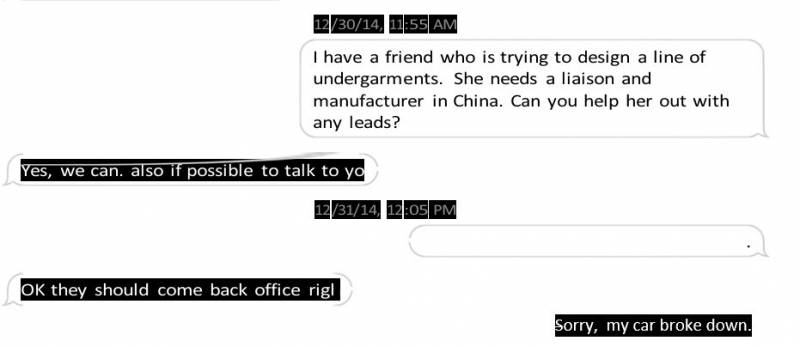
"caption": "Screenshot of a 2014 text message exchange between former SFPUC General Manager Harlan Kelly (at top) and city contractor and permit expediter Walter Wong, both indicted on federal corruption charges. ",
"description": "Text messages between former SFPUC general manager Harlan Kelly and permit expediter Walter Wong, both indicted on federal corruption charges. ",
"title": "Redaction_SS7_UnderGarments (2)",
"credit": null,
"status": "inherit",
"altTag": null,
"isLoading": false,
"fetchFailed": false
},
"news_11865040": {
"type": "attachments",
"id": "news_11865040",
"meta": {
"index": "attachments_1716263798",
"site": "news",
"id": "11865040",
"found": true
},
"parent": 11865018,
"imgSizes": {
"twentyfourteen-full-width": {
"file": "https://ww2.kqed.org/app/uploads/sites/10/2021/03/JulieSu3-1038x576.jpg",
"width": 1038,
"mimeType": "image/jpeg",
"height": 576
},
"thumbnail": {
"file": "https://ww2.kqed.org/app/uploads/sites/10/2021/03/JulieSu3-160x90.jpg",
"width": 160,
"mimeType": "image/jpeg",
"height": 90
},
"post-thumbnail": {
"file": "https://ww2.kqed.org/app/uploads/sites/10/2021/03/JulieSu3-672x372.jpg",
"width": 672,
"mimeType": "image/jpeg",
"height": 372
},
"kqedFullSize": {
"file": "https://ww2.kqed.org/app/uploads/sites/10/2021/03/JulieSu3.jpg",
"width": 1920,
"height": 1080
},
"large": {
"file": "https://ww2.kqed.org/app/uploads/sites/10/2021/03/JulieSu3-1020x574.jpg",
"width": 1020,
"mimeType": "image/jpeg",
"height": 574
},
"1536x1536": {
"file": "https://ww2.kqed.org/app/uploads/sites/10/2021/03/JulieSu3-1536x864.jpg",
"width": 1536,
"mimeType": "image/jpeg",
"height": 864
},
"medium": {
"file": "https://ww2.kqed.org/app/uploads/sites/10/2021/03/JulieSu3-800x450.jpg",
"width": 800,
"mimeType": "image/jpeg",
"height": 450
}
},
"publishDate": 1615930181,
"modified": 1615933921,
"caption": "California Labor Secretary Julie Su speaks before the U.S. Senate on March 16, 2021, in a confirmation hearing to consider her for deputy secretary of labor.",
"description": "California Labor Secretary Julie Su speaks before the U.S. Senate Tuesday, March 16, 2021, in a confirmation hearing to consider her for Deputy Secretary of Labor.",
"title": "JulieSu3",
"credit": "Courtesy PBS NewsHour",
"status": "inherit",
"altTag": null,
"isLoading": false,
"fetchFailed": false
},
"news_11864946": {
"type": "attachments",
"id": "news_11864946",
"meta": {
"index": "attachments_1716263798",
"site": "news",
"id": "11864946",
"found": true
},
"parent": 11864859,
"imgSizes": {
"twentyfourteen-full-width": {
"file": "https://ww2.kqed.org/app/uploads/sites/10/2021/03/GettyImages-1231340649-1-1038x576.jpg",
"width": 1038,
"mimeType": "image/jpeg",
"height": 576
},
"thumbnail": {
"file": "https://ww2.kqed.org/app/uploads/sites/10/2021/03/GettyImages-1231340649-1-160x107.jpg",
"width": 160,
"mimeType": "image/jpeg",
"height": 107
},
"post-thumbnail": {
"file": "https://ww2.kqed.org/app/uploads/sites/10/2021/03/GettyImages-1231340649-1-672x372.jpg",
"width": 672,
"mimeType": "image/jpeg",
"height": 372
},
"kqedFullSize": {
"file": "https://ww2.kqed.org/app/uploads/sites/10/2021/03/GettyImages-1231340649-1.jpg",
"width": 1920,
"height": 1280
},
"large": {
"file": "https://ww2.kqed.org/app/uploads/sites/10/2021/03/GettyImages-1231340649-1-1020x680.jpg",
"width": 1020,
"mimeType": "image/jpeg",
"height": 680
},
"1536x1536": {
"file": "https://ww2.kqed.org/app/uploads/sites/10/2021/03/GettyImages-1231340649-1-1536x1024.jpg",
"width": 1536,
"mimeType": "image/jpeg",
"height": 1024
},
"medium": {
"file": "https://ww2.kqed.org/app/uploads/sites/10/2021/03/GettyImages-1231340649-1-800x533.jpg",
"width": 800,
"mimeType": "image/jpeg",
"height": 533
}
},
"publishDate": 1615852689,
"modified": 1615916432,
"caption": "Sen. Alex Padilla, D-California, delivers a statement in support of Xavier Becerra, nominee for Secretary of Health and Human Services, at his confirmation hearing before the Senate Health, Education, Labor and Pensions Committee on Feb. 23, 2021 in Washington, D.C.",
"description": "Senator Alex Padilla (D-CA) delivers a statement in support of Xavier Becerra, nominee for Secretary of Health and Human Services (HHS), at his confirmation hearing before the Senate Health, Education, Labor and Pensions Committee on February 23, 2021 in Washington, DC. Becerra was previously the Attorney General of California.",
"title": "GettyImages-1231340649 (1)",
"credit": "Sarah Silbiger/Pool/Getty Images",
"status": "inherit",
"altTag": null,
"isLoading": false,
"fetchFailed": false
},
"news_11051787": {
"type": "attachments",
"id": "news_11051787",
"meta": {
"index": "attachments_1716263798",
"site": "news",
"id": "11051787",
"found": true
},
"parent": 11051780,
"imgSizes": {
"twentyfourteen-full-width": {
"file": "https://ww2.kqed.org/app/uploads/sites/10/2016/08/1920-guns-1038x576.jpg",
"width": 1038,
"mimeType": "image/jpeg",
"height": 576
},
"thumbnail": {
"file": "https://ww2.kqed.org/app/uploads/sites/10/2016/08/1920-guns-400x268.jpg",
"width": 400,
"mimeType": "image/jpeg",
"height": 268
},
"fd-sm": {
"file": "https://ww2.kqed.org/app/uploads/sites/10/2016/08/1920-guns-960x643.jpg",
"width": 960,
"mimeType": "image/jpeg",
"height": 643
},
"post-thumbnail": {
"file": "https://ww2.kqed.org/app/uploads/sites/10/2016/08/1920-guns-672x372.jpg",
"width": 672,
"mimeType": "image/jpeg",
"height": 372
},
"kqedFullSize": {
"file": "https://ww2.kqed.org/app/uploads/sites/10/2016/08/1920-guns.jpg",
"width": 1920,
"height": 1286
},
"large": {
"file": "https://ww2.kqed.org/app/uploads/sites/10/2016/08/1920-guns-1920x1286.jpg",
"width": 1920,
"mimeType": "image/jpeg",
"height": 1286
},
"guest-author-50": {
"file": "https://ww2.kqed.org/app/uploads/sites/10/2016/08/1920-guns-50x50.jpg",
"width": 50,
"mimeType": "image/jpeg",
"height": 50
},
"guest-author-96": {
"file": "https://ww2.kqed.org/app/uploads/sites/10/2016/08/1920-guns-96x96.jpg",
"width": 96,
"mimeType": "image/jpeg",
"height": 96
},
"medium": {
"file": "https://ww2.kqed.org/app/uploads/sites/10/2016/08/1920-guns-800x536.jpg",
"width": 800,
"mimeType": "image/jpeg",
"height": 536
},
"guest-author-64": {
"file": "https://ww2.kqed.org/app/uploads/sites/10/2016/08/1920-guns-64x64.jpg",
"width": 64,
"mimeType": "image/jpeg",
"height": 64
},
"guest-author-32": {
"file": "https://ww2.kqed.org/app/uploads/sites/10/2016/08/1920-guns-32x32.jpg",
"width": 32,
"mimeType": "image/jpeg",
"height": 32
},
"jmtc-small-thumb": {
"file": "https://ww2.kqed.org/app/uploads/sites/10/2016/08/1920-guns-280x150.jpg",
"width": 280,
"mimeType": "image/jpeg",
"height": 150
},
"fd-lrg": {
"file": "https://ww2.kqed.org/app/uploads/sites/10/2016/08/1920-guns-1920x1286.jpg",
"width": 1920,
"mimeType": "image/jpeg",
"height": 1286
},
"fd-med": {
"file": "https://ww2.kqed.org/app/uploads/sites/10/2016/08/1920-guns-1180x790.jpg",
"width": 1180,
"mimeType": "image/jpeg",
"height": 790
},
"detail": {
"file": "https://ww2.kqed.org/app/uploads/sites/10/2016/08/1920-guns-150x150.jpg",
"width": 150,
"mimeType": "image/jpeg",
"height": 150
},
"guest-author-128": {
"file": "https://ww2.kqed.org/app/uploads/sites/10/2016/08/1920-guns-128x128.jpg",
"width": 128,
"mimeType": "image/jpeg",
"height": 128
}
},
"publishDate": 1471300463,
"modified": 1471300912,
"caption": "Customers shopping at a gun show.",
"description": null,
"title": "A gun show",
"credit": "Michael Glasgow/Flickr",
"status": "inherit",
"isLoading": false,
"fetchFailed": false
},
"news_11864316": {
"type": "attachments",
"id": "news_11864316",
"meta": {
"index": "attachments_1716263798",
"site": "news",
"id": "11864316",
"found": true
},
"parent": 11864287,
"imgSizes": {
"twentyfourteen-full-width": {
"file": "https://ww2.kqed.org/app/uploads/sites/10/2021/03/GettyImages-1231447271-1038x576.jpg",
"width": 1038,
"mimeType": "image/jpeg",
"height": 576
},
"thumbnail": {
"file": "https://ww2.kqed.org/app/uploads/sites/10/2021/03/GettyImages-1231447271-160x107.jpg",
"width": 160,
"mimeType": "image/jpeg",
"height": 107
},
"post-thumbnail": {
"file": "https://ww2.kqed.org/app/uploads/sites/10/2021/03/GettyImages-1231447271-672x372.jpg",
"width": 672,
"mimeType": "image/jpeg",
"height": 372
},
"kqedFullSize": {
"file": "https://ww2.kqed.org/app/uploads/sites/10/2021/03/GettyImages-1231447271-scaled.jpg",
"width": 2560,
"height": 1707
},
"2048x2048": {
"file": "https://ww2.kqed.org/app/uploads/sites/10/2021/03/GettyImages-1231447271-2048x1365.jpg",
"width": 2048,
"mimeType": "image/jpeg",
"height": 1365
},
"large": {
"file": "https://ww2.kqed.org/app/uploads/sites/10/2021/03/GettyImages-1231447271-1020x680.jpg",
"width": 1020,
"mimeType": "image/jpeg",
"height": 680
},
"1536x1536": {
"file": "https://ww2.kqed.org/app/uploads/sites/10/2021/03/GettyImages-1231447271-1536x1024.jpg",
"width": 1536,
"mimeType": "image/jpeg",
"height": 1024
},
"full-width": {
"file": "https://ww2.kqed.org/app/uploads/sites/10/2021/03/GettyImages-1231447271-1920x1280.jpg",
"width": 1920,
"mimeType": "image/jpeg",
"height": 1280
},
"medium": {
"file": "https://ww2.kqed.org/app/uploads/sites/10/2021/03/GettyImages-1231447271-800x533.jpg",
"width": 800,
"mimeType": "image/jpeg",
"height": 533
}
},
"publishDate": 1615503422,
"modified": 1615503481,
"caption": "Signage is seen near a booth where conservative activists gather signatures in a recall effort against California Governor Gavin Newsom near Pasadena City Hall, in Pasadena, California on February 28, 2021. (Photo by DAVID MCNEW / AFP) ",
"description": null,
"title": "US-POLITICS-CALIFORNIA-NEWSOM",
"credit": "(Photo by DAVID MCNEW/AFP via Getty Images)",
"status": "inherit",
"altTag": null,
"isLoading": false,
"fetchFailed": false
},
"news_11864233": {
"type": "attachments",
"id": "news_11864233",
"meta": {
"index": "attachments_1716263798",
"site": "news",
"id": "11864233",
"found": true
},
"parent": 11864223,
"imgSizes": {
"twentyfourteen-full-width": {
"file": "https://ww2.kqed.org/app/uploads/sites/10/2021/03/RS47629_GettyImages-1304962043-qut-1038x576.jpg",
"width": 1038,
"mimeType": "image/jpeg",
"height": 576
},
"thumbnail": {
"file": "https://ww2.kqed.org/app/uploads/sites/10/2021/03/RS47629_GettyImages-1304962043-qut-160x112.jpg",
"width": 160,
"mimeType": "image/jpeg",
"height": 112
},
"post-thumbnail": {
"file": "https://ww2.kqed.org/app/uploads/sites/10/2021/03/RS47629_GettyImages-1304962043-qut-672x372.jpg",
"width": 672,
"mimeType": "image/jpeg",
"height": 372
},
"kqedFullSize": {
"file": "https://ww2.kqed.org/app/uploads/sites/10/2021/03/RS47629_GettyImages-1304962043-qut.jpg",
"width": 1920,
"height": 1341
},
"large": {
"file": "https://ww2.kqed.org/app/uploads/sites/10/2021/03/RS47629_GettyImages-1304962043-qut-1020x712.jpg",
"width": 1020,
"mimeType": "image/jpeg",
"height": 712
},
"1536x1536": {
"file": "https://ww2.kqed.org/app/uploads/sites/10/2021/03/RS47629_GettyImages-1304962043-qut-1536x1073.jpg",
"width": 1536,
"mimeType": "image/jpeg",
"height": 1073
},
"medium": {
"file": "https://ww2.kqed.org/app/uploads/sites/10/2021/03/RS47629_GettyImages-1304962043-qut-800x559.jpg",
"width": 800,
"mimeType": "image/jpeg",
"height": 559
}
},
"publishDate": 1615486632,
"modified": 1615486722,
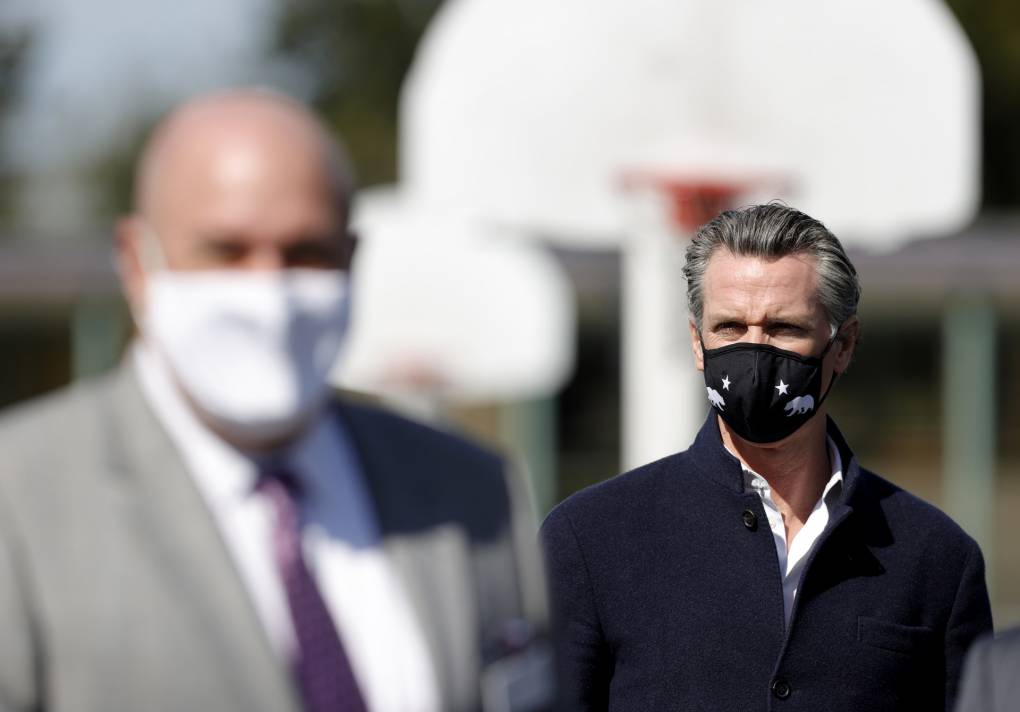
"caption": "Gov. Gavin Newsom looks on during a news conference after touring Barron Park Elementary School on March 2, 2021 in Palo Alto. About $15.9 billion from the federal coronavirus relief bill will go to public and private schools in California.",
"description": "Gov. Gavin Newsom looks on during a news conference after touring Barron Park Elementary School on March 2, 2021 in Palo Alto. About $15.9 billion from the federal coronavirus relief bill will go to public and private schools in California.",
"title": "California Governor Gavin Newsom Visits Reopened Elementary In Palo Alto",
"credit": "Justin Sullivan/Getty Images",
"status": "inherit",
"altTag": "Gavin Newsom with mask on school's basketball court",
"isLoading": false,
"fetchFailed": false
},
"news_11864150": {
"type": "attachments",
"id": "news_11864150",
"meta": {
"index": "attachments_1716263798",
"site": "news",
"id": "11864150",
"found": true
},
"parent": 11864120,
"imgSizes": {
"twentyfourteen-full-width": {
"file": "https://ww2.kqed.org/app/uploads/sites/10/2021/03/GettyImages-1231635017-1-1038x576.jpg",
"width": 1038,
"mimeType": "image/jpeg",
"height": 576
},
"thumbnail": {
"file": "https://ww2.kqed.org/app/uploads/sites/10/2021/03/GettyImages-1231635017-1-160x119.jpg",
"width": 160,
"mimeType": "image/jpeg",
"height": 119
},
"post-thumbnail": {
"file": "https://ww2.kqed.org/app/uploads/sites/10/2021/03/GettyImages-1231635017-1-672x372.jpg",
"width": 672,
"mimeType": "image/jpeg",
"height": 372
},
"kqedFullSize": {
"file": "https://ww2.kqed.org/app/uploads/sites/10/2021/03/GettyImages-1231635017-1.jpg",
"width": 1920,
"height": 1433
},
"large": {
"file": "https://ww2.kqed.org/app/uploads/sites/10/2021/03/GettyImages-1231635017-1-1020x761.jpg",
"width": 1020,
"mimeType": "image/jpeg",
"height": 761
},
"1536x1536": {
"file": "https://ww2.kqed.org/app/uploads/sites/10/2021/03/GettyImages-1231635017-1-1536x1146.jpg",
"width": 1536,
"mimeType": "image/jpeg",
"height": 1146
},
"medium": {
"file": "https://ww2.kqed.org/app/uploads/sites/10/2021/03/GettyImages-1231635017-1-800x597.jpg",
"width": 800,
"mimeType": "image/jpeg",
"height": 597
}
},
"publishDate": 1615411630,
"modified": 1615415458,
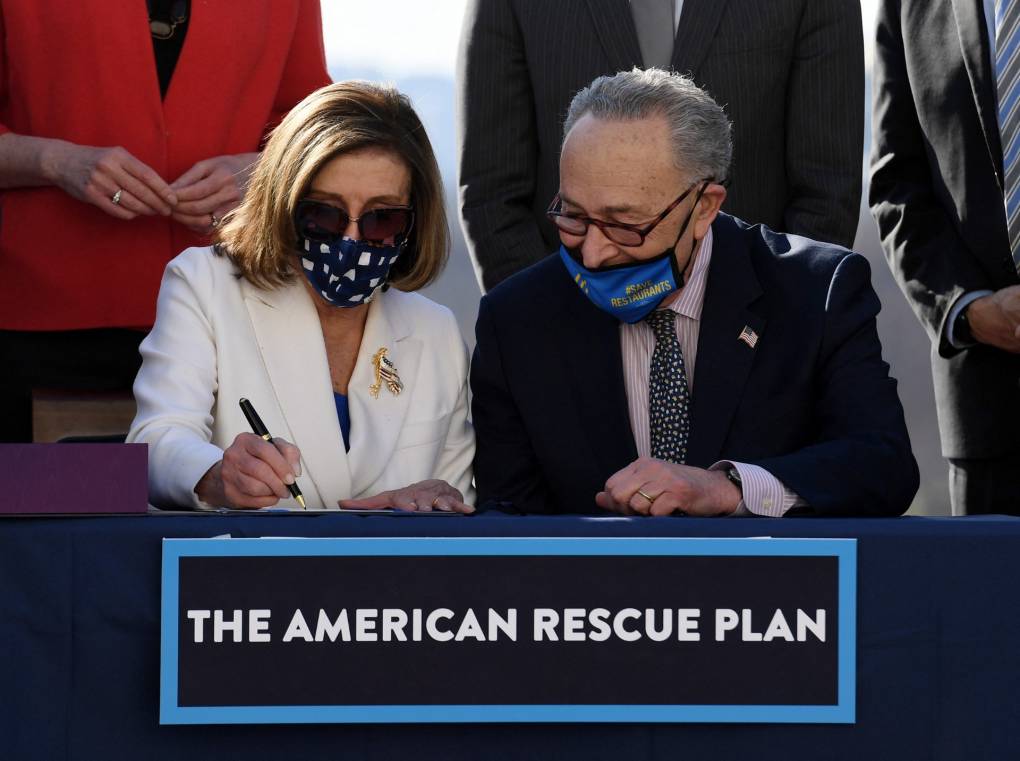
"caption": "Speaker of the House Nancy Pelosi (L) and Senate Majority Leader Chuck Schumer sign the American Rescue Plan Act after the House Chamber voted on the final revised legislation of the $1.9 trillion Covid-19 relief plan, at the US Capitol on March 10, 2021 in Washington, DC. - The US Congress on Wednesday passed Joe Biden's enormous economic relief package, delivering a resounding victory for the US president and a desperately needed injection of cash to millions of families and businesses enduring the coronavirus pandemic. ",
"description": "Speaker of the House Nancy Pelosi (L) and Senate Majority Leader Chuck Schumer sign the American Rescue Plan Act after the House Chamber voted on the final revised legislation of the $1.9 trillion Covid-19 relief plan, at the US Capitol on March 10, 2021 in Washington, DC. - The US Congress on Wednesday passed Joe Biden's enormous economic relief package, delivering a resounding victory for the US president and a desperately needed injection of cash to millions of families and businesses enduring the coronavirus pandemic. ",
"title": "GettyImages-1231635017 (1)",
"credit": "Olivier Douliery/AFP via Getty Images",
"status": "inherit",
"altTag": "Pelosi and Schumer sitting with masks on, signing American Rescue Plan Act",
"isLoading": false,
"fetchFailed": false
},
"news_11864066": {
"type": "attachments",
"id": "news_11864066",
"meta": {
"index": "attachments_1716263798",
"site": "news",
"id": "11864066",
"found": true
},
"parent": 11864034,
"imgSizes": {
"twentyfourteen-full-width": {
"file": "https://ww2.kqed.org/app/uploads/sites/10/2021/03/GettyImages-1231619984-1-1038x576.jpg",
"width": 1038,
"mimeType": "image/jpeg",
"height": 576
},
"thumbnail": {
"file": "https://ww2.kqed.org/app/uploads/sites/10/2021/03/GettyImages-1231619984-1-160x107.jpg",
"width": 160,
"mimeType": "image/jpeg",
"height": 107
},
"post-thumbnail": {
"file": "https://ww2.kqed.org/app/uploads/sites/10/2021/03/GettyImages-1231619984-1-672x372.jpg",
"width": 672,
"mimeType": "image/jpeg",
"height": 372
},
"kqedFullSize": {
"file": "https://ww2.kqed.org/app/uploads/sites/10/2021/03/GettyImages-1231619984-1.jpg",
"width": 1920,
"height": 1280
},
"large": {
"file": "https://ww2.kqed.org/app/uploads/sites/10/2021/03/GettyImages-1231619984-1-1020x680.jpg",
"width": 1020,
"mimeType": "image/jpeg",
"height": 680
},
"1536x1536": {
"file": "https://ww2.kqed.org/app/uploads/sites/10/2021/03/GettyImages-1231619984-1-1536x1024.jpg",
"width": 1536,
"mimeType": "image/jpeg",
"height": 1024
},
"medium": {
"file": "https://ww2.kqed.org/app/uploads/sites/10/2021/03/GettyImages-1231619984-1-800x533.jpg",
"width": 800,
"mimeType": "image/jpeg",
"height": 533
}
},
"publishDate": 1615345168,
"modified": 1615400575,
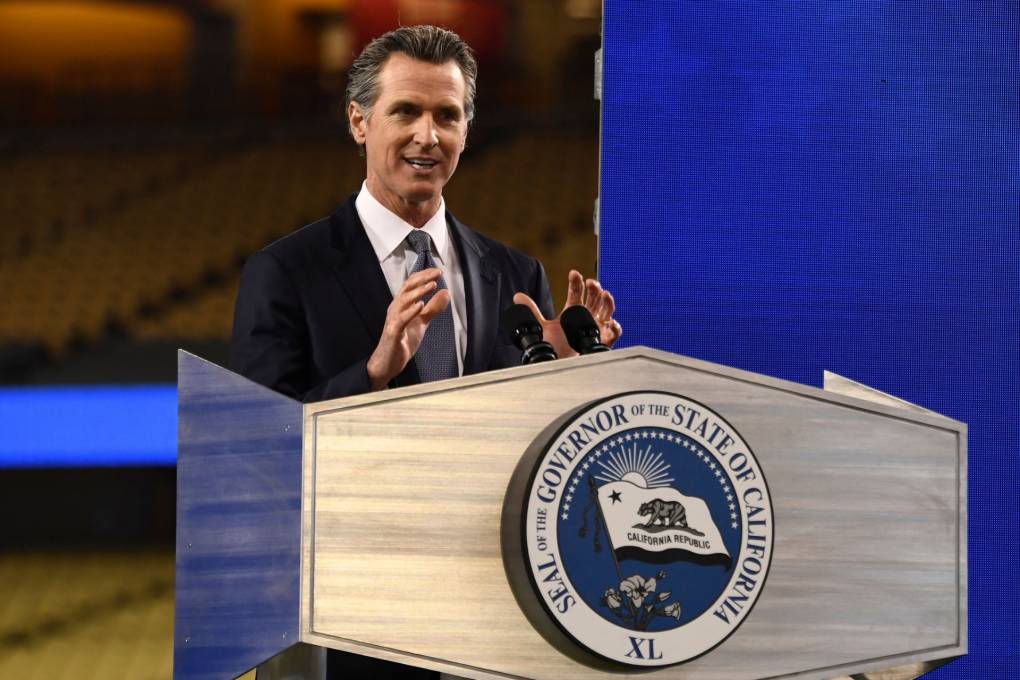
"caption": "California Gov. Gavin Newsom delivers the State of the State address at Dodger Stadium in Los Angeles on March 9, 2021.",
"description": "California Governor Gavin Newsom delivers the State of the State address at Dodger Stadium in Los Angeles, California, on March 9, 2021. ",
"title": "GettyImages-1231619984 (1)",
"credit": "Patrick T. Fallon/AFP via Getty Images",
"status": "inherit",
"altTag": null,
"isLoading": false,
"fetchFailed": false
},
"news_11863866": {
"type": "attachments",
"id": "news_11863866",
"meta": {
"index": "attachments_1716263798",
"site": "news",
"id": "11863866",
"found": true
},
"parent": 11863841,
"imgSizes": {
"apple_news_ca_landscape_5_5": {
"file": "https://ww2.kqed.org/app/uploads/sites/10/2021/03/IMG_4863-1044x783.jpg",
"width": 1044,
"mimeType": "image/jpeg",
"height": 783
},
"apple_news_ca_square_4_0": {
"file": "https://ww2.kqed.org/app/uploads/sites/10/2021/03/IMG_4863-470x470.jpg",
"width": 470,
"mimeType": "image/jpeg",
"height": 470
},
"twentyfourteen-full-width": {
"file": "https://ww2.kqed.org/app/uploads/sites/10/2021/03/IMG_4863-1038x576.jpg",
"width": 1038,
"mimeType": "image/jpeg",
"height": 576
},
"thumbnail": {
"file": "https://ww2.kqed.org/app/uploads/sites/10/2021/03/IMG_4863-160x120.jpg",
"width": 160,
"mimeType": "image/jpeg",
"height": 120
},
"post-thumbnail": {
"file": "https://ww2.kqed.org/app/uploads/sites/10/2021/03/IMG_4863-672x372.jpg",
"width": 672,
"mimeType": "image/jpeg",
"height": 372
},
"kqedFullSize": {
"file": "https://ww2.kqed.org/app/uploads/sites/10/2021/03/IMG_4863-scaled-e1615317156270.jpg",
"width": 1920,
"height": 1440
},
"2048x2048": {
"file": "https://ww2.kqed.org/app/uploads/sites/10/2021/03/IMG_4863-2048x1536.jpg",
"width": 2048,
"mimeType": "image/jpeg",
"height": 1536
},
"apple_news_ca_landscape_4_7": {
"file": "https://ww2.kqed.org/app/uploads/sites/10/2021/03/IMG_4863-632x474.jpg",
"width": 632,
"mimeType": "image/jpeg",
"height": 474
},
"large": {
"file": "https://ww2.kqed.org/app/uploads/sites/10/2021/03/IMG_4863-1020x765.jpg",
"width": 1020,
"mimeType": "image/jpeg",
"height": 765
},
"apple_news_ca_landscape_4_0": {
"file": "https://ww2.kqed.org/app/uploads/sites/10/2021/03/IMG_4863-536x402.jpg",
"width": 536,
"mimeType": "image/jpeg",
"height": 402
},
"apple_news_ca_portrait_12_9": {
"file": "https://ww2.kqed.org/app/uploads/sites/10/2021/03/IMG_4863-1122x1496.jpg",
"width": 1122,
"mimeType": "image/jpeg",
"height": 1496
},
"medium": {
"file": "https://ww2.kqed.org/app/uploads/sites/10/2021/03/IMG_4863-800x600.jpg",
"width": 800,
"mimeType": "image/jpeg",
"height": 600
},
"apple_news_ca_portrait_4_0": {
"file": "https://ww2.kqed.org/app/uploads/sites/10/2021/03/IMG_4863-354x472.jpg",
"width": 354,
"mimeType": "image/jpeg",
"height": 472
},
"apple_news_ca_portrait_9_7": {
"file": "https://ww2.kqed.org/app/uploads/sites/10/2021/03/IMG_4863-840x1120.jpg",
"width": 840,
"mimeType": "image/jpeg",
"height": 1120
},
"apple_news_ca_landscape_12_9": {
"file": "https://ww2.kqed.org/app/uploads/sites/10/2021/03/IMG_4863-1832x1374.jpg",
"width": 1832,
"mimeType": "image/jpeg",
"height": 1374
},
"apple_news_ca_square_9_7": {
"file": "https://ww2.kqed.org/app/uploads/sites/10/2021/03/IMG_4863-1104x1104.jpg",
"width": 1104,
"mimeType": "image/jpeg",
"height": 1104
},
"1536x1536": {
"file": "https://ww2.kqed.org/app/uploads/sites/10/2021/03/IMG_4863-1536x1152.jpg",
"width": 1536,
"mimeType": "image/jpeg",
"height": 1152
},
"apple_news_ca_portrait_4_7": {
"file": "https://ww2.kqed.org/app/uploads/sites/10/2021/03/IMG_4863-414x552.jpg",
"width": 414,
"mimeType": "image/jpeg",
"height": 552
},
"apple_news_ca_square_12_9": {
"file": "https://ww2.kqed.org/app/uploads/sites/10/2021/03/IMG_4863-1472x1472.jpg",
"width": 1472,
"mimeType": "image/jpeg",
"height": 1472
},
"apple_news_ca_portrait_5_5": {
"file": "https://ww2.kqed.org/app/uploads/sites/10/2021/03/IMG_4863-687x916.jpg",
"width": 687,
"mimeType": "image/jpeg",
"height": 916
},
"full-width": {
"file": "https://ww2.kqed.org/app/uploads/sites/10/2021/03/IMG_4863-1920x1440.jpg",
"width": 1920,
"mimeType": "image/jpeg",
"height": 1440
},
"apple_news_ca_square_4_7": {
"file": "https://ww2.kqed.org/app/uploads/sites/10/2021/03/IMG_4863-550x550.jpg",
"width": 550,
"mimeType": "image/jpeg",
"height": 550
},
"apple_news_ca_landscape_9_7": {
"file": "https://ww2.kqed.org/app/uploads/sites/10/2021/03/IMG_4863-1376x1032.jpg",
"width": 1376,
"mimeType": "image/jpeg",
"height": 1032
},
"apple_news_ca_square_5_5": {
"file": "https://ww2.kqed.org/app/uploads/sites/10/2021/03/IMG_4863-912x912.jpg",
"width": 912,
"mimeType": "image/jpeg",
"height": 912
}
},
"publishDate": 1615306086,
"modified": 1615322378,
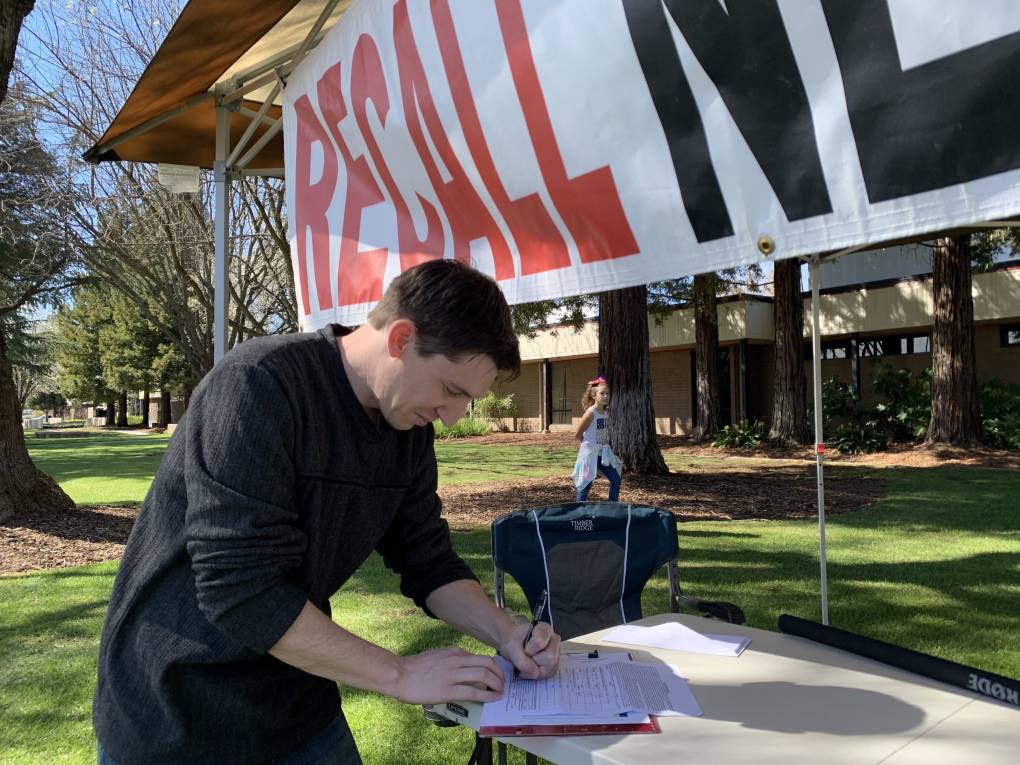
"caption": "David Verza, 32, signs a petition to recall Gov. Gavin Newsom during a recall rally in Vacaville on March 6, 2021. Verza says the governor doesn't care about ordinary people like him.",
"description": null,
"title": "Recall Newsom petition signer",
"credit": "Scott Shafer/KQED",
"status": "inherit",
"altTag": null,
"isLoading": false,
"fetchFailed": false
},
"news_11863819": {
"type": "attachments",
"id": "news_11863819",
"meta": {
"index": "attachments_1716263798",
"site": "news",
"id": "11863819",
"found": true
},
"parent": 11863474,
"imgSizes": {
"apple_news_ca_square_4_0": {
"file": "https://ww2.kqed.org/app/uploads/sites/10/2021/03/GettyImages-1231186926-470x470.jpg",
"width": 470,
"mimeType": "image/jpeg",
"height": 470
},
"thumbnail": {
"file": "https://ww2.kqed.org/app/uploads/sites/10/2021/03/GettyImages-1231186926-160x90.jpg",
"width": 160,
"mimeType": "image/jpeg",
"height": 90
},
"post-thumbnail": {
"file": "https://ww2.kqed.org/app/uploads/sites/10/2021/03/GettyImages-1231186926-672x372.jpg",
"width": 672,
"mimeType": "image/jpeg",
"height": 372
},
"kqedFullSize": {
"file": "https://ww2.kqed.org/app/uploads/sites/10/2021/03/GettyImages-1231186926.jpg",
"width": 1024,
"height": 577
},
"apple_news_ca_landscape_4_7": {
"file": "https://ww2.kqed.org/app/uploads/sites/10/2021/03/GettyImages-1231186926-632x474.jpg",
"width": 632,
"mimeType": "image/jpeg",
"height": 474
},
"large": {
"file": "https://ww2.kqed.org/app/uploads/sites/10/2021/03/GettyImages-1231186926-1020x575.jpg",
"width": 1020,
"mimeType": "image/jpeg",
"height": 575
},
"apple_news_ca_landscape_4_0": {
"file": "https://ww2.kqed.org/app/uploads/sites/10/2021/03/GettyImages-1231186926-536x402.jpg",
"width": 536,
"mimeType": "image/jpeg",
"height": 402
},
"medium": {
"file": "https://ww2.kqed.org/app/uploads/sites/10/2021/03/GettyImages-1231186926-800x451.jpg",
"width": 800,
"mimeType": "image/jpeg",
"height": 451
},
"apple_news_ca_portrait_4_0": {
"file": "https://ww2.kqed.org/app/uploads/sites/10/2021/03/GettyImages-1231186926-354x472.jpg",
"width": 354,
"mimeType": "image/jpeg",
"height": 472
},
"apple_news_ca_portrait_9_7": {
"file": "https://ww2.kqed.org/app/uploads/sites/10/2021/03/GettyImages-1231186926-840x577.jpg",
"width": 840,
"mimeType": "image/jpeg",
"height": 577
},
"apple_news_ca_portrait_4_7": {
"file": "https://ww2.kqed.org/app/uploads/sites/10/2021/03/GettyImages-1231186926-414x552.jpg",
"width": 414,
"mimeType": "image/jpeg",
"height": 552
},
"apple_news_ca_portrait_5_5": {
"file": "https://ww2.kqed.org/app/uploads/sites/10/2021/03/GettyImages-1231186926-687x577.jpg",
"width": 687,
"mimeType": "image/jpeg",
"height": 577
},
"apple_news_ca_square_4_7": {
"file": "https://ww2.kqed.org/app/uploads/sites/10/2021/03/GettyImages-1231186926-550x550.jpg",
"width": 550,
"mimeType": "image/jpeg",
"height": 550
},
"apple_news_ca_square_5_5": {
"file": "https://ww2.kqed.org/app/uploads/sites/10/2021/03/GettyImages-1231186926-912x577.jpg",
"width": 912,
"mimeType": "image/jpeg",
"height": 577
}
},
"publishDate": 1615250841,
"modified": 1615253088,
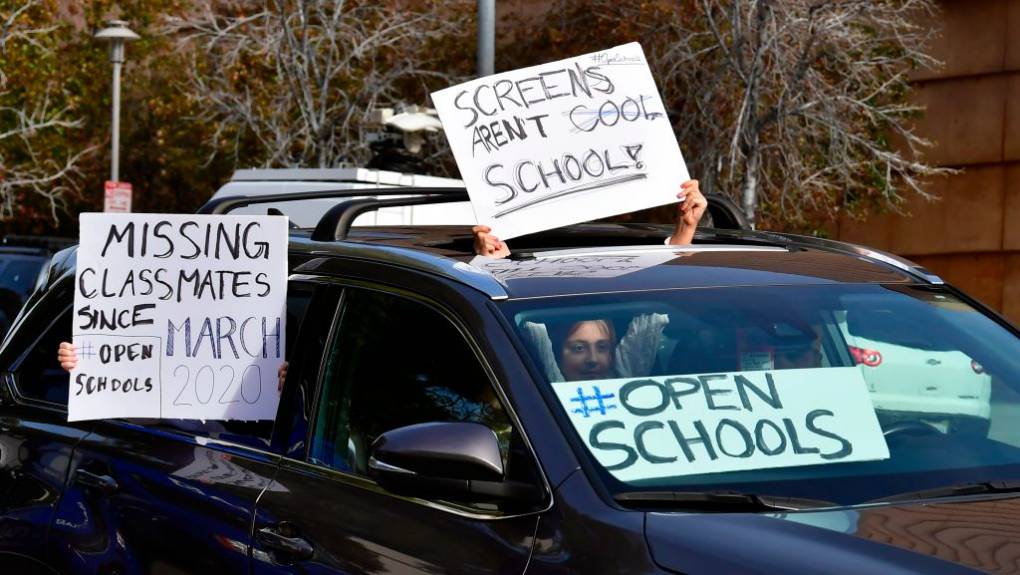
"caption": "Demonstrators in a car caravan during an 'Open Schools Now' rally on Feb. 15, 2021 in Los Angeles.",
"description": null,
"title": "US-HEALTH-VIRUS-EDUCATION",
"credit": "Frederic J. Brown/AFP via Getty Images",
"status": "inherit",
"altTag": null,
"isLoading": false,
"fetchFailed": false
}
},
"audioPlayerReducer": {
"postId": "stream_live",
"isPaused": true,
"isPlaying": false,
"pfsActive": false,
"pledgeModalIsOpen": true,
"playerDrawerIsOpen": false,
"liveAudioPlayStartedAt": 0,
"liveAudioPlayContext": ""
},
"authorsReducer": {
"byline_news_11865662": {
"type": "authors",
"id": "byline_news_11865662",
"meta": {
"override": true
},
"slug": "byline_news_11865662",
"name": "Bill Barrow, Jonathan Lemire and Jeff Amy\u003cbr>Associated Press",
"isLoading": false
},
"byline_news_11865393": {
"type": "authors",
"id": "byline_news_11865393",
"meta": {
"override": true
},
"slug": "byline_news_11865393",
"name": "Chloee Weiner",
"isLoading": false
},
"byline_news_11864223": {
"type": "authors",
"id": "byline_news_11864223",
"meta": {
"override": true
},
"slug": "byline_news_11864223",
"name": "Adam Beam \u003cbr> The Associated Press",
"isLoading": false
},
"gmarzorati": {
"type": "authors",
"id": "227",
"meta": {
"index": "authors_1716337520",
"id": "227",
"found": true
},
"name": "Guy Marzorati",
"firstName": "Guy",
"lastName": "Marzorati",
"slug": "gmarzorati",
"email": "gmarzorati@KQED.org",
"display_author_email": true,
"staff_mastheads": [
"news"
],
"title": "Correspondent",
"bio": "Guy Marzorati is a correspondent on KQED's California Politics and Government Desk, based in San Jose. A graduate of Santa Clara University, Guy joined KQED in 2013. He reports on state and local politics and produces KQED's digital voter guide.",
"avatar": "https://secure.gravatar.com/avatar/e7038b8dbfd55b104369b76b1cd0b9de?s=600&d=blank&r=g",
"twitter": "guymarzorati",
"facebook": null,
"instagram": null,
"linkedin": null,
"sites": [
{
"site": "",
"roles": [
"editor"
]
},
{
"site": "news",
"roles": [
"editor"
]
},
{
"site": "science",
"roles": [
"editor"
]
},
{
"site": "forum",
"roles": [
"editor"
]
},
{
"site": "elections",
"roles": [
"editor"
]
},
{
"site": "liveblog",
"roles": [
"editor"
]
}
],
"headData": {
"title": "Guy Marzorati | KQED",
"description": "Correspondent",
"ogImgSrc": "https://secure.gravatar.com/avatar/e7038b8dbfd55b104369b76b1cd0b9de?s=600&d=blank&r=g",
"twImgSrc": "https://secure.gravatar.com/avatar/e7038b8dbfd55b104369b76b1cd0b9de?s=600&d=blank&r=g"
},
"isLoading": false,
"link": "/author/gmarzorati"
},
"kqednewsstaffandwires": {
"type": "authors",
"id": "237",
"meta": {
"index": "authors_1716337520",
"id": "237",
"found": true
},
"name": "KQED News Staff and Wires",
"firstName": "KQED News Staff and Wires",
"lastName": null,
"slug": "kqednewsstaffandwires",
"email": "onlinenewsstaff@kqed.org",
"display_author_email": false,
"staff_mastheads": [],
"title": null,
"bio": null,
"avatar": "https://secure.gravatar.com/avatar/72295af8ebbfbd19a4948f5271285664?s=600&d=blank&r=g",
"twitter": null,
"facebook": null,
"instagram": null,
"linkedin": null,
"sites": [
{
"site": "arts",
"roles": [
"contributor"
]
},
{
"site": "news",
"roles": [
"contributor"
]
},
{
"site": "lowdown",
"roles": [
"author"
]
},
{
"site": "stateofhealth",
"roles": [
"contributor"
]
},
{
"site": "food",
"roles": [
"author"
]
}
],
"headData": {
"title": "KQED News Staff and Wires | KQED",
"description": null,
"ogImgSrc": "https://secure.gravatar.com/avatar/72295af8ebbfbd19a4948f5271285664?s=600&d=blank&r=g",
"twImgSrc": "https://secure.gravatar.com/avatar/72295af8ebbfbd19a4948f5271285664?s=600&d=blank&r=g"
},
"isLoading": false,
"link": "/author/kqednewsstaffandwires"
},
"scottshafer": {
"type": "authors",
"id": "255",
"meta": {
"index": "authors_1716337520",
"id": "255",
"found": true
},
"name": "Scott Shafer",
"firstName": "Scott",
"lastName": "Shafer",
"slug": "scottshafer",
"email": "sshafer@kqed.org",
"display_author_email": false,
"staff_mastheads": [
"news"
],
"title": "KQED Contributor",
"bio": "Scott Shafer is a senior editor with the KQED Politics and Government desk. He is co-host of Political Breakdown, the award-winning radio show and podcast with a personal take on the world of politics. Scott came to KQED in 1998 to host the statewide\u003cem> California Report\u003c/em>. Prior to that he had extended stints in politics and government\u003cem>.\u003c/em> He uses that inside experience at KQED in his, reporting, hosting and analysis for the politics desk. Scott collaborated \u003cem>Political Breakdown a\u003c/em>nd on \u003cem>The Political Mind of Jerry Brown, \u003c/em>an eight-part series about the life and extraordinary political career of the former governor. For fun, he plays water polo with the San Francisco Tsunami.",
"avatar": "https://secure.gravatar.com/avatar/a62ebae45b79d7aed1a39a0e3bf68104?s=600&d=blank&r=g",
"twitter": "scottshafer",
"bluesky": null,
"facebook": null,
"instagram": null,
"linkedin": null,
"sites": [
{
"site": "news",
"roles": [
"editor"
]
},
{
"site": "stateofhealth",
"roles": [
"author"
]
},
{
"site": "science",
"roles": [
"author"
]
},
{
"site": "forum",
"roles": [
"subscriber"
]
},
{
"site": "liveblog",
"roles": [
"author"
]
}
],
"headData": {
"title": "Scott Shafer | KQED",
"description": "KQED Contributor",
"ogImgSrc": "https://secure.gravatar.com/avatar/a62ebae45b79d7aed1a39a0e3bf68104?s=600&d=blank&r=g",
"twImgSrc": "https://secure.gravatar.com/avatar/a62ebae45b79d7aed1a39a0e3bf68104?s=600&d=blank&r=g"
},
"isLoading": false,
"link": "/author/scottshafer"
},
"ecruzguevarra": {
"type": "authors",
"id": "8654",
"meta": {
"index": "authors_1716337520",
"id": "8654",
"found": true
},
"name": "Ericka Cruz Guevarra",
"firstName": "Ericka",
"lastName": "Cruz Guevarra",
"slug": "ecruzguevarra",
"email": "ecruzguevarra@kqed.org",
"display_author_email": true,
"staff_mastheads": [
"news"
],
"title": "Producer, The Bay Podcast",
"bio": "Ericka Cruz Guevarra is host of \u003ca href=\"https://www.kqed.org/podcasts/thebay\">\u003cem>The Bay\u003c/em>\u003c/a> podcast at KQED. Before host, she was the show’s producer. Her work in that capacity includes a three-part reported series on policing in Vallejo, which won a 2020 excellence in journalism award from the Society of Professional Journalists. Ericka has worked as a breaking news reporter at Oregon Public Broadcasting, helped produce the Code Switch podcast, and was KQED’s inaugural Raul Ramirez Diversity Fund intern. She’s also an alumna of NPR’s Next Generation Radio program. Send her an email if you have strong feelings about whether Fairfield and Suisun City are the Bay. Ericka is represented by SAG-AFTRA.",
"avatar": "https://secure.gravatar.com/avatar/accefc1de4bafc7e234b69bcb9b6f6536c130fd84709bc3069ef11a78787e1bb?s=600&d=blank&r=g",
"twitter": "NotoriousECG",
"bluesky": null,
"facebook": null,
"instagram": null,
"linkedin": null,
"sites": [
{
"site": "arts",
"roles": [
"subscriber"
]
},
{
"site": "news",
"roles": [
"editor",
"manage_categories"
]
},
{
"site": "futureofyou",
"roles": [
"subscriber"
]
},
{
"site": "stateofhealth",
"roles": [
"subscriber"
]
},
{
"site": "science",
"roles": [
"editor"
]
},
{
"site": "forum",
"roles": [
"subscriber"
]
}
],
"headData": {
"title": "Ericka Cruz Guevarra | KQED",
"description": "Producer, The Bay Podcast",
"ogImgSrc": "https://secure.gravatar.com/avatar/accefc1de4bafc7e234b69bcb9b6f6536c130fd84709bc3069ef11a78787e1bb?s=600&d=blank&r=g",
"twImgSrc": "https://secure.gravatar.com/avatar/accefc1de4bafc7e234b69bcb9b6f6536c130fd84709bc3069ef11a78787e1bb?s=600&d=blank&r=g"
},
"isLoading": false,
"link": "/author/ecruzguevarra"
},
"korr": {
"type": "authors",
"id": "11200",
"meta": {
"index": "authors_1716337520",
"id": "11200",
"found": true
},
"name": "Katie Orr",
"firstName": "Katie",
"lastName": "Orr",
"slug": "korr",
"email": "korr@kqed.org",
"display_author_email": false,
"staff_mastheads": [],
"title": "KQED Contributor",
"bio": "Katie Orr was a Sacramento-based reporter for KQED's Politics and Government Desk, covering the state Capitol and a variety of issues including women in politics, voting and elections and legislation. Prior to joining KQED in 2016, Katie was state government reporter for Capital Public Radio in Sacramento. She's also worked for KPBS in San Diego, where she covered City Hall.\r\n\r\nKatie received her masters degree in political science from San Diego State University and holds a Bachelors degree in broadcast journalism from Arizona State University.\r\n\r\nIn 2015 Katie won a national Clarion Award for a series of stories she did on women in California politics. She's been honored by the Society for Professional Journalists and, in 2013, was named by \u003cem>The Washington Post\u003c/em> as one of the country's top state Capitol reporters. She's also reported for the award-winning documentary series \u003cem>The View from Here \u003c/em>and was part of the team that won national PRNDI and Gabriel Awards in 2015. She lives in Sacramento with her husband. Twitter: @1KatieOrr",
"avatar": "https://secure.gravatar.com/avatar/41a40b25845adc78f50808670860449e?s=600&d=blank&r=g",
"twitter": "1katieorr",
"facebook": null,
"instagram": null,
"linkedin": null,
"sites": [
{
"site": "news",
"roles": [
"subscriber"
]
},
{
"site": "stateofhealth",
"roles": [
"author"
]
},
{
"site": "forum",
"roles": [
"author"
]
}
],
"headData": {
"title": "Katie Orr | KQED",
"description": "KQED Contributor",
"ogImgSrc": "https://secure.gravatar.com/avatar/41a40b25845adc78f50808670860449e?s=600&d=blank&r=g",
"twImgSrc": "https://secure.gravatar.com/avatar/41a40b25845adc78f50808670860449e?s=600&d=blank&r=g"
},
"isLoading": false,
"link": "/author/korr"
},
"aehsanipour": {
"type": "authors",
"id": "11580",
"meta": {
"index": "authors_1716337520",
"id": "11580",
"found": true
},
"name": "Asal Ehsanipour",
"firstName": "Asal",
"lastName": "Ehsanipour",
"slug": "aehsanipour",
"email": "aehsanipour@kqed.org",
"display_author_email": false,
"staff_mastheads": [],
"title": "Reporter and Producer",
"bio": "Asal Ehsanipour is a producer and reporter for Rightnowish, Bay Curious and The California Report Magazine. She is also a producer for \u003ca href=\"https://www.thedoubleshift.com/\">The Double Shift\u003c/a>, a podcast about a new generation of working mothers. In 2018, Asal was named an Emerging Journalist Fellow by the Journalism and Women’s Symposium. Her work has appeared on KQED, KALW, PRI’s The World, and in several food and travel publications.",
"avatar": "https://secure.gravatar.com/avatar/c0e210438f5dca1b76921ff9f0eada52?s=600&d=blank&r=g",
"twitter": null,
"facebook": null,
"instagram": null,
"linkedin": null,
"sites": [
{
"site": "arts",
"roles": []
},
{
"site": "news",
"roles": [
"author",
"edit_others_posts"
]
}
],
"headData": {
"title": "Asal Ehsanipour | KQED",
"description": "Reporter and Producer",
"ogImgSrc": "https://secure.gravatar.com/avatar/c0e210438f5dca1b76921ff9f0eada52?s=600&d=blank&r=g",
"twImgSrc": "https://secure.gravatar.com/avatar/c0e210438f5dca1b76921ff9f0eada52?s=600&d=blank&r=g"
},
"isLoading": false,
"link": "/author/aehsanipour"
},
"amontecillo": {
"type": "authors",
"id": "11649",
"meta": {
"index": "authors_1716337520",
"id": "11649",
"found": true
},
"name": "Alan Montecillo",
"firstName": "Alan",
"lastName": "Montecillo",
"slug": "amontecillo",
"email": "amontecillo@kqed.org",
"display_author_email": false,
"staff_mastheads": [
"news"
],
"title": "KQED Contributor",
"bio": "Alan Montecillo is the senior editor of \u003cem>\u003ca href=\"http://kqed.org/thebay\">The Bay\u003c/a>, \u003c/em> KQED's local news podcast. Before moving to the Bay Area, he worked as a senior talk show producer for WILL in Champaign-Urbana, Illinois and at Oregon Public Broadcasting in Portland, Oregon. He has won journalism awards from the Society of Professional Journalists Northern California, the Public Media Journalists Association, The Signal Awards, and has also received a regional Edward R. Murrow award. Alan is a Filipino American from Hong Kong and a graduate of Reed College.",
"avatar": "https://secure.gravatar.com/avatar/268f53a2066899ea9efdd8a5900218b17c822d9862cbc9326cccec53ef41d349?s=600&d=blank&r=g",
"twitter": "alanmontecillo",
"bluesky": null,
"facebook": null,
"instagram": null,
"linkedin": null,
"sites": [
{
"site": "",
"roles": [
"editor"
]
},
{
"site": "news",
"roles": [
"editor",
"manage_categories"
]
}
],
"headData": {
"title": "Alan Montecillo | KQED",
"description": "KQED Contributor",
"ogImgSrc": "https://secure.gravatar.com/avatar/268f53a2066899ea9efdd8a5900218b17c822d9862cbc9326cccec53ef41d349?s=600&d=blank&r=g",
"twImgSrc": "https://secure.gravatar.com/avatar/268f53a2066899ea9efdd8a5900218b17c822d9862cbc9326cccec53ef41d349?s=600&d=blank&r=g"
},
"isLoading": false,
"link": "/author/amontecillo"
},
"jrodriguez": {
"type": "authors",
"id": "11690",
"meta": {
"index": "authors_1716337520",
"id": "11690",
"found": true
},
"name": "Joe Fitzgerald Rodriguez",
"firstName": "Joe",
"lastName": "Fitzgerald Rodriguez",
"slug": "jrodriguez",
"email": "jrodriguez@kqed.org",
"display_author_email": true,
"staff_mastheads": [
"news"
],
"title": "Reporter and Producer",
"bio": "Joe Fitzgerald Rodriguez is a reporter and digital producer for KQED covering politics. Joe most recently wrote for the \u003cem>San Francisco Examiner\u003c/em> as a political columnist covering The City. He was raised in San Francisco and has spent his reporting career in his beloved, foggy, city by the bay. Joe was 12-years-old when he conducted his first interview in journalism, grilling former San Francisco Mayor Willie Brown for the Marina Middle School newspaper, \u003cem>The Penguin Press, \u003c/em>and he continues to report on the San Francisco Bay Area to this day.",
"avatar": "https://secure.gravatar.com/avatar/2247beb0564c1e9c62228d5649d2edac?s=600&d=blank&r=g",
"twitter": "FitztheReporter",
"facebook": null,
"instagram": "https://www.instagram.com/fitzthereporter/",
"linkedin": null,
"sites": [
{
"site": "",
"roles": [
"editor"
]
},
{
"site": "arts",
"roles": [
"editor"
]
},
{
"site": "news",
"roles": [
"editor"
]
},
{
"site": "science",
"roles": [
"editor"
]
},
{
"site": "elections",
"roles": [
"editor"
]
},
{
"site": "liveblog",
"roles": [
"editor"
]
}
],
"headData": {
"title": "Joe Fitzgerald Rodriguez | KQED",
"description": "Reporter and Producer",
"ogImgSrc": "https://secure.gravatar.com/avatar/2247beb0564c1e9c62228d5649d2edac?s=600&d=blank&r=g",
"twImgSrc": "https://secure.gravatar.com/avatar/2247beb0564c1e9c62228d5649d2edac?s=600&d=blank&r=g"
},
"isLoading": false,
"link": "/author/jrodriguez"
}
},
"pagesReducer": {
"news_tag_politics": {
"type": "terms",
"id": "news_17968",
"meta": {
"index": "terms_1716263798",
"site": "news",
"id": "17968",
"score": 8.003145
},
"name": "Politics",
"slug": "politics",
"taxonomy": "tag",
"description": null,
"featImg": null,
"headData": {
"title": "Politics | KQED News",
"description": null,
"ogTitle": null,
"ogDescription": null,
"ogImgId": null,
"twTitle": null,
"twDescription": null,
"twImgId": null
},
"ttid": 18002,
"isLoading": false,
"title": "Politics",
"pageMeta": {
"site": "news",
"WpPageTemplate": "page-topic-editorial",
"currentPage": 192
},
"blocks": [
{
"blockName": "kqed/post-list",
"attrs": {
"layout": "cardArticle2",
"query": "posts/news?tag=politics",
"seeMore": false,
"paginated": true,
"page": 192
}
},
{
"blockName": "kqed/ad"
}
]
}
},
"pfsSessionReducer": {},
"postsReducer": {
"stream_live": {
"type": "live",
"id": "stream_live",
"audioUrl": "https://streams.kqed.org/kqedradio",
"title": "Live Stream",
"excerpt": "Live Stream information currently unavailable.",
"link": "/radio",
"featImg": "",
"label": {
"name": "KQED Live",
"link": "/"
}
},
"stream_kqedNewscast": {
"type": "posts",
"id": "stream_kqedNewscast",
"audioUrl": "https://www.kqed.org/.stream/anon/radio/RDnews/newscast.mp3?_=1",
"title": "KQED Newscast",
"featImg": "",
"label": {
"name": "88.5 FM",
"link": "/"
}
},
"news_11865662": {
"type": "posts",
"id": "news_11865662",
"meta": {
"index": "posts_1716263798",
"site": "news",
"id": "11865662",
"score": null,
"sort": [
1616186252000
]
},
"guestAuthors": [],
"slug": "biden-harris-visit-atlanta-offering-solace-to-grieving-asian-american-community",
"title": "Biden, Harris Visit Atlanta Offering Solace to Grieving Asian American Community",
"publishDate": 1616186252,
"format": "standard",
"headTitle": "Biden, Harris Visit Atlanta Offering Solace to Grieving Asian American Community | KQED",
"labelTerm": {
"site": "news"
},
"content": "\u003cp>President Biden and Vice President Harris are visiting Atlanta just days after a white gunman \u003ca href=\"https://apnews.com/article/georgia-massage-parlor-shootings-leave-8-dead-f3841a8e0215d3ab3d1f23d489b7af81\" target=\"_blank\" rel=\"noopener noreferrer\">killed eight people\u003c/a>, most of them Asian American women. The killings come after a spike of \u003ca href=\"https://apnews.com/article/victims-anti-asian-attacks-reflect-0632beaa1726f17dcabb672c224ad86a\" target=\"_blank\" rel=\"noopener noreferrer\">anti-Asian violence\u003c/a> nationally.\u003c/p>\n\u003cp>The presidential trip was planned before the shooting, as part of a victory lap aimed at selling the benefits of \u003ca href=\"https://apnews.com/article/joe-biden-legislation-coronavirus-pandemic-b186541633901626e0705b40518a45a2\" target=\"_blank\" rel=\"noopener noreferrer\">pandemic relief legislation\u003c/a>. But Biden and Harris will instead spend their visit consoling a community whose growing voting power helped secure \u003ca href=\"https://apnews.com/article/election-2020-joe-biden-donald-trump-georgia-elections-bb997641ca36805c0f53f406a3529d87\" target=\"_blank\" rel=\"noopener noreferrer\">their victory in Georgia\u003c/a> and beyond.\u003c/p>\n\u003cp>https://twitter.com/POTUS/status/1372990573175537665\u003c/p>\n\u003cp>“He understands and knows that over the past year that the community has been vilified and been scapegoated and they’ve been attacked,” said White House principal deputy press secretary Karine Jean-Pierre. She said to expect Biden to use his remarks to “meet the moment that we are in.” [pullquote size=\"medium\" align=\"right\" citation=\"President Biden\"]‘We condemn in the strongest possible terms the ongoing crisis of gender-based and anti-Asian violence that has long plagued our nation.’[/pullquote]\u003c/p>\n\u003cp>Before arriving in Atlanta, Biden expressed support for the COVID-19 Hate Crimes Act, a bill that would strengthen the government’s reporting and response to hate crimes and provide resources to Asian American communities.\u003c/p>\n\u003cp>[ad fullwidth]\u003c/p>\n\u003cp>“While we do not yet know motive, as I said last week, we condemn in the strongest possible terms the ongoing crisis of gender-based and anti-Asian violence that has long plagued our nation,” Biden said in a statement.\u003c/p>\n\u003cp>As the fastest-growing racial demographic in the U.S. electorate, Asian Americans have been gaining political influence across the country. In Southern California, \u003ca href=\"https://apnews.com/article/election-2020-donald-trump-california-house-elections-us-news-9fdd024be55643ed868c6f7c24bae4ad\" target=\"_blank\" rel=\"noopener noreferrer\">two Korean American Republican women\u003c/a> made history with their congressional victories. The Congressional Asian Pacific American Caucus, typically dominated by Democrats, has its largest roster ever, including Asian American and Pacific Islander members and others who represent significant numbers of Asian Americans.\u003c/p>\n\u003cp>https://twitter.com/VP/status/1372368895756091401\u003c/p>\n\u003cp>“We’re becoming increasingly more visible and active in the political ecosystem,” said Georgia state Sen. Michelle Au, a Democrat who represents part of the growing, diversifying suburbs north of Atlanta. Yet, Au said, “What I’ve heard personally, and what I have felt, is that people sometimes don’t tend to listen to us.” [pullquote size=\"small\" align=\"right\" citation=\"Georgia state Sen. Michelle Au\"]‘What I’ve heard personally, and what I have felt, is that people sometimes don’t tend to listen to us.’[/pullquote]\u003c/p>\n\u003cp>Au said a White House spotlight, especially amid tragedy, is welcomed by a community often overshadowed in national conversations about diversity. She notes former President Donald Trump and other Republicans merely brushed off charges of racism when they dubbed the coronavirus the “China virus” because of its origins.\u003c/p>\n\u003cp>There have been a rise of racist attacks nationally. \u003ca href=\"https://apnews.com/article/why-georgia-attacks-spur-fears-asian-americans-72ecc8974065044306d2847ed2f0e76b\" target=\"_blank\" rel=\"noopener noreferrer\">Nearly 3,800 incidents have been reported to Stop AAPI Hate\u003c/a> since March 2020.\u003c/p>\n\u003cp>In his first \u003ca href=\"https://apnews.com/article/joe-biden-first-prime-time-speech-next-phase-pandemic-85d1ae52bc61abffd3ae91c324e58308\" target=\"_blank\" rel=\"noopener noreferrer\">prime-time address to the nation\u003c/a> as president, Biden last Thursday — five days before the Atlanta killings — called attacks on Asian Americans “un-American.”\u003c/p>\n\u003cp>“To have them talk about it in this way, so publicly, and to say AAPI, or to note that our communities are going through difficult times, is huge,” Au said.\u003c/p>\n\u003cp>The White House said Biden and Harris will meet Friday with Asian American state legislators and other community leaders before Biden delivers remarks. Biden will also visit the Centers for Disease Control and Prevention’s main campus in Atlanta.\u003c/p>\n\u003cp>As he boarded Air Force One on Friday morning, Biden, who was wearing a mask, stumbled several times up the stairs to the aircraft, before saluting the military officer who greeted him on the tarmac. Jean-Pierre said Biden was “doing 100% fine.”\u003c/p>\n\u003cp>The originally planned political event to tout the $1.9 trillion COVID-19 relief bill has been scrapped. The White House confirmed that the president also will meet with Georgia \u003ca href=\"https://apnews.com/article/donald-trump-stacey-abrams-voting-legislation-voting-rights-3da57127fe8ed4f7b22a6fe02c4a04b3\">voting rights advocate Stacey Abrams\u003c/a>, Democrats’ likely 2022 candidate for governor, as Republicans in the state Legislature push several \u003ca href=\"https://apnews.com/article/donald-trump-race-and-ethnicity-voting-iowa-georgia-4ed9243dde80508dd99cf331bab512d6\">proposals to make it harder to vote\u003c/a> in the state. He will also meet with newly minted Democratic Sens. Jon Ossoff and Raphael Warnock.\u003c/p>\n\u003cp>Black and Latino voters far outnumber Asian American voters nationally and in Georgia, but the Asian American and Pacific Islander population is growing at a faster rate. Out of Georgia’s 7.3 million-plus registered voters, more than 300,000 identify as Asian American or Pacific Islander, according to data from the Asian American Advocacy Fund.\u003c/p>\n\u003cp>Democrats’ coordinated 2020 campaign in Georgia — the joint effort of Biden’s campaign and state Democrats — tailored a turnout effort specifically to Asian American and Pacific Islanders. The Advocacy Fund analysis concluded that more than 185,000 voted in 2020, a 63% increase from four years prior. Biden ultimately won the state by fewer than 13,000 votes out of almost 5 million cast. Democrats also forced two Senate runoffs that they ultimately won, giving the party control of the chamber. [aside tag=\"politics, asian\" label=\"More Related Stories\"]\u003c/p>\n\u003cp>Now, Georgia Democratic Party staffers have started offering their Asian American outreach program as a model to other state parties.\u003c/p>\n\u003cp>“We certainly aren’t taking the community for granted,” said Rep. Carolyn Bourdeaux.\u003c/p>\n\u003cp>The freshman congresswoman lost in the suburban Atlanta 7th District by fewer than 1,000 votes in 2018. In November, she won by 10,000 votes, flipping what was once a Republican stronghold. She said her campaign’s data show the share of Asian American voters increased in the district from 7% in 2016 to 11% in 2020 — enough that she considers the community decisive in her political fortunes.\u003c/p>\n\u003cp>That influence doesn’t only benefit Democrats. In California, where the Asian American and Pacific Islander community has long been a political force, freshman Reps. Young Kim and Michelle Steele, both Republicans, became the first Korean American women elected to Congress while giving the GOP two big pickups.\u003c/p>\n\u003cp>Asian Americans are particularly important as Democrats target suburban voters across the Sun Belt, including the growing communities around Charlotte, Houston and Phoenix, said Guy Cecil, head of the Democratic super PAC Priorities USA.\u003c/p>\n\u003cp>For example, Priorities’ review of the November election results found that Asian Americans increased their share of the suburban vote in Georgia by 2.5 percentage points compared with 2016. They also made up a notable share of new voters in Arizona and Wisconsin — places where new voters favored Biden and helped drive his victories — the group found.\u003c/p>\n\u003cp>“We must mobilize these same people in 2022. This is going to be critical for Democrats to maintain our majorities (in Congress) and win governors’ races,” Cecil said.\u003c/p>\n\u003cp>Au and Bourdeaux said it’s also important for elected officials and others to understand the breadth of the Asian American and Pacific Islander community and not treat it simply as a bloc to be tapped for votes.\u003c/p>\n\u003cp>Bourdeaux praised a “diverse community that is South Asian, Chinese, Vietnamese, Korean, a host of different religions, Christian, Hindu, Muslim, Catholic, Buddhist, non-religious, and so on, just an extraordinarily diverse group of people.”\u003c/p>\n\u003cp>[ad floatright]\u003c/p>\n\u003cp>As Georgia state Rep. Sam Park said on Thursday, standing beside his Asian American and Pacific Islander legislative colleagues, “we have faced systemic racism, exclusion and violence before … in spite of it all, we have thrived.”\u003c/p>\n\n",
"blocks": [],
"excerpt": "The White House said Biden and Harris will meet Friday with Asian American state legislators and other community leaders before Biden delivers remarks. Biden will also visit the Centers for Disease Control and Prevention's main campus in Atlanta.",
"status": "publish",
"parent": 0,
"modified": 1722644905,
"stats": {
"hasAudio": false,
"hasVideo": false,
"hasChartOrMap": false,
"iframeSrcs": [],
"hasGoogleForm": false,
"hasGallery": false,
"hasHearkenModule": false,
"hasPolis": false,
"paragraphCount": 28,
"wordCount": 1284
},
"headData": {
"title": "Biden, Harris Visit Atlanta Offering Solace to Grieving Asian American Community | KQED",
"description": "The White House said Biden and Harris will meet Friday with Asian American state legislators and other community leaders before Biden delivers remarks. Biden will also visit the Centers for Disease Control and Prevention's main campus in Atlanta.",
"ogTitle": "",
"ogDescription": "",
"ogImgId": "",
"twTitle": "",
"twDescription": "",
"twImgId": "",
"schema": {
"@context": "https://schema.org",
"@type": "NewsArticle",
"headline": "Biden, Harris Visit Atlanta Offering Solace to Grieving Asian American Community",
"datePublished": "2021-03-19T13:37:32-07:00",
"dateModified": "2024-08-02T17:28:25-07:00",
"image": "https://cdn.kqed.org/wp-content/uploads/2020/02/KQED-OG-Image@1x.png",
"isAccessibleForFree": "True",
"publisher": {
"@type": "NewsMediaOrganization",
"@id": "https://www.kqed.org/#organization",
"name": "KQED",
"logo": "https://cdn.kqed.org/wp-content/uploads/2020/02/KQED-OG-Image@1x.png",
"url": "https://www.kqed.org",
"sameAs": [
"https://www.facebook.com/KQED",
"https://twitter.com/KQED",
"https://www.instagram.com/kqed/",
"https://www.tiktok.com/@kqedofficial",
"https://www.linkedin.com/company/kqed",
"https://www.youtube.com/channel/UCeC0IOo7i1P_61zVUWbJ4nw"
]
}
}
},
"sticky": false,
"nprByline": "Bill Barrow, Jonathan Lemire and Jeff Amy\u003cbr>Associated Press",
"path": "/news/11865662/biden-harris-visit-atlanta-offering-solace-to-grieving-asian-american-community",
"audioTrackLength": null,
"parsedContent": [
{
"type": "contentString",
"content": "\u003cdiv class=\"post-body\">\u003cp>\u003cp>President Biden and Vice President Harris are visiting Atlanta just days after a white gunman \u003ca href=\"https://apnews.com/article/georgia-massage-parlor-shootings-leave-8-dead-f3841a8e0215d3ab3d1f23d489b7af81\" target=\"_blank\" rel=\"noopener noreferrer\">killed eight people\u003c/a>, most of them Asian American women. The killings come after a spike of \u003ca href=\"https://apnews.com/article/victims-anti-asian-attacks-reflect-0632beaa1726f17dcabb672c224ad86a\" target=\"_blank\" rel=\"noopener noreferrer\">anti-Asian violence\u003c/a> nationally.\u003c/p>\n\u003cp>The presidential trip was planned before the shooting, as part of a victory lap aimed at selling the benefits of \u003ca href=\"https://apnews.com/article/joe-biden-legislation-coronavirus-pandemic-b186541633901626e0705b40518a45a2\" target=\"_blank\" rel=\"noopener noreferrer\">pandemic relief legislation\u003c/a>. But Biden and Harris will instead spend their visit consoling a community whose growing voting power helped secure \u003ca href=\"https://apnews.com/article/election-2020-joe-biden-donald-trump-georgia-elections-bb997641ca36805c0f53f406a3529d87\" target=\"_blank\" rel=\"noopener noreferrer\">their victory in Georgia\u003c/a> and beyond.\u003c/p>\u003c/p>\u003c/div>",
"attributes": {
"named": {},
"numeric": []
}
},
{
"type": "component",
"content": "",
"name": "singleTwitterStatus",
"attributes": {
"named": {
"id": "1372990573175537665"
},
"numeric": []
}
},
{
"type": "contentString",
"content": "\u003cdiv class=\"post-body\">\u003cp>\n\u003cp>“He understands and knows that over the past year that the community has been vilified and been scapegoated and they’ve been attacked,” said White House principal deputy press secretary Karine Jean-Pierre. She said to expect Biden to use his remarks to “meet the moment that we are in.” \u003c/p>\u003c/div>",
"attributes": {
"named": {},
"numeric": []
}
},
{
"type": "component",
"content": "‘We condemn in the strongest possible terms the ongoing crisis of gender-based and anti-Asian violence that has long plagued our nation.’",
"name": "pullquote",
"attributes": {
"named": {
"size": "medium",
"align": "right",
"citation": "President Biden",
"label": ""
},
"numeric": []
}
},
{
"type": "contentString",
"content": "\u003cdiv class=\"post-body\">\u003cp>\u003c/p>\n\u003cp>Before arriving in Atlanta, Biden expressed support for the COVID-19 Hate Crimes Act, a bill that would strengthen the government’s reporting and response to hate crimes and provide resources to Asian American communities.\u003c/p>\n\u003cp>\u003c/p>\u003c/div>",
"attributes": {
"named": {},
"numeric": []
}
},
{
"type": "component",
"content": "",
"name": "ad",
"attributes": {
"named": {
"label": "fullwidth"
},
"numeric": [
"fullwidth"
]
}
},
{
"type": "contentString",
"content": "\u003cdiv class=\"post-body\">\u003cp>\u003c/p>\n\u003cp>“While we do not yet know motive, as I said last week, we condemn in the strongest possible terms the ongoing crisis of gender-based and anti-Asian violence that has long plagued our nation,” Biden said in a statement.\u003c/p>\n\u003cp>As the fastest-growing racial demographic in the U.S. electorate, Asian Americans have been gaining political influence across the country. In Southern California, \u003ca href=\"https://apnews.com/article/election-2020-donald-trump-california-house-elections-us-news-9fdd024be55643ed868c6f7c24bae4ad\" target=\"_blank\" rel=\"noopener noreferrer\">two Korean American Republican women\u003c/a> made history with their congressional victories. The Congressional Asian Pacific American Caucus, typically dominated by Democrats, has its largest roster ever, including Asian American and Pacific Islander members and others who represent significant numbers of Asian Americans.\u003c/p>\u003c/p>\u003c/div>",
"attributes": {
"named": {},
"numeric": []
}
},
{
"type": "component",
"content": "",
"name": "singleTwitterStatus",
"attributes": {
"named": {
"id": "1372368895756091401"
},
"numeric": []
}
},
{
"type": "contentString",
"content": "\u003cdiv class=\"post-body\">\u003cp>\n\u003cp>“We’re becoming increasingly more visible and active in the political ecosystem,” said Georgia state Sen. Michelle Au, a Democrat who represents part of the growing, diversifying suburbs north of Atlanta. Yet, Au said, “What I’ve heard personally, and what I have felt, is that people sometimes don’t tend to listen to us.” \u003c/p>\u003c/div>",
"attributes": {
"named": {},
"numeric": []
}
},
{
"type": "component",
"content": "‘What I’ve heard personally, and what I have felt, is that people sometimes don’t tend to listen to us.’",
"name": "pullquote",
"attributes": {
"named": {
"size": "small",
"align": "right",
"citation": "Georgia state Sen. Michelle Au",
"label": ""
},
"numeric": []
}
},
{
"type": "contentString",
"content": "\u003cdiv class=\"post-body\">\u003cp>\u003c/p>\n\u003cp>Au said a White House spotlight, especially amid tragedy, is welcomed by a community often overshadowed in national conversations about diversity. She notes former President Donald Trump and other Republicans merely brushed off charges of racism when they dubbed the coronavirus the “China virus” because of its origins.\u003c/p>\n\u003cp>There have been a rise of racist attacks nationally. \u003ca href=\"https://apnews.com/article/why-georgia-attacks-spur-fears-asian-americans-72ecc8974065044306d2847ed2f0e76b\" target=\"_blank\" rel=\"noopener noreferrer\">Nearly 3,800 incidents have been reported to Stop AAPI Hate\u003c/a> since March 2020.\u003c/p>\n\u003cp>In his first \u003ca href=\"https://apnews.com/article/joe-biden-first-prime-time-speech-next-phase-pandemic-85d1ae52bc61abffd3ae91c324e58308\" target=\"_blank\" rel=\"noopener noreferrer\">prime-time address to the nation\u003c/a> as president, Biden last Thursday — five days before the Atlanta killings — called attacks on Asian Americans “un-American.”\u003c/p>\n\u003cp>“To have them talk about it in this way, so publicly, and to say AAPI, or to note that our communities are going through difficult times, is huge,” Au said.\u003c/p>\n\u003cp>The White House said Biden and Harris will meet Friday with Asian American state legislators and other community leaders before Biden delivers remarks. Biden will also visit the Centers for Disease Control and Prevention’s main campus in Atlanta.\u003c/p>\n\u003cp>As he boarded Air Force One on Friday morning, Biden, who was wearing a mask, stumbled several times up the stairs to the aircraft, before saluting the military officer who greeted him on the tarmac. Jean-Pierre said Biden was “doing 100% fine.”\u003c/p>\n\u003cp>The originally planned political event to tout the $1.9 trillion COVID-19 relief bill has been scrapped. The White House confirmed that the president also will meet with Georgia \u003ca href=\"https://apnews.com/article/donald-trump-stacey-abrams-voting-legislation-voting-rights-3da57127fe8ed4f7b22a6fe02c4a04b3\">voting rights advocate Stacey Abrams\u003c/a>, Democrats’ likely 2022 candidate for governor, as Republicans in the state Legislature push several \u003ca href=\"https://apnews.com/article/donald-trump-race-and-ethnicity-voting-iowa-georgia-4ed9243dde80508dd99cf331bab512d6\">proposals to make it harder to vote\u003c/a> in the state. He will also meet with newly minted Democratic Sens. Jon Ossoff and Raphael Warnock.\u003c/p>\n\u003cp>Black and Latino voters far outnumber Asian American voters nationally and in Georgia, but the Asian American and Pacific Islander population is growing at a faster rate. Out of Georgia’s 7.3 million-plus registered voters, more than 300,000 identify as Asian American or Pacific Islander, according to data from the Asian American Advocacy Fund.\u003c/p>\n\u003cp>Democrats’ coordinated 2020 campaign in Georgia — the joint effort of Biden’s campaign and state Democrats — tailored a turnout effort specifically to Asian American and Pacific Islanders. The Advocacy Fund analysis concluded that more than 185,000 voted in 2020, a 63% increase from four years prior. Biden ultimately won the state by fewer than 13,000 votes out of almost 5 million cast. Democrats also forced two Senate runoffs that they ultimately won, giving the party control of the chamber. \u003c/p>\u003c/div>",
"attributes": {
"named": {},
"numeric": []
}
},
{
"type": "component",
"content": "",
"name": "aside",
"attributes": {
"named": {
"tag": "politics, asian",
"label": "More Related Stories "
},
"numeric": []
}
},
{
"type": "contentString",
"content": "\u003cdiv class=\"post-body\">\u003cp>\u003c/p>\n\u003cp>Now, Georgia Democratic Party staffers have started offering their Asian American outreach program as a model to other state parties.\u003c/p>\n\u003cp>“We certainly aren’t taking the community for granted,” said Rep. Carolyn Bourdeaux.\u003c/p>\n\u003cp>The freshman congresswoman lost in the suburban Atlanta 7th District by fewer than 1,000 votes in 2018. In November, she won by 10,000 votes, flipping what was once a Republican stronghold. She said her campaign’s data show the share of Asian American voters increased in the district from 7% in 2016 to 11% in 2020 — enough that she considers the community decisive in her political fortunes.\u003c/p>\n\u003cp>That influence doesn’t only benefit Democrats. In California, where the Asian American and Pacific Islander community has long been a political force, freshman Reps. Young Kim and Michelle Steele, both Republicans, became the first Korean American women elected to Congress while giving the GOP two big pickups.\u003c/p>\n\u003cp>Asian Americans are particularly important as Democrats target suburban voters across the Sun Belt, including the growing communities around Charlotte, Houston and Phoenix, said Guy Cecil, head of the Democratic super PAC Priorities USA.\u003c/p>\n\u003cp>For example, Priorities’ review of the November election results found that Asian Americans increased their share of the suburban vote in Georgia by 2.5 percentage points compared with 2016. They also made up a notable share of new voters in Arizona and Wisconsin — places where new voters favored Biden and helped drive his victories — the group found.\u003c/p>\n\u003cp>“We must mobilize these same people in 2022. This is going to be critical for Democrats to maintain our majorities (in Congress) and win governors’ races,” Cecil said.\u003c/p>\n\u003cp>Au and Bourdeaux said it’s also important for elected officials and others to understand the breadth of the Asian American and Pacific Islander community and not treat it simply as a bloc to be tapped for votes.\u003c/p>\n\u003cp>Bourdeaux praised a “diverse community that is South Asian, Chinese, Vietnamese, Korean, a host of different religions, Christian, Hindu, Muslim, Catholic, Buddhist, non-religious, and so on, just an extraordinarily diverse group of people.”\u003c/p>\n\u003cp>\u003c/p>\u003c/div>",
"attributes": {
"named": {},
"numeric": []
}
},
{
"type": "component",
"content": "",
"name": "ad",
"attributes": {
"named": {
"label": "floatright"
},
"numeric": [
"floatright"
]
}
},
{
"type": "contentString",
"content": "\u003cdiv class=\"post-body\">\u003cp>\u003c/p>\n\u003cp>As Georgia state Rep. Sam Park said on Thursday, standing beside his Asian American and Pacific Islander legislative colleagues, “we have faced systemic racism, exclusion and violence before … in spite of it all, we have thrived.”\u003c/p>\n\n\u003c/div>\u003c/p>",
"attributes": {
"named": {},
"numeric": []
}
}
],
"link": "/news/11865662/biden-harris-visit-atlanta-offering-solace-to-grieving-asian-american-community",
"authors": [
"byline_news_11865662"
],
"categories": [
"news_8",
"news_13"
],
"tags": [
"news_29267",
"news_29173",
"news_717",
"news_17968",
"news_19216",
"news_21025"
],
"featImg": "news_11865689",
"label": "news"
},
"news_11865393": {
"type": "posts",
"id": "news_11865393",
"meta": {
"index": "posts_1716263798",
"site": "news",
"id": "11865393",
"score": null,
"sort": [
1616096296000
]
},
"guestAuthors": [],
"slug": "on-capitol-hill-asian-american-leaders-say-communities-have-reached-crisis-point",
"title": "On Capitol Hill, Asian American Leaders Say Communities Have Reached 'Crisis Point'",
"publishDate": 1616096296,
"format": "standard",
"headTitle": "On Capitol Hill, Asian American Leaders Say Communities Have Reached ‘Crisis Point’ | KQED",
"labelTerm": {},
"content": "\u003cp>Asian American leaders said Thursday that their communities were in “crisis” following shootings in the Atlanta area earlier this week that \u003ca href=\"https://www.npr.org/2021/03/17/978141138/atlanta-shooting-suspect-is-believed-to-have-visited-spas-he-targeted\">killed eight people\u003c/a>, including six Asian women. \u003c/p>\n\u003cp>Authorities said it’s too early to determine whether the suspect will be charged with a hate crime, but on Thursday, Rep. Judy Chu, D-California, said the gunman’s targets “were no accident.” \u003c/p>\n\u003cp>“What we know is that this day was coming,” she said. “The Asian American community has reached a crisis point that cannot be ignored.” \u003c/p>\n\u003cp>Chu was one of more than a dozen witnesses who testified before lawmakers Thursday on Capitol Hill in a hearing on discrimination and violence against Asian American people. \u003c/p>\n\u003cp>She and other Asian American lawmakers requested the hearing before the House Judiciary Committee last month as they seek federal action in response to \u003ca href=\"https://www.kqed.org/news/11859965/700-anti-asian-hate-incidents-reported-in-bay-area-during-pandemic-true-figures-might-be-even-worse\">attacks on their communities\u003c/a> during the pandemic that have ranged from verbal harassment to physical assault. \u003c/p>\n\u003ch3>A Surge in Attacks\u003c/h3>\n\u003cp>From last March to February of this year, the organization \u003ca href=\"https://stopaapihate.org/about/\">Stop AAPI Hate\u003c/a> has \u003ca href=\"https://secureservercdn.net/104.238.69.231/a1w.90d.myftpupload.com/wp-content/uploads/2021/03/210312-Stop-AAPI-Hate-National-Report-.pdf\">documented at least 3,795\u003c/a> such attacks on Asian Americans and Pacific Islanders since they began tracking hate incidents last year. \u003c/p>\n\u003cp>The surge of recent anti-Asian attacks has spanned the country. There was a 27-year-old man \u003ca href=\"https://www.npr.org/2021/03/11/975592502/asian-americans-experience-far-more-hate-incidents-than-numbers-indicate\">who was assaulted in Los Angeles last month\u003c/a> and an 83-year-old woman \u003ca href=\"https://www.washingtonpost.com/nation/2021/03/13/asian-american-attack-white-plains/\">who was punched and spat on\u003c/a> in White Plains, New York, last week. And Asian American seniors \u003ca href=\"https://www.npr.org/2021/02/12/966940217/anger-and-fear-as-asian-american-seniors-targeted-in-bay-area-attacks\">have been victims of numerous attacks in the Bay Area since January\u003c/a>.\u003c/p>\n\u003cp>Stop AAPI Hate has identified Asian American women, youth and elders as particularly vulnerable groups. Almost 70% of the incidents they documented were reported by women. \u003c/p>\n\u003cp>[aside postID=news_11865171 hero='https://ww2.kqed.org/app/uploads/sites/10/2021/03/RS47867_GettyImages-1231773402-qut-1020x680.jpg']\u003c/p>\n\u003cp>Rep. Chu and others Thursday said former President Donald Trump “stoked” anti-Asian hate by \u003ca href=\"https://www.npr.org/2020/06/22/881810671/white-house-defends-trumps-use-of-racist-term-to-describe-coronavirus\">using phrases like “kung flu”\u003c/a> and “China plague” in order to shift blame away from his response to the coronavirus pandemic. \u003c/p>\n\u003cp>In opening remarks, Rep. Chip Roy, R-Texas, said he was concerned that the hearing was about “policing of rhetoric,” but Rep. Grace Meng, D-New York, and other witnesses pushed back on his comments.\u003c/p>\n\u003cp>“Your president and your party and your colleagues can talk about issues with any other country that you want,” Meng said. “But you don’t have to do it by putting a bullseye on the back of Asian Americans across this country, on our grandparents, on our kids.”\u003c/p>\n\u003cp>https://twitter.com/CAPAC/status/1372570519925633027?s=20\u003c/p>\n\u003cp>Back in September, when the House \u003ca href=\"https://apnews.com/article/virus-outbreak-race-and-ethnicity-epidemics-legislation-asia-c91a5ef22ee5854624cb415a3836091d\">approved a resolution condemning racism against Asian Americans\u003c/a>, Minority Leader Kevin McCarthy, R-California, called the effort “ridiculous” and a “waste of time,” and \u003ca href=\"https://www.c-span.org/video/?c4907196/user-clip-rep-mccarthy-hres-908\">said\u003c/a> “there is no kitchen in America that thinks this is a priority.”\u003c/p>\n\u003cp>Chu recalled those remarks and \u003ca href=\"https://twitter.com/RepJudyChu/status/1372609901990711298\">took aim at McCarthy on Twitter\u003c/a> Thursday, saying, “Mr. McCarthy, I assure you the safety of our children, parents and friends is a concern in thousands of kitchens right now.”\u003c/p>\n\u003cp>https://twitter.com/RepJudyChu/status/1372609901990711298?s=20\u003c/p>\n\u003cp>[ad fullwidth]\u003c/p>\n\u003ch3>The Fear ‘Is Very Real’\u003c/h3>\n\u003cp>On Tuesday evening, as news spread that six of the victims killed in the Atlanta area were of Asian descent, Manjusha Kulkarni, Stop AAPI Hate’s co-founder, said the violence in Atlanta was an “unspeakable tragedy” for Asian Americans “already reeling from high levels of racial discrimination.” \u003c/p>\n\u003cp>“I just had to take a pause,” Kulkarni said, “because this is now sort of that next level.” \u003c/p>\n\u003cp>Kulkarni was among the \u003ca href=\"https://docs.house.gov/meetings/JU/JU10/20210318/111343/HHRG-117-JU10-WList-20210318-U2.pdf\">more than a dozen witnesses\u003c/a> who spoke Thursday on Capitol Hill. Democratic Sen. Tammy Duckworth of Illinois and U.S. Reps. Doris Matsui, D-California; Young Kim, R-California; and Michelle Steel, R-California, also testified. \u003c/p>\n\u003cp>Other witnesses included civil rights advocates like John Yang, president and executive director of \u003ca href=\"https://www.advancingjustice-aajc.org/\">Asian Americans Advancing Justice\u003c/a>, and the actor Daniel Dae Kim.\u003c/p>\n\u003cp>“What happens right now and over the course of the coming months will send a message for generations to come as to whether we matter,” Kim said Thursday. “You may consider us statistically insignificant now, but one more fact that has no alternative is that we are the fastest-growing racial demographic in the country.”\u003c/p>\n\u003cp>Yang said Wednesday that while there are a lot of unknowns about the Atlanta suspect’s motives, the attack emphasizes the importance of Thursday’s hearing. \u003c/p>\n\u003cp>“What we do know is that the fear, the anger and the grief in our Asian American community is very real,” he said. “I want to make sure we give voice to that.”\u003c/p>\n\u003cp>[aside postID=news_11860549 hero='https://ww2.kqed.org/app/uploads/sites/10/2021/02/AAPI-1038x576.jpg']Along with advocating for resources for victims and their communities, including mental health services, Yang said he aimed to ask lawmakers to publicly condemn the racist attacks. \u003c/p>\n\u003cp>He added that in order to prevent further incidents, there will need to be an educational effort to combat pervasive racial stereotypes, including “the model minority myth, the perpetual foreigner myth and in particular with respect to what happened in Atlanta, the sexualization of Asian women.” \u003c/p>\n\u003cp>Kulkarni of Stop AAPI Hate also said she would advocate Thursday for federal funding for local programs that provide direct support and case management to victims of hate incidents. She and Yang both said they would like to see a more developed federal civil rights infrastructure that would address discrimination that doesn’t rise to the level of a crime. \u003c/p>\n\u003ch3>Biden Administration Outreach\u003c/h3>\n\u003cp>The House Judiciary hearing is one piece of a larger federal response that Asian American leaders have been pushing for under an administration they see as more receptive to their concerns than Trump’s.\u003c/p>\n\u003cp>On Wednesday, President Biden said he was “making no connection” between the recent attacks on Asian Americans and the shootings in Atlanta and would wait to say more until an investigation from the FBI and Justice Department is completed.\u003c/p>\n\u003cp>“Whatever the motivation here, I know that Asian Americans are very concerned,” he said from the Oval Office. “As you know I’ve been speaking about the brutality against Asian Americans for the last couple months and I think it is very, very troublesome.”\u003c/p>\n\u003cp>In January, Biden signed a memorandum \u003ca href=\"https://www.whitehouse.gov/briefing-room/presidential-actions/2021/01/26/memorandum-condemning-and-combating-racism-xenophobia-and-intolerance-against-asian-americans-and-pacific-islanders-in-the-united-states/\">condemning racism and xenophobia\u003c/a> against AAPI communities and in his first primetime address last week, he called out “vicious hate crimes against Asian Americans, who’ve been attacked, harassed, blamed and scapegoated.” \u003c/p>\n\u003cp>Jo-Ann Yoo, executive director of the \u003ca href=\"https://www.aafederation.org/\">Asian American Federation\u003c/a>, attended a White House listening session for AAPI leaders earlier this month. She said that when Trump was in office, she would watch for a “spike in attacks” when someone from the White House used the term “China virus.” In comparison, Yoo said, the tone of Biden’s White House listening session was “surreal.” \u003c/p>\n\u003cp>“You can’t have one meeting and say OK, we heard you, we’re done,” she said. “But I think we walked away feeling like, ‘Wow, this is different.’ ”\u003c/p>\n\u003cp>White House press secretary Jen Psaki said on Wednesday that Biden’s domestic policy team and the Department of Justice are continuing to host listening sessions like the one Yoo attended.\u003c/p>\n\u003cp>On Friday, Biden and Vice President Harris will travel to Atlanta to meet with Asian American leaders there, postponing a political event that had been planned in the state.\u003c/p>\n\u003ch3>Congressional Action\u003c/h3>\n\u003cp>Rep. Meng and Sen. Mazie Hirono, D-Hawaii, are also pushing for congressional action on violence targeting Asian Americans. Last week, they \u003ca href=\"https://www.npr.org/2021/03/16/977928933/n-y-rep-grace-meng-on-her-bill-to-address-asian-hate-crimes\">reintroduced a bill\u003c/a> that would designate a Justice Department employee to take on an expedited review of hate crimes related to the pandemic. \u003c/p>\n\u003cp>The \u003ca href=\"https://www.hirono.senate.gov/news/press-releases/hirono-and-meng-introduce-bill-to-address-surge-of-anti-asian-hate-crimes-during-coronavirus-pandemic\">COVID-19 Hate Crimes Act\u003c/a> would also encourage state and local law enforcement agencies to establish online reporting of incidents in multiple languages, expand education campaigns and issue guidance on mitigating “racially discriminatory language” in describing the pandemic.\u003c/p>\n\u003cp>But Yoo and Kulkarni both warned before Thursday’s hearing that depending on law enforcement would not solve what they see as a larger racism problem. \u003c/p>\n\u003cp>“People are saying we need cops, but a lot of what is happening isn’t criminal,” Yoo said. \u003c/p>\n\u003cp>[aside postID=news_11862544 hero='https://ww2.kqed.org/app/uploads/sites/10/2021/03/Chinatown-2-1020x680.jpg']According to Kulkarni, at least 90% of cases documented were hate incidents rather than hate crimes. She said although these incidents, like being verbally harassed on the street or discriminated against at work, might not qualify as hate crimes, they “really do impact the lives of Asian Americans and Pacific Islanders.” \u003c/p>\n\u003cp>“There’s an emphasis on the hate crimes piece,” Kulkarni said. “But [policy makers] just won’t be addressing most of what’s happening to Asian Americans if that’s all they do.” \u003c/p>\n\u003cp>AAAJ’s Yang sees Thursday’s hearing as a chance to convey the severity with which the recent attacks have impacted Asian American communities.\u003c/p>\n\u003cp>“I hope that because of this testimony [lawmakers] will have the courage to speak out against the violence and to give visibility and protection to the Asian American community,” he said. “I hope they understand why what’s happening now has been so deeply traumatizing.” \u003c/p>\n\u003cdiv class=\"fullattribution\">Copyright 2021 NPR. To see more, visit \u003ca href=\"https://www.npr.org\">NPR.org\u003c/a>.\u003cimg decoding=\"async\" src=\"https://www.google-analytics.com/__utm.gif?utmac=UA-5828686-4&utmdt=On+Capitol+Hill%2C+Asian+American+Leaders+Say+Community+Has+Reached+%27Crisis+Point%27&utme=8(APIKey)9(MDAxOTAwOTE4MDEyMTkxMDAzNjczZDljZA004)\">\u003c/div>\n\u003cp>\u003cem>KQED’s David Marks contributed to this story.\u003c/em>\u003c/p>\n\u003cp>[ad floatright]\u003c/p>\n",
"blocks": [],
"excerpt": "Lawmakers heard testimony on discrimination and violence against Asian American people Thursday as a wave of incidents brings new urgency to the issue.",
"status": "publish",
"parent": 0,
"modified": 1721157025,
"stats": {
"hasAudio": false,
"hasVideo": false,
"hasChartOrMap": false,
"iframeSrcs": [],
"hasGoogleForm": false,
"hasGallery": false,
"hasHearkenModule": false,
"hasPolis": false,
"paragraphCount": 43,
"wordCount": 1650
},
"headData": {
"title": "On Capitol Hill, Asian American Leaders Say Communities Have Reached 'Crisis Point' | KQED",
"description": "Lawmakers heard testimony on discrimination and violence against Asian American people Thursday as a wave of incidents brings new urgency to the issue.",
"ogTitle": "",
"ogDescription": "",
"ogImgId": "",
"twTitle": "",
"twDescription": "",
"twImgId": "",
"schema": {
"@context": "https://schema.org",
"@type": "NewsArticle",
"headline": "On Capitol Hill, Asian American Leaders Say Communities Have Reached 'Crisis Point'",
"datePublished": "2021-03-18T12:38:16-07:00",
"dateModified": "2024-07-16T12:10:25-07:00",
"image": "https://cdn.kqed.org/wp-content/uploads/2020/02/KQED-OG-Image@1x.png",
"isAccessibleForFree": "True",
"publisher": {
"@type": "NewsMediaOrganization",
"@id": "https://www.kqed.org/#organization",
"name": "KQED",
"logo": "https://cdn.kqed.org/wp-content/uploads/2020/02/KQED-OG-Image@1x.png",
"url": "https://www.kqed.org",
"sameAs": [
"https://www.facebook.com/KQED",
"https://twitter.com/KQED",
"https://www.instagram.com/kqed/",
"https://www.tiktok.com/@kqedofficial",
"https://www.linkedin.com/company/kqed",
"https://www.youtube.com/channel/UCeC0IOo7i1P_61zVUWbJ4nw"
]
}
}
},
"source": "NPR",
"sourceUrl": "https://www.npr.org/",
"sticky": false,
"nprImageCredit": "Alex Wong",
"nprByline": "Chloee Weiner",
"nprImageAgency": "Getty Images",
"nprStoryId": "978438147",
"nprApiLink": "http://api.npr.org/query?id=978438147&apiKey=MDAxOTAwOTE4MDEyMTkxMDAzNjczZDljZA004",
"nprHtmlLink": "https://www.npr.org/2021/03/18/978438147/on-capitol-hill-asian-american-leaders-to-voice-very-real-fear-in-community?ft=nprml&f=978438147",
"nprRetrievedStory": "1",
"nprPubDate": "Thu, 18 Mar 2021 13:42:00 -0400",
"nprStoryDate": "Thu, 18 Mar 2021 07:03:35 -0400",
"nprLastModifiedDate": "Thu, 18 Mar 2021 13:42:33 -0400",
"path": "/news/11865393/on-capitol-hill-asian-american-leaders-say-communities-have-reached-crisis-point",
"audioTrackLength": null,
"parsedContent": [
{
"type": "contentString",
"content": "\u003cdiv class=\"post-body\">\u003cp>\u003cp>Asian American leaders said Thursday that their communities were in “crisis” following shootings in the Atlanta area earlier this week that \u003ca href=\"https://www.npr.org/2021/03/17/978141138/atlanta-shooting-suspect-is-believed-to-have-visited-spas-he-targeted\">killed eight people\u003c/a>, including six Asian women. \u003c/p>\n\u003cp>Authorities said it’s too early to determine whether the suspect will be charged with a hate crime, but on Thursday, Rep. Judy Chu, D-California, said the gunman’s targets “were no accident.” \u003c/p>\n\u003cp>“What we know is that this day was coming,” she said. “The Asian American community has reached a crisis point that cannot be ignored.” \u003c/p>\n\u003cp>Chu was one of more than a dozen witnesses who testified before lawmakers Thursday on Capitol Hill in a hearing on discrimination and violence against Asian American people. \u003c/p>\n\u003cp>She and other Asian American lawmakers requested the hearing before the House Judiciary Committee last month as they seek federal action in response to \u003ca href=\"https://www.kqed.org/news/11859965/700-anti-asian-hate-incidents-reported-in-bay-area-during-pandemic-true-figures-might-be-even-worse\">attacks on their communities\u003c/a> during the pandemic that have ranged from verbal harassment to physical assault. \u003c/p>\n\u003ch3>A Surge in Attacks\u003c/h3>\n\u003cp>From last March to February of this year, the organization \u003ca href=\"https://stopaapihate.org/about/\">Stop AAPI Hate\u003c/a> has \u003ca href=\"https://secureservercdn.net/104.238.69.231/a1w.90d.myftpupload.com/wp-content/uploads/2021/03/210312-Stop-AAPI-Hate-National-Report-.pdf\">documented at least 3,795\u003c/a> such attacks on Asian Americans and Pacific Islanders since they began tracking hate incidents last year. \u003c/p>\n\u003cp>The surge of recent anti-Asian attacks has spanned the country. There was a 27-year-old man \u003ca href=\"https://www.npr.org/2021/03/11/975592502/asian-americans-experience-far-more-hate-incidents-than-numbers-indicate\">who was assaulted in Los Angeles last month\u003c/a> and an 83-year-old woman \u003ca href=\"https://www.washingtonpost.com/nation/2021/03/13/asian-american-attack-white-plains/\">who was punched and spat on\u003c/a> in White Plains, New York, last week. And Asian American seniors \u003ca href=\"https://www.npr.org/2021/02/12/966940217/anger-and-fear-as-asian-american-seniors-targeted-in-bay-area-attacks\">have been victims of numerous attacks in the Bay Area since January\u003c/a>.\u003c/p>\n\u003cp>Stop AAPI Hate has identified Asian American women, youth and elders as particularly vulnerable groups. Almost 70% of the incidents they documented were reported by women. \u003c/p>\n\u003cp>\u003c/p>\u003c/div>",
"attributes": {
"named": {},
"numeric": []
}
},
{
"type": "component",
"content": "",
"name": "aside",
"attributes": {
"named": {
"postid": "news_11865171",
"hero": "https://ww2.kqed.org/app/uploads/sites/10/2021/03/RS47867_GettyImages-1231773402-qut-1020x680.jpg",
"label": ""
},
"numeric": []
}
},
{
"type": "contentString",
"content": "\u003cdiv class=\"post-body\">\u003cp>\u003c/p>\n\u003cp>Rep. Chu and others Thursday said former President Donald Trump “stoked” anti-Asian hate by \u003ca href=\"https://www.npr.org/2020/06/22/881810671/white-house-defends-trumps-use-of-racist-term-to-describe-coronavirus\">using phrases like “kung flu”\u003c/a> and “China plague” in order to shift blame away from his response to the coronavirus pandemic. \u003c/p>\n\u003cp>In opening remarks, Rep. Chip Roy, R-Texas, said he was concerned that the hearing was about “policing of rhetoric,” but Rep. Grace Meng, D-New York, and other witnesses pushed back on his comments.\u003c/p>\n\u003cp>“Your president and your party and your colleagues can talk about issues with any other country that you want,” Meng said. “But you don’t have to do it by putting a bullseye on the back of Asian Americans across this country, on our grandparents, on our kids.”\u003c/p>\u003c/p>\u003c/div>",
"attributes": {
"named": {},
"numeric": []
}
},
{
"type": "component",
"content": "",
"name": "singleTwitterStatus",
"attributes": {
"named": {
"id": "1372570519925633027"
},
"numeric": []
}
},
{
"type": "contentString",
"content": "\u003cdiv class=\"post-body\">\u003cp>\n\u003cp>Back in September, when the House \u003ca href=\"https://apnews.com/article/virus-outbreak-race-and-ethnicity-epidemics-legislation-asia-c91a5ef22ee5854624cb415a3836091d\">approved a resolution condemning racism against Asian Americans\u003c/a>, Minority Leader Kevin McCarthy, R-California, called the effort “ridiculous” and a “waste of time,” and \u003ca href=\"https://www.c-span.org/video/?c4907196/user-clip-rep-mccarthy-hres-908\">said\u003c/a> “there is no kitchen in America that thinks this is a priority.”\u003c/p>\n\u003cp>Chu recalled those remarks and \u003ca href=\"https://twitter.com/RepJudyChu/status/1372609901990711298\">took aim at McCarthy on Twitter\u003c/a> Thursday, saying, “Mr. McCarthy, I assure you the safety of our children, parents and friends is a concern in thousands of kitchens right now.”\u003c/p>\u003c/p>\u003c/div>",
"attributes": {
"named": {},
"numeric": []
}
},
{
"type": "component",
"content": "",
"name": "singleTwitterStatus",
"attributes": {
"named": {
"id": "1372609901990711298"
},
"numeric": []
}
},
{
"type": "contentString",
"content": "\u003cdiv class=\"post-body\">\u003cp>\n\u003cp>\u003c/p>\u003c/div>",
"attributes": {
"named": {},
"numeric": []
}
},
{
"type": "component",
"content": "",
"name": "ad",
"attributes": {
"named": {
"label": "fullwidth"
},
"numeric": [
"fullwidth"
]
}
},
{
"type": "contentString",
"content": "\u003cdiv class=\"post-body\">\u003cp>\u003c/p>\n\u003ch3>The Fear ‘Is Very Real’\u003c/h3>\n\u003cp>On Tuesday evening, as news spread that six of the victims killed in the Atlanta area were of Asian descent, Manjusha Kulkarni, Stop AAPI Hate’s co-founder, said the violence in Atlanta was an “unspeakable tragedy” for Asian Americans “already reeling from high levels of racial discrimination.” \u003c/p>\n\u003cp>“I just had to take a pause,” Kulkarni said, “because this is now sort of that next level.” \u003c/p>\n\u003cp>Kulkarni was among the \u003ca href=\"https://docs.house.gov/meetings/JU/JU10/20210318/111343/HHRG-117-JU10-WList-20210318-U2.pdf\">more than a dozen witnesses\u003c/a> who spoke Thursday on Capitol Hill. Democratic Sen. Tammy Duckworth of Illinois and U.S. Reps. Doris Matsui, D-California; Young Kim, R-California; and Michelle Steel, R-California, also testified. \u003c/p>\n\u003cp>Other witnesses included civil rights advocates like John Yang, president and executive director of \u003ca href=\"https://www.advancingjustice-aajc.org/\">Asian Americans Advancing Justice\u003c/a>, and the actor Daniel Dae Kim.\u003c/p>\n\u003cp>“What happens right now and over the course of the coming months will send a message for generations to come as to whether we matter,” Kim said Thursday. “You may consider us statistically insignificant now, but one more fact that has no alternative is that we are the fastest-growing racial demographic in the country.”\u003c/p>\n\u003cp>Yang said Wednesday that while there are a lot of unknowns about the Atlanta suspect’s motives, the attack emphasizes the importance of Thursday’s hearing. \u003c/p>\n\u003cp>“What we do know is that the fear, the anger and the grief in our Asian American community is very real,” he said. “I want to make sure we give voice to that.”\u003c/p>\n\u003cp>\u003c/p>\u003c/div>",
"attributes": {
"named": {},
"numeric": []
}
},
{
"type": "component",
"content": "",
"name": "aside",
"attributes": {
"named": {
"postid": "news_11860549",
"hero": "https://ww2.kqed.org/app/uploads/sites/10/2021/02/AAPI-1038x576.jpg",
"label": ""
},
"numeric": []
}
},
{
"type": "contentString",
"content": "\u003cdiv class=\"post-body\">\u003cp>Along with advocating for resources for victims and their communities, including mental health services, Yang said he aimed to ask lawmakers to publicly condemn the racist attacks. \u003c/p>\n\u003cp>He added that in order to prevent further incidents, there will need to be an educational effort to combat pervasive racial stereotypes, including “the model minority myth, the perpetual foreigner myth and in particular with respect to what happened in Atlanta, the sexualization of Asian women.” \u003c/p>\n\u003cp>Kulkarni of Stop AAPI Hate also said she would advocate Thursday for federal funding for local programs that provide direct support and case management to victims of hate incidents. She and Yang both said they would like to see a more developed federal civil rights infrastructure that would address discrimination that doesn’t rise to the level of a crime. \u003c/p>\n\u003ch3>Biden Administration Outreach\u003c/h3>\n\u003cp>The House Judiciary hearing is one piece of a larger federal response that Asian American leaders have been pushing for under an administration they see as more receptive to their concerns than Trump’s.\u003c/p>\n\u003cp>On Wednesday, President Biden said he was “making no connection” between the recent attacks on Asian Americans and the shootings in Atlanta and would wait to say more until an investigation from the FBI and Justice Department is completed.\u003c/p>\n\u003cp>“Whatever the motivation here, I know that Asian Americans are very concerned,” he said from the Oval Office. “As you know I’ve been speaking about the brutality against Asian Americans for the last couple months and I think it is very, very troublesome.”\u003c/p>\n\u003cp>In January, Biden signed a memorandum \u003ca href=\"https://www.whitehouse.gov/briefing-room/presidential-actions/2021/01/26/memorandum-condemning-and-combating-racism-xenophobia-and-intolerance-against-asian-americans-and-pacific-islanders-in-the-united-states/\">condemning racism and xenophobia\u003c/a> against AAPI communities and in his first primetime address last week, he called out “vicious hate crimes against Asian Americans, who’ve been attacked, harassed, blamed and scapegoated.” \u003c/p>\n\u003cp>Jo-Ann Yoo, executive director of the \u003ca href=\"https://www.aafederation.org/\">Asian American Federation\u003c/a>, attended a White House listening session for AAPI leaders earlier this month. She said that when Trump was in office, she would watch for a “spike in attacks” when someone from the White House used the term “China virus.” In comparison, Yoo said, the tone of Biden’s White House listening session was “surreal.” \u003c/p>\n\u003cp>“You can’t have one meeting and say OK, we heard you, we’re done,” she said. “But I think we walked away feeling like, ‘Wow, this is different.’ ”\u003c/p>\n\u003cp>White House press secretary Jen Psaki said on Wednesday that Biden’s domestic policy team and the Department of Justice are continuing to host listening sessions like the one Yoo attended.\u003c/p>\n\u003cp>On Friday, Biden and Vice President Harris will travel to Atlanta to meet with Asian American leaders there, postponing a political event that had been planned in the state.\u003c/p>\n\u003ch3>Congressional Action\u003c/h3>\n\u003cp>Rep. Meng and Sen. Mazie Hirono, D-Hawaii, are also pushing for congressional action on violence targeting Asian Americans. Last week, they \u003ca href=\"https://www.npr.org/2021/03/16/977928933/n-y-rep-grace-meng-on-her-bill-to-address-asian-hate-crimes\">reintroduced a bill\u003c/a> that would designate a Justice Department employee to take on an expedited review of hate crimes related to the pandemic. \u003c/p>\n\u003cp>The \u003ca href=\"https://www.hirono.senate.gov/news/press-releases/hirono-and-meng-introduce-bill-to-address-surge-of-anti-asian-hate-crimes-during-coronavirus-pandemic\">COVID-19 Hate Crimes Act\u003c/a> would also encourage state and local law enforcement agencies to establish online reporting of incidents in multiple languages, expand education campaigns and issue guidance on mitigating “racially discriminatory language” in describing the pandemic.\u003c/p>\n\u003cp>But Yoo and Kulkarni both warned before Thursday’s hearing that depending on law enforcement would not solve what they see as a larger racism problem. \u003c/p>\n\u003cp>“People are saying we need cops, but a lot of what is happening isn’t criminal,” Yoo said. \u003c/p>\n\u003cp>\u003c/p>\u003c/div>",
"attributes": {
"named": {},
"numeric": []
}
},
{
"type": "component",
"content": "",
"name": "aside",
"attributes": {
"named": {
"postid": "news_11862544",
"hero": "https://ww2.kqed.org/app/uploads/sites/10/2021/03/Chinatown-2-1020x680.jpg",
"label": ""
},
"numeric": []
}
},
{
"type": "contentString",
"content": "\u003cdiv class=\"post-body\">\u003cp>According to Kulkarni, at least 90% of cases documented were hate incidents rather than hate crimes. She said although these incidents, like being verbally harassed on the street or discriminated against at work, might not qualify as hate crimes, they “really do impact the lives of Asian Americans and Pacific Islanders.” \u003c/p>\n\u003cp>“There’s an emphasis on the hate crimes piece,” Kulkarni said. “But [policy makers] just won’t be addressing most of what’s happening to Asian Americans if that’s all they do.” \u003c/p>\n\u003cp>AAAJ’s Yang sees Thursday’s hearing as a chance to convey the severity with which the recent attacks have impacted Asian American communities.\u003c/p>\n\u003cp>“I hope that because of this testimony [lawmakers] will have the courage to speak out against the violence and to give visibility and protection to the Asian American community,” he said. “I hope they understand why what’s happening now has been so deeply traumatizing.” \u003c/p>\n\u003cdiv class=\"fullattribution\">Copyright 2021 NPR. To see more, visit \u003ca href=\"https://www.npr.org\">NPR.org\u003c/a>.\u003cimg decoding=\"async\" src=\"https://www.google-analytics.com/__utm.gif?utmac=UA-5828686-4&utmdt=On+Capitol+Hill%2C+Asian+American+Leaders+Say+Community+Has+Reached+%27Crisis+Point%27&utme=8(APIKey)9(MDAxOTAwOTE4MDEyMTkxMDAzNjczZDljZA004)\">\u003c/div>\n\u003cp>\u003cem>KQED’s David Marks contributed to this story.\u003c/em>\u003c/p>\n\u003cp>\u003c/p>\u003c/div>",
"attributes": {
"named": {},
"numeric": []
}
},
{
"type": "component",
"content": "",
"name": "ad",
"attributes": {
"named": {
"label": "floatright"
},
"numeric": [
"floatright"
]
}
},
{
"type": "contentString",
"content": "\u003cdiv class=\"post-body\">\u003cp>\u003c/p>\n\u003c/div>\u003c/p>",
"attributes": {
"named": {},
"numeric": []
}
}
],
"link": "/news/11865393/on-capitol-hill-asian-american-leaders-say-communities-have-reached-crisis-point",
"authors": [
"byline_news_11865393"
],
"categories": [
"news_6188",
"news_8",
"news_13"
],
"tags": [
"news_29173",
"news_20075",
"news_4273",
"news_1891",
"news_17968",
"news_29159"
],
"featImg": "news_11865443",
"label": "source_news_11865393"
},
"news_11863771": {
"type": "posts",
"id": "news_11863771",
"meta": {
"index": "posts_1716263798",
"site": "news",
"id": "11863771",
"score": null,
"sort": [
1616004662000
]
},
"guestAuthors": [],
"slug": "sf-corruption-saga-newly-released-messages-between-former-sfpuc-chief-and-city-contractor-suggest-cozy-relationship",
"title": "SF Corruption Saga: Newly Released Messages Between Former SFPUC Chief and City Contractor Suggest Cozy Relationship",
"publishDate": 1616004662,
"format": "standard",
"headTitle": "SF Corruption Saga: Newly Released Messages Between Former SFPUC Chief and City Contractor Suggest Cozy Relationship | KQED",
"labelTerm": {
"site": "news"
},
"content": "\u003cp>San Francisco’s corruption scandal has sprawled across four city departments, spanned years, and seen bribery touch even mundane aspects of city life, \u003ca href=\"https://www.kqed.org/news/11863022/sf-corruption-saga-under-nurus-oversight-garbage-company-recology-overcharged-ratepayers-95-million\">like monthly trash bills\u003c/a>.\u003c/p>\n\u003cp>Now, there’s evidence to suggest it even tried to reach our underwear drawers.\u003c/p>\n\u003cp>A federally indicted San Francisco official, who prosecutors allege offered insider details on a citywide contract in exchange for a jet-setting lifestyle provided by an admittedly crooked contractor, also may have sought improper help growing an “undergarments” manufacturing business in China, newly disclosed text messages show.[aside postID=news_11859677 hero='https://ww2.kqed.org/app/uploads/sites/10/2021/02/SF_corruption_BG_featured001.png']The exchange in question took place in 2014, between former San Francisco Public Utilities Commission General Manager Harlan Kelly and Walter Wong, a contractor and city permit expediter who was hired by housing developers to navigate the city’s byzantine permitting system.\u003c/p>\n\u003cp>In the texts, Kelly asks for Wong’s help in assisting an unnamed friend set up an “undergarments” business in China.\u003c/p>\n\u003cp>Although it is not obviously evident who actually wanted to set up that business, this exchange provides yet another clear example, among many, in which Kelly solicited assistance from Wong.\u003c/p>\n\u003cp>Federal authorities announced corruption charges \u003ca href=\"https://missionlocal.org/2021/03/san-francisco-corruption/\">against Kelly last November\u003c/a>. They allege he accepted dinners and a lavish trip to China paid for by Wong in exchange for favorable treatment securing city contracts.\u003c/p>\n\u003cp>Under San Francisco ethics laws, city officials are barred from soliciting gifts, including in the form of services, from a “restricted source” — someone doing business with the department that the official works for. Moreover, federal law prohibits government officials from defrauding the public through bribery or kickbacks, and from using interstate wire communications to do so, both of which form the basis of the federal charges against Kelly and Wong.\u003c/p>\n\u003cp>San Francisco Supervisor Gordon Mar, who has called for more transparency from the SFPUC in the wake of Kelly’s indictment, says the texts suggest the possibility that additional people may be implicated \u003ca href=\"https://www.kqed.org/news/11839531/report-corrupt-sf-official-directed-nonprofit-to-pay-60k-to-organizations-under-fbi-investigation\">in the still-unfolding investigation\u003c/a>.\u003c/p>\n\u003cp>“The text indicates how Kelly used his relationship with Wong to help a friend’s business interests,” Mar told KQED. “This is concerning new evidence of the culture of casual corruption that is unfortunately not limited to one agency or individual.”[aside postID=\"news_11849113\" label=\"original charges against Harlan Kelly\"]Kelly’s attorney, Brian Getz, said he wasn’t aware of the specific text message exchanges related to the underwear business, but that generally, Kelly is a person who helps his friends evenly across the board.\u003c/p>\n\u003cp>“As a general proposition, Harlan would have given that information to anybody if anyone contacted him in connection with trying to manage their business or advance their business,” Getz said. “And [if] Harlan had information that would be helpful, he would have given it. He’s always been very open to requests from the community.”\u003c/p>\n\u003cp>The messages, which were obtained through public records requests by a person using the pseudonym “anonymous,” and later gathered by KQED, offer a microscopic view of the financial relationship between Wong and Kelly.\u003c/p>\n\u003cp>“Anonymous” — the requester — has previously contacted KQED about other records related to city government officials. Those records, and also links to SFPUC’s own published records, are automatically posted online to a public records repository, which KQED reviewed.\u003c/p>\n\u003cp>Some of the newly disclosed texts also show that Kelly sought advice from Wong on remodeling his mother-in-law’s kitchen.\u003c/p>\n\u003cp>San Francisco Supervisor Aaron Peskin, who first learned of the text exchange from KQED, says seeking such advice may violate city ethics laws and warrant further investigation, particularly into the role that Kelly’s wife, Naomi Kelly, played in the relationship with Wong.\u003c/p>\n\u003cfigure id=\"attachment_11863970\" class=\"wp-caption alignnone\" style=\"max-width: 966px\">\u003cimg loading=\"lazy\" decoding=\"async\" class=\"size-full wp-image-11863970\" src=\"https://ww2.kqed.org/app/uploads/sites/10/2021/03/WWHK_7_AdvicetoRenovateNaomiMomKitchen-2.jpg\" alt=\"\" width=\"966\" height=\"427\" srcset=\"https://cdn.kqed.org/wp-content/uploads/sites/10/2021/03/WWHK_7_AdvicetoRenovateNaomiMomKitchen-2.jpg 966w, https://cdn.kqed.org/wp-content/uploads/sites/10/2021/03/WWHK_7_AdvicetoRenovateNaomiMomKitchen-2-800x354.jpg 800w, https://cdn.kqed.org/wp-content/uploads/sites/10/2021/03/WWHK_7_AdvicetoRenovateNaomiMomKitchen-2-160x71.jpg 160w\" sizes=\"(max-width: 966px) 100vw, 966px\">\u003cfigcaption class=\"wp-caption-text\">Screenshot of a 2016 text message exchange between former SFPUC General Manager Harlan Kelly (on the right) and permit expediter Walter Wong. \u003ccite>(Courtesy SFPUC)\u003c/cite>\u003c/figcaption>\u003c/figure>\n\u003cp>“This does not look good,” said Peskin, who is among other city leaders now pushing to expand the corruption investigation.\u003c/p>\n\u003cp>Naomi Kelly served as San Francisco’s city administrator until stepping down in January, following her husband’s indictment. Her reasons for leaving City Hall were initially unclear, as she only tangentially appears in her husband’s federal charging documents and was never actually charged with a crime herself.\u003c/p>\n\u003cp>These exchanges, said Peskin, may shed new light on Naomi Kelly’s hesitance to remain in the public eye.\u003c/p>\n\u003cp>Naomi Kelly’s attorney was quick to refute that suggestion.\u003c/p>\n\u003cp>“Naomi stepped down because she needed to take care of her family, which unfortunately in the unequal world that we live in, often falls to women a lot more than men, and even more so in a pandemic, and even more so when the family has children,” her attorney Martin Sabelli said.\u003c/p>\n\u003cp>Naomi Kelly, he stressed, was not involved in any aspect of the city corruption scandal.\u003c/p>\n\u003cp>“Naomi Kelly wants people to know that she did not commit a crime. She did not betray the public trust,” he said.\u003c/p>\n\u003cp>Wong, though, may also have been considered a “restricted source” for Naomi Kelly. In her position as city administrator, she oversaw 25 different departments, including San Francisco Public Works, where Wong frequently conducted business. So, any time Wong had contracts with Public Works, Naomi Kelly was in an oversight role.[pullquote size=\"medium\" align=\"right\" citation=\"Gordon Mar, San Francisco supervisor\"]‘This is concerning new evidence of the culture of casual corruption that is unfortunately not limited to one agency or individual.’[/pullquote]But taken all together, Peskin said, the text messages raise “some very serious questions not only about what the general manager of the PUC knew, and favors he appears to be taking, but what the city administrator of San Francisco, who is his spouse and cohabitant, knew. This is deeply troubling.”\u003c/p>\n\u003cp>“Bottom line,” he added, “is it has the appearance of, if not the fact of, a government contract funded by the taxpayers being given to a vendor who is giving cut-rate services to a government employee for said favors.”\u003c/p>\n\u003cp>Since being indicted by the FBI in June 2020, Wong has pleaded guilty to his charges and has agreed to cooperate with the federal government’s investigation, while Kelly — who was charged in November — has flatly denied all allegations against him.\u003c/p>\n\u003cp>Wong has also provided the U.S. attorney’s office with evidence that he gifted Kelly the 2016 trip to China, as well as free meals and personal car service (with Wong as the driver), with the expectation that “Kelly would in return use his official position to benefit Wong’s business ventures,” including securing a contract with the SFPUC to install LED lights in street lamps across the city, according to the federal complaint against Kelly.\u003c/p>\n\u003ch3>\u003cstrong>Revealing Texts\u003c/strong>\u003c/h3>\n\u003cp>In July, following the public records request from the person labeled “anonymous,” the SFPUC released more than 50 pages of text messages between Wong and Kelly, sent from 2015 through 2018.\u003c/p>\n\u003cp>Per California law, communications on city employees’ personal accounts or devices, including text messages on personal cellphones, may be obtained through public records requests if they pertain to public business.\u003c/p>\n\u003cp>But the messages were heavily redacted, with blacked-out text the agency didn’t want the public to see. The SFPUC then almost immediately asked the requester of the documents — “anonymous” — to destroy the leaked document, because the redactions were made in Microsoft Word, allowing anyone to simply delete the blacked-out lines to reveal the hidden text — a method the agency later deemed “insufficient.”\u003c/p>\n\u003cp>This wasn’t a lower-level staffer goof-up, however. The redactions were made by Harlan Kelly himself.[aside postID=\"news_11862493\" label=\"on the philosophy of scandal\"]Michael Carlin, the SFPUC’s acting general manager, explained as much \u003ca href=\"https://www.documentcloud.org/documents/20515687-2-22-21-letter-re-harlan-kelly-texts\">in an email sent to “anonymous” in February\u003c/a>, which the agency later shared with KQED.\u003c/p>\n\u003cp>“Mr. Kelly redacted a significant number of text messages in the document, asserting that the redacted communications between him and Mr. Wong did not relate to City business. Following the standard practice of City departments and the general guidance of the City Attorney’s Office, the SFPUC relied on Mr. Kelly to prepare the redactions, and did not ask to review the unredacted text messages before producing the document to you in response to your records request,” Carlin wrote.\u003c/p>\n\u003cp>But, after being tipped off by “anonymous,” KQED obtained the exchanges before they were pulled down.\u003c/p>\n\u003cp>The SFPUC \u003ca href=\"https://www.documentcloud.org/documents/20490214-harlan_kelly_text_messages_-_redacted_jan_29_2021\">then re-released the text messages last month\u003c/a>, with many of the conversations detailed in full and the black boxes removed. Except, not all of the text messages listed in the first release were included in the second version.\u003c/p>\n\u003cp>\u003cem>Read the re-released text messages \u003ca href=\"https://www.documentcloud.org/documents/20490214-harlan_kelly_text_messages_-_redacted_jan_29_2021\">from SFPUC here\u003c/a>.\u003c/em>\u003c/p>\n\u003cp>KQED was able to read what was behind the blacked-out boxes of the first release — by simply either deleting the bars or changing the font color — believing strongly in the public’s right to know about Harlan Kelly’s financial dealings.\u003c/p>\n\u003cp>While many of the revealed redactions included content of a personal nature — and will not be disclosed here — others appear to be related to the charges against Kelly, and the city’s ongoing corruption scandal.\u003c/p>\n\u003cp>And some of the text exchanges KQED uncovered were not included in the agency’s second release of the documents because it fell outside of the years specified in the original public records request, an SFPUC spokesperson said. That includes the 2014 exchange about the undergarments business, which were apparently shared in the first batch by mistake.\u003c/p>\n\u003cp>Kelly’s attorney lambasted the SFPUC for releasing some of the text exchanges and defended his client’s decision to block the public from seeing discussions with Wong.\u003c/p>\n\u003cp>“Those additions have nothing to do with work-related topics,” Getz said.\u003c/p>\n\u003cp>The solicitation for help with an undergarments business is not something that appeared in the federal government’s initial filings against Kelly — a request would only be considered illegal if it had taken place at the same time Wong was seeking business from Harlan Kelly’s department.\u003c/p>\n\u003cp>https://twitter.com/D4GordonMar/status/1364388810918821890\u003c/p>\n\u003cp>That’s why the federal government is alleging that Kelly’s 2016 trip to China, allegedly paid for by Wong, violated federal law — because it occurred while Wong was seeking the multimillion-dollar citywide lighting contract from Kelly’s department.\u003c/p>\n\u003cp>“This is an example of the incestuous relationships at the highest reaches of government,” said Supervisor Matt Haney, on learning of the “undergarments” exchange. “All of this is not only inappropriate and unethical, but it may very well be illegal.”\u003c/p>\n\u003cp>It also suggests that others may have been involved, he said. “This is a string that when you keep pulling it, more and more people are involved and caught up in it.”\u003c/p>\n\u003ch3>\u003cstrong>Naomi’s Mom’s Kitchen\u003c/strong>\u003c/h3>\n\u003cp>Sabelli, Naomi Kelly’s attorney, said there was nothing problematic with the specific text exchanges about the kitchen remodel.\u003c/p>\n\u003cp>“Well, that text message certainly doesn’t establish any kind of financial relationship,” he said. “That sounds like one person asking somebody who he thinks knows about construction and renovation for advice for his wife’s mother. That’s what that sounds like to me.”\u003c/p>\n\u003cp>“I think it’s a smart thing to do before you renovate your house to get as many opinions as possible,” Sabelli said.[aside postID=\"news_11849988\" label=\"Willie Brown reflects on SF corruption\"]Sabelli said Walter Wong never ended up inspecting Naomi Kelly’s mother’s home. The incident, however, still raises questions for Peskin.\u003c/p>\n\u003cp>“At a minimum, when you’re in a position like that, and you’re the city administrator who oversees the director of Public Works, and your spouse is the general manager of the PUC, you are held to a higher standard, and you need to ask questions: ‘Does Walter have any business in front of my spouse’s agency? Does Walter have any business in front of an agency under my control and supervision?’ ” Peskin said.\u003c/p>\n\u003cp>Haney also said the texts appear to be problematic because they are a “mixing of personal and business and city decisions.”\u003c/p>\n\u003cp>[ad fullwidth]\u003c/p>\n\u003cp>He noted, however, that “it’s unclear if Naomi was aware of this, or what role she actually played in it.”\u003c/p>\n\u003cp>But, Haney said, “it certainly raises more questions,” and “definitely” warrants investigation.\u003c/p>\n\u003ch3>\u003cstrong>‘Happy Valentine’s Day!’\u003c/strong>\u003c/h3>\n\u003cp>While it isn’t a crime to have pals, the text messages obtained show what appears to be a deep personal friendship between Wong and Harlan Kelly.\u003c/p>\n\u003cp>In one text message from 2017, Kelly wishes Wong a “Happy Valentine’s Day!” before asking if Wong fixed a leak in his home. In another 2018 exchange, the two discuss plans to practice playing ping-pong. They also plan a lunch, throwing around different preferred restaurants, including the R&G Lounge in Chinatown, on Kearny Street, where Wong had previously wined and dined another city official, an instance later found to be in violation of city ethics rules.\u003c/p>\n\u003cfigure id=\"attachment_11863988\" class=\"wp-caption alignnone\" style=\"max-width: 977px\">\u003cimg loading=\"lazy\" decoding=\"async\" class=\"wp-image-11863988 size-full\" src=\"https://ww2.kqed.org/app/uploads/sites/10/2021/03/WWHK_13_HappyValentinesDayLeak-2.jpg\" alt=\"\" width=\"977\" height=\"341\" srcset=\"https://cdn.kqed.org/wp-content/uploads/sites/10/2021/03/WWHK_13_HappyValentinesDayLeak-2.jpg 977w, https://cdn.kqed.org/wp-content/uploads/sites/10/2021/03/WWHK_13_HappyValentinesDayLeak-2-800x279.jpg 800w, https://cdn.kqed.org/wp-content/uploads/sites/10/2021/03/WWHK_13_HappyValentinesDayLeak-2-160x56.jpg 160w\" sizes=\"(max-width: 977px) 100vw, 977px\">\u003cfigcaption class=\"wp-caption-text\">Screenshot of a 2017 text message exchange between former SFPUC General Manager Harlan Kelly (on the right) and permit expediter Walter Wong. \u003ccite>(Courtesy SFPUC)\u003c/cite>\u003c/figcaption>\u003c/figure>\n\u003cp>“There was a personal element. They were friends,” said Getz, Kelly’s attorney. “I think Walter Wong attended the wedding between Harlan Kelly and Naomi. I think they’ve been friends for a long time.”\u003c/p>\n\u003cp>Wong and Harlan Kelly also discussed attending a birthday party for the late Mayor Ed Lee, in which Wong reveals it will be held “in Citi center” and adds, “ps do not tell anyone.” Citi Center is a building owned by Wong — and long used to host events for big-wig city politicos, including former mayors, like Willie Brown. Wong’s offices were raided by the FBI early last year.\u003c/p>\n\u003cp>While none of these texts necessarily raise eyebrows on their own, they offer a view into the depth of the relationship between Wong and Kelly. The personal bridge-building that led to the allegations in San Francisco’s corruption scandal was built day by day, brick by brick, undergarment by undergarment.\u003c/p>\n\u003cp>[ad floatright]\u003c/p>\n",
"blocks": [],
"excerpt": "Some members of the San Francisco Board of Supervisors are calling for further investigation after text messages show additional potential business dealings between former SF Public Utilities Commission General Manager Harlan Kelly and city contractor Walter Wong — including a solicitation to help a friend with an 'undergarments' business in China. ",
"status": "publish",
"parent": 0,
"modified": 1721127922,
"stats": {
"hasAudio": false,
"hasVideo": false,
"hasChartOrMap": false,
"iframeSrcs": [],
"hasGoogleForm": false,
"hasGallery": false,
"hasHearkenModule": false,
"hasPolis": false,
"paragraphCount": 56,
"wordCount": 2494
},
"headData": {
"title": "SF Corruption Saga: Newly Released Messages Between Former SFPUC Chief and City Contractor Suggest Cozy Relationship | KQED",
"description": "Some members of the San Francisco Board of Supervisors are calling for further investigation after text messages show additional potential business dealings between former SF Public Utilities Commission General Manager Harlan Kelly and city contractor Walter Wong — including a solicitation to help a friend with an 'undergarments' business in China. ",
"ogTitle": "",
"ogDescription": "",
"ogImgId": "",
"twTitle": "",
"twDescription": "",
"twImgId": "",
"schema": {
"@context": "https://schema.org",
"@type": "NewsArticle",
"headline": "SF Corruption Saga: Newly Released Messages Between Former SFPUC Chief and City Contractor Suggest Cozy Relationship",
"datePublished": "2021-03-17T11:11:02-07:00",
"dateModified": "2024-07-16T04:05:22-07:00",
"image": "https://cdn.kqed.org/wp-content/uploads/2020/02/KQED-OG-Image@1x.png",
"isAccessibleForFree": "True",
"publisher": {
"@type": "NewsMediaOrganization",
"@id": "https://www.kqed.org/#organization",
"name": "KQED",
"logo": "https://cdn.kqed.org/wp-content/uploads/2020/02/KQED-OG-Image@1x.png",
"url": "https://www.kqed.org",
"sameAs": [
"https://www.facebook.com/KQED",
"https://twitter.com/KQED",
"https://www.instagram.com/kqed/",
"https://www.tiktok.com/@kqedofficial",
"https://www.linkedin.com/company/kqed",
"https://www.youtube.com/channel/UCeC0IOo7i1P_61zVUWbJ4nw"
]
}
}
},
"sticky": false,
"path": "/news/11863771/sf-corruption-saga-newly-released-messages-between-former-sfpuc-chief-and-city-contractor-suggest-cozy-relationship",
"audioTrackLength": null,
"parsedContent": [
{
"type": "contentString",
"content": "\u003cdiv class=\"post-body\">\u003cp>\u003cp>San Francisco’s corruption scandal has sprawled across four city departments, spanned years, and seen bribery touch even mundane aspects of city life, \u003ca href=\"https://www.kqed.org/news/11863022/sf-corruption-saga-under-nurus-oversight-garbage-company-recology-overcharged-ratepayers-95-million\">like monthly trash bills\u003c/a>.\u003c/p>\n\u003cp>Now, there’s evidence to suggest it even tried to reach our underwear drawers.\u003c/p>\n\u003cp>A federally indicted San Francisco official, who prosecutors allege offered insider details on a citywide contract in exchange for a jet-setting lifestyle provided by an admittedly crooked contractor, also may have sought improper help growing an “undergarments” manufacturing business in China, newly disclosed text messages show.\u003c/p>\u003c/div>",
"attributes": {
"named": {},
"numeric": []
}
},
{
"type": "component",
"content": "",
"name": "aside",
"attributes": {
"named": {
"postid": "news_11859677",
"hero": "https://ww2.kqed.org/app/uploads/sites/10/2021/02/SF_corruption_BG_featured001.png",
"label": ""
},
"numeric": []
}
},
{
"type": "contentString",
"content": "\u003cdiv class=\"post-body\">\u003cp>The exchange in question took place in 2014, between former San Francisco Public Utilities Commission General Manager Harlan Kelly and Walter Wong, a contractor and city permit expediter who was hired by housing developers to navigate the city’s byzantine permitting system.\u003c/p>\n\u003cp>In the texts, Kelly asks for Wong’s help in assisting an unnamed friend set up an “undergarments” business in China.\u003c/p>\n\u003cp>Although it is not obviously evident who actually wanted to set up that business, this exchange provides yet another clear example, among many, in which Kelly solicited assistance from Wong.\u003c/p>\n\u003cp>Federal authorities announced corruption charges \u003ca href=\"https://missionlocal.org/2021/03/san-francisco-corruption/\">against Kelly last November\u003c/a>. They allege he accepted dinners and a lavish trip to China paid for by Wong in exchange for favorable treatment securing city contracts.\u003c/p>\n\u003cp>Under San Francisco ethics laws, city officials are barred from soliciting gifts, including in the form of services, from a “restricted source” — someone doing business with the department that the official works for. Moreover, federal law prohibits government officials from defrauding the public through bribery or kickbacks, and from using interstate wire communications to do so, both of which form the basis of the federal charges against Kelly and Wong.\u003c/p>\n\u003cp>San Francisco Supervisor Gordon Mar, who has called for more transparency from the SFPUC in the wake of Kelly’s indictment, says the texts suggest the possibility that additional people may be implicated \u003ca href=\"https://www.kqed.org/news/11839531/report-corrupt-sf-official-directed-nonprofit-to-pay-60k-to-organizations-under-fbi-investigation\">in the still-unfolding investigation\u003c/a>.\u003c/p>\n\u003cp>“The text indicates how Kelly used his relationship with Wong to help a friend’s business interests,” Mar told KQED. “This is concerning new evidence of the culture of casual corruption that is unfortunately not limited to one agency or individual.”\u003c/p>\u003c/div>",
"attributes": {
"named": {},
"numeric": []
}
},
{
"type": "component",
"content": "",
"name": "aside",
"attributes": {
"named": {
"postid": "news_11849113",
"label": "original charges against Harlan Kelly "
},
"numeric": []
}
},
{
"type": "contentString",
"content": "\u003cdiv class=\"post-body\">\u003cp>Kelly’s attorney, Brian Getz, said he wasn’t aware of the specific text message exchanges related to the underwear business, but that generally, Kelly is a person who helps his friends evenly across the board.\u003c/p>\n\u003cp>“As a general proposition, Harlan would have given that information to anybody if anyone contacted him in connection with trying to manage their business or advance their business,” Getz said. “And [if] Harlan had information that would be helpful, he would have given it. He’s always been very open to requests from the community.”\u003c/p>\n\u003cp>The messages, which were obtained through public records requests by a person using the pseudonym “anonymous,” and later gathered by KQED, offer a microscopic view of the financial relationship between Wong and Kelly.\u003c/p>\n\u003cp>“Anonymous” — the requester — has previously contacted KQED about other records related to city government officials. Those records, and also links to SFPUC’s own published records, are automatically posted online to a public records repository, which KQED reviewed.\u003c/p>\n\u003cp>Some of the newly disclosed texts also show that Kelly sought advice from Wong on remodeling his mother-in-law’s kitchen.\u003c/p>\n\u003cp>San Francisco Supervisor Aaron Peskin, who first learned of the text exchange from KQED, says seeking such advice may violate city ethics laws and warrant further investigation, particularly into the role that Kelly’s wife, Naomi Kelly, played in the relationship with Wong.\u003c/p>\n\u003cfigure id=\"attachment_11863970\" class=\"wp-caption alignnone\" style=\"max-width: 966px\">\u003cimg loading=\"lazy\" decoding=\"async\" class=\"size-full wp-image-11863970\" src=\"https://ww2.kqed.org/app/uploads/sites/10/2021/03/WWHK_7_AdvicetoRenovateNaomiMomKitchen-2.jpg\" alt=\"\" width=\"966\" height=\"427\" srcset=\"https://cdn.kqed.org/wp-content/uploads/sites/10/2021/03/WWHK_7_AdvicetoRenovateNaomiMomKitchen-2.jpg 966w, https://cdn.kqed.org/wp-content/uploads/sites/10/2021/03/WWHK_7_AdvicetoRenovateNaomiMomKitchen-2-800x354.jpg 800w, https://cdn.kqed.org/wp-content/uploads/sites/10/2021/03/WWHK_7_AdvicetoRenovateNaomiMomKitchen-2-160x71.jpg 160w\" sizes=\"(max-width: 966px) 100vw, 966px\">\u003cfigcaption class=\"wp-caption-text\">Screenshot of a 2016 text message exchange between former SFPUC General Manager Harlan Kelly (on the right) and permit expediter Walter Wong. \u003ccite>(Courtesy SFPUC)\u003c/cite>\u003c/figcaption>\u003c/figure>\n\u003cp>“This does not look good,” said Peskin, who is among other city leaders now pushing to expand the corruption investigation.\u003c/p>\n\u003cp>Naomi Kelly served as San Francisco’s city administrator until stepping down in January, following her husband’s indictment. Her reasons for leaving City Hall were initially unclear, as she only tangentially appears in her husband’s federal charging documents and was never actually charged with a crime herself.\u003c/p>\n\u003cp>These exchanges, said Peskin, may shed new light on Naomi Kelly’s hesitance to remain in the public eye.\u003c/p>\n\u003cp>Naomi Kelly’s attorney was quick to refute that suggestion.\u003c/p>\n\u003cp>“Naomi stepped down because she needed to take care of her family, which unfortunately in the unequal world that we live in, often falls to women a lot more than men, and even more so in a pandemic, and even more so when the family has children,” her attorney Martin Sabelli said.\u003c/p>\n\u003cp>Naomi Kelly, he stressed, was not involved in any aspect of the city corruption scandal.\u003c/p>\n\u003cp>“Naomi Kelly wants people to know that she did not commit a crime. She did not betray the public trust,” he said.\u003c/p>\n\u003cp>Wong, though, may also have been considered a “restricted source” for Naomi Kelly. In her position as city administrator, she oversaw 25 different departments, including San Francisco Public Works, where Wong frequently conducted business. So, any time Wong had contracts with Public Works, Naomi Kelly was in an oversight role.\u003c/p>\u003c/div>",
"attributes": {
"named": {},
"numeric": []
}
},
{
"type": "component",
"content": "‘This is concerning new evidence of the culture of casual corruption that is unfortunately not limited to one agency or individual.’",
"name": "pullquote",
"attributes": {
"named": {
"size": "medium",
"align": "right",
"citation": "Gordon Mar, San Francisco supervisor",
"label": ""
},
"numeric": []
}
},
{
"type": "contentString",
"content": "\u003cdiv class=\"post-body\">\u003cp>But taken all together, Peskin said, the text messages raise “some very serious questions not only about what the general manager of the PUC knew, and favors he appears to be taking, but what the city administrator of San Francisco, who is his spouse and cohabitant, knew. This is deeply troubling.”\u003c/p>\n\u003cp>“Bottom line,” he added, “is it has the appearance of, if not the fact of, a government contract funded by the taxpayers being given to a vendor who is giving cut-rate services to a government employee for said favors.”\u003c/p>\n\u003cp>Since being indicted by the FBI in June 2020, Wong has pleaded guilty to his charges and has agreed to cooperate with the federal government’s investigation, while Kelly — who was charged in November — has flatly denied all allegations against him.\u003c/p>\n\u003cp>Wong has also provided the U.S. attorney’s office with evidence that he gifted Kelly the 2016 trip to China, as well as free meals and personal car service (with Wong as the driver), with the expectation that “Kelly would in return use his official position to benefit Wong’s business ventures,” including securing a contract with the SFPUC to install LED lights in street lamps across the city, according to the federal complaint against Kelly.\u003c/p>\n\u003ch3>\u003cstrong>Revealing Texts\u003c/strong>\u003c/h3>\n\u003cp>In July, following the public records request from the person labeled “anonymous,” the SFPUC released more than 50 pages of text messages between Wong and Kelly, sent from 2015 through 2018.\u003c/p>\n\u003cp>Per California law, communications on city employees’ personal accounts or devices, including text messages on personal cellphones, may be obtained through public records requests if they pertain to public business.\u003c/p>\n\u003cp>But the messages were heavily redacted, with blacked-out text the agency didn’t want the public to see. The SFPUC then almost immediately asked the requester of the documents — “anonymous” — to destroy the leaked document, because the redactions were made in Microsoft Word, allowing anyone to simply delete the blacked-out lines to reveal the hidden text — a method the agency later deemed “insufficient.”\u003c/p>\n\u003cp>This wasn’t a lower-level staffer goof-up, however. The redactions were made by Harlan Kelly himself.\u003c/p>\u003c/div>",
"attributes": {
"named": {},
"numeric": []
}
},
{
"type": "component",
"content": "",
"name": "aside",
"attributes": {
"named": {
"postid": "news_11862493",
"label": "on the philosophy of scandal "
},
"numeric": []
}
},
{
"type": "contentString",
"content": "\u003cdiv class=\"post-body\">\u003cp>Michael Carlin, the SFPUC’s acting general manager, explained as much \u003ca href=\"https://www.documentcloud.org/documents/20515687-2-22-21-letter-re-harlan-kelly-texts\">in an email sent to “anonymous” in February\u003c/a>, which the agency later shared with KQED.\u003c/p>\n\u003cp>“Mr. Kelly redacted a significant number of text messages in the document, asserting that the redacted communications between him and Mr. Wong did not relate to City business. Following the standard practice of City departments and the general guidance of the City Attorney’s Office, the SFPUC relied on Mr. Kelly to prepare the redactions, and did not ask to review the unredacted text messages before producing the document to you in response to your records request,” Carlin wrote.\u003c/p>\n\u003cp>But, after being tipped off by “anonymous,” KQED obtained the exchanges before they were pulled down.\u003c/p>\n\u003cp>The SFPUC \u003ca href=\"https://www.documentcloud.org/documents/20490214-harlan_kelly_text_messages_-_redacted_jan_29_2021\">then re-released the text messages last month\u003c/a>, with many of the conversations detailed in full and the black boxes removed. Except, not all of the text messages listed in the first release were included in the second version.\u003c/p>\n\u003cp>\u003cem>Read the re-released text messages \u003ca href=\"https://www.documentcloud.org/documents/20490214-harlan_kelly_text_messages_-_redacted_jan_29_2021\">from SFPUC here\u003c/a>.\u003c/em>\u003c/p>\n\u003cp>KQED was able to read what was behind the blacked-out boxes of the first release — by simply either deleting the bars or changing the font color — believing strongly in the public’s right to know about Harlan Kelly’s financial dealings.\u003c/p>\n\u003cp>While many of the revealed redactions included content of a personal nature — and will not be disclosed here — others appear to be related to the charges against Kelly, and the city’s ongoing corruption scandal.\u003c/p>\n\u003cp>And some of the text exchanges KQED uncovered were not included in the agency’s second release of the documents because it fell outside of the years specified in the original public records request, an SFPUC spokesperson said. That includes the 2014 exchange about the undergarments business, which were apparently shared in the first batch by mistake.\u003c/p>\n\u003cp>Kelly’s attorney lambasted the SFPUC for releasing some of the text exchanges and defended his client’s decision to block the public from seeing discussions with Wong.\u003c/p>\n\u003cp>“Those additions have nothing to do with work-related topics,” Getz said.\u003c/p>\n\u003cp>The solicitation for help with an undergarments business is not something that appeared in the federal government’s initial filings against Kelly — a request would only be considered illegal if it had taken place at the same time Wong was seeking business from Harlan Kelly’s department.\u003c/p>\u003c/p>\u003c/div>",
"attributes": {
"named": {},
"numeric": []
}
},
{
"type": "component",
"content": "",
"name": "singleTwitterStatus",
"attributes": {
"named": {
"id": "1364388810918821890"
},
"numeric": []
}
},
{
"type": "contentString",
"content": "\u003cdiv class=\"post-body\">\u003cp>\n\u003cp>That’s why the federal government is alleging that Kelly’s 2016 trip to China, allegedly paid for by Wong, violated federal law — because it occurred while Wong was seeking the multimillion-dollar citywide lighting contract from Kelly’s department.\u003c/p>\n\u003cp>“This is an example of the incestuous relationships at the highest reaches of government,” said Supervisor Matt Haney, on learning of the “undergarments” exchange. “All of this is not only inappropriate and unethical, but it may very well be illegal.”\u003c/p>\n\u003cp>It also suggests that others may have been involved, he said. “This is a string that when you keep pulling it, more and more people are involved and caught up in it.”\u003c/p>\n\u003ch3>\u003cstrong>Naomi’s Mom’s Kitchen\u003c/strong>\u003c/h3>\n\u003cp>Sabelli, Naomi Kelly’s attorney, said there was nothing problematic with the specific text exchanges about the kitchen remodel.\u003c/p>\n\u003cp>“Well, that text message certainly doesn’t establish any kind of financial relationship,” he said. “That sounds like one person asking somebody who he thinks knows about construction and renovation for advice for his wife’s mother. That’s what that sounds like to me.”\u003c/p>\n\u003cp>“I think it’s a smart thing to do before you renovate your house to get as many opinions as possible,” Sabelli said.\u003c/p>\u003c/div>",
"attributes": {
"named": {},
"numeric": []
}
},
{
"type": "component",
"content": "",
"name": "aside",
"attributes": {
"named": {
"postid": "news_11849988",
"label": "Willie Brown reflects on SF corruption "
},
"numeric": []
}
},
{
"type": "contentString",
"content": "\u003cdiv class=\"post-body\">\u003cp>Sabelli said Walter Wong never ended up inspecting Naomi Kelly’s mother’s home. The incident, however, still raises questions for Peskin.\u003c/p>\n\u003cp>“At a minimum, when you’re in a position like that, and you’re the city administrator who oversees the director of Public Works, and your spouse is the general manager of the PUC, you are held to a higher standard, and you need to ask questions: ‘Does Walter have any business in front of my spouse’s agency? Does Walter have any business in front of an agency under my control and supervision?’ ” Peskin said.\u003c/p>\n\u003cp>Haney also said the texts appear to be problematic because they are a “mixing of personal and business and city decisions.”\u003c/p>\n\u003cp>\u003c/p>\u003c/div>",
"attributes": {
"named": {},
"numeric": []
}
},
{
"type": "component",
"content": "",
"name": "ad",
"attributes": {
"named": {
"label": "fullwidth"
},
"numeric": [
"fullwidth"
]
}
},
{
"type": "contentString",
"content": "\u003cdiv class=\"post-body\">\u003cp>\u003c/p>\n\u003cp>He noted, however, that “it’s unclear if Naomi was aware of this, or what role she actually played in it.”\u003c/p>\n\u003cp>But, Haney said, “it certainly raises more questions,” and “definitely” warrants investigation.\u003c/p>\n\u003ch3>\u003cstrong>‘Happy Valentine’s Day!’\u003c/strong>\u003c/h3>\n\u003cp>While it isn’t a crime to have pals, the text messages obtained show what appears to be a deep personal friendship between Wong and Harlan Kelly.\u003c/p>\n\u003cp>In one text message from 2017, Kelly wishes Wong a “Happy Valentine’s Day!” before asking if Wong fixed a leak in his home. In another 2018 exchange, the two discuss plans to practice playing ping-pong. They also plan a lunch, throwing around different preferred restaurants, including the R&G Lounge in Chinatown, on Kearny Street, where Wong had previously wined and dined another city official, an instance later found to be in violation of city ethics rules.\u003c/p>\n\u003cfigure id=\"attachment_11863988\" class=\"wp-caption alignnone\" style=\"max-width: 977px\">\u003cimg loading=\"lazy\" decoding=\"async\" class=\"wp-image-11863988 size-full\" src=\"https://ww2.kqed.org/app/uploads/sites/10/2021/03/WWHK_13_HappyValentinesDayLeak-2.jpg\" alt=\"\" width=\"977\" height=\"341\" srcset=\"https://cdn.kqed.org/wp-content/uploads/sites/10/2021/03/WWHK_13_HappyValentinesDayLeak-2.jpg 977w, https://cdn.kqed.org/wp-content/uploads/sites/10/2021/03/WWHK_13_HappyValentinesDayLeak-2-800x279.jpg 800w, https://cdn.kqed.org/wp-content/uploads/sites/10/2021/03/WWHK_13_HappyValentinesDayLeak-2-160x56.jpg 160w\" sizes=\"(max-width: 977px) 100vw, 977px\">\u003cfigcaption class=\"wp-caption-text\">Screenshot of a 2017 text message exchange between former SFPUC General Manager Harlan Kelly (on the right) and permit expediter Walter Wong. \u003ccite>(Courtesy SFPUC)\u003c/cite>\u003c/figcaption>\u003c/figure>\n\u003cp>“There was a personal element. They were friends,” said Getz, Kelly’s attorney. “I think Walter Wong attended the wedding between Harlan Kelly and Naomi. I think they’ve been friends for a long time.”\u003c/p>\n\u003cp>Wong and Harlan Kelly also discussed attending a birthday party for the late Mayor Ed Lee, in which Wong reveals it will be held “in Citi center” and adds, “ps do not tell anyone.” Citi Center is a building owned by Wong — and long used to host events for big-wig city politicos, including former mayors, like Willie Brown. Wong’s offices were raided by the FBI early last year.\u003c/p>\n\u003cp>While none of these texts necessarily raise eyebrows on their own, they offer a view into the depth of the relationship between Wong and Kelly. The personal bridge-building that led to the allegations in San Francisco’s corruption scandal was built day by day, brick by brick, undergarment by undergarment.\u003c/p>\n\u003cp>\u003c/p>\u003c/div>",
"attributes": {
"named": {},
"numeric": []
}
},
{
"type": "component",
"content": "",
"name": "ad",
"attributes": {
"named": {
"label": "floatright"
},
"numeric": [
"floatright"
]
}
},
{
"type": "contentString",
"content": "\u003cdiv class=\"post-body\">\u003cp>\u003c/p>\n\u003c/div>\u003c/p>",
"attributes": {
"named": {},
"numeric": []
}
}
],
"link": "/news/11863771/sf-corruption-saga-newly-released-messages-between-former-sfpuc-chief-and-city-contractor-suggest-cozy-relationship",
"authors": [
"11690"
],
"categories": [
"news_8",
"news_13"
],
"tags": [
"news_20332",
"news_19522",
"news_29220",
"news_28865",
"news_17968"
],
"featImg": "news_11865057",
"label": "news"
},
"news_11865018": {
"type": "posts",
"id": "news_11865018",
"meta": {
"index": "posts_1716263798",
"site": "news",
"id": "11865018",
"score": null,
"sort": [
1615931758000
]
},
"parent": 0,
"labelTerm": {
"site": "news"
},
"blocks": [],
"publishDate": 1615931758,
"format": "standard",
"disqusTitle": "Republicans Grill California Labor Secretary on EDD Fraud in Confirmation Hearing",
"title": "Republicans Grill California Labor Secretary on EDD Fraud in Confirmation Hearing",
"headTitle": "KQED News",
"content": "\u003cp>U.S. Senate Republicans grilled California Labor Secretary Julie Su during a confirmation hearing today, criticizing her handling of the state's Employment Development Department.\u003c/p>\n\u003cp>If confirmed, Su would serve as deputy U.S. labor secretary.\u003c/p>\n\u003cp>Su was appointed as secretary of the California Labor and Workforce Development Agency in 2019 by Gov. Gavin Newsom. Her agency oversees EDD, which has made billions of dollars in fraudulent unemployment payments during the pandemic. Sen. Richard Burr, R-North Carolina, said the country shouldn’t emulate California.\u003c/p>\n\u003cp>[ad fullwidth]\u003c/p>\n\u003cp>“Over $11 billion and perhaps as high as $30 billion in fraud occurred in California’s unemployment system. Even death row inmates received unemployment checks,\" he said.\u003c/p>\n\u003cp>California Republicans have hammered on EDD's failures here at home, and now that line of attack has been picked up by Senate Republicans and may derail Su's confirmation.\u003c/p>\n\u003cp>Burr's criticism of Su was echoed by other Republicans on the committee.\u003c/p>\n\u003cp>https://twitter.com/GOPHELP/status/1371897201077719047\u003cbr>\n\u003cem>Above, Sen. Richard Burr, R-North Carolina, questions Su's handling of California's EDD.\u003c/em>\u003c/p>\n\u003cp>Sen. Susan Collins, R-Maine, also pressed Su on the amount of unemployment fraud in the state, and on Su's directive to EDD leaders to temporarily suspend unemployment eligibility certifications.\u003c/p>\n\u003cp>\"So, in other words, they're paying (unemployment insurance) benefits before determining if the applicants are eligible,\" Collins said.\u003c/p>\n\u003cp>But Su defended her actions and that of the state. While she acknowledged the fraud at EDD, she said most of it occurred under the Pandemic Unemployment Assistance program, a part of the federal CARES Act. Su said that program, in particular, was more vulnerable to fraud.\u003c/p>\n\u003cp>\"It was a balance there of wanting to get money out quickly, because we needed to. And then once we saw the fraud, we took immediate steps,\" she said.\u003c/p>\n\u003cp>[pullquote size=\"medium\" align=\"right\" citation=\"Julie Su, California labor secretary\"]'It was a balance there of wanting to get money out quickly, because we needed to. And then once we saw the fraud, we took immediate steps.'[/pullquote]\u003c/p>\n\u003cp>And Su maintains the amount of fraud in California was proportional to what other states experienced.\u003c/p>\n\u003cp>\"The $11 billion or so, which is 10% of the total payments, is about what the Department of Labor estimates is the fraud, nationwide, on the system,\" Su said. \"I'm not trying to defend it or justify it, I'm putting it in context.\"\u003c/p>\n\u003cp>Democrats in the hearing praised Su’s background as the daughter of working-class immigrants and her career as a civil rights attorney. Sen. Alex Padilla, D-California, said Su's experience dealing with fraud at the state level will help in combatting it on a national scale.\u003c/p>\n\u003cp>\"I know that Julie will take every opportunity to do right by both our nation's workers and employers to think boldly and to expand opportunities to achieve the American dream, just as her parents did,\" Padilla said.\u003c/p>\n\u003cp>The Senate Health, Education, Labor and Pensions Committee has not yet set a date to vote on whether to move Su's nomination forward.\u003c/p>\n\u003cp>\u003c/p>\n",
"disqusIdentifier": "11865018 https://ww2.kqed.org/news/?p=11865018",
"disqusUrl": "https://ww2.kqed.org/news/2021/03/16/republicans-grill-california-labor-secretary-on-edd-fraud-in-confirmation-hearing/",
"stats": {
"hasVideo": false,
"hasChartOrMap": false,
"hasAudio": false,
"hasPolis": false,
"wordCount": 518,
"hasGoogleForm": false,
"hasGallery": false,
"hasHearkenModule": false,
"iframeSrcs": [],
"paragraphCount": 18
},
"modified": 1615934749,
"excerpt": "California's current labor secretary, Julie Su, is hoping to be confirmed as deputy U.S. labor secretary, but meets opposition over EDD fraud claims, even as EDD moves forward to pay some suspended claims. ",
"headData": {
"twImgId": "",
"twTitle": "",
"ogTitle": "",
"ogImgId": "",
"twDescription": "",
"description": "California's current labor secretary, Julie Su, is hoping to be confirmed as deputy U.S. labor secretary, but meets opposition over EDD fraud claims, even as EDD moves forward to pay some suspended claims. ",
"title": "Republicans Grill California Labor Secretary on EDD Fraud in Confirmation Hearing | KQED",
"ogDescription": "",
"schema": {
"@context": "https://schema.org",
"@type": "NewsArticle",
"headline": "Republicans Grill California Labor Secretary on EDD Fraud in Confirmation Hearing",
"datePublished": "2021-03-16T14:55:58-07:00",
"dateModified": "2021-03-16T15:45:49-07:00",
"image": "https://cdn.kqed.org/wp-content/uploads/2020/02/KQED-OG-Image@1x.png",
"isAccessibleForFree": "True",
"publisher": {
"@type": "NewsMediaOrganization",
"@id": "https://www.kqed.org/#organization",
"name": "KQED",
"logo": "https://cdn.kqed.org/wp-content/uploads/2020/02/KQED-OG-Image@1x.png",
"url": "https://www.kqed.org",
"sameAs": [
"https://www.facebook.com/KQED",
"https://twitter.com/KQED",
"https://www.instagram.com/kqed/",
"https://www.tiktok.com/@kqedofficial",
"https://www.linkedin.com/company/kqed",
"https://www.youtube.com/channel/UCeC0IOo7i1P_61zVUWbJ4nw"
]
}
}
},
"guestAuthors": [],
"slug": "republicans-grill-california-labor-secretary-on-edd-fraud-in-confirmation-hearing",
"status": "publish",
"path": "/news/11865018/republicans-grill-california-labor-secretary-on-edd-fraud-in-confirmation-hearing",
"audioTrackLength": null,
"parsedContent": [
{
"type": "contentString",
"content": "\u003cdiv class=\"post-body\">\u003cp>\u003cp>U.S. Senate Republicans grilled California Labor Secretary Julie Su during a confirmation hearing today, criticizing her handling of the state's Employment Development Department.\u003c/p>\n\u003cp>If confirmed, Su would serve as deputy U.S. labor secretary.\u003c/p>\n\u003cp>Su was appointed as secretary of the California Labor and Workforce Development Agency in 2019 by Gov. Gavin Newsom. Her agency oversees EDD, which has made billions of dollars in fraudulent unemployment payments during the pandemic. Sen. Richard Burr, R-North Carolina, said the country shouldn’t emulate California.\u003c/p>\n\u003cp>\u003c/p>\u003c/div>",
"attributes": {
"named": {},
"numeric": []
}
},
{
"type": "component",
"content": "",
"name": "ad",
"attributes": {
"named": {
"label": "fullwidth"
},
"numeric": [
"fullwidth"
]
}
},
{
"type": "contentString",
"content": "\u003cdiv class=\"post-body\">\u003cp>\u003c/p>\n\u003cp>“Over $11 billion and perhaps as high as $30 billion in fraud occurred in California’s unemployment system. Even death row inmates received unemployment checks,\" he said.\u003c/p>\n\u003cp>California Republicans have hammered on EDD's failures here at home, and now that line of attack has been picked up by Senate Republicans and may derail Su's confirmation.\u003c/p>\n\u003cp>Burr's criticism of Su was echoed by other Republicans on the committee.\u003c/p>\u003c/p>\u003c/div>",
"attributes": {
"named": {},
"numeric": []
}
},
{
"type": "component",
"content": "",
"name": "singleTwitterStatus",
"attributes": {
"named": {
"id": "1371897201077719047"
},
"numeric": []
}
},
{
"type": "contentString",
"content": "\u003cdiv class=\"post-body\">\u003cp>\u003cbr>\n\u003cem>Above, Sen. Richard Burr, R-North Carolina, questions Su's handling of California's EDD.\u003c/em>\u003c/p>\n\u003cp>Sen. Susan Collins, R-Maine, also pressed Su on the amount of unemployment fraud in the state, and on Su's directive to EDD leaders to temporarily suspend unemployment eligibility certifications.\u003c/p>\n\u003cp>\"So, in other words, they're paying (unemployment insurance) benefits before determining if the applicants are eligible,\" Collins said.\u003c/p>\n\u003cp>But Su defended her actions and that of the state. While she acknowledged the fraud at EDD, she said most of it occurred under the Pandemic Unemployment Assistance program, a part of the federal CARES Act. Su said that program, in particular, was more vulnerable to fraud.\u003c/p>\n\u003cp>\"It was a balance there of wanting to get money out quickly, because we needed to. And then once we saw the fraud, we took immediate steps,\" she said.\u003c/p>\n\u003cp>\u003c/p>\u003c/div>",
"attributes": {
"named": {},
"numeric": []
}
},
{
"type": "component",
"content": "'It was a balance there of wanting to get money out quickly, because we needed to. And then once we saw the fraud, we took immediate steps.'",
"name": "pullquote",
"attributes": {
"named": {
"size": "medium",
"align": "right",
"citation": "Julie Su, California labor secretary",
"label": ""
},
"numeric": []
}
},
{
"type": "contentString",
"content": "\u003cdiv class=\"post-body\">\u003cp>\u003c/p>\n\u003cp>And Su maintains the amount of fraud in California was proportional to what other states experienced.\u003c/p>\n\u003cp>\"The $11 billion or so, which is 10% of the total payments, is about what the Department of Labor estimates is the fraud, nationwide, on the system,\" Su said. \"I'm not trying to defend it or justify it, I'm putting it in context.\"\u003c/p>\n\u003cp>Democrats in the hearing praised Su’s background as the daughter of working-class immigrants and her career as a civil rights attorney. Sen. Alex Padilla, D-California, said Su's experience dealing with fraud at the state level will help in combatting it on a national scale.\u003c/p>\n\u003cp>\"I know that Julie will take every opportunity to do right by both our nation's workers and employers to think boldly and to expand opportunities to achieve the American dream, just as her parents did,\" Padilla said.\u003c/p>\n\u003cp>The Senate Health, Education, Labor and Pensions Committee has not yet set a date to vote on whether to move Su's nomination forward.\u003c/p>\n\u003cp>\u003c/p>\n\u003c/div>\u003c/p>",
"attributes": {
"named": {},
"numeric": []
}
}
],
"link": "/news/11865018/republicans-grill-california-labor-secretary-on-edd-fraud-in-confirmation-hearing",
"authors": [
"11200"
],
"categories": [
"news_8",
"news_13"
],
"tags": [
"news_19112",
"news_28339",
"news_29252",
"news_17968",
"news_29253",
"news_29254"
],
"featImg": "news_11865040",
"label": "news"
},
"news_11864859": {
"type": "posts",
"id": "news_11864859",
"meta": {
"index": "posts_1716263798",
"site": "news",
"id": "11864859",
"score": null,
"sort": [
1615850590000
]
},
"guestAuthors": [],
"slug": "padilla-work-cut-out-for-us-in-housing-unaccompanied-migrant-children",
"title": "Padilla: 'Work Cut Out for Us' in Housing Unaccompanied Migrant Children",
"publishDate": 1615850590,
"format": "audio",
"headTitle": "Padilla: ‘Work Cut Out for Us’ in Housing Unaccompanied Migrant Children | KQED",
"labelTerm": {
"site": "news"
},
"content": "\u003cp>California Sen. Alex Padilla acknowledged Monday that President Biden and the Democratic-controlled Congress are facing a mounting challenge in finding safe shelter for the increasing numbers of unaccompanied migrant children arriving in the U.S.\u003c/p>\n\u003cp>The task is increasingly daunting: The number of children and families crossing the border jumped 100% between January and February, while kids crossing alone has increased 60%, according to \u003ca href=\"https://apnews.com/article/joe-biden-donald-trump-health-coronavirus-pandemic-immigration-a8e541613d08a21669e460a3ff5f76a4\" target=\"_blank\" rel=\"noopener noreferrer\">statistics released last week\u003c/a> by U.S. Customs and Border Protection. And as a candidate for president, Biden promised more humane treatment of detained migrants than his predecessor.\u003c/p>\n\u003cp>“Definitely with the uptick in the numbers of folks we’re talking about, and better, more humane housing conditions, coupled with COVID-19 protocols, it is definitely more challenging,” said Padilla.\u003c/p>\n\u003cp>In an interview with KQED on the day of his first speech on the U.S. Senate floor, Padilla said the spike in apprehensions at the southern border should be an incentive for Congress to pass legislation that overhauls the nation’s immigration laws.\u003c/p>\n\u003cp>“It’s just the latest reminder of why immigration reform is long overdue,” he said.\u003c/p>\n\u003cfigure id=\"attachment_11798877\" class=\"wp-caption alignnone\" style=\"max-width: 1920px\">\u003cimg loading=\"lazy\" decoding=\"async\" class=\"size-full wp-image-11798877\" src=\"https://ww2.kqed.org/app/uploads/sites/10/2020/01/GettyImages-982247184-1.jpg\" alt=\"\" width=\"1920\" height=\"1280\" srcset=\"https://cdn.kqed.org/wp-content/uploads/sites/10/2020/01/GettyImages-982247184-1.jpg 1920w, https://cdn.kqed.org/wp-content/uploads/sites/10/2020/01/GettyImages-982247184-1-160x107.jpg 160w, https://cdn.kqed.org/wp-content/uploads/sites/10/2020/01/GettyImages-982247184-1-800x533.jpg 800w, https://cdn.kqed.org/wp-content/uploads/sites/10/2020/01/GettyImages-982247184-1-1020x680.jpg 1020w\" sizes=\"(max-width: 1920px) 100vw, 1920px\">\u003cfigcaption class=\"wp-caption-text\">Protesters rally near the federal building in San Diego on June 23, 2018, demanding the reunification of thousands of children who were separated from their immigrant parents by border officials under the Trump administration’s controversial ‘zero tolerance’ policy. \u003ccite>(David McNew/AFP via Getty Images)\u003c/cite>\u003c/figcaption>\u003c/figure>\n\u003cp>And Padilla — who is chair of the Senate Subcommittee on Immigration, Citizenship, and Border Safety — reiterated his support for eliminating the Senate filibuster rules to ease the passage of legislation, including his first bill, which aims to lay out a pathway to citizenship for essential workers.\u003c/p>\n\u003cp>[ad fullwidth]\u003c/p>\n\u003cp>While the hurdles in front of the bill are high, Padilla’s embrace of the issue highlights his focus on the issue of immigration early in his Senate career.\u003c/p>\n\u003cp>And Padilla’s willingness to buck the filibuster may be an early signal of how his approach to the job will contrast with fellow California Sen. (and former boss) Dianne Feinstein, who has yet to stake out a position on ending the filibuster.\u003c/p>\n\u003cp>“I haven’t spoken to her about this issue quite yet,” Padilla said. “But I think the time is coming where we’re going to have to take a stand on whether this filibuster stays or not.”\u003c/p>\n\u003cp>But the immediate challenge facing the Biden administration is how to safely shelter the hundreds of migrant children being taken into custody daily by border agents.\u003c/p>\n\u003cp>The Trump administration had been expelling migrants of all ages caught crossing the border, under a health order issued during the COVID-19 pandemic.\u003c/p>\n\u003cp>President Biden eased the restrictions for unaccompanied minors, who have arrived at the border in increasing numbers since he took office.\u003c/p>\n\u003cp>Immigration advocates have called on federal officials to process the children as quickly as possible in order to get them out of shelters and into homes with relatives or sponsors.\u003c/p>\n\u003cp>https://twitter.com/GuyMarzorati/status/1371570317684973568\u003c/p>\n\u003cp>Padilla said Congress and the administration should ensure funding is sufficient to vet potential sponsors.\u003c/p>\n\u003cp>“Resources should not be an impediment from treating people safely and humanely,” he said.\u003c/p>\n\u003cp>In the short term, the U.S. Department of Health and Human Services faces a severe crunch in shelter space for the migrant children.\u003c/p>\n\u003cp>A convention center in Dallas \u003ca href=\"https://www.pbs.org/newshour/nation/u-s-to-house-up-to-3000-immigrant-teens-at-dallas-site\" target=\"_blank\" rel=\"noopener noreferrer\">is being tapped to hold up to 3,000 immigrant teenagers\u003c/a>, and the federal government is reportedly looking for vacant facilities in California as well.\u003c/p>\n\u003cp>On Monday, about 50 immigration advocates gathered in Mountain View to protest the \u003ca href=\"https://www.sfchronicle.com/local/article/Moffett-Field-in-Mountain-View-may-be-used-as-16016637.php\" target=\"_blank\" rel=\"noopener noreferrer\">potential selection of Moffett Field\u003c/a> as a shelter facility.\u003c/p>\n\u003cp>“So we have our work cut out for us,” Padilla said. “It’s our job to maintain the proper oversight and keep the proper pressure to make sure it’s done and done properly.”\u003c/p>\n\u003cp>It’s unclear how the surge of children and families arriving at the border will change the long-stalled prospects of comprehensive immigration reform on Capitol Hill.\u003c/p>\n\u003cp>Despite \u003ca href=\"https://www.npr.org/templates/story/story.php?storyId=5303735?storyId=5303735\" target=\"_blank\" rel=\"noopener noreferrer\">past\u003c/a> \u003ca href=\"https://www.npr.org/sections/itsallpolitics/2013/07/10/200860744/house-gop-we-wont-consider-senate-immigration-bill\" target=\"_blank\" rel=\"noopener noreferrer\">setbacks\u003c/a>, Padilla expressed hope that “the stars are aligned to achieve significant reform this year.”\u003c/p>\n\u003cp>He pointed to the increased public consciousness about the work of employees deemed “essential” during the pandemic — the farmworkers, grocers, construction workers and cooks who have continued going to work for the past year.\u003c/p>\n\u003cp>[aside postID=\"news_11864249\" label=\"More on family separations\"]\u003c/p>\n\u003cp>A study from the UC Berkeley Labor Center found that \u003ca href=\"https://laborcenter.berkeley.edu/front-line-essential-jobs-in-california-a-profile-of-job-and-worker-characteristics/\" target=\"_blank\" rel=\"noopener noreferrer\">nearly half of immigrant workers\u003c/a> in California are employed in essential jobs.\u003c/p>\n\u003cp>“For all the tweets, all the Facebook posts and other gestures of gratitude I’ve seen over the course of the last year praising essential workers — if we’re genuine about that, let’s give those essential workers, including 5 million undocumented essential workers, not just security in the workplace, but a pathway to citizenship,” Padilla said.\u003c/p>\n\u003cp>Padilla’s first Senate bill, the Citizenship for Essential Workers Act, would expedite a path to citizenship for those 5 million employees, along with undocumented workers who lost their jobs, and relatives of essential workers who died from the coronavirus.\u003c/p>\n\u003cp>On the Senate floor, Padilla spoke of\u003ca href=\"https://www.kqed.org/news/11852499/political-breakdown-special-alex-padilla-is-californias-next-u-s-senator\" target=\"_blank\" rel=\"noopener noreferrer\"> his mother and father\u003c/a>, a house cleaner and cook, respectively, and how providing a pathway to citizenship for workers like them is “personal for me.”\u003c/p>\n\u003cp>[pullquote size=”medium” align=”right” citation=”Resources should not be an impediment from treating people safely and humanely.’[/pullquote]\u003c/p>\n\u003cp>Padilla’s measure is unlikely to be considered in absence of a larger immigration reform framework. And such a deal seems out of reach because of the Senate’s filibuster rule, which effectively requires 60 votes to pass most legislation.\u003c/p>\n\u003cp>Since he arrived in the Senate, Padilla has supported ending the filibuster and opening the door for Democrats to pass legislation on voting rights, climate change and immigration with a majority vote.\u003c/p>\n\u003cp>But California’s senior senator, Democrat Dianne Feinstein, has \u003ca href=\"https://www.sfchronicle.com/politics/article/It-s-time-for-Dianne-Feinstein-to-pick-a-side-on-16022927.php\" target=\"_blank\" rel=\"noopener noreferrer\">not taken a position\u003c/a> on whether to abandon the parliamentary procedure.\u003c/p>\n\u003cp>Padilla is no stranger to Feinstein’s steadfast commitment to bipartisan legislating in the Senate: He \u003ca href=\"https://www.kqed.org/news/11852409/secretary-of-state-alex-padilla-named-californias-new-u-s-senator\" target=\"_blank\" rel=\"noopener noreferrer\">began his political career\u003c/a> in the early 1990s as an aide to Feinstein.\u003c/p>\n\u003cp>[ad floatright]\u003c/p>\n\u003cp>“If it’s one thing I’ve admired of Sen. Feinstein for many, many years is her ability to be effective, regardless of who’s in the majority. That was the case for the bulk of her time here in the Senate,” Padilla said. “But clearly, the political environment has changed in the last couple of years. And I would appeal to her that let’s not let the filibuster continue to obstruct the much-needed progress that we need to make and the much-needed assistance that American families need.”\u003c/p>\n\n",
"blocks": [],
"excerpt": "The California senator spoke to KQED about immigration reform and his message to Sen. Dianne Feinstein on eliminating the filibuster. ",
"status": "publish",
"parent": 0,
"modified": 1721128875,
"stats": {
"hasAudio": false,
"hasVideo": false,
"hasChartOrMap": false,
"iframeSrcs": [],
"hasGoogleForm": false,
"hasGallery": false,
"hasHearkenModule": false,
"hasPolis": false,
"paragraphCount": 35,
"wordCount": 1164
},
"headData": {
"title": "Padilla: 'Work Cut Out for Us' in Housing Unaccompanied Migrant Children | KQED",
"description": "The California senator spoke to KQED about immigration reform and his message to Sen. Dianne Feinstein on eliminating the filibuster. ",
"ogTitle": "",
"ogDescription": "",
"ogImgId": "",
"twTitle": "",
"twDescription": "",
"twImgId": "",
"schema": {
"@context": "https://schema.org",
"@type": "NewsArticle",
"headline": "Padilla: 'Work Cut Out for Us' in Housing Unaccompanied Migrant Children",
"datePublished": "2021-03-15T16:23:10-07:00",
"dateModified": "2024-07-16T04:21:15-07:00",
"image": "https://cdn.kqed.org/wp-content/uploads/2020/02/KQED-OG-Image@1x.png",
"isAccessibleForFree": "True",
"publisher": {
"@type": "NewsMediaOrganization",
"@id": "https://www.kqed.org/#organization",
"name": "KQED",
"logo": "https://cdn.kqed.org/wp-content/uploads/2020/02/KQED-OG-Image@1x.png",
"url": "https://www.kqed.org",
"sameAs": [
"https://www.facebook.com/KQED",
"https://twitter.com/KQED",
"https://www.instagram.com/kqed/",
"https://www.tiktok.com/@kqedofficial",
"https://www.linkedin.com/company/kqed",
"https://www.youtube.com/channel/UCeC0IOo7i1P_61zVUWbJ4nw"
]
}
}
},
"audioUrl": "https://www.kqed.org/.stream/anon/radio//2021/03/5302wayGuyAlexpadilla.mp3",
"sticky": false,
"path": "/news/11864859/padilla-work-cut-out-for-us-in-housing-unaccompanied-migrant-children",
"audioTrackLength": null,
"parsedContent": [
{
"type": "contentString",
"content": "\u003cdiv class=\"post-body\">\u003cp>\u003cp>California Sen. Alex Padilla acknowledged Monday that President Biden and the Democratic-controlled Congress are facing a mounting challenge in finding safe shelter for the increasing numbers of unaccompanied migrant children arriving in the U.S.\u003c/p>\n\u003cp>The task is increasingly daunting: The number of children and families crossing the border jumped 100% between January and February, while kids crossing alone has increased 60%, according to \u003ca href=\"https://apnews.com/article/joe-biden-donald-trump-health-coronavirus-pandemic-immigration-a8e541613d08a21669e460a3ff5f76a4\" target=\"_blank\" rel=\"noopener noreferrer\">statistics released last week\u003c/a> by U.S. Customs and Border Protection. And as a candidate for president, Biden promised more humane treatment of detained migrants than his predecessor.\u003c/p>\n\u003cp>“Definitely with the uptick in the numbers of folks we’re talking about, and better, more humane housing conditions, coupled with COVID-19 protocols, it is definitely more challenging,” said Padilla.\u003c/p>\n\u003cp>In an interview with KQED on the day of his first speech on the U.S. Senate floor, Padilla said the spike in apprehensions at the southern border should be an incentive for Congress to pass legislation that overhauls the nation’s immigration laws.\u003c/p>\n\u003cp>“It’s just the latest reminder of why immigration reform is long overdue,” he said.\u003c/p>\n\u003cfigure id=\"attachment_11798877\" class=\"wp-caption alignnone\" style=\"max-width: 1920px\">\u003cimg loading=\"lazy\" decoding=\"async\" class=\"size-full wp-image-11798877\" src=\"https://ww2.kqed.org/app/uploads/sites/10/2020/01/GettyImages-982247184-1.jpg\" alt=\"\" width=\"1920\" height=\"1280\" srcset=\"https://cdn.kqed.org/wp-content/uploads/sites/10/2020/01/GettyImages-982247184-1.jpg 1920w, https://cdn.kqed.org/wp-content/uploads/sites/10/2020/01/GettyImages-982247184-1-160x107.jpg 160w, https://cdn.kqed.org/wp-content/uploads/sites/10/2020/01/GettyImages-982247184-1-800x533.jpg 800w, https://cdn.kqed.org/wp-content/uploads/sites/10/2020/01/GettyImages-982247184-1-1020x680.jpg 1020w\" sizes=\"(max-width: 1920px) 100vw, 1920px\">\u003cfigcaption class=\"wp-caption-text\">Protesters rally near the federal building in San Diego on June 23, 2018, demanding the reunification of thousands of children who were separated from their immigrant parents by border officials under the Trump administration’s controversial ‘zero tolerance’ policy. \u003ccite>(David McNew/AFP via Getty Images)\u003c/cite>\u003c/figcaption>\u003c/figure>\n\u003cp>And Padilla — who is chair of the Senate Subcommittee on Immigration, Citizenship, and Border Safety — reiterated his support for eliminating the Senate filibuster rules to ease the passage of legislation, including his first bill, which aims to lay out a pathway to citizenship for essential workers.\u003c/p>\n\u003cp>\u003c/p>\u003c/div>",
"attributes": {
"named": {},
"numeric": []
}
},
{
"type": "component",
"content": "",
"name": "ad",
"attributes": {
"named": {
"label": "fullwidth"
},
"numeric": [
"fullwidth"
]
}
},
{
"type": "contentString",
"content": "\u003cdiv class=\"post-body\">\u003cp>\u003c/p>\n\u003cp>While the hurdles in front of the bill are high, Padilla’s embrace of the issue highlights his focus on the issue of immigration early in his Senate career.\u003c/p>\n\u003cp>And Padilla’s willingness to buck the filibuster may be an early signal of how his approach to the job will contrast with fellow California Sen. (and former boss) Dianne Feinstein, who has yet to stake out a position on ending the filibuster.\u003c/p>\n\u003cp>“I haven’t spoken to her about this issue quite yet,” Padilla said. “But I think the time is coming where we’re going to have to take a stand on whether this filibuster stays or not.”\u003c/p>\n\u003cp>But the immediate challenge facing the Biden administration is how to safely shelter the hundreds of migrant children being taken into custody daily by border agents.\u003c/p>\n\u003cp>The Trump administration had been expelling migrants of all ages caught crossing the border, under a health order issued during the COVID-19 pandemic.\u003c/p>\n\u003cp>President Biden eased the restrictions for unaccompanied minors, who have arrived at the border in increasing numbers since he took office.\u003c/p>\n\u003cp>Immigration advocates have called on federal officials to process the children as quickly as possible in order to get them out of shelters and into homes with relatives or sponsors.\u003c/p>\u003c/p>\u003c/div>",
"attributes": {
"named": {},
"numeric": []
}
},
{
"type": "component",
"content": "",
"name": "singleTwitterStatus",
"attributes": {
"named": {
"id": "1371570317684973568"
},
"numeric": []
}
},
{
"type": "contentString",
"content": "\u003cdiv class=\"post-body\">\u003cp>\n\u003cp>Padilla said Congress and the administration should ensure funding is sufficient to vet potential sponsors.\u003c/p>\n\u003cp>“Resources should not be an impediment from treating people safely and humanely,” he said.\u003c/p>\n\u003cp>In the short term, the U.S. Department of Health and Human Services faces a severe crunch in shelter space for the migrant children.\u003c/p>\n\u003cp>A convention center in Dallas \u003ca href=\"https://www.pbs.org/newshour/nation/u-s-to-house-up-to-3000-immigrant-teens-at-dallas-site\" target=\"_blank\" rel=\"noopener noreferrer\">is being tapped to hold up to 3,000 immigrant teenagers\u003c/a>, and the federal government is reportedly looking for vacant facilities in California as well.\u003c/p>\n\u003cp>On Monday, about 50 immigration advocates gathered in Mountain View to protest the \u003ca href=\"https://www.sfchronicle.com/local/article/Moffett-Field-in-Mountain-View-may-be-used-as-16016637.php\" target=\"_blank\" rel=\"noopener noreferrer\">potential selection of Moffett Field\u003c/a> as a shelter facility.\u003c/p>\n\u003cp>“So we have our work cut out for us,” Padilla said. “It’s our job to maintain the proper oversight and keep the proper pressure to make sure it’s done and done properly.”\u003c/p>\n\u003cp>It’s unclear how the surge of children and families arriving at the border will change the long-stalled prospects of comprehensive immigration reform on Capitol Hill.\u003c/p>\n\u003cp>Despite \u003ca href=\"https://www.npr.org/templates/story/story.php?storyId=5303735?storyId=5303735\" target=\"_blank\" rel=\"noopener noreferrer\">past\u003c/a> \u003ca href=\"https://www.npr.org/sections/itsallpolitics/2013/07/10/200860744/house-gop-we-wont-consider-senate-immigration-bill\" target=\"_blank\" rel=\"noopener noreferrer\">setbacks\u003c/a>, Padilla expressed hope that “the stars are aligned to achieve significant reform this year.”\u003c/p>\n\u003cp>He pointed to the increased public consciousness about the work of employees deemed “essential” during the pandemic — the farmworkers, grocers, construction workers and cooks who have continued going to work for the past year.\u003c/p>\n\u003cp>\u003c/p>\u003c/div>",
"attributes": {
"named": {},
"numeric": []
}
},
{
"type": "component",
"content": "",
"name": "aside",
"attributes": {
"named": {
"postid": "news_11864249",
"label": "More on family separations "
},
"numeric": []
}
},
{
"type": "contentString",
"content": "\u003cdiv class=\"post-body\">\u003cp>\u003c/p>\n\u003cp>A study from the UC Berkeley Labor Center found that \u003ca href=\"https://laborcenter.berkeley.edu/front-line-essential-jobs-in-california-a-profile-of-job-and-worker-characteristics/\" target=\"_blank\" rel=\"noopener noreferrer\">nearly half of immigrant workers\u003c/a> in California are employed in essential jobs.\u003c/p>\n\u003cp>“For all the tweets, all the Facebook posts and other gestures of gratitude I’ve seen over the course of the last year praising essential workers — if we’re genuine about that, let’s give those essential workers, including 5 million undocumented essential workers, not just security in the workplace, but a pathway to citizenship,” Padilla said.\u003c/p>\n\u003cp>Padilla’s first Senate bill, the Citizenship for Essential Workers Act, would expedite a path to citizenship for those 5 million employees, along with undocumented workers who lost their jobs, and relatives of essential workers who died from the coronavirus.\u003c/p>\n\u003cp>On the Senate floor, Padilla spoke of\u003ca href=\"https://www.kqed.org/news/11852499/political-breakdown-special-alex-padilla-is-californias-next-u-s-senator\" target=\"_blank\" rel=\"noopener noreferrer\"> his mother and father\u003c/a>, a house cleaner and cook, respectively, and how providing a pathway to citizenship for workers like them is “personal for me.”\u003c/p>\n\u003cp>\u003c/p>\u003c/div>",
"attributes": {
"named": {},
"numeric": []
}
},
{
"type": "component",
"content": "",
"name": "pullquote",
"attributes": {
"named": {
"size": "”medium”",
"align": "”right”",
"citation": "”Resources",
"label": "should not be an impediment from treating people safely and humanely.’[/pullquote"
},
"numeric": [
"should",
"not",
"be",
"an",
"impediment",
"from",
"treating",
"people",
"safely",
"and",
"humanely.’[/pullquote"
]
}
},
{
"type": "contentString",
"content": "\u003cdiv class=\"post-body\">\u003cp>\u003c/p>\n\u003cp>Padilla’s measure is unlikely to be considered in absence of a larger immigration reform framework. And such a deal seems out of reach because of the Senate’s filibuster rule, which effectively requires 60 votes to pass most legislation.\u003c/p>\n\u003cp>Since he arrived in the Senate, Padilla has supported ending the filibuster and opening the door for Democrats to pass legislation on voting rights, climate change and immigration with a majority vote.\u003c/p>\n\u003cp>But California’s senior senator, Democrat Dianne Feinstein, has \u003ca href=\"https://www.sfchronicle.com/politics/article/It-s-time-for-Dianne-Feinstein-to-pick-a-side-on-16022927.php\" target=\"_blank\" rel=\"noopener noreferrer\">not taken a position\u003c/a> on whether to abandon the parliamentary procedure.\u003c/p>\n\u003cp>Padilla is no stranger to Feinstein’s steadfast commitment to bipartisan legislating in the Senate: He \u003ca href=\"https://www.kqed.org/news/11852409/secretary-of-state-alex-padilla-named-californias-new-u-s-senator\" target=\"_blank\" rel=\"noopener noreferrer\">began his political career\u003c/a> in the early 1990s as an aide to Feinstein.\u003c/p>\n\u003cp>\u003c/p>\u003c/div>",
"attributes": {
"named": {},
"numeric": []
}
},
{
"type": "component",
"content": "",
"name": "ad",
"attributes": {
"named": {
"label": "floatright"
},
"numeric": [
"floatright"
]
}
},
{
"type": "contentString",
"content": "\u003cdiv class=\"post-body\">\u003cp>\u003c/p>\n\u003cp>“If it’s one thing I’ve admired of Sen. Feinstein for many, many years is her ability to be effective, regardless of who’s in the majority. That was the case for the bulk of her time here in the Senate,” Padilla said. “But clearly, the political environment has changed in the last couple of years. And I would appeal to her that let’s not let the filibuster continue to obstruct the much-needed progress that we need to make and the much-needed assistance that American families need.”\u003c/p>\n\n\u003c/div>\u003c/p>",
"attributes": {
"named": {},
"numeric": []
}
}
],
"link": "/news/11864859/padilla-work-cut-out-for-us-in-housing-unaccompanied-migrant-children",
"authors": [
"227"
],
"categories": [
"news_8",
"news_13"
],
"tags": [
"news_19112",
"news_274",
"news_23456",
"news_717",
"news_23524",
"news_23792",
"news_17968"
],
"featImg": "news_11864946",
"label": "news"
},
"news_11864335": {
"type": "posts",
"id": "news_11864335",
"meta": {
"index": "posts_1716263798",
"site": "news",
"id": "11864335",
"score": null,
"sort": [
1615581485000
]
},
"parent": 0,
"labelTerm": {
"site": "news"
},
"blocks": [],
"publishDate": 1615581485,
"format": "standard",
"disqusTitle": "AG Becerra Takes Heat for DOJ's Move to Restrict Release of Gun Violence Data",
"title": "AG Becerra Takes Heat for DOJ's Move to Restrict Release of Gun Violence Data",
"headTitle": "KQED News",
"content": "\u003cp>With one foot already out the door, state Attorney General Xavier Becerra is facing criticism from gun safety advocates, researchers and some lawmakers following his department's move to limit the amount of gun-violence data it makes publicly available.\u003c/p>\n\u003cp>The state Justice Department, which Becerra leads, is considering a rule change it says is based on privacy concerns that would restrict the release of identifying information related to \u003ca href=\"https://www.kqed.org/news/11769142/shooting-of-sacramento-police-officer-highlights-underuse-of-californias-red-flag-gun-law\">gun-violence restraining orders\u003c/a>.\u003c/p>\n\u003cp>Garen Wintemute, who directs the state-funded \u003ca href=\"https://health.ucdavis.edu/vprp/UCFC/index.html\">Firearm Violence Research Center\u003c/a> at UC Davis, said that information is critical to his research process.\u003c/p>\n\u003cp>\"To find the right records, we have to know who those records might be on,\" he said. \"That information is public. DOJ has that public information aggregated at the statewide level. They are the only source of that information at the statewide level. They know that.\"\u003c/p>\n\u003cp>News of the DOJ rule change comes as Becerra prepares to leave office and move to Washington, D.C., where he is \u003ca href=\"https://www.politico.com/news/2021/03/11/senate-xavier-becerra-hhs-475335\">likely to soon be confirmed\u003c/a> as secretary of Health and Human Services in the Biden administration.\u003c/p>\n\u003cp>[ad fullwidth]\u003c/p>\n\u003cp>Wintemute, who's been using data from the agency for decades, said the state DOJ stopped providing identifying information in 2020 — even before announcing the potential rule change.\u003c/p>\n\u003cp>[aside label=\"related coverage\" tag=\"gun-violence\"]In a recent statement, the DOJ said it values data-driven research and its role in pushing forward smart policies that help prevent gun violence.\u003c/p>\n\u003cp>But, it added, \"We also take seriously our duty to protect Californians’ sensitive personally identifying information. The proposed draft regulations are intended to balance these concerns and establish best practices.\"\u003c/p>\n\u003cp>The DOJ said it welcomes feedback on the rule — which it's now receiving in spades.\u003c/p>\n\u003cp>Wintemute's center has used the data to study the effectiveness of California's gun-violence restraining order in preventing mass shootings, as well as other incidents of gun violence, including suicide.\u003c/p>\n\u003cp>“There are other ways to work on firearm violence that will matter without DOJ data,\" Wintemute said. \"But there are entire types of studies that can only be done with access to DOJ data.”\u003c/p>\n\u003cp>The proposed changes have many researchers scratching their heads, particularly because the state in 2016 \u003ca href=\"https://www.kqed.org/news/10898271/bill-would-fund-gun-violence-research-center-at-uc\">passed legislation\u003c/a> specifically funding Wintemute's organization in an effort to make up for the dearth of nationally available research and data.\u003c/p>\n\u003cp>Assemblymember Phil Ting, D-San Francisco, called the recent move surprising, and in response, has authored a bill to require the state DOJ to \u003ca href=\"https://leginfo.legislature.ca.gov/faces/billNavClient.xhtml?bill_id=202120220AB1237\">continue sharing its data\u003c/a> with the research center.\u003c/p>\n\u003cp>\u003c/p>\n\u003cp>\"Obviously, we've made our intentions very, very clear about how important this data is and how important this research is,\" Ting said.\u003c/p>\n\n",
"disqusIdentifier": "11864335 https://ww2.kqed.org/news/?p=11864335",
"disqusUrl": "https://ww2.kqed.org/news/2021/03/12/ag-becerra-takes-heat-for-dojs-move-to-restrict-release-of-gun-violence-data/",
"stats": {
"hasVideo": false,
"hasChartOrMap": false,
"hasAudio": false,
"hasPolis": false,
"wordCount": 451,
"hasGoogleForm": false,
"hasGallery": false,
"hasHearkenModule": false,
"iframeSrcs": [],
"paragraphCount": 16
},
"modified": 1615583172,
"excerpt": "News of the rule change comes as Becerra prepares to leave California, pending his likely confirmation as Health and Human Services secretary in the Biden administration.",
"headData": {
"twImgId": "",
"twTitle": "",
"ogTitle": "",
"ogImgId": "",
"twDescription": "",
"description": "News of the rule change comes as Becerra prepares to leave California, pending his likely confirmation as Health and Human Services secretary in the Biden administration.",
"title": "AG Becerra Takes Heat for DOJ's Move to Restrict Release of Gun Violence Data | KQED",
"ogDescription": "",
"schema": {
"@context": "https://schema.org",
"@type": "NewsArticle",
"headline": "AG Becerra Takes Heat for DOJ's Move to Restrict Release of Gun Violence Data",
"datePublished": "2021-03-12T12:38:05-08:00",
"dateModified": "2021-03-12T13:06:12-08:00",
"image": "https://cdn.kqed.org/wp-content/uploads/2020/02/KQED-OG-Image@1x.png",
"isAccessibleForFree": "True",
"publisher": {
"@type": "NewsMediaOrganization",
"@id": "https://www.kqed.org/#organization",
"name": "KQED",
"logo": "https://cdn.kqed.org/wp-content/uploads/2020/02/KQED-OG-Image@1x.png",
"url": "https://www.kqed.org",
"sameAs": [
"https://www.facebook.com/KQED",
"https://twitter.com/KQED",
"https://www.instagram.com/kqed/",
"https://www.tiktok.com/@kqedofficial",
"https://www.linkedin.com/company/kqed",
"https://www.youtube.com/channel/UCeC0IOo7i1P_61zVUWbJ4nw"
]
}
}
},
"guestAuthors": [],
"slug": "ag-becerra-takes-heat-for-dojs-move-to-restrict-release-of-gun-violence-data",
"status": "publish",
"audioUrl": "https://traffic.omny.fm/d/clips/0af137ef-751e-4b19-a055-aaef00d2d578/ffca7e9f-6831-41c5-bcaf-aaef00f5a073/0afca027-a98d-43a5-bc47-ace900fd4767/audio.mp3",
"path": "/news/11864335/ag-becerra-takes-heat-for-dojs-move-to-restrict-release-of-gun-violence-data",
"audioTrackLength": null,
"parsedContent": [
{
"type": "contentString",
"content": "\u003cdiv class=\"post-body\">\u003cp>\u003cp>With one foot already out the door, state Attorney General Xavier Becerra is facing criticism from gun safety advocates, researchers and some lawmakers following his department's move to limit the amount of gun-violence data it makes publicly available.\u003c/p>\n\u003cp>The state Justice Department, which Becerra leads, is considering a rule change it says is based on privacy concerns that would restrict the release of identifying information related to \u003ca href=\"https://www.kqed.org/news/11769142/shooting-of-sacramento-police-officer-highlights-underuse-of-californias-red-flag-gun-law\">gun-violence restraining orders\u003c/a>.\u003c/p>\n\u003cp>Garen Wintemute, who directs the state-funded \u003ca href=\"https://health.ucdavis.edu/vprp/UCFC/index.html\">Firearm Violence Research Center\u003c/a> at UC Davis, said that information is critical to his research process.\u003c/p>\n\u003cp>\"To find the right records, we have to know who those records might be on,\" he said. \"That information is public. DOJ has that public information aggregated at the statewide level. They are the only source of that information at the statewide level. They know that.\"\u003c/p>\n\u003cp>News of the DOJ rule change comes as Becerra prepares to leave office and move to Washington, D.C., where he is \u003ca href=\"https://www.politico.com/news/2021/03/11/senate-xavier-becerra-hhs-475335\">likely to soon be confirmed\u003c/a> as secretary of Health and Human Services in the Biden administration.\u003c/p>\n\u003cp>\u003c/p>\u003c/div>",
"attributes": {
"named": {},
"numeric": []
}
},
{
"type": "component",
"content": "",
"name": "ad",
"attributes": {
"named": {
"label": "fullwidth"
},
"numeric": [
"fullwidth"
]
}
},
{
"type": "contentString",
"content": "\u003cdiv class=\"post-body\">\u003cp>\u003c/p>\n\u003cp>Wintemute, who's been using data from the agency for decades, said the state DOJ stopped providing identifying information in 2020 — even before announcing the potential rule change.\u003c/p>\n\u003cp>\u003c/p>\u003c/div>",
"attributes": {
"named": {},
"numeric": []
}
},
{
"type": "component",
"content": "",
"name": "aside",
"attributes": {
"named": {
"label": "related coverage ",
"tag": "gun-violence"
},
"numeric": []
}
},
{
"type": "contentString",
"content": "\u003cdiv class=\"post-body\">\u003cp>In a recent statement, the DOJ said it values data-driven research and its role in pushing forward smart policies that help prevent gun violence.\u003c/p>\n\u003cp>But, it added, \"We also take seriously our duty to protect Californians’ sensitive personally identifying information. The proposed draft regulations are intended to balance these concerns and establish best practices.\"\u003c/p>\n\u003cp>The DOJ said it welcomes feedback on the rule — which it's now receiving in spades.\u003c/p>\n\u003cp>Wintemute's center has used the data to study the effectiveness of California's gun-violence restraining order in preventing mass shootings, as well as other incidents of gun violence, including suicide.\u003c/p>\n\u003cp>“There are other ways to work on firearm violence that will matter without DOJ data,\" Wintemute said. \"But there are entire types of studies that can only be done with access to DOJ data.”\u003c/p>\n\u003cp>The proposed changes have many researchers scratching their heads, particularly because the state in 2016 \u003ca href=\"https://www.kqed.org/news/10898271/bill-would-fund-gun-violence-research-center-at-uc\">passed legislation\u003c/a> specifically funding Wintemute's organization in an effort to make up for the dearth of nationally available research and data.\u003c/p>\n\u003cp>Assemblymember Phil Ting, D-San Francisco, called the recent move surprising, and in response, has authored a bill to require the state DOJ to \u003ca href=\"https://leginfo.legislature.ca.gov/faces/billNavClient.xhtml?bill_id=202120220AB1237\">continue sharing its data\u003c/a> with the research center.\u003c/p>\n\u003cp>\u003c/p>\n\u003cp>\"Obviously, we've made our intentions very, very clear about how important this data is and how important this research is,\" Ting said.\u003c/p>\n\n\u003c/div>\u003c/p>",
"attributes": {
"named": {},
"numeric": []
}
}
],
"link": "/news/11864335/ag-becerra-takes-heat-for-dojs-move-to-restrict-release-of-gun-violence-data",
"authors": [
"11200"
],
"categories": [
"news_8",
"news_13"
],
"tags": [
"news_3014",
"news_29237",
"news_18246",
"news_1103",
"news_17968",
"news_20378"
],
"featImg": "news_11051787",
"label": "news"
},
"news_11864287": {
"type": "posts",
"id": "news_11864287",
"meta": {
"index": "posts_1716263798",
"site": "news",
"id": "11864287",
"score": null,
"sort": [
1615546854000
]
},
"parent": 0,
"labelTerm": {},
"blocks": [],
"publishDate": 1615546854,
"format": "audio",
"title": "Why the Attempt to Recall Gov. Gavin Newsom Has Gained Traction",
"headTitle": "Why the Attempt to Recall Gov. Gavin Newsom Has Gained Traction | KQED",
"content": "\u003cp>Organizers behind the attempt to recall Gov. Gavin Newsom believe they will collect enough verified signatures to trigger a special election later this year.\u003c/p>\n\u003cp>It’s going to take a lot to actually unseat Newsom in a recall election and replace him with a Republican. But this campaign is already a lot bigger than any other effort to recall a California governor since 2003. So, why has it gained traction this time?\u003c/p>\n\u003cp>\u003cstrong>Guest: \u003c/strong>\u003ca href=\"https://twitter.com/scottshafer/\">Scott Shafer\u003c/a>, senior editor of KQED’s Politics and Government desk, co-host of the \u003ca href=\"https://www.kqed.org/podcasts/politicalbreakdown\">Political Breakdown podcast\u003c/a>\u003c/p>\n\u003cp>Episode transcript \u003ca href=\"http://bit.ly/38zV0MG\">\u003cem>here\u003c/em>\u003c/a>.\u003c/p>\n\u003cp>\u003ci>Subscribe to \u003c/i>\u003ca href=\"https://www.kqed.org/news/tag/the-bay\">\u003ci>The Bay\u003c/i>\u003c/a>\u003ci> to hear more local Bay Area stories like this one. New episodes are released Monday, Wednesday and Friday at 3 a.m. Find The Bay on \u003c/i>\u003ca href=\"https://podcasts.apple.com/us/podcast/the-bay/id1350043452?mt=2\">\u003ci>Apple Podcasts\u003c/i>\u003c/a>\u003ci>, \u003c/i>\u003ca href=\"https://open.spotify.com/show/4BIKBKIujizLHlIlBNaAqQ\">\u003ci>Spotify\u003c/i>\u003c/a>\u003ci>, \u003c/i>\u003ca href=\"https://www.stitcher.com/podcast/kqed/the-bay\">\u003ci>Stitcher\u003c/i>\u003c/a>\u003ci>, NPR One or via \u003c/i>\u003ca href=\"https://www.amazon.com/KQED-The-Bay-Flash-Briefing/dp/B07H6YYV23\">\u003ci>Alexa\u003c/i>\u003c/a>.\u003c/p>\n\u003cp>[ad fullwidth]\u003c/p>\u003cp>\u003c/p>\n",
"stats": {
"hasVideo": false,
"hasChartOrMap": false,
"hasAudio": false,
"hasPolis": false,
"wordCount": 137,
"hasGoogleForm": false,
"hasGallery": false,
"hasHearkenModule": false,
"iframeSrcs": [],
"paragraphCount": 7
},
"modified": 1700693108,
"excerpt": null,
"headData": {
"twImgId": "",
"twTitle": "",
"ogTitle": "",
"ogImgId": "",
"twDescription": "",
"description": "Organizers behind the attempt to recall Gov. Gavin Newsom believe they will collect enough verified signatures to trigger a special election later this year. It’s going to take a lot to actually unseat Newsom in a recall election and replace him with a Republican. But this campaign is already a lot bigger than any other",
"title": "Why the Attempt to Recall Gov. Gavin Newsom Has Gained Traction | KQED",
"ogDescription": "",
"schema": {
"@context": "https://schema.org",
"@type": "NewsArticle",
"headline": "Why the Attempt to Recall Gov. Gavin Newsom Has Gained Traction",
"datePublished": "2021-03-12T03:00:54-08:00",
"dateModified": "2023-11-22T14:45:08-08:00",
"image": "https://cdn.kqed.org/wp-content/uploads/2020/02/KQED-OG-Image@1x.png",
"isAccessibleForFree": "True",
"publisher": {
"@type": "NewsMediaOrganization",
"@id": "https://www.kqed.org/#organization",
"name": "KQED",
"logo": "https://cdn.kqed.org/wp-content/uploads/2020/02/KQED-OG-Image@1x.png",
"url": "https://www.kqed.org",
"sameAs": [
"https://www.facebook.com/KQED",
"https://twitter.com/KQED",
"https://www.instagram.com/kqed/",
"https://www.tiktok.com/@kqedofficial",
"https://www.linkedin.com/company/kqed",
"https://www.youtube.com/channel/UCeC0IOo7i1P_61zVUWbJ4nw"
]
}
}
},
"guestAuthors": [],
"slug": "the-campaign-to-recall-gov-gavin-newsom",
"status": "publish",
"sourceUrl": "https://www.kqed.org/podcasts/thebay",
"audioUrl": "https://www.podtrac.com/pts/redirect.mp3/traffic.megaphone.fm/KQINC5399256096.mp3?updated=1615521551",
"source": "The Bay",
"path": "/news/11864287/the-campaign-to-recall-gov-gavin-newsom",
"audioTrackLength": null,
"parsedContent": [
{
"type": "contentString",
"content": "\u003cdiv class=\"post-body\">\u003cp>\u003cp>Organizers behind the attempt to recall Gov. Gavin Newsom believe they will collect enough verified signatures to trigger a special election later this year.\u003c/p>\n\u003cp>It’s going to take a lot to actually unseat Newsom in a recall election and replace him with a Republican. But this campaign is already a lot bigger than any other effort to recall a California governor since 2003. So, why has it gained traction this time?\u003c/p>\n\u003cp>\u003cstrong>Guest: \u003c/strong>\u003ca href=\"https://twitter.com/scottshafer/\">Scott Shafer\u003c/a>, senior editor of KQED’s Politics and Government desk, co-host of the \u003ca href=\"https://www.kqed.org/podcasts/politicalbreakdown\">Political Breakdown podcast\u003c/a>\u003c/p>\n\u003cp>Episode transcript \u003ca href=\"http://bit.ly/38zV0MG\">\u003cem>here\u003c/em>\u003c/a>.\u003c/p>\n\u003cp>\u003ci>Subscribe to \u003c/i>\u003ca href=\"https://www.kqed.org/news/tag/the-bay\">\u003ci>The Bay\u003c/i>\u003c/a>\u003ci> to hear more local Bay Area stories like this one. New episodes are released Monday, Wednesday and Friday at 3 a.m. Find The Bay on \u003c/i>\u003ca href=\"https://podcasts.apple.com/us/podcast/the-bay/id1350043452?mt=2\">\u003ci>Apple Podcasts\u003c/i>\u003c/a>\u003ci>, \u003c/i>\u003ca href=\"https://open.spotify.com/show/4BIKBKIujizLHlIlBNaAqQ\">\u003ci>Spotify\u003c/i>\u003c/a>\u003ci>, \u003c/i>\u003ca href=\"https://www.stitcher.com/podcast/kqed/the-bay\">\u003ci>Stitcher\u003c/i>\u003c/a>\u003ci>, NPR One or via \u003c/i>\u003ca href=\"https://www.amazon.com/KQED-The-Bay-Flash-Briefing/dp/B07H6YYV23\">\u003ci>Alexa\u003c/i>\u003c/a>.\u003c/p>\n\u003cp>\u003c/p>\u003c/div>",
"attributes": {
"named": {},
"numeric": []
}
},
{
"type": "component",
"content": "",
"name": "ad",
"attributes": {
"named": {
"label": "fullwidth"
},
"numeric": [
"fullwidth"
]
}
},
{
"type": "contentString",
"content": "\u003cdiv class=\"post-body\">\u003cp>\u003c/p>\u003cp>\u003c/p>\n\u003c/div>\u003c/p>",
"attributes": {
"named": {},
"numeric": []
}
}
],
"link": "/news/11864287/the-campaign-to-recall-gov-gavin-newsom",
"authors": [
"11649",
"255",
"11580",
"8654"
],
"programs": [
"news_28779"
],
"categories": [
"news_8",
"news_33520"
],
"tags": [
"news_16",
"news_17968",
"news_21509",
"news_22598"
],
"featImg": "news_11864316",
"label": "source_news_11864287"
},
"news_11864223": {
"type": "posts",
"id": "news_11864223",
"meta": {
"index": "posts_1716263798",
"site": "news",
"id": "11864223",
"score": null,
"sort": [
1615486786000
]
},
"parent": 0,
"labelTerm": {
"site": "news"
},
"blocks": [],
"publishDate": 1615486786,
"format": "standard",
"disqusTitle": "California Could Get $150 Billion From Federal COVID-19 Relief Bill",
"title": "California Could Get $150 Billion From Federal COVID-19 Relief Bill",
"headTitle": "KQED News",
"content": "\u003cp>The massive COVID-19 relief bill Congress \u003ca href=\"https://www.kqed.org/news/11864120/bay-area-leaders-applaud-passage-of-1-9-trillion-covid-relief-package-heres-whats-in-it\">approved Wednesday\u003c/a> will pump more than $150 billion into California's economy, Gov. Gavin Newsom's administration said Wednesday, including a $26 billion windfall for the state's already burgeoning budget surplus.\u003c/p>\n\u003cp>Nearly half of the money will go to Californians directly in the form of $1,400 checks and expanded unemployment benefits. \u003c/p>\n\u003cp>Another $15.9 billion will go to public and private schools while $3.6 billion will boost the state's vaccination, testing and contact tracing efforts. There's also money for public transit agencies, airports and child care. \u003c/p>\n\u003cp>About $16 billion will go to local governments and will be split between cities and counties. And $26 billion will go directly to state government for services impacted by the pandemic. \u003c/p>\n\u003cp>Toni Atkins, Democratic president pro tempore of the California Senate, called it the state's \"fair share.\"\u003c/p>\n\u003cp>\"California has been a 'donor state' for decades, paying more to the federal government than we receive in federal services and investments,\" said Atkins, who represents the San Diego area. \"We're fortunate that our budget is healthy and balanced, but it's because we prioritized responsible fiscal planning.\"\u003c/p>\n\u003cp>[aside postID=news_11864120 hero='https://ww2.kqed.org/app/uploads/sites/10/2021/03/GettyImages-1231635017-1-1020x761.jpg']Like most states, California budget forecasters predicted a steep drop-off in revenue during the pandemic as businesses were forced to close and millions of people lost their jobs. \u003c/p>\n\u003cp>Newsom and the Legislature reacted quickly by raising taxes, cutting spending and pulling from the state's savings accounts to cover what they expected to be a $54.3 billion shortfall.\u003c/p>\n\u003cp>Instead, California's revenues went up, buoyed by taxes paid by a wealthy population that made a lot of money from the surging stock market. \u003c/p>\n\u003cp>In January, Newsom announced the state had a $15 billion one-time surplus. The state has already spent $7.6 billion of that via a state stimulus package that will, among other things, send $600 payments to millions of low- to moderate-income Californians. \u003c/p>\n\u003cp>State lawmakers also set aside $6.6 billion to help schools return students to classrooms. And they are preparing another bill that would give $2.3 billion in tax breaks to businesses, bringing the state's total aid package to more than $16 billion. Despite that, Atkins said \"the need is still much greater than the resources we have.\"\u003c/p>\n\u003cp>[ad fullwidth]\u003c/p>\n\u003cp>Now, state leaders are preparing for $26 billion in aid from the federal government with few limits on how they can spend it. State Department of Finance spokesman H.D. Palmer said Newsom will announce his plans for the money in May when the state updates its budget projections.\u003c/p>\n\u003cp>The Democrat-dominated Legislature will have to approve whatever Newsom proposes. Assembly Speaker Anthony Rendon, D-Lakewood, said lawmakers are interested in using the federal money to continue direct relief to families and small businesses.\u003c/p>\n\u003cp>[aside postID=news_11862122 hero='https://ww2.kqed.org/app/uploads/sites/10/2021/03/RS47577_iStock-915488206-qut-1020x538.jpg']He also suggested using some of the money to increase access to high-speed internet and to make up shortfalls in the state's cap and trade program that requires big polluters to purchase credits to let them pollute. The state uses that money to pay for various climate-related programs, including wildfire prevention and drinking water. \u003c/p>\n\u003cp>Democratic Assemblyman Phil Ting of San Francisco, chair of the Assembly Budget Committee, said priorities include restoring previous spending cuts and doing more to help small businesses and the unemployed. \u003c/p>\n\u003cp>He also said the state could spend the money on construction projects that include expanding high-speed internet access and creating jobs that last for years.\u003c/p>\n\u003cp>In January, state lawmakers agreed to use $2.6 billion in prior federal relief funding to pay off up to 80% of some tenants unpaid rent. Ting said he'd like the state to also help pay off unpaid commercial rents to prevent small business evictions.\u003c/p>\n\u003cp>\"The one thing we've learned about this year is the environment constantly shifts, the virus kind of moves and the impact constantly changes every day,\" Ting said. \"We have to keep monitoring how Californians and all the different small businesses are doing.\" \u003c/p>\n\u003cp>President Biden is expected to sign the bill into law on Friday. \u003c/p>\n\u003cp>The U.S. Treasury Department has told state governments they can't cut taxes and use the federal money to make up the money. \u003c/p>\n\u003cp>But they can use the money to respond to the public health emergency, provide government services or invest in water, sewer or broadband infrastructure.\u003c/p>\n\u003cp>\u003c/p>\n",
"disqusIdentifier": "11864223 https://ww2.kqed.org/news/?p=11864223",
"disqusUrl": "https://ww2.kqed.org/news/2021/03/11/california-could-get-150-billion-from-federal-covid-19-relief-bill/",
"stats": {
"hasVideo": false,
"hasChartOrMap": false,
"hasAudio": false,
"hasPolis": false,
"wordCount": 769,
"hasGoogleForm": false,
"hasGallery": false,
"hasHearkenModule": false,
"iframeSrcs": [],
"paragraphCount": 23
},
"modified": 1615490347,
"excerpt": "Nearly half of that money will go to Californians directly in the form of $1,400 checks and expanded unemployment benefits. Another $26 billion will go to the state government. ",
"headData": {
"twImgId": "",
"twTitle": "",
"ogTitle": "",
"ogImgId": "",
"twDescription": "",
"description": "Nearly half of that money will go to Californians directly in the form of $1,400 checks and expanded unemployment benefits. Another $26 billion will go to the state government. ",
"title": "California Could Get $150 Billion From Federal COVID-19 Relief Bill | KQED",
"ogDescription": "",
"schema": {
"@context": "https://schema.org",
"@type": "NewsArticle",
"headline": "California Could Get $150 Billion From Federal COVID-19 Relief Bill",
"datePublished": "2021-03-11T10:19:46-08:00",
"dateModified": "2021-03-11T11:19:07-08:00",
"image": "https://cdn.kqed.org/wp-content/uploads/2020/02/KQED-OG-Image@1x.png",
"isAccessibleForFree": "True",
"publisher": {
"@type": "NewsMediaOrganization",
"@id": "https://www.kqed.org/#organization",
"name": "KQED",
"logo": "https://cdn.kqed.org/wp-content/uploads/2020/02/KQED-OG-Image@1x.png",
"url": "https://www.kqed.org",
"sameAs": [
"https://www.facebook.com/KQED",
"https://twitter.com/KQED",
"https://www.instagram.com/kqed/",
"https://www.tiktok.com/@kqedofficial",
"https://www.linkedin.com/company/kqed",
"https://www.youtube.com/channel/UCeC0IOo7i1P_61zVUWbJ4nw"
]
}
}
},
"guestAuthors": [],
"slug": "california-could-get-150-billion-from-federal-covid-19-relief-bill",
"status": "publish",
"nprByline": "Adam Beam \u003cbr> The Associated Press",
"path": "/news/11864223/california-could-get-150-billion-from-federal-covid-19-relief-bill",
"audioTrackLength": null,
"parsedContent": [
{
"type": "contentString",
"content": "\u003cdiv class=\"post-body\">\u003cp>\u003cp>The massive COVID-19 relief bill Congress \u003ca href=\"https://www.kqed.org/news/11864120/bay-area-leaders-applaud-passage-of-1-9-trillion-covid-relief-package-heres-whats-in-it\">approved Wednesday\u003c/a> will pump more than $150 billion into California's economy, Gov. Gavin Newsom's administration said Wednesday, including a $26 billion windfall for the state's already burgeoning budget surplus.\u003c/p>\n\u003cp>Nearly half of the money will go to Californians directly in the form of $1,400 checks and expanded unemployment benefits. \u003c/p>\n\u003cp>Another $15.9 billion will go to public and private schools while $3.6 billion will boost the state's vaccination, testing and contact tracing efforts. There's also money for public transit agencies, airports and child care. \u003c/p>\n\u003cp>About $16 billion will go to local governments and will be split between cities and counties. And $26 billion will go directly to state government for services impacted by the pandemic. \u003c/p>\n\u003cp>Toni Atkins, Democratic president pro tempore of the California Senate, called it the state's \"fair share.\"\u003c/p>\n\u003cp>\"California has been a 'donor state' for decades, paying more to the federal government than we receive in federal services and investments,\" said Atkins, who represents the San Diego area. \"We're fortunate that our budget is healthy and balanced, but it's because we prioritized responsible fiscal planning.\"\u003c/p>\n\u003cp>\u003c/p>\u003c/div>",
"attributes": {
"named": {},
"numeric": []
}
},
{
"type": "component",
"content": "",
"name": "aside",
"attributes": {
"named": {
"postid": "news_11864120",
"hero": "https://ww2.kqed.org/app/uploads/sites/10/2021/03/GettyImages-1231635017-1-1020x761.jpg",
"label": ""
},
"numeric": []
}
},
{
"type": "contentString",
"content": "\u003cdiv class=\"post-body\">\u003cp>Like most states, California budget forecasters predicted a steep drop-off in revenue during the pandemic as businesses were forced to close and millions of people lost their jobs. \u003c/p>\n\u003cp>Newsom and the Legislature reacted quickly by raising taxes, cutting spending and pulling from the state's savings accounts to cover what they expected to be a $54.3 billion shortfall.\u003c/p>\n\u003cp>Instead, California's revenues went up, buoyed by taxes paid by a wealthy population that made a lot of money from the surging stock market. \u003c/p>\n\u003cp>In January, Newsom announced the state had a $15 billion one-time surplus. The state has already spent $7.6 billion of that via a state stimulus package that will, among other things, send $600 payments to millions of low- to moderate-income Californians. \u003c/p>\n\u003cp>State lawmakers also set aside $6.6 billion to help schools return students to classrooms. And they are preparing another bill that would give $2.3 billion in tax breaks to businesses, bringing the state's total aid package to more than $16 billion. Despite that, Atkins said \"the need is still much greater than the resources we have.\"\u003c/p>\n\u003cp>\u003c/p>\u003c/div>",
"attributes": {
"named": {},
"numeric": []
}
},
{
"type": "component",
"content": "",
"name": "ad",
"attributes": {
"named": {
"label": "fullwidth"
},
"numeric": [
"fullwidth"
]
}
},
{
"type": "contentString",
"content": "\u003cdiv class=\"post-body\">\u003cp>\u003c/p>\n\u003cp>Now, state leaders are preparing for $26 billion in aid from the federal government with few limits on how they can spend it. State Department of Finance spokesman H.D. Palmer said Newsom will announce his plans for the money in May when the state updates its budget projections.\u003c/p>\n\u003cp>The Democrat-dominated Legislature will have to approve whatever Newsom proposes. Assembly Speaker Anthony Rendon, D-Lakewood, said lawmakers are interested in using the federal money to continue direct relief to families and small businesses.\u003c/p>\n\u003cp>\u003c/p>\u003c/div>",
"attributes": {
"named": {},
"numeric": []
}
},
{
"type": "component",
"content": "",
"name": "aside",
"attributes": {
"named": {
"postid": "news_11862122",
"hero": "https://ww2.kqed.org/app/uploads/sites/10/2021/03/RS47577_iStock-915488206-qut-1020x538.jpg",
"label": ""
},
"numeric": []
}
},
{
"type": "contentString",
"content": "\u003cdiv class=\"post-body\">\u003cp>He also suggested using some of the money to increase access to high-speed internet and to make up shortfalls in the state's cap and trade program that requires big polluters to purchase credits to let them pollute. The state uses that money to pay for various climate-related programs, including wildfire prevention and drinking water. \u003c/p>\n\u003cp>Democratic Assemblyman Phil Ting of San Francisco, chair of the Assembly Budget Committee, said priorities include restoring previous spending cuts and doing more to help small businesses and the unemployed. \u003c/p>\n\u003cp>He also said the state could spend the money on construction projects that include expanding high-speed internet access and creating jobs that last for years.\u003c/p>\n\u003cp>In January, state lawmakers agreed to use $2.6 billion in prior federal relief funding to pay off up to 80% of some tenants unpaid rent. Ting said he'd like the state to also help pay off unpaid commercial rents to prevent small business evictions.\u003c/p>\n\u003cp>\"The one thing we've learned about this year is the environment constantly shifts, the virus kind of moves and the impact constantly changes every day,\" Ting said. \"We have to keep monitoring how Californians and all the different small businesses are doing.\" \u003c/p>\n\u003cp>President Biden is expected to sign the bill into law on Friday. \u003c/p>\n\u003cp>The U.S. Treasury Department has told state governments they can't cut taxes and use the federal money to make up the money. \u003c/p>\n\u003cp>But they can use the money to respond to the public health emergency, provide government services or invest in water, sewer or broadband infrastructure.\u003c/p>\n\u003cp>\u003c/p>\n\u003c/div>\u003c/p>",
"attributes": {
"named": {},
"numeric": []
}
}
],
"link": "/news/11864223/california-could-get-150-billion-from-federal-covid-19-relief-bill",
"authors": [
"byline_news_11864223"
],
"categories": [
"news_1758",
"news_457",
"news_8",
"news_13"
],
"tags": [
"news_18538",
"news_27350",
"news_27504",
"news_16",
"news_717",
"news_17968",
"news_397"
],
"featImg": "news_11864233",
"label": "news"
},
"news_11864120": {
"type": "posts",
"id": "news_11864120",
"meta": {
"index": "posts_1716263798",
"site": "news",
"id": "11864120",
"score": null,
"sort": [
1615415489000
]
},
"guestAuthors": [],
"slug": "bay-area-leaders-applaud-passage-of-1-9-trillion-covid-relief-package-heres-whats-in-it",
"title": "Bay Area Leaders Applaud Passage of $1.9 Trillion COVID Relief Package. Here's What's in It",
"publishDate": 1615415489,
"format": "standard",
"headTitle": "Bay Area Leaders Applaud Passage of $1.9 Trillion COVID Relief Package. Here’s What’s in It | KQED",
"labelTerm": {
"site": "news"
},
"content": "\u003cp>House lawmakers on Wednesday gave final approval to President Biden’s $1.9 trillion coronavirus relief package, sending the legislation to Biden’s desk for his signature. The White House says Biden plans to sign it on Friday.\u003c/p>\n\u003cp>That’s welcome news to some Bay Area city leaders, who have advocated for more relief from the federal government.\u003c/p>\n\u003cp>San Francisco Mayor London Breed lauded the package, called the American Rescue Plan, for providing funding for vaccinations, direct support for families and people in need, and helping cities “maintain critical services and avoid layoffs.”\u003c/p>\n\u003cp>“This is what happens when we have a federal government that wants to invest in the success of states and cities,” Breed \u003ca href=\"https://twitter.com/LondonBreed/status/1369738349032828929?s=20\">said on Twitter\u003c/a> Wednesday. “The future of San Francisco and the country is brighter today as a result.”\u003c/p>\n\u003cp>San Jose Mayor Sam Liccardo and Oakland Mayor Libby Schaaf were also among Bay Area leaders pushing for more funding in the federal relief package.\u003c/p>\n\u003cp>“American cities like San Jose have been on the front lines of the #COVID19 pandemic & paid a steep price,” Liccardo \u003ca href=\"https://twitter.com/sliccardo/status/1364988774581592066?s=20\">tweeted\u003c/a> in February, joining more than 400 mayors across the United States calling on Congress to pass the relief plan.\u003c/p>\n\u003cp>The bill will direct a new round of aid to Americans — in the form of direct payments, extended unemployment benefits, an expanded child tax credit and more — almost a year after the pandemic first upended daily life in the United States.\u003c/p>\n\u003cp>https://twitter.com/LondonBreed/status/1369738349032828929\u003c/p>\n\u003cp>Biden said in remarks on Saturday at the White House that funding for the American Rescue Plan will “get the country in a place to get back to normal.”\u003c/p>\n\u003cp>“This plan puts us on a path to beating the virus,” he said, following the Senate’s vote. “This plan gives those families who are struggling the most the help and the breathing room they need to get through this moment.”\u003c/p>\n\u003cp>Biden also vowed to get the direct payments of up to $1,400 out the door starting “this month.”\u003c/p>\n\u003cp>[ad fullwidth]\u003c/p>\n\u003cp>The House voted 220-211 with no Republicans voting in favor of the bill, despite calls for bipartisan support from House Speaker Nancy Pelosi and other Democratic leaders. One Democrat, Rep. Jared Golden of Maine, voted against the bill.\u003c/p>\n\u003cp>The House passed a similar version of the plan last month, but had to approve changes to the legislation made by the Senate. One key difference is that the Senate’s version of the bill doesn’t include an increase to the federal minimum wage, a provision that was ruled out by the nonpartisan Senate parliamentarian.\u003c/p>\n\u003cp>[pullquote size=\"medium\" align=\"right\" citation=\"Sam Liccardo, mayor of San Jose\"]‘American cities like San Jose have been on the front lines of the [COVID-19] pandemic [and] paid a steep price.’[/pullquote]The Senate also tightened the caps for direct payments, narrowing who would qualify for them.\u003c/p>\n\u003cp>Beyond support for individuals and families — including an expanded child tax credit, the bill allocates billions of dollars to schools and to the distribution of COVID-19 vaccines, testing and supplies. \u003c/p>\n\u003cp>Though Republicans have largely opposed the plan since Biden introduced it in January, the budget reconciliation process allowed Democrats to push the bill forward without support from across the aisle.\u003c/p>\n\u003cp>The White House and congressional Democrats point to public opinion polls showing overwhelming support for the legislation, including the backing in some surveys from a majority of Republicans. While no GOP lawmakers in Congress voted for it, Democrats point out that some Republican state and local government officials are pressing for the aid.\u003c/p>\n\u003cp>Biden is expected to sign the bill swiftly; the current enhanced federal unemployment benefits expire Sunday. He’ll also deliver the first prime-time address of his term Thursday to mark the one-year anniversary of the pandemic.\u003c/p>\n\u003cp>Here’s a closer look at some of the big-ticket provisions in the Senate-amended bill:\u003c/p>\n\u003ch3>Direct Payments\u003c/h3>\n\u003cp>The bill allocates funds for a third economic impact payment to qualifying Americans.\u003c/p>\n\u003cp>Individuals earning up to $75,000 and couples earning up to $150,000 would receive the full direct payments of $1,400 per person. Individuals will also receive an additional $1,400 payment for each dependent claimed on their tax returns.\u003c/p>\n\u003cp>Senate Democrats agreed to lower the income cutoff at which payments phase out from $100,000 to $80,000 for individuals, and from $200,000 to $160,000 for couples filing jointly, following demands from \u003ca href=\"https://www.npr.org/2021/03/03/973367877/senate-democrats-white-house-agree-to-tighter-income-limits-for-stimulus-checks\">moderate Democrats\u003c/a>.\u003c/p>\n\u003ch3>Unemployment Benefits\u003c/h3>\n\u003cp>Under the Senate version, federal unemployment insurance payments will remain at $300 per week — \u003ca href=\"https://www.npr.org/2021/03/05/974020325/senate-democrats-agree-to-extend-unemployment-benefits-through-september\">down from $400 per week\u003c/a> in the earlier package passed by the House. The benefits will extend through Sept. 6. The Senate’s bill makes the first $10,200 in unemployment payments nontaxable for households with incomes under $150,000.\u003c/p>\n\u003ch3>Child Tax Credit\u003c/h3>\n\u003cp>The legislation would temporarily expand the \u003ca href=\"https://www.npr.org/2021/02/26/970999998/with-one-move-congress-could-lift-millions-of-children-out-of-poverty\">child tax credit\u003c/a>, increasing the amount to $3,000 for children ages 6 to 17 and $3,600 for children under age 6.\u003c/p>\n\u003cp>The amount is gradually reduced for couples earning over $150,000 and individuals earning over $75,000 per year. Families eligible for the full credit would get payments of up to $300 per child per month from July through the end of the year.\u003c/p>\n\u003cp>Congressional Democrats and the White House may want to figure out how to make the credit permanent.\u003c/p>\n\u003cp>[aside postID=news_11862122 hero='https://ww2.kqed.org/app/uploads/sites/10/2021/03/RS47577_iStock-915488206-qut-1020x538.jpg']\u003c/p>\n\u003ch3>Paycheck Protection Program\u003c/h3>\n\u003cp>The bill includes $7.25 billion in new money for the small-business loan program known as the Paycheck Protection Program and would allow more nonprofits to apply, including those groups that engage in advocacy and some limited lobbying. It also allows larger nonprofits to be eligible.\u003c/p>\n\u003ch3>Education\u003c/h3>\n\u003cp>There are over $128 billion in grants to state educational agencies, with 90% allocated to local educational agencies, plus $39 billion in grants to higher education institutions. Nearly $15 billion in funds are directed to the Child Care and Development Block Grant program to help support child care facilities, particularly in high-need areas.\u003c/p>\n\u003cp>The Senate version added a provision to make any student loan forgiveness passed between Dec. 31, 2020, and Jan. 1, 2026, tax-free — rather than having the forgiven debt be treated as taxable income.\u003c/p>\n\u003ch3>Support for Low-Income Families\u003c/h3>\n\u003cp>The bill includes $4.5 billion for the Low Income Home Energy Assistance Program, known as LIHEAP, to help families with home heating and cooling costs. One provision would give the agriculture secretary the authority and funding to temporarily boost the value of cash vouchers for the Special Supplemental Nutrition Program for Women, Infants, and Children (WIC) up to $35 per month for women and children for a four-month period during the pandemic.\u003c/p>\n\u003cp>There is $1.4 billion in funding for programs authorized under the Older Americans Act, including support for nutrition programs, community-based support programs and the National Family Caregiver Support Program.\u003c/p>\n\u003cp>The bill provides $37 million to the Commodity Supplemental Food Program for low-income seniors.\u003c/p>\n\u003ch3>Public Health\u003c/h3>\n\u003cp>The Centers for Disease Control and Prevention is set to receive $7.5 billion to track, administer and distribute COVID-19 vaccines. Another $46 billion would go toward diagnosing and tracing coronavirus infections, and $2 billion would go toward buying and distributing various testing supplies and personal protective equipment.\u003c/p>\n\u003cp>There’s a variety of provisions in the legislation to offer support to different industries. The Small Business Administration would get $25 billion for a new grant program for “restaurants and other food and drinking establishments.” Grants would be up to $10 million per entity and $5 million per physical location, with a maximum of 20 locations. The legislation sets aside $5 billion of the total money to be targeted to businesses with less than $500,000 in revenue in 2019. The bill includes another $1.25 billion for the Small Business Administration’s Shuttered Venue Operators Grant program.\u003c/p>\n\u003cp>To support the transportation sector, the bill allocates nearly $30 billion for transit costs, including payroll and personal protective equipment; $8 billion for airports; $3 billion for a temporary payroll support program to help support the aerospace manufacturing industry; and $1.5 billion to recall and pay Amtrak employees who were furloughed because of the pandemic and to restore various daily routes. Another $15 billion would also be allocated to support workers in the airline industry.\u003c/p>\n\u003ch3>Rental Assistance\u003c/h3>\n\u003cp>There is $25 billion for emergency rental assistance, including $5 billion for emergency housing vouchers for people experiencing homelessness, survivors of domestic violence and victims of human trafficking.\u003c/p>\n\u003cp>\u003cem>This story includes reporting from NPR’s \u003ca href=\"https://www.npr.org/people/728257568/chloee-weiner\">Chloee Weiner\u003c/a> and \u003ca href=\"https://www.npr.org/people/468259099/barbara-sprunt\">Barbara Sprunt\u003c/a>, and KQED’s \u003ca href=\"https://www.kqed.org/author/jrodriguez\">Joe Fitzgerald Rodriguez\u003c/a>.\u003c/em>\u003c/p>\n\u003cp>[ad floatright]\u003c/p>\n",
"blocks": [],
"excerpt": "In welcome news to Bay Area city leaders, the House on Wednesday gave final approval to President Biden's $1.9 trillion coronavirus relief package. Biden plans to sign it on Friday.",
"status": "publish",
"parent": 0,
"modified": 1721156548,
"stats": {
"hasAudio": false,
"hasVideo": false,
"hasChartOrMap": false,
"iframeSrcs": [],
"hasGoogleForm": false,
"hasGallery": false,
"hasHearkenModule": false,
"hasPolis": false,
"paragraphCount": 39,
"wordCount": 1489
},
"headData": {
"title": "Bay Area Leaders Applaud Passage of $1.9 Trillion COVID Relief Package. Here's What's in It | KQED",
"description": "In welcome news to Bay Area city leaders, the House on Wednesday gave final approval to President Biden's $1.9 trillion coronavirus relief package. Biden plans to sign it on Friday.",
"ogTitle": "",
"ogDescription": "",
"ogImgId": "",
"twTitle": "",
"twDescription": "",
"twImgId": "",
"schema": {
"@context": "https://schema.org",
"@type": "NewsArticle",
"headline": "Bay Area Leaders Applaud Passage of $1.9 Trillion COVID Relief Package. Here's What's in It",
"datePublished": "2021-03-10T14:31:29-08:00",
"dateModified": "2024-07-16T12:02:28-07:00",
"image": "https://cdn.kqed.org/wp-content/uploads/2020/02/KQED-OG-Image@1x.png",
"isAccessibleForFree": "True",
"publisher": {
"@type": "NewsMediaOrganization",
"@id": "https://www.kqed.org/#organization",
"name": "KQED",
"logo": "https://cdn.kqed.org/wp-content/uploads/2020/02/KQED-OG-Image@1x.png",
"url": "https://www.kqed.org",
"sameAs": [
"https://www.facebook.com/KQED",
"https://twitter.com/KQED",
"https://www.instagram.com/kqed/",
"https://www.tiktok.com/@kqedofficial",
"https://www.linkedin.com/company/kqed",
"https://www.youtube.com/channel/UCeC0IOo7i1P_61zVUWbJ4nw"
]
}
}
},
"sticky": false,
"path": "/news/11864120/bay-area-leaders-applaud-passage-of-1-9-trillion-covid-relief-package-heres-whats-in-it",
"audioTrackLength": null,
"parsedContent": [
{
"type": "contentString",
"content": "\u003cdiv class=\"post-body\">\u003cp>\u003cp>House lawmakers on Wednesday gave final approval to President Biden’s $1.9 trillion coronavirus relief package, sending the legislation to Biden’s desk for his signature. The White House says Biden plans to sign it on Friday.\u003c/p>\n\u003cp>That’s welcome news to some Bay Area city leaders, who have advocated for more relief from the federal government.\u003c/p>\n\u003cp>San Francisco Mayor London Breed lauded the package, called the American Rescue Plan, for providing funding for vaccinations, direct support for families and people in need, and helping cities “maintain critical services and avoid layoffs.”\u003c/p>\n\u003cp>“This is what happens when we have a federal government that wants to invest in the success of states and cities,” Breed \u003ca href=\"https://twitter.com/LondonBreed/status/1369738349032828929?s=20\">said on Twitter\u003c/a> Wednesday. “The future of San Francisco and the country is brighter today as a result.”\u003c/p>\n\u003cp>San Jose Mayor Sam Liccardo and Oakland Mayor Libby Schaaf were also among Bay Area leaders pushing for more funding in the federal relief package.\u003c/p>\n\u003cp>“American cities like San Jose have been on the front lines of the #COVID19 pandemic & paid a steep price,” Liccardo \u003ca href=\"https://twitter.com/sliccardo/status/1364988774581592066?s=20\">tweeted\u003c/a> in February, joining more than 400 mayors across the United States calling on Congress to pass the relief plan.\u003c/p>\n\u003cp>The bill will direct a new round of aid to Americans — in the form of direct payments, extended unemployment benefits, an expanded child tax credit and more — almost a year after the pandemic first upended daily life in the United States.\u003c/p>\u003c/p>\u003c/div>",
"attributes": {
"named": {},
"numeric": []
}
},
{
"type": "component",
"content": "",
"name": "singleTwitterStatus",
"attributes": {
"named": {
"id": "1369738349032828929"
},
"numeric": []
}
},
{
"type": "contentString",
"content": "\u003cdiv class=\"post-body\">\u003cp>\n\u003cp>Biden said in remarks on Saturday at the White House that funding for the American Rescue Plan will “get the country in a place to get back to normal.”\u003c/p>\n\u003cp>“This plan puts us on a path to beating the virus,” he said, following the Senate’s vote. “This plan gives those families who are struggling the most the help and the breathing room they need to get through this moment.”\u003c/p>\n\u003cp>Biden also vowed to get the direct payments of up to $1,400 out the door starting “this month.”\u003c/p>\n\u003cp>\u003c/p>\u003c/div>",
"attributes": {
"named": {},
"numeric": []
}
},
{
"type": "component",
"content": "",
"name": "ad",
"attributes": {
"named": {
"label": "fullwidth"
},
"numeric": [
"fullwidth"
]
}
},
{
"type": "contentString",
"content": "\u003cdiv class=\"post-body\">\u003cp>\u003c/p>\n\u003cp>The House voted 220-211 with no Republicans voting in favor of the bill, despite calls for bipartisan support from House Speaker Nancy Pelosi and other Democratic leaders. One Democrat, Rep. Jared Golden of Maine, voted against the bill.\u003c/p>\n\u003cp>The House passed a similar version of the plan last month, but had to approve changes to the legislation made by the Senate. One key difference is that the Senate’s version of the bill doesn’t include an increase to the federal minimum wage, a provision that was ruled out by the nonpartisan Senate parliamentarian.\u003c/p>\n\u003cp>\u003c/p>\u003c/div>",
"attributes": {
"named": {},
"numeric": []
}
},
{
"type": "component",
"content": "‘American cities like San Jose have been on the front lines of the [COVID-19] pandemic [and] paid a steep price.’",
"name": "pullquote",
"attributes": {
"named": {
"size": "medium",
"align": "right",
"citation": "Sam Liccardo, mayor of San Jose",
"label": ""
},
"numeric": []
}
},
{
"type": "contentString",
"content": "\u003cdiv class=\"post-body\">\u003cp>The Senate also tightened the caps for direct payments, narrowing who would qualify for them.\u003c/p>\n\u003cp>Beyond support for individuals and families — including an expanded child tax credit, the bill allocates billions of dollars to schools and to the distribution of COVID-19 vaccines, testing and supplies. \u003c/p>\n\u003cp>Though Republicans have largely opposed the plan since Biden introduced it in January, the budget reconciliation process allowed Democrats to push the bill forward without support from across the aisle.\u003c/p>\n\u003cp>The White House and congressional Democrats point to public opinion polls showing overwhelming support for the legislation, including the backing in some surveys from a majority of Republicans. While no GOP lawmakers in Congress voted for it, Democrats point out that some Republican state and local government officials are pressing for the aid.\u003c/p>\n\u003cp>Biden is expected to sign the bill swiftly; the current enhanced federal unemployment benefits expire Sunday. He’ll also deliver the first prime-time address of his term Thursday to mark the one-year anniversary of the pandemic.\u003c/p>\n\u003cp>Here’s a closer look at some of the big-ticket provisions in the Senate-amended bill:\u003c/p>\n\u003ch3>Direct Payments\u003c/h3>\n\u003cp>The bill allocates funds for a third economic impact payment to qualifying Americans.\u003c/p>\n\u003cp>Individuals earning up to $75,000 and couples earning up to $150,000 would receive the full direct payments of $1,400 per person. Individuals will also receive an additional $1,400 payment for each dependent claimed on their tax returns.\u003c/p>\n\u003cp>Senate Democrats agreed to lower the income cutoff at which payments phase out from $100,000 to $80,000 for individuals, and from $200,000 to $160,000 for couples filing jointly, following demands from \u003ca href=\"https://www.npr.org/2021/03/03/973367877/senate-democrats-white-house-agree-to-tighter-income-limits-for-stimulus-checks\">moderate Democrats\u003c/a>.\u003c/p>\n\u003ch3>Unemployment Benefits\u003c/h3>\n\u003cp>Under the Senate version, federal unemployment insurance payments will remain at $300 per week — \u003ca href=\"https://www.npr.org/2021/03/05/974020325/senate-democrats-agree-to-extend-unemployment-benefits-through-september\">down from $400 per week\u003c/a> in the earlier package passed by the House. The benefits will extend through Sept. 6. The Senate’s bill makes the first $10,200 in unemployment payments nontaxable for households with incomes under $150,000.\u003c/p>\n\u003ch3>Child Tax Credit\u003c/h3>\n\u003cp>The legislation would temporarily expand the \u003ca href=\"https://www.npr.org/2021/02/26/970999998/with-one-move-congress-could-lift-millions-of-children-out-of-poverty\">child tax credit\u003c/a>, increasing the amount to $3,000 for children ages 6 to 17 and $3,600 for children under age 6.\u003c/p>\n\u003cp>The amount is gradually reduced for couples earning over $150,000 and individuals earning over $75,000 per year. Families eligible for the full credit would get payments of up to $300 per child per month from July through the end of the year.\u003c/p>\n\u003cp>Congressional Democrats and the White House may want to figure out how to make the credit permanent.\u003c/p>\n\u003cp>\u003c/p>\u003c/div>",
"attributes": {
"named": {},
"numeric": []
}
},
{
"type": "component",
"content": "",
"name": "aside",
"attributes": {
"named": {
"postid": "news_11862122",
"hero": "https://ww2.kqed.org/app/uploads/sites/10/2021/03/RS47577_iStock-915488206-qut-1020x538.jpg",
"label": ""
},
"numeric": []
}
},
{
"type": "contentString",
"content": "\u003cdiv class=\"post-body\">\u003cp>\u003c/p>\n\u003ch3>Paycheck Protection Program\u003c/h3>\n\u003cp>The bill includes $7.25 billion in new money for the small-business loan program known as the Paycheck Protection Program and would allow more nonprofits to apply, including those groups that engage in advocacy and some limited lobbying. It also allows larger nonprofits to be eligible.\u003c/p>\n\u003ch3>Education\u003c/h3>\n\u003cp>There are over $128 billion in grants to state educational agencies, with 90% allocated to local educational agencies, plus $39 billion in grants to higher education institutions. Nearly $15 billion in funds are directed to the Child Care and Development Block Grant program to help support child care facilities, particularly in high-need areas.\u003c/p>\n\u003cp>The Senate version added a provision to make any student loan forgiveness passed between Dec. 31, 2020, and Jan. 1, 2026, tax-free — rather than having the forgiven debt be treated as taxable income.\u003c/p>\n\u003ch3>Support for Low-Income Families\u003c/h3>\n\u003cp>The bill includes $4.5 billion for the Low Income Home Energy Assistance Program, known as LIHEAP, to help families with home heating and cooling costs. One provision would give the agriculture secretary the authority and funding to temporarily boost the value of cash vouchers for the Special Supplemental Nutrition Program for Women, Infants, and Children (WIC) up to $35 per month for women and children for a four-month period during the pandemic.\u003c/p>\n\u003cp>There is $1.4 billion in funding for programs authorized under the Older Americans Act, including support for nutrition programs, community-based support programs and the National Family Caregiver Support Program.\u003c/p>\n\u003cp>The bill provides $37 million to the Commodity Supplemental Food Program for low-income seniors.\u003c/p>\n\u003ch3>Public Health\u003c/h3>\n\u003cp>The Centers for Disease Control and Prevention is set to receive $7.5 billion to track, administer and distribute COVID-19 vaccines. Another $46 billion would go toward diagnosing and tracing coronavirus infections, and $2 billion would go toward buying and distributing various testing supplies and personal protective equipment.\u003c/p>\n\u003cp>There’s a variety of provisions in the legislation to offer support to different industries. The Small Business Administration would get $25 billion for a new grant program for “restaurants and other food and drinking establishments.” Grants would be up to $10 million per entity and $5 million per physical location, with a maximum of 20 locations. The legislation sets aside $5 billion of the total money to be targeted to businesses with less than $500,000 in revenue in 2019. The bill includes another $1.25 billion for the Small Business Administration’s Shuttered Venue Operators Grant program.\u003c/p>\n\u003cp>To support the transportation sector, the bill allocates nearly $30 billion for transit costs, including payroll and personal protective equipment; $8 billion for airports; $3 billion for a temporary payroll support program to help support the aerospace manufacturing industry; and $1.5 billion to recall and pay Amtrak employees who were furloughed because of the pandemic and to restore various daily routes. Another $15 billion would also be allocated to support workers in the airline industry.\u003c/p>\n\u003ch3>Rental Assistance\u003c/h3>\n\u003cp>There is $25 billion for emergency rental assistance, including $5 billion for emergency housing vouchers for people experiencing homelessness, survivors of domestic violence and victims of human trafficking.\u003c/p>\n\u003cp>\u003cem>This story includes reporting from NPR’s \u003ca href=\"https://www.npr.org/people/728257568/chloee-weiner\">Chloee Weiner\u003c/a> and \u003ca href=\"https://www.npr.org/people/468259099/barbara-sprunt\">Barbara Sprunt\u003c/a>, and KQED’s \u003ca href=\"https://www.kqed.org/author/jrodriguez\">Joe Fitzgerald Rodriguez\u003c/a>.\u003c/em>\u003c/p>\n\u003cp>\u003c/p>\u003c/div>",
"attributes": {
"named": {},
"numeric": []
}
},
{
"type": "component",
"content": "",
"name": "ad",
"attributes": {
"named": {
"label": "floatright"
},
"numeric": [
"floatright"
]
}
},
{
"type": "contentString",
"content": "\u003cdiv class=\"post-body\">\u003cp>\u003c/p>\n\u003c/div>\u003c/p>",
"attributes": {
"named": {},
"numeric": []
}
}
],
"link": "/news/11864120/bay-area-leaders-applaud-passage-of-1-9-trillion-covid-relief-package-heres-whats-in-it",
"authors": [
"237"
],
"categories": [
"news_8",
"news_13"
],
"tags": [
"news_27350",
"news_27504",
"news_18543",
"news_717",
"news_177",
"news_17968"
],
"featImg": "news_11864150",
"label": "news"
},
"news_11864034": {
"type": "posts",
"id": "news_11864034",
"meta": {
"index": "posts_1716263798",
"site": "news",
"id": "11864034",
"score": null,
"sort": [
1615345500000
]
},
"parent": 0,
"labelTerm": {
"site": "news"
},
"blocks": [],
"publishDate": 1615345500,
"format": "audio",
"disqusTitle": "Newsom Aims for 'Brighter Days Ahead' in State of the State Address",
"title": "Newsom Aims for 'Brighter Days Ahead' in State of the State Address",
"headTitle": "KQED News",
"content": "\u003cp>Gov. Gavin Newsom delivered his annual State of the State address on Tuesday, speaking of “brighter days ahead” for the state, after a pandemic year that reshaped life for millions of Californians — and left the governor on shaky political footing.\u003c/p>\n\u003cp>In his speech, Newsom made plain his priorities for the year ahead: “Getting kids back to school, getting shots in arms and getting the economy back on its feet.”\u003c/p>\n\u003cp>Those three goals will go a long way in determining whether the governor can rebound from a dip in public approval and survive a potential recall election.\u003c/p>\n\u003cp>[ad fullwidth]\u003c/p>\n\u003cp>Newsom’s address, delivered in prime time from a nearly empty Dodger Stadium in Los Angeles, broke format with the traditional remarks made to a crowded chamber of legislators in the state Assembly.\u003c/p>\n\u003cp>The choice of venue was as much about symbolism as safety: The state’s death toll from COVID-19 nearly matches the ballpark’s capacity.\u003c/p>\n\u003cp>“54,395 Californians we now mourn with broken hearts,” Newsom said. “That’s almost the same number of empty seats behind me, marking a silent tribute to loved ones who live forever in our memories.”\u003c/p>\n\u003cfigure id=\"attachment_11864065\" class=\"wp-caption alignnone\" style=\"max-width: 1920px\">\u003cimg class=\"size-full wp-image-11864065\" src=\"https://ww2.kqed.org/app/uploads/sites/10/2021/03/GettyImages-1231619854-1.jpg\" alt=\"\" width=\"1920\" height=\"1080\" srcset=\"https://ww2.kqed.org/app/uploads/sites/10/2021/03/GettyImages-1231619854-1.jpg 1920w, https://ww2.kqed.org/app/uploads/sites/10/2021/03/GettyImages-1231619854-1-800x450.jpg 800w, https://ww2.kqed.org/app/uploads/sites/10/2021/03/GettyImages-1231619854-1-1020x574.jpg 1020w, https://ww2.kqed.org/app/uploads/sites/10/2021/03/GettyImages-1231619854-1-160x90.jpg 160w, https://ww2.kqed.org/app/uploads/sites/10/2021/03/GettyImages-1231619854-1-1536x864.jpg 1536w\" sizes=\"(max-width: 1920px) 100vw, 1920px\">\u003cfigcaption class=\"wp-caption-text\">California Gov. Gavin Newsom delivers the State of the State address at Dodger Stadium in Los Angeles on March 9, 2021. \u003ccite>(Patrick T. Fallon/AFP via Getty Images)\u003c/cite>\u003c/figcaption>\u003c/figure>\n\u003cp>As one of the state’s mass vaccination centers, Dodger Stadium also represents the pathway for California to emerge from the pandemic.\u003c/p>\n\u003cp>More than 10 million doses have been administered in California, the most of any state, leading Newsom to boast in his speech of “the most robust vaccination program in America.”\u003c/p>\n\u003cp>But \u003ca href=\"https://www.kqed.org/news/11856356/california-considers-prioritizing-speed-over-equity-in-vaccine-distribution-plan\" target=\"_blank\" rel=\"noopener noreferrer\">after a rocky start\u003c/a> to the state’s vaccine rollout, California \u003ca href=\"https://www.npr.org/sections/health-shots/2021/01/28/960901166/how-is-the-covid-19-vaccination-campaign-going-in-your-state\" target=\"_blank\" rel=\"noopener noreferrer\">still only ranks 34th out of 50 states\u003c/a> in the percentage of its supply that has been administered.\u003c/p>\n\u003cp>Newsom began his address by reflecting on the toll the pandemic has taken on Californians in the last year.\u003c/p>\n\u003cp>“COVID was no one’s fault — but it quickly became everyone’s burden,” Newsom said. “It magnified daily worries about feeding your kids, paying rent and keeping loved ones safe.”\u003c/p>\n\u003cp>In mid-March of 2020, Newsom imposed the nation’s first statewide stay-at-home order, shuttering schools, restaurants and small businesses as the rate of infections rose.\u003c/p>\n\u003cp>https://twitter.com/Kevin_Faulconer/status/1369451556471517187\u003c/p>\n\u003cp>On Tuesday, he vowed to “fight” for the “millions of Californians pushed out of the workforce and essential workers with no choice but to keep showing up.”\u003c/p>\n\u003cp>That job will be made easier with California’s surprising, rosy budget outlook. Despite a recession and a 5% jump in the state’s unemployment rate, the rising wealth of the state’s top earners has resulted in billions of dollars in unexpected revenue.\u003c/p>\n\u003cp>Newsom touted the two massive spending bills he has already enacted this year with the Legislature to revive the state’s economy and reopen public schools.\u003c/p>\n\u003cp>A \u003ca href=\"https://www.kqed.org/news/11861667/gov-newsom-signs-7-6-billion-stimulus-package\" target=\"_blank\" rel=\"noopener noreferrer\">$7.6 billion plan\u003c/a> dubbed the Golden State Stimulus will send $600 checks to millions of residents and dole out grants to small businesses.\u003c/p>\n\u003cp>And just last week, Newsom signed Assembly Bill 86, \u003ca href=\"https://www.kqed.org/news/11863208/california-legislature-approves-plan-to-reopen-schools\" target=\"_blank\" rel=\"noopener noreferrer\">sending $6.6 billion to California school districts\u003c/a> if they reopen classrooms for the state’s youngest students.\u003c/p>\n\u003cp>But neither initiative has quelled criticism of the governor, particularly among California Republicans, who have united behind an effort to remove Newsom from office through a recall election.\u003c/p>\n\u003cp>Newsom made only passing reference to what he labeled “a partisan power grab,” but the recall campaign says it will soon submit enough signatures to force an election later this year.\u003c/p>\n\u003cp>[pullquote size=\"medium\" align=\"right\" citation=\"Gov. Gavin Newsom\"]'I know our progress hasn’t always felt fast enough ... And look, we’ve made mistakes. I’ve made mistakes. But we own them, learn from them and never stop trying.'[/pullquote]The campaign gained momentum in November after Newsom was spotted eating dinner at the fancy French Laundry restaurant in Napa Valley while urging Californians to limit gatherings.\u003c/p>\n\u003cp>Weeks later, COVID-19 infections surged in the state, leading to another round of business closures. Fraud at the state’s Employment Development Department — \u003ca href=\"https://www.kqed.org/news/11858814/edd-and-bank-of-america-make-millions-on-california-unemployment\">which may total $31 billion\u003c/a> — along with prolonged school closures and a slow start to the state’s inoculation program contributed to \u003ca href=\"https://www.kqed.org/news/11858273/another-poll-finds-better-news-for-governor-gavin-newsom\" target=\"_blank\" rel=\"noopener noreferrer\">dragging down\u003c/a> Newsom’s previously sky-high approval rating.\u003c/p>\n\u003cp>“I know our progress hasn’t always felt fast enough,” Newsom said. “And look, we’ve made mistakes. I’ve made mistakes. But we own them, learn from them and never stop trying.”\u003c/p>\n\u003cp>In a videotaped address released on Tuesday afternoon, former San Diego Mayor Kevin Faulconer, a Republican aiming to replace Newsom in the recall election, said Newsom has cleared “a high bar for a recall ... several times over.”\u003c/p>\n\u003cp>https://twitter.com/GuyMarzorati/status/1369473283515584513\u003c/p>\n\u003cp>“Californians are being held back by the pandemic and a state government response that makes it clear that this crisis exceeds the current governor’s ability to deal with it,” Faulconer said.\u003c/p>\n\u003cp>In a speech delivered a political lifetime ago, Newsom’s last State of the State address in February 2020 focused exclusively on the state’s homelessness crisis.\u003c/p>\n\u003cp>On Tuesday, he touted his administration’s \u003ca href=\"https://www.kqed.org/news/11838323/heres-how-california-is-turning-hotels-into-housing-for-formerly-homeless-people\" target=\"_blank\" rel=\"noopener noreferrer\">Project Homekey\u003c/a> — which used federal funds to convert motels into supportive housing — along with \u003ca href=\"https://www.kqed.org/news/11857659/newsom-signs-bills-to-extend-statewide-eviction-protections-use-2-6-billion-to-cover-unpaid-rent\" target=\"_blank\" rel=\"noopener noreferrer\">legislation to prevent evictions\u003c/a> he signed earlier this year.\u003c/p>\n\u003cp>But that progress is unlikely to shield Newsom from criticism that the state’s cost of living still puts the California dream out of reach for too many residents.\u003c/p>\n\u003cp>[aside label=\"Related Stories\" postID=\"news_11859941,news_11858051,forum_2010101881866\"]“Gavin Newsom’s vision problems didn’t begin with the pandemic,” said John Cox, another Republican gubernatorial hopeful who Newsom defeated in the 2018 election. “Prior to the pandemic, despite Newsom’s bold campaign promises, California built fewer homes and the cost of living has kept going up, way up.\"\u003c/p>\n\u003cp>Other Republicans blasted Newsom for failing to bring up \u003ca href=\"https://www.kqed.org/forum/2010101881829/edd-spokesperson-loree-levy-responds-to-state-audits\" target=\"_blank\" rel=\"noopener noreferrer\">mismanagement and fraud at EDD\u003c/a> during his address.\u003c/p>\n\u003cp>“The governor didn’t mention the EDD and the hundreds of thousands of Californians that are trapped in red tape and bureaucracy. I didn’t see any details of how he was going to fix a state department under his watch,\" said Assemblyman Vince Fong, R-Bakersfield, on a statewide KQED/\u003ca href=\"https://www.capradio.org/\">CapRadio\u003c/a> broadcast after the speech.\u003c/p>\n\u003cp>\"Californians are so fed up that they are like, 'We want the option for a change,' \" Fong said.\u003c/p>\n\u003cp>Despite the acrimony from Republicans looking to unseat Newsom, the governor's Democratic allies voiced praise for his speech Tuesday, including Assemblymember David Chiu, D-San Francisco.\u003c/p>\n\u003cp>\"I think he struck exactly a right tone for how incredibly challenging this period has been,\" Chiu said on the broadcast. \"I would submit he has made the right decisions in so many instances to save lives, to shut down when we needed to, and to reopen when we had to.\"\u003c/p>\n\u003cp>[ad floatright]\u003c/p>\n",
"disqusIdentifier": "11864034 https://ww2.kqed.org/news/?p=11864034",
"disqusUrl": "https://ww2.kqed.org/news/2021/03/09/newsom-resolves-for-brighter-days-ahead-in-state-of-state-address/",
"stats": {
"hasVideo": false,
"hasChartOrMap": false,
"hasAudio": false,
"hasPolis": false,
"wordCount": 1210,
"hasGoogleForm": false,
"hasGallery": false,
"hasHearkenModule": false,
"iframeSrcs": [],
"paragraphCount": 35
},
"modified": 1615567932,
"excerpt": "Gov. Gavin Newsom, in his annual State of the State address, said COVID-19 forced \"hard-working Californians into impossible choices\"— going to work to risk infection or staying home and losing a job. ",
"headData": {
"twImgId": "",
"twTitle": "",
"ogTitle": "",
"ogImgId": "",
"twDescription": "",
"description": "Gov. Gavin Newsom, in his annual State of the State address, said COVID-19 forced "hard-working Californians into impossible choices"— going to work to risk infection or staying home and losing a job. ",
"title": "Newsom Aims for 'Brighter Days Ahead' in State of the State Address | KQED",
"ogDescription": "",
"schema": {
"@context": "https://schema.org",
"@type": "NewsArticle",
"headline": "Newsom Aims for 'Brighter Days Ahead' in State of the State Address",
"datePublished": "2021-03-09T19:05:00-08:00",
"dateModified": "2021-03-12T08:52:12-08:00",
"image": "https://cdn.kqed.org/wp-content/uploads/2020/02/KQED-OG-Image@1x.png",
"isAccessibleForFree": "True",
"publisher": {
"@type": "NewsMediaOrganization",
"@id": "https://www.kqed.org/#organization",
"name": "KQED",
"logo": "https://cdn.kqed.org/wp-content/uploads/2020/02/KQED-OG-Image@1x.png",
"url": "https://www.kqed.org",
"sameAs": [
"https://www.facebook.com/KQED",
"https://twitter.com/KQED",
"https://www.instagram.com/kqed/",
"https://www.tiktok.com/@kqedofficial",
"https://www.linkedin.com/company/kqed",
"https://www.youtube.com/channel/UCeC0IOo7i1P_61zVUWbJ4nw"
]
}
}
},
"guestAuthors": [],
"slug": "newsom-resolves-for-brighter-days-ahead-in-state-of-state-address",
"status": "publish",
"audioUrl": "https://traffic.omny.fm/d/clips/0af137ef-751e-4b19-a055-aaef00d2d578/ffca7e9f-6831-41c5-bcaf-aaef00f5a073/e1db49b3-a2a2-489c-b32a-ace70118f004/audio.mp3",
"path": "/news/11864034/newsom-resolves-for-brighter-days-ahead-in-state-of-state-address",
"audioDuration": 126000,
"audioTrackLength": null,
"parsedContent": [
{
"type": "contentString",
"content": "\u003cdiv class=\"post-body\">\u003cp>\u003cp>Gov. Gavin Newsom delivered his annual State of the State address on Tuesday, speaking of “brighter days ahead” for the state, after a pandemic year that reshaped life for millions of Californians — and left the governor on shaky political footing.\u003c/p>\n\u003cp>In his speech, Newsom made plain his priorities for the year ahead: “Getting kids back to school, getting shots in arms and getting the economy back on its feet.”\u003c/p>\n\u003cp>Those three goals will go a long way in determining whether the governor can rebound from a dip in public approval and survive a potential recall election.\u003c/p>\n\u003cp>\u003c/p>\u003c/div>",
"attributes": {
"named": {},
"numeric": []
}
},
{
"type": "component",
"content": "",
"name": "ad",
"attributes": {
"named": {
"label": "fullwidth"
},
"numeric": [
"fullwidth"
]
}
},
{
"type": "contentString",
"content": "\u003cdiv class=\"post-body\">\u003cp>\u003c/p>\n\u003cp>Newsom’s address, delivered in prime time from a nearly empty Dodger Stadium in Los Angeles, broke format with the traditional remarks made to a crowded chamber of legislators in the state Assembly.\u003c/p>\n\u003cp>The choice of venue was as much about symbolism as safety: The state’s death toll from COVID-19 nearly matches the ballpark’s capacity.\u003c/p>\n\u003cp>“54,395 Californians we now mourn with broken hearts,” Newsom said. “That’s almost the same number of empty seats behind me, marking a silent tribute to loved ones who live forever in our memories.”\u003c/p>\n\u003cfigure id=\"attachment_11864065\" class=\"wp-caption alignnone\" style=\"max-width: 1920px\">\u003cimg class=\"size-full wp-image-11864065\" src=\"https://ww2.kqed.org/app/uploads/sites/10/2021/03/GettyImages-1231619854-1.jpg\" alt=\"\" width=\"1920\" height=\"1080\" srcset=\"https://ww2.kqed.org/app/uploads/sites/10/2021/03/GettyImages-1231619854-1.jpg 1920w, https://ww2.kqed.org/app/uploads/sites/10/2021/03/GettyImages-1231619854-1-800x450.jpg 800w, https://ww2.kqed.org/app/uploads/sites/10/2021/03/GettyImages-1231619854-1-1020x574.jpg 1020w, https://ww2.kqed.org/app/uploads/sites/10/2021/03/GettyImages-1231619854-1-160x90.jpg 160w, https://ww2.kqed.org/app/uploads/sites/10/2021/03/GettyImages-1231619854-1-1536x864.jpg 1536w\" sizes=\"(max-width: 1920px) 100vw, 1920px\">\u003cfigcaption class=\"wp-caption-text\">California Gov. Gavin Newsom delivers the State of the State address at Dodger Stadium in Los Angeles on March 9, 2021. \u003ccite>(Patrick T. Fallon/AFP via Getty Images)\u003c/cite>\u003c/figcaption>\u003c/figure>\n\u003cp>As one of the state’s mass vaccination centers, Dodger Stadium also represents the pathway for California to emerge from the pandemic.\u003c/p>\n\u003cp>More than 10 million doses have been administered in California, the most of any state, leading Newsom to boast in his speech of “the most robust vaccination program in America.”\u003c/p>\n\u003cp>But \u003ca href=\"https://www.kqed.org/news/11856356/california-considers-prioritizing-speed-over-equity-in-vaccine-distribution-plan\" target=\"_blank\" rel=\"noopener noreferrer\">after a rocky start\u003c/a> to the state’s vaccine rollout, California \u003ca href=\"https://www.npr.org/sections/health-shots/2021/01/28/960901166/how-is-the-covid-19-vaccination-campaign-going-in-your-state\" target=\"_blank\" rel=\"noopener noreferrer\">still only ranks 34th out of 50 states\u003c/a> in the percentage of its supply that has been administered.\u003c/p>\n\u003cp>Newsom began his address by reflecting on the toll the pandemic has taken on Californians in the last year.\u003c/p>\n\u003cp>“COVID was no one’s fault — but it quickly became everyone’s burden,” Newsom said. “It magnified daily worries about feeding your kids, paying rent and keeping loved ones safe.”\u003c/p>\n\u003cp>In mid-March of 2020, Newsom imposed the nation’s first statewide stay-at-home order, shuttering schools, restaurants and small businesses as the rate of infections rose.\u003c/p>\u003c/p>\u003c/div>",
"attributes": {
"named": {},
"numeric": []
}
},
{
"type": "component",
"content": "",
"name": "singleTwitterStatus",
"attributes": {
"named": {
"id": "1369451556471517187"
},
"numeric": []
}
},
{
"type": "contentString",
"content": "\u003cdiv class=\"post-body\">\u003cp>\n\u003cp>On Tuesday, he vowed to “fight” for the “millions of Californians pushed out of the workforce and essential workers with no choice but to keep showing up.”\u003c/p>\n\u003cp>That job will be made easier with California’s surprising, rosy budget outlook. Despite a recession and a 5% jump in the state’s unemployment rate, the rising wealth of the state’s top earners has resulted in billions of dollars in unexpected revenue.\u003c/p>\n\u003cp>Newsom touted the two massive spending bills he has already enacted this year with the Legislature to revive the state’s economy and reopen public schools.\u003c/p>\n\u003cp>A \u003ca href=\"https://www.kqed.org/news/11861667/gov-newsom-signs-7-6-billion-stimulus-package\" target=\"_blank\" rel=\"noopener noreferrer\">$7.6 billion plan\u003c/a> dubbed the Golden State Stimulus will send $600 checks to millions of residents and dole out grants to small businesses.\u003c/p>\n\u003cp>And just last week, Newsom signed Assembly Bill 86, \u003ca href=\"https://www.kqed.org/news/11863208/california-legislature-approves-plan-to-reopen-schools\" target=\"_blank\" rel=\"noopener noreferrer\">sending $6.6 billion to California school districts\u003c/a> if they reopen classrooms for the state’s youngest students.\u003c/p>\n\u003cp>But neither initiative has quelled criticism of the governor, particularly among California Republicans, who have united behind an effort to remove Newsom from office through a recall election.\u003c/p>\n\u003cp>Newsom made only passing reference to what he labeled “a partisan power grab,” but the recall campaign says it will soon submit enough signatures to force an election later this year.\u003c/p>\n\u003cp>\u003c/p>\u003c/div>",
"attributes": {
"named": {},
"numeric": []
}
},
{
"type": "component",
"content": "'I know our progress hasn’t always felt fast enough ... And look, we’ve made mistakes. I’ve made mistakes. But we own them, learn from them and never stop trying.'",
"name": "pullquote",
"attributes": {
"named": {
"size": "medium",
"align": "right",
"citation": "Gov. Gavin Newsom",
"label": ""
},
"numeric": []
}
},
{
"type": "contentString",
"content": "\u003cdiv class=\"post-body\">\u003cp>The campaign gained momentum in November after Newsom was spotted eating dinner at the fancy French Laundry restaurant in Napa Valley while urging Californians to limit gatherings.\u003c/p>\n\u003cp>Weeks later, COVID-19 infections surged in the state, leading to another round of business closures. Fraud at the state’s Employment Development Department — \u003ca href=\"https://www.kqed.org/news/11858814/edd-and-bank-of-america-make-millions-on-california-unemployment\">which may total $31 billion\u003c/a> — along with prolonged school closures and a slow start to the state’s inoculation program contributed to \u003ca href=\"https://www.kqed.org/news/11858273/another-poll-finds-better-news-for-governor-gavin-newsom\" target=\"_blank\" rel=\"noopener noreferrer\">dragging down\u003c/a> Newsom’s previously sky-high approval rating.\u003c/p>\n\u003cp>“I know our progress hasn’t always felt fast enough,” Newsom said. “And look, we’ve made mistakes. I’ve made mistakes. But we own them, learn from them and never stop trying.”\u003c/p>\n\u003cp>In a videotaped address released on Tuesday afternoon, former San Diego Mayor Kevin Faulconer, a Republican aiming to replace Newsom in the recall election, said Newsom has cleared “a high bar for a recall ... several times over.”\u003c/p>\u003c/p>\u003c/div>",
"attributes": {
"named": {},
"numeric": []
}
},
{
"type": "component",
"content": "",
"name": "singleTwitterStatus",
"attributes": {
"named": {
"id": "1369473283515584513"
},
"numeric": []
}
},
{
"type": "contentString",
"content": "\u003cdiv class=\"post-body\">\u003cp>\n\u003cp>“Californians are being held back by the pandemic and a state government response that makes it clear that this crisis exceeds the current governor’s ability to deal with it,” Faulconer said.\u003c/p>\n\u003cp>In a speech delivered a political lifetime ago, Newsom’s last State of the State address in February 2020 focused exclusively on the state’s homelessness crisis.\u003c/p>\n\u003cp>On Tuesday, he touted his administration’s \u003ca href=\"https://www.kqed.org/news/11838323/heres-how-california-is-turning-hotels-into-housing-for-formerly-homeless-people\" target=\"_blank\" rel=\"noopener noreferrer\">Project Homekey\u003c/a> — which used federal funds to convert motels into supportive housing — along with \u003ca href=\"https://www.kqed.org/news/11857659/newsom-signs-bills-to-extend-statewide-eviction-protections-use-2-6-billion-to-cover-unpaid-rent\" target=\"_blank\" rel=\"noopener noreferrer\">legislation to prevent evictions\u003c/a> he signed earlier this year.\u003c/p>\n\u003cp>But that progress is unlikely to shield Newsom from criticism that the state’s cost of living still puts the California dream out of reach for too many residents.\u003c/p>\n\u003cp>\u003c/p>\u003c/div>",
"attributes": {
"named": {},
"numeric": []
}
},
{
"type": "component",
"content": "",
"name": "aside",
"attributes": {
"named": {
"label": "Related Stories ",
"postid": "news_11859941,news_11858051,forum_2010101881866"
},
"numeric": []
}
},
{
"type": "contentString",
"content": "\u003cdiv class=\"post-body\">\u003cp>“Gavin Newsom’s vision problems didn’t begin with the pandemic,” said John Cox, another Republican gubernatorial hopeful who Newsom defeated in the 2018 election. “Prior to the pandemic, despite Newsom’s bold campaign promises, California built fewer homes and the cost of living has kept going up, way up.\"\u003c/p>\n\u003cp>Other Republicans blasted Newsom for failing to bring up \u003ca href=\"https://www.kqed.org/forum/2010101881829/edd-spokesperson-loree-levy-responds-to-state-audits\" target=\"_blank\" rel=\"noopener noreferrer\">mismanagement and fraud at EDD\u003c/a> during his address.\u003c/p>\n\u003cp>“The governor didn’t mention the EDD and the hundreds of thousands of Californians that are trapped in red tape and bureaucracy. I didn’t see any details of how he was going to fix a state department under his watch,\" said Assemblyman Vince Fong, R-Bakersfield, on a statewide KQED/\u003ca href=\"https://www.capradio.org/\">CapRadio\u003c/a> broadcast after the speech.\u003c/p>\n\u003cp>\"Californians are so fed up that they are like, 'We want the option for a change,' \" Fong said.\u003c/p>\n\u003cp>Despite the acrimony from Republicans looking to unseat Newsom, the governor's Democratic allies voiced praise for his speech Tuesday, including Assemblymember David Chiu, D-San Francisco.\u003c/p>\n\u003cp>\"I think he struck exactly a right tone for how incredibly challenging this period has been,\" Chiu said on the broadcast. \"I would submit he has made the right decisions in so many instances to save lives, to shut down when we needed to, and to reopen when we had to.\"\u003c/p>\n\u003cp>\u003c/p>\u003c/div>",
"attributes": {
"named": {},
"numeric": []
}
},
{
"type": "component",
"content": "",
"name": "ad",
"attributes": {
"named": {
"label": "floatright"
},
"numeric": [
"floatright"
]
}
},
{
"type": "contentString",
"content": "\u003cdiv class=\"post-body\">\u003cp>\u003c/p>\n\u003c/div>\u003c/p>",
"attributes": {
"named": {},
"numeric": []
}
}
],
"link": "/news/11864034/newsom-resolves-for-brighter-days-ahead-in-state-of-state-address",
"authors": [
"227"
],
"categories": [
"news_8",
"news_13"
],
"tags": [
"news_18538",
"news_27350",
"news_16",
"news_17968",
"news_21509",
"news_29229",
"news_720",
"news_981"
],
"featImg": "news_11864066",
"label": "news"
},
"news_11863841": {
"type": "posts",
"id": "news_11863841",
"meta": {
"index": "posts_1716263798",
"site": "news",
"id": "11863841",
"score": null,
"sort": [
1615321412000
]
},
"parent": 0,
"labelTerm": {
"site": "news"
},
"blocks": [],
"publishDate": 1615321412,
"format": "audio",
"disqusTitle": "Newsom Recall: What California's GOP Stands to Win (Even if They Lose)",
"title": "Newsom Recall: What California's GOP Stands to Win (Even if They Lose)",
"headTitle": "KQED News",
"content": "\u003cp>When Gov. Gavin Newsom delivers his State of the State speech from Dodger Stadium in Los Angeles tonight, he may or may not mention the campaign to recall him from office. But with recall backers saying they've collected enough signatures to place it on the ballot, the campaign to remove Newsom will certainly be the backdrop.\u003c/p>\n\u003cp>At least two relatively high-profile Republicans — former San Diego Mayor Kevin Faulconer and San Diego businessman John Cox (who was crushed by Newsom in 2018) — have endorsed the recall and are running to replace him.\u003c/p>\n\u003cp>But whether or not the recall ultimately succeeds, the California Republican Party is hoping to benefit from it.\u003c/p>\n\u003cp>[pullquote align=\"right\" size=\"medium\" citation=\"David Verza, Solano County resident\"]'My friend group, family group, we're having a hard time here. And it just feels like Newsom isn't helping us out at all. It feels like he doesn't care.'[/pullquote]Michele Guerra, chair of the Solano County Republican Party, helped organize a recall rally last weekend in Vacaville, where volunteers waved American flags in front of City Hall as passersby in cars honked their horns in support.\u003c/p>\n\u003cp>In addition to corralling people to sign recall petitions, Guerra is making sure their voter information is up to date.\u003c/p>\n\u003cp>\"We ask how long has it been since you've updated your registration and your signature? Because that is one way that the ballot gets kicked out, if your signature isn't correct. Have you updated your information?\" Guerra said. \"It's really important for Republicans to be out here and helping people see that they have a voice.\"\u003c/p>\n\u003cp>Among those who stopped to sign the petition this past weekend was David Verza, 32, a Republican who says the recall for him is personal.\u003c/p>\n\u003cp>\"My friend group, family group, we're having a hard time here. And it just feels like Newsom isn't helping us out at all. It feels like he doesn't care,\" Verza said. \"You know, when we see him eat in restaurants and doing stuff like that, it really shows where his loyalties lie.\"\u003c/p>\n\u003cfigure id=\"attachment_11863864\" class=\"wp-caption aligncenter\" style=\"max-width: 2560px\">\u003ca href=\"https://ww2.kqed.org/app/uploads/sites/10/2021/03/IMG_4856-scaled.jpg\">\u003cimg class=\"size-full wp-image-11863864\" src=\"https://ww2.kqed.org/app/uploads/sites/10/2021/03/IMG_4856-scaled.jpg\" alt=\"\" width=\"2560\" height=\"1920\" srcset=\"https://ww2.kqed.org/app/uploads/sites/10/2021/03/IMG_4856-scaled.jpg 2560w, https://ww2.kqed.org/app/uploads/sites/10/2021/03/IMG_4856-800x600.jpg 800w, https://ww2.kqed.org/app/uploads/sites/10/2021/03/IMG_4856-1020x765.jpg 1020w, https://ww2.kqed.org/app/uploads/sites/10/2021/03/IMG_4856-160x120.jpg 160w, https://ww2.kqed.org/app/uploads/sites/10/2021/03/IMG_4856-1536x1152.jpg 1536w, https://ww2.kqed.org/app/uploads/sites/10/2021/03/IMG_4856-2048x1536.jpg 2048w, https://ww2.kqed.org/app/uploads/sites/10/2021/03/IMG_4856-1920x1440.jpg 1920w, https://ww2.kqed.org/app/uploads/sites/10/2021/03/IMG_4856-1832x1374.jpg 1832w, https://ww2.kqed.org/app/uploads/sites/10/2021/03/IMG_4856-1376x1032.jpg 1376w, https://ww2.kqed.org/app/uploads/sites/10/2021/03/IMG_4856-1044x783.jpg 1044w, https://ww2.kqed.org/app/uploads/sites/10/2021/03/IMG_4856-632x474.jpg 632w, https://ww2.kqed.org/app/uploads/sites/10/2021/03/IMG_4856-536x402.jpg 536w\" sizes=\"(max-width: 2560px) 100vw, 2560px\">\u003c/a>\u003cfigcaption class=\"wp-caption-text\">A sign for a Newsom recall rally in Vacaville on March 6, 2021. \u003ccite>(Scott Shafer/KQED)\u003c/cite>\u003c/figcaption>\u003c/figure>\n\u003cp>A week from tomorrow is the deadline for signatures, and recall organizers say they already have nearly 2 million — more than enough, assuming they’re all valid. Just shy of 1.5 million valid signatures — 12% of the total votes cast in the previous gubernatorial election — are needed to qualify for the ballot, \u003ca href=\"https://ballotpedia.org/Laws_governing_recall_in_California\">per state election rules\u003c/a>.\u003c/p>\n\u003cp>Jessica Millan Patterson, chair of the California Republican Party, says the recall didn’t start out as a purely Republican effort, but the party's all in now.\u003c/p>\n\u003cp>[aside label=\"Related Stories\" postID=\"news_11859941,news_11858051,forum_2010101881866\"]\"We saw that there was a movement there and we joined on to it because it's the right thing to do for Californians,\" she said.\u003c/p>\n\u003cp>Patterson says the recall is a chance to showcase the GOP as an alternative to Democratic policies they don’t like, from the pandemic shutdown to taxes and immigration.\u003c/p>\n\u003cp>\"We have an opportunity to right the ship here and we can do that through this recall. And we don't have to wait until 2022 to do it,\" Patterson said.\u003c/p>\n\u003cp>It’s also a way to keep volunteers engaged in what was supposed to be a relatively quiet political year, Patterson says.\u003c/p>\n\u003cp>\"We've done about a million phone calls,\" she said. \"So keeping the volunteers engaged in a quote unquote off year is phenomenal.\"\u003c/p>\n\u003cp>With the help of $250,000 from the Republican National Committee toward the recall effort, it looks like money won’t be a problem for the campaign if it qualifies for the ballot.\u003c/p>\n\u003cp>Randy Economy, official spokesman for the recall campaign, is a former Democrat turned independent turned Republican — and he insists the effort is nonpartisan.\u003c/p>\n\u003cp>\"I know that the Republican Party structure has decided to get involved in the campaign. Of course they are. We couldn't stop them from doing that,\" Economy said. \"Everybody has the right to get involved. But our campaign is not based upon, you know, the wishes of the Republican Party or its Republican Party operatives.\"\u003c/p>\n\u003cp>At the same time, Economy acknowledges, \"some of our greatest volunteers are, you know, chairmen of individual county Republican parties up in Nevada County or El Dorado County or Alameda and Orange County.\"\u003c/p>\n\u003cp>[ad fullwidth]If nothing else, says Anne Dunsmore, a consultant for the recall campaign, the effort to get rid of Newsom puts Democrats on the defensive while giving the GOP an opportunity to reach voters who might not otherwise be receptive to the party's message.\u003c/p>\n\u003cp>\"They're certainly using it as an organizing tool. It's certainly catching fire,\" she said. \"And every day you can see it because all the county parties are starting to surf that wave.\"\u003c/p>\n\u003cp>Republican consultant Rob Stutzman, who worked on the successful 2003 recall of Gov. Gray Davis, said the current effort gives Republicans a chance to talk about how they would govern the state differently from Democrats.\u003c/p>\n\u003cfigure id=\"attachment_11863861\" class=\"wp-caption aligncenter\" style=\"max-width: 1280px\">\u003ca href=\"https://ww2.kqed.org/app/uploads/sites/10/2021/03/recall-1.jpg\">\u003cimg class=\"size-full wp-image-11863861\" src=\"https://ww2.kqed.org/app/uploads/sites/10/2021/03/recall-1.jpg\" alt=\"\" width=\"1280\" height=\"960\" srcset=\"https://ww2.kqed.org/app/uploads/sites/10/2021/03/recall-1.jpg 1280w, https://ww2.kqed.org/app/uploads/sites/10/2021/03/recall-1-800x600.jpg 800w, https://ww2.kqed.org/app/uploads/sites/10/2021/03/recall-1-1020x765.jpg 1020w, https://ww2.kqed.org/app/uploads/sites/10/2021/03/recall-1-160x120.jpg 160w, https://ww2.kqed.org/app/uploads/sites/10/2021/03/recall-1-1044x783.jpg 1044w, https://ww2.kqed.org/app/uploads/sites/10/2021/03/recall-1-632x474.jpg 632w, https://ww2.kqed.org/app/uploads/sites/10/2021/03/recall-1-536x402.jpg 536w\" sizes=\"(max-width: 1280px) 100vw, 1280px\">\u003c/a>\u003cfigcaption class=\"wp-caption-text\">Newsom recall supporters gather signatures in La Cañada Flintridge in Southern California on March 6, 2021. \u003ccite>(Saul Gonzalez/KQED)\u003c/cite>\u003c/figcaption>\u003c/figure>\n\u003cp>\"And as long as Trump-related candidates stay out of it, they're not talking about Donald Trump. So it's a very good opportunity for the party to frankly grow beyond its current base,\" he said.\u003c/p>\n\u003cp>Patterson, the state GOP chair, said the party is looking ahead to next year, when it will be defending five newly minted Republican House seats in California. She sees the recall as key to raising money, volunteers and visibility in competitive congressional districts.\u003c/p>\n\u003cp>\"And so we have a huge opportunity, depending on how redistricting goes, to be a major player in taking back the House, building the infrastructure and having that in place before we get into 2022. I think it's going to be critical to wins,\" Patterson said.\u003c/p>\n\u003cp>Meanwhile, Newsom is hoping that if the recall election does happen later this year, the pandemic by that time will be in the rearview mirror and voters will be in no mood to replace him with a Republican.\u003c/p>\n\u003cp>\u003c/p>\n",
"disqusIdentifier": "11863841 https://ww2.kqed.org/news/?p=11863841",
"disqusUrl": "https://ww2.kqed.org/news/2021/03/09/newsom-recall-what-californias-gop-stands-to-win-even-if-they-lose/",
"stats": {
"hasVideo": false,
"hasChartOrMap": false,
"hasAudio": false,
"hasPolis": false,
"wordCount": 1049,
"hasGoogleForm": false,
"hasGallery": false,
"hasHearkenModule": false,
"iframeSrcs": [],
"paragraphCount": 27
},
"modified": 1615324934,
"excerpt": "Whether or not the recall campaign ultimately succeeds, the California Republican Party is hoping to benefit from the effort by engaging voters in what was expected to be a relatively quiet political year.",
"headData": {
"twImgId": "",
"twTitle": "",
"ogTitle": "",
"ogImgId": "",
"twDescription": "",
"description": "Whether or not the recall campaign ultimately succeeds, the California Republican Party is hoping to benefit from the effort by engaging voters in what was expected to be a relatively quiet political year.",
"title": "Newsom Recall: What California's GOP Stands to Win (Even if They Lose) | KQED",
"ogDescription": "",
"schema": {
"@context": "https://schema.org",
"@type": "NewsArticle",
"headline": "Newsom Recall: What California's GOP Stands to Win (Even if They Lose)",
"datePublished": "2021-03-09T12:23:32-08:00",
"dateModified": "2021-03-09T13:22:14-08:00",
"image": "https://cdn.kqed.org/wp-content/uploads/2020/02/KQED-OG-Image@1x.png",
"isAccessibleForFree": "True",
"publisher": {
"@type": "NewsMediaOrganization",
"@id": "https://www.kqed.org/#organization",
"name": "KQED",
"logo": "https://cdn.kqed.org/wp-content/uploads/2020/02/KQED-OG-Image@1x.png",
"url": "https://www.kqed.org",
"sameAs": [
"https://www.facebook.com/KQED",
"https://twitter.com/KQED",
"https://www.instagram.com/kqed/",
"https://www.tiktok.com/@kqedofficial",
"https://www.linkedin.com/company/kqed",
"https://www.youtube.com/channel/UCeC0IOo7i1P_61zVUWbJ4nw"
]
}
}
},
"guestAuthors": [],
"slug": "newsom-recall-what-californias-gop-stands-to-win-even-if-they-lose",
"status": "publish",
"audioUrl": "https://traffic.omny.fm/d/clips/0af137ef-751e-4b19-a055-aaef00d2d578/ffca7e9f-6831-4[…]f-aaef00f5a073/163643a8-ef00-44f6-98e7-ace601137468/audio.mp3",
"path": "/news/11863841/newsom-recall-what-californias-gop-stands-to-win-even-if-they-lose",
"audioTrackLength": null,
"parsedContent": [
{
"type": "contentString",
"content": "\u003cdiv class=\"post-body\">\u003cp>\u003cp>When Gov. Gavin Newsom delivers his State of the State speech from Dodger Stadium in Los Angeles tonight, he may or may not mention the campaign to recall him from office. But with recall backers saying they've collected enough signatures to place it on the ballot, the campaign to remove Newsom will certainly be the backdrop.\u003c/p>\n\u003cp>At least two relatively high-profile Republicans — former San Diego Mayor Kevin Faulconer and San Diego businessman John Cox (who was crushed by Newsom in 2018) — have endorsed the recall and are running to replace him.\u003c/p>\n\u003cp>But whether or not the recall ultimately succeeds, the California Republican Party is hoping to benefit from it.\u003c/p>\n\u003cp>\u003c/p>\u003c/div>",
"attributes": {
"named": {},
"numeric": []
}
},
{
"type": "component",
"content": "'My friend group, family group, we're having a hard time here. And it just feels like Newsom isn't helping us out at all. It feels like he doesn't care.'",
"name": "pullquote",
"attributes": {
"named": {
"align": "right",
"size": "medium",
"citation": "David Verza, Solano County resident",
"label": ""
},
"numeric": []
}
},
{
"type": "contentString",
"content": "\u003cdiv class=\"post-body\">\u003cp>Michele Guerra, chair of the Solano County Republican Party, helped organize a recall rally last weekend in Vacaville, where volunteers waved American flags in front of City Hall as passersby in cars honked their horns in support.\u003c/p>\n\u003cp>In addition to corralling people to sign recall petitions, Guerra is making sure their voter information is up to date.\u003c/p>\n\u003cp>\"We ask how long has it been since you've updated your registration and your signature? Because that is one way that the ballot gets kicked out, if your signature isn't correct. Have you updated your information?\" Guerra said. \"It's really important for Republicans to be out here and helping people see that they have a voice.\"\u003c/p>\n\u003cp>Among those who stopped to sign the petition this past weekend was David Verza, 32, a Republican who says the recall for him is personal.\u003c/p>\n\u003cp>\"My friend group, family group, we're having a hard time here. And it just feels like Newsom isn't helping us out at all. It feels like he doesn't care,\" Verza said. \"You know, when we see him eat in restaurants and doing stuff like that, it really shows where his loyalties lie.\"\u003c/p>\n\u003cfigure id=\"attachment_11863864\" class=\"wp-caption aligncenter\" style=\"max-width: 2560px\">\u003ca href=\"https://ww2.kqed.org/app/uploads/sites/10/2021/03/IMG_4856-scaled.jpg\">\u003cimg class=\"size-full wp-image-11863864\" src=\"https://ww2.kqed.org/app/uploads/sites/10/2021/03/IMG_4856-scaled.jpg\" alt=\"\" width=\"2560\" height=\"1920\" srcset=\"https://ww2.kqed.org/app/uploads/sites/10/2021/03/IMG_4856-scaled.jpg 2560w, https://ww2.kqed.org/app/uploads/sites/10/2021/03/IMG_4856-800x600.jpg 800w, https://ww2.kqed.org/app/uploads/sites/10/2021/03/IMG_4856-1020x765.jpg 1020w, https://ww2.kqed.org/app/uploads/sites/10/2021/03/IMG_4856-160x120.jpg 160w, https://ww2.kqed.org/app/uploads/sites/10/2021/03/IMG_4856-1536x1152.jpg 1536w, https://ww2.kqed.org/app/uploads/sites/10/2021/03/IMG_4856-2048x1536.jpg 2048w, https://ww2.kqed.org/app/uploads/sites/10/2021/03/IMG_4856-1920x1440.jpg 1920w, https://ww2.kqed.org/app/uploads/sites/10/2021/03/IMG_4856-1832x1374.jpg 1832w, https://ww2.kqed.org/app/uploads/sites/10/2021/03/IMG_4856-1376x1032.jpg 1376w, https://ww2.kqed.org/app/uploads/sites/10/2021/03/IMG_4856-1044x783.jpg 1044w, https://ww2.kqed.org/app/uploads/sites/10/2021/03/IMG_4856-632x474.jpg 632w, https://ww2.kqed.org/app/uploads/sites/10/2021/03/IMG_4856-536x402.jpg 536w\" sizes=\"(max-width: 2560px) 100vw, 2560px\">\u003c/a>\u003cfigcaption class=\"wp-caption-text\">A sign for a Newsom recall rally in Vacaville on March 6, 2021. \u003ccite>(Scott Shafer/KQED)\u003c/cite>\u003c/figcaption>\u003c/figure>\n\u003cp>A week from tomorrow is the deadline for signatures, and recall organizers say they already have nearly 2 million — more than enough, assuming they’re all valid. Just shy of 1.5 million valid signatures — 12% of the total votes cast in the previous gubernatorial election — are needed to qualify for the ballot, \u003ca href=\"https://ballotpedia.org/Laws_governing_recall_in_California\">per state election rules\u003c/a>.\u003c/p>\n\u003cp>Jessica Millan Patterson, chair of the California Republican Party, says the recall didn’t start out as a purely Republican effort, but the party's all in now.\u003c/p>\n\u003cp>\u003c/p>\u003c/div>",
"attributes": {
"named": {},
"numeric": []
}
},
{
"type": "component",
"content": "",
"name": "aside",
"attributes": {
"named": {
"label": "Related Stories ",
"postid": "news_11859941,news_11858051,forum_2010101881866"
},
"numeric": []
}
},
{
"type": "contentString",
"content": "\u003cdiv class=\"post-body\">\u003cp>\"We saw that there was a movement there and we joined on to it because it's the right thing to do for Californians,\" she said.\u003c/p>\n\u003cp>Patterson says the recall is a chance to showcase the GOP as an alternative to Democratic policies they don’t like, from the pandemic shutdown to taxes and immigration.\u003c/p>\n\u003cp>\"We have an opportunity to right the ship here and we can do that through this recall. And we don't have to wait until 2022 to do it,\" Patterson said.\u003c/p>\n\u003cp>It’s also a way to keep volunteers engaged in what was supposed to be a relatively quiet political year, Patterson says.\u003c/p>\n\u003cp>\"We've done about a million phone calls,\" she said. \"So keeping the volunteers engaged in a quote unquote off year is phenomenal.\"\u003c/p>\n\u003cp>With the help of $250,000 from the Republican National Committee toward the recall effort, it looks like money won’t be a problem for the campaign if it qualifies for the ballot.\u003c/p>\n\u003cp>Randy Economy, official spokesman for the recall campaign, is a former Democrat turned independent turned Republican — and he insists the effort is nonpartisan.\u003c/p>\n\u003cp>\"I know that the Republican Party structure has decided to get involved in the campaign. Of course they are. We couldn't stop them from doing that,\" Economy said. \"Everybody has the right to get involved. But our campaign is not based upon, you know, the wishes of the Republican Party or its Republican Party operatives.\"\u003c/p>\n\u003cp>At the same time, Economy acknowledges, \"some of our greatest volunteers are, you know, chairmen of individual county Republican parties up in Nevada County or El Dorado County or Alameda and Orange County.\"\u003c/p>\n\u003cp>\u003c/p>\u003c/div>",
"attributes": {
"named": {},
"numeric": []
}
},
{
"type": "component",
"content": "",
"name": "ad",
"attributes": {
"named": {
"label": "fullwidth"
},
"numeric": [
"fullwidth"
]
}
},
{
"type": "contentString",
"content": "\u003cdiv class=\"post-body\">\u003cp>If nothing else, says Anne Dunsmore, a consultant for the recall campaign, the effort to get rid of Newsom puts Democrats on the defensive while giving the GOP an opportunity to reach voters who might not otherwise be receptive to the party's message.\u003c/p>\n\u003cp>\"They're certainly using it as an organizing tool. It's certainly catching fire,\" she said. \"And every day you can see it because all the county parties are starting to surf that wave.\"\u003c/p>\n\u003cp>Republican consultant Rob Stutzman, who worked on the successful 2003 recall of Gov. Gray Davis, said the current effort gives Republicans a chance to talk about how they would govern the state differently from Democrats.\u003c/p>\n\u003cfigure id=\"attachment_11863861\" class=\"wp-caption aligncenter\" style=\"max-width: 1280px\">\u003ca href=\"https://ww2.kqed.org/app/uploads/sites/10/2021/03/recall-1.jpg\">\u003cimg class=\"size-full wp-image-11863861\" src=\"https://ww2.kqed.org/app/uploads/sites/10/2021/03/recall-1.jpg\" alt=\"\" width=\"1280\" height=\"960\" srcset=\"https://ww2.kqed.org/app/uploads/sites/10/2021/03/recall-1.jpg 1280w, https://ww2.kqed.org/app/uploads/sites/10/2021/03/recall-1-800x600.jpg 800w, https://ww2.kqed.org/app/uploads/sites/10/2021/03/recall-1-1020x765.jpg 1020w, https://ww2.kqed.org/app/uploads/sites/10/2021/03/recall-1-160x120.jpg 160w, https://ww2.kqed.org/app/uploads/sites/10/2021/03/recall-1-1044x783.jpg 1044w, https://ww2.kqed.org/app/uploads/sites/10/2021/03/recall-1-632x474.jpg 632w, https://ww2.kqed.org/app/uploads/sites/10/2021/03/recall-1-536x402.jpg 536w\" sizes=\"(max-width: 1280px) 100vw, 1280px\">\u003c/a>\u003cfigcaption class=\"wp-caption-text\">Newsom recall supporters gather signatures in La Cañada Flintridge in Southern California on March 6, 2021. \u003ccite>(Saul Gonzalez/KQED)\u003c/cite>\u003c/figcaption>\u003c/figure>\n\u003cp>\"And as long as Trump-related candidates stay out of it, they're not talking about Donald Trump. So it's a very good opportunity for the party to frankly grow beyond its current base,\" he said.\u003c/p>\n\u003cp>Patterson, the state GOP chair, said the party is looking ahead to next year, when it will be defending five newly minted Republican House seats in California. She sees the recall as key to raising money, volunteers and visibility in competitive congressional districts.\u003c/p>\n\u003cp>\"And so we have a huge opportunity, depending on how redistricting goes, to be a major player in taking back the House, building the infrastructure and having that in place before we get into 2022. I think it's going to be critical to wins,\" Patterson said.\u003c/p>\n\u003cp>Meanwhile, Newsom is hoping that if the recall election does happen later this year, the pandemic by that time will be in the rearview mirror and voters will be in no mood to replace him with a Republican.\u003c/p>\n\u003cp>\u003c/p>\n\u003c/div>\u003c/p>",
"attributes": {
"named": {},
"numeric": []
}
}
],
"link": "/news/11863841/newsom-recall-what-californias-gop-stands-to-win-even-if-they-lose",
"authors": [
"255"
],
"categories": [
"news_8",
"news_13"
],
"tags": [
"news_1871",
"news_16",
"news_28988",
"news_17968"
],
"featImg": "news_11863866",
"label": "news"
},
"news_11863474": {
"type": "posts",
"id": "news_11863474",
"meta": {
"index": "posts_1716263798",
"site": "news",
"id": "11863474",
"score": null,
"sort": [
1615251316000
]
},
"guestAuthors": [],
"slug": "local-control-in-reopening-debate-puts-scrutiny-on-elected-school-boards",
"title": "'Local Control' in Reopening Debate Puts Scrutiny on Elected School Boards",
"publishDate": 1615251316,
"format": "audio",
"headTitle": "‘Local Control’ in Reopening Debate Puts Scrutiny on Elected School Boards | KQED",
"labelTerm": {
"term": 72,
"site": "news"
},
"content": "\u003cp>When Gov. Gavin Newsom signed Assembly Bill 86 into law on Friday, he marshaled the state’s mighty resources to facilitate a return to classroom learning in thousands of public schools.\u003c/p>\n\u003cp>His signature also ends, for now, the state government’s direct involvement in California’s clamorous school reopening dispute — the latest skirmish in a decades-long debate over whether school policy in California should be driven by state or local officials.\u003c/p>\n\u003cp>\u003ca href=\"https://www.kqed.org/news/11863208/california-legislature-approves-plan-to-reopen-schools\">Under the legislation\u003c/a>, the state is paying for improved school ventilation, cleaning, tutoring and counseling needed to bring the state’s youngest kids back to class in the next month.\u003c/p>\n\u003cp>But the bill does \u003cem>not\u003c/em> force districts to bring back in-person education, thus leaving the most important details for many parents and students (reopening dates, school-day length, classroom setup) in the hands of locally elected school boards.[pullquote align=\"right\" size=\"medium\" citation=\"Pat Reilly, Democratic political consultant\"]‘Having individual school districts try to negotiate with their labor partners in the thousand-plus school districts in California, from my perspective, is like setting off a bunch of brush fires across the state.’[/pullquote]Legislators of both parties hailed AB 86 as a victory for local control, the concept of leaving decision-making power to officials closest to the voters.\u003c/p>\n\u003cp>“Everybody loves to talk about local control, it’s kind of like something sacred, like motherhood and apple pie,” said Gloria Romero, the former Democratic chair of the state Senate Education Committee.\u003c/p>\n\u003cp>But critics of the approach believe many school boards are proving ineffectual\u003ca href=\"https://www.kqed.org/news/11861466/sfusd-isnt-alone-escalating-pressures-facing-lawmakers-in-school-reopening-debate-across-bay-area\" target=\"_blank\" rel=\"noopener noreferrer\"> in the face of competing local pressures\u003c/a>. In San Francisco, parent groups want to change how school boards are constructed, arguing that a switch to mayoral appointments may produce more competent boards.\u003c/p>\n\u003cp>Others think that the decision to reopen schools is simply too important to delegate to an entanglement of forces working between the Capitol building and California classrooms — what Romero calls the “Byzantine labyrinth” that includes elected school boards, powerful teachers unions, county and state offices of education and the independently elected superintendent of public instruction.\u003c/p>\n\u003cp>“We’re finding out that local control … there are so many fingers in the pot stirring it, blocking it, adding in poison pills,” said Romero, a longtime charter school advocate. “Despite how convoluted that is, the governor has the bully pulpit.”\u003c/p>\n\u003ch3>\u003cstrong>Fear of Local ‘Brush Fires’\u003c/strong>\u003c/h3>\n\u003cp>Critics of Newsom have for months called on him to use executive authority to force teachers back into the classroom — potentially by \u003ca href=\"https://edsource.org/2021/to-help-get-kids-back-in-school-california-should-temporarily-suspend-local-collective-bargaining/646857\" target=\"_blank\" rel=\"noopener noreferrer\">suspending collective bargaining\u003c/a> at the local level.\u003c/p>\n\u003cp>“He should have shown leadership,” said Romero. “He was just, I think, embarrassingly weak and without a backbone.”\u003c/p>\n\u003cp>Now, the fate of reopening will likely be decided through the contentious negotiations taking place between school districts and unions representing teachers, bus drivers, custodians and administrators. Many large districts, including Los Angeles, San Diego and San Francisco, are unlikely to reopen by April 1, after which, the amount of grant funding in AB 86 starts to decline.\u003c/p>\n\u003cp>“Having individual school districts try to negotiate with their labor partners in the thousand-plus school districts in California, from my perspective, is like setting off a bunch of brush fires across the state,” said Pat Reilly, a Democratic political consultant and advocate with the group \u003ca href=\"https://www.openschoolsca.com/\">OpenSchoolsCA\u003c/a>.\u003c/p>\n\u003cp>After months of distance learning, legislative leaders grew impatient with the progress of local reopening talks. Some appeared flummoxed that districts hadn’t done more to resume in-person schooling when infection rates ebbed in September and October.\u003c/p>\n\u003cp>“I am normally a huge proponent of local control, but this year, local control has been a complete failure,” said state Assembly Budget Chair Phil Ting, D-San Francisco, in a hearing last month on the school reopening plan.\u003c/p>\n\u003ch3>\u003cstrong>‘A First Step’\u003c/strong>\u003c/h3>\n\u003cp>In the end, however, local control carried the day. Lawmakers hailed AB 86 for setting a uniform standard of “flexibility.”\u003c/p>\n\u003cp>[aside label=\"related coverage\" tag=\"school-reopening\"]But without a mandate, the bill might not move the needle in the most stubborn negotiations. And the legislation has no effect at all on the vast majority of middle and high school students. The plan only provides grants to bring back elementary school grades, along with one grade of middle or high school.\u003c/p>\n\u003cp>At Friday’s virtual bill-signing ceremony, Ting was left to describe the bill he authored as “a first step.”\u003c/p>\n\u003cp>“We’re going to go home to all our districts and beg all our districts to open up, use this money,” he added.\u003c/p>\n\u003cp>To be sure, the deference that Newsom and the Legislature have given to local decision-making is borne of the vast differences in public schools throughout the state.\u003c/p>\n\u003cp>“When you look at 58 counties, a thousand-plus school districts, this truly is a challenge at scale that no other state in the country is faced with,” Newsom said as he signed the legislation.\u003c/p>\n\u003cp>By comparison, former Rhode Island Gov. Gina Raimondo, a Democrat who \u003ca href=\"https://www.nytimes.com/2021/02/10/magazine/school-reopenings-rhode-island.html\" target=\"_blank\" rel=\"noopener noreferrer\">gained national recognition\u003c/a> for her work in reopening schools last year, dealt with roughly 60 districts — and the state already had control over its largest school district, in Providence.\u003c/p>\n\u003cp>California’s new legislation ensures the state will not be a hurdle for districts keen on opening their doors: There are no mandates to vaccinate teachers or reach collective bargaining agreements with unions — and districts located in counties outside of California’s purple COVID-19 tier will not be required to test students and staff for the virus.\u003c/p>\n\u003cp>Ultimately, the bill’s guarantee that 10% of the state’s vaccine doses be set aside for school employees (codifying an earlier promise made by Newsom) may be the most important provision in nudging teachers back into the classroom. In just the last week, an increasing vaccine supply and the hope of a continued decline in infections has accelerated the progress of reopening schools in large districts like \u003ca href=\"https://www.kqed.org/news/11863665/questions-linger-as-san-francisco-schools-aim-to-reopen-next-month\" target=\"_blank\" rel=\"noopener noreferrer\">San Francisco\u003c/a> and \u003ca href=\"https://www.fresnobee.com/news/local/education-lab/article249615263.html\" target=\"_blank\" rel=\"noopener noreferrer\">Fresno\u003c/a>.\u003c/p>\n\u003cp>Republicans are generally supportive of handing authority to local governments; the leading Republicans seeking to challenge Newsom in a potential recall election this year said they would also not have suspended collective bargaining rights to force reopenings. Just four GOP legislators in the state Senate and Assembly voted against the plan.\u003c/p>\n\u003cp>State Sen. Rosilicie Ochoa Bogh, R-Yucaipa, argued that “it is essential that we have local control.”\u003c/p>\n\u003cp>She recalled a recent meeting with constituents, when a frustrated audience member asked her who bears responsibility for the decisions being made at his local school.\u003c/p>\n\u003cp>“I said, ‘You are, you are ultimately in control of your local schools,’ ” said Ochoa Bogh, who served on the Yucaipa-Calimesa Joint Unified School District before her election to the Senate last year.\u003c/p>\n\u003cp>“If you’re not happy then, lo and behold, go ahead and find candidates that reflect your values and your vision of education and get them elected,” she said.\u003c/p>\n\u003ch3>\u003cstrong>Attention on School Boards \u003c/strong>\u003c/h3>\n\u003cp>In a number of cities across the state, many parents aren’t waiting for the next election to decide the fate of their school boards. Recall campaigns against individual board members have been launched in Benicia, La Mesa and San Ramon. And in San Francisco, critics of the board are pursuing a recall and a wholesale change in how members are selected.\u003c/p>\n\u003cp>Facing both impatient Sacramento lawmakers and exasperated parents, “school boards have really been stuck in the middle,” said Troy Flint, senior director of communications for the California School Boards Association.\u003c/p>\n\u003cp>“They’re dealing with parent communities which are often rife with division on this issue,” he said. “And they don’t really have the framework needed to effectively pursue negotiations on reopening, because there hasn’t until now been the standard for the state on what acceptable measures of safety are to reopen.”\u003cbr>\n[ad fullwidth]\u003cbr>\nBy and large, parents furious with the lack of progress on reopenings argue their elected boards are too aligned with local teachers unions — and thus more likely to prioritize the safety of educators over the education and \u003ca href=\"https://www.npr.org/sections/health-shots/2021/01/18/953581851/ive-tried-everything-pandemic-has-cut-options-for-kids-with-mental-illness\" target=\"_blank\" rel=\"noopener noreferrer\">mental well-being\u003c/a> of students, which have \u003ca href=\"https://www.ppic.org/publication/who-is-losing-ground-with-distance-learning-in-california/\" target=\"_blank\" rel=\"noopener noreferrer\">suffered greatly\u003c/a> during the pandemic.\u003c/p>\n\u003cp>That perceived imbalance is likely a result of shifts in education decision-making over the last half century, said Gary Hart, the former state secretary of education under Gov. Gray Davis.\u003c/p>\n\u003cp>Until the 1970s, school boards had greater control over decisions to tax and spend on local schools. That provided an incentive for business-minded community members to run for seats on the board to provide a check on members more sympathetic to teachers.\u003c/p>\n\u003cp>That began to change in 1971, when the California Supreme Court ruled that the state’s education funding scheme \u003ca href=\"https://scocal.stanford.edu/opinion/serrano-v-priest-27628\" target=\"_blank\" rel=\"noopener noreferrer\">disadvantaged students in low-income neighborhoods\u003c/a> where fewer local taxes could be raised to pay for schools. Then, in 1978, voters overwhelmingly approved Proposition 13, the landmark initiative that dramatically shrunk the amount of local property tax revenue that schools had traditionally relied on, forcing districts to feed from the trough of state revenue controlled by the Legislature and governor.\u003c/p>\n\u003cp>“School boards no longer had much overall control of their school budgets, particularly as it related to increases in spending,” Hart said. “So as a result of that, I think there was a diminishment of civic leaders serving on school boards.”\u003c/p>\n\u003cp>In their place, he said, emerged increasingly diverse school board candidates who were more aligned with the California Teachers Association.\u003c/p>\n\u003ch3>\u003cstrong>Mayoral Involvement\u003c/strong>\u003c/h3>\n\u003cp>Beyond recall campaigns, parent advocates and some supervisors in San Francisco say the answer is to \u003ca href=\"https://www.kqed.org/coronavirusliveupdates/news/11861151/new-pac-targets-san-francisco-school-board-over-reopening\" target=\"_blank\" rel=\"noopener noreferrer\">move away from a citywide election of school board members\u003c/a> — either by splitting the election into districts, or by \u003ca href=\"https://www.sfchronicle.com/local/heatherknight/article/Should-S-F-City-Hall-control-the-school-board-16005019.php\" target=\"_blank\" rel=\"noopener noreferrer\">giving the mayor direct power\u003c/a> to appoint the board.\u003c/p>\n\u003cp>“I think that there needs to be some change, what that change is, is yet to be determined,” San Francisco Mayor London Breed said in a \u003ca href=\"https://www.kqed.org/forum/2010101882236/2010101882236\" target=\"_blank\" rel=\"noopener noreferrer\">recent interview on KQED Forum\u003c/a>, when asked about the possibility of appointing the board. “I know that folks who don’t even have kids in the school district are paying very close attention to the fact that the leaders of our school district are not up for the task of doing what’s necessary to get our kids back in school.”\u003c/p>\n\u003cp>Oakland Mayor Libby Schaaf, who has joined parents at recent rallies to support reopening, was reluctant to endorse more mayoral control over schools. She told KQED she believes “shared governance in our city is the best model right now.”\u003c/p>\n\u003cp>[pullquote align=\"right\" size=\"medium\" citation=\"San Francisco Mayor London Breed\"]‘I think that there needs to be some change, what that change is, is yet to be determined.’[/pullquote]Mayors in cities such as Chicago and New York (where schools have opened) appoint a controlling share of their local school boards. But in California, efforts by mayors to play a larger role in school policy have largely fallen flat.\u003c/p>\n\u003cp>In 2000, then-Oakland Mayor Jerry Brown \u003ca href=\"https://www.kqed.org/news/11795095/direct-action\" target=\"_blank\" rel=\"noopener noreferrer\">convinced voters to pass Measure D\u003c/a>, giving him three appointments to the school board. But still lacking a majority, Brown wrestled with the board for the next few years before turning his attention to creating his own charter schools.\u003c/p>\n\u003cp>And in Los Angeles, former Mayor Antonio Villaraigosa, an adamant proponent of charter schools, received permission from the Legislature to take control of individual schools and hire the district’s superintendent. But months after those changes were enacted, \u003ca href=\"https://www.npr.org/templates/story/story.php?storyId=6663370\" target=\"_blank\" rel=\"noopener noreferrer\">they were ruled unconstitutional \u003c/a>by a Superior Court judge.\u003c/p>\n\u003cp>In recent years, school boards have trended toward even greater localized control — with hundreds of districts \u003ca href=\"https://edsource.org/2019/california-school-district-latest-to-change-board-elections-to-better-reflect-diversity-of-community/609854\" target=\"_blank\" rel=\"noopener noreferrer\">switching to electing members\u003c/a> from individual geographic districts, rather than through citywide elections. Most recently, voters in San Diego (who rejected the idea of appointed school board members in 2010), \u003ca href=\"https://www.kpbs.org/news/2020/nov/03/election-2020-san-diego-measures-c-d/\" target=\"_blank\" rel=\"noopener noreferrer\">opted to move away\u003c/a> from at-large elections altogether.\u003c/p>\n\u003cp>The debate over reopening schools brings to a head the conflicting feelings of voters, said Larry Tramutola, a political strategist known for his work in school campaigns.\u003c/p>\n\u003cp>“People would like to have school boards to be more competent and represent all people,” he said. “But on the other hand, they want district elections, where school board members are elected by basically small neighborhoods, so it’s often difficult to find quality people — experienced, knowledgeable — to run for these seats.”\u003c/p>\n\u003cp>Those school board seats often become launching pads for elected officials aspiring to reach higher office — though the reopening debate is certain to test the veracity of that narrative.\u003c/p>\n\u003cp>“They can be a stepping stone,” Tramutola said. “But it can be a step into quicksand, too.”\u003c/p>\n\u003cp>\u003cem>KQED’s Sara Hossaini contributed to this report. \u003c/em>\u003c/p>\n\u003cp>[ad floatright]\u003c/p>\n",
"blocks": [],
"excerpt": "Critics say local school boards aren't up to the task, and in San Francisco, parents are aiming to change how board members are picked. ",
"status": "publish",
"parent": 0,
"modified": 1721128826,
"stats": {
"hasAudio": false,
"hasVideo": false,
"hasChartOrMap": false,
"iframeSrcs": [],
"hasGoogleForm": false,
"hasGallery": false,
"hasHearkenModule": false,
"hasPolis": false,
"paragraphCount": 49,
"wordCount": 2177
},
"headData": {
"title": "'Local Control' in Reopening Debate Puts Scrutiny on Elected School Boards | KQED",
"description": "Critics say local school boards aren't up to the task, and in San Francisco, parents are aiming to change how board members are picked. ",
"ogTitle": "",
"ogDescription": "",
"ogImgId": "",
"twTitle": "",
"twDescription": "",
"twImgId": "",
"schema": {
"@context": "https://schema.org",
"@type": "NewsArticle",
"headline": "'Local Control' in Reopening Debate Puts Scrutiny on Elected School Boards",
"datePublished": "2021-03-08T16:55:16-08:00",
"dateModified": "2024-07-16T04:20:26-07:00",
"image": "https://cdn.kqed.org/wp-content/uploads/2020/02/KQED-OG-Image@1x.png",
"isAccessibleForFree": "True",
"publisher": {
"@type": "NewsMediaOrganization",
"@id": "https://www.kqed.org/#organization",
"name": "KQED",
"logo": "https://cdn.kqed.org/wp-content/uploads/2020/02/KQED-OG-Image@1x.png",
"url": "https://www.kqed.org",
"sameAs": [
"https://www.facebook.com/KQED",
"https://twitter.com/KQED",
"https://www.instagram.com/kqed/",
"https://www.tiktok.com/@kqedofficial",
"https://www.linkedin.com/company/kqed",
"https://www.youtube.com/channel/UCeC0IOo7i1P_61zVUWbJ4nw"
]
}
}
},
"audioUrl": "https://traffic.omny.fm/d/clips/0af137ef-751e-4b19-a055-aaef00d2d578/ffca7e9f-6831-41c5-bcaf-aaef00f5a073/7ee6ecee-38b0-49a6-837b-ace60117f13b/audio.mp3",
"sticky": false,
"path": "/news/11863474/local-control-in-reopening-debate-puts-scrutiny-on-elected-school-boards",
"audioDuration": 199000,
"audioTrackLength": null,
"parsedContent": [
{
"type": "contentString",
"content": "\u003cdiv class=\"post-body\">\u003cp>\u003cp>When Gov. Gavin Newsom signed Assembly Bill 86 into law on Friday, he marshaled the state’s mighty resources to facilitate a return to classroom learning in thousands of public schools.\u003c/p>\n\u003cp>His signature also ends, for now, the state government’s direct involvement in California’s clamorous school reopening dispute — the latest skirmish in a decades-long debate over whether school policy in California should be driven by state or local officials.\u003c/p>\n\u003cp>\u003ca href=\"https://www.kqed.org/news/11863208/california-legislature-approves-plan-to-reopen-schools\">Under the legislation\u003c/a>, the state is paying for improved school ventilation, cleaning, tutoring and counseling needed to bring the state’s youngest kids back to class in the next month.\u003c/p>\n\u003cp>But the bill does \u003cem>not\u003c/em> force districts to bring back in-person education, thus leaving the most important details for many parents and students (reopening dates, school-day length, classroom setup) in the hands of locally elected school boards.\u003c/p>\u003c/div>",
"attributes": {
"named": {},
"numeric": []
}
},
{
"type": "component",
"content": "‘Having individual school districts try to negotiate with their labor partners in the thousand-plus school districts in California, from my perspective, is like setting off a bunch of brush fires across the state.’",
"name": "pullquote",
"attributes": {
"named": {
"align": "right",
"size": "medium",
"citation": "Pat Reilly, Democratic political consultant",
"label": ""
},
"numeric": []
}
},
{
"type": "contentString",
"content": "\u003cdiv class=\"post-body\">\u003cp>Legislators of both parties hailed AB 86 as a victory for local control, the concept of leaving decision-making power to officials closest to the voters.\u003c/p>\n\u003cp>“Everybody loves to talk about local control, it’s kind of like something sacred, like motherhood and apple pie,” said Gloria Romero, the former Democratic chair of the state Senate Education Committee.\u003c/p>\n\u003cp>But critics of the approach believe many school boards are proving ineffectual\u003ca href=\"https://www.kqed.org/news/11861466/sfusd-isnt-alone-escalating-pressures-facing-lawmakers-in-school-reopening-debate-across-bay-area\" target=\"_blank\" rel=\"noopener noreferrer\"> in the face of competing local pressures\u003c/a>. In San Francisco, parent groups want to change how school boards are constructed, arguing that a switch to mayoral appointments may produce more competent boards.\u003c/p>\n\u003cp>Others think that the decision to reopen schools is simply too important to delegate to an entanglement of forces working between the Capitol building and California classrooms — what Romero calls the “Byzantine labyrinth” that includes elected school boards, powerful teachers unions, county and state offices of education and the independently elected superintendent of public instruction.\u003c/p>\n\u003cp>“We’re finding out that local control … there are so many fingers in the pot stirring it, blocking it, adding in poison pills,” said Romero, a longtime charter school advocate. “Despite how convoluted that is, the governor has the bully pulpit.”\u003c/p>\n\u003ch3>\u003cstrong>Fear of Local ‘Brush Fires’\u003c/strong>\u003c/h3>\n\u003cp>Critics of Newsom have for months called on him to use executive authority to force teachers back into the classroom — potentially by \u003ca href=\"https://edsource.org/2021/to-help-get-kids-back-in-school-california-should-temporarily-suspend-local-collective-bargaining/646857\" target=\"_blank\" rel=\"noopener noreferrer\">suspending collective bargaining\u003c/a> at the local level.\u003c/p>\n\u003cp>“He should have shown leadership,” said Romero. “He was just, I think, embarrassingly weak and without a backbone.”\u003c/p>\n\u003cp>Now, the fate of reopening will likely be decided through the contentious negotiations taking place between school districts and unions representing teachers, bus drivers, custodians and administrators. Many large districts, including Los Angeles, San Diego and San Francisco, are unlikely to reopen by April 1, after which, the amount of grant funding in AB 86 starts to decline.\u003c/p>\n\u003cp>“Having individual school districts try to negotiate with their labor partners in the thousand-plus school districts in California, from my perspective, is like setting off a bunch of brush fires across the state,” said Pat Reilly, a Democratic political consultant and advocate with the group \u003ca href=\"https://www.openschoolsca.com/\">OpenSchoolsCA\u003c/a>.\u003c/p>\n\u003cp>After months of distance learning, legislative leaders grew impatient with the progress of local reopening talks. Some appeared flummoxed that districts hadn’t done more to resume in-person schooling when infection rates ebbed in September and October.\u003c/p>\n\u003cp>“I am normally a huge proponent of local control, but this year, local control has been a complete failure,” said state Assembly Budget Chair Phil Ting, D-San Francisco, in a hearing last month on the school reopening plan.\u003c/p>\n\u003ch3>\u003cstrong>‘A First Step’\u003c/strong>\u003c/h3>\n\u003cp>In the end, however, local control carried the day. Lawmakers hailed AB 86 for setting a uniform standard of “flexibility.”\u003c/p>\n\u003cp>\u003c/p>\u003c/div>",
"attributes": {
"named": {},
"numeric": []
}
},
{
"type": "component",
"content": "",
"name": "aside",
"attributes": {
"named": {
"label": "related coverage ",
"tag": "school-reopening"
},
"numeric": []
}
},
{
"type": "contentString",
"content": "\u003cdiv class=\"post-body\">\u003cp>But without a mandate, the bill might not move the needle in the most stubborn negotiations. And the legislation has no effect at all on the vast majority of middle and high school students. The plan only provides grants to bring back elementary school grades, along with one grade of middle or high school.\u003c/p>\n\u003cp>At Friday’s virtual bill-signing ceremony, Ting was left to describe the bill he authored as “a first step.”\u003c/p>\n\u003cp>“We’re going to go home to all our districts and beg all our districts to open up, use this money,” he added.\u003c/p>\n\u003cp>To be sure, the deference that Newsom and the Legislature have given to local decision-making is borne of the vast differences in public schools throughout the state.\u003c/p>\n\u003cp>“When you look at 58 counties, a thousand-plus school districts, this truly is a challenge at scale that no other state in the country is faced with,” Newsom said as he signed the legislation.\u003c/p>\n\u003cp>By comparison, former Rhode Island Gov. Gina Raimondo, a Democrat who \u003ca href=\"https://www.nytimes.com/2021/02/10/magazine/school-reopenings-rhode-island.html\" target=\"_blank\" rel=\"noopener noreferrer\">gained national recognition\u003c/a> for her work in reopening schools last year, dealt with roughly 60 districts — and the state already had control over its largest school district, in Providence.\u003c/p>\n\u003cp>California’s new legislation ensures the state will not be a hurdle for districts keen on opening their doors: There are no mandates to vaccinate teachers or reach collective bargaining agreements with unions — and districts located in counties outside of California’s purple COVID-19 tier will not be required to test students and staff for the virus.\u003c/p>\n\u003cp>Ultimately, the bill’s guarantee that 10% of the state’s vaccine doses be set aside for school employees (codifying an earlier promise made by Newsom) may be the most important provision in nudging teachers back into the classroom. In just the last week, an increasing vaccine supply and the hope of a continued decline in infections has accelerated the progress of reopening schools in large districts like \u003ca href=\"https://www.kqed.org/news/11863665/questions-linger-as-san-francisco-schools-aim-to-reopen-next-month\" target=\"_blank\" rel=\"noopener noreferrer\">San Francisco\u003c/a> and \u003ca href=\"https://www.fresnobee.com/news/local/education-lab/article249615263.html\" target=\"_blank\" rel=\"noopener noreferrer\">Fresno\u003c/a>.\u003c/p>\n\u003cp>Republicans are generally supportive of handing authority to local governments; the leading Republicans seeking to challenge Newsom in a potential recall election this year said they would also not have suspended collective bargaining rights to force reopenings. Just four GOP legislators in the state Senate and Assembly voted against the plan.\u003c/p>\n\u003cp>State Sen. Rosilicie Ochoa Bogh, R-Yucaipa, argued that “it is essential that we have local control.”\u003c/p>\n\u003cp>She recalled a recent meeting with constituents, when a frustrated audience member asked her who bears responsibility for the decisions being made at his local school.\u003c/p>\n\u003cp>“I said, ‘You are, you are ultimately in control of your local schools,’ ” said Ochoa Bogh, who served on the Yucaipa-Calimesa Joint Unified School District before her election to the Senate last year.\u003c/p>\n\u003cp>“If you’re not happy then, lo and behold, go ahead and find candidates that reflect your values and your vision of education and get them elected,” she said.\u003c/p>\n\u003ch3>\u003cstrong>Attention on School Boards \u003c/strong>\u003c/h3>\n\u003cp>In a number of cities across the state, many parents aren’t waiting for the next election to decide the fate of their school boards. Recall campaigns against individual board members have been launched in Benicia, La Mesa and San Ramon. And in San Francisco, critics of the board are pursuing a recall and a wholesale change in how members are selected.\u003c/p>\n\u003cp>Facing both impatient Sacramento lawmakers and exasperated parents, “school boards have really been stuck in the middle,” said Troy Flint, senior director of communications for the California School Boards Association.\u003c/p>\n\u003cp>“They’re dealing with parent communities which are often rife with division on this issue,” he said. “And they don’t really have the framework needed to effectively pursue negotiations on reopening, because there hasn’t until now been the standard for the state on what acceptable measures of safety are to reopen.”\u003cbr>\n\u003c/p>\u003c/div>",
"attributes": {
"named": {},
"numeric": []
}
},
{
"type": "component",
"content": "",
"name": "ad",
"attributes": {
"named": {
"label": "fullwidth"
},
"numeric": [
"fullwidth"
]
}
},
{
"type": "contentString",
"content": "\u003cdiv class=\"post-body\">\u003cp>\u003cbr>\nBy and large, parents furious with the lack of progress on reopenings argue their elected boards are too aligned with local teachers unions — and thus more likely to prioritize the safety of educators over the education and \u003ca href=\"https://www.npr.org/sections/health-shots/2021/01/18/953581851/ive-tried-everything-pandemic-has-cut-options-for-kids-with-mental-illness\" target=\"_blank\" rel=\"noopener noreferrer\">mental well-being\u003c/a> of students, which have \u003ca href=\"https://www.ppic.org/publication/who-is-losing-ground-with-distance-learning-in-california/\" target=\"_blank\" rel=\"noopener noreferrer\">suffered greatly\u003c/a> during the pandemic.\u003c/p>\n\u003cp>That perceived imbalance is likely a result of shifts in education decision-making over the last half century, said Gary Hart, the former state secretary of education under Gov. Gray Davis.\u003c/p>\n\u003cp>Until the 1970s, school boards had greater control over decisions to tax and spend on local schools. That provided an incentive for business-minded community members to run for seats on the board to provide a check on members more sympathetic to teachers.\u003c/p>\n\u003cp>That began to change in 1971, when the California Supreme Court ruled that the state’s education funding scheme \u003ca href=\"https://scocal.stanford.edu/opinion/serrano-v-priest-27628\" target=\"_blank\" rel=\"noopener noreferrer\">disadvantaged students in low-income neighborhoods\u003c/a> where fewer local taxes could be raised to pay for schools. Then, in 1978, voters overwhelmingly approved Proposition 13, the landmark initiative that dramatically shrunk the amount of local property tax revenue that schools had traditionally relied on, forcing districts to feed from the trough of state revenue controlled by the Legislature and governor.\u003c/p>\n\u003cp>“School boards no longer had much overall control of their school budgets, particularly as it related to increases in spending,” Hart said. “So as a result of that, I think there was a diminishment of civic leaders serving on school boards.”\u003c/p>\n\u003cp>In their place, he said, emerged increasingly diverse school board candidates who were more aligned with the California Teachers Association.\u003c/p>\n\u003ch3>\u003cstrong>Mayoral Involvement\u003c/strong>\u003c/h3>\n\u003cp>Beyond recall campaigns, parent advocates and some supervisors in San Francisco say the answer is to \u003ca href=\"https://www.kqed.org/coronavirusliveupdates/news/11861151/new-pac-targets-san-francisco-school-board-over-reopening\" target=\"_blank\" rel=\"noopener noreferrer\">move away from a citywide election of school board members\u003c/a> — either by splitting the election into districts, or by \u003ca href=\"https://www.sfchronicle.com/local/heatherknight/article/Should-S-F-City-Hall-control-the-school-board-16005019.php\" target=\"_blank\" rel=\"noopener noreferrer\">giving the mayor direct power\u003c/a> to appoint the board.\u003c/p>\n\u003cp>“I think that there needs to be some change, what that change is, is yet to be determined,” San Francisco Mayor London Breed said in a \u003ca href=\"https://www.kqed.org/forum/2010101882236/2010101882236\" target=\"_blank\" rel=\"noopener noreferrer\">recent interview on KQED Forum\u003c/a>, when asked about the possibility of appointing the board. “I know that folks who don’t even have kids in the school district are paying very close attention to the fact that the leaders of our school district are not up for the task of doing what’s necessary to get our kids back in school.”\u003c/p>\n\u003cp>Oakland Mayor Libby Schaaf, who has joined parents at recent rallies to support reopening, was reluctant to endorse more mayoral control over schools. She told KQED she believes “shared governance in our city is the best model right now.”\u003c/p>\n\u003cp>\u003c/p>\u003c/div>",
"attributes": {
"named": {},
"numeric": []
}
},
{
"type": "component",
"content": "‘I think that there needs to be some change, what that change is, is yet to be determined.’",
"name": "pullquote",
"attributes": {
"named": {
"align": "right",
"size": "medium",
"citation": "San Francisco Mayor London Breed",
"label": ""
},
"numeric": []
}
},
{
"type": "contentString",
"content": "\u003cdiv class=\"post-body\">\u003cp>Mayors in cities such as Chicago and New York (where schools have opened) appoint a controlling share of their local school boards. But in California, efforts by mayors to play a larger role in school policy have largely fallen flat.\u003c/p>\n\u003cp>In 2000, then-Oakland Mayor Jerry Brown \u003ca href=\"https://www.kqed.org/news/11795095/direct-action\" target=\"_blank\" rel=\"noopener noreferrer\">convinced voters to pass Measure D\u003c/a>, giving him three appointments to the school board. But still lacking a majority, Brown wrestled with the board for the next few years before turning his attention to creating his own charter schools.\u003c/p>\n\u003cp>And in Los Angeles, former Mayor Antonio Villaraigosa, an adamant proponent of charter schools, received permission from the Legislature to take control of individual schools and hire the district’s superintendent. But months after those changes were enacted, \u003ca href=\"https://www.npr.org/templates/story/story.php?storyId=6663370\" target=\"_blank\" rel=\"noopener noreferrer\">they were ruled unconstitutional \u003c/a>by a Superior Court judge.\u003c/p>\n\u003cp>In recent years, school boards have trended toward even greater localized control — with hundreds of districts \u003ca href=\"https://edsource.org/2019/california-school-district-latest-to-change-board-elections-to-better-reflect-diversity-of-community/609854\" target=\"_blank\" rel=\"noopener noreferrer\">switching to electing members\u003c/a> from individual geographic districts, rather than through citywide elections. Most recently, voters in San Diego (who rejected the idea of appointed school board members in 2010), \u003ca href=\"https://www.kpbs.org/news/2020/nov/03/election-2020-san-diego-measures-c-d/\" target=\"_blank\" rel=\"noopener noreferrer\">opted to move away\u003c/a> from at-large elections altogether.\u003c/p>\n\u003cp>The debate over reopening schools brings to a head the conflicting feelings of voters, said Larry Tramutola, a political strategist known for his work in school campaigns.\u003c/p>\n\u003cp>“People would like to have school boards to be more competent and represent all people,” he said. “But on the other hand, they want district elections, where school board members are elected by basically small neighborhoods, so it’s often difficult to find quality people — experienced, knowledgeable — to run for these seats.”\u003c/p>\n\u003cp>Those school board seats often become launching pads for elected officials aspiring to reach higher office — though the reopening debate is certain to test the veracity of that narrative.\u003c/p>\n\u003cp>“They can be a stepping stone,” Tramutola said. “But it can be a step into quicksand, too.”\u003c/p>\n\u003cp>\u003cem>KQED’s Sara Hossaini contributed to this report. \u003c/em>\u003c/p>\n\u003cp>\u003c/p>\u003c/div>",
"attributes": {
"named": {},
"numeric": []
}
},
{
"type": "component",
"content": "",
"name": "ad",
"attributes": {
"named": {
"label": "floatright"
},
"numeric": [
"floatright"
]
}
},
{
"type": "contentString",
"content": "\u003cdiv class=\"post-body\">\u003cp>\u003c/p>\n\u003c/div>\u003c/p>",
"attributes": {
"named": {},
"numeric": []
}
}
],
"link": "/news/11863474/local-control-in-reopening-debate-puts-scrutiny-on-elected-school-boards",
"authors": [
"227"
],
"programs": [
"news_72"
],
"categories": [
"news_18540",
"news_8",
"news_13"
],
"tags": [
"news_18538",
"news_2704",
"news_20013",
"news_27626",
"news_16",
"news_17968",
"news_123",
"news_28267"
],
"featImg": "news_11863819",
"label": "news_72"
}
},
"podcastsReducer": {
"isFetching": false,
"fetchFailed": false,
"hasFetched": false,
"podcasts": {}
},
"radioProgramsReducer": {
"isFetching": false,
"fetchFailed": false,
"hasFetched": false,
"radioPrograms": {}
},
"programsReducer": {
"all-things-considered": {
"id": "all-things-considered",
"title": "All Things Considered",
"info": "Every weekday, \u003cem>All Things Considered\u003c/em> hosts Robert Siegel, Audie Cornish, Ari Shapiro, and Kelly McEvers present the program's trademark mix of news, interviews, commentaries, reviews, and offbeat features. Michel Martin hosts on the weekends.",
"airtime": "MON-FRI 1pm-2pm, 4:30pm-6:30pm\u003cbr />SAT-SUN 5pm-6pm",
"imageSrc": "https://cdn.kqed.org/wp-content/uploads/2024/04/All-Things-Considered-Podcast-Tile-360x360-1.jpg",
"officialWebsiteLink": "https://www.npr.org/programs/all-things-considered/",
"meta": {
"site": "news",
"source": "npr"
},
"link": "/radio/program/all-things-considered"
},
"american-suburb-podcast": {
"id": "american-suburb-podcast",
"title": "American Suburb: The Podcast",
"tagline": "The flip side of gentrification, told through one town",
"info": "Gentrification is changing cities across America, forcing people from neighborhoods they have long called home. Call them the displaced. Now those priced out of the Bay Area are looking for a better life in an unlikely place. American Suburb follows this migration to one California town along the Delta, 45 miles from San Francisco. But is this once sleepy suburb ready for them?",
"imageSrc": "https://cdn.kqed.org/wp-content/uploads/2024/04/American-Suburb-Podcast-Tile-703x703-1.jpg",
"officialWebsiteLink": "/news/series/american-suburb-podcast",
"meta": {
"site": "news",
"source": "kqed",
"order": 19
},
"link": "/news/series/american-suburb-podcast/",
"subscribe": {
"npr": "https://rpb3r.app.goo.gl/RBrW",
"apple": "https://itunes.apple.com/WebObjects/MZStore.woa/wa/viewPodcast?mt=2&id=1287748328",
"tuneIn": "https://tunein.com/radio/American-Suburb-p1086805/",
"rss": "https://ww2.kqed.org/news/series/american-suburb-podcast/feed/podcast",
"google": "https://podcasts.google.com/feed/aHR0cHM6Ly9mZWVkcy5tZWdhcGhvbmUuZm0vS1FJTkMzMDExODgxNjA5"
}
},
"baycurious": {
"id": "baycurious",
"title": "Bay Curious",
"tagline": "Exploring the Bay Area, one question at a time",
"info": "KQED’s new podcast, Bay Curious, gets to the bottom of the mysteries — both profound and peculiar — that give the Bay Area its unique identity. And we’ll do it with your help! You ask the questions. You decide what Bay Curious investigates. And you join us on the journey to find the answers.",
"imageSrc": "https://cdn.kqed.org/wp-content/uploads/2024/04/Bay-Curious-Podcast-Tile-703x703-1.jpg",
"imageAlt": "KQED Bay Curious",
"officialWebsiteLink": "/news/series/baycurious",
"meta": {
"site": "news",
"source": "kqed",
"order": 3
},
"link": "/podcasts/baycurious",
"subscribe": {
"apple": "https://podcasts.apple.com/us/podcast/bay-curious/id1172473406",
"npr": "https://www.npr.org/podcasts/500557090/bay-curious",
"rss": "https://ww2.kqed.org/news/category/bay-curious-podcast/feed/podcast",
"amazon": "https://music.amazon.com/podcasts/9a90d476-aa04-455d-9a4c-0871ed6216d4/bay-curious",
"stitcher": "https://www.stitcher.com/podcast/kqed/bay-curious",
"spotify": "https://open.spotify.com/show/6O76IdmhixfijmhTZLIJ8k"
}
},
"bbc-world-service": {
"id": "bbc-world-service",
"title": "BBC World Service",
"info": "The day's top stories from BBC News compiled twice daily in the week, once at weekends.",
"airtime": "MON-FRI 9pm-10pm, TUE-FRI 1am-2am",
"imageSrc": "https://cdn.kqed.org/wp-content/uploads/2024/04/BBC-World-Service-Podcast-Tile-360x360-1.jpg",
"officialWebsiteLink": "https://www.bbc.co.uk/sounds/play/live:bbc_world_service",
"meta": {
"site": "news",
"source": "BBC World Service"
},
"link": "/radio/program/bbc-world-service",
"subscribe": {
"apple": "https://itunes.apple.com/us/podcast/global-news-podcast/id135067274?mt=2",
"tuneIn": "https://tunein.com/radio/BBC-World-Service-p455581/",
"rss": "https://podcasts.files.bbci.co.uk/p02nq0gn.rss"
}
},
"californiareport": {
"id": "californiareport",
"title": "The California Report",
"tagline": "California, day by day",
"info": "KQED’s statewide radio news program providing daily coverage of issues, trends and public policy decisions.",
"imageSrc": "https://cdn.kqed.org/wp-content/uploads/2024/04/The-California-Report-Podcast-Tile-703x703-1.jpg",
"imageAlt": "KQED The California Report",
"officialWebsiteLink": "/californiareport",
"meta": {
"site": "news",
"source": "kqed",
"order": 8
},
"link": "/californiareport",
"subscribe": {
"apple": "https://podcasts.apple.com/us/podcast/kqeds-the-california-report/id79681292",
"amazon": "https://music.amazon.com/podcasts/26099305-72af-4542-9dde-ac1807fe36d5/kqed-s-the-california-report",
"npr": "https://www.npr.org/podcasts/432285393/the-california-report",
"stitcher": "https://www.stitcher.com/podcast/kqedfm-kqeds-the-california-report-podcast-8838",
"rss": "https://ww2.kqed.org/news/tag/tcram/feed/podcast"
}
},
"californiareportmagazine": {
"id": "californiareportmagazine",
"title": "The California Report Magazine",
"tagline": "Your state, your stories",
"info": "Every week, The California Report Magazine takes you on a road trip for the ears: to visit the places and meet the people who make California unique. The in-depth storytelling podcast from the California Report.",
"airtime": "FRI 4:30pm-5pm, 6:30pm-7pm, 11pm-11:30pm",
"imageSrc": "https://cdn.kqed.org/wp-content/uploads/2024/04/The-California-Report-Magazine-Podcast-Tile-703x703-1.jpg",
"imageAlt": "KQED The California Report Magazine",
"officialWebsiteLink": "/californiareportmagazine",
"meta": {
"site": "news",
"source": "kqed",
"order": 10
},
"link": "/californiareportmagazine",
"subscribe": {
"apple": "https://podcasts.apple.com/us/podcast/the-california-report-magazine/id1314750545",
"google": "https://podcasts.google.com/feed/aHR0cHM6Ly9mZWVkcy5tZWdhcGhvbmUuZm0vS1FJTkM3NjkwNjk1OTAz",
"npr": "https://www.npr.org/podcasts/564733126/the-california-report-magazine",
"stitcher": "https://www.stitcher.com/podcast/kqed/the-california-report-magazine",
"rss": "https://ww2.kqed.org/news/tag/tcrmag/feed/podcast"
}
},
"city-arts": {
"id": "city-arts",
"title": "City Arts & Lectures",
"info": "A one-hour radio program to hear celebrated writers, artists and thinkers address contemporary ideas and values, often discussing the creative process. Please note: tapes or transcripts are not available",
"imageSrc": "https://ww2.kqed.org/radio/wp-content/uploads/sites/50/2018/05/cityartsandlecture-300x300.jpg",
"officialWebsiteLink": "https://www.cityarts.net/",
"airtime": "SUN 1pm-2pm, TUE 10pm, WED 1am",
"meta": {
"site": "news",
"source": "City Arts & Lectures"
},
"link": "https://www.cityarts.net",
"subscribe": {
"tuneIn": "https://tunein.com/radio/City-Arts-and-Lectures-p692/",
"rss": "https://www.cityarts.net/feed/"
}
},
"closealltabs": {
"id": "closealltabs",
"title": "Close All Tabs",
"tagline": "Your irreverent guide to the trends redefining our world",
"info": "Close All Tabs breaks down how digital culture shapes our world through thoughtful insights and irreverent humor.",
"imageSrc": "https://cdn.kqed.org/wp-content/uploads/2025/02/CAT_2_Tile-scaled.jpg",
"imageAlt": "KQED Close All Tabs",
"officialWebsiteLink": "/podcasts/closealltabs",
"meta": {
"site": "news",
"source": "kqed",
"order": 1
},
"link": "/podcasts/closealltabs",
"subscribe": {
"apple": "https://podcasts.apple.com/us/podcast/close-all-tabs/id214663465",
"rss": "https://feeds.megaphone.fm/KQINC6993880386",
"amazon": "https://music.amazon.com/podcasts/92d9d4ac-67a3-4eed-b10a-fb45d45b1ef2/close-all-tabs",
"spotify": "https://open.spotify.com/show/6LAJFHnGK1pYXYzv6SIol6?si=deb0cae19813417c"
}
},
"code-switch-life-kit": {
"id": "code-switch-life-kit",
"title": "Code Switch / Life Kit",
"info": "\u003cem>Code Switch\u003c/em>, which listeners will hear in the first part of the hour, has fearless and much-needed conversations about race. Hosted by journalists of color, the show tackles the subject of race head-on, exploring how it impacts every part of society — from politics and pop culture to history, sports and more.\u003cbr />\u003cbr />\u003cem>Life Kit\u003c/em>, which will be in the second part of the hour, guides you through spaces and feelings no one prepares you for — from finances to mental health, from workplace microaggressions to imposter syndrome, from relationships to parenting. The show features experts with real world experience and shares their knowledge. Because everyone needs a little help being human.\u003cbr />\u003cbr />\u003ca href=\"https://www.npr.org/podcasts/510312/codeswitch\">\u003cem>Code Switch\u003c/em> offical site and podcast\u003c/a>\u003cbr />\u003ca href=\"https://www.npr.org/lifekit\">\u003cem>Life Kit\u003c/em> offical site and podcast\u003c/a>\u003cbr />",
"airtime": "SUN 9pm-10pm",
"imageSrc": "https://cdn.kqed.org/wp-content/uploads/2024/04/Code-Switch-Life-Kit-Podcast-Tile-360x360-1.jpg",
"meta": {
"site": "radio",
"source": "npr"
},
"link": "/radio/program/code-switch-life-kit",
"subscribe": {
"apple": "https://podcasts.apple.com/podcast/1112190608?mt=2&at=11l79Y&ct=nprdirectory",
"google": "https://podcasts.google.com/feed/aHR0cHM6Ly93d3cubnByLm9yZy9yc3MvcG9kY2FzdC5waHA_aWQ9NTEwMzEy",
"spotify": "https://open.spotify.com/show/3bExJ9JQpkwNhoHvaIIuyV",
"rss": "https://feeds.npr.org/510312/podcast.xml"
}
},
"commonwealth-club": {
"id": "commonwealth-club",
"title": "Commonwealth Club of California Podcast",
"info": "The Commonwealth Club of California is the nation's oldest and largest public affairs forum. As a non-partisan forum, The Club brings to the public airwaves diverse viewpoints on important topics. The Club's weekly radio broadcast - the oldest in the U.S., dating back to 1924 - is carried across the nation on public radio stations and is now podcasting. Our website archive features audio of our recent programs, as well as selected speeches from our long and distinguished history. This podcast feed is usually updated twice a week and is always un-edited.",
"airtime": "THU 10pm, FRI 1am",
"imageSrc": "https://cdn.kqed.org/wp-content/uploads/2024/04/Commonwealth-Club-Podcast-Tile-360x360-1.jpg",
"officialWebsiteLink": "https://www.commonwealthclub.org/podcasts",
"meta": {
"site": "news",
"source": "Commonwealth Club of California"
},
"link": "/radio/program/commonwealth-club",
"subscribe": {
"apple": "https://itunes.apple.com/us/podcast/commonwealth-club-of-california-podcast/id976334034?mt=2",
"google": "https://podcasts.google.com/feed/aHR0cDovL3d3dy5jb21tb253ZWFsdGhjbHViLm9yZy9hdWRpby9wb2RjYXN0L3dlZWtseS54bWw",
"tuneIn": "https://tunein.com/radio/Commonwealth-Club-of-California-p1060/"
}
},
"forum": {
"id": "forum",
"title": "Forum",
"tagline": "The conversation starts here",
"info": "KQED’s live call-in program discussing local, state, national and international issues, as well as in-depth interviews.",
"airtime": "MON-FRI 9am-11am, 10pm-11pm",
"imageSrc": "https://cdn.kqed.org/wp-content/uploads/2024/04/Forum-Podcast-Tile-703x703-1.jpg",
"imageAlt": "KQED Forum with Mina Kim and Alexis Madrigal",
"officialWebsiteLink": "/forum",
"meta": {
"site": "news",
"source": "kqed",
"order": 9
},
"link": "/forum",
"subscribe": {
"apple": "https://podcasts.apple.com/us/podcast/kqeds-forum/id73329719",
"google": "https://podcasts.google.com/feed/aHR0cHM6Ly9mZWVkcy5tZWdhcGhvbmUuZm0vS1FJTkM5NTU3MzgxNjMz",
"npr": "https://www.npr.org/podcasts/432307980/forum",
"stitcher": "https://www.stitcher.com/podcast/kqedfm-kqeds-forum-podcast",
"rss": "https://feeds.megaphone.fm/KQINC9557381633"
}
},
"freakonomics-radio": {
"id": "freakonomics-radio",
"title": "Freakonomics Radio",
"info": "Freakonomics Radio is a one-hour award-winning podcast and public-radio project hosted by Stephen Dubner, with co-author Steve Levitt as a regular guest. It is produced in partnership with WNYC.",
"imageSrc": "https://ww2.kqed.org/news/wp-content/uploads/sites/10/2018/05/freakonomicsRadio.png",
"officialWebsiteLink": "http://freakonomics.com/",
"airtime": "SUN 1am-2am, SAT 3pm-4pm",
"meta": {
"site": "radio",
"source": "WNYC"
},
"link": "/radio/program/freakonomics-radio",
"subscribe": {
"npr": "https://rpb3r.app.goo.gl/4s8b",
"apple": "https://itunes.apple.com/us/podcast/freakonomics-radio/id354668519",
"tuneIn": "https://tunein.com/podcasts/WNYC-Podcasts/Freakonomics-Radio-p272293/",
"rss": "https://feeds.feedburner.com/freakonomicsradio"
}
},
"fresh-air": {
"id": "fresh-air",
"title": "Fresh Air",
"info": "Hosted by Terry Gross, \u003cem>Fresh Air from WHYY\u003c/em> is the Peabody Award-winning weekday magazine of contemporary arts and issues. One of public radio's most popular programs, Fresh Air features intimate conversations with today's biggest luminaries.",
"airtime": "MON-FRI 7pm-8pm",
"imageSrc": "https://cdn.kqed.org/wp-content/uploads/2024/04/Fresh-Air-Podcast-Tile-360x360-1.jpg",
"officialWebsiteLink": "https://www.npr.org/programs/fresh-air/",
"meta": {
"site": "radio",
"source": "npr"
},
"link": "/radio/program/fresh-air",
"subscribe": {
"npr": "https://rpb3r.app.goo.gl/4s8b",
"apple": "https://itunes.apple.com/WebObjects/MZStore.woa/wa/viewPodcast?s=143441&mt=2&id=214089682&at=11l79Y&ct=nprdirectory",
"tuneIn": "https://tunein.com/radio/Fresh-Air-p17/",
"rss": "https://feeds.npr.org/381444908/podcast.xml"
}
},
"here-and-now": {
"id": "here-and-now",
"title": "Here & Now",
"info": "A live production of NPR and WBUR Boston, in collaboration with stations across the country, Here & Now reflects the fluid world of news as it's happening in the middle of the day, with timely, in-depth news, interviews and conversation. Hosted by Robin Young, Jeremy Hobson and Tonya Mosley.",
"airtime": "MON-THU 11am-12pm",
"imageSrc": "https://cdn.kqed.org/wp-content/uploads/2024/04/Here-And-Now-Podcast-Tile-360x360-1.jpg",
"officialWebsiteLink": "http://www.wbur.org/hereandnow",
"meta": {
"site": "news",
"source": "npr"
},
"link": "/radio/program/here-and-now",
"subsdcribe": {
"apple": "https://itunes.apple.com/WebObjects/MZStore.woa/wa/viewPodcast?mt=2&id=426698661",
"tuneIn": "https://tunein.com/radio/Here--Now-p211/",
"rss": "https://feeds.npr.org/510051/podcast.xml"
}
},
"hidden-brain": {
"id": "hidden-brain",
"title": "Hidden Brain",
"info": "Shankar Vedantam uses science and storytelling to reveal the unconscious patterns that drive human behavior, shape our choices and direct our relationships.",
"imageSrc": "https://ww2.kqed.org/radio/wp-content/uploads/sites/50/2018/05/hiddenbrain.jpg",
"officialWebsiteLink": "https://www.npr.org/series/423302056/hidden-brain",
"airtime": "SUN 7pm-8pm",
"meta": {
"site": "news",
"source": "NPR"
},
"link": "/radio/program/hidden-brain",
"subscribe": {
"apple": "https://itunes.apple.com/us/podcast/hidden-brain/id1028908750?mt=2",
"tuneIn": "https://tunein.com/podcasts/Science-Podcasts/Hidden-Brain-p787503/",
"rss": "https://feeds.npr.org/510308/podcast.xml"
}
},
"how-i-built-this": {
"id": "how-i-built-this",
"title": "How I Built This with Guy Raz",
"info": "Guy Raz dives into the stories behind some of the world's best known companies. How I Built This weaves a narrative journey about innovators, entrepreneurs and idealists—and the movements they built.",
"imageSrc": "https://ww2.kqed.org/news/wp-content/uploads/sites/10/2018/05/howIBuiltThis.png",
"officialWebsiteLink": "https://www.npr.org/podcasts/510313/how-i-built-this",
"airtime": "SUN 7:30pm-8pm",
"meta": {
"site": "news",
"source": "npr"
},
"link": "/radio/program/how-i-built-this",
"subscribe": {
"npr": "https://rpb3r.app.goo.gl/3zxy",
"apple": "https://itunes.apple.com/us/podcast/how-i-built-this-with-guy-raz/id1150510297?mt=2",
"tuneIn": "https://tunein.com/podcasts/Arts--Culture-Podcasts/How-I-Built-This-p910896/",
"rss": "https://feeds.npr.org/510313/podcast.xml"
}
},
"hyphenacion": {
"id": "hyphenacion",
"title": "Hyphenación",
"tagline": "Where conversation and cultura meet",
"info": "What kind of no sabo word is Hyphenación? For us, it’s about living within a hyphenation. Like being a third-gen Mexican-American from the Texas border now living that Bay Area Chicano life. Like Xorje! Each week we bring together a couple of hyphenated Latinos to talk all about personal life choices: family, careers, relationships, belonging … everything is on the table. ",
"imageSrc": "https://cdn.kqed.org/wp-content/uploads/2025/03/Hyphenacion_FinalAssets_PodcastTile.png",
"imageAlt": "KQED Hyphenación",
"officialWebsiteLink": "/podcasts/hyphenacion",
"meta": {
"site": "news",
"source": "kqed",
"order": 15
},
"link": "/podcasts/hyphenacion",
"subscribe": {
"apple": "https://podcasts.apple.com/us/podcast/hyphenaci%C3%B3n/id1191591838",
"spotify": "https://open.spotify.com/show/2p3Fifq96nw9BPcmFdIq0o?si=39209f7b25774f38",
"youtube": "https://www.youtube.com/c/kqedarts",
"amazon": "https://music.amazon.com/podcasts/6c3dd23c-93fb-4aab-97ba-1725fa6315f1/hyphenaci%C3%B3n",
"rss": "https://feeds.megaphone.fm/KQINC2275451163"
}
},
"jerrybrown": {
"id": "jerrybrown",
"title": "The Political Mind of Jerry Brown",
"tagline": "Lessons from a lifetime in politics",
"info": "The Political Mind of Jerry Brown brings listeners the wisdom of the former Governor, Mayor, and presidential candidate. Scott Shafer interviewed Brown for more than 40 hours, covering the former governor's life and half-century in the political game – and Brown has some lessons he'd like to share. ",
"imageSrc": "https://cdn.kqed.org/wp-content/uploads/2024/04/The-Political-Mind-of-Jerry-Brown-Podcast-Tile-703x703-1.jpg",
"imageAlt": "KQED The Political Mind of Jerry Brown",
"officialWebsiteLink": "/podcasts/jerrybrown",
"meta": {
"site": "news",
"source": "kqed",
"order": 18
},
"link": "/podcasts/jerrybrown",
"subscribe": {
"npr": "https://www.npr.org/podcasts/790253322/the-political-mind-of-jerry-brown",
"apple": "https://itunes.apple.com/us/podcast/id1492194549",
"rss": "https://ww2.kqed.org/news/series/jerrybrown/feed/podcast/",
"tuneIn": "http://tun.in/pjGcK",
"stitcher": "https://www.stitcher.com/podcast/kqed/the-political-mind-of-jerry-brown",
"spotify": "https://open.spotify.com/show/54C1dmuyFyKMFttY6X2j6r?si=K8SgRCoISNK6ZbjpXrX5-w",
"amazon": "https://music.amazon.com/podcasts/44420f75-3b0e-4301-ab3b-16da6b09e543/the-political-mind-of-jerry-brown"
}
},
"latino-usa": {
"id": "latino-usa",
"title": "Latino USA",
"airtime": "MON 1am-2am, SUN 6pm-7pm",
"info": "Latino USA, the radio journal of news and culture, is the only national, English-language radio program produced from a Latino perspective.",
"imageSrc": "https://ww2.kqed.org/radio/wp-content/uploads/sites/50/2018/04/latinoUsa.jpg",
"officialWebsiteLink": "http://latinousa.org/",
"meta": {
"site": "news",
"source": "npr"
},
"link": "/radio/program/latino-usa",
"subscribe": {
"npr": "https://rpb3r.app.goo.gl/xtTd",
"apple": "https://itunes.apple.com/WebObjects/MZStore.woa/wa/viewPodcast?s=143441&mt=2&id=79681317&at=11l79Y&ct=nprdirectory",
"tuneIn": "https://tunein.com/radio/Latino-USA-p621/",
"rss": "https://feeds.npr.org/510016/podcast.xml"
}
},
"marketplace": {
"id": "marketplace",
"title": "Marketplace",
"info": "Our flagship program, helmed by Kai Ryssdal, examines what the day in money delivered, through stories, conversations, newsworthy numbers and more. Updated Monday through Friday at about 3:30 p.m. PT.",
"airtime": "MON-FRI 4pm-4:30pm, MON-WED 6:30pm-7pm",
"imageSrc": "https://cdn.kqed.org/wp-content/uploads/2024/04/Marketplace-Podcast-Tile-360x360-1.jpg",
"officialWebsiteLink": "https://www.marketplace.org/",
"meta": {
"site": "news",
"source": "American Public Media"
},
"link": "/radio/program/marketplace",
"subscribe": {
"apple": "https://itunes.apple.com/WebObjects/MZStore.woa/wa/viewPodcast?s=143441&mt=2&id=201853034&at=11l79Y&ct=nprdirectory",
"tuneIn": "https://tunein.com/radio/APM-Marketplace-p88/",
"rss": "https://feeds.publicradio.org/public_feeds/marketplace-pm/rss/rss"
}
},
"masters-of-scale": {
"id": "masters-of-scale",
"title": "Masters of Scale",
"info": "Masters of Scale is an original podcast in which LinkedIn co-founder and Greylock Partner Reid Hoffman sets out to describe and prove theories that explain how great entrepreneurs take their companies from zero to a gazillion in ingenious fashion.",
"airtime": "Every other Wednesday June 12 through October 16 at 8pm (repeats Thursdays at 2am)",
"imageSrc": "https://cdn.kqed.org/wp-content/uploads/2024/04/Masters-of-Scale-Podcast-Tile-360x360-1.jpg",
"officialWebsiteLink": "https://mastersofscale.com/",
"meta": {
"site": "radio",
"source": "WaitWhat"
},
"link": "/radio/program/masters-of-scale",
"subscribe": {
"apple": "http://mastersofscale.app.link/",
"rss": "https://rss.art19.com/masters-of-scale"
}
},
"mindshift": {
"id": "mindshift",
"title": "MindShift",
"tagline": "A podcast about the future of learning and how we raise our kids",
"info": "The MindShift podcast explores the innovations in education that are shaping how kids learn. Hosts Ki Sung and Katrina Schwartz introduce listeners to educators, researchers, parents and students who are developing effective ways to improve how kids learn. We cover topics like how fed-up administrators are developing surprising tactics to deal with classroom disruptions; how listening to podcasts are helping kids develop reading skills; the consequences of overparenting; and why interdisciplinary learning can engage students on all ends of the traditional achievement spectrum. This podcast is part of the MindShift education site, a division of KQED News. KQED is an NPR/PBS member station based in San Francisco. You can also visit the MindShift website for episodes and supplemental blog posts or tweet us \u003ca href=\"https://twitter.com/MindShiftKQED\">@MindShiftKQED\u003c/a> or visit us at \u003ca href=\"/mindshift\">MindShift.KQED.org\u003c/a>",
"imageSrc": "https://cdn.kqed.org/wp-content/uploads/2024/04/Mindshift-Podcast-Tile-703x703-1.jpg",
"imageAlt": "KQED MindShift: How We Will Learn",
"officialWebsiteLink": "/mindshift/",
"meta": {
"site": "news",
"source": "kqed",
"order": 12
},
"link": "/podcasts/mindshift",
"subscribe": {
"apple": "https://podcasts.apple.com/us/podcast/mindshift-podcast/id1078765985",
"google": "https://podcasts.google.com/feed/aHR0cHM6Ly9mZWVkcy5tZWdhcGhvbmUuZm0vS1FJTkM1NzY0NjAwNDI5",
"npr": "https://www.npr.org/podcasts/464615685/mind-shift-podcast",
"stitcher": "https://www.stitcher.com/podcast/kqed/stories-teachers-share",
"spotify": "https://open.spotify.com/show/0MxSpNYZKNprFLCl7eEtyx"
}
},
"morning-edition": {
"id": "morning-edition",
"title": "Morning Edition",
"info": "\u003cem>Morning Edition\u003c/em> takes listeners around the country and the world with multi-faceted stories and commentaries every weekday. Hosts Steve Inskeep, David Greene and Rachel Martin bring you the latest breaking news and features to prepare you for the day.",
"airtime": "MON-FRI 3am-9am",
"imageSrc": "https://cdn.kqed.org/wp-content/uploads/2024/04/Morning-Edition-Podcast-Tile-360x360-1.jpg",
"officialWebsiteLink": "https://www.npr.org/programs/morning-edition/",
"meta": {
"site": "news",
"source": "npr"
},
"link": "/radio/program/morning-edition"
},
"onourwatch": {
"id": "onourwatch",
"title": "On Our Watch",
"tagline": "Deeply-reported investigative journalism",
"info": "For decades, the process for how police police themselves has been inconsistent – if not opaque. In some states, like California, these proceedings were completely hidden. After a new police transparency law unsealed scores of internal affairs files, our reporters set out to examine these cases and the shadow world of police discipline. On Our Watch brings listeners into the rooms where officers are questioned and witnesses are interrogated to find out who this system is really protecting. Is it the officers, or the public they've sworn to serve?",
"imageSrc": "https://cdn.kqed.org/wp-content/uploads/2024/04/On-Our-Watch-Podcast-Tile-703x703-1.jpg",
"imageAlt": "On Our Watch from NPR and KQED",
"officialWebsiteLink": "/podcasts/onourwatch",
"meta": {
"site": "news",
"source": "kqed",
"order": 11
},
"link": "/podcasts/onourwatch",
"subscribe": {
"apple": "https://podcasts.apple.com/podcast/id1567098962",
"google": "https://podcasts.google.com/feed/aHR0cHM6Ly9mZWVkcy5ucHIub3JnLzUxMDM2MC9wb2RjYXN0LnhtbD9zYz1nb29nbGVwb2RjYXN0cw",
"npr": "https://rpb3r.app.goo.gl/onourwatch",
"spotify": "https://open.spotify.com/show/0OLWoyizopu6tY1XiuX70x",
"tuneIn": "https://tunein.com/radio/On-Our-Watch-p1436229/",
"stitcher": "https://www.stitcher.com/show/on-our-watch",
"rss": "https://feeds.npr.org/510360/podcast.xml"
}
},
"on-the-media": {
"id": "on-the-media",
"title": "On The Media",
"info": "Our weekly podcast explores how the media 'sausage' is made, casts an incisive eye on fluctuations in the marketplace of ideas, and examines threats to the freedom of information and expression in America and abroad. For one hour a week, the show tries to lift the veil from the process of \"making media,\" especially news media, because it's through that lens that we see the world and the world sees us",
"airtime": "SUN 2pm-3pm, MON 12am-1am",
"imageSrc": "https://ww2.kqed.org/radio/wp-content/uploads/sites/50/2018/04/onTheMedia.png",
"officialWebsiteLink": "https://www.wnycstudios.org/shows/otm",
"meta": {
"site": "news",
"source": "wnyc"
},
"link": "/radio/program/on-the-media",
"subscribe": {
"apple": "https://itunes.apple.com/us/podcast/on-the-media/id73330715?mt=2",
"tuneIn": "https://tunein.com/radio/On-the-Media-p69/",
"rss": "http://feeds.wnyc.org/onthemedia"
}
},
"pbs-newshour": {
"id": "pbs-newshour",
"title": "PBS NewsHour",
"info": "Analysis, background reports and updates from the PBS NewsHour putting today's news in context.",
"airtime": "MON-FRI 3pm-4pm",
"imageSrc": "https://cdn.kqed.org/wp-content/uploads/2024/04/PBS-News-Hour-Podcast-Tile-360x360-1.jpg",
"officialWebsiteLink": "https://www.pbs.org/newshour/",
"meta": {
"site": "news",
"source": "pbs"
},
"link": "/radio/program/pbs-newshour",
"subscribe": {
"apple": "https://itunes.apple.com/us/podcast/pbs-newshour-full-show/id394432287?mt=2",
"tuneIn": "https://tunein.com/radio/PBS-NewsHour---Full-Show-p425698/",
"rss": "https://www.pbs.org/newshour/feeds/rss/podcasts/show"
}
},
"perspectives": {
"id": "perspectives",
"title": "Perspectives",
"tagline": "KQED's series of daily listener commentaries since 1991",
"info": "KQED's series of daily listener commentaries since 1991.",
"imageSrc": "https://cdn.kqed.org/wp-content/uploads/2025/01/Perspectives_Tile_Final.jpg",
"imageAlt": "KQED Perspectives",
"officialWebsiteLink": "/perspectives/",
"meta": {
"site": "radio",
"source": "kqed",
"order": 14
},
"link": "/perspectives",
"subscribe": {
"apple": "https://podcasts.apple.com/us/podcast/id73801135",
"npr": "https://www.npr.org/podcasts/432309616/perspectives",
"rss": "https://ww2.kqed.org/perspectives/category/perspectives/feed/",
"google": "https://podcasts.google.com/feed/aHR0cHM6Ly93dzIua3FlZC5vcmcvcGVyc3BlY3RpdmVzL2NhdGVnb3J5L3BlcnNwZWN0aXZlcy9mZWVkLw"
}
},
"planet-money": {
"id": "planet-money",
"title": "Planet Money",
"info": "The economy explained. Imagine you could call up a friend and say, Meet me at the bar and tell me what's going on with the economy. Now imagine that's actually a fun evening.",
"airtime": "SUN 3pm-4pm",
"imageSrc": "https://ww2.kqed.org/radio/wp-content/uploads/sites/50/2018/04/planetmoney.jpg",
"officialWebsiteLink": "https://www.npr.org/sections/money/",
"meta": {
"site": "news",
"source": "npr"
},
"link": "/radio/program/planet-money",
"subscribe": {
"npr": "https://rpb3r.app.goo.gl/M4f5",
"apple": "https://itunes.apple.com/us/podcast/planet-money/id290783428?mt=2",
"tuneIn": "https://tunein.com/podcasts/Business--Economics-Podcasts/Planet-Money-p164680/",
"rss": "https://feeds.npr.org/510289/podcast.xml"
}
},
"politicalbreakdown": {
"id": "politicalbreakdown",
"title": "Political Breakdown",
"tagline": "Politics from a personal perspective",
"info": "Political Breakdown is a new series that explores the political intersection of California and the nation. Each week hosts Scott Shafer and Marisa Lagos are joined with a new special guest to unpack politics -- with personality — and offer an insider’s glimpse at how politics happens.",
"airtime": "THU 6:30pm-7pm",
"imageSrc": "https://cdn.kqed.org/wp-content/uploads/2024/04/Political-Breakdown-2024-Podcast-Tile-703x703-1.jpg",
"imageAlt": "KQED Political Breakdown",
"officialWebsiteLink": "/podcasts/politicalbreakdown",
"meta": {
"site": "radio",
"source": "kqed",
"order": 5
},
"link": "/podcasts/politicalbreakdown",
"subscribe": {
"apple": "https://podcasts.apple.com/us/podcast/political-breakdown/id1327641087",
"amazon": "https://music.amazon.com/podcasts/e0c2d153-ad36-4c8d-901d-f1da6a724824/political-breakdown",
"npr": "https://www.npr.org/podcasts/572155894/political-breakdown",
"stitcher": "https://www.stitcher.com/podcast/kqed/political-breakdown",
"spotify": "https://open.spotify.com/show/07RVyIjIdk2WDuVehvBMoN",
"rss": "https://ww2.kqed.org/news/tag/political-breakdown/feed/podcast"
}
},
"possible": {
"id": "possible",
"title": "Possible",
"info": "Possible is hosted by entrepreneur Reid Hoffman and writer Aria Finger. Together in Possible, Hoffman and Finger lead enlightening discussions about building a brighter collective future. The show features interviews with visionary guests like Trevor Noah, Sam Altman and Janette Sadik-Khan. Possible paints an optimistic portrait of the world we can create through science, policy, business, art and our shared humanity. It asks: What if everything goes right for once? How can we get there? Each episode also includes a short fiction story generated by advanced AI GPT-4, serving as a thought-provoking springboard to speculate how humanity could leverage technology for good.",
"airtime": "SUN 2pm",
"imageSrc": "https://cdn.kqed.org/wp-content/uploads/2024/04/Possible-Podcast-Tile-360x360-1.jpg",
"officialWebsiteLink": "https://www.possible.fm/",
"meta": {
"site": "news",
"source": "Possible"
},
"link": "/radio/program/possible",
"subscribe": {
"apple": "https://podcasts.apple.com/us/podcast/possible/id1677184070",
"spotify": "https://open.spotify.com/show/730YpdUSNlMyPQwNnyjp4k"
}
},
"pri-the-world": {
"id": "pri-the-world",
"title": "PRI's The World: Latest Edition",
"info": "Each weekday, host Marco Werman and his team of producers bring you the world's most interesting stories in an hour of radio that reminds us just how small our planet really is.",
"airtime": "MON-FRI 2pm-3pm",
"imageSrc": "https://cdn.kqed.org/wp-content/uploads/2024/04/The-World-Podcast-Tile-360x360-1.jpg",
"officialWebsiteLink": "https://www.pri.org/programs/the-world",
"meta": {
"site": "news",
"source": "PRI"
},
"link": "/radio/program/pri-the-world",
"subscribe": {
"apple": "https://itunes.apple.com/us/podcast/pris-the-world-latest-edition/id278196007?mt=2",
"tuneIn": "https://tunein.com/podcasts/News--Politics-Podcasts/PRIs-The-World-p24/",
"rss": "http://feeds.feedburner.com/pri/theworld"
}
},
"radiolab": {
"id": "radiolab",
"title": "Radiolab",
"info": "A two-time Peabody Award-winner, Radiolab is an investigation told through sounds and stories, and centered around one big idea. In the Radiolab world, information sounds like music and science and culture collide. Hosted by Jad Abumrad and Robert Krulwich, the show is designed for listeners who demand skepticism, but appreciate wonder. WNYC Studios is the producer of other leading podcasts including Freakonomics Radio, Death, Sex & Money, On the Media and many more.",
"airtime": "SUN 12am-1am, SAT 2pm-3pm",
"imageSrc": "https://ww2.kqed.org/radio/wp-content/uploads/sites/50/2018/04/radiolab1400.png",
"officialWebsiteLink": "https://www.wnycstudios.org/shows/radiolab/",
"meta": {
"site": "science",
"source": "WNYC"
},
"link": "/radio/program/radiolab",
"subscribe": {
"apple": "https://itunes.apple.com/us/podcast/radiolab/id152249110?mt=2",
"tuneIn": "https://tunein.com/radio/RadioLab-p68032/",
"rss": "https://feeds.wnyc.org/radiolab"
}
},
"reveal": {
"id": "reveal",
"title": "Reveal",
"info": "Created by The Center for Investigative Reporting and PRX, Reveal is public radios first one-hour weekly radio show and podcast dedicated to investigative reporting. Credible, fact based and without a partisan agenda, Reveal combines the power and artistry of driveway moment storytelling with data-rich reporting on critically important issues. The result is stories that inform and inspire, arming our listeners with information to right injustices, hold the powerful accountable and improve lives.Reveal is hosted by Al Letson and showcases the award-winning work of CIR and newsrooms large and small across the nation. In a radio and podcast market crowded with choices, Reveal focuses on important and often surprising stories that illuminate the world for our listeners.",
"airtime": "SAT 4pm-5pm",
"imageSrc": "https://ww2.kqed.org/radio/wp-content/uploads/sites/50/2018/04/reveal300px.png",
"officialWebsiteLink": "https://www.revealnews.org/episodes/",
"meta": {
"site": "news",
"source": "npr"
},
"link": "/radio/program/reveal",
"subscribe": {
"apple": "https://itunes.apple.com/us/podcast/reveal/id886009669",
"tuneIn": "https://tunein.com/radio/Reveal-p679597/",
"rss": "http://feeds.revealradio.org/revealpodcast"
}
},
"rightnowish": {
"id": "rightnowish",
"title": "Rightnowish",
"tagline": "Art is where you find it",
"info": "Rightnowish digs into life in the Bay Area right now… ish. Journalist Pendarvis Harshaw takes us to galleries painted on the sides of liquor stores in West Oakland. We'll dance in warehouses in the Bayview, make smoothies with kids in South Berkeley, and listen to classical music in a 1984 Cutlass Supreme in Richmond. Every week, Pen talks to movers and shakers about how the Bay Area shapes what they create, and how they shape the place we call home.",
"imageSrc": "https://cdn.kqed.org/wp-content/uploads/2024/04/Rightnowish-Podcast-Tile-500x500-1.jpg",
"imageAlt": "KQED Rightnowish with Pendarvis Harshaw",
"officialWebsiteLink": "/podcasts/rightnowish",
"meta": {
"site": "arts",
"source": "kqed",
"order": 16
},
"link": "/podcasts/rightnowish",
"subscribe": {
"npr": "https://www.npr.org/podcasts/721590300/rightnowish",
"rss": "https://ww2.kqed.org/arts/programs/rightnowish/feed/podcast",
"apple": "https://podcasts.apple.com/us/podcast/rightnowish/id1482187648",
"stitcher": "https://www.stitcher.com/podcast/kqed/rightnowish",
"google": "https://podcasts.google.com/feed/aHR0cHM6Ly9mZWVkcy5tZWdhcGhvbmUuZm0vS1FJTkMxMjU5MTY3NDc4",
"spotify": "https://open.spotify.com/show/7kEJuafTzTVan7B78ttz1I"
}
},
"science-friday": {
"id": "science-friday",
"title": "Science Friday",
"info": "Science Friday is a weekly science talk show, broadcast live over public radio stations nationwide. Each week, the show focuses on science topics that are in the news and tries to bring an educated, balanced discussion to bear on the scientific issues at hand. Panels of expert guests join host Ira Flatow, a veteran science journalist, to discuss science and to take questions from listeners during the call-in portion of the program.",
"airtime": "FRI 11am-1pm",
"imageSrc": "https://cdn.kqed.org/wp-content/uploads/2024/04/Science-Friday-Podcast-Tile-360x360-1.jpg",
"officialWebsiteLink": "https://www.wnycstudios.org/shows/science-friday",
"meta": {
"site": "news",
"source": "npr"
},
"link": "/radio/program/science-friday",
"subscribe": {
"apple": "https://itunes.apple.com/WebObjects/MZStore.woa/wa/viewPodcast?s=143441&mt=2&id=73329284&at=11l79Y&ct=nprdirectory",
"tuneIn": "https://tunein.com/radio/Science-Friday-p394/",
"rss": "http://feeds.wnyc.org/science-friday"
}
},
"snap-judgment": {
"id": "snap-judgment",
"title": "Snap Judgment",
"tagline": "Real stories with killer beats",
"info": "The Snap Judgment radio show and podcast mixes real stories with killer beats to produce cinematic, dramatic radio. Snap's musical brand of storytelling dares listeners to see the world through the eyes of another. This is storytelling... with a BEAT!! Snap first aired on public radio stations nationwide in July 2010. Today, Snap Judgment airs on over 450 public radio stations and is brought to the airwaves by KQED & PRX.",
"airtime": "SAT 1pm-2pm, 9pm-10pm",
"imageSrc": "https://cdn.kqed.org/wp-content/uploads/2024/05/Snap-Judgment-Podcast-Tile-703x703-1.jpg",
"imageAlt": "KQED Snap Judgment",
"officialWebsiteLink": "https://snapjudgment.org",
"meta": {
"site": "arts",
"source": "kqed",
"order": 4
},
"link": "https://snapjudgment.org",
"subscribe": {
"apple": "https://podcasts.apple.com/us/podcast/snap-judgment/id283657561",
"npr": "https://www.npr.org/podcasts/449018144/snap-judgment",
"stitcher": "https://www.pandora.com/podcast/snap-judgment/PC:241?source=stitcher-sunset",
"spotify": "https://open.spotify.com/show/3Cct7ZWmxHNAtLgBTqjC5v",
"rss": "https://snap.feed.snapjudgment.org/"
}
},
"soldout": {
"id": "soldout",
"title": "SOLD OUT: Rethinking Housing in America",
"tagline": "A new future for housing",
"info": "Sold Out: Rethinking Housing in America",
"imageSrc": "https://cdn.kqed.org/wp-content/uploads/2024/04/Sold-Out-Podcast-Tile-703x703-1.jpg",
"imageAlt": "KQED Sold Out: Rethinking Housing in America",
"officialWebsiteLink": "/podcasts/soldout",
"meta": {
"site": "news",
"source": "kqed",
"order": 13
},
"link": "/podcasts/soldout",
"subscribe": {
"npr": "https://www.npr.org/podcasts/911586047/s-o-l-d-o-u-t-a-new-future-for-housing",
"apple": "https://podcasts.apple.com/us/podcast/introducing-sold-out-rethinking-housing-in-america/id1531354937",
"rss": "https://feeds.megaphone.fm/soldout",
"spotify": "https://open.spotify.com/show/38dTBSk2ISFoPiyYNoKn1X",
"stitcher": "https://www.stitcher.com/podcast/kqed/sold-out-rethinking-housing-in-america",
"tunein": "https://tunein.com/radio/SOLD-OUT-Rethinking-Housing-in-America-p1365871/"
}
},
"spooked": {
"id": "spooked",
"title": "Spooked",
"tagline": "True-life supernatural stories",
"info": "",
"imageSrc": "https://cdn.kqed.org/wp-content/uploads/2024/10/Spooked-Podcast-Tile-703x703-1.jpg",
"imageAlt": "KQED Spooked",
"officialWebsiteLink": "https://spookedpodcast.org/",
"meta": {
"site": "news",
"source": "kqed",
"order": 7
},
"link": "https://spookedpodcast.org/",
"subscribe": {
"apple": "https://podcasts.apple.com/us/podcast/spooked/id1279361017",
"npr": "https://www.npr.org/podcasts/549547848/snap-judgment-presents-spooked",
"spotify": "https://open.spotify.com/show/76571Rfl3m7PLJQZKQIGCT",
"rss": "https://feeds.simplecast.com/TBotaapn"
}
},
"tech-nation": {
"id": "tech-nation",
"title": "Tech Nation Radio Podcast",
"info": "Tech Nation is a weekly public radio program, hosted by Dr. Moira Gunn. Founded in 1993, it has grown from a simple interview show to a multi-faceted production, featuring conversations with noted technology and science leaders, and a weekly science and technology-related commentary.",
"airtime": "FRI 10pm",
"imageSrc": "https://cdn.kqed.org/wp-content/uploads/2024/04/Tech-Nation-Radio-Podcast-Tile-360x360-1.jpg",
"officialWebsiteLink": "http://technation.podomatic.com/",
"meta": {
"site": "science",
"source": "Tech Nation Media"
},
"link": "/radio/program/tech-nation",
"subscribe": {
"rss": "https://technation.podomatic.com/rss2.xml"
}
},
"ted-radio-hour": {
"id": "ted-radio-hour",
"title": "TED Radio Hour",
"info": "The TED Radio Hour is a journey through fascinating ideas, astonishing inventions, fresh approaches to old problems, and new ways to think and create.",
"airtime": "SUN 3pm-4pm, SAT 10pm-11pm",
"imageSrc": "https://ww2.kqed.org/radio/wp-content/uploads/sites/50/2018/04/tedRadioHour.jpg",
"officialWebsiteLink": "https://www.npr.org/programs/ted-radio-hour/?showDate=2018-06-22",
"meta": {
"site": "news",
"source": "npr"
},
"link": "/radio/program/ted-radio-hour",
"subscribe": {
"npr": "https://rpb3r.app.goo.gl/8vsS",
"apple": "https://itunes.apple.com/WebObjects/MZStore.woa/wa/viewPodcast?s=143441&mt=2&id=523121474&at=11l79Y&ct=nprdirectory",
"tuneIn": "https://tunein.com/radio/TED-Radio-Hour-p418021/",
"rss": "https://feeds.npr.org/510298/podcast.xml"
}
},
"thebay": {
"id": "thebay",
"title": "The Bay",
"tagline": "Local news to keep you rooted",
"info": "Host Devin Katayama walks you through the biggest story of the day with reporters and newsmakers.",
"imageSrc": "https://cdn.kqed.org/wp-content/uploads/2024/04/The-Bay-Podcast-Tile-703x703-1.jpg",
"imageAlt": "KQED The Bay",
"officialWebsiteLink": "/podcasts/thebay",
"meta": {
"site": "radio",
"source": "kqed",
"order": 2
},
"link": "/podcasts/thebay",
"subscribe": {
"apple": "https://podcasts.apple.com/us/podcast/the-bay/id1350043452",
"amazon": "https://music.amazon.com/podcasts/d800ea4c-7a2c-42f2-b861-edaf78a5db0b/the-bay",
"npr": "https://www.npr.org/podcasts/586725995/the-bay",
"stitcher": "https://www.stitcher.com/podcast/kqed/the-bay",
"spotify": "https://open.spotify.com/show/4BIKBKIujizLHlIlBNaAqQ",
"rss": "https://feeds.megaphone.fm/KQINC8259786327"
}
},
"thelatest": {
"id": "thelatest",
"title": "The Latest",
"tagline": "Trusted local news in real time",
"info": "",
"imageSrc": "https://cdn.kqed.org/wp-content/uploads/2025/05/The-Latest-2025-Podcast-Tile-703x703-1.jpg",
"imageAlt": "KQED The Latest",
"officialWebsiteLink": "/thelatest",
"meta": {
"site": "news",
"source": "kqed",
"order": 6
},
"link": "/thelatest",
"subscribe": {
"apple": "https://podcasts.apple.com/us/podcast/the-latest-from-kqed/id1197721799",
"npr": "https://www.npr.org/podcasts/1257949365/the-latest-from-k-q-e-d",
"spotify": "https://open.spotify.com/show/5KIIXMgM9GTi5AepwOYvIZ?si=bd3053fec7244dba",
"rss": "https://feeds.megaphone.fm/KQINC9137121918"
}
},
"theleap": {
"id": "theleap",
"title": "The Leap",
"tagline": "What if you closed your eyes, and jumped?",
"info": "Stories about people making dramatic, risky changes, told by award-winning public radio reporter Judy Campbell.",
"imageSrc": "https://cdn.kqed.org/wp-content/uploads/2024/04/The-Leap-Podcast-Tile-703x703-1.jpg",
"imageAlt": "KQED The Leap",
"officialWebsiteLink": "/podcasts/theleap",
"meta": {
"site": "news",
"source": "kqed",
"order": 17
},
"link": "/podcasts/theleap",
"subscribe": {
"apple": "https://podcasts.apple.com/us/podcast/the-leap/id1046668171",
"npr": "https://www.npr.org/podcasts/447248267/the-leap",
"stitcher": "https://www.stitcher.com/podcast/kqed/the-leap",
"spotify": "https://open.spotify.com/show/3sSlVHHzU0ytLwuGs1SD1U",
"rss": "https://ww2.kqed.org/news/programs/the-leap/feed/podcast"
}
},
"the-moth-radio-hour": {
"id": "the-moth-radio-hour",
"title": "The Moth Radio Hour",
"info": "Since its launch in 1997, The Moth has presented thousands of true stories, told live and without notes, to standing-room-only crowds worldwide. Moth storytellers stand alone, under a spotlight, with only a microphone and a roomful of strangers. The storyteller and the audience embark on a high-wire act of shared experience which is both terrifying and exhilarating. Since 2008, The Moth podcast has featured many of our favorite stories told live on Moth stages around the country. For information on all of our programs and live events, visit themoth.org.",
"airtime": "SAT 8pm-9pm and SUN 11am-12pm",
"imageSrc": "https://ww2.kqed.org/radio/wp-content/uploads/sites/50/2018/04/theMoth.jpg",
"officialWebsiteLink": "https://themoth.org/",
"meta": {
"site": "arts",
"source": "prx"
},
"link": "/radio/program/the-moth-radio-hour",
"subscribe": {
"apple": "https://itunes.apple.com/us/podcast/the-moth-podcast/id275699983?mt=2",
"tuneIn": "https://tunein.com/radio/The-Moth-p273888/",
"rss": "http://feeds.themoth.org/themothpodcast"
}
},
"the-new-yorker-radio-hour": {
"id": "the-new-yorker-radio-hour",
"title": "The New Yorker Radio Hour",
"info": "The New Yorker Radio Hour is a weekly program presented by the magazine's editor, David Remnick, and produced by WNYC Studios and The New Yorker. Each episode features a diverse mix of interviews, profiles, storytelling, and an occasional burst of humor inspired by the magazine, and shaped by its writers, artists, and editors. This isn't a radio version of a magazine, but something all its own, reflecting the rich possibilities of audio storytelling and conversation. Theme music for the show was composed and performed by Merrill Garbus of tUnE-YArDs.",
"airtime": "SAT 10am-11am",
"imageSrc": "https://cdn.kqed.org/wp-content/uploads/2024/04/The-New-Yorker-Podcast-Tile-360x360-1.jpg",
"officialWebsiteLink": "https://www.wnycstudios.org/shows/tnyradiohour",
"meta": {
"site": "arts",
"source": "WNYC"
},
"link": "/radio/program/the-new-yorker-radio-hour",
"subscribe": {
"apple": "https://itunes.apple.com/us/podcast/id1050430296",
"tuneIn": "https://tunein.com/podcasts/WNYC-Podcasts/New-Yorker-Radio-Hour-p803804/",
"rss": "https://feeds.feedburner.com/newyorkerradiohour"
}
},
"the-sam-sanders-show": {
"id": "the-sam-sanders-show",
"title": "The Sam Sanders Show",
"info": "One of public radio's most dynamic voices, Sam Sanders helped launch The NPR Politics Podcast and hosted NPR's hit show It's Been A Minute. Now, the award-winning host returns with something brand new, The Sam Sanders Show. Every week, Sam Sanders and friends dig into the culture that shapes our lives: what's driving the biggest trends, how artists really think, and even the memes you can't stop scrolling past. Sam is beloved for his way of unpacking the world and bringing you up close to fresh currents and engaging conversations. The Sam Sanders Show is smart, funny and always a good time.",
"airtime": "FRI 12-1pm AND SAT 11am-12pm",
"imageSrc": "https://cdn.kqed.org/wp-content/uploads/2025/11/The-Sam-Sanders-Show-Podcast-Tile-400x400-1.jpg",
"officialWebsiteLink": "https://www.kcrw.com/shows/the-sam-sanders-show/latest",
"meta": {
"site": "arts",
"source": "KCRW"
},
"link": "https://www.kcrw.com/shows/the-sam-sanders-show/latest",
"subscribe": {
"rss": "https://feed.cdnstream1.com/zjb/feed/download/ac/28/59/ac28594c-e1d0-4231-8728-61865cdc80e8.xml"
}
},
"the-splendid-table": {
"id": "the-splendid-table",
"title": "The Splendid Table",
"info": "\u003cem>The Splendid Table\u003c/em> hosts our nation's conversations about cooking, sustainability and food culture.",
"imageSrc": "https://cdn.kqed.org/wp-content/uploads/2024/04/The-Splendid-Table-Podcast-Tile-360x360-1.jpg",
"officialWebsiteLink": "https://www.splendidtable.org/",
"airtime": "SUN 10-11 pm",
"meta": {
"site": "radio",
"source": "npr"
},
"link": "/radio/program/the-splendid-table"
},
"this-american-life": {
"id": "this-american-life",
"title": "This American Life",
"info": "This American Life is a weekly public radio show, heard by 2.2 million people on more than 500 stations. Another 2.5 million people download the weekly podcast. It is hosted by Ira Glass, produced in collaboration with Chicago Public Media, delivered to stations by PRX The Public Radio Exchange, and has won all of the major broadcasting awards.",
"airtime": "SAT 12pm-1pm, 7pm-8pm",
"imageSrc": "https://ww2.kqed.org/radio/wp-content/uploads/sites/50/2018/04/thisAmericanLife.png",
"officialWebsiteLink": "https://www.thisamericanlife.org/",
"meta": {
"site": "news",
"source": "wbez"
},
"link": "/radio/program/this-american-life",
"subscribe": {
"apple": "https://itunes.apple.com/WebObjects/MZStore.woa/wa/viewPodcast?s=143441&mt=2&id=201671138&at=11l79Y&ct=nprdirectory",
"rss": "https://www.thisamericanlife.org/podcast/rss.xml"
}
},
"tinydeskradio": {
"id": "tinydeskradio",
"title": "Tiny Desk Radio",
"info": "We're bringing the best of Tiny Desk to the airwaves, only on public radio.",
"airtime": "SUN 8pm and SAT 9pm",
"imageSrc": "https://cdn.kqed.org/wp-content/uploads/2025/04/300x300-For-Member-Station-Logo-Tiny-Desk-Radio-@2x.png",
"officialWebsiteLink": "https://www.npr.org/series/g-s1-52030/tiny-desk-radio",
"meta": {
"site": "news",
"source": "npr"
},
"link": "/radio/program/tinydeskradio",
"subscribe": {
"rss": "https://feeds.npr.org/g-s1-52030/rss.xml"
}
},
"wait-wait-dont-tell-me": {
"id": "wait-wait-dont-tell-me",
"title": "Wait Wait... Don't Tell Me!",
"info": "Peter Sagal and Bill Kurtis host the weekly NPR News quiz show alongside some of the best and brightest news and entertainment personalities.",
"airtime": "SUN 10am-11am, SAT 11am-12pm, SAT 6pm-7pm",
"imageSrc": "https://cdn.kqed.org/wp-content/uploads/2024/04/Wait-Wait-Podcast-Tile-300x300-1.jpg",
"officialWebsiteLink": "https://www.npr.org/programs/wait-wait-dont-tell-me/",
"meta": {
"site": "news",
"source": "npr"
},
"link": "/radio/program/wait-wait-dont-tell-me",
"subscribe": {
"npr": "https://rpb3r.app.goo.gl/Xogv",
"apple": "https://itunes.apple.com/WebObjects/MZStore.woa/wa/viewPodcast?s=143441&mt=2&id=121493804&at=11l79Y&ct=nprdirectory",
"tuneIn": "https://tunein.com/radio/Wait-Wait-Dont-Tell-Me-p46/",
"rss": "https://feeds.npr.org/344098539/podcast.xml"
}
},
"weekend-edition-saturday": {
"id": "weekend-edition-saturday",
"title": "Weekend Edition Saturday",
"info": "Weekend Edition Saturday wraps up the week's news and offers a mix of analysis and features on a wide range of topics, including arts, sports, entertainment, and human interest stories. The two-hour program is hosted by NPR's Peabody Award-winning Scott Simon.",
"airtime": "SAT 5am-10am",
"imageSrc": "https://cdn.kqed.org/wp-content/uploads/2024/04/Weekend-Edition-Podcast-Tile-360x360-1.jpg",
"officialWebsiteLink": "https://www.npr.org/programs/weekend-edition-saturday/",
"meta": {
"site": "news",
"source": "npr"
},
"link": "/radio/program/weekend-edition-saturday"
},
"weekend-edition-sunday": {
"id": "weekend-edition-sunday",
"title": "Weekend Edition Sunday",
"info": "Weekend Edition Sunday features interviews with newsmakers, artists, scientists, politicians, musicians, writers, theologians and historians. The program has covered news events from Nelson Mandela's 1990 release from a South African prison to the capture of Saddam Hussein.",
"airtime": "SUN 5am-10am",
"imageSrc": "https://cdn.kqed.org/wp-content/uploads/2024/04/Weekend-Edition-Podcast-Tile-360x360-1.jpg",
"officialWebsiteLink": "https://www.npr.org/programs/weekend-edition-sunday/",
"meta": {
"site": "news",
"source": "npr"
},
"link": "/radio/program/weekend-edition-sunday"
}
},
"racesReducer": {},
"racesGenElectionReducer": {},
"racesGenElection2026Reducer": {},
"radioSchedulesReducer": {},
"listsReducer": {
"posts/news?tag=politics": {
"isFetching": false,
"latestQuery": {
"from": 2292,
"size": 12
},
"vitalsOnly": false,
"totalRequested": 12,
"isLoading": false,
"isLoadingMore": true,
"total": {
"value": 3255,
"relation": "eq"
},
"items": [
"news_11865662",
"news_11865393",
"news_11863771",
"news_11865018",
"news_11864859",
"news_11864335",
"news_11864287",
"news_11864223",
"news_11864120",
"news_11864034",
"news_11863841",
"news_11863474"
],
"complete": true
}
},
"recallGuideReducer": {
"intros": {},
"policy": {},
"candidates": {}
},
"savedArticleReducer": {
"articles": [],
"status": {}
},
"newslettersReducer": {
"isFetching": false,
"fetchFailed": false,
"hasFetched": false,
"newsletters": {},
"isSubscribing": false,
"isUnsubscribing": false,
"subscribedNewsletters": {}
},
"termsReducer": {
"about": {
"name": "About",
"type": "terms",
"id": "about",
"slug": "about",
"link": "/about",
"taxonomy": "site"
},
"arts": {
"name": "Arts & Culture",
"grouping": [
"arts",
"pop",
"trulyca"
],
"description": "KQED Arts provides daily in-depth coverage of the Bay Area's music, art, film, performing arts, literature and arts news, as well as cultural commentary and criticism.",
"type": "terms",
"id": "arts",
"slug": "arts",
"link": "/arts",
"taxonomy": "site"
},
"artschool": {
"name": "Art School",
"parent": "arts",
"type": "terms",
"id": "artschool",
"slug": "artschool",
"link": "/artschool",
"taxonomy": "site"
},
"bayareabites": {
"name": "KQED food",
"grouping": [
"food",
"bayareabites",
"checkplease"
],
"parent": "food",
"type": "terms",
"id": "bayareabites",
"slug": "bayareabites",
"link": "/food",
"taxonomy": "site"
},
"bayareahiphop": {
"name": "Bay Area Hiphop",
"type": "terms",
"id": "bayareahiphop",
"slug": "bayareahiphop",
"link": "/bayareahiphop",
"taxonomy": "site"
},
"campaign21": {
"name": "Campaign 21",
"type": "terms",
"id": "campaign21",
"slug": "campaign21",
"link": "/campaign21",
"taxonomy": "site"
},
"careers": {
"name": "Careers",
"type": "terms",
"id": "careers",
"slug": "careers",
"link": "/careers",
"taxonomy": "site"
},
"checkplease": {
"name": "KQED food",
"grouping": [
"food",
"bayareabites",
"checkplease"
],
"parent": "food",
"type": "terms",
"id": "checkplease",
"slug": "checkplease",
"link": "/food",
"taxonomy": "site"
},
"education": {
"name": "Education",
"grouping": [
"education"
],
"type": "terms",
"id": "education",
"slug": "education",
"link": "/education",
"taxonomy": "site"
},
"elections": {
"name": "Elections",
"type": "terms",
"id": "elections",
"slug": "elections",
"link": "/elections",
"taxonomy": "site"
},
"events": {
"name": "Events",
"type": "terms",
"id": "events",
"slug": "events",
"link": "/events",
"taxonomy": "site"
},
"event": {
"name": "Event",
"alias": "events",
"type": "terms",
"id": "event",
"slug": "event",
"link": "/event",
"taxonomy": "site"
},
"filmschoolshorts": {
"name": "Film School Shorts",
"type": "terms",
"id": "filmschoolshorts",
"slug": "filmschoolshorts",
"link": "/filmschoolshorts",
"taxonomy": "site"
},
"food": {
"name": "KQED food",
"grouping": [
"food",
"bayareabites",
"checkplease"
],
"type": "terms",
"id": "food",
"slug": "food",
"link": "/food",
"taxonomy": "site"
},
"forum": {
"name": "Forum",
"relatedContentQuery": "posts/forum?",
"parent": "news",
"type": "terms",
"id": "forum",
"slug": "forum",
"link": "/forum",
"taxonomy": "site"
},
"futureofyou": {
"name": "Future of You",
"grouping": [
"science",
"futureofyou"
],
"parent": "science",
"type": "terms",
"id": "futureofyou",
"slug": "futureofyou",
"link": "/futureofyou",
"taxonomy": "site"
},
"jpepinheart": {
"name": "KQED food",
"relatedContentQuery": "posts/food,bayareabites,checkplease",
"parent": "food",
"type": "terms",
"id": "jpepinheart",
"slug": "jpepinheart",
"link": "/food",
"taxonomy": "site"
},
"liveblog": {
"name": "Live Blog",
"type": "terms",
"id": "liveblog",
"slug": "liveblog",
"link": "/liveblog",
"taxonomy": "site"
},
"livetv": {
"name": "Live TV",
"parent": "tv",
"type": "terms",
"id": "livetv",
"slug": "livetv",
"link": "/livetv",
"taxonomy": "site"
},
"lowdown": {
"name": "The Lowdown",
"relatedContentQuery": "posts/lowdown?",
"parent": "news",
"type": "terms",
"id": "lowdown",
"slug": "lowdown",
"link": "/lowdown",
"taxonomy": "site"
},
"mindshift": {
"name": "Mindshift",
"parent": "news",
"description": "MindShift explores the future of education by highlighting the innovative – and sometimes counterintuitive – ways educators and parents are helping all children succeed.",
"type": "terms",
"id": "mindshift",
"slug": "mindshift",
"link": "/mindshift",
"taxonomy": "site"
},
"news": {
"name": "News",
"grouping": [
"news",
"forum"
],
"type": "terms",
"id": "news",
"slug": "news",
"link": "/news",
"taxonomy": "site"
},
"newsletters": {
"name": "newsletters",
"type": "terms",
"id": "newsletters",
"slug": "newsletters",
"link": "/newsletters",
"taxonomy": "site"
},
"perspectives": {
"name": "Perspectives",
"parent": "radio",
"type": "terms",
"id": "perspectives",
"slug": "perspectives",
"link": "/perspectives",
"taxonomy": "site"
},
"podcasts": {
"name": "Podcasts",
"type": "terms",
"id": "podcasts",
"slug": "podcasts",
"link": "/podcasts",
"taxonomy": "site"
},
"pop": {
"name": "Pop",
"parent": "arts",
"type": "terms",
"id": "pop",
"slug": "pop",
"link": "/pop",
"taxonomy": "site"
},
"pressroom": {
"name": "Pressroom",
"type": "terms",
"id": "pressroom",
"slug": "pressroom",
"link": "/pressroom",
"taxonomy": "site"
},
"quest": {
"name": "Quest",
"parent": "science",
"type": "terms",
"id": "quest",
"slug": "quest",
"link": "/quest",
"taxonomy": "site"
},
"radio": {
"name": "Radio",
"grouping": [
"forum",
"perspectives"
],
"description": "Listen to KQED Public Radio – home of Forum and The California Report – on 88.5 FM in San Francisco, 89.3 FM in Sacramento, 88.3 FM in Santa Rosa and 88.1 FM in Martinez.",
"type": "terms",
"id": "radio",
"slug": "radio",
"link": "/radio",
"taxonomy": "site"
},
"root": {
"name": "KQED",
"image": "https://ww2.kqed.org/app/uploads/2020/02/KQED-OG-Image@1x.png",
"imageWidth": 1200,
"imageHeight": 630,
"headData": {
"title": "KQED | News, Radio, Podcasts, TV | Public Media for Northern California",
"description": "KQED provides public radio, television, and independent reporting on issues that matter to the Bay Area. We’re the NPR and PBS member station for Northern California."
},
"type": "terms",
"id": "root",
"slug": "root",
"link": "/root",
"taxonomy": "site"
},
"science": {
"name": "Science",
"grouping": [
"science",
"futureofyou"
],
"description": "KQED Science brings you award-winning science and environment coverage from the Bay Area and beyond.",
"type": "terms",
"id": "science",
"slug": "science",
"link": "/science",
"taxonomy": "site"
},
"stateofhealth": {
"name": "State of Health",
"parent": "science",
"type": "terms",
"id": "stateofhealth",
"slug": "stateofhealth",
"link": "/stateofhealth",
"taxonomy": "site"
},
"support": {
"name": "Support",
"type": "terms",
"id": "support",
"slug": "support",
"link": "/support",
"taxonomy": "site"
},
"thedolist": {
"name": "The Do List",
"parent": "arts",
"type": "terms",
"id": "thedolist",
"slug": "thedolist",
"link": "/thedolist",
"taxonomy": "site"
},
"trulyca": {
"name": "Truly CA",
"grouping": [
"arts",
"pop",
"trulyca"
],
"parent": "arts",
"type": "terms",
"id": "trulyca",
"slug": "trulyca",
"link": "/trulyca",
"taxonomy": "site"
},
"tv": {
"name": "TV",
"type": "terms",
"id": "tv",
"slug": "tv",
"link": "/tv",
"taxonomy": "site"
},
"voterguide": {
"name": "Voter Guide",
"parent": "elections",
"alias": "elections",
"type": "terms",
"id": "voterguide",
"slug": "voterguide",
"link": "/voterguide",
"taxonomy": "site"
},
"guiaelectoral": {
"name": "Guia Electoral",
"parent": "elections",
"alias": "elections",
"type": "terms",
"id": "guiaelectoral",
"slug": "guiaelectoral",
"link": "/guiaelectoral",
"taxonomy": "site"
},
"news_tag_politics": {
"isLoading": true
},
"news_17968": {
"type": "terms",
"id": "news_17968",
"meta": {
"index": "terms_1716263798",
"site": "news",
"id": "17968",
"found": true
},
"relationships": {},
"name": "Politics",
"slug": "politics",
"taxonomy": "tag",
"description": null,
"featImg": null,
"headData": {
"title": "Politics | KQED News",
"description": null,
"ogTitle": null,
"ogDescription": null,
"ogImgId": null,
"twTitle": null,
"twDescription": null,
"twImgId": null
},
"ttid": 18002,
"isLoading": false,
"link": "/news/tag/politics"
},
"source_news_11865393": {
"type": "terms",
"id": "source_news_11865393",
"meta": {
"override": true
},
"name": "NPR",
"link": "https://www.npr.org/",
"isLoading": false
},
"source_news_11864287": {
"type": "terms",
"id": "source_news_11864287",
"meta": {
"override": true
},
"name": "The Bay",
"link": "https://www.kqed.org/podcasts/thebay",
"isLoading": false
},
"news_8": {
"type": "terms",
"id": "news_8",
"meta": {
"index": "terms_1716263798",
"site": "news",
"id": "8",
"found": true
},
"relationships": {},
"featImg": null,
"name": "News",
"description": null,
"taxonomy": "category",
"headData": {
"twImgId": null,
"twTitle": null,
"ogTitle": null,
"ogImgId": null,
"twDescription": null,
"description": null,
"title": "News Archives | KQED News",
"ogDescription": null
},
"ttid": 8,
"slug": "news",
"isLoading": false,
"link": "/news/category/news"
},
"news_13": {
"type": "terms",
"id": "news_13",
"meta": {
"index": "terms_1716263798",
"site": "news",
"id": "13",
"found": true
},
"relationships": {},
"name": "Politics",
"slug": "politics",
"taxonomy": "category",
"description": null,
"featImg": null,
"headData": {
"title": "Politics | KQED News",
"description": null,
"ogTitle": null,
"ogDescription": null,
"ogImgId": null,
"twTitle": null,
"twDescription": null,
"twImgId": null
},
"ttid": 13,
"isLoading": false,
"link": "/news/category/politics"
},
"news_29267": {
"type": "terms",
"id": "news_29267",
"meta": {
"index": "terms_1716263798",
"site": "news",
"id": "29267",
"found": true
},
"relationships": {},
"featImg": null,
"name": "anti-asian",
"description": null,
"taxonomy": "tag",
"headData": {
"twImgId": null,
"twTitle": null,
"ogTitle": null,
"ogImgId": null,
"twDescription": null,
"description": null,
"title": "anti-asian Archives | KQED News",
"ogDescription": null
},
"ttid": 29284,
"slug": "anti-asian",
"isLoading": false,
"link": "/news/tag/anti-asian"
},
"news_29173": {
"type": "terms",
"id": "news_29173",
"meta": {
"index": "terms_1716263798",
"site": "news",
"id": "29173",
"found": true
},
"relationships": {},
"featImg": null,
"name": "anti-Asian attacks",
"description": null,
"taxonomy": "tag",
"headData": {
"twImgId": null,
"twTitle": null,
"ogTitle": null,
"ogImgId": null,
"twDescription": null,
"description": null,
"title": "anti-Asian attacks Archives | KQED News",
"ogDescription": null
},
"ttid": 29190,
"slug": "anti-asian-attacks",
"isLoading": false,
"link": "/news/tag/anti-asian-attacks"
},
"news_717": {
"type": "terms",
"id": "news_717",
"meta": {
"index": "terms_1716263798",
"site": "news",
"id": "717",
"found": true
},
"relationships": {},
"featImg": null,
"name": "Joe Biden",
"description": null,
"taxonomy": "tag",
"headData": {
"twImgId": null,
"twTitle": null,
"ogTitle": null,
"ogImgId": null,
"twDescription": null,
"description": null,
"title": "Joe Biden Archives | KQED News",
"ogDescription": null
},
"ttid": 726,
"slug": "joe-biden",
"isLoading": false,
"link": "/news/tag/joe-biden"
},
"news_19216": {
"type": "terms",
"id": "news_19216",
"meta": {
"index": "terms_1716263798",
"site": "news",
"id": "19216",
"found": true
},
"relationships": {},
"featImg": null,
"name": "racism",
"description": null,
"taxonomy": "tag",
"headData": {
"twImgId": null,
"twTitle": null,
"ogTitle": null,
"ogImgId": null,
"twDescription": null,
"description": null,
"title": "racism Archives | KQED News",
"ogDescription": null
},
"ttid": 19233,
"slug": "racism",
"isLoading": false,
"link": "/news/tag/racism"
},
"news_21025": {
"type": "terms",
"id": "news_21025",
"meta": {
"index": "terms_1716263798",
"site": "news",
"id": "21025",
"found": true
},
"relationships": {},
"featImg": null,
"name": "white supremacy",
"description": null,
"taxonomy": "tag",
"headData": {
"twImgId": null,
"twTitle": null,
"ogTitle": null,
"ogImgId": null,
"twDescription": null,
"description": null,
"title": "white supremacy Archives | KQED News",
"ogDescription": null
},
"ttid": 21042,
"slug": "white-supremacy",
"isLoading": false,
"link": "/news/tag/white-supremacy"
},
"news_6188": {
"type": "terms",
"id": "news_6188",
"meta": {
"index": "terms_1716263798",
"site": "news",
"id": "6188",
"found": true
},
"relationships": {},
"featImg": null,
"name": "Law and Justice",
"description": null,
"taxonomy": "category",
"headData": {
"twImgId": null,
"twTitle": null,
"ogTitle": null,
"ogImgId": null,
"twDescription": null,
"description": null,
"title": "Law and Justice Archives | KQED News",
"ogDescription": null
},
"ttid": 6212,
"slug": "law-and-justice",
"isLoading": false,
"link": "/news/category/law-and-justice"
},
"news_20075": {
"type": "terms",
"id": "news_20075",
"meta": {
"index": "terms_1716263798",
"site": "news",
"id": "20075",
"found": true
},
"relationships": {},
"featImg": null,
"name": "asian americans",
"description": null,
"taxonomy": "tag",
"headData": {
"twImgId": null,
"twTitle": null,
"ogTitle": null,
"ogImgId": null,
"twDescription": null,
"description": null,
"title": "asian americans Archives | KQED News",
"ogDescription": null
},
"ttid": 20092,
"slug": "asian-americans",
"isLoading": false,
"link": "/news/tag/asian-americans"
},
"news_4273": {
"type": "terms",
"id": "news_4273",
"meta": {
"index": "terms_1716263798",
"site": "news",
"id": "4273",
"found": true
},
"relationships": {},
"featImg": null,
"name": "hate crimes",
"description": null,
"taxonomy": "tag",
"headData": {
"twImgId": null,
"twTitle": null,
"ogTitle": null,
"ogImgId": null,
"twDescription": null,
"description": null,
"title": "hate crimes Archives | KQED News",
"ogDescription": null
},
"ttid": 4292,
"slug": "hate-crimes",
"isLoading": false,
"link": "/news/tag/hate-crimes"
},
"news_1891": {
"type": "terms",
"id": "news_1891",
"meta": {
"index": "terms_1716263798",
"site": "news",
"id": "1891",
"found": true
},
"relationships": {},
"featImg": null,
"name": "Kevin McCarthy",
"description": null,
"taxonomy": "tag",
"headData": {
"twImgId": null,
"twTitle": null,
"ogTitle": null,
"ogImgId": null,
"twDescription": null,
"description": null,
"title": "Kevin McCarthy Archives | KQED News",
"ogDescription": null
},
"ttid": 1906,
"slug": "kevin-mccarthy",
"isLoading": false,
"link": "/news/tag/kevin-mccarthy"
},
"news_29159": {
"type": "terms",
"id": "news_29159",
"meta": {
"index": "terms_1716263798",
"site": "news",
"id": "29159",
"found": true
},
"relationships": {},
"featImg": null,
"name": "stop aapi hate",
"description": null,
"taxonomy": "tag",
"headData": {
"twImgId": null,
"twTitle": null,
"ogTitle": null,
"ogImgId": null,
"twDescription": null,
"description": null,
"title": "stop aapi hate Archives | KQED News",
"ogDescription": null
},
"ttid": 29176,
"slug": "stop-aapi-hate",
"isLoading": false,
"link": "/news/tag/stop-aapi-hate"
},
"news_20332": {
"type": "terms",
"id": "news_20332",
"meta": {
"index": "terms_1716263798",
"site": "news",
"id": "20332",
"found": true
},
"relationships": {},
"featImg": null,
"name": "Board of Supervisors",
"description": null,
"taxonomy": "tag",
"headData": {
"twImgId": null,
"twTitle": null,
"ogTitle": null,
"ogImgId": null,
"twDescription": null,
"description": null,
"title": "Board of Supervisors Archives | KQED News",
"ogDescription": null
},
"ttid": 20349,
"slug": "board-of-supervisors",
"isLoading": false,
"link": "/news/tag/board-of-supervisors"
},
"news_19522": {
"type": "terms",
"id": "news_19522",
"meta": {
"index": "terms_1716263798",
"site": "news",
"id": "19522",
"found": true
},
"relationships": {},
"featImg": null,
"name": "corruption",
"description": null,
"taxonomy": "tag",
"headData": {
"twImgId": null,
"twTitle": null,
"ogTitle": null,
"ogImgId": null,
"twDescription": null,
"description": null,
"title": "corruption Archives | KQED News",
"ogDescription": null
},
"ttid": 19539,
"slug": "corruption",
"isLoading": false,
"link": "/news/tag/corruption"
},
"news_29220": {
"type": "terms",
"id": "news_29220",
"meta": {
"index": "terms_1716263798",
"site": "news",
"id": "29220",
"found": true
},
"relationships": {},
"featImg": null,
"name": "harlan kelly",
"description": null,
"taxonomy": "tag",
"headData": {
"twImgId": null,
"twTitle": null,
"ogTitle": null,
"ogImgId": null,
"twDescription": null,
"description": null,
"title": "harlan kelly Archives | KQED News",
"ogDescription": null
},
"ttid": 29237,
"slug": "harlan-kelly",
"isLoading": false,
"link": "/news/tag/harlan-kelly"
},
"news_28865": {
"type": "terms",
"id": "news_28865",
"meta": {
"index": "terms_1716263798",
"site": "news",
"id": "28865",
"found": true
},
"relationships": {},
"featImg": null,
"name": "Nuru scandal",
"description": null,
"taxonomy": "tag",
"headData": {
"twImgId": null,
"twTitle": null,
"ogTitle": null,
"ogImgId": null,
"twDescription": null,
"description": null,
"title": "Nuru scandal Archives | KQED News",
"ogDescription": null
},
"ttid": 28882,
"slug": "nuru-scandal",
"isLoading": false,
"link": "/news/tag/nuru-scandal"
},
"news_19112": {
"type": "terms",
"id": "news_19112",
"meta": {
"index": "terms_1716263798",
"site": "news",
"id": "19112",
"found": true
},
"relationships": {},
"featImg": null,
"name": "Alex Padilla",
"description": null,
"taxonomy": "tag",
"headData": {
"twImgId": null,
"twTitle": null,
"ogTitle": null,
"ogImgId": null,
"twDescription": null,
"description": null,
"title": "Alex Padilla Archives | KQED News",
"ogDescription": null
},
"ttid": 19129,
"slug": "alex-padilla",
"isLoading": false,
"link": "/news/tag/alex-padilla"
},
"news_28339": {
"type": "terms",
"id": "news_28339",
"meta": {
"index": "terms_1716263798",
"site": "news",
"id": "28339",
"found": true
},
"relationships": {},
"featImg": null,
"name": "EDD",
"description": null,
"taxonomy": "tag",
"headData": {
"twImgId": null,
"twTitle": null,
"ogTitle": null,
"ogImgId": null,
"twDescription": null,
"description": null,
"title": "EDD Archives | KQED News",
"ogDescription": null
},
"ttid": 28356,
"slug": "edd",
"isLoading": false,
"link": "/news/tag/edd"
},
"news_29254": {
"type": "terms",
"id": "news_29254",
"meta": {
"index": "terms_1716263798",
"site": "news",
"id": "29254",
"found": true
},
"relationships": {},
"featImg": null,
"name": "unemployment fraud",
"description": null,
"taxonomy": "tag",
"headData": {
"twImgId": null,
"twTitle": null,
"ogTitle": null,
"ogImgId": null,
"twDescription": null,
"description": null,
"title": "unemployment fraud Archives | KQED News",
"ogDescription": null
},
"ttid": 29271,
"slug": "unemployment-fraud",
"isLoading": false,
"link": "/news/tag/unemployment-fraud"
},
"news_274": {
"type": "terms",
"id": "news_274",
"meta": {
"index": "terms_1716263798",
"site": "news",
"id": "274",
"found": true
},
"relationships": {},
"featImg": null,
"name": "Dianne Feinstein",
"description": null,
"taxonomy": "tag",
"headData": {
"twImgId": null,
"twTitle": null,
"ogTitle": null,
"ogImgId": null,
"twDescription": null,
"description": null,
"title": "Dianne Feinstein Archives | KQED News",
"ogDescription": null
},
"ttid": 282,
"slug": "dianne-feinstein",
"isLoading": false,
"link": "/news/tag/dianne-feinstein"
},
"news_23456": {
"type": "terms",
"id": "news_23456",
"meta": {
"index": "terms_1716263798",
"site": "news",
"id": "23456",
"found": true
},
"relationships": {},
"featImg": null,
"name": "family separation",
"description": null,
"taxonomy": "tag",
"headData": {
"twImgId": null,
"twTitle": null,
"ogTitle": null,
"ogImgId": null,
"twDescription": null,
"description": null,
"title": "family separation Archives | KQED News",
"ogDescription": null
},
"ttid": 23473,
"slug": "family-separation",
"isLoading": false,
"link": "/news/tag/family-separation"
},
"news_23524": {
"type": "terms",
"id": "news_23524",
"meta": {
"index": "terms_1716263798",
"site": "news",
"id": "23524",
"found": true
},
"relationships": {},
"featImg": null,
"name": "migrant children",
"description": null,
"taxonomy": "tag",
"headData": {
"twImgId": null,
"twTitle": null,
"ogTitle": null,
"ogImgId": null,
"twDescription": null,
"description": null,
"title": "migrant children Archives | KQED News",
"ogDescription": null
},
"ttid": 23541,
"slug": "migrant-children",
"isLoading": false,
"link": "/news/tag/migrant-children"
},
"news_23792": {
"type": "terms",
"id": "news_23792",
"meta": {
"index": "terms_1716263798",
"site": "news",
"id": "23792",
"found": true
},
"relationships": {},
"featImg": null,
"name": "migrant families",
"description": null,
"taxonomy": "tag",
"headData": {
"twImgId": null,
"twTitle": null,
"ogTitle": null,
"ogImgId": null,
"twDescription": null,
"description": null,
"title": "migrant families Archives | KQED News",
"ogDescription": null
},
"ttid": 23809,
"slug": "migrant-families",
"isLoading": false,
"link": "/news/tag/migrant-families"
},
"news_3014": {
"type": "terms",
"id": "news_3014",
"meta": {
"index": "terms_1716263798",
"site": "news",
"id": "3014",
"found": true
},
"relationships": {},
"featImg": null,
"name": "California Department of Justice",
"description": null,
"taxonomy": "tag",
"headData": {
"twImgId": null,
"twTitle": null,
"ogTitle": null,
"ogImgId": null,
"twDescription": null,
"description": null,
"title": "California Department of Justice Archives | KQED News",
"ogDescription": null
},
"ttid": 3032,
"slug": "california-department-of-justice",
"isLoading": false,
"link": "/news/tag/california-department-of-justice"
},
"news_1103": {
"type": "terms",
"id": "news_1103",
"meta": {
"index": "terms_1716263798",
"site": "news",
"id": "1103",
"found": true
},
"relationships": {},
"featImg": null,
"name": "guns",
"description": null,
"taxonomy": "tag",
"headData": {
"twImgId": null,
"twTitle": null,
"ogTitle": null,
"ogImgId": null,
"twDescription": null,
"description": null,
"title": "guns Archives | KQED News",
"ogDescription": null
},
"ttid": 1114,
"slug": "guns",
"isLoading": false,
"link": "/news/tag/guns"
},
"news_20378": {
"type": "terms",
"id": "news_20378",
"meta": {
"index": "terms_1716263798",
"site": "news",
"id": "20378",
"found": true
},
"relationships": {},
"featImg": null,
"name": "Xavier Becerra",
"description": null,
"taxonomy": "tag",
"headData": {
"twImgId": null,
"twTitle": null,
"ogTitle": null,
"ogImgId": null,
"twDescription": null,
"description": null,
"title": "Xavier Becerra Archives | KQED News",
"ogDescription": null
},
"ttid": 20395,
"slug": "xavier-becerra",
"isLoading": false,
"link": "/news/tag/xavier-becerra"
},
"news_28779": {
"type": "terms",
"id": "news_28779",
"meta": {
"index": "terms_1716263798",
"site": "news",
"id": "28779",
"found": true
},
"relationships": {},
"featImg": null,
"name": "The Bay",
"description": null,
"taxonomy": "program",
"headData": {
"twImgId": null,
"twTitle": null,
"ogTitle": null,
"ogImgId": null,
"twDescription": null,
"description": "The Bay is a daily news and culture program from KQED that covers the latest headlines, trends, and stories that matter to the Bay Area.",
"title": "The Bay Area Archives | KQED",
"ogDescription": null
},
"ttid": 28796,
"slug": "the-bay",
"isLoading": false,
"link": "/news/program/the-bay"
},
"news_33520": {
"type": "terms",
"id": "news_33520",
"meta": {
"index": "terms_1716263798",
"site": "news",
"id": "33520",
"found": true
},
"relationships": {},
"featImg": null,
"name": "Podcast",
"description": null,
"taxonomy": "category",
"headData": {
"twImgId": null,
"twTitle": null,
"ogTitle": null,
"ogImgId": null,
"twDescription": null,
"description": null,
"title": "Podcast Archives | KQED News",
"ogDescription": null
},
"ttid": 33537,
"slug": "podcast",
"isLoading": false,
"link": "/news/category/podcast"
},
"news_16": {
"type": "terms",
"id": "news_16",
"meta": {
"index": "terms_1716263798",
"site": "news",
"id": "16",
"found": true
},
"relationships": {},
"featImg": null,
"name": "Gavin Newsom",
"description": null,
"taxonomy": "tag",
"headData": {
"twImgId": null,
"twTitle": null,
"ogTitle": null,
"ogImgId": null,
"twDescription": null,
"description": null,
"title": "Gavin Newsom Archives | KQED News",
"ogDescription": null
},
"ttid": 16,
"slug": "gavin-newsom",
"isLoading": false,
"link": "/news/tag/gavin-newsom"
},
"news_21509": {
"type": "terms",
"id": "news_21509",
"meta": {
"index": "terms_1716263798",
"site": "news",
"id": "21509",
"found": true
},
"relationships": {},
"featImg": null,
"name": "recall",
"description": null,
"taxonomy": "tag",
"headData": {
"twImgId": null,
"twTitle": null,
"ogTitle": null,
"ogImgId": null,
"twDescription": null,
"description": null,
"title": "recall Archives | KQED News",
"ogDescription": null
},
"ttid": 21526,
"slug": "recall",
"isLoading": false,
"link": "/news/tag/recall"
},
"news_22598": {
"type": "terms",
"id": "news_22598",
"meta": {
"index": "terms_1716263798",
"site": "news",
"id": "22598",
"found": true
},
"relationships": {},
"featImg": null,
"name": "The Bay",
"description": "\u003cimg class=\"alignnone size-medium wp-image-11638190\" src=\"https://ww2.kqed.org/news/wp-content/uploads/sites/10/2018/02/TheBay_1200x6301.png\" alt=\"\" />\r\n\u003cbr/>\r\n\r\nEvery good story starts local. So that’s where we start. \u003ci>The Bay\u003c/i> is storytelling for daily news. KQED host Devin Katayama talks with reporters to help us make sense of what’s happening in the Bay Area. One story. One conversation. One idea.\r\n\r\n\u003cstrong>Subscribe to The Bay:\u003c/strong>\r\n\r\n\u003ca href=\"https://itunes.apple.com/us/podcast/the-bay/id1350043452?mt=2\">\u003cimg src=\"https://ww2.kqed.org/news/wp-content/uploads/sites/10/2018/01/Listen_on_Apple_Podcasts_sRGB_US-e1515635079510.png\" />\u003c/a>",
"taxonomy": "tag",
"headData": {
"twImgId": null,
"twTitle": null,
"ogTitle": null,
"ogImgId": null,
"twDescription": null,
"description": "Every good story starts local. So that’s where we start. The Bay is storytelling for daily news. KQED host Devin Katayama talks with reporters to help us make sense of what’s happening in the Bay Area. One story. One conversation. One idea. Subscribe to The Bay:",
"title": "The Bay Archives | KQED News",
"ogDescription": null
},
"ttid": 22615,
"slug": "the-bay",
"isLoading": false,
"link": "/news/tag/the-bay"
},
"news_1758": {
"type": "terms",
"id": "news_1758",
"meta": {
"index": "terms_1716263798",
"site": "news",
"id": "1758",
"found": true
},
"relationships": {},
"featImg": null,
"name": "Economy",
"description": null,
"taxonomy": "category",
"headData": {
"twImgId": null,
"twTitle": null,
"ogTitle": null,
"ogImgId": null,
"twDescription": null,
"description": "Full coverage of the economy",
"title": "Economy Archives | KQED News",
"ogDescription": null
},
"ttid": 2648,
"slug": "economy",
"isLoading": false,
"link": "/news/category/economy"
},
"news_457": {
"type": "terms",
"id": "news_457",
"meta": {
"index": "terms_1716263798",
"site": "news",
"id": "457",
"found": true
},
"relationships": {},
"featImg": null,
"name": "Health",
"description": null,
"taxonomy": "category",
"headData": {
"twImgId": null,
"twTitle": null,
"ogTitle": null,
"ogImgId": null,
"twDescription": null,
"description": null,
"title": "Health Archives | KQED News",
"ogDescription": null
},
"ttid": 16998,
"slug": "health",
"isLoading": false,
"link": "/news/category/health"
},
"news_18538": {
"type": "terms",
"id": "news_18538",
"meta": {
"index": "terms_1716263798",
"site": "news",
"id": "18538",
"found": true
},
"relationships": {},
"featImg": null,
"name": "California",
"description": null,
"taxonomy": "tag",
"headData": {
"twImgId": null,
"twTitle": null,
"ogTitle": null,
"ogImgId": null,
"twDescription": null,
"description": null,
"title": "California Archives | KQED News",
"ogDescription": null
},
"ttid": 31,
"slug": "california",
"isLoading": false,
"link": "/news/tag/california"
},
"news_27350": {
"type": "terms",
"id": "news_27350",
"meta": {
"index": "terms_1716263798",
"site": "news",
"id": "27350",
"found": true
},
"relationships": {},
"featImg": null,
"name": "coronavirus",
"description": null,
"taxonomy": "tag",
"headData": {
"twImgId": null,
"twTitle": null,
"ogTitle": null,
"ogImgId": null,
"twDescription": null,
"description": null,
"title": "coronavirus Archives | KQED News",
"ogDescription": null
},
"ttid": 27367,
"slug": "coronavirus",
"isLoading": false,
"link": "/news/tag/coronavirus"
},
"news_27504": {
"type": "terms",
"id": "news_27504",
"meta": {
"index": "terms_1716263798",
"site": "news",
"id": "27504",
"found": true
},
"relationships": {},
"featImg": null,
"name": "covid-19",
"description": null,
"taxonomy": "tag",
"headData": {
"twImgId": null,
"twTitle": null,
"ogTitle": null,
"ogImgId": null,
"twDescription": null,
"description": null,
"title": "covid-19 Archives | KQED News",
"ogDescription": null
},
"ttid": 27521,
"slug": "covid-19",
"isLoading": false,
"link": "/news/tag/covid-19"
},
"news_397": {
"type": "terms",
"id": "news_397",
"meta": {
"index": "terms_1716263798",
"site": "news",
"id": "397",
"found": true
},
"relationships": {},
"featImg": null,
"name": "stimulus",
"description": null,
"taxonomy": "tag",
"headData": {
"twImgId": null,
"twTitle": null,
"ogTitle": null,
"ogImgId": null,
"twDescription": null,
"description": null,
"title": "stimulus Archives | KQED News",
"ogDescription": null
},
"ttid": 405,
"slug": "stimulus",
"isLoading": false,
"link": "/news/tag/stimulus"
},
"news_18543": {
"type": "terms",
"id": "news_18543",
"meta": {
"index": "terms_1716263798",
"site": "news",
"id": "18543",
"found": true
},
"relationships": {},
"featImg": null,
"name": "Health",
"description": null,
"taxonomy": "tag",
"headData": {
"twImgId": null,
"twTitle": null,
"ogTitle": null,
"ogImgId": null,
"twDescription": null,
"description": null,
"title": "Health Archives | KQED News",
"ogDescription": null
},
"ttid": 466,
"slug": "health",
"isLoading": false,
"link": "/news/tag/health"
},
"news_177": {
"type": "terms",
"id": "news_177",
"meta": {
"index": "terms_1716263798",
"site": "news",
"id": "177",
"found": true
},
"relationships": {},
"featImg": null,
"name": "Nancy Pelosi",
"description": null,
"taxonomy": "tag",
"headData": {
"twImgId": null,
"twTitle": null,
"ogTitle": null,
"ogImgId": null,
"twDescription": null,
"description": null,
"title": "Nancy Pelosi Archives | KQED News",
"ogDescription": null
},
"ttid": 184,
"slug": "nancy-pelosi",
"isLoading": false,
"link": "/news/tag/nancy-pelosi"
},
"news_29229": {
"type": "terms",
"id": "news_29229",
"meta": {
"index": "terms_1716263798",
"site": "news",
"id": "29229",
"found": true
},
"relationships": {},
"featImg": null,
"name": "school reopenings",
"description": null,
"taxonomy": "tag",
"headData": {
"twImgId": null,
"twTitle": null,
"ogTitle": null,
"ogImgId": null,
"twDescription": null,
"description": null,
"title": "school reopenings Archives | KQED News",
"ogDescription": null
},
"ttid": 29246,
"slug": "school-reopenings",
"isLoading": false,
"link": "/news/tag/school-reopenings"
},
"news_720": {
"type": "terms",
"id": "news_720",
"meta": {
"index": "terms_1716263798",
"site": "news",
"id": "720",
"found": true
},
"relationships": {},
"featImg": null,
"name": "State of the State",
"description": null,
"taxonomy": "tag",
"headData": {
"twImgId": null,
"twTitle": null,
"ogTitle": null,
"ogImgId": null,
"twDescription": null,
"description": null,
"title": "State of the State Archives | KQED News",
"ogDescription": null
},
"ttid": 729,
"slug": "state-of-the-state",
"isLoading": false,
"link": "/news/tag/state-of-the-state"
},
"news_981": {
"type": "terms",
"id": "news_981",
"meta": {
"index": "terms_1716263798",
"site": "news",
"id": "981",
"found": true
},
"relationships": {},
"name": "Vaccines",
"slug": "vaccines",
"taxonomy": "tag",
"description": null,
"featImg": null,
"headData": {
"title": "Vaccines | KQED News",
"description": null,
"ogTitle": null,
"ogDescription": null,
"ogImgId": null,
"twTitle": null,
"twDescription": null,
"twImgId": null
},
"ttid": 991,
"isLoading": false,
"link": "/news/tag/vaccines"
},
"news_1871": {
"type": "terms",
"id": "news_1871",
"meta": {
"index": "terms_1716263798",
"site": "news",
"id": "1871",
"found": true
},
"relationships": {},
"featImg": null,
"name": "California GOP",
"description": null,
"taxonomy": "tag",
"headData": {
"twImgId": null,
"twTitle": null,
"ogTitle": null,
"ogImgId": null,
"twDescription": null,
"description": null,
"title": "California GOP Archives | KQED News",
"ogDescription": null
},
"ttid": 1886,
"slug": "california-gop",
"isLoading": false,
"link": "/news/tag/california-gop"
},
"news_28988": {
"type": "terms",
"id": "news_28988",
"meta": {
"index": "terms_1716263798",
"site": "news",
"id": "28988",
"found": true
},
"relationships": {},
"featImg": null,
"name": "Newsom Recall",
"description": "KQED's coverage of the 2021 recall election.",
"taxonomy": "tag",
"headData": {
"twImgId": null,
"twTitle": null,
"ogTitle": null,
"ogImgId": null,
"twDescription": null,
"description": "KQED's coverage of the 2021 recall election.",
"title": "Newsom Recall Archives | KQED News",
"ogDescription": null
},
"ttid": 29005,
"slug": "newsom-recall",
"isLoading": false,
"link": "/news/tag/newsom-recall"
},
"news_72": {
"type": "terms",
"id": "news_72",
"meta": {
"index": "terms_1716263798",
"site": "news",
"id": "72",
"found": true
},
"relationships": {},
"featImg": "https://ww2.kqed.org/app/uploads/sites/10/2014/10/TCR-2-Logo-Web-Banners-03.png",
"name": "The California Report",
"description": null,
"taxonomy": "program",
"headData": {
"twImgId": null,
"twTitle": null,
"ogTitle": null,
"ogImgId": null,
"twDescription": null,
"description": null,
"title": "The California Report Archives | KQED News",
"ogDescription": null
},
"ttid": 6969,
"slug": "the-california-report",
"isLoading": false,
"link": "/news/program/the-california-report"
},
"news_18540": {
"type": "terms",
"id": "news_18540",
"meta": {
"index": "terms_1716263798",
"site": "news",
"id": "18540",
"found": true
},
"relationships": {},
"featImg": null,
"name": "Education",
"description": null,
"taxonomy": "category",
"headData": {
"twImgId": null,
"twTitle": null,
"ogTitle": null,
"ogImgId": null,
"twDescription": null,
"description": null,
"title": "Education Archives | KQED News",
"ogDescription": null
},
"ttid": 2595,
"slug": "education",
"isLoading": false,
"link": "/news/category/education"
},
"news_2704": {
"type": "terms",
"id": "news_2704",
"meta": {
"index": "terms_1716263798",
"site": "news",
"id": "2704",
"found": true
},
"relationships": {},
"featImg": null,
"name": "California Legislature",
"description": null,
"taxonomy": "tag",
"headData": {
"twImgId": null,
"twTitle": null,
"ogTitle": null,
"ogImgId": null,
"twDescription": null,
"description": null,
"title": "California Legislature Archives | KQED News",
"ogDescription": null
},
"ttid": 2722,
"slug": "california-legislature",
"isLoading": false,
"link": "/news/tag/california-legislature"
},
"news_20013": {
"type": "terms",
"id": "news_20013",
"meta": {
"index": "terms_1716263798",
"site": "news",
"id": "20013",
"found": true
},
"relationships": {},
"featImg": null,
"name": "education",
"description": null,
"taxonomy": "tag",
"headData": {
"twImgId": null,
"twTitle": null,
"ogTitle": null,
"ogImgId": null,
"twDescription": null,
"description": null,
"title": "education Archives | KQED News",
"ogDescription": null
},
"ttid": 20030,
"slug": "education",
"isLoading": false,
"link": "/news/tag/education"
},
"news_27626": {
"type": "terms",
"id": "news_27626",
"meta": {
"index": "terms_1716263798",
"site": "news",
"id": "27626",
"found": true
},
"relationships": {},
"featImg": null,
"name": "featured-news",
"description": null,
"taxonomy": "tag",
"headData": {
"twImgId": null,
"twTitle": null,
"ogTitle": null,
"ogImgId": null,
"twDescription": null,
"description": null,
"title": "featured-news Archives | KQED News",
"ogDescription": null
},
"ttid": 27643,
"slug": "featured-news",
"isLoading": false,
"link": "/news/tag/featured-news"
},
"news_123": {
"type": "terms",
"id": "news_123",
"meta": {
"index": "terms_1716263798",
"site": "news",
"id": "123",
"found": true
},
"relationships": {},
"featImg": null,
"name": "San Francisco School Board",
"description": null,
"taxonomy": "tag",
"headData": {
"twImgId": null,
"twTitle": null,
"ogTitle": null,
"ogImgId": null,
"twDescription": null,
"description": null,
"title": "San Francisco School Board Archives | KQED News",
"ogDescription": null
},
"ttid": 127,
"slug": "san-francisco-school-board",
"isLoading": false,
"link": "/news/tag/san-francisco-school-board"
},
"news_28267": {
"type": "terms",
"id": "news_28267",
"meta": {
"index": "terms_1716263798",
"site": "news",
"id": "28267",
"found": true
},
"relationships": {},
"featImg": null,
"name": "school reopening",
"description": null,
"taxonomy": "tag",
"headData": {
"twImgId": null,
"twTitle": null,
"ogTitle": null,
"ogImgId": null,
"twDescription": null,
"description": null,
"title": "school reopening Archives | KQED News",
"ogDescription": null
},
"ttid": 28284,
"slug": "school-reopening",
"isLoading": false,
"link": "/news/tag/school-reopening"
}
},
"userPermissionsReducer": {
"wpLoggedIn": false
},
"eventsReducer": {},
"fssReducer": {},
"tvDailyScheduleReducer": {},
"tvWeeklyScheduleReducer": {},
"tvPrimetimeScheduleReducer": {},
"tvMonthlyScheduleReducer": {},
"userAccountReducer": {
"user": {
"email": null,
"emailStatus": "EMAIL_UNVALIDATED",
"loggedStatus": "LOGGED_OUT",
"loggingChecked": false,
"articles": [],
"firstName": null,
"lastName": null,
"phoneNumber": null,
"fetchingMembership": false,
"membershipError": false,
"memberships": [
{
"id": null,
"startDate": null,
"firstName": null,
"lastName": null,
"familyNumber": null,
"memberNumber": null,
"memberSince": null,
"expirationDate": null,
"pfsEligible": false,
"isSustaining": false,
"membershipLevel": "Prospect",
"membershipStatus": "Non Member",
"lastGiftDate": null,
"renewalDate": null,
"lastDonationAmount": null
}
]
},
"authModal": {
"isOpen": false,
"view": "LANDING_VIEW"
},
"error": null
},
"youthMediaReducer": {},
"checkPleaseReducer": {
"filterData": {
"region": {
"key": "Restaurant Region",
"filters": [
"Any Region"
]
},
"cuisine": {
"key": "Restaurant Cuisine",
"filters": [
"Any Cuisine"
]
}
},
"restaurantDataById": {},
"restaurantIdsSorted": [],
"error": null
},
"userAgentReducer": {
"userAgent": "Mozilla/5.0 AppleWebKit/537.36 (KHTML, like Gecko; compatible; ClaudeBot/1.0; +claudebot@anthropic.com)",
"isBot": true
}
}