window.__IS_SSR__=true
window.__INITIAL_STATE__={
"attachmentsReducer": {
"audio_0": {
"type": "attachments",
"id": "audio_0",
"imgSizes": {
"kqedFullSize": {
"file": "https://ww2.kqed.org/news/wp-content/themes/KQED-unified/img/audio_bgs/background0.jpg"
}
}
},
"audio_1": {
"type": "attachments",
"id": "audio_1",
"imgSizes": {
"kqedFullSize": {
"file": "https://ww2.kqed.org/news/wp-content/themes/KQED-unified/img/audio_bgs/background1.jpg"
}
}
},
"audio_2": {
"type": "attachments",
"id": "audio_2",
"imgSizes": {
"kqedFullSize": {
"file": "https://ww2.kqed.org/news/wp-content/themes/KQED-unified/img/audio_bgs/background2.jpg"
}
}
},
"audio_3": {
"type": "attachments",
"id": "audio_3",
"imgSizes": {
"kqedFullSize": {
"file": "https://ww2.kqed.org/news/wp-content/themes/KQED-unified/img/audio_bgs/background3.jpg"
}
}
},
"audio_4": {
"type": "attachments",
"id": "audio_4",
"imgSizes": {
"kqedFullSize": {
"file": "https://ww2.kqed.org/news/wp-content/themes/KQED-unified/img/audio_bgs/background4.jpg"
}
}
},
"placeholder": {
"type": "attachments",
"id": "placeholder",
"imgSizes": {
"thumbnail": {
"file": "https://cdn.kqed.org/wp-content/uploads/2024/12/KQED-Default-Image-816638274-2000x1333-1-160x107.jpg",
"width": 160,
"height": 107,
"mimeType": "image/jpeg"
},
"medium": {
"file": "https://cdn.kqed.org/wp-content/uploads/2024/12/KQED-Default-Image-816638274-2000x1333-1-800x533.jpg",
"width": 800,
"height": 533,
"mimeType": "image/jpeg"
},
"medium_large": {
"file": "https://cdn.kqed.org/wp-content/uploads/2024/12/KQED-Default-Image-816638274-2000x1333-1-768x512.jpg",
"width": 768,
"height": 512,
"mimeType": "image/jpeg"
},
"large": {
"file": "https://cdn.kqed.org/wp-content/uploads/2024/12/KQED-Default-Image-816638274-2000x1333-1-1020x680.jpg",
"width": 1020,
"height": 680,
"mimeType": "image/jpeg"
},
"1536x1536": {
"file": "https://cdn.kqed.org/wp-content/uploads/2024/12/KQED-Default-Image-816638274-2000x1333-1-1536x1024.jpg",
"width": 1536,
"height": 1024,
"mimeType": "image/jpeg"
},
"fd-lrg": {
"file": "https://cdn.kqed.org/wp-content/uploads/2024/12/KQED-Default-Image-816638274-2000x1333-1-1536x1024.jpg",
"width": 1536,
"height": 1024,
"mimeType": "image/jpeg"
},
"fd-med": {
"file": "https://cdn.kqed.org/wp-content/uploads/2024/12/KQED-Default-Image-816638274-2000x1333-1-1020x680.jpg",
"width": 1020,
"height": 680,
"mimeType": "image/jpeg"
},
"fd-sm": {
"file": "https://cdn.kqed.org/wp-content/uploads/2024/12/KQED-Default-Image-816638274-2000x1333-1-800x533.jpg",
"width": 800,
"height": 533,
"mimeType": "image/jpeg"
},
"post-thumbnail": {
"file": "https://cdn.kqed.org/wp-content/uploads/2024/12/KQED-Default-Image-816638274-2000x1333-1-672x372.jpg",
"width": 672,
"height": 372,
"mimeType": "image/jpeg"
},
"twentyfourteen-full-width": {
"file": "https://cdn.kqed.org/wp-content/uploads/2024/12/KQED-Default-Image-816638274-2000x1333-1-1038x576.jpg",
"width": 1038,
"height": 576,
"mimeType": "image/jpeg"
},
"xxsmall": {
"file": "https://cdn.kqed.org/wp-content/uploads/2024/12/KQED-Default-Image-816638274-2000x1333-1-160x107.jpg",
"width": 160,
"height": 107,
"mimeType": "image/jpeg"
},
"xsmall": {
"file": "https://cdn.kqed.org/wp-content/uploads/2024/12/KQED-Default-Image-816638274-2000x1333-1-672x372.jpg",
"width": 672,
"height": 372,
"mimeType": "image/jpeg"
},
"small": {
"file": "https://cdn.kqed.org/wp-content/uploads/2024/12/KQED-Default-Image-816638274-2000x1333-1-672x372.jpg",
"width": 672,
"height": 372,
"mimeType": "image/jpeg"
},
"xlarge": {
"file": "https://cdn.kqed.org/wp-content/uploads/2024/12/KQED-Default-Image-816638274-2000x1333-1-1020x680.jpg",
"width": 1020,
"height": 680,
"mimeType": "image/jpeg"
},
"full-width": {
"file": "https://cdn.kqed.org/wp-content/uploads/2024/12/KQED-Default-Image-816638274-2000x1333-1-1920x1280.jpg",
"width": 1920,
"height": 1280,
"mimeType": "image/jpeg"
},
"guest-author-32": {
"file": "https://cdn.kqed.org/wp-content/uploads/2025/01/KQED-Default-Image-816638274-1333x1333-1-160x160.jpg",
"width": 32,
"height": 32,
"mimeType": "image/jpeg"
},
"guest-author-50": {
"file": "https://cdn.kqed.org/wp-content/uploads/2025/01/KQED-Default-Image-816638274-1333x1333-1-160x160.jpg",
"width": 50,
"height": 50,
"mimeType": "image/jpeg"
},
"guest-author-64": {
"file": "https://cdn.kqed.org/wp-content/uploads/2025/01/KQED-Default-Image-816638274-1333x1333-1-160x160.jpg",
"width": 64,
"height": 64,
"mimeType": "image/jpeg"
},
"guest-author-96": {
"file": "https://cdn.kqed.org/wp-content/uploads/2025/01/KQED-Default-Image-816638274-1333x1333-1-160x160.jpg",
"width": 96,
"height": 96,
"mimeType": "image/jpeg"
},
"guest-author-128": {
"file": "https://cdn.kqed.org/wp-content/uploads/2025/01/KQED-Default-Image-816638274-1333x1333-1-160x160.jpg",
"width": 128,
"height": 128,
"mimeType": "image/jpeg"
},
"detail": {
"file": "https://cdn.kqed.org/wp-content/uploads/2025/01/KQED-Default-Image-816638274-1333x1333-1-160x160.jpg",
"width": 160,
"height": 160,
"mimeType": "image/jpeg"
},
"kqedFullSize": {
"file": "https://cdn.kqed.org/wp-content/uploads/2024/12/KQED-Default-Image-816638274-2000x1333-1.jpg",
"width": 2000,
"height": 1333
}
}
},
"news_11703286": {
"type": "attachments",
"id": "news_11703286",
"meta": {
"index": "attachments_1716263798",
"site": "news",
"id": "11703286",
"found": true
},
"parent": 11703159,
"imgSizes": {
"small": {
"file": "https://ww2.kqed.org/app/uploads/sites/10/2018/11/ValeroRefinery-520x375.jpg",
"width": 520,
"mimeType": "image/jpeg",
"height": 375
},
"twentyfourteen-full-width": {
"file": "https://ww2.kqed.org/app/uploads/sites/10/2018/11/ValeroRefinery-1038x576.jpg",
"width": 1038,
"mimeType": "image/jpeg",
"height": 576
},
"thumbnail": {
"file": "https://ww2.kqed.org/app/uploads/sites/10/2018/11/ValeroRefinery-160x116.jpg",
"width": 160,
"mimeType": "image/jpeg",
"height": 116
},
"fd-sm": {
"file": "https://ww2.kqed.org/app/uploads/sites/10/2018/11/ValeroRefinery-960x693.jpg",
"width": 960,
"mimeType": "image/jpeg",
"height": 693
},
"post-thumbnail": {
"file": "https://ww2.kqed.org/app/uploads/sites/10/2018/11/ValeroRefinery-672x372.jpg",
"width": 672,
"mimeType": "image/jpeg",
"height": 372
},
"xsmall": {
"file": "https://ww2.kqed.org/app/uploads/sites/10/2018/11/ValeroRefinery-375x271.jpg",
"width": 375,
"mimeType": "image/jpeg",
"height": 271
},
"kqedFullSize": {
"file": "https://ww2.kqed.org/app/uploads/sites/10/2018/11/ValeroRefinery.jpg",
"width": 1920,
"height": 1386
},
"large": {
"file": "https://ww2.kqed.org/app/uploads/sites/10/2018/11/ValeroRefinery-1020x736.jpg",
"width": 1020,
"mimeType": "image/jpeg",
"height": 736
},
"xlarge": {
"file": "https://ww2.kqed.org/app/uploads/sites/10/2018/11/ValeroRefinery-1180x852.jpg",
"width": 1180,
"mimeType": "image/jpeg",
"height": 852
},
"complete_open_graph": {
"file": "https://ww2.kqed.org/app/uploads/sites/10/2018/11/ValeroRefinery-1200x866.jpg",
"width": 1200,
"mimeType": "image/jpeg",
"height": 866
},
"guest-author-50": {
"file": "https://ww2.kqed.org/app/uploads/sites/10/2018/11/ValeroRefinery-50x50.jpg",
"width": 50,
"mimeType": "image/jpeg",
"height": 50
},
"guest-author-96": {
"file": "https://ww2.kqed.org/app/uploads/sites/10/2018/11/ValeroRefinery-96x96.jpg",
"width": 96,
"mimeType": "image/jpeg",
"height": 96
},
"medium": {
"file": "https://ww2.kqed.org/app/uploads/sites/10/2018/11/ValeroRefinery-800x578.jpg",
"width": 800,
"mimeType": "image/jpeg",
"height": 578
},
"guest-author-64": {
"file": "https://ww2.kqed.org/app/uploads/sites/10/2018/11/ValeroRefinery-64x64.jpg",
"width": 64,
"mimeType": "image/jpeg",
"height": 64
},
"guest-author-32": {
"file": "https://ww2.kqed.org/app/uploads/sites/10/2018/11/ValeroRefinery-32x32.jpg",
"width": 32,
"mimeType": "image/jpeg",
"height": 32
},
"fd-lrg": {
"file": "https://ww2.kqed.org/app/uploads/sites/10/2018/11/ValeroRefinery-1920x1386.jpg",
"width": 1920,
"mimeType": "image/jpeg",
"height": 1386
},
"fd-med": {
"file": "https://ww2.kqed.org/app/uploads/sites/10/2018/11/ValeroRefinery-1180x852.jpg",
"width": 1180,
"mimeType": "image/jpeg",
"height": 852
},
"full-width": {
"file": "https://ww2.kqed.org/app/uploads/sites/10/2018/11/ValeroRefinery-1920x1386.jpg",
"width": 1920,
"mimeType": "image/jpeg",
"height": 1386
},
"detail": {
"file": "https://ww2.kqed.org/app/uploads/sites/10/2018/11/ValeroRefinery-150x150.jpg",
"width": 150,
"mimeType": "image/jpeg",
"height": 150
},
"guest-author-128": {
"file": "https://ww2.kqed.org/app/uploads/sites/10/2018/11/ValeroRefinery-128x128.jpg",
"width": 128,
"mimeType": "image/jpeg",
"height": 128
},
"xxsmall": {
"file": "https://ww2.kqed.org/app/uploads/sites/10/2018/11/ValeroRefinery-240x173.jpg",
"width": 240,
"mimeType": "image/jpeg",
"height": 173
}
},
"publishDate": 1541190731,
"modified": 1634605165,
"caption": "Valero's oil refinery in the Solano County city of Benicia.",
"description": "The Valero refinery in Benicia.",
"title": "ValeroRefinery",
"credit": "Craig Miller/KQED",
"status": "inherit",
"altTag": "Dozens of tall smokestacks beside a parking lot.",
"isLoading": false,
"fetchFailed": false
},
"news_11892527": {
"type": "attachments",
"id": "news_11892527",
"meta": {
"index": "attachments_1716263798",
"site": "news",
"id": "11892527",
"found": true
},
"parent": 11892518,
"imgSizes": {
"twentyfourteen-full-width": {
"file": "https://ww2.kqed.org/app/uploads/sites/10/2021/10/build_101521_final-1038x576.png",
"width": 1038,
"mimeType": "image/png",
"height": 576
},
"thumbnail": {
"file": "https://ww2.kqed.org/app/uploads/sites/10/2021/10/build_101521_final-160x112.png",
"width": 160,
"mimeType": "image/png",
"height": 112
},
"post-thumbnail": {
"file": "https://ww2.kqed.org/app/uploads/sites/10/2021/10/build_101521_final-672x372.png",
"width": 672,
"mimeType": "image/png",
"height": 372
},
"kqedFullSize": {
"file": "https://ww2.kqed.org/app/uploads/sites/10/2021/10/build_101521_final.png",
"width": 1920,
"height": 1345
},
"large": {
"file": "https://ww2.kqed.org/app/uploads/sites/10/2021/10/build_101521_final-1020x715.png",
"width": 1020,
"mimeType": "image/png",
"height": 715
},
"1536x1536": {
"file": "https://ww2.kqed.org/app/uploads/sites/10/2021/10/build_101521_final-1536x1076.png",
"width": 1536,
"mimeType": "image/png",
"height": 1076
},
"medium": {
"file": "https://ww2.kqed.org/app/uploads/sites/10/2021/10/build_101521_final-800x560.png",
"width": 800,
"mimeType": "image/png",
"height": 560
}
},
"publishDate": 1634337904,
"modified": 1634337978,
"caption": null,
"description": null,
"title": "build_101521_final",
"credit": null,
"status": "inherit",
"altTag": "Cartoon: Featuring Senators Joe Manchin and Kyrsten Sinema and House Speaker Pelosi. We see a path with various versions of the Build Back Better plan on it, with the final one reading \"Build Back Bitter.\"",
"isLoading": false,
"fetchFailed": false
},
"news_11892242": {
"type": "attachments",
"id": "news_11892242",
"meta": {
"index": "attachments_1716263798",
"site": "news",
"id": "11892242",
"found": true
},
"parent": 11892232,
"imgSizes": {
"twentyfourteen-full-width": {
"file": "https://ww2.kqed.org/app/uploads/sites/10/2021/10/RS51923_AM6_0329-qut-1038x576.jpg",
"width": 1038,
"mimeType": "image/jpeg",
"height": 576
},
"thumbnail": {
"file": "https://ww2.kqed.org/app/uploads/sites/10/2021/10/RS51923_AM6_0329-qut-160x107.jpg",
"width": 160,
"mimeType": "image/jpeg",
"height": 107
},
"post-thumbnail": {
"file": "https://ww2.kqed.org/app/uploads/sites/10/2021/10/RS51923_AM6_0329-qut-672x372.jpg",
"width": 672,
"mimeType": "image/jpeg",
"height": 372
},
"kqedFullSize": {
"file": "https://ww2.kqed.org/app/uploads/sites/10/2021/10/RS51923_AM6_0329-qut.jpg",
"width": 1920,
"height": 1280
},
"large": {
"file": "https://ww2.kqed.org/app/uploads/sites/10/2021/10/RS51923_AM6_0329-qut-1020x680.jpg",
"width": 1020,
"mimeType": "image/jpeg",
"height": 680
},
"1536x1536": {
"file": "https://ww2.kqed.org/app/uploads/sites/10/2021/10/RS51923_AM6_0329-qut-1536x1024.jpg",
"width": 1536,
"mimeType": "image/jpeg",
"height": 1024
},
"medium": {
"file": "https://ww2.kqed.org/app/uploads/sites/10/2021/10/RS51923_AM6_0329-qut-800x533.jpg",
"width": 800,
"mimeType": "image/jpeg",
"height": 533
}
},
"publishDate": 1634194335,
"modified": 1634247853,
"caption": "House Speaker Nancy Pelosi, D-San Francisco, at a live taping of Political Breakdown at KQED on Oct. 13, 2021.",
"description": null,
"title": "RS51923_AM6_0329-qut",
"credit": "Alain McLaughlin/KQED",
"status": "inherit",
"altTag": "A close-up of Nancy Pelosi, in a dark green skirt suit, green necklace, and white blouse, mid-sentence toward the audience, with her right finger raised.",
"isLoading": false,
"fetchFailed": false
},
"news_11892157": {
"type": "attachments",
"id": "news_11892157",
"meta": {
"index": "attachments_1716263798",
"site": "news",
"id": "11892157",
"found": true
},
"parent": 11892112,
"imgSizes": {
"twentyfourteen-full-width": {
"file": "https://ww2.kqed.org/app/uploads/sites/10/2021/10/GettyImages-1344305961-1038x576.jpg",
"width": 1038,
"mimeType": "image/jpeg",
"height": 576
},
"thumbnail": {
"file": "https://ww2.kqed.org/app/uploads/sites/10/2021/10/GettyImages-1344305961-160x107.jpg",
"width": 160,
"mimeType": "image/jpeg",
"height": 107
},
"post-thumbnail": {
"file": "https://ww2.kqed.org/app/uploads/sites/10/2021/10/GettyImages-1344305961-672x372.jpg",
"width": 672,
"mimeType": "image/jpeg",
"height": 372
},
"kqedFullSize": {
"file": "https://ww2.kqed.org/app/uploads/sites/10/2021/10/GettyImages-1344305961-scaled.jpg",
"width": 2560,
"height": 1706
},
"2048x2048": {
"file": "https://ww2.kqed.org/app/uploads/sites/10/2021/10/GettyImages-1344305961-2048x1365.jpg",
"width": 2048,
"mimeType": "image/jpeg",
"height": 1365
},
"large": {
"file": "https://ww2.kqed.org/app/uploads/sites/10/2021/10/GettyImages-1344305961-1020x680.jpg",
"width": 1020,
"mimeType": "image/jpeg",
"height": 680
},
"1536x1536": {
"file": "https://ww2.kqed.org/app/uploads/sites/10/2021/10/GettyImages-1344305961-1536x1024.jpg",
"width": 1536,
"mimeType": "image/jpeg",
"height": 1024
},
"full-width": {
"file": "https://ww2.kqed.org/app/uploads/sites/10/2021/10/GettyImages-1344305961-1920x1280.jpg",
"width": 1920,
"mimeType": "image/jpeg",
"height": 1280
},
"medium": {
"file": "https://ww2.kqed.org/app/uploads/sites/10/2021/10/GettyImages-1344305961-800x533.jpg",
"width": 800,
"mimeType": "image/jpeg",
"height": 533
}
},
"publishDate": 1634158971,
"modified": 1637707309,
"caption": "Gov. Gavin Newsom takes notes before speaking at a news conference on Oct. 1, 2021, in San Francisco.",
"description": "Gov. Gavin Newsom takes notes before speaking at a news conference after meeting with students at James Denman Middle School on October 01, 2021 in San Francisco.",
"title": "California Governor Newsom Speaks On State's School Safety And Covid Prevention Efforts",
"credit": "Justin Sullivan/Getty Images",
"status": "inherit",
"altTag": "Gavin Newsom, wearing a black mask and standing beyond a podium with the Seal of California, scribbles in a tiny notepad.",
"isLoading": false,
"fetchFailed": false
},
"news_11892083": {
"type": "attachments",
"id": "news_11892083",
"meta": {
"index": "attachments_1716263798",
"site": "news",
"id": "11892083",
"found": true
},
"parent": 11892082,
"imgSizes": {
"thumbnail": {
"file": "https://ww2.kqed.org/app/uploads/sites/10/2021/10/land-border-mexico-160x107.jpeg",
"width": 160,
"mimeType": "image/jpeg",
"height": 107
},
"post-thumbnail": {
"file": "https://ww2.kqed.org/app/uploads/sites/10/2021/10/land-border-mexico-672x372.jpeg",
"width": 672,
"mimeType": "image/jpeg",
"height": 372
},
"kqedFullSize": {
"file": "https://ww2.kqed.org/app/uploads/sites/10/2021/10/land-border-mexico.jpeg",
"width": 800,
"height": 533
}
},
"publishDate": 1634146459,
"modified": 1634154988,
"caption": "A man rides his bike past the closed main entrance of the international border bridge that connects the cities of Del Rio, Texas, and Ciudad Acuna, Mexico, Friday, Sept. 24, 2021.",
"description": null,
"title": "land-border-mexico",
"credit": " AP Photo/Fernando Llano",
"status": "inherit",
"altTag": null,
"isLoading": false,
"fetchFailed": false
},
"news_11881300": {
"type": "attachments",
"id": "news_11881300",
"meta": {
"index": "attachments_1716263798",
"site": "news",
"id": "11881300",
"found": true
},
"parent": 11881292,
"imgSizes": {
"twentyfourteen-full-width": {
"file": "https://ww2.kqed.org/app/uploads/sites/10/2021/07/Capitol-1180x787-3-1038x576.jpeg",
"width": 1038,
"mimeType": "image/jpeg",
"height": 576
},
"thumbnail": {
"file": "https://ww2.kqed.org/app/uploads/sites/10/2021/07/Capitol-1180x787-3-160x107.jpeg",
"width": 160,
"mimeType": "image/jpeg",
"height": 107
},
"post-thumbnail": {
"file": "https://ww2.kqed.org/app/uploads/sites/10/2021/07/Capitol-1180x787-3-672x372.jpeg",
"width": 672,
"mimeType": "image/jpeg",
"height": 372
},
"kqedFullSize": {
"file": "https://ww2.kqed.org/app/uploads/sites/10/2021/07/Capitol-1180x787-3.jpeg",
"width": 1180,
"height": 787
},
"large": {
"file": "https://ww2.kqed.org/app/uploads/sites/10/2021/07/Capitol-1180x787-3-1020x680.jpeg",
"width": 1020,
"mimeType": "image/jpeg",
"height": 680
},
"medium": {
"file": "https://ww2.kqed.org/app/uploads/sites/10/2021/07/Capitol-1180x787-3-800x534.jpeg",
"width": 800,
"mimeType": "image/jpeg",
"height": 534
}
},
"publishDate": 1626379331,
"modified": 1633991932,
"caption": "The California State Capitol.",
"description": null,
"title": "Gov. Schwarzenegger Delivers State Of The State Address",
"credit": "David Paul Morris/Getty Images",
"status": "inherit",
"altTag": "A Greek-style facade with pillars and a dome, with fir branches in the foreground.",
"isLoading": false,
"fetchFailed": false
},
"news_11891107": {
"type": "attachments",
"id": "news_11891107",
"meta": {
"index": "attachments_1716263798",
"site": "news",
"id": "11891107",
"found": true
},
"parent": 11891049,
"imgSizes": {
"twentyfourteen-full-width": {
"file": "https://ww2.kqed.org/app/uploads/sites/10/2021/10/Greta-at-Kaiser-protest-4-1038x576.jpg",
"width": 1038,
"mimeType": "image/jpeg",
"height": 576
},
"thumbnail": {
"file": "https://ww2.kqed.org/app/uploads/sites/10/2021/10/Greta-at-Kaiser-protest-4-160x120.jpg",
"width": 160,
"mimeType": "image/jpeg",
"height": 120
},
"post-thumbnail": {
"file": "https://ww2.kqed.org/app/uploads/sites/10/2021/10/Greta-at-Kaiser-protest-4-672x372.jpg",
"width": 672,
"mimeType": "image/jpeg",
"height": 372
},
"kqedFullSize": {
"file": "https://ww2.kqed.org/app/uploads/sites/10/2021/10/Greta-at-Kaiser-protest-4-scaled-e1633468544289.jpg",
"width": 1920,
"height": 1440
},
"2048x2048": {
"file": "https://ww2.kqed.org/app/uploads/sites/10/2021/10/Greta-at-Kaiser-protest-4-2048x1536.jpg",
"width": 2048,
"mimeType": "image/jpeg",
"height": 1536
},
"large": {
"file": "https://ww2.kqed.org/app/uploads/sites/10/2021/10/Greta-at-Kaiser-protest-4-1020x765.jpg",
"width": 1020,
"mimeType": "image/jpeg",
"height": 765
},
"1536x1536": {
"file": "https://ww2.kqed.org/app/uploads/sites/10/2021/10/Greta-at-Kaiser-protest-4-1536x1152.jpg",
"width": 1536,
"mimeType": "image/jpeg",
"height": 1152
},
"full-width": {
"file": "https://ww2.kqed.org/app/uploads/sites/10/2021/10/Greta-at-Kaiser-protest-4-1920x1440.jpg",
"width": 1920,
"mimeType": "image/jpeg",
"height": 1440
},
"medium": {
"file": "https://ww2.kqed.org/app/uploads/sites/10/2021/10/Greta-at-Kaiser-protest-4-800x600.jpg",
"width": 800,
"mimeType": "image/jpeg",
"height": 600
}
},
"publishDate": 1633468369,
"modified": 1633479606,
"caption": "When Greta Christina heard Kaiser Permanente mental health clinicians were staging a protest on Oct. 13, 2019, over long wait times for therapy, she showed up with her own sign. She's had to wait five to six weeks between therapy appointments for her depression.",
"description": null,
"title": "Greta at Kaiser protest 4",
"credit": "Courtesy of Ingrid Nelson",
"status": "inherit",
"altTag": "A woman holds a sign saying \"I Need Actual Therapy\" in front of a sign on a chain link fence reading, \"Has Kaiser Delayed or Denied Your Mental Health Care? Share Your Story.\"",
"isLoading": false,
"fetchFailed": false
},
"news_11891035": {
"type": "attachments",
"id": "news_11891035",
"meta": {
"index": "attachments_1716263798",
"site": "news",
"id": "11891035",
"found": true
},
"parent": 11891010,
"imgSizes": {
"twentyfourteen-full-width": {
"file": "https://ww2.kqed.org/app/uploads/sites/10/2021/10/illustration_NewsomMoney_v1-1038x576.jpg",
"width": 1038,
"mimeType": "image/jpeg",
"height": 576
},
"thumbnail": {
"file": "https://ww2.kqed.org/app/uploads/sites/10/2021/10/illustration_NewsomMoney_v1-160x106.jpg",
"width": 160,
"mimeType": "image/jpeg",
"height": 106
},
"post-thumbnail": {
"file": "https://ww2.kqed.org/app/uploads/sites/10/2021/10/illustration_NewsomMoney_v1-672x372.jpg",
"width": 672,
"mimeType": "image/jpeg",
"height": 372
},
"kqedFullSize": {
"file": "https://ww2.kqed.org/app/uploads/sites/10/2021/10/illustration_NewsomMoney_v1.jpg",
"width": 2000,
"height": 1330
},
"large": {
"file": "https://ww2.kqed.org/app/uploads/sites/10/2021/10/illustration_NewsomMoney_v1-1020x678.jpg",
"width": 1020,
"mimeType": "image/jpeg",
"height": 678
},
"1536x1536": {
"file": "https://ww2.kqed.org/app/uploads/sites/10/2021/10/illustration_NewsomMoney_v1-1536x1021.jpg",
"width": 1536,
"mimeType": "image/jpeg",
"height": 1021
},
"full-width": {
"file": "https://ww2.kqed.org/app/uploads/sites/10/2021/10/illustration_NewsomMoney_v1-1920x1277.jpg",
"width": 1920,
"mimeType": "image/jpeg",
"height": 1277
},
"medium": {
"file": "https://ww2.kqed.org/app/uploads/sites/10/2021/10/illustration_NewsomMoney_v1-800x532.jpg",
"width": 800,
"mimeType": "image/jpeg",
"height": 532
}
},
"publishDate": 1633430139,
"modified": 1633469670,
"caption": "Anne Wernikoff, CalMatters/iStock",
"description": null,
"title": "illustration_NewsomMoney_v1",
"credit": null,
"status": "inherit",
"altTag": "An illustration shows a pair of hands opening up a wallet with many 'Vote No on the Recall' signs.",
"isLoading": false,
"fetchFailed": false
},
"news_11890936": {
"type": "attachments",
"id": "news_11890936",
"meta": {
"index": "attachments_1716263798",
"site": "news",
"id": "11890936",
"found": true
},
"parent": 11890929,
"imgSizes": {
"twentyfourteen-full-width": {
"file": "https://ww2.kqed.org/app/uploads/sites/10/2021/10/20210818_192115-1038x576.jpg",
"width": 1038,
"mimeType": "image/jpeg",
"height": 576
},
"thumbnail": {
"file": "https://ww2.kqed.org/app/uploads/sites/10/2021/10/20210818_192115-160x107.jpg",
"width": 160,
"mimeType": "image/jpeg",
"height": 107
},
"post-thumbnail": {
"file": "https://ww2.kqed.org/app/uploads/sites/10/2021/10/20210818_192115-672x372.jpg",
"width": 672,
"mimeType": "image/jpeg",
"height": 372
},
"kqedFullSize": {
"file": "https://ww2.kqed.org/app/uploads/sites/10/2021/10/20210818_192115-scaled.jpg",
"width": 2560,
"height": 1707
},
"2048x2048": {
"file": "https://ww2.kqed.org/app/uploads/sites/10/2021/10/20210818_192115-2048x1366.jpg",
"width": 2048,
"mimeType": "image/jpeg",
"height": 1366
},
"large": {
"file": "https://ww2.kqed.org/app/uploads/sites/10/2021/10/20210818_192115-1020x680.jpg",
"width": 1020,
"mimeType": "image/jpeg",
"height": 680
},
"1536x1536": {
"file": "https://ww2.kqed.org/app/uploads/sites/10/2021/10/20210818_192115-1536x1024.jpg",
"width": 1536,
"mimeType": "image/jpeg",
"height": 1024
},
"full-width": {
"file": "https://ww2.kqed.org/app/uploads/sites/10/2021/10/20210818_192115-1920x1280.jpg",
"width": 1920,
"mimeType": "image/jpeg",
"height": 1280
},
"medium": {
"file": "https://ww2.kqed.org/app/uploads/sites/10/2021/10/20210818_192115-800x533.jpg",
"width": 800,
"mimeType": "image/jpeg",
"height": 533
}
},
"publishDate": 1633377673,
"modified": 1633395316,
"caption": "Smoke from wildfires over Twin Peaks in San Francisco, as seen from Bernal Hill on Wednesday, Aug. 18, 2021.",
"description": "Smoke from wildfires over Twin Peaks in San Francisco, as seen from Bernal Hill on Wednesday, August 18, 2021.",
"title": "20210818_192115",
"credit": "Carlos Cabrera-Lomelí/KQED",
"status": "inherit",
"altTag": "The sky has a dark purple glow and the sun appears tiny behind a sheet of smoke in the air.",
"isLoading": false,
"fetchFailed": false
},
"news_11890682": {
"type": "attachments",
"id": "news_11890682",
"meta": {
"index": "attachments_1716263798",
"site": "news",
"id": "11890682",
"found": true
},
"parent": 11890455,
"imgSizes": {
"twentyfourteen-full-width": {
"file": "https://ww2.kqed.org/app/uploads/sites/10/2021/09/Campos-Haney-1038x576.png",
"width": 1038,
"mimeType": "image/png",
"height": 576
},
"thumbnail": {
"file": "https://ww2.kqed.org/app/uploads/sites/10/2021/09/Campos-Haney-160x78.png",
"width": 160,
"mimeType": "image/png",
"height": 78
},
"post-thumbnail": {
"file": "https://ww2.kqed.org/app/uploads/sites/10/2021/09/Campos-Haney-672x372.png",
"width": 672,
"mimeType": "image/png",
"height": 372
},
"kqedFullSize": {
"file": "https://ww2.kqed.org/app/uploads/sites/10/2021/09/Campos-Haney.png",
"width": 1373,
"height": 673
},
"large": {
"file": "https://ww2.kqed.org/app/uploads/sites/10/2021/09/Campos-Haney-1020x500.png",
"width": 1020,
"mimeType": "image/png",
"height": 500
},
"medium": {
"file": "https://ww2.kqed.org/app/uploads/sites/10/2021/09/Campos-Haney-800x392.png",
"width": 800,
"mimeType": "image/png",
"height": 392
}
},
"publishDate": 1633045978,
"modified": 1633046235,
"caption": "San Francisco Supervisor Matt Haney and former Supervisor David Campos are among the candidates who have already jumped in the race to fill David Chiu's state Assembly seat. ",
"description": null,
"title": "Campos-Haney",
"credit": "Beth LaBerge/KQED",
"status": "inherit",
"altTag": null,
"isLoading": false,
"fetchFailed": false
},
"news_11890416": {
"type": "attachments",
"id": "news_11890416",
"meta": {
"index": "attachments_1716263798",
"site": "news",
"id": "11890416",
"found": true
},
"parent": 11890009,
"imgSizes": {
"twentyfourteen-full-width": {
"file": "https://ww2.kqed.org/app/uploads/sites/10/2021/09/RS33307_101818_AW_Prop1and2_04-1038x576.jpg",
"width": 1038,
"mimeType": "image/jpeg",
"height": 576
},
"thumbnail": {
"file": "https://ww2.kqed.org/app/uploads/sites/10/2021/09/RS33307_101818_AW_Prop1and2_04-160x112.jpg",
"width": 160,
"mimeType": "image/jpeg",
"height": 112
},
"post-thumbnail": {
"file": "https://ww2.kqed.org/app/uploads/sites/10/2021/09/RS33307_101818_AW_Prop1and2_04-672x372.jpg",
"width": 672,
"mimeType": "image/jpeg",
"height": 372
},
"kqedFullSize": {
"file": "https://ww2.kqed.org/app/uploads/sites/10/2021/09/RS33307_101818_AW_Prop1and2_04-e1632938296624.jpg",
"width": 1920,
"height": 1350
},
"2048x2048": {
"file": "https://ww2.kqed.org/app/uploads/sites/10/2021/09/RS33307_101818_AW_Prop1and2_04-2048x1440.jpg",
"width": 2048,
"mimeType": "image/jpeg",
"height": 1440
},
"large": {
"file": "https://ww2.kqed.org/app/uploads/sites/10/2021/09/RS33307_101818_AW_Prop1and2_04-1020x717.jpg",
"width": 1020,
"mimeType": "image/jpeg",
"height": 717
},
"1536x1536": {
"file": "https://ww2.kqed.org/app/uploads/sites/10/2021/09/RS33307_101818_AW_Prop1and2_04-1536x1080.jpg",
"width": 1536,
"mimeType": "image/jpeg",
"height": 1080
},
"full-width": {
"file": "https://ww2.kqed.org/app/uploads/sites/10/2021/09/RS33307_101818_AW_Prop1and2_04-1920x1350.jpg",
"width": 1920,
"mimeType": "image/jpeg",
"height": 1350
},
"medium": {
"file": "https://ww2.kqed.org/app/uploads/sites/10/2021/09/RS33307_101818_AW_Prop1and2_04-800x562.jpg",
"width": 800,
"mimeType": "image/jpeg",
"height": 562
}
},
"publishDate": 1632938269,
"modified": 1632945383,
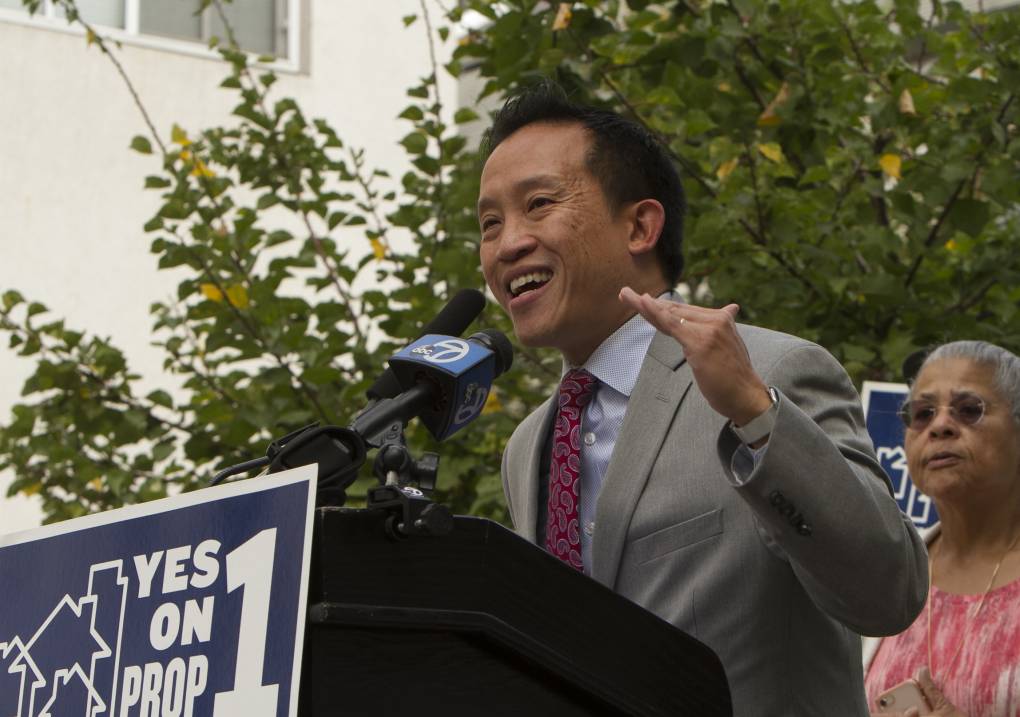
"caption": "San Francisco Assemblymember David Chiu speaks at a rally in support of California Propositions 1 and 2 at the Swan's courtyard in downtown Oakland on Oct. 18, 2018.",
"description": null,
"title": "RS33307_101818_AW_Prop1and2_04",
"credit": "Anne Wernikoff/KQED",
"status": "inherit",
"altTag": "David Chiu, in a suit and tie, gestures as he speaks into a microphone at a podium.",
"isLoading": false,
"fetchFailed": false
},
"news_11781226": {
"type": "attachments",
"id": "news_11781226",
"meta": {
"index": "attachments_1716263798",
"site": "news",
"id": "11781226",
"found": true
},
"parent": 11781060,
"imgSizes": {
"apple_news_ca_square_4_0": {
"file": "https://ww2.kqed.org/app/uploads/sites/10/2019/10/Batjer-CPUC-470x470.jpg",
"width": 470,
"mimeType": "image/jpeg",
"height": 470
},
"twentyfourteen-full-width": {
"file": "https://ww2.kqed.org/app/uploads/sites/10/2019/10/Batjer-CPUC-1024x576.jpg",
"width": 1024,
"mimeType": "image/jpeg",
"height": 576
},
"thumbnail": {
"file": "https://ww2.kqed.org/app/uploads/sites/10/2019/10/Batjer-CPUC-160x107.jpg",
"width": 160,
"mimeType": "image/jpeg",
"height": 107
},
"post-thumbnail": {
"file": "https://ww2.kqed.org/app/uploads/sites/10/2019/10/Batjer-CPUC-672x372.jpg",
"width": 672,
"mimeType": "image/jpeg",
"height": 372
},
"kqedFullSize": {
"file": "https://ww2.kqed.org/app/uploads/sites/10/2019/10/Batjer-CPUC.jpg",
"width": 1024,
"height": 683
},
"apple_news_ca_landscape_4_7": {
"file": "https://ww2.kqed.org/app/uploads/sites/10/2019/10/Batjer-CPUC-632x474.jpg",
"width": 632,
"mimeType": "image/jpeg",
"height": 474
},
"large": {
"file": "https://ww2.kqed.org/app/uploads/sites/10/2019/10/Batjer-CPUC-1020x680.jpg",
"width": 1020,
"mimeType": "image/jpeg",
"height": 680
},
"apple_news_ca_landscape_4_0": {
"file": "https://ww2.kqed.org/app/uploads/sites/10/2019/10/Batjer-CPUC-536x402.jpg",
"width": 536,
"mimeType": "image/jpeg",
"height": 402
},
"medium": {
"file": "https://ww2.kqed.org/app/uploads/sites/10/2019/10/Batjer-CPUC-800x534.jpg",
"width": 800,
"mimeType": "image/jpeg",
"height": 534
},
"apple_news_ca_portrait_4_0": {
"file": "https://ww2.kqed.org/app/uploads/sites/10/2019/10/Batjer-CPUC-354x472.jpg",
"width": 354,
"mimeType": "image/jpeg",
"height": 472
},
"apple_news_ca_portrait_9_7": {
"file": "https://ww2.kqed.org/app/uploads/sites/10/2019/10/Batjer-CPUC-840x683.jpg",
"width": 840,
"mimeType": "image/jpeg",
"height": 683
},
"apple_news_ca_portrait_4_7": {
"file": "https://ww2.kqed.org/app/uploads/sites/10/2019/10/Batjer-CPUC-414x552.jpg",
"width": 414,
"mimeType": "image/jpeg",
"height": 552
},
"apple_news_ca_portrait_5_5": {
"file": "https://ww2.kqed.org/app/uploads/sites/10/2019/10/Batjer-CPUC-687x683.jpg",
"width": 687,
"mimeType": "image/jpeg",
"height": 683
},
"apple_news_ca_square_4_7": {
"file": "https://ww2.kqed.org/app/uploads/sites/10/2019/10/Batjer-CPUC-550x550.jpg",
"width": 550,
"mimeType": "image/jpeg",
"height": 550
},
"apple_news_ca_square_5_5": {
"file": "https://ww2.kqed.org/app/uploads/sites/10/2019/10/Batjer-CPUC-912x683.jpg",
"width": 912,
"mimeType": "image/jpeg",
"height": 683
}
},
"publishDate": 1571449047,
"modified": 1632877255,
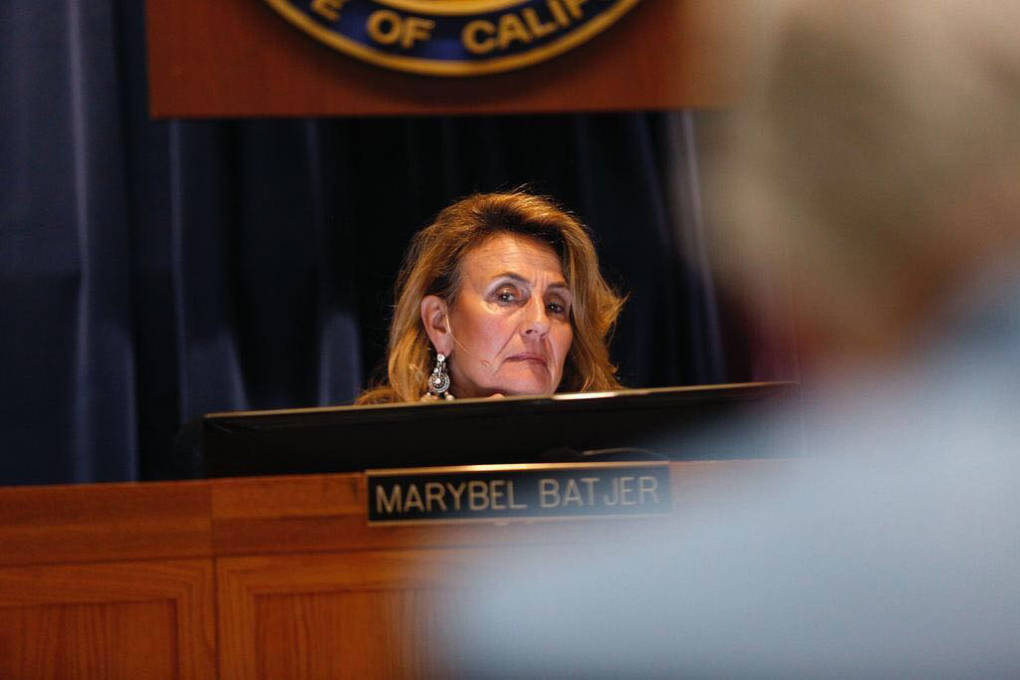
"caption": "CPUC President Marybel Batjer listens as PG&E executives speak at an emergency meeting in San Francisco on Oct. 18, 2019.",
"description": "CPUC President Marybel Batjer listens as PG&E executives speak at an emergency meeting in San Francisco on Oct. 18, 2019.",
"title": "Batjer-CPUC",
"credit": "Stephanie Lister/KQED",
"status": "inherit",
"altTag": "Marybel Batjer's head is visible on a raised, wooden dais with a nameplate.",
"isLoading": false,
"fetchFailed": false
}
},
"audioPlayerReducer": {
"postId": "stream_live",
"isPaused": true,
"isPlaying": false,
"pfsActive": false,
"pledgeModalIsOpen": true,
"playerDrawerIsOpen": false,
"liveAudioPlayStartedAt": 0,
"liveAudioPlayContext": ""
},
"authorsReducer": {
"byline_news_11892112": {
"type": "authors",
"id": "byline_news_11892112",
"meta": {
"override": true
},
"slug": "byline_news_11892112",
"name": "\u003ca href=\"https://calmatters.org/author/laurel-rosenhall/\">Laurel Rosenhall\u003c/a>",
"isLoading": false
},
"byline_news_11892082": {
"type": "authors",
"id": "byline_news_11892082",
"meta": {
"override": true
},
"slug": "byline_news_11892082",
"name": "Zeke Miller and Elliot Spagat, Associated Press",
"isLoading": false
},
"byline_news_11891010": {
"type": "authors",
"id": "byline_news_11891010",
"meta": {
"override": true
},
"slug": "byline_news_11891010",
"name": "\u003ca href=\"https://calmatters.org/author/laurel-rosenhall/\">Laurel Rosenhall\u003c/a>",
"isLoading": false
},
"byline_news_11890929": {
"type": "authors",
"id": "byline_news_11890929",
"meta": {
"override": true
},
"slug": "byline_news_11890929",
"name": "\u003ca href=\"https://www.capradio.org/about/bios/scott-rodd/\">Scott Rodd\u003c/a>",
"isLoading": false
},
"byline_news_11890329": {
"type": "authors",
"id": "byline_news_11890329",
"meta": {
"override": true
},
"slug": "byline_news_11890329",
"name": "The Associated Press",
"isLoading": false
},
"dclyde": {
"type": "authors",
"id": "104",
"meta": {
"index": "authors_1716337520",
"id": "104",
"found": true
},
"name": "Don Clyde",
"firstName": "Don",
"lastName": "Clyde",
"slug": "dclyde",
"email": "dclyde@kqed.org",
"display_author_email": false,
"staff_mastheads": [],
"title": "KQED Contributor",
"bio": "Don Clyde is an online producer, reporter and copy editor for KQED News. Before venturing into journalism, he worked as a medical device engineer and scientist for nearly a decade after earning a degree in physics from UC Berkeley. He loves travel, reading, living in Oakland, and most importantly, a good walk. Email him at dclyde@kqed.org or follow him @clydedon.",
"avatar": "https://secure.gravatar.com/avatar/decd3e640c3eedbd0a574275aebb2d19?s=600&d=blank&r=g",
"twitter": "clydedon",
"facebook": null,
"instagram": null,
"linkedin": null,
"sites": [
{
"site": "artschool",
"roles": [
"editor"
]
},
{
"site": "news",
"roles": [
"administrator"
]
},
{
"site": "futureofyou",
"roles": [
"editor"
]
},
{
"site": "about",
"roles": [
"editor"
]
},
{
"site": "mindshift",
"roles": [
"contributor"
]
},
{
"site": "bayareabites",
"roles": [
"contributor"
]
},
{
"site": "lowdown",
"roles": [
"editor"
]
},
{
"site": "stateofhealth",
"roles": [
"administrator"
]
},
{
"site": "spark",
"roles": [
"administrator"
]
},
{
"site": "trulyca",
"roles": [
"administrator"
]
},
{
"site": "imagemakers",
"roles": [
"administrator"
]
},
{
"site": "science",
"roles": []
},
{
"site": "education",
"roles": [
"editor"
]
},
{
"site": "quest",
"roles": [
"subscriber"
]
},
{
"site": "checkplease",
"roles": [
"subscriber"
]
},
{
"site": "forum",
"roles": [
"editor"
]
},
{
"site": "perspectives",
"roles": [
"editor"
]
}
],
"headData": {
"title": "Don Clyde | KQED",
"description": "KQED Contributor",
"ogImgSrc": "https://secure.gravatar.com/avatar/decd3e640c3eedbd0a574275aebb2d19?s=600&d=blank&r=g",
"twImgSrc": "https://secure.gravatar.com/avatar/decd3e640c3eedbd0a574275aebb2d19?s=600&d=blank&r=g"
},
"isLoading": false,
"link": "/author/dclyde"
},
"gmarzorati": {
"type": "authors",
"id": "227",
"meta": {
"index": "authors_1716337520",
"id": "227",
"found": true
},
"name": "Guy Marzorati",
"firstName": "Guy",
"lastName": "Marzorati",
"slug": "gmarzorati",
"email": "gmarzorati@KQED.org",
"display_author_email": true,
"staff_mastheads": [
"news"
],
"title": "Correspondent",
"bio": "Guy Marzorati is a correspondent on KQED's California Politics and Government Desk, based in San Jose. A graduate of Santa Clara University, Guy joined KQED in 2013. He reports on state and local politics and produces KQED's digital voter guide.",
"avatar": "https://secure.gravatar.com/avatar/e7038b8dbfd55b104369b76b1cd0b9de?s=600&d=blank&r=g",
"twitter": "guymarzorati",
"facebook": null,
"instagram": null,
"linkedin": null,
"sites": [
{
"site": "",
"roles": [
"editor"
]
},
{
"site": "news",
"roles": [
"editor"
]
},
{
"site": "science",
"roles": [
"editor"
]
},
{
"site": "forum",
"roles": [
"editor"
]
},
{
"site": "elections",
"roles": [
"editor"
]
},
{
"site": "liveblog",
"roles": [
"editor"
]
}
],
"headData": {
"title": "Guy Marzorati | KQED",
"description": "Correspondent",
"ogImgSrc": "https://secure.gravatar.com/avatar/e7038b8dbfd55b104369b76b1cd0b9de?s=600&d=blank&r=g",
"twImgSrc": "https://secure.gravatar.com/avatar/e7038b8dbfd55b104369b76b1cd0b9de?s=600&d=blank&r=g"
},
"isLoading": false,
"link": "/author/gmarzorati"
},
"scottshafer": {
"type": "authors",
"id": "255",
"meta": {
"index": "authors_1716337520",
"id": "255",
"found": true
},
"name": "Scott Shafer",
"firstName": "Scott",
"lastName": "Shafer",
"slug": "scottshafer",
"email": "sshafer@kqed.org",
"display_author_email": false,
"staff_mastheads": [
"news"
],
"title": "KQED Contributor",
"bio": "Scott Shafer is a senior editor with the KQED Politics and Government desk. He is co-host of Political Breakdown, the award-winning radio show and podcast with a personal take on the world of politics. Scott came to KQED in 1998 to host the statewide\u003cem> California Report\u003c/em>. Prior to that he had extended stints in politics and government\u003cem>.\u003c/em> He uses that inside experience at KQED in his, reporting, hosting and analysis for the politics desk. Scott collaborated \u003cem>Political Breakdown a\u003c/em>nd on \u003cem>The Political Mind of Jerry Brown, \u003c/em>an eight-part series about the life and extraordinary political career of the former governor. For fun, he plays water polo with the San Francisco Tsunami.",
"avatar": "https://secure.gravatar.com/avatar/a62ebae45b79d7aed1a39a0e3bf68104?s=600&d=blank&r=g",
"twitter": "scottshafer",
"bluesky": null,
"facebook": null,
"instagram": null,
"linkedin": null,
"sites": [
{
"site": "news",
"roles": [
"editor"
]
},
{
"site": "stateofhealth",
"roles": [
"author"
]
},
{
"site": "science",
"roles": [
"author"
]
},
{
"site": "forum",
"roles": [
"subscriber"
]
},
{
"site": "liveblog",
"roles": [
"author"
]
}
],
"headData": {
"title": "Scott Shafer | KQED",
"description": "KQED Contributor",
"ogImgSrc": "https://secure.gravatar.com/avatar/a62ebae45b79d7aed1a39a0e3bf68104?s=600&d=blank&r=g",
"twImgSrc": "https://secure.gravatar.com/avatar/a62ebae45b79d7aed1a39a0e3bf68104?s=600&d=blank&r=g"
},
"isLoading": false,
"link": "/author/scottshafer"
},
"tgoldberg": {
"type": "authors",
"id": "258",
"meta": {
"index": "authors_1716337520",
"id": "258",
"found": true
},
"name": "Ted Goldberg",
"firstName": "Ted",
"lastName": "Goldberg",
"slug": "tgoldberg",
"email": "tgoldberg@kqed.org",
"display_author_email": true,
"staff_mastheads": [
"news"
],
"title": "KQED Managing Editor, News and Newscasts",
"bio": "Ted Goldberg is Managing Editor of News and Newscasts at KQED. His main reporting beat is the Bay Area's oil refining industry.\r\n\r\nPrior to joining KQED in 2014, Ted worked at CBS News and WCBS AM in New York and Bay City News and KCBS Radio in San Francisco. He graduated from Oberlin College in Ohio in 1998.",
"avatar": "https://secure.gravatar.com/avatar/30ce2e4fe89135e104f89be2394d16225b9d36c121b5b3cb7651ce642978b96f?s=600&d=blank&r=g",
"twitter": "TedrickG",
"bluesky": null,
"facebook": null,
"instagram": null,
"linkedin": null,
"sites": [
{
"site": "news",
"roles": [
"editor"
]
},
{
"site": "science",
"roles": [
"editor"
]
}
],
"headData": {
"title": "Ted Goldberg | KQED",
"description": "KQED Managing Editor, News and Newscasts",
"ogImgSrc": "https://secure.gravatar.com/avatar/30ce2e4fe89135e104f89be2394d16225b9d36c121b5b3cb7651ce642978b96f?s=600&d=blank&r=g",
"twImgSrc": "https://secure.gravatar.com/avatar/30ce2e4fe89135e104f89be2394d16225b9d36c121b5b3cb7651ce642978b96f?s=600&d=blank&r=g"
},
"isLoading": false,
"link": "/author/tgoldberg"
},
"adembosky": {
"type": "authors",
"id": "3205",
"meta": {
"index": "authors_1716337520",
"id": "3205",
"found": true
},
"name": "April Dembosky",
"firstName": "April",
"lastName": "Dembosky",
"slug": "adembosky",
"email": "adembosky@kqed.org",
"display_author_email": false,
"staff_mastheads": [
"news",
"science"
],
"title": "KQED Health Correspondent",
"bio": "April Dembosky is the health correspondent for KQED News and a regular contributor to NPR. She specializes in covering altered states of mind, from postpartum depression to methamphetamine-induced psychosis to the insanity defense. Her investigative series on insurance companies sidestepping mental health laws won multiple awards, including first place in beat reporting from the national Association of Health Care Journalists. She is the recipient of numerous other prizes and fellowships, including a national Edward R. Murrow award for investigative reporting, a Society of Professional Journalists award for long-form storytelling, and a Carter Center Fellowship for Mental Health Journalism.\r\n\r\nDembosky reported and produced \u003cem>Soundtrack of Silence\u003c/em>, an audio documentary about music and memory that is currently being made into a feature film by Paramount Pictures.\r\n\r\nBefore joining KQED in 2013, Dembosky covered technology and Silicon Valley for \u003cem>The Financial Times of London,\u003c/em> and contributed business and arts stories to \u003cem>Marketplace \u003c/em>and \u003cem>The New York Times.\u003c/em> She got her undergraduate degree in philosophy from Smith College and her master's in journalism from the University of California, Berkeley. She is a classically trained violinist and proud alum of the first symphony orchestra at Burning Man.",
"avatar": "https://secure.gravatar.com/avatar/ef92999be4ceb9ea60701e7dc276f813?s=600&d=blank&r=g",
"twitter": "adembosky",
"facebook": null,
"instagram": null,
"linkedin": null,
"sites": [
{
"site": "arts",
"roles": [
"author"
]
},
{
"site": "news",
"roles": [
"editor"
]
},
{
"site": "futureofyou",
"roles": [
"author"
]
},
{
"site": "stateofhealth",
"roles": [
"editor"
]
},
{
"site": "science",
"roles": [
"editor"
]
},
{
"site": "forum",
"roles": [
"editor"
]
}
],
"headData": {
"title": "April Dembosky | KQED",
"description": "KQED Health Correspondent",
"ogImgSrc": "https://secure.gravatar.com/avatar/ef92999be4ceb9ea60701e7dc276f813?s=600&d=blank&r=g",
"twImgSrc": "https://secure.gravatar.com/avatar/ef92999be4ceb9ea60701e7dc276f813?s=600&d=blank&r=g"
},
"isLoading": false,
"link": "/author/adembosky"
},
"markfiore": {
"type": "authors",
"id": "3236",
"meta": {
"index": "authors_1716337520",
"id": "3236",
"found": true
},
"name": "Mark Fiore",
"firstName": "Mark",
"lastName": "Fiore",
"slug": "markfiore",
"email": "mark@markfiore.com",
"display_author_email": false,
"staff_mastheads": [
"news"
],
"title": "KQED News Cartoonist",
"bio": "\u003ca href=\"http://www.MarkFiore.com\">MarkFiore.com\u003c/a> | \u003ca href=\"https://twitter.com/markfiore\">Follow on Twitter\u003c/a> | \u003ca href=\"https://www.facebook.com/pages/Mark-Fiore-Animated-Political-Cartoons/94451707396?ref=bookmarks\">Facebook\u003c/a> | \u003ca href=\"mailto:mark@markfiore.com\">email\u003c/a>\r\n\r\nPulitzer Prize-winner, Mark Fiore, who the Wall Street Journal has called “the undisputed guru of the form,” creates animated political cartoons in San Francisco, where his work has been featured regularly on the San Francisco Chronicle’s web site, SFGate.com. His work has appeared on Newsweek.com, Slate.com, CBSNews.com, MotherJones.com, DailyKos.com and NPR’s web site. Fiore’s political animation has appeared on CNN, Frontline, Bill Moyers Journal, Salon.com and cable and broadcast outlets across the globe.\r\n\r\nBeginning his professional life by drawing traditional political cartoons for newspapers, Fiore’s work appeared in publications ranging from the Washington Post to the Los Angeles Times. In the late 1990s, he began to experiment with animating political cartoons and, after a short stint at the San Jose Mercury News as their staff cartoonist, Fiore devoted all his energies to animation.\r\nGrowing up in California, Fiore also spent a good portion of his life in the backwoods of Idaho. It was this combination that shaped him politically. Mark majored in political science at Colorado College, where, in a perfect send-off for a cartoonist, he received his diploma in 1991 as commencement speaker Dick Cheney smiled approvingly.\r\nMark Fiore was awarded the Pulitzer Prize for political cartooning in 2010, a Robert F. Kennedy Journalism Award in 2004 and has twice received an Online Journalism Award for commentary from the Online News Association (2002, 2008). Fiore has received two awards for his work in new media from the National Cartoonists Society (2001, 2002), and in 2006 received The James Madison Freedom of Information Award from The Society of Professional Journalists.",
"avatar": "https://secure.gravatar.com/avatar/fc4e2a612b15b67bad0c6f0e1db4ca9b?s=600&d=blank&r=g",
"twitter": "MarkFiore",
"facebook": null,
"instagram": "https://www.instagram.com/markfiore/?hl=en",
"linkedin": null,
"sites": [
{
"site": "arts",
"roles": [
"contributor"
]
},
{
"site": "news",
"roles": [
"editor"
]
},
{
"site": "futureofyou",
"roles": [
"editor"
]
},
{
"site": "science",
"roles": [
"editor"
]
}
],
"headData": {
"title": "Mark Fiore | KQED",
"description": "KQED News Cartoonist",
"ogImgSrc": "https://secure.gravatar.com/avatar/fc4e2a612b15b67bad0c6f0e1db4ca9b?s=600&d=blank&r=g",
"twImgSrc": "https://secure.gravatar.com/avatar/fc4e2a612b15b67bad0c6f0e1db4ca9b?s=600&d=blank&r=g"
},
"isLoading": false,
"link": "/author/markfiore"
}
},
"pagesReducer": {
"news_tag_politics": {
"type": "terms",
"id": "news_17968",
"meta": {
"index": "terms_1716263798",
"site": "news",
"id": "17968",
"score": 8.003266
},
"name": "Politics",
"slug": "politics",
"taxonomy": "tag",
"description": null,
"featImg": null,
"headData": {
"title": "Politics | KQED News",
"description": null,
"ogTitle": null,
"ogDescription": null,
"ogImgId": null,
"twTitle": null,
"twDescription": null,
"twImgId": null
},
"ttid": 18002,
"isLoading": false,
"title": "Politics",
"pageMeta": {
"site": "news",
"WpPageTemplate": "page-topic-editorial",
"currentPage": 182
},
"blocks": [
{
"blockName": "kqed/post-list",
"attrs": {
"layout": "cardArticle2",
"query": "posts/news?tag=politics",
"seeMore": false,
"paginated": true,
"page": 182
}
},
{
"blockName": "kqed/ad"
}
]
}
},
"pfsSessionReducer": {},
"postsReducer": {
"stream_live": {
"type": "live",
"id": "stream_live",
"audioUrl": "https://streams.kqed.org/kqedradio",
"title": "Live Stream",
"excerpt": "Live Stream information currently unavailable.",
"link": "/radio",
"featImg": "",
"label": {
"name": "KQED Live",
"link": "/"
}
},
"stream_kqedNewscast": {
"type": "posts",
"id": "stream_kqedNewscast",
"audioUrl": "https://www.kqed.org/.stream/anon/radio/RDnews/newscast.mp3?_=1",
"title": "KQED Newscast",
"featImg": "",
"label": {
"name": "88.5 FM",
"link": "/"
}
},
"news_11892590": {
"type": "posts",
"id": "news_11892590",
"meta": {
"index": "posts_1716263798",
"site": "news",
"id": "11892590",
"score": null,
"sort": [
1634597882000
]
},
"parent": 0,
"labelTerm": {
"site": "news"
},
"blocks": [],
"publishDate": 1634597882,
"format": "standard",
"disqusTitle": "Benicia Considers Proposal for City Hall to Fact-Check Political Ads During Elections",
"title": "Benicia Considers Proposal for City Hall to Fact-Check Political Ads During Elections",
"headTitle": "KQED News",
"content": "\u003cp>Benicia lawmakers are considering a proposal that could eventually require the city to fact-check political campaign advertisements — a novel response to alleged election misinformation that could face legal scrutiny.\u003c/p>\n\u003cp>The ordinance comes after a political action committee funded by Valero, the oil giant that runs a refinery in town, tried to influence voters in the last two city council elections. The company's involvement in city politics also came as the Valero plant experienced two of the region's worst refinery accidents in the last four years.\u003c/p>\n\u003cp>The \u003ca href=\"https://legistarweb-production.s3.amazonaws.com/uploads/attachment/pdf/1094721/Staff_Report_-_Consider_Updates_to_Campaign_Ordinances.pdf\" target=\"_blank\" rel=\"noopener noreferrer\">ordinance\u003c/a> was co-authored by Mayor Steve Young, whom the Valero PAC opposed in the last election. He said the \u003ca href=\"https://www.ci.benicia.ca.us/vertical/sites/%7BF991A639-AAED-4E1A-9735-86EA195E2C8D%7D/uploads/Working_Families_for_a_Strong_Benicia_496_7.pdf\" target=\"_blank\" rel=\"noopener noreferrer\">committee\u003c/a> put out ads that manipulated photos of him and distorted his record.\u003c/p>\n\u003cp>[aside postID=\"news_11843632\" label=\"Related Posts\"]\u003c/p>\n\u003cp>Now, Young said, the city should consider whether its campaign regulations \"can be amended to prohibit digital or voice manipulation of images and whether any lying can be prohibited.\"\u003c/p>\n\u003cp>The PAC, dubbed Working Families for a Strong Benicia, raised hundreds of thousands of dollars for the 2018 and 2020 city council elections. Both votes revived debate between some city officials and environmentalists on one side, who want more regulations on the refinery, and oil executives and unionized refinery workers on the other, who say they fear the city's real motivation is to shut the plant down.\u003c/p>\n\u003cp>In 2018, \u003ca href=\"https://www.kqed.org/news/11704576/valero-backed-candidates-win-benicia-city-council-election\" target=\"_blank\" rel=\"noopener noreferrer\">two candidates backed by the PAC\u003c/a>, which is also funded by several labor organizations allied with the refinery, won seats on the Benicia City Council. Another candidate, an environmentalist who was opposed by the committee, lost.\u003c/p>\n\u003cp>Last year, Young won the mayor's race \u003ca href=\"https://www.kqed.org/news/11843632/valero-funded-pac-pours-more-than-250000-into-benicia-mayors-race\" target=\"_blank\" rel=\"noopener noreferrer\">despite the PAC's opposition\u003c/a> to his candidacy. The ads said that he was against affordable housing and that he didn't need a job because he receives a pension from previous local government work.\u003c/p>\n\u003cp>[ad fullwidth]\u003c/p>\n\u003cp>The mayor said he does want cheaper housing and there's nothing wrong with receiving a pension. He said Valero's opposition to him began in 2016, when the Benicia Planning Commission, which Young was a member of, voted to \u003ca href=\"https://www.marinij.com/2016/02/12/benicia-commissioners-deny-valeros-crude-by-rail-application/\" target=\"_blank\" rel=\"noopener noreferrer\">reject the company's crude-by-rail proposal\u003c/a>.\u003c/p>\n\u003cp>\"Steve Young wants to turn Benicia into a place where young families can't afford to live and work,\" one flier stated. \"Who would vote against kids playing at the ballpark? Steve Young did,\" another one said.\u003c/p>\n\u003cp>Young and the proposal's co-author, Councilmember Tom Campbell, said the ads mean the city should do a better job of making sure future elections are fair and honest.\u003c/p>\n\u003cp>[pullquote size=\"medium\" align=\"right\" citation=\"Jessica Levinson, Loyola Marymount University professor\"]'We know the First Amendment does in fact protect lies. I think this is absolutely open to a legal challenge the second they pass it, if they do.'[/pullquote]\u003c/p>\n\u003cp>But turning the government into a fact-checking body would be ripe for a legal challenge, according to Jessica Levinson, a Loyola Marymount University professor specializing in election law.\u003c/p>\n\u003cp>\"We know the First Amendment does in fact protect lies,\" Levinson said in an interview. \"I think this is absolutely open to a legal challenge the second they pass it, if they do.\"\u003c/p>\n\u003cp>\"Who decides what's an embellishment, what's misleading, what's just an omission versus what's actually a lie?\" Levinson asked.\u003c/p>\n\u003cp>Since the 2016 election and the beginning of Donald Trump's presidency, misinformation has become one of the biggest issues in American politics, said Levinson.\u003c/p>\n\u003cp>\"We are tackling a situation where there are more lies and there's more technology that allows us to lie than for sure the framers every dreamed of,\" she added.\u003c/p>\n\u003cp>At the same time, the local news industry, which traditionally acts like a fact-checking body, has been decimated. Benicia gets some news coverage but is often overshadowed by larger Bay Area cities like San Francisco and Oakland.\u003c/p>\n\u003cp>[pullquote size=\"medium\" align=\"right\" citation=\"Jessica Levinson, Loyola Marymount University professor\"]'One of the things that keeps me up at night is not just misinformation and disinformation and the fact that people believe it, but the fact that we have a dwindling press corps and particularly in smaller jurisdictions.'[/pullquote]\u003c/p>\n\u003cp>\"One of the things that keeps me up at night is not just misinformation and disinformation and the fact that people believe it, but the fact that we have a dwindling press corps and particularly in smaller jurisdictions,\" Levinson said.\u003c/p>\n\u003cp>The details over how the city would fact-check political ads has yet to be worked out. The proposal, set to go before the city council on Tuesday, would forward the issue to Benicia's Open Government Commission, a body that would consider changing the city's election campaign regulations. The commission would work on new rules and forward them to the city council next April.\u003c/p>\n\u003cp>Valero fought with the city's last mayor, Elizabeth Patterson, after she called for more regulations to be placed on the refinery following a \u003ca href=\"https://www.kqed.org/news/11681218/cpuc-probe-says-pge-mistakes-led-to-benicia-refinery-outage\" target=\"_blank\" rel=\"noopener noreferrer\">May 2017 power outage\u003c/a> that led to a major release of toxic sulfur dioxide and prompted emergency shelter-in-place orders. Less than two years later, the plant had \u003ca href=\"https://www.kqed.org/news/11737076/valeros-pollution-release-exposes-weaknesses-in-benicias-air-monitoring-system\" target=\"_blank\" rel=\"noopener noreferrer\">a series of malfunctions\u003c/a> that led to another significant pollution release.\u003c/p>\n\u003cp>Jason Kaune, the PAC's treasurer and head of political law at Nielsen Merksamer, a Sacramento-based lobbying firm, declined to comment. Representatives for Valero and unions that supported the committee did not respond to requests for comment.\u003c/p>\n\u003cp>\u003c/p>\n",
"disqusIdentifier": "11892590 https://ww2.kqed.org/news/?p=11892590",
"disqusUrl": "https://ww2.kqed.org/news/2021/10/18/benicia-considers-ordinance-for-city-hall-to-fact-check-political-ads-during-elections/",
"stats": {
"hasVideo": false,
"hasChartOrMap": false,
"hasAudio": false,
"hasPolis": false,
"wordCount": 901,
"hasGoogleForm": false,
"hasGallery": false,
"hasHearkenModule": false,
"iframeSrcs": [],
"paragraphCount": 25
},
"modified": 1634605168,
"excerpt": "The ordinance comes after a political action committee funded by Valero, the oil giant that runs a refinery in town, tried to influence voters in the last two city council elections. But turning the government into a fact-checking body would be ripe for a legal challenge, according to an elections expert.",
"headData": {
"twImgId": "",
"twTitle": "",
"ogTitle": "",
"ogImgId": "",
"twDescription": "",
"description": "The ordinance comes after a political action committee funded by Valero, the oil giant that runs a refinery in town, tried to influence voters in the last two city council elections. But turning the government into a fact-checking body would be ripe for a legal challenge, according to an elections expert.",
"title": "Benicia Considers Proposal for City Hall to Fact-Check Political Ads During Elections | KQED",
"ogDescription": "",
"schema": {
"@context": "https://schema.org",
"@type": "NewsArticle",
"headline": "Benicia Considers Proposal for City Hall to Fact-Check Political Ads During Elections",
"datePublished": "2021-10-18T15:58:02-07:00",
"dateModified": "2021-10-18T17:59:28-07:00",
"image": "https://cdn.kqed.org/wp-content/uploads/2020/02/KQED-OG-Image@1x.png",
"isAccessibleForFree": "True",
"publisher": {
"@type": "NewsMediaOrganization",
"@id": "https://www.kqed.org/#organization",
"name": "KQED",
"logo": "https://cdn.kqed.org/wp-content/uploads/2020/02/KQED-OG-Image@1x.png",
"url": "https://www.kqed.org",
"sameAs": [
"https://www.facebook.com/KQED",
"https://twitter.com/KQED",
"https://www.instagram.com/kqed/",
"https://www.tiktok.com/@kqedofficial",
"https://www.linkedin.com/company/kqed",
"https://www.youtube.com/channel/UCeC0IOo7i1P_61zVUWbJ4nw"
]
}
}
},
"guestAuthors": [],
"slug": "benicia-considers-ordinance-for-city-hall-to-fact-check-political-ads-during-elections",
"status": "publish",
"subhead": "Benicia's mayor says a Valero PAC lied in the last election.",
"path": "/news/11892590/benicia-considers-ordinance-for-city-hall-to-fact-check-political-ads-during-elections",
"audioTrackLength": null,
"parsedContent": [
{
"type": "contentString",
"content": "\u003cdiv class=\"post-body\">\u003cp>\u003cp>Benicia lawmakers are considering a proposal that could eventually require the city to fact-check political campaign advertisements — a novel response to alleged election misinformation that could face legal scrutiny.\u003c/p>\n\u003cp>The ordinance comes after a political action committee funded by Valero, the oil giant that runs a refinery in town, tried to influence voters in the last two city council elections. The company's involvement in city politics also came as the Valero plant experienced two of the region's worst refinery accidents in the last four years.\u003c/p>\n\u003cp>The \u003ca href=\"https://legistarweb-production.s3.amazonaws.com/uploads/attachment/pdf/1094721/Staff_Report_-_Consider_Updates_to_Campaign_Ordinances.pdf\" target=\"_blank\" rel=\"noopener noreferrer\">ordinance\u003c/a> was co-authored by Mayor Steve Young, whom the Valero PAC opposed in the last election. He said the \u003ca href=\"https://www.ci.benicia.ca.us/vertical/sites/%7BF991A639-AAED-4E1A-9735-86EA195E2C8D%7D/uploads/Working_Families_for_a_Strong_Benicia_496_7.pdf\" target=\"_blank\" rel=\"noopener noreferrer\">committee\u003c/a> put out ads that manipulated photos of him and distorted his record.\u003c/p>\n\u003cp>\u003c/p>\u003c/div>",
"attributes": {
"named": {},
"numeric": []
}
},
{
"type": "component",
"content": "",
"name": "aside",
"attributes": {
"named": {
"postid": "news_11843632",
"label": "Related Posts "
},
"numeric": []
}
},
{
"type": "contentString",
"content": "\u003cdiv class=\"post-body\">\u003cp>\u003c/p>\n\u003cp>Now, Young said, the city should consider whether its campaign regulations \"can be amended to prohibit digital or voice manipulation of images and whether any lying can be prohibited.\"\u003c/p>\n\u003cp>The PAC, dubbed Working Families for a Strong Benicia, raised hundreds of thousands of dollars for the 2018 and 2020 city council elections. Both votes revived debate between some city officials and environmentalists on one side, who want more regulations on the refinery, and oil executives and unionized refinery workers on the other, who say they fear the city's real motivation is to shut the plant down.\u003c/p>\n\u003cp>In 2018, \u003ca href=\"https://www.kqed.org/news/11704576/valero-backed-candidates-win-benicia-city-council-election\" target=\"_blank\" rel=\"noopener noreferrer\">two candidates backed by the PAC\u003c/a>, which is also funded by several labor organizations allied with the refinery, won seats on the Benicia City Council. Another candidate, an environmentalist who was opposed by the committee, lost.\u003c/p>\n\u003cp>Last year, Young won the mayor's race \u003ca href=\"https://www.kqed.org/news/11843632/valero-funded-pac-pours-more-than-250000-into-benicia-mayors-race\" target=\"_blank\" rel=\"noopener noreferrer\">despite the PAC's opposition\u003c/a> to his candidacy. The ads said that he was against affordable housing and that he didn't need a job because he receives a pension from previous local government work.\u003c/p>\n\u003cp>\u003c/p>\u003c/div>",
"attributes": {
"named": {},
"numeric": []
}
},
{
"type": "component",
"content": "",
"name": "ad",
"attributes": {
"named": {
"label": "fullwidth"
},
"numeric": [
"fullwidth"
]
}
},
{
"type": "contentString",
"content": "\u003cdiv class=\"post-body\">\u003cp>\u003c/p>\n\u003cp>The mayor said he does want cheaper housing and there's nothing wrong with receiving a pension. He said Valero's opposition to him began in 2016, when the Benicia Planning Commission, which Young was a member of, voted to \u003ca href=\"https://www.marinij.com/2016/02/12/benicia-commissioners-deny-valeros-crude-by-rail-application/\" target=\"_blank\" rel=\"noopener noreferrer\">reject the company's crude-by-rail proposal\u003c/a>.\u003c/p>\n\u003cp>\"Steve Young wants to turn Benicia into a place where young families can't afford to live and work,\" one flier stated. \"Who would vote against kids playing at the ballpark? Steve Young did,\" another one said.\u003c/p>\n\u003cp>Young and the proposal's co-author, Councilmember Tom Campbell, said the ads mean the city should do a better job of making sure future elections are fair and honest.\u003c/p>\n\u003cp>\u003c/p>\u003c/div>",
"attributes": {
"named": {},
"numeric": []
}
},
{
"type": "component",
"content": "'We know the First Amendment does in fact protect lies. I think this is absolutely open to a legal challenge the second they pass it, if they do.'",
"name": "pullquote",
"attributes": {
"named": {
"size": "medium",
"align": "right",
"citation": "Jessica Levinson, Loyola Marymount University professor",
"label": ""
},
"numeric": []
}
},
{
"type": "contentString",
"content": "\u003cdiv class=\"post-body\">\u003cp>\u003c/p>\n\u003cp>But turning the government into a fact-checking body would be ripe for a legal challenge, according to Jessica Levinson, a Loyola Marymount University professor specializing in election law.\u003c/p>\n\u003cp>\"We know the First Amendment does in fact protect lies,\" Levinson said in an interview. \"I think this is absolutely open to a legal challenge the second they pass it, if they do.\"\u003c/p>\n\u003cp>\"Who decides what's an embellishment, what's misleading, what's just an omission versus what's actually a lie?\" Levinson asked.\u003c/p>\n\u003cp>Since the 2016 election and the beginning of Donald Trump's presidency, misinformation has become one of the biggest issues in American politics, said Levinson.\u003c/p>\n\u003cp>\"We are tackling a situation where there are more lies and there's more technology that allows us to lie than for sure the framers every dreamed of,\" she added.\u003c/p>\n\u003cp>At the same time, the local news industry, which traditionally acts like a fact-checking body, has been decimated. Benicia gets some news coverage but is often overshadowed by larger Bay Area cities like San Francisco and Oakland.\u003c/p>\n\u003cp>\u003c/p>\u003c/div>",
"attributes": {
"named": {},
"numeric": []
}
},
{
"type": "component",
"content": "'One of the things that keeps me up at night is not just misinformation and disinformation and the fact that people believe it, but the fact that we have a dwindling press corps and particularly in smaller jurisdictions.'",
"name": "pullquote",
"attributes": {
"named": {
"size": "medium",
"align": "right",
"citation": "Jessica Levinson, Loyola Marymount University professor",
"label": ""
},
"numeric": []
}
},
{
"type": "contentString",
"content": "\u003cdiv class=\"post-body\">\u003cp>\u003c/p>\n\u003cp>\"One of the things that keeps me up at night is not just misinformation and disinformation and the fact that people believe it, but the fact that we have a dwindling press corps and particularly in smaller jurisdictions,\" Levinson said.\u003c/p>\n\u003cp>The details over how the city would fact-check political ads has yet to be worked out. The proposal, set to go before the city council on Tuesday, would forward the issue to Benicia's Open Government Commission, a body that would consider changing the city's election campaign regulations. The commission would work on new rules and forward them to the city council next April.\u003c/p>\n\u003cp>Valero fought with the city's last mayor, Elizabeth Patterson, after she called for more regulations to be placed on the refinery following a \u003ca href=\"https://www.kqed.org/news/11681218/cpuc-probe-says-pge-mistakes-led-to-benicia-refinery-outage\" target=\"_blank\" rel=\"noopener noreferrer\">May 2017 power outage\u003c/a> that led to a major release of toxic sulfur dioxide and prompted emergency shelter-in-place orders. Less than two years later, the plant had \u003ca href=\"https://www.kqed.org/news/11737076/valeros-pollution-release-exposes-weaknesses-in-benicias-air-monitoring-system\" target=\"_blank\" rel=\"noopener noreferrer\">a series of malfunctions\u003c/a> that led to another significant pollution release.\u003c/p>\n\u003cp>Jason Kaune, the PAC's treasurer and head of political law at Nielsen Merksamer, a Sacramento-based lobbying firm, declined to comment. Representatives for Valero and unions that supported the committee did not respond to requests for comment.\u003c/p>\n\u003cp>\u003c/p>\n\u003c/div>\u003c/p>",
"attributes": {
"named": {},
"numeric": []
}
}
],
"link": "/news/11892590/benicia-considers-ordinance-for-city-hall-to-fact-check-political-ads-during-elections",
"authors": [
"258"
],
"categories": [
"news_19906",
"news_8",
"news_13"
],
"tags": [
"news_20902",
"news_17968",
"news_20022",
"news_21030"
],
"featImg": "news_11703286",
"label": "news"
},
"news_11892518": {
"type": "posts",
"id": "news_11892518",
"meta": {
"index": "posts_1716263798",
"site": "news",
"id": "11892518",
"score": null,
"sort": [
1634341637000
]
},
"guestAuthors": [],
"slug": "the-long-and-winding-road",
"title": "The Long and Winding Road ...",
"publishDate": 1634341637,
"format": "aside",
"headTitle": "The Long and Winding Road … | KQED",
"labelTerm": {
"term": 18515,
"site": "news"
},
"content": "\u003cp>\u003ca href=\"https://ww2.kqed.org/app/uploads/sites/10/2021/10/build_101521_final.png\">\u003cimg loading=\"lazy\" decoding=\"async\" class=\"alignnone size-full wp-image-11892527\" src=\"https://ww2.kqed.org/app/uploads/sites/10/2021/10/build_101521_final.png\" alt='Cartoon: Featuring Senators Joe Manchin and Kyrsten Sinema and House Speaker Pelosi. We see a path with various versions of the Build Back Better plan on it, with the final one reading \"Build Back Bitter.\"' width=\"1920\" height=\"1345\" srcset=\"https://cdn.kqed.org/wp-content/uploads/sites/10/2021/10/build_101521_final.png 1920w, https://cdn.kqed.org/wp-content/uploads/sites/10/2021/10/build_101521_final-800x560.png 800w, https://cdn.kqed.org/wp-content/uploads/sites/10/2021/10/build_101521_final-1020x715.png 1020w, https://cdn.kqed.org/wp-content/uploads/sites/10/2021/10/build_101521_final-160x112.png 160w, https://cdn.kqed.org/wp-content/uploads/sites/10/2021/10/build_101521_final-1536x1076.png 1536w\" sizes=\"(max-width: 1920px) 100vw, 1920px\">\u003c/a>\u003c/p>\n\u003cp>At a KQED Live event, House Speaker Nancy Pelosi \u003ca href=\"https://bit.ly/fiorepelosiagenda\">detailed the difficult journey ahead for President Biden’s “Build Back Better” plan\u003c/a>, and vowed to pass a scaled-down version.\u003c/p>\n\u003cp>The two main obstacles to the big social safety net and climate change plan are “centrist” Democratic Sens. Joe Manchin of West Virginia, and Kyrsten Sinema of Arizona.\u003c/p>\n\u003cp>Keep in mind that \u003ca href=\"https://www.nytimes.com/2021/09/19/climate/manchin-climate-biden.html\">Manchin made his fortune after founding a coal brokerage firm\u003c/a> and \u003ca href=\"https://www.motherjones.com/politics/2021/10/sinema-leaves-dc-for-high-end-corporate-fundraiser-as-she-blocks-biden-spending-bill/\">Sinema took a quick break from recent negotiations to attend a fundraiser\u003c/a> that included corporate interests opposed to the Democratic mega-bill.\u003c/p>\n\u003cp>Welcome to the \u003ca href=\"http://www.markfiore.com/oct-dec-2021/2021/10/6/the-democratic-land-of-centristopia\">land of Centristopia\u003c/a> …\u003c/p>\n\u003cp>[ad fullwidth]\u003c/p>\u003cp>\u003c/p>\n",
"blocks": [],
"excerpt": "At a KQED Live event, House Speaker Nancy Pelosi detailed the difficult journey ahead for President Biden's \"Build Back Better\" plan, and vowed to pass a scaled-down version.",
"status": "publish",
"parent": 0,
"modified": 1726000988,
"stats": {
"hasAudio": false,
"hasVideo": false,
"hasChartOrMap": false,
"iframeSrcs": [],
"hasGoogleForm": false,
"hasGallery": false,
"hasHearkenModule": false,
"hasPolis": false,
"paragraphCount": 7,
"wordCount": 109
},
"headData": {
"title": "The Long and Winding Road ... | KQED",
"description": "At a KQED Live event, House Speaker Nancy Pelosi detailed the difficult journey ahead for President Biden's "Build Back Better" plan, and vowed to pass a scaled-down version.",
"ogTitle": "The Long and Winding Road ...",
"ogDescription": "",
"ogImgId": "",
"twTitle": "The Long and Winding Road ...",
"twDescription": "",
"twImgId": "",
"schema": {
"@context": "https://schema.org",
"@type": "NewsArticle",
"headline": "The Long and Winding Road ...",
"datePublished": "2021-10-15T16:47:17-07:00",
"dateModified": "2024-09-10T13:43:08-07:00",
"image": "https://cdn.kqed.org/wp-content/uploads/2020/02/KQED-OG-Image@1x.png",
"isAccessibleForFree": "True",
"publisher": {
"@type": "NewsMediaOrganization",
"@id": "https://www.kqed.org/#organization",
"name": "KQED",
"logo": "https://cdn.kqed.org/wp-content/uploads/2020/02/KQED-OG-Image@1x.png",
"url": "https://www.kqed.org",
"sameAs": [
"https://www.facebook.com/KQED",
"https://twitter.com/KQED",
"https://www.instagram.com/kqed/",
"https://www.tiktok.com/@kqedofficial",
"https://www.linkedin.com/company/kqed",
"https://www.youtube.com/channel/UCeC0IOo7i1P_61zVUWbJ4nw"
]
}
}
},
"sticky": false,
"path": "/news/11892518/the-long-and-winding-road",
"audioTrackLength": null,
"parsedContent": [
{
"type": "contentString",
"content": "\u003cdiv class=\"post-body\">\u003cp>\u003cp>\u003ca href=\"https://ww2.kqed.org/app/uploads/sites/10/2021/10/build_101521_final.png\">\u003cimg loading=\"lazy\" decoding=\"async\" class=\"alignnone size-full wp-image-11892527\" src=\"https://ww2.kqed.org/app/uploads/sites/10/2021/10/build_101521_final.png\" alt='Cartoon: Featuring Senators Joe Manchin and Kyrsten Sinema and House Speaker Pelosi. We see a path with various versions of the Build Back Better plan on it, with the final one reading \"Build Back Bitter.\"' width=\"1920\" height=\"1345\" srcset=\"https://cdn.kqed.org/wp-content/uploads/sites/10/2021/10/build_101521_final.png 1920w, https://cdn.kqed.org/wp-content/uploads/sites/10/2021/10/build_101521_final-800x560.png 800w, https://cdn.kqed.org/wp-content/uploads/sites/10/2021/10/build_101521_final-1020x715.png 1020w, https://cdn.kqed.org/wp-content/uploads/sites/10/2021/10/build_101521_final-160x112.png 160w, https://cdn.kqed.org/wp-content/uploads/sites/10/2021/10/build_101521_final-1536x1076.png 1536w\" sizes=\"(max-width: 1920px) 100vw, 1920px\">\u003c/a>\u003c/p>\n\u003cp>At a KQED Live event, House Speaker Nancy Pelosi \u003ca href=\"https://bit.ly/fiorepelosiagenda\">detailed the difficult journey ahead for President Biden’s “Build Back Better” plan\u003c/a>, and vowed to pass a scaled-down version.\u003c/p>\n\u003cp>The two main obstacles to the big social safety net and climate change plan are “centrist” Democratic Sens. Joe Manchin of West Virginia, and Kyrsten Sinema of Arizona.\u003c/p>\n\u003cp>Keep in mind that \u003ca href=\"https://www.nytimes.com/2021/09/19/climate/manchin-climate-biden.html\">Manchin made his fortune after founding a coal brokerage firm\u003c/a> and \u003ca href=\"https://www.motherjones.com/politics/2021/10/sinema-leaves-dc-for-high-end-corporate-fundraiser-as-she-blocks-biden-spending-bill/\">Sinema took a quick break from recent negotiations to attend a fundraiser\u003c/a> that included corporate interests opposed to the Democratic mega-bill.\u003c/p>\n\u003cp>Welcome to the \u003ca href=\"http://www.markfiore.com/oct-dec-2021/2021/10/6/the-democratic-land-of-centristopia\">land of Centristopia\u003c/a> …\u003c/p>\n\u003cp>\u003c/p>\u003c/div>",
"attributes": {
"named": {},
"numeric": []
}
},
{
"type": "component",
"content": "",
"name": "ad",
"attributes": {
"named": {
"label": "fullwidth"
},
"numeric": [
"fullwidth"
]
}
},
{
"type": "contentString",
"content": "\u003cdiv class=\"post-body\">\u003cp>\u003c/p>\u003cp>\u003c/p>\n\u003c/div>\u003c/p>",
"attributes": {
"named": {},
"numeric": []
}
}
],
"link": "/news/11892518/the-long-and-winding-road",
"authors": [
"3236"
],
"series": [
"news_18515"
],
"categories": [
"news_34165",
"news_19906",
"news_8",
"news_13"
],
"tags": [
"news_255",
"news_20949",
"news_177",
"news_17968"
],
"featImg": "news_11892527",
"label": "news_18515"
},
"news_11892232": {
"type": "posts",
"id": "news_11892232",
"meta": {
"index": "posts_1716263798",
"site": "news",
"id": "11892232",
"score": null,
"sort": [
1634194686000
]
},
"parent": 0,
"labelTerm": {
"site": "news"
},
"blocks": [],
"publishDate": 1634194686,
"format": "standard",
"disqusTitle": "At KQED, Pelosi Vows to Pass Scaled-Down Biden Agenda",
"title": "At KQED, Pelosi Vows to Pass Scaled-Down Biden Agenda",
"headTitle": "KQED News",
"content": "\u003cp>At a taping of KQED's \"Political Breakdown\" Wednesday night, House Speaker Nancy Pelosi outlined the tough choices facing her Democratic caucus over what to keep in their landmark social policy and climate bill — deeming it a “lamb-eat-lamb” moment and indicating that a popular proposal to allow Medicare to negotiate prescription drug pricing may have to be left out of the final version.\u003c/p>\n\u003cp>“Everything is good. What do we keep?” said Pelosi, appearing in front of a live audience in San Francisco as part of the KQED Live event series. \"Is it a timing thing? Or is it a prioritizing? That's the negotiation.\"\u003c/p>\n\u003cp>Pelosi made her appearance at KQED as Democrats struggle to pare down a bill that aims, in part, to reduce carbon emissions, expand Medicare and Medicaid coverage, make child care free to millions and create universal pre-K. Democrats hope to pay for the programs through tax increases on corporations and high-earning people.\u003c/p>\n\u003cp>https://youtu.be/Ag8XCVjDs_I\u003c/p>\n\u003cp>The bill, originally priced at $3.5 trillion, will likely shrink to roughly $2 trillion in order to meet the demands of centrist Democratic Sens. Joe Manchin of West Virginia and Kyrsten Sinema of Arizona. Those two votes are crucial, with all Republicans in an evenly divided Senate opposing the legislation.\u003c/p>\n\u003cp>[ad fullwidth]\u003c/p>\n\u003cp>“We’ll have to come down [on our goals] because the money is coming down,” Pelosi told hosts Marisa Lagos and Scott Shafer.\u003c/p>\n\u003cp>[aside label=\"related coverage\" tag=\"nancy-pelosi\"]With just over two weeks until a self-imposed Oct. 31 deadline to pass the bill, as well as a companion $1 trillion infrastructure bill, Pelosi and the Democratic caucus are at a legislative crossroads.\u003c/p>\n\u003cp>Should they keep the wish list of President Biden, but phase out the initiatives over a shorter period of time — allowing Democrats to run on the promise of extending programs currently popular with the public?\u003c/p>\n\u003cp>Or should the party limit the breadth of the legislation to fewer ideas that can be fully funded for at least a decade — making it so any future Republican government would have to proactively cut the programs, rather than quietly letting them sunset?\u003c/p>\n\u003cp>Pelosi seemed more inclined toward the latter — to fully fund key priorities.\u003c/p>\n\u003cp>“You can shorten the time frame, but if you shorten it too much you lose the continuity and the impact,” she said. \"So it's not like something you put in a computer and something comes out. It's judgments that have to be made.\"\u003c/p>\n\u003cp>Pelosi's preferred vision of allowing Medicare to negotiate prescription drug prices is one idea that could be scaled back, she said. The proposal has been a progressive focus for more than a decade, but faces heavy lobbying opposition from the pharmaceutical industry and skepticism from moderate Democrats in both the House and Senate.\u003c/p>\n\u003cp>“We’re still making that fight,” Pelosi said, noting that House Democrats first passed legislation to allow those negotiations in 2006. “I’m not even sure we’ll get it in this bill. We’ll get something of that, but it won’t be the complete package that many of us have been fighting for [for] a long time.”\u003c/p>\n\u003cfigure id=\"attachment_11892252\" class=\"wp-caption alignnone\" style=\"max-width: 800px\">\u003cimg class=\"wp-image-11892252 size-medium\" src=\"https://ww2.kqed.org/app/uploads/sites/10/2021/10/RS51924_Z62_0349-qut-800x532.jpg\" alt='A stage in a darkened auditorium, with three red chairs for, L-R, Nancy Pelosi, Marisa Lagos, and Scott Shafer. A large screen in the background says \"Speaker Nancy Pelosi, United States House of Representatives.\"' width=\"800\" height=\"532\" srcset=\"https://ww2.kqed.org/app/uploads/sites/10/2021/10/RS51924_Z62_0349-qut-800x532.jpg 800w, https://ww2.kqed.org/app/uploads/sites/10/2021/10/RS51924_Z62_0349-qut-1020x678.jpg 1020w, https://ww2.kqed.org/app/uploads/sites/10/2021/10/RS51924_Z62_0349-qut-160x106.jpg 160w, https://ww2.kqed.org/app/uploads/sites/10/2021/10/RS51924_Z62_0349-qut-1536x1022.jpg 1536w, https://ww2.kqed.org/app/uploads/sites/10/2021/10/RS51924_Z62_0349-qut.jpg 1920w\" sizes=\"(max-width: 800px) 100vw, 800px\">\u003cfigcaption class=\"wp-caption-text\">House Speaker Nancy Pelosi, D-San Francisco, talks with Political Breakdown hosts Marisa Lagos and Scott Shafer on Oct. 13, 2021. \u003ccite>(Alain McLaughlin/KQED)\u003c/cite>\u003c/figcaption>\u003c/figure>\n\u003cp>For some watchers of Congress, the current moment facing Democrats is reminiscent of 2010, when the Pelosi-led majority passed the Affordable Care Act, but was ultimately routed in the midterm elections.\u003c/p>\n\u003cp>But Pelosi expressed confidence that the bill’s benefits — particularly its focus on improving the lives of American women — will be rewarded in next year’s midterms.\u003c/p>\n\u003cp>“Women understand what this means,” said Pelosi. “This is about women in the workplace, this is about women taking their rightful place, this is about women not going to work and worrying about their loved one at home.\"\u003c/p>\n\u003cp>Outside of KQED, roughly a dozen demonstrators rallied for Democrats to address immigration policy by expanding citizenship in their legislative push.\u003c/p>\n\u003cp>On stage, Pelosi made no commitments, but acknowledged the protestors as she indicated her personal preference to include immigration in the package.\u003c/p>\n\u003cp>\"If we are going to 'build back better,' we have to respect the newcomers to our country,\" she said.\u003c/p>\n\u003cp>\u003c/p>\n\u003cp>\u003cem>This post has been updated to clarify Pelosi’s view on the negotiations over prescription drug price reform.\u003c/em>\u003c/p>\n\n",
"disqusIdentifier": "11892232 https://ww2.kqed.org/news/?p=11892232",
"disqusUrl": "https://ww2.kqed.org/news/2021/10/13/at-kqed-pelosi-vows-to-pass-scaled-down-biden-agenda/",
"stats": {
"hasVideo": false,
"hasChartOrMap": false,
"hasAudio": false,
"hasPolis": false,
"wordCount": 761,
"hasGoogleForm": false,
"hasGallery": false,
"hasHearkenModule": false,
"iframeSrcs": [],
"paragraphCount": 21
},
"modified": 1634247856,
"excerpt": "The speaker of the House spoke in a live taping of KQED's Political Breakdown.",
"headData": {
"twImgId": "",
"twTitle": "At KQED, Pelosi Vows to Pass Scaled-Down Biden Agenda",
"ogTitle": "At KQED, Pelosi Vows to Pass Scaled-Down Biden Agenda",
"ogImgId": "",
"twDescription": "",
"description": "The speaker of the House spoke in a live taping of KQED's Political Breakdown.",
"title": "At KQED, Pelosi Vows to Pass Scaled-Down Biden Agenda | KQED",
"ogDescription": "",
"schema": {
"@context": "https://schema.org",
"@type": "NewsArticle",
"headline": "At KQED, Pelosi Vows to Pass Scaled-Down Biden Agenda",
"datePublished": "2021-10-13T23:58:06-07:00",
"dateModified": "2021-10-14T14:44:16-07:00",
"image": "https://cdn.kqed.org/wp-content/uploads/2020/02/KQED-OG-Image@1x.png",
"isAccessibleForFree": "True",
"publisher": {
"@type": "NewsMediaOrganization",
"@id": "https://www.kqed.org/#organization",
"name": "KQED",
"logo": "https://cdn.kqed.org/wp-content/uploads/2020/02/KQED-OG-Image@1x.png",
"url": "https://www.kqed.org",
"sameAs": [
"https://www.facebook.com/KQED",
"https://twitter.com/KQED",
"https://www.instagram.com/kqed/",
"https://www.tiktok.com/@kqedofficial",
"https://www.linkedin.com/company/kqed",
"https://www.youtube.com/channel/UCeC0IOo7i1P_61zVUWbJ4nw"
]
}
}
},
"guestAuthors": [],
"slug": "at-kqed-pelosi-vows-to-pass-scaled-down-biden-agenda",
"status": "publish",
"path": "/news/11892232/at-kqed-pelosi-vows-to-pass-scaled-down-biden-agenda",
"audioTrackLength": null,
"parsedContent": [
{
"type": "contentString",
"content": "\u003cdiv class=\"post-body\">\u003cp>\u003cp>At a taping of KQED's \"Political Breakdown\" Wednesday night, House Speaker Nancy Pelosi outlined the tough choices facing her Democratic caucus over what to keep in their landmark social policy and climate bill — deeming it a “lamb-eat-lamb” moment and indicating that a popular proposal to allow Medicare to negotiate prescription drug pricing may have to be left out of the final version.\u003c/p>\n\u003cp>“Everything is good. What do we keep?” said Pelosi, appearing in front of a live audience in San Francisco as part of the KQED Live event series. \"Is it a timing thing? Or is it a prioritizing? That's the negotiation.\"\u003c/p>\n\u003cp>Pelosi made her appearance at KQED as Democrats struggle to pare down a bill that aims, in part, to reduce carbon emissions, expand Medicare and Medicaid coverage, make child care free to millions and create universal pre-K. Democrats hope to pay for the programs through tax increases on corporations and high-earning people.\u003c/p>\u003c/p>\u003cp>\u003cspan class='utils-parseShortcode-shortcodes-__youtubeShortcode__embedYoutube'>\n \u003cspan class='utils-parseShortcode-shortcodes-__youtubeShortcode__embedYoutubeInside'>\n \u003ciframe\n loading='lazy'\n class='utils-parseShortcode-shortcodes-__youtubeShortcode__youtubePlayer'\n type='text/html'\n src='//www.youtube.com/embed/Ag8XCVjDs_I'\n title='//www.youtube.com/embed/Ag8XCVjDs_I'\n allowfullscreen='true'\n style='border:0;'>\u003c/iframe>\n \u003c/span>\n \u003c/span>\u003c/p>\u003cp>\u003cp>The bill, originally priced at $3.5 trillion, will likely shrink to roughly $2 trillion in order to meet the demands of centrist Democratic Sens. Joe Manchin of West Virginia and Kyrsten Sinema of Arizona. Those two votes are crucial, with all Republicans in an evenly divided Senate opposing the legislation.\u003c/p>\n\u003cp>\u003c/p>\u003c/div>",
"attributes": {
"named": {},
"numeric": []
}
},
{
"type": "component",
"content": "",
"name": "ad",
"attributes": {
"named": {
"label": "fullwidth"
},
"numeric": [
"fullwidth"
]
}
},
{
"type": "contentString",
"content": "\u003cdiv class=\"post-body\">\u003cp>\u003c/p>\n\u003cp>“We’ll have to come down [on our goals] because the money is coming down,” Pelosi told hosts Marisa Lagos and Scott Shafer.\u003c/p>\n\u003cp>\u003c/p>\u003c/div>",
"attributes": {
"named": {},
"numeric": []
}
},
{
"type": "component",
"content": "",
"name": "aside",
"attributes": {
"named": {
"label": "related coverage ",
"tag": "nancy-pelosi"
},
"numeric": []
}
},
{
"type": "contentString",
"content": "\u003cdiv class=\"post-body\">\u003cp>With just over two weeks until a self-imposed Oct. 31 deadline to pass the bill, as well as a companion $1 trillion infrastructure bill, Pelosi and the Democratic caucus are at a legislative crossroads.\u003c/p>\n\u003cp>Should they keep the wish list of President Biden, but phase out the initiatives over a shorter period of time — allowing Democrats to run on the promise of extending programs currently popular with the public?\u003c/p>\n\u003cp>Or should the party limit the breadth of the legislation to fewer ideas that can be fully funded for at least a decade — making it so any future Republican government would have to proactively cut the programs, rather than quietly letting them sunset?\u003c/p>\n\u003cp>Pelosi seemed more inclined toward the latter — to fully fund key priorities.\u003c/p>\n\u003cp>“You can shorten the time frame, but if you shorten it too much you lose the continuity and the impact,” she said. \"So it's not like something you put in a computer and something comes out. It's judgments that have to be made.\"\u003c/p>\n\u003cp>Pelosi's preferred vision of allowing Medicare to negotiate prescription drug prices is one idea that could be scaled back, she said. The proposal has been a progressive focus for more than a decade, but faces heavy lobbying opposition from the pharmaceutical industry and skepticism from moderate Democrats in both the House and Senate.\u003c/p>\n\u003cp>“We’re still making that fight,” Pelosi said, noting that House Democrats first passed legislation to allow those negotiations in 2006. “I’m not even sure we’ll get it in this bill. We’ll get something of that, but it won’t be the complete package that many of us have been fighting for [for] a long time.”\u003c/p>\n\u003cfigure id=\"attachment_11892252\" class=\"wp-caption alignnone\" style=\"max-width: 800px\">\u003cimg class=\"wp-image-11892252 size-medium\" src=\"https://ww2.kqed.org/app/uploads/sites/10/2021/10/RS51924_Z62_0349-qut-800x532.jpg\" alt='A stage in a darkened auditorium, with three red chairs for, L-R, Nancy Pelosi, Marisa Lagos, and Scott Shafer. A large screen in the background says \"Speaker Nancy Pelosi, United States House of Representatives.\"' width=\"800\" height=\"532\" srcset=\"https://ww2.kqed.org/app/uploads/sites/10/2021/10/RS51924_Z62_0349-qut-800x532.jpg 800w, https://ww2.kqed.org/app/uploads/sites/10/2021/10/RS51924_Z62_0349-qut-1020x678.jpg 1020w, https://ww2.kqed.org/app/uploads/sites/10/2021/10/RS51924_Z62_0349-qut-160x106.jpg 160w, https://ww2.kqed.org/app/uploads/sites/10/2021/10/RS51924_Z62_0349-qut-1536x1022.jpg 1536w, https://ww2.kqed.org/app/uploads/sites/10/2021/10/RS51924_Z62_0349-qut.jpg 1920w\" sizes=\"(max-width: 800px) 100vw, 800px\">\u003cfigcaption class=\"wp-caption-text\">House Speaker Nancy Pelosi, D-San Francisco, talks with Political Breakdown hosts Marisa Lagos and Scott Shafer on Oct. 13, 2021. \u003ccite>(Alain McLaughlin/KQED)\u003c/cite>\u003c/figcaption>\u003c/figure>\n\u003cp>For some watchers of Congress, the current moment facing Democrats is reminiscent of 2010, when the Pelosi-led majority passed the Affordable Care Act, but was ultimately routed in the midterm elections.\u003c/p>\n\u003cp>But Pelosi expressed confidence that the bill’s benefits — particularly its focus on improving the lives of American women — will be rewarded in next year’s midterms.\u003c/p>\n\u003cp>“Women understand what this means,” said Pelosi. “This is about women in the workplace, this is about women taking their rightful place, this is about women not going to work and worrying about their loved one at home.\"\u003c/p>\n\u003cp>Outside of KQED, roughly a dozen demonstrators rallied for Democrats to address immigration policy by expanding citizenship in their legislative push.\u003c/p>\n\u003cp>On stage, Pelosi made no commitments, but acknowledged the protestors as she indicated her personal preference to include immigration in the package.\u003c/p>\n\u003cp>\"If we are going to 'build back better,' we have to respect the newcomers to our country,\" she said.\u003c/p>\n\u003cp>\u003c/p>\n\u003cp>\u003cem>This post has been updated to clarify Pelosi’s view on the negotiations over prescription drug price reform.\u003c/em>\u003c/p>\n\n\u003c/div>\u003c/p>",
"attributes": {
"named": {},
"numeric": []
}
}
],
"link": "/news/11892232/at-kqed-pelosi-vows-to-pass-scaled-down-biden-agenda",
"authors": [
"227"
],
"categories": [
"news_8",
"news_13"
],
"tags": [
"news_27626",
"news_177",
"news_17968"
],
"featImg": "news_11892242",
"label": "news"
},
"news_11892112": {
"type": "posts",
"id": "news_11892112",
"meta": {
"index": "posts_1716263798",
"site": "news",
"id": "11892112",
"score": null,
"sort": [
1634172720000
]
},
"guestAuthors": [],
"slug": "newsom-signs-plenty-of-bills-but-what-makes-him-kill-one",
"title": "Newsom Signs Plenty of Bills — But What Makes Him Kill One?",
"publishDate": 1634172720,
"format": "standard",
"headTitle": "Newsom Signs Plenty of Bills — But What Makes Him Kill One? | KQED",
"labelTerm": {
"term": 18481,
"site": "news"
},
"content": "\u003cp>Gov. Gavin Newsom has now completed three rounds of the annual ritual of deciding what should become law in California by giving a thumbs-up or thumbs-down to hundreds of bills sent to him by the Legislature.\u003c/p>\n\u003cp>[aside postID=\"news_11891336\" hero=\"https://ww2.kqed.org/app/uploads/sites/10/2021/07/Capitol-1180x787-3-1020x680.jpeg\"]In year one, he used the routine to demonstrate differences from his predecessor, signing dozens of bills that Jerry Brown had vetoed — but also vetoing a greater proportion of bills than Brown typically did.\u003c/p>\n\u003cp>In year two, with the Legislature largely sidelined by the COVID-19 pandemic, Newsom signed fewer new laws than any governor in more than 50 years, instead governing through numerous executive orders.\u003c/p>\n\u003cp>And this year, his third, Newsom used his veto pen at about half the rate he did in his first year as governor, saying “no” to about 8% of the 836 bills that hit his desk.\u003c/p>\n\u003cp>\u003c!-- iframe plugin v.4.3 wordpress.org/plugins/iframe/ -->\u003cbr>\n\u003ciframe loading=\"lazy\" src=\"https://e.infogram.com/_/hxNrlgiB93BuhlMnvrIa?src=embed\" title=\"2021 Vetoes\" width=\"800\" height=\"602\" scrolling=\"no\" frameborder=\"0\" style=\"border:none;\" allowfullscreen=\"allowfullscreen\" class=\"iframe-class\">\u003c/iframe>\u003c/p>\n\u003cp>In doing so, Newsom largely demonstrated a traditional governing philosophy, using his veto power to block bills that cost more than the state budgeted for, clashed with work already underway in his administration or were repeats of ideas he’d already nixed. Essentially, Newsom’s vetoes in 2021 proved more about what he has in common with his predecessors than how he is unique.\u003c/p>\n\u003cp>“He is similar to other governors in that there are some consistent themes or bases for governors to veto legislation,” said Chris Micheli, a lobbyist and attorney who teaches law school courses on the legislative process.\u003c/p>\n\u003cp>“His first year in office was very different.”\u003c/p>\n\u003cp>While Newsom held celebratory public events with legislators to sign their bills, he announced vetoes by listing them at the end of press releases. So, many of them flew under the radar. It required reading his veto messages to get explanations or justifications of why he didn’t believe the proposals should become law in California. On some bills, he cited multiple reasons.\u003c/p>\n\u003cp>Here are some key themes that emerged from Newsom’s 66 vetoes this year:\u003cbr>\n[ad fullwidth]\u003c/p>\n\u003ch3>\u003cstrong>That’s not in the budget\u003c/strong>\u003c/h3>\n\u003cp>Some bills advancing causes that Newsom has championed in the past got his thumbs-down nonetheless. Why? Because, he argued in many veto messages, the proposal would cost money the state had not budgeted for, \u003ca href=\"https://www.kqed.org/news/11862460/as-californias-rich-get-richer-state-expects-10-5-billion-surplus-despite-slow-economy\">despite an unprecedented windfall of state revenue and federal aid\u003c/a>.\u003c/p>\n\u003cp>That’s what Newsom said in nixing a bill to raise the amount of salary that workers can receive while taking paid family leave — even though he signed two expansions of the family leave program in years past.\u003c/p>\n\u003cp>[aside postID=\"news_11891396\" hero=\"https://ww2.kqed.org/app/uploads/sites/10/2021/05/SF-high-school-in-person-class-1020x680.jpg\"]A spokesperson from Newsom’s finance department told CalMatters that the bill would have hiked the cost for both employees and the state, including millions in computer upgrades and public outreach.\u003c/p>\n\u003cp>Newsom also made the cost argument in vetoing a huge expansion of college financial aid. Just months ago, he signed a budget that includes an additional $3.3 billion for colleges and universities, including $1.5 billion in increases for student grants and work study opportunities.\u003c/p>\n\u003cp>“Expanding access to financial aid has been a priority for my Administration,” the Governor wrote in his veto. But, he told lawmakers, massive changes to the system need to be considered as part of the regular budget process.\u003c/p>\n\u003ch3>\u003cstrong>Calling out repeat bills\u003c/strong>\u003c/h3>\n\u003cp>As he’s becoming more seasoned as governor, a new theme is emerging in Newsom’s vetoes: calling out the repeats.\u003c/p>\n\u003cp>“As I stated in a veto message on similar legislation in 2019,” Newsom wrote in nixing a bill that would prohibit paying petition circulators per signature gathered, “I appreciate the intent of this bill to incentivize grassroots support for the initiative, referendum, and recall process.”\u003c/p>\n\u003cp>[aside postID=\"news_11891010\" hero=\"https://ww2.kqed.org/app/uploads/uploads/sites/10/2021/10/illustration_NewsomMoney_v1-1020x678.jpg\"]But, he said, changing the way workers are paid to gather signatures could make the process more costly, giving wealthy interests even more influence over the initiative process.\u003c/p>\n\u003cp>Similarly, he vetoed legislation to let supervisors in state government settle disputes through binding arbitration by saying it could add costs and create conflicts with existing procedures, “the same concerns I had with a previous, nearly-identical bill … which I also vetoed.”\u003c/p>\n\u003cp>Former Gov. Brown — who saw plenty of repeats as California’s longest-serving governor — also had a habit of using his veto messages to highlight the rationale behind his prior vetoes.\u003c/p>\n\u003cp>\u003c!-- iframe plugin v.4.3 wordpress.org/plugins/iframe/ -->\u003cbr>\n\u003ciframe loading=\"lazy\" src=\"https://e.infogram.com/_/g74doLv8ZouV2FRyiUiB?src=embed\" title=\"Newsom vetoes compared to other governors, 2021\" width=\"800\" height=\"712\" scrolling=\"no\" frameborder=\"0\" style=\"border:none;\" allowfullscreen=\"allowfullscreen\" class=\"iframe-class\">\u003c/iframe>\u003c/p>\n\u003ch3>\u003cstrong>Overwhelming support is no guarantee\u003c/strong>\u003c/h3>\n\u003cp>Newsom blocked a number of bills that were not controversial as they moved through the Legislature, making his veto a surprise after proposals advanced for months drama-free.\u003c/p>\n\u003cp>An attempt to crack down on the use of “bots” to scoop up camping reservations at state parks, for example, passed the Legislature with sweeping bipartisan support and had no formal opposition. Newsom, however, said the bill is unnecessary because the state has added security measures on its camping reservation website.\u003c/p>\n\u003cp>[aside postID=\"news_11890615\" hero=\"https://ww2.kqed.org/app/uploads/sites/10/2021/09/GettyImages-1216832918-1020x680.jpg\"]\u003ca href=\"https://leginfo.legislature.ca.gov/faces/billNavClient.xhtml?bill_id=202120220SB494\">SB 494\u003c/a>, a measure requiring police officers to be trained in “interpersonal communication skills and ethical science-based interviewing,” similarly sailed through the Capitol without a single “no” vote.\u003c/p>\n\u003cp>Newsom said he likes the idea but doesn’t want to create a mandatory cost for police departments. In \u003ca href=\"https://www.gov.ca.gov/wp-content/uploads/2021/10/SB-494-Message-Scan.pdf\">vetoing the bill\u003c/a>, he said he’ll direct the commission that trains police to create the training course and leave it up to departments to decide whether their officers take it.\u003c/p>\n\u003cp>Patio umbrellas hardly seem like a controversial subject. Lawmakers overwhelmingly agreed that state law should allow alcohol manufacturers to give away promotional patio umbrellas to venues that sell their liquor.\u003c/p>\n\u003cp>But Newsom — owner of the PlumpJack wine and hospitality business, who often talks about launching a small wine shop as a young entrepreneur — vetoed the legislation, saying it would “increase alcohol signage and advertisements in public areas and disadvantage small alcohol manufacturers that cannot compete with the marketing budgets of multibillion-dollar corporations.”\u003c/p>\n\u003ch3>\u003cstrong>Approaching some new ideas with caution\u003c/strong>\u003c/h3>\n\u003cp>On two bills meant to address the scourge of drug addiction, Newsom just said no.\u003c/p>\n\u003cp>\u003ca href=\"https://leginfo.legislature.ca.gov/faces/billVotesClient.xhtml?bill_id=202120220AB1542\">AB 1542\u003c/a> would have allowed Yolo County to create a rehab program for people with a substance use disorder who commit certain crimes. The bill earned bipartisan support from lawmakers in both houses, but Newsom vetoed it saying it would lead to “forced treatment,” which could hinder “participants’ long-term recovery.”\u003c/p>\n\u003cp>[aside postID=\"news_11891403\" hero=\"https://ww2.kqed.org/app/uploads/sites/10/2021/10/RS51806_048_Oakland_HighlandHospitalBridgeProgram_10062021-qut-1020x680.jpg\"]Many progressive criminal justice reform groups opposed AB 1542, including the Drug Policy Alliance, whose board member George Soros donated $1 million to help Newsom fight last month’s recall.\u003c/p>\n\u003cp>At the same time, Newsom vetoed another bill that the Drug Policy Alliance supported, a measure to allow Medi-Cal to cover money paid to people recovering from drug addiction as an incentive to stay sober.\u003c/p>\n\u003cp>In his veto, Newsom wrote that the state is trying to launch a similar pilot project, the results of which he wants to evaluate before agreeing to any expansion. That bill cleared the Legislature with overwhelming bipartisan support, but was opposed by Newsom’s finance department.\u003c/p>\n\u003cp>Similarly, he blocked two proposals aimed at changing rules of the road for walkers and bicyclists. One would have decriminalized jaywalking and the other would have let bicyclists ride through stop signs.\u003c/p>\n\u003cp>Supporters of the jaywalking bill said people of color are unfairly targeted. Newsom agreed, but pointed out California’s high rate of pedestrian deaths and warned that the bill “will unintentionally reduce pedestrian safety and potentially increase fatalities or serious injuries.”\u003c/p>\n\u003cp>Likewise, Newsom said the bicyclist bill could backfire and increase collisions and deaths, especially among “children, who may not know how to judge vehicle speeds or exercise the necessary caution to yield to traffic when appropriate.”\u003c/p>\n\u003cp>\u003cem>CalMatters reporter Sameea Kamal contributed to this story.\u003c/em>\u003cbr>\n[ad fullwidth]\u003c/p>\n\u003cp>[ad floatright]\u003c/p>\n",
"blocks": [],
"excerpt": "Just this year, Gov. Gavin Newsom has vetoed dozens of bills, some that cost more than the state budgeted for, others that clashed with work already underway in his office or that were repeats of ideas he'd already rejected.",
"status": "publish",
"parent": 0,
"modified": 1726006168,
"stats": {
"hasAudio": false,
"hasVideo": false,
"hasChartOrMap": true,
"iframeSrcs": [
"https://e.infogram.com/_/hxNrlgiB93BuhlMnvrIa",
"https://e.infogram.com/_/g74doLv8ZouV2FRyiUiB"
],
"hasGoogleForm": false,
"hasGallery": false,
"hasHearkenModule": false,
"hasPolis": false,
"paragraphCount": 37,
"wordCount": 1401
},
"headData": {
"title": "Newsom Signs Plenty of Bills — But What Makes Him Kill One? | KQED",
"description": "Just this year, Gov. Gavin Newsom has vetoed dozens of bills, some that cost more than the state budgeted for, others that clashed with work already underway in his office or that were repeats of ideas he'd already rejected.",
"ogTitle": "",
"ogDescription": "",
"ogImgId": "",
"twTitle": "",
"twDescription": "",
"twImgId": "",
"schema": {
"@context": "https://schema.org",
"@type": "NewsArticle",
"headline": "Newsom Signs Plenty of Bills — But What Makes Him Kill One?",
"datePublished": "2021-10-13T17:52:00-07:00",
"dateModified": "2024-09-10T15:09:28-07:00",
"image": "https://cdn.kqed.org/wp-content/uploads/2020/02/KQED-OG-Image@1x.png",
"isAccessibleForFree": "True",
"publisher": {
"@type": "NewsMediaOrganization",
"@id": "https://www.kqed.org/#organization",
"name": "KQED",
"logo": "https://cdn.kqed.org/wp-content/uploads/2020/02/KQED-OG-Image@1x.png",
"url": "https://www.kqed.org",
"sameAs": [
"https://www.facebook.com/KQED",
"https://twitter.com/KQED",
"https://www.instagram.com/kqed/",
"https://www.tiktok.com/@kqedofficial",
"https://www.linkedin.com/company/kqed",
"https://www.youtube.com/channel/UCeC0IOo7i1P_61zVUWbJ4nw"
]
}
}
},
"sticky": false,
"nprByline": "\u003ca href=\"https://calmatters.org/author/laurel-rosenhall/\">Laurel Rosenhall\u003c/a>",
"path": "/news/11892112/newsom-signs-plenty-of-bills-but-what-makes-him-kill-one",
"audioTrackLength": null,
"parsedContent": [
{
"type": "contentString",
"content": "\u003cdiv class=\"post-body\">\u003cp>\u003cp>Gov. Gavin Newsom has now completed three rounds of the annual ritual of deciding what should become law in California by giving a thumbs-up or thumbs-down to hundreds of bills sent to him by the Legislature.\u003c/p>\n\u003cp>\u003c/p>\u003c/div>",
"attributes": {
"named": {},
"numeric": []
}
},
{
"type": "component",
"content": "",
"name": "aside",
"attributes": {
"named": {
"postid": "news_11891336",
"hero": "https://ww2.kqed.org/app/uploads/sites/10/2021/07/Capitol-1180x787-3-1020x680.jpeg",
"label": ""
},
"numeric": []
}
},
{
"type": "contentString",
"content": "\u003cdiv class=\"post-body\">\u003cp>In year one, he used the routine to demonstrate differences from his predecessor, signing dozens of bills that Jerry Brown had vetoed — but also vetoing a greater proportion of bills than Brown typically did.\u003c/p>\n\u003cp>In year two, with the Legislature largely sidelined by the COVID-19 pandemic, Newsom signed fewer new laws than any governor in more than 50 years, instead governing through numerous executive orders.\u003c/p>\n\u003cp>And this year, his third, Newsom used his veto pen at about half the rate he did in his first year as governor, saying “no” to about 8% of the 836 bills that hit his desk.\u003c/p>\n\u003cp>\u003c!-- iframe plugin v.4.3 wordpress.org/plugins/iframe/ -->\u003cbr>\n\u003ciframe loading=\"lazy\" src=\"https://e.infogram.com/_/hxNrlgiB93BuhlMnvrIa?src=embed\" title=\"2021 Vetoes\" width=\"800\" height=\"602\" scrolling=\"no\" frameborder=\"0\" style=\"border:none;\" allowfullscreen=\"allowfullscreen\" class=\"iframe-class\">\u003c/iframe>\u003c/p>\n\u003cp>In doing so, Newsom largely demonstrated a traditional governing philosophy, using his veto power to block bills that cost more than the state budgeted for, clashed with work already underway in his administration or were repeats of ideas he’d already nixed. Essentially, Newsom’s vetoes in 2021 proved more about what he has in common with his predecessors than how he is unique.\u003c/p>\n\u003cp>“He is similar to other governors in that there are some consistent themes or bases for governors to veto legislation,” said Chris Micheli, a lobbyist and attorney who teaches law school courses on the legislative process.\u003c/p>\n\u003cp>“His first year in office was very different.”\u003c/p>\n\u003cp>While Newsom held celebratory public events with legislators to sign their bills, he announced vetoes by listing them at the end of press releases. So, many of them flew under the radar. It required reading his veto messages to get explanations or justifications of why he didn’t believe the proposals should become law in California. On some bills, he cited multiple reasons.\u003c/p>\n\u003cp>Here are some key themes that emerged from Newsom’s 66 vetoes this year:\u003cbr>\n\u003c/p>\u003c/div>",
"attributes": {
"named": {},
"numeric": []
}
},
{
"type": "component",
"content": "",
"name": "ad",
"attributes": {
"named": {
"label": "fullwidth"
},
"numeric": [
"fullwidth"
]
}
},
{
"type": "contentString",
"content": "\u003cdiv class=\"post-body\">\u003cp>\u003c/p>\n\u003ch3>\u003cstrong>That’s not in the budget\u003c/strong>\u003c/h3>\n\u003cp>Some bills advancing causes that Newsom has championed in the past got his thumbs-down nonetheless. Why? Because, he argued in many veto messages, the proposal would cost money the state had not budgeted for, \u003ca href=\"https://www.kqed.org/news/11862460/as-californias-rich-get-richer-state-expects-10-5-billion-surplus-despite-slow-economy\">despite an unprecedented windfall of state revenue and federal aid\u003c/a>.\u003c/p>\n\u003cp>That’s what Newsom said in nixing a bill to raise the amount of salary that workers can receive while taking paid family leave — even though he signed two expansions of the family leave program in years past.\u003c/p>\n\u003cp>\u003c/p>\u003c/div>",
"attributes": {
"named": {},
"numeric": []
}
},
{
"type": "component",
"content": "",
"name": "aside",
"attributes": {
"named": {
"postid": "news_11891396",
"hero": "https://ww2.kqed.org/app/uploads/sites/10/2021/05/SF-high-school-in-person-class-1020x680.jpg",
"label": ""
},
"numeric": []
}
},
{
"type": "contentString",
"content": "\u003cdiv class=\"post-body\">\u003cp>A spokesperson from Newsom’s finance department told CalMatters that the bill would have hiked the cost for both employees and the state, including millions in computer upgrades and public outreach.\u003c/p>\n\u003cp>Newsom also made the cost argument in vetoing a huge expansion of college financial aid. Just months ago, he signed a budget that includes an additional $3.3 billion for colleges and universities, including $1.5 billion in increases for student grants and work study opportunities.\u003c/p>\n\u003cp>“Expanding access to financial aid has been a priority for my Administration,” the Governor wrote in his veto. But, he told lawmakers, massive changes to the system need to be considered as part of the regular budget process.\u003c/p>\n\u003ch3>\u003cstrong>Calling out repeat bills\u003c/strong>\u003c/h3>\n\u003cp>As he’s becoming more seasoned as governor, a new theme is emerging in Newsom’s vetoes: calling out the repeats.\u003c/p>\n\u003cp>“As I stated in a veto message on similar legislation in 2019,” Newsom wrote in nixing a bill that would prohibit paying petition circulators per signature gathered, “I appreciate the intent of this bill to incentivize grassroots support for the initiative, referendum, and recall process.”\u003c/p>\n\u003cp>\u003c/p>\u003c/div>",
"attributes": {
"named": {},
"numeric": []
}
},
{
"type": "component",
"content": "",
"name": "aside",
"attributes": {
"named": {
"postid": "news_11891010",
"hero": "https://ww2.kqed.org/app/uploads/uploads/sites/10/2021/10/illustration_NewsomMoney_v1-1020x678.jpg",
"label": ""
},
"numeric": []
}
},
{
"type": "contentString",
"content": "\u003cdiv class=\"post-body\">\u003cp>But, he said, changing the way workers are paid to gather signatures could make the process more costly, giving wealthy interests even more influence over the initiative process.\u003c/p>\n\u003cp>Similarly, he vetoed legislation to let supervisors in state government settle disputes through binding arbitration by saying it could add costs and create conflicts with existing procedures, “the same concerns I had with a previous, nearly-identical bill … which I also vetoed.”\u003c/p>\n\u003cp>Former Gov. Brown — who saw plenty of repeats as California’s longest-serving governor — also had a habit of using his veto messages to highlight the rationale behind his prior vetoes.\u003c/p>\n\u003cp>\u003c!-- iframe plugin v.4.3 wordpress.org/plugins/iframe/ -->\u003cbr>\n\u003ciframe loading=\"lazy\" src=\"https://e.infogram.com/_/g74doLv8ZouV2FRyiUiB?src=embed\" title=\"Newsom vetoes compared to other governors, 2021\" width=\"800\" height=\"712\" scrolling=\"no\" frameborder=\"0\" style=\"border:none;\" allowfullscreen=\"allowfullscreen\" class=\"iframe-class\">\u003c/iframe>\u003c/p>\n\u003ch3>\u003cstrong>Overwhelming support is no guarantee\u003c/strong>\u003c/h3>\n\u003cp>Newsom blocked a number of bills that were not controversial as they moved through the Legislature, making his veto a surprise after proposals advanced for months drama-free.\u003c/p>\n\u003cp>An attempt to crack down on the use of “bots” to scoop up camping reservations at state parks, for example, passed the Legislature with sweeping bipartisan support and had no formal opposition. Newsom, however, said the bill is unnecessary because the state has added security measures on its camping reservation website.\u003c/p>\n\u003cp>\u003c/p>\u003c/div>",
"attributes": {
"named": {},
"numeric": []
}
},
{
"type": "component",
"content": "",
"name": "aside",
"attributes": {
"named": {
"postid": "news_11890615",
"hero": "https://ww2.kqed.org/app/uploads/sites/10/2021/09/GettyImages-1216832918-1020x680.jpg",
"label": ""
},
"numeric": []
}
},
{
"type": "contentString",
"content": "\u003cdiv class=\"post-body\">\u003cp>\u003ca href=\"https://leginfo.legislature.ca.gov/faces/billNavClient.xhtml?bill_id=202120220SB494\">SB 494\u003c/a>, a measure requiring police officers to be trained in “interpersonal communication skills and ethical science-based interviewing,” similarly sailed through the Capitol without a single “no” vote.\u003c/p>\n\u003cp>Newsom said he likes the idea but doesn’t want to create a mandatory cost for police departments. In \u003ca href=\"https://www.gov.ca.gov/wp-content/uploads/2021/10/SB-494-Message-Scan.pdf\">vetoing the bill\u003c/a>, he said he’ll direct the commission that trains police to create the training course and leave it up to departments to decide whether their officers take it.\u003c/p>\n\u003cp>Patio umbrellas hardly seem like a controversial subject. Lawmakers overwhelmingly agreed that state law should allow alcohol manufacturers to give away promotional patio umbrellas to venues that sell their liquor.\u003c/p>\n\u003cp>But Newsom — owner of the PlumpJack wine and hospitality business, who often talks about launching a small wine shop as a young entrepreneur — vetoed the legislation, saying it would “increase alcohol signage and advertisements in public areas and disadvantage small alcohol manufacturers that cannot compete with the marketing budgets of multibillion-dollar corporations.”\u003c/p>\n\u003ch3>\u003cstrong>Approaching some new ideas with caution\u003c/strong>\u003c/h3>\n\u003cp>On two bills meant to address the scourge of drug addiction, Newsom just said no.\u003c/p>\n\u003cp>\u003ca href=\"https://leginfo.legislature.ca.gov/faces/billVotesClient.xhtml?bill_id=202120220AB1542\">AB 1542\u003c/a> would have allowed Yolo County to create a rehab program for people with a substance use disorder who commit certain crimes. The bill earned bipartisan support from lawmakers in both houses, but Newsom vetoed it saying it would lead to “forced treatment,” which could hinder “participants’ long-term recovery.”\u003c/p>\n\u003cp>\u003c/p>\u003c/div>",
"attributes": {
"named": {},
"numeric": []
}
},
{
"type": "component",
"content": "",
"name": "aside",
"attributes": {
"named": {
"postid": "news_11891403",
"hero": "https://ww2.kqed.org/app/uploads/sites/10/2021/10/RS51806_048_Oakland_HighlandHospitalBridgeProgram_10062021-qut-1020x680.jpg",
"label": ""
},
"numeric": []
}
},
{
"type": "contentString",
"content": "\u003cdiv class=\"post-body\">\u003cp>Many progressive criminal justice reform groups opposed AB 1542, including the Drug Policy Alliance, whose board member George Soros donated $1 million to help Newsom fight last month’s recall.\u003c/p>\n\u003cp>At the same time, Newsom vetoed another bill that the Drug Policy Alliance supported, a measure to allow Medi-Cal to cover money paid to people recovering from drug addiction as an incentive to stay sober.\u003c/p>\n\u003cp>In his veto, Newsom wrote that the state is trying to launch a similar pilot project, the results of which he wants to evaluate before agreeing to any expansion. That bill cleared the Legislature with overwhelming bipartisan support, but was opposed by Newsom’s finance department.\u003c/p>\n\u003cp>Similarly, he blocked two proposals aimed at changing rules of the road for walkers and bicyclists. One would have decriminalized jaywalking and the other would have let bicyclists ride through stop signs.\u003c/p>\n\u003cp>Supporters of the jaywalking bill said people of color are unfairly targeted. Newsom agreed, but pointed out California’s high rate of pedestrian deaths and warned that the bill “will unintentionally reduce pedestrian safety and potentially increase fatalities or serious injuries.”\u003c/p>\n\u003cp>Likewise, Newsom said the bicyclist bill could backfire and increase collisions and deaths, especially among “children, who may not know how to judge vehicle speeds or exercise the necessary caution to yield to traffic when appropriate.”\u003c/p>\n\u003cp>\u003cem>CalMatters reporter Sameea Kamal contributed to this story.\u003c/em>\u003cbr>\n\u003c/p>\u003c/div>",
"attributes": {
"named": {},
"numeric": []
}
},
{
"type": "component",
"content": "",
"name": "ad",
"attributes": {
"named": {
"label": "fullwidth"
},
"numeric": [
"fullwidth"
]
}
},
{
"type": "contentString",
"content": "\u003cdiv class=\"post-body\">\u003cp>\u003c/p>\n\u003cp>\u003c/p>\u003c/div>",
"attributes": {
"named": {},
"numeric": []
}
},
{
"type": "component",
"content": "",
"name": "ad",
"attributes": {
"named": {
"label": "floatright"
},
"numeric": [
"floatright"
]
}
},
{
"type": "contentString",
"content": "\u003cdiv class=\"post-body\">\u003cp>\u003c/p>\n\u003c/div>\u003c/p>",
"attributes": {
"named": {},
"numeric": []
}
}
],
"link": "/news/11892112/newsom-signs-plenty-of-bills-but-what-makes-him-kill-one",
"authors": [
"byline_news_11892112"
],
"categories": [
"news_457",
"news_6188",
"news_8",
"news_13"
],
"tags": [
"news_26542",
"news_16",
"news_18543",
"news_3172",
"news_20081",
"news_17968"
],
"affiliates": [
"news_18481"
],
"featImg": "news_11892157",
"label": "news_18481"
},
"news_11892082": {
"type": "posts",
"id": "news_11892082",
"meta": {
"index": "posts_1716263798",
"site": "news",
"id": "11892082",
"score": null,
"sort": [
1634153365000
]
},
"guestAuthors": [],
"slug": "us-to-reopen-land-borders-with-mexico-and-canada-in-november-for-vaccinated-people",
"title": "US to Reopen Land Borders With Mexico and Canada in November — For Vaccinated People",
"publishDate": 1634153365,
"format": "standard",
"headTitle": "US to Reopen Land Borders With Mexico and Canada in November — For Vaccinated People | KQED",
"labelTerm": {
"site": "news"
},
"content": "\u003cp>The U.S. will reopen its land borders with Canada and Mexico to nonessential travel next month, ending a 19-month freeze due to the COVID-19 pandemic as the country moves to require all international visitors to be vaccinated against the coronavirus.\u003c/p>\n\u003cp>Vehicle, rail and ferry travel between the U.S. and Canada and Mexico has been largely restricted to essential travel, such as trade, since the earliest days of the pandemic. The new rules, announced Wednesday, will allow fully vaccinated foreign nationals to enter the U.S. regardless of the reason for travel starting in early November, when a similar easing of restrictions is set to kick in for air travel into the country. By mid-January, even essential travelers seeking to enter the U.S., like truck drivers, will need to be fully vaccinated.\u003c/p>\n\u003cp>Both Mexico and Canada have pressed the U.S. for months to ease restrictions on travel that have separated families and curtailed leisure trips since the onset of the pandemic. The latest move follows last month’s announcement that \u003ca href=\"https://www.kqed.org/news/11889103/white-house-to-lift-travel-restrictions-into-u-s-for-vaccinated-foreign-nationals\">the U.S. will end country-based travel bans for air travel\u003c/a> and instead require vaccination for foreign nationals seeking to enter by plane.\u003c/p>\n\u003ch2 class=\"ap-sans-medium pt-0\">Reactions from the borders\u003c/h2>\n\u003cp>Families separated by COVID-19 restrictions and beleaguered business owners rejoiced Wednesday after the announcement that the U.S. will be reopening its land borders next month.\u003c/p>\n\u003cp>The ban has had enormous social and cultural impact, preventing family gatherings when relatives live on different sides of the border. Community events have stalled even as cities away from U.S. borders have inched toward normalcy.\u003c/p>\n\u003cp>“This is a win for families who’ve been separated and businesses and tourism industries whose operations have been blocked since the start of the pandemic,” said U.S. Sen. Jeanne Shaheen of New Hampshire, echoing reactions of other federal, state and local officials.\u003c/p>\n\u003cp>Travel across land borders from Canada and Mexico has been largely restricted to workers whose jobs are deemed essential. That’s hurt business as well as families: In Del Rio, Texas, Mexican visitors account for about 65% of retail sales, said Blanca Larson, executive director of the chamber of commerce and visitors bureau in the city of 35,000 people.\u003c/p>\n\u003cp>“Along the border, we’re like more of one community than two different communities,” she said.\u003c/p>\n\u003cp>Shopping malls and big box retailers in U.S. border towns whose parking spaces had been filled by cars with Mexican license plates were hit hard by travel restrictions.\u003c/p>\n\u003cp>San Diego Mayor Todd Gloria said the economic impact was hard to quantify but can be seen in the sparse presence of shoppers at a high-end outlet mall on the city’s border with Tijuana, Mexico. The decision comes at a critical time ahead of the holiday shopping season.\u003c/p>\n\u003cp>Cross-border traffic has plummeted since the pandemic, according to U.S. Department of Transportation figures. The number of vehicle passengers entering the U.S. in Niagara Falls, New York — the busiest land crossing on the Canadian border — fell 83% to 1.7 million in 2020 and has remained low this year.\u003c/p>\n\u003cp>“Losing those customers over the last 18 months has been one of the primary reasons our hotels, restaurants and attractions have been suffering,” said Patrick Kaler, president and chief executive of Visit Buffalo Niagara, the area’s tourism agency.\u003c/p>\n\u003ch3>A change coming in November\u003c/h3>\n\u003cp>Senior administration officials had previewed the new land border policy late Tuesday. Both policies will take effect in early November, the officials said.\u003c/p>\n\u003cp>Homeland Security Secretary Alejandro Mayorkas said he was “pleased to be taking steps to resume regular travel in a safe and sustainable manner” and lauded the economic benefits of it.\u003c/p>\n\u003cfigure id=\"attachment_11892084\" class=\"wp-caption alignnone\" style=\"max-width: 1024px\">\u003cimg loading=\"lazy\" decoding=\"async\" class=\"wp-image-11892084 size-full\" src=\"https://ww2.kqed.org/app/uploads/sites/10/2021/10/21286116136823.jpg\" alt=\"A semi waits along a brown, snowy verge to drive through a multilane border crossing, with red neon signs and bright yellow pillars.\" width=\"1024\" height=\"576\" srcset=\"https://cdn.kqed.org/wp-content/uploads/sites/10/2021/10/21286116136823.jpg 1024w, https://cdn.kqed.org/wp-content/uploads/sites/10/2021/10/21286116136823-800x450.jpg 800w, https://cdn.kqed.org/wp-content/uploads/sites/10/2021/10/21286116136823-1020x574.jpg 1020w, https://cdn.kqed.org/wp-content/uploads/sites/10/2021/10/21286116136823-160x90.jpg 160w\" sizes=\"(max-width: 1024px) 100vw, 1024px\">\u003cfigcaption class=\"wp-caption-text\">Truck traffic from Canada waits to cross the border into the United States in Derby Line, Vt. \u003ccite>(AP Photo/Wilson Ring, File)\u003c/cite>\u003c/figcaption>\u003c/figure>\n\u003cp>Travelers entering the U.S. by vehicle, rail and ferry will be asked about their vaccination status as part of the standard U.S. Customs and Border Protection admissions process. At officers’ discretion, travelers will have their proof of vaccination verified in a secondary screening process.\u003c/p>\n\u003cp>According to \u003ca href=\"https://www.nytimes.com/interactive/2021/world/covid-vaccinations-tracker.html\">The New York Times’s worldwide COVID vaccination tracker\u003c/a>, 38% of Mexico’s population is now fully vaccinated, with 52% having received at least one dose.\u003c/p>\n\u003cp>\u003ca href=\"https://www.nytimes.com/interactive/2021/world/covid-vaccinations-tracker.html\">In Canada, 78% of the population is fully vaccinated\u003c/a>, with 73% having received at least one dose.\u003c/p>\n\u003cp>Unlike air travel, for which \u003ca href=\"https://www.kqed.org/news/11889103/white-house-to-lift-travel-restrictions-into-u-s-for-vaccinated-foreign-nationals\">proof of a negative COVID-19 test is required before boarding a flight to enter the U.S.\u003c/a>, no testing will be required to enter the U.S. by land or sea, provided the travelers meet the vaccination requirement.\u003cspan style=\"font-weight: 400;\">[aside postID=news_11889103 hero='https://cdn.kqed.org/wp-content/uploads/sites/10/2021/09/ap_20356426057383_wide-98752bc8b567be49d890ab1dfe1683872a9d8a8f-1020x574.jpg']\u003c/span>\u003c/p>\n\u003cp>According to the Centers for Disease Control and Prevention, the U.S. will accept travelers who have been fully vaccinated with any of the vaccines approved for emergency use by the World Health Organization, not just those in use in the U.S. That means that the AstraZeneca vaccine, widely used in Canada, will be accepted.\u003cbr>\nOfficials said the CDC was still working to formalize procedures for admitting those who received doses of two different vaccines, as was fairly common in Canada.\u003c/p>\n\u003cp>The delay in the vaccination requirement for essential cross-border travel is meant to provide truck drivers and others with additional time to get a shot and minimize potential economic disruption from the vaccination mandate, officials said.\u003c/p>\n\u003cp>The new rules only apply to legal entry to the U.S. Officials cautioned that those seeking to enter illegally will still be subject to expulsion under so-called Title 42 authority, first invoked by former President Donald Trump, that has drawn criticism from immigration advocates for swiftly removing migrants before they can seek asylum. One of the officials who previewed the announcement said the U.S. was continuing the policy because cramped conditions in border patrol facilities pose a COVID-19 threat.\u003c/p>\n\u003cp>\u003ca href=\"https://www.kqed.org/news/11889103/white-house-to-lift-travel-restrictions-into-u-s-for-vaccinated-foreign-nationals\">Read more about the loosening of air travel into the U.S. coming in November.\u003c/a>\u003c/p>\n\u003ch3>How travel rules are shifting\u003c/h3>\n\u003cp>All told, the new procedures move toward a policy based on the risk profiles of individuals, rather than less targeted country-based bans.\u003cbr>\nThe vaccination requirement for foreign nationals comes as the White House has moved to impose sweeping vaccination-or-testing requirements affecting as many as 100 million people in the U.S. in an effort to encourage people who are holding out to get shots.\u003c/p>\n\u003cp>On Tuesday, the U.S. Department of Labor completed the initial draft of an emergency regulation that will require employers of 100 workers or more to demand their employees be vaccinated against COVID-19 or tested weekly. The Office of Management and Budget is now reviewing the order before its implementation.\u003cspan style=\"font-weight: 400;\">[pullquote size='medium' align='right']The new procedures move toward a policy based on the risk profiles of individuals, rather than less targeted country-based bans.[/pullquote]\u003c/span>\u003c/p>\n\u003cp>The move toward restoring regular travel comes as COVID-19 cases in the U.S. have dropped to about 85,000 per day, the lowest level since July, following a spike from the more transmissible delta variant of the virus. Per capita case rates in Canada and Mexico have been markedly lower in the two countries than the U.S. for the duration of the pandemic, which amplified frustrations about the U.S. restrictions on travel.\u003c/p>\n\u003cp>[ad fullwidth]\u003c/p>\n\u003cp>Mexico has not put in place any COVID-19 entry procedures for travelers. Canada allows entry of fully vaccinated individuals with proof of vaccination against COVID-19 as well as proof of a negative test conducted within 72 hours of entry to the country.\u003c/p>\n\u003cp>\u003cem>Associated Press writers Rob Gillies, Juan A. Lozano, Wilson Ring, Ed White and Carolyn Thompson contributed to this story, with KQED’s Carly Severn.\u003c/em>\u003c/p>\n\u003cp>[ad floatright]\u003c/p>\n",
"blocks": [],
"excerpt": "COVID travel update: The Biden administration says the U.S. will reopen its land borders with Canada and Mexico to nonessential travel in November.",
"status": "publish",
"parent": 0,
"modified": 1721130917,
"stats": {
"hasAudio": false,
"hasVideo": false,
"hasChartOrMap": false,
"iframeSrcs": [],
"hasGoogleForm": false,
"hasGallery": false,
"hasHearkenModule": false,
"hasPolis": false,
"paragraphCount": 29,
"wordCount": 1327
},
"headData": {
"title": "US to Reopen Land Borders With Mexico and Canada in November — For Vaccinated People | KQED",
"description": "COVID travel update: The Biden administration says the U.S. will reopen its land borders with Canada and Mexico to nonessential travel in November.",
"ogTitle": "",
"ogDescription": "",
"ogImgId": "",
"twTitle": "",
"twDescription": "",
"twImgId": "",
"schema": {
"@context": "https://schema.org",
"@type": "NewsArticle",
"headline": "US to Reopen Land Borders With Mexico and Canada in November — For Vaccinated People",
"datePublished": "2021-10-13T12:29:25-07:00",
"dateModified": "2024-07-16T04:55:17-07:00",
"image": "https://cdn.kqed.org/wp-content/uploads/2020/02/KQED-OG-Image@1x.png",
"isAccessibleForFree": "True",
"publisher": {
"@type": "NewsMediaOrganization",
"@id": "https://www.kqed.org/#organization",
"name": "KQED",
"logo": "https://cdn.kqed.org/wp-content/uploads/2020/02/KQED-OG-Image@1x.png",
"url": "https://www.kqed.org",
"sameAs": [
"https://www.facebook.com/KQED",
"https://twitter.com/KQED",
"https://www.instagram.com/kqed/",
"https://www.tiktok.com/@kqedofficial",
"https://www.linkedin.com/company/kqed",
"https://www.youtube.com/channel/UCeC0IOo7i1P_61zVUWbJ4nw"
]
}
}
},
"sticky": false,
"nprByline": "Zeke Miller and Elliot Spagat, Associated Press",
"path": "/news/11892082/us-to-reopen-land-borders-with-mexico-and-canada-in-november-for-vaccinated-people",
"audioTrackLength": null,
"parsedContent": [
{
"type": "contentString",
"content": "\u003cdiv class=\"post-body\">\u003cp>\u003cp>The U.S. will reopen its land borders with Canada and Mexico to nonessential travel next month, ending a 19-month freeze due to the COVID-19 pandemic as the country moves to require all international visitors to be vaccinated against the coronavirus.\u003c/p>\n\u003cp>Vehicle, rail and ferry travel between the U.S. and Canada and Mexico has been largely restricted to essential travel, such as trade, since the earliest days of the pandemic. The new rules, announced Wednesday, will allow fully vaccinated foreign nationals to enter the U.S. regardless of the reason for travel starting in early November, when a similar easing of restrictions is set to kick in for air travel into the country. By mid-January, even essential travelers seeking to enter the U.S., like truck drivers, will need to be fully vaccinated.\u003c/p>\n\u003cp>Both Mexico and Canada have pressed the U.S. for months to ease restrictions on travel that have separated families and curtailed leisure trips since the onset of the pandemic. The latest move follows last month’s announcement that \u003ca href=\"https://www.kqed.org/news/11889103/white-house-to-lift-travel-restrictions-into-u-s-for-vaccinated-foreign-nationals\">the U.S. will end country-based travel bans for air travel\u003c/a> and instead require vaccination for foreign nationals seeking to enter by plane.\u003c/p>\n\u003ch2 class=\"ap-sans-medium pt-0\">Reactions from the borders\u003c/h2>\n\u003cp>Families separated by COVID-19 restrictions and beleaguered business owners rejoiced Wednesday after the announcement that the U.S. will be reopening its land borders next month.\u003c/p>\n\u003cp>The ban has had enormous social and cultural impact, preventing family gatherings when relatives live on different sides of the border. Community events have stalled even as cities away from U.S. borders have inched toward normalcy.\u003c/p>\n\u003cp>“This is a win for families who’ve been separated and businesses and tourism industries whose operations have been blocked since the start of the pandemic,” said U.S. Sen. Jeanne Shaheen of New Hampshire, echoing reactions of other federal, state and local officials.\u003c/p>\n\u003cp>Travel across land borders from Canada and Mexico has been largely restricted to workers whose jobs are deemed essential. That’s hurt business as well as families: In Del Rio, Texas, Mexican visitors account for about 65% of retail sales, said Blanca Larson, executive director of the chamber of commerce and visitors bureau in the city of 35,000 people.\u003c/p>\n\u003cp>“Along the border, we’re like more of one community than two different communities,” she said.\u003c/p>\n\u003cp>Shopping malls and big box retailers in U.S. border towns whose parking spaces had been filled by cars with Mexican license plates were hit hard by travel restrictions.\u003c/p>\n\u003cp>San Diego Mayor Todd Gloria said the economic impact was hard to quantify but can be seen in the sparse presence of shoppers at a high-end outlet mall on the city’s border with Tijuana, Mexico. The decision comes at a critical time ahead of the holiday shopping season.\u003c/p>\n\u003cp>Cross-border traffic has plummeted since the pandemic, according to U.S. Department of Transportation figures. The number of vehicle passengers entering the U.S. in Niagara Falls, New York — the busiest land crossing on the Canadian border — fell 83% to 1.7 million in 2020 and has remained low this year.\u003c/p>\n\u003cp>“Losing those customers over the last 18 months has been one of the primary reasons our hotels, restaurants and attractions have been suffering,” said Patrick Kaler, president and chief executive of Visit Buffalo Niagara, the area’s tourism agency.\u003c/p>\n\u003ch3>A change coming in November\u003c/h3>\n\u003cp>Senior administration officials had previewed the new land border policy late Tuesday. Both policies will take effect in early November, the officials said.\u003c/p>\n\u003cp>Homeland Security Secretary Alejandro Mayorkas said he was “pleased to be taking steps to resume regular travel in a safe and sustainable manner” and lauded the economic benefits of it.\u003c/p>\n\u003cfigure id=\"attachment_11892084\" class=\"wp-caption alignnone\" style=\"max-width: 1024px\">\u003cimg loading=\"lazy\" decoding=\"async\" class=\"wp-image-11892084 size-full\" src=\"https://ww2.kqed.org/app/uploads/sites/10/2021/10/21286116136823.jpg\" alt=\"A semi waits along a brown, snowy verge to drive through a multilane border crossing, with red neon signs and bright yellow pillars.\" width=\"1024\" height=\"576\" srcset=\"https://cdn.kqed.org/wp-content/uploads/sites/10/2021/10/21286116136823.jpg 1024w, https://cdn.kqed.org/wp-content/uploads/sites/10/2021/10/21286116136823-800x450.jpg 800w, https://cdn.kqed.org/wp-content/uploads/sites/10/2021/10/21286116136823-1020x574.jpg 1020w, https://cdn.kqed.org/wp-content/uploads/sites/10/2021/10/21286116136823-160x90.jpg 160w\" sizes=\"(max-width: 1024px) 100vw, 1024px\">\u003cfigcaption class=\"wp-caption-text\">Truck traffic from Canada waits to cross the border into the United States in Derby Line, Vt. \u003ccite>(AP Photo/Wilson Ring, File)\u003c/cite>\u003c/figcaption>\u003c/figure>\n\u003cp>Travelers entering the U.S. by vehicle, rail and ferry will be asked about their vaccination status as part of the standard U.S. Customs and Border Protection admissions process. At officers’ discretion, travelers will have their proof of vaccination verified in a secondary screening process.\u003c/p>\n\u003cp>According to \u003ca href=\"https://www.nytimes.com/interactive/2021/world/covid-vaccinations-tracker.html\">The New York Times’s worldwide COVID vaccination tracker\u003c/a>, 38% of Mexico’s population is now fully vaccinated, with 52% having received at least one dose.\u003c/p>\n\u003cp>\u003ca href=\"https://www.nytimes.com/interactive/2021/world/covid-vaccinations-tracker.html\">In Canada, 78% of the population is fully vaccinated\u003c/a>, with 73% having received at least one dose.\u003c/p>\n\u003cp>Unlike air travel, for which \u003ca href=\"https://www.kqed.org/news/11889103/white-house-to-lift-travel-restrictions-into-u-s-for-vaccinated-foreign-nationals\">proof of a negative COVID-19 test is required before boarding a flight to enter the U.S.\u003c/a>, no testing will be required to enter the U.S. by land or sea, provided the travelers meet the vaccination requirement.\u003cspan style=\"font-weight: 400;\">\u003c/p>\u003c/div>",
"attributes": {
"named": {},
"numeric": []
}
},
{
"type": "component",
"content": "",
"name": "aside",
"attributes": {
"named": {
"postid": "news_11889103",
"hero": "https://cdn.kqed.org/wp-content/uploads/sites/10/2021/09/ap_20356426057383_wide-98752bc8b567be49d890ab1dfe1683872a9d8a8f-1020x574.jpg",
"label": ""
},
"numeric": []
}
},
{
"type": "contentString",
"content": "\u003cdiv class=\"post-body\">\u003cp>\u003c/span>\u003c/p>\n\u003cp>According to the Centers for Disease Control and Prevention, the U.S. will accept travelers who have been fully vaccinated with any of the vaccines approved for emergency use by the World Health Organization, not just those in use in the U.S. That means that the AstraZeneca vaccine, widely used in Canada, will be accepted.\u003cbr>\nOfficials said the CDC was still working to formalize procedures for admitting those who received doses of two different vaccines, as was fairly common in Canada.\u003c/p>\n\u003cp>The delay in the vaccination requirement for essential cross-border travel is meant to provide truck drivers and others with additional time to get a shot and minimize potential economic disruption from the vaccination mandate, officials said.\u003c/p>\n\u003cp>The new rules only apply to legal entry to the U.S. Officials cautioned that those seeking to enter illegally will still be subject to expulsion under so-called Title 42 authority, first invoked by former President Donald Trump, that has drawn criticism from immigration advocates for swiftly removing migrants before they can seek asylum. One of the officials who previewed the announcement said the U.S. was continuing the policy because cramped conditions in border patrol facilities pose a COVID-19 threat.\u003c/p>\n\u003cp>\u003ca href=\"https://www.kqed.org/news/11889103/white-house-to-lift-travel-restrictions-into-u-s-for-vaccinated-foreign-nationals\">Read more about the loosening of air travel into the U.S. coming in November.\u003c/a>\u003c/p>\n\u003ch3>How travel rules are shifting\u003c/h3>\n\u003cp>All told, the new procedures move toward a policy based on the risk profiles of individuals, rather than less targeted country-based bans.\u003cbr>\nThe vaccination requirement for foreign nationals comes as the White House has moved to impose sweeping vaccination-or-testing requirements affecting as many as 100 million people in the U.S. in an effort to encourage people who are holding out to get shots.\u003c/p>\n\u003cp>On Tuesday, the U.S. Department of Labor completed the initial draft of an emergency regulation that will require employers of 100 workers or more to demand their employees be vaccinated against COVID-19 or tested weekly. The Office of Management and Budget is now reviewing the order before its implementation.\u003cspan style=\"font-weight: 400;\">\u003c/p>\u003c/div>",
"attributes": {
"named": {},
"numeric": []
}
},
{
"type": "component",
"content": "The new procedures move toward a policy based on the risk profiles of individuals, rather than less targeted country-based bans.",
"name": "pullquote",
"attributes": {
"named": {
"size": "medium",
"align": "right",
"label": ""
},
"numeric": []
}
},
{
"type": "contentString",
"content": "\u003cdiv class=\"post-body\">\u003cp>\u003c/span>\u003c/p>\n\u003cp>The move toward restoring regular travel comes as COVID-19 cases in the U.S. have dropped to about 85,000 per day, the lowest level since July, following a spike from the more transmissible delta variant of the virus. Per capita case rates in Canada and Mexico have been markedly lower in the two countries than the U.S. for the duration of the pandemic, which amplified frustrations about the U.S. restrictions on travel.\u003c/p>\n\u003cp>\u003c/p>\u003c/div>",
"attributes": {
"named": {},
"numeric": []
}
},
{
"type": "component",
"content": "",
"name": "ad",
"attributes": {
"named": {
"label": "fullwidth"
},
"numeric": [
"fullwidth"
]
}
},
{
"type": "contentString",
"content": "\u003cdiv class=\"post-body\">\u003cp>\u003c/p>\n\u003cp>Mexico has not put in place any COVID-19 entry procedures for travelers. Canada allows entry of fully vaccinated individuals with proof of vaccination against COVID-19 as well as proof of a negative test conducted within 72 hours of entry to the country.\u003c/p>\n\u003cp>\u003cem>Associated Press writers Rob Gillies, Juan A. Lozano, Wilson Ring, Ed White and Carolyn Thompson contributed to this story, with KQED’s Carly Severn.\u003c/em>\u003c/p>\n\u003cp>\u003c/p>\u003c/div>",
"attributes": {
"named": {},
"numeric": []
}
},
{
"type": "component",
"content": "",
"name": "ad",
"attributes": {
"named": {
"label": "floatright"
},
"numeric": [
"floatright"
]
}
},
{
"type": "contentString",
"content": "\u003cdiv class=\"post-body\">\u003cp>\u003c/p>\n\u003c/div>\u003c/p>",
"attributes": {
"named": {},
"numeric": []
}
}
],
"link": "/news/11892082/us-to-reopen-land-borders-with-mexico-and-canada-in-november-for-vaccinated-people",
"authors": [
"byline_news_11892082"
],
"categories": [
"news_8"
],
"tags": [
"news_27350",
"news_27504",
"news_27626",
"news_17968",
"news_1855"
],
"featImg": "news_11892083",
"label": "news"
},
"news_11891336": {
"type": "posts",
"id": "news_11891336",
"meta": {
"index": "posts_1716263798",
"site": "news",
"id": "11891336",
"score": null,
"sort": [
1633809634000
]
},
"guestAuthors": [],
"slug": "the-big-california-bills-newsom-just-signed-into-law-or-scrapped",
"title": "The Major Bills Newsom Just Signed and Vetoed",
"publishDate": 1633809634,
"format": "standard",
"headTitle": "The Major Bills Newsom Just Signed and Vetoed | KQED",
"labelTerm": {
"site": "news"
},
"content": "\u003cp>Gov. Gavin Newsom approved a slew of new legislation in recent weeks, ahead of Sunday’s deadline. That hefty stack of bills — among the hundreds that crossed his desk — touches nearly every policy area, including housing, health, education and wildfire mitigation. The measures stand to affect millions of California residents.\u003c/p>\n\u003cp>The many noteworthy ones in the pile include \u003ca href=\"https://www.gov.ca.gov/2021/10/05/governor-newsom-signs-legislation-to-strengthen-state-unemployment-insurance-delivery-system/\">legislation to boost identity theft protection\u003c/a> at the state Employment Development Department, which may have paid out \u003ca href=\"https://calmatters.org/explainers/california-edd-unemployment-crisis-explained/\">up to $31 billion in fraudulent unemployment claims\u003c/a> since the beginning of the coronavirus pandemic. The governor also recently inked a bill adopting a universal \u003ca href=\"https://www.kqed.org/news/11890023/california-adopts-vote-by-mail-system-for-all-future-elections\">vote-by-mail\u003c/a> ballot system for all future elections, as well as a \u003ca href=\"https://www.kqed.org/news/11888891/bill-regulating-computer-driven-productivity-quotas-at-california-warehouses-lands-on-gov-newsoms-desk\">first-in-the-nation law aimed at protecting California workers in retail warehouses\u003c/a> like those run by Amazon.\u003c/p>\n\u003cp style=\"text-align: left\">Newsom also has vetoed a number of bills, including one that would have, among other things, \u003ca href=\"https://www.gov.ca.gov/wp-content/uploads/2021/10/AB-990-PDF.pdf\">established visitation as a civil right\u003c/a> to people who are incarcerated. Perhaps the biggest veto shocker so far this year has been \u003ca href=\"https://calmatters.org/politics/2021/07/california-paid-family-leave/\">his recent rejection of a bill that sought to increase pay rates during paid family leave\u003c/a>.\u003c/p>\n\u003cp>[aside label=\"related coverage\" tag=\"california-legislature\"]Below is a rundown of just some of the headline-grabbing legislation Newsom has recently signed.\u003c/p>\n\u003ch3>Education\u003c/h3>\n\u003cp>\u003cstrong>Universal pre-K, dual-immersion language programs, college savings accounts, ethnic studies\u003cbr>\n\u003c/strong>\u003cbr>\nOn Tuesday, Newsom \u003ca href=\"https://www.fresnobee.com/news/local/education-lab/article254772347.html\">signed a trio of bills\u003c/a>, part of a record-setting $124 billion investment in public schools. It includes about $2.7 billion to help create a universal pre-K program for 4-year-olds by 2025 and directs roughly $10 million to expand dual-immersion language programs. The package, a key part of Newsom’s long-touted California Comeback Plan, also includes $1.9 billion to help create college savings accounts of up to $1,500 for some students, as well as $170 million in ongoing funding.\u003c/p>\n\u003cp>\u003cstrong>Transferring to state universities and affordable student housing\u003cbr>\n\u003c/strong>\u003cbr>\nThe following day, the governor also signed a \u003ca href=\"https://edsource.org/2021/newsom-signs-bills-to-ease-college-transfer-and-improve-student-housing/662048\">$47.1 billion higher education package of bills\u003c/a>, including one making it easier for community college students to transfer to the California State University and University of California systems. The legislation also includes $2 billion in funds to increase affordable housing for students.\u003c/p>\n\u003cp>\u003cstrong>Ethnic studies curriculum\u003c/strong>\u003c/p>\n\u003cp>Newsom on Friday signed the aptly numbered \u003ca href=\"https://leginfo.legislature.ca.gov/faces/billTextClient.xhtml?bill_id=202120220AB101\">Assembly Bill 101\u003c/a>, making a one-semester ethnic studies class a graduation requirement for all California public high school students, beginning with the class of 2030. Newsom \u003ca href=\"https://edsource.org/2020/gov-newsom-vetoes-requirement-for-ethnic-studies-course-in-high-school/640877\">unexpectedly vetoed an initial version\u003c/a> of the bill last year, saying the model curriculum needed to be more inclusive. The bill was reintroduced in December after the curriculum had been thoroughly — and painstakingly — revised.\u003c/p>\n\u003ch3>Health\u003c/h3>\n\u003cp>\u003cstrong>Reducing wait times for mental health appointments\u003c/strong>\u003c/p>\n\u003cp>On Friday, Newsom signed \u003ca href=\"https://leginfo.legislature.ca.gov/faces/billNavClient.xhtml?bill_id=202120220SB221\">SB 221\u003c/a>, a bill to require health insurers across the state to reduce wait times for mental health appointments to no more than 10 business days. While current state law requires insurers to provide initial mental health appointments in 10 days, there is no clear regulation around follow-up appointments, resulting in what state Sen. Scott Wiener, D-San Francisco, the bill’s author, called “obscene delays.”\u003c/p>\n\u003cp>Half of Californians say they have to wait too long to see a mental health provider when they need one, \u003ca href=\"https://www.chcf.org/blog/californians-want-action-health-care-costs-mental-health-treatment/\">according to a survey by the California Health Care Foundation\u003c/a>. At Kaiser Permanente specifically, 87% of therapists said weekly appointments were not available to patients who needed them, according to a survey by the \u003ca href=\"https://nuhw.org/\">National Union of Healthcare Workers\u003c/a>, which represents Kaiser’s therapists and was the main sponsor of the bill. The bill passed both houses of the Legislature in a near-unanimous vote.\u003c/p>\n\u003cp>\u003ca href=\"https://www.kqed.org/news/11891049/california-bill-would-reduce-wait-times-for-mental-health-appointments\">Read KQED’s coverage of SB 221.\u003c/a>\u003c/p>\n\u003cp>\u003cstrong>VETOED: Incentives for people to not use drugs\u003cbr>\n\u003c/strong>\u003cbr>\nNewsom on Friday vetoed \u003ca href=\"https://leginfo.legislature.ca.gov/faces/billTextClient.xhtml?bill_id=202120220SB110\">SB 110\u003c/a>, a controversial bill which would have allowed Medi-Cal, the state’s Medicaid program, to provide money or gift cards as incentives for people struggling with drug addiction to stay off drugs — with the goal of encouraging more treatment centers to offer them.\u003c/p>\n\u003cp>“We need to embrace this proven, effective approach to meth addiction, make it clearly legal and start reimbursing for it, so we can address this health epidemic,” said state Sen. Scott Wiener, D-San Francisco, who sponsored the bill.\u003c/p>\n\u003cp style=\"text-align: left\">While suggesting he was open to the bill’s novel drug treatment approach, \u003ca href=\"https://www.gov.ca.gov/wp-content/uploads/2021/10/SB-110-1082021.pdf\">Newsom in his veto message said it was “premature,”\u003c/a> and called for further study.\u003c/p>\n\u003cp style=\"text-align: left\">\u003ca href=\"https://www.kqed.org/news/11854373/state-lawmakers-move-to-expand-effective-but-controversial-treatment-for-meth-addiction\">Read KQED’s coverage of SB 110.\u003c/a>\u003c/p>\n\u003ch3>Housing\u003c/h3>\n\u003cp>\u003cstrong>Streamlining housing approvals\u003c/strong>\u003c/p>\n\u003cp>Newsom approved three major housing bills in September, including \u003ca href=\"https://leginfo.legislature.ca.gov/faces/billNavClient.xhtml?bill_id=202120220SB8\">SB 8\u003c/a>, introduced by state Sen. Nancy Skinner, D-Berkeley, which extends through 2030 an existing law that expedites the approval process for housing projects and reduces fee increases on local housing applications.\u003c/p>\n\u003cp>The governor also signed \u003ca href=\"https://leginfo.legislature.ca.gov/faces/billNavClient.xhtml?bill_id=202120220SB9\">SB 9\u003c/a>, introduced by state Senate President Pro Tempore Toni Atkins, D-San Diego, which allows the development of up to two duplexes without local reviews or hearings, in neighborhoods in most cities that are currently zoned for single-family homes.\u003c/p>\n\u003cp>Lastly, Newsom signed \u003ca href=\"https://leginfo.legislature.ca.gov/faces/billTextClient.xhtml?bill_id=202120220SB10\">SB 10\u003c/a>, introduced by state Sen. Scott Wiener, D-San Francisco, which offers cities the option to rezone certain land for the construction of as many as 10 units while bypassing an initial review under the California Environmental Quality Act.\u003c/p>\n\u003cp>Read more about these three laws from \u003ca href=\"https://www.kqed.org/news/11889113/in-one-week-newsom-signed-three-major-housing-bills-heres-what-they-mean\">CalMatters\u003c/a>.\u003c/p>\n\u003ch3>Police reform\u003c/h3>\n\u003cp>Newsom signed a slate of new police reform bills into law on Sept. 30, including creating higher education standards for officers, requiring officers to intervene if they see a colleague using excessive force, banning certain physical holds that cause asphyxiation and laying out a process that will decertify officers who are found guilty of serious policy or criminal violations. The bills include:\u003c/p>\n\u003cul>\n\u003cli>\u003ca href=\"https://leginfo.legislature.ca.gov/faces/billTextClient.xhtml?bill_id=202120220SB2\">SB 2\u003c/a>, authored by state Sen. Steven Bradford, D-Gardena, which lays out a process that will decertify officers who are found guilty of serious policy or criminal violations, including using excessive force, committing sexual assault, intimidating witnesses, making a false arrest or report or participating in a law enforcement gang. Other grounds include “demonstrating bias” based on race, religion, gender identity, sexual orientation or mental disability, among other criteria.\u003c/li>\n\u003cli>\u003ca href=\"https://leginfo.legislature.ca.gov/faces/billNavClient.xhtml?bill_id=202120220SB16\">SB 16\u003c/a>, which expands state Sen. Nancy Skinner’s 2018 landmark police transparency law, SB 1421, or “The Right to Know Act,” which opened up three narrow categories of police records: investigations into deadly or serious use of force by police, investigations that found officers committed sexual assault on duty or told official lies. SB 16 opens up three more categories of records: investigations into officers who were found to have engaged in bias or discrimination, made unlawful arrests or searches, or used excessive or unreasonable force.\u003c/li>\n\u003cli>\u003ca href=\"https://leginfo.legislature.ca.gov/faces/billNavClient.xhtml?bill_id=202120220AB89\">AB 89\u003c/a>, authored by Assemblymember Reggie Jones-Sawyer, D-Los Angeles, which raises the minimum age of eligibility to become a cop from 18 to 21 and expands education requirements for officers.\u003c/li>\n\u003cli>\u003ca href=\"https://leginfo.legislature.ca.gov/faces/billTextClient.xhtml?bill_id=202120220AB26\">AB 26\u003c/a>, authored by Assemblymember Chris Holden, D-Pasadena, requires officers to intervene if they see a fellow officer using excessive force and protects them from retaliation if they report another officer for violating policy.\u003c/li>\n\u003c/ul>\n\u003cp>\u003ca href=\"https://www.kqed.org/news/11890615/newsom-signs-law-to-strip-badges-from-bad-officers\">Read KQED’s coverage of this slate of police reforms.\u003c/a>\u003c/p>\n\u003ch3>Climate change, drought, wildfires\u003c/h3>\n\u003cp>\u003cstrong>Climate change\u003c/strong>\u003c/p>\n\u003cp>Newsom on Sept. 23 signed a major \u003ca href=\"https://www.gov.ca.gov/wp-content/uploads/2021/09/NATION-LEADING-15B-CLIMATE-PACKAGE.pdf\">$15 billion climate change package\u003c/a>, as part of the state’s record-high budget. It directs $3.9 billion over the next three years to expand use of electric vehicles in the state, in accordance with \u003ca href=\"https://www.cnn.com/2020/10/03/cars/california-2035-zev-mandate/index.html\">Newsom’s mandate that only zero-emission new passenger cars and trucks be sold in California by 2035\u003c/a>. \u003ca href=\"https://www.kqed.org/science/1976869/heres-whats-inside-newsoms-whopping-15-billion-climate-spending-plan\">That pot\u003c/a> includes funding for new consumer rebates, the production of thousands of buses and heavy-duty trucks, and incentives for Californians with lower incomes to trade in their gas cars.\u003c/p>\n\u003cp>California also will spend $3.7 billion to: prepare communities to deal with sea-level rise, fund energy-efficient homes, and invest in lower-income communities and communities of color, with the goal of improving air quality and reducing heat disparities.\u003c/p>\n\u003cp>\u003cstrong>Drought\u003c/strong>\u003c/p>\n\u003cp>The same package allots about $5.2 billion to immediate drought relief and water measures, including money for projects to boost water recycling, reduce flooding risks and clean up contaminated groundwater.\u003c/p>\n\u003cp>\u003cstrong>Wildfires\u003c/strong>\u003c/p>\n\u003cp>The package also \u003ca href=\"https://apnews.com/article/climate-change-science-business-california-gavin-newsom-f867c179fa49f32c0ed7098e98e33aeb\">earmarks about $1 billion\u003c/a> in new spending for fire breaks, tree thinning and other measures meant to prevent fires from burning out of control.\u003c/p>\n\u003cp>And it includes $19 million for the state to work with tribes on prescribed burns — up from just $1 million last year — as well as training for firefighters. The state also plans to invest in micro-lumber mills and other businesses that reuse old wood from overgrown forests.\u003c/p>\n\u003cp>Less than a week later, Newsom signed \u003ca href=\"https://leginfo.legislature.ca.gov/faces/billTextClient.xhtml?bill_id=202120220AB642\">AB 642\u003c/a>, which requires the state to increase the workforce that can perform prescribed burns in an effort to eliminate fuels that have contributed to extremely destructive fires in the state. The bill, introduced by Assemblymember Laura Friedman, D-Glendale, also requires that Cal Fire create a cultural burning liaison position within the agency who will work with tribes and cultural practitioners to ensure the agency is respecting tribal sovereignty and enabling cultural fire traditions and practices to carry on.\u003c/p>\n\u003cp>“This speaks to the importance of communities, private landowners and private citizens in being part of the fire solutions,” said Lenya Quinn-Davidson, a fire adviser with the University of California Cooperative Extension who helped draft the legislation. “And you know that the agencies can’t do it on their own anymore. We have to work together.”\u003c/p>\n\u003cp>\u003ca href=\"https://www.kqed.org/science/1973196/the-karuk-used-fire-to-manage-the-forest-for-centuries-now-they-want-to-do-that-again\">Read KQED’s coverage of Native American fire techniques to manage forests.\u003c/a>\u003c/p>\n\u003cp>\u003cem>Reporting from KQED’s April Dembosky, Emily Hung, Sukey Lewis, Guy Marzorati and Danielle Venton was used in this post. Additional reporting from The Associated Press, CalMatters and NPR also was included.\u003c/em>\u003c/p>\n\u003cp>[ad fullwidth]\u003c/p>\n\u003cp>[ad floatright]\u003c/p>\n",
"blocks": [],
"excerpt": "The bills touch nearly every major policy area, including housing, health, education and wildfire mitigation.",
"status": "publish",
"parent": 0,
"modified": 1726006175,
"stats": {
"hasAudio": false,
"hasVideo": false,
"hasChartOrMap": false,
"iframeSrcs": [],
"hasGoogleForm": false,
"hasGallery": false,
"hasHearkenModule": false,
"hasPolis": false,
"paragraphCount": 34,
"wordCount": 1658
},
"headData": {
"title": "The Major Bills Newsom Just Signed and Vetoed | KQED",
"description": "The bills touch nearly every major policy area, including housing, health, education and wildfire mitigation.",
"ogTitle": "",
"ogDescription": "",
"ogImgId": "",
"twTitle": "",
"twDescription": "",
"twImgId": "",
"schema": {
"@context": "https://schema.org",
"@type": "NewsArticle",
"headline": "The Major Bills Newsom Just Signed and Vetoed",
"datePublished": "2021-10-09T13:00:34-07:00",
"dateModified": "2024-09-10T15:09:35-07:00",
"image": "https://cdn.kqed.org/wp-content/uploads/2020/02/KQED-OG-Image@1x.png",
"isAccessibleForFree": "True",
"publisher": {
"@type": "NewsMediaOrganization",
"@id": "https://www.kqed.org/#organization",
"name": "KQED",
"logo": "https://cdn.kqed.org/wp-content/uploads/2020/02/KQED-OG-Image@1x.png",
"url": "https://www.kqed.org",
"sameAs": [
"https://www.facebook.com/KQED",
"https://twitter.com/KQED",
"https://www.instagram.com/kqed/",
"https://www.tiktok.com/@kqedofficial",
"https://www.linkedin.com/company/kqed",
"https://www.youtube.com/channel/UCeC0IOo7i1P_61zVUWbJ4nw"
]
}
}
},
"sticky": false,
"path": "/news/11891336/the-big-california-bills-newsom-just-signed-into-law-or-scrapped",
"audioTrackLength": null,
"parsedContent": [
{
"type": "contentString",
"content": "\u003cdiv class=\"post-body\">\u003cp>\u003cp>Gov. Gavin Newsom approved a slew of new legislation in recent weeks, ahead of Sunday’s deadline. That hefty stack of bills — among the hundreds that crossed his desk — touches nearly every policy area, including housing, health, education and wildfire mitigation. The measures stand to affect millions of California residents.\u003c/p>\n\u003cp>The many noteworthy ones in the pile include \u003ca href=\"https://www.gov.ca.gov/2021/10/05/governor-newsom-signs-legislation-to-strengthen-state-unemployment-insurance-delivery-system/\">legislation to boost identity theft protection\u003c/a> at the state Employment Development Department, which may have paid out \u003ca href=\"https://calmatters.org/explainers/california-edd-unemployment-crisis-explained/\">up to $31 billion in fraudulent unemployment claims\u003c/a> since the beginning of the coronavirus pandemic. The governor also recently inked a bill adopting a universal \u003ca href=\"https://www.kqed.org/news/11890023/california-adopts-vote-by-mail-system-for-all-future-elections\">vote-by-mail\u003c/a> ballot system for all future elections, as well as a \u003ca href=\"https://www.kqed.org/news/11888891/bill-regulating-computer-driven-productivity-quotas-at-california-warehouses-lands-on-gov-newsoms-desk\">first-in-the-nation law aimed at protecting California workers in retail warehouses\u003c/a> like those run by Amazon.\u003c/p>\n\u003cp style=\"text-align: left\">Newsom also has vetoed a number of bills, including one that would have, among other things, \u003ca href=\"https://www.gov.ca.gov/wp-content/uploads/2021/10/AB-990-PDF.pdf\">established visitation as a civil right\u003c/a> to people who are incarcerated. Perhaps the biggest veto shocker so far this year has been \u003ca href=\"https://calmatters.org/politics/2021/07/california-paid-family-leave/\">his recent rejection of a bill that sought to increase pay rates during paid family leave\u003c/a>.\u003c/p>\n\u003cp>\u003c/p>\u003c/div>",
"attributes": {
"named": {},
"numeric": []
}
},
{
"type": "component",
"content": "",
"name": "aside",
"attributes": {
"named": {
"label": "related coverage ",
"tag": "california-legislature"
},
"numeric": []
}
},
{
"type": "contentString",
"content": "\u003cdiv class=\"post-body\">\u003cp>Below is a rundown of just some of the headline-grabbing legislation Newsom has recently signed.\u003c/p>\n\u003ch3>Education\u003c/h3>\n\u003cp>\u003cstrong>Universal pre-K, dual-immersion language programs, college savings accounts, ethnic studies\u003cbr>\n\u003c/strong>\u003cbr>\nOn Tuesday, Newsom \u003ca href=\"https://www.fresnobee.com/news/local/education-lab/article254772347.html\">signed a trio of bills\u003c/a>, part of a record-setting $124 billion investment in public schools. It includes about $2.7 billion to help create a universal pre-K program for 4-year-olds by 2025 and directs roughly $10 million to expand dual-immersion language programs. The package, a key part of Newsom’s long-touted California Comeback Plan, also includes $1.9 billion to help create college savings accounts of up to $1,500 for some students, as well as $170 million in ongoing funding.\u003c/p>\n\u003cp>\u003cstrong>Transferring to state universities and affordable student housing\u003cbr>\n\u003c/strong>\u003cbr>\nThe following day, the governor also signed a \u003ca href=\"https://edsource.org/2021/newsom-signs-bills-to-ease-college-transfer-and-improve-student-housing/662048\">$47.1 billion higher education package of bills\u003c/a>, including one making it easier for community college students to transfer to the California State University and University of California systems. The legislation also includes $2 billion in funds to increase affordable housing for students.\u003c/p>\n\u003cp>\u003cstrong>Ethnic studies curriculum\u003c/strong>\u003c/p>\n\u003cp>Newsom on Friday signed the aptly numbered \u003ca href=\"https://leginfo.legislature.ca.gov/faces/billTextClient.xhtml?bill_id=202120220AB101\">Assembly Bill 101\u003c/a>, making a one-semester ethnic studies class a graduation requirement for all California public high school students, beginning with the class of 2030. Newsom \u003ca href=\"https://edsource.org/2020/gov-newsom-vetoes-requirement-for-ethnic-studies-course-in-high-school/640877\">unexpectedly vetoed an initial version\u003c/a> of the bill last year, saying the model curriculum needed to be more inclusive. The bill was reintroduced in December after the curriculum had been thoroughly — and painstakingly — revised.\u003c/p>\n\u003ch3>Health\u003c/h3>\n\u003cp>\u003cstrong>Reducing wait times for mental health appointments\u003c/strong>\u003c/p>\n\u003cp>On Friday, Newsom signed \u003ca href=\"https://leginfo.legislature.ca.gov/faces/billNavClient.xhtml?bill_id=202120220SB221\">SB 221\u003c/a>, a bill to require health insurers across the state to reduce wait times for mental health appointments to no more than 10 business days. While current state law requires insurers to provide initial mental health appointments in 10 days, there is no clear regulation around follow-up appointments, resulting in what state Sen. Scott Wiener, D-San Francisco, the bill’s author, called “obscene delays.”\u003c/p>\n\u003cp>Half of Californians say they have to wait too long to see a mental health provider when they need one, \u003ca href=\"https://www.chcf.org/blog/californians-want-action-health-care-costs-mental-health-treatment/\">according to a survey by the California Health Care Foundation\u003c/a>. At Kaiser Permanente specifically, 87% of therapists said weekly appointments were not available to patients who needed them, according to a survey by the \u003ca href=\"https://nuhw.org/\">National Union of Healthcare Workers\u003c/a>, which represents Kaiser’s therapists and was the main sponsor of the bill. The bill passed both houses of the Legislature in a near-unanimous vote.\u003c/p>\n\u003cp>\u003ca href=\"https://www.kqed.org/news/11891049/california-bill-would-reduce-wait-times-for-mental-health-appointments\">Read KQED’s coverage of SB 221.\u003c/a>\u003c/p>\n\u003cp>\u003cstrong>VETOED: Incentives for people to not use drugs\u003cbr>\n\u003c/strong>\u003cbr>\nNewsom on Friday vetoed \u003ca href=\"https://leginfo.legislature.ca.gov/faces/billTextClient.xhtml?bill_id=202120220SB110\">SB 110\u003c/a>, a controversial bill which would have allowed Medi-Cal, the state’s Medicaid program, to provide money or gift cards as incentives for people struggling with drug addiction to stay off drugs — with the goal of encouraging more treatment centers to offer them.\u003c/p>\n\u003cp>“We need to embrace this proven, effective approach to meth addiction, make it clearly legal and start reimbursing for it, so we can address this health epidemic,” said state Sen. Scott Wiener, D-San Francisco, who sponsored the bill.\u003c/p>\n\u003cp style=\"text-align: left\">While suggesting he was open to the bill’s novel drug treatment approach, \u003ca href=\"https://www.gov.ca.gov/wp-content/uploads/2021/10/SB-110-1082021.pdf\">Newsom in his veto message said it was “premature,”\u003c/a> and called for further study.\u003c/p>\n\u003cp style=\"text-align: left\">\u003ca href=\"https://www.kqed.org/news/11854373/state-lawmakers-move-to-expand-effective-but-controversial-treatment-for-meth-addiction\">Read KQED’s coverage of SB 110.\u003c/a>\u003c/p>\n\u003ch3>Housing\u003c/h3>\n\u003cp>\u003cstrong>Streamlining housing approvals\u003c/strong>\u003c/p>\n\u003cp>Newsom approved three major housing bills in September, including \u003ca href=\"https://leginfo.legislature.ca.gov/faces/billNavClient.xhtml?bill_id=202120220SB8\">SB 8\u003c/a>, introduced by state Sen. Nancy Skinner, D-Berkeley, which extends through 2030 an existing law that expedites the approval process for housing projects and reduces fee increases on local housing applications.\u003c/p>\n\u003cp>The governor also signed \u003ca href=\"https://leginfo.legislature.ca.gov/faces/billNavClient.xhtml?bill_id=202120220SB9\">SB 9\u003c/a>, introduced by state Senate President Pro Tempore Toni Atkins, D-San Diego, which allows the development of up to two duplexes without local reviews or hearings, in neighborhoods in most cities that are currently zoned for single-family homes.\u003c/p>\n\u003cp>Lastly, Newsom signed \u003ca href=\"https://leginfo.legislature.ca.gov/faces/billTextClient.xhtml?bill_id=202120220SB10\">SB 10\u003c/a>, introduced by state Sen. Scott Wiener, D-San Francisco, which offers cities the option to rezone certain land for the construction of as many as 10 units while bypassing an initial review under the California Environmental Quality Act.\u003c/p>\n\u003cp>Read more about these three laws from \u003ca href=\"https://www.kqed.org/news/11889113/in-one-week-newsom-signed-three-major-housing-bills-heres-what-they-mean\">CalMatters\u003c/a>.\u003c/p>\n\u003ch3>Police reform\u003c/h3>\n\u003cp>Newsom signed a slate of new police reform bills into law on Sept. 30, including creating higher education standards for officers, requiring officers to intervene if they see a colleague using excessive force, banning certain physical holds that cause asphyxiation and laying out a process that will decertify officers who are found guilty of serious policy or criminal violations. The bills include:\u003c/p>\n\u003cul>\n\u003cli>\u003ca href=\"https://leginfo.legislature.ca.gov/faces/billTextClient.xhtml?bill_id=202120220SB2\">SB 2\u003c/a>, authored by state Sen. Steven Bradford, D-Gardena, which lays out a process that will decertify officers who are found guilty of serious policy or criminal violations, including using excessive force, committing sexual assault, intimidating witnesses, making a false arrest or report or participating in a law enforcement gang. Other grounds include “demonstrating bias” based on race, religion, gender identity, sexual orientation or mental disability, among other criteria.\u003c/li>\n\u003cli>\u003ca href=\"https://leginfo.legislature.ca.gov/faces/billNavClient.xhtml?bill_id=202120220SB16\">SB 16\u003c/a>, which expands state Sen. Nancy Skinner’s 2018 landmark police transparency law, SB 1421, or “The Right to Know Act,” which opened up three narrow categories of police records: investigations into deadly or serious use of force by police, investigations that found officers committed sexual assault on duty or told official lies. SB 16 opens up three more categories of records: investigations into officers who were found to have engaged in bias or discrimination, made unlawful arrests or searches, or used excessive or unreasonable force.\u003c/li>\n\u003cli>\u003ca href=\"https://leginfo.legislature.ca.gov/faces/billNavClient.xhtml?bill_id=202120220AB89\">AB 89\u003c/a>, authored by Assemblymember Reggie Jones-Sawyer, D-Los Angeles, which raises the minimum age of eligibility to become a cop from 18 to 21 and expands education requirements for officers.\u003c/li>\n\u003cli>\u003ca href=\"https://leginfo.legislature.ca.gov/faces/billTextClient.xhtml?bill_id=202120220AB26\">AB 26\u003c/a>, authored by Assemblymember Chris Holden, D-Pasadena, requires officers to intervene if they see a fellow officer using excessive force and protects them from retaliation if they report another officer for violating policy.\u003c/li>\n\u003c/ul>\n\u003cp>\u003ca href=\"https://www.kqed.org/news/11890615/newsom-signs-law-to-strip-badges-from-bad-officers\">Read KQED’s coverage of this slate of police reforms.\u003c/a>\u003c/p>\n\u003ch3>Climate change, drought, wildfires\u003c/h3>\n\u003cp>\u003cstrong>Climate change\u003c/strong>\u003c/p>\n\u003cp>Newsom on Sept. 23 signed a major \u003ca href=\"https://www.gov.ca.gov/wp-content/uploads/2021/09/NATION-LEADING-15B-CLIMATE-PACKAGE.pdf\">$15 billion climate change package\u003c/a>, as part of the state’s record-high budget. It directs $3.9 billion over the next three years to expand use of electric vehicles in the state, in accordance with \u003ca href=\"https://www.cnn.com/2020/10/03/cars/california-2035-zev-mandate/index.html\">Newsom’s mandate that only zero-emission new passenger cars and trucks be sold in California by 2035\u003c/a>. \u003ca href=\"https://www.kqed.org/science/1976869/heres-whats-inside-newsoms-whopping-15-billion-climate-spending-plan\">That pot\u003c/a> includes funding for new consumer rebates, the production of thousands of buses and heavy-duty trucks, and incentives for Californians with lower incomes to trade in their gas cars.\u003c/p>\n\u003cp>California also will spend $3.7 billion to: prepare communities to deal with sea-level rise, fund energy-efficient homes, and invest in lower-income communities and communities of color, with the goal of improving air quality and reducing heat disparities.\u003c/p>\n\u003cp>\u003cstrong>Drought\u003c/strong>\u003c/p>\n\u003cp>The same package allots about $5.2 billion to immediate drought relief and water measures, including money for projects to boost water recycling, reduce flooding risks and clean up contaminated groundwater.\u003c/p>\n\u003cp>\u003cstrong>Wildfires\u003c/strong>\u003c/p>\n\u003cp>The package also \u003ca href=\"https://apnews.com/article/climate-change-science-business-california-gavin-newsom-f867c179fa49f32c0ed7098e98e33aeb\">earmarks about $1 billion\u003c/a> in new spending for fire breaks, tree thinning and other measures meant to prevent fires from burning out of control.\u003c/p>\n\u003cp>And it includes $19 million for the state to work with tribes on prescribed burns — up from just $1 million last year — as well as training for firefighters. The state also plans to invest in micro-lumber mills and other businesses that reuse old wood from overgrown forests.\u003c/p>\n\u003cp>Less than a week later, Newsom signed \u003ca href=\"https://leginfo.legislature.ca.gov/faces/billTextClient.xhtml?bill_id=202120220AB642\">AB 642\u003c/a>, which requires the state to increase the workforce that can perform prescribed burns in an effort to eliminate fuels that have contributed to extremely destructive fires in the state. The bill, introduced by Assemblymember Laura Friedman, D-Glendale, also requires that Cal Fire create a cultural burning liaison position within the agency who will work with tribes and cultural practitioners to ensure the agency is respecting tribal sovereignty and enabling cultural fire traditions and practices to carry on.\u003c/p>\n\u003cp>“This speaks to the importance of communities, private landowners and private citizens in being part of the fire solutions,” said Lenya Quinn-Davidson, a fire adviser with the University of California Cooperative Extension who helped draft the legislation. “And you know that the agencies can’t do it on their own anymore. We have to work together.”\u003c/p>\n\u003cp>\u003ca href=\"https://www.kqed.org/science/1973196/the-karuk-used-fire-to-manage-the-forest-for-centuries-now-they-want-to-do-that-again\">Read KQED’s coverage of Native American fire techniques to manage forests.\u003c/a>\u003c/p>\n\u003cp>\u003cem>Reporting from KQED’s April Dembosky, Emily Hung, Sukey Lewis, Guy Marzorati and Danielle Venton was used in this post. Additional reporting from The Associated Press, CalMatters and NPR also was included.\u003c/em>\u003c/p>\n\u003cp>\u003c/p>\u003c/div>",
"attributes": {
"named": {},
"numeric": []
}
},
{
"type": "component",
"content": "",
"name": "ad",
"attributes": {
"named": {
"label": "fullwidth"
},
"numeric": [
"fullwidth"
]
}
},
{
"type": "contentString",
"content": "\u003cdiv class=\"post-body\">\u003cp>\u003c/p>\n\u003cp>\u003c/p>\u003c/div>",
"attributes": {
"named": {},
"numeric": []
}
},
{
"type": "component",
"content": "",
"name": "ad",
"attributes": {
"named": {
"label": "floatright"
},
"numeric": [
"floatright"
]
}
},
{
"type": "contentString",
"content": "\u003cdiv class=\"post-body\">\u003cp>\u003c/p>\n\u003c/div>\u003c/p>",
"attributes": {
"named": {},
"numeric": []
}
}
],
"link": "/news/11891336/the-big-california-bills-newsom-just-signed-into-law-or-scrapped",
"authors": [
"104"
],
"categories": [
"news_19906",
"news_457",
"news_6266",
"news_6188",
"news_8",
"news_13"
],
"tags": [
"news_2704",
"news_20013",
"news_27626",
"news_16",
"news_18543",
"news_1775",
"news_1852",
"news_20081",
"news_17968",
"news_4463"
],
"featImg": "news_11881300",
"label": "news"
},
"news_11891049": {
"type": "posts",
"id": "news_11891049",
"meta": {
"index": "posts_1716263798",
"site": "news",
"id": "11891049",
"score": null,
"sort": [
1633469568000
]
},
"guestAuthors": [],
"slug": "california-bill-would-reduce-wait-times-for-mental-health-appointments",
"title": "California Bill Would Reduce Wait Times for Mental Health Appointments",
"publishDate": 1633469568,
"format": "standard",
"headTitle": "California Bill Would Reduce Wait Times for Mental Health Appointments | KQED",
"labelTerm": {
"site": "news"
},
"content": "\u003cp>When Greta Christina fell into a deep depression five years ago, she called up her therapist — someone she’d had a great connection with when she needed therapy in the past. And she was delighted to find out that he was now on staff at Kaiser Permanente, her insurer, meaning she wouldn’t have to pay out of pocket anymore to see him.\u003c/p>\n\u003cp>But the excitement was short-lived. Over time, her appointments went from every two weeks to every four and then to every five or six.\u003c/p>\n\u003cp>“To tell somebody with serious, chronic, disabling depression that they can only see their therapist every five or six weeks is like telling somebody with a broken leg that they can only see their physical therapist every five or six weeks,” she said. “It’s not enough. It’s not even close to enough.”\u003c/p>\n\u003cp>Then, this summer, Christina was diagnosed with breast cancer. Everything related to her cancer care — her mammogram, biopsy, surgery appointments — happened promptly, like a “well-oiled machine,” she said, while her depression care stumbles along.\u003c/p>\n\u003cp>[pullquote size=\"medium\" align=\"right\" citation=\"Greta Christina\"]‘To tell somebody with serious, chronic, disabling depression that they can only see their therapist every five or six weeks is like telling somebody with a broken leg that they can only see their physical therapist every five or six weeks. It’s not enough. It’s not even close to enough.’[/pullquote]\u003c/p>\n\u003cp>“It is a hot mess,” she said. “I need to be in therapy — I have cancer! And still nothing has changed.”\u003c/p>\n\u003cp>A bill sitting on Gov. Gavin Newsom’s desk aims to fix this problem for all Californians. \u003ca href=\"https://leginfo.legislature.ca.gov/faces/billNavClient.xhtml?bill_id=202120220SB221\">Senate Bill 221\u003c/a>, which passed both houses of the Legislature in a near unanimous vote, would require health insurers across the state to reduce those wait times to no more than 10 business days. While current state law requires insurers to provide initial mental health appointments in 10 days, there is no clear regulation around follow-up appointments, resulting in what state Sen. Scott Wiener, D-San Francisco, the bill’s author, calls “obscene delays.”\u003c/p>\n\u003cp>\u003ca href=\"https://www.chcf.org/blog/californians-want-action-health-care-costs-mental-health-treatment/\">Half of Californians say they have to wait too long to see a mental health provider when they need one\u003c/a>, according to a survey by the California Health Care Foundation. At Kaiser Permanente specifically, 87% of therapists said weekly appointments were not available to patients who needed it, according to a survey by the \u003ca href=\"https://nuhw.org/\">National Union of Healthcare Workers\u003c/a>, which represents Kaiser’s therapists and was the main sponsor of the bill.\u003c/p>\n\u003cp>“It just feels so unethical,” said triage therapist Brandi Plumley, referring to the typical two-month wait time she sees at Kaiser’s mental health clinic in Vallejo.\u003c/p>\n\u003cp>Every day she takes multiple crisis calls from patients who have a therapist assigned to them already, but can’t get in to see them, she said, adding the providers’ caseloads are “enormous.”\u003c/p>\n\u003cp>[ad fullwidth]\u003c/p>\n\u003cp>“It’s heartbreaking. And it eats on me day after day after day,” Plumley said. “What Kaiser simply needs to do is hire more clinicians.”\u003c/p>\n\u003cp>But Kaiser says there just aren’t enough out there. The integrated health system currently has 300 open clinical positions it is trying to fill, according to a statement from Yener Balan, Kaiser’s Northern California vice president of behavioral health. Even hiring more clinicians won’t solve the problem, Balan said, adding, “We all must reimagine our approach to the existing national model of care.”\u003c/p>\n\u003cp>Kaiser lodged formal concerns about the bill when it was first introduced, and the trade group representing insurers throughout the state, the California Association of Health Plans (CAHP), formally opposed the bill, saying a shortage of therapists would make it too difficult to meet the two-week mandate.\u003c/p>\n\u003cp>“The COVID-19 pandemic has only exacerbated this workforce shortage, and demand for these services [has] significantly increased,” said CAHP lobbyist Jedd Hampton at a state Senate hearing for the bill last spring, citing \u003ca href=\"https://healthforce.ucsf.edu/sites/healthforce.ucsf.edu/files/publication-pdf/California%E2%80%99s%20Current%20and%20Future%20Behavioral%20Health%20Workforce.pdf\">a UCLA study that predicted California would have nearly 30% fewer therapists than needed to meet demand by 2028\u003c/a>. “Simply put, mandating increased frequency of appointments without addressing the underlying workforce shortage will not lead to increased quality of care.”\u003c/p>\n\u003caside class=\"alignright\">\n\u003ch4 style=\"text-align: center\">\u003ca href=\"https://www.kqed.org/stateofhealth/series/state-of-mind\" target=\"_blank\" rel=\"noopener noreferrer\">\u003cspan style=\"color: #000000\">Special Series: State of Mind\u003c/span>\u003c/a>\u003c/h4>\n\u003cfigure>\u003ca href=\"https://www.kqed.org/stateofhealth/series/state-of-mind\" target=\"_blank\" rel=\"noopener noreferrer\">\u003cimg decoding=\"async\" src=\"https://ww2.kqed.org/app/uploads/sites/10/2016/08/RS20817_State-of-Mind-qut.jpg\" alt=\"\">\u003c/a>\u003c/figure>\n\u003cp style=\"text-align: left\">State of Mind: In this \u003ca href=\"https://www.kqed.org/stateofhealth/series/state-of-mind\">2016 special series by KQED’s The California Report and State of Health\u003c/a>, we traveled across the state to find out why it’s so difficult to get mental health care.\u003c/p>\n\u003c/aside>\n\u003cp>But lawmakers pushed back and \u003ca href=\"https://www.kqed.org/stateofhealth/185843/just-like-patients-therapists-also-battle-insurance-red-tape\">accused insurers of overstating the shortage\u003c/a>. If insurers want to attract more therapists to their networks, the responsibility is on them to pay better rates and reduce administrative burdens, said state Sen. Connie Leyva, D-Chino. And if insurers want more young people to enter the mental health care profession, they have to improve the salaries and working conditions of the field now, said state Sen. Richard Pan, D-Sacramento.\u003c/p>\n\u003cp>As bipartisan support for the bill grew, insurers withdrew their opposition. The bill passed the Legislature with 111 lawmakers voting for it and one voting against.\u003c/p>\n\u003cp>“COVID, and the fact that every single one of us has been impacted significantly in terms of our isolation, I believe, has made legislators’ focus, and their understanding of the importance of treatment, almost universal,” said Julie Snyder, government affairs director for the \u003ca href=\"https://steinberginstitute.org/\">Steinberg Institute\u003c/a>, a supporter of the bill.\u003c/p>\n\u003cp>The bill itself, which would take effect in July 2022 if signed by the governor, is a solid step forward toward improving access to mental health care, with communities of color standing to benefit the most, said Lonnie Snowden, professor of health policy and management at UC Berkeley.\u003c/p>\n\u003cp>African Americans, Asian Americans and Latinos face the most barriers getting into care, he said, and when people of color do come in for treatment, there is a high discontinuation rate.\u003c/p>\n\u003cp>“So anything you can do to speed up people’s future appointments is probably going to disproportionately benefit people who are already staying away because of barriers,” Snowden said. “If you can remove one of the barriers, they’re the ones who stand to benefit.”\u003c/p>\n\u003cp>But there has to be some form of oversight and enforcement for the new rules to work, said Keith Humphreys, a psychiatry professor at Stanford University. Kaiser has data systems that can track the time between appointments, but other insurers contract with therapists in private practice, who manage their own caseloads and schedules.\u003c/p>\n\u003cp>“Who would keep track of whether people who’ve been seen once were seen again in 10 days when \u003ca href=\"https://www.kqed.org/stateofhealth/185796/single-moms-search-for-therapist-foiled-by-insurance-companies\">it’s hard enough just to keep track of how many providers we have\u003c/a> and who they are seeing?” he said. “And if someone wasn’t seen again in 10 days, how do we tell the cases when they were denied care they wanted versus the cases where they decided one appointment is all they wanted?”\u003c/p>\n\u003cp>These are questions that will fall to state regulators, the California Department of Managed Health Care and the Department of Insurance.\u003c/p>\n\u003cp>Regardless, Greta Christina says she is desperate for the bill to become law. She’s thought about looking for a new therapist outside Kaiser so she can be seen more frequently. But she really likes her therapist. She says it’s too hard to think of starting over with someone new while she’s in the middle of a cancer crisis. So she has decided to wait.\u003c/p>\n\u003cp>“Knowing that this bill is on the horizon has been helping me hang on,” she said.\u003c/p>\n\u003cp>[ad floatright]\u003c/p>\n",
"blocks": [],
"excerpt": "Senate Bill 221, which passed both houses of the Legislature with a near unanimous vote, would require health insurers across the state to reduce wait times for mental health appointments to no more than 10 business days. The bill is currently on the governor's desk.",
"status": "publish",
"parent": 0,
"modified": 1738186523,
"stats": {
"hasAudio": false,
"hasVideo": false,
"hasChartOrMap": false,
"iframeSrcs": [],
"hasGoogleForm": false,
"hasGallery": false,
"hasHearkenModule": false,
"hasPolis": false,
"paragraphCount": 27,
"wordCount": 1320
},
"headData": {
"title": "California Bill Would Reduce Wait Times for Mental Health Appointments | KQED",
"description": "Senate Bill 221, which passed both houses of the Legislature with a near unanimous vote, would require health insurers across the state to reduce wait times for mental health appointments to no more than 10 business days. The bill is currently on the governor's desk.",
"ogTitle": "",
"ogDescription": "",
"ogImgId": "",
"twTitle": "",
"twDescription": "",
"twImgId": "",
"schema": {
"@context": "https://schema.org",
"@type": "NewsArticle",
"headline": "California Bill Would Reduce Wait Times for Mental Health Appointments",
"datePublished": "2021-10-05T14:32:48-07:00",
"dateModified": "2025-01-29T13:35:23-08:00",
"image": "https://cdn.kqed.org/wp-content/uploads/2020/02/KQED-OG-Image@1x.png",
"isAccessibleForFree": "True",
"publisher": {
"@type": "NewsMediaOrganization",
"@id": "https://www.kqed.org/#organization",
"name": "KQED",
"logo": "https://cdn.kqed.org/wp-content/uploads/2020/02/KQED-OG-Image@1x.png",
"url": "https://www.kqed.org",
"sameAs": [
"https://www.facebook.com/KQED",
"https://twitter.com/KQED",
"https://www.instagram.com/kqed/",
"https://www.tiktok.com/@kqedofficial",
"https://www.linkedin.com/company/kqed",
"https://www.youtube.com/channel/UCeC0IOo7i1P_61zVUWbJ4nw"
]
}
}
},
"audioUrl": "https://www.kqed.org/.stream/anon/radio/tcr/2021/10/DemboskyKaiserMental.mp3",
"sticky": false,
"excludeFromSiteSearch": "Include",
"path": "/news/11891049/california-bill-would-reduce-wait-times-for-mental-health-appointments",
"audioTrackLength": null,
"parsedContent": [
{
"type": "contentString",
"content": "\u003cdiv class=\"post-body\">\u003cp>\u003cp>When Greta Christina fell into a deep depression five years ago, she called up her therapist — someone she’d had a great connection with when she needed therapy in the past. And she was delighted to find out that he was now on staff at Kaiser Permanente, her insurer, meaning she wouldn’t have to pay out of pocket anymore to see him.\u003c/p>\n\u003cp>But the excitement was short-lived. Over time, her appointments went from every two weeks to every four and then to every five or six.\u003c/p>\n\u003cp>“To tell somebody with serious, chronic, disabling depression that they can only see their therapist every five or six weeks is like telling somebody with a broken leg that they can only see their physical therapist every five or six weeks,” she said. “It’s not enough. It’s not even close to enough.”\u003c/p>\n\u003cp>Then, this summer, Christina was diagnosed with breast cancer. Everything related to her cancer care — her mammogram, biopsy, surgery appointments — happened promptly, like a “well-oiled machine,” she said, while her depression care stumbles along.\u003c/p>\n\u003cp>\u003c/p>\u003c/div>",
"attributes": {
"named": {},
"numeric": []
}
},
{
"type": "component",
"content": "‘To tell somebody with serious, chronic, disabling depression that they can only see their therapist every five or six weeks is like telling somebody with a broken leg that they can only see their physical therapist every five or six weeks. It’s not enough. It’s not even close to enough.’",
"name": "pullquote",
"attributes": {
"named": {
"size": "medium",
"align": "right",
"citation": "Greta Christina",
"label": ""
},
"numeric": []
}
},
{
"type": "contentString",
"content": "\u003cdiv class=\"post-body\">\u003cp>\u003c/p>\n\u003cp>“It is a hot mess,” she said. “I need to be in therapy — I have cancer! And still nothing has changed.”\u003c/p>\n\u003cp>A bill sitting on Gov. Gavin Newsom’s desk aims to fix this problem for all Californians. \u003ca href=\"https://leginfo.legislature.ca.gov/faces/billNavClient.xhtml?bill_id=202120220SB221\">Senate Bill 221\u003c/a>, which passed both houses of the Legislature in a near unanimous vote, would require health insurers across the state to reduce those wait times to no more than 10 business days. While current state law requires insurers to provide initial mental health appointments in 10 days, there is no clear regulation around follow-up appointments, resulting in what state Sen. Scott Wiener, D-San Francisco, the bill’s author, calls “obscene delays.”\u003c/p>\n\u003cp>\u003ca href=\"https://www.chcf.org/blog/californians-want-action-health-care-costs-mental-health-treatment/\">Half of Californians say they have to wait too long to see a mental health provider when they need one\u003c/a>, according to a survey by the California Health Care Foundation. At Kaiser Permanente specifically, 87% of therapists said weekly appointments were not available to patients who needed it, according to a survey by the \u003ca href=\"https://nuhw.org/\">National Union of Healthcare Workers\u003c/a>, which represents Kaiser’s therapists and was the main sponsor of the bill.\u003c/p>\n\u003cp>“It just feels so unethical,” said triage therapist Brandi Plumley, referring to the typical two-month wait time she sees at Kaiser’s mental health clinic in Vallejo.\u003c/p>\n\u003cp>Every day she takes multiple crisis calls from patients who have a therapist assigned to them already, but can’t get in to see them, she said, adding the providers’ caseloads are “enormous.”\u003c/p>\n\u003cp>\u003c/p>\u003c/div>",
"attributes": {
"named": {},
"numeric": []
}
},
{
"type": "component",
"content": "",
"name": "ad",
"attributes": {
"named": {
"label": "fullwidth"
},
"numeric": [
"fullwidth"
]
}
},
{
"type": "contentString",
"content": "\u003cdiv class=\"post-body\">\u003cp>\u003c/p>\n\u003cp>“It’s heartbreaking. And it eats on me day after day after day,” Plumley said. “What Kaiser simply needs to do is hire more clinicians.”\u003c/p>\n\u003cp>But Kaiser says there just aren’t enough out there. The integrated health system currently has 300 open clinical positions it is trying to fill, according to a statement from Yener Balan, Kaiser’s Northern California vice president of behavioral health. Even hiring more clinicians won’t solve the problem, Balan said, adding, “We all must reimagine our approach to the existing national model of care.”\u003c/p>\n\u003cp>Kaiser lodged formal concerns about the bill when it was first introduced, and the trade group representing insurers throughout the state, the California Association of Health Plans (CAHP), formally opposed the bill, saying a shortage of therapists would make it too difficult to meet the two-week mandate.\u003c/p>\n\u003cp>“The COVID-19 pandemic has only exacerbated this workforce shortage, and demand for these services [has] significantly increased,” said CAHP lobbyist Jedd Hampton at a state Senate hearing for the bill last spring, citing \u003ca href=\"https://healthforce.ucsf.edu/sites/healthforce.ucsf.edu/files/publication-pdf/California%E2%80%99s%20Current%20and%20Future%20Behavioral%20Health%20Workforce.pdf\">a UCLA study that predicted California would have nearly 30% fewer therapists than needed to meet demand by 2028\u003c/a>. “Simply put, mandating increased frequency of appointments without addressing the underlying workforce shortage will not lead to increased quality of care.”\u003c/p>\n\u003caside class=\"alignright\">\n\u003ch4 style=\"text-align: center\">\u003ca href=\"https://www.kqed.org/stateofhealth/series/state-of-mind\" target=\"_blank\" rel=\"noopener noreferrer\">\u003cspan style=\"color: #000000\">Special Series: State of Mind\u003c/span>\u003c/a>\u003c/h4>\n\u003cfigure>\u003ca href=\"https://www.kqed.org/stateofhealth/series/state-of-mind\" target=\"_blank\" rel=\"noopener noreferrer\">\u003cimg decoding=\"async\" src=\"https://ww2.kqed.org/app/uploads/sites/10/2016/08/RS20817_State-of-Mind-qut.jpg\" alt=\"\">\u003c/a>\u003c/figure>\n\u003cp style=\"text-align: left\">State of Mind: In this \u003ca href=\"https://www.kqed.org/stateofhealth/series/state-of-mind\">2016 special series by KQED’s The California Report and State of Health\u003c/a>, we traveled across the state to find out why it’s so difficult to get mental health care.\u003c/p>\n\u003c/aside>\n\u003cp>But lawmakers pushed back and \u003ca href=\"https://www.kqed.org/stateofhealth/185843/just-like-patients-therapists-also-battle-insurance-red-tape\">accused insurers of overstating the shortage\u003c/a>. If insurers want to attract more therapists to their networks, the responsibility is on them to pay better rates and reduce administrative burdens, said state Sen. Connie Leyva, D-Chino. And if insurers want more young people to enter the mental health care profession, they have to improve the salaries and working conditions of the field now, said state Sen. Richard Pan, D-Sacramento.\u003c/p>\n\u003cp>As bipartisan support for the bill grew, insurers withdrew their opposition. The bill passed the Legislature with 111 lawmakers voting for it and one voting against.\u003c/p>\n\u003cp>“COVID, and the fact that every single one of us has been impacted significantly in terms of our isolation, I believe, has made legislators’ focus, and their understanding of the importance of treatment, almost universal,” said Julie Snyder, government affairs director for the \u003ca href=\"https://steinberginstitute.org/\">Steinberg Institute\u003c/a>, a supporter of the bill.\u003c/p>\n\u003cp>The bill itself, which would take effect in July 2022 if signed by the governor, is a solid step forward toward improving access to mental health care, with communities of color standing to benefit the most, said Lonnie Snowden, professor of health policy and management at UC Berkeley.\u003c/p>\n\u003cp>African Americans, Asian Americans and Latinos face the most barriers getting into care, he said, and when people of color do come in for treatment, there is a high discontinuation rate.\u003c/p>\n\u003cp>“So anything you can do to speed up people’s future appointments is probably going to disproportionately benefit people who are already staying away because of barriers,” Snowden said. “If you can remove one of the barriers, they’re the ones who stand to benefit.”\u003c/p>\n\u003cp>But there has to be some form of oversight and enforcement for the new rules to work, said Keith Humphreys, a psychiatry professor at Stanford University. Kaiser has data systems that can track the time between appointments, but other insurers contract with therapists in private practice, who manage their own caseloads and schedules.\u003c/p>\n\u003cp>“Who would keep track of whether people who’ve been seen once were seen again in 10 days when \u003ca href=\"https://www.kqed.org/stateofhealth/185796/single-moms-search-for-therapist-foiled-by-insurance-companies\">it’s hard enough just to keep track of how many providers we have\u003c/a> and who they are seeing?” he said. “And if someone wasn’t seen again in 10 days, how do we tell the cases when they were denied care they wanted versus the cases where they decided one appointment is all they wanted?”\u003c/p>\n\u003cp>These are questions that will fall to state regulators, the California Department of Managed Health Care and the Department of Insurance.\u003c/p>\n\u003cp>Regardless, Greta Christina says she is desperate for the bill to become law. She’s thought about looking for a new therapist outside Kaiser so she can be seen more frequently. But she really likes her therapist. She says it’s too hard to think of starting over with someone new while she’s in the middle of a cancer crisis. So she has decided to wait.\u003c/p>\n\u003cp>“Knowing that this bill is on the horizon has been helping me hang on,” she said.\u003c/p>\n\u003cp>\u003c/p>\u003c/div>",
"attributes": {
"named": {},
"numeric": []
}
},
{
"type": "component",
"content": "",
"name": "ad",
"attributes": {
"named": {
"label": "floatright"
},
"numeric": [
"floatright"
]
}
},
{
"type": "contentString",
"content": "\u003cdiv class=\"post-body\">\u003cp>\u003c/p>\n\u003c/div>\u003c/p>",
"attributes": {
"named": {},
"numeric": []
}
}
],
"link": "/news/11891049/california-bill-would-reduce-wait-times-for-mental-health-appointments",
"authors": [
"3205"
],
"categories": [
"news_457",
"news_8"
],
"tags": [
"news_18538",
"news_18543",
"news_2109",
"news_17968"
],
"featImg": "news_11891107",
"label": "news"
},
"news_11891010": {
"type": "posts",
"id": "news_11891010",
"meta": {
"index": "posts_1716263798",
"site": "news",
"id": "11891010",
"score": null,
"sort": [
1633442408000
]
},
"guestAuthors": [],
"slug": "newsom-staved-off-the-recall-now-his-campaign-donors-are-looking-for-results",
"title": "Newsom Staved Off the Recall — Now His Campaign Donors Are Looking for Results",
"publishDate": 1633442408,
"format": "standard",
"headTitle": "Newsom Staved Off the Recall — Now His Campaign Donors Are Looking for Results | KQED",
"labelTerm": {},
"content": "\u003cp>As Gov. Gavin Newsom wraps up a month of high-stakes decisions about what should become law in California, he’s also making calls that affect many of the donors who just spent millions of dollars to help him defeat the historic Sept. 14 recall.\u003c/p>\n\u003cp>[pullquote align=\"right\" size=\"medium\" citation=\"Prof. Jessica Levinson, Loyola Law School\"]‘It is this perfect storm highlighting for us how money works in politics.’[/pullquote]Labor unions, real estate moguls, tech titans — interest groups that lobby at the state Capitol often try to sway elections. That’s nothing new. But the attempt to remove Newsom presented them with an unusually stark opportunity to try to wield influence: \u003ca href=\"https://calmatters.org/politics/2021/05/gavin-newsom-recall-money/\">Donors could give the governor unlimited sums of campaign money\u003c/a> for an election held \u003ca href=\"https://calmatters.org/explainers/california-legislature-bills-passed-2021/\">the same week Newsom began signing and vetoing bills\u003c/a>.\u003c/p>\n\u003cp>“It turbo-charged something that was already supercharged,” said Jessica Levinson, a professor at Loyola Law School and former president of the Los Angeles City Ethics Commission. “It is this perfect storm highlighting for us how money works in politics.”\u003c/p>\n\u003cp>Normally, the job of the most powerful decision-maker in California only comes before voters every four years. Regular elections in November take place after the governor has concluded signing bills for the year — and the law limits how much money donors can give. But those conventions didn’t apply to the recall.\u003c/p>\n\u003cp>“If you start from donation-land and you drive to decision-land, that road used to be a lot longer. But thanks to the recall it’s half a block away,” Levinson said.\u003c/p>\n\u003cp>[aside postID=\"news_11888736\" hero=\"https://ww2.kqed.org/app/uploads/sites/10/2021/09/GettyImages-1340327585-1020x678.jpg\"]For some donors, the unusual election was just another way to give to someone they already supported: About 260 donors who contributed to the anti-recall committee also gave Newsom a total of $1 million this year for his 2022 reelection campaign.\u003c/p>\n\u003cp>Newsom has until October 10 to finish signing the roughly 800 bills lawmakers sent him this year. His spokesperson Erin Mellon said, “The governor’s decisions, always grounded in sound policy and good governance, are made in the best interest of the state of California.”\u003c/p>\n\u003cp>Here are some key donors who contributed to the $71 million campaign war chest that helped Newsom keep his job. Click on any of the options listed below to learn how much each group donated and what bills they’re invested in the outcome of.\u003c/p>\n\u003cul>\n\u003cli>\u003ca href=\"#entertainment\">\u003cstrong>Entertainment industry\u003c/strong>\u003c/a>\u003c/li>\n\u003cli>\u003ca href=\"#tech\">\u003cstrong>Big Tech\u003c/strong>\u003c/a>\u003c/li>\n\u003cli>\u003ca href=\"#tribes\">\u003cstrong>Native American tribes\u003c/strong>\u003c/a>\u003c/li>\n\u003cli>\u003ca href=\"#realtors\">\u003cstrong>Real estate industry\u003c/strong>\u003c/a>\u003c/li>\n\u003cli>\u003ca href=\"#labor\">\u003cstrong>Labor unions\u003c/strong>\u003c/a>\u003c/li>\n\u003c/ul>\n\u003cfigure id=\"attachment_11891028\" class=\"wp-caption alignnone\" style=\"max-width: 2560px\">\u003cimg loading=\"lazy\" decoding=\"async\" class=\"wp-image-11891028 size-full\" src=\"https://ww2.kqed.org/app/uploads/sites/10/2021/10/GettyImages-157554504-scaled.jpg\" alt=\"The stories-high, bright-white letters of the Hollywood sign are seen from the ground directly below, filling the entire frame.\" width=\"2560\" height=\"1703\" srcset=\"https://cdn.kqed.org/wp-content/uploads/sites/10/2021/10/GettyImages-157554504-scaled.jpg 2560w, https://cdn.kqed.org/wp-content/uploads/sites/10/2021/10/GettyImages-157554504-800x532.jpg 800w, https://cdn.kqed.org/wp-content/uploads/sites/10/2021/10/GettyImages-157554504-1020x679.jpg 1020w, https://cdn.kqed.org/wp-content/uploads/sites/10/2021/10/GettyImages-157554504-160x106.jpg 160w, https://cdn.kqed.org/wp-content/uploads/sites/10/2021/10/GettyImages-157554504-1536x1022.jpg 1536w, https://cdn.kqed.org/wp-content/uploads/sites/10/2021/10/GettyImages-157554504-2048x1363.jpg 2048w, https://cdn.kqed.org/wp-content/uploads/sites/10/2021/10/GettyImages-157554504-1920x1278.jpg 1920w\" sizes=\"(max-width: 2560px) 100vw, 2560px\">\u003cfigcaption class=\"wp-caption-text\">The Hollywood sign seen on Dec. 4, 2012, in Southern California. \u003ccite>(Robyn Beck/AFP via Getty Images)\u003c/cite>\u003c/figcaption>\u003c/figure>\n\u003ch3>\u003ca id=\"entertainment\">\u003c/a>Hollywood: $3.9 million\u003c/h3>\n\u003cp>The \u003ca href=\"https://news.bloombergtax.com/daily-tax-report-state/union-backed-california-bill-offers-new-film-and-tv-tax-break\">entertainment industry lobbied for expanded tax credits\u003c/a> last year, but legislation never reached the governor’s desk. This year, show biz executives donated at least $3.9 million to help Newsom fight the recall as their lobbyists scored new industry tax breaks.\u003c/p>\n\u003cp>That generosity included a $3 million check in May from Netflix founder Reed Hastings, making him Newsom’s biggest individual donor.\u003c/p>\n\u003cp>In July, Newsom signed legislation as part of the state budget that gives \u003ca href=\"https://leginfo.legislature.ca.gov/faces/billTextClient.xhtml?bill_id=202120220SB144\">an additional $330 million in tax credits to film and television productions\u003c/a>. The credits have not yet been awarded, but \u003ca href=\"https://variety.com/2021/biz/news/california-netflix-film-tax-credit-1235046051/\">Netflix was the biggest winner\u003c/a> in an earlier round, scoring $43 million for three productions.\u003c/p>\n\u003cp>These tax breaks, \u003ca href=\"https://www.gov.ca.gov/2021/07/21/governor-newsom-signs-legislation-to-bolster-states-film-and-television-industry-creating-good-jobs-and-promoting-a-diverse-workforce/\">Newsom said when he signed them into law\u003c/a>, will “fuel the California Comeback through thousands of good jobs right here in the Golden State.”\u003c/p>\n\u003cp>The next month, Deadline reported, \u003ca href=\"https://deadline.com/2021/08/gavin-newsom-recall-jeffrey-katzenberg-hollywood-1234810924/\">Hollywood bigwigs hosted a virtual fundraiser \u003c/a>to help Newsom fight the recall. Campaign finance records show that in August director Steven Spielberg gave the anti-recall campaign $25,000, Disney Studios executive Alan Horn and his wife gave $50,000, and Jeffrey Katzenberg, the veteran film producer who recently founded a tech company, gave $500,000.\u003c/p>\n\u003cp>Katzenberg, in a recent New York Times podcast, \u003ca href=\"https://www.nytimes.com/2021/09/16/opinion/sway-kara-swisher-jeffrey-katzenberg.html\">called the effort to oust Newsom a “nonsensical, idiotic recall” \u003c/a>and said governors across the country have faced extraordinary challenges in managing the pandemic. Newsom, he said, has “actually done a decent job, given the circumstances.’ ”\u003c/p>\n\u003cfigure id=\"attachment_11789507\" class=\"wp-caption alignnone\" style=\"max-width: 1920px\">\u003cimg loading=\"lazy\" decoding=\"async\" class=\"wp-image-11789507 size-full\" src=\"https://ww2.kqed.org/app/uploads/sites/10/2019/12/cellphone-1920.jpg\" alt=\"A close-up of a mobile phone screen, with app icons for Facebook, Instagram, WhatsApp, Snapchat, Facebook Messenger, and Twitter.\" width=\"1920\" height=\"1281\" srcset=\"https://cdn.kqed.org/wp-content/uploads/sites/10/2019/12/cellphone-1920.jpg 1920w, https://cdn.kqed.org/wp-content/uploads/sites/10/2019/12/cellphone-1920-160x107.jpg 160w, https://cdn.kqed.org/wp-content/uploads/sites/10/2019/12/cellphone-1920-800x534.jpg 800w, https://cdn.kqed.org/wp-content/uploads/sites/10/2019/12/cellphone-1920-1020x681.jpg 1020w, https://cdn.kqed.org/wp-content/uploads/sites/10/2019/12/cellphone-1920-1200x801.jpg 1200w\" sizes=\"(max-width: 1920px) 100vw, 1920px\">\u003cfigcaption class=\"wp-caption-text\">Chandan Khanna/AFP via Getty Images\u003c/figcaption>\u003c/figure>\n\u003ch3>\u003ca id=\"tech\">\u003c/a>Tech: $3.8 million\u003c/h3>\n\u003cp>Relationship status between Newsom and the tech industry? It’s complicated.\u003c/p>\n\u003cp>Tech executives who had a history of supporting Democrats, including Newsom, turned heads when they \u003ca href=\"https://www.vox.com/recode/22245414/gavin-newsom-recall-silicon-valley-money\">started donating to the campaign to throw the governor out of office\u003c/a>, saying they were fed up with his pandemic management. Their money helped gather enough signatures to \u003ca href=\"https://calmatters.org/voting-california-recall-election/\">put the recall on the ballot\u003c/a> and their Silicon Valley fame gave the GOP-led campaign a bipartisan patina.\u003c/p>\n\u003cp>Tech investor David Sacks — who gave Newsom nearly $60,000 in 2018 only to spend more than $100,000 trying to oust him this year — said the recall was worth it even though Newsom won in a landslide.\u003c/p>\n\u003cp>“If you look at when Newsom relaxed the lockdowns, it was at every step of the recall process,” Sacks said recently on \u003ca href=\"https://youtu.be/R76THi_c90o?t=1185\">his “All In” podcast\u003c/a>. “And he got the education unions to stand down on the issue of school reopenings, I think because he was facing this recall. So … the recall was worth it, just for that.”\u003c/p>\n\u003cp>Other tech titans helped defend Newsom — to the tune of at least $3.8 million. That includes $750,000 from Priscilla Chan, wife of Facebook founder Mark Zuckerberg; $400,000 from Laurene Powell Jobs, the widow of Apple founder Steve Jobs; $500,000 from DoorDash executives and their spouses; $100,000 from former Google CEO Eric Schmidt; $100,000 from Airbnb; and $75,000 from Uber and its CEO.\u003c/p>\n\u003cp>Newsom doesn’t have a lot of tech-related legislation to evaluate this year. Most of \u003ca href=\"https://calmatters.org/politics/2021/05/california-social-media-regulations-2021/\">the bills internet companies lobbied against\u003c/a> stalled early in the year and never reached his desk.\u003c/p>\n\u003cp>But lawmakers did \u003ca href=\"https://leginfo.legislature.ca.gov/faces/billAnalysisClient.xhtml?bill_id=202120220AB286\">send him a bill meant to crack down on food delivery apps\u003c/a> such as DoorDash and Uber Eats by prohibiting them from marking up the price of food they deliver and requiring them to reveal any service fees to customers. Tech trade associations oppose it, arguing that fee arrangements between restaurants and delivery services should remain confidential. Newsom has yet to weigh in.\u003c/p>\n\u003cp>He already signed \u003ca href=\"https://calmatters.org/explainers/california-legislature-bills-passed-2021/\">legislation targeting warehouses like Amazon’s\u003c/a>, where workers had complained of skipping bathroom breaks and safety precautions under pressure to meet quick delivery times.\u003c/p>\n\u003cp>And two years ago, Newsom signed sweeping legislation meant to curb the gig economy by limiting the use of independent contractors — a move that put him at odds with donors such as Uber and DoorDash.\u003cbr>\n[ad fullwidth]\u003c/p>\n\u003ch3>\u003ca id=\"tribes\">\u003c/a>Native American tribes: $3.8 million\u003c/h3>\n\u003cp>Several Native American tribes that run casinos donated a combined $3.8 million to help Newsom fight the recall as they pushed to expand gambling in California. Tribes are behind a proposed ballot initiative that \u003ca href=\"https://oag.ca.gov/system/files/initiatives/pdfs/fiscal-impact-estimate-report%2819-0029A1%29.pdf\">would allow sports betting at their casinos\u003c/a> — if voters approve and if the governor sanctions it through compacts with individual tribes. The tribes’ proposal is \u003ca href=\"https://www.politico.com/states/california/story/2021/08/31/sports-gambling-giants-back-new-online-betting-initiative-in-california-1390581\">one of a few different sports betting measures\u003c/a> that could be on the ballot next year.\u003c/p>\n\u003cp>In the Legislature this year, tribes lobbied for bills to expand recognition of Native Americans and change how the state and tribal governments work together on issues related to child welfare, foster children and firefighting.\u003c/p>\n\u003cp>Newsom \u003ca class=\"c-link\" href=\"https://www.gov.ca.gov/2021/09/24/on-native-american-day-governor-newsom-signs-package-of-legislation-to-advance-equity-and-inclusion-support-california-native-communities/\" target=\"_blank\" rel=\"noopener noreferrer\" data-stringify-link=\"https://www.gov.ca.gov/2021/09/24/on-native-american-day-governor-newsom-signs-package-of-legislation-to-advance-equity-and-inclusion-support-california-native-communities/\" data-sk=\"tooltip_parent\" data-remove-tab-index=\"true\">signed the bills on Native American Day\u003c/a> this past September, including legislation to replace the Columbus Day holiday in state courts with Native American Day on Sept. 24; \u003ca class=\"c-link\" href=\"https://apnews.com/article/religion-california-san-francisco-sacramento-gavin-newsom-d6dd0f163797de25cb38ab8419504afb?utm_source=CalMatters+Newsletters&utm_campaign=0cf142936b-WHATMATTERS&utm_medium=email&utm_term=0_faa7be558d-0cf142936b-148328085&mc_cid=0cf142936b&mc_eid=304e5f7b04\" target=\"_blank\" rel=\"noopener noreferrer\" data-stringify-link=\"https://apnews.com/article/religion-california-san-francisco-sacramento-gavin-newsom-d6dd0f163797de25cb38ab8419504afb?utm_source=CalMatters+Newsletters&utm_campaign=0cf142936b-WHATMATTERS&utm_medium=email&utm_term=0_faa7be558d-0cf142936b-148328085&mc_cid=0cf142936b&mc_eid=304e5f7b04\" data-sk=\"tooltip_parent\" data-remove-tab-index=\"true\">to build a memorial to Native Americans at the state Capitol\u003c/a> where a statue of a missionary was toppled amid protests against racism; and to establish recommendations permitting Native American students to wear cultural or spiritual items at high school graduation.\u003c/p>\n\u003cp>Newsom’s relationship with Native American tribes predates the recall. During his first year as governor, \u003ca href=\"https://www.sacbee.com/news/politics-government/capitol-alert/article231693103.html\">Newsom apologized on behalf of the state\u003c/a> for “the many instances of violence, maltreatment and neglect California inflicted on tribes.” And he established a Truth and Healing Council to clarify historical records about the relationship between tribes and the state — \u003ca href=\"https://www.gov.ca.gov/2019/06/18/governor-newsom-issues-apology-to-native-americans-for-states-historical-wrongdoings-establishes-truth-and-healing-council/\">efforts his office described as first in the nation\u003c/a>.\u003c/p>\n\u003cfigure id=\"attachment_11891029\" class=\"wp-caption alignnone\" style=\"max-width: 2560px\">\u003cimg loading=\"lazy\" decoding=\"async\" class=\"wp-image-11891029 size-full\" src=\"https://ww2.kqed.org/app/uploads/sites/10/2021/10/GettyImages-1235482342-scaled.jpg\" alt=\"A wooden facade with scaffolding towers over the older, more residential buildings.\" width=\"2560\" height=\"1703\" srcset=\"https://cdn.kqed.org/wp-content/uploads/sites/10/2021/10/GettyImages-1235482342-scaled.jpg 2560w, https://cdn.kqed.org/wp-content/uploads/sites/10/2021/10/GettyImages-1235482342-800x532.jpg 800w, https://cdn.kqed.org/wp-content/uploads/sites/10/2021/10/GettyImages-1235482342-1020x679.jpg 1020w, https://cdn.kqed.org/wp-content/uploads/sites/10/2021/10/GettyImages-1235482342-160x106.jpg 160w, https://cdn.kqed.org/wp-content/uploads/sites/10/2021/10/GettyImages-1235482342-1536x1022.jpg 1536w, https://cdn.kqed.org/wp-content/uploads/sites/10/2021/10/GettyImages-1235482342-2048x1362.jpg 2048w, https://cdn.kqed.org/wp-content/uploads/sites/10/2021/10/GettyImages-1235482342-1920x1277.jpg 1920w\" sizes=\"(max-width: 2560px) 100vw, 2560px\">\u003cfigcaption class=\"wp-caption-text\">New building construction is seen in the Hollywood neighborhood of Los Angeles Sept. 24, 2021. \u003ccite>(Robyn Beck/AFP via Getty Images)\u003c/cite>\u003c/figcaption>\u003c/figure>\n\u003ch3>\u003ca id=\"realtors\">\u003c/a>Real estate: $5.3 million\u003c/h3>\n\u003cp>Developers, real estate investors and realtors gave at least $5.3 million to help Newsom fight the recall as their industry pushed legislation to make it easier to build more homes in California.\u003c/p>\n\u003cp>“We’re not building enough housing at all income levels in the state of California,” Newsom said last week as he signed more than two dozen bills aimed at boosting development. “We recognize that we’ve got to make up for decades and decades of … that neglect.”\u003c/p>\n\u003cp>It was the second batch of housing bills Newsom has signed since the recall. The first included two controversial measures that will allow duplexes in neighborhoods zoned for single-family houses and let cities approve buildings with up to 10 apartments in areas near public transportation.\u003c/p>\n\u003cp>Critics suing the state over the new law allowing 10-unit apartment buildings dubbed it a “birthday present to developers.” Supporters argue that building more homes will help Californians who struggle to afford rent in the state’s tight housing markets.\u003c/p>\n\u003cp>California’s shortage of affordable homes has been a focus of Newsom’s since he ran for governor in 2018. He campaigned on a goal to build 3.5 million homes by 2025, but so far has not come close. Newsom said the new laws he signed this year should help spur construction of 40,000 new housing units, plus 44,000 units and treatment beds for people experiencing homelessness.\u003c/p>\n\u003cp>Of course, not all developers are on Newsom’s side. Geoff Palmer, who owns a company that has built many Southern California apartment buildings, was one of the biggest donors to the effort to recall Newsom. He gave $200,000 to help qualify the recall for the ballot and more than $1 million to support the candidacy of Republican radio host Larry Elder.\u003c/p>\n\u003cfigure id=\"attachment_11888489\" class=\"wp-caption alignnone\" style=\"max-width: 1350px\">\u003cimg loading=\"lazy\" decoding=\"async\" class=\"size-full wp-image-11888489\" src=\"https://ww2.kqed.org/app/uploads/sites/10/2021/09/depori9ofucejcwer.jpg\" alt='Protesters hold up a sign that reads, \"Medicare for All! Defeat the Recall! Healthy California Now.\"' width=\"1350\" height=\"900\" srcset=\"https://cdn.kqed.org/wp-content/uploads/sites/10/2021/09/depori9ofucejcwer.jpg 1350w, https://cdn.kqed.org/wp-content/uploads/sites/10/2021/09/depori9ofucejcwer-800x533.jpg 800w, https://cdn.kqed.org/wp-content/uploads/sites/10/2021/09/depori9ofucejcwer-1020x680.jpg 1020w, https://cdn.kqed.org/wp-content/uploads/sites/10/2021/09/depori9ofucejcwer-160x107.jpg 160w\" sizes=\"(max-width: 1350px) 100vw, 1350px\">\u003cfigcaption class=\"wp-caption-text\">Activists, including those from the National Union of Healthcare Workers (NUHW), demonstrate in Sacramento on June 15, 2021, to push Gov. Gavin Newsom to enact single-payer health care and defend him from the Republican-driven recall campaign. “I expect him to lead on California accomplishing single-payer and being an example for the rest of the country,” said Sal Rosselli, president of NUHW. \u003ccite>(Angela Hart/California Healthline)\u003c/cite>\u003c/figcaption>\u003c/figure>\n\u003ch3>\u003ca id=\"labor\">\u003c/a>Labor unions: $25.7 million\u003c/h3>\n\u003cp>Labor unions are the elephant in the room when it comes to money Newsom raised to fight the recall. Organized labor donated at least $25.7 million — or more than one-third of the total the governor raised to keep his job. Unions, of course, have deep ties to the Democratic Party and a stake in nearly every aspect of state government.\u003c/p>\n\u003cp>One labor leader cited Newsom’s actions to let child care workers unionize, provide extra sick leave during the pandemic and reverse cuts to in-home caregivers as reasons they put so much money and effort into helping him win.\u003c/p>\n\u003cp>“SEIU members will fight to protect the significant gains for workers and communities that we secured in partnership with our pro-worker Governor,” April Verrett, president of SEIU California, said in a statement after the election.\u003c/p>\n\u003cp>SEIU donated $6.6 million to the anti-recall campaign and deployed thousands of its members to knock on doors and call voters.\u003c/p>\n\u003cp>Now the union, which represents nursing home workers, is waiting to see whether Newsom will sign a package of bills it pushed to strengthen nursing home regulations.\u003c/p>\n\u003cp>Earlier this year, Newsom signed a pay hike for prison guards, whose union donated $1.8 million to fight the recall. And, amid soaring tax revenues, he signed a state budget that gives public schools more money than ever. Teachers gave about $2.4 million to defeat the recall.\u003c/p>\n\u003cp>Construction workers gave nearly $7 million to the anti-recall campaign. Newsom pushed this year for more spending on high-speed rail, which would have been a boon to construction jobs, but was unable to convince lawmakers to agree.\u003c/p>\n\u003cp>[aside label ='More on the 2021 Recall Election' tag='recall']The governor did not do everything labor unions wanted. He vetoed legislation that would have allowed farmworkers more ways to vote in union elections, triggering a protest in which they marched to the French Laundry — the posh wine country restaurant where Newsom infamously dined with lobbyists during last year’s pandemic restrictions.\u003c/p>\n\u003cp>Newsom did not extend extra pandemic sick leave, despite lobbying by unions to do so, nor provide “hero pay” for frontline workers. He vetoed labor-backed legislation to raise the rate of pay that workers get while out on family leave. And despite expanding Medi-Cal health insurance to cover more undocumented immigrants with lower incomes, \u003ca href=\"https://www.kqed.org/news/11888480/if-newsom-survives-the-recall-the-health-care-unions-who-backed-him-expect-a-push-for-single-payer-health-care\">he has not established a “single payer” health care system\u003c/a> — something pushed by nurses unions that backed his 2018 election and gave him $1 million to defeat the recall.\u003c/p>\n\u003cp>\u003cem>CalMatters data reporter Jeremia Kimelman contributed to this story.\u003c/em>\u003cbr>\n[ad fullwidth]\u003c/p>\n\u003cp>[ad floatright]\u003c/p>\n",
"blocks": [],
"excerpt": "The recall election gave interest groups an opportunity to try to wield influence. They donated millions to help Gavin Newsom keep his job. Now he's deciding the fate of their bills.",
"status": "publish",
"parent": 0,
"modified": 1723498229,
"stats": {
"hasAudio": false,
"hasVideo": false,
"hasChartOrMap": false,
"iframeSrcs": [],
"hasGoogleForm": false,
"hasGallery": false,
"hasHearkenModule": false,
"hasPolis": false,
"paragraphCount": 44,
"wordCount": 2260
},
"headData": {
"title": "Newsom Staved Off the Recall — Now His Campaign Donors Are Looking for Results | KQED",
"description": "The recall election gave interest groups an opportunity to try to wield influence. They donated millions to help Gavin Newsom keep his job. Now he's deciding the fate of their bills.",
"ogTitle": "",
"ogDescription": "",
"ogImgId": "",
"twTitle": "",
"twDescription": "",
"twImgId": "",
"schema": {
"@context": "https://schema.org",
"@type": "NewsArticle",
"headline": "Newsom Staved Off the Recall — Now His Campaign Donors Are Looking for Results",
"datePublished": "2021-10-05T07:00:08-07:00",
"dateModified": "2024-08-12T14:30:29-07:00",
"image": "https://cdn.kqed.org/wp-content/uploads/2020/02/KQED-OG-Image@1x.png",
"isAccessibleForFree": "True",
"publisher": {
"@type": "NewsMediaOrganization",
"@id": "https://www.kqed.org/#organization",
"name": "KQED",
"logo": "https://cdn.kqed.org/wp-content/uploads/2020/02/KQED-OG-Image@1x.png",
"url": "https://www.kqed.org",
"sameAs": [
"https://www.facebook.com/KQED",
"https://twitter.com/KQED",
"https://www.instagram.com/kqed/",
"https://www.tiktok.com/@kqedofficial",
"https://www.linkedin.com/company/kqed",
"https://www.youtube.com/channel/UCeC0IOo7i1P_61zVUWbJ4nw"
]
}
}
},
"source": "CalMatters",
"sourceUrl": "https://calmatters.org/",
"sticky": false,
"nprByline": "\u003ca href=\"https://calmatters.org/author/laurel-rosenhall/\">Laurel Rosenhall\u003c/a>",
"path": "/news/11891010/newsom-staved-off-the-recall-now-his-campaign-donors-are-looking-for-results",
"audioTrackLength": null,
"parsedContent": [
{
"type": "contentString",
"content": "\u003cdiv class=\"post-body\">\u003cp>\u003cp>As Gov. Gavin Newsom wraps up a month of high-stakes decisions about what should become law in California, he’s also making calls that affect many of the donors who just spent millions of dollars to help him defeat the historic Sept. 14 recall.\u003c/p>\n\u003cp>\u003c/p>\u003c/div>",
"attributes": {
"named": {},
"numeric": []
}
},
{
"type": "component",
"content": "‘It is this perfect storm highlighting for us how money works in politics.’",
"name": "pullquote",
"attributes": {
"named": {
"align": "right",
"size": "medium",
"citation": "Prof. Jessica Levinson, Loyola Law School",
"label": ""
},
"numeric": []
}
},
{
"type": "contentString",
"content": "\u003cdiv class=\"post-body\">\u003cp>Labor unions, real estate moguls, tech titans — interest groups that lobby at the state Capitol often try to sway elections. That’s nothing new. But the attempt to remove Newsom presented them with an unusually stark opportunity to try to wield influence: \u003ca href=\"https://calmatters.org/politics/2021/05/gavin-newsom-recall-money/\">Donors could give the governor unlimited sums of campaign money\u003c/a> for an election held \u003ca href=\"https://calmatters.org/explainers/california-legislature-bills-passed-2021/\">the same week Newsom began signing and vetoing bills\u003c/a>.\u003c/p>\n\u003cp>“It turbo-charged something that was already supercharged,” said Jessica Levinson, a professor at Loyola Law School and former president of the Los Angeles City Ethics Commission. “It is this perfect storm highlighting for us how money works in politics.”\u003c/p>\n\u003cp>Normally, the job of the most powerful decision-maker in California only comes before voters every four years. Regular elections in November take place after the governor has concluded signing bills for the year — and the law limits how much money donors can give. But those conventions didn’t apply to the recall.\u003c/p>\n\u003cp>“If you start from donation-land and you drive to decision-land, that road used to be a lot longer. But thanks to the recall it’s half a block away,” Levinson said.\u003c/p>\n\u003cp>\u003c/p>\u003c/div>",
"attributes": {
"named": {},
"numeric": []
}
},
{
"type": "component",
"content": "",
"name": "aside",
"attributes": {
"named": {
"postid": "news_11888736",
"hero": "https://ww2.kqed.org/app/uploads/sites/10/2021/09/GettyImages-1340327585-1020x678.jpg",
"label": ""
},
"numeric": []
}
},
{
"type": "contentString",
"content": "\u003cdiv class=\"post-body\">\u003cp>For some donors, the unusual election was just another way to give to someone they already supported: About 260 donors who contributed to the anti-recall committee also gave Newsom a total of $1 million this year for his 2022 reelection campaign.\u003c/p>\n\u003cp>Newsom has until October 10 to finish signing the roughly 800 bills lawmakers sent him this year. His spokesperson Erin Mellon said, “The governor’s decisions, always grounded in sound policy and good governance, are made in the best interest of the state of California.”\u003c/p>\n\u003cp>Here are some key donors who contributed to the $71 million campaign war chest that helped Newsom keep his job. Click on any of the options listed below to learn how much each group donated and what bills they’re invested in the outcome of.\u003c/p>\n\u003cul>\n\u003cli>\u003ca href=\"#entertainment\">\u003cstrong>Entertainment industry\u003c/strong>\u003c/a>\u003c/li>\n\u003cli>\u003ca href=\"#tech\">\u003cstrong>Big Tech\u003c/strong>\u003c/a>\u003c/li>\n\u003cli>\u003ca href=\"#tribes\">\u003cstrong>Native American tribes\u003c/strong>\u003c/a>\u003c/li>\n\u003cli>\u003ca href=\"#realtors\">\u003cstrong>Real estate industry\u003c/strong>\u003c/a>\u003c/li>\n\u003cli>\u003ca href=\"#labor\">\u003cstrong>Labor unions\u003c/strong>\u003c/a>\u003c/li>\n\u003c/ul>\n\u003cfigure id=\"attachment_11891028\" class=\"wp-caption alignnone\" style=\"max-width: 2560px\">\u003cimg loading=\"lazy\" decoding=\"async\" class=\"wp-image-11891028 size-full\" src=\"https://ww2.kqed.org/app/uploads/sites/10/2021/10/GettyImages-157554504-scaled.jpg\" alt=\"The stories-high, bright-white letters of the Hollywood sign are seen from the ground directly below, filling the entire frame.\" width=\"2560\" height=\"1703\" srcset=\"https://cdn.kqed.org/wp-content/uploads/sites/10/2021/10/GettyImages-157554504-scaled.jpg 2560w, https://cdn.kqed.org/wp-content/uploads/sites/10/2021/10/GettyImages-157554504-800x532.jpg 800w, https://cdn.kqed.org/wp-content/uploads/sites/10/2021/10/GettyImages-157554504-1020x679.jpg 1020w, https://cdn.kqed.org/wp-content/uploads/sites/10/2021/10/GettyImages-157554504-160x106.jpg 160w, https://cdn.kqed.org/wp-content/uploads/sites/10/2021/10/GettyImages-157554504-1536x1022.jpg 1536w, https://cdn.kqed.org/wp-content/uploads/sites/10/2021/10/GettyImages-157554504-2048x1363.jpg 2048w, https://cdn.kqed.org/wp-content/uploads/sites/10/2021/10/GettyImages-157554504-1920x1278.jpg 1920w\" sizes=\"(max-width: 2560px) 100vw, 2560px\">\u003cfigcaption class=\"wp-caption-text\">The Hollywood sign seen on Dec. 4, 2012, in Southern California. \u003ccite>(Robyn Beck/AFP via Getty Images)\u003c/cite>\u003c/figcaption>\u003c/figure>\n\u003ch3>\u003ca id=\"entertainment\">\u003c/a>Hollywood: $3.9 million\u003c/h3>\n\u003cp>The \u003ca href=\"https://news.bloombergtax.com/daily-tax-report-state/union-backed-california-bill-offers-new-film-and-tv-tax-break\">entertainment industry lobbied for expanded tax credits\u003c/a> last year, but legislation never reached the governor’s desk. This year, show biz executives donated at least $3.9 million to help Newsom fight the recall as their lobbyists scored new industry tax breaks.\u003c/p>\n\u003cp>That generosity included a $3 million check in May from Netflix founder Reed Hastings, making him Newsom’s biggest individual donor.\u003c/p>\n\u003cp>In July, Newsom signed legislation as part of the state budget that gives \u003ca href=\"https://leginfo.legislature.ca.gov/faces/billTextClient.xhtml?bill_id=202120220SB144\">an additional $330 million in tax credits to film and television productions\u003c/a>. The credits have not yet been awarded, but \u003ca href=\"https://variety.com/2021/biz/news/california-netflix-film-tax-credit-1235046051/\">Netflix was the biggest winner\u003c/a> in an earlier round, scoring $43 million for three productions.\u003c/p>\n\u003cp>These tax breaks, \u003ca href=\"https://www.gov.ca.gov/2021/07/21/governor-newsom-signs-legislation-to-bolster-states-film-and-television-industry-creating-good-jobs-and-promoting-a-diverse-workforce/\">Newsom said when he signed them into law\u003c/a>, will “fuel the California Comeback through thousands of good jobs right here in the Golden State.”\u003c/p>\n\u003cp>The next month, Deadline reported, \u003ca href=\"https://deadline.com/2021/08/gavin-newsom-recall-jeffrey-katzenberg-hollywood-1234810924/\">Hollywood bigwigs hosted a virtual fundraiser \u003c/a>to help Newsom fight the recall. Campaign finance records show that in August director Steven Spielberg gave the anti-recall campaign $25,000, Disney Studios executive Alan Horn and his wife gave $50,000, and Jeffrey Katzenberg, the veteran film producer who recently founded a tech company, gave $500,000.\u003c/p>\n\u003cp>Katzenberg, in a recent New York Times podcast, \u003ca href=\"https://www.nytimes.com/2021/09/16/opinion/sway-kara-swisher-jeffrey-katzenberg.html\">called the effort to oust Newsom a “nonsensical, idiotic recall” \u003c/a>and said governors across the country have faced extraordinary challenges in managing the pandemic. Newsom, he said, has “actually done a decent job, given the circumstances.’ ”\u003c/p>\n\u003cfigure id=\"attachment_11789507\" class=\"wp-caption alignnone\" style=\"max-width: 1920px\">\u003cimg loading=\"lazy\" decoding=\"async\" class=\"wp-image-11789507 size-full\" src=\"https://ww2.kqed.org/app/uploads/sites/10/2019/12/cellphone-1920.jpg\" alt=\"A close-up of a mobile phone screen, with app icons for Facebook, Instagram, WhatsApp, Snapchat, Facebook Messenger, and Twitter.\" width=\"1920\" height=\"1281\" srcset=\"https://cdn.kqed.org/wp-content/uploads/sites/10/2019/12/cellphone-1920.jpg 1920w, https://cdn.kqed.org/wp-content/uploads/sites/10/2019/12/cellphone-1920-160x107.jpg 160w, https://cdn.kqed.org/wp-content/uploads/sites/10/2019/12/cellphone-1920-800x534.jpg 800w, https://cdn.kqed.org/wp-content/uploads/sites/10/2019/12/cellphone-1920-1020x681.jpg 1020w, https://cdn.kqed.org/wp-content/uploads/sites/10/2019/12/cellphone-1920-1200x801.jpg 1200w\" sizes=\"(max-width: 1920px) 100vw, 1920px\">\u003cfigcaption class=\"wp-caption-text\">Chandan Khanna/AFP via Getty Images\u003c/figcaption>\u003c/figure>\n\u003ch3>\u003ca id=\"tech\">\u003c/a>Tech: $3.8 million\u003c/h3>\n\u003cp>Relationship status between Newsom and the tech industry? It’s complicated.\u003c/p>\n\u003cp>Tech executives who had a history of supporting Democrats, including Newsom, turned heads when they \u003ca href=\"https://www.vox.com/recode/22245414/gavin-newsom-recall-silicon-valley-money\">started donating to the campaign to throw the governor out of office\u003c/a>, saying they were fed up with his pandemic management. Their money helped gather enough signatures to \u003ca href=\"https://calmatters.org/voting-california-recall-election/\">put the recall on the ballot\u003c/a> and their Silicon Valley fame gave the GOP-led campaign a bipartisan patina.\u003c/p>\n\u003cp>Tech investor David Sacks — who gave Newsom nearly $60,000 in 2018 only to spend more than $100,000 trying to oust him this year — said the recall was worth it even though Newsom won in a landslide.\u003c/p>\n\u003cp>“If you look at when Newsom relaxed the lockdowns, it was at every step of the recall process,” Sacks said recently on \u003ca href=\"https://youtu.be/R76THi_c90o?t=1185\">his “All In” podcast\u003c/a>. “And he got the education unions to stand down on the issue of school reopenings, I think because he was facing this recall. So … the recall was worth it, just for that.”\u003c/p>\n\u003cp>Other tech titans helped defend Newsom — to the tune of at least $3.8 million. That includes $750,000 from Priscilla Chan, wife of Facebook founder Mark Zuckerberg; $400,000 from Laurene Powell Jobs, the widow of Apple founder Steve Jobs; $500,000 from DoorDash executives and their spouses; $100,000 from former Google CEO Eric Schmidt; $100,000 from Airbnb; and $75,000 from Uber and its CEO.\u003c/p>\n\u003cp>Newsom doesn’t have a lot of tech-related legislation to evaluate this year. Most of \u003ca href=\"https://calmatters.org/politics/2021/05/california-social-media-regulations-2021/\">the bills internet companies lobbied against\u003c/a> stalled early in the year and never reached his desk.\u003c/p>\n\u003cp>But lawmakers did \u003ca href=\"https://leginfo.legislature.ca.gov/faces/billAnalysisClient.xhtml?bill_id=202120220AB286\">send him a bill meant to crack down on food delivery apps\u003c/a> such as DoorDash and Uber Eats by prohibiting them from marking up the price of food they deliver and requiring them to reveal any service fees to customers. Tech trade associations oppose it, arguing that fee arrangements between restaurants and delivery services should remain confidential. Newsom has yet to weigh in.\u003c/p>\n\u003cp>He already signed \u003ca href=\"https://calmatters.org/explainers/california-legislature-bills-passed-2021/\">legislation targeting warehouses like Amazon’s\u003c/a>, where workers had complained of skipping bathroom breaks and safety precautions under pressure to meet quick delivery times.\u003c/p>\n\u003cp>And two years ago, Newsom signed sweeping legislation meant to curb the gig economy by limiting the use of independent contractors — a move that put him at odds with donors such as Uber and DoorDash.\u003cbr>\n\u003c/p>\u003c/div>",
"attributes": {
"named": {},
"numeric": []
}
},
{
"type": "component",
"content": "",
"name": "ad",
"attributes": {
"named": {
"label": "fullwidth"
},
"numeric": [
"fullwidth"
]
}
},
{
"type": "contentString",
"content": "\u003cdiv class=\"post-body\">\u003cp>\u003c/p>\n\u003ch3>\u003ca id=\"tribes\">\u003c/a>Native American tribes: $3.8 million\u003c/h3>\n\u003cp>Several Native American tribes that run casinos donated a combined $3.8 million to help Newsom fight the recall as they pushed to expand gambling in California. Tribes are behind a proposed ballot initiative that \u003ca href=\"https://oag.ca.gov/system/files/initiatives/pdfs/fiscal-impact-estimate-report%2819-0029A1%29.pdf\">would allow sports betting at their casinos\u003c/a> — if voters approve and if the governor sanctions it through compacts with individual tribes. The tribes’ proposal is \u003ca href=\"https://www.politico.com/states/california/story/2021/08/31/sports-gambling-giants-back-new-online-betting-initiative-in-california-1390581\">one of a few different sports betting measures\u003c/a> that could be on the ballot next year.\u003c/p>\n\u003cp>In the Legislature this year, tribes lobbied for bills to expand recognition of Native Americans and change how the state and tribal governments work together on issues related to child welfare, foster children and firefighting.\u003c/p>\n\u003cp>Newsom \u003ca class=\"c-link\" href=\"https://www.gov.ca.gov/2021/09/24/on-native-american-day-governor-newsom-signs-package-of-legislation-to-advance-equity-and-inclusion-support-california-native-communities/\" target=\"_blank\" rel=\"noopener noreferrer\" data-stringify-link=\"https://www.gov.ca.gov/2021/09/24/on-native-american-day-governor-newsom-signs-package-of-legislation-to-advance-equity-and-inclusion-support-california-native-communities/\" data-sk=\"tooltip_parent\" data-remove-tab-index=\"true\">signed the bills on Native American Day\u003c/a> this past September, including legislation to replace the Columbus Day holiday in state courts with Native American Day on Sept. 24; \u003ca class=\"c-link\" href=\"https://apnews.com/article/religion-california-san-francisco-sacramento-gavin-newsom-d6dd0f163797de25cb38ab8419504afb?utm_source=CalMatters+Newsletters&utm_campaign=0cf142936b-WHATMATTERS&utm_medium=email&utm_term=0_faa7be558d-0cf142936b-148328085&mc_cid=0cf142936b&mc_eid=304e5f7b04\" target=\"_blank\" rel=\"noopener noreferrer\" data-stringify-link=\"https://apnews.com/article/religion-california-san-francisco-sacramento-gavin-newsom-d6dd0f163797de25cb38ab8419504afb?utm_source=CalMatters+Newsletters&utm_campaign=0cf142936b-WHATMATTERS&utm_medium=email&utm_term=0_faa7be558d-0cf142936b-148328085&mc_cid=0cf142936b&mc_eid=304e5f7b04\" data-sk=\"tooltip_parent\" data-remove-tab-index=\"true\">to build a memorial to Native Americans at the state Capitol\u003c/a> where a statue of a missionary was toppled amid protests against racism; and to establish recommendations permitting Native American students to wear cultural or spiritual items at high school graduation.\u003c/p>\n\u003cp>Newsom’s relationship with Native American tribes predates the recall. During his first year as governor, \u003ca href=\"https://www.sacbee.com/news/politics-government/capitol-alert/article231693103.html\">Newsom apologized on behalf of the state\u003c/a> for “the many instances of violence, maltreatment and neglect California inflicted on tribes.” And he established a Truth and Healing Council to clarify historical records about the relationship between tribes and the state — \u003ca href=\"https://www.gov.ca.gov/2019/06/18/governor-newsom-issues-apology-to-native-americans-for-states-historical-wrongdoings-establishes-truth-and-healing-council/\">efforts his office described as first in the nation\u003c/a>.\u003c/p>\n\u003cfigure id=\"attachment_11891029\" class=\"wp-caption alignnone\" style=\"max-width: 2560px\">\u003cimg loading=\"lazy\" decoding=\"async\" class=\"wp-image-11891029 size-full\" src=\"https://ww2.kqed.org/app/uploads/sites/10/2021/10/GettyImages-1235482342-scaled.jpg\" alt=\"A wooden facade with scaffolding towers over the older, more residential buildings.\" width=\"2560\" height=\"1703\" srcset=\"https://cdn.kqed.org/wp-content/uploads/sites/10/2021/10/GettyImages-1235482342-scaled.jpg 2560w, https://cdn.kqed.org/wp-content/uploads/sites/10/2021/10/GettyImages-1235482342-800x532.jpg 800w, https://cdn.kqed.org/wp-content/uploads/sites/10/2021/10/GettyImages-1235482342-1020x679.jpg 1020w, https://cdn.kqed.org/wp-content/uploads/sites/10/2021/10/GettyImages-1235482342-160x106.jpg 160w, https://cdn.kqed.org/wp-content/uploads/sites/10/2021/10/GettyImages-1235482342-1536x1022.jpg 1536w, https://cdn.kqed.org/wp-content/uploads/sites/10/2021/10/GettyImages-1235482342-2048x1362.jpg 2048w, https://cdn.kqed.org/wp-content/uploads/sites/10/2021/10/GettyImages-1235482342-1920x1277.jpg 1920w\" sizes=\"(max-width: 2560px) 100vw, 2560px\">\u003cfigcaption class=\"wp-caption-text\">New building construction is seen in the Hollywood neighborhood of Los Angeles Sept. 24, 2021. \u003ccite>(Robyn Beck/AFP via Getty Images)\u003c/cite>\u003c/figcaption>\u003c/figure>\n\u003ch3>\u003ca id=\"realtors\">\u003c/a>Real estate: $5.3 million\u003c/h3>\n\u003cp>Developers, real estate investors and realtors gave at least $5.3 million to help Newsom fight the recall as their industry pushed legislation to make it easier to build more homes in California.\u003c/p>\n\u003cp>“We’re not building enough housing at all income levels in the state of California,” Newsom said last week as he signed more than two dozen bills aimed at boosting development. “We recognize that we’ve got to make up for decades and decades of … that neglect.”\u003c/p>\n\u003cp>It was the second batch of housing bills Newsom has signed since the recall. The first included two controversial measures that will allow duplexes in neighborhoods zoned for single-family houses and let cities approve buildings with up to 10 apartments in areas near public transportation.\u003c/p>\n\u003cp>Critics suing the state over the new law allowing 10-unit apartment buildings dubbed it a “birthday present to developers.” Supporters argue that building more homes will help Californians who struggle to afford rent in the state’s tight housing markets.\u003c/p>\n\u003cp>California’s shortage of affordable homes has been a focus of Newsom’s since he ran for governor in 2018. He campaigned on a goal to build 3.5 million homes by 2025, but so far has not come close. Newsom said the new laws he signed this year should help spur construction of 40,000 new housing units, plus 44,000 units and treatment beds for people experiencing homelessness.\u003c/p>\n\u003cp>Of course, not all developers are on Newsom’s side. Geoff Palmer, who owns a company that has built many Southern California apartment buildings, was one of the biggest donors to the effort to recall Newsom. He gave $200,000 to help qualify the recall for the ballot and more than $1 million to support the candidacy of Republican radio host Larry Elder.\u003c/p>\n\u003cfigure id=\"attachment_11888489\" class=\"wp-caption alignnone\" style=\"max-width: 1350px\">\u003cimg loading=\"lazy\" decoding=\"async\" class=\"size-full wp-image-11888489\" src=\"https://ww2.kqed.org/app/uploads/sites/10/2021/09/depori9ofucejcwer.jpg\" alt='Protesters hold up a sign that reads, \"Medicare for All! Defeat the Recall! Healthy California Now.\"' width=\"1350\" height=\"900\" srcset=\"https://cdn.kqed.org/wp-content/uploads/sites/10/2021/09/depori9ofucejcwer.jpg 1350w, https://cdn.kqed.org/wp-content/uploads/sites/10/2021/09/depori9ofucejcwer-800x533.jpg 800w, https://cdn.kqed.org/wp-content/uploads/sites/10/2021/09/depori9ofucejcwer-1020x680.jpg 1020w, https://cdn.kqed.org/wp-content/uploads/sites/10/2021/09/depori9ofucejcwer-160x107.jpg 160w\" sizes=\"(max-width: 1350px) 100vw, 1350px\">\u003cfigcaption class=\"wp-caption-text\">Activists, including those from the National Union of Healthcare Workers (NUHW), demonstrate in Sacramento on June 15, 2021, to push Gov. Gavin Newsom to enact single-payer health care and defend him from the Republican-driven recall campaign. “I expect him to lead on California accomplishing single-payer and being an example for the rest of the country,” said Sal Rosselli, president of NUHW. \u003ccite>(Angela Hart/California Healthline)\u003c/cite>\u003c/figcaption>\u003c/figure>\n\u003ch3>\u003ca id=\"labor\">\u003c/a>Labor unions: $25.7 million\u003c/h3>\n\u003cp>Labor unions are the elephant in the room when it comes to money Newsom raised to fight the recall. Organized labor donated at least $25.7 million — or more than one-third of the total the governor raised to keep his job. Unions, of course, have deep ties to the Democratic Party and a stake in nearly every aspect of state government.\u003c/p>\n\u003cp>One labor leader cited Newsom’s actions to let child care workers unionize, provide extra sick leave during the pandemic and reverse cuts to in-home caregivers as reasons they put so much money and effort into helping him win.\u003c/p>\n\u003cp>“SEIU members will fight to protect the significant gains for workers and communities that we secured in partnership with our pro-worker Governor,” April Verrett, president of SEIU California, said in a statement after the election.\u003c/p>\n\u003cp>SEIU donated $6.6 million to the anti-recall campaign and deployed thousands of its members to knock on doors and call voters.\u003c/p>\n\u003cp>Now the union, which represents nursing home workers, is waiting to see whether Newsom will sign a package of bills it pushed to strengthen nursing home regulations.\u003c/p>\n\u003cp>Earlier this year, Newsom signed a pay hike for prison guards, whose union donated $1.8 million to fight the recall. And, amid soaring tax revenues, he signed a state budget that gives public schools more money than ever. Teachers gave about $2.4 million to defeat the recall.\u003c/p>\n\u003cp>Construction workers gave nearly $7 million to the anti-recall campaign. Newsom pushed this year for more spending on high-speed rail, which would have been a boon to construction jobs, but was unable to convince lawmakers to agree.\u003c/p>\n\u003cp>\u003c/p>\u003c/div>",
"attributes": {
"named": {},
"numeric": []
}
},
{
"type": "component",
"content": "",
"name": "aside",
"attributes": {
"named": {
"label": "More on the 2021 Recall Election ",
"tag": "recall"
},
"numeric": []
}
},
{
"type": "contentString",
"content": "\u003cdiv class=\"post-body\">\u003cp>The governor did not do everything labor unions wanted. He vetoed legislation that would have allowed farmworkers more ways to vote in union elections, triggering a protest in which they marched to the French Laundry — the posh wine country restaurant where Newsom infamously dined with lobbyists during last year’s pandemic restrictions.\u003c/p>\n\u003cp>Newsom did not extend extra pandemic sick leave, despite lobbying by unions to do so, nor provide “hero pay” for frontline workers. He vetoed labor-backed legislation to raise the rate of pay that workers get while out on family leave. And despite expanding Medi-Cal health insurance to cover more undocumented immigrants with lower incomes, \u003ca href=\"https://www.kqed.org/news/11888480/if-newsom-survives-the-recall-the-health-care-unions-who-backed-him-expect-a-push-for-single-payer-health-care\">he has not established a “single payer” health care system\u003c/a> — something pushed by nurses unions that backed his 2018 election and gave him $1 million to defeat the recall.\u003c/p>\n\u003cp>\u003cem>CalMatters data reporter Jeremia Kimelman contributed to this story.\u003c/em>\u003cbr>\n\u003c/p>\u003c/div>",
"attributes": {
"named": {},
"numeric": []
}
},
{
"type": "component",
"content": "",
"name": "ad",
"attributes": {
"named": {
"label": "fullwidth"
},
"numeric": [
"fullwidth"
]
}
},
{
"type": "contentString",
"content": "\u003cdiv class=\"post-body\">\u003cp>\u003c/p>\n\u003cp>\u003c/p>\u003c/div>",
"attributes": {
"named": {},
"numeric": []
}
},
{
"type": "component",
"content": "",
"name": "ad",
"attributes": {
"named": {
"label": "floatright"
},
"numeric": [
"floatright"
]
}
},
{
"type": "contentString",
"content": "\u003cdiv class=\"post-body\">\u003cp>\u003c/p>\n\u003c/div>\u003c/p>",
"attributes": {
"named": {},
"numeric": []
}
}
],
"link": "/news/11891010/newsom-staved-off-the-recall-now-his-campaign-donors-are-looking-for-results",
"authors": [
"byline_news_11891010"
],
"categories": [
"news_8",
"news_13"
],
"tags": [
"news_29465",
"news_20118",
"news_19905",
"news_26256",
"news_16",
"news_28988",
"news_17968",
"news_21509",
"news_29647"
],
"affiliates": [
"news_18481"
],
"featImg": "news_11891035",
"label": "source_news_11891010"
},
"news_11890929": {
"type": "posts",
"id": "news_11890929",
"meta": {
"index": "posts_1716263798",
"site": "news",
"id": "11890929",
"score": null,
"sort": [
1633390550000
]
},
"guestAuthors": [],
"slug": "california-newsrooms-dangerous-air-investigation-prompts-response-from-state-federal-lawmakers",
"title": "California Newsroom's 'Dangerous Air' Investigation Prompts Response from State, Federal Lawmakers",
"publishDate": 1633390550,
"format": "standard",
"headTitle": "California Newsroom’s ‘Dangerous Air’ Investigation Prompts Response from State, Federal Lawmakers | KQED",
"labelTerm": {
"term": 22688,
"site": "news"
},
"content": "\u003cp>State and federal lawmakers plan to introduce legislation and hold at least one oversight hearing in response to “\u003ca href=\"https://www.kqed.org/news/11890211/dangerous-air-as-california-burns-america-breathes-toxic-smoke\">Dangerous Air\u003c/a>,” an investigation from \u003ca href=\"https://www.kqed.org/pressroom/11132/npr-and-california-public-radio-stations-collaborate-on-a-statewide-regional-newsroom\">The California Newsroom\u003c/a> — a collaboration of NPR, KQED and 16 public radio stations across the state — which showed that smoke from western wildfires is choking vast swaths of the country, from Los Angeles to Boston.\u003c/p>\n\u003cp>[aside postID=\"news_11890211\" hero=\"https://ww2.kqed.org/app/uploads/sites/10/2021/09/Leadphoto-1020x680.png\"]“This investigation confirms what we’ve known for years: As wildfires become more frequent due to climate change, the health of our communities will suffer,” said Rep. Ro Khanna (D-Santa Clara), who chairs the U.S. House Oversight Subcommittee on Environment, in an emailed statement.\u003c/p>\n\u003cp>“I will have a hearing on wildfires, smoke pollution, and commercial logging practices that may be making the problem worse. This is a matter of public health, environmental justice, and Congress has no option but to act,” he said.\u003c/p>\n\u003cp>The investigation analyzed federal satellite imagery collected by the National Oceanic and Atmospheric Administration. Carried out in partnership with Stanford University’s \u003ca href=\"https://www.stanfordecholab.com/\">Environmental Change and Human Outcomes Lab\u003c/a>, it revealed a startling increase in the number of days residents were breathing smoke in cities across America.\u003c/p>\n\u003cp>In San José, which Khanna represents, residents breathed wildfire smoke an average of 45 days a year between 2016 and 2020, the investigation found, a 400% increase from the period between 2009 to 2013.\u003cbr>\nhttps://twitter.com/RepJasonCrow/status/1442965156598845440\u003cbr>\n“We are living and breathing the climate crisis,” \u003ca href=\"https://twitter.com/RepJasonCrow/status/1442965156598845440\">tweeted Rep. Jason Crow\u003c/a> (D-Colorado). He noted our investigation showed his suburban Denver district was “seeing an average of 2 additional weeks of wildfire smoke per year — 14 more days of increased risk for asthma, respiratory disease, and premature births.”\u003c/p>\n\u003cp>[pullquote align=\"right\" size=\"medium\" citation=\"Rep. Ro Khanna (D-Santa Clara)\"]‘This investigation confirms what we’ve known for years.’[/pullquote]Lawmakers from both parties said the investigation provided further evidence for a comprehensive government response. They advocated for better forest management, including prescribed burns, which experts say are crucial to stemming serious wildfires that send dangerous smoke into the skies. And there are proposals for the immediate term — including stronger protections for workers and the creation of smoke shelters, where people with elevated health risks can escape the dangerous air.\u003c/p>\n\u003cp>In California, where residents are most affected, Assemblymember Luz Rivas, a Democrat from Los Angeles who chairs the Assembly Natural Resources Committee, said she plans to introduce a legislative package to address wildfire smoke impacts.\u003c/p>\n\u003cp>One potential area of focus would be increasing protections for outdoor workers and standardizing when schoolchildren are not let out for recess to avoid being exposed to dangerous air. “A lot of my constituents are worried about their children and long-term health effects,” she said.\u003c/p>\n\u003cp>Rivas’s proposal is one of many that seeks to minimize the immediate health impacts of widespread smoke, recognizing it will take many years — and colossal amounts of money — to address the root causes.\u003cbr>\n[ad fullwidth]\u003c/p>\n\u003ch3>Forest management and climate change\u003c/h3>\n\u003cp>Forests across the western U.S. are overgrown, filled with bone-dry vegetation that fuels catastrophic fires. The Golden State saw its most active wildfire season in history last year, with 4.3 million acres burned, nearly 10,500 structures damaged or destroyed and 33 deaths. Over 2 million acres have burned so far this year.\u003c/p>\n\u003cp>[pullquote align=\"right\" size=\"medium\" citation=\"Rep. Doug LaMalfa (R-Richvale)\"]‘The short- and long-term [solutions] come down to management of the lands where the fire starts.’[/pullquote]Both Democrats and Republicans said the investigation showed more aggressive forest management is needed.\u003c/p>\n\u003cp>“The short- and long-term [solutions] come down to management of the lands where the fire starts,” said Rep. Doug LaMalfa (R-Richvale), whose district in rural Northern California includes areas where residents breathe smoke three months a year.\u003c/p>\n\u003cp>He says that thinning forestlands has gotten harder due to increased regulations. Projects can take years due to lengthy environmental reviews and the bureaucratic approval process.\u003c/p>\n\u003cp>Forest management does not mean “clear cutting” or removing all trees, LaMalfa said, adding that he and other lawmakers have been advocating for a variety of targeted management techniques, including forest thinning and prescribed burning. The California Legislature passed bills this year to \u003ca href=\"https://www.capradio.org/articles/2021/09/16/prescribed-burns-could-help-reduce-californias-wildfires-a-new-bill-could-help-make-planned-fires-more-frequent/\">change liability laws\u003c/a> and \u003ca href=\"https://sd03.senate.ca.gov/news/20210910-sen-dodd-lauds-passage-controlled-burn-insurance-fund\">create a $20 million insurance liability fund\u003c/a> to encourage more prescribed burns.\u003c/p>\n\u003cp>Low- and moderate-intensity fire is a natural part of the forest ecosystem. But a century of aggressive forest suppression has snuffed out these so-called “good fires,” leading to a dangerous buildup of undergrowth. Fire scientists say state and federal governments need to substantially increase their forest management efforts.\u003c/p>\n\u003cp>[aside postID=\"news_11887158\" hero=\"https://ww2.kqed.org/app/uploads/sites/10/2021/09/IMG_7268-1020x680.jpg\"]For the government’s part, the ambition is there, but execution still lags. Last August, California entered into an agreement with the U.S. Forest Service to each perform fire prevention work on 500,000 acres annually in the state by 2025. The Forest Service remains well short of that goal, treating about 120,000 acres in the last year. Cal Fire was unable to provide up-to-date numbers on its progress toward the target.\u003c/p>\n\u003cp>Democrats also advocate for more aggressive action on climate change.\u003c/p>\n\u003cp>The Build Back Better Act — a $3.5 trillion, 2,000-plus page bill that captures many of President Biden’s policy priorities — includes several ambitious climate change proposals.\u003c/p>\n\u003cp>The legislation, currently being negotiated in Congress, includes a $150 billion program that would pay utility companies to reduce their greenhouse gas emissions. It’s unclear whether that provision will make it into the final legislation, however, as it has received pushback from Sen. Joe Manchin, a centrist Democrat whose vote is seen as crucial.\u003c/p>\n\u003cp>Fire scientists say climate change has set the stage for wildfires to burn out of control in recent years. LaMalfa, echoing some fellow Republicans, says prioritizing land management is “a lot better than this continued fight over what we’re going to [do about] climate change.” Fire and climate experts argue a long-term plan for addressing climate change is essential for curbing wildfires, in addition to forest management.\u003c/p>\n\u003ch3>Protecting essential workers\u003c/h3>\n\u003cp>State lawmakers in California passed legislation this year to protect agricultural workers from the increasing dangers of wildfire smoke — and they’re looking to build on it next session.\u003c/p>\n\u003cp>[aside postID=\"news_11886628\" hero=\"https://ww2.kqed.org/app/uploads/sites/10/2021/08/RS50596_019_SanFrancisco_HeatWaveImpacts_08062021-qut-1020x680.jpg\"]\u003ca href=\"https://leginfo.legislature.ca.gov/faces/billTextClient.xhtml?bill_id=202120220AB73\">Assembly Bill 73\u003c/a>, which Gov. Gavin Newsom signed last week, ensures that the state’s stockpile of N95 masks is available to farmworkers during severe smoke events. It also requires employers to provide workers with training in the language they speak on the dangers posed by wildfire smoke.\u003c/p>\n\u003cp>Democratic Assemblymember Robert Rivas, who represents nearly 100,000 farmworkers, authored the bill to “ensure that we’re doing all we can to protect the health and safety of such a vulnerable population of workers.”\u003c/p>\n\u003cp>Rivas says employers were already required to provide workers with masks, but struggled to acquire adequate PPE inventory.\u003c/p>\n\u003cp>Next session, Rivas may revive proposed requirements left out of the final bill. For example, an early version would have created “strike teams” deployed by the state to ensure employer compliance.\u003c/p>\n\u003cp>Rep. Jared Huffman (D-Petaluma), a member of the U.S. House Select Committee on the Climate Crisis, said it was time to start making policies for “smoke refugees” — for example, federally funded air shelters for residents who need a safe place to breathe.\u003c/p>\n\u003cp>“Almost like evacuation centers [on] one of these days where the air is just too unhealthy to breathe,” said Huffman, whose sprawling Northern California district runs from the Golden Gate Bridge to the Oregon border. “At least people that have fragile conditions, who maybe can’t afford air conditioning or don’t have things in their home to protect them, can go to these places and have quality air to breathe.”\u003c/p>\n\u003cp>Sen. Alex Padilla, along with several other Democrats, introduced a bill this year that would \u003ca href=\"https://www.padilla.senate.gov/press-releases/padilla-feinstein-introduce-package-of-bills-to-help-communities-impacted-by-wildfire-smoke/\">allow the president to declare a “smoke emergency.”\u003c/a> The federal government could then help communities establish smoke shelters and relocate vulnerable populations.\u003c/p>\n\u003cp>https://twitter.com/AlexPadilla4CA/status/1443971333352824849\u003c/p>\n\u003ch3>Better data, public health tracking\u003c/h3>\n\u003cp>State and federal lawmakers also said they need reliable and comprehensive data in order to take action.\u003c/p>\n\u003cp>“Data in this area is absolutely critical [to] understanding the detrimental health impacts from wildfire smoke,” said Assemblymember Rivas.\u003c/p>\n\u003cp>[aside label ='Related Coverage' tag='2021-wildfires']The California Newsroom’s \u003ca href=\"https://www.capradio.org/articles/2021/09/28/dangerous-air-we-mapped-the-rise-in-wildfire-smoke-across-america-heres-how-we-did-it/\">investigation relied on satellite images of smoke plumes\u003c/a> rather than data on air quality itself, because air monitoring stations maintained by the U.S. Environmental Protection Agency are spread inconsistently across the country, with many gaps in rural and urban areas most affected by wildfire smoke.\u003c/p>\n\u003cp>At the federal level, Senate Democrats introduced the \u003ca href=\"https://www.congress.gov/bill/117th-congress/senate-bill/2421?r=49&s=1\">Smoke Planning and Research Act\u003c/a>, which would set aside $20 million in research funding for the EPA to study the health impacts of smoke and create a grant program to fund research efforts at the local level.\u003c/p>\n\u003cp>This year, the California Legislature passed \u003ca href=\"https://leginfo.legislature.ca.gov/faces/billNavClient.xhtml?bill_id=202120220AB619\">Assembly Bill 619\u003c/a>, which requires the state Department of Public Health to develop safety guidelines for counties to implement during dangerous air quality days. The bill is on Newsom’s desk.\u003cbr>\n[ad fullwidth]\u003c/p>\n\u003cp>[ad floatright]\u003c/p>\n",
"blocks": [],
"excerpt": "Lawmakers plan to introduce legislation in response to an investigation from KQED and The California Newsroom, which showed smoke from western wildfires is choking vast swaths of the country.",
"status": "publish",
"parent": 0,
"modified": 1722632070,
"stats": {
"hasAudio": false,
"hasVideo": false,
"hasChartOrMap": false,
"iframeSrcs": [],
"hasGoogleForm": false,
"hasGallery": false,
"hasHearkenModule": false,
"hasPolis": false,
"paragraphCount": 34,
"wordCount": 1626
},
"headData": {
"title": "NPR Wildfire Smoke Investigation Spurs Response From Lawmakers",
"description": "Lawmakers plan to introduce legislation in response to an investigation from KQED and The California Newsroom, which showed smoke from western wildfires is choking vast swaths of the country.",
"ogTitle": "'Confirms What We’ve Known For Years': Our Wildfire Smoke Investigation Spurs Response From Lawmakers",
"ogDescription": "",
"ogImgId": "",
"twTitle": "'Confirms What We’ve Known For Years': Our Wildfire Smoke Investigation Spurs Response From Lawmakers",
"twDescription": "",
"twImgId": "",
"socialTitle": "NPR Wildfire Smoke Investigation Spurs Response From Lawmakers",
"schema": {
"@context": "https://schema.org",
"@type": "NewsArticle",
"headline": "California Newsroom's 'Dangerous Air' Investigation Prompts Response from State, Federal Lawmakers",
"datePublished": "2021-10-04T16:35:50-07:00",
"dateModified": "2024-08-02T13:54:30-07:00",
"image": "https://cdn.kqed.org/wp-content/uploads/2020/02/KQED-OG-Image@1x.png",
"isAccessibleForFree": "True",
"publisher": {
"@type": "NewsMediaOrganization",
"@id": "https://www.kqed.org/#organization",
"name": "KQED",
"logo": "https://cdn.kqed.org/wp-content/uploads/2020/02/KQED-OG-Image@1x.png",
"url": "https://www.kqed.org",
"sameAs": [
"https://www.facebook.com/KQED",
"https://twitter.com/KQED",
"https://www.instagram.com/kqed/",
"https://www.tiktok.com/@kqedofficial",
"https://www.linkedin.com/company/kqed",
"https://www.youtube.com/channel/UCeC0IOo7i1P_61zVUWbJ4nw"
]
}
}
},
"sticky": false,
"nprByline": "\u003ca href=\"https://www.capradio.org/about/bios/scott-rodd/\">Scott Rodd\u003c/a>",
"path": "/news/11890929/california-newsrooms-dangerous-air-investigation-prompts-response-from-state-federal-lawmakers",
"audioTrackLength": null,
"parsedContent": [
{
"type": "contentString",
"content": "\u003cdiv class=\"post-body\">\u003cp>\u003cp>State and federal lawmakers plan to introduce legislation and hold at least one oversight hearing in response to “\u003ca href=\"https://www.kqed.org/news/11890211/dangerous-air-as-california-burns-america-breathes-toxic-smoke\">Dangerous Air\u003c/a>,” an investigation from \u003ca href=\"https://www.kqed.org/pressroom/11132/npr-and-california-public-radio-stations-collaborate-on-a-statewide-regional-newsroom\">The California Newsroom\u003c/a> — a collaboration of NPR, KQED and 16 public radio stations across the state — which showed that smoke from western wildfires is choking vast swaths of the country, from Los Angeles to Boston.\u003c/p>\n\u003cp>\u003c/p>\u003c/div>",
"attributes": {
"named": {},
"numeric": []
}
},
{
"type": "component",
"content": "",
"name": "aside",
"attributes": {
"named": {
"postid": "news_11890211",
"hero": "https://ww2.kqed.org/app/uploads/sites/10/2021/09/Leadphoto-1020x680.png",
"label": ""
},
"numeric": []
}
},
{
"type": "contentString",
"content": "\u003cdiv class=\"post-body\">\u003cp>“This investigation confirms what we’ve known for years: As wildfires become more frequent due to climate change, the health of our communities will suffer,” said Rep. Ro Khanna (D-Santa Clara), who chairs the U.S. House Oversight Subcommittee on Environment, in an emailed statement.\u003c/p>\n\u003cp>“I will have a hearing on wildfires, smoke pollution, and commercial logging practices that may be making the problem worse. This is a matter of public health, environmental justice, and Congress has no option but to act,” he said.\u003c/p>\n\u003cp>The investigation analyzed federal satellite imagery collected by the National Oceanic and Atmospheric Administration. Carried out in partnership with Stanford University’s \u003ca href=\"https://www.stanfordecholab.com/\">Environmental Change and Human Outcomes Lab\u003c/a>, it revealed a startling increase in the number of days residents were breathing smoke in cities across America.\u003c/p>\n\u003cp>In San José, which Khanna represents, residents breathed wildfire smoke an average of 45 days a year between 2016 and 2020, the investigation found, a 400% increase from the period between 2009 to 2013.\u003cbr>\u003c/p>\u003c/div>",
"attributes": {
"named": {},
"numeric": []
}
},
{
"type": "component",
"content": "",
"name": "singleTwitterStatus",
"attributes": {
"named": {
"id": "1442965156598845440"
},
"numeric": []
}
},
{
"type": "contentString",
"content": "\u003cdiv class=\"post-body\">\u003cp>\u003cbr>\n“We are living and breathing the climate crisis,” \u003ca href=\"https://twitter.com/RepJasonCrow/status/1442965156598845440\">tweeted Rep. Jason Crow\u003c/a> (D-Colorado). He noted our investigation showed his suburban Denver district was “seeing an average of 2 additional weeks of wildfire smoke per year — 14 more days of increased risk for asthma, respiratory disease, and premature births.”\u003c/p>\n\u003cp>\u003c/p>\u003c/div>",
"attributes": {
"named": {},
"numeric": []
}
},
{
"type": "component",
"content": "‘This investigation confirms what we’ve known for years.’",
"name": "pullquote",
"attributes": {
"named": {
"align": "right",
"size": "medium",
"citation": "Rep. Ro Khanna (D-Santa Clara)",
"label": ""
},
"numeric": []
}
},
{
"type": "contentString",
"content": "\u003cdiv class=\"post-body\">\u003cp>Lawmakers from both parties said the investigation provided further evidence for a comprehensive government response. They advocated for better forest management, including prescribed burns, which experts say are crucial to stemming serious wildfires that send dangerous smoke into the skies. And there are proposals for the immediate term — including stronger protections for workers and the creation of smoke shelters, where people with elevated health risks can escape the dangerous air.\u003c/p>\n\u003cp>In California, where residents are most affected, Assemblymember Luz Rivas, a Democrat from Los Angeles who chairs the Assembly Natural Resources Committee, said she plans to introduce a legislative package to address wildfire smoke impacts.\u003c/p>\n\u003cp>One potential area of focus would be increasing protections for outdoor workers and standardizing when schoolchildren are not let out for recess to avoid being exposed to dangerous air. “A lot of my constituents are worried about their children and long-term health effects,” she said.\u003c/p>\n\u003cp>Rivas’s proposal is one of many that seeks to minimize the immediate health impacts of widespread smoke, recognizing it will take many years — and colossal amounts of money — to address the root causes.\u003cbr>\n\u003c/p>\u003c/div>",
"attributes": {
"named": {},
"numeric": []
}
},
{
"type": "component",
"content": "",
"name": "ad",
"attributes": {
"named": {
"label": "fullwidth"
},
"numeric": [
"fullwidth"
]
}
},
{
"type": "contentString",
"content": "\u003cdiv class=\"post-body\">\u003cp>\u003c/p>\n\u003ch3>Forest management and climate change\u003c/h3>\n\u003cp>Forests across the western U.S. are overgrown, filled with bone-dry vegetation that fuels catastrophic fires. The Golden State saw its most active wildfire season in history last year, with 4.3 million acres burned, nearly 10,500 structures damaged or destroyed and 33 deaths. Over 2 million acres have burned so far this year.\u003c/p>\n\u003cp>\u003c/p>\u003c/div>",
"attributes": {
"named": {},
"numeric": []
}
},
{
"type": "component",
"content": "‘The short- and long-term [solutions] come down to management of the lands where the fire starts.’",
"name": "pullquote",
"attributes": {
"named": {
"align": "right",
"size": "medium",
"citation": "Rep. Doug LaMalfa (R-Richvale)",
"label": ""
},
"numeric": []
}
},
{
"type": "contentString",
"content": "\u003cdiv class=\"post-body\">\u003cp>Both Democrats and Republicans said the investigation showed more aggressive forest management is needed.\u003c/p>\n\u003cp>“The short- and long-term [solutions] come down to management of the lands where the fire starts,” said Rep. Doug LaMalfa (R-Richvale), whose district in rural Northern California includes areas where residents breathe smoke three months a year.\u003c/p>\n\u003cp>He says that thinning forestlands has gotten harder due to increased regulations. Projects can take years due to lengthy environmental reviews and the bureaucratic approval process.\u003c/p>\n\u003cp>Forest management does not mean “clear cutting” or removing all trees, LaMalfa said, adding that he and other lawmakers have been advocating for a variety of targeted management techniques, including forest thinning and prescribed burning. The California Legislature passed bills this year to \u003ca href=\"https://www.capradio.org/articles/2021/09/16/prescribed-burns-could-help-reduce-californias-wildfires-a-new-bill-could-help-make-planned-fires-more-frequent/\">change liability laws\u003c/a> and \u003ca href=\"https://sd03.senate.ca.gov/news/20210910-sen-dodd-lauds-passage-controlled-burn-insurance-fund\">create a $20 million insurance liability fund\u003c/a> to encourage more prescribed burns.\u003c/p>\n\u003cp>Low- and moderate-intensity fire is a natural part of the forest ecosystem. But a century of aggressive forest suppression has snuffed out these so-called “good fires,” leading to a dangerous buildup of undergrowth. Fire scientists say state and federal governments need to substantially increase their forest management efforts.\u003c/p>\n\u003cp>\u003c/p>\u003c/div>",
"attributes": {
"named": {},
"numeric": []
}
},
{
"type": "component",
"content": "",
"name": "aside",
"attributes": {
"named": {
"postid": "news_11887158",
"hero": "https://ww2.kqed.org/app/uploads/sites/10/2021/09/IMG_7268-1020x680.jpg",
"label": ""
},
"numeric": []
}
},
{
"type": "contentString",
"content": "\u003cdiv class=\"post-body\">\u003cp>For the government’s part, the ambition is there, but execution still lags. Last August, California entered into an agreement with the U.S. Forest Service to each perform fire prevention work on 500,000 acres annually in the state by 2025. The Forest Service remains well short of that goal, treating about 120,000 acres in the last year. Cal Fire was unable to provide up-to-date numbers on its progress toward the target.\u003c/p>\n\u003cp>Democrats also advocate for more aggressive action on climate change.\u003c/p>\n\u003cp>The Build Back Better Act — a $3.5 trillion, 2,000-plus page bill that captures many of President Biden’s policy priorities — includes several ambitious climate change proposals.\u003c/p>\n\u003cp>The legislation, currently being negotiated in Congress, includes a $150 billion program that would pay utility companies to reduce their greenhouse gas emissions. It’s unclear whether that provision will make it into the final legislation, however, as it has received pushback from Sen. Joe Manchin, a centrist Democrat whose vote is seen as crucial.\u003c/p>\n\u003cp>Fire scientists say climate change has set the stage for wildfires to burn out of control in recent years. LaMalfa, echoing some fellow Republicans, says prioritizing land management is “a lot better than this continued fight over what we’re going to [do about] climate change.” Fire and climate experts argue a long-term plan for addressing climate change is essential for curbing wildfires, in addition to forest management.\u003c/p>\n\u003ch3>Protecting essential workers\u003c/h3>\n\u003cp>State lawmakers in California passed legislation this year to protect agricultural workers from the increasing dangers of wildfire smoke — and they’re looking to build on it next session.\u003c/p>\n\u003cp>\u003c/p>\u003c/div>",
"attributes": {
"named": {},
"numeric": []
}
},
{
"type": "component",
"content": "",
"name": "aside",
"attributes": {
"named": {
"postid": "news_11886628",
"hero": "https://ww2.kqed.org/app/uploads/sites/10/2021/08/RS50596_019_SanFrancisco_HeatWaveImpacts_08062021-qut-1020x680.jpg",
"label": ""
},
"numeric": []
}
},
{
"type": "contentString",
"content": "\u003cdiv class=\"post-body\">\u003cp>\u003ca href=\"https://leginfo.legislature.ca.gov/faces/billTextClient.xhtml?bill_id=202120220AB73\">Assembly Bill 73\u003c/a>, which Gov. Gavin Newsom signed last week, ensures that the state’s stockpile of N95 masks is available to farmworkers during severe smoke events. It also requires employers to provide workers with training in the language they speak on the dangers posed by wildfire smoke.\u003c/p>\n\u003cp>Democratic Assemblymember Robert Rivas, who represents nearly 100,000 farmworkers, authored the bill to “ensure that we’re doing all we can to protect the health and safety of such a vulnerable population of workers.”\u003c/p>\n\u003cp>Rivas says employers were already required to provide workers with masks, but struggled to acquire adequate PPE inventory.\u003c/p>\n\u003cp>Next session, Rivas may revive proposed requirements left out of the final bill. For example, an early version would have created “strike teams” deployed by the state to ensure employer compliance.\u003c/p>\n\u003cp>Rep. Jared Huffman (D-Petaluma), a member of the U.S. House Select Committee on the Climate Crisis, said it was time to start making policies for “smoke refugees” — for example, federally funded air shelters for residents who need a safe place to breathe.\u003c/p>\n\u003cp>“Almost like evacuation centers [on] one of these days where the air is just too unhealthy to breathe,” said Huffman, whose sprawling Northern California district runs from the Golden Gate Bridge to the Oregon border. “At least people that have fragile conditions, who maybe can’t afford air conditioning or don’t have things in their home to protect them, can go to these places and have quality air to breathe.”\u003c/p>\n\u003cp>Sen. Alex Padilla, along with several other Democrats, introduced a bill this year that would \u003ca href=\"https://www.padilla.senate.gov/press-releases/padilla-feinstein-introduce-package-of-bills-to-help-communities-impacted-by-wildfire-smoke/\">allow the president to declare a “smoke emergency.”\u003c/a> The federal government could then help communities establish smoke shelters and relocate vulnerable populations.\u003c/p>\u003c/p>\u003c/div>",
"attributes": {
"named": {},
"numeric": []
}
},
{
"type": "component",
"content": "",
"name": "singleTwitterStatus",
"attributes": {
"named": {
"id": "1443971333352824849"
},
"numeric": []
}
},
{
"type": "contentString",
"content": "\u003cdiv class=\"post-body\">\u003cp>\n\u003ch3>Better data, public health tracking\u003c/h3>\n\u003cp>State and federal lawmakers also said they need reliable and comprehensive data in order to take action.\u003c/p>\n\u003cp>“Data in this area is absolutely critical [to] understanding the detrimental health impacts from wildfire smoke,” said Assemblymember Rivas.\u003c/p>\n\u003cp>\u003c/p>\u003c/div>",
"attributes": {
"named": {},
"numeric": []
}
},
{
"type": "component",
"content": "",
"name": "aside",
"attributes": {
"named": {
"label": "Related Coverage ",
"tag": "2021-wildfires"
},
"numeric": []
}
},
{
"type": "contentString",
"content": "\u003cdiv class=\"post-body\">\u003cp>The California Newsroom’s \u003ca href=\"https://www.capradio.org/articles/2021/09/28/dangerous-air-we-mapped-the-rise-in-wildfire-smoke-across-america-heres-how-we-did-it/\">investigation relied on satellite images of smoke plumes\u003c/a> rather than data on air quality itself, because air monitoring stations maintained by the U.S. Environmental Protection Agency are spread inconsistently across the country, with many gaps in rural and urban areas most affected by wildfire smoke.\u003c/p>\n\u003cp>At the federal level, Senate Democrats introduced the \u003ca href=\"https://www.congress.gov/bill/117th-congress/senate-bill/2421?r=49&s=1\">Smoke Planning and Research Act\u003c/a>, which would set aside $20 million in research funding for the EPA to study the health impacts of smoke and create a grant program to fund research efforts at the local level.\u003c/p>\n\u003cp>This year, the California Legislature passed \u003ca href=\"https://leginfo.legislature.ca.gov/faces/billNavClient.xhtml?bill_id=202120220AB619\">Assembly Bill 619\u003c/a>, which requires the state Department of Public Health to develop safety guidelines for counties to implement during dangerous air quality days. The bill is on Newsom’s desk.\u003cbr>\n\u003c/p>\u003c/div>",
"attributes": {
"named": {},
"numeric": []
}
},
{
"type": "component",
"content": "",
"name": "ad",
"attributes": {
"named": {
"label": "fullwidth"
},
"numeric": [
"fullwidth"
]
}
},
{
"type": "contentString",
"content": "\u003cdiv class=\"post-body\">\u003cp>\u003c/p>\n\u003cp>\u003c/p>\u003c/div>",
"attributes": {
"named": {},
"numeric": []
}
},
{
"type": "component",
"content": "",
"name": "ad",
"attributes": {
"named": {
"label": "floatright"
},
"numeric": [
"floatright"
]
}
},
{
"type": "contentString",
"content": "\u003cdiv class=\"post-body\">\u003cp>\u003c/p>\n\u003c/div>\u003c/p>",
"attributes": {
"named": {},
"numeric": []
}
}
],
"link": "/news/11890929/california-newsrooms-dangerous-air-investigation-prompts-response-from-state-federal-lawmakers",
"authors": [
"byline_news_11890929"
],
"categories": [
"news_8"
],
"tags": [
"news_27626",
"news_16",
"news_2563",
"news_17968",
"news_6238",
"news_2936",
"news_29634",
"news_29851",
"news_4463"
],
"affiliates": [
"news_22688"
],
"featImg": "news_11890936",
"label": "news_22688"
},
"news_11890455": {
"type": "posts",
"id": "news_11890455",
"meta": {
"index": "posts_1716263798",
"site": "news",
"id": "11890455",
"score": null,
"sort": [
1633038965000
]
},
"parent": 0,
"labelTerm": {
"site": "news"
},
"blocks": [],
"publishDate": 1633038965,
"format": "standard",
"disqusTitle": "David Chiu's Seat in California Assembly Already Has Candidates Lining Up for Special Election",
"title": "David Chiu's Seat in California Assembly Already Has Candidates Lining Up for Special Election",
"headTitle": "KQED News",
"content": "\u003cp>After appointing state Assemblymember David Chiu as city attorney Wednesday, San Francisco Mayor London Breed quipped that \"the worst-kept secret in San Francisco is finally out.\"\u003c/p>\n\u003cp>Now, the campaign to replace Chiu in the state Legislature will also burst into the open.\u003c/p>\n\u003cp>After weeks of speculation, a handful of candidates have announced plans to run in a special election. A compressed campaign timeline, which could result in a vote in late winter or early spring 2022, could pose challenges to campaigns trying to get their message in front of voters.\u003c/p>\n\u003cp>\"I think it's going to be interesting, to say the least, in terms of the holidays and time of year when you have to stand up a campaign, stand up a strategy, and then turn around and be on the ballot,\" said political consultant Lauren Feuerborn.\u003c/p>\n\u003cp>Chiu is planning to leave his Assembly seat on Oct. 31, too early for Gov. Gavin Newsom to combine his replacement election with the regularly scheduled June 7 primary. Instead, the vote will likely occur in the first few months of 2022.\u003c/p>\n\u003cp>[ad fullwidth]\u003c/p>\n\u003cp>Already, two progressives — former Supervisor David Campos and current Supervisor Matt Haney — have jumped into the race, as have entrepreneur Bilal Mahmood and City College trustee Thea Selby. Facing voters who are likely fatigued after the gubernatorial recall election, the quartet of candidates has little time to waste in their quest to fundraise and capture key endorsements, Feuerborn said.\u003c/p>\n\u003cp>\"They're going to have to make some really fast decisions about where to spend their energy and time,\" Feuerborn added. \"You can always raise more money, you can always recruit more volunteers and put out policy papers and knock on doors and call folks, but you can't get more time.\"[aside tag=\"politics\" label=\"More political coverage\"]\u003c/p>\n\u003cp>Strategists following the race agree that the accelerated campaign accentuates the advantage for candidates who enter the race with higher name identification in the district, which spans the eastern half of the city.\u003c/p>\n\u003cp>Campos, who represented the Mission, the Portola and Bernal Heights on the Board of Supervisors from 2008 to 2016, also ran for the seat in 2014, \u003ca href=\"https://www.kqed.org/news/10346232/san-francisco-assembly-race-expected-to-be-tight\">losing a competitive race to Chiu\u003c/a>.\u003c/p>\n\u003cp>\"I think that in life, you actually learn more from your failures or mistakes than you do victories,\" said Campos. \"And when I lost that race, I didn't just leave. I actually continued working and found other ways in which I could continue to serve.\"\u003c/p>\n\u003cp>Campos was chair of the San Francisco Democratic Party from 2017 until this year, worked as a county executive in Santa Clara and is now chief of staff to San Francisco District Attorney Chesa Boudin.\u003c/p>\n\u003cp>The son of Guatemalan immigrants who brought him to the U.S. as a teen, when he was undocumented, Campos said his priority in the Assembly will be looking out for the health needs of working Californians like his parents.\u003c/p>\n\u003cp>\"The first bill that I will introduce will be a bill to make Medicare for all and single-payer the law in California,\" he said. \"We need single-payer to address the health disparities that led to different outcomes during the pandemic for some communities.\"\u003c/p>\n\u003cp>Haney, the former president of the San Francisco Board of Education, has represented neighborhoods including SoMa, the Tenderloin and Civic Center on the Board of Supervisors since 2019.\u003c/p>\n\u003cp>Haney has been a recurrent critic of Mayor London Breed, calling for more oversight of the mayor's department heads. But he was able to compromise with Breed to achieve an \u003ca href=\"https://www.kqed.org/news/11786202/s-f-mayor-breed-and-supes-agree-on-plan-to-overhaul-citys-mental-health-program\" target=\"_blank\" rel=\"noopener noreferrer\">overhaul of the city's mental health care\u003c/a> system.\u003c/p>\n\u003cp>\"I represent ... one of the toughest districts, where I've taken on really big problems and delivered,\" Haney said.\u003c/p>\n\u003cp>If elected to the state Legislature, Haney said he would tackle the root causes of the issues that have turned his district into the epicenter of San Francisco's homelessness and drug crises.\u003c/p>\n\u003cp>\"Not just pull the bodies out of the river to get them help, but to go up the river and find why they're being pushed in there to begin with,\" he said.\u003c/p>\n\u003cp>Selby, a City College of San Francisco board trustee and public transit advocate, did not respond to a request for an interview. She has served as a member of the board of directors for the state's High-Speed Rail Authority and is co-chair of the San Francisco Transit Riders board of directors.\u003c/p>\n\u003cp>The political newcomer in the race is Bilal Mahmood, an entrepreneur who founded the analytics startup ClearBrain, which was acquired by Amplitude last year.\u003c/p>\n\u003cp>In this Assembly race, he's likely to run to the center of Campos and Haney, in an attempt to appeal to the bloc of voters considered \"moderate\" in reliably liberal San Francisco.\u003c/p>\n\u003cp>The son of Pakistani immigrants, Mahmood remembers visiting the Tenderloin as a kid to eat at Shalimar Restaurant on Jones Street. Now, he says, the neighborhood is evidence of how the city's \"tribal politics\" have failed residents.\u003c/p>\n\u003cp>\"All of the foundations of what makes it possible to achieve the American dream, from safety to schools to transit to health care [are] disappearing,\" said Mahmood. \"And I feel that a lot of San Franciscans are upset about that.\"\u003c/p>\n\u003cp>Mahmood said he is working with Saikat Chakrabarti — the former chief of staff to New York Rep. Alexandria Ocasio-Cortez who helped craft the Green New Deal — to develop a comprehensive environmental platform for California.\u003c/p>\n\u003cp>The proposal, Mahmood said, will include a carbon tax to fund zero-interest loans to help families and businesses pay for green retrofits.\u003c/p>\n\u003cp>\"We think we're a Democratic establishment, but a lot of the oil and gas unions really own a lot of the Democrats in Sacramento,\" he added.\u003c/p>\n\u003cp>Mahmood could draw a clear contrast with Campos and Haney if the Assembly campaign intersects with recall elections pending against three San Francisco school board members and Boudin, the district attorney, who critics say is too lenient toward those committing crimes in the city.[pullquote size=\"medium\" align=\"right\" citation=\"Lauren Feuerborn, political consultant\"]'You can always raise more money, you can always recruit more volunteers and put out policy papers and knock on doors and call folks, but you can't get more time.'[/pullquote]\u003c/p>\n\u003cp>Mahmood said he supports the recall against school board commissioners Gabriela Lopez, Faauuga Moliga and Alison Collins. The recall against the trio, driven by parents angry with the board's handling of pandemic schooling, is likely to make it to the ballot after its supporters submitted hundreds of thousands of signatures.\u003c/p>\n\u003cp>Campos and Haney said they only support the removal of \u003ca href=\"https://www.kqed.org/news/11867599/censured-sf-school-board-member-alison-collins-sues-district-colleagues-for-constitutional-rights-violations\">Collins, who came under fire for inflammatory tweets \u003c/a>about Asian Americans and subsequently sued the district.\u003c/p>\n\u003cp>The campaign to recall Boudin faces an October deadline to submit signatures. Campos and Haney oppose the recall attempt and argue that Boudin has done nothing to warrant a removal prior to the end of his term. Mahmood said he remains undecided on the DA recall.\u003c/p>\n\u003cp>Still, a more moderate candidate like Mahmood, who lacks name identification in the city, could struggle to gain traction in the district, said progressive political consultant Jim Stearns, who has run campaigns for Campos in the past.\u003c/p>\n\u003cp>\"The bulk of the votes in this race will be coming from the more progressive districts: the Haight, the Castro, Noe Valley, the Mission, Bernal Heights, Potrero Hill,\" said Stearns. \"My guess is that the more progressive the candidate is, the stronger they’re going to be in this particular race.\"\u003c/p>\n\u003cp>The district, which includes Chinatown, has one of the largest Asian populations of any Assembly district. Chiu, whose parents came to the U.S. from Taiwan, was the first Asian American to hold the seat.\u003c/p>\n\u003cp>\"It's going to be really key for the candidates to get out there and to reach out to the AAPI community,\" said David Lee, executive director of Chinese American Voters Education Committee.\u003c/p>\n\u003cp>The district's AAPI residents, said Lee, \"have been suffering during the pandemic, facing anti-AAPI hate ... to economic downturn, to uncertainty in the tourism industry, and have been really hurt by the lack of economic recovery in Chinatown.\"\u003c/p>\n\u003cp>Already, Lee said he has seen Assembly hopefuls making appearances at Chinatown community events, hoping to make inroads with a key voting constituency.\u003c/p>\n\u003cp>[ad floatright]\u003c/p>\n\u003cp>\"There is no mistake, campaign season is already upon us,\" he said.\u003c/p>\n\n",
"disqusIdentifier": "11890455 https://ww2.kqed.org/news/?p=11890455",
"disqusUrl": "https://ww2.kqed.org/news/2021/09/30/david-chius-seat-in-california-assembly-already-has-candidates-lining-up-for-special-election/",
"stats": {
"hasVideo": false,
"hasChartOrMap": false,
"hasAudio": false,
"hasPolis": false,
"wordCount": 1405,
"hasGoogleForm": false,
"hasGallery": false,
"hasHearkenModule": false,
"iframeSrcs": [],
"paragraphCount": 39
},
"modified": 1633046238,
"excerpt": "San Francisco Supervisor Matt Haney, former supervisor David Campos and entrepreneur Bilal Mahmood are among the candidates running in the 17th district to replace Chiu. ",
"headData": {
"twImgId": "",
"twTitle": "",
"ogTitle": "",
"ogImgId": "",
"twDescription": "",
"description": "San Francisco Supervisor Matt Haney, former supervisor David Campos and entrepreneur Bilal Mahmood are among the candidates running in the 17th district to replace Chiu. ",
"title": "David Chiu's Seat in California Assembly Already Has Candidates Lining Up for Special Election | KQED",
"ogDescription": "",
"schema": {
"@context": "https://schema.org",
"@type": "NewsArticle",
"headline": "David Chiu's Seat in California Assembly Already Has Candidates Lining Up for Special Election",
"datePublished": "2021-09-30T14:56:05-07:00",
"dateModified": "2021-09-30T16:57:18-07:00",
"image": "https://cdn.kqed.org/wp-content/uploads/2020/02/KQED-OG-Image@1x.png",
"isAccessibleForFree": "True",
"publisher": {
"@type": "NewsMediaOrganization",
"@id": "https://www.kqed.org/#organization",
"name": "KQED",
"logo": "https://cdn.kqed.org/wp-content/uploads/2020/02/KQED-OG-Image@1x.png",
"url": "https://www.kqed.org",
"sameAs": [
"https://www.facebook.com/KQED",
"https://twitter.com/KQED",
"https://www.instagram.com/kqed/",
"https://www.tiktok.com/@kqedofficial",
"https://www.linkedin.com/company/kqed",
"https://www.youtube.com/channel/UCeC0IOo7i1P_61zVUWbJ4nw"
]
}
}
},
"guestAuthors": [],
"slug": "david-chius-seat-in-california-assembly-already-has-candidates-lining-up-for-special-election",
"status": "publish",
"path": "/news/11890455/david-chius-seat-in-california-assembly-already-has-candidates-lining-up-for-special-election",
"audioTrackLength": null,
"parsedContent": [
{
"type": "contentString",
"content": "\u003cdiv class=\"post-body\">\u003cp>\u003cp>After appointing state Assemblymember David Chiu as city attorney Wednesday, San Francisco Mayor London Breed quipped that \"the worst-kept secret in San Francisco is finally out.\"\u003c/p>\n\u003cp>Now, the campaign to replace Chiu in the state Legislature will also burst into the open.\u003c/p>\n\u003cp>After weeks of speculation, a handful of candidates have announced plans to run in a special election. A compressed campaign timeline, which could result in a vote in late winter or early spring 2022, could pose challenges to campaigns trying to get their message in front of voters.\u003c/p>\n\u003cp>\"I think it's going to be interesting, to say the least, in terms of the holidays and time of year when you have to stand up a campaign, stand up a strategy, and then turn around and be on the ballot,\" said political consultant Lauren Feuerborn.\u003c/p>\n\u003cp>Chiu is planning to leave his Assembly seat on Oct. 31, too early for Gov. Gavin Newsom to combine his replacement election with the regularly scheduled June 7 primary. Instead, the vote will likely occur in the first few months of 2022.\u003c/p>\n\u003cp>\u003c/p>\u003c/div>",
"attributes": {
"named": {},
"numeric": []
}
},
{
"type": "component",
"content": "",
"name": "ad",
"attributes": {
"named": {
"label": "fullwidth"
},
"numeric": [
"fullwidth"
]
}
},
{
"type": "contentString",
"content": "\u003cdiv class=\"post-body\">\u003cp>\u003c/p>\n\u003cp>Already, two progressives — former Supervisor David Campos and current Supervisor Matt Haney — have jumped into the race, as have entrepreneur Bilal Mahmood and City College trustee Thea Selby. Facing voters who are likely fatigued after the gubernatorial recall election, the quartet of candidates has little time to waste in their quest to fundraise and capture key endorsements, Feuerborn said.\u003c/p>\n\u003cp>\"They're going to have to make some really fast decisions about where to spend their energy and time,\" Feuerborn added. \"You can always raise more money, you can always recruit more volunteers and put out policy papers and knock on doors and call folks, but you can't get more time.\"\u003c/p>\u003c/div>",
"attributes": {
"named": {},
"numeric": []
}
},
{
"type": "component",
"content": "",
"name": "aside",
"attributes": {
"named": {
"tag": "politics",
"label": "More political coverage "
},
"numeric": []
}
},
{
"type": "contentString",
"content": "\u003cdiv class=\"post-body\">\u003cp>\u003c/p>\n\u003cp>Strategists following the race agree that the accelerated campaign accentuates the advantage for candidates who enter the race with higher name identification in the district, which spans the eastern half of the city.\u003c/p>\n\u003cp>Campos, who represented the Mission, the Portola and Bernal Heights on the Board of Supervisors from 2008 to 2016, also ran for the seat in 2014, \u003ca href=\"https://www.kqed.org/news/10346232/san-francisco-assembly-race-expected-to-be-tight\">losing a competitive race to Chiu\u003c/a>.\u003c/p>\n\u003cp>\"I think that in life, you actually learn more from your failures or mistakes than you do victories,\" said Campos. \"And when I lost that race, I didn't just leave. I actually continued working and found other ways in which I could continue to serve.\"\u003c/p>\n\u003cp>Campos was chair of the San Francisco Democratic Party from 2017 until this year, worked as a county executive in Santa Clara and is now chief of staff to San Francisco District Attorney Chesa Boudin.\u003c/p>\n\u003cp>The son of Guatemalan immigrants who brought him to the U.S. as a teen, when he was undocumented, Campos said his priority in the Assembly will be looking out for the health needs of working Californians like his parents.\u003c/p>\n\u003cp>\"The first bill that I will introduce will be a bill to make Medicare for all and single-payer the law in California,\" he said. \"We need single-payer to address the health disparities that led to different outcomes during the pandemic for some communities.\"\u003c/p>\n\u003cp>Haney, the former president of the San Francisco Board of Education, has represented neighborhoods including SoMa, the Tenderloin and Civic Center on the Board of Supervisors since 2019.\u003c/p>\n\u003cp>Haney has been a recurrent critic of Mayor London Breed, calling for more oversight of the mayor's department heads. But he was able to compromise with Breed to achieve an \u003ca href=\"https://www.kqed.org/news/11786202/s-f-mayor-breed-and-supes-agree-on-plan-to-overhaul-citys-mental-health-program\" target=\"_blank\" rel=\"noopener noreferrer\">overhaul of the city's mental health care\u003c/a> system.\u003c/p>\n\u003cp>\"I represent ... one of the toughest districts, where I've taken on really big problems and delivered,\" Haney said.\u003c/p>\n\u003cp>If elected to the state Legislature, Haney said he would tackle the root causes of the issues that have turned his district into the epicenter of San Francisco's homelessness and drug crises.\u003c/p>\n\u003cp>\"Not just pull the bodies out of the river to get them help, but to go up the river and find why they're being pushed in there to begin with,\" he said.\u003c/p>\n\u003cp>Selby, a City College of San Francisco board trustee and public transit advocate, did not respond to a request for an interview. She has served as a member of the board of directors for the state's High-Speed Rail Authority and is co-chair of the San Francisco Transit Riders board of directors.\u003c/p>\n\u003cp>The political newcomer in the race is Bilal Mahmood, an entrepreneur who founded the analytics startup ClearBrain, which was acquired by Amplitude last year.\u003c/p>\n\u003cp>In this Assembly race, he's likely to run to the center of Campos and Haney, in an attempt to appeal to the bloc of voters considered \"moderate\" in reliably liberal San Francisco.\u003c/p>\n\u003cp>The son of Pakistani immigrants, Mahmood remembers visiting the Tenderloin as a kid to eat at Shalimar Restaurant on Jones Street. Now, he says, the neighborhood is evidence of how the city's \"tribal politics\" have failed residents.\u003c/p>\n\u003cp>\"All of the foundations of what makes it possible to achieve the American dream, from safety to schools to transit to health care [are] disappearing,\" said Mahmood. \"And I feel that a lot of San Franciscans are upset about that.\"\u003c/p>\n\u003cp>Mahmood said he is working with Saikat Chakrabarti — the former chief of staff to New York Rep. Alexandria Ocasio-Cortez who helped craft the Green New Deal — to develop a comprehensive environmental platform for California.\u003c/p>\n\u003cp>The proposal, Mahmood said, will include a carbon tax to fund zero-interest loans to help families and businesses pay for green retrofits.\u003c/p>\n\u003cp>\"We think we're a Democratic establishment, but a lot of the oil and gas unions really own a lot of the Democrats in Sacramento,\" he added.\u003c/p>\n\u003cp>Mahmood could draw a clear contrast with Campos and Haney if the Assembly campaign intersects with recall elections pending against three San Francisco school board members and Boudin, the district attorney, who critics say is too lenient toward those committing crimes in the city.\u003c/p>\u003c/div>",
"attributes": {
"named": {},
"numeric": []
}
},
{
"type": "component",
"content": "'You can always raise more money, you can always recruit more volunteers and put out policy papers and knock on doors and call folks, but you can't get more time.'",
"name": "pullquote",
"attributes": {
"named": {
"size": "medium",
"align": "right",
"citation": "Lauren Feuerborn, political consultant",
"label": ""
},
"numeric": []
}
},
{
"type": "contentString",
"content": "\u003cdiv class=\"post-body\">\u003cp>\u003c/p>\n\u003cp>Mahmood said he supports the recall against school board commissioners Gabriela Lopez, Faauuga Moliga and Alison Collins. The recall against the trio, driven by parents angry with the board's handling of pandemic schooling, is likely to make it to the ballot after its supporters submitted hundreds of thousands of signatures.\u003c/p>\n\u003cp>Campos and Haney said they only support the removal of \u003ca href=\"https://www.kqed.org/news/11867599/censured-sf-school-board-member-alison-collins-sues-district-colleagues-for-constitutional-rights-violations\">Collins, who came under fire for inflammatory tweets \u003c/a>about Asian Americans and subsequently sued the district.\u003c/p>\n\u003cp>The campaign to recall Boudin faces an October deadline to submit signatures. Campos and Haney oppose the recall attempt and argue that Boudin has done nothing to warrant a removal prior to the end of his term. Mahmood said he remains undecided on the DA recall.\u003c/p>\n\u003cp>Still, a more moderate candidate like Mahmood, who lacks name identification in the city, could struggle to gain traction in the district, said progressive political consultant Jim Stearns, who has run campaigns for Campos in the past.\u003c/p>\n\u003cp>\"The bulk of the votes in this race will be coming from the more progressive districts: the Haight, the Castro, Noe Valley, the Mission, Bernal Heights, Potrero Hill,\" said Stearns. \"My guess is that the more progressive the candidate is, the stronger they’re going to be in this particular race.\"\u003c/p>\n\u003cp>The district, which includes Chinatown, has one of the largest Asian populations of any Assembly district. Chiu, whose parents came to the U.S. from Taiwan, was the first Asian American to hold the seat.\u003c/p>\n\u003cp>\"It's going to be really key for the candidates to get out there and to reach out to the AAPI community,\" said David Lee, executive director of Chinese American Voters Education Committee.\u003c/p>\n\u003cp>The district's AAPI residents, said Lee, \"have been suffering during the pandemic, facing anti-AAPI hate ... to economic downturn, to uncertainty in the tourism industry, and have been really hurt by the lack of economic recovery in Chinatown.\"\u003c/p>\n\u003cp>Already, Lee said he has seen Assembly hopefuls making appearances at Chinatown community events, hoping to make inroads with a key voting constituency.\u003c/p>\n\u003cp>\u003c/p>\u003c/div>",
"attributes": {
"named": {},
"numeric": []
}
},
{
"type": "component",
"content": "",
"name": "ad",
"attributes": {
"named": {
"label": "floatright"
},
"numeric": [
"floatright"
]
}
},
{
"type": "contentString",
"content": "\u003cdiv class=\"post-body\">\u003cp>\u003c/p>\n\u003cp>\"There is no mistake, campaign season is already upon us,\" he said.\u003c/p>\n\n\u003c/div>\u003c/p>",
"attributes": {
"named": {},
"numeric": []
}
}
],
"link": "/news/11890455/david-chius-seat-in-california-assembly-already-has-candidates-lining-up-for-special-election",
"authors": [
"227"
],
"categories": [
"news_8",
"news_13"
],
"tags": [
"news_29966",
"news_4367",
"news_167",
"news_29968",
"news_29967",
"news_25468",
"news_17968"
],
"featImg": "news_11890682",
"label": "news"
},
"news_11890009": {
"type": "posts",
"id": "news_11890009",
"meta": {
"index": "posts_1716263798",
"site": "news",
"id": "11890009",
"score": null,
"sort": [
1632938405000
]
},
"parent": 0,
"labelTerm": {
"site": "news"
},
"blocks": [],
"publishDate": 1632938405,
"format": "standard",
"disqusTitle": "Mayor Breed Names Assemblymember David Chiu as SF City Attorney",
"title": "Mayor Breed Names Assemblymember David Chiu as SF City Attorney",
"headTitle": "KQED News",
"content": "\u003cp>Saying he has \"the vision, integrity and experience\" she wants, Mayor London Breed on Wednesday tapped San Francisco Assemblymember David Chiu to be San Francisco's next city attorney, the first Asian American to hold the position.\u003c/p>\n\u003cp>In a statement to KQED, Breed said she was \"proud\" to announce Chiu's appointment, knowing that \"he will continue to fight for the people in our community who are most in need.\"\u003c/p>\n\u003cp>\"I know that he will bring that same approach to this new role, and I am confident that the city attorney’s office will be in good hands for years to come,\" she added.\u003c/p>\n\u003cp>Chiu will replace Dennis Herrera, who will leave the job in a few weeks after nearly two decades \u003ca href=\"https://www.kqed.org/news/11871191/sf-city-attorney-dennis-herrera-tapped-to-take-over-scandal-laden-public-utilities-commission-that-he-investigated\">to become general manager of the city's troubled Public Utilities Commission\u003c/a>, also an appointment by Breed.\u003c/p>\n\u003cp>[aside postID=\"news_11743023,news_11871191\" label=\"Related Posts\"]\u003c/p>\n\u003cp>Chiu will have to run in next fall's election to keep the city attorney seat.\u003c/p>\n\u003cp>Chiu, a 51-year-old Harvard-educated lawyer who served on the San Francisco Board of Supervisors before being elected to the state Assembly in 2014, will take command of an independent branch of city government with sweeping legal authority over most civil matters involving the city and county of San Francisco.\u003c/p>\n\u003cp>\"I view the city attorney's office as really the front line in defending our San Francisco values, defending our city government, but also standing up for who we are as a city and standing up for the most vulnerable,\" Chiu told KQED.\u003c/p>\n\u003cp>\"We are in the wake of the MeToo, Black Lives Matter, anti-Asian hate time period,\" he said. \"And I think it is more important than ever that every person has a place in our city, that everyone has an opportunity to succeed.\"\u003c/p>\n\u003cp>Chiu said he planned to use the office to tackle not just big, glamorous issues, but also things that affect everyday life for city residents.\u003c/p>\n\u003cp>\"From homelessness to safety issues in our streets, people want government to work better,\" he said. \"And I'm going to be looking for those opportunities for how the law can be used to help solve our city's most pressing issues.\"\u003c/p>\n\u003cp>[pullquote size=\"medium\" align=\"right\" citation=\"David Chiu\"]'We are in the wake of the MeToo, Black Lives Matter, anti-Asian hate time period. And I think it is more important than ever that every person has a place in our city, that everyone has an opportunity to succeed.’[/pullquote]\u003c/p>\n\u003cp>As a member of the state Legislature, Chiu has long advocated for affordable housing and immigrants' rights. In a nod to that, Mayor Breed chose the Juan Pifarré Plaza housing development in the Mission District to make the announcement. In the 1990s, Chiu was the lead attorney in a suit filed by the Lawyers' Committee for Civil Rights challenging a state rule requiring Mission Housing Development Corporation and other nonprofit developers that received public money to check the immigration status of its tenants. The lawsuit was successful and the requirement was dropped.\u003c/p>\n\u003cp>\"This fight for civil rights is something that has always been important for me, and it's something that I will carry through as a city attorney,\" Chiu said.\u003c/p>\n\u003cp>The city attorney's office is a large public law firm, with more than 250 lawyers who provide legal advice and representation to city departments, the school district, the mayor, the Board of Supervisors and other elected officials.\u003c/p>\n\u003cp>The office advises departments on general legal issues, drafts legislation and reviews contracts and ethical matters while also representing the city in all civil claims and lawsuits filed against San Francisco. The office can also initiate litigation in the name of the people, as a plaintiff when it sues, as the office has in recent years over unlawful business practices, scams, consumer privacy and predatory landlords. Herrera's most well-known case was fighting on behalf of marriage equality.\u003c/p>\n\u003cp>Chiu \u003ca href=\"https://www.kqed.org/news/11743023/david-chiu-on-rent-control-san-francisco-politics-and-electric-violining\">spoke about his upbringing and political career\u003c/a> on KQED's Political Breakdown podcast in 2019. He was born in Cleveland, to parents who immigrated to the U.S. from Taiwan. He grew up in Boston and attended Harvard University, where he attained a bachelor's degree as well as a master's degree in public policy from the Kennedy School. Chiu graduated from Harvard Law School in 1995 and moved to San Francisco the following year.\u003c/p>\n\u003cp>[pullquote size=\"medium\" align=\"right\" citation=\"David Chiu\"]'This fight for civil rights is something that has always been important for me, and it's something that I will carry through as a city attorney.’[/pullquote]\u003c/p>\n\u003cp>Chiu, a Democrat known as a consensus builder with a low-key, steady demeanor, was chosen by his colleagues to be president of the Board of Supervisors after he was first elected to city government in 2009. He was the first Asian American to serve as the board's leader and later was reelected to a second term as board president.\u003c/p>\n\u003cp>In the state Assembly, Chiu has championed legislation promoting affordable housing, tenant protections, civil rights and public safety, among other things.\u003c/p>\n\u003cp>After graduating law school, Chiu worked on Capitol Hill in Washington, D.C., and also served short stints as a prosecutor in the San Francisco District Attorney's Office and an attorney with the Lawyers' Committee for Civil Rights.\u003c/p>\n\u003cp>Chiu is a veteran of San Francisco's infamous rough-and-tumble politics, which he once described as being \"like a knife fight in a phone booth.\"\u003c/p>\n\u003cp>In 2011, Chiu ran for mayor of San Francisco, where he finished fourth in a crowded field. The winner in the city's ranked-choice election system was Ed Lee.\u003c/p>\n\u003cp>Seen as relatively moderate by San Francisco's liberal standards, Chiu narrowly defeated the more progressive city Supervisor David Campos to win his Assembly seat in 2014. He has been easily reelected every two years since.\u003c/p>\n\u003cp>Campos, who currently serves as chief of staff to San Francisco District Attorney Chesa Boudin, has already announced a run to replace Chiu in the Assembly, and others, including District 6 Supervisor Matt Haney, are expected to jump into that race as well.\u003c/p>\n\u003cfigure id=\"attachment_11890280\" class=\"wp-caption aligncenter\" style=\"max-width: 800px\">\u003cimg class=\"wp-image-11890280 size-medium\" src=\"https://ww2.kqed.org/app/uploads/sites/10/2021/09/chiu-harris-800x600.jpg\" alt=\"Kamala Harris, in a suit jacket and scarf, looks on as David Chiu, in a suit jacket and no tie, speaks in casual conversation indoors.\" width=\"800\" height=\"600\">\u003cfigcaption class=\"wp-caption-text\">San Francisco Assemblymember David Chiu with then-Sen. Kamala Harris on Sept. 28, 2019, in Chinatown in San Francisco. \u003ccite>(Scott Shafer/KQED)\u003c/cite>\u003c/figcaption>\u003c/figure>\n\u003cp>Among other things, Chiu now will oversee the office's investigation into the PUC's contracting practices, a probe Herrera initiated in January 2020, just before the U.S. attorney's office announced indictments over alleged corruption in several city agencies. Those federal and state investigations led to the resignation of former SFPUC General Manager Harlan Kelly — whose job Herrera will now have — and are still ongoing.\u003c/p>\n\u003cp>Chiu pledged to follow through and hold public servants \"to the highest ethical standards.\"\u003c/p>\n\u003cp>\"I think it's important for us to root out corruption in city government wherever it exists, because it tarnishes everyone's faith in government,\" Chiu said.\u003c/p>\n\u003cp>Under Herrera and his predecessor, Louise Renne, the city attorney's office has gained national recognition as one of the prominent law offices in the country through its involvement in issues ranging from marriage equality to the health implications of tobacco, tax policy and San Francisco's sanctuary city status.\u003c/p>\n\u003cp>Ever since Breed selected Herrera as the new PUC general manager, Chiu's name has been floated almost exclusively as a likely replacement. The city attorney is an elected position, and Chiu will face the voters in 2022. In recent decades, the office has had tremendous stability, with Herrera serving nearly 20 years in the job while his predecessor Louise Renne was there for 15.\u003c/p>\n\u003cp>Chui's wife, Candace Chen, is a public interest lawyer who manages a refugee foster care youth program. They have one 5-year-old son, Lucas.\u003c/p>\n\u003cp>Chiu's new position will more than double his salary as a state assemblymember, which pays $114,877 per year. According to public documents, the San Francisco city attorney earned $283,099 plus benefits in 2019.\u003c/p>\n\u003cp>[ad fullwidth]\u003c/p>\n\u003cp>[ad floatright]\u003c/p>\n",
"disqusIdentifier": "11890009 https://ww2.kqed.org/news/?p=11890009",
"disqusUrl": "https://ww2.kqed.org/news/2021/09/29/mayor-breed-names-assemblymember-david-chiu-as-sf-city-attorney/",
"stats": {
"hasVideo": false,
"hasChartOrMap": false,
"hasAudio": false,
"hasPolis": false,
"wordCount": 1342,
"hasGoogleForm": false,
"hasGallery": false,
"hasHearkenModule": false,
"iframeSrcs": [],
"paragraphCount": 34
},
"modified": 1633012423,
"excerpt": "David Chiu will replace Dennis Herrera, who leaves the job after nearly two decades to become general manager of San Francisco's troubled Public Utilities Commission.",
"headData": {
"twImgId": "",
"twTitle": "",
"ogTitle": "",
"ogImgId": "",
"twDescription": "",
"description": "David Chiu will replace Dennis Herrera, who leaves the job after nearly two decades to become general manager of San Francisco's troubled Public Utilities Commission.",
"title": "Mayor Breed Names Assemblymember David Chiu as SF City Attorney | KQED",
"ogDescription": "",
"schema": {
"@context": "https://schema.org",
"@type": "NewsArticle",
"headline": "Mayor Breed Names Assemblymember David Chiu as SF City Attorney",
"datePublished": "2021-09-29T11:00:05-07:00",
"dateModified": "2021-09-30T07:33:43-07:00",
"image": "https://cdn.kqed.org/wp-content/uploads/2020/02/KQED-OG-Image@1x.png",
"isAccessibleForFree": "True",
"publisher": {
"@type": "NewsMediaOrganization",
"@id": "https://www.kqed.org/#organization",
"name": "KQED",
"logo": "https://cdn.kqed.org/wp-content/uploads/2020/02/KQED-OG-Image@1x.png",
"url": "https://www.kqed.org",
"sameAs": [
"https://www.facebook.com/KQED",
"https://twitter.com/KQED",
"https://www.instagram.com/kqed/",
"https://www.tiktok.com/@kqedofficial",
"https://www.linkedin.com/company/kqed",
"https://www.youtube.com/channel/UCeC0IOo7i1P_61zVUWbJ4nw"
]
}
}
},
"guestAuthors": [],
"slug": "mayor-breed-names-assemblymember-david-chiu-as-sf-city-attorney",
"status": "publish",
"path": "/news/11890009/mayor-breed-names-assemblymember-david-chiu-as-sf-city-attorney",
"audioTrackLength": null,
"parsedContent": [
{
"type": "contentString",
"content": "\u003cdiv class=\"post-body\">\u003cp>\u003cp>Saying he has \"the vision, integrity and experience\" she wants, Mayor London Breed on Wednesday tapped San Francisco Assemblymember David Chiu to be San Francisco's next city attorney, the first Asian American to hold the position.\u003c/p>\n\u003cp>In a statement to KQED, Breed said she was \"proud\" to announce Chiu's appointment, knowing that \"he will continue to fight for the people in our community who are most in need.\"\u003c/p>\n\u003cp>\"I know that he will bring that same approach to this new role, and I am confident that the city attorney’s office will be in good hands for years to come,\" she added.\u003c/p>\n\u003cp>Chiu will replace Dennis Herrera, who will leave the job in a few weeks after nearly two decades \u003ca href=\"https://www.kqed.org/news/11871191/sf-city-attorney-dennis-herrera-tapped-to-take-over-scandal-laden-public-utilities-commission-that-he-investigated\">to become general manager of the city's troubled Public Utilities Commission\u003c/a>, also an appointment by Breed.\u003c/p>\n\u003cp>\u003c/p>\u003c/div>",
"attributes": {
"named": {},
"numeric": []
}
},
{
"type": "component",
"content": "",
"name": "aside",
"attributes": {
"named": {
"postid": "news_11743023,news_11871191",
"label": "Related Posts "
},
"numeric": []
}
},
{
"type": "contentString",
"content": "\u003cdiv class=\"post-body\">\u003cp>\u003c/p>\n\u003cp>Chiu will have to run in next fall's election to keep the city attorney seat.\u003c/p>\n\u003cp>Chiu, a 51-year-old Harvard-educated lawyer who served on the San Francisco Board of Supervisors before being elected to the state Assembly in 2014, will take command of an independent branch of city government with sweeping legal authority over most civil matters involving the city and county of San Francisco.\u003c/p>\n\u003cp>\"I view the city attorney's office as really the front line in defending our San Francisco values, defending our city government, but also standing up for who we are as a city and standing up for the most vulnerable,\" Chiu told KQED.\u003c/p>\n\u003cp>\"We are in the wake of the MeToo, Black Lives Matter, anti-Asian hate time period,\" he said. \"And I think it is more important than ever that every person has a place in our city, that everyone has an opportunity to succeed.\"\u003c/p>\n\u003cp>Chiu said he planned to use the office to tackle not just big, glamorous issues, but also things that affect everyday life for city residents.\u003c/p>\n\u003cp>\"From homelessness to safety issues in our streets, people want government to work better,\" he said. \"And I'm going to be looking for those opportunities for how the law can be used to help solve our city's most pressing issues.\"\u003c/p>\n\u003cp>\u003c/p>\u003c/div>",
"attributes": {
"named": {},
"numeric": []
}
},
{
"type": "component",
"content": "'We are in the wake of the MeToo, Black Lives Matter, anti-Asian hate time period. And I think it is more important than ever that every person has a place in our city, that everyone has an opportunity to succeed.’",
"name": "pullquote",
"attributes": {
"named": {
"size": "medium",
"align": "right",
"citation": "David Chiu",
"label": ""
},
"numeric": []
}
},
{
"type": "contentString",
"content": "\u003cdiv class=\"post-body\">\u003cp>\u003c/p>\n\u003cp>As a member of the state Legislature, Chiu has long advocated for affordable housing and immigrants' rights. In a nod to that, Mayor Breed chose the Juan Pifarré Plaza housing development in the Mission District to make the announcement. In the 1990s, Chiu was the lead attorney in a suit filed by the Lawyers' Committee for Civil Rights challenging a state rule requiring Mission Housing Development Corporation and other nonprofit developers that received public money to check the immigration status of its tenants. The lawsuit was successful and the requirement was dropped.\u003c/p>\n\u003cp>\"This fight for civil rights is something that has always been important for me, and it's something that I will carry through as a city attorney,\" Chiu said.\u003c/p>\n\u003cp>The city attorney's office is a large public law firm, with more than 250 lawyers who provide legal advice and representation to city departments, the school district, the mayor, the Board of Supervisors and other elected officials.\u003c/p>\n\u003cp>The office advises departments on general legal issues, drafts legislation and reviews contracts and ethical matters while also representing the city in all civil claims and lawsuits filed against San Francisco. The office can also initiate litigation in the name of the people, as a plaintiff when it sues, as the office has in recent years over unlawful business practices, scams, consumer privacy and predatory landlords. Herrera's most well-known case was fighting on behalf of marriage equality.\u003c/p>\n\u003cp>Chiu \u003ca href=\"https://www.kqed.org/news/11743023/david-chiu-on-rent-control-san-francisco-politics-and-electric-violining\">spoke about his upbringing and political career\u003c/a> on KQED's Political Breakdown podcast in 2019. He was born in Cleveland, to parents who immigrated to the U.S. from Taiwan. He grew up in Boston and attended Harvard University, where he attained a bachelor's degree as well as a master's degree in public policy from the Kennedy School. Chiu graduated from Harvard Law School in 1995 and moved to San Francisco the following year.\u003c/p>\n\u003cp>\u003c/p>\u003c/div>",
"attributes": {
"named": {},
"numeric": []
}
},
{
"type": "component",
"content": "'This fight for civil rights is something that has always been important for me, and it's something that I will carry through as a city attorney.’",
"name": "pullquote",
"attributes": {
"named": {
"size": "medium",
"align": "right",
"citation": "David Chiu",
"label": ""
},
"numeric": []
}
},
{
"type": "contentString",
"content": "\u003cdiv class=\"post-body\">\u003cp>\u003c/p>\n\u003cp>Chiu, a Democrat known as a consensus builder with a low-key, steady demeanor, was chosen by his colleagues to be president of the Board of Supervisors after he was first elected to city government in 2009. He was the first Asian American to serve as the board's leader and later was reelected to a second term as board president.\u003c/p>\n\u003cp>In the state Assembly, Chiu has championed legislation promoting affordable housing, tenant protections, civil rights and public safety, among other things.\u003c/p>\n\u003cp>After graduating law school, Chiu worked on Capitol Hill in Washington, D.C., and also served short stints as a prosecutor in the San Francisco District Attorney's Office and an attorney with the Lawyers' Committee for Civil Rights.\u003c/p>\n\u003cp>Chiu is a veteran of San Francisco's infamous rough-and-tumble politics, which he once described as being \"like a knife fight in a phone booth.\"\u003c/p>\n\u003cp>In 2011, Chiu ran for mayor of San Francisco, where he finished fourth in a crowded field. The winner in the city's ranked-choice election system was Ed Lee.\u003c/p>\n\u003cp>Seen as relatively moderate by San Francisco's liberal standards, Chiu narrowly defeated the more progressive city Supervisor David Campos to win his Assembly seat in 2014. He has been easily reelected every two years since.\u003c/p>\n\u003cp>Campos, who currently serves as chief of staff to San Francisco District Attorney Chesa Boudin, has already announced a run to replace Chiu in the Assembly, and others, including District 6 Supervisor Matt Haney, are expected to jump into that race as well.\u003c/p>\n\u003cfigure id=\"attachment_11890280\" class=\"wp-caption aligncenter\" style=\"max-width: 800px\">\u003cimg class=\"wp-image-11890280 size-medium\" src=\"https://ww2.kqed.org/app/uploads/sites/10/2021/09/chiu-harris-800x600.jpg\" alt=\"Kamala Harris, in a suit jacket and scarf, looks on as David Chiu, in a suit jacket and no tie, speaks in casual conversation indoors.\" width=\"800\" height=\"600\">\u003cfigcaption class=\"wp-caption-text\">San Francisco Assemblymember David Chiu with then-Sen. Kamala Harris on Sept. 28, 2019, in Chinatown in San Francisco. \u003ccite>(Scott Shafer/KQED)\u003c/cite>\u003c/figcaption>\u003c/figure>\n\u003cp>Among other things, Chiu now will oversee the office's investigation into the PUC's contracting practices, a probe Herrera initiated in January 2020, just before the U.S. attorney's office announced indictments over alleged corruption in several city agencies. Those federal and state investigations led to the resignation of former SFPUC General Manager Harlan Kelly — whose job Herrera will now have — and are still ongoing.\u003c/p>\n\u003cp>Chiu pledged to follow through and hold public servants \"to the highest ethical standards.\"\u003c/p>\n\u003cp>\"I think it's important for us to root out corruption in city government wherever it exists, because it tarnishes everyone's faith in government,\" Chiu said.\u003c/p>\n\u003cp>Under Herrera and his predecessor, Louise Renne, the city attorney's office has gained national recognition as one of the prominent law offices in the country through its involvement in issues ranging from marriage equality to the health implications of tobacco, tax policy and San Francisco's sanctuary city status.\u003c/p>\n\u003cp>Ever since Breed selected Herrera as the new PUC general manager, Chiu's name has been floated almost exclusively as a likely replacement. The city attorney is an elected position, and Chiu will face the voters in 2022. In recent decades, the office has had tremendous stability, with Herrera serving nearly 20 years in the job while his predecessor Louise Renne was there for 15.\u003c/p>\n\u003cp>Chui's wife, Candace Chen, is a public interest lawyer who manages a refugee foster care youth program. They have one 5-year-old son, Lucas.\u003c/p>\n\u003cp>Chiu's new position will more than double his salary as a state assemblymember, which pays $114,877 per year. According to public documents, the San Francisco city attorney earned $283,099 plus benefits in 2019.\u003c/p>\n\u003cp>\u003c/p>\u003c/div>",
"attributes": {
"named": {},
"numeric": []
}
},
{
"type": "component",
"content": "",
"name": "ad",
"attributes": {
"named": {
"label": "fullwidth"
},
"numeric": [
"fullwidth"
]
}
},
{
"type": "contentString",
"content": "\u003cdiv class=\"post-body\">\u003cp>\u003c/p>\n\u003cp>\u003c/p>\u003c/div>",
"attributes": {
"named": {},
"numeric": []
}
},
{
"type": "component",
"content": "",
"name": "ad",
"attributes": {
"named": {
"label": "floatright"
},
"numeric": [
"floatright"
]
}
},
{
"type": "contentString",
"content": "\u003cdiv class=\"post-body\">\u003cp>\u003c/p>\n\u003c/div>\u003c/p>",
"attributes": {
"named": {},
"numeric": []
}
}
],
"link": "/news/11890009/mayor-breed-names-assemblymember-david-chiu-as-sf-city-attorney",
"authors": [
"255"
],
"categories": [
"news_8",
"news_13"
],
"tags": [
"news_167",
"news_1692",
"news_6931",
"news_17968"
],
"featImg": "news_11890416",
"label": "news"
},
"news_11890329": {
"type": "posts",
"id": "news_11890329",
"meta": {
"index": "posts_1716263798",
"site": "news",
"id": "11890329",
"score": null,
"sort": [
1632873990000
]
},
"guestAuthors": [],
"slug": "top-utility-regulator-tasked-with-overseeing-pge-resigns",
"title": "Top Utility Regulator Tasked With Overseeing PG&E Resigns",
"publishDate": 1632873990,
"format": "standard",
"headTitle": "Top Utility Regulator Tasked With Overseeing PG&E Resigns | KQED",
"labelTerm": {
"site": "news"
},
"content": "\u003cp>California’s top utility regulator announced Tuesday she’ll step down at the end of the year, leaving Gov. Gavin Newsom searching for new leadership as the state continues to grapple with devastating wildfires and the threat of power blackouts.\u003c/p>\n\u003cp>Marybel Batjer announced her resignation in an email to staff at the California Public Utilities Commission. Newsom, a Democrat, appointed her to the job in 2019 as PG&E was in bankruptcy proceedings, and her term was set to run through the end of 2026.\u003c/p>\n\u003cp>She did not provide a reason for her early departure, saying in her message that it was a difficult decision “in the face of a changing climate and global pandemic.”\u003c/p>\n\u003cp>The CPUC is one of the most important regulatory bodies in the state, particularly as California deals with devastating wildfires sparked by utility equipment and the increasing use of intentional power shutoffs to prevent equipment from sparking further fires. Beyond electric utilities, the commission oversees telecommunications, water, rail and transportation companies such as Uber and Lyft.\u003c/p>\n\u003cp>Pacific Gas & Electric, the state’s largest investor-owned utility, filed for bankruptcy in 2019, and much of Batjer’s tenure has focused on stepping up oversight of the troubled utility. The company \u003ca href=\"https://www.kqed.org/news/11808166/pge-pleads-guilty-to-involuntary-manslaughter-in-deadly-camp-fire\">pleaded guilty to 84 counts of involuntary manslaughter\u003c/a> related to the 2018 Camp Fire that wiped out most of the town of Paradise and was sparked by its equipment. It also faces numerous criminal charges for fires caused by its fraying equipment, including \u003ca href=\"https://www.kqed.org/news/11889925/pge-charged-with-manslaughter-in-california-wildfire-last-year-that-killed-4\">four charges of manslaughter charged last week\u003c/a>.\u003c/p>\n\u003cp>[ad fullwidth]\u003c/p>\n\u003cp>The CPUC approved a plan in 2020 for the utility to exit bankruptcy that included greater oversight. In April, the commission said the company was falling short on vegetation management and required it to begin submitting corrective action reports every 90 days. PG&E has filed paperwork indicating its equipment may be responsible for the massive Dixie Fire, which sparked this summer.\u003c/p>\n\u003cp>The utility also remains under the supervision of a federal judge who is overseeing PG&E’s criminal probation for a felony conviction after the utility’s gas lines blew up part of a suburban neighborhood in the San Francisco Bay Area in 2010.\u003c/p>\n\u003cp>The CPUC has faced criticism for being too lax with the utilities it regulates.\u003c/p>\n\u003cp>The Center for Biological Diversity criticized Batjer on Tuesday for failing to hold utilities accountable and not doing enough to help the state transition to renewable energy.\u003c/p>\n\u003cp>“Batjer’s departure is an opportunity to appoint a utility regulator who will actually hold PG&E and other utilities accountable for their dirty energy choices and grid failures,” Jean Su, director of the center’s Energy Justice Program, said in a statement.\u003c/p>\n\u003cp>Batjer is one of five commissioners. She was previously head of the Government Operations Agency under Newsom and former Gov. Jerry Brown. Newsom also tasked her with modernizing the Department of Motor Vehicles as it faced long lines and errors in the state’s automatic voter registration system.\u003c/p>\n\u003cp>She was previously a cabinet secretary to then-Gov. Arnold Schwarzenegger and undersecretary of the former California Business, Transportation and Housing Agency. She also worked in the Nevada state government and for Caesars Entertainment.\u003c/p>\n\u003cp>\u003c/p>\n\u003cp>Newsom will appoint a new commission president who must be confirmed by the state Legislature. His office said he will decide on a replacement by the end of the year.\u003c/p>\n\n",
"blocks": [],
"excerpt": "Marybel Batjer announced her resignation in an email to staff at the California Public Utilities Commission. The CPUC is one of the most important regulatory bodies in the state, particularly as California deals with devastating wildfires sparked by utility equipment and the increasing use of intentional power shutoffs to prevent equipment from sparking further fires.",
"status": "publish",
"parent": 0,
"modified": 1721125881,
"stats": {
"hasAudio": false,
"hasVideo": false,
"hasChartOrMap": false,
"iframeSrcs": [],
"hasGoogleForm": false,
"hasGallery": false,
"hasHearkenModule": false,
"hasPolis": false,
"paragraphCount": 15,
"wordCount": 576
},
"headData": {
"title": "Top Utility Regulator Tasked With Overseeing PG&E Resigns | KQED",
"description": "Marybel Batjer announced her resignation in an email to staff at the California Public Utilities Commission. The CPUC is one of the most important regulatory bodies in the state, particularly as California deals with devastating wildfires sparked by utility equipment and the increasing use of intentional power shutoffs to prevent equipment from sparking further fires.",
"ogTitle": "",
"ogDescription": "",
"ogImgId": "",
"twTitle": "",
"twDescription": "",
"twImgId": "",
"schema": {
"@context": "https://schema.org",
"@type": "NewsArticle",
"headline": "Top Utility Regulator Tasked With Overseeing PG&E Resigns",
"datePublished": "2021-09-28T17:06:30-07:00",
"dateModified": "2024-07-16T03:31:21-07:00",
"image": "https://cdn.kqed.org/wp-content/uploads/2020/02/KQED-OG-Image@1x.png",
"isAccessibleForFree": "True",
"publisher": {
"@type": "NewsMediaOrganization",
"@id": "https://www.kqed.org/#organization",
"name": "KQED",
"logo": "https://cdn.kqed.org/wp-content/uploads/2020/02/KQED-OG-Image@1x.png",
"url": "https://www.kqed.org",
"sameAs": [
"https://www.facebook.com/KQED",
"https://twitter.com/KQED",
"https://www.instagram.com/kqed/",
"https://www.tiktok.com/@kqedofficial",
"https://www.linkedin.com/company/kqed",
"https://www.youtube.com/channel/UCeC0IOo7i1P_61zVUWbJ4nw"
]
}
}
},
"sticky": false,
"nprByline": "The Associated Press",
"path": "/news/11890329/top-utility-regulator-tasked-with-overseeing-pge-resigns",
"audioTrackLength": null,
"parsedContent": [
{
"type": "contentString",
"content": "\u003cdiv class=\"post-body\">\u003cp>\u003cp>California’s top utility regulator announced Tuesday she’ll step down at the end of the year, leaving Gov. Gavin Newsom searching for new leadership as the state continues to grapple with devastating wildfires and the threat of power blackouts.\u003c/p>\n\u003cp>Marybel Batjer announced her resignation in an email to staff at the California Public Utilities Commission. Newsom, a Democrat, appointed her to the job in 2019 as PG&E was in bankruptcy proceedings, and her term was set to run through the end of 2026.\u003c/p>\n\u003cp>She did not provide a reason for her early departure, saying in her message that it was a difficult decision “in the face of a changing climate and global pandemic.”\u003c/p>\n\u003cp>The CPUC is one of the most important regulatory bodies in the state, particularly as California deals with devastating wildfires sparked by utility equipment and the increasing use of intentional power shutoffs to prevent equipment from sparking further fires. Beyond electric utilities, the commission oversees telecommunications, water, rail and transportation companies such as Uber and Lyft.\u003c/p>\n\u003cp>Pacific Gas & Electric, the state’s largest investor-owned utility, filed for bankruptcy in 2019, and much of Batjer’s tenure has focused on stepping up oversight of the troubled utility. The company \u003ca href=\"https://www.kqed.org/news/11808166/pge-pleads-guilty-to-involuntary-manslaughter-in-deadly-camp-fire\">pleaded guilty to 84 counts of involuntary manslaughter\u003c/a> related to the 2018 Camp Fire that wiped out most of the town of Paradise and was sparked by its equipment. It also faces numerous criminal charges for fires caused by its fraying equipment, including \u003ca href=\"https://www.kqed.org/news/11889925/pge-charged-with-manslaughter-in-california-wildfire-last-year-that-killed-4\">four charges of manslaughter charged last week\u003c/a>.\u003c/p>\n\u003cp>\u003c/p>\u003c/div>",
"attributes": {
"named": {},
"numeric": []
}
},
{
"type": "component",
"content": "",
"name": "ad",
"attributes": {
"named": {
"label": "fullwidth"
},
"numeric": [
"fullwidth"
]
}
},
{
"type": "contentString",
"content": "\u003cdiv class=\"post-body\">\u003cp>\u003c/p>\n\u003cp>The CPUC approved a plan in 2020 for the utility to exit bankruptcy that included greater oversight. In April, the commission said the company was falling short on vegetation management and required it to begin submitting corrective action reports every 90 days. PG&E has filed paperwork indicating its equipment may be responsible for the massive Dixie Fire, which sparked this summer.\u003c/p>\n\u003cp>The utility also remains under the supervision of a federal judge who is overseeing PG&E’s criminal probation for a felony conviction after the utility’s gas lines blew up part of a suburban neighborhood in the San Francisco Bay Area in 2010.\u003c/p>\n\u003cp>The CPUC has faced criticism for being too lax with the utilities it regulates.\u003c/p>\n\u003cp>The Center for Biological Diversity criticized Batjer on Tuesday for failing to hold utilities accountable and not doing enough to help the state transition to renewable energy.\u003c/p>\n\u003cp>“Batjer’s departure is an opportunity to appoint a utility regulator who will actually hold PG&E and other utilities accountable for their dirty energy choices and grid failures,” Jean Su, director of the center’s Energy Justice Program, said in a statement.\u003c/p>\n\u003cp>Batjer is one of five commissioners. She was previously head of the Government Operations Agency under Newsom and former Gov. Jerry Brown. Newsom also tasked her with modernizing the Department of Motor Vehicles as it faced long lines and errors in the state’s automatic voter registration system.\u003c/p>\n\u003cp>She was previously a cabinet secretary to then-Gov. Arnold Schwarzenegger and undersecretary of the former California Business, Transportation and Housing Agency. She also worked in the Nevada state government and for Caesars Entertainment.\u003c/p>\n\u003cp>\u003c/p>\n\u003cp>Newsom will appoint a new commission president who must be confirmed by the state Legislature. His office said he will decide on a replacement by the end of the year.\u003c/p>\n\n\u003c/div>\u003c/p>",
"attributes": {
"named": {},
"numeric": []
}
}
],
"link": "/news/11890329/top-utility-regulator-tasked-with-overseeing-pge-resigns",
"authors": [
"byline_news_11890329"
],
"categories": [
"news_8"
],
"tags": [
"news_1066",
"news_19179",
"news_140",
"news_17968"
],
"featImg": "news_11781226",
"label": "news"
}
},
"podcastsReducer": {
"isFetching": false,
"fetchFailed": false,
"hasFetched": false,
"podcasts": {}
},
"radioProgramsReducer": {
"isFetching": false,
"fetchFailed": false,
"hasFetched": false,
"radioPrograms": {}
},
"programsReducer": {
"all-things-considered": {
"id": "all-things-considered",
"title": "All Things Considered",
"info": "Every weekday, \u003cem>All Things Considered\u003c/em> hosts Robert Siegel, Audie Cornish, Ari Shapiro, and Kelly McEvers present the program's trademark mix of news, interviews, commentaries, reviews, and offbeat features. Michel Martin hosts on the weekends.",
"airtime": "MON-FRI 1pm-2pm, 4:30pm-6:30pm\u003cbr />SAT-SUN 5pm-6pm",
"imageSrc": "https://cdn.kqed.org/wp-content/uploads/2024/04/All-Things-Considered-Podcast-Tile-360x360-1.jpg",
"officialWebsiteLink": "https://www.npr.org/programs/all-things-considered/",
"meta": {
"site": "news",
"source": "npr"
},
"link": "/radio/program/all-things-considered"
},
"american-suburb-podcast": {
"id": "american-suburb-podcast",
"title": "American Suburb: The Podcast",
"tagline": "The flip side of gentrification, told through one town",
"info": "Gentrification is changing cities across America, forcing people from neighborhoods they have long called home. Call them the displaced. Now those priced out of the Bay Area are looking for a better life in an unlikely place. American Suburb follows this migration to one California town along the Delta, 45 miles from San Francisco. But is this once sleepy suburb ready for them?",
"imageSrc": "https://cdn.kqed.org/wp-content/uploads/2024/04/American-Suburb-Podcast-Tile-703x703-1.jpg",
"officialWebsiteLink": "/news/series/american-suburb-podcast",
"meta": {
"site": "news",
"source": "kqed",
"order": 19
},
"link": "/news/series/american-suburb-podcast/",
"subscribe": {
"npr": "https://rpb3r.app.goo.gl/RBrW",
"apple": "https://itunes.apple.com/WebObjects/MZStore.woa/wa/viewPodcast?mt=2&id=1287748328",
"tuneIn": "https://tunein.com/radio/American-Suburb-p1086805/",
"rss": "https://ww2.kqed.org/news/series/american-suburb-podcast/feed/podcast",
"google": "https://podcasts.google.com/feed/aHR0cHM6Ly9mZWVkcy5tZWdhcGhvbmUuZm0vS1FJTkMzMDExODgxNjA5"
}
},
"baycurious": {
"id": "baycurious",
"title": "Bay Curious",
"tagline": "Exploring the Bay Area, one question at a time",
"info": "KQED’s new podcast, Bay Curious, gets to the bottom of the mysteries — both profound and peculiar — that give the Bay Area its unique identity. And we’ll do it with your help! You ask the questions. You decide what Bay Curious investigates. And you join us on the journey to find the answers.",
"imageSrc": "https://cdn.kqed.org/wp-content/uploads/2024/04/Bay-Curious-Podcast-Tile-703x703-1.jpg",
"imageAlt": "KQED Bay Curious",
"officialWebsiteLink": "/news/series/baycurious",
"meta": {
"site": "news",
"source": "kqed",
"order": 3
},
"link": "/podcasts/baycurious",
"subscribe": {
"apple": "https://podcasts.apple.com/us/podcast/bay-curious/id1172473406",
"npr": "https://www.npr.org/podcasts/500557090/bay-curious",
"rss": "https://ww2.kqed.org/news/category/bay-curious-podcast/feed/podcast",
"amazon": "https://music.amazon.com/podcasts/9a90d476-aa04-455d-9a4c-0871ed6216d4/bay-curious",
"stitcher": "https://www.stitcher.com/podcast/kqed/bay-curious",
"spotify": "https://open.spotify.com/show/6O76IdmhixfijmhTZLIJ8k"
}
},
"bbc-world-service": {
"id": "bbc-world-service",
"title": "BBC World Service",
"info": "The day's top stories from BBC News compiled twice daily in the week, once at weekends.",
"airtime": "MON-FRI 9pm-10pm, TUE-FRI 1am-2am",
"imageSrc": "https://cdn.kqed.org/wp-content/uploads/2024/04/BBC-World-Service-Podcast-Tile-360x360-1.jpg",
"officialWebsiteLink": "https://www.bbc.co.uk/sounds/play/live:bbc_world_service",
"meta": {
"site": "news",
"source": "BBC World Service"
},
"link": "/radio/program/bbc-world-service",
"subscribe": {
"apple": "https://itunes.apple.com/us/podcast/global-news-podcast/id135067274?mt=2",
"tuneIn": "https://tunein.com/radio/BBC-World-Service-p455581/",
"rss": "https://podcasts.files.bbci.co.uk/p02nq0gn.rss"
}
},
"californiareport": {
"id": "californiareport",
"title": "The California Report",
"tagline": "California, day by day",
"info": "KQED’s statewide radio news program providing daily coverage of issues, trends and public policy decisions.",
"imageSrc": "https://cdn.kqed.org/wp-content/uploads/2024/04/The-California-Report-Podcast-Tile-703x703-1.jpg",
"imageAlt": "KQED The California Report",
"officialWebsiteLink": "/californiareport",
"meta": {
"site": "news",
"source": "kqed",
"order": 8
},
"link": "/californiareport",
"subscribe": {
"apple": "https://podcasts.apple.com/us/podcast/kqeds-the-california-report/id79681292",
"amazon": "https://music.amazon.com/podcasts/26099305-72af-4542-9dde-ac1807fe36d5/kqed-s-the-california-report",
"npr": "https://www.npr.org/podcasts/432285393/the-california-report",
"stitcher": "https://www.stitcher.com/podcast/kqedfm-kqeds-the-california-report-podcast-8838",
"rss": "https://ww2.kqed.org/news/tag/tcram/feed/podcast"
}
},
"californiareportmagazine": {
"id": "californiareportmagazine",
"title": "The California Report Magazine",
"tagline": "Your state, your stories",
"info": "Every week, The California Report Magazine takes you on a road trip for the ears: to visit the places and meet the people who make California unique. The in-depth storytelling podcast from the California Report.",
"airtime": "FRI 4:30pm-5pm, 6:30pm-7pm, 11pm-11:30pm",
"imageSrc": "https://cdn.kqed.org/wp-content/uploads/2024/04/The-California-Report-Magazine-Podcast-Tile-703x703-1.jpg",
"imageAlt": "KQED The California Report Magazine",
"officialWebsiteLink": "/californiareportmagazine",
"meta": {
"site": "news",
"source": "kqed",
"order": 10
},
"link": "/californiareportmagazine",
"subscribe": {
"apple": "https://podcasts.apple.com/us/podcast/the-california-report-magazine/id1314750545",
"google": "https://podcasts.google.com/feed/aHR0cHM6Ly9mZWVkcy5tZWdhcGhvbmUuZm0vS1FJTkM3NjkwNjk1OTAz",
"npr": "https://www.npr.org/podcasts/564733126/the-california-report-magazine",
"stitcher": "https://www.stitcher.com/podcast/kqed/the-california-report-magazine",
"rss": "https://ww2.kqed.org/news/tag/tcrmag/feed/podcast"
}
},
"city-arts": {
"id": "city-arts",
"title": "City Arts & Lectures",
"info": "A one-hour radio program to hear celebrated writers, artists and thinkers address contemporary ideas and values, often discussing the creative process. Please note: tapes or transcripts are not available",
"imageSrc": "https://ww2.kqed.org/radio/wp-content/uploads/sites/50/2018/05/cityartsandlecture-300x300.jpg",
"officialWebsiteLink": "https://www.cityarts.net/",
"airtime": "SUN 1pm-2pm, TUE 10pm, WED 1am",
"meta": {
"site": "news",
"source": "City Arts & Lectures"
},
"link": "https://www.cityarts.net",
"subscribe": {
"tuneIn": "https://tunein.com/radio/City-Arts-and-Lectures-p692/",
"rss": "https://www.cityarts.net/feed/"
}
},
"closealltabs": {
"id": "closealltabs",
"title": "Close All Tabs",
"tagline": "Your irreverent guide to the trends redefining our world",
"info": "Close All Tabs breaks down how digital culture shapes our world through thoughtful insights and irreverent humor.",
"imageSrc": "https://cdn.kqed.org/wp-content/uploads/2025/02/CAT_2_Tile-scaled.jpg",
"imageAlt": "KQED Close All Tabs",
"officialWebsiteLink": "/podcasts/closealltabs",
"meta": {
"site": "news",
"source": "kqed",
"order": 1
},
"link": "/podcasts/closealltabs",
"subscribe": {
"apple": "https://podcasts.apple.com/us/podcast/close-all-tabs/id214663465",
"rss": "https://feeds.megaphone.fm/KQINC6993880386",
"amazon": "https://music.amazon.com/podcasts/92d9d4ac-67a3-4eed-b10a-fb45d45b1ef2/close-all-tabs",
"spotify": "https://open.spotify.com/show/6LAJFHnGK1pYXYzv6SIol6?si=deb0cae19813417c"
}
},
"code-switch-life-kit": {
"id": "code-switch-life-kit",
"title": "Code Switch / Life Kit",
"info": "\u003cem>Code Switch\u003c/em>, which listeners will hear in the first part of the hour, has fearless and much-needed conversations about race. Hosted by journalists of color, the show tackles the subject of race head-on, exploring how it impacts every part of society — from politics and pop culture to history, sports and more.\u003cbr />\u003cbr />\u003cem>Life Kit\u003c/em>, which will be in the second part of the hour, guides you through spaces and feelings no one prepares you for — from finances to mental health, from workplace microaggressions to imposter syndrome, from relationships to parenting. The show features experts with real world experience and shares their knowledge. Because everyone needs a little help being human.\u003cbr />\u003cbr />\u003ca href=\"https://www.npr.org/podcasts/510312/codeswitch\">\u003cem>Code Switch\u003c/em> offical site and podcast\u003c/a>\u003cbr />\u003ca href=\"https://www.npr.org/lifekit\">\u003cem>Life Kit\u003c/em> offical site and podcast\u003c/a>\u003cbr />",
"airtime": "SUN 9pm-10pm",
"imageSrc": "https://cdn.kqed.org/wp-content/uploads/2024/04/Code-Switch-Life-Kit-Podcast-Tile-360x360-1.jpg",
"meta": {
"site": "radio",
"source": "npr"
},
"link": "/radio/program/code-switch-life-kit",
"subscribe": {
"apple": "https://podcasts.apple.com/podcast/1112190608?mt=2&at=11l79Y&ct=nprdirectory",
"google": "https://podcasts.google.com/feed/aHR0cHM6Ly93d3cubnByLm9yZy9yc3MvcG9kY2FzdC5waHA_aWQ9NTEwMzEy",
"spotify": "https://open.spotify.com/show/3bExJ9JQpkwNhoHvaIIuyV",
"rss": "https://feeds.npr.org/510312/podcast.xml"
}
},
"commonwealth-club": {
"id": "commonwealth-club",
"title": "Commonwealth Club of California Podcast",
"info": "The Commonwealth Club of California is the nation's oldest and largest public affairs forum. As a non-partisan forum, The Club brings to the public airwaves diverse viewpoints on important topics. The Club's weekly radio broadcast - the oldest in the U.S., dating back to 1924 - is carried across the nation on public radio stations and is now podcasting. Our website archive features audio of our recent programs, as well as selected speeches from our long and distinguished history. This podcast feed is usually updated twice a week and is always un-edited.",
"airtime": "THU 10pm, FRI 1am",
"imageSrc": "https://cdn.kqed.org/wp-content/uploads/2024/04/Commonwealth-Club-Podcast-Tile-360x360-1.jpg",
"officialWebsiteLink": "https://www.commonwealthclub.org/podcasts",
"meta": {
"site": "news",
"source": "Commonwealth Club of California"
},
"link": "/radio/program/commonwealth-club",
"subscribe": {
"apple": "https://itunes.apple.com/us/podcast/commonwealth-club-of-california-podcast/id976334034?mt=2",
"google": "https://podcasts.google.com/feed/aHR0cDovL3d3dy5jb21tb253ZWFsdGhjbHViLm9yZy9hdWRpby9wb2RjYXN0L3dlZWtseS54bWw",
"tuneIn": "https://tunein.com/radio/Commonwealth-Club-of-California-p1060/"
}
},
"forum": {
"id": "forum",
"title": "Forum",
"tagline": "The conversation starts here",
"info": "KQED’s live call-in program discussing local, state, national and international issues, as well as in-depth interviews.",
"airtime": "MON-FRI 9am-11am, 10pm-11pm",
"imageSrc": "https://cdn.kqed.org/wp-content/uploads/2024/04/Forum-Podcast-Tile-703x703-1.jpg",
"imageAlt": "KQED Forum with Mina Kim and Alexis Madrigal",
"officialWebsiteLink": "/forum",
"meta": {
"site": "news",
"source": "kqed",
"order": 9
},
"link": "/forum",
"subscribe": {
"apple": "https://podcasts.apple.com/us/podcast/kqeds-forum/id73329719",
"google": "https://podcasts.google.com/feed/aHR0cHM6Ly9mZWVkcy5tZWdhcGhvbmUuZm0vS1FJTkM5NTU3MzgxNjMz",
"npr": "https://www.npr.org/podcasts/432307980/forum",
"stitcher": "https://www.stitcher.com/podcast/kqedfm-kqeds-forum-podcast",
"rss": "https://feeds.megaphone.fm/KQINC9557381633"
}
},
"freakonomics-radio": {
"id": "freakonomics-radio",
"title": "Freakonomics Radio",
"info": "Freakonomics Radio is a one-hour award-winning podcast and public-radio project hosted by Stephen Dubner, with co-author Steve Levitt as a regular guest. It is produced in partnership with WNYC.",
"imageSrc": "https://ww2.kqed.org/news/wp-content/uploads/sites/10/2018/05/freakonomicsRadio.png",
"officialWebsiteLink": "http://freakonomics.com/",
"airtime": "SUN 1am-2am, SAT 3pm-4pm",
"meta": {
"site": "radio",
"source": "WNYC"
},
"link": "/radio/program/freakonomics-radio",
"subscribe": {
"npr": "https://rpb3r.app.goo.gl/4s8b",
"apple": "https://itunes.apple.com/us/podcast/freakonomics-radio/id354668519",
"tuneIn": "https://tunein.com/podcasts/WNYC-Podcasts/Freakonomics-Radio-p272293/",
"rss": "https://feeds.feedburner.com/freakonomicsradio"
}
},
"fresh-air": {
"id": "fresh-air",
"title": "Fresh Air",
"info": "Hosted by Terry Gross, \u003cem>Fresh Air from WHYY\u003c/em> is the Peabody Award-winning weekday magazine of contemporary arts and issues. One of public radio's most popular programs, Fresh Air features intimate conversations with today's biggest luminaries.",
"airtime": "MON-FRI 7pm-8pm",
"imageSrc": "https://cdn.kqed.org/wp-content/uploads/2024/04/Fresh-Air-Podcast-Tile-360x360-1.jpg",
"officialWebsiteLink": "https://www.npr.org/programs/fresh-air/",
"meta": {
"site": "radio",
"source": "npr"
},
"link": "/radio/program/fresh-air",
"subscribe": {
"npr": "https://rpb3r.app.goo.gl/4s8b",
"apple": "https://itunes.apple.com/WebObjects/MZStore.woa/wa/viewPodcast?s=143441&mt=2&id=214089682&at=11l79Y&ct=nprdirectory",
"tuneIn": "https://tunein.com/radio/Fresh-Air-p17/",
"rss": "https://feeds.npr.org/381444908/podcast.xml"
}
},
"here-and-now": {
"id": "here-and-now",
"title": "Here & Now",
"info": "A live production of NPR and WBUR Boston, in collaboration with stations across the country, Here & Now reflects the fluid world of news as it's happening in the middle of the day, with timely, in-depth news, interviews and conversation. Hosted by Robin Young, Jeremy Hobson and Tonya Mosley.",
"airtime": "MON-THU 11am-12pm",
"imageSrc": "https://cdn.kqed.org/wp-content/uploads/2024/04/Here-And-Now-Podcast-Tile-360x360-1.jpg",
"officialWebsiteLink": "http://www.wbur.org/hereandnow",
"meta": {
"site": "news",
"source": "npr"
},
"link": "/radio/program/here-and-now",
"subsdcribe": {
"apple": "https://itunes.apple.com/WebObjects/MZStore.woa/wa/viewPodcast?mt=2&id=426698661",
"tuneIn": "https://tunein.com/radio/Here--Now-p211/",
"rss": "https://feeds.npr.org/510051/podcast.xml"
}
},
"hidden-brain": {
"id": "hidden-brain",
"title": "Hidden Brain",
"info": "Shankar Vedantam uses science and storytelling to reveal the unconscious patterns that drive human behavior, shape our choices and direct our relationships.",
"imageSrc": "https://ww2.kqed.org/radio/wp-content/uploads/sites/50/2018/05/hiddenbrain.jpg",
"officialWebsiteLink": "https://www.npr.org/series/423302056/hidden-brain",
"airtime": "SUN 7pm-8pm",
"meta": {
"site": "news",
"source": "NPR"
},
"link": "/radio/program/hidden-brain",
"subscribe": {
"apple": "https://itunes.apple.com/us/podcast/hidden-brain/id1028908750?mt=2",
"tuneIn": "https://tunein.com/podcasts/Science-Podcasts/Hidden-Brain-p787503/",
"rss": "https://feeds.npr.org/510308/podcast.xml"
}
},
"how-i-built-this": {
"id": "how-i-built-this",
"title": "How I Built This with Guy Raz",
"info": "Guy Raz dives into the stories behind some of the world's best known companies. How I Built This weaves a narrative journey about innovators, entrepreneurs and idealists—and the movements they built.",
"imageSrc": "https://ww2.kqed.org/news/wp-content/uploads/sites/10/2018/05/howIBuiltThis.png",
"officialWebsiteLink": "https://www.npr.org/podcasts/510313/how-i-built-this",
"airtime": "SUN 7:30pm-8pm",
"meta": {
"site": "news",
"source": "npr"
},
"link": "/radio/program/how-i-built-this",
"subscribe": {
"npr": "https://rpb3r.app.goo.gl/3zxy",
"apple": "https://itunes.apple.com/us/podcast/how-i-built-this-with-guy-raz/id1150510297?mt=2",
"tuneIn": "https://tunein.com/podcasts/Arts--Culture-Podcasts/How-I-Built-This-p910896/",
"rss": "https://feeds.npr.org/510313/podcast.xml"
}
},
"hyphenacion": {
"id": "hyphenacion",
"title": "Hyphenación",
"tagline": "Where conversation and cultura meet",
"info": "What kind of no sabo word is Hyphenación? For us, it’s about living within a hyphenation. Like being a third-gen Mexican-American from the Texas border now living that Bay Area Chicano life. Like Xorje! Each week we bring together a couple of hyphenated Latinos to talk all about personal life choices: family, careers, relationships, belonging … everything is on the table. ",
"imageSrc": "https://cdn.kqed.org/wp-content/uploads/2025/03/Hyphenacion_FinalAssets_PodcastTile.png",
"imageAlt": "KQED Hyphenación",
"officialWebsiteLink": "/podcasts/hyphenacion",
"meta": {
"site": "news",
"source": "kqed",
"order": 15
},
"link": "/podcasts/hyphenacion",
"subscribe": {
"apple": "https://podcasts.apple.com/us/podcast/hyphenaci%C3%B3n/id1191591838",
"spotify": "https://open.spotify.com/show/2p3Fifq96nw9BPcmFdIq0o?si=39209f7b25774f38",
"youtube": "https://www.youtube.com/c/kqedarts",
"amazon": "https://music.amazon.com/podcasts/6c3dd23c-93fb-4aab-97ba-1725fa6315f1/hyphenaci%C3%B3n",
"rss": "https://feeds.megaphone.fm/KQINC2275451163"
}
},
"jerrybrown": {
"id": "jerrybrown",
"title": "The Political Mind of Jerry Brown",
"tagline": "Lessons from a lifetime in politics",
"info": "The Political Mind of Jerry Brown brings listeners the wisdom of the former Governor, Mayor, and presidential candidate. Scott Shafer interviewed Brown for more than 40 hours, covering the former governor's life and half-century in the political game – and Brown has some lessons he'd like to share. ",
"imageSrc": "https://cdn.kqed.org/wp-content/uploads/2024/04/The-Political-Mind-of-Jerry-Brown-Podcast-Tile-703x703-1.jpg",
"imageAlt": "KQED The Political Mind of Jerry Brown",
"officialWebsiteLink": "/podcasts/jerrybrown",
"meta": {
"site": "news",
"source": "kqed",
"order": 18
},
"link": "/podcasts/jerrybrown",
"subscribe": {
"npr": "https://www.npr.org/podcasts/790253322/the-political-mind-of-jerry-brown",
"apple": "https://itunes.apple.com/us/podcast/id1492194549",
"rss": "https://ww2.kqed.org/news/series/jerrybrown/feed/podcast/",
"tuneIn": "http://tun.in/pjGcK",
"stitcher": "https://www.stitcher.com/podcast/kqed/the-political-mind-of-jerry-brown",
"spotify": "https://open.spotify.com/show/54C1dmuyFyKMFttY6X2j6r?si=K8SgRCoISNK6ZbjpXrX5-w",
"amazon": "https://music.amazon.com/podcasts/44420f75-3b0e-4301-ab3b-16da6b09e543/the-political-mind-of-jerry-brown"
}
},
"latino-usa": {
"id": "latino-usa",
"title": "Latino USA",
"airtime": "MON 1am-2am, SUN 6pm-7pm",
"info": "Latino USA, the radio journal of news and culture, is the only national, English-language radio program produced from a Latino perspective.",
"imageSrc": "https://ww2.kqed.org/radio/wp-content/uploads/sites/50/2018/04/latinoUsa.jpg",
"officialWebsiteLink": "http://latinousa.org/",
"meta": {
"site": "news",
"source": "npr"
},
"link": "/radio/program/latino-usa",
"subscribe": {
"npr": "https://rpb3r.app.goo.gl/xtTd",
"apple": "https://itunes.apple.com/WebObjects/MZStore.woa/wa/viewPodcast?s=143441&mt=2&id=79681317&at=11l79Y&ct=nprdirectory",
"tuneIn": "https://tunein.com/radio/Latino-USA-p621/",
"rss": "https://feeds.npr.org/510016/podcast.xml"
}
},
"marketplace": {
"id": "marketplace",
"title": "Marketplace",
"info": "Our flagship program, helmed by Kai Ryssdal, examines what the day in money delivered, through stories, conversations, newsworthy numbers and more. Updated Monday through Friday at about 3:30 p.m. PT.",
"airtime": "MON-FRI 4pm-4:30pm, MON-WED 6:30pm-7pm",
"imageSrc": "https://cdn.kqed.org/wp-content/uploads/2024/04/Marketplace-Podcast-Tile-360x360-1.jpg",
"officialWebsiteLink": "https://www.marketplace.org/",
"meta": {
"site": "news",
"source": "American Public Media"
},
"link": "/radio/program/marketplace",
"subscribe": {
"apple": "https://itunes.apple.com/WebObjects/MZStore.woa/wa/viewPodcast?s=143441&mt=2&id=201853034&at=11l79Y&ct=nprdirectory",
"tuneIn": "https://tunein.com/radio/APM-Marketplace-p88/",
"rss": "https://feeds.publicradio.org/public_feeds/marketplace-pm/rss/rss"
}
},
"masters-of-scale": {
"id": "masters-of-scale",
"title": "Masters of Scale",
"info": "Masters of Scale is an original podcast in which LinkedIn co-founder and Greylock Partner Reid Hoffman sets out to describe and prove theories that explain how great entrepreneurs take their companies from zero to a gazillion in ingenious fashion.",
"airtime": "Every other Wednesday June 12 through October 16 at 8pm (repeats Thursdays at 2am)",
"imageSrc": "https://cdn.kqed.org/wp-content/uploads/2024/04/Masters-of-Scale-Podcast-Tile-360x360-1.jpg",
"officialWebsiteLink": "https://mastersofscale.com/",
"meta": {
"site": "radio",
"source": "WaitWhat"
},
"link": "/radio/program/masters-of-scale",
"subscribe": {
"apple": "http://mastersofscale.app.link/",
"rss": "https://rss.art19.com/masters-of-scale"
}
},
"mindshift": {
"id": "mindshift",
"title": "MindShift",
"tagline": "A podcast about the future of learning and how we raise our kids",
"info": "The MindShift podcast explores the innovations in education that are shaping how kids learn. Hosts Ki Sung and Katrina Schwartz introduce listeners to educators, researchers, parents and students who are developing effective ways to improve how kids learn. We cover topics like how fed-up administrators are developing surprising tactics to deal with classroom disruptions; how listening to podcasts are helping kids develop reading skills; the consequences of overparenting; and why interdisciplinary learning can engage students on all ends of the traditional achievement spectrum. This podcast is part of the MindShift education site, a division of KQED News. KQED is an NPR/PBS member station based in San Francisco. You can also visit the MindShift website for episodes and supplemental blog posts or tweet us \u003ca href=\"https://twitter.com/MindShiftKQED\">@MindShiftKQED\u003c/a> or visit us at \u003ca href=\"/mindshift\">MindShift.KQED.org\u003c/a>",
"imageSrc": "https://cdn.kqed.org/wp-content/uploads/2024/04/Mindshift-Podcast-Tile-703x703-1.jpg",
"imageAlt": "KQED MindShift: How We Will Learn",
"officialWebsiteLink": "/mindshift/",
"meta": {
"site": "news",
"source": "kqed",
"order": 12
},
"link": "/podcasts/mindshift",
"subscribe": {
"apple": "https://podcasts.apple.com/us/podcast/mindshift-podcast/id1078765985",
"google": "https://podcasts.google.com/feed/aHR0cHM6Ly9mZWVkcy5tZWdhcGhvbmUuZm0vS1FJTkM1NzY0NjAwNDI5",
"npr": "https://www.npr.org/podcasts/464615685/mind-shift-podcast",
"stitcher": "https://www.stitcher.com/podcast/kqed/stories-teachers-share",
"spotify": "https://open.spotify.com/show/0MxSpNYZKNprFLCl7eEtyx"
}
},
"morning-edition": {
"id": "morning-edition",
"title": "Morning Edition",
"info": "\u003cem>Morning Edition\u003c/em> takes listeners around the country and the world with multi-faceted stories and commentaries every weekday. Hosts Steve Inskeep, David Greene and Rachel Martin bring you the latest breaking news and features to prepare you for the day.",
"airtime": "MON-FRI 3am-9am",
"imageSrc": "https://cdn.kqed.org/wp-content/uploads/2024/04/Morning-Edition-Podcast-Tile-360x360-1.jpg",
"officialWebsiteLink": "https://www.npr.org/programs/morning-edition/",
"meta": {
"site": "news",
"source": "npr"
},
"link": "/radio/program/morning-edition"
},
"onourwatch": {
"id": "onourwatch",
"title": "On Our Watch",
"tagline": "Deeply-reported investigative journalism",
"info": "For decades, the process for how police police themselves has been inconsistent – if not opaque. In some states, like California, these proceedings were completely hidden. After a new police transparency law unsealed scores of internal affairs files, our reporters set out to examine these cases and the shadow world of police discipline. On Our Watch brings listeners into the rooms where officers are questioned and witnesses are interrogated to find out who this system is really protecting. Is it the officers, or the public they've sworn to serve?",
"imageSrc": "https://cdn.kqed.org/wp-content/uploads/2024/04/On-Our-Watch-Podcast-Tile-703x703-1.jpg",
"imageAlt": "On Our Watch from NPR and KQED",
"officialWebsiteLink": "/podcasts/onourwatch",
"meta": {
"site": "news",
"source": "kqed",
"order": 11
},
"link": "/podcasts/onourwatch",
"subscribe": {
"apple": "https://podcasts.apple.com/podcast/id1567098962",
"google": "https://podcasts.google.com/feed/aHR0cHM6Ly9mZWVkcy5ucHIub3JnLzUxMDM2MC9wb2RjYXN0LnhtbD9zYz1nb29nbGVwb2RjYXN0cw",
"npr": "https://rpb3r.app.goo.gl/onourwatch",
"spotify": "https://open.spotify.com/show/0OLWoyizopu6tY1XiuX70x",
"tuneIn": "https://tunein.com/radio/On-Our-Watch-p1436229/",
"stitcher": "https://www.stitcher.com/show/on-our-watch",
"rss": "https://feeds.npr.org/510360/podcast.xml"
}
},
"on-the-media": {
"id": "on-the-media",
"title": "On The Media",
"info": "Our weekly podcast explores how the media 'sausage' is made, casts an incisive eye on fluctuations in the marketplace of ideas, and examines threats to the freedom of information and expression in America and abroad. For one hour a week, the show tries to lift the veil from the process of \"making media,\" especially news media, because it's through that lens that we see the world and the world sees us",
"airtime": "SUN 2pm-3pm, MON 12am-1am",
"imageSrc": "https://ww2.kqed.org/radio/wp-content/uploads/sites/50/2018/04/onTheMedia.png",
"officialWebsiteLink": "https://www.wnycstudios.org/shows/otm",
"meta": {
"site": "news",
"source": "wnyc"
},
"link": "/radio/program/on-the-media",
"subscribe": {
"apple": "https://itunes.apple.com/us/podcast/on-the-media/id73330715?mt=2",
"tuneIn": "https://tunein.com/radio/On-the-Media-p69/",
"rss": "http://feeds.wnyc.org/onthemedia"
}
},
"pbs-newshour": {
"id": "pbs-newshour",
"title": "PBS NewsHour",
"info": "Analysis, background reports and updates from the PBS NewsHour putting today's news in context.",
"airtime": "MON-FRI 3pm-4pm",
"imageSrc": "https://cdn.kqed.org/wp-content/uploads/2024/04/PBS-News-Hour-Podcast-Tile-360x360-1.jpg",
"officialWebsiteLink": "https://www.pbs.org/newshour/",
"meta": {
"site": "news",
"source": "pbs"
},
"link": "/radio/program/pbs-newshour",
"subscribe": {
"apple": "https://itunes.apple.com/us/podcast/pbs-newshour-full-show/id394432287?mt=2",
"tuneIn": "https://tunein.com/radio/PBS-NewsHour---Full-Show-p425698/",
"rss": "https://www.pbs.org/newshour/feeds/rss/podcasts/show"
}
},
"perspectives": {
"id": "perspectives",
"title": "Perspectives",
"tagline": "KQED's series of daily listener commentaries since 1991",
"info": "KQED's series of daily listener commentaries since 1991.",
"imageSrc": "https://cdn.kqed.org/wp-content/uploads/2025/01/Perspectives_Tile_Final.jpg",
"imageAlt": "KQED Perspectives",
"officialWebsiteLink": "/perspectives/",
"meta": {
"site": "radio",
"source": "kqed",
"order": 14
},
"link": "/perspectives",
"subscribe": {
"apple": "https://podcasts.apple.com/us/podcast/id73801135",
"npr": "https://www.npr.org/podcasts/432309616/perspectives",
"rss": "https://ww2.kqed.org/perspectives/category/perspectives/feed/",
"google": "https://podcasts.google.com/feed/aHR0cHM6Ly93dzIua3FlZC5vcmcvcGVyc3BlY3RpdmVzL2NhdGVnb3J5L3BlcnNwZWN0aXZlcy9mZWVkLw"
}
},
"planet-money": {
"id": "planet-money",
"title": "Planet Money",
"info": "The economy explained. Imagine you could call up a friend and say, Meet me at the bar and tell me what's going on with the economy. Now imagine that's actually a fun evening.",
"airtime": "SUN 3pm-4pm",
"imageSrc": "https://ww2.kqed.org/radio/wp-content/uploads/sites/50/2018/04/planetmoney.jpg",
"officialWebsiteLink": "https://www.npr.org/sections/money/",
"meta": {
"site": "news",
"source": "npr"
},
"link": "/radio/program/planet-money",
"subscribe": {
"npr": "https://rpb3r.app.goo.gl/M4f5",
"apple": "https://itunes.apple.com/us/podcast/planet-money/id290783428?mt=2",
"tuneIn": "https://tunein.com/podcasts/Business--Economics-Podcasts/Planet-Money-p164680/",
"rss": "https://feeds.npr.org/510289/podcast.xml"
}
},
"politicalbreakdown": {
"id": "politicalbreakdown",
"title": "Political Breakdown",
"tagline": "Politics from a personal perspective",
"info": "Political Breakdown is a new series that explores the political intersection of California and the nation. Each week hosts Scott Shafer and Marisa Lagos are joined with a new special guest to unpack politics -- with personality — and offer an insider’s glimpse at how politics happens.",
"airtime": "THU 6:30pm-7pm",
"imageSrc": "https://cdn.kqed.org/wp-content/uploads/2024/04/Political-Breakdown-2024-Podcast-Tile-703x703-1.jpg",
"imageAlt": "KQED Political Breakdown",
"officialWebsiteLink": "/podcasts/politicalbreakdown",
"meta": {
"site": "radio",
"source": "kqed",
"order": 5
},
"link": "/podcasts/politicalbreakdown",
"subscribe": {
"apple": "https://podcasts.apple.com/us/podcast/political-breakdown/id1327641087",
"amazon": "https://music.amazon.com/podcasts/e0c2d153-ad36-4c8d-901d-f1da6a724824/political-breakdown",
"npr": "https://www.npr.org/podcasts/572155894/political-breakdown",
"stitcher": "https://www.stitcher.com/podcast/kqed/political-breakdown",
"spotify": "https://open.spotify.com/show/07RVyIjIdk2WDuVehvBMoN",
"rss": "https://ww2.kqed.org/news/tag/political-breakdown/feed/podcast"
}
},
"possible": {
"id": "possible",
"title": "Possible",
"info": "Possible is hosted by entrepreneur Reid Hoffman and writer Aria Finger. Together in Possible, Hoffman and Finger lead enlightening discussions about building a brighter collective future. The show features interviews with visionary guests like Trevor Noah, Sam Altman and Janette Sadik-Khan. Possible paints an optimistic portrait of the world we can create through science, policy, business, art and our shared humanity. It asks: What if everything goes right for once? How can we get there? Each episode also includes a short fiction story generated by advanced AI GPT-4, serving as a thought-provoking springboard to speculate how humanity could leverage technology for good.",
"airtime": "SUN 2pm",
"imageSrc": "https://cdn.kqed.org/wp-content/uploads/2024/04/Possible-Podcast-Tile-360x360-1.jpg",
"officialWebsiteLink": "https://www.possible.fm/",
"meta": {
"site": "news",
"source": "Possible"
},
"link": "/radio/program/possible",
"subscribe": {
"apple": "https://podcasts.apple.com/us/podcast/possible/id1677184070",
"spotify": "https://open.spotify.com/show/730YpdUSNlMyPQwNnyjp4k"
}
},
"pri-the-world": {
"id": "pri-the-world",
"title": "PRI's The World: Latest Edition",
"info": "Each weekday, host Marco Werman and his team of producers bring you the world's most interesting stories in an hour of radio that reminds us just how small our planet really is.",
"airtime": "MON-FRI 2pm-3pm",
"imageSrc": "https://cdn.kqed.org/wp-content/uploads/2024/04/The-World-Podcast-Tile-360x360-1.jpg",
"officialWebsiteLink": "https://www.pri.org/programs/the-world",
"meta": {
"site": "news",
"source": "PRI"
},
"link": "/radio/program/pri-the-world",
"subscribe": {
"apple": "https://itunes.apple.com/us/podcast/pris-the-world-latest-edition/id278196007?mt=2",
"tuneIn": "https://tunein.com/podcasts/News--Politics-Podcasts/PRIs-The-World-p24/",
"rss": "http://feeds.feedburner.com/pri/theworld"
}
},
"radiolab": {
"id": "radiolab",
"title": "Radiolab",
"info": "A two-time Peabody Award-winner, Radiolab is an investigation told through sounds and stories, and centered around one big idea. In the Radiolab world, information sounds like music and science and culture collide. Hosted by Jad Abumrad and Robert Krulwich, the show is designed for listeners who demand skepticism, but appreciate wonder. WNYC Studios is the producer of other leading podcasts including Freakonomics Radio, Death, Sex & Money, On the Media and many more.",
"airtime": "SUN 12am-1am, SAT 2pm-3pm",
"imageSrc": "https://ww2.kqed.org/radio/wp-content/uploads/sites/50/2018/04/radiolab1400.png",
"officialWebsiteLink": "https://www.wnycstudios.org/shows/radiolab/",
"meta": {
"site": "science",
"source": "WNYC"
},
"link": "/radio/program/radiolab",
"subscribe": {
"apple": "https://itunes.apple.com/us/podcast/radiolab/id152249110?mt=2",
"tuneIn": "https://tunein.com/radio/RadioLab-p68032/",
"rss": "https://feeds.wnyc.org/radiolab"
}
},
"reveal": {
"id": "reveal",
"title": "Reveal",
"info": "Created by The Center for Investigative Reporting and PRX, Reveal is public radios first one-hour weekly radio show and podcast dedicated to investigative reporting. Credible, fact based and without a partisan agenda, Reveal combines the power and artistry of driveway moment storytelling with data-rich reporting on critically important issues. The result is stories that inform and inspire, arming our listeners with information to right injustices, hold the powerful accountable and improve lives.Reveal is hosted by Al Letson and showcases the award-winning work of CIR and newsrooms large and small across the nation. In a radio and podcast market crowded with choices, Reveal focuses on important and often surprising stories that illuminate the world for our listeners.",
"airtime": "SAT 4pm-5pm",
"imageSrc": "https://ww2.kqed.org/radio/wp-content/uploads/sites/50/2018/04/reveal300px.png",
"officialWebsiteLink": "https://www.revealnews.org/episodes/",
"meta": {
"site": "news",
"source": "npr"
},
"link": "/radio/program/reveal",
"subscribe": {
"apple": "https://itunes.apple.com/us/podcast/reveal/id886009669",
"tuneIn": "https://tunein.com/radio/Reveal-p679597/",
"rss": "http://feeds.revealradio.org/revealpodcast"
}
},
"rightnowish": {
"id": "rightnowish",
"title": "Rightnowish",
"tagline": "Art is where you find it",
"info": "Rightnowish digs into life in the Bay Area right now… ish. Journalist Pendarvis Harshaw takes us to galleries painted on the sides of liquor stores in West Oakland. We'll dance in warehouses in the Bayview, make smoothies with kids in South Berkeley, and listen to classical music in a 1984 Cutlass Supreme in Richmond. Every week, Pen talks to movers and shakers about how the Bay Area shapes what they create, and how they shape the place we call home.",
"imageSrc": "https://cdn.kqed.org/wp-content/uploads/2024/04/Rightnowish-Podcast-Tile-500x500-1.jpg",
"imageAlt": "KQED Rightnowish with Pendarvis Harshaw",
"officialWebsiteLink": "/podcasts/rightnowish",
"meta": {
"site": "arts",
"source": "kqed",
"order": 16
},
"link": "/podcasts/rightnowish",
"subscribe": {
"npr": "https://www.npr.org/podcasts/721590300/rightnowish",
"rss": "https://ww2.kqed.org/arts/programs/rightnowish/feed/podcast",
"apple": "https://podcasts.apple.com/us/podcast/rightnowish/id1482187648",
"stitcher": "https://www.stitcher.com/podcast/kqed/rightnowish",
"google": "https://podcasts.google.com/feed/aHR0cHM6Ly9mZWVkcy5tZWdhcGhvbmUuZm0vS1FJTkMxMjU5MTY3NDc4",
"spotify": "https://open.spotify.com/show/7kEJuafTzTVan7B78ttz1I"
}
},
"science-friday": {
"id": "science-friday",
"title": "Science Friday",
"info": "Science Friday is a weekly science talk show, broadcast live over public radio stations nationwide. Each week, the show focuses on science topics that are in the news and tries to bring an educated, balanced discussion to bear on the scientific issues at hand. Panels of expert guests join host Ira Flatow, a veteran science journalist, to discuss science and to take questions from listeners during the call-in portion of the program.",
"airtime": "FRI 11am-1pm",
"imageSrc": "https://cdn.kqed.org/wp-content/uploads/2024/04/Science-Friday-Podcast-Tile-360x360-1.jpg",
"officialWebsiteLink": "https://www.wnycstudios.org/shows/science-friday",
"meta": {
"site": "news",
"source": "npr"
},
"link": "/radio/program/science-friday",
"subscribe": {
"apple": "https://itunes.apple.com/WebObjects/MZStore.woa/wa/viewPodcast?s=143441&mt=2&id=73329284&at=11l79Y&ct=nprdirectory",
"tuneIn": "https://tunein.com/radio/Science-Friday-p394/",
"rss": "http://feeds.wnyc.org/science-friday"
}
},
"snap-judgment": {
"id": "snap-judgment",
"title": "Snap Judgment",
"tagline": "Real stories with killer beats",
"info": "The Snap Judgment radio show and podcast mixes real stories with killer beats to produce cinematic, dramatic radio. Snap's musical brand of storytelling dares listeners to see the world through the eyes of another. This is storytelling... with a BEAT!! Snap first aired on public radio stations nationwide in July 2010. Today, Snap Judgment airs on over 450 public radio stations and is brought to the airwaves by KQED & PRX.",
"airtime": "SAT 1pm-2pm, 9pm-10pm",
"imageSrc": "https://cdn.kqed.org/wp-content/uploads/2024/05/Snap-Judgment-Podcast-Tile-703x703-1.jpg",
"imageAlt": "KQED Snap Judgment",
"officialWebsiteLink": "https://snapjudgment.org",
"meta": {
"site": "arts",
"source": "kqed",
"order": 4
},
"link": "https://snapjudgment.org",
"subscribe": {
"apple": "https://podcasts.apple.com/us/podcast/snap-judgment/id283657561",
"npr": "https://www.npr.org/podcasts/449018144/snap-judgment",
"stitcher": "https://www.pandora.com/podcast/snap-judgment/PC:241?source=stitcher-sunset",
"spotify": "https://open.spotify.com/show/3Cct7ZWmxHNAtLgBTqjC5v",
"rss": "https://snap.feed.snapjudgment.org/"
}
},
"soldout": {
"id": "soldout",
"title": "SOLD OUT: Rethinking Housing in America",
"tagline": "A new future for housing",
"info": "Sold Out: Rethinking Housing in America",
"imageSrc": "https://cdn.kqed.org/wp-content/uploads/2024/04/Sold-Out-Podcast-Tile-703x703-1.jpg",
"imageAlt": "KQED Sold Out: Rethinking Housing in America",
"officialWebsiteLink": "/podcasts/soldout",
"meta": {
"site": "news",
"source": "kqed",
"order": 13
},
"link": "/podcasts/soldout",
"subscribe": {
"npr": "https://www.npr.org/podcasts/911586047/s-o-l-d-o-u-t-a-new-future-for-housing",
"apple": "https://podcasts.apple.com/us/podcast/introducing-sold-out-rethinking-housing-in-america/id1531354937",
"rss": "https://feeds.megaphone.fm/soldout",
"spotify": "https://open.spotify.com/show/38dTBSk2ISFoPiyYNoKn1X",
"stitcher": "https://www.stitcher.com/podcast/kqed/sold-out-rethinking-housing-in-america",
"tunein": "https://tunein.com/radio/SOLD-OUT-Rethinking-Housing-in-America-p1365871/"
}
},
"spooked": {
"id": "spooked",
"title": "Spooked",
"tagline": "True-life supernatural stories",
"info": "",
"imageSrc": "https://cdn.kqed.org/wp-content/uploads/2024/10/Spooked-Podcast-Tile-703x703-1.jpg",
"imageAlt": "KQED Spooked",
"officialWebsiteLink": "https://spookedpodcast.org/",
"meta": {
"site": "news",
"source": "kqed",
"order": 7
},
"link": "https://spookedpodcast.org/",
"subscribe": {
"apple": "https://podcasts.apple.com/us/podcast/spooked/id1279361017",
"npr": "https://www.npr.org/podcasts/549547848/snap-judgment-presents-spooked",
"spotify": "https://open.spotify.com/show/76571Rfl3m7PLJQZKQIGCT",
"rss": "https://feeds.simplecast.com/TBotaapn"
}
},
"tech-nation": {
"id": "tech-nation",
"title": "Tech Nation Radio Podcast",
"info": "Tech Nation is a weekly public radio program, hosted by Dr. Moira Gunn. Founded in 1993, it has grown from a simple interview show to a multi-faceted production, featuring conversations with noted technology and science leaders, and a weekly science and technology-related commentary.",
"airtime": "FRI 10pm",
"imageSrc": "https://cdn.kqed.org/wp-content/uploads/2024/04/Tech-Nation-Radio-Podcast-Tile-360x360-1.jpg",
"officialWebsiteLink": "http://technation.podomatic.com/",
"meta": {
"site": "science",
"source": "Tech Nation Media"
},
"link": "/radio/program/tech-nation",
"subscribe": {
"rss": "https://technation.podomatic.com/rss2.xml"
}
},
"ted-radio-hour": {
"id": "ted-radio-hour",
"title": "TED Radio Hour",
"info": "The TED Radio Hour is a journey through fascinating ideas, astonishing inventions, fresh approaches to old problems, and new ways to think and create.",
"airtime": "SUN 3pm-4pm, SAT 10pm-11pm",
"imageSrc": "https://ww2.kqed.org/radio/wp-content/uploads/sites/50/2018/04/tedRadioHour.jpg",
"officialWebsiteLink": "https://www.npr.org/programs/ted-radio-hour/?showDate=2018-06-22",
"meta": {
"site": "news",
"source": "npr"
},
"link": "/radio/program/ted-radio-hour",
"subscribe": {
"npr": "https://rpb3r.app.goo.gl/8vsS",
"apple": "https://itunes.apple.com/WebObjects/MZStore.woa/wa/viewPodcast?s=143441&mt=2&id=523121474&at=11l79Y&ct=nprdirectory",
"tuneIn": "https://tunein.com/radio/TED-Radio-Hour-p418021/",
"rss": "https://feeds.npr.org/510298/podcast.xml"
}
},
"thebay": {
"id": "thebay",
"title": "The Bay",
"tagline": "Local news to keep you rooted",
"info": "Host Devin Katayama walks you through the biggest story of the day with reporters and newsmakers.",
"imageSrc": "https://cdn.kqed.org/wp-content/uploads/2024/04/The-Bay-Podcast-Tile-703x703-1.jpg",
"imageAlt": "KQED The Bay",
"officialWebsiteLink": "/podcasts/thebay",
"meta": {
"site": "radio",
"source": "kqed",
"order": 2
},
"link": "/podcasts/thebay",
"subscribe": {
"apple": "https://podcasts.apple.com/us/podcast/the-bay/id1350043452",
"amazon": "https://music.amazon.com/podcasts/d800ea4c-7a2c-42f2-b861-edaf78a5db0b/the-bay",
"npr": "https://www.npr.org/podcasts/586725995/the-bay",
"stitcher": "https://www.stitcher.com/podcast/kqed/the-bay",
"spotify": "https://open.spotify.com/show/4BIKBKIujizLHlIlBNaAqQ",
"rss": "https://feeds.megaphone.fm/KQINC8259786327"
}
},
"thelatest": {
"id": "thelatest",
"title": "The Latest",
"tagline": "Trusted local news in real time",
"info": "",
"imageSrc": "https://cdn.kqed.org/wp-content/uploads/2025/05/The-Latest-2025-Podcast-Tile-703x703-1.jpg",
"imageAlt": "KQED The Latest",
"officialWebsiteLink": "/thelatest",
"meta": {
"site": "news",
"source": "kqed",
"order": 6
},
"link": "/thelatest",
"subscribe": {
"apple": "https://podcasts.apple.com/us/podcast/the-latest-from-kqed/id1197721799",
"npr": "https://www.npr.org/podcasts/1257949365/the-latest-from-k-q-e-d",
"spotify": "https://open.spotify.com/show/5KIIXMgM9GTi5AepwOYvIZ?si=bd3053fec7244dba",
"rss": "https://feeds.megaphone.fm/KQINC9137121918"
}
},
"theleap": {
"id": "theleap",
"title": "The Leap",
"tagline": "What if you closed your eyes, and jumped?",
"info": "Stories about people making dramatic, risky changes, told by award-winning public radio reporter Judy Campbell.",
"imageSrc": "https://cdn.kqed.org/wp-content/uploads/2024/04/The-Leap-Podcast-Tile-703x703-1.jpg",
"imageAlt": "KQED The Leap",
"officialWebsiteLink": "/podcasts/theleap",
"meta": {
"site": "news",
"source": "kqed",
"order": 17
},
"link": "/podcasts/theleap",
"subscribe": {
"apple": "https://podcasts.apple.com/us/podcast/the-leap/id1046668171",
"npr": "https://www.npr.org/podcasts/447248267/the-leap",
"stitcher": "https://www.stitcher.com/podcast/kqed/the-leap",
"spotify": "https://open.spotify.com/show/3sSlVHHzU0ytLwuGs1SD1U",
"rss": "https://ww2.kqed.org/news/programs/the-leap/feed/podcast"
}
},
"the-moth-radio-hour": {
"id": "the-moth-radio-hour",
"title": "The Moth Radio Hour",
"info": "Since its launch in 1997, The Moth has presented thousands of true stories, told live and without notes, to standing-room-only crowds worldwide. Moth storytellers stand alone, under a spotlight, with only a microphone and a roomful of strangers. The storyteller and the audience embark on a high-wire act of shared experience which is both terrifying and exhilarating. Since 2008, The Moth podcast has featured many of our favorite stories told live on Moth stages around the country. For information on all of our programs and live events, visit themoth.org.",
"airtime": "SAT 8pm-9pm and SUN 11am-12pm",
"imageSrc": "https://ww2.kqed.org/radio/wp-content/uploads/sites/50/2018/04/theMoth.jpg",
"officialWebsiteLink": "https://themoth.org/",
"meta": {
"site": "arts",
"source": "prx"
},
"link": "/radio/program/the-moth-radio-hour",
"subscribe": {
"apple": "https://itunes.apple.com/us/podcast/the-moth-podcast/id275699983?mt=2",
"tuneIn": "https://tunein.com/radio/The-Moth-p273888/",
"rss": "http://feeds.themoth.org/themothpodcast"
}
},
"the-new-yorker-radio-hour": {
"id": "the-new-yorker-radio-hour",
"title": "The New Yorker Radio Hour",
"info": "The New Yorker Radio Hour is a weekly program presented by the magazine's editor, David Remnick, and produced by WNYC Studios and The New Yorker. Each episode features a diverse mix of interviews, profiles, storytelling, and an occasional burst of humor inspired by the magazine, and shaped by its writers, artists, and editors. This isn't a radio version of a magazine, but something all its own, reflecting the rich possibilities of audio storytelling and conversation. Theme music for the show was composed and performed by Merrill Garbus of tUnE-YArDs.",
"airtime": "SAT 10am-11am",
"imageSrc": "https://cdn.kqed.org/wp-content/uploads/2024/04/The-New-Yorker-Podcast-Tile-360x360-1.jpg",
"officialWebsiteLink": "https://www.wnycstudios.org/shows/tnyradiohour",
"meta": {
"site": "arts",
"source": "WNYC"
},
"link": "/radio/program/the-new-yorker-radio-hour",
"subscribe": {
"apple": "https://itunes.apple.com/us/podcast/id1050430296",
"tuneIn": "https://tunein.com/podcasts/WNYC-Podcasts/New-Yorker-Radio-Hour-p803804/",
"rss": "https://feeds.feedburner.com/newyorkerradiohour"
}
},
"the-sam-sanders-show": {
"id": "the-sam-sanders-show",
"title": "The Sam Sanders Show",
"info": "One of public radio's most dynamic voices, Sam Sanders helped launch The NPR Politics Podcast and hosted NPR's hit show It's Been A Minute. Now, the award-winning host returns with something brand new, The Sam Sanders Show. Every week, Sam Sanders and friends dig into the culture that shapes our lives: what's driving the biggest trends, how artists really think, and even the memes you can't stop scrolling past. Sam is beloved for his way of unpacking the world and bringing you up close to fresh currents and engaging conversations. The Sam Sanders Show is smart, funny and always a good time.",
"airtime": "FRI 12-1pm AND SAT 11am-12pm",
"imageSrc": "https://cdn.kqed.org/wp-content/uploads/2025/11/The-Sam-Sanders-Show-Podcast-Tile-400x400-1.jpg",
"officialWebsiteLink": "https://www.kcrw.com/shows/the-sam-sanders-show/latest",
"meta": {
"site": "arts",
"source": "KCRW"
},
"link": "https://www.kcrw.com/shows/the-sam-sanders-show/latest",
"subscribe": {
"rss": "https://feed.cdnstream1.com/zjb/feed/download/ac/28/59/ac28594c-e1d0-4231-8728-61865cdc80e8.xml"
}
},
"the-splendid-table": {
"id": "the-splendid-table",
"title": "The Splendid Table",
"info": "\u003cem>The Splendid Table\u003c/em> hosts our nation's conversations about cooking, sustainability and food culture.",
"imageSrc": "https://cdn.kqed.org/wp-content/uploads/2024/04/The-Splendid-Table-Podcast-Tile-360x360-1.jpg",
"officialWebsiteLink": "https://www.splendidtable.org/",
"airtime": "SUN 10-11 pm",
"meta": {
"site": "radio",
"source": "npr"
},
"link": "/radio/program/the-splendid-table"
},
"this-american-life": {
"id": "this-american-life",
"title": "This American Life",
"info": "This American Life is a weekly public radio show, heard by 2.2 million people on more than 500 stations. Another 2.5 million people download the weekly podcast. It is hosted by Ira Glass, produced in collaboration with Chicago Public Media, delivered to stations by PRX The Public Radio Exchange, and has won all of the major broadcasting awards.",
"airtime": "SAT 12pm-1pm, 7pm-8pm",
"imageSrc": "https://ww2.kqed.org/radio/wp-content/uploads/sites/50/2018/04/thisAmericanLife.png",
"officialWebsiteLink": "https://www.thisamericanlife.org/",
"meta": {
"site": "news",
"source": "wbez"
},
"link": "/radio/program/this-american-life",
"subscribe": {
"apple": "https://itunes.apple.com/WebObjects/MZStore.woa/wa/viewPodcast?s=143441&mt=2&id=201671138&at=11l79Y&ct=nprdirectory",
"rss": "https://www.thisamericanlife.org/podcast/rss.xml"
}
},
"tinydeskradio": {
"id": "tinydeskradio",
"title": "Tiny Desk Radio",
"info": "We're bringing the best of Tiny Desk to the airwaves, only on public radio.",
"airtime": "SUN 8pm and SAT 9pm",
"imageSrc": "https://cdn.kqed.org/wp-content/uploads/2025/04/300x300-For-Member-Station-Logo-Tiny-Desk-Radio-@2x.png",
"officialWebsiteLink": "https://www.npr.org/series/g-s1-52030/tiny-desk-radio",
"meta": {
"site": "news",
"source": "npr"
},
"link": "/radio/program/tinydeskradio",
"subscribe": {
"rss": "https://feeds.npr.org/g-s1-52030/rss.xml"
}
},
"wait-wait-dont-tell-me": {
"id": "wait-wait-dont-tell-me",
"title": "Wait Wait... Don't Tell Me!",
"info": "Peter Sagal and Bill Kurtis host the weekly NPR News quiz show alongside some of the best and brightest news and entertainment personalities.",
"airtime": "SUN 10am-11am, SAT 11am-12pm, SAT 6pm-7pm",
"imageSrc": "https://cdn.kqed.org/wp-content/uploads/2024/04/Wait-Wait-Podcast-Tile-300x300-1.jpg",
"officialWebsiteLink": "https://www.npr.org/programs/wait-wait-dont-tell-me/",
"meta": {
"site": "news",
"source": "npr"
},
"link": "/radio/program/wait-wait-dont-tell-me",
"subscribe": {
"npr": "https://rpb3r.app.goo.gl/Xogv",
"apple": "https://itunes.apple.com/WebObjects/MZStore.woa/wa/viewPodcast?s=143441&mt=2&id=121493804&at=11l79Y&ct=nprdirectory",
"tuneIn": "https://tunein.com/radio/Wait-Wait-Dont-Tell-Me-p46/",
"rss": "https://feeds.npr.org/344098539/podcast.xml"
}
},
"weekend-edition-saturday": {
"id": "weekend-edition-saturday",
"title": "Weekend Edition Saturday",
"info": "Weekend Edition Saturday wraps up the week's news and offers a mix of analysis and features on a wide range of topics, including arts, sports, entertainment, and human interest stories. The two-hour program is hosted by NPR's Peabody Award-winning Scott Simon.",
"airtime": "SAT 5am-10am",
"imageSrc": "https://cdn.kqed.org/wp-content/uploads/2024/04/Weekend-Edition-Podcast-Tile-360x360-1.jpg",
"officialWebsiteLink": "https://www.npr.org/programs/weekend-edition-saturday/",
"meta": {
"site": "news",
"source": "npr"
},
"link": "/radio/program/weekend-edition-saturday"
},
"weekend-edition-sunday": {
"id": "weekend-edition-sunday",
"title": "Weekend Edition Sunday",
"info": "Weekend Edition Sunday features interviews with newsmakers, artists, scientists, politicians, musicians, writers, theologians and historians. The program has covered news events from Nelson Mandela's 1990 release from a South African prison to the capture of Saddam Hussein.",
"airtime": "SUN 5am-10am",
"imageSrc": "https://cdn.kqed.org/wp-content/uploads/2024/04/Weekend-Edition-Podcast-Tile-360x360-1.jpg",
"officialWebsiteLink": "https://www.npr.org/programs/weekend-edition-sunday/",
"meta": {
"site": "news",
"source": "npr"
},
"link": "/radio/program/weekend-edition-sunday"
}
},
"racesReducer": {},
"racesGenElectionReducer": {},
"racesGenElection2026Reducer": {},
"radioSchedulesReducer": {},
"listsReducer": {
"posts/news?tag=politics": {
"isFetching": false,
"latestQuery": {
"from": 2172,
"size": 12
},
"vitalsOnly": false,
"totalRequested": 12,
"isLoading": false,
"isLoadingMore": true,
"total": {
"value": 3255,
"relation": "eq"
},
"items": [
"news_11892590",
"news_11892518",
"news_11892232",
"news_11892112",
"news_11892082",
"news_11891336",
"news_11891049",
"news_11891010",
"news_11890929",
"news_11890455",
"news_11890009",
"news_11890329"
],
"complete": true
}
},
"recallGuideReducer": {
"intros": {},
"policy": {},
"candidates": {}
},
"savedArticleReducer": {
"articles": [],
"status": {}
},
"newslettersReducer": {
"isFetching": false,
"fetchFailed": false,
"hasFetched": false,
"newsletters": {},
"isSubscribing": false,
"isUnsubscribing": false,
"subscribedNewsletters": {}
},
"termsReducer": {
"about": {
"name": "About",
"type": "terms",
"id": "about",
"slug": "about",
"link": "/about",
"taxonomy": "site"
},
"arts": {
"name": "Arts & Culture",
"grouping": [
"arts",
"pop",
"trulyca"
],
"description": "KQED Arts provides daily in-depth coverage of the Bay Area's music, art, film, performing arts, literature and arts news, as well as cultural commentary and criticism.",
"type": "terms",
"id": "arts",
"slug": "arts",
"link": "/arts",
"taxonomy": "site"
},
"artschool": {
"name": "Art School",
"parent": "arts",
"type": "terms",
"id": "artschool",
"slug": "artschool",
"link": "/artschool",
"taxonomy": "site"
},
"bayareabites": {
"name": "KQED food",
"grouping": [
"food",
"bayareabites",
"checkplease"
],
"parent": "food",
"type": "terms",
"id": "bayareabites",
"slug": "bayareabites",
"link": "/food",
"taxonomy": "site"
},
"bayareahiphop": {
"name": "Bay Area Hiphop",
"type": "terms",
"id": "bayareahiphop",
"slug": "bayareahiphop",
"link": "/bayareahiphop",
"taxonomy": "site"
},
"campaign21": {
"name": "Campaign 21",
"type": "terms",
"id": "campaign21",
"slug": "campaign21",
"link": "/campaign21",
"taxonomy": "site"
},
"careers": {
"name": "Careers",
"type": "terms",
"id": "careers",
"slug": "careers",
"link": "/careers",
"taxonomy": "site"
},
"checkplease": {
"name": "KQED food",
"grouping": [
"food",
"bayareabites",
"checkplease"
],
"parent": "food",
"type": "terms",
"id": "checkplease",
"slug": "checkplease",
"link": "/food",
"taxonomy": "site"
},
"education": {
"name": "Education",
"grouping": [
"education"
],
"type": "terms",
"id": "education",
"slug": "education",
"link": "/education",
"taxonomy": "site"
},
"elections": {
"name": "Elections",
"type": "terms",
"id": "elections",
"slug": "elections",
"link": "/elections",
"taxonomy": "site"
},
"events": {
"name": "Events",
"type": "terms",
"id": "events",
"slug": "events",
"link": "/events",
"taxonomy": "site"
},
"event": {
"name": "Event",
"alias": "events",
"type": "terms",
"id": "event",
"slug": "event",
"link": "/event",
"taxonomy": "site"
},
"filmschoolshorts": {
"name": "Film School Shorts",
"type": "terms",
"id": "filmschoolshorts",
"slug": "filmschoolshorts",
"link": "/filmschoolshorts",
"taxonomy": "site"
},
"food": {
"name": "KQED food",
"grouping": [
"food",
"bayareabites",
"checkplease"
],
"type": "terms",
"id": "food",
"slug": "food",
"link": "/food",
"taxonomy": "site"
},
"forum": {
"name": "Forum",
"relatedContentQuery": "posts/forum?",
"parent": "news",
"type": "terms",
"id": "forum",
"slug": "forum",
"link": "/forum",
"taxonomy": "site"
},
"futureofyou": {
"name": "Future of You",
"grouping": [
"science",
"futureofyou"
],
"parent": "science",
"type": "terms",
"id": "futureofyou",
"slug": "futureofyou",
"link": "/futureofyou",
"taxonomy": "site"
},
"jpepinheart": {
"name": "KQED food",
"relatedContentQuery": "posts/food,bayareabites,checkplease",
"parent": "food",
"type": "terms",
"id": "jpepinheart",
"slug": "jpepinheart",
"link": "/food",
"taxonomy": "site"
},
"liveblog": {
"name": "Live Blog",
"type": "terms",
"id": "liveblog",
"slug": "liveblog",
"link": "/liveblog",
"taxonomy": "site"
},
"livetv": {
"name": "Live TV",
"parent": "tv",
"type": "terms",
"id": "livetv",
"slug": "livetv",
"link": "/livetv",
"taxonomy": "site"
},
"lowdown": {
"name": "The Lowdown",
"relatedContentQuery": "posts/lowdown?",
"parent": "news",
"type": "terms",
"id": "lowdown",
"slug": "lowdown",
"link": "/lowdown",
"taxonomy": "site"
},
"mindshift": {
"name": "Mindshift",
"parent": "news",
"description": "MindShift explores the future of education by highlighting the innovative – and sometimes counterintuitive – ways educators and parents are helping all children succeed.",
"type": "terms",
"id": "mindshift",
"slug": "mindshift",
"link": "/mindshift",
"taxonomy": "site"
},
"news": {
"name": "News",
"grouping": [
"news",
"forum"
],
"type": "terms",
"id": "news",
"slug": "news",
"link": "/news",
"taxonomy": "site"
},
"newsletters": {
"name": "newsletters",
"type": "terms",
"id": "newsletters",
"slug": "newsletters",
"link": "/newsletters",
"taxonomy": "site"
},
"perspectives": {
"name": "Perspectives",
"parent": "radio",
"type": "terms",
"id": "perspectives",
"slug": "perspectives",
"link": "/perspectives",
"taxonomy": "site"
},
"podcasts": {
"name": "Podcasts",
"type": "terms",
"id": "podcasts",
"slug": "podcasts",
"link": "/podcasts",
"taxonomy": "site"
},
"pop": {
"name": "Pop",
"parent": "arts",
"type": "terms",
"id": "pop",
"slug": "pop",
"link": "/pop",
"taxonomy": "site"
},
"pressroom": {
"name": "Pressroom",
"type": "terms",
"id": "pressroom",
"slug": "pressroom",
"link": "/pressroom",
"taxonomy": "site"
},
"quest": {
"name": "Quest",
"parent": "science",
"type": "terms",
"id": "quest",
"slug": "quest",
"link": "/quest",
"taxonomy": "site"
},
"radio": {
"name": "Radio",
"grouping": [
"forum",
"perspectives"
],
"description": "Listen to KQED Public Radio – home of Forum and The California Report – on 88.5 FM in San Francisco, 89.3 FM in Sacramento, 88.3 FM in Santa Rosa and 88.1 FM in Martinez.",
"type": "terms",
"id": "radio",
"slug": "radio",
"link": "/radio",
"taxonomy": "site"
},
"root": {
"name": "KQED",
"image": "https://ww2.kqed.org/app/uploads/2020/02/KQED-OG-Image@1x.png",
"imageWidth": 1200,
"imageHeight": 630,
"headData": {
"title": "KQED | News, Radio, Podcasts, TV | Public Media for Northern California",
"description": "KQED provides public radio, television, and independent reporting on issues that matter to the Bay Area. We’re the NPR and PBS member station for Northern California."
},
"type": "terms",
"id": "root",
"slug": "root",
"link": "/root",
"taxonomy": "site"
},
"science": {
"name": "Science",
"grouping": [
"science",
"futureofyou"
],
"description": "KQED Science brings you award-winning science and environment coverage from the Bay Area and beyond.",
"type": "terms",
"id": "science",
"slug": "science",
"link": "/science",
"taxonomy": "site"
},
"stateofhealth": {
"name": "State of Health",
"parent": "science",
"type": "terms",
"id": "stateofhealth",
"slug": "stateofhealth",
"link": "/stateofhealth",
"taxonomy": "site"
},
"support": {
"name": "Support",
"type": "terms",
"id": "support",
"slug": "support",
"link": "/support",
"taxonomy": "site"
},
"thedolist": {
"name": "The Do List",
"parent": "arts",
"type": "terms",
"id": "thedolist",
"slug": "thedolist",
"link": "/thedolist",
"taxonomy": "site"
},
"trulyca": {
"name": "Truly CA",
"grouping": [
"arts",
"pop",
"trulyca"
],
"parent": "arts",
"type": "terms",
"id": "trulyca",
"slug": "trulyca",
"link": "/trulyca",
"taxonomy": "site"
},
"tv": {
"name": "TV",
"type": "terms",
"id": "tv",
"slug": "tv",
"link": "/tv",
"taxonomy": "site"
},
"voterguide": {
"name": "Voter Guide",
"parent": "elections",
"alias": "elections",
"type": "terms",
"id": "voterguide",
"slug": "voterguide",
"link": "/voterguide",
"taxonomy": "site"
},
"guiaelectoral": {
"name": "Guia Electoral",
"parent": "elections",
"alias": "elections",
"type": "terms",
"id": "guiaelectoral",
"slug": "guiaelectoral",
"link": "/guiaelectoral",
"taxonomy": "site"
},
"news_tag_politics": {
"isLoading": true
},
"news_17968": {
"type": "terms",
"id": "news_17968",
"meta": {
"index": "terms_1716263798",
"site": "news",
"id": "17968",
"found": true
},
"relationships": {},
"name": "Politics",
"slug": "politics",
"taxonomy": "tag",
"description": null,
"featImg": null,
"headData": {
"title": "Politics | KQED News",
"description": null,
"ogTitle": null,
"ogDescription": null,
"ogImgId": null,
"twTitle": null,
"twDescription": null,
"twImgId": null
},
"ttid": 18002,
"isLoading": false,
"link": "/news/tag/politics"
},
"source_news_11891010": {
"type": "terms",
"id": "source_news_11891010",
"meta": {
"override": true
},
"name": "CalMatters",
"link": "https://calmatters.org/",
"isLoading": false
},
"news_19906": {
"type": "terms",
"id": "news_19906",
"meta": {
"index": "terms_1716263798",
"site": "news",
"id": "19906",
"found": true
},
"relationships": {},
"featImg": null,
"name": "Environment",
"description": null,
"taxonomy": "category",
"headData": {
"twImgId": null,
"twTitle": null,
"ogTitle": null,
"ogImgId": null,
"twDescription": null,
"description": null,
"title": "Environment Archives | KQED News",
"ogDescription": null
},
"ttid": 19923,
"slug": "environment",
"isLoading": false,
"link": "/news/category/environment"
},
"news_8": {
"type": "terms",
"id": "news_8",
"meta": {
"index": "terms_1716263798",
"site": "news",
"id": "8",
"found": true
},
"relationships": {},
"featImg": null,
"name": "News",
"description": null,
"taxonomy": "category",
"headData": {
"twImgId": null,
"twTitle": null,
"ogTitle": null,
"ogImgId": null,
"twDescription": null,
"description": null,
"title": "News Archives | KQED News",
"ogDescription": null
},
"ttid": 8,
"slug": "news",
"isLoading": false,
"link": "/news/category/news"
},
"news_13": {
"type": "terms",
"id": "news_13",
"meta": {
"index": "terms_1716263798",
"site": "news",
"id": "13",
"found": true
},
"relationships": {},
"name": "Politics",
"slug": "politics",
"taxonomy": "category",
"description": null,
"featImg": null,
"headData": {
"title": "Politics | KQED News",
"description": null,
"ogTitle": null,
"ogDescription": null,
"ogImgId": null,
"twTitle": null,
"twDescription": null,
"twImgId": null
},
"ttid": 13,
"isLoading": false,
"link": "/news/category/politics"
},
"news_20902": {
"type": "terms",
"id": "news_20902",
"meta": {
"index": "terms_1716263798",
"site": "news",
"id": "20902",
"found": true
},
"relationships": {},
"featImg": null,
"name": "Benicia",
"description": null,
"taxonomy": "tag",
"headData": {
"twImgId": null,
"twTitle": null,
"ogTitle": null,
"ogImgId": null,
"twDescription": null,
"description": null,
"title": "Benicia Archives | KQED News",
"ogDescription": null
},
"ttid": 20919,
"slug": "benicia",
"isLoading": false,
"link": "/news/tag/benicia"
},
"news_20022": {
"type": "terms",
"id": "news_20022",
"meta": {
"index": "terms_1716263798",
"site": "news",
"id": "20022",
"found": true
},
"relationships": {},
"featImg": null,
"name": "Valero",
"description": null,
"taxonomy": "tag",
"headData": {
"twImgId": null,
"twTitle": null,
"ogTitle": null,
"ogImgId": null,
"twDescription": null,
"description": null,
"title": "Valero Archives | KQED News",
"ogDescription": null
},
"ttid": 20039,
"slug": "valero",
"isLoading": false,
"link": "/news/tag/valero"
},
"news_21030": {
"type": "terms",
"id": "news_21030",
"meta": {
"index": "terms_1716263798",
"site": "news",
"id": "21030",
"found": true
},
"relationships": {},
"featImg": null,
"name": "Valero Refinery",
"description": null,
"taxonomy": "tag",
"headData": {
"twImgId": null,
"twTitle": null,
"ogTitle": null,
"ogImgId": null,
"twDescription": null,
"description": null,
"title": "Valero Refinery Archives | KQED News",
"ogDescription": null
},
"ttid": 21047,
"slug": "valero-refinery",
"isLoading": false,
"link": "/news/tag/valero-refinery"
},
"news_18515": {
"type": "terms",
"id": "news_18515",
"meta": {
"index": "terms_1716263798",
"site": "news",
"id": "18515",
"found": true
},
"relationships": {},
"featImg": "https://ww2.kqed.org/app/uploads/sites/10/2015/09/DrawnBayHeader.jpg",
"name": "Mark Fiore: Drawn to the Bay",
"description": "\"Mark Fiore: Drawn to the Bay\" is a look at the Bay Area through the eyes of a longtime local cartoonist. Sometimes current, sometimes quirky, always interesting and engaging, you can find Drawn to the Bay here and on KQED’s Facebook, Twitter and Instagram feeds Monday through Friday. Mark Fiore is a Pulitzer Prize-winning political animator and cartoonist who hatched in California before the Intertubes were even invented.\r\n",
"taxonomy": "series",
"headData": {
"twImgId": null,
"twTitle": null,
"ogTitle": null,
"ogImgId": null,
"twDescription": null,
"description": "\"Mark Fiore: Drawn to the Bay\" is a look at the Bay Area through the eyes of a longtime local cartoonist. Sometimes current, sometimes quirky, always interesting and engaging, you can find Drawn to the Bay here and on KQED’s Facebook, Twitter and Instagram feeds Monday through Friday. Mark Fiore is a Pulitzer Prize-winning political animator and cartoonist who hatched in California before the Intertubes were even invented.",
"title": "Mark Fiore: Drawn to the Bay Archives | KQED News",
"ogDescription": null
},
"ttid": 18549,
"slug": "mark-fiore-drawn-to-the-bay",
"isLoading": false,
"link": "/news/series/mark-fiore-drawn-to-the-bay"
},
"news_34165": {
"type": "terms",
"id": "news_34165",
"meta": {
"index": "terms_1716263798",
"site": "news",
"id": "34165",
"found": true
},
"relationships": {},
"name": "Climate",
"slug": "climate",
"taxonomy": "category",
"description": null,
"featImg": null,
"headData": {
"title": "Climate Archives | KQED News",
"description": null,
"ogTitle": null,
"ogDescription": null,
"ogImgId": null,
"twTitle": null,
"twDescription": null,
"twImgId": null
},
"ttid": 34182,
"isLoading": false,
"link": "/news/category/climate"
},
"news_255": {
"type": "terms",
"id": "news_255",
"meta": {
"index": "terms_1716263798",
"site": "news",
"id": "255",
"found": true
},
"relationships": {},
"featImg": null,
"name": "climate change",
"description": null,
"taxonomy": "tag",
"headData": {
"twImgId": null,
"twTitle": null,
"ogTitle": null,
"ogImgId": null,
"twDescription": null,
"description": null,
"title": "climate change Archives | KQED News",
"ogDescription": null
},
"ttid": 263,
"slug": "climate-change",
"isLoading": false,
"link": "/news/tag/climate-change"
},
"news_20949": {
"type": "terms",
"id": "news_20949",
"meta": {
"index": "terms_1716263798",
"site": "news",
"id": "20949",
"found": true
},
"relationships": {},
"featImg": null,
"name": "mark-fiore-drawn-to-the-bay-featured",
"description": null,
"taxonomy": "tag",
"headData": {
"twImgId": null,
"twTitle": null,
"ogTitle": null,
"ogImgId": null,
"twDescription": null,
"description": null,
"title": "mark-fiore-drawn-to-the-bay-featured Archives | KQED News",
"ogDescription": null
},
"ttid": 20966,
"slug": "mark-fiore-drawn-to-the-bay-featured",
"isLoading": false,
"link": "/news/tag/mark-fiore-drawn-to-the-bay-featured"
},
"news_177": {
"type": "terms",
"id": "news_177",
"meta": {
"index": "terms_1716263798",
"site": "news",
"id": "177",
"found": true
},
"relationships": {},
"featImg": null,
"name": "Nancy Pelosi",
"description": null,
"taxonomy": "tag",
"headData": {
"twImgId": null,
"twTitle": null,
"ogTitle": null,
"ogImgId": null,
"twDescription": null,
"description": null,
"title": "Nancy Pelosi Archives | KQED News",
"ogDescription": null
},
"ttid": 184,
"slug": "nancy-pelosi",
"isLoading": false,
"link": "/news/tag/nancy-pelosi"
},
"news_27626": {
"type": "terms",
"id": "news_27626",
"meta": {
"index": "terms_1716263798",
"site": "news",
"id": "27626",
"found": true
},
"relationships": {},
"featImg": null,
"name": "featured-news",
"description": null,
"taxonomy": "tag",
"headData": {
"twImgId": null,
"twTitle": null,
"ogTitle": null,
"ogImgId": null,
"twDescription": null,
"description": null,
"title": "featured-news Archives | KQED News",
"ogDescription": null
},
"ttid": 27643,
"slug": "featured-news",
"isLoading": false,
"link": "/news/tag/featured-news"
},
"news_457": {
"type": "terms",
"id": "news_457",
"meta": {
"index": "terms_1716263798",
"site": "news",
"id": "457",
"found": true
},
"relationships": {},
"featImg": null,
"name": "Health",
"description": null,
"taxonomy": "category",
"headData": {
"twImgId": null,
"twTitle": null,
"ogTitle": null,
"ogImgId": null,
"twDescription": null,
"description": null,
"title": "Health Archives | KQED News",
"ogDescription": null
},
"ttid": 16998,
"slug": "health",
"isLoading": false,
"link": "/news/category/health"
},
"news_6188": {
"type": "terms",
"id": "news_6188",
"meta": {
"index": "terms_1716263798",
"site": "news",
"id": "6188",
"found": true
},
"relationships": {},
"featImg": null,
"name": "Law and Justice",
"description": null,
"taxonomy": "category",
"headData": {
"twImgId": null,
"twTitle": null,
"ogTitle": null,
"ogImgId": null,
"twDescription": null,
"description": null,
"title": "Law and Justice Archives | KQED News",
"ogDescription": null
},
"ttid": 6212,
"slug": "law-and-justice",
"isLoading": false,
"link": "/news/category/law-and-justice"
},
"news_26542": {
"type": "terms",
"id": "news_26542",
"meta": {
"index": "terms_1716263798",
"site": "news",
"id": "26542",
"found": true
},
"relationships": {},
"featImg": null,
"name": "CA Legislature",
"description": null,
"taxonomy": "tag",
"headData": {
"twImgId": null,
"twTitle": null,
"ogTitle": null,
"ogImgId": null,
"twDescription": null,
"description": null,
"title": "CA Legislature Archives | KQED News",
"ogDescription": null
},
"ttid": 26559,
"slug": "ca-legislature",
"isLoading": false,
"link": "/news/tag/ca-legislature"
},
"news_16": {
"type": "terms",
"id": "news_16",
"meta": {
"index": "terms_1716263798",
"site": "news",
"id": "16",
"found": true
},
"relationships": {},
"featImg": null,
"name": "Gavin Newsom",
"description": null,
"taxonomy": "tag",
"headData": {
"twImgId": null,
"twTitle": null,
"ogTitle": null,
"ogImgId": null,
"twDescription": null,
"description": null,
"title": "Gavin Newsom Archives | KQED News",
"ogDescription": null
},
"ttid": 16,
"slug": "gavin-newsom",
"isLoading": false,
"link": "/news/tag/gavin-newsom"
},
"news_18543": {
"type": "terms",
"id": "news_18543",
"meta": {
"index": "terms_1716263798",
"site": "news",
"id": "18543",
"found": true
},
"relationships": {},
"featImg": null,
"name": "Health",
"description": null,
"taxonomy": "tag",
"headData": {
"twImgId": null,
"twTitle": null,
"ogTitle": null,
"ogImgId": null,
"twDescription": null,
"description": null,
"title": "Health Archives | KQED News",
"ogDescription": null
},
"ttid": 466,
"slug": "health",
"isLoading": false,
"link": "/news/tag/health"
},
"news_3172": {
"type": "terms",
"id": "news_3172",
"meta": {
"index": "terms_1716263798",
"site": "news",
"id": "3172",
"found": true
},
"relationships": {},
"featImg": null,
"name": "lobbying",
"description": null,
"taxonomy": "tag",
"headData": {
"twImgId": null,
"twTitle": null,
"ogTitle": null,
"ogImgId": null,
"twDescription": null,
"description": null,
"title": "lobbying Archives | KQED News",
"ogDescription": null
},
"ttid": 3190,
"slug": "lobbying",
"isLoading": false,
"link": "/news/tag/lobbying"
},
"news_20081": {
"type": "terms",
"id": "news_20081",
"meta": {
"index": "terms_1716263798",
"site": "news",
"id": "20081",
"found": true
},
"relationships": {},
"featImg": null,
"name": "police reform",
"description": null,
"taxonomy": "tag",
"headData": {
"twImgId": null,
"twTitle": null,
"ogTitle": null,
"ogImgId": null,
"twDescription": null,
"description": null,
"title": "police reform Archives | KQED News",
"ogDescription": null
},
"ttid": 20098,
"slug": "police-reform",
"isLoading": false,
"link": "/news/tag/police-reform"
},
"news_18481": {
"type": "terms",
"id": "news_18481",
"meta": {
"index": "terms_1716263798",
"site": "news",
"id": "18481",
"found": true
},
"relationships": {},
"featImg": null,
"name": "CALmatters",
"description": null,
"taxonomy": "affiliate",
"headData": {
"twImgId": null,
"twTitle": null,
"ogTitle": null,
"ogImgId": null,
"twDescription": null,
"description": null,
"title": "CALmatters Archives | KQED Arts",
"ogDescription": null
},
"ttid": 18515,
"slug": "calmatters",
"isLoading": false,
"link": "/news/affiliate/calmatters"
},
"news_27350": {
"type": "terms",
"id": "news_27350",
"meta": {
"index": "terms_1716263798",
"site": "news",
"id": "27350",
"found": true
},
"relationships": {},
"featImg": null,
"name": "coronavirus",
"description": null,
"taxonomy": "tag",
"headData": {
"twImgId": null,
"twTitle": null,
"ogTitle": null,
"ogImgId": null,
"twDescription": null,
"description": null,
"title": "coronavirus Archives | KQED News",
"ogDescription": null
},
"ttid": 27367,
"slug": "coronavirus",
"isLoading": false,
"link": "/news/tag/coronavirus"
},
"news_27504": {
"type": "terms",
"id": "news_27504",
"meta": {
"index": "terms_1716263798",
"site": "news",
"id": "27504",
"found": true
},
"relationships": {},
"featImg": null,
"name": "covid-19",
"description": null,
"taxonomy": "tag",
"headData": {
"twImgId": null,
"twTitle": null,
"ogTitle": null,
"ogImgId": null,
"twDescription": null,
"description": null,
"title": "covid-19 Archives | KQED News",
"ogDescription": null
},
"ttid": 27521,
"slug": "covid-19",
"isLoading": false,
"link": "/news/tag/covid-19"
},
"news_1855": {
"type": "terms",
"id": "news_1855",
"meta": {
"index": "terms_1716263798",
"site": "news",
"id": "1855",
"found": true
},
"relationships": {},
"featImg": null,
"name": "travel",
"description": null,
"taxonomy": "tag",
"headData": {
"twImgId": null,
"twTitle": null,
"ogTitle": null,
"ogImgId": null,
"twDescription": null,
"description": null,
"title": "travel Archives | KQED News",
"ogDescription": null
},
"ttid": 1870,
"slug": "travel",
"isLoading": false,
"link": "/news/tag/travel"
},
"news_6266": {
"type": "terms",
"id": "news_6266",
"meta": {
"index": "terms_1716263798",
"site": "news",
"id": "6266",
"found": true
},
"relationships": {},
"featImg": null,
"name": "Housing",
"description": null,
"taxonomy": "category",
"headData": {
"twImgId": null,
"twTitle": null,
"ogTitle": null,
"ogImgId": null,
"twDescription": null,
"description": null,
"title": "Housing Archives | KQED News",
"ogDescription": null
},
"ttid": 6290,
"slug": "housing",
"isLoading": false,
"link": "/news/category/housing"
},
"news_2704": {
"type": "terms",
"id": "news_2704",
"meta": {
"index": "terms_1716263798",
"site": "news",
"id": "2704",
"found": true
},
"relationships": {},
"featImg": null,
"name": "California Legislature",
"description": null,
"taxonomy": "tag",
"headData": {
"twImgId": null,
"twTitle": null,
"ogTitle": null,
"ogImgId": null,
"twDescription": null,
"description": null,
"title": "California Legislature Archives | KQED News",
"ogDescription": null
},
"ttid": 2722,
"slug": "california-legislature",
"isLoading": false,
"link": "/news/tag/california-legislature"
},
"news_20013": {
"type": "terms",
"id": "news_20013",
"meta": {
"index": "terms_1716263798",
"site": "news",
"id": "20013",
"found": true
},
"relationships": {},
"featImg": null,
"name": "education",
"description": null,
"taxonomy": "tag",
"headData": {
"twImgId": null,
"twTitle": null,
"ogTitle": null,
"ogImgId": null,
"twDescription": null,
"description": null,
"title": "education Archives | KQED News",
"ogDescription": null
},
"ttid": 20030,
"slug": "education",
"isLoading": false,
"link": "/news/tag/education"
},
"news_1775": {
"type": "terms",
"id": "news_1775",
"meta": {
"index": "terms_1716263798",
"site": "news",
"id": "1775",
"found": true
},
"relationships": {},
"featImg": null,
"name": "housing",
"description": null,
"taxonomy": "tag",
"headData": {
"twImgId": null,
"twTitle": null,
"ogTitle": null,
"ogImgId": null,
"twDescription": null,
"description": null,
"title": "housing Archives | KQED News",
"ogDescription": null
},
"ttid": 1790,
"slug": "housing",
"isLoading": false,
"link": "/news/tag/housing"
},
"news_1852": {
"type": "terms",
"id": "news_1852",
"meta": {
"index": "terms_1716263798",
"site": "news",
"id": "1852",
"found": true
},
"relationships": {},
"featImg": null,
"name": "legislature",
"description": null,
"taxonomy": "tag",
"headData": {
"twImgId": null,
"twTitle": null,
"ogTitle": null,
"ogImgId": null,
"twDescription": null,
"description": null,
"title": "legislature Archives | KQED News",
"ogDescription": null
},
"ttid": 1867,
"slug": "legislature",
"isLoading": false,
"link": "/news/tag/legislature"
},
"news_4463": {
"type": "terms",
"id": "news_4463",
"meta": {
"index": "terms_1716263798",
"site": "news",
"id": "4463",
"found": true
},
"relationships": {},
"featImg": null,
"name": "wildfires",
"description": null,
"taxonomy": "tag",
"headData": {
"twImgId": null,
"twTitle": null,
"ogTitle": null,
"ogImgId": null,
"twDescription": null,
"description": null,
"title": "wildfires Archives | KQED News",
"ogDescription": null
},
"ttid": 4482,
"slug": "wildfires",
"isLoading": false,
"link": "/news/tag/wildfires"
},
"news_18538": {
"type": "terms",
"id": "news_18538",
"meta": {
"index": "terms_1716263798",
"site": "news",
"id": "18538",
"found": true
},
"relationships": {},
"featImg": null,
"name": "California",
"description": null,
"taxonomy": "tag",
"headData": {
"twImgId": null,
"twTitle": null,
"ogTitle": null,
"ogImgId": null,
"twDescription": null,
"description": null,
"title": "California Archives | KQED News",
"ogDescription": null
},
"ttid": 31,
"slug": "california",
"isLoading": false,
"link": "/news/tag/california"
},
"news_2109": {
"type": "terms",
"id": "news_2109",
"meta": {
"index": "terms_1716263798",
"site": "news",
"id": "2109",
"found": true
},
"relationships": {},
"featImg": null,
"name": "mental health",
"description": null,
"taxonomy": "tag",
"headData": {
"twImgId": null,
"twTitle": null,
"ogTitle": null,
"ogImgId": null,
"twDescription": null,
"description": null,
"title": "mental health Archives | KQED News",
"ogDescription": null
},
"ttid": 2124,
"slug": "mental-health",
"isLoading": false,
"link": "/news/tag/mental-health"
},
"news_29465": {
"type": "terms",
"id": "news_29465",
"meta": {
"index": "terms_1716263798",
"site": "news",
"id": "29465",
"found": true
},
"relationships": {},
"featImg": null,
"name": "california recall",
"description": null,
"taxonomy": "tag",
"headData": {
"twImgId": null,
"twTitle": null,
"ogTitle": null,
"ogImgId": null,
"twDescription": null,
"description": null,
"title": "california recall Archives | KQED News",
"ogDescription": null
},
"ttid": 29482,
"slug": "california-recall",
"isLoading": false,
"link": "/news/tag/california-recall"
},
"news_20118": {
"type": "terms",
"id": "news_20118",
"meta": {
"index": "terms_1716263798",
"site": "news",
"id": "20118",
"found": true
},
"relationships": {},
"featImg": null,
"name": "campaign contributions",
"description": null,
"taxonomy": "tag",
"headData": {
"twImgId": null,
"twTitle": null,
"ogTitle": null,
"ogImgId": null,
"twDescription": null,
"description": null,
"title": "campaign contributions Archives | KQED News",
"ogDescription": null
},
"ttid": 20135,
"slug": "campaign-contributions",
"isLoading": false,
"link": "/news/tag/campaign-contributions"
},
"news_19905": {
"type": "terms",
"id": "news_19905",
"meta": {
"index": "terms_1716263798",
"site": "news",
"id": "19905",
"found": true
},
"relationships": {},
"featImg": null,
"name": "campaign finance",
"description": null,
"taxonomy": "tag",
"headData": {
"twImgId": null,
"twTitle": null,
"ogTitle": null,
"ogImgId": null,
"twDescription": null,
"description": null,
"title": "campaign finance Archives | KQED News",
"ogDescription": null
},
"ttid": 19922,
"slug": "campaign-finance",
"isLoading": false,
"link": "/news/tag/campaign-finance"
},
"news_26256": {
"type": "terms",
"id": "news_26256",
"meta": {
"index": "terms_1716263798",
"site": "news",
"id": "26256",
"found": true
},
"relationships": {},
"featImg": null,
"name": "campaign fundraising",
"description": null,
"taxonomy": "tag",
"headData": {
"twImgId": null,
"twTitle": null,
"ogTitle": null,
"ogImgId": null,
"twDescription": null,
"description": null,
"title": "campaign fundraising Archives | KQED News",
"ogDescription": null
},
"ttid": 26273,
"slug": "campaign-fundraising",
"isLoading": false,
"link": "/news/tag/campaign-fundraising"
},
"news_28988": {
"type": "terms",
"id": "news_28988",
"meta": {
"index": "terms_1716263798",
"site": "news",
"id": "28988",
"found": true
},
"relationships": {},
"featImg": null,
"name": "Newsom Recall",
"description": "KQED's coverage of the 2021 recall election.",
"taxonomy": "tag",
"headData": {
"twImgId": null,
"twTitle": null,
"ogTitle": null,
"ogImgId": null,
"twDescription": null,
"description": "KQED's coverage of the 2021 recall election.",
"title": "Newsom Recall Archives | KQED News",
"ogDescription": null
},
"ttid": 29005,
"slug": "newsom-recall",
"isLoading": false,
"link": "/news/tag/newsom-recall"
},
"news_21509": {
"type": "terms",
"id": "news_21509",
"meta": {
"index": "terms_1716263798",
"site": "news",
"id": "21509",
"found": true
},
"relationships": {},
"featImg": null,
"name": "recall",
"description": null,
"taxonomy": "tag",
"headData": {
"twImgId": null,
"twTitle": null,
"ogTitle": null,
"ogImgId": null,
"twDescription": null,
"description": null,
"title": "recall Archives | KQED News",
"ogDescription": null
},
"ttid": 21526,
"slug": "recall",
"isLoading": false,
"link": "/news/tag/recall"
},
"news_29647": {
"type": "terms",
"id": "news_29647",
"meta": {
"index": "terms_1716263798",
"site": "news",
"id": "29647",
"found": true
},
"relationships": {},
"featImg": null,
"name": "Recall election",
"description": null,
"taxonomy": "tag",
"headData": {
"twImgId": null,
"twTitle": null,
"ogTitle": null,
"ogImgId": null,
"twDescription": null,
"description": null,
"title": "Recall election Archives | KQED News",
"ogDescription": null
},
"ttid": 29664,
"slug": "recall-election",
"isLoading": false,
"link": "/news/tag/recall-election"
},
"news_2563": {
"type": "terms",
"id": "news_2563",
"meta": {
"index": "terms_1716263798",
"site": "news",
"id": "2563",
"found": true
},
"relationships": {},
"featImg": null,
"name": "Jared Huffman",
"description": null,
"taxonomy": "tag",
"headData": {
"twImgId": null,
"twTitle": null,
"ogTitle": null,
"ogImgId": null,
"twDescription": null,
"description": null,
"title": "Jared Huffman Archives | KQED News",
"ogDescription": null
},
"ttid": 2578,
"slug": "jared-huffman",
"isLoading": false,
"link": "/news/tag/jared-huffman"
},
"news_6238": {
"type": "terms",
"id": "news_6238",
"meta": {
"index": "terms_1716263798",
"site": "news",
"id": "6238",
"found": true
},
"relationships": {},
"featImg": null,
"name": "Ro Khanna",
"description": null,
"taxonomy": "tag",
"headData": {
"twImgId": null,
"twTitle": null,
"ogTitle": null,
"ogImgId": null,
"twDescription": null,
"description": null,
"title": "Ro Khanna Archives | KQED News",
"ogDescription": null
},
"ttid": 6262,
"slug": "ro-khanna",
"isLoading": false,
"link": "/news/tag/ro-khanna"
},
"news_2936": {
"type": "terms",
"id": "news_2936",
"meta": {
"index": "terms_1716263798",
"site": "news",
"id": "2936",
"found": true
},
"relationships": {},
"featImg": null,
"name": "smoke",
"description": null,
"taxonomy": "tag",
"headData": {
"twImgId": null,
"twTitle": null,
"ogTitle": null,
"ogImgId": null,
"twDescription": null,
"description": null,
"title": "smoke Archives | KQED News",
"ogDescription": null
},
"ttid": 2954,
"slug": "smoke",
"isLoading": false,
"link": "/news/tag/smoke"
},
"news_29634": {
"type": "terms",
"id": "news_29634",
"meta": {
"index": "terms_1716263798",
"site": "news",
"id": "29634",
"found": true
},
"relationships": {},
"featImg": null,
"name": "wildfire prevention",
"description": null,
"taxonomy": "tag",
"headData": {
"twImgId": null,
"twTitle": null,
"ogTitle": null,
"ogImgId": null,
"twDescription": null,
"description": null,
"title": "wildfire prevention Archives | KQED News",
"ogDescription": null
},
"ttid": 29651,
"slug": "wildfire-prevention",
"isLoading": false,
"link": "/news/tag/wildfire-prevention"
},
"news_29851": {
"type": "terms",
"id": "news_29851",
"meta": {
"index": "terms_1716263798",
"site": "news",
"id": "29851",
"found": true
},
"relationships": {},
"featImg": null,
"name": "wildfire smoke",
"description": null,
"taxonomy": "tag",
"headData": {
"twImgId": null,
"twTitle": null,
"ogTitle": null,
"ogImgId": null,
"twDescription": null,
"description": null,
"title": "wildfire smoke Archives | KQED News",
"ogDescription": null
},
"ttid": 29868,
"slug": "wildfire-smoke",
"isLoading": false,
"link": "/news/tag/wildfire-smoke"
},
"news_22688": {
"type": "terms",
"id": "news_22688",
"meta": {
"index": "terms_1716263798",
"site": "news",
"id": "22688",
"found": true
},
"relationships": {},
"featImg": null,
"name": "Capital Public Radio",
"description": null,
"taxonomy": "affiliate",
"headData": {
"twImgId": null,
"twTitle": null,
"ogTitle": null,
"ogImgId": null,
"twDescription": null,
"description": null,
"title": "Capital Public Radio Archives | KQED Arts",
"ogDescription": null
},
"ttid": 22705,
"slug": "capital-public-radio",
"isLoading": false,
"link": "/news/affiliate/capital-public-radio"
},
"news_29966": {
"type": "terms",
"id": "news_29966",
"meta": {
"index": "terms_1716263798",
"site": "news",
"id": "29966",
"found": true
},
"relationships": {},
"name": "AD17",
"slug": "ad17",
"taxonomy": "tag",
"description": null,
"featImg": null,
"headData": {
"title": "AD17 | KQED News",
"description": null,
"ogTitle": null,
"ogDescription": null,
"ogImgId": null,
"twTitle": null,
"twDescription": null,
"twImgId": null,
"metaRobotsNoIndex": "noindex"
},
"ttid": 29983,
"isLoading": false,
"link": "/news/tag/ad17"
},
"news_4367": {
"type": "terms",
"id": "news_4367",
"meta": {
"index": "terms_1716263798",
"site": "news",
"id": "4367",
"found": true
},
"relationships": {},
"featImg": null,
"name": "David Campos",
"description": null,
"taxonomy": "tag",
"headData": {
"twImgId": null,
"twTitle": null,
"ogTitle": null,
"ogImgId": null,
"twDescription": null,
"description": null,
"title": "David Campos Archives | KQED News",
"ogDescription": null
},
"ttid": 4386,
"slug": "david-campos",
"isLoading": false,
"link": "/news/tag/david-campos"
},
"news_167": {
"type": "terms",
"id": "news_167",
"meta": {
"index": "terms_1716263798",
"site": "news",
"id": "167",
"found": true
},
"relationships": {},
"featImg": null,
"name": "David Chiu",
"description": null,
"taxonomy": "tag",
"headData": {
"twImgId": null,
"twTitle": null,
"ogTitle": null,
"ogImgId": null,
"twDescription": null,
"description": null,
"title": "David Chiu Archives | KQED News",
"ogDescription": null
},
"ttid": 174,
"slug": "david-chiu",
"isLoading": false,
"link": "/news/tag/david-chiu"
},
"news_25468": {
"type": "terms",
"id": "news_25468",
"meta": {
"index": "terms_1716263798",
"site": "news",
"id": "25468",
"found": true
},
"relationships": {},
"featImg": null,
"name": "Matt Haney",
"description": null,
"taxonomy": "tag",
"headData": {
"twImgId": null,
"twTitle": null,
"ogTitle": null,
"ogImgId": null,
"twDescription": null,
"description": null,
"title": "Matt Haney Archives | KQED News",
"ogDescription": null
},
"ttid": 25485,
"slug": "matt-haney",
"isLoading": false,
"link": "/news/tag/matt-haney"
},
"news_1692": {
"type": "terms",
"id": "news_1692",
"meta": {
"index": "terms_1716263798",
"site": "news",
"id": "1692",
"found": true
},
"relationships": {},
"featImg": null,
"name": "Dennis Herrera",
"description": null,
"taxonomy": "tag",
"headData": {
"twImgId": null,
"twTitle": null,
"ogTitle": null,
"ogImgId": null,
"twDescription": null,
"description": null,
"title": "Dennis Herrera Archives | KQED News",
"ogDescription": null
},
"ttid": 1704,
"slug": "dennis-herrera",
"isLoading": false,
"link": "/news/tag/dennis-herrera"
},
"news_6931": {
"type": "terms",
"id": "news_6931",
"meta": {
"index": "terms_1716263798",
"site": "news",
"id": "6931",
"found": true
},
"relationships": {},
"featImg": null,
"name": "London Breed",
"description": null,
"taxonomy": "tag",
"headData": {
"twImgId": null,
"twTitle": null,
"ogTitle": null,
"ogImgId": null,
"twDescription": null,
"description": null,
"title": "London Breed Archives | KQED News",
"ogDescription": null
},
"ttid": 6955,
"slug": "london-breed",
"isLoading": false,
"link": "/news/tag/london-breed"
},
"news_1066": {
"type": "terms",
"id": "news_1066",
"meta": {
"index": "terms_1716263798",
"site": "news",
"id": "1066",
"found": true
},
"relationships": {},
"featImg": null,
"name": "California Public Utilities Commission",
"description": null,
"taxonomy": "tag",
"headData": {
"twImgId": null,
"twTitle": null,
"ogTitle": null,
"ogImgId": null,
"twDescription": null,
"description": null,
"title": "California Public Utilities Commission Archives | KQED News",
"ogDescription": null
},
"ttid": 1077,
"slug": "california-public-utilities-commission",
"isLoading": false,
"link": "/news/tag/california-public-utilities-commission"
},
"news_19179": {
"type": "terms",
"id": "news_19179",
"meta": {
"index": "terms_1716263798",
"site": "news",
"id": "19179",
"found": true
},
"relationships": {},
"featImg": null,
"name": "CPUC",
"description": null,
"taxonomy": "tag",
"headData": {
"twImgId": null,
"twTitle": null,
"ogTitle": null,
"ogImgId": null,
"twDescription": null,
"description": null,
"title": "CPUC Archives | KQED News",
"ogDescription": null
},
"ttid": 19196,
"slug": "cpuc",
"isLoading": false,
"link": "/news/tag/cpuc"
},
"news_140": {
"type": "terms",
"id": "news_140",
"meta": {
"index": "terms_1716263798",
"site": "news",
"id": "140",
"found": true
},
"relationships": {},
"featImg": null,
"name": "PG&E",
"description": null,
"taxonomy": "tag",
"headData": {
"twImgId": null,
"twTitle": null,
"ogTitle": null,
"ogImgId": null,
"twDescription": null,
"description": null,
"title": "PG&E Archives | KQED News",
"ogDescription": null
},
"ttid": 144,
"slug": "pge",
"isLoading": false,
"link": "/news/tag/pge"
}
},
"userPermissionsReducer": {
"wpLoggedIn": false
},
"eventsReducer": {},
"fssReducer": {},
"tvDailyScheduleReducer": {},
"tvWeeklyScheduleReducer": {},
"tvPrimetimeScheduleReducer": {},
"tvMonthlyScheduleReducer": {},
"userAccountReducer": {
"user": {
"email": null,
"emailStatus": "EMAIL_UNVALIDATED",
"loggedStatus": "LOGGED_OUT",
"loggingChecked": false,
"articles": [],
"firstName": null,
"lastName": null,
"phoneNumber": null,
"fetchingMembership": false,
"membershipError": false,
"memberships": [
{
"id": null,
"startDate": null,
"firstName": null,
"lastName": null,
"familyNumber": null,
"memberNumber": null,
"memberSince": null,
"expirationDate": null,
"pfsEligible": false,
"isSustaining": false,
"membershipLevel": "Prospect",
"membershipStatus": "Non Member",
"lastGiftDate": null,
"renewalDate": null,
"lastDonationAmount": null
}
]
},
"authModal": {
"isOpen": false,
"view": "LANDING_VIEW"
},
"error": null
},
"youthMediaReducer": {},
"checkPleaseReducer": {
"filterData": {
"region": {
"key": "Restaurant Region",
"filters": [
"Any Region"
]
},
"cuisine": {
"key": "Restaurant Cuisine",
"filters": [
"Any Cuisine"
]
}
},
"restaurantDataById": {},
"restaurantIdsSorted": [],
"error": null
},
"userAgentReducer": {
"userAgent": "Mozilla/5.0 AppleWebKit/537.36 (KHTML, like Gecko; compatible; ClaudeBot/1.0; +claudebot@anthropic.com)",
"isBot": true
}
}