window.__IS_SSR__=true
window.__INITIAL_STATE__={
"attachmentsReducer": {
"audio_0": {
"type": "attachments",
"id": "audio_0",
"imgSizes": {
"kqedFullSize": {
"file": "https://ww2.kqed.org/news/wp-content/themes/KQED-unified/img/audio_bgs/background0.jpg"
}
}
},
"audio_1": {
"type": "attachments",
"id": "audio_1",
"imgSizes": {
"kqedFullSize": {
"file": "https://ww2.kqed.org/news/wp-content/themes/KQED-unified/img/audio_bgs/background1.jpg"
}
}
},
"audio_2": {
"type": "attachments",
"id": "audio_2",
"imgSizes": {
"kqedFullSize": {
"file": "https://ww2.kqed.org/news/wp-content/themes/KQED-unified/img/audio_bgs/background2.jpg"
}
}
},
"audio_3": {
"type": "attachments",
"id": "audio_3",
"imgSizes": {
"kqedFullSize": {
"file": "https://ww2.kqed.org/news/wp-content/themes/KQED-unified/img/audio_bgs/background3.jpg"
}
}
},
"audio_4": {
"type": "attachments",
"id": "audio_4",
"imgSizes": {
"kqedFullSize": {
"file": "https://ww2.kqed.org/news/wp-content/themes/KQED-unified/img/audio_bgs/background4.jpg"
}
}
},
"placeholder": {
"type": "attachments",
"id": "placeholder",
"imgSizes": {
"thumbnail": {
"file": "https://cdn.kqed.org/wp-content/uploads/2024/12/KQED-Default-Image-816638274-2000x1333-1-160x107.jpg",
"width": 160,
"height": 107,
"mimeType": "image/jpeg"
},
"medium": {
"file": "https://cdn.kqed.org/wp-content/uploads/2024/12/KQED-Default-Image-816638274-2000x1333-1-800x533.jpg",
"width": 800,
"height": 533,
"mimeType": "image/jpeg"
},
"medium_large": {
"file": "https://cdn.kqed.org/wp-content/uploads/2024/12/KQED-Default-Image-816638274-2000x1333-1-768x512.jpg",
"width": 768,
"height": 512,
"mimeType": "image/jpeg"
},
"large": {
"file": "https://cdn.kqed.org/wp-content/uploads/2024/12/KQED-Default-Image-816638274-2000x1333-1-1020x680.jpg",
"width": 1020,
"height": 680,
"mimeType": "image/jpeg"
},
"1536x1536": {
"file": "https://cdn.kqed.org/wp-content/uploads/2024/12/KQED-Default-Image-816638274-2000x1333-1-1536x1024.jpg",
"width": 1536,
"height": 1024,
"mimeType": "image/jpeg"
},
"fd-lrg": {
"file": "https://cdn.kqed.org/wp-content/uploads/2024/12/KQED-Default-Image-816638274-2000x1333-1-1536x1024.jpg",
"width": 1536,
"height": 1024,
"mimeType": "image/jpeg"
},
"fd-med": {
"file": "https://cdn.kqed.org/wp-content/uploads/2024/12/KQED-Default-Image-816638274-2000x1333-1-1020x680.jpg",
"width": 1020,
"height": 680,
"mimeType": "image/jpeg"
},
"fd-sm": {
"file": "https://cdn.kqed.org/wp-content/uploads/2024/12/KQED-Default-Image-816638274-2000x1333-1-800x533.jpg",
"width": 800,
"height": 533,
"mimeType": "image/jpeg"
},
"post-thumbnail": {
"file": "https://cdn.kqed.org/wp-content/uploads/2024/12/KQED-Default-Image-816638274-2000x1333-1-672x372.jpg",
"width": 672,
"height": 372,
"mimeType": "image/jpeg"
},
"twentyfourteen-full-width": {
"file": "https://cdn.kqed.org/wp-content/uploads/2024/12/KQED-Default-Image-816638274-2000x1333-1-1038x576.jpg",
"width": 1038,
"height": 576,
"mimeType": "image/jpeg"
},
"xxsmall": {
"file": "https://cdn.kqed.org/wp-content/uploads/2024/12/KQED-Default-Image-816638274-2000x1333-1-160x107.jpg",
"width": 160,
"height": 107,
"mimeType": "image/jpeg"
},
"xsmall": {
"file": "https://cdn.kqed.org/wp-content/uploads/2024/12/KQED-Default-Image-816638274-2000x1333-1-672x372.jpg",
"width": 672,
"height": 372,
"mimeType": "image/jpeg"
},
"small": {
"file": "https://cdn.kqed.org/wp-content/uploads/2024/12/KQED-Default-Image-816638274-2000x1333-1-672x372.jpg",
"width": 672,
"height": 372,
"mimeType": "image/jpeg"
},
"xlarge": {
"file": "https://cdn.kqed.org/wp-content/uploads/2024/12/KQED-Default-Image-816638274-2000x1333-1-1020x680.jpg",
"width": 1020,
"height": 680,
"mimeType": "image/jpeg"
},
"full-width": {
"file": "https://cdn.kqed.org/wp-content/uploads/2024/12/KQED-Default-Image-816638274-2000x1333-1-1920x1280.jpg",
"width": 1920,
"height": 1280,
"mimeType": "image/jpeg"
},
"guest-author-32": {
"file": "https://cdn.kqed.org/wp-content/uploads/2025/01/KQED-Default-Image-816638274-1333x1333-1-160x160.jpg",
"width": 32,
"height": 32,
"mimeType": "image/jpeg"
},
"guest-author-50": {
"file": "https://cdn.kqed.org/wp-content/uploads/2025/01/KQED-Default-Image-816638274-1333x1333-1-160x160.jpg",
"width": 50,
"height": 50,
"mimeType": "image/jpeg"
},
"guest-author-64": {
"file": "https://cdn.kqed.org/wp-content/uploads/2025/01/KQED-Default-Image-816638274-1333x1333-1-160x160.jpg",
"width": 64,
"height": 64,
"mimeType": "image/jpeg"
},
"guest-author-96": {
"file": "https://cdn.kqed.org/wp-content/uploads/2025/01/KQED-Default-Image-816638274-1333x1333-1-160x160.jpg",
"width": 96,
"height": 96,
"mimeType": "image/jpeg"
},
"guest-author-128": {
"file": "https://cdn.kqed.org/wp-content/uploads/2025/01/KQED-Default-Image-816638274-1333x1333-1-160x160.jpg",
"width": 128,
"height": 128,
"mimeType": "image/jpeg"
},
"detail": {
"file": "https://cdn.kqed.org/wp-content/uploads/2025/01/KQED-Default-Image-816638274-1333x1333-1-160x160.jpg",
"width": 160,
"height": 160,
"mimeType": "image/jpeg"
},
"kqedFullSize": {
"file": "https://cdn.kqed.org/wp-content/uploads/2024/12/KQED-Default-Image-816638274-2000x1333-1.jpg",
"width": 2000,
"height": 1333
}
}
},
"news_11924909": {
"type": "attachments",
"id": "news_11924909",
"meta": {
"index": "attachments_1716263798",
"site": "news",
"id": "11924909",
"found": true
},
"parent": 11924844,
"imgSizes": {
"twentyfourteen-full-width": {
"file": "https://ww2.kqed.org/app/uploads/sites/10/2022/09/GettyImages-1370835195-1024x576.jpg",
"width": 1024,
"mimeType": "image/jpeg",
"height": 576
},
"thumbnail": {
"file": "https://ww2.kqed.org/app/uploads/sites/10/2022/09/GettyImages-1370835195-160x107.jpg",
"width": 160,
"mimeType": "image/jpeg",
"height": 107
},
"post-thumbnail": {
"file": "https://ww2.kqed.org/app/uploads/sites/10/2022/09/GettyImages-1370835195-672x372.jpg",
"width": 672,
"mimeType": "image/jpeg",
"height": 372
},
"kqedFullSize": {
"file": "https://ww2.kqed.org/app/uploads/sites/10/2022/09/GettyImages-1370835195.jpg",
"width": 1024,
"height": 683
},
"large": {
"file": "https://ww2.kqed.org/app/uploads/sites/10/2022/09/GettyImages-1370835195-1020x680.jpg",
"width": 1020,
"mimeType": "image/jpeg",
"height": 680
},
"medium": {
"file": "https://ww2.kqed.org/app/uploads/sites/10/2022/09/GettyImages-1370835195-800x534.jpg",
"width": 800,
"mimeType": "image/jpeg",
"height": 534
}
},
"publishDate": 1662585602,
"modified": 1662588762,
"caption": "Leanna Louie (front right) and Robert Louie cheer as they celebrate the recall of SF District Attorney Chesa Boudin at an election night party at Manny's restaurant on Feb. 15, 2022, in San Francisco.",
"description": null,
"title": "SFChronicleNews",
"credit": "Gabrielle Lurie/San Francisco Chronicle via Getty Images",
"status": "inherit",
"altTag": "A woman and man celebrate with raised fists, standing with a crowd outside at night.",
"isLoading": false,
"fetchFailed": false
},
"news_11924688": {
"type": "attachments",
"id": "news_11924688",
"meta": {
"index": "attachments_1716263798",
"site": "news",
"id": "11924688",
"found": true
},
"parent": 11924687,
"imgSizes": {
"twentyfourteen-full-width": {
"file": "https://ww2.kqed.org/app/uploads/sites/10/2022/09/RS58349_GettyImages-1242148591-qut-1038x576.jpg",
"width": 1038,
"mimeType": "image/jpeg",
"height": 576
},
"thumbnail": {
"file": "https://ww2.kqed.org/app/uploads/sites/10/2022/09/RS58349_GettyImages-1242148591-qut-160x102.jpg",
"width": 160,
"mimeType": "image/jpeg",
"height": 102
},
"post-thumbnail": {
"file": "https://ww2.kqed.org/app/uploads/sites/10/2022/09/RS58349_GettyImages-1242148591-qut-672x372.jpg",
"width": 672,
"mimeType": "image/jpeg",
"height": 372
},
"kqedFullSize": {
"file": "https://ww2.kqed.org/app/uploads/sites/10/2022/09/RS58349_GettyImages-1242148591-qut.jpg",
"width": 1920,
"height": 1227
},
"large": {
"file": "https://ww2.kqed.org/app/uploads/sites/10/2022/09/RS58349_GettyImages-1242148591-qut-1020x652.jpg",
"width": 1020,
"mimeType": "image/jpeg",
"height": 652
},
"1536x1536": {
"file": "https://ww2.kqed.org/app/uploads/sites/10/2022/09/RS58349_GettyImages-1242148591-qut-1536x982.jpg",
"width": 1536,
"mimeType": "image/jpeg",
"height": 982
},
"medium": {
"file": "https://ww2.kqed.org/app/uploads/sites/10/2022/09/RS58349_GettyImages-1242148591-qut-800x511.jpg",
"width": 800,
"mimeType": "image/jpeg",
"height": 511
}
},
"publishDate": 1662405021,
"modified": 1662492027,
"caption": "Dozens of fast-food workers from around the state, including Yolanda Meneses of San Diego, gathered outside Democratic state Sen. Dave Min's office in Irvine on Wednesday, July 27, 2022. They were asking for his support of AB 257, landmark legislation, they say, that will greatly help workers.",
"description": null,
"title": "AB 257 supporters for fast-food workers caravan through OC",
"credit": "Mindy Schauer/MediaNewsGroup/Orange County Register via Getty Images",
"status": "inherit",
"altTag": "A woman in a red shirt, a hat and sunglasses holds her fist in the hair",
"isLoading": false,
"fetchFailed": false
},
"news_11924155": {
"type": "attachments",
"id": "news_11924155",
"meta": {
"index": "attachments_1716263798",
"site": "news",
"id": "11924155",
"found": true
},
"parent": 11924154,
"imgSizes": {
"twentyfourteen-full-width": {
"file": "https://ww2.kqed.org/app/uploads/sites/10/2022/08/RS58237_IMG_5501-qut-1038x576.jpg",
"width": 1038,
"mimeType": "image/jpeg",
"height": 576
},
"thumbnail": {
"file": "https://ww2.kqed.org/app/uploads/sites/10/2022/08/RS58237_IMG_5501-qut-160x120.jpg",
"width": 160,
"mimeType": "image/jpeg",
"height": 120
},
"post-thumbnail": {
"file": "https://ww2.kqed.org/app/uploads/sites/10/2022/08/RS58237_IMG_5501-qut-672x372.jpg",
"width": 672,
"mimeType": "image/jpeg",
"height": 372
},
"kqedFullSize": {
"file": "https://ww2.kqed.org/app/uploads/sites/10/2022/08/RS58237_IMG_5501-qut.jpg",
"width": 1920,
"height": 1440
},
"large": {
"file": "https://ww2.kqed.org/app/uploads/sites/10/2022/08/RS58237_IMG_5501-qut-1020x765.jpg",
"width": 1020,
"mimeType": "image/jpeg",
"height": 765
},
"1536x1536": {
"file": "https://ww2.kqed.org/app/uploads/sites/10/2022/08/RS58237_IMG_5501-qut-1536x1152.jpg",
"width": 1536,
"mimeType": "image/jpeg",
"height": 1152
},
"medium": {
"file": "https://ww2.kqed.org/app/uploads/sites/10/2022/08/RS58237_IMG_5501-qut-800x600.jpg",
"width": 800,
"mimeType": "image/jpeg",
"height": 600
}
},
"publishDate": 1661903576,
"modified": 1661913479,
"caption": "AB 257 supporters march in Frank Ogawa Plaza in downtown Oakland on June 9, 2022.",
"description": null,
"title": "RS58237_IMG_5501-qut",
"credit": "Farida Jhabvala Romero/KQED",
"status": "inherit",
"altTag": null,
"isLoading": false,
"fetchFailed": false
},
"news_11924054": {
"type": "attachments",
"id": "news_11924054",
"meta": {
"index": "attachments_1716263798",
"site": "news",
"id": "11924054",
"found": true
},
"parent": 11924009,
"imgSizes": {
"twentyfourteen-full-width": {
"file": "https://ww2.kqed.org/app/uploads/sites/10/2022/08/Richart-1038x576.jpg",
"width": 1038,
"mimeType": "image/jpeg",
"height": 576
},
"thumbnail": {
"file": "https://ww2.kqed.org/app/uploads/sites/10/2022/08/Richart-160x118.jpg",
"width": 160,
"mimeType": "image/jpeg",
"height": 118
},
"post-thumbnail": {
"file": "https://ww2.kqed.org/app/uploads/sites/10/2022/08/Richart-672x372.jpg",
"width": 672,
"mimeType": "image/jpeg",
"height": 372
},
"kqedFullSize": {
"file": "https://ww2.kqed.org/app/uploads/sites/10/2022/08/Richart.jpg",
"width": 1920,
"height": 1410
},
"large": {
"file": "https://ww2.kqed.org/app/uploads/sites/10/2022/08/Richart-1020x749.jpg",
"width": 1020,
"mimeType": "image/jpeg",
"height": 749
},
"1536x1536": {
"file": "https://ww2.kqed.org/app/uploads/sites/10/2022/08/Richart-1536x1128.jpg",
"width": 1536,
"mimeType": "image/jpeg",
"height": 1128
},
"medium": {
"file": "https://ww2.kqed.org/app/uploads/sites/10/2022/08/Richart-800x588.jpg",
"width": 800,
"mimeType": "image/jpeg",
"height": 588
}
},
"publishDate": 1661876878,
"modified": 1661880287,
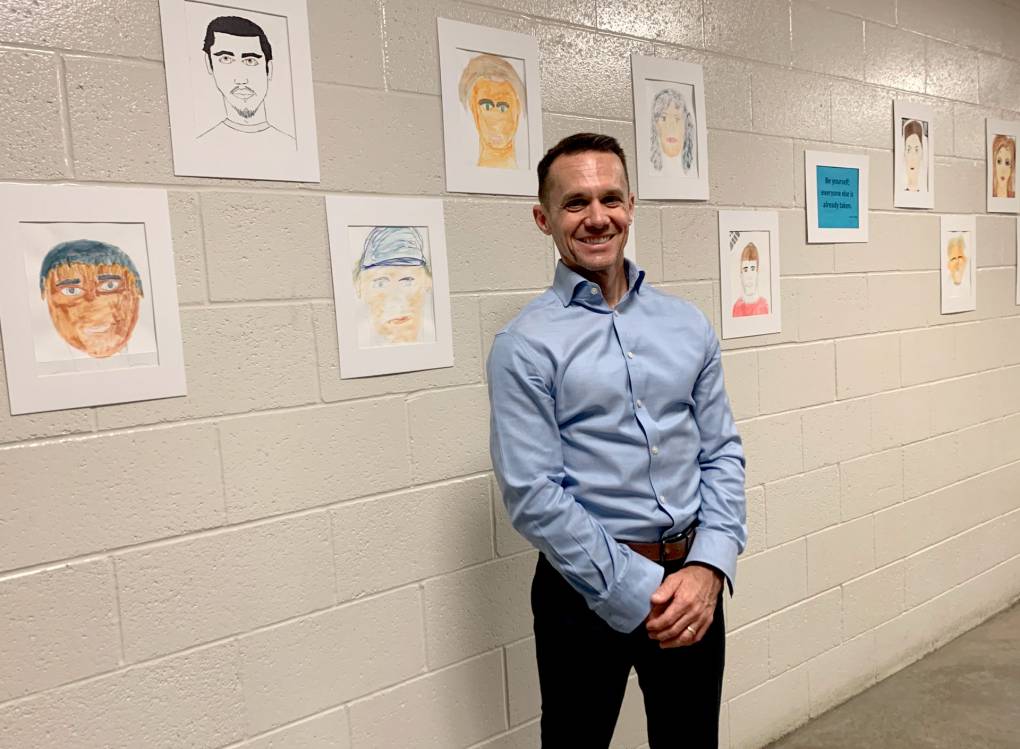
"caption": "El Dorado County Chief Probation Officer Brian Richart, pictured at the county juvenile hall on June 22, 2022. The remaking of California's juvenile justice system will culminate next summer in the closure of the Division of Juvenile Justice — a big change that will require probation chiefs to house and treat all justice system-affected youth in their home counties.",
"description": null,
"title": "Richart",
"credit": "Marisa Lagos/KQED",
"status": "inherit",
"altTag": "smiling man in button up shirt stands in front of portrait drawings hung on a concrete interior hallway wall behind him",
"isLoading": false,
"fetchFailed": false
},
"news_11923877": {
"type": "attachments",
"id": "news_11923877",
"meta": {
"index": "attachments_1716263798",
"site": "news",
"id": "11923877",
"found": true
},
"parent": 11923876,
"imgSizes": {
"twentyfourteen-full-width": {
"file": "https://ww2.kqed.org/app/uploads/sites/10/2022/08/RS57549_024_KQED_PeoplesParkRally_08032022-qut-1-1038x576.jpg",
"width": 1038,
"mimeType": "image/jpeg",
"height": 576
},
"thumbnail": {
"file": "https://ww2.kqed.org/app/uploads/sites/10/2022/08/RS57549_024_KQED_PeoplesParkRally_08032022-qut-1-160x107.jpg",
"width": 160,
"mimeType": "image/jpeg",
"height": 107
},
"post-thumbnail": {
"file": "https://ww2.kqed.org/app/uploads/sites/10/2022/08/RS57549_024_KQED_PeoplesParkRally_08032022-qut-1-672x372.jpg",
"width": 672,
"mimeType": "image/jpeg",
"height": 372
},
"kqedFullSize": {
"file": "https://ww2.kqed.org/app/uploads/sites/10/2022/08/RS57549_024_KQED_PeoplesParkRally_08032022-qut-1.jpg",
"width": 1920,
"height": 1280
},
"large": {
"file": "https://ww2.kqed.org/app/uploads/sites/10/2022/08/RS57549_024_KQED_PeoplesParkRally_08032022-qut-1-1020x680.jpg",
"width": 1020,
"mimeType": "image/jpeg",
"height": 680
},
"1536x1536": {
"file": "https://ww2.kqed.org/app/uploads/sites/10/2022/08/RS57549_024_KQED_PeoplesParkRally_08032022-qut-1-1536x1024.jpg",
"width": 1536,
"mimeType": "image/jpeg",
"height": 1024
},
"medium": {
"file": "https://ww2.kqed.org/app/uploads/sites/10/2022/08/RS57549_024_KQED_PeoplesParkRally_08032022-qut-1-800x533.jpg",
"width": 800,
"mimeType": "image/jpeg",
"height": 533
}
},
"publishDate": 1661705824,
"modified": 1661809336,
"caption": "Jane Stillwater speaks to a crowd gathered in People's Park in Berkeley to protest the construction of UC Berkeley student housing there on Aug. 3, 2022. Stillwater has been protesting in the park for decades.",
"description": null,
"title": "RS57549_024_KQED_PeoplesParkRally_08032022-qut",
"credit": "Beth LaBerge/KQED",
"status": "inherit",
"altTag": "An older woman stands outside holding an old newspaper",
"isLoading": false,
"fetchFailed": false
},
"news_11923798": {
"type": "attachments",
"id": "news_11923798",
"meta": {
"index": "attachments_1716263798",
"site": "news",
"id": "11923798",
"found": true
},
"parent": 11923693,
"imgSizes": {
"twentyfourteen-full-width": {
"file": "https://ww2.kqed.org/app/uploads/sites/10/2022/08/077_KQED_UnitedFarmWorkersMarch_08242022-1038x576.jpg",
"width": 1038,
"mimeType": "image/jpeg",
"height": 576
},
"thumbnail": {
"file": "https://ww2.kqed.org/app/uploads/sites/10/2022/08/077_KQED_UnitedFarmWorkersMarch_08242022-160x107.jpg",
"width": 160,
"mimeType": "image/jpeg",
"height": 107
},
"post-thumbnail": {
"file": "https://ww2.kqed.org/app/uploads/sites/10/2022/08/077_KQED_UnitedFarmWorkersMarch_08242022-672x372.jpg",
"width": 672,
"mimeType": "image/jpeg",
"height": 372
},
"kqedFullSize": {
"file": "https://ww2.kqed.org/app/uploads/sites/10/2022/08/077_KQED_UnitedFarmWorkersMarch_08242022.jpg",
"width": 1920,
"height": 1278
},
"large": {
"file": "https://ww2.kqed.org/app/uploads/sites/10/2022/08/077_KQED_UnitedFarmWorkersMarch_08242022-1020x679.jpg",
"width": 1020,
"mimeType": "image/jpeg",
"height": 679
},
"1536x1536": {
"file": "https://ww2.kqed.org/app/uploads/sites/10/2022/08/077_KQED_UnitedFarmWorkersMarch_08242022-1536x1022.jpg",
"width": 1536,
"mimeType": "image/jpeg",
"height": 1022
},
"medium": {
"file": "https://ww2.kqed.org/app/uploads/sites/10/2022/08/077_KQED_UnitedFarmWorkersMarch_08242022-800x533.jpg",
"width": 800,
"mimeType": "image/jpeg",
"height": 533
}
},
"publishDate": 1661556619,
"modified": 1661794784,
"caption": "Farmworkers and their supporters march through Walnut Grove on Day 22 of their 24-day 'March for the Governor's Signature' on Wednesday, to persuade Gov. Gavin Newsom to sign Assembly Bill 2183, the Agricultural Labor Relations Voting Choice Act. The march started in Delano and concluded 350 miles away in Sacramento on Friday.",
"description": null,
"title": "077_KQED_UnitedFarmWorkersMarch_08242022",
"credit": "Beth LaBerge/KQED",
"status": "inherit",
"altTag": "line of marchers carrying union flags and a mexican flag walk down a rural 2-lane highway in the hot sun",
"isLoading": false,
"fetchFailed": false
},
"news_11923563": {
"type": "attachments",
"id": "news_11923563",
"meta": {
"index": "attachments_1716263798",
"site": "news",
"id": "11923563",
"found": true
},
"parent": 11923557,
"imgSizes": {
"twentyfourteen-full-width": {
"file": "https://ww2.kqed.org/app/uploads/sites/10/2022/08/RS58075_IMG_4328-qut-1038x576.jpg",
"width": 1038,
"mimeType": "image/jpeg",
"height": 576
},
"thumbnail": {
"file": "https://ww2.kqed.org/app/uploads/sites/10/2022/08/RS58075_IMG_4328-qut-160x120.jpg",
"width": 160,
"mimeType": "image/jpeg",
"height": 120
},
"post-thumbnail": {
"file": "https://ww2.kqed.org/app/uploads/sites/10/2022/08/RS58075_IMG_4328-qut-672x372.jpg",
"width": 672,
"mimeType": "image/jpeg",
"height": 372
},
"kqedFullSize": {
"file": "https://ww2.kqed.org/app/uploads/sites/10/2022/08/RS58075_IMG_4328-qut.jpg",
"width": 1920,
"height": 1440
},
"large": {
"file": "https://ww2.kqed.org/app/uploads/sites/10/2022/08/RS58075_IMG_4328-qut-1020x765.jpg",
"width": 1020,
"mimeType": "image/jpeg",
"height": 765
},
"1536x1536": {
"file": "https://ww2.kqed.org/app/uploads/sites/10/2022/08/RS58075_IMG_4328-qut-1536x1152.jpg",
"width": 1536,
"mimeType": "image/jpeg",
"height": 1152
},
"medium": {
"file": "https://ww2.kqed.org/app/uploads/sites/10/2022/08/RS58075_IMG_4328-qut-800x600.jpg",
"width": 800,
"mimeType": "image/jpeg",
"height": 600
}
},
"publishDate": 1661452486,
"modified": 1661452780,
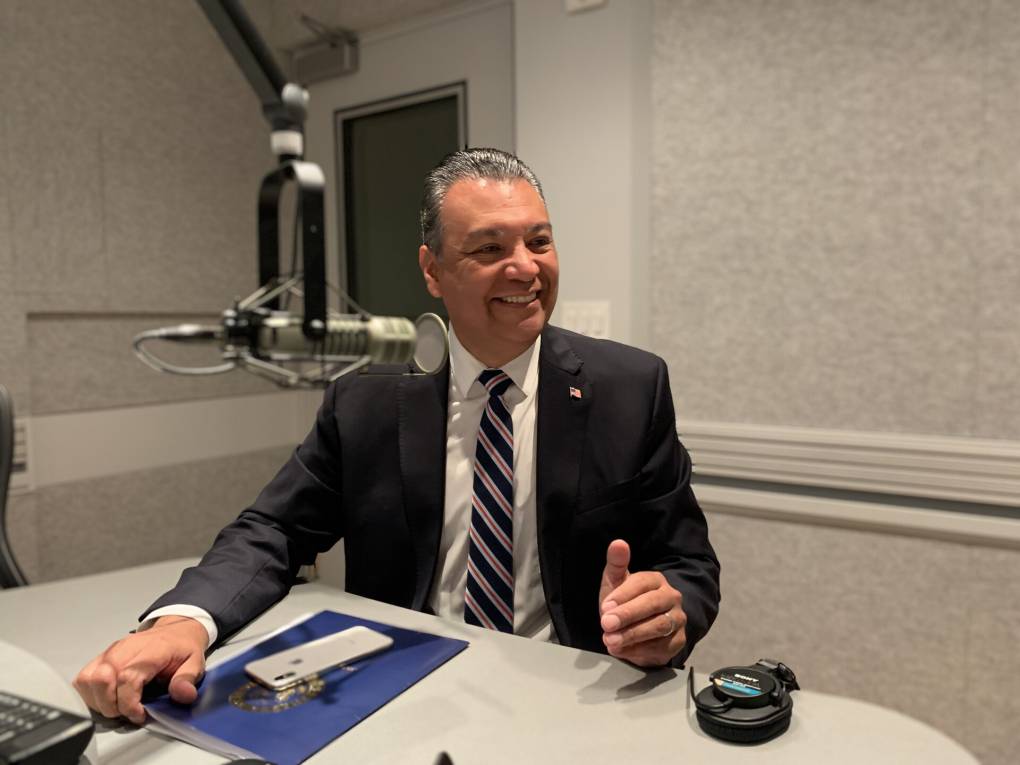
"caption": "U.S. Senator Alex Padilla (D-California) joins Political Breakdown on August 25, 2022.",
"description": null,
"title": "RS58075_IMG_4328-qut",
"credit": "Guy Marzorati/KQED",
"status": "inherit",
"altTag": null,
"isLoading": false,
"fetchFailed": false
},
"news_11923434": {
"type": "attachments",
"id": "news_11923434",
"meta": {
"index": "attachments_1716263798",
"site": "news",
"id": "11923434",
"found": true
},
"parent": 0,
"imgSizes": {
"twentyfourteen-full-width": {
"file": "https://ww2.kqed.org/app/uploads/sites/10/2022/08/RS57853_011_KQED_RichmondHousing_08162022-qut-2-1038x576.jpg",
"width": 1038,
"mimeType": "image/jpeg",
"height": 576
},
"thumbnail": {
"file": "https://ww2.kqed.org/app/uploads/sites/10/2022/08/RS57853_011_KQED_RichmondHousing_08162022-qut-2-160x107.jpg",
"width": 160,
"mimeType": "image/jpeg",
"height": 107
},
"post-thumbnail": {
"file": "https://ww2.kqed.org/app/uploads/sites/10/2022/08/RS57853_011_KQED_RichmondHousing_08162022-qut-2-672x372.jpg",
"width": 672,
"mimeType": "image/jpeg",
"height": 372
},
"kqedFullSize": {
"file": "https://ww2.kqed.org/app/uploads/sites/10/2022/08/RS57853_011_KQED_RichmondHousing_08162022-qut-2.jpg",
"width": 1920,
"height": 1280
},
"large": {
"file": "https://ww2.kqed.org/app/uploads/sites/10/2022/08/RS57853_011_KQED_RichmondHousing_08162022-qut-2-1020x680.jpg",
"width": 1020,
"mimeType": "image/jpeg",
"height": 680
},
"1536x1536": {
"file": "https://ww2.kqed.org/app/uploads/sites/10/2022/08/RS57853_011_KQED_RichmondHousing_08162022-qut-2-1536x1024.jpg",
"width": 1536,
"mimeType": "image/jpeg",
"height": 1024
},
"medium": {
"file": "https://ww2.kqed.org/app/uploads/sites/10/2022/08/RS57853_011_KQED_RichmondHousing_08162022-qut-2-800x533.jpg",
"width": 800,
"mimeType": "image/jpeg",
"height": 533
}
},
"publishDate": 1661372396,
"modified": 1661387422,
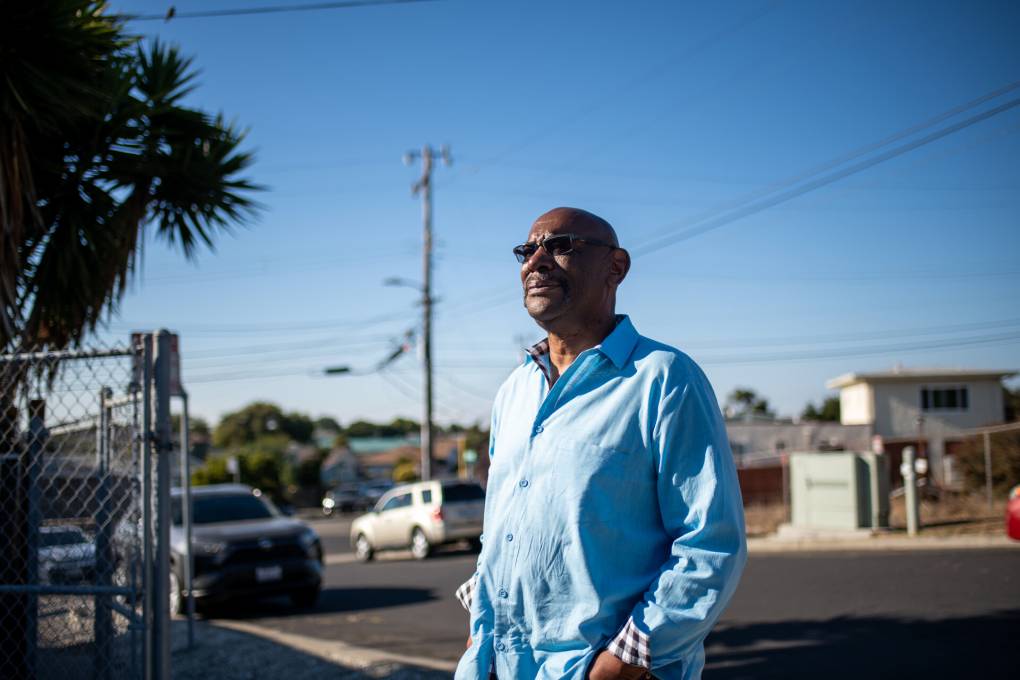
"caption": "Dale Riggins stands outside his home in Richmond on Aug. 16, 2022.",
"description": null,
"title": "Dale Riggins stands outside of his home in Richmond on Aug. 16, 2022.",
"credit": "Beth LaBerge/KQED",
"status": "inherit",
"altTag": "A man standing outside wearing a blue dress shirt and black sunglasses.",
"isLoading": false,
"fetchFailed": false
},
"news_11923291": {
"type": "attachments",
"id": "news_11923291",
"meta": {
"index": "attachments_1716263798",
"site": "news",
"id": "11923291",
"found": true
},
"parent": 11923252,
"imgSizes": {
"twentyfourteen-full-width": {
"file": "https://ww2.kqed.org/app/uploads/sites/10/2022/08/CandidateDiptych-1038x576.jpg",
"width": 1038,
"mimeType": "image/jpeg",
"height": 576
},
"thumbnail": {
"file": "https://ww2.kqed.org/app/uploads/sites/10/2022/08/CandidateDiptych-160x107.jpg",
"width": 160,
"mimeType": "image/jpeg",
"height": 107
},
"post-thumbnail": {
"file": "https://ww2.kqed.org/app/uploads/sites/10/2022/08/CandidateDiptych-672x372.jpg",
"width": 672,
"mimeType": "image/jpeg",
"height": 372
},
"kqedFullSize": {
"file": "https://ww2.kqed.org/app/uploads/sites/10/2022/08/CandidateDiptych.jpg",
"width": 1920,
"height": 1280
},
"large": {
"file": "https://ww2.kqed.org/app/uploads/sites/10/2022/08/CandidateDiptych-1020x680.jpg",
"width": 1020,
"mimeType": "image/jpeg",
"height": 680
},
"1536x1536": {
"file": "https://ww2.kqed.org/app/uploads/sites/10/2022/08/CandidateDiptych-1536x1024.jpg",
"width": 1536,
"mimeType": "image/jpeg",
"height": 1024
},
"medium": {
"file": "https://ww2.kqed.org/app/uploads/sites/10/2022/08/CandidateDiptych-800x533.jpg",
"width": 800,
"mimeType": "image/jpeg",
"height": 533
}
},
"publishDate": 1661289578,
"modified": 1661297813,
"caption": "Jay Chen (far left), the Democratic congressional candidate vying to represent the 45th District in Orange County, poses with local resident Velvet Victorian during a National Night Out event in Garden Grove on Aug. 2, 2022. Rep. Michelle Steel (far right), the Republican incumbent, plays a game of Jenga at a similar event held the same evening in nearby Westminster.",
"description": null,
"title": "CandidateDiptych",
"credit": "Marisa Lagos/KQED",
"status": "inherit",
"altTag": "A dyptych of a man and woman posing outside - at right - and a women and young boy playing a Jenga game.on the street",
"isLoading": false,
"fetchFailed": false
},
"news_11832352": {
"type": "attachments",
"id": "news_11832352",
"meta": {
"index": "attachments_1716263798",
"site": "news",
"id": "11832352",
"found": true
},
"parent": 11832331,
"imgSizes": {
"apple_news_ca_landscape_5_5": {
"file": "https://ww2.kqed.org/app/uploads/sites/10/2020/08/RS41414_014_KQED_RegistrarofVoters_SantaClara_02192020_9014-qut-1044x783.jpg",
"width": 1044,
"mimeType": "image/jpeg",
"height": 783
},
"apple_news_ca_square_4_0": {
"file": "https://ww2.kqed.org/app/uploads/sites/10/2020/08/RS41414_014_KQED_RegistrarofVoters_SantaClara_02192020_9014-qut-470x470.jpg",
"width": 470,
"mimeType": "image/jpeg",
"height": 470
},
"twentyfourteen-full-width": {
"file": "https://ww2.kqed.org/app/uploads/sites/10/2020/08/RS41414_014_KQED_RegistrarofVoters_SantaClara_02192020_9014-qut-1038x576.jpg",
"width": 1038,
"mimeType": "image/jpeg",
"height": 576
},
"thumbnail": {
"file": "https://ww2.kqed.org/app/uploads/sites/10/2020/08/RS41414_014_KQED_RegistrarofVoters_SantaClara_02192020_9014-qut-160x107.jpg",
"width": 160,
"mimeType": "image/jpeg",
"height": 107
},
"post-thumbnail": {
"file": "https://ww2.kqed.org/app/uploads/sites/10/2020/08/RS41414_014_KQED_RegistrarofVoters_SantaClara_02192020_9014-qut-672x372.jpg",
"width": 672,
"mimeType": "image/jpeg",
"height": 372
},
"kqedFullSize": {
"file": "https://ww2.kqed.org/app/uploads/sites/10/2020/08/RS41414_014_KQED_RegistrarofVoters_SantaClara_02192020_9014-qut.jpg",
"width": 1920,
"height": 1278
},
"apple_news_ca_landscape_4_7": {
"file": "https://ww2.kqed.org/app/uploads/sites/10/2020/08/RS41414_014_KQED_RegistrarofVoters_SantaClara_02192020_9014-qut-632x474.jpg",
"width": 632,
"mimeType": "image/jpeg",
"height": 474
},
"large": {
"file": "https://ww2.kqed.org/app/uploads/sites/10/2020/08/RS41414_014_KQED_RegistrarofVoters_SantaClara_02192020_9014-qut-1020x679.jpg",
"width": 1020,
"mimeType": "image/jpeg",
"height": 679
},
"apple_news_ca_landscape_4_0": {
"file": "https://ww2.kqed.org/app/uploads/sites/10/2020/08/RS41414_014_KQED_RegistrarofVoters_SantaClara_02192020_9014-qut-536x402.jpg",
"width": 536,
"mimeType": "image/jpeg",
"height": 402
},
"apple_news_ca_portrait_12_9": {
"file": "https://ww2.kqed.org/app/uploads/sites/10/2020/08/RS41414_014_KQED_RegistrarofVoters_SantaClara_02192020_9014-qut-1122x1278.jpg",
"width": 1122,
"mimeType": "image/jpeg",
"height": 1278
},
"medium": {
"file": "https://ww2.kqed.org/app/uploads/sites/10/2020/08/RS41414_014_KQED_RegistrarofVoters_SantaClara_02192020_9014-qut-800x533.jpg",
"width": 800,
"mimeType": "image/jpeg",
"height": 533
},
"apple_news_ca_portrait_4_0": {
"file": "https://ww2.kqed.org/app/uploads/sites/10/2020/08/RS41414_014_KQED_RegistrarofVoters_SantaClara_02192020_9014-qut-354x472.jpg",
"width": 354,
"mimeType": "image/jpeg",
"height": 472
},
"apple_news_ca_portrait_9_7": {
"file": "https://ww2.kqed.org/app/uploads/sites/10/2020/08/RS41414_014_KQED_RegistrarofVoters_SantaClara_02192020_9014-qut-840x1120.jpg",
"width": 840,
"mimeType": "image/jpeg",
"height": 1120
},
"apple_news_ca_landscape_12_9": {
"file": "https://ww2.kqed.org/app/uploads/sites/10/2020/08/RS41414_014_KQED_RegistrarofVoters_SantaClara_02192020_9014-qut-1832x1278.jpg",
"width": 1832,
"mimeType": "image/jpeg",
"height": 1278
},
"apple_news_ca_square_9_7": {
"file": "https://ww2.kqed.org/app/uploads/sites/10/2020/08/RS41414_014_KQED_RegistrarofVoters_SantaClara_02192020_9014-qut-1104x1104.jpg",
"width": 1104,
"mimeType": "image/jpeg",
"height": 1104
},
"1536x1536": {
"file": "https://ww2.kqed.org/app/uploads/sites/10/2020/08/RS41414_014_KQED_RegistrarofVoters_SantaClara_02192020_9014-qut-1536x1022.jpg",
"width": 1536,
"mimeType": "image/jpeg",
"height": 1022
},
"apple_news_ca_portrait_4_7": {
"file": "https://ww2.kqed.org/app/uploads/sites/10/2020/08/RS41414_014_KQED_RegistrarofVoters_SantaClara_02192020_9014-qut-414x552.jpg",
"width": 414,
"mimeType": "image/jpeg",
"height": 552
},
"apple_news_ca_square_12_9": {
"file": "https://ww2.kqed.org/app/uploads/sites/10/2020/08/RS41414_014_KQED_RegistrarofVoters_SantaClara_02192020_9014-qut-1472x1278.jpg",
"width": 1472,
"mimeType": "image/jpeg",
"height": 1278
},
"apple_news_ca_portrait_5_5": {
"file": "https://ww2.kqed.org/app/uploads/sites/10/2020/08/RS41414_014_KQED_RegistrarofVoters_SantaClara_02192020_9014-qut-687x916.jpg",
"width": 687,
"mimeType": "image/jpeg",
"height": 916
},
"apple_news_ca_square_4_7": {
"file": "https://ww2.kqed.org/app/uploads/sites/10/2020/08/RS41414_014_KQED_RegistrarofVoters_SantaClara_02192020_9014-qut-550x550.jpg",
"width": 550,
"mimeType": "image/jpeg",
"height": 550
},
"apple_news_ca_landscape_9_7": {
"file": "https://ww2.kqed.org/app/uploads/sites/10/2020/08/RS41414_014_KQED_RegistrarofVoters_SantaClara_02192020_9014-qut-1376x1032.jpg",
"width": 1376,
"mimeType": "image/jpeg",
"height": 1032
},
"apple_news_ca_square_5_5": {
"file": "https://ww2.kqed.org/app/uploads/sites/10/2020/08/RS41414_014_KQED_RegistrarofVoters_SantaClara_02192020_9014-qut-912x912.jpg",
"width": 912,
"mimeType": "image/jpeg",
"height": 912
}
},
"publishDate": 1596765580,
"modified": 1596765651,
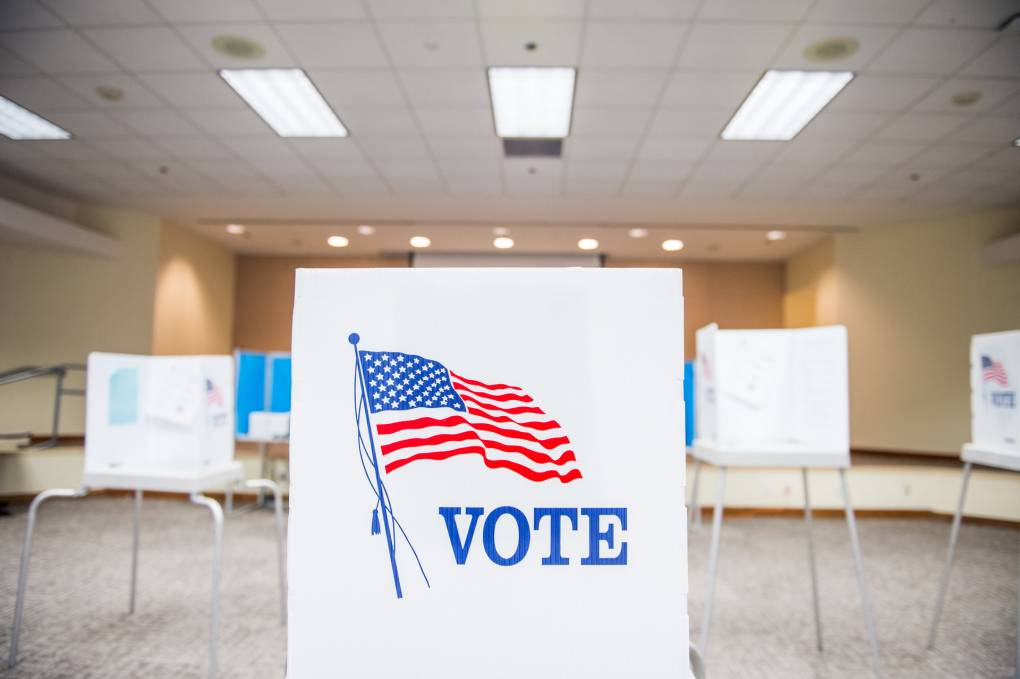
"caption": "A voting booth at the Santa Clara Registrar of Voters on Feb. 19, 2020.",
"description": null,
"title": "RS41414_014_KQED_RegistrarofVoters_SantaClara_02192020_9014-qut",
"credit": "Beth LaBerge/KQED",
"status": "inherit",
"isLoading": false,
"fetchFailed": false
},
"news_11922992": {
"type": "attachments",
"id": "news_11922992",
"meta": {
"index": "attachments_1716263798",
"site": "news",
"id": "11922992",
"found": true
},
"title": "RS46694_009_Sacramento_InaugurationDay_01202021-qut",
"publishDate": 1660864948,
"status": "inherit",
"parent": 11922990,
"modified": 1737570783,
"caption": "The California Legislature wraps up their two-year legislative session on August 31, 2022. ",
"credit": "Beth LaBerge/KQED",
"altTag": null,
"description": null,
"imgSizes": {
"medium": {
"file": "https://cdn.kqed.org/wp-content/uploads/sites/10/2022/08/RS46694_009_Sacramento_InaugurationDay_01202021-qut-800x533.jpg",
"width": 800,
"height": 533,
"mimeType": "image/jpeg"
},
"large": {
"file": "https://cdn.kqed.org/wp-content/uploads/sites/10/2022/08/RS46694_009_Sacramento_InaugurationDay_01202021-qut-1020x680.jpg",
"width": 1020,
"height": 680,
"mimeType": "image/jpeg"
},
"thumbnail": {
"file": "https://cdn.kqed.org/wp-content/uploads/sites/10/2022/08/RS46694_009_Sacramento_InaugurationDay_01202021-qut-160x107.jpg",
"width": 160,
"height": 107,
"mimeType": "image/jpeg"
},
"1536x1536": {
"file": "https://cdn.kqed.org/wp-content/uploads/sites/10/2022/08/RS46694_009_Sacramento_InaugurationDay_01202021-qut-1536x1024.jpg",
"width": 1536,
"height": 1024,
"mimeType": "image/jpeg"
},
"post-thumbnail": {
"file": "https://cdn.kqed.org/wp-content/uploads/sites/10/2022/08/RS46694_009_Sacramento_InaugurationDay_01202021-qut-672x372.jpg",
"width": 672,
"height": 372,
"mimeType": "image/jpeg"
},
"twentyfourteen-full-width": {
"file": "https://cdn.kqed.org/wp-content/uploads/sites/10/2022/08/RS46694_009_Sacramento_InaugurationDay_01202021-qut-1038x576.jpg",
"width": 1038,
"height": 576,
"mimeType": "image/jpeg"
},
"kqedFullSize": {
"file": "https://cdn.kqed.org/wp-content/uploads/sites/10/2022/08/RS46694_009_Sacramento_InaugurationDay_01202021-qut.jpg",
"width": 1920,
"height": 1280
}
},
"isLoading": false,
"fetchFailed": false
},
"news_11922448": {
"type": "attachments",
"id": "news_11922448",
"meta": {
"index": "attachments_1716263798",
"site": "news",
"id": "11922448",
"found": true
},
"parent": 11922431,
"imgSizes": {
"twentyfourteen-full-width": {
"file": "https://ww2.kqed.org/app/uploads/sites/10/2022/08/GettyImages-462800426-1038x576.jpg",
"width": 1038,
"mimeType": "image/jpeg",
"height": 576
},
"thumbnail": {
"file": "https://ww2.kqed.org/app/uploads/sites/10/2022/08/GettyImages-462800426-160x107.jpg",
"width": 160,
"mimeType": "image/jpeg",
"height": 107
},
"post-thumbnail": {
"file": "https://ww2.kqed.org/app/uploads/sites/10/2022/08/GettyImages-462800426-672x372.jpg",
"width": 672,
"mimeType": "image/jpeg",
"height": 372
},
"kqedFullSize": {
"file": "https://ww2.kqed.org/app/uploads/sites/10/2022/08/GettyImages-462800426-scaled-e1660348852431.jpg",
"width": 1980,
"height": 1319
},
"2048x2048": {
"file": "https://ww2.kqed.org/app/uploads/sites/10/2022/08/GettyImages-462800426-2048x1365.jpg",
"width": 2048,
"mimeType": "image/jpeg",
"height": 1365
},
"large": {
"file": "https://ww2.kqed.org/app/uploads/sites/10/2022/08/GettyImages-462800426-1020x680.jpg",
"width": 1020,
"mimeType": "image/jpeg",
"height": 680
},
"1536x1536": {
"file": "https://ww2.kqed.org/app/uploads/sites/10/2022/08/GettyImages-462800426-1536x1024.jpg",
"width": 1536,
"mimeType": "image/jpeg",
"height": 1024
},
"full-width": {
"file": "https://ww2.kqed.org/app/uploads/sites/10/2022/08/GettyImages-462800426-1920x1280.jpg",
"width": 1920,
"mimeType": "image/jpeg",
"height": 1280
},
"medium": {
"file": "https://ww2.kqed.org/app/uploads/sites/10/2022/08/GettyImages-462800426-800x533.jpg",
"width": 800,
"mimeType": "image/jpeg",
"height": 533
}
},
"publishDate": 1660348778,
"modified": 1687786837,
"caption": "The dome and exterior of the State Capitol building is viewed on January 27, 2015, in Sacramento. ",
"description": null,
"title": "Exploring California's State Capitol",
"credit": "George Rose/Getty Images",
"status": "inherit",
"altTag": "The dome and exterior of the State Capitol building is viewed on January 27, 2015, in Sacramento, California.",
"isLoading": false,
"fetchFailed": false
}
},
"audioPlayerReducer": {
"postId": "stream_live",
"isPaused": true,
"isPlaying": false,
"pfsActive": false,
"pledgeModalIsOpen": true,
"playerDrawerIsOpen": false,
"liveAudioPlayStartedAt": 0,
"liveAudioPlayContext": ""
},
"authorsReducer": {
"byline_news_11923876": {
"type": "authors",
"id": "byline_news_11923876",
"meta": {
"override": true
},
"slug": "byline_news_11923876",
"name": "Michael Liedtke\u003cbr>Associated Press",
"isLoading": false
},
"byline_news_11922431": {
"type": "authors",
"id": "byline_news_11922431",
"meta": {
"override": true
},
"slug": "byline_news_11922431",
"name": "Ben Christopher",
"isLoading": false
},
"gmarzorati": {
"type": "authors",
"id": "227",
"meta": {
"index": "authors_1716337520",
"id": "227",
"found": true
},
"name": "Guy Marzorati",
"firstName": "Guy",
"lastName": "Marzorati",
"slug": "gmarzorati",
"email": "gmarzorati@KQED.org",
"display_author_email": true,
"staff_mastheads": [
"news"
],
"title": "Correspondent",
"bio": "Guy Marzorati is a correspondent on KQED's California Politics and Government Desk, based in San Jose. A graduate of Santa Clara University, Guy joined KQED in 2013. He reports on state and local politics and produces KQED's digital voter guide.",
"avatar": "https://secure.gravatar.com/avatar/e7038b8dbfd55b104369b76b1cd0b9de?s=600&d=blank&r=g",
"twitter": "guymarzorati",
"facebook": null,
"instagram": null,
"linkedin": null,
"sites": [
{
"site": "",
"roles": [
"editor"
]
},
{
"site": "news",
"roles": [
"editor"
]
},
{
"site": "science",
"roles": [
"editor"
]
},
{
"site": "forum",
"roles": [
"editor"
]
},
{
"site": "elections",
"roles": [
"editor"
]
},
{
"site": "liveblog",
"roles": [
"editor"
]
}
],
"headData": {
"title": "Guy Marzorati | KQED",
"description": "Correspondent",
"ogImgSrc": "https://secure.gravatar.com/avatar/e7038b8dbfd55b104369b76b1cd0b9de?s=600&d=blank&r=g",
"twImgSrc": "https://secure.gravatar.com/avatar/e7038b8dbfd55b104369b76b1cd0b9de?s=600&d=blank&r=g"
},
"isLoading": false,
"link": "/author/gmarzorati"
},
"kqednewsstaffandwires": {
"type": "authors",
"id": "237",
"meta": {
"index": "authors_1716337520",
"id": "237",
"found": true
},
"name": "KQED News Staff and Wires",
"firstName": "KQED News Staff and Wires",
"lastName": null,
"slug": "kqednewsstaffandwires",
"email": "onlinenewsstaff@kqed.org",
"display_author_email": false,
"staff_mastheads": [],
"title": null,
"bio": null,
"avatar": "https://secure.gravatar.com/avatar/72295af8ebbfbd19a4948f5271285664?s=600&d=blank&r=g",
"twitter": null,
"facebook": null,
"instagram": null,
"linkedin": null,
"sites": [
{
"site": "arts",
"roles": [
"contributor"
]
},
{
"site": "news",
"roles": [
"contributor"
]
},
{
"site": "lowdown",
"roles": [
"author"
]
},
{
"site": "stateofhealth",
"roles": [
"contributor"
]
},
{
"site": "food",
"roles": [
"author"
]
}
],
"headData": {
"title": "KQED News Staff and Wires | KQED",
"description": null,
"ogImgSrc": "https://secure.gravatar.com/avatar/72295af8ebbfbd19a4948f5271285664?s=600&d=blank&r=g",
"twImgSrc": "https://secure.gravatar.com/avatar/72295af8ebbfbd19a4948f5271285664?s=600&d=blank&r=g"
},
"isLoading": false,
"link": "/author/kqednewsstaffandwires"
},
"mlagos": {
"type": "authors",
"id": "3239",
"meta": {
"index": "authors_1716337520",
"id": "3239",
"found": true
},
"name": "Marisa Lagos",
"firstName": "Marisa",
"lastName": "Lagos",
"slug": "mlagos",
"email": "mlagos@kqed.org",
"display_author_email": false,
"staff_mastheads": [
"news"
],
"title": "KQED Contributor",
"bio": "Marisa Lagos is a correspondent for KQED’s California Politics and Government Desk and co-hosts the award-winning show and podcast, Political Breakdown. At KQED, Lagos also conducts reporting, analysis and investigations into state, local and national politics for radio, TV, online and onstage. In 2022, she and co-host, Scott Shafer, moderated the only gubernatorial debate in California. In 2020, the \u003ci>Washington Post\u003c/i> named her one of the top political journalists in California; she was nominated for a Peabody and won several other awards for her work investigating the 2017 California wildfires. She has worked at the \u003ci>San Francisco Chronicle\u003c/i>, \u003ci>San Francisco Examiner\u003c/i> and \u003ci>Los Angeles Times\u003c/i>. A UC Santa Barbara graduate, she lives in San Francisco with her two sons and husband.",
"avatar": "https://secure.gravatar.com/avatar/a261a0d3696fc066871ef96b85b5e7d2?s=600&d=blank&r=g",
"twitter": "@mlagos",
"facebook": null,
"instagram": null,
"linkedin": null,
"sites": [
{
"site": "arts",
"roles": [
"author"
]
},
{
"site": "news",
"roles": [
"editor"
]
},
{
"site": "science",
"roles": [
"editor"
]
},
{
"site": "forum",
"roles": [
"author"
]
},
{
"site": "liveblog",
"roles": [
"author"
]
}
],
"headData": {
"title": "Marisa Lagos | KQED",
"description": "KQED Contributor",
"ogImgSrc": "https://secure.gravatar.com/avatar/a261a0d3696fc066871ef96b85b5e7d2?s=600&d=blank&r=g",
"twImgSrc": "https://secure.gravatar.com/avatar/a261a0d3696fc066871ef96b85b5e7d2?s=600&d=blank&r=g"
},
"isLoading": false,
"link": "/author/mlagos"
},
"ecruzguevarra": {
"type": "authors",
"id": "8654",
"meta": {
"index": "authors_1716337520",
"id": "8654",
"found": true
},
"name": "Ericka Cruz Guevarra",
"firstName": "Ericka",
"lastName": "Cruz Guevarra",
"slug": "ecruzguevarra",
"email": "ecruzguevarra@kqed.org",
"display_author_email": true,
"staff_mastheads": [
"news"
],
"title": "Producer, The Bay Podcast",
"bio": "Ericka Cruz Guevarra is host of \u003ca href=\"https://www.kqed.org/podcasts/thebay\">\u003cem>The Bay\u003c/em>\u003c/a> podcast at KQED. Before host, she was the show’s producer. Her work in that capacity includes a three-part reported series on policing in Vallejo, which won a 2020 excellence in journalism award from the Society of Professional Journalists. Ericka has worked as a breaking news reporter at Oregon Public Broadcasting, helped produce the Code Switch podcast, and was KQED’s inaugural Raul Ramirez Diversity Fund intern. She’s also an alumna of NPR’s Next Generation Radio program. Send her an email if you have strong feelings about whether Fairfield and Suisun City are the Bay. Ericka is represented by SAG-AFTRA.",
"avatar": "https://secure.gravatar.com/avatar/accefc1de4bafc7e234b69bcb9b6f6536c130fd84709bc3069ef11a78787e1bb?s=600&d=blank&r=g",
"twitter": "NotoriousECG",
"bluesky": null,
"facebook": null,
"instagram": null,
"linkedin": null,
"sites": [
{
"site": "arts",
"roles": [
"subscriber"
]
},
{
"site": "news",
"roles": [
"editor",
"manage_categories"
]
},
{
"site": "futureofyou",
"roles": [
"subscriber"
]
},
{
"site": "stateofhealth",
"roles": [
"subscriber"
]
},
{
"site": "science",
"roles": [
"editor"
]
},
{
"site": "forum",
"roles": [
"subscriber"
]
}
],
"headData": {
"title": "Ericka Cruz Guevarra | KQED",
"description": "Producer, The Bay Podcast",
"ogImgSrc": "https://secure.gravatar.com/avatar/accefc1de4bafc7e234b69bcb9b6f6536c130fd84709bc3069ef11a78787e1bb?s=600&d=blank&r=g",
"twImgSrc": "https://secure.gravatar.com/avatar/accefc1de4bafc7e234b69bcb9b6f6536c130fd84709bc3069ef11a78787e1bb?s=600&d=blank&r=g"
},
"isLoading": false,
"link": "/author/ecruzguevarra"
},
"fjhabvala": {
"type": "authors",
"id": "8659",
"meta": {
"index": "authors_1716337520",
"id": "8659",
"found": true
},
"name": "Farida Jhabvala Romero",
"firstName": "Farida",
"lastName": "Jhabvala Romero",
"slug": "fjhabvala",
"email": "fjhabvala@kqed.org",
"display_author_email": true,
"staff_mastheads": [
"news"
],
"title": "KQED Contributor",
"bio": "Farida Jhabvala Romero is a Labor Correspondent for KQED. She previously covered immigration. Farida was \u003ca href=\"https://www.ccnma.org/2022-most-influential-latina-journalists\">named\u003c/a> one of the 10 Most Influential Latina Journalists in California in 2022 by the California Chicano News Media Association. Her work has won awards from the Society of Professional Journalists (Northern California), as well as a national and regional Edward M. Murrow Award for the collaborative reporting projects “Dangerous Air” and “Graying California.” Before joining KQED, Farida worked as a producer at Radio Bilingüe, a national public radio network. Farida earned her master’s degree in journalism from Stanford University.",
"avatar": "https://secure.gravatar.com/avatar/f9f022d4e2609741874222a1e9d41f48fea74011aa7c615eef91d9a50c944ebe?s=600&d=blank&r=g",
"twitter": "FaridaJhabvala",
"bluesky": null,
"facebook": null,
"instagram": null,
"linkedin": "https://www.linkedin.com/in/faridajhabvala/",
"sites": [
{
"site": "news",
"roles": [
"editor"
]
},
{
"site": "stateofhealth",
"roles": [
"author"
]
},
{
"site": "liveblog",
"roles": [
"author"
]
}
],
"headData": {
"title": "Farida Jhabvala Romero | KQED",
"description": "KQED Contributor",
"ogImgSrc": "https://secure.gravatar.com/avatar/f9f022d4e2609741874222a1e9d41f48fea74011aa7c615eef91d9a50c944ebe?s=600&d=blank&r=g",
"twImgSrc": "https://secure.gravatar.com/avatar/f9f022d4e2609741874222a1e9d41f48fea74011aa7c615eef91d9a50c944ebe?s=600&d=blank&r=g"
},
"isLoading": false,
"link": "/author/fjhabvala"
},
"csaldana": {
"type": "authors",
"id": "11301",
"meta": {
"index": "authors_1716337520",
"id": "11301",
"found": true
},
"name": "Cesar Saldaña",
"firstName": "Cesar",
"lastName": "Saldaña",
"slug": "csaldana",
"email": "csaldana@kqed.org",
"display_author_email": false,
"staff_mastheads": [
"news"
],
"title": "KQED Contributor",
"bio": null,
"avatar": "https://secure.gravatar.com/avatar/04e89425007fe7102f750c79e76274bc?s=600&d=mm&r=g",
"twitter": null,
"facebook": null,
"instagram": null,
"linkedin": null,
"sites": [
{
"site": "news",
"roles": []
},
{
"site": "perspectives",
"roles": []
}
],
"headData": {
"title": "Cesar Saldaña | KQED",
"description": "KQED Contributor",
"ogImgSrc": "https://secure.gravatar.com/avatar/04e89425007fe7102f750c79e76274bc?s=600&d=mm&r=g",
"twImgSrc": "https://secure.gravatar.com/avatar/04e89425007fe7102f750c79e76274bc?s=600&d=mm&r=g"
},
"isLoading": false,
"link": "/author/csaldana"
},
"amontecillo": {
"type": "authors",
"id": "11649",
"meta": {
"index": "authors_1716337520",
"id": "11649",
"found": true
},
"name": "Alan Montecillo",
"firstName": "Alan",
"lastName": "Montecillo",
"slug": "amontecillo",
"email": "amontecillo@kqed.org",
"display_author_email": false,
"staff_mastheads": [
"news"
],
"title": "KQED Contributor",
"bio": "Alan Montecillo is the senior editor of \u003cem>\u003ca href=\"http://kqed.org/thebay\">The Bay\u003c/a>, \u003c/em> KQED's local news podcast. Before moving to the Bay Area, he worked as a senior talk show producer for WILL in Champaign-Urbana, Illinois and at Oregon Public Broadcasting in Portland, Oregon. He has won journalism awards from the Society of Professional Journalists Northern California, the Public Media Journalists Association, The Signal Awards, and has also received a regional Edward R. Murrow award. Alan is a Filipino American from Hong Kong and a graduate of Reed College.",
"avatar": "https://secure.gravatar.com/avatar/268f53a2066899ea9efdd8a5900218b17c822d9862cbc9326cccec53ef41d349?s=600&d=blank&r=g",
"twitter": "alanmontecillo",
"bluesky": null,
"facebook": null,
"instagram": null,
"linkedin": null,
"sites": [
{
"site": "",
"roles": [
"editor"
]
},
{
"site": "news",
"roles": [
"editor",
"manage_categories"
]
}
],
"headData": {
"title": "Alan Montecillo | KQED",
"description": "KQED Contributor",
"ogImgSrc": "https://secure.gravatar.com/avatar/268f53a2066899ea9efdd8a5900218b17c822d9862cbc9326cccec53ef41d349?s=600&d=blank&r=g",
"twImgSrc": "https://secure.gravatar.com/avatar/268f53a2066899ea9efdd8a5900218b17c822d9862cbc9326cccec53ef41d349?s=600&d=blank&r=g"
},
"isLoading": false,
"link": "/author/amontecillo"
},
"ebaldassari": {
"type": "authors",
"id": "11652",
"meta": {
"index": "authors_1716337520",
"id": "11652",
"found": true
},
"name": "Erin Baldassari",
"firstName": "Erin",
"lastName": "Baldassari",
"slug": "ebaldassari",
"email": "ebaldassari@KQED.org",
"display_author_email": true,
"staff_mastheads": [
"news"
],
"title": "Staff Writer",
"bio": "Erin Baldassari covers housing for KQED. She's a former print journalist and most recently worked as the transportation reporter for the \u003cem>Mercury News\u003c/em> and \u003cem>East Bay Times. \u003c/em>There, she focused on how the Bay Area’s housing shortage has changed the way people move around the region. She also served on the \u003cem>East Bay Times\u003c/em>’ 2017 Pulitzer Prize-winning team for coverage of the Ghost Ship Fire in Oakland. Prior to that, Erin worked as a breaking news and general assignment reporter for a variety of outlets in the Bay Area and the greater Boston area. A Tufts University alumna, Erin grew up in the foothills of the Sierra Nevada mountains and in Sonoma County. She is a life-long KQED listener.",
"avatar": "https://secure.gravatar.com/avatar/660ce35d088ca54ad606d7e941abc652?s=600&d=mm&r=g",
"twitter": "e_baldi",
"facebook": null,
"instagram": null,
"linkedin": null,
"sites": [
{
"site": "news",
"roles": [
"edit_others_posts",
"editor"
]
},
{
"site": "science",
"roles": [
"editor"
]
},
{
"site": "liveblog",
"roles": [
"editor"
]
}
],
"headData": {
"title": "Erin Baldassari | KQED",
"description": "Staff Writer",
"ogImgSrc": "https://secure.gravatar.com/avatar/660ce35d088ca54ad606d7e941abc652?s=600&d=mm&r=g",
"twImgSrc": "https://secure.gravatar.com/avatar/660ce35d088ca54ad606d7e941abc652?s=600&d=mm&r=g"
},
"isLoading": false,
"link": "/author/ebaldassari"
},
"jrodriguez": {
"type": "authors",
"id": "11690",
"meta": {
"index": "authors_1716337520",
"id": "11690",
"found": true
},
"name": "Joe Fitzgerald Rodriguez",
"firstName": "Joe",
"lastName": "Fitzgerald Rodriguez",
"slug": "jrodriguez",
"email": "jrodriguez@kqed.org",
"display_author_email": true,
"staff_mastheads": [
"news"
],
"title": "Reporter and Producer",
"bio": "Joe Fitzgerald Rodriguez is a reporter and digital producer for KQED covering politics. Joe most recently wrote for the \u003cem>San Francisco Examiner\u003c/em> as a political columnist covering The City. He was raised in San Francisco and has spent his reporting career in his beloved, foggy, city by the bay. Joe was 12-years-old when he conducted his first interview in journalism, grilling former San Francisco Mayor Willie Brown for the Marina Middle School newspaper, \u003cem>The Penguin Press, \u003c/em>and he continues to report on the San Francisco Bay Area to this day.",
"avatar": "https://secure.gravatar.com/avatar/2247beb0564c1e9c62228d5649d2edac?s=600&d=blank&r=g",
"twitter": "FitztheReporter",
"facebook": null,
"instagram": "https://www.instagram.com/fitzthereporter/",
"linkedin": null,
"sites": [
{
"site": "",
"roles": [
"editor"
]
},
{
"site": "arts",
"roles": [
"editor"
]
},
{
"site": "news",
"roles": [
"editor"
]
},
{
"site": "science",
"roles": [
"editor"
]
},
{
"site": "elections",
"roles": [
"editor"
]
},
{
"site": "liveblog",
"roles": [
"editor"
]
}
],
"headData": {
"title": "Joe Fitzgerald Rodriguez | KQED",
"description": "Reporter and Producer",
"ogImgSrc": "https://secure.gravatar.com/avatar/2247beb0564c1e9c62228d5649d2edac?s=600&d=blank&r=g",
"twImgSrc": "https://secure.gravatar.com/avatar/2247beb0564c1e9c62228d5649d2edac?s=600&d=blank&r=g"
},
"isLoading": false,
"link": "/author/jrodriguez"
},
"afinney": {
"type": "authors",
"id": "11772",
"meta": {
"index": "authors_1716337520",
"id": "11772",
"found": true
},
"name": "Annelise Finney",
"firstName": "Annelise",
"lastName": "Finney",
"slug": "afinney",
"email": "afinney@kqed.org",
"display_author_email": true,
"staff_mastheads": [
"news"
],
"title": "Reporter",
"bio": "Annelise reports on reparations in California and East Bay politics. She co-produced the Sunday Music Drop, a limited-term radio series featuring Bay Area musicians that aired between Sept 2022 and Oct 2024. She joined KQED in 2021 as a general assignment reporter and is an alumna of KALW's Audio Academy. She was born and raised in the East Bay. She is currently away from KQED completing a year-long reporting project in Berlin, Germany as a Alexander Von Humboldt German Chancellor Fellow.",
"avatar": "https://secure.gravatar.com/avatar/5fded66cae47704cdfc5021cde0f3aa4?s=600&d=blank&r=g",
"twitter": null,
"facebook": null,
"instagram": null,
"linkedin": null,
"sites": [
{
"site": "news",
"roles": [
"editor"
]
},
{
"site": "liveblog",
"roles": [
"author"
]
}
],
"headData": {
"title": "Annelise Finney | KQED",
"description": "Reporter",
"ogImgSrc": "https://secure.gravatar.com/avatar/5fded66cae47704cdfc5021cde0f3aa4?s=600&d=blank&r=g",
"twImgSrc": "https://secure.gravatar.com/avatar/5fded66cae47704cdfc5021cde0f3aa4?s=600&d=blank&r=g"
},
"isLoading": false,
"link": "/author/afinney"
}
},
"pagesReducer": {
"news_tag_politics": {
"type": "terms",
"id": "news_17968",
"meta": {
"index": "terms_1716263798",
"site": "news",
"id": "17968",
"score": 8.003266
},
"name": "Politics",
"slug": "politics",
"taxonomy": "tag",
"description": null,
"featImg": null,
"headData": {
"title": "Politics | KQED News",
"description": null,
"ogTitle": null,
"ogDescription": null,
"ogImgId": null,
"twTitle": null,
"twDescription": null,
"twImgId": null
},
"ttid": 18002,
"isLoading": false,
"title": "Politics",
"pageMeta": {
"site": "news",
"WpPageTemplate": "page-topic-editorial",
"currentPage": 171
},
"blocks": [
{
"blockName": "kqed/post-list",
"attrs": {
"layout": "cardArticle2",
"query": "posts/news?tag=politics",
"seeMore": false,
"paginated": true,
"page": 171
}
},
{
"blockName": "kqed/ad"
}
]
}
},
"pfsSessionReducer": {},
"postsReducer": {
"stream_live": {
"type": "live",
"id": "stream_live",
"audioUrl": "https://streams.kqed.org/kqedradio",
"title": "Live Stream",
"excerpt": "Live Stream information currently unavailable.",
"link": "/radio",
"featImg": "",
"label": {
"name": "KQED Live",
"link": "/"
}
},
"stream_kqedNewscast": {
"type": "posts",
"id": "stream_kqedNewscast",
"audioUrl": "https://www.kqed.org/.stream/anon/radio/RDnews/newscast.mp3?_=1",
"title": "KQED Newscast",
"featImg": "",
"label": {
"name": "88.5 FM",
"link": "/"
}
},
"news_11924844": {
"type": "posts",
"id": "news_11924844",
"meta": {
"index": "posts_1716263798",
"site": "news",
"id": "11924844",
"score": null,
"sort": [
1662588023000
]
},
"guestAuthors": [],
"slug": "judge-bars-former-sf-supervisor-candidate-leanna-louie-from-appearing-on-november-ballot",
"title": "Judge Bars Leanna Louie From Appearing on November Ballot in Board of Supervisors Race",
"publishDate": 1662588023,
"format": "standard",
"headTitle": "Judge Bars Leanna Louie From Appearing on November Ballot in Board of Supervisors Race | KQED",
"labelTerm": {
"site": "news"
},
"content": "\u003cp>A San Francisco judge on Wednesday denied Leanna Louie’s appeal to keep her name on the November ballot as a Board of Supervisors candidate.\u003c/p>\n\u003cp>In his ruling, San Francisco Superior Court Judge Richard Ulmer Jr. said it was “not clear” from the evidence presented by Louie’s attorneys that she had met the legal definition of living in District 4, the collection of outer Sunset District neighborhoods she sought to represent.\u003c/p>\n\u003cp>Though Louie had rented an apartment within the district, \u003ca href=\"https://missionlocal.org/2022/08/leanna-louie-eligibility-district-4-joel-engardio-gordon-mar/\">a recent investigation by Mission Local\u003c/a> uncovered records showing she owned, or lived in, multiple homes in San Francisco.\u003c/p>\n\u003cp>Those revelations prompted \u003ca href=\"https://www.sfcityattorney.org/wp-content/uploads/2022/08/Review-of-Ms.-Leanna-Louies-Residency.pdf\">an investigation by the city attorney’s office\u003c/a>, which found that Louie had been bouncing among six separate residences in the city, and that her rental in District 4 — which includes the Sunset District — was not her primary residence.\u003c/p>\n\u003cp>San Francisco election law dictates that candidates for seats on the Board of Supervisors must be “domiciled” in the district they are vying to represent, which entails living in the district 30 days before filing to run for office.\u003c/p>\n\u003cp>[ad fullwidth]\u003c/p>\n\u003cp>In late August, the city’s Department of Elections moved to strike Louie from the ballot, a decision \u003ca href=\"https://missionlocal.org/2022/08/leanna-louie-sues-department-of-elections-san-francisco-city-attorney/\">she subsequently appealed\u003c/a> in court.\u003c/p>\n\u003cp>In Louie’s hearing, Ulmer focused on the location of her father’s Bayview home, which is the address she filed with the city’s Department of Elections and also what appears on her driver’s license.\u003c/p>\n\u003cp>But perhaps most significantly, Ulmer noted that in signing and mailing her April primary ballot from that address, Louie had attested under “penalty of perjury” that it was her home.\u003c/p>\n\u003cp>[aside label=\"related coverage\" tag=\"san-francisco-politics\"]“You’ve got a tough row to hoe here, because you’ve got felony perjury,” Ulmer said. “Everybody knows that, not just lawyers.”\u003c/p>\n\u003cp>Ulmer spent much of the hearing needling arguments made by Louie’s attorneys, Stanley Shen and Christine Linnenbach. Some of their arguments weren’t summarized in court documentation as required, he said, while other assertions — like one that the present-day rental crisis and epidemic of homelessness renders living requirements for candidates obsolete — were met with open incredulity by the judge.\u003c/p>\n\u003cp>“Now in 2022, the 30-day domicile requirement (for candidates) does not reflect the reality of San Francisco, where there are thousands of homeless populations who do not have a domicile,” Shen argued to the judge.\u003c/p>\n\u003cp>“You’re not saying that your client is homeless?” judge Ulmer said.\u003c/p>\n\u003cp>At another point, Shen tried to claim that prior court rulings set a precedent that the judge did not have the authority to strike Louie from the ballot.\u003c/p>\n\u003cp>To this, Ulmer said, “I just removed a proposition from the ballot the other day, Proposition K. They asked me to and there was no opposition. Was that in error?”\u003c/p>\n\u003cp>The judge’s frustration was palpable enough that when Louie’s other attorney, Linnenbach, tried to argue a point near the hearing’s end, judge Ulmer simply walked out as she spoke.\u003c/p>\n\u003cp>“I’ll get that Labor Day back someday,” he said to no one in particular, lamenting his time lost to extra work on this case, as he stepped off the bench with his back turned to the court.\u003c/p>\n\u003cp>In his ruling, Ulmer wrote that Louie’s April vote made under penalty of perjury, among other evidence, showed she had “failed to carry her burden” in demonstrating a change of domicile.\u003c/p>\n\u003cp>“I am pleased the Court took our investigative findings seriously and agreed with our legal conclusions,” San Francisco City Attorney David Chiu said in a statement, following the ruling. “Removing a candidate from the ballot is not a decision we took lightly, and we advised our client to do so only after a thorough investigation that revealed shifting narratives and inconsistencies in Ms. Louie’s explanations regarding her residency.”\u003c/p>\n\u003cp>Louie would have faced incumbent Supervisor Gordon Mar, a progressive Democrat, and safety advocate Joel Engardio, a more moderate Democrat.\u003c/p>\n\u003cp>Louie’s candidacy was considered part of the recent backlash against San Francisco progressivism. A charismatic firebrand who co-founded an Asian American community empowerment group in the city, Louie cultivated a following as she rallied for the recalls of city school board commissioners and former District Attorney Chesa Boudin. She became known for her often-volatile, pugnacious rhetoric, including verbal smackdowns of reformist policies. Notably, Louie drew public ire \u003ca href=\"https://www.sfexaminer.com/news/after-antisemitic-nazi-facebook-post-san-francisco-candidate-must-end-her-campaign/article_fcf41fac-235d-11ed-b58b-e3ef03feaa0c.html\">for calling a Jewish journalist a Nazi\u003c/a>.\u003c/p>\n\u003cp>That tack also positioned Louie in stark contrast to Mar, who opposed the recalls. She viewed that divide as a political opening, and previously told KQED she thought she could galvanize Chinese monolingual voters in particular, and recall supporters more broadly, to unseat Mar.\u003c/p>\n\u003cp>Louie’s failure to appear on the ballot doesn’t necessarily spell the end of the political movement the recalls galvanized, San Francisco State University political science professor David Lee said.\u003c/p>\n\u003cp>Recalls usually fail in San Francisco. So the fact that two recalls not only made it on the ballot but succeeded?\u003c/p>\n\u003cp>That “puts us in uncharted territory,” Lee said.\u003c/p>\n\u003cp>At least three candidates running for office in San Francisco are linked to recent recall efforts: Supervisor Matt Dorsey, who openly advocated for Boudin’s recall, supervisor candidate Joel Engardio, and City College of San Francisco Board of Trustees candidate Marie Hurabiell.\u003c/p>\n\u003cp>How successful their campaigns are may not be as cleanly tied to the recall as Louie’s would have been, however. Dorsey has been a known quantity in local politics for years, Engardio has run several campaigns previously, and Hurabiell’s run on the college board may have somewhat less relation to K-12 school politics or a district attorney race.\u003c/p>\n\u003cp>Louie, by contrast, played a particularly prominent role in galvanizing Chinese San Franciscans to oppose the school board commissioners and Boudin.\u003c/p>\n\u003cp>But her campaign began to crumble last month during an investigative interview with the city attorney’s office, when she sought to present evidence that her primary residence was in the Sunset District. Instead, she repeatedly shot herself in the foot, said Ann Ravel, a former chair of the Federal Elections Commission who now teaches at Berkeley Law.\u003c/p>\n\u003cp>“The whole thing was just a comedy of bizarre statements that did not do anything to support her position, because there’s a clear definition of what a ‘domicile’ is,” Ravel said.\u003c/p>\n\u003cp>Those “bizarre” statements include Louie inviting the City Attorney’s Office investigators out to champagne. But there were also more substantive statements that ultimately swayed judge Ulmer to rule against her.\u003c/p>\n\u003cp>In the 70-page transcript of the interview, Louie admitted to investigators that she sleeps in whichever home is most convenient for her, based on where in the city she is working. She said she had been waiting for her mattress to be delivered to her 35th Avenue Sunset District apartment, so had not slept there consistently in the 30 days leading up to her run for office. And while she did have a housewarming party in that apartment — which she rents for $500 a month — she also recently bought a home with her fiancé in the city’s Ingleside neighborhood.\u003c/p>\n\u003cp>“People can have lots of different residences, and many people do — perhaps they’ll have one in Tahoe or someplace,” Ravel said. “But the importance when you are running for office is that you in fact have a domicile, and intend to stay in that area.”\u003c/p>\n\u003cp>And one statement from that transcript, in particular, stood out to Ulmer about Louie’s feelings on where she ultimately calls home.\u003c/p>\n\u003cp>“This transcript of this interview with Ms. Louie, people didn’t seem to focus on too much, but I found telling,” Ulmer said. In that transcript, Louie said, “Bridgeview drive is ‘where the mail will always go.'”\u003c/p>\n\u003cp>That’s exactly what previously established court law means when defining a domicile as “one location with which a person is considered to have the most settled and permanent connection,” Ulmer told the attorneys in court.\u003c/p>\n\u003cp>[ad floatright]\u003c/p>\n\u003cp>“‘That’s where my mail will always go,’ is what she said.”\u003c/p>\n\n",
"blocks": [],
"excerpt": "A San Francisco Superior Court judge ruled that Louie had failed to prove that her primary residence was in District 4 in the Sunset, the jurisdiction she sought to represent. She would have faced incumbent Supervisor Gordon Mar and safety advocate Joel Engardio in the November election.",
"status": "publish",
"parent": 0,
"modified": 1721134581,
"stats": {
"hasAudio": false,
"hasVideo": false,
"hasChartOrMap": false,
"iframeSrcs": [],
"hasGoogleForm": false,
"hasGallery": false,
"hasHearkenModule": false,
"hasPolis": false,
"paragraphCount": 38,
"wordCount": 1435
},
"headData": {
"title": "Judge Bars Leanna Louie From Appearing on November Ballot in Board of Supervisors Race | KQED",
"description": "A San Francisco Superior Court judge ruled that Louie had failed to prove that her primary residence was in District 4 in the Sunset, the jurisdiction she sought to represent. She would have faced incumbent Supervisor Gordon Mar and safety advocate Joel Engardio in the November election.",
"ogTitle": "",
"ogDescription": "",
"ogImgId": "",
"twTitle": "",
"twDescription": "",
"twImgId": "",
"schema": {
"@context": "https://schema.org",
"@type": "NewsArticle",
"headline": "Judge Bars Leanna Louie From Appearing on November Ballot in Board of Supervisors Race",
"datePublished": "2022-09-07T15:00:23-07:00",
"dateModified": "2024-07-16T05:56:21-07:00",
"image": "https://cdn.kqed.org/wp-content/uploads/2020/02/KQED-OG-Image@1x.png",
"isAccessibleForFree": "True",
"publisher": {
"@type": "NewsMediaOrganization",
"@id": "https://www.kqed.org/#organization",
"name": "KQED",
"logo": "https://cdn.kqed.org/wp-content/uploads/2020/02/KQED-OG-Image@1x.png",
"url": "https://www.kqed.org",
"sameAs": [
"https://www.facebook.com/KQED",
"https://twitter.com/KQED",
"https://www.instagram.com/kqed/",
"https://www.tiktok.com/@kqedofficial",
"https://www.linkedin.com/company/kqed",
"https://www.youtube.com/channel/UCeC0IOo7i1P_61zVUWbJ4nw"
]
}
}
},
"sticky": false,
"excludeFromSiteSearch": "Include",
"path": "/news/11924844/judge-bars-former-sf-supervisor-candidate-leanna-louie-from-appearing-on-november-ballot",
"audioTrackLength": null,
"parsedContent": [
{
"type": "contentString",
"content": "\u003cdiv class=\"post-body\">\u003cp>\u003cp>A San Francisco judge on Wednesday denied Leanna Louie’s appeal to keep her name on the November ballot as a Board of Supervisors candidate.\u003c/p>\n\u003cp>In his ruling, San Francisco Superior Court Judge Richard Ulmer Jr. said it was “not clear” from the evidence presented by Louie’s attorneys that she had met the legal definition of living in District 4, the collection of outer Sunset District neighborhoods she sought to represent.\u003c/p>\n\u003cp>Though Louie had rented an apartment within the district, \u003ca href=\"https://missionlocal.org/2022/08/leanna-louie-eligibility-district-4-joel-engardio-gordon-mar/\">a recent investigation by Mission Local\u003c/a> uncovered records showing she owned, or lived in, multiple homes in San Francisco.\u003c/p>\n\u003cp>Those revelations prompted \u003ca href=\"https://www.sfcityattorney.org/wp-content/uploads/2022/08/Review-of-Ms.-Leanna-Louies-Residency.pdf\">an investigation by the city attorney’s office\u003c/a>, which found that Louie had been bouncing among six separate residences in the city, and that her rental in District 4 — which includes the Sunset District — was not her primary residence.\u003c/p>\n\u003cp>San Francisco election law dictates that candidates for seats on the Board of Supervisors must be “domiciled” in the district they are vying to represent, which entails living in the district 30 days before filing to run for office.\u003c/p>\n\u003cp>\u003c/p>\u003c/div>",
"attributes": {
"named": {},
"numeric": []
}
},
{
"type": "component",
"content": "",
"name": "ad",
"attributes": {
"named": {
"label": "fullwidth"
},
"numeric": [
"fullwidth"
]
}
},
{
"type": "contentString",
"content": "\u003cdiv class=\"post-body\">\u003cp>\u003c/p>\n\u003cp>In late August, the city’s Department of Elections moved to strike Louie from the ballot, a decision \u003ca href=\"https://missionlocal.org/2022/08/leanna-louie-sues-department-of-elections-san-francisco-city-attorney/\">she subsequently appealed\u003c/a> in court.\u003c/p>\n\u003cp>In Louie’s hearing, Ulmer focused on the location of her father’s Bayview home, which is the address she filed with the city’s Department of Elections and also what appears on her driver’s license.\u003c/p>\n\u003cp>But perhaps most significantly, Ulmer noted that in signing and mailing her April primary ballot from that address, Louie had attested under “penalty of perjury” that it was her home.\u003c/p>\n\u003cp>\u003c/p>\u003c/div>",
"attributes": {
"named": {},
"numeric": []
}
},
{
"type": "component",
"content": "",
"name": "aside",
"attributes": {
"named": {
"label": "related coverage ",
"tag": "san-francisco-politics"
},
"numeric": []
}
},
{
"type": "contentString",
"content": "\u003cdiv class=\"post-body\">\u003cp>“You’ve got a tough row to hoe here, because you’ve got felony perjury,” Ulmer said. “Everybody knows that, not just lawyers.”\u003c/p>\n\u003cp>Ulmer spent much of the hearing needling arguments made by Louie’s attorneys, Stanley Shen and Christine Linnenbach. Some of their arguments weren’t summarized in court documentation as required, he said, while other assertions — like one that the present-day rental crisis and epidemic of homelessness renders living requirements for candidates obsolete — were met with open incredulity by the judge.\u003c/p>\n\u003cp>“Now in 2022, the 30-day domicile requirement (for candidates) does not reflect the reality of San Francisco, where there are thousands of homeless populations who do not have a domicile,” Shen argued to the judge.\u003c/p>\n\u003cp>“You’re not saying that your client is homeless?” judge Ulmer said.\u003c/p>\n\u003cp>At another point, Shen tried to claim that prior court rulings set a precedent that the judge did not have the authority to strike Louie from the ballot.\u003c/p>\n\u003cp>To this, Ulmer said, “I just removed a proposition from the ballot the other day, Proposition K. They asked me to and there was no opposition. Was that in error?”\u003c/p>\n\u003cp>The judge’s frustration was palpable enough that when Louie’s other attorney, Linnenbach, tried to argue a point near the hearing’s end, judge Ulmer simply walked out as she spoke.\u003c/p>\n\u003cp>“I’ll get that Labor Day back someday,” he said to no one in particular, lamenting his time lost to extra work on this case, as he stepped off the bench with his back turned to the court.\u003c/p>\n\u003cp>In his ruling, Ulmer wrote that Louie’s April vote made under penalty of perjury, among other evidence, showed she had “failed to carry her burden” in demonstrating a change of domicile.\u003c/p>\n\u003cp>“I am pleased the Court took our investigative findings seriously and agreed with our legal conclusions,” San Francisco City Attorney David Chiu said in a statement, following the ruling. “Removing a candidate from the ballot is not a decision we took lightly, and we advised our client to do so only after a thorough investigation that revealed shifting narratives and inconsistencies in Ms. Louie’s explanations regarding her residency.”\u003c/p>\n\u003cp>Louie would have faced incumbent Supervisor Gordon Mar, a progressive Democrat, and safety advocate Joel Engardio, a more moderate Democrat.\u003c/p>\n\u003cp>Louie’s candidacy was considered part of the recent backlash against San Francisco progressivism. A charismatic firebrand who co-founded an Asian American community empowerment group in the city, Louie cultivated a following as she rallied for the recalls of city school board commissioners and former District Attorney Chesa Boudin. She became known for her often-volatile, pugnacious rhetoric, including verbal smackdowns of reformist policies. Notably, Louie drew public ire \u003ca href=\"https://www.sfexaminer.com/news/after-antisemitic-nazi-facebook-post-san-francisco-candidate-must-end-her-campaign/article_fcf41fac-235d-11ed-b58b-e3ef03feaa0c.html\">for calling a Jewish journalist a Nazi\u003c/a>.\u003c/p>\n\u003cp>That tack also positioned Louie in stark contrast to Mar, who opposed the recalls. She viewed that divide as a political opening, and previously told KQED she thought she could galvanize Chinese monolingual voters in particular, and recall supporters more broadly, to unseat Mar.\u003c/p>\n\u003cp>Louie’s failure to appear on the ballot doesn’t necessarily spell the end of the political movement the recalls galvanized, San Francisco State University political science professor David Lee said.\u003c/p>\n\u003cp>Recalls usually fail in San Francisco. So the fact that two recalls not only made it on the ballot but succeeded?\u003c/p>\n\u003cp>That “puts us in uncharted territory,” Lee said.\u003c/p>\n\u003cp>At least three candidates running for office in San Francisco are linked to recent recall efforts: Supervisor Matt Dorsey, who openly advocated for Boudin’s recall, supervisor candidate Joel Engardio, and City College of San Francisco Board of Trustees candidate Marie Hurabiell.\u003c/p>\n\u003cp>How successful their campaigns are may not be as cleanly tied to the recall as Louie’s would have been, however. Dorsey has been a known quantity in local politics for years, Engardio has run several campaigns previously, and Hurabiell’s run on the college board may have somewhat less relation to K-12 school politics or a district attorney race.\u003c/p>\n\u003cp>Louie, by contrast, played a particularly prominent role in galvanizing Chinese San Franciscans to oppose the school board commissioners and Boudin.\u003c/p>\n\u003cp>But her campaign began to crumble last month during an investigative interview with the city attorney’s office, when she sought to present evidence that her primary residence was in the Sunset District. Instead, she repeatedly shot herself in the foot, said Ann Ravel, a former chair of the Federal Elections Commission who now teaches at Berkeley Law.\u003c/p>\n\u003cp>“The whole thing was just a comedy of bizarre statements that did not do anything to support her position, because there’s a clear definition of what a ‘domicile’ is,” Ravel said.\u003c/p>\n\u003cp>Those “bizarre” statements include Louie inviting the City Attorney’s Office investigators out to champagne. But there were also more substantive statements that ultimately swayed judge Ulmer to rule against her.\u003c/p>\n\u003cp>In the 70-page transcript of the interview, Louie admitted to investigators that she sleeps in whichever home is most convenient for her, based on where in the city she is working. She said she had been waiting for her mattress to be delivered to her 35th Avenue Sunset District apartment, so had not slept there consistently in the 30 days leading up to her run for office. And while she did have a housewarming party in that apartment — which she rents for $500 a month — she also recently bought a home with her fiancé in the city’s Ingleside neighborhood.\u003c/p>\n\u003cp>“People can have lots of different residences, and many people do — perhaps they’ll have one in Tahoe or someplace,” Ravel said. “But the importance when you are running for office is that you in fact have a domicile, and intend to stay in that area.”\u003c/p>\n\u003cp>And one statement from that transcript, in particular, stood out to Ulmer about Louie’s feelings on where she ultimately calls home.\u003c/p>\n\u003cp>“This transcript of this interview with Ms. Louie, people didn’t seem to focus on too much, but I found telling,” Ulmer said. In that transcript, Louie said, “Bridgeview drive is ‘where the mail will always go.'”\u003c/p>\n\u003cp>That’s exactly what previously established court law means when defining a domicile as “one location with which a person is considered to have the most settled and permanent connection,” Ulmer told the attorneys in court.\u003c/p>\n\u003cp>\u003c/p>\u003c/div>",
"attributes": {
"named": {},
"numeric": []
}
},
{
"type": "component",
"content": "",
"name": "ad",
"attributes": {
"named": {
"label": "floatright"
},
"numeric": [
"floatright"
]
}
},
{
"type": "contentString",
"content": "\u003cdiv class=\"post-body\">\u003cp>\u003c/p>\n\u003cp>“‘That’s where my mail will always go,’ is what she said.”\u003c/p>\n\n\u003c/div>\u003c/p>",
"attributes": {
"named": {},
"numeric": []
}
}
],
"link": "/news/11924844/judge-bars-former-sf-supervisor-candidate-leanna-louie-from-appearing-on-november-ballot",
"authors": [
"11690"
],
"categories": [
"news_8",
"news_13"
],
"tags": [
"news_27412",
"news_31578",
"news_17968",
"news_31584"
],
"featImg": "news_11924909",
"label": "news"
},
"news_11924687": {
"type": "posts",
"id": "news_11924687",
"meta": {
"index": "posts_1716263798",
"site": "news",
"id": "11924687",
"score": null,
"sort": [
1662405420000
]
},
"guestAuthors": [],
"slug": "landmark-law-for-fast-food-workers-passes-on-labor-day",
"title": "Landmark Law for Fast-Food Workers Passes on Labor Day",
"publishDate": 1662405420,
"format": "standard",
"headTitle": "Landmark Law for Fast-Food Workers Passes on Labor Day | KQED",
"labelTerm": {
"site": "news"
},
"content": "\u003cp>Gov. Gavin Newsom on Monday signed a nation-leading measure giving more than a half million fast-food workers more power and protections, despite the objections of restaurant owners who warned it would drive up consumers’ costs.[aside postID=news_11924154,news_11924068]\u003c/p>\n\u003cp>The landmark law creates a 10-member Fast Food Council with equal numbers of workers’ delegates and employers’ representatives, along with two state officials, \u003ca href=\"https://apnews.com/article/california-minimum-wage-government-and-politics-822a69d5ad48eb2864d6a1e3b5b7a208\" target=\"_blank\" rel=\"noopener noreferrer\">empowered to set minimum standards for wages, hours and working conditions\u003c/a> in California.\u003c/p>\n\u003cp>Newsom said he was proud to sign the measure into law on Labor Day.\u003c/p>\n\u003cp>“California is committed to ensuring that the men and women who have helped build our world-class economy are able to share in the state’s prosperity,” he said in a statement. “Today’s action gives hardworking fast food workers a stronger voice and seat at the table to set fair wages and critical health and safety standards across the industry.”\u003c/p>\n\u003cp>The law caps minimum wage increases for fast-food workers at chains with more than 100 restaurants at $22 an hour next year, compared to the statewide minimum of $15.50 an hour, with cost-of-living increases thereafter.[aside tag=\"labor, wage\" label=\"More Related Stories\"]The state Legislature approved the measure on August 29. Debate split along party lines, with Republicans opposed.\u003c/p>\n\u003cp>Sen. Brian Dahle, the Republican nominee for governor in November, had called it “a stepping stone to unionize all these workers.”\u003c/p>\n\u003cp>Supporters had said they hoped the measure would inspire similar efforts elsewhere.\u003c/p>\n\u003cp>Restaurant owners and franchisers cited an analysis they commissioned by the UC Riverside Center for Economic Forecasting and Development saying that the legislation would increase consumers’ costs.\u003c/p>\n\u003cp>[ad fullwidth]\u003c/p>\n\u003cp>\u003c/p>\n",
"blocks": [],
"excerpt": "The landmark law creates a 10-member Fast Food Council with equal numbers of workers' delegates and employers' representatives, along with two state officials, empowered to set minimum standards for wages, hours and working conditions in California.",
"status": "publish",
"parent": 0,
"modified": 1723498363,
"stats": {
"hasAudio": false,
"hasVideo": false,
"hasChartOrMap": false,
"iframeSrcs": [],
"hasGoogleForm": false,
"hasGallery": false,
"hasHearkenModule": false,
"hasPolis": false,
"paragraphCount": 10,
"wordCount": 291
},
"headData": {
"title": "Landmark Law for Fast-Food Workers Passes on Labor Day | KQED",
"description": "The landmark law creates a 10-member Fast Food Council with equal numbers of workers' delegates and employers' representatives, along with two state officials, empowered to set minimum standards for wages, hours and working conditions in California.",
"ogTitle": "",
"ogDescription": "",
"ogImgId": "",
"twTitle": "",
"twDescription": "",
"twImgId": "",
"schema": {
"@context": "https://schema.org",
"@type": "NewsArticle",
"headline": "Landmark Law for Fast-Food Workers Passes on Labor Day",
"datePublished": "2022-09-05T12:17:00-07:00",
"dateModified": "2024-08-12T14:32:43-07:00",
"image": "https://cdn.kqed.org/wp-content/uploads/2020/02/KQED-OG-Image@1x.png",
"isAccessibleForFree": "True",
"publisher": {
"@type": "NewsMediaOrganization",
"@id": "https://www.kqed.org/#organization",
"name": "KQED",
"logo": "https://cdn.kqed.org/wp-content/uploads/2020/02/KQED-OG-Image@1x.png",
"url": "https://www.kqed.org",
"sameAs": [
"https://www.facebook.com/KQED",
"https://twitter.com/KQED",
"https://www.instagram.com/kqed/",
"https://www.tiktok.com/@kqedofficial",
"https://www.linkedin.com/company/kqed",
"https://www.youtube.com/channel/UCeC0IOo7i1P_61zVUWbJ4nw"
]
}
}
},
"sticky": false,
"excludeFromSiteSearch": "Include",
"path": "/news/11924687/landmark-law-for-fast-food-workers-passes-on-labor-day",
"audioTrackLength": null,
"parsedContent": [
{
"type": "contentString",
"content": "\u003cdiv class=\"post-body\">\u003cp>\u003cp>Gov. Gavin Newsom on Monday signed a nation-leading measure giving more than a half million fast-food workers more power and protections, despite the objections of restaurant owners who warned it would drive up consumers’ costs.\u003c/p>\u003c/div>",
"attributes": {
"named": {},
"numeric": []
}
},
{
"type": "component",
"content": "",
"name": "aside",
"attributes": {
"named": {
"postid": "news_11924154,news_11924068",
"label": ""
},
"numeric": []
}
},
{
"type": "contentString",
"content": "\u003cdiv class=\"post-body\">\u003cp>\u003c/p>\n\u003cp>The landmark law creates a 10-member Fast Food Council with equal numbers of workers’ delegates and employers’ representatives, along with two state officials, \u003ca href=\"https://apnews.com/article/california-minimum-wage-government-and-politics-822a69d5ad48eb2864d6a1e3b5b7a208\" target=\"_blank\" rel=\"noopener noreferrer\">empowered to set minimum standards for wages, hours and working conditions\u003c/a> in California.\u003c/p>\n\u003cp>Newsom said he was proud to sign the measure into law on Labor Day.\u003c/p>\n\u003cp>“California is committed to ensuring that the men and women who have helped build our world-class economy are able to share in the state’s prosperity,” he said in a statement. “Today’s action gives hardworking fast food workers a stronger voice and seat at the table to set fair wages and critical health and safety standards across the industry.”\u003c/p>\n\u003cp>The law caps minimum wage increases for fast-food workers at chains with more than 100 restaurants at $22 an hour next year, compared to the statewide minimum of $15.50 an hour, with cost-of-living increases thereafter.\u003c/p>\u003c/div>",
"attributes": {
"named": {},
"numeric": []
}
},
{
"type": "component",
"content": "",
"name": "aside",
"attributes": {
"named": {
"tag": "labor, wage",
"label": "More Related Stories "
},
"numeric": []
}
},
{
"type": "contentString",
"content": "\u003cdiv class=\"post-body\">\u003cp>The state Legislature approved the measure on August 29. Debate split along party lines, with Republicans opposed.\u003c/p>\n\u003cp>Sen. Brian Dahle, the Republican nominee for governor in November, had called it “a stepping stone to unionize all these workers.”\u003c/p>\n\u003cp>Supporters had said they hoped the measure would inspire similar efforts elsewhere.\u003c/p>\n\u003cp>Restaurant owners and franchisers cited an analysis they commissioned by the UC Riverside Center for Economic Forecasting and Development saying that the legislation would increase consumers’ costs.\u003c/p>\n\u003cp>\u003c/p>\u003c/div>",
"attributes": {
"named": {},
"numeric": []
}
},
{
"type": "component",
"content": "",
"name": "ad",
"attributes": {
"named": {
"label": "fullwidth"
},
"numeric": [
"fullwidth"
]
}
},
{
"type": "contentString",
"content": "\u003cdiv class=\"post-body\">\u003cp>\u003c/p>\n\u003cp>\u003c/p>\n\u003c/div>\u003c/p>",
"attributes": {
"named": {},
"numeric": []
}
}
],
"link": "/news/11924687/landmark-law-for-fast-food-workers-passes-on-labor-day",
"authors": [
"237"
],
"categories": [
"news_1758",
"news_8",
"news_13"
],
"tags": [
"news_31573",
"news_16",
"news_19904",
"news_17968",
"news_4569"
],
"featImg": "news_11924688",
"label": "news"
},
"news_11924154": {
"type": "posts",
"id": "news_11924154",
"meta": {
"index": "posts_1716263798",
"site": "news",
"id": "11924154",
"score": null,
"sort": [
1661913788000
]
},
"guestAuthors": [],
"slug": "california-lawmakers-pass-bill-to-improve-conditions-for-fast-food-workers",
"title": "California Lawmakers Pass Bill to Improve Conditions for Fast-Food Workers",
"publishDate": 1661913788,
"format": "standard",
"headTitle": "California Lawmakers Pass Bill to Improve Conditions for Fast-Food Workers | KQED",
"labelTerm": {},
"content": "\u003cp>State lawmakers approved a first-of-its-kind bill that supporters say could improve working conditions for roughly half a million fast-food employees in California and spur nationwide ramifications. Gov. Gavin Newsom has until Sept. 30, 2022, to sign or veto the legislation, amid stiff industry opposition.\u003c/p>\n\u003cp>\u003ca href=\"https://leginfo.legislature.ca.gov/faces/billNavClient.xhtml?bill_id=202120220AB257\">AB 257\u003c/a> promises to give some of the lowest-paid workers a bigger voice to shape workplace policies tackling pay and safety violations that labor experts say are \u003ca href=\"https://laborcenter.berkeley.edu/fast-recovery-act-will-raise-labor-standards-and-open-new-opportunities-for-fast-food-worker-organizing-in-california/\">rampant in the industry\u003c/a>, led by some of the country’s most recognizable corporations.\u003c/p>\n\u003cp>[aside label=\"Related Stories\" postID=\"news_11924068,news_11913643,news_11922927\"]Dozens of people at the state Capitol erupted in cheers and chants of “Si, se pudo!” (“Yes, it could be done” in Spanish) on Monday afternoon, as a narrow majority of 21 state senators pushed past outspoken opposition from Republican colleagues. Industry lobbyists fought hard against the legislation, arguing it will hurt small franchise owners, kill jobs and raise prices for California consumers.\u003c/p>\n\u003cp>Angelica Hernandez, a longtime fast-food worker who slept outside the state Capitol earlier this month to push for the Fast Food Accountability and Standards (FAST) Recovery Act, also celebrated its advance.\u003c/p>\n\u003cp>“It’s so important this bill was passed because we’ll stop suffering from wage theft and being victims of sexual harassment. That’s why I fought day after day for this bill,” said Hernandez, adding that she has worked at a McDonald’s restaurant in Los Angeles for 18 years. She spoke at a press conference organized by the Service Employees International Union, which co-sponsored the FAST Act.\u003c/p>\n\u003cp>[ad fullwidth]\u003c/p>\n\u003cp>AB 257 aims to create a Fast Food Council made up of worker, employer and government agency representatives to set minimum standards that would apply to large chains with 100 or more establishments nationwide. The 10-member council would have the authority to boost minimum wages for cooks and cashiers to $22 an hour next year. Subsequent minimum wage increases would be tied to the consumer price index.\u003c/p>\n\u003cp>At least 10,000 fast-food restaurant employees would need to sign a petition calling for the council’s creation before it’s set up.\u003c/p>\n\u003cp>The bill, by Assemblymember Chris Holden (D-Pasadena), initially made fast-food corporations liable for wage theft and other law violations found at their franchise restaurants, which are owned by small-business owners who pay fees to represent the brands. But Holden nixed that section from the final bill in a compromise with critics. Another amendment limits the council’s life span to six years.\u003c/p>\n\u003cp>Still, the legislation represents “one of the most important pro-worker bills in decades,” following the example of fast-food workers enjoying higher wages and benefits in countries like Denmark, said David Madland, a senior fellow at the left-leaning Center for American Progress in Washington, D.C.\u003c/p>\n\u003cp>“It’s such a big deal … not only for the workers in California, but many workers all around the country who are similarly situated and have so much to gain by seeing this succeed,” said Madland, who also spoke at the press conference.\u003c/p>\n\u003cp>“It has the potential to transform the fast-food industry, a quintessential low-wage industry, into [one that delivers] jobs with good wages and decent work and dignity,” he said. “But it also shows a path forward for other low-wage industries.”\u003c/p>\n\u003cfigure id=\"attachment_11922931\" class=\"wp-caption aligncenter\" style=\"max-width: 1542px\">\u003ca href=\"https://ww2.kqed.org/app/uploads/sites/10/2022/08/Screen-Shot-2022-08-18-at-10.23.57-AM.png\">\u003cimg loading=\"lazy\" decoding=\"async\" class=\"size-full wp-image-11922931\" src=\"https://ww2.kqed.org/app/uploads/sites/10/2022/08/Screen-Shot-2022-08-18-at-10.23.57-AM.png\" alt=\"Camping tents outside with some signs.\" width=\"1542\" height=\"1012\" srcset=\"https://cdn.kqed.org/wp-content/uploads/sites/10/2022/08/Screen-Shot-2022-08-18-at-10.23.57-AM.png 1542w, https://cdn.kqed.org/wp-content/uploads/sites/10/2022/08/Screen-Shot-2022-08-18-at-10.23.57-AM-800x525.png 800w, https://cdn.kqed.org/wp-content/uploads/sites/10/2022/08/Screen-Shot-2022-08-18-at-10.23.57-AM-1020x669.png 1020w, https://cdn.kqed.org/wp-content/uploads/sites/10/2022/08/Screen-Shot-2022-08-18-at-10.23.57-AM-160x105.png 160w, https://cdn.kqed.org/wp-content/uploads/sites/10/2022/08/Screen-Shot-2022-08-18-at-10.23.57-AM-1536x1008.png 1536w\" sizes=\"(max-width: 1542px) 100vw, 1542px\">\u003c/a>\u003cfigcaption class=\"wp-caption-text\">AB 257 supporters set up a camp to raise awareness of the legislation at the state Capitol in Sacramento on Aug. 16, 2022. \u003ccite>(Rahul Lal/CalMatters)\u003c/cite>\u003c/figcaption>\u003c/figure>\n\u003cp>Opponents, such as the International Franchise Association, called AB 257 a “reckless bill” that would unfairly target the industry, increase fast-food prices for consumers and risk putting small-franchise owners out of business. Those concerns were echoed by \u003ca href=\"https://www.documentcloud.org/documents/22273184-usbc-ab-257\">diverse business groups\u003c/a>, including the California Black Chamber of Commerce and the CalAsian Chamber of Commerce.\u003c/p>\n\u003cp>“Franchising has opened the door for hundreds of thousands of entrepreneurs to pursue their dreams and millions of workers to establish a career, but this bill stands to break all that down while raising prices for Californians and forcing restaurants to close their doors,” said IFA’s President and CEO Matthew Haller in a statement. “Gov. Newsom should stand up for local businesses, the people of California, and responsible government, and veto this legislation.”\u003c/p>\n\u003cp>Higher costs would translate into \u003ca href=\"https://ucreconomicforecast.org/wp-content/uploads/2022/08/WorkerCompensation_Impact_On_Prices_Limited_Service_Restaurant_8_18_2022pdf.pdf\">higher food prices and less employment in the industry\u003c/a>, according to a UC Riverside School of Business Center for Economic Forecasting and Development analysis earlier this month. The center’s director, Christopher Thornberg, who authored the study, told KQED it was commissioned by the IFA and released before the announcement of final amendments to the bill, such as a cap on minimum wage increases.\u003c/p>\n\u003cp>The association also disputed that working conditions are worse in fast food establishments compared to other businesses. Limited-service restaurants represent a much lower proportion of wage-theft complaints per 1,000 employees filed with the state than other industries, such as transportation and warehousing, according to a \u003ca href=\"https://epionline.org/app/uploads/2022/08/220728_EPI_NotSoFAST_Doc.pdf\">study\u003c/a> by the Employment Policies Institute, a research group with ties to the restaurant industry.\u003c/p>\n\u003cp>Cases of wage theft are often \u003ca href=\"https://www.epi.org/publication/wage-theft-2021/\">underreported\u003c/a>. Vulnerable workers, such as undocumented immigrants, are less likely to complain because they fear retaliation, ignore their rights, or distrust state agencies, according to advocates and researchers.\u003c/p>\n\u003cp>A recent survey of fast-food workers by the SEIU, a main supporter of AB 257, found \u003ca href=\"https://www.kqed.org/news/11913643/most-fast-food-workers-are-victims-of-wage-theft-survey-finds\">eight in 10 said they experienced at least one form of wage theft\u003c/a>, while prior surveys also have found a high rate of pay violations.\u003c/p>\n\u003cp>\u003c/p>\n\u003cp>Most of the estimated 550,000 fast-food employees in California earn close to minimum wage at franchise fast-food restaurants, and are adults of color, including many immigrants.\u003c/p>\n\n",
"blocks": [],
"excerpt": "State lawmakers approved a first-of-its-kind bill that supporters say could improve working conditions for roughly half a million fast-food employees in California and spur nationwide ramifications. ",
"status": "publish",
"parent": 0,
"modified": 1721132218,
"stats": {
"hasAudio": false,
"hasVideo": false,
"hasChartOrMap": false,
"iframeSrcs": [],
"hasGoogleForm": false,
"hasGallery": false,
"hasHearkenModule": false,
"hasPolis": false,
"paragraphCount": 20,
"wordCount": 980
},
"headData": {
"title": "California Lawmakers Pass Bill to Improve Conditions for Fast-Food Workers | KQED",
"description": "State lawmakers approved a first-of-its-kind bill that supporters say could improve working conditions for roughly half a million fast-food employees in California and spur nationwide ramifications. ",
"ogTitle": "",
"ogDescription": "",
"ogImgId": "",
"twTitle": "",
"twDescription": "",
"twImgId": "",
"schema": {
"@context": "https://schema.org",
"@type": "NewsArticle",
"headline": "California Lawmakers Pass Bill to Improve Conditions for Fast-Food Workers",
"datePublished": "2022-08-30T19:43:08-07:00",
"dateModified": "2024-07-16T05:16:58-07:00",
"image": "https://cdn.kqed.org/wp-content/uploads/2020/02/KQED-OG-Image@1x.png",
"isAccessibleForFree": "True",
"publisher": {
"@type": "NewsMediaOrganization",
"@id": "https://www.kqed.org/#organization",
"name": "KQED",
"logo": "https://cdn.kqed.org/wp-content/uploads/2020/02/KQED-OG-Image@1x.png",
"url": "https://www.kqed.org",
"sameAs": [
"https://www.facebook.com/KQED",
"https://twitter.com/KQED",
"https://www.instagram.com/kqed/",
"https://www.tiktok.com/@kqedofficial",
"https://www.linkedin.com/company/kqed",
"https://www.youtube.com/channel/UCeC0IOo7i1P_61zVUWbJ4nw"
]
}
}
},
"source": "Food",
"sourceUrl": "/food/",
"audioUrl": "https://traffic.omny.fm/d/clips/0af137ef-751e-4b19-a055-aaef00d2d578/ffca7e9f-6831-4[…]f-aaef00f5a073/6707bb1b-2591-4ab2-bd98-af01010ae244/audio.mp3",
"sticky": false,
"excludeFromSiteSearch": "Include",
"path": "/news/11924154/california-lawmakers-pass-bill-to-improve-conditions-for-fast-food-workers",
"audioTrackLength": null,
"parsedContent": [
{
"type": "contentString",
"content": "\u003cdiv class=\"post-body\">\u003cp>\u003cp>State lawmakers approved a first-of-its-kind bill that supporters say could improve working conditions for roughly half a million fast-food employees in California and spur nationwide ramifications. Gov. Gavin Newsom has until Sept. 30, 2022, to sign or veto the legislation, amid stiff industry opposition.\u003c/p>\n\u003cp>\u003ca href=\"https://leginfo.legislature.ca.gov/faces/billNavClient.xhtml?bill_id=202120220AB257\">AB 257\u003c/a> promises to give some of the lowest-paid workers a bigger voice to shape workplace policies tackling pay and safety violations that labor experts say are \u003ca href=\"https://laborcenter.berkeley.edu/fast-recovery-act-will-raise-labor-standards-and-open-new-opportunities-for-fast-food-worker-organizing-in-california/\">rampant in the industry\u003c/a>, led by some of the country’s most recognizable corporations.\u003c/p>\n\u003cp>\u003c/p>\u003c/div>",
"attributes": {
"named": {},
"numeric": []
}
},
{
"type": "component",
"content": "",
"name": "aside",
"attributes": {
"named": {
"label": "Related Stories ",
"postid": "news_11924068,news_11913643,news_11922927"
},
"numeric": []
}
},
{
"type": "contentString",
"content": "\u003cdiv class=\"post-body\">\u003cp>Dozens of people at the state Capitol erupted in cheers and chants of “Si, se pudo!” (“Yes, it could be done” in Spanish) on Monday afternoon, as a narrow majority of 21 state senators pushed past outspoken opposition from Republican colleagues. Industry lobbyists fought hard against the legislation, arguing it will hurt small franchise owners, kill jobs and raise prices for California consumers.\u003c/p>\n\u003cp>Angelica Hernandez, a longtime fast-food worker who slept outside the state Capitol earlier this month to push for the Fast Food Accountability and Standards (FAST) Recovery Act, also celebrated its advance.\u003c/p>\n\u003cp>“It’s so important this bill was passed because we’ll stop suffering from wage theft and being victims of sexual harassment. That’s why I fought day after day for this bill,” said Hernandez, adding that she has worked at a McDonald’s restaurant in Los Angeles for 18 years. She spoke at a press conference organized by the Service Employees International Union, which co-sponsored the FAST Act.\u003c/p>\n\u003cp>\u003c/p>\u003c/div>",
"attributes": {
"named": {},
"numeric": []
}
},
{
"type": "component",
"content": "",
"name": "ad",
"attributes": {
"named": {
"label": "fullwidth"
},
"numeric": [
"fullwidth"
]
}
},
{
"type": "contentString",
"content": "\u003cdiv class=\"post-body\">\u003cp>\u003c/p>\n\u003cp>AB 257 aims to create a Fast Food Council made up of worker, employer and government agency representatives to set minimum standards that would apply to large chains with 100 or more establishments nationwide. The 10-member council would have the authority to boost minimum wages for cooks and cashiers to $22 an hour next year. Subsequent minimum wage increases would be tied to the consumer price index.\u003c/p>\n\u003cp>At least 10,000 fast-food restaurant employees would need to sign a petition calling for the council’s creation before it’s set up.\u003c/p>\n\u003cp>The bill, by Assemblymember Chris Holden (D-Pasadena), initially made fast-food corporations liable for wage theft and other law violations found at their franchise restaurants, which are owned by small-business owners who pay fees to represent the brands. But Holden nixed that section from the final bill in a compromise with critics. Another amendment limits the council’s life span to six years.\u003c/p>\n\u003cp>Still, the legislation represents “one of the most important pro-worker bills in decades,” following the example of fast-food workers enjoying higher wages and benefits in countries like Denmark, said David Madland, a senior fellow at the left-leaning Center for American Progress in Washington, D.C.\u003c/p>\n\u003cp>“It’s such a big deal … not only for the workers in California, but many workers all around the country who are similarly situated and have so much to gain by seeing this succeed,” said Madland, who also spoke at the press conference.\u003c/p>\n\u003cp>“It has the potential to transform the fast-food industry, a quintessential low-wage industry, into [one that delivers] jobs with good wages and decent work and dignity,” he said. “But it also shows a path forward for other low-wage industries.”\u003c/p>\n\u003cfigure id=\"attachment_11922931\" class=\"wp-caption aligncenter\" style=\"max-width: 1542px\">\u003ca href=\"https://ww2.kqed.org/app/uploads/sites/10/2022/08/Screen-Shot-2022-08-18-at-10.23.57-AM.png\">\u003cimg loading=\"lazy\" decoding=\"async\" class=\"size-full wp-image-11922931\" src=\"https://ww2.kqed.org/app/uploads/sites/10/2022/08/Screen-Shot-2022-08-18-at-10.23.57-AM.png\" alt=\"Camping tents outside with some signs.\" width=\"1542\" height=\"1012\" srcset=\"https://cdn.kqed.org/wp-content/uploads/sites/10/2022/08/Screen-Shot-2022-08-18-at-10.23.57-AM.png 1542w, https://cdn.kqed.org/wp-content/uploads/sites/10/2022/08/Screen-Shot-2022-08-18-at-10.23.57-AM-800x525.png 800w, https://cdn.kqed.org/wp-content/uploads/sites/10/2022/08/Screen-Shot-2022-08-18-at-10.23.57-AM-1020x669.png 1020w, https://cdn.kqed.org/wp-content/uploads/sites/10/2022/08/Screen-Shot-2022-08-18-at-10.23.57-AM-160x105.png 160w, https://cdn.kqed.org/wp-content/uploads/sites/10/2022/08/Screen-Shot-2022-08-18-at-10.23.57-AM-1536x1008.png 1536w\" sizes=\"(max-width: 1542px) 100vw, 1542px\">\u003c/a>\u003cfigcaption class=\"wp-caption-text\">AB 257 supporters set up a camp to raise awareness of the legislation at the state Capitol in Sacramento on Aug. 16, 2022. \u003ccite>(Rahul Lal/CalMatters)\u003c/cite>\u003c/figcaption>\u003c/figure>\n\u003cp>Opponents, such as the International Franchise Association, called AB 257 a “reckless bill” that would unfairly target the industry, increase fast-food prices for consumers and risk putting small-franchise owners out of business. Those concerns were echoed by \u003ca href=\"https://www.documentcloud.org/documents/22273184-usbc-ab-257\">diverse business groups\u003c/a>, including the California Black Chamber of Commerce and the CalAsian Chamber of Commerce.\u003c/p>\n\u003cp>“Franchising has opened the door for hundreds of thousands of entrepreneurs to pursue their dreams and millions of workers to establish a career, but this bill stands to break all that down while raising prices for Californians and forcing restaurants to close their doors,” said IFA’s President and CEO Matthew Haller in a statement. “Gov. Newsom should stand up for local businesses, the people of California, and responsible government, and veto this legislation.”\u003c/p>\n\u003cp>Higher costs would translate into \u003ca href=\"https://ucreconomicforecast.org/wp-content/uploads/2022/08/WorkerCompensation_Impact_On_Prices_Limited_Service_Restaurant_8_18_2022pdf.pdf\">higher food prices and less employment in the industry\u003c/a>, according to a UC Riverside School of Business Center for Economic Forecasting and Development analysis earlier this month. The center’s director, Christopher Thornberg, who authored the study, told KQED it was commissioned by the IFA and released before the announcement of final amendments to the bill, such as a cap on minimum wage increases.\u003c/p>\n\u003cp>The association also disputed that working conditions are worse in fast food establishments compared to other businesses. Limited-service restaurants represent a much lower proportion of wage-theft complaints per 1,000 employees filed with the state than other industries, such as transportation and warehousing, according to a \u003ca href=\"https://epionline.org/app/uploads/2022/08/220728_EPI_NotSoFAST_Doc.pdf\">study\u003c/a> by the Employment Policies Institute, a research group with ties to the restaurant industry.\u003c/p>\n\u003cp>Cases of wage theft are often \u003ca href=\"https://www.epi.org/publication/wage-theft-2021/\">underreported\u003c/a>. Vulnerable workers, such as undocumented immigrants, are less likely to complain because they fear retaliation, ignore their rights, or distrust state agencies, according to advocates and researchers.\u003c/p>\n\u003cp>A recent survey of fast-food workers by the SEIU, a main supporter of AB 257, found \u003ca href=\"https://www.kqed.org/news/11913643/most-fast-food-workers-are-victims-of-wage-theft-survey-finds\">eight in 10 said they experienced at least one form of wage theft\u003c/a>, while prior surveys also have found a high rate of pay violations.\u003c/p>\n\u003cp>\u003c/p>\n\u003cp>Most of the estimated 550,000 fast-food employees in California earn close to minimum wage at franchise fast-food restaurants, and are adults of color, including many immigrants.\u003c/p>\n\n\u003c/div>\u003c/p>",
"attributes": {
"named": {},
"numeric": []
}
}
],
"link": "/news/11924154/california-lawmakers-pass-bill-to-improve-conditions-for-fast-food-workers",
"authors": [
"8659"
],
"categories": [
"news_1758",
"news_24114",
"news_8"
],
"tags": [
"news_29044",
"news_27626",
"news_17968",
"news_794",
"news_18208"
],
"featImg": "news_11924155",
"label": "source_news_11924154"
},
"news_11924009": {
"type": "posts",
"id": "news_11924009",
"meta": {
"index": "posts_1716263798",
"site": "news",
"id": "11924009",
"score": null,
"sort": [
1661881001000
]
},
"guestAuthors": [],
"slug": "as-california-remakes-its-juvenile-justice-system-counties-take-the-lead-on-rehabilitation",
"title": "As California Remakes Its Juvenile Justice System, Counties Take the Lead on Rehabilitation",
"publishDate": 1661881001,
"format": "audio",
"headTitle": "As California Remakes Its Juvenile Justice System, Counties Take the Lead on Rehabilitation | KQED",
"labelTerm": {
"term": 72,
"site": "news"
},
"content": "\u003cp>[dropcap]T[/dropcap]wenty-one-year-old Reid Butler spent about a year in one of California’s state youth prisons before officials in his home county convinced a court to let him serve his sentence in a county juvenile hall. Known as the Division of Juvenile Justice (DJJ), the state lockups were plagued by violence among youth and abuse by staff, and often meant young people were incarcerated hundreds of miles away from their families for years.\u003c/p>\n\u003cp>On a weekday this June, Butler was chatting and working in a large room with the other 10 youths serving time in El Dorado County’s juvenile hall. Most of those young people look up to Butler — he’s the oldest young person incarcerated here, and he’s been here the longest.\u003c/p>\n\u003cp>Compared to DJJ, Butler said this South Lake Tahoe facility “definitely feels very different.”\u003c/p>\n\u003cp>“Historically speaking, the Division of Juvenile Justice is very … You could call it a cattle house, because it prunes and picks these kids to be in the system for the rest of their lives,” he said. “I think DJJ has tried to do a good job, but it’s very difficult when you’re sending all of your broken parts to the same place. That factory doesn’t have the tools necessary to fix those parts. Those things need to be dealt with on, like, an individual basis.”\u003c/p>\n\u003cp>By contrast, Butler said, he’s made significant progress here, getting his high school diploma, then earning his associate’s degree through a community college. And, he’s become a model for other young people here.\u003c/p>\n\u003cp>“It’s very interesting how the kids look up to me … How much respect people have for my advice, of my opinion,” he said. “I’ve learned through my experience that teaching somebody else helps you to learn better … when they succeed, you succeed. When you see people are happy, you’re happy because you’re putting your time and your investments into them. It’s a very nurturing environment to be a leader.”\u003c/p>\n\u003cp>[ad fullwidth]\u003c/p>\n\u003cp>That’s exactly the culture Brian Richart, chief probation officer for El Dorado County, is looking to create as he — along with the state’s 57 other counties — prepare for the end of state juvenile prisons.\u003c/p>\n\u003cp>California had some 19,000 youth in custody 20 years ago. But over the past two decades, the state has completely reimagined its approach to dealing with youths who commit crimes, embracing a model of rehabilitation over punishment. There are now fewer than 3,000 young people in state and local custody.\u003c/p>\n\u003cp>This remaking of juvenile justice \u003ca href=\"https://www.kqed.org/news/11879759/california-moves-to-phase-out-state-run-youth-prisons\">will culminate next summer in the closure of DJJ\u003c/a> — a change that will require probation chiefs like Richart to house and treat all justice system-affected young people in their home counties.\u003c/p>\n\u003cp>[pullquote size=\"medium\" align=\"right\" citation=\"Reid Butler, 21, currently serving a sentence in El Dorado County juvenile hall\"]‘You could call [DJJ] a cattle house, because it prunes and picks these kids to be in the system for the rest of their lives. I think DJJ has tried to do a good job, but it’s very difficult when you’re sending all of your broken parts to the same place.’[/pullquote]It’s a change prompted by not only a sharp drop in youth crime over the past few decades, but also state laws that limited jail time for young people and new research about what actually helps turn kids’ lives around. But it’s also posing big challenges for counties that haven’t historically been in the business of incarcerating youths for years at a time.\u003c/p>\n\u003cp>Richart said the biggest challenge now is making his outdated, decades-old juvenile hall feel less like a prison and more like a school, home and therapeutic space.\u003c/p>\n\u003cp>“This facility was opened approximately 19-ish years ago, but in my opinion, it was designed in the older style and the older modality. So when you walk around the facility, you hear the steel doors close, you see the concrete aspects of the facility, the cinder block walls,” he said.\u003c/p>\n\u003cp>El Dorado County isn’t alone in this — most counties are working with similarly dated facilities. Some are being rebuilt; El Dorado County is making plans to build a new facility in Placerville. But that will take years, so in the meantime, probation departments are making small shifts to make the current buildings more livable and less prison-like. And they’re focusing on what Richart sees as the most important element: staff.\u003c/p>\n\u003cp>“Yes, facilities matter, but what matters tenfold are the staff. If you see somebody in a certain way, you’ll tend to treat them that way. And if you tend to treat them that way, they will tend to behave that way,” he said, adding that while the facility is a “limiting factor … it is certainly not something that prevents my staff from actually doing the type of family-based work that we’ve been doing for the last decade.”\u003c/p>\n\u003cp>That means staff here act more like social workers than cops; they build trust with the youth. The facility has been painted and decorated to resemble a school more than a prison. And young people here spend little time in their rooms; instead they are together going to school, or participating in therapy, family visits or other programs.\u003c/p>\n\u003cp>But 21-year-old Reid Butler’s sentence also represents one of the challenges for counties: State law now allows youth to stay in the juvenile system up to age 26. That means you could have 12- and 13-year-olds serving alongside young adults with incredibly different needs and experiences.\u003c/p>\n\u003ch2>‘Times have changed’\u003c/h2>\n\u003cp>Down in San Mateo County, probation leaders are grappling with many of the same issues, and are working to create better vocational and educational spaces so that when a 26-year-old is released, they’re ready to get a job.\u003c/p>\n\u003cp>Jehan Clark is superintendent for the county’s probation agency. As she walks around San Mateo’s facility, she points to a large courtyard anchored by a lawn and a track. Along the side are chickens that youth take care of, as well as garden boxes where they grow food that they’ll later help cook.\u003c/p>\n\u003cp>Clark said all this makes the common spaces here feel more like a campus than a prison — and that the kids are kept productive and busy.\u003c/p>\n\u003cp>“These kids are barely in their rooms,” she said. “They’re in school all day. If they graduate or are not in school, they’re doing some type of work. After school they have exercise, which we call our large muscle activity, and then they have dinner, shower, and then they’re in programming.”\u003c/p>\n\u003cp>But inside the housing unit, like in El Dorado County, things look more like a traditional prison. That is, until you enter a large room painted a soothing blue and covered in bright renditions of sea creatures.\u003c/p>\n\u003cp>“This is what we call the reef … [it’s] our multisensory deescalation room. So for youth who have more, you know, mental health issues, maybe they’re getting some bad news, they just need to kind of calm themselves, kind of stabilize,” Clark said.\u003c/p>\n\u003cfigure id=\"attachment_11924055\" class=\"wp-caption aligncenter\" style=\"max-width: 1920px\">\u003cimg loading=\"lazy\" decoding=\"async\" class=\"size-full wp-image-11924055\" src=\"https://ww2.kqed.org/app/uploads/sites/10/2022/08/ClarkAquarium.jpg\" alt=\"woman stands inside room painted to look like the inside of an aquarium\" width=\"1920\" height=\"1362\" srcset=\"https://cdn.kqed.org/wp-content/uploads/sites/10/2022/08/ClarkAquarium.jpg 1920w, https://cdn.kqed.org/wp-content/uploads/sites/10/2022/08/ClarkAquarium-800x568.jpg 800w, https://cdn.kqed.org/wp-content/uploads/sites/10/2022/08/ClarkAquarium-1020x724.jpg 1020w, https://cdn.kqed.org/wp-content/uploads/sites/10/2022/08/ClarkAquarium-160x114.jpg 160w, https://cdn.kqed.org/wp-content/uploads/sites/10/2022/08/ClarkAquarium-1536x1090.jpg 1536w\" sizes=\"(max-width: 1920px) 100vw, 1920px\">\u003cfigcaption class=\"wp-caption-text\">Jehan Clark, institutions superintendent for San Mateo County Probation, stands in the ‘multisensory deescalation room’ at juvenile hall. \u003ccite>(Marisa Lagos/KQED)\u003c/cite>\u003c/figcaption>\u003c/figure>\n\u003cp>Clark, who’s been working in this field for decades, says this room illustrates the shift in philosophy from one that emphasized the institutionalization of young people. Now, juvenile probation officials are trying to create environments that mimic home life so kids don’t have to learn how to act when they’re released.\u003c/p>\n\u003cp>“Times have changed. Things are a lot different. And so, there is no room for confinement. You know, if a youth has an issue, they kind of can take a time-out, but then they come right back out,” she said.\u003c/p>\n\u003cp>That also means probation agencies are bringing families into youths’ treatment, since often the problems that lead young people to commit crimes start at home. And in Fresno County in the Central Valley, it will also mean more community-based programs so young people aren’t necessarily locked up in juvenile hall for their entire sentence.\u003c/p>\n\u003cp>[aside label='Related Coverage' tag='incarceration']Still, there are worries. This shift has happened quickly. Most of these facilities weren’t meant to house young people for years at a time. And for all its problems, DJJ did have expertise treating the small number of incredibly high-needs young people, such as those who committed sex offenses and arson.\u003c/p>\n\u003cp>So in Fresno, Probation Chief Kirk Haynes is partnering with other counties to create those specialized programs. He’s retrofitting parts of the facility so they can be used for treatment. But he’s frustrated that state leaders are forcing counties to move so quickly.\u003c/p>\n\u003cp>“We’ve not had a lot of time and frankly have not had a lot of resources to be able to build up, you know, to have our facilities ready to have all these things done,” he said. The next big challenge, Haynes said, will be bringing Fresno’s youths home from DJJ when it closes next summer.\u003c/p>\n\u003cp>“But given all of the challenges that have come along with it, I think at the end of the day and in the long run, we’re ready now and we’re going to be even better as the years go by,” he said.\u003c/p>\n\u003cp>Under state law, Haynes and others have no choice but to try. They’re getting some help from Sacramento — the state budget includes $100 million this year to help make changes to county facilities.\u003c/p>\n\u003cp>And under the law mandating DJJ’s closure, each county had to come up with a detailed proposal outlining how they plan to handle the changes, including a requirement that they do have “secure” or locked facility options. The legislation also created a new state-level ombudsman for youth in the juvenile justice system and a new Office of Youth and Community Restoration that is responsible for reviewing, evaluating and overseeing county implementation.\u003c/p>\n\u003cp>In El Dorado County, Mario Guerrero was one of the community members on the local committee. He’s a program manager at the nonprofit Child Advocates of El Dorado County and has worked in youth services here in his hometown county for 20 years.\u003c/p>\n\u003cp>Guerrero said he’s generally supportive of how the probation department is running juvenile justice here. But he worries about whether communities around the state will step up to help, or stand in the way. He noted that in El Dorado County, Chief Richart’s proposal to build a regional facility to house and treat sex offenders from several counties was killed by the local board of supervisors.\u003c/p>\n\u003cp>Guerrero said in order for young people to actually be rehabilitated, it’s going to take a village.\u003c/p>\n\u003cp>“For those who might be a little bit skeptical or unaware, we understand those fears,” he said. “But the reality is these kids are really amazing kids. They have a lot of potential in life and they just need a lot more guidance and support to be steered in the right direction. But most of them are really, really gifted and amazing kids that just need a little bit of love to find their way.”\u003c/p>\n\u003cp>[ad floatright]\u003c/p>\n",
"blocks": [],
"excerpt": "The remaking of California's juvenile justice system will culminate next summer in the closure of the Division of Juvenile Justice — a big change that will require county probation chiefs to house and treat all justice system-affected youth.",
"status": "publish",
"parent": 0,
"modified": 1721119880,
"stats": {
"hasAudio": false,
"hasVideo": false,
"hasChartOrMap": false,
"iframeSrcs": [],
"hasGoogleForm": false,
"hasGallery": false,
"hasHearkenModule": false,
"hasPolis": false,
"paragraphCount": 37,
"wordCount": 2009
},
"headData": {
"title": "As California Remakes Its Juvenile Justice System, Counties Take the Lead on Rehabilitation | KQED",
"description": "The remaking of California's juvenile justice system will culminate next summer in the closure of the Division of Juvenile Justice — a big change that will require county probation chiefs to house and treat all justice system-affected youth.",
"ogTitle": "",
"ogDescription": "",
"ogImgId": "",
"twTitle": "",
"twDescription": "",
"twImgId": "",
"schema": {
"@context": "https://schema.org",
"@type": "NewsArticle",
"headline": "As California Remakes Its Juvenile Justice System, Counties Take the Lead on Rehabilitation",
"datePublished": "2022-08-30T10:36:41-07:00",
"dateModified": "2024-07-16T01:51:20-07:00",
"image": "https://cdn.kqed.org/wp-content/uploads/2020/02/KQED-OG-Image@1x.png",
"isAccessibleForFree": "True",
"publisher": {
"@type": "NewsMediaOrganization",
"@id": "https://www.kqed.org/#organization",
"name": "KQED",
"logo": "https://cdn.kqed.org/wp-content/uploads/2020/02/KQED-OG-Image@1x.png",
"url": "https://www.kqed.org",
"sameAs": [
"https://www.facebook.com/KQED",
"https://twitter.com/KQED",
"https://www.instagram.com/kqed/",
"https://www.tiktok.com/@kqedofficial",
"https://www.linkedin.com/company/kqed",
"https://www.youtube.com/channel/UCeC0IOo7i1P_61zVUWbJ4nw"
]
}
}
},
"audioUrl": "https://traffic.omny.fm/d/clips/0af137ef-751e-4b19-a055-aaef00d2d578/ffca7e9f-6831-41c5-bcaf-aaef00f5a073/3dca9ef5-227a-48f6-b6fb-af000106b064/audio.mp3",
"sticky": false,
"excludeFromSiteSearch": "Include",
"path": "/news/11924009/as-california-remakes-its-juvenile-justice-system-counties-take-the-lead-on-rehabilitation",
"audioTrackLength": null,
"parsedContent": [
{
"type": "contentString",
"content": "\u003cdiv class=\"post-body\">\u003cp>\u003cp>\u003c/p>\u003cp>\u003cspan class=\"utils-parseShortcode-shortcodes-__dropcapShortcode__dropcap\">T\u003c/span>\u003c/p>\u003cp>wenty-one-year-old Reid Butler spent about a year in one of California’s state youth prisons before officials in his home county convinced a court to let him serve his sentence in a county juvenile hall. Known as the Division of Juvenile Justice (DJJ), the state lockups were plagued by violence among youth and abuse by staff, and often meant young people were incarcerated hundreds of miles away from their families for years.\u003c/p>\n\u003cp>On a weekday this June, Butler was chatting and working in a large room with the other 10 youths serving time in El Dorado County’s juvenile hall. Most of those young people look up to Butler — he’s the oldest young person incarcerated here, and he’s been here the longest.\u003c/p>\n\u003cp>Compared to DJJ, Butler said this South Lake Tahoe facility “definitely feels very different.”\u003c/p>\n\u003cp>“Historically speaking, the Division of Juvenile Justice is very … You could call it a cattle house, because it prunes and picks these kids to be in the system for the rest of their lives,” he said. “I think DJJ has tried to do a good job, but it’s very difficult when you’re sending all of your broken parts to the same place. That factory doesn’t have the tools necessary to fix those parts. Those things need to be dealt with on, like, an individual basis.”\u003c/p>\n\u003cp>By contrast, Butler said, he’s made significant progress here, getting his high school diploma, then earning his associate’s degree through a community college. And, he’s become a model for other young people here.\u003c/p>\n\u003cp>“It’s very interesting how the kids look up to me … How much respect people have for my advice, of my opinion,” he said. “I’ve learned through my experience that teaching somebody else helps you to learn better … when they succeed, you succeed. When you see people are happy, you’re happy because you’re putting your time and your investments into them. It’s a very nurturing environment to be a leader.”\u003c/p>\n\u003cp>\u003c/p>\u003c/div>",
"attributes": {
"named": {},
"numeric": []
}
},
{
"type": "component",
"content": "",
"name": "ad",
"attributes": {
"named": {
"label": "fullwidth"
},
"numeric": [
"fullwidth"
]
}
},
{
"type": "contentString",
"content": "\u003cdiv class=\"post-body\">\u003cp>\u003c/p>\n\u003cp>That’s exactly the culture Brian Richart, chief probation officer for El Dorado County, is looking to create as he — along with the state’s 57 other counties — prepare for the end of state juvenile prisons.\u003c/p>\n\u003cp>California had some 19,000 youth in custody 20 years ago. But over the past two decades, the state has completely reimagined its approach to dealing with youths who commit crimes, embracing a model of rehabilitation over punishment. There are now fewer than 3,000 young people in state and local custody.\u003c/p>\n\u003cp>This remaking of juvenile justice \u003ca href=\"https://www.kqed.org/news/11879759/california-moves-to-phase-out-state-run-youth-prisons\">will culminate next summer in the closure of DJJ\u003c/a> — a change that will require probation chiefs like Richart to house and treat all justice system-affected young people in their home counties.\u003c/p>\n\u003cp>\u003c/p>\u003c/div>",
"attributes": {
"named": {},
"numeric": []
}
},
{
"type": "component",
"content": "‘You could call [DJJ] a cattle house, because it prunes and picks these kids to be in the system for the rest of their lives. I think DJJ has tried to do a good job, but it’s very difficult when you’re sending all of your broken parts to the same place.’",
"name": "pullquote",
"attributes": {
"named": {
"size": "medium",
"align": "right",
"citation": "Reid Butler, 21, currently serving a sentence in El Dorado County juvenile hall",
"label": ""
},
"numeric": []
}
},
{
"type": "contentString",
"content": "\u003cdiv class=\"post-body\">\u003cp>It’s a change prompted by not only a sharp drop in youth crime over the past few decades, but also state laws that limited jail time for young people and new research about what actually helps turn kids’ lives around. But it’s also posing big challenges for counties that haven’t historically been in the business of incarcerating youths for years at a time.\u003c/p>\n\u003cp>Richart said the biggest challenge now is making his outdated, decades-old juvenile hall feel less like a prison and more like a school, home and therapeutic space.\u003c/p>\n\u003cp>“This facility was opened approximately 19-ish years ago, but in my opinion, it was designed in the older style and the older modality. So when you walk around the facility, you hear the steel doors close, you see the concrete aspects of the facility, the cinder block walls,” he said.\u003c/p>\n\u003cp>El Dorado County isn’t alone in this — most counties are working with similarly dated facilities. Some are being rebuilt; El Dorado County is making plans to build a new facility in Placerville. But that will take years, so in the meantime, probation departments are making small shifts to make the current buildings more livable and less prison-like. And they’re focusing on what Richart sees as the most important element: staff.\u003c/p>\n\u003cp>“Yes, facilities matter, but what matters tenfold are the staff. If you see somebody in a certain way, you’ll tend to treat them that way. And if you tend to treat them that way, they will tend to behave that way,” he said, adding that while the facility is a “limiting factor … it is certainly not something that prevents my staff from actually doing the type of family-based work that we’ve been doing for the last decade.”\u003c/p>\n\u003cp>That means staff here act more like social workers than cops; they build trust with the youth. The facility has been painted and decorated to resemble a school more than a prison. And young people here spend little time in their rooms; instead they are together going to school, or participating in therapy, family visits or other programs.\u003c/p>\n\u003cp>But 21-year-old Reid Butler’s sentence also represents one of the challenges for counties: State law now allows youth to stay in the juvenile system up to age 26. That means you could have 12- and 13-year-olds serving alongside young adults with incredibly different needs and experiences.\u003c/p>\n\u003ch2>‘Times have changed’\u003c/h2>\n\u003cp>Down in San Mateo County, probation leaders are grappling with many of the same issues, and are working to create better vocational and educational spaces so that when a 26-year-old is released, they’re ready to get a job.\u003c/p>\n\u003cp>Jehan Clark is superintendent for the county’s probation agency. As she walks around San Mateo’s facility, she points to a large courtyard anchored by a lawn and a track. Along the side are chickens that youth take care of, as well as garden boxes where they grow food that they’ll later help cook.\u003c/p>\n\u003cp>Clark said all this makes the common spaces here feel more like a campus than a prison — and that the kids are kept productive and busy.\u003c/p>\n\u003cp>“These kids are barely in their rooms,” she said. “They’re in school all day. If they graduate or are not in school, they’re doing some type of work. After school they have exercise, which we call our large muscle activity, and then they have dinner, shower, and then they’re in programming.”\u003c/p>\n\u003cp>But inside the housing unit, like in El Dorado County, things look more like a traditional prison. That is, until you enter a large room painted a soothing blue and covered in bright renditions of sea creatures.\u003c/p>\n\u003cp>“This is what we call the reef … [it’s] our multisensory deescalation room. So for youth who have more, you know, mental health issues, maybe they’re getting some bad news, they just need to kind of calm themselves, kind of stabilize,” Clark said.\u003c/p>\n\u003cfigure id=\"attachment_11924055\" class=\"wp-caption aligncenter\" style=\"max-width: 1920px\">\u003cimg loading=\"lazy\" decoding=\"async\" class=\"size-full wp-image-11924055\" src=\"https://ww2.kqed.org/app/uploads/sites/10/2022/08/ClarkAquarium.jpg\" alt=\"woman stands inside room painted to look like the inside of an aquarium\" width=\"1920\" height=\"1362\" srcset=\"https://cdn.kqed.org/wp-content/uploads/sites/10/2022/08/ClarkAquarium.jpg 1920w, https://cdn.kqed.org/wp-content/uploads/sites/10/2022/08/ClarkAquarium-800x568.jpg 800w, https://cdn.kqed.org/wp-content/uploads/sites/10/2022/08/ClarkAquarium-1020x724.jpg 1020w, https://cdn.kqed.org/wp-content/uploads/sites/10/2022/08/ClarkAquarium-160x114.jpg 160w, https://cdn.kqed.org/wp-content/uploads/sites/10/2022/08/ClarkAquarium-1536x1090.jpg 1536w\" sizes=\"(max-width: 1920px) 100vw, 1920px\">\u003cfigcaption class=\"wp-caption-text\">Jehan Clark, institutions superintendent for San Mateo County Probation, stands in the ‘multisensory deescalation room’ at juvenile hall. \u003ccite>(Marisa Lagos/KQED)\u003c/cite>\u003c/figcaption>\u003c/figure>\n\u003cp>Clark, who’s been working in this field for decades, says this room illustrates the shift in philosophy from one that emphasized the institutionalization of young people. Now, juvenile probation officials are trying to create environments that mimic home life so kids don’t have to learn how to act when they’re released.\u003c/p>\n\u003cp>“Times have changed. Things are a lot different. And so, there is no room for confinement. You know, if a youth has an issue, they kind of can take a time-out, but then they come right back out,” she said.\u003c/p>\n\u003cp>That also means probation agencies are bringing families into youths’ treatment, since often the problems that lead young people to commit crimes start at home. And in Fresno County in the Central Valley, it will also mean more community-based programs so young people aren’t necessarily locked up in juvenile hall for their entire sentence.\u003c/p>\n\u003cp>\u003c/p>\u003c/div>",
"attributes": {
"named": {},
"numeric": []
}
},
{
"type": "component",
"content": "",
"name": "aside",
"attributes": {
"named": {
"label": "Related Coverage ",
"tag": "incarceration"
},
"numeric": []
}
},
{
"type": "contentString",
"content": "\u003cdiv class=\"post-body\">\u003cp>Still, there are worries. This shift has happened quickly. Most of these facilities weren’t meant to house young people for years at a time. And for all its problems, DJJ did have expertise treating the small number of incredibly high-needs young people, such as those who committed sex offenses and arson.\u003c/p>\n\u003cp>So in Fresno, Probation Chief Kirk Haynes is partnering with other counties to create those specialized programs. He’s retrofitting parts of the facility so they can be used for treatment. But he’s frustrated that state leaders are forcing counties to move so quickly.\u003c/p>\n\u003cp>“We’ve not had a lot of time and frankly have not had a lot of resources to be able to build up, you know, to have our facilities ready to have all these things done,” he said. The next big challenge, Haynes said, will be bringing Fresno’s youths home from DJJ when it closes next summer.\u003c/p>\n\u003cp>“But given all of the challenges that have come along with it, I think at the end of the day and in the long run, we’re ready now and we’re going to be even better as the years go by,” he said.\u003c/p>\n\u003cp>Under state law, Haynes and others have no choice but to try. They’re getting some help from Sacramento — the state budget includes $100 million this year to help make changes to county facilities.\u003c/p>\n\u003cp>And under the law mandating DJJ’s closure, each county had to come up with a detailed proposal outlining how they plan to handle the changes, including a requirement that they do have “secure” or locked facility options. The legislation also created a new state-level ombudsman for youth in the juvenile justice system and a new Office of Youth and Community Restoration that is responsible for reviewing, evaluating and overseeing county implementation.\u003c/p>\n\u003cp>In El Dorado County, Mario Guerrero was one of the community members on the local committee. He’s a program manager at the nonprofit Child Advocates of El Dorado County and has worked in youth services here in his hometown county for 20 years.\u003c/p>\n\u003cp>Guerrero said he’s generally supportive of how the probation department is running juvenile justice here. But he worries about whether communities around the state will step up to help, or stand in the way. He noted that in El Dorado County, Chief Richart’s proposal to build a regional facility to house and treat sex offenders from several counties was killed by the local board of supervisors.\u003c/p>\n\u003cp>Guerrero said in order for young people to actually be rehabilitated, it’s going to take a village.\u003c/p>\n\u003cp>“For those who might be a little bit skeptical or unaware, we understand those fears,” he said. “But the reality is these kids are really amazing kids. They have a lot of potential in life and they just need a lot more guidance and support to be steered in the right direction. But most of them are really, really gifted and amazing kids that just need a little bit of love to find their way.”\u003c/p>\n\u003cp>\u003c/p>\u003c/div>",
"attributes": {
"named": {},
"numeric": []
}
},
{
"type": "component",
"content": "",
"name": "ad",
"attributes": {
"named": {
"label": "floatright"
},
"numeric": [
"floatright"
]
}
},
{
"type": "contentString",
"content": "\u003cdiv class=\"post-body\">\u003cp>\u003c/p>\n\u003c/div>\u003c/p>",
"attributes": {
"named": {},
"numeric": []
}
}
],
"link": "/news/11924009/as-california-remakes-its-juvenile-justice-system-counties-take-the-lead-on-rehabilitation",
"authors": [
"3239"
],
"programs": [
"news_72"
],
"categories": [
"news_6188",
"news_8"
],
"tags": [
"news_18538",
"news_17725",
"news_31534",
"news_2842",
"news_1107",
"news_19644",
"news_17968",
"news_1471",
"news_98"
],
"featImg": "news_11924054",
"label": "news_72"
},
"news_11923876": {
"type": "posts",
"id": "news_11923876",
"meta": {
"index": "posts_1716263798",
"site": "news",
"id": "11923876",
"score": null,
"sort": [
1661798781000
]
},
"guestAuthors": [],
"slug": "plan-for-peoples-park-pits-housing-against-history",
"title": "Plan for People's Park Pits Housing Against History",
"publishDate": 1661798781,
"format": "standard",
"headTitle": "Plan for People’s Park Pits Housing Against History | KQED",
"labelTerm": {
"site": "news"
},
"content": "\u003cp>Berkeley is experiencing a 1960s flashback triggered by People’s Park, a landmark that has served as a counterculture touchstone, political stepping stone and refuge for the unhoused.\u003c/p>\n\u003cp>The 3-acre site’s colorful history, forged from the University of California, Berkeley’s seizure of the land in 1968, has been thrust back into the spotlight as the school renews efforts to pave over People’s Park, this time for a $312 million project that includes sorely needed housing for about 1,000 students.\u003c/p>\n\u003cp>[aside label=\"Related Stories\" postID=\"news_11922900,news_11921415,arts_13917145\"]After a judge sided with the university in a legal scrum over the project, construction finally began August 3 — only to abruptly stop a few hours later after a swarm of protesters, who had been sparring with police, toppled fences surrounding the park.\u003c/p>\n\u003cp>The delay was only supposed to last a few days, but the coalition fighting the university’s plans won an appeals court stay that will prevent construction until at least October.\u003c/p>\n\u003cp>The lull hasn’t muted the contentious debate around a historic spot once hailed as “a trace of anarchist heaven on Earth” by former UC Berkeley professor Todd Gitlin and derided by former city Councilmember John DeBonis as a “hippie Disneyland.”\u003c/p>\n\u003cp>[ad fullwidth]\u003c/p>\n\u003cp>The park turned into a symbol of both resistance and mayhem during a deadly 1969 confrontation known as “Bloody Thursday,” emboldening then-California Gov. Ronald Reagan to send in 3,000 National Guard troops for a two-week occupation that evoked images of war in a city that was clamoring for peace in Vietnam.\u003c/p>\n\u003cp>Don Mitchell, whose father was a UC Berkeley professor during the 1969 uprising, views People’s Park as a social experiment worth saving, as more cookie-cutter communities get built in the U.S.\u003c/p>\n\u003cfigure id=\"attachment_11923879\" class=\"wp-caption alignnone\" style=\"max-width: 800px\">\u003cimg loading=\"lazy\" decoding=\"async\" class=\"size-medium wp-image-11923879\" src=\"https://ww2.kqed.org/app/uploads/sites/10/2022/08/RS57527_002_KQED_PeoplesParkRally_08032022-qut-800x533.jpg\" alt=\"A person speaks into a mic in front of a university building and a sign for people's park\" width=\"800\" height=\"533\" srcset=\"https://cdn.kqed.org/wp-content/uploads/sites/10/2022/08/RS57527_002_KQED_PeoplesParkRally_08032022-qut-800x533.jpg 800w, https://cdn.kqed.org/wp-content/uploads/sites/10/2022/08/RS57527_002_KQED_PeoplesParkRally_08032022-qut-1020x679.jpg 1020w, https://cdn.kqed.org/wp-content/uploads/sites/10/2022/08/RS57527_002_KQED_PeoplesParkRally_08032022-qut-160x107.jpg 160w, https://cdn.kqed.org/wp-content/uploads/sites/10/2022/08/RS57527_002_KQED_PeoplesParkRally_08032022-qut-1536x1022.jpg 1536w, https://cdn.kqed.org/wp-content/uploads/sites/10/2022/08/RS57527_002_KQED_PeoplesParkRally_08032022-qut.jpg 1920w\" sizes=\"(max-width: 800px) 100vw, 800px\">\u003cfigcaption class=\"wp-caption-text\">People’s Park supporters rally at Sproul Hall to protest the construction of UC Berkeley student housing at the park in Berkeley on Aug. 3, 2022. \u003ccite>(Beth LaBerge/KQED)\u003c/cite>\u003c/figcaption>\u003c/figure>\n\u003cp>“People’s Park has always been a place that was made and regulated by the people who use it,” said Mitchell, a professor of human geography at Uppsala University in Sweden. “It’s a free and open space, a place where the rules of exclusion are very different. So people who were poor, people who didn’t have housing, people who didn’t fit into dominant society in all sorts of different ways could find a space there. And many did.”\u003c/p>\n\u003cp>That ethos has long made the park a way station for unhoused people, with scattered tent clusters and makeshift kitchens. Drug use and violence have helped spur support for the university’s development plans.\u003c/p>\n\u003cp>At Atmaa Das, 28, began spending time in People’s Park not long after leaving Alabama in 2014 and found his way there again a couple weeks after workers left behind construction equipment, now splattered with obscene graffiti — part of $1.5 million in recent protest damage, the university estimated. “I came here looking for the promised land and reckon I found it,” he said on a recent morning, strumming his guitar while singing parts of Woody Guthrie’s “This Land Is Your Land.”\u003c/p>\n\u003cp>[pullquote align=\"right\" size=\"medium\" citation=\"Don Mitchell, professor, Uppsala University in Sweden\"]‘People’s Park has always been a place that was made and regulated by the people who use it … so people who were poor, people who didn’t have housing, people who didn’t fit into dominant society in all sorts of different ways could find a space there. And many did.’[/pullquote]University officials say they are sympathetic to both the park’s heritage and the needs of unhoused people who have lived there since another set of fences surrounding the property were removed in 1972.\u003c/p>\n\u003cp>The school and city \u003ca href=\"https://peoplesparkhousing.berkeley.edu/rodewayinn\">moved dozens of unhoused people into a motel\u003c/a> as part of an $8 million relocation initiative, and officials promised to \u003ca href=\"https://peoplesparkhousing.berkeley.edu/new-park\" target=\"_blank\" rel=\"noopener noreferrer\">keep most of the site as open space\u003c/a>. The school also hired award-winning architect \u003ca href=\"https://peoplesparkhousing.berkeley.edu/history-commemoration\">Walter Hood to design a memorial\u003c/a> celebrating its history.\u003c/p>\n\u003cp>“Our plan will meet multiple interests to preserve the park, create urgently needed student housing, and provide permanent housing for unhoused and low-income individuals,” UC Berkeley Chancellor Carol Christ wrote in an email sent to university alumni and other supporters earlier this week. University spokesperson Dan Mogulof declined a request to interview Christ.\u003c/p>\n\u003cp>Not even People’s Park supporters dispute more affordable housing is needed — the median sales price for \u003ca href=\"https://www.sfchronicle.com/projects/real-estate/bay-area-home-priceshttps://www.sfchronicle.com/projects/real-estate/bay-area-home-prices.\">a home near the university is $1.5 million\u003c/a>. But critics blame mismanagement for the crisis and contend the university could build on its other property.\u003c/p>\n\u003cfigure id=\"attachment_11922966\" class=\"wp-caption aligncenter\" style=\"max-width: 1920px\">\u003ca href=\"https://ww2.kqed.org/app/uploads/sites/10/2022/08/RS47370_036_Berkeley_PeoplesPark_02192021-qut.jpg\">\u003cimg loading=\"lazy\" decoding=\"async\" class=\"size-full wp-image-11922966\" src=\"https://ww2.kqed.org/app/uploads/sites/10/2022/08/RS47370_036_Berkeley_PeoplesPark_02192021-qut.jpg\" alt='A sign outside that reads \"Peoples Park\" with tents outside.' width=\"1920\" height=\"1280\" srcset=\"https://cdn.kqed.org/wp-content/uploads/sites/10/2022/08/RS47370_036_Berkeley_PeoplesPark_02192021-qut.jpg 1920w, https://cdn.kqed.org/wp-content/uploads/sites/10/2022/08/RS47370_036_Berkeley_PeoplesPark_02192021-qut-800x533.jpg 800w, https://cdn.kqed.org/wp-content/uploads/sites/10/2022/08/RS47370_036_Berkeley_PeoplesPark_02192021-qut-1020x680.jpg 1020w, https://cdn.kqed.org/wp-content/uploads/sites/10/2022/08/RS47370_036_Berkeley_PeoplesPark_02192021-qut-160x107.jpg 160w, https://cdn.kqed.org/wp-content/uploads/sites/10/2022/08/RS47370_036_Berkeley_PeoplesPark_02192021-qut-1536x1024.jpg 1536w\" sizes=\"(max-width: 1920px) 100vw, 1920px\">\u003c/a>\u003cfigcaption class=\"wp-caption-text\">A sign says ‘Save Peoples Park, No More Buildings’ at People’s Park in Berkeley on Feb. 19, 2021. \u003ccite>(Beth LaBerge/KQED)\u003c/cite>\u003c/figcaption>\u003c/figure>\n\u003cp>Under a 2005 long-range plan, UC Berkeley estimated enrollment at 33,000 students by 2020. Instead, it had about 43,000 students that year and expects roughly 45,000 this academic year — with only 10,000 campus beds.\u003c/p>\n\u003cp>The glaring shortage is mainly why city officials back the university’s plan, including city Councilmember Rigel Robinson, who represents the People’s Park area.\u003c/p>\n\u003cp>“People’s Park has been a powerful symbol of resistance against government oppression, but it has since become a symbol of something else entirely: our failure as a region to respond to the housing crisis,” Robinson said. “The time has come to turn the page.”\u003c/p>\n\u003cp>But this month’s protests showed that a significant part of Berkeley isn’t ready to let go, mainly because of what the park has come to symbolize since UC Berkeley seized it for $1.3 million in 1968 under eminent domain and demolished homes there. After citing a need for an intramural soccer field, the school instead let the site deteriorate into a muddy mess mostly used for parking.\u003c/p>\n\u003cp>After boilermaker Michael Delacour led a grassroots group to plant vegetation, turning the eyesore into a community magnet, UC Berkeley decided to fence it off on May 15, 1969.\u003c/p>\n\u003cp>That set the stage for rebellion. At a rally outside UC Berkeley’s administration building, incoming student body President Dan Siegel urged the crowd to “take the park.”\u003c/p>\n\u003cp>“Some of the issues now are like 1969,” said Siegel, now a lawyer in nearby Oakland. “People’s Park is both a park and a symbol of activism that is worthy of protection.”\u003c/p>\n\u003cp>The infamous 1969 clash between hundreds of police, some of them dubbed “Blue Meanies,” and protesters became a flashpoint in the civil rights and anti-Vietnam War movements. During the hours-long melee, police fatally shot a man standing on a rooftop and blinded another who was struck in the face with bird shot. Dozens of protesters were wounded.\u003c/p>\n\u003cfigure id=\"attachment_11922963\" class=\"wp-caption aligncenter\" style=\"max-width: 1024px\">\u003ca href=\"https://ww2.kqed.org/app/uploads/sites/10/2022/08/GettyImages-72160036.jpg\">\u003cimg loading=\"lazy\" decoding=\"async\" class=\"size-full wp-image-11922963\" src=\"https://ww2.kqed.org/app/uploads/sites/10/2022/08/GettyImages-72160036.jpg\" alt=\"A black and white photo of several people standing outside behind barbed wire.\" width=\"1024\" height=\"695\" srcset=\"https://cdn.kqed.org/wp-content/uploads/sites/10/2022/08/GettyImages-72160036.jpg 1024w, https://cdn.kqed.org/wp-content/uploads/sites/10/2022/08/GettyImages-72160036-800x543.jpg 800w, https://cdn.kqed.org/wp-content/uploads/sites/10/2022/08/GettyImages-72160036-1020x692.jpg 1020w, https://cdn.kqed.org/wp-content/uploads/sites/10/2022/08/GettyImages-72160036-160x109.jpg 160w\" sizes=\"(max-width: 1024px) 100vw, 1024px\">\u003c/a>\u003cfigcaption class=\"wp-caption-text\">Demonstrators place flowers on a barbed wire fence in People’s Park on the UC Berkeley campus, May 30, 1969. The demonstrators were part of a group of 30,000 Berkeley residents, of a total population of 100,000, who gathered and marched to protest the May 15 killing by police of an unarmed spectator at an earlier demonstration and the subsequent occupation of their city by the National Guard. \u003ccite>(David Fenton/Getty Images)\u003c/cite>\u003c/figcaption>\u003c/figure>\n\u003cp>Then Reagan, who had vowed “to clean up the mess in Berkeley” during his victorious 1966 gubernatorial campaign, called in military troops. Before an uneasy truce was reached May 30, 1969, hundreds more were arrested, and, in another infamous moment, an Army helicopter sprayed a crowd with what authorities called tear gas but others insisted was an even more dangerous substance.\u003c/p>\n\u003cp>Some of Reagan’s detractors still believe he deliberately deployed strong-arm tactics to establish himself as a law-and-order leader while pursuing a political agenda that led to his 1980 election as president.\u003c/p>\n\u003cp>Harvey Smith, president of the People’s Park Historic District Advocacy Group that is spearheading the legal fight for preservation, likens UC Berkeley’s plan to Reagan’s 1969 crackdown.\u003c/p>\n\u003cp>Reagan “wanted to wipe out the social and political history of Berkeley and now the university is carrying it forward,” Smith said on August 3 while construction crews used bulldozers and buzz saws to topple most of the park’s trees, including some that predated the school’s purchase 54 years ago.\u003c/p>\n\u003cp>The clear-cutting depressed Bertha Jones, who lived in People’s Park for several years before accepting the university’s offer to move into a nearby Rodeway Inn.\u003c/p>\n\u003cp>“My grandparents got married at one of those trees. My mom got married at one of those trees,” Jones, 43, said. “I wanted to keep the tradition going, but obviously that isn’t going to work out now.”\u003c/p>\n\u003cp>Other former People’s Park inhabitants said they moved into the motel reluctantly, though they like having their own bed and bathroom. What they don’t like is not being given room keys, or being banned from leaving the premises from midnight to 6 a.m.\u003c/p>\n\u003cp>After spending most of his time in People’s Park for seven years, Eric Morales moved in early June to the Rodeway Inn with his dog, Bonita. But he will always consider People’s Park home.\u003c/p>\n\u003cp>[ad floatright]\u003c/p>\n\u003cp>“It’s not like any other park,” Morales, 54, said. “You can go to other parks and you say hi and bye, then you won’t ever see them again. But People’s Park is a community, you know? We are a family.”\u003c/p>\n\n",
"blocks": [],
"excerpt": "Following clashes with protestors, UC Berkeley put a hold on its planned $312 million housing project — at least until October — at the 1960s landmark that's been derided as 'hippie Disneyland' and hailed as 'a trace of anarchist heaven on earth.'",
"status": "publish",
"parent": 0,
"modified": 1721112352,
"stats": {
"hasAudio": false,
"hasVideo": false,
"hasChartOrMap": false,
"iframeSrcs": [],
"hasGoogleForm": false,
"hasGallery": false,
"hasHearkenModule": false,
"hasPolis": false,
"paragraphCount": 33,
"wordCount": 1659
},
"headData": {
"title": "Plan for People's Park Pits Housing Against History | KQED",
"description": "Following clashes with protestors, UC Berkeley put a hold on its planned $312 million housing project — at least until October — at the 1960s landmark that's been derided as 'hippie Disneyland' and hailed as 'a trace of anarchist heaven on earth.'",
"ogTitle": "",
"ogDescription": "",
"ogImgId": "",
"twTitle": "",
"twDescription": "",
"twImgId": "",
"schema": {
"@context": "https://schema.org",
"@type": "NewsArticle",
"headline": "Plan for People's Park Pits Housing Against History",
"datePublished": "2022-08-29T11:46:21-07:00",
"dateModified": "2024-07-15T23:45:52-07:00",
"image": "https://cdn.kqed.org/wp-content/uploads/2020/02/KQED-OG-Image@1x.png",
"isAccessibleForFree": "True",
"publisher": {
"@type": "NewsMediaOrganization",
"@id": "https://www.kqed.org/#organization",
"name": "KQED",
"logo": "https://cdn.kqed.org/wp-content/uploads/2020/02/KQED-OG-Image@1x.png",
"url": "https://www.kqed.org",
"sameAs": [
"https://www.facebook.com/KQED",
"https://twitter.com/KQED",
"https://www.instagram.com/kqed/",
"https://www.tiktok.com/@kqedofficial",
"https://www.linkedin.com/company/kqed",
"https://www.youtube.com/channel/UCeC0IOo7i1P_61zVUWbJ4nw"
]
}
}
},
"sticky": false,
"nprByline": "Michael Liedtke\u003cbr>Associated Press",
"excludeFromSiteSearch": "Include",
"showOnAuthorArchivePages": "No",
"path": "/news/11923876/plan-for-peoples-park-pits-housing-against-history",
"audioTrackLength": null,
"parsedContent": [
{
"type": "contentString",
"content": "\u003cdiv class=\"post-body\">\u003cp>\u003cp>Berkeley is experiencing a 1960s flashback triggered by People’s Park, a landmark that has served as a counterculture touchstone, political stepping stone and refuge for the unhoused.\u003c/p>\n\u003cp>The 3-acre site’s colorful history, forged from the University of California, Berkeley’s seizure of the land in 1968, has been thrust back into the spotlight as the school renews efforts to pave over People’s Park, this time for a $312 million project that includes sorely needed housing for about 1,000 students.\u003c/p>\n\u003cp>\u003c/p>\u003c/div>",
"attributes": {
"named": {},
"numeric": []
}
},
{
"type": "component",
"content": "",
"name": "aside",
"attributes": {
"named": {
"label": "Related Stories ",
"postid": "news_11922900,news_11921415,arts_13917145"
},
"numeric": []
}
},
{
"type": "contentString",
"content": "\u003cdiv class=\"post-body\">\u003cp>After a judge sided with the university in a legal scrum over the project, construction finally began August 3 — only to abruptly stop a few hours later after a swarm of protesters, who had been sparring with police, toppled fences surrounding the park.\u003c/p>\n\u003cp>The delay was only supposed to last a few days, but the coalition fighting the university’s plans won an appeals court stay that will prevent construction until at least October.\u003c/p>\n\u003cp>The lull hasn’t muted the contentious debate around a historic spot once hailed as “a trace of anarchist heaven on Earth” by former UC Berkeley professor Todd Gitlin and derided by former city Councilmember John DeBonis as a “hippie Disneyland.”\u003c/p>\n\u003cp>\u003c/p>\u003c/div>",
"attributes": {
"named": {},
"numeric": []
}
},
{
"type": "component",
"content": "",
"name": "ad",
"attributes": {
"named": {
"label": "fullwidth"
},
"numeric": [
"fullwidth"
]
}
},
{
"type": "contentString",
"content": "\u003cdiv class=\"post-body\">\u003cp>\u003c/p>\n\u003cp>The park turned into a symbol of both resistance and mayhem during a deadly 1969 confrontation known as “Bloody Thursday,” emboldening then-California Gov. Ronald Reagan to send in 3,000 National Guard troops for a two-week occupation that evoked images of war in a city that was clamoring for peace in Vietnam.\u003c/p>\n\u003cp>Don Mitchell, whose father was a UC Berkeley professor during the 1969 uprising, views People’s Park as a social experiment worth saving, as more cookie-cutter communities get built in the U.S.\u003c/p>\n\u003cfigure id=\"attachment_11923879\" class=\"wp-caption alignnone\" style=\"max-width: 800px\">\u003cimg loading=\"lazy\" decoding=\"async\" class=\"size-medium wp-image-11923879\" src=\"https://ww2.kqed.org/app/uploads/sites/10/2022/08/RS57527_002_KQED_PeoplesParkRally_08032022-qut-800x533.jpg\" alt=\"A person speaks into a mic in front of a university building and a sign for people's park\" width=\"800\" height=\"533\" srcset=\"https://cdn.kqed.org/wp-content/uploads/sites/10/2022/08/RS57527_002_KQED_PeoplesParkRally_08032022-qut-800x533.jpg 800w, https://cdn.kqed.org/wp-content/uploads/sites/10/2022/08/RS57527_002_KQED_PeoplesParkRally_08032022-qut-1020x679.jpg 1020w, https://cdn.kqed.org/wp-content/uploads/sites/10/2022/08/RS57527_002_KQED_PeoplesParkRally_08032022-qut-160x107.jpg 160w, https://cdn.kqed.org/wp-content/uploads/sites/10/2022/08/RS57527_002_KQED_PeoplesParkRally_08032022-qut-1536x1022.jpg 1536w, https://cdn.kqed.org/wp-content/uploads/sites/10/2022/08/RS57527_002_KQED_PeoplesParkRally_08032022-qut.jpg 1920w\" sizes=\"(max-width: 800px) 100vw, 800px\">\u003cfigcaption class=\"wp-caption-text\">People’s Park supporters rally at Sproul Hall to protest the construction of UC Berkeley student housing at the park in Berkeley on Aug. 3, 2022. \u003ccite>(Beth LaBerge/KQED)\u003c/cite>\u003c/figcaption>\u003c/figure>\n\u003cp>“People’s Park has always been a place that was made and regulated by the people who use it,” said Mitchell, a professor of human geography at Uppsala University in Sweden. “It’s a free and open space, a place where the rules of exclusion are very different. So people who were poor, people who didn’t have housing, people who didn’t fit into dominant society in all sorts of different ways could find a space there. And many did.”\u003c/p>\n\u003cp>That ethos has long made the park a way station for unhoused people, with scattered tent clusters and makeshift kitchens. Drug use and violence have helped spur support for the university’s development plans.\u003c/p>\n\u003cp>At Atmaa Das, 28, began spending time in People’s Park not long after leaving Alabama in 2014 and found his way there again a couple weeks after workers left behind construction equipment, now splattered with obscene graffiti — part of $1.5 million in recent protest damage, the university estimated. “I came here looking for the promised land and reckon I found it,” he said on a recent morning, strumming his guitar while singing parts of Woody Guthrie’s “This Land Is Your Land.”\u003c/p>\n\u003cp>\u003c/p>\u003c/div>",
"attributes": {
"named": {},
"numeric": []
}
},
{
"type": "component",
"content": "‘People’s Park has always been a place that was made and regulated by the people who use it … so people who were poor, people who didn’t have housing, people who didn’t fit into dominant society in all sorts of different ways could find a space there. And many did.’",
"name": "pullquote",
"attributes": {
"named": {
"align": "right",
"size": "medium",
"citation": "Don Mitchell, professor, Uppsala University in Sweden",
"label": ""
},
"numeric": []
}
},
{
"type": "contentString",
"content": "\u003cdiv class=\"post-body\">\u003cp>University officials say they are sympathetic to both the park’s heritage and the needs of unhoused people who have lived there since another set of fences surrounding the property were removed in 1972.\u003c/p>\n\u003cp>The school and city \u003ca href=\"https://peoplesparkhousing.berkeley.edu/rodewayinn\">moved dozens of unhoused people into a motel\u003c/a> as part of an $8 million relocation initiative, and officials promised to \u003ca href=\"https://peoplesparkhousing.berkeley.edu/new-park\" target=\"_blank\" rel=\"noopener noreferrer\">keep most of the site as open space\u003c/a>. The school also hired award-winning architect \u003ca href=\"https://peoplesparkhousing.berkeley.edu/history-commemoration\">Walter Hood to design a memorial\u003c/a> celebrating its history.\u003c/p>\n\u003cp>“Our plan will meet multiple interests to preserve the park, create urgently needed student housing, and provide permanent housing for unhoused and low-income individuals,” UC Berkeley Chancellor Carol Christ wrote in an email sent to university alumni and other supporters earlier this week. University spokesperson Dan Mogulof declined a request to interview Christ.\u003c/p>\n\u003cp>Not even People’s Park supporters dispute more affordable housing is needed — the median sales price for \u003ca href=\"https://www.sfchronicle.com/projects/real-estate/bay-area-home-priceshttps://www.sfchronicle.com/projects/real-estate/bay-area-home-prices.\">a home near the university is $1.5 million\u003c/a>. But critics blame mismanagement for the crisis and contend the university could build on its other property.\u003c/p>\n\u003cfigure id=\"attachment_11922966\" class=\"wp-caption aligncenter\" style=\"max-width: 1920px\">\u003ca href=\"https://ww2.kqed.org/app/uploads/sites/10/2022/08/RS47370_036_Berkeley_PeoplesPark_02192021-qut.jpg\">\u003cimg loading=\"lazy\" decoding=\"async\" class=\"size-full wp-image-11922966\" src=\"https://ww2.kqed.org/app/uploads/sites/10/2022/08/RS47370_036_Berkeley_PeoplesPark_02192021-qut.jpg\" alt='A sign outside that reads \"Peoples Park\" with tents outside.' width=\"1920\" height=\"1280\" srcset=\"https://cdn.kqed.org/wp-content/uploads/sites/10/2022/08/RS47370_036_Berkeley_PeoplesPark_02192021-qut.jpg 1920w, https://cdn.kqed.org/wp-content/uploads/sites/10/2022/08/RS47370_036_Berkeley_PeoplesPark_02192021-qut-800x533.jpg 800w, https://cdn.kqed.org/wp-content/uploads/sites/10/2022/08/RS47370_036_Berkeley_PeoplesPark_02192021-qut-1020x680.jpg 1020w, https://cdn.kqed.org/wp-content/uploads/sites/10/2022/08/RS47370_036_Berkeley_PeoplesPark_02192021-qut-160x107.jpg 160w, https://cdn.kqed.org/wp-content/uploads/sites/10/2022/08/RS47370_036_Berkeley_PeoplesPark_02192021-qut-1536x1024.jpg 1536w\" sizes=\"(max-width: 1920px) 100vw, 1920px\">\u003c/a>\u003cfigcaption class=\"wp-caption-text\">A sign says ‘Save Peoples Park, No More Buildings’ at People’s Park in Berkeley on Feb. 19, 2021. \u003ccite>(Beth LaBerge/KQED)\u003c/cite>\u003c/figcaption>\u003c/figure>\n\u003cp>Under a 2005 long-range plan, UC Berkeley estimated enrollment at 33,000 students by 2020. Instead, it had about 43,000 students that year and expects roughly 45,000 this academic year — with only 10,000 campus beds.\u003c/p>\n\u003cp>The glaring shortage is mainly why city officials back the university’s plan, including city Councilmember Rigel Robinson, who represents the People’s Park area.\u003c/p>\n\u003cp>“People’s Park has been a powerful symbol of resistance against government oppression, but it has since become a symbol of something else entirely: our failure as a region to respond to the housing crisis,” Robinson said. “The time has come to turn the page.”\u003c/p>\n\u003cp>But this month’s protests showed that a significant part of Berkeley isn’t ready to let go, mainly because of what the park has come to symbolize since UC Berkeley seized it for $1.3 million in 1968 under eminent domain and demolished homes there. After citing a need for an intramural soccer field, the school instead let the site deteriorate into a muddy mess mostly used for parking.\u003c/p>\n\u003cp>After boilermaker Michael Delacour led a grassroots group to plant vegetation, turning the eyesore into a community magnet, UC Berkeley decided to fence it off on May 15, 1969.\u003c/p>\n\u003cp>That set the stage for rebellion. At a rally outside UC Berkeley’s administration building, incoming student body President Dan Siegel urged the crowd to “take the park.”\u003c/p>\n\u003cp>“Some of the issues now are like 1969,” said Siegel, now a lawyer in nearby Oakland. “People’s Park is both a park and a symbol of activism that is worthy of protection.”\u003c/p>\n\u003cp>The infamous 1969 clash between hundreds of police, some of them dubbed “Blue Meanies,” and protesters became a flashpoint in the civil rights and anti-Vietnam War movements. During the hours-long melee, police fatally shot a man standing on a rooftop and blinded another who was struck in the face with bird shot. Dozens of protesters were wounded.\u003c/p>\n\u003cfigure id=\"attachment_11922963\" class=\"wp-caption aligncenter\" style=\"max-width: 1024px\">\u003ca href=\"https://ww2.kqed.org/app/uploads/sites/10/2022/08/GettyImages-72160036.jpg\">\u003cimg loading=\"lazy\" decoding=\"async\" class=\"size-full wp-image-11922963\" src=\"https://ww2.kqed.org/app/uploads/sites/10/2022/08/GettyImages-72160036.jpg\" alt=\"A black and white photo of several people standing outside behind barbed wire.\" width=\"1024\" height=\"695\" srcset=\"https://cdn.kqed.org/wp-content/uploads/sites/10/2022/08/GettyImages-72160036.jpg 1024w, https://cdn.kqed.org/wp-content/uploads/sites/10/2022/08/GettyImages-72160036-800x543.jpg 800w, https://cdn.kqed.org/wp-content/uploads/sites/10/2022/08/GettyImages-72160036-1020x692.jpg 1020w, https://cdn.kqed.org/wp-content/uploads/sites/10/2022/08/GettyImages-72160036-160x109.jpg 160w\" sizes=\"(max-width: 1024px) 100vw, 1024px\">\u003c/a>\u003cfigcaption class=\"wp-caption-text\">Demonstrators place flowers on a barbed wire fence in People’s Park on the UC Berkeley campus, May 30, 1969. The demonstrators were part of a group of 30,000 Berkeley residents, of a total population of 100,000, who gathered and marched to protest the May 15 killing by police of an unarmed spectator at an earlier demonstration and the subsequent occupation of their city by the National Guard. \u003ccite>(David Fenton/Getty Images)\u003c/cite>\u003c/figcaption>\u003c/figure>\n\u003cp>Then Reagan, who had vowed “to clean up the mess in Berkeley” during his victorious 1966 gubernatorial campaign, called in military troops. Before an uneasy truce was reached May 30, 1969, hundreds more were arrested, and, in another infamous moment, an Army helicopter sprayed a crowd with what authorities called tear gas but others insisted was an even more dangerous substance.\u003c/p>\n\u003cp>Some of Reagan’s detractors still believe he deliberately deployed strong-arm tactics to establish himself as a law-and-order leader while pursuing a political agenda that led to his 1980 election as president.\u003c/p>\n\u003cp>Harvey Smith, president of the People’s Park Historic District Advocacy Group that is spearheading the legal fight for preservation, likens UC Berkeley’s plan to Reagan’s 1969 crackdown.\u003c/p>\n\u003cp>Reagan “wanted to wipe out the social and political history of Berkeley and now the university is carrying it forward,” Smith said on August 3 while construction crews used bulldozers and buzz saws to topple most of the park’s trees, including some that predated the school’s purchase 54 years ago.\u003c/p>\n\u003cp>The clear-cutting depressed Bertha Jones, who lived in People’s Park for several years before accepting the university’s offer to move into a nearby Rodeway Inn.\u003c/p>\n\u003cp>“My grandparents got married at one of those trees. My mom got married at one of those trees,” Jones, 43, said. “I wanted to keep the tradition going, but obviously that isn’t going to work out now.”\u003c/p>\n\u003cp>Other former People’s Park inhabitants said they moved into the motel reluctantly, though they like having their own bed and bathroom. What they don’t like is not being given room keys, or being banned from leaving the premises from midnight to 6 a.m.\u003c/p>\n\u003cp>After spending most of his time in People’s Park for seven years, Eric Morales moved in early June to the Rodeway Inn with his dog, Bonita. But he will always consider People’s Park home.\u003c/p>\n\u003cp>\u003c/p>\u003c/div>",
"attributes": {
"named": {},
"numeric": []
}
},
{
"type": "component",
"content": "",
"name": "ad",
"attributes": {
"named": {
"label": "floatright"
},
"numeric": [
"floatright"
]
}
},
{
"type": "contentString",
"content": "\u003cdiv class=\"post-body\">\u003cp>\u003c/p>\n\u003cp>“It’s not like any other park,” Morales, 54, said. “You can go to other parks and you say hi and bye, then you won’t ever see them again. But People’s Park is a community, you know? We are a family.”\u003c/p>\n\n\u003c/div>\u003c/p>",
"attributes": {
"named": {},
"numeric": []
}
}
],
"link": "/news/11923876/plan-for-peoples-park-pits-housing-against-history",
"authors": [
"byline_news_11923876"
],
"categories": [
"news_1758",
"news_18540",
"news_6266",
"news_6188"
],
"tags": [
"news_129",
"news_29198",
"news_17968",
"news_17597"
],
"featImg": "news_11923877",
"label": "news"
},
"news_11923693": {
"type": "posts",
"id": "news_11923693",
"meta": {
"index": "posts_1716263798",
"site": "news",
"id": "11923693",
"score": null,
"sort": [
1661559166000
]
},
"parent": 0,
"labelTerm": {
"site": "news"
},
"blocks": [],
"publishDate": 1661559166,
"format": "standard",
"disqusTitle": "Farmworkers' 24-Day March Culminates in Sacramento, Pressuring Newsom to Sign Union Bill",
"title": "Farmworkers' 24-Day March Culminates in Sacramento, Pressuring Newsom to Sign Union Bill",
"headTitle": "KQED News",
"content": "\u003cp>\u003cstrong>Update, 6 p.m. Friday: \u003c/strong>A broadly smiling California Gov. Gavin Newsom joined about two dozen jubilant, cheering farmworkers camped outside the state Capitol on Wednesday, September 28, to sign a measure aimed at helping farmworkers unionize.\u003c/p>\n\u003cp>Newsom initially announced his intention to veto the bill — one of the most contentious bills before the governor this year — but reversed course after President Joe Biden and Vice President Kamala Harris publicly backed it, pinning him in a difficult political position.\u003c/p>\n\u003cp>Newsom, however, approved the bill only after he, the United Farm Workers and the California Labor Federation agreed on \u003ca href=\"https://www.gov.ca.gov/wp-content/uploads/2022/09/9.28.22-clarifying-language.pdf?emrc=c31a79\">clarifying language\u003c/a> to be considered during \u003ca href=\"https://www.gov.ca.gov/wp-content/uploads/2022/09/9.28.22-letter-to-Governor.pdf?emrc=026267\">next year’s legislative session\u003c/a> to address his concerns around implementation and voting integrity.\u003c/p>\n\u003cp>The new law gives California farmworkers, who harvest much of the nation’s fruit and vegetables, new ways to vote in union elections beyond physical polling places on farm property. Proponents say that will help protect workers from union busting and other intimidation, while many farm owners say such a system lacks necessary safeguards to prevent fraud.\u003c/p>\n\u003cp>The agreement includes a cap on the number of unionization petitions over the next five years and will allow state regulators to better protect worker confidentiality and safety, Newsom's office said. It drops the option for workers to unionize through mail-in voting — as the UFW had pushed for — but allows for a “card check” election process, offering farmworkers a chance to vote from home in an effort to limit the chances of employer intimidation.\u003c/p>\n\u003cp>\u003cstrong>Original post, August 26: \u003c/strong>Thousands of farmworkers and their allies finished a march to California’s Capitol in Sacramento on Friday, completing the last leg of a 24-day journey that began 350 miles away in Delano. The United Farm Workers union designed the march to pressure Gov. Gavin Newsom to sign a bill that would give farmworkers the option to vote by mail in union elections, mirroring the way Californians vote for candidates for political office.\u003c/p>\n\u003cp>As state law currently stands, farmworkers must vote in union elections in person on sites owned by the growers that employ them.\u003c/p>\n\u003cp>“That creates a lot of intimidation. Many employers have security there, all the supervisors are there, and that doesn’t promote participation,” said United Farm Workers President Teresa Romero in an interview with KQED.\u003c/p>\n\u003cp>The Agricultural Labor Relations Voting Choice Act, \u003ca href=\"https://leginfo.legislature.ca.gov/faces/billTextClient.xhtml?bill_id=202120220AB2183\">Assembly Bill 2183\u003c/a>, would change that in-person voting requirement and would also prohibit growers from encouraging or discouraging union membership. Under the new bill, growers could also face fines of up to $25,000 for certain specific labor rights violations, and up to $10,000 for general labor rights violations.\u003c/p>\n\u003cp>But in a statement released hours before farmworkers were set to march the last mile to the Capitol, Newsom said he would not support the bill as it currently stands. The governor's office \u003ca href=\"https://www.fresnobee.com/news/politics-government/article264941129.html\">told The Fresno Bee that Newsom remains open to negotiations\u003c/a>.\u003c/p>\n\u003cp>Veronica Mota, one of the 19 farmworkers who braved triple-digit temperatures for the entire 24-day march, said she was sad to hear that news, but that she remained motivated.\u003c/p>\n\u003cp>“This is not going to take away my motivation to continue pushing for what is right,” Mota told KQED. “It doesn’t end here. It starts here.”\u003c/p>\n\u003cfigure id=\"attachment_11923836\" class=\"wp-caption aligncenter\" style=\"max-width: 1920px\">\u003cimg class=\"size-full wp-image-11923836\" src=\"https://ww2.kqed.org/app/uploads/sites/10/2022/08/RS58064_063_KQED_UnitedFarmWorkersMarch_08242022-qut.jpg\" alt=\"smiling woman holds red flag as she walks at front of line of marchers along rural road in the sunshine\" width=\"1920\" height=\"1280\" srcset=\"https://ww2.kqed.org/app/uploads/sites/10/2022/08/RS58064_063_KQED_UnitedFarmWorkersMarch_08242022-qut.jpg 1920w, https://ww2.kqed.org/app/uploads/sites/10/2022/08/RS58064_063_KQED_UnitedFarmWorkersMarch_08242022-qut-800x533.jpg 800w, https://ww2.kqed.org/app/uploads/sites/10/2022/08/RS58064_063_KQED_UnitedFarmWorkersMarch_08242022-qut-1020x680.jpg 1020w, https://ww2.kqed.org/app/uploads/sites/10/2022/08/RS58064_063_KQED_UnitedFarmWorkersMarch_08242022-qut-160x107.jpg 160w, https://ww2.kqed.org/app/uploads/sites/10/2022/08/RS58064_063_KQED_UnitedFarmWorkersMarch_08242022-qut-1536x1024.jpg 1536w\" sizes=\"(max-width: 1920px) 100vw, 1920px\">\u003cfigcaption class=\"wp-caption-text\">Izabella Gonzalez walks with her family during the United Farm Workers march leaving Walnut Grove on Day 22 of a 24-day 'March for the Governor's Signature' on Wednesday. \u003ccite>(Beth LaBerge/KQED)\u003c/cite>\u003c/figcaption>\u003c/figure>\n\u003cp>“Fifty-six years ago, César Chavez did this march to bring awareness to the issues of farmworkers,” Romero said.\u003c/p>\n\u003cp>“We thought it was important enough to recreate that march, so people and the consumers understand that farmworkers still need the rights that other workers have. We all eat because of their hard work.”\u003c/p>\n\u003cp>https://twitter.com/UFWupdates/status/1562326316786954240?ref_src=twsrc%5Etfw\u003c/p>\n\u003cp>[pullquote size=\"medium\" align=\"right\" citation=\"Flor Martinez Zaragoza, creator, @flowerinspanish\"]'It's blood, tears and sweat. It's what it takes to create change, bring awareness, be seen and be heard.'[/pullquote]\u003c/p>\n\u003cp>Lourdes Cardenas, a farmworker and union member, had been marching for days when KQED spoke with her in Spanish on Thursday morning.\u003c/p>\n\u003cp>“Even though our feet hurt, and our ankles hurt, it’s been a very strong [march]. We’re reaching for victory,” Cardenas said. “It would give us all better benefits, rights and equality. We’re people — we may have a lower salary, but we’re parents, we’re people.”\u003c/p>\n\u003cp>[ad fullwidth]\u003c/p>\n\u003cfigure id=\"attachment_11923841\" class=\"wp-caption aligncenter\" style=\"max-width: 1920px\">\u003cimg class=\"size-full wp-image-11923841\" src=\"https://ww2.kqed.org/app/uploads/sites/10/2022/08/RS58054_057_KQED_UnitedFarmWorkersMarch_08242022-qut.jpg\" alt=\"line of marchers walks down a rural highway\" width=\"1920\" height=\"1278\" srcset=\"https://ww2.kqed.org/app/uploads/sites/10/2022/08/RS58054_057_KQED_UnitedFarmWorkersMarch_08242022-qut.jpg 1920w, https://ww2.kqed.org/app/uploads/sites/10/2022/08/RS58054_057_KQED_UnitedFarmWorkersMarch_08242022-qut-800x533.jpg 800w, https://ww2.kqed.org/app/uploads/sites/10/2022/08/RS58054_057_KQED_UnitedFarmWorkersMarch_08242022-qut-1020x679.jpg 1020w, https://ww2.kqed.org/app/uploads/sites/10/2022/08/RS58054_057_KQED_UnitedFarmWorkersMarch_08242022-qut-160x107.jpg 160w, https://ww2.kqed.org/app/uploads/sites/10/2022/08/RS58054_057_KQED_UnitedFarmWorkersMarch_08242022-qut-1536x1022.jpg 1536w\" sizes=\"(max-width: 1920px) 100vw, 1920px\">\u003cfigcaption class=\"wp-caption-text\">Farmworkers and their supporters leave Walnut Grove on Day 22 of a 24-day 'March for the Governor’s Signature' on Wednesday. \u003ccite>(Beth LaBerge/KQED)\u003c/cite>\u003c/figcaption>\u003c/figure>\n\u003cp>[aside postID=arts_13918088 hero='https://ww2.kqed.org/app/uploads/sites/2/2022/08/RS58048_044_KQED_UnitedFarmWorkersMarch_08242022-qut-1020x680.jpg']\u003c/p>\n\u003cp>Before reaching Sacramento, the march attracted hundreds of people over the 24 days since it started in the Kern County city of Delano.\u003c/p>\n\u003cp>\u003ca href=\"https://www.kqed.org/arts/13918088/bay-area-chefs-united-farm-workers-march-al-pastor-papi\">Food vendors provided sopas, tacos and other cuisine\u003c/a> for marchers; \u003ca href=\"https://health.ucdavis.edu/cppn/news/headlines/medical-students-help-soothe-farmworkers-on-300-mile-trek/2022/08\">UC Davis medical students tended to blistered feet and swollen legs\u003c/a>; and children of farmworkers came to support their families.\u003c/p>\n\u003cp>Flor Martinez Zaragoza, a prominent activist on \u003ca href=\"https://www.instagram.com/flowerinspanish/?hl=en\">Instagram\u003c/a> and \u003ca href=\"https://www.tiktok.com/@flowerinspanish\">TikTok\u003c/a>, said social media has helped her spread the word to a younger generation.\u003c/p>\n\u003cfigure id=\"attachment_11923839\" class=\"wp-caption aligncenter\" style=\"max-width: 1920px\">\u003cimg class=\"size-full wp-image-11923839\" src=\"https://ww2.kqed.org/app/uploads/sites/10/2022/08/RS58020_017_KQED_UnitedFarmWorkersMarch_08242022-qut.jpg\" alt=\"smiling woman holds bright union flag against bright blue sky\" width=\"1920\" height=\"1280\" srcset=\"https://ww2.kqed.org/app/uploads/sites/10/2022/08/RS58020_017_KQED_UnitedFarmWorkersMarch_08242022-qut.jpg 1920w, https://ww2.kqed.org/app/uploads/sites/10/2022/08/RS58020_017_KQED_UnitedFarmWorkersMarch_08242022-qut-800x533.jpg 800w, https://ww2.kqed.org/app/uploads/sites/10/2022/08/RS58020_017_KQED_UnitedFarmWorkersMarch_08242022-qut-1020x680.jpg 1020w, https://ww2.kqed.org/app/uploads/sites/10/2022/08/RS58020_017_KQED_UnitedFarmWorkersMarch_08242022-qut-160x107.jpg 160w, https://ww2.kqed.org/app/uploads/sites/10/2022/08/RS58020_017_KQED_UnitedFarmWorkersMarch_08242022-qut-1536x1024.jpg 1536w\" sizes=\"(max-width: 1920px) 100vw, 1920px\">\u003cfigcaption class=\"wp-caption-text\">Flor Martinez Zaragoza walks with farmworkers and their supporters as they march through Walnut Grove on Day 22 of a 24-day 'March for the Governor’s Signature' on Wednesday. \u003ccite>(Beth LaBerge/KQED)\u003c/cite>\u003c/figcaption>\u003c/figure>\n\u003cp>“This march has definitely felt historic. It’s from the heart, it’s raw emotions. It's blood, tears and sweat. It’s what it takes to create change, bring awareness, be seen and be heard,” Martinez Zaragoza said.\u003c/p>\n\u003cp>“Social media is a tool that we have now, and I think it’s important that we utilize it to organize and be able to make an impact. The youth have their phones on them 24/7.”\u003c/p>\n\u003cfigure id=\"attachment_11923706\" class=\"wp-caption aligncenter\" style=\"max-width: 1920px\">\u003cimg class=\"size-full wp-image-11923706\" src=\"https://ww2.kqed.org/app/uploads/sites/10/2022/08/RS58051_049_KQED_UnitedFarmWorkersMarch_08242022-qut.jpg\" alt=\"line or marchers, one draped in union flag, walk away from the camera along a rural highway next to a river\" width=\"1920\" height=\"1280\" srcset=\"https://ww2.kqed.org/app/uploads/sites/10/2022/08/RS58051_049_KQED_UnitedFarmWorkersMarch_08242022-qut.jpg 1920w, https://ww2.kqed.org/app/uploads/sites/10/2022/08/RS58051_049_KQED_UnitedFarmWorkersMarch_08242022-qut-800x533.jpg 800w, https://ww2.kqed.org/app/uploads/sites/10/2022/08/RS58051_049_KQED_UnitedFarmWorkersMarch_08242022-qut-1020x680.jpg 1020w, https://ww2.kqed.org/app/uploads/sites/10/2022/08/RS58051_049_KQED_UnitedFarmWorkersMarch_08242022-qut-160x107.jpg 160w, https://ww2.kqed.org/app/uploads/sites/10/2022/08/RS58051_049_KQED_UnitedFarmWorkersMarch_08242022-qut-1536x1024.jpg 1536w\" sizes=\"(max-width: 1920px) 100vw, 1920px\">\u003cfigcaption class=\"wp-caption-text\">Farmworkers and their supporters march next to the Sacramento River as they pass through Walnut Grove on Day 22 of a 24-day 'March for the Governor’s Signature' on Wednesday. \u003ccite>(Beth LaBerge/KQED)\u003c/cite>\u003c/figcaption>\u003c/figure>\n\u003cp>Although the march has gained the support of thousands of people in person and even more online, there is still opposition.\u003c/p>\n\u003cp>Matthew Allen, \u003ca href=\"https://www.wga.com/blog/card-check-bill-ab-2183-heads-california-assembly-floor\">vice president of state government affairs for the Western Growers Association\u003c/a>, which represents family farmers in California, Arizona, Colorado and New Mexico, said the bill is “the latest attempt to undermine the secret ballot election process as established by the Agricultural Labor Relations Act.”[pullquote size=\"medium\" align=\"right\" citation=\"Teresa Romero, president, United Farm Workers\"]'It's been 330 miles. Our bodies hurt, our feet are blistered. We're exhausted, but our spirits are high.'[/pullquote]If Gov. Newsom does not eventually sign the bill, Romero said the UFW “will regroup and plan because we are not going to give up. This is something that is that important to us, that is that important to farmworkers.”\u003c/p>\n\u003cfigure id=\"attachment_11923831\" class=\"wp-caption aligncenter\" style=\"max-width: 1920px\">\u003cimg class=\"size-full wp-image-11923831\" src=\"https://ww2.kqed.org/app/uploads/sites/10/2022/08/RS58208_075_KQED_UnitedFarmWorkersMarch_08242022-qut.jpg\" alt=\"woman with long grey hair wearing hat and light by early morning sun speaks as others listen\" width=\"1920\" height=\"1278\" srcset=\"https://ww2.kqed.org/app/uploads/sites/10/2022/08/RS58208_075_KQED_UnitedFarmWorkersMarch_08242022-qut.jpg 1920w, https://ww2.kqed.org/app/uploads/sites/10/2022/08/RS58208_075_KQED_UnitedFarmWorkersMarch_08242022-qut-800x533.jpg 800w, https://ww2.kqed.org/app/uploads/sites/10/2022/08/RS58208_075_KQED_UnitedFarmWorkersMarch_08242022-qut-1020x679.jpg 1020w, https://ww2.kqed.org/app/uploads/sites/10/2022/08/RS58208_075_KQED_UnitedFarmWorkersMarch_08242022-qut-160x107.jpg 160w, https://ww2.kqed.org/app/uploads/sites/10/2022/08/RS58208_075_KQED_UnitedFarmWorkersMarch_08242022-qut-1536x1022.jpg 1536w\" sizes=\"(max-width: 1920px) 100vw, 1920px\">\u003cfigcaption class=\"wp-caption-text\">Teresa Romero, president of the United Farm Workers union, speaks to marchers in Walnut Grove before setting out on Day 22 of their 24-day 'March for the Governor’s Signature' on Wednesday. \u003ccite>(Beth LaBerge/KQED)\u003c/cite>\u003c/figcaption>\u003c/figure>\n\u003cp>When KQED spoke to Romero on Thursday, she was preparing to march 14 miles, the second-to-last leg of the campaign.\u003c/p>\n\u003cp>“It’s been 330 miles. Our bodies hurt, our feet are blistered,” Romero said. “We’re exhausted, but our spirits are high.”\u003c/p>\n\u003cp>\u003cem>This story includes reporting from KQED's Madi Bolaños and Don Thompson of The Associated Press.\u003c/em>\u003c/p>\n\u003cp>[ad floatright]\u003c/p>\n",
"disqusIdentifier": "11923693 https://ww2.kqed.org/news/?p=11923693",
"disqusUrl": "https://ww2.kqed.org/news/2022/08/26/farmworkers-24-day-march-culminates-in-sacramento-pressuring-newsom-to-sign-union-bill/",
"stats": {
"hasVideo": false,
"hasChartOrMap": false,
"hasAudio": false,
"hasPolis": false,
"wordCount": 1306,
"hasGoogleForm": false,
"hasGallery": false,
"hasHearkenModule": false,
"iframeSrcs": [],
"paragraphCount": 30
},
"modified": 1664578033,
"excerpt": "Farmworkers and their allies finished a march from Delano to Sacramento Friday, rallying behind a new bill that aims to provide increased labor protections. But Gov. Newsom said he won't support it in its current form.",
"headData": {
"twImgId": "",
"twTitle": "",
"ogTitle": "",
"ogImgId": "",
"twDescription": "",
"description": "Farmworkers and their allies finished a march from Delano to Sacramento Friday, rallying behind a new bill that aims to provide increased labor protections. But Gov. Newsom said he won't support it in its current form.",
"title": "Farmworkers' 24-Day March Culminates in Sacramento, Pressuring Newsom to Sign Union Bill | KQED",
"ogDescription": "",
"schema": {
"@context": "https://schema.org",
"@type": "NewsArticle",
"headline": "Farmworkers' 24-Day March Culminates in Sacramento, Pressuring Newsom to Sign Union Bill",
"datePublished": "2022-08-26T17:12:46-07:00",
"dateModified": "2022-09-30T15:47:13-07:00",
"image": "https://cdn.kqed.org/wp-content/uploads/2020/02/KQED-OG-Image@1x.png",
"isAccessibleForFree": "True",
"publisher": {
"@type": "NewsMediaOrganization",
"@id": "https://www.kqed.org/#organization",
"name": "KQED",
"logo": "https://cdn.kqed.org/wp-content/uploads/2020/02/KQED-OG-Image@1x.png",
"url": "https://www.kqed.org",
"sameAs": [
"https://www.facebook.com/KQED",
"https://twitter.com/KQED",
"https://www.instagram.com/kqed/",
"https://www.tiktok.com/@kqedofficial",
"https://www.linkedin.com/company/kqed",
"https://www.youtube.com/channel/UCeC0IOo7i1P_61zVUWbJ4nw"
]
}
}
},
"guestAuthors": [],
"slug": "farmworkers-24-day-march-culminates-in-sacramento-pressuring-newsom-to-sign-union-bill",
"status": "publish",
"excludeFromSiteSearch": "Include",
"path": "/news/11923693/farmworkers-24-day-march-culminates-in-sacramento-pressuring-newsom-to-sign-union-bill",
"audioTrackLength": null,
"parsedContent": [
{
"type": "contentString",
"content": "\u003cdiv class=\"post-body\">\u003cp>\u003cp>\u003cstrong>Update, 6 p.m. Friday: \u003c/strong>A broadly smiling California Gov. Gavin Newsom joined about two dozen jubilant, cheering farmworkers camped outside the state Capitol on Wednesday, September 28, to sign a measure aimed at helping farmworkers unionize.\u003c/p>\n\u003cp>Newsom initially announced his intention to veto the bill — one of the most contentious bills before the governor this year — but reversed course after President Joe Biden and Vice President Kamala Harris publicly backed it, pinning him in a difficult political position.\u003c/p>\n\u003cp>Newsom, however, approved the bill only after he, the United Farm Workers and the California Labor Federation agreed on \u003ca href=\"https://www.gov.ca.gov/wp-content/uploads/2022/09/9.28.22-clarifying-language.pdf?emrc=c31a79\">clarifying language\u003c/a> to be considered during \u003ca href=\"https://www.gov.ca.gov/wp-content/uploads/2022/09/9.28.22-letter-to-Governor.pdf?emrc=026267\">next year’s legislative session\u003c/a> to address his concerns around implementation and voting integrity.\u003c/p>\n\u003cp>The new law gives California farmworkers, who harvest much of the nation’s fruit and vegetables, new ways to vote in union elections beyond physical polling places on farm property. Proponents say that will help protect workers from union busting and other intimidation, while many farm owners say such a system lacks necessary safeguards to prevent fraud.\u003c/p>\n\u003cp>The agreement includes a cap on the number of unionization petitions over the next five years and will allow state regulators to better protect worker confidentiality and safety, Newsom's office said. It drops the option for workers to unionize through mail-in voting — as the UFW had pushed for — but allows for a “card check” election process, offering farmworkers a chance to vote from home in an effort to limit the chances of employer intimidation.\u003c/p>\n\u003cp>\u003cstrong>Original post, August 26: \u003c/strong>Thousands of farmworkers and their allies finished a march to California’s Capitol in Sacramento on Friday, completing the last leg of a 24-day journey that began 350 miles away in Delano. The United Farm Workers union designed the march to pressure Gov. Gavin Newsom to sign a bill that would give farmworkers the option to vote by mail in union elections, mirroring the way Californians vote for candidates for political office.\u003c/p>\n\u003cp>As state law currently stands, farmworkers must vote in union elections in person on sites owned by the growers that employ them.\u003c/p>\n\u003cp>“That creates a lot of intimidation. Many employers have security there, all the supervisors are there, and that doesn’t promote participation,” said United Farm Workers President Teresa Romero in an interview with KQED.\u003c/p>\n\u003cp>The Agricultural Labor Relations Voting Choice Act, \u003ca href=\"https://leginfo.legislature.ca.gov/faces/billTextClient.xhtml?bill_id=202120220AB2183\">Assembly Bill 2183\u003c/a>, would change that in-person voting requirement and would also prohibit growers from encouraging or discouraging union membership. Under the new bill, growers could also face fines of up to $25,000 for certain specific labor rights violations, and up to $10,000 for general labor rights violations.\u003c/p>\n\u003cp>But in a statement released hours before farmworkers were set to march the last mile to the Capitol, Newsom said he would not support the bill as it currently stands. The governor's office \u003ca href=\"https://www.fresnobee.com/news/politics-government/article264941129.html\">told The Fresno Bee that Newsom remains open to negotiations\u003c/a>.\u003c/p>\n\u003cp>Veronica Mota, one of the 19 farmworkers who braved triple-digit temperatures for the entire 24-day march, said she was sad to hear that news, but that she remained motivated.\u003c/p>\n\u003cp>“This is not going to take away my motivation to continue pushing for what is right,” Mota told KQED. “It doesn’t end here. It starts here.”\u003c/p>\n\u003cfigure id=\"attachment_11923836\" class=\"wp-caption aligncenter\" style=\"max-width: 1920px\">\u003cimg class=\"size-full wp-image-11923836\" src=\"https://ww2.kqed.org/app/uploads/sites/10/2022/08/RS58064_063_KQED_UnitedFarmWorkersMarch_08242022-qut.jpg\" alt=\"smiling woman holds red flag as she walks at front of line of marchers along rural road in the sunshine\" width=\"1920\" height=\"1280\" srcset=\"https://ww2.kqed.org/app/uploads/sites/10/2022/08/RS58064_063_KQED_UnitedFarmWorkersMarch_08242022-qut.jpg 1920w, https://ww2.kqed.org/app/uploads/sites/10/2022/08/RS58064_063_KQED_UnitedFarmWorkersMarch_08242022-qut-800x533.jpg 800w, https://ww2.kqed.org/app/uploads/sites/10/2022/08/RS58064_063_KQED_UnitedFarmWorkersMarch_08242022-qut-1020x680.jpg 1020w, https://ww2.kqed.org/app/uploads/sites/10/2022/08/RS58064_063_KQED_UnitedFarmWorkersMarch_08242022-qut-160x107.jpg 160w, https://ww2.kqed.org/app/uploads/sites/10/2022/08/RS58064_063_KQED_UnitedFarmWorkersMarch_08242022-qut-1536x1024.jpg 1536w\" sizes=\"(max-width: 1920px) 100vw, 1920px\">\u003cfigcaption class=\"wp-caption-text\">Izabella Gonzalez walks with her family during the United Farm Workers march leaving Walnut Grove on Day 22 of a 24-day 'March for the Governor's Signature' on Wednesday. \u003ccite>(Beth LaBerge/KQED)\u003c/cite>\u003c/figcaption>\u003c/figure>\n\u003cp>“Fifty-six years ago, César Chavez did this march to bring awareness to the issues of farmworkers,” Romero said.\u003c/p>\n\u003cp>“We thought it was important enough to recreate that march, so people and the consumers understand that farmworkers still need the rights that other workers have. We all eat because of their hard work.”\u003c/p>\u003c/p>\u003c/div>",
"attributes": {
"named": {},
"numeric": []
}
},
{
"type": "component",
"content": "",
"name": "singleTwitterStatus",
"attributes": {
"named": {
"id": "1562326316786954240"
},
"numeric": []
}
},
{
"type": "contentString",
"content": "\u003cdiv class=\"post-body\">\u003cp>\n\u003cp>\u003c/p>\u003c/div>",
"attributes": {
"named": {},
"numeric": []
}
},
{
"type": "component",
"content": "'It's blood, tears and sweat. It's what it takes to create change, bring awareness, be seen and be heard.'",
"name": "pullquote",
"attributes": {
"named": {
"size": "medium",
"align": "right",
"citation": "Flor Martinez Zaragoza, creator, @flowerinspanish",
"label": ""
},
"numeric": []
}
},
{
"type": "contentString",
"content": "\u003cdiv class=\"post-body\">\u003cp>\u003c/p>\n\u003cp>Lourdes Cardenas, a farmworker and union member, had been marching for days when KQED spoke with her in Spanish on Thursday morning.\u003c/p>\n\u003cp>“Even though our feet hurt, and our ankles hurt, it’s been a very strong [march]. We’re reaching for victory,” Cardenas said. “It would give us all better benefits, rights and equality. We’re people — we may have a lower salary, but we’re parents, we’re people.”\u003c/p>\n\u003cp>\u003c/p>\u003c/div>",
"attributes": {
"named": {},
"numeric": []
}
},
{
"type": "component",
"content": "",
"name": "ad",
"attributes": {
"named": {
"label": "fullwidth"
},
"numeric": [
"fullwidth"
]
}
},
{
"type": "contentString",
"content": "\u003cdiv class=\"post-body\">\u003cp>\u003c/p>\n\u003cfigure id=\"attachment_11923841\" class=\"wp-caption aligncenter\" style=\"max-width: 1920px\">\u003cimg class=\"size-full wp-image-11923841\" src=\"https://ww2.kqed.org/app/uploads/sites/10/2022/08/RS58054_057_KQED_UnitedFarmWorkersMarch_08242022-qut.jpg\" alt=\"line of marchers walks down a rural highway\" width=\"1920\" height=\"1278\" srcset=\"https://ww2.kqed.org/app/uploads/sites/10/2022/08/RS58054_057_KQED_UnitedFarmWorkersMarch_08242022-qut.jpg 1920w, https://ww2.kqed.org/app/uploads/sites/10/2022/08/RS58054_057_KQED_UnitedFarmWorkersMarch_08242022-qut-800x533.jpg 800w, https://ww2.kqed.org/app/uploads/sites/10/2022/08/RS58054_057_KQED_UnitedFarmWorkersMarch_08242022-qut-1020x679.jpg 1020w, https://ww2.kqed.org/app/uploads/sites/10/2022/08/RS58054_057_KQED_UnitedFarmWorkersMarch_08242022-qut-160x107.jpg 160w, https://ww2.kqed.org/app/uploads/sites/10/2022/08/RS58054_057_KQED_UnitedFarmWorkersMarch_08242022-qut-1536x1022.jpg 1536w\" sizes=\"(max-width: 1920px) 100vw, 1920px\">\u003cfigcaption class=\"wp-caption-text\">Farmworkers and their supporters leave Walnut Grove on Day 22 of a 24-day 'March for the Governor’s Signature' on Wednesday. \u003ccite>(Beth LaBerge/KQED)\u003c/cite>\u003c/figcaption>\u003c/figure>\n\u003cp>\u003c/p>\u003c/div>",
"attributes": {
"named": {},
"numeric": []
}
},
{
"type": "component",
"content": "",
"name": "aside",
"attributes": {
"named": {
"postid": "arts_13918088",
"hero": "https://ww2.kqed.org/app/uploads/sites/2/2022/08/RS58048_044_KQED_UnitedFarmWorkersMarch_08242022-qut-1020x680.jpg",
"label": ""
},
"numeric": []
}
},
{
"type": "contentString",
"content": "\u003cdiv class=\"post-body\">\u003cp>\u003c/p>\n\u003cp>Before reaching Sacramento, the march attracted hundreds of people over the 24 days since it started in the Kern County city of Delano.\u003c/p>\n\u003cp>\u003ca href=\"https://www.kqed.org/arts/13918088/bay-area-chefs-united-farm-workers-march-al-pastor-papi\">Food vendors provided sopas, tacos and other cuisine\u003c/a> for marchers; \u003ca href=\"https://health.ucdavis.edu/cppn/news/headlines/medical-students-help-soothe-farmworkers-on-300-mile-trek/2022/08\">UC Davis medical students tended to blistered feet and swollen legs\u003c/a>; and children of farmworkers came to support their families.\u003c/p>\n\u003cp>Flor Martinez Zaragoza, a prominent activist on \u003ca href=\"https://www.instagram.com/flowerinspanish/?hl=en\">Instagram\u003c/a> and \u003ca href=\"https://www.tiktok.com/@flowerinspanish\">TikTok\u003c/a>, said social media has helped her spread the word to a younger generation.\u003c/p>\n\u003cfigure id=\"attachment_11923839\" class=\"wp-caption aligncenter\" style=\"max-width: 1920px\">\u003cimg class=\"size-full wp-image-11923839\" src=\"https://ww2.kqed.org/app/uploads/sites/10/2022/08/RS58020_017_KQED_UnitedFarmWorkersMarch_08242022-qut.jpg\" alt=\"smiling woman holds bright union flag against bright blue sky\" width=\"1920\" height=\"1280\" srcset=\"https://ww2.kqed.org/app/uploads/sites/10/2022/08/RS58020_017_KQED_UnitedFarmWorkersMarch_08242022-qut.jpg 1920w, https://ww2.kqed.org/app/uploads/sites/10/2022/08/RS58020_017_KQED_UnitedFarmWorkersMarch_08242022-qut-800x533.jpg 800w, https://ww2.kqed.org/app/uploads/sites/10/2022/08/RS58020_017_KQED_UnitedFarmWorkersMarch_08242022-qut-1020x680.jpg 1020w, https://ww2.kqed.org/app/uploads/sites/10/2022/08/RS58020_017_KQED_UnitedFarmWorkersMarch_08242022-qut-160x107.jpg 160w, https://ww2.kqed.org/app/uploads/sites/10/2022/08/RS58020_017_KQED_UnitedFarmWorkersMarch_08242022-qut-1536x1024.jpg 1536w\" sizes=\"(max-width: 1920px) 100vw, 1920px\">\u003cfigcaption class=\"wp-caption-text\">Flor Martinez Zaragoza walks with farmworkers and their supporters as they march through Walnut Grove on Day 22 of a 24-day 'March for the Governor’s Signature' on Wednesday. \u003ccite>(Beth LaBerge/KQED)\u003c/cite>\u003c/figcaption>\u003c/figure>\n\u003cp>“This march has definitely felt historic. It’s from the heart, it’s raw emotions. It's blood, tears and sweat. It’s what it takes to create change, bring awareness, be seen and be heard,” Martinez Zaragoza said.\u003c/p>\n\u003cp>“Social media is a tool that we have now, and I think it’s important that we utilize it to organize and be able to make an impact. The youth have their phones on them 24/7.”\u003c/p>\n\u003cfigure id=\"attachment_11923706\" class=\"wp-caption aligncenter\" style=\"max-width: 1920px\">\u003cimg class=\"size-full wp-image-11923706\" src=\"https://ww2.kqed.org/app/uploads/sites/10/2022/08/RS58051_049_KQED_UnitedFarmWorkersMarch_08242022-qut.jpg\" alt=\"line or marchers, one draped in union flag, walk away from the camera along a rural highway next to a river\" width=\"1920\" height=\"1280\" srcset=\"https://ww2.kqed.org/app/uploads/sites/10/2022/08/RS58051_049_KQED_UnitedFarmWorkersMarch_08242022-qut.jpg 1920w, https://ww2.kqed.org/app/uploads/sites/10/2022/08/RS58051_049_KQED_UnitedFarmWorkersMarch_08242022-qut-800x533.jpg 800w, https://ww2.kqed.org/app/uploads/sites/10/2022/08/RS58051_049_KQED_UnitedFarmWorkersMarch_08242022-qut-1020x680.jpg 1020w, https://ww2.kqed.org/app/uploads/sites/10/2022/08/RS58051_049_KQED_UnitedFarmWorkersMarch_08242022-qut-160x107.jpg 160w, https://ww2.kqed.org/app/uploads/sites/10/2022/08/RS58051_049_KQED_UnitedFarmWorkersMarch_08242022-qut-1536x1024.jpg 1536w\" sizes=\"(max-width: 1920px) 100vw, 1920px\">\u003cfigcaption class=\"wp-caption-text\">Farmworkers and their supporters march next to the Sacramento River as they pass through Walnut Grove on Day 22 of a 24-day 'March for the Governor’s Signature' on Wednesday. \u003ccite>(Beth LaBerge/KQED)\u003c/cite>\u003c/figcaption>\u003c/figure>\n\u003cp>Although the march has gained the support of thousands of people in person and even more online, there is still opposition.\u003c/p>\n\u003cp>Matthew Allen, \u003ca href=\"https://www.wga.com/blog/card-check-bill-ab-2183-heads-california-assembly-floor\">vice president of state government affairs for the Western Growers Association\u003c/a>, which represents family farmers in California, Arizona, Colorado and New Mexico, said the bill is “the latest attempt to undermine the secret ballot election process as established by the Agricultural Labor Relations Act.”\u003c/p>\u003c/div>",
"attributes": {
"named": {},
"numeric": []
}
},
{
"type": "component",
"content": "'It's been 330 miles. Our bodies hurt, our feet are blistered. We're exhausted, but our spirits are high.'",
"name": "pullquote",
"attributes": {
"named": {
"size": "medium",
"align": "right",
"citation": "Teresa Romero, president, United Farm Workers",
"label": ""
},
"numeric": []
}
},
{
"type": "contentString",
"content": "\u003cdiv class=\"post-body\">\u003cp>If Gov. Newsom does not eventually sign the bill, Romero said the UFW “will regroup and plan because we are not going to give up. This is something that is that important to us, that is that important to farmworkers.”\u003c/p>\n\u003cfigure id=\"attachment_11923831\" class=\"wp-caption aligncenter\" style=\"max-width: 1920px\">\u003cimg class=\"size-full wp-image-11923831\" src=\"https://ww2.kqed.org/app/uploads/sites/10/2022/08/RS58208_075_KQED_UnitedFarmWorkersMarch_08242022-qut.jpg\" alt=\"woman with long grey hair wearing hat and light by early morning sun speaks as others listen\" width=\"1920\" height=\"1278\" srcset=\"https://ww2.kqed.org/app/uploads/sites/10/2022/08/RS58208_075_KQED_UnitedFarmWorkersMarch_08242022-qut.jpg 1920w, https://ww2.kqed.org/app/uploads/sites/10/2022/08/RS58208_075_KQED_UnitedFarmWorkersMarch_08242022-qut-800x533.jpg 800w, https://ww2.kqed.org/app/uploads/sites/10/2022/08/RS58208_075_KQED_UnitedFarmWorkersMarch_08242022-qut-1020x679.jpg 1020w, https://ww2.kqed.org/app/uploads/sites/10/2022/08/RS58208_075_KQED_UnitedFarmWorkersMarch_08242022-qut-160x107.jpg 160w, https://ww2.kqed.org/app/uploads/sites/10/2022/08/RS58208_075_KQED_UnitedFarmWorkersMarch_08242022-qut-1536x1022.jpg 1536w\" sizes=\"(max-width: 1920px) 100vw, 1920px\">\u003cfigcaption class=\"wp-caption-text\">Teresa Romero, president of the United Farm Workers union, speaks to marchers in Walnut Grove before setting out on Day 22 of their 24-day 'March for the Governor’s Signature' on Wednesday. \u003ccite>(Beth LaBerge/KQED)\u003c/cite>\u003c/figcaption>\u003c/figure>\n\u003cp>When KQED spoke to Romero on Thursday, she was preparing to march 14 miles, the second-to-last leg of the campaign.\u003c/p>\n\u003cp>“It’s been 330 miles. Our bodies hurt, our feet are blistered,” Romero said. “We’re exhausted, but our spirits are high.”\u003c/p>\n\u003cp>\u003cem>This story includes reporting from KQED's Madi Bolaños and Don Thompson of The Associated Press.\u003c/em>\u003c/p>\n\u003cp>\u003c/p>\u003c/div>",
"attributes": {
"named": {},
"numeric": []
}
},
{
"type": "component",
"content": "",
"name": "ad",
"attributes": {
"named": {
"label": "floatright"
},
"numeric": [
"floatright"
]
}
},
{
"type": "contentString",
"content": "\u003cdiv class=\"post-body\">\u003cp>\u003c/p>\n\u003c/div>\u003c/p>",
"attributes": {
"named": {},
"numeric": []
}
}
],
"link": "/news/11923693/farmworkers-24-day-march-culminates-in-sacramento-pressuring-newsom-to-sign-union-bill",
"authors": [
"11301"
],
"categories": [
"news_1169",
"news_8",
"news_13"
],
"tags": [
"news_18538",
"news_5968",
"news_18269",
"news_27626",
"news_16",
"news_19904",
"news_17968",
"news_95",
"news_884",
"news_1602"
],
"featImg": "news_11923798",
"label": "news"
},
"news_11923557": {
"type": "posts",
"id": "news_11923557",
"meta": {
"index": "posts_1716263798",
"site": "news",
"id": "11923557",
"score": null,
"sort": [
1661477125000
]
},
"guestAuthors": [],
"slug": "alex-padilla-on-student-loans-drought-and-his-new-commute",
"title": "Alex Padilla on Student Loans, Drought and His New Commute",
"publishDate": 1661477125,
"format": "audio",
"headTitle": "Alex Padilla on Student Loans, Drought and His New Commute | KQED",
"labelTerm": {},
"content": "\u003cp>U.S Senator Alex Padilla joins Marisa and Guy Marzorati to talk about the federal response to the Monkeypox outbreak and President Biden’s forgiveness of student loan debt. They also discuss water shortages on the Colorado River, working with Arizona Senator Kyrsten Sinema, the midterms and Padilla’s adjustment to a cross-country commute.\u003c/p>\n\u003cp>[ad fullwidth]\u003c/p>\u003cp>\u003c/p>\n",
"blocks": [],
"excerpt": null,
"status": "publish",
"parent": 0,
"modified": 1721133581,
"stats": {
"hasAudio": false,
"hasVideo": false,
"hasChartOrMap": false,
"iframeSrcs": [],
"hasGoogleForm": false,
"hasGallery": false,
"hasHearkenModule": false,
"hasPolis": false,
"paragraphCount": 3,
"wordCount": 59
},
"headData": {
"title": "Alex Padilla on Student Loans, Drought and His New Commute | KQED",
"description": "U.S Senator Alex Padilla joins Marisa and Guy Marzorati to talk about the federal response to the Monkeypox outbreak and President Biden’s forgiveness of student loan debt. They also discuss water shortages on the Colorado River, working with Arizona Senator Kyrsten Sinema, the midterms and Padilla’s adjustment to a cross-country commute.",
"ogTitle": "",
"ogDescription": "",
"ogImgId": "",
"twTitle": "",
"twDescription": "",
"twImgId": "",
"schema": {
"@context": "https://schema.org",
"@type": "NewsArticle",
"headline": "Alex Padilla on Student Loans, Drought and His New Commute",
"datePublished": "2022-08-25T18:25:25-07:00",
"dateModified": "2024-07-16T05:39:41-07:00",
"image": "https://cdn.kqed.org/wp-content/uploads/2020/02/KQED-OG-Image@1x.png",
"isAccessibleForFree": "True",
"publisher": {
"@type": "NewsMediaOrganization",
"@id": "https://www.kqed.org/#organization",
"name": "KQED",
"logo": "https://cdn.kqed.org/wp-content/uploads/2020/02/KQED-OG-Image@1x.png",
"url": "https://www.kqed.org",
"sameAs": [
"https://www.facebook.com/KQED",
"https://twitter.com/KQED",
"https://www.instagram.com/kqed/",
"https://www.tiktok.com/@kqedofficial",
"https://www.linkedin.com/company/kqed",
"https://www.youtube.com/channel/UCeC0IOo7i1P_61zVUWbJ4nw"
]
}
}
},
"source": "Political Breakdown",
"audioUrl": "https://www.podtrac.com/pts/redirect.mp3/traffic.megaphone.fm/KQINC1745549475.mp3",
"sticky": false,
"excludeFromSiteSearch": "Include",
"path": "/news/11923557/alex-padilla-on-student-loans-drought-and-his-new-commute",
"audioDuration": 1685000,
"audioTrackLength": null,
"parsedContent": [
{
"type": "contentString",
"content": "\u003cdiv class=\"post-body\">\u003cp>\u003cp>U.S Senator Alex Padilla joins Marisa and Guy Marzorati to talk about the federal response to the Monkeypox outbreak and President Biden’s forgiveness of student loan debt. They also discuss water shortages on the Colorado River, working with Arizona Senator Kyrsten Sinema, the midterms and Padilla’s adjustment to a cross-country commute.\u003c/p>\n\u003cp>\u003c/p>\u003c/div>",
"attributes": {
"named": {},
"numeric": []
}
},
{
"type": "component",
"content": "",
"name": "ad",
"attributes": {
"named": {
"label": "fullwidth"
},
"numeric": [
"fullwidth"
]
}
},
{
"type": "contentString",
"content": "\u003cdiv class=\"post-body\">\u003cp>\u003c/p>\u003cp>\u003c/p>\n\u003c/div>\u003c/p>",
"attributes": {
"named": {},
"numeric": []
}
}
],
"link": "/news/11923557/alex-padilla-on-student-loans-drought-and-his-new-commute",
"authors": [
"3239",
"227"
],
"programs": [
"news_33544"
],
"categories": [
"news_8",
"news_33520"
],
"tags": [
"news_19112",
"news_30879",
"news_22235",
"news_17968"
],
"featImg": "news_11923563",
"label": "source_news_11923557"
},
"news_11923467": {
"type": "posts",
"id": "news_11923467",
"meta": {
"index": "posts_1716263798",
"site": "news",
"id": "11923467",
"score": null,
"sort": [
1661432427000
]
},
"guestAuthors": [],
"slug": "how-nonprofits-use-a-legal-loophole-to-flip-california-homes-for-a-profit",
"title": "How Nonprofits Use a Legal Loophole to Flip California Homes — for a Profit",
"publishDate": 1661432427,
"format": "standard",
"headTitle": "How Nonprofits Use a Legal Loophole to Flip California Homes — for a Profit | KQED",
"labelTerm": {
"site": "news"
},
"content": "\u003cp>\u003cspan style=\"font-weight: 400\">Dale Riggins was 7 years old when, in 1968, his father began building the small Richmond apartment complex where Riggins now lives. \u003c/span>\u003c/p>\n\u003cp>\u003cspan style=\"font-weight: 400\">Every day during the 10-month construction, he went to the site after school, dragging tools and two-by-fours on the sloped lot set against a small hill where the building began to rise.\u003c/span>\u003c/p>\n\u003cp>\u003cspan style=\"font-weight: 400\">“I have touched everything in this building. I have painted every corner, put in every window,” Riggins said of the triplex he inherited. “This building was my parents’ life, and it became my life.”\u003c/span>\u003c/p>\n\u003cfigure id=\"attachment_11923404\" class=\"wp-caption aligncenter\" style=\"max-width: 800px\">\u003ca href=\"https://ww2.kqed.org/app/uploads/sites/10/2022/08/RS57846_004_KQED_RichmondHousing_08162022-qut.jpg\">\u003cimg loading=\"lazy\" decoding=\"async\" class=\"size-medium wp-image-11923404\" src=\"https://ww2.kqed.org/app/uploads/sites/10/2022/08/RS57846_004_KQED_RichmondHousing_08162022-qut-800x533.jpg\" alt=\"An old photo album showing a black and white photo of a family.\" width=\"800\" height=\"533\" srcset=\"https://cdn.kqed.org/wp-content/uploads/sites/10/2022/08/RS57846_004_KQED_RichmondHousing_08162022-qut-800x533.jpg 800w, https://cdn.kqed.org/wp-content/uploads/sites/10/2022/08/RS57846_004_KQED_RichmondHousing_08162022-qut-1020x680.jpg 1020w, https://cdn.kqed.org/wp-content/uploads/sites/10/2022/08/RS57846_004_KQED_RichmondHousing_08162022-qut-160x107.jpg 160w, https://cdn.kqed.org/wp-content/uploads/sites/10/2022/08/RS57846_004_KQED_RichmondHousing_08162022-qut-1536x1024.jpg 1536w, https://cdn.kqed.org/wp-content/uploads/sites/10/2022/08/RS57846_004_KQED_RichmondHousing_08162022-qut.jpg 1920w\" sizes=\"(max-width: 800px) 100vw, 800px\">\u003c/a>\u003cfigcaption class=\"wp-caption-text\">A photo of Dale Riggins, his parents and a cousin in a photo album at his home in Richmond on Aug. 16, 2022. \u003ccite>(Beth LaBerge/KQED)\u003c/cite>\u003c/figcaption>\u003c/figure>\n\u003cp>\u003cspan style=\"font-weight: 400\">Riggins, 67, retired early from his career in construction and maintenance for the city of Richmond after a knee injury put him on disability in 2008. But, the income from his tenants helped keep him afloat. \u003c/span>\u003c/p>\n\u003cp>\u003cspan style=\"font-weight: 400\">“The building was in good shape, and I had good tenants,” Riggins said. “Everything was just happy. Until. Yeah, until.”\u003c/span>\u003c/p>\n\u003cp>\u003cspan style=\"font-weight: 400\">Riggins went through a divorce and sought a modification on his mortgage in 2019. While that was being considered, his lender foreclosed. Everything his parents had worked for seemed to slip through his fingers. \u003c/span>\u003c/p>\n\u003cp>\u003cspan style=\"font-weight: 400\">“That sent me through a great depression for a year,” he said. “When you do everything you can do, and it seems like it’s not enough, it’s like everything is against you.”\u003c/span>[pullquote size=\"medium\" align=\"right\" citation=\"Steve Boykin, locksmith, Thousand Oaks resident\"]‘I just feel betrayed by my government. You work your whole life. My whole retirement is in my equity, in my home. And these guys legally come and steal it from me.’[/pullquote]\u003c/p>\n\u003cp>\u003cspan style=\"font-weight: 400\">The ultimate buyer was \u003c/span>\u003ca href=\"https://scdhc-nso.com/about-us\">\u003cspan style=\"font-weight: 400\">Southside Neighborhood Stabilization\u003c/span>\u003c/a>\u003cspan style=\"font-weight: 400\">, a limited partnership registered to an Encinitas, Calif., address. The general partner was a Virginia nonprofit, \u003c/span>\u003ca href=\"https://www.scdhc.com/\">\u003cspan style=\"font-weight: 400\">Southside Community Development and Housing Corporation\u003c/span>\u003c/a>\u003cspan style=\"font-weight: 400\">.\u003c/span>\u003c/p>\n\u003cp>\u003cspan style=\"font-weight: 400\">It was this partnership with a nonprofit that allowed the organization to buy the house under a 2020 California law, \u003c/span>\u003ca href=\"https://leginfo.legislature.ca.gov/faces/billTextClient.xhtml?bill_id=201920200SB1079\">\u003cspan style=\"font-weight: 400\">SB 1079\u003c/span>\u003c/a>\u003cspan style=\"font-weight: 400\">. It allows tenants of foreclosed homes, owner-occupants, governments and nonprofits an exclusive 45-day window to\u003c/span>\u003ca href=\"https://www.kqed.org/news/11840140/california-law-prioritizes-people-over-corporate-home-buyers\">\u003cspan style=\"font-weight: 400\"> match the winning bid\u003c/span>\u003c/a>\u003cspan style=\"font-weight: 400\"> at a foreclosure auction. It was one of \u003c/span>\u003ca href=\"http://cert1.mail-west.com/m5Vyj5I/yuzjanmc7r/15Vgtm/ov4m4af7/5Vqvnq5V60iknp/vonuodf71/pogrlvoeu?_c=d%7Cze7pzanwmhlzgt%7C17sqbhabiiyetbc&_ce=1601327807.e25c9081aeaaaa8fa1ce46db3a83a073\">\u003cspan style=\"font-weight: 400\">15 housing bills\u003c/span>\u003c/a>\u003cspan style=\"font-weight: 400\"> signed into law that year aimed at creating more affordable opportunities for renters and homeowners.\u003c/span>\u003c/p>\n\u003cp>\u003cspan style=\"font-weight: 400\">Southside’s website states its mission is “advocating for the needs of communities and families” to “stabilize communities throughout the United States.” \u003c/span>\u003c/p>\n\u003cp>\u003cspan style=\"font-weight: 400\">And while that should have been a relief to Riggins, it wasn’t. He couldn’t understand why a nonprofit, nearly 3,000 miles away, had purchased his property. \u003c/span>[aside postID=\"news_11868037,news_11871064\" label=\"Related Posts\"]\u003cspan style=\"font-weight: 400\">“Why would they want to buy something in California?” Riggins wondered. “And I think that’s the part that just really has me just furious. Why would you want to invest in something that you have never seen?”\u003c/span>\u003c/p>\n\u003cp>\u003cspan style=\"font-weight: 400\">The two-story triplex, with its salmon-colored stucco and white trim, was one of at least 74 properties Southside Neighborhood Stabilization scooped up since it formed in early 2021. \u003c/span>\u003c/p>\n\u003cp>\u003cspan style=\"font-weight: 400\">The organization is one of at least three such entities created in California after SB 1079’s passage to purchase homes in partnership with nonprofits that have the stated goal of providing affordable housing to communities in need. But in a review of nearly 200 property records, and interviews with over a dozen homeowners and investors who’ve purchased properties from them, there’s little evidence these homes are actually being used as affordable housing.\u003c/span>\u003c/p>\n\u003cp>\u003cspan style=\"font-weight: 400\">“They’re all just being flipped,” said Jeff Cagle, a Central California house flipper who’s lost dozens of foreclosure auction bids to purchasers who invoked SB 1079. “The whole idea was that if nonprofits bought this, this was supposed to benefit affordable housing, but none of them were being retained as affordable housing.”\u003c/span>\u003c/p>\n\u003ch2>‘Homes for homeowners, not corporations’\u003c/h2>\n\u003cp>\u003cspan style=\"font-weight: 400\">State Sen. Nancy Skinner (D-Berkeley) first introduced SB 1079 in February 2020 on the heels of a \u003c/span>\u003ca href=\"https://www.kqed.org/news/11797001/moms-4-housing-group-reaches-agreement-to-buy-vacant-house\">\u003cspan style=\"font-weight: 400\">powerful, two-month-long protest\u003c/span>\u003c/a>\u003cspan style=\"font-weight: 400\"> that caught the nation’s attention.\u003c/span>\u003c/p>\n\u003cp>\u003cspan style=\"font-weight: 400\">A group of unhoused mothers, called \u003c/span>\u003ca href=\"https://moms4housing.org/\">\u003cspan style=\"font-weight: 400\">Moms for Housing\u003c/span>\u003c/a>\u003cspan style=\"font-weight: 400\">, had been occupying a vacant home in West Oakland in late 2019 and early 2020. The home was owned by \u003c/span>\u003ca href=\"https://www.kqed.org/news/11868037/grandma-challenges-real-estate-giant-in-early-test-of-new-california-law\">\u003cspan style=\"font-weight: 400\">Wedgewood\u003c/span>\u003c/a>\u003cspan style=\"font-weight: 400\">, a Redondo Beach real estate firm that specializes in flipping foreclosed homes. \u003c/span>\u003c/p>\n\u003cp>\u003cspan style=\"font-weight: 400\">The moms’ protest intended to spotlight increasing corporate ownership of housing, which they said led to rising rents and growing homelessness. \u003c/span>\u003c/p>\n\u003cp>\u003cspan style=\"font-weight: 400\">And SB 1079 was Skinner’s response. She dubbed the bill “\u003c/span>\u003ca href=\"https://sd09.senate.ca.gov/news/20200928-governor-signs-sb-1079-homes-homeowners-not-corporations\">\u003cspan style=\"font-weight: 400\">Homes for Homeowners, Not Corporations\u003c/span>\u003c/a>\u003cspan style=\"font-weight: 400\">.”\u003c/span>\u003c/p>\n\u003cp>\u003cspan style=\"font-weight: 400\">“The intention of SB 1079 was to give a fair chance for tenants, the homeowner who may have lost their home in the foreclosure, or affordable housing groups to be able to buy a foreclosed home at auction,” Skinner said. \u003c/span>\u003c/p>\n\u003cfigure id=\"attachment_11801339\" class=\"wp-caption aligncenter\" style=\"max-width: 1920px\">\u003ca href=\"https://ww2.kqed.org/app/uploads/sites/10/2020/02/RS40613_IMG_2315-qut.jpg\">\u003cimg loading=\"lazy\" decoding=\"async\" class=\"size-full wp-image-11801339\" src=\"https://ww2.kqed.org/app/uploads/sites/10/2020/02/RS40613_IMG_2315-qut.jpg\" alt=\"\" width=\"1920\" height=\"1440\" srcset=\"https://cdn.kqed.org/wp-content/uploads/sites/10/2020/02/RS40613_IMG_2315-qut.jpg 1920w, https://cdn.kqed.org/wp-content/uploads/sites/10/2020/02/RS40613_IMG_2315-qut-160x120.jpg 160w, https://cdn.kqed.org/wp-content/uploads/sites/10/2020/02/RS40613_IMG_2315-qut-800x600.jpg 800w, https://cdn.kqed.org/wp-content/uploads/sites/10/2020/02/RS40613_IMG_2315-qut-1020x765.jpg 1020w, https://cdn.kqed.org/wp-content/uploads/sites/10/2020/02/RS40613_IMG_2315-qut-1832x1374.jpg 1832w, https://cdn.kqed.org/wp-content/uploads/sites/10/2020/02/RS40613_IMG_2315-qut-1376x1032.jpg 1376w, https://cdn.kqed.org/wp-content/uploads/sites/10/2020/02/RS40613_IMG_2315-qut-1044x783.jpg 1044w, https://cdn.kqed.org/wp-content/uploads/sites/10/2020/02/RS40613_IMG_2315-qut-632x474.jpg 632w, https://cdn.kqed.org/wp-content/uploads/sites/10/2020/02/RS40613_IMG_2315-qut-536x402.jpg 536w\" sizes=\"(max-width: 1920px) 100vw, 1920px\">\u003c/a>\u003cfigcaption class=\"wp-caption-text\">Members of the group Moms for Housing in late December in front of the West Oakland house they occupied for several months before being forcefully evicted in January. A community land trust has since agreed to purchase the house and allow the women to move back in. \u003ccite>(Kate Wolffe/KQED)\u003c/cite>\u003c/figcaption>\u003c/figure>\n\u003cp>\u003cspan style=\"font-weight: 400\">After the Great Recession between 2008 and 2010 left millions of homeowners in foreclosure, private equity investors began buying the devalued homes by the thousands. Today, Wall Street-backed corporations own \u003c/span>\u003ca href=\"https://www.urban.org/urban-wire/five-things-might-surprise-you-about-fastest-growing-segment-housing-market\">\u003cspan style=\"font-weight: 400\">more than 200,000 single-family homes\u003c/span>\u003c/a>\u003cspan style=\"font-weight: 400\"> across the country. \u003c/span>\u003c/p>\n\u003cp>\u003cspan style=\"font-weight: 400\">Skinner’s bill made it illegal to bundle properties together at foreclosure auctions, to make it easier for individuals to bid on them. \u003c/span>\u003c/p>\n\u003cp>\u003cspan style=\"font-weight: 400\">She thought nonprofits would use the homes they purchased through SB 1079 to create more affordable housing, but the bill doesn’t specifically require it. Nor does it include any enforcement or accountability mechanisms to ensure that’s the case. \u003c/span>\u003c/p>\n\u003cp>\u003cspan style=\"font-weight: 400\">“We thought we didn’t need to,” Skinner said. “We do a bill with the best intention, but we can’t always see exactly how it’s going to be put into practice.”\u003c/span>\u003c/p>\n\u003cp>\u003cspan style=\"font-weight: 400\">A new bill, \u003c/span>\u003ca href=\"https://leginfo.legislature.ca.gov/faces/billNavClient.xhtml?bill_id=202120220AB1837\">\u003cspan style=\"font-weight: 400\">AB 1837\u003c/span>\u003c/a>\u003cspan style=\"font-weight: 400\">, by Assemblymember Mia Bonta (D-Oakland) would mandate homes purchased by nonprofits be used to house residents with lower incomes for at least 30 years. The bill is expected to be voted on in the Senate this week, and return to the Assembly for a concurrence vote by the end of the month. \u003c/span>\u003c/p>\n\u003cp>\u003cspan style=\"font-weight: 400\">“We want to ensure that a nonprofit housing developer actually is the recipient of this particular opportunity,” Bonta said, “and that it doesn’t end up being a nonprofit that is kind of clothed in wolves’ clothing.”\u003c/span>\u003c/p>\n\u003ch2>An opportunity\u003c/h2>\n\u003cp>\u003cspan style=\"font-weight: 400\">In many ways, the same economic forces that drove Moms for Housing’s protest also prompted a Richmond, Va., nonprofit to get into the business of buying foreclosed homes. \u003c/span>\u003c/p>\n\u003cp>\u003cspan style=\"font-weight: 400\">Tim Hayes is the director of distressed assets for that nonprofit, Southside Community Development and Housing Corporation. He said the Blackwell neighborhood where SCDHC was born was gentrifying, in part due to the organization’s work improving the community. The organization turned to local banks for loans to help purchase properties in the neighborhood and keep people from being priced out. But, the banks wouldn’t lend to them. \u003c/span>\u003c/p>\n\u003cp>\u003cspan style=\"font-weight: 400\">“Therefore private developers reaped the benefits of the years of SCDHC’s work,” Hayes said.\u003c/span>\u003c/p>\n\u003cp>\u003cspan style=\"font-weight: 400\">Then, in 2015, President Barack Obama \u003c/span>\u003ca href=\"https://content.next.westlaw.com/3-610-4325?__lrTS=20210130035919415&transitionType=Default&contextData=(sc.Default)&firstPage=true\">\u003cspan style=\"font-weight: 400\">directed the U.S. Department of Housing and Urban Development\u003c/span>\u003c/a>\u003cspan style=\"font-weight: 400\"> to begin selling some of the foreclosed homes to verified nonprofits.\u003c/span>\u003c/p>\n\u003cp>\u003cspan style=\"font-weight: 400\">Hayes saw an opportunity. SCDHC could buy the debt on homes going through foreclosure and sell the houses to homeowners, rather than allow investors to buy and rent them out. The sales would generate income for the nonprofit, which could help them expand their work developing affordable housing in and around Richmond, Va. \u003c/span>\u003c/p>\n\u003cp>\u003cspan style=\"font-weight: 400\">“We had frustration with our community now being overtaken by developers,” Hayes said. “We go to the bank, they say no. HUD then says, ‘Hey, y’all might be able to work in this program. We think if done right, you can help people, but at the same time, you can make some money to help you expand your operations, to grow, develop.’”\u003c/span>\u003c/p>\n\u003cp>\u003cspan style=\"font-weight: 400\">SCDHC became certified through HUD’s \u003c/span>\u003ca href=\"https://content.next.westlaw.com/3-610-4325?__lrTS=20210130035919415&transitionType=Default&contextData=(sc.Default)&firstPage=true\">\u003cspan style=\"font-weight: 400\">distressed asset stabilization program\u003c/span>\u003c/a>\u003cspan style=\"font-weight: 400\"> and began buying non-performing loans on homes going through foreclosure across 33 states. \u003c/span>\u003c/p>\n\u003cp>\u003cspan style=\"font-weight: 400\">They partnered with Louis Amaya, the CEO and founder of \u003c/span>\u003ca href=\"https://pemco-capital.com/\">\u003cspan style=\"font-weight: 400\">PEMCO Capital Management\u003c/span>\u003c/a>\u003cspan style=\"font-weight: 400\">, to help them comply with each state’s policies around buying distressed assets.\u003c/span>\u003c/p>\n\u003cfigure id=\"attachment_11923503\" class=\"wp-caption aligncenter\" style=\"max-width: 1577px\">\u003ca href=\"https://ww2.kqed.org/app/uploads/sites/10/2022/08/PemCo-About-Us-page.jpg\">\u003cimg loading=\"lazy\" decoding=\"async\" class=\"size-full wp-image-11923503\" src=\"https://ww2.kqed.org/app/uploads/sites/10/2022/08/PemCo-About-Us-page.jpg\" alt=\"\" width=\"1577\" height=\"859\" srcset=\"https://cdn.kqed.org/wp-content/uploads/sites/10/2022/08/PemCo-About-Us-page.jpg 1577w, https://cdn.kqed.org/wp-content/uploads/sites/10/2022/08/PemCo-About-Us-page-800x436.jpg 800w, https://cdn.kqed.org/wp-content/uploads/sites/10/2022/08/PemCo-About-Us-page-1020x556.jpg 1020w, https://cdn.kqed.org/wp-content/uploads/sites/10/2022/08/PemCo-About-Us-page-160x87.jpg 160w, https://cdn.kqed.org/wp-content/uploads/sites/10/2022/08/PemCo-About-Us-page-1536x837.jpg 1536w\" sizes=\"(max-width: 1577px) 100vw, 1577px\">\u003c/a>\u003cfigcaption class=\"wp-caption-text\">PEMCO’s website explains its approach to asset management.\u003c/figcaption>\u003c/figure>\n\u003cp>\u003cspan style=\"font-weight: 400\">Amaya didn’t respond to multiple requests for an interview. But his company’s website describes itself as “an institutional platform for investors to gain exposure in niche sectors within the distressed residential mortgage and real estate markets.”\u003c/span>\u003c/p>\n\u003cp>\u003cspan style=\"font-weight: 400\">“There were certain expertises that we just didn’t have,” Hayes said. “We hired PEMCO to be part of the distressed asset sale team.”\u003c/span>\u003c/p>\n\u003cp>\u003cspan style=\"font-weight: 400\">As soon as SB 1079 went into effect in 2021, SCDHC formed a limited partnership, \u003ca href=\"https://ww2.kqed.org/app/uploads/sites/10/2022/08/2021-SNS-Limited-Partnership-Initial-Filing.pdf\">Southside Neighborhood Stabilization\u003c/a>, with Amaya managing the properties. Hayes said it was an extension of their ongoing work in California and other states. \u003c/span>\u003c/p>\n\u003cp>\u003cspan style=\"font-weight: 400\">The goal, Hayes said, is to help residents stay in their homes, either through refinancing or credit counseling. In instances where a tenant is living in the home, Hayes said Southside offers cash to help relocate. \u003c/span>\u003c/p>\n\u003cp>\u003cspan style=\"font-weight: 400\">But there’s always a balance, Hayes said. SCDHC partners with private investors to front the money to purchase the foreclosed homes. Those investors expect a return, he said. \u003c/span>\u003c/p>\n\u003cp>\u003cspan style=\"font-weight: 400\">“What we attempt to do also is balance outcomes with returns,” Hayes said. “We endeavor to do what’s right, to allow people an opportunity to re\u003c/span>\u003cspan style=\"font-weight: 400\">main in their homes.”\u003c/span>\u003c/p>\n\u003ch2>‘Where are we going to go?’\u003c/h2>\n\u003cp>\u003cspan style=\"font-weight: 400\">Before Riggins’ mother, Susie Riggins, died in 2003, she told her son, “‘Whatever you do, try to keep the building because your father built it,'” Riggins said. \u003c/span>\u003c/p>\n\u003cp>\u003cspan style=\"font-weight: 400\">“That’s all she had to say,” he said. “And that’s what I set out to do.”\u003c/span>\u003c/p>\n\u003cp>\u003cspan style=\"font-weight: 400\">For Riggins’ parents, the apartment building wasn’t just a source of rental income; it was an investment in the community. They had moved from Arkansas and Louisiana to Richmond, Ca., in the mid-1940s as part of the Great Migration, when millions of African Americans moved from the South to the North and West in search of safer lives. \u003c/span>\u003c/p>\n\u003cp>\u003cspan style=\"font-weight: 400\">Riggins’ father, Clinton Riggins, took a job as a steelworker at the Hunters Point Naval Shipyard in San Francisco. And despite the lack of traditional mortgages available to Black residents, Clinton Riggins was able to buy a home in Richmond. \u003c/span>\u003c/p>\n\u003cp>\u003cspan style=\"font-weight: 400\">“People didn’t have nothing back then in the ’30s and ’40s,” Riggins said. “But when (my father) got here, he was able to do it.”\u003c/span>\u003c/p>\n\u003cp>\u003cspan style=\"font-weight: 400\">Riggins said his parents always instructed him to keep the rents low, and if he had to raise them, to do it gradually. \u003c/span>\u003c/p>\n\u003cp>\u003cspan style=\"font-weight: 400\">“My mother said, ‘Your father built this to help people, not to make money,’” Riggins said.\u003c/span>\u003c/p>\n\u003cp>\u003cspan style=\"font-weight: 400\">It’s one reason Riggins’ tenants stayed so long and, in some cases, came back. \u003c/span>\u003c/p>\n\u003cfigure id=\"attachment_11923435\" class=\"wp-caption aligncenter\" style=\"max-width: 800px\">\u003ca href=\"https://ww2.kqed.org/app/uploads/sites/10/2022/08/RS57859_016_KQED_RichmondHousing_08162022-qut.jpg\">\u003cimg loading=\"lazy\" decoding=\"async\" class=\"size-medium wp-image-11923435\" src=\"https://ww2.kqed.org/app/uploads/sites/10/2022/08/RS57859_016_KQED_RichmondHousing_08162022-qut-800x533.jpg\" alt=\"A person sitting outdoors near a home.\" width=\"800\" height=\"533\" srcset=\"https://cdn.kqed.org/wp-content/uploads/sites/10/2022/08/RS57859_016_KQED_RichmondHousing_08162022-qut-800x533.jpg 800w, https://cdn.kqed.org/wp-content/uploads/sites/10/2022/08/RS57859_016_KQED_RichmondHousing_08162022-qut-1020x680.jpg 1020w, https://cdn.kqed.org/wp-content/uploads/sites/10/2022/08/RS57859_016_KQED_RichmondHousing_08162022-qut-160x107.jpg 160w, https://cdn.kqed.org/wp-content/uploads/sites/10/2022/08/RS57859_016_KQED_RichmondHousing_08162022-qut-1536x1024.jpg 1536w, https://cdn.kqed.org/wp-content/uploads/sites/10/2022/08/RS57859_016_KQED_RichmondHousing_08162022-qut.jpg 1920w\" sizes=\"(max-width: 800px) 100vw, 800px\">\u003c/a>\u003cfigcaption class=\"wp-caption-text\">Cynthia Hernandez sits on her porch in Richmond on Aug. 16, 2022. \u003ccite>(Beth LaBerge/KQED)\u003c/cite>\u003c/figcaption>\u003c/figure>\n\u003cp>\u003cspan style=\"font-weight: 400\">Cynthia Hernandez first moved from the Mission District in San Francisco to Riggins’ building with her mom in 2009, when she was just 18 years old. She eventually left to live on her own as a young adult but returned in 2019, when she and her husband moved back in with her mom.\u003c/span>\u003c/p>\n\u003cp>\u003cspan style=\"font-weight: 400\">“We were looking more towards buying a home in this area,” Hernandez said, “so we wanted to save a few bucks.” \u003c/span>\u003c/p>\n\u003cp>\u003cspan style=\"font-weight: 400\">When the pandemic hit, the unit next door became vacant, so she and her husband moved in. And it was around this time that she said their relationship with Riggins changed from a typical tenant-landlord relationship to one that was more familiar. \u003c/span>\u003c/p>\n\u003cp>\u003cspan style=\"font-weight: 400\">“We got a lot closer,” Hernandez said. “We were helping each other out with groceries, with toilet paper, with all the essentials.”\u003c/span>\u003c/p>\n\u003cp>\u003cspan style=\"font-weight: 400\">After he separated from his wife, Riggins said he worked with the community group Richmond Neighborhood Housing Services to fill out mortgage modification forms required by his lender, \u003c/span>\u003ca href=\"https://www.nytimes.com/2009/05/15/business/economy/15norris.html\">\u003cspan style=\"font-weight: 400\">World Savings Bank\u003c/span>\u003c/a>\u003cspan style=\"font-weight: 400\">.\u003c/span>\u003c/p>\n\u003cp>\u003cspan style=\"font-weight: 400\">He couldn’t understand why the company, in the midst of that process, started to foreclose. Riggins has since hired a lawyer that’s suing the servicer on the loan, Rushmore Loan Management Services, for allegedly violating the state’s \u003c/span>\u003ca href=\"https://oag.ca.gov/hbor\">\u003cspan style=\"font-weight: 400\">Homeowner Bill of Rights\u003c/span>\u003c/a>\u003cspan style=\"font-weight: 400\"> — a set of laws that protect homeowners facing foreclosure. \u003c/span>\u003c/p>\n\u003cp>\u003cspan style=\"font-weight: 400\">When the notice of default on the mortgage appeared, speculators began bombarding the house with flyers, letters and calls. So Hernandez began looking for help — both to understand what was happening and to figure out what her rights were if she faced eviction. \u003c/span>\u003c/p>\n\u003cp>\u003cspan style=\"font-weight: 400\">“I freaked out,” Hernandez said. “Where are we going to go? Like, what can we do?”\u003c/span>\u003c/p>\n\u003cfigure id=\"attachment_11923432\" class=\"wp-caption aligncenter\" style=\"max-width: 1920px\">\u003ca href=\"https://ww2.kqed.org/app/uploads/sites/10/2022/08/RS57860_014_KQED_RichmondHousing_08162022-qut-1.jpg\">\u003cimg loading=\"lazy\" decoding=\"async\" class=\"size-full wp-image-11923432\" src=\"https://ww2.kqed.org/app/uploads/sites/10/2022/08/RS57860_014_KQED_RichmondHousing_08162022-qut-1.jpg\" alt=\"A person's hands are on a desk alongside paperwork.\" width=\"1920\" height=\"1280\" srcset=\"https://cdn.kqed.org/wp-content/uploads/sites/10/2022/08/RS57860_014_KQED_RichmondHousing_08162022-qut-1.jpg 1920w, https://cdn.kqed.org/wp-content/uploads/sites/10/2022/08/RS57860_014_KQED_RichmondHousing_08162022-qut-1-800x533.jpg 800w, https://cdn.kqed.org/wp-content/uploads/sites/10/2022/08/RS57860_014_KQED_RichmondHousing_08162022-qut-1-1020x680.jpg 1020w, https://cdn.kqed.org/wp-content/uploads/sites/10/2022/08/RS57860_014_KQED_RichmondHousing_08162022-qut-1-160x107.jpg 160w, https://cdn.kqed.org/wp-content/uploads/sites/10/2022/08/RS57860_014_KQED_RichmondHousing_08162022-qut-1-1536x1024.jpg 1536w\" sizes=\"(max-width: 1920px) 100vw, 1920px\">\u003c/a>\u003cfigcaption class=\"wp-caption-text\">Cynthia Hernandez looks through paperwork she collected during the foreclosure of the building where she lives with her family on Aug. 16, 2022. \u003ccite>(Beth LaBerge/KQED)\u003c/cite>\u003c/figcaption>\u003c/figure>\n\u003cp>\u003cspan style=\"font-weight: 400\">Hernandez eventually found \u003c/span>\u003ca href=\"https://www.richmondland.org/potowski-av\">\u003cspan style=\"font-weight: 400\">Richmond Land\u003c/span>\u003c/a>\u003cspan style=\"font-weight: 400\">, a new community land trust based in Richmond, Ca., that was looking for its first project. \u003c/span>\u003c/p>\n\u003cp>\u003cspan style=\"font-weight: 400\">By this point, Southside had already purchased the property, and had served the residents with eviction papers. Hayes said the company first offered the residents $5,000, but didn’t get a response, so they proceeded with the eviction process. \u003c/span>\u003c/p>\n\u003cp>\u003cspan style=\"font-weight: 400\">“We made it clear to (Southside) that what was happening was problematic,” said Mia Carbajal, director of place-keeping at Richmond Land, “and that we are really interested in stopping the eviction by purchasing the building.”\u003c/span>\u003c/p>\n\u003cp>\u003cspan style=\"font-weight: 400\">Southside Neighborhood Stabilization eventually agreed to sell the building to Richmond Land for $600,000 — which is $59,000 more than the $541,000 it paid to purchase it. The amount barely covered Southside’s expenses, Hayes said. \u003c/span>\u003c/p>\n\u003cp>\u003cspan style=\"font-weight: 400\">Looking back, Carbajal said she doesn’t begrudge Southside for wanting a return on the purchase, or its practice of buying foreclosed homes as a way of generating income for the nonprofit’s work in Richmond, Va. \u003c/span>\u003c/p>\n\u003cp>\u003cspan style=\"font-weight: 400\">“I think it just really speaks to our nation’s austerity, our disinvestment in housing,” Carbajal said, “and organizations that are in the business of affordable housing, doing what they need to do to cover their expenses.”\u003c/span>\u003c/p>\n\u003cfigure id=\"attachment_11923436\" class=\"wp-caption aligncenter\" style=\"max-width: 800px\">\u003ca href=\"https://ww2.kqed.org/app/uploads/sites/10/2022/08/RS57863_019_KQED_RichmondHousing_08162022-qut.jpg\">\u003cimg loading=\"lazy\" decoding=\"async\" class=\"size-medium wp-image-11923436\" src=\"https://ww2.kqed.org/app/uploads/sites/10/2022/08/RS57863_019_KQED_RichmondHousing_08162022-qut-800x533.jpg\" alt=\"Two people holding the hands of a child to lift them up in the air.\" width=\"800\" height=\"533\" srcset=\"https://cdn.kqed.org/wp-content/uploads/sites/10/2022/08/RS57863_019_KQED_RichmondHousing_08162022-qut-800x533.jpg 800w, https://cdn.kqed.org/wp-content/uploads/sites/10/2022/08/RS57863_019_KQED_RichmondHousing_08162022-qut-1020x680.jpg 1020w, https://cdn.kqed.org/wp-content/uploads/sites/10/2022/08/RS57863_019_KQED_RichmondHousing_08162022-qut-160x107.jpg 160w, https://cdn.kqed.org/wp-content/uploads/sites/10/2022/08/RS57863_019_KQED_RichmondHousing_08162022-qut-1536x1024.jpg 1536w, https://cdn.kqed.org/wp-content/uploads/sites/10/2022/08/RS57863_019_KQED_RichmondHousing_08162022-qut.jpg 1920w\" sizes=\"(max-width: 800px) 100vw, 800px\">\u003c/a>\u003cfigcaption class=\"wp-caption-text\">Cynthia Hernandez walks with her family on the street in front of her home in Richmond on Aug. 16, 2022. \u003ccite>(Beth LaBerge/KQED)\u003c/cite>\u003c/figcaption>\u003c/figure>\n\u003cp>\u003cspan style=\"font-weight: 400\">In the end, it all worked out for Hernandez and Riggins: They got to stay in their homes and will eventually have the opportunity to buy the building. Richmond Land will maintain ownership of the land itself, ensuring the property is sold at an affordable price to all future buyers. \u003c/span>\u003c/p>\n\u003cp>\u003cspan style=\"font-weight: 400\">But others who dealt with Southside were less satisfied with the results. \u003c/span>\u003c/p>\n\u003ch2>Neighborhood stabilization\u003c/h2>\n\u003cp>\u003cspan style=\"font-weight: 400\">Southside Neighborhood Stabilization shelled out nearly $29 million to purchase 74 properties under SB 1079. So far, more than half — 47 — have already been sold for a total of about $6 million in gross revenue, according to property records. Of those, 32 are now owner-occupied. The rest have gone to investors.\u003c/span>\u003c/p>\n\u003cp>\u003cspan style=\"font-weight: 400\">Southside requires its buyers to sign an affidavit, attesting that they will either live in the property or sell to someone who will. \u003c/span>\u003c/p>\n\u003cp>\u003cspan style=\"font-weight: 400\">Hayes said that’s because the organization’s goal is to create more homeownership opportunities, which is also a stated goal of SB 1079. \u003c/span>\u003c/p>\n\u003cp>\u003cspan style=\"font-weight: 400\">“We view ourselves as a holistic organization, but also realizing that most wealth accumulation comes from homeownership,” Hayes said. “And when I can never access homeownership, it then limits so many things, let alone generational wealth transfers. So, that’s the mission that we really have.”\u003c/span>\u003c/p>\n\u003cp>\u003cspan style=\"font-weight: 400\">But some of the homeowners and investors who have encountered Southside question whether their practices actually make it easier for people to afford their homes. \u003c/span>\u003c/p>\n\u003cfigure id=\"attachment_11923427\" class=\"wp-caption aligncenter\" style=\"max-width: 800px\">\u003ca href=\"https://ww2.kqed.org/app/uploads/sites/10/2022/08/Steve-Boykin-Thousand-Oaks-home-scaled.jpg\">\u003cimg loading=\"lazy\" decoding=\"async\" class=\"size-medium wp-image-11923427\" src=\"https://ww2.kqed.org/app/uploads/sites/10/2022/08/Steve-Boykin-Thousand-Oaks-home-800x600.jpg\" alt=\"A home with a tanned rooftop.\" width=\"800\" height=\"600\" srcset=\"https://cdn.kqed.org/wp-content/uploads/sites/10/2022/08/Steve-Boykin-Thousand-Oaks-home-800x600.jpg 800w, https://cdn.kqed.org/wp-content/uploads/sites/10/2022/08/Steve-Boykin-Thousand-Oaks-home-1020x765.jpg 1020w, https://cdn.kqed.org/wp-content/uploads/sites/10/2022/08/Steve-Boykin-Thousand-Oaks-home-160x120.jpg 160w, https://cdn.kqed.org/wp-content/uploads/sites/10/2022/08/Steve-Boykin-Thousand-Oaks-home-1536x1152.jpg 1536w, https://cdn.kqed.org/wp-content/uploads/sites/10/2022/08/Steve-Boykin-Thousand-Oaks-home-2048x1536.jpg 2048w, https://cdn.kqed.org/wp-content/uploads/sites/10/2022/08/Steve-Boykin-Thousand-Oaks-home-1920x1440.jpg 1920w\" sizes=\"(max-width: 800px) 100vw, 800px\">\u003c/a>\u003cfigcaption class=\"wp-caption-text\">Steve Boykin paid $239,000 to Southside to get the deed to his home back, property records show. \u003ccite>(Courtesy of Steve Boykin)\u003c/cite>\u003c/figcaption>\u003c/figure>\n\u003cp>\u003cspan style=\"font-weight: 400\">In Thousand Oaks, Steve Boykin paid Southside Neighborhood Stabilization nearly a quarter of a million dollars just to get the deed to his home back. \u003c/span>\u003c/p>\n\u003cp>\u003cspan style=\"font-weight: 400\">Boykin, a locksmith and lifelong Thousand Oaks resident, had taken out a home equity line of credit in 2007 for $150,000, though he says he only used about $44,000 of it. The loan was sold to another company, which then charged him a higher interest rate. Boykin got a lawyer to dispute the new charges, and in the meantime, the bank foreclosed.\u003c/span>\u003c/p>\n\u003cp>\u003cspan style=\"font-weight: 400\">Southside Neighborhood Stabilization bought the debt on his property for $166,100. Boykin negotiated to pay them $239,000 to buy it back, according to property records. \u003c/span>\u003c/p>\n\u003cp>\u003cspan style=\"font-weight: 400\">“I had to pay them, I didn’t have a choice,” he said. “They’re holding (the deed) over my head. You know, ‘We’re going to sell your house. We have the deed to the house, and we can sell it.’”\u003c/span>\u003c/p>\n\u003cp>\u003cspan style=\"font-weight: 400\">Hayes said Boykin’s case was “an amazing outcome.”\u003c/span>\u003c/p>\n\u003cp>\u003cspan style=\"font-weight: 400\">“Rather than being evicted, we allowed the owner to remain in their home,” he said. “All processes can be improved. However, it continues to feel as if SCDHC — on an incredibly small sample — is being painted as a bad actor, and we are not.”\u003c/span>\u003c/p>\n\u003cp>\u003cspan style=\"font-weight: 400\">But Boykin didn’t see it that way. He sold two plots of land in Paso Robles, where he had planned to build his retirement home, to pay Southside. At 63, he expected to retire in two years. Now, he knows he’ll be working much longer. \u003c/span>\u003c/p>\n\u003cp>\u003cspan style=\"font-weight: 400\">“I just feel betrayed by my government,” Boykin said. “You work your whole life. My whole retirement is in my equity, in my home. And these guys legally come and steal it from me.”\u003c/span>\u003c/p>\n\u003cp>\u003cspan style=\"font-weight: 400\">Other investors and homeowners who purchased homes from Southside said the sales felt like typical flips and questioned what kind of value the nonprofit added. The homes often needed major repairs, but they weren’t sold at a discount. \u003c/span>\u003c/p>\n\u003cp>\u003cspan style=\"font-weight: 400\">Lauren Every-Wortman purchased a home near Joshua Tree National Park in January for $453,000 — about $100,000 higher than the current median-priced home there, according to Zillow — even though it needed a new roof and floors, a new irrigation system and a new deck.\u003c/span>\u003c/p>\n\u003cp>\u003cspan style=\"font-weight: 400\">Every-Wortman’s boyfriend dug into the property records and found that Southside purchased the home for $295,000.\u003c/span>\u003c/p>\n\u003cp>\u003cspan style=\"font-weight: 400\">“It’s inflating the market,” Every-Wortman said.\u003c/span>\u003c/p>\n\u003cp>\u003cspan style=\"font-weight: 400\">Hayes said the organization is transparent about the conditions of the homes it sells.\u003c/span>\u003c/p>\n\u003cp>\u003cspan style=\"font-weight: 400\">“We could fix everything,” Hayes said, “but the reality of it is that then changes the price point.”\u003c/span>\u003c/p>\n\u003cp>\u003cspan style=\"font-weight: 400\">They also have to absorb costs, Hayes said, from the real estate agents to lawyers, to closing and filing costs.\u003c/span>\u003c/p>\n\u003cp>\u003cspan style=\"font-weight: 400\">By the fall of 2021, Hayes said Southside decided to stop purchasing properties through SB 1079. They had gotten some inquiries about its activities, he said, and they didn’t want to continue “until the Legislature can create more clarity about what we’ve done.”\u003c/span>\u003c/p>\n\u003cp>\u003cspan style=\"font-weight: 400\">“We began to get more inquiries that were trying to paint us in a certain picture,” Hayes said. “And in Tim Hayes terminology, we’re like, ‘Screw this. We’ve done too much to now all of a sudden to be backed into a corner.’”\u003c/span>\u003c/p>\n\u003cp>\u003cspan style=\"font-weight: 400\">According to property records, Southside’s last two purchases in California were made on January 4. But while Southside began winding down its operations, other nonprofits were just getting started. \u003c/span>\u003c/p>\n\u003ch2>Corporations clothed as nonprofits\u003c/h2>\n\u003cp>\u003cspan style=\"font-weight: 400\">In the summer of 2021, two California-based house-flipping corporations created their own affordable housing nonprofits and began using SB 1079 to purchase and flip foreclosed homes, according to public records. \u003c/span>\u003c/p>\n\u003cp>\u003cspan style=\"font-weight: 400\">One of the groups, \u003c/span>\u003cspan style=\"font-weight: 400\">called the \u003ca href=\"https://ww2.kqed.org/app/uploads/sites/10/2022/08/20220818-Articles-of-Incorporation-CV-Neighborhood-Stabilization-Foundation-later-Dove-Street.pdf\">CV Neighborhood Stabilization Foundation\u003c/a>, says its mission is to “create and implement programs for the development of and preservation of affordable housing.”\u003c/span>\u003c/p>\n\u003cp>\u003cspan style=\"font-weight: 400\">The foundation later\u003ca href=\"https://ww2.kqed.org/app/uploads/sites/10/2022/08/20210907-CV-Neighborhood-Stablization-Foundation-name-change-to-Dove-Street-Housing-Foundation.pdf\"> changed its name to Dove Street Housing Foundation \u003c/a>and formed a \u003ca href=\"https://ww2.kqed.org/app/uploads/sites/10/2022/08/20220218-DS-Housing-AHP-Title-Holdings-LP.pdf\">number\u003c/a> of \u003ca href=\"https://ww2.kqed.org/app/uploads/sites/10/2022/08/20210921-DS-HOUSING-CCCRR-01-LP-with-Dove-Street-Housing-Foundation.pdf\">different\u003c/a> limited \u003ca href=\"https://ww2.kqed.org/app/uploads/sites/10/2022/08/20210921-DS-HOUSING-AHP-01-LP.pdf\">partnerships, \u003c/a>which together purchased at least 68 properties since November. At least 12 of them used SB 1079, according to property records. \u003c/span>\u003cspan style=\"font-weight: 400\">Dove Street’s nonprofit status is what enables the partnerships to use SB 1079 to match foreclosure auction bids.\u003c/span>\u003c/p>\n\u003cfigure id=\"attachment_11923505\" class=\"wp-caption aligncenter\" style=\"max-width: 1485px\">\u003ca href=\"https://ww2.kqed.org/app/uploads/sites/10/2022/08/ClearVue-Res.jpg\">\u003cimg loading=\"lazy\" decoding=\"async\" class=\"size-full wp-image-11923505\" src=\"https://ww2.kqed.org/app/uploads/sites/10/2022/08/ClearVue-Res.jpg\" alt=\"\" width=\"1485\" height=\"316\" srcset=\"https://cdn.kqed.org/wp-content/uploads/sites/10/2022/08/ClearVue-Res.jpg 1485w, https://cdn.kqed.org/wp-content/uploads/sites/10/2022/08/ClearVue-Res-800x170.jpg 800w, https://cdn.kqed.org/wp-content/uploads/sites/10/2022/08/ClearVue-Res-1020x217.jpg 1020w, https://cdn.kqed.org/wp-content/uploads/sites/10/2022/08/ClearVue-Res-160x34.jpg 160w\" sizes=\"(max-width: 1485px) 100vw, 1485px\">\u003c/a>\u003cfigcaption class=\"wp-caption-text\">ClearVue Real Estate Services’ website.\u003c/figcaption>\u003c/figure>\n\u003cp>\u003cspan style=\"font-weight: 400\">The foundation’s president, Matt Regan, is also the co-founder, president and COO of \u003c/span>\u003ca href=\"https://clearvueres.com/about-us/\">\u003cspan style=\"font-weight: 400\">ClearVue Real Estate Services\u003c/span>\u003c/a>\u003cspan style=\"font-weight: 400\"> LLC, which, according to its website, “specializes in the acquisition, management, and disposition of residential REO [real estate owned] properties and targeted whole loans nationwide.” Regan did not respond to requests for comment. \u003c/span>\u003c/p>\n\u003cp>\u003cspan style=\"font-weight: 400\">Of the 34 properties Dove Street has already sold, property records show 25 have gone to other investors. \u003c/span>\u003c/p>\n\u003cp>\u003cspan style=\"font-weight: 400\">One of those investors was Gerry Ochoa, a small-time landlord who purchased a property in Bakersfield from one of Dove Street’s limited partnerships. A fire had gutted the two manufactured homes on the lot. \u003c/span>\u003c/p>\n\u003cp>\u003cspan style=\"font-weight: 400\">He expects he’ll spend upward of $380,000 to demolish the homes and construct a five-unit building in their place, which he plans to market as luxury units.\u003c/span>\u003c/p>\n\u003cp>\u003cspan style=\"font-weight: 400\">“I’m targeting more of these young folks that work at home nowadays,” Ochoa said. \u003c/span>\u003c/p>\n\u003cfigure id=\"attachment_11923402\" class=\"wp-caption aligncenter\" style=\"max-width: 800px\">\u003ca href=\"https://ww2.kqed.org/app/uploads/sites/10/2022/08/Capitol-Real-Estate-Group-sign-on-William-Rawls-front-lawn.jpg\">\u003cimg loading=\"lazy\" decoding=\"async\" class=\"size-medium wp-image-11923402\" src=\"https://ww2.kqed.org/app/uploads/sites/10/2022/08/Capitol-Real-Estate-Group-sign-on-William-Rawls-front-lawn-800x370.jpg\" alt=\"Real estate signs on a lawn.\" width=\"800\" height=\"370\" srcset=\"https://cdn.kqed.org/wp-content/uploads/sites/10/2022/08/Capitol-Real-Estate-Group-sign-on-William-Rawls-front-lawn-800x370.jpg 800w, https://cdn.kqed.org/wp-content/uploads/sites/10/2022/08/Capitol-Real-Estate-Group-sign-on-William-Rawls-front-lawn-1020x471.jpg 1020w, https://cdn.kqed.org/wp-content/uploads/sites/10/2022/08/Capitol-Real-Estate-Group-sign-on-William-Rawls-front-lawn-160x74.jpg 160w, https://cdn.kqed.org/wp-content/uploads/sites/10/2022/08/Capitol-Real-Estate-Group-sign-on-William-Rawls-front-lawn.jpg 1344w\" sizes=\"(max-width: 800px) 100vw, 800px\">\u003c/a>\u003cfigcaption class=\"wp-caption-text\">When William Rawls purchased his Tulare home, the sign in the front lawn directed him to Capitol Real Estate Group. Property records show the owner of the property was actually RMMC LP, a limited partnership with an affordable housing nonprofit, called Affordable Housing NFP Inc., listed as the general partner. \u003ccite>(Courtesy of William Rawls)\u003c/cite>\u003c/figcaption>\u003c/figure>\n\u003cp>\u003cspan style=\"font-weight: 400\">In Tulare, William Rawls had just gone through a divorce when, earlier this year, he began looking for a new home. He bought a beige, one-story tract home from \u003ca href=\"https://ww2.kqed.org/app/uploads/sites/10/2022/08/20210706-cert-of-LP-for-RMMC-general-partnership-with-Affordable-Housing-NFP-Inc.pdf\">RMMC LP\u003c/a> in March.\u003c/span>\u003c/p>\n\u003cp>\u003cspan style=\"font-weight: 400\">Rawls was surprised to learn that RMMC is a limited partnership with an affordable housing nonprofit, called \u003ca href=\"https://ww2.kqed.org/app/uploads/sites/10/2022/08/20210604-Articles-of-Incorporation-Nonrprofit-Affordable-Housing-NFP-Inc.pdf\">Affordable Housing NFP Inc.\u003c/a>, listed as the general partner, and property records show they used SB 1079 to buy the home.\u003c/span>\u003c/p>\n\u003cp>\u003cspan style=\"font-weight: 400\">“They just slapped lipstick on a pig,” Rawls said, adding that he’s in the process of replacing all the floors that had grown mold due to leaking pipes. “It was a gut job.” \u003c/span>\u003c/p>\n\u003cp>\u003cspan style=\"font-weight: 400\">RMMC LP formed in July 2021 and bought its first property in November. So far, it’s purchased at least 56 mostly single-family homes, and property records show that at least 22 of the buys were SB 1079 purchases. \u003c/span>\u003c/p>\n\u003cp>\u003cspan style=\"font-weight: 400\">The nonprofit’s president, Armando Banuelos, is also the CEO of \u003c/span>\u003ca href=\"https://capitolreg.com/\">\u003cspan style=\"font-weight: 400\">Capitol Real Estate Group\u003c/span>\u003c/a>\u003cspan style=\"font-weight: 400\">. A recent \u003c/span>\u003ca href=\"https://www.meetup.com/bakersfield-real-estate-investing-meetup-group-reitribe/events/287601283/\">\u003cspan style=\"font-weight: 400\">Bakersfield meetup\u003c/span>\u003c/a>\u003cspan style=\"font-weight: 400\"> described Banuelos as a specialist in “\u003c/span>\u003cspan style=\"font-weight: 400\">fix-n-flip, rentals” and other real estate ventures. \u003c/span>\u003c/p>\n\u003cp>\u003cspan style=\"font-weight: 400\">Banuelos and other representatives from the company didn’t respond to requests for comment. \u003c/span>\u003c/p>\n\u003cp>\u003cspan style=\"font-weight: 400\">On the front lawn of Rawls’ eventual home, Capitol had posted signs directing buyers to their company. Rawls said there was never any mention of using the homes as affordable housing. \u003c/span>\u003c/p>\n\u003cp>\u003cspan style=\"font-weight: 400\">“If it’s supposed to be affordable housing, then they lied,” Rawls said. “What a farce.”\u003c/span>\u003c/p>\n\u003ch2>Closing the loophole\u003c/h2>\n\u003cp>\u003cspan style=\"font-weight: 400\">Under Bonta’s new bill, AB 1837, properties purchased by nonprofits under SB 1079 would carry deed restrictions that mandate the housing remains affordable for at least 30 years. And nonprofits would have to have board members with California addresses. \u003c/span>\u003c/p>\n\u003cp>\u003cspan style=\"font-weight: 400\">Several people involved in the house-flipping industry said the changes would help close the loophole in SB 1079, but the new legislation may not go as far as the author intends. \u003c/span>\u003c/p>\n\u003cp>\u003cspan style=\"font-weight: 400\">Foreclosure auctions typically involve all-cash buys. And it’s unlikely that owners or tenants of foreclosed properties have the hundreds of thousands of dollars on hand to compete. \u003c/span>\u003c/p>\n\u003cp>\u003cspan style=\"font-weight: 400\">“The idea that regular people are just going to (use) this,” said Jeff Cagle, the Central California house flipper, “it’s not going to happen.”\u003c/span>\u003c/p>\n\u003cfigure id=\"attachment_11923403\" class=\"wp-caption aligncenter\" style=\"max-width: 1920px\">\u003ca href=\"https://ww2.kqed.org/app/uploads/sites/10/2022/08/RS57856_012_KQED_RichmondHousing_08162022-qut.jpg\">\u003cimg loading=\"lazy\" decoding=\"async\" class=\"size-full wp-image-11923403\" src=\"https://ww2.kqed.org/app/uploads/sites/10/2022/08/RS57856_012_KQED_RichmondHousing_08162022-qut.jpg\" alt=\"\" width=\"1920\" height=\"1280\" srcset=\"https://cdn.kqed.org/wp-content/uploads/sites/10/2022/08/RS57856_012_KQED_RichmondHousing_08162022-qut.jpg 1920w, https://cdn.kqed.org/wp-content/uploads/sites/10/2022/08/RS57856_012_KQED_RichmondHousing_08162022-qut-800x533.jpg 800w, https://cdn.kqed.org/wp-content/uploads/sites/10/2022/08/RS57856_012_KQED_RichmondHousing_08162022-qut-1020x680.jpg 1020w, https://cdn.kqed.org/wp-content/uploads/sites/10/2022/08/RS57856_012_KQED_RichmondHousing_08162022-qut-160x107.jpg 160w, https://cdn.kqed.org/wp-content/uploads/sites/10/2022/08/RS57856_012_KQED_RichmondHousing_08162022-qut-1536x1024.jpg 1536w\" sizes=\"(max-width: 1920px) 100vw, 1920px\">\u003c/a>\u003cfigcaption class=\"wp-caption-text\">Dale Riggins stands outside his home in Richmond on Aug. 16, 2022. \u003ccite>(Beth LaBerge/KQED)\u003c/cite>\u003c/figcaption>\u003c/figure>\n\u003cp>\u003cspan style=\"font-weight: 400\">Nonprofits may stand a better chance at matching the auction prices, and last year, the Legislature approved a $500 million revolving fund, called the \u003c/span>\u003ca href=\"https://www.hcd.ca.gov/foreclosure-intervention-housing-preservation-program#:~:text=FIHPP%20was%20added%20to%20California%27s,funds)%20to%20manage%20the%20program.\">\u003cspan style=\"font-weight: 400\">Foreclosure Intervention Housing Preservation Program\u003c/span>\u003c/a>\u003cspan style=\"font-weight: 400\">, to help them do just that. Those funds are expected to be available sometime this year. \u003c/span>\u003c/p>\n\u003cp>\u003cspan style=\"font-weight: 400\">But even with this fund, Hayes said few nonprofits have the capacity to operate at scale, which is why he thinks partnerships with private investors are so effective. \u003c/span>\u003c/p>\n\u003cp>\u003cspan style=\"font-weight: 400\">“We’re just concerned that it’s being guided in the path of some unique outcomes that will not really impact all nonprofits. It may connect a sliver of nonprofits,” he said, adding that the vast majority of foreclosed homes will be purchased by “the same people that have always done it.”\u003c/span>\u003c/p>\n\u003cp>\u003cspan style=\"font-weight: 400\">For Bonta, however, the goal of her legislation is more narrowly focused on reforming SB 1079 and ensuring that if nonprofits buy the homes, they use them as affordable housing for residents with low incomes. \u003c/span>\u003c/p>\n\u003cp>\u003cspan style=\"font-weight: 400\">“We’re trying to make sure that the intention of our legislation,” she said, “matches the actual implementation.”\u003c/span>\u003c/p>\n\u003cp>[ad fullwidth]\u003c/p>\n\u003cp>[ad floatright]\u003c/p>\n",
"blocks": [],
"excerpt": "A 2020 law intended to make it easier for homeowners and nonprofits to buy foreclosed homes has been used by fake and out-of-state nonprofits to scoop up nearly 200 foreclosed homes across California, property records show.",
"status": "publish",
"parent": 0,
"modified": 1721134363,
"stats": {
"hasAudio": false,
"hasVideo": false,
"hasChartOrMap": false,
"iframeSrcs": [],
"hasGoogleForm": false,
"hasGallery": false,
"hasHearkenModule": false,
"hasPolis": false,
"paragraphCount": 113,
"wordCount": 4422
},
"headData": {
"title": "How Nonprofits Use a Legal Loophole to Flip California Homes — for a Profit | KQED",
"description": "A 2020 law intended to make it easier for homeowners and nonprofits to buy foreclosed homes has been used by fake and out-of-state nonprofits to scoop up nearly 200 foreclosed homes across California, property records show.",
"ogTitle": "",
"ogDescription": "",
"ogImgId": "",
"twTitle": "",
"twDescription": "",
"twImgId": "",
"schema": {
"@context": "https://schema.org",
"@type": "NewsArticle",
"headline": "How Nonprofits Use a Legal Loophole to Flip California Homes — for a Profit",
"datePublished": "2022-08-25T06:00:27-07:00",
"dateModified": "2024-07-16T05:52:43-07:00",
"image": "https://cdn.kqed.org/wp-content/uploads/2020/02/KQED-OG-Image@1x.png",
"isAccessibleForFree": "True",
"publisher": {
"@type": "NewsMediaOrganization",
"@id": "https://www.kqed.org/#organization",
"name": "KQED",
"logo": "https://cdn.kqed.org/wp-content/uploads/2020/02/KQED-OG-Image@1x.png",
"url": "https://www.kqed.org",
"sameAs": [
"https://www.facebook.com/KQED",
"https://twitter.com/KQED",
"https://www.instagram.com/kqed/",
"https://www.tiktok.com/@kqedofficial",
"https://www.linkedin.com/company/kqed",
"https://www.youtube.com/channel/UCeC0IOo7i1P_61zVUWbJ4nw"
]
}
}
},
"sticky": false,
"excludeFromSiteSearch": "Include",
"path": "/news/11923467/how-nonprofits-use-a-legal-loophole-to-flip-california-homes-for-a-profit",
"audioTrackLength": null,
"parsedContent": [
{
"type": "contentString",
"content": "\u003cdiv class=\"post-body\">\u003cp>\u003cp>\u003cspan style=\"font-weight: 400\">Dale Riggins was 7 years old when, in 1968, his father began building the small Richmond apartment complex where Riggins now lives. \u003c/span>\u003c/p>\n\u003cp>\u003cspan style=\"font-weight: 400\">Every day during the 10-month construction, he went to the site after school, dragging tools and two-by-fours on the sloped lot set against a small hill where the building began to rise.\u003c/span>\u003c/p>\n\u003cp>\u003cspan style=\"font-weight: 400\">“I have touched everything in this building. I have painted every corner, put in every window,” Riggins said of the triplex he inherited. “This building was my parents’ life, and it became my life.”\u003c/span>\u003c/p>\n\u003cfigure id=\"attachment_11923404\" class=\"wp-caption aligncenter\" style=\"max-width: 800px\">\u003ca href=\"https://ww2.kqed.org/app/uploads/sites/10/2022/08/RS57846_004_KQED_RichmondHousing_08162022-qut.jpg\">\u003cimg loading=\"lazy\" decoding=\"async\" class=\"size-medium wp-image-11923404\" src=\"https://ww2.kqed.org/app/uploads/sites/10/2022/08/RS57846_004_KQED_RichmondHousing_08162022-qut-800x533.jpg\" alt=\"An old photo album showing a black and white photo of a family.\" width=\"800\" height=\"533\" srcset=\"https://cdn.kqed.org/wp-content/uploads/sites/10/2022/08/RS57846_004_KQED_RichmondHousing_08162022-qut-800x533.jpg 800w, https://cdn.kqed.org/wp-content/uploads/sites/10/2022/08/RS57846_004_KQED_RichmondHousing_08162022-qut-1020x680.jpg 1020w, https://cdn.kqed.org/wp-content/uploads/sites/10/2022/08/RS57846_004_KQED_RichmondHousing_08162022-qut-160x107.jpg 160w, https://cdn.kqed.org/wp-content/uploads/sites/10/2022/08/RS57846_004_KQED_RichmondHousing_08162022-qut-1536x1024.jpg 1536w, https://cdn.kqed.org/wp-content/uploads/sites/10/2022/08/RS57846_004_KQED_RichmondHousing_08162022-qut.jpg 1920w\" sizes=\"(max-width: 800px) 100vw, 800px\">\u003c/a>\u003cfigcaption class=\"wp-caption-text\">A photo of Dale Riggins, his parents and a cousin in a photo album at his home in Richmond on Aug. 16, 2022. \u003ccite>(Beth LaBerge/KQED)\u003c/cite>\u003c/figcaption>\u003c/figure>\n\u003cp>\u003cspan style=\"font-weight: 400\">Riggins, 67, retired early from his career in construction and maintenance for the city of Richmond after a knee injury put him on disability in 2008. But, the income from his tenants helped keep him afloat. \u003c/span>\u003c/p>\n\u003cp>\u003cspan style=\"font-weight: 400\">“The building was in good shape, and I had good tenants,” Riggins said. “Everything was just happy. Until. Yeah, until.”\u003c/span>\u003c/p>\n\u003cp>\u003cspan style=\"font-weight: 400\">Riggins went through a divorce and sought a modification on his mortgage in 2019. While that was being considered, his lender foreclosed. Everything his parents had worked for seemed to slip through his fingers. \u003c/span>\u003c/p>\n\u003cp>\u003cspan style=\"font-weight: 400\">“That sent me through a great depression for a year,” he said. “When you do everything you can do, and it seems like it’s not enough, it’s like everything is against you.”\u003c/span>\u003c/p>\u003c/div>",
"attributes": {
"named": {},
"numeric": []
}
},
{
"type": "component",
"content": "‘I just feel betrayed by my government. You work your whole life. My whole retirement is in my equity, in my home. And these guys legally come and steal it from me.’",
"name": "pullquote",
"attributes": {
"named": {
"size": "medium",
"align": "right",
"citation": "Steve Boykin, locksmith, Thousand Oaks resident",
"label": ""
},
"numeric": []
}
},
{
"type": "contentString",
"content": "\u003cdiv class=\"post-body\">\u003cp>\u003c/p>\n\u003cp>\u003cspan style=\"font-weight: 400\">The ultimate buyer was \u003c/span>\u003ca href=\"https://scdhc-nso.com/about-us\">\u003cspan style=\"font-weight: 400\">Southside Neighborhood Stabilization\u003c/span>\u003c/a>\u003cspan style=\"font-weight: 400\">, a limited partnership registered to an Encinitas, Calif., address. The general partner was a Virginia nonprofit, \u003c/span>\u003ca href=\"https://www.scdhc.com/\">\u003cspan style=\"font-weight: 400\">Southside Community Development and Housing Corporation\u003c/span>\u003c/a>\u003cspan style=\"font-weight: 400\">.\u003c/span>\u003c/p>\n\u003cp>\u003cspan style=\"font-weight: 400\">It was this partnership with a nonprofit that allowed the organization to buy the house under a 2020 California law, \u003c/span>\u003ca href=\"https://leginfo.legislature.ca.gov/faces/billTextClient.xhtml?bill_id=201920200SB1079\">\u003cspan style=\"font-weight: 400\">SB 1079\u003c/span>\u003c/a>\u003cspan style=\"font-weight: 400\">. It allows tenants of foreclosed homes, owner-occupants, governments and nonprofits an exclusive 45-day window to\u003c/span>\u003ca href=\"https://www.kqed.org/news/11840140/california-law-prioritizes-people-over-corporate-home-buyers\">\u003cspan style=\"font-weight: 400\"> match the winning bid\u003c/span>\u003c/a>\u003cspan style=\"font-weight: 400\"> at a foreclosure auction. It was one of \u003c/span>\u003ca href=\"http://cert1.mail-west.com/m5Vyj5I/yuzjanmc7r/15Vgtm/ov4m4af7/5Vqvnq5V60iknp/vonuodf71/pogrlvoeu?_c=d%7Cze7pzanwmhlzgt%7C17sqbhabiiyetbc&_ce=1601327807.e25c9081aeaaaa8fa1ce46db3a83a073\">\u003cspan style=\"font-weight: 400\">15 housing bills\u003c/span>\u003c/a>\u003cspan style=\"font-weight: 400\"> signed into law that year aimed at creating more affordable opportunities for renters and homeowners.\u003c/span>\u003c/p>\n\u003cp>\u003cspan style=\"font-weight: 400\">Southside’s website states its mission is “advocating for the needs of communities and families” to “stabilize communities throughout the United States.” \u003c/span>\u003c/p>\n\u003cp>\u003cspan style=\"font-weight: 400\">And while that should have been a relief to Riggins, it wasn’t. He couldn’t understand why a nonprofit, nearly 3,000 miles away, had purchased his property. \u003c/span>\u003c/p>\u003c/div>",
"attributes": {
"named": {},
"numeric": []
}
},
{
"type": "component",
"content": "",
"name": "aside",
"attributes": {
"named": {
"postid": "news_11868037,news_11871064",
"label": "Related Posts "
},
"numeric": []
}
},
{
"type": "contentString",
"content": "\u003cdiv class=\"post-body\">\u003cp>\u003cspan style=\"font-weight: 400\">“Why would they want to buy something in California?” Riggins wondered. “And I think that’s the part that just really has me just furious. Why would you want to invest in something that you have never seen?”\u003c/span>\u003c/p>\n\u003cp>\u003cspan style=\"font-weight: 400\">The two-story triplex, with its salmon-colored stucco and white trim, was one of at least 74 properties Southside Neighborhood Stabilization scooped up since it formed in early 2021. \u003c/span>\u003c/p>\n\u003cp>\u003cspan style=\"font-weight: 400\">The organization is one of at least three such entities created in California after SB 1079’s passage to purchase homes in partnership with nonprofits that have the stated goal of providing affordable housing to communities in need. But in a review of nearly 200 property records, and interviews with over a dozen homeowners and investors who’ve purchased properties from them, there’s little evidence these homes are actually being used as affordable housing.\u003c/span>\u003c/p>\n\u003cp>\u003cspan style=\"font-weight: 400\">“They’re all just being flipped,” said Jeff Cagle, a Central California house flipper who’s lost dozens of foreclosure auction bids to purchasers who invoked SB 1079. “The whole idea was that if nonprofits bought this, this was supposed to benefit affordable housing, but none of them were being retained as affordable housing.”\u003c/span>\u003c/p>\n\u003ch2>‘Homes for homeowners, not corporations’\u003c/h2>\n\u003cp>\u003cspan style=\"font-weight: 400\">State Sen. Nancy Skinner (D-Berkeley) first introduced SB 1079 in February 2020 on the heels of a \u003c/span>\u003ca href=\"https://www.kqed.org/news/11797001/moms-4-housing-group-reaches-agreement-to-buy-vacant-house\">\u003cspan style=\"font-weight: 400\">powerful, two-month-long protest\u003c/span>\u003c/a>\u003cspan style=\"font-weight: 400\"> that caught the nation’s attention.\u003c/span>\u003c/p>\n\u003cp>\u003cspan style=\"font-weight: 400\">A group of unhoused mothers, called \u003c/span>\u003ca href=\"https://moms4housing.org/\">\u003cspan style=\"font-weight: 400\">Moms for Housing\u003c/span>\u003c/a>\u003cspan style=\"font-weight: 400\">, had been occupying a vacant home in West Oakland in late 2019 and early 2020. The home was owned by \u003c/span>\u003ca href=\"https://www.kqed.org/news/11868037/grandma-challenges-real-estate-giant-in-early-test-of-new-california-law\">\u003cspan style=\"font-weight: 400\">Wedgewood\u003c/span>\u003c/a>\u003cspan style=\"font-weight: 400\">, a Redondo Beach real estate firm that specializes in flipping foreclosed homes. \u003c/span>\u003c/p>\n\u003cp>\u003cspan style=\"font-weight: 400\">The moms’ protest intended to spotlight increasing corporate ownership of housing, which they said led to rising rents and growing homelessness. \u003c/span>\u003c/p>\n\u003cp>\u003cspan style=\"font-weight: 400\">And SB 1079 was Skinner’s response. She dubbed the bill “\u003c/span>\u003ca href=\"https://sd09.senate.ca.gov/news/20200928-governor-signs-sb-1079-homes-homeowners-not-corporations\">\u003cspan style=\"font-weight: 400\">Homes for Homeowners, Not Corporations\u003c/span>\u003c/a>\u003cspan style=\"font-weight: 400\">.”\u003c/span>\u003c/p>\n\u003cp>\u003cspan style=\"font-weight: 400\">“The intention of SB 1079 was to give a fair chance for tenants, the homeowner who may have lost their home in the foreclosure, or affordable housing groups to be able to buy a foreclosed home at auction,” Skinner said. \u003c/span>\u003c/p>\n\u003cfigure id=\"attachment_11801339\" class=\"wp-caption aligncenter\" style=\"max-width: 1920px\">\u003ca href=\"https://ww2.kqed.org/app/uploads/sites/10/2020/02/RS40613_IMG_2315-qut.jpg\">\u003cimg loading=\"lazy\" decoding=\"async\" class=\"size-full wp-image-11801339\" src=\"https://ww2.kqed.org/app/uploads/sites/10/2020/02/RS40613_IMG_2315-qut.jpg\" alt=\"\" width=\"1920\" height=\"1440\" srcset=\"https://cdn.kqed.org/wp-content/uploads/sites/10/2020/02/RS40613_IMG_2315-qut.jpg 1920w, https://cdn.kqed.org/wp-content/uploads/sites/10/2020/02/RS40613_IMG_2315-qut-160x120.jpg 160w, https://cdn.kqed.org/wp-content/uploads/sites/10/2020/02/RS40613_IMG_2315-qut-800x600.jpg 800w, https://cdn.kqed.org/wp-content/uploads/sites/10/2020/02/RS40613_IMG_2315-qut-1020x765.jpg 1020w, https://cdn.kqed.org/wp-content/uploads/sites/10/2020/02/RS40613_IMG_2315-qut-1832x1374.jpg 1832w, https://cdn.kqed.org/wp-content/uploads/sites/10/2020/02/RS40613_IMG_2315-qut-1376x1032.jpg 1376w, https://cdn.kqed.org/wp-content/uploads/sites/10/2020/02/RS40613_IMG_2315-qut-1044x783.jpg 1044w, https://cdn.kqed.org/wp-content/uploads/sites/10/2020/02/RS40613_IMG_2315-qut-632x474.jpg 632w, https://cdn.kqed.org/wp-content/uploads/sites/10/2020/02/RS40613_IMG_2315-qut-536x402.jpg 536w\" sizes=\"(max-width: 1920px) 100vw, 1920px\">\u003c/a>\u003cfigcaption class=\"wp-caption-text\">Members of the group Moms for Housing in late December in front of the West Oakland house they occupied for several months before being forcefully evicted in January. A community land trust has since agreed to purchase the house and allow the women to move back in. \u003ccite>(Kate Wolffe/KQED)\u003c/cite>\u003c/figcaption>\u003c/figure>\n\u003cp>\u003cspan style=\"font-weight: 400\">After the Great Recession between 2008 and 2010 left millions of homeowners in foreclosure, private equity investors began buying the devalued homes by the thousands. Today, Wall Street-backed corporations own \u003c/span>\u003ca href=\"https://www.urban.org/urban-wire/five-things-might-surprise-you-about-fastest-growing-segment-housing-market\">\u003cspan style=\"font-weight: 400\">more than 200,000 single-family homes\u003c/span>\u003c/a>\u003cspan style=\"font-weight: 400\"> across the country. \u003c/span>\u003c/p>\n\u003cp>\u003cspan style=\"font-weight: 400\">Skinner’s bill made it illegal to bundle properties together at foreclosure auctions, to make it easier for individuals to bid on them. \u003c/span>\u003c/p>\n\u003cp>\u003cspan style=\"font-weight: 400\">She thought nonprofits would use the homes they purchased through SB 1079 to create more affordable housing, but the bill doesn’t specifically require it. Nor does it include any enforcement or accountability mechanisms to ensure that’s the case. \u003c/span>\u003c/p>\n\u003cp>\u003cspan style=\"font-weight: 400\">“We thought we didn’t need to,” Skinner said. “We do a bill with the best intention, but we can’t always see exactly how it’s going to be put into practice.”\u003c/span>\u003c/p>\n\u003cp>\u003cspan style=\"font-weight: 400\">A new bill, \u003c/span>\u003ca href=\"https://leginfo.legislature.ca.gov/faces/billNavClient.xhtml?bill_id=202120220AB1837\">\u003cspan style=\"font-weight: 400\">AB 1837\u003c/span>\u003c/a>\u003cspan style=\"font-weight: 400\">, by Assemblymember Mia Bonta (D-Oakland) would mandate homes purchased by nonprofits be used to house residents with lower incomes for at least 30 years. The bill is expected to be voted on in the Senate this week, and return to the Assembly for a concurrence vote by the end of the month. \u003c/span>\u003c/p>\n\u003cp>\u003cspan style=\"font-weight: 400\">“We want to ensure that a nonprofit housing developer actually is the recipient of this particular opportunity,” Bonta said, “and that it doesn’t end up being a nonprofit that is kind of clothed in wolves’ clothing.”\u003c/span>\u003c/p>\n\u003ch2>An opportunity\u003c/h2>\n\u003cp>\u003cspan style=\"font-weight: 400\">In many ways, the same economic forces that drove Moms for Housing’s protest also prompted a Richmond, Va., nonprofit to get into the business of buying foreclosed homes. \u003c/span>\u003c/p>\n\u003cp>\u003cspan style=\"font-weight: 400\">Tim Hayes is the director of distressed assets for that nonprofit, Southside Community Development and Housing Corporation. He said the Blackwell neighborhood where SCDHC was born was gentrifying, in part due to the organization’s work improving the community. The organization turned to local banks for loans to help purchase properties in the neighborhood and keep people from being priced out. But, the banks wouldn’t lend to them. \u003c/span>\u003c/p>\n\u003cp>\u003cspan style=\"font-weight: 400\">“Therefore private developers reaped the benefits of the years of SCDHC’s work,” Hayes said.\u003c/span>\u003c/p>\n\u003cp>\u003cspan style=\"font-weight: 400\">Then, in 2015, President Barack Obama \u003c/span>\u003ca href=\"https://content.next.westlaw.com/3-610-4325?__lrTS=20210130035919415&transitionType=Default&contextData=(sc.Default)&firstPage=true\">\u003cspan style=\"font-weight: 400\">directed the U.S. Department of Housing and Urban Development\u003c/span>\u003c/a>\u003cspan style=\"font-weight: 400\"> to begin selling some of the foreclosed homes to verified nonprofits.\u003c/span>\u003c/p>\n\u003cp>\u003cspan style=\"font-weight: 400\">Hayes saw an opportunity. SCDHC could buy the debt on homes going through foreclosure and sell the houses to homeowners, rather than allow investors to buy and rent them out. The sales would generate income for the nonprofit, which could help them expand their work developing affordable housing in and around Richmond, Va. \u003c/span>\u003c/p>\n\u003cp>\u003cspan style=\"font-weight: 400\">“We had frustration with our community now being overtaken by developers,” Hayes said. “We go to the bank, they say no. HUD then says, ‘Hey, y’all might be able to work in this program. We think if done right, you can help people, but at the same time, you can make some money to help you expand your operations, to grow, develop.’”\u003c/span>\u003c/p>\n\u003cp>\u003cspan style=\"font-weight: 400\">SCDHC became certified through HUD’s \u003c/span>\u003ca href=\"https://content.next.westlaw.com/3-610-4325?__lrTS=20210130035919415&transitionType=Default&contextData=(sc.Default)&firstPage=true\">\u003cspan style=\"font-weight: 400\">distressed asset stabilization program\u003c/span>\u003c/a>\u003cspan style=\"font-weight: 400\"> and began buying non-performing loans on homes going through foreclosure across 33 states. \u003c/span>\u003c/p>\n\u003cp>\u003cspan style=\"font-weight: 400\">They partnered with Louis Amaya, the CEO and founder of \u003c/span>\u003ca href=\"https://pemco-capital.com/\">\u003cspan style=\"font-weight: 400\">PEMCO Capital Management\u003c/span>\u003c/a>\u003cspan style=\"font-weight: 400\">, to help them comply with each state’s policies around buying distressed assets.\u003c/span>\u003c/p>\n\u003cfigure id=\"attachment_11923503\" class=\"wp-caption aligncenter\" style=\"max-width: 1577px\">\u003ca href=\"https://ww2.kqed.org/app/uploads/sites/10/2022/08/PemCo-About-Us-page.jpg\">\u003cimg loading=\"lazy\" decoding=\"async\" class=\"size-full wp-image-11923503\" src=\"https://ww2.kqed.org/app/uploads/sites/10/2022/08/PemCo-About-Us-page.jpg\" alt=\"\" width=\"1577\" height=\"859\" srcset=\"https://cdn.kqed.org/wp-content/uploads/sites/10/2022/08/PemCo-About-Us-page.jpg 1577w, https://cdn.kqed.org/wp-content/uploads/sites/10/2022/08/PemCo-About-Us-page-800x436.jpg 800w, https://cdn.kqed.org/wp-content/uploads/sites/10/2022/08/PemCo-About-Us-page-1020x556.jpg 1020w, https://cdn.kqed.org/wp-content/uploads/sites/10/2022/08/PemCo-About-Us-page-160x87.jpg 160w, https://cdn.kqed.org/wp-content/uploads/sites/10/2022/08/PemCo-About-Us-page-1536x837.jpg 1536w\" sizes=\"(max-width: 1577px) 100vw, 1577px\">\u003c/a>\u003cfigcaption class=\"wp-caption-text\">PEMCO’s website explains its approach to asset management.\u003c/figcaption>\u003c/figure>\n\u003cp>\u003cspan style=\"font-weight: 400\">Amaya didn’t respond to multiple requests for an interview. But his company’s website describes itself as “an institutional platform for investors to gain exposure in niche sectors within the distressed residential mortgage and real estate markets.”\u003c/span>\u003c/p>\n\u003cp>\u003cspan style=\"font-weight: 400\">“There were certain expertises that we just didn’t have,” Hayes said. “We hired PEMCO to be part of the distressed asset sale team.”\u003c/span>\u003c/p>\n\u003cp>\u003cspan style=\"font-weight: 400\">As soon as SB 1079 went into effect in 2021, SCDHC formed a limited partnership, \u003ca href=\"https://ww2.kqed.org/app/uploads/sites/10/2022/08/2021-SNS-Limited-Partnership-Initial-Filing.pdf\">Southside Neighborhood Stabilization\u003c/a>, with Amaya managing the properties. Hayes said it was an extension of their ongoing work in California and other states. \u003c/span>\u003c/p>\n\u003cp>\u003cspan style=\"font-weight: 400\">The goal, Hayes said, is to help residents stay in their homes, either through refinancing or credit counseling. In instances where a tenant is living in the home, Hayes said Southside offers cash to help relocate. \u003c/span>\u003c/p>\n\u003cp>\u003cspan style=\"font-weight: 400\">But there’s always a balance, Hayes said. SCDHC partners with private investors to front the money to purchase the foreclosed homes. Those investors expect a return, he said. \u003c/span>\u003c/p>\n\u003cp>\u003cspan style=\"font-weight: 400\">“What we attempt to do also is balance outcomes with returns,” Hayes said. “We endeavor to do what’s right, to allow people an opportunity to re\u003c/span>\u003cspan style=\"font-weight: 400\">main in their homes.”\u003c/span>\u003c/p>\n\u003ch2>‘Where are we going to go?’\u003c/h2>\n\u003cp>\u003cspan style=\"font-weight: 400\">Before Riggins’ mother, Susie Riggins, died in 2003, she told her son, “‘Whatever you do, try to keep the building because your father built it,'” Riggins said. \u003c/span>\u003c/p>\n\u003cp>\u003cspan style=\"font-weight: 400\">“That’s all she had to say,” he said. “And that’s what I set out to do.”\u003c/span>\u003c/p>\n\u003cp>\u003cspan style=\"font-weight: 400\">For Riggins’ parents, the apartment building wasn’t just a source of rental income; it was an investment in the community. They had moved from Arkansas and Louisiana to Richmond, Ca., in the mid-1940s as part of the Great Migration, when millions of African Americans moved from the South to the North and West in search of safer lives. \u003c/span>\u003c/p>\n\u003cp>\u003cspan style=\"font-weight: 400\">Riggins’ father, Clinton Riggins, took a job as a steelworker at the Hunters Point Naval Shipyard in San Francisco. And despite the lack of traditional mortgages available to Black residents, Clinton Riggins was able to buy a home in Richmond. \u003c/span>\u003c/p>\n\u003cp>\u003cspan style=\"font-weight: 400\">“People didn’t have nothing back then in the ’30s and ’40s,” Riggins said. “But when (my father) got here, he was able to do it.”\u003c/span>\u003c/p>\n\u003cp>\u003cspan style=\"font-weight: 400\">Riggins said his parents always instructed him to keep the rents low, and if he had to raise them, to do it gradually. \u003c/span>\u003c/p>\n\u003cp>\u003cspan style=\"font-weight: 400\">“My mother said, ‘Your father built this to help people, not to make money,’” Riggins said.\u003c/span>\u003c/p>\n\u003cp>\u003cspan style=\"font-weight: 400\">It’s one reason Riggins’ tenants stayed so long and, in some cases, came back. \u003c/span>\u003c/p>\n\u003cfigure id=\"attachment_11923435\" class=\"wp-caption aligncenter\" style=\"max-width: 800px\">\u003ca href=\"https://ww2.kqed.org/app/uploads/sites/10/2022/08/RS57859_016_KQED_RichmondHousing_08162022-qut.jpg\">\u003cimg loading=\"lazy\" decoding=\"async\" class=\"size-medium wp-image-11923435\" src=\"https://ww2.kqed.org/app/uploads/sites/10/2022/08/RS57859_016_KQED_RichmondHousing_08162022-qut-800x533.jpg\" alt=\"A person sitting outdoors near a home.\" width=\"800\" height=\"533\" srcset=\"https://cdn.kqed.org/wp-content/uploads/sites/10/2022/08/RS57859_016_KQED_RichmondHousing_08162022-qut-800x533.jpg 800w, https://cdn.kqed.org/wp-content/uploads/sites/10/2022/08/RS57859_016_KQED_RichmondHousing_08162022-qut-1020x680.jpg 1020w, https://cdn.kqed.org/wp-content/uploads/sites/10/2022/08/RS57859_016_KQED_RichmondHousing_08162022-qut-160x107.jpg 160w, https://cdn.kqed.org/wp-content/uploads/sites/10/2022/08/RS57859_016_KQED_RichmondHousing_08162022-qut-1536x1024.jpg 1536w, https://cdn.kqed.org/wp-content/uploads/sites/10/2022/08/RS57859_016_KQED_RichmondHousing_08162022-qut.jpg 1920w\" sizes=\"(max-width: 800px) 100vw, 800px\">\u003c/a>\u003cfigcaption class=\"wp-caption-text\">Cynthia Hernandez sits on her porch in Richmond on Aug. 16, 2022. \u003ccite>(Beth LaBerge/KQED)\u003c/cite>\u003c/figcaption>\u003c/figure>\n\u003cp>\u003cspan style=\"font-weight: 400\">Cynthia Hernandez first moved from the Mission District in San Francisco to Riggins’ building with her mom in 2009, when she was just 18 years old. She eventually left to live on her own as a young adult but returned in 2019, when she and her husband moved back in with her mom.\u003c/span>\u003c/p>\n\u003cp>\u003cspan style=\"font-weight: 400\">“We were looking more towards buying a home in this area,” Hernandez said, “so we wanted to save a few bucks.” \u003c/span>\u003c/p>\n\u003cp>\u003cspan style=\"font-weight: 400\">When the pandemic hit, the unit next door became vacant, so she and her husband moved in. And it was around this time that she said their relationship with Riggins changed from a typical tenant-landlord relationship to one that was more familiar. \u003c/span>\u003c/p>\n\u003cp>\u003cspan style=\"font-weight: 400\">“We got a lot closer,” Hernandez said. “We were helping each other out with groceries, with toilet paper, with all the essentials.”\u003c/span>\u003c/p>\n\u003cp>\u003cspan style=\"font-weight: 400\">After he separated from his wife, Riggins said he worked with the community group Richmond Neighborhood Housing Services to fill out mortgage modification forms required by his lender, \u003c/span>\u003ca href=\"https://www.nytimes.com/2009/05/15/business/economy/15norris.html\">\u003cspan style=\"font-weight: 400\">World Savings Bank\u003c/span>\u003c/a>\u003cspan style=\"font-weight: 400\">.\u003c/span>\u003c/p>\n\u003cp>\u003cspan style=\"font-weight: 400\">He couldn’t understand why the company, in the midst of that process, started to foreclose. Riggins has since hired a lawyer that’s suing the servicer on the loan, Rushmore Loan Management Services, for allegedly violating the state’s \u003c/span>\u003ca href=\"https://oag.ca.gov/hbor\">\u003cspan style=\"font-weight: 400\">Homeowner Bill of Rights\u003c/span>\u003c/a>\u003cspan style=\"font-weight: 400\"> — a set of laws that protect homeowners facing foreclosure. \u003c/span>\u003c/p>\n\u003cp>\u003cspan style=\"font-weight: 400\">When the notice of default on the mortgage appeared, speculators began bombarding the house with flyers, letters and calls. So Hernandez began looking for help — both to understand what was happening and to figure out what her rights were if she faced eviction. \u003c/span>\u003c/p>\n\u003cp>\u003cspan style=\"font-weight: 400\">“I freaked out,” Hernandez said. “Where are we going to go? Like, what can we do?”\u003c/span>\u003c/p>\n\u003cfigure id=\"attachment_11923432\" class=\"wp-caption aligncenter\" style=\"max-width: 1920px\">\u003ca href=\"https://ww2.kqed.org/app/uploads/sites/10/2022/08/RS57860_014_KQED_RichmondHousing_08162022-qut-1.jpg\">\u003cimg loading=\"lazy\" decoding=\"async\" class=\"size-full wp-image-11923432\" src=\"https://ww2.kqed.org/app/uploads/sites/10/2022/08/RS57860_014_KQED_RichmondHousing_08162022-qut-1.jpg\" alt=\"A person's hands are on a desk alongside paperwork.\" width=\"1920\" height=\"1280\" srcset=\"https://cdn.kqed.org/wp-content/uploads/sites/10/2022/08/RS57860_014_KQED_RichmondHousing_08162022-qut-1.jpg 1920w, https://cdn.kqed.org/wp-content/uploads/sites/10/2022/08/RS57860_014_KQED_RichmondHousing_08162022-qut-1-800x533.jpg 800w, https://cdn.kqed.org/wp-content/uploads/sites/10/2022/08/RS57860_014_KQED_RichmondHousing_08162022-qut-1-1020x680.jpg 1020w, https://cdn.kqed.org/wp-content/uploads/sites/10/2022/08/RS57860_014_KQED_RichmondHousing_08162022-qut-1-160x107.jpg 160w, https://cdn.kqed.org/wp-content/uploads/sites/10/2022/08/RS57860_014_KQED_RichmondHousing_08162022-qut-1-1536x1024.jpg 1536w\" sizes=\"(max-width: 1920px) 100vw, 1920px\">\u003c/a>\u003cfigcaption class=\"wp-caption-text\">Cynthia Hernandez looks through paperwork she collected during the foreclosure of the building where she lives with her family on Aug. 16, 2022. \u003ccite>(Beth LaBerge/KQED)\u003c/cite>\u003c/figcaption>\u003c/figure>\n\u003cp>\u003cspan style=\"font-weight: 400\">Hernandez eventually found \u003c/span>\u003ca href=\"https://www.richmondland.org/potowski-av\">\u003cspan style=\"font-weight: 400\">Richmond Land\u003c/span>\u003c/a>\u003cspan style=\"font-weight: 400\">, a new community land trust based in Richmond, Ca., that was looking for its first project. \u003c/span>\u003c/p>\n\u003cp>\u003cspan style=\"font-weight: 400\">By this point, Southside had already purchased the property, and had served the residents with eviction papers. Hayes said the company first offered the residents $5,000, but didn’t get a response, so they proceeded with the eviction process. \u003c/span>\u003c/p>\n\u003cp>\u003cspan style=\"font-weight: 400\">“We made it clear to (Southside) that what was happening was problematic,” said Mia Carbajal, director of place-keeping at Richmond Land, “and that we are really interested in stopping the eviction by purchasing the building.”\u003c/span>\u003c/p>\n\u003cp>\u003cspan style=\"font-weight: 400\">Southside Neighborhood Stabilization eventually agreed to sell the building to Richmond Land for $600,000 — which is $59,000 more than the $541,000 it paid to purchase it. The amount barely covered Southside’s expenses, Hayes said. \u003c/span>\u003c/p>\n\u003cp>\u003cspan style=\"font-weight: 400\">Looking back, Carbajal said she doesn’t begrudge Southside for wanting a return on the purchase, or its practice of buying foreclosed homes as a way of generating income for the nonprofit’s work in Richmond, Va. \u003c/span>\u003c/p>\n\u003cp>\u003cspan style=\"font-weight: 400\">“I think it just really speaks to our nation’s austerity, our disinvestment in housing,” Carbajal said, “and organizations that are in the business of affordable housing, doing what they need to do to cover their expenses.”\u003c/span>\u003c/p>\n\u003cfigure id=\"attachment_11923436\" class=\"wp-caption aligncenter\" style=\"max-width: 800px\">\u003ca href=\"https://ww2.kqed.org/app/uploads/sites/10/2022/08/RS57863_019_KQED_RichmondHousing_08162022-qut.jpg\">\u003cimg loading=\"lazy\" decoding=\"async\" class=\"size-medium wp-image-11923436\" src=\"https://ww2.kqed.org/app/uploads/sites/10/2022/08/RS57863_019_KQED_RichmondHousing_08162022-qut-800x533.jpg\" alt=\"Two people holding the hands of a child to lift them up in the air.\" width=\"800\" height=\"533\" srcset=\"https://cdn.kqed.org/wp-content/uploads/sites/10/2022/08/RS57863_019_KQED_RichmondHousing_08162022-qut-800x533.jpg 800w, https://cdn.kqed.org/wp-content/uploads/sites/10/2022/08/RS57863_019_KQED_RichmondHousing_08162022-qut-1020x680.jpg 1020w, https://cdn.kqed.org/wp-content/uploads/sites/10/2022/08/RS57863_019_KQED_RichmondHousing_08162022-qut-160x107.jpg 160w, https://cdn.kqed.org/wp-content/uploads/sites/10/2022/08/RS57863_019_KQED_RichmondHousing_08162022-qut-1536x1024.jpg 1536w, https://cdn.kqed.org/wp-content/uploads/sites/10/2022/08/RS57863_019_KQED_RichmondHousing_08162022-qut.jpg 1920w\" sizes=\"(max-width: 800px) 100vw, 800px\">\u003c/a>\u003cfigcaption class=\"wp-caption-text\">Cynthia Hernandez walks with her family on the street in front of her home in Richmond on Aug. 16, 2022. \u003ccite>(Beth LaBerge/KQED)\u003c/cite>\u003c/figcaption>\u003c/figure>\n\u003cp>\u003cspan style=\"font-weight: 400\">In the end, it all worked out for Hernandez and Riggins: They got to stay in their homes and will eventually have the opportunity to buy the building. Richmond Land will maintain ownership of the land itself, ensuring the property is sold at an affordable price to all future buyers. \u003c/span>\u003c/p>\n\u003cp>\u003cspan style=\"font-weight: 400\">But others who dealt with Southside were less satisfied with the results. \u003c/span>\u003c/p>\n\u003ch2>Neighborhood stabilization\u003c/h2>\n\u003cp>\u003cspan style=\"font-weight: 400\">Southside Neighborhood Stabilization shelled out nearly $29 million to purchase 74 properties under SB 1079. So far, more than half — 47 — have already been sold for a total of about $6 million in gross revenue, according to property records. Of those, 32 are now owner-occupied. The rest have gone to investors.\u003c/span>\u003c/p>\n\u003cp>\u003cspan style=\"font-weight: 400\">Southside requires its buyers to sign an affidavit, attesting that they will either live in the property or sell to someone who will. \u003c/span>\u003c/p>\n\u003cp>\u003cspan style=\"font-weight: 400\">Hayes said that’s because the organization’s goal is to create more homeownership opportunities, which is also a stated goal of SB 1079. \u003c/span>\u003c/p>\n\u003cp>\u003cspan style=\"font-weight: 400\">“We view ourselves as a holistic organization, but also realizing that most wealth accumulation comes from homeownership,” Hayes said. “And when I can never access homeownership, it then limits so many things, let alone generational wealth transfers. So, that’s the mission that we really have.”\u003c/span>\u003c/p>\n\u003cp>\u003cspan style=\"font-weight: 400\">But some of the homeowners and investors who have encountered Southside question whether their practices actually make it easier for people to afford their homes. \u003c/span>\u003c/p>\n\u003cfigure id=\"attachment_11923427\" class=\"wp-caption aligncenter\" style=\"max-width: 800px\">\u003ca href=\"https://ww2.kqed.org/app/uploads/sites/10/2022/08/Steve-Boykin-Thousand-Oaks-home-scaled.jpg\">\u003cimg loading=\"lazy\" decoding=\"async\" class=\"size-medium wp-image-11923427\" src=\"https://ww2.kqed.org/app/uploads/sites/10/2022/08/Steve-Boykin-Thousand-Oaks-home-800x600.jpg\" alt=\"A home with a tanned rooftop.\" width=\"800\" height=\"600\" srcset=\"https://cdn.kqed.org/wp-content/uploads/sites/10/2022/08/Steve-Boykin-Thousand-Oaks-home-800x600.jpg 800w, https://cdn.kqed.org/wp-content/uploads/sites/10/2022/08/Steve-Boykin-Thousand-Oaks-home-1020x765.jpg 1020w, https://cdn.kqed.org/wp-content/uploads/sites/10/2022/08/Steve-Boykin-Thousand-Oaks-home-160x120.jpg 160w, https://cdn.kqed.org/wp-content/uploads/sites/10/2022/08/Steve-Boykin-Thousand-Oaks-home-1536x1152.jpg 1536w, https://cdn.kqed.org/wp-content/uploads/sites/10/2022/08/Steve-Boykin-Thousand-Oaks-home-2048x1536.jpg 2048w, https://cdn.kqed.org/wp-content/uploads/sites/10/2022/08/Steve-Boykin-Thousand-Oaks-home-1920x1440.jpg 1920w\" sizes=\"(max-width: 800px) 100vw, 800px\">\u003c/a>\u003cfigcaption class=\"wp-caption-text\">Steve Boykin paid $239,000 to Southside to get the deed to his home back, property records show. \u003ccite>(Courtesy of Steve Boykin)\u003c/cite>\u003c/figcaption>\u003c/figure>\n\u003cp>\u003cspan style=\"font-weight: 400\">In Thousand Oaks, Steve Boykin paid Southside Neighborhood Stabilization nearly a quarter of a million dollars just to get the deed to his home back. \u003c/span>\u003c/p>\n\u003cp>\u003cspan style=\"font-weight: 400\">Boykin, a locksmith and lifelong Thousand Oaks resident, had taken out a home equity line of credit in 2007 for $150,000, though he says he only used about $44,000 of it. The loan was sold to another company, which then charged him a higher interest rate. Boykin got a lawyer to dispute the new charges, and in the meantime, the bank foreclosed.\u003c/span>\u003c/p>\n\u003cp>\u003cspan style=\"font-weight: 400\">Southside Neighborhood Stabilization bought the debt on his property for $166,100. Boykin negotiated to pay them $239,000 to buy it back, according to property records. \u003c/span>\u003c/p>\n\u003cp>\u003cspan style=\"font-weight: 400\">“I had to pay them, I didn’t have a choice,” he said. “They’re holding (the deed) over my head. You know, ‘We’re going to sell your house. We have the deed to the house, and we can sell it.’”\u003c/span>\u003c/p>\n\u003cp>\u003cspan style=\"font-weight: 400\">Hayes said Boykin’s case was “an amazing outcome.”\u003c/span>\u003c/p>\n\u003cp>\u003cspan style=\"font-weight: 400\">“Rather than being evicted, we allowed the owner to remain in their home,” he said. “All processes can be improved. However, it continues to feel as if SCDHC — on an incredibly small sample — is being painted as a bad actor, and we are not.”\u003c/span>\u003c/p>\n\u003cp>\u003cspan style=\"font-weight: 400\">But Boykin didn’t see it that way. He sold two plots of land in Paso Robles, where he had planned to build his retirement home, to pay Southside. At 63, he expected to retire in two years. Now, he knows he’ll be working much longer. \u003c/span>\u003c/p>\n\u003cp>\u003cspan style=\"font-weight: 400\">“I just feel betrayed by my government,” Boykin said. “You work your whole life. My whole retirement is in my equity, in my home. And these guys legally come and steal it from me.”\u003c/span>\u003c/p>\n\u003cp>\u003cspan style=\"font-weight: 400\">Other investors and homeowners who purchased homes from Southside said the sales felt like typical flips and questioned what kind of value the nonprofit added. The homes often needed major repairs, but they weren’t sold at a discount. \u003c/span>\u003c/p>\n\u003cp>\u003cspan style=\"font-weight: 400\">Lauren Every-Wortman purchased a home near Joshua Tree National Park in January for $453,000 — about $100,000 higher than the current median-priced home there, according to Zillow — even though it needed a new roof and floors, a new irrigation system and a new deck.\u003c/span>\u003c/p>\n\u003cp>\u003cspan style=\"font-weight: 400\">Every-Wortman’s boyfriend dug into the property records and found that Southside purchased the home for $295,000.\u003c/span>\u003c/p>\n\u003cp>\u003cspan style=\"font-weight: 400\">“It’s inflating the market,” Every-Wortman said.\u003c/span>\u003c/p>\n\u003cp>\u003cspan style=\"font-weight: 400\">Hayes said the organization is transparent about the conditions of the homes it sells.\u003c/span>\u003c/p>\n\u003cp>\u003cspan style=\"font-weight: 400\">“We could fix everything,” Hayes said, “but the reality of it is that then changes the price point.”\u003c/span>\u003c/p>\n\u003cp>\u003cspan style=\"font-weight: 400\">They also have to absorb costs, Hayes said, from the real estate agents to lawyers, to closing and filing costs.\u003c/span>\u003c/p>\n\u003cp>\u003cspan style=\"font-weight: 400\">By the fall of 2021, Hayes said Southside decided to stop purchasing properties through SB 1079. They had gotten some inquiries about its activities, he said, and they didn’t want to continue “until the Legislature can create more clarity about what we’ve done.”\u003c/span>\u003c/p>\n\u003cp>\u003cspan style=\"font-weight: 400\">“We began to get more inquiries that were trying to paint us in a certain picture,” Hayes said. “And in Tim Hayes terminology, we’re like, ‘Screw this. We’ve done too much to now all of a sudden to be backed into a corner.’”\u003c/span>\u003c/p>\n\u003cp>\u003cspan style=\"font-weight: 400\">According to property records, Southside’s last two purchases in California were made on January 4. But while Southside began winding down its operations, other nonprofits were just getting started. \u003c/span>\u003c/p>\n\u003ch2>Corporations clothed as nonprofits\u003c/h2>\n\u003cp>\u003cspan style=\"font-weight: 400\">In the summer of 2021, two California-based house-flipping corporations created their own affordable housing nonprofits and began using SB 1079 to purchase and flip foreclosed homes, according to public records. \u003c/span>\u003c/p>\n\u003cp>\u003cspan style=\"font-weight: 400\">One of the groups, \u003c/span>\u003cspan style=\"font-weight: 400\">called the \u003ca href=\"https://ww2.kqed.org/app/uploads/sites/10/2022/08/20220818-Articles-of-Incorporation-CV-Neighborhood-Stabilization-Foundation-later-Dove-Street.pdf\">CV Neighborhood Stabilization Foundation\u003c/a>, says its mission is to “create and implement programs for the development of and preservation of affordable housing.”\u003c/span>\u003c/p>\n\u003cp>\u003cspan style=\"font-weight: 400\">The foundation later\u003ca href=\"https://ww2.kqed.org/app/uploads/sites/10/2022/08/20210907-CV-Neighborhood-Stablization-Foundation-name-change-to-Dove-Street-Housing-Foundation.pdf\"> changed its name to Dove Street Housing Foundation \u003c/a>and formed a \u003ca href=\"https://ww2.kqed.org/app/uploads/sites/10/2022/08/20220218-DS-Housing-AHP-Title-Holdings-LP.pdf\">number\u003c/a> of \u003ca href=\"https://ww2.kqed.org/app/uploads/sites/10/2022/08/20210921-DS-HOUSING-CCCRR-01-LP-with-Dove-Street-Housing-Foundation.pdf\">different\u003c/a> limited \u003ca href=\"https://ww2.kqed.org/app/uploads/sites/10/2022/08/20210921-DS-HOUSING-AHP-01-LP.pdf\">partnerships, \u003c/a>which together purchased at least 68 properties since November. At least 12 of them used SB 1079, according to property records. \u003c/span>\u003cspan style=\"font-weight: 400\">Dove Street’s nonprofit status is what enables the partnerships to use SB 1079 to match foreclosure auction bids.\u003c/span>\u003c/p>\n\u003cfigure id=\"attachment_11923505\" class=\"wp-caption aligncenter\" style=\"max-width: 1485px\">\u003ca href=\"https://ww2.kqed.org/app/uploads/sites/10/2022/08/ClearVue-Res.jpg\">\u003cimg loading=\"lazy\" decoding=\"async\" class=\"size-full wp-image-11923505\" src=\"https://ww2.kqed.org/app/uploads/sites/10/2022/08/ClearVue-Res.jpg\" alt=\"\" width=\"1485\" height=\"316\" srcset=\"https://cdn.kqed.org/wp-content/uploads/sites/10/2022/08/ClearVue-Res.jpg 1485w, https://cdn.kqed.org/wp-content/uploads/sites/10/2022/08/ClearVue-Res-800x170.jpg 800w, https://cdn.kqed.org/wp-content/uploads/sites/10/2022/08/ClearVue-Res-1020x217.jpg 1020w, https://cdn.kqed.org/wp-content/uploads/sites/10/2022/08/ClearVue-Res-160x34.jpg 160w\" sizes=\"(max-width: 1485px) 100vw, 1485px\">\u003c/a>\u003cfigcaption class=\"wp-caption-text\">ClearVue Real Estate Services’ website.\u003c/figcaption>\u003c/figure>\n\u003cp>\u003cspan style=\"font-weight: 400\">The foundation’s president, Matt Regan, is also the co-founder, president and COO of \u003c/span>\u003ca href=\"https://clearvueres.com/about-us/\">\u003cspan style=\"font-weight: 400\">ClearVue Real Estate Services\u003c/span>\u003c/a>\u003cspan style=\"font-weight: 400\"> LLC, which, according to its website, “specializes in the acquisition, management, and disposition of residential REO [real estate owned] properties and targeted whole loans nationwide.” Regan did not respond to requests for comment. \u003c/span>\u003c/p>\n\u003cp>\u003cspan style=\"font-weight: 400\">Of the 34 properties Dove Street has already sold, property records show 25 have gone to other investors. \u003c/span>\u003c/p>\n\u003cp>\u003cspan style=\"font-weight: 400\">One of those investors was Gerry Ochoa, a small-time landlord who purchased a property in Bakersfield from one of Dove Street’s limited partnerships. A fire had gutted the two manufactured homes on the lot. \u003c/span>\u003c/p>\n\u003cp>\u003cspan style=\"font-weight: 400\">He expects he’ll spend upward of $380,000 to demolish the homes and construct a five-unit building in their place, which he plans to market as luxury units.\u003c/span>\u003c/p>\n\u003cp>\u003cspan style=\"font-weight: 400\">“I’m targeting more of these young folks that work at home nowadays,” Ochoa said. \u003c/span>\u003c/p>\n\u003cfigure id=\"attachment_11923402\" class=\"wp-caption aligncenter\" style=\"max-width: 800px\">\u003ca href=\"https://ww2.kqed.org/app/uploads/sites/10/2022/08/Capitol-Real-Estate-Group-sign-on-William-Rawls-front-lawn.jpg\">\u003cimg loading=\"lazy\" decoding=\"async\" class=\"size-medium wp-image-11923402\" src=\"https://ww2.kqed.org/app/uploads/sites/10/2022/08/Capitol-Real-Estate-Group-sign-on-William-Rawls-front-lawn-800x370.jpg\" alt=\"Real estate signs on a lawn.\" width=\"800\" height=\"370\" srcset=\"https://cdn.kqed.org/wp-content/uploads/sites/10/2022/08/Capitol-Real-Estate-Group-sign-on-William-Rawls-front-lawn-800x370.jpg 800w, https://cdn.kqed.org/wp-content/uploads/sites/10/2022/08/Capitol-Real-Estate-Group-sign-on-William-Rawls-front-lawn-1020x471.jpg 1020w, https://cdn.kqed.org/wp-content/uploads/sites/10/2022/08/Capitol-Real-Estate-Group-sign-on-William-Rawls-front-lawn-160x74.jpg 160w, https://cdn.kqed.org/wp-content/uploads/sites/10/2022/08/Capitol-Real-Estate-Group-sign-on-William-Rawls-front-lawn.jpg 1344w\" sizes=\"(max-width: 800px) 100vw, 800px\">\u003c/a>\u003cfigcaption class=\"wp-caption-text\">When William Rawls purchased his Tulare home, the sign in the front lawn directed him to Capitol Real Estate Group. Property records show the owner of the property was actually RMMC LP, a limited partnership with an affordable housing nonprofit, called Affordable Housing NFP Inc., listed as the general partner. \u003ccite>(Courtesy of William Rawls)\u003c/cite>\u003c/figcaption>\u003c/figure>\n\u003cp>\u003cspan style=\"font-weight: 400\">In Tulare, William Rawls had just gone through a divorce when, earlier this year, he began looking for a new home. He bought a beige, one-story tract home from \u003ca href=\"https://ww2.kqed.org/app/uploads/sites/10/2022/08/20210706-cert-of-LP-for-RMMC-general-partnership-with-Affordable-Housing-NFP-Inc.pdf\">RMMC LP\u003c/a> in March.\u003c/span>\u003c/p>\n\u003cp>\u003cspan style=\"font-weight: 400\">Rawls was surprised to learn that RMMC is a limited partnership with an affordable housing nonprofit, called \u003ca href=\"https://ww2.kqed.org/app/uploads/sites/10/2022/08/20210604-Articles-of-Incorporation-Nonrprofit-Affordable-Housing-NFP-Inc.pdf\">Affordable Housing NFP Inc.\u003c/a>, listed as the general partner, and property records show they used SB 1079 to buy the home.\u003c/span>\u003c/p>\n\u003cp>\u003cspan style=\"font-weight: 400\">“They just slapped lipstick on a pig,” Rawls said, adding that he’s in the process of replacing all the floors that had grown mold due to leaking pipes. “It was a gut job.” \u003c/span>\u003c/p>\n\u003cp>\u003cspan style=\"font-weight: 400\">RMMC LP formed in July 2021 and bought its first property in November. So far, it’s purchased at least 56 mostly single-family homes, and property records show that at least 22 of the buys were SB 1079 purchases. \u003c/span>\u003c/p>\n\u003cp>\u003cspan style=\"font-weight: 400\">The nonprofit’s president, Armando Banuelos, is also the CEO of \u003c/span>\u003ca href=\"https://capitolreg.com/\">\u003cspan style=\"font-weight: 400\">Capitol Real Estate Group\u003c/span>\u003c/a>\u003cspan style=\"font-weight: 400\">. A recent \u003c/span>\u003ca href=\"https://www.meetup.com/bakersfield-real-estate-investing-meetup-group-reitribe/events/287601283/\">\u003cspan style=\"font-weight: 400\">Bakersfield meetup\u003c/span>\u003c/a>\u003cspan style=\"font-weight: 400\"> described Banuelos as a specialist in “\u003c/span>\u003cspan style=\"font-weight: 400\">fix-n-flip, rentals” and other real estate ventures. \u003c/span>\u003c/p>\n\u003cp>\u003cspan style=\"font-weight: 400\">Banuelos and other representatives from the company didn’t respond to requests for comment. \u003c/span>\u003c/p>\n\u003cp>\u003cspan style=\"font-weight: 400\">On the front lawn of Rawls’ eventual home, Capitol had posted signs directing buyers to their company. Rawls said there was never any mention of using the homes as affordable housing. \u003c/span>\u003c/p>\n\u003cp>\u003cspan style=\"font-weight: 400\">“If it’s supposed to be affordable housing, then they lied,” Rawls said. “What a farce.”\u003c/span>\u003c/p>\n\u003ch2>Closing the loophole\u003c/h2>\n\u003cp>\u003cspan style=\"font-weight: 400\">Under Bonta’s new bill, AB 1837, properties purchased by nonprofits under SB 1079 would carry deed restrictions that mandate the housing remains affordable for at least 30 years. And nonprofits would have to have board members with California addresses. \u003c/span>\u003c/p>\n\u003cp>\u003cspan style=\"font-weight: 400\">Several people involved in the house-flipping industry said the changes would help close the loophole in SB 1079, but the new legislation may not go as far as the author intends. \u003c/span>\u003c/p>\n\u003cp>\u003cspan style=\"font-weight: 400\">Foreclosure auctions typically involve all-cash buys. And it’s unlikely that owners or tenants of foreclosed properties have the hundreds of thousands of dollars on hand to compete. \u003c/span>\u003c/p>\n\u003cp>\u003cspan style=\"font-weight: 400\">“The idea that regular people are just going to (use) this,” said Jeff Cagle, the Central California house flipper, “it’s not going to happen.”\u003c/span>\u003c/p>\n\u003cfigure id=\"attachment_11923403\" class=\"wp-caption aligncenter\" style=\"max-width: 1920px\">\u003ca href=\"https://ww2.kqed.org/app/uploads/sites/10/2022/08/RS57856_012_KQED_RichmondHousing_08162022-qut.jpg\">\u003cimg loading=\"lazy\" decoding=\"async\" class=\"size-full wp-image-11923403\" src=\"https://ww2.kqed.org/app/uploads/sites/10/2022/08/RS57856_012_KQED_RichmondHousing_08162022-qut.jpg\" alt=\"\" width=\"1920\" height=\"1280\" srcset=\"https://cdn.kqed.org/wp-content/uploads/sites/10/2022/08/RS57856_012_KQED_RichmondHousing_08162022-qut.jpg 1920w, https://cdn.kqed.org/wp-content/uploads/sites/10/2022/08/RS57856_012_KQED_RichmondHousing_08162022-qut-800x533.jpg 800w, https://cdn.kqed.org/wp-content/uploads/sites/10/2022/08/RS57856_012_KQED_RichmondHousing_08162022-qut-1020x680.jpg 1020w, https://cdn.kqed.org/wp-content/uploads/sites/10/2022/08/RS57856_012_KQED_RichmondHousing_08162022-qut-160x107.jpg 160w, https://cdn.kqed.org/wp-content/uploads/sites/10/2022/08/RS57856_012_KQED_RichmondHousing_08162022-qut-1536x1024.jpg 1536w\" sizes=\"(max-width: 1920px) 100vw, 1920px\">\u003c/a>\u003cfigcaption class=\"wp-caption-text\">Dale Riggins stands outside his home in Richmond on Aug. 16, 2022. \u003ccite>(Beth LaBerge/KQED)\u003c/cite>\u003c/figcaption>\u003c/figure>\n\u003cp>\u003cspan style=\"font-weight: 400\">Nonprofits may stand a better chance at matching the auction prices, and last year, the Legislature approved a $500 million revolving fund, called the \u003c/span>\u003ca href=\"https://www.hcd.ca.gov/foreclosure-intervention-housing-preservation-program#:~:text=FIHPP%20was%20added%20to%20California%27s,funds)%20to%20manage%20the%20program.\">\u003cspan style=\"font-weight: 400\">Foreclosure Intervention Housing Preservation Program\u003c/span>\u003c/a>\u003cspan style=\"font-weight: 400\">, to help them do just that. Those funds are expected to be available sometime this year. \u003c/span>\u003c/p>\n\u003cp>\u003cspan style=\"font-weight: 400\">But even with this fund, Hayes said few nonprofits have the capacity to operate at scale, which is why he thinks partnerships with private investors are so effective. \u003c/span>\u003c/p>\n\u003cp>\u003cspan style=\"font-weight: 400\">“We’re just concerned that it’s being guided in the path of some unique outcomes that will not really impact all nonprofits. It may connect a sliver of nonprofits,” he said, adding that the vast majority of foreclosed homes will be purchased by “the same people that have always done it.”\u003c/span>\u003c/p>\n\u003cp>\u003cspan style=\"font-weight: 400\">For Bonta, however, the goal of her legislation is more narrowly focused on reforming SB 1079 and ensuring that if nonprofits buy the homes, they use them as affordable housing for residents with low incomes. \u003c/span>\u003c/p>\n\u003cp>\u003cspan style=\"font-weight: 400\">“We’re trying to make sure that the intention of our legislation,” she said, “matches the actual implementation.”\u003c/span>\u003c/p>\n\u003cp>\u003c/p>\u003c/div>",
"attributes": {
"named": {},
"numeric": []
}
},
{
"type": "component",
"content": "",
"name": "ad",
"attributes": {
"named": {
"label": "fullwidth"
},
"numeric": [
"fullwidth"
]
}
},
{
"type": "contentString",
"content": "\u003cdiv class=\"post-body\">\u003cp>\u003c/p>\n\u003cp>\u003c/p>\u003c/div>",
"attributes": {
"named": {},
"numeric": []
}
},
{
"type": "component",
"content": "",
"name": "ad",
"attributes": {
"named": {
"label": "floatright"
},
"numeric": [
"floatright"
]
}
},
{
"type": "contentString",
"content": "\u003cdiv class=\"post-body\">\u003cp>\u003c/p>\n\u003c/div>\u003c/p>",
"attributes": {
"named": {},
"numeric": []
}
}
],
"link": "/news/11923467/how-nonprofits-use-a-legal-loophole-to-flip-california-homes-for-a-profit",
"authors": [
"11652"
],
"categories": [
"news_6266",
"news_8"
],
"tags": [
"news_3921",
"news_27626",
"news_1776",
"news_1775",
"news_31499",
"news_27233",
"news_17968"
],
"featImg": "news_11923434",
"label": "news"
},
"news_11923252": {
"type": "posts",
"id": "news_11923252",
"meta": {
"index": "posts_1716263798",
"site": "news",
"id": "11923252",
"score": null,
"sort": [
1661297821000
]
},
"guestAuthors": [],
"slug": "a-toss-up-congressional-race-in-once-reliably-republican-orange-county-will-help-determine-control-of-congress",
"title": "A 'Toss-Up' Congressional Race in Once Reliably Republican Orange County Will Help Determine Control of Congress",
"publishDate": 1661297821,
"format": "standard",
"headTitle": "A ‘Toss-Up’ Congressional Race in Once Reliably Republican Orange County Will Help Determine Control of Congress | KQED",
"labelTerm": {
"site": "news"
},
"content": "\u003cp>On a hot early August evening, at a National Night Out event hosted by the small Orange County city of Garden Grove, Democratic congressional candidate \u003ca href=\"https://chenforcongress.com/\">Jay Chen\u003c/a> introduces himself to voters at the police station.\u003c/p>\n\u003cp>Chen, who is still relatively unknown here, often leads with his biography.\u003c/p>\n\u003cp>“I’m a veteran as well as a \u003ca href=\"https://www.mtsac.edu/governance/trustees/members/chen-jay.html\">community college trustee,\u003c/a>” the 44-year-old Harvard graduate and former Navy intelligence officer tells a group of voters. “I have a 6-year-old and an 8-year-old, and we’re going to make sure that our kids are safe in school and put an end to this gun violence.”\u003c/p>\n\u003cp>About 15 minutes away, in a Target parking lot in the city of Westminster, Chen’s Republican opponent, incumbent Rep. Michelle Steel, is similarly making the rounds, and catching up with longtime friends and constituents.\u003c/p>\n\u003cp>“This is really good because I can see a lot of people. I thank all the police officers, firefighters,” said Steel, 67. “I used to be a fire commissioner in Los Angeles, so I know how it goes.”\u003c/p>\n\u003cp>[ad fullwidth]\u003c/p>\n\u003cp>Orange County, long a reliable stronghold for Republicans, has become a battleground for congressional races in recent elections, and this year is no exception. The race here, for District 45, is one of three in this county alone, and among the 10 statewide, that the Cook Political Report \u003ca href=\"https://www.cookpolitical.com/ratings/house-race-ratings\">has listed as “competitive.”\u003c/a>\u003c/p>\n\u003cp>That means voters here will now help determine the political balance of a closely divided Congress.\u003c/p>\n\u003cp>The 45th District is “anyone’s election to win or lose,” said Jodi Balma, a Fullerton College political science professor. “It’s a toss-up race.”\u003c/p>\n\u003cp>Steel won her seat in 2020, \u003ca href=\"https://www.latimes.com/california/story/2020-11-10/in-big-republican-victory-harley-rouda-concedes-to-michelle-steel-in-o-c-congress-race\">defeating first-term Democratic Rep. Harley Rouda\u003c/a>, when Republicans had gained a marked registration advantage in the district. But redistricting has completely reshaped the area Steel is now running to represent.\u003c/p>\n\u003cp>No longer dominated by the more conservative, wealthy coastal cities, the new 45th District includes more middle- and working-class areas — it stretches as far east as Brea and includes Cerritos in Los Angeles County. And Democrats now have a 5-point registration advantage here.\u003c/p>\n\u003cp>Additionally, it’s a notably diverse district — nearly 37% of residents are Asian American, 36% are white and 23% are Latino. And it includes large immigrant and refugee communities from Vietnam, the Middle East, South Asia and North Africa.\u003c/p>\n\u003cp>By contrast, Steel’s old district was 70% white.\u003c/p>\n\u003cp>“I think [Steel] reflects the old district,” said Balma, who has tracked OC politics for more than two decades. “However, the district has fundamentally shifted so that very few people who will be voting in November have had Michelle Steel as an incumbent congresswoman.”\u003c/p>\n\u003cp>[aside label=\"related coverage\" tag=\"michelle-steel\"]Still, despite the registration numbers, Balma said, Chen has a formidable challenge ahead of him, leading up to November.\u003c/p>\n\u003cp>Even in a new district, Steel is well known in Orange County — she \u003ca href=\"http://newportbeachca.gov/home/showdocument?id=52153\">served on the county’s Board of Supervisors\u003c/a> and, along with her husband, has been active in local GOP politics for decades.\u003c/p>\n\u003cp>But she’s also a staunch conservative in an increasingly purple district. Just this summer she voted \u003ca href=\"https://clerk.house.gov/Votes/2022373\">against same-sex marriage\u003c/a> and \u003ca href=\"https://clerk.house.gov/Votes/2022385\">contraception access\u003c/a> measures, and she \u003ca href=\"https://www.congress.gov/bill/117th-congress/house-bill/1011/cosponsors?q=%7B%22search%22%3A%5B%22life+at+conception+act%22%2C%22life%22%2C%22at%22%2C%22conception%22%2C%22act%22%5D%7D&r=1&s=1\">co-sponsored a bill that would ban all abortions\u003c/a> at the federal level.\u003c/p>\n\u003cp>Chen, on the other hand, is campaigning on protecting abortion rights, gun control and \u003ca href=\"https://chenforcongress.com/on-the-issues/healthcare/\">access to health care\u003c/a>.\u003c/p>\n\u003cp>“We have to make sure that we protect health care, your rights. When you want to start a family, that’s your decision,” he said.\u003c/p>\n\u003cp>Balma said those policy differences could help Chen, but there’s no guarantee.\u003c/p>\n\u003cp>“It will depend on how the campaigns frame the question. And so if Michelle Steel can frame the question that she is a moderating vote against a Biden/AOC [Alexandria Ocasio-Cortez] agenda, she has an advantage,” she said.\u003c/p>\n\u003cp>But, Balma added, Chen would be wise to hold Steel accountable for her votes against contraception and same-sex marriage, both of which she called “extreme positions in Orange County.”\u003c/p>\n\u003cp>On the campaign trail, Steel says she aims to highlight her votes against tax increases and government spending, and her support for law enforcement and harsher criminal penalties. A large swath of voters, she says — not just Republicans — are angry this year, about inflation, gas prices and crime.\u003c/p>\n\u003cp>“Usually NPP [no party preference] people are kind of quiet about who they’re going to vote [for],” she said. “Now it’s totally different. They’re saying, ‘You know what? I need somebody who can take care of the economy, crime and other stuff.’”\u003c/p>\n\u003cp>But Chen says that, unlike some Democrats, he’s not trying to shy away from those pocketbook issues, but instead is seeking to reframe them and focus on the real culprits.\u003c/p>\n\u003cp>“I want to make sure that we bring down costs. Talk more inflation,” he said. “You know, there’s a lot of price-gouging going on right now. We’ve got Chevron and Exxon. They made $30 billion in profits in the last quarter. That’s much more than they ever made before, while we’re paying record-high prices at the pump.”\u003c/p>\n\u003cp>Barbara Eames, who was volunteering at the National Night Out event in Westminster, where she’s lived for more than 50 years, told Steel that she and others in her church congregation were praying for more members of Congress like her.\u003c/p>\n\u003cp>“We need more like her because we have far too many that are destroying our country right now,” Eames said. “And we’re praying for certain things — one of them is, we are highly concerned about the children. And critical race theory. And the homosexual agenda in the schools — all of that.”\u003c/p>\n\u003cp>But in Garden Grove, Diana Tran was receptive to Chen’s message on efforts to curb gun violence.\u003c/p>\n\u003cp>“I homeschool my kids right now and we started homeschooling because of the pandemic. But then, like, hearing about gun violence, hearing what’s going on in the community — it’s really, really hard to integrate ourselves back into society,” she told Chen at the police station event.\u003c/p>\n\u003cp>One thing both candidates like talking about: their own immigrant family stories. Steel was born in South Korea and grew up in Japan; Chen’s parents are Taiwanese and moved to the Midwest before Chen was born.\u003c/p>\n\u003cp>Both are hoping those backgrounds will help them connect with voters in a district that’s one-third Asian, including one of the largest Vietnamese communities in the state. But Balma said each candidate likely appeals to different segments of the diverse Asian American community here.\u003c/p>\n\u003cp>“It’s not a monolith. And the Asian American voters are not even a monolith within the different ethnicities. Not all Vietnamese Americans vote the same way. Not all Koreans feel the same way,” she said. “[Chen and Steel] are generationally different. Their immigration stories are generationally different.”\u003c/p>\n\u003cp>Balma also noted that younger Vietnamese voters tend to skew Democratic, while their parents and grandparents still identify with the GOP — in some cases, because of the party’s historic anti-communist stance, an issue that for decades has loomed large over politics in the county.\u003c/p>\n\u003cp>Among the candidates’ few overlapping positions, for instance, is their mutual support for Taiwanese independence and their outspoken opposition to China’s leadership.\u003c/p>\n\u003cp>But Balma wonders whether the national Republican Party’s recent shift even further to the right — including its embrace of autocratic world leaders like Hungarian President Viktor Orbán — could hurt conservative candidates in Orange County.\u003c/p>\n\u003cp>“I mean, do Vietnamese voters still believe that the Republicans are against communism when you see them, you know, inviting and cozying up to dictators and fascists?” she said. “I don’t know how that plays.”\u003c/p>\n\u003cp>And like most close elections, Balma added, this one will come down to who’s paying attention — and actually turns out to vote.\u003c/p>\n\u003cp>[ad floatright]\u003c/p>\n\u003cp>\u003cem>An earlier version of this story misidentified Jodi Balma’s employer . She works at Fullerton College. \u003c/em>\u003c/p>\n\n",
"blocks": [],
"excerpt": "The tightly contested race between incumbent Michelle Steel, a Republican, and Jay Chen, her Democratic challenger, speaks to the politically — geographically — changing landscape of this once reliable Republican stronghold.",
"status": "publish",
"parent": 0,
"modified": 1721158904,
"stats": {
"hasAudio": false,
"hasVideo": false,
"hasChartOrMap": false,
"iframeSrcs": [],
"hasGoogleForm": false,
"hasGallery": false,
"hasHearkenModule": false,
"hasPolis": false,
"paragraphCount": 40,
"wordCount": 1431
},
"headData": {
"title": "A 'Toss-Up' Congressional Race in Once Reliably Republican Orange County Will Help Determine Control of Congress | KQED",
"description": "The tightly contested race between incumbent Michelle Steel, a Republican, and Jay Chen, her Democratic challenger, speaks to the politically — geographically — changing landscape of this once reliable Republican stronghold.",
"ogTitle": "",
"ogDescription": "",
"ogImgId": "",
"twTitle": "",
"twDescription": "",
"twImgId": "",
"schema": {
"@context": "https://schema.org",
"@type": "NewsArticle",
"headline": "A 'Toss-Up' Congressional Race in Once Reliably Republican Orange County Will Help Determine Control of Congress",
"datePublished": "2022-08-23T16:37:01-07:00",
"dateModified": "2024-07-16T12:41:44-07:00",
"image": "https://cdn.kqed.org/wp-content/uploads/2020/02/KQED-OG-Image@1x.png",
"isAccessibleForFree": "True",
"publisher": {
"@type": "NewsMediaOrganization",
"@id": "https://www.kqed.org/#organization",
"name": "KQED",
"logo": "https://cdn.kqed.org/wp-content/uploads/2020/02/KQED-OG-Image@1x.png",
"url": "https://www.kqed.org",
"sameAs": [
"https://www.facebook.com/KQED",
"https://twitter.com/KQED",
"https://www.instagram.com/kqed/",
"https://www.tiktok.com/@kqedofficial",
"https://www.linkedin.com/company/kqed",
"https://www.youtube.com/channel/UCeC0IOo7i1P_61zVUWbJ4nw"
]
}
}
},
"audioUrl": "https://traffic.omny.fm/d/clips/0af137ef-751e-4b19-a055-aaef00d2d578/ffca7e9f-6831-41c5-bcaf-aaef00f5a073/0867bf0a-646f-4bf3-ad63-aefa00f8599f/audio.mp3",
"sticky": false,
"excludeFromSiteSearch": "Include",
"path": "/news/11923252/a-toss-up-congressional-race-in-once-reliably-republican-orange-county-will-help-determine-control-of-congress",
"audioTrackLength": null,
"parsedContent": [
{
"type": "contentString",
"content": "\u003cdiv class=\"post-body\">\u003cp>\u003cp>On a hot early August evening, at a National Night Out event hosted by the small Orange County city of Garden Grove, Democratic congressional candidate \u003ca href=\"https://chenforcongress.com/\">Jay Chen\u003c/a> introduces himself to voters at the police station.\u003c/p>\n\u003cp>Chen, who is still relatively unknown here, often leads with his biography.\u003c/p>\n\u003cp>“I’m a veteran as well as a \u003ca href=\"https://www.mtsac.edu/governance/trustees/members/chen-jay.html\">community college trustee,\u003c/a>” the 44-year-old Harvard graduate and former Navy intelligence officer tells a group of voters. “I have a 6-year-old and an 8-year-old, and we’re going to make sure that our kids are safe in school and put an end to this gun violence.”\u003c/p>\n\u003cp>About 15 minutes away, in a Target parking lot in the city of Westminster, Chen’s Republican opponent, incumbent Rep. Michelle Steel, is similarly making the rounds, and catching up with longtime friends and constituents.\u003c/p>\n\u003cp>“This is really good because I can see a lot of people. I thank all the police officers, firefighters,” said Steel, 67. “I used to be a fire commissioner in Los Angeles, so I know how it goes.”\u003c/p>\n\u003cp>\u003c/p>\u003c/div>",
"attributes": {
"named": {},
"numeric": []
}
},
{
"type": "component",
"content": "",
"name": "ad",
"attributes": {
"named": {
"label": "fullwidth"
},
"numeric": [
"fullwidth"
]
}
},
{
"type": "contentString",
"content": "\u003cdiv class=\"post-body\">\u003cp>\u003c/p>\n\u003cp>Orange County, long a reliable stronghold for Republicans, has become a battleground for congressional races in recent elections, and this year is no exception. The race here, for District 45, is one of three in this county alone, and among the 10 statewide, that the Cook Political Report \u003ca href=\"https://www.cookpolitical.com/ratings/house-race-ratings\">has listed as “competitive.”\u003c/a>\u003c/p>\n\u003cp>That means voters here will now help determine the political balance of a closely divided Congress.\u003c/p>\n\u003cp>The 45th District is “anyone’s election to win or lose,” said Jodi Balma, a Fullerton College political science professor. “It’s a toss-up race.”\u003c/p>\n\u003cp>Steel won her seat in 2020, \u003ca href=\"https://www.latimes.com/california/story/2020-11-10/in-big-republican-victory-harley-rouda-concedes-to-michelle-steel-in-o-c-congress-race\">defeating first-term Democratic Rep. Harley Rouda\u003c/a>, when Republicans had gained a marked registration advantage in the district. But redistricting has completely reshaped the area Steel is now running to represent.\u003c/p>\n\u003cp>No longer dominated by the more conservative, wealthy coastal cities, the new 45th District includes more middle- and working-class areas — it stretches as far east as Brea and includes Cerritos in Los Angeles County. And Democrats now have a 5-point registration advantage here.\u003c/p>\n\u003cp>Additionally, it’s a notably diverse district — nearly 37% of residents are Asian American, 36% are white and 23% are Latino. And it includes large immigrant and refugee communities from Vietnam, the Middle East, South Asia and North Africa.\u003c/p>\n\u003cp>By contrast, Steel’s old district was 70% white.\u003c/p>\n\u003cp>“I think [Steel] reflects the old district,” said Balma, who has tracked OC politics for more than two decades. “However, the district has fundamentally shifted so that very few people who will be voting in November have had Michelle Steel as an incumbent congresswoman.”\u003c/p>\n\u003cp>\u003c/p>\u003c/div>",
"attributes": {
"named": {},
"numeric": []
}
},
{
"type": "component",
"content": "",
"name": "aside",
"attributes": {
"named": {
"label": "related coverage ",
"tag": "michelle-steel"
},
"numeric": []
}
},
{
"type": "contentString",
"content": "\u003cdiv class=\"post-body\">\u003cp>Still, despite the registration numbers, Balma said, Chen has a formidable challenge ahead of him, leading up to November.\u003c/p>\n\u003cp>Even in a new district, Steel is well known in Orange County — she \u003ca href=\"http://newportbeachca.gov/home/showdocument?id=52153\">served on the county’s Board of Supervisors\u003c/a> and, along with her husband, has been active in local GOP politics for decades.\u003c/p>\n\u003cp>But she’s also a staunch conservative in an increasingly purple district. Just this summer she voted \u003ca href=\"https://clerk.house.gov/Votes/2022373\">against same-sex marriage\u003c/a> and \u003ca href=\"https://clerk.house.gov/Votes/2022385\">contraception access\u003c/a> measures, and she \u003ca href=\"https://www.congress.gov/bill/117th-congress/house-bill/1011/cosponsors?q=%7B%22search%22%3A%5B%22life+at+conception+act%22%2C%22life%22%2C%22at%22%2C%22conception%22%2C%22act%22%5D%7D&r=1&s=1\">co-sponsored a bill that would ban all abortions\u003c/a> at the federal level.\u003c/p>\n\u003cp>Chen, on the other hand, is campaigning on protecting abortion rights, gun control and \u003ca href=\"https://chenforcongress.com/on-the-issues/healthcare/\">access to health care\u003c/a>.\u003c/p>\n\u003cp>“We have to make sure that we protect health care, your rights. When you want to start a family, that’s your decision,” he said.\u003c/p>\n\u003cp>Balma said those policy differences could help Chen, but there’s no guarantee.\u003c/p>\n\u003cp>“It will depend on how the campaigns frame the question. And so if Michelle Steel can frame the question that she is a moderating vote against a Biden/AOC [Alexandria Ocasio-Cortez] agenda, she has an advantage,” she said.\u003c/p>\n\u003cp>But, Balma added, Chen would be wise to hold Steel accountable for her votes against contraception and same-sex marriage, both of which she called “extreme positions in Orange County.”\u003c/p>\n\u003cp>On the campaign trail, Steel says she aims to highlight her votes against tax increases and government spending, and her support for law enforcement and harsher criminal penalties. A large swath of voters, she says — not just Republicans — are angry this year, about inflation, gas prices and crime.\u003c/p>\n\u003cp>“Usually NPP [no party preference] people are kind of quiet about who they’re going to vote [for],” she said. “Now it’s totally different. They’re saying, ‘You know what? I need somebody who can take care of the economy, crime and other stuff.’”\u003c/p>\n\u003cp>But Chen says that, unlike some Democrats, he’s not trying to shy away from those pocketbook issues, but instead is seeking to reframe them and focus on the real culprits.\u003c/p>\n\u003cp>“I want to make sure that we bring down costs. Talk more inflation,” he said. “You know, there’s a lot of price-gouging going on right now. We’ve got Chevron and Exxon. They made $30 billion in profits in the last quarter. That’s much more than they ever made before, while we’re paying record-high prices at the pump.”\u003c/p>\n\u003cp>Barbara Eames, who was volunteering at the National Night Out event in Westminster, where she’s lived for more than 50 years, told Steel that she and others in her church congregation were praying for more members of Congress like her.\u003c/p>\n\u003cp>“We need more like her because we have far too many that are destroying our country right now,” Eames said. “And we’re praying for certain things — one of them is, we are highly concerned about the children. And critical race theory. And the homosexual agenda in the schools — all of that.”\u003c/p>\n\u003cp>But in Garden Grove, Diana Tran was receptive to Chen’s message on efforts to curb gun violence.\u003c/p>\n\u003cp>“I homeschool my kids right now and we started homeschooling because of the pandemic. But then, like, hearing about gun violence, hearing what’s going on in the community — it’s really, really hard to integrate ourselves back into society,” she told Chen at the police station event.\u003c/p>\n\u003cp>One thing both candidates like talking about: their own immigrant family stories. Steel was born in South Korea and grew up in Japan; Chen’s parents are Taiwanese and moved to the Midwest before Chen was born.\u003c/p>\n\u003cp>Both are hoping those backgrounds will help them connect with voters in a district that’s one-third Asian, including one of the largest Vietnamese communities in the state. But Balma said each candidate likely appeals to different segments of the diverse Asian American community here.\u003c/p>\n\u003cp>“It’s not a monolith. And the Asian American voters are not even a monolith within the different ethnicities. Not all Vietnamese Americans vote the same way. Not all Koreans feel the same way,” she said. “[Chen and Steel] are generationally different. Their immigration stories are generationally different.”\u003c/p>\n\u003cp>Balma also noted that younger Vietnamese voters tend to skew Democratic, while their parents and grandparents still identify with the GOP — in some cases, because of the party’s historic anti-communist stance, an issue that for decades has loomed large over politics in the county.\u003c/p>\n\u003cp>Among the candidates’ few overlapping positions, for instance, is their mutual support for Taiwanese independence and their outspoken opposition to China’s leadership.\u003c/p>\n\u003cp>But Balma wonders whether the national Republican Party’s recent shift even further to the right — including its embrace of autocratic world leaders like Hungarian President Viktor Orbán — could hurt conservative candidates in Orange County.\u003c/p>\n\u003cp>“I mean, do Vietnamese voters still believe that the Republicans are against communism when you see them, you know, inviting and cozying up to dictators and fascists?” she said. “I don’t know how that plays.”\u003c/p>\n\u003cp>And like most close elections, Balma added, this one will come down to who’s paying attention — and actually turns out to vote.\u003c/p>\n\u003cp>\u003c/p>\u003c/div>",
"attributes": {
"named": {},
"numeric": []
}
},
{
"type": "component",
"content": "",
"name": "ad",
"attributes": {
"named": {
"label": "floatright"
},
"numeric": [
"floatright"
]
}
},
{
"type": "contentString",
"content": "\u003cdiv class=\"post-body\">\u003cp>\u003c/p>\n\u003cp>\u003cem>An earlier version of this story misidentified Jodi Balma’s employer . She works at Fullerton College. \u003c/em>\u003c/p>\n\n\u003c/div>\u003c/p>",
"attributes": {
"named": {},
"numeric": []
}
}
],
"link": "/news/11923252/a-toss-up-congressional-race-in-once-reliably-republican-orange-county-will-help-determine-control-of-congress",
"authors": [
"3239"
],
"categories": [
"news_8",
"news_13"
],
"tags": [
"news_30879",
"news_28753",
"news_24474",
"news_18371",
"news_17968"
],
"featImg": "news_11923291",
"label": "news"
},
"news_11923048": {
"type": "posts",
"id": "news_11923048",
"meta": {
"index": "posts_1716263798",
"site": "news",
"id": "11923048",
"score": null,
"sort": [
1661162448000
]
},
"parent": 0,
"labelTerm": {},
"blocks": [],
"publishDate": 1661162448,
"format": "audio",
"title": "SF's Noncitizen Voting Law for School Board Was Struck Down. What's Next?",
"headTitle": "SF’s Noncitizen Voting Law for School Board Was Struck Down. What’s Next? | KQED",
"content": "\u003cp>\u003cspan style=\"font-weight: 400\">Noncitizen voting isn’t a brand new idea. White, landowning, noncitizen men were once allowed to vote in 22 states.\u003c/span>\u003c/p>\n\u003cp>\u003cspan style=\"font-weight: 400\">Today, a handful of cities have granted noncitizen residents the right to vote in various local elections. Until recently, San Francisco was one of them: in 2016, voters approved Proposition N, which granted the vote to noncitizen parents of SF Unified students in school board races. \u003c/span>\u003c/p>\n\u003cp>But late last month, a state Superior Court judge struck down San Francisco’s law in a suit brought forward by conservative groups. The city has appealed the decision, and what happens next will have ripple effects across the Bay Area and the rest of the state.\u003c/p>\n\u003cp>\u003cspan style=\"font-weight: 400\">\u003cstrong>Guest\u003c/strong>: \u003ca href=\"https://twitter.com/sharkfinney\">Annelise Finney\u003c/a>, KQED reporter\u003c/span>\u003c/p>\n\u003cp>\u003cem>Correction: this episode states that noncitizens were once allowed to vote in 22 states. Research shows that the correct figure is 40 states. Our episode description has been updated accordingly.\u003c/em>\u003c/p>\n\u003cp>[ad fullwidth]\u003c/p>\n\u003cp>\u003ca href=\"https://bit.ly/3pChfd2\">\u003cem>Read the transcript\u003c/em>\u003c/a>\u003c/p>\n\u003cdiv class=\"card card--enclosed grey\">\n\u003cp id=\"embed-code\" class=\"inconsolata\">\n\u003c!-- iframe plugin v.4.3 wordpress.org/plugins/iframe/ -->\u003cbr>\n\u003ciframe loading=\"lazy\" frameborder=\"0\" height=\"200\" scrolling=\"no\" src=\"https://playlist.megaphone.fm?e=KQINC6695245049&light=true\" width=\"100%\" class=\"iframe-class\">\u003c/iframe>\n\u003c/p>\n\u003c/div>\n\u003cp>\u003c/p>\n\u003cp>\u003cb>Links:\u003c/b>\u003c/p>\n\u003cul>\n\u003cli>\u003cb>\u003ca href=\"https://www.kqed.org/news/11901674/san-jose-considers-expanding-the-right-to-vote-to-noncitizens\">San José Considers Expanding the Vote to Noncitizens\u003c/a>\u003c/b>, Jan 14, 2022\u003c/li>\n\u003c/ul>\n\n",
"stats": {
"hasVideo": false,
"hasChartOrMap": false,
"hasAudio": true,
"hasPolis": false,
"wordCount": 169,
"hasGoogleForm": false,
"hasGallery": false,
"hasHearkenModule": false,
"iframeSrcs": [],
"paragraphCount": 9
},
"modified": 1700690402,
"excerpt": null,
"headData": {
"twImgId": "",
"twTitle": "",
"ogTitle": "",
"ogImgId": "",
"twDescription": "",
"description": "Noncitizen voting isn’t a brand new idea. White, landowning, noncitizen men were once allowed to vote in 22 states. Today, a handful of cities have granted noncitizen residents the right to vote in various local elections. Until recently, San Francisco was one of them: in 2016, voters approved Proposition N, which granted the vote to",
"title": "SF's Noncitizen Voting Law for School Board Was Struck Down. What's Next? | KQED",
"ogDescription": "",
"schema": {
"@context": "https://schema.org",
"@type": "NewsArticle",
"headline": "SF's Noncitizen Voting Law for School Board Was Struck Down. What's Next?",
"datePublished": "2022-08-22T03:00:48-07:00",
"dateModified": "2023-11-22T14:00:02-08:00",
"image": "https://cdn.kqed.org/wp-content/uploads/2020/02/KQED-OG-Image@1x.png",
"isAccessibleForFree": "True",
"publisher": {
"@type": "NewsMediaOrganization",
"@id": "https://www.kqed.org/#organization",
"name": "KQED",
"logo": "https://cdn.kqed.org/wp-content/uploads/2020/02/KQED-OG-Image@1x.png",
"url": "https://www.kqed.org",
"sameAs": [
"https://www.facebook.com/KQED",
"https://twitter.com/KQED",
"https://www.instagram.com/kqed/",
"https://www.tiktok.com/@kqedofficial",
"https://www.linkedin.com/company/kqed",
"https://www.youtube.com/channel/UCeC0IOo7i1P_61zVUWbJ4nw"
]
}
}
},
"guestAuthors": [],
"slug": "a-fight-is-brewing-over-local-noncitizen-voting",
"status": "publish",
"sourceUrl": "https://www.kqed.org/podcasts/thebay",
"audioUrl": "https://www.podtrac.com/pts/redirect.mp3/traffic.megaphone.fm/KQINC6695245049.mp3",
"excludeFromSiteSearch": "Include",
"source": "The Bay",
"path": "/news/11923048/a-fight-is-brewing-over-local-noncitizen-voting",
"audioTrackLength": null,
"parsedContent": [
{
"type": "contentString",
"content": "\u003cdiv class=\"post-body\">\u003cp>\u003cp>\u003cspan style=\"font-weight: 400\">Noncitizen voting isn’t a brand new idea. White, landowning, noncitizen men were once allowed to vote in 22 states.\u003c/span>\u003c/p>\n\u003cp>\u003cspan style=\"font-weight: 400\">Today, a handful of cities have granted noncitizen residents the right to vote in various local elections. Until recently, San Francisco was one of them: in 2016, voters approved Proposition N, which granted the vote to noncitizen parents of SF Unified students in school board races. \u003c/span>\u003c/p>\n\u003cp>But late last month, a state Superior Court judge struck down San Francisco’s law in a suit brought forward by conservative groups. The city has appealed the decision, and what happens next will have ripple effects across the Bay Area and the rest of the state.\u003c/p>\n\u003cp>\u003cspan style=\"font-weight: 400\">\u003cstrong>Guest\u003c/strong>: \u003ca href=\"https://twitter.com/sharkfinney\">Annelise Finney\u003c/a>, KQED reporter\u003c/span>\u003c/p>\n\u003cp>\u003cem>Correction: this episode states that noncitizens were once allowed to vote in 22 states. Research shows that the correct figure is 40 states. Our episode description has been updated accordingly.\u003c/em>\u003c/p>\n\u003cp>\u003c/p>\u003c/div>",
"attributes": {
"named": {},
"numeric": []
}
},
{
"type": "component",
"content": "",
"name": "ad",
"attributes": {
"named": {
"label": "fullwidth"
},
"numeric": [
"fullwidth"
]
}
},
{
"type": "contentString",
"content": "\u003cdiv class=\"post-body\">\u003cp>\u003c/p>\n\u003cp>\u003ca href=\"https://bit.ly/3pChfd2\">\u003cem>Read the transcript\u003c/em>\u003c/a>\u003c/p>\n\u003cdiv class=\"card card--enclosed grey\">\n\u003cp id=\"embed-code\" class=\"inconsolata\">\n\u003c!-- iframe plugin v.4.3 wordpress.org/plugins/iframe/ -->\u003cbr>\n\u003ciframe loading=\"lazy\" frameborder=\"0\" height=\"200\" scrolling=\"no\" src=\"https://playlist.megaphone.fm?e=KQINC6695245049&light=true\" width=\"100%\" class=\"iframe-class\">\u003c/iframe>\n\u003c/p>\n\u003c/div>\n\u003cp>\u003c/p>\n\u003cp>\u003cb>Links:\u003c/b>\u003c/p>\n\u003cul>\n\u003cli>\u003cb>\u003ca href=\"https://www.kqed.org/news/11901674/san-jose-considers-expanding-the-right-to-vote-to-noncitizens\">San José Considers Expanding the Vote to Noncitizens\u003c/a>\u003c/b>, Jan 14, 2022\u003c/li>\n\u003c/ul>\n\n\u003c/div>\u003c/p>",
"attributes": {
"named": {},
"numeric": []
}
}
],
"link": "/news/11923048/a-fight-is-brewing-over-local-noncitizen-voting",
"authors": [
"8654",
"11772",
"11649"
],
"programs": [
"news_28779"
],
"categories": [
"news_8",
"news_33520"
],
"tags": [
"news_23394",
"news_17968",
"news_38",
"news_22598",
"news_23471"
],
"featImg": "news_11832352",
"label": "source_news_11923048"
},
"news_11922990": {
"type": "posts",
"id": "news_11922990",
"meta": {
"index": "posts_1716263798",
"site": "news",
"id": "11922990",
"score": null,
"sort": [
1660872341000
]
},
"guestAuthors": [],
"slug": "fast-food-fight-and-care-court-plan-near-finish-line",
"title": "Fast Food Fight and CARE Court Plan Near Finish Line",
"publishDate": 1660872341,
"format": "audio",
"headTitle": "Fast Food Fight and CARE Court Plan Near Finish Line | KQED",
"labelTerm": {},
"content": "\u003cp>With two weeks left in the legislative session, Marisa and Guy Marzorati discuss two of the most controversial bills in the state capitol. First, KQED Labor Correspondent Farida Jhabvala-Romero joins to talk about the changes to the fast food industry proposed in Assembly Bill 257 and Jason Elliot, Senior Counselor to Governor Gavin Newsom on housing and homelessness, discusses the administration’s CARE Court proposal (Senate Bill 1338) for Californians with severe mental illness.\u003c/p>\n\u003cp>[ad fullwidth]\u003c/p>\u003cp>\u003c/p>\n",
"blocks": [],
"excerpt": null,
"status": "publish",
"parent": 0,
"modified": 1721132222,
"stats": {
"hasAudio": false,
"hasVideo": false,
"hasChartOrMap": false,
"iframeSrcs": [],
"hasGoogleForm": false,
"hasGallery": false,
"hasHearkenModule": false,
"hasPolis": false,
"paragraphCount": 3,
"wordCount": 78
},
"headData": {
"title": "Fast Food Fight and CARE Court Plan Near Finish Line | KQED",
"description": "With two weeks left in the legislative session, Marisa and Guy Marzorati discuss two of the most controversial bills in the state capitol. First, KQED Labor Correspondent Farida Jhabvala-Romero joins to talk about the changes to the fast food industry proposed in Assembly Bill 257 and Jason Elliot, Senior Counselor to Governor Gavin Newsom on",
"ogTitle": "",
"ogDescription": "",
"ogImgId": "",
"twTitle": "",
"twDescription": "",
"twImgId": "",
"schema": {
"@context": "https://schema.org",
"@type": "NewsArticle",
"headline": "Fast Food Fight and CARE Court Plan Near Finish Line",
"datePublished": "2022-08-18T18:25:41-07:00",
"dateModified": "2024-07-16T05:17:02-07:00",
"image": "https://cdn.kqed.org/wp-content/uploads/2020/02/KQED-OG-Image@1x.png",
"isAccessibleForFree": "True",
"publisher": {
"@type": "NewsMediaOrganization",
"@id": "https://www.kqed.org/#organization",
"name": "KQED",
"logo": "https://cdn.kqed.org/wp-content/uploads/2020/02/KQED-OG-Image@1x.png",
"url": "https://www.kqed.org",
"sameAs": [
"https://www.facebook.com/KQED",
"https://twitter.com/KQED",
"https://www.instagram.com/kqed/",
"https://www.tiktok.com/@kqedofficial",
"https://www.linkedin.com/company/kqed",
"https://www.youtube.com/channel/UCeC0IOo7i1P_61zVUWbJ4nw"
]
}
}
},
"source": "Political Breakdown",
"audioUrl": "https://www.podtrac.com/pts/redirect.mp3/traffic.megaphone.fm/KQINC1015183288.mp3",
"sticky": false,
"excludeFromSiteSearch": "Include",
"path": "/news/11922990/fast-food-fight-and-care-court-plan-near-finish-line",
"audioDuration": 1756000,
"audioTrackLength": null,
"parsedContent": [
{
"type": "contentString",
"content": "\u003cdiv class=\"post-body\">\u003cp>\u003cp>With two weeks left in the legislative session, Marisa and Guy Marzorati discuss two of the most controversial bills in the state capitol. First, KQED Labor Correspondent Farida Jhabvala-Romero joins to talk about the changes to the fast food industry proposed in Assembly Bill 257 and Jason Elliot, Senior Counselor to Governor Gavin Newsom on housing and homelessness, discusses the administration’s CARE Court proposal (Senate Bill 1338) for Californians with severe mental illness.\u003c/p>\n\u003cp>\u003c/p>\u003c/div>",
"attributes": {
"named": {},
"numeric": []
}
},
{
"type": "component",
"content": "",
"name": "ad",
"attributes": {
"named": {
"label": "fullwidth"
},
"numeric": [
"fullwidth"
]
}
},
{
"type": "contentString",
"content": "\u003cdiv class=\"post-body\">\u003cp>\u003c/p>\u003cp>\u003c/p>\n\u003c/div>\u003c/p>",
"attributes": {
"named": {},
"numeric": []
}
}
],
"link": "/news/11922990/fast-food-fight-and-care-court-plan-near-finish-line",
"authors": [
"3239",
"227",
"8659"
],
"programs": [
"news_33544"
],
"categories": [
"news_8",
"news_33520"
],
"tags": [
"news_31336",
"news_22235",
"news_17968"
],
"featImg": "news_11922992",
"label": "source_news_11922990"
},
"news_11922431": {
"type": "posts",
"id": "news_11922431",
"meta": {
"index": "posts_1716263798",
"site": "news",
"id": "11922431",
"score": null,
"sort": [
1660352716000
]
},
"guestAuthors": [],
"slug": "california-lawmakers-killed-hundreds-of-bills-in-an-opaque-process-yesterday",
"title": "California Lawmakers Killed Hundreds of Bills in an Opaque Process Yesterday",
"publishDate": 1660352716,
"format": "standard",
"headTitle": "California Lawmakers Killed Hundreds of Bills in an Opaque Process Yesterday | KQED",
"labelTerm": {
"term": 18481,
"site": "news"
},
"content": "\u003cp>On most days, California lawmakers deliberate, debate and decide bills out in public for every Californian to see.\u003c/p>\n\u003cp>Today is not one of those days.\u003c/p>\n\u003cp>In simultaneous marathon hearings, the appropriations committees in the Assembly and Senate rattled through hundreds of bills in a single discharge of rapid-fire legislating. Many proposals lived to see another day. Among them: Gov. Gavin \u003ca href=\"https://www.kqed.org/news/11919816/county-officials-are-skeptical-over-gov-newsoms-care-court-program\">Newsom’s proposal for new courts to compel more homeless individuals\u003c/a> to seek mental health and substance abuse treatment, and bills to \u003ca href=\"https://www.kqed.org/news/11841120/ice-misusing-solitary-confinement-for-covid-19-quarantine-detainees-say\">strictly limit the use of solitary confinement in California jails and prisons\u003c/a>, allow for the composting of human remains and\u003ca href=\"https://www.kqed.org/news/11918450/workers-wont-get-expanded-paid-family-leave-disability-under-california-budget-agreement\"> increase family leave payments\u003c/a> for lower-wage workers, though it wouldn’t take effect until 2024.\u003c/p>\n\u003cp>But many other closely watched bills came to an unceremonious end, killed in one of Sacramento’s most opaque lawmaking processes. They included a Republican-backed bill that would have capped copays for insulin, a California Medical Association-backed proposal making it easier for doctors to approve procedures and prescriptions without first getting permission from an insurance company, and a bill to allow prosecutors to go after social media companies for knowingly addicting children.\u003c/p>\n\u003cp>It’s called the suspense file. For months, the appropriations committees, tasked with assessing the fiscal impact of any bill outside the annual budget, gather any legislation with more than a negligible price tag and put it to the side. Then twice a year, after legislative leaders decide which bills live and which die behind closed doors, they announce the results in a single hearing. In most cases, no public votes are taken and no debates are held.\u003c/p>\n\u003cp>[ad fullwidth]\u003c/p>\n\u003cp>In theory, this arcane procedure allows lawmakers to quickly run through the hundreds of fiscal bills they need to consider by the end of the legislative session, which arrives at the end of this month. Today, the two committees ran through more than 820 bills.\u003c/p>\n\u003cp>In practice, it’s also a good way for Democratic lawmakers, who hold supermajority power, to kill legislation without having to take a public — and potentially politically difficult — stand. The stakes were especially high today. The legislative session ends this month and many lawmakers will either retire or be replaced before the next one begins, making this the last opportunity for some legislators to leave their mark on state policy. Politically, it’s also a tense time: The November general election is less than three months away.\u003c/p>\n\u003cp>Thus, bills requiring gun owners to buy liability insurance and forcing law enforcement agencies to let the public listen to police radio transmissions were also quietly killed. Who pulled the trigger? The public often has no way to know for sure. We can only count the legislation that succumbed.\u003c/p>\n\u003cp>In this case, more than 200 were killed, while nearly 600 stayed alive.\u003c/p>\n\u003cp>Here are some of the bills that were culled — and the advocacy and interest groups that lobbied on them:\u003c/p>\n\u003ch2>No help for diabetics\u003c/h2>\n\u003cp>Dead for the session: A bill by Sen. Pat Bates, a San Clemente Republican, that would have capped insulin copays at $35 per prescription per month for diabetics. With insulin list prices increasing on average 15% to 17% per year since 2012, some state and federal leaders have been pressing for action with little success. A similar effort for privately insured patients was also recently \u003ca href=\"http://washingtonpost.com/health/2022/08/08/insulin-price-cap-diabetes-senate-republicans/\">abandoned in the U.S. Senate\u003c/a>; Congress is, however, moving forward with a $35-a-month cap for Medicare patients.\u003c/p>\n\u003cp>“The decision by Assembly Democratic leadership to hold the bill blocked meaningful relief for millions of California residents struggling to pay for the rising cost of insulin. This was a missed opportunity for the California State Legislature to accomplish what Washington D.C. failed to do,” Bates said in a statement.\u003c/p>\n\u003cp>Her bill was opposed by the health insurance lobby that has long argued that copay caps do nothing to bring down the actual list price of the drug and would only shift the cost in the form of higher premiums.\u003c/p>\n\u003cp>Supporters said such a bill could have provided more immediate relief to patients. California has plans to \u003ca href=\"https://www.kqed.org/news/11920898/to-make-insulin-affordable-california-aims-to-create-its-own-brand\">manufacture and distribute its own, more affordable insulin\u003c/a>, but that could take years. As of last week, the governor’s office said it has started a “request for information” process with drug manufacturers interested in partnering with the state. In California, 3.2 million people have been diagnosed with diabetes and many of them rely on insulin to survive.\u003c/p>\n\u003cp>— Ana B. Ibarra\u003c/p>\n\u003ch2>A mixed bag for tech regulation\u003c/h2>\n\u003cp>Amid fervent opposition from the tech industry, lawmakers \u003ca href=\"https://leginfo.legislature.ca.gov/faces/billNavClient.xhtml?bill_id=202120220AB2408\">killed a nationally watched bill\u003c/a> co-authored by Republican Assemblymember Jordan Cunningham of San Luis Obispo and Democratic Assemblymember Buffy Wicks of Oakland that would have permitted public prosecutors, such as the state attorney general and county district attorneys, to bring civil lawsuits against social media companies for deploying products or features they \u003ca href=\"https://www.kqed.org/mindshift/59094/does-my-kid-have-a-tech-addiction\">know will addict kids\u003c/a>. The bill had already been amended to remove a clause that would have also allowed parents to file civil lawsuits, but that evidently wasn’t enough to overcome pushback from powerful industry players — some of whom gathered last week with influential lawmakers at a swanky Napa Valley resort.\u003c/p>\n\u003cp>Cunningham, who called the bill the most important of his career, pitched it as a response to a youth mental health crisis exacerbated by social media companies conducting “an unfettered social experiment on children.”\u003c/p>\n\u003cp>Cunningham said he was “extremely disappointed” that Senate Appropriations Committee Chairperson Anthony Portantino, a Glendale Democrat, made “the unilateral decision” to hold the bill and warned that “the bill’s death means that a handful of social media companies will be able to continue their experiment on millions of California kids, causing generational harm.”\u003c/p>\n\u003cp>“I believe that this idea would be overwhelmingly supported if presented directly to the voters, as it would be prohibitively expensive for social media companies to take every California voter on a Tech Caucus junket in Napa,” Cunningham added in a statement.\u003c/p>\n\u003cp>But tech companies countered there were better ways to address kids’ mental health than impinging on online platforms’ First Amendment rights.\u003c/p>\n\u003cp>“As we’ve said from the start, protecting children online is a priority but must be done responsibly and effectively,” Dylan Hoffman, TechNet’s executive director for California and the Southwest, said in a statement. TechNet, an industry group that represents such companies as Meta (the parent of Facebook and Instagram), Apple and Google, lobbied aggressively against the bill. “We’re glad to see that this bill won’t move forward in its current form. If it had, companies would’ve been punished for simply having a platform that kids can access. It would’ve done little to improve child safety.”\u003c/p>\n\u003cp>Also dead: Another \u003ca href=\"https://leginfo.legislature.ca.gov/faces/billNavClient.xhtml?bill_id=202120220AB2781\">Cunningham bill\u003c/a> that would have authorized a study into whether using blockchain technology could help California’s beleaguered unemployment department verify applicant identities and prevent fraud — \u003ca href=\"https://www.kqed.org/news/11922059/why-are-california-unemployment-checks-so-hard-to-get-new-report-has-ideas\">two things it’s struggled to do\u003c/a> amid the pandemic.\u003c/p>\n\u003cp>However, other closely watched bills to regulate the tech industry advanced with amendments. They would expand kids’ privacy rights online, force social media companies to be more transparent about their terms of service, allow people targeted by violent posts online to seek an order requiring social media companies to remove them, and increase oversight of the budding cryptocurrency industry.\u003c/p>\n\u003cp>— Emily Hoeven\u003c/p>\n\u003ch2>Pay transparency, kind of\u003c/h2>\n\u003cp>Lawmakers in the Assembly Appropriations Committee advanced a pay transparency bill intended to root out discrimination and pay disparities — but only after stripping out its most significant provision: to require the state to post for public view businesses’ pay data, broken down by position, race and gender.\u003c/p>\n\u003cp>That proposal by Sen. Monique Limón a Santa Barbara Democrat, landed SB 1162 on the California Chamber of Commerce’s “job killer” list, a designation policy advocate Ashley Hoffman said the Chamber is now prepared to remove.\u003c/p>\n\u003cp>Businesses with 100 or more employees are required to report the data to the state under a 2020 law, but the reports are not available for the public. The bill would have required the reports be published online for businesses with 1,000 employees or more by 2025 and 250 employees or more by 2027. The Chamber and other employer groups pushed back hard against the public reporting provision, arguing the reports are too broad to show discrimination but would be “held out to the public, whether it’s a media headline or a lawsuit … as representing something it’s not.”\u003c/p>\n\u003cp>Other parts of the bill, which proponents say will still help narrow the wage gap, survived. The bill would still require the companies also to report the pay data of their contractors, and require all employers with more than 15 workers to post the pay ranges for open positions and add state enforcement authority for businesses not reporting the data.\u003c/p>\n\u003cp>In a statement, Limón said that she was “deeply disappointed” in the amendments.\u003c/p>\n\u003cp>“One day California will lead on pay equity and our actions will match our aspirations,” she said. “That day is just not today.”\u003c/p>\n\u003cp>— Jeanne Kuang\u003c/p>\n\u003ch2>No leeway for doctors\u003c/h2>\n\u003cp>The doctors’ lobby took an “L” on one of its priority bills for the year. Senate Bill 250 by Sen. Richard Pan, a Sacramento Democrat, sought to ease administrative hurdles for physicians. More specifically, the bill would have required health insurance plans to exempt certain medical providers from prior authorization rules.\u003c/p>\n\u003cp>Prior authorization is seen as a cost-control tool that keeps doctors from providing and charging for unnecessary care. Health insurance plans must deem certain medication and procedures as “medically necessary” before a doctor can prescribe or render services.\u003c/p>\n\u003cp>The California Medical Association argued that reducing red tape would allow doctors to spend more time on patient care and less on paperwork — most importantly, it would help patients access the care and medications they need more quickly. A timely example: One Orange County pediatrician shared on Twitter this morning that one of his premature baby patients can’t access “life-saving medication” because he can’t get a hold of the patient’s insurer.\u003c/p>\n\u003cp>Health insurance plans, in opposition of the bill, argued that SB 250 could instead lead to over-prescribing and inefficient care, ultimately raising costs.\u003c/p>\n\u003cp>— Ana B. Ibarra\u003c/p>\n\u003ch2>Student housing money in limbo\u003c/h2>\n\u003cp>If lawmakers have a plan to spend $1.8 billion in loans for public colleges and universities to build student housing, the public doesn’t know about it. Held on the suspense file today was a bill that would have set the rules for a revolving loan to build student housing. It’s a strange development for a spending plan that lawmakers and the governor already approved in the state budget this year. Basically, the money is there, but the rules for spending the money are not.\u003c/p>\n\u003cp>Among advocacy groups, the lone registered foe of the bill is the all-powerful State Building and Construction Trades Council. The construction union knocked the bill in June for what it said were “watered down” provisions to ensure that workers who build the campus housing are part of an apprenticeship program. But other unions whose workers are key to housing development backed the bill, including the California State Association of Electrical Workers and California State Pipe Trades Council.\u003c/p>\n\u003cp>The bill sought $5 billion for a revolving loan fund to build campus housing for students and staff. The budget deal approved over the summer would commit a smaller amount, $1.8 billion, for that purpose starting in the 2023-24 fiscal year. Either way, the idea is that the state lends campuses money to build housing, and as they pay back the loans over time, the state replenishes its campus housing reserves to lend out additional dollars. The loan fund would add to the several billion dollars in grants lawmakers have already committed to building student housing.\u003c/p>\n\u003cp>The bill’s author, Assemblymember Kevin McCarty, a Democrat from Sacramento, said “we still need some further clarification on how it’s actually implemented in next year’s budget.”\u003c/p>\n\u003cp>What that language will look like is unknown. Portantino’s office and the leadership of the Senate and Assembly didn’t respond to emails from CalMatters seeking comment.\u003c/p>\n\u003cp>— Mikhail Zinshteyn\u003c/p>\n\u003ch2>Police radios can stay silent to the public\u003c/h2>\n\u003cp>If they’re willing to wade through the crackly radio and police patois, reporters assigned to the newsroom scanner will hear about unexplained booms, cats lost, lawn equipment missing, kitchens smoking and shots fired.\u003c/p>\n\u003cp>That is, unless they’re in parts of the Bay Area and Inland Empire, where some police departments and sheriff’s offices encrypt radio communications.\u003c/p>\n\u003cp>Sen. Josh Becker, a San Mateo Democrat, and First Amendment advocates tried to change that this year, but Senate Bill 1000 today failed to clear Assembly Appropriations.\u003c/p>\n\u003cp>At issue: a state Justice Department memo mandating that California police agencies submit a plan to keep identifying information such as people’s driver’s license numbers and criminal histories off police airwaves by December 2020. Some police departments ran with it, encrypting all of their communications. Others, including the California Highway Patrol, relay personal info on special channels while keeping most communications public.\u003c/p>\n\u003cp>The bill, while requiring unencrypted radio traffic, would have created exceptions: Officers would be urged to communicate identifying information through something other than a radio, and tactical or undercover operations communications could be encrypted.\u003c/p>\n\u003cp>Asked why the bill died, Becker said “I think there’s some misinformation on the cost side. This is not a cost issue. This bill would have saved money.”\u003c/p>\n\u003cp>The California State Sheriffs’ Association argued it would force police agencies that have already encrypted their radios to revert to their original, unencrypted transmission “at tremendous expense” — and that alternatives such as cell phones or laptops would not work in places where there’s no signal.\u003c/p>\n\u003cp>“We think it’s really critical for our reporters to cover not only breaking news, but also how police respond to those situations as they occur,” said Brittney Barsotti, general counsel for the California News Publishers Association, which backed the bill. (CalMatters is a member of the association.)\u003c/p>\n\u003cp>— Nigel Duara\u003c/p>\n\u003ch2>A cut for carbon sequestration\u003c/h2>\n\u003cp>Today’s suspense file saw the death of Assemblymember Cristina Garcia’s bill that calls for sequestering at least 60 million metric tons of carbon dioxide and other greenhouse gases in California’s wildlands, parks, forests and farmland by the end of 2030 — and more by the end of 2035.\u003c/p>\n\u003cp>The Democrat from Downey faced steep opposition from agricultural interests, who agreed that farmland can soak up and store carbon but questioned whether the targets were feasible. Critics also questioned whether the bill might alter the state’s forest management strategies to maximize carbon storage.\u003c/p>\n\u003cp>Despite support from environmental groups, the bill failed to clear the suspense file. “This summer is a stern reminder that bold action is needed now, and we must use all the tools available to us, it’s literally a matter of life and death,” Garcia said in a statement.\u003c/p>\n\u003cp>The move could be a setback for Gov. Newsom’s climate agenda for the final days of the legislative session, which called for state policy to “support sequestering carbon through natural carbon sequestration.”\u003c/p>\n\u003cp>Or it could signal that there may be life yet for natural carbon sequestration in another form. There’s less than three weeks left to find out.\u003c/p>\n\u003cp>[ad floatright]\u003c/p>\n\u003cp>— Rachel Becker\u003c/p>\n\n",
"blocks": [],
"excerpt": "The two appropriations committees went through more than 800 bills, and killed over 200 in the process. ",
"status": "publish",
"parent": 0,
"modified": 1740178536,
"stats": {
"hasAudio": false,
"hasVideo": false,
"hasChartOrMap": false,
"iframeSrcs": [],
"hasGoogleForm": false,
"hasGallery": false,
"hasHearkenModule": false,
"hasPolis": false,
"paragraphCount": 59,
"wordCount": 2676
},
"headData": {
"title": "California Lawmakers Killed Hundreds of Bills in an Opaque Process Yesterday | KQED",
"description": "The two appropriations committees went through more than 800 bills, and killed over 200 in the process. ",
"ogTitle": "",
"ogDescription": "",
"ogImgId": "",
"twTitle": "",
"twDescription": "",
"twImgId": "",
"schema": {
"@context": "https://schema.org",
"@type": "NewsArticle",
"headline": "California Lawmakers Killed Hundreds of Bills in an Opaque Process Yesterday",
"datePublished": "2022-08-12T18:05:16-07:00",
"dateModified": "2025-02-21T14:55:36-08:00",
"image": "https://cdn.kqed.org/wp-content/uploads/2020/02/KQED-OG-Image@1x.png",
"isAccessibleForFree": "True",
"publisher": {
"@type": "NewsMediaOrganization",
"@id": "https://www.kqed.org/#organization",
"name": "KQED",
"logo": "https://cdn.kqed.org/wp-content/uploads/2020/02/KQED-OG-Image@1x.png",
"url": "https://www.kqed.org",
"sameAs": [
"https://www.facebook.com/KQED",
"https://twitter.com/KQED",
"https://www.instagram.com/kqed/",
"https://www.tiktok.com/@kqedofficial",
"https://www.linkedin.com/company/kqed",
"https://www.youtube.com/channel/UCeC0IOo7i1P_61zVUWbJ4nw"
]
}
}
},
"sticky": false,
"nprByline": "Ben Christopher",
"excludeFromSiteSearch": "Include",
"showOnAuthorArchivePages": "No",
"path": "/news/11922431/california-lawmakers-killed-hundreds-of-bills-in-an-opaque-process-yesterday",
"audioTrackLength": null,
"parsedContent": [
{
"type": "contentString",
"content": "\u003cdiv class=\"post-body\">\u003cp>\u003cp>On most days, California lawmakers deliberate, debate and decide bills out in public for every Californian to see.\u003c/p>\n\u003cp>Today is not one of those days.\u003c/p>\n\u003cp>In simultaneous marathon hearings, the appropriations committees in the Assembly and Senate rattled through hundreds of bills in a single discharge of rapid-fire legislating. Many proposals lived to see another day. Among them: Gov. Gavin \u003ca href=\"https://www.kqed.org/news/11919816/county-officials-are-skeptical-over-gov-newsoms-care-court-program\">Newsom’s proposal for new courts to compel more homeless individuals\u003c/a> to seek mental health and substance abuse treatment, and bills to \u003ca href=\"https://www.kqed.org/news/11841120/ice-misusing-solitary-confinement-for-covid-19-quarantine-detainees-say\">strictly limit the use of solitary confinement in California jails and prisons\u003c/a>, allow for the composting of human remains and\u003ca href=\"https://www.kqed.org/news/11918450/workers-wont-get-expanded-paid-family-leave-disability-under-california-budget-agreement\"> increase family leave payments\u003c/a> for lower-wage workers, though it wouldn’t take effect until 2024.\u003c/p>\n\u003cp>But many other closely watched bills came to an unceremonious end, killed in one of Sacramento’s most opaque lawmaking processes. They included a Republican-backed bill that would have capped copays for insulin, a California Medical Association-backed proposal making it easier for doctors to approve procedures and prescriptions without first getting permission from an insurance company, and a bill to allow prosecutors to go after social media companies for knowingly addicting children.\u003c/p>\n\u003cp>It’s called the suspense file. For months, the appropriations committees, tasked with assessing the fiscal impact of any bill outside the annual budget, gather any legislation with more than a negligible price tag and put it to the side. Then twice a year, after legislative leaders decide which bills live and which die behind closed doors, they announce the results in a single hearing. In most cases, no public votes are taken and no debates are held.\u003c/p>\n\u003cp>\u003c/p>\u003c/div>",
"attributes": {
"named": {},
"numeric": []
}
},
{
"type": "component",
"content": "",
"name": "ad",
"attributes": {
"named": {
"label": "fullwidth"
},
"numeric": [
"fullwidth"
]
}
},
{
"type": "contentString",
"content": "\u003cdiv class=\"post-body\">\u003cp>\u003c/p>\n\u003cp>In theory, this arcane procedure allows lawmakers to quickly run through the hundreds of fiscal bills they need to consider by the end of the legislative session, which arrives at the end of this month. Today, the two committees ran through more than 820 bills.\u003c/p>\n\u003cp>In practice, it’s also a good way for Democratic lawmakers, who hold supermajority power, to kill legislation without having to take a public — and potentially politically difficult — stand. The stakes were especially high today. The legislative session ends this month and many lawmakers will either retire or be replaced before the next one begins, making this the last opportunity for some legislators to leave their mark on state policy. Politically, it’s also a tense time: The November general election is less than three months away.\u003c/p>\n\u003cp>Thus, bills requiring gun owners to buy liability insurance and forcing law enforcement agencies to let the public listen to police radio transmissions were also quietly killed. Who pulled the trigger? The public often has no way to know for sure. We can only count the legislation that succumbed.\u003c/p>\n\u003cp>In this case, more than 200 were killed, while nearly 600 stayed alive.\u003c/p>\n\u003cp>Here are some of the bills that were culled — and the advocacy and interest groups that lobbied on them:\u003c/p>\n\u003ch2>No help for diabetics\u003c/h2>\n\u003cp>Dead for the session: A bill by Sen. Pat Bates, a San Clemente Republican, that would have capped insulin copays at $35 per prescription per month for diabetics. With insulin list prices increasing on average 15% to 17% per year since 2012, some state and federal leaders have been pressing for action with little success. A similar effort for privately insured patients was also recently \u003ca href=\"http://washingtonpost.com/health/2022/08/08/insulin-price-cap-diabetes-senate-republicans/\">abandoned in the U.S. Senate\u003c/a>; Congress is, however, moving forward with a $35-a-month cap for Medicare patients.\u003c/p>\n\u003cp>“The decision by Assembly Democratic leadership to hold the bill blocked meaningful relief for millions of California residents struggling to pay for the rising cost of insulin. This was a missed opportunity for the California State Legislature to accomplish what Washington D.C. failed to do,” Bates said in a statement.\u003c/p>\n\u003cp>Her bill was opposed by the health insurance lobby that has long argued that copay caps do nothing to bring down the actual list price of the drug and would only shift the cost in the form of higher premiums.\u003c/p>\n\u003cp>Supporters said such a bill could have provided more immediate relief to patients. California has plans to \u003ca href=\"https://www.kqed.org/news/11920898/to-make-insulin-affordable-california-aims-to-create-its-own-brand\">manufacture and distribute its own, more affordable insulin\u003c/a>, but that could take years. As of last week, the governor’s office said it has started a “request for information” process with drug manufacturers interested in partnering with the state. In California, 3.2 million people have been diagnosed with diabetes and many of them rely on insulin to survive.\u003c/p>\n\u003cp>— Ana B. Ibarra\u003c/p>\n\u003ch2>A mixed bag for tech regulation\u003c/h2>\n\u003cp>Amid fervent opposition from the tech industry, lawmakers \u003ca href=\"https://leginfo.legislature.ca.gov/faces/billNavClient.xhtml?bill_id=202120220AB2408\">killed a nationally watched bill\u003c/a> co-authored by Republican Assemblymember Jordan Cunningham of San Luis Obispo and Democratic Assemblymember Buffy Wicks of Oakland that would have permitted public prosecutors, such as the state attorney general and county district attorneys, to bring civil lawsuits against social media companies for deploying products or features they \u003ca href=\"https://www.kqed.org/mindshift/59094/does-my-kid-have-a-tech-addiction\">know will addict kids\u003c/a>. The bill had already been amended to remove a clause that would have also allowed parents to file civil lawsuits, but that evidently wasn’t enough to overcome pushback from powerful industry players — some of whom gathered last week with influential lawmakers at a swanky Napa Valley resort.\u003c/p>\n\u003cp>Cunningham, who called the bill the most important of his career, pitched it as a response to a youth mental health crisis exacerbated by social media companies conducting “an unfettered social experiment on children.”\u003c/p>\n\u003cp>Cunningham said he was “extremely disappointed” that Senate Appropriations Committee Chairperson Anthony Portantino, a Glendale Democrat, made “the unilateral decision” to hold the bill and warned that “the bill’s death means that a handful of social media companies will be able to continue their experiment on millions of California kids, causing generational harm.”\u003c/p>\n\u003cp>“I believe that this idea would be overwhelmingly supported if presented directly to the voters, as it would be prohibitively expensive for social media companies to take every California voter on a Tech Caucus junket in Napa,” Cunningham added in a statement.\u003c/p>\n\u003cp>But tech companies countered there were better ways to address kids’ mental health than impinging on online platforms’ First Amendment rights.\u003c/p>\n\u003cp>“As we’ve said from the start, protecting children online is a priority but must be done responsibly and effectively,” Dylan Hoffman, TechNet’s executive director for California and the Southwest, said in a statement. TechNet, an industry group that represents such companies as Meta (the parent of Facebook and Instagram), Apple and Google, lobbied aggressively against the bill. “We’re glad to see that this bill won’t move forward in its current form. If it had, companies would’ve been punished for simply having a platform that kids can access. It would’ve done little to improve child safety.”\u003c/p>\n\u003cp>Also dead: Another \u003ca href=\"https://leginfo.legislature.ca.gov/faces/billNavClient.xhtml?bill_id=202120220AB2781\">Cunningham bill\u003c/a> that would have authorized a study into whether using blockchain technology could help California’s beleaguered unemployment department verify applicant identities and prevent fraud — \u003ca href=\"https://www.kqed.org/news/11922059/why-are-california-unemployment-checks-so-hard-to-get-new-report-has-ideas\">two things it’s struggled to do\u003c/a> amid the pandemic.\u003c/p>\n\u003cp>However, other closely watched bills to regulate the tech industry advanced with amendments. They would expand kids’ privacy rights online, force social media companies to be more transparent about their terms of service, allow people targeted by violent posts online to seek an order requiring social media companies to remove them, and increase oversight of the budding cryptocurrency industry.\u003c/p>\n\u003cp>— Emily Hoeven\u003c/p>\n\u003ch2>Pay transparency, kind of\u003c/h2>\n\u003cp>Lawmakers in the Assembly Appropriations Committee advanced a pay transparency bill intended to root out discrimination and pay disparities — but only after stripping out its most significant provision: to require the state to post for public view businesses’ pay data, broken down by position, race and gender.\u003c/p>\n\u003cp>That proposal by Sen. Monique Limón a Santa Barbara Democrat, landed SB 1162 on the California Chamber of Commerce’s “job killer” list, a designation policy advocate Ashley Hoffman said the Chamber is now prepared to remove.\u003c/p>\n\u003cp>Businesses with 100 or more employees are required to report the data to the state under a 2020 law, but the reports are not available for the public. The bill would have required the reports be published online for businesses with 1,000 employees or more by 2025 and 250 employees or more by 2027. The Chamber and other employer groups pushed back hard against the public reporting provision, arguing the reports are too broad to show discrimination but would be “held out to the public, whether it’s a media headline or a lawsuit … as representing something it’s not.”\u003c/p>\n\u003cp>Other parts of the bill, which proponents say will still help narrow the wage gap, survived. The bill would still require the companies also to report the pay data of their contractors, and require all employers with more than 15 workers to post the pay ranges for open positions and add state enforcement authority for businesses not reporting the data.\u003c/p>\n\u003cp>In a statement, Limón said that she was “deeply disappointed” in the amendments.\u003c/p>\n\u003cp>“One day California will lead on pay equity and our actions will match our aspirations,” she said. “That day is just not today.”\u003c/p>\n\u003cp>— Jeanne Kuang\u003c/p>\n\u003ch2>No leeway for doctors\u003c/h2>\n\u003cp>The doctors’ lobby took an “L” on one of its priority bills for the year. Senate Bill 250 by Sen. Richard Pan, a Sacramento Democrat, sought to ease administrative hurdles for physicians. More specifically, the bill would have required health insurance plans to exempt certain medical providers from prior authorization rules.\u003c/p>\n\u003cp>Prior authorization is seen as a cost-control tool that keeps doctors from providing and charging for unnecessary care. Health insurance plans must deem certain medication and procedures as “medically necessary” before a doctor can prescribe or render services.\u003c/p>\n\u003cp>The California Medical Association argued that reducing red tape would allow doctors to spend more time on patient care and less on paperwork — most importantly, it would help patients access the care and medications they need more quickly. A timely example: One Orange County pediatrician shared on Twitter this morning that one of his premature baby patients can’t access “life-saving medication” because he can’t get a hold of the patient’s insurer.\u003c/p>\n\u003cp>Health insurance plans, in opposition of the bill, argued that SB 250 could instead lead to over-prescribing and inefficient care, ultimately raising costs.\u003c/p>\n\u003cp>— Ana B. Ibarra\u003c/p>\n\u003ch2>Student housing money in limbo\u003c/h2>\n\u003cp>If lawmakers have a plan to spend $1.8 billion in loans for public colleges and universities to build student housing, the public doesn’t know about it. Held on the suspense file today was a bill that would have set the rules for a revolving loan to build student housing. It’s a strange development for a spending plan that lawmakers and the governor already approved in the state budget this year. Basically, the money is there, but the rules for spending the money are not.\u003c/p>\n\u003cp>Among advocacy groups, the lone registered foe of the bill is the all-powerful State Building and Construction Trades Council. The construction union knocked the bill in June for what it said were “watered down” provisions to ensure that workers who build the campus housing are part of an apprenticeship program. But other unions whose workers are key to housing development backed the bill, including the California State Association of Electrical Workers and California State Pipe Trades Council.\u003c/p>\n\u003cp>The bill sought $5 billion for a revolving loan fund to build campus housing for students and staff. The budget deal approved over the summer would commit a smaller amount, $1.8 billion, for that purpose starting in the 2023-24 fiscal year. Either way, the idea is that the state lends campuses money to build housing, and as they pay back the loans over time, the state replenishes its campus housing reserves to lend out additional dollars. The loan fund would add to the several billion dollars in grants lawmakers have already committed to building student housing.\u003c/p>\n\u003cp>The bill’s author, Assemblymember Kevin McCarty, a Democrat from Sacramento, said “we still need some further clarification on how it’s actually implemented in next year’s budget.”\u003c/p>\n\u003cp>What that language will look like is unknown. Portantino’s office and the leadership of the Senate and Assembly didn’t respond to emails from CalMatters seeking comment.\u003c/p>\n\u003cp>— Mikhail Zinshteyn\u003c/p>\n\u003ch2>Police radios can stay silent to the public\u003c/h2>\n\u003cp>If they’re willing to wade through the crackly radio and police patois, reporters assigned to the newsroom scanner will hear about unexplained booms, cats lost, lawn equipment missing, kitchens smoking and shots fired.\u003c/p>\n\u003cp>That is, unless they’re in parts of the Bay Area and Inland Empire, where some police departments and sheriff’s offices encrypt radio communications.\u003c/p>\n\u003cp>Sen. Josh Becker, a San Mateo Democrat, and First Amendment advocates tried to change that this year, but Senate Bill 1000 today failed to clear Assembly Appropriations.\u003c/p>\n\u003cp>At issue: a state Justice Department memo mandating that California police agencies submit a plan to keep identifying information such as people’s driver’s license numbers and criminal histories off police airwaves by December 2020. Some police departments ran with it, encrypting all of their communications. Others, including the California Highway Patrol, relay personal info on special channels while keeping most communications public.\u003c/p>\n\u003cp>The bill, while requiring unencrypted radio traffic, would have created exceptions: Officers would be urged to communicate identifying information through something other than a radio, and tactical or undercover operations communications could be encrypted.\u003c/p>\n\u003cp>Asked why the bill died, Becker said “I think there’s some misinformation on the cost side. This is not a cost issue. This bill would have saved money.”\u003c/p>\n\u003cp>The California State Sheriffs’ Association argued it would force police agencies that have already encrypted their radios to revert to their original, unencrypted transmission “at tremendous expense” — and that alternatives such as cell phones or laptops would not work in places where there’s no signal.\u003c/p>\n\u003cp>“We think it’s really critical for our reporters to cover not only breaking news, but also how police respond to those situations as they occur,” said Brittney Barsotti, general counsel for the California News Publishers Association, which backed the bill. (CalMatters is a member of the association.)\u003c/p>\n\u003cp>— Nigel Duara\u003c/p>\n\u003ch2>A cut for carbon sequestration\u003c/h2>\n\u003cp>Today’s suspense file saw the death of Assemblymember Cristina Garcia’s bill that calls for sequestering at least 60 million metric tons of carbon dioxide and other greenhouse gases in California’s wildlands, parks, forests and farmland by the end of 2030 — and more by the end of 2035.\u003c/p>\n\u003cp>The Democrat from Downey faced steep opposition from agricultural interests, who agreed that farmland can soak up and store carbon but questioned whether the targets were feasible. Critics also questioned whether the bill might alter the state’s forest management strategies to maximize carbon storage.\u003c/p>\n\u003cp>Despite support from environmental groups, the bill failed to clear the suspense file. “This summer is a stern reminder that bold action is needed now, and we must use all the tools available to us, it’s literally a matter of life and death,” Garcia said in a statement.\u003c/p>\n\u003cp>The move could be a setback for Gov. Newsom’s climate agenda for the final days of the legislative session, which called for state policy to “support sequestering carbon through natural carbon sequestration.”\u003c/p>\n\u003cp>Or it could signal that there may be life yet for natural carbon sequestration in another form. There’s less than three weeks left to find out.\u003c/p>\n\u003cp>\u003c/p>\u003c/div>",
"attributes": {
"named": {},
"numeric": []
}
},
{
"type": "component",
"content": "",
"name": "ad",
"attributes": {
"named": {
"label": "floatright"
},
"numeric": [
"floatright"
]
}
},
{
"type": "contentString",
"content": "\u003cdiv class=\"post-body\">\u003cp>\u003c/p>\n\u003cp>— Rachel Becker\u003c/p>\n\n\u003c/div>\u003c/p>",
"attributes": {
"named": {},
"numeric": []
}
}
],
"link": "/news/11922431/california-lawmakers-killed-hundreds-of-bills-in-an-opaque-process-yesterday",
"authors": [
"byline_news_11922431"
],
"categories": [
"news_8",
"news_13"
],
"tags": [
"news_2704",
"news_24778",
"news_17968",
"news_20252",
"news_3883",
"news_1631"
],
"affiliates": [
"news_18481"
],
"featImg": "news_11922448",
"label": "news_18481"
}
},
"podcastsReducer": {
"isFetching": false,
"fetchFailed": false,
"hasFetched": false,
"podcasts": {}
},
"radioProgramsReducer": {
"isFetching": false,
"fetchFailed": false,
"hasFetched": false,
"radioPrograms": {}
},
"programsReducer": {
"all-things-considered": {
"id": "all-things-considered",
"title": "All Things Considered",
"info": "Every weekday, \u003cem>All Things Considered\u003c/em> hosts Robert Siegel, Audie Cornish, Ari Shapiro, and Kelly McEvers present the program's trademark mix of news, interviews, commentaries, reviews, and offbeat features. Michel Martin hosts on the weekends.",
"airtime": "MON-FRI 1pm-2pm, 4:30pm-6:30pm\u003cbr />SAT-SUN 5pm-6pm",
"imageSrc": "https://cdn.kqed.org/wp-content/uploads/2024/04/All-Things-Considered-Podcast-Tile-360x360-1.jpg",
"officialWebsiteLink": "https://www.npr.org/programs/all-things-considered/",
"meta": {
"site": "news",
"source": "npr"
},
"link": "/radio/program/all-things-considered"
},
"american-suburb-podcast": {
"id": "american-suburb-podcast",
"title": "American Suburb: The Podcast",
"tagline": "The flip side of gentrification, told through one town",
"info": "Gentrification is changing cities across America, forcing people from neighborhoods they have long called home. Call them the displaced. Now those priced out of the Bay Area are looking for a better life in an unlikely place. American Suburb follows this migration to one California town along the Delta, 45 miles from San Francisco. But is this once sleepy suburb ready for them?",
"imageSrc": "https://cdn.kqed.org/wp-content/uploads/2024/04/American-Suburb-Podcast-Tile-703x703-1.jpg",
"officialWebsiteLink": "/news/series/american-suburb-podcast",
"meta": {
"site": "news",
"source": "kqed",
"order": 19
},
"link": "/news/series/american-suburb-podcast/",
"subscribe": {
"npr": "https://rpb3r.app.goo.gl/RBrW",
"apple": "https://itunes.apple.com/WebObjects/MZStore.woa/wa/viewPodcast?mt=2&id=1287748328",
"tuneIn": "https://tunein.com/radio/American-Suburb-p1086805/",
"rss": "https://ww2.kqed.org/news/series/american-suburb-podcast/feed/podcast",
"google": "https://podcasts.google.com/feed/aHR0cHM6Ly9mZWVkcy5tZWdhcGhvbmUuZm0vS1FJTkMzMDExODgxNjA5"
}
},
"baycurious": {
"id": "baycurious",
"title": "Bay Curious",
"tagline": "Exploring the Bay Area, one question at a time",
"info": "KQED’s new podcast, Bay Curious, gets to the bottom of the mysteries — both profound and peculiar — that give the Bay Area its unique identity. And we’ll do it with your help! You ask the questions. You decide what Bay Curious investigates. And you join us on the journey to find the answers.",
"imageSrc": "https://cdn.kqed.org/wp-content/uploads/2024/04/Bay-Curious-Podcast-Tile-703x703-1.jpg",
"imageAlt": "KQED Bay Curious",
"officialWebsiteLink": "/news/series/baycurious",
"meta": {
"site": "news",
"source": "kqed",
"order": 3
},
"link": "/podcasts/baycurious",
"subscribe": {
"apple": "https://podcasts.apple.com/us/podcast/bay-curious/id1172473406",
"npr": "https://www.npr.org/podcasts/500557090/bay-curious",
"rss": "https://ww2.kqed.org/news/category/bay-curious-podcast/feed/podcast",
"amazon": "https://music.amazon.com/podcasts/9a90d476-aa04-455d-9a4c-0871ed6216d4/bay-curious",
"stitcher": "https://www.stitcher.com/podcast/kqed/bay-curious",
"spotify": "https://open.spotify.com/show/6O76IdmhixfijmhTZLIJ8k"
}
},
"bbc-world-service": {
"id": "bbc-world-service",
"title": "BBC World Service",
"info": "The day's top stories from BBC News compiled twice daily in the week, once at weekends.",
"airtime": "MON-FRI 9pm-10pm, TUE-FRI 1am-2am",
"imageSrc": "https://cdn.kqed.org/wp-content/uploads/2024/04/BBC-World-Service-Podcast-Tile-360x360-1.jpg",
"officialWebsiteLink": "https://www.bbc.co.uk/sounds/play/live:bbc_world_service",
"meta": {
"site": "news",
"source": "BBC World Service"
},
"link": "/radio/program/bbc-world-service",
"subscribe": {
"apple": "https://itunes.apple.com/us/podcast/global-news-podcast/id135067274?mt=2",
"tuneIn": "https://tunein.com/radio/BBC-World-Service-p455581/",
"rss": "https://podcasts.files.bbci.co.uk/p02nq0gn.rss"
}
},
"californiareport": {
"id": "californiareport",
"title": "The California Report",
"tagline": "California, day by day",
"info": "KQED’s statewide radio news program providing daily coverage of issues, trends and public policy decisions.",
"imageSrc": "https://cdn.kqed.org/wp-content/uploads/2024/04/The-California-Report-Podcast-Tile-703x703-1.jpg",
"imageAlt": "KQED The California Report",
"officialWebsiteLink": "/californiareport",
"meta": {
"site": "news",
"source": "kqed",
"order": 8
},
"link": "/californiareport",
"subscribe": {
"apple": "https://podcasts.apple.com/us/podcast/kqeds-the-california-report/id79681292",
"amazon": "https://music.amazon.com/podcasts/26099305-72af-4542-9dde-ac1807fe36d5/kqed-s-the-california-report",
"npr": "https://www.npr.org/podcasts/432285393/the-california-report",
"stitcher": "https://www.stitcher.com/podcast/kqedfm-kqeds-the-california-report-podcast-8838",
"rss": "https://ww2.kqed.org/news/tag/tcram/feed/podcast"
}
},
"californiareportmagazine": {
"id": "californiareportmagazine",
"title": "The California Report Magazine",
"tagline": "Your state, your stories",
"info": "Every week, The California Report Magazine takes you on a road trip for the ears: to visit the places and meet the people who make California unique. The in-depth storytelling podcast from the California Report.",
"airtime": "FRI 4:30pm-5pm, 6:30pm-7pm, 11pm-11:30pm",
"imageSrc": "https://cdn.kqed.org/wp-content/uploads/2024/04/The-California-Report-Magazine-Podcast-Tile-703x703-1.jpg",
"imageAlt": "KQED The California Report Magazine",
"officialWebsiteLink": "/californiareportmagazine",
"meta": {
"site": "news",
"source": "kqed",
"order": 10
},
"link": "/californiareportmagazine",
"subscribe": {
"apple": "https://podcasts.apple.com/us/podcast/the-california-report-magazine/id1314750545",
"google": "https://podcasts.google.com/feed/aHR0cHM6Ly9mZWVkcy5tZWdhcGhvbmUuZm0vS1FJTkM3NjkwNjk1OTAz",
"npr": "https://www.npr.org/podcasts/564733126/the-california-report-magazine",
"stitcher": "https://www.stitcher.com/podcast/kqed/the-california-report-magazine",
"rss": "https://ww2.kqed.org/news/tag/tcrmag/feed/podcast"
}
},
"city-arts": {
"id": "city-arts",
"title": "City Arts & Lectures",
"info": "A one-hour radio program to hear celebrated writers, artists and thinkers address contemporary ideas and values, often discussing the creative process. Please note: tapes or transcripts are not available",
"imageSrc": "https://ww2.kqed.org/radio/wp-content/uploads/sites/50/2018/05/cityartsandlecture-300x300.jpg",
"officialWebsiteLink": "https://www.cityarts.net/",
"airtime": "SUN 1pm-2pm, TUE 10pm, WED 1am",
"meta": {
"site": "news",
"source": "City Arts & Lectures"
},
"link": "https://www.cityarts.net",
"subscribe": {
"tuneIn": "https://tunein.com/radio/City-Arts-and-Lectures-p692/",
"rss": "https://www.cityarts.net/feed/"
}
},
"closealltabs": {
"id": "closealltabs",
"title": "Close All Tabs",
"tagline": "Your irreverent guide to the trends redefining our world",
"info": "Close All Tabs breaks down how digital culture shapes our world through thoughtful insights and irreverent humor.",
"imageSrc": "https://cdn.kqed.org/wp-content/uploads/2025/02/CAT_2_Tile-scaled.jpg",
"imageAlt": "KQED Close All Tabs",
"officialWebsiteLink": "/podcasts/closealltabs",
"meta": {
"site": "news",
"source": "kqed",
"order": 1
},
"link": "/podcasts/closealltabs",
"subscribe": {
"apple": "https://podcasts.apple.com/us/podcast/close-all-tabs/id214663465",
"rss": "https://feeds.megaphone.fm/KQINC6993880386",
"amazon": "https://music.amazon.com/podcasts/92d9d4ac-67a3-4eed-b10a-fb45d45b1ef2/close-all-tabs",
"spotify": "https://open.spotify.com/show/6LAJFHnGK1pYXYzv6SIol6?si=deb0cae19813417c"
}
},
"code-switch-life-kit": {
"id": "code-switch-life-kit",
"title": "Code Switch / Life Kit",
"info": "\u003cem>Code Switch\u003c/em>, which listeners will hear in the first part of the hour, has fearless and much-needed conversations about race. Hosted by journalists of color, the show tackles the subject of race head-on, exploring how it impacts every part of society — from politics and pop culture to history, sports and more.\u003cbr />\u003cbr />\u003cem>Life Kit\u003c/em>, which will be in the second part of the hour, guides you through spaces and feelings no one prepares you for — from finances to mental health, from workplace microaggressions to imposter syndrome, from relationships to parenting. The show features experts with real world experience and shares their knowledge. Because everyone needs a little help being human.\u003cbr />\u003cbr />\u003ca href=\"https://www.npr.org/podcasts/510312/codeswitch\">\u003cem>Code Switch\u003c/em> offical site and podcast\u003c/a>\u003cbr />\u003ca href=\"https://www.npr.org/lifekit\">\u003cem>Life Kit\u003c/em> offical site and podcast\u003c/a>\u003cbr />",
"airtime": "SUN 9pm-10pm",
"imageSrc": "https://cdn.kqed.org/wp-content/uploads/2024/04/Code-Switch-Life-Kit-Podcast-Tile-360x360-1.jpg",
"meta": {
"site": "radio",
"source": "npr"
},
"link": "/radio/program/code-switch-life-kit",
"subscribe": {
"apple": "https://podcasts.apple.com/podcast/1112190608?mt=2&at=11l79Y&ct=nprdirectory",
"google": "https://podcasts.google.com/feed/aHR0cHM6Ly93d3cubnByLm9yZy9yc3MvcG9kY2FzdC5waHA_aWQ9NTEwMzEy",
"spotify": "https://open.spotify.com/show/3bExJ9JQpkwNhoHvaIIuyV",
"rss": "https://feeds.npr.org/510312/podcast.xml"
}
},
"commonwealth-club": {
"id": "commonwealth-club",
"title": "Commonwealth Club of California Podcast",
"info": "The Commonwealth Club of California is the nation's oldest and largest public affairs forum. As a non-partisan forum, The Club brings to the public airwaves diverse viewpoints on important topics. The Club's weekly radio broadcast - the oldest in the U.S., dating back to 1924 - is carried across the nation on public radio stations and is now podcasting. Our website archive features audio of our recent programs, as well as selected speeches from our long and distinguished history. This podcast feed is usually updated twice a week and is always un-edited.",
"airtime": "THU 10pm, FRI 1am",
"imageSrc": "https://cdn.kqed.org/wp-content/uploads/2024/04/Commonwealth-Club-Podcast-Tile-360x360-1.jpg",
"officialWebsiteLink": "https://www.commonwealthclub.org/podcasts",
"meta": {
"site": "news",
"source": "Commonwealth Club of California"
},
"link": "/radio/program/commonwealth-club",
"subscribe": {
"apple": "https://itunes.apple.com/us/podcast/commonwealth-club-of-california-podcast/id976334034?mt=2",
"google": "https://podcasts.google.com/feed/aHR0cDovL3d3dy5jb21tb253ZWFsdGhjbHViLm9yZy9hdWRpby9wb2RjYXN0L3dlZWtseS54bWw",
"tuneIn": "https://tunein.com/radio/Commonwealth-Club-of-California-p1060/"
}
},
"forum": {
"id": "forum",
"title": "Forum",
"tagline": "The conversation starts here",
"info": "KQED’s live call-in program discussing local, state, national and international issues, as well as in-depth interviews.",
"airtime": "MON-FRI 9am-11am, 10pm-11pm",
"imageSrc": "https://cdn.kqed.org/wp-content/uploads/2024/04/Forum-Podcast-Tile-703x703-1.jpg",
"imageAlt": "KQED Forum with Mina Kim and Alexis Madrigal",
"officialWebsiteLink": "/forum",
"meta": {
"site": "news",
"source": "kqed",
"order": 9
},
"link": "/forum",
"subscribe": {
"apple": "https://podcasts.apple.com/us/podcast/kqeds-forum/id73329719",
"google": "https://podcasts.google.com/feed/aHR0cHM6Ly9mZWVkcy5tZWdhcGhvbmUuZm0vS1FJTkM5NTU3MzgxNjMz",
"npr": "https://www.npr.org/podcasts/432307980/forum",
"stitcher": "https://www.stitcher.com/podcast/kqedfm-kqeds-forum-podcast",
"rss": "https://feeds.megaphone.fm/KQINC9557381633"
}
},
"freakonomics-radio": {
"id": "freakonomics-radio",
"title": "Freakonomics Radio",
"info": "Freakonomics Radio is a one-hour award-winning podcast and public-radio project hosted by Stephen Dubner, with co-author Steve Levitt as a regular guest. It is produced in partnership with WNYC.",
"imageSrc": "https://ww2.kqed.org/news/wp-content/uploads/sites/10/2018/05/freakonomicsRadio.png",
"officialWebsiteLink": "http://freakonomics.com/",
"airtime": "SUN 1am-2am, SAT 3pm-4pm",
"meta": {
"site": "radio",
"source": "WNYC"
},
"link": "/radio/program/freakonomics-radio",
"subscribe": {
"npr": "https://rpb3r.app.goo.gl/4s8b",
"apple": "https://itunes.apple.com/us/podcast/freakonomics-radio/id354668519",
"tuneIn": "https://tunein.com/podcasts/WNYC-Podcasts/Freakonomics-Radio-p272293/",
"rss": "https://feeds.feedburner.com/freakonomicsradio"
}
},
"fresh-air": {
"id": "fresh-air",
"title": "Fresh Air",
"info": "Hosted by Terry Gross, \u003cem>Fresh Air from WHYY\u003c/em> is the Peabody Award-winning weekday magazine of contemporary arts and issues. One of public radio's most popular programs, Fresh Air features intimate conversations with today's biggest luminaries.",
"airtime": "MON-FRI 7pm-8pm",
"imageSrc": "https://cdn.kqed.org/wp-content/uploads/2024/04/Fresh-Air-Podcast-Tile-360x360-1.jpg",
"officialWebsiteLink": "https://www.npr.org/programs/fresh-air/",
"meta": {
"site": "radio",
"source": "npr"
},
"link": "/radio/program/fresh-air",
"subscribe": {
"npr": "https://rpb3r.app.goo.gl/4s8b",
"apple": "https://itunes.apple.com/WebObjects/MZStore.woa/wa/viewPodcast?s=143441&mt=2&id=214089682&at=11l79Y&ct=nprdirectory",
"tuneIn": "https://tunein.com/radio/Fresh-Air-p17/",
"rss": "https://feeds.npr.org/381444908/podcast.xml"
}
},
"here-and-now": {
"id": "here-and-now",
"title": "Here & Now",
"info": "A live production of NPR and WBUR Boston, in collaboration with stations across the country, Here & Now reflects the fluid world of news as it's happening in the middle of the day, with timely, in-depth news, interviews and conversation. Hosted by Robin Young, Jeremy Hobson and Tonya Mosley.",
"airtime": "MON-THU 11am-12pm",
"imageSrc": "https://cdn.kqed.org/wp-content/uploads/2024/04/Here-And-Now-Podcast-Tile-360x360-1.jpg",
"officialWebsiteLink": "http://www.wbur.org/hereandnow",
"meta": {
"site": "news",
"source": "npr"
},
"link": "/radio/program/here-and-now",
"subsdcribe": {
"apple": "https://itunes.apple.com/WebObjects/MZStore.woa/wa/viewPodcast?mt=2&id=426698661",
"tuneIn": "https://tunein.com/radio/Here--Now-p211/",
"rss": "https://feeds.npr.org/510051/podcast.xml"
}
},
"hidden-brain": {
"id": "hidden-brain",
"title": "Hidden Brain",
"info": "Shankar Vedantam uses science and storytelling to reveal the unconscious patterns that drive human behavior, shape our choices and direct our relationships.",
"imageSrc": "https://ww2.kqed.org/radio/wp-content/uploads/sites/50/2018/05/hiddenbrain.jpg",
"officialWebsiteLink": "https://www.npr.org/series/423302056/hidden-brain",
"airtime": "SUN 7pm-8pm",
"meta": {
"site": "news",
"source": "NPR"
},
"link": "/radio/program/hidden-brain",
"subscribe": {
"apple": "https://itunes.apple.com/us/podcast/hidden-brain/id1028908750?mt=2",
"tuneIn": "https://tunein.com/podcasts/Science-Podcasts/Hidden-Brain-p787503/",
"rss": "https://feeds.npr.org/510308/podcast.xml"
}
},
"how-i-built-this": {
"id": "how-i-built-this",
"title": "How I Built This with Guy Raz",
"info": "Guy Raz dives into the stories behind some of the world's best known companies. How I Built This weaves a narrative journey about innovators, entrepreneurs and idealists—and the movements they built.",
"imageSrc": "https://ww2.kqed.org/news/wp-content/uploads/sites/10/2018/05/howIBuiltThis.png",
"officialWebsiteLink": "https://www.npr.org/podcasts/510313/how-i-built-this",
"airtime": "SUN 7:30pm-8pm",
"meta": {
"site": "news",
"source": "npr"
},
"link": "/radio/program/how-i-built-this",
"subscribe": {
"npr": "https://rpb3r.app.goo.gl/3zxy",
"apple": "https://itunes.apple.com/us/podcast/how-i-built-this-with-guy-raz/id1150510297?mt=2",
"tuneIn": "https://tunein.com/podcasts/Arts--Culture-Podcasts/How-I-Built-This-p910896/",
"rss": "https://feeds.npr.org/510313/podcast.xml"
}
},
"hyphenacion": {
"id": "hyphenacion",
"title": "Hyphenación",
"tagline": "Where conversation and cultura meet",
"info": "What kind of no sabo word is Hyphenación? For us, it’s about living within a hyphenation. Like being a third-gen Mexican-American from the Texas border now living that Bay Area Chicano life. Like Xorje! Each week we bring together a couple of hyphenated Latinos to talk all about personal life choices: family, careers, relationships, belonging … everything is on the table. ",
"imageSrc": "https://cdn.kqed.org/wp-content/uploads/2025/03/Hyphenacion_FinalAssets_PodcastTile.png",
"imageAlt": "KQED Hyphenación",
"officialWebsiteLink": "/podcasts/hyphenacion",
"meta": {
"site": "news",
"source": "kqed",
"order": 15
},
"link": "/podcasts/hyphenacion",
"subscribe": {
"apple": "https://podcasts.apple.com/us/podcast/hyphenaci%C3%B3n/id1191591838",
"spotify": "https://open.spotify.com/show/2p3Fifq96nw9BPcmFdIq0o?si=39209f7b25774f38",
"youtube": "https://www.youtube.com/c/kqedarts",
"amazon": "https://music.amazon.com/podcasts/6c3dd23c-93fb-4aab-97ba-1725fa6315f1/hyphenaci%C3%B3n",
"rss": "https://feeds.megaphone.fm/KQINC2275451163"
}
},
"jerrybrown": {
"id": "jerrybrown",
"title": "The Political Mind of Jerry Brown",
"tagline": "Lessons from a lifetime in politics",
"info": "The Political Mind of Jerry Brown brings listeners the wisdom of the former Governor, Mayor, and presidential candidate. Scott Shafer interviewed Brown for more than 40 hours, covering the former governor's life and half-century in the political game – and Brown has some lessons he'd like to share. ",
"imageSrc": "https://cdn.kqed.org/wp-content/uploads/2024/04/The-Political-Mind-of-Jerry-Brown-Podcast-Tile-703x703-1.jpg",
"imageAlt": "KQED The Political Mind of Jerry Brown",
"officialWebsiteLink": "/podcasts/jerrybrown",
"meta": {
"site": "news",
"source": "kqed",
"order": 18
},
"link": "/podcasts/jerrybrown",
"subscribe": {
"npr": "https://www.npr.org/podcasts/790253322/the-political-mind-of-jerry-brown",
"apple": "https://itunes.apple.com/us/podcast/id1492194549",
"rss": "https://ww2.kqed.org/news/series/jerrybrown/feed/podcast/",
"tuneIn": "http://tun.in/pjGcK",
"stitcher": "https://www.stitcher.com/podcast/kqed/the-political-mind-of-jerry-brown",
"spotify": "https://open.spotify.com/show/54C1dmuyFyKMFttY6X2j6r?si=K8SgRCoISNK6ZbjpXrX5-w",
"amazon": "https://music.amazon.com/podcasts/44420f75-3b0e-4301-ab3b-16da6b09e543/the-political-mind-of-jerry-brown"
}
},
"latino-usa": {
"id": "latino-usa",
"title": "Latino USA",
"airtime": "MON 1am-2am, SUN 6pm-7pm",
"info": "Latino USA, the radio journal of news and culture, is the only national, English-language radio program produced from a Latino perspective.",
"imageSrc": "https://ww2.kqed.org/radio/wp-content/uploads/sites/50/2018/04/latinoUsa.jpg",
"officialWebsiteLink": "http://latinousa.org/",
"meta": {
"site": "news",
"source": "npr"
},
"link": "/radio/program/latino-usa",
"subscribe": {
"npr": "https://rpb3r.app.goo.gl/xtTd",
"apple": "https://itunes.apple.com/WebObjects/MZStore.woa/wa/viewPodcast?s=143441&mt=2&id=79681317&at=11l79Y&ct=nprdirectory",
"tuneIn": "https://tunein.com/radio/Latino-USA-p621/",
"rss": "https://feeds.npr.org/510016/podcast.xml"
}
},
"marketplace": {
"id": "marketplace",
"title": "Marketplace",
"info": "Our flagship program, helmed by Kai Ryssdal, examines what the day in money delivered, through stories, conversations, newsworthy numbers and more. Updated Monday through Friday at about 3:30 p.m. PT.",
"airtime": "MON-FRI 4pm-4:30pm, MON-WED 6:30pm-7pm",
"imageSrc": "https://cdn.kqed.org/wp-content/uploads/2024/04/Marketplace-Podcast-Tile-360x360-1.jpg",
"officialWebsiteLink": "https://www.marketplace.org/",
"meta": {
"site": "news",
"source": "American Public Media"
},
"link": "/radio/program/marketplace",
"subscribe": {
"apple": "https://itunes.apple.com/WebObjects/MZStore.woa/wa/viewPodcast?s=143441&mt=2&id=201853034&at=11l79Y&ct=nprdirectory",
"tuneIn": "https://tunein.com/radio/APM-Marketplace-p88/",
"rss": "https://feeds.publicradio.org/public_feeds/marketplace-pm/rss/rss"
}
},
"masters-of-scale": {
"id": "masters-of-scale",
"title": "Masters of Scale",
"info": "Masters of Scale is an original podcast in which LinkedIn co-founder and Greylock Partner Reid Hoffman sets out to describe and prove theories that explain how great entrepreneurs take their companies from zero to a gazillion in ingenious fashion.",
"airtime": "Every other Wednesday June 12 through October 16 at 8pm (repeats Thursdays at 2am)",
"imageSrc": "https://cdn.kqed.org/wp-content/uploads/2024/04/Masters-of-Scale-Podcast-Tile-360x360-1.jpg",
"officialWebsiteLink": "https://mastersofscale.com/",
"meta": {
"site": "radio",
"source": "WaitWhat"
},
"link": "/radio/program/masters-of-scale",
"subscribe": {
"apple": "http://mastersofscale.app.link/",
"rss": "https://rss.art19.com/masters-of-scale"
}
},
"mindshift": {
"id": "mindshift",
"title": "MindShift",
"tagline": "A podcast about the future of learning and how we raise our kids",
"info": "The MindShift podcast explores the innovations in education that are shaping how kids learn. Hosts Ki Sung and Katrina Schwartz introduce listeners to educators, researchers, parents and students who are developing effective ways to improve how kids learn. We cover topics like how fed-up administrators are developing surprising tactics to deal with classroom disruptions; how listening to podcasts are helping kids develop reading skills; the consequences of overparenting; and why interdisciplinary learning can engage students on all ends of the traditional achievement spectrum. This podcast is part of the MindShift education site, a division of KQED News. KQED is an NPR/PBS member station based in San Francisco. You can also visit the MindShift website for episodes and supplemental blog posts or tweet us \u003ca href=\"https://twitter.com/MindShiftKQED\">@MindShiftKQED\u003c/a> or visit us at \u003ca href=\"/mindshift\">MindShift.KQED.org\u003c/a>",
"imageSrc": "https://cdn.kqed.org/wp-content/uploads/2024/04/Mindshift-Podcast-Tile-703x703-1.jpg",
"imageAlt": "KQED MindShift: How We Will Learn",
"officialWebsiteLink": "/mindshift/",
"meta": {
"site": "news",
"source": "kqed",
"order": 12
},
"link": "/podcasts/mindshift",
"subscribe": {
"apple": "https://podcasts.apple.com/us/podcast/mindshift-podcast/id1078765985",
"google": "https://podcasts.google.com/feed/aHR0cHM6Ly9mZWVkcy5tZWdhcGhvbmUuZm0vS1FJTkM1NzY0NjAwNDI5",
"npr": "https://www.npr.org/podcasts/464615685/mind-shift-podcast",
"stitcher": "https://www.stitcher.com/podcast/kqed/stories-teachers-share",
"spotify": "https://open.spotify.com/show/0MxSpNYZKNprFLCl7eEtyx"
}
},
"morning-edition": {
"id": "morning-edition",
"title": "Morning Edition",
"info": "\u003cem>Morning Edition\u003c/em> takes listeners around the country and the world with multi-faceted stories and commentaries every weekday. Hosts Steve Inskeep, David Greene and Rachel Martin bring you the latest breaking news and features to prepare you for the day.",
"airtime": "MON-FRI 3am-9am",
"imageSrc": "https://cdn.kqed.org/wp-content/uploads/2024/04/Morning-Edition-Podcast-Tile-360x360-1.jpg",
"officialWebsiteLink": "https://www.npr.org/programs/morning-edition/",
"meta": {
"site": "news",
"source": "npr"
},
"link": "/radio/program/morning-edition"
},
"onourwatch": {
"id": "onourwatch",
"title": "On Our Watch",
"tagline": "Deeply-reported investigative journalism",
"info": "For decades, the process for how police police themselves has been inconsistent – if not opaque. In some states, like California, these proceedings were completely hidden. After a new police transparency law unsealed scores of internal affairs files, our reporters set out to examine these cases and the shadow world of police discipline. On Our Watch brings listeners into the rooms where officers are questioned and witnesses are interrogated to find out who this system is really protecting. Is it the officers, or the public they've sworn to serve?",
"imageSrc": "https://cdn.kqed.org/wp-content/uploads/2024/04/On-Our-Watch-Podcast-Tile-703x703-1.jpg",
"imageAlt": "On Our Watch from NPR and KQED",
"officialWebsiteLink": "/podcasts/onourwatch",
"meta": {
"site": "news",
"source": "kqed",
"order": 11
},
"link": "/podcasts/onourwatch",
"subscribe": {
"apple": "https://podcasts.apple.com/podcast/id1567098962",
"google": "https://podcasts.google.com/feed/aHR0cHM6Ly9mZWVkcy5ucHIub3JnLzUxMDM2MC9wb2RjYXN0LnhtbD9zYz1nb29nbGVwb2RjYXN0cw",
"npr": "https://rpb3r.app.goo.gl/onourwatch",
"spotify": "https://open.spotify.com/show/0OLWoyizopu6tY1XiuX70x",
"tuneIn": "https://tunein.com/radio/On-Our-Watch-p1436229/",
"stitcher": "https://www.stitcher.com/show/on-our-watch",
"rss": "https://feeds.npr.org/510360/podcast.xml"
}
},
"on-the-media": {
"id": "on-the-media",
"title": "On The Media",
"info": "Our weekly podcast explores how the media 'sausage' is made, casts an incisive eye on fluctuations in the marketplace of ideas, and examines threats to the freedom of information and expression in America and abroad. For one hour a week, the show tries to lift the veil from the process of \"making media,\" especially news media, because it's through that lens that we see the world and the world sees us",
"airtime": "SUN 2pm-3pm, MON 12am-1am",
"imageSrc": "https://ww2.kqed.org/radio/wp-content/uploads/sites/50/2018/04/onTheMedia.png",
"officialWebsiteLink": "https://www.wnycstudios.org/shows/otm",
"meta": {
"site": "news",
"source": "wnyc"
},
"link": "/radio/program/on-the-media",
"subscribe": {
"apple": "https://itunes.apple.com/us/podcast/on-the-media/id73330715?mt=2",
"tuneIn": "https://tunein.com/radio/On-the-Media-p69/",
"rss": "http://feeds.wnyc.org/onthemedia"
}
},
"pbs-newshour": {
"id": "pbs-newshour",
"title": "PBS NewsHour",
"info": "Analysis, background reports and updates from the PBS NewsHour putting today's news in context.",
"airtime": "MON-FRI 3pm-4pm",
"imageSrc": "https://cdn.kqed.org/wp-content/uploads/2024/04/PBS-News-Hour-Podcast-Tile-360x360-1.jpg",
"officialWebsiteLink": "https://www.pbs.org/newshour/",
"meta": {
"site": "news",
"source": "pbs"
},
"link": "/radio/program/pbs-newshour",
"subscribe": {
"apple": "https://itunes.apple.com/us/podcast/pbs-newshour-full-show/id394432287?mt=2",
"tuneIn": "https://tunein.com/radio/PBS-NewsHour---Full-Show-p425698/",
"rss": "https://www.pbs.org/newshour/feeds/rss/podcasts/show"
}
},
"perspectives": {
"id": "perspectives",
"title": "Perspectives",
"tagline": "KQED's series of daily listener commentaries since 1991",
"info": "KQED's series of daily listener commentaries since 1991.",
"imageSrc": "https://cdn.kqed.org/wp-content/uploads/2025/01/Perspectives_Tile_Final.jpg",
"imageAlt": "KQED Perspectives",
"officialWebsiteLink": "/perspectives/",
"meta": {
"site": "radio",
"source": "kqed",
"order": 14
},
"link": "/perspectives",
"subscribe": {
"apple": "https://podcasts.apple.com/us/podcast/id73801135",
"npr": "https://www.npr.org/podcasts/432309616/perspectives",
"rss": "https://ww2.kqed.org/perspectives/category/perspectives/feed/",
"google": "https://podcasts.google.com/feed/aHR0cHM6Ly93dzIua3FlZC5vcmcvcGVyc3BlY3RpdmVzL2NhdGVnb3J5L3BlcnNwZWN0aXZlcy9mZWVkLw"
}
},
"planet-money": {
"id": "planet-money",
"title": "Planet Money",
"info": "The economy explained. Imagine you could call up a friend and say, Meet me at the bar and tell me what's going on with the economy. Now imagine that's actually a fun evening.",
"airtime": "SUN 3pm-4pm",
"imageSrc": "https://ww2.kqed.org/radio/wp-content/uploads/sites/50/2018/04/planetmoney.jpg",
"officialWebsiteLink": "https://www.npr.org/sections/money/",
"meta": {
"site": "news",
"source": "npr"
},
"link": "/radio/program/planet-money",
"subscribe": {
"npr": "https://rpb3r.app.goo.gl/M4f5",
"apple": "https://itunes.apple.com/us/podcast/planet-money/id290783428?mt=2",
"tuneIn": "https://tunein.com/podcasts/Business--Economics-Podcasts/Planet-Money-p164680/",
"rss": "https://feeds.npr.org/510289/podcast.xml"
}
},
"politicalbreakdown": {
"id": "politicalbreakdown",
"title": "Political Breakdown",
"tagline": "Politics from a personal perspective",
"info": "Political Breakdown is a new series that explores the political intersection of California and the nation. Each week hosts Scott Shafer and Marisa Lagos are joined with a new special guest to unpack politics -- with personality — and offer an insider’s glimpse at how politics happens.",
"airtime": "THU 6:30pm-7pm",
"imageSrc": "https://cdn.kqed.org/wp-content/uploads/2024/04/Political-Breakdown-2024-Podcast-Tile-703x703-1.jpg",
"imageAlt": "KQED Political Breakdown",
"officialWebsiteLink": "/podcasts/politicalbreakdown",
"meta": {
"site": "radio",
"source": "kqed",
"order": 5
},
"link": "/podcasts/politicalbreakdown",
"subscribe": {
"apple": "https://podcasts.apple.com/us/podcast/political-breakdown/id1327641087",
"amazon": "https://music.amazon.com/podcasts/e0c2d153-ad36-4c8d-901d-f1da6a724824/political-breakdown",
"npr": "https://www.npr.org/podcasts/572155894/political-breakdown",
"stitcher": "https://www.stitcher.com/podcast/kqed/political-breakdown",
"spotify": "https://open.spotify.com/show/07RVyIjIdk2WDuVehvBMoN",
"rss": "https://ww2.kqed.org/news/tag/political-breakdown/feed/podcast"
}
},
"possible": {
"id": "possible",
"title": "Possible",
"info": "Possible is hosted by entrepreneur Reid Hoffman and writer Aria Finger. Together in Possible, Hoffman and Finger lead enlightening discussions about building a brighter collective future. The show features interviews with visionary guests like Trevor Noah, Sam Altman and Janette Sadik-Khan. Possible paints an optimistic portrait of the world we can create through science, policy, business, art and our shared humanity. It asks: What if everything goes right for once? How can we get there? Each episode also includes a short fiction story generated by advanced AI GPT-4, serving as a thought-provoking springboard to speculate how humanity could leverage technology for good.",
"airtime": "SUN 2pm",
"imageSrc": "https://cdn.kqed.org/wp-content/uploads/2024/04/Possible-Podcast-Tile-360x360-1.jpg",
"officialWebsiteLink": "https://www.possible.fm/",
"meta": {
"site": "news",
"source": "Possible"
},
"link": "/radio/program/possible",
"subscribe": {
"apple": "https://podcasts.apple.com/us/podcast/possible/id1677184070",
"spotify": "https://open.spotify.com/show/730YpdUSNlMyPQwNnyjp4k"
}
},
"pri-the-world": {
"id": "pri-the-world",
"title": "PRI's The World: Latest Edition",
"info": "Each weekday, host Marco Werman and his team of producers bring you the world's most interesting stories in an hour of radio that reminds us just how small our planet really is.",
"airtime": "MON-FRI 2pm-3pm",
"imageSrc": "https://cdn.kqed.org/wp-content/uploads/2024/04/The-World-Podcast-Tile-360x360-1.jpg",
"officialWebsiteLink": "https://www.pri.org/programs/the-world",
"meta": {
"site": "news",
"source": "PRI"
},
"link": "/radio/program/pri-the-world",
"subscribe": {
"apple": "https://itunes.apple.com/us/podcast/pris-the-world-latest-edition/id278196007?mt=2",
"tuneIn": "https://tunein.com/podcasts/News--Politics-Podcasts/PRIs-The-World-p24/",
"rss": "http://feeds.feedburner.com/pri/theworld"
}
},
"radiolab": {
"id": "radiolab",
"title": "Radiolab",
"info": "A two-time Peabody Award-winner, Radiolab is an investigation told through sounds and stories, and centered around one big idea. In the Radiolab world, information sounds like music and science and culture collide. Hosted by Jad Abumrad and Robert Krulwich, the show is designed for listeners who demand skepticism, but appreciate wonder. WNYC Studios is the producer of other leading podcasts including Freakonomics Radio, Death, Sex & Money, On the Media and many more.",
"airtime": "SUN 12am-1am, SAT 2pm-3pm",
"imageSrc": "https://ww2.kqed.org/radio/wp-content/uploads/sites/50/2018/04/radiolab1400.png",
"officialWebsiteLink": "https://www.wnycstudios.org/shows/radiolab/",
"meta": {
"site": "science",
"source": "WNYC"
},
"link": "/radio/program/radiolab",
"subscribe": {
"apple": "https://itunes.apple.com/us/podcast/radiolab/id152249110?mt=2",
"tuneIn": "https://tunein.com/radio/RadioLab-p68032/",
"rss": "https://feeds.wnyc.org/radiolab"
}
},
"reveal": {
"id": "reveal",
"title": "Reveal",
"info": "Created by The Center for Investigative Reporting and PRX, Reveal is public radios first one-hour weekly radio show and podcast dedicated to investigative reporting. Credible, fact based and without a partisan agenda, Reveal combines the power and artistry of driveway moment storytelling with data-rich reporting on critically important issues. The result is stories that inform and inspire, arming our listeners with information to right injustices, hold the powerful accountable and improve lives.Reveal is hosted by Al Letson and showcases the award-winning work of CIR and newsrooms large and small across the nation. In a radio and podcast market crowded with choices, Reveal focuses on important and often surprising stories that illuminate the world for our listeners.",
"airtime": "SAT 4pm-5pm",
"imageSrc": "https://ww2.kqed.org/radio/wp-content/uploads/sites/50/2018/04/reveal300px.png",
"officialWebsiteLink": "https://www.revealnews.org/episodes/",
"meta": {
"site": "news",
"source": "npr"
},
"link": "/radio/program/reveal",
"subscribe": {
"apple": "https://itunes.apple.com/us/podcast/reveal/id886009669",
"tuneIn": "https://tunein.com/radio/Reveal-p679597/",
"rss": "http://feeds.revealradio.org/revealpodcast"
}
},
"rightnowish": {
"id": "rightnowish",
"title": "Rightnowish",
"tagline": "Art is where you find it",
"info": "Rightnowish digs into life in the Bay Area right now… ish. Journalist Pendarvis Harshaw takes us to galleries painted on the sides of liquor stores in West Oakland. We'll dance in warehouses in the Bayview, make smoothies with kids in South Berkeley, and listen to classical music in a 1984 Cutlass Supreme in Richmond. Every week, Pen talks to movers and shakers about how the Bay Area shapes what they create, and how they shape the place we call home.",
"imageSrc": "https://cdn.kqed.org/wp-content/uploads/2024/04/Rightnowish-Podcast-Tile-500x500-1.jpg",
"imageAlt": "KQED Rightnowish with Pendarvis Harshaw",
"officialWebsiteLink": "/podcasts/rightnowish",
"meta": {
"site": "arts",
"source": "kqed",
"order": 16
},
"link": "/podcasts/rightnowish",
"subscribe": {
"npr": "https://www.npr.org/podcasts/721590300/rightnowish",
"rss": "https://ww2.kqed.org/arts/programs/rightnowish/feed/podcast",
"apple": "https://podcasts.apple.com/us/podcast/rightnowish/id1482187648",
"stitcher": "https://www.stitcher.com/podcast/kqed/rightnowish",
"google": "https://podcasts.google.com/feed/aHR0cHM6Ly9mZWVkcy5tZWdhcGhvbmUuZm0vS1FJTkMxMjU5MTY3NDc4",
"spotify": "https://open.spotify.com/show/7kEJuafTzTVan7B78ttz1I"
}
},
"science-friday": {
"id": "science-friday",
"title": "Science Friday",
"info": "Science Friday is a weekly science talk show, broadcast live over public radio stations nationwide. Each week, the show focuses on science topics that are in the news and tries to bring an educated, balanced discussion to bear on the scientific issues at hand. Panels of expert guests join host Ira Flatow, a veteran science journalist, to discuss science and to take questions from listeners during the call-in portion of the program.",
"airtime": "FRI 11am-1pm",
"imageSrc": "https://cdn.kqed.org/wp-content/uploads/2024/04/Science-Friday-Podcast-Tile-360x360-1.jpg",
"officialWebsiteLink": "https://www.wnycstudios.org/shows/science-friday",
"meta": {
"site": "news",
"source": "npr"
},
"link": "/radio/program/science-friday",
"subscribe": {
"apple": "https://itunes.apple.com/WebObjects/MZStore.woa/wa/viewPodcast?s=143441&mt=2&id=73329284&at=11l79Y&ct=nprdirectory",
"tuneIn": "https://tunein.com/radio/Science-Friday-p394/",
"rss": "http://feeds.wnyc.org/science-friday"
}
},
"snap-judgment": {
"id": "snap-judgment",
"title": "Snap Judgment",
"tagline": "Real stories with killer beats",
"info": "The Snap Judgment radio show and podcast mixes real stories with killer beats to produce cinematic, dramatic radio. Snap's musical brand of storytelling dares listeners to see the world through the eyes of another. This is storytelling... with a BEAT!! Snap first aired on public radio stations nationwide in July 2010. Today, Snap Judgment airs on over 450 public radio stations and is brought to the airwaves by KQED & PRX.",
"airtime": "SAT 1pm-2pm, 9pm-10pm",
"imageSrc": "https://cdn.kqed.org/wp-content/uploads/2024/05/Snap-Judgment-Podcast-Tile-703x703-1.jpg",
"imageAlt": "KQED Snap Judgment",
"officialWebsiteLink": "https://snapjudgment.org",
"meta": {
"site": "arts",
"source": "kqed",
"order": 4
},
"link": "https://snapjudgment.org",
"subscribe": {
"apple": "https://podcasts.apple.com/us/podcast/snap-judgment/id283657561",
"npr": "https://www.npr.org/podcasts/449018144/snap-judgment",
"stitcher": "https://www.pandora.com/podcast/snap-judgment/PC:241?source=stitcher-sunset",
"spotify": "https://open.spotify.com/show/3Cct7ZWmxHNAtLgBTqjC5v",
"rss": "https://snap.feed.snapjudgment.org/"
}
},
"soldout": {
"id": "soldout",
"title": "SOLD OUT: Rethinking Housing in America",
"tagline": "A new future for housing",
"info": "Sold Out: Rethinking Housing in America",
"imageSrc": "https://cdn.kqed.org/wp-content/uploads/2024/04/Sold-Out-Podcast-Tile-703x703-1.jpg",
"imageAlt": "KQED Sold Out: Rethinking Housing in America",
"officialWebsiteLink": "/podcasts/soldout",
"meta": {
"site": "news",
"source": "kqed",
"order": 13
},
"link": "/podcasts/soldout",
"subscribe": {
"npr": "https://www.npr.org/podcasts/911586047/s-o-l-d-o-u-t-a-new-future-for-housing",
"apple": "https://podcasts.apple.com/us/podcast/introducing-sold-out-rethinking-housing-in-america/id1531354937",
"rss": "https://feeds.megaphone.fm/soldout",
"spotify": "https://open.spotify.com/show/38dTBSk2ISFoPiyYNoKn1X",
"stitcher": "https://www.stitcher.com/podcast/kqed/sold-out-rethinking-housing-in-america",
"tunein": "https://tunein.com/radio/SOLD-OUT-Rethinking-Housing-in-America-p1365871/"
}
},
"spooked": {
"id": "spooked",
"title": "Spooked",
"tagline": "True-life supernatural stories",
"info": "",
"imageSrc": "https://cdn.kqed.org/wp-content/uploads/2024/10/Spooked-Podcast-Tile-703x703-1.jpg",
"imageAlt": "KQED Spooked",
"officialWebsiteLink": "https://spookedpodcast.org/",
"meta": {
"site": "news",
"source": "kqed",
"order": 7
},
"link": "https://spookedpodcast.org/",
"subscribe": {
"apple": "https://podcasts.apple.com/us/podcast/spooked/id1279361017",
"npr": "https://www.npr.org/podcasts/549547848/snap-judgment-presents-spooked",
"spotify": "https://open.spotify.com/show/76571Rfl3m7PLJQZKQIGCT",
"rss": "https://feeds.simplecast.com/TBotaapn"
}
},
"tech-nation": {
"id": "tech-nation",
"title": "Tech Nation Radio Podcast",
"info": "Tech Nation is a weekly public radio program, hosted by Dr. Moira Gunn. Founded in 1993, it has grown from a simple interview show to a multi-faceted production, featuring conversations with noted technology and science leaders, and a weekly science and technology-related commentary.",
"airtime": "FRI 10pm",
"imageSrc": "https://cdn.kqed.org/wp-content/uploads/2024/04/Tech-Nation-Radio-Podcast-Tile-360x360-1.jpg",
"officialWebsiteLink": "http://technation.podomatic.com/",
"meta": {
"site": "science",
"source": "Tech Nation Media"
},
"link": "/radio/program/tech-nation",
"subscribe": {
"rss": "https://technation.podomatic.com/rss2.xml"
}
},
"ted-radio-hour": {
"id": "ted-radio-hour",
"title": "TED Radio Hour",
"info": "The TED Radio Hour is a journey through fascinating ideas, astonishing inventions, fresh approaches to old problems, and new ways to think and create.",
"airtime": "SUN 3pm-4pm, SAT 10pm-11pm",
"imageSrc": "https://ww2.kqed.org/radio/wp-content/uploads/sites/50/2018/04/tedRadioHour.jpg",
"officialWebsiteLink": "https://www.npr.org/programs/ted-radio-hour/?showDate=2018-06-22",
"meta": {
"site": "news",
"source": "npr"
},
"link": "/radio/program/ted-radio-hour",
"subscribe": {
"npr": "https://rpb3r.app.goo.gl/8vsS",
"apple": "https://itunes.apple.com/WebObjects/MZStore.woa/wa/viewPodcast?s=143441&mt=2&id=523121474&at=11l79Y&ct=nprdirectory",
"tuneIn": "https://tunein.com/radio/TED-Radio-Hour-p418021/",
"rss": "https://feeds.npr.org/510298/podcast.xml"
}
},
"thebay": {
"id": "thebay",
"title": "The Bay",
"tagline": "Local news to keep you rooted",
"info": "Host Devin Katayama walks you through the biggest story of the day with reporters and newsmakers.",
"imageSrc": "https://cdn.kqed.org/wp-content/uploads/2024/04/The-Bay-Podcast-Tile-703x703-1.jpg",
"imageAlt": "KQED The Bay",
"officialWebsiteLink": "/podcasts/thebay",
"meta": {
"site": "radio",
"source": "kqed",
"order": 2
},
"link": "/podcasts/thebay",
"subscribe": {
"apple": "https://podcasts.apple.com/us/podcast/the-bay/id1350043452",
"amazon": "https://music.amazon.com/podcasts/d800ea4c-7a2c-42f2-b861-edaf78a5db0b/the-bay",
"npr": "https://www.npr.org/podcasts/586725995/the-bay",
"stitcher": "https://www.stitcher.com/podcast/kqed/the-bay",
"spotify": "https://open.spotify.com/show/4BIKBKIujizLHlIlBNaAqQ",
"rss": "https://feeds.megaphone.fm/KQINC8259786327"
}
},
"thelatest": {
"id": "thelatest",
"title": "The Latest",
"tagline": "Trusted local news in real time",
"info": "",
"imageSrc": "https://cdn.kqed.org/wp-content/uploads/2025/05/The-Latest-2025-Podcast-Tile-703x703-1.jpg",
"imageAlt": "KQED The Latest",
"officialWebsiteLink": "/thelatest",
"meta": {
"site": "news",
"source": "kqed",
"order": 6
},
"link": "/thelatest",
"subscribe": {
"apple": "https://podcasts.apple.com/us/podcast/the-latest-from-kqed/id1197721799",
"npr": "https://www.npr.org/podcasts/1257949365/the-latest-from-k-q-e-d",
"spotify": "https://open.spotify.com/show/5KIIXMgM9GTi5AepwOYvIZ?si=bd3053fec7244dba",
"rss": "https://feeds.megaphone.fm/KQINC9137121918"
}
},
"theleap": {
"id": "theleap",
"title": "The Leap",
"tagline": "What if you closed your eyes, and jumped?",
"info": "Stories about people making dramatic, risky changes, told by award-winning public radio reporter Judy Campbell.",
"imageSrc": "https://cdn.kqed.org/wp-content/uploads/2024/04/The-Leap-Podcast-Tile-703x703-1.jpg",
"imageAlt": "KQED The Leap",
"officialWebsiteLink": "/podcasts/theleap",
"meta": {
"site": "news",
"source": "kqed",
"order": 17
},
"link": "/podcasts/theleap",
"subscribe": {
"apple": "https://podcasts.apple.com/us/podcast/the-leap/id1046668171",
"npr": "https://www.npr.org/podcasts/447248267/the-leap",
"stitcher": "https://www.stitcher.com/podcast/kqed/the-leap",
"spotify": "https://open.spotify.com/show/3sSlVHHzU0ytLwuGs1SD1U",
"rss": "https://ww2.kqed.org/news/programs/the-leap/feed/podcast"
}
},
"the-moth-radio-hour": {
"id": "the-moth-radio-hour",
"title": "The Moth Radio Hour",
"info": "Since its launch in 1997, The Moth has presented thousands of true stories, told live and without notes, to standing-room-only crowds worldwide. Moth storytellers stand alone, under a spotlight, with only a microphone and a roomful of strangers. The storyteller and the audience embark on a high-wire act of shared experience which is both terrifying and exhilarating. Since 2008, The Moth podcast has featured many of our favorite stories told live on Moth stages around the country. For information on all of our programs and live events, visit themoth.org.",
"airtime": "SAT 8pm-9pm and SUN 11am-12pm",
"imageSrc": "https://ww2.kqed.org/radio/wp-content/uploads/sites/50/2018/04/theMoth.jpg",
"officialWebsiteLink": "https://themoth.org/",
"meta": {
"site": "arts",
"source": "prx"
},
"link": "/radio/program/the-moth-radio-hour",
"subscribe": {
"apple": "https://itunes.apple.com/us/podcast/the-moth-podcast/id275699983?mt=2",
"tuneIn": "https://tunein.com/radio/The-Moth-p273888/",
"rss": "http://feeds.themoth.org/themothpodcast"
}
},
"the-new-yorker-radio-hour": {
"id": "the-new-yorker-radio-hour",
"title": "The New Yorker Radio Hour",
"info": "The New Yorker Radio Hour is a weekly program presented by the magazine's editor, David Remnick, and produced by WNYC Studios and The New Yorker. Each episode features a diverse mix of interviews, profiles, storytelling, and an occasional burst of humor inspired by the magazine, and shaped by its writers, artists, and editors. This isn't a radio version of a magazine, but something all its own, reflecting the rich possibilities of audio storytelling and conversation. Theme music for the show was composed and performed by Merrill Garbus of tUnE-YArDs.",
"airtime": "SAT 10am-11am",
"imageSrc": "https://cdn.kqed.org/wp-content/uploads/2024/04/The-New-Yorker-Podcast-Tile-360x360-1.jpg",
"officialWebsiteLink": "https://www.wnycstudios.org/shows/tnyradiohour",
"meta": {
"site": "arts",
"source": "WNYC"
},
"link": "/radio/program/the-new-yorker-radio-hour",
"subscribe": {
"apple": "https://itunes.apple.com/us/podcast/id1050430296",
"tuneIn": "https://tunein.com/podcasts/WNYC-Podcasts/New-Yorker-Radio-Hour-p803804/",
"rss": "https://feeds.feedburner.com/newyorkerradiohour"
}
},
"the-sam-sanders-show": {
"id": "the-sam-sanders-show",
"title": "The Sam Sanders Show",
"info": "One of public radio's most dynamic voices, Sam Sanders helped launch The NPR Politics Podcast and hosted NPR's hit show It's Been A Minute. Now, the award-winning host returns with something brand new, The Sam Sanders Show. Every week, Sam Sanders and friends dig into the culture that shapes our lives: what's driving the biggest trends, how artists really think, and even the memes you can't stop scrolling past. Sam is beloved for his way of unpacking the world and bringing you up close to fresh currents and engaging conversations. The Sam Sanders Show is smart, funny and always a good time.",
"airtime": "FRI 12-1pm AND SAT 11am-12pm",
"imageSrc": "https://cdn.kqed.org/wp-content/uploads/2025/11/The-Sam-Sanders-Show-Podcast-Tile-400x400-1.jpg",
"officialWebsiteLink": "https://www.kcrw.com/shows/the-sam-sanders-show/latest",
"meta": {
"site": "arts",
"source": "KCRW"
},
"link": "https://www.kcrw.com/shows/the-sam-sanders-show/latest",
"subscribe": {
"rss": "https://feed.cdnstream1.com/zjb/feed/download/ac/28/59/ac28594c-e1d0-4231-8728-61865cdc80e8.xml"
}
},
"the-splendid-table": {
"id": "the-splendid-table",
"title": "The Splendid Table",
"info": "\u003cem>The Splendid Table\u003c/em> hosts our nation's conversations about cooking, sustainability and food culture.",
"imageSrc": "https://cdn.kqed.org/wp-content/uploads/2024/04/The-Splendid-Table-Podcast-Tile-360x360-1.jpg",
"officialWebsiteLink": "https://www.splendidtable.org/",
"airtime": "SUN 10-11 pm",
"meta": {
"site": "radio",
"source": "npr"
},
"link": "/radio/program/the-splendid-table"
},
"this-american-life": {
"id": "this-american-life",
"title": "This American Life",
"info": "This American Life is a weekly public radio show, heard by 2.2 million people on more than 500 stations. Another 2.5 million people download the weekly podcast. It is hosted by Ira Glass, produced in collaboration with Chicago Public Media, delivered to stations by PRX The Public Radio Exchange, and has won all of the major broadcasting awards.",
"airtime": "SAT 12pm-1pm, 7pm-8pm",
"imageSrc": "https://ww2.kqed.org/radio/wp-content/uploads/sites/50/2018/04/thisAmericanLife.png",
"officialWebsiteLink": "https://www.thisamericanlife.org/",
"meta": {
"site": "news",
"source": "wbez"
},
"link": "/radio/program/this-american-life",
"subscribe": {
"apple": "https://itunes.apple.com/WebObjects/MZStore.woa/wa/viewPodcast?s=143441&mt=2&id=201671138&at=11l79Y&ct=nprdirectory",
"rss": "https://www.thisamericanlife.org/podcast/rss.xml"
}
},
"tinydeskradio": {
"id": "tinydeskradio",
"title": "Tiny Desk Radio",
"info": "We're bringing the best of Tiny Desk to the airwaves, only on public radio.",
"airtime": "SUN 8pm and SAT 9pm",
"imageSrc": "https://cdn.kqed.org/wp-content/uploads/2025/04/300x300-For-Member-Station-Logo-Tiny-Desk-Radio-@2x.png",
"officialWebsiteLink": "https://www.npr.org/series/g-s1-52030/tiny-desk-radio",
"meta": {
"site": "news",
"source": "npr"
},
"link": "/radio/program/tinydeskradio",
"subscribe": {
"rss": "https://feeds.npr.org/g-s1-52030/rss.xml"
}
},
"wait-wait-dont-tell-me": {
"id": "wait-wait-dont-tell-me",
"title": "Wait Wait... Don't Tell Me!",
"info": "Peter Sagal and Bill Kurtis host the weekly NPR News quiz show alongside some of the best and brightest news and entertainment personalities.",
"airtime": "SUN 10am-11am, SAT 11am-12pm, SAT 6pm-7pm",
"imageSrc": "https://cdn.kqed.org/wp-content/uploads/2024/04/Wait-Wait-Podcast-Tile-300x300-1.jpg",
"officialWebsiteLink": "https://www.npr.org/programs/wait-wait-dont-tell-me/",
"meta": {
"site": "news",
"source": "npr"
},
"link": "/radio/program/wait-wait-dont-tell-me",
"subscribe": {
"npr": "https://rpb3r.app.goo.gl/Xogv",
"apple": "https://itunes.apple.com/WebObjects/MZStore.woa/wa/viewPodcast?s=143441&mt=2&id=121493804&at=11l79Y&ct=nprdirectory",
"tuneIn": "https://tunein.com/radio/Wait-Wait-Dont-Tell-Me-p46/",
"rss": "https://feeds.npr.org/344098539/podcast.xml"
}
},
"weekend-edition-saturday": {
"id": "weekend-edition-saturday",
"title": "Weekend Edition Saturday",
"info": "Weekend Edition Saturday wraps up the week's news and offers a mix of analysis and features on a wide range of topics, including arts, sports, entertainment, and human interest stories. The two-hour program is hosted by NPR's Peabody Award-winning Scott Simon.",
"airtime": "SAT 5am-10am",
"imageSrc": "https://cdn.kqed.org/wp-content/uploads/2024/04/Weekend-Edition-Podcast-Tile-360x360-1.jpg",
"officialWebsiteLink": "https://www.npr.org/programs/weekend-edition-saturday/",
"meta": {
"site": "news",
"source": "npr"
},
"link": "/radio/program/weekend-edition-saturday"
},
"weekend-edition-sunday": {
"id": "weekend-edition-sunday",
"title": "Weekend Edition Sunday",
"info": "Weekend Edition Sunday features interviews with newsmakers, artists, scientists, politicians, musicians, writers, theologians and historians. The program has covered news events from Nelson Mandela's 1990 release from a South African prison to the capture of Saddam Hussein.",
"airtime": "SUN 5am-10am",
"imageSrc": "https://cdn.kqed.org/wp-content/uploads/2024/04/Weekend-Edition-Podcast-Tile-360x360-1.jpg",
"officialWebsiteLink": "https://www.npr.org/programs/weekend-edition-sunday/",
"meta": {
"site": "news",
"source": "npr"
},
"link": "/radio/program/weekend-edition-sunday"
}
},
"racesReducer": {},
"racesGenElectionReducer": {},
"racesGenElection2026Reducer": {},
"radioSchedulesReducer": {},
"listsReducer": {
"posts/news?tag=politics": {
"isFetching": false,
"latestQuery": {
"from": 2040,
"size": 12
},
"vitalsOnly": false,
"totalRequested": 12,
"isLoading": false,
"isLoadingMore": true,
"total": {
"value": 3255,
"relation": "eq"
},
"items": [
"news_11924844",
"news_11924687",
"news_11924154",
"news_11924009",
"news_11923876",
"news_11923693",
"news_11923557",
"news_11923467",
"news_11923252",
"news_11923048",
"news_11922990",
"news_11922431"
],
"complete": true
}
},
"recallGuideReducer": {
"intros": {},
"policy": {},
"candidates": {}
},
"savedArticleReducer": {
"articles": [],
"status": {}
},
"newslettersReducer": {
"isFetching": false,
"fetchFailed": false,
"hasFetched": false,
"newsletters": {},
"isSubscribing": false,
"isUnsubscribing": false,
"subscribedNewsletters": {}
},
"termsReducer": {
"about": {
"name": "About",
"type": "terms",
"id": "about",
"slug": "about",
"link": "/about",
"taxonomy": "site"
},
"arts": {
"name": "Arts & Culture",
"grouping": [
"arts",
"pop",
"trulyca"
],
"description": "KQED Arts provides daily in-depth coverage of the Bay Area's music, art, film, performing arts, literature and arts news, as well as cultural commentary and criticism.",
"type": "terms",
"id": "arts",
"slug": "arts",
"link": "/arts",
"taxonomy": "site"
},
"artschool": {
"name": "Art School",
"parent": "arts",
"type": "terms",
"id": "artschool",
"slug": "artschool",
"link": "/artschool",
"taxonomy": "site"
},
"bayareabites": {
"name": "KQED food",
"grouping": [
"food",
"bayareabites",
"checkplease"
],
"parent": "food",
"type": "terms",
"id": "bayareabites",
"slug": "bayareabites",
"link": "/food",
"taxonomy": "site"
},
"bayareahiphop": {
"name": "Bay Area Hiphop",
"type": "terms",
"id": "bayareahiphop",
"slug": "bayareahiphop",
"link": "/bayareahiphop",
"taxonomy": "site"
},
"campaign21": {
"name": "Campaign 21",
"type": "terms",
"id": "campaign21",
"slug": "campaign21",
"link": "/campaign21",
"taxonomy": "site"
},
"careers": {
"name": "Careers",
"type": "terms",
"id": "careers",
"slug": "careers",
"link": "/careers",
"taxonomy": "site"
},
"checkplease": {
"name": "KQED food",
"grouping": [
"food",
"bayareabites",
"checkplease"
],
"parent": "food",
"type": "terms",
"id": "checkplease",
"slug": "checkplease",
"link": "/food",
"taxonomy": "site"
},
"education": {
"name": "Education",
"grouping": [
"education"
],
"type": "terms",
"id": "education",
"slug": "education",
"link": "/education",
"taxonomy": "site"
},
"elections": {
"name": "Elections",
"type": "terms",
"id": "elections",
"slug": "elections",
"link": "/elections",
"taxonomy": "site"
},
"events": {
"name": "Events",
"type": "terms",
"id": "events",
"slug": "events",
"link": "/events",
"taxonomy": "site"
},
"event": {
"name": "Event",
"alias": "events",
"type": "terms",
"id": "event",
"slug": "event",
"link": "/event",
"taxonomy": "site"
},
"filmschoolshorts": {
"name": "Film School Shorts",
"type": "terms",
"id": "filmschoolshorts",
"slug": "filmschoolshorts",
"link": "/filmschoolshorts",
"taxonomy": "site"
},
"food": {
"name": "KQED food",
"grouping": [
"food",
"bayareabites",
"checkplease"
],
"type": "terms",
"id": "food",
"slug": "food",
"link": "/food",
"taxonomy": "site"
},
"forum": {
"name": "Forum",
"relatedContentQuery": "posts/forum?",
"parent": "news",
"type": "terms",
"id": "forum",
"slug": "forum",
"link": "/forum",
"taxonomy": "site"
},
"futureofyou": {
"name": "Future of You",
"grouping": [
"science",
"futureofyou"
],
"parent": "science",
"type": "terms",
"id": "futureofyou",
"slug": "futureofyou",
"link": "/futureofyou",
"taxonomy": "site"
},
"jpepinheart": {
"name": "KQED food",
"relatedContentQuery": "posts/food,bayareabites,checkplease",
"parent": "food",
"type": "terms",
"id": "jpepinheart",
"slug": "jpepinheart",
"link": "/food",
"taxonomy": "site"
},
"liveblog": {
"name": "Live Blog",
"type": "terms",
"id": "liveblog",
"slug": "liveblog",
"link": "/liveblog",
"taxonomy": "site"
},
"livetv": {
"name": "Live TV",
"parent": "tv",
"type": "terms",
"id": "livetv",
"slug": "livetv",
"link": "/livetv",
"taxonomy": "site"
},
"lowdown": {
"name": "The Lowdown",
"relatedContentQuery": "posts/lowdown?",
"parent": "news",
"type": "terms",
"id": "lowdown",
"slug": "lowdown",
"link": "/lowdown",
"taxonomy": "site"
},
"mindshift": {
"name": "Mindshift",
"parent": "news",
"description": "MindShift explores the future of education by highlighting the innovative – and sometimes counterintuitive – ways educators and parents are helping all children succeed.",
"type": "terms",
"id": "mindshift",
"slug": "mindshift",
"link": "/mindshift",
"taxonomy": "site"
},
"news": {
"name": "News",
"grouping": [
"news",
"forum"
],
"type": "terms",
"id": "news",
"slug": "news",
"link": "/news",
"taxonomy": "site"
},
"newsletters": {
"name": "newsletters",
"type": "terms",
"id": "newsletters",
"slug": "newsletters",
"link": "/newsletters",
"taxonomy": "site"
},
"perspectives": {
"name": "Perspectives",
"parent": "radio",
"type": "terms",
"id": "perspectives",
"slug": "perspectives",
"link": "/perspectives",
"taxonomy": "site"
},
"podcasts": {
"name": "Podcasts",
"type": "terms",
"id": "podcasts",
"slug": "podcasts",
"link": "/podcasts",
"taxonomy": "site"
},
"pop": {
"name": "Pop",
"parent": "arts",
"type": "terms",
"id": "pop",
"slug": "pop",
"link": "/pop",
"taxonomy": "site"
},
"pressroom": {
"name": "Pressroom",
"type": "terms",
"id": "pressroom",
"slug": "pressroom",
"link": "/pressroom",
"taxonomy": "site"
},
"quest": {
"name": "Quest",
"parent": "science",
"type": "terms",
"id": "quest",
"slug": "quest",
"link": "/quest",
"taxonomy": "site"
},
"radio": {
"name": "Radio",
"grouping": [
"forum",
"perspectives"
],
"description": "Listen to KQED Public Radio – home of Forum and The California Report – on 88.5 FM in San Francisco, 89.3 FM in Sacramento, 88.3 FM in Santa Rosa and 88.1 FM in Martinez.",
"type": "terms",
"id": "radio",
"slug": "radio",
"link": "/radio",
"taxonomy": "site"
},
"root": {
"name": "KQED",
"image": "https://ww2.kqed.org/app/uploads/2020/02/KQED-OG-Image@1x.png",
"imageWidth": 1200,
"imageHeight": 630,
"headData": {
"title": "KQED | News, Radio, Podcasts, TV | Public Media for Northern California",
"description": "KQED provides public radio, television, and independent reporting on issues that matter to the Bay Area. We’re the NPR and PBS member station for Northern California."
},
"type": "terms",
"id": "root",
"slug": "root",
"link": "/root",
"taxonomy": "site"
},
"science": {
"name": "Science",
"grouping": [
"science",
"futureofyou"
],
"description": "KQED Science brings you award-winning science and environment coverage from the Bay Area and beyond.",
"type": "terms",
"id": "science",
"slug": "science",
"link": "/science",
"taxonomy": "site"
},
"stateofhealth": {
"name": "State of Health",
"parent": "science",
"type": "terms",
"id": "stateofhealth",
"slug": "stateofhealth",
"link": "/stateofhealth",
"taxonomy": "site"
},
"support": {
"name": "Support",
"type": "terms",
"id": "support",
"slug": "support",
"link": "/support",
"taxonomy": "site"
},
"thedolist": {
"name": "The Do List",
"parent": "arts",
"type": "terms",
"id": "thedolist",
"slug": "thedolist",
"link": "/thedolist",
"taxonomy": "site"
},
"trulyca": {
"name": "Truly CA",
"grouping": [
"arts",
"pop",
"trulyca"
],
"parent": "arts",
"type": "terms",
"id": "trulyca",
"slug": "trulyca",
"link": "/trulyca",
"taxonomy": "site"
},
"tv": {
"name": "TV",
"type": "terms",
"id": "tv",
"slug": "tv",
"link": "/tv",
"taxonomy": "site"
},
"voterguide": {
"name": "Voter Guide",
"parent": "elections",
"alias": "elections",
"type": "terms",
"id": "voterguide",
"slug": "voterguide",
"link": "/voterguide",
"taxonomy": "site"
},
"guiaelectoral": {
"name": "Guia Electoral",
"parent": "elections",
"alias": "elections",
"type": "terms",
"id": "guiaelectoral",
"slug": "guiaelectoral",
"link": "/guiaelectoral",
"taxonomy": "site"
},
"news_tag_politics": {
"isLoading": true
},
"news_17968": {
"type": "terms",
"id": "news_17968",
"meta": {
"index": "terms_1716263798",
"site": "news",
"id": "17968",
"found": true
},
"relationships": {},
"name": "Politics",
"slug": "politics",
"taxonomy": "tag",
"description": null,
"featImg": null,
"headData": {
"title": "Politics | KQED News",
"description": null,
"ogTitle": null,
"ogDescription": null,
"ogImgId": null,
"twTitle": null,
"twDescription": null,
"twImgId": null
},
"ttid": 18002,
"isLoading": false,
"link": "/news/tag/politics"
},
"source_news_11924154": {
"type": "terms",
"id": "source_news_11924154",
"meta": {
"override": true
},
"name": "Food",
"link": "/food/",
"isLoading": false
},
"source_news_11923557": {
"type": "terms",
"id": "source_news_11923557",
"meta": {
"override": true
},
"name": "Political Breakdown",
"isLoading": false
},
"source_news_11923048": {
"type": "terms",
"id": "source_news_11923048",
"meta": {
"override": true
},
"name": "The Bay",
"link": "https://www.kqed.org/podcasts/thebay",
"isLoading": false
},
"source_news_11922990": {
"type": "terms",
"id": "source_news_11922990",
"meta": {
"override": true
},
"name": "Political Breakdown",
"isLoading": false
},
"news_8": {
"type": "terms",
"id": "news_8",
"meta": {
"index": "terms_1716263798",
"site": "news",
"id": "8",
"found": true
},
"relationships": {},
"featImg": null,
"name": "News",
"description": null,
"taxonomy": "category",
"headData": {
"twImgId": null,
"twTitle": null,
"ogTitle": null,
"ogImgId": null,
"twDescription": null,
"description": null,
"title": "News Archives | KQED News",
"ogDescription": null
},
"ttid": 8,
"slug": "news",
"isLoading": false,
"link": "/news/category/news"
},
"news_13": {
"type": "terms",
"id": "news_13",
"meta": {
"index": "terms_1716263798",
"site": "news",
"id": "13",
"found": true
},
"relationships": {},
"name": "Politics",
"slug": "politics",
"taxonomy": "category",
"description": null,
"featImg": null,
"headData": {
"title": "Politics | KQED News",
"description": null,
"ogTitle": null,
"ogDescription": null,
"ogImgId": null,
"twTitle": null,
"twDescription": null,
"twImgId": null
},
"ttid": 13,
"isLoading": false,
"link": "/news/category/politics"
},
"news_27412": {
"type": "terms",
"id": "news_27412",
"meta": {
"index": "terms_1716263798",
"site": "news",
"id": "27412",
"found": true
},
"relationships": {},
"featImg": null,
"name": "gordon mar",
"description": null,
"taxonomy": "tag",
"headData": {
"twImgId": null,
"twTitle": null,
"ogTitle": null,
"ogImgId": null,
"twDescription": null,
"description": null,
"title": "gordon mar Archives | KQED News",
"ogDescription": null
},
"ttid": 27429,
"slug": "gordon-mar",
"isLoading": false,
"link": "/news/tag/gordon-mar"
},
"news_31578": {
"type": "terms",
"id": "news_31578",
"meta": {
"index": "terms_1716263798",
"site": "news",
"id": "31578",
"found": true
},
"relationships": {},
"featImg": null,
"name": "Joel Engardio",
"description": null,
"taxonomy": "tag",
"headData": {
"twImgId": null,
"twTitle": null,
"ogTitle": null,
"ogImgId": null,
"twDescription": null,
"description": null,
"title": "Joel Engardio Archives | KQED News",
"ogDescription": null
},
"ttid": 31595,
"slug": "joel-engardio",
"isLoading": false,
"link": "/news/tag/joel-engardio"
},
"news_31584": {
"type": "terms",
"id": "news_31584",
"meta": {
"index": "terms_1716263798",
"site": "news",
"id": "31584",
"found": true
},
"relationships": {},
"featImg": null,
"name": "sunset district",
"description": null,
"taxonomy": "tag",
"headData": {
"twImgId": null,
"twTitle": null,
"ogTitle": null,
"ogImgId": null,
"twDescription": null,
"description": null,
"title": "sunset district Archives | KQED News",
"ogDescription": null
},
"ttid": 31601,
"slug": "sunset-district",
"isLoading": false,
"link": "/news/tag/sunset-district"
},
"news_1758": {
"type": "terms",
"id": "news_1758",
"meta": {
"index": "terms_1716263798",
"site": "news",
"id": "1758",
"found": true
},
"relationships": {},
"featImg": null,
"name": "Economy",
"description": null,
"taxonomy": "category",
"headData": {
"twImgId": null,
"twTitle": null,
"ogTitle": null,
"ogImgId": null,
"twDescription": null,
"description": "Full coverage of the economy",
"title": "Economy Archives | KQED News",
"ogDescription": null
},
"ttid": 2648,
"slug": "economy",
"isLoading": false,
"link": "/news/category/economy"
},
"news_31573": {
"type": "terms",
"id": "news_31573",
"meta": {
"index": "terms_1716263798",
"site": "news",
"id": "31573",
"found": true
},
"relationships": {},
"featImg": null,
"name": "fast food",
"description": null,
"taxonomy": "tag",
"headData": {
"twImgId": null,
"twTitle": null,
"ogTitle": null,
"ogImgId": null,
"twDescription": null,
"description": null,
"title": "fast food Archives | KQED News",
"ogDescription": null
},
"ttid": 31590,
"slug": "fast-food",
"isLoading": false,
"link": "/news/tag/fast-food"
},
"news_16": {
"type": "terms",
"id": "news_16",
"meta": {
"index": "terms_1716263798",
"site": "news",
"id": "16",
"found": true
},
"relationships": {},
"featImg": null,
"name": "Gavin Newsom",
"description": null,
"taxonomy": "tag",
"headData": {
"twImgId": null,
"twTitle": null,
"ogTitle": null,
"ogImgId": null,
"twDescription": null,
"description": null,
"title": "Gavin Newsom Archives | KQED News",
"ogDescription": null
},
"ttid": 16,
"slug": "gavin-newsom",
"isLoading": false,
"link": "/news/tag/gavin-newsom"
},
"news_19904": {
"type": "terms",
"id": "news_19904",
"meta": {
"index": "terms_1716263798",
"site": "news",
"id": "19904",
"found": true
},
"relationships": {},
"name": "Labor",
"slug": "labor",
"taxonomy": "tag",
"description": null,
"featImg": null,
"headData": {
"title": "Labor | KQED News",
"description": null,
"ogTitle": null,
"ogDescription": null,
"ogImgId": null,
"twTitle": null,
"twDescription": null,
"twImgId": null
},
"ttid": 19921,
"isLoading": false,
"link": "/news/tag/labor"
},
"news_4569": {
"type": "terms",
"id": "news_4569",
"meta": {
"index": "terms_1716263798",
"site": "news",
"id": "4569",
"found": true
},
"relationships": {},
"featImg": null,
"name": "Workers",
"description": null,
"taxonomy": "tag",
"headData": {
"twImgId": null,
"twTitle": null,
"ogTitle": null,
"ogImgId": null,
"twDescription": null,
"description": null,
"title": "Workers Archives | KQED News",
"ogDescription": null
},
"ttid": 4588,
"slug": "workers",
"isLoading": false,
"link": "/news/tag/workers"
},
"news_24114": {
"type": "terms",
"id": "news_24114",
"meta": {
"index": "terms_1716263798",
"site": "news",
"id": "24114",
"found": true
},
"relationships": {},
"featImg": null,
"name": "Food",
"description": null,
"taxonomy": "category",
"headData": {
"twImgId": null,
"twTitle": null,
"ogTitle": null,
"ogImgId": null,
"twDescription": null,
"description": null,
"title": "Food Archives | KQED News",
"ogDescription": null
},
"ttid": 24131,
"slug": "food",
"isLoading": false,
"link": "/news/category/food"
},
"news_29044": {
"type": "terms",
"id": "news_29044",
"meta": {
"index": "terms_1716263798",
"site": "news",
"id": "29044",
"found": true
},
"relationships": {},
"featImg": null,
"name": "fast food workers",
"description": null,
"taxonomy": "tag",
"headData": {
"twImgId": null,
"twTitle": null,
"ogTitle": null,
"ogImgId": null,
"twDescription": null,
"description": null,
"title": "fast food workers Archives | KQED News",
"ogDescription": null
},
"ttid": 29061,
"slug": "fast-food-workers",
"isLoading": false,
"link": "/news/tag/fast-food-workers"
},
"news_27626": {
"type": "terms",
"id": "news_27626",
"meta": {
"index": "terms_1716263798",
"site": "news",
"id": "27626",
"found": true
},
"relationships": {},
"featImg": null,
"name": "featured-news",
"description": null,
"taxonomy": "tag",
"headData": {
"twImgId": null,
"twTitle": null,
"ogTitle": null,
"ogImgId": null,
"twDescription": null,
"description": null,
"title": "featured-news Archives | KQED News",
"ogDescription": null
},
"ttid": 27643,
"slug": "featured-news",
"isLoading": false,
"link": "/news/tag/featured-news"
},
"news_794": {
"type": "terms",
"id": "news_794",
"meta": {
"index": "terms_1716263798",
"site": "news",
"id": "794",
"found": true
},
"relationships": {},
"name": "Unions",
"slug": "unions",
"taxonomy": "tag",
"description": null,
"featImg": null,
"headData": {
"title": "Unions | KQED News",
"description": null,
"ogTitle": null,
"ogDescription": null,
"ogImgId": null,
"twTitle": null,
"twDescription": null,
"twImgId": null
},
"ttid": 804,
"isLoading": false,
"link": "/news/tag/unions"
},
"news_18208": {
"type": "terms",
"id": "news_18208",
"meta": {
"index": "terms_1716263798",
"site": "news",
"id": "18208",
"found": true
},
"relationships": {},
"featImg": null,
"name": "wage theft",
"description": null,
"taxonomy": "tag",
"headData": {
"twImgId": null,
"twTitle": null,
"ogTitle": null,
"ogImgId": null,
"twDescription": null,
"description": null,
"title": "wage theft Archives | KQED News",
"ogDescription": null
},
"ttid": 18242,
"slug": "wage-theft",
"isLoading": false,
"link": "/news/tag/wage-theft"
},
"news_72": {
"type": "terms",
"id": "news_72",
"meta": {
"index": "terms_1716263798",
"site": "news",
"id": "72",
"found": true
},
"relationships": {},
"featImg": "https://ww2.kqed.org/app/uploads/sites/10/2014/10/TCR-2-Logo-Web-Banners-03.png",
"name": "The California Report",
"description": null,
"taxonomy": "program",
"headData": {
"twImgId": null,
"twTitle": null,
"ogTitle": null,
"ogImgId": null,
"twDescription": null,
"description": null,
"title": "The California Report Archives | KQED News",
"ogDescription": null
},
"ttid": 6969,
"slug": "the-california-report",
"isLoading": false,
"link": "/news/program/the-california-report"
},
"news_6188": {
"type": "terms",
"id": "news_6188",
"meta": {
"index": "terms_1716263798",
"site": "news",
"id": "6188",
"found": true
},
"relationships": {},
"featImg": null,
"name": "Law and Justice",
"description": null,
"taxonomy": "category",
"headData": {
"twImgId": null,
"twTitle": null,
"ogTitle": null,
"ogImgId": null,
"twDescription": null,
"description": null,
"title": "Law and Justice Archives | KQED News",
"ogDescription": null
},
"ttid": 6212,
"slug": "law-and-justice",
"isLoading": false,
"link": "/news/category/law-and-justice"
},
"news_18538": {
"type": "terms",
"id": "news_18538",
"meta": {
"index": "terms_1716263798",
"site": "news",
"id": "18538",
"found": true
},
"relationships": {},
"featImg": null,
"name": "California",
"description": null,
"taxonomy": "tag",
"headData": {
"twImgId": null,
"twTitle": null,
"ogTitle": null,
"ogImgId": null,
"twDescription": null,
"description": null,
"title": "California Archives | KQED News",
"ogDescription": null
},
"ttid": 31,
"slug": "california",
"isLoading": false,
"link": "/news/tag/california"
},
"news_17725": {
"type": "terms",
"id": "news_17725",
"meta": {
"index": "terms_1716263798",
"site": "news",
"id": "17725",
"found": true
},
"relationships": {},
"featImg": null,
"name": "criminal justice",
"description": null,
"taxonomy": "tag",
"headData": {
"twImgId": null,
"twTitle": null,
"ogTitle": null,
"ogImgId": null,
"twDescription": null,
"description": null,
"title": "criminal justice Archives | KQED News",
"ogDescription": null
},
"ttid": 17759,
"slug": "criminal-justice",
"isLoading": false,
"link": "/news/tag/criminal-justice"
},
"news_31534": {
"type": "terms",
"id": "news_31534",
"meta": {
"index": "terms_1716263798",
"site": "news",
"id": "31534",
"found": true
},
"relationships": {},
"name": "DJJ",
"slug": "djj",
"taxonomy": "tag",
"description": null,
"featImg": null,
"headData": {
"title": "DJJ | KQED News",
"description": null,
"ogTitle": null,
"ogDescription": null,
"ogImgId": null,
"twTitle": null,
"twDescription": null,
"twImgId": null,
"metaRobotsNoIndex": "noindex"
},
"ttid": 31551,
"isLoading": false,
"link": "/news/tag/djj"
},
"news_2842": {
"type": "terms",
"id": "news_2842",
"meta": {
"index": "terms_1716263798",
"site": "news",
"id": "2842",
"found": true
},
"relationships": {},
"featImg": null,
"name": "incarceration",
"description": null,
"taxonomy": "tag",
"headData": {
"twImgId": null,
"twTitle": null,
"ogTitle": null,
"ogImgId": null,
"twDescription": null,
"description": null,
"title": "incarceration Archives | KQED News",
"ogDescription": null
},
"ttid": 2860,
"slug": "incarceration",
"isLoading": false,
"link": "/news/tag/incarceration"
},
"news_1107": {
"type": "terms",
"id": "news_1107",
"meta": {
"index": "terms_1716263798",
"site": "news",
"id": "1107",
"found": true
},
"relationships": {},
"featImg": null,
"name": "juvenile justice",
"description": null,
"taxonomy": "tag",
"headData": {
"twImgId": null,
"twTitle": null,
"ogTitle": null,
"ogImgId": null,
"twDescription": null,
"description": null,
"title": "juvenile justice Archives | KQED News",
"ogDescription": null
},
"ttid": 1118,
"slug": "juvenile-justice",
"isLoading": false,
"link": "/news/tag/juvenile-justice"
},
"news_19644": {
"type": "terms",
"id": "news_19644",
"meta": {
"index": "terms_1716263798",
"site": "news",
"id": "19644",
"found": true
},
"relationships": {},
"featImg": null,
"name": "Mass Incarceration",
"description": null,
"taxonomy": "tag",
"headData": {
"twImgId": null,
"twTitle": null,
"ogTitle": null,
"ogImgId": null,
"twDescription": null,
"description": null,
"title": "Mass Incarceration Archives | KQED News",
"ogDescription": null
},
"ttid": 19661,
"slug": "mass-incarceration",
"isLoading": false,
"link": "/news/tag/mass-incarceration"
},
"news_1471": {
"type": "terms",
"id": "news_1471",
"meta": {
"index": "terms_1716263798",
"site": "news",
"id": "1471",
"found": true
},
"relationships": {},
"featImg": null,
"name": "prisons",
"description": null,
"taxonomy": "tag",
"headData": {
"twImgId": null,
"twTitle": null,
"ogTitle": null,
"ogImgId": null,
"twDescription": null,
"description": null,
"title": "prisons Archives | KQED News",
"ogDescription": null
},
"ttid": 1483,
"slug": "prisons",
"isLoading": false,
"link": "/news/tag/prisons"
},
"news_98": {
"type": "terms",
"id": "news_98",
"meta": {
"index": "terms_1716263798",
"site": "news",
"id": "98",
"found": true
},
"relationships": {},
"featImg": null,
"name": "Youth",
"description": null,
"taxonomy": "tag",
"headData": {
"twImgId": null,
"twTitle": null,
"ogTitle": null,
"ogImgId": null,
"twDescription": null,
"description": null,
"title": "Youth Archives | KQED News",
"ogDescription": null
},
"ttid": 101,
"slug": "youth",
"isLoading": false,
"link": "/news/tag/youth"
},
"news_18540": {
"type": "terms",
"id": "news_18540",
"meta": {
"index": "terms_1716263798",
"site": "news",
"id": "18540",
"found": true
},
"relationships": {},
"featImg": null,
"name": "Education",
"description": null,
"taxonomy": "category",
"headData": {
"twImgId": null,
"twTitle": null,
"ogTitle": null,
"ogImgId": null,
"twDescription": null,
"description": null,
"title": "Education Archives | KQED News",
"ogDescription": null
},
"ttid": 2595,
"slug": "education",
"isLoading": false,
"link": "/news/category/education"
},
"news_6266": {
"type": "terms",
"id": "news_6266",
"meta": {
"index": "terms_1716263798",
"site": "news",
"id": "6266",
"found": true
},
"relationships": {},
"featImg": null,
"name": "Housing",
"description": null,
"taxonomy": "category",
"headData": {
"twImgId": null,
"twTitle": null,
"ogTitle": null,
"ogImgId": null,
"twDescription": null,
"description": null,
"title": "Housing Archives | KQED News",
"ogDescription": null
},
"ttid": 6290,
"slug": "housing",
"isLoading": false,
"link": "/news/category/housing"
},
"news_129": {
"type": "terms",
"id": "news_129",
"meta": {
"index": "terms_1716263798",
"site": "news",
"id": "129",
"found": true
},
"relationships": {},
"featImg": null,
"name": "Berkeley",
"description": null,
"taxonomy": "tag",
"headData": {
"twImgId": null,
"twTitle": null,
"ogTitle": null,
"ogImgId": null,
"twDescription": null,
"description": null,
"title": "Berkeley Archives | KQED News",
"ogDescription": null
},
"ttid": 133,
"slug": "berkeley",
"isLoading": false,
"link": "/news/tag/berkeley"
},
"news_29198": {
"type": "terms",
"id": "news_29198",
"meta": {
"index": "terms_1716263798",
"site": "news",
"id": "29198",
"found": true
},
"relationships": {},
"featImg": null,
"name": "people's park",
"description": null,
"taxonomy": "tag",
"headData": {
"twImgId": null,
"twTitle": null,
"ogTitle": null,
"ogImgId": null,
"twDescription": null,
"description": null,
"title": "people's park Archives | KQED News",
"ogDescription": null
},
"ttid": 29215,
"slug": "peoples-park",
"isLoading": false,
"link": "/news/tag/peoples-park"
},
"news_17597": {
"type": "terms",
"id": "news_17597",
"meta": {
"index": "terms_1716263798",
"site": "news",
"id": "17597",
"found": true
},
"relationships": {},
"featImg": null,
"name": "UC Berkeley",
"description": null,
"taxonomy": "tag",
"headData": {
"twImgId": null,
"twTitle": null,
"ogTitle": null,
"ogImgId": null,
"twDescription": null,
"description": null,
"title": "UC Berkeley Archives | KQED News",
"ogDescription": null
},
"ttid": 17631,
"slug": "uc-berkeley",
"isLoading": false,
"link": "/news/tag/uc-berkeley"
},
"news_1169": {
"type": "terms",
"id": "news_1169",
"meta": {
"index": "terms_1716263798",
"site": "news",
"id": "1169",
"found": true
},
"relationships": {},
"featImg": null,
"name": "Immigration",
"description": null,
"taxonomy": "category",
"headData": {
"twImgId": null,
"twTitle": null,
"ogTitle": null,
"ogImgId": null,
"twDescription": null,
"description": null,
"title": "Immigration Archives | KQED News",
"ogDescription": null
},
"ttid": 1180,
"slug": "immigration",
"isLoading": false,
"link": "/news/category/immigration"
},
"news_5968": {
"type": "terms",
"id": "news_5968",
"meta": {
"index": "terms_1716263798",
"site": "news",
"id": "5968",
"found": true
},
"relationships": {},
"featImg": null,
"name": "Delano",
"description": null,
"taxonomy": "tag",
"headData": {
"twImgId": null,
"twTitle": null,
"ogTitle": null,
"ogImgId": null,
"twDescription": null,
"description": null,
"title": "Delano Archives | KQED News",
"ogDescription": null
},
"ttid": 5992,
"slug": "delano",
"isLoading": false,
"link": "/news/tag/delano"
},
"news_18269": {
"type": "terms",
"id": "news_18269",
"meta": {
"index": "terms_1716263798",
"site": "news",
"id": "18269",
"found": true
},
"relationships": {},
"featImg": null,
"name": "farmworkers",
"description": null,
"taxonomy": "tag",
"headData": {
"twImgId": null,
"twTitle": null,
"ogTitle": null,
"ogImgId": null,
"twDescription": null,
"description": null,
"title": "farmworkers Archives | KQED News",
"ogDescription": null
},
"ttid": 18303,
"slug": "farmworkers",
"isLoading": false,
"link": "/news/tag/farmworkers"
},
"news_95": {
"type": "terms",
"id": "news_95",
"meta": {
"index": "terms_1716263798",
"site": "news",
"id": "95",
"found": true
},
"relationships": {},
"featImg": null,
"name": "Sacramento",
"description": null,
"taxonomy": "tag",
"headData": {
"twImgId": null,
"twTitle": null,
"ogTitle": null,
"ogImgId": null,
"twDescription": null,
"description": null,
"title": "Sacramento Archives | KQED News",
"ogDescription": null
},
"ttid": 411,
"slug": "sacramento",
"isLoading": false,
"link": "/news/tag/sacramento"
},
"news_884": {
"type": "terms",
"id": "news_884",
"meta": {
"index": "terms_1716263798",
"site": "news",
"id": "884",
"found": true
},
"relationships": {},
"featImg": null,
"name": "UFW",
"description": null,
"taxonomy": "tag",
"headData": {
"twImgId": null,
"twTitle": null,
"ogTitle": null,
"ogImgId": null,
"twDescription": null,
"description": null,
"title": "UFW Archives | KQED News",
"ogDescription": null
},
"ttid": 894,
"slug": "ufw",
"isLoading": false,
"link": "/news/tag/ufw"
},
"news_1602": {
"type": "terms",
"id": "news_1602",
"meta": {
"index": "terms_1716263798",
"site": "news",
"id": "1602",
"found": true
},
"relationships": {},
"featImg": null,
"name": "united farm workers",
"description": null,
"taxonomy": "tag",
"headData": {
"twImgId": null,
"twTitle": null,
"ogTitle": null,
"ogImgId": null,
"twDescription": null,
"description": null,
"title": "united farm workers Archives | KQED News",
"ogDescription": null
},
"ttid": 1614,
"slug": "united-farm-workers",
"isLoading": false,
"link": "/news/tag/united-farm-workers"
},
"news_33544": {
"type": "terms",
"id": "news_33544",
"meta": {
"index": "terms_1716263798",
"site": "news",
"id": "33544",
"found": true
},
"relationships": {},
"featImg": null,
"name": "Political Breakdown",
"description": null,
"taxonomy": "program",
"headData": {
"twImgId": null,
"twTitle": null,
"ogTitle": null,
"ogImgId": null,
"twDescription": null,
"description": null,
"title": "Political Breakdown Archives | KQED News",
"ogDescription": null
},
"ttid": 33561,
"slug": "political-breakdown",
"isLoading": false,
"link": "/news/program/political-breakdown"
},
"news_33520": {
"type": "terms",
"id": "news_33520",
"meta": {
"index": "terms_1716263798",
"site": "news",
"id": "33520",
"found": true
},
"relationships": {},
"featImg": null,
"name": "Podcast",
"description": null,
"taxonomy": "category",
"headData": {
"twImgId": null,
"twTitle": null,
"ogTitle": null,
"ogImgId": null,
"twDescription": null,
"description": null,
"title": "Podcast Archives | KQED News",
"ogDescription": null
},
"ttid": 33537,
"slug": "podcast",
"isLoading": false,
"link": "/news/category/podcast"
},
"news_19112": {
"type": "terms",
"id": "news_19112",
"meta": {
"index": "terms_1716263798",
"site": "news",
"id": "19112",
"found": true
},
"relationships": {},
"featImg": null,
"name": "Alex Padilla",
"description": null,
"taxonomy": "tag",
"headData": {
"twImgId": null,
"twTitle": null,
"ogTitle": null,
"ogImgId": null,
"twDescription": null,
"description": null,
"title": "Alex Padilla Archives | KQED News",
"ogDescription": null
},
"ttid": 19129,
"slug": "alex-padilla",
"isLoading": false,
"link": "/news/tag/alex-padilla"
},
"news_30879": {
"type": "terms",
"id": "news_30879",
"meta": {
"index": "terms_1716263798",
"site": "news",
"id": "30879",
"found": true
},
"relationships": {},
"name": "Election 2022",
"slug": "election-2022",
"taxonomy": "tag",
"description": null,
"featImg": null,
"headData": {
"title": "Election 2022 | KQED News",
"description": null,
"ogTitle": null,
"ogDescription": null,
"ogImgId": null,
"twTitle": null,
"twDescription": null,
"twImgId": null
},
"ttid": 30896,
"isLoading": false,
"link": "/news/tag/election-2022"
},
"news_22235": {
"type": "terms",
"id": "news_22235",
"meta": {
"index": "terms_1716263798",
"site": "news",
"id": "22235",
"found": true
},
"relationships": {},
"featImg": null,
"name": "Political Breakdown",
"description": "\u003cimg class=\"alignnone size-medium wp-image-11638190\" src=\"https://ww2.kqed.org/news/wp-content/uploads/sites/10/2018/01/PB-for-FB-links.png\" alt=\"\" />\r\n\r\nJoin hosts\u003cstrong> Scott Shafer\u003c/strong> and \u003cstrong>Marisa Lagos\u003c/strong> as they unpack the week in politics with a California perspective. Featuring interviews with reporters and other insiders involved in the craft of politics—including elected officials, candidates, pollsters, campaign managers, fundraisers, and other political players—\u003ci>Political Breakdown \u003c/i>pulls back the curtain to offer an insider’s glimpse at how politics works today.\r\n\r\n\u003ca href=\"https://itunes.apple.com/us/podcast/political-breakdown/id1327641087?mt=2\">\u003cimg src=\"https://ww2.kqed.org/news/wp-content/uploads/sites/10/2018/01/Listen_on_Apple_Podcasts_sRGB_US-e1515635079510.png\" />\u003c/a>",
"taxonomy": "tag",
"headData": {
"twImgId": null,
"twTitle": null,
"ogTitle": null,
"ogImgId": null,
"twDescription": null,
"description": "Join hosts Scott Shafer and Marisa Lagos as they unpack the week in politics with a California perspective. Featuring interviews with reporters and other insiders involved in the craft of politics—including elected officials, candidates, pollsters, campaign managers, fundraisers, and other political players—Political Breakdown pulls back the curtain to offer an insider’s glimpse at how politics works today.",
"title": "Political Breakdown Archives | KQED News",
"ogDescription": null
},
"ttid": 22252,
"slug": "political-breakdown",
"isLoading": false,
"link": "/news/tag/political-breakdown"
},
"news_3921": {
"type": "terms",
"id": "news_3921",
"meta": {
"index": "terms_1716263798",
"site": "news",
"id": "3921",
"found": true
},
"relationships": {},
"featImg": null,
"name": "affordable housing",
"description": null,
"taxonomy": "tag",
"headData": {
"twImgId": null,
"twTitle": null,
"ogTitle": null,
"ogImgId": null,
"twDescription": null,
"description": null,
"title": "affordable housing Archives | KQED News",
"ogDescription": null
},
"ttid": 3940,
"slug": "affordable-housing",
"isLoading": false,
"link": "/news/tag/affordable-housing"
},
"news_1776": {
"type": "terms",
"id": "news_1776",
"meta": {
"index": "terms_1716263798",
"site": "news",
"id": "1776",
"found": true
},
"relationships": {},
"featImg": null,
"name": "foreclosure",
"description": null,
"taxonomy": "tag",
"headData": {
"twImgId": null,
"twTitle": null,
"ogTitle": null,
"ogImgId": null,
"twDescription": null,
"description": null,
"title": "foreclosure Archives | KQED News",
"ogDescription": null
},
"ttid": 1791,
"slug": "foreclosure",
"isLoading": false,
"link": "/news/tag/foreclosure"
},
"news_1775": {
"type": "terms",
"id": "news_1775",
"meta": {
"index": "terms_1716263798",
"site": "news",
"id": "1775",
"found": true
},
"relationships": {},
"featImg": null,
"name": "housing",
"description": null,
"taxonomy": "tag",
"headData": {
"twImgId": null,
"twTitle": null,
"ogTitle": null,
"ogImgId": null,
"twDescription": null,
"description": null,
"title": "housing Archives | KQED News",
"ogDescription": null
},
"ttid": 1790,
"slug": "housing",
"isLoading": false,
"link": "/news/tag/housing"
},
"news_31499": {
"type": "terms",
"id": "news_31499",
"meta": {
"index": "terms_1716263798",
"site": "news",
"id": "31499",
"found": true
},
"relationships": {},
"name": "legal loophole",
"slug": "legal-loophole",
"taxonomy": "tag",
"description": null,
"featImg": null,
"headData": {
"title": "legal loophole | KQED News",
"description": null,
"ogTitle": null,
"ogDescription": null,
"ogImgId": null,
"twTitle": null,
"twDescription": null,
"twImgId": null,
"metaRobotsNoIndex": "noindex"
},
"ttid": 31516,
"isLoading": false,
"link": "/news/tag/legal-loophole"
},
"news_27233": {
"type": "terms",
"id": "news_27233",
"meta": {
"index": "terms_1716263798",
"site": "news",
"id": "27233",
"found": true
},
"relationships": {},
"featImg": null,
"name": "moms 4 housing",
"description": null,
"taxonomy": "tag",
"headData": {
"twImgId": null,
"twTitle": null,
"ogTitle": null,
"ogImgId": null,
"twDescription": null,
"description": null,
"title": "moms 4 housing Archives | KQED News",
"ogDescription": null
},
"ttid": 27250,
"slug": "moms-4-housing",
"isLoading": false,
"link": "/news/tag/moms-4-housing"
},
"news_28753": {
"type": "terms",
"id": "news_28753",
"meta": {
"index": "terms_1716263798",
"site": "news",
"id": "28753",
"found": true
},
"relationships": {},
"featImg": null,
"name": "Michelle Steel",
"description": null,
"taxonomy": "tag",
"headData": {
"twImgId": null,
"twTitle": null,
"ogTitle": null,
"ogImgId": null,
"twDescription": null,
"description": null,
"title": "Michelle Steel Archives | KQED News",
"ogDescription": null
},
"ttid": 28770,
"slug": "michelle-steel",
"isLoading": false,
"link": "/news/tag/michelle-steel"
},
"news_24474": {
"type": "terms",
"id": "news_24474",
"meta": {
"index": "terms_1716263798",
"site": "news",
"id": "24474",
"found": true
},
"relationships": {},
"featImg": null,
"name": "midterm election",
"description": null,
"taxonomy": "tag",
"headData": {
"twImgId": null,
"twTitle": null,
"ogTitle": null,
"ogImgId": null,
"twDescription": null,
"description": null,
"title": "midterm election Archives | KQED News",
"ogDescription": null
},
"ttid": 24491,
"slug": "midterm-election",
"isLoading": false,
"link": "/news/tag/midterm-election"
},
"news_18371": {
"type": "terms",
"id": "news_18371",
"meta": {
"index": "terms_1716263798",
"site": "news",
"id": "18371",
"found": true
},
"relationships": {},
"featImg": null,
"name": "orange county",
"description": null,
"taxonomy": "tag",
"headData": {
"twImgId": null,
"twTitle": null,
"ogTitle": null,
"ogImgId": null,
"twDescription": null,
"description": null,
"title": "orange county Archives | KQED News",
"ogDescription": null
},
"ttid": 18405,
"slug": "orange-county",
"isLoading": false,
"link": "/news/tag/orange-county"
},
"news_28779": {
"type": "terms",
"id": "news_28779",
"meta": {
"index": "terms_1716263798",
"site": "news",
"id": "28779",
"found": true
},
"relationships": {},
"featImg": null,
"name": "The Bay",
"description": null,
"taxonomy": "program",
"headData": {
"twImgId": null,
"twTitle": null,
"ogTitle": null,
"ogImgId": null,
"twDescription": null,
"description": "The Bay is a daily news and culture program from KQED that covers the latest headlines, trends, and stories that matter to the Bay Area.",
"title": "The Bay Area Archives | KQED",
"ogDescription": null
},
"ttid": 28796,
"slug": "the-bay",
"isLoading": false,
"link": "/news/program/the-bay"
},
"news_23394": {
"type": "terms",
"id": "news_23394",
"meta": {
"index": "terms_1716263798",
"site": "news",
"id": "23394",
"found": true
},
"relationships": {},
"featImg": null,
"name": "elections",
"description": null,
"taxonomy": "tag",
"headData": {
"twImgId": null,
"twTitle": null,
"ogTitle": null,
"ogImgId": null,
"twDescription": null,
"description": null,
"title": "elections Archives | KQED News",
"ogDescription": null
},
"ttid": 23411,
"slug": "elections",
"isLoading": false,
"link": "/news/tag/elections"
},
"news_38": {
"type": "terms",
"id": "news_38",
"meta": {
"index": "terms_1716263798",
"site": "news",
"id": "38",
"found": true
},
"relationships": {},
"featImg": null,
"name": "San Francisco",
"description": null,
"taxonomy": "tag",
"headData": {
"twImgId": null,
"twTitle": null,
"ogTitle": null,
"ogImgId": null,
"twDescription": null,
"description": null,
"title": "San Francisco Archives | KQED News",
"ogDescription": null
},
"ttid": 58,
"slug": "san-francisco",
"isLoading": false,
"link": "/news/tag/san-francisco"
},
"news_22598": {
"type": "terms",
"id": "news_22598",
"meta": {
"index": "terms_1716263798",
"site": "news",
"id": "22598",
"found": true
},
"relationships": {},
"featImg": null,
"name": "The Bay",
"description": "\u003cimg class=\"alignnone size-medium wp-image-11638190\" src=\"https://ww2.kqed.org/news/wp-content/uploads/sites/10/2018/02/TheBay_1200x6301.png\" alt=\"\" />\r\n\u003cbr/>\r\n\r\nEvery good story starts local. So that’s where we start. \u003ci>The Bay\u003c/i> is storytelling for daily news. KQED host Devin Katayama talks with reporters to help us make sense of what’s happening in the Bay Area. One story. One conversation. One idea.\r\n\r\n\u003cstrong>Subscribe to The Bay:\u003c/strong>\r\n\r\n\u003ca href=\"https://itunes.apple.com/us/podcast/the-bay/id1350043452?mt=2\">\u003cimg src=\"https://ww2.kqed.org/news/wp-content/uploads/sites/10/2018/01/Listen_on_Apple_Podcasts_sRGB_US-e1515635079510.png\" />\u003c/a>",
"taxonomy": "tag",
"headData": {
"twImgId": null,
"twTitle": null,
"ogTitle": null,
"ogImgId": null,
"twDescription": null,
"description": "Every good story starts local. So that’s where we start. The Bay is storytelling for daily news. KQED host Devin Katayama talks with reporters to help us make sense of what’s happening in the Bay Area. One story. One conversation. One idea. Subscribe to The Bay:",
"title": "The Bay Archives | KQED News",
"ogDescription": null
},
"ttid": 22615,
"slug": "the-bay",
"isLoading": false,
"link": "/news/tag/the-bay"
},
"news_23471": {
"type": "terms",
"id": "news_23471",
"meta": {
"index": "terms_1716263798",
"site": "news",
"id": "23471",
"found": true
},
"relationships": {},
"featImg": null,
"name": "voting rights",
"description": null,
"taxonomy": "tag",
"headData": {
"twImgId": null,
"twTitle": null,
"ogTitle": null,
"ogImgId": null,
"twDescription": null,
"description": null,
"title": "voting rights Archives | KQED News",
"ogDescription": null
},
"ttid": 23488,
"slug": "voting-rights",
"isLoading": false,
"link": "/news/tag/voting-rights"
},
"news_31336": {
"type": "terms",
"id": "news_31336",
"meta": {
"index": "terms_1716263798",
"site": "news",
"id": "31336",
"found": true
},
"relationships": {},
"featImg": null,
"name": "CARE court",
"description": null,
"taxonomy": "tag",
"headData": {
"twImgId": null,
"twTitle": null,
"ogTitle": null,
"ogImgId": null,
"twDescription": null,
"description": null,
"title": "CARE court Archives | KQED News",
"ogDescription": null
},
"ttid": 31353,
"slug": "care-court",
"isLoading": false,
"link": "/news/tag/care-court"
},
"news_2704": {
"type": "terms",
"id": "news_2704",
"meta": {
"index": "terms_1716263798",
"site": "news",
"id": "2704",
"found": true
},
"relationships": {},
"featImg": null,
"name": "California Legislature",
"description": null,
"taxonomy": "tag",
"headData": {
"twImgId": null,
"twTitle": null,
"ogTitle": null,
"ogImgId": null,
"twDescription": null,
"description": null,
"title": "California Legislature Archives | KQED News",
"ogDescription": null
},
"ttid": 2722,
"slug": "california-legislature",
"isLoading": false,
"link": "/news/tag/california-legislature"
},
"news_24778": {
"type": "terms",
"id": "news_24778",
"meta": {
"index": "terms_1716263798",
"site": "news",
"id": "24778",
"found": true
},
"relationships": {},
"featImg": null,
"name": "police transparency",
"description": null,
"taxonomy": "tag",
"headData": {
"twImgId": null,
"twTitle": null,
"ogTitle": null,
"ogImgId": null,
"twDescription": null,
"description": null,
"title": "police transparency Archives | KQED News",
"ogDescription": null
},
"ttid": 24795,
"slug": "police-transparency",
"isLoading": false,
"link": "/news/tag/police-transparency"
},
"news_20252": {
"type": "terms",
"id": "news_20252",
"meta": {
"index": "terms_1716263798",
"site": "news",
"id": "20252",
"found": true
},
"relationships": {},
"featImg": null,
"name": "State Assembly",
"description": null,
"taxonomy": "tag",
"headData": {
"twImgId": null,
"twTitle": null,
"ogTitle": null,
"ogImgId": null,
"twDescription": null,
"description": null,
"title": "State Assembly Archives | KQED News",
"ogDescription": null
},
"ttid": 20269,
"slug": "state-assembly",
"isLoading": false,
"link": "/news/tag/state-assembly"
},
"news_3883": {
"type": "terms",
"id": "news_3883",
"meta": {
"index": "terms_1716263798",
"site": "news",
"id": "3883",
"found": true
},
"relationships": {},
"featImg": null,
"name": "State Senate",
"description": null,
"taxonomy": "tag",
"headData": {
"twImgId": null,
"twTitle": null,
"ogTitle": null,
"ogImgId": null,
"twDescription": null,
"description": null,
"title": "State Senate Archives | KQED News",
"ogDescription": null
},
"ttid": 3902,
"slug": "state-senate",
"isLoading": false,
"link": "/news/tag/state-senate"
},
"news_1631": {
"type": "terms",
"id": "news_1631",
"meta": {
"index": "terms_1716263798",
"site": "news",
"id": "1631",
"found": true
},
"relationships": {},
"name": "Technology",
"slug": "technology",
"taxonomy": "tag",
"description": null,
"featImg": null,
"headData": {
"title": "Technology | KQED News",
"description": null,
"ogTitle": null,
"ogDescription": null,
"ogImgId": null,
"twTitle": null,
"twDescription": null,
"twImgId": null
},
"ttid": 1643,
"isLoading": false,
"link": "/news/tag/technology"
},
"news_18481": {
"type": "terms",
"id": "news_18481",
"meta": {
"index": "terms_1716263798",
"site": "news",
"id": "18481",
"found": true
},
"relationships": {},
"featImg": null,
"name": "CALmatters",
"description": null,
"taxonomy": "affiliate",
"headData": {
"twImgId": null,
"twTitle": null,
"ogTitle": null,
"ogImgId": null,
"twDescription": null,
"description": null,
"title": "CALmatters Archives | KQED Arts",
"ogDescription": null
},
"ttid": 18515,
"slug": "calmatters",
"isLoading": false,
"link": "/news/affiliate/calmatters"
}
},
"userPermissionsReducer": {
"wpLoggedIn": false
},
"eventsReducer": {},
"fssReducer": {},
"tvDailyScheduleReducer": {},
"tvWeeklyScheduleReducer": {},
"tvPrimetimeScheduleReducer": {},
"tvMonthlyScheduleReducer": {},
"userAccountReducer": {
"user": {
"email": null,
"emailStatus": "EMAIL_UNVALIDATED",
"loggedStatus": "LOGGED_OUT",
"loggingChecked": false,
"articles": [],
"firstName": null,
"lastName": null,
"phoneNumber": null,
"fetchingMembership": false,
"membershipError": false,
"memberships": [
{
"id": null,
"startDate": null,
"firstName": null,
"lastName": null,
"familyNumber": null,
"memberNumber": null,
"memberSince": null,
"expirationDate": null,
"pfsEligible": false,
"isSustaining": false,
"membershipLevel": "Prospect",
"membershipStatus": "Non Member",
"lastGiftDate": null,
"renewalDate": null,
"lastDonationAmount": null
}
]
},
"authModal": {
"isOpen": false,
"view": "LANDING_VIEW"
},
"error": null
},
"youthMediaReducer": {},
"checkPleaseReducer": {
"filterData": {
"region": {
"key": "Restaurant Region",
"filters": [
"Any Region"
]
},
"cuisine": {
"key": "Restaurant Cuisine",
"filters": [
"Any Cuisine"
]
}
},
"restaurantDataById": {},
"restaurantIdsSorted": [],
"error": null
},
"userAgentReducer": {
"userAgent": "Mozilla/5.0 AppleWebKit/537.36 (KHTML, like Gecko; compatible; ClaudeBot/1.0; +claudebot@anthropic.com)",
"isBot": true
}
}