window.__IS_SSR__=true
window.__INITIAL_STATE__={
"attachmentsReducer": {
"audio_0": {
"type": "attachments",
"id": "audio_0",
"imgSizes": {
"kqedFullSize": {
"file": "https://ww2.kqed.org/news/wp-content/themes/KQED-unified/img/audio_bgs/background0.jpg"
}
}
},
"audio_1": {
"type": "attachments",
"id": "audio_1",
"imgSizes": {
"kqedFullSize": {
"file": "https://ww2.kqed.org/news/wp-content/themes/KQED-unified/img/audio_bgs/background1.jpg"
}
}
},
"audio_2": {
"type": "attachments",
"id": "audio_2",
"imgSizes": {
"kqedFullSize": {
"file": "https://ww2.kqed.org/news/wp-content/themes/KQED-unified/img/audio_bgs/background2.jpg"
}
}
},
"audio_3": {
"type": "attachments",
"id": "audio_3",
"imgSizes": {
"kqedFullSize": {
"file": "https://ww2.kqed.org/news/wp-content/themes/KQED-unified/img/audio_bgs/background3.jpg"
}
}
},
"audio_4": {
"type": "attachments",
"id": "audio_4",
"imgSizes": {
"kqedFullSize": {
"file": "https://ww2.kqed.org/news/wp-content/themes/KQED-unified/img/audio_bgs/background4.jpg"
}
}
},
"placeholder": {
"type": "attachments",
"id": "placeholder",
"imgSizes": {
"thumbnail": {
"file": "https://cdn.kqed.org/wp-content/uploads/2024/12/KQED-Default-Image-816638274-2000x1333-1-160x107.jpg",
"width": 160,
"height": 107,
"mimeType": "image/jpeg"
},
"medium": {
"file": "https://cdn.kqed.org/wp-content/uploads/2024/12/KQED-Default-Image-816638274-2000x1333-1-800x533.jpg",
"width": 800,
"height": 533,
"mimeType": "image/jpeg"
},
"medium_large": {
"file": "https://cdn.kqed.org/wp-content/uploads/2024/12/KQED-Default-Image-816638274-2000x1333-1-768x512.jpg",
"width": 768,
"height": 512,
"mimeType": "image/jpeg"
},
"large": {
"file": "https://cdn.kqed.org/wp-content/uploads/2024/12/KQED-Default-Image-816638274-2000x1333-1-1020x680.jpg",
"width": 1020,
"height": 680,
"mimeType": "image/jpeg"
},
"1536x1536": {
"file": "https://cdn.kqed.org/wp-content/uploads/2024/12/KQED-Default-Image-816638274-2000x1333-1-1536x1024.jpg",
"width": 1536,
"height": 1024,
"mimeType": "image/jpeg"
},
"fd-lrg": {
"file": "https://cdn.kqed.org/wp-content/uploads/2024/12/KQED-Default-Image-816638274-2000x1333-1-1536x1024.jpg",
"width": 1536,
"height": 1024,
"mimeType": "image/jpeg"
},
"fd-med": {
"file": "https://cdn.kqed.org/wp-content/uploads/2024/12/KQED-Default-Image-816638274-2000x1333-1-1020x680.jpg",
"width": 1020,
"height": 680,
"mimeType": "image/jpeg"
},
"fd-sm": {
"file": "https://cdn.kqed.org/wp-content/uploads/2024/12/KQED-Default-Image-816638274-2000x1333-1-800x533.jpg",
"width": 800,
"height": 533,
"mimeType": "image/jpeg"
},
"post-thumbnail": {
"file": "https://cdn.kqed.org/wp-content/uploads/2024/12/KQED-Default-Image-816638274-2000x1333-1-672x372.jpg",
"width": 672,
"height": 372,
"mimeType": "image/jpeg"
},
"twentyfourteen-full-width": {
"file": "https://cdn.kqed.org/wp-content/uploads/2024/12/KQED-Default-Image-816638274-2000x1333-1-1038x576.jpg",
"width": 1038,
"height": 576,
"mimeType": "image/jpeg"
},
"xxsmall": {
"file": "https://cdn.kqed.org/wp-content/uploads/2024/12/KQED-Default-Image-816638274-2000x1333-1-160x107.jpg",
"width": 160,
"height": 107,
"mimeType": "image/jpeg"
},
"xsmall": {
"file": "https://cdn.kqed.org/wp-content/uploads/2024/12/KQED-Default-Image-816638274-2000x1333-1-672x372.jpg",
"width": 672,
"height": 372,
"mimeType": "image/jpeg"
},
"small": {
"file": "https://cdn.kqed.org/wp-content/uploads/2024/12/KQED-Default-Image-816638274-2000x1333-1-672x372.jpg",
"width": 672,
"height": 372,
"mimeType": "image/jpeg"
},
"xlarge": {
"file": "https://cdn.kqed.org/wp-content/uploads/2024/12/KQED-Default-Image-816638274-2000x1333-1-1020x680.jpg",
"width": 1020,
"height": 680,
"mimeType": "image/jpeg"
},
"full-width": {
"file": "https://cdn.kqed.org/wp-content/uploads/2024/12/KQED-Default-Image-816638274-2000x1333-1-1920x1280.jpg",
"width": 1920,
"height": 1280,
"mimeType": "image/jpeg"
},
"guest-author-32": {
"file": "https://cdn.kqed.org/wp-content/uploads/2025/01/KQED-Default-Image-816638274-1333x1333-1-160x160.jpg",
"width": 32,
"height": 32,
"mimeType": "image/jpeg"
},
"guest-author-50": {
"file": "https://cdn.kqed.org/wp-content/uploads/2025/01/KQED-Default-Image-816638274-1333x1333-1-160x160.jpg",
"width": 50,
"height": 50,
"mimeType": "image/jpeg"
},
"guest-author-64": {
"file": "https://cdn.kqed.org/wp-content/uploads/2025/01/KQED-Default-Image-816638274-1333x1333-1-160x160.jpg",
"width": 64,
"height": 64,
"mimeType": "image/jpeg"
},
"guest-author-96": {
"file": "https://cdn.kqed.org/wp-content/uploads/2025/01/KQED-Default-Image-816638274-1333x1333-1-160x160.jpg",
"width": 96,
"height": 96,
"mimeType": "image/jpeg"
},
"guest-author-128": {
"file": "https://cdn.kqed.org/wp-content/uploads/2025/01/KQED-Default-Image-816638274-1333x1333-1-160x160.jpg",
"width": 128,
"height": 128,
"mimeType": "image/jpeg"
},
"detail": {
"file": "https://cdn.kqed.org/wp-content/uploads/2025/01/KQED-Default-Image-816638274-1333x1333-1-160x160.jpg",
"width": 160,
"height": 160,
"mimeType": "image/jpeg"
},
"kqedFullSize": {
"file": "https://cdn.kqed.org/wp-content/uploads/2024/12/KQED-Default-Image-816638274-2000x1333-1.jpg",
"width": 2000,
"height": 1333
}
}
},
"news_11914619": {
"type": "attachments",
"id": "news_11914619",
"meta": {
"index": "attachments_1716263798",
"site": "news",
"id": "11914619",
"found": true
},
"parent": 11914573,
"imgSizes": {
"twentyfourteen-full-width": {
"file": "https://ww2.kqed.org/app/uploads/sites/10/2022/05/RS56109_Jet-Ski-Surface-Support-Long-Days-qut-1038x576.jpg",
"width": 1038,
"mimeType": "image/jpeg",
"height": 576
},
"thumbnail": {
"file": "https://ww2.kqed.org/app/uploads/sites/10/2022/05/RS56109_Jet-Ski-Surface-Support-Long-Days-qut-160x120.jpg",
"width": 160,
"mimeType": "image/jpeg",
"height": 120
},
"post-thumbnail": {
"file": "https://ww2.kqed.org/app/uploads/sites/10/2022/05/RS56109_Jet-Ski-Surface-Support-Long-Days-qut-672x372.jpg",
"width": 672,
"mimeType": "image/jpeg",
"height": 372
},
"kqedFullSize": {
"file": "https://ww2.kqed.org/app/uploads/sites/10/2022/05/RS56109_Jet-Ski-Surface-Support-Long-Days-qut.jpg",
"width": 1920,
"height": 1440
},
"large": {
"file": "https://ww2.kqed.org/app/uploads/sites/10/2022/05/RS56109_Jet-Ski-Surface-Support-Long-Days-qut-1020x765.jpg",
"width": 1020,
"mimeType": "image/jpeg",
"height": 765
},
"1536x1536": {
"file": "https://ww2.kqed.org/app/uploads/sites/10/2022/05/RS56109_Jet-Ski-Surface-Support-Long-Days-qut-1536x1152.jpg",
"width": 1536,
"mimeType": "image/jpeg",
"height": 1152
},
"medium": {
"file": "https://ww2.kqed.org/app/uploads/sites/10/2022/05/RS56109_Jet-Ski-Surface-Support-Long-Days-qut-800x600.jpg",
"width": 800,
"mimeType": "image/jpeg",
"height": 600
}
},
"publishDate": 1652993264,
"modified": 1653066622,
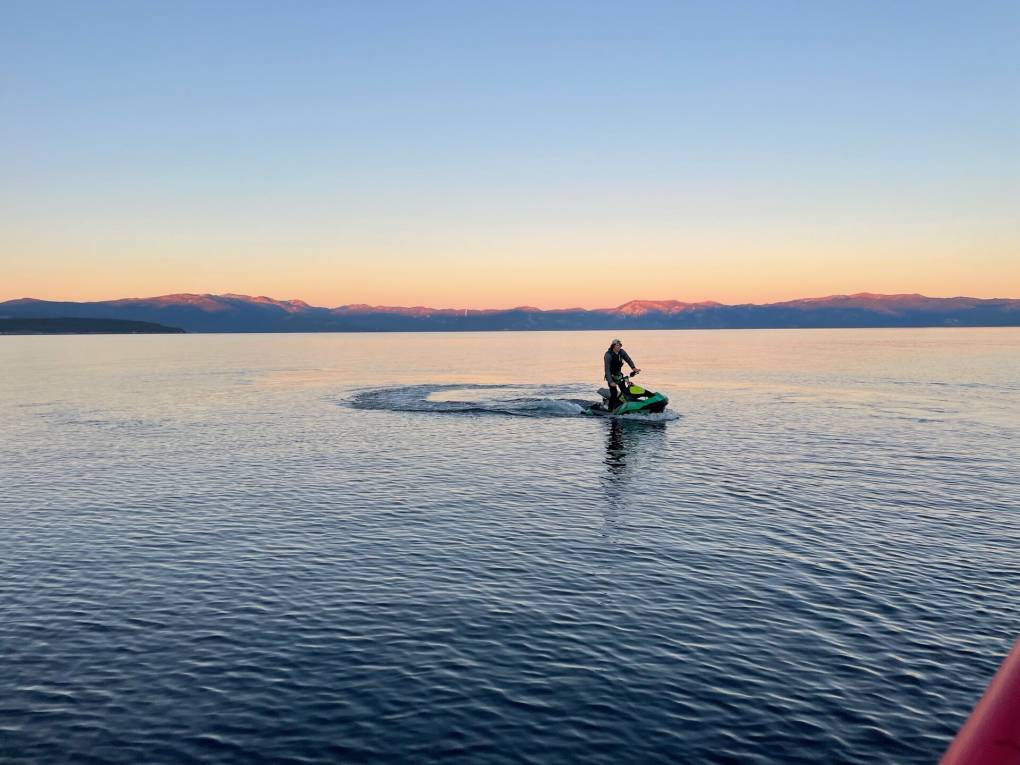
"caption": "Director of Operations and Lead Jet Skier Brad Flora taking a moment after a hard day's work cleaning up Lake Tahoe.",
"description": "Director of Operations and Lead Jet Skier Brad Flora taking a moment after a hard day's work cleaning up Lake Tahoe.",
"title": "Tahoe Trash",
"credit": "Clean Up The Lake via AP",
"status": "inherit",
"altTag": "A man on a jet ski swirls his craft around on the blue-black surface of Lake Tahoe at sunset. In the distance, sun lights the tops of dark blue mountains with pink and gold. A band of orange and yellow stretches across the horizon, under a pale blue sky.",
"isLoading": false,
"fetchFailed": false
},
"news_11900289": {
"type": "attachments",
"id": "news_11900289",
"meta": {
"index": "attachments_1716263798",
"site": "news",
"id": "11900289",
"found": true
},
"parent": 11900284,
"imgSizes": {
"twentyfourteen-full-width": {
"file": "https://ww2.kqed.org/app/uploads/sites/10/2021/12/HW89-1038x532.jpg",
"width": 1038,
"mimeType": "image/jpeg",
"height": 532
},
"thumbnail": {
"file": "https://ww2.kqed.org/app/uploads/sites/10/2021/12/HW89-160x81.jpg",
"width": 160,
"mimeType": "image/jpeg",
"height": 81
},
"post-thumbnail": {
"file": "https://ww2.kqed.org/app/uploads/sites/10/2021/12/HW89-672x372.jpg",
"width": 672,
"mimeType": "image/jpeg",
"height": 372
},
"kqedFullSize": {
"file": "https://ww2.kqed.org/app/uploads/sites/10/2021/12/HW89.jpg",
"width": 1045,
"height": 532
},
"large": {
"file": "https://ww2.kqed.org/app/uploads/sites/10/2021/12/HW89-1020x519.jpg",
"width": 1020,
"mimeType": "image/jpeg",
"height": 519
},
"medium": {
"file": "https://ww2.kqed.org/app/uploads/sites/10/2021/12/HW89-800x407.jpg",
"width": 800,
"mimeType": "image/jpeg",
"height": 407
}
},
"publishDate": 1640633268,
"modified": 1640899550,
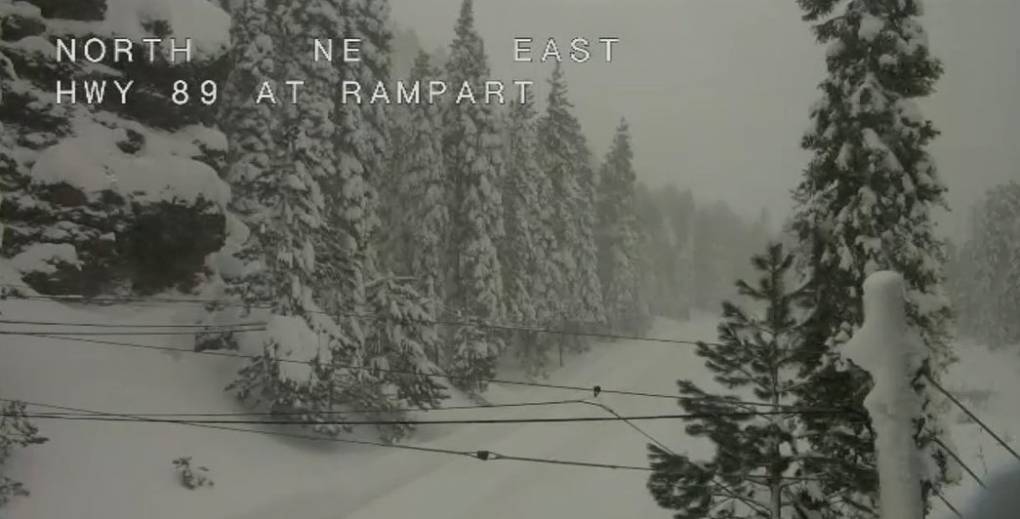
"caption": "State Route 89, shown here from the view of a traffic camera, was closed from Tahoe City to Olympic Valley due to an avalanche. It's one of many road closures throughout Northern California prompted by snow over the holiday weekend.",
"description": null,
"title": "HW89",
"credit": "Courtesy Caltrans",
"status": "inherit",
"altTag": "A look at State Route 89 from a webcam, showing it completely covered in snow, with snowy trees along it.",
"isLoading": false,
"fetchFailed": false
},
"news_11897468": {
"type": "attachments",
"id": "news_11897468",
"meta": {
"index": "attachments_1716263798",
"site": "news",
"id": "11897468",
"found": true
},
"parent": 11897459,
"imgSizes": {
"thumbnail": {
"file": "https://ww2.kqed.org/app/uploads/sites/10/2021/11/TahoeCenterBear-2-160x135.jpg",
"width": 160,
"mimeType": "image/jpeg",
"height": 135
},
"post-thumbnail": {
"file": "https://ww2.kqed.org/app/uploads/sites/10/2021/11/TahoeCenterBear-2-622x372.jpg",
"width": 622,
"mimeType": "image/jpeg",
"height": 372
},
"kqedFullSize": {
"file": "https://ww2.kqed.org/app/uploads/sites/10/2021/11/TahoeCenterBear-2.jpg",
"width": 622,
"height": 524
}
},
"publishDate": 1637961741,
"modified": 1638221043,
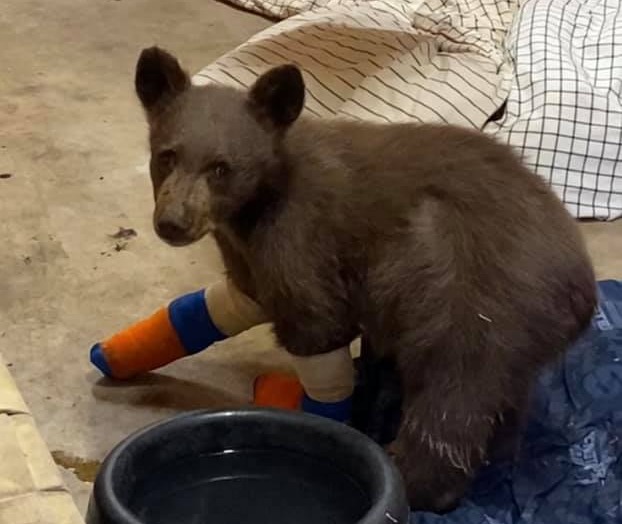
"caption": "A bear cub treated for burns who later escaped Lake Tahoe Wildlife Care.",
"description": null,
"title": "TahoeCenterBear (2)",
"credit": "Courtesy Lake Tahoe Wildlife Care",
"status": "inherit",
"altTag": "A brown-colored bear cub sits in a shelter, its front paws wrapped in bandages, in front of a bowl.",
"isLoading": false,
"fetchFailed": false
},
"news_11892011": {
"type": "attachments",
"id": "news_11892011",
"meta": {
"index": "attachments_1716263798",
"site": "news",
"id": "11892011",
"found": true
},
"parent": 11891996,
"imgSizes": {
"twentyfourteen-full-width": {
"file": "https://ww2.kqed.org/app/uploads/sites/10/2021/10/RS51297_063_Meyers_CaldorFire_08312021-qut-1038x576.jpg",
"width": 1038,
"mimeType": "image/jpeg",
"height": 576
},
"thumbnail": {
"file": "https://ww2.kqed.org/app/uploads/sites/10/2021/10/RS51297_063_Meyers_CaldorFire_08312021-qut-160x107.jpg",
"width": 160,
"mimeType": "image/jpeg",
"height": 107
},
"post-thumbnail": {
"file": "https://ww2.kqed.org/app/uploads/sites/10/2021/10/RS51297_063_Meyers_CaldorFire_08312021-qut-672x372.jpg",
"width": 672,
"mimeType": "image/jpeg",
"height": 372
},
"kqedFullSize": {
"file": "https://ww2.kqed.org/app/uploads/sites/10/2021/10/RS51297_063_Meyers_CaldorFire_08312021-qut.jpg",
"width": 1920,
"height": 1280
},
"large": {
"file": "https://ww2.kqed.org/app/uploads/sites/10/2021/10/RS51297_063_Meyers_CaldorFire_08312021-qut-1020x680.jpg",
"width": 1020,
"mimeType": "image/jpeg",
"height": 680
},
"1536x1536": {
"file": "https://ww2.kqed.org/app/uploads/sites/10/2021/10/RS51297_063_Meyers_CaldorFire_08312021-qut-1536x1024.jpg",
"width": 1536,
"mimeType": "image/jpeg",
"height": 1024
},
"medium": {
"file": "https://ww2.kqed.org/app/uploads/sites/10/2021/10/RS51297_063_Meyers_CaldorFire_08312021-qut-800x533.jpg",
"width": 800,
"mimeType": "image/jpeg",
"height": 533
}
},
"publishDate": 1634069464,
"modified": 1634076447,
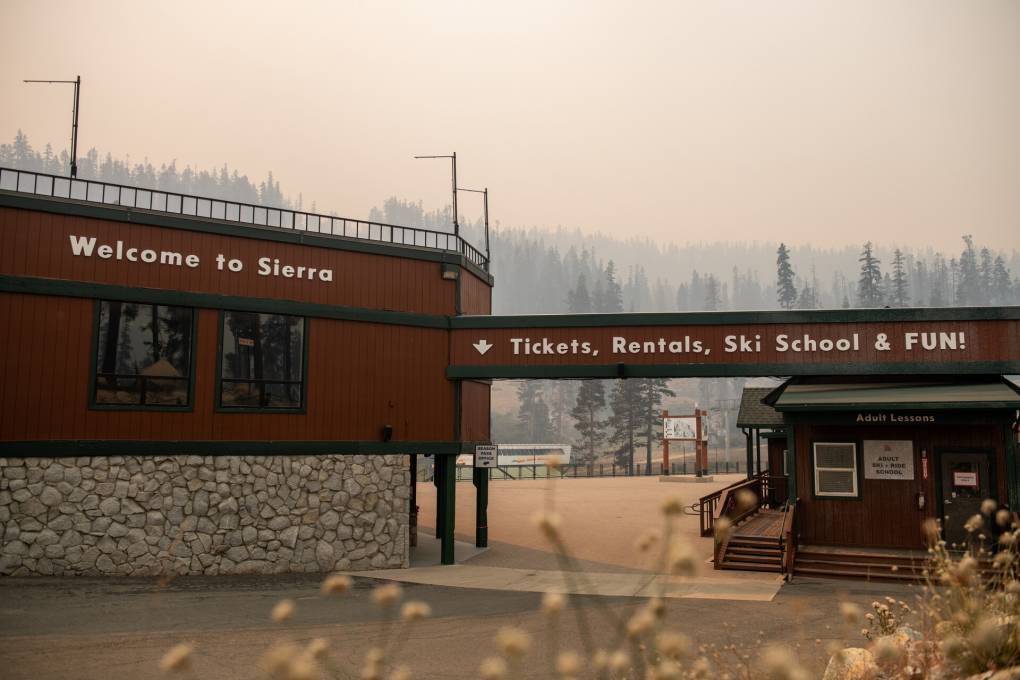
"caption": "The Sierra-at-Tahoe Resort on Aug. 31, 2021, a day after the Caldor Fire spread through the area. Tourism, which is about 63% of the Tahoe basin's economy, plummeted during the fire.",
"description": "The Sierra-at-Tahoe Resort on Tuesday, August 31, 2021, after the Caldor Fire spread through the area the day before.",
"title": "RS51297_063_Meyers_CaldorFire_08312021-qut",
"credit": "Beth LaBerge/KQED",
"status": "inherit",
"altTag": "The front gates of a resort stand in front of a mountainous landscape covered in orange and gray smoke.",
"isLoading": false,
"fetchFailed": false
},
"news_11887737": {
"type": "attachments",
"id": "news_11887737",
"meta": {
"index": "attachments_1716263798",
"site": "news",
"id": "11887737",
"found": true
},
"parent": 11887660,
"imgSizes": {
"twentyfourteen-full-width": {
"file": "https://ww2.kqed.org/app/uploads/sites/10/2021/09/RS51381_GettyImages-1234763721-qut-1038x576.jpg",
"width": 1038,
"mimeType": "image/jpeg",
"height": 576
},
"thumbnail": {
"file": "https://ww2.kqed.org/app/uploads/sites/10/2021/09/RS51381_GettyImages-1234763721-qut-160x107.jpg",
"width": 160,
"mimeType": "image/jpeg",
"height": 107
},
"post-thumbnail": {
"file": "https://ww2.kqed.org/app/uploads/sites/10/2021/09/RS51381_GettyImages-1234763721-qut-672x372.jpg",
"width": 672,
"mimeType": "image/jpeg",
"height": 372
},
"kqedFullSize": {
"file": "https://ww2.kqed.org/app/uploads/sites/10/2021/09/RS51381_GettyImages-1234763721-qut.jpg",
"width": 1920,
"height": 1280
},
"large": {
"file": "https://ww2.kqed.org/app/uploads/sites/10/2021/09/RS51381_GettyImages-1234763721-qut-1020x680.jpg",
"width": 1020,
"mimeType": "image/jpeg",
"height": 680
},
"1536x1536": {
"file": "https://ww2.kqed.org/app/uploads/sites/10/2021/09/RS51381_GettyImages-1234763721-qut-1536x1024.jpg",
"width": 1536,
"mimeType": "image/jpeg",
"height": 1024
},
"medium": {
"file": "https://ww2.kqed.org/app/uploads/sites/10/2021/09/RS51381_GettyImages-1234763721-qut-800x533.jpg",
"width": 800,
"mimeType": "image/jpeg",
"height": 533
}
},
"publishDate": 1631060052,
"modified": 1631062769,
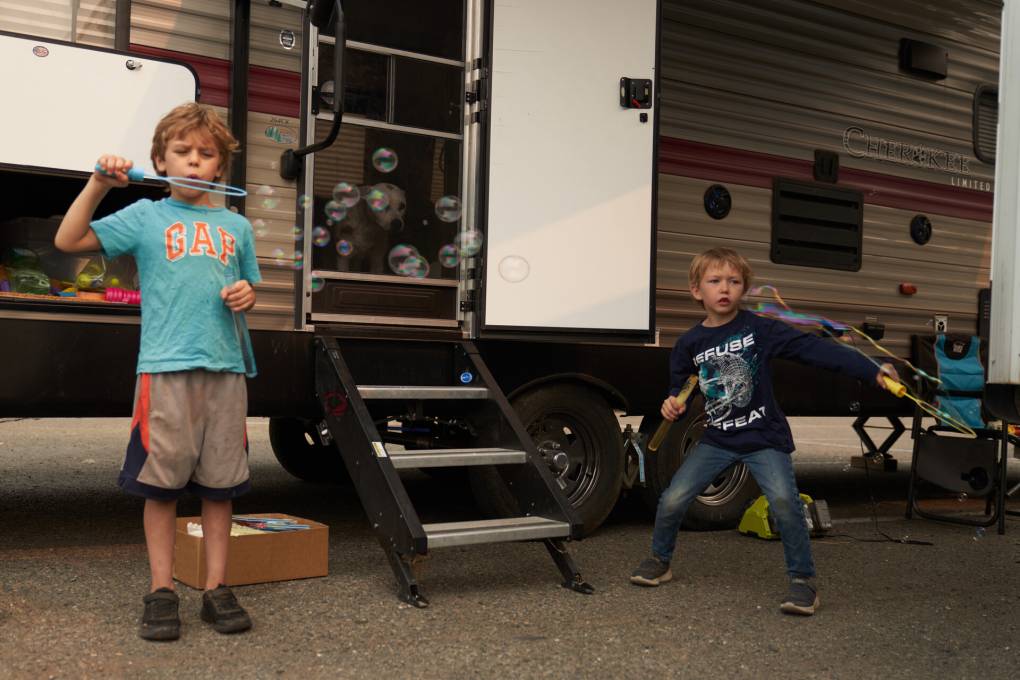
"caption": "Twins Matthew Muir and Myles Muir, age 7, play with bubbles outside their family's camper at the Green Valley Community Church evacuation center on Aug. 19, 2021, in Placerville. ",
"description": null,
"title": "south-lake-tahoe-evacuation-status",
"credit": "Allison Dinner/Getty Images",
"status": "inherit",
"altTag": "Two boys blow bubbles through long wands in front of the stairway to an RV",
"isLoading": false,
"fetchFailed": false
},
"news_11887140": {
"type": "attachments",
"id": "news_11887140",
"meta": {
"index": "attachments_1716263798",
"site": "news",
"id": "11887140",
"found": true
},
"parent": 11887060,
"imgSizes": {
"twentyfourteen-full-width": {
"file": "https://ww2.kqed.org/app/uploads/sites/10/2021/08/AP_LakeTahoesmoke_082721_01-1038x576.jpg",
"width": 1038,
"mimeType": "image/jpeg",
"height": 576
},
"thumbnail": {
"file": "https://ww2.kqed.org/app/uploads/sites/10/2021/08/AP_LakeTahoesmoke_082721_01-160x106.jpg",
"width": 160,
"mimeType": "image/jpeg",
"height": 106
},
"post-thumbnail": {
"file": "https://ww2.kqed.org/app/uploads/sites/10/2021/08/AP_LakeTahoesmoke_082721_01-672x372.jpg",
"width": 672,
"mimeType": "image/jpeg",
"height": 372
},
"kqedFullSize": {
"file": "https://ww2.kqed.org/app/uploads/sites/10/2021/08/AP_LakeTahoesmoke_082721_01.jpg",
"width": 1536,
"height": 1021
},
"large": {
"file": "https://ww2.kqed.org/app/uploads/sites/10/2021/08/AP_LakeTahoesmoke_082721_01-1020x678.jpg",
"width": 1020,
"mimeType": "image/jpeg",
"height": 678
},
"medium": {
"file": "https://ww2.kqed.org/app/uploads/sites/10/2021/08/AP_LakeTahoesmoke_082721_01-800x532.jpg",
"width": 800,
"mimeType": "image/jpeg",
"height": 532
}
},
"publishDate": 1630456710,
"modified": 1630456939,
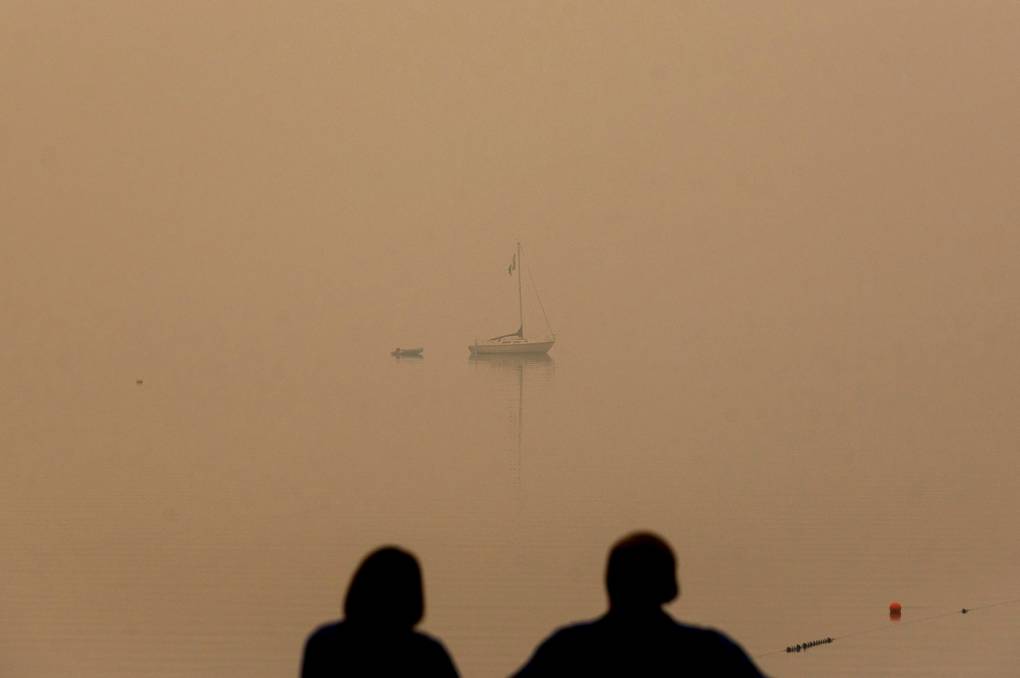
"caption": "Lake Tahoe is blanketed by smoke from the rapidly spreading Caldor Fire on Aug. 27, 2021. Pushed by strong winds, flames on the eastern side of Highway 89 have begun burning into the mountains on the other side of the valley, south of South Lake Tahoe.",
"description": "Lake Tahoe is blanketed by smoke from the rapidly spreading Caldor Fire on Aug. 27, 2021.",
"title": "AP_LakeTahoesmoke_082721_01",
"credit": "Noah Berger/AP Photo",
"status": "inherit",
"altTag": "A couple watches from the shore a distant boat on the lake, which has been completely blanketed by smoke.",
"isLoading": false,
"fetchFailed": false
},
"news_11882778": {
"type": "attachments",
"id": "news_11882778",
"meta": {
"index": "attachments_1716263798",
"site": "news",
"id": "11882778",
"found": true
},
"parent": 11882764,
"imgSizes": {
"twentyfourteen-full-width": {
"file": "https://ww2.kqed.org/app/uploads/sites/10/2021/07/E7ZuXYXUUAETbzK-1038x576.jpg",
"width": 1038,
"mimeType": "image/jpeg",
"height": 576
},
"thumbnail": {
"file": "https://ww2.kqed.org/app/uploads/sites/10/2021/07/E7ZuXYXUUAETbzK-160x107.jpg",
"width": 160,
"mimeType": "image/jpeg",
"height": 107
},
"post-thumbnail": {
"file": "https://ww2.kqed.org/app/uploads/sites/10/2021/07/E7ZuXYXUUAETbzK-672x372.jpg",
"width": 672,
"mimeType": "image/jpeg",
"height": 372
},
"kqedFullSize": {
"file": "https://ww2.kqed.org/app/uploads/sites/10/2021/07/E7ZuXYXUUAETbzK.jpg",
"width": 2048,
"height": 1365
},
"large": {
"file": "https://ww2.kqed.org/app/uploads/sites/10/2021/07/E7ZuXYXUUAETbzK-1020x680.jpg",
"width": 1020,
"mimeType": "image/jpeg",
"height": 680
},
"1536x1536": {
"file": "https://ww2.kqed.org/app/uploads/sites/10/2021/07/E7ZuXYXUUAETbzK-1536x1024.jpg",
"width": 1536,
"mimeType": "image/jpeg",
"height": 1024
},
"full-width": {
"file": "https://ww2.kqed.org/app/uploads/sites/10/2021/07/E7ZuXYXUUAETbzK-1920x1280.jpg",
"width": 1920,
"mimeType": "image/jpeg",
"height": 1280
},
"medium": {
"file": "https://ww2.kqed.org/app/uploads/sites/10/2021/07/E7ZuXYXUUAETbzK-800x533.jpg",
"width": 800,
"mimeType": "image/jpeg",
"height": 533
}
},
"publishDate": 1627498455,
"modified": 1627505301,
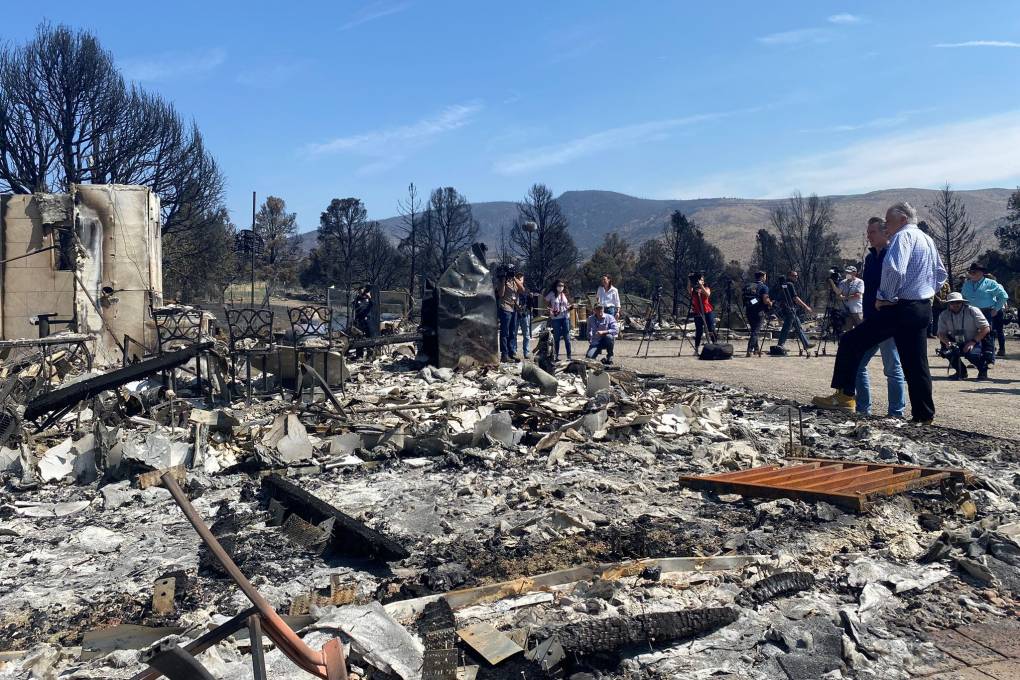
"caption": "California Gov. Gavin Newsom and Nevada Gov. Steve Sisolak tour some of the areas affected by the Tamarack Fire south of Lake Tahoe, near the California-Nevada border. Both governors stressed the role climate change has had in worsening fire season across the Western United States.",
"description": "California Governor Gavin Newsom and Nevada Governor Steve Sisolak tour some of the areas affected by the Tamarack Fire south of Lake Tahoe, near the California-Nevada border.",
"title": "E7ZuXYXUUAETbzK",
"credit": "Courtesy of the Office of Gov. Steve Sisolak",
"status": "inherit",
"altTag": "The image centers on the burnt remains of several homes. A fire has just passed by. To the right, two figures are visible observing the ruins. They are California Governor Gavin Newsom and Nevada Governor Steve Sisolak.",
"isLoading": false,
"fetchFailed": false
},
"news_11857834": {
"type": "attachments",
"id": "news_11857834",
"meta": {
"index": "attachments_1716263798",
"site": "news",
"id": "11857834",
"found": true
},
"parent": 11857670,
"imgSizes": {
"apple_news_ca_landscape_5_5": {
"file": "https://ww2.kqed.org/app/uploads/sites/10/2021/01/MARQUEE_815-1044x783.jpg",
"width": 1044,
"mimeType": "image/jpeg",
"height": 783
},
"apple_news_ca_square_4_0": {
"file": "https://ww2.kqed.org/app/uploads/sites/10/2021/01/MARQUEE_815-470x470.jpg",
"width": 470,
"mimeType": "image/jpeg",
"height": 470
},
"twentyfourteen-full-width": {
"file": "https://ww2.kqed.org/app/uploads/sites/10/2021/01/MARQUEE_815-1038x576.jpg",
"width": 1038,
"mimeType": "image/jpeg",
"height": 576
},
"thumbnail": {
"file": "https://ww2.kqed.org/app/uploads/sites/10/2021/01/MARQUEE_815-160x90.jpg",
"width": 160,
"mimeType": "image/jpeg",
"height": 90
},
"post-thumbnail": {
"file": "https://ww2.kqed.org/app/uploads/sites/10/2021/01/MARQUEE_815-672x372.jpg",
"width": 672,
"mimeType": "image/jpeg",
"height": 372
},
"kqedFullSize": {
"file": "https://ww2.kqed.org/app/uploads/sites/10/2021/01/MARQUEE_815.jpg",
"width": 1920,
"height": 1080
},
"apple_news_ca_landscape_4_7": {
"file": "https://ww2.kqed.org/app/uploads/sites/10/2021/01/MARQUEE_815-632x474.jpg",
"width": 632,
"mimeType": "image/jpeg",
"height": 474
},
"large": {
"file": "https://ww2.kqed.org/app/uploads/sites/10/2021/01/MARQUEE_815-1020x574.jpg",
"width": 1020,
"mimeType": "image/jpeg",
"height": 574
},
"apple_news_ca_landscape_4_0": {
"file": "https://ww2.kqed.org/app/uploads/sites/10/2021/01/MARQUEE_815-536x402.jpg",
"width": 536,
"mimeType": "image/jpeg",
"height": 402
},
"apple_news_ca_portrait_12_9": {
"file": "https://ww2.kqed.org/app/uploads/sites/10/2021/01/MARQUEE_815-1122x1080.jpg",
"width": 1122,
"mimeType": "image/jpeg",
"height": 1080
},
"medium": {
"file": "https://ww2.kqed.org/app/uploads/sites/10/2021/01/MARQUEE_815-800x450.jpg",
"width": 800,
"mimeType": "image/jpeg",
"height": 450
},
"apple_news_ca_portrait_4_0": {
"file": "https://ww2.kqed.org/app/uploads/sites/10/2021/01/MARQUEE_815-354x472.jpg",
"width": 354,
"mimeType": "image/jpeg",
"height": 472
},
"apple_news_ca_portrait_9_7": {
"file": "https://ww2.kqed.org/app/uploads/sites/10/2021/01/MARQUEE_815-840x1080.jpg",
"width": 840,
"mimeType": "image/jpeg",
"height": 1080
},
"apple_news_ca_landscape_12_9": {
"file": "https://ww2.kqed.org/app/uploads/sites/10/2021/01/MARQUEE_815-1832x1080.jpg",
"width": 1832,
"mimeType": "image/jpeg",
"height": 1080
},
"apple_news_ca_square_9_7": {
"file": "https://ww2.kqed.org/app/uploads/sites/10/2021/01/MARQUEE_815-1104x1080.jpg",
"width": 1104,
"mimeType": "image/jpeg",
"height": 1080
},
"1536x1536": {
"file": "https://ww2.kqed.org/app/uploads/sites/10/2021/01/MARQUEE_815-1536x864.jpg",
"width": 1536,
"mimeType": "image/jpeg",
"height": 864
},
"apple_news_ca_portrait_4_7": {
"file": "https://ww2.kqed.org/app/uploads/sites/10/2021/01/MARQUEE_815-414x552.jpg",
"width": 414,
"mimeType": "image/jpeg",
"height": 552
},
"apple_news_ca_square_12_9": {
"file": "https://ww2.kqed.org/app/uploads/sites/10/2021/01/MARQUEE_815-1472x1080.jpg",
"width": 1472,
"mimeType": "image/jpeg",
"height": 1080
},
"apple_news_ca_portrait_5_5": {
"file": "https://ww2.kqed.org/app/uploads/sites/10/2021/01/MARQUEE_815-687x916.jpg",
"width": 687,
"mimeType": "image/jpeg",
"height": 916
},
"apple_news_ca_square_4_7": {
"file": "https://ww2.kqed.org/app/uploads/sites/10/2021/01/MARQUEE_815-550x550.jpg",
"width": 550,
"mimeType": "image/jpeg",
"height": 550
},
"apple_news_ca_landscape_9_7": {
"file": "https://ww2.kqed.org/app/uploads/sites/10/2021/01/MARQUEE_815-1376x1032.jpg",
"width": 1376,
"mimeType": "image/jpeg",
"height": 1032
},
"apple_news_ca_square_5_5": {
"file": "https://ww2.kqed.org/app/uploads/sites/10/2021/01/MARQUEE_815-912x912.jpg",
"width": 912,
"mimeType": "image/jpeg",
"height": 912
}
},
"publishDate": 1611970476,
"modified": 1611974981,
"caption": "(Photo Courtesy: Tim Scales)",
"description": null,
"title": "MARQUEE_815",
"credit": null,
"status": "inherit",
"altTag": null,
"isLoading": false,
"fetchFailed": false
},
"news_11850896": {
"type": "attachments",
"id": "news_11850896",
"meta": {
"index": "attachments_1716263798",
"site": "news",
"id": "11850896",
"found": true
},
"parent": 11850772,
"imgSizes": {
"apple_news_ca_landscape_5_5": {
"file": "https://ww2.kqed.org/app/uploads/sites/10/2020/12/Heavenly-Riders-2010-1044x783.jpg",
"width": 1044,
"mimeType": "image/jpeg",
"height": 783
},
"apple_news_ca_square_4_0": {
"file": "https://ww2.kqed.org/app/uploads/sites/10/2020/12/Heavenly-Riders-2010-470x470.jpg",
"width": 470,
"mimeType": "image/jpeg",
"height": 470
},
"twentyfourteen-full-width": {
"file": "https://ww2.kqed.org/app/uploads/sites/10/2020/12/Heavenly-Riders-2010-1038x576.jpg",
"width": 1038,
"mimeType": "image/jpeg",
"height": 576
},
"thumbnail": {
"file": "https://ww2.kqed.org/app/uploads/sites/10/2020/12/Heavenly-Riders-2010-160x110.jpg",
"width": 160,
"mimeType": "image/jpeg",
"height": 110
},
"post-thumbnail": {
"file": "https://ww2.kqed.org/app/uploads/sites/10/2020/12/Heavenly-Riders-2010-672x372.jpg",
"width": 672,
"mimeType": "image/jpeg",
"height": 372
},
"kqedFullSize": {
"file": "https://ww2.kqed.org/app/uploads/sites/10/2020/12/Heavenly-Riders-2010.jpg",
"width": 1920,
"height": 1315
},
"apple_news_ca_landscape_4_7": {
"file": "https://ww2.kqed.org/app/uploads/sites/10/2020/12/Heavenly-Riders-2010-632x474.jpg",
"width": 632,
"mimeType": "image/jpeg",
"height": 474
},
"large": {
"file": "https://ww2.kqed.org/app/uploads/sites/10/2020/12/Heavenly-Riders-2010-1020x699.jpg",
"width": 1020,
"mimeType": "image/jpeg",
"height": 699
},
"apple_news_ca_landscape_4_0": {
"file": "https://ww2.kqed.org/app/uploads/sites/10/2020/12/Heavenly-Riders-2010-536x402.jpg",
"width": 536,
"mimeType": "image/jpeg",
"height": 402
},
"apple_news_ca_portrait_12_9": {
"file": "https://ww2.kqed.org/app/uploads/sites/10/2020/12/Heavenly-Riders-2010-1122x1315.jpg",
"width": 1122,
"mimeType": "image/jpeg",
"height": 1315
},
"medium": {
"file": "https://ww2.kqed.org/app/uploads/sites/10/2020/12/Heavenly-Riders-2010-800x548.jpg",
"width": 800,
"mimeType": "image/jpeg",
"height": 548
},
"apple_news_ca_portrait_4_0": {
"file": "https://ww2.kqed.org/app/uploads/sites/10/2020/12/Heavenly-Riders-2010-354x472.jpg",
"width": 354,
"mimeType": "image/jpeg",
"height": 472
},
"apple_news_ca_portrait_9_7": {
"file": "https://ww2.kqed.org/app/uploads/sites/10/2020/12/Heavenly-Riders-2010-840x1120.jpg",
"width": 840,
"mimeType": "image/jpeg",
"height": 1120
},
"apple_news_ca_landscape_12_9": {
"file": "https://ww2.kqed.org/app/uploads/sites/10/2020/12/Heavenly-Riders-2010-1832x1315.jpg",
"width": 1832,
"mimeType": "image/jpeg",
"height": 1315
},
"apple_news_ca_square_9_7": {
"file": "https://ww2.kqed.org/app/uploads/sites/10/2020/12/Heavenly-Riders-2010-1104x1104.jpg",
"width": 1104,
"mimeType": "image/jpeg",
"height": 1104
},
"1536x1536": {
"file": "https://ww2.kqed.org/app/uploads/sites/10/2020/12/Heavenly-Riders-2010-1536x1052.jpg",
"width": 1536,
"mimeType": "image/jpeg",
"height": 1052
},
"apple_news_ca_portrait_4_7": {
"file": "https://ww2.kqed.org/app/uploads/sites/10/2020/12/Heavenly-Riders-2010-414x552.jpg",
"width": 414,
"mimeType": "image/jpeg",
"height": 552
},
"apple_news_ca_square_12_9": {
"file": "https://ww2.kqed.org/app/uploads/sites/10/2020/12/Heavenly-Riders-2010-1472x1315.jpg",
"width": 1472,
"mimeType": "image/jpeg",
"height": 1315
},
"apple_news_ca_portrait_5_5": {
"file": "https://ww2.kqed.org/app/uploads/sites/10/2020/12/Heavenly-Riders-2010-687x916.jpg",
"width": 687,
"mimeType": "image/jpeg",
"height": 916
},
"apple_news_ca_square_4_7": {
"file": "https://ww2.kqed.org/app/uploads/sites/10/2020/12/Heavenly-Riders-2010-550x550.jpg",
"width": 550,
"mimeType": "image/jpeg",
"height": 550
},
"apple_news_ca_landscape_9_7": {
"file": "https://ww2.kqed.org/app/uploads/sites/10/2020/12/Heavenly-Riders-2010-1376x1032.jpg",
"width": 1376,
"mimeType": "image/jpeg",
"height": 1032
},
"apple_news_ca_square_5_5": {
"file": "https://ww2.kqed.org/app/uploads/sites/10/2020/12/Heavenly-Riders-2010-912x912.jpg",
"width": 912,
"mimeType": "image/jpeg",
"height": 912
}
},
"publishDate": 1607734540,
"modified": 1607734648,
"caption": "Snowboarders at South Lake Tahoe's Heavenly Resort, pictured in 2010.",
"description": "Snowboarders at South Lake Tahoe's Heavenly Resort, pictured in 2010.",
"title": "Heavenly-Riders-2010",
"credit": "\u003ca href=\"https://www.flickr.com/photos/asad7874/\">Mirza Asad Baig\u003c/a>/Flickr",
"status": "inherit",
"altTag": "Snowboarders at South Lake Tahoe's Heavenly Resort",
"isLoading": false,
"fetchFailed": false
},
"news_11844081": {
"type": "attachments",
"id": "news_11844081",
"meta": {
"index": "attachments_1716263798",
"site": "news",
"id": "11844081",
"found": true
},
"parent": 11844011,
"imgSizes": {
"apple_news_ca_landscape_5_5": {
"file": "https://ww2.kqed.org/app/uploads/sites/10/2020/10/1-4-1044x783.png",
"width": 1044,
"mimeType": "image/png",
"height": 783
},
"apple_news_ca_square_4_0": {
"file": "https://ww2.kqed.org/app/uploads/sites/10/2020/10/1-4-470x470.png",
"width": 470,
"mimeType": "image/png",
"height": 470
},
"twentyfourteen-full-width": {
"file": "https://ww2.kqed.org/app/uploads/sites/10/2020/10/1-4-1038x576.png",
"width": 1038,
"mimeType": "image/png",
"height": 576
},
"thumbnail": {
"file": "https://ww2.kqed.org/app/uploads/sites/10/2020/10/1-4-160x107.png",
"width": 160,
"mimeType": "image/png",
"height": 107
},
"post-thumbnail": {
"file": "https://ww2.kqed.org/app/uploads/sites/10/2020/10/1-4-672x372.png",
"width": 672,
"mimeType": "image/png",
"height": 372
},
"kqedFullSize": {
"file": "https://ww2.kqed.org/app/uploads/sites/10/2020/10/1-4.png",
"width": 1920,
"height": 1280
},
"apple_news_ca_landscape_4_7": {
"file": "https://ww2.kqed.org/app/uploads/sites/10/2020/10/1-4-632x474.png",
"width": 632,
"mimeType": "image/png",
"height": 474
},
"large": {
"file": "https://ww2.kqed.org/app/uploads/sites/10/2020/10/1-4-1020x680.png",
"width": 1020,
"mimeType": "image/png",
"height": 680
},
"apple_news_ca_landscape_4_0": {
"file": "https://ww2.kqed.org/app/uploads/sites/10/2020/10/1-4-536x402.png",
"width": 536,
"mimeType": "image/png",
"height": 402
},
"apple_news_ca_portrait_12_9": {
"file": "https://ww2.kqed.org/app/uploads/sites/10/2020/10/1-4-1122x1280.png",
"width": 1122,
"mimeType": "image/png",
"height": 1280
},
"medium": {
"file": "https://ww2.kqed.org/app/uploads/sites/10/2020/10/1-4-800x533.png",
"width": 800,
"mimeType": "image/png",
"height": 533
},
"apple_news_ca_portrait_4_0": {
"file": "https://ww2.kqed.org/app/uploads/sites/10/2020/10/1-4-354x472.png",
"width": 354,
"mimeType": "image/png",
"height": 472
},
"apple_news_ca_portrait_9_7": {
"file": "https://ww2.kqed.org/app/uploads/sites/10/2020/10/1-4-840x1120.png",
"width": 840,
"mimeType": "image/png",
"height": 1120
},
"apple_news_ca_landscape_12_9": {
"file": "https://ww2.kqed.org/app/uploads/sites/10/2020/10/1-4-1832x1280.png",
"width": 1832,
"mimeType": "image/png",
"height": 1280
},
"apple_news_ca_square_9_7": {
"file": "https://ww2.kqed.org/app/uploads/sites/10/2020/10/1-4-1104x1104.png",
"width": 1104,
"mimeType": "image/png",
"height": 1104
},
"1536x1536": {
"file": "https://ww2.kqed.org/app/uploads/sites/10/2020/10/1-4-1536x1024.png",
"width": 1536,
"mimeType": "image/png",
"height": 1024
},
"apple_news_ca_portrait_4_7": {
"file": "https://ww2.kqed.org/app/uploads/sites/10/2020/10/1-4-414x552.png",
"width": 414,
"mimeType": "image/png",
"height": 552
},
"apple_news_ca_square_12_9": {
"file": "https://ww2.kqed.org/app/uploads/sites/10/2020/10/1-4-1472x1280.png",
"width": 1472,
"mimeType": "image/png",
"height": 1280
},
"apple_news_ca_portrait_5_5": {
"file": "https://ww2.kqed.org/app/uploads/sites/10/2020/10/1-4-687x916.png",
"width": 687,
"mimeType": "image/png",
"height": 916
},
"apple_news_ca_square_4_7": {
"file": "https://ww2.kqed.org/app/uploads/sites/10/2020/10/1-4-550x550.png",
"width": 550,
"mimeType": "image/png",
"height": 550
},
"apple_news_ca_landscape_9_7": {
"file": "https://ww2.kqed.org/app/uploads/sites/10/2020/10/1-4-1376x1032.png",
"width": 1376,
"mimeType": "image/png",
"height": 1032
},
"apple_news_ca_square_5_5": {
"file": "https://ww2.kqed.org/app/uploads/sites/10/2020/10/1-4-912x912.png",
"width": 912,
"mimeType": "image/png",
"height": 912
}
},
"publishDate": 1603863976,
"modified": 1603864020,
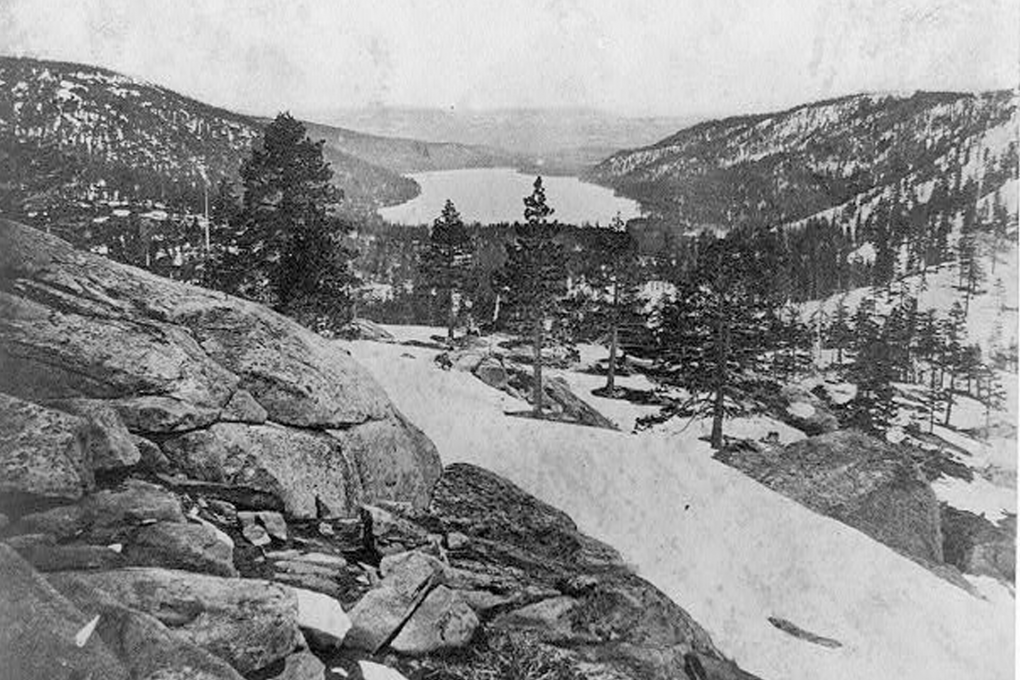
"caption": "Donner Lake from the summit, photographed in 1866 Lawrence & Houseworth",
"description": null,
"title": "1-4",
"credit": "Library of Congress",
"status": "inherit",
"isLoading": false,
"fetchFailed": false
},
"news_11796754": {
"type": "attachments",
"id": "news_11796754",
"meta": {
"index": "attachments_1716263798",
"site": "news",
"id": "11796754",
"found": true
},
"parent": 11796675,
"imgSizes": {
"apple_news_ca_landscape_5_5": {
"file": "https://ww2.kqed.org/app/uploads/sites/10/2020/01/Alpine-Meadows-Avalanche-1044x783.jpg",
"width": 1044,
"mimeType": "image/jpeg",
"height": 783
},
"apple_news_ca_square_4_0": {
"file": "https://ww2.kqed.org/app/uploads/sites/10/2020/01/Alpine-Meadows-Avalanche-470x470.jpg",
"width": 470,
"mimeType": "image/jpeg",
"height": 470
},
"twentyfourteen-full-width": {
"file": "https://ww2.kqed.org/app/uploads/sites/10/2020/01/Alpine-Meadows-Avalanche-1038x576.jpg",
"width": 1038,
"mimeType": "image/jpeg",
"height": 576
},
"thumbnail": {
"file": "https://ww2.kqed.org/app/uploads/sites/10/2020/01/Alpine-Meadows-Avalanche-160x89.jpg",
"width": 160,
"mimeType": "image/jpeg",
"height": 89
},
"post-thumbnail": {
"file": "https://ww2.kqed.org/app/uploads/sites/10/2020/01/Alpine-Meadows-Avalanche-672x372.jpg",
"width": 672,
"mimeType": "image/jpeg",
"height": 372
},
"kqedFullSize": {
"file": "https://ww2.kqed.org/app/uploads/sites/10/2020/01/Alpine-Meadows-Avalanche.jpg",
"width": 1920,
"height": 1066
},
"apple_news_ca_landscape_4_7": {
"file": "https://ww2.kqed.org/app/uploads/sites/10/2020/01/Alpine-Meadows-Avalanche-632x474.jpg",
"width": 632,
"mimeType": "image/jpeg",
"height": 474
},
"large": {
"file": "https://ww2.kqed.org/app/uploads/sites/10/2020/01/Alpine-Meadows-Avalanche-1020x566.jpg",
"width": 1020,
"mimeType": "image/jpeg",
"height": 566
},
"apple_news_ca_landscape_4_0": {
"file": "https://ww2.kqed.org/app/uploads/sites/10/2020/01/Alpine-Meadows-Avalanche-536x402.jpg",
"width": 536,
"mimeType": "image/jpeg",
"height": 402
},
"apple_news_ca_portrait_12_9": {
"file": "https://ww2.kqed.org/app/uploads/sites/10/2020/01/Alpine-Meadows-Avalanche-1122x1066.jpg",
"width": 1122,
"mimeType": "image/jpeg",
"height": 1066
},
"medium": {
"file": "https://ww2.kqed.org/app/uploads/sites/10/2020/01/Alpine-Meadows-Avalanche-800x444.jpg",
"width": 800,
"mimeType": "image/jpeg",
"height": 444
},
"apple_news_ca_portrait_4_0": {
"file": "https://ww2.kqed.org/app/uploads/sites/10/2020/01/Alpine-Meadows-Avalanche-354x472.jpg",
"width": 354,
"mimeType": "image/jpeg",
"height": 472
},
"apple_news_ca_portrait_9_7": {
"file": "https://ww2.kqed.org/app/uploads/sites/10/2020/01/Alpine-Meadows-Avalanche-840x1066.jpg",
"width": 840,
"mimeType": "image/jpeg",
"height": 1066
},
"apple_news_ca_landscape_12_9": {
"file": "https://ww2.kqed.org/app/uploads/sites/10/2020/01/Alpine-Meadows-Avalanche-1832x1066.jpg",
"width": 1832,
"mimeType": "image/jpeg",
"height": 1066
},
"apple_news_ca_square_9_7": {
"file": "https://ww2.kqed.org/app/uploads/sites/10/2020/01/Alpine-Meadows-Avalanche-1104x1066.jpg",
"width": 1104,
"mimeType": "image/jpeg",
"height": 1066
},
"apple_news_ca_portrait_4_7": {
"file": "https://ww2.kqed.org/app/uploads/sites/10/2020/01/Alpine-Meadows-Avalanche-414x552.jpg",
"width": 414,
"mimeType": "image/jpeg",
"height": 552
},
"apple_news_ca_square_12_9": {
"file": "https://ww2.kqed.org/app/uploads/sites/10/2020/01/Alpine-Meadows-Avalanche-1472x1066.jpg",
"width": 1472,
"mimeType": "image/jpeg",
"height": 1066
},
"apple_news_ca_portrait_5_5": {
"file": "https://ww2.kqed.org/app/uploads/sites/10/2020/01/Alpine-Meadows-Avalanche-687x916.jpg",
"width": 687,
"mimeType": "image/jpeg",
"height": 916
},
"full-width": {
"file": "https://ww2.kqed.org/app/uploads/sites/10/2020/01/Alpine-Meadows-Avalanche-1920x1066.jpg",
"width": 1920,
"mimeType": "image/jpeg",
"height": 1066
},
"apple_news_ca_square_4_7": {
"file": "https://ww2.kqed.org/app/uploads/sites/10/2020/01/Alpine-Meadows-Avalanche-550x550.jpg",
"width": 550,
"mimeType": "image/jpeg",
"height": 550
},
"apple_news_ca_landscape_9_7": {
"file": "https://ww2.kqed.org/app/uploads/sites/10/2020/01/Alpine-Meadows-Avalanche-1376x1032.jpg",
"width": 1376,
"mimeType": "image/jpeg",
"height": 1032
},
"apple_news_ca_square_5_5": {
"file": "https://ww2.kqed.org/app/uploads/sites/10/2020/01/Alpine-Meadows-Avalanche-912x912.jpg",
"width": 912,
"mimeType": "image/jpeg",
"height": 912
}
},
"publishDate": 1579299886,
"modified": 1579306539,
"caption": "Placer County Sheriff's Office vehicles sit outside Alpine Meadows ski resort, the site of a fatal avalanche on Friday. ",
"description": "Placer County Sheriff's vehicles site outside Alpine Meadows Ski Resort, the site of a fatal avalanche on Friday. ",
"title": "Alpine-Meadows-Avalanche",
"credit": "Placer County Sheriff's Office/Twitter",
"status": "inherit",
"isLoading": false,
"fetchFailed": false
},
"news_11796022": {
"type": "attachments",
"id": "news_11796022",
"meta": {
"index": "attachments_1716263798",
"site": "news",
"id": "11796022",
"found": true
},
"parent": 11795991,
"imgSizes": {
"apple_news_ca_landscape_5_5": {
"file": "https://ww2.kqed.org/app/uploads/sites/10/2020/01/01142020_Eric-Sonstroem_San-Francisco_rain_01212017-qut-1044x783.jpg",
"width": 1044,
"mimeType": "image/jpeg",
"height": 783
},
"apple_news_ca_square_4_0": {
"file": "https://ww2.kqed.org/app/uploads/sites/10/2020/01/01142020_Eric-Sonstroem_San-Francisco_rain_01212017-qut-470x470.jpg",
"width": 470,
"mimeType": "image/jpeg",
"height": 470
},
"twentyfourteen-full-width": {
"file": "https://ww2.kqed.org/app/uploads/sites/10/2020/01/01142020_Eric-Sonstroem_San-Francisco_rain_01212017-qut-1038x576.jpg",
"width": 1038,
"mimeType": "image/jpeg",
"height": 576
},
"thumbnail": {
"file": "https://ww2.kqed.org/app/uploads/sites/10/2020/01/01142020_Eric-Sonstroem_San-Francisco_rain_01212017-qut-160x108.jpg",
"width": 160,
"mimeType": "image/jpeg",
"height": 108
},
"post-thumbnail": {
"file": "https://ww2.kqed.org/app/uploads/sites/10/2020/01/01142020_Eric-Sonstroem_San-Francisco_rain_01212017-qut-672x372.jpg",
"width": 672,
"mimeType": "image/jpeg",
"height": 372
},
"kqedFullSize": {
"file": "https://ww2.kqed.org/app/uploads/sites/10/2020/01/01142020_Eric-Sonstroem_San-Francisco_rain_01212017-qut.jpg",
"width": 1920,
"height": 1297
},
"apple_news_ca_landscape_4_7": {
"file": "https://ww2.kqed.org/app/uploads/sites/10/2020/01/01142020_Eric-Sonstroem_San-Francisco_rain_01212017-qut-632x474.jpg",
"width": 632,
"mimeType": "image/jpeg",
"height": 474
},
"large": {
"file": "https://ww2.kqed.org/app/uploads/sites/10/2020/01/01142020_Eric-Sonstroem_San-Francisco_rain_01212017-qut-1020x689.jpg",
"width": 1020,
"mimeType": "image/jpeg",
"height": 689
},
"complete_open_graph": {
"file": "https://ww2.kqed.org/app/uploads/sites/10/2020/01/01142020_Eric-Sonstroem_San-Francisco_rain_01212017-qut-1200x811.jpg",
"width": 1200,
"mimeType": "image/jpeg",
"height": 811
},
"apple_news_ca_landscape_4_0": {
"file": "https://ww2.kqed.org/app/uploads/sites/10/2020/01/01142020_Eric-Sonstroem_San-Francisco_rain_01212017-qut-536x402.jpg",
"width": 536,
"mimeType": "image/jpeg",
"height": 402
},
"apple_news_ca_portrait_12_9": {
"file": "https://ww2.kqed.org/app/uploads/sites/10/2020/01/01142020_Eric-Sonstroem_San-Francisco_rain_01212017-qut-1122x1297.jpg",
"width": 1122,
"mimeType": "image/jpeg",
"height": 1297
},
"medium": {
"file": "https://ww2.kqed.org/app/uploads/sites/10/2020/01/01142020_Eric-Sonstroem_San-Francisco_rain_01212017-qut-800x540.jpg",
"width": 800,
"mimeType": "image/jpeg",
"height": 540
},
"apple_news_ca_portrait_4_0": {
"file": "https://ww2.kqed.org/app/uploads/sites/10/2020/01/01142020_Eric-Sonstroem_San-Francisco_rain_01212017-qut-354x472.jpg",
"width": 354,
"mimeType": "image/jpeg",
"height": 472
},
"apple_news_ca_portrait_9_7": {
"file": "https://ww2.kqed.org/app/uploads/sites/10/2020/01/01142020_Eric-Sonstroem_San-Francisco_rain_01212017-qut-840x1120.jpg",
"width": 840,
"mimeType": "image/jpeg",
"height": 1120
},
"apple_news_ca_landscape_12_9": {
"file": "https://ww2.kqed.org/app/uploads/sites/10/2020/01/01142020_Eric-Sonstroem_San-Francisco_rain_01212017-qut-1832x1297.jpg",
"width": 1832,
"mimeType": "image/jpeg",
"height": 1297
},
"apple_news_ca_square_9_7": {
"file": "https://ww2.kqed.org/app/uploads/sites/10/2020/01/01142020_Eric-Sonstroem_San-Francisco_rain_01212017-qut-1104x1104.jpg",
"width": 1104,
"mimeType": "image/jpeg",
"height": 1104
},
"apple_news_ca_portrait_4_7": {
"file": "https://ww2.kqed.org/app/uploads/sites/10/2020/01/01142020_Eric-Sonstroem_San-Francisco_rain_01212017-qut-414x552.jpg",
"width": 414,
"mimeType": "image/jpeg",
"height": 552
},
"apple_news_ca_square_12_9": {
"file": "https://ww2.kqed.org/app/uploads/sites/10/2020/01/01142020_Eric-Sonstroem_San-Francisco_rain_01212017-qut-1472x1297.jpg",
"width": 1472,
"mimeType": "image/jpeg",
"height": 1297
},
"apple_news_ca_portrait_5_5": {
"file": "https://ww2.kqed.org/app/uploads/sites/10/2020/01/01142020_Eric-Sonstroem_San-Francisco_rain_01212017-qut-687x916.jpg",
"width": 687,
"mimeType": "image/jpeg",
"height": 916
},
"full-width": {
"file": "https://ww2.kqed.org/app/uploads/sites/10/2020/01/01142020_Eric-Sonstroem_San-Francisco_rain_01212017-qut-1920x1297.jpg",
"width": 1920,
"mimeType": "image/jpeg",
"height": 1297
},
"apple_news_ca_square_4_7": {
"file": "https://ww2.kqed.org/app/uploads/sites/10/2020/01/01142020_Eric-Sonstroem_San-Francisco_rain_01212017-qut-550x550.jpg",
"width": 550,
"mimeType": "image/jpeg",
"height": 550
},
"apple_news_ca_landscape_9_7": {
"file": "https://ww2.kqed.org/app/uploads/sites/10/2020/01/01142020_Eric-Sonstroem_San-Francisco_rain_01212017-qut-1376x1032.jpg",
"width": 1376,
"mimeType": "image/jpeg",
"height": 1032
},
"apple_news_ca_square_5_5": {
"file": "https://ww2.kqed.org/app/uploads/sites/10/2020/01/01142020_Eric-Sonstroem_San-Francisco_rain_01212017-qut-912x912.jpg",
"width": 912,
"mimeType": "image/jpeg",
"height": 912
}
},
"publishDate": 1579038947,
"modified": 1579038997,
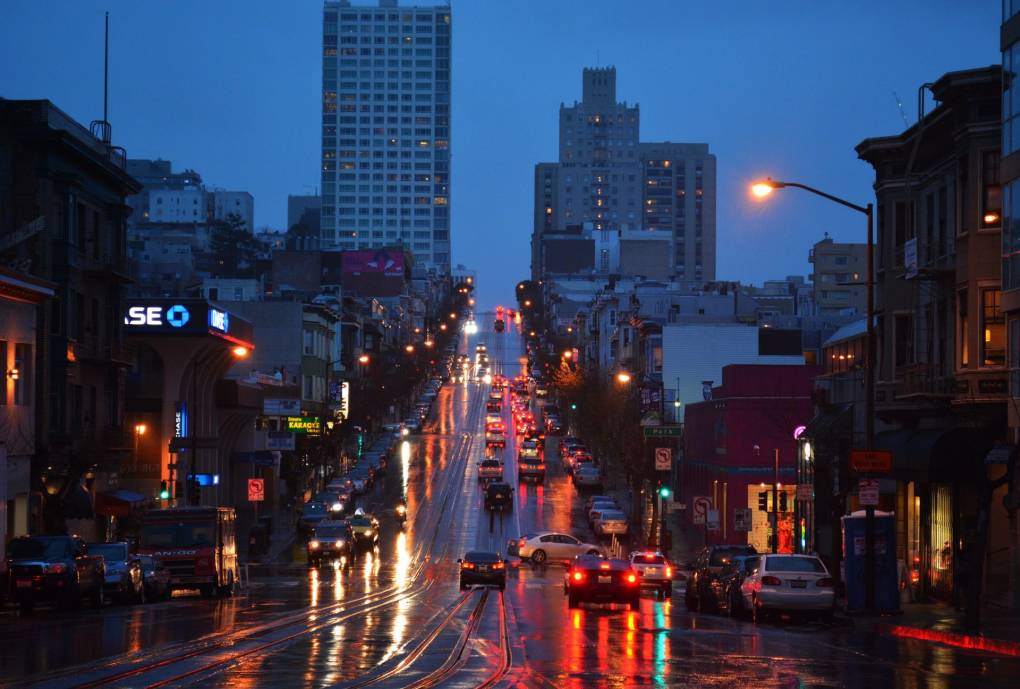
"caption": "Rainy night in San Francisco. Jan. 21, 2017.",
"description": "Rainy night in San Francisco. Jan. 21, 2017.",
"title": "01142020_Eric Sonstroem_San Francisco_rain_01212017-qut",
"credit": "Eric Sonstroem/Flickr",
"status": "inherit",
"isLoading": false,
"fetchFailed": false
}
},
"audioPlayerReducer": {
"postId": "stream_live",
"isPaused": true,
"isPlaying": false,
"pfsActive": false,
"pledgeModalIsOpen": true,
"playerDrawerIsOpen": false,
"liveAudioPlayStartedAt": 0,
"liveAudioPlayContext": ""
},
"authorsReducer": {
"byline_news_11914573": {
"type": "authors",
"id": "byline_news_11914573",
"meta": {
"override": true
},
"slug": "byline_news_11914573",
"name": "Scott Sonner, Associated Press",
"isLoading": false
},
"byline_news_11897459": {
"type": "authors",
"id": "byline_news_11897459",
"meta": {
"override": true
},
"slug": "byline_news_11897459",
"name": "Scott Sonner",
"isLoading": false
},
"byline_news_11891996": {
"type": "authors",
"id": "byline_news_11891996",
"meta": {
"override": true
},
"slug": "byline_news_11891996",
"name": "\u003ca href=\"https://calmatters.org/author/grace-gedye/\">Grace Gedye\u003c/a>",
"isLoading": false
},
"byline_news_11887060": {
"type": "authors",
"id": "byline_news_11887060",
"meta": {
"override": true
},
"slug": "byline_news_11887060",
"name": "\u003ca href=\"https://calmatters.org/author/rachel-becker/\">Rachel Becker\u003c/a>",
"isLoading": false
},
"byline_news_11882764": {
"type": "authors",
"id": "byline_news_11882764",
"meta": {
"override": true
},
"slug": "byline_news_11882764",
"name": "The Associated Press",
"isLoading": false
},
"kqed": {
"type": "authors",
"id": "236",
"meta": {
"index": "authors_1716337520",
"id": "236",
"found": true
},
"name": "KQED News Staff",
"firstName": "KQED News Staff",
"lastName": null,
"slug": "kqed",
"email": "faq@kqed.org",
"display_author_email": false,
"staff_mastheads": [],
"title": null,
"bio": null,
"avatar": "https://secure.gravatar.com/avatar/ef0e801a68c4c54afa9180db14084167?s=600&d=blank&r=g",
"twitter": null,
"facebook": null,
"instagram": null,
"linkedin": null,
"sites": [
{
"site": "arts",
"roles": [
"contributor"
]
},
{
"site": "news",
"roles": [
"editor"
]
},
{
"site": "futureofyou",
"roles": [
"author"
]
}
],
"headData": {
"title": "KQED News Staff | KQED",
"description": null,
"ogImgSrc": "https://secure.gravatar.com/avatar/ef0e801a68c4c54afa9180db14084167?s=600&d=blank&r=g",
"twImgSrc": "https://secure.gravatar.com/avatar/ef0e801a68c4c54afa9180db14084167?s=600&d=blank&r=g"
},
"isLoading": false,
"link": "/author/kqed"
},
"kqednewsstaffandwires": {
"type": "authors",
"id": "237",
"meta": {
"index": "authors_1716337520",
"id": "237",
"found": true
},
"name": "KQED News Staff and Wires",
"firstName": "KQED News Staff and Wires",
"lastName": null,
"slug": "kqednewsstaffandwires",
"email": "onlinenewsstaff@kqed.org",
"display_author_email": false,
"staff_mastheads": [],
"title": null,
"bio": null,
"avatar": "https://secure.gravatar.com/avatar/72295af8ebbfbd19a4948f5271285664?s=600&d=blank&r=g",
"twitter": null,
"facebook": null,
"instagram": null,
"linkedin": null,
"sites": [
{
"site": "arts",
"roles": [
"contributor"
]
},
{
"site": "news",
"roles": [
"contributor"
]
},
{
"site": "lowdown",
"roles": [
"author"
]
},
{
"site": "stateofhealth",
"roles": [
"contributor"
]
},
{
"site": "food",
"roles": [
"author"
]
}
],
"headData": {
"title": "KQED News Staff and Wires | KQED",
"description": null,
"ogImgSrc": "https://secure.gravatar.com/avatar/72295af8ebbfbd19a4948f5271285664?s=600&d=blank&r=g",
"twImgSrc": "https://secure.gravatar.com/avatar/72295af8ebbfbd19a4948f5271285664?s=600&d=blank&r=g"
},
"isLoading": false,
"link": "/author/kqednewsstaffandwires"
},
"mlam": {
"type": "authors",
"id": "244",
"meta": {
"index": "authors_1716337520",
"id": "244",
"found": true
},
"name": "Monica Lam",
"firstName": "Monica Z.",
"lastName": "Lam",
"slug": "mlam",
"email": "mlam@kqed.org",
"display_author_email": true,
"staff_mastheads": [
"news"
],
"title": "KQED Senior Producer",
"bio": "Monica is senior producer of the weekly current affairs program, \"KQED Newsroom.\" She's also served as senior editor of digital content at KQED. She likes to report and edit as well as produce video and take photos.\r\n\r\nBefore joining KQED, Monica worked at the Center for Investigative Reporting, where she examined conditions inside \u003cspan style=\"font-weight: 400;\">maximum security \u003c/span>prisons and abuse in state-run institutions for the developmentally disabled. Prior to that, she produced and directed \u003cem>Journey of the Bonesetter's Daughter,\u003c/em> a documentary that follows novelist Amy Tan as she creates an opera based on her family history.\r\n\r\nMonica's work has been honored with a duPont Award, five Emmys, regional and national Murrow Awards, and has been recognized by Investigative Reporters and Editors, the Society of Professional Journalists, Religion Newswriters Association and the San Francisco Peninsula Press Club. Monica studied urban studies at Stanford University and earned a master's in journalism at University of California at Berkeley. Follow her on twitter: @monicazlam",
"avatar": "https://secure.gravatar.com/avatar/018c474b2b71f43e0e6ca9b15a0ad36f?s=600&d=blank&r=g",
"twitter": "@monicazlam",
"facebook": null,
"instagram": null,
"linkedin": null,
"sites": [
{
"site": "arts",
"roles": [
"administrator"
]
},
{
"site": "news",
"roles": [
"editor"
]
},
{
"site": "trulyca",
"roles": [
"editor"
]
},
{
"site": "science",
"roles": [
"editor"
]
},
{
"site": "breakingnews",
"roles": [
"editor"
]
}
],
"headData": {
"title": "Monica Lam | KQED",
"description": "KQED Senior Producer",
"ogImgSrc": "https://secure.gravatar.com/avatar/018c474b2b71f43e0e6ca9b15a0ad36f?s=600&d=blank&r=g",
"twImgSrc": "https://secure.gravatar.com/avatar/018c474b2b71f43e0e6ca9b15a0ad36f?s=600&d=blank&r=g"
},
"isLoading": false,
"link": "/author/mlam"
},
"kdomara": {
"type": "authors",
"id": "1459",
"meta": {
"index": "authors_1716337520",
"id": "1459",
"found": true
},
"name": "Kelly O'Mara",
"firstName": "Kelly",
"lastName": "O'Mara",
"slug": "kdomara",
"email": "komara@kqed.org",
"display_author_email": false,
"staff_mastheads": [
"news"
],
"title": "KQED Contributor",
"bio": "Kelly O'Mara is a writer and reporter in the San Francisco Bay Area. She writes about food, health, sports, travel, business and California news. Her work has appeared on KQED, online for Outside Magazine, epsnW, VICE and in Competitor Magazine, among others. Follow Kelly on Twitter \u003ca href=\"https://twitter.com/kellydomara\">@kellydomara\u003c/a>.",
"avatar": "https://secure.gravatar.com/avatar/768fec7412028b72f13bdd0f5f9d8186?s=600&d=blank&r=g",
"twitter": null,
"facebook": null,
"instagram": null,
"linkedin": null,
"sites": [
{
"site": "arts",
"roles": []
},
{
"site": "news",
"roles": []
},
{
"site": "bayareabites",
"roles": []
},
{
"site": "stateofhealth",
"roles": []
},
{
"site": "science",
"roles": []
},
{
"site": "checkplease",
"roles": [
"editor"
]
},
{
"site": "food",
"roles": []
},
{
"site": "forum",
"roles": [
"editor"
]
},
{
"site": "liveblog",
"roles": [
"editor"
]
}
],
"headData": {
"title": "Kelly O'Mara | KQED",
"description": "KQED Contributor",
"ogImgSrc": "https://secure.gravatar.com/avatar/768fec7412028b72f13bdd0f5f9d8186?s=600&d=blank&r=g",
"twImgSrc": "https://secure.gravatar.com/avatar/768fec7412028b72f13bdd0f5f9d8186?s=600&d=blank&r=g"
},
"isLoading": false,
"link": "/author/kdomara"
},
"carlysevern": {
"type": "authors",
"id": "3243",
"meta": {
"index": "authors_1716337520",
"id": "3243",
"found": true
},
"name": "Carly Severn",
"firstName": "Carly",
"lastName": "Severn",
"slug": "carlysevern",
"email": "csevern@kqed.org",
"display_author_email": false,
"staff_mastheads": [
"news"
],
"title": "Senior Editor, Audience News ",
"bio": "Carly is KQED's Senior Editor of Audience News on the Digital News team, and has reported for the California Report Magazine, Bay Curious and KQED Arts. She's formerly the host of \u003ca href=\"http://ww2.kqed.org/pop/category/the-cooler/\" rel=\"noopener noreferrer\">The Cooler\u003c/a> podcast.",
"avatar": "https://secure.gravatar.com/avatar/54037bf5c128fe678f0ef26cec97a93f2e7f220a22d7285703328f12c42c1b1d?s=600&d=blank&r=g",
"twitter": "teacupinthebay",
"bluesky": null,
"facebook": null,
"instagram": null,
"linkedin": null,
"sites": [
{
"site": "",
"roles": [
"editor"
]
},
{
"site": "arts",
"roles": [
"editor"
]
},
{
"site": "news",
"roles": [
"administrator"
]
},
{
"site": "pop",
"roles": [
"editor"
]
},
{
"site": "futureofyou",
"roles": [
"editor"
]
},
{
"site": "about",
"roles": [
"administrator"
]
},
{
"site": "mindshift",
"roles": [
"editor"
]
},
{
"site": "bayareabites",
"roles": [
"editor"
]
},
{
"site": "stateofhealth",
"roles": [
"editor"
]
},
{
"site": "science",
"roles": [
"editor"
]
},
{
"site": "food",
"roles": [
"contributor"
]
},
{
"site": "forum",
"roles": [
"editor"
]
},
{
"site": "perspectives",
"roles": [
"administrator"
]
},
{
"site": "liveblog",
"roles": [
"editor"
]
}
],
"headData": {
"title": "Carly Severn | KQED",
"description": "Senior Editor, Audience News ",
"ogImgSrc": "https://secure.gravatar.com/avatar/54037bf5c128fe678f0ef26cec97a93f2e7f220a22d7285703328f12c42c1b1d?s=600&d=blank&r=g",
"twImgSrc": "https://secure.gravatar.com/avatar/54037bf5c128fe678f0ef26cec97a93f2e7f220a22d7285703328f12c42c1b1d?s=600&d=blank&r=g"
},
"isLoading": false,
"link": "/author/carlysevern"
},
"mleitsinger": {
"type": "authors",
"id": "11310",
"meta": {
"index": "authors_1716337520",
"id": "11310",
"found": true
},
"name": "Miranda Leitsinger",
"firstName": "Miranda",
"lastName": "Leitsinger",
"slug": "mleitsinger",
"email": "mleitsinger@KQED.org",
"display_author_email": false,
"staff_mastheads": [
"news"
],
"title": "KQED Contributor",
"bio": "Miranda Leitsinger has worked in journalism as a reporter and editor since 2000, including seven years at The Associated Press in locales such as Cambodia and Puerto Rico, four years at NBC News Digital in New York and 2.5 years at CNN.com International in Hong Kong. Major stories she has covered included sexual abuse in the yoga community, the rise of women in local politics post-2016 election, the struggle over LGBTQ inclusion in the Boy Scouts, aftermath of the 2004 and 2011 tsunamis, the Aurora movie theater attack, the Newtown school shooting, Superstorm Sandy and the Boston Marathon bombing.",
"avatar": "https://secure.gravatar.com/avatar/cdd00de7be92aab3b7fd3d915e02033d?s=600&d=blank&r=g",
"twitter": "mimileitsinger",
"facebook": null,
"instagram": null,
"linkedin": null,
"sites": [
{
"site": "arts",
"roles": [
"author"
]
},
{
"site": "news",
"roles": [
"subscriber"
]
},
{
"site": "futureofyou",
"roles": [
"editor"
]
},
{
"site": "stateofhealth",
"roles": [
"editor"
]
}
],
"headData": {
"title": "Miranda Leitsinger | KQED",
"description": "KQED Contributor",
"ogImgSrc": "https://secure.gravatar.com/avatar/cdd00de7be92aab3b7fd3d915e02033d?s=600&d=blank&r=g",
"twImgSrc": "https://secure.gravatar.com/avatar/cdd00de7be92aab3b7fd3d915e02033d?s=600&d=blank&r=g"
},
"isLoading": false,
"link": "/author/mleitsinger"
},
"mwiley": {
"type": "authors",
"id": "11526",
"meta": {
"index": "authors_1716337520",
"id": "11526",
"found": true
},
"name": "Michelle Wiley",
"firstName": "Michelle",
"lastName": "Wiley",
"slug": "mwiley",
"email": "mwiley@KQED.org",
"display_author_email": true,
"staff_mastheads": [],
"title": null,
"bio": "Michelle Wiley was the senior editor of weekends.",
"avatar": "https://secure.gravatar.com/avatar/3b897d82a09e8587e8e73fa69fbcc635?s=600&d=blank&r=g",
"twitter": "michelleewiley",
"facebook": null,
"instagram": null,
"linkedin": null,
"sites": [
{
"site": "",
"roles": [
"editor"
]
},
{
"site": "arts",
"roles": [
"editor"
]
},
{
"site": "news",
"roles": [
"subscriber"
]
},
{
"site": "lowdown",
"roles": [
"editor"
]
},
{
"site": "science",
"roles": [
"editor"
]
},
{
"site": "podcasts",
"roles": [
"editor"
]
}
],
"headData": {
"title": "Michelle Wiley | KQED",
"description": null,
"ogImgSrc": "https://secure.gravatar.com/avatar/3b897d82a09e8587e8e73fa69fbcc635?s=600&d=blank&r=g",
"twImgSrc": "https://secure.gravatar.com/avatar/3b897d82a09e8587e8e73fa69fbcc635?s=600&d=blank&r=g"
},
"isLoading": false,
"link": "/author/mwiley"
},
"ccabreralomeli": {
"type": "authors",
"id": "11708",
"meta": {
"index": "authors_1716337520",
"id": "11708",
"found": true
},
"name": "Carlos Cabrera-Lomelí",
"firstName": "Carlos",
"lastName": "Cabrera-Lomelí",
"slug": "ccabreralomeli",
"email": "ccabreralomeli@KQED.org",
"display_author_email": true,
"staff_mastheads": [
"news"
],
"title": "Community Reporter",
"bio": "Carlos Cabrera-Lomelí is a community reporter with KQED's digital engagement team. He also reports and co-produces for KQED's bilingual news hub KQED en Español. He grew up in San Francisco's Mission District and has previously worked with Univision, 48 Hills and REFORMA in Mexico City.",
"avatar": "https://secure.gravatar.com/avatar/c309be9665e484f887b818c89e273ecc673004f426f36b24d00a4d813a2e0518?s=600&d=blank&r=g",
"twitter": "@LomeliCabrera",
"bluesky": null,
"facebook": null,
"instagram": null,
"linkedin": null,
"sites": [
{
"site": "arts",
"roles": [
"editor"
]
},
{
"site": "news",
"roles": [
"editor"
]
},
{
"site": "about",
"roles": [
"editor"
]
},
{
"site": "science",
"roles": [
"editor"
]
},
{
"site": "perspectives",
"roles": [
"editor"
]
},
{
"site": "elections",
"roles": [
"editor"
]
},
{
"site": "liveblog",
"roles": [
"contributor"
]
}
],
"headData": {
"title": "Carlos Cabrera-Lomelí | KQED",
"description": "Community Reporter",
"ogImgSrc": "https://secure.gravatar.com/avatar/c309be9665e484f887b818c89e273ecc673004f426f36b24d00a4d813a2e0518?s=600&d=blank&r=g",
"twImgSrc": "https://secure.gravatar.com/avatar/c309be9665e484f887b818c89e273ecc673004f426f36b24d00a4d813a2e0518?s=600&d=blank&r=g"
},
"isLoading": false,
"link": "/author/ccabreralomeli"
}
},
"pagesReducer": {
"news_tag_lake-tahoe": {
"type": "terms",
"id": "news_1430",
"meta": {
"index": "terms_1716263798",
"site": "news",
"id": "1430",
"score": 8.937057
},
"featImg": null,
"name": "Lake Tahoe",
"description": null,
"taxonomy": "tag",
"headData": {
"twImgId": null,
"twTitle": null,
"ogTitle": null,
"ogImgId": null,
"twDescription": null,
"description": null,
"title": "Lake Tahoe Archives | KQED News",
"ogDescription": null
},
"ttid": 1442,
"slug": "lake-tahoe",
"isLoading": false,
"title": "Lake Tahoe",
"pageMeta": {
"site": "news",
"WpPageTemplate": "page-topic-editorial",
"currentPage": 4
},
"blocks": [
{
"blockName": "kqed/post-list",
"attrs": {
"layout": "cardArticle2",
"query": "posts/news?tag=lake-tahoe",
"seeMore": false,
"paginated": true,
"page": 4
}
},
{
"blockName": "kqed/ad"
}
]
}
},
"pfsSessionReducer": {},
"postsReducer": {
"stream_live": {
"type": "live",
"id": "stream_live",
"audioUrl": "https://streams.kqed.org/kqedradio",
"title": "Live Stream",
"excerpt": "Live Stream information currently unavailable.",
"link": "/radio",
"featImg": "",
"label": {
"name": "KQED Live",
"link": "/"
}
},
"stream_kqedNewscast": {
"type": "posts",
"id": "stream_kqedNewscast",
"audioUrl": "https://www.kqed.org/.stream/anon/radio/RDnews/newscast.mp3?_=1",
"title": "KQED Newscast",
"featImg": "",
"label": {
"name": "88.5 FM",
"link": "/"
}
},
"news_11914573": {
"type": "posts",
"id": "news_11914573",
"meta": {
"index": "posts_1716263798",
"site": "news",
"id": "11914573",
"score": null,
"sort": [
1653096224000
]
},
"parent": 0,
"labelTerm": {},
"blocks": [],
"publishDate": 1653096224,
"format": "image",
"disqusTitle": "No Sea Monsters in Lake Tahoe Cleanup, but Lots of Dog Balls, Tires and Sunglasses",
"title": "No Sea Monsters in Lake Tahoe Cleanup, but Lots of Dog Balls, Tires and Sunglasses",
"headTitle": "KQED News",
"content": "\u003cp>They found no trace of a mythical sea monster, no sign of mobsters in concrete shoes or long-lost treasure chests.\u003c/p>\n\u003cp>But scuba divers who spent a year cleaning up Lake Tahoe’s entire 72-mile shoreline have come away with what they hope will prove much more valuable: tons and tons of trash.\u003c/p>\n\u003cp>In addition to removing 25,000 pounds of underwater litter since last May, divers and volunteers have been meticulously sorting and logging the types and GPS locations of the waste.\u003c/p>\n\u003cp>The dozens of dives that concluded this week were part of a first-of-its-kind effort to learn more about the source of, and potential harm caused by, plastics and other pollutants in the storied alpine lake on the California-Nevada line.\u003c/p>\n\u003cfigure id=\"attachment_11914622\" class=\"wp-caption aligncenter\" style=\"max-width: 800px\">\u003ca href=\"https://ww2.kqed.org/app/uploads/sites/10/2022/05/RS56111_COLIN-WEST-3-qut.jpg\">\u003cimg class=\"size-medium wp-image-11914622\" src=\"https://ww2.kqed.org/app/uploads/sites/10/2022/05/RS56111_COLIN-WEST-3-qut-800x575.jpg\" alt=\"A man in a black wetsuit and diving gear floats in pale turquoise water, and holds an orange Chuckit! ball, a popular dog toy. \" width=\"800\" height=\"575\" srcset=\"https://ww2.kqed.org/app/uploads/sites/10/2022/05/RS56111_COLIN-WEST-3-qut-800x575.jpg 800w, https://ww2.kqed.org/app/uploads/sites/10/2022/05/RS56111_COLIN-WEST-3-qut-1020x733.jpg 1020w, https://ww2.kqed.org/app/uploads/sites/10/2022/05/RS56111_COLIN-WEST-3-qut-160x115.jpg 160w, https://ww2.kqed.org/app/uploads/sites/10/2022/05/RS56111_COLIN-WEST-3-qut-1536x1103.jpg 1536w, https://ww2.kqed.org/app/uploads/sites/10/2022/05/RS56111_COLIN-WEST-3-qut.jpg 1920w\" sizes=\"(max-width: 800px) 100vw, 800px\">\u003c/a>\u003cfigcaption class=\"wp-caption-text\">Clean Up The Lake Founder and Executive Director Colin West, leading cleanup dives off Zephyr Cove, finds dogs' sunken tennis balls. \u003ccite>(Clean Up The Lake via AP)\u003c/cite>\u003c/figcaption>\u003c/figure>\n\u003cp>It's also taken organizers on a journey through the history, folklore and development of the lake atop the Sierra Nevada that holds enough water to cover all of California with 14 inches of water.\u003c/p>\n\u003cp>[ad fullwidth]\u003c/p>\n\u003cp>The Washoe Tribe fished the turquoise-blue Tahoe for centuries before the mid-1800s, when the state sanctioned the genocide and removal of Native peoples to serve the interests of railroads and timber barons. The Tahoe area became known for its decadence, a playground for the rich and famous.\u003c/p>\n\u003cp>Tahoe’s first casino was built in 1902 by Elias J. “Lucky” Baldwin, who owned a big chunk of east Los Angeles and built the prominent Santa Anita horse track in 1907. Massive lakefront estates followed for decades, including one used for the filming of “Godfather II.\"\u003c/p>\n\u003cp>[pullquote size=\"small\" align=\"right\" citation=\"Zoe Harrold, biochemist, Desert Research Institute\"]'If left in place, the ongoing degradation of submerged litter, particularly plastic and rubber, will continue to slowly release microplastics and leachates into Lake Tahoe's azure waters.'[/pullquote]Cleanup organizers say one of the things locals ask most is whether they’ve found any gangsters’ remains near the north shore. That’s where Frank Sinatra lost his gaming license for allegedly fraternizing with organized crime bosses at his Cal-Neva hotel-casino in the 1960s.\u003c/p>\n\u003cp>The recovered debris mostly has consisted of things like bottles, tires, fishing gear and sunglasses.\u003c/p>\n\u003cp>But Colin West, founder of Clean Up The Lake, the nonprofit environmental group that launched the project, said there have been some surprises.\u003c/p>\n\u003cp>Divers think they spotted shipwreck planks near Dead Man’s Point, where tales tell of a Loch Ness Monster-like creature — later dubbed \"Tahoe Tessie\" — living beneath Cave Rock.\u003c/p>\n\u003cp>They've also turned up a few “No Littering” signs, engine blocks, lampposts, a diamond ring and “those funny, fake plastic owls that sit on boats to scare off birds,” West said.\u003c/p>\n\u003cp>“It’s shocking to see how much trash has accumulated under what appears to be such a pristine lake,” said Matt Levitt, founder and CEO of Tahoe Blue Vodka, which has contributed $100,000 to the cleanup.\u003c/p>\n\u003cp>His business is among many — including hotels, casinos and ski resorts — dependent on the 15 million-plus people who visit annually to soak up the view Mark Twain described in \"Roughing It\" in 1872 as \"the fairest picture the whole earth affords.\"\u003c/p>\n\u003cp>“It is our economic engine,” Levitt said.\u003c/p>\n\u003cfigure id=\"attachment_11914642\" class=\"wp-caption aligncenter\" style=\"max-width: 800px\">\u003ca href=\"https://ww2.kqed.org/app/uploads/sites/10/2022/05/RS56107_Winter-Dives-Surface-Support-qut.jpg\">\u003cimg class=\"size-medium wp-image-11914642\" src=\"https://ww2.kqed.org/app/uploads/sites/10/2022/05/RS56107_Winter-Dives-Surface-Support-qut-800x600.jpg\" alt=\"A man in a yellow kayak tows a large rubber raft filled with trash on the rippling black surface of Lake Tahoe in winter. Pine trees dot a snow-covered hill next to the lake. A pale sun shines through fog and makes a white trail along the water. \" width=\"800\" height=\"600\" srcset=\"https://ww2.kqed.org/app/uploads/sites/10/2022/05/RS56107_Winter-Dives-Surface-Support-qut-800x600.jpg 800w, https://ww2.kqed.org/app/uploads/sites/10/2022/05/RS56107_Winter-Dives-Surface-Support-qut-1020x765.jpg 1020w, https://ww2.kqed.org/app/uploads/sites/10/2022/05/RS56107_Winter-Dives-Surface-Support-qut-160x120.jpg 160w, https://ww2.kqed.org/app/uploads/sites/10/2022/05/RS56107_Winter-Dives-Surface-Support-qut-1536x1152.jpg 1536w, https://ww2.kqed.org/app/uploads/sites/10/2022/05/RS56107_Winter-Dives-Surface-Support-qut.jpg 1920w\" sizes=\"(max-width: 800px) 100vw, 800px\">\u003c/a>\u003cfigcaption class=\"wp-caption-text\">Volunteer Steve Blaney tows the trash raft 'Darlene' during one of the team's sub-freezing winter dive days. \u003ccite>(Clean Up The Lake via AP)\u003c/cite>\u003c/figcaption>\u003c/figure>\n\u003cp>And while most contributors and volunteers were motivated primarily by helping to beautify the lake, scientists are excited by what happens once the litter is piled ashore.\u003c/p>\n\u003cp>Shoreline cleanups have occurred across the nation for years, from Arizona to the Great Lakes, Pennsylvania and Florida. But that litter goes into recycling bins and garbage bags for disposal.\u003c/p>\n\u003cp>Each piece from 189 separate Tahoe dives to depths of 25 feet was charted by GPS and meticulously divided into categories including plastic, metal and cloth.\u003c/p>\n\u003cp>Plastics are key because international research increasingly shows that some types can break down into smaller pieces known as microplastics.\u003c/p>\n\u003cp>Scientists are still studying the extent of, and human harm from, the tiny bits. But the National Academy of Sciences said in December that the U.S. — the world’s top plastics-waste producer — should reduce plastics production because so much winds up in oceans and waterways.\u003c/p>\n\u003cp>Zoe Harrold, a biochemist, led scientists at the Desert Research Institute in Reno, which first documented microplastics in Tahoe in 2019. She was lead author of Clean Up The Lake’s 2021 report on a 6-mile pilot project.\u003c/p>\n\u003cp>“If left in place, the ongoing degradation of submerged litter, particularly plastic and rubber, will continue to slowly release microplastics and leachates into Lake Tahoe’s azure waters,” Harrold wrote.\u003c/p>\n\u003cfigure id=\"attachment_11914629\" class=\"wp-caption aligncenter\" style=\"max-width: 800px\">\u003ca href=\"https://ww2.kqed.org/app/uploads/sites/10/2022/05/RS56110_HEAVY-LIFT-qut.jpg\">\u003cimg class=\"size-medium wp-image-11914629\" src=\"https://ww2.kqed.org/app/uploads/sites/10/2022/05/RS56110_HEAVY-LIFT-qut-800x600.jpg\" alt=\"Heavy metal items shaped in bowls and squares sit on the silty brown-green lake floor. At the top of the photo, the lake water shines blue.\" width=\"800\" height=\"600\" srcset=\"https://ww2.kqed.org/app/uploads/sites/10/2022/05/RS56110_HEAVY-LIFT-qut-800x600.jpg 800w, https://ww2.kqed.org/app/uploads/sites/10/2022/05/RS56110_HEAVY-LIFT-qut-1020x765.jpg 1020w, https://ww2.kqed.org/app/uploads/sites/10/2022/05/RS56110_HEAVY-LIFT-qut-160x120.jpg 160w, https://ww2.kqed.org/app/uploads/sites/10/2022/05/RS56110_HEAVY-LIFT-qut-1536x1152.jpg 1536w, https://ww2.kqed.org/app/uploads/sites/10/2022/05/RS56110_HEAVY-LIFT-qut.jpg 1920w\" sizes=\"(max-width: 800px) 100vw, 800px\">\u003c/a>\u003cfigcaption class=\"wp-caption-text\">A collection of heavy-lift litter items that were GPS-located, photographed and logged for future removal. \u003ccite>(Clean Up The Lake via AP)\u003c/cite>\u003c/figcaption>\u003c/figure>\n\u003cp>The cleanup comes a half-century after scientists started measuring Tahoe’s waning clarity as the basin began to experience explosive growth.\u003c/p>\n\u003cp>Most people credit, or blame, completion of the interstate system for the 1960 Winter Olympics near Tahoe City. The first-ever televised Olympics introduced the world to the lake surrounded by snow-covered peaks.\u003c/p>\n\u003cp>From 1960-'80, Tahoe’s population grew from 10,000 to 50,000 — 90,000 in the summer, said the U.S. Geological Survey. Peak days now approach 300,000.\u003c/p>\n\u003cp>“The majority of what we’re pulling out is a result of basically just the human impact of recreating, living and building a community here in the Lake Tahoe region,” said West, of Clean Up The Lake.\u003c/p>\n\u003cp>His group is planning dives this year at other Sierra lakes, including June Lake east of Yosemite National Park, and will expand future Tahoe searches to deeper depths.\u003c/p>\n\u003cp>The nonprofit Tahoe Fund, which also helped raise $100,000 for the cleanup effort, is commissioning artists to create a sculpture made from Tahoe's trash at an events center being built in Stateline, on the lake's south shore.\u003c/p>\n\u003cp>[ad floatright]\u003c/p>\n\u003cp>\"Our hope is that it will inspire greater environmental stewardship and remind those who love Lake Tahoe that it's up to all of us to take care of it,” Tahoe Fund CEO Amy Berry said.\u003c/p>\n\n",
"disqusIdentifier": "11914573 https://ww2.kqed.org/news/?p=11914573",
"disqusUrl": "https://ww2.kqed.org/news/2022/05/20/no-sea-monsters-in-lake-tahoe-cleanup-but-lots-of-dog-balls-tires-and-sunglasses/",
"stats": {
"hasVideo": false,
"hasChartOrMap": false,
"hasAudio": false,
"hasPolis": false,
"wordCount": 1092,
"hasGoogleForm": false,
"hasGallery": false,
"hasHearkenModule": false,
"iframeSrcs": [],
"paragraphCount": 31
},
"modified": 1653096224,
"excerpt": "Scuba divers at Lake Tahoe are sorting through their haul after an unprecedented, yearlong effort to remove litter from the alpine lake's entire 72 miles of shoreline atop the Sierra Nevada.",
"headData": {
"twImgId": "",
"twTitle": "",
"ogTitle": "",
"ogImgId": "",
"twDescription": "",
"description": "Scuba divers at Lake Tahoe are sorting through their haul after an unprecedented, yearlong effort to remove litter from the alpine lake's entire 72 miles of shoreline atop the Sierra Nevada.",
"title": "No Sea Monsters in Lake Tahoe Cleanup, but Lots of Dog Balls, Tires and Sunglasses | KQED",
"ogDescription": "",
"schema": {
"@context": "https://schema.org",
"@type": "NewsArticle",
"headline": "No Sea Monsters in Lake Tahoe Cleanup, but Lots of Dog Balls, Tires and Sunglasses",
"datePublished": "2022-05-20T18:23:44-07:00",
"dateModified": "2022-05-20T18:23:44-07:00",
"image": "https://cdn.kqed.org/wp-content/uploads/2020/02/KQED-OG-Image@1x.png",
"isAccessibleForFree": "True",
"publisher": {
"@type": "NewsMediaOrganization",
"@id": "https://www.kqed.org/#organization",
"name": "KQED",
"logo": "https://cdn.kqed.org/wp-content/uploads/2020/02/KQED-OG-Image@1x.png",
"url": "https://www.kqed.org",
"sameAs": [
"https://www.facebook.com/KQED",
"https://twitter.com/KQED",
"https://www.instagram.com/kqed/",
"https://www.tiktok.com/@kqedofficial",
"https://www.linkedin.com/company/kqed",
"https://www.youtube.com/channel/UCeC0IOo7i1P_61zVUWbJ4nw"
]
}
}
},
"guestAuthors": [],
"slug": "no-sea-monsters-in-lake-tahoe-cleanup-but-lots-of-dog-balls-tires-and-sunglasses",
"status": "publish",
"nprByline": "Scott Sonner, Associated Press",
"excludeFromSiteSearch": "Include",
"source": "News",
"showOnAuthorArchivePages": "No",
"path": "/news/11914573/no-sea-monsters-in-lake-tahoe-cleanup-but-lots-of-dog-balls-tires-and-sunglasses",
"audioTrackLength": null,
"parsedContent": [
{
"type": "contentString",
"content": "\u003cdiv class=\"post-body\">\u003cp>\u003cp>They found no trace of a mythical sea monster, no sign of mobsters in concrete shoes or long-lost treasure chests.\u003c/p>\n\u003cp>But scuba divers who spent a year cleaning up Lake Tahoe’s entire 72-mile shoreline have come away with what they hope will prove much more valuable: tons and tons of trash.\u003c/p>\n\u003cp>In addition to removing 25,000 pounds of underwater litter since last May, divers and volunteers have been meticulously sorting and logging the types and GPS locations of the waste.\u003c/p>\n\u003cp>The dozens of dives that concluded this week were part of a first-of-its-kind effort to learn more about the source of, and potential harm caused by, plastics and other pollutants in the storied alpine lake on the California-Nevada line.\u003c/p>\n\u003cfigure id=\"attachment_11914622\" class=\"wp-caption aligncenter\" style=\"max-width: 800px\">\u003ca href=\"https://ww2.kqed.org/app/uploads/sites/10/2022/05/RS56111_COLIN-WEST-3-qut.jpg\">\u003cimg class=\"size-medium wp-image-11914622\" src=\"https://ww2.kqed.org/app/uploads/sites/10/2022/05/RS56111_COLIN-WEST-3-qut-800x575.jpg\" alt=\"A man in a black wetsuit and diving gear floats in pale turquoise water, and holds an orange Chuckit! ball, a popular dog toy. \" width=\"800\" height=\"575\" srcset=\"https://ww2.kqed.org/app/uploads/sites/10/2022/05/RS56111_COLIN-WEST-3-qut-800x575.jpg 800w, https://ww2.kqed.org/app/uploads/sites/10/2022/05/RS56111_COLIN-WEST-3-qut-1020x733.jpg 1020w, https://ww2.kqed.org/app/uploads/sites/10/2022/05/RS56111_COLIN-WEST-3-qut-160x115.jpg 160w, https://ww2.kqed.org/app/uploads/sites/10/2022/05/RS56111_COLIN-WEST-3-qut-1536x1103.jpg 1536w, https://ww2.kqed.org/app/uploads/sites/10/2022/05/RS56111_COLIN-WEST-3-qut.jpg 1920w\" sizes=\"(max-width: 800px) 100vw, 800px\">\u003c/a>\u003cfigcaption class=\"wp-caption-text\">Clean Up The Lake Founder and Executive Director Colin West, leading cleanup dives off Zephyr Cove, finds dogs' sunken tennis balls. \u003ccite>(Clean Up The Lake via AP)\u003c/cite>\u003c/figcaption>\u003c/figure>\n\u003cp>It's also taken organizers on a journey through the history, folklore and development of the lake atop the Sierra Nevada that holds enough water to cover all of California with 14 inches of water.\u003c/p>\n\u003cp>\u003c/p>\u003c/div>",
"attributes": {
"named": {},
"numeric": []
}
},
{
"type": "component",
"content": "",
"name": "ad",
"attributes": {
"named": {
"label": "fullwidth"
},
"numeric": [
"fullwidth"
]
}
},
{
"type": "contentString",
"content": "\u003cdiv class=\"post-body\">\u003cp>\u003c/p>\n\u003cp>The Washoe Tribe fished the turquoise-blue Tahoe for centuries before the mid-1800s, when the state sanctioned the genocide and removal of Native peoples to serve the interests of railroads and timber barons. The Tahoe area became known for its decadence, a playground for the rich and famous.\u003c/p>\n\u003cp>Tahoe’s first casino was built in 1902 by Elias J. “Lucky” Baldwin, who owned a big chunk of east Los Angeles and built the prominent Santa Anita horse track in 1907. Massive lakefront estates followed for decades, including one used for the filming of “Godfather II.\"\u003c/p>\n\u003cp>\u003c/p>\u003c/div>",
"attributes": {
"named": {},
"numeric": []
}
},
{
"type": "component",
"content": "'If left in place, the ongoing degradation of submerged litter, particularly plastic and rubber, will continue to slowly release microplastics and leachates into Lake Tahoe's azure waters.'",
"name": "pullquote",
"attributes": {
"named": {
"size": "small",
"align": "right",
"citation": "Zoe Harrold, biochemist, Desert Research Institute",
"label": ""
},
"numeric": []
}
},
{
"type": "contentString",
"content": "\u003cdiv class=\"post-body\">\u003cp>Cleanup organizers say one of the things locals ask most is whether they’ve found any gangsters’ remains near the north shore. That’s where Frank Sinatra lost his gaming license for allegedly fraternizing with organized crime bosses at his Cal-Neva hotel-casino in the 1960s.\u003c/p>\n\u003cp>The recovered debris mostly has consisted of things like bottles, tires, fishing gear and sunglasses.\u003c/p>\n\u003cp>But Colin West, founder of Clean Up The Lake, the nonprofit environmental group that launched the project, said there have been some surprises.\u003c/p>\n\u003cp>Divers think they spotted shipwreck planks near Dead Man’s Point, where tales tell of a Loch Ness Monster-like creature — later dubbed \"Tahoe Tessie\" — living beneath Cave Rock.\u003c/p>\n\u003cp>They've also turned up a few “No Littering” signs, engine blocks, lampposts, a diamond ring and “those funny, fake plastic owls that sit on boats to scare off birds,” West said.\u003c/p>\n\u003cp>“It’s shocking to see how much trash has accumulated under what appears to be such a pristine lake,” said Matt Levitt, founder and CEO of Tahoe Blue Vodka, which has contributed $100,000 to the cleanup.\u003c/p>\n\u003cp>His business is among many — including hotels, casinos and ski resorts — dependent on the 15 million-plus people who visit annually to soak up the view Mark Twain described in \"Roughing It\" in 1872 as \"the fairest picture the whole earth affords.\"\u003c/p>\n\u003cp>“It is our economic engine,” Levitt said.\u003c/p>\n\u003cfigure id=\"attachment_11914642\" class=\"wp-caption aligncenter\" style=\"max-width: 800px\">\u003ca href=\"https://ww2.kqed.org/app/uploads/sites/10/2022/05/RS56107_Winter-Dives-Surface-Support-qut.jpg\">\u003cimg class=\"size-medium wp-image-11914642\" src=\"https://ww2.kqed.org/app/uploads/sites/10/2022/05/RS56107_Winter-Dives-Surface-Support-qut-800x600.jpg\" alt=\"A man in a yellow kayak tows a large rubber raft filled with trash on the rippling black surface of Lake Tahoe in winter. Pine trees dot a snow-covered hill next to the lake. A pale sun shines through fog and makes a white trail along the water. \" width=\"800\" height=\"600\" srcset=\"https://ww2.kqed.org/app/uploads/sites/10/2022/05/RS56107_Winter-Dives-Surface-Support-qut-800x600.jpg 800w, https://ww2.kqed.org/app/uploads/sites/10/2022/05/RS56107_Winter-Dives-Surface-Support-qut-1020x765.jpg 1020w, https://ww2.kqed.org/app/uploads/sites/10/2022/05/RS56107_Winter-Dives-Surface-Support-qut-160x120.jpg 160w, https://ww2.kqed.org/app/uploads/sites/10/2022/05/RS56107_Winter-Dives-Surface-Support-qut-1536x1152.jpg 1536w, https://ww2.kqed.org/app/uploads/sites/10/2022/05/RS56107_Winter-Dives-Surface-Support-qut.jpg 1920w\" sizes=\"(max-width: 800px) 100vw, 800px\">\u003c/a>\u003cfigcaption class=\"wp-caption-text\">Volunteer Steve Blaney tows the trash raft 'Darlene' during one of the team's sub-freezing winter dive days. \u003ccite>(Clean Up The Lake via AP)\u003c/cite>\u003c/figcaption>\u003c/figure>\n\u003cp>And while most contributors and volunteers were motivated primarily by helping to beautify the lake, scientists are excited by what happens once the litter is piled ashore.\u003c/p>\n\u003cp>Shoreline cleanups have occurred across the nation for years, from Arizona to the Great Lakes, Pennsylvania and Florida. But that litter goes into recycling bins and garbage bags for disposal.\u003c/p>\n\u003cp>Each piece from 189 separate Tahoe dives to depths of 25 feet was charted by GPS and meticulously divided into categories including plastic, metal and cloth.\u003c/p>\n\u003cp>Plastics are key because international research increasingly shows that some types can break down into smaller pieces known as microplastics.\u003c/p>\n\u003cp>Scientists are still studying the extent of, and human harm from, the tiny bits. But the National Academy of Sciences said in December that the U.S. — the world’s top plastics-waste producer — should reduce plastics production because so much winds up in oceans and waterways.\u003c/p>\n\u003cp>Zoe Harrold, a biochemist, led scientists at the Desert Research Institute in Reno, which first documented microplastics in Tahoe in 2019. She was lead author of Clean Up The Lake’s 2021 report on a 6-mile pilot project.\u003c/p>\n\u003cp>“If left in place, the ongoing degradation of submerged litter, particularly plastic and rubber, will continue to slowly release microplastics and leachates into Lake Tahoe’s azure waters,” Harrold wrote.\u003c/p>\n\u003cfigure id=\"attachment_11914629\" class=\"wp-caption aligncenter\" style=\"max-width: 800px\">\u003ca href=\"https://ww2.kqed.org/app/uploads/sites/10/2022/05/RS56110_HEAVY-LIFT-qut.jpg\">\u003cimg class=\"size-medium wp-image-11914629\" src=\"https://ww2.kqed.org/app/uploads/sites/10/2022/05/RS56110_HEAVY-LIFT-qut-800x600.jpg\" alt=\"Heavy metal items shaped in bowls and squares sit on the silty brown-green lake floor. At the top of the photo, the lake water shines blue.\" width=\"800\" height=\"600\" srcset=\"https://ww2.kqed.org/app/uploads/sites/10/2022/05/RS56110_HEAVY-LIFT-qut-800x600.jpg 800w, https://ww2.kqed.org/app/uploads/sites/10/2022/05/RS56110_HEAVY-LIFT-qut-1020x765.jpg 1020w, https://ww2.kqed.org/app/uploads/sites/10/2022/05/RS56110_HEAVY-LIFT-qut-160x120.jpg 160w, https://ww2.kqed.org/app/uploads/sites/10/2022/05/RS56110_HEAVY-LIFT-qut-1536x1152.jpg 1536w, https://ww2.kqed.org/app/uploads/sites/10/2022/05/RS56110_HEAVY-LIFT-qut.jpg 1920w\" sizes=\"(max-width: 800px) 100vw, 800px\">\u003c/a>\u003cfigcaption class=\"wp-caption-text\">A collection of heavy-lift litter items that were GPS-located, photographed and logged for future removal. \u003ccite>(Clean Up The Lake via AP)\u003c/cite>\u003c/figcaption>\u003c/figure>\n\u003cp>The cleanup comes a half-century after scientists started measuring Tahoe’s waning clarity as the basin began to experience explosive growth.\u003c/p>\n\u003cp>Most people credit, or blame, completion of the interstate system for the 1960 Winter Olympics near Tahoe City. The first-ever televised Olympics introduced the world to the lake surrounded by snow-covered peaks.\u003c/p>\n\u003cp>From 1960-'80, Tahoe’s population grew from 10,000 to 50,000 — 90,000 in the summer, said the U.S. Geological Survey. Peak days now approach 300,000.\u003c/p>\n\u003cp>“The majority of what we’re pulling out is a result of basically just the human impact of recreating, living and building a community here in the Lake Tahoe region,” said West, of Clean Up The Lake.\u003c/p>\n\u003cp>His group is planning dives this year at other Sierra lakes, including June Lake east of Yosemite National Park, and will expand future Tahoe searches to deeper depths.\u003c/p>\n\u003cp>The nonprofit Tahoe Fund, which also helped raise $100,000 for the cleanup effort, is commissioning artists to create a sculpture made from Tahoe's trash at an events center being built in Stateline, on the lake's south shore.\u003c/p>\n\u003cp>\u003c/p>\u003c/div>",
"attributes": {
"named": {},
"numeric": []
}
},
{
"type": "component",
"content": "",
"name": "ad",
"attributes": {
"named": {
"label": "floatright"
},
"numeric": [
"floatright"
]
}
},
{
"type": "contentString",
"content": "\u003cdiv class=\"post-body\">\u003cp>\u003c/p>\n\u003cp>\"Our hope is that it will inspire greater environmental stewardship and remind those who love Lake Tahoe that it's up to all of us to take care of it,” Tahoe Fund CEO Amy Berry said.\u003c/p>\n\n\u003c/div>\u003c/p>",
"attributes": {
"named": {},
"numeric": []
}
}
],
"link": "/news/11914573/no-sea-monsters-in-lake-tahoe-cleanup-but-lots-of-dog-balls-tires-and-sunglasses",
"authors": [
"byline_news_11914573"
],
"categories": [
"news_8",
"news_356"
],
"tags": [
"news_1430",
"news_3187",
"news_31121",
"news_1568"
],
"featImg": "news_11914619",
"label": "source_news_11914573"
},
"news_11900284": {
"type": "posts",
"id": "news_11900284",
"meta": {
"index": "posts_1716263798",
"site": "news",
"id": "11900284",
"score": null,
"sort": [
1640633513000
]
},
"guestAuthors": [],
"slug": "major-storm-dumps-snow-closes-northern-california-mountain-routes",
"title": "Major Storm Dumps Snow Across Sierras, Closes Northern California Highways",
"publishDate": 1640633513,
"format": "standard",
"headTitle": "Major Storm Dumps Snow Across Sierras, Closes Northern California Highways | KQED",
"labelTerm": {
"site": "news"
},
"content": "\u003cp>A major Christmas weekend storm caused whiteout conditions across the Sierras, breaking a 51-year record for snowfall.\u003c/p>\n\u003cp>It also closed key highways amid blowing snow in mountains of Northern California and Nevada, with forecasters warning that travel in the Sierra Nevada could be difficult for several days.\u003c/p>\n\u003cp class=\"Component-root-0-2-55 Component-p-0-2-46\">Authorities near Reno said three people were injured in a \u003ca class=\"\" href=\"https://apnews.com/article/environment-and-nature-california-nevada-storms-weather-a79b14904ad7ae7461c9a5c2136698bf\">20-car pileup on U.S. Route 395\u003c/a>, where drivers described limited visibility on Sunday. Further west, a 70-mile stretch of Interstate 80 was shut until at least Monday from Colfax, California, through the Lake Tahoe region to the Nevada state line.\u003c/p>\n\u003cp>https://twitter.com/CHP_Truckee/status/1475236703174467584\u003c/p>\n\u003cp class=\"Component-root-0-2-55 Component-p-0-2-46\">The California Department of Transportation also closed many other roads, including State Route 89 from Sierraville to Sattley on Monday morning, while warning of slippery conditions for motorists.\u003c/p>\n\u003cp>“Crews are working around the clock to get the highways reopened,” Caltrans wrote, on Twitter Monday morning.\u003c/p>\n\u003cp>The UC Berkeley Central Sierra Snow Lab, which is headquartered at Donner Pass in the Sierra Nevada, said the area’s 193.7 inches of snow “smashed” its previous record for a 24-hour period, which was originally set in December 1970. The snow rates could break the 200-inch mark Monday, the lab said on Twitter.\u003c/p>\n\u003cp>Across the California border, roads were at a standstill, too.\u003c/p>\n\u003cp class=\"Component-root-0-2-55 Component-p-0-2-46\">“Expect major travel delays on all roads,” the National Weather Service office in Reno, Nevada, said Sunday on \u003ca class=\"\" href=\"https://twitter.com/NWSReno\" target=\"_blank\" rel=\"noopener noreferrer\">Twitter\u003c/a>. “Today is the type of day to just stay home if you can. More snow is on the way too!”\u003c/p>\n\u003cp class=\"Component-root-0-2-55 Component-p-0-2-46\">The weather service issued a winter storm warning for greater Lake Tahoe until 1 a.m. Tuesday because of possible “widespread whiteout conditions” and wind gusts that could top 45 mph.\u003c/p>\n\u003cp class=\"Component-root-0-2-55 Component-p-0-2-46\">Turbulent weather stretched from San Diego to Seattle. More than a foot of snow was reported near Port Angeles on Washington state’s Puget Sound. Portland, Oregon received a dusting, but the city was expected to get another 2.5 inches (6 centimeters) by Monday morning, according to the weather service.\u003c/p>\n\u003cp class=\"Component-root-0-2-55 Component-p-0-2-46\">In California, rockslides caused by heavy rain closed more than 40 miles of coastal Highway 1 in the Big Sur region south of the San Francisco Bay Area. There was no estimate for the reopening of the scenic stretch that is frequently shut after wet weather.\u003c/p>\n\u003cp>Caltrans\u003ca href=\"https://twitter.com/CHP_Truckee/status/1475534721601839114\"> continued to lose snow-covered roads Monday morning\u003c/a>, closing State Route 267 from Northstar to Kings Bings Beach and State Route 89 from Truckee to Sierraville. State Route 89 from Tahoe City to Squaw Valley Road was also closed, due to an avalanche.\u003c/p>\n\u003cp>https://twitter.com/UCB_CSSL/status/1475511462588211200\u003c/p>\n\u003cp class=\"Component-root-0-2-55 Component-p-0-2-46\">The latest in a series of blustery storms hit Southern California with heavy rain and wind that flooded streets and knocked down power lines late Saturday. Powerful gusts toppled trees, damaged carports and blew a track-and-field shed from a Goleta high school into a front yard two blocks away, according to the Santa Barbara County Fire Department. No injuries were reported.\u003c/p>\n\u003cp class=\"Component-root-0-2-55 Component-p-0-2-46\">More than 1.8 inches of rain fell over 24 hours in Santa Barbara County’s San Marcos pass, while Rocky Butte in San Luis Obispo County recorded 1.61 inches, the weather service said.\u003c/p>\n\u003cp class=\"Component-root-0-2-55 Component-p-0-2-46\">Los Angeles International Airport said a “storm-related electrical issue” forced a partial closure of Terminal 5, causing post-Christmas passengers to divert to other terminals for certain services.\u003c/p>\n\u003cp class=\"Component-root-0-2-55 Component-p-0-2-46\">“Cancellations and delays are possible, so it will be important to check your flight status today if flying through Terminal 5,” \u003ca class=\"\" href=\"https://twitter.com/flyLAXairport\" target=\"_blank\" rel=\"noopener noreferrer\">LAX\u003c/a> tweeted.\u003c/p>\n\u003cp class=\"Component-root-0-2-55 Component-p-0-2-46\">In the San Bernardino Mountains east of Los Angeles, crews were repairing a section of State Route 18 that washed down a hillside after heavy rain late Thursday. The closure of the major route into the Big Bear ski resort area could last for weeks, officials said.\u003c/p>\n\u003cp>https://twitter.com/CHP_Truckee/status/1475156083320651777\u003c/p>\n\u003cp class=\"Component-root-0-2-55 Component-p-0-2-46\">The continuing storms were welcomed in parched California, where the Sierra snowpack had been at dangerously low levels after weeks for dry weather. The state Department of Water Resources reported on Christmas Eve that the snowpack was between 114% and 137% of normal across the range with more snow expected.\u003c/p>\n\u003cp class=\"Component-root-0-2-55 Component-p-0-2-46\">Up to 8 feet of snow was predicted at the highest elevations of the Sierra.\u003c/p>\n\u003cp class=\"Component-root-0-2-55 Component-p-0-2-46\">Before Sunday, 20 inches of snow already had fallen at Homewood on Lake Tahoe’s west shore. About a foot was reported at Northstar near Truckee, California, and 10 inches at the Mount Rose ski resort on the southwest edge of Reno.\u003c/p>\n\u003cp>\u003cem>KQED’s Joe Fitzgerald Rodriguez contributed to this report.\u003c/em>\u003cbr>\n[ad fullwidth]\u003c/p>\n\u003cp>\u003c/p>\n",
"blocks": [],
"excerpt": "Authorities asked people in the most affected regions, including the Tahoe region, to stay home and shelter due to slippery and snow-packed roads.",
"status": "publish",
"parent": 0,
"modified": 1721131802,
"stats": {
"hasAudio": false,
"hasVideo": false,
"hasChartOrMap": false,
"iframeSrcs": [],
"hasGoogleForm": false,
"hasGallery": false,
"hasHearkenModule": false,
"hasPolis": false,
"paragraphCount": 8,
"wordCount": 780
},
"headData": {
"title": "Major Storm Dumps Snow Across Sierras, Closes Northern California Highways | KQED",
"description": "Authorities asked people in the most affected regions, including the Tahoe region, to stay home and shelter due to slippery and snow-packed roads.",
"ogTitle": "",
"ogDescription": "",
"ogImgId": "",
"twTitle": "",
"twDescription": "",
"twImgId": "",
"schema": {
"@context": "https://schema.org",
"@type": "NewsArticle",
"headline": "Major Storm Dumps Snow Across Sierras, Closes Northern California Highways",
"datePublished": "2021-12-27T11:31:53-08:00",
"dateModified": "2024-07-16T05:10:02-07:00",
"image": "https://cdn.kqed.org/wp-content/uploads/2020/02/KQED-OG-Image@1x.png",
"isAccessibleForFree": "True",
"publisher": {
"@type": "NewsMediaOrganization",
"@id": "https://www.kqed.org/#organization",
"name": "KQED",
"logo": "https://cdn.kqed.org/wp-content/uploads/2020/02/KQED-OG-Image@1x.png",
"url": "https://www.kqed.org",
"sameAs": [
"https://www.facebook.com/KQED",
"https://twitter.com/KQED",
"https://www.instagram.com/kqed/",
"https://www.tiktok.com/@kqedofficial",
"https://www.linkedin.com/company/kqed",
"https://www.youtube.com/channel/UCeC0IOo7i1P_61zVUWbJ4nw"
]
}
}
},
"sticky": false,
"excludeFromSiteSearch": "Include",
"path": "/news/11900284/major-storm-dumps-snow-closes-northern-california-mountain-routes",
"audioTrackLength": null,
"parsedContent": [
{
"type": "contentString",
"content": "\u003cdiv class=\"post-body\">\u003cp>\u003cp>A major Christmas weekend storm caused whiteout conditions across the Sierras, breaking a 51-year record for snowfall.\u003c/p>\n\u003cp>It also closed key highways amid blowing snow in mountains of Northern California and Nevada, with forecasters warning that travel in the Sierra Nevada could be difficult for several days.\u003c/p>\n\u003cp class=\"Component-root-0-2-55 Component-p-0-2-46\">Authorities near Reno said three people were injured in a \u003ca class=\"\" href=\"https://apnews.com/article/environment-and-nature-california-nevada-storms-weather-a79b14904ad7ae7461c9a5c2136698bf\">20-car pileup on U.S. Route 395\u003c/a>, where drivers described limited visibility on Sunday. Further west, a 70-mile stretch of Interstate 80 was shut until at least Monday from Colfax, California, through the Lake Tahoe region to the Nevada state line.\u003c/p>\u003c/p>\u003c/div>",
"attributes": {
"named": {},
"numeric": []
}
},
{
"type": "component",
"content": "",
"name": "singleTwitterStatus",
"attributes": {
"named": {
"id": "1475236703174467584"
},
"numeric": []
}
},
{
"type": "contentString",
"content": "\u003cdiv class=\"post-body\">\u003cp>\n\u003cp class=\"Component-root-0-2-55 Component-p-0-2-46\">The California Department of Transportation also closed many other roads, including State Route 89 from Sierraville to Sattley on Monday morning, while warning of slippery conditions for motorists.\u003c/p>\n\u003cp>“Crews are working around the clock to get the highways reopened,” Caltrans wrote, on Twitter Monday morning.\u003c/p>\n\u003cp>The UC Berkeley Central Sierra Snow Lab, which is headquartered at Donner Pass in the Sierra Nevada, said the area’s 193.7 inches of snow “smashed” its previous record for a 24-hour period, which was originally set in December 1970. The snow rates could break the 200-inch mark Monday, the lab said on Twitter.\u003c/p>\n\u003cp>Across the California border, roads were at a standstill, too.\u003c/p>\n\u003cp class=\"Component-root-0-2-55 Component-p-0-2-46\">“Expect major travel delays on all roads,” the National Weather Service office in Reno, Nevada, said Sunday on \u003ca class=\"\" href=\"https://twitter.com/NWSReno\" target=\"_blank\" rel=\"noopener noreferrer\">Twitter\u003c/a>. “Today is the type of day to just stay home if you can. More snow is on the way too!”\u003c/p>\n\u003cp class=\"Component-root-0-2-55 Component-p-0-2-46\">The weather service issued a winter storm warning for greater Lake Tahoe until 1 a.m. Tuesday because of possible “widespread whiteout conditions” and wind gusts that could top 45 mph.\u003c/p>\n\u003cp class=\"Component-root-0-2-55 Component-p-0-2-46\">Turbulent weather stretched from San Diego to Seattle. More than a foot of snow was reported near Port Angeles on Washington state’s Puget Sound. Portland, Oregon received a dusting, but the city was expected to get another 2.5 inches (6 centimeters) by Monday morning, according to the weather service.\u003c/p>\n\u003cp class=\"Component-root-0-2-55 Component-p-0-2-46\">In California, rockslides caused by heavy rain closed more than 40 miles of coastal Highway 1 in the Big Sur region south of the San Francisco Bay Area. There was no estimate for the reopening of the scenic stretch that is frequently shut after wet weather.\u003c/p>\n\u003cp>Caltrans\u003ca href=\"https://twitter.com/CHP_Truckee/status/1475534721601839114\"> continued to lose snow-covered roads Monday morning\u003c/a>, closing State Route 267 from Northstar to Kings Bings Beach and State Route 89 from Truckee to Sierraville. State Route 89 from Tahoe City to Squaw Valley Road was also closed, due to an avalanche.\u003c/p>\u003c/p>\u003c/div>",
"attributes": {
"named": {},
"numeric": []
}
},
{
"type": "component",
"content": "",
"name": "singleTwitterStatus",
"attributes": {
"named": {
"id": "1475511462588211200"
},
"numeric": []
}
},
{
"type": "contentString",
"content": "\u003cdiv class=\"post-body\">\u003cp>\n\u003cp class=\"Component-root-0-2-55 Component-p-0-2-46\">The latest in a series of blustery storms hit Southern California with heavy rain and wind that flooded streets and knocked down power lines late Saturday. Powerful gusts toppled trees, damaged carports and blew a track-and-field shed from a Goleta high school into a front yard two blocks away, according to the Santa Barbara County Fire Department. No injuries were reported.\u003c/p>\n\u003cp class=\"Component-root-0-2-55 Component-p-0-2-46\">More than 1.8 inches of rain fell over 24 hours in Santa Barbara County’s San Marcos pass, while Rocky Butte in San Luis Obispo County recorded 1.61 inches, the weather service said.\u003c/p>\n\u003cp class=\"Component-root-0-2-55 Component-p-0-2-46\">Los Angeles International Airport said a “storm-related electrical issue” forced a partial closure of Terminal 5, causing post-Christmas passengers to divert to other terminals for certain services.\u003c/p>\n\u003cp class=\"Component-root-0-2-55 Component-p-0-2-46\">“Cancellations and delays are possible, so it will be important to check your flight status today if flying through Terminal 5,” \u003ca class=\"\" href=\"https://twitter.com/flyLAXairport\" target=\"_blank\" rel=\"noopener noreferrer\">LAX\u003c/a> tweeted.\u003c/p>\n\u003cp class=\"Component-root-0-2-55 Component-p-0-2-46\">In the San Bernardino Mountains east of Los Angeles, crews were repairing a section of State Route 18 that washed down a hillside after heavy rain late Thursday. The closure of the major route into the Big Bear ski resort area could last for weeks, officials said.\u003c/p>\u003c/p>\u003c/div>",
"attributes": {
"named": {},
"numeric": []
}
},
{
"type": "component",
"content": "",
"name": "singleTwitterStatus",
"attributes": {
"named": {
"id": "1475156083320651777"
},
"numeric": []
}
},
{
"type": "contentString",
"content": "\u003cdiv class=\"post-body\">\u003cp>\n\u003cp class=\"Component-root-0-2-55 Component-p-0-2-46\">The continuing storms were welcomed in parched California, where the Sierra snowpack had been at dangerously low levels after weeks for dry weather. The state Department of Water Resources reported on Christmas Eve that the snowpack was between 114% and 137% of normal across the range with more snow expected.\u003c/p>\n\u003cp class=\"Component-root-0-2-55 Component-p-0-2-46\">Up to 8 feet of snow was predicted at the highest elevations of the Sierra.\u003c/p>\n\u003cp class=\"Component-root-0-2-55 Component-p-0-2-46\">Before Sunday, 20 inches of snow already had fallen at Homewood on Lake Tahoe’s west shore. About a foot was reported at Northstar near Truckee, California, and 10 inches at the Mount Rose ski resort on the southwest edge of Reno.\u003c/p>\n\u003cp>\u003cem>KQED’s Joe Fitzgerald Rodriguez contributed to this report.\u003c/em>\u003cbr>\n\u003c/p>\u003c/div>",
"attributes": {
"named": {},
"numeric": []
}
},
{
"type": "component",
"content": "",
"name": "ad",
"attributes": {
"named": {
"label": "fullwidth"
},
"numeric": [
"fullwidth"
]
}
},
{
"type": "contentString",
"content": "\u003cdiv class=\"post-body\">\u003cp>\u003c/p>\n\u003cp>\u003c/p>\n\u003c/div>\u003c/p>",
"attributes": {
"named": {},
"numeric": []
}
}
],
"link": "/news/11900284/major-storm-dumps-snow-closes-northern-california-mountain-routes",
"authors": [
"237"
],
"categories": [
"news_8"
],
"tags": [
"news_21546",
"news_23064",
"news_27081",
"news_27626",
"news_1430",
"news_466",
"news_29871",
"news_3"
],
"featImg": "news_11900289",
"label": "news"
},
"news_11897459": {
"type": "posts",
"id": "news_11897459",
"meta": {
"index": "posts_1716263798",
"site": "news",
"id": "11897459",
"score": null,
"sort": [
1637964781000
]
},
"guestAuthors": [],
"slug": "cash-coming-to-tahoe-animal-center-where-burned-cub-escaped",
"title": "Cash Coming to Tahoe Animal Center Where Burned Cub Escaped",
"publishDate": 1637964781,
"format": "standard",
"headTitle": "Cash Coming to Tahoe Animal Center Where Burned Cub Escaped | KQED",
"labelTerm": {},
"content": "\u003cp>Staff and volunteers at a Lake Tahoe wildlife rescue center have been on an emotional roller coaster since this summer, when a bear cub being treated for severe wildfire burns made a much-publicized escape.\u003c/p>\n\u003cp>Bringing their smiles back? Private donors’ new pledge to match $500,000 in contributions for a $1 million expansion of the center.\u003c/p>\n\u003cp>\u003ca href=\"https://ltwc.org/wildlife-hospital/\">Lake Tahoe Wildlife Care\u003c/a> already has been making repairs directed by California regulators since Tamarack the bear cub — named after the wildfire that \u003ca href=\"https://www.kqed.org/news/11882764/newsom-tours-site-of-tamarack-wildfire-near-california-nevada-border\">blazed across more than 100 square miles in the Sierra\u003c/a> and severely burned the cub’s paws — tunneled under an electric fence and fled back to the wild. It was the first escape in the 45-year history of the center in South Lake Tahoe, California.\u003c/p>\n\u003cp>In October, the California Department of Fish and Wildlife declared that until LTWC made improvements to its enclosures and fencing, it would be prohibited from accepting big game, including bears.\u003c/p>\n\u003cp>“Upon completion, CDFW will perform a site inspection and evaluate [the center’s] request to renew its agreement to temporarily possess and rehabilitate injured and orphaned black bear cubs,” department spokesperson Peter Tira said in an email to the AP on Wednesday.\u003c/p>\n\u003cp>[ad fullwidth]\u003c/p>\n\u003cp>LTWC spokesperson Greg Erfani said supply-chain challenges have delayed immediate repairs but the center should be fully up and running by next month, bears and all. In the meantime, the center has continued to rescue smaller animals and recently released seven rehabilitated coyote pups.\u003c/p>\n\u003cp>And this week brought some good news: \u003ca href=\"https://southtahoenow.com/story/11/22/2021/bently-foundation-and-mh-buckeye-start-500000-matching-grant-lake-tahoe-wildlife-ca\">The Bently Foundation and MH Buckeye announced its matching grant.\u003c/a>\u003c/p>\n\u003cp>“We’ve turned the corner,” Erfani told The Associated Press.\u003c/p>\n\u003cp>As of Wednesday, LTWC were only $180,000 short of the $1.05 million needed to begin new construction in the spring and finish by the end of 2022.\u003c/p>\n\u003cp>“It’s going to build the first [wildlife] animal hospital in the Lake Tahoe area,” he said.\u003c/p>\n\u003cp>https://twitter.com/ActiveNorCal/status/1397318705256681475\u003c/p>\n\u003cp> \u003c/p>\n\u003cp>The expansion will include work on the hospital, with two large recovery rooms, surgery and X-ray areas, individual care buildings for different species and a small dormitory for staff providing round-the-clock care — all at the place young Tamarack briefly called home.\u003c/p>\n\u003cp>The tale of Tamarack’s rescue-turned-escape began July 26 when a homeowner in Markleeville, California, spotted the cub crawling on his knees because his paws were so badly burned.\u003c/p>\n\u003cp>Photos of the bandaged black bear at the rescue center flooded social media and drew mention in international news coverage of the devastating fire that forced thousands of evacuations.\u003c/p>\n\u003cp>“Tamarack was sort of the first feel-good story that came out of the fire. It was all destruction and heartbreak, \u003ca href=\"https://www.sacbee.com/news/local/article253546254.html\">and then there’s this little guy that had survived\u003c/a>,” Erfani said this week. “Then, of course, that little stinker was not going to be caged. He just wanted out.”\u003c/p>\n\u003cp>On Aug. 3 the center announced his escape, warning anyone who spotted him to stay away and report sightings to wildlife officials. Another flurry of publicity followed, less flattering than before.\u003c/p>\n\u003cp>“We got lambasted on social media. People were being nasty,” Erfani recalled. “It was very emotional for us because we had connections with him. A lot of people were really upset.”\u003c/p>\n\u003cp>The center did everything it could to corral the cub, even sending up heat-seeking drones sometimes used to find lost hikers, Erfani said. “We spent a lot of time and money trying to find him. Our fear was that he wouldn’t be able to survive, so we didn’t give up,” he said.\u003c/p>\n\u003cp>The work paid off: Two days after Tamarack’s escape, volunteers spotted and photographed a cub clinging to a tree 40 feet up in a nearby forest. They became convinced it was the 6-month-old escapee, decided to leave him alone, and now believe he’s doing just fine.\u003c/p>\n\u003cp>“We could tell he had all the same markings. But he appeared safe, and once released into the wild, we don’t bring them back,” Erfani said.\u003c/p>\n\u003cp>“He wasn’t happy being contained, pacing a lot. So, when we got him to a point where he could climb, that’s all he really needed. Once he got that defense … his instincts [kicked] in.”\u003c/p>\n\u003cp>Tamarack wasn’t like older bears who — because of issues including drought-driven food shortages — abandon the woods to rummage through garbage and sometimes break into Lake Tahoe homes.\u003c/p>\n\u003cp>“They become ‘urban’ bears,” Erfani said. “Until the fire, [Tamarack] was from the backcountry, out in the wild. He never saw a house, never saw a car.”\u003c/p>\n\u003cp>\u003c/p>\n\u003cp>“We like to believe he’s out there now in the wild, living the bear’s life.”\u003c/p>\n\n",
"blocks": [],
"excerpt": "The money will go toward building the first wildlife-focused animal hospital in the Lake Tahoe area, says the wildlife center. ",
"status": "publish",
"parent": 0,
"modified": 1721130110,
"stats": {
"hasAudio": false,
"hasVideo": false,
"hasChartOrMap": false,
"iframeSrcs": [],
"hasGoogleForm": false,
"hasGallery": false,
"hasHearkenModule": false,
"hasPolis": false,
"paragraphCount": 25,
"wordCount": 834
},
"headData": {
"title": "Cash Coming to Tahoe Animal Center Where Burned Cub Escaped | KQED",
"description": "The money will go toward building the first wildlife-focused animal hospital in the Lake Tahoe area, says the wildlife center. ",
"ogTitle": "",
"ogDescription": "",
"ogImgId": "",
"twTitle": "",
"twDescription": "",
"twImgId": "",
"schema": {
"@context": "https://schema.org",
"@type": "NewsArticle",
"headline": "Cash Coming to Tahoe Animal Center Where Burned Cub Escaped",
"datePublished": "2021-11-26T14:13:01-08:00",
"dateModified": "2024-07-16T04:41:50-07:00",
"image": "https://cdn.kqed.org/wp-content/uploads/2020/02/KQED-OG-Image@1x.png",
"isAccessibleForFree": "True",
"publisher": {
"@type": "NewsMediaOrganization",
"@id": "https://www.kqed.org/#organization",
"name": "KQED",
"logo": "https://cdn.kqed.org/wp-content/uploads/2020/02/KQED-OG-Image@1x.png",
"url": "https://www.kqed.org",
"sameAs": [
"https://www.facebook.com/KQED",
"https://twitter.com/KQED",
"https://www.instagram.com/kqed/",
"https://www.tiktok.com/@kqedofficial",
"https://www.linkedin.com/company/kqed",
"https://www.youtube.com/channel/UCeC0IOo7i1P_61zVUWbJ4nw"
]
}
}
},
"source": "The Associated Press",
"sourceUrl": "www.apnews.org",
"sticky": false,
"nprByline": "Scott Sonner",
"excludeFromSiteSearch": "Include",
"showOnAuthorArchivePages": "No",
"path": "/news/11897459/cash-coming-to-tahoe-animal-center-where-burned-cub-escaped",
"audioTrackLength": null,
"parsedContent": [
{
"type": "contentString",
"content": "\u003cdiv class=\"post-body\">\u003cp>\u003cp>Staff and volunteers at a Lake Tahoe wildlife rescue center have been on an emotional roller coaster since this summer, when a bear cub being treated for severe wildfire burns made a much-publicized escape.\u003c/p>\n\u003cp>Bringing their smiles back? Private donors’ new pledge to match $500,000 in contributions for a $1 million expansion of the center.\u003c/p>\n\u003cp>\u003ca href=\"https://ltwc.org/wildlife-hospital/\">Lake Tahoe Wildlife Care\u003c/a> already has been making repairs directed by California regulators since Tamarack the bear cub — named after the wildfire that \u003ca href=\"https://www.kqed.org/news/11882764/newsom-tours-site-of-tamarack-wildfire-near-california-nevada-border\">blazed across more than 100 square miles in the Sierra\u003c/a> and severely burned the cub’s paws — tunneled under an electric fence and fled back to the wild. It was the first escape in the 45-year history of the center in South Lake Tahoe, California.\u003c/p>\n\u003cp>In October, the California Department of Fish and Wildlife declared that until LTWC made improvements to its enclosures and fencing, it would be prohibited from accepting big game, including bears.\u003c/p>\n\u003cp>“Upon completion, CDFW will perform a site inspection and evaluate [the center’s] request to renew its agreement to temporarily possess and rehabilitate injured and orphaned black bear cubs,” department spokesperson Peter Tira said in an email to the AP on Wednesday.\u003c/p>\n\u003cp>\u003c/p>\u003c/div>",
"attributes": {
"named": {},
"numeric": []
}
},
{
"type": "component",
"content": "",
"name": "ad",
"attributes": {
"named": {
"label": "fullwidth"
},
"numeric": [
"fullwidth"
]
}
},
{
"type": "contentString",
"content": "\u003cdiv class=\"post-body\">\u003cp>\u003c/p>\n\u003cp>LTWC spokesperson Greg Erfani said supply-chain challenges have delayed immediate repairs but the center should be fully up and running by next month, bears and all. In the meantime, the center has continued to rescue smaller animals and recently released seven rehabilitated coyote pups.\u003c/p>\n\u003cp>And this week brought some good news: \u003ca href=\"https://southtahoenow.com/story/11/22/2021/bently-foundation-and-mh-buckeye-start-500000-matching-grant-lake-tahoe-wildlife-ca\">The Bently Foundation and MH Buckeye announced its matching grant.\u003c/a>\u003c/p>\n\u003cp>“We’ve turned the corner,” Erfani told The Associated Press.\u003c/p>\n\u003cp>As of Wednesday, LTWC were only $180,000 short of the $1.05 million needed to begin new construction in the spring and finish by the end of 2022.\u003c/p>\n\u003cp>“It’s going to build the first [wildlife] animal hospital in the Lake Tahoe area,” he said.\u003c/p>\u003c/p>\u003c/div>",
"attributes": {
"named": {},
"numeric": []
}
},
{
"type": "component",
"content": "",
"name": "singleTwitterStatus",
"attributes": {
"named": {
"id": "1397318705256681475"
},
"numeric": []
}
},
{
"type": "contentString",
"content": "\u003cdiv class=\"post-body\">\u003cp>\n\u003cp> \u003c/p>\n\u003cp>The expansion will include work on the hospital, with two large recovery rooms, surgery and X-ray areas, individual care buildings for different species and a small dormitory for staff providing round-the-clock care — all at the place young Tamarack briefly called home.\u003c/p>\n\u003cp>The tale of Tamarack’s rescue-turned-escape began July 26 when a homeowner in Markleeville, California, spotted the cub crawling on his knees because his paws were so badly burned.\u003c/p>\n\u003cp>Photos of the bandaged black bear at the rescue center flooded social media and drew mention in international news coverage of the devastating fire that forced thousands of evacuations.\u003c/p>\n\u003cp>“Tamarack was sort of the first feel-good story that came out of the fire. It was all destruction and heartbreak, \u003ca href=\"https://www.sacbee.com/news/local/article253546254.html\">and then there’s this little guy that had survived\u003c/a>,” Erfani said this week. “Then, of course, that little stinker was not going to be caged. He just wanted out.”\u003c/p>\n\u003cp>On Aug. 3 the center announced his escape, warning anyone who spotted him to stay away and report sightings to wildlife officials. Another flurry of publicity followed, less flattering than before.\u003c/p>\n\u003cp>“We got lambasted on social media. People were being nasty,” Erfani recalled. “It was very emotional for us because we had connections with him. A lot of people were really upset.”\u003c/p>\n\u003cp>The center did everything it could to corral the cub, even sending up heat-seeking drones sometimes used to find lost hikers, Erfani said. “We spent a lot of time and money trying to find him. Our fear was that he wouldn’t be able to survive, so we didn’t give up,” he said.\u003c/p>\n\u003cp>The work paid off: Two days after Tamarack’s escape, volunteers spotted and photographed a cub clinging to a tree 40 feet up in a nearby forest. They became convinced it was the 6-month-old escapee, decided to leave him alone, and now believe he’s doing just fine.\u003c/p>\n\u003cp>“We could tell he had all the same markings. But he appeared safe, and once released into the wild, we don’t bring them back,” Erfani said.\u003c/p>\n\u003cp>“He wasn’t happy being contained, pacing a lot. So, when we got him to a point where he could climb, that’s all he really needed. Once he got that defense … his instincts [kicked] in.”\u003c/p>\n\u003cp>Tamarack wasn’t like older bears who — because of issues including drought-driven food shortages — abandon the woods to rummage through garbage and sometimes break into Lake Tahoe homes.\u003c/p>\n\u003cp>“They become ‘urban’ bears,” Erfani said. “Until the fire, [Tamarack] was from the backcountry, out in the wild. He never saw a house, never saw a car.”\u003c/p>\n\u003cp>\u003c/p>\n\u003cp>“We like to believe he’s out there now in the wild, living the bear’s life.”\u003c/p>\n\n\u003c/div>\u003c/p>",
"attributes": {
"named": {},
"numeric": []
}
}
],
"link": "/news/11897459/cash-coming-to-tahoe-animal-center-where-burned-cub-escaped",
"authors": [
"byline_news_11897459"
],
"categories": [
"news_8"
],
"tags": [
"news_1430",
"news_4463"
],
"featImg": "news_11897468",
"label": "source_news_11897459"
},
"news_11891996": {
"type": "posts",
"id": "news_11891996",
"meta": {
"index": "posts_1716263798",
"site": "news",
"id": "11891996",
"score": null,
"sort": [
1634074320000
]
},
"guestAuthors": [],
"slug": "how-do-you-measure-the-economic-toll-of-wildfires-the-answer-could-help-california-respond-to-emergencies-better",
"title": "How Do You Measure the Economic Toll of Wildfires? The Answer Could Help California Respond to Emergencies Better",
"publishDate": 1634074320,
"format": "standard",
"headTitle": "How Do You Measure the Economic Toll of Wildfires? The Answer Could Help California Respond to Emergencies Better | KQED",
"labelTerm": {
"term": 18481,
"site": "news"
},
"content": "\u003cp>\u003ca href=\"https://calmatters.org/calmatters-en-espanol/2021/10/cual-es-el-impacto-real-de-los-incendios-forestales-en-la-economia-de-california/\">\u003cem>Leer en español.\u003c/em>\u003c/a>\u003c/p>\n\u003cp>Not a single structure burned down \u003ca href=\"https://calfire-forestry.maps.arcgis.com/apps/webappviewer/index.html?id=366d1a3e25ce4a11a4c0846c3a337ce9&extent=-13464888.411%2C4646560.0626%2C-13348704.128%2C4707786.1223%2C102100https://calfire-forestry.maps.arcgis.com/apps/webappviewer/index.html?id=366d1a3e25ce4a11a4c0846c3a337ce9&extent=-13464888.411%2C4646560.0626%2C-13348704.128%2C4707786.1223%2C102100\">in the city of South Lake Tahoe\u003c/a>. And yet, the threat of the fast-approaching Caldor Fire cost surrounding El Dorado County tens of millions of dollars, if not more.\u003c/p>\n\u003cp>In South Lake Tahoe, Domi Chavarria, co-owner of Verde Mexican Rotisserie, felt the devastation of the Caldor Fire even before the city was evacuated in August. Smoke had blanketed the city, and the tourists had mostly left.\u003c/p>\n\u003cp>When authorities ordered \u003ca href=\"https://www.kqed.org/news/11886947/thousands-more-evacuated-as-caldor-fire-moves-closer-to-south-lake-tahoe\">the evacuation of South Lake Tahoe\u003c/a>, Verde was stocked with food, almost all of which went bad during the more than two weeks the restaurant ultimately remained closed. Produce wilted; proteins went bad; prepared sauces couldn’t be used.\u003c/p>\n\u003cp>“All that stuff, none of that’s made to last weeks — it’s all made to last days,” says Chavarria. He estimates the lost inventory was worth between $10,000 and $13,000. None of it was covered by his insurance.\u003c/p>\n\u003cfigure id=\"attachment_11892015\" class=\"wp-caption alignnone\" style=\"max-width: 1200px\">\u003cimg loading=\"lazy\" decoding=\"async\" class=\"wp-image-11892015 size-full\" src=\"https://ww2.kqed.org/app/uploads/sites/10/2021/10/100821-Tahoe-Fire-Economy-SW-51.jpg\" alt=\"A man in a hooded sweatshirt and a baseball hat on backward stands behind a restaurant counter looking evenly at the camera.\" width=\"1200\" height=\"800\" srcset=\"https://cdn.kqed.org/wp-content/uploads/sites/10/2021/10/100821-Tahoe-Fire-Economy-SW-51.jpg 1200w, https://cdn.kqed.org/wp-content/uploads/sites/10/2021/10/100821-Tahoe-Fire-Economy-SW-51-800x533.jpg 800w, https://cdn.kqed.org/wp-content/uploads/sites/10/2021/10/100821-Tahoe-Fire-Economy-SW-51-1020x680.jpg 1020w, https://cdn.kqed.org/wp-content/uploads/sites/10/2021/10/100821-Tahoe-Fire-Economy-SW-51-160x107.jpg 160w\" sizes=\"(max-width: 1200px) 100vw, 1200px\">\u003cfigcaption class=\"wp-caption-text\">Domi Chavarria at his restaurant, Verde Mexican Rotisserie, in South Lake Tahoe on Oct. 6, 2021. \u003ccite>(Salgu Wissmath for CalMatters)\u003c/cite>\u003c/figcaption>\u003c/figure>\n\u003cp>Losses like Chavarria’s add up — to at least $50.3 million in lost economic activity for El Dorado County, according to an initial estimate shared with CalMatters.\u003c/p>\n\u003cp>Knowing the true cost of wildfires could spur more ambitious action from both government and the private sector, experts say. For instance, tracking the costs systematically over several years could help policymakers figure out which fire prevention and mitigation strategies are most cost effective.\u003c/p>\n\u003cp>But right now, California has an incomplete understanding of how much wildfires cost the state each year.\u003c/p>\n\u003cp>The costs of business disruption, the cost of damage to uninsured homes, the cost of ecosystem damage, and the cost of secondary health impacts — such as those caused by wildfire smoke — aren’t being tracked.\u003c/p>\n\u003cp>We don’t have a comprehensive picture of the economic harm wildfires cause each year, explains Teresa Feo, senior science officer at the California Council on Science and Technology and lead author of \u003ca href=\"https://ccst.us/reports/the-costs-of-wildfire-in-california/\">a 2020 report from the council\u003c/a> on the cost of wildfires in California.\u003c/p>\n\u003cp>“There isn’t a statewide systematic tracking effort to figure out these costs,” said Feo. She said it took only about a month of digging into the question to realize: “‘Oh no, you can’t come up with a number. This is actually impossible with the existing data.'”\u003c/p>\n\u003cp>The state does not track or estimate the cost of wildfires in a way that accounts for public health costs or ecological damage on a regular basis, confirmed Heather Williams, communications director for the California Natural Resources Agency.\u003c/p>\n\u003cp>“Those would always be a moving target since health impacts can occur years later,” Williams wrote in an email.\u003c/p>\n\u003cp>“But with more research being funded, this may be more feasible to help the state better understand the economic and ecological impacts so we can continue to make science-based informed policy decisions,” he added.\u003c/p>\n\u003cfigure id=\"attachment_11892013\" class=\"wp-caption alignnone\" style=\"max-width: 2000px\">\u003cimg loading=\"lazy\" decoding=\"async\" class=\"wp-image-11892013 size-full\" src=\"https://ww2.kqed.org/app/uploads/sites/10/2021/10/100821-Tahoe-Fire-Economy-SW-24.jpg\" alt=\"A woman with her hair back and wearing gloves chops tomatoes in a restaurant kitchen.\" width=\"2000\" height=\"1333\" srcset=\"https://cdn.kqed.org/wp-content/uploads/sites/10/2021/10/100821-Tahoe-Fire-Economy-SW-24.jpg 2000w, https://cdn.kqed.org/wp-content/uploads/sites/10/2021/10/100821-Tahoe-Fire-Economy-SW-24-800x533.jpg 800w, https://cdn.kqed.org/wp-content/uploads/sites/10/2021/10/100821-Tahoe-Fire-Economy-SW-24-1020x680.jpg 1020w, https://cdn.kqed.org/wp-content/uploads/sites/10/2021/10/100821-Tahoe-Fire-Economy-SW-24-160x107.jpg 160w, https://cdn.kqed.org/wp-content/uploads/sites/10/2021/10/100821-Tahoe-Fire-Economy-SW-24-1536x1024.jpg 1536w, https://cdn.kqed.org/wp-content/uploads/sites/10/2021/10/100821-Tahoe-Fire-Economy-SW-24-1920x1280.jpg 1920w\" sizes=\"(max-width: 2000px) 100vw, 2000px\">\u003cfigcaption class=\"wp-caption-text\">Martha Garcia preps food in the kitchen at Verde Mexican Rotisserie in South Lake Tahoe on Oct. 6, 2021. Owner Domi Chavarria lost about $10,000 worth of inventory when they shut down for two weeks due to the Caldor Fire evacuation. \u003ccite>(Salgu Wissmath for CalMatters)\u003c/cite>\u003c/figcaption>\u003c/figure>\n\u003ch3>The different costs of wildfires\u003c/h3>\n\u003cp>The initial analysis of the Caldor Fire’s economic impact was prepared by Tom Harris, an economist at the University of Nevada, Reno, for the Tahoe Prosperity Center, an economic development organization for the Lake Tahoe Basin.\u003c/p>\n\u003cfigure id=\"attachment_11892030\" class=\"wp-caption alignright\" style=\"max-width: 1000px\">\u003cimg loading=\"lazy\" decoding=\"async\" class=\"wp-image-11892030 size-full\" src=\"https://ww2.kqed.org/app/uploads/sites/10/2021/10/100821-Tahoe-Fire-Economy-SW-00.jpg\" alt='A bright green garbage dumpster painted with the words \"Food Only\" full of raw chicken.' width=\"1000\" height=\"1334\" srcset=\"https://cdn.kqed.org/wp-content/uploads/sites/10/2021/10/100821-Tahoe-Fire-Economy-SW-00.jpg 1000w, https://cdn.kqed.org/wp-content/uploads/sites/10/2021/10/100821-Tahoe-Fire-Economy-SW-00-800x1067.jpg 800w, https://cdn.kqed.org/wp-content/uploads/sites/10/2021/10/100821-Tahoe-Fire-Economy-SW-00-160x213.jpg 160w\" sizes=\"(max-width: 1000px) 100vw, 1000px\">\u003cfigcaption class=\"wp-caption-text\">Food inventory from the Verde Mexican Rotisserie restaurant had to be discarded after a two-week evacuation order due to the Caldor Fire in South Lake Tahoe. \u003ccite>(Courtesy of Domi Chavarria)\u003c/cite>\u003c/figcaption>\u003c/figure>\n\u003cp>The study estimates the combined losses of El Dorado and Nevada’s Douglas County at $93 million. And, says Harris, that preliminary estimate is low: It doesn’t include the losses in sectors like rental homes or recreation businesses. Nor does it include the lost economic activity caused by residents evacuating, and it doesn’t take into account the health care costs associated with wildfire smoke exposure.\u003c/p>\n\u003cp>Some costs are more immediate — the cost of Chavarria’s rotted food, for instance, and the fact that the fire took place over Labor Day weekend.\u003c/p>\n\u003cp>“That’s not a slow weekend in Tahoe,” said Chavarria. Tourism is about 63% of the Tahoe basin’s economy, \u003ca href=\"https://tahoeprosperity.org/wp-content/uploads/measuring-for-prosperity-community-and-economic-indicators-for-the-lake-tahoe-basin-2018.pdf\">according to a 2018 report from the Tahoe Prosperity Center\u003c/a>.\u003c/p>\n\u003cp>Between the slowdown in business due to smoke and the evacuation, Verde lost several weeks of revenue. Chavarria says that a month of sales for the restaurant is more than $100,000. Verde’s employees also went without paychecks for the two weeks the restaurant was shut down.\u003c/p>\n\u003cp>Nicole Smith, co-founder and taproom manager of South Lake Brewing Company, said her business fared better than many, partially because none of the beer went bad. But between the loss of sales in the company’s own taproom and the beer it sells to other local businesses, the brewery lost somewhere between $30,000 and $50,000 of revenue during the evacuation, estimates Smith.\u003c/p>\n\u003cp>In addition to lost business, some figures are easier to pin down, like the amount Cal Fire spends on fire suppression.\u003c/p>\n\u003cp>But the state, for example, does not systematically track deaths and health conditions linked to wildfire smoke exposure.\u003c/p>\n\u003cp>The costs associated with smoke may be the largest costs we’re missing, says Feo.\u003c/p>\n\u003cp>[aside postID=\"news_11890211\" hero=\"https://ww2.kqed.org/app/uploads/sites/10/2021/09/Leadphoto-800x533.png\"]One study \u003ca href=\"https://journals.plos.org/plosmedicine/article?id=10.1371/journal.pmed.1002601\">produced by public health department researchers and academics\u003c/a> tracked the use of Medi-Cal services during San Diego’s 2007 fall fire season. It found that during the peak fire period, emergency room visits for respiratory conditions increased by 34% and visits for asthma increased by 113%.\u003c/p>\n\u003cp>Especially concerning was a 136% increase in ER visits for children age 4 and younger for asthma. That finding, the authors wrote, “is cause for particular concern because of the potential for long-term harm to children’s lung development.”\u003c/p>\n\u003cp>A systematic effort to track wildfire smoke effects would be especially profound, says Feo, because it reaches so far beyond the location of the fire.\u003c/p>\n\u003cp>In 2018, for example, smoke from the Camp Fire \u003ca href=\"https://www.kqed.org/science/1969409/no-you-didnt-wake-up-to-the-apocalypse-wildfire-smoke-turns-bay-area-sky-orange-and-dark\">clogged San Francisco\u003c/a>, a city more than 100 miles away. If you can put figures on the impact of smoke across the whole state, “who’s impacted by the fire suddenly changes very dramatically, and therefore who benefits from the prevention and mitigation changes,” she said.\u003c/p>\n\u003cfigure id=\"attachment_11892020\" class=\"wp-caption alignnone\" style=\"max-width: 1920px\">\u003cimg loading=\"lazy\" decoding=\"async\" class=\"wp-image-11892020 size-full\" src=\"https://ww2.kqed.org/app/uploads/sites/10/2021/10/RS51289_065_Meyers_CaldorFire_08312021-qut.jpg\" alt=\"A red and white sign on a tall pole along a two-lane road, surrounded by tall fir trees, with smoke haze in the distance.\" width=\"1920\" height=\"1280\" srcset=\"https://cdn.kqed.org/wp-content/uploads/sites/10/2021/10/RS51289_065_Meyers_CaldorFire_08312021-qut.jpg 1920w, https://cdn.kqed.org/wp-content/uploads/sites/10/2021/10/RS51289_065_Meyers_CaldorFire_08312021-qut-800x533.jpg 800w, https://cdn.kqed.org/wp-content/uploads/sites/10/2021/10/RS51289_065_Meyers_CaldorFire_08312021-qut-1020x680.jpg 1020w, https://cdn.kqed.org/wp-content/uploads/sites/10/2021/10/RS51289_065_Meyers_CaldorFire_08312021-qut-160x107.jpg 160w, https://cdn.kqed.org/wp-content/uploads/sites/10/2021/10/RS51289_065_Meyers_CaldorFire_08312021-qut-1536x1024.jpg 1536w\" sizes=\"(max-width: 1920px) 100vw, 1920px\">\u003cfigcaption class=\"wp-caption-text\">A sign for the town of Kyburz says, “Welcome to Kyburz/Happy New Year 2021,” while the Caldor Fire burns nearby on Aug. 31, 2021. The residents of Kyburz were ordered to evacuate for several days during the Caldor Fire. \u003ccite>(Beth LaBerge)\u003c/cite>\u003c/figcaption>\u003c/figure>\n\u003ch3>Different approaches to wildfire data\u003c/h3>\n\u003cp>The current approach to assessing the aftermath of wildfires is a hodgepodge of research looking into different aspects that is not led by any one agency.\u003c/p>\n\u003cp>A smattering of data collection efforts includes:\u003c/p>\n\u003cul>\n\u003cli>The California Air Resources Board funding a study of the health impact of wildfire smoke statewide for 2017, 2018 and 2020, which will be ready in three or four years.\u003c/li>\n\u003cli>The board also funding a study of lost work days due to wildfire smoke, which will be ready in a couple of years.\u003c/li>\n\u003cli>Cal Fire also increasing funding for \u003ca href=\"https://frap.fire.ca.gov/research-monitoring/forest-health-research-program-overview-grant-solicitation/\">research into forest health\u003c/a>\u003cbr>\n(the Department of Insurance tabulates \u003ca href=\"https://calmatters.org/environment/california-wildfires/2020/12/homeowners-insurers-fire-science/\">the damage to insured homes\u003c/a> for some major wildfires, but does not track damage from all wildfires each year).\u003c/li>\n\u003cli>A variety of academic studies.\u003c/li>\n\u003c/ul>\n\u003cp>Academic research on the cost of wildfires tends to come out several years later, and different studies focus on different fires using different methodologies. That makes it difficult to compare the findings, or track the costs over time.\u003c/p>\n\u003cp>These studies also are conducted based on the interests of the particular researcher, says Louise Comfort, a professor at the University of Pittsburgh and a faculty affiliate at UC Berkeley’s Center for Information Technology Research in the Interest of Society Policy Lab.\u003c/p>\n\u003cp>“That doesn’t give us a comprehensive view,” Comfort said. She credits a UC-system-wide effort \u003ca href=\"https://uckeepresearching.org/2021-uc-resilience-symposium-series/\">to study the impacts of wildfires\u003c/a> as a step in the right direction, but says the results are still not arriving in a standardized way.\u003c/p>\n\u003cp>The state may be in the best position to lead the effort on tracking the economic impact of wildfires. “The only thing that would give us a comprehensive view is if the state really said, ‘We want this kind of information,'” said Comfort. But the state agencies shouldn’t go it alone, she says: They should engage experts in the university system.\u003cbr>\n[pullquote size='large' align='right']In 2020, for example, a team of researchers studied the nationwide impact of California’s 2018 wildfire season, and estimated that its economic damage totaled $148.5 billion.[/pullquote]\u003cbr>\nWithout statewide, systematically published numbers, it’s more difficult to compare how different regions are suffering from wildfires, or to assess the cost effectiveness of different wildfire prevention strategies. And it may be more challenging to justify spending on expensive, but nonetheless cost-effective, mitigation or prevention programs.\u003c/p>\n\u003cp>That’s a question that comes up when talking about spending taxpayer dollars, Feo said.\u003c/p>\n\u003cp>While wildfire costs aren’t tracked, there are some academic studies that attempt to estimate those costs and produce mind-boggling figures. In 2020, for example, a team of researchers studied the nationwide impact of California’s 2018 wildfire season, and estimated that its economic damage totaled $148.5 billion.\u003c/p>\n\u003cp>The study, \u003ca href=\"https://www.nature.com/articles/s41893-020-00646-7\">published in Nature Sustainability\u003c/a>, captured direct capital costs, such as buildings burning down; health costs, including those related to air pollution exposure; and indirect losses such as the economic disruption of lost hours of work, as well as disruption to regional and national supply chains.\u003c/p>\n\u003cp>The costs identified in that study exceed that of any disaster in the U.S. between the 9/11 terrorist attacks in 2001 and the ongoing COVID-19 pandemic, other than Hurricane Katrina, says Adam Rose, a research professor at the University of Southern California and an expert in energy and environmental economics.\u003c/p>\n\u003cp>Rose said that a standardized methodology for assessing the total cost of wildfires should be established and applied on a regular basis — and it needs to be one that can be implemented relatively rapidly, as opposed to several years after a fire. That would allow a whole field of researchers to help track these costs, and would make their findings comparable. In addition to helping make the political case for government-led fire-prevention efforts, those numbers might spur private sector action on fire prevention efforts.\u003c/p>\n\u003cp>[aside postID=\"science_1976952\" hero=\"https://ww2.kqed.org/app/uploads/sites/35/2021/09/Grapes-2048x1536.jpg\"]But not all experts said that measuring the costs associated with each wildfire season is important. William Siembieda, a professor emeritus at Cal Poly in San Luis Obispo and senior member of a Cal Poly team that prepared several of the state’s hazard mitigation plans, says he doesn’t know how policymakers would make use of those numbers.\u003c/p>\n\u003cp>What would be useful, Siembieda says, is for cities to model the economic impact of different levels of fire damage. What would be the cost if 5% of the city burned? What if 10% or 20% burned?\u003c/p>\n\u003cp>With those estimates, local officials could decide whether they’re prepared to absorb that loss, insure against the risk or pursue other strategies.\u003cbr>\n[ad fullwidth]\u003c/p>\n\u003ch3>What’s next for survivors?\u003c/h3>\n\u003cp>For a couple weeks now, South Lake Tahoe residents and business owners have been reopening their restaurants, shops and adventure outfits, taking stock of what happened.\u003c/p>\n\u003cp>When Lisa Schafer, co-owner of Wildwood Makers Market, returned to the city and drove to her shop for the first time, she felt waves of different emotions. There was the fear she’d been holding on to — that her hometown, her house and her business would all burn to a crisp. There was the gratitude she felt for the fact that they had all been spared.\u003c/p>\n\u003cp>“I cried the whole drive,” she said.\u003c/p>\n\u003cp>Her shop, which sells jewelry, wall decor, embroidery kits and other gifts, smelled smoky for her first few days back. It wasn’t a pleasant campfire smell. “It smelled like beef jerky,” she said.\u003c/p>\n\u003cp>[aside label ='Related Coverage' tag='wildfires']Business didn’t return to normal immediately; tourists didn’t rush back to the area. All told, Shafer lost about 60% of sales in September. Her insurance won’t cover that loss of business.\u003c/p>\n\u003cp>It’s clear, she says, that these fires are not going away. She said she wishes there were some sort of automatic aid for businesses and individuals affected by the fire.\u003c/p>\n\u003cp>Ultimately, Wildwood Makers Market will bounce back from loss of business, Schafer said. But if something happens in the winter that disrupts the holiday shopping season, that could be “catastrophic,” she says. “One more hit would not be good for us.”\u003cbr>\n[ad fullwidth]\u003c/p>\n\u003cp>[ad floatright]\u003c/p>\n",
"blocks": [],
"excerpt": "A preliminary estimate shows that the Caldor Fire cost tens of millions of dollars in lost economic activity. But right now, California has a mostly incomplete picture of how much fires cost the state each year.",
"status": "publish",
"parent": 0,
"modified": 1722632054,
"stats": {
"hasAudio": false,
"hasVideo": false,
"hasChartOrMap": false,
"iframeSrcs": [],
"hasGoogleForm": false,
"hasGallery": false,
"hasHearkenModule": false,
"hasPolis": false,
"paragraphCount": 49,
"wordCount": 2250
},
"headData": {
"title": "How Do You Measure the Economic Toll of Wildfires? The Answer Could Help California Respond to Emergencies Better | KQED",
"description": "A preliminary estimate shows that the Caldor Fire cost tens of millions of dollars in lost economic activity. But right now, California has a mostly incomplete picture of how much fires cost the state each year.",
"ogTitle": "",
"ogDescription": "",
"ogImgId": "",
"twTitle": "",
"twDescription": "",
"twImgId": "",
"schema": {
"@context": "https://schema.org",
"@type": "NewsArticle",
"headline": "How Do You Measure the Economic Toll of Wildfires? The Answer Could Help California Respond to Emergencies Better",
"datePublished": "2021-10-12T14:32:00-07:00",
"dateModified": "2024-08-02T13:54:14-07:00",
"image": "https://cdn.kqed.org/wp-content/uploads/2020/02/KQED-OG-Image@1x.png",
"isAccessibleForFree": "True",
"publisher": {
"@type": "NewsMediaOrganization",
"@id": "https://www.kqed.org/#organization",
"name": "KQED",
"logo": "https://cdn.kqed.org/wp-content/uploads/2020/02/KQED-OG-Image@1x.png",
"url": "https://www.kqed.org",
"sameAs": [
"https://www.facebook.com/KQED",
"https://twitter.com/KQED",
"https://www.instagram.com/kqed/",
"https://www.tiktok.com/@kqedofficial",
"https://www.linkedin.com/company/kqed",
"https://www.youtube.com/channel/UCeC0IOo7i1P_61zVUWbJ4nw"
]
}
}
},
"sticky": false,
"nprByline": "\u003ca href=\"https://calmatters.org/author/grace-gedye/\">Grace Gedye\u003c/a>",
"path": "/news/11891996/how-do-you-measure-the-economic-toll-of-wildfires-the-answer-could-help-california-respond-to-emergencies-better",
"audioTrackLength": null,
"parsedContent": [
{
"type": "contentString",
"content": "\u003cdiv class=\"post-body\">\u003cp>\u003cp>\u003ca href=\"https://calmatters.org/calmatters-en-espanol/2021/10/cual-es-el-impacto-real-de-los-incendios-forestales-en-la-economia-de-california/\">\u003cem>Leer en español.\u003c/em>\u003c/a>\u003c/p>\n\u003cp>Not a single structure burned down \u003ca href=\"https://calfire-forestry.maps.arcgis.com/apps/webappviewer/index.html?id=366d1a3e25ce4a11a4c0846c3a337ce9&extent=-13464888.411%2C4646560.0626%2C-13348704.128%2C4707786.1223%2C102100https://calfire-forestry.maps.arcgis.com/apps/webappviewer/index.html?id=366d1a3e25ce4a11a4c0846c3a337ce9&extent=-13464888.411%2C4646560.0626%2C-13348704.128%2C4707786.1223%2C102100\">in the city of South Lake Tahoe\u003c/a>. And yet, the threat of the fast-approaching Caldor Fire cost surrounding El Dorado County tens of millions of dollars, if not more.\u003c/p>\n\u003cp>In South Lake Tahoe, Domi Chavarria, co-owner of Verde Mexican Rotisserie, felt the devastation of the Caldor Fire even before the city was evacuated in August. Smoke had blanketed the city, and the tourists had mostly left.\u003c/p>\n\u003cp>When authorities ordered \u003ca href=\"https://www.kqed.org/news/11886947/thousands-more-evacuated-as-caldor-fire-moves-closer-to-south-lake-tahoe\">the evacuation of South Lake Tahoe\u003c/a>, Verde was stocked with food, almost all of which went bad during the more than two weeks the restaurant ultimately remained closed. Produce wilted; proteins went bad; prepared sauces couldn’t be used.\u003c/p>\n\u003cp>“All that stuff, none of that’s made to last weeks — it’s all made to last days,” says Chavarria. He estimates the lost inventory was worth between $10,000 and $13,000. None of it was covered by his insurance.\u003c/p>\n\u003cfigure id=\"attachment_11892015\" class=\"wp-caption alignnone\" style=\"max-width: 1200px\">\u003cimg loading=\"lazy\" decoding=\"async\" class=\"wp-image-11892015 size-full\" src=\"https://ww2.kqed.org/app/uploads/sites/10/2021/10/100821-Tahoe-Fire-Economy-SW-51.jpg\" alt=\"A man in a hooded sweatshirt and a baseball hat on backward stands behind a restaurant counter looking evenly at the camera.\" width=\"1200\" height=\"800\" srcset=\"https://cdn.kqed.org/wp-content/uploads/sites/10/2021/10/100821-Tahoe-Fire-Economy-SW-51.jpg 1200w, https://cdn.kqed.org/wp-content/uploads/sites/10/2021/10/100821-Tahoe-Fire-Economy-SW-51-800x533.jpg 800w, https://cdn.kqed.org/wp-content/uploads/sites/10/2021/10/100821-Tahoe-Fire-Economy-SW-51-1020x680.jpg 1020w, https://cdn.kqed.org/wp-content/uploads/sites/10/2021/10/100821-Tahoe-Fire-Economy-SW-51-160x107.jpg 160w\" sizes=\"(max-width: 1200px) 100vw, 1200px\">\u003cfigcaption class=\"wp-caption-text\">Domi Chavarria at his restaurant, Verde Mexican Rotisserie, in South Lake Tahoe on Oct. 6, 2021. \u003ccite>(Salgu Wissmath for CalMatters)\u003c/cite>\u003c/figcaption>\u003c/figure>\n\u003cp>Losses like Chavarria’s add up — to at least $50.3 million in lost economic activity for El Dorado County, according to an initial estimate shared with CalMatters.\u003c/p>\n\u003cp>Knowing the true cost of wildfires could spur more ambitious action from both government and the private sector, experts say. For instance, tracking the costs systematically over several years could help policymakers figure out which fire prevention and mitigation strategies are most cost effective.\u003c/p>\n\u003cp>But right now, California has an incomplete understanding of how much wildfires cost the state each year.\u003c/p>\n\u003cp>The costs of business disruption, the cost of damage to uninsured homes, the cost of ecosystem damage, and the cost of secondary health impacts — such as those caused by wildfire smoke — aren’t being tracked.\u003c/p>\n\u003cp>We don’t have a comprehensive picture of the economic harm wildfires cause each year, explains Teresa Feo, senior science officer at the California Council on Science and Technology and lead author of \u003ca href=\"https://ccst.us/reports/the-costs-of-wildfire-in-california/\">a 2020 report from the council\u003c/a> on the cost of wildfires in California.\u003c/p>\n\u003cp>“There isn’t a statewide systematic tracking effort to figure out these costs,” said Feo. She said it took only about a month of digging into the question to realize: “‘Oh no, you can’t come up with a number. This is actually impossible with the existing data.'”\u003c/p>\n\u003cp>The state does not track or estimate the cost of wildfires in a way that accounts for public health costs or ecological damage on a regular basis, confirmed Heather Williams, communications director for the California Natural Resources Agency.\u003c/p>\n\u003cp>“Those would always be a moving target since health impacts can occur years later,” Williams wrote in an email.\u003c/p>\n\u003cp>“But with more research being funded, this may be more feasible to help the state better understand the economic and ecological impacts so we can continue to make science-based informed policy decisions,” he added.\u003c/p>\n\u003cfigure id=\"attachment_11892013\" class=\"wp-caption alignnone\" style=\"max-width: 2000px\">\u003cimg loading=\"lazy\" decoding=\"async\" class=\"wp-image-11892013 size-full\" src=\"https://ww2.kqed.org/app/uploads/sites/10/2021/10/100821-Tahoe-Fire-Economy-SW-24.jpg\" alt=\"A woman with her hair back and wearing gloves chops tomatoes in a restaurant kitchen.\" width=\"2000\" height=\"1333\" srcset=\"https://cdn.kqed.org/wp-content/uploads/sites/10/2021/10/100821-Tahoe-Fire-Economy-SW-24.jpg 2000w, https://cdn.kqed.org/wp-content/uploads/sites/10/2021/10/100821-Tahoe-Fire-Economy-SW-24-800x533.jpg 800w, https://cdn.kqed.org/wp-content/uploads/sites/10/2021/10/100821-Tahoe-Fire-Economy-SW-24-1020x680.jpg 1020w, https://cdn.kqed.org/wp-content/uploads/sites/10/2021/10/100821-Tahoe-Fire-Economy-SW-24-160x107.jpg 160w, https://cdn.kqed.org/wp-content/uploads/sites/10/2021/10/100821-Tahoe-Fire-Economy-SW-24-1536x1024.jpg 1536w, https://cdn.kqed.org/wp-content/uploads/sites/10/2021/10/100821-Tahoe-Fire-Economy-SW-24-1920x1280.jpg 1920w\" sizes=\"(max-width: 2000px) 100vw, 2000px\">\u003cfigcaption class=\"wp-caption-text\">Martha Garcia preps food in the kitchen at Verde Mexican Rotisserie in South Lake Tahoe on Oct. 6, 2021. Owner Domi Chavarria lost about $10,000 worth of inventory when they shut down for two weeks due to the Caldor Fire evacuation. \u003ccite>(Salgu Wissmath for CalMatters)\u003c/cite>\u003c/figcaption>\u003c/figure>\n\u003ch3>The different costs of wildfires\u003c/h3>\n\u003cp>The initial analysis of the Caldor Fire’s economic impact was prepared by Tom Harris, an economist at the University of Nevada, Reno, for the Tahoe Prosperity Center, an economic development organization for the Lake Tahoe Basin.\u003c/p>\n\u003cfigure id=\"attachment_11892030\" class=\"wp-caption alignright\" style=\"max-width: 1000px\">\u003cimg loading=\"lazy\" decoding=\"async\" class=\"wp-image-11892030 size-full\" src=\"https://ww2.kqed.org/app/uploads/sites/10/2021/10/100821-Tahoe-Fire-Economy-SW-00.jpg\" alt='A bright green garbage dumpster painted with the words \"Food Only\" full of raw chicken.' width=\"1000\" height=\"1334\" srcset=\"https://cdn.kqed.org/wp-content/uploads/sites/10/2021/10/100821-Tahoe-Fire-Economy-SW-00.jpg 1000w, https://cdn.kqed.org/wp-content/uploads/sites/10/2021/10/100821-Tahoe-Fire-Economy-SW-00-800x1067.jpg 800w, https://cdn.kqed.org/wp-content/uploads/sites/10/2021/10/100821-Tahoe-Fire-Economy-SW-00-160x213.jpg 160w\" sizes=\"(max-width: 1000px) 100vw, 1000px\">\u003cfigcaption class=\"wp-caption-text\">Food inventory from the Verde Mexican Rotisserie restaurant had to be discarded after a two-week evacuation order due to the Caldor Fire in South Lake Tahoe. \u003ccite>(Courtesy of Domi Chavarria)\u003c/cite>\u003c/figcaption>\u003c/figure>\n\u003cp>The study estimates the combined losses of El Dorado and Nevada’s Douglas County at $93 million. And, says Harris, that preliminary estimate is low: It doesn’t include the losses in sectors like rental homes or recreation businesses. Nor does it include the lost economic activity caused by residents evacuating, and it doesn’t take into account the health care costs associated with wildfire smoke exposure.\u003c/p>\n\u003cp>Some costs are more immediate — the cost of Chavarria’s rotted food, for instance, and the fact that the fire took place over Labor Day weekend.\u003c/p>\n\u003cp>“That’s not a slow weekend in Tahoe,” said Chavarria. Tourism is about 63% of the Tahoe basin’s economy, \u003ca href=\"https://tahoeprosperity.org/wp-content/uploads/measuring-for-prosperity-community-and-economic-indicators-for-the-lake-tahoe-basin-2018.pdf\">according to a 2018 report from the Tahoe Prosperity Center\u003c/a>.\u003c/p>\n\u003cp>Between the slowdown in business due to smoke and the evacuation, Verde lost several weeks of revenue. Chavarria says that a month of sales for the restaurant is more than $100,000. Verde’s employees also went without paychecks for the two weeks the restaurant was shut down.\u003c/p>\n\u003cp>Nicole Smith, co-founder and taproom manager of South Lake Brewing Company, said her business fared better than many, partially because none of the beer went bad. But between the loss of sales in the company’s own taproom and the beer it sells to other local businesses, the brewery lost somewhere between $30,000 and $50,000 of revenue during the evacuation, estimates Smith.\u003c/p>\n\u003cp>In addition to lost business, some figures are easier to pin down, like the amount Cal Fire spends on fire suppression.\u003c/p>\n\u003cp>But the state, for example, does not systematically track deaths and health conditions linked to wildfire smoke exposure.\u003c/p>\n\u003cp>The costs associated with smoke may be the largest costs we’re missing, says Feo.\u003c/p>\n\u003cp>\u003c/p>\u003c/div>",
"attributes": {
"named": {},
"numeric": []
}
},
{
"type": "component",
"content": "",
"name": "aside",
"attributes": {
"named": {
"postid": "news_11890211",
"hero": "https://ww2.kqed.org/app/uploads/sites/10/2021/09/Leadphoto-800x533.png",
"label": ""
},
"numeric": []
}
},
{
"type": "contentString",
"content": "\u003cdiv class=\"post-body\">\u003cp>One study \u003ca href=\"https://journals.plos.org/plosmedicine/article?id=10.1371/journal.pmed.1002601\">produced by public health department researchers and academics\u003c/a> tracked the use of Medi-Cal services during San Diego’s 2007 fall fire season. It found that during the peak fire period, emergency room visits for respiratory conditions increased by 34% and visits for asthma increased by 113%.\u003c/p>\n\u003cp>Especially concerning was a 136% increase in ER visits for children age 4 and younger for asthma. That finding, the authors wrote, “is cause for particular concern because of the potential for long-term harm to children’s lung development.”\u003c/p>\n\u003cp>A systematic effort to track wildfire smoke effects would be especially profound, says Feo, because it reaches so far beyond the location of the fire.\u003c/p>\n\u003cp>In 2018, for example, smoke from the Camp Fire \u003ca href=\"https://www.kqed.org/science/1969409/no-you-didnt-wake-up-to-the-apocalypse-wildfire-smoke-turns-bay-area-sky-orange-and-dark\">clogged San Francisco\u003c/a>, a city more than 100 miles away. If you can put figures on the impact of smoke across the whole state, “who’s impacted by the fire suddenly changes very dramatically, and therefore who benefits from the prevention and mitigation changes,” she said.\u003c/p>\n\u003cfigure id=\"attachment_11892020\" class=\"wp-caption alignnone\" style=\"max-width: 1920px\">\u003cimg loading=\"lazy\" decoding=\"async\" class=\"wp-image-11892020 size-full\" src=\"https://ww2.kqed.org/app/uploads/sites/10/2021/10/RS51289_065_Meyers_CaldorFire_08312021-qut.jpg\" alt=\"A red and white sign on a tall pole along a two-lane road, surrounded by tall fir trees, with smoke haze in the distance.\" width=\"1920\" height=\"1280\" srcset=\"https://cdn.kqed.org/wp-content/uploads/sites/10/2021/10/RS51289_065_Meyers_CaldorFire_08312021-qut.jpg 1920w, https://cdn.kqed.org/wp-content/uploads/sites/10/2021/10/RS51289_065_Meyers_CaldorFire_08312021-qut-800x533.jpg 800w, https://cdn.kqed.org/wp-content/uploads/sites/10/2021/10/RS51289_065_Meyers_CaldorFire_08312021-qut-1020x680.jpg 1020w, https://cdn.kqed.org/wp-content/uploads/sites/10/2021/10/RS51289_065_Meyers_CaldorFire_08312021-qut-160x107.jpg 160w, https://cdn.kqed.org/wp-content/uploads/sites/10/2021/10/RS51289_065_Meyers_CaldorFire_08312021-qut-1536x1024.jpg 1536w\" sizes=\"(max-width: 1920px) 100vw, 1920px\">\u003cfigcaption class=\"wp-caption-text\">A sign for the town of Kyburz says, “Welcome to Kyburz/Happy New Year 2021,” while the Caldor Fire burns nearby on Aug. 31, 2021. The residents of Kyburz were ordered to evacuate for several days during the Caldor Fire. \u003ccite>(Beth LaBerge)\u003c/cite>\u003c/figcaption>\u003c/figure>\n\u003ch3>Different approaches to wildfire data\u003c/h3>\n\u003cp>The current approach to assessing the aftermath of wildfires is a hodgepodge of research looking into different aspects that is not led by any one agency.\u003c/p>\n\u003cp>A smattering of data collection efforts includes:\u003c/p>\n\u003cul>\n\u003cli>The California Air Resources Board funding a study of the health impact of wildfire smoke statewide for 2017, 2018 and 2020, which will be ready in three or four years.\u003c/li>\n\u003cli>The board also funding a study of lost work days due to wildfire smoke, which will be ready in a couple of years.\u003c/li>\n\u003cli>Cal Fire also increasing funding for \u003ca href=\"https://frap.fire.ca.gov/research-monitoring/forest-health-research-program-overview-grant-solicitation/\">research into forest health\u003c/a>\u003cbr>\n(the Department of Insurance tabulates \u003ca href=\"https://calmatters.org/environment/california-wildfires/2020/12/homeowners-insurers-fire-science/\">the damage to insured homes\u003c/a> for some major wildfires, but does not track damage from all wildfires each year).\u003c/li>\n\u003cli>A variety of academic studies.\u003c/li>\n\u003c/ul>\n\u003cp>Academic research on the cost of wildfires tends to come out several years later, and different studies focus on different fires using different methodologies. That makes it difficult to compare the findings, or track the costs over time.\u003c/p>\n\u003cp>These studies also are conducted based on the interests of the particular researcher, says Louise Comfort, a professor at the University of Pittsburgh and a faculty affiliate at UC Berkeley’s Center for Information Technology Research in the Interest of Society Policy Lab.\u003c/p>\n\u003cp>“That doesn’t give us a comprehensive view,” Comfort said. She credits a UC-system-wide effort \u003ca href=\"https://uckeepresearching.org/2021-uc-resilience-symposium-series/\">to study the impacts of wildfires\u003c/a> as a step in the right direction, but says the results are still not arriving in a standardized way.\u003c/p>\n\u003cp>The state may be in the best position to lead the effort on tracking the economic impact of wildfires. “The only thing that would give us a comprehensive view is if the state really said, ‘We want this kind of information,'” said Comfort. But the state agencies shouldn’t go it alone, she says: They should engage experts in the university system.\u003cbr>\n\u003c/p>\u003c/div>",
"attributes": {
"named": {},
"numeric": []
}
},
{
"type": "component",
"content": "In 2020, for example, a team of researchers studied the nationwide impact of California’s 2018 wildfire season, and estimated that its economic damage totaled $148.5 billion.",
"name": "pullquote",
"attributes": {
"named": {
"size": "large",
"align": "right",
"label": ""
},
"numeric": []
}
},
{
"type": "contentString",
"content": "\u003cdiv class=\"post-body\">\u003cp>\u003cbr>\nWithout statewide, systematically published numbers, it’s more difficult to compare how different regions are suffering from wildfires, or to assess the cost effectiveness of different wildfire prevention strategies. And it may be more challenging to justify spending on expensive, but nonetheless cost-effective, mitigation or prevention programs.\u003c/p>\n\u003cp>That’s a question that comes up when talking about spending taxpayer dollars, Feo said.\u003c/p>\n\u003cp>While wildfire costs aren’t tracked, there are some academic studies that attempt to estimate those costs and produce mind-boggling figures. In 2020, for example, a team of researchers studied the nationwide impact of California’s 2018 wildfire season, and estimated that its economic damage totaled $148.5 billion.\u003c/p>\n\u003cp>The study, \u003ca href=\"https://www.nature.com/articles/s41893-020-00646-7\">published in Nature Sustainability\u003c/a>, captured direct capital costs, such as buildings burning down; health costs, including those related to air pollution exposure; and indirect losses such as the economic disruption of lost hours of work, as well as disruption to regional and national supply chains.\u003c/p>\n\u003cp>The costs identified in that study exceed that of any disaster in the U.S. between the 9/11 terrorist attacks in 2001 and the ongoing COVID-19 pandemic, other than Hurricane Katrina, says Adam Rose, a research professor at the University of Southern California and an expert in energy and environmental economics.\u003c/p>\n\u003cp>Rose said that a standardized methodology for assessing the total cost of wildfires should be established and applied on a regular basis — and it needs to be one that can be implemented relatively rapidly, as opposed to several years after a fire. That would allow a whole field of researchers to help track these costs, and would make their findings comparable. In addition to helping make the political case for government-led fire-prevention efforts, those numbers might spur private sector action on fire prevention efforts.\u003c/p>\n\u003cp>\u003c/p>\u003c/div>",
"attributes": {
"named": {},
"numeric": []
}
},
{
"type": "component",
"content": "",
"name": "aside",
"attributes": {
"named": {
"postid": "science_1976952",
"hero": "https://ww2.kqed.org/app/uploads/sites/35/2021/09/Grapes-2048x1536.jpg",
"label": ""
},
"numeric": []
}
},
{
"type": "contentString",
"content": "\u003cdiv class=\"post-body\">\u003cp>But not all experts said that measuring the costs associated with each wildfire season is important. William Siembieda, a professor emeritus at Cal Poly in San Luis Obispo and senior member of a Cal Poly team that prepared several of the state’s hazard mitigation plans, says he doesn’t know how policymakers would make use of those numbers.\u003c/p>\n\u003cp>What would be useful, Siembieda says, is for cities to model the economic impact of different levels of fire damage. What would be the cost if 5% of the city burned? What if 10% or 20% burned?\u003c/p>\n\u003cp>With those estimates, local officials could decide whether they’re prepared to absorb that loss, insure against the risk or pursue other strategies.\u003cbr>\n\u003c/p>\u003c/div>",
"attributes": {
"named": {},
"numeric": []
}
},
{
"type": "component",
"content": "",
"name": "ad",
"attributes": {
"named": {
"label": "fullwidth"
},
"numeric": [
"fullwidth"
]
}
},
{
"type": "contentString",
"content": "\u003cdiv class=\"post-body\">\u003cp>\u003c/p>\n\u003ch3>What’s next for survivors?\u003c/h3>\n\u003cp>For a couple weeks now, South Lake Tahoe residents and business owners have been reopening their restaurants, shops and adventure outfits, taking stock of what happened.\u003c/p>\n\u003cp>When Lisa Schafer, co-owner of Wildwood Makers Market, returned to the city and drove to her shop for the first time, she felt waves of different emotions. There was the fear she’d been holding on to — that her hometown, her house and her business would all burn to a crisp. There was the gratitude she felt for the fact that they had all been spared.\u003c/p>\n\u003cp>“I cried the whole drive,” she said.\u003c/p>\n\u003cp>Her shop, which sells jewelry, wall decor, embroidery kits and other gifts, smelled smoky for her first few days back. It wasn’t a pleasant campfire smell. “It smelled like beef jerky,” she said.\u003c/p>\n\u003cp>\u003c/p>\u003c/div>",
"attributes": {
"named": {},
"numeric": []
}
},
{
"type": "component",
"content": "",
"name": "aside",
"attributes": {
"named": {
"label": "Related Coverage ",
"tag": "wildfires"
},
"numeric": []
}
},
{
"type": "contentString",
"content": "\u003cdiv class=\"post-body\">\u003cp>Business didn’t return to normal immediately; tourists didn’t rush back to the area. All told, Shafer lost about 60% of sales in September. Her insurance won’t cover that loss of business.\u003c/p>\n\u003cp>It’s clear, she says, that these fires are not going away. She said she wishes there were some sort of automatic aid for businesses and individuals affected by the fire.\u003c/p>\n\u003cp>Ultimately, Wildwood Makers Market will bounce back from loss of business, Schafer said. But if something happens in the winter that disrupts the holiday shopping season, that could be “catastrophic,” she says. “One more hit would not be good for us.”\u003cbr>\n\u003c/p>\u003c/div>",
"attributes": {
"named": {},
"numeric": []
}
},
{
"type": "component",
"content": "",
"name": "ad",
"attributes": {
"named": {
"label": "fullwidth"
},
"numeric": [
"fullwidth"
]
}
},
{
"type": "contentString",
"content": "\u003cdiv class=\"post-body\">\u003cp>\u003c/p>\n\u003cp>\u003c/p>\u003c/div>",
"attributes": {
"named": {},
"numeric": []
}
},
{
"type": "component",
"content": "",
"name": "ad",
"attributes": {
"named": {
"label": "floatright"
},
"numeric": [
"floatright"
]
}
},
{
"type": "contentString",
"content": "\u003cdiv class=\"post-body\">\u003cp>\u003c/p>\n\u003c/div>\u003c/p>",
"attributes": {
"named": {},
"numeric": []
}
}
],
"link": "/news/11891996/how-do-you-measure-the-economic-toll-of-wildfires-the-answer-could-help-california-respond-to-emergencies-better",
"authors": [
"byline_news_11891996"
],
"categories": [
"news_1758",
"news_19906",
"news_8",
"news_356"
],
"tags": [
"news_29842",
"news_3651",
"news_18545",
"news_1430",
"news_25259",
"news_566",
"news_4463"
],
"affiliates": [
"news_18481"
],
"featImg": "news_11892011",
"label": "news_18481"
},
"news_11887660": {
"type": "posts",
"id": "news_11887660",
"meta": {
"index": "posts_1716263798",
"site": "news",
"id": "11887660",
"score": null,
"sort": [
1631060171000
]
},
"guestAuthors": [],
"slug": "going-home-after-caldor-fire-evacuation-a-checklist-for-tahoe-communities",
"title": "Going Home After Caldor Fire Evacuation: A Checklist for Tahoe Communities",
"publishDate": 1631060171,
"format": "standard",
"headTitle": "Going Home After Caldor Fire Evacuation: A Checklist for Tahoe Communities | KQED",
"labelTerm": {
"site": "news"
},
"content": "\u003cp>On Sunday, the 22,000 residents of South Lake Tahoe were allowed to return to their homes a week after being ordered to evacuate as \u003ca href=\"https://www.kqed.org/news/11886590/despite-containment-gains-caldor-fire-continues-march-toward-tahoe-basin\">the Caldor Fire crossed the Sierra Nevada\u003c/a>. And as fire crews continue working to contain the fire, more evacuation orders may be lifted in the region.\u003c/p>\n\u003cp>But even if a community is spared from a fire’s direct path, \u003ca href=\"https://www.kqed.org/news/11835665/evacuated-by-wildfire-heres-how-to-check-your-home-when-you-return-even-if-everything-seems-fine\">returning to one’s home after a wildfire\u003c/a> can be tough — practically and emotionally.\u003c/p>\n\u003cp>“Some may not want to return because of the difficulty of seeing your home and possessions in ashes,” said \u003ca href=\"https://www.kqed.org/news/11624355/post-disaster-checklist-returning-home-after-evacuation-order-lifted\">wildfire survivor Rob Goodman, who lost his home in the 2015 Valley Fire\u003c/a> in Lake County.\u003c/p>\n\u003cp>Once a fire has burned through an area, many dangers remain. Damage to buildings can make structures unstable, debris and downed trees can block roads and downed utility lines pose serious electrical and other hazards. Fire officials also warn that the risk of flooding remains high for weeks and months after a wildfire, due to the amount of destroyed vegetation that once stabilized the soil.\u003c/p>\n\u003cp>“If you do decide to return, I must urge great caution,” Goodman told KQED in 2017. “Your site will be toxic — containing everything from metals to plastics to wiring, plumbing, etcetera.”\u003c/p>\n\u003cp>Even for homes that are only partially damaged or even seemingly intact, there are numerous precautions residents should take when returning after evacuation orders are lifted — precautions that may not be immediately obvious.\u003c/p>\n\u003cp>So if you are a full-time South Lake Tahoe resident planning your return home — or if, like many others, you own property in the Tahoe region and want to check in on your cabin or holiday home — we have expert advice on what to keep in mind before, during and after your trip back.\u003c/p>\n\u003ch3>On your way back home\u003c/h3>\n\u003cp>Before heading out to your home or cabin, confirm that your destination is under an evacuation \u003cem>warning \u003c/em>— not a mandatory \u003cem>order\u003c/em>. \u003ca href=\"https://www.kqed.org/news/11834901/fire-evacuation-what-actually-happens-and-how-can-you-plan#1\">Read more on the difference between an evacuation order and an evacuation warning.\u003c/a>\u003c/p>\n\u003cp>Cal Fire Amador-El Dorado provides daily updates on their \u003ca href=\"https://twitter.com/CALFIREAEU\">@CALFireAEU Twitter account\u003c/a> and \u003ca href=\"https://www.facebook.com/CALFIREAEU\">CAL Fire AEU Facebook page\u003c/a>, about which areas are now under a warnings and which roads are operational. As of Monday, \u003ca href=\"https://www.fire.ca.gov/incidents/2021/8/14/caldor-fire/\">Highway 50 from the Nevada state line to the South Lake Tahoe city limits has reopened\u003c/a> to traffic heading back to the city.\u003c/p>\n\u003cp>If you don’t live full-time in South Lake Tahoe and want to check on your property home, it’s important to remember just how delicate the repopulation process can be for a city or town, and to the people who call that place home. Same for if you don’t live in South Lake Tahoe and are wondering when you can visit again. \u003ca href=\"https://www.kqed.org/news/11886903/caldor-fire-how-to-support-tahoe-wildfire-survivors\">Read how to help Caldor Fire evacuees, which includes staying away from Tahoe right now.\u003c/a>\u003c/p>\n\u003cp>A day after the evacuation orders were lifted, Tamara Wallace, mayor of South Lake Tahoe, spoke with KQED about what was happening on the ground as folks returned.\u003c/p>\n\u003cp>“There’s limited services,” she said, sharing that as of Monday morning, only one grocery store had reopened. Wallace added that she was planning to hold off her own return for a few days so as not to take up scarce resources.\u003c/p>\n\u003cp>Both Wallace and Cal Fire recommend that residents currently allowed to return to their homes first stock up on groceries, gas and other essential supplies before making the trip back.\u003c/p>\n\u003cp>“Give us a minute to get our services back up and running and get people resettled,” said Wallace. “And then we welcome you back.”\u003c/p>\n\u003cp>If you’re worried that your home did not survive the fire, the El Dorado County Sheriff’s Office has created a \u003ca href=\"https://t.co/OWqsfCJCY2?amp=1\">searchable online map showing the status of every structure within the Caldor Fire \u003c/a>that uses information from field damage inspections. These inspections are ongoing and the information shown is subject to change — so if you don’t see your property on the map, keep checking.\u003c/p>\n\u003cp>On Twitter, \u003ca href=\"https://www.kqed.org/author/rdillon\">KQED’s Raquel Maria Dillon\u003c/a> also compiled a list of \u003ca href=\"https://twitter.com/RaquelMDillon/status/1433839739019284481\">available online resources and maps for keeping track of the status of roads and ski resorts\u003c/a>.\u003c/p>\n\u003cblockquote class=\"twitter-tweet\">\n\u003cp dir=\"ltr\" lang=\"en\">Listeners \u003ca href=\"https://twitter.com/KQEDForum?ref_src=twsrc%5Etfw\">@KQEDForum\u003c/a> asked how tech can help with wildfires & evacs. At this point, people just want to know if their home/cabin/favorite ski run is OK. But that’s a slow process, where an official has to document each structure. Resources in thread: \u003ca href=\"https://twitter.com/KQEDnews?ref_src=twsrc%5Etfw\">@KQEDnews\u003c/a> \u003ca href=\"https://twitter.com/hashtag/caldorfire?src=hash&ref_src=twsrc%5Etfw\">#caldorfire\u003c/a> 1/? \u003ca href=\"https://t.co/TECnb2PpJm\">https://t.co/TECnb2PpJm\u003c/a>\u003c/p>\n\u003cp>— Raquel Mª Dillon (@RaquelMDillon) \u003ca href=\"https://twitter.com/RaquelMDillon/status/1433839739019284481?ref_src=twsrc%5Etfw\">September 3, 2021\u003c/a>\u003c/p>\u003c/blockquote>\n\u003cp>What if you evacuated South Lake Tahoe but don’t currently have access to a car to return to the city? Lake Tahoe Unified School District and the Tahoe Transportation District are providing free transportation services from the Reno evacuation shelter (located at 4590 South Virginia Street in Reno) back to the Stateline Transit Center to connect with existing Tahoe Transportation District routes to South Lake Tahoe.\u003c/p>\n\u003ch3>Once you’ve arrived at your home\u003c/h3>\n\u003cp>Disasters like wildfires and floods create additional safety hazards, often leaving behind toxic chemicals, gas leaks, broken glass, exposed rebar or nails and tripping hazards.\u003c/p>\n\u003cul>\n\u003cli>Check for the smell of gas. Don’t enter if you smell gas, and call your utility company immediately.\u003c/li>\n\u003cli>Inspect your home for hot embers or material that may still be burning — in gutters, attics, crawl spaces or even holes in the ground.\u003c/li>\n\u003cli>Be aware of slippery floors or broken material that could stab or puncture you.\u003c/li>\n\u003cli>If there is any visible damage to gas lines, propane tanks or electrical wiring and meters, DO NOT attempt to turn them on or repair them. Contact your local utility immediately.\u003c/li>\n\u003cli>If the utilities look undamaged, turn off power until you’ve completed your inspection.\u003c/li>\n\u003cli>When you’re ready to turn the power on, first turn off all appliances and make sure the meter is not damaged before turning on the main circuit breaker.\u003c/li>\n\u003cli>Keep an eye out for sparks, broken wires, or cracks in the roof, foundation or chimney, as well as plumbing and sewage system damage, household chemical spills and damaged appliances.\u003c/li>\n\u003cli>Do not drink water from the faucet until officials say it’s safe to drink. Water supply systems can be damaged or become polluted during disasters.\u003c/li>\n\u003cli>Discard all food that’s been exposed to heat, smoke, fumes, soot or flood waters. If the power has been out, discard food that could be spoiling.\u003c/li>\n\u003c/ul>\n\u003ch3>What to bring/wear when you return home\u003c/h3>\n\u003cul>\n\u003cli>Sturdy shoes and clothing\u003c/li>\n\u003cli>Heavy-duty gloves\u003c/li>\n\u003cli>Heavy-duty mask, like an N95\u003c/li>\n\u003cli>Battery-powered radio to monitor for emergency updates, weather reports, flash flood warnings and news reports\u003c/li>\n\u003cli>Battery-powered flashlight\u003c/li>\n\u003cli>Stick or gardening implement to sift through ashes\u003c/li>\n\u003cli>5-gallon bucket for any possessions\u003c/li>\n\u003c/ul>\n\u003ch3>Health and safety considerations\u003c/h3>\n\u003cp>Public health officials recommend that you refrain from cleaning ash and fire debris, and instead let professional hazardous material removal services do so. The ash and debris can contain asbestos, heavy metals, fire retardants, pesticides and toxic airborne particles.\u003c/p>\n\u003cp>If you do return to a fire-damaged site that hasn’t been cleaned up yet, keep the following in mind:\u003c/p>\n\u003cul>\n\u003cli>Pace yourself. Be aware of exhaustion. Stay hydrated.\u003c/li>\n\u003cli>Wear protective gear if handling any fire-damaged items, sifting through ash or being exposed to soot. Sturdy shoes, clothing, work gloves and respirator masks like N95s are recommended.\u003c/li>\n\u003cli>Wash your hands frequently.\u003c/li>\n\u003cli>Keep children and pets away.\u003c/li>\n\u003cli>Remember that large-scale movement of materials or removal of debris and ash should be coordinated with government agencies.\u003c/li>\n\u003c/ul>\n\u003cp>https://youtu.be/29ds9nFgEpo\u003c/p>\n\u003ch3>Looking ahead\u003c/h3>\n\u003cp>If your home suffered damages or was entirely destroyed, your options depend on whether you’re the property owner or the tenant.\u003c/p>\n\u003cp>[aside postID=\"news_11886903\" hero=\"https://ww2.kqed.org/app/uploads/sites/10/2021/08/RS51240_GettyImages-1337303910-qut-1020x674.jpg\"]If you are a renter, \u003ca href=\"https://www.tenantstogether.org/\">Tenants Together\u003c/a> — a statewide nonprofit that advocates for tenants’ rights — has compiled \u003ca href=\"https://baylegal.org/wp-content/uploads/2017/10/17.10.27-Fire-Disaster-Tenants-Rights-FAQ-English.pdf\">a guide to your rights and the responsibilities of your landlord if your home was destroyed\u003c/a> in its entirety or red-tagged (when a home has been labeled by local authorities as too dangerous to inhabit). \u003ca href=\"https://baylegal.org/wp-content/uploads/2017/10/17.10.27-Fire-Disaster-Tenants-Rights-FAQ-English.pdf\">Get the Tenants Together guide.\u003c/a>\u003c/p>\n\u003cp>The guide also specifies that if the property you have been renting was destroyed, your lease contract is immediately terminated. Your landlord is not legally obliged to provide you with a relocation payment in the case of natural disasters, like a wildfire.\u003c/p>\n\u003cp>If your home is red-tagged, your landlord cannot charge you rent while the structure is being rehabilitated.\u003c/p>\n\u003cp>If you owned your home and had wildfire insurance, call your insurance company to check how much your policy covers. Take pictures of all the damage, and keep good records of repair and cleaning costs.\u003c/p>\n\u003cp>Some policies cover both the main dwelling of the property and other structures, like a barn or garden shed, while others provide only for the main living structure. If you believe that your insurance company is not providing the coverage you are entitled to, you can call the Consumer Hotline of the California Department of Insurance at (800) 927-4357 or \u003ca href=\"http://www.insurance.ca.gov/01-consumers/101-help/\">file a complaint about your insurance provider online\u003c/a>.\u003c/p>\n\u003cp>Regardless of your situation, it’s important to remember that flash floods and mudslides are a common and deadly hazard after a wildfire, so be sure to have an evacuation plan and monitor weather reports for flood warnings. It’s also a good idea to start arranging for inspections if you think there’s potential damage to electrical, heating or solar power systems or to the structural integrity of your home.\u003c/p>\n\u003cp>And keep an eye on the social media channels of local and county authorities, as they should eventually provide information about efforts to coordinate proper disposal of rubble, debris and hazardous waste.\u003c/p>\n\u003cp>\u003cem>KQED’s Miranda Leitsinger and Michelle Cheng contributed to this story.\u003c/em>\u003cbr>\n[ad fullwidth]\u003c/p>\n\u003cp>[ad floatright]\u003c/p>\n",
"blocks": [],
"excerpt": "Many residents of South Lake Tahoe and other areas in El Dorado County can now return home after evacuating from the Caldor Fire. Learn how to check your home on the structure damage map, make sure your home is safe and more. ",
"status": "publish",
"parent": 0,
"modified": 1722640445,
"stats": {
"hasAudio": false,
"hasVideo": false,
"hasChartOrMap": false,
"iframeSrcs": [],
"hasGoogleForm": false,
"hasGallery": false,
"hasHearkenModule": false,
"hasPolis": false,
"paragraphCount": 31,
"wordCount": 1685
},
"headData": {
"title": "Going Home After Caldor Fire Evacuation: A Checklist for Tahoe Communities | KQED",
"description": "Many residents of South Lake Tahoe and other areas in El Dorado County can now return home after evacuating from the Caldor Fire. Learn how to check your home on the structure damage map, make sure your home is safe and more. ",
"ogTitle": "",
"ogDescription": "",
"ogImgId": "",
"twTitle": "",
"twDescription": "",
"twImgId": "",
"schema": {
"@context": "https://schema.org",
"@type": "NewsArticle",
"headline": "Going Home After Caldor Fire Evacuation: A Checklist for Tahoe Communities",
"datePublished": "2021-09-07T17:16:11-07:00",
"dateModified": "2024-08-02T16:14:05-07:00",
"image": "https://cdn.kqed.org/wp-content/uploads/2020/02/KQED-OG-Image@1x.png",
"isAccessibleForFree": "True",
"publisher": {
"@type": "NewsMediaOrganization",
"@id": "https://www.kqed.org/#organization",
"name": "KQED",
"logo": "https://cdn.kqed.org/wp-content/uploads/2020/02/KQED-OG-Image@1x.png",
"url": "https://www.kqed.org",
"sameAs": [
"https://www.facebook.com/KQED",
"https://twitter.com/KQED",
"https://www.instagram.com/kqed/",
"https://www.tiktok.com/@kqedofficial",
"https://www.linkedin.com/company/kqed",
"https://www.youtube.com/channel/UCeC0IOo7i1P_61zVUWbJ4nw"
]
}
}
},
"sticky": false,
"path": "/news/11887660/going-home-after-caldor-fire-evacuation-a-checklist-for-tahoe-communities",
"audioTrackLength": null,
"parsedContent": [
{
"type": "contentString",
"content": "\u003cdiv class=\"post-body\">\u003cp>\u003cp>On Sunday, the 22,000 residents of South Lake Tahoe were allowed to return to their homes a week after being ordered to evacuate as \u003ca href=\"https://www.kqed.org/news/11886590/despite-containment-gains-caldor-fire-continues-march-toward-tahoe-basin\">the Caldor Fire crossed the Sierra Nevada\u003c/a>. And as fire crews continue working to contain the fire, more evacuation orders may be lifted in the region.\u003c/p>\n\u003cp>But even if a community is spared from a fire’s direct path, \u003ca href=\"https://www.kqed.org/news/11835665/evacuated-by-wildfire-heres-how-to-check-your-home-when-you-return-even-if-everything-seems-fine\">returning to one’s home after a wildfire\u003c/a> can be tough — practically and emotionally.\u003c/p>\n\u003cp>“Some may not want to return because of the difficulty of seeing your home and possessions in ashes,” said \u003ca href=\"https://www.kqed.org/news/11624355/post-disaster-checklist-returning-home-after-evacuation-order-lifted\">wildfire survivor Rob Goodman, who lost his home in the 2015 Valley Fire\u003c/a> in Lake County.\u003c/p>\n\u003cp>Once a fire has burned through an area, many dangers remain. Damage to buildings can make structures unstable, debris and downed trees can block roads and downed utility lines pose serious electrical and other hazards. Fire officials also warn that the risk of flooding remains high for weeks and months after a wildfire, due to the amount of destroyed vegetation that once stabilized the soil.\u003c/p>\n\u003cp>“If you do decide to return, I must urge great caution,” Goodman told KQED in 2017. “Your site will be toxic — containing everything from metals to plastics to wiring, plumbing, etcetera.”\u003c/p>\n\u003cp>Even for homes that are only partially damaged or even seemingly intact, there are numerous precautions residents should take when returning after evacuation orders are lifted — precautions that may not be immediately obvious.\u003c/p>\n\u003cp>So if you are a full-time South Lake Tahoe resident planning your return home — or if, like many others, you own property in the Tahoe region and want to check in on your cabin or holiday home — we have expert advice on what to keep in mind before, during and after your trip back.\u003c/p>\n\u003ch3>On your way back home\u003c/h3>\n\u003cp>Before heading out to your home or cabin, confirm that your destination is under an evacuation \u003cem>warning \u003c/em>— not a mandatory \u003cem>order\u003c/em>. \u003ca href=\"https://www.kqed.org/news/11834901/fire-evacuation-what-actually-happens-and-how-can-you-plan#1\">Read more on the difference between an evacuation order and an evacuation warning.\u003c/a>\u003c/p>\n\u003cp>Cal Fire Amador-El Dorado provides daily updates on their \u003ca href=\"https://twitter.com/CALFIREAEU\">@CALFireAEU Twitter account\u003c/a> and \u003ca href=\"https://www.facebook.com/CALFIREAEU\">CAL Fire AEU Facebook page\u003c/a>, about which areas are now under a warnings and which roads are operational. As of Monday, \u003ca href=\"https://www.fire.ca.gov/incidents/2021/8/14/caldor-fire/\">Highway 50 from the Nevada state line to the South Lake Tahoe city limits has reopened\u003c/a> to traffic heading back to the city.\u003c/p>\n\u003cp>If you don’t live full-time in South Lake Tahoe and want to check on your property home, it’s important to remember just how delicate the repopulation process can be for a city or town, and to the people who call that place home. Same for if you don’t live in South Lake Tahoe and are wondering when you can visit again. \u003ca href=\"https://www.kqed.org/news/11886903/caldor-fire-how-to-support-tahoe-wildfire-survivors\">Read how to help Caldor Fire evacuees, which includes staying away from Tahoe right now.\u003c/a>\u003c/p>\n\u003cp>A day after the evacuation orders were lifted, Tamara Wallace, mayor of South Lake Tahoe, spoke with KQED about what was happening on the ground as folks returned.\u003c/p>\n\u003cp>“There’s limited services,” she said, sharing that as of Monday morning, only one grocery store had reopened. Wallace added that she was planning to hold off her own return for a few days so as not to take up scarce resources.\u003c/p>\n\u003cp>Both Wallace and Cal Fire recommend that residents currently allowed to return to their homes first stock up on groceries, gas and other essential supplies before making the trip back.\u003c/p>\n\u003cp>“Give us a minute to get our services back up and running and get people resettled,” said Wallace. “And then we welcome you back.”\u003c/p>\n\u003cp>If you’re worried that your home did not survive the fire, the El Dorado County Sheriff’s Office has created a \u003ca href=\"https://t.co/OWqsfCJCY2?amp=1\">searchable online map showing the status of every structure within the Caldor Fire \u003c/a>that uses information from field damage inspections. These inspections are ongoing and the information shown is subject to change — so if you don’t see your property on the map, keep checking.\u003c/p>\n\u003cp>On Twitter, \u003ca href=\"https://www.kqed.org/author/rdillon\">KQED’s Raquel Maria Dillon\u003c/a> also compiled a list of \u003ca href=\"https://twitter.com/RaquelMDillon/status/1433839739019284481\">available online resources and maps for keeping track of the status of roads and ski resorts\u003c/a>.\u003c/p>\n\u003cblockquote class=\"twitter-tweet\">\n\u003cp dir=\"ltr\" lang=\"en\">Listeners \u003ca href=\"https://twitter.com/KQEDForum?ref_src=twsrc%5Etfw\">@KQEDForum\u003c/a> asked how tech can help with wildfires & evacs. At this point, people just want to know if their home/cabin/favorite ski run is OK. But that’s a slow process, where an official has to document each structure. Resources in thread: \u003ca href=\"https://twitter.com/KQEDnews?ref_src=twsrc%5Etfw\">@KQEDnews\u003c/a> \u003ca href=\"https://twitter.com/hashtag/caldorfire?src=hash&ref_src=twsrc%5Etfw\">#caldorfire\u003c/a> 1/? \u003ca href=\"https://t.co/TECnb2PpJm\">https://t.co/TECnb2PpJm\u003c/a>\u003c/p>\n\u003cp>— Raquel Mª Dillon (@RaquelMDillon) \u003ca href=\"https://twitter.com/RaquelMDillon/status/1433839739019284481?ref_src=twsrc%5Etfw\">September 3, 2021\u003c/a>\u003c/p>\u003c/blockquote>\n\u003cp>What if you evacuated South Lake Tahoe but don’t currently have access to a car to return to the city? Lake Tahoe Unified School District and the Tahoe Transportation District are providing free transportation services from the Reno evacuation shelter (located at 4590 South Virginia Street in Reno) back to the Stateline Transit Center to connect with existing Tahoe Transportation District routes to South Lake Tahoe.\u003c/p>\n\u003ch3>Once you’ve arrived at your home\u003c/h3>\n\u003cp>Disasters like wildfires and floods create additional safety hazards, often leaving behind toxic chemicals, gas leaks, broken glass, exposed rebar or nails and tripping hazards.\u003c/p>\n\u003cul>\n\u003cli>Check for the smell of gas. Don’t enter if you smell gas, and call your utility company immediately.\u003c/li>\n\u003cli>Inspect your home for hot embers or material that may still be burning — in gutters, attics, crawl spaces or even holes in the ground.\u003c/li>\n\u003cli>Be aware of slippery floors or broken material that could stab or puncture you.\u003c/li>\n\u003cli>If there is any visible damage to gas lines, propane tanks or electrical wiring and meters, DO NOT attempt to turn them on or repair them. Contact your local utility immediately.\u003c/li>\n\u003cli>If the utilities look undamaged, turn off power until you’ve completed your inspection.\u003c/li>\n\u003cli>When you’re ready to turn the power on, first turn off all appliances and make sure the meter is not damaged before turning on the main circuit breaker.\u003c/li>\n\u003cli>Keep an eye out for sparks, broken wires, or cracks in the roof, foundation or chimney, as well as plumbing and sewage system damage, household chemical spills and damaged appliances.\u003c/li>\n\u003cli>Do not drink water from the faucet until officials say it’s safe to drink. Water supply systems can be damaged or become polluted during disasters.\u003c/li>\n\u003cli>Discard all food that’s been exposed to heat, smoke, fumes, soot or flood waters. If the power has been out, discard food that could be spoiling.\u003c/li>\n\u003c/ul>\n\u003ch3>What to bring/wear when you return home\u003c/h3>\n\u003cul>\n\u003cli>Sturdy shoes and clothing\u003c/li>\n\u003cli>Heavy-duty gloves\u003c/li>\n\u003cli>Heavy-duty mask, like an N95\u003c/li>\n\u003cli>Battery-powered radio to monitor for emergency updates, weather reports, flash flood warnings and news reports\u003c/li>\n\u003cli>Battery-powered flashlight\u003c/li>\n\u003cli>Stick or gardening implement to sift through ashes\u003c/li>\n\u003cli>5-gallon bucket for any possessions\u003c/li>\n\u003c/ul>\n\u003ch3>Health and safety considerations\u003c/h3>\n\u003cp>Public health officials recommend that you refrain from cleaning ash and fire debris, and instead let professional hazardous material removal services do so. The ash and debris can contain asbestos, heavy metals, fire retardants, pesticides and toxic airborne particles.\u003c/p>\n\u003cp>If you do return to a fire-damaged site that hasn’t been cleaned up yet, keep the following in mind:\u003c/p>\n\u003cul>\n\u003cli>Pace yourself. Be aware of exhaustion. Stay hydrated.\u003c/li>\n\u003cli>Wear protective gear if handling any fire-damaged items, sifting through ash or being exposed to soot. Sturdy shoes, clothing, work gloves and respirator masks like N95s are recommended.\u003c/li>\n\u003cli>Wash your hands frequently.\u003c/li>\n\u003cli>Keep children and pets away.\u003c/li>\n\u003cli>Remember that large-scale movement of materials or removal of debris and ash should be coordinated with government agencies.\u003c/li>\n\u003c/ul>\u003c/p>\u003cp>\u003cspan class='utils-parseShortcode-shortcodes-__youtubeShortcode__embedYoutube'>\n \u003cspan class='utils-parseShortcode-shortcodes-__youtubeShortcode__embedYoutubeInside'>\n \u003ciframe\n loading='lazy'\n class='utils-parseShortcode-shortcodes-__youtubeShortcode__youtubePlayer'\n type='text/html'\n src='//www.youtube.com/embed/29ds9nFgEpo'\n title='//www.youtube.com/embed/29ds9nFgEpo'\n allowfullscreen='true'\n style='border:0;'>\u003c/iframe>\n \u003c/span>\n \u003c/span>\u003c/p>\u003cp>\u003ch3>Looking ahead\u003c/h3>\n\u003cp>If your home suffered damages or was entirely destroyed, your options depend on whether you’re the property owner or the tenant.\u003c/p>\n\u003cp>\u003c/p>\u003c/div>",
"attributes": {
"named": {},
"numeric": []
}
},
{
"type": "component",
"content": "",
"name": "aside",
"attributes": {
"named": {
"postid": "news_11886903",
"hero": "https://ww2.kqed.org/app/uploads/sites/10/2021/08/RS51240_GettyImages-1337303910-qut-1020x674.jpg",
"label": ""
},
"numeric": []
}
},
{
"type": "contentString",
"content": "\u003cdiv class=\"post-body\">\u003cp>If you are a renter, \u003ca href=\"https://www.tenantstogether.org/\">Tenants Together\u003c/a> — a statewide nonprofit that advocates for tenants’ rights — has compiled \u003ca href=\"https://baylegal.org/wp-content/uploads/2017/10/17.10.27-Fire-Disaster-Tenants-Rights-FAQ-English.pdf\">a guide to your rights and the responsibilities of your landlord if your home was destroyed\u003c/a> in its entirety or red-tagged (when a home has been labeled by local authorities as too dangerous to inhabit). \u003ca href=\"https://baylegal.org/wp-content/uploads/2017/10/17.10.27-Fire-Disaster-Tenants-Rights-FAQ-English.pdf\">Get the Tenants Together guide.\u003c/a>\u003c/p>\n\u003cp>The guide also specifies that if the property you have been renting was destroyed, your lease contract is immediately terminated. Your landlord is not legally obliged to provide you with a relocation payment in the case of natural disasters, like a wildfire.\u003c/p>\n\u003cp>If your home is red-tagged, your landlord cannot charge you rent while the structure is being rehabilitated.\u003c/p>\n\u003cp>If you owned your home and had wildfire insurance, call your insurance company to check how much your policy covers. Take pictures of all the damage, and keep good records of repair and cleaning costs.\u003c/p>\n\u003cp>Some policies cover both the main dwelling of the property and other structures, like a barn or garden shed, while others provide only for the main living structure. If you believe that your insurance company is not providing the coverage you are entitled to, you can call the Consumer Hotline of the California Department of Insurance at (800) 927-4357 or \u003ca href=\"http://www.insurance.ca.gov/01-consumers/101-help/\">file a complaint about your insurance provider online\u003c/a>.\u003c/p>\n\u003cp>Regardless of your situation, it’s important to remember that flash floods and mudslides are a common and deadly hazard after a wildfire, so be sure to have an evacuation plan and monitor weather reports for flood warnings. It’s also a good idea to start arranging for inspections if you think there’s potential damage to electrical, heating or solar power systems or to the structural integrity of your home.\u003c/p>\n\u003cp>And keep an eye on the social media channels of local and county authorities, as they should eventually provide information about efforts to coordinate proper disposal of rubble, debris and hazardous waste.\u003c/p>\n\u003cp>\u003cem>KQED’s Miranda Leitsinger and Michelle Cheng contributed to this story.\u003c/em>\u003cbr>\n\u003c/p>\u003c/div>",
"attributes": {
"named": {},
"numeric": []
}
},
{
"type": "component",
"content": "",
"name": "ad",
"attributes": {
"named": {
"label": "fullwidth"
},
"numeric": [
"fullwidth"
]
}
},
{
"type": "contentString",
"content": "\u003cdiv class=\"post-body\">\u003cp>\u003c/p>\n\u003cp>\u003c/p>\u003c/div>",
"attributes": {
"named": {},
"numeric": []
}
},
{
"type": "component",
"content": "",
"name": "ad",
"attributes": {
"named": {
"label": "floatright"
},
"numeric": [
"floatright"
]
}
},
{
"type": "contentString",
"content": "\u003cdiv class=\"post-body\">\u003cp>\u003c/p>\n\u003c/div>\u003c/p>",
"attributes": {
"named": {},
"numeric": []
}
}
],
"link": "/news/11887660/going-home-after-caldor-fire-evacuation-a-checklist-for-tahoe-communities",
"authors": [
"11708",
"244"
],
"categories": [
"news_8"
],
"tags": [
"news_6383",
"news_29842",
"news_16959",
"news_21788",
"news_1430",
"news_25259",
"news_25347",
"news_4463"
],
"featImg": "news_11887737",
"label": "news"
},
"news_11887060": {
"type": "posts",
"id": "news_11887060",
"meta": {
"index": "posts_1716263798",
"site": "news",
"id": "11887060",
"score": null,
"sort": [
1630459796000
]
},
"guestAuthors": [],
"slug": "how-the-caldor-fire-could-pollute-lake-tahoes-iconic-blue-waters",
"title": "How the Caldor Fire Could Pollute Lake Tahoe's Iconic Blue Waters",
"publishDate": 1630459796,
"format": "standard",
"headTitle": "How the Caldor Fire Could Pollute Lake Tahoe’s Iconic Blue Waters | KQED",
"labelTerm": {},
"content": "\u003cp>Smoke and ash from wildfires near Lake Tahoe — one of the deepest lakes in the world — are already clouding the lake’s famously clear water, researchers say.\u003c/p>\n\u003cp>While the long-term effects are unclear, ash and soot are now coating the surface of the High Sierra lake and veiling the sun, which can disrupt the lake’s ecosystem and its clarity. More debris and sediment are likely to wash into the lake from runoff and rain this fall and winter.\u003c/p>\n\u003cp>“It’s not going to turn the lake green or anything like that, in my opinion. But certainly the clarity of the lake, how deep you can see in the lake, could be affected for several years,” said \u003ca href=\"http://dahlgrenlab.lawr.ucdavis.edu/\">Randy Dahlgren\u003c/a>, professor emeritus of soils and biogeochemistry at the University of California, Davis. “It all depends on Mother Nature.”\u003cbr>\n[ad fullwidth]\u003cbr>\nResearchers are now trying to figure out what the residue and flames from the Caldor Fire, which crossed a granite ridge and spread into the Lake Tahoe basin on Monday, could mean for the iconic cobalt-blue lake.\u003c/p>\n\u003cp>[aside postID=\"news_11886903\" hero=\"https://ww2.kqed.org/app/uploads/sites/10/2021/08/RS51240_GettyImages-1337303910-qut-1020x674.jpg\"]“We’ve never had a fire of this extent before … This one is off the charts,” said \u003ca href=\"https://faculty.engineering.ucdavis.edu/gschladow/\">Geoffrey Schladow\u003c/a>, director of the University of California, Davis’s Tahoe Environmental Research Center.\u003c/p>\n\u003cp>The research center’s tests of the lake already show that its clarity declined in recent days, although Schladow said it may be temporary. The changes could be caused by a combination of factors: smoke preventing sunlight from penetrating the lake’s depths, ash muddying its water or more algae growing near its surface.\u003c/p>\n\u003cp>“Normally around this time of year, we would expect to see down maybe 65 feet. Right now we’re seeing down maybe 50 feet,” Schladow said.\u003c/p>\n\u003cp>\u003c!-- iframe plugin v.4.3 wordpress.org/plugins/iframe/ -->\u003cbr>\n\u003ciframe loading=\"lazy\" src=\"https://flo.uri.sh/visualisation/7139900/embed\" title=\"Interactive or visual content\" class=\"flourish-embed-iframe\" frameborder=\"0\" scrolling=\"no\" style=\"width:100%;height:600px;\" sandbox=\"allow-same-origin allow-forms allow-scripts allow-downloads allow-popups allow-popups-to-escape-sandbox allow-top-navigation-by-user-activation\" width=\"100%\" height=\"500\">\u003c/iframe>\u003c/p>\n\u003ch3>The legacy of decades of pollution\u003c/h3>\n\u003cp>Over the past half-century, the alpine lake has lost 40% of its clarity, largely due to runoff \u003ca href=\"https://www.epa.gov/lake-tahoe/about-lake-tahoe\">containing particles and plant-feeding nitrogen and phosphorus\u003c/a>. In recent years, its clarity — a sign of its improving health — \u003ca href=\"https://54a7e7ef-dc62-4dfa-8d5b-4f352ad0804a.filesusr.com/ugd/c115bf_d78a014f264f43778c80e071598dfe2e.pdf\">has begun to stabilize\u003c/a> as state and local officials in California and Nevada took steps to protect the lake.\u003c/p>\n\u003cp>The degree of damage to Lake Tahoe will depend on the degree of devastation to the forest and buildings around it. It also will depend on the months ahead: Severe rain following a fire forces more sediment and nutrients into the runoff and ultimately the lake.\u003c/p>\n\u003cp>[pullquote align=\"right\" size=\"medium\" citation=\"Geoffrey Schladow, Tahoe Environmental Research Center at University of California, Davis\"]‘You could not hear another boat on the lake. That’s sort of unheard of in the middle of the day at Lake Tahoe in August.’[/pullquote]For fine particles, nutrients and toxic chemicals, “most deposition occurs on the land and continues to be washed into the lake many months after the fires have been extinguished when winter returns,” according to \u003ca href=\"https://tahoe.ucdavis.edu/sites/g/files/dgvnsk4286/files/inline-files/2021_SOTL_FINAL_lowres.pdf\">a 2021 report by UC Davis’s Tahoe Environmental Research Center\u003c/a>.\u003c/p>\n\u003cp>Nestled into the elbow between California and Nevada, Lake Tahoe is a hub of outdoor recreation in both summer and winter, drawing in more than $3 billion in tourism dollars yearly, according to the \u003ca href=\"https://tahoeprosperity.org/tahoe-data/\">Tahoe Prosperity Center\u003c/a>.\u003c/p>\n\u003cp>During the fires, Schladow’s team is taking measurements every few days, venturing out on the water to collect water samples and measure UV radiation, water clarity, nutrients and algae.\u003c/p>\n\u003cp>“The eeriest thing is that here we were at the end of August, on Lake Tahoe. And you could not hear another boat on the lake. That’s sort of unheard of in the middle of the day at Lake Tahoe in August,” Schladow said.\u003c/p>\n\u003cfigure id=\"attachment_11887141\" class=\"wp-caption alignnone\" style=\"max-width: 779px\">\u003cimg loading=\"lazy\" decoding=\"async\" class=\"wp-image-11887141 size-full\" src=\"https://ww2.kqed.org/app/uploads/sites/10/2021/08/Courtesy_laketahoefire_082521_01.jpg\" alt=\"A masked man stands on the prow of a boat working with measuring equipment. The sky is completely smoky.\" width=\"779\" height=\"519\" srcset=\"https://cdn.kqed.org/wp-content/uploads/sites/10/2021/08/Courtesy_laketahoefire_082521_01.jpg 779w, https://cdn.kqed.org/wp-content/uploads/sites/10/2021/08/Courtesy_laketahoefire_082521_01-160x107.jpg 160w\" sizes=\"(max-width: 779px) 100vw, 779px\">\u003cfigcaption class=\"wp-caption-text\">As the Caldor Fire fills the air with smoke, researcher Brandon Berry replaces the particle sampler on one of UC Davis’s research buoys on Lake Tahoe on Aug. 25, 2021. \u003ccite>(Brant Allen, UC Davis courtesy of S. Geoffrey Schladow)\u003c/cite>\u003c/figcaption>\u003c/figure>\n\u003cp>Lake Tahoe and its surrounding lands and waters are home to \u003ca href=\"https://www.fs.usda.gov/detail/ltbmu/home/?cid=fsm9_046595\">abundant wildlife\u003c/a>, including Lahontan cutthroat trout, which are a threatened species, as well as mountain whitefish, black bears, beavers, marmots, deer, raptors, rare flowering plants and a \u003ca href=\"https://www.journals.uchicago.edu/doi/abs/10.1086/688485\">wingless stonefly\u003c/a> that lives on the bottom of the deep lake and provides \u003ca href=\"https://tahoe.ucdavis.edu/sites/g/files/dgvnsk4286/files/inline-files/currentfoodweb_v2.pdf\">food for fish\u003c/a>.\u003c/p>\n\u003cp>“I am not as worried about the clarity but the sensitive, endemic [only found in one location] species that are hanging on in the lake … The clarity may be able to rebound, but will we lose these species that are already having a tough time?” said \u003ca href=\"https://www.unr.edu/water-center/water-center-faculty/sudeep-chandra\">Sudeep Chandra\u003c/a>, professor of biology at the University of Nevada, Reno.\u003c/p>\n\u003cp>[pullquote align=\"right\" size=\"medium\" citation=\"Prof. Sudeep Chandra, University of Nevada, Reno\"]‘The clarity may be able to rebound, but will we lose these species that are already having a tough time?’[/pullquote]\u003ca href=\"https://faculty.engineering.ucdavis.edu/forrest/\">Alexander Forrest\u003c/a>, an associate professor of engineering at UC Davis, has launched an autonomous underwater vehicle that seesaws up and down through the water column, crossing the lake once every 15 hours to measure particle sizes and concentrations. His team expects to collect the robot and retrieve its data in a few weeks.\u003c/p>\n\u003cp>“There’s this sort of layer on the surface and then below, you stir it up with your hand, and you can see these particles drifting around in the water,” Forrest said. “What we’re trying to sort of elucidate or try to understand is, what are the implications?”\u003c/p>\n\u003cp>Soot and ash, which can wash into the lake if it falls within its expansive watershed, can have different effects on Lake Tahoe’s algae at different depths. Particles can darken the water and cool the lake — making it less hospitable to some algae. But it also can introduce nutrients, such as nitrogen, that algae and other organisms feed on, potentially fueling algal blooms at the surface.\u003c/p>\n\u003cp>[aside label ='Prepare for a Possible Evacuation' tag='prepare-evacuation']“The whole food web is being turned on its head, I expect,” Schladow said. “The measurements we’re taking [are] to see how true that is and how things are changing.”\u003c/p>\n\u003cp>That’s what happened at Castle Lake in Siskiyou County after smoke choked the region for 55 days in the summer of 2018, a team of researchers from the University of Nevada, Reno \u003ca href=\"https://www.nature.com/articles/s41598-021-89926-6\">recently reported\u003c/a>. Light dimmed in the waters, and temperatures dropped. Algae flourished in shallow waters but dwindled to near zero in the depths. Trout disappeared from the edges of the lake.\u003c/p>\n\u003cp>“As a result, you completely restructure the internal architecture of a lake,” said Chandra, one of the study’s authors. “The question for Lake Tahoe becomes, does the internal architecture restructure for a short period of time and rebound? Or does it restructure more permanently?”\u003c/p>\n\u003ch3>The threat of the Caldor Fire\u003c/h3>\n\u003cp>In recent weeks, the region has been\u003ca href=\"https://www.iqair.com/us/usa/california/south-lake-tahoe\"> choked with smoke from fires\u003c/a> burning throughout Northern California, turning the air hazardous. On Monday, \u003ca href=\"https://twitter.com/CALFIREAEU/status/1432405511014522886?s=20\">mandatory evacuations\u003c/a> from the Caldor Fire \u003ca href=\"https://eldoradocounty.maps.arcgis.com/apps/webappviewer/index.html?id=c995bf3816964e948d7d831d3ba938ff&fbclid=IwAR3PbmH1e0oBhAnwxxRzBJxvTJTXqnjRA1IlyBEnIYNmSnr4SdC3CVslcNI\">spread to South Lake Tahoe\u003c/a>, home to resorts and camps that usually are full in late summer.\u003c/p>\n\u003cp>The Caldor Fire has \u003ca href=\"https://www.fire.ca.gov/incidents/2021/8/14/caldor-fire/\">burned about 300 square miles\u003c/a> of El Dorado County over the past 15 days. The fire spilled \u003ca href=\"https://twitter.com/MichaelWWara/status/1432464197682544641?s=20\">into the Tahoe Basin\u003c/a> on Monday and is lapping at the edges of the \u003ca href=\"https://tahoe.ca.gov/public-meeting-upper-truckee-watershed-synthesis/\">Upper Truckee River watershed\u003c/a>, the \u003ca href=\"https://www.waterboards.ca.gov/lahontan/water_issues/programs/watershed_management/docs/final_02_ut22.pdf\">biggest contributor to the waters\u003c/a> of Lake Tahoe.\u003c/p>\n\u003cp>[aside label ='Preparing An Emergency Bag' tag='emergency-bag']“Conceivably, much of the Upper Truckee River watershed could burn,” said Dahlgren of UC Davis. “That’s the worst-case scenario.”\u003c/p>\n\u003cp>Fires can also \u003ca href=\"https://calmatters.org/environment/2020/10/california-wildfires-unsafe-drinking-water/\">contaminate water used for drinking supplies\u003c/a>.\u003c/p>\n\u003cp>Scientists fear that the extreme wildfire season could be signs of the damage that climate change will inflict on waterways like Lake Tahoe in years to come.\u003c/p>\n\u003cp>“That may be a warning or a harbinger of what the future may have in store for Tahoe and for other lakes,” Schladow said.\u003c/p>\n\u003cp>“If we’re going to have these big fires every summer, and we start getting these temporary effects every year, at what point does that temporary become the norm?”\u003cbr>\n[ad fullwidth]\u003c/p>\n\u003cp>[ad floatright]\u003c/p>\n",
"blocks": [],
"excerpt": "Researchers have already seen drops in Lake Tahoe's clarity during this year's wildfire season, and it could drop even more due to the soot from the Caldor Fire.",
"status": "publish",
"parent": 0,
"modified": 1722631730,
"stats": {
"hasAudio": false,
"hasVideo": false,
"hasChartOrMap": true,
"iframeSrcs": [
"https://flo.uri.sh/visualisation/7139900/embed"
],
"hasGoogleForm": false,
"hasGallery": false,
"hasHearkenModule": false,
"hasPolis": false,
"paragraphCount": 29,
"wordCount": 1409
},
"headData": {
"title": "How the Caldor Fire Could Pollute Lake Tahoe's Iconic Blue Waters | KQED",
"description": "Researchers have already seen drops in Lake Tahoe's clarity during this year's wildfire season, and it could drop even more due to the soot from the Caldor Fire.",
"ogTitle": "",
"ogDescription": "",
"ogImgId": "",
"twTitle": "",
"twDescription": "",
"twImgId": "",
"schema": {
"@context": "https://schema.org",
"@type": "NewsArticle",
"headline": "How the Caldor Fire Could Pollute Lake Tahoe's Iconic Blue Waters",
"datePublished": "2021-08-31T18:29:56-07:00",
"dateModified": "2024-08-02T13:48:50-07:00",
"image": "https://cdn.kqed.org/wp-content/uploads/2020/02/KQED-OG-Image@1x.png",
"isAccessibleForFree": "True",
"publisher": {
"@type": "NewsMediaOrganization",
"@id": "https://www.kqed.org/#organization",
"name": "KQED",
"logo": "https://cdn.kqed.org/wp-content/uploads/2020/02/KQED-OG-Image@1x.png",
"url": "https://www.kqed.org",
"sameAs": [
"https://www.facebook.com/KQED",
"https://twitter.com/KQED",
"https://www.instagram.com/kqed/",
"https://www.tiktok.com/@kqedofficial",
"https://www.linkedin.com/company/kqed",
"https://www.youtube.com/channel/UCeC0IOo7i1P_61zVUWbJ4nw"
]
}
}
},
"source": "CalMatters",
"sourceUrl": "https://calmatters.org/",
"sticky": false,
"nprByline": "\u003ca href=\"https://calmatters.org/author/rachel-becker/\">Rachel Becker\u003c/a>",
"path": "/news/11887060/how-the-caldor-fire-could-pollute-lake-tahoes-iconic-blue-waters",
"audioTrackLength": null,
"parsedContent": [
{
"type": "contentString",
"content": "\u003cdiv class=\"post-body\">\u003cp>\u003cp>Smoke and ash from wildfires near Lake Tahoe — one of the deepest lakes in the world — are already clouding the lake’s famously clear water, researchers say.\u003c/p>\n\u003cp>While the long-term effects are unclear, ash and soot are now coating the surface of the High Sierra lake and veiling the sun, which can disrupt the lake’s ecosystem and its clarity. More debris and sediment are likely to wash into the lake from runoff and rain this fall and winter.\u003c/p>\n\u003cp>“It’s not going to turn the lake green or anything like that, in my opinion. But certainly the clarity of the lake, how deep you can see in the lake, could be affected for several years,” said \u003ca href=\"http://dahlgrenlab.lawr.ucdavis.edu/\">Randy Dahlgren\u003c/a>, professor emeritus of soils and biogeochemistry at the University of California, Davis. “It all depends on Mother Nature.”\u003cbr>\n\u003c/p>\u003c/div>",
"attributes": {
"named": {},
"numeric": []
}
},
{
"type": "component",
"content": "",
"name": "ad",
"attributes": {
"named": {
"label": "fullwidth"
},
"numeric": [
"fullwidth"
]
}
},
{
"type": "contentString",
"content": "\u003cdiv class=\"post-body\">\u003cp>\u003cbr>\nResearchers are now trying to figure out what the residue and flames from the Caldor Fire, which crossed a granite ridge and spread into the Lake Tahoe basin on Monday, could mean for the iconic cobalt-blue lake.\u003c/p>\n\u003cp>\u003c/p>\u003c/div>",
"attributes": {
"named": {},
"numeric": []
}
},
{
"type": "component",
"content": "",
"name": "aside",
"attributes": {
"named": {
"postid": "news_11886903",
"hero": "https://ww2.kqed.org/app/uploads/sites/10/2021/08/RS51240_GettyImages-1337303910-qut-1020x674.jpg",
"label": ""
},
"numeric": []
}
},
{
"type": "contentString",
"content": "\u003cdiv class=\"post-body\">\u003cp>“We’ve never had a fire of this extent before … This one is off the charts,” said \u003ca href=\"https://faculty.engineering.ucdavis.edu/gschladow/\">Geoffrey Schladow\u003c/a>, director of the University of California, Davis’s Tahoe Environmental Research Center.\u003c/p>\n\u003cp>The research center’s tests of the lake already show that its clarity declined in recent days, although Schladow said it may be temporary. The changes could be caused by a combination of factors: smoke preventing sunlight from penetrating the lake’s depths, ash muddying its water or more algae growing near its surface.\u003c/p>\n\u003cp>“Normally around this time of year, we would expect to see down maybe 65 feet. Right now we’re seeing down maybe 50 feet,” Schladow said.\u003c/p>\n\u003cp>\u003c!-- iframe plugin v.4.3 wordpress.org/plugins/iframe/ -->\u003cbr>\n\u003ciframe loading=\"lazy\" src=\"https://flo.uri.sh/visualisation/7139900/embed\" title=\"Interactive or visual content\" class=\"flourish-embed-iframe\" frameborder=\"0\" scrolling=\"no\" style=\"width:100%;height:600px;\" sandbox=\"allow-same-origin allow-forms allow-scripts allow-downloads allow-popups allow-popups-to-escape-sandbox allow-top-navigation-by-user-activation\" width=\"100%\" height=\"500\">\u003c/iframe>\u003c/p>\n\u003ch3>The legacy of decades of pollution\u003c/h3>\n\u003cp>Over the past half-century, the alpine lake has lost 40% of its clarity, largely due to runoff \u003ca href=\"https://www.epa.gov/lake-tahoe/about-lake-tahoe\">containing particles and plant-feeding nitrogen and phosphorus\u003c/a>. In recent years, its clarity — a sign of its improving health — \u003ca href=\"https://54a7e7ef-dc62-4dfa-8d5b-4f352ad0804a.filesusr.com/ugd/c115bf_d78a014f264f43778c80e071598dfe2e.pdf\">has begun to stabilize\u003c/a> as state and local officials in California and Nevada took steps to protect the lake.\u003c/p>\n\u003cp>The degree of damage to Lake Tahoe will depend on the degree of devastation to the forest and buildings around it. It also will depend on the months ahead: Severe rain following a fire forces more sediment and nutrients into the runoff and ultimately the lake.\u003c/p>\n\u003cp>\u003c/p>\u003c/div>",
"attributes": {
"named": {},
"numeric": []
}
},
{
"type": "component",
"content": "‘You could not hear another boat on the lake. That’s sort of unheard of in the middle of the day at Lake Tahoe in August.’",
"name": "pullquote",
"attributes": {
"named": {
"align": "right",
"size": "medium",
"citation": "Geoffrey Schladow, Tahoe Environmental Research Center at University of California, Davis",
"label": ""
},
"numeric": []
}
},
{
"type": "contentString",
"content": "\u003cdiv class=\"post-body\">\u003cp>For fine particles, nutrients and toxic chemicals, “most deposition occurs on the land and continues to be washed into the lake many months after the fires have been extinguished when winter returns,” according to \u003ca href=\"https://tahoe.ucdavis.edu/sites/g/files/dgvnsk4286/files/inline-files/2021_SOTL_FINAL_lowres.pdf\">a 2021 report by UC Davis’s Tahoe Environmental Research Center\u003c/a>.\u003c/p>\n\u003cp>Nestled into the elbow between California and Nevada, Lake Tahoe is a hub of outdoor recreation in both summer and winter, drawing in more than $3 billion in tourism dollars yearly, according to the \u003ca href=\"https://tahoeprosperity.org/tahoe-data/\">Tahoe Prosperity Center\u003c/a>.\u003c/p>\n\u003cp>During the fires, Schladow’s team is taking measurements every few days, venturing out on the water to collect water samples and measure UV radiation, water clarity, nutrients and algae.\u003c/p>\n\u003cp>“The eeriest thing is that here we were at the end of August, on Lake Tahoe. And you could not hear another boat on the lake. That’s sort of unheard of in the middle of the day at Lake Tahoe in August,” Schladow said.\u003c/p>\n\u003cfigure id=\"attachment_11887141\" class=\"wp-caption alignnone\" style=\"max-width: 779px\">\u003cimg loading=\"lazy\" decoding=\"async\" class=\"wp-image-11887141 size-full\" src=\"https://ww2.kqed.org/app/uploads/sites/10/2021/08/Courtesy_laketahoefire_082521_01.jpg\" alt=\"A masked man stands on the prow of a boat working with measuring equipment. The sky is completely smoky.\" width=\"779\" height=\"519\" srcset=\"https://cdn.kqed.org/wp-content/uploads/sites/10/2021/08/Courtesy_laketahoefire_082521_01.jpg 779w, https://cdn.kqed.org/wp-content/uploads/sites/10/2021/08/Courtesy_laketahoefire_082521_01-160x107.jpg 160w\" sizes=\"(max-width: 779px) 100vw, 779px\">\u003cfigcaption class=\"wp-caption-text\">As the Caldor Fire fills the air with smoke, researcher Brandon Berry replaces the particle sampler on one of UC Davis’s research buoys on Lake Tahoe on Aug. 25, 2021. \u003ccite>(Brant Allen, UC Davis courtesy of S. Geoffrey Schladow)\u003c/cite>\u003c/figcaption>\u003c/figure>\n\u003cp>Lake Tahoe and its surrounding lands and waters are home to \u003ca href=\"https://www.fs.usda.gov/detail/ltbmu/home/?cid=fsm9_046595\">abundant wildlife\u003c/a>, including Lahontan cutthroat trout, which are a threatened species, as well as mountain whitefish, black bears, beavers, marmots, deer, raptors, rare flowering plants and a \u003ca href=\"https://www.journals.uchicago.edu/doi/abs/10.1086/688485\">wingless stonefly\u003c/a> that lives on the bottom of the deep lake and provides \u003ca href=\"https://tahoe.ucdavis.edu/sites/g/files/dgvnsk4286/files/inline-files/currentfoodweb_v2.pdf\">food for fish\u003c/a>.\u003c/p>\n\u003cp>“I am not as worried about the clarity but the sensitive, endemic [only found in one location] species that are hanging on in the lake … The clarity may be able to rebound, but will we lose these species that are already having a tough time?” said \u003ca href=\"https://www.unr.edu/water-center/water-center-faculty/sudeep-chandra\">Sudeep Chandra\u003c/a>, professor of biology at the University of Nevada, Reno.\u003c/p>\n\u003cp>\u003c/p>\u003c/div>",
"attributes": {
"named": {},
"numeric": []
}
},
{
"type": "component",
"content": "‘The clarity may be able to rebound, but will we lose these species that are already having a tough time?’",
"name": "pullquote",
"attributes": {
"named": {
"align": "right",
"size": "medium",
"citation": "Prof. Sudeep Chandra, University of Nevada, Reno",
"label": ""
},
"numeric": []
}
},
{
"type": "contentString",
"content": "\u003cdiv class=\"post-body\">\u003cp>\u003ca href=\"https://faculty.engineering.ucdavis.edu/forrest/\">Alexander Forrest\u003c/a>, an associate professor of engineering at UC Davis, has launched an autonomous underwater vehicle that seesaws up and down through the water column, crossing the lake once every 15 hours to measure particle sizes and concentrations. His team expects to collect the robot and retrieve its data in a few weeks.\u003c/p>\n\u003cp>“There’s this sort of layer on the surface and then below, you stir it up with your hand, and you can see these particles drifting around in the water,” Forrest said. “What we’re trying to sort of elucidate or try to understand is, what are the implications?”\u003c/p>\n\u003cp>Soot and ash, which can wash into the lake if it falls within its expansive watershed, can have different effects on Lake Tahoe’s algae at different depths. Particles can darken the water and cool the lake — making it less hospitable to some algae. But it also can introduce nutrients, such as nitrogen, that algae and other organisms feed on, potentially fueling algal blooms at the surface.\u003c/p>\n\u003cp>\u003c/p>\u003c/div>",
"attributes": {
"named": {},
"numeric": []
}
},
{
"type": "component",
"content": "",
"name": "aside",
"attributes": {
"named": {
"label": "Prepare for a Possible Evacuation ",
"tag": "prepare-evacuation"
},
"numeric": []
}
},
{
"type": "contentString",
"content": "\u003cdiv class=\"post-body\">\u003cp>“The whole food web is being turned on its head, I expect,” Schladow said. “The measurements we’re taking [are] to see how true that is and how things are changing.”\u003c/p>\n\u003cp>That’s what happened at Castle Lake in Siskiyou County after smoke choked the region for 55 days in the summer of 2018, a team of researchers from the University of Nevada, Reno \u003ca href=\"https://www.nature.com/articles/s41598-021-89926-6\">recently reported\u003c/a>. Light dimmed in the waters, and temperatures dropped. Algae flourished in shallow waters but dwindled to near zero in the depths. Trout disappeared from the edges of the lake.\u003c/p>\n\u003cp>“As a result, you completely restructure the internal architecture of a lake,” said Chandra, one of the study’s authors. “The question for Lake Tahoe becomes, does the internal architecture restructure for a short period of time and rebound? Or does it restructure more permanently?”\u003c/p>\n\u003ch3>The threat of the Caldor Fire\u003c/h3>\n\u003cp>In recent weeks, the region has been\u003ca href=\"https://www.iqair.com/us/usa/california/south-lake-tahoe\"> choked with smoke from fires\u003c/a> burning throughout Northern California, turning the air hazardous. On Monday, \u003ca href=\"https://twitter.com/CALFIREAEU/status/1432405511014522886?s=20\">mandatory evacuations\u003c/a> from the Caldor Fire \u003ca href=\"https://eldoradocounty.maps.arcgis.com/apps/webappviewer/index.html?id=c995bf3816964e948d7d831d3ba938ff&fbclid=IwAR3PbmH1e0oBhAnwxxRzBJxvTJTXqnjRA1IlyBEnIYNmSnr4SdC3CVslcNI\">spread to South Lake Tahoe\u003c/a>, home to resorts and camps that usually are full in late summer.\u003c/p>\n\u003cp>The Caldor Fire has \u003ca href=\"https://www.fire.ca.gov/incidents/2021/8/14/caldor-fire/\">burned about 300 square miles\u003c/a> of El Dorado County over the past 15 days. The fire spilled \u003ca href=\"https://twitter.com/MichaelWWara/status/1432464197682544641?s=20\">into the Tahoe Basin\u003c/a> on Monday and is lapping at the edges of the \u003ca href=\"https://tahoe.ca.gov/public-meeting-upper-truckee-watershed-synthesis/\">Upper Truckee River watershed\u003c/a>, the \u003ca href=\"https://www.waterboards.ca.gov/lahontan/water_issues/programs/watershed_management/docs/final_02_ut22.pdf\">biggest contributor to the waters\u003c/a> of Lake Tahoe.\u003c/p>\n\u003cp>\u003c/p>\u003c/div>",
"attributes": {
"named": {},
"numeric": []
}
},
{
"type": "component",
"content": "",
"name": "aside",
"attributes": {
"named": {
"label": "Preparing An Emergency Bag ",
"tag": "emergency-bag"
},
"numeric": []
}
},
{
"type": "contentString",
"content": "\u003cdiv class=\"post-body\">\u003cp>“Conceivably, much of the Upper Truckee River watershed could burn,” said Dahlgren of UC Davis. “That’s the worst-case scenario.”\u003c/p>\n\u003cp>Fires can also \u003ca href=\"https://calmatters.org/environment/2020/10/california-wildfires-unsafe-drinking-water/\">contaminate water used for drinking supplies\u003c/a>.\u003c/p>\n\u003cp>Scientists fear that the extreme wildfire season could be signs of the damage that climate change will inflict on waterways like Lake Tahoe in years to come.\u003c/p>\n\u003cp>“That may be a warning or a harbinger of what the future may have in store for Tahoe and for other lakes,” Schladow said.\u003c/p>\n\u003cp>“If we’re going to have these big fires every summer, and we start getting these temporary effects every year, at what point does that temporary become the norm?”\u003cbr>\n\u003c/p>\u003c/div>",
"attributes": {
"named": {},
"numeric": []
}
},
{
"type": "component",
"content": "",
"name": "ad",
"attributes": {
"named": {
"label": "fullwidth"
},
"numeric": [
"fullwidth"
]
}
},
{
"type": "contentString",
"content": "\u003cdiv class=\"post-body\">\u003cp>\u003c/p>\n\u003cp>\u003c/p>\u003c/div>",
"attributes": {
"named": {},
"numeric": []
}
},
{
"type": "component",
"content": "",
"name": "ad",
"attributes": {
"named": {
"label": "floatright"
},
"numeric": [
"floatright"
]
}
},
{
"type": "contentString",
"content": "\u003cdiv class=\"post-body\">\u003cp>\u003c/p>\n\u003c/div>\u003c/p>",
"attributes": {
"named": {},
"numeric": []
}
}
],
"link": "/news/11887060/how-the-caldor-fire-could-pollute-lake-tahoes-iconic-blue-waters",
"authors": [
"byline_news_11887060"
],
"categories": [
"news_19906",
"news_8",
"news_356"
],
"tags": [
"news_29842",
"news_20023",
"news_1430",
"news_2920",
"news_3187",
"news_5891",
"news_4463"
],
"affiliates": [
"news_18481"
],
"featImg": "news_11887140",
"label": "source_news_11887060"
},
"news_11882764": {
"type": "posts",
"id": "news_11882764",
"meta": {
"index": "posts_1716263798",
"site": "news",
"id": "11882764",
"score": null,
"sort": [
1627503647000
]
},
"guestAuthors": [],
"slug": "newsom-tours-site-of-tamarack-wildfire-near-california-nevada-border",
"title": "Newsom Tours Site of Tamarack Wildfire Near California-Nevada Border",
"publishDate": 1627503647,
"format": "standard",
"headTitle": "Newsom Tours Site of Tamarack Wildfire Near California-Nevada Border | KQED",
"labelTerm": {
"site": "news"
},
"content": "\u003cp>California Gov. Gavin Newsom and Nevada Gov. Steve Sisolak on Wednesday toured the state line area blackened by the Tamarack Fire, one of several massive wildfires that have destroyed dozens of homes in the West.\u003c/p>\n\u003cp>Cooler weather and even some rain helped in the battle against some of the largest blazes but fire officials warned that hotter, drier weather will return later in the week and could pose a threat of renewed fire ferocity.\u003c/p>\n\u003cp>[pullquote align=\"right\" size=\"medium\" citation=\"Steve Sisolak, governor of Nevada\"]‘We don’t have enough resources … It’s a simple mathematical equation.’[/pullquote]The 106-square-mile blaze was approximately 59% contained as of Wednesday. At least 23 buildings have burned since lightning sparked the fire on July 4. Evacuation orders for about 2,000 residents on both sides of the state line were lifted earlier in the week.\u003c/p>\n\u003cp>Newsom touted the partnerships between Western states as key in preparing for what could be a record-breaking fire season. “California and Nevada have long-standing partnerships that are well established,” he said. “It’s all about mutual aid.”\u003c/p>\n\u003cp>However, both Newsom and Sisolak stressed that greater federal support is needed. “It’s not an indictment, it’s not finger-pointing, it’s not novel, it’s not new to the Biden administration or even the previous administration,” Newsom said, adding that the federal approach toward wildfires needs to be reworked to meet the demands of a hotter climate.\u003c/p>\n\u003cp>“We don’t have enough resources,” said Sisolak. “It’s a simple mathematical equation. We’ve got these many hundreds of thousands acres of land to protect, we need more bodies and we need more air support to be effective at this.”\u003c/p>\n\u003cblockquote class=\"twitter-tweet\">\n\u003cp dir=\"ltr\" lang=\"en\">Climate change has led to more wildfires, drought & extreme heat affecting millions of Americans that we can clearly see from the \u003ca href=\"https://twitter.com/hashtag/TamarackFire?src=hash&ref_src=twsrc%5Etfw\">#TamarackFire\u003c/a>‘s destruction.\u003c/p>\n\u003cp>Thank you \u003ca href=\"https://twitter.com/CAL_FIRE?ref_src=twsrc%5Etfw\">@CAL_FIRE\u003c/a> & local firefighters for their heroic efforts to protect our communities. \u003ca href=\"https://t.co/v6rRRUx9Bf\">pic.twitter.com/v6rRRUx9Bf\u003c/a>\u003c/p>\n\u003cp>— Office of the Governor of California (@CAgovernor) \u003ca href=\"https://twitter.com/CAgovernor/status/1420470647268855810?ref_src=twsrc%5Etfw\">July 28, 2021\u003c/a>\u003c/p>\u003c/blockquote>\n\u003cp>Several fires raging through the West at this moment, including the massive Dixie Fire, which has already burned through more than 217,000 acres (339 square miles), have \u003ca href=\"https://www.kqed.org/news/11882554/aided-by-small-changes-in-weather-firefighters-continue-to-battle-dixie-fire\">consumed large tracts of federal land\u003c/a> in California. More than 10,000 homies in the region about 175 miles northeast of San Francisco are still threatened by its flames.\u003c/p>\n\u003cp>Tuesday saw thunderstorms that brought some rain and cooler and more humid weather that made grass and brushy areas less prone to burning, fire officials said. The chance of thunderstorms with some rain, possibly heavy at times, was expected to continue through Friday.\u003c/p>\n\u003cp>“This wet stuff fell out of the sky yesterday that I barely remembered and recognized,” Dan Dallas, an incident commander for the fire, said Tuesday evening at a briefing.\u003c/p>\n\u003cp>It fell gently overnight over the whole fire, and coupled with firefighter efforts, moderated the ferocity of the blaze.\u003c/p>\n\u003cp>“We’re not doing hand-to-hand combat” on the blaze, he said.\u003c/p>\n\u003cp>It was a welcome relief from the fiercely dry, hot weather that had scorched much of the West only a week or two earlier, when flames feeding on bone-dry fuel raged through a dozen states.\u003c/p>\n\u003cp>A historic drought and recent heat waves tied to climate change have made wildfires harder to fight in the American West. Scientists say climate change has made the region much warmer and drier in the past 30 years and will continue to make weather more extreme and wildfires more frequent and destructive.\u003c/p>\n\u003cp>In neighboring Oregon, rain also fell Tuesday morning over the three-week-old Bootleg Fire, which has destroyed 161 homes, 247 outbuildings and 342 vehicles in Klamath and Lake counties.\u003c/p>\n\u003cp>Crews hoped to get a break from cooler temperatures and a chance of isolated thunderstorms through Wednesday before hotter, drier weather returned, officials said.\u003c/p>\n\u003cp>Crews had the lightning-caused fire more than halfway contained after it scorched nearly 646 square miles of remote land.\u003c/p>\n\u003cp>On July 18, a day of especially extreme fire activity, the blaze spawned a fire tornado in the Fremont-Winema National Forest, scientists said. The phenomenon occurred when smoke rose nearly 6 miles into the sky and formed giant clouds, Bruno Rodriguez, a meteorologist assigned to the Bootleg Fire, told the Herald and News of Klamath Falls, Oregon.\u003c/p>\n\u003cp>[aside label ='Related Coverage' tag='2021-wildfires']Neil Lareau, a professor of atmospheric science at the University of Nevada, told the newspaper that extensive tree damage, scoured road surfaces and damage to the soil indicated wind speeds between 111 mph and 135 mph.\u003c/p>\n\u003cp>“Prior to last year, there had only been two well-documented tornado-strength vortices generated by fires,” said Lareau, who began studying the phenomenon after fire-generated tornadoes occurred last fall. “A decade ago, we could not have even imagined this. But here we are.”\u003c/p>\n\u003cp>Nearly 80 large, active wildfires that have blackened more than 2,300 square miles continued to burn through 11 Western states, according to the National Interagency Fire Center.\u003c/p>\n\u003cp>On Tuesday, record-breaking heat hammered the northern Rockies and smoke from dozens of large wildfires as far away as California drove pollution to unhealthy levels.\u003c/p>\n\u003cp>Unhealthy air was recorded around most of Montana’s larger cities — Billings, Butte, Bozeman and Missoula — and in portions of northern Wyoming and eastern Idaho, according data from U.S. government air monitoring stations.\u003c/p>\n\u003chr>\n\u003cp>\u003cem>KQED’s \u003ca href=\"https://www.kqed.org/author/ccabreralomeli\">Carlos Cabrera-Lomelí\u003c/a> contributed to this post.\u003c/em>\u003cbr>\n[ad fullwidth]\u003c/p>\n\u003cp>\u003c/p>\n",
"blocks": [],
"excerpt": "The Tamarack Fire has burned through more than 100 square miles in the area near the California-Nevada border, threatening hundreds of homes. Gov. Gavin Newsom toured some of the area.",
"status": "publish",
"parent": 0,
"modified": 1722631794,
"stats": {
"hasAudio": false,
"hasVideo": false,
"hasChartOrMap": false,
"iframeSrcs": [],
"hasGoogleForm": false,
"hasGallery": false,
"hasHearkenModule": false,
"hasPolis": false,
"paragraphCount": 26,
"wordCount": 945
},
"headData": {
"title": "Newsom Tours Site of Tamarack Wildfire Near California-Nevada Border | KQED",
"description": "The Tamarack Fire has burned through more than 100 square miles in the area near the California-Nevada border, threatening hundreds of homes. Gov. Gavin Newsom toured some of the area.",
"ogTitle": "",
"ogDescription": "",
"ogImgId": "",
"twTitle": "",
"twDescription": "",
"twImgId": "",
"schema": {
"@context": "https://schema.org",
"@type": "NewsArticle",
"headline": "Newsom Tours Site of Tamarack Wildfire Near California-Nevada Border",
"datePublished": "2021-07-28T13:20:47-07:00",
"dateModified": "2024-08-02T13:49:54-07:00",
"image": "https://cdn.kqed.org/wp-content/uploads/2020/02/KQED-OG-Image@1x.png",
"isAccessibleForFree": "True",
"publisher": {
"@type": "NewsMediaOrganization",
"@id": "https://www.kqed.org/#organization",
"name": "KQED",
"logo": "https://cdn.kqed.org/wp-content/uploads/2020/02/KQED-OG-Image@1x.png",
"url": "https://www.kqed.org",
"sameAs": [
"https://www.facebook.com/KQED",
"https://twitter.com/KQED",
"https://www.instagram.com/kqed/",
"https://www.tiktok.com/@kqedofficial",
"https://www.linkedin.com/company/kqed",
"https://www.youtube.com/channel/UCeC0IOo7i1P_61zVUWbJ4nw"
]
}
}
},
"sticky": false,
"nprByline": "The Associated Press",
"path": "/news/11882764/newsom-tours-site-of-tamarack-wildfire-near-california-nevada-border",
"audioTrackLength": null,
"parsedContent": [
{
"type": "contentString",
"content": "\u003cdiv class=\"post-body\">\u003cp>\u003cp>California Gov. Gavin Newsom and Nevada Gov. Steve Sisolak on Wednesday toured the state line area blackened by the Tamarack Fire, one of several massive wildfires that have destroyed dozens of homes in the West.\u003c/p>\n\u003cp>Cooler weather and even some rain helped in the battle against some of the largest blazes but fire officials warned that hotter, drier weather will return later in the week and could pose a threat of renewed fire ferocity.\u003c/p>\n\u003cp>\u003c/p>\u003c/div>",
"attributes": {
"named": {},
"numeric": []
}
},
{
"type": "component",
"content": "‘We don’t have enough resources … It’s a simple mathematical equation.’",
"name": "pullquote",
"attributes": {
"named": {
"align": "right",
"size": "medium",
"citation": "Steve Sisolak, governor of Nevada",
"label": ""
},
"numeric": []
}
},
{
"type": "contentString",
"content": "\u003cdiv class=\"post-body\">\u003cp>The 106-square-mile blaze was approximately 59% contained as of Wednesday. At least 23 buildings have burned since lightning sparked the fire on July 4. Evacuation orders for about 2,000 residents on both sides of the state line were lifted earlier in the week.\u003c/p>\n\u003cp>Newsom touted the partnerships between Western states as key in preparing for what could be a record-breaking fire season. “California and Nevada have long-standing partnerships that are well established,” he said. “It’s all about mutual aid.”\u003c/p>\n\u003cp>However, both Newsom and Sisolak stressed that greater federal support is needed. “It’s not an indictment, it’s not finger-pointing, it’s not novel, it’s not new to the Biden administration or even the previous administration,” Newsom said, adding that the federal approach toward wildfires needs to be reworked to meet the demands of a hotter climate.\u003c/p>\n\u003cp>“We don’t have enough resources,” said Sisolak. “It’s a simple mathematical equation. We’ve got these many hundreds of thousands acres of land to protect, we need more bodies and we need more air support to be effective at this.”\u003c/p>\n\u003cblockquote class=\"twitter-tweet\">\n\u003cp dir=\"ltr\" lang=\"en\">Climate change has led to more wildfires, drought & extreme heat affecting millions of Americans that we can clearly see from the \u003ca href=\"https://twitter.com/hashtag/TamarackFire?src=hash&ref_src=twsrc%5Etfw\">#TamarackFire\u003c/a>‘s destruction.\u003c/p>\n\u003cp>Thank you \u003ca href=\"https://twitter.com/CAL_FIRE?ref_src=twsrc%5Etfw\">@CAL_FIRE\u003c/a> & local firefighters for their heroic efforts to protect our communities. \u003ca href=\"https://t.co/v6rRRUx9Bf\">pic.twitter.com/v6rRRUx9Bf\u003c/a>\u003c/p>\n\u003cp>— Office of the Governor of California (@CAgovernor) \u003ca href=\"https://twitter.com/CAgovernor/status/1420470647268855810?ref_src=twsrc%5Etfw\">July 28, 2021\u003c/a>\u003c/p>\u003c/blockquote>\n\u003cp>Several fires raging through the West at this moment, including the massive Dixie Fire, which has already burned through more than 217,000 acres (339 square miles), have \u003ca href=\"https://www.kqed.org/news/11882554/aided-by-small-changes-in-weather-firefighters-continue-to-battle-dixie-fire\">consumed large tracts of federal land\u003c/a> in California. More than 10,000 homies in the region about 175 miles northeast of San Francisco are still threatened by its flames.\u003c/p>\n\u003cp>Tuesday saw thunderstorms that brought some rain and cooler and more humid weather that made grass and brushy areas less prone to burning, fire officials said. The chance of thunderstorms with some rain, possibly heavy at times, was expected to continue through Friday.\u003c/p>\n\u003cp>“This wet stuff fell out of the sky yesterday that I barely remembered and recognized,” Dan Dallas, an incident commander for the fire, said Tuesday evening at a briefing.\u003c/p>\n\u003cp>It fell gently overnight over the whole fire, and coupled with firefighter efforts, moderated the ferocity of the blaze.\u003c/p>\n\u003cp>“We’re not doing hand-to-hand combat” on the blaze, he said.\u003c/p>\n\u003cp>It was a welcome relief from the fiercely dry, hot weather that had scorched much of the West only a week or two earlier, when flames feeding on bone-dry fuel raged through a dozen states.\u003c/p>\n\u003cp>A historic drought and recent heat waves tied to climate change have made wildfires harder to fight in the American West. Scientists say climate change has made the region much warmer and drier in the past 30 years and will continue to make weather more extreme and wildfires more frequent and destructive.\u003c/p>\n\u003cp>In neighboring Oregon, rain also fell Tuesday morning over the three-week-old Bootleg Fire, which has destroyed 161 homes, 247 outbuildings and 342 vehicles in Klamath and Lake counties.\u003c/p>\n\u003cp>Crews hoped to get a break from cooler temperatures and a chance of isolated thunderstorms through Wednesday before hotter, drier weather returned, officials said.\u003c/p>\n\u003cp>Crews had the lightning-caused fire more than halfway contained after it scorched nearly 646 square miles of remote land.\u003c/p>\n\u003cp>On July 18, a day of especially extreme fire activity, the blaze spawned a fire tornado in the Fremont-Winema National Forest, scientists said. The phenomenon occurred when smoke rose nearly 6 miles into the sky and formed giant clouds, Bruno Rodriguez, a meteorologist assigned to the Bootleg Fire, told the Herald and News of Klamath Falls, Oregon.\u003c/p>\n\u003cp>\u003c/p>\u003c/div>",
"attributes": {
"named": {},
"numeric": []
}
},
{
"type": "component",
"content": "",
"name": "aside",
"attributes": {
"named": {
"label": "Related Coverage ",
"tag": "2021-wildfires"
},
"numeric": []
}
},
{
"type": "contentString",
"content": "\u003cdiv class=\"post-body\">\u003cp>Neil Lareau, a professor of atmospheric science at the University of Nevada, told the newspaper that extensive tree damage, scoured road surfaces and damage to the soil indicated wind speeds between 111 mph and 135 mph.\u003c/p>\n\u003cp>“Prior to last year, there had only been two well-documented tornado-strength vortices generated by fires,” said Lareau, who began studying the phenomenon after fire-generated tornadoes occurred last fall. “A decade ago, we could not have even imagined this. But here we are.”\u003c/p>\n\u003cp>Nearly 80 large, active wildfires that have blackened more than 2,300 square miles continued to burn through 11 Western states, according to the National Interagency Fire Center.\u003c/p>\n\u003cp>On Tuesday, record-breaking heat hammered the northern Rockies and smoke from dozens of large wildfires as far away as California drove pollution to unhealthy levels.\u003c/p>\n\u003cp>Unhealthy air was recorded around most of Montana’s larger cities — Billings, Butte, Bozeman and Missoula — and in portions of northern Wyoming and eastern Idaho, according data from U.S. government air monitoring stations.\u003c/p>\n\u003chr>\n\u003cp>\u003cem>KQED’s \u003ca href=\"https://www.kqed.org/author/ccabreralomeli\">Carlos Cabrera-Lomelí\u003c/a> contributed to this post.\u003c/em>\u003cbr>\n\u003c/p>\u003c/div>",
"attributes": {
"named": {},
"numeric": []
}
},
{
"type": "component",
"content": "",
"name": "ad",
"attributes": {
"named": {
"label": "fullwidth"
},
"numeric": [
"fullwidth"
]
}
},
{
"type": "contentString",
"content": "\u003cdiv class=\"post-body\">\u003cp>\u003c/p>\n\u003cp>\u003c/p>\n\u003c/div>\u003c/p>",
"attributes": {
"named": {},
"numeric": []
}
}
],
"link": "/news/11882764/newsom-tours-site-of-tamarack-wildfire-near-california-nevada-border",
"authors": [
"byline_news_11882764"
],
"categories": [
"news_19906",
"news_8"
],
"tags": [
"news_29684",
"news_16",
"news_1430",
"news_3034",
"news_4463"
],
"featImg": "news_11882778",
"label": "news"
},
"news_11857670": {
"type": "posts",
"id": "news_11857670",
"meta": {
"index": "posts_1716263798",
"site": "news",
"id": "11857670",
"score": null,
"sort": [
1611970676000
]
},
"guestAuthors": [],
"slug": "california-politics-climate-change-and-lake-tahoe",
"title": "California Politics, Climate Change and Lake Tahoe",
"publishDate": 1611970676,
"format": "video",
"headTitle": "California Politics, Climate Change and Lake Tahoe | KQED",
"labelTerm": {
"term": 7052,
"site": "news"
},
"content": "\u003cp>\u003cb>This Week in California Politics\u003cbr>\n\u003c/b>\u003cspan style=\"font-weight: 400\">We talk through the week’s biggest political stories: the governor’s sudden lifting of statewide stay-at-home orders amid a growing movement to recall him, newly confirmed Secretary of State Shirley Weber, newly appointed U.S. Sen. Alex Padilla and the decision by the San Francisco Board of Education to rename 44 schools in the name of social justice — even though most schools remain shuttered.\u003c/span>\u003c/p>\n\u003cp>\u003cspan style=\"font-weight: 400\">Guests:\u003c/span>\u003c/p>\n\u003cul>\n\u003cli style=\"font-weight: 400\">\u003cspan style=\"font-weight: 400\">Joe Garofoli, San Francisco Chronicle senior political writer \u003c/span>\u003c/li>\n\u003cli style=\"font-weight: 400\">\u003cspan style=\"font-weight: 400\">Marisa Lagos, KQED politics and government correspondent\u003c/span>\u003c/li>\n\u003c/ul>\n\u003cp>\u003cb>Climate Change and Lake Tahoe\u003cbr>\n\u003c/b>\u003cspan style=\"font-weight: 400\">Lake Tahoe received several feet of snowfall this week, but a conference of climate change experts who gathered for the Operation Sierra Snowstorm Conference have a dire long-term prediction. At the current rate of warming, they say, many ski resorts will be seeing rain instead of snow at elevations of 5,000, 6,000 or even 7,000 feet in the decades to come.\u003c/span>\u003c/p>\n\u003cp>\u003cspan style=\"font-weight: 400\">Guests:\u003c/span>\u003c/p>\n\u003cul>\n\u003cli style=\"font-weight: 400\">\u003cspan style=\"font-weight: 400\">Dorian Fougères, California Tahoe Conservancy acting deputy director\u003c/span>\u003c/li>\n\u003cli style=\"font-weight: 400\">\u003cspan style=\"font-weight: 400\">Daniel Swain, UCLA \u003c/span>\u003cspan style=\"font-weight: 400\">Institute of the Environment and Sustainability \u003c/span>\u003cspan style=\"font-weight: 400\">climate scientist\u003c/span>\u003cspan style=\"font-weight: 400\"> \u003c/span>\u003c/li>\n\u003c/ul>\n\u003cp>\u003cb>Something Beautiful: California Coastline\u003cbr>\n\u003c/b>\u003cspan style=\"font-weight: 400\">California’s coastline winds for more than 3,000 miles along the western edge of the United States. Videographer Jim McKee captured just a portion of its splendor in this week’s look at something beautiful.\u003c/span>\u003c/p>\n\u003cp>[ad fullwidth]\u003c/p>\u003cp>\u003c/p>\n",
"blocks": [],
"excerpt": null,
"status": "publish",
"parent": 0,
"modified": 1726001081,
"stats": {
"hasAudio": false,
"hasVideo": false,
"hasChartOrMap": false,
"iframeSrcs": [],
"hasGoogleForm": false,
"hasGallery": false,
"hasHearkenModule": false,
"hasPolis": false,
"paragraphCount": 7,
"wordCount": 229
},
"headData": {
"title": "California Politics, Climate Change and Lake Tahoe | KQED",
"description": "This Week in California Politics We talk through the week’s biggest political stories: the governor’s sudden lifting of statewide stay-at-home orders amid a growing movement to recall him, newly confirmed Secretary of State Shirley Weber, newly appointed U.S. Sen. Alex Padilla and the decision by the San Francisco Board of Education to rename 44 schools in the name of social justice — even though most schools remain shuttered. Guests: Joe Garofoli, San Francisco Chronicle senior political writer Marisa Lagos, KQED politics and government correspondent Climate Change and Lake Tahoe Lake Tahoe received several feet of snowfall this week, but a",
"ogTitle": "",
"ogDescription": "",
"ogImgId": "",
"twTitle": "",
"twDescription": "",
"twImgId": "",
"schema": {
"@context": "https://schema.org",
"@type": "NewsArticle",
"headline": "California Politics, Climate Change and Lake Tahoe",
"datePublished": "2021-01-29T17:37:56-08:00",
"dateModified": "2024-09-10T13:44:41-07:00",
"image": "https://cdn.kqed.org/wp-content/uploads/2020/02/KQED-OG-Image@1x.png",
"isAccessibleForFree": "True",
"publisher": {
"@type": "NewsMediaOrganization",
"@id": "https://www.kqed.org/#organization",
"name": "KQED",
"logo": "https://cdn.kqed.org/wp-content/uploads/2020/02/KQED-OG-Image@1x.png",
"url": "https://www.kqed.org",
"sameAs": [
"https://www.facebook.com/KQED",
"https://twitter.com/KQED",
"https://www.instagram.com/kqed/",
"https://www.tiktok.com/@kqedofficial",
"https://www.linkedin.com/company/kqed",
"https://www.youtube.com/channel/UCeC0IOo7i1P_61zVUWbJ4nw"
]
}
}
},
"videoEmbed": "https://youtu.be/Au4xyPtajOc ",
"sticky": false,
"path": "/news/11857670/california-politics-climate-change-and-lake-tahoe",
"audioTrackLength": null,
"parsedContent": [
{
"type": "contentString",
"content": "\u003cdiv class=\"post-body\">\u003cp>\u003cp>\u003cb>This Week in California Politics\u003cbr>\n\u003c/b>\u003cspan style=\"font-weight: 400\">We talk through the week’s biggest political stories: the governor’s sudden lifting of statewide stay-at-home orders amid a growing movement to recall him, newly confirmed Secretary of State Shirley Weber, newly appointed U.S. Sen. Alex Padilla and the decision by the San Francisco Board of Education to rename 44 schools in the name of social justice — even though most schools remain shuttered.\u003c/span>\u003c/p>\n\u003cp>\u003cspan style=\"font-weight: 400\">Guests:\u003c/span>\u003c/p>\n\u003cul>\n\u003cli style=\"font-weight: 400\">\u003cspan style=\"font-weight: 400\">Joe Garofoli, San Francisco Chronicle senior political writer \u003c/span>\u003c/li>\n\u003cli style=\"font-weight: 400\">\u003cspan style=\"font-weight: 400\">Marisa Lagos, KQED politics and government correspondent\u003c/span>\u003c/li>\n\u003c/ul>\n\u003cp>\u003cb>Climate Change and Lake Tahoe\u003cbr>\n\u003c/b>\u003cspan style=\"font-weight: 400\">Lake Tahoe received several feet of snowfall this week, but a conference of climate change experts who gathered for the Operation Sierra Snowstorm Conference have a dire long-term prediction. At the current rate of warming, they say, many ski resorts will be seeing rain instead of snow at elevations of 5,000, 6,000 or even 7,000 feet in the decades to come.\u003c/span>\u003c/p>\n\u003cp>\u003cspan style=\"font-weight: 400\">Guests:\u003c/span>\u003c/p>\n\u003cul>\n\u003cli style=\"font-weight: 400\">\u003cspan style=\"font-weight: 400\">Dorian Fougères, California Tahoe Conservancy acting deputy director\u003c/span>\u003c/li>\n\u003cli style=\"font-weight: 400\">\u003cspan style=\"font-weight: 400\">Daniel Swain, UCLA \u003c/span>\u003cspan style=\"font-weight: 400\">Institute of the Environment and Sustainability \u003c/span>\u003cspan style=\"font-weight: 400\">climate scientist\u003c/span>\u003cspan style=\"font-weight: 400\"> \u003c/span>\u003c/li>\n\u003c/ul>\n\u003cp>\u003cb>Something Beautiful: California Coastline\u003cbr>\n\u003c/b>\u003cspan style=\"font-weight: 400\">California’s coastline winds for more than 3,000 miles along the western edge of the United States. Videographer Jim McKee captured just a portion of its splendor in this week’s look at something beautiful.\u003c/span>\u003c/p>\n\u003cp>\u003c/p>\u003c/div>",
"attributes": {
"named": {},
"numeric": []
}
},
{
"type": "component",
"content": "",
"name": "ad",
"attributes": {
"named": {
"label": "fullwidth"
},
"numeric": [
"fullwidth"
]
}
},
{
"type": "contentString",
"content": "\u003cdiv class=\"post-body\">\u003cp>\u003c/p>\u003cp>\u003c/p>\n\u003c/div>\u003c/p>",
"attributes": {
"named": {},
"numeric": []
}
}
],
"link": "/news/11857670/california-politics-climate-change-and-lake-tahoe",
"authors": [
"236"
],
"programs": [
"news_7052"
],
"categories": [
"news_34165",
"news_19906",
"news_1169",
"news_6188",
"news_28250",
"news_8",
"news_13",
"news_356"
],
"tags": [
"news_19112",
"news_255",
"news_16",
"news_3682",
"news_20297",
"news_19177",
"news_1430",
"news_20562",
"news_28988",
"news_5930",
"news_1290",
"news_3"
],
"featImg": "news_11857834",
"label": "news_7052"
},
"news_11850772": {
"type": "posts",
"id": "news_11850772",
"meta": {
"index": "posts_1716263798",
"site": "news",
"id": "11850772",
"score": null,
"sort": [
1607737303000
]
},
"parent": 0,
"labelTerm": {
"site": "news"
},
"blocks": [],
"publishDate": 1607737303,
"format": "standard",
"disqusTitle": "Is Tahoe 'Closed'? What to Know About Winter Sports Visits in a Stay-at-Home Order",
"title": "Is Tahoe 'Closed'? What to Know About Winter Sports Visits in a Stay-at-Home Order",
"headTitle": "KQED News",
"content": "\u003cp>\u003cstrong>\u003cem>Updated Wednesday, Jan. 13:\u003c/em>\u003c/strong> California has \u003ca href=\"https://www.kqed.org/news/11855070/california-lifts-stay-at-home-order-for-sacramento-region\">lifted the regional stay-at-home order for the greater Sacramento region\u003c/a>, which includes the Lake Tahoe area. \u003c/p>\n\u003cp>This means hotels in the Tahoe region can once again offer accommodation to leisure travelers, which was previously reserved for essential travel only. However, the Bay Area remains under the regional stay-at-home order, which asks residents to stay at home except for essential activities.\u003c/p>\n\u003cp>Additionally, on Jan. 6, California issued a \u003ca href=\"https://www.cdph.ca.gov/Programs/CID/DCDC/Pages/COVID-19/Travel-Advisory.aspx\">new travel advisory\u003c/a> that states that residents should avoid non-essential travel to any part of California more than 120 miles from their homes.\u003c/p>\n\u003cp>\u003cem>Original story from Jan. 5:\u003c/em>\u003c/p>\n\u003cp>After a skiing and snowboarding season that was cut short by COVID-19 last March just as long-awaited big snows began to arrive, scores of winter sports enthusiasts in the Bay Area and across Northern California have been itching to head up to the Lake Tahoe region for some time on the slopes.\u003c/p>\n\u003cp>\u003cstrong>Skip straight to:\u003c/strong>\u003c/p>\n\u003cul>\n\u003cli>\u003cstrong>\u003ca href=\"#travel\">Can I travel to Tahoe?\u003c/a>\u003c/strong>\u003c/li>\n\u003cli>\u003cstrong>\u003ca href=\"#hotels\">What about hotels and accommodation?\u003c/a>\u003c/strong>\u003c/li>\n\u003cli>\u003cstrong>\u003ca href=\"#enforcement\">How is this being enforced?\u003c/a>\u003c/strong>\u003c/li>\n\u003c/ul>\n\u003cp>But with COVID-19 cases \u003ca href=\"https://www.kqed.org/news/11850757/california-icu-capacity-see-your-countys-available-beds\">spiking and hospitals continuing to fill up\u003c/a>, regional stay-at-home orders are once again limiting travel and businesses across most of the state. The Greater Sacramento region, which includes the Lake Tahoe area counties of El Dorado, Placer, Nevada and Amador, became subject to the stay-at-home order after ICU capacity in that region dipped below 15% on Dec. 11. Just days later, the 11 counties that \u003ca href=\"https://www.kqed.org/coronavirusliveupdates/news/11851396/entire-bay-area-region-now-subject-to-strict-stay-at-home-order\">make up the state-designated Bay Area region\u003c/a> became subject to the same order, and remain under it.\u003c/p>\n\u003cp>On Jan. 1, the California Department of Public Health announced that the Greater Sacramento region would continue to stay under the regional stay-at-home order — because the area’s four-week projected ICU capacity did not meet the criteria to exit the order.\u003c/p>\n\u003cp>[aside postID=news_11850757 hero='https://ww2.kqed.org/app/uploads/sites/10/2020/12/H0WEY-span-style-text-align-center-display-block-icu-bed-availability-by-county-span--1038x576.png']But despite those spiking cases, guidance from the state regarding travel for the purposes of outdoor winter recreation has been slightly uneven. Gov. Gavin Newsom specifically encouraged Californians to take part in outdoor activities like skiing and snowboarding when he announced the state's stay-at-home orders – and some hotels are being less proactive than others in canceling reservations.\u003c/p>\n\u003cp>So what should you do?\u003c/p>\n\u003ch3>\u003ca id=\"travel\">\u003c/a>Can I Travel to Tahoe During Stay-at-Home Orders?\u003c/h3>\n\u003cp>Overall, it's discouraged. But it's complicated.\u003c/p>\n\u003cp>According to \u003ca href=\"https://www.gov.ca.gov/wp-content/uploads/2020/12/12.3.20-Stay-at-Home-Order-ICU-Scenario.pdf\">the state's stay-at-home orders\u003c/a>, all residents living in a region under the order \"shall stay home or at their place of residence except as necessary to conduct activities associated with the operation, maintenance, or usage of critical infrastructure.\"\u003c/p>\n\u003cp>Additionally, the \u003ca href=\"https://www.cdph.ca.gov/Programs/CID/DCDC/Pages/COVID-19/limited-stay-at-home-order.aspx\">limited stay-at-home order\u003c/a>, which was put in place back in November, has also been extended and will now expire only after the regional stay-at-home order has ended across California. Those restrictions say that nonessential activities — including \"all activities conducted outside the residence, lodging, or temporary accommodation with members of other households\" — are prohibited between 10 p.m. and 5 a.m for counties with widespread coronavirus risk (also known as Tier 1 or purple tier.) El Dorado, Placer, Amador and Nevada counties \u003ca href=\"https://covid19.ca.gov/safer-economy/\">still fall under this risk category\u003c/a>, according to the state.\u003c/p>\n\u003cp>[aside tag=\"covid-19,coronavirus\" label=\"more coverage\"]\u003c/p>\n\u003cp>But, in the \u003cem>same\u003c/em> state order, it says nothing in the state guidance prevents households from leaving their residence, so long as they're not socializing with other households. It also acknowledges that outdoor exercise is essential for promoting physical and mental health.\u003c/p>\n\u003cp>So what should you do? County officials say, \u003cem>if\u003c/em> you're going to go, make it a short trip.\u003c/p>\n\u003cp>\"The preference is to stay in your local area. But if you come to Tahoe from the Bay Area, make it a day trip. And while you're in Tahoe, take all the precautions,\" said Carla Hass, communications director for El Dorado County.\u003c/p>\n\u003cp>\"It's a long day, but it certainly is doable,\" Hass said. \"And people have been doing it for generations.\"\u003c/p>\n\u003cp>People like Paige Hutson, a Marin County resident who's been skiing in Tahoe for 45 years. She says day trips are doable, just make sure to pack a lunch before you go.\u003c/p>\n\u003cp>\"People just need to stop for a moment and think: Are they contributing or are they part of the solution? And take personal responsibility for the things that we are all doing on a day-to-day basis to prevent the spread of COVID-19,\" she said.\u003c/p>\n\u003cp>Jon Slaughter, director of marketing for Sugar Bowl resort in North Lake Tahoe, echoed the encouragement to make a Tahoe trip a day trip.\u003c/p>\n\u003cp>\"You're just going to come up, you're going to enjoy the outdoors, have a blast,\" he said. \"I mean, the snow's great. The weather's been beautiful.\"\u003c/p>\n\u003cp>\"But then you're going to stay together and then you're going to head back home after that,\" he urged.\u003c/p>\n\u003ch3>\u003ca id=\"hotels\">\u003c/a>I Had a Hotel Reservation. What Should I Do?\u003c/h3>\n\u003cp>While resorts are open for skiing and snowboarding, staying overnight is generally off the table while a stay-at-home order is in effect. Under the new order, hotels and short-term rentals are unable to offer lodgings to nonessential travelers, from in-state or out-of-state.\u003c/p>\n\u003cp>But how hotels should inform their guests of the change is less clear. At The Village at Squaw Valley Lodging, staff said they were proactively contacting guests to cancel their reservations in December. And Placer County officials said in a statement that they were working to notify short-term rental owners in the county about the order, and \"educate them about the rental restriction that is now in place.\"\u003c/p>\n\u003cp>So if you have a reservation on the books in the next few weeks, and you haven't heard anything yet, you may want to check in to make sure you can get a refund or reschedule your travel.\u003c/p>\n\u003ch3>If I Stay on the Nevada-side of Tahoe, Do I Need to Quarantine When I Come Back?\u003c/h3>\n\u003cp>Technically, yes! According to the \u003ca href=\"https://www.cdph.ca.gov/Programs/CID/DCDC/Pages/COVID-19/Travel-Advisory.aspx\">travel advisory\u003c/a> issued in mid-November, anyone traveling from outside the state should self-quarantine for 14 days upon arrival in California.\u003c/p>\n\u003cp>That makes things complicated for areas like South Lake Tahoe, which sit close to or on the California/Nevada border.\u003c/p>\n\u003cp>[pullquote size='medium' align='right' citation='Carla Hass, communications director for El Dorado County']'The time has never been more ripe for personal responsibility than it is today.'[/pullquote]\u003c/p>\n\u003cp>Hass affirms that, yes, best practice would be to quarantine for two weeks. But she also encourages visitors to use their common sense and follow best practices, like social distancing and wearing masks.\u003c/p>\n\u003cp>\"Nobody is going to be standing at the state line, asking you where you've come from and where you're going,\" she said. \"The time has never been more ripe for personal responsibility than it is today.\"\u003c/p>\n\u003cp>San Francisco has also \u003ca href=\"https://www.kqed.org/coronavirusliveupdates/news/11853337/sf-extends-travel-restrictions-local-stay-at-home-order\">extended\u003c/a> its \u003ca href=\"https://www.kqed.org/coronavirusliveupdates/news/11851616/san-francisco-orders-10-day-quarantine-for-anyone-traveling-from-outside-bay-area\">mandatory 10-day quarantine\u003c/a> for anyone coming into the city from outside nine counties in the greater Bay Area region. The order first went into effect on Dec. 18 and officials say \u003ca href=\"https://sf.gov/news/travel-quarantine-and-local-stay-home-orders-extended\">the extension will now continue\u003c/a> until the region is no longer subject to the state’s regional stay-at-home order.\u003c/p>\n\u003cp>[ad fullwidth]\u003c/p>\n\u003ch3>\u003ca id=\"enforcement\">\u003c/a>How Will This Order Be Enforced?\u003c/h3>\n\u003cp>According to the state, failure to comply with the stay-at-home order can result in a monetary fine, a misdemeanor, revocation of a business license or other court-imposed penalties. The state works with local officials to implement the order.\u003c/p>\n\u003cp>But many local sheriff's offices have been reticent when it comes to hard-line enforcement. Both Placer and El Dorado counties' sheriff's offices said they would focus mainly on providing education rather than punishment.\u003c/p>\n\u003cp>In El Dorado County, sheriff's officials suggested that residents who witness noncompliance with the order to report it to the county Department of Public Health. Placer County officials encourage residents to call 211.\u003c/p>\n\u003cp>According to Hutson, the best way to look at the regulations is as an investment in the future.\u003c/p>\n\u003cp>\"It may be different at the end of January,\" she said. \"If we do a good job now, maybe we'll have the ability to spend the weekend or several days skiing, which is what we all want.\"\u003c/p>\n\u003cp>[ad floatright]\u003c/p>\n",
"disqusIdentifier": "11850772 https://ww2.kqed.org/news/?p=11850772",
"disqusUrl": "https://ww2.kqed.org/news/2020/12/11/is-tahoe-closed-what-to-know-about-winter-sports-visits-in-a-stay-at-home-order/",
"stats": {
"hasVideo": false,
"hasChartOrMap": false,
"hasAudio": false,
"hasPolis": false,
"wordCount": 1431,
"hasGoogleForm": false,
"hasGallery": false,
"hasHearkenModule": false,
"iframeSrcs": [],
"paragraphCount": 39
},
"modified": 1610578373,
"excerpt": "How do California's regional stay-at-home orders affect the ski resorts of Lake Tahoe, and anyone from the Bay Area wanting to visit? It's complicated.",
"headData": {
"twImgId": "",
"twTitle": "",
"ogTitle": "",
"ogImgId": "",
"twDescription": "",
"description": "How do California's regional stay-at-home orders affect the ski resorts of Lake Tahoe, and anyone from the Bay Area wanting to visit? It's complicated.",
"title": "Is Tahoe 'Closed'? What to Know About Winter Sports Visits in a Stay-at-Home Order | KQED",
"ogDescription": "",
"schema": {
"@context": "https://schema.org",
"@type": "NewsArticle",
"headline": "Is Tahoe 'Closed'? What to Know About Winter Sports Visits in a Stay-at-Home Order",
"datePublished": "2020-12-11T17:41:43-08:00",
"dateModified": "2021-01-13T14:52:53-08:00",
"image": "https://cdn.kqed.org/wp-content/uploads/2020/02/KQED-OG-Image@1x.png",
"isAccessibleForFree": "True",
"publisher": {
"@type": "NewsMediaOrganization",
"@id": "https://www.kqed.org/#organization",
"name": "KQED",
"logo": "https://cdn.kqed.org/wp-content/uploads/2020/02/KQED-OG-Image@1x.png",
"url": "https://www.kqed.org",
"sameAs": [
"https://www.facebook.com/KQED",
"https://twitter.com/KQED",
"https://www.instagram.com/kqed/",
"https://www.tiktok.com/@kqedofficial",
"https://www.linkedin.com/company/kqed",
"https://www.youtube.com/channel/UCeC0IOo7i1P_61zVUWbJ4nw"
]
}
}
},
"guestAuthors": [],
"slug": "is-tahoe-closed-what-to-know-about-winter-sports-visits-in-a-stay-at-home-order",
"status": "publish",
"path": "/news/11850772/is-tahoe-closed-what-to-know-about-winter-sports-visits-in-a-stay-at-home-order",
"audioTrackLength": null,
"parsedContent": [
{
"type": "contentString",
"content": "\u003cdiv class=\"post-body\">\u003cp>\u003cp>\u003cstrong>\u003cem>Updated Wednesday, Jan. 13:\u003c/em>\u003c/strong> California has \u003ca href=\"https://www.kqed.org/news/11855070/california-lifts-stay-at-home-order-for-sacramento-region\">lifted the regional stay-at-home order for the greater Sacramento region\u003c/a>, which includes the Lake Tahoe area. \u003c/p>\n\u003cp>This means hotels in the Tahoe region can once again offer accommodation to leisure travelers, which was previously reserved for essential travel only. However, the Bay Area remains under the regional stay-at-home order, which asks residents to stay at home except for essential activities.\u003c/p>\n\u003cp>Additionally, on Jan. 6, California issued a \u003ca href=\"https://www.cdph.ca.gov/Programs/CID/DCDC/Pages/COVID-19/Travel-Advisory.aspx\">new travel advisory\u003c/a> that states that residents should avoid non-essential travel to any part of California more than 120 miles from their homes.\u003c/p>\n\u003cp>\u003cem>Original story from Jan. 5:\u003c/em>\u003c/p>\n\u003cp>After a skiing and snowboarding season that was cut short by COVID-19 last March just as long-awaited big snows began to arrive, scores of winter sports enthusiasts in the Bay Area and across Northern California have been itching to head up to the Lake Tahoe region for some time on the slopes.\u003c/p>\n\u003cp>\u003cstrong>Skip straight to:\u003c/strong>\u003c/p>\n\u003cul>\n\u003cli>\u003cstrong>\u003ca href=\"#travel\">Can I travel to Tahoe?\u003c/a>\u003c/strong>\u003c/li>\n\u003cli>\u003cstrong>\u003ca href=\"#hotels\">What about hotels and accommodation?\u003c/a>\u003c/strong>\u003c/li>\n\u003cli>\u003cstrong>\u003ca href=\"#enforcement\">How is this being enforced?\u003c/a>\u003c/strong>\u003c/li>\n\u003c/ul>\n\u003cp>But with COVID-19 cases \u003ca href=\"https://www.kqed.org/news/11850757/california-icu-capacity-see-your-countys-available-beds\">spiking and hospitals continuing to fill up\u003c/a>, regional stay-at-home orders are once again limiting travel and businesses across most of the state. The Greater Sacramento region, which includes the Lake Tahoe area counties of El Dorado, Placer, Nevada and Amador, became subject to the stay-at-home order after ICU capacity in that region dipped below 15% on Dec. 11. Just days later, the 11 counties that \u003ca href=\"https://www.kqed.org/coronavirusliveupdates/news/11851396/entire-bay-area-region-now-subject-to-strict-stay-at-home-order\">make up the state-designated Bay Area region\u003c/a> became subject to the same order, and remain under it.\u003c/p>\n\u003cp>On Jan. 1, the California Department of Public Health announced that the Greater Sacramento region would continue to stay under the regional stay-at-home order — because the area’s four-week projected ICU capacity did not meet the criteria to exit the order.\u003c/p>\n\u003cp>\u003c/p>\u003c/div>",
"attributes": {
"named": {},
"numeric": []
}
},
{
"type": "component",
"content": "",
"name": "aside",
"attributes": {
"named": {
"postid": "news_11850757",
"hero": "https://ww2.kqed.org/app/uploads/sites/10/2020/12/H0WEY-span-style-text-align-center-display-block-icu-bed-availability-by-county-span--1038x576.png",
"label": ""
},
"numeric": []
}
},
{
"type": "contentString",
"content": "\u003cdiv class=\"post-body\">\u003cp>But despite those spiking cases, guidance from the state regarding travel for the purposes of outdoor winter recreation has been slightly uneven. Gov. Gavin Newsom specifically encouraged Californians to take part in outdoor activities like skiing and snowboarding when he announced the state's stay-at-home orders – and some hotels are being less proactive than others in canceling reservations.\u003c/p>\n\u003cp>So what should you do?\u003c/p>\n\u003ch3>\u003ca id=\"travel\">\u003c/a>Can I Travel to Tahoe During Stay-at-Home Orders?\u003c/h3>\n\u003cp>Overall, it's discouraged. But it's complicated.\u003c/p>\n\u003cp>According to \u003ca href=\"https://www.gov.ca.gov/wp-content/uploads/2020/12/12.3.20-Stay-at-Home-Order-ICU-Scenario.pdf\">the state's stay-at-home orders\u003c/a>, all residents living in a region under the order \"shall stay home or at their place of residence except as necessary to conduct activities associated with the operation, maintenance, or usage of critical infrastructure.\"\u003c/p>\n\u003cp>Additionally, the \u003ca href=\"https://www.cdph.ca.gov/Programs/CID/DCDC/Pages/COVID-19/limited-stay-at-home-order.aspx\">limited stay-at-home order\u003c/a>, which was put in place back in November, has also been extended and will now expire only after the regional stay-at-home order has ended across California. Those restrictions say that nonessential activities — including \"all activities conducted outside the residence, lodging, or temporary accommodation with members of other households\" — are prohibited between 10 p.m. and 5 a.m for counties with widespread coronavirus risk (also known as Tier 1 or purple tier.) El Dorado, Placer, Amador and Nevada counties \u003ca href=\"https://covid19.ca.gov/safer-economy/\">still fall under this risk category\u003c/a>, according to the state.\u003c/p>\n\u003cp>\u003c/p>\u003c/div>",
"attributes": {
"named": {},
"numeric": []
}
},
{
"type": "component",
"content": "",
"name": "aside",
"attributes": {
"named": {
"tag": "covid-19,coronavirus",
"label": "more coverage "
},
"numeric": []
}
},
{
"type": "contentString",
"content": "\u003cdiv class=\"post-body\">\u003cp>\u003c/p>\n\u003cp>But, in the \u003cem>same\u003c/em> state order, it says nothing in the state guidance prevents households from leaving their residence, so long as they're not socializing with other households. It also acknowledges that outdoor exercise is essential for promoting physical and mental health.\u003c/p>\n\u003cp>So what should you do? County officials say, \u003cem>if\u003c/em> you're going to go, make it a short trip.\u003c/p>\n\u003cp>\"The preference is to stay in your local area. But if you come to Tahoe from the Bay Area, make it a day trip. And while you're in Tahoe, take all the precautions,\" said Carla Hass, communications director for El Dorado County.\u003c/p>\n\u003cp>\"It's a long day, but it certainly is doable,\" Hass said. \"And people have been doing it for generations.\"\u003c/p>\n\u003cp>People like Paige Hutson, a Marin County resident who's been skiing in Tahoe for 45 years. She says day trips are doable, just make sure to pack a lunch before you go.\u003c/p>\n\u003cp>\"People just need to stop for a moment and think: Are they contributing or are they part of the solution? And take personal responsibility for the things that we are all doing on a day-to-day basis to prevent the spread of COVID-19,\" she said.\u003c/p>\n\u003cp>Jon Slaughter, director of marketing for Sugar Bowl resort in North Lake Tahoe, echoed the encouragement to make a Tahoe trip a day trip.\u003c/p>\n\u003cp>\"You're just going to come up, you're going to enjoy the outdoors, have a blast,\" he said. \"I mean, the snow's great. The weather's been beautiful.\"\u003c/p>\n\u003cp>\"But then you're going to stay together and then you're going to head back home after that,\" he urged.\u003c/p>\n\u003ch3>\u003ca id=\"hotels\">\u003c/a>I Had a Hotel Reservation. What Should I Do?\u003c/h3>\n\u003cp>While resorts are open for skiing and snowboarding, staying overnight is generally off the table while a stay-at-home order is in effect. Under the new order, hotels and short-term rentals are unable to offer lodgings to nonessential travelers, from in-state or out-of-state.\u003c/p>\n\u003cp>But how hotels should inform their guests of the change is less clear. At The Village at Squaw Valley Lodging, staff said they were proactively contacting guests to cancel their reservations in December. And Placer County officials said in a statement that they were working to notify short-term rental owners in the county about the order, and \"educate them about the rental restriction that is now in place.\"\u003c/p>\n\u003cp>So if you have a reservation on the books in the next few weeks, and you haven't heard anything yet, you may want to check in to make sure you can get a refund or reschedule your travel.\u003c/p>\n\u003ch3>If I Stay on the Nevada-side of Tahoe, Do I Need to Quarantine When I Come Back?\u003c/h3>\n\u003cp>Technically, yes! According to the \u003ca href=\"https://www.cdph.ca.gov/Programs/CID/DCDC/Pages/COVID-19/Travel-Advisory.aspx\">travel advisory\u003c/a> issued in mid-November, anyone traveling from outside the state should self-quarantine for 14 days upon arrival in California.\u003c/p>\n\u003cp>That makes things complicated for areas like South Lake Tahoe, which sit close to or on the California/Nevada border.\u003c/p>\n\u003cp>\u003c/p>\u003c/div>",
"attributes": {
"named": {},
"numeric": []
}
},
{
"type": "component",
"content": "'The time has never been more ripe for personal responsibility than it is today.'",
"name": "pullquote",
"attributes": {
"named": {
"size": "medium",
"align": "right",
"citation": "Carla Hass, communications director for El Dorado County",
"label": ""
},
"numeric": []
}
},
{
"type": "contentString",
"content": "\u003cdiv class=\"post-body\">\u003cp>\u003c/p>\n\u003cp>Hass affirms that, yes, best practice would be to quarantine for two weeks. But she also encourages visitors to use their common sense and follow best practices, like social distancing and wearing masks.\u003c/p>\n\u003cp>\"Nobody is going to be standing at the state line, asking you where you've come from and where you're going,\" she said. \"The time has never been more ripe for personal responsibility than it is today.\"\u003c/p>\n\u003cp>San Francisco has also \u003ca href=\"https://www.kqed.org/coronavirusliveupdates/news/11853337/sf-extends-travel-restrictions-local-stay-at-home-order\">extended\u003c/a> its \u003ca href=\"https://www.kqed.org/coronavirusliveupdates/news/11851616/san-francisco-orders-10-day-quarantine-for-anyone-traveling-from-outside-bay-area\">mandatory 10-day quarantine\u003c/a> for anyone coming into the city from outside nine counties in the greater Bay Area region. The order first went into effect on Dec. 18 and officials say \u003ca href=\"https://sf.gov/news/travel-quarantine-and-local-stay-home-orders-extended\">the extension will now continue\u003c/a> until the region is no longer subject to the state’s regional stay-at-home order.\u003c/p>\n\u003cp>\u003c/p>\u003c/div>",
"attributes": {
"named": {},
"numeric": []
}
},
{
"type": "component",
"content": "",
"name": "ad",
"attributes": {
"named": {
"label": "fullwidth"
},
"numeric": [
"fullwidth"
]
}
},
{
"type": "contentString",
"content": "\u003cdiv class=\"post-body\">\u003cp>\u003c/p>\n\u003ch3>\u003ca id=\"enforcement\">\u003c/a>How Will This Order Be Enforced?\u003c/h3>\n\u003cp>According to the state, failure to comply with the stay-at-home order can result in a monetary fine, a misdemeanor, revocation of a business license or other court-imposed penalties. The state works with local officials to implement the order.\u003c/p>\n\u003cp>But many local sheriff's offices have been reticent when it comes to hard-line enforcement. Both Placer and El Dorado counties' sheriff's offices said they would focus mainly on providing education rather than punishment.\u003c/p>\n\u003cp>In El Dorado County, sheriff's officials suggested that residents who witness noncompliance with the order to report it to the county Department of Public Health. Placer County officials encourage residents to call 211.\u003c/p>\n\u003cp>According to Hutson, the best way to look at the regulations is as an investment in the future.\u003c/p>\n\u003cp>\"It may be different at the end of January,\" she said. \"If we do a good job now, maybe we'll have the ability to spend the weekend or several days skiing, which is what we all want.\"\u003c/p>\n\u003cp>\u003c/p>\u003c/div>",
"attributes": {
"named": {},
"numeric": []
}
},
{
"type": "component",
"content": "",
"name": "ad",
"attributes": {
"named": {
"label": "floatright"
},
"numeric": [
"floatright"
]
}
},
{
"type": "contentString",
"content": "\u003cdiv class=\"post-body\">\u003cp>\u003c/p>\n\u003c/div>\u003c/p>",
"attributes": {
"named": {},
"numeric": []
}
}
],
"link": "/news/11850772/is-tahoe-closed-what-to-know-about-winter-sports-visits-in-a-stay-at-home-order",
"authors": [
"11526"
],
"categories": [
"news_1758",
"news_457",
"news_8",
"news_10"
],
"tags": [
"news_18538",
"news_27350",
"news_29029",
"news_27504",
"news_1430",
"news_25259"
],
"featImg": "news_11850896",
"label": "news"
},
"news_11844011": {
"type": "posts",
"id": "news_11844011",
"meta": {
"index": "posts_1716263798",
"site": "news",
"id": "11844011",
"score": null,
"sort": [
1603965644000
]
},
"parent": 0,
"labelTerm": {
"site": "news",
"term": 33523
},
"blocks": [],
"publishDate": 1603965644,
"format": "image",
"title": "Endless Winter: A Fresh Look at the Donner Party Saga",
"headTitle": "Endless Winter: A Fresh Look at the Donner Party Saga | KQED",
"content": "\u003cp>\u003cstrong>This is Part One of a two-part Bay Curious series. \u003ca href=\"https://www.kqed.org/news/11844019/donner-party-pt2\">Read Part Two here.\u003c/a>\u003c/strong>\u003c/p>\n\u003cp>[dropcap]D[/dropcap]onner Memorial State Park is a serene place. You might even call it low key, considering its outsized place in history.\u003c/p>\n\u003cp>If you’ve driven I-80 east towards Reno, and climbed the road high into the mountains around Truckee, you’ve passed it. Safe in your car, up on the ridge on the freeway above Donner Lake, you’ve sped by the site of one of the grisliest, most infamous events in California history.\u003c/p>\n\u003cp>Here in Donner Memorial State Park, visitors are greeted by the towering Pioneer Monument: a giant column with a statue of a family at its top. It pays tribute to those people, like the Donner Party, who came from the midwest and walked over these mountains in the 1800s, on their way to make new lives in California.\u003c/p>\n\u003cfigure id=\"attachment_11844079\" class=\"wp-caption alignnone\" style=\"max-width: 1920px\">\u003cimg decoding=\"async\" loading=\"lazy\" class=\"size-full wp-image-11844079\" src=\"https://ww2.kqed.org/app/uploads/sites/10/2020/10/1-Monument.png\" alt=\"\" width=\"1920\" height=\"1280\" srcset=\"https://ww2.kqed.org/app/uploads/sites/10/2020/10/1-Monument.png 1920w, https://ww2.kqed.org/app/uploads/sites/10/2020/10/1-Monument-800x533.png 800w, https://ww2.kqed.org/app/uploads/sites/10/2020/10/1-Monument-1020x680.png 1020w, https://ww2.kqed.org/app/uploads/sites/10/2020/10/1-Monument-160x107.png 160w, https://ww2.kqed.org/app/uploads/sites/10/2020/10/1-Monument-1536x1024.png 1536w\" sizes=\"(max-width: 1920px) 100vw, 1920px\">\u003cfigcaption class=\"wp-caption-text\">The Pioneer Monument in Donner Memorial State Park \u003ccite>(Carly Severn/KQED)\u003c/cite>\u003c/figcaption>\u003c/figure>\n\u003cp>Long before the railroad, these emigrants made the journey with animals and wagons full of everything they owned. Gold hadn’t yet been found in California, that would come later in 1848. At this time, it was land and total freedom, not nuggets, they wanted to claim.\u003c/p>\n\u003ch3>The Age of ‘Manifest Destiny’\u003c/h3>\n\u003cp>In 1846, the “California” to which the Donner Party was journeying wasn’t actually part of the United States. This was still Mexican territory — called Alta California — and it wouldn’t become officially part of the U.S. for another four years.\u003c/p>\n\u003cp>Of course, this wasn’t empty land either. Before European colonization, California was home to an estimated 300,000 Indigenous people. From the Washoe tribe of the Lake Tahoe area to \u003ca href=\"https://www.kqed.org/news/11704679/there-were-once-more-than-425-shellmounds-in-the-bay-area-where-did-they-go\">the Ohlone\u003c/a> in what is now San Francisco, the wider Bay Area alone was — and still is — home to many longstanding tribes with incredibly diverse cultures and languages.\u003c/p>\n\u003cp>Pre-colonization, California was “a bountiful, bountiful place where communities were free to trade, free and interact,” says Dahlton Brown, Executive Director for the \u003ca href=\"http://wiltonrancheria-nsn.gov/\">Wilton Rancheria\u003c/a> tribe in Elk Grove, outside Sacramento.\u003c/p>\n\u003cp>It was, he says, a life with “no restrictions on existence” for the Miwok and Nisenan people of this region.\u003c/p>\n\u003cp>Brown’s ancestors are a part of the Donner Party’s story that often gets left out. It was their land that settlers like the Donner Party were trying to reach. What made these white migrants think they could pack up, relocate their entire families and everything they owned to claim this land for their own?\u003c/p>\n\u003cfigure id=\"attachment_11844075\" class=\"wp-caption alignnone\" style=\"max-width: 1920px\">\u003cimg decoding=\"async\" loading=\"lazy\" class=\"size-full wp-image-11844075\" src=\"https://ww2.kqed.org/app/uploads/sites/10/2020/10/1-2.png\" alt=\"\" width=\"1920\" height=\"1280\" srcset=\"https://ww2.kqed.org/app/uploads/sites/10/2020/10/1-2.png 1920w, https://ww2.kqed.org/app/uploads/sites/10/2020/10/1-2-800x533.png 800w, https://ww2.kqed.org/app/uploads/sites/10/2020/10/1-2-1020x680.png 1020w, https://ww2.kqed.org/app/uploads/sites/10/2020/10/1-2-160x107.png 160w, https://ww2.kqed.org/app/uploads/sites/10/2020/10/1-2-1536x1024.png 1536w\" sizes=\"(max-width: 1920px) 100vw, 1920px\">\u003cfigcaption class=\"wp-caption-text\">A covered wagon camp of emigrants on the Humboldt River in western Nevada pictured in 1859 by Daniel A. Jenks \u003ccite>(Library of Congress)\u003c/cite>\u003c/figcaption>\u003c/figure>\n\u003cp>It’s simple, says Greg Palmer, a Donner Party historian who’s worked with the Donner Memorial State Park museum for several decades: “This is the era of Manifest Destiny. President James Polk has propagated the idea that it’s our divine right and duty to build a country coast to coast after the Louisiana Purchase.”\u003c/p>\n\u003cp>The fact that this land was home for the Indigenous people who’d lived here for centuries, or that it was legally Mexican territory, didn’t stop self-styled pioneers from coming to California. In addition to almost limitless real estate opportunities, settlers like the Donner Party saw an escape from unfavorable situations in their own midwest homelands: places where diseases like cholera and malaria abounded.\u003c/p>\n\u003cp>“Many people prior to gold were moving west for a more healthful environment,” Palmer says. “Free land, ‘the land of milk and honey,’ opportunity.”\u003c/p>\n\u003cp>The Donner Party wasn’t just one family called Donner. It was a blended bunch of multiple families, plus some lone travelers and hired hands brought on board to assist: all bound together on a journey of over one thousand miles west.\u003c/p>\n\u003cp>They were joining many other migrants and traveling in one long snaking party of wheels and livestock along what was called the Oregon Trail; through the grasslands of Illinois, across the desert and, finally, over the mountains into California. And to fully understand just how shocking and unique what happened to the Donner Party was, it’s important to understand that their party was just one of many like them that season. “Hundreds of wagons and thousands of people,” as Palmer says, made it to the West safely.\u003c/p>\n\u003cp>The Donner Party took a very different path — literally.\u003c/p>\n\u003ch3>Who Were the Donner Party?\u003c/h3>\n\u003cp>Emigrants making the journey west in the 1840s traveled in parties, and the Donner Party was led by 60-year-old George Donner from Illinois, accompanied by not just his own large family, but that of his brother, Jacob Donner. They set out with another local family, the Reeds. That’s the reason this group is sometimes also referred to as the Donner-Reed Party.\u003c/p>\n\u003cp>Setting off from Independence, Missouri, the group was gradually joined by other would-be settlers: the Breen family from Ireland, the Graves clan, the Keseberg family and many more. At its largest, the Donner Party numbered almost 100 people, including children of all ages — from babies and toddlers to teens.\u003c/p>\n\u003cp>The majority of the Donner Party weren’t the hardscrabble travelers you might be conjuring in your mind. As Palmer reminds us, “in the 1840s, to go overland to California or Oregon, poor people couldn’t do it. They couldn’t afford it.”\u003c/p>\n\u003cp>Aside from the hired hands in the party — single men being paid to do the hard work on the journey — most of these families on the trail with the Donners had money and land already. They just wanted a little more of it.\u003c/p>\n\u003cfigure id=\"attachment_11844076\" class=\"wp-caption alignnone\" style=\"max-width: 1920px\">\u003cimg decoding=\"async\" loading=\"lazy\" class=\"size-full wp-image-11844076\" src=\"https://ww2.kqed.org/app/uploads/sites/10/2020/10/1-Museum.png\" alt=\"\" width=\"1920\" height=\"1280\" srcset=\"https://ww2.kqed.org/app/uploads/sites/10/2020/10/1-Museum.png 1920w, https://ww2.kqed.org/app/uploads/sites/10/2020/10/1-Museum-800x533.png 800w, https://ww2.kqed.org/app/uploads/sites/10/2020/10/1-Museum-1020x680.png 1020w, https://ww2.kqed.org/app/uploads/sites/10/2020/10/1-Museum-160x107.png 160w, https://ww2.kqed.org/app/uploads/sites/10/2020/10/1-Museum-1536x1024.png 1536w\" sizes=\"(max-width: 1920px) 100vw, 1920px\">\u003cfigcaption class=\"wp-caption-text\">A recreation of one of the Donner Party’s covered wagons in the Donner Memorial State Park museum \u003ccite>(Carly Severn/KQED)\u003c/cite>\u003c/figcaption>\u003c/figure>\n\u003cp>So if there were a lot of folks making this journey West that year, what made the Donner Party different? Put simply, they were the only travelers on the trail who collectively decided to follow not the trusted path into California with all those others, but to take a chance on a new route.\u003c/p>\n\u003cp>By 1846, migration West had become an industry — and any industry attracts its grifters. One of those was a guy called Lansford Hastings. He’d written a guide to making the journey into California that told travelers of a “cutoff” — a shortcut he promised would save them weeks, and cut out up to 400 miles.\u003c/p>\n\u003cp>Unfortunately, this route was little short of a scam, based on guesswork. Hastings himself had never taken it, and his travel “guide” primarily recommended it because he wanted to divert travelers into places where he himself had money-making schemes set up to profit off them.\u003c/p>\n\u003cp>Far from saving them time, Hasting’s cutoff actually added 30 days to the Donner Party’s journey — through heinously difficult terrain that was utterly unsuitable for wagons.\u003c/p>\n\u003cp>In addition, they were already too late setting off. Hastings’s terrible guide had gotten one thing right: in order not to cross the Sierra Nevada in the snow, travelers needed to leave the midwest at the right time. It warned would-be settlers “unless you pass over the mountains early in the fall, you are very liable to be detained, be impassable mountains of snow, until the next spring, or, perhaps, forever.”\u003c/p>\n\u003cp>By the time members of the Donner Party left the midwest, they were already three weeks behind schedule. As the last wagons on the trail, their fate was sealed.\u003c/p>\n\u003ch3>Struggles in the Desert\u003c/h3>\n\u003cp>Understandably, a lot of the focus on the Donner Party story tends to fall on the unbelievable horror that befell them in the mountains. One aspect of their saga that this focus tends to obscure: this band of travelers was in dangerous disarray far before they reached any snow.\u003c/p>\n\u003cp>The extra weeks and miles on their journey from Hasting’s cutoff meant they were already running out of food. Their livestock, which pulled their wagons, were frequently taken by the Indigenous people through whose tribal land they were trekking. They often had to hitch themselves to their wagons when crossing rivers, exhausting themselves as they continued to trudge over inhospitable, jagged terrain they should never have been in.\u003c/p>\n\u003cfigure id=\"attachment_11844070\" class=\"wp-caption alignnone\" style=\"max-width: 1920px\">\u003cimg decoding=\"async\" loading=\"lazy\" class=\"size-full wp-image-11844070\" src=\"https://ww2.kqed.org/app/uploads/sites/10/2020/10/1-7.png\" alt=\"\" width=\"1920\" height=\"1280\" srcset=\"https://ww2.kqed.org/app/uploads/sites/10/2020/10/1-7.png 1920w, https://ww2.kqed.org/app/uploads/sites/10/2020/10/1-7-800x533.png 800w, https://ww2.kqed.org/app/uploads/sites/10/2020/10/1-7-1020x680.png 1020w, https://ww2.kqed.org/app/uploads/sites/10/2020/10/1-7-160x107.png 160w, https://ww2.kqed.org/app/uploads/sites/10/2020/10/1-7-1536x1024.png 1536w\" sizes=\"(max-width: 1920px) 100vw, 1920px\">\u003cfigcaption class=\"wp-caption-text\">Weber Cañon in the Wasatch Mountains, photographed by Andrew J. Russell between 1868 and 1869 \u003ccite>(Library of Congress)\u003c/cite>\u003c/figcaption>\u003c/figure>\n\u003cp>After having to literally hack a path through the Wasatch Mountains, the 80-mile ordeal of crossing the Great Salt Lake Desert alone took them a week. Hastings had told them it was 40 miles — it was double that.\u003c/p>\n\u003cp>The death began far before the Sierras. As they desperately pulled their wagons over steep rock, 19th century road rage kicked in — resulting in patriarch James Reed shooting another man dead. For this, Reed was banished and released into the wilderness to make his own way to California without his family. They stayed behind with the Donner Party.\u003c/p>\n\u003cp>Reed wasn’t the only one to leave the wagon trail. When it became clear that things were already going very wrong for this crew, two other men were sent ahead to California to bring back supplies. Their destination was a sprawling settlement located where Sacramento is now, a place called Sutter’s Fort, presided over by the Swiss colonizer John Sutter.\u003c/p>\n\u003cp>Sutter’s Fort was Sutter’s miniature empire, and it represented the kind of opportunity that the Donner Party — miserably struggling on the other side of the Sierras — hoped to find in the California sun.\u003c/p>\n\u003cp>But to the Indigenous people whose land Sutter had claimed, this place held only loss and pain. Sutter first sought to entice the local Miwok and Nisesan people to work for pay at his fort, but when he met those who wouldn’t, he forced them into what a visiting settler called “a complete state of slavery.”\u003c/p>\n\u003cfigure id=\"attachment_11844069\" class=\"wp-caption alignnone\" style=\"max-width: 1920px\">\u003cimg decoding=\"async\" loading=\"lazy\" class=\"size-full wp-image-11844069\" src=\"https://ww2.kqed.org/app/uploads/sites/10/2020/10/1-3.png\" alt=\"\" width=\"1920\" height=\"1280\" srcset=\"https://ww2.kqed.org/app/uploads/sites/10/2020/10/1-3.png 1920w, https://ww2.kqed.org/app/uploads/sites/10/2020/10/1-3-800x533.png 800w, https://ww2.kqed.org/app/uploads/sites/10/2020/10/1-3-1020x680.png 1020w, https://ww2.kqed.org/app/uploads/sites/10/2020/10/1-3-160x107.png 160w, https://ww2.kqed.org/app/uploads/sites/10/2020/10/1-3-1536x1024.png 1536w\" sizes=\"(max-width: 1920px) 100vw, 1920px\">\u003cfigcaption class=\"wp-caption-text\">Sutter’s Fort in present-day Sacramento, pictured in 1847 \u003ccite>(Library of Congress)\u003c/cite>\u003c/figcaption>\u003c/figure>\n\u003cp>For Dahlton Brown of Wilton Rancheria, tales of Sutter’s cruelty to his ancestors echo to this day. “The man burned down Miwok and Nisenan roundhouses as a way of motivating people to work harder,” Brown says. “And that’s the equivalent of burning down somebody’s church.”\u003c/p>\n\u003cp>When the men from the Donner Party finally arrived at Sutter’s Fort, Sutter agreed to provide the supplies they requested. But he also “gave” them two young Miwok men to accompany them back into the desert with those lifesaving supplies, and to then help them complete their journey into California. A great deal still remains unknown about these two men, including whether they labored by choice at Sutter’s Fort or were enslaved.\u003c/p>\n\u003cp>These two men were called Luis and Salvador — names given to them when they were converted to Catholicism by the Spanish missionaries. Their story often gets lost or overlooked in the Donner Party saga.\u003c/p>\n\u003cp>What was later done to Luis and Salvador by the very people they were sent to help makes that fact all the more painful.\u003c/p>\n\u003ch3>Reaching the Sierras\u003c/h3>\n\u003cp>After multiple weeks in the desert, the Donner Party — already dangerously exhausted, and with barely any provisions — reached the granite cliff-faces of the Sierra Nevada. Just as it was starting to snow.\u003c/p>\n\u003cp>They approached from where Reno is now, rested, then edged slowly toward where Truckee now lies. Their slowness was another pivotal delay: it could be said, Greg Palmer says, that had they left the Reno area even one day earlier, they might have made it through the mountains safely, and the name “Donner Party” would just be a historical footnote.\u003c/p>\n\u003cp>On October 20, 1846, this group of 81 adults and children was attacked by a shockingly early snowstorm that kept piling snow multiple feet deep on the ground around them. It didn’t stop for days. The snowstorms most of us have seen in our lives are nothing compared to what the Donner Party saw that year. It was snow that literally buried them.\u003c/p>\n\u003cfigure id=\"attachment_11844086\" class=\"wp-caption alignnone\" style=\"max-width: 1920px\">\u003cimg decoding=\"async\" loading=\"lazy\" class=\"size-full wp-image-11844086\" src=\"https://ww2.kqed.org/app/uploads/sites/10/2020/10/1-5.png\" alt=\"\" width=\"1920\" height=\"1280\" srcset=\"https://ww2.kqed.org/app/uploads/sites/10/2020/10/1-5.png 1920w, https://ww2.kqed.org/app/uploads/sites/10/2020/10/1-5-800x533.png 800w, https://ww2.kqed.org/app/uploads/sites/10/2020/10/1-5-1020x680.png 1020w, https://ww2.kqed.org/app/uploads/sites/10/2020/10/1-5-160x107.png 160w, https://ww2.kqed.org/app/uploads/sites/10/2020/10/1-5-1536x1024.png 1536w\" sizes=\"(max-width: 1920px) 100vw, 1920px\">\u003cfigcaption class=\"wp-caption-text\">Deep snow photographed in the Donner area (Dutch Flat and Donner Lake Wagon Road) in 1866, twenty years after the Donner Party’s ordeal (Lawrence & Houseworth) \u003ccite>(Library of Congress)\u003c/cite>\u003c/figcaption>\u003c/figure>\n\u003cp>When the travelers realized they could not go any further, they made camp by what’s now called Donner Lake, at the place where Donner Memorial State Park now lies. But several of them, including the Donner family themselves, were stuck miles behind at a place called Alder Creek.\u003c/p>\n\u003cp>The Donner Party started desperately constructing shelter from the elements. Some had the strength to fashion rough cabins — but in the unbelievable conditions and nonstop snow, others managed nothing more than lean-to tents made from sticks and canvas.\u003c/p>\n\u003cp>The families of the Donner Party built their cabins and shelters startlingly far apart. After six months of chaos and violence on the trail these people were sick of the sight of each other. There truly was, Palmer says, “no love lost between the families. It’s every family out for themselves.”\u003c/p>\n\u003cp>Already running dangerously low on provisions, the travelers trapped in the snow killed the last of their oxen for food — eating first the meat, then the hides. A few attempted to travel through the snow to the other side of the mountain, but were repeatedly forced to turn back by impassable snowdrifts.\u003c/p>\n\u003cp>As the weeks turned into months, Patrick Breen, the father of the Breen family, began to keep a diary. It’s the only first-person account of the Donner Party horror written at the time that’s seen the light of day.\u003c/p>\n\u003cblockquote>\u003cp>Wednesday 13th Jan 1847 Snowing fast, snow higher than the shanty, must be 13 feet deep. Don’t know how to get wood this morning. It is dreadful to look at.\u003c/p>\n\u003cp>Thursday Jan 26 1847 Provisions getting very scant. People getting weak, liveing [sic] on short allowance of hides.\u003c/p>\u003c/blockquote>\n\u003cp>A true battle for survival had begun. And all around them, as the days turned into weeks, the freezing snow just kept coming.\u003c/p>\n\u003cfigure id=\"attachment_11844068\" class=\"wp-caption alignnone\" style=\"max-width: 1920px\">\u003cimg decoding=\"async\" loading=\"lazy\" class=\"size-full wp-image-11844068\" src=\"https://ww2.kqed.org/app/uploads/sites/10/2020/10/1-Diary.png\" alt=\"\" width=\"1920\" height=\"1280\" srcset=\"https://ww2.kqed.org/app/uploads/sites/10/2020/10/1-Diary.png 1920w, https://ww2.kqed.org/app/uploads/sites/10/2020/10/1-Diary-800x533.png 800w, https://ww2.kqed.org/app/uploads/sites/10/2020/10/1-Diary-1020x680.png 1020w, https://ww2.kqed.org/app/uploads/sites/10/2020/10/1-Diary-160x107.png 160w, https://ww2.kqed.org/app/uploads/sites/10/2020/10/1-Diary-1536x1024.png 1536w\" sizes=\"(max-width: 1920px) 100vw, 1920px\">\u003cfigcaption class=\"wp-caption-text\">2017 reproduction of the Patrick Breen diary \u003ccite>(Carly Severn/KQED)\u003c/cite>\u003c/figcaption>\u003c/figure>\n\u003ch3>Snowbound Suffering\u003c/h3>\n\u003cp>Both the Donner Party camps were filled with children of all ages, enduring one of the most traumatic events imaginable.\u003c/p>\n\u003cp>Eliza Donner was the youngest child in the Donner family, and was only three years old at the time. One of the few to survive in the family, she eventually wrote a memoir in much later life. In it, she emphasized the relentless isolation experienced by those trapped up in the Sierras: “Oh, it was painfully quiet some days in those great mountains, and lonesome upon the snow. The pines had a whispering homesick murmur, and we children had lost all inclination to play.”\u003c/p>\n\u003cp>Inside their makeshift cabins, where weak and hungry families huddled to escape the elements, it was dark, and increasingly fetid — especially when the deaths began.\u003c/p>\n\u003cp>“Days at a time sequestered in the cabins: you can use your imagination and imagine just how gross that was,” Palmer says.\u003c/p>\n\u003cp>After several weeks, it became clear that if anyone was going to survive, someone needed to go for help.\u003c/p>\n\u003cp>Fifteen of the strongest people in the Donner Party strapped on makeshift snowshoes, said goodbye to their families and hiked away high onto the peaks above Donner Lake to cross the mountains. With them were Luis and Salvador, the two Miwok men that John Sutter had delivered into this grueling ordeal.\u003c/p>\n\u003cp>And if things at the camps were bad, things out on the pass, fully exposed to the elements, got much worse quickly. This was where the members of the Donner Party first gave in to their desperate hunger and took the irreversible step towards cannibalism.\u003c/p>\n\u003cfigure id=\"attachment_11844039\" class=\"wp-caption alignnone\" style=\"max-width: 1920px\">\u003cimg decoding=\"async\" loading=\"lazy\" class=\"size-full wp-image-11844039\" src=\"https://ww2.kqed.org/app/uploads/sites/10/2020/10/2-Flickr.png\" alt=\"\" width=\"1920\" height=\"1280\" srcset=\"https://ww2.kqed.org/app/uploads/sites/10/2020/10/2-Flickr.png 1920w, https://ww2.kqed.org/app/uploads/sites/10/2020/10/2-Flickr-800x533.png 800w, https://ww2.kqed.org/app/uploads/sites/10/2020/10/2-Flickr-1020x680.png 1020w, https://ww2.kqed.org/app/uploads/sites/10/2020/10/2-Flickr-160x107.png 160w, https://ww2.kqed.org/app/uploads/sites/10/2020/10/2-Flickr-1536x1024.png 1536w\" sizes=\"(max-width: 1920px) 100vw, 1920px\">\u003cfigcaption class=\"wp-caption-text\">Snow on the route from Reno to Donner \u003ccite>(Alisha Vargas/Flickr)\u003c/cite>\u003c/figcaption>\u003c/figure>\n\u003ch3>Cannibalism and Murder\u003c/h3>\n\u003cp>The snowshoe party — known in Donner Party lore as “the Forlorn Hope” — desperately pressed on with bleeding feet, virtually blinded by the glare of the snow. First one died, then another.\u003c/p>\n\u003cp>They were too far to return to the camps, so for the first time, the famished, freezing people of the Forlorn Hope band started to talk about the possibility of sustaining themselves on human flesh. When a third man died, the remaining survivors finally took that step, stripped his bones for flesh, and began to eat it.\u003c/p>\n\u003cp>The notion persists to this day that the Donner Party’s cannibalism never extended to outright murder for food, and that they only ate the flesh of the already-deceased. But unfortunately, that’s not accurate.\u003c/p>\n\u003cp>When the snowshoe party started to eat their dead, Luis and Salvador were the only ones to refuse, even though they themselves were dying of hunger. For the two Miwok men, to have eaten human flesh would have been “culturally taboo, and an absolute no” says Dahlton Brown.\u003c/p>\n\u003cp>Seeing their strength waning, that’s when one of the Donner Party, William Foster, murdered Luis and Salvador with his gun — so that the rest of the snowshoe party could eat their bodies, and keep themselves alive.\u003c/p>\n\u003cp>The fact that Luis and Salvador had brought the Donner Party lifesaving supplies from John Sutter many weeks earlier — effectively saving their lives — made no difference. For Dahlton Brown, Sutter was “sending them up there as a sacrifice whether or not he knew it.” Ultimately, in being killed and used as meat, Luis and Salvador “were treated as no different than any animal the party may have come across.”\u003c/p>\n\u003cfigure id=\"attachment_11844072\" class=\"wp-caption alignnone\" style=\"max-width: 1920px\">\u003cimg decoding=\"async\" loading=\"lazy\" class=\"size-full wp-image-11844072\" src=\"https://ww2.kqed.org/app/uploads/sites/10/2020/10/1-Plaque.png\" alt=\"\" width=\"1920\" height=\"1280\" srcset=\"https://ww2.kqed.org/app/uploads/sites/10/2020/10/1-Plaque.png 1920w, https://ww2.kqed.org/app/uploads/sites/10/2020/10/1-Plaque-800x533.png 800w, https://ww2.kqed.org/app/uploads/sites/10/2020/10/1-Plaque-1020x680.png 1020w, https://ww2.kqed.org/app/uploads/sites/10/2020/10/1-Plaque-160x107.png 160w, https://ww2.kqed.org/app/uploads/sites/10/2020/10/1-Plaque-1536x1024.png 1536w\" sizes=\"(max-width: 1920px) 100vw, 1920px\">\u003cfigcaption class=\"wp-caption-text\">A plaque at Donner Memorial State Park bearing the name of the members of the Donner Party. Luis is here spelled ‘Lewis’ \u003ccite>(Carly Severn/KQED)\u003c/cite>\u003c/figcaption>\u003c/figure>\n\u003cp>In 1995, historian Joseph King used records at Mission San Jose, where he believed Luis and Salvador had been converted, to try to divine more information about the two murdered men. From this, King believed that Salvador might have been a Miwok of the Cosumne tribelet, whose birth name was Queyuen — and that he’d have been around 28 when he was murdered. King believed Luis might have been an Ochehamne Miwok, with the birth name Eema, who was just 19 when he was killed for food.\u003c/p>\n\u003cp>For Dahlton Brown, it all comes down to who “gets” to write history. “The way the story has been shaped and evolved over time. It really shows you where emphasis was placed when it came to human life,” he says.\u003c/p>\n\u003cp>“These men’s story deserves to be told,” Brown says. “They’ve really almost been erased from history.”\u003c/p>\n\u003cp>After 33 days crossing the mountains, sustained by murdering and eating two men, the survivors of the Forlorn Hope party had the strength to stagger into the valley below. And the first people they saw — the ones who helped these half-dead survivors, giving them food and shelter — were people from the Miwok village they stumbled into. These villagers had no idea the party they were helping had murdered and eaten two of their own people just days before.\u003c/p>\n\u003ch3>The First Rescue\u003c/h3>\n\u003cp>Once the survivors made it to Sutter’s Fort, news of the disaster spread like wildfire. As Eliza Donner later characterized the news they brought in her memoir: “Men, women, and little children are snow bound in the Sierras, and starving to death!”\u003c/p>\n\u003cp>A rescue had to be mounted, but ensuring the safe return of that many people would cost money. An open letter asking for assistance was written from Sutter’s Fort to the people of San Francisco, and was read aloud in the dining room of one of the city’s hotels.\u003c/p>\n\u003cfigure id=\"attachment_11844073\" class=\"wp-caption alignnone\" style=\"max-width: 1920px\">\u003cimg decoding=\"async\" loading=\"lazy\" class=\"size-full wp-image-11844073\" src=\"https://ww2.kqed.org/app/uploads/sites/10/2020/10/1-10.png\" alt=\"\" width=\"1920\" height=\"1280\" srcset=\"https://ww2.kqed.org/app/uploads/sites/10/2020/10/1-10.png 1920w, https://ww2.kqed.org/app/uploads/sites/10/2020/10/1-10-800x533.png 800w, https://ww2.kqed.org/app/uploads/sites/10/2020/10/1-10-1020x680.png 1020w, https://ww2.kqed.org/app/uploads/sites/10/2020/10/1-10-160x107.png 160w, https://ww2.kqed.org/app/uploads/sites/10/2020/10/1-10-1536x1024.png 1536w\" sizes=\"(max-width: 1920px) 100vw, 1920px\">\u003cfigcaption class=\"wp-caption-text\">A view of San Francisco looking towards the bay by Frank Marryat, ca. 1850 \u003ccite>(Library of Congress)\u003c/cite>\u003c/figcaption>\u003c/figure>\n\u003cp>Pre-gold, San Francisco was not a large town — and some of those people listening to that letter had actually been on the emigrant trail with the Donner Party before they took that fateful cutoff. To these travelers safe and warm in that hotel dining room, this glimpse into what might have been their fate was horrifying, and as Eliza Donner later wrote, “the misfortunes which had since befallen the party seemed incredible.”\u003c/p>\n\u003cp>While San Francisco was digging into its pockets, James Reed — the Reed family patriarch who’d been banished from the Donner Party months before they reached the Sierras — had found that exile had saved his life. He made his way safely to California, and he too was now fundraising for a rescue party, knowing that his wife and children were running out of food fast.\u003c/p>\n\u003cp>Meanwhile, a rag-tag rescue party of seven men was dispatched from Sutter’s Fort into the mountains. This first rescue party is known as the First Relief.\u003c/p>\n\u003cp>By the time the First Relief reached the Donner Party camps, 13 people there had already died. And the people they found still living were essentially living under the snow, their cabins blanketed by drifts as high as 15 feet.\u003c/p>\n\u003cp>What those rescuers first saw when they arrived at the site, says Greg Palmer, were rudimentary chimneys: just “plumes of smoke coming out of a hole in the snow,” and “a woman crawling up out of a hole in the snow, kind of like coming out of a gopher hole.”\u003c/p>\n\u003cp>One of those rescuers recollected how a woman, gaunt and delirious from hunger, asked him “Are you men from California or do you come from heaven?” But that first rescue party was only seven men, and all they could do was distribute a little food among the survivors, then lead the ones who were strong enough to walk out of the camps.\u003c/p>\n\u003cp>This was no modern Medevac to safety, but instead the start of a days-long march over the mountains, through snow drifts as high as buildings. In these desperate conditions, and still lacking enough food, several of them died on the rescue route.\u003c/p>\n\u003ch3>Cannibalism Comes to the Camps\u003c/h3>\n\u003cp>Back at the camps, the members of the Donner Party who’d had to watch others being led away to hopeful safety while they themselves were left behind, returned to trying to survive in those rotting, dark cabins.\u003c/p>\n\u003cp>Eliza Donner was one of them. She recalled the desperation for food — any food. “The little field mice that had crept into camp were caught then and used to ease the pangs of hunger,” she wrote, years later. “Even the bark and twigs of pine were chewed in the vain effort to soothe the gnawings which made one cry for bread and meat.”\u003c/p>\n\u003cfigure id=\"attachment_11844084\" class=\"wp-caption alignnone\" style=\"max-width: 1920px\">\u003cimg decoding=\"async\" loading=\"lazy\" class=\"size-full wp-image-11844084\" src=\"https://ww2.kqed.org/app/uploads/sites/10/2020/10/1-Dol.png\" alt=\"\" width=\"1920\" height=\"1280\" srcset=\"https://ww2.kqed.org/app/uploads/sites/10/2020/10/1-Dol.png 1920w, https://ww2.kqed.org/app/uploads/sites/10/2020/10/1-Dol-800x533.png 800w, https://ww2.kqed.org/app/uploads/sites/10/2020/10/1-Dol-1020x680.png 1020w, https://ww2.kqed.org/app/uploads/sites/10/2020/10/1-Dol-160x107.png 160w, https://ww2.kqed.org/app/uploads/sites/10/2020/10/1-Dol-1536x1024.png 1536w\" sizes=\"(max-width: 1920px) 100vw, 1920px\">\u003cfigcaption class=\"wp-caption-text\">A display in Donner Memorial State Park museum contains a replica of a doll owned by Patty Reed, a daughter of the Reed family in the Donner Party \u003ccite>(Carly Severn/KQED)\u003c/cite>\u003c/figcaption>\u003c/figure>\n\u003cp>It was then that Patrick Breen’s diary made the first mention of cannibalism at the camp, after the death of a young man named Milt:\u003c/p>\n\u003cblockquote>\u003cp>Friday Feb 26th 1847 Mrs Murphy said here yesterday that she thought she would commence on Milt and eat him.\u003c/p>\u003c/blockquote>\n\u003cp>Eliza Donner’s memoir confirms the fact that the starving survivors at the camp used the dead to “sustain the living.” But not, she said, until mothers had watched their children eat the very last of the food the first relief party had left them days ago — and until wolves had found the snowed-over graves they’d dug for the dead.\u003c/p>\n\u003cp>“Perhaps God sent the wolves to show Mrs. Murphy and also Mrs. Graves where to get sustenance for their dependent little ones… Was it culpable, or cannibalistic to seek and use the only life-saving means left them?” she wrote.\u003c/p>\n\u003cp>It was several weeks until a second rescue party arrived, led by none other than James Reed, who’d finally raised enough money and men to go rescue his family.\u003c/p>\n\u003cp>This time, 17 people were evacuated — leaving only a few members of the Donner Party behind. This included most of the Donner family themselves at their creek camp, which had become a horrific site of death and bodies.\u003c/p>\n\u003cp>Two weeks later, a third rescue party arrived and evacuated the remaining Donner children.\u003c/p>\n\u003cp>After surviving being stuck in an incredible blizzard near where Sugar Bowl ski resort now stands, Eliza Donner recalled reaching the safety of the Sacramento Valley, five months after they’d first been stranded in the Sierras:\u003c/p>\n\u003cp>“There, we caught the first breath of springtide, touched the warm dry earth, and saw green fields far beyond the foot of that cold, cruel mountain range.”\u003c/p>\n\u003ch3>The Final Rescue\u003c/h3>\n\u003cp>Only a handful of the Donner Party were now left behind at the camps, walking skeletons kept barely alive by human flesh. They were either too weak to travel or refused to leave. Eliza Donner’s own mother wouldn’t leave her sick husband and watched her children leave without her.\u003c/p>\n\u003cp>The very last “rescuers” who made it to Donner Lake in April 1847 were really only making the journey for the salvage. And after so many months of survival, the landscape that greeted these people was one of total horror. Body parts — including heads — were reportedly strewn around the snow.\u003c/p>\n\u003cp>[ad fullwidth]\u003c/p>\n\u003cp>They found one last survivor: an injured man called Lewis Keseberg, whose family had been rescued by the first party. Suspiciously, Keseberg was now in possession of a great deal of the Donner family’s possessions, and coins.\u003c/p>\n\u003cp>The disgusted rescuers dragged Keseberg out of the camp along the same frozen path to freedom his own family had taken weeks before. Having been left for weeks back at the lake camp, watching others die around him until he entered complete isolation, Keseberg was utterly unaware that his young daughter had died on this path, and had been buried under the snow where she fell.\u003c/p>\n\u003cfigure id=\"attachment_11844083\" class=\"wp-caption alignnone\" style=\"max-width: 1920px\">\u003cimg decoding=\"async\" loading=\"lazy\" class=\"size-full wp-image-11844083\" src=\"https://ww2.kqed.org/app/uploads/sites/10/2020/10/2-Night.png\" alt=\"\" width=\"1920\" height=\"1280\" srcset=\"https://ww2.kqed.org/app/uploads/sites/10/2020/10/2-Night.png 1920w, https://ww2.kqed.org/app/uploads/sites/10/2020/10/2-Night-800x533.png 800w, https://ww2.kqed.org/app/uploads/sites/10/2020/10/2-Night-1020x680.png 1020w, https://ww2.kqed.org/app/uploads/sites/10/2020/10/2-Night-160x107.png 160w, https://ww2.kqed.org/app/uploads/sites/10/2020/10/2-Night-1536x1024.png 1536w\" sizes=\"(max-width: 1920px) 100vw, 1920px\">\u003cfigcaption class=\"wp-caption-text\">Donner Lake at night \u003ccite>(Carly Severn/KQED)\u003c/cite>\u003c/figcaption>\u003c/figure>\n\u003cp> \u003c/p>\n\u003cp>Stopping to rest, the exhausted Keseburg saw a piece of cloth sticking up from the snow and pulled it to find out what it was. He exhumed his own daughter’s body.\u003c/p>\n\u003cp>It’s a ghastly ending to a horrific saga. But as the last of the Donner Party was brought down from the mountains, and a silence settled over Donner Lake once more, California’s true reckoning with this disaster — and its own mythology — was only just beginning.\u003c/p>\n\u003cp>\u003cstrong>This was Part One of a two-part Bay Curious series. \u003ca href=\"https://www.kqed.org/news/11844019/donner-party-pt2\">Read Part Two here.\u003c/a>\u003c/strong>\u003c/p>\n\u003cp>[ad floatright]\u003c/p>\n",
"stats": {
"hasVideo": false,
"hasChartOrMap": false,
"hasAudio": false,
"hasPolis": false,
"wordCount": 4555,
"hasGoogleForm": false,
"hasGallery": false,
"hasHearkenModule": false,
"iframeSrcs": [],
"paragraphCount": 94
},
"modified": 1700589195,
"excerpt": "Cannibalism, death, suffering: Most know the broad strokes of the infamous Donner Party. But there are crucial elements to this story that get left out.",
"headData": {
"twImgId": "",
"twTitle": "",
"ogTitle": "",
"ogImgId": "",
"twDescription": "",
"description": "Cannibalism, death, suffering: Most know the broad strokes of the infamous Donner Party. But there are crucial elements to this story that get left out.",
"title": "Endless Winter: A Fresh Look at the Donner Party Saga | KQED",
"ogDescription": "",
"schema": {
"@context": "https://schema.org",
"@type": "NewsArticle",
"headline": "Endless Winter: A Fresh Look at the Donner Party Saga",
"datePublished": "2020-10-29T03:00:44-07:00",
"dateModified": "2023-11-21T09:53:15-08:00",
"image": "https://cdn.kqed.org/wp-content/uploads/2020/02/KQED-OG-Image@1x.png",
"isAccessibleForFree": "True",
"publisher": {
"@type": "NewsMediaOrganization",
"@id": "https://www.kqed.org/#organization",
"name": "KQED",
"logo": "https://cdn.kqed.org/wp-content/uploads/2020/02/KQED-OG-Image@1x.png",
"url": "https://www.kqed.org",
"sameAs": [
"https://www.facebook.com/KQED",
"https://twitter.com/KQED",
"https://www.instagram.com/kqed/",
"https://www.tiktok.com/@kqedofficial",
"https://www.linkedin.com/company/kqed",
"https://www.youtube.com/channel/UCeC0IOo7i1P_61zVUWbJ4nw"
]
}
}
},
"guestAuthors": [],
"slug": "donner-party-pt-1",
"status": "publish",
"audioUrl": "https://www.podtrac.com/pts/redirect.mp3/traffic.megaphone.fm/KQINC7041325219.mp3",
"path": "/news/11844011/donner-party-pt-1",
"audioTrackLength": null,
"parsedContent": [
{
"type": "contentString",
"content": "\u003cdiv class=\"post-body\">\u003cp>\u003cp>\u003cstrong>This is Part One of a two-part Bay Curious series. \u003ca href=\"https://www.kqed.org/news/11844019/donner-party-pt2\">Read Part Two here.\u003c/a>\u003c/strong>\u003c/p>\n\u003cp>\u003c/p>\u003cp>\u003cspan class=\"utils-parseShortcode-shortcodes-__dropcapShortcode__dropcap\">D\u003c/span>\u003c/p>\u003cp>onner Memorial State Park is a serene place. You might even call it low key, considering its outsized place in history.\u003c/p>\n\u003cp>If you’ve driven I-80 east towards Reno, and climbed the road high into the mountains around Truckee, you’ve passed it. Safe in your car, up on the ridge on the freeway above Donner Lake, you’ve sped by the site of one of the grisliest, most infamous events in California history.\u003c/p>\n\u003cp>Here in Donner Memorial State Park, visitors are greeted by the towering Pioneer Monument: a giant column with a statue of a family at its top. It pays tribute to those people, like the Donner Party, who came from the midwest and walked over these mountains in the 1800s, on their way to make new lives in California.\u003c/p>\n\u003cfigure id=\"attachment_11844079\" class=\"wp-caption alignnone\" style=\"max-width: 1920px\">\u003cimg decoding=\"async\" loading=\"lazy\" class=\"size-full wp-image-11844079\" src=\"https://ww2.kqed.org/app/uploads/sites/10/2020/10/1-Monument.png\" alt=\"\" width=\"1920\" height=\"1280\" srcset=\"https://ww2.kqed.org/app/uploads/sites/10/2020/10/1-Monument.png 1920w, https://ww2.kqed.org/app/uploads/sites/10/2020/10/1-Monument-800x533.png 800w, https://ww2.kqed.org/app/uploads/sites/10/2020/10/1-Monument-1020x680.png 1020w, https://ww2.kqed.org/app/uploads/sites/10/2020/10/1-Monument-160x107.png 160w, https://ww2.kqed.org/app/uploads/sites/10/2020/10/1-Monument-1536x1024.png 1536w\" sizes=\"(max-width: 1920px) 100vw, 1920px\">\u003cfigcaption class=\"wp-caption-text\">The Pioneer Monument in Donner Memorial State Park \u003ccite>(Carly Severn/KQED)\u003c/cite>\u003c/figcaption>\u003c/figure>\n\u003cp>Long before the railroad, these emigrants made the journey with animals and wagons full of everything they owned. Gold hadn’t yet been found in California, that would come later in 1848. At this time, it was land and total freedom, not nuggets, they wanted to claim.\u003c/p>\n\u003ch3>The Age of ‘Manifest Destiny’\u003c/h3>\n\u003cp>In 1846, the “California” to which the Donner Party was journeying wasn’t actually part of the United States. This was still Mexican territory — called Alta California — and it wouldn’t become officially part of the U.S. for another four years.\u003c/p>\n\u003cp>Of course, this wasn’t empty land either. Before European colonization, California was home to an estimated 300,000 Indigenous people. From the Washoe tribe of the Lake Tahoe area to \u003ca href=\"https://www.kqed.org/news/11704679/there-were-once-more-than-425-shellmounds-in-the-bay-area-where-did-they-go\">the Ohlone\u003c/a> in what is now San Francisco, the wider Bay Area alone was — and still is — home to many longstanding tribes with incredibly diverse cultures and languages.\u003c/p>\n\u003cp>Pre-colonization, California was “a bountiful, bountiful place where communities were free to trade, free and interact,” says Dahlton Brown, Executive Director for the \u003ca href=\"http://wiltonrancheria-nsn.gov/\">Wilton Rancheria\u003c/a> tribe in Elk Grove, outside Sacramento.\u003c/p>\n\u003cp>It was, he says, a life with “no restrictions on existence” for the Miwok and Nisenan people of this region.\u003c/p>\n\u003cp>Brown’s ancestors are a part of the Donner Party’s story that often gets left out. It was their land that settlers like the Donner Party were trying to reach. What made these white migrants think they could pack up, relocate their entire families and everything they owned to claim this land for their own?\u003c/p>\n\u003cfigure id=\"attachment_11844075\" class=\"wp-caption alignnone\" style=\"max-width: 1920px\">\u003cimg decoding=\"async\" loading=\"lazy\" class=\"size-full wp-image-11844075\" src=\"https://ww2.kqed.org/app/uploads/sites/10/2020/10/1-2.png\" alt=\"\" width=\"1920\" height=\"1280\" srcset=\"https://ww2.kqed.org/app/uploads/sites/10/2020/10/1-2.png 1920w, https://ww2.kqed.org/app/uploads/sites/10/2020/10/1-2-800x533.png 800w, https://ww2.kqed.org/app/uploads/sites/10/2020/10/1-2-1020x680.png 1020w, https://ww2.kqed.org/app/uploads/sites/10/2020/10/1-2-160x107.png 160w, https://ww2.kqed.org/app/uploads/sites/10/2020/10/1-2-1536x1024.png 1536w\" sizes=\"(max-width: 1920px) 100vw, 1920px\">\u003cfigcaption class=\"wp-caption-text\">A covered wagon camp of emigrants on the Humboldt River in western Nevada pictured in 1859 by Daniel A. Jenks \u003ccite>(Library of Congress)\u003c/cite>\u003c/figcaption>\u003c/figure>\n\u003cp>It’s simple, says Greg Palmer, a Donner Party historian who’s worked with the Donner Memorial State Park museum for several decades: “This is the era of Manifest Destiny. President James Polk has propagated the idea that it’s our divine right and duty to build a country coast to coast after the Louisiana Purchase.”\u003c/p>\n\u003cp>The fact that this land was home for the Indigenous people who’d lived here for centuries, or that it was legally Mexican territory, didn’t stop self-styled pioneers from coming to California. In addition to almost limitless real estate opportunities, settlers like the Donner Party saw an escape from unfavorable situations in their own midwest homelands: places where diseases like cholera and malaria abounded.\u003c/p>\n\u003cp>“Many people prior to gold were moving west for a more healthful environment,” Palmer says. “Free land, ‘the land of milk and honey,’ opportunity.”\u003c/p>\n\u003cp>The Donner Party wasn’t just one family called Donner. It was a blended bunch of multiple families, plus some lone travelers and hired hands brought on board to assist: all bound together on a journey of over one thousand miles west.\u003c/p>\n\u003cp>They were joining many other migrants and traveling in one long snaking party of wheels and livestock along what was called the Oregon Trail; through the grasslands of Illinois, across the desert and, finally, over the mountains into California. And to fully understand just how shocking and unique what happened to the Donner Party was, it’s important to understand that their party was just one of many like them that season. “Hundreds of wagons and thousands of people,” as Palmer says, made it to the West safely.\u003c/p>\n\u003cp>The Donner Party took a very different path — literally.\u003c/p>\n\u003ch3>Who Were the Donner Party?\u003c/h3>\n\u003cp>Emigrants making the journey west in the 1840s traveled in parties, and the Donner Party was led by 60-year-old George Donner from Illinois, accompanied by not just his own large family, but that of his brother, Jacob Donner. They set out with another local family, the Reeds. That’s the reason this group is sometimes also referred to as the Donner-Reed Party.\u003c/p>\n\u003cp>Setting off from Independence, Missouri, the group was gradually joined by other would-be settlers: the Breen family from Ireland, the Graves clan, the Keseberg family and many more. At its largest, the Donner Party numbered almost 100 people, including children of all ages — from babies and toddlers to teens.\u003c/p>\n\u003cp>The majority of the Donner Party weren’t the hardscrabble travelers you might be conjuring in your mind. As Palmer reminds us, “in the 1840s, to go overland to California or Oregon, poor people couldn’t do it. They couldn’t afford it.”\u003c/p>\n\u003cp>Aside from the hired hands in the party — single men being paid to do the hard work on the journey — most of these families on the trail with the Donners had money and land already. They just wanted a little more of it.\u003c/p>\n\u003cfigure id=\"attachment_11844076\" class=\"wp-caption alignnone\" style=\"max-width: 1920px\">\u003cimg decoding=\"async\" loading=\"lazy\" class=\"size-full wp-image-11844076\" src=\"https://ww2.kqed.org/app/uploads/sites/10/2020/10/1-Museum.png\" alt=\"\" width=\"1920\" height=\"1280\" srcset=\"https://ww2.kqed.org/app/uploads/sites/10/2020/10/1-Museum.png 1920w, https://ww2.kqed.org/app/uploads/sites/10/2020/10/1-Museum-800x533.png 800w, https://ww2.kqed.org/app/uploads/sites/10/2020/10/1-Museum-1020x680.png 1020w, https://ww2.kqed.org/app/uploads/sites/10/2020/10/1-Museum-160x107.png 160w, https://ww2.kqed.org/app/uploads/sites/10/2020/10/1-Museum-1536x1024.png 1536w\" sizes=\"(max-width: 1920px) 100vw, 1920px\">\u003cfigcaption class=\"wp-caption-text\">A recreation of one of the Donner Party’s covered wagons in the Donner Memorial State Park museum \u003ccite>(Carly Severn/KQED)\u003c/cite>\u003c/figcaption>\u003c/figure>\n\u003cp>So if there were a lot of folks making this journey West that year, what made the Donner Party different? Put simply, they were the only travelers on the trail who collectively decided to follow not the trusted path into California with all those others, but to take a chance on a new route.\u003c/p>\n\u003cp>By 1846, migration West had become an industry — and any industry attracts its grifters. One of those was a guy called Lansford Hastings. He’d written a guide to making the journey into California that told travelers of a “cutoff” — a shortcut he promised would save them weeks, and cut out up to 400 miles.\u003c/p>\n\u003cp>Unfortunately, this route was little short of a scam, based on guesswork. Hastings himself had never taken it, and his travel “guide” primarily recommended it because he wanted to divert travelers into places where he himself had money-making schemes set up to profit off them.\u003c/p>\n\u003cp>Far from saving them time, Hasting’s cutoff actually added 30 days to the Donner Party’s journey — through heinously difficult terrain that was utterly unsuitable for wagons.\u003c/p>\n\u003cp>In addition, they were already too late setting off. Hastings’s terrible guide had gotten one thing right: in order not to cross the Sierra Nevada in the snow, travelers needed to leave the midwest at the right time. It warned would-be settlers “unless you pass over the mountains early in the fall, you are very liable to be detained, be impassable mountains of snow, until the next spring, or, perhaps, forever.”\u003c/p>\n\u003cp>By the time members of the Donner Party left the midwest, they were already three weeks behind schedule. As the last wagons on the trail, their fate was sealed.\u003c/p>\n\u003ch3>Struggles in the Desert\u003c/h3>\n\u003cp>Understandably, a lot of the focus on the Donner Party story tends to fall on the unbelievable horror that befell them in the mountains. One aspect of their saga that this focus tends to obscure: this band of travelers was in dangerous disarray far before they reached any snow.\u003c/p>\n\u003cp>The extra weeks and miles on their journey from Hasting’s cutoff meant they were already running out of food. Their livestock, which pulled their wagons, were frequently taken by the Indigenous people through whose tribal land they were trekking. They often had to hitch themselves to their wagons when crossing rivers, exhausting themselves as they continued to trudge over inhospitable, jagged terrain they should never have been in.\u003c/p>\n\u003cfigure id=\"attachment_11844070\" class=\"wp-caption alignnone\" style=\"max-width: 1920px\">\u003cimg decoding=\"async\" loading=\"lazy\" class=\"size-full wp-image-11844070\" src=\"https://ww2.kqed.org/app/uploads/sites/10/2020/10/1-7.png\" alt=\"\" width=\"1920\" height=\"1280\" srcset=\"https://ww2.kqed.org/app/uploads/sites/10/2020/10/1-7.png 1920w, https://ww2.kqed.org/app/uploads/sites/10/2020/10/1-7-800x533.png 800w, https://ww2.kqed.org/app/uploads/sites/10/2020/10/1-7-1020x680.png 1020w, https://ww2.kqed.org/app/uploads/sites/10/2020/10/1-7-160x107.png 160w, https://ww2.kqed.org/app/uploads/sites/10/2020/10/1-7-1536x1024.png 1536w\" sizes=\"(max-width: 1920px) 100vw, 1920px\">\u003cfigcaption class=\"wp-caption-text\">Weber Cañon in the Wasatch Mountains, photographed by Andrew J. Russell between 1868 and 1869 \u003ccite>(Library of Congress)\u003c/cite>\u003c/figcaption>\u003c/figure>\n\u003cp>After having to literally hack a path through the Wasatch Mountains, the 80-mile ordeal of crossing the Great Salt Lake Desert alone took them a week. Hastings had told them it was 40 miles — it was double that.\u003c/p>\n\u003cp>The death began far before the Sierras. As they desperately pulled their wagons over steep rock, 19th century road rage kicked in — resulting in patriarch James Reed shooting another man dead. For this, Reed was banished and released into the wilderness to make his own way to California without his family. They stayed behind with the Donner Party.\u003c/p>\n\u003cp>Reed wasn’t the only one to leave the wagon trail. When it became clear that things were already going very wrong for this crew, two other men were sent ahead to California to bring back supplies. Their destination was a sprawling settlement located where Sacramento is now, a place called Sutter’s Fort, presided over by the Swiss colonizer John Sutter.\u003c/p>\n\u003cp>Sutter’s Fort was Sutter’s miniature empire, and it represented the kind of opportunity that the Donner Party — miserably struggling on the other side of the Sierras — hoped to find in the California sun.\u003c/p>\n\u003cp>But to the Indigenous people whose land Sutter had claimed, this place held only loss and pain. Sutter first sought to entice the local Miwok and Nisesan people to work for pay at his fort, but when he met those who wouldn’t, he forced them into what a visiting settler called “a complete state of slavery.”\u003c/p>\n\u003cfigure id=\"attachment_11844069\" class=\"wp-caption alignnone\" style=\"max-width: 1920px\">\u003cimg decoding=\"async\" loading=\"lazy\" class=\"size-full wp-image-11844069\" src=\"https://ww2.kqed.org/app/uploads/sites/10/2020/10/1-3.png\" alt=\"\" width=\"1920\" height=\"1280\" srcset=\"https://ww2.kqed.org/app/uploads/sites/10/2020/10/1-3.png 1920w, https://ww2.kqed.org/app/uploads/sites/10/2020/10/1-3-800x533.png 800w, https://ww2.kqed.org/app/uploads/sites/10/2020/10/1-3-1020x680.png 1020w, https://ww2.kqed.org/app/uploads/sites/10/2020/10/1-3-160x107.png 160w, https://ww2.kqed.org/app/uploads/sites/10/2020/10/1-3-1536x1024.png 1536w\" sizes=\"(max-width: 1920px) 100vw, 1920px\">\u003cfigcaption class=\"wp-caption-text\">Sutter’s Fort in present-day Sacramento, pictured in 1847 \u003ccite>(Library of Congress)\u003c/cite>\u003c/figcaption>\u003c/figure>\n\u003cp>For Dahlton Brown of Wilton Rancheria, tales of Sutter’s cruelty to his ancestors echo to this day. “The man burned down Miwok and Nisenan roundhouses as a way of motivating people to work harder,” Brown says. “And that’s the equivalent of burning down somebody’s church.”\u003c/p>\n\u003cp>When the men from the Donner Party finally arrived at Sutter’s Fort, Sutter agreed to provide the supplies they requested. But he also “gave” them two young Miwok men to accompany them back into the desert with those lifesaving supplies, and to then help them complete their journey into California. A great deal still remains unknown about these two men, including whether they labored by choice at Sutter’s Fort or were enslaved.\u003c/p>\n\u003cp>These two men were called Luis and Salvador — names given to them when they were converted to Catholicism by the Spanish missionaries. Their story often gets lost or overlooked in the Donner Party saga.\u003c/p>\n\u003cp>What was later done to Luis and Salvador by the very people they were sent to help makes that fact all the more painful.\u003c/p>\n\u003ch3>Reaching the Sierras\u003c/h3>\n\u003cp>After multiple weeks in the desert, the Donner Party — already dangerously exhausted, and with barely any provisions — reached the granite cliff-faces of the Sierra Nevada. Just as it was starting to snow.\u003c/p>\n\u003cp>They approached from where Reno is now, rested, then edged slowly toward where Truckee now lies. Their slowness was another pivotal delay: it could be said, Greg Palmer says, that had they left the Reno area even one day earlier, they might have made it through the mountains safely, and the name “Donner Party” would just be a historical footnote.\u003c/p>\n\u003cp>On October 20, 1846, this group of 81 adults and children was attacked by a shockingly early snowstorm that kept piling snow multiple feet deep on the ground around them. It didn’t stop for days. The snowstorms most of us have seen in our lives are nothing compared to what the Donner Party saw that year. It was snow that literally buried them.\u003c/p>\n\u003cfigure id=\"attachment_11844086\" class=\"wp-caption alignnone\" style=\"max-width: 1920px\">\u003cimg decoding=\"async\" loading=\"lazy\" class=\"size-full wp-image-11844086\" src=\"https://ww2.kqed.org/app/uploads/sites/10/2020/10/1-5.png\" alt=\"\" width=\"1920\" height=\"1280\" srcset=\"https://ww2.kqed.org/app/uploads/sites/10/2020/10/1-5.png 1920w, https://ww2.kqed.org/app/uploads/sites/10/2020/10/1-5-800x533.png 800w, https://ww2.kqed.org/app/uploads/sites/10/2020/10/1-5-1020x680.png 1020w, https://ww2.kqed.org/app/uploads/sites/10/2020/10/1-5-160x107.png 160w, https://ww2.kqed.org/app/uploads/sites/10/2020/10/1-5-1536x1024.png 1536w\" sizes=\"(max-width: 1920px) 100vw, 1920px\">\u003cfigcaption class=\"wp-caption-text\">Deep snow photographed in the Donner area (Dutch Flat and Donner Lake Wagon Road) in 1866, twenty years after the Donner Party’s ordeal (Lawrence & Houseworth) \u003ccite>(Library of Congress)\u003c/cite>\u003c/figcaption>\u003c/figure>\n\u003cp>When the travelers realized they could not go any further, they made camp by what’s now called Donner Lake, at the place where Donner Memorial State Park now lies. But several of them, including the Donner family themselves, were stuck miles behind at a place called Alder Creek.\u003c/p>\n\u003cp>The Donner Party started desperately constructing shelter from the elements. Some had the strength to fashion rough cabins — but in the unbelievable conditions and nonstop snow, others managed nothing more than lean-to tents made from sticks and canvas.\u003c/p>\n\u003cp>The families of the Donner Party built their cabins and shelters startlingly far apart. After six months of chaos and violence on the trail these people were sick of the sight of each other. There truly was, Palmer says, “no love lost between the families. It’s every family out for themselves.”\u003c/p>\n\u003cp>Already running dangerously low on provisions, the travelers trapped in the snow killed the last of their oxen for food — eating first the meat, then the hides. A few attempted to travel through the snow to the other side of the mountain, but were repeatedly forced to turn back by impassable snowdrifts.\u003c/p>\n\u003cp>As the weeks turned into months, Patrick Breen, the father of the Breen family, began to keep a diary. It’s the only first-person account of the Donner Party horror written at the time that’s seen the light of day.\u003c/p>\n\u003cblockquote>\u003cp>Wednesday 13th Jan 1847 Snowing fast, snow higher than the shanty, must be 13 feet deep. Don’t know how to get wood this morning. It is dreadful to look at.\u003c/p>\n\u003cp>Thursday Jan 26 1847 Provisions getting very scant. People getting weak, liveing [sic] on short allowance of hides.\u003c/p>\u003c/blockquote>\n\u003cp>A true battle for survival had begun. And all around them, as the days turned into weeks, the freezing snow just kept coming.\u003c/p>\n\u003cfigure id=\"attachment_11844068\" class=\"wp-caption alignnone\" style=\"max-width: 1920px\">\u003cimg decoding=\"async\" loading=\"lazy\" class=\"size-full wp-image-11844068\" src=\"https://ww2.kqed.org/app/uploads/sites/10/2020/10/1-Diary.png\" alt=\"\" width=\"1920\" height=\"1280\" srcset=\"https://ww2.kqed.org/app/uploads/sites/10/2020/10/1-Diary.png 1920w, https://ww2.kqed.org/app/uploads/sites/10/2020/10/1-Diary-800x533.png 800w, https://ww2.kqed.org/app/uploads/sites/10/2020/10/1-Diary-1020x680.png 1020w, https://ww2.kqed.org/app/uploads/sites/10/2020/10/1-Diary-160x107.png 160w, https://ww2.kqed.org/app/uploads/sites/10/2020/10/1-Diary-1536x1024.png 1536w\" sizes=\"(max-width: 1920px) 100vw, 1920px\">\u003cfigcaption class=\"wp-caption-text\">2017 reproduction of the Patrick Breen diary \u003ccite>(Carly Severn/KQED)\u003c/cite>\u003c/figcaption>\u003c/figure>\n\u003ch3>Snowbound Suffering\u003c/h3>\n\u003cp>Both the Donner Party camps were filled with children of all ages, enduring one of the most traumatic events imaginable.\u003c/p>\n\u003cp>Eliza Donner was the youngest child in the Donner family, and was only three years old at the time. One of the few to survive in the family, she eventually wrote a memoir in much later life. In it, she emphasized the relentless isolation experienced by those trapped up in the Sierras: “Oh, it was painfully quiet some days in those great mountains, and lonesome upon the snow. The pines had a whispering homesick murmur, and we children had lost all inclination to play.”\u003c/p>\n\u003cp>Inside their makeshift cabins, where weak and hungry families huddled to escape the elements, it was dark, and increasingly fetid — especially when the deaths began.\u003c/p>\n\u003cp>“Days at a time sequestered in the cabins: you can use your imagination and imagine just how gross that was,” Palmer says.\u003c/p>\n\u003cp>After several weeks, it became clear that if anyone was going to survive, someone needed to go for help.\u003c/p>\n\u003cp>Fifteen of the strongest people in the Donner Party strapped on makeshift snowshoes, said goodbye to their families and hiked away high onto the peaks above Donner Lake to cross the mountains. With them were Luis and Salvador, the two Miwok men that John Sutter had delivered into this grueling ordeal.\u003c/p>\n\u003cp>And if things at the camps were bad, things out on the pass, fully exposed to the elements, got much worse quickly. This was where the members of the Donner Party first gave in to their desperate hunger and took the irreversible step towards cannibalism.\u003c/p>\n\u003cfigure id=\"attachment_11844039\" class=\"wp-caption alignnone\" style=\"max-width: 1920px\">\u003cimg decoding=\"async\" loading=\"lazy\" class=\"size-full wp-image-11844039\" src=\"https://ww2.kqed.org/app/uploads/sites/10/2020/10/2-Flickr.png\" alt=\"\" width=\"1920\" height=\"1280\" srcset=\"https://ww2.kqed.org/app/uploads/sites/10/2020/10/2-Flickr.png 1920w, https://ww2.kqed.org/app/uploads/sites/10/2020/10/2-Flickr-800x533.png 800w, https://ww2.kqed.org/app/uploads/sites/10/2020/10/2-Flickr-1020x680.png 1020w, https://ww2.kqed.org/app/uploads/sites/10/2020/10/2-Flickr-160x107.png 160w, https://ww2.kqed.org/app/uploads/sites/10/2020/10/2-Flickr-1536x1024.png 1536w\" sizes=\"(max-width: 1920px) 100vw, 1920px\">\u003cfigcaption class=\"wp-caption-text\">Snow on the route from Reno to Donner \u003ccite>(Alisha Vargas/Flickr)\u003c/cite>\u003c/figcaption>\u003c/figure>\n\u003ch3>Cannibalism and Murder\u003c/h3>\n\u003cp>The snowshoe party — known in Donner Party lore as “the Forlorn Hope” — desperately pressed on with bleeding feet, virtually blinded by the glare of the snow. First one died, then another.\u003c/p>\n\u003cp>They were too far to return to the camps, so for the first time, the famished, freezing people of the Forlorn Hope band started to talk about the possibility of sustaining themselves on human flesh. When a third man died, the remaining survivors finally took that step, stripped his bones for flesh, and began to eat it.\u003c/p>\n\u003cp>The notion persists to this day that the Donner Party’s cannibalism never extended to outright murder for food, and that they only ate the flesh of the already-deceased. But unfortunately, that’s not accurate.\u003c/p>\n\u003cp>When the snowshoe party started to eat their dead, Luis and Salvador were the only ones to refuse, even though they themselves were dying of hunger. For the two Miwok men, to have eaten human flesh would have been “culturally taboo, and an absolute no” says Dahlton Brown.\u003c/p>\n\u003cp>Seeing their strength waning, that’s when one of the Donner Party, William Foster, murdered Luis and Salvador with his gun — so that the rest of the snowshoe party could eat their bodies, and keep themselves alive.\u003c/p>\n\u003cp>The fact that Luis and Salvador had brought the Donner Party lifesaving supplies from John Sutter many weeks earlier — effectively saving their lives — made no difference. For Dahlton Brown, Sutter was “sending them up there as a sacrifice whether or not he knew it.” Ultimately, in being killed and used as meat, Luis and Salvador “were treated as no different than any animal the party may have come across.”\u003c/p>\n\u003cfigure id=\"attachment_11844072\" class=\"wp-caption alignnone\" style=\"max-width: 1920px\">\u003cimg decoding=\"async\" loading=\"lazy\" class=\"size-full wp-image-11844072\" src=\"https://ww2.kqed.org/app/uploads/sites/10/2020/10/1-Plaque.png\" alt=\"\" width=\"1920\" height=\"1280\" srcset=\"https://ww2.kqed.org/app/uploads/sites/10/2020/10/1-Plaque.png 1920w, https://ww2.kqed.org/app/uploads/sites/10/2020/10/1-Plaque-800x533.png 800w, https://ww2.kqed.org/app/uploads/sites/10/2020/10/1-Plaque-1020x680.png 1020w, https://ww2.kqed.org/app/uploads/sites/10/2020/10/1-Plaque-160x107.png 160w, https://ww2.kqed.org/app/uploads/sites/10/2020/10/1-Plaque-1536x1024.png 1536w\" sizes=\"(max-width: 1920px) 100vw, 1920px\">\u003cfigcaption class=\"wp-caption-text\">A plaque at Donner Memorial State Park bearing the name of the members of the Donner Party. Luis is here spelled ‘Lewis’ \u003ccite>(Carly Severn/KQED)\u003c/cite>\u003c/figcaption>\u003c/figure>\n\u003cp>In 1995, historian Joseph King used records at Mission San Jose, where he believed Luis and Salvador had been converted, to try to divine more information about the two murdered men. From this, King believed that Salvador might have been a Miwok of the Cosumne tribelet, whose birth name was Queyuen — and that he’d have been around 28 when he was murdered. King believed Luis might have been an Ochehamne Miwok, with the birth name Eema, who was just 19 when he was killed for food.\u003c/p>\n\u003cp>For Dahlton Brown, it all comes down to who “gets” to write history. “The way the story has been shaped and evolved over time. It really shows you where emphasis was placed when it came to human life,” he says.\u003c/p>\n\u003cp>“These men’s story deserves to be told,” Brown says. “They’ve really almost been erased from history.”\u003c/p>\n\u003cp>After 33 days crossing the mountains, sustained by murdering and eating two men, the survivors of the Forlorn Hope party had the strength to stagger into the valley below. And the first people they saw — the ones who helped these half-dead survivors, giving them food and shelter — were people from the Miwok village they stumbled into. These villagers had no idea the party they were helping had murdered and eaten two of their own people just days before.\u003c/p>\n\u003ch3>The First Rescue\u003c/h3>\n\u003cp>Once the survivors made it to Sutter’s Fort, news of the disaster spread like wildfire. As Eliza Donner later characterized the news they brought in her memoir: “Men, women, and little children are snow bound in the Sierras, and starving to death!”\u003c/p>\n\u003cp>A rescue had to be mounted, but ensuring the safe return of that many people would cost money. An open letter asking for assistance was written from Sutter’s Fort to the people of San Francisco, and was read aloud in the dining room of one of the city’s hotels.\u003c/p>\n\u003cfigure id=\"attachment_11844073\" class=\"wp-caption alignnone\" style=\"max-width: 1920px\">\u003cimg decoding=\"async\" loading=\"lazy\" class=\"size-full wp-image-11844073\" src=\"https://ww2.kqed.org/app/uploads/sites/10/2020/10/1-10.png\" alt=\"\" width=\"1920\" height=\"1280\" srcset=\"https://ww2.kqed.org/app/uploads/sites/10/2020/10/1-10.png 1920w, https://ww2.kqed.org/app/uploads/sites/10/2020/10/1-10-800x533.png 800w, https://ww2.kqed.org/app/uploads/sites/10/2020/10/1-10-1020x680.png 1020w, https://ww2.kqed.org/app/uploads/sites/10/2020/10/1-10-160x107.png 160w, https://ww2.kqed.org/app/uploads/sites/10/2020/10/1-10-1536x1024.png 1536w\" sizes=\"(max-width: 1920px) 100vw, 1920px\">\u003cfigcaption class=\"wp-caption-text\">A view of San Francisco looking towards the bay by Frank Marryat, ca. 1850 \u003ccite>(Library of Congress)\u003c/cite>\u003c/figcaption>\u003c/figure>\n\u003cp>Pre-gold, San Francisco was not a large town — and some of those people listening to that letter had actually been on the emigrant trail with the Donner Party before they took that fateful cutoff. To these travelers safe and warm in that hotel dining room, this glimpse into what might have been their fate was horrifying, and as Eliza Donner later wrote, “the misfortunes which had since befallen the party seemed incredible.”\u003c/p>\n\u003cp>While San Francisco was digging into its pockets, James Reed — the Reed family patriarch who’d been banished from the Donner Party months before they reached the Sierras — had found that exile had saved his life. He made his way safely to California, and he too was now fundraising for a rescue party, knowing that his wife and children were running out of food fast.\u003c/p>\n\u003cp>Meanwhile, a rag-tag rescue party of seven men was dispatched from Sutter’s Fort into the mountains. This first rescue party is known as the First Relief.\u003c/p>\n\u003cp>By the time the First Relief reached the Donner Party camps, 13 people there had already died. And the people they found still living were essentially living under the snow, their cabins blanketed by drifts as high as 15 feet.\u003c/p>\n\u003cp>What those rescuers first saw when they arrived at the site, says Greg Palmer, were rudimentary chimneys: just “plumes of smoke coming out of a hole in the snow,” and “a woman crawling up out of a hole in the snow, kind of like coming out of a gopher hole.”\u003c/p>\n\u003cp>One of those rescuers recollected how a woman, gaunt and delirious from hunger, asked him “Are you men from California or do you come from heaven?” But that first rescue party was only seven men, and all they could do was distribute a little food among the survivors, then lead the ones who were strong enough to walk out of the camps.\u003c/p>\n\u003cp>This was no modern Medevac to safety, but instead the start of a days-long march over the mountains, through snow drifts as high as buildings. In these desperate conditions, and still lacking enough food, several of them died on the rescue route.\u003c/p>\n\u003ch3>Cannibalism Comes to the Camps\u003c/h3>\n\u003cp>Back at the camps, the members of the Donner Party who’d had to watch others being led away to hopeful safety while they themselves were left behind, returned to trying to survive in those rotting, dark cabins.\u003c/p>\n\u003cp>Eliza Donner was one of them. She recalled the desperation for food — any food. “The little field mice that had crept into camp were caught then and used to ease the pangs of hunger,” she wrote, years later. “Even the bark and twigs of pine were chewed in the vain effort to soothe the gnawings which made one cry for bread and meat.”\u003c/p>\n\u003cfigure id=\"attachment_11844084\" class=\"wp-caption alignnone\" style=\"max-width: 1920px\">\u003cimg decoding=\"async\" loading=\"lazy\" class=\"size-full wp-image-11844084\" src=\"https://ww2.kqed.org/app/uploads/sites/10/2020/10/1-Dol.png\" alt=\"\" width=\"1920\" height=\"1280\" srcset=\"https://ww2.kqed.org/app/uploads/sites/10/2020/10/1-Dol.png 1920w, https://ww2.kqed.org/app/uploads/sites/10/2020/10/1-Dol-800x533.png 800w, https://ww2.kqed.org/app/uploads/sites/10/2020/10/1-Dol-1020x680.png 1020w, https://ww2.kqed.org/app/uploads/sites/10/2020/10/1-Dol-160x107.png 160w, https://ww2.kqed.org/app/uploads/sites/10/2020/10/1-Dol-1536x1024.png 1536w\" sizes=\"(max-width: 1920px) 100vw, 1920px\">\u003cfigcaption class=\"wp-caption-text\">A display in Donner Memorial State Park museum contains a replica of a doll owned by Patty Reed, a daughter of the Reed family in the Donner Party \u003ccite>(Carly Severn/KQED)\u003c/cite>\u003c/figcaption>\u003c/figure>\n\u003cp>It was then that Patrick Breen’s diary made the first mention of cannibalism at the camp, after the death of a young man named Milt:\u003c/p>\n\u003cblockquote>\u003cp>Friday Feb 26th 1847 Mrs Murphy said here yesterday that she thought she would commence on Milt and eat him.\u003c/p>\u003c/blockquote>\n\u003cp>Eliza Donner’s memoir confirms the fact that the starving survivors at the camp used the dead to “sustain the living.” But not, she said, until mothers had watched their children eat the very last of the food the first relief party had left them days ago — and until wolves had found the snowed-over graves they’d dug for the dead.\u003c/p>\n\u003cp>“Perhaps God sent the wolves to show Mrs. Murphy and also Mrs. Graves where to get sustenance for their dependent little ones… Was it culpable, or cannibalistic to seek and use the only life-saving means left them?” she wrote.\u003c/p>\n\u003cp>It was several weeks until a second rescue party arrived, led by none other than James Reed, who’d finally raised enough money and men to go rescue his family.\u003c/p>\n\u003cp>This time, 17 people were evacuated — leaving only a few members of the Donner Party behind. This included most of the Donner family themselves at their creek camp, which had become a horrific site of death and bodies.\u003c/p>\n\u003cp>Two weeks later, a third rescue party arrived and evacuated the remaining Donner children.\u003c/p>\n\u003cp>After surviving being stuck in an incredible blizzard near where Sugar Bowl ski resort now stands, Eliza Donner recalled reaching the safety of the Sacramento Valley, five months after they’d first been stranded in the Sierras:\u003c/p>\n\u003cp>“There, we caught the first breath of springtide, touched the warm dry earth, and saw green fields far beyond the foot of that cold, cruel mountain range.”\u003c/p>\n\u003ch3>The Final Rescue\u003c/h3>\n\u003cp>Only a handful of the Donner Party were now left behind at the camps, walking skeletons kept barely alive by human flesh. They were either too weak to travel or refused to leave. Eliza Donner’s own mother wouldn’t leave her sick husband and watched her children leave without her.\u003c/p>\n\u003cp>The very last “rescuers” who made it to Donner Lake in April 1847 were really only making the journey for the salvage. And after so many months of survival, the landscape that greeted these people was one of total horror. Body parts — including heads — were reportedly strewn around the snow.\u003c/p>\n\u003cp>\u003c/p>\u003c/div>",
"attributes": {
"named": {},
"numeric": []
}
},
{
"type": "component",
"content": "",
"name": "ad",
"attributes": {
"named": {
"label": "fullwidth"
},
"numeric": [
"fullwidth"
]
}
},
{
"type": "contentString",
"content": "\u003cdiv class=\"post-body\">\u003cp>\u003c/p>\n\u003cp>They found one last survivor: an injured man called Lewis Keseberg, whose family had been rescued by the first party. Suspiciously, Keseberg was now in possession of a great deal of the Donner family’s possessions, and coins.\u003c/p>\n\u003cp>The disgusted rescuers dragged Keseberg out of the camp along the same frozen path to freedom his own family had taken weeks before. Having been left for weeks back at the lake camp, watching others die around him until he entered complete isolation, Keseberg was utterly unaware that his young daughter had died on this path, and had been buried under the snow where she fell.\u003c/p>\n\u003cfigure id=\"attachment_11844083\" class=\"wp-caption alignnone\" style=\"max-width: 1920px\">\u003cimg decoding=\"async\" loading=\"lazy\" class=\"size-full wp-image-11844083\" src=\"https://ww2.kqed.org/app/uploads/sites/10/2020/10/2-Night.png\" alt=\"\" width=\"1920\" height=\"1280\" srcset=\"https://ww2.kqed.org/app/uploads/sites/10/2020/10/2-Night.png 1920w, https://ww2.kqed.org/app/uploads/sites/10/2020/10/2-Night-800x533.png 800w, https://ww2.kqed.org/app/uploads/sites/10/2020/10/2-Night-1020x680.png 1020w, https://ww2.kqed.org/app/uploads/sites/10/2020/10/2-Night-160x107.png 160w, https://ww2.kqed.org/app/uploads/sites/10/2020/10/2-Night-1536x1024.png 1536w\" sizes=\"(max-width: 1920px) 100vw, 1920px\">\u003cfigcaption class=\"wp-caption-text\">Donner Lake at night \u003ccite>(Carly Severn/KQED)\u003c/cite>\u003c/figcaption>\u003c/figure>\n\u003cp> \u003c/p>\n\u003cp>Stopping to rest, the exhausted Keseburg saw a piece of cloth sticking up from the snow and pulled it to find out what it was. He exhumed his own daughter’s body.\u003c/p>\n\u003cp>It’s a ghastly ending to a horrific saga. But as the last of the Donner Party was brought down from the mountains, and a silence settled over Donner Lake once more, California’s true reckoning with this disaster — and its own mythology — was only just beginning.\u003c/p>\n\u003cp>\u003cstrong>This was Part One of a two-part Bay Curious series. \u003ca href=\"https://www.kqed.org/news/11844019/donner-party-pt2\">Read Part Two here.\u003c/a>\u003c/strong>\u003c/p>\n\u003cp>\u003c/p>\u003c/div>",
"attributes": {
"named": {},
"numeric": []
}
},
{
"type": "component",
"content": "",
"name": "ad",
"attributes": {
"named": {
"label": "floatright"
},
"numeric": [
"floatright"
]
}
},
{
"type": "contentString",
"content": "\u003cdiv class=\"post-body\">\u003cp>\u003c/p>\n\u003c/div>\u003c/p>",
"attributes": {
"named": {},
"numeric": []
}
}
],
"link": "/news/11844011/donner-party-pt-1",
"authors": [
"3243"
],
"programs": [
"news_33523"
],
"series": [
"news_17986"
],
"categories": [
"news_28250",
"news_8",
"news_33520"
],
"tags": [
"news_18538",
"news_20397",
"news_27626",
"news_1430",
"news_4747"
],
"featImg": "news_11844081",
"label": "news_33523"
},
"news_11796675": {
"type": "posts",
"id": "news_11796675",
"meta": {
"index": "posts_1716263798",
"site": "news",
"id": "11796675",
"score": null,
"sort": [
1579300119000
]
},
"guestAuthors": [],
"slug": "avalanche-at-alpine-meadows-leaves-one-dead-one-injured",
"title": "Avalanche at Alpine Meadows Leaves One Dead, One Injured",
"publishDate": 1579300119,
"format": "standard",
"headTitle": "Avalanche at Alpine Meadows Leaves One Dead, One Injured | KQED",
"labelTerm": {
"term": 72,
"site": "news"
},
"content": "\u003cp>\u003cstrong>Update, 2:28 p.m. Friday:\u003c/strong>\u003c/p>\n\u003cp>Following heavy snow after a storm moved through the Lake Tahoe area Thursday, an avalanche struck the Alpine Meadows Ski Resort Friday morning around 10:15 a.m. The Placer County Sheriff’s Office confirmed one fatality and said another victim sustained serious injuries. \u003c/p>\n\u003cp>Sheriff’s officials identified the deceased victim as 34-year-old Cole Comstock of Blairsden, California.\u003c/p>\n\u003cp>The Sheriff’s Office said search and rescue teams called off the search at 12:50 p.m. after confirming there were no other potential victims. Alpine Meadows is located just south of the Squaw Valley Ski Resort, northwest of Lake Tahoe.\u003c/p>\n\u003cp>https://twitter.com/PlacerSheriff/status/1218269975112085504\u003c/p>\n\u003cp>According to a statement released by Squaw Valley Alpine Meadows, the avalanche occurred between Scott Chute and Promised Land near Scott Chair, in an open area of the resort.\u003c/p>\n\u003cp>Cole was pronounced dead at 11 a.m., and another male skier suffered severe lower body injuries and was transported to the hospital.\u003c/p>\n\u003cfigure id=\"attachment_11796819\" class=\"wp-caption aligncenter\" style=\"max-width: 800px\">\u003cimg loading=\"lazy\" decoding=\"async\" src=\"https://ww2.kqed.org/app/uploads/sites/10/2020/01/Avalanche-Area-800x534.jpg\" alt=\"The approximate area where the avalanche occurred, highlighted in red, on an Alpine Meadows Ski Resort trail map.\" width=\"800\" height=\"534\" class=\"size-medium wp-image-11796819\" srcset=\"https://cdn.kqed.org/wp-content/uploads/sites/10/2020/01/Avalanche-Area-800x534.jpg 800w, https://cdn.kqed.org/wp-content/uploads/sites/10/2020/01/Avalanche-Area-160x107.jpg 160w, https://cdn.kqed.org/wp-content/uploads/sites/10/2020/01/Avalanche-Area-1020x681.jpg 1020w, https://cdn.kqed.org/wp-content/uploads/sites/10/2020/01/Avalanche-Area.jpg 1407w\" sizes=\"(max-width: 800px) 100vw, 800px\">\u003cfigcaption class=\"wp-caption-text\">The approximate area where the avalanche occurred, highlighted in red, on an Alpine Meadows ski Rresort trail map.\u003c/figcaption>\u003c/figure>\n\u003cp>According to the statement from the resort, Alpine Meadows Ski Patrol responded to the scene and completed a thorough search of the area, using avalanche transceivers, probes, RECCO Rescue System technology and avalanche rescue dog teams. The statement said witnesses saw no other individuals involved in the incident and no other people have been reported as missing or unaccounted for. The resort’s search was concluded around 11:45 a.m.\u003c/p>\n\u003cp>[ad fullwidth]\u003c/p>\n\u003cp>However, the Sheriff’s Office said they continued their search efforts for another hour before also confirming that \u003ca href=\"https://twitter.com/PlacerSheriff/status/1218274940719251456\" target=\"_blank\" rel=\"noopener noreferrer\">there were no other victims\u003c/a>.\u003c/p>\n\u003cp>“At this point, there is no reason to believe that any other area of the resort or Alpine Meadows is in jeopardy,” said Sgt. Mike Powers.\u003c/p>\n\u003cp>Squaw Alpine Mountain Operations had tweeted earlier in the morning, around 7:59 a.m., that they were \u003ca href=\"https://twitter.com/squawalpineops/status/1218201136156381184\" target=\"_blank\" rel=\"noopener noreferrer\">conducting avalanche control at Alpine Meadows\u003c/a> and reopened the affected areas about three hours later.\u003c/p>\n\u003cp>The mountains were hit with heavy snow on Thursday, with \u003ca href=\"https://opensnow.com/dailysnow/tahoe/post/17122\" target=\"_blank\" rel=\"noopener noreferrer\">snowfall totals\u003c/a> from the storm hitting 25 inches at the Alpine Meadows resort. The National Weather Service also issued a winter storm warning and an avalanche watch starting at 7 a.m. Thursday.\u003c/p>\n\u003cp>“Periods of high avalanche danger may occur from Thursday morning through Friday morning,” said the NWS warning. “Forecast heavy snow and high wind may result in widespread avalanche activity in the mountains.”\u003c/p>\n\u003cp>The cause of Friday’s avalanche is currently unknown.\u003c/p>\n\u003cp>\u003cem>This is a developing story and will be updated with more information.\u003c/em>\u003c/p>\n\u003cp>\u003c/p>\n",
"blocks": [],
"excerpt": "Following heavy snow after a storm moved through the Lake Tahoe area Thursday, an avalanche at Alpine Meadows Friday morning killed one skier and seriously injured another.",
"status": "publish",
"parent": 0,
"modified": 1721154615,
"stats": {
"hasAudio": false,
"hasVideo": false,
"hasChartOrMap": false,
"iframeSrcs": [],
"hasGoogleForm": false,
"hasGallery": false,
"hasHearkenModule": false,
"hasPolis": false,
"paragraphCount": 16,
"wordCount": 447
},
"headData": {
"title": "Avalanche at Alpine Meadows Leaves One Dead, One Injured | KQED",
"description": "Following heavy snow after a storm moved through the Lake Tahoe area Thursday, an avalanche at Alpine Meadows Friday morning killed one skier and seriously injured another.",
"ogTitle": "",
"ogDescription": "",
"ogImgId": "",
"twTitle": "",
"twDescription": "",
"twImgId": "",
"schema": {
"@context": "https://schema.org",
"@type": "NewsArticle",
"headline": "Avalanche at Alpine Meadows Leaves One Dead, One Injured",
"datePublished": "2020-01-17T14:28:39-08:00",
"dateModified": "2024-07-16T11:30:15-07:00",
"image": "https://cdn.kqed.org/wp-content/uploads/2020/02/KQED-OG-Image@1x.png",
"isAccessibleForFree": "True",
"publisher": {
"@type": "NewsMediaOrganization",
"@id": "https://www.kqed.org/#organization",
"name": "KQED",
"logo": "https://cdn.kqed.org/wp-content/uploads/2020/02/KQED-OG-Image@1x.png",
"url": "https://www.kqed.org",
"sameAs": [
"https://www.facebook.com/KQED",
"https://twitter.com/KQED",
"https://www.instagram.com/kqed/",
"https://www.tiktok.com/@kqedofficial",
"https://www.linkedin.com/company/kqed",
"https://www.youtube.com/channel/UCeC0IOo7i1P_61zVUWbJ4nw"
]
}
}
},
"sticky": false,
"path": "/news/11796675/avalanche-at-alpine-meadows-leaves-one-dead-one-injured",
"audioTrackLength": null,
"parsedContent": [
{
"type": "contentString",
"content": "\u003cdiv class=\"post-body\">\u003cp>\u003cp>\u003cstrong>Update, 2:28 p.m. Friday:\u003c/strong>\u003c/p>\n\u003cp>Following heavy snow after a storm moved through the Lake Tahoe area Thursday, an avalanche struck the Alpine Meadows Ski Resort Friday morning around 10:15 a.m. The Placer County Sheriff’s Office confirmed one fatality and said another victim sustained serious injuries. \u003c/p>\n\u003cp>Sheriff’s officials identified the deceased victim as 34-year-old Cole Comstock of Blairsden, California.\u003c/p>\n\u003cp>The Sheriff’s Office said search and rescue teams called off the search at 12:50 p.m. after confirming there were no other potential victims. Alpine Meadows is located just south of the Squaw Valley Ski Resort, northwest of Lake Tahoe.\u003c/p>\u003c/p>\u003c/div>",
"attributes": {
"named": {},
"numeric": []
}
},
{
"type": "component",
"content": "",
"name": "singleTwitterStatus",
"attributes": {
"named": {
"id": "1218269975112085504"
},
"numeric": []
}
},
{
"type": "contentString",
"content": "\u003cdiv class=\"post-body\">\u003cp>\n\u003cp>According to a statement released by Squaw Valley Alpine Meadows, the avalanche occurred between Scott Chute and Promised Land near Scott Chair, in an open area of the resort.\u003c/p>\n\u003cp>Cole was pronounced dead at 11 a.m., and another male skier suffered severe lower body injuries and was transported to the hospital.\u003c/p>\n\u003cfigure id=\"attachment_11796819\" class=\"wp-caption aligncenter\" style=\"max-width: 800px\">\u003cimg loading=\"lazy\" decoding=\"async\" src=\"https://ww2.kqed.org/app/uploads/sites/10/2020/01/Avalanche-Area-800x534.jpg\" alt=\"The approximate area where the avalanche occurred, highlighted in red, on an Alpine Meadows Ski Resort trail map.\" width=\"800\" height=\"534\" class=\"size-medium wp-image-11796819\" srcset=\"https://cdn.kqed.org/wp-content/uploads/sites/10/2020/01/Avalanche-Area-800x534.jpg 800w, https://cdn.kqed.org/wp-content/uploads/sites/10/2020/01/Avalanche-Area-160x107.jpg 160w, https://cdn.kqed.org/wp-content/uploads/sites/10/2020/01/Avalanche-Area-1020x681.jpg 1020w, https://cdn.kqed.org/wp-content/uploads/sites/10/2020/01/Avalanche-Area.jpg 1407w\" sizes=\"(max-width: 800px) 100vw, 800px\">\u003cfigcaption class=\"wp-caption-text\">The approximate area where the avalanche occurred, highlighted in red, on an Alpine Meadows ski Rresort trail map.\u003c/figcaption>\u003c/figure>\n\u003cp>According to the statement from the resort, Alpine Meadows Ski Patrol responded to the scene and completed a thorough search of the area, using avalanche transceivers, probes, RECCO Rescue System technology and avalanche rescue dog teams. The statement said witnesses saw no other individuals involved in the incident and no other people have been reported as missing or unaccounted for. The resort’s search was concluded around 11:45 a.m.\u003c/p>\n\u003cp>\u003c/p>\u003c/div>",
"attributes": {
"named": {},
"numeric": []
}
},
{
"type": "component",
"content": "",
"name": "ad",
"attributes": {
"named": {
"label": "fullwidth"
},
"numeric": [
"fullwidth"
]
}
},
{
"type": "contentString",
"content": "\u003cdiv class=\"post-body\">\u003cp>\u003c/p>\n\u003cp>However, the Sheriff’s Office said they continued their search efforts for another hour before also confirming that \u003ca href=\"https://twitter.com/PlacerSheriff/status/1218274940719251456\" target=\"_blank\" rel=\"noopener noreferrer\">there were no other victims\u003c/a>.\u003c/p>\n\u003cp>“At this point, there is no reason to believe that any other area of the resort or Alpine Meadows is in jeopardy,” said Sgt. Mike Powers.\u003c/p>\n\u003cp>Squaw Alpine Mountain Operations had tweeted earlier in the morning, around 7:59 a.m., that they were \u003ca href=\"https://twitter.com/squawalpineops/status/1218201136156381184\" target=\"_blank\" rel=\"noopener noreferrer\">conducting avalanche control at Alpine Meadows\u003c/a> and reopened the affected areas about three hours later.\u003c/p>\n\u003cp>The mountains were hit with heavy snow on Thursday, with \u003ca href=\"https://opensnow.com/dailysnow/tahoe/post/17122\" target=\"_blank\" rel=\"noopener noreferrer\">snowfall totals\u003c/a> from the storm hitting 25 inches at the Alpine Meadows resort. The National Weather Service also issued a winter storm warning and an avalanche watch starting at 7 a.m. Thursday.\u003c/p>\n\u003cp>“Periods of high avalanche danger may occur from Thursday morning through Friday morning,” said the NWS warning. “Forecast heavy snow and high wind may result in widespread avalanche activity in the mountains.”\u003c/p>\n\u003cp>The cause of Friday’s avalanche is currently unknown.\u003c/p>\n\u003cp>\u003cem>This is a developing story and will be updated with more information.\u003c/em>\u003c/p>\n\u003cp>\u003c/p>\n\u003c/div>\u003c/p>",
"attributes": {
"named": {},
"numeric": []
}
}
],
"link": "/news/11796675/avalanche-at-alpine-meadows-leaves-one-dead-one-injured",
"authors": [
"1459"
],
"programs": [
"news_72"
],
"categories": [
"news_19906",
"news_8",
"news_10"
],
"tags": [
"news_26084",
"news_1430",
"news_26140"
],
"featImg": "news_11796754",
"label": "news_72"
},
"news_11795991": {
"type": "posts",
"id": "news_11795991",
"meta": {
"index": "posts_1716263798",
"site": "news",
"id": "11795991",
"score": null,
"sort": [
1579042310000
]
},
"parent": 0,
"labelTerm": {
"site": "news"
},
"blocks": [],
"publishDate": 1579042310,
"format": "standard",
"disqusTitle": "Rain and Some Snow in Bay Area Forecast (Plus, More Snow in the Sierra)",
"title": "Rain and Some Snow in Bay Area Forecast (Plus, More Snow in the Sierra)",
"headTitle": "KQED News",
"content": "\u003cp>You want rain, Bay Area? It's coming, along with a possible dusting of snow.\u003c/p>\n\u003cp>A moderate winter storm is expected to drop 0.5 to 2 inches of rain on the Bay Area from Wednesday to Thursday, including snow in some of the region's highest elevations, meteorologists say.\u003c/p>\n\u003cp>The storm will move in Wednesday night, with most of the rainfall expected Thursday morning, said Spencer Tangen, a meteorologist in the National Weather Service's San Francisco Bay Area office.\u003c/p>\n\u003cp>\"It definitely could impact the morning commute on Thursday as we get that band of moderate to heavy rain moving through,\" Tangen said.\u003c/p>\n\u003cp>https://twitter.com/NWSBayArea/status/1216525463297773568\u003c/p>\n\u003cp>Half an inch of rain is likely in urban areas, while coastal hills — like those in the North and South Bay — could get up to 2 inches. Meteorologists aren't expecting any major flooding, more likely nuisance ones, such as ponding of water on highways, Tangen said.\u003c/p>\n\u003cp>[pullquote size='small' align='right' citation='Spencer Tangen, a meteorologist in the National Weather Service San Francisco Bay Area office']'These upcoming storms will help to make up some ground, but it would take quite a few decent storm systems to get to 100% (of normal) again.'[/pullquote]But a cold front accompanying the storm could move the snow level down to 3,000 feet on Thursday afternoon, Tangen said, meaning Bay Area peaks like Mount St. Helena, Mount Hamilton, Mount Diablo and Mount Umunhum could get 2-3 inches of snow. Higher regional elevations do get dustings of snow several times a year, he added.\u003c/p>\n\u003cp>\"This kind of storm isn't too out of the ordinary with these snow levels,\" Tangen said. \"But it's exciting when it happens because a lot of storms are too warm for snow.\"\u003c/p>\n\u003cfigure id=\"attachment_11796036\" class=\"wp-caption alignnone\" style=\"max-width: 800px\">\u003cimg class=\"size-medium wp-image-11796036\" src=\"https://ww2.kqed.org/app/uploads/sites/10/2020/01/snow_Bay-Area-snow_Mount-Saint-Helena_02182010-qut-800x531.jpg\" alt=\"Mount Saint Helena covered with a rare coating of snow. Feb. 18, 2010.\" width=\"800\" height=\"531\" srcset=\"https://ww2.kqed.org/app/uploads/sites/10/2020/01/snow_Bay-Area-snow_Mount-Saint-Helena_02182010-qut-800x531.jpg 800w, https://ww2.kqed.org/app/uploads/sites/10/2020/01/snow_Bay-Area-snow_Mount-Saint-Helena_02182010-qut-160x106.jpg 160w, https://ww2.kqed.org/app/uploads/sites/10/2020/01/snow_Bay-Area-snow_Mount-Saint-Helena_02182010-qut.jpg 1000w\" sizes=\"(max-width: 800px) 100vw, 800px\">\u003cfigcaption class=\"wp-caption-text\">Mount St. Helena covered with a rare coating of snow on Feb. 18, 2010. \u003ccite>(Zug Zwang/Flickr)\u003c/cite>\u003c/figcaption>\u003c/figure>\n\u003cp>The rain should taper off by Thursday evening, and Friday will be all clear just ahead of a weaker storm expected over the weekend, Tangen said. The Bay Area, which started off the rainy season fairly dry, has experienced some storms to help get the region back to normal — but is still lagging.\u003c/p>\n\u003cp>\"These upcoming storms will help to make up some ground, but it would take quite a few decent storm systems to get to 100% again,\" Tangen said.\u003c/p>\n\u003cp>[ad fullwidth]\u003c/p>\n\u003cp>An area that has made up a lot of ground? The Sierra Nevada, where meteorologists are expecting 1-2 feet of snow ahead of the Martin Luther King Jr. Day holiday weekend and up to a foot more in higher elevations. In early January, researchers determined the snowpack near Lake Tahoe was at 97% of normal during the \u003ca href=\"https://www.kqed.org/science/1954436/california-snowpack-starts-off-the-year-at-nearly-normal\" target=\"_blank\" rel=\"noopener noreferrer\">first manual survey\u003c/a> of the season — \"just just below where we need to be,\" said Emily Heller, a meteorologist in the NWS Sacramento office. \"This will probably set us back to what we would historically see for mid-January.\"\u003c/p>\n\u003cp>https://twitter.com/NWSSacramento/status/1217151897385283584\u003c/p>\n\u003cp>Heller said the moderate winter storm — a cold system coming in from the northwest — was expected to move in Wednesday night and continue through Friday morning.\u003c/p>\n\u003cp>\"It looks like there could be periods of heavy mountain snow, gusty winds, which could lead to maybe some whiteout conditions, and periods of dangerous travel over the Sierra during that time frame, especially Wednesday night through Thursday,\" added Heller, who cautioned holidaymakers against heading to the area on Thursday and instead wait until Friday.\u003c/p>\n\u003cp>[aside postID=science_1954436]The Sierra Nevada should experience the weaker storm on Saturday that's following the bigger mid-week one, she said. Those heading to the area for the weekend should be prepared for some snow on Saturday, making getting around in the mountains somewhat difficult.\u003c/p>\n\u003cp>\"But overall ... Sunday looks like a great day to be skiing,\" Heller added.\u003c/p>\n\u003cp>\u003c/p>\n",
"disqusIdentifier": "11795991 https://ww2.kqed.org/news/?p=11795991",
"disqusUrl": "https://ww2.kqed.org/news/2020/01/14/rain-and-some-snow-in-bay-area-forecast-plus-more-snow-to-sierra/",
"stats": {
"hasVideo": false,
"hasChartOrMap": false,
"hasAudio": false,
"hasPolis": false,
"wordCount": 645,
"hasGoogleForm": false,
"hasGallery": false,
"hasHearkenModule": false,
"iframeSrcs": [],
"paragraphCount": 16
},
"modified": 1579044514,
"excerpt": "A winter storm is expected to drop up to 2 inches of rain on the Bay Area from Wednesday to Thursday, including snow in some of the region's highest elevations, meteorologists say.",
"headData": {
"twImgId": "",
"twTitle": "",
"ogTitle": "",
"ogImgId": "",
"twDescription": "",
"description": "A winter storm is expected to drop up to 2 inches of rain on the Bay Area from Wednesday to Thursday, including snow in some of the region's highest elevations, meteorologists say.",
"title": "Rain and Some Snow in Bay Area Forecast (Plus, More Snow in the Sierra) | KQED",
"ogDescription": "",
"schema": {
"@context": "https://schema.org",
"@type": "NewsArticle",
"headline": "Rain and Some Snow in Bay Area Forecast (Plus, More Snow in the Sierra)",
"datePublished": "2020-01-14T14:51:50-08:00",
"dateModified": "2020-01-14T15:28:34-08:00",
"image": "https://cdn.kqed.org/wp-content/uploads/2020/02/KQED-OG-Image@1x.png",
"isAccessibleForFree": "True",
"publisher": {
"@type": "NewsMediaOrganization",
"@id": "https://www.kqed.org/#organization",
"name": "KQED",
"logo": "https://cdn.kqed.org/wp-content/uploads/2020/02/KQED-OG-Image@1x.png",
"url": "https://www.kqed.org",
"sameAs": [
"https://www.facebook.com/KQED",
"https://twitter.com/KQED",
"https://www.instagram.com/kqed/",
"https://www.tiktok.com/@kqedofficial",
"https://www.linkedin.com/company/kqed",
"https://www.youtube.com/channel/UCeC0IOo7i1P_61zVUWbJ4nw"
]
}
}
},
"guestAuthors": [],
"slug": "rain-and-some-snow-in-bay-area-forecast-plus-more-snow-to-sierra",
"status": "publish",
"path": "/news/11795991/rain-and-some-snow-in-bay-area-forecast-plus-more-snow-to-sierra",
"audioTrackLength": null,
"parsedContent": [
{
"type": "contentString",
"content": "\u003cdiv class=\"post-body\">\u003cp>\u003cp>You want rain, Bay Area? It's coming, along with a possible dusting of snow.\u003c/p>\n\u003cp>A moderate winter storm is expected to drop 0.5 to 2 inches of rain on the Bay Area from Wednesday to Thursday, including snow in some of the region's highest elevations, meteorologists say.\u003c/p>\n\u003cp>The storm will move in Wednesday night, with most of the rainfall expected Thursday morning, said Spencer Tangen, a meteorologist in the National Weather Service's San Francisco Bay Area office.\u003c/p>\n\u003cp>\"It definitely could impact the morning commute on Thursday as we get that band of moderate to heavy rain moving through,\" Tangen said.\u003c/p>\u003c/p>\u003c/div>",
"attributes": {
"named": {},
"numeric": []
}
},
{
"type": "component",
"content": "",
"name": "singleTwitterStatus",
"attributes": {
"named": {
"id": "1216525463297773568"
},
"numeric": []
}
},
{
"type": "contentString",
"content": "\u003cdiv class=\"post-body\">\u003cp>\n\u003cp>Half an inch of rain is likely in urban areas, while coastal hills — like those in the North and South Bay — could get up to 2 inches. Meteorologists aren't expecting any major flooding, more likely nuisance ones, such as ponding of water on highways, Tangen said.\u003c/p>\n\u003cp>\u003c/p>\u003c/div>",
"attributes": {
"named": {},
"numeric": []
}
},
{
"type": "component",
"content": "'These upcoming storms will help to make up some ground, but it would take quite a few decent storm systems to get to 100% (of normal) again.'",
"name": "pullquote",
"attributes": {
"named": {
"size": "small",
"align": "right",
"citation": "Spencer Tangen, a meteorologist in the National Weather Service San Francisco Bay Area office",
"label": ""
},
"numeric": []
}
},
{
"type": "contentString",
"content": "\u003cdiv class=\"post-body\">\u003cp>But a cold front accompanying the storm could move the snow level down to 3,000 feet on Thursday afternoon, Tangen said, meaning Bay Area peaks like Mount St. Helena, Mount Hamilton, Mount Diablo and Mount Umunhum could get 2-3 inches of snow. Higher regional elevations do get dustings of snow several times a year, he added.\u003c/p>\n\u003cp>\"This kind of storm isn't too out of the ordinary with these snow levels,\" Tangen said. \"But it's exciting when it happens because a lot of storms are too warm for snow.\"\u003c/p>\n\u003cfigure id=\"attachment_11796036\" class=\"wp-caption alignnone\" style=\"max-width: 800px\">\u003cimg class=\"size-medium wp-image-11796036\" src=\"https://ww2.kqed.org/app/uploads/sites/10/2020/01/snow_Bay-Area-snow_Mount-Saint-Helena_02182010-qut-800x531.jpg\" alt=\"Mount Saint Helena covered with a rare coating of snow. Feb. 18, 2010.\" width=\"800\" height=\"531\" srcset=\"https://ww2.kqed.org/app/uploads/sites/10/2020/01/snow_Bay-Area-snow_Mount-Saint-Helena_02182010-qut-800x531.jpg 800w, https://ww2.kqed.org/app/uploads/sites/10/2020/01/snow_Bay-Area-snow_Mount-Saint-Helena_02182010-qut-160x106.jpg 160w, https://ww2.kqed.org/app/uploads/sites/10/2020/01/snow_Bay-Area-snow_Mount-Saint-Helena_02182010-qut.jpg 1000w\" sizes=\"(max-width: 800px) 100vw, 800px\">\u003cfigcaption class=\"wp-caption-text\">Mount St. Helena covered with a rare coating of snow on Feb. 18, 2010. \u003ccite>(Zug Zwang/Flickr)\u003c/cite>\u003c/figcaption>\u003c/figure>\n\u003cp>The rain should taper off by Thursday evening, and Friday will be all clear just ahead of a weaker storm expected over the weekend, Tangen said. The Bay Area, which started off the rainy season fairly dry, has experienced some storms to help get the region back to normal — but is still lagging.\u003c/p>\n\u003cp>\"These upcoming storms will help to make up some ground, but it would take quite a few decent storm systems to get to 100% again,\" Tangen said.\u003c/p>\n\u003cp>\u003c/p>\u003c/div>",
"attributes": {
"named": {},
"numeric": []
}
},
{
"type": "component",
"content": "",
"name": "ad",
"attributes": {
"named": {
"label": "fullwidth"
},
"numeric": [
"fullwidth"
]
}
},
{
"type": "contentString",
"content": "\u003cdiv class=\"post-body\">\u003cp>\u003c/p>\n\u003cp>An area that has made up a lot of ground? The Sierra Nevada, where meteorologists are expecting 1-2 feet of snow ahead of the Martin Luther King Jr. Day holiday weekend and up to a foot more in higher elevations. In early January, researchers determined the snowpack near Lake Tahoe was at 97% of normal during the \u003ca href=\"https://www.kqed.org/science/1954436/california-snowpack-starts-off-the-year-at-nearly-normal\" target=\"_blank\" rel=\"noopener noreferrer\">first manual survey\u003c/a> of the season — \"just just below where we need to be,\" said Emily Heller, a meteorologist in the NWS Sacramento office. \"This will probably set us back to what we would historically see for mid-January.\"\u003c/p>\u003c/p>\u003c/div>",
"attributes": {
"named": {},
"numeric": []
}
},
{
"type": "component",
"content": "",
"name": "singleTwitterStatus",
"attributes": {
"named": {
"id": "1217151897385283584"
},
"numeric": []
}
},
{
"type": "contentString",
"content": "\u003cdiv class=\"post-body\">\u003cp>\n\u003cp>Heller said the moderate winter storm — a cold system coming in from the northwest — was expected to move in Wednesday night and continue through Friday morning.\u003c/p>\n\u003cp>\"It looks like there could be periods of heavy mountain snow, gusty winds, which could lead to maybe some whiteout conditions, and periods of dangerous travel over the Sierra during that time frame, especially Wednesday night through Thursday,\" added Heller, who cautioned holidaymakers against heading to the area on Thursday and instead wait until Friday.\u003c/p>\n\u003cp>\u003c/p>\u003c/div>",
"attributes": {
"named": {},
"numeric": []
}
},
{
"type": "component",
"content": "",
"name": "aside",
"attributes": {
"named": {
"postid": "science_1954436",
"label": ""
},
"numeric": []
}
},
{
"type": "contentString",
"content": "\u003cdiv class=\"post-body\">\u003cp>The Sierra Nevada should experience the weaker storm on Saturday that's following the bigger mid-week one, she said. Those heading to the area for the weekend should be prepared for some snow on Saturday, making getting around in the mountains somewhat difficult.\u003c/p>\n\u003cp>\"But overall ... Sunday looks like a great day to be skiing,\" Heller added.\u003c/p>\n\u003cp>\u003c/p>\n\u003c/div>\u003c/p>",
"attributes": {
"named": {},
"numeric": []
}
}
],
"link": "/news/11795991/rain-and-some-snow-in-bay-area-forecast-plus-more-snow-to-sierra",
"authors": [
"11310"
],
"categories": [
"news_19906",
"news_8",
"news_356"
],
"tags": [
"news_20120",
"news_1430",
"news_465",
"news_38",
"news_4747",
"news_2344",
"news_466",
"news_6216",
"news_3",
"news_3523"
],
"featImg": "news_11796022",
"label": "news"
}
},
"podcastsReducer": {
"isFetching": false,
"fetchFailed": false,
"hasFetched": false,
"podcasts": {}
},
"radioProgramsReducer": {
"isFetching": false,
"fetchFailed": false,
"hasFetched": false,
"radioPrograms": {}
},
"radioSearchSegmentsReducer": {},
"programsReducer": {
"all-things-considered": {
"id": "all-things-considered",
"title": "All Things Considered",
"info": "Every weekday, \u003cem>All Things Considered\u003c/em> hosts Robert Siegel, Audie Cornish, Ari Shapiro, and Kelly McEvers present the program's trademark mix of news, interviews, commentaries, reviews, and offbeat features. Michel Martin hosts on the weekends.",
"airtime": "MON-FRI 1pm-2pm, 4:30pm-6:30pm\u003cbr />SAT-SUN 5pm-6pm",
"imageSrc": "https://cdn.kqed.org/wp-content/uploads/2024/04/All-Things-Considered-Podcast-Tile-360x360-1.jpg",
"officialWebsiteLink": "https://www.npr.org/programs/all-things-considered/",
"meta": {
"site": "news",
"source": "npr"
},
"link": "/radio/program/all-things-considered"
},
"american-suburb-podcast": {
"id": "american-suburb-podcast",
"title": "American Suburb: The Podcast",
"tagline": "The flip side of gentrification, told through one town",
"info": "Gentrification is changing cities across America, forcing people from neighborhoods they have long called home. Call them the displaced. Now those priced out of the Bay Area are looking for a better life in an unlikely place. American Suburb follows this migration to one California town along the Delta, 45 miles from San Francisco. But is this once sleepy suburb ready for them?",
"imageSrc": "https://cdn.kqed.org/wp-content/uploads/2024/04/American-Suburb-Podcast-Tile-703x703-1.jpg",
"officialWebsiteLink": "/news/series/american-suburb-podcast",
"meta": {
"site": "news",
"source": "kqed",
"order": 19
},
"link": "/news/series/american-suburb-podcast/",
"subscribe": {
"npr": "https://rpb3r.app.goo.gl/RBrW",
"apple": "https://itunes.apple.com/WebObjects/MZStore.woa/wa/viewPodcast?mt=2&id=1287748328",
"tuneIn": "https://tunein.com/radio/American-Suburb-p1086805/",
"rss": "https://ww2.kqed.org/news/series/american-suburb-podcast/feed/podcast",
"google": "https://podcasts.google.com/feed/aHR0cHM6Ly9mZWVkcy5tZWdhcGhvbmUuZm0vS1FJTkMzMDExODgxNjA5"
}
},
"baycurious": {
"id": "baycurious",
"title": "Bay Curious",
"tagline": "Exploring the Bay Area, one question at a time",
"info": "KQED’s new podcast, Bay Curious, gets to the bottom of the mysteries — both profound and peculiar — that give the Bay Area its unique identity. And we’ll do it with your help! You ask the questions. You decide what Bay Curious investigates. And you join us on the journey to find the answers.",
"imageSrc": "https://cdn.kqed.org/wp-content/uploads/2024/04/Bay-Curious-Podcast-Tile-703x703-1.jpg",
"imageAlt": "KQED Bay Curious",
"officialWebsiteLink": "/news/series/baycurious",
"meta": {
"site": "news",
"source": "kqed",
"order": 3
},
"link": "/podcasts/baycurious",
"subscribe": {
"apple": "https://podcasts.apple.com/us/podcast/bay-curious/id1172473406",
"npr": "https://www.npr.org/podcasts/500557090/bay-curious",
"rss": "https://ww2.kqed.org/news/category/bay-curious-podcast/feed/podcast",
"amazon": "https://music.amazon.com/podcasts/9a90d476-aa04-455d-9a4c-0871ed6216d4/bay-curious",
"stitcher": "https://www.stitcher.com/podcast/kqed/bay-curious",
"spotify": "https://open.spotify.com/show/6O76IdmhixfijmhTZLIJ8k"
}
},
"bbc-world-service": {
"id": "bbc-world-service",
"title": "BBC World Service",
"info": "The day's top stories from BBC News compiled twice daily in the week, once at weekends.",
"airtime": "MON-FRI 9pm-10pm, TUE-FRI 1am-2am",
"imageSrc": "https://cdn.kqed.org/wp-content/uploads/2024/04/BBC-World-Service-Podcast-Tile-360x360-1.jpg",
"officialWebsiteLink": "https://www.bbc.co.uk/sounds/play/live:bbc_world_service",
"meta": {
"site": "news",
"source": "BBC World Service"
},
"link": "/radio/program/bbc-world-service",
"subscribe": {
"apple": "https://itunes.apple.com/us/podcast/global-news-podcast/id135067274?mt=2",
"tuneIn": "https://tunein.com/radio/BBC-World-Service-p455581/",
"rss": "https://podcasts.files.bbci.co.uk/p02nq0gn.rss"
}
},
"californiareport": {
"id": "californiareport",
"title": "The California Report",
"tagline": "California, day by day",
"info": "KQED’s statewide radio news program providing daily coverage of issues, trends and public policy decisions.",
"imageSrc": "https://cdn.kqed.org/wp-content/uploads/2024/04/The-California-Report-Podcast-Tile-703x703-1.jpg",
"imageAlt": "KQED The California Report",
"officialWebsiteLink": "/californiareport",
"meta": {
"site": "news",
"source": "kqed",
"order": 8
},
"link": "/californiareport",
"subscribe": {
"apple": "https://podcasts.apple.com/us/podcast/kqeds-the-california-report/id79681292",
"amazon": "https://music.amazon.com/podcasts/26099305-72af-4542-9dde-ac1807fe36d5/kqed-s-the-california-report",
"npr": "https://www.npr.org/podcasts/432285393/the-california-report",
"stitcher": "https://www.stitcher.com/podcast/kqedfm-kqeds-the-california-report-podcast-8838",
"rss": "https://ww2.kqed.org/news/tag/tcram/feed/podcast"
}
},
"californiareportmagazine": {
"id": "californiareportmagazine",
"title": "The California Report Magazine",
"tagline": "Your state, your stories",
"info": "Every week, The California Report Magazine takes you on a road trip for the ears: to visit the places and meet the people who make California unique. The in-depth storytelling podcast from the California Report.",
"airtime": "FRI 4:30pm-5pm, 6:30pm-7pm, 11pm-11:30pm",
"imageSrc": "https://cdn.kqed.org/wp-content/uploads/2024/04/The-California-Report-Magazine-Podcast-Tile-703x703-1.jpg",
"imageAlt": "KQED The California Report Magazine",
"officialWebsiteLink": "/californiareportmagazine",
"meta": {
"site": "news",
"source": "kqed",
"order": 10
},
"link": "/californiareportmagazine",
"subscribe": {
"apple": "https://podcasts.apple.com/us/podcast/the-california-report-magazine/id1314750545",
"google": "https://podcasts.google.com/feed/aHR0cHM6Ly9mZWVkcy5tZWdhcGhvbmUuZm0vS1FJTkM3NjkwNjk1OTAz",
"npr": "https://www.npr.org/podcasts/564733126/the-california-report-magazine",
"stitcher": "https://www.stitcher.com/podcast/kqed/the-california-report-magazine",
"rss": "https://ww2.kqed.org/news/tag/tcrmag/feed/podcast"
}
},
"city-arts": {
"id": "city-arts",
"title": "City Arts & Lectures",
"info": "A one-hour radio program to hear celebrated writers, artists and thinkers address contemporary ideas and values, often discussing the creative process. Please note: tapes or transcripts are not available",
"imageSrc": "https://ww2.kqed.org/radio/wp-content/uploads/sites/50/2018/05/cityartsandlecture-300x300.jpg",
"officialWebsiteLink": "https://www.cityarts.net/",
"airtime": "SUN 1pm-2pm, TUE 10pm, WED 1am",
"meta": {
"site": "news",
"source": "City Arts & Lectures"
},
"link": "https://www.cityarts.net",
"subscribe": {
"tuneIn": "https://tunein.com/radio/City-Arts-and-Lectures-p692/",
"rss": "https://www.cityarts.net/feed/"
}
},
"closealltabs": {
"id": "closealltabs",
"title": "Close All Tabs",
"tagline": "Your irreverent guide to the trends redefining our world",
"info": "Close All Tabs breaks down how digital culture shapes our world through thoughtful insights and irreverent humor.",
"imageSrc": "https://cdn.kqed.org/wp-content/uploads/2025/02/CAT_2_Tile-scaled.jpg",
"imageAlt": "KQED Close All Tabs",
"officialWebsiteLink": "/podcasts/closealltabs",
"meta": {
"site": "news",
"source": "kqed",
"order": 1
},
"link": "/podcasts/closealltabs",
"subscribe": {
"apple": "https://podcasts.apple.com/us/podcast/close-all-tabs/id214663465",
"rss": "https://feeds.megaphone.fm/KQINC6993880386",
"amazon": "https://music.amazon.com/podcasts/92d9d4ac-67a3-4eed-b10a-fb45d45b1ef2/close-all-tabs",
"spotify": "https://open.spotify.com/show/6LAJFHnGK1pYXYzv6SIol6?si=deb0cae19813417c"
}
},
"code-switch-life-kit": {
"id": "code-switch-life-kit",
"title": "Code Switch / Life Kit",
"info": "\u003cem>Code Switch\u003c/em>, which listeners will hear in the first part of the hour, has fearless and much-needed conversations about race. Hosted by journalists of color, the show tackles the subject of race head-on, exploring how it impacts every part of society — from politics and pop culture to history, sports and more.\u003cbr />\u003cbr />\u003cem>Life Kit\u003c/em>, which will be in the second part of the hour, guides you through spaces and feelings no one prepares you for — from finances to mental health, from workplace microaggressions to imposter syndrome, from relationships to parenting. The show features experts with real world experience and shares their knowledge. Because everyone needs a little help being human.\u003cbr />\u003cbr />\u003ca href=\"https://www.npr.org/podcasts/510312/codeswitch\">\u003cem>Code Switch\u003c/em> offical site and podcast\u003c/a>\u003cbr />\u003ca href=\"https://www.npr.org/lifekit\">\u003cem>Life Kit\u003c/em> offical site and podcast\u003c/a>\u003cbr />",
"airtime": "SUN 9pm-10pm",
"imageSrc": "https://cdn.kqed.org/wp-content/uploads/2024/04/Code-Switch-Life-Kit-Podcast-Tile-360x360-1.jpg",
"meta": {
"site": "radio",
"source": "npr"
},
"link": "/radio/program/code-switch-life-kit",
"subscribe": {
"apple": "https://podcasts.apple.com/podcast/1112190608?mt=2&at=11l79Y&ct=nprdirectory",
"google": "https://podcasts.google.com/feed/aHR0cHM6Ly93d3cubnByLm9yZy9yc3MvcG9kY2FzdC5waHA_aWQ9NTEwMzEy",
"spotify": "https://open.spotify.com/show/3bExJ9JQpkwNhoHvaIIuyV",
"rss": "https://feeds.npr.org/510312/podcast.xml"
}
},
"commonwealth-club": {
"id": "commonwealth-club",
"title": "Commonwealth Club of California Podcast",
"info": "The Commonwealth Club of California is the nation's oldest and largest public affairs forum. As a non-partisan forum, The Club brings to the public airwaves diverse viewpoints on important topics. The Club's weekly radio broadcast - the oldest in the U.S., dating back to 1924 - is carried across the nation on public radio stations and is now podcasting. Our website archive features audio of our recent programs, as well as selected speeches from our long and distinguished history. This podcast feed is usually updated twice a week and is always un-edited.",
"airtime": "THU 10pm, FRI 1am",
"imageSrc": "https://cdn.kqed.org/wp-content/uploads/2024/04/Commonwealth-Club-Podcast-Tile-360x360-1.jpg",
"officialWebsiteLink": "https://www.commonwealthclub.org/podcasts",
"meta": {
"site": "news",
"source": "Commonwealth Club of California"
},
"link": "/radio/program/commonwealth-club",
"subscribe": {
"apple": "https://itunes.apple.com/us/podcast/commonwealth-club-of-california-podcast/id976334034?mt=2",
"google": "https://podcasts.google.com/feed/aHR0cDovL3d3dy5jb21tb253ZWFsdGhjbHViLm9yZy9hdWRpby9wb2RjYXN0L3dlZWtseS54bWw",
"tuneIn": "https://tunein.com/radio/Commonwealth-Club-of-California-p1060/"
}
},
"forum": {
"id": "forum",
"title": "Forum",
"tagline": "The conversation starts here",
"info": "KQED’s live call-in program discussing local, state, national and international issues, as well as in-depth interviews.",
"airtime": "MON-FRI 9am-11am, 10pm-11pm",
"imageSrc": "https://cdn.kqed.org/wp-content/uploads/2024/04/Forum-Podcast-Tile-703x703-1.jpg",
"imageAlt": "KQED Forum with Mina Kim and Alexis Madrigal",
"officialWebsiteLink": "/forum",
"meta": {
"site": "news",
"source": "kqed",
"order": 9
},
"link": "/forum",
"subscribe": {
"apple": "https://podcasts.apple.com/us/podcast/kqeds-forum/id73329719",
"google": "https://podcasts.google.com/feed/aHR0cHM6Ly9mZWVkcy5tZWdhcGhvbmUuZm0vS1FJTkM5NTU3MzgxNjMz",
"npr": "https://www.npr.org/podcasts/432307980/forum",
"stitcher": "https://www.stitcher.com/podcast/kqedfm-kqeds-forum-podcast",
"rss": "https://feeds.megaphone.fm/KQINC9557381633"
}
},
"freakonomics-radio": {
"id": "freakonomics-radio",
"title": "Freakonomics Radio",
"info": "Freakonomics Radio is a one-hour award-winning podcast and public-radio project hosted by Stephen Dubner, with co-author Steve Levitt as a regular guest. It is produced in partnership with WNYC.",
"imageSrc": "https://ww2.kqed.org/news/wp-content/uploads/sites/10/2018/05/freakonomicsRadio.png",
"officialWebsiteLink": "http://freakonomics.com/",
"airtime": "SUN 1am-2am, SAT 3pm-4pm",
"meta": {
"site": "radio",
"source": "WNYC"
},
"link": "/radio/program/freakonomics-radio",
"subscribe": {
"npr": "https://rpb3r.app.goo.gl/4s8b",
"apple": "https://itunes.apple.com/us/podcast/freakonomics-radio/id354668519",
"tuneIn": "https://tunein.com/podcasts/WNYC-Podcasts/Freakonomics-Radio-p272293/",
"rss": "https://feeds.feedburner.com/freakonomicsradio"
}
},
"fresh-air": {
"id": "fresh-air",
"title": "Fresh Air",
"info": "Hosted by Terry Gross, \u003cem>Fresh Air from WHYY\u003c/em> is the Peabody Award-winning weekday magazine of contemporary arts and issues. One of public radio's most popular programs, Fresh Air features intimate conversations with today's biggest luminaries.",
"airtime": "MON-FRI 7pm-8pm",
"imageSrc": "https://cdn.kqed.org/wp-content/uploads/2024/04/Fresh-Air-Podcast-Tile-360x360-1.jpg",
"officialWebsiteLink": "https://www.npr.org/programs/fresh-air/",
"meta": {
"site": "radio",
"source": "npr"
},
"link": "/radio/program/fresh-air",
"subscribe": {
"npr": "https://rpb3r.app.goo.gl/4s8b",
"apple": "https://itunes.apple.com/WebObjects/MZStore.woa/wa/viewPodcast?s=143441&mt=2&id=214089682&at=11l79Y&ct=nprdirectory",
"tuneIn": "https://tunein.com/radio/Fresh-Air-p17/",
"rss": "https://feeds.npr.org/381444908/podcast.xml"
}
},
"here-and-now": {
"id": "here-and-now",
"title": "Here & Now",
"info": "A live production of NPR and WBUR Boston, in collaboration with stations across the country, Here & Now reflects the fluid world of news as it's happening in the middle of the day, with timely, in-depth news, interviews and conversation. Hosted by Robin Young, Jeremy Hobson and Tonya Mosley.",
"airtime": "MON-THU 11am-12pm",
"imageSrc": "https://cdn.kqed.org/wp-content/uploads/2024/04/Here-And-Now-Podcast-Tile-360x360-1.jpg",
"officialWebsiteLink": "http://www.wbur.org/hereandnow",
"meta": {
"site": "news",
"source": "npr"
},
"link": "/radio/program/here-and-now",
"subsdcribe": {
"apple": "https://itunes.apple.com/WebObjects/MZStore.woa/wa/viewPodcast?mt=2&id=426698661",
"tuneIn": "https://tunein.com/radio/Here--Now-p211/",
"rss": "https://feeds.npr.org/510051/podcast.xml"
}
},
"hidden-brain": {
"id": "hidden-brain",
"title": "Hidden Brain",
"info": "Shankar Vedantam uses science and storytelling to reveal the unconscious patterns that drive human behavior, shape our choices and direct our relationships.",
"imageSrc": "https://ww2.kqed.org/radio/wp-content/uploads/sites/50/2018/05/hiddenbrain.jpg",
"officialWebsiteLink": "https://www.npr.org/series/423302056/hidden-brain",
"airtime": "SUN 7pm-8pm",
"meta": {
"site": "news",
"source": "NPR"
},
"link": "/radio/program/hidden-brain",
"subscribe": {
"apple": "https://itunes.apple.com/us/podcast/hidden-brain/id1028908750?mt=2",
"tuneIn": "https://tunein.com/podcasts/Science-Podcasts/Hidden-Brain-p787503/",
"rss": "https://feeds.npr.org/510308/podcast.xml"
}
},
"how-i-built-this": {
"id": "how-i-built-this",
"title": "How I Built This with Guy Raz",
"info": "Guy Raz dives into the stories behind some of the world's best known companies. How I Built This weaves a narrative journey about innovators, entrepreneurs and idealists—and the movements they built.",
"imageSrc": "https://ww2.kqed.org/news/wp-content/uploads/sites/10/2018/05/howIBuiltThis.png",
"officialWebsiteLink": "https://www.npr.org/podcasts/510313/how-i-built-this",
"airtime": "SUN 7:30pm-8pm",
"meta": {
"site": "news",
"source": "npr"
},
"link": "/radio/program/how-i-built-this",
"subscribe": {
"npr": "https://rpb3r.app.goo.gl/3zxy",
"apple": "https://itunes.apple.com/us/podcast/how-i-built-this-with-guy-raz/id1150510297?mt=2",
"tuneIn": "https://tunein.com/podcasts/Arts--Culture-Podcasts/How-I-Built-This-p910896/",
"rss": "https://feeds.npr.org/510313/podcast.xml"
}
},
"hyphenacion": {
"id": "hyphenacion",
"title": "Hyphenación",
"tagline": "Where conversation and cultura meet",
"info": "What kind of no sabo word is Hyphenación? For us, it’s about living within a hyphenation. Like being a third-gen Mexican-American from the Texas border now living that Bay Area Chicano life. Like Xorje! Each week we bring together a couple of hyphenated Latinos to talk all about personal life choices: family, careers, relationships, belonging … everything is on the table. ",
"imageSrc": "https://cdn.kqed.org/wp-content/uploads/2025/03/Hyphenacion_FinalAssets_PodcastTile.png",
"imageAlt": "KQED Hyphenación",
"officialWebsiteLink": "/podcasts/hyphenacion",
"meta": {
"site": "news",
"source": "kqed",
"order": 15
},
"link": "/podcasts/hyphenacion",
"subscribe": {
"apple": "https://podcasts.apple.com/us/podcast/hyphenaci%C3%B3n/id1191591838",
"spotify": "https://open.spotify.com/show/2p3Fifq96nw9BPcmFdIq0o?si=39209f7b25774f38",
"youtube": "https://www.youtube.com/c/kqedarts",
"amazon": "https://music.amazon.com/podcasts/6c3dd23c-93fb-4aab-97ba-1725fa6315f1/hyphenaci%C3%B3n",
"rss": "https://feeds.megaphone.fm/KQINC2275451163"
}
},
"jerrybrown": {
"id": "jerrybrown",
"title": "The Political Mind of Jerry Brown",
"tagline": "Lessons from a lifetime in politics",
"info": "The Political Mind of Jerry Brown brings listeners the wisdom of the former Governor, Mayor, and presidential candidate. Scott Shafer interviewed Brown for more than 40 hours, covering the former governor's life and half-century in the political game – and Brown has some lessons he'd like to share. ",
"imageSrc": "https://cdn.kqed.org/wp-content/uploads/2024/04/The-Political-Mind-of-Jerry-Brown-Podcast-Tile-703x703-1.jpg",
"imageAlt": "KQED The Political Mind of Jerry Brown",
"officialWebsiteLink": "/podcasts/jerrybrown",
"meta": {
"site": "news",
"source": "kqed",
"order": 18
},
"link": "/podcasts/jerrybrown",
"subscribe": {
"npr": "https://www.npr.org/podcasts/790253322/the-political-mind-of-jerry-brown",
"apple": "https://itunes.apple.com/us/podcast/id1492194549",
"rss": "https://ww2.kqed.org/news/series/jerrybrown/feed/podcast/",
"tuneIn": "http://tun.in/pjGcK",
"stitcher": "https://www.stitcher.com/podcast/kqed/the-political-mind-of-jerry-brown",
"spotify": "https://open.spotify.com/show/54C1dmuyFyKMFttY6X2j6r?si=K8SgRCoISNK6ZbjpXrX5-w",
"amazon": "https://music.amazon.com/podcasts/44420f75-3b0e-4301-ab3b-16da6b09e543/the-political-mind-of-jerry-brown"
}
},
"latino-usa": {
"id": "latino-usa",
"title": "Latino USA",
"airtime": "MON 1am-2am, SUN 6pm-7pm",
"info": "Latino USA, the radio journal of news and culture, is the only national, English-language radio program produced from a Latino perspective.",
"imageSrc": "https://ww2.kqed.org/radio/wp-content/uploads/sites/50/2018/04/latinoUsa.jpg",
"officialWebsiteLink": "http://latinousa.org/",
"meta": {
"site": "news",
"source": "npr"
},
"link": "/radio/program/latino-usa",
"subscribe": {
"npr": "https://rpb3r.app.goo.gl/xtTd",
"apple": "https://itunes.apple.com/WebObjects/MZStore.woa/wa/viewPodcast?s=143441&mt=2&id=79681317&at=11l79Y&ct=nprdirectory",
"tuneIn": "https://tunein.com/radio/Latino-USA-p621/",
"rss": "https://feeds.npr.org/510016/podcast.xml"
}
},
"marketplace": {
"id": "marketplace",
"title": "Marketplace",
"info": "Our flagship program, helmed by Kai Ryssdal, examines what the day in money delivered, through stories, conversations, newsworthy numbers and more. Updated Monday through Friday at about 3:30 p.m. PT.",
"airtime": "MON-FRI 4pm-4:30pm, MON-WED 6:30pm-7pm",
"imageSrc": "https://cdn.kqed.org/wp-content/uploads/2024/04/Marketplace-Podcast-Tile-360x360-1.jpg",
"officialWebsiteLink": "https://www.marketplace.org/",
"meta": {
"site": "news",
"source": "American Public Media"
},
"link": "/radio/program/marketplace",
"subscribe": {
"apple": "https://itunes.apple.com/WebObjects/MZStore.woa/wa/viewPodcast?s=143441&mt=2&id=201853034&at=11l79Y&ct=nprdirectory",
"tuneIn": "https://tunein.com/radio/APM-Marketplace-p88/",
"rss": "https://feeds.publicradio.org/public_feeds/marketplace-pm/rss/rss"
}
},
"masters-of-scale": {
"id": "masters-of-scale",
"title": "Masters of Scale",
"info": "Masters of Scale is an original podcast in which LinkedIn co-founder and Greylock Partner Reid Hoffman sets out to describe and prove theories that explain how great entrepreneurs take their companies from zero to a gazillion in ingenious fashion.",
"airtime": "Every other Wednesday June 12 through October 16 at 8pm (repeats Thursdays at 2am)",
"imageSrc": "https://cdn.kqed.org/wp-content/uploads/2024/04/Masters-of-Scale-Podcast-Tile-360x360-1.jpg",
"officialWebsiteLink": "https://mastersofscale.com/",
"meta": {
"site": "radio",
"source": "WaitWhat"
},
"link": "/radio/program/masters-of-scale",
"subscribe": {
"apple": "http://mastersofscale.app.link/",
"rss": "https://rss.art19.com/masters-of-scale"
}
},
"mindshift": {
"id": "mindshift",
"title": "MindShift",
"tagline": "A podcast about the future of learning and how we raise our kids",
"info": "The MindShift podcast explores the innovations in education that are shaping how kids learn. Hosts Ki Sung and Katrina Schwartz introduce listeners to educators, researchers, parents and students who are developing effective ways to improve how kids learn. We cover topics like how fed-up administrators are developing surprising tactics to deal with classroom disruptions; how listening to podcasts are helping kids develop reading skills; the consequences of overparenting; and why interdisciplinary learning can engage students on all ends of the traditional achievement spectrum. This podcast is part of the MindShift education site, a division of KQED News. KQED is an NPR/PBS member station based in San Francisco. You can also visit the MindShift website for episodes and supplemental blog posts or tweet us \u003ca href=\"https://twitter.com/MindShiftKQED\">@MindShiftKQED\u003c/a> or visit us at \u003ca href=\"/mindshift\">MindShift.KQED.org\u003c/a>",
"imageSrc": "https://cdn.kqed.org/wp-content/uploads/2024/04/Mindshift-Podcast-Tile-703x703-1.jpg",
"imageAlt": "KQED MindShift: How We Will Learn",
"officialWebsiteLink": "/mindshift/",
"meta": {
"site": "news",
"source": "kqed",
"order": 12
},
"link": "/podcasts/mindshift",
"subscribe": {
"apple": "https://podcasts.apple.com/us/podcast/mindshift-podcast/id1078765985",
"google": "https://podcasts.google.com/feed/aHR0cHM6Ly9mZWVkcy5tZWdhcGhvbmUuZm0vS1FJTkM1NzY0NjAwNDI5",
"npr": "https://www.npr.org/podcasts/464615685/mind-shift-podcast",
"stitcher": "https://www.stitcher.com/podcast/kqed/stories-teachers-share",
"spotify": "https://open.spotify.com/show/0MxSpNYZKNprFLCl7eEtyx"
}
},
"morning-edition": {
"id": "morning-edition",
"title": "Morning Edition",
"info": "\u003cem>Morning Edition\u003c/em> takes listeners around the country and the world with multi-faceted stories and commentaries every weekday. Hosts Steve Inskeep, David Greene and Rachel Martin bring you the latest breaking news and features to prepare you for the day.",
"airtime": "MON-FRI 3am-9am",
"imageSrc": "https://cdn.kqed.org/wp-content/uploads/2024/04/Morning-Edition-Podcast-Tile-360x360-1.jpg",
"officialWebsiteLink": "https://www.npr.org/programs/morning-edition/",
"meta": {
"site": "news",
"source": "npr"
},
"link": "/radio/program/morning-edition"
},
"onourwatch": {
"id": "onourwatch",
"title": "On Our Watch",
"tagline": "Deeply-reported investigative journalism",
"info": "For decades, the process for how police police themselves has been inconsistent – if not opaque. In some states, like California, these proceedings were completely hidden. After a new police transparency law unsealed scores of internal affairs files, our reporters set out to examine these cases and the shadow world of police discipline. On Our Watch brings listeners into the rooms where officers are questioned and witnesses are interrogated to find out who this system is really protecting. Is it the officers, or the public they've sworn to serve?",
"imageSrc": "https://cdn.kqed.org/wp-content/uploads/2024/04/On-Our-Watch-Podcast-Tile-703x703-1.jpg",
"imageAlt": "On Our Watch from NPR and KQED",
"officialWebsiteLink": "/podcasts/onourwatch",
"meta": {
"site": "news",
"source": "kqed",
"order": 11
},
"link": "/podcasts/onourwatch",
"subscribe": {
"apple": "https://podcasts.apple.com/podcast/id1567098962",
"google": "https://podcasts.google.com/feed/aHR0cHM6Ly9mZWVkcy5ucHIub3JnLzUxMDM2MC9wb2RjYXN0LnhtbD9zYz1nb29nbGVwb2RjYXN0cw",
"npr": "https://rpb3r.app.goo.gl/onourwatch",
"spotify": "https://open.spotify.com/show/0OLWoyizopu6tY1XiuX70x",
"tuneIn": "https://tunein.com/radio/On-Our-Watch-p1436229/",
"stitcher": "https://www.stitcher.com/show/on-our-watch",
"rss": "https://feeds.npr.org/510360/podcast.xml"
}
},
"on-the-media": {
"id": "on-the-media",
"title": "On The Media",
"info": "Our weekly podcast explores how the media 'sausage' is made, casts an incisive eye on fluctuations in the marketplace of ideas, and examines threats to the freedom of information and expression in America and abroad. For one hour a week, the show tries to lift the veil from the process of \"making media,\" especially news media, because it's through that lens that we see the world and the world sees us",
"airtime": "SUN 2pm-3pm, MON 12am-1am",
"imageSrc": "https://ww2.kqed.org/radio/wp-content/uploads/sites/50/2018/04/onTheMedia.png",
"officialWebsiteLink": "https://www.wnycstudios.org/shows/otm",
"meta": {
"site": "news",
"source": "wnyc"
},
"link": "/radio/program/on-the-media",
"subscribe": {
"apple": "https://itunes.apple.com/us/podcast/on-the-media/id73330715?mt=2",
"tuneIn": "https://tunein.com/radio/On-the-Media-p69/",
"rss": "http://feeds.wnyc.org/onthemedia"
}
},
"pbs-newshour": {
"id": "pbs-newshour",
"title": "PBS NewsHour",
"info": "Analysis, background reports and updates from the PBS NewsHour putting today's news in context.",
"airtime": "MON-FRI 3pm-4pm",
"imageSrc": "https://cdn.kqed.org/wp-content/uploads/2024/04/PBS-News-Hour-Podcast-Tile-360x360-1.jpg",
"officialWebsiteLink": "https://www.pbs.org/newshour/",
"meta": {
"site": "news",
"source": "pbs"
},
"link": "/radio/program/pbs-newshour",
"subscribe": {
"apple": "https://itunes.apple.com/us/podcast/pbs-newshour-full-show/id394432287?mt=2",
"tuneIn": "https://tunein.com/radio/PBS-NewsHour---Full-Show-p425698/",
"rss": "https://www.pbs.org/newshour/feeds/rss/podcasts/show"
}
},
"perspectives": {
"id": "perspectives",
"title": "Perspectives",
"tagline": "KQED's series of daily listener commentaries since 1991",
"info": "KQED's series of daily listener commentaries since 1991.",
"imageSrc": "https://cdn.kqed.org/wp-content/uploads/2025/01/Perspectives_Tile_Final.jpg",
"imageAlt": "KQED Perspectives",
"officialWebsiteLink": "/perspectives/",
"meta": {
"site": "radio",
"source": "kqed",
"order": 14
},
"link": "/perspectives",
"subscribe": {
"apple": "https://podcasts.apple.com/us/podcast/id73801135",
"npr": "https://www.npr.org/podcasts/432309616/perspectives",
"rss": "https://ww2.kqed.org/perspectives/category/perspectives/feed/",
"google": "https://podcasts.google.com/feed/aHR0cHM6Ly93dzIua3FlZC5vcmcvcGVyc3BlY3RpdmVzL2NhdGVnb3J5L3BlcnNwZWN0aXZlcy9mZWVkLw"
}
},
"planet-money": {
"id": "planet-money",
"title": "Planet Money",
"info": "The economy explained. Imagine you could call up a friend and say, Meet me at the bar and tell me what's going on with the economy. Now imagine that's actually a fun evening.",
"airtime": "SUN 3pm-4pm",
"imageSrc": "https://ww2.kqed.org/radio/wp-content/uploads/sites/50/2018/04/planetmoney.jpg",
"officialWebsiteLink": "https://www.npr.org/sections/money/",
"meta": {
"site": "news",
"source": "npr"
},
"link": "/radio/program/planet-money",
"subscribe": {
"npr": "https://rpb3r.app.goo.gl/M4f5",
"apple": "https://itunes.apple.com/us/podcast/planet-money/id290783428?mt=2",
"tuneIn": "https://tunein.com/podcasts/Business--Economics-Podcasts/Planet-Money-p164680/",
"rss": "https://feeds.npr.org/510289/podcast.xml"
}
},
"politicalbreakdown": {
"id": "politicalbreakdown",
"title": "Political Breakdown",
"tagline": "Politics from a personal perspective",
"info": "Political Breakdown is a new series that explores the political intersection of California and the nation. Each week hosts Scott Shafer and Marisa Lagos are joined with a new special guest to unpack politics -- with personality — and offer an insider’s glimpse at how politics happens.",
"airtime": "THU 6:30pm-7pm",
"imageSrc": "https://cdn.kqed.org/wp-content/uploads/2024/04/Political-Breakdown-2024-Podcast-Tile-703x703-1.jpg",
"imageAlt": "KQED Political Breakdown",
"officialWebsiteLink": "/podcasts/politicalbreakdown",
"meta": {
"site": "radio",
"source": "kqed",
"order": 5
},
"link": "/podcasts/politicalbreakdown",
"subscribe": {
"apple": "https://podcasts.apple.com/us/podcast/political-breakdown/id1327641087",
"amazon": "https://music.amazon.com/podcasts/e0c2d153-ad36-4c8d-901d-f1da6a724824/political-breakdown",
"npr": "https://www.npr.org/podcasts/572155894/political-breakdown",
"stitcher": "https://www.stitcher.com/podcast/kqed/political-breakdown",
"spotify": "https://open.spotify.com/show/07RVyIjIdk2WDuVehvBMoN",
"rss": "https://ww2.kqed.org/news/tag/political-breakdown/feed/podcast"
}
},
"possible": {
"id": "possible",
"title": "Possible",
"info": "Possible is hosted by entrepreneur Reid Hoffman and writer Aria Finger. Together in Possible, Hoffman and Finger lead enlightening discussions about building a brighter collective future. The show features interviews with visionary guests like Trevor Noah, Sam Altman and Janette Sadik-Khan. Possible paints an optimistic portrait of the world we can create through science, policy, business, art and our shared humanity. It asks: What if everything goes right for once? How can we get there? Each episode also includes a short fiction story generated by advanced AI GPT-4, serving as a thought-provoking springboard to speculate how humanity could leverage technology for good.",
"airtime": "SUN 2pm",
"imageSrc": "https://cdn.kqed.org/wp-content/uploads/2024/04/Possible-Podcast-Tile-360x360-1.jpg",
"officialWebsiteLink": "https://www.possible.fm/",
"meta": {
"site": "news",
"source": "Possible"
},
"link": "/radio/program/possible",
"subscribe": {
"apple": "https://podcasts.apple.com/us/podcast/possible/id1677184070",
"spotify": "https://open.spotify.com/show/730YpdUSNlMyPQwNnyjp4k"
}
},
"pri-the-world": {
"id": "pri-the-world",
"title": "PRI's The World: Latest Edition",
"info": "Each weekday, host Marco Werman and his team of producers bring you the world's most interesting stories in an hour of radio that reminds us just how small our planet really is.",
"airtime": "MON-FRI 2pm-3pm",
"imageSrc": "https://cdn.kqed.org/wp-content/uploads/2024/04/The-World-Podcast-Tile-360x360-1.jpg",
"officialWebsiteLink": "https://www.pri.org/programs/the-world",
"meta": {
"site": "news",
"source": "PRI"
},
"link": "/radio/program/pri-the-world",
"subscribe": {
"apple": "https://itunes.apple.com/us/podcast/pris-the-world-latest-edition/id278196007?mt=2",
"tuneIn": "https://tunein.com/podcasts/News--Politics-Podcasts/PRIs-The-World-p24/",
"rss": "http://feeds.feedburner.com/pri/theworld"
}
},
"radiolab": {
"id": "radiolab",
"title": "Radiolab",
"info": "A two-time Peabody Award-winner, Radiolab is an investigation told through sounds and stories, and centered around one big idea. In the Radiolab world, information sounds like music and science and culture collide. Hosted by Jad Abumrad and Robert Krulwich, the show is designed for listeners who demand skepticism, but appreciate wonder. WNYC Studios is the producer of other leading podcasts including Freakonomics Radio, Death, Sex & Money, On the Media and many more.",
"airtime": "SUN 12am-1am, SAT 2pm-3pm",
"imageSrc": "https://ww2.kqed.org/radio/wp-content/uploads/sites/50/2018/04/radiolab1400.png",
"officialWebsiteLink": "https://www.wnycstudios.org/shows/radiolab/",
"meta": {
"site": "science",
"source": "WNYC"
},
"link": "/radio/program/radiolab",
"subscribe": {
"apple": "https://itunes.apple.com/us/podcast/radiolab/id152249110?mt=2",
"tuneIn": "https://tunein.com/radio/RadioLab-p68032/",
"rss": "https://feeds.wnyc.org/radiolab"
}
},
"reveal": {
"id": "reveal",
"title": "Reveal",
"info": "Created by The Center for Investigative Reporting and PRX, Reveal is public radios first one-hour weekly radio show and podcast dedicated to investigative reporting. Credible, fact based and without a partisan agenda, Reveal combines the power and artistry of driveway moment storytelling with data-rich reporting on critically important issues. The result is stories that inform and inspire, arming our listeners with information to right injustices, hold the powerful accountable and improve lives.Reveal is hosted by Al Letson and showcases the award-winning work of CIR and newsrooms large and small across the nation. In a radio and podcast market crowded with choices, Reveal focuses on important and often surprising stories that illuminate the world for our listeners.",
"airtime": "SAT 4pm-5pm",
"imageSrc": "https://ww2.kqed.org/radio/wp-content/uploads/sites/50/2018/04/reveal300px.png",
"officialWebsiteLink": "https://www.revealnews.org/episodes/",
"meta": {
"site": "news",
"source": "npr"
},
"link": "/radio/program/reveal",
"subscribe": {
"apple": "https://itunes.apple.com/us/podcast/reveal/id886009669",
"tuneIn": "https://tunein.com/radio/Reveal-p679597/",
"rss": "http://feeds.revealradio.org/revealpodcast"
}
},
"rightnowish": {
"id": "rightnowish",
"title": "Rightnowish",
"tagline": "Art is where you find it",
"info": "Rightnowish digs into life in the Bay Area right now… ish. Journalist Pendarvis Harshaw takes us to galleries painted on the sides of liquor stores in West Oakland. We'll dance in warehouses in the Bayview, make smoothies with kids in South Berkeley, and listen to classical music in a 1984 Cutlass Supreme in Richmond. Every week, Pen talks to movers and shakers about how the Bay Area shapes what they create, and how they shape the place we call home.",
"imageSrc": "https://cdn.kqed.org/wp-content/uploads/2024/04/Rightnowish-Podcast-Tile-500x500-1.jpg",
"imageAlt": "KQED Rightnowish with Pendarvis Harshaw",
"officialWebsiteLink": "/podcasts/rightnowish",
"meta": {
"site": "arts",
"source": "kqed",
"order": 16
},
"link": "/podcasts/rightnowish",
"subscribe": {
"npr": "https://www.npr.org/podcasts/721590300/rightnowish",
"rss": "https://ww2.kqed.org/arts/programs/rightnowish/feed/podcast",
"apple": "https://podcasts.apple.com/us/podcast/rightnowish/id1482187648",
"stitcher": "https://www.stitcher.com/podcast/kqed/rightnowish",
"google": "https://podcasts.google.com/feed/aHR0cHM6Ly9mZWVkcy5tZWdhcGhvbmUuZm0vS1FJTkMxMjU5MTY3NDc4",
"spotify": "https://open.spotify.com/show/7kEJuafTzTVan7B78ttz1I"
}
},
"science-friday": {
"id": "science-friday",
"title": "Science Friday",
"info": "Science Friday is a weekly science talk show, broadcast live over public radio stations nationwide. Each week, the show focuses on science topics that are in the news and tries to bring an educated, balanced discussion to bear on the scientific issues at hand. Panels of expert guests join host Ira Flatow, a veteran science journalist, to discuss science and to take questions from listeners during the call-in portion of the program.",
"airtime": "FRI 11am-1pm",
"imageSrc": "https://cdn.kqed.org/wp-content/uploads/2024/04/Science-Friday-Podcast-Tile-360x360-1.jpg",
"officialWebsiteLink": "https://www.wnycstudios.org/shows/science-friday",
"meta": {
"site": "news",
"source": "npr"
},
"link": "/radio/program/science-friday",
"subscribe": {
"apple": "https://itunes.apple.com/WebObjects/MZStore.woa/wa/viewPodcast?s=143441&mt=2&id=73329284&at=11l79Y&ct=nprdirectory",
"tuneIn": "https://tunein.com/radio/Science-Friday-p394/",
"rss": "http://feeds.wnyc.org/science-friday"
}
},
"snap-judgment": {
"id": "snap-judgment",
"title": "Snap Judgment",
"tagline": "Real stories with killer beats",
"info": "The Snap Judgment radio show and podcast mixes real stories with killer beats to produce cinematic, dramatic radio. Snap's musical brand of storytelling dares listeners to see the world through the eyes of another. This is storytelling... with a BEAT!! Snap first aired on public radio stations nationwide in July 2010. Today, Snap Judgment airs on over 450 public radio stations and is brought to the airwaves by KQED & PRX.",
"airtime": "SAT 1pm-2pm, 9pm-10pm",
"imageSrc": "https://cdn.kqed.org/wp-content/uploads/2024/05/Snap-Judgment-Podcast-Tile-703x703-1.jpg",
"imageAlt": "KQED Snap Judgment",
"officialWebsiteLink": "https://snapjudgment.org",
"meta": {
"site": "arts",
"source": "kqed",
"order": 4
},
"link": "https://snapjudgment.org",
"subscribe": {
"apple": "https://podcasts.apple.com/us/podcast/snap-judgment/id283657561",
"npr": "https://www.npr.org/podcasts/449018144/snap-judgment",
"stitcher": "https://www.pandora.com/podcast/snap-judgment/PC:241?source=stitcher-sunset",
"spotify": "https://open.spotify.com/show/3Cct7ZWmxHNAtLgBTqjC5v",
"rss": "https://snap.feed.snapjudgment.org/"
}
},
"soldout": {
"id": "soldout",
"title": "SOLD OUT: Rethinking Housing in America",
"tagline": "A new future for housing",
"info": "Sold Out: Rethinking Housing in America",
"imageSrc": "https://cdn.kqed.org/wp-content/uploads/2024/04/Sold-Out-Podcast-Tile-703x703-1.jpg",
"imageAlt": "KQED Sold Out: Rethinking Housing in America",
"officialWebsiteLink": "/podcasts/soldout",
"meta": {
"site": "news",
"source": "kqed",
"order": 13
},
"link": "/podcasts/soldout",
"subscribe": {
"npr": "https://www.npr.org/podcasts/911586047/s-o-l-d-o-u-t-a-new-future-for-housing",
"apple": "https://podcasts.apple.com/us/podcast/introducing-sold-out-rethinking-housing-in-america/id1531354937",
"rss": "https://feeds.megaphone.fm/soldout",
"spotify": "https://open.spotify.com/show/38dTBSk2ISFoPiyYNoKn1X",
"stitcher": "https://www.stitcher.com/podcast/kqed/sold-out-rethinking-housing-in-america",
"tunein": "https://tunein.com/radio/SOLD-OUT-Rethinking-Housing-in-America-p1365871/"
}
},
"spooked": {
"id": "spooked",
"title": "Spooked",
"tagline": "True-life supernatural stories",
"info": "",
"imageSrc": "https://cdn.kqed.org/wp-content/uploads/2024/10/Spooked-Podcast-Tile-703x703-1.jpg",
"imageAlt": "KQED Spooked",
"officialWebsiteLink": "https://spookedpodcast.org/",
"meta": {
"site": "news",
"source": "kqed",
"order": 7
},
"link": "https://spookedpodcast.org/",
"subscribe": {
"apple": "https://podcasts.apple.com/us/podcast/spooked/id1279361017",
"npr": "https://www.npr.org/podcasts/549547848/snap-judgment-presents-spooked",
"spotify": "https://open.spotify.com/show/76571Rfl3m7PLJQZKQIGCT",
"rss": "https://feeds.simplecast.com/TBotaapn"
}
},
"tech-nation": {
"id": "tech-nation",
"title": "Tech Nation Radio Podcast",
"info": "Tech Nation is a weekly public radio program, hosted by Dr. Moira Gunn. Founded in 1993, it has grown from a simple interview show to a multi-faceted production, featuring conversations with noted technology and science leaders, and a weekly science and technology-related commentary.",
"airtime": "FRI 10pm",
"imageSrc": "https://cdn.kqed.org/wp-content/uploads/2024/04/Tech-Nation-Radio-Podcast-Tile-360x360-1.jpg",
"officialWebsiteLink": "http://technation.podomatic.com/",
"meta": {
"site": "science",
"source": "Tech Nation Media"
},
"link": "/radio/program/tech-nation",
"subscribe": {
"rss": "https://technation.podomatic.com/rss2.xml"
}
},
"ted-radio-hour": {
"id": "ted-radio-hour",
"title": "TED Radio Hour",
"info": "The TED Radio Hour is a journey through fascinating ideas, astonishing inventions, fresh approaches to old problems, and new ways to think and create.",
"airtime": "SUN 3pm-4pm, SAT 10pm-11pm",
"imageSrc": "https://ww2.kqed.org/radio/wp-content/uploads/sites/50/2018/04/tedRadioHour.jpg",
"officialWebsiteLink": "https://www.npr.org/programs/ted-radio-hour/?showDate=2018-06-22",
"meta": {
"site": "news",
"source": "npr"
},
"link": "/radio/program/ted-radio-hour",
"subscribe": {
"npr": "https://rpb3r.app.goo.gl/8vsS",
"apple": "https://itunes.apple.com/WebObjects/MZStore.woa/wa/viewPodcast?s=143441&mt=2&id=523121474&at=11l79Y&ct=nprdirectory",
"tuneIn": "https://tunein.com/radio/TED-Radio-Hour-p418021/",
"rss": "https://feeds.npr.org/510298/podcast.xml"
}
},
"thebay": {
"id": "thebay",
"title": "The Bay",
"tagline": "Local news to keep you rooted",
"info": "Host Devin Katayama walks you through the biggest story of the day with reporters and newsmakers.",
"imageSrc": "https://cdn.kqed.org/wp-content/uploads/2024/04/The-Bay-Podcast-Tile-703x703-1.jpg",
"imageAlt": "KQED The Bay",
"officialWebsiteLink": "/podcasts/thebay",
"meta": {
"site": "radio",
"source": "kqed",
"order": 2
},
"link": "/podcasts/thebay",
"subscribe": {
"apple": "https://podcasts.apple.com/us/podcast/the-bay/id1350043452",
"amazon": "https://music.amazon.com/podcasts/d800ea4c-7a2c-42f2-b861-edaf78a5db0b/the-bay",
"npr": "https://www.npr.org/podcasts/586725995/the-bay",
"stitcher": "https://www.stitcher.com/podcast/kqed/the-bay",
"spotify": "https://open.spotify.com/show/4BIKBKIujizLHlIlBNaAqQ",
"rss": "https://feeds.megaphone.fm/KQINC8259786327"
}
},
"thelatest": {
"id": "thelatest",
"title": "The Latest",
"tagline": "Trusted local news in real time",
"info": "",
"imageSrc": "https://cdn.kqed.org/wp-content/uploads/2025/05/The-Latest-2025-Podcast-Tile-703x703-1.jpg",
"imageAlt": "KQED The Latest",
"officialWebsiteLink": "/thelatest",
"meta": {
"site": "news",
"source": "kqed",
"order": 6
},
"link": "/thelatest",
"subscribe": {
"apple": "https://podcasts.apple.com/us/podcast/the-latest-from-kqed/id1197721799",
"npr": "https://www.npr.org/podcasts/1257949365/the-latest-from-k-q-e-d",
"spotify": "https://open.spotify.com/show/5KIIXMgM9GTi5AepwOYvIZ?si=bd3053fec7244dba",
"rss": "https://feeds.megaphone.fm/KQINC9137121918"
}
},
"theleap": {
"id": "theleap",
"title": "The Leap",
"tagline": "What if you closed your eyes, and jumped?",
"info": "Stories about people making dramatic, risky changes, told by award-winning public radio reporter Judy Campbell.",
"imageSrc": "https://cdn.kqed.org/wp-content/uploads/2024/04/The-Leap-Podcast-Tile-703x703-1.jpg",
"imageAlt": "KQED The Leap",
"officialWebsiteLink": "/podcasts/theleap",
"meta": {
"site": "news",
"source": "kqed",
"order": 17
},
"link": "/podcasts/theleap",
"subscribe": {
"apple": "https://podcasts.apple.com/us/podcast/the-leap/id1046668171",
"npr": "https://www.npr.org/podcasts/447248267/the-leap",
"stitcher": "https://www.stitcher.com/podcast/kqed/the-leap",
"spotify": "https://open.spotify.com/show/3sSlVHHzU0ytLwuGs1SD1U",
"rss": "https://ww2.kqed.org/news/programs/the-leap/feed/podcast"
}
},
"the-moth-radio-hour": {
"id": "the-moth-radio-hour",
"title": "The Moth Radio Hour",
"info": "Since its launch in 1997, The Moth has presented thousands of true stories, told live and without notes, to standing-room-only crowds worldwide. Moth storytellers stand alone, under a spotlight, with only a microphone and a roomful of strangers. The storyteller and the audience embark on a high-wire act of shared experience which is both terrifying and exhilarating. Since 2008, The Moth podcast has featured many of our favorite stories told live on Moth stages around the country. For information on all of our programs and live events, visit themoth.org.",
"airtime": "SAT 8pm-9pm and SUN 11am-12pm",
"imageSrc": "https://ww2.kqed.org/radio/wp-content/uploads/sites/50/2018/04/theMoth.jpg",
"officialWebsiteLink": "https://themoth.org/",
"meta": {
"site": "arts",
"source": "prx"
},
"link": "/radio/program/the-moth-radio-hour",
"subscribe": {
"apple": "https://itunes.apple.com/us/podcast/the-moth-podcast/id275699983?mt=2",
"tuneIn": "https://tunein.com/radio/The-Moth-p273888/",
"rss": "http://feeds.themoth.org/themothpodcast"
}
},
"the-new-yorker-radio-hour": {
"id": "the-new-yorker-radio-hour",
"title": "The New Yorker Radio Hour",
"info": "The New Yorker Radio Hour is a weekly program presented by the magazine's editor, David Remnick, and produced by WNYC Studios and The New Yorker. Each episode features a diverse mix of interviews, profiles, storytelling, and an occasional burst of humor inspired by the magazine, and shaped by its writers, artists, and editors. This isn't a radio version of a magazine, but something all its own, reflecting the rich possibilities of audio storytelling and conversation. Theme music for the show was composed and performed by Merrill Garbus of tUnE-YArDs.",
"airtime": "SAT 10am-11am",
"imageSrc": "https://cdn.kqed.org/wp-content/uploads/2024/04/The-New-Yorker-Podcast-Tile-360x360-1.jpg",
"officialWebsiteLink": "https://www.wnycstudios.org/shows/tnyradiohour",
"meta": {
"site": "arts",
"source": "WNYC"
},
"link": "/radio/program/the-new-yorker-radio-hour",
"subscribe": {
"apple": "https://itunes.apple.com/us/podcast/id1050430296",
"tuneIn": "https://tunein.com/podcasts/WNYC-Podcasts/New-Yorker-Radio-Hour-p803804/",
"rss": "https://feeds.feedburner.com/newyorkerradiohour"
}
},
"the-sam-sanders-show": {
"id": "the-sam-sanders-show",
"title": "The Sam Sanders Show",
"info": "One of public radio's most dynamic voices, Sam Sanders helped launch The NPR Politics Podcast and hosted NPR's hit show It's Been A Minute. Now, the award-winning host returns with something brand new, The Sam Sanders Show. Every week, Sam Sanders and friends dig into the culture that shapes our lives: what's driving the biggest trends, how artists really think, and even the memes you can't stop scrolling past. Sam is beloved for his way of unpacking the world and bringing you up close to fresh currents and engaging conversations. The Sam Sanders Show is smart, funny and always a good time.",
"airtime": "FRI 12-1pm AND SAT 11am-12pm",
"imageSrc": "https://cdn.kqed.org/wp-content/uploads/2025/11/The-Sam-Sanders-Show-Podcast-Tile-400x400-1.jpg",
"officialWebsiteLink": "https://www.kcrw.com/shows/the-sam-sanders-show/latest",
"meta": {
"site": "arts",
"source": "KCRW"
},
"link": "https://www.kcrw.com/shows/the-sam-sanders-show/latest",
"subscribe": {
"rss": "https://feed.cdnstream1.com/zjb/feed/download/ac/28/59/ac28594c-e1d0-4231-8728-61865cdc80e8.xml"
}
},
"the-splendid-table": {
"id": "the-splendid-table",
"title": "The Splendid Table",
"info": "\u003cem>The Splendid Table\u003c/em> hosts our nation's conversations about cooking, sustainability and food culture.",
"imageSrc": "https://cdn.kqed.org/wp-content/uploads/2024/04/The-Splendid-Table-Podcast-Tile-360x360-1.jpg",
"officialWebsiteLink": "https://www.splendidtable.org/",
"airtime": "SUN 10-11 pm",
"meta": {
"site": "radio",
"source": "npr"
},
"link": "/radio/program/the-splendid-table"
},
"this-american-life": {
"id": "this-american-life",
"title": "This American Life",
"info": "This American Life is a weekly public radio show, heard by 2.2 million people on more than 500 stations. Another 2.5 million people download the weekly podcast. It is hosted by Ira Glass, produced in collaboration with Chicago Public Media, delivered to stations by PRX The Public Radio Exchange, and has won all of the major broadcasting awards.",
"airtime": "SAT 12pm-1pm, 7pm-8pm",
"imageSrc": "https://ww2.kqed.org/radio/wp-content/uploads/sites/50/2018/04/thisAmericanLife.png",
"officialWebsiteLink": "https://www.thisamericanlife.org/",
"meta": {
"site": "news",
"source": "wbez"
},
"link": "/radio/program/this-american-life",
"subscribe": {
"apple": "https://itunes.apple.com/WebObjects/MZStore.woa/wa/viewPodcast?s=143441&mt=2&id=201671138&at=11l79Y&ct=nprdirectory",
"rss": "https://www.thisamericanlife.org/podcast/rss.xml"
}
},
"tinydeskradio": {
"id": "tinydeskradio",
"title": "Tiny Desk Radio",
"info": "We're bringing the best of Tiny Desk to the airwaves, only on public radio.",
"airtime": "SUN 8pm and SAT 9pm",
"imageSrc": "https://cdn.kqed.org/wp-content/uploads/2025/04/300x300-For-Member-Station-Logo-Tiny-Desk-Radio-@2x.png",
"officialWebsiteLink": "https://www.npr.org/series/g-s1-52030/tiny-desk-radio",
"meta": {
"site": "news",
"source": "npr"
},
"link": "/radio/program/tinydeskradio",
"subscribe": {
"rss": "https://feeds.npr.org/g-s1-52030/rss.xml"
}
},
"wait-wait-dont-tell-me": {
"id": "wait-wait-dont-tell-me",
"title": "Wait Wait... Don't Tell Me!",
"info": "Peter Sagal and Bill Kurtis host the weekly NPR News quiz show alongside some of the best and brightest news and entertainment personalities.",
"airtime": "SUN 10am-11am, SAT 11am-12pm, SAT 6pm-7pm",
"imageSrc": "https://cdn.kqed.org/wp-content/uploads/2024/04/Wait-Wait-Podcast-Tile-300x300-1.jpg",
"officialWebsiteLink": "https://www.npr.org/programs/wait-wait-dont-tell-me/",
"meta": {
"site": "news",
"source": "npr"
},
"link": "/radio/program/wait-wait-dont-tell-me",
"subscribe": {
"npr": "https://rpb3r.app.goo.gl/Xogv",
"apple": "https://itunes.apple.com/WebObjects/MZStore.woa/wa/viewPodcast?s=143441&mt=2&id=121493804&at=11l79Y&ct=nprdirectory",
"tuneIn": "https://tunein.com/radio/Wait-Wait-Dont-Tell-Me-p46/",
"rss": "https://feeds.npr.org/344098539/podcast.xml"
}
},
"weekend-edition-saturday": {
"id": "weekend-edition-saturday",
"title": "Weekend Edition Saturday",
"info": "Weekend Edition Saturday wraps up the week's news and offers a mix of analysis and features on a wide range of topics, including arts, sports, entertainment, and human interest stories. The two-hour program is hosted by NPR's Peabody Award-winning Scott Simon.",
"airtime": "SAT 5am-10am",
"imageSrc": "https://cdn.kqed.org/wp-content/uploads/2024/04/Weekend-Edition-Podcast-Tile-360x360-1.jpg",
"officialWebsiteLink": "https://www.npr.org/programs/weekend-edition-saturday/",
"meta": {
"site": "news",
"source": "npr"
},
"link": "/radio/program/weekend-edition-saturday"
},
"weekend-edition-sunday": {
"id": "weekend-edition-sunday",
"title": "Weekend Edition Sunday",
"info": "Weekend Edition Sunday features interviews with newsmakers, artists, scientists, politicians, musicians, writers, theologians and historians. The program has covered news events from Nelson Mandela's 1990 release from a South African prison to the capture of Saddam Hussein.",
"airtime": "SUN 5am-10am",
"imageSrc": "https://cdn.kqed.org/wp-content/uploads/2024/04/Weekend-Edition-Podcast-Tile-360x360-1.jpg",
"officialWebsiteLink": "https://www.npr.org/programs/weekend-edition-sunday/",
"meta": {
"site": "news",
"source": "npr"
},
"link": "/radio/program/weekend-edition-sunday"
}
},
"racesReducer": {},
"racesGenElectionReducer": {},
"racesGenElection2026Reducer": {},
"radioSchedulesReducer": {},
"listsReducer": {
"posts/news?tag=lake-tahoe": {
"isFetching": false,
"latestQuery": {
"from": 36,
"size": 12
},
"vitalsOnly": false,
"totalRequested": 12,
"isLoading": false,
"isLoadingMore": true,
"total": {
"value": 73,
"relation": "eq"
},
"items": [
"news_11914573",
"news_11900284",
"news_11897459",
"news_11891996",
"news_11887660",
"news_11887060",
"news_11882764",
"news_11857670",
"news_11850772",
"news_11844011",
"news_11796675",
"news_11795991"
],
"complete": true
}
},
"recallGuideReducer": {
"intros": {},
"policy": {},
"candidates": {}
},
"savedArticleReducer": {
"articles": [],
"status": {}
},
"newslettersReducer": {
"isFetching": false,
"fetchFailed": false,
"hasFetched": false,
"newsletters": {},
"isSubscribing": false,
"isUnsubscribing": false,
"subscribedNewsletters": {}
},
"termsReducer": {
"about": {
"name": "About",
"type": "terms",
"id": "about",
"slug": "about",
"link": "/about",
"taxonomy": "site"
},
"arts": {
"name": "Arts & Culture",
"grouping": [
"arts",
"pop",
"trulyca"
],
"description": "KQED Arts provides daily in-depth coverage of the Bay Area's music, art, film, performing arts, literature and arts news, as well as cultural commentary and criticism.",
"type": "terms",
"id": "arts",
"slug": "arts",
"link": "/arts",
"taxonomy": "site"
},
"artschool": {
"name": "Art School",
"parent": "arts",
"type": "terms",
"id": "artschool",
"slug": "artschool",
"link": "/artschool",
"taxonomy": "site"
},
"bayareabites": {
"name": "KQED food",
"grouping": [
"food",
"bayareabites",
"checkplease"
],
"parent": "food",
"type": "terms",
"id": "bayareabites",
"slug": "bayareabites",
"link": "/food",
"taxonomy": "site"
},
"bayareahiphop": {
"name": "Bay Area Hiphop",
"type": "terms",
"id": "bayareahiphop",
"slug": "bayareahiphop",
"link": "/bayareahiphop",
"taxonomy": "site"
},
"campaign21": {
"name": "Campaign 21",
"type": "terms",
"id": "campaign21",
"slug": "campaign21",
"link": "/campaign21",
"taxonomy": "site"
},
"careers": {
"name": "Careers",
"type": "terms",
"id": "careers",
"slug": "careers",
"link": "/careers",
"taxonomy": "site"
},
"checkplease": {
"name": "KQED food",
"grouping": [
"food",
"bayareabites",
"checkplease"
],
"parent": "food",
"type": "terms",
"id": "checkplease",
"slug": "checkplease",
"link": "/food",
"taxonomy": "site"
},
"education": {
"name": "Education",
"grouping": [
"education"
],
"type": "terms",
"id": "education",
"slug": "education",
"link": "/education",
"taxonomy": "site"
},
"elections": {
"name": "Elections",
"type": "terms",
"id": "elections",
"slug": "elections",
"link": "/elections",
"taxonomy": "site"
},
"events": {
"name": "Events",
"type": "terms",
"id": "events",
"slug": "events",
"link": "/events",
"taxonomy": "site"
},
"event": {
"name": "Event",
"alias": "events",
"type": "terms",
"id": "event",
"slug": "event",
"link": "/event",
"taxonomy": "site"
},
"filmschoolshorts": {
"name": "Film School Shorts",
"type": "terms",
"id": "filmschoolshorts",
"slug": "filmschoolshorts",
"link": "/filmschoolshorts",
"taxonomy": "site"
},
"food": {
"name": "KQED food",
"grouping": [
"food",
"bayareabites",
"checkplease"
],
"type": "terms",
"id": "food",
"slug": "food",
"link": "/food",
"taxonomy": "site"
},
"forum": {
"name": "Forum",
"relatedContentQuery": "posts/forum?",
"parent": "news",
"type": "terms",
"id": "forum",
"slug": "forum",
"link": "/forum",
"taxonomy": "site"
},
"futureofyou": {
"name": "Future of You",
"grouping": [
"science",
"futureofyou"
],
"parent": "science",
"type": "terms",
"id": "futureofyou",
"slug": "futureofyou",
"link": "/futureofyou",
"taxonomy": "site"
},
"jpepinheart": {
"name": "KQED food",
"relatedContentQuery": "posts/food,bayareabites,checkplease",
"parent": "food",
"type": "terms",
"id": "jpepinheart",
"slug": "jpepinheart",
"link": "/food",
"taxonomy": "site"
},
"liveblog": {
"name": "Live Blog",
"type": "terms",
"id": "liveblog",
"slug": "liveblog",
"link": "/liveblog",
"taxonomy": "site"
},
"livetv": {
"name": "Live TV",
"parent": "tv",
"type": "terms",
"id": "livetv",
"slug": "livetv",
"link": "/livetv",
"taxonomy": "site"
},
"lowdown": {
"name": "The Lowdown",
"relatedContentQuery": "posts/lowdown?",
"parent": "news",
"type": "terms",
"id": "lowdown",
"slug": "lowdown",
"link": "/lowdown",
"taxonomy": "site"
},
"mindshift": {
"name": "Mindshift",
"parent": "news",
"description": "MindShift explores the future of education by highlighting the innovative – and sometimes counterintuitive – ways educators and parents are helping all children succeed.",
"type": "terms",
"id": "mindshift",
"slug": "mindshift",
"link": "/mindshift",
"taxonomy": "site"
},
"news": {
"name": "News",
"grouping": [
"news",
"forum"
],
"type": "terms",
"id": "news",
"slug": "news",
"link": "/news",
"taxonomy": "site"
},
"newsletters": {
"name": "newsletters",
"type": "terms",
"id": "newsletters",
"slug": "newsletters",
"link": "/newsletters",
"taxonomy": "site"
},
"perspectives": {
"name": "Perspectives",
"parent": "radio",
"type": "terms",
"id": "perspectives",
"slug": "perspectives",
"link": "/perspectives",
"taxonomy": "site"
},
"podcasts": {
"name": "Podcasts",
"type": "terms",
"id": "podcasts",
"slug": "podcasts",
"link": "/podcasts",
"taxonomy": "site"
},
"pop": {
"name": "Pop",
"parent": "arts",
"type": "terms",
"id": "pop",
"slug": "pop",
"link": "/pop",
"taxonomy": "site"
},
"pressroom": {
"name": "Pressroom",
"type": "terms",
"id": "pressroom",
"slug": "pressroom",
"link": "/pressroom",
"taxonomy": "site"
},
"quest": {
"name": "Quest",
"parent": "science",
"type": "terms",
"id": "quest",
"slug": "quest",
"link": "/quest",
"taxonomy": "site"
},
"radio": {
"name": "Radio",
"grouping": [
"forum",
"perspectives"
],
"description": "Listen to KQED Public Radio – home of Forum and The California Report – on 88.5 FM in San Francisco, 89.3 FM in Sacramento, 88.3 FM in Santa Rosa and 88.1 FM in Martinez.",
"type": "terms",
"id": "radio",
"slug": "radio",
"link": "/radio",
"taxonomy": "site"
},
"root": {
"name": "KQED",
"image": "https://ww2.kqed.org/app/uploads/2020/02/KQED-OG-Image@1x.png",
"imageWidth": 1200,
"imageHeight": 630,
"headData": {
"title": "KQED | News, Radio, Podcasts, TV | Public Media for Northern California",
"description": "KQED provides public radio, television, and independent reporting on issues that matter to the Bay Area. We’re the NPR and PBS member station for Northern California."
},
"type": "terms",
"id": "root",
"slug": "root",
"link": "/root",
"taxonomy": "site"
},
"science": {
"name": "Science",
"grouping": [
"science",
"futureofyou"
],
"description": "KQED Science brings you award-winning science and environment coverage from the Bay Area and beyond.",
"type": "terms",
"id": "science",
"slug": "science",
"link": "/science",
"taxonomy": "site"
},
"stateofhealth": {
"name": "State of Health",
"parent": "science",
"type": "terms",
"id": "stateofhealth",
"slug": "stateofhealth",
"link": "/stateofhealth",
"taxonomy": "site"
},
"support": {
"name": "Support",
"type": "terms",
"id": "support",
"slug": "support",
"link": "/support",
"taxonomy": "site"
},
"thedolist": {
"name": "The Do List",
"parent": "arts",
"type": "terms",
"id": "thedolist",
"slug": "thedolist",
"link": "/thedolist",
"taxonomy": "site"
},
"trulyca": {
"name": "Truly CA",
"grouping": [
"arts",
"pop",
"trulyca"
],
"parent": "arts",
"type": "terms",
"id": "trulyca",
"slug": "trulyca",
"link": "/trulyca",
"taxonomy": "site"
},
"tv": {
"name": "TV",
"type": "terms",
"id": "tv",
"slug": "tv",
"link": "/tv",
"taxonomy": "site"
},
"voterguide": {
"name": "Voter Guide",
"parent": "elections",
"alias": "elections",
"type": "terms",
"id": "voterguide",
"slug": "voterguide",
"link": "/voterguide",
"taxonomy": "site"
},
"guiaelectoral": {
"name": "Guia Electoral",
"parent": "elections",
"alias": "elections",
"type": "terms",
"id": "guiaelectoral",
"slug": "guiaelectoral",
"link": "/guiaelectoral",
"taxonomy": "site"
},
"news_tag_lake-tahoe": {
"isLoading": true
},
"news_1430": {
"type": "terms",
"id": "news_1430",
"meta": {
"index": "terms_1716263798",
"site": "news",
"id": "1430",
"found": true
},
"relationships": {},
"featImg": null,
"name": "Lake Tahoe",
"description": null,
"taxonomy": "tag",
"headData": {
"twImgId": null,
"twTitle": null,
"ogTitle": null,
"ogImgId": null,
"twDescription": null,
"description": null,
"title": "Lake Tahoe Archives | KQED News",
"ogDescription": null
},
"ttid": 1442,
"slug": "lake-tahoe",
"isLoading": false,
"link": "/news/tag/lake-tahoe"
},
"source_news_11914573": {
"type": "terms",
"id": "source_news_11914573",
"meta": {
"override": true
},
"name": "News",
"isLoading": false
},
"source_news_11897459": {
"type": "terms",
"id": "source_news_11897459",
"meta": {
"override": true
},
"name": "The Associated Press",
"link": "www.apnews.org",
"isLoading": false
},
"source_news_11887060": {
"type": "terms",
"id": "source_news_11887060",
"meta": {
"override": true
},
"name": "CalMatters",
"link": "https://calmatters.org/",
"isLoading": false
},
"news_8": {
"type": "terms",
"id": "news_8",
"meta": {
"index": "terms_1716263798",
"site": "news",
"id": "8",
"found": true
},
"relationships": {},
"featImg": null,
"name": "News",
"description": null,
"taxonomy": "category",
"headData": {
"twImgId": null,
"twTitle": null,
"ogTitle": null,
"ogImgId": null,
"twDescription": null,
"description": null,
"title": "News Archives | KQED News",
"ogDescription": null
},
"ttid": 8,
"slug": "news",
"isLoading": false,
"link": "/news/category/news"
},
"news_356": {
"type": "terms",
"id": "news_356",
"meta": {
"index": "terms_1716263798",
"site": "news",
"id": "356",
"found": true
},
"relationships": {},
"featImg": null,
"name": "Science",
"description": null,
"taxonomy": "category",
"headData": {
"twImgId": null,
"twTitle": null,
"ogTitle": null,
"ogImgId": null,
"twDescription": null,
"description": null,
"title": "Science Archives | KQED News",
"ogDescription": null
},
"ttid": 364,
"slug": "science",
"isLoading": false,
"link": "/news/category/science"
},
"news_3187": {
"type": "terms",
"id": "news_3187",
"meta": {
"index": "terms_1716263798",
"site": "news",
"id": "3187",
"found": true
},
"relationships": {},
"featImg": null,
"name": "science",
"description": null,
"taxonomy": "tag",
"headData": {
"twImgId": null,
"twTitle": null,
"ogTitle": null,
"ogImgId": null,
"twDescription": null,
"description": null,
"title": "science Archives | KQED News",
"ogDescription": null
},
"ttid": 3205,
"slug": "science-2",
"isLoading": false,
"link": "/news/tag/science-2"
},
"news_1568": {
"type": "terms",
"id": "news_1568",
"meta": {
"index": "terms_1716263798",
"site": "news",
"id": "1568",
"found": true
},
"relationships": {},
"featImg": null,
"name": "trash",
"description": null,
"taxonomy": "tag",
"headData": {
"twImgId": null,
"twTitle": null,
"ogTitle": null,
"ogImgId": null,
"twDescription": null,
"description": null,
"title": "trash Archives | KQED News",
"ogDescription": null
},
"ttid": 1580,
"slug": "trash",
"isLoading": false,
"link": "/news/tag/trash"
},
"news_21546": {
"type": "terms",
"id": "news_21546",
"meta": {
"index": "terms_1716263798",
"site": "news",
"id": "21546",
"found": true
},
"relationships": {},
"featImg": null,
"name": "California Highway Patrol",
"description": null,
"taxonomy": "tag",
"headData": {
"twImgId": null,
"twTitle": null,
"ogTitle": null,
"ogImgId": null,
"twDescription": null,
"description": null,
"title": "California Highway Patrol Archives | KQED News",
"ogDescription": null
},
"ttid": 21563,
"slug": "california-highway-patrol",
"isLoading": false,
"link": "/news/tag/california-highway-patrol"
},
"news_23064": {
"type": "terms",
"id": "news_23064",
"meta": {
"index": "terms_1716263798",
"site": "news",
"id": "23064",
"found": true
},
"relationships": {},
"featImg": null,
"name": "California weather",
"description": null,
"taxonomy": "tag",
"headData": {
"twImgId": null,
"twTitle": null,
"ogTitle": null,
"ogImgId": null,
"twDescription": null,
"description": null,
"title": "California weather Archives | KQED News",
"ogDescription": null
},
"ttid": 23081,
"slug": "california-weather",
"isLoading": false,
"link": "/news/tag/california-weather"
},
"news_27081": {
"type": "terms",
"id": "news_27081",
"meta": {
"index": "terms_1716263798",
"site": "news",
"id": "27081",
"found": true
},
"relationships": {},
"featImg": null,
"name": "cold weather",
"description": null,
"taxonomy": "tag",
"headData": {
"twImgId": null,
"twTitle": null,
"ogTitle": null,
"ogImgId": null,
"twDescription": null,
"description": null,
"title": "cold weather Archives | KQED News",
"ogDescription": null
},
"ttid": 27098,
"slug": "cold-weather",
"isLoading": false,
"link": "/news/tag/cold-weather"
},
"news_27626": {
"type": "terms",
"id": "news_27626",
"meta": {
"index": "terms_1716263798",
"site": "news",
"id": "27626",
"found": true
},
"relationships": {},
"featImg": null,
"name": "featured-news",
"description": null,
"taxonomy": "tag",
"headData": {
"twImgId": null,
"twTitle": null,
"ogTitle": null,
"ogImgId": null,
"twDescription": null,
"description": null,
"title": "featured-news Archives | KQED News",
"ogDescription": null
},
"ttid": 27643,
"slug": "featured-news",
"isLoading": false,
"link": "/news/tag/featured-news"
},
"news_466": {
"type": "terms",
"id": "news_466",
"meta": {
"index": "terms_1716263798",
"site": "news",
"id": "466",
"found": true
},
"relationships": {},
"featImg": null,
"name": "snow",
"description": null,
"taxonomy": "tag",
"headData": {
"twImgId": null,
"twTitle": null,
"ogTitle": null,
"ogImgId": null,
"twDescription": null,
"description": null,
"title": "snow Archives | KQED News",
"ogDescription": null
},
"ttid": 475,
"slug": "snow",
"isLoading": false,
"link": "/news/tag/snow"
},
"news_29871": {
"type": "terms",
"id": "news_29871",
"meta": {
"index": "terms_1716263798",
"site": "news",
"id": "29871",
"found": true
},
"relationships": {},
"featImg": null,
"name": "tahoe",
"description": null,
"taxonomy": "tag",
"headData": {
"twImgId": null,
"twTitle": null,
"ogTitle": null,
"ogImgId": null,
"twDescription": null,
"description": null,
"title": "tahoe Archives | KQED News",
"ogDescription": null
},
"ttid": 29888,
"slug": "tahoe",
"isLoading": false,
"link": "/news/tag/tahoe"
},
"news_3": {
"type": "terms",
"id": "news_3",
"meta": {
"index": "terms_1716263798",
"site": "news",
"id": "3",
"found": true
},
"relationships": {},
"featImg": null,
"name": "weather",
"description": null,
"taxonomy": "tag",
"headData": {
"twImgId": null,
"twTitle": null,
"ogTitle": null,
"ogImgId": null,
"twDescription": null,
"description": null,
"title": "weather Archives | KQED News",
"ogDescription": null
},
"ttid": 3,
"slug": "weather",
"isLoading": false,
"link": "/news/tag/weather"
},
"news_4463": {
"type": "terms",
"id": "news_4463",
"meta": {
"index": "terms_1716263798",
"site": "news",
"id": "4463",
"found": true
},
"relationships": {},
"featImg": null,
"name": "wildfires",
"description": null,
"taxonomy": "tag",
"headData": {
"twImgId": null,
"twTitle": null,
"ogTitle": null,
"ogImgId": null,
"twDescription": null,
"description": null,
"title": "wildfires Archives | KQED News",
"ogDescription": null
},
"ttid": 4482,
"slug": "wildfires",
"isLoading": false,
"link": "/news/tag/wildfires"
},
"news_1758": {
"type": "terms",
"id": "news_1758",
"meta": {
"index": "terms_1716263798",
"site": "news",
"id": "1758",
"found": true
},
"relationships": {},
"featImg": null,
"name": "Economy",
"description": null,
"taxonomy": "category",
"headData": {
"twImgId": null,
"twTitle": null,
"ogTitle": null,
"ogImgId": null,
"twDescription": null,
"description": "Full coverage of the economy",
"title": "Economy Archives | KQED News",
"ogDescription": null
},
"ttid": 2648,
"slug": "economy",
"isLoading": false,
"link": "/news/category/economy"
},
"news_19906": {
"type": "terms",
"id": "news_19906",
"meta": {
"index": "terms_1716263798",
"site": "news",
"id": "19906",
"found": true
},
"relationships": {},
"featImg": null,
"name": "Environment",
"description": null,
"taxonomy": "category",
"headData": {
"twImgId": null,
"twTitle": null,
"ogTitle": null,
"ogImgId": null,
"twDescription": null,
"description": null,
"title": "Environment Archives | KQED News",
"ogDescription": null
},
"ttid": 19923,
"slug": "environment",
"isLoading": false,
"link": "/news/category/environment"
},
"news_29842": {
"type": "terms",
"id": "news_29842",
"meta": {
"index": "terms_1716263798",
"site": "news",
"id": "29842",
"found": true
},
"relationships": {},
"featImg": null,
"name": "caldor fire",
"description": null,
"taxonomy": "tag",
"headData": {
"twImgId": null,
"twTitle": null,
"ogTitle": null,
"ogImgId": null,
"twDescription": null,
"description": null,
"title": "caldor fire Archives | KQED News",
"ogDescription": null
},
"ttid": 29859,
"slug": "caldor-fire",
"isLoading": false,
"link": "/news/tag/caldor-fire"
},
"news_3651": {
"type": "terms",
"id": "news_3651",
"meta": {
"index": "terms_1716263798",
"site": "news",
"id": "3651",
"found": true
},
"relationships": {},
"featImg": null,
"name": "California economy",
"description": null,
"taxonomy": "tag",
"headData": {
"twImgId": null,
"twTitle": null,
"ogTitle": null,
"ogImgId": null,
"twDescription": null,
"description": null,
"title": "California economy Archives | KQED News",
"ogDescription": null
},
"ttid": 3669,
"slug": "california-economy",
"isLoading": false,
"link": "/news/tag/california-economy"
},
"news_18545": {
"type": "terms",
"id": "news_18545",
"meta": {
"index": "terms_1716263798",
"site": "news",
"id": "18545",
"found": true
},
"relationships": {},
"featImg": null,
"name": "Economy",
"description": null,
"taxonomy": "tag",
"headData": {
"twImgId": null,
"twTitle": null,
"ogTitle": null,
"ogImgId": null,
"twDescription": null,
"description": null,
"title": "Economy Archives | KQED News",
"ogDescription": null
},
"ttid": 1771,
"slug": "economy",
"isLoading": false,
"link": "/news/tag/economy"
},
"news_25259": {
"type": "terms",
"id": "news_25259",
"meta": {
"index": "terms_1716263798",
"site": "news",
"id": "25259",
"found": true
},
"relationships": {},
"featImg": null,
"name": "South Lake Tahoe",
"description": null,
"taxonomy": "tag",
"headData": {
"twImgId": null,
"twTitle": null,
"ogTitle": null,
"ogImgId": null,
"twDescription": null,
"description": null,
"title": "South Lake Tahoe Archives | KQED News",
"ogDescription": null
},
"ttid": 25276,
"slug": "south-lake-tahoe",
"isLoading": false,
"link": "/news/tag/south-lake-tahoe"
},
"news_566": {
"type": "terms",
"id": "news_566",
"meta": {
"index": "terms_1716263798",
"site": "news",
"id": "566",
"found": true
},
"relationships": {},
"featImg": null,
"name": "Tourism",
"description": null,
"taxonomy": "tag",
"headData": {
"twImgId": null,
"twTitle": null,
"ogTitle": null,
"ogImgId": null,
"twDescription": null,
"description": null,
"title": "Tourism Archives | KQED News",
"ogDescription": null
},
"ttid": 575,
"slug": "tourism",
"isLoading": false,
"link": "/news/tag/tourism"
},
"news_18481": {
"type": "terms",
"id": "news_18481",
"meta": {
"index": "terms_1716263798",
"site": "news",
"id": "18481",
"found": true
},
"relationships": {},
"featImg": null,
"name": "CALmatters",
"description": null,
"taxonomy": "affiliate",
"headData": {
"twImgId": null,
"twTitle": null,
"ogTitle": null,
"ogImgId": null,
"twDescription": null,
"description": null,
"title": "CALmatters Archives | KQED Arts",
"ogDescription": null
},
"ttid": 18515,
"slug": "calmatters",
"isLoading": false,
"link": "/news/affiliate/calmatters"
},
"news_6383": {
"type": "terms",
"id": "news_6383",
"meta": {
"index": "terms_1716263798",
"site": "news",
"id": "6383",
"found": true
},
"relationships": {},
"featImg": null,
"name": "Cal Fire",
"description": null,
"taxonomy": "tag",
"headData": {
"twImgId": null,
"twTitle": null,
"ogTitle": null,
"ogImgId": null,
"twDescription": null,
"description": null,
"title": "Cal Fire Archives | KQED News",
"ogDescription": null
},
"ttid": 6407,
"slug": "cal-fire",
"isLoading": false,
"link": "/news/tag/cal-fire"
},
"news_16959": {
"type": "terms",
"id": "news_16959",
"meta": {
"index": "terms_1716263798",
"site": "news",
"id": "16959",
"found": true
},
"relationships": {},
"name": "El Dorado County",
"slug": "el-dorado-county",
"taxonomy": "tag",
"description": null,
"featImg": null,
"headData": {
"title": "El Dorado County | KQED News",
"description": null,
"ogTitle": null,
"ogDescription": null,
"ogImgId": null,
"twTitle": null,
"twDescription": null,
"twImgId": null,
"metaRobotsNoIndex": "noindex"
},
"ttid": 16984,
"isLoading": false,
"link": "/news/tag/el-dorado-county"
},
"news_21788": {
"type": "terms",
"id": "news_21788",
"meta": {
"index": "terms_1716263798",
"site": "news",
"id": "21788",
"found": true
},
"relationships": {},
"featImg": null,
"name": "Evacuation",
"description": null,
"taxonomy": "tag",
"headData": {
"twImgId": null,
"twTitle": null,
"ogTitle": null,
"ogImgId": null,
"twDescription": null,
"description": null,
"title": "Evacuation Archives | KQED News",
"ogDescription": null
},
"ttid": 21805,
"slug": "evacuation",
"isLoading": false,
"link": "/news/tag/evacuation"
},
"news_25347": {
"type": "terms",
"id": "news_25347",
"meta": {
"index": "terms_1716263798",
"site": "news",
"id": "25347",
"found": true
},
"relationships": {},
"featImg": null,
"name": "wildfire evacuation",
"description": null,
"taxonomy": "tag",
"headData": {
"twImgId": null,
"twTitle": null,
"ogTitle": null,
"ogImgId": null,
"twDescription": null,
"description": null,
"title": "wildfire evacuation Archives | KQED News",
"ogDescription": null
},
"ttid": 25364,
"slug": "wildfire-evacuation",
"isLoading": false,
"link": "/news/tag/wildfire-evacuation"
},
"news_20023": {
"type": "terms",
"id": "news_20023",
"meta": {
"index": "terms_1716263798",
"site": "news",
"id": "20023",
"found": true
},
"relationships": {},
"featImg": null,
"name": "environment",
"description": null,
"taxonomy": "tag",
"headData": {
"twImgId": null,
"twTitle": null,
"ogTitle": null,
"ogImgId": null,
"twDescription": null,
"description": null,
"title": "environment Archives | KQED News",
"ogDescription": null
},
"ttid": 20040,
"slug": "environment",
"isLoading": false,
"link": "/news/tag/environment"
},
"news_2920": {
"type": "terms",
"id": "news_2920",
"meta": {
"index": "terms_1716263798",
"site": "news",
"id": "2920",
"found": true
},
"relationships": {},
"featImg": null,
"name": "pollution",
"description": null,
"taxonomy": "tag",
"headData": {
"twImgId": null,
"twTitle": null,
"ogTitle": null,
"ogImgId": null,
"twDescription": null,
"description": null,
"title": "pollution Archives | KQED News",
"ogDescription": null
},
"ttid": 2938,
"slug": "pollution",
"isLoading": false,
"link": "/news/tag/pollution"
},
"news_5891": {
"type": "terms",
"id": "news_5891",
"meta": {
"index": "terms_1716263798",
"site": "news",
"id": "5891",
"found": true
},
"relationships": {},
"featImg": null,
"name": "water pollution",
"description": null,
"taxonomy": "tag",
"headData": {
"twImgId": null,
"twTitle": null,
"ogTitle": null,
"ogImgId": null,
"twDescription": null,
"description": null,
"title": "water pollution Archives | KQED News",
"ogDescription": null
},
"ttid": 5915,
"slug": "water-pollution",
"isLoading": false,
"link": "/news/tag/water-pollution"
},
"news_29684": {
"type": "terms",
"id": "news_29684",
"meta": {
"index": "terms_1716263798",
"site": "news",
"id": "29684",
"found": true
},
"relationships": {},
"featImg": null,
"name": "Dixie Fire",
"description": null,
"taxonomy": "tag",
"headData": {
"twImgId": null,
"twTitle": null,
"ogTitle": null,
"ogImgId": null,
"twDescription": null,
"description": null,
"title": "Dixie Fire Archives | KQED News",
"ogDescription": null
},
"ttid": 29701,
"slug": "dixie-fire",
"isLoading": false,
"link": "/news/tag/dixie-fire"
},
"news_16": {
"type": "terms",
"id": "news_16",
"meta": {
"index": "terms_1716263798",
"site": "news",
"id": "16",
"found": true
},
"relationships": {},
"featImg": null,
"name": "Gavin Newsom",
"description": null,
"taxonomy": "tag",
"headData": {
"twImgId": null,
"twTitle": null,
"ogTitle": null,
"ogImgId": null,
"twDescription": null,
"description": null,
"title": "Gavin Newsom Archives | KQED News",
"ogDescription": null
},
"ttid": 16,
"slug": "gavin-newsom",
"isLoading": false,
"link": "/news/tag/gavin-newsom"
},
"news_3034": {
"type": "terms",
"id": "news_3034",
"meta": {
"index": "terms_1716263798",
"site": "news",
"id": "3034",
"found": true
},
"relationships": {},
"featImg": null,
"name": "Nevada",
"description": null,
"taxonomy": "tag",
"headData": {
"twImgId": null,
"twTitle": null,
"ogTitle": null,
"ogImgId": null,
"twDescription": null,
"description": null,
"title": "Nevada Archives | KQED News",
"ogDescription": null
},
"ttid": 3052,
"slug": "nevada",
"isLoading": false,
"link": "/news/tag/nevada"
},
"news_7052": {
"type": "terms",
"id": "news_7052",
"meta": {
"index": "terms_1716263798",
"site": "news",
"id": "7052",
"found": true
},
"relationships": {
"ogImgId": {
"data": {
"type": "attachments",
"id": "news_117396"
}
}
},
"featImg": "https://ww2.kqed.org/app/uploads/sites/10/2014/10/KQED-Newsroom-Logo-Web-Banners-051.png",
"name": "KQED Newsroom",
"description": null,
"taxonomy": "program",
"headData": {
"twImgId": null,
"twTitle": null,
"ogTitle": "KQED Newsroom",
"ogImgId": "news_117396",
"twDescription": null,
"description": "KQED Newsroom airs every Friday on KQED-9",
"title": "KQED Newsroom | KQED Arts",
"ogDescription": "KQED Newsroom is our weekly show highlighting the issues that matter most to the people of Northern California."
},
"ttid": 7078,
"slug": "kqed-newsroom",
"isLoading": false,
"link": "/news/program/kqed-newsroom"
},
"news_34165": {
"type": "terms",
"id": "news_34165",
"meta": {
"index": "terms_1716263798",
"site": "news",
"id": "34165",
"found": true
},
"relationships": {},
"name": "Climate",
"slug": "climate",
"taxonomy": "category",
"description": null,
"featImg": null,
"headData": {
"title": "Climate Archives | KQED News",
"description": null,
"ogTitle": null,
"ogDescription": null,
"ogImgId": null,
"twTitle": null,
"twDescription": null,
"twImgId": null
},
"ttid": 34182,
"isLoading": false,
"link": "/news/category/climate"
},
"news_1169": {
"type": "terms",
"id": "news_1169",
"meta": {
"index": "terms_1716263798",
"site": "news",
"id": "1169",
"found": true
},
"relationships": {},
"featImg": null,
"name": "Immigration",
"description": null,
"taxonomy": "category",
"headData": {
"twImgId": null,
"twTitle": null,
"ogTitle": null,
"ogImgId": null,
"twDescription": null,
"description": null,
"title": "Immigration Archives | KQED News",
"ogDescription": null
},
"ttid": 1180,
"slug": "immigration",
"isLoading": false,
"link": "/news/category/immigration"
},
"news_6188": {
"type": "terms",
"id": "news_6188",
"meta": {
"index": "terms_1716263798",
"site": "news",
"id": "6188",
"found": true
},
"relationships": {},
"featImg": null,
"name": "Law and Justice",
"description": null,
"taxonomy": "category",
"headData": {
"twImgId": null,
"twTitle": null,
"ogTitle": null,
"ogImgId": null,
"twDescription": null,
"description": null,
"title": "Law and Justice Archives | KQED News",
"ogDescription": null
},
"ttid": 6212,
"slug": "law-and-justice",
"isLoading": false,
"link": "/news/category/law-and-justice"
},
"news_28250": {
"type": "terms",
"id": "news_28250",
"meta": {
"index": "terms_1716263798",
"site": "news",
"id": "28250",
"found": true
},
"relationships": {},
"featImg": null,
"name": "Local",
"description": null,
"taxonomy": "category",
"headData": {
"twImgId": null,
"twTitle": null,
"ogTitle": null,
"ogImgId": null,
"twDescription": null,
"description": null,
"title": "Local Archives | KQED News",
"ogDescription": null
},
"ttid": 28267,
"slug": "local",
"isLoading": false,
"link": "/news/category/local"
},
"news_13": {
"type": "terms",
"id": "news_13",
"meta": {
"index": "terms_1716263798",
"site": "news",
"id": "13",
"found": true
},
"relationships": {},
"name": "Politics",
"slug": "politics",
"taxonomy": "category",
"description": null,
"featImg": null,
"headData": {
"title": "Politics | KQED News",
"description": null,
"ogTitle": null,
"ogDescription": null,
"ogImgId": null,
"twTitle": null,
"twDescription": null,
"twImgId": null
},
"ttid": 13,
"isLoading": false,
"link": "/news/category/politics"
},
"news_19112": {
"type": "terms",
"id": "news_19112",
"meta": {
"index": "terms_1716263798",
"site": "news",
"id": "19112",
"found": true
},
"relationships": {},
"featImg": null,
"name": "Alex Padilla",
"description": null,
"taxonomy": "tag",
"headData": {
"twImgId": null,
"twTitle": null,
"ogTitle": null,
"ogImgId": null,
"twDescription": null,
"description": null,
"title": "Alex Padilla Archives | KQED News",
"ogDescription": null
},
"ttid": 19129,
"slug": "alex-padilla",
"isLoading": false,
"link": "/news/tag/alex-padilla"
},
"news_255": {
"type": "terms",
"id": "news_255",
"meta": {
"index": "terms_1716263798",
"site": "news",
"id": "255",
"found": true
},
"relationships": {},
"featImg": null,
"name": "climate change",
"description": null,
"taxonomy": "tag",
"headData": {
"twImgId": null,
"twTitle": null,
"ogTitle": null,
"ogImgId": null,
"twDescription": null,
"description": null,
"title": "climate change Archives | KQED News",
"ogDescription": null
},
"ttid": 263,
"slug": "climate-change",
"isLoading": false,
"link": "/news/tag/climate-change"
},
"news_3682": {
"type": "terms",
"id": "news_3682",
"meta": {
"index": "terms_1716263798",
"site": "news",
"id": "3682",
"found": true
},
"relationships": {},
"featImg": null,
"name": "Joe Garofoli",
"description": null,
"taxonomy": "tag",
"headData": {
"twImgId": null,
"twTitle": null,
"ogTitle": null,
"ogImgId": null,
"twDescription": null,
"description": null,
"title": "Joe Garofoli Archives | KQED News",
"ogDescription": null
},
"ttid": 3700,
"slug": "joe-garofoli",
"isLoading": false,
"link": "/news/tag/joe-garofoli"
},
"news_20297": {
"type": "terms",
"id": "news_20297",
"meta": {
"index": "terms_1716263798",
"site": "news",
"id": "20297",
"found": true
},
"relationships": {},
"featImg": "https://ww2.kqed.org/app/uploads/sites/10/2014/10/KQED-Newsroom-Logo-Web-Banners-051.png",
"name": "KQED Newsroom Full Episodes",
"description": null,
"taxonomy": "tag",
"headData": {
"twImgId": null,
"twTitle": null,
"ogTitle": null,
"ogImgId": null,
"twDescription": null,
"description": null,
"title": "KQED Newsroom Full Episodes Archives | KQED News",
"ogDescription": null
},
"ttid": 20314,
"slug": "kqed-newsroom-episode",
"isLoading": false,
"link": "/news/tag/kqed-newsroom-episode"
},
"news_19177": {
"type": "terms",
"id": "news_19177",
"meta": {
"index": "terms_1716263798",
"site": "news",
"id": "19177",
"found": true
},
"relationships": {},
"featImg": null,
"name": "kqed-newsroom-featured",
"description": null,
"taxonomy": "tag",
"headData": {
"twImgId": null,
"twTitle": null,
"ogTitle": null,
"ogImgId": null,
"twDescription": null,
"description": null,
"title": "kqed-newsroom-featured Archives | KQED News",
"ogDescription": null
},
"ttid": 19194,
"slug": "kqed-newsroom-featured",
"isLoading": false,
"link": "/news/tag/kqed-newsroom-featured"
},
"news_20562": {
"type": "terms",
"id": "news_20562",
"meta": {
"index": "terms_1716263798",
"site": "news",
"id": "20562",
"found": true
},
"relationships": {},
"featImg": null,
"name": "Marisa Lagos",
"description": null,
"taxonomy": "tag",
"headData": {
"twImgId": null,
"twTitle": null,
"ogTitle": null,
"ogImgId": null,
"twDescription": null,
"description": null,
"title": "Marisa Lagos Archives | KQED News",
"ogDescription": null
},
"ttid": 20579,
"slug": "marisa-lagos",
"isLoading": false,
"link": "/news/tag/marisa-lagos"
},
"news_28988": {
"type": "terms",
"id": "news_28988",
"meta": {
"index": "terms_1716263798",
"site": "news",
"id": "28988",
"found": true
},
"relationships": {},
"featImg": null,
"name": "Newsom Recall",
"description": "KQED's coverage of the 2021 recall election.",
"taxonomy": "tag",
"headData": {
"twImgId": null,
"twTitle": null,
"ogTitle": null,
"ogImgId": null,
"twDescription": null,
"description": "KQED's coverage of the 2021 recall election.",
"title": "Newsom Recall Archives | KQED News",
"ogDescription": null
},
"ttid": 29005,
"slug": "newsom-recall",
"isLoading": false,
"link": "/news/tag/newsom-recall"
},
"news_5930": {
"type": "terms",
"id": "news_5930",
"meta": {
"index": "terms_1716263798",
"site": "news",
"id": "5930",
"found": true
},
"relationships": {},
"featImg": null,
"name": "Northern California",
"description": null,
"taxonomy": "tag",
"headData": {
"twImgId": null,
"twTitle": null,
"ogTitle": null,
"ogImgId": null,
"twDescription": null,
"description": null,
"title": "Northern California Archives | KQED News",
"ogDescription": null
},
"ttid": 5954,
"slug": "northern-california",
"isLoading": false,
"link": "/news/tag/northern-california"
},
"news_1290": {
"type": "terms",
"id": "news_1290",
"meta": {
"index": "terms_1716263798",
"site": "news",
"id": "1290",
"found": true
},
"relationships": {},
"featImg": null,
"name": "SFUSD",
"description": null,
"taxonomy": "tag",
"headData": {
"twImgId": null,
"twTitle": null,
"ogTitle": null,
"ogImgId": null,
"twDescription": null,
"description": null,
"title": "SFUSD Archives | KQED News",
"ogDescription": null
},
"ttid": 1302,
"slug": "sfusd",
"isLoading": false,
"link": "/news/tag/sfusd"
},
"news_457": {
"type": "terms",
"id": "news_457",
"meta": {
"index": "terms_1716263798",
"site": "news",
"id": "457",
"found": true
},
"relationships": {},
"featImg": null,
"name": "Health",
"description": null,
"taxonomy": "category",
"headData": {
"twImgId": null,
"twTitle": null,
"ogTitle": null,
"ogImgId": null,
"twDescription": null,
"description": null,
"title": "Health Archives | KQED News",
"ogDescription": null
},
"ttid": 16998,
"slug": "health",
"isLoading": false,
"link": "/news/category/health"
},
"news_10": {
"type": "terms",
"id": "news_10",
"meta": {
"index": "terms_1716263798",
"site": "news",
"id": "10",
"found": true
},
"relationships": {},
"featImg": null,
"name": "Sports",
"description": null,
"taxonomy": "category",
"headData": {
"twImgId": null,
"twTitle": null,
"ogTitle": null,
"ogImgId": null,
"twDescription": null,
"description": null,
"title": "Sports Archives | KQED News",
"ogDescription": null
},
"ttid": 10,
"slug": "sports",
"isLoading": false,
"link": "/news/category/sports"
},
"news_18538": {
"type": "terms",
"id": "news_18538",
"meta": {
"index": "terms_1716263798",
"site": "news",
"id": "18538",
"found": true
},
"relationships": {},
"featImg": null,
"name": "California",
"description": null,
"taxonomy": "tag",
"headData": {
"twImgId": null,
"twTitle": null,
"ogTitle": null,
"ogImgId": null,
"twDescription": null,
"description": null,
"title": "California Archives | KQED News",
"ogDescription": null
},
"ttid": 31,
"slug": "california",
"isLoading": false,
"link": "/news/tag/california"
},
"news_27350": {
"type": "terms",
"id": "news_27350",
"meta": {
"index": "terms_1716263798",
"site": "news",
"id": "27350",
"found": true
},
"relationships": {},
"featImg": null,
"name": "coronavirus",
"description": null,
"taxonomy": "tag",
"headData": {
"twImgId": null,
"twTitle": null,
"ogTitle": null,
"ogImgId": null,
"twDescription": null,
"description": null,
"title": "coronavirus Archives | KQED News",
"ogDescription": null
},
"ttid": 27367,
"slug": "coronavirus",
"isLoading": false,
"link": "/news/tag/coronavirus"
},
"news_29029": {
"type": "terms",
"id": "news_29029",
"meta": {
"index": "terms_1716263798",
"site": "news",
"id": "29029",
"found": true
},
"relationships": {},
"featImg": null,
"name": "Coronavirus Resources and Explainers",
"description": null,
"taxonomy": "tag",
"headData": {
"twImgId": null,
"twTitle": null,
"ogTitle": null,
"ogImgId": null,
"twDescription": null,
"description": null,
"title": "Coronavirus Resources and Explainers Archives | KQED News",
"ogDescription": null
},
"ttid": 29046,
"slug": "coronavirus-resources-and-explainers",
"isLoading": false,
"link": "/news/tag/coronavirus-resources-and-explainers"
},
"news_27504": {
"type": "terms",
"id": "news_27504",
"meta": {
"index": "terms_1716263798",
"site": "news",
"id": "27504",
"found": true
},
"relationships": {},
"featImg": null,
"name": "covid-19",
"description": null,
"taxonomy": "tag",
"headData": {
"twImgId": null,
"twTitle": null,
"ogTitle": null,
"ogImgId": null,
"twDescription": null,
"description": null,
"title": "covid-19 Archives | KQED News",
"ogDescription": null
},
"ttid": 27521,
"slug": "covid-19",
"isLoading": false,
"link": "/news/tag/covid-19"
},
"news_33523": {
"type": "terms",
"id": "news_33523",
"meta": {
"index": "terms_1716263798",
"site": "news",
"id": "33523",
"found": true
},
"relationships": {},
"featImg": null,
"name": "Bay Curious",
"description": null,
"taxonomy": "program",
"headData": {
"twImgId": null,
"twTitle": null,
"ogTitle": null,
"ogImgId": null,
"twDescription": null,
"description": null,
"title": "Bay Curious Archives | KQED News",
"ogDescription": null
},
"ttid": 33540,
"slug": "bay-curious",
"isLoading": false,
"link": "/news/program/bay-curious"
},
"news_17986": {
"type": "terms",
"id": "news_17986",
"meta": {
"index": "terms_1716263798",
"site": "news",
"id": "17986",
"found": true
},
"relationships": {},
"featImg": "https://ww2.kqed.org/app/uploads/sites/10/2016/11/BayCuriousLogoFinal01-e1493662037229.png",
"name": "Bay Curious",
"description": "\u003ch2>A podcast exploring the Bay Area one question at a time\u003c/h2>\r\n\r\n\u003caside>\r\n\u003cdiv style=\"width: 100%; padding-right: 20px;\">\r\n\r\nKQED’s \u003cstrong>Bay Curious\u003c/strong> gets to the bottom of the mysteries — both profound and peculiar — that give the Bay Area its unique identity. And we’ll do it with your help! You ask the questions. You decide what Bay Curious investigates. And you join us on the journey to find the answers.\r\n\u003cbr />\r\n\u003cspan class=\"alignleft\">\u003ca href=\"https://itunes.apple.com/us/podcast/id1172473406\">\u003cimg width=\"75px\" src=\"https://ww2.kqed.org/news/wp-content/uploads/sites/10/2016/11/DownloadOniTunes_100x100.png\">\u003c/a> \u003ca href=\"https://goo.gl/app/playmusic?ibi=com.google.PlayMusic&isi=691797987&ius=googleplaymusic&link=https://play.google.com/music/m/Ipi2mc5aqfen4nr2daayiziiyuy?t%3DBay_Curious\">\u003cimg width=\"75px\" src=\"https://ww2.kqed.org/news/wp-content/uploads/sites/10/2016/11/Google_Play_100x100.png\">\u003c/a>\u003c/span>\u003c/div>\r\n\u003c/aside> \r\n\u003ch2>What's your question?\u003c/h2>\r\n\u003cdiv id=\"huxq6\" class=\"curiosity-module\" data-pym-src=\"//modules.wearehearken.com/kqed/curiosity_modules/133\">\u003c/div>\r\n\u003cscript src=\"//assets.wearehearken.com/production/thirdparty/p.m.js\">\u003c/script>\r\n\u003ch2>Bay Curious monthly newsletter\u003c/h2>\r\nWe're launching it soon! \u003ca href=\"https://docs.google.com/forms/d/e/1FAIpQLSdEtzbyNbSQkRHCCAkKhoGiAl3Bd0zWxhk0ZseJ1KH_o_ZDjQ/viewform\" target=\"_blank\">Sign up\u003c/a> so you don't miss it when it drops.\r\n",
"taxonomy": "series",
"headData": {
"twImgId": null,
"twTitle": null,
"ogTitle": null,
"ogImgId": null,
"twDescription": null,
"description": "A podcast exploring the Bay Area one question at a time KQED’s Bay Curious gets to the bottom of the mysteries — both profound and peculiar — that give the Bay Area its unique identity. And we’ll do it with your help! You ask the questions. You decide what Bay Curious investigates. And you join us on the journey to find the answers. What's your question? Bay Curious monthly newsletter We're launching it soon! Sign up so you don't miss it when it drops.",
"title": "Bay Curious Archives | KQED News",
"ogDescription": null
},
"ttid": 18020,
"slug": "baycurious",
"isLoading": false,
"link": "/news/series/baycurious"
},
"news_33520": {
"type": "terms",
"id": "news_33520",
"meta": {
"index": "terms_1716263798",
"site": "news",
"id": "33520",
"found": true
},
"relationships": {},
"featImg": null,
"name": "Podcast",
"description": null,
"taxonomy": "category",
"headData": {
"twImgId": null,
"twTitle": null,
"ogTitle": null,
"ogImgId": null,
"twDescription": null,
"description": null,
"title": "Podcast Archives | KQED News",
"ogDescription": null
},
"ttid": 33537,
"slug": "podcast",
"isLoading": false,
"link": "/news/category/podcast"
},
"news_20397": {
"type": "terms",
"id": "news_20397",
"meta": {
"index": "terms_1716263798",
"site": "news",
"id": "20397",
"found": true
},
"relationships": {},
"featImg": null,
"name": "California history",
"description": null,
"taxonomy": "tag",
"headData": {
"twImgId": null,
"twTitle": null,
"ogTitle": null,
"ogImgId": null,
"twDescription": null,
"description": null,
"title": "California history Archives | KQED News",
"ogDescription": null
},
"ttid": 20414,
"slug": "california-history",
"isLoading": false,
"link": "/news/tag/california-history"
},
"news_4747": {
"type": "terms",
"id": "news_4747",
"meta": {
"index": "terms_1716263798",
"site": "news",
"id": "4747",
"found": true
},
"relationships": {},
"featImg": null,
"name": "Sierra Nevada",
"description": null,
"taxonomy": "tag",
"headData": {
"twImgId": null,
"twTitle": null,
"ogTitle": null,
"ogImgId": null,
"twDescription": null,
"description": null,
"title": "Sierra Nevada Archives | KQED News",
"ogDescription": null
},
"ttid": 4766,
"slug": "sierra-nevada",
"isLoading": false,
"link": "/news/tag/sierra-nevada"
},
"news_72": {
"type": "terms",
"id": "news_72",
"meta": {
"index": "terms_1716263798",
"site": "news",
"id": "72",
"found": true
},
"relationships": {},
"featImg": "https://ww2.kqed.org/app/uploads/sites/10/2014/10/TCR-2-Logo-Web-Banners-03.png",
"name": "The California Report",
"description": null,
"taxonomy": "program",
"headData": {
"twImgId": null,
"twTitle": null,
"ogTitle": null,
"ogImgId": null,
"twDescription": null,
"description": null,
"title": "The California Report Archives | KQED News",
"ogDescription": null
},
"ttid": 6969,
"slug": "the-california-report",
"isLoading": false,
"link": "/news/program/the-california-report"
},
"news_26084": {
"type": "terms",
"id": "news_26084",
"meta": {
"index": "terms_1716263798",
"site": "news",
"id": "26084",
"found": true
},
"relationships": {},
"name": "avalanches",
"slug": "avalanches",
"taxonomy": "tag",
"description": null,
"featImg": null,
"headData": {
"title": "avalanches | KQED News",
"description": null,
"ogTitle": null,
"ogDescription": null,
"ogImgId": null,
"twTitle": null,
"twDescription": null,
"twImgId": null,
"metaRobotsNoIndex": "noindex"
},
"ttid": 26101,
"isLoading": false,
"link": "/news/tag/avalanches"
},
"news_26140": {
"type": "terms",
"id": "news_26140",
"meta": {
"index": "terms_1716263798",
"site": "news",
"id": "26140",
"found": true
},
"relationships": {},
"name": "squaw valley",
"slug": "squaw-valley",
"taxonomy": "tag",
"description": null,
"featImg": null,
"headData": {
"title": "squaw valley | KQED News",
"description": null,
"ogTitle": null,
"ogDescription": null,
"ogImgId": null,
"twTitle": null,
"twDescription": null,
"twImgId": null,
"metaRobotsNoIndex": "noindex"
},
"ttid": 26157,
"isLoading": false,
"link": "/news/tag/squaw-valley"
},
"news_465": {
"type": "terms",
"id": "news_465",
"meta": {
"index": "terms_1716263798",
"site": "news",
"id": "465",
"found": true
},
"relationships": {},
"featImg": null,
"name": "rain",
"description": null,
"taxonomy": "tag",
"headData": {
"twImgId": null,
"twTitle": null,
"ogTitle": null,
"ogImgId": null,
"twDescription": null,
"description": null,
"title": "rain Archives | KQED News",
"ogDescription": null
},
"ttid": 474,
"slug": "rain",
"isLoading": false,
"link": "/news/tag/rain"
},
"news_38": {
"type": "terms",
"id": "news_38",
"meta": {
"index": "terms_1716263798",
"site": "news",
"id": "38",
"found": true
},
"relationships": {},
"featImg": null,
"name": "San Francisco",
"description": null,
"taxonomy": "tag",
"headData": {
"twImgId": null,
"twTitle": null,
"ogTitle": null,
"ogImgId": null,
"twDescription": null,
"description": null,
"title": "San Francisco Archives | KQED News",
"ogDescription": null
},
"ttid": 58,
"slug": "san-francisco",
"isLoading": false,
"link": "/news/tag/san-francisco"
},
"news_2344": {
"type": "terms",
"id": "news_2344",
"meta": {
"index": "terms_1716263798",
"site": "news",
"id": "2344",
"found": true
},
"relationships": {},
"featImg": null,
"name": "Sierra Snow Survey",
"description": null,
"taxonomy": "tag",
"headData": {
"twImgId": null,
"twTitle": null,
"ogTitle": null,
"ogImgId": null,
"twDescription": null,
"description": null,
"title": "Sierra Snow Survey Archives | KQED News",
"ogDescription": null
},
"ttid": 2359,
"slug": "sierra-snow-survey",
"isLoading": false,
"link": "/news/tag/sierra-snow-survey"
},
"news_6216": {
"type": "terms",
"id": "news_6216",
"meta": {
"index": "terms_1716263798",
"site": "news",
"id": "6216",
"found": true
},
"relationships": {},
"featImg": null,
"name": "snow survey",
"description": null,
"taxonomy": "tag",
"headData": {
"twImgId": null,
"twTitle": null,
"ogTitle": null,
"ogImgId": null,
"twDescription": null,
"description": null,
"title": "snow survey Archives | KQED News",
"ogDescription": null
},
"ttid": 6240,
"slug": "snow-survey",
"isLoading": false,
"link": "/news/tag/snow-survey"
},
"news_3523": {
"type": "terms",
"id": "news_3523",
"meta": {
"index": "terms_1716263798",
"site": "news",
"id": "3523",
"found": true
},
"relationships": {},
"featImg": null,
"name": "winter storm",
"description": null,
"taxonomy": "tag",
"headData": {
"twImgId": null,
"twTitle": null,
"ogTitle": null,
"ogImgId": null,
"twDescription": null,
"description": null,
"title": "winter storm Archives | KQED News",
"ogDescription": null
},
"ttid": 3541,
"slug": "winter-storm",
"isLoading": false,
"link": "/news/tag/winter-storm"
}
},
"userPermissionsReducer": {
"wpLoggedIn": false
},
"eventsReducer": {},
"fssReducer": {},
"tvDailyScheduleReducer": {},
"tvWeeklyScheduleReducer": {},
"tvPrimetimeScheduleReducer": {},
"tvMonthlyScheduleReducer": {},
"userAccountReducer": {
"user": {
"email": null,
"emailStatus": "EMAIL_UNVALIDATED",
"loggedStatus": "LOGGED_OUT",
"loggingChecked": false,
"articles": [],
"firstName": null,
"lastName": null,
"phoneNumber": null,
"fetchingMembership": false,
"membershipError": false,
"memberships": [
{
"id": null,
"startDate": null,
"firstName": null,
"lastName": null,
"familyNumber": null,
"memberNumber": null,
"memberSince": null,
"expirationDate": null,
"pfsEligible": false,
"isSustaining": false,
"membershipLevel": "Prospect",
"membershipStatus": "Non Member",
"lastGiftDate": null,
"renewalDate": null,
"lastDonationAmount": null
}
]
},
"authModal": {
"isOpen": false,
"view": "LANDING_VIEW"
},
"error": null
},
"youthMediaReducer": {},
"checkPleaseReducer": {
"filterData": {
"region": {
"key": "Restaurant Region",
"filters": [
"Any Region"
]
},
"cuisine": {
"key": "Restaurant Cuisine",
"filters": [
"Any Cuisine"
]
}
},
"restaurantDataById": {},
"restaurantIdsSorted": [],
"error": null
},
"userAgentReducer": {
"userAgent": "Mozilla/5.0 AppleWebKit/537.36 (KHTML, like Gecko; compatible; ClaudeBot/1.0; +claudebot@anthropic.com)",
"isBot": true
},
"requestOutcomesReducer": {
"notFound": []
}
}