window.__IS_SSR__=true
window.__INITIAL_STATE__={
"attachmentsReducer": {
"audio_0": {
"type": "attachments",
"id": "audio_0",
"imgSizes": {
"kqedFullSize": {
"file": "https://ww2.kqed.org/news/wp-content/themes/KQED-unified/img/audio_bgs/background0.jpg"
}
}
},
"audio_1": {
"type": "attachments",
"id": "audio_1",
"imgSizes": {
"kqedFullSize": {
"file": "https://ww2.kqed.org/news/wp-content/themes/KQED-unified/img/audio_bgs/background1.jpg"
}
}
},
"audio_2": {
"type": "attachments",
"id": "audio_2",
"imgSizes": {
"kqedFullSize": {
"file": "https://ww2.kqed.org/news/wp-content/themes/KQED-unified/img/audio_bgs/background2.jpg"
}
}
},
"audio_3": {
"type": "attachments",
"id": "audio_3",
"imgSizes": {
"kqedFullSize": {
"file": "https://ww2.kqed.org/news/wp-content/themes/KQED-unified/img/audio_bgs/background3.jpg"
}
}
},
"audio_4": {
"type": "attachments",
"id": "audio_4",
"imgSizes": {
"kqedFullSize": {
"file": "https://ww2.kqed.org/news/wp-content/themes/KQED-unified/img/audio_bgs/background4.jpg"
}
}
},
"placeholder": {
"type": "attachments",
"id": "placeholder",
"imgSizes": {
"thumbnail": {
"file": "https://cdn.kqed.org/wp-content/uploads/2024/12/KQED-Default-Image-816638274-2000x1333-1-160x107.jpg",
"width": 160,
"height": 107,
"mimeType": "image/jpeg"
},
"medium": {
"file": "https://cdn.kqed.org/wp-content/uploads/2024/12/KQED-Default-Image-816638274-2000x1333-1-800x533.jpg",
"width": 800,
"height": 533,
"mimeType": "image/jpeg"
},
"medium_large": {
"file": "https://cdn.kqed.org/wp-content/uploads/2024/12/KQED-Default-Image-816638274-2000x1333-1-768x512.jpg",
"width": 768,
"height": 512,
"mimeType": "image/jpeg"
},
"large": {
"file": "https://cdn.kqed.org/wp-content/uploads/2024/12/KQED-Default-Image-816638274-2000x1333-1-1020x680.jpg",
"width": 1020,
"height": 680,
"mimeType": "image/jpeg"
},
"1536x1536": {
"file": "https://cdn.kqed.org/wp-content/uploads/2024/12/KQED-Default-Image-816638274-2000x1333-1-1536x1024.jpg",
"width": 1536,
"height": 1024,
"mimeType": "image/jpeg"
},
"fd-lrg": {
"file": "https://cdn.kqed.org/wp-content/uploads/2024/12/KQED-Default-Image-816638274-2000x1333-1-1536x1024.jpg",
"width": 1536,
"height": 1024,
"mimeType": "image/jpeg"
},
"fd-med": {
"file": "https://cdn.kqed.org/wp-content/uploads/2024/12/KQED-Default-Image-816638274-2000x1333-1-1020x680.jpg",
"width": 1020,
"height": 680,
"mimeType": "image/jpeg"
},
"fd-sm": {
"file": "https://cdn.kqed.org/wp-content/uploads/2024/12/KQED-Default-Image-816638274-2000x1333-1-800x533.jpg",
"width": 800,
"height": 533,
"mimeType": "image/jpeg"
},
"post-thumbnail": {
"file": "https://cdn.kqed.org/wp-content/uploads/2024/12/KQED-Default-Image-816638274-2000x1333-1-672x372.jpg",
"width": 672,
"height": 372,
"mimeType": "image/jpeg"
},
"twentyfourteen-full-width": {
"file": "https://cdn.kqed.org/wp-content/uploads/2024/12/KQED-Default-Image-816638274-2000x1333-1-1038x576.jpg",
"width": 1038,
"height": 576,
"mimeType": "image/jpeg"
},
"xxsmall": {
"file": "https://cdn.kqed.org/wp-content/uploads/2024/12/KQED-Default-Image-816638274-2000x1333-1-160x107.jpg",
"width": 160,
"height": 107,
"mimeType": "image/jpeg"
},
"xsmall": {
"file": "https://cdn.kqed.org/wp-content/uploads/2024/12/KQED-Default-Image-816638274-2000x1333-1-672x372.jpg",
"width": 672,
"height": 372,
"mimeType": "image/jpeg"
},
"small": {
"file": "https://cdn.kqed.org/wp-content/uploads/2024/12/KQED-Default-Image-816638274-2000x1333-1-672x372.jpg",
"width": 672,
"height": 372,
"mimeType": "image/jpeg"
},
"xlarge": {
"file": "https://cdn.kqed.org/wp-content/uploads/2024/12/KQED-Default-Image-816638274-2000x1333-1-1020x680.jpg",
"width": 1020,
"height": 680,
"mimeType": "image/jpeg"
},
"full-width": {
"file": "https://cdn.kqed.org/wp-content/uploads/2024/12/KQED-Default-Image-816638274-2000x1333-1-1920x1280.jpg",
"width": 1920,
"height": 1280,
"mimeType": "image/jpeg"
},
"guest-author-32": {
"file": "https://cdn.kqed.org/wp-content/uploads/2025/01/KQED-Default-Image-816638274-1333x1333-1-160x160.jpg",
"width": 32,
"height": 32,
"mimeType": "image/jpeg"
},
"guest-author-50": {
"file": "https://cdn.kqed.org/wp-content/uploads/2025/01/KQED-Default-Image-816638274-1333x1333-1-160x160.jpg",
"width": 50,
"height": 50,
"mimeType": "image/jpeg"
},
"guest-author-64": {
"file": "https://cdn.kqed.org/wp-content/uploads/2025/01/KQED-Default-Image-816638274-1333x1333-1-160x160.jpg",
"width": 64,
"height": 64,
"mimeType": "image/jpeg"
},
"guest-author-96": {
"file": "https://cdn.kqed.org/wp-content/uploads/2025/01/KQED-Default-Image-816638274-1333x1333-1-160x160.jpg",
"width": 96,
"height": 96,
"mimeType": "image/jpeg"
},
"guest-author-128": {
"file": "https://cdn.kqed.org/wp-content/uploads/2025/01/KQED-Default-Image-816638274-1333x1333-1-160x160.jpg",
"width": 128,
"height": 128,
"mimeType": "image/jpeg"
},
"detail": {
"file": "https://cdn.kqed.org/wp-content/uploads/2025/01/KQED-Default-Image-816638274-1333x1333-1-160x160.jpg",
"width": 160,
"height": 160,
"mimeType": "image/jpeg"
},
"kqedFullSize": {
"file": "https://cdn.kqed.org/wp-content/uploads/2024/12/KQED-Default-Image-816638274-2000x1333-1.jpg",
"width": 2000,
"height": 1333
}
}
},
"news_11850896": {
"type": "attachments",
"id": "news_11850896",
"meta": {
"index": "attachments_1716263798",
"site": "news",
"id": "11850896",
"found": true
},
"parent": 11850772,
"imgSizes": {
"apple_news_ca_landscape_5_5": {
"file": "https://ww2.kqed.org/app/uploads/sites/10/2020/12/Heavenly-Riders-2010-1044x783.jpg",
"width": 1044,
"mimeType": "image/jpeg",
"height": 783
},
"apple_news_ca_square_4_0": {
"file": "https://ww2.kqed.org/app/uploads/sites/10/2020/12/Heavenly-Riders-2010-470x470.jpg",
"width": 470,
"mimeType": "image/jpeg",
"height": 470
},
"twentyfourteen-full-width": {
"file": "https://ww2.kqed.org/app/uploads/sites/10/2020/12/Heavenly-Riders-2010-1038x576.jpg",
"width": 1038,
"mimeType": "image/jpeg",
"height": 576
},
"thumbnail": {
"file": "https://ww2.kqed.org/app/uploads/sites/10/2020/12/Heavenly-Riders-2010-160x110.jpg",
"width": 160,
"mimeType": "image/jpeg",
"height": 110
},
"post-thumbnail": {
"file": "https://ww2.kqed.org/app/uploads/sites/10/2020/12/Heavenly-Riders-2010-672x372.jpg",
"width": 672,
"mimeType": "image/jpeg",
"height": 372
},
"kqedFullSize": {
"file": "https://ww2.kqed.org/app/uploads/sites/10/2020/12/Heavenly-Riders-2010.jpg",
"width": 1920,
"height": 1315
},
"apple_news_ca_landscape_4_7": {
"file": "https://ww2.kqed.org/app/uploads/sites/10/2020/12/Heavenly-Riders-2010-632x474.jpg",
"width": 632,
"mimeType": "image/jpeg",
"height": 474
},
"large": {
"file": "https://ww2.kqed.org/app/uploads/sites/10/2020/12/Heavenly-Riders-2010-1020x699.jpg",
"width": 1020,
"mimeType": "image/jpeg",
"height": 699
},
"apple_news_ca_landscape_4_0": {
"file": "https://ww2.kqed.org/app/uploads/sites/10/2020/12/Heavenly-Riders-2010-536x402.jpg",
"width": 536,
"mimeType": "image/jpeg",
"height": 402
},
"apple_news_ca_portrait_12_9": {
"file": "https://ww2.kqed.org/app/uploads/sites/10/2020/12/Heavenly-Riders-2010-1122x1315.jpg",
"width": 1122,
"mimeType": "image/jpeg",
"height": 1315
},
"medium": {
"file": "https://ww2.kqed.org/app/uploads/sites/10/2020/12/Heavenly-Riders-2010-800x548.jpg",
"width": 800,
"mimeType": "image/jpeg",
"height": 548
},
"apple_news_ca_portrait_4_0": {
"file": "https://ww2.kqed.org/app/uploads/sites/10/2020/12/Heavenly-Riders-2010-354x472.jpg",
"width": 354,
"mimeType": "image/jpeg",
"height": 472
},
"apple_news_ca_portrait_9_7": {
"file": "https://ww2.kqed.org/app/uploads/sites/10/2020/12/Heavenly-Riders-2010-840x1120.jpg",
"width": 840,
"mimeType": "image/jpeg",
"height": 1120
},
"apple_news_ca_landscape_12_9": {
"file": "https://ww2.kqed.org/app/uploads/sites/10/2020/12/Heavenly-Riders-2010-1832x1315.jpg",
"width": 1832,
"mimeType": "image/jpeg",
"height": 1315
},
"apple_news_ca_square_9_7": {
"file": "https://ww2.kqed.org/app/uploads/sites/10/2020/12/Heavenly-Riders-2010-1104x1104.jpg",
"width": 1104,
"mimeType": "image/jpeg",
"height": 1104
},
"1536x1536": {
"file": "https://ww2.kqed.org/app/uploads/sites/10/2020/12/Heavenly-Riders-2010-1536x1052.jpg",
"width": 1536,
"mimeType": "image/jpeg",
"height": 1052
},
"apple_news_ca_portrait_4_7": {
"file": "https://ww2.kqed.org/app/uploads/sites/10/2020/12/Heavenly-Riders-2010-414x552.jpg",
"width": 414,
"mimeType": "image/jpeg",
"height": 552
},
"apple_news_ca_square_12_9": {
"file": "https://ww2.kqed.org/app/uploads/sites/10/2020/12/Heavenly-Riders-2010-1472x1315.jpg",
"width": 1472,
"mimeType": "image/jpeg",
"height": 1315
},
"apple_news_ca_portrait_5_5": {
"file": "https://ww2.kqed.org/app/uploads/sites/10/2020/12/Heavenly-Riders-2010-687x916.jpg",
"width": 687,
"mimeType": "image/jpeg",
"height": 916
},
"apple_news_ca_square_4_7": {
"file": "https://ww2.kqed.org/app/uploads/sites/10/2020/12/Heavenly-Riders-2010-550x550.jpg",
"width": 550,
"mimeType": "image/jpeg",
"height": 550
},
"apple_news_ca_landscape_9_7": {
"file": "https://ww2.kqed.org/app/uploads/sites/10/2020/12/Heavenly-Riders-2010-1376x1032.jpg",
"width": 1376,
"mimeType": "image/jpeg",
"height": 1032
},
"apple_news_ca_square_5_5": {
"file": "https://ww2.kqed.org/app/uploads/sites/10/2020/12/Heavenly-Riders-2010-912x912.jpg",
"width": 912,
"mimeType": "image/jpeg",
"height": 912
}
},
"publishDate": 1607734540,
"modified": 1607734648,
"caption": "Snowboarders at South Lake Tahoe's Heavenly Resort, pictured in 2010.",
"description": "Snowboarders at South Lake Tahoe's Heavenly Resort, pictured in 2010.",
"title": "Heavenly-Riders-2010",
"credit": "\u003ca href=\"https://www.flickr.com/photos/asad7874/\">Mirza Asad Baig\u003c/a>/Flickr",
"status": "inherit",
"altTag": "Snowboarders at South Lake Tahoe's Heavenly Resort",
"isLoading": false,
"fetchFailed": false
},
"news_11844081": {
"type": "attachments",
"id": "news_11844081",
"meta": {
"index": "attachments_1716263798",
"site": "news",
"id": "11844081",
"found": true
},
"parent": 11844011,
"imgSizes": {
"apple_news_ca_landscape_5_5": {
"file": "https://ww2.kqed.org/app/uploads/sites/10/2020/10/1-4-1044x783.png",
"width": 1044,
"mimeType": "image/png",
"height": 783
},
"apple_news_ca_square_4_0": {
"file": "https://ww2.kqed.org/app/uploads/sites/10/2020/10/1-4-470x470.png",
"width": 470,
"mimeType": "image/png",
"height": 470
},
"twentyfourteen-full-width": {
"file": "https://ww2.kqed.org/app/uploads/sites/10/2020/10/1-4-1038x576.png",
"width": 1038,
"mimeType": "image/png",
"height": 576
},
"thumbnail": {
"file": "https://ww2.kqed.org/app/uploads/sites/10/2020/10/1-4-160x107.png",
"width": 160,
"mimeType": "image/png",
"height": 107
},
"post-thumbnail": {
"file": "https://ww2.kqed.org/app/uploads/sites/10/2020/10/1-4-672x372.png",
"width": 672,
"mimeType": "image/png",
"height": 372
},
"kqedFullSize": {
"file": "https://ww2.kqed.org/app/uploads/sites/10/2020/10/1-4.png",
"width": 1920,
"height": 1280
},
"apple_news_ca_landscape_4_7": {
"file": "https://ww2.kqed.org/app/uploads/sites/10/2020/10/1-4-632x474.png",
"width": 632,
"mimeType": "image/png",
"height": 474
},
"large": {
"file": "https://ww2.kqed.org/app/uploads/sites/10/2020/10/1-4-1020x680.png",
"width": 1020,
"mimeType": "image/png",
"height": 680
},
"apple_news_ca_landscape_4_0": {
"file": "https://ww2.kqed.org/app/uploads/sites/10/2020/10/1-4-536x402.png",
"width": 536,
"mimeType": "image/png",
"height": 402
},
"apple_news_ca_portrait_12_9": {
"file": "https://ww2.kqed.org/app/uploads/sites/10/2020/10/1-4-1122x1280.png",
"width": 1122,
"mimeType": "image/png",
"height": 1280
},
"medium": {
"file": "https://ww2.kqed.org/app/uploads/sites/10/2020/10/1-4-800x533.png",
"width": 800,
"mimeType": "image/png",
"height": 533
},
"apple_news_ca_portrait_4_0": {
"file": "https://ww2.kqed.org/app/uploads/sites/10/2020/10/1-4-354x472.png",
"width": 354,
"mimeType": "image/png",
"height": 472
},
"apple_news_ca_portrait_9_7": {
"file": "https://ww2.kqed.org/app/uploads/sites/10/2020/10/1-4-840x1120.png",
"width": 840,
"mimeType": "image/png",
"height": 1120
},
"apple_news_ca_landscape_12_9": {
"file": "https://ww2.kqed.org/app/uploads/sites/10/2020/10/1-4-1832x1280.png",
"width": 1832,
"mimeType": "image/png",
"height": 1280
},
"apple_news_ca_square_9_7": {
"file": "https://ww2.kqed.org/app/uploads/sites/10/2020/10/1-4-1104x1104.png",
"width": 1104,
"mimeType": "image/png",
"height": 1104
},
"1536x1536": {
"file": "https://ww2.kqed.org/app/uploads/sites/10/2020/10/1-4-1536x1024.png",
"width": 1536,
"mimeType": "image/png",
"height": 1024
},
"apple_news_ca_portrait_4_7": {
"file": "https://ww2.kqed.org/app/uploads/sites/10/2020/10/1-4-414x552.png",
"width": 414,
"mimeType": "image/png",
"height": 552
},
"apple_news_ca_square_12_9": {
"file": "https://ww2.kqed.org/app/uploads/sites/10/2020/10/1-4-1472x1280.png",
"width": 1472,
"mimeType": "image/png",
"height": 1280
},
"apple_news_ca_portrait_5_5": {
"file": "https://ww2.kqed.org/app/uploads/sites/10/2020/10/1-4-687x916.png",
"width": 687,
"mimeType": "image/png",
"height": 916
},
"apple_news_ca_square_4_7": {
"file": "https://ww2.kqed.org/app/uploads/sites/10/2020/10/1-4-550x550.png",
"width": 550,
"mimeType": "image/png",
"height": 550
},
"apple_news_ca_landscape_9_7": {
"file": "https://ww2.kqed.org/app/uploads/sites/10/2020/10/1-4-1376x1032.png",
"width": 1376,
"mimeType": "image/png",
"height": 1032
},
"apple_news_ca_square_5_5": {
"file": "https://ww2.kqed.org/app/uploads/sites/10/2020/10/1-4-912x912.png",
"width": 912,
"mimeType": "image/png",
"height": 912
}
},
"publishDate": 1603863976,
"modified": 1603864020,
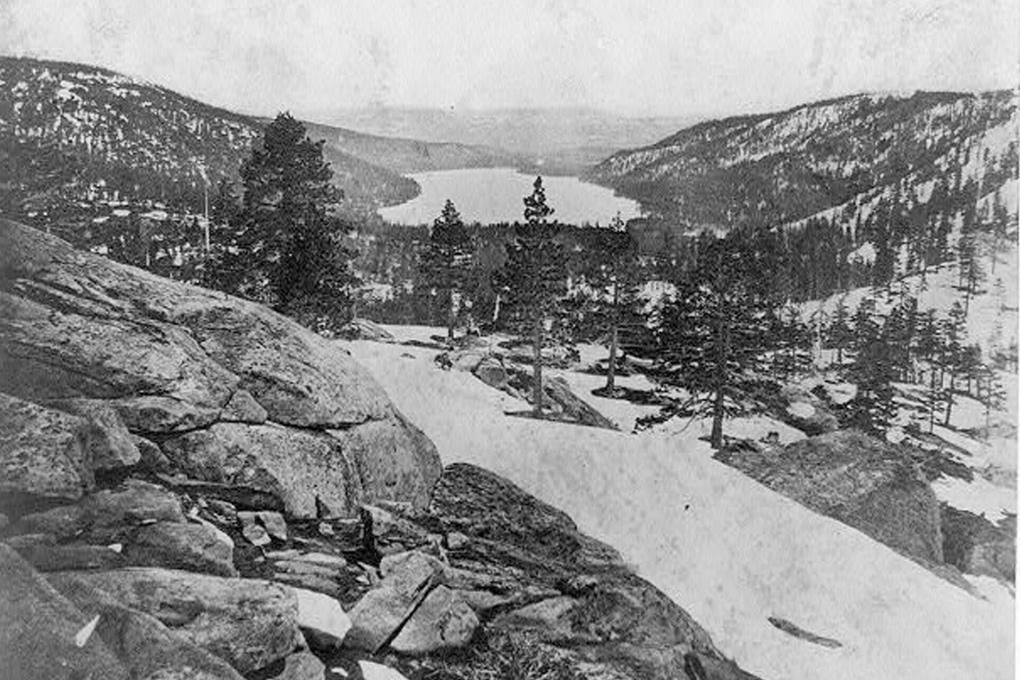
"caption": "Donner Lake from the summit, photographed in 1866 Lawrence & Houseworth",
"description": null,
"title": "1-4",
"credit": "Library of Congress",
"status": "inherit",
"isLoading": false,
"fetchFailed": false
},
"news_11796754": {
"type": "attachments",
"id": "news_11796754",
"meta": {
"index": "attachments_1716263798",
"site": "news",
"id": "11796754",
"found": true
},
"parent": 11796675,
"imgSizes": {
"apple_news_ca_landscape_5_5": {
"file": "https://ww2.kqed.org/app/uploads/sites/10/2020/01/Alpine-Meadows-Avalanche-1044x783.jpg",
"width": 1044,
"mimeType": "image/jpeg",
"height": 783
},
"apple_news_ca_square_4_0": {
"file": "https://ww2.kqed.org/app/uploads/sites/10/2020/01/Alpine-Meadows-Avalanche-470x470.jpg",
"width": 470,
"mimeType": "image/jpeg",
"height": 470
},
"twentyfourteen-full-width": {
"file": "https://ww2.kqed.org/app/uploads/sites/10/2020/01/Alpine-Meadows-Avalanche-1038x576.jpg",
"width": 1038,
"mimeType": "image/jpeg",
"height": 576
},
"thumbnail": {
"file": "https://ww2.kqed.org/app/uploads/sites/10/2020/01/Alpine-Meadows-Avalanche-160x89.jpg",
"width": 160,
"mimeType": "image/jpeg",
"height": 89
},
"post-thumbnail": {
"file": "https://ww2.kqed.org/app/uploads/sites/10/2020/01/Alpine-Meadows-Avalanche-672x372.jpg",
"width": 672,
"mimeType": "image/jpeg",
"height": 372
},
"kqedFullSize": {
"file": "https://ww2.kqed.org/app/uploads/sites/10/2020/01/Alpine-Meadows-Avalanche.jpg",
"width": 1920,
"height": 1066
},
"apple_news_ca_landscape_4_7": {
"file": "https://ww2.kqed.org/app/uploads/sites/10/2020/01/Alpine-Meadows-Avalanche-632x474.jpg",
"width": 632,
"mimeType": "image/jpeg",
"height": 474
},
"large": {
"file": "https://ww2.kqed.org/app/uploads/sites/10/2020/01/Alpine-Meadows-Avalanche-1020x566.jpg",
"width": 1020,
"mimeType": "image/jpeg",
"height": 566
},
"apple_news_ca_landscape_4_0": {
"file": "https://ww2.kqed.org/app/uploads/sites/10/2020/01/Alpine-Meadows-Avalanche-536x402.jpg",
"width": 536,
"mimeType": "image/jpeg",
"height": 402
},
"apple_news_ca_portrait_12_9": {
"file": "https://ww2.kqed.org/app/uploads/sites/10/2020/01/Alpine-Meadows-Avalanche-1122x1066.jpg",
"width": 1122,
"mimeType": "image/jpeg",
"height": 1066
},
"medium": {
"file": "https://ww2.kqed.org/app/uploads/sites/10/2020/01/Alpine-Meadows-Avalanche-800x444.jpg",
"width": 800,
"mimeType": "image/jpeg",
"height": 444
},
"apple_news_ca_portrait_4_0": {
"file": "https://ww2.kqed.org/app/uploads/sites/10/2020/01/Alpine-Meadows-Avalanche-354x472.jpg",
"width": 354,
"mimeType": "image/jpeg",
"height": 472
},
"apple_news_ca_portrait_9_7": {
"file": "https://ww2.kqed.org/app/uploads/sites/10/2020/01/Alpine-Meadows-Avalanche-840x1066.jpg",
"width": 840,
"mimeType": "image/jpeg",
"height": 1066
},
"apple_news_ca_landscape_12_9": {
"file": "https://ww2.kqed.org/app/uploads/sites/10/2020/01/Alpine-Meadows-Avalanche-1832x1066.jpg",
"width": 1832,
"mimeType": "image/jpeg",
"height": 1066
},
"apple_news_ca_square_9_7": {
"file": "https://ww2.kqed.org/app/uploads/sites/10/2020/01/Alpine-Meadows-Avalanche-1104x1066.jpg",
"width": 1104,
"mimeType": "image/jpeg",
"height": 1066
},
"apple_news_ca_portrait_4_7": {
"file": "https://ww2.kqed.org/app/uploads/sites/10/2020/01/Alpine-Meadows-Avalanche-414x552.jpg",
"width": 414,
"mimeType": "image/jpeg",
"height": 552
},
"apple_news_ca_square_12_9": {
"file": "https://ww2.kqed.org/app/uploads/sites/10/2020/01/Alpine-Meadows-Avalanche-1472x1066.jpg",
"width": 1472,
"mimeType": "image/jpeg",
"height": 1066
},
"apple_news_ca_portrait_5_5": {
"file": "https://ww2.kqed.org/app/uploads/sites/10/2020/01/Alpine-Meadows-Avalanche-687x916.jpg",
"width": 687,
"mimeType": "image/jpeg",
"height": 916
},
"full-width": {
"file": "https://ww2.kqed.org/app/uploads/sites/10/2020/01/Alpine-Meadows-Avalanche-1920x1066.jpg",
"width": 1920,
"mimeType": "image/jpeg",
"height": 1066
},
"apple_news_ca_square_4_7": {
"file": "https://ww2.kqed.org/app/uploads/sites/10/2020/01/Alpine-Meadows-Avalanche-550x550.jpg",
"width": 550,
"mimeType": "image/jpeg",
"height": 550
},
"apple_news_ca_landscape_9_7": {
"file": "https://ww2.kqed.org/app/uploads/sites/10/2020/01/Alpine-Meadows-Avalanche-1376x1032.jpg",
"width": 1376,
"mimeType": "image/jpeg",
"height": 1032
},
"apple_news_ca_square_5_5": {
"file": "https://ww2.kqed.org/app/uploads/sites/10/2020/01/Alpine-Meadows-Avalanche-912x912.jpg",
"width": 912,
"mimeType": "image/jpeg",
"height": 912
}
},
"publishDate": 1579299886,
"modified": 1579306539,
"caption": "Placer County Sheriff's Office vehicles sit outside Alpine Meadows ski resort, the site of a fatal avalanche on Friday. ",
"description": "Placer County Sheriff's vehicles site outside Alpine Meadows Ski Resort, the site of a fatal avalanche on Friday. ",
"title": "Alpine-Meadows-Avalanche",
"credit": "Placer County Sheriff's Office/Twitter",
"status": "inherit",
"isLoading": false,
"fetchFailed": false
},
"news_11796022": {
"type": "attachments",
"id": "news_11796022",
"meta": {
"index": "attachments_1716263798",
"site": "news",
"id": "11796022",
"found": true
},
"parent": 11795991,
"imgSizes": {
"apple_news_ca_landscape_5_5": {
"file": "https://ww2.kqed.org/app/uploads/sites/10/2020/01/01142020_Eric-Sonstroem_San-Francisco_rain_01212017-qut-1044x783.jpg",
"width": 1044,
"mimeType": "image/jpeg",
"height": 783
},
"apple_news_ca_square_4_0": {
"file": "https://ww2.kqed.org/app/uploads/sites/10/2020/01/01142020_Eric-Sonstroem_San-Francisco_rain_01212017-qut-470x470.jpg",
"width": 470,
"mimeType": "image/jpeg",
"height": 470
},
"twentyfourteen-full-width": {
"file": "https://ww2.kqed.org/app/uploads/sites/10/2020/01/01142020_Eric-Sonstroem_San-Francisco_rain_01212017-qut-1038x576.jpg",
"width": 1038,
"mimeType": "image/jpeg",
"height": 576
},
"thumbnail": {
"file": "https://ww2.kqed.org/app/uploads/sites/10/2020/01/01142020_Eric-Sonstroem_San-Francisco_rain_01212017-qut-160x108.jpg",
"width": 160,
"mimeType": "image/jpeg",
"height": 108
},
"post-thumbnail": {
"file": "https://ww2.kqed.org/app/uploads/sites/10/2020/01/01142020_Eric-Sonstroem_San-Francisco_rain_01212017-qut-672x372.jpg",
"width": 672,
"mimeType": "image/jpeg",
"height": 372
},
"kqedFullSize": {
"file": "https://ww2.kqed.org/app/uploads/sites/10/2020/01/01142020_Eric-Sonstroem_San-Francisco_rain_01212017-qut.jpg",
"width": 1920,
"height": 1297
},
"apple_news_ca_landscape_4_7": {
"file": "https://ww2.kqed.org/app/uploads/sites/10/2020/01/01142020_Eric-Sonstroem_San-Francisco_rain_01212017-qut-632x474.jpg",
"width": 632,
"mimeType": "image/jpeg",
"height": 474
},
"large": {
"file": "https://ww2.kqed.org/app/uploads/sites/10/2020/01/01142020_Eric-Sonstroem_San-Francisco_rain_01212017-qut-1020x689.jpg",
"width": 1020,
"mimeType": "image/jpeg",
"height": 689
},
"complete_open_graph": {
"file": "https://ww2.kqed.org/app/uploads/sites/10/2020/01/01142020_Eric-Sonstroem_San-Francisco_rain_01212017-qut-1200x811.jpg",
"width": 1200,
"mimeType": "image/jpeg",
"height": 811
},
"apple_news_ca_landscape_4_0": {
"file": "https://ww2.kqed.org/app/uploads/sites/10/2020/01/01142020_Eric-Sonstroem_San-Francisco_rain_01212017-qut-536x402.jpg",
"width": 536,
"mimeType": "image/jpeg",
"height": 402
},
"apple_news_ca_portrait_12_9": {
"file": "https://ww2.kqed.org/app/uploads/sites/10/2020/01/01142020_Eric-Sonstroem_San-Francisco_rain_01212017-qut-1122x1297.jpg",
"width": 1122,
"mimeType": "image/jpeg",
"height": 1297
},
"medium": {
"file": "https://ww2.kqed.org/app/uploads/sites/10/2020/01/01142020_Eric-Sonstroem_San-Francisco_rain_01212017-qut-800x540.jpg",
"width": 800,
"mimeType": "image/jpeg",
"height": 540
},
"apple_news_ca_portrait_4_0": {
"file": "https://ww2.kqed.org/app/uploads/sites/10/2020/01/01142020_Eric-Sonstroem_San-Francisco_rain_01212017-qut-354x472.jpg",
"width": 354,
"mimeType": "image/jpeg",
"height": 472
},
"apple_news_ca_portrait_9_7": {
"file": "https://ww2.kqed.org/app/uploads/sites/10/2020/01/01142020_Eric-Sonstroem_San-Francisco_rain_01212017-qut-840x1120.jpg",
"width": 840,
"mimeType": "image/jpeg",
"height": 1120
},
"apple_news_ca_landscape_12_9": {
"file": "https://ww2.kqed.org/app/uploads/sites/10/2020/01/01142020_Eric-Sonstroem_San-Francisco_rain_01212017-qut-1832x1297.jpg",
"width": 1832,
"mimeType": "image/jpeg",
"height": 1297
},
"apple_news_ca_square_9_7": {
"file": "https://ww2.kqed.org/app/uploads/sites/10/2020/01/01142020_Eric-Sonstroem_San-Francisco_rain_01212017-qut-1104x1104.jpg",
"width": 1104,
"mimeType": "image/jpeg",
"height": 1104
},
"apple_news_ca_portrait_4_7": {
"file": "https://ww2.kqed.org/app/uploads/sites/10/2020/01/01142020_Eric-Sonstroem_San-Francisco_rain_01212017-qut-414x552.jpg",
"width": 414,
"mimeType": "image/jpeg",
"height": 552
},
"apple_news_ca_square_12_9": {
"file": "https://ww2.kqed.org/app/uploads/sites/10/2020/01/01142020_Eric-Sonstroem_San-Francisco_rain_01212017-qut-1472x1297.jpg",
"width": 1472,
"mimeType": "image/jpeg",
"height": 1297
},
"apple_news_ca_portrait_5_5": {
"file": "https://ww2.kqed.org/app/uploads/sites/10/2020/01/01142020_Eric-Sonstroem_San-Francisco_rain_01212017-qut-687x916.jpg",
"width": 687,
"mimeType": "image/jpeg",
"height": 916
},
"full-width": {
"file": "https://ww2.kqed.org/app/uploads/sites/10/2020/01/01142020_Eric-Sonstroem_San-Francisco_rain_01212017-qut-1920x1297.jpg",
"width": 1920,
"mimeType": "image/jpeg",
"height": 1297
},
"apple_news_ca_square_4_7": {
"file": "https://ww2.kqed.org/app/uploads/sites/10/2020/01/01142020_Eric-Sonstroem_San-Francisco_rain_01212017-qut-550x550.jpg",
"width": 550,
"mimeType": "image/jpeg",
"height": 550
},
"apple_news_ca_landscape_9_7": {
"file": "https://ww2.kqed.org/app/uploads/sites/10/2020/01/01142020_Eric-Sonstroem_San-Francisco_rain_01212017-qut-1376x1032.jpg",
"width": 1376,
"mimeType": "image/jpeg",
"height": 1032
},
"apple_news_ca_square_5_5": {
"file": "https://ww2.kqed.org/app/uploads/sites/10/2020/01/01142020_Eric-Sonstroem_San-Francisco_rain_01212017-qut-912x912.jpg",
"width": 912,
"mimeType": "image/jpeg",
"height": 912
}
},
"publishDate": 1579038947,
"modified": 1579038997,
"caption": "Rainy night in San Francisco. Jan. 21, 2017.",
"description": "Rainy night in San Francisco. Jan. 21, 2017.",
"title": "01142020_Eric Sonstroem_San Francisco_rain_01212017-qut",
"credit": "Eric Sonstroem/Flickr",
"status": "inherit",
"isLoading": false,
"fetchFailed": false
},
"science_1954450": {
"type": "attachments",
"id": "science_1954450",
"meta": {
"index": "attachments_1716263798",
"site": "science",
"id": "1954450",
"found": true
},
"parent": 1954436,
"imgSizes": {
"twentyfourteen-full-width": {
"file": "https://ww2.kqed.org/app/uploads/sites/35/2020/01/KJ_snow_survey_0417_01_02_20-1038x576.jpg",
"width": 1038,
"mimeType": "image/jpeg",
"height": 576
},
"thumbnail": {
"file": "https://ww2.kqed.org/app/uploads/sites/35/2020/01/KJ_snow_survey_0417_01_02_20-160x122.jpg",
"width": 160,
"mimeType": "image/jpeg",
"height": 122
},
"post-thumbnail": {
"file": "https://ww2.kqed.org/app/uploads/sites/35/2020/01/KJ_snow_survey_0417_01_02_20-672x372.jpg",
"width": 672,
"mimeType": "image/jpeg",
"height": 372
},
"kqedFullSize": {
"file": "https://ww2.kqed.org/app/uploads/sites/35/2020/01/KJ_snow_survey_0417_01_02_20.jpg",
"width": 1200,
"height": 914
},
"large": {
"file": "https://ww2.kqed.org/app/uploads/sites/35/2020/01/KJ_snow_survey_0417_01_02_20-1020x777.jpg",
"width": 1020,
"mimeType": "image/jpeg",
"height": 777
},
"complete_open_graph": {
"file": "https://ww2.kqed.org/app/uploads/sites/35/2020/01/KJ_snow_survey_0417_01_02_20-1200x914.jpg",
"width": 1200,
"mimeType": "image/jpeg",
"height": 914
},
"medium": {
"file": "https://ww2.kqed.org/app/uploads/sites/35/2020/01/KJ_snow_survey_0417_01_02_20-800x609.jpg",
"width": 800,
"mimeType": "image/jpeg",
"height": 609
},
"medium_large": {
"file": "https://ww2.kqed.org/app/uploads/sites/35/2020/01/KJ_snow_survey_0417_01_02_20-768x585.jpg",
"width": 768,
"mimeType": "image/jpeg",
"height": 585
}
},
"publishDate": 1578003556,
"modified": 1578003727,
"caption": "Sean de Guzman, chief of Snow Surveys and Water Supply Forecasting at the state Department of Water Resources, prepares to insert the long aluminum survey pole into the snow at Phillips Station, south of Lake Tahoe in the Sierra Nevada. Ramesh Gautum, Chief California Cooperative Snow Surveys Program, and Lauren Miller, engineer DWR’s Snow Surveys and Water Supply Forecasting Section, help with the survey.",
"description": null,
"title": "KJ_snow_survey_0417_01_02_20",
"credit": "Ken James/California Department of Water Resources",
"status": "inherit",
"isLoading": false,
"fetchFailed": false
},
"news_11777863": {
"type": "attachments",
"id": "news_11777863",
"meta": {
"index": "attachments_1716263798",
"site": "news",
"id": "11777863",
"found": true
},
"parent": 11777857,
"imgSizes": {
"apple_news_ca_landscape_5_5": {
"file": "https://ww2.kqed.org/app/uploads/sites/10/2019/10/RS11527_452872414-1044x783.jpg",
"width": 1044,
"mimeType": "image/jpeg",
"height": 783
},
"apple_news_ca_square_4_0": {
"file": "https://ww2.kqed.org/app/uploads/sites/10/2019/10/RS11527_452872414-470x470.jpg",
"width": 470,
"mimeType": "image/jpeg",
"height": 470
},
"twentyfourteen-full-width": {
"file": "https://ww2.kqed.org/app/uploads/sites/10/2019/10/RS11527_452872414-1038x576.jpg",
"width": 1038,
"mimeType": "image/jpeg",
"height": 576
},
"thumbnail": {
"file": "https://ww2.kqed.org/app/uploads/sites/10/2019/10/RS11527_452872414-160x107.jpg",
"width": 160,
"mimeType": "image/jpeg",
"height": 107
},
"post-thumbnail": {
"file": "https://ww2.kqed.org/app/uploads/sites/10/2019/10/RS11527_452872414-672x372.jpg",
"width": 672,
"mimeType": "image/jpeg",
"height": 372
},
"kqedFullSize": {
"file": "https://ww2.kqed.org/app/uploads/sites/10/2019/10/RS11527_452872414.jpg",
"width": 1920,
"height": 1279
},
"apple_news_ca_landscape_4_7": {
"file": "https://ww2.kqed.org/app/uploads/sites/10/2019/10/RS11527_452872414-632x474.jpg",
"width": 632,
"mimeType": "image/jpeg",
"height": 474
},
"large": {
"file": "https://ww2.kqed.org/app/uploads/sites/10/2019/10/RS11527_452872414-1020x679.jpg",
"width": 1020,
"mimeType": "image/jpeg",
"height": 679
},
"complete_open_graph": {
"file": "https://ww2.kqed.org/app/uploads/sites/10/2019/10/RS11527_452872414-1200x799.jpg",
"width": 1200,
"mimeType": "image/jpeg",
"height": 799
},
"apple_news_ca_landscape_4_0": {
"file": "https://ww2.kqed.org/app/uploads/sites/10/2019/10/RS11527_452872414-536x402.jpg",
"width": 536,
"mimeType": "image/jpeg",
"height": 402
},
"apple_news_ca_portrait_12_9": {
"file": "https://ww2.kqed.org/app/uploads/sites/10/2019/10/RS11527_452872414-1122x1279.jpg",
"width": 1122,
"mimeType": "image/jpeg",
"height": 1279
},
"medium": {
"file": "https://ww2.kqed.org/app/uploads/sites/10/2019/10/RS11527_452872414-800x533.jpg",
"width": 800,
"mimeType": "image/jpeg",
"height": 533
},
"apple_news_ca_portrait_4_0": {
"file": "https://ww2.kqed.org/app/uploads/sites/10/2019/10/RS11527_452872414-354x472.jpg",
"width": 354,
"mimeType": "image/jpeg",
"height": 472
},
"apple_news_ca_portrait_9_7": {
"file": "https://ww2.kqed.org/app/uploads/sites/10/2019/10/RS11527_452872414-840x1120.jpg",
"width": 840,
"mimeType": "image/jpeg",
"height": 1120
},
"apple_news_ca_landscape_12_9": {
"file": "https://ww2.kqed.org/app/uploads/sites/10/2019/10/RS11527_452872414-1832x1279.jpg",
"width": 1832,
"mimeType": "image/jpeg",
"height": 1279
},
"apple_news_ca_square_9_7": {
"file": "https://ww2.kqed.org/app/uploads/sites/10/2019/10/RS11527_452872414-1104x1104.jpg",
"width": 1104,
"mimeType": "image/jpeg",
"height": 1104
},
"apple_news_ca_portrait_4_7": {
"file": "https://ww2.kqed.org/app/uploads/sites/10/2019/10/RS11527_452872414-414x552.jpg",
"width": 414,
"mimeType": "image/jpeg",
"height": 552
},
"apple_news_ca_square_12_9": {
"file": "https://ww2.kqed.org/app/uploads/sites/10/2019/10/RS11527_452872414-1472x1279.jpg",
"width": 1472,
"mimeType": "image/jpeg",
"height": 1279
},
"apple_news_ca_portrait_5_5": {
"file": "https://ww2.kqed.org/app/uploads/sites/10/2019/10/RS11527_452872414-687x916.jpg",
"width": 687,
"mimeType": "image/jpeg",
"height": 916
},
"full-width": {
"file": "https://ww2.kqed.org/app/uploads/sites/10/2019/10/RS11527_452872414-1920x1279.jpg",
"width": 1920,
"mimeType": "image/jpeg",
"height": 1279
},
"apple_news_ca_square_4_7": {
"file": "https://ww2.kqed.org/app/uploads/sites/10/2019/10/RS11527_452872414-550x550.jpg",
"width": 550,
"mimeType": "image/jpeg",
"height": 550
},
"apple_news_ca_landscape_9_7": {
"file": "https://ww2.kqed.org/app/uploads/sites/10/2019/10/RS11527_452872414-1376x1032.jpg",
"width": 1376,
"mimeType": "image/jpeg",
"height": 1032
},
"apple_news_ca_square_5_5": {
"file": "https://ww2.kqed.org/app/uploads/sites/10/2019/10/RS11527_452872414-912x912.jpg",
"width": 912,
"mimeType": "image/jpeg",
"height": 912
}
},
"publishDate": 1570055201,
"modified": 1570055316,
"caption": "Emerald Bay is home to mysis shrimp, which are making the battle to keep Tahoe's waters blue more difficult.",
"description": "Emerald Bay is home to mysis shrimp, which are making the battle to keep Tahoe's waters blue more difficult.",
"title": "Travel Destination: Western USA",
"credit": "Sean Gallup/Getty Images",
"status": "inherit",
"isLoading": false,
"fetchFailed": false
},
"news_11771409": {
"type": "attachments",
"id": "news_11771409",
"meta": {
"index": "attachments_1716263798",
"site": "news",
"id": "11771409",
"found": true
},
"parent": 11771407,
"imgSizes": {
"apple_news_ca_square_4_0": {
"file": "https://ww2.kqed.org/app/uploads/sites/10/2019/08/cubs-470x470.jpeg",
"width": 470,
"mimeType": "image/jpeg",
"height": 470
},
"thumbnail": {
"file": "https://ww2.kqed.org/app/uploads/sites/10/2019/08/cubs-160x91.jpeg",
"width": 160,
"mimeType": "image/jpeg",
"height": 91
},
"post-thumbnail": {
"file": "https://ww2.kqed.org/app/uploads/sites/10/2019/08/cubs-672x372.jpeg",
"width": 672,
"mimeType": "image/jpeg",
"height": 372
},
"kqedFullSize": {
"file": "https://ww2.kqed.org/app/uploads/sites/10/2019/08/cubs.jpeg",
"width": 1000,
"height": 571
},
"apple_news_ca_landscape_4_7": {
"file": "https://ww2.kqed.org/app/uploads/sites/10/2019/08/cubs-632x474.jpeg",
"width": 632,
"mimeType": "image/jpeg",
"height": 474
},
"apple_news_ca_landscape_4_0": {
"file": "https://ww2.kqed.org/app/uploads/sites/10/2019/08/cubs-536x402.jpeg",
"width": 536,
"mimeType": "image/jpeg",
"height": 402
},
"medium": {
"file": "https://ww2.kqed.org/app/uploads/sites/10/2019/08/cubs-800x457.jpeg",
"width": 800,
"mimeType": "image/jpeg",
"height": 457
},
"apple_news_ca_portrait_4_0": {
"file": "https://ww2.kqed.org/app/uploads/sites/10/2019/08/cubs-354x472.jpeg",
"width": 354,
"mimeType": "image/jpeg",
"height": 472
},
"apple_news_ca_portrait_9_7": {
"file": "https://ww2.kqed.org/app/uploads/sites/10/2019/08/cubs-840x571.jpeg",
"width": 840,
"mimeType": "image/jpeg",
"height": 571
},
"apple_news_ca_portrait_4_7": {
"file": "https://ww2.kqed.org/app/uploads/sites/10/2019/08/cubs-414x552.jpeg",
"width": 414,
"mimeType": "image/jpeg",
"height": 552
},
"apple_news_ca_portrait_5_5": {
"file": "https://ww2.kqed.org/app/uploads/sites/10/2019/08/cubs-687x571.jpeg",
"width": 687,
"mimeType": "image/jpeg",
"height": 571
},
"apple_news_ca_square_4_7": {
"file": "https://ww2.kqed.org/app/uploads/sites/10/2019/08/cubs-550x550.jpeg",
"width": 550,
"mimeType": "image/jpeg",
"height": 550
},
"apple_news_ca_square_5_5": {
"file": "https://ww2.kqed.org/app/uploads/sites/10/2019/08/cubs-912x571.jpeg",
"width": 912,
"mimeType": "image/jpeg",
"height": 571
}
},
"publishDate": 1567195955,
"modified": 1567199445,
"caption": "The trapped cub's sibling tries to open the dumpster and liberate it on Aug. 28, 2019.",
"description": "The trapped cub's sibling tries to open the dumpster and liberate it on Aug. 28, 2019.",
"title": "cubs",
"credit": "Placer County Sheriff's Dept.",
"status": "inherit",
"isLoading": false,
"fetchFailed": false
},
"news_11762505": {
"type": "attachments",
"id": "news_11762505",
"meta": {
"index": "attachments_1716263798",
"site": "news",
"id": "11762505",
"found": true
},
"parent": 11762463,
"imgSizes": {
"apple_news_ca_square_4_0": {
"file": "https://ww2.kqed.org/app/uploads/sites/10/2019/07/07192019_tahoe_racho_july4_boat-qut-470x470.jpg",
"width": 470,
"mimeType": "image/jpeg",
"height": 470
},
"twentyfourteen-full-width": {
"file": "https://ww2.kqed.org/app/uploads/sites/10/2019/07/07192019_tahoe_racho_july4_boat-qut-1024x576.jpg",
"width": 1024,
"mimeType": "image/jpeg",
"height": 576
},
"thumbnail": {
"file": "https://ww2.kqed.org/app/uploads/sites/10/2019/07/07192019_tahoe_racho_july4_boat-qut-160x120.jpg",
"width": 160,
"mimeType": "image/jpeg",
"height": 120
},
"post-thumbnail": {
"file": "https://ww2.kqed.org/app/uploads/sites/10/2019/07/07192019_tahoe_racho_july4_boat-qut-672x372.jpg",
"width": 672,
"mimeType": "image/jpeg",
"height": 372
},
"kqedFullSize": {
"file": "https://ww2.kqed.org/app/uploads/sites/10/2019/07/07192019_tahoe_racho_july4_boat-qut.jpg",
"width": 1024,
"height": 768
},
"apple_news_ca_landscape_4_7": {
"file": "https://ww2.kqed.org/app/uploads/sites/10/2019/07/07192019_tahoe_racho_july4_boat-qut-632x474.jpg",
"width": 632,
"mimeType": "image/jpeg",
"height": 474
},
"large": {
"file": "https://ww2.kqed.org/app/uploads/sites/10/2019/07/07192019_tahoe_racho_july4_boat-qut-1020x765.jpg",
"width": 1020,
"mimeType": "image/jpeg",
"height": 765
},
"apple_news_ca_landscape_4_0": {
"file": "https://ww2.kqed.org/app/uploads/sites/10/2019/07/07192019_tahoe_racho_july4_boat-qut-536x402.jpg",
"width": 536,
"mimeType": "image/jpeg",
"height": 402
},
"medium": {
"file": "https://ww2.kqed.org/app/uploads/sites/10/2019/07/07192019_tahoe_racho_july4_boat-qut-800x600.jpg",
"width": 800,
"mimeType": "image/jpeg",
"height": 600
},
"apple_news_ca_portrait_4_0": {
"file": "https://ww2.kqed.org/app/uploads/sites/10/2019/07/07192019_tahoe_racho_july4_boat-qut-354x472.jpg",
"width": 354,
"mimeType": "image/jpeg",
"height": 472
},
"apple_news_ca_portrait_9_7": {
"file": "https://ww2.kqed.org/app/uploads/sites/10/2019/07/07192019_tahoe_racho_july4_boat-qut-840x768.jpg",
"width": 840,
"mimeType": "image/jpeg",
"height": 768
},
"apple_news_ca_portrait_4_7": {
"file": "https://ww2.kqed.org/app/uploads/sites/10/2019/07/07192019_tahoe_racho_july4_boat-qut-414x552.jpg",
"width": 414,
"mimeType": "image/jpeg",
"height": 552
},
"apple_news_ca_portrait_5_5": {
"file": "https://ww2.kqed.org/app/uploads/sites/10/2019/07/07192019_tahoe_racho_july4_boat-qut-687x768.jpg",
"width": 687,
"mimeType": "image/jpeg",
"height": 768
},
"apple_news_ca_square_4_7": {
"file": "https://ww2.kqed.org/app/uploads/sites/10/2019/07/07192019_tahoe_racho_july4_boat-qut-550x550.jpg",
"width": 550,
"mimeType": "image/jpeg",
"height": 550
},
"apple_news_ca_square_5_5": {
"file": "https://ww2.kqed.org/app/uploads/sites/10/2019/07/07192019_tahoe_racho_july4_boat-qut-912x768.jpg",
"width": 912,
"mimeType": "image/jpeg",
"height": 768
}
},
"publishDate": 1563569293,
"modified": 1563577713,
"caption": "Lake Tahoe over the July 4, 2019, weekend.",
"description": "Lake Tahoe over the July 4 2019 weekend.",
"title": "07192019_tahoe_racho_july4_boat-qut",
"credit": "Suzie Racho/KQED",
"status": "inherit",
"isLoading": false,
"fetchFailed": false
},
"news_11757864": {
"type": "attachments",
"id": "news_11757864",
"meta": {
"index": "attachments_1716263798",
"site": "news",
"id": "11757864",
"found": true
},
"parent": 11757861,
"imgSizes": {
"apple_news_ca_landscape_5_5": {
"file": "https://ww2.kqed.org/app/uploads/sites/10/2019/06/pet_062719_final-1044x783.jpg",
"width": 1044,
"mimeType": "image/jpeg",
"height": 783
},
"apple_news_ca_square_4_0": {
"file": "https://ww2.kqed.org/app/uploads/sites/10/2019/06/pet_062719_final-470x470.jpg",
"width": 470,
"mimeType": "image/jpeg",
"height": 470
},
"twentyfourteen-full-width": {
"file": "https://ww2.kqed.org/app/uploads/sites/10/2019/06/pet_062719_final-1038x576.jpg",
"width": 1038,
"mimeType": "image/jpeg",
"height": 576
},
"thumbnail": {
"file": "https://ww2.kqed.org/app/uploads/sites/10/2019/06/pet_062719_final-160x112.jpg",
"width": 160,
"mimeType": "image/jpeg",
"height": 112
},
"post-thumbnail": {
"file": "https://ww2.kqed.org/app/uploads/sites/10/2019/06/pet_062719_final-672x372.jpg",
"width": 672,
"mimeType": "image/jpeg",
"height": 372
},
"kqedFullSize": {
"file": "https://ww2.kqed.org/app/uploads/sites/10/2019/06/pet_062719_final.jpg",
"width": 1921,
"height": 1340
},
"apple_news_ca_landscape_4_7": {
"file": "https://ww2.kqed.org/app/uploads/sites/10/2019/06/pet_062719_final-632x474.jpg",
"width": 632,
"mimeType": "image/jpeg",
"height": 474
},
"large": {
"file": "https://ww2.kqed.org/app/uploads/sites/10/2019/06/pet_062719_final-1020x712.jpg",
"width": 1020,
"mimeType": "image/jpeg",
"height": 712
},
"complete_open_graph": {
"file": "https://ww2.kqed.org/app/uploads/sites/10/2019/06/pet_062719_final-1200x837.jpg",
"width": 1200,
"mimeType": "image/jpeg",
"height": 837
},
"apple_news_ca_landscape_4_0": {
"file": "https://ww2.kqed.org/app/uploads/sites/10/2019/06/pet_062719_final-536x402.jpg",
"width": 536,
"mimeType": "image/jpeg",
"height": 402
},
"apple_news_ca_portrait_12_9": {
"file": "https://ww2.kqed.org/app/uploads/sites/10/2019/06/pet_062719_final-1122x1340.jpg",
"width": 1122,
"mimeType": "image/jpeg",
"height": 1340
},
"medium": {
"file": "https://ww2.kqed.org/app/uploads/sites/10/2019/06/pet_062719_final-800x558.jpg",
"width": 800,
"mimeType": "image/jpeg",
"height": 558
},
"apple_news_ca_portrait_4_0": {
"file": "https://ww2.kqed.org/app/uploads/sites/10/2019/06/pet_062719_final-354x472.jpg",
"width": 354,
"mimeType": "image/jpeg",
"height": 472
},
"apple_news_ca_portrait_9_7": {
"file": "https://ww2.kqed.org/app/uploads/sites/10/2019/06/pet_062719_final-840x1120.jpg",
"width": 840,
"mimeType": "image/jpeg",
"height": 1120
},
"apple_news_ca_landscape_12_9": {
"file": "https://ww2.kqed.org/app/uploads/sites/10/2019/06/pet_062719_final-1832x1340.jpg",
"width": 1832,
"mimeType": "image/jpeg",
"height": 1340
},
"apple_news_ca_square_9_7": {
"file": "https://ww2.kqed.org/app/uploads/sites/10/2019/06/pet_062719_final-1104x1104.jpg",
"width": 1104,
"mimeType": "image/jpeg",
"height": 1104
},
"apple_news_ca_portrait_4_7": {
"file": "https://ww2.kqed.org/app/uploads/sites/10/2019/06/pet_062719_final-414x552.jpg",
"width": 414,
"mimeType": "image/jpeg",
"height": 552
},
"apple_news_ca_square_12_9": {
"file": "https://ww2.kqed.org/app/uploads/sites/10/2019/06/pet_062719_final-1472x1340.jpg",
"width": 1472,
"mimeType": "image/jpeg",
"height": 1340
},
"apple_news_ca_portrait_5_5": {
"file": "https://ww2.kqed.org/app/uploads/sites/10/2019/06/pet_062719_final-687x916.jpg",
"width": 687,
"mimeType": "image/jpeg",
"height": 916
},
"full-width": {
"file": "https://ww2.kqed.org/app/uploads/sites/10/2019/06/pet_062719_final-1920x1339.jpg",
"width": 1920,
"mimeType": "image/jpeg",
"height": 1339
},
"apple_news_ca_square_4_7": {
"file": "https://ww2.kqed.org/app/uploads/sites/10/2019/06/pet_062719_final-550x550.jpg",
"width": 550,
"mimeType": "image/jpeg",
"height": 550
},
"apple_news_ca_landscape_9_7": {
"file": "https://ww2.kqed.org/app/uploads/sites/10/2019/06/pet_062719_final-1376x1032.jpg",
"width": 1376,
"mimeType": "image/jpeg",
"height": 1032
},
"apple_news_ca_square_5_5": {
"file": "https://ww2.kqed.org/app/uploads/sites/10/2019/06/pet_062719_final-912x912.jpg",
"width": 912,
"mimeType": "image/jpeg",
"height": 912
}
},
"publishDate": 1561700644,
"modified": 1561700675,
"caption": null,
"description": null,
"title": "pet_062719_final",
"credit": null,
"status": "inherit",
"isLoading": false,
"fetchFailed": false
},
"news_11726883": {
"type": "attachments",
"id": "news_11726883",
"meta": {
"index": "attachments_1716263798",
"site": "news",
"id": "11726883",
"found": true
},
"parent": 11726872,
"imgSizes": {
"twentyfourteen-full-width": {
"file": "https://ww2.kqed.org/app/uploads/sites/10/2019/02/IMG_1083-1038x576.jpg",
"width": 1038,
"mimeType": "image/jpeg",
"height": 576
},
"thumbnail": {
"file": "https://ww2.kqed.org/app/uploads/sites/10/2019/02/IMG_1083-160x213.jpg",
"width": 160,
"mimeType": "image/jpeg",
"height": 213
},
"post-thumbnail": {
"file": "https://ww2.kqed.org/app/uploads/sites/10/2019/02/IMG_1083-672x372.jpg",
"width": 672,
"mimeType": "image/jpeg",
"height": 372
},
"kqedFullSize": {
"file": "https://ww2.kqed.org/app/uploads/sites/10/2019/02/IMG_1083-e1550349536144.jpg",
"width": 1920,
"height": 2560
},
"large": {
"file": "https://ww2.kqed.org/app/uploads/sites/10/2019/02/IMG_1083-1020x1360.jpg",
"width": 1020,
"mimeType": "image/jpeg",
"height": 1360
},
"complete_open_graph": {
"file": "https://ww2.kqed.org/app/uploads/sites/10/2019/02/IMG_1083-900x1200.jpg",
"width": 900,
"mimeType": "image/jpeg",
"height": 1200
},
"guest-author-50": {
"file": "https://ww2.kqed.org/app/uploads/sites/10/2019/02/IMG_1083-50x50.jpg",
"width": 50,
"mimeType": "image/jpeg",
"height": 50
},
"guest-author-96": {
"file": "https://ww2.kqed.org/app/uploads/sites/10/2019/02/IMG_1083-96x96.jpg",
"width": 96,
"mimeType": "image/jpeg",
"height": 96
},
"medium": {
"file": "https://ww2.kqed.org/app/uploads/sites/10/2019/02/IMG_1083-800x1067.jpg",
"width": 800,
"mimeType": "image/jpeg",
"height": 1067
},
"guest-author-64": {
"file": "https://ww2.kqed.org/app/uploads/sites/10/2019/02/IMG_1083-64x64.jpg",
"width": 64,
"mimeType": "image/jpeg",
"height": 64
},
"guest-author-32": {
"file": "https://ww2.kqed.org/app/uploads/sites/10/2019/02/IMG_1083-32x32.jpg",
"width": 32,
"mimeType": "image/jpeg",
"height": 32
},
"full-width": {
"file": "https://ww2.kqed.org/app/uploads/sites/10/2019/02/IMG_1083-1920x2560.jpg",
"width": 1920,
"mimeType": "image/jpeg",
"height": 2560
},
"detail": {
"file": "https://ww2.kqed.org/app/uploads/sites/10/2019/02/IMG_1083-150x150.jpg",
"width": 150,
"mimeType": "image/jpeg",
"height": 150
},
"guest-author-128": {
"file": "https://ww2.kqed.org/app/uploads/sites/10/2019/02/IMG_1083-128x128.jpg",
"width": 128,
"mimeType": "image/jpeg",
"height": 128
}
},
"publishDate": 1550349480,
"modified": 1550349530,
"caption": "A scene of El Dorado National Forest taken from Highway 50 on Feb. 15, 2018.",
"description": null,
"title": "IMG_1083",
"credit": "Sonja Hutson/KQED",
"status": "inherit",
"isLoading": false,
"fetchFailed": false
},
"news_11725199": {
"type": "attachments",
"id": "news_11725199",
"meta": {
"index": "attachments_1716263798",
"site": "news",
"id": "11725199",
"found": true
},
"parent": 11725196,
"imgSizes": {
"twentyfourteen-full-width": {
"file": "https://ww2.kqed.org/app/uploads/sites/10/2019/02/Carmelian-Bay-1024x576.jpg",
"width": 1024,
"mimeType": "image/jpeg",
"height": 576
},
"thumbnail": {
"file": "https://ww2.kqed.org/app/uploads/sites/10/2019/02/Carmelian-Bay-160x120.jpg",
"width": 160,
"mimeType": "image/jpeg",
"height": 120
},
"post-thumbnail": {
"file": "https://ww2.kqed.org/app/uploads/sites/10/2019/02/Carmelian-Bay-672x372.jpg",
"width": 672,
"mimeType": "image/jpeg",
"height": 372
},
"kqedFullSize": {
"file": "https://ww2.kqed.org/app/uploads/sites/10/2019/02/Carmelian-Bay.jpg",
"width": 1024,
"height": 768
},
"large": {
"file": "https://ww2.kqed.org/app/uploads/sites/10/2019/02/Carmelian-Bay-1020x765.jpg",
"width": 1020,
"mimeType": "image/jpeg",
"height": 765
},
"guest-author-50": {
"file": "https://ww2.kqed.org/app/uploads/sites/10/2019/02/Carmelian-Bay-50x50.jpg",
"width": 50,
"mimeType": "image/jpeg",
"height": 50
},
"guest-author-96": {
"file": "https://ww2.kqed.org/app/uploads/sites/10/2019/02/Carmelian-Bay-96x96.jpg",
"width": 96,
"mimeType": "image/jpeg",
"height": 96
},
"medium": {
"file": "https://ww2.kqed.org/app/uploads/sites/10/2019/02/Carmelian-Bay-800x600.jpg",
"width": 800,
"mimeType": "image/jpeg",
"height": 600
},
"guest-author-64": {
"file": "https://ww2.kqed.org/app/uploads/sites/10/2019/02/Carmelian-Bay-64x64.jpg",
"width": 64,
"mimeType": "image/jpeg",
"height": 64
},
"detail": {
"file": "https://ww2.kqed.org/app/uploads/sites/10/2019/02/Carmelian-Bay-150x150.jpg",
"width": 150,
"mimeType": "image/jpeg",
"height": 150
},
"guest-author-32": {
"file": "https://ww2.kqed.org/app/uploads/sites/10/2019/02/Carmelian-Bay-32x32.jpg",
"width": 32,
"mimeType": "image/jpeg",
"height": 32
},
"guest-author-128": {
"file": "https://ww2.kqed.org/app/uploads/sites/10/2019/02/Carmelian-Bay-128x128.jpg",
"width": 128,
"mimeType": "image/jpeg",
"height": 128
}
},
"publishDate": 1549832915,
"modified": 1549833080,
"caption": "Several feet of snow fell in the Sierra Nevada this weekend, including here in Carnelian Bay.",
"description": "Several feet of snow fell in the Sierra Nevada this weekend, including here in Carnelian Bay.",
"title": "Carnelian Bay",
"credit": "Jess Olson",
"status": "inherit",
"isLoading": false,
"fetchFailed": false
},
"news_11616822": {
"type": "attachments",
"id": "news_11616822",
"meta": {
"index": "attachments_1716263798",
"site": "news",
"id": "11616822",
"found": true
},
"parent": 11616819,
"imgSizes": {
"small": {
"file": "https://ww2.kqed.org/app/uploads/sites/10/2017/09/TahoeFunnel-520x461.jpg",
"width": 520,
"mimeType": "image/jpeg",
"height": 461
},
"twentyfourteen-full-width": {
"file": "https://ww2.kqed.org/app/uploads/sites/10/2017/09/TahoeFunnel-1038x576.jpg",
"width": 1038,
"mimeType": "image/jpeg",
"height": 576
},
"thumbnail": {
"file": "https://ww2.kqed.org/app/uploads/sites/10/2017/09/TahoeFunnel-160x142.jpg",
"width": 160,
"mimeType": "image/jpeg",
"height": 142
},
"fd-sm": {
"file": "https://ww2.kqed.org/app/uploads/sites/10/2017/09/TahoeFunnel-960x851.jpg",
"width": 960,
"mimeType": "image/jpeg",
"height": 851
},
"post-thumbnail": {
"file": "https://ww2.kqed.org/app/uploads/sites/10/2017/09/TahoeFunnel-672x372.jpg",
"width": 672,
"mimeType": "image/jpeg",
"height": 372
},
"xsmall": {
"file": "https://ww2.kqed.org/app/uploads/sites/10/2017/09/TahoeFunnel-375x332.jpg",
"width": 375,
"mimeType": "image/jpeg",
"height": 332
},
"kqedFullSize": {
"file": "https://ww2.kqed.org/app/uploads/sites/10/2017/09/TahoeFunnel.jpg",
"width": 1920,
"height": 1701
},
"large": {
"file": "https://ww2.kqed.org/app/uploads/sites/10/2017/09/TahoeFunnel-1020x904.jpg",
"width": 1020,
"mimeType": "image/jpeg",
"height": 904
},
"xlarge": {
"file": "https://ww2.kqed.org/app/uploads/sites/10/2017/09/TahoeFunnel-1180x1045.jpg",
"width": 1180,
"mimeType": "image/jpeg",
"height": 1045
},
"guest-author-50": {
"file": "https://ww2.kqed.org/app/uploads/sites/10/2017/09/TahoeFunnel-50x50.jpg",
"width": 50,
"mimeType": "image/jpeg",
"height": 50
},
"guest-author-96": {
"file": "https://ww2.kqed.org/app/uploads/sites/10/2017/09/TahoeFunnel-96x96.jpg",
"width": 96,
"mimeType": "image/jpeg",
"height": 96
},
"medium": {
"file": "https://ww2.kqed.org/app/uploads/sites/10/2017/09/TahoeFunnel-800x709.jpg",
"width": 800,
"mimeType": "image/jpeg",
"height": 709
},
"guest-author-64": {
"file": "https://ww2.kqed.org/app/uploads/sites/10/2017/09/TahoeFunnel-64x64.jpg",
"width": 64,
"mimeType": "image/jpeg",
"height": 64
},
"guest-author-32": {
"file": "https://ww2.kqed.org/app/uploads/sites/10/2017/09/TahoeFunnel-32x32.jpg",
"width": 32,
"mimeType": "image/jpeg",
"height": 32
},
"fd-lrg": {
"file": "https://ww2.kqed.org/app/uploads/sites/10/2017/09/TahoeFunnel-1920x1701.jpg",
"width": 1920,
"mimeType": "image/jpeg",
"height": 1701
},
"fd-med": {
"file": "https://ww2.kqed.org/app/uploads/sites/10/2017/09/TahoeFunnel-1180x1045.jpg",
"width": 1180,
"mimeType": "image/jpeg",
"height": 1045
},
"full-width": {
"file": "https://ww2.kqed.org/app/uploads/sites/10/2017/09/TahoeFunnel-1920x1701.jpg",
"width": 1920,
"mimeType": "image/jpeg",
"height": 1701
},
"detail": {
"file": "https://ww2.kqed.org/app/uploads/sites/10/2017/09/TahoeFunnel-150x150.jpg",
"width": 150,
"mimeType": "image/jpeg",
"height": 150
},
"guest-author-128": {
"file": "https://ww2.kqed.org/app/uploads/sites/10/2017/09/TahoeFunnel-128x128.jpg",
"width": 128,
"mimeType": "image/jpeg",
"height": 128
},
"xxsmall": {
"file": "https://ww2.kqed.org/app/uploads/sites/10/2017/09/TahoeFunnel-240x213.jpg",
"width": 240,
"mimeType": "image/jpeg",
"height": 213
}
},
"publishDate": 1505352422,
"modified": 1505352650,
"caption": "A funnel cloud forms over Lake Tahoe on Wednesday.",
"description": "A funnel cloud forms over Lake Tahoe on Wednesday.",
"title": "TahoeFunnel",
"credit": "North Lake Tahoe Fire Protection District",
"status": "inherit",
"isLoading": false,
"fetchFailed": false
}
},
"audioPlayerReducer": {
"postId": "stream_live",
"isPaused": true,
"isPlaying": false,
"pfsActive": false,
"pledgeModalIsOpen": true,
"playerDrawerIsOpen": false,
"liveAudioPlayStartedAt": 0,
"liveAudioPlayContext": ""
},
"authorsReducer": {
"byline_news_11771407": {
"type": "authors",
"id": "byline_news_11771407",
"meta": {
"override": true
},
"slug": "byline_news_11771407",
"name": "Associated Press",
"isLoading": false
},
"byline_news_11762463": {
"type": "authors",
"id": "byline_news_11762463",
"meta": {
"override": true
},
"slug": "byline_news_11762463",
"name": "\u003cstrong>The Associated Press\u003c/strong>",
"isLoading": false
},
"byline_news_11726872": {
"type": "authors",
"id": "byline_news_11726872",
"meta": {
"override": true
},
"slug": "byline_news_11726872",
"name": "Olga R. Rodriguez and John Antczak \u003cbr> Associated Press",
"isLoading": false
},
"byline_news_11616819": {
"type": "authors",
"id": "byline_news_11616819",
"meta": {
"override": true
},
"slug": "byline_news_11616819",
"name": "\u003cstrong>Associated Press\u003c/strong>",
"isLoading": false
},
"ohubertallen": {
"type": "authors",
"id": "102",
"meta": {
"index": "authors_1716337520",
"id": "102",
"found": true
},
"name": "Olivia Allen-Price",
"firstName": "Olivia",
"lastName": "Allen-Price",
"slug": "ohubertallen",
"email": "oallenprice@kqed.org",
"display_author_email": false,
"staff_mastheads": [
"news"
],
"title": "Senior Editor",
"bio": "Olivia Allen-Price is senior editor and host of the award-winning Bay Curious podcast. Prior to joining KQED in 2013, Olivia worked at The Baltimore Sun and The Virginian-Pilot in Norfolk, Va. She holds degrees in journalism and political science from Elon University. Her work has earned awards from the Society of Professional Journalists, the Hearst Foundation and Hearken. She loves to talk about running and curly hair.\r\n\r\nFollow: \u003ca href=\"https://twitter.com/oallenprice\">@oallenprice\u003c/a>\r\nEmail: \u003ca href=\"mailto:oallenprice@kqed.org\">oallenprice@kqed.org\u003c/a>",
"avatar": "https://secure.gravatar.com/avatar/07f7803c1f6be56f3be58ef276dfa64dce898502e0554408ef4858451a8294f7?s=600&d=blank&r=g",
"twitter": "oallenprice",
"bluesky": null,
"facebook": null,
"instagram": null,
"linkedin": null,
"sites": [
{
"site": "",
"roles": [
"editor"
]
},
{
"site": "arts",
"roles": [
"subscriber"
]
},
{
"site": "news",
"roles": [
"administrator"
]
},
{
"site": "pop",
"roles": [
"administrator"
]
},
{
"site": "bayareabites",
"roles": [
"contributor"
]
},
{
"site": "stateofhealth",
"roles": [
"administrator"
]
},
{
"site": "science",
"roles": [
"editor"
]
}
],
"headData": {
"title": "Olivia Allen-Price | KQED",
"description": "Senior Editor",
"ogImgSrc": "https://secure.gravatar.com/avatar/07f7803c1f6be56f3be58ef276dfa64dce898502e0554408ef4858451a8294f7?s=600&d=blank&r=g",
"twImgSrc": "https://secure.gravatar.com/avatar/07f7803c1f6be56f3be58ef276dfa64dce898502e0554408ef4858451a8294f7?s=600&d=blank&r=g"
},
"isLoading": false,
"link": "/author/ohubertallen"
},
"kdomara": {
"type": "authors",
"id": "1459",
"meta": {
"index": "authors_1716337520",
"id": "1459",
"found": true
},
"name": "Kelly O'Mara",
"firstName": "Kelly",
"lastName": "O'Mara",
"slug": "kdomara",
"email": "komara@kqed.org",
"display_author_email": false,
"staff_mastheads": [
"news"
],
"title": "KQED Contributor",
"bio": "Kelly O'Mara is a writer and reporter in the San Francisco Bay Area. She writes about food, health, sports, travel, business and California news. Her work has appeared on KQED, online for Outside Magazine, epsnW, VICE and in Competitor Magazine, among others. Follow Kelly on Twitter \u003ca href=\"https://twitter.com/kellydomara\">@kellydomara\u003c/a>.",
"avatar": "https://secure.gravatar.com/avatar/768fec7412028b72f13bdd0f5f9d8186?s=600&d=blank&r=g",
"twitter": null,
"facebook": null,
"instagram": null,
"linkedin": null,
"sites": [
{
"site": "arts",
"roles": []
},
{
"site": "news",
"roles": []
},
{
"site": "bayareabites",
"roles": []
},
{
"site": "stateofhealth",
"roles": []
},
{
"site": "science",
"roles": []
},
{
"site": "checkplease",
"roles": [
"editor"
]
},
{
"site": "food",
"roles": []
},
{
"site": "forum",
"roles": [
"editor"
]
},
{
"site": "liveblog",
"roles": [
"editor"
]
}
],
"headData": {
"title": "Kelly O'Mara | KQED",
"description": "KQED Contributor",
"ogImgSrc": "https://secure.gravatar.com/avatar/768fec7412028b72f13bdd0f5f9d8186?s=600&d=blank&r=g",
"twImgSrc": "https://secure.gravatar.com/avatar/768fec7412028b72f13bdd0f5f9d8186?s=600&d=blank&r=g"
},
"isLoading": false,
"link": "/author/kdomara"
},
"markfiore": {
"type": "authors",
"id": "3236",
"meta": {
"index": "authors_1716337520",
"id": "3236",
"found": true
},
"name": "Mark Fiore",
"firstName": "Mark",
"lastName": "Fiore",
"slug": "markfiore",
"email": "mark@markfiore.com",
"display_author_email": false,
"staff_mastheads": [
"news"
],
"title": "KQED News Cartoonist",
"bio": "\u003ca href=\"http://www.MarkFiore.com\">MarkFiore.com\u003c/a> | \u003ca href=\"https://twitter.com/markfiore\">Follow on Twitter\u003c/a> | \u003ca href=\"https://www.facebook.com/pages/Mark-Fiore-Animated-Political-Cartoons/94451707396?ref=bookmarks\">Facebook\u003c/a> | \u003ca href=\"mailto:mark@markfiore.com\">email\u003c/a>\r\n\r\nPulitzer Prize-winner, Mark Fiore, who the Wall Street Journal has called “the undisputed guru of the form,” creates animated political cartoons in San Francisco, where his work has been featured regularly on the San Francisco Chronicle’s web site, SFGate.com. His work has appeared on Newsweek.com, Slate.com, CBSNews.com, MotherJones.com, DailyKos.com and NPR’s web site. Fiore’s political animation has appeared on CNN, Frontline, Bill Moyers Journal, Salon.com and cable and broadcast outlets across the globe.\r\n\r\nBeginning his professional life by drawing traditional political cartoons for newspapers, Fiore’s work appeared in publications ranging from the Washington Post to the Los Angeles Times. In the late 1990s, he began to experiment with animating political cartoons and, after a short stint at the San Jose Mercury News as their staff cartoonist, Fiore devoted all his energies to animation.\r\nGrowing up in California, Fiore also spent a good portion of his life in the backwoods of Idaho. It was this combination that shaped him politically. Mark majored in political science at Colorado College, where, in a perfect send-off for a cartoonist, he received his diploma in 1991 as commencement speaker Dick Cheney smiled approvingly.\r\nMark Fiore was awarded the Pulitzer Prize for political cartooning in 2010, a Robert F. Kennedy Journalism Award in 2004 and has twice received an Online Journalism Award for commentary from the Online News Association (2002, 2008). Fiore has received two awards for his work in new media from the National Cartoonists Society (2001, 2002), and in 2006 received The James Madison Freedom of Information Award from The Society of Professional Journalists.",
"avatar": "https://secure.gravatar.com/avatar/fc4e2a612b15b67bad0c6f0e1db4ca9b?s=600&d=blank&r=g",
"twitter": "MarkFiore",
"facebook": null,
"instagram": "https://www.instagram.com/markfiore/?hl=en",
"linkedin": null,
"sites": [
{
"site": "arts",
"roles": [
"contributor"
]
},
{
"site": "news",
"roles": [
"editor"
]
},
{
"site": "futureofyou",
"roles": [
"editor"
]
},
{
"site": "science",
"roles": [
"editor"
]
}
],
"headData": {
"title": "Mark Fiore | KQED",
"description": "KQED News Cartoonist",
"ogImgSrc": "https://secure.gravatar.com/avatar/fc4e2a612b15b67bad0c6f0e1db4ca9b?s=600&d=blank&r=g",
"twImgSrc": "https://secure.gravatar.com/avatar/fc4e2a612b15b67bad0c6f0e1db4ca9b?s=600&d=blank&r=g"
},
"isLoading": false,
"link": "/author/markfiore"
},
"carlysevern": {
"type": "authors",
"id": "3243",
"meta": {
"index": "authors_1716337520",
"id": "3243",
"found": true
},
"name": "Carly Severn",
"firstName": "Carly",
"lastName": "Severn",
"slug": "carlysevern",
"email": "csevern@kqed.org",
"display_author_email": false,
"staff_mastheads": [
"news"
],
"title": "Senior Editor, Audience News ",
"bio": "Carly is KQED's Senior Editor of Audience News on the Digital News team, and has reported for the California Report Magazine, Bay Curious and KQED Arts. She's formerly the host of \u003ca href=\"http://ww2.kqed.org/pop/category/the-cooler/\" rel=\"noopener noreferrer\">The Cooler\u003c/a> podcast.",
"avatar": "https://secure.gravatar.com/avatar/54037bf5c128fe678f0ef26cec97a93f2e7f220a22d7285703328f12c42c1b1d?s=600&d=blank&r=g",
"twitter": "teacupinthebay",
"bluesky": null,
"facebook": null,
"instagram": null,
"linkedin": null,
"sites": [
{
"site": "",
"roles": [
"editor"
]
},
{
"site": "arts",
"roles": [
"editor"
]
},
{
"site": "news",
"roles": [
"administrator"
]
},
{
"site": "pop",
"roles": [
"editor"
]
},
{
"site": "futureofyou",
"roles": [
"editor"
]
},
{
"site": "about",
"roles": [
"administrator"
]
},
{
"site": "mindshift",
"roles": [
"editor"
]
},
{
"site": "bayareabites",
"roles": [
"editor"
]
},
{
"site": "stateofhealth",
"roles": [
"editor"
]
},
{
"site": "science",
"roles": [
"editor"
]
},
{
"site": "food",
"roles": [
"contributor"
]
},
{
"site": "forum",
"roles": [
"editor"
]
},
{
"site": "perspectives",
"roles": [
"administrator"
]
},
{
"site": "liveblog",
"roles": [
"editor"
]
}
],
"headData": {
"title": "Carly Severn | KQED",
"description": "Senior Editor, Audience News ",
"ogImgSrc": "https://secure.gravatar.com/avatar/54037bf5c128fe678f0ef26cec97a93f2e7f220a22d7285703328f12c42c1b1d?s=600&d=blank&r=g",
"twImgSrc": "https://secure.gravatar.com/avatar/54037bf5c128fe678f0ef26cec97a93f2e7f220a22d7285703328f12c42c1b1d?s=600&d=blank&r=g"
},
"isLoading": false,
"link": "/author/carlysevern"
},
"rlevi": {
"type": "authors",
"id": "11260",
"meta": {
"index": "authors_1716337520",
"id": "11260",
"found": true
},
"name": "Ryan Levi",
"firstName": "Ryan",
"lastName": "Levi",
"slug": "rlevi",
"email": "rlevi@KQED.org",
"display_author_email": false,
"staff_mastheads": [],
"title": "KQED Contributor",
"bio": "Ryan Levi was a reporter and podcast producer at KQED News from 2016-2019. He worked on \u003ca href=\"https://www.kqed.org/news/series/baycurious\">Bay Curious\u003c/a>, \u003ca href=\"https://www.kqed.org/news/tag/the-bay/\">The Bay, \u003c/a>and \u003ca href=\"https://podcasts.apple.com/us/podcast/the-california-report-magazine/id1314750545\">The California Report Magazine\u003c/a>, as well as hosting and producing the weekly \u003ca href=\"https://www.kqed.org/news/program/qedup/\">Q'ed Up podcast. \u003c/a>He also helped inaugurate KQED's weekend news coverage in 2017 as one of two original digital producers. Ryan holds degrees in multimedia journalism and Spanish from the University of Missouri.",
"avatar": "https://secure.gravatar.com/avatar/4cb2ddd028ac8807d1adf09609c5555d?s=600&d=blank&r=g",
"twitter": "ryan_levi",
"facebook": null,
"instagram": null,
"linkedin": null,
"sites": [
{
"site": "arts",
"roles": [
"editor"
]
},
{
"site": "news",
"roles": [
"subscriber"
]
},
{
"site": "stateofhealth",
"roles": [
"editor"
]
},
{
"site": "science",
"roles": [
"editor"
]
},
{
"site": "forum",
"roles": [
"administrator"
]
},
{
"site": "perspectives",
"roles": [
"administrator"
]
}
],
"headData": {
"title": "Ryan Levi | KQED",
"description": "KQED Contributor",
"ogImgSrc": "https://secure.gravatar.com/avatar/4cb2ddd028ac8807d1adf09609c5555d?s=600&d=blank&r=g",
"twImgSrc": "https://secure.gravatar.com/avatar/4cb2ddd028ac8807d1adf09609c5555d?s=600&d=blank&r=g"
},
"isLoading": false,
"link": "/author/rlevi"
},
"mleitsinger": {
"type": "authors",
"id": "11310",
"meta": {
"index": "authors_1716337520",
"id": "11310",
"found": true
},
"name": "Miranda Leitsinger",
"firstName": "Miranda",
"lastName": "Leitsinger",
"slug": "mleitsinger",
"email": "mleitsinger@KQED.org",
"display_author_email": false,
"staff_mastheads": [
"news"
],
"title": "KQED Contributor",
"bio": "Miranda Leitsinger has worked in journalism as a reporter and editor since 2000, including seven years at The Associated Press in locales such as Cambodia and Puerto Rico, four years at NBC News Digital in New York and 2.5 years at CNN.com International in Hong Kong. Major stories she has covered included sexual abuse in the yoga community, the rise of women in local politics post-2016 election, the struggle over LGBTQ inclusion in the Boy Scouts, aftermath of the 2004 and 2011 tsunamis, the Aurora movie theater attack, the Newtown school shooting, Superstorm Sandy and the Boston Marathon bombing.",
"avatar": "https://secure.gravatar.com/avatar/cdd00de7be92aab3b7fd3d915e02033d?s=600&d=blank&r=g",
"twitter": "mimileitsinger",
"facebook": null,
"instagram": null,
"linkedin": null,
"sites": [
{
"site": "arts",
"roles": [
"author"
]
},
{
"site": "news",
"roles": [
"subscriber"
]
},
{
"site": "futureofyou",
"roles": [
"editor"
]
},
{
"site": "stateofhealth",
"roles": [
"editor"
]
}
],
"headData": {
"title": "Miranda Leitsinger | KQED",
"description": "KQED Contributor",
"ogImgSrc": "https://secure.gravatar.com/avatar/cdd00de7be92aab3b7fd3d915e02033d?s=600&d=blank&r=g",
"twImgSrc": "https://secure.gravatar.com/avatar/cdd00de7be92aab3b7fd3d915e02033d?s=600&d=blank&r=g"
},
"isLoading": false,
"link": "/author/mleitsinger"
},
"parcuni": {
"type": "authors",
"id": "11368",
"meta": {
"index": "authors_1716337520",
"id": "11368",
"found": true
},
"name": "Peter Arcuni",
"firstName": "Peter",
"lastName": "Arcuni",
"slug": "parcuni",
"email": "parcuni@KQED.org",
"display_author_email": false,
"staff_mastheads": [
"science"
],
"title": "Reporter",
"bio": "Peter reports radio and online stories for \u003cem>KQED Science\u003c/em>. His work has also appeared on the \u003cem>The California Report\u003c/em> morning show and \u003cem>KQED News\u003c/em>. His production credits include \u003cem>The California Report, The California Report Magazine\u003c/em> and KQED's local news podcast \u003cem>The Bay\u003c/em>. Other credits include NPR's \u003cem>All Things Considered\u003c/em>, WNYC's \u003cem>Science Friday\u003c/em>, WBUR's \u003cem>Here & Now\u003c/em>, WIRED and SFGate. Peter graduated from Brown University and earned a master's degree in journalism from Stanford. He's covered everything from homelessness to wildfires, health, the environment, arts and Thanksgiving in San Quentin prison. In other lives, he played rock n roll music and studied neuroscience. You can email him at: parcuni@kqed.org",
"avatar": "https://secure.gravatar.com/avatar/d5032f6f27199d478af34ad2e1d98732?s=600&d=blank&r=g",
"twitter": "peterarcuni",
"facebook": null,
"instagram": null,
"linkedin": null,
"sites": [
{
"site": "news",
"roles": [
"editor"
]
},
{
"site": "science",
"roles": [
"editor"
]
}
],
"headData": {
"title": "Peter Arcuni | KQED",
"description": "Reporter",
"ogImgSrc": "https://secure.gravatar.com/avatar/d5032f6f27199d478af34ad2e1d98732?s=600&d=blank&r=g",
"twImgSrc": "https://secure.gravatar.com/avatar/d5032f6f27199d478af34ad2e1d98732?s=600&d=blank&r=g"
},
"isLoading": false,
"link": "/author/parcuni"
},
"mwiley": {
"type": "authors",
"id": "11526",
"meta": {
"index": "authors_1716337520",
"id": "11526",
"found": true
},
"name": "Michelle Wiley",
"firstName": "Michelle",
"lastName": "Wiley",
"slug": "mwiley",
"email": "mwiley@KQED.org",
"display_author_email": true,
"staff_mastheads": [],
"title": null,
"bio": "Michelle Wiley was the senior editor of weekends.",
"avatar": "https://secure.gravatar.com/avatar/3b897d82a09e8587e8e73fa69fbcc635?s=600&d=blank&r=g",
"twitter": "michelleewiley",
"facebook": null,
"instagram": null,
"linkedin": null,
"sites": [
{
"site": "",
"roles": [
"editor"
]
},
{
"site": "arts",
"roles": [
"editor"
]
},
{
"site": "news",
"roles": [
"subscriber"
]
},
{
"site": "lowdown",
"roles": [
"editor"
]
},
{
"site": "science",
"roles": [
"editor"
]
},
{
"site": "podcasts",
"roles": [
"editor"
]
}
],
"headData": {
"title": "Michelle Wiley | KQED",
"description": null,
"ogImgSrc": "https://secure.gravatar.com/avatar/3b897d82a09e8587e8e73fa69fbcc635?s=600&d=blank&r=g",
"twImgSrc": "https://secure.gravatar.com/avatar/3b897d82a09e8587e8e73fa69fbcc635?s=600&d=blank&r=g"
},
"isLoading": false,
"link": "/author/mwiley"
}
},
"pagesReducer": {
"news_tag_lake-tahoe": {
"type": "terms",
"id": "news_1430",
"meta": {
"index": "terms_1716263798",
"site": "news",
"id": "1430",
"score": 8.941422
},
"featImg": null,
"name": "Lake Tahoe",
"description": null,
"taxonomy": "tag",
"headData": {
"twImgId": null,
"twTitle": null,
"ogTitle": null,
"ogImgId": null,
"twDescription": null,
"description": null,
"title": "Lake Tahoe Archives | KQED News",
"ogDescription": null
},
"ttid": 1442,
"slug": "lake-tahoe",
"isLoading": false,
"title": "Lake Tahoe",
"pageMeta": {
"site": "news",
"WpPageTemplate": "page-topic-editorial",
"currentPage": 5
},
"blocks": [
{
"blockName": "kqed/post-list",
"attrs": {
"layout": "cardArticle2",
"query": "posts/news?tag=lake-tahoe",
"seeMore": false,
"paginated": true,
"page": 5
}
},
{
"blockName": "kqed/ad"
}
]
}
},
"pfsSessionReducer": {},
"postsReducer": {
"stream_live": {
"type": "live",
"id": "stream_live",
"audioUrl": "https://hls.kqed.org/hls/kqed_app/playlist.m3u8",
"title": "Live Stream",
"excerpt": "Live Stream information currently unavailable.",
"link": "/radio",
"featImg": "",
"label": {
"name": "KQED Live",
"link": "/"
}
},
"stream_kqedNewscast": {
"type": "posts",
"id": "stream_kqedNewscast",
"audioUrl": "https://www.kqed.org/.stream/anon/radio/RDnews/newscast.mp3?_=1",
"title": "KQED Newscast",
"featImg": "",
"label": {
"name": "88.5 FM",
"link": "/"
}
},
"news_11850772": {
"type": "posts",
"id": "news_11850772",
"meta": {
"index": "posts_1716263798",
"site": "news",
"id": "11850772",
"score": null,
"sort": [
1607737303000
]
},
"parent": 0,
"labelTerm": {
"site": "news"
},
"blocks": [],
"publishDate": 1607737303,
"format": "standard",
"disqusTitle": "Is Tahoe 'Closed'? What to Know About Winter Sports Visits in a Stay-at-Home Order",
"title": "Is Tahoe 'Closed'? What to Know About Winter Sports Visits in a Stay-at-Home Order",
"headTitle": "KQED News",
"content": "\u003cp>\u003cstrong>\u003cem>Updated Wednesday, Jan. 13:\u003c/em>\u003c/strong> California has \u003ca href=\"https://www.kqed.org/news/11855070/california-lifts-stay-at-home-order-for-sacramento-region\">lifted the regional stay-at-home order for the greater Sacramento region\u003c/a>, which includes the Lake Tahoe area. \u003c/p>\n\u003cp>This means hotels in the Tahoe region can once again offer accommodation to leisure travelers, which was previously reserved for essential travel only. However, the Bay Area remains under the regional stay-at-home order, which asks residents to stay at home except for essential activities.\u003c/p>\n\u003cp>Additionally, on Jan. 6, California issued a \u003ca href=\"https://www.cdph.ca.gov/Programs/CID/DCDC/Pages/COVID-19/Travel-Advisory.aspx\">new travel advisory\u003c/a> that states that residents should avoid non-essential travel to any part of California more than 120 miles from their homes.\u003c/p>\n\u003cp>\u003cem>Original story from Jan. 5:\u003c/em>\u003c/p>\n\u003cp>After a skiing and snowboarding season that was cut short by COVID-19 last March just as long-awaited big snows began to arrive, scores of winter sports enthusiasts in the Bay Area and across Northern California have been itching to head up to the Lake Tahoe region for some time on the slopes.\u003c/p>\n\u003cp>\u003cstrong>Skip straight to:\u003c/strong>\u003c/p>\n\u003cul>\n\u003cli>\u003cstrong>\u003ca href=\"#travel\">Can I travel to Tahoe?\u003c/a>\u003c/strong>\u003c/li>\n\u003cli>\u003cstrong>\u003ca href=\"#hotels\">What about hotels and accommodation?\u003c/a>\u003c/strong>\u003c/li>\n\u003cli>\u003cstrong>\u003ca href=\"#enforcement\">How is this being enforced?\u003c/a>\u003c/strong>\u003c/li>\n\u003c/ul>\n\u003cp>But with COVID-19 cases \u003ca href=\"https://www.kqed.org/news/11850757/california-icu-capacity-see-your-countys-available-beds\">spiking and hospitals continuing to fill up\u003c/a>, regional stay-at-home orders are once again limiting travel and businesses across most of the state. The Greater Sacramento region, which includes the Lake Tahoe area counties of El Dorado, Placer, Nevada and Amador, became subject to the stay-at-home order after ICU capacity in that region dipped below 15% on Dec. 11. Just days later, the 11 counties that \u003ca href=\"https://www.kqed.org/coronavirusliveupdates/news/11851396/entire-bay-area-region-now-subject-to-strict-stay-at-home-order\">make up the state-designated Bay Area region\u003c/a> became subject to the same order, and remain under it.\u003c/p>\n\u003cp>On Jan. 1, the California Department of Public Health announced that the Greater Sacramento region would continue to stay under the regional stay-at-home order — because the area’s four-week projected ICU capacity did not meet the criteria to exit the order.\u003c/p>\n\u003cp>[aside postID=news_11850757 hero='https://ww2.kqed.org/app/uploads/sites/10/2020/12/H0WEY-span-style-text-align-center-display-block-icu-bed-availability-by-county-span--1038x576.png']But despite those spiking cases, guidance from the state regarding travel for the purposes of outdoor winter recreation has been slightly uneven. Gov. Gavin Newsom specifically encouraged Californians to take part in outdoor activities like skiing and snowboarding when he announced the state's stay-at-home orders – and some hotels are being less proactive than others in canceling reservations.\u003c/p>\n\u003cp>So what should you do?\u003c/p>\n\u003ch3>\u003ca id=\"travel\">\u003c/a>Can I Travel to Tahoe During Stay-at-Home Orders?\u003c/h3>\n\u003cp>Overall, it's discouraged. But it's complicated.\u003c/p>\n\u003cp>According to \u003ca href=\"https://www.gov.ca.gov/wp-content/uploads/2020/12/12.3.20-Stay-at-Home-Order-ICU-Scenario.pdf\">the state's stay-at-home orders\u003c/a>, all residents living in a region under the order \"shall stay home or at their place of residence except as necessary to conduct activities associated with the operation, maintenance, or usage of critical infrastructure.\"\u003c/p>\n\u003cp>Additionally, the \u003ca href=\"https://www.cdph.ca.gov/Programs/CID/DCDC/Pages/COVID-19/limited-stay-at-home-order.aspx\">limited stay-at-home order\u003c/a>, which was put in place back in November, has also been extended and will now expire only after the regional stay-at-home order has ended across California. Those restrictions say that nonessential activities — including \"all activities conducted outside the residence, lodging, or temporary accommodation with members of other households\" — are prohibited between 10 p.m. and 5 a.m for counties with widespread coronavirus risk (also known as Tier 1 or purple tier.) El Dorado, Placer, Amador and Nevada counties \u003ca href=\"https://covid19.ca.gov/safer-economy/\">still fall under this risk category\u003c/a>, according to the state.\u003c/p>\n\u003cp>[aside tag=\"covid-19,coronavirus\" label=\"more coverage\"]\u003c/p>\n\u003cp>But, in the \u003cem>same\u003c/em> state order, it says nothing in the state guidance prevents households from leaving their residence, so long as they're not socializing with other households. It also acknowledges that outdoor exercise is essential for promoting physical and mental health.\u003c/p>\n\u003cp>So what should you do? County officials say, \u003cem>if\u003c/em> you're going to go, make it a short trip.\u003c/p>\n\u003cp>\"The preference is to stay in your local area. But if you come to Tahoe from the Bay Area, make it a day trip. And while you're in Tahoe, take all the precautions,\" said Carla Hass, communications director for El Dorado County.\u003c/p>\n\u003cp>\"It's a long day, but it certainly is doable,\" Hass said. \"And people have been doing it for generations.\"\u003c/p>\n\u003cp>People like Paige Hutson, a Marin County resident who's been skiing in Tahoe for 45 years. She says day trips are doable, just make sure to pack a lunch before you go.\u003c/p>\n\u003cp>\"People just need to stop for a moment and think: Are they contributing or are they part of the solution? And take personal responsibility for the things that we are all doing on a day-to-day basis to prevent the spread of COVID-19,\" she said.\u003c/p>\n\u003cp>Jon Slaughter, director of marketing for Sugar Bowl resort in North Lake Tahoe, echoed the encouragement to make a Tahoe trip a day trip.\u003c/p>\n\u003cp>\"You're just going to come up, you're going to enjoy the outdoors, have a blast,\" he said. \"I mean, the snow's great. The weather's been beautiful.\"\u003c/p>\n\u003cp>\"But then you're going to stay together and then you're going to head back home after that,\" he urged.\u003c/p>\n\u003ch3>\u003ca id=\"hotels\">\u003c/a>I Had a Hotel Reservation. What Should I Do?\u003c/h3>\n\u003cp>While resorts are open for skiing and snowboarding, staying overnight is generally off the table while a stay-at-home order is in effect. Under the new order, hotels and short-term rentals are unable to offer lodgings to nonessential travelers, from in-state or out-of-state.\u003c/p>\n\u003cp>But how hotels should inform their guests of the change is less clear. At The Village at Squaw Valley Lodging, staff said they were proactively contacting guests to cancel their reservations in December. And Placer County officials said in a statement that they were working to notify short-term rental owners in the county about the order, and \"educate them about the rental restriction that is now in place.\"\u003c/p>\n\u003cp>So if you have a reservation on the books in the next few weeks, and you haven't heard anything yet, you may want to check in to make sure you can get a refund or reschedule your travel.\u003c/p>\n\u003ch3>If I Stay on the Nevada-side of Tahoe, Do I Need to Quarantine When I Come Back?\u003c/h3>\n\u003cp>Technically, yes! According to the \u003ca href=\"https://www.cdph.ca.gov/Programs/CID/DCDC/Pages/COVID-19/Travel-Advisory.aspx\">travel advisory\u003c/a> issued in mid-November, anyone traveling from outside the state should self-quarantine for 14 days upon arrival in California.\u003c/p>\n\u003cp>That makes things complicated for areas like South Lake Tahoe, which sit close to or on the California/Nevada border.\u003c/p>\n\u003cp>[pullquote size='medium' align='right' citation='Carla Hass, communications director for El Dorado County']'The time has never been more ripe for personal responsibility than it is today.'[/pullquote]\u003c/p>\n\u003cp>Hass affirms that, yes, best practice would be to quarantine for two weeks. But she also encourages visitors to use their common sense and follow best practices, like social distancing and wearing masks.\u003c/p>\n\u003cp>\"Nobody is going to be standing at the state line, asking you where you've come from and where you're going,\" she said. \"The time has never been more ripe for personal responsibility than it is today.\"\u003c/p>\n\u003cp>San Francisco has also \u003ca href=\"https://www.kqed.org/coronavirusliveupdates/news/11853337/sf-extends-travel-restrictions-local-stay-at-home-order\">extended\u003c/a> its \u003ca href=\"https://www.kqed.org/coronavirusliveupdates/news/11851616/san-francisco-orders-10-day-quarantine-for-anyone-traveling-from-outside-bay-area\">mandatory 10-day quarantine\u003c/a> for anyone coming into the city from outside nine counties in the greater Bay Area region. The order first went into effect on Dec. 18 and officials say \u003ca href=\"https://sf.gov/news/travel-quarantine-and-local-stay-home-orders-extended\">the extension will now continue\u003c/a> until the region is no longer subject to the state’s regional stay-at-home order.\u003c/p>\n\u003cp>[ad fullwidth]\u003c/p>\n\u003ch3>\u003ca id=\"enforcement\">\u003c/a>How Will This Order Be Enforced?\u003c/h3>\n\u003cp>According to the state, failure to comply with the stay-at-home order can result in a monetary fine, a misdemeanor, revocation of a business license or other court-imposed penalties. The state works with local officials to implement the order.\u003c/p>\n\u003cp>But many local sheriff's offices have been reticent when it comes to hard-line enforcement. Both Placer and El Dorado counties' sheriff's offices said they would focus mainly on providing education rather than punishment.\u003c/p>\n\u003cp>In El Dorado County, sheriff's officials suggested that residents who witness noncompliance with the order to report it to the county Department of Public Health. Placer County officials encourage residents to call 211.\u003c/p>\n\u003cp>According to Hutson, the best way to look at the regulations is as an investment in the future.\u003c/p>\n\u003cp>\"It may be different at the end of January,\" she said. \"If we do a good job now, maybe we'll have the ability to spend the weekend or several days skiing, which is what we all want.\"\u003c/p>\n\u003cp>[ad floatright]\u003c/p>\n",
"disqusIdentifier": "11850772 https://ww2.kqed.org/news/?p=11850772",
"disqusUrl": "https://ww2.kqed.org/news/2020/12/11/is-tahoe-closed-what-to-know-about-winter-sports-visits-in-a-stay-at-home-order/",
"stats": {
"hasVideo": false,
"hasChartOrMap": false,
"hasAudio": false,
"hasPolis": false,
"wordCount": 1431,
"hasGoogleForm": false,
"hasGallery": false,
"hasHearkenModule": false,
"iframeSrcs": [],
"paragraphCount": 39
},
"modified": 1610578373,
"excerpt": "How do California's regional stay-at-home orders affect the ski resorts of Lake Tahoe, and anyone from the Bay Area wanting to visit? It's complicated.",
"headData": {
"twImgId": "",
"twTitle": "",
"ogTitle": "",
"ogImgId": "",
"twDescription": "",
"description": "How do California's regional stay-at-home orders affect the ski resorts of Lake Tahoe, and anyone from the Bay Area wanting to visit? It's complicated.",
"title": "Is Tahoe 'Closed'? What to Know About Winter Sports Visits in a Stay-at-Home Order | KQED",
"ogDescription": "",
"schema": {
"@context": "https://schema.org",
"@type": "NewsArticle",
"headline": "Is Tahoe 'Closed'? What to Know About Winter Sports Visits in a Stay-at-Home Order",
"datePublished": "2020-12-11T17:41:43-08:00",
"dateModified": "2021-01-13T14:52:53-08:00",
"image": "https://cdn.kqed.org/wp-content/uploads/2020/02/KQED-OG-Image@1x.png",
"isAccessibleForFree": "True",
"publisher": {
"@type": "NewsMediaOrganization",
"@id": "https://www.kqed.org/#organization",
"name": "KQED",
"logo": "https://cdn.kqed.org/wp-content/uploads/2020/02/KQED-OG-Image@1x.png",
"url": "https://www.kqed.org",
"sameAs": [
"https://www.facebook.com/KQED",
"https://twitter.com/KQED",
"https://www.instagram.com/kqed/",
"https://www.tiktok.com/@kqedofficial",
"https://www.linkedin.com/company/kqed",
"https://www.youtube.com/channel/UCeC0IOo7i1P_61zVUWbJ4nw"
]
}
}
},
"guestAuthors": [],
"slug": "is-tahoe-closed-what-to-know-about-winter-sports-visits-in-a-stay-at-home-order",
"status": "publish",
"path": "/news/11850772/is-tahoe-closed-what-to-know-about-winter-sports-visits-in-a-stay-at-home-order",
"audioTrackLength": null,
"parsedContent": [
{
"type": "contentString",
"content": "\u003cdiv class=\"post-body\">\u003cp>\u003cp>\u003cstrong>\u003cem>Updated Wednesday, Jan. 13:\u003c/em>\u003c/strong> California has \u003ca href=\"https://www.kqed.org/news/11855070/california-lifts-stay-at-home-order-for-sacramento-region\">lifted the regional stay-at-home order for the greater Sacramento region\u003c/a>, which includes the Lake Tahoe area. \u003c/p>\n\u003cp>This means hotels in the Tahoe region can once again offer accommodation to leisure travelers, which was previously reserved for essential travel only. However, the Bay Area remains under the regional stay-at-home order, which asks residents to stay at home except for essential activities.\u003c/p>\n\u003cp>Additionally, on Jan. 6, California issued a \u003ca href=\"https://www.cdph.ca.gov/Programs/CID/DCDC/Pages/COVID-19/Travel-Advisory.aspx\">new travel advisory\u003c/a> that states that residents should avoid non-essential travel to any part of California more than 120 miles from their homes.\u003c/p>\n\u003cp>\u003cem>Original story from Jan. 5:\u003c/em>\u003c/p>\n\u003cp>After a skiing and snowboarding season that was cut short by COVID-19 last March just as long-awaited big snows began to arrive, scores of winter sports enthusiasts in the Bay Area and across Northern California have been itching to head up to the Lake Tahoe region for some time on the slopes.\u003c/p>\n\u003cp>\u003cstrong>Skip straight to:\u003c/strong>\u003c/p>\n\u003cul>\n\u003cli>\u003cstrong>\u003ca href=\"#travel\">Can I travel to Tahoe?\u003c/a>\u003c/strong>\u003c/li>\n\u003cli>\u003cstrong>\u003ca href=\"#hotels\">What about hotels and accommodation?\u003c/a>\u003c/strong>\u003c/li>\n\u003cli>\u003cstrong>\u003ca href=\"#enforcement\">How is this being enforced?\u003c/a>\u003c/strong>\u003c/li>\n\u003c/ul>\n\u003cp>But with COVID-19 cases \u003ca href=\"https://www.kqed.org/news/11850757/california-icu-capacity-see-your-countys-available-beds\">spiking and hospitals continuing to fill up\u003c/a>, regional stay-at-home orders are once again limiting travel and businesses across most of the state. The Greater Sacramento region, which includes the Lake Tahoe area counties of El Dorado, Placer, Nevada and Amador, became subject to the stay-at-home order after ICU capacity in that region dipped below 15% on Dec. 11. Just days later, the 11 counties that \u003ca href=\"https://www.kqed.org/coronavirusliveupdates/news/11851396/entire-bay-area-region-now-subject-to-strict-stay-at-home-order\">make up the state-designated Bay Area region\u003c/a> became subject to the same order, and remain under it.\u003c/p>\n\u003cp>On Jan. 1, the California Department of Public Health announced that the Greater Sacramento region would continue to stay under the regional stay-at-home order — because the area’s four-week projected ICU capacity did not meet the criteria to exit the order.\u003c/p>\n\u003cp>\u003c/p>\u003c/div>",
"attributes": {
"named": {},
"numeric": []
}
},
{
"type": "component",
"content": "",
"name": "aside",
"attributes": {
"named": {
"postid": "news_11850757",
"hero": "https://ww2.kqed.org/app/uploads/sites/10/2020/12/H0WEY-span-style-text-align-center-display-block-icu-bed-availability-by-county-span--1038x576.png",
"label": ""
},
"numeric": []
}
},
{
"type": "contentString",
"content": "\u003cdiv class=\"post-body\">\u003cp>But despite those spiking cases, guidance from the state regarding travel for the purposes of outdoor winter recreation has been slightly uneven. Gov. Gavin Newsom specifically encouraged Californians to take part in outdoor activities like skiing and snowboarding when he announced the state's stay-at-home orders – and some hotels are being less proactive than others in canceling reservations.\u003c/p>\n\u003cp>So what should you do?\u003c/p>\n\u003ch3>\u003ca id=\"travel\">\u003c/a>Can I Travel to Tahoe During Stay-at-Home Orders?\u003c/h3>\n\u003cp>Overall, it's discouraged. But it's complicated.\u003c/p>\n\u003cp>According to \u003ca href=\"https://www.gov.ca.gov/wp-content/uploads/2020/12/12.3.20-Stay-at-Home-Order-ICU-Scenario.pdf\">the state's stay-at-home orders\u003c/a>, all residents living in a region under the order \"shall stay home or at their place of residence except as necessary to conduct activities associated with the operation, maintenance, or usage of critical infrastructure.\"\u003c/p>\n\u003cp>Additionally, the \u003ca href=\"https://www.cdph.ca.gov/Programs/CID/DCDC/Pages/COVID-19/limited-stay-at-home-order.aspx\">limited stay-at-home order\u003c/a>, which was put in place back in November, has also been extended and will now expire only after the regional stay-at-home order has ended across California. Those restrictions say that nonessential activities — including \"all activities conducted outside the residence, lodging, or temporary accommodation with members of other households\" — are prohibited between 10 p.m. and 5 a.m for counties with widespread coronavirus risk (also known as Tier 1 or purple tier.) El Dorado, Placer, Amador and Nevada counties \u003ca href=\"https://covid19.ca.gov/safer-economy/\">still fall under this risk category\u003c/a>, according to the state.\u003c/p>\n\u003cp>\u003c/p>\u003c/div>",
"attributes": {
"named": {},
"numeric": []
}
},
{
"type": "component",
"content": "",
"name": "aside",
"attributes": {
"named": {
"tag": "covid-19,coronavirus",
"label": "more coverage "
},
"numeric": []
}
},
{
"type": "contentString",
"content": "\u003cdiv class=\"post-body\">\u003cp>\u003c/p>\n\u003cp>But, in the \u003cem>same\u003c/em> state order, it says nothing in the state guidance prevents households from leaving their residence, so long as they're not socializing with other households. It also acknowledges that outdoor exercise is essential for promoting physical and mental health.\u003c/p>\n\u003cp>So what should you do? County officials say, \u003cem>if\u003c/em> you're going to go, make it a short trip.\u003c/p>\n\u003cp>\"The preference is to stay in your local area. But if you come to Tahoe from the Bay Area, make it a day trip. And while you're in Tahoe, take all the precautions,\" said Carla Hass, communications director for El Dorado County.\u003c/p>\n\u003cp>\"It's a long day, but it certainly is doable,\" Hass said. \"And people have been doing it for generations.\"\u003c/p>\n\u003cp>People like Paige Hutson, a Marin County resident who's been skiing in Tahoe for 45 years. She says day trips are doable, just make sure to pack a lunch before you go.\u003c/p>\n\u003cp>\"People just need to stop for a moment and think: Are they contributing or are they part of the solution? And take personal responsibility for the things that we are all doing on a day-to-day basis to prevent the spread of COVID-19,\" she said.\u003c/p>\n\u003cp>Jon Slaughter, director of marketing for Sugar Bowl resort in North Lake Tahoe, echoed the encouragement to make a Tahoe trip a day trip.\u003c/p>\n\u003cp>\"You're just going to come up, you're going to enjoy the outdoors, have a blast,\" he said. \"I mean, the snow's great. The weather's been beautiful.\"\u003c/p>\n\u003cp>\"But then you're going to stay together and then you're going to head back home after that,\" he urged.\u003c/p>\n\u003ch3>\u003ca id=\"hotels\">\u003c/a>I Had a Hotel Reservation. What Should I Do?\u003c/h3>\n\u003cp>While resorts are open for skiing and snowboarding, staying overnight is generally off the table while a stay-at-home order is in effect. Under the new order, hotels and short-term rentals are unable to offer lodgings to nonessential travelers, from in-state or out-of-state.\u003c/p>\n\u003cp>But how hotels should inform their guests of the change is less clear. At The Village at Squaw Valley Lodging, staff said they were proactively contacting guests to cancel their reservations in December. And Placer County officials said in a statement that they were working to notify short-term rental owners in the county about the order, and \"educate them about the rental restriction that is now in place.\"\u003c/p>\n\u003cp>So if you have a reservation on the books in the next few weeks, and you haven't heard anything yet, you may want to check in to make sure you can get a refund or reschedule your travel.\u003c/p>\n\u003ch3>If I Stay on the Nevada-side of Tahoe, Do I Need to Quarantine When I Come Back?\u003c/h3>\n\u003cp>Technically, yes! According to the \u003ca href=\"https://www.cdph.ca.gov/Programs/CID/DCDC/Pages/COVID-19/Travel-Advisory.aspx\">travel advisory\u003c/a> issued in mid-November, anyone traveling from outside the state should self-quarantine for 14 days upon arrival in California.\u003c/p>\n\u003cp>That makes things complicated for areas like South Lake Tahoe, which sit close to or on the California/Nevada border.\u003c/p>\n\u003cp>\u003c/p>\u003c/div>",
"attributes": {
"named": {},
"numeric": []
}
},
{
"type": "component",
"content": "'The time has never been more ripe for personal responsibility than it is today.'",
"name": "pullquote",
"attributes": {
"named": {
"size": "medium",
"align": "right",
"citation": "Carla Hass, communications director for El Dorado County",
"label": ""
},
"numeric": []
}
},
{
"type": "contentString",
"content": "\u003cdiv class=\"post-body\">\u003cp>\u003c/p>\n\u003cp>Hass affirms that, yes, best practice would be to quarantine for two weeks. But she also encourages visitors to use their common sense and follow best practices, like social distancing and wearing masks.\u003c/p>\n\u003cp>\"Nobody is going to be standing at the state line, asking you where you've come from and where you're going,\" she said. \"The time has never been more ripe for personal responsibility than it is today.\"\u003c/p>\n\u003cp>San Francisco has also \u003ca href=\"https://www.kqed.org/coronavirusliveupdates/news/11853337/sf-extends-travel-restrictions-local-stay-at-home-order\">extended\u003c/a> its \u003ca href=\"https://www.kqed.org/coronavirusliveupdates/news/11851616/san-francisco-orders-10-day-quarantine-for-anyone-traveling-from-outside-bay-area\">mandatory 10-day quarantine\u003c/a> for anyone coming into the city from outside nine counties in the greater Bay Area region. The order first went into effect on Dec. 18 and officials say \u003ca href=\"https://sf.gov/news/travel-quarantine-and-local-stay-home-orders-extended\">the extension will now continue\u003c/a> until the region is no longer subject to the state’s regional stay-at-home order.\u003c/p>\n\u003cp>\u003c/p>\u003c/div>",
"attributes": {
"named": {},
"numeric": []
}
},
{
"type": "component",
"content": "",
"name": "ad",
"attributes": {
"named": {
"label": "fullwidth"
},
"numeric": [
"fullwidth"
]
}
},
{
"type": "contentString",
"content": "\u003cdiv class=\"post-body\">\u003cp>\u003c/p>\n\u003ch3>\u003ca id=\"enforcement\">\u003c/a>How Will This Order Be Enforced?\u003c/h3>\n\u003cp>According to the state, failure to comply with the stay-at-home order can result in a monetary fine, a misdemeanor, revocation of a business license or other court-imposed penalties. The state works with local officials to implement the order.\u003c/p>\n\u003cp>But many local sheriff's offices have been reticent when it comes to hard-line enforcement. Both Placer and El Dorado counties' sheriff's offices said they would focus mainly on providing education rather than punishment.\u003c/p>\n\u003cp>In El Dorado County, sheriff's officials suggested that residents who witness noncompliance with the order to report it to the county Department of Public Health. Placer County officials encourage residents to call 211.\u003c/p>\n\u003cp>According to Hutson, the best way to look at the regulations is as an investment in the future.\u003c/p>\n\u003cp>\"It may be different at the end of January,\" she said. \"If we do a good job now, maybe we'll have the ability to spend the weekend or several days skiing, which is what we all want.\"\u003c/p>\n\u003cp>\u003c/p>\u003c/div>",
"attributes": {
"named": {},
"numeric": []
}
},
{
"type": "component",
"content": "",
"name": "ad",
"attributes": {
"named": {
"label": "floatright"
},
"numeric": [
"floatright"
]
}
},
{
"type": "contentString",
"content": "\u003cdiv class=\"post-body\">\u003cp>\u003c/p>\n\u003c/div>\u003c/p>",
"attributes": {
"named": {},
"numeric": []
}
}
],
"link": "/news/11850772/is-tahoe-closed-what-to-know-about-winter-sports-visits-in-a-stay-at-home-order",
"authors": [
"11526"
],
"categories": [
"news_1758",
"news_457",
"news_8",
"news_10"
],
"tags": [
"news_18538",
"news_27350",
"news_29029",
"news_27504",
"news_1430",
"news_25259"
],
"featImg": "news_11850896",
"label": "news"
},
"news_11844011": {
"type": "posts",
"id": "news_11844011",
"meta": {
"index": "posts_1716263798",
"site": "news",
"id": "11844011",
"score": null,
"sort": [
1603965644000
]
},
"parent": 0,
"labelTerm": {
"site": "news",
"term": 33523
},
"blocks": [],
"publishDate": 1603965644,
"format": "image",
"title": "Endless Winter: A Fresh Look at the Donner Party Saga",
"headTitle": "Endless Winter: A Fresh Look at the Donner Party Saga | KQED",
"content": "\u003cp>\u003cstrong>This is Part One of a two-part Bay Curious series. \u003ca href=\"https://www.kqed.org/news/11844019/donner-party-pt2\">Read Part Two here.\u003c/a>\u003c/strong>\u003c/p>\n\u003cp>[dropcap]D[/dropcap]onner Memorial State Park is a serene place. You might even call it low key, considering its outsized place in history.\u003c/p>\n\u003cp>If you’ve driven I-80 east towards Reno, and climbed the road high into the mountains around Truckee, you’ve passed it. Safe in your car, up on the ridge on the freeway above Donner Lake, you’ve sped by the site of one of the grisliest, most infamous events in California history.\u003c/p>\n\u003cp>Here in Donner Memorial State Park, visitors are greeted by the towering Pioneer Monument: a giant column with a statue of a family at its top. It pays tribute to those people, like the Donner Party, who came from the midwest and walked over these mountains in the 1800s, on their way to make new lives in California.\u003c/p>\n\u003cfigure id=\"attachment_11844079\" class=\"wp-caption alignnone\" style=\"max-width: 1920px\">\u003cimg decoding=\"async\" loading=\"lazy\" class=\"size-full wp-image-11844079\" src=\"https://ww2.kqed.org/app/uploads/sites/10/2020/10/1-Monument.png\" alt=\"\" width=\"1920\" height=\"1280\" srcset=\"https://ww2.kqed.org/app/uploads/sites/10/2020/10/1-Monument.png 1920w, https://ww2.kqed.org/app/uploads/sites/10/2020/10/1-Monument-800x533.png 800w, https://ww2.kqed.org/app/uploads/sites/10/2020/10/1-Monument-1020x680.png 1020w, https://ww2.kqed.org/app/uploads/sites/10/2020/10/1-Monument-160x107.png 160w, https://ww2.kqed.org/app/uploads/sites/10/2020/10/1-Monument-1536x1024.png 1536w\" sizes=\"(max-width: 1920px) 100vw, 1920px\">\u003cfigcaption class=\"wp-caption-text\">The Pioneer Monument in Donner Memorial State Park \u003ccite>(Carly Severn/KQED)\u003c/cite>\u003c/figcaption>\u003c/figure>\n\u003cp>Long before the railroad, these emigrants made the journey with animals and wagons full of everything they owned. Gold hadn’t yet been found in California, that would come later in 1848. At this time, it was land and total freedom, not nuggets, they wanted to claim.\u003c/p>\n\u003ch3>The Age of ‘Manifest Destiny’\u003c/h3>\n\u003cp>In 1846, the “California” to which the Donner Party was journeying wasn’t actually part of the United States. This was still Mexican territory — called Alta California — and it wouldn’t become officially part of the U.S. for another four years.\u003c/p>\n\u003cp>Of course, this wasn’t empty land either. Before European colonization, California was home to an estimated 300,000 Indigenous people. From the Washoe tribe of the Lake Tahoe area to \u003ca href=\"https://www.kqed.org/news/11704679/there-were-once-more-than-425-shellmounds-in-the-bay-area-where-did-they-go\">the Ohlone\u003c/a> in what is now San Francisco, the wider Bay Area alone was — and still is — home to many longstanding tribes with incredibly diverse cultures and languages.\u003c/p>\n\u003cp>Pre-colonization, California was “a bountiful, bountiful place where communities were free to trade, free and interact,” says Dahlton Brown, Executive Director for the \u003ca href=\"http://wiltonrancheria-nsn.gov/\">Wilton Rancheria\u003c/a> tribe in Elk Grove, outside Sacramento.\u003c/p>\n\u003cp>It was, he says, a life with “no restrictions on existence” for the Miwok and Nisenan people of this region.\u003c/p>\n\u003cp>Brown’s ancestors are a part of the Donner Party’s story that often gets left out. It was their land that settlers like the Donner Party were trying to reach. What made these white migrants think they could pack up, relocate their entire families and everything they owned to claim this land for their own?\u003c/p>\n\u003cfigure id=\"attachment_11844075\" class=\"wp-caption alignnone\" style=\"max-width: 1920px\">\u003cimg decoding=\"async\" loading=\"lazy\" class=\"size-full wp-image-11844075\" src=\"https://ww2.kqed.org/app/uploads/sites/10/2020/10/1-2.png\" alt=\"\" width=\"1920\" height=\"1280\" srcset=\"https://ww2.kqed.org/app/uploads/sites/10/2020/10/1-2.png 1920w, https://ww2.kqed.org/app/uploads/sites/10/2020/10/1-2-800x533.png 800w, https://ww2.kqed.org/app/uploads/sites/10/2020/10/1-2-1020x680.png 1020w, https://ww2.kqed.org/app/uploads/sites/10/2020/10/1-2-160x107.png 160w, https://ww2.kqed.org/app/uploads/sites/10/2020/10/1-2-1536x1024.png 1536w\" sizes=\"(max-width: 1920px) 100vw, 1920px\">\u003cfigcaption class=\"wp-caption-text\">A covered wagon camp of emigrants on the Humboldt River in western Nevada pictured in 1859 by Daniel A. Jenks \u003ccite>(Library of Congress)\u003c/cite>\u003c/figcaption>\u003c/figure>\n\u003cp>It’s simple, says Greg Palmer, a Donner Party historian who’s worked with the Donner Memorial State Park museum for several decades: “This is the era of Manifest Destiny. President James Polk has propagated the idea that it’s our divine right and duty to build a country coast to coast after the Louisiana Purchase.”\u003c/p>\n\u003cp>The fact that this land was home for the Indigenous people who’d lived here for centuries, or that it was legally Mexican territory, didn’t stop self-styled pioneers from coming to California. In addition to almost limitless real estate opportunities, settlers like the Donner Party saw an escape from unfavorable situations in their own midwest homelands: places where diseases like cholera and malaria abounded.\u003c/p>\n\u003cp>“Many people prior to gold were moving west for a more healthful environment,” Palmer says. “Free land, ‘the land of milk and honey,’ opportunity.”\u003c/p>\n\u003cp>The Donner Party wasn’t just one family called Donner. It was a blended bunch of multiple families, plus some lone travelers and hired hands brought on board to assist: all bound together on a journey of over one thousand miles west.\u003c/p>\n\u003cp>They were joining many other migrants and traveling in one long snaking party of wheels and livestock along what was called the Oregon Trail; through the grasslands of Illinois, across the desert and, finally, over the mountains into California. And to fully understand just how shocking and unique what happened to the Donner Party was, it’s important to understand that their party was just one of many like them that season. “Hundreds of wagons and thousands of people,” as Palmer says, made it to the West safely.\u003c/p>\n\u003cp>The Donner Party took a very different path — literally.\u003c/p>\n\u003ch3>Who Were the Donner Party?\u003c/h3>\n\u003cp>Emigrants making the journey west in the 1840s traveled in parties, and the Donner Party was led by 60-year-old George Donner from Illinois, accompanied by not just his own large family, but that of his brother, Jacob Donner. They set out with another local family, the Reeds. That’s the reason this group is sometimes also referred to as the Donner-Reed Party.\u003c/p>\n\u003cp>Setting off from Independence, Missouri, the group was gradually joined by other would-be settlers: the Breen family from Ireland, the Graves clan, the Keseberg family and many more. At its largest, the Donner Party numbered almost 100 people, including children of all ages — from babies and toddlers to teens.\u003c/p>\n\u003cp>The majority of the Donner Party weren’t the hardscrabble travelers you might be conjuring in your mind. As Palmer reminds us, “in the 1840s, to go overland to California or Oregon, poor people couldn’t do it. They couldn’t afford it.”\u003c/p>\n\u003cp>Aside from the hired hands in the party — single men being paid to do the hard work on the journey — most of these families on the trail with the Donners had money and land already. They just wanted a little more of it.\u003c/p>\n\u003cfigure id=\"attachment_11844076\" class=\"wp-caption alignnone\" style=\"max-width: 1920px\">\u003cimg decoding=\"async\" loading=\"lazy\" class=\"size-full wp-image-11844076\" src=\"https://ww2.kqed.org/app/uploads/sites/10/2020/10/1-Museum.png\" alt=\"\" width=\"1920\" height=\"1280\" srcset=\"https://ww2.kqed.org/app/uploads/sites/10/2020/10/1-Museum.png 1920w, https://ww2.kqed.org/app/uploads/sites/10/2020/10/1-Museum-800x533.png 800w, https://ww2.kqed.org/app/uploads/sites/10/2020/10/1-Museum-1020x680.png 1020w, https://ww2.kqed.org/app/uploads/sites/10/2020/10/1-Museum-160x107.png 160w, https://ww2.kqed.org/app/uploads/sites/10/2020/10/1-Museum-1536x1024.png 1536w\" sizes=\"(max-width: 1920px) 100vw, 1920px\">\u003cfigcaption class=\"wp-caption-text\">A recreation of one of the Donner Party’s covered wagons in the Donner Memorial State Park museum \u003ccite>(Carly Severn/KQED)\u003c/cite>\u003c/figcaption>\u003c/figure>\n\u003cp>So if there were a lot of folks making this journey West that year, what made the Donner Party different? Put simply, they were the only travelers on the trail who collectively decided to follow not the trusted path into California with all those others, but to take a chance on a new route.\u003c/p>\n\u003cp>By 1846, migration West had become an industry — and any industry attracts its grifters. One of those was a guy called Lansford Hastings. He’d written a guide to making the journey into California that told travelers of a “cutoff” — a shortcut he promised would save them weeks, and cut out up to 400 miles.\u003c/p>\n\u003cp>Unfortunately, this route was little short of a scam, based on guesswork. Hastings himself had never taken it, and his travel “guide” primarily recommended it because he wanted to divert travelers into places where he himself had money-making schemes set up to profit off them.\u003c/p>\n\u003cp>Far from saving them time, Hasting’s cutoff actually added 30 days to the Donner Party’s journey — through heinously difficult terrain that was utterly unsuitable for wagons.\u003c/p>\n\u003cp>In addition, they were already too late setting off. Hastings’s terrible guide had gotten one thing right: in order not to cross the Sierra Nevada in the snow, travelers needed to leave the midwest at the right time. It warned would-be settlers “unless you pass over the mountains early in the fall, you are very liable to be detained, be impassable mountains of snow, until the next spring, or, perhaps, forever.”\u003c/p>\n\u003cp>By the time members of the Donner Party left the midwest, they were already three weeks behind schedule. As the last wagons on the trail, their fate was sealed.\u003c/p>\n\u003ch3>Struggles in the Desert\u003c/h3>\n\u003cp>Understandably, a lot of the focus on the Donner Party story tends to fall on the unbelievable horror that befell them in the mountains. One aspect of their saga that this focus tends to obscure: this band of travelers was in dangerous disarray far before they reached any snow.\u003c/p>\n\u003cp>The extra weeks and miles on their journey from Hasting’s cutoff meant they were already running out of food. Their livestock, which pulled their wagons, were frequently taken by the Indigenous people through whose tribal land they were trekking. They often had to hitch themselves to their wagons when crossing rivers, exhausting themselves as they continued to trudge over inhospitable, jagged terrain they should never have been in.\u003c/p>\n\u003cfigure id=\"attachment_11844070\" class=\"wp-caption alignnone\" style=\"max-width: 1920px\">\u003cimg decoding=\"async\" loading=\"lazy\" class=\"size-full wp-image-11844070\" src=\"https://ww2.kqed.org/app/uploads/sites/10/2020/10/1-7.png\" alt=\"\" width=\"1920\" height=\"1280\" srcset=\"https://ww2.kqed.org/app/uploads/sites/10/2020/10/1-7.png 1920w, https://ww2.kqed.org/app/uploads/sites/10/2020/10/1-7-800x533.png 800w, https://ww2.kqed.org/app/uploads/sites/10/2020/10/1-7-1020x680.png 1020w, https://ww2.kqed.org/app/uploads/sites/10/2020/10/1-7-160x107.png 160w, https://ww2.kqed.org/app/uploads/sites/10/2020/10/1-7-1536x1024.png 1536w\" sizes=\"(max-width: 1920px) 100vw, 1920px\">\u003cfigcaption class=\"wp-caption-text\">Weber Cañon in the Wasatch Mountains, photographed by Andrew J. Russell between 1868 and 1869 \u003ccite>(Library of Congress)\u003c/cite>\u003c/figcaption>\u003c/figure>\n\u003cp>After having to literally hack a path through the Wasatch Mountains, the 80-mile ordeal of crossing the Great Salt Lake Desert alone took them a week. Hastings had told them it was 40 miles — it was double that.\u003c/p>\n\u003cp>The death began far before the Sierras. As they desperately pulled their wagons over steep rock, 19th century road rage kicked in — resulting in patriarch James Reed shooting another man dead. For this, Reed was banished and released into the wilderness to make his own way to California without his family. They stayed behind with the Donner Party.\u003c/p>\n\u003cp>Reed wasn’t the only one to leave the wagon trail. When it became clear that things were already going very wrong for this crew, two other men were sent ahead to California to bring back supplies. Their destination was a sprawling settlement located where Sacramento is now, a place called Sutter’s Fort, presided over by the Swiss colonizer John Sutter.\u003c/p>\n\u003cp>Sutter’s Fort was Sutter’s miniature empire, and it represented the kind of opportunity that the Donner Party — miserably struggling on the other side of the Sierras — hoped to find in the California sun.\u003c/p>\n\u003cp>But to the Indigenous people whose land Sutter had claimed, this place held only loss and pain. Sutter first sought to entice the local Miwok and Nisesan people to work for pay at his fort, but when he met those who wouldn’t, he forced them into what a visiting settler called “a complete state of slavery.”\u003c/p>\n\u003cfigure id=\"attachment_11844069\" class=\"wp-caption alignnone\" style=\"max-width: 1920px\">\u003cimg decoding=\"async\" loading=\"lazy\" class=\"size-full wp-image-11844069\" src=\"https://ww2.kqed.org/app/uploads/sites/10/2020/10/1-3.png\" alt=\"\" width=\"1920\" height=\"1280\" srcset=\"https://ww2.kqed.org/app/uploads/sites/10/2020/10/1-3.png 1920w, https://ww2.kqed.org/app/uploads/sites/10/2020/10/1-3-800x533.png 800w, https://ww2.kqed.org/app/uploads/sites/10/2020/10/1-3-1020x680.png 1020w, https://ww2.kqed.org/app/uploads/sites/10/2020/10/1-3-160x107.png 160w, https://ww2.kqed.org/app/uploads/sites/10/2020/10/1-3-1536x1024.png 1536w\" sizes=\"(max-width: 1920px) 100vw, 1920px\">\u003cfigcaption class=\"wp-caption-text\">Sutter’s Fort in present-day Sacramento, pictured in 1847 \u003ccite>(Library of Congress)\u003c/cite>\u003c/figcaption>\u003c/figure>\n\u003cp>For Dahlton Brown of Wilton Rancheria, tales of Sutter’s cruelty to his ancestors echo to this day. “The man burned down Miwok and Nisenan roundhouses as a way of motivating people to work harder,” Brown says. “And that’s the equivalent of burning down somebody’s church.”\u003c/p>\n\u003cp>When the men from the Donner Party finally arrived at Sutter’s Fort, Sutter agreed to provide the supplies they requested. But he also “gave” them two young Miwok men to accompany them back into the desert with those lifesaving supplies, and to then help them complete their journey into California. A great deal still remains unknown about these two men, including whether they labored by choice at Sutter’s Fort or were enslaved.\u003c/p>\n\u003cp>These two men were called Luis and Salvador — names given to them when they were converted to Catholicism by the Spanish missionaries. Their story often gets lost or overlooked in the Donner Party saga.\u003c/p>\n\u003cp>What was later done to Luis and Salvador by the very people they were sent to help makes that fact all the more painful.\u003c/p>\n\u003ch3>Reaching the Sierras\u003c/h3>\n\u003cp>After multiple weeks in the desert, the Donner Party — already dangerously exhausted, and with barely any provisions — reached the granite cliff-faces of the Sierra Nevada. Just as it was starting to snow.\u003c/p>\n\u003cp>They approached from where Reno is now, rested, then edged slowly toward where Truckee now lies. Their slowness was another pivotal delay: it could be said, Greg Palmer says, that had they left the Reno area even one day earlier, they might have made it through the mountains safely, and the name “Donner Party” would just be a historical footnote.\u003c/p>\n\u003cp>On October 20, 1846, this group of 81 adults and children was attacked by a shockingly early snowstorm that kept piling snow multiple feet deep on the ground around them. It didn’t stop for days. The snowstorms most of us have seen in our lives are nothing compared to what the Donner Party saw that year. It was snow that literally buried them.\u003c/p>\n\u003cfigure id=\"attachment_11844086\" class=\"wp-caption alignnone\" style=\"max-width: 1920px\">\u003cimg decoding=\"async\" loading=\"lazy\" class=\"size-full wp-image-11844086\" src=\"https://ww2.kqed.org/app/uploads/sites/10/2020/10/1-5.png\" alt=\"\" width=\"1920\" height=\"1280\" srcset=\"https://ww2.kqed.org/app/uploads/sites/10/2020/10/1-5.png 1920w, https://ww2.kqed.org/app/uploads/sites/10/2020/10/1-5-800x533.png 800w, https://ww2.kqed.org/app/uploads/sites/10/2020/10/1-5-1020x680.png 1020w, https://ww2.kqed.org/app/uploads/sites/10/2020/10/1-5-160x107.png 160w, https://ww2.kqed.org/app/uploads/sites/10/2020/10/1-5-1536x1024.png 1536w\" sizes=\"(max-width: 1920px) 100vw, 1920px\">\u003cfigcaption class=\"wp-caption-text\">Deep snow photographed in the Donner area (Dutch Flat and Donner Lake Wagon Road) in 1866, twenty years after the Donner Party’s ordeal (Lawrence & Houseworth) \u003ccite>(Library of Congress)\u003c/cite>\u003c/figcaption>\u003c/figure>\n\u003cp>When the travelers realized they could not go any further, they made camp by what’s now called Donner Lake, at the place where Donner Memorial State Park now lies. But several of them, including the Donner family themselves, were stuck miles behind at a place called Alder Creek.\u003c/p>\n\u003cp>The Donner Party started desperately constructing shelter from the elements. Some had the strength to fashion rough cabins — but in the unbelievable conditions and nonstop snow, others managed nothing more than lean-to tents made from sticks and canvas.\u003c/p>\n\u003cp>The families of the Donner Party built their cabins and shelters startlingly far apart. After six months of chaos and violence on the trail these people were sick of the sight of each other. There truly was, Palmer says, “no love lost between the families. It’s every family out for themselves.”\u003c/p>\n\u003cp>Already running dangerously low on provisions, the travelers trapped in the snow killed the last of their oxen for food — eating first the meat, then the hides. A few attempted to travel through the snow to the other side of the mountain, but were repeatedly forced to turn back by impassable snowdrifts.\u003c/p>\n\u003cp>As the weeks turned into months, Patrick Breen, the father of the Breen family, began to keep a diary. It’s the only first-person account of the Donner Party horror written at the time that’s seen the light of day.\u003c/p>\n\u003cblockquote>\u003cp>Wednesday 13th Jan 1847 Snowing fast, snow higher than the shanty, must be 13 feet deep. Don’t know how to get wood this morning. It is dreadful to look at.\u003c/p>\n\u003cp>Thursday Jan 26 1847 Provisions getting very scant. People getting weak, liveing [sic] on short allowance of hides.\u003c/p>\u003c/blockquote>\n\u003cp>A true battle for survival had begun. And all around them, as the days turned into weeks, the freezing snow just kept coming.\u003c/p>\n\u003cfigure id=\"attachment_11844068\" class=\"wp-caption alignnone\" style=\"max-width: 1920px\">\u003cimg decoding=\"async\" loading=\"lazy\" class=\"size-full wp-image-11844068\" src=\"https://ww2.kqed.org/app/uploads/sites/10/2020/10/1-Diary.png\" alt=\"\" width=\"1920\" height=\"1280\" srcset=\"https://ww2.kqed.org/app/uploads/sites/10/2020/10/1-Diary.png 1920w, https://ww2.kqed.org/app/uploads/sites/10/2020/10/1-Diary-800x533.png 800w, https://ww2.kqed.org/app/uploads/sites/10/2020/10/1-Diary-1020x680.png 1020w, https://ww2.kqed.org/app/uploads/sites/10/2020/10/1-Diary-160x107.png 160w, https://ww2.kqed.org/app/uploads/sites/10/2020/10/1-Diary-1536x1024.png 1536w\" sizes=\"(max-width: 1920px) 100vw, 1920px\">\u003cfigcaption class=\"wp-caption-text\">2017 reproduction of the Patrick Breen diary \u003ccite>(Carly Severn/KQED)\u003c/cite>\u003c/figcaption>\u003c/figure>\n\u003ch3>Snowbound Suffering\u003c/h3>\n\u003cp>Both the Donner Party camps were filled with children of all ages, enduring one of the most traumatic events imaginable.\u003c/p>\n\u003cp>Eliza Donner was the youngest child in the Donner family, and was only three years old at the time. One of the few to survive in the family, she eventually wrote a memoir in much later life. In it, she emphasized the relentless isolation experienced by those trapped up in the Sierras: “Oh, it was painfully quiet some days in those great mountains, and lonesome upon the snow. The pines had a whispering homesick murmur, and we children had lost all inclination to play.”\u003c/p>\n\u003cp>Inside their makeshift cabins, where weak and hungry families huddled to escape the elements, it was dark, and increasingly fetid — especially when the deaths began.\u003c/p>\n\u003cp>“Days at a time sequestered in the cabins: you can use your imagination and imagine just how gross that was,” Palmer says.\u003c/p>\n\u003cp>After several weeks, it became clear that if anyone was going to survive, someone needed to go for help.\u003c/p>\n\u003cp>Fifteen of the strongest people in the Donner Party strapped on makeshift snowshoes, said goodbye to their families and hiked away high onto the peaks above Donner Lake to cross the mountains. With them were Luis and Salvador, the two Miwok men that John Sutter had delivered into this grueling ordeal.\u003c/p>\n\u003cp>And if things at the camps were bad, things out on the pass, fully exposed to the elements, got much worse quickly. This was where the members of the Donner Party first gave in to their desperate hunger and took the irreversible step towards cannibalism.\u003c/p>\n\u003cfigure id=\"attachment_11844039\" class=\"wp-caption alignnone\" style=\"max-width: 1920px\">\u003cimg decoding=\"async\" loading=\"lazy\" class=\"size-full wp-image-11844039\" src=\"https://ww2.kqed.org/app/uploads/sites/10/2020/10/2-Flickr.png\" alt=\"\" width=\"1920\" height=\"1280\" srcset=\"https://ww2.kqed.org/app/uploads/sites/10/2020/10/2-Flickr.png 1920w, https://ww2.kqed.org/app/uploads/sites/10/2020/10/2-Flickr-800x533.png 800w, https://ww2.kqed.org/app/uploads/sites/10/2020/10/2-Flickr-1020x680.png 1020w, https://ww2.kqed.org/app/uploads/sites/10/2020/10/2-Flickr-160x107.png 160w, https://ww2.kqed.org/app/uploads/sites/10/2020/10/2-Flickr-1536x1024.png 1536w\" sizes=\"(max-width: 1920px) 100vw, 1920px\">\u003cfigcaption class=\"wp-caption-text\">Snow on the route from Reno to Donner \u003ccite>(Alisha Vargas/Flickr)\u003c/cite>\u003c/figcaption>\u003c/figure>\n\u003ch3>Cannibalism and Murder\u003c/h3>\n\u003cp>The snowshoe party — known in Donner Party lore as “the Forlorn Hope” — desperately pressed on with bleeding feet, virtually blinded by the glare of the snow. First one died, then another.\u003c/p>\n\u003cp>They were too far to return to the camps, so for the first time, the famished, freezing people of the Forlorn Hope band started to talk about the possibility of sustaining themselves on human flesh. When a third man died, the remaining survivors finally took that step, stripped his bones for flesh, and began to eat it.\u003c/p>\n\u003cp>The notion persists to this day that the Donner Party’s cannibalism never extended to outright murder for food, and that they only ate the flesh of the already-deceased. But unfortunately, that’s not accurate.\u003c/p>\n\u003cp>When the snowshoe party started to eat their dead, Luis and Salvador were the only ones to refuse, even though they themselves were dying of hunger. For the two Miwok men, to have eaten human flesh would have been “culturally taboo, and an absolute no” says Dahlton Brown.\u003c/p>\n\u003cp>Seeing their strength waning, that’s when one of the Donner Party, William Foster, murdered Luis and Salvador with his gun — so that the rest of the snowshoe party could eat their bodies, and keep themselves alive.\u003c/p>\n\u003cp>The fact that Luis and Salvador had brought the Donner Party lifesaving supplies from John Sutter many weeks earlier — effectively saving their lives — made no difference. For Dahlton Brown, Sutter was “sending them up there as a sacrifice whether or not he knew it.” Ultimately, in being killed and used as meat, Luis and Salvador “were treated as no different than any animal the party may have come across.”\u003c/p>\n\u003cfigure id=\"attachment_11844072\" class=\"wp-caption alignnone\" style=\"max-width: 1920px\">\u003cimg decoding=\"async\" loading=\"lazy\" class=\"size-full wp-image-11844072\" src=\"https://ww2.kqed.org/app/uploads/sites/10/2020/10/1-Plaque.png\" alt=\"\" width=\"1920\" height=\"1280\" srcset=\"https://ww2.kqed.org/app/uploads/sites/10/2020/10/1-Plaque.png 1920w, https://ww2.kqed.org/app/uploads/sites/10/2020/10/1-Plaque-800x533.png 800w, https://ww2.kqed.org/app/uploads/sites/10/2020/10/1-Plaque-1020x680.png 1020w, https://ww2.kqed.org/app/uploads/sites/10/2020/10/1-Plaque-160x107.png 160w, https://ww2.kqed.org/app/uploads/sites/10/2020/10/1-Plaque-1536x1024.png 1536w\" sizes=\"(max-width: 1920px) 100vw, 1920px\">\u003cfigcaption class=\"wp-caption-text\">A plaque at Donner Memorial State Park bearing the name of the members of the Donner Party. Luis is here spelled ‘Lewis’ \u003ccite>(Carly Severn/KQED)\u003c/cite>\u003c/figcaption>\u003c/figure>\n\u003cp>In 1995, historian Joseph King used records at Mission San Jose, where he believed Luis and Salvador had been converted, to try to divine more information about the two murdered men. From this, King believed that Salvador might have been a Miwok of the Cosumne tribelet, whose birth name was Queyuen — and that he’d have been around 28 when he was murdered. King believed Luis might have been an Ochehamne Miwok, with the birth name Eema, who was just 19 when he was killed for food.\u003c/p>\n\u003cp>For Dahlton Brown, it all comes down to who “gets” to write history. “The way the story has been shaped and evolved over time. It really shows you where emphasis was placed when it came to human life,” he says.\u003c/p>\n\u003cp>“These men’s story deserves to be told,” Brown says. “They’ve really almost been erased from history.”\u003c/p>\n\u003cp>After 33 days crossing the mountains, sustained by murdering and eating two men, the survivors of the Forlorn Hope party had the strength to stagger into the valley below. And the first people they saw — the ones who helped these half-dead survivors, giving them food and shelter — were people from the Miwok village they stumbled into. These villagers had no idea the party they were helping had murdered and eaten two of their own people just days before.\u003c/p>\n\u003ch3>The First Rescue\u003c/h3>\n\u003cp>Once the survivors made it to Sutter’s Fort, news of the disaster spread like wildfire. As Eliza Donner later characterized the news they brought in her memoir: “Men, women, and little children are snow bound in the Sierras, and starving to death!”\u003c/p>\n\u003cp>A rescue had to be mounted, but ensuring the safe return of that many people would cost money. An open letter asking for assistance was written from Sutter’s Fort to the people of San Francisco, and was read aloud in the dining room of one of the city’s hotels.\u003c/p>\n\u003cfigure id=\"attachment_11844073\" class=\"wp-caption alignnone\" style=\"max-width: 1920px\">\u003cimg decoding=\"async\" loading=\"lazy\" class=\"size-full wp-image-11844073\" src=\"https://ww2.kqed.org/app/uploads/sites/10/2020/10/1-10.png\" alt=\"\" width=\"1920\" height=\"1280\" srcset=\"https://ww2.kqed.org/app/uploads/sites/10/2020/10/1-10.png 1920w, https://ww2.kqed.org/app/uploads/sites/10/2020/10/1-10-800x533.png 800w, https://ww2.kqed.org/app/uploads/sites/10/2020/10/1-10-1020x680.png 1020w, https://ww2.kqed.org/app/uploads/sites/10/2020/10/1-10-160x107.png 160w, https://ww2.kqed.org/app/uploads/sites/10/2020/10/1-10-1536x1024.png 1536w\" sizes=\"(max-width: 1920px) 100vw, 1920px\">\u003cfigcaption class=\"wp-caption-text\">A view of San Francisco looking towards the bay by Frank Marryat, ca. 1850 \u003ccite>(Library of Congress)\u003c/cite>\u003c/figcaption>\u003c/figure>\n\u003cp>Pre-gold, San Francisco was not a large town — and some of those people listening to that letter had actually been on the emigrant trail with the Donner Party before they took that fateful cutoff. To these travelers safe and warm in that hotel dining room, this glimpse into what might have been their fate was horrifying, and as Eliza Donner later wrote, “the misfortunes which had since befallen the party seemed incredible.”\u003c/p>\n\u003cp>While San Francisco was digging into its pockets, James Reed — the Reed family patriarch who’d been banished from the Donner Party months before they reached the Sierras — had found that exile had saved his life. He made his way safely to California, and he too was now fundraising for a rescue party, knowing that his wife and children were running out of food fast.\u003c/p>\n\u003cp>Meanwhile, a rag-tag rescue party of seven men was dispatched from Sutter’s Fort into the mountains. This first rescue party is known as the First Relief.\u003c/p>\n\u003cp>By the time the First Relief reached the Donner Party camps, 13 people there had already died. And the people they found still living were essentially living under the snow, their cabins blanketed by drifts as high as 15 feet.\u003c/p>\n\u003cp>What those rescuers first saw when they arrived at the site, says Greg Palmer, were rudimentary chimneys: just “plumes of smoke coming out of a hole in the snow,” and “a woman crawling up out of a hole in the snow, kind of like coming out of a gopher hole.”\u003c/p>\n\u003cp>One of those rescuers recollected how a woman, gaunt and delirious from hunger, asked him “Are you men from California or do you come from heaven?” But that first rescue party was only seven men, and all they could do was distribute a little food among the survivors, then lead the ones who were strong enough to walk out of the camps.\u003c/p>\n\u003cp>This was no modern Medevac to safety, but instead the start of a days-long march over the mountains, through snow drifts as high as buildings. In these desperate conditions, and still lacking enough food, several of them died on the rescue route.\u003c/p>\n\u003ch3>Cannibalism Comes to the Camps\u003c/h3>\n\u003cp>Back at the camps, the members of the Donner Party who’d had to watch others being led away to hopeful safety while they themselves were left behind, returned to trying to survive in those rotting, dark cabins.\u003c/p>\n\u003cp>Eliza Donner was one of them. She recalled the desperation for food — any food. “The little field mice that had crept into camp were caught then and used to ease the pangs of hunger,” she wrote, years later. “Even the bark and twigs of pine were chewed in the vain effort to soothe the gnawings which made one cry for bread and meat.”\u003c/p>\n\u003cfigure id=\"attachment_11844084\" class=\"wp-caption alignnone\" style=\"max-width: 1920px\">\u003cimg decoding=\"async\" loading=\"lazy\" class=\"size-full wp-image-11844084\" src=\"https://ww2.kqed.org/app/uploads/sites/10/2020/10/1-Dol.png\" alt=\"\" width=\"1920\" height=\"1280\" srcset=\"https://ww2.kqed.org/app/uploads/sites/10/2020/10/1-Dol.png 1920w, https://ww2.kqed.org/app/uploads/sites/10/2020/10/1-Dol-800x533.png 800w, https://ww2.kqed.org/app/uploads/sites/10/2020/10/1-Dol-1020x680.png 1020w, https://ww2.kqed.org/app/uploads/sites/10/2020/10/1-Dol-160x107.png 160w, https://ww2.kqed.org/app/uploads/sites/10/2020/10/1-Dol-1536x1024.png 1536w\" sizes=\"(max-width: 1920px) 100vw, 1920px\">\u003cfigcaption class=\"wp-caption-text\">A display in Donner Memorial State Park museum contains a replica of a doll owned by Patty Reed, a daughter of the Reed family in the Donner Party \u003ccite>(Carly Severn/KQED)\u003c/cite>\u003c/figcaption>\u003c/figure>\n\u003cp>It was then that Patrick Breen’s diary made the first mention of cannibalism at the camp, after the death of a young man named Milt:\u003c/p>\n\u003cblockquote>\u003cp>Friday Feb 26th 1847 Mrs Murphy said here yesterday that she thought she would commence on Milt and eat him.\u003c/p>\u003c/blockquote>\n\u003cp>Eliza Donner’s memoir confirms the fact that the starving survivors at the camp used the dead to “sustain the living.” But not, she said, until mothers had watched their children eat the very last of the food the first relief party had left them days ago — and until wolves had found the snowed-over graves they’d dug for the dead.\u003c/p>\n\u003cp>“Perhaps God sent the wolves to show Mrs. Murphy and also Mrs. Graves where to get sustenance for their dependent little ones… Was it culpable, or cannibalistic to seek and use the only life-saving means left them?” she wrote.\u003c/p>\n\u003cp>It was several weeks until a second rescue party arrived, led by none other than James Reed, who’d finally raised enough money and men to go rescue his family.\u003c/p>\n\u003cp>This time, 17 people were evacuated — leaving only a few members of the Donner Party behind. This included most of the Donner family themselves at their creek camp, which had become a horrific site of death and bodies.\u003c/p>\n\u003cp>Two weeks later, a third rescue party arrived and evacuated the remaining Donner children.\u003c/p>\n\u003cp>After surviving being stuck in an incredible blizzard near where Sugar Bowl ski resort now stands, Eliza Donner recalled reaching the safety of the Sacramento Valley, five months after they’d first been stranded in the Sierras:\u003c/p>\n\u003cp>“There, we caught the first breath of springtide, touched the warm dry earth, and saw green fields far beyond the foot of that cold, cruel mountain range.”\u003c/p>\n\u003ch3>The Final Rescue\u003c/h3>\n\u003cp>Only a handful of the Donner Party were now left behind at the camps, walking skeletons kept barely alive by human flesh. They were either too weak to travel or refused to leave. Eliza Donner’s own mother wouldn’t leave her sick husband and watched her children leave without her.\u003c/p>\n\u003cp>The very last “rescuers” who made it to Donner Lake in April 1847 were really only making the journey for the salvage. And after so many months of survival, the landscape that greeted these people was one of total horror. Body parts — including heads — were reportedly strewn around the snow.\u003c/p>\n\u003cp>[ad fullwidth]\u003c/p>\n\u003cp>They found one last survivor: an injured man called Lewis Keseberg, whose family had been rescued by the first party. Suspiciously, Keseberg was now in possession of a great deal of the Donner family’s possessions, and coins.\u003c/p>\n\u003cp>The disgusted rescuers dragged Keseberg out of the camp along the same frozen path to freedom his own family had taken weeks before. Having been left for weeks back at the lake camp, watching others die around him until he entered complete isolation, Keseberg was utterly unaware that his young daughter had died on this path, and had been buried under the snow where she fell.\u003c/p>\n\u003cfigure id=\"attachment_11844083\" class=\"wp-caption alignnone\" style=\"max-width: 1920px\">\u003cimg decoding=\"async\" loading=\"lazy\" class=\"size-full wp-image-11844083\" src=\"https://ww2.kqed.org/app/uploads/sites/10/2020/10/2-Night.png\" alt=\"\" width=\"1920\" height=\"1280\" srcset=\"https://ww2.kqed.org/app/uploads/sites/10/2020/10/2-Night.png 1920w, https://ww2.kqed.org/app/uploads/sites/10/2020/10/2-Night-800x533.png 800w, https://ww2.kqed.org/app/uploads/sites/10/2020/10/2-Night-1020x680.png 1020w, https://ww2.kqed.org/app/uploads/sites/10/2020/10/2-Night-160x107.png 160w, https://ww2.kqed.org/app/uploads/sites/10/2020/10/2-Night-1536x1024.png 1536w\" sizes=\"(max-width: 1920px) 100vw, 1920px\">\u003cfigcaption class=\"wp-caption-text\">Donner Lake at night \u003ccite>(Carly Severn/KQED)\u003c/cite>\u003c/figcaption>\u003c/figure>\n\u003cp> \u003c/p>\n\u003cp>Stopping to rest, the exhausted Keseburg saw a piece of cloth sticking up from the snow and pulled it to find out what it was. He exhumed his own daughter’s body.\u003c/p>\n\u003cp>It’s a ghastly ending to a horrific saga. But as the last of the Donner Party was brought down from the mountains, and a silence settled over Donner Lake once more, California’s true reckoning with this disaster — and its own mythology — was only just beginning.\u003c/p>\n\u003cp>\u003cstrong>This was Part One of a two-part Bay Curious series. \u003ca href=\"https://www.kqed.org/news/11844019/donner-party-pt2\">Read Part Two here.\u003c/a>\u003c/strong>\u003c/p>\n\u003cp>[ad floatright]\u003c/p>\n",
"stats": {
"hasVideo": false,
"hasChartOrMap": false,
"hasAudio": false,
"hasPolis": false,
"wordCount": 4555,
"hasGoogleForm": false,
"hasGallery": false,
"hasHearkenModule": false,
"iframeSrcs": [],
"paragraphCount": 94
},
"modified": 1700589195,
"excerpt": "Cannibalism, death, suffering: Most know the broad strokes of the infamous Donner Party. But there are crucial elements to this story that get left out.",
"headData": {
"twImgId": "",
"twTitle": "",
"ogTitle": "",
"ogImgId": "",
"twDescription": "",
"description": "Cannibalism, death, suffering: Most know the broad strokes of the infamous Donner Party. But there are crucial elements to this story that get left out.",
"title": "Endless Winter: A Fresh Look at the Donner Party Saga | KQED",
"ogDescription": "",
"schema": {
"@context": "https://schema.org",
"@type": "NewsArticle",
"headline": "Endless Winter: A Fresh Look at the Donner Party Saga",
"datePublished": "2020-10-29T03:00:44-07:00",
"dateModified": "2023-11-21T09:53:15-08:00",
"image": "https://cdn.kqed.org/wp-content/uploads/2020/02/KQED-OG-Image@1x.png",
"isAccessibleForFree": "True",
"publisher": {
"@type": "NewsMediaOrganization",
"@id": "https://www.kqed.org/#organization",
"name": "KQED",
"logo": "https://cdn.kqed.org/wp-content/uploads/2020/02/KQED-OG-Image@1x.png",
"url": "https://www.kqed.org",
"sameAs": [
"https://www.facebook.com/KQED",
"https://twitter.com/KQED",
"https://www.instagram.com/kqed/",
"https://www.tiktok.com/@kqedofficial",
"https://www.linkedin.com/company/kqed",
"https://www.youtube.com/channel/UCeC0IOo7i1P_61zVUWbJ4nw"
]
}
}
},
"guestAuthors": [],
"slug": "donner-party-pt-1",
"status": "publish",
"audioUrl": "https://www.podtrac.com/pts/redirect.mp3/traffic.megaphone.fm/KQINC7041325219.mp3",
"path": "/news/11844011/donner-party-pt-1",
"audioTrackLength": null,
"parsedContent": [
{
"type": "contentString",
"content": "\u003cdiv class=\"post-body\">\u003cp>\u003cp>\u003cstrong>This is Part One of a two-part Bay Curious series. \u003ca href=\"https://www.kqed.org/news/11844019/donner-party-pt2\">Read Part Two here.\u003c/a>\u003c/strong>\u003c/p>\n\u003cp>\u003c/p>\u003cp>\u003cspan class=\"utils-parseShortcode-shortcodes-__dropcapShortcode__dropcap\">D\u003c/span>\u003c/p>\u003cp>onner Memorial State Park is a serene place. You might even call it low key, considering its outsized place in history.\u003c/p>\n\u003cp>If you’ve driven I-80 east towards Reno, and climbed the road high into the mountains around Truckee, you’ve passed it. Safe in your car, up on the ridge on the freeway above Donner Lake, you’ve sped by the site of one of the grisliest, most infamous events in California history.\u003c/p>\n\u003cp>Here in Donner Memorial State Park, visitors are greeted by the towering Pioneer Monument: a giant column with a statue of a family at its top. It pays tribute to those people, like the Donner Party, who came from the midwest and walked over these mountains in the 1800s, on their way to make new lives in California.\u003c/p>\n\u003cfigure id=\"attachment_11844079\" class=\"wp-caption alignnone\" style=\"max-width: 1920px\">\u003cimg decoding=\"async\" loading=\"lazy\" class=\"size-full wp-image-11844079\" src=\"https://ww2.kqed.org/app/uploads/sites/10/2020/10/1-Monument.png\" alt=\"\" width=\"1920\" height=\"1280\" srcset=\"https://ww2.kqed.org/app/uploads/sites/10/2020/10/1-Monument.png 1920w, https://ww2.kqed.org/app/uploads/sites/10/2020/10/1-Monument-800x533.png 800w, https://ww2.kqed.org/app/uploads/sites/10/2020/10/1-Monument-1020x680.png 1020w, https://ww2.kqed.org/app/uploads/sites/10/2020/10/1-Monument-160x107.png 160w, https://ww2.kqed.org/app/uploads/sites/10/2020/10/1-Monument-1536x1024.png 1536w\" sizes=\"(max-width: 1920px) 100vw, 1920px\">\u003cfigcaption class=\"wp-caption-text\">The Pioneer Monument in Donner Memorial State Park \u003ccite>(Carly Severn/KQED)\u003c/cite>\u003c/figcaption>\u003c/figure>\n\u003cp>Long before the railroad, these emigrants made the journey with animals and wagons full of everything they owned. Gold hadn’t yet been found in California, that would come later in 1848. At this time, it was land and total freedom, not nuggets, they wanted to claim.\u003c/p>\n\u003ch3>The Age of ‘Manifest Destiny’\u003c/h3>\n\u003cp>In 1846, the “California” to which the Donner Party was journeying wasn’t actually part of the United States. This was still Mexican territory — called Alta California — and it wouldn’t become officially part of the U.S. for another four years.\u003c/p>\n\u003cp>Of course, this wasn’t empty land either. Before European colonization, California was home to an estimated 300,000 Indigenous people. From the Washoe tribe of the Lake Tahoe area to \u003ca href=\"https://www.kqed.org/news/11704679/there-were-once-more-than-425-shellmounds-in-the-bay-area-where-did-they-go\">the Ohlone\u003c/a> in what is now San Francisco, the wider Bay Area alone was — and still is — home to many longstanding tribes with incredibly diverse cultures and languages.\u003c/p>\n\u003cp>Pre-colonization, California was “a bountiful, bountiful place where communities were free to trade, free and interact,” says Dahlton Brown, Executive Director for the \u003ca href=\"http://wiltonrancheria-nsn.gov/\">Wilton Rancheria\u003c/a> tribe in Elk Grove, outside Sacramento.\u003c/p>\n\u003cp>It was, he says, a life with “no restrictions on existence” for the Miwok and Nisenan people of this region.\u003c/p>\n\u003cp>Brown’s ancestors are a part of the Donner Party’s story that often gets left out. It was their land that settlers like the Donner Party were trying to reach. What made these white migrants think they could pack up, relocate their entire families and everything they owned to claim this land for their own?\u003c/p>\n\u003cfigure id=\"attachment_11844075\" class=\"wp-caption alignnone\" style=\"max-width: 1920px\">\u003cimg decoding=\"async\" loading=\"lazy\" class=\"size-full wp-image-11844075\" src=\"https://ww2.kqed.org/app/uploads/sites/10/2020/10/1-2.png\" alt=\"\" width=\"1920\" height=\"1280\" srcset=\"https://ww2.kqed.org/app/uploads/sites/10/2020/10/1-2.png 1920w, https://ww2.kqed.org/app/uploads/sites/10/2020/10/1-2-800x533.png 800w, https://ww2.kqed.org/app/uploads/sites/10/2020/10/1-2-1020x680.png 1020w, https://ww2.kqed.org/app/uploads/sites/10/2020/10/1-2-160x107.png 160w, https://ww2.kqed.org/app/uploads/sites/10/2020/10/1-2-1536x1024.png 1536w\" sizes=\"(max-width: 1920px) 100vw, 1920px\">\u003cfigcaption class=\"wp-caption-text\">A covered wagon camp of emigrants on the Humboldt River in western Nevada pictured in 1859 by Daniel A. Jenks \u003ccite>(Library of Congress)\u003c/cite>\u003c/figcaption>\u003c/figure>\n\u003cp>It’s simple, says Greg Palmer, a Donner Party historian who’s worked with the Donner Memorial State Park museum for several decades: “This is the era of Manifest Destiny. President James Polk has propagated the idea that it’s our divine right and duty to build a country coast to coast after the Louisiana Purchase.”\u003c/p>\n\u003cp>The fact that this land was home for the Indigenous people who’d lived here for centuries, or that it was legally Mexican territory, didn’t stop self-styled pioneers from coming to California. In addition to almost limitless real estate opportunities, settlers like the Donner Party saw an escape from unfavorable situations in their own midwest homelands: places where diseases like cholera and malaria abounded.\u003c/p>\n\u003cp>“Many people prior to gold were moving west for a more healthful environment,” Palmer says. “Free land, ‘the land of milk and honey,’ opportunity.”\u003c/p>\n\u003cp>The Donner Party wasn’t just one family called Donner. It was a blended bunch of multiple families, plus some lone travelers and hired hands brought on board to assist: all bound together on a journey of over one thousand miles west.\u003c/p>\n\u003cp>They were joining many other migrants and traveling in one long snaking party of wheels and livestock along what was called the Oregon Trail; through the grasslands of Illinois, across the desert and, finally, over the mountains into California. And to fully understand just how shocking and unique what happened to the Donner Party was, it’s important to understand that their party was just one of many like them that season. “Hundreds of wagons and thousands of people,” as Palmer says, made it to the West safely.\u003c/p>\n\u003cp>The Donner Party took a very different path — literally.\u003c/p>\n\u003ch3>Who Were the Donner Party?\u003c/h3>\n\u003cp>Emigrants making the journey west in the 1840s traveled in parties, and the Donner Party was led by 60-year-old George Donner from Illinois, accompanied by not just his own large family, but that of his brother, Jacob Donner. They set out with another local family, the Reeds. That’s the reason this group is sometimes also referred to as the Donner-Reed Party.\u003c/p>\n\u003cp>Setting off from Independence, Missouri, the group was gradually joined by other would-be settlers: the Breen family from Ireland, the Graves clan, the Keseberg family and many more. At its largest, the Donner Party numbered almost 100 people, including children of all ages — from babies and toddlers to teens.\u003c/p>\n\u003cp>The majority of the Donner Party weren’t the hardscrabble travelers you might be conjuring in your mind. As Palmer reminds us, “in the 1840s, to go overland to California or Oregon, poor people couldn’t do it. They couldn’t afford it.”\u003c/p>\n\u003cp>Aside from the hired hands in the party — single men being paid to do the hard work on the journey — most of these families on the trail with the Donners had money and land already. They just wanted a little more of it.\u003c/p>\n\u003cfigure id=\"attachment_11844076\" class=\"wp-caption alignnone\" style=\"max-width: 1920px\">\u003cimg decoding=\"async\" loading=\"lazy\" class=\"size-full wp-image-11844076\" src=\"https://ww2.kqed.org/app/uploads/sites/10/2020/10/1-Museum.png\" alt=\"\" width=\"1920\" height=\"1280\" srcset=\"https://ww2.kqed.org/app/uploads/sites/10/2020/10/1-Museum.png 1920w, https://ww2.kqed.org/app/uploads/sites/10/2020/10/1-Museum-800x533.png 800w, https://ww2.kqed.org/app/uploads/sites/10/2020/10/1-Museum-1020x680.png 1020w, https://ww2.kqed.org/app/uploads/sites/10/2020/10/1-Museum-160x107.png 160w, https://ww2.kqed.org/app/uploads/sites/10/2020/10/1-Museum-1536x1024.png 1536w\" sizes=\"(max-width: 1920px) 100vw, 1920px\">\u003cfigcaption class=\"wp-caption-text\">A recreation of one of the Donner Party’s covered wagons in the Donner Memorial State Park museum \u003ccite>(Carly Severn/KQED)\u003c/cite>\u003c/figcaption>\u003c/figure>\n\u003cp>So if there were a lot of folks making this journey West that year, what made the Donner Party different? Put simply, they were the only travelers on the trail who collectively decided to follow not the trusted path into California with all those others, but to take a chance on a new route.\u003c/p>\n\u003cp>By 1846, migration West had become an industry — and any industry attracts its grifters. One of those was a guy called Lansford Hastings. He’d written a guide to making the journey into California that told travelers of a “cutoff” — a shortcut he promised would save them weeks, and cut out up to 400 miles.\u003c/p>\n\u003cp>Unfortunately, this route was little short of a scam, based on guesswork. Hastings himself had never taken it, and his travel “guide” primarily recommended it because he wanted to divert travelers into places where he himself had money-making schemes set up to profit off them.\u003c/p>\n\u003cp>Far from saving them time, Hasting’s cutoff actually added 30 days to the Donner Party’s journey — through heinously difficult terrain that was utterly unsuitable for wagons.\u003c/p>\n\u003cp>In addition, they were already too late setting off. Hastings’s terrible guide had gotten one thing right: in order not to cross the Sierra Nevada in the snow, travelers needed to leave the midwest at the right time. It warned would-be settlers “unless you pass over the mountains early in the fall, you are very liable to be detained, be impassable mountains of snow, until the next spring, or, perhaps, forever.”\u003c/p>\n\u003cp>By the time members of the Donner Party left the midwest, they were already three weeks behind schedule. As the last wagons on the trail, their fate was sealed.\u003c/p>\n\u003ch3>Struggles in the Desert\u003c/h3>\n\u003cp>Understandably, a lot of the focus on the Donner Party story tends to fall on the unbelievable horror that befell them in the mountains. One aspect of their saga that this focus tends to obscure: this band of travelers was in dangerous disarray far before they reached any snow.\u003c/p>\n\u003cp>The extra weeks and miles on their journey from Hasting’s cutoff meant they were already running out of food. Their livestock, which pulled their wagons, were frequently taken by the Indigenous people through whose tribal land they were trekking. They often had to hitch themselves to their wagons when crossing rivers, exhausting themselves as they continued to trudge over inhospitable, jagged terrain they should never have been in.\u003c/p>\n\u003cfigure id=\"attachment_11844070\" class=\"wp-caption alignnone\" style=\"max-width: 1920px\">\u003cimg decoding=\"async\" loading=\"lazy\" class=\"size-full wp-image-11844070\" src=\"https://ww2.kqed.org/app/uploads/sites/10/2020/10/1-7.png\" alt=\"\" width=\"1920\" height=\"1280\" srcset=\"https://ww2.kqed.org/app/uploads/sites/10/2020/10/1-7.png 1920w, https://ww2.kqed.org/app/uploads/sites/10/2020/10/1-7-800x533.png 800w, https://ww2.kqed.org/app/uploads/sites/10/2020/10/1-7-1020x680.png 1020w, https://ww2.kqed.org/app/uploads/sites/10/2020/10/1-7-160x107.png 160w, https://ww2.kqed.org/app/uploads/sites/10/2020/10/1-7-1536x1024.png 1536w\" sizes=\"(max-width: 1920px) 100vw, 1920px\">\u003cfigcaption class=\"wp-caption-text\">Weber Cañon in the Wasatch Mountains, photographed by Andrew J. Russell between 1868 and 1869 \u003ccite>(Library of Congress)\u003c/cite>\u003c/figcaption>\u003c/figure>\n\u003cp>After having to literally hack a path through the Wasatch Mountains, the 80-mile ordeal of crossing the Great Salt Lake Desert alone took them a week. Hastings had told them it was 40 miles — it was double that.\u003c/p>\n\u003cp>The death began far before the Sierras. As they desperately pulled their wagons over steep rock, 19th century road rage kicked in — resulting in patriarch James Reed shooting another man dead. For this, Reed was banished and released into the wilderness to make his own way to California without his family. They stayed behind with the Donner Party.\u003c/p>\n\u003cp>Reed wasn’t the only one to leave the wagon trail. When it became clear that things were already going very wrong for this crew, two other men were sent ahead to California to bring back supplies. Their destination was a sprawling settlement located where Sacramento is now, a place called Sutter’s Fort, presided over by the Swiss colonizer John Sutter.\u003c/p>\n\u003cp>Sutter’s Fort was Sutter’s miniature empire, and it represented the kind of opportunity that the Donner Party — miserably struggling on the other side of the Sierras — hoped to find in the California sun.\u003c/p>\n\u003cp>But to the Indigenous people whose land Sutter had claimed, this place held only loss and pain. Sutter first sought to entice the local Miwok and Nisesan people to work for pay at his fort, but when he met those who wouldn’t, he forced them into what a visiting settler called “a complete state of slavery.”\u003c/p>\n\u003cfigure id=\"attachment_11844069\" class=\"wp-caption alignnone\" style=\"max-width: 1920px\">\u003cimg decoding=\"async\" loading=\"lazy\" class=\"size-full wp-image-11844069\" src=\"https://ww2.kqed.org/app/uploads/sites/10/2020/10/1-3.png\" alt=\"\" width=\"1920\" height=\"1280\" srcset=\"https://ww2.kqed.org/app/uploads/sites/10/2020/10/1-3.png 1920w, https://ww2.kqed.org/app/uploads/sites/10/2020/10/1-3-800x533.png 800w, https://ww2.kqed.org/app/uploads/sites/10/2020/10/1-3-1020x680.png 1020w, https://ww2.kqed.org/app/uploads/sites/10/2020/10/1-3-160x107.png 160w, https://ww2.kqed.org/app/uploads/sites/10/2020/10/1-3-1536x1024.png 1536w\" sizes=\"(max-width: 1920px) 100vw, 1920px\">\u003cfigcaption class=\"wp-caption-text\">Sutter’s Fort in present-day Sacramento, pictured in 1847 \u003ccite>(Library of Congress)\u003c/cite>\u003c/figcaption>\u003c/figure>\n\u003cp>For Dahlton Brown of Wilton Rancheria, tales of Sutter’s cruelty to his ancestors echo to this day. “The man burned down Miwok and Nisenan roundhouses as a way of motivating people to work harder,” Brown says. “And that’s the equivalent of burning down somebody’s church.”\u003c/p>\n\u003cp>When the men from the Donner Party finally arrived at Sutter’s Fort, Sutter agreed to provide the supplies they requested. But he also “gave” them two young Miwok men to accompany them back into the desert with those lifesaving supplies, and to then help them complete their journey into California. A great deal still remains unknown about these two men, including whether they labored by choice at Sutter’s Fort or were enslaved.\u003c/p>\n\u003cp>These two men were called Luis and Salvador — names given to them when they were converted to Catholicism by the Spanish missionaries. Their story often gets lost or overlooked in the Donner Party saga.\u003c/p>\n\u003cp>What was later done to Luis and Salvador by the very people they were sent to help makes that fact all the more painful.\u003c/p>\n\u003ch3>Reaching the Sierras\u003c/h3>\n\u003cp>After multiple weeks in the desert, the Donner Party — already dangerously exhausted, and with barely any provisions — reached the granite cliff-faces of the Sierra Nevada. Just as it was starting to snow.\u003c/p>\n\u003cp>They approached from where Reno is now, rested, then edged slowly toward where Truckee now lies. Their slowness was another pivotal delay: it could be said, Greg Palmer says, that had they left the Reno area even one day earlier, they might have made it through the mountains safely, and the name “Donner Party” would just be a historical footnote.\u003c/p>\n\u003cp>On October 20, 1846, this group of 81 adults and children was attacked by a shockingly early snowstorm that kept piling snow multiple feet deep on the ground around them. It didn’t stop for days. The snowstorms most of us have seen in our lives are nothing compared to what the Donner Party saw that year. It was snow that literally buried them.\u003c/p>\n\u003cfigure id=\"attachment_11844086\" class=\"wp-caption alignnone\" style=\"max-width: 1920px\">\u003cimg decoding=\"async\" loading=\"lazy\" class=\"size-full wp-image-11844086\" src=\"https://ww2.kqed.org/app/uploads/sites/10/2020/10/1-5.png\" alt=\"\" width=\"1920\" height=\"1280\" srcset=\"https://ww2.kqed.org/app/uploads/sites/10/2020/10/1-5.png 1920w, https://ww2.kqed.org/app/uploads/sites/10/2020/10/1-5-800x533.png 800w, https://ww2.kqed.org/app/uploads/sites/10/2020/10/1-5-1020x680.png 1020w, https://ww2.kqed.org/app/uploads/sites/10/2020/10/1-5-160x107.png 160w, https://ww2.kqed.org/app/uploads/sites/10/2020/10/1-5-1536x1024.png 1536w\" sizes=\"(max-width: 1920px) 100vw, 1920px\">\u003cfigcaption class=\"wp-caption-text\">Deep snow photographed in the Donner area (Dutch Flat and Donner Lake Wagon Road) in 1866, twenty years after the Donner Party’s ordeal (Lawrence & Houseworth) \u003ccite>(Library of Congress)\u003c/cite>\u003c/figcaption>\u003c/figure>\n\u003cp>When the travelers realized they could not go any further, they made camp by what’s now called Donner Lake, at the place where Donner Memorial State Park now lies. But several of them, including the Donner family themselves, were stuck miles behind at a place called Alder Creek.\u003c/p>\n\u003cp>The Donner Party started desperately constructing shelter from the elements. Some had the strength to fashion rough cabins — but in the unbelievable conditions and nonstop snow, others managed nothing more than lean-to tents made from sticks and canvas.\u003c/p>\n\u003cp>The families of the Donner Party built their cabins and shelters startlingly far apart. After six months of chaos and violence on the trail these people were sick of the sight of each other. There truly was, Palmer says, “no love lost between the families. It’s every family out for themselves.”\u003c/p>\n\u003cp>Already running dangerously low on provisions, the travelers trapped in the snow killed the last of their oxen for food — eating first the meat, then the hides. A few attempted to travel through the snow to the other side of the mountain, but were repeatedly forced to turn back by impassable snowdrifts.\u003c/p>\n\u003cp>As the weeks turned into months, Patrick Breen, the father of the Breen family, began to keep a diary. It’s the only first-person account of the Donner Party horror written at the time that’s seen the light of day.\u003c/p>\n\u003cblockquote>\u003cp>Wednesday 13th Jan 1847 Snowing fast, snow higher than the shanty, must be 13 feet deep. Don’t know how to get wood this morning. It is dreadful to look at.\u003c/p>\n\u003cp>Thursday Jan 26 1847 Provisions getting very scant. People getting weak, liveing [sic] on short allowance of hides.\u003c/p>\u003c/blockquote>\n\u003cp>A true battle for survival had begun. And all around them, as the days turned into weeks, the freezing snow just kept coming.\u003c/p>\n\u003cfigure id=\"attachment_11844068\" class=\"wp-caption alignnone\" style=\"max-width: 1920px\">\u003cimg decoding=\"async\" loading=\"lazy\" class=\"size-full wp-image-11844068\" src=\"https://ww2.kqed.org/app/uploads/sites/10/2020/10/1-Diary.png\" alt=\"\" width=\"1920\" height=\"1280\" srcset=\"https://ww2.kqed.org/app/uploads/sites/10/2020/10/1-Diary.png 1920w, https://ww2.kqed.org/app/uploads/sites/10/2020/10/1-Diary-800x533.png 800w, https://ww2.kqed.org/app/uploads/sites/10/2020/10/1-Diary-1020x680.png 1020w, https://ww2.kqed.org/app/uploads/sites/10/2020/10/1-Diary-160x107.png 160w, https://ww2.kqed.org/app/uploads/sites/10/2020/10/1-Diary-1536x1024.png 1536w\" sizes=\"(max-width: 1920px) 100vw, 1920px\">\u003cfigcaption class=\"wp-caption-text\">2017 reproduction of the Patrick Breen diary \u003ccite>(Carly Severn/KQED)\u003c/cite>\u003c/figcaption>\u003c/figure>\n\u003ch3>Snowbound Suffering\u003c/h3>\n\u003cp>Both the Donner Party camps were filled with children of all ages, enduring one of the most traumatic events imaginable.\u003c/p>\n\u003cp>Eliza Donner was the youngest child in the Donner family, and was only three years old at the time. One of the few to survive in the family, she eventually wrote a memoir in much later life. In it, she emphasized the relentless isolation experienced by those trapped up in the Sierras: “Oh, it was painfully quiet some days in those great mountains, and lonesome upon the snow. The pines had a whispering homesick murmur, and we children had lost all inclination to play.”\u003c/p>\n\u003cp>Inside their makeshift cabins, where weak and hungry families huddled to escape the elements, it was dark, and increasingly fetid — especially when the deaths began.\u003c/p>\n\u003cp>“Days at a time sequestered in the cabins: you can use your imagination and imagine just how gross that was,” Palmer says.\u003c/p>\n\u003cp>After several weeks, it became clear that if anyone was going to survive, someone needed to go for help.\u003c/p>\n\u003cp>Fifteen of the strongest people in the Donner Party strapped on makeshift snowshoes, said goodbye to their families and hiked away high onto the peaks above Donner Lake to cross the mountains. With them were Luis and Salvador, the two Miwok men that John Sutter had delivered into this grueling ordeal.\u003c/p>\n\u003cp>And if things at the camps were bad, things out on the pass, fully exposed to the elements, got much worse quickly. This was where the members of the Donner Party first gave in to their desperate hunger and took the irreversible step towards cannibalism.\u003c/p>\n\u003cfigure id=\"attachment_11844039\" class=\"wp-caption alignnone\" style=\"max-width: 1920px\">\u003cimg decoding=\"async\" loading=\"lazy\" class=\"size-full wp-image-11844039\" src=\"https://ww2.kqed.org/app/uploads/sites/10/2020/10/2-Flickr.png\" alt=\"\" width=\"1920\" height=\"1280\" srcset=\"https://ww2.kqed.org/app/uploads/sites/10/2020/10/2-Flickr.png 1920w, https://ww2.kqed.org/app/uploads/sites/10/2020/10/2-Flickr-800x533.png 800w, https://ww2.kqed.org/app/uploads/sites/10/2020/10/2-Flickr-1020x680.png 1020w, https://ww2.kqed.org/app/uploads/sites/10/2020/10/2-Flickr-160x107.png 160w, https://ww2.kqed.org/app/uploads/sites/10/2020/10/2-Flickr-1536x1024.png 1536w\" sizes=\"(max-width: 1920px) 100vw, 1920px\">\u003cfigcaption class=\"wp-caption-text\">Snow on the route from Reno to Donner \u003ccite>(Alisha Vargas/Flickr)\u003c/cite>\u003c/figcaption>\u003c/figure>\n\u003ch3>Cannibalism and Murder\u003c/h3>\n\u003cp>The snowshoe party — known in Donner Party lore as “the Forlorn Hope” — desperately pressed on with bleeding feet, virtually blinded by the glare of the snow. First one died, then another.\u003c/p>\n\u003cp>They were too far to return to the camps, so for the first time, the famished, freezing people of the Forlorn Hope band started to talk about the possibility of sustaining themselves on human flesh. When a third man died, the remaining survivors finally took that step, stripped his bones for flesh, and began to eat it.\u003c/p>\n\u003cp>The notion persists to this day that the Donner Party’s cannibalism never extended to outright murder for food, and that they only ate the flesh of the already-deceased. But unfortunately, that’s not accurate.\u003c/p>\n\u003cp>When the snowshoe party started to eat their dead, Luis and Salvador were the only ones to refuse, even though they themselves were dying of hunger. For the two Miwok men, to have eaten human flesh would have been “culturally taboo, and an absolute no” says Dahlton Brown.\u003c/p>\n\u003cp>Seeing their strength waning, that’s when one of the Donner Party, William Foster, murdered Luis and Salvador with his gun — so that the rest of the snowshoe party could eat their bodies, and keep themselves alive.\u003c/p>\n\u003cp>The fact that Luis and Salvador had brought the Donner Party lifesaving supplies from John Sutter many weeks earlier — effectively saving their lives — made no difference. For Dahlton Brown, Sutter was “sending them up there as a sacrifice whether or not he knew it.” Ultimately, in being killed and used as meat, Luis and Salvador “were treated as no different than any animal the party may have come across.”\u003c/p>\n\u003cfigure id=\"attachment_11844072\" class=\"wp-caption alignnone\" style=\"max-width: 1920px\">\u003cimg decoding=\"async\" loading=\"lazy\" class=\"size-full wp-image-11844072\" src=\"https://ww2.kqed.org/app/uploads/sites/10/2020/10/1-Plaque.png\" alt=\"\" width=\"1920\" height=\"1280\" srcset=\"https://ww2.kqed.org/app/uploads/sites/10/2020/10/1-Plaque.png 1920w, https://ww2.kqed.org/app/uploads/sites/10/2020/10/1-Plaque-800x533.png 800w, https://ww2.kqed.org/app/uploads/sites/10/2020/10/1-Plaque-1020x680.png 1020w, https://ww2.kqed.org/app/uploads/sites/10/2020/10/1-Plaque-160x107.png 160w, https://ww2.kqed.org/app/uploads/sites/10/2020/10/1-Plaque-1536x1024.png 1536w\" sizes=\"(max-width: 1920px) 100vw, 1920px\">\u003cfigcaption class=\"wp-caption-text\">A plaque at Donner Memorial State Park bearing the name of the members of the Donner Party. Luis is here spelled ‘Lewis’ \u003ccite>(Carly Severn/KQED)\u003c/cite>\u003c/figcaption>\u003c/figure>\n\u003cp>In 1995, historian Joseph King used records at Mission San Jose, where he believed Luis and Salvador had been converted, to try to divine more information about the two murdered men. From this, King believed that Salvador might have been a Miwok of the Cosumne tribelet, whose birth name was Queyuen — and that he’d have been around 28 when he was murdered. King believed Luis might have been an Ochehamne Miwok, with the birth name Eema, who was just 19 when he was killed for food.\u003c/p>\n\u003cp>For Dahlton Brown, it all comes down to who “gets” to write history. “The way the story has been shaped and evolved over time. It really shows you where emphasis was placed when it came to human life,” he says.\u003c/p>\n\u003cp>“These men’s story deserves to be told,” Brown says. “They’ve really almost been erased from history.”\u003c/p>\n\u003cp>After 33 days crossing the mountains, sustained by murdering and eating two men, the survivors of the Forlorn Hope party had the strength to stagger into the valley below. And the first people they saw — the ones who helped these half-dead survivors, giving them food and shelter — were people from the Miwok village they stumbled into. These villagers had no idea the party they were helping had murdered and eaten two of their own people just days before.\u003c/p>\n\u003ch3>The First Rescue\u003c/h3>\n\u003cp>Once the survivors made it to Sutter’s Fort, news of the disaster spread like wildfire. As Eliza Donner later characterized the news they brought in her memoir: “Men, women, and little children are snow bound in the Sierras, and starving to death!”\u003c/p>\n\u003cp>A rescue had to be mounted, but ensuring the safe return of that many people would cost money. An open letter asking for assistance was written from Sutter’s Fort to the people of San Francisco, and was read aloud in the dining room of one of the city’s hotels.\u003c/p>\n\u003cfigure id=\"attachment_11844073\" class=\"wp-caption alignnone\" style=\"max-width: 1920px\">\u003cimg decoding=\"async\" loading=\"lazy\" class=\"size-full wp-image-11844073\" src=\"https://ww2.kqed.org/app/uploads/sites/10/2020/10/1-10.png\" alt=\"\" width=\"1920\" height=\"1280\" srcset=\"https://ww2.kqed.org/app/uploads/sites/10/2020/10/1-10.png 1920w, https://ww2.kqed.org/app/uploads/sites/10/2020/10/1-10-800x533.png 800w, https://ww2.kqed.org/app/uploads/sites/10/2020/10/1-10-1020x680.png 1020w, https://ww2.kqed.org/app/uploads/sites/10/2020/10/1-10-160x107.png 160w, https://ww2.kqed.org/app/uploads/sites/10/2020/10/1-10-1536x1024.png 1536w\" sizes=\"(max-width: 1920px) 100vw, 1920px\">\u003cfigcaption class=\"wp-caption-text\">A view of San Francisco looking towards the bay by Frank Marryat, ca. 1850 \u003ccite>(Library of Congress)\u003c/cite>\u003c/figcaption>\u003c/figure>\n\u003cp>Pre-gold, San Francisco was not a large town — and some of those people listening to that letter had actually been on the emigrant trail with the Donner Party before they took that fateful cutoff. To these travelers safe and warm in that hotel dining room, this glimpse into what might have been their fate was horrifying, and as Eliza Donner later wrote, “the misfortunes which had since befallen the party seemed incredible.”\u003c/p>\n\u003cp>While San Francisco was digging into its pockets, James Reed — the Reed family patriarch who’d been banished from the Donner Party months before they reached the Sierras — had found that exile had saved his life. He made his way safely to California, and he too was now fundraising for a rescue party, knowing that his wife and children were running out of food fast.\u003c/p>\n\u003cp>Meanwhile, a rag-tag rescue party of seven men was dispatched from Sutter’s Fort into the mountains. This first rescue party is known as the First Relief.\u003c/p>\n\u003cp>By the time the First Relief reached the Donner Party camps, 13 people there had already died. And the people they found still living were essentially living under the snow, their cabins blanketed by drifts as high as 15 feet.\u003c/p>\n\u003cp>What those rescuers first saw when they arrived at the site, says Greg Palmer, were rudimentary chimneys: just “plumes of smoke coming out of a hole in the snow,” and “a woman crawling up out of a hole in the snow, kind of like coming out of a gopher hole.”\u003c/p>\n\u003cp>One of those rescuers recollected how a woman, gaunt and delirious from hunger, asked him “Are you men from California or do you come from heaven?” But that first rescue party was only seven men, and all they could do was distribute a little food among the survivors, then lead the ones who were strong enough to walk out of the camps.\u003c/p>\n\u003cp>This was no modern Medevac to safety, but instead the start of a days-long march over the mountains, through snow drifts as high as buildings. In these desperate conditions, and still lacking enough food, several of them died on the rescue route.\u003c/p>\n\u003ch3>Cannibalism Comes to the Camps\u003c/h3>\n\u003cp>Back at the camps, the members of the Donner Party who’d had to watch others being led away to hopeful safety while they themselves were left behind, returned to trying to survive in those rotting, dark cabins.\u003c/p>\n\u003cp>Eliza Donner was one of them. She recalled the desperation for food — any food. “The little field mice that had crept into camp were caught then and used to ease the pangs of hunger,” she wrote, years later. “Even the bark and twigs of pine were chewed in the vain effort to soothe the gnawings which made one cry for bread and meat.”\u003c/p>\n\u003cfigure id=\"attachment_11844084\" class=\"wp-caption alignnone\" style=\"max-width: 1920px\">\u003cimg decoding=\"async\" loading=\"lazy\" class=\"size-full wp-image-11844084\" src=\"https://ww2.kqed.org/app/uploads/sites/10/2020/10/1-Dol.png\" alt=\"\" width=\"1920\" height=\"1280\" srcset=\"https://ww2.kqed.org/app/uploads/sites/10/2020/10/1-Dol.png 1920w, https://ww2.kqed.org/app/uploads/sites/10/2020/10/1-Dol-800x533.png 800w, https://ww2.kqed.org/app/uploads/sites/10/2020/10/1-Dol-1020x680.png 1020w, https://ww2.kqed.org/app/uploads/sites/10/2020/10/1-Dol-160x107.png 160w, https://ww2.kqed.org/app/uploads/sites/10/2020/10/1-Dol-1536x1024.png 1536w\" sizes=\"(max-width: 1920px) 100vw, 1920px\">\u003cfigcaption class=\"wp-caption-text\">A display in Donner Memorial State Park museum contains a replica of a doll owned by Patty Reed, a daughter of the Reed family in the Donner Party \u003ccite>(Carly Severn/KQED)\u003c/cite>\u003c/figcaption>\u003c/figure>\n\u003cp>It was then that Patrick Breen’s diary made the first mention of cannibalism at the camp, after the death of a young man named Milt:\u003c/p>\n\u003cblockquote>\u003cp>Friday Feb 26th 1847 Mrs Murphy said here yesterday that she thought she would commence on Milt and eat him.\u003c/p>\u003c/blockquote>\n\u003cp>Eliza Donner’s memoir confirms the fact that the starving survivors at the camp used the dead to “sustain the living.” But not, she said, until mothers had watched their children eat the very last of the food the first relief party had left them days ago — and until wolves had found the snowed-over graves they’d dug for the dead.\u003c/p>\n\u003cp>“Perhaps God sent the wolves to show Mrs. Murphy and also Mrs. Graves where to get sustenance for their dependent little ones… Was it culpable, or cannibalistic to seek and use the only life-saving means left them?” she wrote.\u003c/p>\n\u003cp>It was several weeks until a second rescue party arrived, led by none other than James Reed, who’d finally raised enough money and men to go rescue his family.\u003c/p>\n\u003cp>This time, 17 people were evacuated — leaving only a few members of the Donner Party behind. This included most of the Donner family themselves at their creek camp, which had become a horrific site of death and bodies.\u003c/p>\n\u003cp>Two weeks later, a third rescue party arrived and evacuated the remaining Donner children.\u003c/p>\n\u003cp>After surviving being stuck in an incredible blizzard near where Sugar Bowl ski resort now stands, Eliza Donner recalled reaching the safety of the Sacramento Valley, five months after they’d first been stranded in the Sierras:\u003c/p>\n\u003cp>“There, we caught the first breath of springtide, touched the warm dry earth, and saw green fields far beyond the foot of that cold, cruel mountain range.”\u003c/p>\n\u003ch3>The Final Rescue\u003c/h3>\n\u003cp>Only a handful of the Donner Party were now left behind at the camps, walking skeletons kept barely alive by human flesh. They were either too weak to travel or refused to leave. Eliza Donner’s own mother wouldn’t leave her sick husband and watched her children leave without her.\u003c/p>\n\u003cp>The very last “rescuers” who made it to Donner Lake in April 1847 were really only making the journey for the salvage. And after so many months of survival, the landscape that greeted these people was one of total horror. Body parts — including heads — were reportedly strewn around the snow.\u003c/p>\n\u003cp>\u003c/p>\u003c/div>",
"attributes": {
"named": {},
"numeric": []
}
},
{
"type": "component",
"content": "",
"name": "ad",
"attributes": {
"named": {
"label": "fullwidth"
},
"numeric": [
"fullwidth"
]
}
},
{
"type": "contentString",
"content": "\u003cdiv class=\"post-body\">\u003cp>\u003c/p>\n\u003cp>They found one last survivor: an injured man called Lewis Keseberg, whose family had been rescued by the first party. Suspiciously, Keseberg was now in possession of a great deal of the Donner family’s possessions, and coins.\u003c/p>\n\u003cp>The disgusted rescuers dragged Keseberg out of the camp along the same frozen path to freedom his own family had taken weeks before. Having been left for weeks back at the lake camp, watching others die around him until he entered complete isolation, Keseberg was utterly unaware that his young daughter had died on this path, and had been buried under the snow where she fell.\u003c/p>\n\u003cfigure id=\"attachment_11844083\" class=\"wp-caption alignnone\" style=\"max-width: 1920px\">\u003cimg decoding=\"async\" loading=\"lazy\" class=\"size-full wp-image-11844083\" src=\"https://ww2.kqed.org/app/uploads/sites/10/2020/10/2-Night.png\" alt=\"\" width=\"1920\" height=\"1280\" srcset=\"https://ww2.kqed.org/app/uploads/sites/10/2020/10/2-Night.png 1920w, https://ww2.kqed.org/app/uploads/sites/10/2020/10/2-Night-800x533.png 800w, https://ww2.kqed.org/app/uploads/sites/10/2020/10/2-Night-1020x680.png 1020w, https://ww2.kqed.org/app/uploads/sites/10/2020/10/2-Night-160x107.png 160w, https://ww2.kqed.org/app/uploads/sites/10/2020/10/2-Night-1536x1024.png 1536w\" sizes=\"(max-width: 1920px) 100vw, 1920px\">\u003cfigcaption class=\"wp-caption-text\">Donner Lake at night \u003ccite>(Carly Severn/KQED)\u003c/cite>\u003c/figcaption>\u003c/figure>\n\u003cp> \u003c/p>\n\u003cp>Stopping to rest, the exhausted Keseburg saw a piece of cloth sticking up from the snow and pulled it to find out what it was. He exhumed his own daughter’s body.\u003c/p>\n\u003cp>It’s a ghastly ending to a horrific saga. But as the last of the Donner Party was brought down from the mountains, and a silence settled over Donner Lake once more, California’s true reckoning with this disaster — and its own mythology — was only just beginning.\u003c/p>\n\u003cp>\u003cstrong>This was Part One of a two-part Bay Curious series. \u003ca href=\"https://www.kqed.org/news/11844019/donner-party-pt2\">Read Part Two here.\u003c/a>\u003c/strong>\u003c/p>\n\u003cp>\u003c/p>\u003c/div>",
"attributes": {
"named": {},
"numeric": []
}
},
{
"type": "component",
"content": "",
"name": "ad",
"attributes": {
"named": {
"label": "floatright"
},
"numeric": [
"floatright"
]
}
},
{
"type": "contentString",
"content": "\u003cdiv class=\"post-body\">\u003cp>\u003c/p>\n\u003c/div>\u003c/p>",
"attributes": {
"named": {},
"numeric": []
}
}
],
"link": "/news/11844011/donner-party-pt-1",
"authors": [
"3243"
],
"programs": [
"news_33523"
],
"series": [
"news_17986"
],
"categories": [
"news_28250",
"news_8",
"news_33520"
],
"tags": [
"news_18538",
"news_20397",
"news_27626",
"news_1430",
"news_4747"
],
"featImg": "news_11844081",
"label": "news_33523"
},
"news_11796675": {
"type": "posts",
"id": "news_11796675",
"meta": {
"index": "posts_1716263798",
"site": "news",
"id": "11796675",
"score": null,
"sort": [
1579300119000
]
},
"guestAuthors": [],
"slug": "avalanche-at-alpine-meadows-leaves-one-dead-one-injured",
"title": "Avalanche at Alpine Meadows Leaves One Dead, One Injured",
"publishDate": 1579300119,
"format": "standard",
"headTitle": "Avalanche at Alpine Meadows Leaves One Dead, One Injured | KQED",
"labelTerm": {
"term": 72,
"site": "news"
},
"content": "\u003cp>\u003cstrong>Update, 2:28 p.m. Friday:\u003c/strong>\u003c/p>\n\u003cp>Following heavy snow after a storm moved through the Lake Tahoe area Thursday, an avalanche struck the Alpine Meadows Ski Resort Friday morning around 10:15 a.m. The Placer County Sheriff’s Office confirmed one fatality and said another victim sustained serious injuries. \u003c/p>\n\u003cp>Sheriff’s officials identified the deceased victim as 34-year-old Cole Comstock of Blairsden, California.\u003c/p>\n\u003cp>The Sheriff’s Office said search and rescue teams called off the search at 12:50 p.m. after confirming there were no other potential victims. Alpine Meadows is located just south of the Squaw Valley Ski Resort, northwest of Lake Tahoe.\u003c/p>\n\u003cp>https://twitter.com/PlacerSheriff/status/1218269975112085504\u003c/p>\n\u003cp>According to a statement released by Squaw Valley Alpine Meadows, the avalanche occurred between Scott Chute and Promised Land near Scott Chair, in an open area of the resort.\u003c/p>\n\u003cp>Cole was pronounced dead at 11 a.m., and another male skier suffered severe lower body injuries and was transported to the hospital.\u003c/p>\n\u003cfigure id=\"attachment_11796819\" class=\"wp-caption aligncenter\" style=\"max-width: 800px\">\u003cimg loading=\"lazy\" decoding=\"async\" src=\"https://ww2.kqed.org/app/uploads/sites/10/2020/01/Avalanche-Area-800x534.jpg\" alt=\"The approximate area where the avalanche occurred, highlighted in red, on an Alpine Meadows Ski Resort trail map.\" width=\"800\" height=\"534\" class=\"size-medium wp-image-11796819\" srcset=\"https://cdn.kqed.org/wp-content/uploads/sites/10/2020/01/Avalanche-Area-800x534.jpg 800w, https://cdn.kqed.org/wp-content/uploads/sites/10/2020/01/Avalanche-Area-160x107.jpg 160w, https://cdn.kqed.org/wp-content/uploads/sites/10/2020/01/Avalanche-Area-1020x681.jpg 1020w, https://cdn.kqed.org/wp-content/uploads/sites/10/2020/01/Avalanche-Area.jpg 1407w\" sizes=\"(max-width: 800px) 100vw, 800px\">\u003cfigcaption class=\"wp-caption-text\">The approximate area where the avalanche occurred, highlighted in red, on an Alpine Meadows ski Rresort trail map.\u003c/figcaption>\u003c/figure>\n\u003cp>According to the statement from the resort, Alpine Meadows Ski Patrol responded to the scene and completed a thorough search of the area, using avalanche transceivers, probes, RECCO Rescue System technology and avalanche rescue dog teams. The statement said witnesses saw no other individuals involved in the incident and no other people have been reported as missing or unaccounted for. The resort’s search was concluded around 11:45 a.m.\u003c/p>\n\u003cp>[ad fullwidth]\u003c/p>\n\u003cp>However, the Sheriff’s Office said they continued their search efforts for another hour before also confirming that \u003ca href=\"https://twitter.com/PlacerSheriff/status/1218274940719251456\" target=\"_blank\" rel=\"noopener noreferrer\">there were no other victims\u003c/a>.\u003c/p>\n\u003cp>“At this point, there is no reason to believe that any other area of the resort or Alpine Meadows is in jeopardy,” said Sgt. Mike Powers.\u003c/p>\n\u003cp>Squaw Alpine Mountain Operations had tweeted earlier in the morning, around 7:59 a.m., that they were \u003ca href=\"https://twitter.com/squawalpineops/status/1218201136156381184\" target=\"_blank\" rel=\"noopener noreferrer\">conducting avalanche control at Alpine Meadows\u003c/a> and reopened the affected areas about three hours later.\u003c/p>\n\u003cp>The mountains were hit with heavy snow on Thursday, with \u003ca href=\"https://opensnow.com/dailysnow/tahoe/post/17122\" target=\"_blank\" rel=\"noopener noreferrer\">snowfall totals\u003c/a> from the storm hitting 25 inches at the Alpine Meadows resort. The National Weather Service also issued a winter storm warning and an avalanche watch starting at 7 a.m. Thursday.\u003c/p>\n\u003cp>“Periods of high avalanche danger may occur from Thursday morning through Friday morning,” said the NWS warning. “Forecast heavy snow and high wind may result in widespread avalanche activity in the mountains.”\u003c/p>\n\u003cp>The cause of Friday’s avalanche is currently unknown.\u003c/p>\n\u003cp>\u003cem>This is a developing story and will be updated with more information.\u003c/em>\u003c/p>\n\u003cp>\u003c/p>\n",
"blocks": [],
"excerpt": "Following heavy snow after a storm moved through the Lake Tahoe area Thursday, an avalanche at Alpine Meadows Friday morning killed one skier and seriously injured another.",
"status": "publish",
"parent": 0,
"modified": 1721154615,
"stats": {
"hasAudio": false,
"hasVideo": false,
"hasChartOrMap": false,
"iframeSrcs": [],
"hasGoogleForm": false,
"hasGallery": false,
"hasHearkenModule": false,
"hasPolis": false,
"paragraphCount": 16,
"wordCount": 447
},
"headData": {
"title": "Avalanche at Alpine Meadows Leaves One Dead, One Injured | KQED",
"description": "Following heavy snow after a storm moved through the Lake Tahoe area Thursday, an avalanche at Alpine Meadows Friday morning killed one skier and seriously injured another.",
"ogTitle": "",
"ogDescription": "",
"ogImgId": "",
"twTitle": "",
"twDescription": "",
"twImgId": "",
"schema": {
"@context": "https://schema.org",
"@type": "NewsArticle",
"headline": "Avalanche at Alpine Meadows Leaves One Dead, One Injured",
"datePublished": "2020-01-17T14:28:39-08:00",
"dateModified": "2024-07-16T11:30:15-07:00",
"image": "https://cdn.kqed.org/wp-content/uploads/2020/02/KQED-OG-Image@1x.png",
"isAccessibleForFree": "True",
"publisher": {
"@type": "NewsMediaOrganization",
"@id": "https://www.kqed.org/#organization",
"name": "KQED",
"logo": "https://cdn.kqed.org/wp-content/uploads/2020/02/KQED-OG-Image@1x.png",
"url": "https://www.kqed.org",
"sameAs": [
"https://www.facebook.com/KQED",
"https://twitter.com/KQED",
"https://www.instagram.com/kqed/",
"https://www.tiktok.com/@kqedofficial",
"https://www.linkedin.com/company/kqed",
"https://www.youtube.com/channel/UCeC0IOo7i1P_61zVUWbJ4nw"
]
}
}
},
"sticky": false,
"path": "/news/11796675/avalanche-at-alpine-meadows-leaves-one-dead-one-injured",
"audioTrackLength": null,
"parsedContent": [
{
"type": "contentString",
"content": "\u003cdiv class=\"post-body\">\u003cp>\u003cp>\u003cstrong>Update, 2:28 p.m. Friday:\u003c/strong>\u003c/p>\n\u003cp>Following heavy snow after a storm moved through the Lake Tahoe area Thursday, an avalanche struck the Alpine Meadows Ski Resort Friday morning around 10:15 a.m. The Placer County Sheriff’s Office confirmed one fatality and said another victim sustained serious injuries. \u003c/p>\n\u003cp>Sheriff’s officials identified the deceased victim as 34-year-old Cole Comstock of Blairsden, California.\u003c/p>\n\u003cp>The Sheriff’s Office said search and rescue teams called off the search at 12:50 p.m. after confirming there were no other potential victims. Alpine Meadows is located just south of the Squaw Valley Ski Resort, northwest of Lake Tahoe.\u003c/p>\u003c/p>\u003c/div>",
"attributes": {
"named": {},
"numeric": []
}
},
{
"type": "component",
"content": "",
"name": "singleTwitterStatus",
"attributes": {
"named": {
"id": "1218269975112085504"
},
"numeric": []
}
},
{
"type": "contentString",
"content": "\u003cdiv class=\"post-body\">\u003cp>\n\u003cp>According to a statement released by Squaw Valley Alpine Meadows, the avalanche occurred between Scott Chute and Promised Land near Scott Chair, in an open area of the resort.\u003c/p>\n\u003cp>Cole was pronounced dead at 11 a.m., and another male skier suffered severe lower body injuries and was transported to the hospital.\u003c/p>\n\u003cfigure id=\"attachment_11796819\" class=\"wp-caption aligncenter\" style=\"max-width: 800px\">\u003cimg loading=\"lazy\" decoding=\"async\" src=\"https://ww2.kqed.org/app/uploads/sites/10/2020/01/Avalanche-Area-800x534.jpg\" alt=\"The approximate area where the avalanche occurred, highlighted in red, on an Alpine Meadows Ski Resort trail map.\" width=\"800\" height=\"534\" class=\"size-medium wp-image-11796819\" srcset=\"https://cdn.kqed.org/wp-content/uploads/sites/10/2020/01/Avalanche-Area-800x534.jpg 800w, https://cdn.kqed.org/wp-content/uploads/sites/10/2020/01/Avalanche-Area-160x107.jpg 160w, https://cdn.kqed.org/wp-content/uploads/sites/10/2020/01/Avalanche-Area-1020x681.jpg 1020w, https://cdn.kqed.org/wp-content/uploads/sites/10/2020/01/Avalanche-Area.jpg 1407w\" sizes=\"(max-width: 800px) 100vw, 800px\">\u003cfigcaption class=\"wp-caption-text\">The approximate area where the avalanche occurred, highlighted in red, on an Alpine Meadows ski Rresort trail map.\u003c/figcaption>\u003c/figure>\n\u003cp>According to the statement from the resort, Alpine Meadows Ski Patrol responded to the scene and completed a thorough search of the area, using avalanche transceivers, probes, RECCO Rescue System technology and avalanche rescue dog teams. The statement said witnesses saw no other individuals involved in the incident and no other people have been reported as missing or unaccounted for. The resort’s search was concluded around 11:45 a.m.\u003c/p>\n\u003cp>\u003c/p>\u003c/div>",
"attributes": {
"named": {},
"numeric": []
}
},
{
"type": "component",
"content": "",
"name": "ad",
"attributes": {
"named": {
"label": "fullwidth"
},
"numeric": [
"fullwidth"
]
}
},
{
"type": "contentString",
"content": "\u003cdiv class=\"post-body\">\u003cp>\u003c/p>\n\u003cp>However, the Sheriff’s Office said they continued their search efforts for another hour before also confirming that \u003ca href=\"https://twitter.com/PlacerSheriff/status/1218274940719251456\" target=\"_blank\" rel=\"noopener noreferrer\">there were no other victims\u003c/a>.\u003c/p>\n\u003cp>“At this point, there is no reason to believe that any other area of the resort or Alpine Meadows is in jeopardy,” said Sgt. Mike Powers.\u003c/p>\n\u003cp>Squaw Alpine Mountain Operations had tweeted earlier in the morning, around 7:59 a.m., that they were \u003ca href=\"https://twitter.com/squawalpineops/status/1218201136156381184\" target=\"_blank\" rel=\"noopener noreferrer\">conducting avalanche control at Alpine Meadows\u003c/a> and reopened the affected areas about three hours later.\u003c/p>\n\u003cp>The mountains were hit with heavy snow on Thursday, with \u003ca href=\"https://opensnow.com/dailysnow/tahoe/post/17122\" target=\"_blank\" rel=\"noopener noreferrer\">snowfall totals\u003c/a> from the storm hitting 25 inches at the Alpine Meadows resort. The National Weather Service also issued a winter storm warning and an avalanche watch starting at 7 a.m. Thursday.\u003c/p>\n\u003cp>“Periods of high avalanche danger may occur from Thursday morning through Friday morning,” said the NWS warning. “Forecast heavy snow and high wind may result in widespread avalanche activity in the mountains.”\u003c/p>\n\u003cp>The cause of Friday’s avalanche is currently unknown.\u003c/p>\n\u003cp>\u003cem>This is a developing story and will be updated with more information.\u003c/em>\u003c/p>\n\u003cp>\u003c/p>\n\u003c/div>\u003c/p>",
"attributes": {
"named": {},
"numeric": []
}
}
],
"link": "/news/11796675/avalanche-at-alpine-meadows-leaves-one-dead-one-injured",
"authors": [
"1459"
],
"programs": [
"news_72"
],
"categories": [
"news_19906",
"news_8",
"news_10"
],
"tags": [
"news_26084",
"news_1430",
"news_26140"
],
"featImg": "news_11796754",
"label": "news_72"
},
"news_11795991": {
"type": "posts",
"id": "news_11795991",
"meta": {
"index": "posts_1716263798",
"site": "news",
"id": "11795991",
"score": null,
"sort": [
1579042310000
]
},
"parent": 0,
"labelTerm": {
"site": "news"
},
"blocks": [],
"publishDate": 1579042310,
"format": "standard",
"disqusTitle": "Rain and Some Snow in Bay Area Forecast (Plus, More Snow in the Sierra)",
"title": "Rain and Some Snow in Bay Area Forecast (Plus, More Snow in the Sierra)",
"headTitle": "KQED News",
"content": "\u003cp>You want rain, Bay Area? It's coming, along with a possible dusting of snow.\u003c/p>\n\u003cp>A moderate winter storm is expected to drop 0.5 to 2 inches of rain on the Bay Area from Wednesday to Thursday, including snow in some of the region's highest elevations, meteorologists say.\u003c/p>\n\u003cp>The storm will move in Wednesday night, with most of the rainfall expected Thursday morning, said Spencer Tangen, a meteorologist in the National Weather Service's San Francisco Bay Area office.\u003c/p>\n\u003cp>\"It definitely could impact the morning commute on Thursday as we get that band of moderate to heavy rain moving through,\" Tangen said.\u003c/p>\n\u003cp>https://twitter.com/NWSBayArea/status/1216525463297773568\u003c/p>\n\u003cp>Half an inch of rain is likely in urban areas, while coastal hills — like those in the North and South Bay — could get up to 2 inches. Meteorologists aren't expecting any major flooding, more likely nuisance ones, such as ponding of water on highways, Tangen said.\u003c/p>\n\u003cp>[pullquote size='small' align='right' citation='Spencer Tangen, a meteorologist in the National Weather Service San Francisco Bay Area office']'These upcoming storms will help to make up some ground, but it would take quite a few decent storm systems to get to 100% (of normal) again.'[/pullquote]But a cold front accompanying the storm could move the snow level down to 3,000 feet on Thursday afternoon, Tangen said, meaning Bay Area peaks like Mount St. Helena, Mount Hamilton, Mount Diablo and Mount Umunhum could get 2-3 inches of snow. Higher regional elevations do get dustings of snow several times a year, he added.\u003c/p>\n\u003cp>\"This kind of storm isn't too out of the ordinary with these snow levels,\" Tangen said. \"But it's exciting when it happens because a lot of storms are too warm for snow.\"\u003c/p>\n\u003cfigure id=\"attachment_11796036\" class=\"wp-caption alignnone\" style=\"max-width: 800px\">\u003cimg class=\"size-medium wp-image-11796036\" src=\"https://ww2.kqed.org/app/uploads/sites/10/2020/01/snow_Bay-Area-snow_Mount-Saint-Helena_02182010-qut-800x531.jpg\" alt=\"Mount Saint Helena covered with a rare coating of snow. Feb. 18, 2010.\" width=\"800\" height=\"531\" srcset=\"https://ww2.kqed.org/app/uploads/sites/10/2020/01/snow_Bay-Area-snow_Mount-Saint-Helena_02182010-qut-800x531.jpg 800w, https://ww2.kqed.org/app/uploads/sites/10/2020/01/snow_Bay-Area-snow_Mount-Saint-Helena_02182010-qut-160x106.jpg 160w, https://ww2.kqed.org/app/uploads/sites/10/2020/01/snow_Bay-Area-snow_Mount-Saint-Helena_02182010-qut.jpg 1000w\" sizes=\"(max-width: 800px) 100vw, 800px\">\u003cfigcaption class=\"wp-caption-text\">Mount St. Helena covered with a rare coating of snow on Feb. 18, 2010. \u003ccite>(Zug Zwang/Flickr)\u003c/cite>\u003c/figcaption>\u003c/figure>\n\u003cp>The rain should taper off by Thursday evening, and Friday will be all clear just ahead of a weaker storm expected over the weekend, Tangen said. The Bay Area, which started off the rainy season fairly dry, has experienced some storms to help get the region back to normal — but is still lagging.\u003c/p>\n\u003cp>\"These upcoming storms will help to make up some ground, but it would take quite a few decent storm systems to get to 100% again,\" Tangen said.\u003c/p>\n\u003cp>[ad fullwidth]\u003c/p>\n\u003cp>An area that has made up a lot of ground? The Sierra Nevada, where meteorologists are expecting 1-2 feet of snow ahead of the Martin Luther King Jr. Day holiday weekend and up to a foot more in higher elevations. In early January, researchers determined the snowpack near Lake Tahoe was at 97% of normal during the \u003ca href=\"https://www.kqed.org/science/1954436/california-snowpack-starts-off-the-year-at-nearly-normal\" target=\"_blank\" rel=\"noopener noreferrer\">first manual survey\u003c/a> of the season — \"just just below where we need to be,\" said Emily Heller, a meteorologist in the NWS Sacramento office. \"This will probably set us back to what we would historically see for mid-January.\"\u003c/p>\n\u003cp>https://twitter.com/NWSSacramento/status/1217151897385283584\u003c/p>\n\u003cp>Heller said the moderate winter storm — a cold system coming in from the northwest — was expected to move in Wednesday night and continue through Friday morning.\u003c/p>\n\u003cp>\"It looks like there could be periods of heavy mountain snow, gusty winds, which could lead to maybe some whiteout conditions, and periods of dangerous travel over the Sierra during that time frame, especially Wednesday night through Thursday,\" added Heller, who cautioned holidaymakers against heading to the area on Thursday and instead wait until Friday.\u003c/p>\n\u003cp>[aside postID=science_1954436]The Sierra Nevada should experience the weaker storm on Saturday that's following the bigger mid-week one, she said. Those heading to the area for the weekend should be prepared for some snow on Saturday, making getting around in the mountains somewhat difficult.\u003c/p>\n\u003cp>\"But overall ... Sunday looks like a great day to be skiing,\" Heller added.\u003c/p>\n\u003cp>\u003c/p>\n",
"disqusIdentifier": "11795991 https://ww2.kqed.org/news/?p=11795991",
"disqusUrl": "https://ww2.kqed.org/news/2020/01/14/rain-and-some-snow-in-bay-area-forecast-plus-more-snow-to-sierra/",
"stats": {
"hasVideo": false,
"hasChartOrMap": false,
"hasAudio": false,
"hasPolis": false,
"wordCount": 645,
"hasGoogleForm": false,
"hasGallery": false,
"hasHearkenModule": false,
"iframeSrcs": [],
"paragraphCount": 16
},
"modified": 1579044514,
"excerpt": "A winter storm is expected to drop up to 2 inches of rain on the Bay Area from Wednesday to Thursday, including snow in some of the region's highest elevations, meteorologists say.",
"headData": {
"twImgId": "",
"twTitle": "",
"ogTitle": "",
"ogImgId": "",
"twDescription": "",
"description": "A winter storm is expected to drop up to 2 inches of rain on the Bay Area from Wednesday to Thursday, including snow in some of the region's highest elevations, meteorologists say.",
"title": "Rain and Some Snow in Bay Area Forecast (Plus, More Snow in the Sierra) | KQED",
"ogDescription": "",
"schema": {
"@context": "https://schema.org",
"@type": "NewsArticle",
"headline": "Rain and Some Snow in Bay Area Forecast (Plus, More Snow in the Sierra)",
"datePublished": "2020-01-14T14:51:50-08:00",
"dateModified": "2020-01-14T15:28:34-08:00",
"image": "https://cdn.kqed.org/wp-content/uploads/2020/02/KQED-OG-Image@1x.png",
"isAccessibleForFree": "True",
"publisher": {
"@type": "NewsMediaOrganization",
"@id": "https://www.kqed.org/#organization",
"name": "KQED",
"logo": "https://cdn.kqed.org/wp-content/uploads/2020/02/KQED-OG-Image@1x.png",
"url": "https://www.kqed.org",
"sameAs": [
"https://www.facebook.com/KQED",
"https://twitter.com/KQED",
"https://www.instagram.com/kqed/",
"https://www.tiktok.com/@kqedofficial",
"https://www.linkedin.com/company/kqed",
"https://www.youtube.com/channel/UCeC0IOo7i1P_61zVUWbJ4nw"
]
}
}
},
"guestAuthors": [],
"slug": "rain-and-some-snow-in-bay-area-forecast-plus-more-snow-to-sierra",
"status": "publish",
"path": "/news/11795991/rain-and-some-snow-in-bay-area-forecast-plus-more-snow-to-sierra",
"audioTrackLength": null,
"parsedContent": [
{
"type": "contentString",
"content": "\u003cdiv class=\"post-body\">\u003cp>\u003cp>You want rain, Bay Area? It's coming, along with a possible dusting of snow.\u003c/p>\n\u003cp>A moderate winter storm is expected to drop 0.5 to 2 inches of rain on the Bay Area from Wednesday to Thursday, including snow in some of the region's highest elevations, meteorologists say.\u003c/p>\n\u003cp>The storm will move in Wednesday night, with most of the rainfall expected Thursday morning, said Spencer Tangen, a meteorologist in the National Weather Service's San Francisco Bay Area office.\u003c/p>\n\u003cp>\"It definitely could impact the morning commute on Thursday as we get that band of moderate to heavy rain moving through,\" Tangen said.\u003c/p>\u003c/p>\u003c/div>",
"attributes": {
"named": {},
"numeric": []
}
},
{
"type": "component",
"content": "",
"name": "singleTwitterStatus",
"attributes": {
"named": {
"id": "1216525463297773568"
},
"numeric": []
}
},
{
"type": "contentString",
"content": "\u003cdiv class=\"post-body\">\u003cp>\n\u003cp>Half an inch of rain is likely in urban areas, while coastal hills — like those in the North and South Bay — could get up to 2 inches. Meteorologists aren't expecting any major flooding, more likely nuisance ones, such as ponding of water on highways, Tangen said.\u003c/p>\n\u003cp>\u003c/p>\u003c/div>",
"attributes": {
"named": {},
"numeric": []
}
},
{
"type": "component",
"content": "'These upcoming storms will help to make up some ground, but it would take quite a few decent storm systems to get to 100% (of normal) again.'",
"name": "pullquote",
"attributes": {
"named": {
"size": "small",
"align": "right",
"citation": "Spencer Tangen, a meteorologist in the National Weather Service San Francisco Bay Area office",
"label": ""
},
"numeric": []
}
},
{
"type": "contentString",
"content": "\u003cdiv class=\"post-body\">\u003cp>But a cold front accompanying the storm could move the snow level down to 3,000 feet on Thursday afternoon, Tangen said, meaning Bay Area peaks like Mount St. Helena, Mount Hamilton, Mount Diablo and Mount Umunhum could get 2-3 inches of snow. Higher regional elevations do get dustings of snow several times a year, he added.\u003c/p>\n\u003cp>\"This kind of storm isn't too out of the ordinary with these snow levels,\" Tangen said. \"But it's exciting when it happens because a lot of storms are too warm for snow.\"\u003c/p>\n\u003cfigure id=\"attachment_11796036\" class=\"wp-caption alignnone\" style=\"max-width: 800px\">\u003cimg class=\"size-medium wp-image-11796036\" src=\"https://ww2.kqed.org/app/uploads/sites/10/2020/01/snow_Bay-Area-snow_Mount-Saint-Helena_02182010-qut-800x531.jpg\" alt=\"Mount Saint Helena covered with a rare coating of snow. Feb. 18, 2010.\" width=\"800\" height=\"531\" srcset=\"https://ww2.kqed.org/app/uploads/sites/10/2020/01/snow_Bay-Area-snow_Mount-Saint-Helena_02182010-qut-800x531.jpg 800w, https://ww2.kqed.org/app/uploads/sites/10/2020/01/snow_Bay-Area-snow_Mount-Saint-Helena_02182010-qut-160x106.jpg 160w, https://ww2.kqed.org/app/uploads/sites/10/2020/01/snow_Bay-Area-snow_Mount-Saint-Helena_02182010-qut.jpg 1000w\" sizes=\"(max-width: 800px) 100vw, 800px\">\u003cfigcaption class=\"wp-caption-text\">Mount St. Helena covered with a rare coating of snow on Feb. 18, 2010. \u003ccite>(Zug Zwang/Flickr)\u003c/cite>\u003c/figcaption>\u003c/figure>\n\u003cp>The rain should taper off by Thursday evening, and Friday will be all clear just ahead of a weaker storm expected over the weekend, Tangen said. The Bay Area, which started off the rainy season fairly dry, has experienced some storms to help get the region back to normal — but is still lagging.\u003c/p>\n\u003cp>\"These upcoming storms will help to make up some ground, but it would take quite a few decent storm systems to get to 100% again,\" Tangen said.\u003c/p>\n\u003cp>\u003c/p>\u003c/div>",
"attributes": {
"named": {},
"numeric": []
}
},
{
"type": "component",
"content": "",
"name": "ad",
"attributes": {
"named": {
"label": "fullwidth"
},
"numeric": [
"fullwidth"
]
}
},
{
"type": "contentString",
"content": "\u003cdiv class=\"post-body\">\u003cp>\u003c/p>\n\u003cp>An area that has made up a lot of ground? The Sierra Nevada, where meteorologists are expecting 1-2 feet of snow ahead of the Martin Luther King Jr. Day holiday weekend and up to a foot more in higher elevations. In early January, researchers determined the snowpack near Lake Tahoe was at 97% of normal during the \u003ca href=\"https://www.kqed.org/science/1954436/california-snowpack-starts-off-the-year-at-nearly-normal\" target=\"_blank\" rel=\"noopener noreferrer\">first manual survey\u003c/a> of the season — \"just just below where we need to be,\" said Emily Heller, a meteorologist in the NWS Sacramento office. \"This will probably set us back to what we would historically see for mid-January.\"\u003c/p>\u003c/p>\u003c/div>",
"attributes": {
"named": {},
"numeric": []
}
},
{
"type": "component",
"content": "",
"name": "singleTwitterStatus",
"attributes": {
"named": {
"id": "1217151897385283584"
},
"numeric": []
}
},
{
"type": "contentString",
"content": "\u003cdiv class=\"post-body\">\u003cp>\n\u003cp>Heller said the moderate winter storm — a cold system coming in from the northwest — was expected to move in Wednesday night and continue through Friday morning.\u003c/p>\n\u003cp>\"It looks like there could be periods of heavy mountain snow, gusty winds, which could lead to maybe some whiteout conditions, and periods of dangerous travel over the Sierra during that time frame, especially Wednesday night through Thursday,\" added Heller, who cautioned holidaymakers against heading to the area on Thursday and instead wait until Friday.\u003c/p>\n\u003cp>\u003c/p>\u003c/div>",
"attributes": {
"named": {},
"numeric": []
}
},
{
"type": "component",
"content": "",
"name": "aside",
"attributes": {
"named": {
"postid": "science_1954436",
"label": ""
},
"numeric": []
}
},
{
"type": "contentString",
"content": "\u003cdiv class=\"post-body\">\u003cp>The Sierra Nevada should experience the weaker storm on Saturday that's following the bigger mid-week one, she said. Those heading to the area for the weekend should be prepared for some snow on Saturday, making getting around in the mountains somewhat difficult.\u003c/p>\n\u003cp>\"But overall ... Sunday looks like a great day to be skiing,\" Heller added.\u003c/p>\n\u003cp>\u003c/p>\n\u003c/div>\u003c/p>",
"attributes": {
"named": {},
"numeric": []
}
}
],
"link": "/news/11795991/rain-and-some-snow-in-bay-area-forecast-plus-more-snow-to-sierra",
"authors": [
"11310"
],
"categories": [
"news_19906",
"news_8",
"news_356"
],
"tags": [
"news_20120",
"news_1430",
"news_465",
"news_38",
"news_4747",
"news_2344",
"news_466",
"news_6216",
"news_3",
"news_3523"
],
"featImg": "news_11796022",
"label": "news"
},
"science_1954436": {
"type": "posts",
"id": "science_1954436",
"meta": {
"index": "posts_1716263798",
"site": "science",
"id": "1954436",
"score": null,
"sort": [
1578003757000
]
},
"parent": 0,
"labelTerm": {},
"blocks": [],
"publishDate": 1578003757,
"format": "standard",
"title": "California Snowpack Starts Off the Year at Nearly Normal",
"headTitle": "California Snowpack Starts Off the Year at Nearly Normal | KQED",
"content": "\u003cp>\u003cspan style=\"font-weight: 400;\">State water officials say the snowpack near Lake Tahoe is 97% of the historical average for this time of year. \u003c/span>\u003c/p>\n\u003cp>\u003cspan style=\"font-weight: 400;\">Sean de Guzman, chief of the \u003ca href=\"https://water.ca.gov/News/News-Releases/2020/January-2020-Snow-Survey\" target=\"_blank\" rel=\"noopener noreferrer\">California Department of Water Resources’\u003c/a> Snow Surveys and Water Supply Forecasting Section, conducted the first manual snow survey of the season Thursday at Phillips Station in the Sierra Nevada, south of Lake Tahoe in El Dorado County.\u003c/span>\u003c/p>\n\u003cp>It’s one of 260 stations that measures snowpack statewide.\u003c/p>\n\u003cp>\u003cspan style=\"font-weight: 400;\">De Guzman said the snowpack across the Sierra Nevada is 90% of average for this time of year.\u003c/span>\u003c/p>\n\u003cp>Scientists \u003ca href=\"https://www.kqed.org/science/1936797/why-we-cant-stop-talking-about-californias-sierra-snowpack\" target=\"_blank\" rel=\"noopener noreferrer\">record snowpack\u003c/a> as Snow Water Content, which measures how much water is contained within the snow.\u003c/p>\n\u003cp>[ad fullwidth]\u003c/p>\n\u003cp>“That way we know basically how much water will eventually melt during the spring and summer months to refill all of our reservoirs,” de Guzman said.\u003c/p>\n\u003cp>https://twitter.com/CA_DWR/status/1212831660305088512?s=20\u003c/p>\n\u003cp>\u003cspan style=\"font-weight: 400;\">California’s water season started off slowly, with little rain in October and early November, but state climatologist Michael Anderson said late-November and December storms were a big help.\u003c/span>\u003c/p>\n\u003cp>DWR tracks snowpack leading up to April first, when the spring runoff typically begins.\u003c/p>\n\u003cp>Anderson says the weather over the next few months will go a long way in determining how much water will be stored up for the spring and summer.\u003c/p>\n\u003cp>“We experience fantastic variability here in California, not only year-to-year, but within the year,” Anderson said.\u003c/p>\n\u003cp>\u003c/p>\n\u003cp>“Given that large variability, it’s really difficult to say now where we’re at versus what the outlook will be when we get to April one.”\u003c/p>\n\n",
"stats": {
"hasVideo": false,
"hasChartOrMap": false,
"hasAudio": false,
"hasPolis": false,
"wordCount": 274,
"hasGoogleForm": false,
"hasGallery": false,
"hasHearkenModule": false,
"iframeSrcs": [],
"paragraphCount": 13
},
"modified": 1704847943,
"excerpt": "The state's snow season began slowly with a dry October. But late November and December storms were a big help.",
"headData": {
"twImgId": "",
"twTitle": "",
"ogTitle": "",
"ogImgId": "",
"twDescription": "",
"description": "The state's snow season began slowly with a dry October. But late November and December storms were a big help.",
"title": "California Snowpack Starts Off the Year at Nearly Normal | KQED",
"ogDescription": "",
"schema": {
"@context": "https://schema.org",
"@type": "Article",
"headline": "California Snowpack Starts Off the Year at Nearly Normal",
"datePublished": "2020-01-02T14:22:37-08:00",
"dateModified": "2024-01-09T16:52:23-08:00",
"image": "https://cdn.kqed.org/wp-content/uploads/2020/02/KQED-OG-Image@1x.png"
}
},
"guestAuthors": [],
"slug": "california-snowpack-starts-off-the-year-at-nearly-normal",
"status": "publish",
"sticky": false,
"source": "Water",
"path": "/science/1954436/california-snowpack-starts-off-the-year-at-nearly-normal",
"audioTrackLength": null,
"parsedContent": [
{
"type": "contentString",
"content": "\u003cdiv class=\"post-body\">\u003cp>\u003cp>\u003cspan style=\"font-weight: 400;\">State water officials say the snowpack near Lake Tahoe is 97% of the historical average for this time of year. \u003c/span>\u003c/p>\n\u003cp>\u003cspan style=\"font-weight: 400;\">Sean de Guzman, chief of the \u003ca href=\"https://water.ca.gov/News/News-Releases/2020/January-2020-Snow-Survey\" target=\"_blank\" rel=\"noopener noreferrer\">California Department of Water Resources’\u003c/a> Snow Surveys and Water Supply Forecasting Section, conducted the first manual snow survey of the season Thursday at Phillips Station in the Sierra Nevada, south of Lake Tahoe in El Dorado County.\u003c/span>\u003c/p>\n\u003cp>It’s one of 260 stations that measures snowpack statewide.\u003c/p>\n\u003cp>\u003cspan style=\"font-weight: 400;\">De Guzman said the snowpack across the Sierra Nevada is 90% of average for this time of year.\u003c/span>\u003c/p>\n\u003cp>Scientists \u003ca href=\"https://www.kqed.org/science/1936797/why-we-cant-stop-talking-about-californias-sierra-snowpack\" target=\"_blank\" rel=\"noopener noreferrer\">record snowpack\u003c/a> as Snow Water Content, which measures how much water is contained within the snow.\u003c/p>\n\u003cp>\u003c/p>\u003c/div>",
"attributes": {
"named": {},
"numeric": []
}
},
{
"type": "component",
"content": "",
"name": "ad",
"attributes": {
"named": {
"label": "fullwidth"
},
"numeric": [
"fullwidth"
]
}
},
{
"type": "contentString",
"content": "\u003cdiv class=\"post-body\">\u003cp>\u003c/p>\n\u003cp>“That way we know basically how much water will eventually melt during the spring and summer months to refill all of our reservoirs,” de Guzman said.\u003c/p>\u003c/p>\u003c/div>",
"attributes": {
"named": {},
"numeric": []
}
},
{
"type": "component",
"content": "",
"name": "singleTwitterStatus",
"attributes": {
"named": {
"id": "1212831660305088512"
},
"numeric": []
}
},
{
"type": "contentString",
"content": "\u003cdiv class=\"post-body\">\u003cp>\n\u003cp>\u003cspan style=\"font-weight: 400;\">California’s water season started off slowly, with little rain in October and early November, but state climatologist Michael Anderson said late-November and December storms were a big help.\u003c/span>\u003c/p>\n\u003cp>DWR tracks snowpack leading up to April first, when the spring runoff typically begins.\u003c/p>\n\u003cp>Anderson says the weather over the next few months will go a long way in determining how much water will be stored up for the spring and summer.\u003c/p>\n\u003cp>“We experience fantastic variability here in California, not only year-to-year, but within the year,” Anderson said.\u003c/p>\n\u003cp>\u003c/p>\n\u003cp>“Given that large variability, it’s really difficult to say now where we’re at versus what the outlook will be when we get to April one.”\u003c/p>\n\n\u003c/div>\u003c/p>",
"attributes": {
"named": {},
"numeric": []
}
}
],
"link": "/science/1954436/california-snowpack-starts-off-the-year-at-nearly-normal",
"authors": [
"11368"
],
"categories": [
"science_31",
"science_35",
"science_40",
"science_98"
],
"tags": [
"science_2397",
"science_3905",
"science_1462",
"science_1243",
"science_1127"
],
"featImg": "science_1954450",
"label": "source_science_1954436"
},
"news_11777857": {
"type": "posts",
"id": "news_11777857",
"meta": {
"index": "posts_1716263798",
"site": "news",
"id": "11777857",
"score": null,
"sort": [
1570096809000
]
},
"parent": 0,
"labelTerm": {
"site": "news",
"term": 33523
},
"blocks": [],
"publishDate": 1570096809,
"format": "standard",
"title": "Do Preserved Bodies Dwell in Lake Tahoe's Depths?! The Truth Behind Tahoe's Myths",
"headTitle": "Do Preserved Bodies Dwell in Lake Tahoe’s Depths?! The Truth Behind Tahoe’s Myths | KQED",
"content": "\u003cp>Lake Tahoe is the backyard playground for many in the Bay Area, so earlier this year we asked the Bay Curious audience what questions they had about this recreational hot spot. We collaborated with \u003ca href=\"http://www.capradio.org/news/tahoeland/\">TahoeLand\u003c/a>, a podcast from Capital Public Radio, to answer those questions. Let’s get to it!\u003c/p>\n\u003ch3>Are the depths of Lake Tahoe so deep that the lack of light, oxygen and life stops decay and there are dead bodies (some even human) floating in perfect preservation at these depths?\u003c/h3>\n\u003cp>\u003cem>– Kasey Jones\u003c/em>\u003c/p>\n\u003cp>A grisly legend is often repeated about Lake Tahoe. Story goes: The lake was once a place where mobsters would dispose of the bodies of their victims. And because the lake is so deep, and so cold, those bodies are still in perfect condition, floating at the bottom of the lake.\u003c/p>\n\u003cp>Thankfully, this legend is false.\u003c/p>\n\u003cp>“The water of Lake Tahoe is alive with microorganisms and larger organisms that feed on dead plant and animal matter,” says Dave Antonucci, a longtime Tahoe resident and engineer. “So over time, what happens is the body decomposes as it normally would, and all you’re left with is fillings, body piercings and joint replacements.”\u003c/p>\n\u003cp>[ad fullwidth]\u003c/p>\n\u003cp>In 2016, a \u003ca href=\"https://www.ocregister.com/2016/12/10/lake-tahoe-underwater-explorers-find-old-boats-and-ancient-trees-but-no-mobster-bodies/\" target=\"_blank\" rel=\"noopener\">group of divers with the Undersea Voyager Project\u003c/a> spent a month exploring the depths of Lake Tahoe. While they did find 2,000-year-old trees, sunken boats and undocumented species — they did not find any bodies.\u003c/p>\n\u003cp>I know I’ll be swimming a little easier the next time I’m in Lake Tahoe.\u003c/p>\n\u003ch3>What is the history behind Tahoe Tessie?\u003c/h3>\n\u003cp>\u003cem>– Allison Savage\u003c/em>\u003c/p>\n\u003cp>Tahoe Tessie is Lake Tahoe’s version of the Loch Ness Monster — a mysterious, prehistoric-looking creature of considerable size. Over the years locals and visitors alike have traded stories of supposed sightings.\u003c/p>\n\u003cp>But Dave Antonucci points out that the lake is only 3.5 million years old, so anything living in the lake can’t be prehistoric. Still, there might be something to the sightings. He thinks people might be spotting a sturgeon.\u003c/p>\n\u003cp>“If you’ve seen one, it kind of has a prehistoric look to it,” he said. “It’s kind of scaly, with large fins and kind of a dinosaur-looking snout. They grow quite large. They can grow up to 22 feet long, and the conditions in Lake Tahoe are such that they could survive.”\u003c/p>\n\u003cfigure id=\"attachment_11777887\" class=\"wp-caption aligncenter\" style=\"max-width: 800px\">\u003cimg decoding=\"async\" loading=\"lazy\" class=\"wp-image-11777887 size-medium\" src=\"https://ww2.kqed.org/news/wp-content/uploads/sites/10/2019/10/535271520_cf190c3d67_k-800x533.jpg\" alt=\"\" width=\"800\" height=\"533\" srcset=\"https://ww2.kqed.org/app/uploads/sites/10/2019/10/535271520_cf190c3d67_k-800x533.jpg 800w, https://ww2.kqed.org/app/uploads/sites/10/2019/10/535271520_cf190c3d67_k-160x107.jpg 160w, https://ww2.kqed.org/app/uploads/sites/10/2019/10/535271520_cf190c3d67_k-1020x680.jpg 1020w, https://ww2.kqed.org/app/uploads/sites/10/2019/10/535271520_cf190c3d67_k-1200x800.jpg 1200w, https://ww2.kqed.org/app/uploads/sites/10/2019/10/535271520_cf190c3d67_k-1920x1280.jpg 1920w, https://ww2.kqed.org/app/uploads/sites/10/2019/10/535271520_cf190c3d67_k.jpg 2048w\" sizes=\"(max-width: 800px) 100vw, 800px\">\u003cfigcaption class=\"wp-caption-text\">An example of a very large sturgeon. \u003ccite>(Geoff Parsons/Flickr)\u003c/cite>\u003c/figcaption>\u003c/figure>\n\u003ch3>What would it take to have more frequent and usable Amtrak train service from the Bay Area/Sacramento to Truckee?\u003c/h3>\n\u003cp>\u003cem>– Anonymous\u003c/em>\u003c/p>\n\u003cp>We consulted KQED’s resident transit enthusiast \u003ca href=\"https://twitter.com/danbrekke\">Dan Brekke\u003c/a>, and here’s his response:\u003c/p>\n\u003cp>Right now, train service from the Bay Area to Truckee is on Amtrak’s California Zephyr. Two trains make the stop each day — one eastbound, one westbound.\u003c/p>\n\u003cp>Even though the Zephyr is a long-distance train — it runs from Emeryville to Chicago — there’s some evidence that folks in California are using it to get to the Sierra. Zephyr ridership to Truckee has increased about 50 percent over the last five years, according to numbers compiled by the Rail Passengers Association, and the top seven stations for Zephyr riders coming to or leaving Truckee are, in order, Emeryville, Reno, Sacramento, Martinez, Richmond, Roseville and Colfax.\u003c/p>\n\u003cp>But we’re not talking about huge throngs of riders using the Truckee stop. The daily average last year was about 40 people. Now, the question is, what would it take to run more frequent trains?\u003c/p>\n\u003cp>And here’s where I get more non-authoritative: On one level, I’d like to think that all we’d need to do is find a few trains and put them on the rails, and that would be that. But since the rails are privately owned and the service would almost certainly need to be publicly financed, what you’d need, in no particular order, would be: money, an agency to plan and run the service, money, equipment, money, and access to rails. Oh, and money.\u003c/p>\n\u003cp>Right now, all of the above are lacking. The recently adopted California State Rail Plan does raise the question of further service to Truckee — but only as a study to be launched in 2022.\u003c/p>\n\u003cp>It’s kind of a disappointing answer if you’re a train fan.\u003c/p>\n\u003ch3>Need more? Here’s some additional reading\u003c/h3>\n\u003cp>\u003c/p>\n\u003cp>Our friends at \u003ca href=\"http://www.capradio.org/news/tahoeland/\">TahoeLand\u003c/a> answered more listener questions, and have a lot more to offer about how climate change is impacting Lake Tahoe. Here are a few links to check out:\u003c/p>\n\u003cul>\n\u003cli>\u003ca href=\"http://www.capradio.org/news/tahoeland/2019/07/25/you-asked-us-about-lake-tahoes-crowded-beaches-lake-monsters-and-more-heres-what-we-found-out/\" target=\"_blank\" rel=\"noopener\">What is the water temperature down near the bottom of the Lake?\u003c/a>\u003c/li>\n\u003cli>\u003ca href=\"http://www.capradio.org/news/tahoeland/2019/07/25/you-asked-us-about-lake-tahoes-crowded-beaches-lake-monsters-and-more-heres-what-we-found-out/\" target=\"_blank\" rel=\"noopener\">Is plastic pollution affecting Tahoe and the Sierra Nevada watershed the way it is affecting marine environments?\u003c/a>\u003c/li>\n\u003cli>\u003ca href=\"http://www.capradio.org/news/tahoeland/2019/07/25/you-asked-us-about-lake-tahoes-crowded-beaches-lake-monsters-and-more-heres-what-we-found-out/\" target=\"_blank\" rel=\"noopener\">Public beach space is at a premium during Tahoe summers, are there plans for beach expansion?\u003c/a>\u003c/li>\n\u003cli>\u003ca href=\"http://www.capradio.org/news/tahoeland/2019/07/25/you-asked-us-about-lake-tahoes-crowded-beaches-lake-monsters-and-more-heres-what-we-found-out/\" target=\"_blank\" rel=\"noopener\">Since Nevada has less restriction over water pollution than California regarding the lake, what can be done to control pollution into the lake from Nevada?\u003c/a>\u003c/li>\n\u003cli>\u003ca href=\"http://www.capradio.org/news/tahoeland/2019/08/29/climate-change-is-disrupting-bear-hibernation-in-tahoe-thats-bad-news-for-bears-and-humans/\" target=\"_blank\" rel=\"noopener\">Climate Change Is Disrupting Bear Hibernation In Tahoe. That’s Bad News For Bears And Humans.\u003c/a>\u003c/li>\n\u003c/ul>\n\n",
"stats": {
"hasVideo": false,
"hasChartOrMap": false,
"hasAudio": false,
"hasPolis": false,
"wordCount": 875,
"hasGoogleForm": false,
"hasGallery": false,
"hasHearkenModule": false,
"iframeSrcs": [],
"paragraphCount": 22
},
"modified": 1700590989,
"excerpt": "The Bay Curious team partners with TahoeLand to answer your Lake Tahoe questions.",
"headData": {
"twImgId": "",
"twTitle": "",
"ogTitle": "",
"ogImgId": "",
"twDescription": "",
"description": "The Bay Curious team partners with TahoeLand to answer your Lake Tahoe questions.",
"title": "Do Preserved Bodies Dwell in Lake Tahoe's Depths?! The Truth Behind Tahoe's Myths | KQED",
"ogDescription": "",
"schema": {
"@context": "https://schema.org",
"@type": "NewsArticle",
"headline": "Do Preserved Bodies Dwell in Lake Tahoe's Depths?! The Truth Behind Tahoe's Myths",
"datePublished": "2019-10-03T03:00:09-07:00",
"dateModified": "2023-11-21T10:23:09-08:00",
"image": "https://cdn.kqed.org/wp-content/uploads/2020/02/KQED-OG-Image@1x.png",
"isAccessibleForFree": "True",
"publisher": {
"@type": "NewsMediaOrganization",
"@id": "https://www.kqed.org/#organization",
"name": "KQED",
"logo": "https://cdn.kqed.org/wp-content/uploads/2020/02/KQED-OG-Image@1x.png",
"url": "https://www.kqed.org",
"sameAs": [
"https://www.facebook.com/KQED",
"https://twitter.com/KQED",
"https://www.instagram.com/kqed/",
"https://www.tiktok.com/@kqedofficial",
"https://www.linkedin.com/company/kqed",
"https://www.youtube.com/channel/UCeC0IOo7i1P_61zVUWbJ4nw"
]
}
}
},
"guestAuthors": [],
"slug": "do-preserved-bodies-dwell-in-lake-tahoes-depths-the-truth-behind-tahoes-myths",
"status": "publish",
"audioTrackLength": 685,
"path": "/news/11777857/do-preserved-bodies-dwell-in-lake-tahoes-depths-the-truth-behind-tahoes-myths",
"audioUrl": "https://www.kqed.org/.stream/anon/radio/new-bay-curious/2019/10/TahoeMyths.mp3",
"audioDuration": 685000,
"parsedContent": [
{
"type": "contentString",
"content": "\u003cdiv class=\"post-body\">\u003cp>\u003cp>Lake Tahoe is the backyard playground for many in the Bay Area, so earlier this year we asked the Bay Curious audience what questions they had about this recreational hot spot. We collaborated with \u003ca href=\"http://www.capradio.org/news/tahoeland/\">TahoeLand\u003c/a>, a podcast from Capital Public Radio, to answer those questions. Let’s get to it!\u003c/p>\n\u003ch3>Are the depths of Lake Tahoe so deep that the lack of light, oxygen and life stops decay and there are dead bodies (some even human) floating in perfect preservation at these depths?\u003c/h3>\n\u003cp>\u003cem>– Kasey Jones\u003c/em>\u003c/p>\n\u003cp>A grisly legend is often repeated about Lake Tahoe. Story goes: The lake was once a place where mobsters would dispose of the bodies of their victims. And because the lake is so deep, and so cold, those bodies are still in perfect condition, floating at the bottom of the lake.\u003c/p>\n\u003cp>Thankfully, this legend is false.\u003c/p>\n\u003cp>“The water of Lake Tahoe is alive with microorganisms and larger organisms that feed on dead plant and animal matter,” says Dave Antonucci, a longtime Tahoe resident and engineer. “So over time, what happens is the body decomposes as it normally would, and all you’re left with is fillings, body piercings and joint replacements.”\u003c/p>\n\u003cp>\u003c/p>\u003c/div>",
"attributes": {
"named": {},
"numeric": []
}
},
{
"type": "component",
"content": "",
"name": "ad",
"attributes": {
"named": {
"label": "fullwidth"
},
"numeric": [
"fullwidth"
]
}
},
{
"type": "contentString",
"content": "\u003cdiv class=\"post-body\">\u003cp>\u003c/p>\n\u003cp>In 2016, a \u003ca href=\"https://www.ocregister.com/2016/12/10/lake-tahoe-underwater-explorers-find-old-boats-and-ancient-trees-but-no-mobster-bodies/\" target=\"_blank\" rel=\"noopener\">group of divers with the Undersea Voyager Project\u003c/a> spent a month exploring the depths of Lake Tahoe. While they did find 2,000-year-old trees, sunken boats and undocumented species — they did not find any bodies.\u003c/p>\n\u003cp>I know I’ll be swimming a little easier the next time I’m in Lake Tahoe.\u003c/p>\n\u003ch3>What is the history behind Tahoe Tessie?\u003c/h3>\n\u003cp>\u003cem>– Allison Savage\u003c/em>\u003c/p>\n\u003cp>Tahoe Tessie is Lake Tahoe’s version of the Loch Ness Monster — a mysterious, prehistoric-looking creature of considerable size. Over the years locals and visitors alike have traded stories of supposed sightings.\u003c/p>\n\u003cp>But Dave Antonucci points out that the lake is only 3.5 million years old, so anything living in the lake can’t be prehistoric. Still, there might be something to the sightings. He thinks people might be spotting a sturgeon.\u003c/p>\n\u003cp>“If you’ve seen one, it kind of has a prehistoric look to it,” he said. “It’s kind of scaly, with large fins and kind of a dinosaur-looking snout. They grow quite large. They can grow up to 22 feet long, and the conditions in Lake Tahoe are such that they could survive.”\u003c/p>\n\u003cfigure id=\"attachment_11777887\" class=\"wp-caption aligncenter\" style=\"max-width: 800px\">\u003cimg decoding=\"async\" loading=\"lazy\" class=\"wp-image-11777887 size-medium\" src=\"https://ww2.kqed.org/news/wp-content/uploads/sites/10/2019/10/535271520_cf190c3d67_k-800x533.jpg\" alt=\"\" width=\"800\" height=\"533\" srcset=\"https://ww2.kqed.org/app/uploads/sites/10/2019/10/535271520_cf190c3d67_k-800x533.jpg 800w, https://ww2.kqed.org/app/uploads/sites/10/2019/10/535271520_cf190c3d67_k-160x107.jpg 160w, https://ww2.kqed.org/app/uploads/sites/10/2019/10/535271520_cf190c3d67_k-1020x680.jpg 1020w, https://ww2.kqed.org/app/uploads/sites/10/2019/10/535271520_cf190c3d67_k-1200x800.jpg 1200w, https://ww2.kqed.org/app/uploads/sites/10/2019/10/535271520_cf190c3d67_k-1920x1280.jpg 1920w, https://ww2.kqed.org/app/uploads/sites/10/2019/10/535271520_cf190c3d67_k.jpg 2048w\" sizes=\"(max-width: 800px) 100vw, 800px\">\u003cfigcaption class=\"wp-caption-text\">An example of a very large sturgeon. \u003ccite>(Geoff Parsons/Flickr)\u003c/cite>\u003c/figcaption>\u003c/figure>\n\u003ch3>What would it take to have more frequent and usable Amtrak train service from the Bay Area/Sacramento to Truckee?\u003c/h3>\n\u003cp>\u003cem>– Anonymous\u003c/em>\u003c/p>\n\u003cp>We consulted KQED’s resident transit enthusiast \u003ca href=\"https://twitter.com/danbrekke\">Dan Brekke\u003c/a>, and here’s his response:\u003c/p>\n\u003cp>Right now, train service from the Bay Area to Truckee is on Amtrak’s California Zephyr. Two trains make the stop each day — one eastbound, one westbound.\u003c/p>\n\u003cp>Even though the Zephyr is a long-distance train — it runs from Emeryville to Chicago — there’s some evidence that folks in California are using it to get to the Sierra. Zephyr ridership to Truckee has increased about 50 percent over the last five years, according to numbers compiled by the Rail Passengers Association, and the top seven stations for Zephyr riders coming to or leaving Truckee are, in order, Emeryville, Reno, Sacramento, Martinez, Richmond, Roseville and Colfax.\u003c/p>\n\u003cp>But we’re not talking about huge throngs of riders using the Truckee stop. The daily average last year was about 40 people. Now, the question is, what would it take to run more frequent trains?\u003c/p>\n\u003cp>And here’s where I get more non-authoritative: On one level, I’d like to think that all we’d need to do is find a few trains and put them on the rails, and that would be that. But since the rails are privately owned and the service would almost certainly need to be publicly financed, what you’d need, in no particular order, would be: money, an agency to plan and run the service, money, equipment, money, and access to rails. Oh, and money.\u003c/p>\n\u003cp>Right now, all of the above are lacking. The recently adopted California State Rail Plan does raise the question of further service to Truckee — but only as a study to be launched in 2022.\u003c/p>\n\u003cp>It’s kind of a disappointing answer if you’re a train fan.\u003c/p>\n\u003ch3>Need more? Here’s some additional reading\u003c/h3>\n\u003cp>\u003c/p>\n\u003cp>Our friends at \u003ca href=\"http://www.capradio.org/news/tahoeland/\">TahoeLand\u003c/a> answered more listener questions, and have a lot more to offer about how climate change is impacting Lake Tahoe. Here are a few links to check out:\u003c/p>\n\u003cul>\n\u003cli>\u003ca href=\"http://www.capradio.org/news/tahoeland/2019/07/25/you-asked-us-about-lake-tahoes-crowded-beaches-lake-monsters-and-more-heres-what-we-found-out/\" target=\"_blank\" rel=\"noopener\">What is the water temperature down near the bottom of the Lake?\u003c/a>\u003c/li>\n\u003cli>\u003ca href=\"http://www.capradio.org/news/tahoeland/2019/07/25/you-asked-us-about-lake-tahoes-crowded-beaches-lake-monsters-and-more-heres-what-we-found-out/\" target=\"_blank\" rel=\"noopener\">Is plastic pollution affecting Tahoe and the Sierra Nevada watershed the way it is affecting marine environments?\u003c/a>\u003c/li>\n\u003cli>\u003ca href=\"http://www.capradio.org/news/tahoeland/2019/07/25/you-asked-us-about-lake-tahoes-crowded-beaches-lake-monsters-and-more-heres-what-we-found-out/\" target=\"_blank\" rel=\"noopener\">Public beach space is at a premium during Tahoe summers, are there plans for beach expansion?\u003c/a>\u003c/li>\n\u003cli>\u003ca href=\"http://www.capradio.org/news/tahoeland/2019/07/25/you-asked-us-about-lake-tahoes-crowded-beaches-lake-monsters-and-more-heres-what-we-found-out/\" target=\"_blank\" rel=\"noopener\">Since Nevada has less restriction over water pollution than California regarding the lake, what can be done to control pollution into the lake from Nevada?\u003c/a>\u003c/li>\n\u003cli>\u003ca href=\"http://www.capradio.org/news/tahoeland/2019/08/29/climate-change-is-disrupting-bear-hibernation-in-tahoe-thats-bad-news-for-bears-and-humans/\" target=\"_blank\" rel=\"noopener\">Climate Change Is Disrupting Bear Hibernation In Tahoe. That’s Bad News For Bears And Humans.\u003c/a>\u003c/li>\n\u003c/ul>\n\n\u003c/div>\u003c/p>",
"attributes": {
"named": {},
"numeric": []
}
}
],
"link": "/news/11777857/do-preserved-bodies-dwell-in-lake-tahoes-depths-the-truth-behind-tahoes-myths",
"authors": [
"102"
],
"programs": [
"news_33523"
],
"series": [
"news_17986"
],
"categories": [
"news_8",
"news_33520"
],
"tags": [
"news_18426",
"news_26456",
"news_24374",
"news_1430"
],
"featImg": "news_11777863",
"label": "news_33523"
},
"news_11771407": {
"type": "posts",
"id": "news_11771407",
"meta": {
"index": "posts_1716263798",
"site": "news",
"id": "11771407",
"score": null,
"sort": [
1567200791000
]
},
"parent": 0,
"labelTerm": {
"site": "news"
},
"blocks": [],
"publishDate": 1567200791,
"format": "aside",
"disqusTitle": "Wailing Bear Cub Trapped in Tahoe Dumpster Rescued by Deputies",
"title": "Wailing Bear Cub Trapped in Tahoe Dumpster Rescued by Deputies",
"headTitle": "KQED News",
"content": "\u003cp>https://youtu.be/hy50_AuftSQ\u003c/p>\n\u003cp>Placer County sheriff's deputies helped a wailing bear cub reunite with its family this week after it got stuck inside a trash container outside a motel near Lake Tahoe.\u003c/p>\n\u003cp>The cub can be heard crying from inside the metal dumpster in video recorded by the deputies on Tuesday.\u003c/p>\n\u003cp>While their mother keeps watch, the bear's sibling climbs on her back to the top of the container, but fails to open the heavy lid.\u003c/p>\n\u003cp>Then the deputies come to the rescue.\u003c/p>\n\u003cp>With the bear family a few paces away and watching from behind a tree, a deputy opens the container lid with a pole, while a second deputy quickly places a ladder inside the container.\u003c/p>\n\u003cp>The deputies back away, allowing the cub to climb the ladder and scurry off to rejoin its family.\u003c/p>\n\u003cp>[ad fullwidth]\u003c/p>\n\u003cp>\u003c/p>\n",
"disqusIdentifier": "11771407 https://ww2.kqed.org/news/?p=11771407",
"disqusUrl": "https://ww2.kqed.org/news/2019/08/30/wailing-bear-cub-trapped-in-tahoe-dumpster-rescued-by-deputies/",
"stats": {
"hasVideo": false,
"hasChartOrMap": false,
"hasAudio": false,
"hasPolis": false,
"wordCount": 140,
"hasGoogleForm": false,
"hasGallery": false,
"hasHearkenModule": false,
"iframeSrcs": [],
"paragraphCount": 8
},
"modified": 1567204958,
"excerpt": "Sheriff's deputies helped a wailing bear cub reunite with its family after it got stuck inside a trash container near Lake Tahoe this week.",
"headData": {
"twImgId": "",
"twTitle": "",
"ogTitle": "",
"ogImgId": "",
"twDescription": "",
"description": "Sheriff's deputies helped a wailing bear cub reunite with its family after it got stuck inside a trash container near Lake Tahoe this week.",
"title": "Wailing Bear Cub Trapped in Tahoe Dumpster Rescued by Deputies | KQED",
"ogDescription": "",
"schema": {
"@context": "https://schema.org",
"@type": "NewsArticle",
"headline": "Wailing Bear Cub Trapped in Tahoe Dumpster Rescued by Deputies",
"datePublished": "2019-08-30T14:33:11-07:00",
"dateModified": "2019-08-30T15:42:38-07:00",
"image": "https://cdn.kqed.org/wp-content/uploads/2020/02/KQED-OG-Image@1x.png",
"isAccessibleForFree": "True",
"publisher": {
"@type": "NewsMediaOrganization",
"@id": "https://www.kqed.org/#organization",
"name": "KQED",
"logo": "https://cdn.kqed.org/wp-content/uploads/2020/02/KQED-OG-Image@1x.png",
"url": "https://www.kqed.org",
"sameAs": [
"https://www.facebook.com/KQED",
"https://twitter.com/KQED",
"https://www.instagram.com/kqed/",
"https://www.tiktok.com/@kqedofficial",
"https://www.linkedin.com/company/kqed",
"https://www.youtube.com/channel/UCeC0IOo7i1P_61zVUWbJ4nw"
]
}
}
},
"guestAuthors": [],
"slug": "wailing-bear-cub-trapped-in-tahoe-dumpster-rescued-by-deputies",
"status": "publish",
"nprByline": "Associated Press",
"path": "/news/11771407/wailing-bear-cub-trapped-in-tahoe-dumpster-rescued-by-deputies",
"audioTrackLength": null,
"parsedContent": [
{
"type": "contentString",
"content": "\u003cdiv class=\"post-body\">\u003cp>\u003c/p>\u003cp>\u003cspan class='utils-parseShortcode-shortcodes-__youtubeShortcode__embedYoutube'>\n \u003cspan class='utils-parseShortcode-shortcodes-__youtubeShortcode__embedYoutubeInside'>\n \u003ciframe\n loading='lazy'\n class='utils-parseShortcode-shortcodes-__youtubeShortcode__youtubePlayer'\n type='text/html'\n src='//www.youtube.com/embed/hy50_AuftSQ'\n title='//www.youtube.com/embed/hy50_AuftSQ'\n allowfullscreen='true'\n style='border:0;'>\u003c/iframe>\n \u003c/span>\n \u003c/span>\u003c/p>\u003cp>\u003cp>Placer County sheriff's deputies helped a wailing bear cub reunite with its family this week after it got stuck inside a trash container outside a motel near Lake Tahoe.\u003c/p>\n\u003cp>The cub can be heard crying from inside the metal dumpster in video recorded by the deputies on Tuesday.\u003c/p>\n\u003cp>While their mother keeps watch, the bear's sibling climbs on her back to the top of the container, but fails to open the heavy lid.\u003c/p>\n\u003cp>Then the deputies come to the rescue.\u003c/p>\n\u003cp>With the bear family a few paces away and watching from behind a tree, a deputy opens the container lid with a pole, while a second deputy quickly places a ladder inside the container.\u003c/p>\n\u003cp>The deputies back away, allowing the cub to climb the ladder and scurry off to rejoin its family.\u003c/p>\n\u003cp>\u003c/p>\u003c/div>",
"attributes": {
"named": {},
"numeric": []
}
},
{
"type": "component",
"content": "",
"name": "ad",
"attributes": {
"named": {
"label": "fullwidth"
},
"numeric": [
"fullwidth"
]
}
},
{
"type": "contentString",
"content": "\u003cdiv class=\"post-body\">\u003cp>\u003c/p>\n\u003cp>\u003c/p>\n\u003c/div>\u003c/p>",
"attributes": {
"named": {},
"numeric": []
}
}
],
"link": "/news/11771407/wailing-bear-cub-trapped-in-tahoe-dumpster-rescued-by-deputies",
"authors": [
"byline_news_11771407"
],
"categories": [
"news_19906",
"news_8"
],
"tags": [
"news_18132",
"news_19757",
"news_18538",
"news_1430",
"news_21950"
],
"featImg": "news_11771409",
"label": "news"
},
"news_11762463": {
"type": "posts",
"id": "news_11762463",
"meta": {
"index": "posts_1716263798",
"site": "news",
"id": "11762463",
"score": null,
"sort": [
1563570091000
]
},
"parent": 0,
"labelTerm": {
"site": "news",
"term": 72
},
"blocks": [],
"publishDate": 1563570091,
"format": "standard",
"disqusTitle": "Lake Tahoe Nearly Full After Stormy Winter; Potentially Enough Water for Three Summers",
"title": "Lake Tahoe Nearly Full After Stormy Winter; Potentially Enough Water for Three Summers",
"headTitle": "The California Report | KQED News",
"content": "\u003cp>Lake Tahoe is the fullest it has been in nearly two decades.\u003c/p>\n\u003cp>Officials say the alpine lake on the California-Nevada border is approaching the legal limit after snowmelt from a stormy winter left enough water to potentially last through three summers of drought.\u003c/p>\n\u003cp>[pullquote size='small' align='right' citation='Chad Blanchard, a federal water master in Reno']'We've had big (snow) years, but this one is unique as far as being up within an inch of being full and it's just hanging there.'[/pullquote]For three weeks, Tahoe has been within an inch (25 millimeters) of its maximum allowed surface elevation of 6,229.1 feet (1,898 meters) above sea level. It crept to within a half-inch (13 millimeters) earlier this week.\u003c/p>\n\u003cp>Chad Blanchard, a federal water master in Reno responsible for managing the water, told the \u003ca href=\"https://www.rgj.com/story/news/2019/07/12/lake-tahoe-almost-full-thats-great-news-renos-water-supply/1714801001/\" target=\"_blank\" rel=\"noopener\">Reno Gazette Journal\u003c/a> it's the longest he has seen the lake stay that high for so long.\u003c/p>\n\u003cp>\"This is a rare year,\" he said. \"I've been doing this for 26 years, and we've had big (snow) years, but this one is unique as far as being up within an inch of being full and it's just hanging there. ... It's a product of still having so much snow up there.\"\u003c/p>\n\u003cfigure id=\"attachment_11762502\" class=\"wp-caption alignnone\" style=\"max-width: 800px\">\u003cimg class=\"size-medium wp-image-11762502\" src=\"https://ww2.kqed.org/news/wp-content/uploads/sites/10/2019/07/07192019_tahoe_severn_march-qut-800x600.jpg\" alt=\"Lake Tahoe on March 31, 2019.\" width=\"800\" height=\"600\" srcset=\"https://ww2.kqed.org/app/uploads/sites/10/2019/07/07192019_tahoe_severn_march-qut-800x600.jpg 800w, https://ww2.kqed.org/app/uploads/sites/10/2019/07/07192019_tahoe_severn_march-qut-160x120.jpg 160w, https://ww2.kqed.org/app/uploads/sites/10/2019/07/07192019_tahoe_severn_march-qut-1020x765.jpg 1020w, https://ww2.kqed.org/app/uploads/sites/10/2019/07/07192019_tahoe_severn_march-qut-1200x900.jpg 1200w, https://ww2.kqed.org/app/uploads/sites/10/2019/07/07192019_tahoe_severn_march-qut.jpg 1920w, https://ww2.kqed.org/app/uploads/sites/10/2019/07/07192019_tahoe_severn_march-qut-1832x1374.jpg 1832w, https://ww2.kqed.org/app/uploads/sites/10/2019/07/07192019_tahoe_severn_march-qut-1376x1032.jpg 1376w, https://ww2.kqed.org/app/uploads/sites/10/2019/07/07192019_tahoe_severn_march-qut-1044x783.jpg 1044w, https://ww2.kqed.org/app/uploads/sites/10/2019/07/07192019_tahoe_severn_march-qut-632x474.jpg 632w, https://ww2.kqed.org/app/uploads/sites/10/2019/07/07192019_tahoe_severn_march-qut-536x402.jpg 536w\" sizes=\"(max-width: 800px) 100vw, 800px\">\u003cfigcaption class=\"wp-caption-text\">Lake Tahoe on March 31, 2019. \u003ccite>(Carly Severn/KQED)\u003c/cite>\u003c/figcaption>\u003c/figure>\n\u003cp>Lake Tahoe, the second-deepest lake in the U.S. at about 1,645 feet (501 meters), typically holds enough water to cover the entire state of California with 14 inches (35 centimeters) of the wet stuff. Only Oregon's Crater Lake is deeper.\u003c/p>\n\u003cp>As winter snow continues to melt from mountaintops and into Tahoe, the rate of summertime surface evaporation is beginning to pick up.\u003c/p>\n\u003cfigure id=\"attachment_11762516\" class=\"wp-caption alignnone\" style=\"max-width: 800px\">\u003cimg class=\"size-medium wp-image-11762516\" src=\"https://ww2.kqed.org/news/wp-content/uploads/sites/10/2019/07/07192019_lake-tahoe_snow_winter_water_zach-qut-800x533.jpg\" alt=\"Lake Tahoe on July 10, 2019.\" width=\"800\" height=\"533\" srcset=\"https://ww2.kqed.org/app/uploads/sites/10/2019/07/07192019_lake-tahoe_snow_winter_water_zach-qut-800x533.jpg 800w, https://ww2.kqed.org/app/uploads/sites/10/2019/07/07192019_lake-tahoe_snow_winter_water_zach-qut-160x107.jpg 160w, https://ww2.kqed.org/app/uploads/sites/10/2019/07/07192019_lake-tahoe_snow_winter_water_zach-qut-1020x680.jpg 1020w, https://ww2.kqed.org/app/uploads/sites/10/2019/07/07192019_lake-tahoe_snow_winter_water_zach-qut-1200x800.jpg 1200w, https://ww2.kqed.org/app/uploads/sites/10/2019/07/07192019_lake-tahoe_snow_winter_water_zach-qut.jpg 1920w\" sizes=\"(max-width: 800px) 100vw, 800px\">\u003cfigcaption class=\"wp-caption-text\">Lake Tahoe on July 10, 2019. \u003ccite>(David Zach/Flickr)\u003c/cite>\u003c/figcaption>\u003c/figure>\n\u003cp>Blanchard says the lake soon will reach a point of equilibrium when snowmelt slows and the rate of evaporation increases. Then, the lake level will begin to drop.\u003c/p>\n\u003cp>[aside tag='snow' label='Related Coverage']\"What it means going forward is a good water supply for three years,\" he said.\u003c/p>\n\u003cp>The legal limit of the lake plays a role in determining if, when and how much water is spilled into the Truckee River at a dam in Tahoe City, California.\u003c/p>\n\u003cp>The San Jose Mercury News reported the lake level has risen 8 feet (2.5 meters) since the beginning of 2016, when it hit a low point during California's five-year drought.\u003c/p>\n\u003cp>This summer will be the third time in the past three years that the lake has come up to the edge of its legal limit. That previously happened in 1998, 1999 and 2000.\u003c/p>\n\u003cp>[ad fullwidth]\u003c/p>\n\u003cp>\u003c/p>\n",
"disqusIdentifier": "11762463 https://ww2.kqed.org/news/?p=11762463",
"disqusUrl": "https://ww2.kqed.org/news/2019/07/19/lake-tahoe-nearly-full-after-stormy-winter-potentially-enough-water-for-three-summers/",
"stats": {
"hasVideo": false,
"hasChartOrMap": false,
"hasAudio": false,
"hasPolis": false,
"wordCount": 447,
"hasGoogleForm": false,
"hasGallery": false,
"hasHearkenModule": false,
"iframeSrcs": [],
"paragraphCount": 14
},
"modified": 1563577786,
"excerpt": "This summer will be the third time in the past three years that the lake has come up to the edge of its legal limit. That previously happened in 1998, 1999 and 2000.",
"headData": {
"twImgId": "",
"twTitle": "",
"ogTitle": "",
"ogImgId": "",
"twDescription": "",
"description": "This summer will be the third time in the past three years that the lake has come up to the edge of its legal limit. That previously happened in 1998, 1999 and 2000.",
"title": "Lake Tahoe Nearly Full After Stormy Winter; Potentially Enough Water for Three Summers | KQED",
"ogDescription": "",
"schema": {
"@context": "https://schema.org",
"@type": "NewsArticle",
"headline": "Lake Tahoe Nearly Full After Stormy Winter; Potentially Enough Water for Three Summers",
"datePublished": "2019-07-19T14:01:31-07:00",
"dateModified": "2019-07-19T16:09:46-07:00",
"image": "https://cdn.kqed.org/wp-content/uploads/2020/02/KQED-OG-Image@1x.png",
"isAccessibleForFree": "True",
"publisher": {
"@type": "NewsMediaOrganization",
"@id": "https://www.kqed.org/#organization",
"name": "KQED",
"logo": "https://cdn.kqed.org/wp-content/uploads/2020/02/KQED-OG-Image@1x.png",
"url": "https://www.kqed.org",
"sameAs": [
"https://www.facebook.com/KQED",
"https://twitter.com/KQED",
"https://www.instagram.com/kqed/",
"https://www.tiktok.com/@kqedofficial",
"https://www.linkedin.com/company/kqed",
"https://www.youtube.com/channel/UCeC0IOo7i1P_61zVUWbJ4nw"
]
}
}
},
"guestAuthors": [],
"slug": "lake-tahoe-nearly-full-after-stormy-winter-potentially-enough-water-for-three-summers",
"status": "publish",
"nprByline": "\u003cstrong>The Associated Press\u003c/strong>",
"path": "/news/11762463/lake-tahoe-nearly-full-after-stormy-winter-potentially-enough-water-for-three-summers",
"audioTrackLength": null,
"parsedContent": [
{
"type": "contentString",
"content": "\u003cdiv class=\"post-body\">\u003cp>\u003cp>Lake Tahoe is the fullest it has been in nearly two decades.\u003c/p>\n\u003cp>Officials say the alpine lake on the California-Nevada border is approaching the legal limit after snowmelt from a stormy winter left enough water to potentially last through three summers of drought.\u003c/p>\n\u003cp>\u003c/p>\u003c/div>",
"attributes": {
"named": {},
"numeric": []
}
},
{
"type": "component",
"content": "'We've had big (snow) years, but this one is unique as far as being up within an inch of being full and it's just hanging there.'",
"name": "pullquote",
"attributes": {
"named": {
"size": "small",
"align": "right",
"citation": "Chad Blanchard, a federal water master in Reno",
"label": ""
},
"numeric": []
}
},
{
"type": "contentString",
"content": "\u003cdiv class=\"post-body\">\u003cp>For three weeks, Tahoe has been within an inch (25 millimeters) of its maximum allowed surface elevation of 6,229.1 feet (1,898 meters) above sea level. It crept to within a half-inch (13 millimeters) earlier this week.\u003c/p>\n\u003cp>Chad Blanchard, a federal water master in Reno responsible for managing the water, told the \u003ca href=\"https://www.rgj.com/story/news/2019/07/12/lake-tahoe-almost-full-thats-great-news-renos-water-supply/1714801001/\" target=\"_blank\" rel=\"noopener\">Reno Gazette Journal\u003c/a> it's the longest he has seen the lake stay that high for so long.\u003c/p>\n\u003cp>\"This is a rare year,\" he said. \"I've been doing this for 26 years, and we've had big (snow) years, but this one is unique as far as being up within an inch of being full and it's just hanging there. ... It's a product of still having so much snow up there.\"\u003c/p>\n\u003cfigure id=\"attachment_11762502\" class=\"wp-caption alignnone\" style=\"max-width: 800px\">\u003cimg class=\"size-medium wp-image-11762502\" src=\"https://ww2.kqed.org/news/wp-content/uploads/sites/10/2019/07/07192019_tahoe_severn_march-qut-800x600.jpg\" alt=\"Lake Tahoe on March 31, 2019.\" width=\"800\" height=\"600\" srcset=\"https://ww2.kqed.org/app/uploads/sites/10/2019/07/07192019_tahoe_severn_march-qut-800x600.jpg 800w, https://ww2.kqed.org/app/uploads/sites/10/2019/07/07192019_tahoe_severn_march-qut-160x120.jpg 160w, https://ww2.kqed.org/app/uploads/sites/10/2019/07/07192019_tahoe_severn_march-qut-1020x765.jpg 1020w, https://ww2.kqed.org/app/uploads/sites/10/2019/07/07192019_tahoe_severn_march-qut-1200x900.jpg 1200w, https://ww2.kqed.org/app/uploads/sites/10/2019/07/07192019_tahoe_severn_march-qut.jpg 1920w, https://ww2.kqed.org/app/uploads/sites/10/2019/07/07192019_tahoe_severn_march-qut-1832x1374.jpg 1832w, https://ww2.kqed.org/app/uploads/sites/10/2019/07/07192019_tahoe_severn_march-qut-1376x1032.jpg 1376w, https://ww2.kqed.org/app/uploads/sites/10/2019/07/07192019_tahoe_severn_march-qut-1044x783.jpg 1044w, https://ww2.kqed.org/app/uploads/sites/10/2019/07/07192019_tahoe_severn_march-qut-632x474.jpg 632w, https://ww2.kqed.org/app/uploads/sites/10/2019/07/07192019_tahoe_severn_march-qut-536x402.jpg 536w\" sizes=\"(max-width: 800px) 100vw, 800px\">\u003cfigcaption class=\"wp-caption-text\">Lake Tahoe on March 31, 2019. \u003ccite>(Carly Severn/KQED)\u003c/cite>\u003c/figcaption>\u003c/figure>\n\u003cp>Lake Tahoe, the second-deepest lake in the U.S. at about 1,645 feet (501 meters), typically holds enough water to cover the entire state of California with 14 inches (35 centimeters) of the wet stuff. Only Oregon's Crater Lake is deeper.\u003c/p>\n\u003cp>As winter snow continues to melt from mountaintops and into Tahoe, the rate of summertime surface evaporation is beginning to pick up.\u003c/p>\n\u003cfigure id=\"attachment_11762516\" class=\"wp-caption alignnone\" style=\"max-width: 800px\">\u003cimg class=\"size-medium wp-image-11762516\" src=\"https://ww2.kqed.org/news/wp-content/uploads/sites/10/2019/07/07192019_lake-tahoe_snow_winter_water_zach-qut-800x533.jpg\" alt=\"Lake Tahoe on July 10, 2019.\" width=\"800\" height=\"533\" srcset=\"https://ww2.kqed.org/app/uploads/sites/10/2019/07/07192019_lake-tahoe_snow_winter_water_zach-qut-800x533.jpg 800w, https://ww2.kqed.org/app/uploads/sites/10/2019/07/07192019_lake-tahoe_snow_winter_water_zach-qut-160x107.jpg 160w, https://ww2.kqed.org/app/uploads/sites/10/2019/07/07192019_lake-tahoe_snow_winter_water_zach-qut-1020x680.jpg 1020w, https://ww2.kqed.org/app/uploads/sites/10/2019/07/07192019_lake-tahoe_snow_winter_water_zach-qut-1200x800.jpg 1200w, https://ww2.kqed.org/app/uploads/sites/10/2019/07/07192019_lake-tahoe_snow_winter_water_zach-qut.jpg 1920w\" sizes=\"(max-width: 800px) 100vw, 800px\">\u003cfigcaption class=\"wp-caption-text\">Lake Tahoe on July 10, 2019. \u003ccite>(David Zach/Flickr)\u003c/cite>\u003c/figcaption>\u003c/figure>\n\u003cp>Blanchard says the lake soon will reach a point of equilibrium when snowmelt slows and the rate of evaporation increases. Then, the lake level will begin to drop.\u003c/p>\n\u003cp>\u003c/p>\u003c/div>",
"attributes": {
"named": {},
"numeric": []
}
},
{
"type": "component",
"content": "",
"name": "aside",
"attributes": {
"named": {
"tag": "snow",
"label": "Related Coverage "
},
"numeric": []
}
},
{
"type": "contentString",
"content": "\u003cdiv class=\"post-body\">\u003cp>\"What it means going forward is a good water supply for three years,\" he said.\u003c/p>\n\u003cp>The legal limit of the lake plays a role in determining if, when and how much water is spilled into the Truckee River at a dam in Tahoe City, California.\u003c/p>\n\u003cp>The San Jose Mercury News reported the lake level has risen 8 feet (2.5 meters) since the beginning of 2016, when it hit a low point during California's five-year drought.\u003c/p>\n\u003cp>This summer will be the third time in the past three years that the lake has come up to the edge of its legal limit. That previously happened in 1998, 1999 and 2000.\u003c/p>\n\u003cp>\u003c/p>\u003c/div>",
"attributes": {
"named": {},
"numeric": []
}
},
{
"type": "component",
"content": "",
"name": "ad",
"attributes": {
"named": {
"label": "fullwidth"
},
"numeric": [
"fullwidth"
]
}
},
{
"type": "contentString",
"content": "\u003cdiv class=\"post-body\">\u003cp>\u003c/p>\n\u003cp>\u003c/p>\n\u003c/div>\u003c/p>",
"attributes": {
"named": {},
"numeric": []
}
}
],
"link": "/news/11762463/lake-tahoe-nearly-full-after-stormy-winter-potentially-enough-water-for-three-summers",
"authors": [
"byline_news_11762463"
],
"programs": [
"news_72"
],
"categories": [
"news_19906",
"news_8",
"news_356"
],
"tags": [
"news_1430",
"news_465",
"news_466",
"news_3868"
],
"featImg": "news_11762505",
"label": "news_72"
},
"news_11757861": {
"type": "posts",
"id": "news_11757861",
"meta": {
"index": "posts_1716263798",
"site": "news",
"id": "11757861",
"score": null,
"sort": [
1561762191000
]
},
"guestAuthors": [],
"slug": "meanwhile-in-tahoe",
"title": "Meanwhile, in Tahoe . . .",
"publishDate": 1561762191,
"format": "standard",
"headTitle": "Meanwhile, in Tahoe . . . | KQED",
"labelTerm": {
"term": 18515,
"site": "news"
},
"content": "\u003cp>California Congressman Duncan Hunter used campaign cash to \u003ca href=\"http://bit.ly/fiorerduncanaffairs\" target=\"_blank\" rel=\"noopener\">fund his extramarital affairs\u003c/a>, federal prosecutors say.\u003c/p>\n\u003cp>You may remember Hunter as the guy who flew the family rabbit across the country, paid for with some of the $250,000 in campaign funds he allegedly used as his private piggy bank.\u003c/p>\n\u003cp>It looks like Hunter is facing an uphill legal battle ever since his \u003ca href=\"https://www.kqed.org/news/11754539/will-rep-duncan-hunters-rabbit-sing-like-a-bird\" target=\"_blank\" rel=\"noopener\">wife flipped on him\u003c/a> and is now cooperating with prosecutors.\u003c/p>\n\u003cp>[ad fullwidth]\u003c/p>\u003cp>\u003c/p>\n",
"blocks": [],
"excerpt": "California Congressman Duncan Hunter used campaign cash to fund his extramarital affairs, federal prosecutors say.",
"status": "publish",
"parent": 0,
"modified": 1721117775,
"stats": {
"hasAudio": false,
"hasVideo": false,
"hasChartOrMap": false,
"iframeSrcs": [],
"hasGoogleForm": false,
"hasGallery": false,
"hasHearkenModule": false,
"hasPolis": false,
"paragraphCount": 5,
"wordCount": 74
},
"headData": {
"title": "Meanwhile, in Tahoe . . . | KQED",
"description": "California Congressman Duncan Hunter used campaign cash to fund his extramarital affairs, federal prosecutors say.",
"ogTitle": "",
"ogDescription": "",
"ogImgId": "",
"twTitle": "",
"twDescription": "",
"twImgId": "",
"schema": {
"@context": "https://schema.org",
"@type": "NewsArticle",
"headline": "Meanwhile, in Tahoe . . .",
"datePublished": "2019-06-28T15:49:51-07:00",
"dateModified": "2024-07-16T01:16:15-07:00",
"image": "https://cdn.kqed.org/wp-content/uploads/2020/02/KQED-OG-Image@1x.png",
"isAccessibleForFree": "True",
"publisher": {
"@type": "NewsMediaOrganization",
"@id": "https://www.kqed.org/#organization",
"name": "KQED",
"logo": "https://cdn.kqed.org/wp-content/uploads/2020/02/KQED-OG-Image@1x.png",
"url": "https://www.kqed.org",
"sameAs": [
"https://www.facebook.com/KQED",
"https://twitter.com/KQED",
"https://www.instagram.com/kqed/",
"https://www.tiktok.com/@kqedofficial",
"https://www.linkedin.com/company/kqed",
"https://www.youtube.com/channel/UCeC0IOo7i1P_61zVUWbJ4nw"
]
}
}
},
"sticky": false,
"path": "/news/11757861/meanwhile-in-tahoe",
"audioTrackLength": null,
"parsedContent": [
{
"type": "contentString",
"content": "\u003cdiv class=\"post-body\">\u003cp>\u003cp>California Congressman Duncan Hunter used campaign cash to \u003ca href=\"http://bit.ly/fiorerduncanaffairs\" target=\"_blank\" rel=\"noopener\">fund his extramarital affairs\u003c/a>, federal prosecutors say.\u003c/p>\n\u003cp>You may remember Hunter as the guy who flew the family rabbit across the country, paid for with some of the $250,000 in campaign funds he allegedly used as his private piggy bank.\u003c/p>\n\u003cp>It looks like Hunter is facing an uphill legal battle ever since his \u003ca href=\"https://www.kqed.org/news/11754539/will-rep-duncan-hunters-rabbit-sing-like-a-bird\" target=\"_blank\" rel=\"noopener\">wife flipped on him\u003c/a> and is now cooperating with prosecutors.\u003c/p>\n\u003cp>\u003c/p>\u003c/div>",
"attributes": {
"named": {},
"numeric": []
}
},
{
"type": "component",
"content": "",
"name": "ad",
"attributes": {
"named": {
"label": "fullwidth"
},
"numeric": [
"fullwidth"
]
}
},
{
"type": "contentString",
"content": "\u003cdiv class=\"post-body\">\u003cp>\u003c/p>\u003cp>\u003c/p>\n\u003c/div>\u003c/p>",
"attributes": {
"named": {},
"numeric": []
}
}
],
"link": "/news/11757861/meanwhile-in-tahoe",
"authors": [
"3236"
],
"series": [
"news_18515"
],
"categories": [
"news_6188",
"news_13"
],
"tags": [
"news_20118",
"news_19905",
"news_1430",
"news_17968"
],
"featImg": "news_11757864",
"label": "news_18515"
},
"news_11726872": {
"type": "posts",
"id": "news_11726872",
"meta": {
"index": "posts_1716263798",
"site": "news",
"id": "11726872",
"score": null,
"sort": [
1550350780000
]
},
"parent": 0,
"labelTerm": {
"site": "news",
"term": 72
},
"blocks": [],
"publishDate": 1550350780,
"format": "image",
"disqusTitle": "Snow Too Thick to Plow Keeps Skiers From Sierra Nevada Resorts",
"title": "Snow Too Thick to Plow Keeps Skiers From Sierra Nevada Resorts",
"headTitle": "The California Report | KQED News",
"content": "\u003cp>Winter weather enveloping the Sierra Nevada mountains kept skiers from hitting the slopes on Friday at the start of the Presidents' Day holiday weekend, with snow so deep that plows could not tackle it and cities scrambled to find places to pile it.\u003c/p>\n\u003cp>Several routes to the ski mecca of Lake Tahoe shut down, including about 70 miles of Interstate 80 from Colfax, California, to the Nevada state line, as snow dumped on the mountains for a fourth straight day.\u003c/p>\n\u003cp>I-80 was reopened to passenger vehicles Friday evening. Chains were required for travel in many other parts of the towering Sierra Nevada.\u003c/p>\n\u003cp>\"All avid skiers are itching to get out on the mountain, but the roads are pretty treacherous right now,\" said Kevin Cooper, marketing director for Lake Tahoe TV.\u003c/p>\n\u003cp>The storm was expected to dump between 3 and 6 feet of fresh snow in a region where some ski resorts reported getting 3 feet since Thursday. Officials warned of avalanches in the greater Lake Tahoe Area, where heavy snow and high winds are expected through Sunday.\u003c/p>\n\u003caside class=\"alignright\">\n\u003ch3>\u003ca href=\"https://www.kqed.org/news/11725582/a-double-barreled-storm-gets-ready-to-blast-bay-area-northern-california\">Round 2 of Wet, Windy Storm Triggers Rapid Rises on Bay Area Rivers\u003c/a>\u003c/h3>\n\u003cfigure>\u003ca href=\"https://www.kqed.org/news/11725582/a-double-barreled-storm-gets-ready-to-blast-bay-area-northern-california\">\u003cimg src=\"https://ww2.kqed.org/news/wp-content/uploads/sites/10/2019/02/dzt4slruyaatxep-e1550158380789.jpeg\" alt=\"\">\u003c/a>\u003c/figure>\n\u003c/aside>\n\u003cp>Storms also have swamped much of the state with heavy rain that crumbled roads and flooded a resort north of San Francisco where a kayaker paddled through a meeting room after a nearby river swelled over its banks. The onslaught extended into Arizona and other parts of the west coast, with a winter blast also hitting Missouri.\u003c/p>\n\u003cp>In California, the heavy snow forced some skiers to cancel their plans.\u003c/p>\n\u003cp>Aura Campa of Oakland and her partner were hoping to take advantage of their season passes and the fresh powder at Squaw Valley-Alpine Meadows resort, but a near-accident on an icy road last weekend made them reconsider.\u003c/p>\n\u003cp>When a main highway through the Lake Tahoe area was crushed with traffic, she drove her SUV on a side road. Her vehicle didn't have chains, and when it was going uphill, the vehicle went into reverse.\u003c/p>\n\u003cp>[ad fullwidth]\u003c/p>\n\u003cp>\"That was really scary for us. It was on a tiny hill with a small amount of ice but that was enough for us to think twice about traveling through a snowstorm again,\" Campa said. \"We're not going to risk it.\"\u003c/p>\n\u003cp>Authorities told people to stay home as snow kept piling up.\u003c/p>\n\u003cp>\"State Route 267 is so deep that plows can no longer plow. They have ordered up a large blower to try and clear the pass,\" Placer County sheriff's Lt. Andrew Scott said in a tweet with a video of the snow-covered road.\u003c/p>\n\u003cp>https://twitter.com/AndrewScottPCSO/status/1096495418341392384\u003c/p>\n\u003cp>About 140 miles southeast of Lake Tahoe, Mammoth Mountain was about to break a more than 30-year record for monthly snowfall, resort spokesman Justin Romano said. Skiers and snowboarders should be able to reach the slopes as long as they have chains or snow tires, he said.\u003c/p>\n\u003cp>The resort has already gotten 163 inches of snow this month, just five inches shy of its snowfall record for February, set in 1986.\u003c/p>\n\u003cp>The storms heavily damaged — and in some places destroyed — parts of roads leading to Idyllwild and other mountain communities about 100 miles east of Los Angeles, but access was not cut off.\u003c/p>\n\u003cp>Crews were starting repairs on State Routes 74 and 243. A route combining surviving portions of the two mountain highways and a county road kept the communities connected to the world, but authorities urged outsiders to leave the tenuous route to residents.\u003c/p>\n\u003caside class=\"alignright\">\n\u003ch3>\u003ca href=\"https://www.kqed.org/news/11725974/what-happens-when-the-next-big-wildfire-hits\">What Happens When the Next Big Wildfire Hits?\u003c/a>\u003c/h3>\n\u003cfigure>\u003ca href=\"https://www.kqed.org/news/11725974/what-happens-when-the-next-big-wildfire-hits\">\u003cimg src=\"https://ww2.kqed.org/news/wp-content/uploads/sites/10/2019/02/CalFire1-1000x707.jpg\" alt=\"\">\u003c/a>\u003c/figure>\n\u003c/aside>\n\u003cp>\"We're discouraging tourism and snow play up there this weekend,\" California Department of Transportation spokeswoman Terri Kasinga said.\u003c/p>\n\u003cp>Highways also were damaged in the nearby San Bernardino Mountains, where ski resorts around Big Bear Lake have an abundance of snow. Kasinga said those routes would be open to the public.\u003c/p>\n\u003cp>In other parts of California, crews turned to cleanup after a storm Thursday led to at least three deaths.\u003c/p>\n\u003cp>A woman pulled from rising water in a flood-control channel in Corona, southeast of Los Angeles, had a heart attack and died. About 50 miles east, a man was found dead after floodwaters swept him away in a rural community. A man's body also was recovered from a fast-flowing creek in Escondido, northeast of San Diego.\u003c/p>\n\u003cp>Winter weather extended into Arizona and the Rocky Mountains.\u003cbr>\nFirefighters rescued a motorist who called 911 to report that runoff swept his car down a wash in Tucson, Arizona. In northern Arizona, a handful of popular recreation areas around the red-rock resort town of Sedona closed because of heavy flooding. More storms were expected to drop snow in northern Arizona this weekend.\u003c/p>\n\u003cp>In parts of Colorado, Montana and Wyoming, road crews worked to clear avalanches that had closed mountain highways and to ease the threat of more slides.\u003c/p>\n\u003cp>\u003c/p>\n",
"disqusIdentifier": "11726872 https://ww2.kqed.org/news/?p=11726872",
"disqusUrl": "https://ww2.kqed.org/news/2019/02/16/snow-too-thick-to-plow-keeps-skiers-from-sierra-nevada-resorts/",
"stats": {
"hasVideo": false,
"hasChartOrMap": false,
"hasAudio": false,
"hasPolis": false,
"wordCount": 818,
"hasGoogleForm": false,
"hasGallery": false,
"hasHearkenModule": false,
"iframeSrcs": [],
"paragraphCount": 24
},
"modified": 1550350963,
"excerpt": "Several routes to the ski mecca of Lake Tahoe shut down — including about 70 miles of Interstate 80 — at the beginning of Presidents' Day weekend.",
"headData": {
"twImgId": "",
"twTitle": "",
"ogTitle": "",
"ogImgId": "",
"twDescription": "",
"description": "Several routes to the ski mecca of Lake Tahoe shut down — including about 70 miles of Interstate 80 — at the beginning of Presidents' Day weekend.",
"title": "Snow Too Thick to Plow Keeps Skiers From Sierra Nevada Resorts | KQED",
"ogDescription": "",
"schema": {
"@context": "https://schema.org",
"@type": "NewsArticle",
"headline": "Snow Too Thick to Plow Keeps Skiers From Sierra Nevada Resorts",
"datePublished": "2019-02-16T12:59:40-08:00",
"dateModified": "2019-02-16T13:02:43-08:00",
"image": "https://cdn.kqed.org/wp-content/uploads/2020/02/KQED-OG-Image@1x.png",
"isAccessibleForFree": "True",
"publisher": {
"@type": "NewsMediaOrganization",
"@id": "https://www.kqed.org/#organization",
"name": "KQED",
"logo": "https://cdn.kqed.org/wp-content/uploads/2020/02/KQED-OG-Image@1x.png",
"url": "https://www.kqed.org",
"sameAs": [
"https://www.facebook.com/KQED",
"https://twitter.com/KQED",
"https://www.instagram.com/kqed/",
"https://www.tiktok.com/@kqedofficial",
"https://www.linkedin.com/company/kqed",
"https://www.youtube.com/channel/UCeC0IOo7i1P_61zVUWbJ4nw"
]
}
}
},
"guestAuthors": [],
"slug": "snow-too-thick-to-plow-keeps-skiers-from-sierra-nevada-resorts",
"status": "publish",
"nprByline": "Olga R. Rodriguez and John Antczak \u003cbr> Associated Press",
"path": "/news/11726872/snow-too-thick-to-plow-keeps-skiers-from-sierra-nevada-resorts",
"audioTrackLength": null,
"parsedContent": [
{
"type": "contentString",
"content": "\u003cdiv class=\"post-body\">\u003cp>\u003cp>Winter weather enveloping the Sierra Nevada mountains kept skiers from hitting the slopes on Friday at the start of the Presidents' Day holiday weekend, with snow so deep that plows could not tackle it and cities scrambled to find places to pile it.\u003c/p>\n\u003cp>Several routes to the ski mecca of Lake Tahoe shut down, including about 70 miles of Interstate 80 from Colfax, California, to the Nevada state line, as snow dumped on the mountains for a fourth straight day.\u003c/p>\n\u003cp>I-80 was reopened to passenger vehicles Friday evening. Chains were required for travel in many other parts of the towering Sierra Nevada.\u003c/p>\n\u003cp>\"All avid skiers are itching to get out on the mountain, but the roads are pretty treacherous right now,\" said Kevin Cooper, marketing director for Lake Tahoe TV.\u003c/p>\n\u003cp>The storm was expected to dump between 3 and 6 feet of fresh snow in a region where some ski resorts reported getting 3 feet since Thursday. Officials warned of avalanches in the greater Lake Tahoe Area, where heavy snow and high winds are expected through Sunday.\u003c/p>\n\u003caside class=\"alignright\">\n\u003ch3>\u003ca href=\"https://www.kqed.org/news/11725582/a-double-barreled-storm-gets-ready-to-blast-bay-area-northern-california\">Round 2 of Wet, Windy Storm Triggers Rapid Rises on Bay Area Rivers\u003c/a>\u003c/h3>\n\u003cfigure>\u003ca href=\"https://www.kqed.org/news/11725582/a-double-barreled-storm-gets-ready-to-blast-bay-area-northern-california\">\u003cimg src=\"https://ww2.kqed.org/news/wp-content/uploads/sites/10/2019/02/dzt4slruyaatxep-e1550158380789.jpeg\" alt=\"\">\u003c/a>\u003c/figure>\n\u003c/aside>\n\u003cp>Storms also have swamped much of the state with heavy rain that crumbled roads and flooded a resort north of San Francisco where a kayaker paddled through a meeting room after a nearby river swelled over its banks. The onslaught extended into Arizona and other parts of the west coast, with a winter blast also hitting Missouri.\u003c/p>\n\u003cp>In California, the heavy snow forced some skiers to cancel their plans.\u003c/p>\n\u003cp>Aura Campa of Oakland and her partner were hoping to take advantage of their season passes and the fresh powder at Squaw Valley-Alpine Meadows resort, but a near-accident on an icy road last weekend made them reconsider.\u003c/p>\n\u003cp>When a main highway through the Lake Tahoe area was crushed with traffic, she drove her SUV on a side road. Her vehicle didn't have chains, and when it was going uphill, the vehicle went into reverse.\u003c/p>\n\u003cp>\u003c/p>\u003c/div>",
"attributes": {
"named": {},
"numeric": []
}
},
{
"type": "component",
"content": "",
"name": "ad",
"attributes": {
"named": {
"label": "fullwidth"
},
"numeric": [
"fullwidth"
]
}
},
{
"type": "contentString",
"content": "\u003cdiv class=\"post-body\">\u003cp>\u003c/p>\n\u003cp>\"That was really scary for us. It was on a tiny hill with a small amount of ice but that was enough for us to think twice about traveling through a snowstorm again,\" Campa said. \"We're not going to risk it.\"\u003c/p>\n\u003cp>Authorities told people to stay home as snow kept piling up.\u003c/p>\n\u003cp>\"State Route 267 is so deep that plows can no longer plow. They have ordered up a large blower to try and clear the pass,\" Placer County sheriff's Lt. Andrew Scott said in a tweet with a video of the snow-covered road.\u003c/p>\u003c/p>\u003c/div>",
"attributes": {
"named": {},
"numeric": []
}
},
{
"type": "component",
"content": "",
"name": "singleTwitterStatus",
"attributes": {
"named": {
"id": "1096495418341392384"
},
"numeric": []
}
},
{
"type": "contentString",
"content": "\u003cdiv class=\"post-body\">\u003cp>\n\u003cp>About 140 miles southeast of Lake Tahoe, Mammoth Mountain was about to break a more than 30-year record for monthly snowfall, resort spokesman Justin Romano said. Skiers and snowboarders should be able to reach the slopes as long as they have chains or snow tires, he said.\u003c/p>\n\u003cp>The resort has already gotten 163 inches of snow this month, just five inches shy of its snowfall record for February, set in 1986.\u003c/p>\n\u003cp>The storms heavily damaged — and in some places destroyed — parts of roads leading to Idyllwild and other mountain communities about 100 miles east of Los Angeles, but access was not cut off.\u003c/p>\n\u003cp>Crews were starting repairs on State Routes 74 and 243. A route combining surviving portions of the two mountain highways and a county road kept the communities connected to the world, but authorities urged outsiders to leave the tenuous route to residents.\u003c/p>\n\u003caside class=\"alignright\">\n\u003ch3>\u003ca href=\"https://www.kqed.org/news/11725974/what-happens-when-the-next-big-wildfire-hits\">What Happens When the Next Big Wildfire Hits?\u003c/a>\u003c/h3>\n\u003cfigure>\u003ca href=\"https://www.kqed.org/news/11725974/what-happens-when-the-next-big-wildfire-hits\">\u003cimg src=\"https://ww2.kqed.org/news/wp-content/uploads/sites/10/2019/02/CalFire1-1000x707.jpg\" alt=\"\">\u003c/a>\u003c/figure>\n\u003c/aside>\n\u003cp>\"We're discouraging tourism and snow play up there this weekend,\" California Department of Transportation spokeswoman Terri Kasinga said.\u003c/p>\n\u003cp>Highways also were damaged in the nearby San Bernardino Mountains, where ski resorts around Big Bear Lake have an abundance of snow. Kasinga said those routes would be open to the public.\u003c/p>\n\u003cp>In other parts of California, crews turned to cleanup after a storm Thursday led to at least three deaths.\u003c/p>\n\u003cp>A woman pulled from rising water in a flood-control channel in Corona, southeast of Los Angeles, had a heart attack and died. About 50 miles east, a man was found dead after floodwaters swept him away in a rural community. A man's body also was recovered from a fast-flowing creek in Escondido, northeast of San Diego.\u003c/p>\n\u003cp>Winter weather extended into Arizona and the Rocky Mountains.\u003cbr>\nFirefighters rescued a motorist who called 911 to report that runoff swept his car down a wash in Tucson, Arizona. In northern Arizona, a handful of popular recreation areas around the red-rock resort town of Sedona closed because of heavy flooding. More storms were expected to drop snow in northern Arizona this weekend.\u003c/p>\n\u003cp>In parts of Colorado, Montana and Wyoming, road crews worked to clear avalanches that had closed mountain highways and to ease the threat of more slides.\u003c/p>\n\u003cp>\u003c/p>\n\u003c/div>\u003c/p>",
"attributes": {
"named": {},
"numeric": []
}
}
],
"link": "/news/11726872/snow-too-thick-to-plow-keeps-skiers-from-sierra-nevada-resorts",
"authors": [
"byline_news_11726872"
],
"programs": [
"news_72"
],
"categories": [
"news_8"
],
"tags": [
"news_20120",
"news_1430",
"news_4747",
"news_466"
],
"featImg": "news_11726883",
"label": "news_72"
},
"news_11725196": {
"type": "posts",
"id": "news_11725196",
"meta": {
"index": "posts_1716263798",
"site": "news",
"id": "11725196",
"score": null,
"sort": [
1549835324000
]
},
"parent": 0,
"labelTerm": {
"site": "news",
"term": 72
},
"blocks": [],
"publishDate": 1549835324,
"format": "standard",
"disqusTitle": "PHOTOS: Weekend Storm Brings Several Feet of Fresh Snow to Lake Tahoe",
"title": "PHOTOS: Weekend Storm Brings Several Feet of Fresh Snow to Lake Tahoe",
"headTitle": "The California Report | KQED News",
"content": "\u003cp>If you were one of the people in the Bay Area who skipped out on work on Friday to take advantage of a long weekend of fresh powder in the Sierra Nevada, you might've gotten more than you bargained for.\u003c/p>\n\u003cp>A full 5 feet of snow fell at Castle Peak on Saturday, according to the National Weather Service, with Squaw-Alpine getting just more than 4 feet. The heavy snow led Caltrans to close Interstate 80 and Highway 50 on Saturday afternoon. Highway 50 reopened late Sunday morning, and Interstate 80 followed suit a few hours later.\u003c/p>\n\u003cp>https://twitter.com/NWSSacramento/status/1094672124818661378\u003c/p>\n\u003cp>Squaw Valley Ski Resort closed on Sunday because of avalanche danger, and a winter storm warning is in effect for coastal areas through 4 p.m. Sunday and for elevations above 2,500 ft. through 4 a.m. Monday.\u003c/p>\n\u003cp>The Bay Area, for the \u003ca href=\"https://www.kqed.org/news/11723370/bay-area-peaks-could-get-some-snow-overnight\" target=\"_blank\" rel=\"noopener\">second time\u003c/a> this month, got a little dusting of snow on our mountain peaks too.\u003c/p>\n\u003cp>[ad fullwidth]\u003c/p>\n\u003cp>https://twitter.com/gwilliamz/status/1094626490824572928\u003c/p>\n\u003cfigure id=\"attachment_11725214\" class=\"wp-caption aligncenter\" style=\"max-width: 800px\">\u003cimg class=\"wp-image-11725214 size-medium\" src=\"https://ww2.kqed.org/news/wp-content/uploads/sites/10/2019/02/Mt.-Tam-800x600.jpg\" alt=\"Mount Tamalpais\" width=\"800\" height=\"600\" srcset=\"https://ww2.kqed.org/app/uploads/sites/10/2019/02/Mt.-Tam-800x600.jpg 800w, https://ww2.kqed.org/app/uploads/sites/10/2019/02/Mt.-Tam-160x120.jpg 160w, https://ww2.kqed.org/app/uploads/sites/10/2019/02/Mt.-Tam-1020x765.jpg 1020w, https://ww2.kqed.org/app/uploads/sites/10/2019/02/Mt.-Tam.jpg 1024w\" sizes=\"(max-width: 800px) 100vw, 800px\">\u003cfigcaption class=\"wp-caption-text\">Mount Tamalpais \u003ccite>(Lee Adams)\u003c/cite>\u003c/figcaption>\u003c/figure>\n\u003cfigure id=\"attachment_11725217\" class=\"wp-caption aligncenter\" style=\"max-width: 800px\">\u003cimg class=\"wp-image-11725217 size-medium\" src=\"https://ww2.kqed.org/news/wp-content/uploads/sites/10/2019/02/Mt.-Diablo-Larry-Medina-800x600.jpg\" alt=\"Mount Diablo\" width=\"800\" height=\"600\" srcset=\"https://ww2.kqed.org/app/uploads/sites/10/2019/02/Mt.-Diablo-Larry-Medina-800x600.jpg 800w, https://ww2.kqed.org/app/uploads/sites/10/2019/02/Mt.-Diablo-Larry-Medina-160x120.jpg 160w, https://ww2.kqed.org/app/uploads/sites/10/2019/02/Mt.-Diablo-Larry-Medina-1020x765.jpg 1020w, https://ww2.kqed.org/app/uploads/sites/10/2019/02/Mt.-Diablo-Larry-Medina.jpg 1199w\" sizes=\"(max-width: 800px) 100vw, 800px\">\u003cfigcaption class=\"wp-caption-text\">Mount Diablo \u003ccite>(Larry Medina)\u003c/cite>\u003c/figcaption>\u003c/figure>\n\u003cfigure id=\"attachment_11725206\" class=\"wp-caption aligncenter\" style=\"max-width: 800px\">\u003cimg class=\"wp-image-11725206 size-medium\" src=\"https://ww2.kqed.org/news/wp-content/uploads/sites/10/2019/02/Mt.-Diablo-Jill-Gerstenberger-800x600.jpg\" alt=\"Mount Diablo\" width=\"800\" height=\"600\" srcset=\"https://ww2.kqed.org/app/uploads/sites/10/2019/02/Mt.-Diablo-Jill-Gerstenberger-800x600.jpg 800w, https://ww2.kqed.org/app/uploads/sites/10/2019/02/Mt.-Diablo-Jill-Gerstenberger-160x120.jpg 160w, https://ww2.kqed.org/app/uploads/sites/10/2019/02/Mt.-Diablo-Jill-Gerstenberger-1020x765.jpg 1020w, https://ww2.kqed.org/app/uploads/sites/10/2019/02/Mt.-Diablo-Jill-Gerstenberger-1200x900.jpg 1200w, https://ww2.kqed.org/app/uploads/sites/10/2019/02/Mt.-Diablo-Jill-Gerstenberger-1920x1440.jpg 1920w, https://ww2.kqed.org/app/uploads/sites/10/2019/02/Mt.-Diablo-Jill-Gerstenberger.jpg 2048w\" sizes=\"(max-width: 800px) 100vw, 800px\">\u003cfigcaption class=\"wp-caption-text\">Mount Diablo \u003ccite>(Jill Gerstenberger)\u003c/cite>\u003c/figcaption>\u003c/figure>\n\u003cp>\u003c/p>\n\u003cp>But the real action was farther north.\u003c/p>\n\u003cfigure id=\"attachment_11725204\" class=\"wp-caption aligncenter\" style=\"max-width: 800px\">\u003cimg class=\"size-medium wp-image-11725204\" src=\"https://ww2.kqed.org/news/wp-content/uploads/sites/10/2019/02/Carly-Yaris-800x600.jpg\" alt=\"A Toyota Yaris buried by snow on Lake Tahoe Boulevard.\" width=\"800\" height=\"600\" srcset=\"https://ww2.kqed.org/app/uploads/sites/10/2019/02/Carly-Yaris-800x600.jpg 800w, https://ww2.kqed.org/app/uploads/sites/10/2019/02/Carly-Yaris-160x120.jpg 160w, https://ww2.kqed.org/app/uploads/sites/10/2019/02/Carly-Yaris-1020x765.jpg 1020w, https://ww2.kqed.org/app/uploads/sites/10/2019/02/Carly-Yaris-1200x900.jpg 1200w, https://ww2.kqed.org/app/uploads/sites/10/2019/02/Carly-Yaris-1920x1440.jpg 1920w, https://ww2.kqed.org/app/uploads/sites/10/2019/02/Carly-Yaris.jpg 2048w\" sizes=\"(max-width: 800px) 100vw, 800px\">\u003cfigcaption class=\"wp-caption-text\">A Toyota Yaris buried by snow on Lake Tahoe Boulevard. \u003ccite>(Carly Severn/KQED)\u003c/cite>\u003c/figcaption>\u003c/figure>\n\u003cfigure id=\"attachment_11725227\" class=\"wp-caption aligncenter\" style=\"max-width: 800px\">\u003cimg src=\"https://ww2.kqed.org/news/wp-content/uploads/sites/10/2019/02/Truckee-800x600.jpg\" alt=\"\" width=\"800\" height=\"600\" class=\"size-medium wp-image-11725227\" srcset=\"https://ww2.kqed.org/app/uploads/sites/10/2019/02/Truckee-800x600.jpg 800w, https://ww2.kqed.org/app/uploads/sites/10/2019/02/Truckee-160x120.jpg 160w, https://ww2.kqed.org/app/uploads/sites/10/2019/02/Truckee-1020x765.jpg 1020w, https://ww2.kqed.org/app/uploads/sites/10/2019/02/Truckee.jpg 1024w\" sizes=\"(max-width: 800px) 100vw, 800px\">\u003cfigcaption class=\"wp-caption-text\">Truckee \u003ccite>(Lauren Tapia)\u003c/cite>\u003c/figcaption>\u003c/figure>\n\u003cfigure id=\"attachment_11725203\" class=\"wp-caption aligncenter\" style=\"max-width: 800px\">\u003cimg class=\"size-medium wp-image-11725203\" src=\"https://ww2.kqed.org/news/wp-content/uploads/sites/10/2019/02/Kings-Beach-1-800x1067.jpg\" alt=\"Kings Beach\" width=\"800\" height=\"1067\" srcset=\"https://ww2.kqed.org/app/uploads/sites/10/2019/02/Kings-Beach-1-800x1067.jpg 800w, https://ww2.kqed.org/app/uploads/sites/10/2019/02/Kings-Beach-1-160x213.jpg 160w, https://ww2.kqed.org/app/uploads/sites/10/2019/02/Kings-Beach-1-1020x1360.jpg 1020w, https://ww2.kqed.org/app/uploads/sites/10/2019/02/Kings-Beach-1-900x1200.jpg 900w, https://ww2.kqed.org/app/uploads/sites/10/2019/02/Kings-Beach-1.jpg 1536w\" sizes=\"(max-width: 800px) 100vw, 800px\">\u003cfigcaption class=\"wp-caption-text\">Kings Beach \u003ccite>(Tyler Arroyo)\u003c/cite>\u003c/figcaption>\u003c/figure>\n\u003cfigure id=\"attachment_11725202\" class=\"wp-caption aligncenter\" style=\"max-width: 800px\">\u003cimg class=\"size-medium wp-image-11725202\" src=\"https://ww2.kqed.org/news/wp-content/uploads/sites/10/2019/02/Kings-Beach-2-800x1067.jpg\" alt=\"Kings Beach\" width=\"800\" height=\"1067\" srcset=\"https://ww2.kqed.org/app/uploads/sites/10/2019/02/Kings-Beach-2-800x1067.jpg 800w, https://ww2.kqed.org/app/uploads/sites/10/2019/02/Kings-Beach-2-160x213.jpg 160w, https://ww2.kqed.org/app/uploads/sites/10/2019/02/Kings-Beach-2-1020x1360.jpg 1020w, https://ww2.kqed.org/app/uploads/sites/10/2019/02/Kings-Beach-2-900x1200.jpg 900w, https://ww2.kqed.org/app/uploads/sites/10/2019/02/Kings-Beach-2.jpg 1536w\" sizes=\"(max-width: 800px) 100vw, 800px\">\u003cfigcaption class=\"wp-caption-text\">Kings Beach \u003ccite>(Tyler Arroyo)\u003c/cite>\u003c/figcaption>\u003c/figure>\n\u003cfigure id=\"attachment_11725201\" class=\"wp-caption aligncenter\" style=\"max-width: 768px\">\u003cimg class=\"size-full wp-image-11725201\" src=\"https://ww2.kqed.org/news/wp-content/uploads/sites/10/2019/02/Donner-Pass.jpg\" alt=\"A second story window near Donner Pass.\" width=\"768\" height=\"1024\" srcset=\"https://ww2.kqed.org/app/uploads/sites/10/2019/02/Donner-Pass.jpg 768w, https://ww2.kqed.org/app/uploads/sites/10/2019/02/Donner-Pass-160x213.jpg 160w\" sizes=\"(max-width: 768px) 100vw, 768px\">\u003cfigcaption class=\"wp-caption-text\">A second story window near Donner Pass. \u003ccite>(David DeLoney)\u003c/cite>\u003c/figcaption>\u003c/figure>\n\u003cfigure id=\"attachment_11725200\" class=\"wp-caption aligncenter\" style=\"max-width: 800px\">\u003cimg class=\"size-medium wp-image-11725200\" src=\"https://ww2.kqed.org/news/wp-content/uploads/sites/10/2019/02/Truck-800x600.jpg\" alt=\"A white truck made even whiter by all of the snow at Donner Pass.\" width=\"800\" height=\"600\" srcset=\"https://ww2.kqed.org/app/uploads/sites/10/2019/02/Truck-800x600.jpg 800w, https://ww2.kqed.org/app/uploads/sites/10/2019/02/Truck-160x120.jpg 160w, https://ww2.kqed.org/app/uploads/sites/10/2019/02/Truck-1020x765.jpg 1020w, https://ww2.kqed.org/app/uploads/sites/10/2019/02/Truck-1200x900.jpg 1200w, https://ww2.kqed.org/app/uploads/sites/10/2019/02/Truck-1920x1440.jpg 1920w, https://ww2.kqed.org/app/uploads/sites/10/2019/02/Truck.jpg 2048w\" sizes=\"(max-width: 800px) 100vw, 800px\">\u003cfigcaption class=\"wp-caption-text\">A white truck made even whiter by all of the snow at Donner Pass. \u003ccite>(David DeLoney)\u003c/cite>\u003c/figcaption>\u003c/figure>\n\n",
"disqusIdentifier": "11725196 https://ww2.kqed.org/news/?p=11725196",
"disqusUrl": "https://ww2.kqed.org/news/2019/02/10/photos-weekend-storm-brings-several-feet-of-fresh-snow-to-lake-tahoe/",
"stats": {
"hasVideo": false,
"hasChartOrMap": false,
"hasAudio": false,
"hasPolis": false,
"wordCount": 239,
"hasGoogleForm": false,
"hasGallery": false,
"hasHearkenModule": false,
"iframeSrcs": [],
"paragraphCount": 7
},
"modified": 1549839504,
"excerpt": "For the second time this month, Bay Area mountain peaks got a dusting of snow, but the real action was up in the Sierra Nevada.",
"headData": {
"twImgId": "",
"twTitle": "",
"ogTitle": "",
"ogImgId": "",
"twDescription": "",
"description": "For the second time this month, Bay Area mountain peaks got a dusting of snow, but the real action was up in the Sierra Nevada.",
"title": "PHOTOS: Weekend Storm Brings Several Feet of Fresh Snow to Lake Tahoe | KQED",
"ogDescription": "",
"schema": {
"@context": "https://schema.org",
"@type": "NewsArticle",
"headline": "PHOTOS: Weekend Storm Brings Several Feet of Fresh Snow to Lake Tahoe",
"datePublished": "2019-02-10T13:48:44-08:00",
"dateModified": "2019-02-10T14:58:24-08:00",
"image": "https://cdn.kqed.org/wp-content/uploads/2020/02/KQED-OG-Image@1x.png",
"isAccessibleForFree": "True",
"publisher": {
"@type": "NewsMediaOrganization",
"@id": "https://www.kqed.org/#organization",
"name": "KQED",
"logo": "https://cdn.kqed.org/wp-content/uploads/2020/02/KQED-OG-Image@1x.png",
"url": "https://www.kqed.org",
"sameAs": [
"https://www.facebook.com/KQED",
"https://twitter.com/KQED",
"https://www.instagram.com/kqed/",
"https://www.tiktok.com/@kqedofficial",
"https://www.linkedin.com/company/kqed",
"https://www.youtube.com/channel/UCeC0IOo7i1P_61zVUWbJ4nw"
]
}
}
},
"guestAuthors": [],
"slug": "photos-weekend-storm-brings-several-feet-of-fresh-snow-to-lake-tahoe",
"status": "publish",
"path": "/news/11725196/photos-weekend-storm-brings-several-feet-of-fresh-snow-to-lake-tahoe",
"audioTrackLength": null,
"parsedContent": [
{
"type": "contentString",
"content": "\u003cdiv class=\"post-body\">\u003cp>\u003cp>If you were one of the people in the Bay Area who skipped out on work on Friday to take advantage of a long weekend of fresh powder in the Sierra Nevada, you might've gotten more than you bargained for.\u003c/p>\n\u003cp>A full 5 feet of snow fell at Castle Peak on Saturday, according to the National Weather Service, with Squaw-Alpine getting just more than 4 feet. The heavy snow led Caltrans to close Interstate 80 and Highway 50 on Saturday afternoon. Highway 50 reopened late Sunday morning, and Interstate 80 followed suit a few hours later.\u003c/p>\u003c/p>\u003c/div>",
"attributes": {
"named": {},
"numeric": []
}
},
{
"type": "component",
"content": "",
"name": "singleTwitterStatus",
"attributes": {
"named": {
"id": "1094672124818661378"
},
"numeric": []
}
},
{
"type": "contentString",
"content": "\u003cdiv class=\"post-body\">\u003cp>\n\u003cp>Squaw Valley Ski Resort closed on Sunday because of avalanche danger, and a winter storm warning is in effect for coastal areas through 4 p.m. Sunday and for elevations above 2,500 ft. through 4 a.m. Monday.\u003c/p>\n\u003cp>The Bay Area, for the \u003ca href=\"https://www.kqed.org/news/11723370/bay-area-peaks-could-get-some-snow-overnight\" target=\"_blank\" rel=\"noopener\">second time\u003c/a> this month, got a little dusting of snow on our mountain peaks too.\u003c/p>\n\u003cp>\u003c/p>\u003c/div>",
"attributes": {
"named": {},
"numeric": []
}
},
{
"type": "component",
"content": "",
"name": "ad",
"attributes": {
"named": {
"label": "fullwidth"
},
"numeric": [
"fullwidth"
]
}
},
{
"type": "contentString",
"content": "\u003cdiv class=\"post-body\">\u003cp>\u003c/p>\u003c/p>\u003c/div>",
"attributes": {
"named": {},
"numeric": []
}
},
{
"type": "component",
"content": "",
"name": "singleTwitterStatus",
"attributes": {
"named": {
"id": "1094626490824572928"
},
"numeric": []
}
},
{
"type": "contentString",
"content": "\u003cdiv class=\"post-body\">\u003cp>\n\u003cfigure id=\"attachment_11725214\" class=\"wp-caption aligncenter\" style=\"max-width: 800px\">\u003cimg class=\"wp-image-11725214 size-medium\" src=\"https://ww2.kqed.org/news/wp-content/uploads/sites/10/2019/02/Mt.-Tam-800x600.jpg\" alt=\"Mount Tamalpais\" width=\"800\" height=\"600\" srcset=\"https://ww2.kqed.org/app/uploads/sites/10/2019/02/Mt.-Tam-800x600.jpg 800w, https://ww2.kqed.org/app/uploads/sites/10/2019/02/Mt.-Tam-160x120.jpg 160w, https://ww2.kqed.org/app/uploads/sites/10/2019/02/Mt.-Tam-1020x765.jpg 1020w, https://ww2.kqed.org/app/uploads/sites/10/2019/02/Mt.-Tam.jpg 1024w\" sizes=\"(max-width: 800px) 100vw, 800px\">\u003cfigcaption class=\"wp-caption-text\">Mount Tamalpais \u003ccite>(Lee Adams)\u003c/cite>\u003c/figcaption>\u003c/figure>\n\u003cfigure id=\"attachment_11725217\" class=\"wp-caption aligncenter\" style=\"max-width: 800px\">\u003cimg class=\"wp-image-11725217 size-medium\" src=\"https://ww2.kqed.org/news/wp-content/uploads/sites/10/2019/02/Mt.-Diablo-Larry-Medina-800x600.jpg\" alt=\"Mount Diablo\" width=\"800\" height=\"600\" srcset=\"https://ww2.kqed.org/app/uploads/sites/10/2019/02/Mt.-Diablo-Larry-Medina-800x600.jpg 800w, https://ww2.kqed.org/app/uploads/sites/10/2019/02/Mt.-Diablo-Larry-Medina-160x120.jpg 160w, https://ww2.kqed.org/app/uploads/sites/10/2019/02/Mt.-Diablo-Larry-Medina-1020x765.jpg 1020w, https://ww2.kqed.org/app/uploads/sites/10/2019/02/Mt.-Diablo-Larry-Medina.jpg 1199w\" sizes=\"(max-width: 800px) 100vw, 800px\">\u003cfigcaption class=\"wp-caption-text\">Mount Diablo \u003ccite>(Larry Medina)\u003c/cite>\u003c/figcaption>\u003c/figure>\n\u003cfigure id=\"attachment_11725206\" class=\"wp-caption aligncenter\" style=\"max-width: 800px\">\u003cimg class=\"wp-image-11725206 size-medium\" src=\"https://ww2.kqed.org/news/wp-content/uploads/sites/10/2019/02/Mt.-Diablo-Jill-Gerstenberger-800x600.jpg\" alt=\"Mount Diablo\" width=\"800\" height=\"600\" srcset=\"https://ww2.kqed.org/app/uploads/sites/10/2019/02/Mt.-Diablo-Jill-Gerstenberger-800x600.jpg 800w, https://ww2.kqed.org/app/uploads/sites/10/2019/02/Mt.-Diablo-Jill-Gerstenberger-160x120.jpg 160w, https://ww2.kqed.org/app/uploads/sites/10/2019/02/Mt.-Diablo-Jill-Gerstenberger-1020x765.jpg 1020w, https://ww2.kqed.org/app/uploads/sites/10/2019/02/Mt.-Diablo-Jill-Gerstenberger-1200x900.jpg 1200w, https://ww2.kqed.org/app/uploads/sites/10/2019/02/Mt.-Diablo-Jill-Gerstenberger-1920x1440.jpg 1920w, https://ww2.kqed.org/app/uploads/sites/10/2019/02/Mt.-Diablo-Jill-Gerstenberger.jpg 2048w\" sizes=\"(max-width: 800px) 100vw, 800px\">\u003cfigcaption class=\"wp-caption-text\">Mount Diablo \u003ccite>(Jill Gerstenberger)\u003c/cite>\u003c/figcaption>\u003c/figure>\n\u003cp>\u003c/p>\n\u003cp>But the real action was farther north.\u003c/p>\n\u003cfigure id=\"attachment_11725204\" class=\"wp-caption aligncenter\" style=\"max-width: 800px\">\u003cimg class=\"size-medium wp-image-11725204\" src=\"https://ww2.kqed.org/news/wp-content/uploads/sites/10/2019/02/Carly-Yaris-800x600.jpg\" alt=\"A Toyota Yaris buried by snow on Lake Tahoe Boulevard.\" width=\"800\" height=\"600\" srcset=\"https://ww2.kqed.org/app/uploads/sites/10/2019/02/Carly-Yaris-800x600.jpg 800w, https://ww2.kqed.org/app/uploads/sites/10/2019/02/Carly-Yaris-160x120.jpg 160w, https://ww2.kqed.org/app/uploads/sites/10/2019/02/Carly-Yaris-1020x765.jpg 1020w, https://ww2.kqed.org/app/uploads/sites/10/2019/02/Carly-Yaris-1200x900.jpg 1200w, https://ww2.kqed.org/app/uploads/sites/10/2019/02/Carly-Yaris-1920x1440.jpg 1920w, https://ww2.kqed.org/app/uploads/sites/10/2019/02/Carly-Yaris.jpg 2048w\" sizes=\"(max-width: 800px) 100vw, 800px\">\u003cfigcaption class=\"wp-caption-text\">A Toyota Yaris buried by snow on Lake Tahoe Boulevard. \u003ccite>(Carly Severn/KQED)\u003c/cite>\u003c/figcaption>\u003c/figure>\n\u003cfigure id=\"attachment_11725227\" class=\"wp-caption aligncenter\" style=\"max-width: 800px\">\u003cimg src=\"https://ww2.kqed.org/news/wp-content/uploads/sites/10/2019/02/Truckee-800x600.jpg\" alt=\"\" width=\"800\" height=\"600\" class=\"size-medium wp-image-11725227\" srcset=\"https://ww2.kqed.org/app/uploads/sites/10/2019/02/Truckee-800x600.jpg 800w, https://ww2.kqed.org/app/uploads/sites/10/2019/02/Truckee-160x120.jpg 160w, https://ww2.kqed.org/app/uploads/sites/10/2019/02/Truckee-1020x765.jpg 1020w, https://ww2.kqed.org/app/uploads/sites/10/2019/02/Truckee.jpg 1024w\" sizes=\"(max-width: 800px) 100vw, 800px\">\u003cfigcaption class=\"wp-caption-text\">Truckee \u003ccite>(Lauren Tapia)\u003c/cite>\u003c/figcaption>\u003c/figure>\n\u003cfigure id=\"attachment_11725203\" class=\"wp-caption aligncenter\" style=\"max-width: 800px\">\u003cimg class=\"size-medium wp-image-11725203\" src=\"https://ww2.kqed.org/news/wp-content/uploads/sites/10/2019/02/Kings-Beach-1-800x1067.jpg\" alt=\"Kings Beach\" width=\"800\" height=\"1067\" srcset=\"https://ww2.kqed.org/app/uploads/sites/10/2019/02/Kings-Beach-1-800x1067.jpg 800w, https://ww2.kqed.org/app/uploads/sites/10/2019/02/Kings-Beach-1-160x213.jpg 160w, https://ww2.kqed.org/app/uploads/sites/10/2019/02/Kings-Beach-1-1020x1360.jpg 1020w, https://ww2.kqed.org/app/uploads/sites/10/2019/02/Kings-Beach-1-900x1200.jpg 900w, https://ww2.kqed.org/app/uploads/sites/10/2019/02/Kings-Beach-1.jpg 1536w\" sizes=\"(max-width: 800px) 100vw, 800px\">\u003cfigcaption class=\"wp-caption-text\">Kings Beach \u003ccite>(Tyler Arroyo)\u003c/cite>\u003c/figcaption>\u003c/figure>\n\u003cfigure id=\"attachment_11725202\" class=\"wp-caption aligncenter\" style=\"max-width: 800px\">\u003cimg class=\"size-medium wp-image-11725202\" src=\"https://ww2.kqed.org/news/wp-content/uploads/sites/10/2019/02/Kings-Beach-2-800x1067.jpg\" alt=\"Kings Beach\" width=\"800\" height=\"1067\" srcset=\"https://ww2.kqed.org/app/uploads/sites/10/2019/02/Kings-Beach-2-800x1067.jpg 800w, https://ww2.kqed.org/app/uploads/sites/10/2019/02/Kings-Beach-2-160x213.jpg 160w, https://ww2.kqed.org/app/uploads/sites/10/2019/02/Kings-Beach-2-1020x1360.jpg 1020w, https://ww2.kqed.org/app/uploads/sites/10/2019/02/Kings-Beach-2-900x1200.jpg 900w, https://ww2.kqed.org/app/uploads/sites/10/2019/02/Kings-Beach-2.jpg 1536w\" sizes=\"(max-width: 800px) 100vw, 800px\">\u003cfigcaption class=\"wp-caption-text\">Kings Beach \u003ccite>(Tyler Arroyo)\u003c/cite>\u003c/figcaption>\u003c/figure>\n\u003cfigure id=\"attachment_11725201\" class=\"wp-caption aligncenter\" style=\"max-width: 768px\">\u003cimg class=\"size-full wp-image-11725201\" src=\"https://ww2.kqed.org/news/wp-content/uploads/sites/10/2019/02/Donner-Pass.jpg\" alt=\"A second story window near Donner Pass.\" width=\"768\" height=\"1024\" srcset=\"https://ww2.kqed.org/app/uploads/sites/10/2019/02/Donner-Pass.jpg 768w, https://ww2.kqed.org/app/uploads/sites/10/2019/02/Donner-Pass-160x213.jpg 160w\" sizes=\"(max-width: 768px) 100vw, 768px\">\u003cfigcaption class=\"wp-caption-text\">A second story window near Donner Pass. \u003ccite>(David DeLoney)\u003c/cite>\u003c/figcaption>\u003c/figure>\n\u003cfigure id=\"attachment_11725200\" class=\"wp-caption aligncenter\" style=\"max-width: 800px\">\u003cimg class=\"size-medium wp-image-11725200\" src=\"https://ww2.kqed.org/news/wp-content/uploads/sites/10/2019/02/Truck-800x600.jpg\" alt=\"A white truck made even whiter by all of the snow at Donner Pass.\" width=\"800\" height=\"600\" srcset=\"https://ww2.kqed.org/app/uploads/sites/10/2019/02/Truck-800x600.jpg 800w, https://ww2.kqed.org/app/uploads/sites/10/2019/02/Truck-160x120.jpg 160w, https://ww2.kqed.org/app/uploads/sites/10/2019/02/Truck-1020x765.jpg 1020w, https://ww2.kqed.org/app/uploads/sites/10/2019/02/Truck-1200x900.jpg 1200w, https://ww2.kqed.org/app/uploads/sites/10/2019/02/Truck-1920x1440.jpg 1920w, https://ww2.kqed.org/app/uploads/sites/10/2019/02/Truck.jpg 2048w\" sizes=\"(max-width: 800px) 100vw, 800px\">\u003cfigcaption class=\"wp-caption-text\">A white truck made even whiter by all of the snow at Donner Pass. \u003ccite>(David DeLoney)\u003c/cite>\u003c/figcaption>\u003c/figure>\n\n\u003c/div>\u003c/p>",
"attributes": {
"named": {},
"numeric": []
}
}
],
"link": "/news/11725196/photos-weekend-storm-brings-several-feet-of-fresh-snow-to-lake-tahoe",
"authors": [
"11260"
],
"programs": [
"news_72"
],
"categories": [
"news_8",
"news_356",
"news_1397"
],
"tags": [
"news_896",
"news_19542",
"news_1430",
"news_4747",
"news_466",
"news_3"
],
"featImg": "news_11725199",
"label": "news_72"
},
"news_11616819": {
"type": "posts",
"id": "news_11616819",
"meta": {
"index": "posts_1716263798",
"site": "news",
"id": "11616819",
"score": null,
"sort": [
1505352716000
]
},
"parent": 0,
"labelTerm": {
"site": "news",
"term": 72
},
"blocks": [],
"publishDate": 1505352716,
"format": "standard",
"disqusTitle": "Waterspout Touches Down on Lake Tahoe",
"title": "Waterspout Touches Down on Lake Tahoe",
"headTitle": "The California Report | KQED News",
"content": "\u003cp>The National Weather Service says a waterspout has been observed over Lake Tahoe amid severe weather that led to a tornado warning for several northeastern California counties and Carson City in western Nevada.\u003c/p>\n\u003cp>The Reno weather office says the waterspout made contact with the lake at 4:27 p.m. Wednesday, and numerous spotter photos show its well-defined spray ring on the surface.\u003c/p>\n\u003cp>https://twitter.com/ObiSun/status/908110706196619265\u003c/p>\n\u003cp>https://twitter.com/NWSReno/status/908108650417459200\u003c/p>\n\u003cp>https://twitter.com/ObiSun/status/908114219899297792\u003c/p>\n\u003cp>[ad fullwidth]\u003c/p>\n\u003cp>Meteorologists issued the tornado warning during another brief round of thunderstorms over the northern Sierra Nevada.\u003c/p>\n\u003cp>\u003c/p>\n\u003cp>A fall-like cold front is expected Thursday, bringing gusty winds and a chance of showers, followed by a stronger front early next week.\u003c/p>\n\n",
"disqusIdentifier": "11616819 https://ww2.kqed.org/news/?p=11616819",
"disqusUrl": "https://ww2.kqed.org/news/2017/09/13/waterspout-touches-down-on-lake-tahoe/",
"stats": {
"hasVideo": false,
"hasChartOrMap": false,
"hasAudio": false,
"hasPolis": false,
"wordCount": 124,
"hasGoogleForm": false,
"hasGallery": false,
"hasHearkenModule": false,
"iframeSrcs": [],
"paragraphCount": 6
},
"modified": 1505410110,
"excerpt": "The rare waterspout -- a tornado which makes contact with a body of water -- occurred around 4:30 p.m. Wednesday.",
"headData": {
"twImgId": "",
"twTitle": "",
"ogTitle": "",
"ogImgId": "",
"twDescription": "",
"description": "The rare waterspout -- a tornado which makes contact with a body of water -- occurred around 4:30 p.m. Wednesday.",
"title": "Waterspout Touches Down on Lake Tahoe | KQED",
"ogDescription": "",
"schema": {
"@context": "https://schema.org",
"@type": "NewsArticle",
"headline": "Waterspout Touches Down on Lake Tahoe",
"datePublished": "2017-09-13T18:31:56-07:00",
"dateModified": "2017-09-14T10:28:30-07:00",
"image": "https://cdn.kqed.org/wp-content/uploads/2020/02/KQED-OG-Image@1x.png",
"isAccessibleForFree": "True",
"publisher": {
"@type": "NewsMediaOrganization",
"@id": "https://www.kqed.org/#organization",
"name": "KQED",
"logo": "https://cdn.kqed.org/wp-content/uploads/2020/02/KQED-OG-Image@1x.png",
"url": "https://www.kqed.org",
"sameAs": [
"https://www.facebook.com/KQED",
"https://twitter.com/KQED",
"https://www.instagram.com/kqed/",
"https://www.tiktok.com/@kqedofficial",
"https://www.linkedin.com/company/kqed",
"https://www.youtube.com/channel/UCeC0IOo7i1P_61zVUWbJ4nw"
]
}
}
},
"guestAuthors": [],
"slug": "waterspout-touches-down-on-lake-tahoe",
"status": "publish",
"nprByline": "\u003cstrong>Associated Press\u003c/strong>",
"path": "/news/11616819/waterspout-touches-down-on-lake-tahoe",
"audioTrackLength": null,
"parsedContent": [
{
"type": "contentString",
"content": "\u003cdiv class=\"post-body\">\u003cp>\u003cp>The National Weather Service says a waterspout has been observed over Lake Tahoe amid severe weather that led to a tornado warning for several northeastern California counties and Carson City in western Nevada.\u003c/p>\n\u003cp>The Reno weather office says the waterspout made contact with the lake at 4:27 p.m. Wednesday, and numerous spotter photos show its well-defined spray ring on the surface.\u003c/p>\u003c/p>\u003c/div>",
"attributes": {
"named": {},
"numeric": []
}
},
{
"type": "component",
"content": "",
"name": "singleTwitterStatus",
"attributes": {
"named": {
"id": "908110706196619265"
},
"numeric": []
}
},
{
"type": "contentString",
"content": "\u003cdiv class=\"post-body\">\u003cp>\u003c/p>\u003c/div>",
"attributes": {
"named": {},
"numeric": []
}
},
{
"type": "component",
"content": "",
"name": "singleTwitterStatus",
"attributes": {
"named": {
"id": "908108650417459200"
},
"numeric": []
}
},
{
"type": "contentString",
"content": "\u003cdiv class=\"post-body\">\u003cp>\u003c/p>\u003c/div>",
"attributes": {
"named": {},
"numeric": []
}
},
{
"type": "component",
"content": "",
"name": "singleTwitterStatus",
"attributes": {
"named": {
"id": "908114219899297792"
},
"numeric": []
}
},
{
"type": "contentString",
"content": "\u003cdiv class=\"post-body\">\u003cp>\n\u003cp>\u003c/p>\u003c/div>",
"attributes": {
"named": {},
"numeric": []
}
},
{
"type": "component",
"content": "",
"name": "ad",
"attributes": {
"named": {
"label": "fullwidth"
},
"numeric": [
"fullwidth"
]
}
},
{
"type": "contentString",
"content": "\u003cdiv class=\"post-body\">\u003cp>\u003c/p>\n\u003cp>Meteorologists issued the tornado warning during another brief round of thunderstorms over the northern Sierra Nevada.\u003c/p>\n\u003cp>\u003c/p>\n\u003cp>A fall-like cold front is expected Thursday, bringing gusty winds and a chance of showers, followed by a stronger front early next week.\u003c/p>\n\n\u003c/div>\u003c/p>",
"attributes": {
"named": {},
"numeric": []
}
}
],
"link": "/news/11616819/waterspout-touches-down-on-lake-tahoe",
"authors": [
"byline_news_11616819"
],
"programs": [
"news_6944",
"news_72"
],
"categories": [
"news_19906",
"news_8"
],
"tags": [
"news_1430",
"news_17286",
"news_3"
],
"featImg": "news_11616822",
"label": "news_72"
}
},
"podcastsReducer": {
"isFetching": false,
"fetchFailed": false,
"hasFetched": false,
"podcasts": {}
},
"radioProgramsReducer": {
"isFetching": false,
"fetchFailed": false,
"hasFetched": false,
"radioPrograms": {}
},
"radioSearchSegmentsReducer": {},
"programsReducer": {
"all-things-considered": {
"id": "all-things-considered",
"title": "All Things Considered",
"info": "Every weekday, \u003cem>All Things Considered\u003c/em> hosts Robert Siegel, Audie Cornish, Ari Shapiro, and Kelly McEvers present the program's trademark mix of news, interviews, commentaries, reviews, and offbeat features. Michel Martin hosts on the weekends.",
"airtime": "MON-FRI 1pm-2pm, 4:30pm-6:30pm\u003cbr />SAT-SUN 5pm-6pm",
"imageSrc": "https://cdn.kqed.org/wp-content/uploads/2024/04/All-Things-Considered-Podcast-Tile-360x360-1.jpg",
"officialWebsiteLink": "https://www.npr.org/programs/all-things-considered/",
"meta": {
"site": "news",
"source": "npr"
},
"link": "/radio/program/all-things-considered"
},
"american-suburb-podcast": {
"id": "american-suburb-podcast",
"title": "American Suburb: The Podcast",
"tagline": "The flip side of gentrification, told through one town",
"info": "Gentrification is changing cities across America, forcing people from neighborhoods they have long called home. Call them the displaced. Now those priced out of the Bay Area are looking for a better life in an unlikely place. American Suburb follows this migration to one California town along the Delta, 45 miles from San Francisco. But is this once sleepy suburb ready for them?",
"imageSrc": "https://cdn.kqed.org/wp-content/uploads/2024/04/American-Suburb-Podcast-Tile-703x703-1.jpg",
"officialWebsiteLink": "/news/series/american-suburb-podcast",
"meta": {
"site": "news",
"source": "kqed",
"order": 19
},
"link": "/news/series/american-suburb-podcast/",
"subscribe": {
"npr": "https://rpb3r.app.goo.gl/RBrW",
"apple": "https://itunes.apple.com/WebObjects/MZStore.woa/wa/viewPodcast?mt=2&id=1287748328",
"tuneIn": "https://tunein.com/radio/American-Suburb-p1086805/",
"rss": "https://ww2.kqed.org/news/series/american-suburb-podcast/feed/podcast",
"google": "https://podcasts.google.com/feed/aHR0cHM6Ly9mZWVkcy5tZWdhcGhvbmUuZm0vS1FJTkMzMDExODgxNjA5"
}
},
"baycurious": {
"id": "baycurious",
"title": "Bay Curious",
"tagline": "Exploring the Bay Area, one question at a time",
"info": "KQED’s new podcast, Bay Curious, gets to the bottom of the mysteries — both profound and peculiar — that give the Bay Area its unique identity. And we’ll do it with your help! You ask the questions. You decide what Bay Curious investigates. And you join us on the journey to find the answers.",
"imageSrc": "https://cdn.kqed.org/wp-content/uploads/2024/04/Bay-Curious-Podcast-Tile-703x703-1.jpg",
"imageAlt": "KQED Bay Curious",
"officialWebsiteLink": "/news/series/baycurious",
"meta": {
"site": "news",
"source": "kqed",
"order": 3
},
"link": "/podcasts/baycurious",
"subscribe": {
"apple": "https://podcasts.apple.com/us/podcast/bay-curious/id1172473406",
"npr": "https://www.npr.org/podcasts/500557090/bay-curious",
"rss": "https://ww2.kqed.org/news/category/bay-curious-podcast/feed/podcast",
"amazon": "https://music.amazon.com/podcasts/9a90d476-aa04-455d-9a4c-0871ed6216d4/bay-curious",
"stitcher": "https://www.stitcher.com/podcast/kqed/bay-curious",
"spotify": "https://open.spotify.com/show/6O76IdmhixfijmhTZLIJ8k"
}
},
"bbc-world-service": {
"id": "bbc-world-service",
"title": "BBC World Service",
"info": "The day's top stories from BBC News compiled twice daily in the week, once at weekends.",
"airtime": "MON-FRI 9pm-10pm, TUE-FRI 1am-2am",
"imageSrc": "https://cdn.kqed.org/wp-content/uploads/2024/04/BBC-World-Service-Podcast-Tile-360x360-1.jpg",
"officialWebsiteLink": "https://www.bbc.co.uk/sounds/play/live:bbc_world_service",
"meta": {
"site": "news",
"source": "BBC World Service"
},
"link": "/radio/program/bbc-world-service",
"subscribe": {
"apple": "https://itunes.apple.com/us/podcast/global-news-podcast/id135067274?mt=2",
"tuneIn": "https://tunein.com/radio/BBC-World-Service-p455581/",
"rss": "https://podcasts.files.bbci.co.uk/p02nq0gn.rss"
}
},
"californiareport": {
"id": "californiareport",
"title": "The California Report",
"tagline": "California, day by day",
"info": "KQED’s statewide radio news program providing daily coverage of issues, trends and public policy decisions.",
"imageSrc": "https://cdn.kqed.org/wp-content/uploads/2024/04/The-California-Report-Podcast-Tile-703x703-1.jpg",
"imageAlt": "KQED The California Report",
"officialWebsiteLink": "/californiareport",
"meta": {
"site": "news",
"source": "kqed",
"order": 8
},
"link": "/californiareport",
"subscribe": {
"apple": "https://podcasts.apple.com/us/podcast/kqeds-the-california-report/id79681292",
"amazon": "https://music.amazon.com/podcasts/26099305-72af-4542-9dde-ac1807fe36d5/kqed-s-the-california-report",
"npr": "https://www.npr.org/podcasts/432285393/the-california-report",
"stitcher": "https://www.stitcher.com/podcast/kqedfm-kqeds-the-california-report-podcast-8838",
"rss": "https://ww2.kqed.org/news/tag/tcram/feed/podcast"
}
},
"californiareportmagazine": {
"id": "californiareportmagazine",
"title": "The California Report Magazine",
"tagline": "Your state, your stories",
"info": "Every week, The California Report Magazine takes you on a road trip for the ears: to visit the places and meet the people who make California unique. The in-depth storytelling podcast from the California Report.",
"airtime": "FRI 4:30pm-5pm, 6:30pm-7pm, 11pm-11:30pm",
"imageSrc": "https://cdn.kqed.org/wp-content/uploads/2024/04/The-California-Report-Magazine-Podcast-Tile-703x703-1.jpg",
"imageAlt": "KQED The California Report Magazine",
"officialWebsiteLink": "/californiareportmagazine",
"meta": {
"site": "news",
"source": "kqed",
"order": 10
},
"link": "/californiareportmagazine",
"subscribe": {
"apple": "https://podcasts.apple.com/us/podcast/the-california-report-magazine/id1314750545",
"google": "https://podcasts.google.com/feed/aHR0cHM6Ly9mZWVkcy5tZWdhcGhvbmUuZm0vS1FJTkM3NjkwNjk1OTAz",
"npr": "https://www.npr.org/podcasts/564733126/the-california-report-magazine",
"stitcher": "https://www.stitcher.com/podcast/kqed/the-california-report-magazine",
"rss": "https://ww2.kqed.org/news/tag/tcrmag/feed/podcast"
}
},
"city-arts": {
"id": "city-arts",
"title": "City Arts & Lectures",
"info": "A one-hour radio program to hear celebrated writers, artists and thinkers address contemporary ideas and values, often discussing the creative process. Please note: tapes or transcripts are not available",
"imageSrc": "https://ww2.kqed.org/radio/wp-content/uploads/sites/50/2018/05/cityartsandlecture-300x300.jpg",
"officialWebsiteLink": "https://www.cityarts.net/",
"airtime": "SUN 1pm-2pm, TUE 10pm, WED 1am",
"meta": {
"site": "news",
"source": "City Arts & Lectures"
},
"link": "https://www.cityarts.net",
"subscribe": {
"tuneIn": "https://tunein.com/radio/City-Arts-and-Lectures-p692/",
"rss": "https://www.cityarts.net/feed/"
}
},
"closealltabs": {
"id": "closealltabs",
"title": "Close All Tabs",
"tagline": "Your irreverent guide to the trends redefining our world",
"info": "Close All Tabs breaks down how digital culture shapes our world through thoughtful insights and irreverent humor.",
"imageSrc": "https://cdn.kqed.org/wp-content/uploads/2025/02/CAT_2_Tile-scaled.jpg",
"imageAlt": "KQED Close All Tabs",
"officialWebsiteLink": "/podcasts/closealltabs",
"meta": {
"site": "news",
"source": "kqed",
"order": 1
},
"link": "/podcasts/closealltabs",
"subscribe": {
"apple": "https://podcasts.apple.com/us/podcast/close-all-tabs/id214663465",
"rss": "https://feeds.megaphone.fm/KQINC6993880386",
"amazon": "https://music.amazon.com/podcasts/92d9d4ac-67a3-4eed-b10a-fb45d45b1ef2/close-all-tabs",
"spotify": "https://open.spotify.com/show/6LAJFHnGK1pYXYzv6SIol6?si=deb0cae19813417c"
}
},
"code-switch-life-kit": {
"id": "code-switch-life-kit",
"title": "Code Switch / Life Kit",
"info": "\u003cem>Code Switch\u003c/em>, which listeners will hear in the first part of the hour, has fearless and much-needed conversations about race. Hosted by journalists of color, the show tackles the subject of race head-on, exploring how it impacts every part of society — from politics and pop culture to history, sports and more.\u003cbr />\u003cbr />\u003cem>Life Kit\u003c/em>, which will be in the second part of the hour, guides you through spaces and feelings no one prepares you for — from finances to mental health, from workplace microaggressions to imposter syndrome, from relationships to parenting. The show features experts with real world experience and shares their knowledge. Because everyone needs a little help being human.\u003cbr />\u003cbr />\u003ca href=\"https://www.npr.org/podcasts/510312/codeswitch\">\u003cem>Code Switch\u003c/em> offical site and podcast\u003c/a>\u003cbr />\u003ca href=\"https://www.npr.org/lifekit\">\u003cem>Life Kit\u003c/em> offical site and podcast\u003c/a>\u003cbr />",
"airtime": "SUN 9pm-10pm",
"imageSrc": "https://cdn.kqed.org/wp-content/uploads/2024/04/Code-Switch-Life-Kit-Podcast-Tile-360x360-1.jpg",
"meta": {
"site": "radio",
"source": "npr"
},
"link": "/radio/program/code-switch-life-kit",
"subscribe": {
"apple": "https://podcasts.apple.com/podcast/1112190608?mt=2&at=11l79Y&ct=nprdirectory",
"google": "https://podcasts.google.com/feed/aHR0cHM6Ly93d3cubnByLm9yZy9yc3MvcG9kY2FzdC5waHA_aWQ9NTEwMzEy",
"spotify": "https://open.spotify.com/show/3bExJ9JQpkwNhoHvaIIuyV",
"rss": "https://feeds.npr.org/510312/podcast.xml"
}
},
"commonwealth-club": {
"id": "commonwealth-club",
"title": "Commonwealth Club of California Podcast",
"info": "The Commonwealth Club of California is the nation's oldest and largest public affairs forum. As a non-partisan forum, The Club brings to the public airwaves diverse viewpoints on important topics. The Club's weekly radio broadcast - the oldest in the U.S., dating back to 1924 - is carried across the nation on public radio stations and is now podcasting. Our website archive features audio of our recent programs, as well as selected speeches from our long and distinguished history. This podcast feed is usually updated twice a week and is always un-edited.",
"airtime": "THU 10pm, FRI 1am",
"imageSrc": "https://cdn.kqed.org/wp-content/uploads/2024/04/Commonwealth-Club-Podcast-Tile-360x360-1.jpg",
"officialWebsiteLink": "https://www.commonwealthclub.org/podcasts",
"meta": {
"site": "news",
"source": "Commonwealth Club of California"
},
"link": "/radio/program/commonwealth-club",
"subscribe": {
"apple": "https://itunes.apple.com/us/podcast/commonwealth-club-of-california-podcast/id976334034?mt=2",
"google": "https://podcasts.google.com/feed/aHR0cDovL3d3dy5jb21tb253ZWFsdGhjbHViLm9yZy9hdWRpby9wb2RjYXN0L3dlZWtseS54bWw",
"tuneIn": "https://tunein.com/radio/Commonwealth-Club-of-California-p1060/"
}
},
"forum": {
"id": "forum",
"title": "Forum",
"tagline": "The conversation starts here",
"info": "KQED’s live call-in program discussing local, state, national and international issues, as well as in-depth interviews.",
"airtime": "MON-FRI 9am-11am, 10pm-11pm",
"imageSrc": "https://cdn.kqed.org/wp-content/uploads/2024/04/Forum-Podcast-Tile-703x703-1.jpg",
"imageAlt": "KQED Forum with Mina Kim and Alexis Madrigal",
"officialWebsiteLink": "/forum",
"meta": {
"site": "news",
"source": "kqed",
"order": 9
},
"link": "/forum",
"subscribe": {
"apple": "https://podcasts.apple.com/us/podcast/kqeds-forum/id73329719",
"google": "https://podcasts.google.com/feed/aHR0cHM6Ly9mZWVkcy5tZWdhcGhvbmUuZm0vS1FJTkM5NTU3MzgxNjMz",
"npr": "https://www.npr.org/podcasts/432307980/forum",
"stitcher": "https://www.stitcher.com/podcast/kqedfm-kqeds-forum-podcast",
"rss": "https://feeds.megaphone.fm/KQINC9557381633"
}
},
"freakonomics-radio": {
"id": "freakonomics-radio",
"title": "Freakonomics Radio",
"info": "Freakonomics Radio is a one-hour award-winning podcast and public-radio project hosted by Stephen Dubner, with co-author Steve Levitt as a regular guest. It is produced in partnership with WNYC.",
"imageSrc": "https://ww2.kqed.org/news/wp-content/uploads/sites/10/2018/05/freakonomicsRadio.png",
"officialWebsiteLink": "http://freakonomics.com/",
"airtime": "SUN 1am-2am, SAT 3pm-4pm",
"meta": {
"site": "radio",
"source": "WNYC"
},
"link": "/radio/program/freakonomics-radio",
"subscribe": {
"npr": "https://rpb3r.app.goo.gl/4s8b",
"apple": "https://itunes.apple.com/us/podcast/freakonomics-radio/id354668519",
"tuneIn": "https://tunein.com/podcasts/WNYC-Podcasts/Freakonomics-Radio-p272293/",
"rss": "https://feeds.feedburner.com/freakonomicsradio"
}
},
"fresh-air": {
"id": "fresh-air",
"title": "Fresh Air",
"info": "Hosted by Terry Gross, \u003cem>Fresh Air from WHYY\u003c/em> is the Peabody Award-winning weekday magazine of contemporary arts and issues. One of public radio's most popular programs, Fresh Air features intimate conversations with today's biggest luminaries.",
"airtime": "MON-FRI 7pm-8pm",
"imageSrc": "https://cdn.kqed.org/wp-content/uploads/2024/04/Fresh-Air-Podcast-Tile-360x360-1.jpg",
"officialWebsiteLink": "https://www.npr.org/programs/fresh-air/",
"meta": {
"site": "radio",
"source": "npr"
},
"link": "/radio/program/fresh-air",
"subscribe": {
"npr": "https://rpb3r.app.goo.gl/4s8b",
"apple": "https://itunes.apple.com/WebObjects/MZStore.woa/wa/viewPodcast?s=143441&mt=2&id=214089682&at=11l79Y&ct=nprdirectory",
"tuneIn": "https://tunein.com/radio/Fresh-Air-p17/",
"rss": "https://feeds.npr.org/381444908/podcast.xml"
}
},
"here-and-now": {
"id": "here-and-now",
"title": "Here & Now",
"info": "A live production of NPR and WBUR Boston, in collaboration with stations across the country, Here & Now reflects the fluid world of news as it's happening in the middle of the day, with timely, in-depth news, interviews and conversation. Hosted by Robin Young, Jeremy Hobson and Tonya Mosley.",
"airtime": "MON-THU 11am-12pm",
"imageSrc": "https://cdn.kqed.org/wp-content/uploads/2024/04/Here-And-Now-Podcast-Tile-360x360-1.jpg",
"officialWebsiteLink": "http://www.wbur.org/hereandnow",
"meta": {
"site": "news",
"source": "npr"
},
"link": "/radio/program/here-and-now",
"subsdcribe": {
"apple": "https://itunes.apple.com/WebObjects/MZStore.woa/wa/viewPodcast?mt=2&id=426698661",
"tuneIn": "https://tunein.com/radio/Here--Now-p211/",
"rss": "https://feeds.npr.org/510051/podcast.xml"
}
},
"hidden-brain": {
"id": "hidden-brain",
"title": "Hidden Brain",
"info": "Shankar Vedantam uses science and storytelling to reveal the unconscious patterns that drive human behavior, shape our choices and direct our relationships.",
"imageSrc": "https://ww2.kqed.org/radio/wp-content/uploads/sites/50/2018/05/hiddenbrain.jpg",
"officialWebsiteLink": "https://www.npr.org/series/423302056/hidden-brain",
"airtime": "SUN 7pm-8pm",
"meta": {
"site": "news",
"source": "NPR"
},
"link": "/radio/program/hidden-brain",
"subscribe": {
"apple": "https://itunes.apple.com/us/podcast/hidden-brain/id1028908750?mt=2",
"tuneIn": "https://tunein.com/podcasts/Science-Podcasts/Hidden-Brain-p787503/",
"rss": "https://feeds.npr.org/510308/podcast.xml"
}
},
"how-i-built-this": {
"id": "how-i-built-this",
"title": "How I Built This with Guy Raz",
"info": "Guy Raz dives into the stories behind some of the world's best known companies. How I Built This weaves a narrative journey about innovators, entrepreneurs and idealists—and the movements they built.",
"imageSrc": "https://ww2.kqed.org/news/wp-content/uploads/sites/10/2018/05/howIBuiltThis.png",
"officialWebsiteLink": "https://www.npr.org/podcasts/510313/how-i-built-this",
"airtime": "SUN 7:30pm-8pm",
"meta": {
"site": "news",
"source": "npr"
},
"link": "/radio/program/how-i-built-this",
"subscribe": {
"npr": "https://rpb3r.app.goo.gl/3zxy",
"apple": "https://itunes.apple.com/us/podcast/how-i-built-this-with-guy-raz/id1150510297?mt=2",
"tuneIn": "https://tunein.com/podcasts/Arts--Culture-Podcasts/How-I-Built-This-p910896/",
"rss": "https://feeds.npr.org/510313/podcast.xml"
}
},
"hyphenacion": {
"id": "hyphenacion",
"title": "Hyphenación",
"tagline": "Where conversation and cultura meet",
"info": "What kind of no sabo word is Hyphenación? For us, it’s about living within a hyphenation. Like being a third-gen Mexican-American from the Texas border now living that Bay Area Chicano life. Like Xorje! Each week we bring together a couple of hyphenated Latinos to talk all about personal life choices: family, careers, relationships, belonging … everything is on the table. ",
"imageSrc": "https://cdn.kqed.org/wp-content/uploads/2025/03/Hyphenacion_FinalAssets_PodcastTile.png",
"imageAlt": "KQED Hyphenación",
"officialWebsiteLink": "/podcasts/hyphenacion",
"meta": {
"site": "news",
"source": "kqed",
"order": 15
},
"link": "/podcasts/hyphenacion",
"subscribe": {
"apple": "https://podcasts.apple.com/us/podcast/hyphenaci%C3%B3n/id1191591838",
"spotify": "https://open.spotify.com/show/2p3Fifq96nw9BPcmFdIq0o?si=39209f7b25774f38",
"youtube": "https://www.youtube.com/c/kqedarts",
"amazon": "https://music.amazon.com/podcasts/6c3dd23c-93fb-4aab-97ba-1725fa6315f1/hyphenaci%C3%B3n",
"rss": "https://feeds.megaphone.fm/KQINC2275451163"
}
},
"jerrybrown": {
"id": "jerrybrown",
"title": "The Political Mind of Jerry Brown",
"tagline": "Lessons from a lifetime in politics",
"info": "The Political Mind of Jerry Brown brings listeners the wisdom of the former Governor, Mayor, and presidential candidate. Scott Shafer interviewed Brown for more than 40 hours, covering the former governor's life and half-century in the political game – and Brown has some lessons he'd like to share. ",
"imageSrc": "https://cdn.kqed.org/wp-content/uploads/2024/04/The-Political-Mind-of-Jerry-Brown-Podcast-Tile-703x703-1.jpg",
"imageAlt": "KQED The Political Mind of Jerry Brown",
"officialWebsiteLink": "/podcasts/jerrybrown",
"meta": {
"site": "news",
"source": "kqed",
"order": 18
},
"link": "/podcasts/jerrybrown",
"subscribe": {
"npr": "https://www.npr.org/podcasts/790253322/the-political-mind-of-jerry-brown",
"apple": "https://itunes.apple.com/us/podcast/id1492194549",
"rss": "https://ww2.kqed.org/news/series/jerrybrown/feed/podcast/",
"tuneIn": "http://tun.in/pjGcK",
"stitcher": "https://www.stitcher.com/podcast/kqed/the-political-mind-of-jerry-brown",
"spotify": "https://open.spotify.com/show/54C1dmuyFyKMFttY6X2j6r?si=K8SgRCoISNK6ZbjpXrX5-w",
"amazon": "https://music.amazon.com/podcasts/44420f75-3b0e-4301-ab3b-16da6b09e543/the-political-mind-of-jerry-brown"
}
},
"latino-usa": {
"id": "latino-usa",
"title": "Latino USA",
"airtime": "MON 1am-2am, SUN 6pm-7pm",
"info": "Latino USA, the radio journal of news and culture, is the only national, English-language radio program produced from a Latino perspective.",
"imageSrc": "https://ww2.kqed.org/radio/wp-content/uploads/sites/50/2018/04/latinoUsa.jpg",
"officialWebsiteLink": "http://latinousa.org/",
"meta": {
"site": "news",
"source": "npr"
},
"link": "/radio/program/latino-usa",
"subscribe": {
"npr": "https://rpb3r.app.goo.gl/xtTd",
"apple": "https://itunes.apple.com/WebObjects/MZStore.woa/wa/viewPodcast?s=143441&mt=2&id=79681317&at=11l79Y&ct=nprdirectory",
"tuneIn": "https://tunein.com/radio/Latino-USA-p621/",
"rss": "https://feeds.npr.org/510016/podcast.xml"
}
},
"marketplace": {
"id": "marketplace",
"title": "Marketplace",
"info": "Our flagship program, helmed by Kai Ryssdal, examines what the day in money delivered, through stories, conversations, newsworthy numbers and more. Updated Monday through Friday at about 3:30 p.m. PT.",
"airtime": "MON-FRI 4pm-4:30pm, MON-WED 6:30pm-7pm",
"imageSrc": "https://cdn.kqed.org/wp-content/uploads/2024/04/Marketplace-Podcast-Tile-360x360-1.jpg",
"officialWebsiteLink": "https://www.marketplace.org/",
"meta": {
"site": "news",
"source": "American Public Media"
},
"link": "/radio/program/marketplace",
"subscribe": {
"apple": "https://itunes.apple.com/WebObjects/MZStore.woa/wa/viewPodcast?s=143441&mt=2&id=201853034&at=11l79Y&ct=nprdirectory",
"tuneIn": "https://tunein.com/radio/APM-Marketplace-p88/",
"rss": "https://feeds.publicradio.org/public_feeds/marketplace-pm/rss/rss"
}
},
"masters-of-scale": {
"id": "masters-of-scale",
"title": "Masters of Scale",
"info": "Masters of Scale is an original podcast in which LinkedIn co-founder and Greylock Partner Reid Hoffman sets out to describe and prove theories that explain how great entrepreneurs take their companies from zero to a gazillion in ingenious fashion.",
"airtime": "Every other Wednesday June 12 through October 16 at 8pm (repeats Thursdays at 2am)",
"imageSrc": "https://cdn.kqed.org/wp-content/uploads/2024/04/Masters-of-Scale-Podcast-Tile-360x360-1.jpg",
"officialWebsiteLink": "https://mastersofscale.com/",
"meta": {
"site": "radio",
"source": "WaitWhat"
},
"link": "/radio/program/masters-of-scale",
"subscribe": {
"apple": "http://mastersofscale.app.link/",
"rss": "https://rss.art19.com/masters-of-scale"
}
},
"mindshift": {
"id": "mindshift",
"title": "MindShift",
"tagline": "A podcast about the future of learning and how we raise our kids",
"info": "The MindShift podcast explores the innovations in education that are shaping how kids learn. Hosts Ki Sung and Katrina Schwartz introduce listeners to educators, researchers, parents and students who are developing effective ways to improve how kids learn. We cover topics like how fed-up administrators are developing surprising tactics to deal with classroom disruptions; how listening to podcasts are helping kids develop reading skills; the consequences of overparenting; and why interdisciplinary learning can engage students on all ends of the traditional achievement spectrum. This podcast is part of the MindShift education site, a division of KQED News. KQED is an NPR/PBS member station based in San Francisco. You can also visit the MindShift website for episodes and supplemental blog posts or tweet us \u003ca href=\"https://twitter.com/MindShiftKQED\">@MindShiftKQED\u003c/a> or visit us at \u003ca href=\"/mindshift\">MindShift.KQED.org\u003c/a>",
"imageSrc": "https://cdn.kqed.org/wp-content/uploads/2024/04/Mindshift-Podcast-Tile-703x703-1.jpg",
"imageAlt": "KQED MindShift: How We Will Learn",
"officialWebsiteLink": "/mindshift/",
"meta": {
"site": "news",
"source": "kqed",
"order": 12
},
"link": "/podcasts/mindshift",
"subscribe": {
"apple": "https://podcasts.apple.com/us/podcast/mindshift-podcast/id1078765985",
"google": "https://podcasts.google.com/feed/aHR0cHM6Ly9mZWVkcy5tZWdhcGhvbmUuZm0vS1FJTkM1NzY0NjAwNDI5",
"npr": "https://www.npr.org/podcasts/464615685/mind-shift-podcast",
"stitcher": "https://www.stitcher.com/podcast/kqed/stories-teachers-share",
"spotify": "https://open.spotify.com/show/0MxSpNYZKNprFLCl7eEtyx"
}
},
"morning-edition": {
"id": "morning-edition",
"title": "Morning Edition",
"info": "\u003cem>Morning Edition\u003c/em> takes listeners around the country and the world with multi-faceted stories and commentaries every weekday. Hosts Steve Inskeep, David Greene and Rachel Martin bring you the latest breaking news and features to prepare you for the day.",
"airtime": "MON-FRI 3am-9am",
"imageSrc": "https://cdn.kqed.org/wp-content/uploads/2024/04/Morning-Edition-Podcast-Tile-360x360-1.jpg",
"officialWebsiteLink": "https://www.npr.org/programs/morning-edition/",
"meta": {
"site": "news",
"source": "npr"
},
"link": "/radio/program/morning-edition"
},
"onourwatch": {
"id": "onourwatch",
"title": "On Our Watch",
"tagline": "Deeply-reported investigative journalism",
"info": "For decades, the process for how police police themselves has been inconsistent – if not opaque. In some states, like California, these proceedings were completely hidden. After a new police transparency law unsealed scores of internal affairs files, our reporters set out to examine these cases and the shadow world of police discipline. On Our Watch brings listeners into the rooms where officers are questioned and witnesses are interrogated to find out who this system is really protecting. Is it the officers, or the public they've sworn to serve?",
"imageSrc": "https://cdn.kqed.org/wp-content/uploads/2024/04/On-Our-Watch-Podcast-Tile-703x703-1.jpg",
"imageAlt": "On Our Watch from NPR and KQED",
"officialWebsiteLink": "/podcasts/onourwatch",
"meta": {
"site": "news",
"source": "kqed",
"order": 11
},
"link": "/podcasts/onourwatch",
"subscribe": {
"apple": "https://podcasts.apple.com/podcast/id1567098962",
"google": "https://podcasts.google.com/feed/aHR0cHM6Ly9mZWVkcy5ucHIub3JnLzUxMDM2MC9wb2RjYXN0LnhtbD9zYz1nb29nbGVwb2RjYXN0cw",
"npr": "https://rpb3r.app.goo.gl/onourwatch",
"spotify": "https://open.spotify.com/show/0OLWoyizopu6tY1XiuX70x",
"tuneIn": "https://tunein.com/radio/On-Our-Watch-p1436229/",
"stitcher": "https://www.stitcher.com/show/on-our-watch",
"rss": "https://feeds.npr.org/510360/podcast.xml"
}
},
"on-the-media": {
"id": "on-the-media",
"title": "On The Media",
"info": "Our weekly podcast explores how the media 'sausage' is made, casts an incisive eye on fluctuations in the marketplace of ideas, and examines threats to the freedom of information and expression in America and abroad. For one hour a week, the show tries to lift the veil from the process of \"making media,\" especially news media, because it's through that lens that we see the world and the world sees us",
"airtime": "SUN 2pm-3pm, MON 12am-1am",
"imageSrc": "https://ww2.kqed.org/radio/wp-content/uploads/sites/50/2018/04/onTheMedia.png",
"officialWebsiteLink": "https://www.wnycstudios.org/shows/otm",
"meta": {
"site": "news",
"source": "wnyc"
},
"link": "/radio/program/on-the-media",
"subscribe": {
"apple": "https://itunes.apple.com/us/podcast/on-the-media/id73330715?mt=2",
"tuneIn": "https://tunein.com/radio/On-the-Media-p69/",
"rss": "http://feeds.wnyc.org/onthemedia"
}
},
"pbs-newshour": {
"id": "pbs-newshour",
"title": "PBS NewsHour",
"info": "Analysis, background reports and updates from the PBS NewsHour putting today's news in context.",
"airtime": "MON-FRI 3pm-4pm",
"imageSrc": "https://cdn.kqed.org/wp-content/uploads/2024/04/PBS-News-Hour-Podcast-Tile-360x360-1.jpg",
"officialWebsiteLink": "https://www.pbs.org/newshour/",
"meta": {
"site": "news",
"source": "pbs"
},
"link": "/radio/program/pbs-newshour",
"subscribe": {
"apple": "https://itunes.apple.com/us/podcast/pbs-newshour-full-show/id394432287?mt=2",
"tuneIn": "https://tunein.com/radio/PBS-NewsHour---Full-Show-p425698/",
"rss": "https://www.pbs.org/newshour/feeds/rss/podcasts/show"
}
},
"perspectives": {
"id": "perspectives",
"title": "Perspectives",
"tagline": "KQED's series of daily listener commentaries since 1991",
"info": "KQED's series of daily listener commentaries since 1991.",
"imageSrc": "https://cdn.kqed.org/wp-content/uploads/2025/01/Perspectives_Tile_Final.jpg",
"imageAlt": "KQED Perspectives",
"officialWebsiteLink": "/perspectives/",
"meta": {
"site": "radio",
"source": "kqed",
"order": 14
},
"link": "/perspectives",
"subscribe": {
"apple": "https://podcasts.apple.com/us/podcast/id73801135",
"npr": "https://www.npr.org/podcasts/432309616/perspectives",
"rss": "https://ww2.kqed.org/perspectives/category/perspectives/feed/",
"google": "https://podcasts.google.com/feed/aHR0cHM6Ly93dzIua3FlZC5vcmcvcGVyc3BlY3RpdmVzL2NhdGVnb3J5L3BlcnNwZWN0aXZlcy9mZWVkLw"
}
},
"planet-money": {
"id": "planet-money",
"title": "Planet Money",
"info": "The economy explained. Imagine you could call up a friend and say, Meet me at the bar and tell me what's going on with the economy. Now imagine that's actually a fun evening.",
"airtime": "SUN 3pm-4pm",
"imageSrc": "https://ww2.kqed.org/radio/wp-content/uploads/sites/50/2018/04/planetmoney.jpg",
"officialWebsiteLink": "https://www.npr.org/sections/money/",
"meta": {
"site": "news",
"source": "npr"
},
"link": "/radio/program/planet-money",
"subscribe": {
"npr": "https://rpb3r.app.goo.gl/M4f5",
"apple": "https://itunes.apple.com/us/podcast/planet-money/id290783428?mt=2",
"tuneIn": "https://tunein.com/podcasts/Business--Economics-Podcasts/Planet-Money-p164680/",
"rss": "https://feeds.npr.org/510289/podcast.xml"
}
},
"politicalbreakdown": {
"id": "politicalbreakdown",
"title": "Political Breakdown",
"tagline": "Politics from a personal perspective",
"info": "Political Breakdown is a new series that explores the political intersection of California and the nation. Each week hosts Scott Shafer and Marisa Lagos are joined with a new special guest to unpack politics -- with personality — and offer an insider’s glimpse at how politics happens.",
"airtime": "THU 6:30pm-7pm",
"imageSrc": "https://cdn.kqed.org/wp-content/uploads/2024/04/Political-Breakdown-2024-Podcast-Tile-703x703-1.jpg",
"imageAlt": "KQED Political Breakdown",
"officialWebsiteLink": "/podcasts/politicalbreakdown",
"meta": {
"site": "radio",
"source": "kqed",
"order": 5
},
"link": "/podcasts/politicalbreakdown",
"subscribe": {
"apple": "https://podcasts.apple.com/us/podcast/political-breakdown/id1327641087",
"amazon": "https://music.amazon.com/podcasts/e0c2d153-ad36-4c8d-901d-f1da6a724824/political-breakdown",
"npr": "https://www.npr.org/podcasts/572155894/political-breakdown",
"stitcher": "https://www.stitcher.com/podcast/kqed/political-breakdown",
"spotify": "https://open.spotify.com/show/07RVyIjIdk2WDuVehvBMoN",
"rss": "https://ww2.kqed.org/news/tag/political-breakdown/feed/podcast"
}
},
"possible": {
"id": "possible",
"title": "Possible",
"info": "Possible is hosted by entrepreneur Reid Hoffman and writer Aria Finger. Together in Possible, Hoffman and Finger lead enlightening discussions about building a brighter collective future. The show features interviews with visionary guests like Trevor Noah, Sam Altman and Janette Sadik-Khan. Possible paints an optimistic portrait of the world we can create through science, policy, business, art and our shared humanity. It asks: What if everything goes right for once? How can we get there? Each episode also includes a short fiction story generated by advanced AI GPT-4, serving as a thought-provoking springboard to speculate how humanity could leverage technology for good.",
"airtime": "SUN 2pm",
"imageSrc": "https://cdn.kqed.org/wp-content/uploads/2024/04/Possible-Podcast-Tile-360x360-1.jpg",
"officialWebsiteLink": "https://www.possible.fm/",
"meta": {
"site": "news",
"source": "Possible"
},
"link": "/radio/program/possible",
"subscribe": {
"apple": "https://podcasts.apple.com/us/podcast/possible/id1677184070",
"spotify": "https://open.spotify.com/show/730YpdUSNlMyPQwNnyjp4k"
}
},
"pri-the-world": {
"id": "pri-the-world",
"title": "PRI's The World: Latest Edition",
"info": "Each weekday, host Marco Werman and his team of producers bring you the world's most interesting stories in an hour of radio that reminds us just how small our planet really is.",
"airtime": "MON-FRI 2pm-3pm",
"imageSrc": "https://cdn.kqed.org/wp-content/uploads/2024/04/The-World-Podcast-Tile-360x360-1.jpg",
"officialWebsiteLink": "https://www.pri.org/programs/the-world",
"meta": {
"site": "news",
"source": "PRI"
},
"link": "/radio/program/pri-the-world",
"subscribe": {
"apple": "https://itunes.apple.com/us/podcast/pris-the-world-latest-edition/id278196007?mt=2",
"tuneIn": "https://tunein.com/podcasts/News--Politics-Podcasts/PRIs-The-World-p24/",
"rss": "http://feeds.feedburner.com/pri/theworld"
}
},
"radiolab": {
"id": "radiolab",
"title": "Radiolab",
"info": "A two-time Peabody Award-winner, Radiolab is an investigation told through sounds and stories, and centered around one big idea. In the Radiolab world, information sounds like music and science and culture collide. Hosted by Jad Abumrad and Robert Krulwich, the show is designed for listeners who demand skepticism, but appreciate wonder. WNYC Studios is the producer of other leading podcasts including Freakonomics Radio, Death, Sex & Money, On the Media and many more.",
"airtime": "SUN 12am-1am, SAT 2pm-3pm",
"imageSrc": "https://ww2.kqed.org/radio/wp-content/uploads/sites/50/2018/04/radiolab1400.png",
"officialWebsiteLink": "https://www.wnycstudios.org/shows/radiolab/",
"meta": {
"site": "science",
"source": "WNYC"
},
"link": "/radio/program/radiolab",
"subscribe": {
"apple": "https://itunes.apple.com/us/podcast/radiolab/id152249110?mt=2",
"tuneIn": "https://tunein.com/radio/RadioLab-p68032/",
"rss": "https://feeds.wnyc.org/radiolab"
}
},
"reveal": {
"id": "reveal",
"title": "Reveal",
"info": "Created by The Center for Investigative Reporting and PRX, Reveal is public radios first one-hour weekly radio show and podcast dedicated to investigative reporting. Credible, fact based and without a partisan agenda, Reveal combines the power and artistry of driveway moment storytelling with data-rich reporting on critically important issues. The result is stories that inform and inspire, arming our listeners with information to right injustices, hold the powerful accountable and improve lives.Reveal is hosted by Al Letson and showcases the award-winning work of CIR and newsrooms large and small across the nation. In a radio and podcast market crowded with choices, Reveal focuses on important and often surprising stories that illuminate the world for our listeners.",
"airtime": "SAT 4pm-5pm",
"imageSrc": "https://ww2.kqed.org/radio/wp-content/uploads/sites/50/2018/04/reveal300px.png",
"officialWebsiteLink": "https://www.revealnews.org/episodes/",
"meta": {
"site": "news",
"source": "npr"
},
"link": "/radio/program/reveal",
"subscribe": {
"apple": "https://itunes.apple.com/us/podcast/reveal/id886009669",
"tuneIn": "https://tunein.com/radio/Reveal-p679597/",
"rss": "http://feeds.revealradio.org/revealpodcast"
}
},
"rightnowish": {
"id": "rightnowish",
"title": "Rightnowish",
"tagline": "Art is where you find it",
"info": "Rightnowish digs into life in the Bay Area right now… ish. Journalist Pendarvis Harshaw takes us to galleries painted on the sides of liquor stores in West Oakland. We'll dance in warehouses in the Bayview, make smoothies with kids in South Berkeley, and listen to classical music in a 1984 Cutlass Supreme in Richmond. Every week, Pen talks to movers and shakers about how the Bay Area shapes what they create, and how they shape the place we call home.",
"imageSrc": "https://cdn.kqed.org/wp-content/uploads/2024/04/Rightnowish-Podcast-Tile-500x500-1.jpg",
"imageAlt": "KQED Rightnowish with Pendarvis Harshaw",
"officialWebsiteLink": "/podcasts/rightnowish",
"meta": {
"site": "arts",
"source": "kqed",
"order": 16
},
"link": "/podcasts/rightnowish",
"subscribe": {
"npr": "https://www.npr.org/podcasts/721590300/rightnowish",
"rss": "https://ww2.kqed.org/arts/programs/rightnowish/feed/podcast",
"apple": "https://podcasts.apple.com/us/podcast/rightnowish/id1482187648",
"stitcher": "https://www.stitcher.com/podcast/kqed/rightnowish",
"google": "https://podcasts.google.com/feed/aHR0cHM6Ly9mZWVkcy5tZWdhcGhvbmUuZm0vS1FJTkMxMjU5MTY3NDc4",
"spotify": "https://open.spotify.com/show/7kEJuafTzTVan7B78ttz1I"
}
},
"science-friday": {
"id": "science-friday",
"title": "Science Friday",
"info": "Science Friday is a weekly science talk show, broadcast live over public radio stations nationwide. Each week, the show focuses on science topics that are in the news and tries to bring an educated, balanced discussion to bear on the scientific issues at hand. Panels of expert guests join host Ira Flatow, a veteran science journalist, to discuss science and to take questions from listeners during the call-in portion of the program.",
"airtime": "FRI 11am-1pm",
"imageSrc": "https://cdn.kqed.org/wp-content/uploads/2024/04/Science-Friday-Podcast-Tile-360x360-1.jpg",
"officialWebsiteLink": "https://www.wnycstudios.org/shows/science-friday",
"meta": {
"site": "news",
"source": "npr"
},
"link": "/radio/program/science-friday",
"subscribe": {
"apple": "https://itunes.apple.com/WebObjects/MZStore.woa/wa/viewPodcast?s=143441&mt=2&id=73329284&at=11l79Y&ct=nprdirectory",
"tuneIn": "https://tunein.com/radio/Science-Friday-p394/",
"rss": "http://feeds.wnyc.org/science-friday"
}
},
"snap-judgment": {
"id": "snap-judgment",
"title": "Snap Judgment",
"tagline": "Real stories with killer beats",
"info": "The Snap Judgment radio show and podcast mixes real stories with killer beats to produce cinematic, dramatic radio. Snap's musical brand of storytelling dares listeners to see the world through the eyes of another. This is storytelling... with a BEAT!! Snap first aired on public radio stations nationwide in July 2010. Today, Snap Judgment airs on over 450 public radio stations and is brought to the airwaves by KQED & PRX.",
"airtime": "SAT 1pm-2pm, 9pm-10pm",
"imageSrc": "https://cdn.kqed.org/wp-content/uploads/2024/05/Snap-Judgment-Podcast-Tile-703x703-1.jpg",
"imageAlt": "KQED Snap Judgment",
"officialWebsiteLink": "https://snapjudgment.org",
"meta": {
"site": "arts",
"source": "kqed",
"order": 4
},
"link": "https://snapjudgment.org",
"subscribe": {
"apple": "https://podcasts.apple.com/us/podcast/snap-judgment/id283657561",
"npr": "https://www.npr.org/podcasts/449018144/snap-judgment",
"stitcher": "https://www.pandora.com/podcast/snap-judgment/PC:241?source=stitcher-sunset",
"spotify": "https://open.spotify.com/show/3Cct7ZWmxHNAtLgBTqjC5v",
"rss": "https://snap.feed.snapjudgment.org/"
}
},
"soldout": {
"id": "soldout",
"title": "SOLD OUT: Rethinking Housing in America",
"tagline": "A new future for housing",
"info": "Sold Out: Rethinking Housing in America",
"imageSrc": "https://cdn.kqed.org/wp-content/uploads/2024/04/Sold-Out-Podcast-Tile-703x703-1.jpg",
"imageAlt": "KQED Sold Out: Rethinking Housing in America",
"officialWebsiteLink": "/podcasts/soldout",
"meta": {
"site": "news",
"source": "kqed",
"order": 13
},
"link": "/podcasts/soldout",
"subscribe": {
"npr": "https://www.npr.org/podcasts/911586047/s-o-l-d-o-u-t-a-new-future-for-housing",
"apple": "https://podcasts.apple.com/us/podcast/introducing-sold-out-rethinking-housing-in-america/id1531354937",
"rss": "https://feeds.megaphone.fm/soldout",
"spotify": "https://open.spotify.com/show/38dTBSk2ISFoPiyYNoKn1X",
"stitcher": "https://www.stitcher.com/podcast/kqed/sold-out-rethinking-housing-in-america",
"tunein": "https://tunein.com/radio/SOLD-OUT-Rethinking-Housing-in-America-p1365871/"
}
},
"spooked": {
"id": "spooked",
"title": "Spooked",
"tagline": "True-life supernatural stories",
"info": "",
"imageSrc": "https://cdn.kqed.org/wp-content/uploads/2024/10/Spooked-Podcast-Tile-703x703-1.jpg",
"imageAlt": "KQED Spooked",
"officialWebsiteLink": "https://spookedpodcast.org/",
"meta": {
"site": "news",
"source": "kqed",
"order": 7
},
"link": "https://spookedpodcast.org/",
"subscribe": {
"apple": "https://podcasts.apple.com/us/podcast/spooked/id1279361017",
"npr": "https://www.npr.org/podcasts/549547848/snap-judgment-presents-spooked",
"spotify": "https://open.spotify.com/show/76571Rfl3m7PLJQZKQIGCT",
"rss": "https://feeds.simplecast.com/TBotaapn"
}
},
"tech-nation": {
"id": "tech-nation",
"title": "Tech Nation Radio Podcast",
"info": "Tech Nation is a weekly public radio program, hosted by Dr. Moira Gunn. Founded in 1993, it has grown from a simple interview show to a multi-faceted production, featuring conversations with noted technology and science leaders, and a weekly science and technology-related commentary.",
"airtime": "FRI 10pm",
"imageSrc": "https://cdn.kqed.org/wp-content/uploads/2024/04/Tech-Nation-Radio-Podcast-Tile-360x360-1.jpg",
"officialWebsiteLink": "http://technation.podomatic.com/",
"meta": {
"site": "science",
"source": "Tech Nation Media"
},
"link": "/radio/program/tech-nation",
"subscribe": {
"rss": "https://technation.podomatic.com/rss2.xml"
}
},
"ted-radio-hour": {
"id": "ted-radio-hour",
"title": "TED Radio Hour",
"info": "The TED Radio Hour is a journey through fascinating ideas, astonishing inventions, fresh approaches to old problems, and new ways to think and create.",
"airtime": "SUN 3pm-4pm, SAT 10pm-11pm",
"imageSrc": "https://ww2.kqed.org/radio/wp-content/uploads/sites/50/2018/04/tedRadioHour.jpg",
"officialWebsiteLink": "https://www.npr.org/programs/ted-radio-hour/?showDate=2018-06-22",
"meta": {
"site": "news",
"source": "npr"
},
"link": "/radio/program/ted-radio-hour",
"subscribe": {
"npr": "https://rpb3r.app.goo.gl/8vsS",
"apple": "https://itunes.apple.com/WebObjects/MZStore.woa/wa/viewPodcast?s=143441&mt=2&id=523121474&at=11l79Y&ct=nprdirectory",
"tuneIn": "https://tunein.com/radio/TED-Radio-Hour-p418021/",
"rss": "https://feeds.npr.org/510298/podcast.xml"
}
},
"thebay": {
"id": "thebay",
"title": "The Bay",
"tagline": "Local news to keep you rooted",
"info": "Host Devin Katayama walks you through the biggest story of the day with reporters and newsmakers.",
"imageSrc": "https://cdn.kqed.org/wp-content/uploads/2024/04/The-Bay-Podcast-Tile-703x703-1.jpg",
"imageAlt": "KQED The Bay",
"officialWebsiteLink": "/podcasts/thebay",
"meta": {
"site": "radio",
"source": "kqed",
"order": 2
},
"link": "/podcasts/thebay",
"subscribe": {
"apple": "https://podcasts.apple.com/us/podcast/the-bay/id1350043452",
"amazon": "https://music.amazon.com/podcasts/d800ea4c-7a2c-42f2-b861-edaf78a5db0b/the-bay",
"npr": "https://www.npr.org/podcasts/586725995/the-bay",
"stitcher": "https://www.stitcher.com/podcast/kqed/the-bay",
"spotify": "https://open.spotify.com/show/4BIKBKIujizLHlIlBNaAqQ",
"rss": "https://feeds.megaphone.fm/KQINC8259786327"
}
},
"thelatest": {
"id": "thelatest",
"title": "The Latest",
"tagline": "Trusted local news in real time",
"info": "",
"imageSrc": "https://cdn.kqed.org/wp-content/uploads/2025/05/The-Latest-2025-Podcast-Tile-703x703-1.jpg",
"imageAlt": "KQED The Latest",
"officialWebsiteLink": "/thelatest",
"meta": {
"site": "news",
"source": "kqed",
"order": 6
},
"link": "/thelatest",
"subscribe": {
"apple": "https://podcasts.apple.com/us/podcast/the-latest-from-kqed/id1197721799",
"npr": "https://www.npr.org/podcasts/1257949365/the-latest-from-k-q-e-d",
"spotify": "https://open.spotify.com/show/5KIIXMgM9GTi5AepwOYvIZ?si=bd3053fec7244dba",
"rss": "https://feeds.megaphone.fm/KQINC9137121918"
}
},
"theleap": {
"id": "theleap",
"title": "The Leap",
"tagline": "What if you closed your eyes, and jumped?",
"info": "Stories about people making dramatic, risky changes, told by award-winning public radio reporter Judy Campbell.",
"imageSrc": "https://cdn.kqed.org/wp-content/uploads/2024/04/The-Leap-Podcast-Tile-703x703-1.jpg",
"imageAlt": "KQED The Leap",
"officialWebsiteLink": "/podcasts/theleap",
"meta": {
"site": "news",
"source": "kqed",
"order": 17
},
"link": "/podcasts/theleap",
"subscribe": {
"apple": "https://podcasts.apple.com/us/podcast/the-leap/id1046668171",
"npr": "https://www.npr.org/podcasts/447248267/the-leap",
"stitcher": "https://www.stitcher.com/podcast/kqed/the-leap",
"spotify": "https://open.spotify.com/show/3sSlVHHzU0ytLwuGs1SD1U",
"rss": "https://ww2.kqed.org/news/programs/the-leap/feed/podcast"
}
},
"the-moth-radio-hour": {
"id": "the-moth-radio-hour",
"title": "The Moth Radio Hour",
"info": "Since its launch in 1997, The Moth has presented thousands of true stories, told live and without notes, to standing-room-only crowds worldwide. Moth storytellers stand alone, under a spotlight, with only a microphone and a roomful of strangers. The storyteller and the audience embark on a high-wire act of shared experience which is both terrifying and exhilarating. Since 2008, The Moth podcast has featured many of our favorite stories told live on Moth stages around the country. For information on all of our programs and live events, visit themoth.org.",
"airtime": "SAT 8pm-9pm and SUN 11am-12pm",
"imageSrc": "https://ww2.kqed.org/radio/wp-content/uploads/sites/50/2018/04/theMoth.jpg",
"officialWebsiteLink": "https://themoth.org/",
"meta": {
"site": "arts",
"source": "prx"
},
"link": "/radio/program/the-moth-radio-hour",
"subscribe": {
"apple": "https://itunes.apple.com/us/podcast/the-moth-podcast/id275699983?mt=2",
"tuneIn": "https://tunein.com/radio/The-Moth-p273888/",
"rss": "http://feeds.themoth.org/themothpodcast"
}
},
"the-new-yorker-radio-hour": {
"id": "the-new-yorker-radio-hour",
"title": "The New Yorker Radio Hour",
"info": "The New Yorker Radio Hour is a weekly program presented by the magazine's editor, David Remnick, and produced by WNYC Studios and The New Yorker. Each episode features a diverse mix of interviews, profiles, storytelling, and an occasional burst of humor inspired by the magazine, and shaped by its writers, artists, and editors. This isn't a radio version of a magazine, but something all its own, reflecting the rich possibilities of audio storytelling and conversation. Theme music for the show was composed and performed by Merrill Garbus of tUnE-YArDs.",
"airtime": "SAT 10am-11am",
"imageSrc": "https://cdn.kqed.org/wp-content/uploads/2024/04/The-New-Yorker-Podcast-Tile-360x360-1.jpg",
"officialWebsiteLink": "https://www.wnycstudios.org/shows/tnyradiohour",
"meta": {
"site": "arts",
"source": "WNYC"
},
"link": "/radio/program/the-new-yorker-radio-hour",
"subscribe": {
"apple": "https://itunes.apple.com/us/podcast/id1050430296",
"tuneIn": "https://tunein.com/podcasts/WNYC-Podcasts/New-Yorker-Radio-Hour-p803804/",
"rss": "https://feeds.feedburner.com/newyorkerradiohour"
}
},
"the-sam-sanders-show": {
"id": "the-sam-sanders-show",
"title": "The Sam Sanders Show",
"info": "One of public radio's most dynamic voices, Sam Sanders helped launch The NPR Politics Podcast and hosted NPR's hit show It's Been A Minute. Now, the award-winning host returns with something brand new, The Sam Sanders Show. Every week, Sam Sanders and friends dig into the culture that shapes our lives: what's driving the biggest trends, how artists really think, and even the memes you can't stop scrolling past. Sam is beloved for his way of unpacking the world and bringing you up close to fresh currents and engaging conversations. The Sam Sanders Show is smart, funny and always a good time.",
"airtime": "FRI 12-1pm AND SAT 11am-12pm",
"imageSrc": "https://cdn.kqed.org/wp-content/uploads/2025/11/The-Sam-Sanders-Show-Podcast-Tile-400x400-1.jpg",
"officialWebsiteLink": "https://www.kcrw.com/shows/the-sam-sanders-show/latest",
"meta": {
"site": "arts",
"source": "KCRW"
},
"link": "https://www.kcrw.com/shows/the-sam-sanders-show/latest",
"subscribe": {
"rss": "https://feed.cdnstream1.com/zjb/feed/download/ac/28/59/ac28594c-e1d0-4231-8728-61865cdc80e8.xml"
}
},
"the-splendid-table": {
"id": "the-splendid-table",
"title": "The Splendid Table",
"info": "\u003cem>The Splendid Table\u003c/em> hosts our nation's conversations about cooking, sustainability and food culture.",
"imageSrc": "https://cdn.kqed.org/wp-content/uploads/2024/04/The-Splendid-Table-Podcast-Tile-360x360-1.jpg",
"officialWebsiteLink": "https://www.splendidtable.org/",
"airtime": "SUN 10-11 pm",
"meta": {
"site": "radio",
"source": "npr"
},
"link": "/radio/program/the-splendid-table"
},
"this-american-life": {
"id": "this-american-life",
"title": "This American Life",
"info": "This American Life is a weekly public radio show, heard by 2.2 million people on more than 500 stations. Another 2.5 million people download the weekly podcast. It is hosted by Ira Glass, produced in collaboration with Chicago Public Media, delivered to stations by PRX The Public Radio Exchange, and has won all of the major broadcasting awards.",
"airtime": "SAT 12pm-1pm, 7pm-8pm",
"imageSrc": "https://ww2.kqed.org/radio/wp-content/uploads/sites/50/2018/04/thisAmericanLife.png",
"officialWebsiteLink": "https://www.thisamericanlife.org/",
"meta": {
"site": "news",
"source": "wbez"
},
"link": "/radio/program/this-american-life",
"subscribe": {
"apple": "https://itunes.apple.com/WebObjects/MZStore.woa/wa/viewPodcast?s=143441&mt=2&id=201671138&at=11l79Y&ct=nprdirectory",
"rss": "https://www.thisamericanlife.org/podcast/rss.xml"
}
},
"tinydeskradio": {
"id": "tinydeskradio",
"title": "Tiny Desk Radio",
"info": "We're bringing the best of Tiny Desk to the airwaves, only on public radio.",
"airtime": "SUN 8pm and SAT 9pm",
"imageSrc": "https://cdn.kqed.org/wp-content/uploads/2025/04/300x300-For-Member-Station-Logo-Tiny-Desk-Radio-@2x.png",
"officialWebsiteLink": "https://www.npr.org/series/g-s1-52030/tiny-desk-radio",
"meta": {
"site": "news",
"source": "npr"
},
"link": "/radio/program/tinydeskradio",
"subscribe": {
"rss": "https://feeds.npr.org/g-s1-52030/rss.xml"
}
},
"wait-wait-dont-tell-me": {
"id": "wait-wait-dont-tell-me",
"title": "Wait Wait... Don't Tell Me!",
"info": "Peter Sagal and Bill Kurtis host the weekly NPR News quiz show alongside some of the best and brightest news and entertainment personalities.",
"airtime": "SUN 10am-11am, SAT 11am-12pm, SAT 6pm-7pm",
"imageSrc": "https://cdn.kqed.org/wp-content/uploads/2024/04/Wait-Wait-Podcast-Tile-300x300-1.jpg",
"officialWebsiteLink": "https://www.npr.org/programs/wait-wait-dont-tell-me/",
"meta": {
"site": "news",
"source": "npr"
},
"link": "/radio/program/wait-wait-dont-tell-me",
"subscribe": {
"npr": "https://rpb3r.app.goo.gl/Xogv",
"apple": "https://itunes.apple.com/WebObjects/MZStore.woa/wa/viewPodcast?s=143441&mt=2&id=121493804&at=11l79Y&ct=nprdirectory",
"tuneIn": "https://tunein.com/radio/Wait-Wait-Dont-Tell-Me-p46/",
"rss": "https://feeds.npr.org/344098539/podcast.xml"
}
},
"weekend-edition-saturday": {
"id": "weekend-edition-saturday",
"title": "Weekend Edition Saturday",
"info": "Weekend Edition Saturday wraps up the week's news and offers a mix of analysis and features on a wide range of topics, including arts, sports, entertainment, and human interest stories. The two-hour program is hosted by NPR's Peabody Award-winning Scott Simon.",
"airtime": "SAT 5am-10am",
"imageSrc": "https://cdn.kqed.org/wp-content/uploads/2024/04/Weekend-Edition-Podcast-Tile-360x360-1.jpg",
"officialWebsiteLink": "https://www.npr.org/programs/weekend-edition-saturday/",
"meta": {
"site": "news",
"source": "npr"
},
"link": "/radio/program/weekend-edition-saturday"
},
"weekend-edition-sunday": {
"id": "weekend-edition-sunday",
"title": "Weekend Edition Sunday",
"info": "Weekend Edition Sunday features interviews with newsmakers, artists, scientists, politicians, musicians, writers, theologians and historians. The program has covered news events from Nelson Mandela's 1990 release from a South African prison to the capture of Saddam Hussein.",
"airtime": "SUN 5am-10am",
"imageSrc": "https://cdn.kqed.org/wp-content/uploads/2024/04/Weekend-Edition-Podcast-Tile-360x360-1.jpg",
"officialWebsiteLink": "https://www.npr.org/programs/weekend-edition-sunday/",
"meta": {
"site": "news",
"source": "npr"
},
"link": "/radio/program/weekend-edition-sunday"
}
},
"racesReducer": {},
"racesGenElectionReducer": {},
"racesGenElection2026Reducer": {},
"racesGeneralEl2026Reducer": {},
"radioSchedulesReducer": {},
"listsReducer": {
"posts/news?tag=lake-tahoe": {
"isFetching": false,
"latestQuery": {
"from": 48,
"size": 12
},
"vitalsOnly": false,
"totalRequested": 12,
"isLoading": false,
"isLoadingMore": true,
"total": {
"value": 77,
"relation": "eq"
},
"items": [
"news_11850772",
"news_11844011",
"news_11796675",
"news_11795991",
"science_1954436",
"news_11777857",
"news_11771407",
"news_11762463",
"news_11757861",
"news_11726872",
"news_11725196",
"news_11616819"
],
"complete": true
}
},
"recallGuideReducer": {
"intros": {},
"policy": {},
"candidates": {}
},
"savedArticleReducer": {
"articles": [],
"status": {}
},
"newslettersReducer": {
"isFetching": false,
"fetchFailed": false,
"hasFetched": false,
"newsletters": {},
"isSubscribing": false,
"isUnsubscribing": false,
"subscribedNewsletters": {}
},
"termsReducer": {
"about": {
"name": "About",
"type": "terms",
"id": "about",
"slug": "about",
"link": "/about",
"taxonomy": "site"
},
"arts": {
"name": "Arts & Culture",
"grouping": [
"arts",
"pop",
"trulyca"
],
"description": "KQED Arts provides daily in-depth coverage of the Bay Area's music, art, film, performing arts, literature and arts news, as well as cultural commentary and criticism.",
"type": "terms",
"id": "arts",
"slug": "arts",
"link": "/arts",
"taxonomy": "site"
},
"artschool": {
"name": "Art School",
"parent": "arts",
"type": "terms",
"id": "artschool",
"slug": "artschool",
"link": "/artschool",
"taxonomy": "site"
},
"bayareabites": {
"name": "KQED food",
"grouping": [
"food",
"bayareabites",
"checkplease"
],
"parent": "food",
"type": "terms",
"id": "bayareabites",
"slug": "bayareabites",
"link": "/food",
"taxonomy": "site"
},
"bayareahiphop": {
"name": "Bay Area Hiphop",
"type": "terms",
"id": "bayareahiphop",
"slug": "bayareahiphop",
"link": "/bayareahiphop",
"taxonomy": "site"
},
"campaign21": {
"name": "Campaign 21",
"type": "terms",
"id": "campaign21",
"slug": "campaign21",
"link": "/campaign21",
"taxonomy": "site"
},
"careers": {
"name": "Careers",
"type": "terms",
"id": "careers",
"slug": "careers",
"link": "/careers",
"taxonomy": "site"
},
"checkplease": {
"name": "KQED food",
"grouping": [
"food",
"bayareabites",
"checkplease"
],
"parent": "food",
"type": "terms",
"id": "checkplease",
"slug": "checkplease",
"link": "/food",
"taxonomy": "site"
},
"education": {
"name": "Education",
"grouping": [
"education"
],
"type": "terms",
"id": "education",
"slug": "education",
"link": "/education",
"taxonomy": "site"
},
"elections": {
"name": "Elections",
"type": "terms",
"id": "elections",
"slug": "elections",
"link": "/elections",
"taxonomy": "site"
},
"events": {
"name": "Events",
"type": "terms",
"id": "events",
"slug": "events",
"link": "/events",
"taxonomy": "site"
},
"event": {
"name": "Event",
"alias": "events",
"type": "terms",
"id": "event",
"slug": "event",
"link": "/event",
"taxonomy": "site"
},
"filmschoolshorts": {
"name": "Film School Shorts",
"type": "terms",
"id": "filmschoolshorts",
"slug": "filmschoolshorts",
"link": "/filmschoolshorts",
"taxonomy": "site"
},
"food": {
"name": "KQED food",
"grouping": [
"food",
"bayareabites",
"checkplease"
],
"type": "terms",
"id": "food",
"slug": "food",
"link": "/food",
"taxonomy": "site"
},
"forum": {
"name": "Forum",
"relatedContentQuery": "posts/forum?",
"parent": "news",
"type": "terms",
"id": "forum",
"slug": "forum",
"link": "/forum",
"taxonomy": "site"
},
"futureofyou": {
"name": "Future of You",
"grouping": [
"science",
"futureofyou"
],
"parent": "science",
"type": "terms",
"id": "futureofyou",
"slug": "futureofyou",
"link": "/futureofyou",
"taxonomy": "site"
},
"jpepinheart": {
"name": "KQED food",
"relatedContentQuery": "posts/food,bayareabites,checkplease",
"parent": "food",
"type": "terms",
"id": "jpepinheart",
"slug": "jpepinheart",
"link": "/food",
"taxonomy": "site"
},
"liveblog": {
"name": "Live Blog",
"type": "terms",
"id": "liveblog",
"slug": "liveblog",
"link": "/liveblog",
"taxonomy": "site"
},
"livetv": {
"name": "Live TV",
"parent": "tv",
"type": "terms",
"id": "livetv",
"slug": "livetv",
"link": "/livetv",
"taxonomy": "site"
},
"lowdown": {
"name": "The Lowdown",
"relatedContentQuery": "posts/lowdown?",
"parent": "news",
"type": "terms",
"id": "lowdown",
"slug": "lowdown",
"link": "/lowdown",
"taxonomy": "site"
},
"mindshift": {
"name": "Mindshift",
"parent": "news",
"description": "MindShift explores the future of education by highlighting the innovative – and sometimes counterintuitive – ways educators and parents are helping all children succeed.",
"type": "terms",
"id": "mindshift",
"slug": "mindshift",
"link": "/mindshift",
"taxonomy": "site"
},
"news": {
"name": "News",
"grouping": [
"news",
"forum"
],
"type": "terms",
"id": "news",
"slug": "news",
"link": "/news",
"taxonomy": "site"
},
"newsletters": {
"name": "newsletters",
"type": "terms",
"id": "newsletters",
"slug": "newsletters",
"link": "/newsletters",
"taxonomy": "site"
},
"perspectives": {
"name": "Perspectives",
"parent": "radio",
"type": "terms",
"id": "perspectives",
"slug": "perspectives",
"link": "/perspectives",
"taxonomy": "site"
},
"podcasts": {
"name": "Podcasts",
"type": "terms",
"id": "podcasts",
"slug": "podcasts",
"link": "/podcasts",
"taxonomy": "site"
},
"pop": {
"name": "Pop",
"parent": "arts",
"type": "terms",
"id": "pop",
"slug": "pop",
"link": "/pop",
"taxonomy": "site"
},
"pressroom": {
"name": "Pressroom",
"type": "terms",
"id": "pressroom",
"slug": "pressroom",
"link": "/pressroom",
"taxonomy": "site"
},
"quest": {
"name": "Quest",
"parent": "science",
"type": "terms",
"id": "quest",
"slug": "quest",
"link": "/quest",
"taxonomy": "site"
},
"radio": {
"name": "Radio",
"grouping": [
"forum",
"perspectives"
],
"description": "Listen to KQED Public Radio – home of Forum and The California Report – on 88.5 FM in San Francisco, 89.3 FM in Sacramento, 88.3 FM in Santa Rosa and 88.1 FM in Martinez.",
"type": "terms",
"id": "radio",
"slug": "radio",
"link": "/radio",
"taxonomy": "site"
},
"root": {
"name": "KQED",
"image": "https://ww2.kqed.org/app/uploads/2020/02/KQED-OG-Image@1x.png",
"imageWidth": 1200,
"imageHeight": 630,
"headData": {
"title": "KQED | News, Radio, Podcasts, TV | Public Media for Northern California",
"description": "KQED provides public radio, television, and independent reporting on issues that matter to the Bay Area. We’re the NPR and PBS member station for Northern California."
},
"type": "terms",
"id": "root",
"slug": "root",
"link": "/root",
"taxonomy": "site"
},
"science": {
"name": "Science",
"grouping": [
"science",
"futureofyou"
],
"description": "KQED Science brings you award-winning science and environment coverage from the Bay Area and beyond.",
"type": "terms",
"id": "science",
"slug": "science",
"link": "/science",
"taxonomy": "site"
},
"stateofhealth": {
"name": "State of Health",
"parent": "science",
"type": "terms",
"id": "stateofhealth",
"slug": "stateofhealth",
"link": "/stateofhealth",
"taxonomy": "site"
},
"support": {
"name": "Support",
"type": "terms",
"id": "support",
"slug": "support",
"link": "/support",
"taxonomy": "site"
},
"thedolist": {
"name": "The Do List",
"parent": "arts",
"type": "terms",
"id": "thedolist",
"slug": "thedolist",
"link": "/thedolist",
"taxonomy": "site"
},
"trulyca": {
"name": "Truly CA",
"grouping": [
"arts",
"pop",
"trulyca"
],
"parent": "arts",
"type": "terms",
"id": "trulyca",
"slug": "trulyca",
"link": "/trulyca",
"taxonomy": "site"
},
"tv": {
"name": "TV",
"type": "terms",
"id": "tv",
"slug": "tv",
"link": "/tv",
"taxonomy": "site"
},
"voterguide": {
"name": "Voter Guide",
"parent": "elections",
"alias": "elections",
"type": "terms",
"id": "voterguide",
"slug": "voterguide",
"link": "/voterguide",
"taxonomy": "site"
},
"guiaelectoral": {
"name": "Guia Electoral",
"parent": "elections",
"alias": "elections",
"type": "terms",
"id": "guiaelectoral",
"slug": "guiaelectoral",
"link": "/guiaelectoral",
"taxonomy": "site"
},
"news_tag_lake-tahoe": {
"isLoading": true
},
"news_1430": {
"type": "terms",
"id": "news_1430",
"meta": {
"index": "terms_1716263798",
"site": "news",
"id": "1430",
"found": true
},
"relationships": {},
"featImg": null,
"name": "Lake Tahoe",
"description": null,
"taxonomy": "tag",
"headData": {
"twImgId": null,
"twTitle": null,
"ogTitle": null,
"ogImgId": null,
"twDescription": null,
"description": null,
"title": "Lake Tahoe Archives | KQED News",
"ogDescription": null
},
"ttid": 1442,
"slug": "lake-tahoe",
"isLoading": false,
"link": "/news/tag/lake-tahoe"
},
"source_science_1954436": {
"type": "terms",
"id": "source_science_1954436",
"meta": {
"override": true
},
"name": "Water",
"isLoading": false
},
"news_1758": {
"type": "terms",
"id": "news_1758",
"meta": {
"index": "terms_1716263798",
"site": "news",
"id": "1758",
"found": true
},
"relationships": {},
"featImg": null,
"name": "Economy",
"description": null,
"taxonomy": "category",
"headData": {
"twImgId": null,
"twTitle": null,
"ogTitle": null,
"ogImgId": null,
"twDescription": null,
"description": "Full coverage of the economy",
"title": "Economy Archives | KQED News",
"ogDescription": null
},
"ttid": 2648,
"slug": "economy",
"isLoading": false,
"link": "/news/category/economy"
},
"news_457": {
"type": "terms",
"id": "news_457",
"meta": {
"index": "terms_1716263798",
"site": "news",
"id": "457",
"found": true
},
"relationships": {},
"featImg": null,
"name": "Health",
"description": null,
"taxonomy": "category",
"headData": {
"twImgId": null,
"twTitle": null,
"ogTitle": null,
"ogImgId": null,
"twDescription": null,
"description": null,
"title": "Health Archives | KQED News",
"ogDescription": null
},
"ttid": 16998,
"slug": "health",
"isLoading": false,
"link": "/news/category/health"
},
"news_8": {
"type": "terms",
"id": "news_8",
"meta": {
"index": "terms_1716263798",
"site": "news",
"id": "8",
"found": true
},
"relationships": {},
"featImg": null,
"name": "News",
"description": null,
"taxonomy": "category",
"headData": {
"twImgId": null,
"twTitle": null,
"ogTitle": null,
"ogImgId": null,
"twDescription": null,
"description": null,
"title": "News Archives | KQED News",
"ogDescription": null
},
"ttid": 8,
"slug": "news",
"isLoading": false,
"link": "/news/category/news"
},
"news_10": {
"type": "terms",
"id": "news_10",
"meta": {
"index": "terms_1716263798",
"site": "news",
"id": "10",
"found": true
},
"relationships": {},
"featImg": null,
"name": "Sports",
"description": null,
"taxonomy": "category",
"headData": {
"twImgId": null,
"twTitle": null,
"ogTitle": null,
"ogImgId": null,
"twDescription": null,
"description": null,
"title": "Sports Archives | KQED News",
"ogDescription": null
},
"ttid": 10,
"slug": "sports",
"isLoading": false,
"link": "/news/category/sports"
},
"news_18538": {
"type": "terms",
"id": "news_18538",
"meta": {
"index": "terms_1716263798",
"site": "news",
"id": "18538",
"found": true
},
"relationships": {},
"featImg": null,
"name": "California",
"description": null,
"taxonomy": "tag",
"headData": {
"twImgId": null,
"twTitle": null,
"ogTitle": null,
"ogImgId": null,
"twDescription": null,
"description": null,
"title": "California Archives | KQED News",
"ogDescription": null
},
"ttid": 31,
"slug": "california",
"isLoading": false,
"link": "/news/tag/california"
},
"news_27350": {
"type": "terms",
"id": "news_27350",
"meta": {
"index": "terms_1716263798",
"site": "news",
"id": "27350",
"found": true
},
"relationships": {},
"featImg": null,
"name": "coronavirus",
"description": null,
"taxonomy": "tag",
"headData": {
"twImgId": null,
"twTitle": null,
"ogTitle": null,
"ogImgId": null,
"twDescription": null,
"description": null,
"title": "coronavirus Archives | KQED News",
"ogDescription": null
},
"ttid": 27367,
"slug": "coronavirus",
"isLoading": false,
"link": "/news/tag/coronavirus"
},
"news_29029": {
"type": "terms",
"id": "news_29029",
"meta": {
"index": "terms_1716263798",
"site": "news",
"id": "29029",
"found": true
},
"relationships": {},
"featImg": null,
"name": "Coronavirus Resources and Explainers",
"description": null,
"taxonomy": "tag",
"headData": {
"twImgId": null,
"twTitle": null,
"ogTitle": null,
"ogImgId": null,
"twDescription": null,
"description": null,
"title": "Coronavirus Resources and Explainers Archives | KQED News",
"ogDescription": null
},
"ttid": 29046,
"slug": "coronavirus-resources-and-explainers",
"isLoading": false,
"link": "/news/tag/coronavirus-resources-and-explainers"
},
"news_27504": {
"type": "terms",
"id": "news_27504",
"meta": {
"index": "terms_1716263798",
"site": "news",
"id": "27504",
"found": true
},
"relationships": {},
"featImg": null,
"name": "covid-19",
"description": null,
"taxonomy": "tag",
"headData": {
"twImgId": null,
"twTitle": null,
"ogTitle": null,
"ogImgId": null,
"twDescription": null,
"description": null,
"title": "covid-19 Archives | KQED News",
"ogDescription": null
},
"ttid": 27521,
"slug": "covid-19",
"isLoading": false,
"link": "/news/tag/covid-19"
},
"news_25259": {
"type": "terms",
"id": "news_25259",
"meta": {
"index": "terms_1716263798",
"site": "news",
"id": "25259",
"found": true
},
"relationships": {},
"featImg": null,
"name": "South Lake Tahoe",
"description": null,
"taxonomy": "tag",
"headData": {
"twImgId": null,
"twTitle": null,
"ogTitle": null,
"ogImgId": null,
"twDescription": null,
"description": null,
"title": "South Lake Tahoe Archives | KQED News",
"ogDescription": null
},
"ttid": 25276,
"slug": "south-lake-tahoe",
"isLoading": false,
"link": "/news/tag/south-lake-tahoe"
},
"news_33523": {
"type": "terms",
"id": "news_33523",
"meta": {
"index": "terms_1716263798",
"site": "news",
"id": "33523",
"found": true
},
"relationships": {},
"featImg": null,
"name": "Bay Curious",
"description": null,
"taxonomy": "program",
"headData": {
"twImgId": null,
"twTitle": null,
"ogTitle": null,
"ogImgId": null,
"twDescription": null,
"description": null,
"title": "Bay Curious Archives | KQED News",
"ogDescription": null
},
"ttid": 33540,
"slug": "bay-curious",
"isLoading": false,
"link": "/news/program/bay-curious"
},
"news_17986": {
"type": "terms",
"id": "news_17986",
"meta": {
"index": "terms_1716263798",
"site": "news",
"id": "17986",
"found": true
},
"relationships": {},
"featImg": "https://ww2.kqed.org/app/uploads/sites/10/2016/11/BayCuriousLogoFinal01-e1493662037229.png",
"name": "Bay Curious",
"description": "\u003ch2>A podcast exploring the Bay Area one question at a time\u003c/h2>\r\n\r\n\u003caside>\r\n\u003cdiv style=\"width: 100%; padding-right: 20px;\">\r\n\r\nKQED’s \u003cstrong>Bay Curious\u003c/strong> gets to the bottom of the mysteries — both profound and peculiar — that give the Bay Area its unique identity. And we’ll do it with your help! You ask the questions. You decide what Bay Curious investigates. And you join us on the journey to find the answers.\r\n\u003cbr />\r\n\u003cspan class=\"alignleft\">\u003ca href=\"https://itunes.apple.com/us/podcast/id1172473406\">\u003cimg width=\"75px\" src=\"https://ww2.kqed.org/news/wp-content/uploads/sites/10/2016/11/DownloadOniTunes_100x100.png\">\u003c/a> \u003ca href=\"https://goo.gl/app/playmusic?ibi=com.google.PlayMusic&isi=691797987&ius=googleplaymusic&link=https://play.google.com/music/m/Ipi2mc5aqfen4nr2daayiziiyuy?t%3DBay_Curious\">\u003cimg width=\"75px\" src=\"https://ww2.kqed.org/news/wp-content/uploads/sites/10/2016/11/Google_Play_100x100.png\">\u003c/a>\u003c/span>\u003c/div>\r\n\u003c/aside> \r\n\u003ch2>What's your question?\u003c/h2>\r\n\u003cdiv id=\"huxq6\" class=\"curiosity-module\" data-pym-src=\"//modules.wearehearken.com/kqed/curiosity_modules/133\">\u003c/div>\r\n\u003cscript src=\"//assets.wearehearken.com/production/thirdparty/p.m.js\">\u003c/script>\r\n\u003ch2>Bay Curious monthly newsletter\u003c/h2>\r\nWe're launching it soon! \u003ca href=\"https://docs.google.com/forms/d/e/1FAIpQLSdEtzbyNbSQkRHCCAkKhoGiAl3Bd0zWxhk0ZseJ1KH_o_ZDjQ/viewform\" target=\"_blank\">Sign up\u003c/a> so you don't miss it when it drops.\r\n",
"taxonomy": "series",
"headData": {
"twImgId": null,
"twTitle": null,
"ogTitle": null,
"ogImgId": null,
"twDescription": null,
"description": "A podcast exploring the Bay Area one question at a time KQED’s Bay Curious gets to the bottom of the mysteries — both profound and peculiar — that give the Bay Area its unique identity. And we’ll do it with your help! You ask the questions. You decide what Bay Curious investigates. And you join us on the journey to find the answers. What's your question? Bay Curious monthly newsletter We're launching it soon! Sign up so you don't miss it when it drops.",
"title": "Bay Curious Archives | KQED News",
"ogDescription": null
},
"ttid": 18020,
"slug": "baycurious",
"isLoading": false,
"link": "/news/series/baycurious"
},
"news_28250": {
"type": "terms",
"id": "news_28250",
"meta": {
"index": "terms_1716263798",
"site": "news",
"id": "28250",
"found": true
},
"relationships": {},
"featImg": null,
"name": "Local",
"description": null,
"taxonomy": "category",
"headData": {
"twImgId": null,
"twTitle": null,
"ogTitle": null,
"ogImgId": null,
"twDescription": null,
"description": null,
"title": "Local Archives | KQED News",
"ogDescription": null
},
"ttid": 28267,
"slug": "local",
"isLoading": false,
"link": "/news/category/local"
},
"news_33520": {
"type": "terms",
"id": "news_33520",
"meta": {
"index": "terms_1716263798",
"site": "news",
"id": "33520",
"found": true
},
"relationships": {},
"featImg": null,
"name": "Podcast",
"description": null,
"taxonomy": "category",
"headData": {
"twImgId": null,
"twTitle": null,
"ogTitle": null,
"ogImgId": null,
"twDescription": null,
"description": null,
"title": "Podcast Archives | KQED News",
"ogDescription": null
},
"ttid": 33537,
"slug": "podcast",
"isLoading": false,
"link": "/news/category/podcast"
},
"news_20397": {
"type": "terms",
"id": "news_20397",
"meta": {
"index": "terms_1716263798",
"site": "news",
"id": "20397",
"found": true
},
"relationships": {},
"featImg": null,
"name": "California history",
"description": null,
"taxonomy": "tag",
"headData": {
"twImgId": null,
"twTitle": null,
"ogTitle": null,
"ogImgId": null,
"twDescription": null,
"description": null,
"title": "California history Archives | KQED News",
"ogDescription": null
},
"ttid": 20414,
"slug": "california-history",
"isLoading": false,
"link": "/news/tag/california-history"
},
"news_27626": {
"type": "terms",
"id": "news_27626",
"meta": {
"index": "terms_1716263798",
"site": "news",
"id": "27626",
"found": true
},
"relationships": {},
"featImg": null,
"name": "featured-news",
"description": null,
"taxonomy": "tag",
"headData": {
"twImgId": null,
"twTitle": null,
"ogTitle": null,
"ogImgId": null,
"twDescription": null,
"description": null,
"title": "featured-news Archives | KQED News",
"ogDescription": null
},
"ttid": 27643,
"slug": "featured-news",
"isLoading": false,
"link": "/news/tag/featured-news"
},
"news_4747": {
"type": "terms",
"id": "news_4747",
"meta": {
"index": "terms_1716263798",
"site": "news",
"id": "4747",
"found": true
},
"relationships": {},
"featImg": null,
"name": "Sierra Nevada",
"description": null,
"taxonomy": "tag",
"headData": {
"twImgId": null,
"twTitle": null,
"ogTitle": null,
"ogImgId": null,
"twDescription": null,
"description": null,
"title": "Sierra Nevada Archives | KQED News",
"ogDescription": null
},
"ttid": 4766,
"slug": "sierra-nevada",
"isLoading": false,
"link": "/news/tag/sierra-nevada"
},
"news_72": {
"type": "terms",
"id": "news_72",
"meta": {
"index": "terms_1716263798",
"site": "news",
"id": "72",
"found": true
},
"relationships": {},
"featImg": "https://ww2.kqed.org/app/uploads/sites/10/2014/10/TCR-2-Logo-Web-Banners-03.png",
"name": "The California Report",
"description": null,
"taxonomy": "program",
"headData": {
"twImgId": null,
"twTitle": null,
"ogTitle": null,
"ogImgId": null,
"twDescription": null,
"description": null,
"title": "The California Report Archives | KQED News",
"ogDescription": null
},
"ttid": 6969,
"slug": "the-california-report",
"isLoading": false,
"link": "/news/program/the-california-report"
},
"news_19906": {
"type": "terms",
"id": "news_19906",
"meta": {
"index": "terms_1716263798",
"site": "news",
"id": "19906",
"found": true
},
"relationships": {},
"featImg": null,
"name": "Environment",
"description": null,
"taxonomy": "category",
"headData": {
"twImgId": null,
"twTitle": null,
"ogTitle": null,
"ogImgId": null,
"twDescription": null,
"description": null,
"title": "Environment Archives | KQED News",
"ogDescription": null
},
"ttid": 19923,
"slug": "environment",
"isLoading": false,
"link": "/news/category/environment"
},
"news_26084": {
"type": "terms",
"id": "news_26084",
"meta": {
"index": "terms_1716263798",
"site": "news",
"id": "26084",
"found": true
},
"relationships": {},
"name": "avalanches",
"slug": "avalanches",
"taxonomy": "tag",
"description": null,
"featImg": null,
"headData": {
"title": "avalanches | KQED News",
"description": null,
"ogTitle": null,
"ogDescription": null,
"ogImgId": null,
"twTitle": null,
"twDescription": null,
"twImgId": null,
"metaRobotsNoIndex": "noindex"
},
"ttid": 26101,
"isLoading": false,
"link": "/news/tag/avalanches"
},
"news_26140": {
"type": "terms",
"id": "news_26140",
"meta": {
"index": "terms_1716263798",
"site": "news",
"id": "26140",
"found": true
},
"relationships": {},
"name": "squaw valley",
"slug": "squaw-valley",
"taxonomy": "tag",
"description": null,
"featImg": null,
"headData": {
"title": "squaw valley | KQED News",
"description": null,
"ogTitle": null,
"ogDescription": null,
"ogImgId": null,
"twTitle": null,
"twDescription": null,
"twImgId": null,
"metaRobotsNoIndex": "noindex"
},
"ttid": 26157,
"isLoading": false,
"link": "/news/tag/squaw-valley"
},
"news_356": {
"type": "terms",
"id": "news_356",
"meta": {
"index": "terms_1716263798",
"site": "news",
"id": "356",
"found": true
},
"relationships": {},
"featImg": null,
"name": "Science",
"description": null,
"taxonomy": "category",
"headData": {
"twImgId": null,
"twTitle": null,
"ogTitle": null,
"ogImgId": null,
"twDescription": null,
"description": null,
"title": "Science Archives | KQED News",
"ogDescription": null
},
"ttid": 364,
"slug": "science",
"isLoading": false,
"link": "/news/category/science"
},
"news_465": {
"type": "terms",
"id": "news_465",
"meta": {
"index": "terms_1716263798",
"site": "news",
"id": "465",
"found": true
},
"relationships": {},
"featImg": null,
"name": "rain",
"description": null,
"taxonomy": "tag",
"headData": {
"twImgId": null,
"twTitle": null,
"ogTitle": null,
"ogImgId": null,
"twDescription": null,
"description": null,
"title": "rain Archives | KQED News",
"ogDescription": null
},
"ttid": 474,
"slug": "rain",
"isLoading": false,
"link": "/news/tag/rain"
},
"news_38": {
"type": "terms",
"id": "news_38",
"meta": {
"index": "terms_1716263798",
"site": "news",
"id": "38",
"found": true
},
"relationships": {},
"featImg": null,
"name": "San Francisco",
"description": null,
"taxonomy": "tag",
"headData": {
"twImgId": null,
"twTitle": null,
"ogTitle": null,
"ogImgId": null,
"twDescription": null,
"description": null,
"title": "San Francisco Archives | KQED News",
"ogDescription": null
},
"ttid": 58,
"slug": "san-francisco",
"isLoading": false,
"link": "/news/tag/san-francisco"
},
"news_2344": {
"type": "terms",
"id": "news_2344",
"meta": {
"index": "terms_1716263798",
"site": "news",
"id": "2344",
"found": true
},
"relationships": {},
"featImg": null,
"name": "Sierra Snow Survey",
"description": null,
"taxonomy": "tag",
"headData": {
"twImgId": null,
"twTitle": null,
"ogTitle": null,
"ogImgId": null,
"twDescription": null,
"description": null,
"title": "Sierra Snow Survey Archives | KQED News",
"ogDescription": null
},
"ttid": 2359,
"slug": "sierra-snow-survey",
"isLoading": false,
"link": "/news/tag/sierra-snow-survey"
},
"news_466": {
"type": "terms",
"id": "news_466",
"meta": {
"index": "terms_1716263798",
"site": "news",
"id": "466",
"found": true
},
"relationships": {},
"featImg": null,
"name": "snow",
"description": null,
"taxonomy": "tag",
"headData": {
"twImgId": null,
"twTitle": null,
"ogTitle": null,
"ogImgId": null,
"twDescription": null,
"description": null,
"title": "snow Archives | KQED News",
"ogDescription": null
},
"ttid": 475,
"slug": "snow",
"isLoading": false,
"link": "/news/tag/snow"
},
"news_6216": {
"type": "terms",
"id": "news_6216",
"meta": {
"index": "terms_1716263798",
"site": "news",
"id": "6216",
"found": true
},
"relationships": {},
"featImg": null,
"name": "snow survey",
"description": null,
"taxonomy": "tag",
"headData": {
"twImgId": null,
"twTitle": null,
"ogTitle": null,
"ogImgId": null,
"twDescription": null,
"description": null,
"title": "snow survey Archives | KQED News",
"ogDescription": null
},
"ttid": 6240,
"slug": "snow-survey",
"isLoading": false,
"link": "/news/tag/snow-survey"
},
"news_3": {
"type": "terms",
"id": "news_3",
"meta": {
"index": "terms_1716263798",
"site": "news",
"id": "3",
"found": true
},
"relationships": {},
"featImg": null,
"name": "weather",
"description": null,
"taxonomy": "tag",
"headData": {
"twImgId": null,
"twTitle": null,
"ogTitle": null,
"ogImgId": null,
"twDescription": null,
"description": null,
"title": "weather Archives | KQED News",
"ogDescription": null
},
"ttid": 3,
"slug": "weather",
"isLoading": false,
"link": "/news/tag/weather"
},
"news_3523": {
"type": "terms",
"id": "news_3523",
"meta": {
"index": "terms_1716263798",
"site": "news",
"id": "3523",
"found": true
},
"relationships": {},
"featImg": null,
"name": "winter storm",
"description": null,
"taxonomy": "tag",
"headData": {
"twImgId": null,
"twTitle": null,
"ogTitle": null,
"ogImgId": null,
"twDescription": null,
"description": null,
"title": "winter storm Archives | KQED News",
"ogDescription": null
},
"ttid": 3541,
"slug": "winter-storm",
"isLoading": false,
"link": "/news/tag/winter-storm"
},
"science_31": {
"type": "terms",
"id": "science_31",
"meta": {
"index": "terms_1716263798",
"site": "science",
"id": "31",
"found": true
},
"relationships": {},
"featImg": null,
"name": "Climate",
"description": null,
"taxonomy": "category",
"headData": {
"twImgId": null,
"twTitle": null,
"ogTitle": null,
"ogImgId": null,
"twDescription": null,
"description": null,
"title": "Climate Archives | KQED Science",
"ogDescription": null
},
"ttid": 33,
"slug": "climate",
"isLoading": false,
"link": "/science/category/climate"
},
"science_35": {
"type": "terms",
"id": "science_35",
"meta": {
"index": "terms_1716263798",
"site": "science",
"id": "35",
"found": true
},
"relationships": {},
"featImg": null,
"name": "Environment",
"description": null,
"taxonomy": "category",
"headData": {
"twImgId": null,
"twTitle": null,
"ogTitle": null,
"ogImgId": null,
"twDescription": null,
"description": null,
"title": "Environment Archives | KQED Science",
"ogDescription": null
},
"ttid": 37,
"slug": "environment",
"isLoading": false,
"link": "/science/category/environment"
},
"science_40": {
"type": "terms",
"id": "science_40",
"meta": {
"index": "terms_1716263798",
"site": "science",
"id": "40",
"found": true
},
"relationships": {},
"featImg": null,
"name": "News",
"description": null,
"taxonomy": "category",
"headData": {
"twImgId": null,
"twTitle": null,
"ogTitle": null,
"ogImgId": null,
"twDescription": null,
"description": null,
"title": "News Archives | KQED Science",
"ogDescription": null
},
"ttid": 42,
"slug": "news",
"isLoading": false,
"link": "/science/category/news"
},
"science_98": {
"type": "terms",
"id": "science_98",
"meta": {
"index": "terms_1716263798",
"site": "science",
"id": "98",
"found": true
},
"relationships": {},
"featImg": null,
"name": "Water",
"description": null,
"taxonomy": "category",
"headData": {
"twImgId": null,
"twTitle": null,
"ogTitle": null,
"ogImgId": null,
"twDescription": null,
"description": null,
"title": "Water Archives | KQED Science",
"ogDescription": null
},
"ttid": 102,
"slug": "water",
"isLoading": false,
"link": "/science/category/water"
},
"science_2397": {
"type": "terms",
"id": "science_2397",
"meta": {
"index": "terms_1716263798",
"site": "science",
"id": "2397",
"found": true
},
"relationships": {},
"featImg": null,
"name": "California Department of Water Resources",
"description": null,
"taxonomy": "tag",
"headData": {
"twImgId": null,
"twTitle": null,
"ogTitle": null,
"ogImgId": null,
"twDescription": null,
"description": null,
"title": "California Department of Water Resources Archives | KQED Science",
"ogDescription": null
},
"ttid": 2409,
"slug": "california-department-of-water-resources",
"isLoading": false,
"link": "/science/tag/california-department-of-water-resources"
},
"science_3905": {
"type": "terms",
"id": "science_3905",
"meta": {
"index": "terms_1716263798",
"site": "science",
"id": "3905",
"found": true
},
"relationships": {},
"featImg": null,
"name": "California water",
"description": null,
"taxonomy": "tag",
"headData": {
"twImgId": null,
"twTitle": null,
"ogTitle": null,
"ogImgId": null,
"twDescription": null,
"description": null,
"title": "California water Archives | KQED Science",
"ogDescription": null
},
"ttid": 3905,
"slug": "california-water",
"isLoading": false,
"link": "/science/tag/california-water"
},
"science_1462": {
"type": "terms",
"id": "science_1462",
"meta": {
"index": "terms_1716263798",
"site": "science",
"id": "1462",
"found": true
},
"relationships": {},
"featImg": null,
"name": "Sierra snowpack",
"description": null,
"taxonomy": "tag",
"headData": {
"twImgId": null,
"twTitle": null,
"ogTitle": null,
"ogImgId": null,
"twDescription": null,
"description": null,
"title": "Sierra snowpack Archives | KQED Science",
"ogDescription": null
},
"ttid": 1471,
"slug": "sierra-snowpack",
"isLoading": false,
"link": "/science/tag/sierra-snowpack"
},
"science_1243": {
"type": "terms",
"id": "science_1243",
"meta": {
"index": "terms_1716263798",
"site": "science",
"id": "1243",
"found": true
},
"relationships": {},
"featImg": null,
"name": "snow survey",
"description": null,
"taxonomy": "tag",
"headData": {
"twImgId": null,
"twTitle": null,
"ogTitle": null,
"ogImgId": null,
"twDescription": null,
"description": null,
"title": "snow survey Archives | KQED Science",
"ogDescription": null
},
"ttid": 1252,
"slug": "snow-survey",
"isLoading": false,
"link": "/science/tag/snow-survey"
},
"science_1127": {
"type": "terms",
"id": "science_1127",
"meta": {
"index": "terms_1716263798",
"site": "science",
"id": "1127",
"found": true
},
"relationships": {},
"featImg": null,
"name": "snowpack",
"description": null,
"taxonomy": "tag",
"headData": {
"twImgId": null,
"twTitle": null,
"ogTitle": null,
"ogImgId": null,
"twDescription": null,
"description": null,
"title": "snowpack Archives | KQED Science",
"ogDescription": null
},
"ttid": 1135,
"slug": "snowpack",
"isLoading": false,
"link": "/science/tag/snowpack"
},
"news_18426": {
"type": "terms",
"id": "news_18426",
"meta": {
"index": "terms_1716263798",
"site": "news",
"id": "18426",
"found": true
},
"relationships": {},
"featImg": null,
"name": "Bay Curious",
"description": null,
"taxonomy": "tag",
"headData": {
"twImgId": null,
"twTitle": null,
"ogTitle": null,
"ogImgId": null,
"twDescription": null,
"description": null,
"title": "Bay Curious Archives | KQED News",
"ogDescription": null
},
"ttid": 18460,
"slug": "bay-curious",
"isLoading": false,
"link": "/news/tag/bay-curious"
},
"news_26456": {
"type": "terms",
"id": "news_26456",
"meta": {
"index": "terms_1716263798",
"site": "news",
"id": "26456",
"found": true
},
"relationships": {},
"name": "Bay Curious Feature",
"slug": "bay-curious-feature",
"taxonomy": "tag",
"description": null,
"featImg": null,
"headData": {
"title": "Bay Curious Feature | KQED News",
"description": null,
"ogTitle": null,
"ogDescription": null,
"ogImgId": null,
"twTitle": null,
"twDescription": null,
"twImgId": null,
"metaRobotsNoIndex": "noindex"
},
"ttid": 26473,
"isLoading": false,
"link": "/news/tag/bay-curious-feature"
},
"news_24374": {
"type": "terms",
"id": "news_24374",
"meta": {
"index": "terms_1716263798",
"site": "news",
"id": "24374",
"found": true
},
"relationships": {},
"featImg": null,
"name": "Bay Curious featured",
"description": null,
"taxonomy": "tag",
"headData": {
"twImgId": null,
"twTitle": null,
"ogTitle": null,
"ogImgId": null,
"twDescription": null,
"description": null,
"title": "Bay Curious featured Archives | KQED News",
"ogDescription": null
},
"ttid": 24391,
"slug": "bay-curious-featured",
"isLoading": false,
"link": "/news/tag/bay-curious-featured"
},
"news_18132": {
"type": "terms",
"id": "news_18132",
"meta": {
"index": "terms_1716263798",
"site": "news",
"id": "18132",
"found": true
},
"relationships": {},
"featImg": null,
"name": "animals",
"description": null,
"taxonomy": "tag",
"headData": {
"twImgId": null,
"twTitle": null,
"ogTitle": null,
"ogImgId": null,
"twDescription": null,
"description": null,
"title": "animals Archives | KQED News",
"ogDescription": null
},
"ttid": 18166,
"slug": "animals",
"isLoading": false,
"link": "/news/tag/animals"
},
"news_19757": {
"type": "terms",
"id": "news_19757",
"meta": {
"index": "terms_1716263798",
"site": "news",
"id": "19757",
"found": true
},
"relationships": {},
"featImg": null,
"name": "bears",
"description": null,
"taxonomy": "tag",
"headData": {
"twImgId": null,
"twTitle": null,
"ogTitle": null,
"ogImgId": null,
"twDescription": null,
"description": null,
"title": "bears Archives | KQED News",
"ogDescription": null
},
"ttid": 19774,
"slug": "bears",
"isLoading": false,
"link": "/news/tag/bears"
},
"news_21950": {
"type": "terms",
"id": "news_21950",
"meta": {
"index": "terms_1716263798",
"site": "news",
"id": "21950",
"found": true
},
"relationships": {},
"featImg": null,
"name": "nature",
"description": null,
"taxonomy": "tag",
"headData": {
"twImgId": null,
"twTitle": null,
"ogTitle": null,
"ogImgId": null,
"twDescription": null,
"description": null,
"title": "nature Archives | KQED News",
"ogDescription": null
},
"ttid": 21967,
"slug": "nature",
"isLoading": false,
"link": "/news/tag/nature"
},
"news_3868": {
"type": "terms",
"id": "news_3868",
"meta": {
"index": "terms_1716263798",
"site": "news",
"id": "3868",
"found": true
},
"relationships": {},
"featImg": null,
"name": "winter",
"description": null,
"taxonomy": "tag",
"headData": {
"twImgId": null,
"twTitle": null,
"ogTitle": null,
"ogImgId": null,
"twDescription": null,
"description": null,
"title": "winter Archives | KQED News",
"ogDescription": null
},
"ttid": 3887,
"slug": "winter",
"isLoading": false,
"link": "/news/tag/winter"
},
"news_18515": {
"type": "terms",
"id": "news_18515",
"meta": {
"index": "terms_1716263798",
"site": "news",
"id": "18515",
"found": true
},
"relationships": {},
"featImg": "https://ww2.kqed.org/app/uploads/sites/10/2015/09/DrawnBayHeader.jpg",
"name": "Mark Fiore: Drawn to the Bay",
"description": "\"Mark Fiore: Drawn to the Bay\" is a look at the Bay Area through the eyes of a longtime local cartoonist. Sometimes current, sometimes quirky, always interesting and engaging, you can find Drawn to the Bay here and on KQED’s Facebook, Twitter and Instagram feeds Monday through Friday. Mark Fiore is a Pulitzer Prize-winning political animator and cartoonist who hatched in California before the Intertubes were even invented.\r\n",
"taxonomy": "series",
"headData": {
"twImgId": null,
"twTitle": null,
"ogTitle": null,
"ogImgId": null,
"twDescription": null,
"description": "\"Mark Fiore: Drawn to the Bay\" is a look at the Bay Area through the eyes of a longtime local cartoonist. Sometimes current, sometimes quirky, always interesting and engaging, you can find Drawn to the Bay here and on KQED’s Facebook, Twitter and Instagram feeds Monday through Friday. Mark Fiore is a Pulitzer Prize-winning political animator and cartoonist who hatched in California before the Intertubes were even invented.",
"title": "Mark Fiore: Drawn to the Bay Archives | KQED News",
"ogDescription": null
},
"ttid": 18549,
"slug": "mark-fiore-drawn-to-the-bay",
"isLoading": false,
"link": "/news/series/mark-fiore-drawn-to-the-bay"
},
"news_6188": {
"type": "terms",
"id": "news_6188",
"meta": {
"index": "terms_1716263798",
"site": "news",
"id": "6188",
"found": true
},
"relationships": {},
"featImg": null,
"name": "Law and Justice",
"description": null,
"taxonomy": "category",
"headData": {
"twImgId": null,
"twTitle": null,
"ogTitle": null,
"ogImgId": null,
"twDescription": null,
"description": null,
"title": "Law and Justice Archives | KQED News",
"ogDescription": null
},
"ttid": 6212,
"slug": "law-and-justice",
"isLoading": false,
"link": "/news/category/law-and-justice"
},
"news_13": {
"type": "terms",
"id": "news_13",
"meta": {
"index": "terms_1716263798",
"site": "news",
"id": "13",
"found": true
},
"relationships": {},
"name": "Politics",
"slug": "politics",
"taxonomy": "category",
"description": null,
"featImg": null,
"headData": {
"title": "Politics | KQED News",
"description": null,
"ogTitle": null,
"ogDescription": null,
"ogImgId": null,
"twTitle": null,
"twDescription": null,
"twImgId": null
},
"ttid": 13,
"isLoading": false,
"link": "/news/category/politics"
},
"news_20118": {
"type": "terms",
"id": "news_20118",
"meta": {
"index": "terms_1716263798",
"site": "news",
"id": "20118",
"found": true
},
"relationships": {},
"featImg": null,
"name": "campaign contributions",
"description": null,
"taxonomy": "tag",
"headData": {
"twImgId": null,
"twTitle": null,
"ogTitle": null,
"ogImgId": null,
"twDescription": null,
"description": null,
"title": "campaign contributions Archives | KQED News",
"ogDescription": null
},
"ttid": 20135,
"slug": "campaign-contributions",
"isLoading": false,
"link": "/news/tag/campaign-contributions"
},
"news_19905": {
"type": "terms",
"id": "news_19905",
"meta": {
"index": "terms_1716263798",
"site": "news",
"id": "19905",
"found": true
},
"relationships": {},
"featImg": null,
"name": "campaign finance",
"description": null,
"taxonomy": "tag",
"headData": {
"twImgId": null,
"twTitle": null,
"ogTitle": null,
"ogImgId": null,
"twDescription": null,
"description": null,
"title": "campaign finance Archives | KQED News",
"ogDescription": null
},
"ttid": 19922,
"slug": "campaign-finance",
"isLoading": false,
"link": "/news/tag/campaign-finance"
},
"news_17968": {
"type": "terms",
"id": "news_17968",
"meta": {
"index": "terms_1716263798",
"site": "news",
"id": "17968",
"found": true
},
"relationships": {},
"name": "Politics",
"slug": "politics",
"taxonomy": "tag",
"description": null,
"featImg": null,
"headData": {
"title": "Politics | KQED News",
"description": null,
"ogTitle": null,
"ogDescription": null,
"ogImgId": null,
"twTitle": null,
"twDescription": null,
"twImgId": null
},
"ttid": 18002,
"isLoading": false,
"link": "/news/tag/politics"
},
"news_1397": {
"type": "terms",
"id": "news_1397",
"meta": {
"index": "terms_1716263798",
"site": "news",
"id": "1397",
"found": true
},
"relationships": {},
"featImg": null,
"name": "Transportation",
"description": null,
"taxonomy": "category",
"headData": {
"twImgId": null,
"twTitle": null,
"ogTitle": null,
"ogImgId": null,
"twDescription": null,
"description": null,
"title": "Transportation Archives | KQED News",
"ogDescription": null
},
"ttid": 1409,
"slug": "transportation",
"isLoading": false,
"link": "/news/category/transportation"
},
"news_896": {
"type": "terms",
"id": "news_896",
"meta": {
"index": "terms_1716263798",
"site": "news",
"id": "896",
"found": true
},
"relationships": {},
"featImg": null,
"name": "Bay Area snow",
"description": null,
"taxonomy": "tag",
"headData": {
"twImgId": null,
"twTitle": null,
"ogTitle": null,
"ogImgId": null,
"twDescription": null,
"description": null,
"title": "Bay Area snow Archives | KQED News",
"ogDescription": null
},
"ttid": 906,
"slug": "bay-area-snow",
"isLoading": false,
"link": "/news/tag/bay-area-snow"
},
"news_19542": {
"type": "terms",
"id": "news_19542",
"meta": {
"index": "terms_1716263798",
"site": "news",
"id": "19542",
"found": true
},
"relationships": {},
"featImg": null,
"name": "featured",
"description": null,
"taxonomy": "tag",
"headData": {
"twImgId": null,
"twTitle": null,
"ogTitle": null,
"ogImgId": null,
"twDescription": null,
"description": null,
"title": "featured Archives | KQED News",
"ogDescription": null
},
"ttid": 19559,
"slug": "featured",
"isLoading": false,
"link": "/news/tag/featured"
},
"news_6944": {
"type": "terms",
"id": "news_6944",
"meta": {
"index": "terms_1716263798",
"site": "news",
"id": "6944",
"found": true
},
"relationships": {},
"featImg": "https://ww2.kqed.org/app/uploads/sites/10/2014/10/News-Fix-Logo-Web-Banners-04.png",
"name": "News Fix",
"description": null,
"taxonomy": "program",
"headData": {
"twImgId": null,
"twTitle": null,
"ogTitle": null,
"ogImgId": null,
"twDescription": null,
"description": "The News Fix is a daily news podcast from KQED that breaks down the latest headlines and provides in-depth analysis of the stories that matter to the Bay Area.",
"title": "News Fix - Daily Dose of Bay Area News | KQED",
"ogDescription": null
},
"ttid": 6968,
"slug": "news-fix",
"isLoading": false,
"link": "/news/program/news-fix"
},
"news_17286": {
"type": "terms",
"id": "news_17286",
"meta": {
"index": "terms_1716263798",
"site": "news",
"id": "17286",
"found": true
},
"relationships": {},
"featImg": null,
"name": "tcr",
"description": null,
"taxonomy": "tag",
"headData": {
"twImgId": null,
"twTitle": null,
"ogTitle": null,
"ogImgId": null,
"twDescription": null,
"description": null,
"title": "tcr Archives | KQED News",
"ogDescription": null
},
"ttid": 17318,
"slug": "tcr",
"isLoading": false,
"link": "/news/tag/tcr"
}
},
"userPermissionsReducer": {
"wpLoggedIn": false
},
"eventsReducer": {},
"fssReducer": {},
"tvDailyScheduleReducer": {},
"tvWeeklyScheduleReducer": {},
"tvPrimetimeScheduleReducer": {},
"tvMonthlyScheduleReducer": {},
"userAccountReducer": {
"user": {
"email": null,
"emailStatus": "EMAIL_UNVALIDATED",
"loggedStatus": "LOGGED_OUT",
"loggingChecked": false,
"articles": [],
"firstName": null,
"lastName": null,
"phoneNumber": null,
"fetchingMembership": false,
"membershipError": false,
"memberships": [
{
"id": null,
"startDate": null,
"firstName": null,
"lastName": null,
"familyNumber": null,
"memberNumber": null,
"memberSince": null,
"expirationDate": null,
"pfsEligible": false,
"isSustaining": false,
"membershipLevel": "Prospect",
"membershipStatus": "Non Member",
"lastGiftDate": null,
"renewalDate": null,
"lastDonationAmount": null
}
]
},
"authModal": {
"isOpen": false,
"view": "LANDING_VIEW"
},
"error": null
},
"youthMediaReducer": {},
"checkPleaseReducer": {
"filterData": {
"region": {
"key": "Restaurant Region",
"filters": [
"Any Region"
]
},
"cuisine": {
"key": "Restaurant Cuisine",
"filters": [
"Any Cuisine"
]
}
},
"restaurantDataById": {},
"restaurantIdsSorted": [],
"error": null
},
"userAgentReducer": {
"userAgent": "Mozilla/5.0 AppleWebKit/537.36 (KHTML, like Gecko; compatible; ClaudeBot/1.0; +claudebot@anthropic.com)",
"isBot": true
},
"requestOutcomesReducer": {
"notFound": []
},
"navPromosReducer": {
"isFetching": false,
"fetchFailed": false,
"hasFetched": true,
"promos": {
"news": {},
"podcasts-radio": {},
"video-tv": {},
"events": {},
"support": {
"name": "Shop exclusive Bay Area offers",
"link": "https://shop.kqed.org/",
"imageURL": "https://cdn.kqed.org/wp-content/uploads/2026/11/Nav-Support-KQED-Marketplace@2x-e29b8111.png",
"description": "100% of net proceeds go to support KQED’s mission."
}
}
}
}